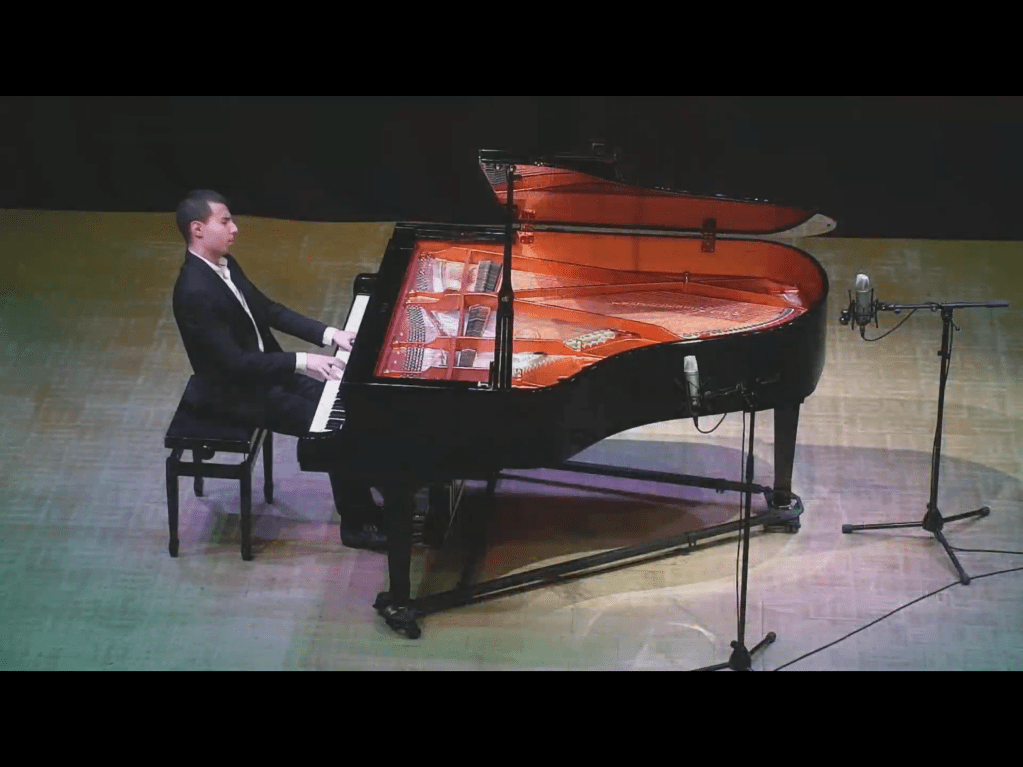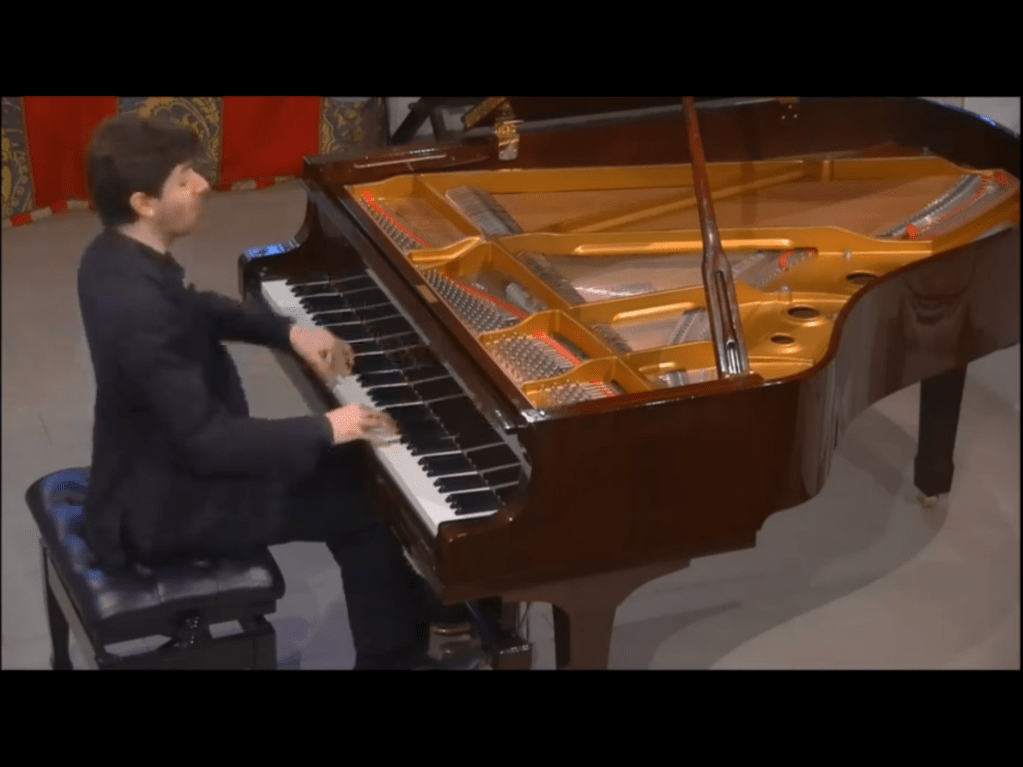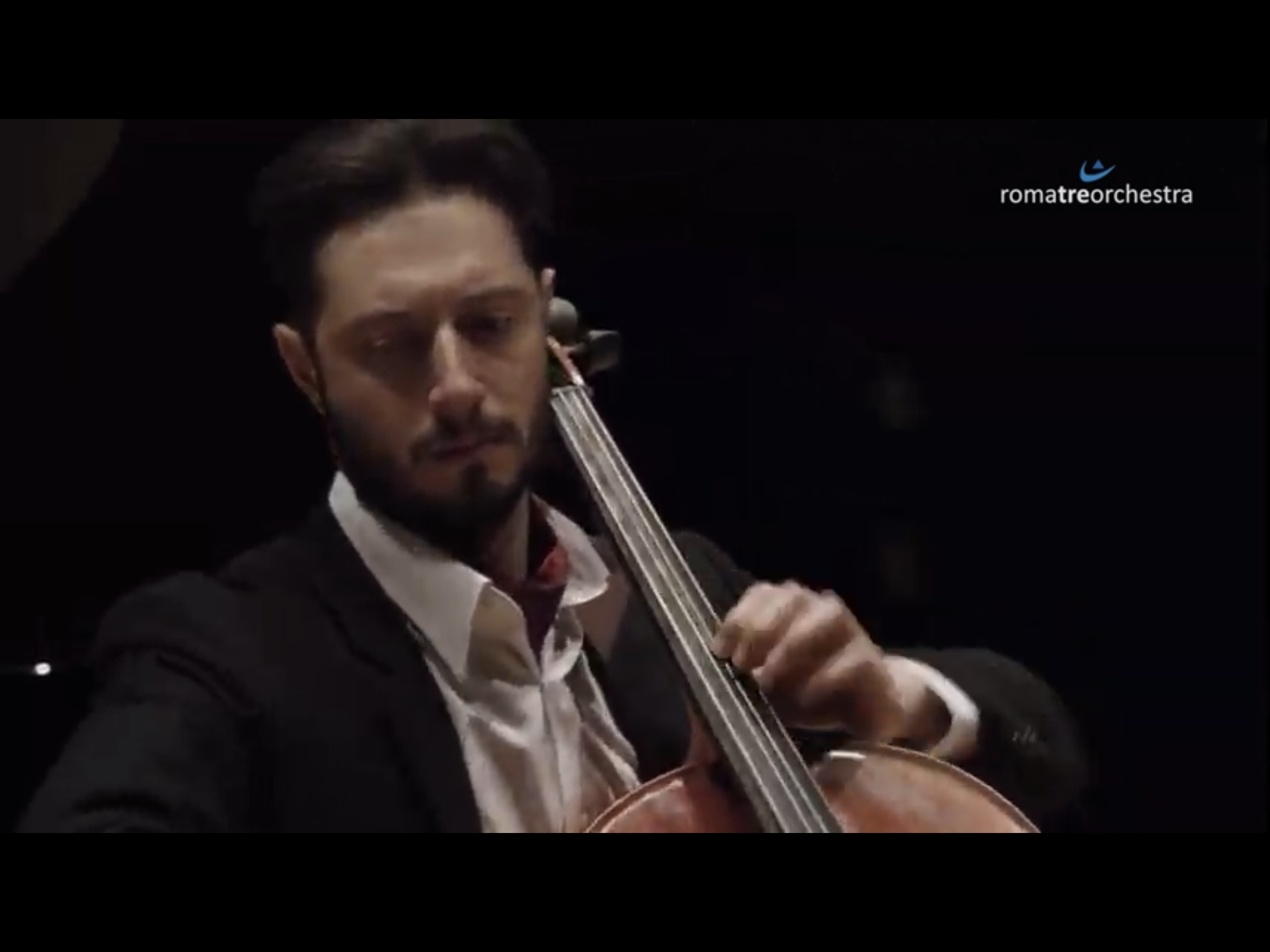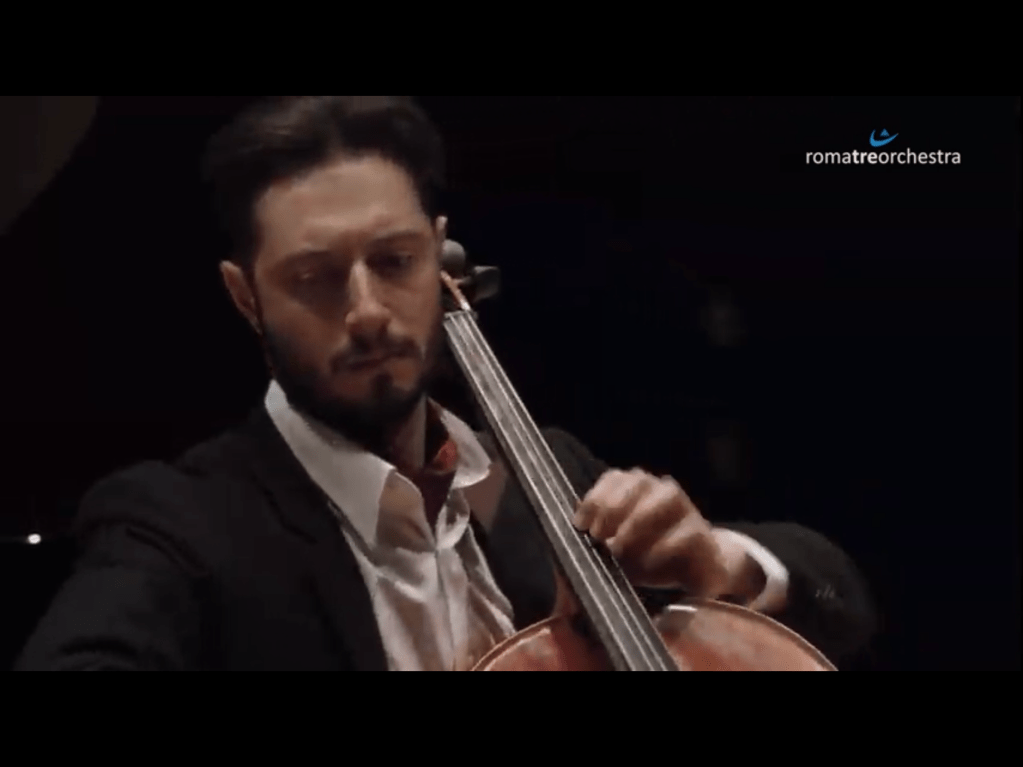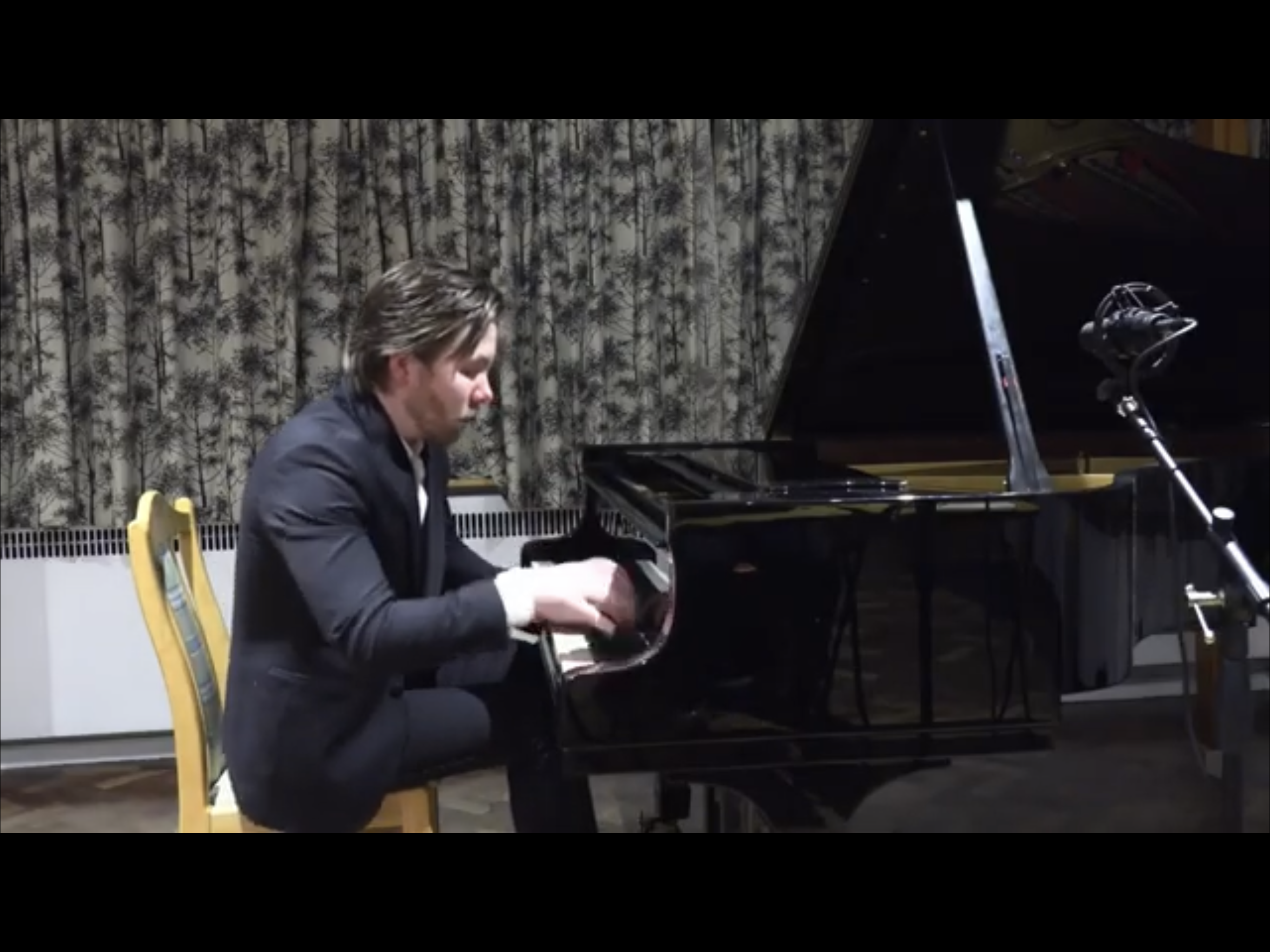
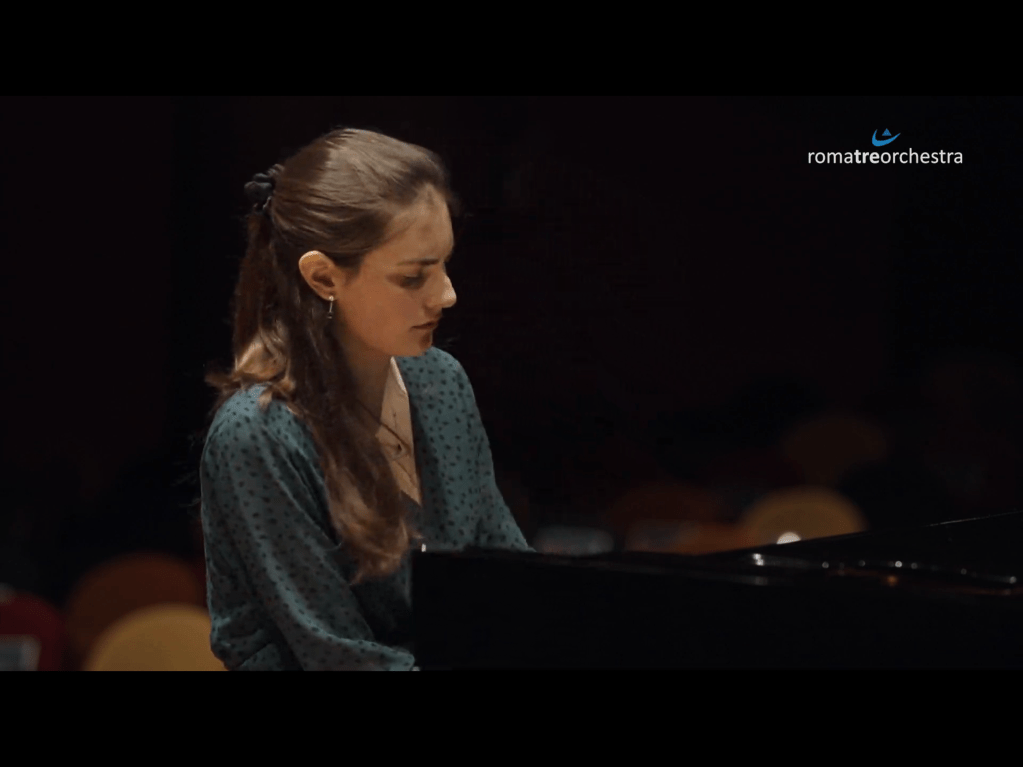
Anna Rigoni playing of ravishing seduction for Roma 3 Orchestra at Teatro Palladium

Lunedì 22 marzo 2021 ore 21.30 Teatro Palladium (diretta streaming canale YouTube Roma Tre Orchestra)
Il ritorno di Anna Rigoni
J. Brahms: Sei pezzi per pianoforte op. 118
R. Schumann: Gesänge der frühe op. 133
L. v. Beethoven: Sonata n. 24 in fa diesis minore op. 78
C. Debussy: Images, prima serie

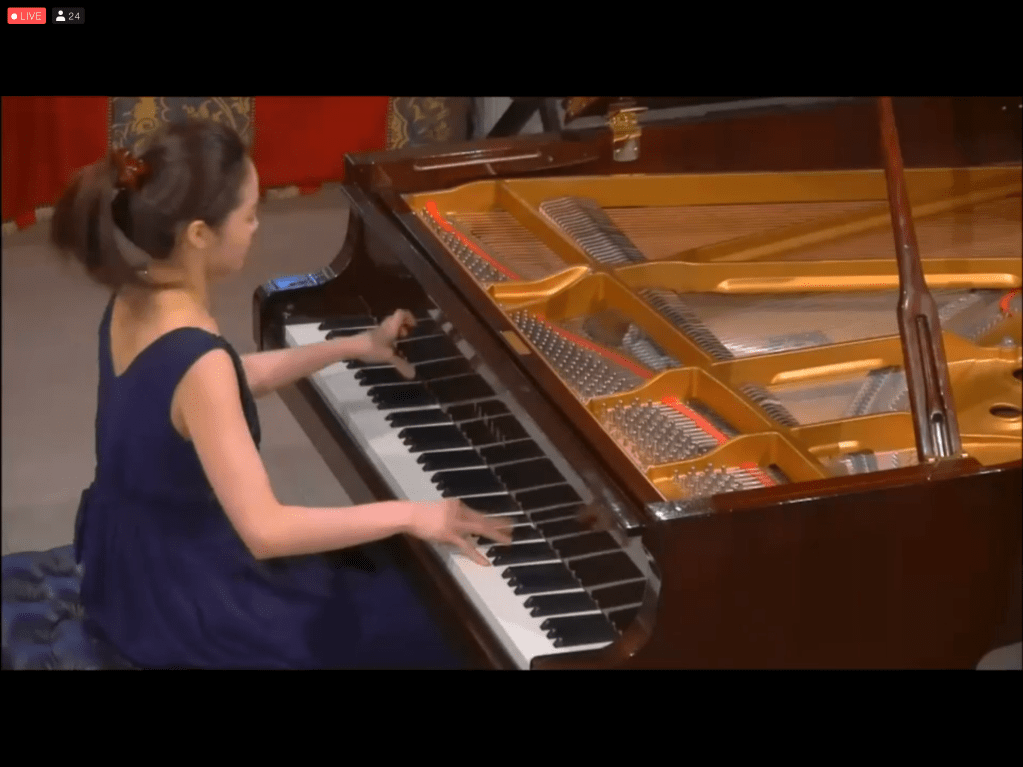
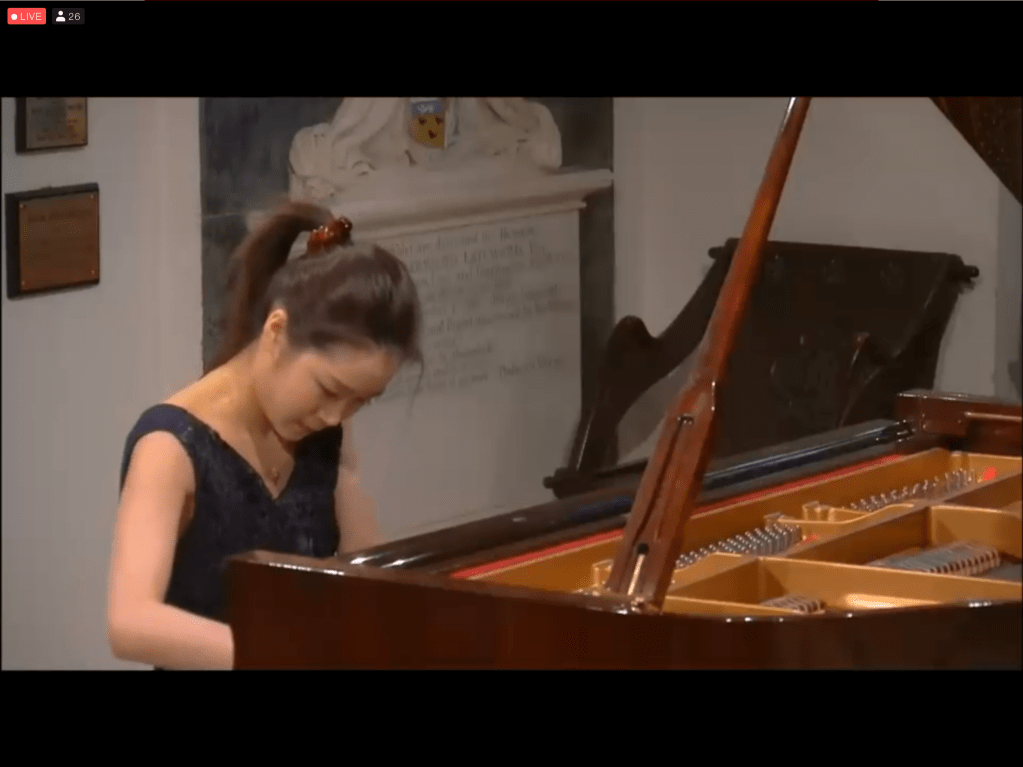
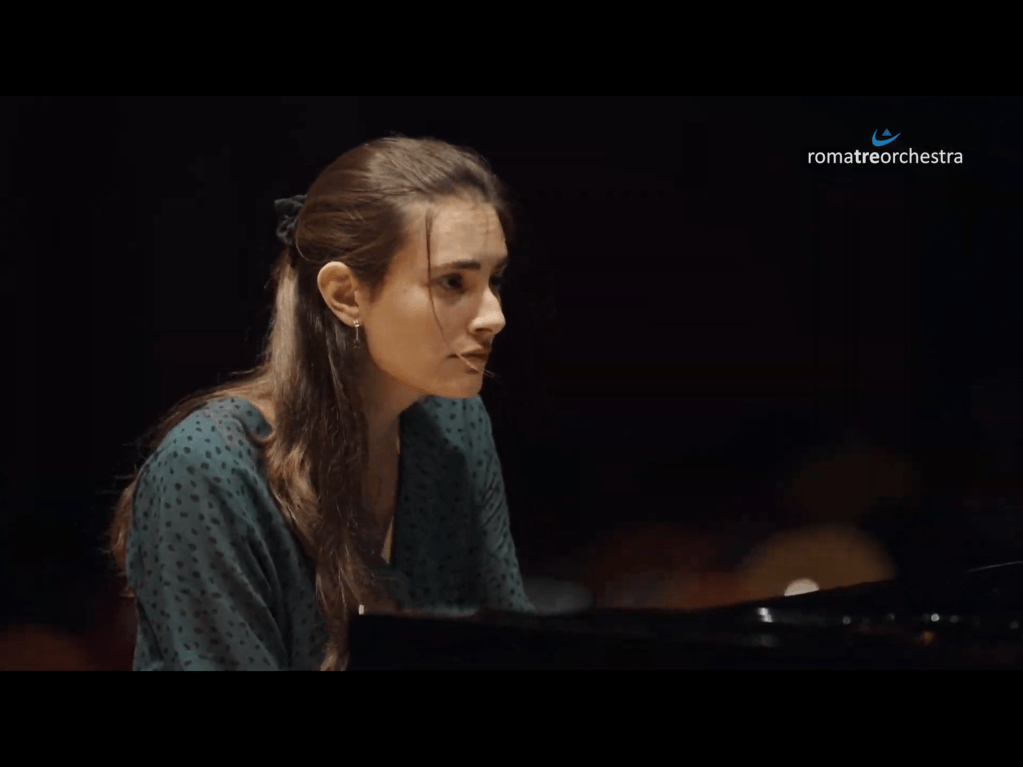
Anna Rigoni ,a name to remember,was the young pianist who closed this series of Young Artists Piano concerts for Roma 3 University in Rome
With looks like the young Argerich and the refined musicianship of a Pires what better way to accept this enforced lockdown that has overtaken Italy at Easter.
Valerio Vicari the enlightened artistic director of Roma 3 Orchestra had told me that she was good but he had not told me how good!
From the inspired opening notes of the six pieces that Brahms breathed and whispered in his op 118 to the crystalline clarity of Beethoven’s little Sonata in F sharp op 78 played with such subtle colouring and masterly control.
But the revelation were Schumann’s Songs of Dawn played with a poetry,sense of line and passionate conviction that I have not heard since Agosti used to haunt his studio with them as he intoned together with his playing what he considered a master work.In other hands it had been neglected and considered as a rather obscure late work of a composer who had lost his way.
In Anna’s hands her supreme musicianship showed us just how right Agosti had been.
The first book of Images by Debussy was a magical way to end this recital with her crystalline sounds that made this beautiful piano glisten as it will not do for quite some time.The sounds of Movement seemed to float into the distance as we hope this cunning little virus will do in the near future ………..to be continued………….

The Six Pieces for Piano, Op. 118, are some of the most cherished compositions that Johannes Brahms wrote for solo piano.They were completed in 1893 and dedicated to Clara Schumann and was the penultimate composition published during Brahms’ lifetime and also his penultimate work that he composed for piano solo. They were written Between 1892 and 1893 along with other collections of smaller piano pieces: Seven Fantasias Op. 116, Three Intermezzos Op. 117, and Four pieces op 119 .Op 118 and 119 were premiered in London by Brahms in 1894.The six pieces of op 118 are made up of four intermezzi a Ballade and a Romanze.

The Intermezzo in A minor. Allegro non assai, ma molto appassionato immediately showed us her superb musicianship as she plunged into the passionate outpouring of sumptuous sounds with such intelligence and scrupulous attention to detail.She had absorbed the inner meaning behind the notes and her wonderful fluid technique swept us along as we knew that we were in the sensitive hands of someone we could trust.A true interpreter starts with what the composer tries to indicate on the printed page but that is just the start in trying to understand the meaning behind every single detail ,without loosing sight of the greater musical line.The path of the true interpreter is never easy but to risk the tightrope is too often only for the chosen few.Murray Perahia and Krystian Zimmerman spring to mind as interpreters who can illuminate a score in a way that has us running to take a better look at a work we mortals thought we knew intimately.All this was evident from these very first sweeping notes on this sumptuous sounding piano.Can it really be a Schimmel or have the magic hands of Mauro Buccitti waved a wand and transformed it into a Bosendorfer,the preferred piano of Brahms himself?The rich bass in the Intermezzo in A major. Andante teneramente gave such depth to a whole range of emotions.The extreme delicacy of the pianissimo chords ‘piu lento’was contrasted with the passionate duet that followed only to dissolve to the touching nostalgic tenderness of the opening.Throwing herself into the Ballade in G minor. Allegro energico with great passion but full of subtle colours that allowed her to shape the architectural contours with such sumptuous sounds.The mellifluous chorale middle section was almost orchestral in its conception and the gradual reawakening was beautifully judged before the final touching disintegration.The ever more passionate agitations in the Intermezzo in F minor. Allegretto un poco agitato contrasting so well with the tender beautifully described swapping of hands like a painter conjuring colours out of thin air.The tender Romanze in F major. Andante touchingly beautiful as the melodic lines intertwined like a great string orchestra before the sun comes out in the Allegretto grazioso.Brahms seeming to loose his way as he takes us through a fantastic maze of trills and embellishments played with just the right sense of astonishment before finding the way back ever more poignant and painfully beautiful in these ultra sensitive hands.The final bleak landscape of the remarkable tone poem that is the Intermezzo in E♭ minor Andante, largo e mesto The gradual awakening of the central section to its tumultuous passionate outpouring of emotion before dying away to a whisper brought these remarkable performances to an overwhelming end.
Gesänge der Frühe (Songs of Dawn), op.133,was composed in October 1853 and is one of Schumann’s last works composed three years before his death. By the time he began work on these pieces, he was suffering from mental and emotional decline and they were written just five months before Schumann’s attempted suicide and confinement to a mental institution.Clara Schumann wrote in her private diary, “dawn-songs, very original as always but hard to understand, their tone is so very strange.”

They were very much admired by Guido Agosti who would intone in particular the fourth of the five pieces that in many ways is similar to the last of the Four ballades op 10 by Brahms.Fou Ts’ong too was enthusiastic about the work and gradually it is to be seen on concert programmes two hundred years on!

‘Im ruhigen tempo’played with an almost religious sensitivity and made one immediately aware of what a similar world of deep emotions they inhabit as in the last pieces by Brahms.A deep communing in Schumann’s case with a deeply troubled soul.There were beautiful sounds from deep within the piano in ‘Belebt nicht su rasch’ where the dotted rhythms of Schumann were incorporated into the very soul of the melodic sound world she created.’Lebhaft’ so similar to the Brahms Ballade op 118 with its rich chords so beautifully shaped by a masterly control of the sustaining pedal.To the jewel of the set: ‘Bewegt ‘ with the anguished beseeching cry over a continuous stream of sounds.I can hear Agosti playing it with the same magic sounds as Anna found today.He of course would intone sottovoce in a way that no one who had heard him would ever forget.Today in these very special hands I was reminded of the magic that had been instilled in me all those years ago when I would spend the day playing four hands with the Maestro whilst our wives went to the beach.In the evening we would be the after dinner entertainment whilst Lydia,his wife did her crochet! The final ‘Im Anfange ruhiges,Im verlauf bewegtes tempo’a magic web of sounds played with searing intensity to the final whispered appoggiatura of uncertainty.Another remarkable performance from this extraordinary pianist who demonstrates a maturity way above her youthful appearance.

The Piano Sonata No. 24 in F sharp op.78, nicknamed “ a Thérèse” (because it was written for Countess Thérèse von Brunswick )was written in 1809 and Czerny tells us it was one of Beethoven’s favourites.The beautiful Adagio cantabile led to an equally mellifluous Allegro ma non troppo where all Beethoven’s meticulous indications were incorporated into a movement that just sang from the first to the last note.It contrasted with the great character that Anna gave to the Allegro vivace where her delicate fleeting fingers seemed to flow so naturally to the final flourish and rhythmic full stop.

Images is a suite of six compositions for solo piano by Claude Debussy.They were published in two books/series, each consisting of three pieces.The first book was composed between 1901 and 1905, and the second book was composed in 1907.Have there ever been more beautiful ‘Reflets dans l’eau’ than in Anna’s hands?The shimmering water covering the entire keyboard as it built to an urgency where the melodic line was allowed to shine on the surface before becoming merely a shadow on the water.The aristocratic melodic line that she etched out in Hommage a Rameau ‘expressif et dolcemente soutenu’ was every bit as moving as Debussy’s other sarabande in his suite ‘Pour le piano’.Magical gradations of sound at the end where Debussy exhorts such care and attention ‘un peu plus lent’.pp. più p. Retenu.plus retenu and finally pppp.All so magically interpreted by this poetess of the piano very similar in so many ways to Maria João Pires .There was a lightness and sense of rhythmic drive from the whispered opening and close of Movement with an extraordinary central outburst of quite transcendental difficulty all thrown of with ease in the name of music!

It was Serkin exclaiming to Richard Goode on listening to the young Murray Perahia:’You said he was good ,but you did not tell me how good!’ I think we could say the same about Anna Rigoni today.

Anna è una pianista italiana, esibitasi come solista e in formazioni di musica da camera in Italia, Olanda, Lituania, Austria. Ammessa alla Universität für Musik und darstellende Kunst Wien, attualmente studia con Lilija Zilberstein e Massimiliano Ferrati. Inizia il percorso di studi giovanissima al Conservatorio A. Pedrollo di Vicenza,  nella classe di Antonio Tessoni. Qui prosegue gli studi con Roberto Plano e Davide Franceschetti, conseguendo infine il diploma sotto la guida di Riccardo Zadra con dieci e lode e menzione d’onore. Prosegue poi gli studi al Conservatorio “G. Donizetti” di Bergamo sotto la guida di Maria Grazia Bellocchio, dove ottiene il Diploma Accademico di II livello con votazione 110/110. Grazie al progetto Erasmus, studia anche al Conservatorium Van Amsterdam nella classe di Naum Grubert. Ottiene vari primi premi a concorsi pianistici nazionali e internazionali fra cui quello assoluto al IV Concorso Pianistico Internazionale “Andrea Baldi” di Rastignano (Bologna), quelli al 18° e al 21° Concorso “Riviera della Versilia, al 7° e al 9° Concorso Nazionale “Città di Piove di Sacco”, alla XX edizione del concorso “Città di Giussano”, al 3° Concorso Pianistico Nazionale “Villa Oliva” di Cassano Magnago (VA), al “Concorso internazionale giovani musicisti Antonio Salieri di Verona e al 28° concorso Pianistico “Città di Albenga”. Vince anche  una borsa di studio nell’ambito del 32° e del 33° Festival Internazionale di Musica di Portogruaro. Selezionata fra i migliori allievi del Conservatorio di Vicenza ha partecipato alle Masterclass di Wolfram Schmitt Leonardy, John O’Conor, Benedetto Lupo e Boris Berman, Roberto Prosseda. Ha seguito con Stefania Redaelli i “Corsi Annuali di Alto Perfezionamento Musicale” all’Accademia Musicale di Sacile e l’Accademia Musicale Varesina con Roberto Plano, diplomandosi con il massimo dei voti

Roberto Pujia, Presidente Roma Tre Orchestra
Valerio Vicari, Direttore Artistico Roma Tre Orchestra
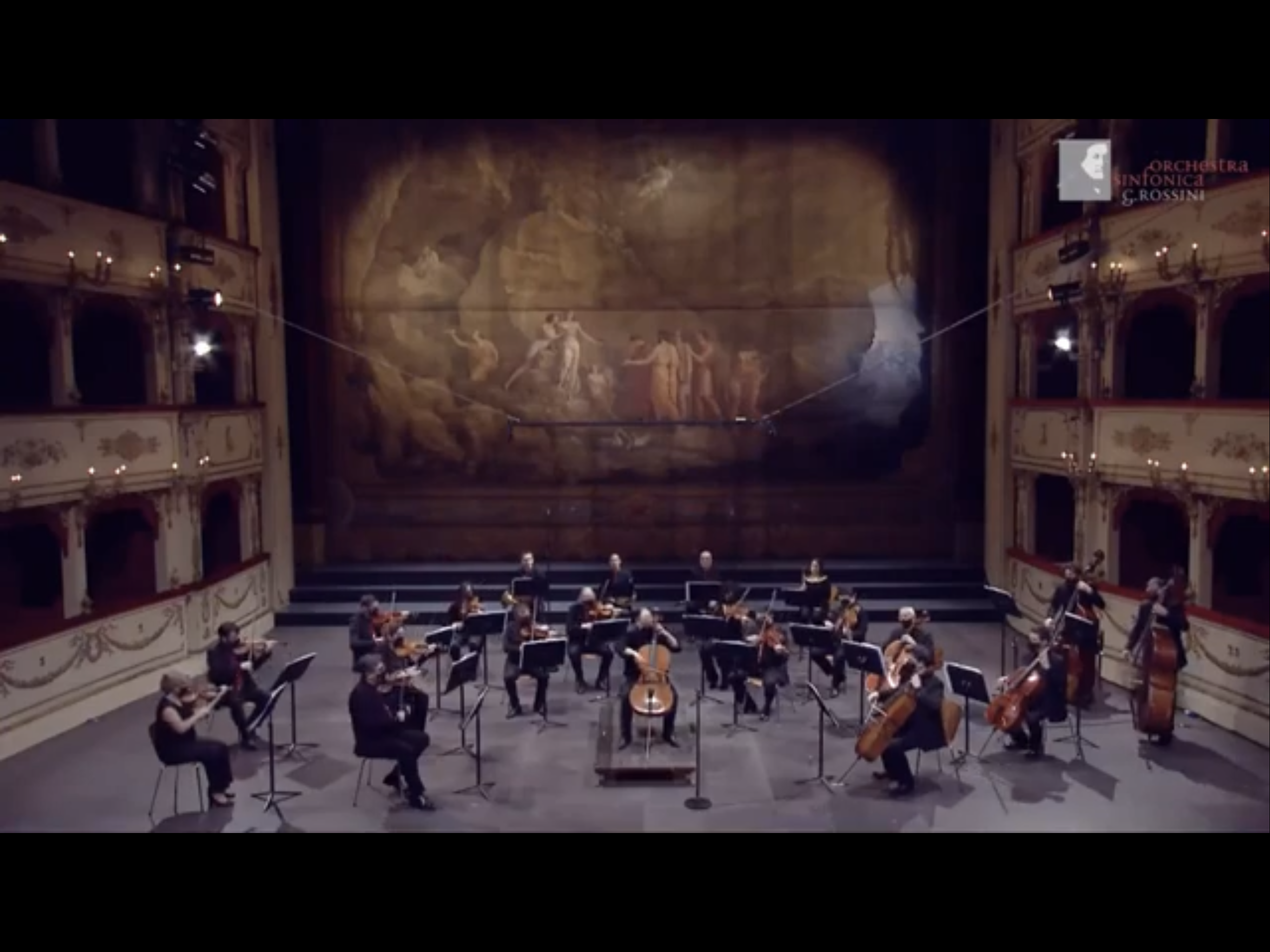
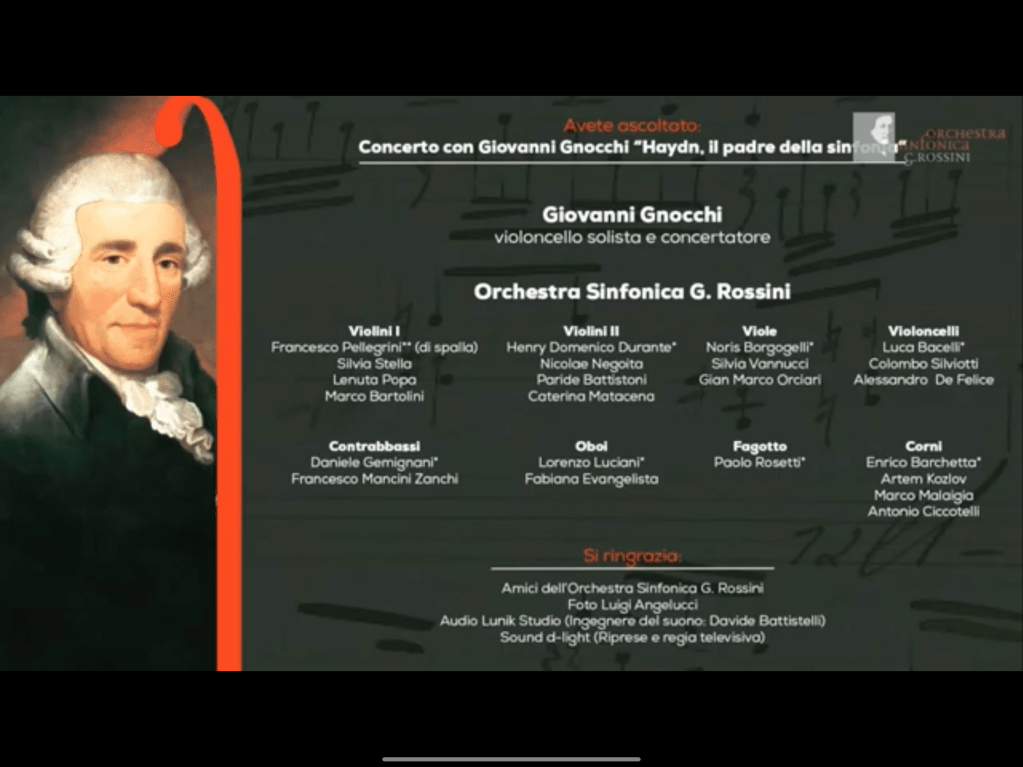
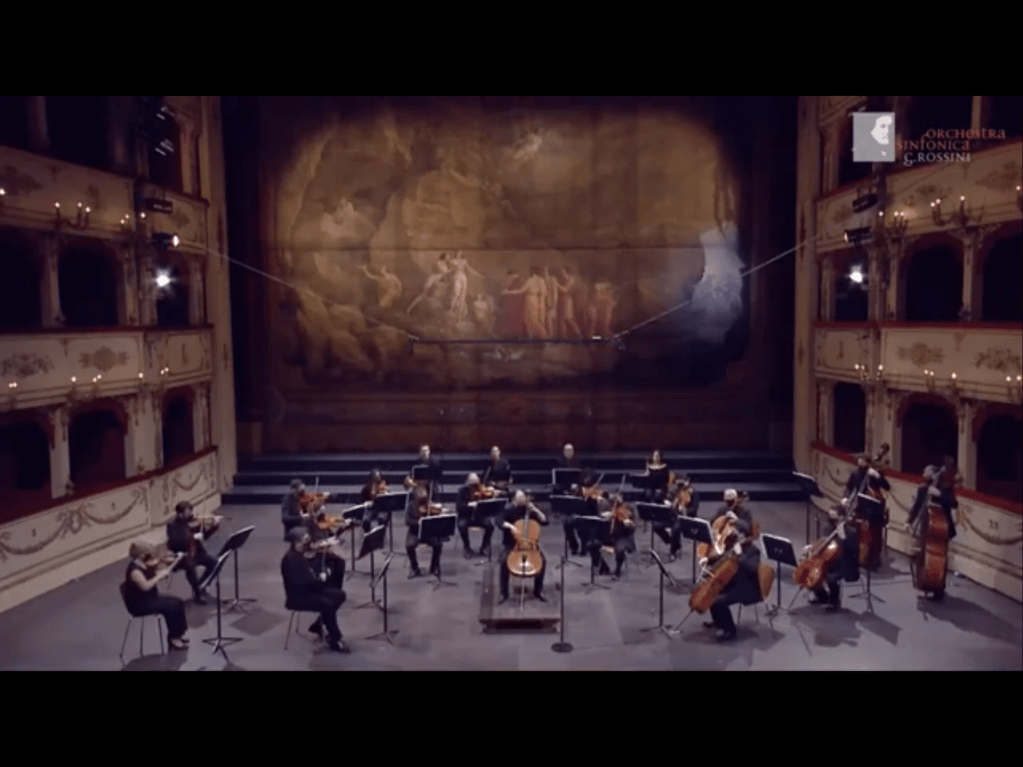
Giovanni Gnocchi at Teatro Rossini with Haydn the father of the symphony

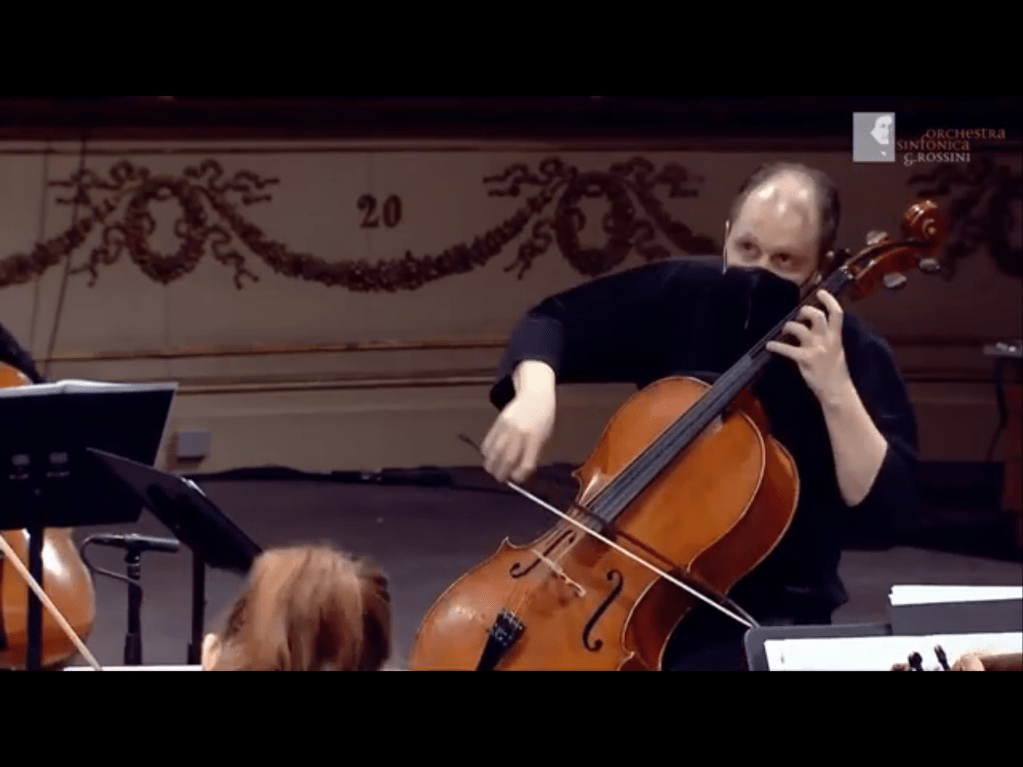
Some superb performances from these masked performers conducted from the cello by Giovanni Gnocchi.In the beautiful Teatro Rossini in Pesaro he led his very fine players in Haydn’s first cello concerto and also still with his beautiful steed in hand,conducted Haydn’s 39th Symphony.

Performances of such character and lightness.Playing the concerto without the score he also joined in the orchestral tuttis as well,such was his total understanding of the style and overall shape of this remarkable work.

The symphony,conducting from the score this time,but bringing such character to this the first of Haydn’s Symphonies in the minor key and of his ‘sturm und drang’ period.In G minor ‘Il tempesta di mare’ that was the inspiration for Mozart’s symphony n.25 in the same key.Haydn the father of the symphony indeed

https://christopheraxworthymusiccommentary.wordpress.com/2021/02/25/gnocchi-stella-in-rome-on-wings-of-song/

Vanessa Latarche comes home

Sunday 21 March 4.00 pm 

‘Guiding young talents’
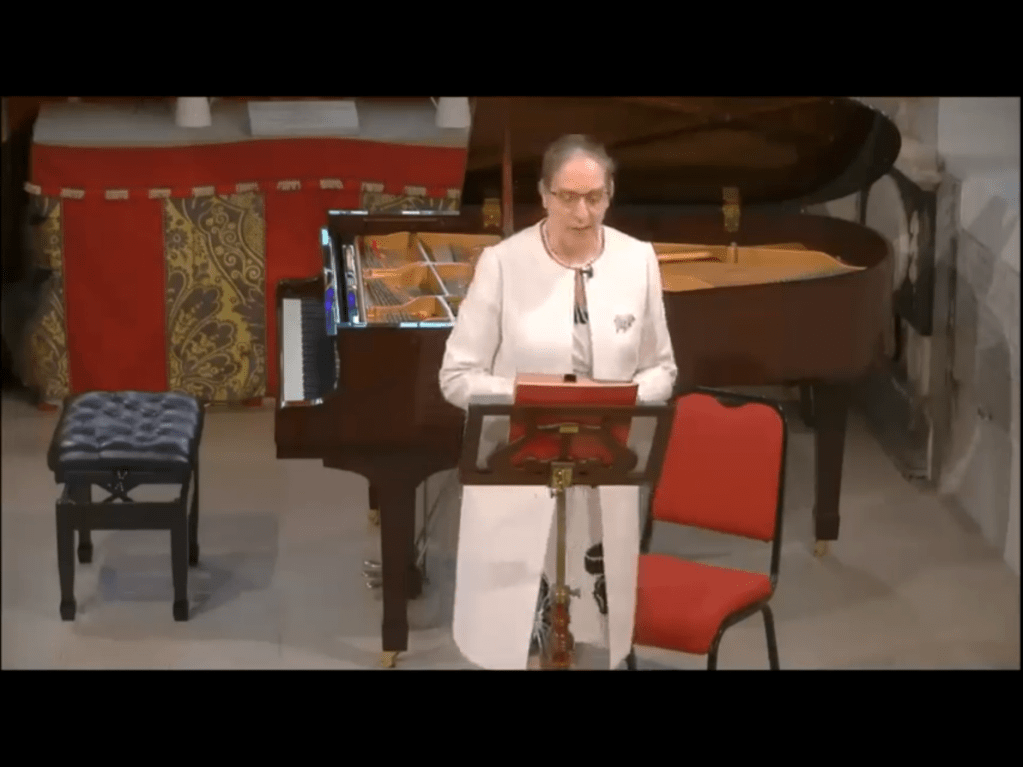
A lecture by Professor Vanessa Latarche 

Chair of International Keyboard Studies and Head of Keyboard, Royal College of Music
Associate Director for Partnerships in China 

Professor Latarche discusses her life and work 
from her early piano playing days in Ealing 
to her current work as Head of Keyboard at the Royal College of Music. 

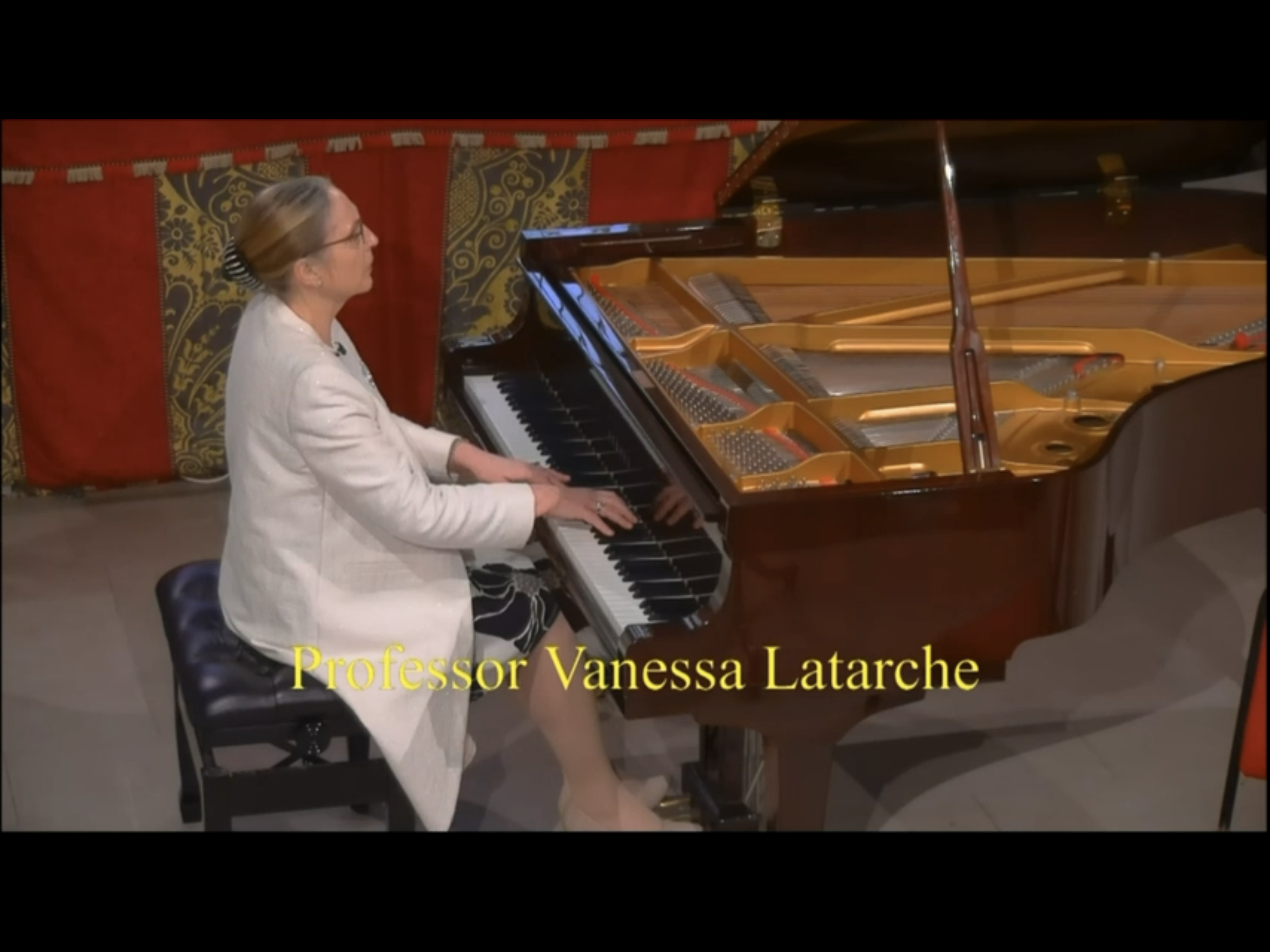
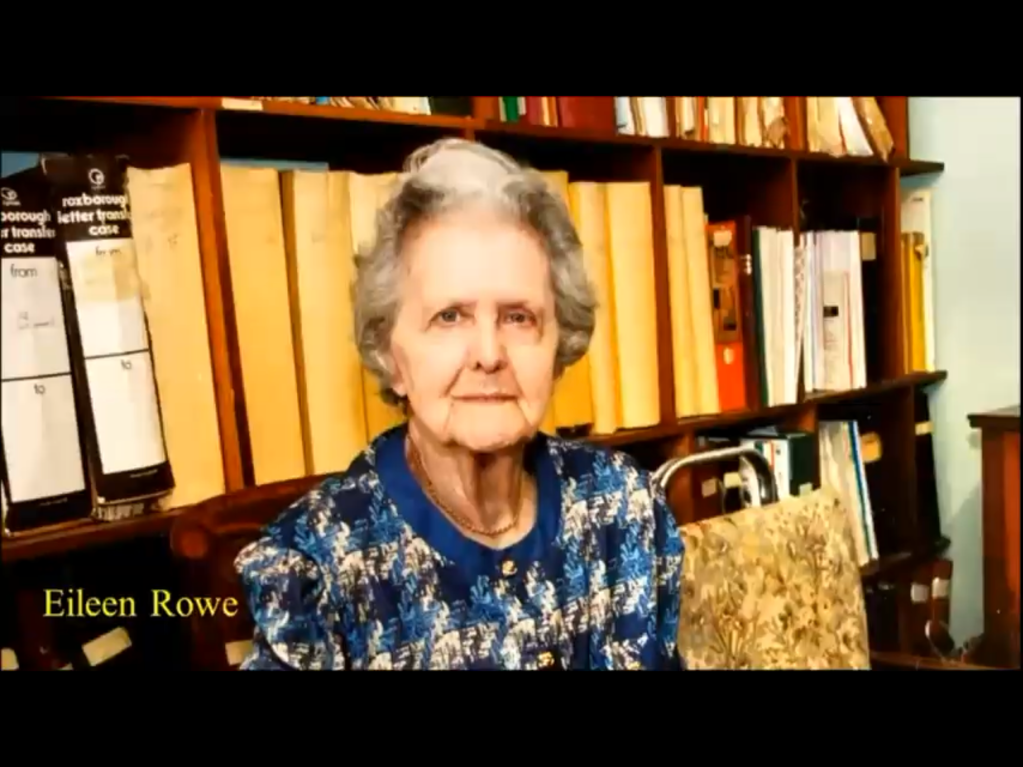
Fascinating talk by Vanessa Latarche from her early lessons with the fondly remembered Eileen Rowe and Alex Kelly.Her time with Christopher Elton,Kendall Taylor and Vlado Perlemuter to becoming head of Keyboard studies at the Royal College of Music .
But what do you do ?
Listen and marvel at all that she does.
But the biggest marvel of all was her sumptuous fluid playing of Granados Epilogue that she played as a thank you at the end of a fascinating hour long journey.
There is something about the air in Ealing that nurtures people that are very special indeed.
Humility,integrity,passionate selfless commitment.
All values that I too and many others received from Eileen Rowe who even left all her worldly goods to helping young musicians in a Trust fund administered by Vanessa and the indefatigable Hugh Mather.

After studying at the Royal College of Music and completing her training in the USA and Paris, Vanessa Latarche was awarded many scholarships and prizes from international competitions. Her concert career has taken her to Europe, the USA and the Far East, as well as many festivals within the UK, including Cheltenham, Harrogate and Huddersfield. Her interest in Bach led to a performance of the complete 48 Preludes and Fugues at the Lichfield International Festival in 1992, the performances being given over four consecutive evenings. She has performed as a soloist with international orchestras and those in the UK including the Royal Liverpool Philharmonic Orchestra, BBC Concert Orchestra, BBC Welsh Symphony Orchestra, working with many leading conductors. She is a Steinway Artist. She has broadcast for over 30 years for BBC Radio 3 and has also broadcast extensively on the BBC World Service and BBC Radio 4. She has been a juror for international competitions in China, Russia, Kazakhstan, Serbia, Italy, New Zealand, and Hong Kong and has adjudicated the national keyboard final of the BBC Young Musician of the Year, which was broadcast on BBC television. In 2007 she was an advisor to the BBC TV programme ‘Classical Star’.
Vanessa frequently travels to give masterclasses, to such institutions as Moscow Tchaikovsky State Conservatory, Hong Kong Academy for the Performing Arts, Shanghai Conservatory of Music, Beijing Central Conservatory, Nanyang Academy of Fine Arts, Singapore, Tokyo College of Music, Seoul National University as well as to other UK conservatoires and specialist music schools She is an advisor to Lang Lang’s music school, Lang Lang Music World, in Shenzhen, China, where she formerly held the position of Vice-Chairman. Since September 2005, Vanessa has been Head of Keyboard at the Royal College of Music, having been previously a professor of piano at the Royal Academy of Music for 14 years, where she was made an Honorary Associate in 1997.A renowned pedagogue, with many international piano competition prize-winners amongst her students, Vanessa was made a Fellow of the Royal College of Music, for outstanding services to music, an honour conferred on her by HRH Prince of Wales in May 2010. In September 2011, she was granted a Personal Chair at the RCM, which gave her the title of Chair of International Keyboard Studies. In 2017, as an extension to her keyboard faculty work, Vanessa was made the Associate Director for Partnerships in China, which involves managing the RCM’s collaborative work in China, particularly the RCM/SHCM Joint Institute in Shanghai.

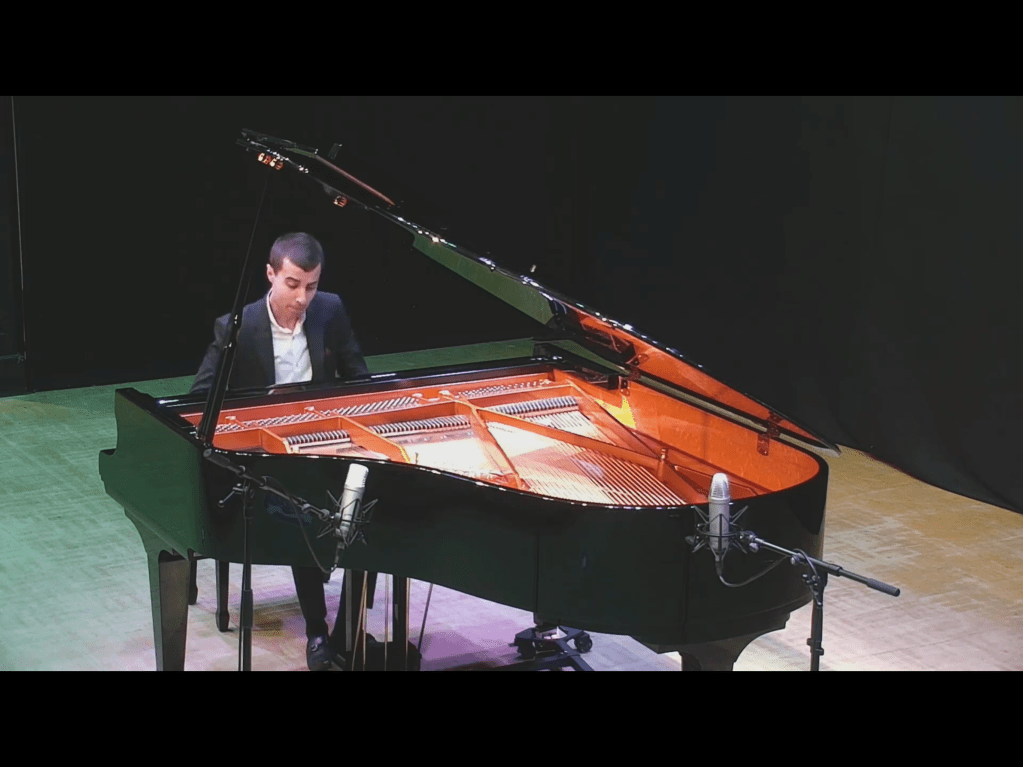
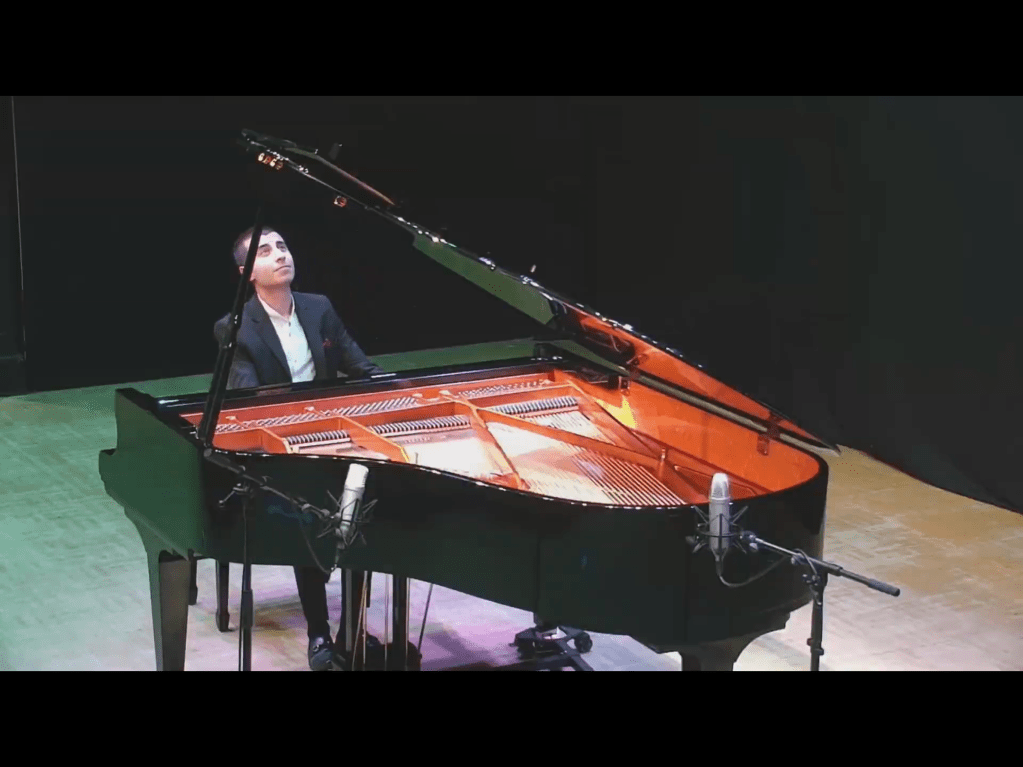
Iyad Sughayer coming of age at Cranleigh Arts Centre

Chosen as ‘One to Watch’ by International Piano Magazine, pianist Iyad Sughayer’s debut album, the Khachaturian Piano Works, on BIS Records received critical acclaim when it was released in November 2019. The album was described by Gramophone as ‘exhilarating and delivered with perfect clarity’ and ‘He captures the music’s essence with such a close sense of re-creative identity that it feels on occasion as though he could be composing it as he goes along. An outstanding debut’ BBC Music Magazine.Sughayer appeared as a soloist with many leading orchestras including the BBC Philharmonic Orchestra, the European Union Chamber Orchestra and the Manchester Camerata.Future engagements include a series of recitals in the UK, Europe and the Middle East and the recording of Khachaturian’s Piano and Orchestral works with the BBC National Orchestra of Wales for BIS Records.

Programme:

Schubert Impromptus D.899. No.2 in Eb. No.3 in Gb. No.4 in Ab

Beethoven Sonata no.17 in D minor, Op.31 no.2 ‘The Tempest’. Largo-allegro; Adagio; Allegretto

Khachaturian Masquerade Suite. Waltz Nocturne Mazurka. Romance Galop

https://www.facebook.com/notes/christopher-axworthy/palmusic-uk-shakes-hands-with-the-keyboard-charitable-trust/10156083607357309/�
https://www.facebook.com/notes/christopher-axworthy/iyad-sughayer-at-st-martins/10154710933257309/�

https://christopheraxworthymusiccommentary.wordpress.com/2020/04/01/iyad-sughayer-at-st-marys-3rd-march-2020/


I have heard Iyad many times over the past few years and have followed his career with great interest.
Like many young pianists they want to run before they can walk.
It is quite understandable that when a young musician can at last approach the repertoire of his dreams there starts a great love affair.
It is a sudden awareness that all the years of training have led to the possibility of giving public performances with great success.
This lockdown with all the disadvantages it has downloaded on young musicians at the start of their career there have also been hidden advantages.
Where there was the promise of weekly concerts now they are lucky to have just a few concerts a year in these bleak times .An audience at the other end of a lense that records their every move without giving anything in return to the performer.
But for a real artist it has given them more time for profound study where every rare performance becomes an event to cherish.
I remember talking to Ruggiero Ricci about the fact that although the standard of performance has never been so high the performances seem too to have become standard.
Performances that seem to lack the personality and very personal sense of sound.
From just a few notes one could immediately tell if it was Rubinstein,Cortot,Horowitz or Serkin.
I remember Cherkassky telling me of a visit to Horowitz’s house to play duets and Horowitz telling him that after the death of Bolet they were the only two left.
Cherkassky often used to say to me that he thought many pianists no longer listened to themselves.
Ricci told me that to get to America by boat gave one all the time to contemplate and think about the programmes that they were to play on arrival.
Whereas today you play in London and the next day in New York or Tokyo.
The pandemic has taken away so much but has given us back time.
Time is the essence of true art.
This unexpected pandemic has given us back the time that seemed to have evaporated in a world that moves too fast for comfort.
Time to contemplate many things but above all time to appreciate the very fundamental things which are the very essence of existence.
All this to say that from the first note of Iyad’s recital to the last I was aware of the maturity and authority of a great artist.
No longer the young lion let loose on the world but a lion who is not only king of his kingdom but surveys all he sees with the wisdom of experience.


Schubert of such subtle beauty -Art that conceals art.
The E flat impromptu glistened like silver as it wove it’s way on its magic journey.Passionate outbursts were momentary intrusions on this stream of sounds.The G flat impromptu was played with such aristocratic good taste and the rippling accompaniment so unobtrusive as it supported the melodic line as in Schubert’s most mellifluous of lieder.The same gentle cascades of notes in the A flat impromptu led to the passionate outpourings of his soul.


A truly magical opening of Beethoven’s Tempest Sonata where the composers intimate use of the sustaining pedal was wonderfully interpreted as were so many other remarkable details.Never detracting from his overall architectural view through a rhythmic undercurrent that created a hypnotic hidden pulse.The beautiful embellishments of the Adagio both menacing and enchanting.And the sheer pastoral simplicity of the Allegretto as it made it’s inexorable way forward with a relentless lilt that was never allowed to rest until the final descending scale .


Entering another world with Khatchaturian where the well known opening waltz was thrown off with all the charm and colour of someone totally immersed in this almost cinematagraphic world .The beautiful fluid melodic line of the nocturne and the great character of the Mazurka and Romance were upstaged by the Galop that showed us the true ‘kitten on the keys’ as Iyad played with such unobtrusive elan and masterly control.
It brought the recital to a brilliant end.
Who knows when the next recital will be for Iyad but whenever it is I will be there to admire his artistry as much as he will enjoy sharing it with his awaiting audience.

A pre concert interview with Iyad and Clive Wouters

https://christopheraxworthymusiccommentary.wordpress.com/2020/04/01/iyad-sughayer-at-st-marys-3rd-march-2020/

Iyad on tour for the Keyboard Trust in 2019 with Beth Glendenning in Philadelphia – former assistant to Eugene Ormandy and indefatigable organiser of young musicians concerts

Goldberg -Ferrucci to be or not to be

https://www.facebook.com/notes/christopher-axworthy/jonathan-ferrucci-at-the-sala-dei-giganti-in-padua-a-giant-amongst-giants/10156258023597309/

Facinating pod cast for the Keyboard Trust with Jonathan Ferrucci ……some inspired and inspiring comments on his forthcoming performance of the Goldberg variations.It will be available on the Trust website and his performance will be streamed live from St Mary’s Perivale on Sunday 28th March at 4.


There was lots to discuss all centred around Florence…….and Bach!
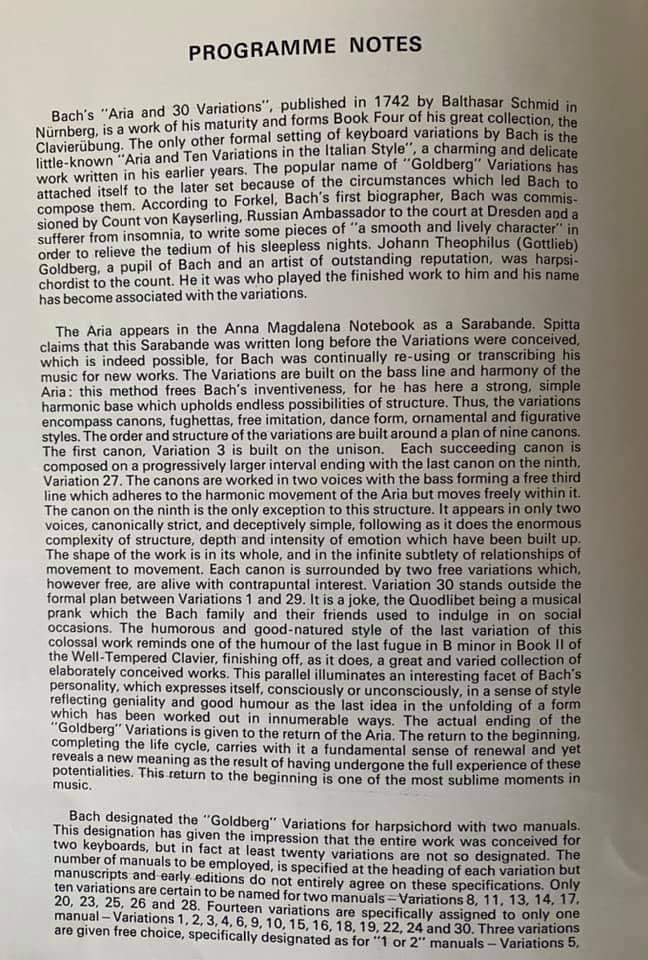
It was there that I first heard Rosalyn Tureck giving a lecture on Bach in the Cristofori museum of Stefano Fiuzzi.I could not believe that she had not been invited to give a recital so I invited her to play in Rome.A performance of the Goldberg Variations ,one that I had never forgotten from my student days in London.( see programme below)
It created a sensation after 25 years absence from the stage when she had stopped performing in order to dedicate herself to the study of Bach in Oxford.Creating her own Bach research institute of which I was eventually invited to be a trustee.


Florence immediately woke up and invited her to La Pergola theatre and she became the diva of this centre of European culture,playing sometimes twice a season.


That mantle has now passed to Angela Hewitt and it is she who had noted in 2014 a young florentine boy of quite exceptional human and pianistic gifts with whom she has been sharing her unique ideas from a life immersed in the world of the Universal Genius of J.S.Bach.
Rosalyn’s performance was like a rock to be revered and honoured from a distance whereas Angela’s is based on the song and the dance to be enjoyed and moved ,touched as it is by the human spirit.
Angela had trained as a dancer which one can admire in all that she does. Jonathan practises Ashtanga yoga and considers it an integral part of his work ,and essential in his life.In fact he stands on his head for a few minutes before starting the day.
Jonathan’s teacher for 10 years ,Giovanni Carmassi,inspired him to pursue music in life but did warn him that music is a “dangerous disease” .The book of conversations with Carmassi is the New Testament as Neuhaus the Old.Both are a pianist’s bible .
All discussed over some magnificent examples from Jonathan’s upcoming performance.It will be a performance to cherish as was Angela’s recently in the church where Bach is laid to rest in Leipzig.
If music be the food of love …..play on ………
We certainly need it in these unexpected times.
“I have not been with you for so long”
“Cabbages and turnips have driven me away”………”If my mother had cooked meat ,I would have stayed longer!”
What can this last variation mean ………Jonathan reveals what he has discovered in his lockdown study of the greatest set of variations ever written.

https://christopheraxworthymusiccommentary.wordpress.com/2020/11/18/angela-hewitt-for-the-glory-of-bach-the-pinnacle-of-pianistic-perfection/

https://www.facebook.com/notes/christopher-axworthy/jonathan-ferrucci-in-rome/10156810268607309/

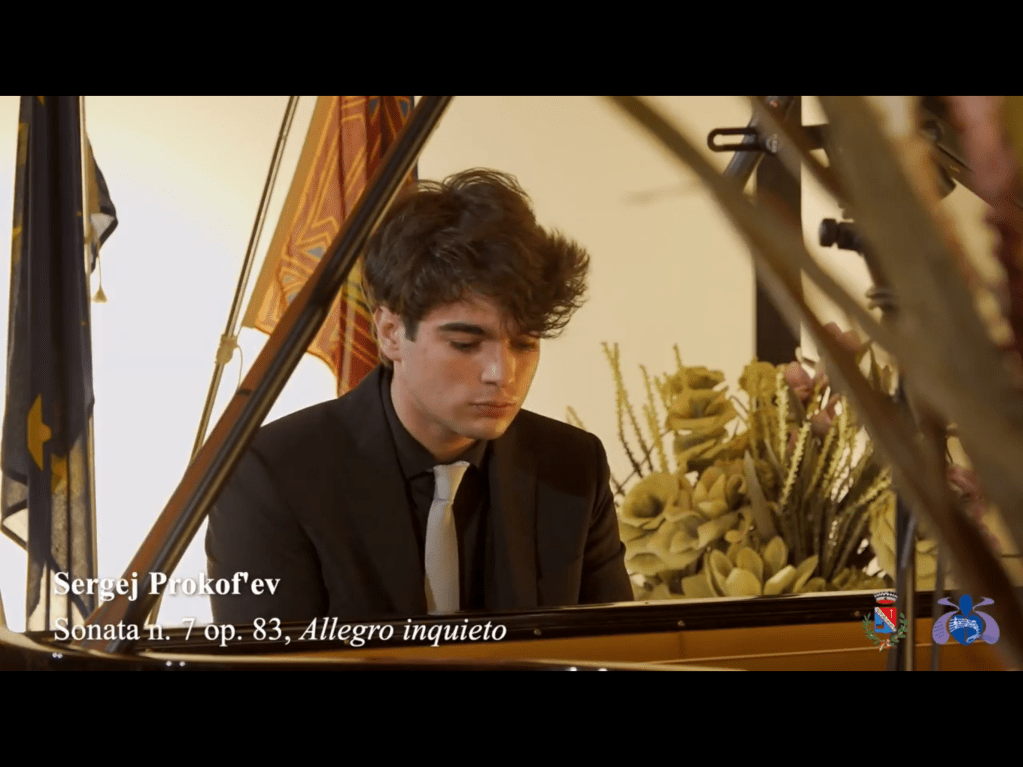
Elia Cecino – A star is born

A remarkable recital streamed from the town hall of Quarto D’Altino -Venice.Elia Cecino the 19 year old winner of the Premio Venezia played works by Shostakovich ,Scriabin,Natra and Prokofiev.A prelude and fugue op 87 n 21 by Shostakovich showed off all the clarity and finger dexterity in one of the most explosive of Preludes .He brought the same absolute clarity to the fugue played with great rhythmic energy and a very sparing use of pedal.

The dense colour and drama of Scriabin 3rd Sonata was played with sumptuous sounds dissolving to liquid gold as he constructed the great architectural shape of this remarkable work.Always keeping the forward movement to the final whispered chords of the first movement ,through the Allegretto to its final tempestuous chord that heralds the beauty of the Andante .It was played with a subtle rubato that allowed the tenor melodic line to shine out so beautifully amongst the magical accompanying arabesques.The menacing opening motif heralded the passionate outpourings of the last movement leading to the inevitable climax played not only with great passion and sumptuous sounds but also great care of the balance and the overall architectural line to the final anguished outcry.

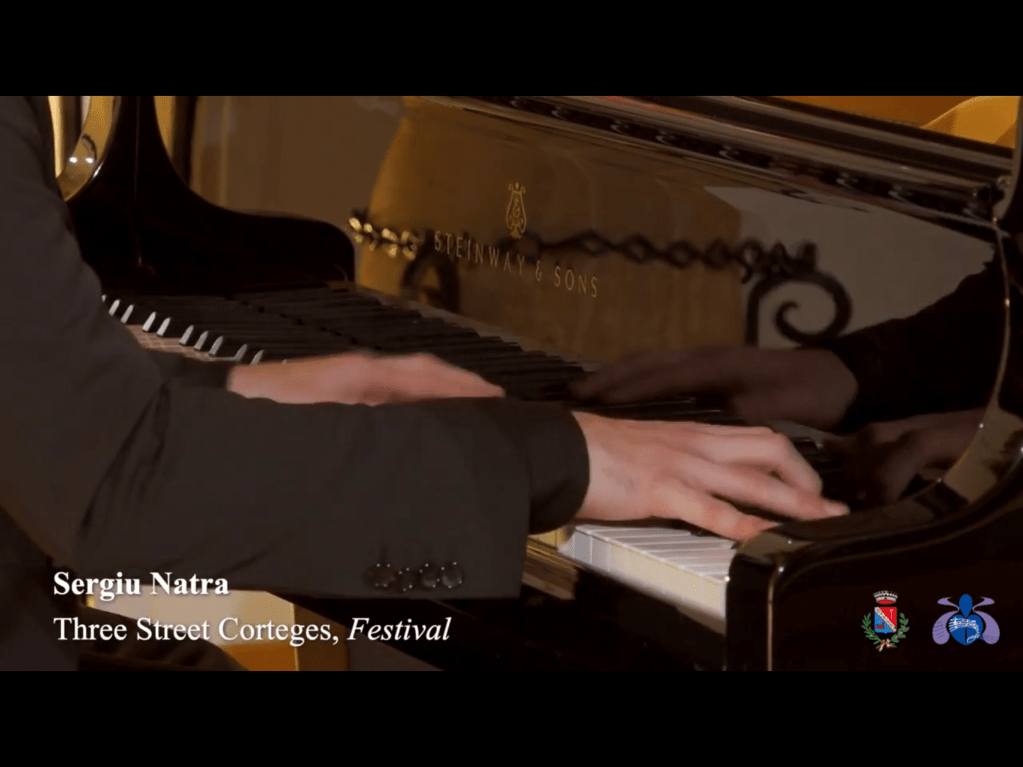
There were some amazing sounds in the 3 Street Cortèges by the Romanian composer Sergiu Natra a work of great effect .I imagine a set work for the Enescu Competition.Three movements :Carnaval,Funeral procession and Demonstration or Revolt.A kaleidoscope of sounds as he tore over the entire keyboard with such authority.Sounding in parts like Prokofiev it was played with an overwhelming rhythmic intensity but also with the clear sense of line and balance of a true musician.The deep brooding sounds of the Funeral were given a hypnotic rhythmic intensity on which rode the lone melodic line before allowing the bass to die away into the distance.Revolt had the same rhythmic drive that brought this short suite.unknown to me ,to a tumultuous close.

Prokofiev’s 7th sonata was the ideal work for Elia’s clarity and driving rhythmic energy.The languid takes over from the frenzy with such inevitability in Elia’s masterly hands,And the Andante Caloroso showed what beauty and real feeling he could portray ,with such flexibility and sense of flowing line,the brooding melancholy.The Precipitato was the ideal work for his youthful energy and technical command that seems to know no difficulties.Relentless driving rhythms to the final ecstatic pages brought this recital to a tumultuous close.

https://www.youtube.com/watch?v=kIZVEGGF4zc

Elia Cecino is a young Italian pianist who since 2014 regularly performs in Italy and Europe in solo and chamber recitals and with orchestra.He has emerged thanks to the many awards in international piano competitions such as Pozzoli in Seregno, Casagrande in Terni, Schumann in Düsseldorf, Luciani in Cosenza, Città di Albenga, Isidor Bajic in Novi Sad, Chopin in Budapest, Rosario Marciano in Vienna.
In 2019 he won the 36th edition Premio Venezia at Gran Teatro La Fenice in Venice.In 2017 he had already been noted at the Osimo Competition by the jury member Moritz von Bredow a trustee of the Keyboard Trust who immediately invited him to tour Germany with great success.He is now mentored by Eliso Virsaladze in Fiesole where he is held in high esteem

Maddalena De Facci Teatro La Pergola Florence


He was born on 2001 and since 2009 has been studying with Maddalena De Facci. In 2014 he obtained the third grade pre-academic certificate on piano with full marks at “Conservatorio B. Maderna” in Cesena. From 2012 he attended Masterclasses with eminent pedagogues and pianists among which Riccardo Risaliti, Giampaolo Nuti, Alberto Nosè, Pasquale Iannone, Marian Mika, Roberto Plano, Maurizio Baglini, Vincenzo Balzani and Benedetto Lupo. In July 2014 he was selected by Aldo Ciccolini as active participant in the Masterclass during “31st Musica Riva Festival international meeting for young musicians” in Riva del Garda. In July 2015 he attended the 2nd International Piano Festival in Italy in San Giovanni Teatino and he has Masterclasses with the pianists Alexander Kobrin, Juan Lago, Nikita Fitenko and Yuri Didenko. In March 2016 he attended “Clavicologne International Piano Festival” in Aachen and he gas Masterclasses with the pianists Aquiles Delle Vigne, Iljia Scheps, Leonel Morales, Jaques Rouvier, Yuri Didenko, Arkadi Zenzipér. Elia Cecino won the first prize in more than 50 national and international piano competition in Italy, Slovenia, Croatia, Poland and Germany among which: 16th Marco Bramanti Piano Competition in Forte dei Marmi; 2nd Clavicologne International Piano Competition in Aachen; 23rd International Chopin festival in Mazovia; 3rd Filippo Trevisan Piano Prize in Palmanova; 9th Epta Piano Competition for Young Pianists in Osjiek; 14th Città di Gorizia Competition; 14th Vietri sul Mare-Costa Amalfitana Piano Competition; 5th Città di Firenze Premio Crescendo Piano Competition; 26th Città di Albenga Piano Competition; 1st G. Tartini Piano Competition in Pirano; Città di San Donà di Piave Piano Competition; 21st Giulio Rospigliosi National Piano Competition in Lamporecchio. In 2013 he was finalist and 2nd prize with scholarship in the Caesar Franck International Piano Competition in Bruxelles. In 2015 he was selected for the Aarhus International Piano Competition in Denmark. In 2016 he win the 25th Ibla Grand Prize in Ragusa and so he’ll play in concert at Carnegie Hall in New York in may 2017. The last two years Elia has been invited to give a lot of solo recitals in some music festival at Villa Bertelli in Forte dei Marmi, at Palazzo Loschi in Vicenza, at Villa De Brandis in San Giovanni al Natisone, at teatro Manzoni and at Villa Scornio in Pistoia for the the “Amici dell’opera”, at Palazzo Albrizzi and at Cavagnis cultural center in Venezia, in the Festival of Nations at the Marcello theatre in Rome, at Sala Marizza in Fogliano Redipuglia, at Palazzo delle Generali in Trieste, at the Sale Apollinee of the Gran Teatro La Fenice in Venezia during the event “Happy birthday Mozart”, at San Marco church in Marostica, at San Remigio auditorium in Vimodrone (MI) in Piano Talent Festival, at Sant’Antonio church in Cellamonte Monferrato (AL) in Monferrato Classic Festival. Since 2013 Elia Cecino has been member of a piano duo four-hands which gained numerous first prizes, awards and recognitions on competitions and festivals. From last year Elia has been member of a duo piano-violin, a duo and trio with violin and cello and they have a lot of concerts. He performed with orchestra the K 491 Mozart’s piano concert at Palazzo Zacco in Padova and and at the church of the Patron Saints of Europe in Marcon.

https://christopheraxworthymusiccommentary.wordpress.com/2020/02/14/ashley-fripp-in-florence-a-walk-to-the-paradise-garden/

https://christopheraxworthymusiccommentary.wordpress.com/2020/02/16/the-return-of-a-legend-pletnev-in-florence/

Eliso Virsaladze in Fiesole
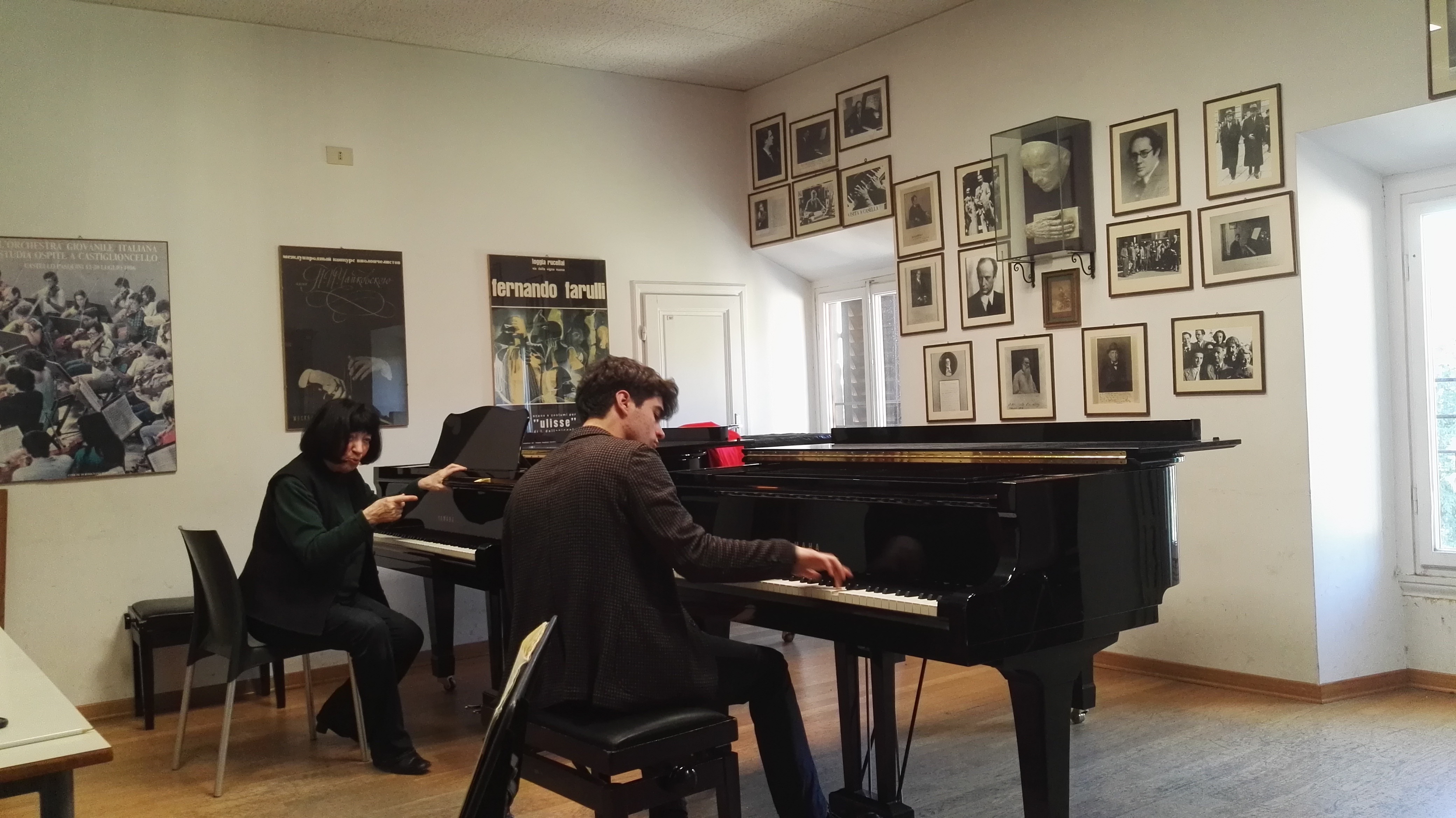
Eliso Virsaladze teaching in Fiesole

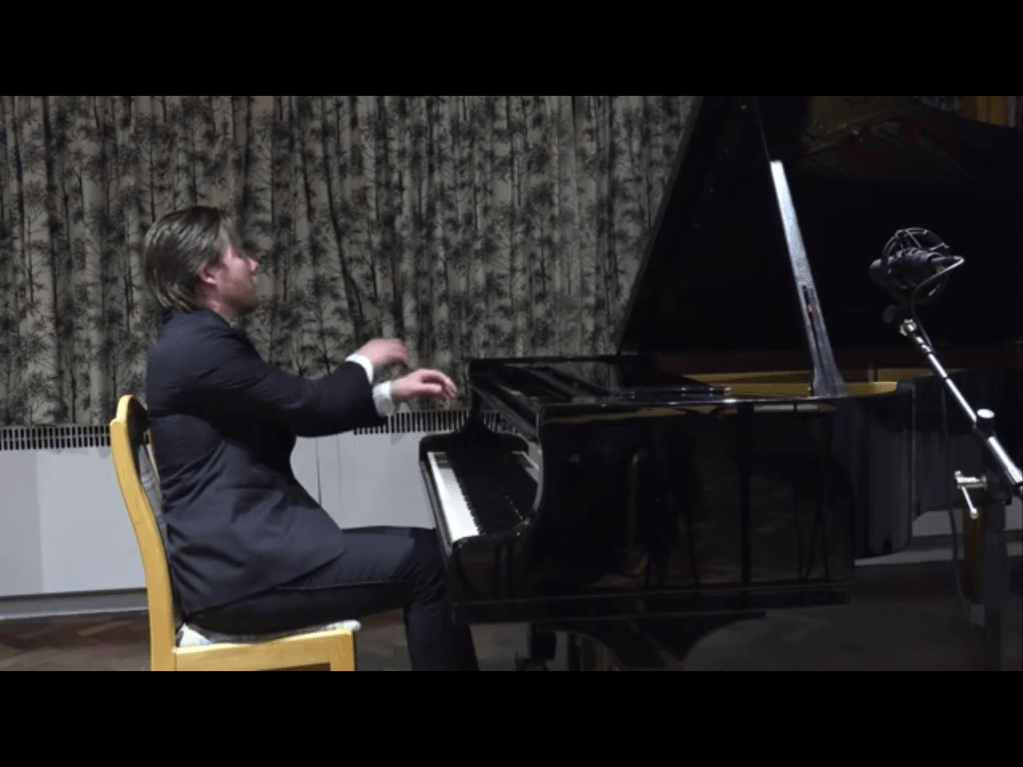
Antoine Préat Aristocratic artistry at St Mary’s

Tuesday 16 March 4.0 pm 

Antoine Préat (piano)

https://youtu.be/xP-xRUVPf5A. Video recording of the recital at St Mary’s


Mozart: Sonata in D major K284

I. Allegro. II. Rondeau en polonaise. III. Tema con variazione

Schumann Fantasiestücke op 12 Des Abends,Aufschwung ,Warum? Grillen, In der Nacht ,Fabel,Traumes Wirren,Ende vom Lied

Ravel: Toccata from ‘Le Tombeau de Couperin’

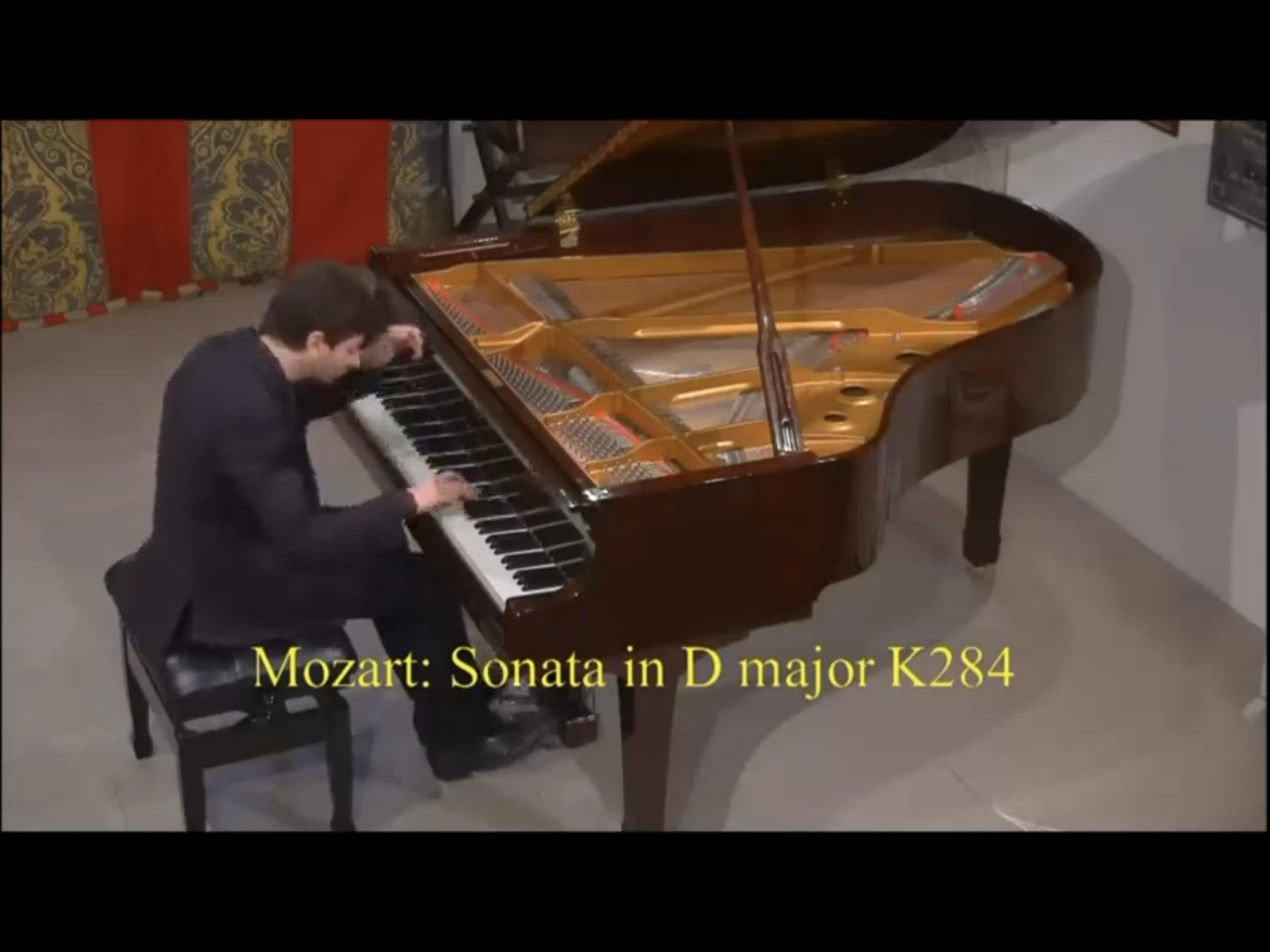
Ravishing delicacy from the young Franco -Belgian Antoine Préat.Such refined phrasing in the Mozart Sonata and fingers that seemed to glide over the keys so naturally seminating infinite jewels in this extraordinarily beautiful early sonata.A final movement that could have been an operatic scene such was the character he gave to each of the variations.If the Schumann lacked weight and projection it was because he was more in sympathy with Eusebius and his magical world than the rumbustuous Floristan .
But it was in the toccata by Ravel that his aristocratic artistry and technical perfection allowed him to give an unforgettable performance where one’s breath was taken away by his subtle musicianship and total control .The fact that it is one of the most treacherous works for a pianist and often a set work for international competitions just did not come into the equation.Yesterday I saw a video of my old teacher Vlado Perlemuter play it but today I saw and heard what I imagine the young Perlemuter would have done at Antoine’s age.Hats off indeed especially as it closed the 100th lockdown concert at St Mary’s.

https://youtu.be/IbX6NFTyjZw. Vlado Perlemuter Ravel Toccata

The Sonata in D major is the last of the Six Sonatas K. 279–284 that Mozart had in his luggage when he set off for Paris in September 1777. He had already successfully performed this music in Munich, Augsburg and Mannheim, a fact he proudly told his father back at home. He gave the works particularly rich dynamic markings and also found unusual solutions concerning their formal aspect, for instance having a slow Rondeau en Polonaise as the middle movement of the Sonata in D major.

The first movement Allegro had a refreshing energy to it with a fluidity and sense of balance and delicacy but with an almost orchestral feeling of colour.The bass octaves played so discreetly as would a string orchestra and there was just the right difference between ‘piano’ and ‘forte’ that only a true artist could judge.The beautifully shaped question and answer between the hands in the development unwound so naturally as it led back to the opening rhythm .Ornaments that glittered like jewels just enhanced the joie de vivre of this beautiful early sonata.The Rondeau en Polonaise Andante was played with an innocent simplicity but with such minute attention to detail and colour.Even the subtle shaping of the ‘Alberti’ bass ,nothing was overlooked in Antoine’s hands as he caressed Mozart’s startlingly original melodic line with such loving care.There was even question and answer within the phrase and his final pianissimo comment was answered by robust left hand octaves before the return of the main theme gently embellished .The bass octaves answered so gently by the delicate dotted rhythm of the treble before the playful delicacy of the ending and the final echoing comment that was pure magic.Charm and grace characterised the opening theme of the last movement and was followed by the gentle fluidity of the first variation and the playful second with its mischievous comments.The energetic third and fourth with such playful joy and the charm of the fifth with its repeated notes so delicately played.There was a hesitant question and answer between the hands of the sixth before the calm of the seventh leading to the virtuosistic eighth and ninth with its syncopated octaves.The almost pastoral calm of the tenth prepared us for the sublime surprise of the eleventh.Adagio cantabile was played with ravishing beauty of tone and heartfelt sentiment ,maybe a little slow ,but it was indeed operatic in its beauty and depth of feeling.The allegro final variation brought the sonata to an energetic ending.

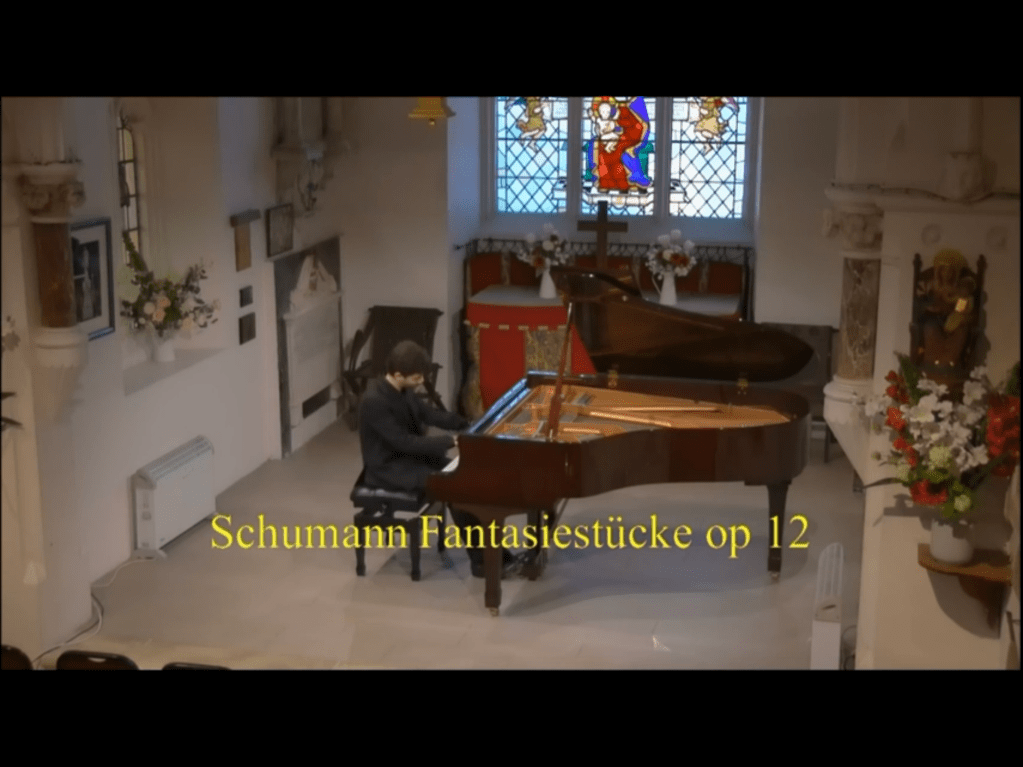
Schumann composed the eight pieces of the Fantasiestucke with the characters Florestan and Eusebius in mind, representing the duality of his personality. Eusebius depicts the dreamer in Schumann while Florestan represents his passionate side.Antoine tended to feel more at home with the more delicate pieces where the melodic line of Des Abends (In the evening) floated on a magic carpet of sounds and the gentle questioning of Warum (Why?)or the placid narrative of Fabel .The sound though was a little too delicate to project and really give depth and an overall sense of line .Floristan in great contrast burst in with the second piece Aufschwung (Soaring) with a sweeping passionate line and there was great contrast with Grillen(Whims) with its whimsical, quirky nature.There was great agitation too in In der Nacht ( In the night)where Schumann unites Eusebius with Floristan with ‘passion together with nocturnal calm.’Great agitation with some beautiful colours whilst the relentless movement continued.A beautiful change of colour in the ‘Etwas Langsamer’ on which the beautifully shaped melody was allowed to float.Traumes Wirren ( Dreams confusions) is the struggle between the dreams and the passions within Schumann. The dreamy quality of Schumann, represented by the character of Eusebius, becomes entangled by the passions of Florestan, who symbolizes Schumann’s more emotional side.Played with great agility and sense of enjoyment with beautiful legato chords in the central section before gradually gathering pace again to the final chords thrown off with such charm and ease.The grandiose opening of Ende vom Lied (End of the song) Schumann described as a combination of wedding bells and funeral bells. Writing to his future wife ,Clara : “At the time, I thought: well in the end it all resolves itself into a jolly wedding. But at the close, my painful anxiety about you returned.”The playful good humour leading to a coda and the gentle disintegration of the work as it finishes in a whisper.Some beautiful playing but missing the nobility of sound and an overall sense of line that could in the hands of Artur Rubinstein cast a spell from the first to the last note.

The Toccata from Le tombeau de Couperin was given a superb performance with its relentless continual motion but in Antoine’s hands shaped with such delicacy and precision.The sudden burst of melody over the driving rhythms had a very aristocratic French feel to it as at ‘un peu moins vif’ or where the bell like melody just seems to float on an etherial cloud of sound .There was always a great sense of control as the momentum reached fever pitch exploding in the triumphant melodic line in which Antoine’s sense of balance never lost sight of the great architectural shape as it moved to the inexorable burst of energy to the final chords .

Franco-Belgian pianist Antoine Préat was born in August 1997 in Paris. Described by the French radio as “one of the most gifted pianists of the youngest generation”, and as “a young artist with a distinctive voice”, Antoine is in demand both as a chamber musician and a soloist.Antoine made his orchestral debut at 17, playing Rachmaninov’s second concerto under the baton of Mihnea Ignat, and has since performed with orchestras such as Orchestra of Alicante, the Tonerl Chamber Orchestra, the Sainsbury Soloists, the Academy Festival Orchestra, the London Student Orchestra, the Resonate Chamber Ensemble. Antoine is regularly invited to perform in France as well as in Europe and the United States in halls such as the Salle Cortot, Salle Gaveau, Wigmore Hall, Thayer Hall, Paris Beaux Arts Museum, Frederyk Chopin Institute. His performances have been broadcast on the BBC and France Musique. Performance highlights include festivals such as the Nohant Chopin Festival, Lisztomanias, Chopin à Bagatelle, les Concerts d’Esther, Marathon Chopin (for his bicentenary), les Nuits du piano in Paris, and Jeunes talents. Antoine is an avid chamber musician, and dedicates himself to his piano duo, Duo Martelli, currently studying under Amandine Savary’s tutelage at the Royal Academy of Music. He was the youngest artist to be invited to join the Centre de Musique de Chambre de Paris, (directed by Jerome Pernoo) with whom he gave a series of concert at the Salle Cortot in Paris, sponsored by Deutsche Gramophone.He has been a finalist/prizewinner in numerous national and international competitions such as the Ettlingen competition for young pianists, the Concours International de la Ville de Gagny, the Concours international d’Ile de France, received an honor prize at the New York Début Piano Competition, and more. NAntoine began his studies at the Junior Paris Conservatoire (CRR de Paris). One year later, he made his public debut at the Salle Gaveau. In 2011, he was invited to continue his studies at the Ecole Normale de Musique A. Cortot, from which he graduated with a distinction at the age of 17. He then continued his studies at the Royal Academy of Music in London, under the tutelage of Tatiana Sarkissova, where he received the Colin Murray Award (2016) and Vivian Langrish Award (2018) for highest mark in an examination as well as the Bache Fund Award for special achievement (2019). Antoine is currently enrolled as Master of Arts student at the Academy under Christopher Elton’s tutelage. He is very fortunate to be supported by Talent Unlimited as well as the Munster Derek Butler Award and the Winifred Christie Trust Award.

Roma 3 Guaitolini-Rugani play Schumann

Lunedì 15 marzo 2021 ore 21.30 Teatro Palladium (diretta streaming canale YouTube Roma Tre Orchestra)
Ritratto d’autore: Robert Schumann
Adagio e Allegro in la bemolle maggiore op. 70
Phantasiestücke, op. 73
Studi Sinfonici op. 13
Alessandro Guaitolini, violoncello
Simone Rugani, pianoforte

Alessandro Guaitolini and Simone Rugani for a portrait of Schumann for Roma 3 University
Some passionate performances of the Phantasiestucke op 73 and the Adagio and allegro op 70 for cello and piano.A solo piano performance of the Etudes symphoniques op 13 incorporated some of Schumann’s original thoughts in the finale.
But it was the simplicity of Schubert’s ‘Du bist die Ruh’ offered as an encore that showed their true artistry


Nato a Roma , Alessandro Guaitolini inizia lo studio del violoncello all’ età di 11 anni con il Maestro Graziano Nori. Nel 2008 è ammesso al corso istituzionale di violoncello presso il Conservatorio di Santa Cecilia in Roma, dove si diploma a pieni voti sotto la guida di Maurizio Massarelli dopo soli sei anni. Prende parte regolarmente, anche dopo il diploma, ai concerti tenuti dall’Orchestra del Conservatorio di Santa Cecilia, sotto la direzione di Silvia Massarelli, Tonino Battista, Giuseppe Lanzetta e Dario Lucantoni, ricoprendo il ruolo sia di violoncello di fila che di primo violoncello. Durante gli studi in Conservatorio partecipa in qualità di allievo effettivo a diverse masterclasses tenute dai Maestri Giovanni Sollima, Ernst Reijseger, Francesco Strano, Michael Flaksman, Jelena Ocic, Lynn Harrel e Denis Shapovalov. Nel 2012 debutta come solista a Firenze con l’Orchestra da camera fiorentina eseguendo il concerto n.1 in do maggiore di F. J. Haydn con grande apprezzamento del pubblico. Nel gennaio 2014 vince una borsa di studio con la quale si reca a Tokyo per studiare nella prestigiosa Toho Gakuen School of Music con i Maestri Hakuro Mori e Tsuyoshi Tsutsumi. Il soggiorno ha la durata di tre mesi e si conclude con un recital per violoncello solo presso la sala concerti della Toho. Dal 2011 studia privatamente con il Maestro Francesco Strano con il quale approfondisce i brani più importanti del repertorio. Nel 2014 è ammesso al corso di alto perfezionamento dell’Accademia Nazionale di Santa Cecilia di Roma tenuto dal Maestro Giovanni Sollima, dove si diploma nel 2017.

Simone Rugani, diplomatosi a 17 anni con il massimo dei voti sotto la guida della prof.ssa Nadia Lencioni, si è esibito in numerosi festival in Italia e all’estero (tra cui si ricorda l’ “Aurora Star Music Festival” 2012 (SWE) con i maestri Urban Agnas e Jonas Bylund, l’AsiagoFestival 2017 con Duccio Beluffi e Claudio Pasceri e la Casa Italiana Zerilli Marimò di New York). Ha vinto il primo premio assoluto al 26° Concorso Pianistico Internazionale “Città di Albenga” ed il Concorso Nazionale “Nuova Coppa Pianisti d’Italia” (4a edizione) di Osimo. 

Roberto Pujia, Presidente Roma Tre Orchestra
Valerio Vicari, Direttore Artistico Roma Tre Orchestra
Patrick Hemmerlé invites Thomas Kelly to Clare Hall ,Cambridge .The four musketeers

Liszt: Rhapsodie Espagnole S.254 Busoni: Elegie No.2 All’Italia Liszt/Busoni :Fantasia and Fugue on Ad nos, ad salutarem undam

https://youtu.be/hwGfr-jSfyg

It is very interesting to note the remark below about Patrick’s admiration for Thomas Kelly.I have long been admirers of both for their extreme intelligence and searching minds added to their transcendental keyboard skill where difficulties do not exist.They are an elite company of four young musicians that are rapidly being applauded by critics and public for their innovative programmes,searing intelligence and inquisitive minds.With Thomas and Patrick we must certainly add Mark Viner (Alkan) and Tyler Hay (Kalkbrenner) to this elite group that has appeared from a need to take a fresh look at many long neglected works from the vast piano repertoire.

Patrick Hemmerlé writes :’I am doing here something I have not done before. I am “lending” my channel to another pianist. Thomas Kelly is an absolutely wonderful pianist I discovered almost by accident, clicking on a facebook video. I was immediately taken in and decided that one day I would invite him to play for my college if that was possible. Soon after it was decided that we wanted to keep music going in the college during the pandemic, so that the plan materialised sooner than I expected, and I am very pleased he accepted to come and play in difficult conditions in Clare Hall which has only has a dining hall, not a concert hall, and on top of it all, the central heating broke down, and he had to play his extremely demanding program in arctic conditions. ‘His extremely interesting programme is as follows:

Liszt Rhapsodie Espagnole I have rarely heard in the concert hall but the two times I remember were unforgettable. The recital at the RFH in London when Gilels gave a truly explosive performance.A second time in Italy in the Ghione theatre in Rome when a young Russian Mikhail Petukhov played them in the Busoni arrangement for piano and orchestra with the chamber orchestra of Lithuania under Saulius Sondekis.Liszt was fascinated by the temperamental melodies of the Iberian peninsula, after a six month tour through Spain and Portugal and integrated elements of this music into his piano works. The character of the “Rhapsodie espagnole” is very different from that of the Hungarian Rhapsodies– instead of Hungarian boisterousness and deep melancholy, one encounters Spanish noblesse and elegance. At the centre are the age-old theme “Folies d’Espagne” and a much loved folkdance melody from Aragon (“Jota”); both of which Liszt worked into a dazzling virtuosic series of variations. Thomas searching more for the poetry than just scintillating showmanship.But even on this piano with a very dry bass he was able to build up to a tumultuous climax of transcendental octaves leading unexpectedly to a cadenza that I assume was his own,as Liszt himself may have done.

With the six elegies Busoni recognized his change of style : “My entire personal vision I put down at last and for the first time in the Elegies.They signify a milestone in my development. Almost a transformation.But a critic of the day had this to say :’He who knew something of Busoni’s strivings for a new harmonic system and of his belief that he has already achieved new tonalities through curiously built scales, could certainly perceive a structural logic and an aesthetically ordered system of sound deployment in these pieces; but novelty seekers will have found as little “music” here as the normal, naïve listener … No, no and no again, these were not the inspirations of a man ahead of his time, these were simply calculations…’Later, after more public performances, Busoni was well aware of the negative public reaction, but still clearly believed he had chosen the correct path. In a letter to his pupil Egon Petri he wrote, “Thank you for your kind words about the Elegies. On several occasions I have now found that they appear infinitely simpler to the reader than to the listener. In these pieces I am particularly proud of the form and clarity.”A strange piece of great effect and played with total commitment by Thomas .With it’s deep brooding bass out of which emerges one of those nostalgic Busonian melodies almost like Fauré in its inconclusion.Giving way to continuous swirling sounds only momentarily interrupted by a folk melody before the powerful rhythmic urgency comes to rest in a final sumptuous peaceful resolution.A startling performance of great emotional effect that makes one wonder why it is rarely if ever heard in the concert hall.

Another rarely heard work followed with a concert transcription of Liszt’s organ Fantasy and Fugue on the Chorale ‘Ad nos,ad salutarem undam’ by Busoni of such authority that this is a prime example of the transcription actually being an improvement on the original;Busoni’s pianistic ingenuity ensures that none of the grandeur of Liszt’s conception is lost or diluted while achieving a clarity and brilliance often not possible on the organ .It was composed in 1850 and first published the following year.The theme is taken from the chorale of the Anabaptists in the first act of Meyerbeer’s immensely successful opera Le prophète, premiered in Paris the previous year; the Fantasy and Fugue seems to spring as much from his religious side as the theatrical. The Fantasy, the first of the work’s three clearly defined sections, is a rhapsodic improvisation, challenging, emotional and dramatic, but the second (Adagio) is more of a devout meditation in the remote key of F sharp major which, paradoxically, is often associated in Liszt with both sacred and profane love. A thunderous cadenza links to the final Fugue which has all the rhythmical and dramatic traits of his so-called ‘Mephisto style’, and it is likely that the ultimate triumphant blaze of C major represents the defeat of those forces. Saint-Saëns, who played the work with great success in the 1870s (once in the presence of Liszt), declared it ‘the most extraordinary organ work in existence’.There are passages where Busoni’s own distinctive palette is clearly discernible but, equally, the lessons assimilated from his immersion in Liszt’s keyboard writing are uncannily fruitful and convincing.An amazing work,hard to believe it was conceived for the organ such are the truly transcendental demands on the performer.From the grandiose opening and amazingly busy cadenza like passages before the calm magic of the central section.A cadenza signals the opening of the fugue played with absolute clarity and amazing dexterity before the final triumphant conclusion.A work that needs listening to many times to discovery the intricacy of line that Liszt and Busoni have woven and so impressively played by Thomas.Last time I heard Thomas he played the almost unknown piano sonata by Reubke ,Liszt’s prize student who was to die in his early twenties having left only two major works :the well known organ sonata and the enormously difficult piano sonata that Thomas had the courage to present as he had done this mammoth Liszt/ Busoni work today.An amazing intellectual and technical tour de force.He is indeed a force to be reckoned with
Thomas Kelly was born in 1998, and started playing the piano aged three. In 2006 he became Kent Junior Pianist of the Year and attained ABRSM Grade 8 with Distinction. Aged nine, Thomas performed Mozart Concerto No. 24 in the Marlowe Theatre with the Kent Concert Orchestra. After moving to Cheshire, he regularly played in festivals, winning prizes including in the Birmingham Music Festival, third prize in Young Pianist of the North 2012, and first prize in WACIDOM 2014. Since 2015, Thomas has been studying with Andrew Ball, initially at the Purcell School of Music and now at the Royal College of Music. Thomas has also gained inspiration from lessons and masterclasses with musicians such as Vanessa Latarche, William Fong, Ian Jones, Valentina Berman, Wei-Yi Yang, Boris Berman, Paul Lewis, Mikhail Voskresensky, and Dina Yoffe. Thomas will begin studying for a Master’s at the Royal College of Music in 2021, sharing with Professors Andrew Ball and Dmitri Alexeev. Thomas has won first prizes including the Pianale International Piano Competition 2017; Kharkiv Assemblies 2018; at Lucca Virtuoso e Bel Canto Festival 2018, RCM Joan Chissell Schumann competition 2019; Kendall Taylor Beethoven Competition 2019; BPSE Intercollegiate Beethoven Competition 2019; and the 4th Theodor Leschetizky competition 2020. He has performed in a variety of venues, including Wigmore Hall, Cadogan Hall, Holy Trinity Sloane Square, St James’ Piccadilly, Oxford Town Hall, St Mary’s Perivale, St Paul’s Bedford, the Poole Lighthouse Arts Centre, the Stoller Hall, at Paris Conservatoire, the StreingreaberHaus in Bayreuth, the Teatro Del Sale in Florence, North Norfolk Music Festival and in Vilnius and Palanga. Since the pandemic restrictions in 2020, Thomas’ artistic activities include participating in all three seasons of the Echo Chamber, an online concert series curated by Noah Max, and releasing three singles under the Ulysses Arts label on digital platforms. Thomas is a C. Bechstein Scholar supported by the Kendall-Taylor Award. He is being generously supported by the Keyboard Charitable Trust since 2020, and Talent Unlimited since 2021.

https://christopheraxworthymusiccommentary.wordpress.com/2021/01/20/thomas-kelly-at-steinway-halllondon-for-the-keyboard-trust-new-artist-series/

https://christopheraxworthymusiccommentary.wordpress.com/2021/02/09/patrick-hemmerle-takes-st-marys-by-storm/

https://christopheraxworthymusiccommentary.wordpress.com/2020/11/15/mark-viner-at-st-marys-faustian-struggles-and-promethean-prophesis/

https://christopheraxworthymusiccommentary.wordpress.com/2020/10/06/tyler-hay-at-st-marys/

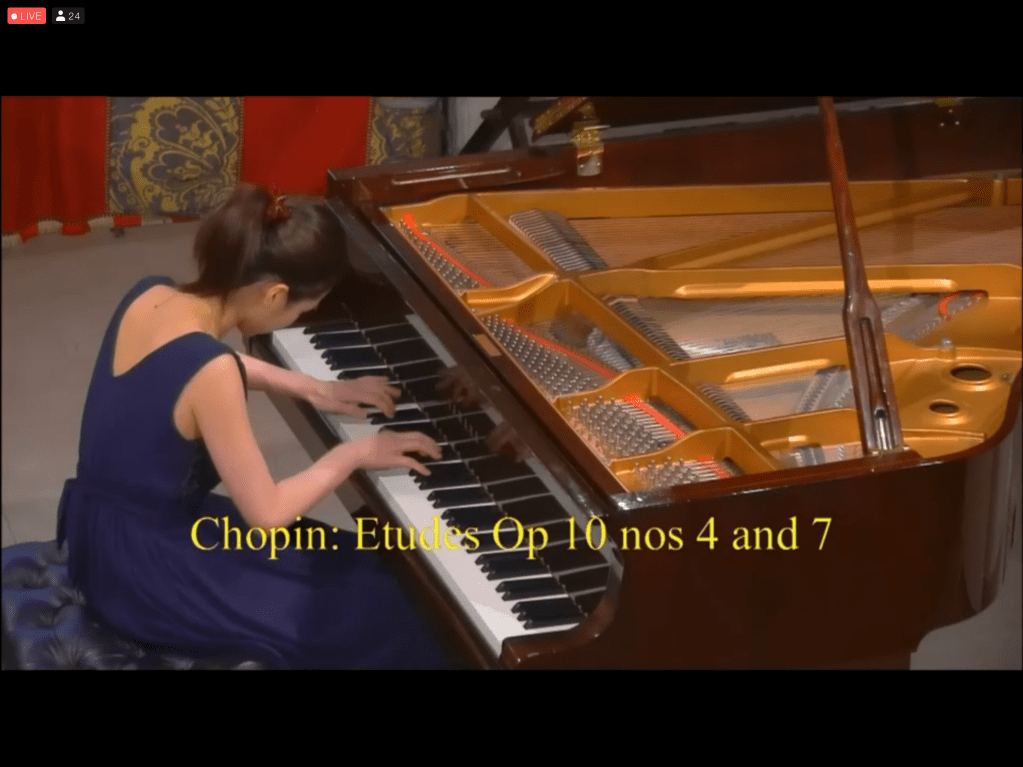
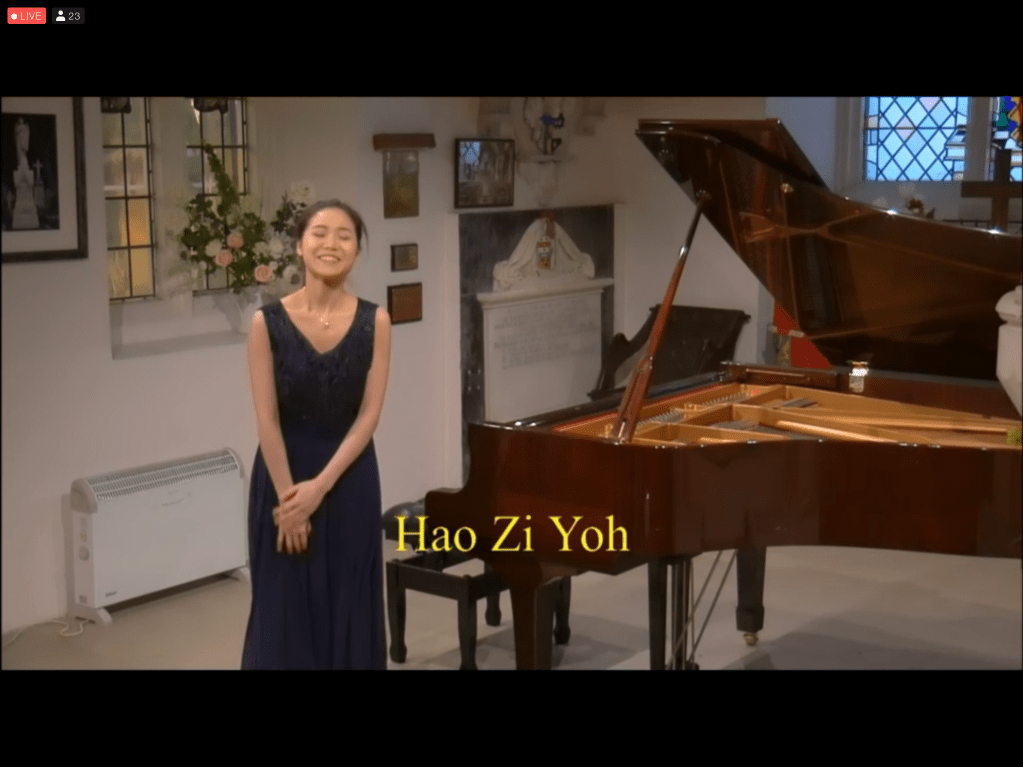
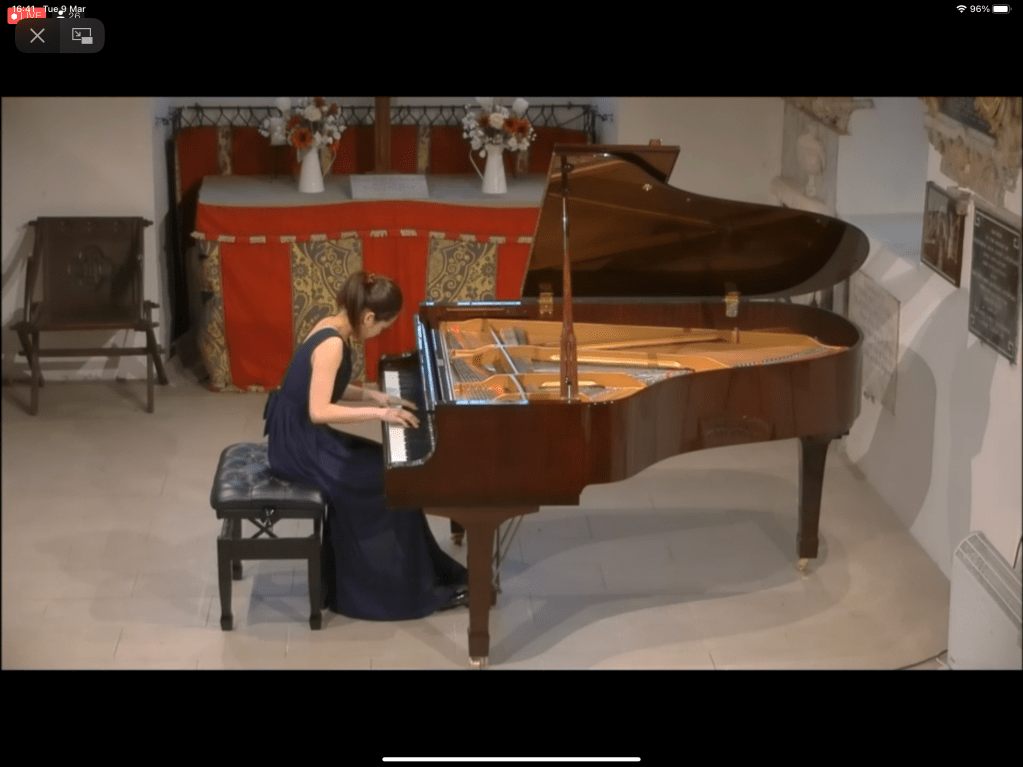
Hao Zi Yoh at St Mary’s A universal soul at the service of music.

Tuesday March 9 4.00 pm 

Hao Zi Yoh (piano) 


Debussy: Golliwogg’s Cakewalk
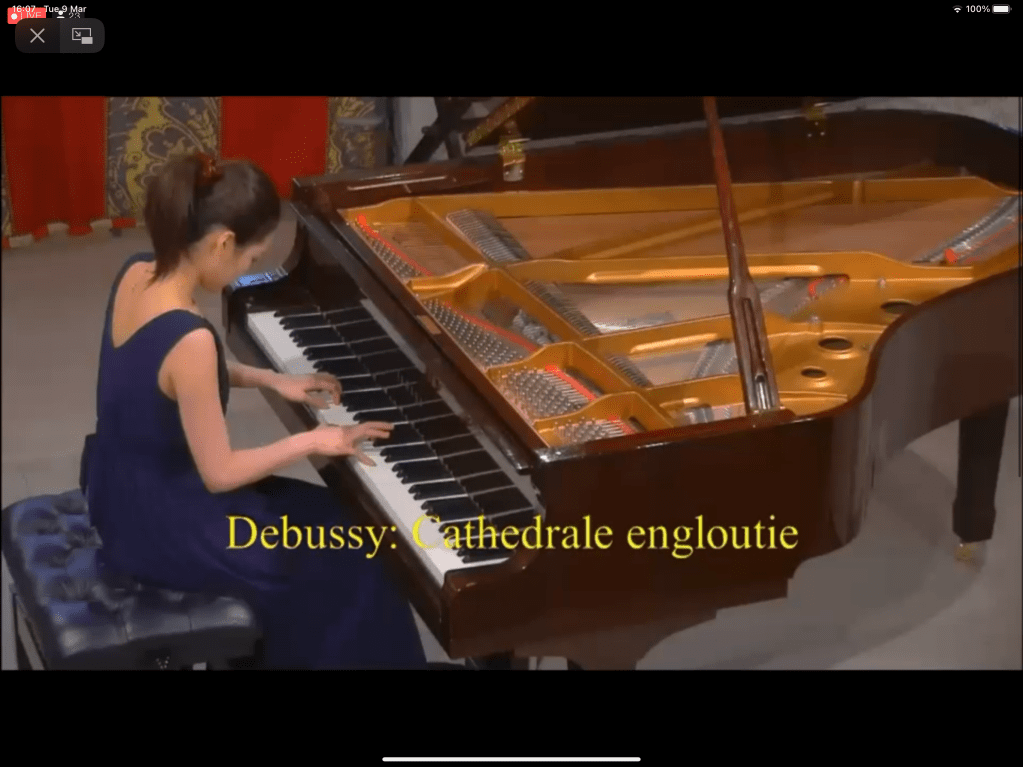
Debussy: Cathedrale engloutie
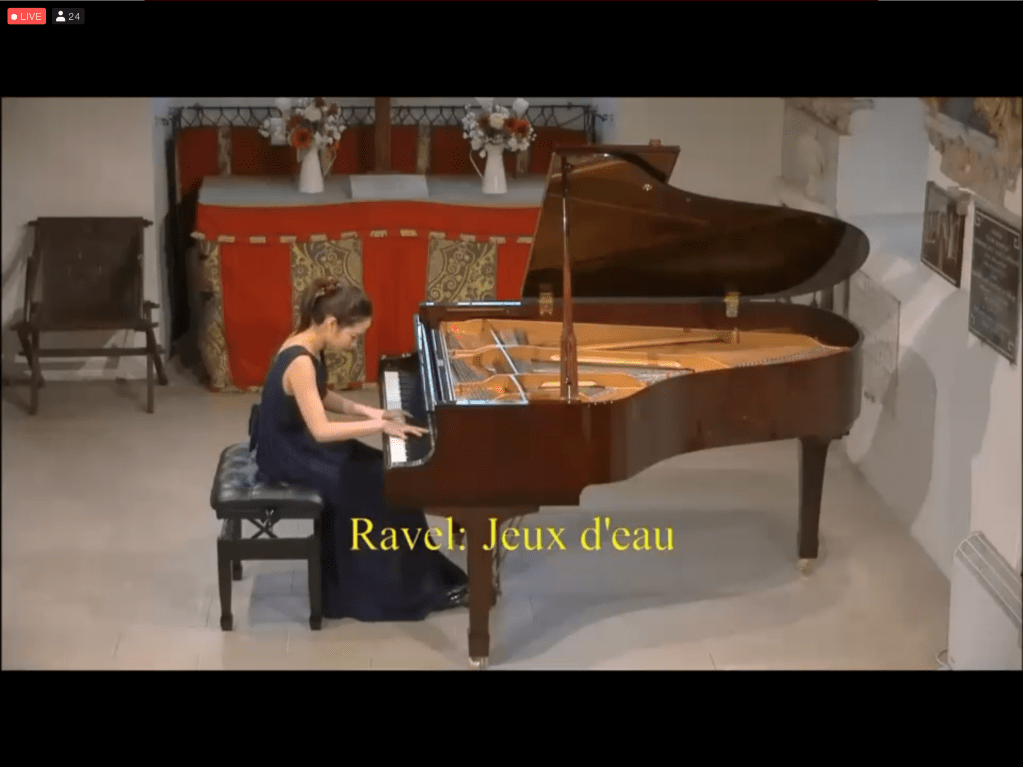
Ravel: Jeux d’eau
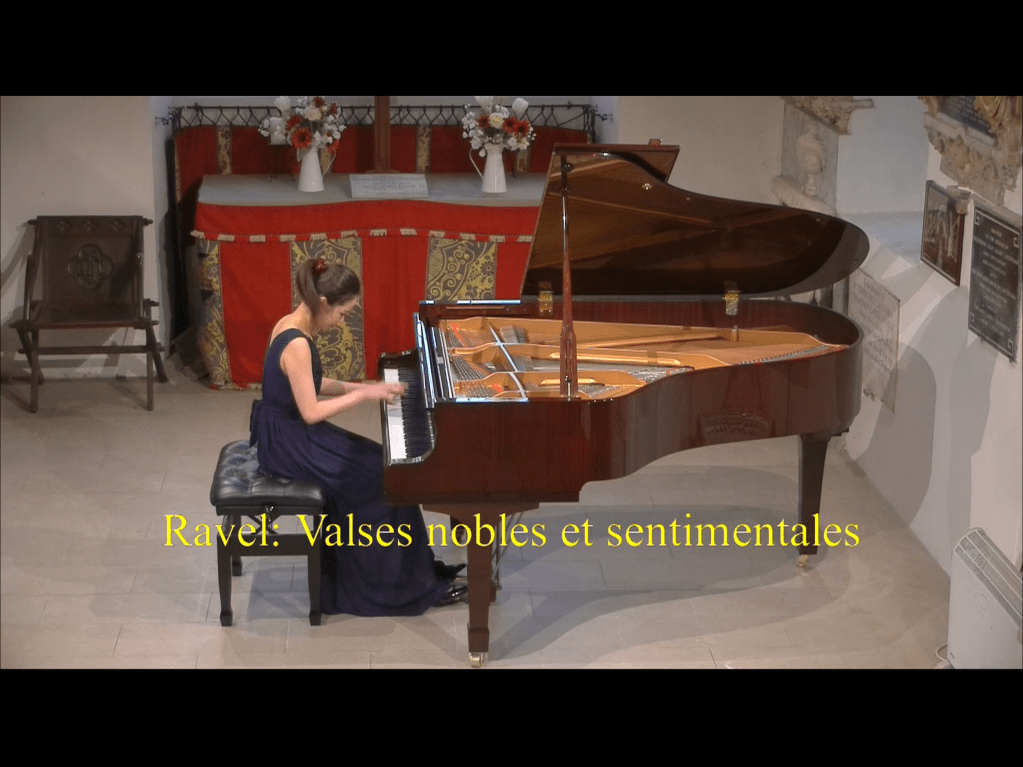
Ravel: Valses nobles et sentimentales
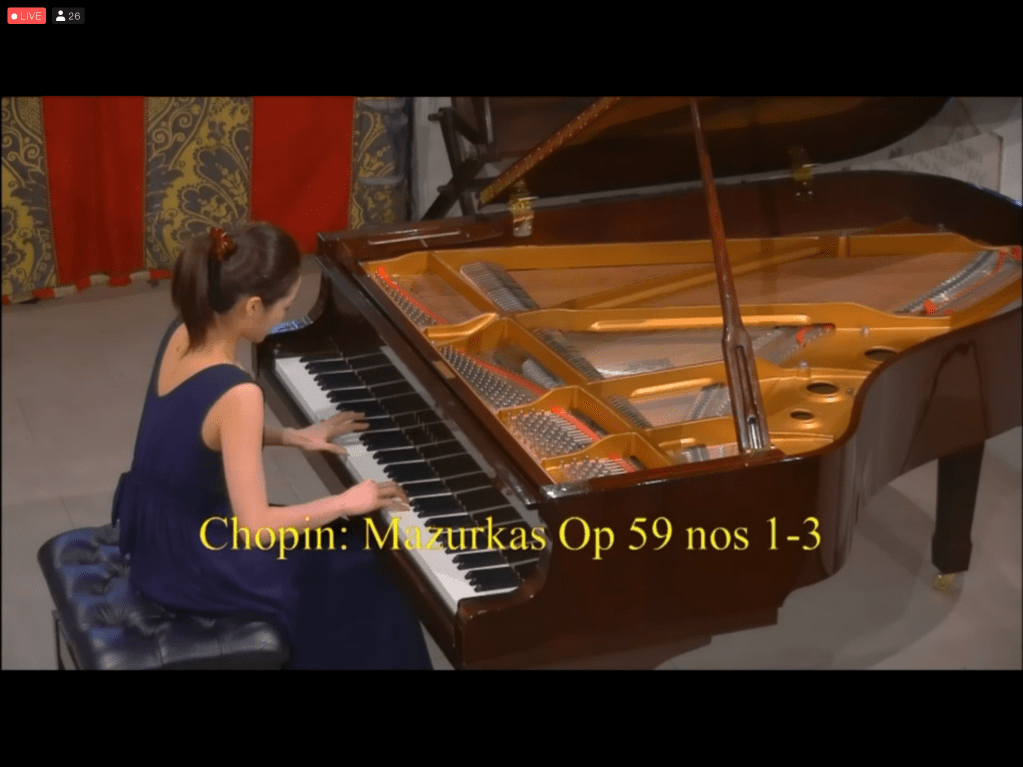
Chopin: Mazurkas Op 59 nos 1-3
Chopin: Etudes Op 10 nos 4 and 7
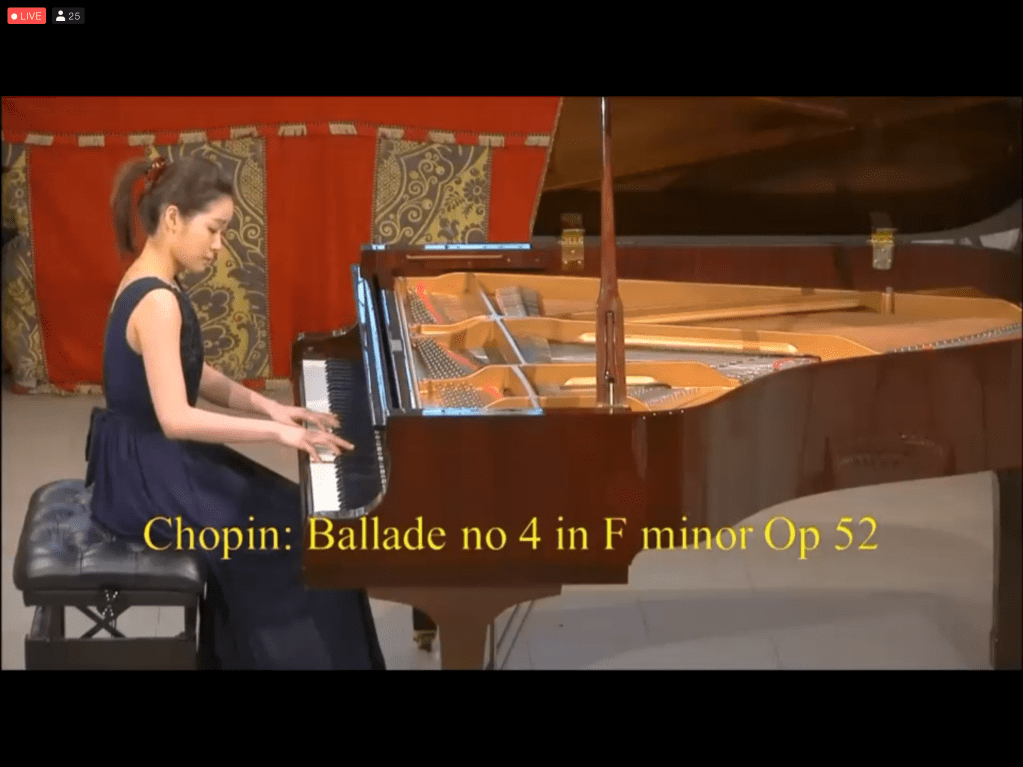
Chopin: Ballade no 4 in F minor Op 52

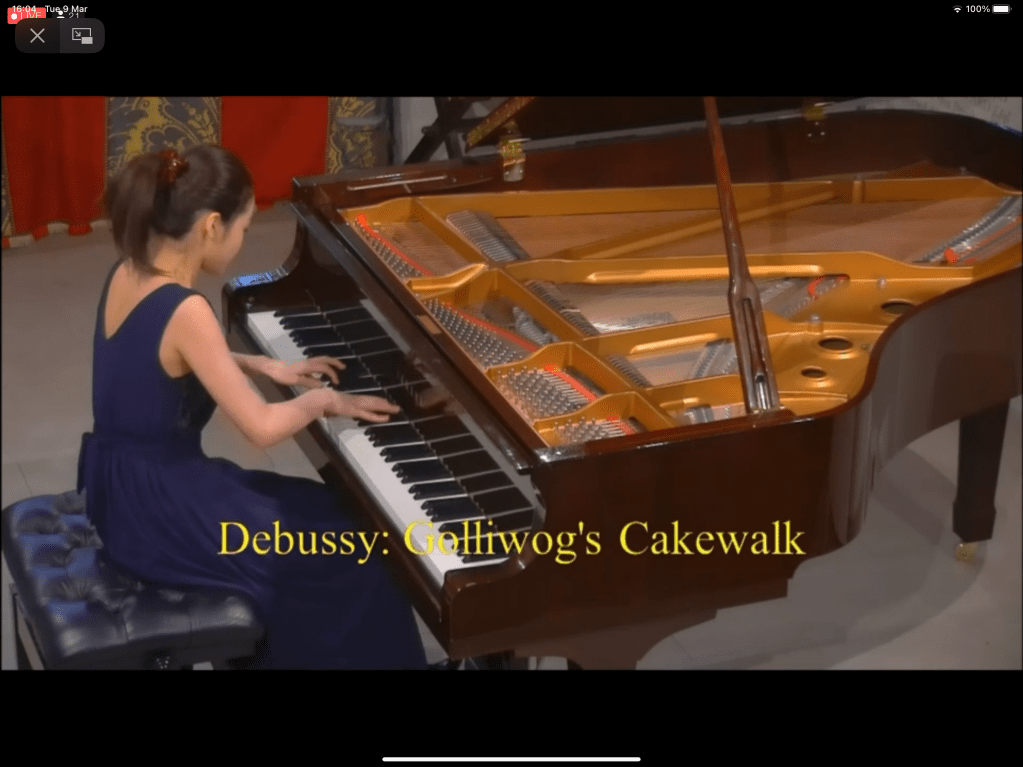
Some ravishing playing from Hao Zi Yoh from the jazzy rhythms of Debussy’s Golliwog(g) to the mysteries of the sunken cathedral.Her chameleon sense of sound created exactly the atmosphere that was to lead us too to the sensual world of Ravel’s Valses Nobles e Sentimentales.One his simplest and most perfect works played with a luminosity of sound and sense of subtle colours with the atmosphere of a pre war France.Ravel’s Jeux d’eau was played with a jewel like precision where the river God was charmed indeed by the subtle beauty that she brought to the waters that only Liszt before him had been able to portray so magically.
Mazurkas that were miniature tone poems, the three op.59 played every bit as magically as I remember from the hands of Smeterlin.
Hao Zi’s well oiled fingers allowed her to dig deep into the two studies she played.From his early op 10 set,N.4 played with such clarity and breathtaking agility but it was the colours and sheer musicality of n.7 that was even more remarkable.
What better way to finish the recital than with one of Chopin’s finest works:the Fourth Ballade op 52.
Played with a simplicity and sense of architectural shape,the mighty climax played with such passionate outpouring of sounds.The simplicity of the five calming chords before the coda glistened like magic before the burst of transcendental playing required in the coda that explodes with emotion as this masterpiece of the Romantic repertoire comes to a triumphant conclusion

Debussy composed Children’s Corner between 1906 and 1908 and dedicated the suite to his daughter, Claude-Emma (known as “Chou-Chou”),who was born on 30 October 1905 in Paris. She is described as a lively and friendly child who was adored by her father. She was three years old when he dedicated the suite to her in 1908.The dedication reads: “A ma chère petite Chouchou, avec les tendres excuses de son Père pour ce qui va suivre. C. D.” (To my dear little Chouchou, with tender apologies from her father for what follows).Golliwogg’s cakewalk is the last piece of six .At the time of its composition, Golliwoggs were in fashion, due partly to the popularity at that time of the novels of Florence Kate Upton(“golliwog” is a later usage). They were stuffed black dolls with red pants, red bow ties and wild hair, somewhat reminiscent of the blackface minstrels of the time. The cakewalk was a dance or a strut, and the dancer with the most elaborate steps won a cake (“took the cake”). The piece is a ragtime with its syncopations and banjo-like effects. The dynamic range is quite large and very effective.During the piece, Debussy alludes satirically to Wagner’s Tristan und Isolde.The opening bars turn the famous half -diminished Tristan chord into a jaunty, syncopated arpeggio while the middle ‘B’ section of this dance is interrupted on several occasions by the love-death leit motif marked avec une grande émotion (with great feeling). Each quotation is followed by banjo imitations.Interesting to discover how much there can be in one little piece.It was exactly this that Hao Zi showed us today with her sparkling rhythms and great drive alternating with sleezy jazz idioms played with such subtle colour and sense of style and the final notes thrown off with great authoritative character.The door slammed shut at the end of this charming set of pieces.

La Cathédrale was published in 1910 as the tenth in Debussy’s first of two volumes of twelve preludes and is based on an ancient Breton myth in which a cathedral, submerged underwater off the coast of the Island of Ys, rises up from the sea on clear mornings when the water is transparent. Sounds can be heard of priests chanting, bells chiming, and the organ playing, from across the sea.After the beginning section, Debussy gently brings the cathedral out of the water ,shaping the melody in a wave-like fashion, ‘Peu à peu sortant de la brume’ (Emerging from the fog little by little).Then after a section marked ‘Augmentez progressivement’(Slowly growing), the cathedral has emerged and the grand organ is heard fortissimo.This is the loudest and most profound part of the piece, and is described in the score as ‘Sonore sans dureté ‘(Sonorous but without harshness). Following the grand entrance and exit of the organ, the cathedral sinks back down into the ocean and the organ is heard once more, but from underwater.Finally, the cathedral is gone from sight, and only the bells are heard, at a distant pianissimo.Hao Zi brought a complete change of colour to this piece with the bright bell like sounds from the treble and bass and the glorious full sonorous sounds of the Cathedral arisen.There was mystery in the sounds of the distant plain chant as the Cathedral slowly sinks with the bell like sounds deep in the bass.Some extraordinarily evocative playing of subtle clarity and mystery.

Ravel wrote his Jeux d’eau whilst a student of Gabriel Fauré to whom it is dedicated.It was directly inspired by Liszt’s Les Jeux d’eau a la Villa d’Este and is prefaced by a poem “Dieu fluvial riant de l’eau qui le chatouille…” a quote from Henri de Régnier’s Cité des eaux, “River god laughing as the water tickles him …”. The luminosity and clarity of Hao Zi’s sound was quite extraordinary as the notes seemed to flow like water from her fingers.Some magical effects too with some parts bathed in pedal and contrasted with extraordinary effect those without.The final melodic line over streams of flowing notes was quite magical, like water the piece does not have a definite ending and is probably still flowing as we move on to the next work.

Ravel’s ‘Valses nobles et sentimentales ‘ published ten years later in 1911 with a quotation of Henri de Régnier: “…le plaisir délicieux et toujours nouveau d’une occupation inutile” (the delicious and forever-new pleasure of a useless occupation).The work was greeted by a disturbing chorus of boos and cat calls in Paris in 1911 when it was played by its dedicatee Louis Aubert,better known as a composer than pianist.Rubinstein had the same reception a few years later in Spain and treated the audience to a repeat performance as an encore !It created a scandal with its unexpected dissonances from the very first waltz.Hao Zi played the caustic opening waltz with a ‘joie de vivre’and infectious rhythmic energy right to the final slamming of the door.But a door that opened onto a magic garden in Hao Zi’s hands with the real intensity that Ravel asks for but with a rich cantabile ,’doux et expressif’.A ‘french’ sound so typical of Poulenc or Satie of an unclouded purity that was so expressive.The gentle asides -‘un peu plus lent et rubato’ just delicate comments on the bigger line that was being etched so eloquently.There was an almost child like simplicity to the third waltz with a lilt ‘to and fro’ like a children’s play thing.A beautiful central chordal section created just the contrast bursting into melody but always with an undercurrent of the waltz.The beautiful sensual colours of the fourth where Hao Zi played with a fleeting lightness before the nostalgic cantabile -‘Dans un sentiment intime’of the fifth.Back to the playful waltz rhythms of the sixth bouncing across the keyboard to the stark opening of the seventh with its gradual reawakening and grandiloquent outbursts.Played with great attention to detail but also with great abandon just as I remember Rubinstein in his memorable recitals in London where he would often play a work that had become,in his lifetime,recognised as a masterpiece.The beautiful middle section was played with such a flexible sense of line with great washes of colour before the final exultant ending .The eighth waltz is titled ‘épilogue’ and is undoubtedly the most remarkable.It appears like an apparition of all that we have heard before but on a sheen of magical sounds.I remember Perlemuter in a masterclass with Imogen Cooper in which he explained what Ravel had intended.I quote from the book ‘Ravel d’après Ravel’ conversations with Hélene Jourdan-Morhange:’Ravel was so passionate about the unity of tempo here that I must be insistent about it.It is also one of the interpretative difficulties of this Valse….Ravel wanted the epilogue to be slow but for it to keep its waltz rhythm.’Hao Zi instinctively seemed to feel this not only here in Ravel but also in the way she played the Chopin Mazurkas.

It is something instinctive that cannot be taught.I remember FouTs’ong winning the Mazurka prize in the Chopin competition in Warsaw and everyone being surprised that he could play them so instinctively and better than any of the Polish contestants.It just shows that music is a universal language and the soul has no frontier.

Just as this brilliant young artist demonstrated today with Chopin playing of such authority and deeply felt sentiment allied to a complete technical command.

Malaysian pianist Hao Zi Yoh was born in 1995 and began her music studies at the age of 3. By the age of 12, she already performed at Carnegie Hall as a gold medallist of the Bradshaw and Buono International Piano Competition. Most recently, Hao Zi is selected as participant in the Preliminary Round of Chopin Piano Competition in Warsaw 2021. In Malaysia, Hao Zi studied under Chong Lim Ng, who showed her the path into the classical music world. She explored composing and her composition “Bustling City and Peaceful Suburb” was selected to represent Malaysia at the Yamaha APJOC concert 2007. At the age of 14, she moved to Germany to study with Prof. Elza Kolodin at the Hochschule für Musik Freiburg. It was then she won top prizes in many international competitions including EPTA Belgium, Enschede, RNCM James Mottram (Manchester, 2012) and Concurso internacional de piano Rotary Club Palma Ramon LLull, Mallorca (Spain 2013). This led her to performing as soloist in festivals around Europe, USA, China, Japan and Malaysia. Besides, she also performed with the Royal Liverpool Philharmonic, Nova Amadeus and Baleares Symphony Orchestra. In 2014, she came under the tutelage of Prof. Christopher Elton at the Royal Academy of Music, London, generously supported by Lynn Foundation, Leverhulme Trust, Countess of Munster and Craxton Memorial Trust. She received 3rdPrize at Roma International Piano Competition, the Phillip Crawshaw Memorial Prize for an Outstanding Musician from Overseas at the Royal Overseas League Competition. She was also recipient of prestigious Martin Musical Scholarship Trust Philharmonia Piano Fellowships on the Emerging Artists Programme 2017/18. During her studies, she explored her relationship with music and her interest in creating sound colours: her MMus Project 2016 involved collaborating with percussionist Daniel Gonzalez to create a version of Ravel’s Gaspard de la nuit for Piano and Percussion. In her interpretation of “A Distant Voice of the Rainforest” by Chong Lim Ng, she included improvised extended piano techniques as well as improvised singing to draw the audience into the soundworld of a rainforest. Apart from this, Hao Zi also participated in creative outreach projects led by the Open Academy for children and elderly with Dementia, where she performed in Music for Moment Concerts at the Wigmore Hall. She collaborated with author-illustrator David Litchfield and improvised to his storytelling of award-winning book “The Bear and the Piano”. Hao Zi remains in close contact with the music scene in Malaysia. She has given talks, performances and masterclasses to the students of University of Malaya, Bentley Music and Persatuan Chopin in hope to share her experiences and help the younger generation. During the Covid-19 lockdown, Hao Zi held online livestream and fundraiser for St. Nicholas’ Home for the Blind, Penang, Malaysia. A Young Steinway Artist, Hao Zi is currently based in London and has performed in venues such as Wigmore Hall, Southbank Royal Festival Hall, Salle Cortot, Steinway Hall London, St. Martin-in-the-Fields, Dewan Filharmonik Petronas (Malaysia) and Teatro Quirino (Italy). She is further developing her performing career being part of the Keyboard Trust London, Talent Unlimited. Hao Zi is also a piano tutor at King’s College London and gives masterclasses at Imperial College London.

https://christopheraxworthymusiccommentary.wordpress.com/2020/11/05/hao-zi-yoh-for-cranleigh-arts-online/