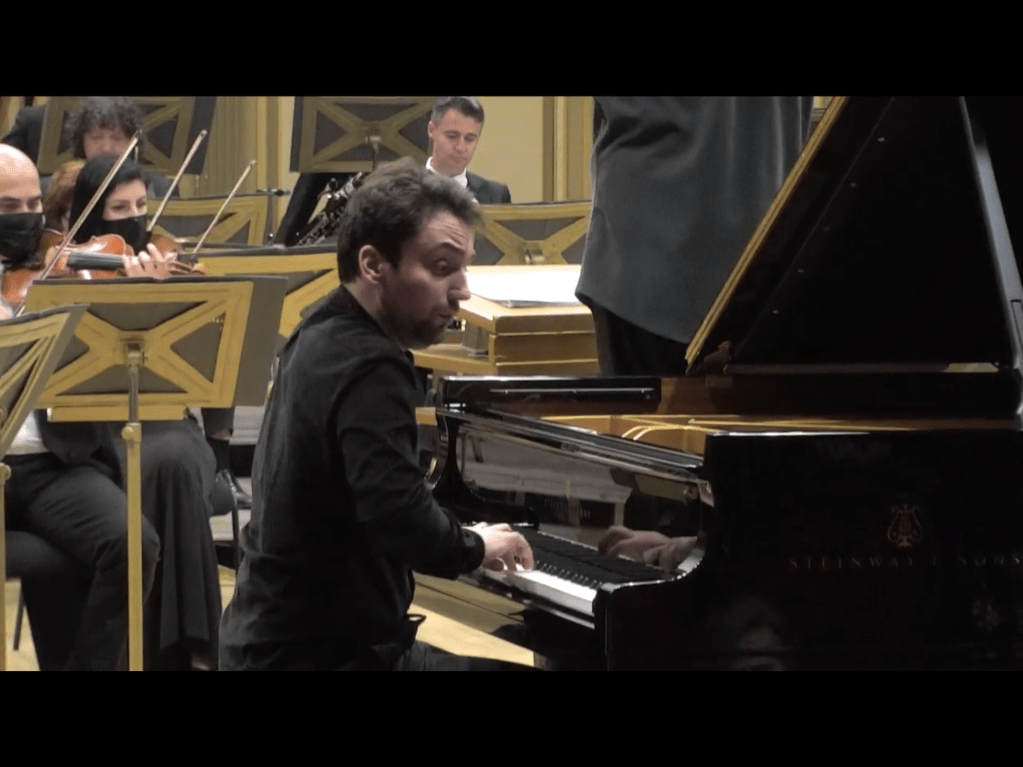
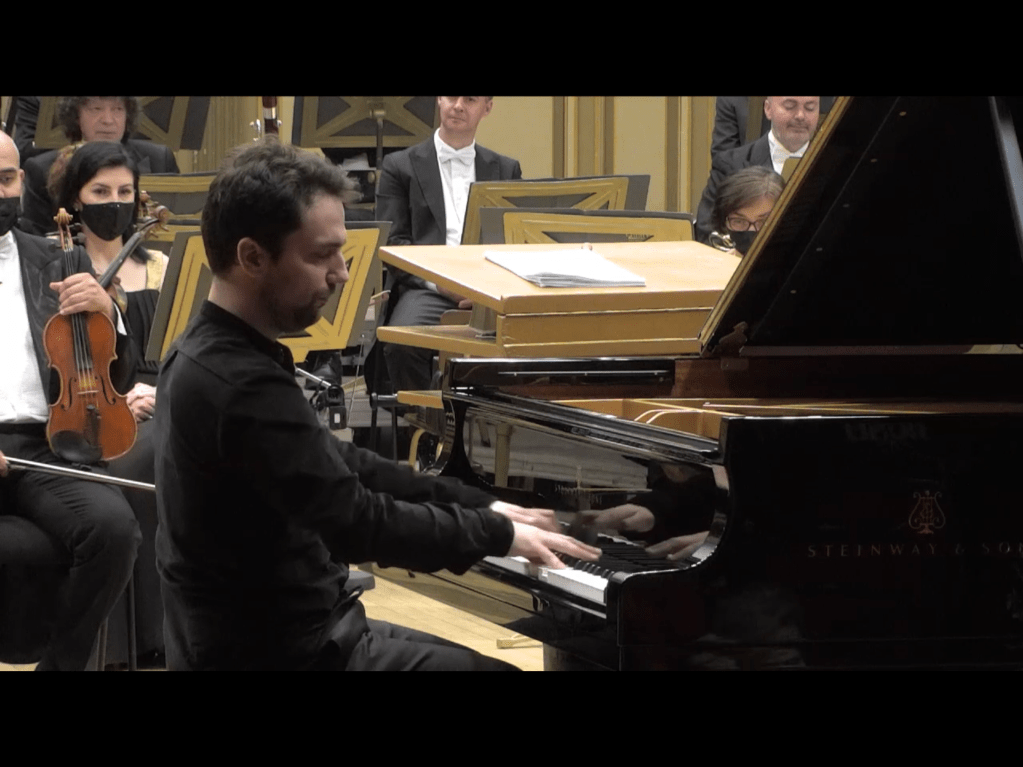
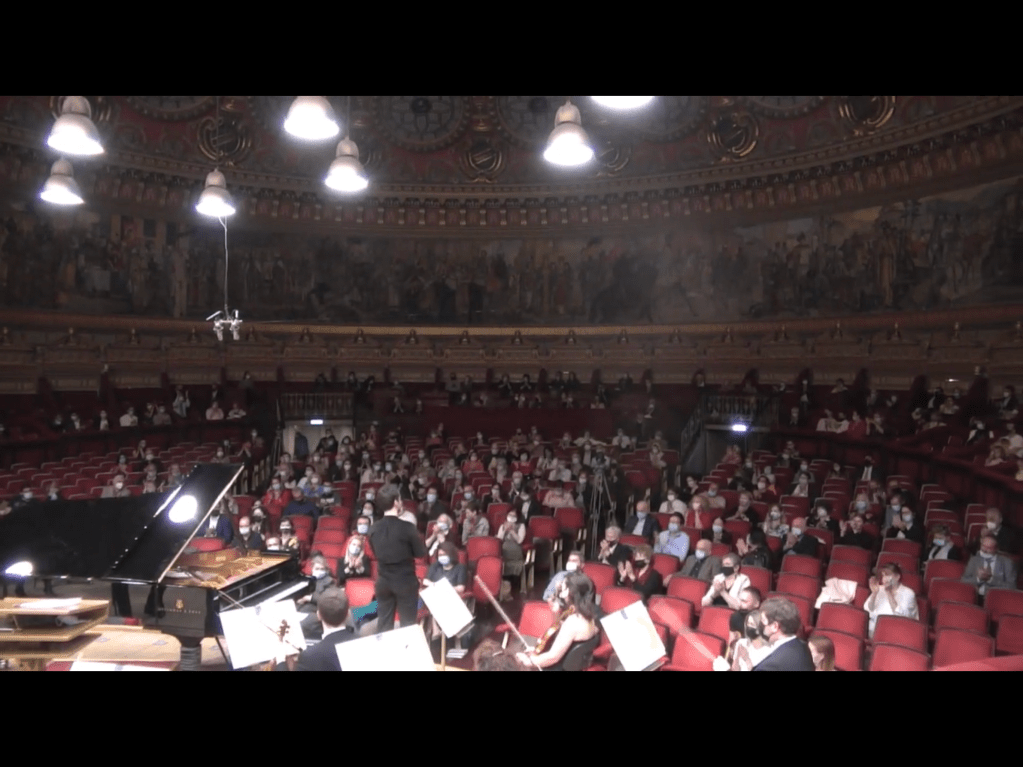
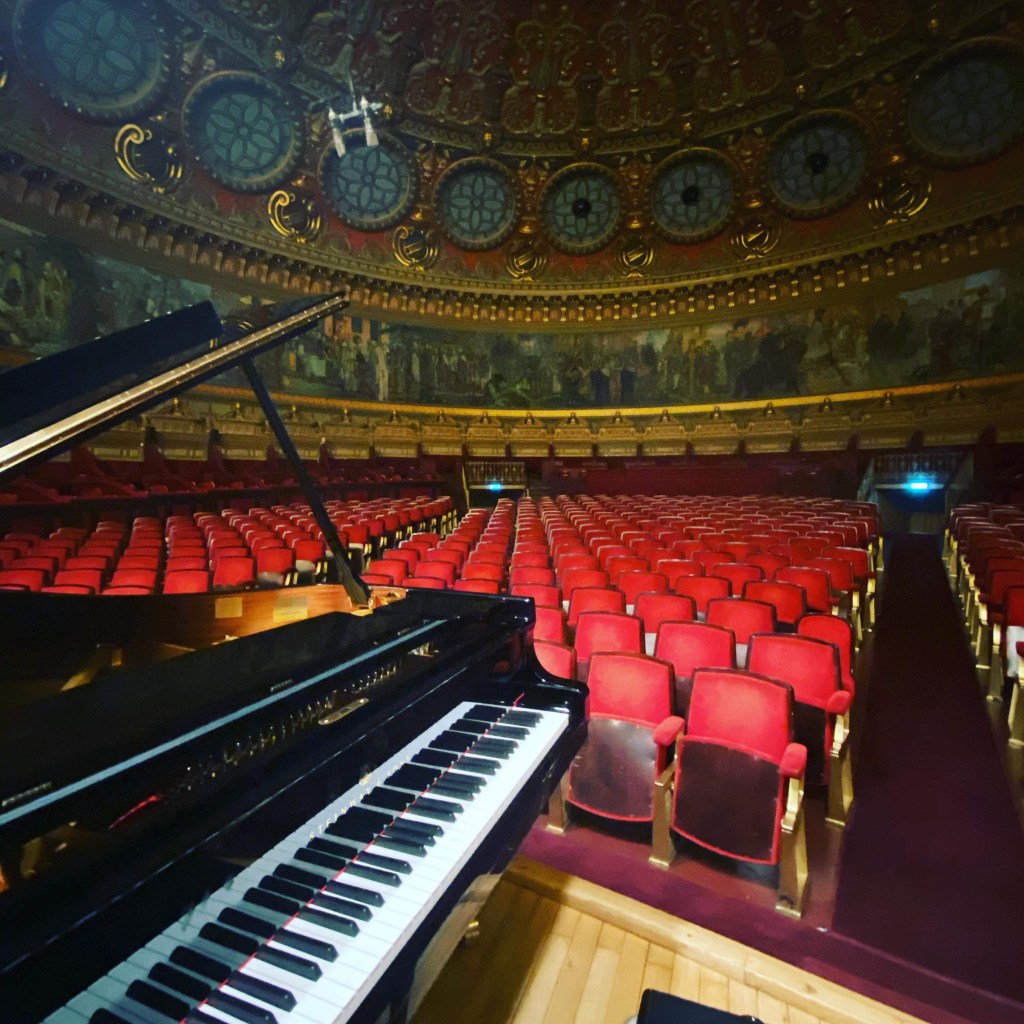
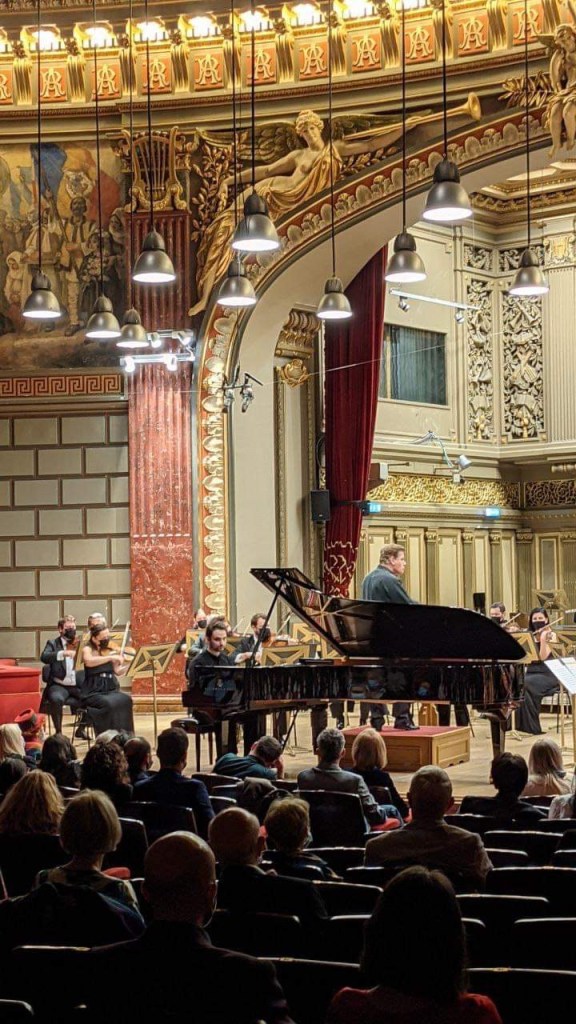
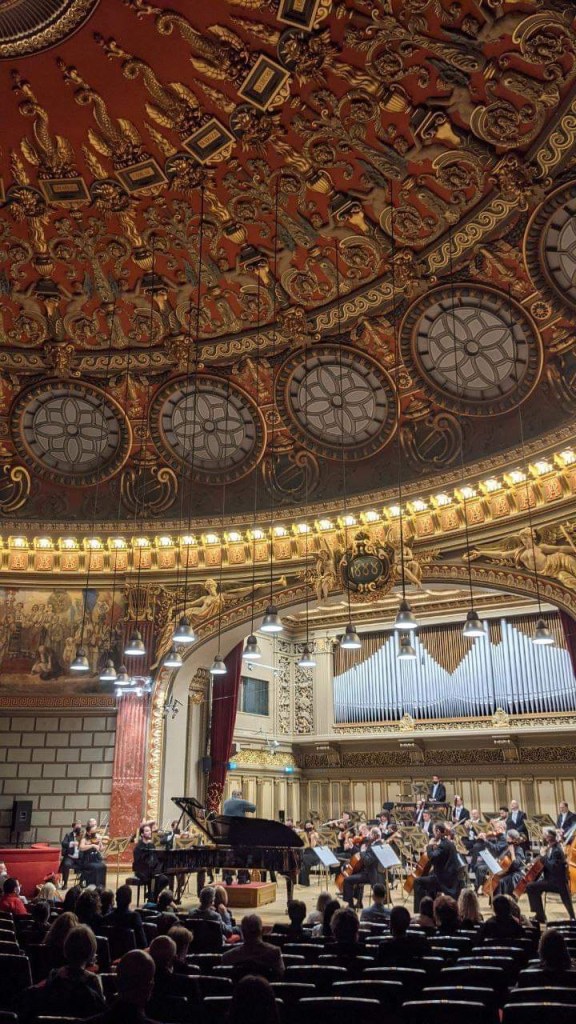
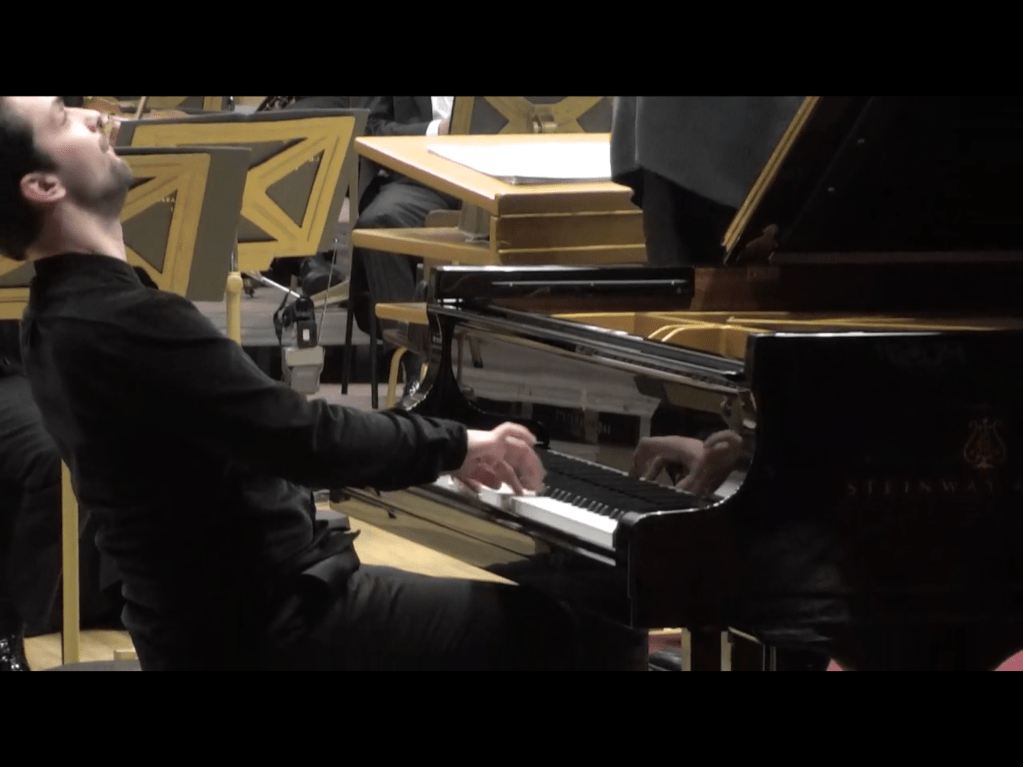
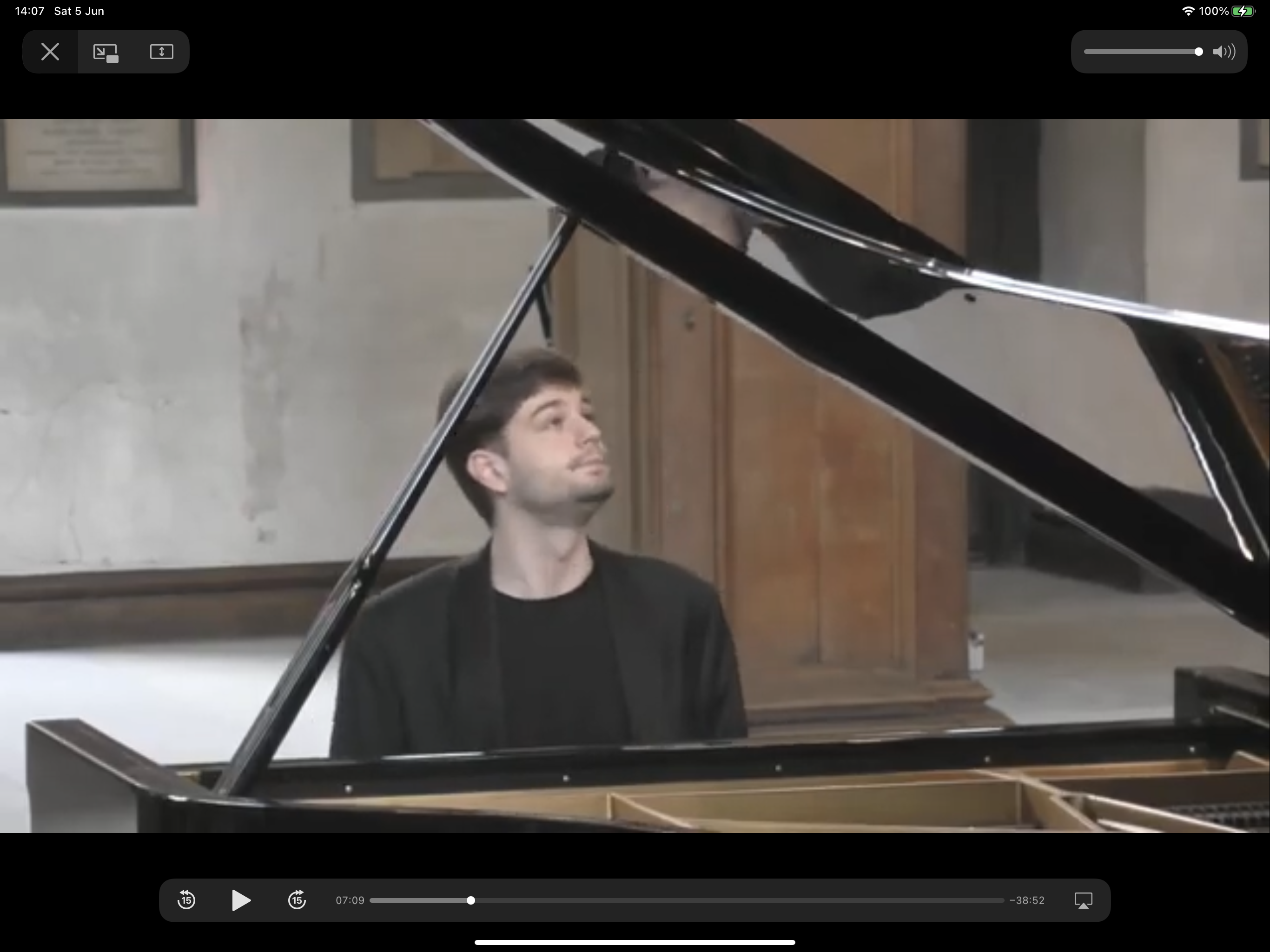
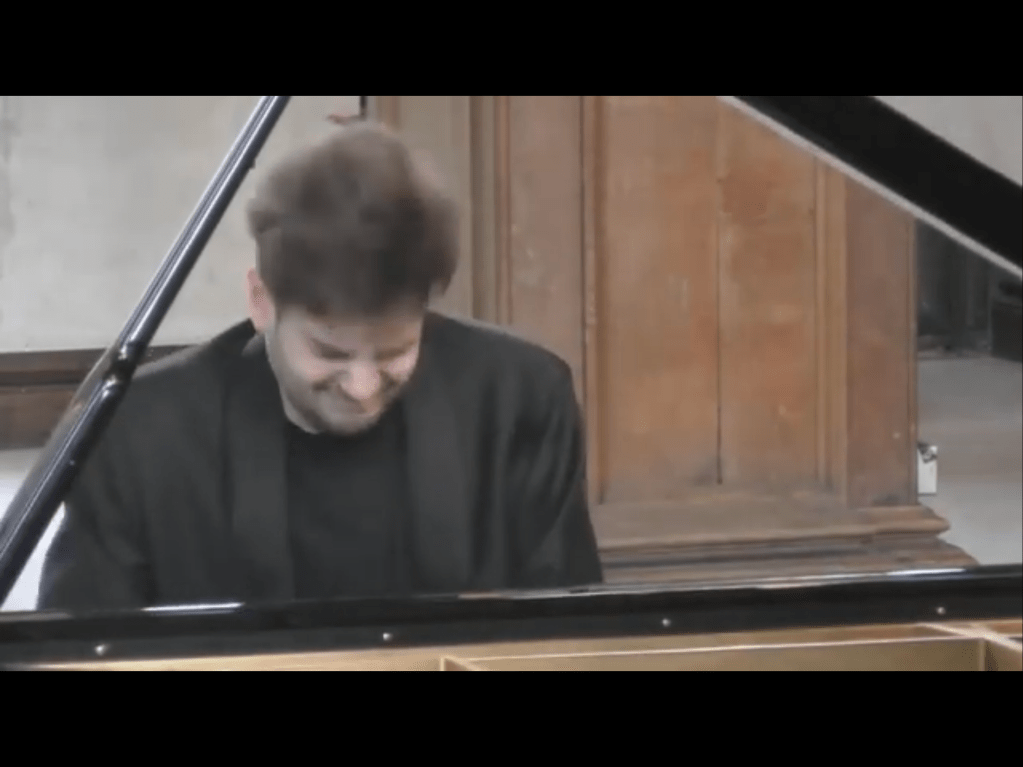
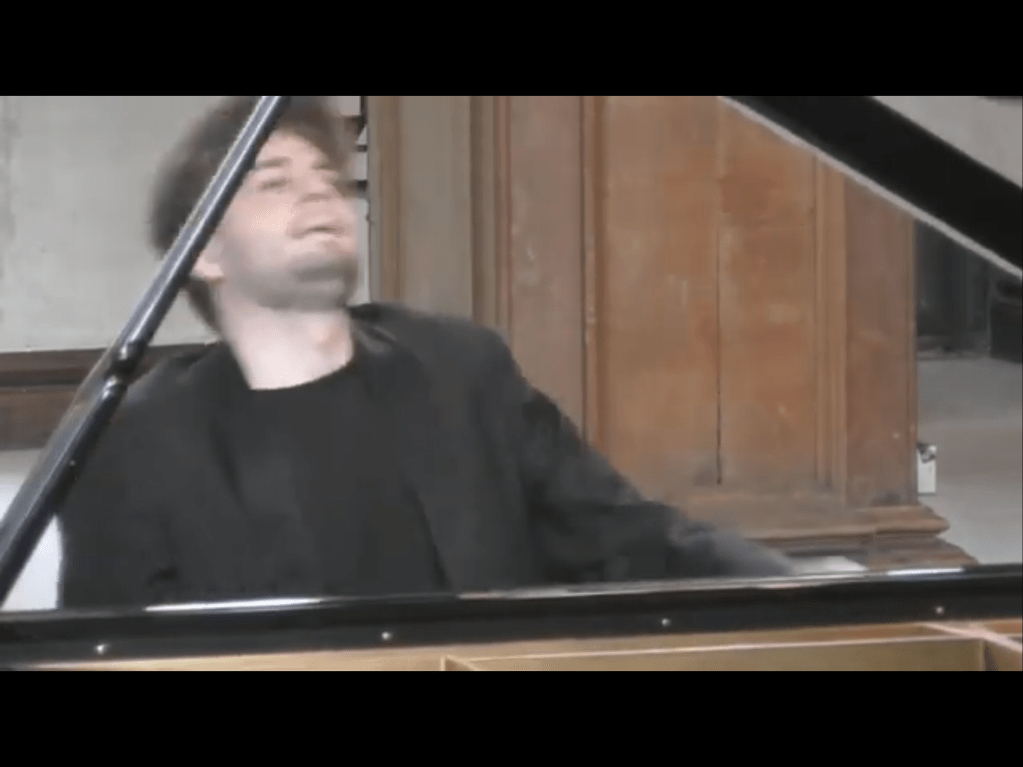
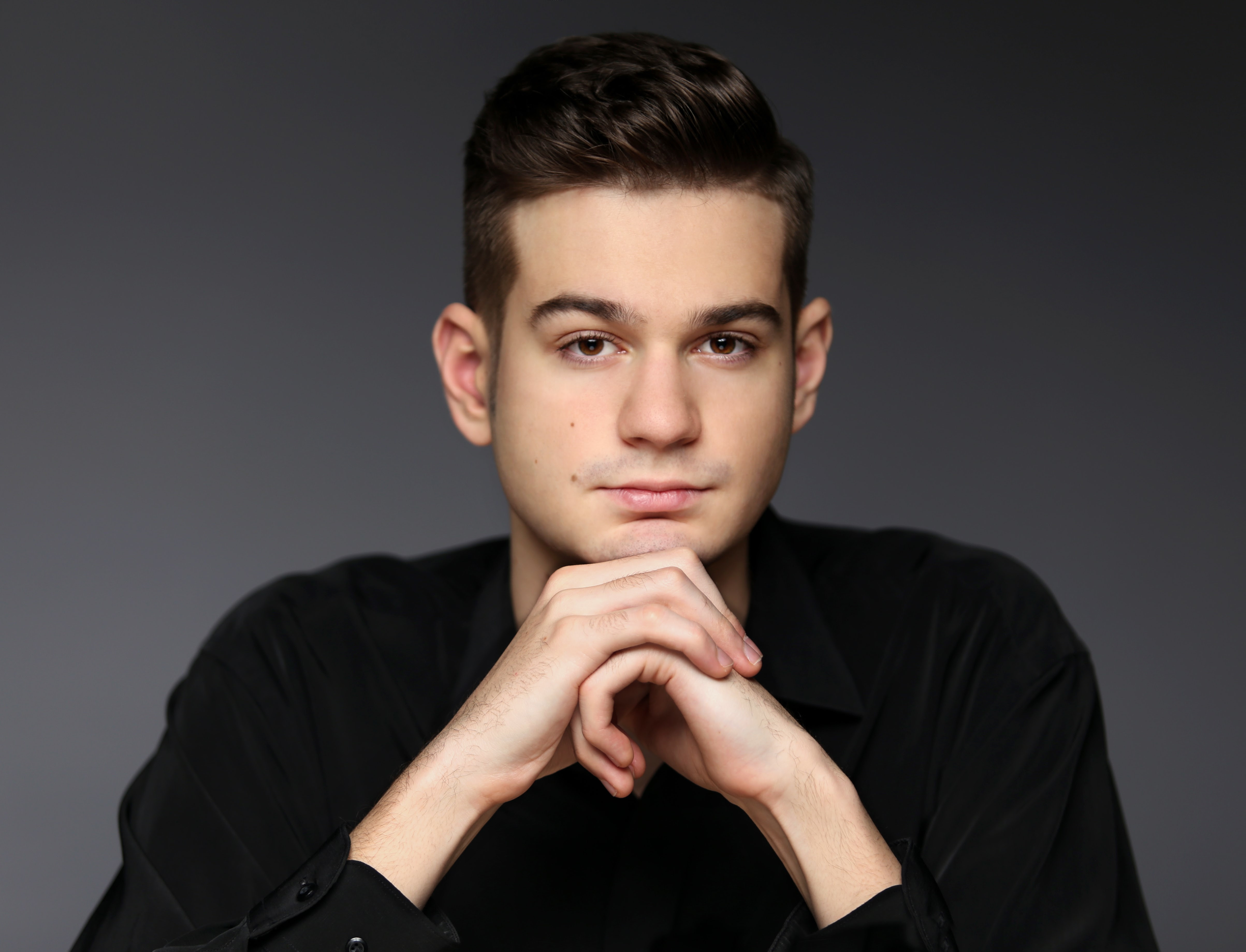
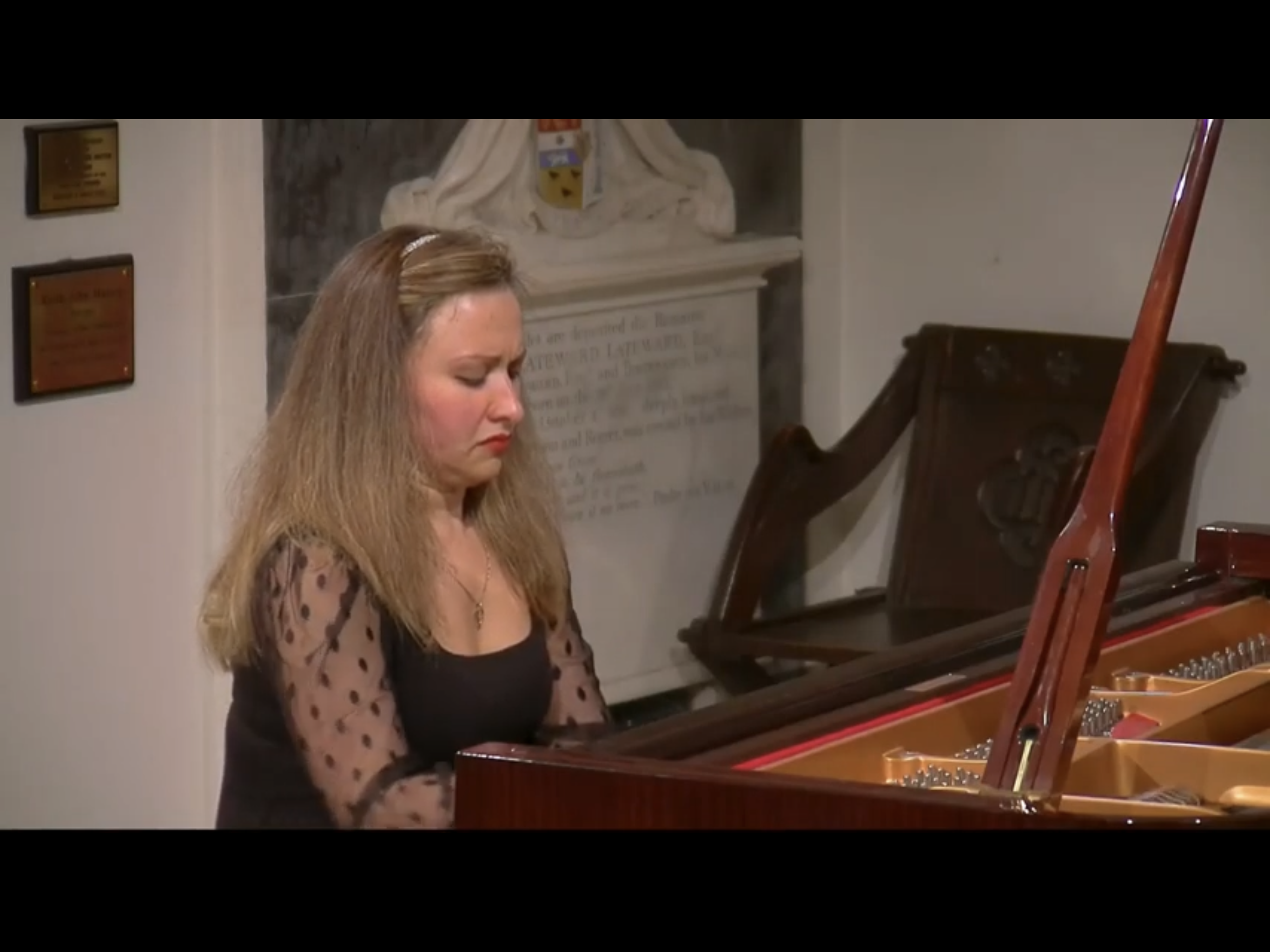
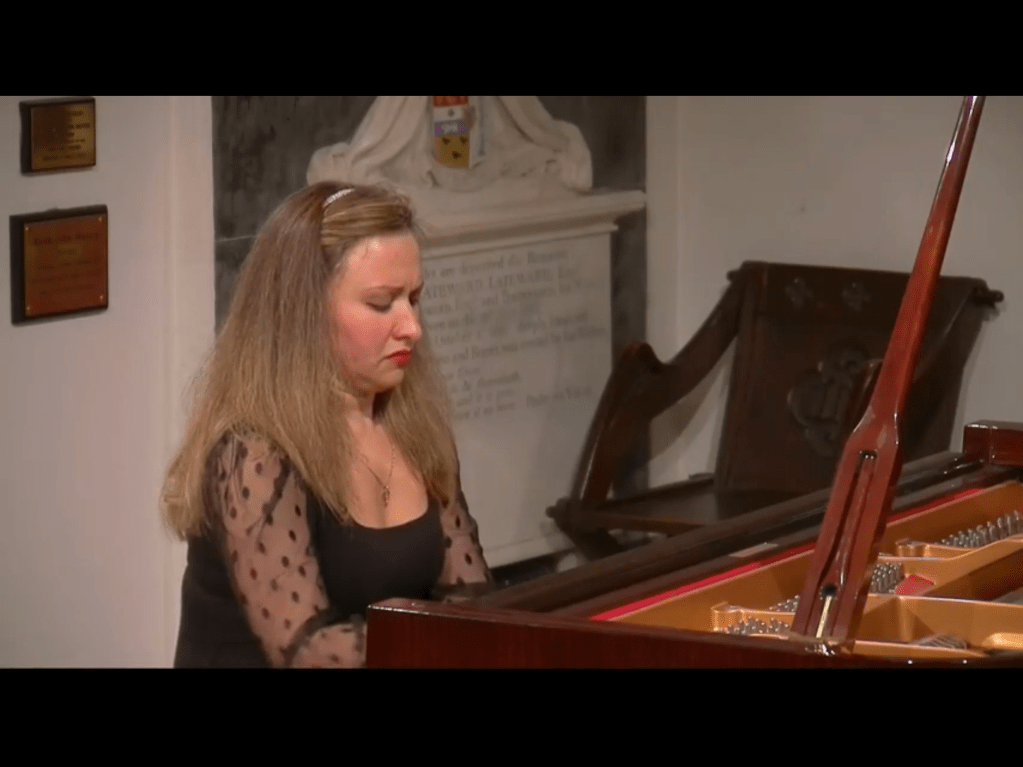
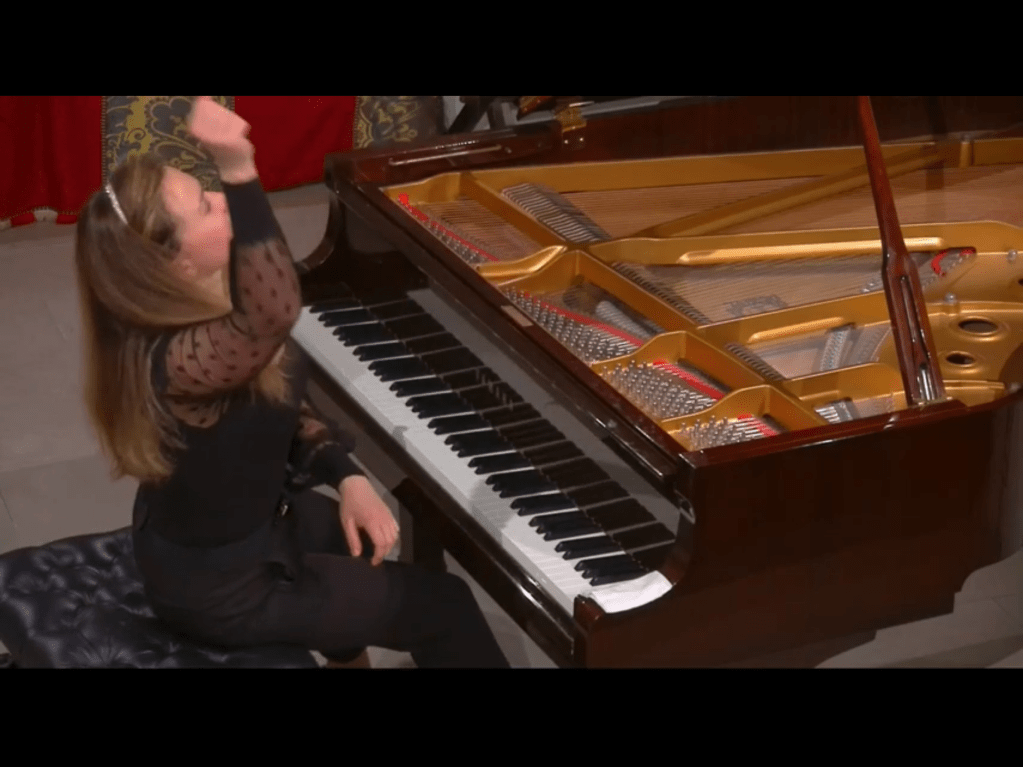
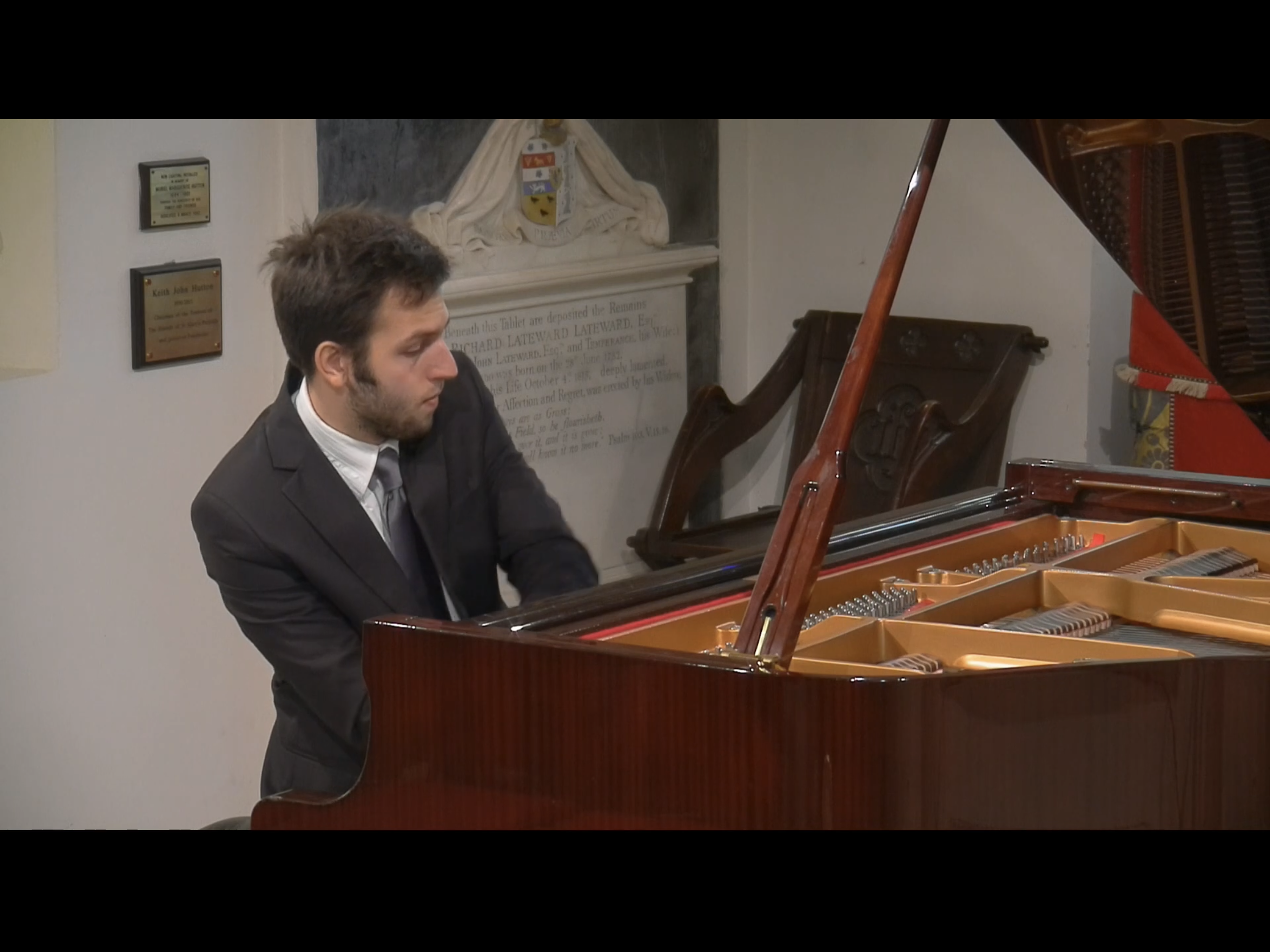
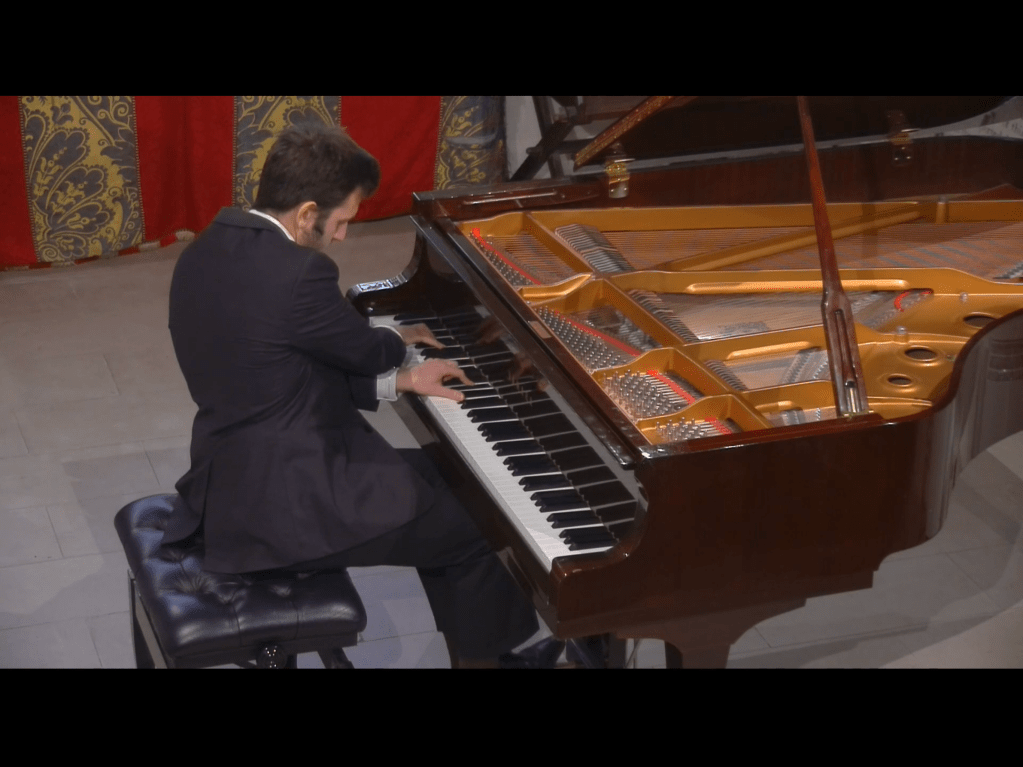
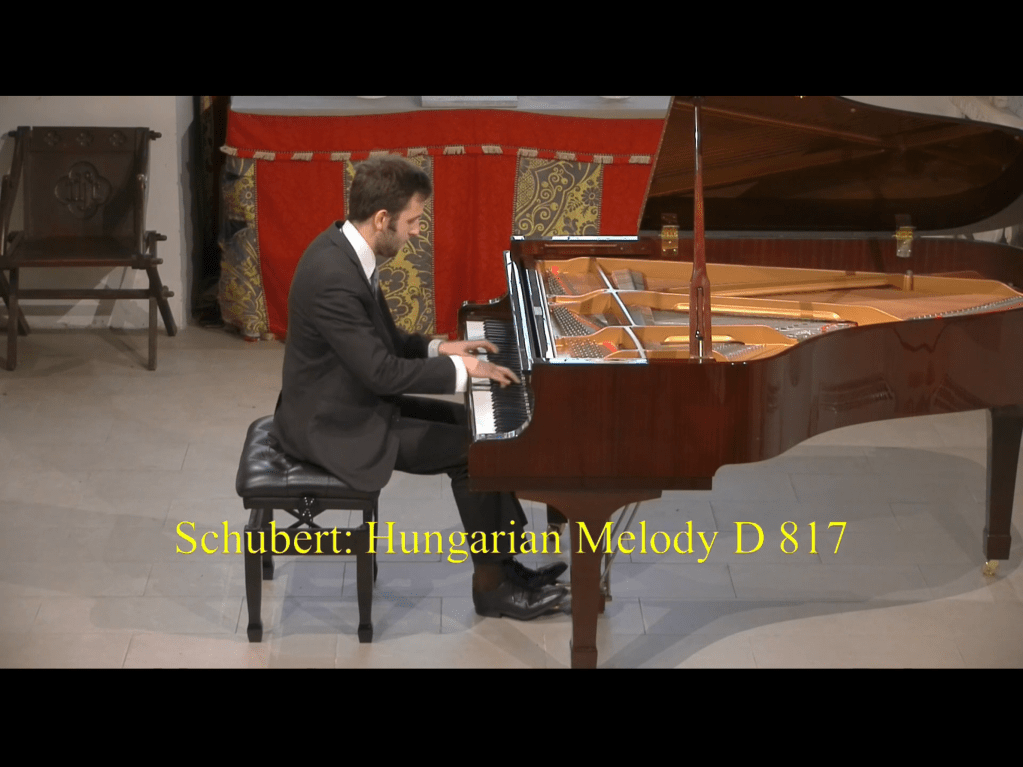
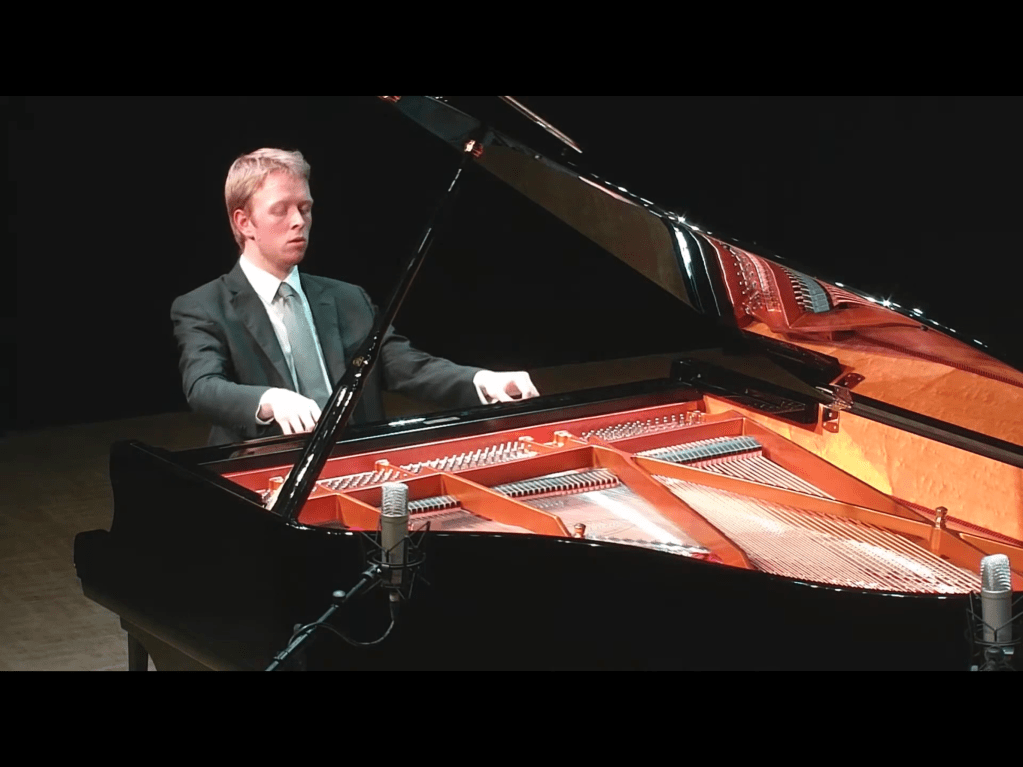
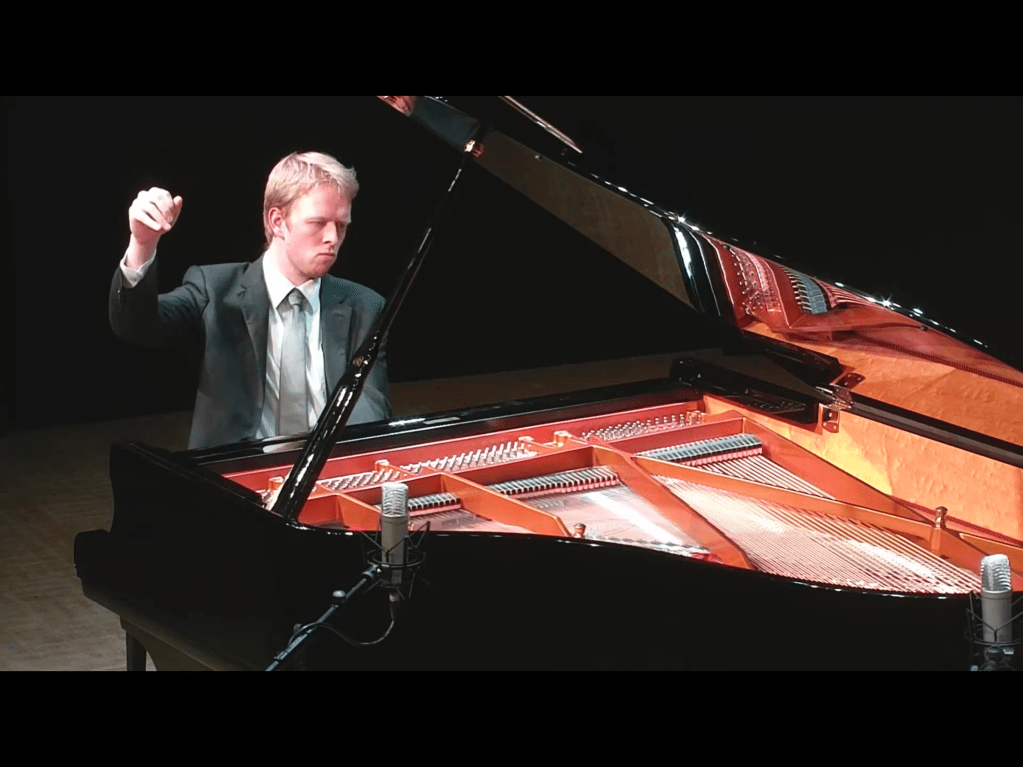
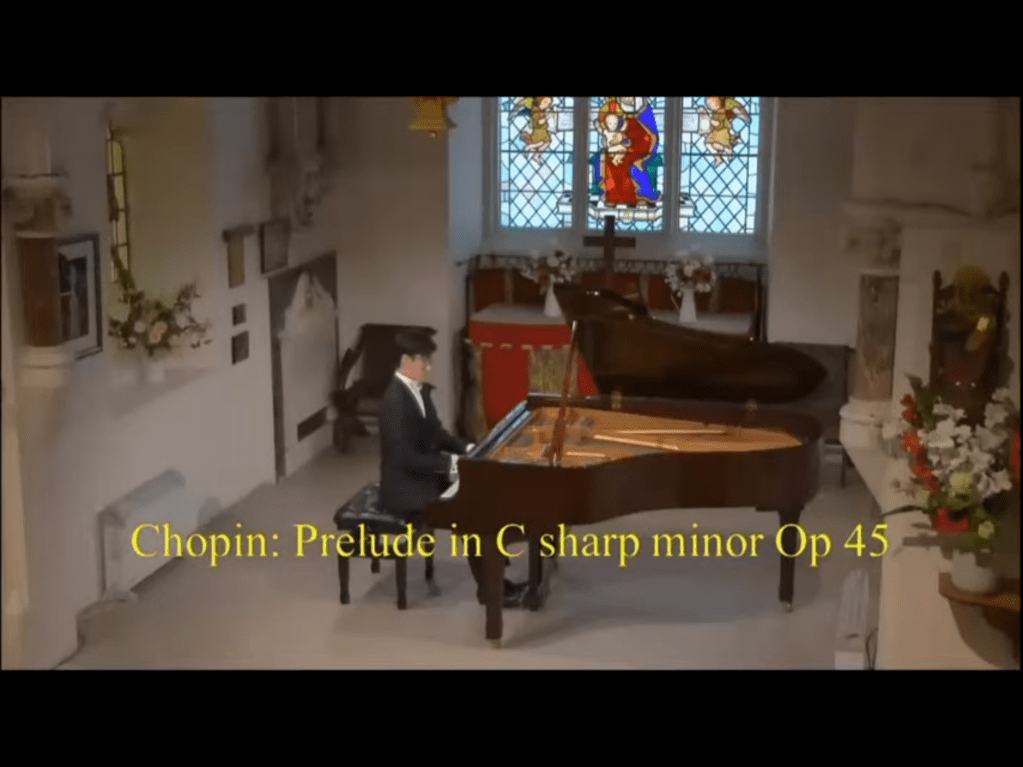
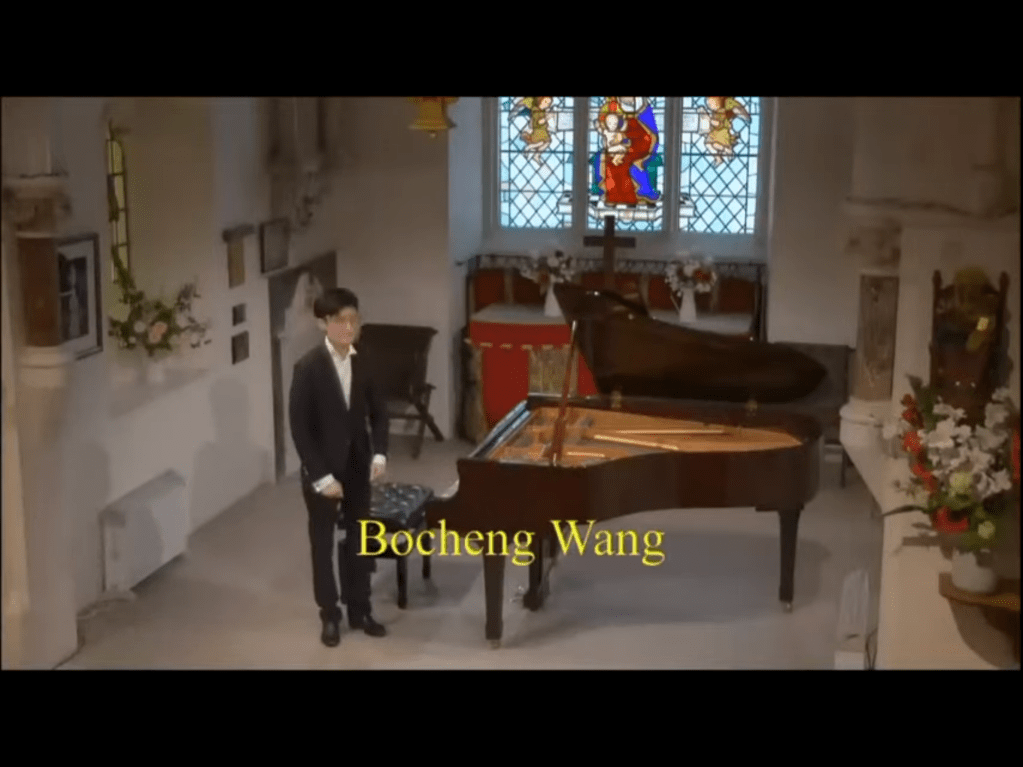
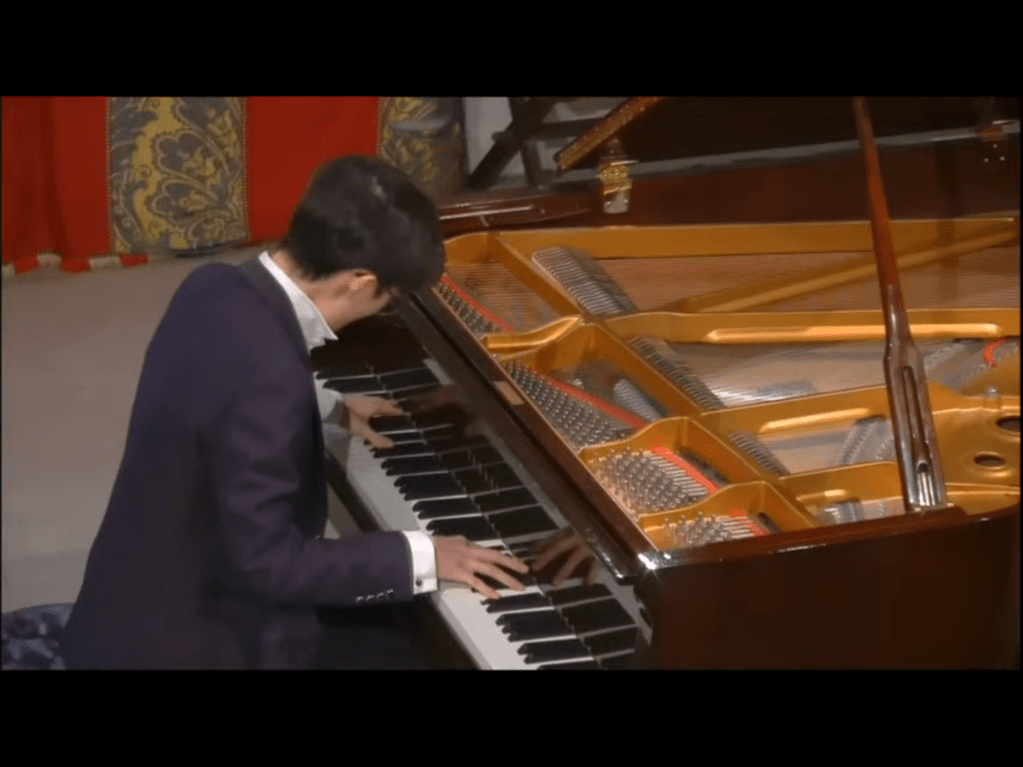
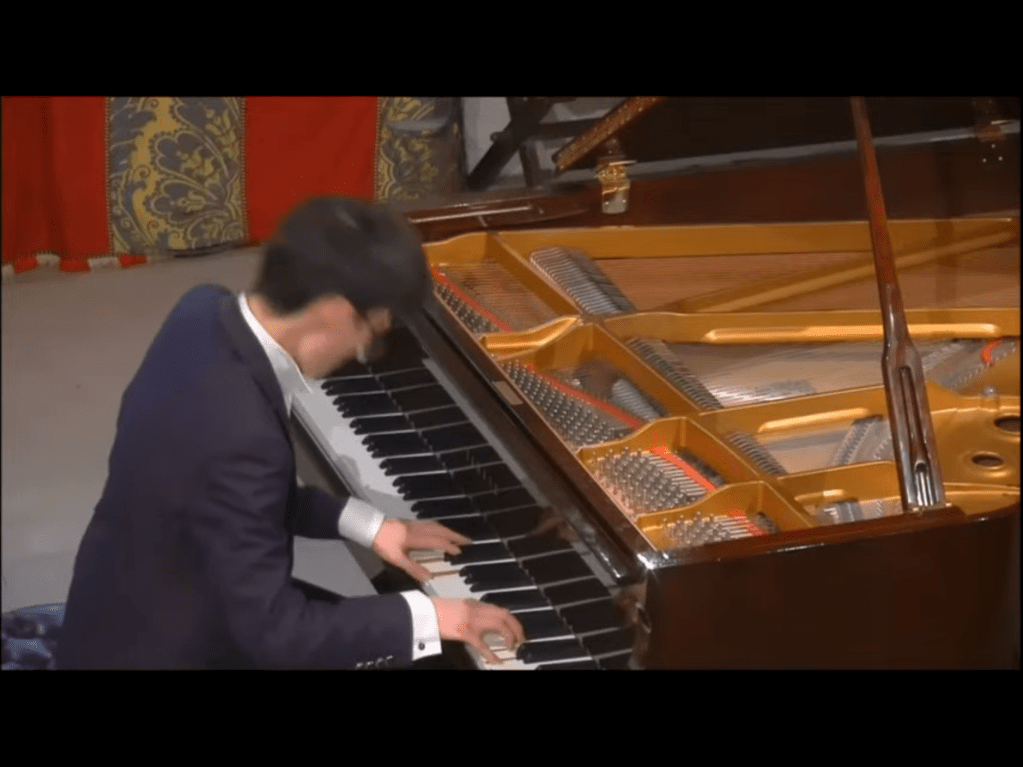
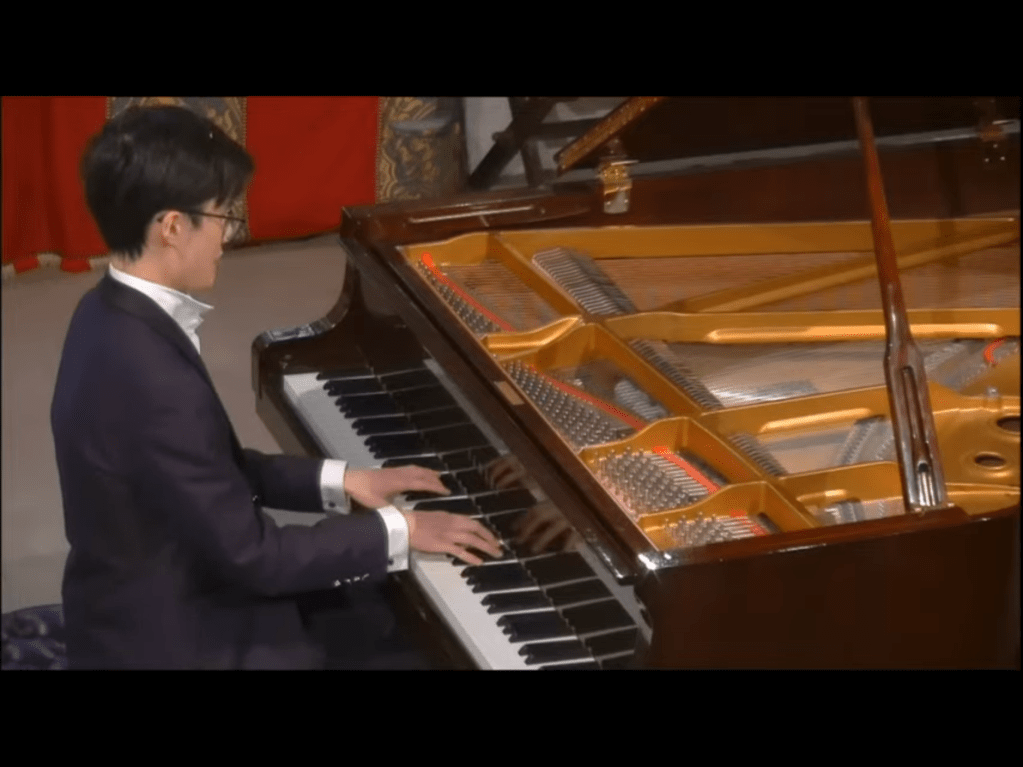
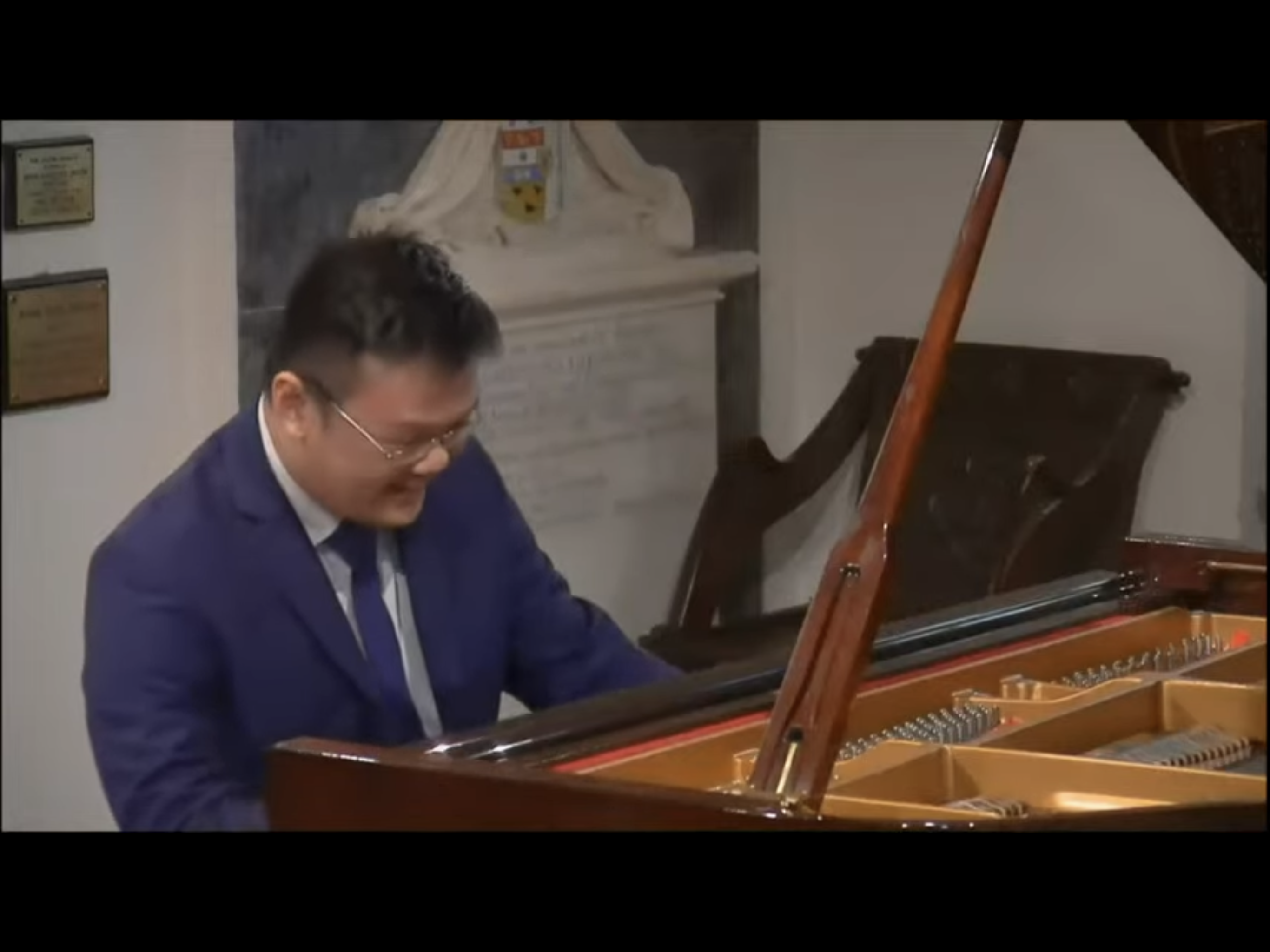
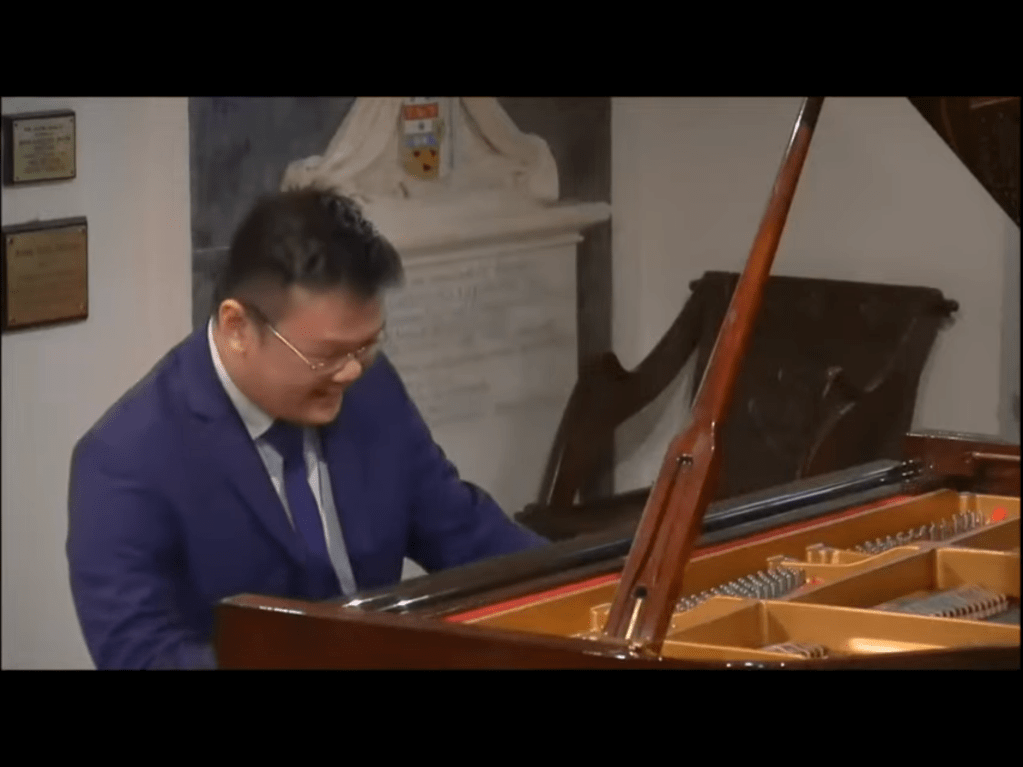
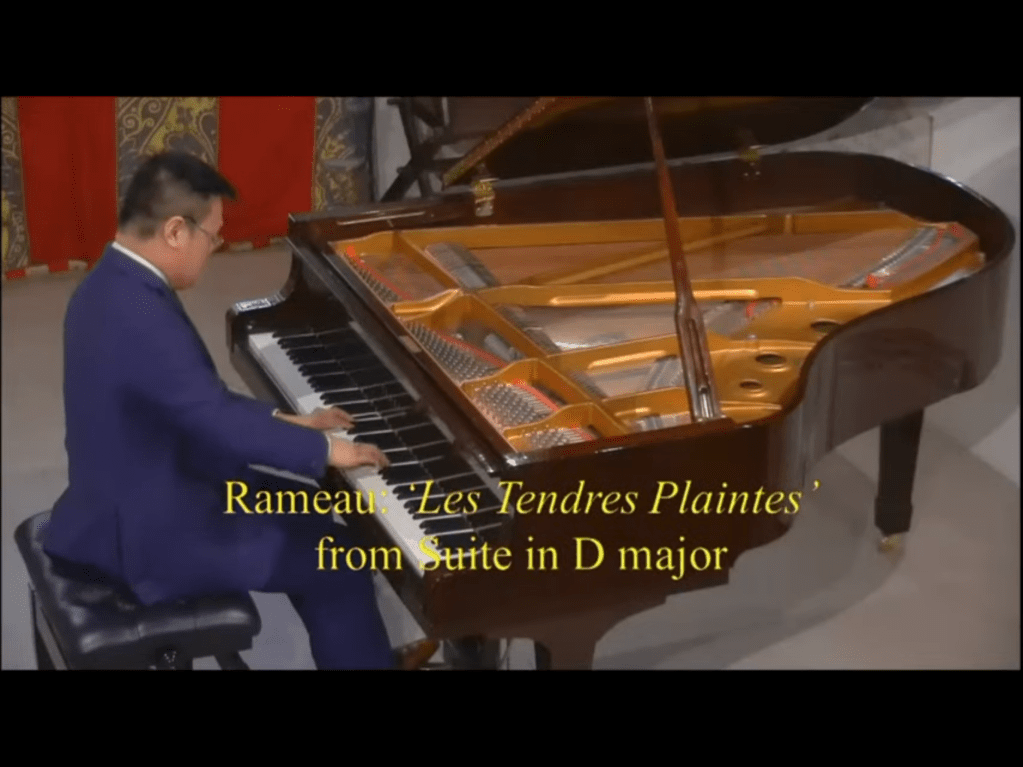
Matthew McLachlan’s own goal at St Mary’s

Tuesday 8 June 4.00 pm 
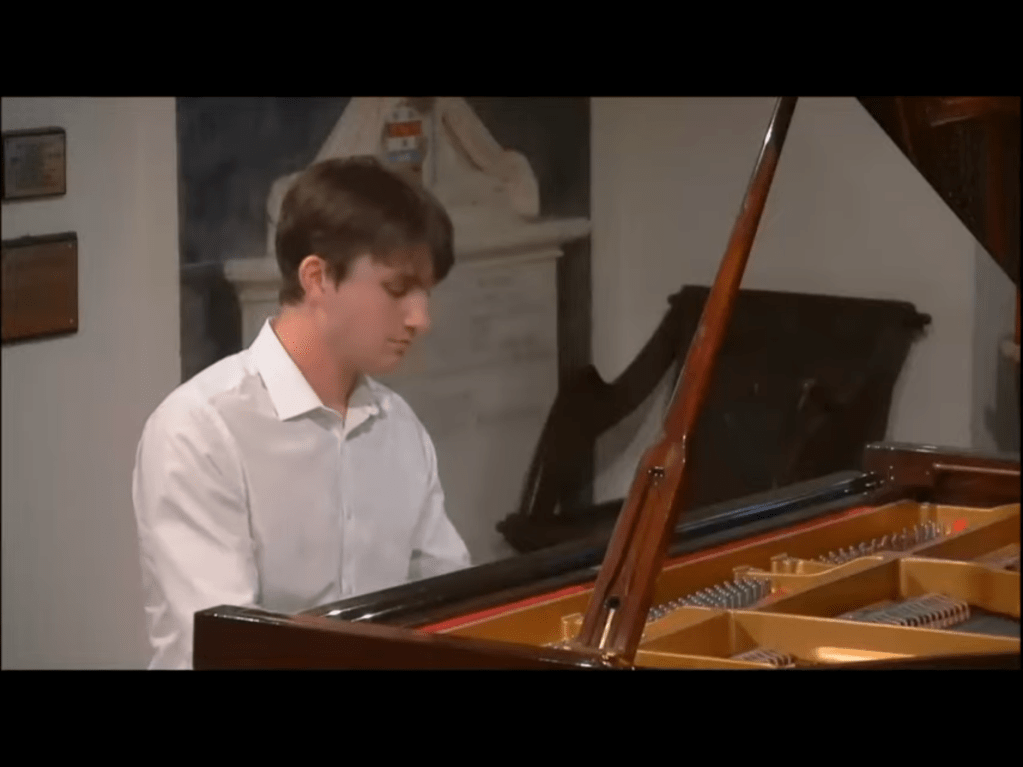
Beethoven: Piano sonata in F sharp Op 78

Chopin: Fantasy in F minor Op 49

Scriabin: 24 preludes Op 11

A terrific recital ! Here is the link https://youtu.be/mK4Rpow2nHg

What a family! Absolutely bowled over by the superb musicianship and subtle artistry of Matthew McLachlan having been ravished,seduced and astonished by his family in the past.
Matthew who is a guest in my house in Kew I often hear practicing but more often see jogging,boxing or training at the gym.I had no idea until hearing his public performance today of the heart that beats inside that seemingly simple exterior.A Beethoven played with a loving fluidity and sparkling cantabile that it is easy to imagine that the Countess Thérèse must have been his distant beloved.But such playful high jinks too in the Allegro vivace played with a true ‘joie de vivre.’
Chopin’s Fantasy played with a nobility and sensibility that is rare.Sound that is both full and at times heartbreakingly sensitive.But it was the Scriabin Preludes that showed off his Kaleidoscopic sense of colour with ravishing sounds that ranged from the fullest passionate outpourings to the almost inaudibly whispered.Reams of mellifluous notes that seemed like streams of gold and silver poured effortlessly from his fingers but with a strong personality that kept him on the high wire without ever fearing to fall .
The final passionate outpouring in D minor was enough as he closed the piano lid and made a charmingly modest thank you speech to Hugh Mather and Roger Nellist for all they do to give a platform to young artists like himself and his family.A deeply felt dedication to Donald Page -one of the best men he knew – just showed what sensitivity beats inside that ‘lad’ from Manchester.
So now they are five – the youngest by the way,the sixth,is a professional footballer but his father tells me when not saving goals even he plays a mean prelude and fugue.Bewitched ,bothered and bewildered.I am indeed amazed

https://christopheraxworthymusiccommentary.wordpress.com/2021/02/21/murray-mclachlan-at-st-marys/

  1. Adagio cantabile — Allegro ma non troppo
  2. Allegro vivace

The Piano Sonata No. 24 in F sharp, Op. 78, nicknamed “à Thérèse” because it was written for his pupil Countess Thérèse von Brunswick who,with her sister Josephine was his pupil.According to her diary Beethoven had stronger feelings than just for her intellect and sisterly tenderness .For sometime it has been thought that the famous letters from Beethoven to his ‘distant beloved’ were indeed to her.Composed in 1809 and consisting of two movements:According to Czerny,Beethoven himself singled out this sonata and the ‘Appassionata’as favourites together later with the ‘Hammerklavier’Wagner found it ‘profoundly personal’ but D’Indy said :’What sort of artist or man could admit that the only work dedicated to the Countess of Brunswick is the insipid Sonata in F sharp,the same recipient of the passionate letters that all the world has read’

There was a beautiful naturally flowing tempo from the very first notes..A great sense of contrasts as his fluidity of sound was allied to a scrupulous attention to Beethoven’s intentions.There was a real ‘joie de vivre’ in the Allegro vivace as he playfully swept up and down the keyboard with jeux perlé,dynamic contrasts and Beethoven’s own pedalling giving such a brilliant sparkle to the innocence of this bagatelle.

The Chopin F minor Fantasy had such beauty of sound with the opening legato and staccato and tempo di marcia united to carry us forward on a magical journey indeed.It was played with great nobility and passion and the beautiful Lento sostenuto was filled with subtle colour and flexibility.A very subtle addition of a bass d flat on the justly triumphant final return of the main theme just gave more depth to the sound .It was his aristocratic holding back of the bass notes in the passionate build ups that was so thrilling.The long held pedal in the final Adagio sostenuto like in Ravel’s Ondine created a magic out of which wove a wave of sounds that took us to the final imperious chords.

Scriabin’s 24 preludes were modelled on Chopin’s 24 Preludes op 28: They also covered all 24 major and minor keys and follow the same key sequence: C major, A minor, G major, E minor, D major, B minor and so on, alternating major keys with their relative minors, and following the ascending circle of fifths .They were composed in the course of eight years between 1888–96,being also one of Scriabin’s first published works in 1897,in Leipzig, together with his 12 Études, Op. 8 (1894–95).It is considered an outstanding set among Scriabin’s early works.Here are one or two personal thoughts as the preludes unwove.

  • No.1 in C major – Immediately entering into the special world of Scriabin with fluidity and passion.
  • No. 2 in A minor – Allegretto -Beautifully nostalgic and wistful,played with beguiling luminous sounds of purity and clarity
  • No. 3 in G major – Vivo -Flowing streams of notes like Chopin’s 8th prelude.
  • No.4 in E minor – Lento -Beautiful left hand melodic line played with very subtle rubato and nobility of sound.
  • No. 5 in D major – Andante cantabile- Languid melodic line played with subtle flexibility and shape with some magic bell like sounds at the end.
  • No. 6 in B minor – Allegro -Passionate Chopinesque octaves in an outpouring of romantic sounds played with a great sense of grandeur.
  • No. 7 in A major – Allegro assai-wistful melodic line on a stream of beautifully shaped fluid sounds.A wonderfully controlled passionate climax.
  • No. 8 in F♯ minor – Allegro agitato-A meandering melodic melody over a rumbling bass disappearing to a mere whisper.
  • No.9 in E major– Andantino-An almost improvised melodic line shaped so sensitively
  • N0.10 in C sharp minor– Andante-Great beauty of the tenor melody with a magical accompaniment and ravishingly deep bass note to end.
  • No. 11 in B major – Allegro assai -Such freedom allied to a sense of direction
  • No. 12 in G♯ minor – Andante -Luminous sounds of great delicacy.
  • No. 13 in G♭ major – Lento -beautiful melodic line with the left hand counterpoint just underlining the sentiment of the right.
  • No. 14 in E♭ minor – Presto-Agitated passionate outpouring in constant movement.
  • No. 15 in D♭ major – Lento – A beautiful left hand solo played with sensitivity until the right hand enters with such clarity and radiance
  • No. 16 in B♭ minor – Misterioso -as Matthew had said there is a similarity with Chopin’s Funeral March rhythm disguised in Scriabin’s clothes building to a sumptuous climax before melting to nothing.
  • No. 17 in A♭ major – Allegretto-Scriabin’s melodic invention seems quite endless.
  • No. 18 in F minor – Allegro agitato-A passionate outpouring to the final chord
  • No. 19 in E♭ major – Affettuoso- Beautiful mellifluous outpouring of sumptuous sounds
  • No. 20 in C minor – Appassionato-A melodic line in octaves with an ever more passionate outpouring of subtle colouring to it’s magical ending.
  • No. 21 in B♭ major – Andante-Capricious meanderings with such flexibility and beauty.
  • No. 22 in G minor – Lento -Deeply melancholic.
  • No. 23 in F major – Vivo- The same liquid flow as Chopin’s penultimate prelude with the ending just thrown off.
  • No. 24 in D minor – Presto-The final passionate outpouring of repeated chords played with fluidity and passion .It brought this multi coloured performance to a tumultuous end.The only thing to do after a performance like that is to shut the piano and pray that when it is reopened some of today’s magic might still be in the air !

Matthew McLachlan was born in 2000 and started piano lessons with his father in 2008. At 11 years of age he passed grade 8 and entered Wells Cathedral School as a specialist musician, studying with John Byrne. After two years in Somerset he entered Chetham’s in Manchester where he studied piano with Dina Parakhina and Cello with Gill Thoday. After gaining the ATCL and LTCL recital diplomas with distinction in 2014 and 2015, Matthew was awarded the FTCL in 2016. This followed on from winning third prize in the senior division of the first Scottish International Youth Prize Competition, held at the Royal Conservatoire of Scotland in July 2016. In 2014 Matthew’s performance of Ravel’s G Major Piano Concerto was commended in the Chetham’s Concerto competition and in the same year he was a prizewinner at the 2014 Mazovia Chopin Festival in Poland. As a result of his performance in Mazovia, he was selected to perform a 60-minute solo recital at the 2015 World Piano Teachers’ Conference (WPTC) in Novi Sad, Serbia. In 2016 Matthew gave many recitals and was a finalist in the Chetham’s Beethoven Piano Competition for the second year running. In March 2017 he was awarded first prize in the Chetham’s Senior Bach competition. In August 2017 he performed Tchaikovsky’s Piano Concerto no. 1 in the Paderewski Festival in Poland. In Autumn 2017 he had a tour of concert performances featuring Brahms’ Sonata no. 1 in C major. Before leaving Chetham’s, Matthew won the school’s Bosendorfer competition, playing Stravinsky’s ‘Three movements from Petrushka’. In 2018 he performed Mozart’s 13th concerto in Trieste, Haddington and Rhyl as well as Tchaikovsky’s first and Beethoven’s fourth concerto in Buxton with the orchestra of the High Peak. In the winter of 2018, the Knights of The Round Table awarded Matthew with a full scholarship at the Royal College of Music in London, where he now studies. Although 2020 saw many concerts cancelled, Matthew gave online performances and has recently been taken under the wing of Talent Unlimited, thanks to Canan Maxton.

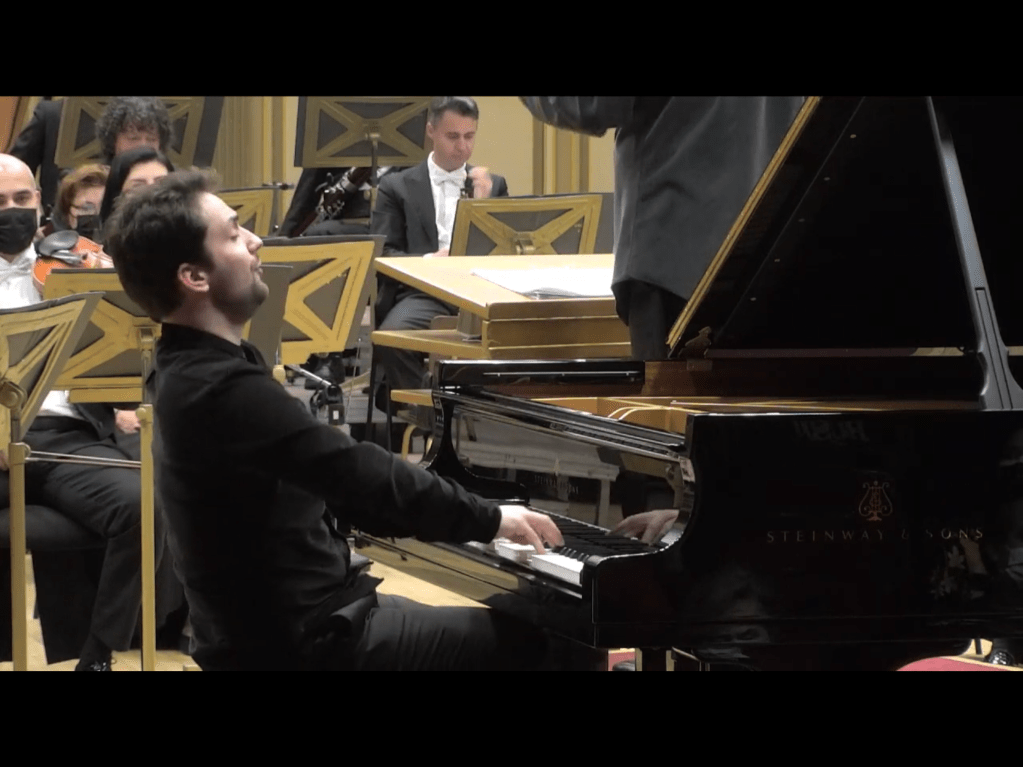
Sandrin plays Mozart -simplicity and purity in Bucharest

This is the video link recorded in Bucharest on the 3rd June 2021 https://youtu.be/jC2cdL1dRXon

https://www.cristiansandrin.com/

The Piano Concerto No. 25 in C major K.503, was completed by Mozart on December 4, 1786, alongside the Prague Symphony K. 504. Although two more concertos would later follow, K 537 and K 595,this work is the last of what are considered the twelve great piano concertos written in Vienna between 1784 and 1786.Widely recognized as “one of Mozart’s greatest masterpieces in the concerto genre.”Though Mozart performed it on several occasions, it was not performed again in Vienna until after his death, and it only gained acceptance in the standard repertoire in the later part of the twentieth century.

It is in fact one of Mozart’s noblest concertos where Mozart’s sublime musical invention just seems to overflow as one wondrous melody follows another.

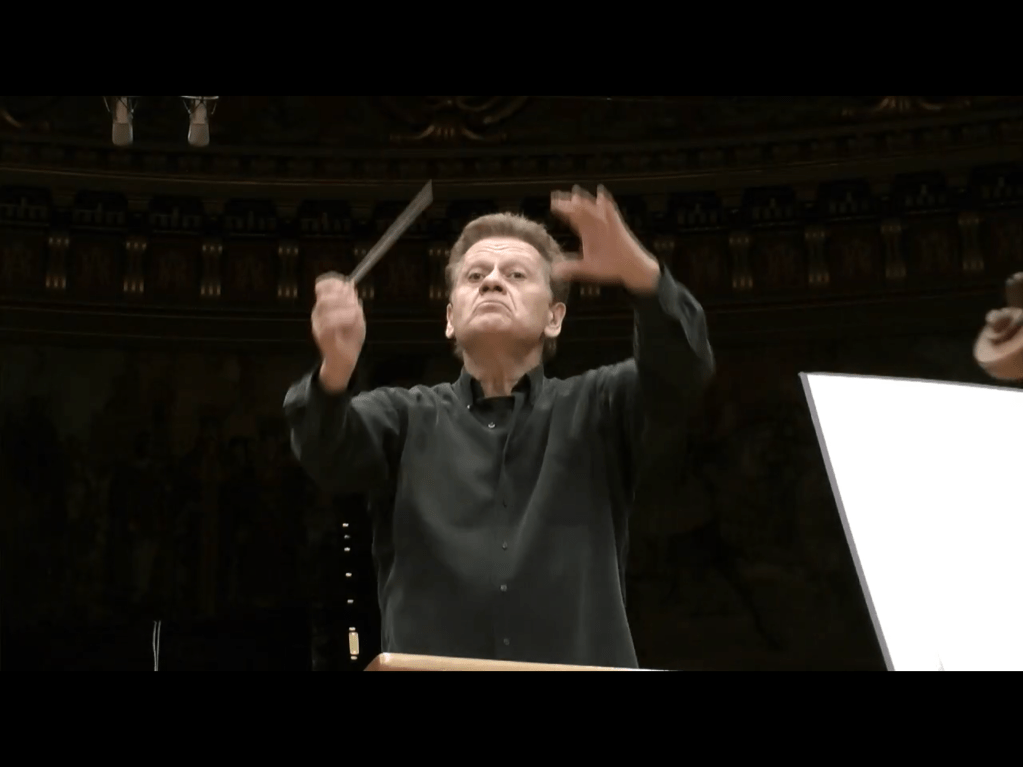
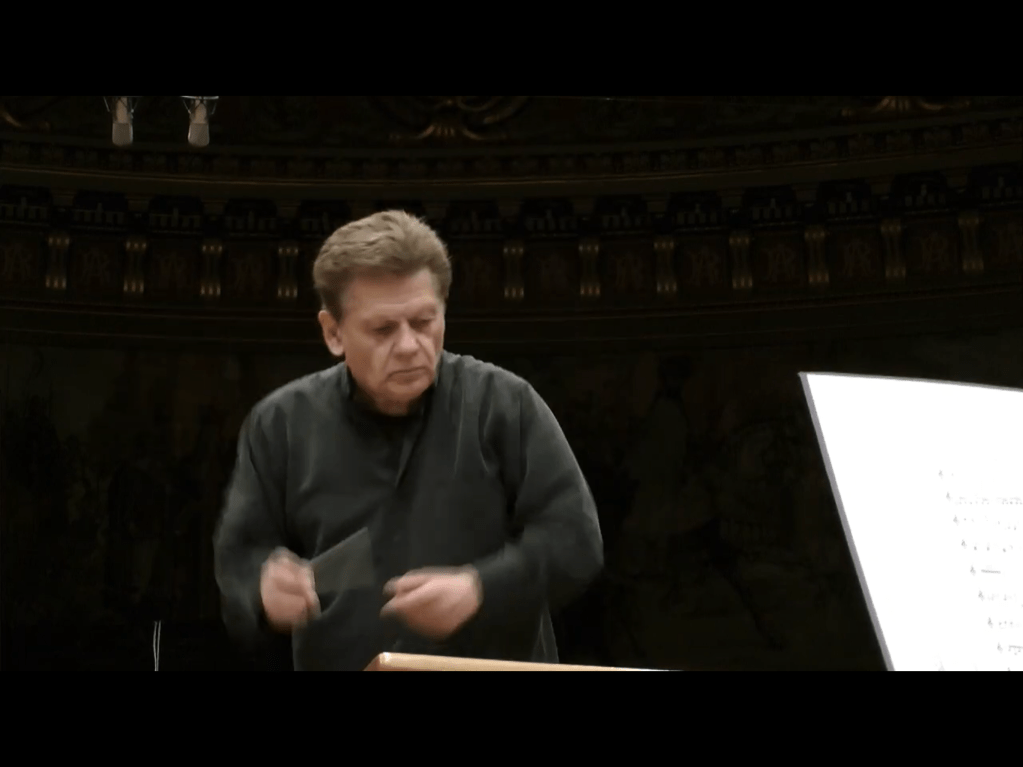
The Allegro maestoso seemed at first rather fast even though the distinguished conductor Christian Badea directed with such authority and rhythmic precision.But as soon as the soloist entered with such disarming purity,just a simple strand of comment and the the music found its own tempo with crystal clear scales like reams of quicksilver of such delicacy and sensibility.The constant change between major and minor was superbly understood where almost unnoticeable inflections and hesitations just made the music speak with the aristocratic nobility that was very much Serkin’s.There was a magical interplay between soloist and orchestra of real chamber music proportions especially in the development where the question and answer was absolutely mesmerising.There was a purity of sound from the piano with trills that seemed like jewels and a beauty of sound even in the noblest of comments.The cadenza by Alfred Brendel was of a simplicity and of such style that even the orchestra were captivated.

The sublime Andante was played with disarming simplicity together with wistful playfulness where the orchestra and soloist were playing as one. Listening attentively under the expert guidance of Christian Badea who was overseeing this chamber music performance with complete understanding and allowing the music to unfold so naturally.There were some very delicate embellishments that Cristian added with such good taste and sense of style that it just added to the intensity of emotion in this extraordinarily poignant movement.Adding very discreetly a deep bass note that just added to the radiance and luminosity of the melodic line.The final scale from the pianist was so delicately and finely judged that it just seemed to disappear into infinity.

The Allegretto seemed again very fast but it was ,as in the first movement so finely judged that as the piano entered it seemed so right. Cristian’s fleeting fingers played with such feather like agility as they seemed to dust the keys ready for the continuous interruption of melodic invention that like Schubert seems to know no limit.Delicately embellished rondo on each return just added to the scintillating beauty of this movement.

A standing ovation from the socially spaced audience was offered an encore of Ravel’s Une barque sur l’océan of scintillating colour and superb control.This magical piece from Miroirs just seemed to pour fromCristian’s fingers with the same natural musicianship that had been so rewarding in the Mozart Concerto.An aristocratic musicianship that shows a maturity way beyond his youthful and reticent appearance.

Christian Badea (né Cristian Badea) is a Romanian-American opera and symphonic conductor.A native of Bucharest ,Romania , Badea’s early training was as a classical violinist in Bucharest and Brussels. He later studied conducting at the Juilliard School of Music in New York.After winning the Rupert Conducting Competition in London (1976) he was invited by Gian Carlo Menotti to conduct at the Festival Dei Due Mondi di Spoleto and right after he is appointed musical director of the Italian edition of the festival, and later on in a similar position for the American edition. In the next decade he conducts at Spoleto and at Charleston a series of operas which will establish him a reputation: Menotti’s Maria Golovin, The Last Savage and The Saint of Bleecker Street, and also Shostakovich’s Lady Macbeth from Mtsensk and Samuel Barber’s Antony and Cleopatra to great acclaim. His recording of Samuel Barber’s opera Antony and Cleopatra received a Grammy in 1985.In 1983 he was appointed artistic director of the Columbus Symphony Orchestra in Columbus, Ohio. During his nine-year tenure here he records two discs with the music of Roger Sessions and Peter Mennin praised by the musical critics.He made his debut with The Metropolitan Opera in NewYork on tour at Boston in 1986 conducting Tosca with Grace Bumbry. During the next decade, until 1995, Christian Badea performed as conductor for 167 times, in a repertoire including: Tosca, Aida, La traviata, Cavalleria rusticana, Pagliacci, Boris Godunov, La bohème, Don Giovanni, La fanciulla del West, Madama Butterfly, Rigoletto. In 1990 he conducted the Metropolitan Gala opening the season with La bohème, the cast including Plácido Domingo and Mirella Freni.At Wiener Staatsoper he performed as a conductor for 19 times between 1992 and 1995 in operas like Tosca, Aida, Le contes d’Hoffmann, Otello and La bohème. The most notable of these was the premiere of Les contes d’Hoffmann in 1993, staged by Andrei Serbian and with a cast including Plácido Domingo, Natalie Dessay, Barbara Frittoli and Bryn Terfel.He is regularly invited to the Royal Opera House Covent Garden with 32 appearances as conductor in La bohème, Tosca and Turandot.His opera career includes performances at Opéra de Lyon, Théâtre Royal de la Monnaie in Brussels, Dutch National Opera in Amsterdam, English National Opera, Royal Opera Copenhagen, Royal Opera Stockholm, Opera Australia, Arena di Verona, Teatro Colón in Buenos Aires, Budapest State Opera.In 2006 he starts to conduct in Romania, notably with the George Enescu Philharmonic Orchestra at the Romanian Athaeneum , one of the most notable moments being a semi staged concert of Parsifal, in the double role of conductor and stage director. In 2009 he opened the Enescu Festival in Bucharest with Haga Philharmonic Orchestra.As an orchestral conductor, Badea has performed in concert halls throughout Europe, North America, and Asia: Carnegie Hall (New York), Suntory Hall (Tokyo), Salle Pleyel (Paris), Concertgebouw (Amsterdam), conducting ensembles like Royal Philharmonic, BBC Symphony, Gothenburg Symphony, Czech Philharmonic, Sankt Petersburg Philharmonic Orchestra, Residentie Orchestra, Amsterdam Philharmonic, Orchestre Philharmonique de Radio France, Orchestre Nationale de Lyon, Accademia di Santa Cecilia Orchestra (Roma), RAI Orchestra (Torino), Maggio Musicale Orchestra (Florence), Gulbenkian Orchestra (Lisabona) or Orquesta Nacional de Espana among others.

https://www.onjam.tv/cristian-sandrin/imogen-cooper-music-trust-presents-cristian-sandrin-piano-recital

https://christopheraxworthymusiccommentary.wordpress.com/2021/04/12/cristian-sandrin-master-musician-at-st-marys/

https://christopheraxworthymusiccommentary.wordpress.com/2020/10/13/cristian-sandrin-at-st-marys/

Victor Maslov the virtuous virtuoso virtually at St James’s Piccadilly 4th June 2021

Joseph Vella Sonatina op 30

Sergei Rachmaninov Sonata in D minor op 28 Allegro molto-Lento-Allegro molto .

Video link to the concert :https://youtu.be/HF63Mfked-Yn

I was totally mesmerised by a performance from an artist that listens so carefully to every sound with a sense of balance and complete mastery that allowed him to give a towering performance of Pictures from an Exhibition.” CHRISTOPHER AXWORTHY (Jan 2021).

https://christopheraxworthymusiccommentary.wordpress.com/2021/01/26/victor-maslov-the-birth-of-a-great-artist/

Once again I was mesmerised by Victor’s recent performances that show a mastery of sound and colour allied to his intelligent musicianship and passionate involvement.A Sonatina by Vella was enough to show immediately his control of sound and his sense of rhythmic energy as he plunged into this little known work with a conviction and involvement that was totally convincing .But is was in the first sonata by Rachmaninov that he showed off his total mastery.A sense of architecture and sumptuous sounds that transformed this long misunderstood work into a tone poem of quite extraordinary originality.The second sonata ,since Horowitz’s performances in the 80’s,has become part of the standard repertoire for aspiring young virtuosi. But the first has long been in it’s shadow and only now is being fully appreciated thanks to performances of the caliber of Alexandre Kantorow recently in Paris and now Victor Maslov in London.

The Sonatina op 30 by Joseph Vella was written in 1979 and premiered in 1983 in Malta by Margaret Cini .It is a short work of barely eight minutes divided into three movements.Very much influenced by Prokofiev starting with a spiky very busy fugato played with great clarity and rhythmic energy .It contrasted with the very expressive central movement of solitude and desperation,played with a beautiful sense of colour with a swirling accompaniment to the solo melodic line.The toccata type last movement with continual repeated notes was like Ravel’s Toccata from Le Tombeau.But on these notes floats a melodic line leading to a very atmospheric ending with solitary isolated notes similar to the opening coming to a gradual stop and creating a sense of unity.An effective piece by a Maltese composer of note and is one of the set pieces for the International Piano Competition in Malta in which Victor has been selected to take part.

Joseph Vella was a Maltese composer and conductor (1942 – 2018). Studied with his father, was admitted a Fellow of the London College of Music in 1967, graduated in music from the University of Durham, UK, and continued his studies with Franco Donadoni in Composition and Franco Ferrara in Conducting in Siena, Italy. In 1958 he composed an orchestral suite Three Mood Pieces op 4 (played at the Manoel Theatre, Valletta) which introduced him to the public as a composer. Together with Verena Maschat he set up the School of Music in Valletta in 1972. In 1994 he was appointed Associate Professor of Music at the University of Malta.

Piano Sonata No. 1 in D minor op .28, by Sergei Rachmaninov was completed in 1908.It is the first of three “Dresden pieces”, along with the 2nd Symphony and part of an opera, which were composed in Dresden.It was originally inspired by Goethe’s play Faust ; although Rachmaninov abandoned the idea soon after beginning composition, traces of this influence can still be found.After numerous revisions and substantial cuts made on the advice of his colleagues, he completed it on April 11, 1908. In November 1906, Rachmaninov, with his wife and daughter, moved to Dresden primarily to compose a second symphony to diffuse the critical failure of his first Symphony, but also to escape the distractions of Moscow.There they lived a quiet life, as he wrote in a letter, “We live here like hermits: we see nobody, we know nobody, and we go nowhere. I work a great deal,”but even without distraction he had considerable difficulty in composing his first piano sonata, especially concerning its form.

It was obvious from the deep brooding lament of the opening that there was already magic in the air as these haunting themes were revealed with such impressive aristocratic ease.They were rudely interrupted by cascades of notes that took us to the opening of the Sonata.These themes were to appear over and over again during the Sonata that gave a sense of architectural shape much as Liszt had done in his B minor sonata and one could appreciate the suffering that the search for a form must have cost the composer. There were cascades of notes that created sumptuous harmonies and colour in Victor’s sensitive hands.A work that has suffered from so called ‘virtuoso’ performances now has found an artist that can shape the notes into layers of sound and allow the contours to create an overall cohesive shape.The tenor melody in the Moderato with an accompaniment that just seemed to vibrate in perfect harmony was of ravishing beauty due to his very subtle sense of balance.Swirls of notes brought to a mellifluous climax ,all played with such sumptuous ease that one was never aware of the extraordinary technical difficulty.The haunting opening motif appearing always on the horizon.After and exciting build up ‘poco a poco crescendo e agitato’ a great outburst over enormous sonorities brought us once more to the melodic opening theme and a magical passage high up on the keyboard like bells in the distance as the movement came to a gradual peaceful end.A very atmospheric introduction in the Lento gave way to a typical Rachmaninov melody of nostalgic lament played with a wonderful sense of flexibility .It led to the più mosso before dissolving into a magical cadenza that led to the recapitulation and a pianissimo ending with the opening haunting theme raising it head yet again.An Allegro molto of great fury and passionate abandon was quite breathtaking and the rhythmic almost Schumannesque interruptions had some magical colours of ravishing beauty in the più mosso.It was only a short rest from the unrelenting rhythmic energy that Victor unleashed as he brought the movement to a brilliant close with the final triumphant chordal outpouring of the theme and the glittering final exultation of this quite extraordinary performance

Russian pianist Victor Maslov was praised as “one of those people who is close to all-round mastery of his repertoire” by the New York Concert Review, following his performance at Weill Recital Hall (Carnegie Hall), New York in 2010. Victor is currently studying at the Royal College of Music, London, with Prof. Dmitri Alexeev and Prof. Vanessa Latarche as a Ruth West Scholar. In 2017 he became an Eileen Rowe Musical Trust Award Holder. Victor began his studies at the Gnessin Moscow Special School of Music, where he was taught by his mother Olga Maslova. He later became a scholar of the Vladimir Spivakov International Charity Foundation and has received masterclasses from Dmitry Bashkirov for several years. Victor has been a prize winner in several international competitions, including First Prize at the Nikolai Rubinstein International Piano Competition (Paris 2004), Musicale dell’Adriatico (Ancona 2007), Overall Prize Winner of the 47th Concertino Praga International Radio Competition for Young Musicians (2013), Two times winner of Concerto Competition (Royal College of Music, 2015, 2018), and the First prize winner at the 2nd International Rachmaninoff Piano Competition (Moscow 2020). Additional prizes include Fourth Prize at the Vladimir Horowitz International Competition for Young Pianists (Kiev 2012), Second Prize at the Astana Piano Passion (Astana 2015), Second prize at Joan Chissell Schumann Prize (London 2019) and Third prize at the 6th Umanitaria Societa Competition (Milan 2019). He gave his concerto debut at the age of nine with the State Symphony Orchestra of Moscow and has since performed with orchestras such as RCM Symphony, RCM Philharmonic, Symphonic Orchestra of Czech Radio, Astana Opera Symphonic Orchestra, Kostroma Symphonic Orchestra, Penza State Symphonic Orchestra, State Orchestra “New Russia”. Victor has given solo performances at international music festivals across the UK, Germany, France, Italy, Denmark, Slovakia, Czech Republic, Turkey, Switzerland, Russia, Israel, and the USA. Venues have included Royal Festival Hall, Queen Elizabeth Hall, Weil Recital hall at Carnegie Hall, Elgar Room at the Royal Albert Hall, Cadogan Hall, Great Hall of Moscow Conservatoire, Smetana Hall and Rudolfinum.

The Keyboard Charitable Trust presents
Victor Maslov – Live Online Recital

“I was totally mesmerised by a performance from an artist that listens so carefully to every sound with a sense of balance and complete mastery that allowed him to give a towering performance of Pictures from an Exhibition.”
CHRISTOPHER AXWORTHY Co-Artistic Director, Keyboard TrustHere is your free link to watch the concert for the Keyboard Trust New Artists Concert Series broadcast on the 12th May recorded from St Matthew’s Church, Ealing:https://youtu.be/ZkoUrw_N9DE

Home

15 AUGUST – 4 SEPTEMBER 2021


In 2021 the second grand edition of the “Classic Piano” Malta International Piano Competition will be held in the historic capital city of Valletta in an event which will bring together 70 extraordinary young performers from across the world in a spectacular display of musicality, tenacity and prodigious skill. Following preceding stages in Austria, USA, China, Israel, Japan, Italy, South Korea, Switzerland, UK, Belgium, Russia, Armenia and Germany as part of the “14 ways to Malta” International Piano Competition 2021, this final stage of the competition invites the top five ranked participants from each event to compete in Malta for a total prize fund of €300,000. The final stage of the competition will be held in four rounds with candidates required to perform a range of classical and contemporary repertoire including works by the event’s Composer-In-Residence, Alexey Shor. “Music is the universal language of mankind” – Henry Wadsworth Longfellow

Dinara Klinton in Perivale and Washington ‘Dance,Song,Tales,Flowers and Romance’

London’s Keyboard Trust and the Arts Club of Washington Present
3pm New York/D.C., 8pm London –livestreamed from St. Mary’s Perivale, London with grateful thanks to Hugh Mather and colleagues.

https://youtu.be/Itq5M61AhqY

“An astonishing achievement…a wonderful instinct…her response to the Byronic sweep of Liszt’s imagination enthrals at every point…Klinton can find a complete world in a single quiet chord.” — BBC Music Magazine

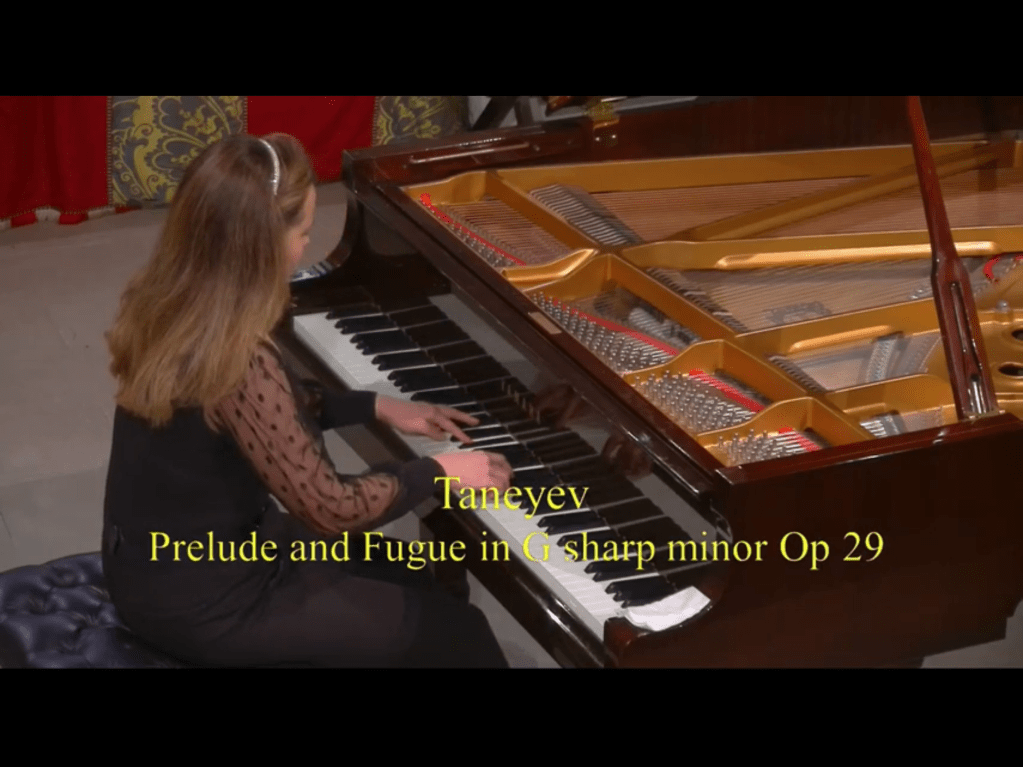
Taneyev: Prelude and Fugue in G sharp minor Op 29

Lyadov: Prelude in B minor Op 11

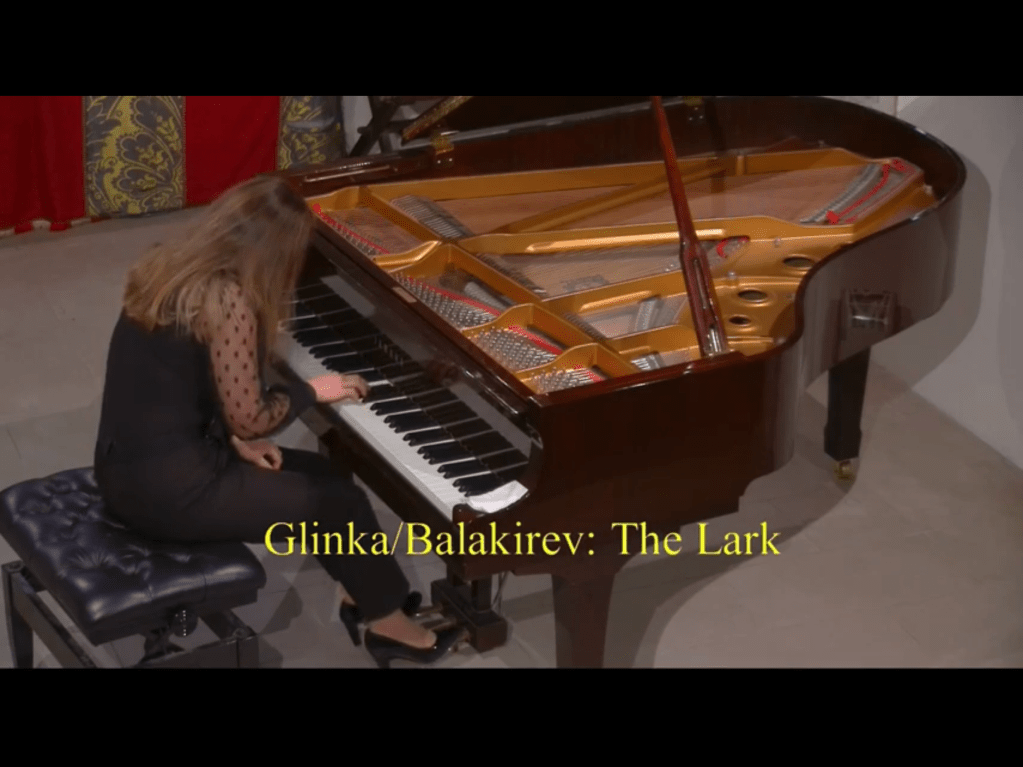
Glinka/Balakirev: The Lark

Medtner: 4 Fairytales Op 54

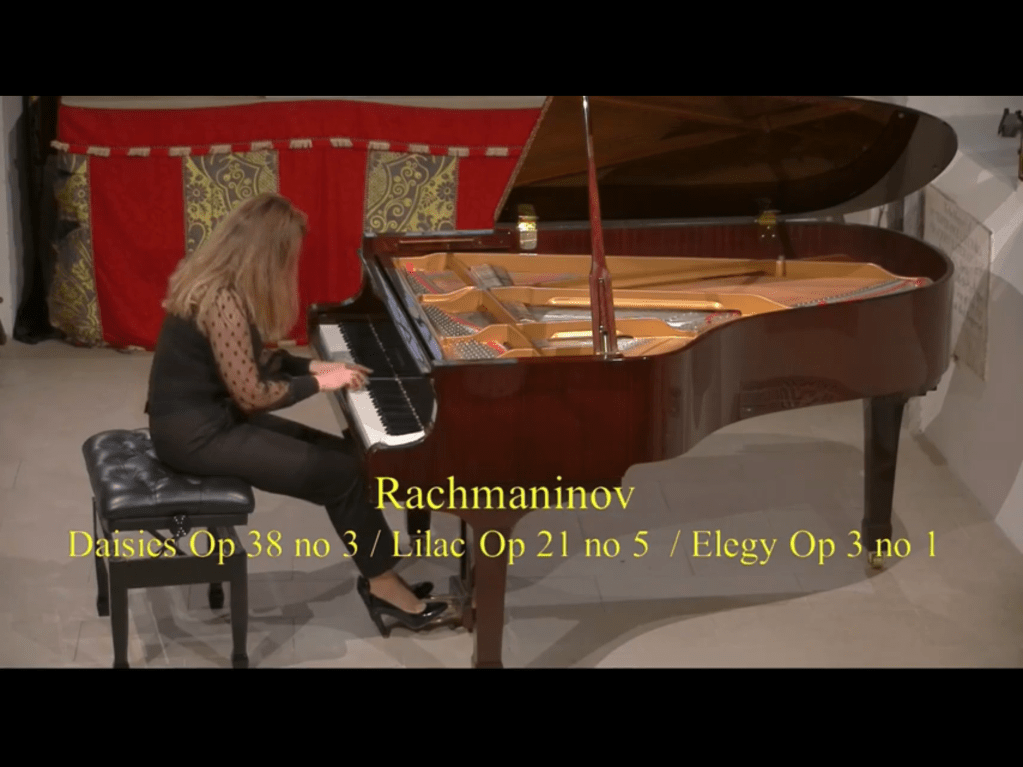
Rachmaninov: Daisies Op 38 no 3
Lilac Op 21 no 5
Elegy Op 3 no1

Stravinsky/Agosti: The Firebird suite

An amazing journey indeed for Dinara Klinton as she took us on a nostalgic journey to her homeland.Some sumptuous sounds and a feeling of aching nostalgia as she looked back to the stories told by Taneyev,Lyadov,Glinka,Medtner,Rachmaninov and Stravinsky.As with all journeys ,especially in this last year,it was not without the unexpected.Streamed live from London to Washington there was a general breakdown of the internet in west London that meant the journey was delayed by a few hours.Thanks to the expert recording facilities at St Mary’s in Perivale,Dr Mather,Roger Nellist and their team had an unexpected change of horses but the carriage arrived safely at its destination.Not aware of these technical problems of streaming Dinara just allowed her heart to stream and stretch out to her audience worldwide with yearning nostalgia.Playing of such ravishing beauty and astonishing technical command that was quite breathtaking as she invited us on to her magic carpet to visit a world much better than the one we had left behind for this all too short journey.

The Prelude and Fugue by Taneyev that opened the programme showed off all the remarkable qualities of Dinara’s artistry.The beautifully expressive Prelude with a magical melodic line over a brooding bass.According to Dinara,in her charming introductory presentation,it is based on a Russian folk melody like the Lyadov that was to follow.Keeping her introduction short, she spiritedly suggested that her playing was much better than her talking,at least she hoped so!There was indeed a clarity to her playing of almost string quartet quality where you could follow so clearly the different layers of sound as they in turn created such sumptuous harmonies.The featherlight scale at the end of the prelude was thrown off with quite ravishing ease.She attacked the fugue with a rhythmic energy and drive that reminded me much of the world of Shostakovich that was still only on the horizon.Quite exhilarating virtuosity and a scintillating ending thrown off with the consummate ease of a true virtuoso.

Sergei Taneyev (1856-1915) was not only a virtuoso pianist but also an outstanding composer of his day.He became known as one of the best performers of his generation and brought some of the greatest piano works to Russian audiences, giving the Russian première of Brahms’ Piano Concerto in D minor. Before that, he gave the Moscow première of Tchaikovsky’s First Piano Concerto, which the head of the Moscow Conservatory, Nikolai Rubinstein, had declared ‘unplayable.’He entered the Conservatory at age 9, graduating at age 15, having studied composition with Tchaikovsky and piano with Nikolai Rubinstein. After conquering Tchaikovsky’s Piano Concerto No. 1, the composer asked him to give the Russian première’s of his Piano Concerto No. 2 and his Piano Trio in A minor and after Tchaikovsky’s death, he also gave the première of his Piano Concerto No. 3.Following Tchaikovsky’s departure from the Moscow Conservatory in 1878, Taneyev started to teach there, remaining until 1905. His students included Scriabin ,Rachmaninov,Glière and Medtner.The 1905 Revolution caused Taneyev to leave the Conservatory and resume his concert and composing career more intensely. His Prelude and Fugue in G sharp minor, Op. 29, was the only piano work that he gave an opus number. Written in 1910, the work combines his own long-standing research into early music and, at the same time, is a combination of chromaticism and polyphony that would have been unknown to Bach. The work was written in memory of his nurse, Pelageya Vasil’yevna Chizhova, who had been with the composer his entire life. He put his emotions into the melancholic Prelude and then contrasted it with a fiery Fugue. This work was one of the inspirations for Dmitri Shostakovich’s prelude and fugue compositions

The Lyadov Prelude is a hauntingly beautiful piece played with a sense of balance that allowed the melodic line to shine with a rubato that gave so much shape and meaning to this deeply nostalgic Russian melody.Bringing this short jewel to a sparkling atmospheric ending was the ideal preparation for the better known Lark by Glinka in the famous re visitation of Balakirev.Anatoly Lyadov taught at the St. Petersburg Conservatory from 1878, his pupils included Prokofiev and Myaskovsky.Consistent with his character, he was a variable but at times brilliant instructor.Lyadov’s critical comments were always precise, clear, understandable, constructive, and brief…. Stravinsky remarked that Lyadov was as strict with himself as he was with his pupils, writing with great precision and demanding fine attention to detail. Prokofiev recalled that even the most innocent musical innovations drove the conservative Lyadov crazy. “Shoving his hands in his pockets and rocking in his soft woollen shoes without heels, he would say, ‘I don’t understand why you are studying with me. Go to Richard Strauss . Go to Debussy .’ This was said in a tone that meant ‘Go to the devil!'”

The Lark by Glinka in Balakirev’s arrangement opened with an expressive recitativo commented on with arabesques of shimmering sounds before the sumptuous beauty of this haunting melody by Glinka .Some ravishing cadenzas by Balakirev just added to the magic that was being created especially when the melody returns ornamented with ever more elaborate decoration.The poco meno mosso after a scintillating pianissimo cadenza leads us to the utter simplicity of the melody punctuated by trills and ornaments creating the enchanting atmosphere of Glinka’s beautiful sad melody, The Lark which is the tenth piece from his collection of twelve songs called Farewell to St. Petersburg. Dinara showed us her wonderful sense of colour and style of an era when piano playing was also seduction of the senses long before the percussive element of the piano was to be so prominently promoted by Stravinsky and friends!

I remember being enchanted by this piece when as a schoolboy I first heard it on a piano roll played by Richard Buhlig,a pianist of the great Romantic era of piano playing.These piano rolls had been collecting dust for years before Frank Holland discovered them together with the player pianos which he lovingly restored and eventual put on display at his Piano Museum in Brentford.The BBC got wind of these marvels ,via Sidney Harrison,that included piano playing of an era that had long been forgotten with the unbelievably subtle playing of leggendary virtuosi of the past like Rosenthal,Lhevine,Levitski,Godowsky and Rachmaninov.They were broadcast late at night on the BBC third programme and were programmes that were to ignite the imagination of young aspiring musicians who were later to carry the torch for a virtuosity that was to do more with subtle sound that with speed!

4 Fairy Tales by Medtner . N.1 The birds’ tale was played with such clarity as the bird hopped from branch to branch so vividly depicted in Dinara’s performance that had many similarities to Schumann’s Prophet Bird .N.2 A rhythmic scherzo as the melodic line changed hands in a playful duet full of energy and with a melodic build up only to be interrupted by the scherzo again.N.3 A. Strangely meandering organ grinder – a brooding work leading to the beggar,with a beseechingly beautiful melodic line and a very effective ending of upward disappearing scale movement.

Nikolai Karlovich Medtner 24 December 1879] – 13 November 1951 after a period of comparative obscurity in the twenty-five years immediately after his death, he is now becoming recognized as one of the most significant Russian composers for the piano.A younger contemporary of Rachmaninov and Scriabin he wrote a substantial number of compositions, all of which include the piano. His works include fourteen piano sonatas , three violin sonatas , three piano concerti , a piano quintet, two works for two pianos, many shorter piano pieces, a few shorter works for violin and piano, and 108 songs including two substantial works for vocalise n. His 38 Skazki(generally known as “Fairy Tales” in English but more correctly translated as “Tales”) for piano solo contain some of his most original music.At the outbreak of the Second World War, Medtner’s income from German publishers disappeared, and during this hardship ill-health became an increasing problem. His devoted pupil Edna Iles gave him shelter in Warwickshire where he completed his Third Piano Concerto , first performed in 1944.He died at his home at Golders Green,London in 1951 and is buried alongside his brother Emil in Hendon Cemetery.

Beautiful luminous sounds in Daisy and Lilacs played with ravishing beauty and delicacy.The Elegy was achingly beautiful with a melody full of expressive longing and melancholy played with an aristocratic nobility.There was a magical central section with a tenor melody accompanied by delicate arabesques leading to a passionate outpouring of sumptuous sounds.

The piano transcription of three movements from The Firebird by Stravinsky was written by Guido Agosti in 1928 and dedicated to the memory of his teacher Busoni.A fascinating work that immediately demonstrated the astonishing brilliance and rhythmic energy of Dinara in the Danse Infernale.There was a sudden burst of melody amidst the cascades of notes with clouds of sounds played with a ravishing sense of colour.There was a magnificent sense of balance and legato playing as the sun suddenly appeared in the finale with a radiance that was breathtaking as it gradually began to shine brighter and brighter.A tour de force of transcendental piano playing but also of musical intelligence and understanding.

Guido Agosti (11 August 1901 – 2 June 1989) was an Italian pianist and piano teacher.He was born in Forlì in 1901 and studied piano with Ferruccio Busoni,Bruno Mugellini, and Filippo Ivaldi,graduating at the age 13. He studied counterpoint under Benvenuti and literature at Bologna University starting his professional career as a pianist in 1921. Although he never entirely abandoned concert-giving, nerves made it difficult for him to appear on stage,and he concentrated on teaching. He taught piano at the Venice Conservatoire and at the Santa Cecilia Academy in Rome . In 1947 he was appointed Professor of piano at the Accademia Chigiana Siena on the express wish of Alfredo Casella .He also taught at Weimar and the Sibelius Academy in Helsinki.

After sharing the top prize at the 2006 Busoni Piano Competition age 18, Dinara took up a busy international concert schedule, appearing at many festivals including the “Progetto Martha Argerich” in Lugano, the Cheltenham Music Festival, the Aldeburgh Proms and “La Roque d’Antheron”. She has performed at many of the world’s major concert venues, including the Royal Festival Hall and Wigmore Hall in London, Berliner Philharmonie and Konzerthaus, Elbphilharmonie Hamburg, Gewandhaus zu Leipzig, New York 92Y, Cleveland Severance Hall, Tokyo Sumida Triphony Hall, Great Hall of Moscow Conservatory and Tchaikovsky Concert Hall. In concerto engagements, Klinton has worked with The Philharmonia, Lucerne Symphony Orchestra, Svetlanov State Orchestra, St. Petersburg Philharmonic Orchestra. Dinara combines her concert activities with her role as Assistant Piano Professor at the Royal College of Music in London. As a recording artist, Dinara has received widespread critical acclaim for her interpretations. Among many dazzling reviews, her album Liszt: Études d’exécution transcendante, S. 139, released by the German label GENUIN classics, was selected by BBC Music Magazine as Recording of the Month. Dinara’s debut album Music of Chopin and Liszt was made at the age of 16 with an American label DELOS. Her third CD is a part of renowned recording series Chopin. Complete Works on contemporary instruments, released by The Fryderyk Chopin Institute in Poland. This year’s release with PianoClassic is featuring Prokofiev Complete Sonatas. Dinara’s music education started in the age of five in her native Kharkiv, Ukraine. She graduated with highest honours from Moscow Central Music School, where she studied with Valery Piassetski, and the Moscow State P.I. Tchaikovsky Conservatory, where she worked with Eliso Virsaladze. Dinara completed her Master’s degree at the Royal College of Music under the tutelage of Dina Parakhina and became the inaugural recipient of highly prestigious RCM Benjamin Britten fellowship during her Artist Diploma course.. After that, Dinara attended masterclasses at the Lake Como Piano Academy and worked with Boris Petrushansky in Imola Piano Academy.

Dinara Klinton has been selected by London’s Keyboard Trust for their artist development programme The Keyboard Trust celebrates its 30th anniversary in 2021-22, and supports the most gifted young pianists on stages in London, New York, Mexico, Berlin, Rome, Washington, DC, and other music capitals. The Trust has presented more than 250 international pianists, historic-keyboard players, and organists in nearly 1000 concerts worldwide. With such notable musicians as Evgeny Kissin, Alfred Brendel, and the late Claudio Abbado among its trustees, this formula has proved its worth. www.keyboardtrust.org

The concert was introduced by the distinguished Russian pianist Elena Vorotko,co artistic director of the KCT.

https://christopheraxworthymusiccommentary.wordpress.com/2020/04/20/dinara-klinton-at-st-marys-2/

Alim Beisembayev a Master at St Mary’s

Thursday 3 June 4.00 pm 

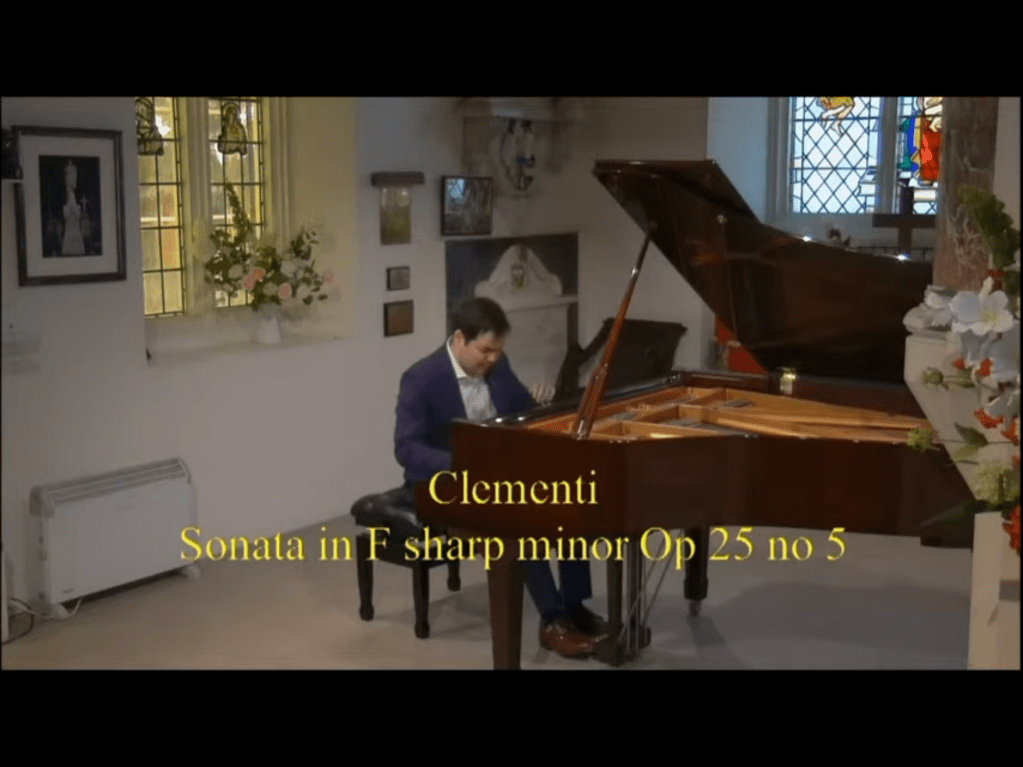
Clementi: Sonata in F sharp minor Op 25 no 5 Piùtosto allegro con espressione-Lento e patetico-Presto

Chopin: 24 Preludes Op 28

Here’s a link to the HD version https://youtu.be/Ao-4d3wKlEI Enjoy !

Masterly playing from Alim Beisembayev.
Chopin 24 Preludes that Fou Ts’ong exclaimed were 24 problems were played today in an unforgettable performance that I have only heard the like from Sokolov.
Listening attentively to the sounds he was producing with a total mastery that was quite overwhelming.From the opening improvisatory prelude where even from the outstart his musicianly anchor in the bass allowed such freedom for the waves of sound that he was producing above.The ‘raindrop’ prelude was a true tone poem in his magical hands.The diabolical B flat minor prelude that follows was played with unbelievable control and passionate involvement.The radiance of the A flat Prelude was like the sun coming out after the passing storm.The gentle penultimate prelude was like water gushing peacefully over a stream- au bord d’une source indeed-but who would have expected a final Allegro appassionata of such overwhelming intensity.The final three great gongs of D resonating as only a great pianist could know how.
Clementi’s F sharp minor sonata was played with a luminosity of sound from the very first notes.The almost Bachian slow movement was played with an aristocratic intensity that was deeply moving and just contrasted with the mellifluous Mendelssohnian outpouring of notes that spun from Alim’s hands with an ease and joie de vivre that was pure joy to behold.

The F sharp minor Sonata is the fifth of ‘Six Sonatas for the Piano Forte; dedicated to Mrs Meyrick … Opera 25’ (entered Stationers’ Hall, 8 June 1790)—is a work where ‘his heart and soul were engaged’ to the full.Classical it maybe but is temperamentally Romantic as Horowitz has shown us in his 1989 landmark recordings of five sonatas whilst in temporary retirement from the concert stage .Clementi was born in Rome in 1752 but in 1766 an English nobleman Sir Peter Beckford was so impressed by the young Clementi’s musical talent that he negotiated with his father to take him to his estate, Stepleton House in Dorset .Beckford agreed to provide quarterly payments to sponsor the boy’s musical education until he reached the age of 21. In return, he was expected to provide musical entertainment.After which he moved to London where audiences were impressed with his playing, thus beginning one of the outstandingly successful concert pianist careers of the period.Touring Europe it was on 12 January 1782 that Mozart reported to his father: “Clementi plays well, as far as execution with the right-hand goes. His greatest strength lies in his passages in 3rds. Apart from that, he has not a kreuzer’s worth of taste or feeling – in short, he is a mere mechanic.” In a subsequent letter, he wrote: “Clementi is a charlatan, like all Italians. He marks a piece presto but plays only allegro.”However Mozart used the opening motif of Clementi’s B-flat major sonata (Op. 24, No. 2) in his overture for The Magic Flute!From 1783 he settled in London as pianist ,conductor and teacher.One of his pupils was John Field who was to be such an influence on Chopin.He entered the publishing business and the manufacturing of pianos,a flourishing business that afforded him an increasingly elegant lifestyle. As an inventor and skilled mechanic, he made important improvements in the construction of the piano, some of which have become standard in instruments to this day.In 1826 he completed his collection of keyboard studies, Gradus ad Parnassum and set off for Paris with the intention of publishing the third volume of the work simultaneously in Paris, London, and Leipzig.He founded the Philharmonic Society in London and eventually retired with his English wife and family to Evesham where he died in 1832 at the age of 80.

There was a luminosity of sound from the very first notes in Alim’s performance with such tender question and answer in the development.Very expressive – as Clementi asks:’piùtosto allegro con espressione’-but played with such style and real understanding.The very delicate ending was a mere indication of the remarkable Lento e Patetico in B minor that was to follow.This almost Bachian lament was played with a sense of colour and inner feeling that was deeply moving .The Presto that followed owes much to Scarlatti and above all Mendelssohn with its brilliance and glittering thirds that sparkled like jewels under jeux perlé playing of such radiance and shape.

Chopin wrote the 24 Preludes between 1835 and 1839, partly at Valldemossa ,where he spent the winter of 1838–39 having fled with George Sand and her children to escape the damp Paris weather.In Majorca, Chopin had a copy of Bach’s 48 and as in each of Bach’s two sets of preludes and fugues Chopin’s Op. 28 set comprises a complete cycle of the major and minor keys, albeit with a different ordering.Each of the 24 Preludes is a little tone poem but together they have an architectural form that had Fou Ts’ong exclaiming that they are 24 problems.Not only for the pure technical difficulty of many of them but for the musicianship needed to make one unified whole of what is undoubtedly the first of the masterpieces that Chopin was to pen in his brief and tormented life.I remember how difficult Vlado Perlemuter found the very first prelude that must sound like a free improvisation but at the same time have an overall architectural shape.Liszt’s transcendental studies start with a similar flourish but the difference with Chopin is that Liszt makes a flamboyant opening gesture whereas with Chopin ,right from the first notes,there is a poetic and passionate drive that takes us into the dark brooding left hand of the second prelude.Perlemuter was to record them for Nimbus and he sat down to try out the piano before recording the next day.He did not know that the microphone was on and was relieved the next day to know that it was this improvised performance that was the one he chose in the final recording!Alim found just this sense of improvisation where the deep bass notes acted as roots firmly planted in the ground that allowed the branches above to sway so naturally in the wind – this is exactly Chopin’s own description of tempo ‘rubato’.A superb sense of balance in the second prelude between the brooding bass and the pleading melodic line.There was such beauty in the final cadential phrase played with such mature sensitive musicianship- what one might call ‘aristocratic’.Often a term used to describe the interpretations of Artur Rubinstein.A feeling that there is all the time to savour the subtle harmonic colours without ever loosing sight of the overall shape and inner propulsion of the music.The fleeting swirls of the left hand in the third were a wistful accompaniment to the wonderfully simple melodic line.A featherlight ending disappearing into the infinite with just two radiant chords to finish.Aristocratic is the only word to describe the beauty of the melodic line in the E minor prelude.Just one page so pregnant with meaning brought to a sumptuous climax before dying to a whisper .The final pianissimo chords were again of quite sublime beauty and I was very impressed that someone so young could bring such meaning to a seemingly simple cadence.The mellifluous meanderings of the fifth had something of the same shape and colour that he had hinted at in the Clementi sonata.It was nice to be reminded of Agosti’s fingerings in my score to find a true left hand legato in the Lento assai that followed.In Alim’s hands the melodic line was deeply felt thanks to his superb sense of balance and architectural shaping.The gently pulsating heartbeats throughout gradually drew their last breath as they vanished into the distance with Chopin’s own indication of pedal and pianissimo so intelligently and movingly interpreted.The little Andantino was lovingly shaped before the passionate outpourings of the eighth prelude.There was a wonderful sense of shape to the melodic line with the flourishing harmonies like quick silver hovering above.The change from A to A sharp in the coda was one of those magical moments that can only happen in public performance as it did so magically today.The Largo was played with sumptuous full sound,the problem with the dotted rhythm resolved convincingly even though to my ears it came as a surprise at the beginning!The jeux perlé so beautifully spun in the tenth was a mere accompaniment to the chordal melodic line as Alim’s intelligence made absolutely clear.The vivace that follows was an outpouring of wondrous sounds achingly short but to be augmented with the same mellifluous sounds as the nineteenth later.This was just a preparation for the astonishing virtuosity of the G sharp minor gallop thrown off with a sense of shape and passionate excitement that only a true master could provide.There was magic in the air with the thirteenth played with a flexibility that was ravishing.The più lento central section was sublime in its stillness and the bell like notes in the coda were pure magic.I have never heard the final cadence played so naturally or beautifully as Alim did today before the rush of wind that blows us into the disarming simplicity of the so called ‘Raindrop’ prelude.Such subtle shaping and colour just added to the somber crescendo in the central episode played so naturally and with the same gradual build up that reminded me of the famous interpretation of Sokolov .The transition of the return of the ‘Raindrop’ melody with its subtle pungent harmonies was heartbreakingly beautiful and the gradual disappearance to the final pianissimo chord made the call to arms of the B flat minor prelude all the more startling.I was at Perlemuter’s masterclass at the Academy in London when during the era of strikes under the Heath government the lights suddenly failed while the old maestro was demonstrating this prelude.It has passed into legend that Perlemuter carried on to the end of this fiendishly difficult prelude giving a note perfect performance oblivious that it was in total darkness!Well we live in different times and strikes are all too rare but the technical perfection and absolute authority that Alim brought to this prelude was quite astonishing with or without lights!The sun suddenly appeared with the A flat prelude played with loving care and beauty.The final A flat gong notes at the end played with the same magic as Ravel’s magic garden a century later.There was operatic drama in the eighteenth played with almost Lisztian aplomb before the technically transcendental difficulty of the beautiful mellifluous nineteenth.Difficulties just did not seem to exist for Alim such was his total mastery and musicianship that carried us from the first to the last of this wonderful work .The C minor prelude used by Busoni and Rachmaninov later as the theme for their variations was played with a full rich sound where one could admire the string quartet texture of the chords arriving so wondrously to the whispered pianissimo and gradual shape of the final cadence.There was a wonderful sense of legato to the Cantabile twenty first prelude before the passionate outpouring of left hand octaves of the twenty second.The radiance of the water splashing so simply in the twenty third was just the calm before the storm.Fearlessly plunging into the final D minor prelude with a sense of excitement and forward propulsion that was breathtaking.Even managing the glissandi type scales arriving so punctually at their destination without having to to alter the driving left hand rhythm.The final three great D’s were played with a fullness of sound that was of terrifying vibrant resonance.

Alim Beisembayev was born in Kazakhstan in 1998 and started playing the piano at the age of 5. He moved to study at the Central Music School in Moscow in September 2008. After two years in Moscow, Alim moved to study at the Purcell School for Young Musicians where he was taught by Tessa Nicholson. Adding to his performing experience, Alim wins several prizes during his time at the Purcell School including the Junior Cliburn International Competition in the US. In February 2016, Alim performed at the Royal Festival Hall with the Purcell School Symphony Orchestra. In September 2016, Alim continued his studies with Tessa Nicholson at the Royal Academy of Music where he was generously supported by a full scholarship. Alim has played many solo and chamber music concerts un the UK, Spain, Kazakhstan, USA, Barbados and Italy. He also won the Jaques Samuel Intercollegiate Competition which led to his Wigmore Hall recital debut in 2018.In September 2020, Alim pursued his post-graduate studies at the Royal College of Music in London under the guidance of Vanessa Latarche and Dmitri Alexeev. He is supported by a generous ABRSM scholarship and an award from the Countess of Munster Trust.

https://christopheraxworthymusiccommentary.wordpress.com/2020/06/02/the-bells-of-st-marys-are-ringing-to-the-sounds-of-alim-beisembayev/

Ariel Lanyi flying high at St Mary’s

Tuesday 1 June 4.00 pm 

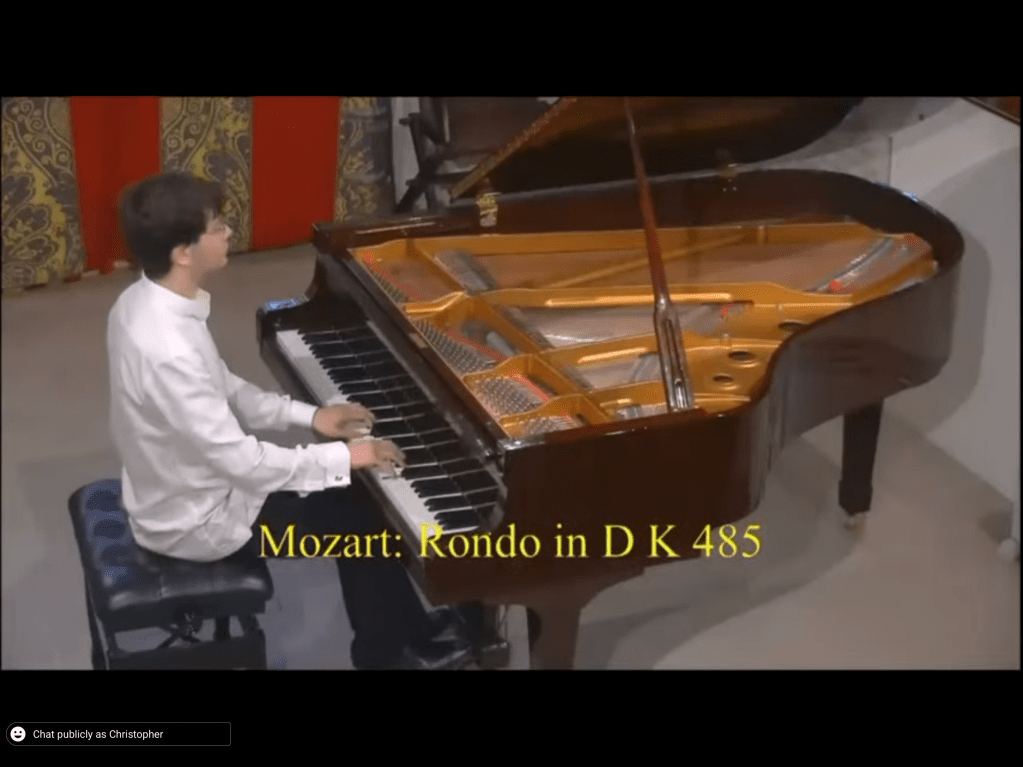
Mozart: Rondo in D K 485

Debussy: Images Book 2
1. “Cloches à travers les feuilles” (Bells through the leaves)
2. “Et la lune descend sur le temple qui fut” (And the moon descends on the temple that was)
3. “Poissons d’or” (Golden fishes)

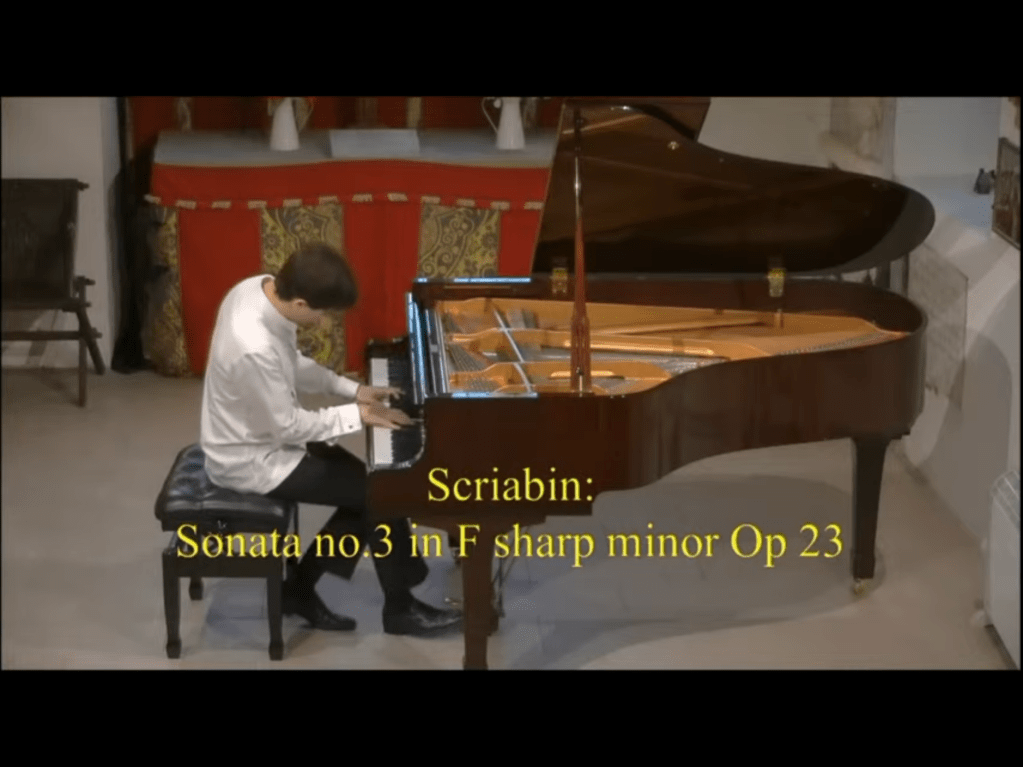
Scriabin: Sonata no.3 in F sharp minor Op 23

Albéniz: Iberia Book 3
El Albaicín / El Polo / Lavapiés

Some ravishing playing from Ariel who I have always admired in Schubert and Brahms but today the list will get even longer.A Mozart of such simplicity and purity followed by Debussy’s magical second book of Images.Ravishing and haunting as he sought out the sounds that most other pianists do not know exist.His Scriabin I have long admired for its great architectural sweep where the passionate outpourings are gradually brought to a sumptuous conclusion with a musicianship and sense of line that is rare indeed.I have spoken about it before (see below 2/11/20) His Albeniz is new to me and his infectious rhythmic energy and sumptuous palette of colour had me clicking my heels and shouting olé as he brought each of the three postcards to a loving conclusion.

Here is some information about the works he played and two reviews that I wrote just before the pandemic struck so unexpectedly.A truly memorable performance of Brahms 2nd Piano Concerto that Ariel has just recently played in the final of the Rubinstein Competition with the Israel Philharmonic Orchestra where he was awarded the best Israeli performance prize.

https://christopheraxworthymusiccommentary.wordpress.com/2020/02/28/the-aristocratic-brahms-of-ariel-lanyi/

The Rondo K 485 was written around the same time as the Piano Concertos in A major (K. 488) and C minor (K. 491). In the course of the work, a theme from the third movement of the Piano Quartet in G minor (K. 478) is taken up and further developed. In spite of its considerable length and its musical depth the work was apparently not published during the composer’s lifetime. The dedication, “Pour Mad:selle Charlotte de W…” (the rest is indecipherable) is an enigma. No matter which lady Mozart had in mind, this rondo is today one of his best loved and most played piano works.

Debussy’s second book of Images was composed in 1907.With respect to the first series of Images, Debussy wrote to his publisher, Jacques Durand : “Without false pride, I feel that these three pieces hold together well, and that they will find their place in the literature of the piano … to the left of Schumann, or to the right of Chopin… “Cloches à travers les feuilles” was inspired by the bells in the church steeple in the village of Rahon in Jura France and was the hometown of Louis Laloy, a close friend of Debussy and also his first biographer.”Et la lune descend sur le temple qui fut” (And the moon descends on the temple that was) was dedicated to Laloy and evokes images of East Asia suggested by Laloy, an expert in Chinese culture.The piece is evocative of Indonesian gamelan music, which famously influenced Debussy.”Poissons d’or” may have been inspired by an image of a golden fish in Chinese lacquer artwork or embroidery , or on a Japanese print. Other sources suggest it may have been inspired by actual goldfish swimming in a bowl.

Scriabin had been married to a young pianist, Vera Ivanovna Isaakovich, in August 1897. Having given the first performance of his Piano Concerto in Odessa, Scriabin and his wife went to Paris where he started to work on the new sonata .Scriabin is said to have called the finished work “Gothic”, evoking the impression of a ruined castle.Some years later however, he devised a different programme for this sonata entitled “States of the Soul”:First movement, Drammàtico:The soul, free and wild, thrown into the whirlpool of suffering and strife.Second movement, Allegretto:Apparent momentary and illusory respite; tired from suffering the soul wants to forget, wants to sing and flourish, in spite of everything. But the light rhythm, the fragrant harmonies are just a cover through which gleams the restless and languishing soul.Third movement, Andante:A sea of feelings, tender and sorrowful: love, sorrow, vague desires, inexplicable thoughts, illusions of a delicate dream.Finale, Presto con fuoco:From the depth of being rises the fearsome voice of creative man whose victorious song resounds triumphantly. But too weak yet to reach the acme he plunges, temporarily defeated, into the abyss of non-being.

https://christopheraxworthymusiccommentary.wordpress.com/2020/02/11/ariel-lanyi-the-return-of-a-star-the-sublime-schubert-of-a-master-musician/

Iberia is a suite composed between 1905 and 1909 .It is made up of four books of three pieces each.It is Albéniz’s best-known work and considered his masterpiece. It was highly praised by Debussy and Messiaen , who said: “Iberia is the wonder for the piano; it is perhaps on the highest place among the more brilliant pieces for the king of instruments”. Stylistically, this suite falls squarely in the school of Impressionism,especially in its musical evocations of Spain.Considered one of the most challenging works for the piano: “There is really nothing in Isaac Albeniz’s Iberia that a good three-handed pianist could not master, given unlimited years of practice and permission to play at half tempo. But there are few pianists thus endowed.”

Ariel Lanyi, born in 1997, began piano lessons with Lea Agmon just before his fifth birthday and made his orchestral debut at the age of 7. Since then, he has given numerous recitals in cities such as London, Paris (including Hôtel des Invalides and Radio France), Rome, Prague, Brussels, and regularly in concerts broadcast live on Israeli radio and television. He has appeared as a soloist with a variety of orchestras in the United Kingdom and Israel, including the Israel Symphony Orchestra and the City of Birmingham Symphony Orchestra, and has participated in festivals such as the Israel Festival, Ausseer Festsommer, Bosa Antica Festival, Miami Piano Festival, the Ravello Festival, and the Young Prague Festival. As a chamber musician, he has appeared with members (including leading members) of the Prague Philharmonia, the Czech Philharmonic, the Berliner Philharmoniker, the Concertgebouw Amsterdam, and the Israel Philharmonic, among others. In 2020, Ariel will appear in the Marlboro Festival. Ariel was awarded first prize at the 2017 Dudley International Piano Competition following a performance of Mozart’s Concerto in C minor, K. 491 in the final round, and in 2018, he was awarded the first prize in the Grand Prix Animato in Paris.In 2012, Ariel released Romantic Profiles on LYTE records, a recital album featuring Schumann’s Carnival Scenes from Vienna, Liszt’s Fantasy and Fugue on the theme B-A-C-H, Brahms’ Fantasies Op. 116, and Janacek’s Piano Sonata I.X.1905. Future projects include a recording for Linn Records. Ariel studied at the High School and Conservatory of the Jerusalem Academy of Music, in the piano class of Yuval Cohen. He also studied violin and composition, and was concertmaster of the High School and Conservatory Orchestra. He has also received extensive tuition from eminent artists such as Leon Fleisher, Robert Levin, Murray Perahia, Imogen Cooper, Leif Ove Andsnes, Steven Osborne, and the late Ivan Moravec. Currently, he studies as a full scholarship student at the Royal Academy of Music in London with Hamish Milne and Ian Fountain. Ariel is a recipient of the Munster Trust Mark James Star Award and the Senior Award of the Hattori Foundation.

https://www.facebook.com/notes/christopher-axworthy/ariel-lanyi-at-st-marys/10155940468672309/

Damir Durmanovic A new star shining brightly at St Mary’s

Tuesday May 25th 4.00 pm 

Schubert: Hungarian Melody in B minor D 817

Brahms: Intermezzo in E Op 116 no 4

Liszt: Die Zelle in Nonnenwerth S 534

Kalinnikov: Elegie in B flat minor

Blumenfeld: 5 Preludes from Op 17 :
Nos 19, 20, 21, 22, 5

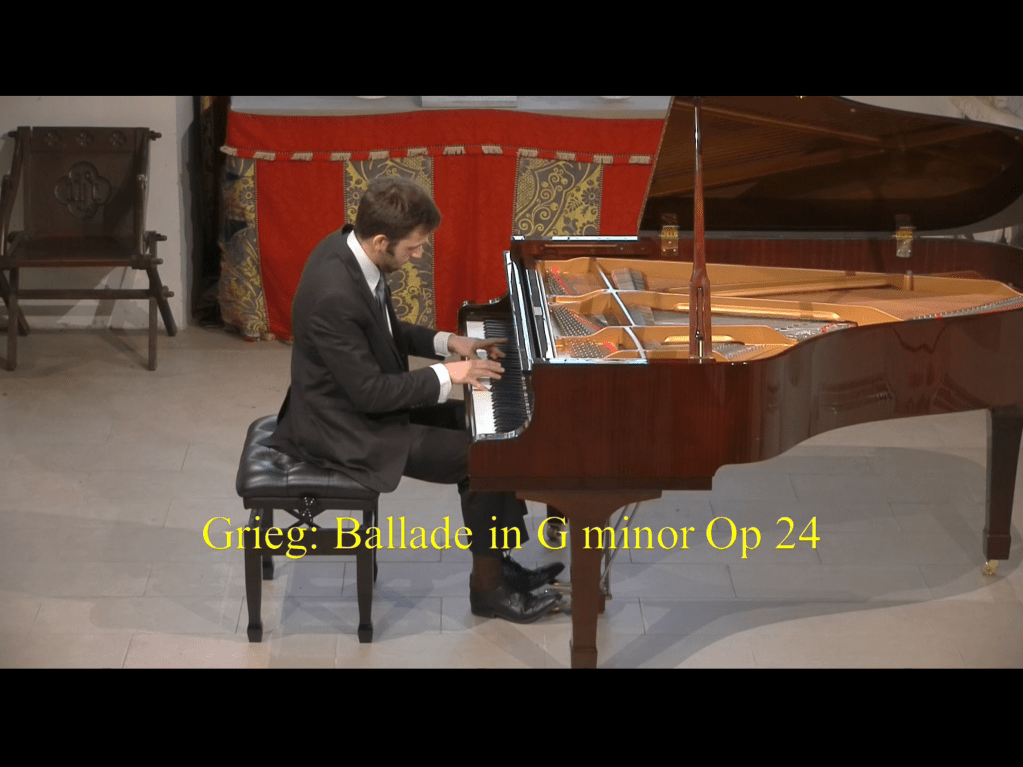
Grieg: Ballade in G minor Op 24
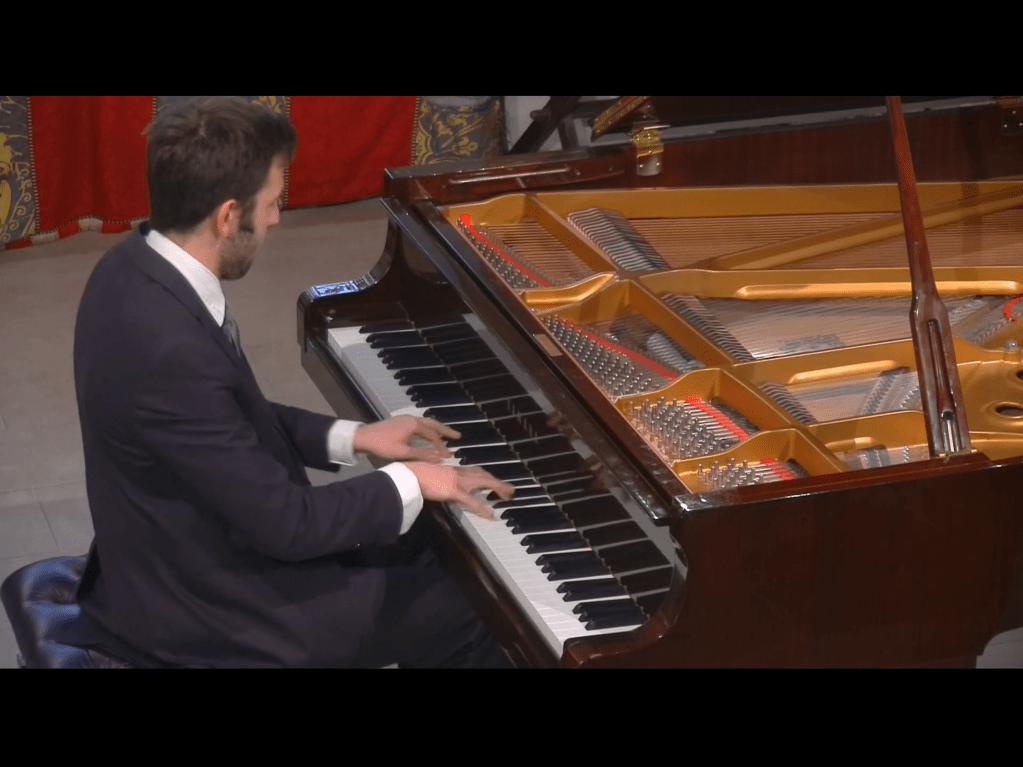
https://youtu.be/bNELff8-uuE. Here is the high definition recording of the concert

“Astonished.ravished and amazed by Damir Durmanovic’s artistry at St Mary’s.His intelligence too combining the key relationships of the works he had chosen for his unusually stimulating programme was nothing short of genius.
An unknown Liszt of ravishing beauty and Preludes by Blumenfeld where you began to understand the influence on the youthful Horowitz – who actually never played any of his teachers works in public!……….A very exciting new star shining brightly at St Mary’s……….here he is at St James’s during the lockdown.
https://christopheraxworthymusiccommentary.wordpress.com/2020/09/16/damir-durmanovic-at-st-jamess-a-poet-speaks/“

It was last September during a partial lockdown that I was one of the few to venture out to St James’s Piccadilly for a lunchtime concert by a young pianist I had not heard before .I was bowled over by his interpretations of Schubert especially the ‘big’A major Sonata op posth.(his interpretation I believe is now available on CD ).Knowing his teacher Dmitri Alexeev and his masterly instinctive playing I could feel the influence but it was allied to his own very individual personal character.What can sometimes unfavourably be described as Schubert’s eternal length could have gone on forever as far as I was concerned, such was his musicianship and ability to make the music speak.Maybe Eternal could be substituted by Sublime !So I was very pleased when he applied to the Keyboard Charitable Trust and I was able to hear him again in completely different repertoire.This will be streamed live for the Keyboard Trust on 16th June at 7 pm In the conversation I had with him which is included in the live stream ,I was astounded by his profound musicianship and in particular his reference to historic performance practices and the relationship of keys in preparing programmes,his attitude to the musical profession and much else besides .All this had been stimulated by his time at Menuhin school and coming into contact with musicians such as Robert Levin and Marcel Baudet.It just proves how right Menuhin was to create a school where this sort of musical stimulation could be nurtured at an early formative age.I had spoken Dr Mather at St Mary’s about this remarkable young man and no time was lost in engaging him to substitute a pianist that for Covid quarantine reasons was not able to fulfil his engagement in his prestigious young pianists series .I was apprehensive about listening again especially as the programme Damir now produced was extremely eclectic and made me worry about the glowing words that I had shared in private with Dr Hugh Mather.I was not able to listen live either as I had a concert in Villa Torlonia in Rome with public,followed by a live stream of the final of the Queen Elisabeth of the Belgians Competition in Brussels,both with artists promoted by the Keyboard Trust.However at the crack of dawn I could not resist taking a look at the high definition stream of Damir’s concert and was relieved and excited by performances that were beyond all expectations.An exciting new talent who plays the programmes he believes in and refuses to enter the competition circus.This sort of genial talent is never easy to live with as there can be no compromise in what one passionately believes in.As Hugh says ‘he is a one-off -unique in fact.Wonderful control of sound but with programmes slightly lost on a general audience.’It is interesting to note that Damir would normally improvise between each piece with what were called in the ‘old days’ preludes.The key relationship between pieces was usually dominant to tonic.In today’s programme,as it was being streamed and the start and finish of each piece might not have been so evident,he chose to add the link only to the two that do not adhere to the key relationship which is Liszt to Kalinnikov.

The Schubert immediately showed a great sense of style and a beguiling sense of dance, tantalising in its charm with a rare sense of rubato Adding subtle ornamentation that gave great lift to these dances that can fall so flat in lesser hands.

This haunting Intermezzo from op 116 had a sense of poignant feeling of nostalgia and longing played with a sumptuous sense of colour .A ray of sunlight shone for a second before the return of the deep lament of almost unbearable inner feeling .It was all so vividly depicted in playing where every note spoke so eloquently.

Die Zelle in Nonnenwerth was quite a discovery with its opening flourishes full of such musical meaning before the melody of ravishing beauty and purity.Arabesques that were like quicksilver hovering and ornamenting the melodic line and only adding to the intensity of such a beautiful neglected work.Leslie Howard tells me it was a set piece for the Liszt competition in Utrecht but am unable to trace its origins which makes me even more intrigued by the originality of Damir’s programme .I quote Liszt expert Leslie Howard :”Die Zelle in Nonnenwerth was something of an obsession with Liszt. Started around 1841 and continuing until the last years of his life, he seems to have made three versions of the song to Lichnowsky’s poem about the cloisters on the island in the Rhine, an Élegie with a different text over the same music, four versions of it for solo piano, the second of these with an alternative reading effectively making version number five, just one version for piano duet, and versions for violin or cello and piano.This piano version is the last, and the simple song has become a nostalgic reflection upon happier times when Liszt in old age,dwelt on one of the happiest periods of his life when he and the Countess d’Agoult holidayed on the island of Nonnenwerth with their children Blandine, Cosima and Daniel in the summers of 1841–43—some of the few occasions when that extraordinary family was united.”

Vasily Kalinnikov 1866-1901 In 1892 Tchaikowsky recommended him for the position of main conductor of the Maly Theatre and later that same year to the Moscow Italian Theater. However, due to his worsening tuberculosis he had to resign from his theater appointments and move to the warmer southern clime of the Crimea He lived at Yalta for the rest of his life, and it was there that he wrote the main part of his music, including his two symphonies and the incidental music for Tolstoy’s Tsar Boris

The Elegie was written in 1894 just seven years before his early death at the age of 35.There was in fact a beseeching cry to the piece so hauntingly played with Damir’s wondrous touch that seems to have no limit to his multi coloured palette of sounds that he can extract from the piano with such fluidity and naturalness.The gently lilting dance episode had much to do with Schubert like the opening work in this fascinatingly varied recital.It was interesting to hear Damir’s preluding or improvisation from the Liszt to the Elegie being the two works in the programme that did not adhere to the tonic to dominant key relationship between the other works on the programme.Damir would normally improvise or prelude from one work to another but for clarity on this on line recital he thought it would be clearer with such unusual repertoire to have a break between pieces.

Felix Mikhailovich Blumenfeld 1863 -1931) was a composer,conductor and pianist .He conducted the Russian premiere of Wagner’s Tristan at the Marinsky Theatre.He was born in the Ukraine and studied at St Petersburg Conservatory.From 1918 to 1922 he was director of the Mykolayiv Lysenko Music-drama school in Kiev where Horowitz was one of his pupils. From 1922 until his death he taught at the Moscow Conservatory where amongst his pupils were Simon Barere and Maria Yudina.As a pianist, he played many of the compositions of his Russian contemporaries. His own compositions, which showed the influence of Chopin and Tchaikowsky include a symphony, numerous pieces for solo piano, an Allegro de Concert for piano and orchestra, and lieder.It is interesting to note that he was the uncle of the great pedagogue Heinrich Neuhaus,teacher if Richter and many others ,and first cousin, once removed of Karol Szymanowski (Felix and Karol’s father, Stanislaw Szymanowski, were cousins).

A fascinating discovery of wonderful pieces by Blumenfeld almost totally neglected by pianists these days ,even Horowitz never programmed them.It has taken Damir to show us the wondrous colours and transcendental intricacy that are indeed influenced by Liszt,Chopin and Scriabin,but,as we were shown today,they have a ravishing voice of their own.There was haunting beauty in the first prelude where one could hear shades of Liszt’s Liebestod in the far distance.Such startling virtuosity in the second with seemless streams of gold that one can see immediately the roots of the phenomenon Horowitz.Sumptuous beauty of the tenor melody in the third with ravishingly beautiful accompaniments.Wondrous sounds with a palette of colours that most pianists these days do not know exist.This is someone who has totally understood the sense of balance and colour that can lie in this box of strings and hammers.Matthay,the renowned teacher of Myra Hess and Moura Lympany amongst many others, used to find a range of sounds on a single note from one to ten.Pianists these days seem only aware of a limited range of a maximum one to five !There was a ravishing melodic line despite the unnoticed technical difficulties in the fourth and a suave sense of rubato in the passionate melodic outpouring of the fifth. I understand that Damir is about to record the 24 preludes op 17 which will be a start to add some of Blumenfeld’s large output on CD which up until now has been almost completely ignored even by his pupil Horowitz!

Ballade in the Form of fourteen Variations on a Norwegian Folk Song in G minor Op. 24, is a large-scale work for piano and is in the form of theme and variations, the theme being the Norwegian folk song Mountain Song. Rarely played in concert these days it was one of the works played by Percy Grainger at his 1901 London debut at Steinway Hall, four years before he met Grieg, who was to become Grainger’s greatest champion.

A gentle opening full of delicacy that was to return at the close of this long journey of fourteen variations.There were some scintillating sounds of almost improvised freedom .Dance rhythms played with an irresistible sense of character and agility.The final triumphant melody was played with a great sense of line and much agility which again Damir put at the service of the music.The gentle poetic end was a fitting end to a superb recital by a ‘Master pianist’ to use Dr Mather’s own words.

As an internationally sought-after performer, Damir Durmanovic has performed in venues and festivals including the Wigmore Hall, Champs Hill Studios, YPF Festival Amsterdam, Wimbledon Music Festival, Renia Sofia Audotorium Madrid, Gstaad Menuhin Festival, Derby Multifaith Center, Flusserei Flums, ‘Ballenlager’ Vaduz. He has won prizes in numerous international competitions including The Beethoven Intercollegiate Junior Competition in London, Adilia Alieva International Piano Competition in Geneva and Isidor Bajic International Piano Competition in Novi Sad. He has performed in masterclasses with Claudio Martinez-Mehner, Dmitri Bashkirov, Pascal Devoyon, Jacques Rouvier, Robert Levin, Jean-Bernard Pommier, Tatyana Sarkisova, and chamber ensembles such as the Emerson Quartet. Damir is also a scholar at the ‘Musikakademie Liechtestein’ and regularly participates in the courses organised by the academy. Damir began his studies at age of eight in his home country, Bosnia and Herzegovina, with Maja Azabagic before continuing his studies at the Yehudi Menuhin School where he studied with professor Marcel Baudet. He is an ABRSM scholar and is kindly supported by the Talent Unlimited Scheme. He is currently studying at the Royal College of Music in London with professor Dmitri Alexeev.

https://christopheraxworthymusiccommentary.wordpress.com/2020/09/16/damir-durmanovic-at-st-jamess-a-poet-speaks/

Luke Jones for Cranleigh Arts Simplicity,Intelligence and virtuosity

Programme:
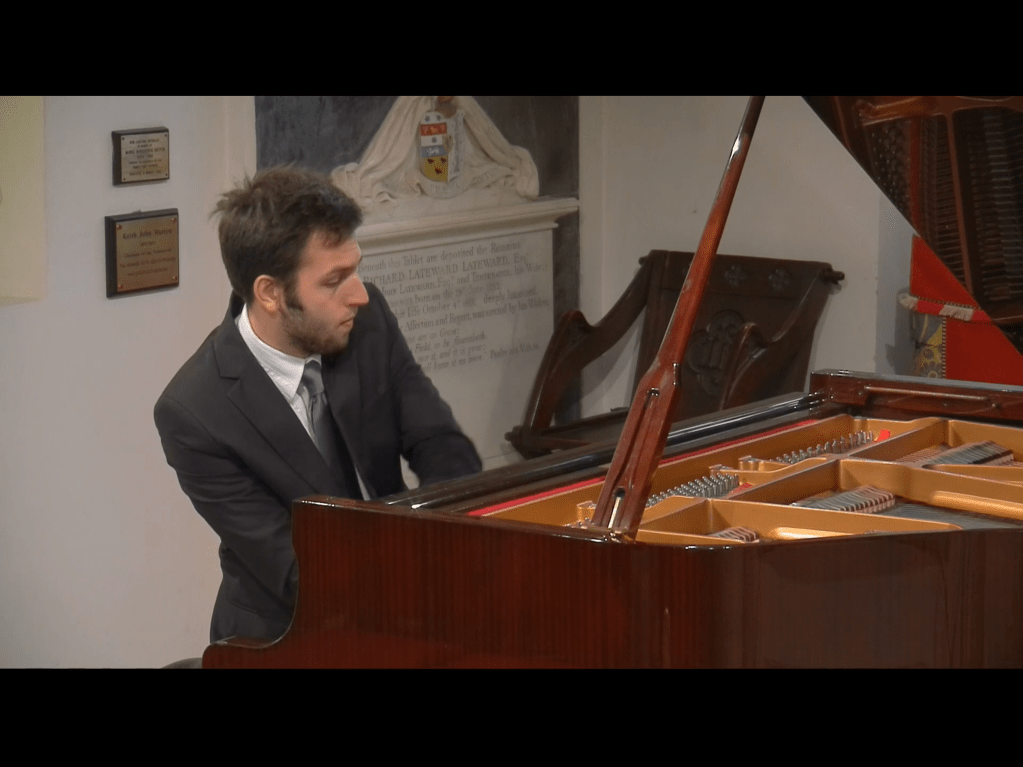
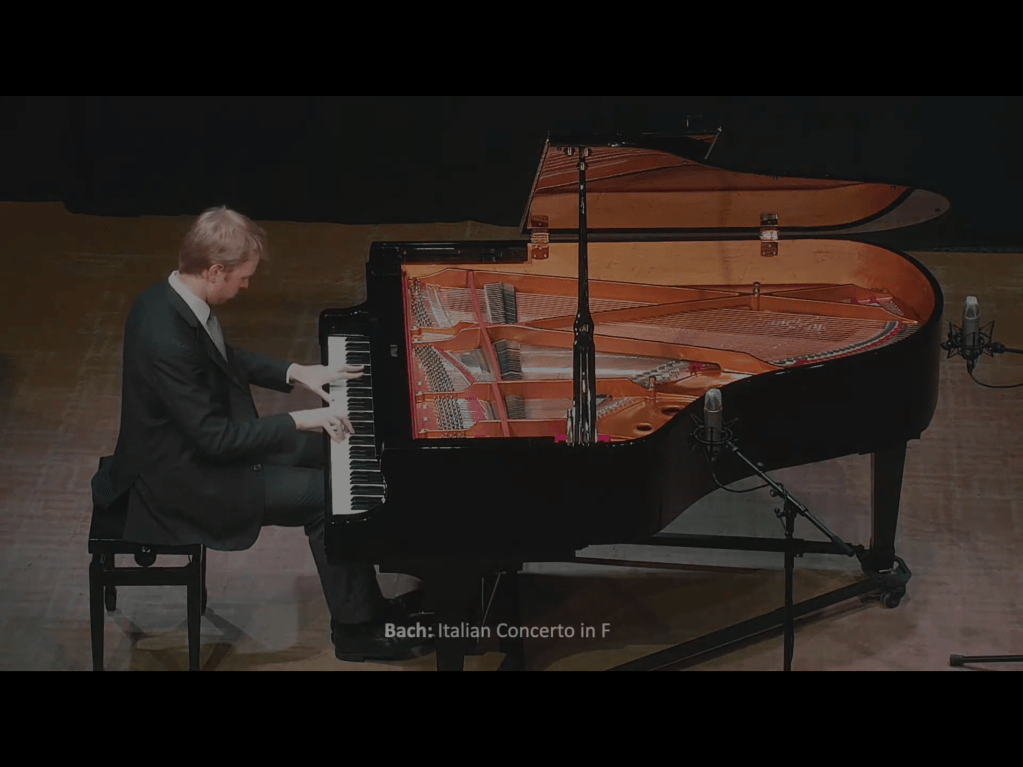
Bach: Italian Concerto in F BWV 971 —— Andante -Presto

Bach: French Suite No.5 in G BWV 816 Allemande-Courante-Sarabande-Gavotte-Bourée-Louvre-Gigue

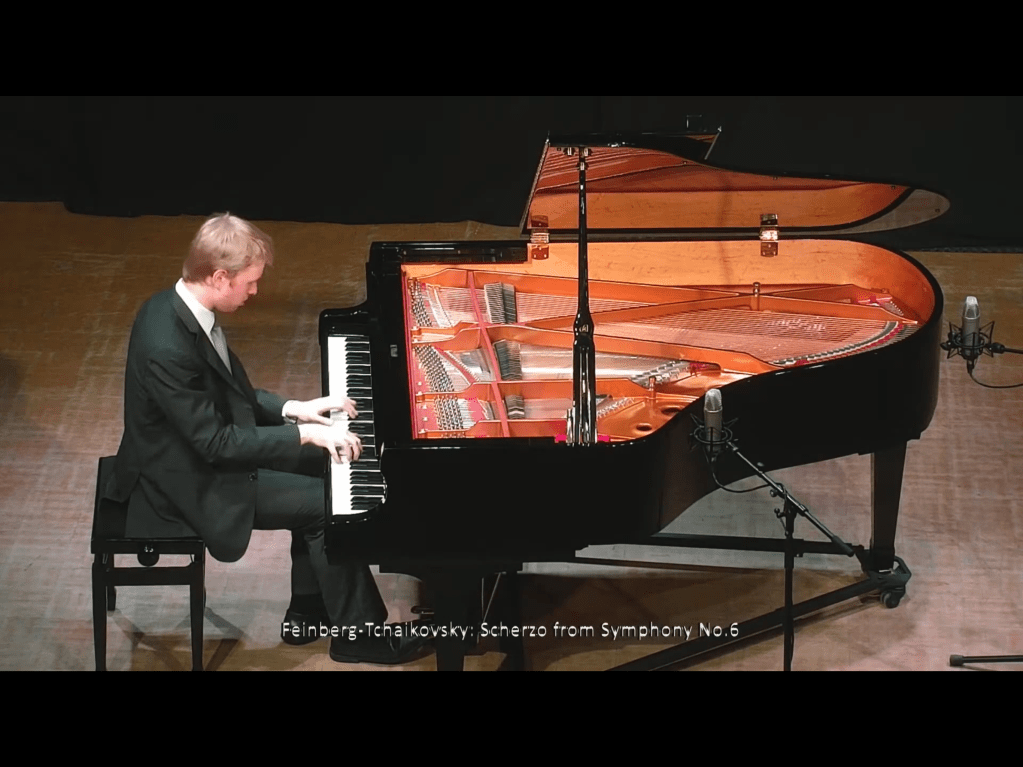
Feinberg-Tchaikovsky: Scherzo from Symphony No.6

Interval

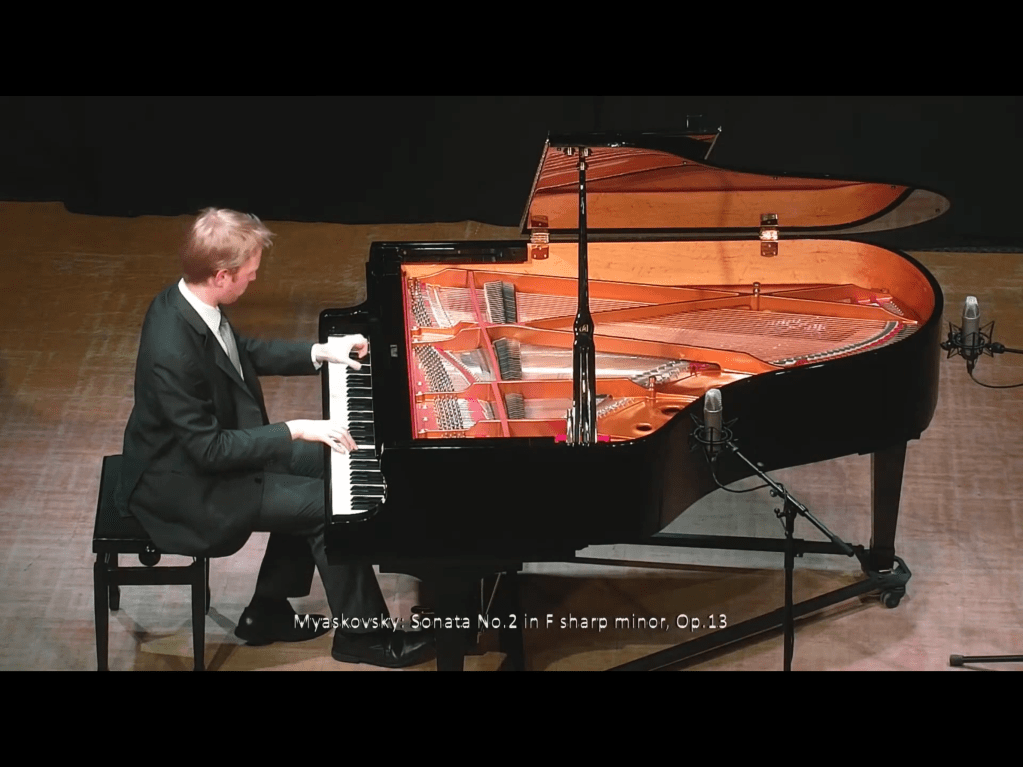
Myaskovsky: Sonata No.2 in f-sharp minor, Op.13

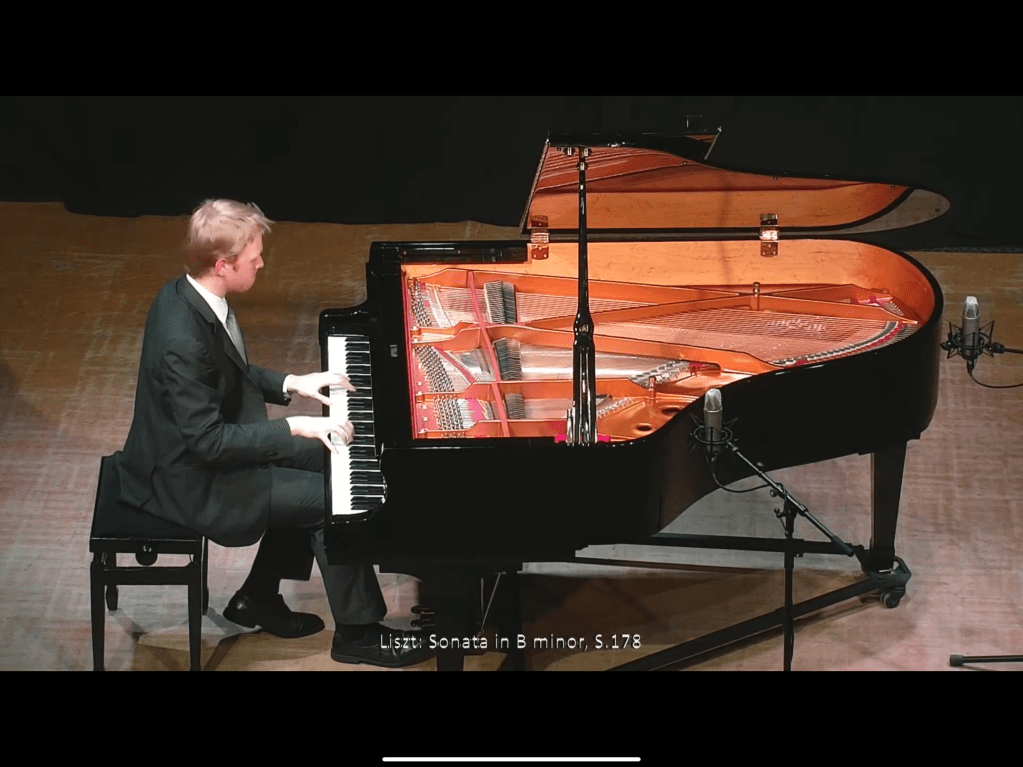
Liszt: Sonata in B minor, S.178

What better way to start a recital than with Bach and two of his best known and much loved works.The Italian Concerto and the Fifth French suite.They were played with a clarity and subtle sense of dynamics but also with a clarity and sense of line that was remarkable.You could almost envisage the soloist and tutti in the first movement of the Italian concert where his non legato touch was very telling.It contrasted so well with the long melodic lines of the Andante and the sheer exuberance of the Presto.In fact it was this song and dance element that was so evident in the beautiful Fifth French suite.Expressive but always in style with a sense of rhythmic propulsion that was quiet exhilarating.

It is some years ago that we used to be visited in Rome, for my Euromusica series,by the Russian pianist Vladimir Leyetchkiss,a student of Neuhaus .It was he who introduced me to the numerous piano transcriptions including this by Feinberg and many others, including his own of The Rite of Spring.Nikolaeva even gave me her own transcription of the Bach D minor Toccata and fugue .It was obviously a tradition of transcriptions that needed the phenomenal technical ease of the Russian school where sound,colour and virtuosity seem to flow with such ease from their early trained fingers!Horowitz /Mussorgsky or Rachmaninov/Mendelssohn are well known to us in the west but many others are not .Hats off to Luke for playing this famous but rarely heard transcription with a clarity and rhythmic impetus of such exemplary virtuosity.The more he plays it in public he will find more colour and flexibility,but his intelligence and superb technical ability allowed him to give a scintillating if rather overlong performance.Maybe some judicious pruning might make it an ideal encore?Certainly coming after two exemplary performances of masterpieces by Bach it was difficult to enter into the mood of a Tchaikowsky transcription!

Samuil Yevgenyevich Feinberg also Samuel was born 26 May 1890 in Odessa,like many other great pianists,and died in Moscow on 22 October 1962.He was the first pianist to perform the complete The Well-Tempered Clavier in concert in the USSR.He also composed three piano concertos, a dozen piano sonatas as well as fantasias and other works for the instrument.Tatyana Nikolaeva,a fellow student of Goldenweiser,said that each of his sonatas was a “poem of life”.Feinberg has been called “A musical heir to Scriabin”who heard the young pianist play his fourth Sonata and praised it highly. He was a life-long bachelor. He lived with his brother Leonid, who was a poet and painter. He died in 1962, aged 72.

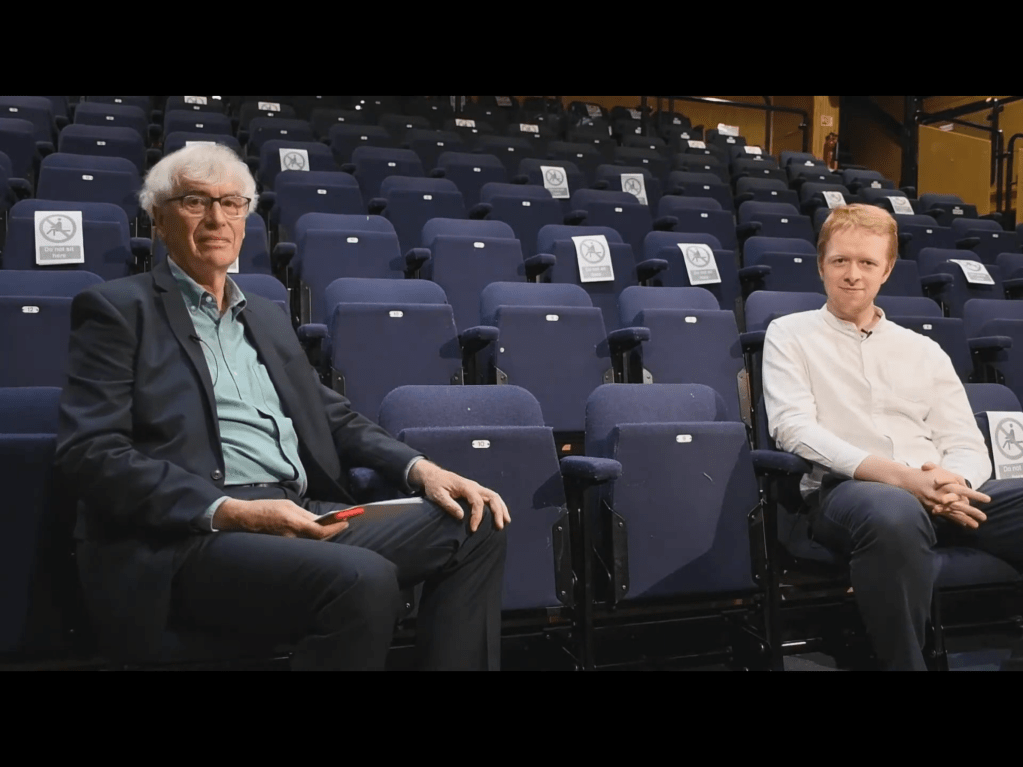
It was indeed refreshing to hear a work rarely performed in concert, as Luke had said in his conversation with Stephen Dennison.Maybe not the pinnacle of the piano repertoire,that was to follow,but nevertheless one that has many points of interest and was indeed fascinating to hear alongside an undisputed masterpiece such as Liszt’s B minor Sonata.It was obvious that both works were composed by virtuosi and it was the exclamatory opening that caught our attention in what Luke described as his lockdown recital.All works,apart from Bach that he had prepared in the long months without public concerts.This sonata is very intricate,full of Prokofiev and Shostakovich influences.A continuous outpouring of great technical difficulty dissolving to sultry melodic contemplation.Even the Dies Irae was quoted over a mumbling brooding bass and later with a scintillating accompaniment of delicate arabesques.Was it not Liszt that was inspired by the Dies Irae in his Totentanz or Rachmaninov in his Paganini Rhapsody,both the greatest virtuosi of their age.In this Sonata there was also a fugato finale (as in the Liszt Sonata) that was beautifully articulated with great clarity before ending with the Dies Irae deep in the bass.A fascinating journey that Luke had reserved for us and played with the same intelligence and sense of architectural shape that was to distinguish his performance of Liszt that followed.

Among the finest of Miaskovsky’s compositions is the pessimistic yet powerful Sonata No. 2 in F Sharp Minor, composed in 1912 and revised in 1948. Like the third and fourth sonatas it bares the composer’s inner turbulence, and its structure displays impressive formal control. The slow but forceful introduction’s rich chords establish a harmonic ambience closely related to Scriabin’s sound-world. An air of anxiety enters with the first subject. appropriately marked “Allegro affanato”, and finds relief in the contrasting beauty of the second theme. Completing the exposition is a third idea, the “Dies Irae”,which along with fragments of the first and second subjects, plays an important role in the development section, where Miaskovsky shows an impressive mastery of contrapuntal and variation techniques. After a straightforward reprise there follows an insistent, ever-accelerating fugue, based on the first subject and the “Dies Irae”. The marking “Allegro disperato” eloquently describes the concluding

Stephen Dennison in discussion with Luke Jones

Nikolai Yakovlevich Miaskovsky was born on 20 April 1881 in Novogeorgiyevsk near Warsaw and discovered while still young that the symphony was the form in which he could best express himself. His work has been called a lifelong meditation on sonata form, perhaps arising from the need to create unity out of diversity and resolution out of conflict.He wrote twenty-seven symphonies, thirteen string quartets and nine published piano sonatas.He was a musician of unshakable integrity, an introvert who attempted all his life to reconcile his inner being with his outer circumstances.He was the most respected teacher of composition in the Soviet Union (he held this position from 1921 until the end of his life) and was known as “the musical conscience of Moscow”. With an honorary Doctor of Arts, People’s Artist (1946) and recipient of two Stalin Prizes, he was one of seven composers named in the infamous Decree on Music issued in 1948 by the central Committee of the Communist Party, denounced with Shostakovich, ‘ Prokofiev, Khachaturian, Shebalin, Popov and Muradeli for “formalist perversions” and “anti-democratic tendencies…alien to the Soviet people and their artistic tastes”.Already gravely ill and predisposed to reticence, Miaskovsky did not make a public confession of his “errors” but responded with his twenty-seventh symphony, a work of autumnal beauty that makes few concessions to socialist realism. Thoroughly embittered, he died in Moscow on 8 August 1950. Not long afterwards the symphony was premiered and declared the correct model for Soviet symphonism.

The Liszt Sonata in B minor was dedicated to Robert Schumann in return for Schumann’s dedication of his Fantasie op 17 to Liszt (it was Schumann’s contribution to Liszt’s effort to erect a statue to Beethoven in Bonn).A copy of the work arrived at Schumann’s house in May 1854, after he had entered Endenich sanatorium. Schumann’s wife Clara,an accomplished concert pianist and composer in her own right, did not perform the Sonata as she found it “merely a blind noise”.It was published by Breitkopf & Härtel in 1854 and first performed on January 27, 1857 in Berlin by Hans von Bulow.It was attacked by the distinguished critic Hanslik who said “anyone who has heard it and finds it beautiful is beyond help”.Brahms reputedly fell asleep when Liszt performed the work in 1853.It was also criticized by the pianist and composer Anton Rubinstein but drew enthusiasm from Wagner following a private performance of the piece by Karl Klindworth on April 5, 1855.Otto Gumprecht of the German newspaper Nationalzeitung referred to it as “an invitation to hissing and stomping”.It took a long time for the Sonata to become commonplace in concert repertoire, because of its technical difficulty and negative initial reception due to its status as “new” music. It is generally regarded now together with the Schumann Fantasie and Chopin Fourth Ballade to be one of the pinnacles of the Romantic repertoire

I remember André Tchaikowsky persuading his colleague Radu Lupu to spend more time at the keyboard rather than at the chess board and to learn what is one of the most musically complex works in the piano repertoire.( Radu also learnt a one off performance of André’s own concerto such was their esteem for each other).Richter played it in London and was not happy with his performance and refused to greet people in the green room afterwards.It is a work that requires a sense of orchestral colour but also of architectural shape.Being in one long movement it can so easily turn into a series of episodes some more rhetorical than others.Wagner had noted what a visionary Liszt was as he saw quite clearly a form in which themes were transformed and given new guises as the music unfolded with a programme rather than a set formula .That is why the Liszt sonata reveals not only the technical skill,colour and poetry but above the musical intelligence of an interpreter able to follow this transformation of themes with a sense of architectural shape that gives us an overall satisfying form.So it was remarkable to hear such intelligence in Luke’s performance playing with such commanding authority but also such tenderness and colour.Missing only the grand sweep and sense of abandon that can only come from playing it in public many times.Today was his first public performance and it showed a rare sensibility and intelligence – he now needs to dare and push himself to the limit as he shares that sense of magic that can only be created between performer and listener.A very evocative opening full of menace led to the great drama of the opening statements.Immediately we were made aware of the silences between these three great opening statements.Followed by a brilliance like rays of light leading to the tempestuous opening of the sonata.Gradually building up to the great octave statement dissolving so magically to the first passionate Grandioso.There was ravishing beauty in his sense of balance that allowed the ‘second subject’ to sing so beautifully ‘cantando espressivo’and there was a jeux perlé sensitivity in the arabesques that accompanied and led to the beautiful embellishments that suddenly explode into passionate outbursts of great virtuosity.After the massive rhetorical chords there was great stillness to the Andante sostenuto and quasi Adagio.I remember Richter playing this so slowly,as only he could,but I felt that Luke could have allowed himself more freedom and more sense of fantasy to contrast with the outer episodes that he played with such control and power.The end of this episode where the opening theme returns was played with aristocratic simplicity that made the eruption of the Allegro energico fugato even more surprising.It was refreshing to note in everything that Luke did that there seemed such a sparing use of the sustaining pedal that allowed for a clarity of line and detail that is often submerged and smudged.Of course the treacherous octaves at the end were played with such passionate conviction and musicianship that led so naturally to the final great climax.The gradual dissolving and the meditative ending just made one relieved that Liszt had abandoned his original thoughts of a triumphant March to the end much as Busoni had inflicted on poor Bach in the Goldberg Variations!

Originally from Wrexham in North Wales, Luke Jones started playing the piano at the age of 5 and made his debut recital at Oriel Wrecsam aged 10. Since then, he has performed in venues throughout Britain and across the globe. He has won prizes in competitions around Europe notably 2nd Prize and Mompou Prize at the prestigious Maria Canals International Piano Competition, 1st Prize at the Bromsgrove International Musicians Competition, 1st Prize in “Aci Bertoncelj” International Piano Competition, Slovenia and 1st Prize in “Section A” Chopin-Roma International Piano Competition, Italy. Luke was also awarded the RNCM Gold Medal, the college’s highest award for Performance. Furthermore, he has had broadcasts of his performances on BBC Wales Radio, S4C Television, Radio Vaticana and Telepace in Italy.He has performed with orchestras such as BBC National Orchestra of Wales, Manchester Camerata, Orchestra of the Swan and Jove Orquestra Nacional de Catalunya.

https://christopheraxworthymusiccommentary.wordpress.com/2019/10/17/luke-jones-reaching-for-the-stars/

https://christopheraxworthymusiccommentary.wordpress.com/2018/09/08/luke-jones-at-st-barnabas-perivale/

https://www.facebook.com/notes/christopher-axworthy/luke-jones-at-the-rncm-manchester/10155778052077309/

This concert is kindly supported by The Keyboard Charitable Trust. www.keyboardtrust.org The Keyboard Charitable Trust’s mission is to help young keyboard players reduce the element of chance in building a professional musical career. The Trust identifies the most talented young performers (aged 18-30) and assists their development by offering them opportunities to perform throughout the world.

Bocheng Wang’s wondrous Chopin at St Mary’s

Thursday May 20 4.0 pm

I agree ! I was very moved at various points in Bocheng Wang’s recital. Some wonderful poetic playing . He is an exceptional pianist. Here is the HD link for everyone to enjoy https://youtu.be/7FbtvSrflNM. Dr Hugh Mather

Chopin: Prelude in C sharp minor Op 45

Chopin: 3 Mazurkas Op 50

Chopin: Barcarolle Op 60

Chopin: 24 Preludes Op 28

Now I know that miracles do exist.
In the shadow of St Peter’s Basilica in Rome to hear such wondrous sounds from a young Chinese pianist was quite overwhelming.
Was it because it is his birthday treat or my homecoming after seven months away or is it that the Chinese and Polish souls seem to beat with the same intensity.
Fou Ts’ong ,much to everyone’s surprise won the mazurka prize at one of the very first Chopin competitions in Warsaw.The very competition that Bocheng has been selected to participate in this year.
It was in fact Ts’ong on one of his annual visits to Rome for concerts and Masterclasses who likened the works of Chopin to Chinese poetry.The soul,you see ,like COVID,knows no frontiers.


From the very first notes today one could sense there was magic in the air.
The solitary prelude in C sharp minor op 45 was played with a languid cantabile of crystal clarity on a flow of arpeggiandi of great sensitivity.A rare feeling for the style of nostalgia,aristocratic nobility with flexibility and freedom allied to great architectural shape.
He has a way of caressing the keys allowing him to produce so naturally such rich fluid sounds.
The beauty of his movements is mirrored in the sounds he produces.Delving deep into the keys like a great sculptor shaping a block of magnificent Carrara marble.A true artist is one where every facet of his being reflects his artistry.This is what we were made blissfully aware of today by Bocheng on his birthday.


Mazurkas that Schumann described as ‘canons covered in flowers’ must surely be directed to the marvel that is the last of the set of three that Bocheng played today.
A hauntingly beautiful Mazurka with the echo between the voices exploding into sumptuously rich dance rhythms.The ecstasy of the ending that simply dissolves with sublime aching nostalgia before the final beating of the drums.A real tone poem where so few words can mean so much.


The Barcarolle op 60 is surely Chopin’s most perfect work with an endless stream of song from the first to the last note.It was played with a constant flowing forward movement that sometimes Bocheng’s instinctive rubato was excessive where Chopin’s words are enough and it’s supreme simplicity and purity owe much to Mozart.
There were some magical modulations though and passionate outbursts played with sumptuous rich sounds.The cascades of notes before the final build up to the climax were played with just the ravishing beauty that had Perlemuter simply write in my score ‘paradise’.
Bocheng’s youthful passion came into it’s own at the end with a breathtaking climax with such natural care of sound and balance – to the manner born indeed.The gradual disintegration of this magical world was beautifully realised as a whole world dissolves to the final cascades of notes and the final passage that Ravel admired so much with such a subtle left hand melodic line.It was this work that Janina Fialkowska,playing at a concert dedicated to my late wife,whispered in my ear as she came off stage :‘that was Ileana’.


The 24 Preludes op 28 that FouTs’ong described as 24 problems were no such thing for Bocheng.He gave a wondrous performance of seamless sounds from the softly whispered opening flourish to the dazzling virtuosity of the sixteenth and the passionate declarations of operatic proportions of the eighteenth.The ferocious savagery of the twelfth was answered by the sublime tone poem of the so called ‘Raindrop’ Prelude .The great C minor twentieth prelude was played with a nobility of sound and an almost mystical calm that made one realise why this prelude had been used by composers as a basis for variations.There was youthful passion in the eighth after the absolute simplicity of the elegant waltz of the seventh that was to be used for the ballet Les Sylphides.Have just two notes ever had such poignant meaning as in the fourth and there was such haunting beauty in the seventeenth.
The performance was a kaleidoscope of aristocratic good taste ,brilliance,ravishing beauty and passion.
But is was above all the sublime poetry that this young Chinese pianist was able to convey that will remain with me for a long time.
Happy Birthday dear Bocheng!

I agree ! I was very moved at various points in Bocheng Wang’s recital. Some wonderful poetic playing . He is an exceptional pianist. Here is the HD link for everyone to enjoy https://youtu.be/7FbtvSrflNM. Dr Hugh Mather

Concert pianist Bocheng Wang is a scholar of the Elton John Award, Drake Calleja Trust and YAMAHA Foundation of Europe. He is also an artist of the Keyboard Charitable Trust and Talent Unlimited Foundation. Born in Lanzhou, China. Bocheng Wang first began his career by performing a celebratory concert in honour of HM The Queen Elizabeth II’s 90th birthday, where he made a debut performing Mozart’s Concerto in D minor No.20 with the London Mozart Players in June 2016 (cond. Dominic Ellis-Peckham). In the same year, he also played the Beethoven’s Emperor Piano Concerto with the Dulwich Symphony Orchestra (cond. Leigh O’Hara), and Prokofiev’s Piano Concerto No.3 with the Purcell Symphony Orchestra (cond. Robin O’Neil). In January 2020, Bocheng collaborated with the Royal Academy of Music Symphony Orchestra by performing the Prokofiev’s Piano Concerto No.3 (cond. John Wilson).

Throughout his career so far, Bocheng has performed in many venues such as the Wigmore Hall, King’s Place, St.Martins-in-the-field and FAZIOLI Hall. He is a prizewinner in many prestigious international piano competitions, including Yamaha Music Foundation of Europe Scholarships Competition(First Prize), Croydon Concerto Competition(First Prize), Liszt International Society Piano Competition(Second prize), The “Young Pianist of the North” International Piano Competition(Third Prize), UK Open International Piano Competition(Fifth Prize) and Semifinalist at the Santander International Piano Competition. He also appeared in many international festivals such as Konzertarbeitswochen Goslar(Germany), PianoTexas(USA), Ferrara,(Italy) Oxford and Dartington(UK), as well as having many masterclasses worldwide with maestros such as Professor Dmitri Bashkirov, Arie Vardi, Yoheved Kaplinsky, Dmitri Alexeev, Pascal Rogé and Pascal Devoyon. ?Most recently, Bocheng has graduated from his Bachelor Degree with First Class Honours under professor Christopher Elton and he is currently studying his Master Degree under Professor Ian Fountain at the Royal Academy of Music in London. Bocheng has also been awarded LRAM(Licentiate of the Royal Academy of Music) and he is the Founder and Artistic Director at the Pianoland Academy. Bocheng’s upcoming engagements are including performing at the Southbank Centre in London, as well as one of the participants at the prestigious XVIII Chopin International Piano Competition in 2021.

https://christopheraxworthymusiccommentary.wordpress.com/2020/07/07/bocheng-wangs-magnificent-rachmaninov-at-st-marys/

Edward Leung beauty and introspection at St Mary’s

Tuesday May 18 4.0 pm 

Edward Leung (piano)  

Rameau: ‘Les Tendres Plaintes’ from Suite in D

Couperin: ‘Les Barricades Mystérieuses’ from Second livre de pièces de clavecin

Pachulski: Polonaise in E flat Op 5

Chopin: Polonaise-Fantaisie in A flat Op 61

Granados: ‘El Amor y la muerte: Balade’ from Goyescas Op 11

Scriabin: Five Preludes Op 16

Liszt: Hungarian Rhapsody no 2 in C sharp minor S 244

Edward in pensive mood today with playing of sumptuous beauty and introspection.
A lament by Rameau of great delicacy with crystal clear ornaments and Couperin of unusually moving intensity.Such deep nostalgia and beautiful luminous sounds for Granados’s sultry depiction of Love and Death.Scriabin too ,five miniature preludes op 16 of whispered meditative sounds of ravishing beauty.


But it was in the little Polonaise by Pachulski, the little known contemporary of Chopin who chose the Russian rather than the Parisian escape from his homeland ,that suddenly ignited the hidden passion and sumptuous pianism of Edward.Played with a rhythmic energy and real involvement together with such rich sounds.


It was this change of character from Eusebius to Florestan that gave such shape to Chopin’s last Polonaise op 61 that he himself described as more of a fantasy than Polonaise.The opening chords were made to vibrate as they spread across the entire keyboard and he brought a beautiful cantabile to the long architectural line that brings us to the final tumultuous Polonaise ending.Here finally Edward let Florestan take over bringing this fantasy to a tumultuous ending with playing of great authority.


It was the same transcendental control and intelligence that he brought to Liszt’s most famous Hungarian Rhapsody .From the opening fanfare through the delicious traditional Hungarian dances played with a beguiling sense of delicacy and colour before the explosion of the entire orchestra in which Edward’s infallible technical command brought us to a triumphant ending.
A recital of great delicacy and passion from a pianist who puts himself at the service of music with an intelligence and technical command that is rare indeed.

Lauded as one of ’16 Incredibly Impressive Students at Princeton University’ by Business Insider , American pianist Edward Leung has performed in concert halls across North America, Europe, and Asia. Highlights of the current season include concerto performances with the Atlanta Symphony Orchestra and Orchestra of the Swan; debuts at the Wigmore Hall and Laieszhalle in Hamburg; recitals in London, Winchester, Wiltshire, Ulverston, and Wye Valley, and a debut commercial recording with violinist Usha Kapoor for Resonus Classics. A 2019 – 2020 Live Music Now artist, he has swept all the major prizes at the Royal Birmingham Conservatoire, including the Piano Prize, Donohoe Gold Medal, Andrew Downes Performance Prize, Delia Hall Accompaniment Prize, Herbert Lumby Prize, and Sheila and Colina Hodge Memorial Prize. After receiving a Master of Music from the Royal Birmingham Conservatoire, he continues his studies in the Advanced Postgraduate Diploma programme with Pascal Nemirovski. He is gratefully supported by the Keyboard Charitable Trust.

https://www.facebook.com/notes/christopher-axworthy/in-praise-of-liszt-annual-day-and-international-piano-competition-of-the-liszt-s/10155251368972309/

https://www.facebook.com/notes/christopher-axworthy/beethoven-piano-concerto-competition/10156102750557309/?fref=mentions