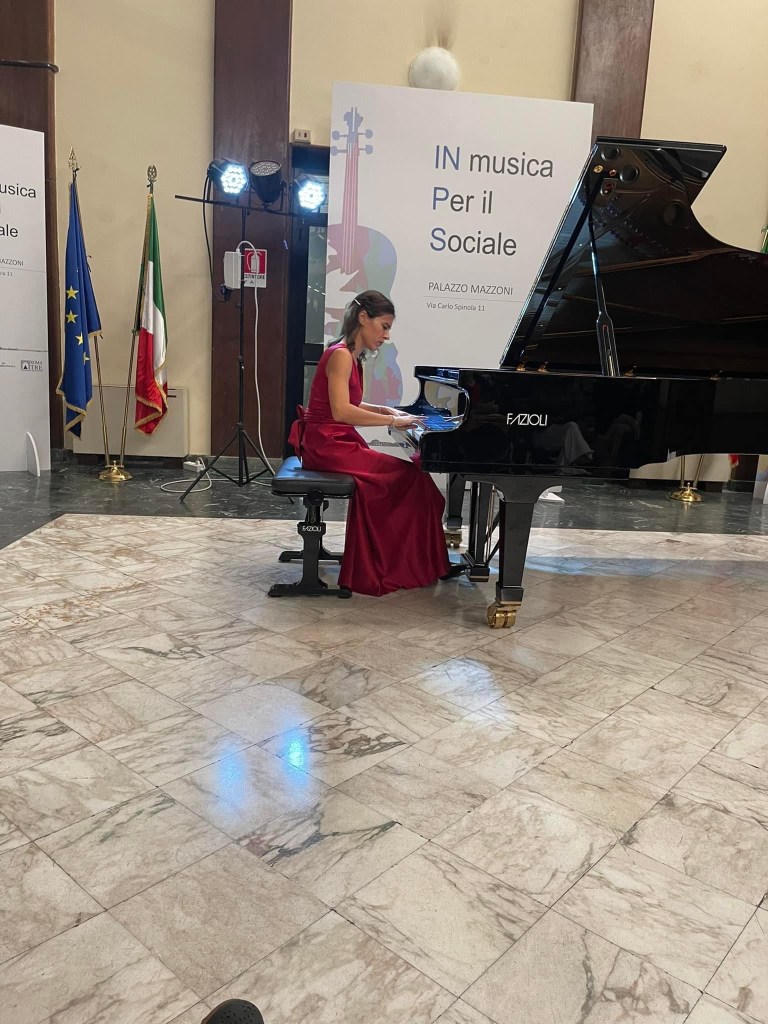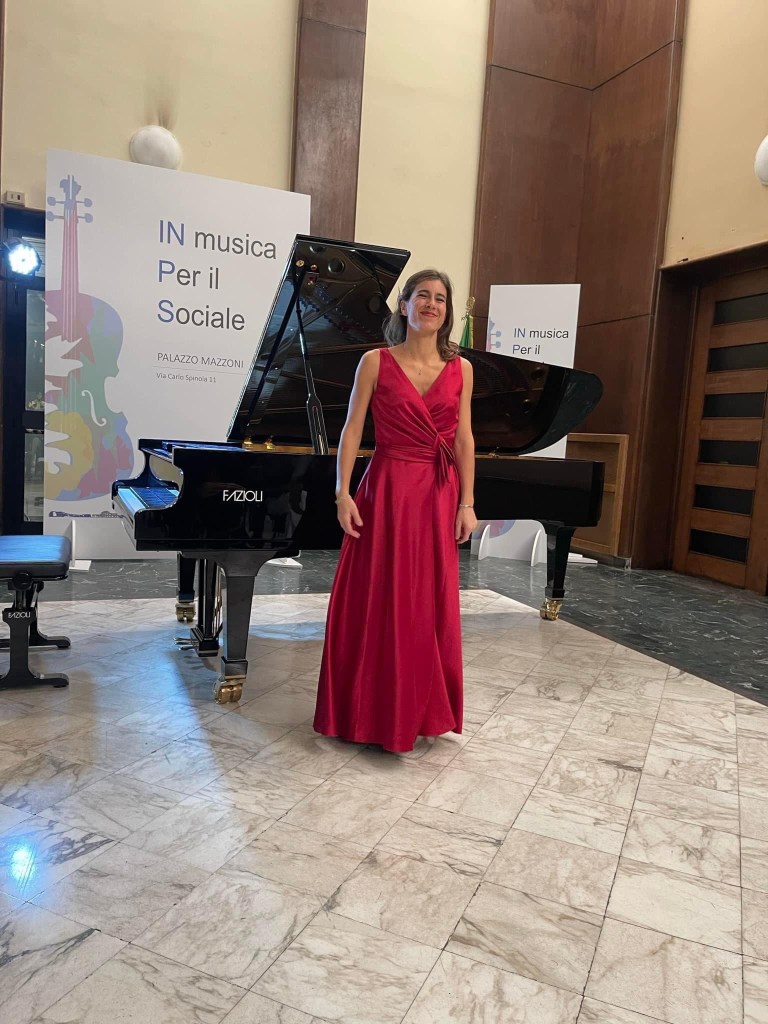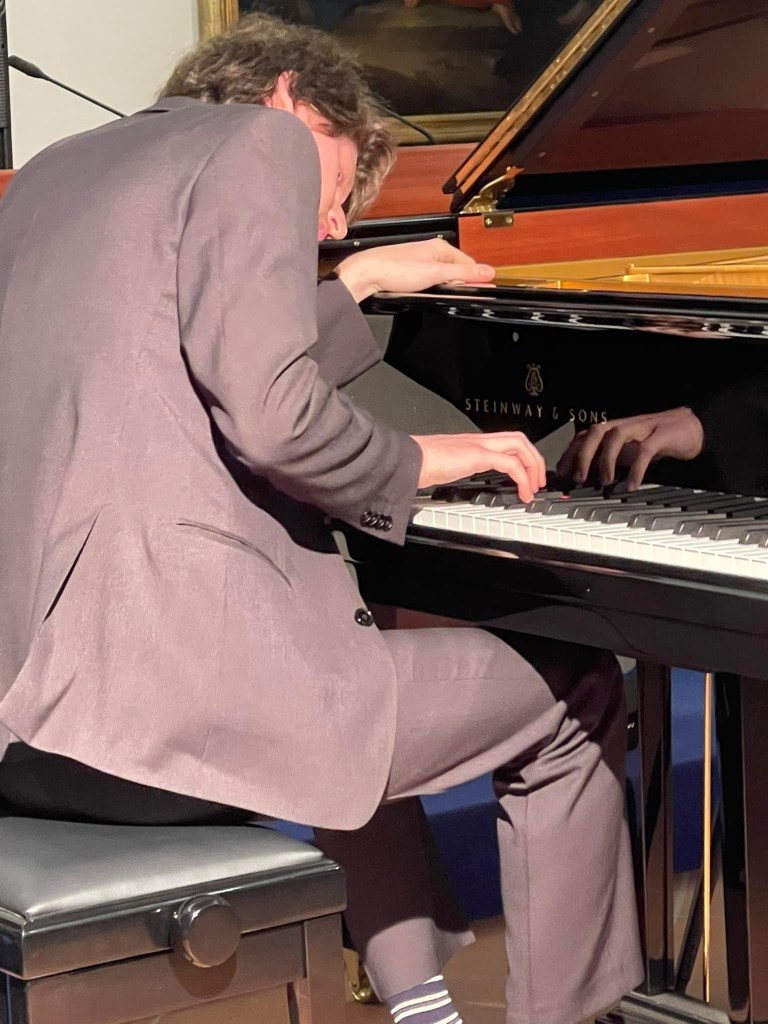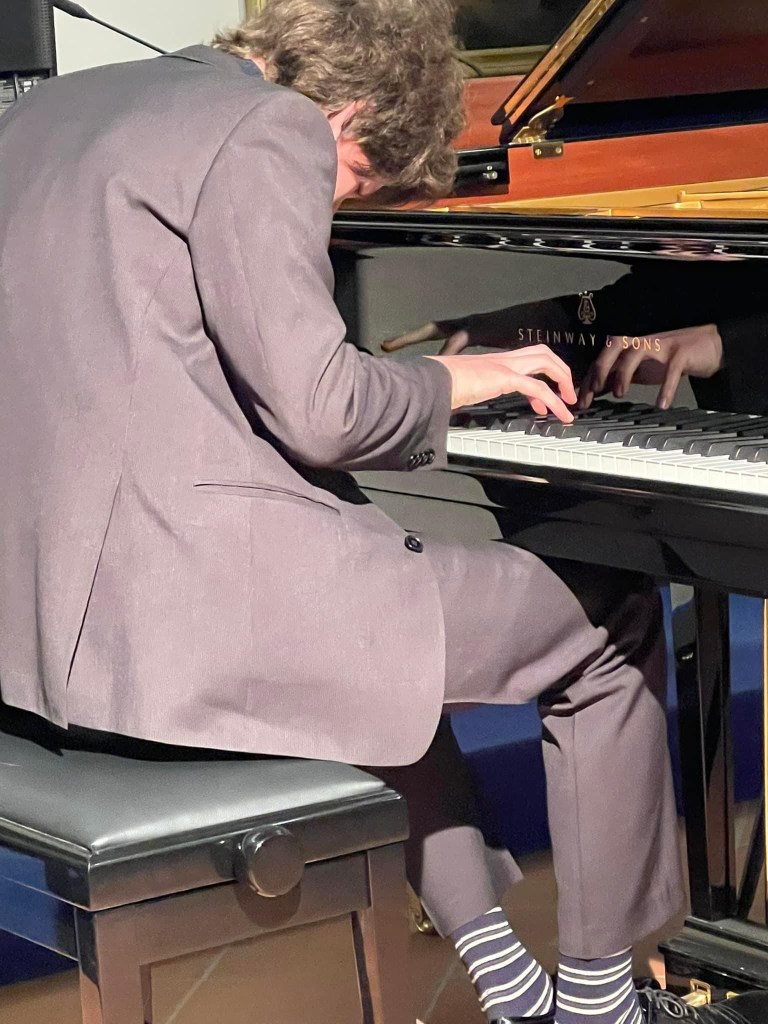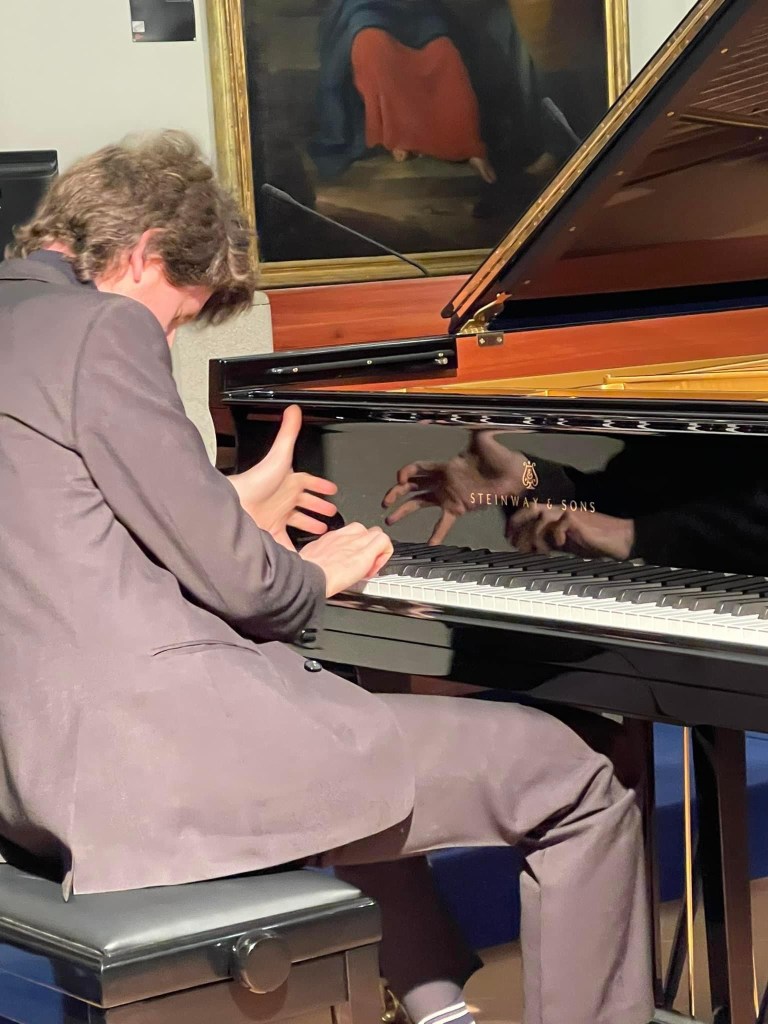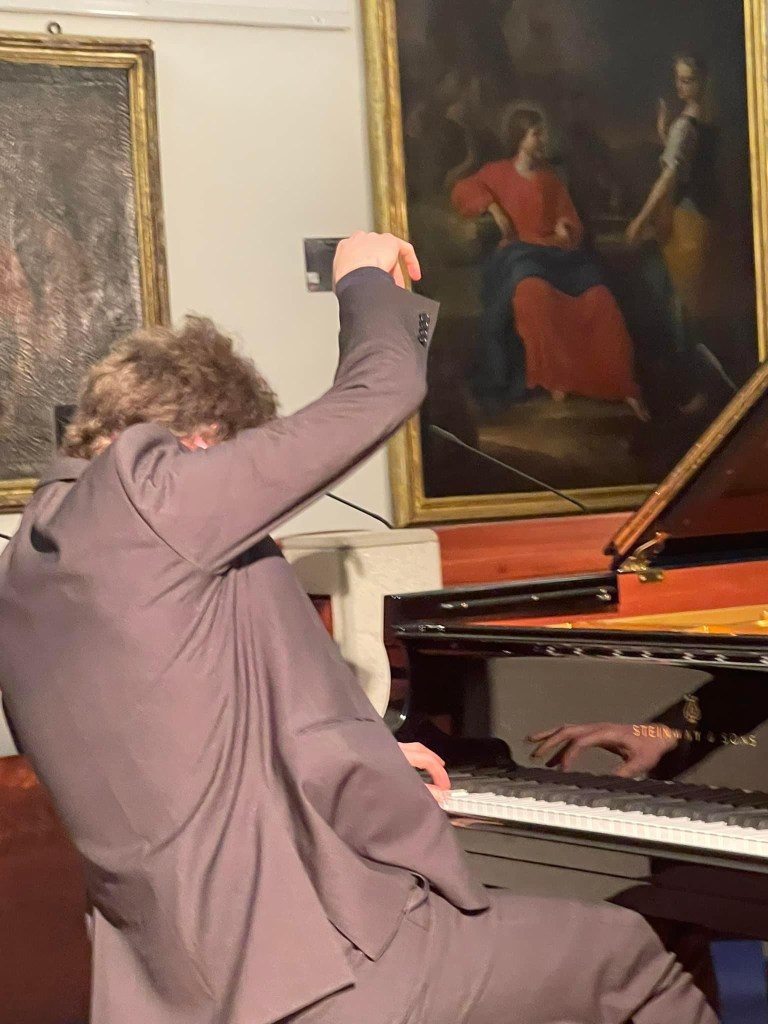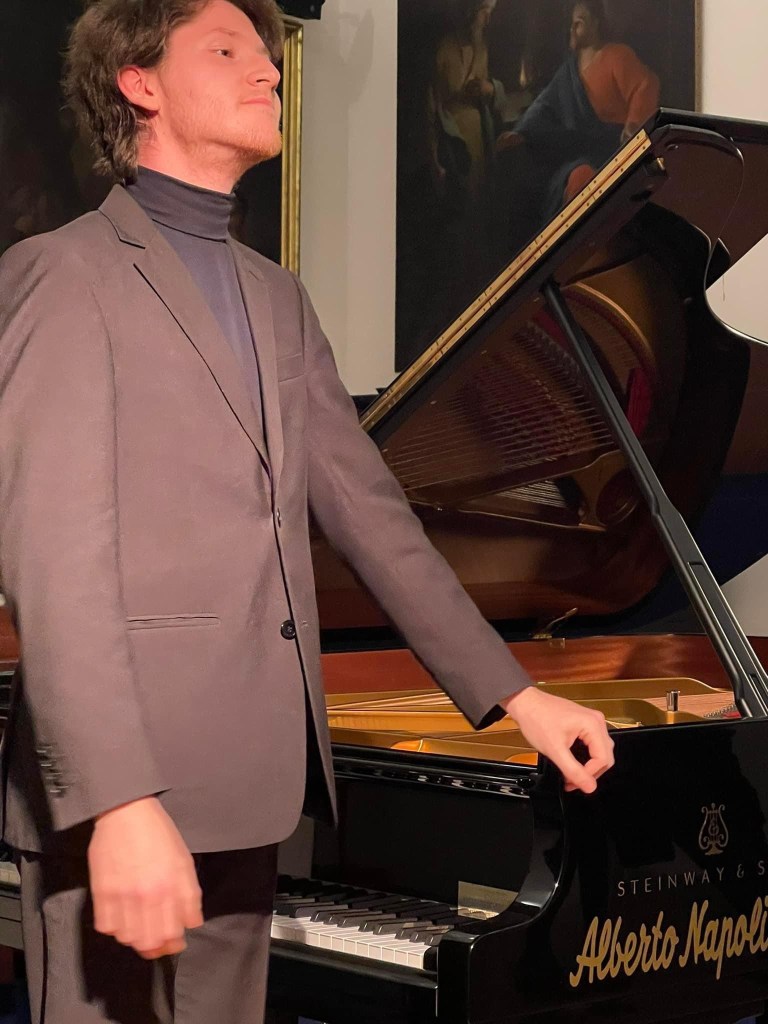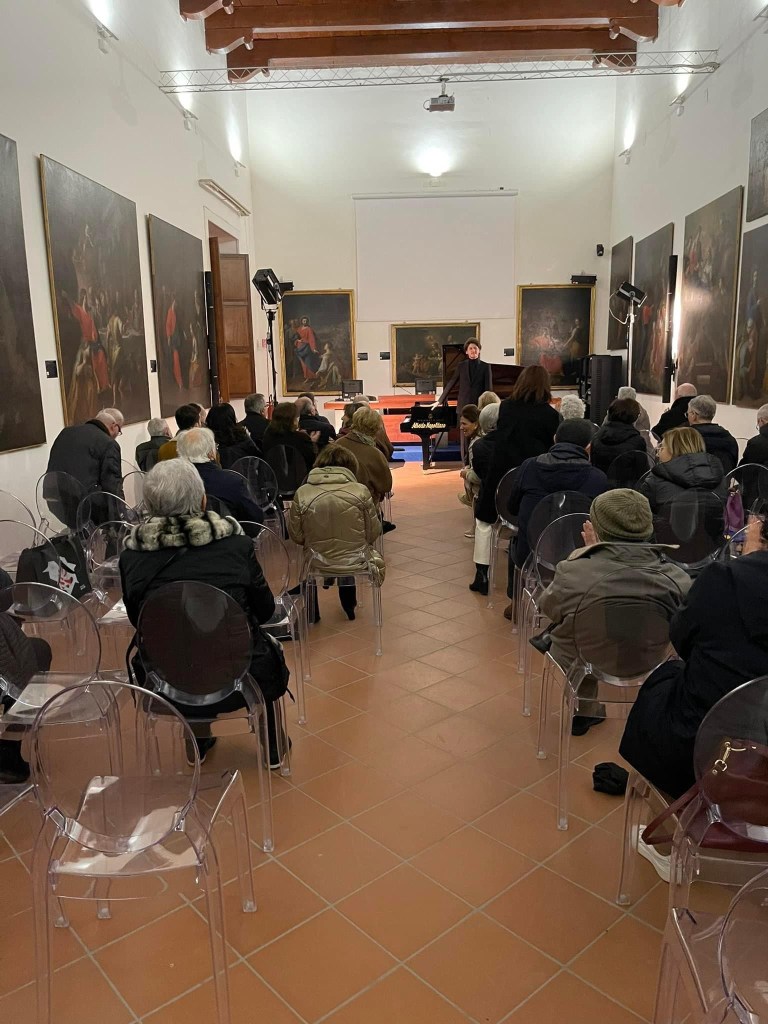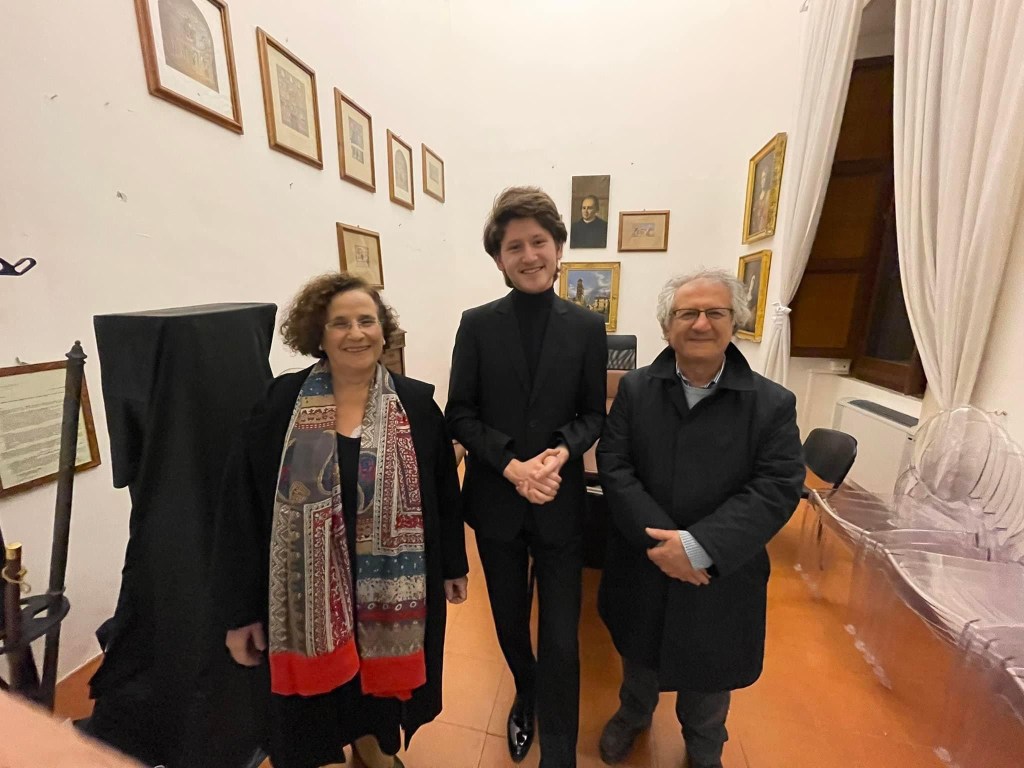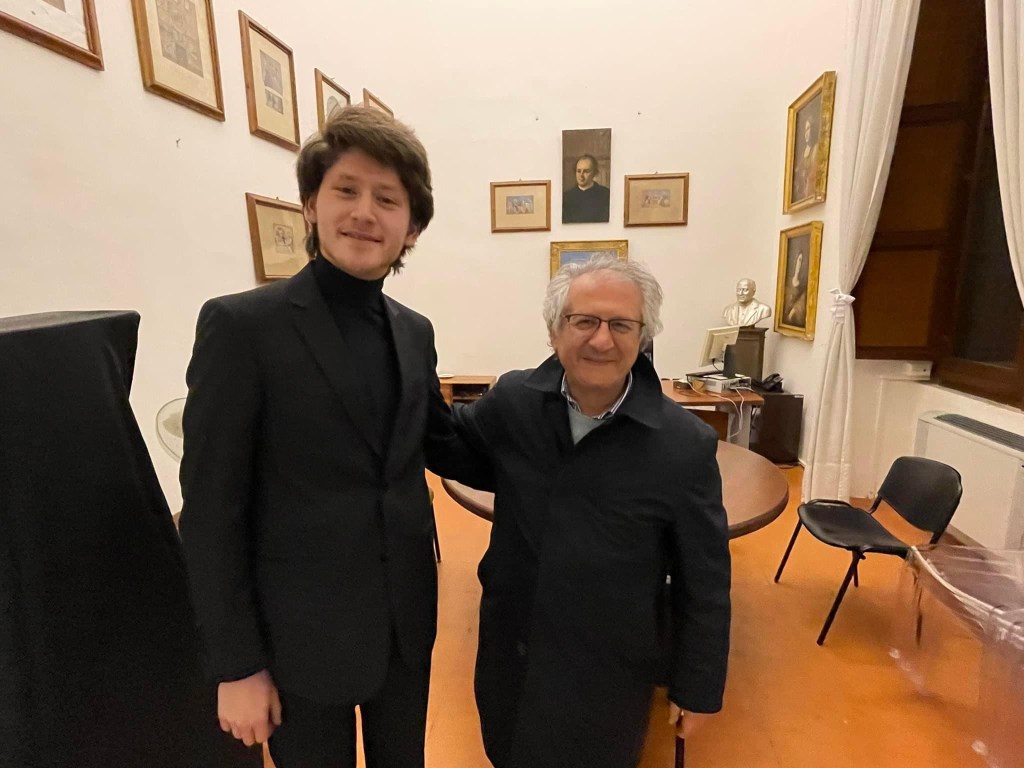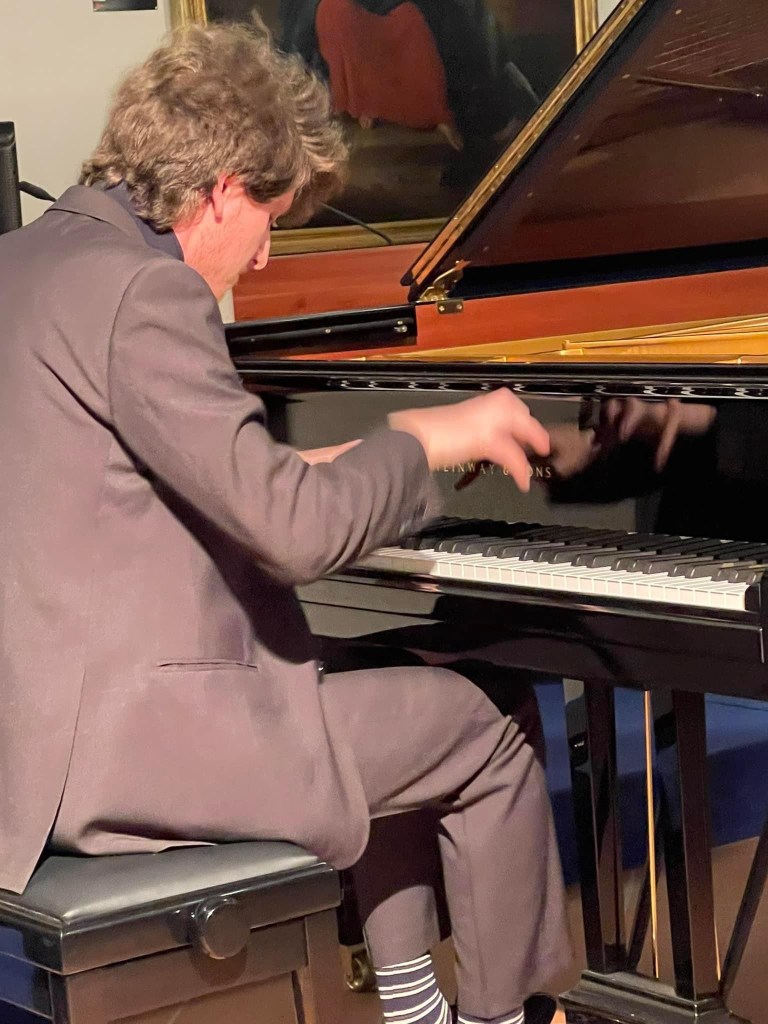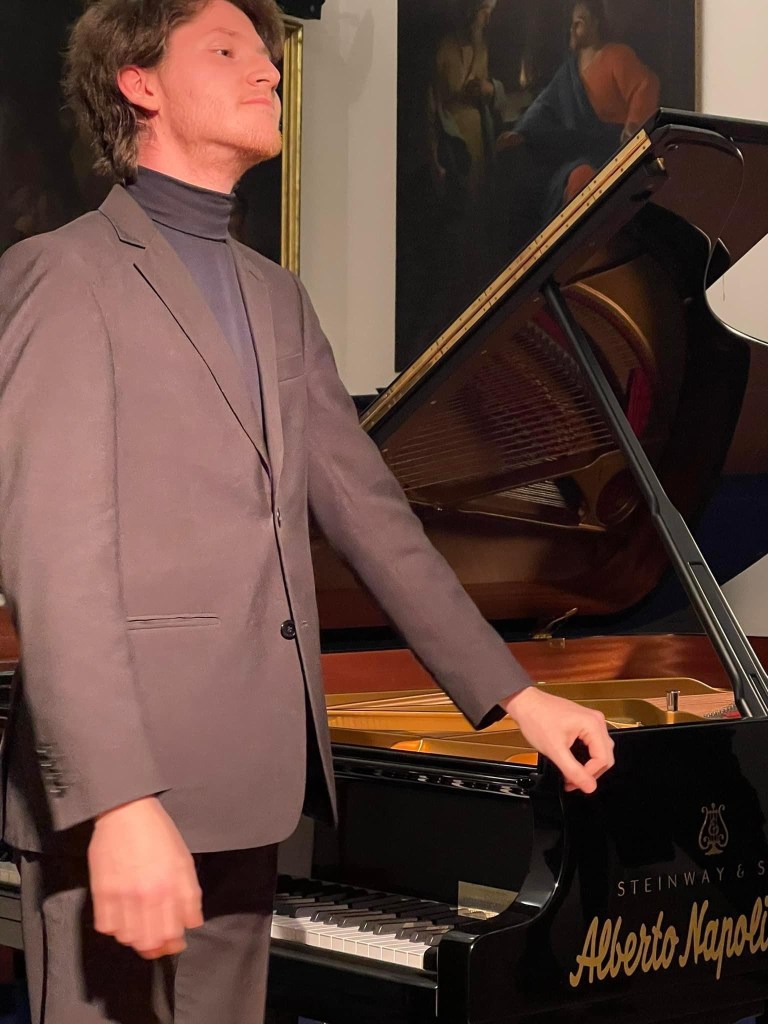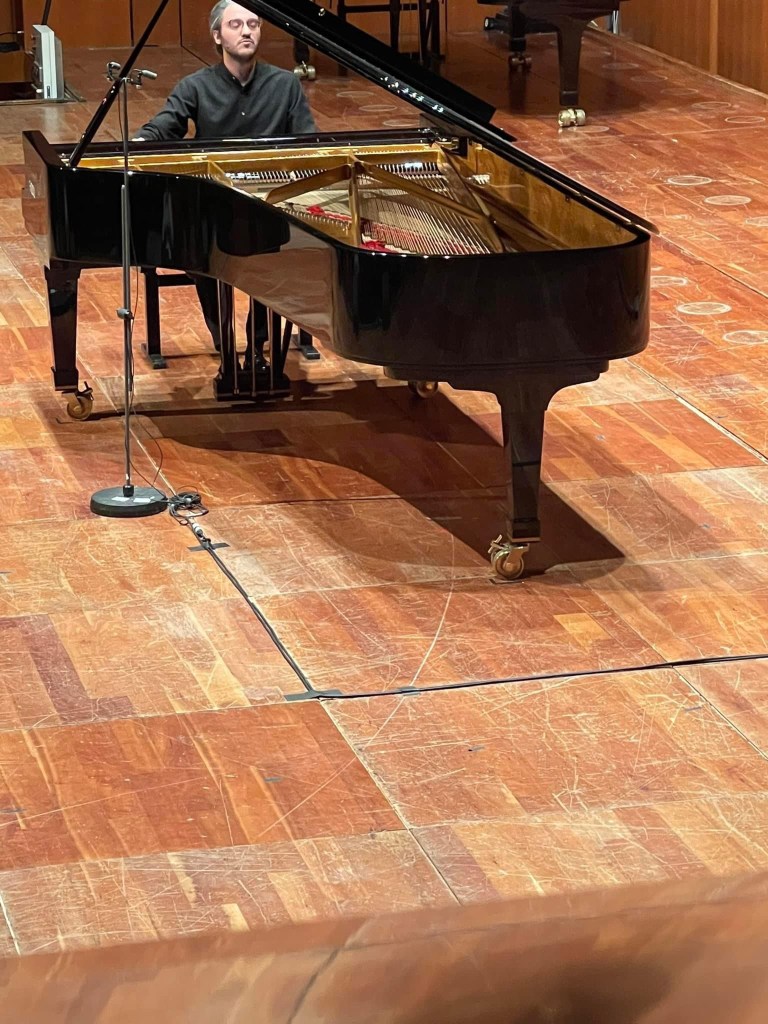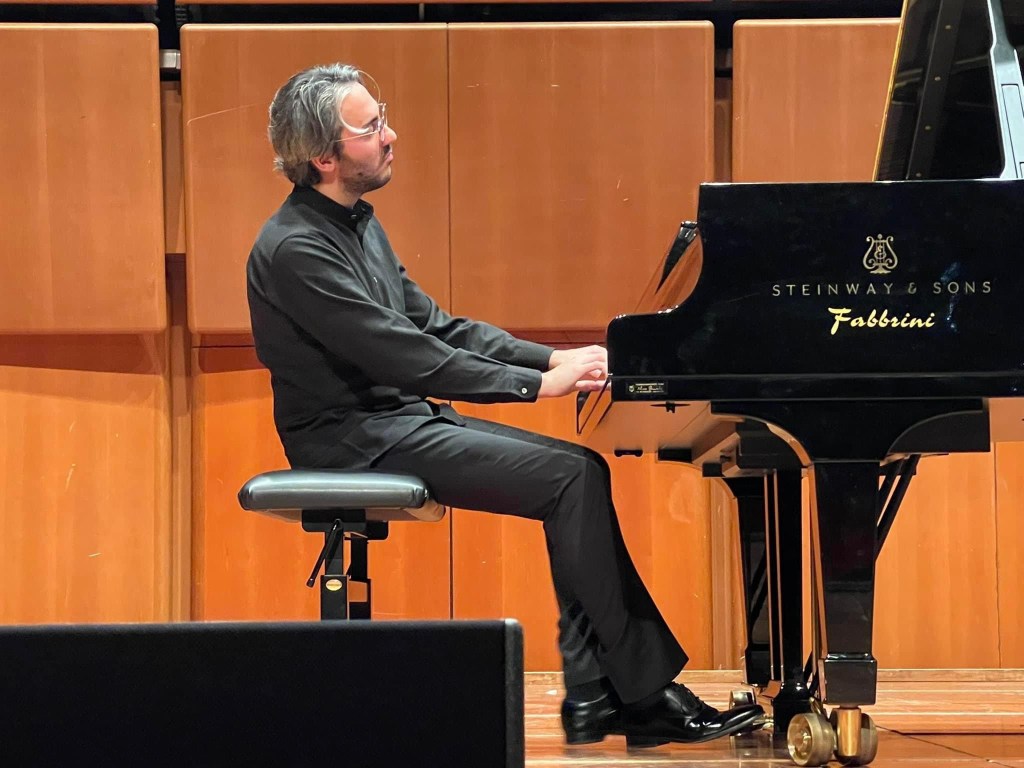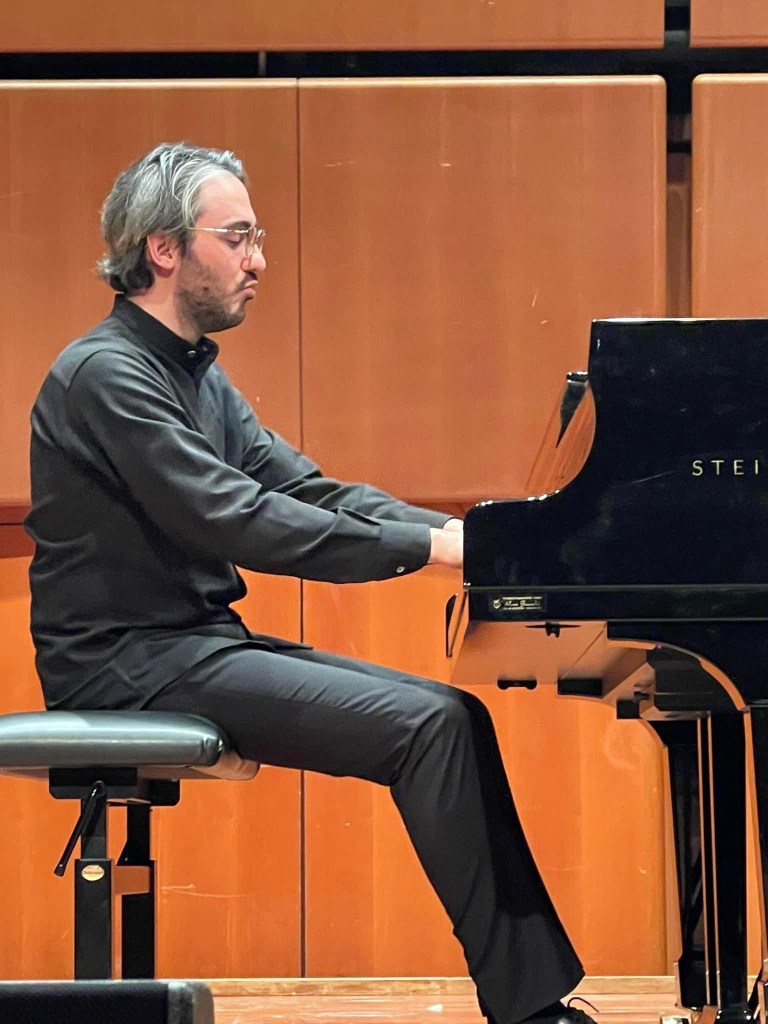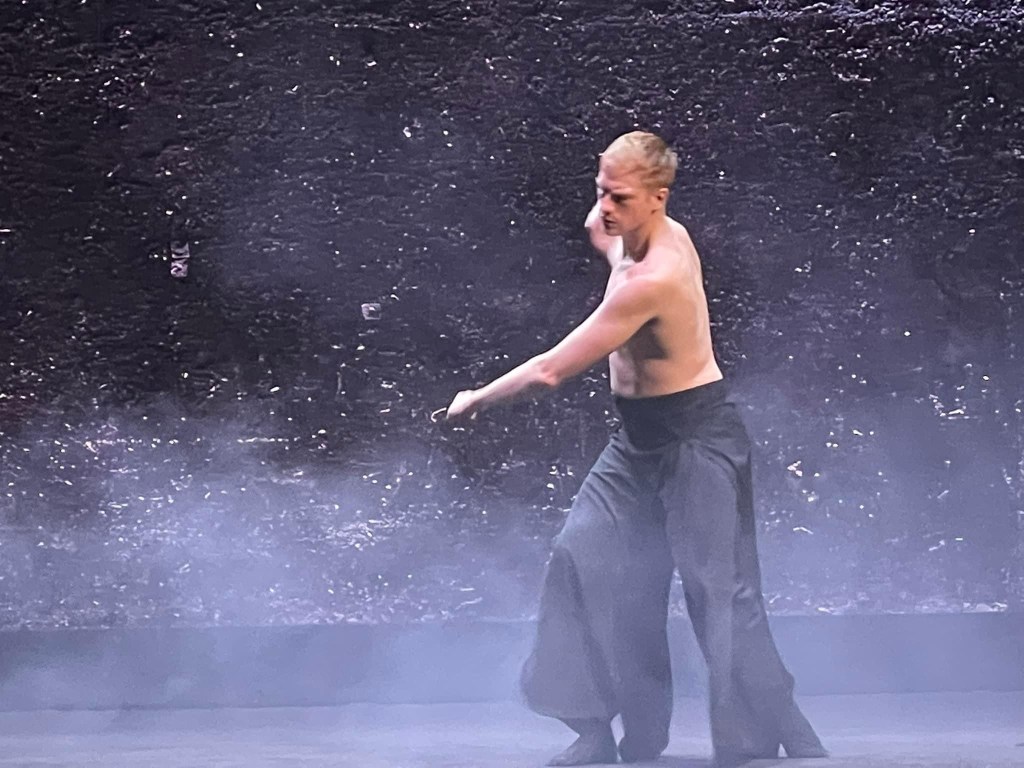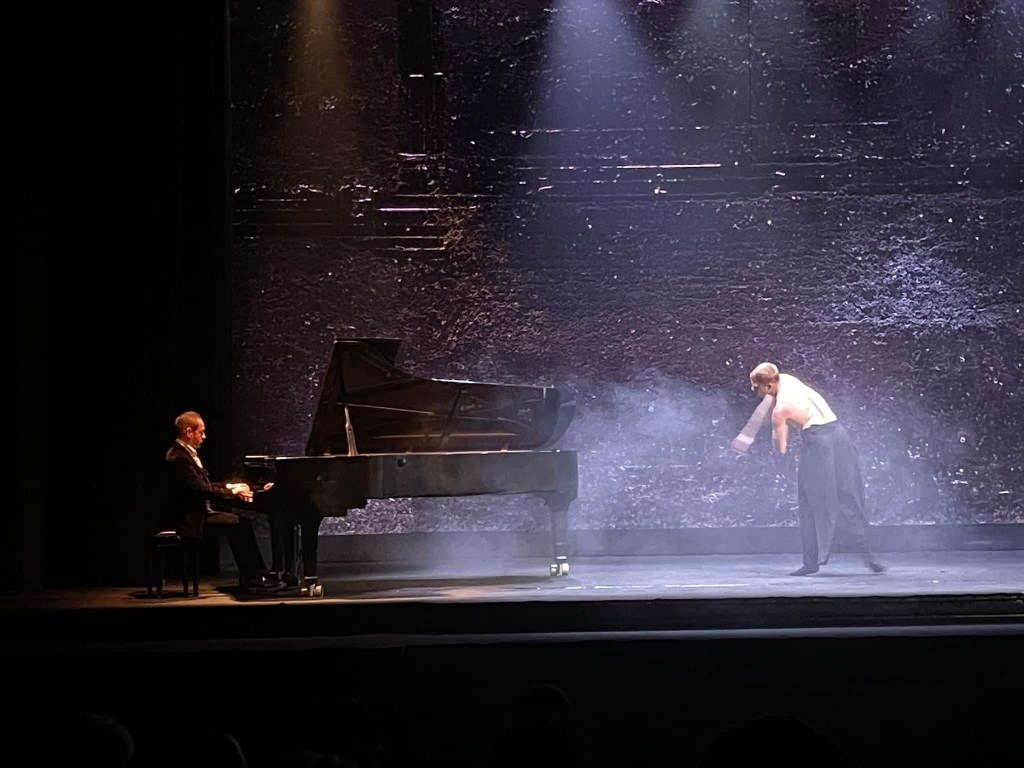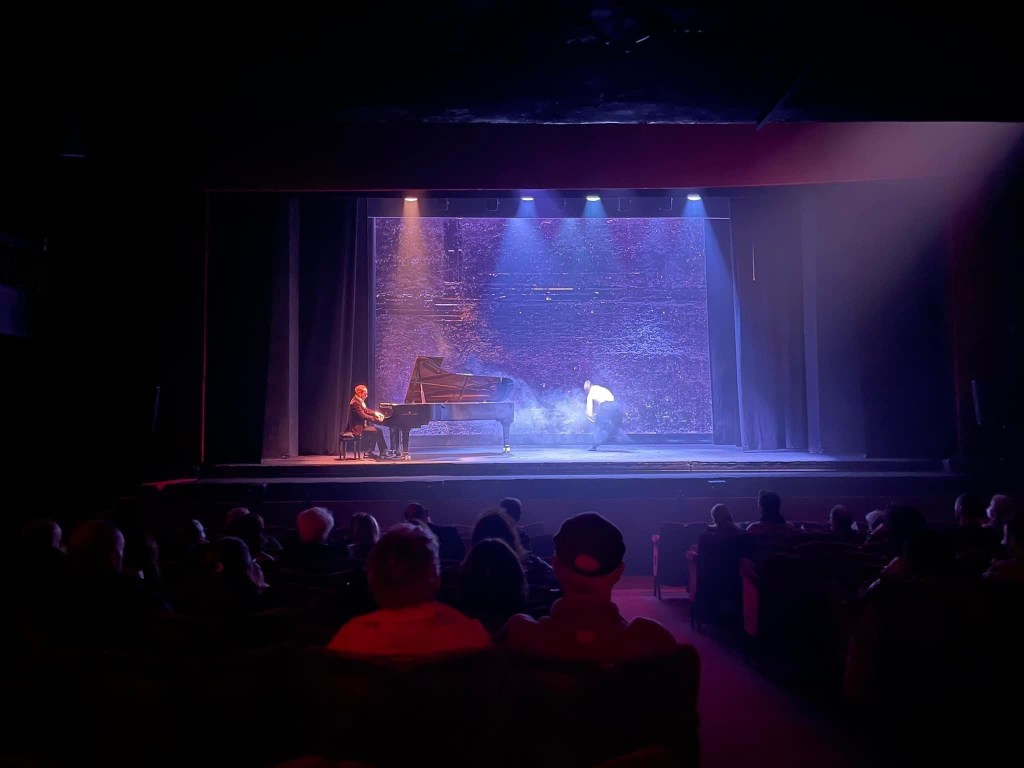
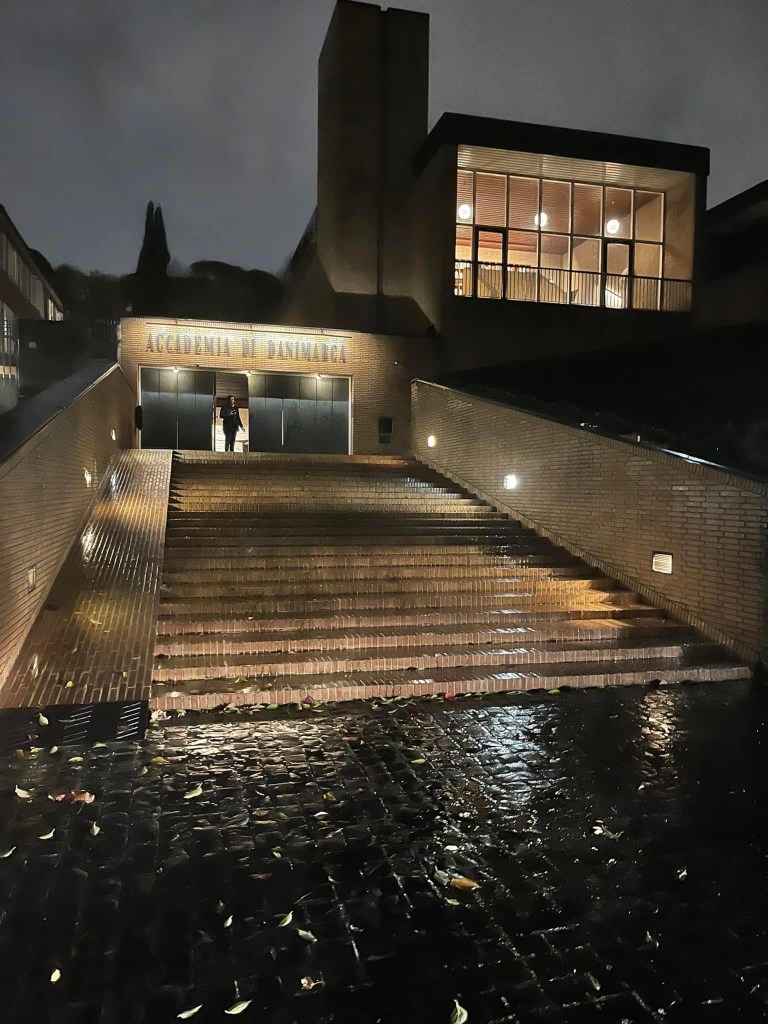
Andrea Baggioli – Roma 3 at the Danish Academy for the 200th Anniversary of César Franck

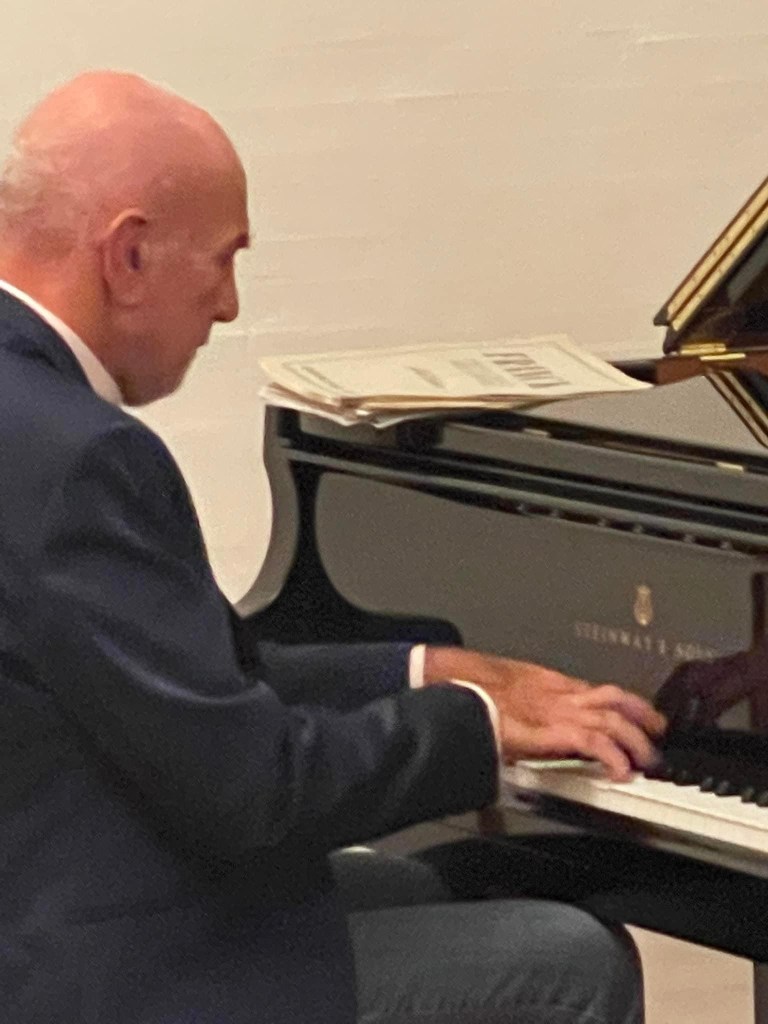
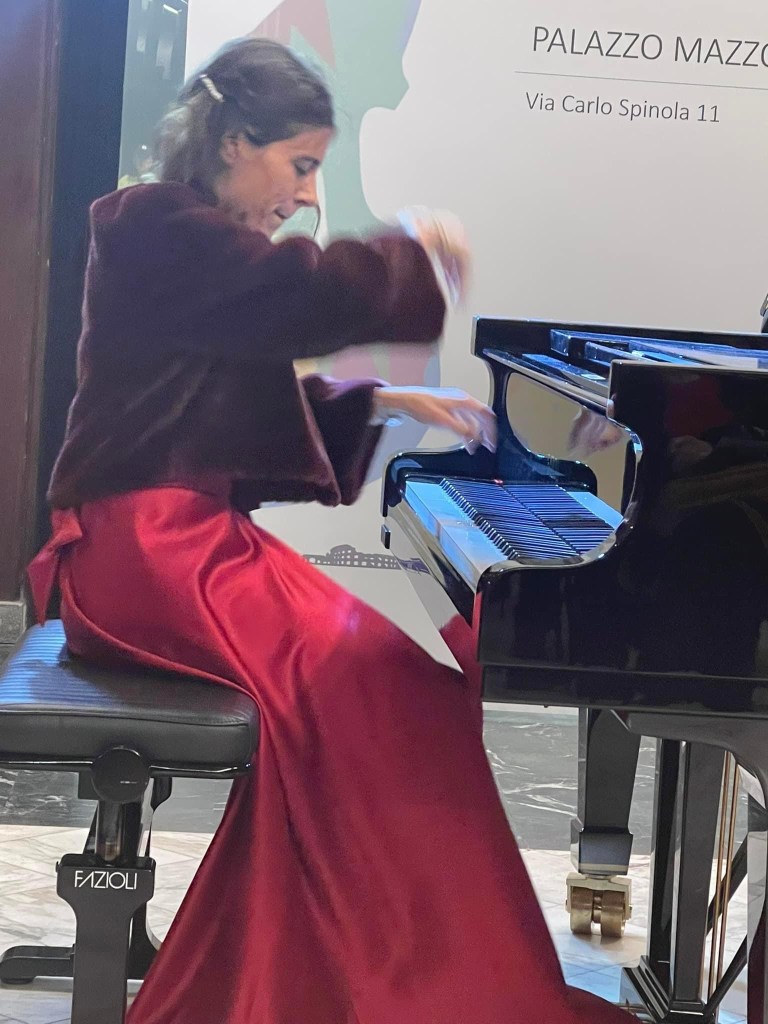
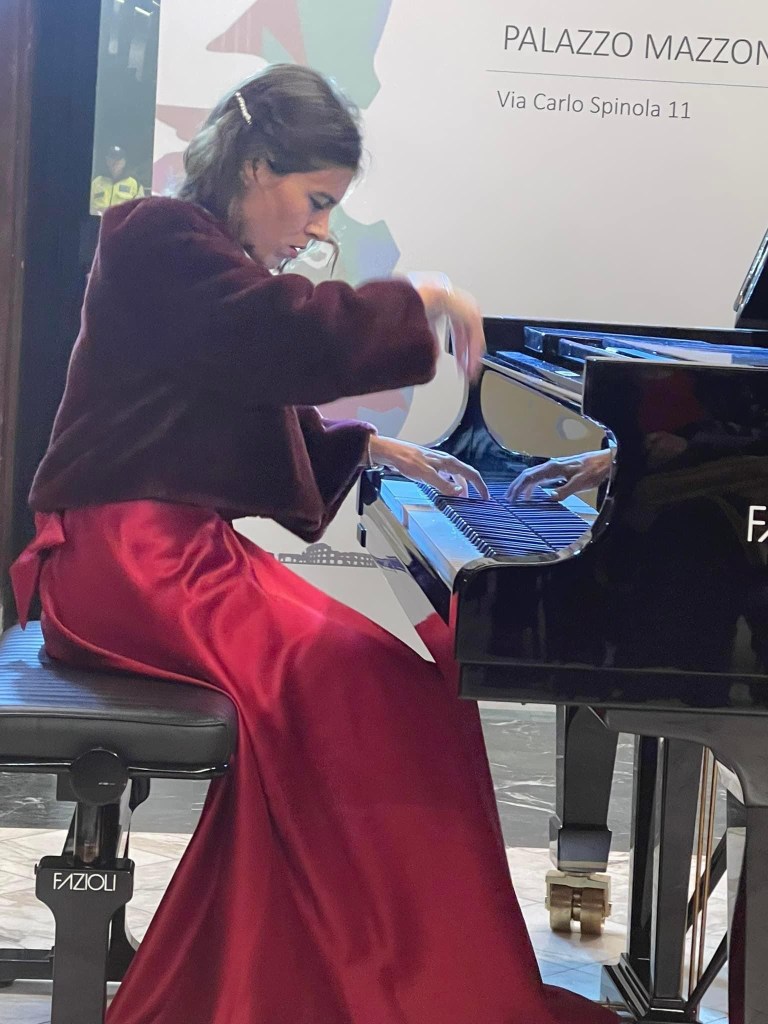
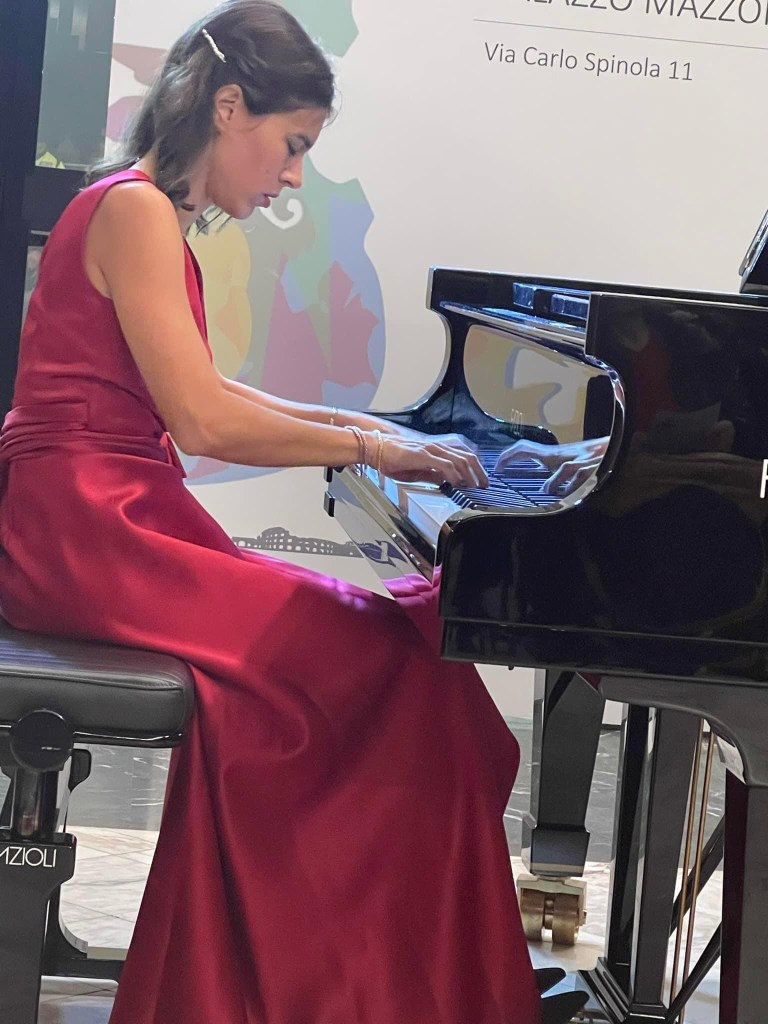
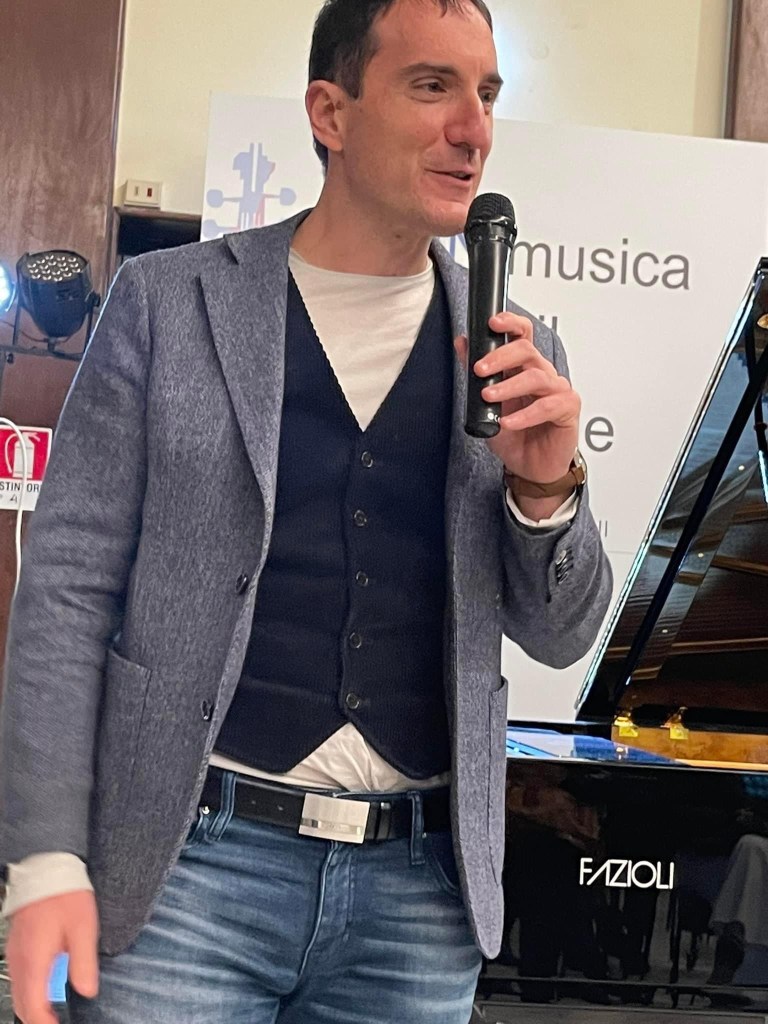
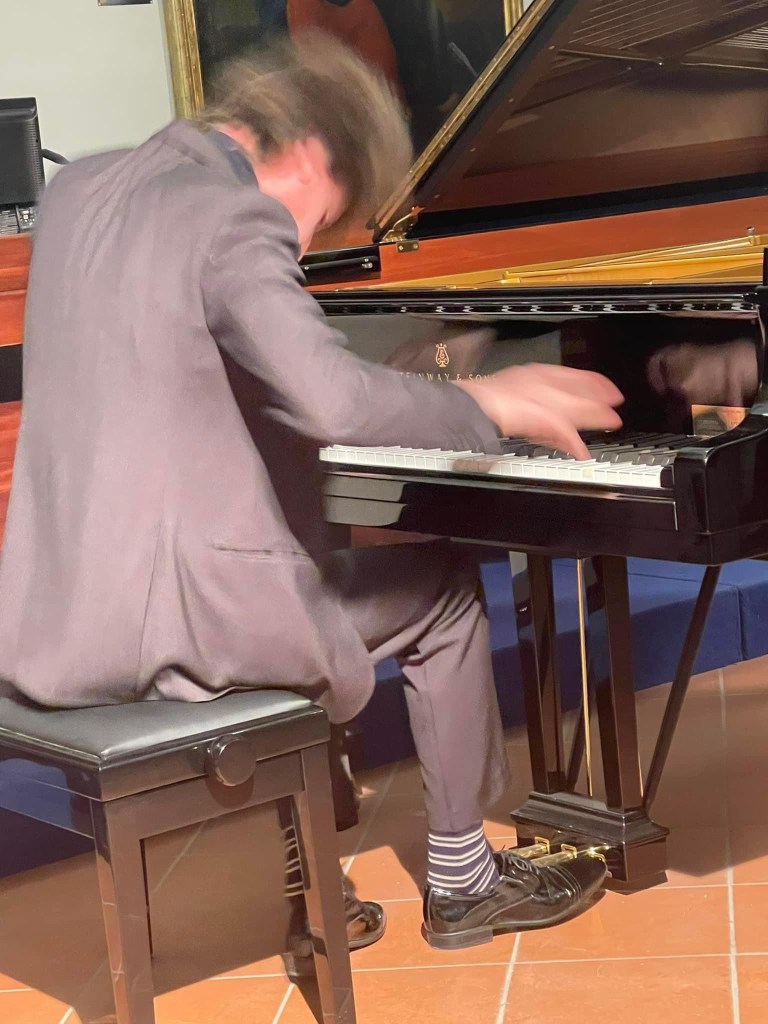
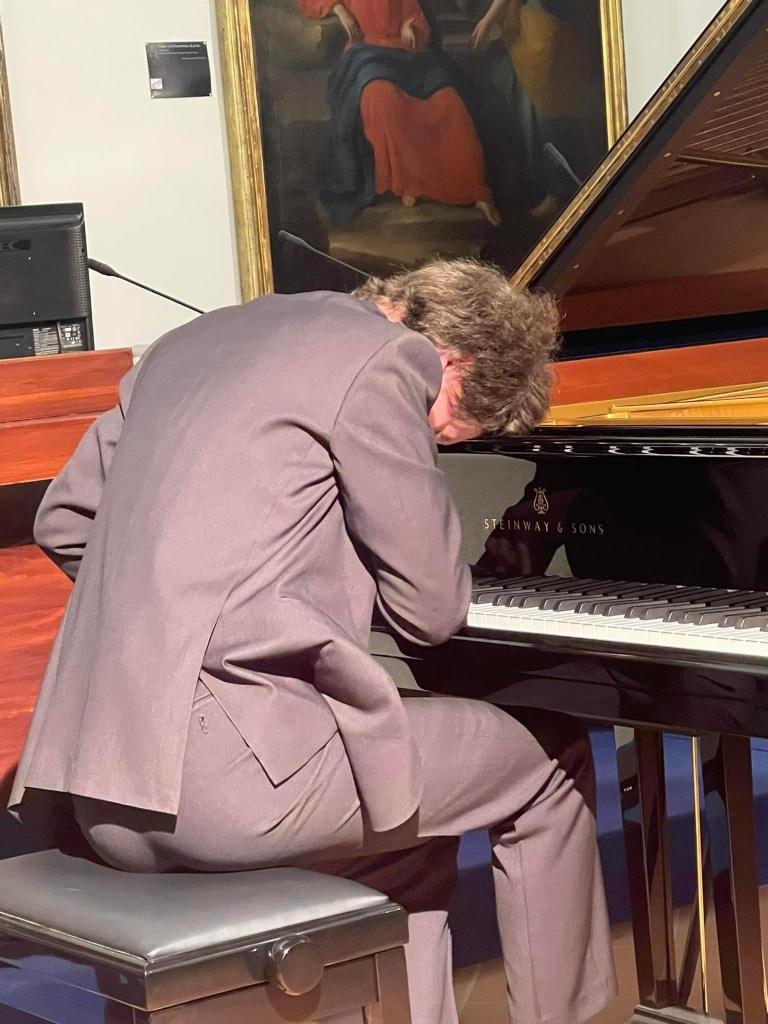
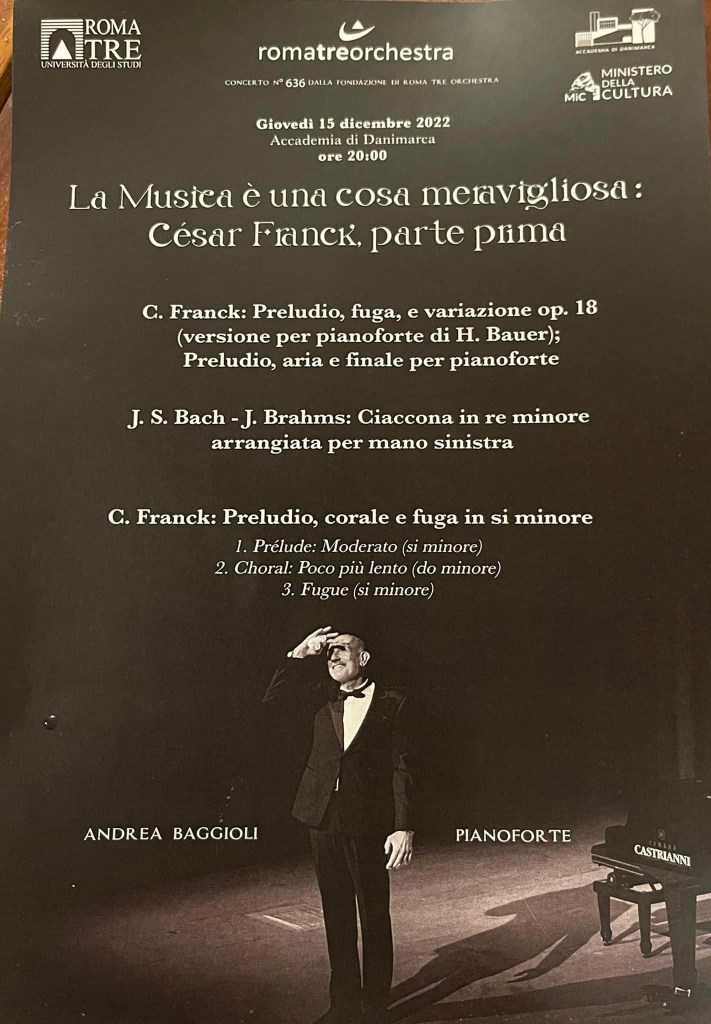
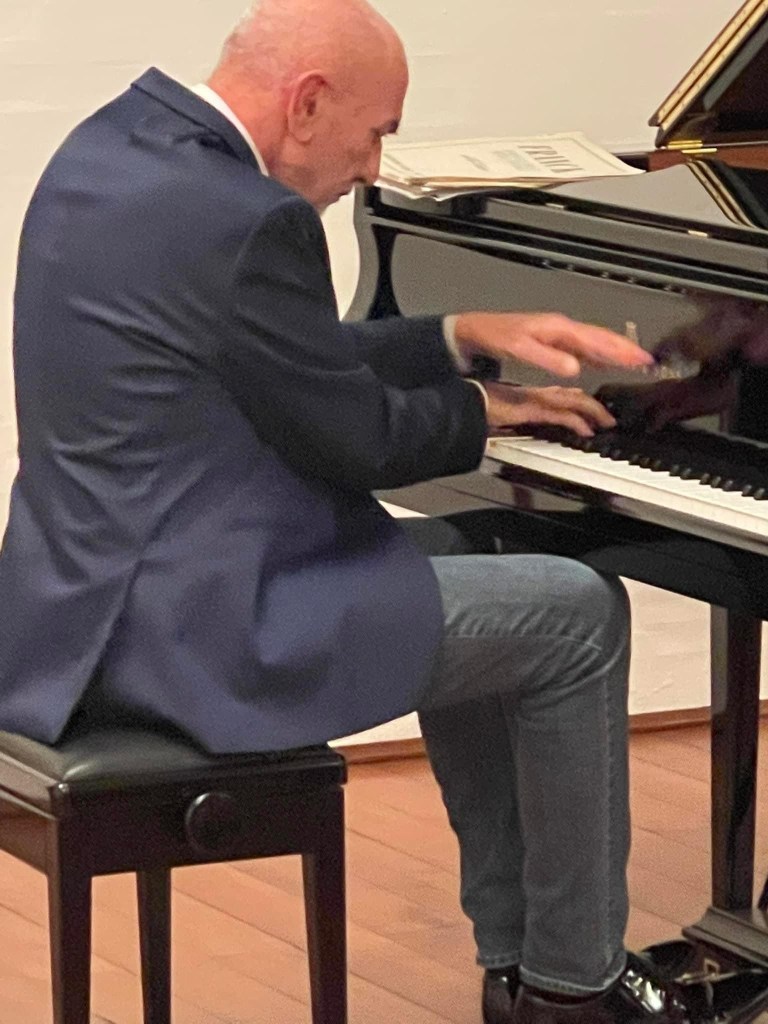
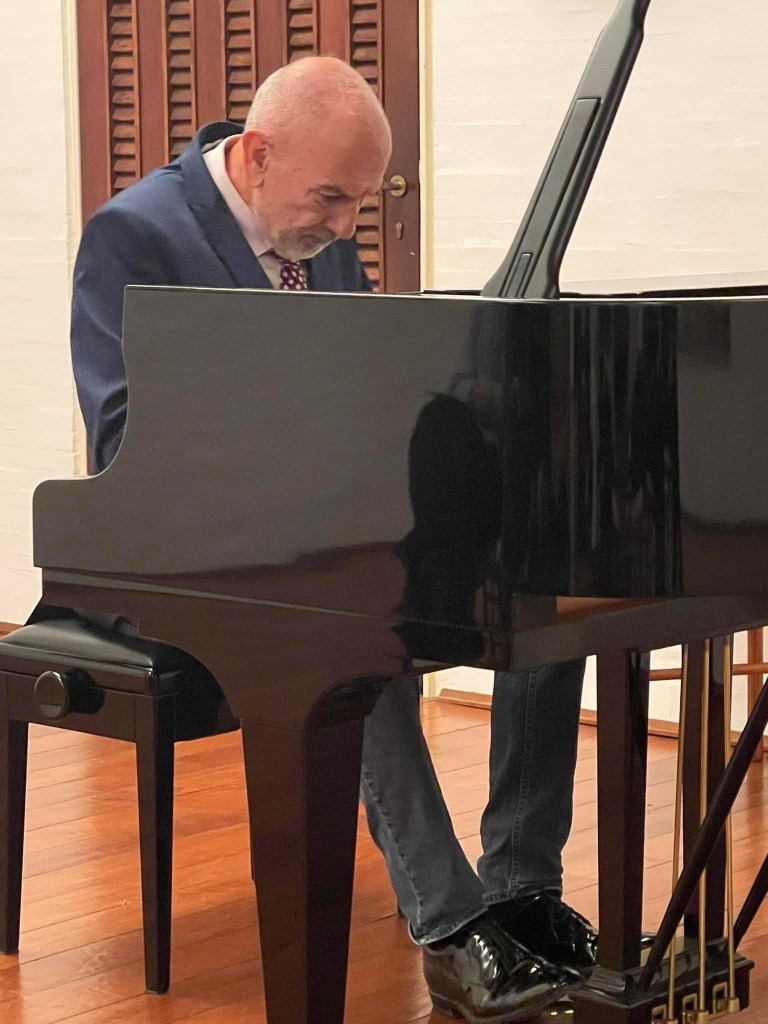
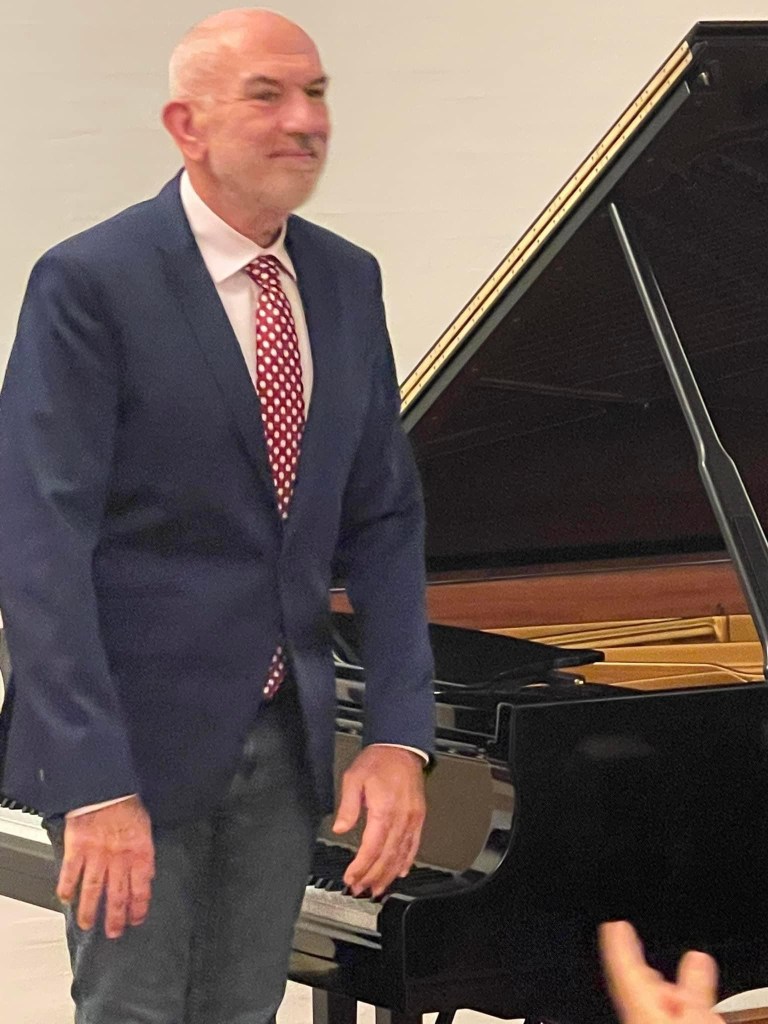
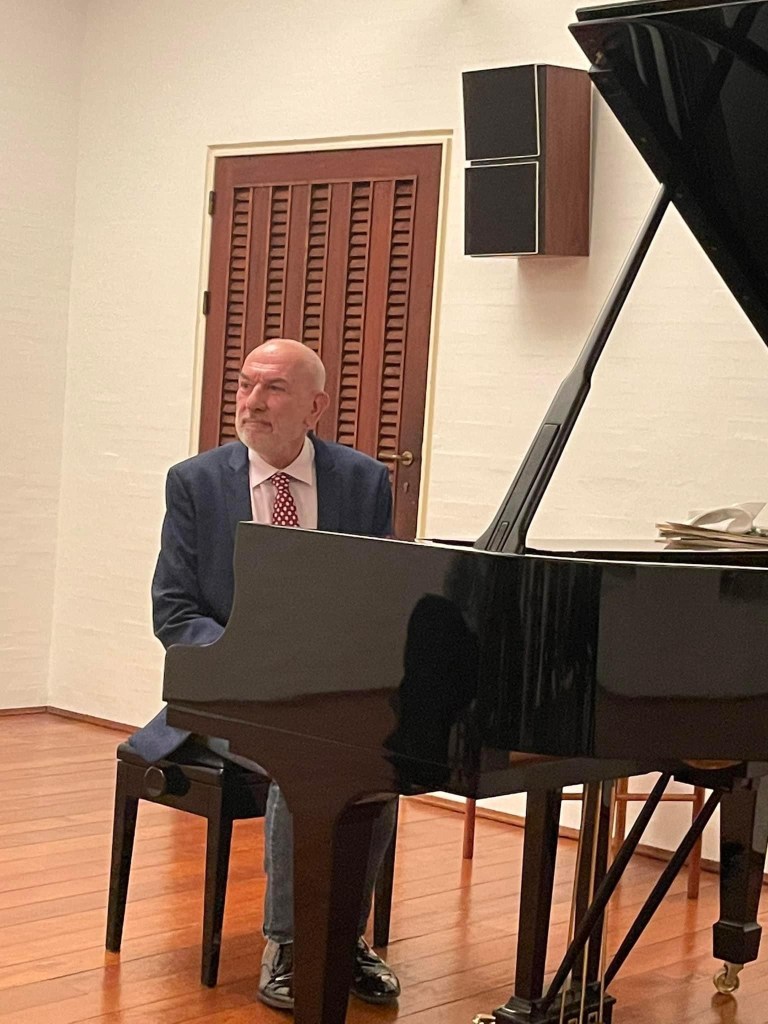
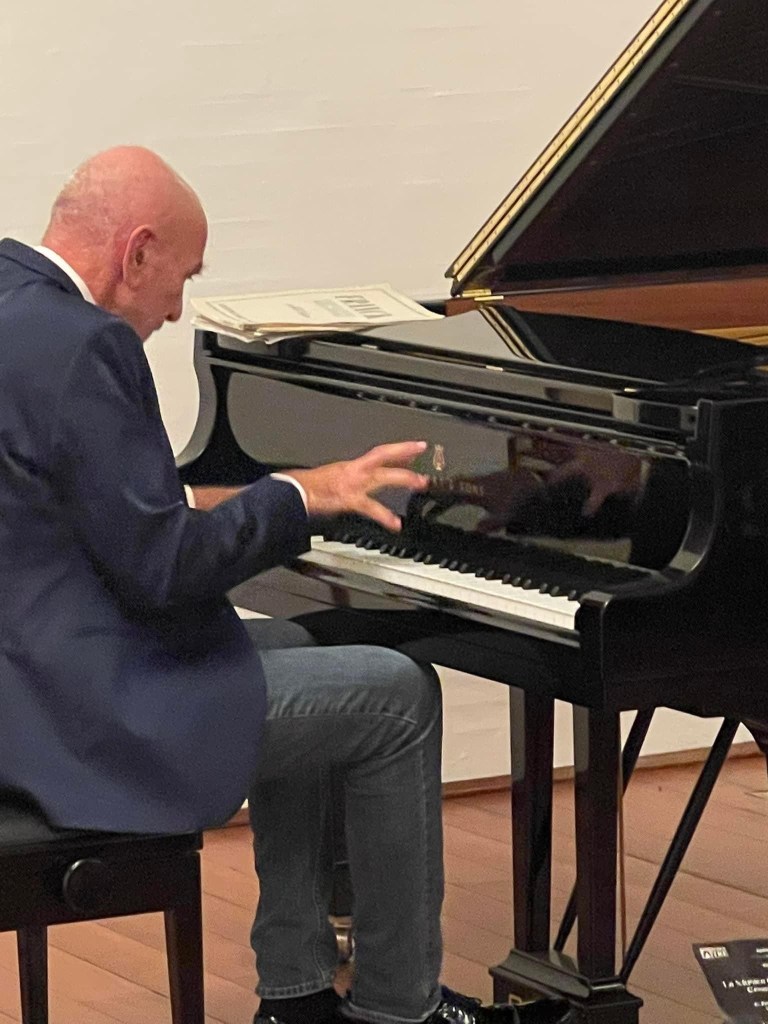
Fascinating to hear three master works for piano by César Franck on the 200th anniversary almost to the day of his birth on the 10th December 1822.The pianist and musicologist Andrea Baggioli was at the Danish Academy in Rome to remind us of the importance of these works that are rarely heard in concert these days and certainly not together.Including also the Bach Chaconne not in the more usual Busoni transcription but in that of Brahms for the left hand alone.Playing of great architectural understanding if sometimes not of the clarity in Franck that would have made his ingenious counterpoints even more revealing.What better way to celebrate Cesar Franck’s 200th anniversary than with his Prelude Chorale and Fugue when it is played with such weight and authority.A prelude bathed in mysterious colours with clouds of pedal and a chorale that was allowed to shine on high above magisterial spread chords.The bold entry of the fugue and its climax on which the sublime opening theme in this cyclic work floated into the air of the Danish Academy ,as it must have done in St Clotilde in Paris , creating a magic that was to lead to the triumphant and nobly emphatic exultation of a true believer.
Prélude, Choral et Fugue, FWV 21 was written in 1884 and is an exemple of Franck’s distinctive use of cyclic form .The key to Franck’s music may be found in his personality. His friends record that he was “a man of utmost humility, simplicity, reverence and industry.” Louis Vierne , a pupil and later organist titulaire of Notre-Dame, wrote in his memoirs that Franck showed a “constant concern for the dignity of his art, for the nobility of his mission, and for the fervent sincerity of his sermon in sound… Joyous or melancholy, solemn or mystic, powerful or ethereal: Franck was all those at Sainte-Clotilde.”Franck had huge hands (evinced by the famous photo of him at the Ste-Clotilde organ), capable of spanning the interval of a 12th on the keyboard.This allowed him unusual flexibility in voice-leading between internal parts in fugal composition, and in the wide chords and stretches featured in much of his keyboard music.In his search to master new organ-playing techniques he was both challenged and stimulated by his third and last change in organ posts. On 22 January 1858, he became organist and maître de chapelle at the newly consecrated Sainte-Clotilde (from 1896 the Basilique-Sainte-Clotilde), where he remained until his death. Eleven months later, the parish installed a new three-manual Cavaillé-Coll instrument,whereupon he was made titulaire. The impact of this organ on Franck’s performance and composition cannot be overestimated; together with his early pianistic experience it shaped his music-making for the remainder of his life.

Here is the rare historic recording of Blanche Selva in 1928 one of the pioneers of french music https://youtube.com/watch?v=IdlM-nK8ppM&feature=share
Prélude, Aria et Final, op 23 was written in 1886 – 87 Unusually for a composer of such importance and reputation, Franck’s fame rests largely on a small number of compositions written in his later years, particularly his Symphony in D minor (1886-88) the Symphonic Variations for piano and orchestra (1885), the Prelude Chorale and Fugue for piano solo (1884), the Violin Sonata in A (1886), the Piano Quintet in F minor (1879), and the symphonic poem Le Chasseur maudit (1883).

Here is the historic 1932 recording of Alfred Cortot whose edition of the score Andrea was using today https://youtube.com/watch?v=WV2cEfjlHec&feature=share
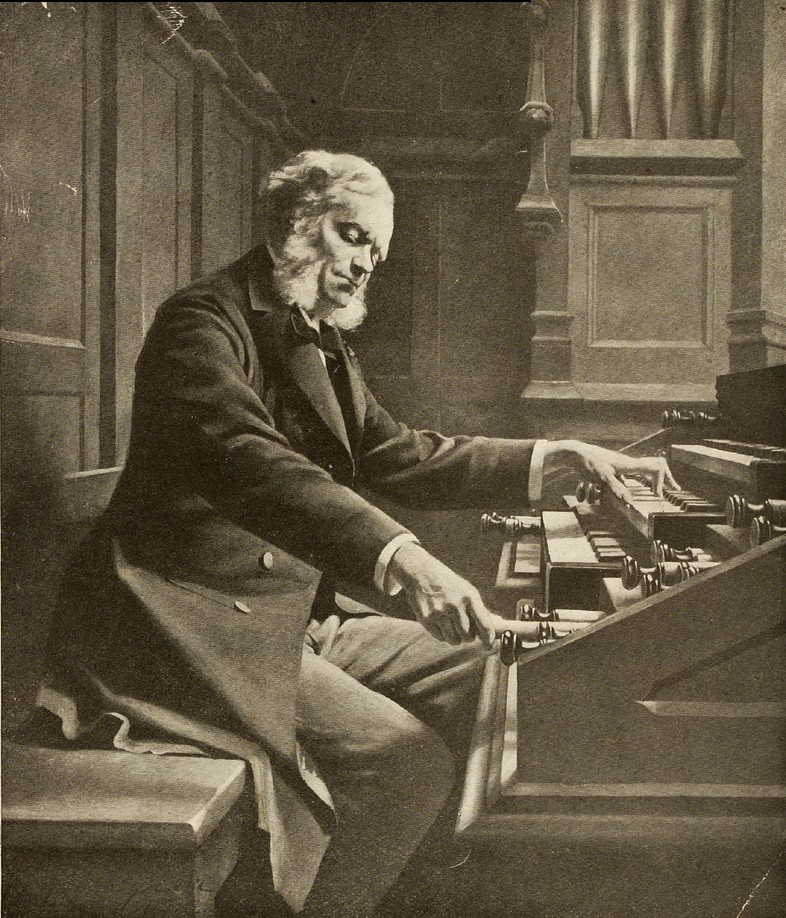
César Franck at the console, painting by Jeanne Rongier , 1885

His set of Six Pièces for organ, written 1860–1862 (although not published until 1868). These compositions (dedicated to fellow organists and pianists, to his old master Benoist, and to Cavaillé-Coll) remain part of modern organ repertory and were,the first major contribution to French organ literature in over a century, and “the most important organ music written since Mendelssohn”.The group includes two of his best-known organ works, the “Prélude, Fugue et Variation”, op. 18 and the “Grande Pièce Symphonique op 17.”Franck was inspired to write this organ piece for the instrument at the church of Sainte-Clotilde. While it sounds majestic on the organ, it is also frequently heard in Harold Bauer’s transcription for the piano.The Prelude, Fugue and Variation, Op. 18 is one of Franck’s Six Pieces for organ, premiered by the composer at Sainte-Clotilde on 17 November 1864. They mark a decisive stage in his creative development, revealing how he was building on the post-Beethoven Germanic tradition in terms of the importance given to musical construction.

The Prelude, Fugue and Variation is dedicated to Saint-Saëns. Years earlier, when Franck published his Op. 1 trios, Liszt was among their admirers but had advised his younger colleague to write a new finale for the third of the trios and create a separate work from the original finale – this became Franck’s Fourth Piano Trio, Op. 2, dedicated to Liszt. In spring 1866, the Hungarian composer was in Paris for the French premiere of his Missa solennis for the consecration of the Basilica in Gran (Esztergom) at the Église Saint-Eustache on 15 March, a work about which Franck was enthusiastic. At the beginning of his stay, Liszt had come to listen to Franck improvising at Sainte-Clotilde and, apparently at Duparc’s instigation, a second private performance took place on 3 April. Franck wanted to play Liszt’s Prelude and Fugue on the Name BACH but the latter asked instead to hear Franck’s own Prelude, Fugue and Variation.
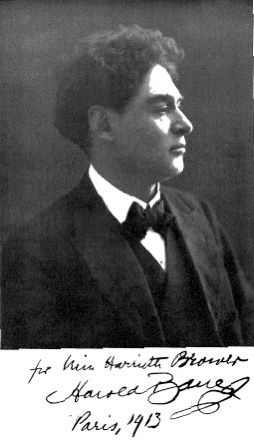

The piano transcription of this organ work was made by Harold Bauer (1873-1951), the British pianist who gave the world premiere of Debussy’s Children’s Corner and was the dedicatee of Ondine, the first piece in Ravel’s Gaspard de la nuit.Harold Bauer made his debut as a violinist in London in 1883, and for nine years toured England. In 1892, however, he went to Paris and studied with Paderewski for a year.In 1900, Harold Bauer made his debut in America with the Boston Symphony Orchestra, performing the U.S. premiere of Brahms’Piano Concerto No.1 in D minor. On 18 December 1908, he gave the world premiere performance of Debussy’s Children’s Corner Suite in Paris.After that he settled in the United States.He was also an influential teacher and editor, heading the Piano Department at the Manhattan School of Music . Starting in 1941, Bauer taught winter master classes at the University of Miami and served as a Visiting Professor at the University of Hartford Hartt .Students of Harold Bauer include notably Abbey Simon and Dora Zaslavsky.

Here is Mariam Batsashvili talking about and playing this Franck /Bauer transcription https://youtube.com/watch?v=35ZYj_SNvYM&feature=share
Presenting his transcription to Clara Schumann (his friend and the widow of Robert Schumann), Brahms wrote: “The Chaconne is, in my opinion, one of the most wonderful and most incomprehensible pieces of music. Using the technique adapted to a small instrument, the man writes a whole world of the deepest thoughts and most powerful feelings. If I could picture myself writing, or even conceiving, such a piece, I am certain that the extreme excitement and emotional tension would have driven me mad. If one has no supremely great violinist at hand, the most exquisite of joys is probably simply to let the Chaconne ring in one’s mind. But the piece certainly inspires one to occupy oneself with it somehow…. There is only one way in which I can secure undiluted joy from the piece, though on a small and only approximate scale, and that is when I play it with the left hand alone…. The same difficulty, the nature of the technique, the rendering of the arpeggios, everything conspires to make me feel like a violinist!”

Here is the 1889 recording of Brahms himself playing – not the chaconne unfortunately but a short extract of one of his Hungarian Dances https://youtube.com/watch?v=H31q7Qrjjo0&feature=share
Majesty and vastness are easily conjured when two hands and a grand piano, or for that matter a full symphony orchestra, are called into service. But it is far more challenging to recognize that the true genius of the Chaconne is that it achieves its immenseness within the confinements of a single violin, and then to seek to inhabit on the piano this achievement with just the left hand alone.
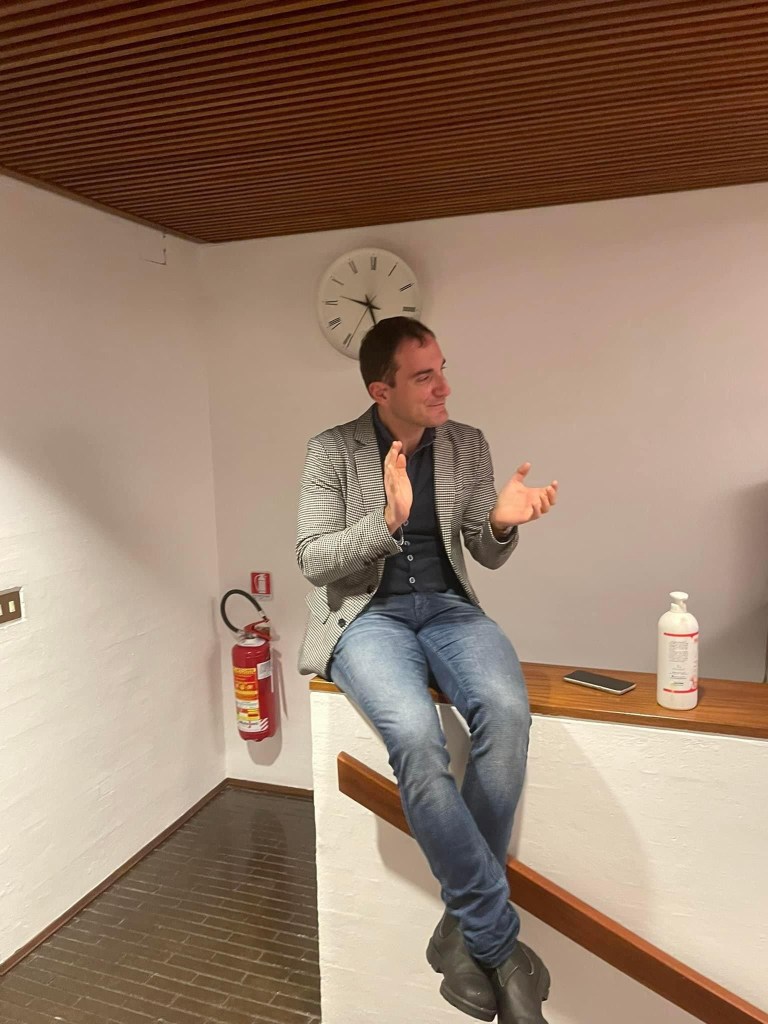
Valerio Vicari,artistic director of Roma 3 having battled with a rain storm in Rome arriving late but not too late to applaud his distinguished Professor from the S.Cecilia Conservatory

Mariacristina Buono bringing Christmas to Roma 3 with intelligent brilliance.

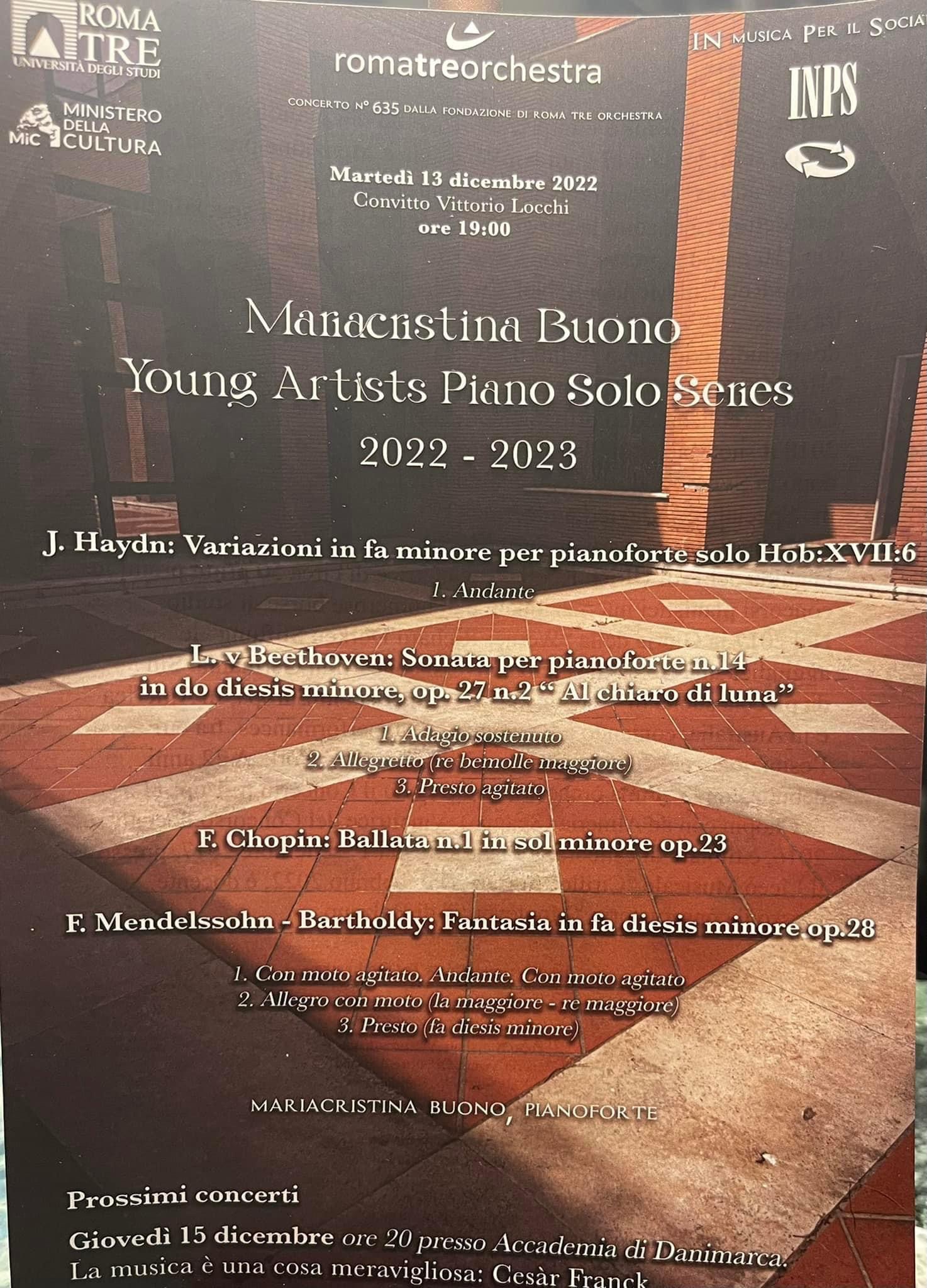
Mariacristina Buono – Young Artists Piano Solo Series 2022 – 2023

I might have guessed that our genial host at Roma 3,Valerio Vicari,would have something special up his sleeve for the last concert before Christmas of his Young Artists Piano Solo Series.
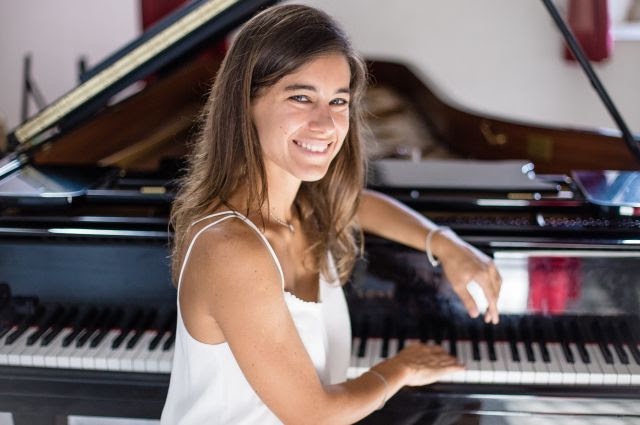
The surprise was a beautiful young pianist from the school of Benedetto Lupo in Bari – the home of San Nicola – Father Christmas.After a recital of well known classics from the piano repertoire she appeared with one year old baby Leonardo in her arms.

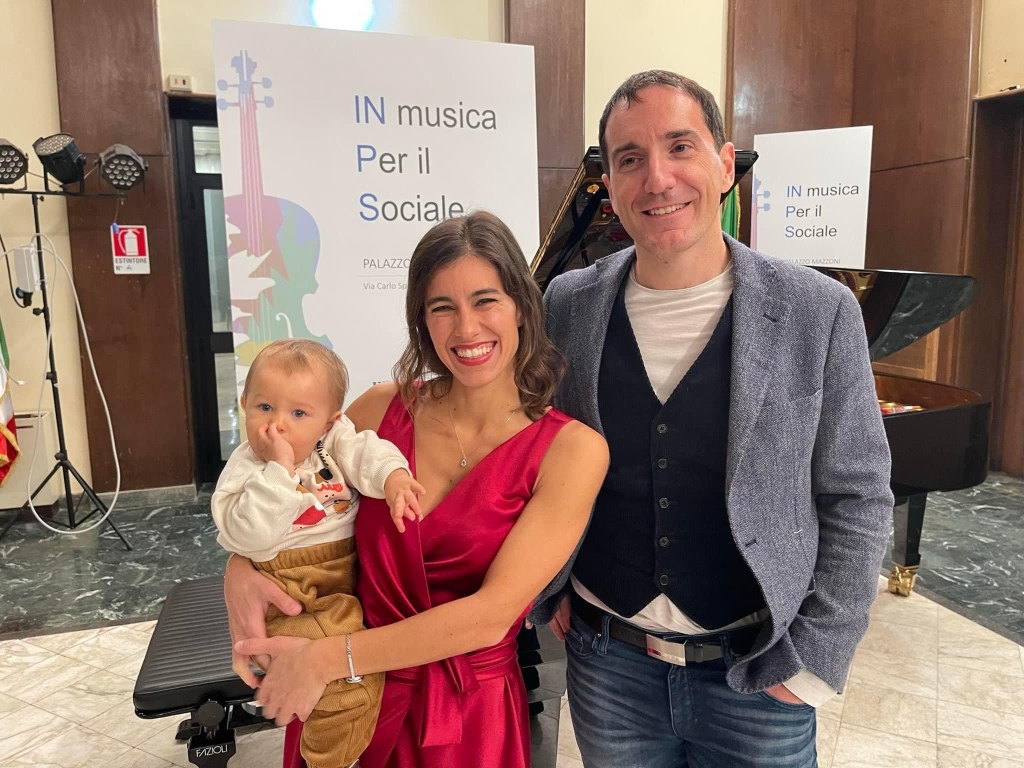
Mariacristina with baby Leonardo and Valerio Vicari


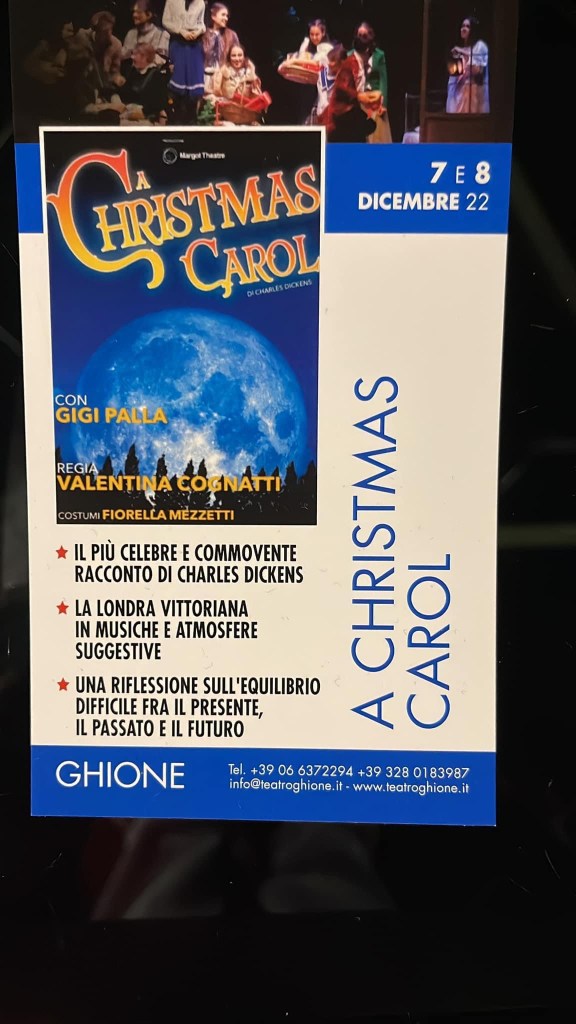
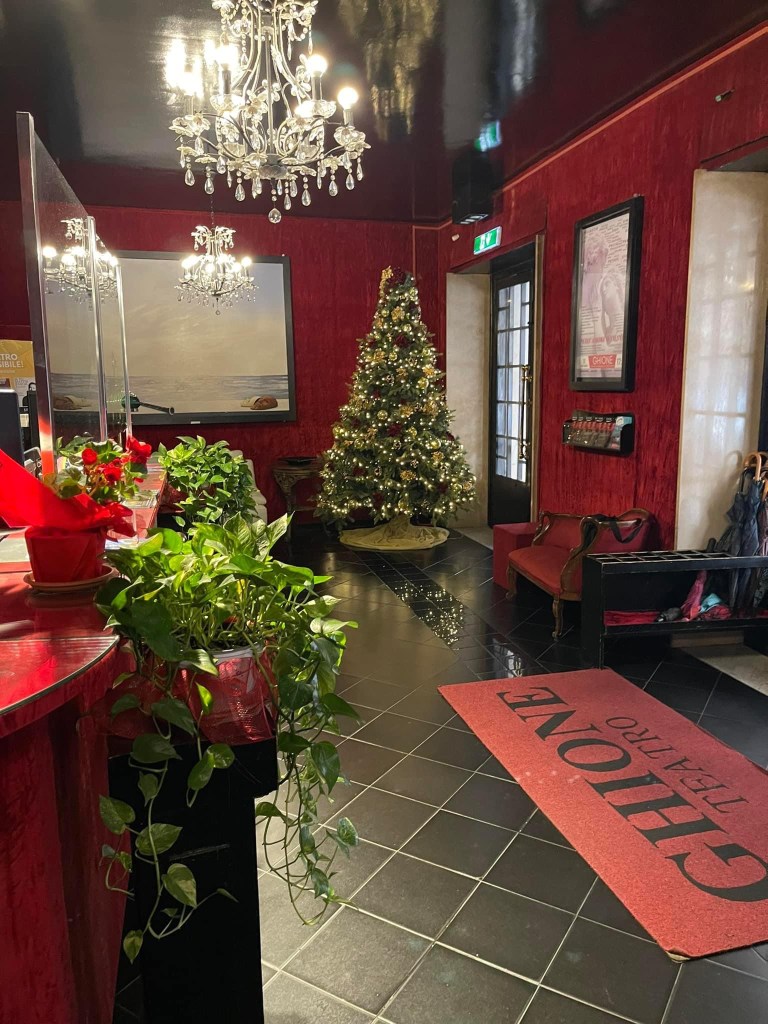
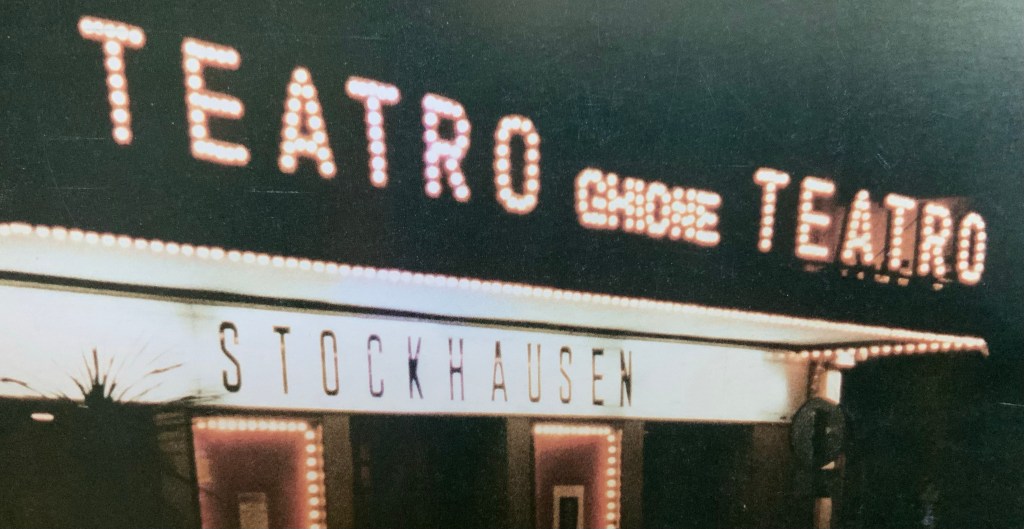
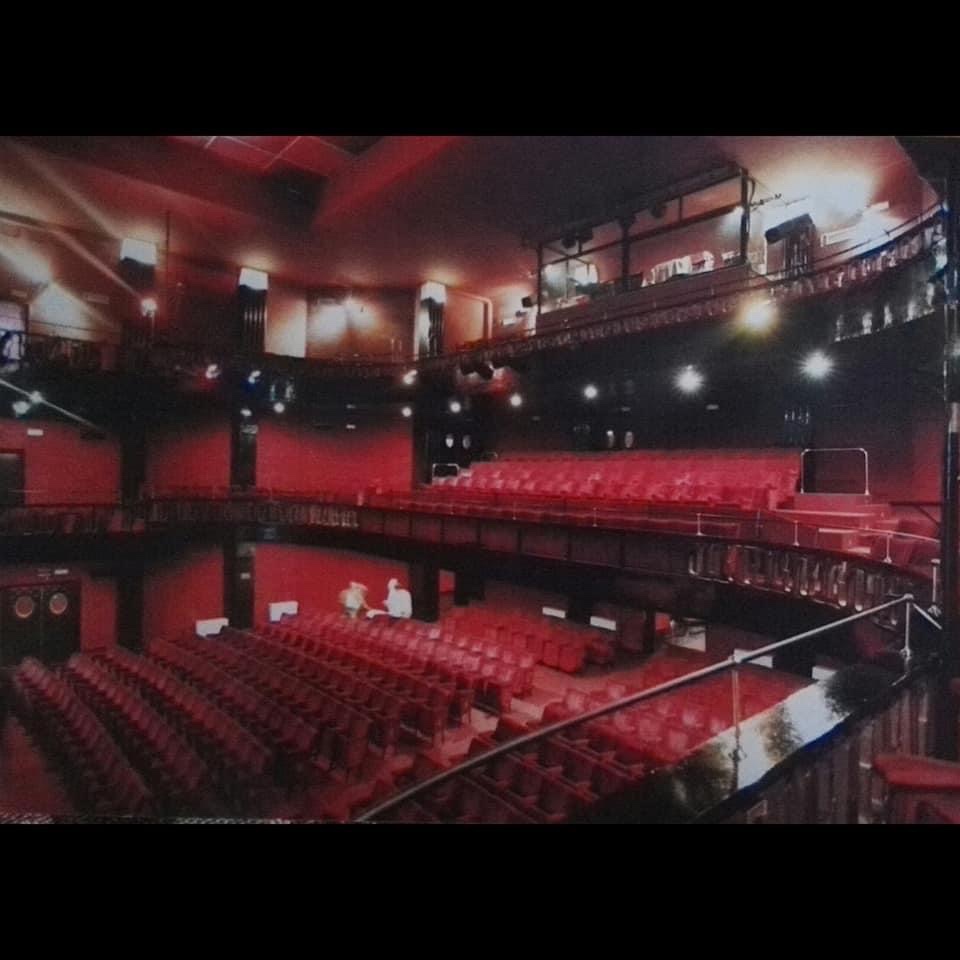
Having just watched a Christmas Carol in the Ghione Theatre too I am feeling very much in the Christmas Spirit in the Eternal City.


Mariacristina Buono trained from an early age under Benedetto Lupo and went on to study with Fabio Bidini in Cologne and in Zurich with Ulrich Koella.
It was no surprise then that her intelligent musicianship from such superb mentors shone through everything she played.
Haydn Variations that were played with a clarity and impeccable phrasing with the tempo intelligently maintained as the variations were allowed to unfold so naturally.
If it was slightly missing grace and charm it was in part due to the brightness of this magnificent Fazioli Concert Grand that stands so proudly in this overly spacious rationalist hallway.
It was also,we realised later,the tension at leaving baby Leonardo in the Green Room while his very talented mother left him in his grandmother’s arms so she could offer us her gift of music that she had brought from Bari to the Eternal City.

The return to Bari


Leonardo’s cousins ,uncle and grandmother had travelled up together to Rome to enjoy this musical treat that Maria Cristina was sharing so generously with us today.

The new venue for Roma 3 concerts


This is the splendid new venue that Valerio has added to the Teatro Palladium and the historic Teatro Torlonia.
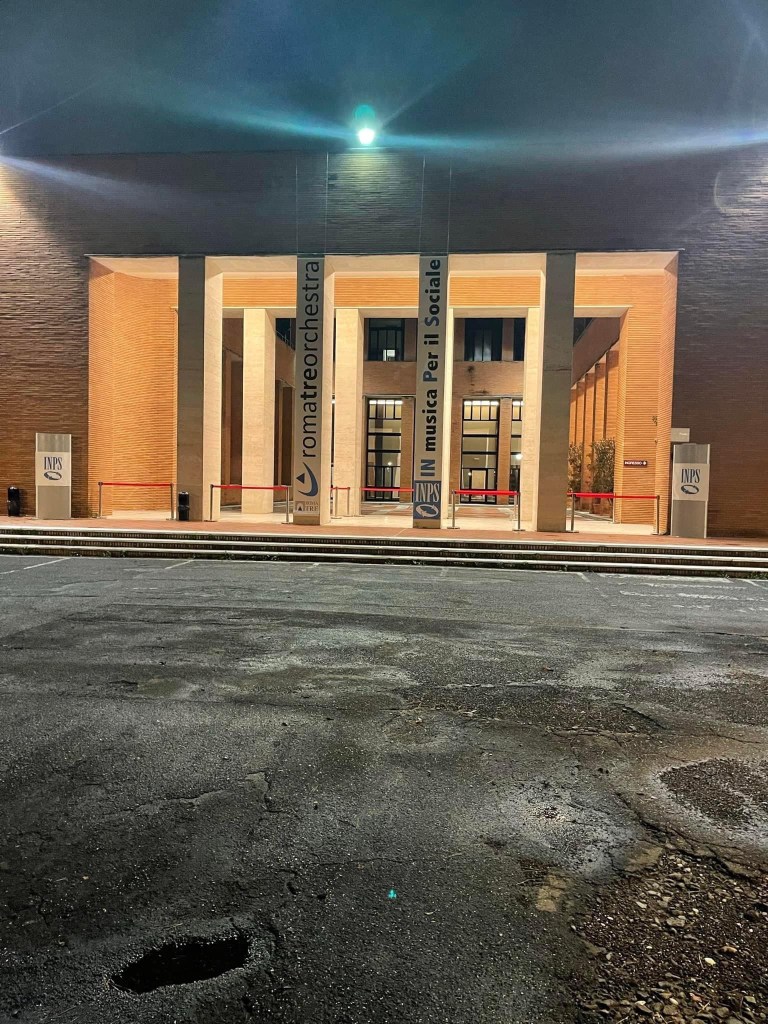
The Convitto Vittorio Locchi is just a stone’s throw from Roma 3’s Teatro Palladium and is in its own grounds where open air concerts were held this summer under the portico of this very imposing building which is the seat of INPS – the official Italian social security office.


Beethoven’s so called ‘Moonlight’Sonata was allowed to flow naturally with the melodic line architecturally shaped.Sustained by the anchor in the bass as the triplets were obviously the gently flowing waves of Lake Lucerne that had inspired Rellstab’s naming of ‘Moonlight.’The Allegretto was gracefully played and phrased so intelligently with scrupulous attention to the composer’s indications.The imposing Trio was played with weight as it contrasted so well with the gentle charm of the ‘Minuet’.Leading immediately into the Presto agitato that was played with startling rhythmic energy and real Beethovenian bite.The tumultuous last cascades of notes finally came to rest on a trill that unwound so naturally as it led to the downward scale which heralded the exciting final few bars.


Chopin’s first Ballade is one of the best known works by Chopin and in Mariacristina’s intelligent hands it was restored to the aristocratic tone poem that had been inspired by the poet Adam Mickiewicz.
From the very opening flourish that was played like someone opening a book with a tale about to be told .Coming to rest on a long held note that gradually dissolves as Chopin recounts his story of ravishing beauty and nobility.The subtle beauty of the opening led to the nobility of the first passionate climax played with aristocratic authority and musical intelligence.It dissolved into brilliance and scintillating jeux perlé as it built up again to the outpouring of mellifluous passion leading to a transcendental coda of technical brilliance and excitement.


The Mendelssohn Fantasy op 28 found Mariacristina in a more relaxed mood as the reams of notes that Mendelssohn weaves with mercurial lightness just flowed so naturally from her fingers.Played with passionate conviction and architectural shape as she moulded the phrases with mercurial sentiment of great control and brilliance.If the Allegro con moto could have been lighter with more Italian charm than German nobility it was contrasted with the breathtaking brilliance of the Presto.Knowing Leonardo was enjoying her performance too she threw herself into the fray with astonishing abandon and passion.


All obviously was now well back stage and Mariacristina felt free to offer as a thank you to her enthusiastic audience Chopin’s final study op 25.Ocean waves flowing with passionate drive and ravishing sounds played with brilliance and a technical command with a musical line of clarity and intelligence.
Happy Christmas to you all from Valerio Vicari and his untiring team at Roma 3.

The Andante with variations in F minor (Hoboken 17/6), also known as Un piccolo divertimento, was composed in Vienna in 1793 for the talented pianist Barbara (‘Babette’) von Ployer, for whom Mozart had written the concertos K449 and K453. This profoundly felt music vies with the Andante of the ‘Drumroll’ Symphony as Haydn’s greatest set of alternating minor–major variations and is among his most popular piano works.It was possibly inspired by the death of Maria Anna von Genzinger (1754–93, called “Marianne”) The variations are a set of double variations, the first theme is in F minor and the second theme in F major.Two variations of each theme and an extended coda follow.Haydn’s last piano work is also considered to be his most famous single work for this instrument. The minor theme is filled with emotional depth: “a melancholy andante in f minor, with variations, as only a genius can do them, that almost sounds like a free fantasia” (thus described in a review of the time). The autograph shows us that the work was originally intended to be the first movement of a sonata.

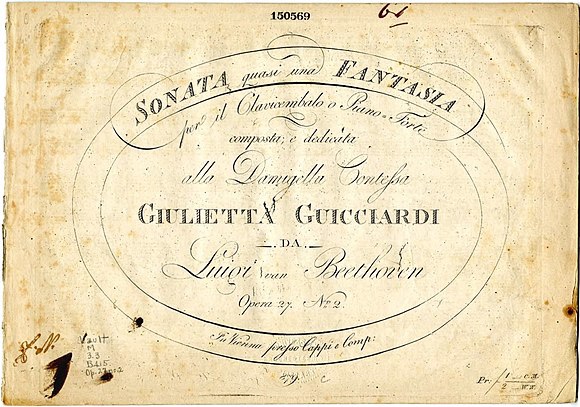
Title page of the first edition of the score, published on 2 August 1802 in Vienna by Giovanni Cappi e Comp

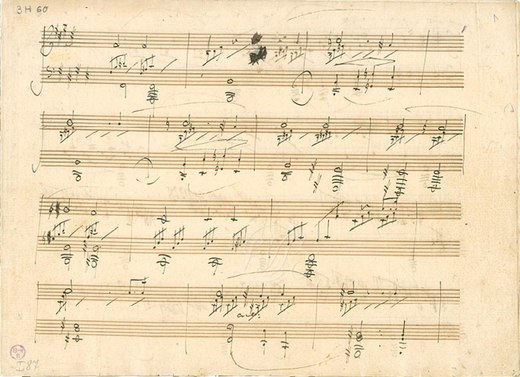
The Piano Sonata No. 14 Quasi una fantasia, op 27 n.2 was completed in 1801 and dedicated in 1802 to his pupil Countess Giulietta Guicciardi The popular name Moonlight Sonata goes back to a critic’s remark after Beethoven’s death and comes from remarks made by the German music critic and poet Ludwig Rellstab. In 1832, five years after Beethoven’s death, Rellstab likened the effect of the first movement to that of moonlight shining upon Lake Lucerne.Beethoven’s pupil Czerny described the first movement as “a ghost scene, where out of the far distance a plaintive ghostly voice sounds”.Berlioz commented that it “is one of those poems that human language does not know how to qualify”

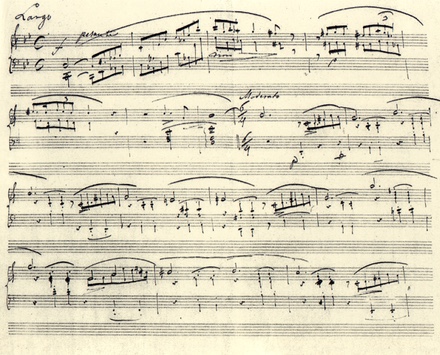
Autograph of the first movement

The first movement was very popular in Beethoven’s day, to the point of exasperating the composer himself, who remarked to Czerny, “Surely I’ve written better things”.although technically a sonata,’quasi una fantasia’is suggestive of a free-flowing, improvised fantasia.
Of the final movement, Charles Rosen has written “it is the most unbridled in its representation of emotion. Even today, two hundred years later, its ferocity is astonishing”.It is thought to have been the inspiration for Chopin’s Fantaisie Impromptu, and the Fantaisie-Impromptu to have been in fact a tribute to Beethoven.

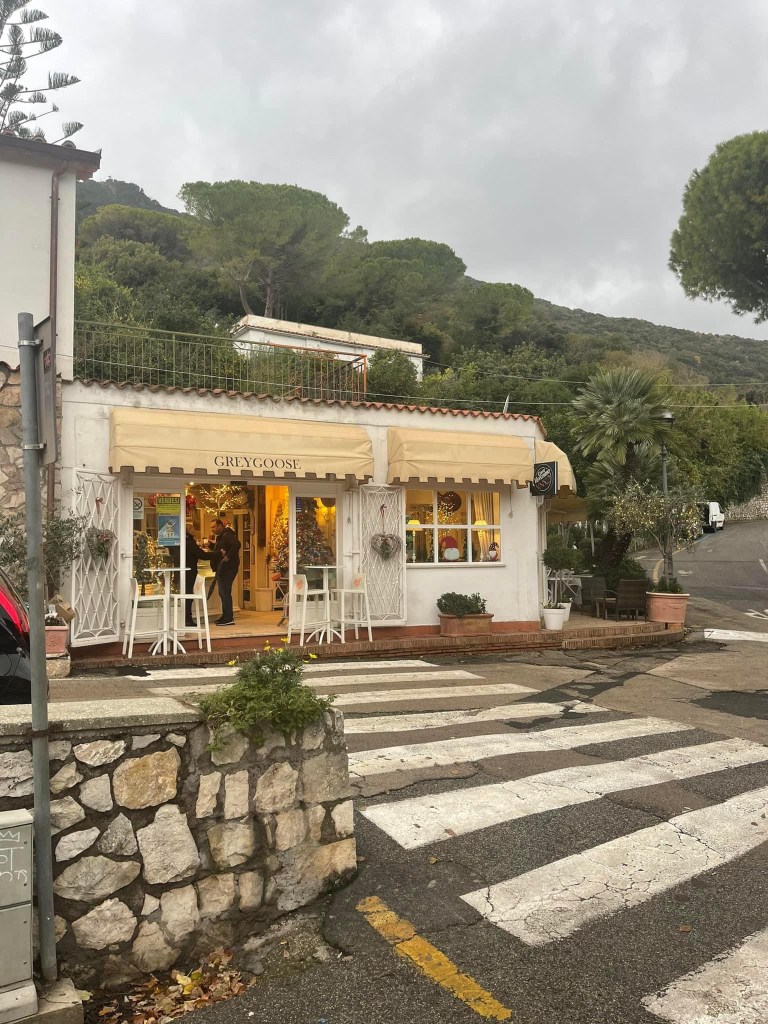
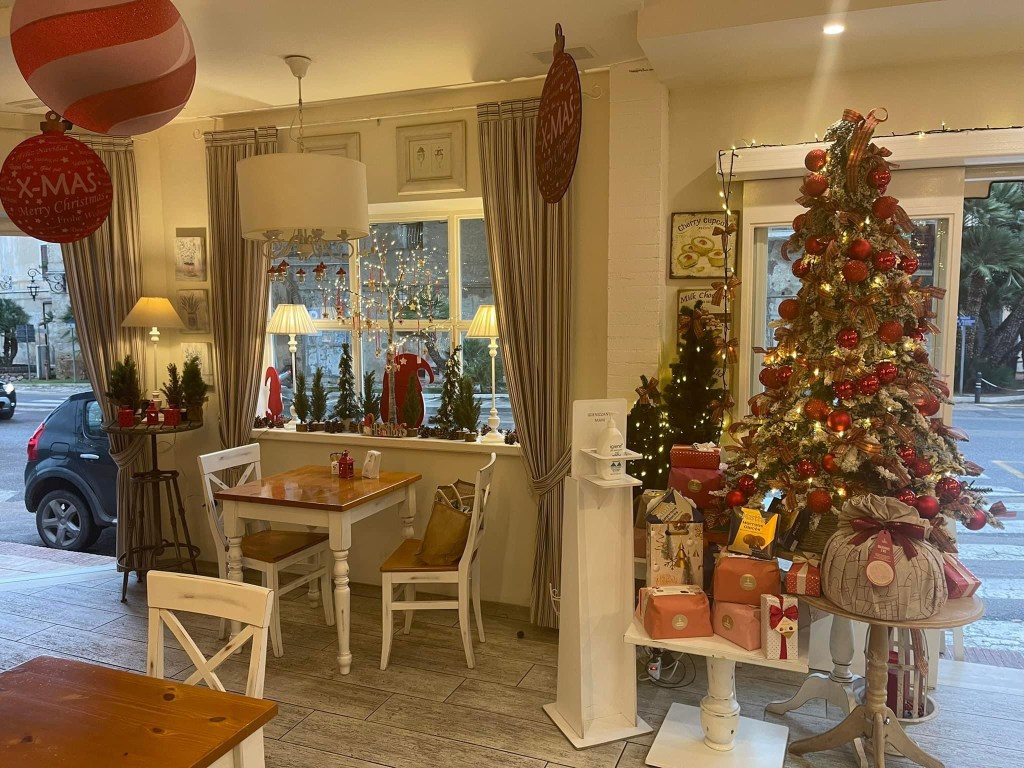
The Grey Goose San Felice Circeo

Mendelssohn was among many nineteenth-century German composers, among them Beethoven, Schubert, Schumann, Brahms and Bruch, who were fascinated by Scotland, by its folk music, history and literature. Mendelssohn was the only one of these six who visited Scotland, when at the age of twenty during the summer of 1829 he found the inspiration for his Scottish Symphony at Holyrood Chapel in Edinburgh and for the ‘Hebrides’ Overture (also known as the ‘Fingal’s Cave’ Overture) on the desolate island of Staffa off the coast of Mull in the Hebrides. But well before he made his celebrated walking tour of Scotland in 1829, he was reading the poetry and novels of the ‘great wizard’ of the North, Sir Walter Scott, and was acquainted with the ‘Ossianic’ poems, one of the great literary forgeries of the eighteenth century. In the early 1820s he composed two settings of verses from Scott’s epic poem The Lady of the Lake (including the Ave Maria, also set by Schubert). Then, probably in 1828 or early 1829, the young composer attempted his first full-scale work inspired by a Scotland he had not yet seen or experienced. The three-movement Fantasia in F sharp minor, Op 28, eventually released in 1834, took shape originally as a ‘Sonate écossaise’, mentioned already in family correspondence from early 1829. Four years later, early in 1833, Mendelssohn revised the work, still titled ‘Sonate écossaise’, but then published it the following year as a Fantasia, without its Scottish attribution.

Christmas comes to Italy – the Grey Goose San Felice Circeo

The ballade dates to sketches Chopin made in 1831, during his eight-month stay in Vienna.It was completed in 1835 after his move to Paris, where he dedicated it to Baron Nathaniel von Stockhausen, the Hanoverian ambassador to France.

Autograph of the first page

In 1836, Robert Schumann wrote: “I have a new Ballade by Chopin. It seems to me to be the work closest to his genius (though not the most brilliant). I even told him that it is my favourite of all of all his works. After a long, reflective pause he told me emphatically: ‘I am glad, because I too like it the best, it is my dearest work.'”

Mariacristina Buono intraprende lo studio del pianoforte all’età di 5 anni, si diploma a 17 anni con 10, Lode e Menzione presso il conservatorio “Niccolò Piccinni” di Bari; prosegue gli studi con Benedetto Lupo, sotto la cui guida
consegue la Laurea specialistica con 110 e Lode, presso il conservatorio “Nino Rota” di Monopoli. Nel 2015 si trasferisce all’estero, dapprima in Germania dove studia con Fabio Bidini presso la “Hochschule für Musik und
Tanz” di Colonia, concludendo brillantemente nel 2018 il suo Master in Pianoforte solistico; dopo in Svizzera, dove frequenta un Master in “Specialized Klavierkammermusik” all’ Università delle arti di Zurigo, sotto la guida del Prof Ulrich Koella. E’ vincitrice di circa 50 primi premi in concorsi pianistici internazionali, e di numerose borse di studio. Nel 2017 la Giuria della “Werner Richard Dorken Stiftung” le aggiudica una Borsa di studio e diversi concerti in Germania. Sin da piccola suona in veste di solista e camerista in Europa, in America e in Australia, contando ad oggi più di 200 performances, fra cui l’esibizione, nel 2019, alla Carnegie Hall di New York. A 22 anni debutta con la “Fima orchestra” eseguendo il Concerto n. 1 op. 11 di Chopin con ad Almeria (Spagna). Vincitrice del Concorso docenti 2016, è titolare di cattedra di Pianoforte dal 1° settembre 2017, presso il Liceo Musicale “Cirillo” di Bari.
Dal febbraio 2022, è docente presso il conservatorio “Monteverdi” di Bolzano.

My adopted granddaughter Anastasia first birthday today too !
All well ,Christmas is here
Our genial host the artistic director of Roma 3 Valerio Vicari
Mariacristina presenting her programme

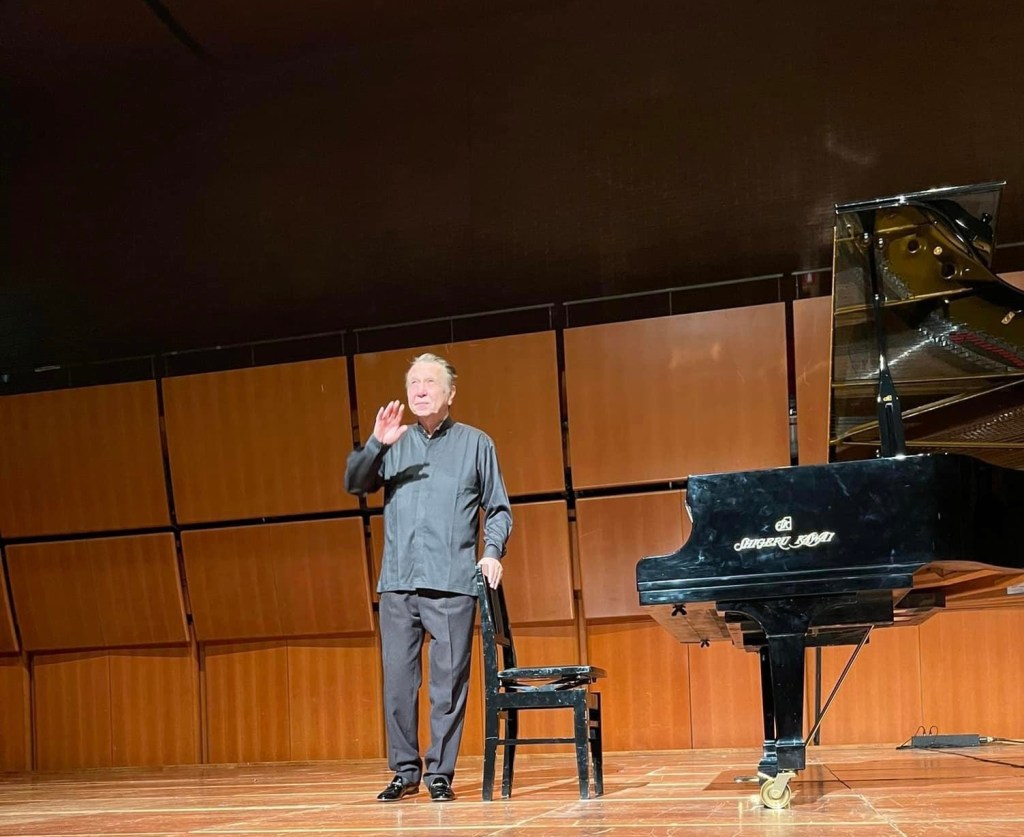
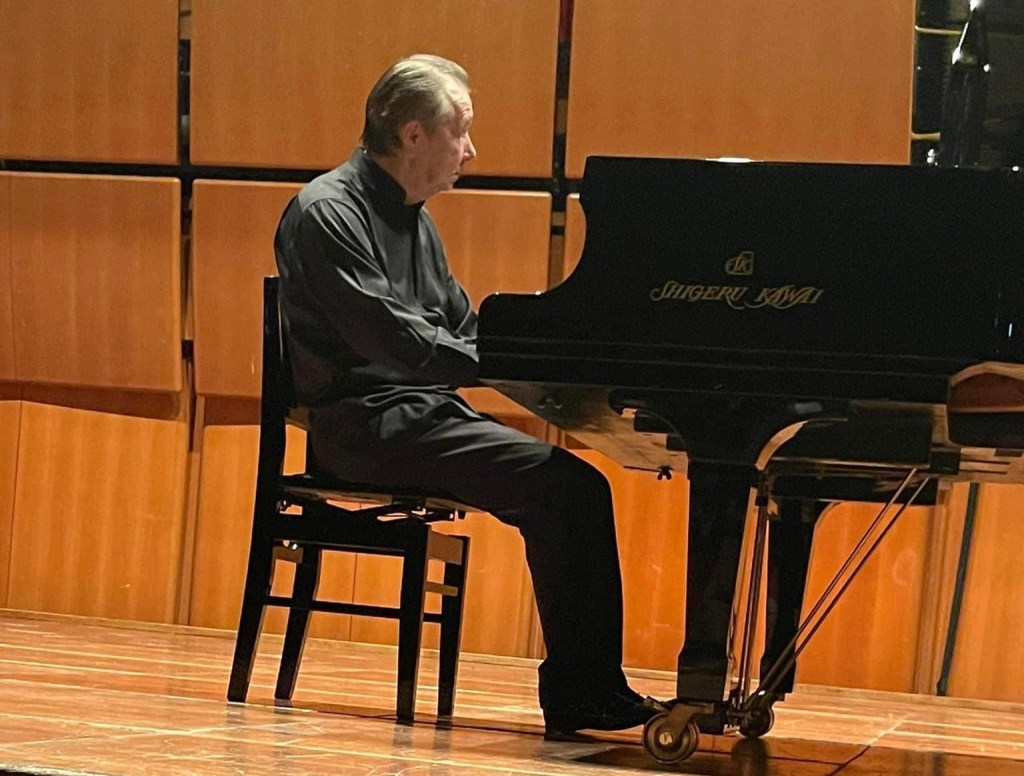
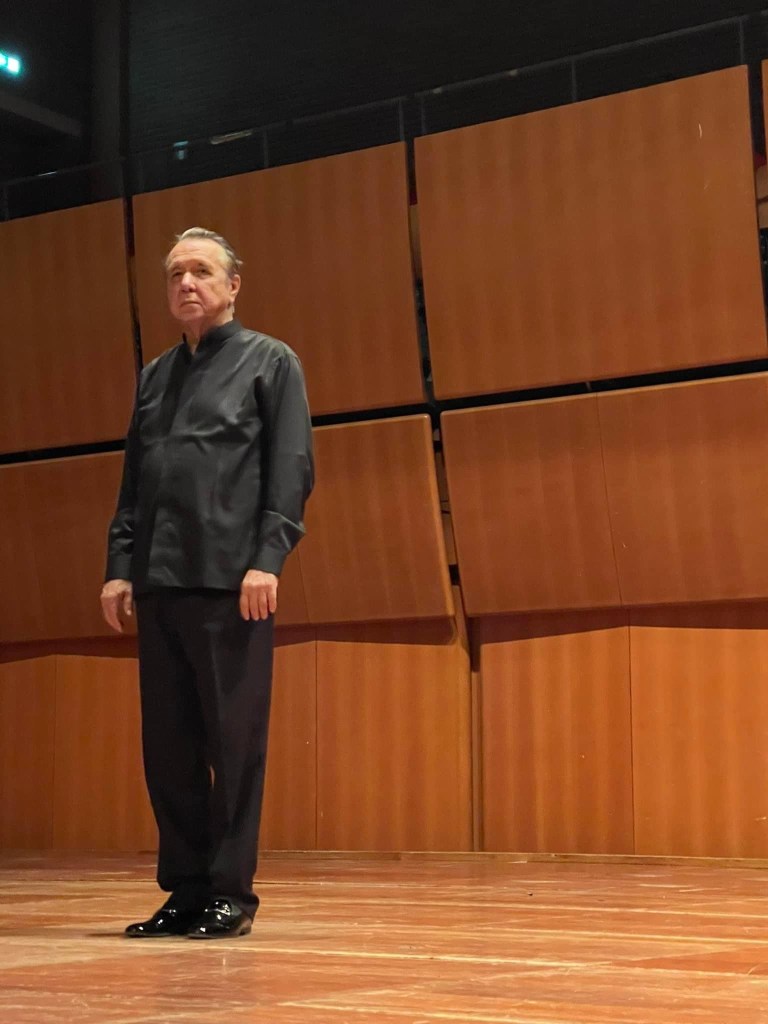
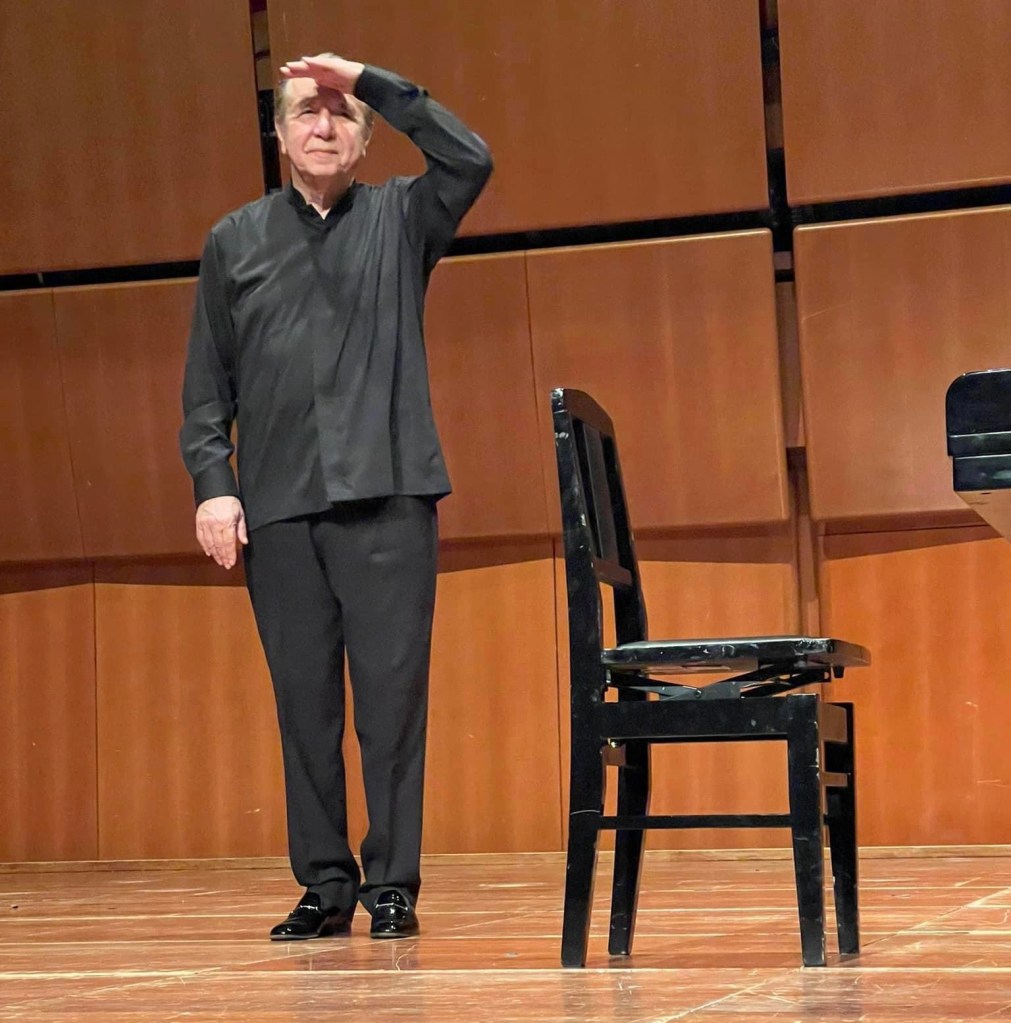
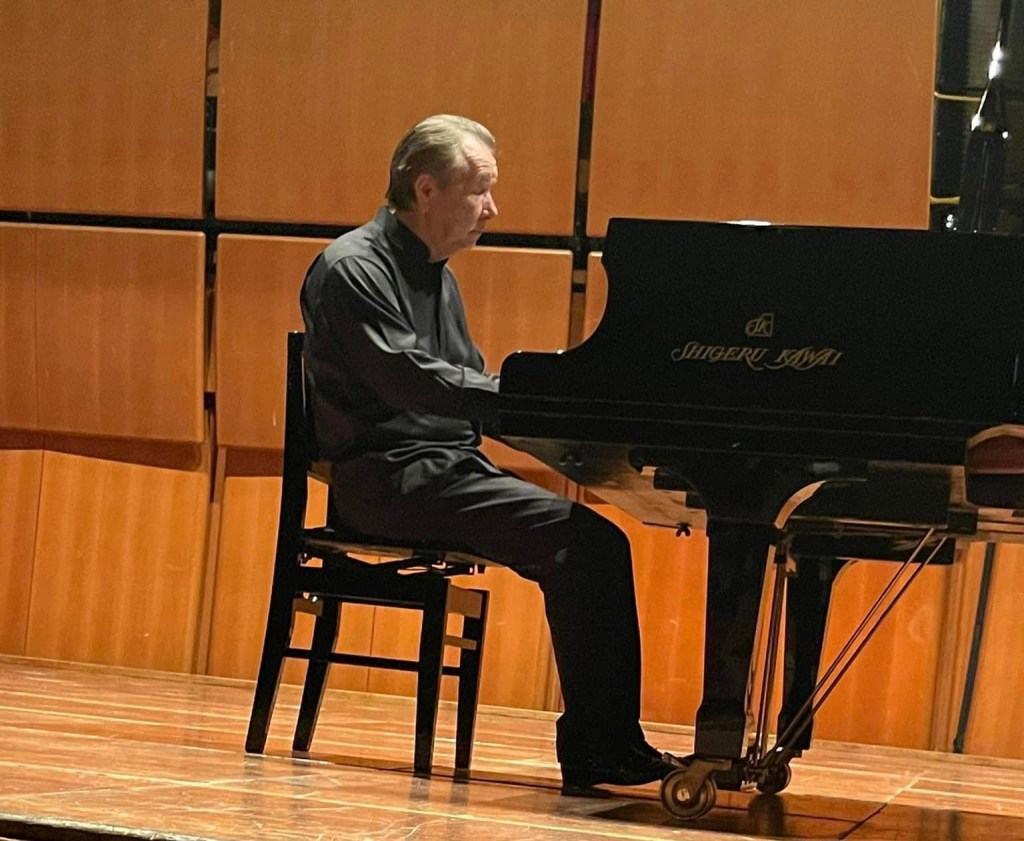
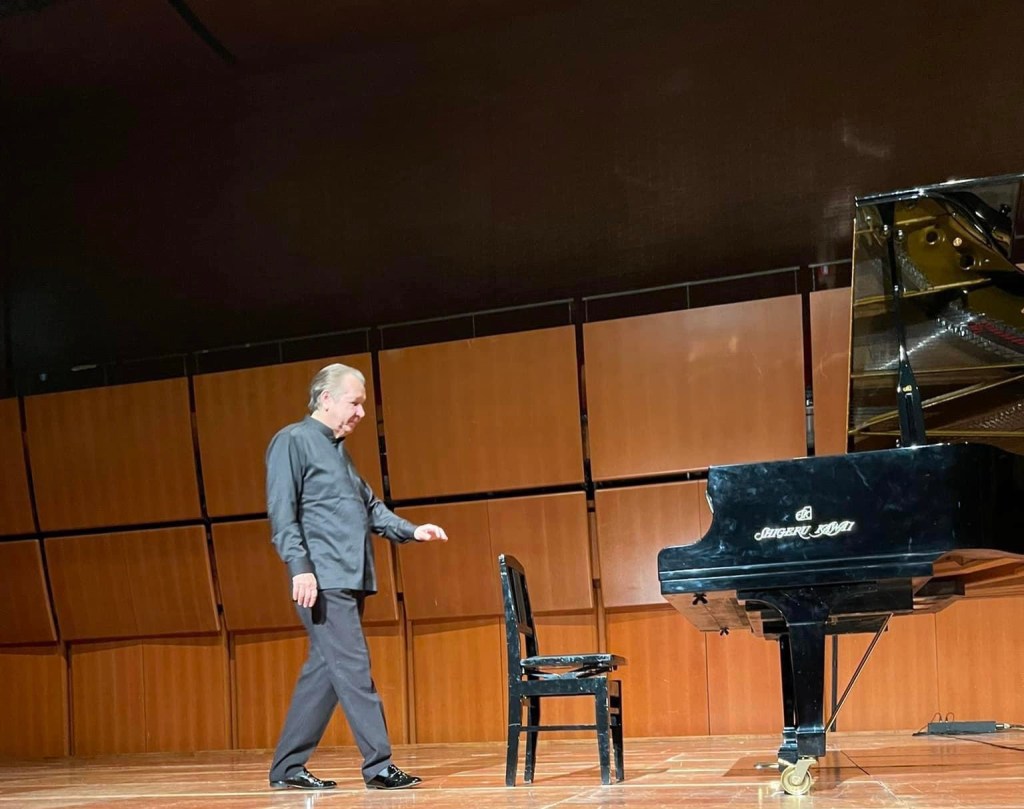
Mikhail Pletnev in Rome – the return of De Pachmann – Fake,fool or genius?

lunedì 12 dicembre ore 20.30
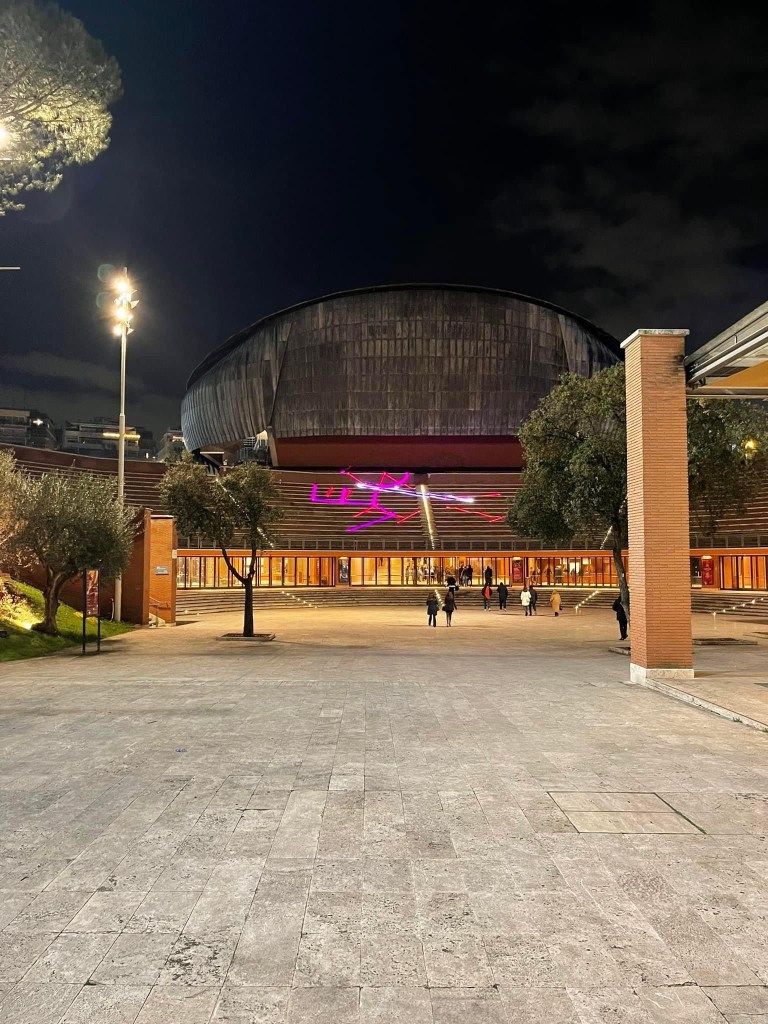
Auditorium Parco della Musica Ennio Morricone – Roma

https://christopheraxworthymusiccommentary.com/2022/07/25/mikhail-pletnev-in-verbier-fakefool-or-genius/

It was in the encore teasingly offered to an enthusiastic public that the art of Milhail Pletnev was summed up.
I mean the Pletnev of today not the supreme virtuoso who had taken the world by storm with his triumph at the Tchaikowsky Competition in 1978.Not even the conductor that thanks to Gorbachev founded his Russian National Orchestra.I remember Gyorgy Sandor perplexed as to why one of the world’s finest virtuosi would want to become a conductor!
Life has turned full circle now and despite serious personal problems that it is rumoured were only resolved thanks to Putin’s personal intervention,Pletnev has become a recreator of the music he chooses to play.
Certainly the great musician is still present as could be seen with his recent Masterclasses of the Geza Anda Foundation.Classes on conducting from the keyboard with four of the finest young pianists of their generation.The pearls of wisdom and technical expertise will not be forgotten by all those that were present on line.
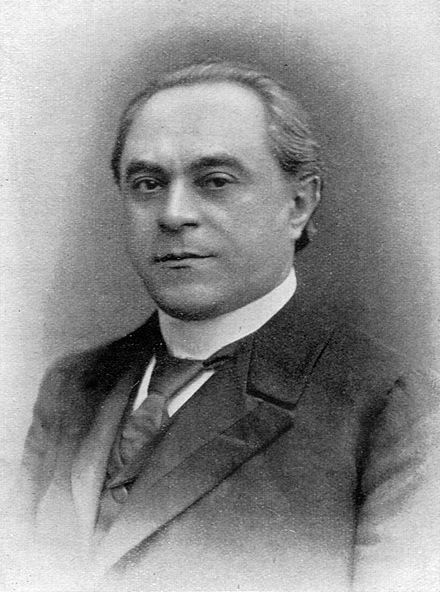

Recreation is something all artists crave for and some succeed in their Indian Summers .With their by now intimate knowledge of the repertoire and a lifetime of delving deep into the secrets of the piano.They manage to combine absolute fidelity to the composers indications as is their legacy written on the page but with a sense of naturalness and discovery in an almost improvisatory way.
Kempff,Fischer and Rubinstein come to mind.


There is another school that think it is the inspiration behind and beyond the notes that should be the criteria.Taking the notes and using them to create what they think was the inspiration of the composer in that moment.This was epitomised by artists such as De Pachmann and these days by many artists from the East ,until recently deprived of access to historic archives or the recordings of the masters .De Pachmann used to famously talk to the public whilst he was playing to keep them informed on how the performance was proceeding. https://youtube.com/watch?v=xREDG_KggLE&feature=share

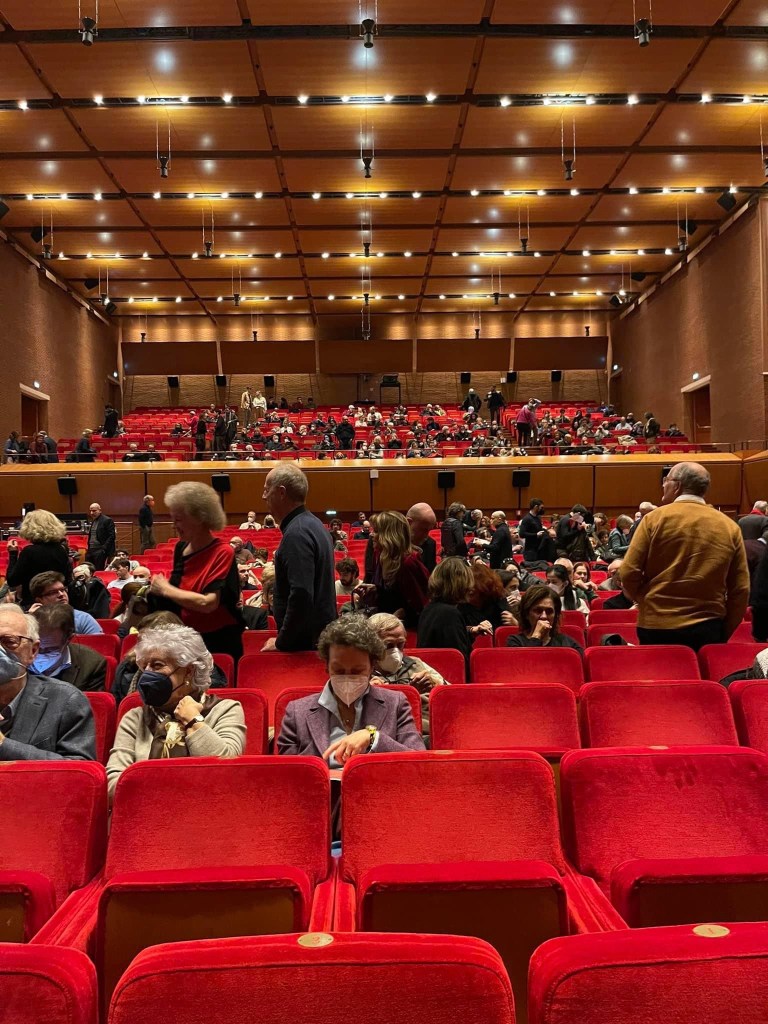
The Sala Sinopoli – the second largest of the three halls that make up the Parco della Musica of Renzo Piano

There is a line,which can even be very fine,between the interpreter and the entertainer and it can be a subject of heated debate.
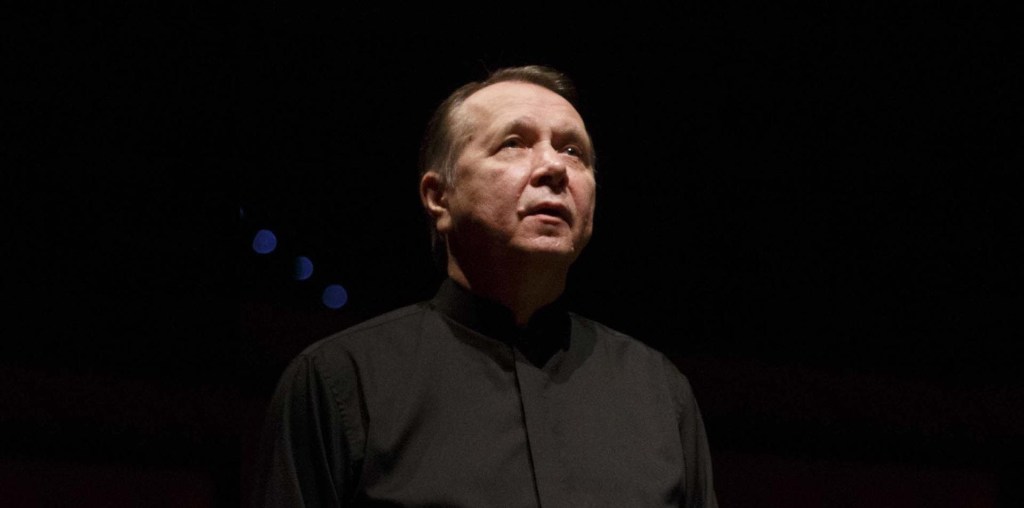
Karl Ulrich Schnabel on encountering a prize student from the East who followed this recreational method exclaimed :’Ah so you are a composer.You take the notes of Beethoven and use them for your own creation !‘ Charles Rosen,the great musicologist and also great pianist ,a student of Moritz Rosenthal,simply exclaimed :’he plays like a whore !’ That young student has now become a star having created various scandals in International competitions.Once he even walked off the stage during a competition because he was not happy with how he played.Another shot to fame over night when a famous jury member resigned over the fact that such a star pianist had not been admitted to the final round of the competition.They are convinced of the path they have taken and on occasion can be convincing .Alas they are not artists of integrity and honesty ready to suffer in their quest to find the real meaning behind and beyond the notes of the composers they are trusted to interpret.The difference is between interpreter or entertainer !

‘To be or not to be that is the question!’


Pletnev is somewhere in between.A perfect miniaturist in the style of many great virtuosi of the Golden Age of Piano Playing.But with a larger canvas,as recently with Beethoven op 110 and 111 in Florence,chooses not to see the wood for the trees .
https://christopheraxworthymusiccommentary.com/2020/02/16/the-return-of-a-legend-pletnev-in-florence/

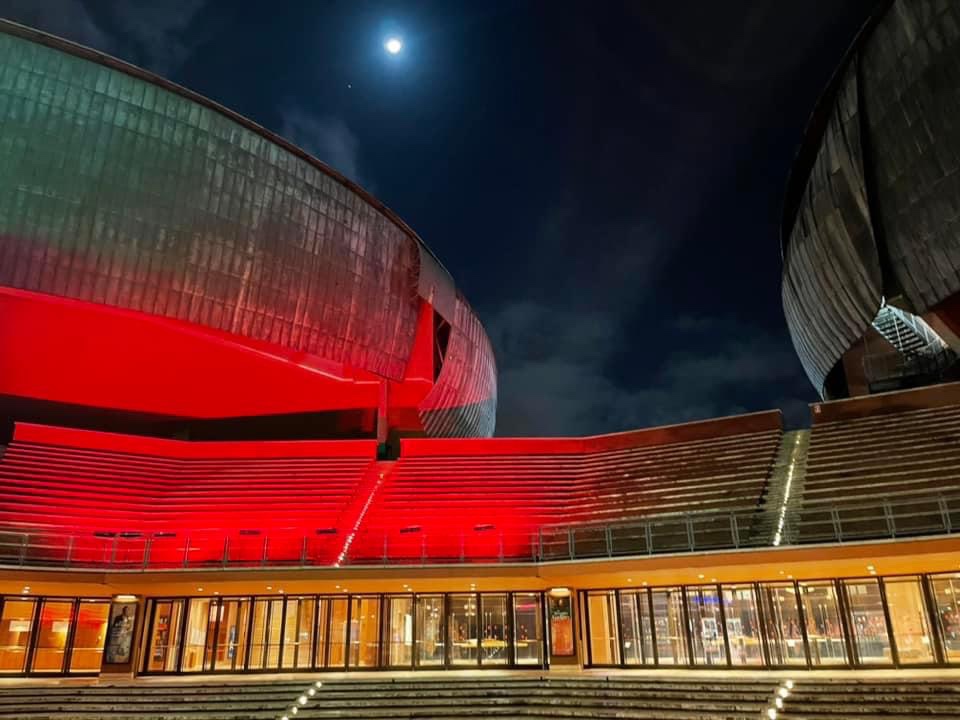
Rome’s glorious Parco dell Musica created by Renzo Piano

This sort of multifaceted searching for hidden sounds and colours is exactly what Jazz pianists are so good at.Not being tied to the interpretation of the music of others they are free to improvise and search deep in the piano for the kaleidoscope of sounds that are hidden inside.They can be found with the skill of a illusionist adding a palette of colours and shapes and giving a new dimension,a minefield,that the classical trained musician dares not risk.


And so it was with his encore that he teasingly indicated to the public would be the only one as he was already too tired from this long programme.The famous Nocturne op 9 in E flat by Chopin was played with teasing half lights contrasting with operatic projection.Fiortiori that would have done Caballé proud .But above all a sense of balance that allowed the musical line to shine with ravishing beauty.Whispered secrets contrasting with chiselled projection as the spotlight fell capriciously wherever Pletnev chose to point it.Pointillist indeed like an artist ready to point his brush and illuminate hidden corners with the eyes of an artist of exquisite sensibility.
And so it was today with a programme of miniatures alternating Brahms with Dvorak.An epic performance of the Rhapsody in B minor by Brahms with the occasional discreetly added bass notes that just opened up the possibility of even more subtle sounds.(Nelson Freire did that at the opening of the Chopin F minor concerto in the Albert Hall – placing a deep bass note just added to the sonority of the high first entry of the piano.Rubinstein too would very discreetly,in live performance,add a bass note to open up the sound of the piano in the high register and project the sound more fully in vast opera houses with their natural sound and not the acoustically assisted sound of most modern concert halls).I was once shown around ‘La Fenice’ theatre in Venice and told that under the orchestral pit there was one and a half meters of glass that was known to reflect the sound naturally into the hall.Actors too used to have a diaphragm that’s could project the voice with the same intensity to the first row as to the last or even the ‘Gods’ (loggione or paradiso).Nowadays the actors have a microphone !All this to say that there is much to learn from an artist of Pletnev’s stature who is also searching for natural sounds.Recreating the music,keeping it alive and fresh.Gilels famously likened recorded and live performances to fresh or canned food.Today many performances reproduce what one can find on their CD’s .The element of the audience adding another exciting dimension to the performance is lost in their quest for what they consider perfection.If only they too would listen and learn from artists such as Cortot or Fischer !

Of course the choice of programme is very important for the true artist.It is their canvas on which they share their voyage of discovery.Today Pletnev showed us a very interesting side to Dvorak of piano miniatures many of which are tone poems of great character and beauty.Grieg Lyric pieces are sometimes included in programmes and much loved by great pianists.Dvorak is almost unknown as a composer for piano except for his gargantuan concerto for Piano and Orchestra that sometimes features in concerts .Richter chose it for his debut in London in the 60’s and went on to make a famous recording with Kleiber.

https://christopheraxworthymusiccommentary.com/2022/11/22/leif-ove-andsnes-mastery-at-the-wigmore-hall/

Leif Ove Andsnes just played the complete Poetic Tone Pictures op 85 in London and has recorded them recently too.To play them all in one is a big mistake as they are such concentrated tone poems that together their individuality cannot be immediately appreciated.Pletnev today realised that and played just a carefully selected group that with his sense of colour and characterisation was the revelation of the evening.

https://christopheraxworthymusiccommentary.com/2021/02/16/pletnev-in-bari-streaming-of-ravishing-beauty-and-seduction/

Vladimir de Pachmann or Pachman (27 July 1848 – 6 January 1933)Pachmann was born in Odessa,Ukraine as Vladimir Pachmann. The von or later de as was most probably added to his name by himself. Pachmann was one of the earliest performers to make recordings of Chopin,beginning in 1906 with recordings for the Welte-Mignon reproducing piano and in 1907 for the gramophone.He was also famous for gestures, muttering and addressing the audience during his performances characterised as the “playfulness of his platform manner”.Critic James Huneker called him the “Chopinzee”, and George Bernard Shaw reported that he “gave his well-known pantomimic performance, with accompaniments by Chopin.”In April 1884 Pachmann married the Australian-born British pianist Maggie Okey (Annie Louisa Margaret Okey, 1865–1952), who was later known as Marguérite de Pachmann. They did concert tours of Europe together and had three sons – Victor, who died in infancy, Adriano and Leonide (called Lionel). The marriage ended after seven years.

Vladimir de Pachmann died in Rome in 1933, aged 84.

lunedì 12 dicembre ore 20.30
Auditorium Parco della Musica Ennio Morricone – Roma

pianoforte Mikhail Pletnev

Brahms Rapsodia op. 79 n. 1
Dvořák Minuetti
Dvořák Eclogue e Allegro
Dvořák March
Brahms Intermezzo op. 118
Dvořák 4 Humoresques
Dvořák Eclogue
Brahms Tre Intermezzi op. 117
Dvořák Eclogue
Dvořák Moderato in la maggiore
Brahms Ballata in sol minore, op. 118 n. 3
Dvořák Quadri Poetici: selezione

Continua la sfilata delle grandi star del pianoforte con il ritorno di Mikhail Pletnev, vincitore nel 1978 del celebre concorso pianistico Čajkovskij di Mosca, e che da anni si esibisce anche come direttore orchestra, oltre ad essere un raffinato compositore. Nella sua lunga carriera è stato ospite delle maggiori sale del mondo; a Santa Cecilia debuttò nel lontano 1981 mentre la sua ultima presenza risale al gennaio del 2016.
Dotato ditecnica brillante e capace di interpretazioni che uniscono istinto e razionalità, nel concerto in programma nella stagione da camera Pletnev accosterà la produzione pianistica di un gigante come Johannes Brahms a quella meno nota e di rara esecuzione di Antonin Dvořák, di cui Brahms fu amico e sostenitore e al quale fece anche ottenere una borsa di studio statale a Vienna nel 1875, oltre a fornirgli egli stesso aiuto economico. Pletnev eseguirà celebri brani come la Rapsodia op. 79 n. 1, gli Intermezzi op. 117 che trasudano commozione e che Brahms definì la “ninna-nanna dei miei dolori” e una selezione dai Sei pezzi per pianoforte op. 118. I brani verranno intervallati dalle composizioni del boemo Dvořák, pagine dal linguaggio fresco e animate dal folklore, come le Humoresques op. 101, i Quadri poetici, composti nel 1889 e forse tra le composizioni più avvincenti del compositore, e il Moderato in la maggiore.

Christmas is coming to Rome next week

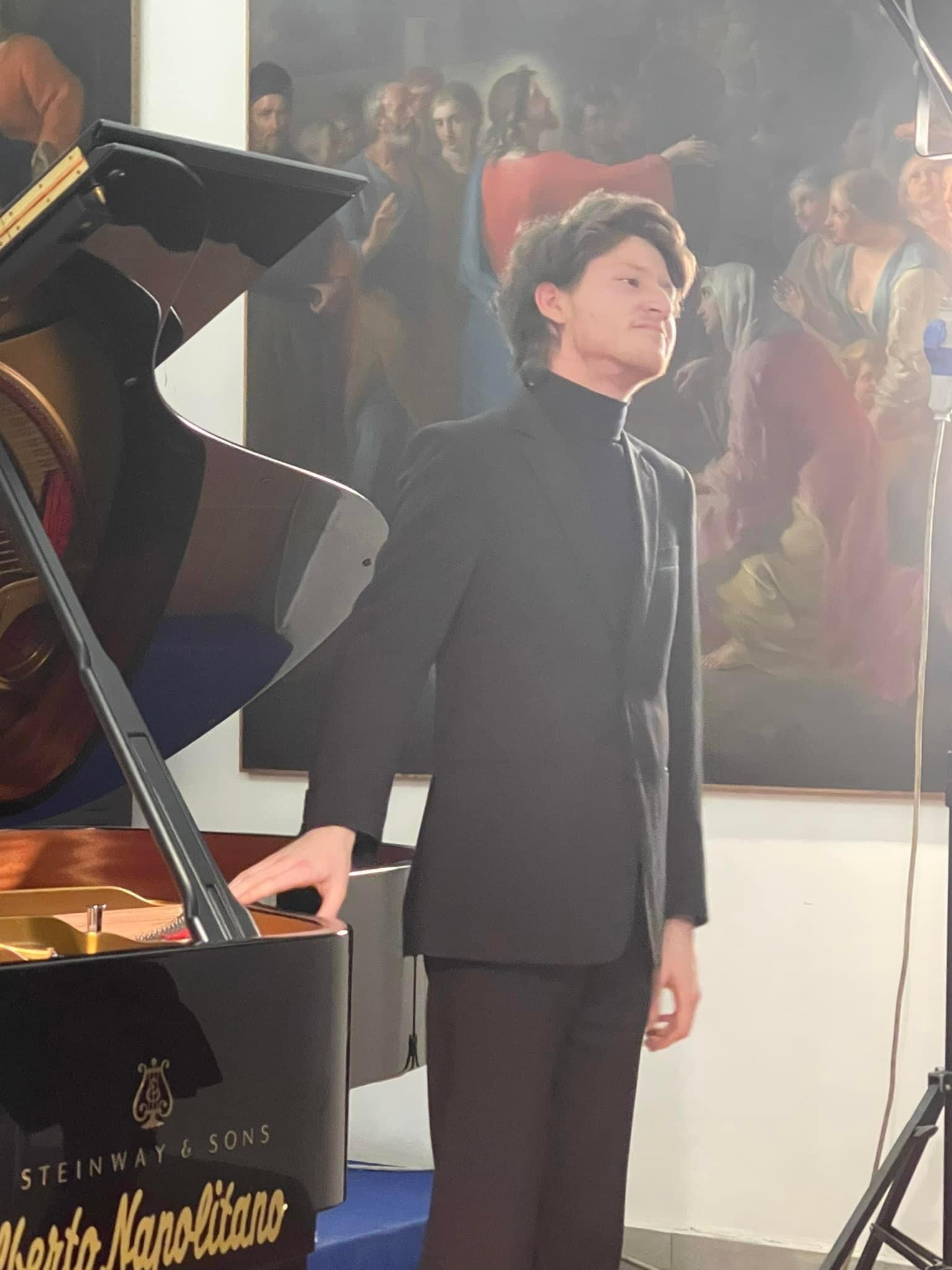
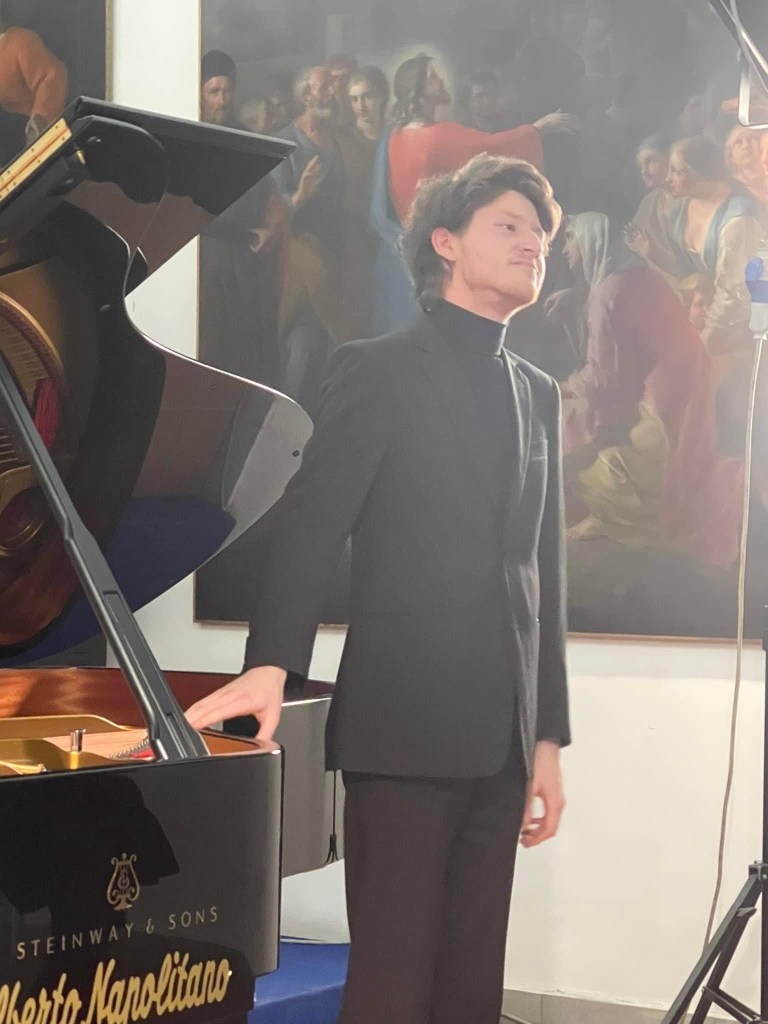
Emanuil Ivanov in Capua the bells of their 100 churches tolling brightly -ignited by his mastery and dedication

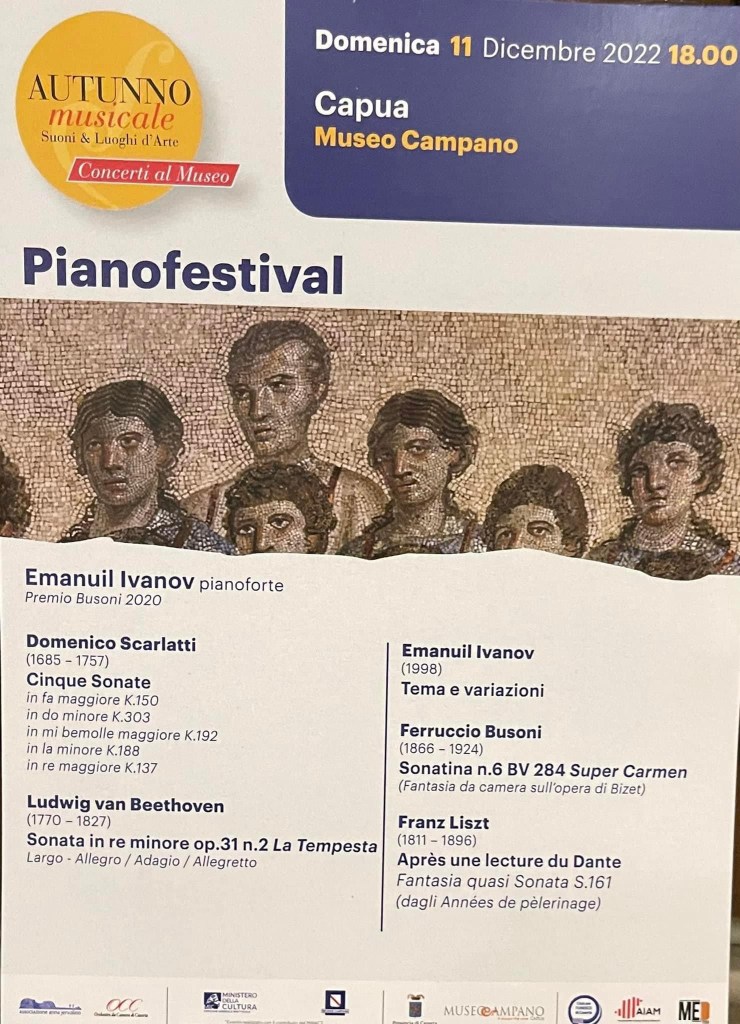
PIANOFESTIVAL

Emanuil Ivanov. Premio Busoni 2020

Domenico Scarlatti (1685 – 1757). Cinque Sonate:F major K.150 ;in C minor K.303 ;B flat major K.192; A minor K.188; D major K.137

Ludwig van Beethoven (1770 – 1827)

Sonata n.17 in D minor op.31 n.2 ‘Tempest’. Largo – Allegro; Adagio ;Allegretto

Emanuil Ivanov. (1998)

Tema e variazioni

Ferruccio Busoni. (1866 – 1924)

Sonatina n.6 BV 284 / Super Carmen (Fantasia da camera sull’opera di Bizet)

Franz Liszt (1811 – 1896)

Après une lecture du Dante – Fantasia quasi Sonata S.161 (dal secondo volume degli Années de pèlerinage)

The bells were certainly tolling brightly in the city of 100 churches as Emanuil Ivanov took Capua by storm.
A recital of scintillating piano playing of dynamic energy and passion that was truly overwhelming.
His extraordinary technical command though was always at the service of the music he was playing.
A scrupulous attention to Beethoven’s indications turned the ‘Tempest’ sonata into a declaration of the sturm und drang of the composers tormented soul.
Startling contrasts from the opening flourish that was played with such delicacy and concentration. The opening phrases perfectly shaped but rudely interrupted by tumultuous outbursts and beseeching replies.
Even Beethoven’s pedal indication in the recitativi were scrupulously ‘interpreted ‘.

Barely touching the keys with the right hand whilst his left rested above the keyboard.Emanuil crouched over the keys listening to the magically evocative sounds that reverberated in Beethoven’s soul.The magic only awoken by menacing staccato chords before bursting into flames ….the same fearful flames that were to ignite Liszt’s Dante Sonata that closed this cyclic concert programme.
The reverberation of the final bars that like his final thought in op 111 was a chord made to live with a long held pedal that was a mere vibration to the final pianissimi chords.
The weight he gave to the Adagio in what he revealed as a beautiful chorale with comments above and below was a revelation of clarity and musical vision.
I have never heard it so clearly expressed since Ashkenazy’s magical account of the op 31 sonatas together with two books of Chopin Studies taking London by storm half a century ago.I still remember this very movement as I will Emanuil’s today.The astonishing orchestral clarity of the vibrations of notes with such dry sterile clarity with the sumptuous Philadelphian string sound of the chorale.Even more extraordinary was the final bar with no ritardando but so wonderfully shaped with the final bass B flat barely touched to close this remarkable statement.
The infectious forward impulse of the Allegretto was accompanied by a dynamic drive .This was Beethoven with a capital’B’.Sforzandi like gun shots such was the surprise of the contrast from the mellifluous gentle flow and even music box colours to a most tumultuous rhythmic insistence.
When I saw this Sonata on his programme I was not expecting to be totally overwhelmed by a performance of such identity and character.In Capua today it was restored to its place amongst the greatest of Beethovens thirty two sonatas.Hallelujah!


The concert had opened with five Scarlatti sonatas with all the ritornelli as with Beethoven scrupulously observed which meant the Scarlatti was not the usual ’opener’. Like the great musician Emanuil has become,the Scarlatti Sonatas were given a weight and character that brought these gems vividly to life.With the elegance and crystalline clarity and ornaments like well oiled springs.Bright lights ignited as the light touched this prism of digital perfection in K.303 with trills of delicacy and brilliance like jewels shining with the question and answer between the hands.The Imperiously busy K.192 almost Haydnesque in its operatic characterisation.There was a joyous outpouring of rhythmic energy in K.137 played with burning intensity and drive.

When I heard Emanuil rehearsing just before the concert I exclaimed ‘so you are playing a jazz encore too’.’No it is my theme and variations’ he exclaimed.And what a beautifully shaped work it is with the subtle colouring of the mellifluous theme played with the sumptuous colours that Jazz pianists seem to be born to find often more than classical trained musicians.It is a freedom to experiment with colour and sounds that was immediately noticeable.A theme that returned so beautifully at the end after some variations of hair raising brilliance and quixotic character.It was the perfect foil for Busoni’s Carmen Fantasy that burst on the scene with a brilliance like a gust of wind suddenly blowing over the keys bustling and vibrantly alive .Giving way to the sumptuous tenor melody – con amore dolcissimo cantando – accompanied by jeux perlé cascades of notes and a hair raising Habanera of astonishing delicacy and brilliance.A build up to the complete brass band – quasi Tromba- of excitement before waves of notes spread over the keyboard taking us to the final tragic scene -Andante visionario – that was played with orchestral colour of heartrending beauty.The final staccato chords over a long held note were the perfect way to close this astonishing miniature tone poem .This was Busoni’s flurry at looking back with nostalgia to the world of the virtuoso before Liszt’s final prophetic years looking to the future that heralded the real birth of his true heir,Busoni.

The Dante Sonata was overwhelming in Emanuil’s complete identification with a world from the Inferno to Paradiso.Astonishing tumultuous sounds contrasted with intimate secrets.With never a light on his astonishing virtuosity as it was a story he was telling with total commitment and astonishing youthful passion.

We were witness today to one of the most remarkable reincarnations of what it must have been like to hear the master himself recount in music the world of Dante.

By great request from a discerning audience in this unique Museo Campano Emanuil let leash one of the most astonishing feats of pianism I have ever heard in public.The Rondo Toccata by the Georgian composer Revaz Laghidze.I have not heard the like since as a boy I used to listen astonished to the improvisations of Cziffra.’A Maiden’s Wish’ the transciption of Chopins Polish Song was a second encore of scintillating subtlety with passionate mellifluous outpourings of beauty that I have not heard since Moritz Rosenthal’s historic recording from the ‘Golden Age of Piano Playing’

Revaz Laghidze

Revaz Laghidze was a famous Georgian composerwho was born in 1921 in Bagdadi district. In 1939, he graduated from Tbilisi IV Music School, after which he continued his studies at the Vano Sarajishvili Tbilisi State Conservatoire.He died in 1981 in Tbilisi,Georgia

I had been impressed by Emanuil’s digital clarity in Bolzano when he gave a ‘short back and sides’ performance of Brahms Handel Variations that missed the colour and weight of orchestral sound .His prize winning performance of Saint Saens second concerto where his scintillating trills and clarity were quite extraordinary. https://christopheraxworthymusiccommentary.com/2019/09/07/viva-busoni-the-final-parts-1-2-3-with-interlude/
Three years on Emanuil has matured into a master musician using his phenomenal digital dexterity to enlighten the composers message.


It has been inspiring to see his gradual maturity from the extraordinary streamed recital in a La Scala ,emptied by the pandemic, https://christopheraxworthymusiccommentary.com/2021/02/27/emanuil-ivanov-at-la-scala-to-the-glory-of-god-and-beyond/. To a recital he gave at Steinways in London for the Keyboard Trust. https://christopheraxworthymusiccommentary.com/2022/10/16/emanuil-ivanov-at-steinway-hall-for-the-keyboard-trust/

His mentor Pascal Nemirovski has often thanked me for my comments on Emanuil’s playing but it is we that should thank him for allowing brilliant young pianists to mature,keeping their own personality as they dedicate their youth to the interpretation of great art.

The Piano Sonata No. 17 in D minor, Op. 31, No. 2, was composed in 1801–02 and is usually referred to as The Tempest (Der Sturm ), but the sonata was not given this title by Beethoven, or indeed referred to as such during his lifetime. The name comes from a reference to a personal conversation with Beethoven in which Schindler reports that Beethoven suggested, in passing response to his question about interpreting it and Op. 57, the Appassionata sonata ,that he should read Shakespeare’s Tempest .Some however have suggested that Beethoven may have been referring to the works of C.C. Sturm, the preacher and author best known for his Reflections on the Works of God in Nature, a copy of which he owned and, indeed, had heavily annotated.

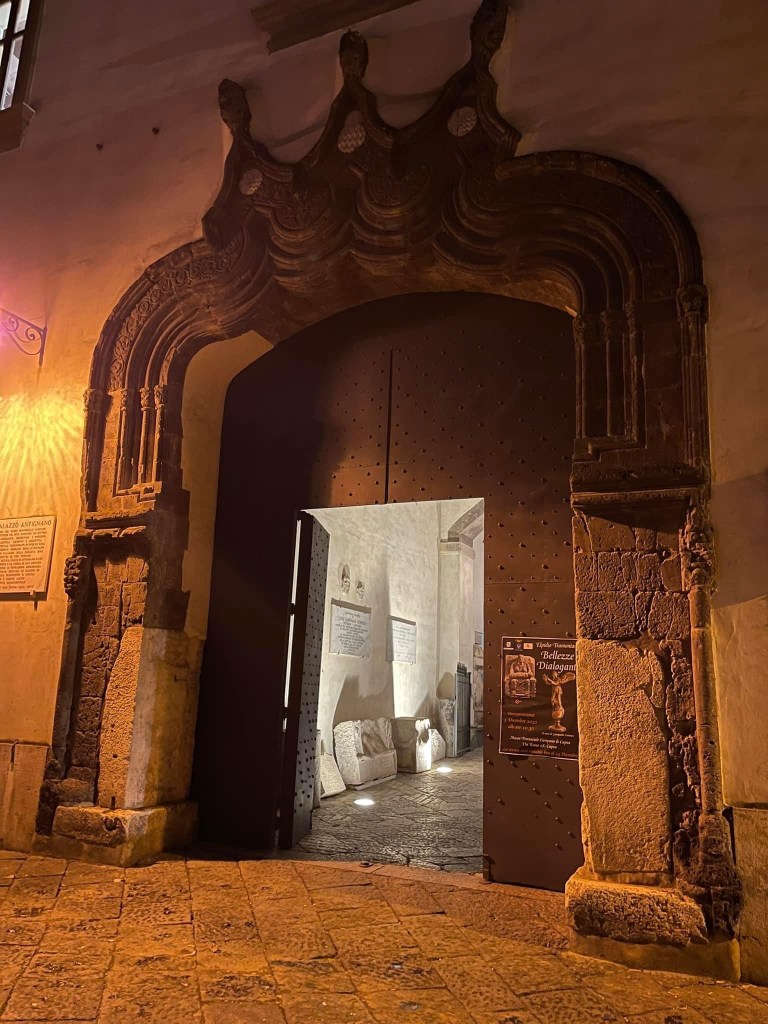
The imposing entrance to the Capua ‘Museo Campano’

In Busoni’s hands Bizet’s masterpiece is sculpted with breathtaking creativity. This re-imagining forms the basis of Busoni’s sixth sonatina, the Kammer-Fantasie uber Carmen completed in 1920. It was premiered by the composer in the same year at Wigmore Hall. The work takes its thematic material from the opening chorus of the fourth act, Don José’s ‘Flower song’ in Act II, the Act I ‘Habanera’ (in its minor and major forms), and the prelude to Act I. The Kammer-Fantasie über Carmen bears all the Busoni hallmarks:

Après une lecture du Dante: Fantasia quasi Sonata (French for After a Reading of Dante: Fantasia quasi Sonata; also known as the Dante Sonata) is a sonata in one movement , completed in 1849 and was first published in 1856 as part of the second volume of his Années de pèlerinage (Years of Pilgrimage) and was inspired by the reading of Dante Alighieri’s Divine Comedy.The Dante Sonata was originally a small piece entitled Fragment after Dante, consisting of two thematically related movements, which Liszt composed in the late 1830s.He gave the first public performance in Vienna, during November 1839.When he settled in Weimar in 1849, he revised the work along with others in the volume, and gave it its present title derived from Victor Hugo’s own work of the same name.

Emanuil Ivanov attracted international attention after receiving the First prize at the 2019 Ferruccio Busoni Piano Competition in Italy. This achievement was followed by concert engagements in some of the world’s most prestigious halls including Teatro alla Scala in Milan and Herculessaal in Munich.Emanuil Ivanov was born in 1998 in the town of Pazardzhik, Bulgaria. From an early age he demonstrated a keen interest and love for music. He regards the presence of symphonic music, especially that of Gustav Mahler, as tremendously influential in his musical upbringing during his childhood. He started piano lessons with Galina Daskalova in his hometown around the age of seven. He later studied in and graduated from the Bertolt Brecht language high school in Pazardzhik. Ivanov studied with renowned bulgarian pianist Atanas Kurtev from 2013 to 2018. He is currently studying on a full scholarship at the Royal Birmingham Conservatoire under the tutelage of Pascal Nemirovski and Anthony Hewitt.Ivanov has won prizes in competitions such as “Alessandro Casagrande”, “Scriabin-Rachmaninoff”, “Liszt-Bartok”, “Young virtuosos” and “Jeunesses International Music Competition Dinu Lipatti”. He was also awarded the honorary Crystal lyre and the Young Musician of the Year Award – some of the most prestigious awards in Bulgaria. In 2022 he received the honorary Silver Medal of the London Musicians’ Company and later in the same year became a recipient of the Carnwath Piano Scholarship.His participations in masterclasses include those of Dmitri Bashkirov, Dmitri Alexeev, Stephen Hough, Vladimir Ovchinnikov, Peter Donohoe, etc.
In February 2021, at the height of the Covid-19 pandemic, Ivanov performed a solo recital in Milan’s famous Teatro alla Scala. The concert was live-streamed online and is a major highlight in the artist’s career.Emanuil Ivanov has also performed at many festivals in Bulgaria and has also given solo recitals in France, Italy, Germany, Austria, Cyprus, South Africa, the United Kingdom and Poland. He has played with leading orchestras in Bulgaria and Italy.

With Antonino Cascio and wife Artistic director and President of Autunno Musicale – autunnomusicale .com

Nel 2019 si è affermato in due tra i più importanti concorsi pianistici internazionali, ottenendo il Primo Premio al Concorso Busoni di Bolzano e il Secondo Premio al Casagrande di Terni.Precedentemente era stato premiato in vari concorsi – Vivapiano, Scriabin-Rachmaninoff, Viktor Merzhanov, Pavel Serebryakov, Liszt-Bartók, Young virtuosos e Jeunesses International Music Competition Dinu Lipatti a Bucarest, e il secondo premio al Concorso Chopin di San Pietroburgo.È stato anche insignito di alcune tra le più prestigiose onorificenze bulgare: la Lira di cristallo e il Premio Young Musician of the Year; nel 2022, inoltre, ha ricevuto la medaglia d’argento della London Musicians’ Company e la Carnwath Piano Scholarship. Ha studiato con Galina Daskalova e con Atanas Kurtev, si è perfezionato al Birmingham Royal Conservatory con Pascal Nemirovski e Anthony Hewitt ed ha partecipato a masterclass di Dmitri Bashkirov, Dmitri Alexeev, Andrzej Jasinski, Vladimir Ovchinnikov, Ludmil Angelov, Pavel Egorov. Ha tenuto concerti in Bulgaria, Italia, Austria, Regno Unito, Germania, Francia e Polonia, Russia, suonando in sale prestigiose, tra cui il Teatro alla Scala di Milano, La Fenice di Venezia, l’Herkulessaal di Monaco nonché al Festival Moscow meets friends. Ha suonato con l’eminente pianista bulgaro Ludmil Angelov al Palazzo Reale di Varsavia e ha debuttato a Sofia con la Classic FM Symphony Orchestra diretta da Grigor Palikarov, nonché con le migliori orchestre italiane e bulgare.

Antonino Cascio who will be conducting Bruno Canino in works by Giovanni Simone Mayr at the Reggia di Caserta -Cappella Palatina on 26th December with the Orchestra da Camera di Caserta founded by the remarkable Cascio family .
Johann(es) Simon Mayr (14 June 1763 – 2 December 1845), was a German composer . His music reflects the transition from the Classical to the Romantic musical era. He was an early inspiration to Rossini and taught Donizetti.He moved to Bergamo in 1802 and was appointed maestro di cappella at the Cathedral of Bergamo, succeeding his old teacher Lenzi. He held the post until his death, and became a central figure, organizing concerts and introducing Beethoven’s music there. By the end of his life, he was blind . He died in Bergamo and is buried in the Basilica di Santa Maria Maggiore there, just in front of the tomb of his famous pupil.
Mayr’s works, among which there are almost seventy operas, are rarely performed today.
https://christopheraxworthymusiccommentary.com/2022/09/14/the-gift-of-life-the-keyboard-trust-at-30/

Adam Heron delights in Dulwich with Schumann Piano Concerto review by Angela Ransley


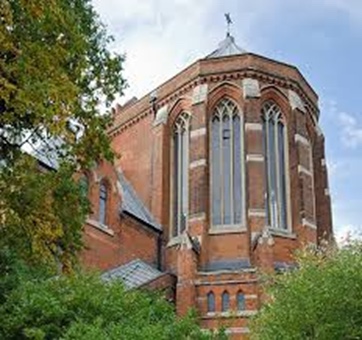
                                                  All Saints West Dulwich

The Dulwich Symphony Orchestra brought its 2022 season to a triumphant close with a performance of three 19th century favourites: Berlioz Carnaval Romain, Schumann Piano Concerto and Tchaikovsky’s fervent Symphony no 2. The evening concert was conducted by Dwight Pile-Gray, with the Keyboard Trust’s own Adam Heron as soloist before a packed house.


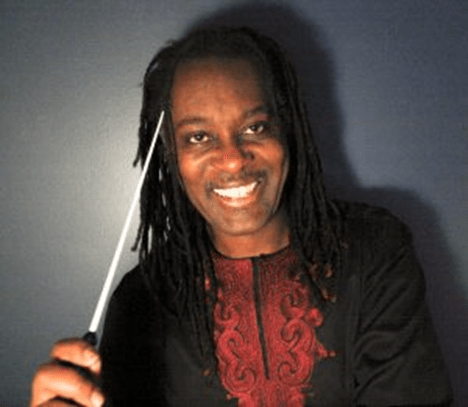
Dwight Pile-Gray

Adam responded to the many pianistic demands of this densely-written Concerto with, by turns, finely-detailed articulation, soaring melodic lines and forthright conviction. Most notable was how Dwight Pile-Gray skilfully wove soloist and orchestra into close musical dialogue – ‘like chamber music’, as Adam noted later. During the long solos, the players maintained their rapt involvement. The verdict was both rapturous and unanimous: ‘It’s my favourite concerto! ‘Adam must return!’.


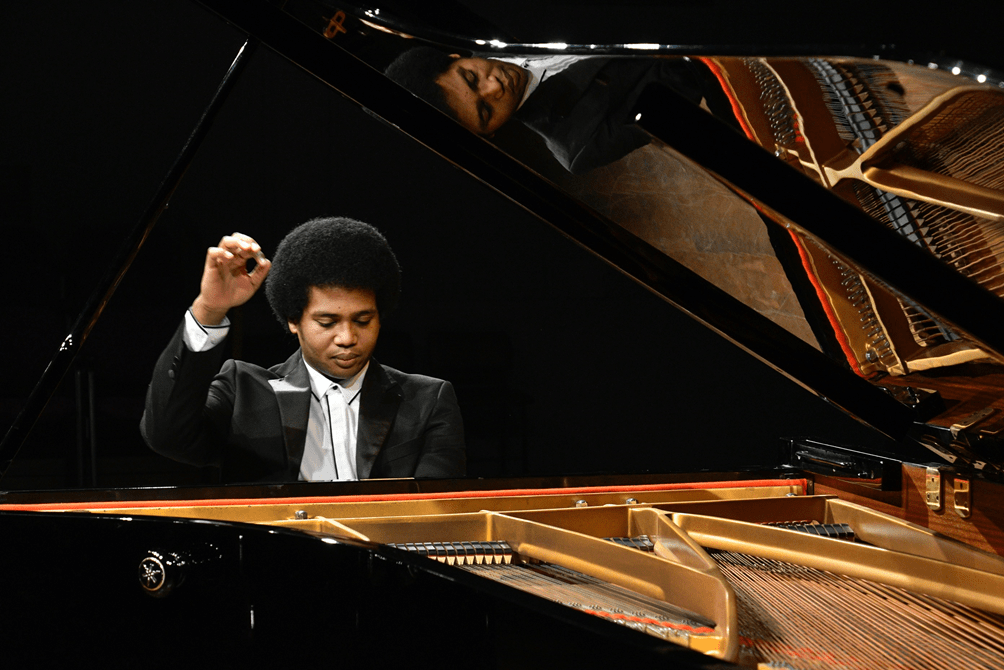
                                                          Adam Heron

Two other features of the programme extended our horizons. It was a special fundraising concert in aid of the British Red Cross Ukraine Crisis Appeal. Prayer for Ukraine by Mykola Lysenko was performed most movingly in its original 1885 version – and in Russian – by the All Saints Choir after which we heard a stirring version for orchestra arranged by the Music Director at All Saints, Ruth Holton.

We were also privileged to hear two outstanding artists who champion Black Classical Music. In a week where, sadly, racism has made news, I am happy to report that in West Dulwich, only the music  matters…..

Tchaikovsky’s sister went to live near Kiev after her marriage and Pyotr visited most years, finding the peace to compose and also inspiration in Ukrainian folk tunes, a number of which feature in his Symphony no 2. Its nickname Little Russian is no longer acceptable and was sensitively omitted from the programme. Dwight Pile-Gray drew a committed, passionate performance from the orchestra with fine solos from the woodwind and brass sections and thrilling pyrotechnics from the percussion.

Programme notes from Frances Barrett, Adam Heron and Jeremy Crump added vital information and this final message:

‘Our thoughts in playing this music are with those who have suffered, and our hopes are for peace to return’.

ANGELA RANSLEY IS DIRECTOR OF THE HARMONY SCHOOL OF PIANOFORTE AND LIVES IN WEST DULWICH.

Angela Ransley with John Leech co – founder of the Keyboard Trust

https://christopheraxworthymusiccommentary.com/2022/11/17/adam-heron-at-steinway-hall-for-the-keyboard-trust/

https://christopheraxworthymusiccommentary.com/2023/06/02/the-gift-of-music-the-keyboard-trust-at-30/

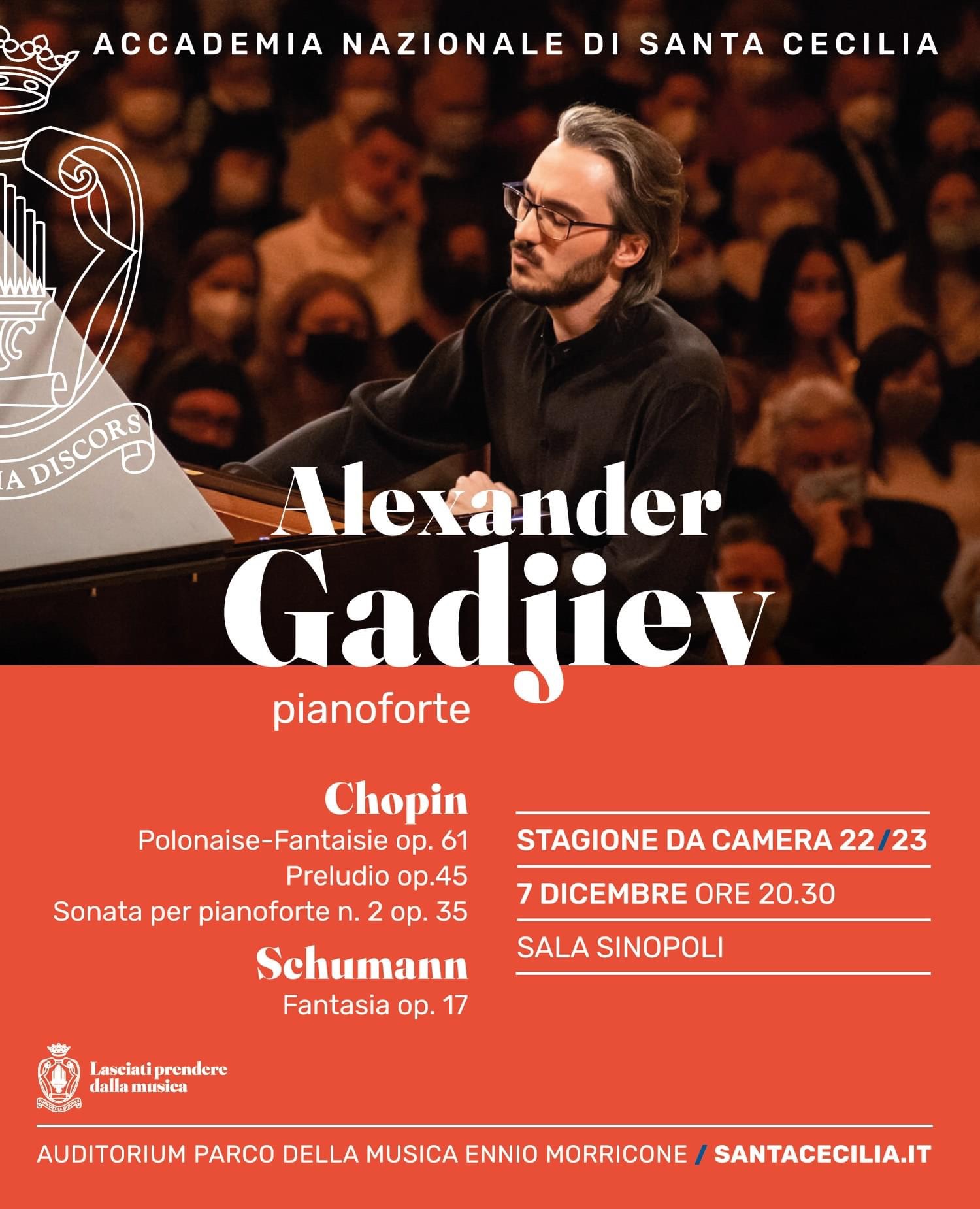
Alexander Gadjiev penetrates the soul of Chopin and Schumann and enraptures the Eternal City

A mysterious voice over the intercome was intent on creating the right atmosphere for the ritual that was about to unfold.
Imploring us to savour two minutes of absolute silence,in complete darkness,in preparation for the sounds we were about to receive -sounds were born before words we were told !


And out of the darkness a silhouette appeared as a shadow slowly advancing onto the stage and sitting at the piano as the light gently appeared.
The show was about to begin with the sounds of the poetically imperious chords of Chopin’s Polonaise Fantasy
This was just the introduction to Alexander Gadjiev’s rapturously received Rome debut for the Accademia di Santa Cecilia.


An interval where there was just time to swop over pianos -Fazioli for Chopin but Steinway for Schumann !
This for Alex was an adventure that he wanted us to share and be part of.

Alex’s companions on his voyage of discovery – two magnificent instruments Fazioli and Steinway with two different characters.
It was his mentor at la Chapelle : Louis Lortie who had written in the programme at the Wigmore hall in London that whereas Fazioli had the luminosity that is perfect for Chopin .Steinway and Bosendorfer have the rich darkness of the German classics.


His almost improvised freedom was allied to a search for sound and the inspiration that had ignited Chopin and Schumann in their moments of creation.
There were moments of ravishing sounds and washes of colour -has Chopin’s ‘wind over the graves’ ever sounded so impressionistic and terrifying?
Schumann’s youthful passion for Clara unbridled a red hot ‘ruin’ where the right hand was called into play to strike fear into Clara’s fathers refusal to acknowledge true love -a love that was to produce eight children!


But it was the solitary Prelude op 45 by Chopin that showed the true artistry of this young top prize winner at the last Chopin competition .
Sounds that spread like a flow of lava over the entire keyboard.Full of shifting harmonies but allowing a deeply expressive melodic line to unravel with sumptuous ease.
Alex had penetrated the soul of an audience who clammered for more after he had revealed the secret message that Schumann had woven into his greatest masterpiece.A message for his ‘distant beloved’ that Alex had so passionately portrayed.


Five encores and wanting more shows how successful Alex was in demonstrating that music can and must speak louder than words.
Could that voice in the darkness have been this poet of the keyboard that had so enraptured his fellow travellers tonight in the Eternal City?

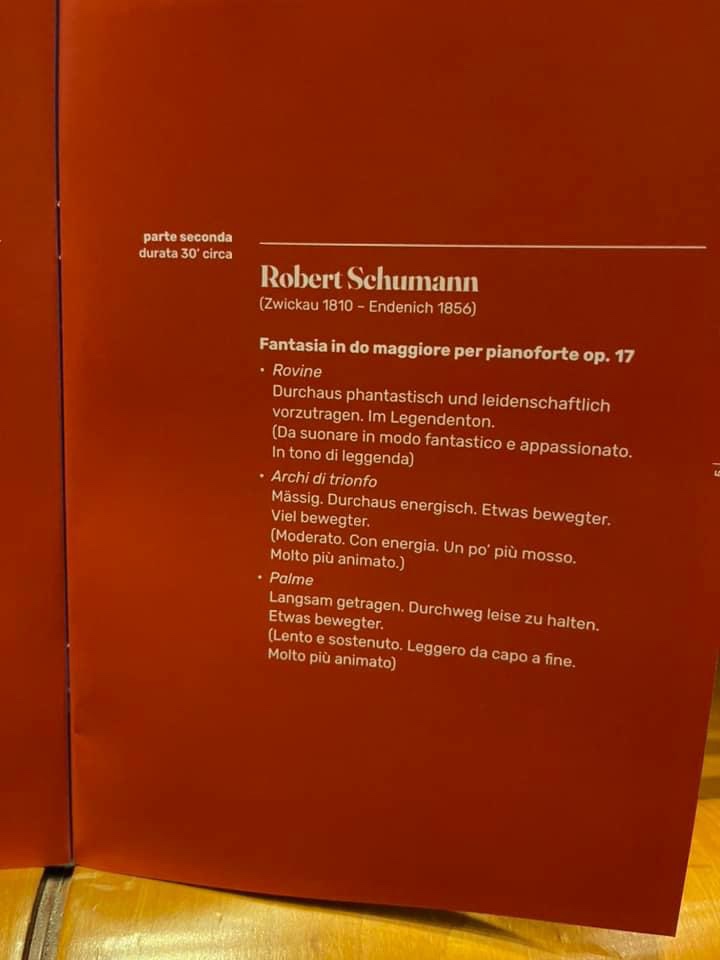
The red hot passion of the Schumann Fantasie.Written as an outpouring of love for his future wife Clara Wieck .Alex plunged in with a passion and savage rhythmic intensity that was quite overwhelming .The burning passion and unrelentless forward movement found momentary respite in the ‘Im legendenton’ played with such a mellifluous freedom that the bar lines ceased to exist as it built in tension to the true climax of this movement. The right hand once again found itself in foreign territory as it added to the enormous sonority being created.Schumann’s quote from Beethoven’s ‘An die ferne Geliebte ’ was played with great liberty and I wonder if Alex knows something more than is just printed in the score as the movement moved to it’s magical conclusion

The original title of Schumann’s work was “Obolen auf Beethovens Monument: Ruinen, Trophaen, Palmen, Grosse Sonate f.d. Piano f. Für Beethovens Denkmal”. The movements’ subtitles (Ruins, Trophies, Palms) became Ruins, Triumphal Arch, and Constellation, and were then removed altogether before Breitkopf & Härtel eventually issued the Fantasie in May 1839.Dedicated to Franz Liszt , who replied in a letter dated June 5, 1839: “The Fantaisie dedicated to me is a work of the highest kind – and I am really proud of the honour you have done me in dedicating to me so grand a composition” Liszt in return dedicated his B minor Sonata to Schumann – two pinnacles of the Romantic piano repertoire .The piece has its origin in early 1836, when Schumann composed a piece entitled Ruines expressing his distress at being parted from his beloved Clara Wieck (later to become his wife). This later became the first movement of the Fantasy adding later that year two more movements to create a work intended as a contribution to the appeal for funds to erect a monument to Beethoven in his birthplace of Bonn.So it was hardly surprising the imperious opening of Alex’s second movement – Triumphal Arch indeed .Although written mezzo forte in the score it was of truly orchestral proportions building unbelievably in sonority each time it reappeared.The beauty of the ‘etwas langsamer’came as a true relief from the relentless rhythmic drive and enormous sounds that Alex coaxed out of this beautiful Steinway piano.

An even greater relief was the pianissimo scherzando before the mighty build up to the infamous leaps that Schumann demands in the ‘più animato’coda.Even here there was a total command and authority that the transcendental difficulties just disappeared in a resonance of overwhelming power and majesty.

“Resounding through all the notes. In the earth’s colourful dream.There sounds a faint long-drawn note.For the one who listens in secret.”is the poem that prefaces the Fantasie and nowhere can it be more appropriate that in the final ‘Langsam getragen Durchweg leise zu halten’.The enormous sforzando E flat chord,ending the second movement,was allowed to die away before the magical opening in C major just seemed to appear from afar.I remember Agosti writing in my score ‘Cla …ra’over the long held A and G as a sign that this really was as Schumann wrote to Clara: ‘the most passionate thing I have ever composed – a deep lament for you.’They still had many tribulations to suffer before they finally married four years later.In Alex’s hands there was a continual outpouring of ravishing sounds always with deep,true feeling never for a second becoming sentimental or weak.The three carefully judged final chords brought this miraculous programme to a close ………or so we thought ……not counting on the generosity of this much loved artist.

Five encores of Debussy and Chopin.The octave and arpeggio study of Debussy were played with ravishing colours and a quixotic control that brought these late masterpieces vividly to life and were in fact the highlight of the concert.The waltz op 42 by Chopin was played with jeux perle nonchalance and charm.Two of the shorter Preludes from op 28 gave us the emotionally charged n.4 and the whispered charm of the shortest of them all n.7.

Around 1837 Chopin composed a Funeral March , a piece which most likely reflected the musician’s profoundly mournful mood following the breaking of his engagement to Maria Wodzińska. When he then went to the island of Majorca,at the end of 1838, he began to write a piece, Grave , which will later be the first movement of the sonata, and a Presto which will be the finale; this time in composing Chopin was influenced by the worsening of his illness and influenced by the gloomy ruins and cemetery of the Certosa di Valldemossa,certainly not cheerful visions in the pouring rain that gave no respite. The Scherzo was written when the musician returned to Nohant in the second part of 1839.

In a letter to his friend Fontana he wrote: “I am composing a Sonata in B flat minor in which the Funeral March that you already know will be found. There is an Allegro, then a Scherzo and, after the March, a small Finale, not very long, in which the left hand chatters in unison with the right hand”. In writing the Scherzo , the musician had thought of collecting the pieces already composed in a Sonata, perfecting and polishing them.

The Sonata in B flat minor was published in 1840 in Paris by Troupenas, later in Leipzig by Breitkopf & Härtel and in London by Wessel. The piece is one of the few by Chopin that does not feature a dedication, perhaps it was actually a tribute intended for George Sand, to be kept private. Contemporaries were rather baffled by this Sonata. In the first place Robert Schumann who, while recognizing the beauty of the piece, even found “something repulsive” in the Funeral March and defined the Finale as “something more like an irony than any other music”. Even Felix Mendelssohn, not understanding the modernity of the Finale, declared that he abhorred it.Later Vincent d’Indy even went so far as to argue that Chopin had chosen certain keys not for strictly musical reasons, but only for executive convenience. The Funeral March was performed, in the version orchestrated by Reber , together with the Preludes op. 28 no. 4 and 6, played by the organist Léfebure-Wély, at the composer’s funeral on 30 October 1849. Of the Sonata Schumann wrote: “It might be called a whim, if not a hubris, that he called it the Sonata , for he brought together four of his most bizarre creatures, to be smuggled under that name into a place where they otherwise would not have penetrated “. The Sonata op. 35 has also been taken to support the view of many critics that Chopin had found himself in difficulty with the sonata and its formal construction.Others have found the composition to be defective in poetic unity and continuity, constructed with limited technique, judgments based mostly on an outward view of the work rather than an examination of its content. It was interesting to note that in this performance Alex did Chopin’s repeat to the doppio movimento and not to the much debated introduction as he had done so miraculously in other of his performances I have heard.Tonight it obviously felt right for him to accept the traditional repeat rather than the much debated ambiguity of the original score.

The Polonaise Fantasie in A flat major, Op. 61, was published in 1846 with dedication to Madame A. Veyret. Its complex form, the fact that it displays characteristics of both a fantasie and a polonaise, its advanced harmonic development and technical level, made it a piece that was slow in gaining favour from pianists.Alex’s was a very poetically imperious performance with mists of sound and atmospheres.Perhaps a little too free with the final reverberations of the opening chords before the tumultuous build up to the glorious final outpouring of triumphant passion.But it was in the last few bars that he found the magic of Chopin’s final whispered gasps with the last bell note just allowed to toll with such luminosity.A bell that was already tolling with this last masterpiece from the pen of the poetic and genial innovator of the piano that was Fryderyk Chopin.

The Prelude in C sharp minor, composed at Nohant during the summer of 1841 and published in the autumn as a separate Opus (45). When sending the manuscript to Fontana for copying, Chopin could not hide his satisfaction, expressed in the words: ‘well modulated!’.The Prelude does not have an a priori form. It gives the impression of being a notated improvisation. The four opening bars set the mood. There follows a dreamy spinning-out of two slowly formed themes: the principal theme, in which the boundary between melody and accompaniment melts away in the overall sound, and a second theme in which the distinctness of the melodic contour holds sway over the colouring, emotions over impressions.The charms of pure sonority are brought by the cadenza, but that too swells towards emotional ecstasy. The opening theme returns, before dissolving away in softening strains.Chopin composed the Prelude in C sharp minor for the Paris publisher Maurice Schlesinger. At the beginning of October, in Paris, Fontana proofread the work. It appeared as Opus 45, with a dedication to Princess Elisabeth Czernicheff, one of Chopin’s pupils.

Alexander Gadjiev streamed live from the Wigmore Hall

Beethoven La Chapelle offers an Ode to Joy

Giovanni Bertolazzi- The mastery and authority of Liszt

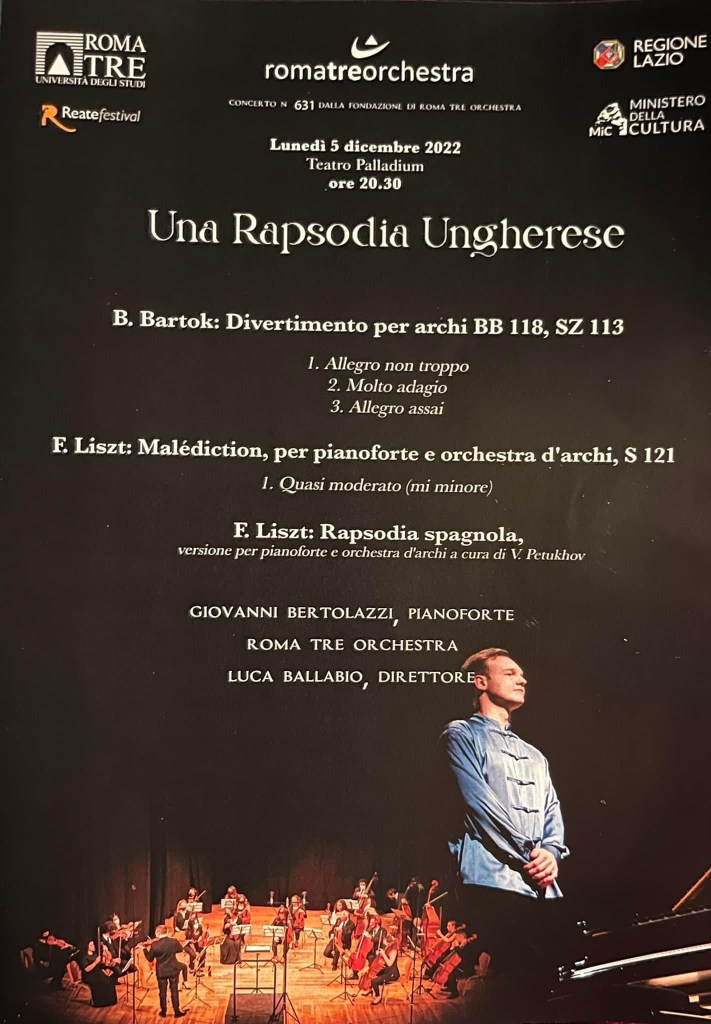
Domenica 4 dicembre in tournée a Rieti, per Reate Festival
Lunedì 5 dicembre ore 20.30 Teatro Palladium
Una Rapsodia Ungherese
B. Bartok: Divertimento per archi BB 118, SZ 113
F. Liszt: Malédiction, per pianoforte e orchestra d’archi, S 121
F. Liszt: Rapsodia spagnola, versione per pianoforte e orchestra d’archi a cura di V. Petukhov
Giovanni Bertolazzi, pianoforte
Roma Tre Orchestra
Luca Ballabio, direttore

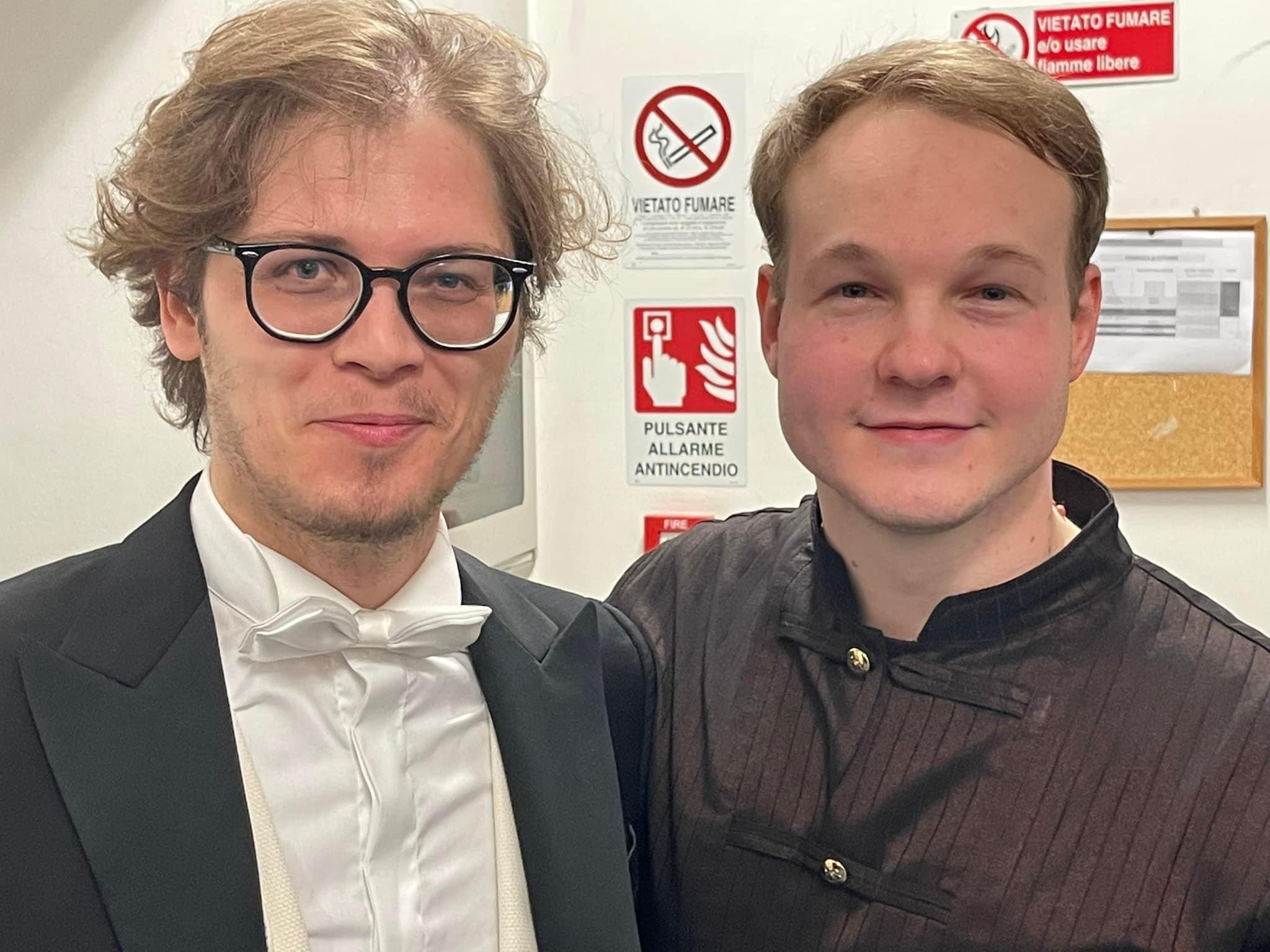
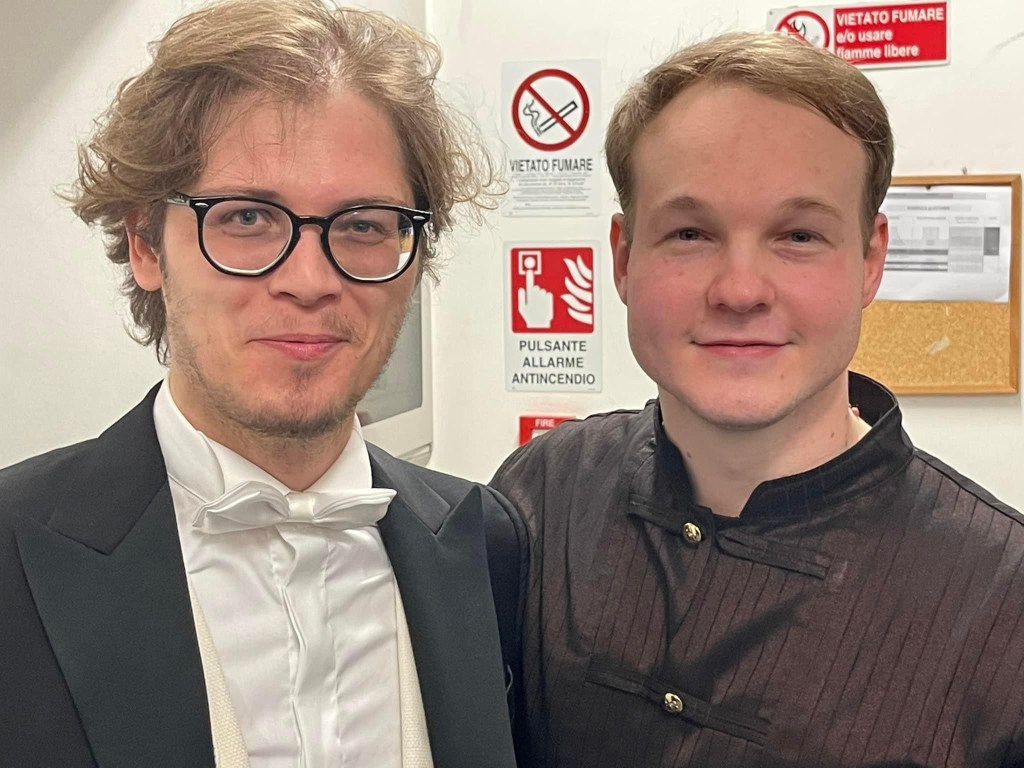
Luca Ballabio with Giovanni Bertolazzi

La musica ungherese è sinonimo di ritmo, brio, color gitano, allegria. Non si può, inoltre, parlare di Ungheria in musica omettendo la figura di Franz Liszt, autentico aedo di questa terra. Proponiamo dunque un programma che ci porta in giro per questo Paese, dai colori di un brano giovanile di Liszt come Malédiction, ai ritmi compositi di Bela Bartok e del suo Divertimento.
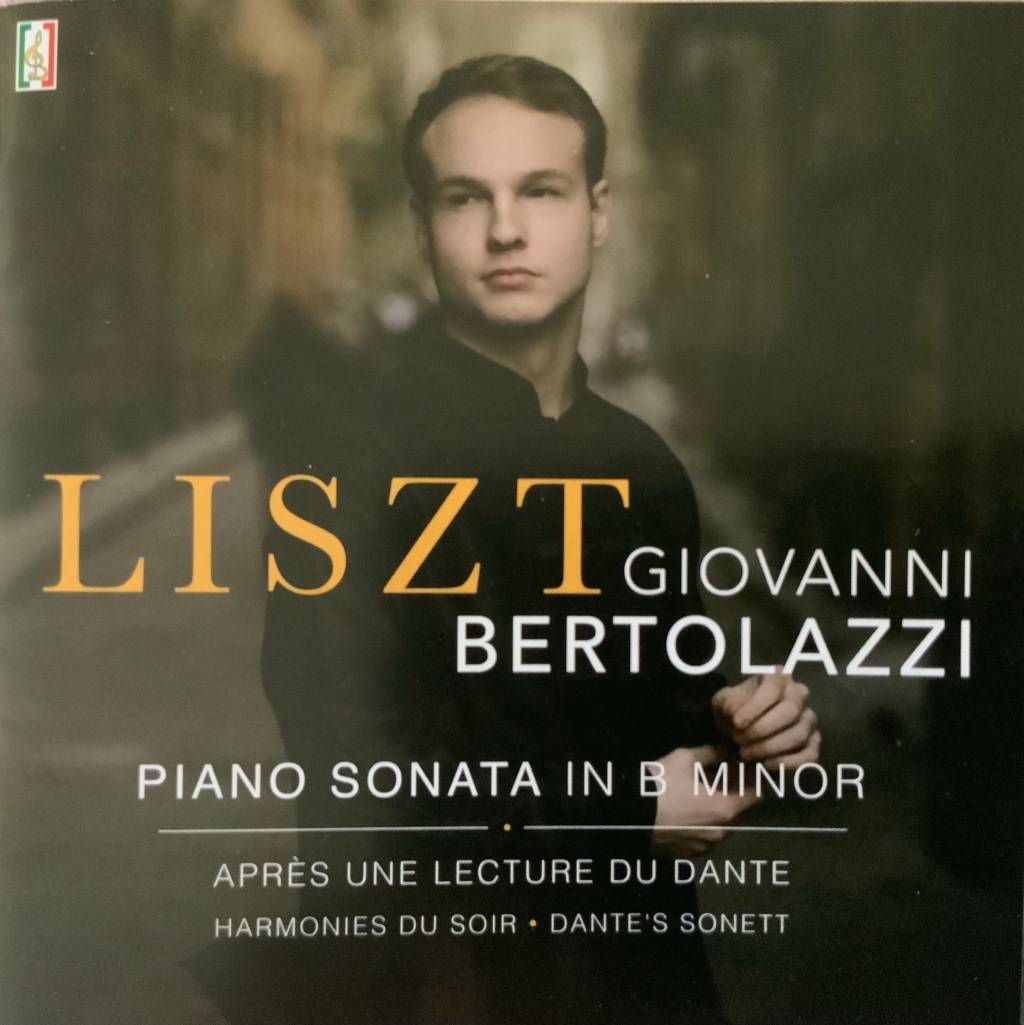
Con noi Giovanni Bertolazzi, interprete raffinato di Liszt, recente secondo classificato nel prestigioso concorso di Budapest che proprio a questo autore è intitolato e per la prima volta sul podio di Roma Tre Orchestra il giovane direttore d’orchestra Luca Ballabio.
https://christopheraxworthymusiccommentary.wordpress.com/2022/01/17/giovanni-bertolazzi-in-rome-liszt-is-alive-and-well-at-teatro-di-villa-torlonia/
https://christopheraxworthymusiccommentary.com/2022/07/15/two-young-giants-cross-swords-in-verbier-giovanni-bertolazzi-and-nikita-lukinov/

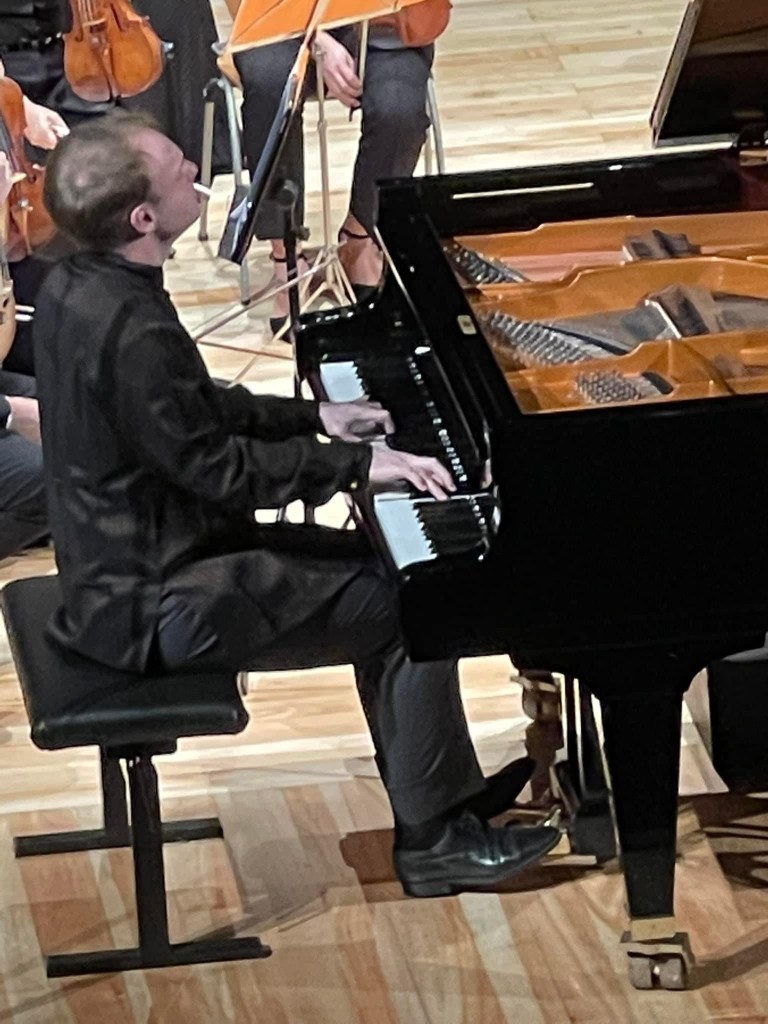
A concert with a very Hungarian air to it as Giovanni Bertolazzi winner of top prize at the Liszt Budapest International Piano Competition showed us once again that he is undoubtedly one of the most gifted artists of his generation .

It was when Giovanni was at the helm that we felt the undercurrent of rhythmic drive and passionate involvement.Not only of Liszt the showman but also of Liszt the innovator.The Malédiction is a very early work where Liszt is feeling his way with orchestration at the expense of melodious lyricism.One can hear so many passages and orchestrations that are then used in his second piano concerto.But it is a work really of great difficulty for the orchestra as it is for the piano .Giovanni drove the work forward with astonishing technical ease and musical understanding .There was an undercurrent to his playing that was present even in the few most ravishing lyrical episodes.The drama of the opening with solo piano was like a call to arms but his astonishing technical prowess and authority was always at the service of a musical line and sense of colour.Although a rather hollow work compared to the masterpieces that were to come from Liszt’s pen just a few years later,the rhythmic force and dynamic drive that he gave to the score almost succeeded in us wanting to hear it again before putting it away on the shelf where it really belongs.

Liszt began experimenting writing for piano and orchestra and one of his earliest compositions for this combination was what is now called Malédiction, written for piano and string orchestra or string sextet. Malédiction means ‘curse’ , this word was written over the first part of the work in the manuscript by Liszt. There is no other title on it. It was given this title by musicologists who found the piece in 1915. It is an experimental piece, as Liszt was learning how to orchestrate and write a concerto for piano and orchestra, not an easy thing to do especially with the pianos of the day.It shows an expanded idea of harmony, especially in the first part, the part marked Malédiction. Some of the chords in this section are quite striking in their dissonance, especially when we know the piece was written in 1833-1834. Liszt was in his early 20’s, fresh from meeting Berlioz and attending the premiere of Symphonie Fantastique in 1830. As a composer, Liszt was in the avant-garde of the era almost immediately.

Malédiction is in one movement, and originally may have had a programme to go with it. A tone poem for piano and orchestra essentially, that changes moods and shifts tempos throughout. It begins in a minor key and ends in a major key and has a lot going on in between. It is a glimpse into the creative mind of the young Franz Liszt.We do not know if Liszt ever heard his Concerto for Piano and Strings—the so-called Malédiction—even in rehearsal.This powerful single-movement piece is among Liszt’s earliest efforts at finding a way forward for the sonata principle where its outlines conform to the general pattern of exposition,development and recapitulation, There is a similarity of the opening motif (it is just this motif which Liszt labels ‘Malédiction’),with the later Orage from the first of the Années de pèlerinage .The strings first accompany this menacing first theme with quiet trills, and next build a sinuous chromatic line around it. The opening motif generates the livelier transition material, the last much calmer section Liszt writes: ‘Pleurs, angoisse’ (‘Tears, anguish’). The tonality has ranged quite widely from the initial E minor by this stage, but a recitative introduced by piano and cello brings us to the second theme proper, in the traditional relative major, and to material which Liszt would recall in the late Valse oubliée No 3 of 1883. The recitative is fully incorporated into this theme before the livelier tempo Vivo is reached,which Liszt marks ‘Raillerie’—and a full close in G major is reached. The development immediately moves to E flat, concentrating upon the first theme and leading to a cadential recitativo where the introduction is recalled. When the orchestra reappears we are at the recapitulation, but the order of events is somewhat altered. The earlier transition material is first, followed by the opening motif from piano and orchestra. The first theme now appears in E major, and the tempo increases. The cello motif is now incorporated into the first thematic group before a further increase in tempo brings the second subject material, transformed into the coda, with just a brief recall of the first theme in the last four bars.

Rhapsodie espagnole (Spanish Rhapsody), S.254, R.90, was composed by Liszt in 1858. The work is very suggestive of traditional Spanish music, and was inspired by Liszt’s tour in Spain and Portugal for six months from October 1844, and it was certainly on this trip that he became acquainted at first hand with some of the melodies he was to incorporate into various piano pieces.Liszt never visited this part of the world again but maintained contacts through his music and his Iberian students for the rest of his life.Liszt told Lina Ramann that he had written the piece in recollection of his Spanish tour whilst in Rome in about 1863. The work was published in 1867—subtitled Folies d’Espagne et Jota aragonesa.After the opening flourishes variations on La folia form a passacaglia in C sharp minor. The last variation slips gently into D major for the delicate presentation of the jota, mostly in the upper register of the piano.

Ferruccio Busoni arranged the piece for piano and orchestra in 1894

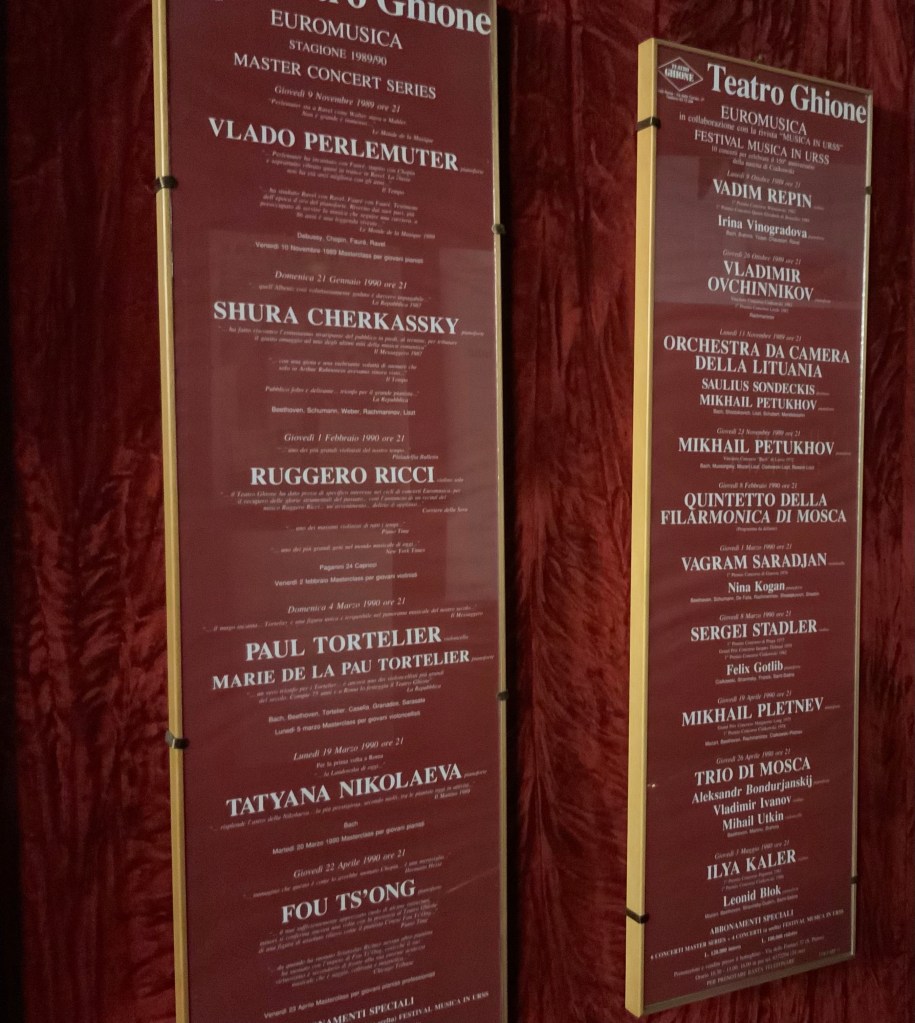
Mikhail Petukhov played his version for piano and string orchestra in Rome at the Ghione Theatre on 13th November 1989,with the Orchestra da Camera della Lituania conducted by Saulius Sondeckis

The well known Spanish Rhapsody was full of melodic invention and fantasy.I remember hearing Gilels playing the original solo version in London with a unrelenting rhythmic drive that had us sitting on the edge of our seats.Giovanni has the same drive and almost brought this reduction for string orchestra by Petukhov to life with ravishing colours and an irresistible sense of style.But Petukhov like Busoni allows too much importance to the orchestra at key moments of high tension and instead of driving the music forward it tended to sag.Certainly no fault of the orchestra or piano.It was Busoni’s transcription for full orchestra that was the first to appear.Petukhov played his version for string orchestra in Rome in the ‘80’s in a programme that included the Saint Saens Wedding Cake Caprice and ending with an encore of Liszt’s unashamedly virtuoso transcription of the overture of the Barber of Seville !

Giovanni tonight gave us an encore of the Ritual Fire Dance.A slightly less flamboyant version than that of Rubinstein but nevertheless breathtaking.The range of sound and colour together with his passionate involvement brought these two works by Liszt vividly to life and showed off the artistry and seriousness of this young musician .There was no I Pad to be seen as here was an artist who was convinced of the value of these works and prepared them with great seriousness very nearly managing to convince us too.

The concert had started with Bartok’s very complex Divertimento for Strings written at the outbreak of the Second World War.There were the pungent rhythms and folk melodies of the Allegro non troppo followed by the atmospheric Adagio with its whispered sounds evoking emptiness and spaciousness.There was a dynamic rhythmic drive to the Allegro assai full of complex Hungarian folk rhythms and even a pizzicato episode that took us to the excitement of the ending.

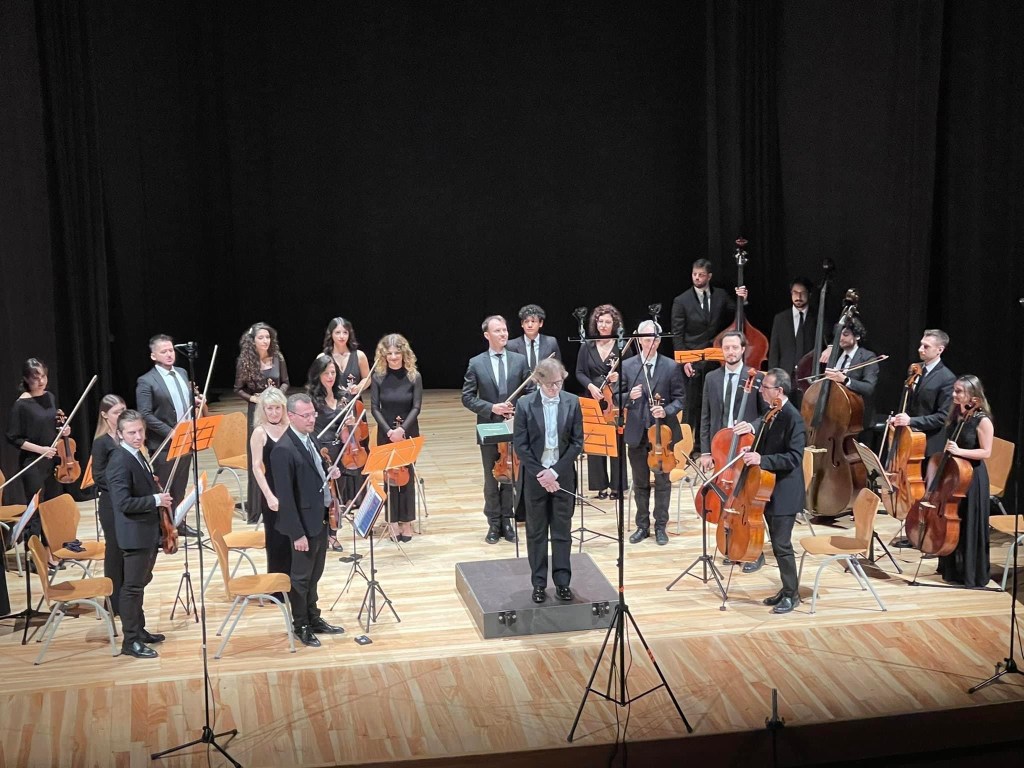
Expertly conducted by Luca Ballabio and some very fine solo playing from the first violin of Leonardo Spinedi and the cello of Angelo Santisi.Luca took a lyrical approach to the score missing the burning drive that Solti could bring to this work which can give it more of an overall architectural shape and direction.The Roma Tre Orchestra ever growing in stature as it reaches its twentieth anniversary.An orchestra created by Valerio Vicari,Artistic director and Roberto Pujia ,President to give professional experience to exceptionally talented young musicians at they start of their career .

Valerio Vicari,Giovanni Bertolazzi,Luca Ballabio
In rehearsal in Rieti
In concert at Rieti
Teatro Vespasiano Rieti

https://christopheraxworthymusiccommentary.com/2022/02/15/giovanni-bertolazzi-in-london/

https://christopheraxworthymusiccommentary.com/2020/02/22/giovanni-bertolazzi-a-giant-amongst-the-giants/

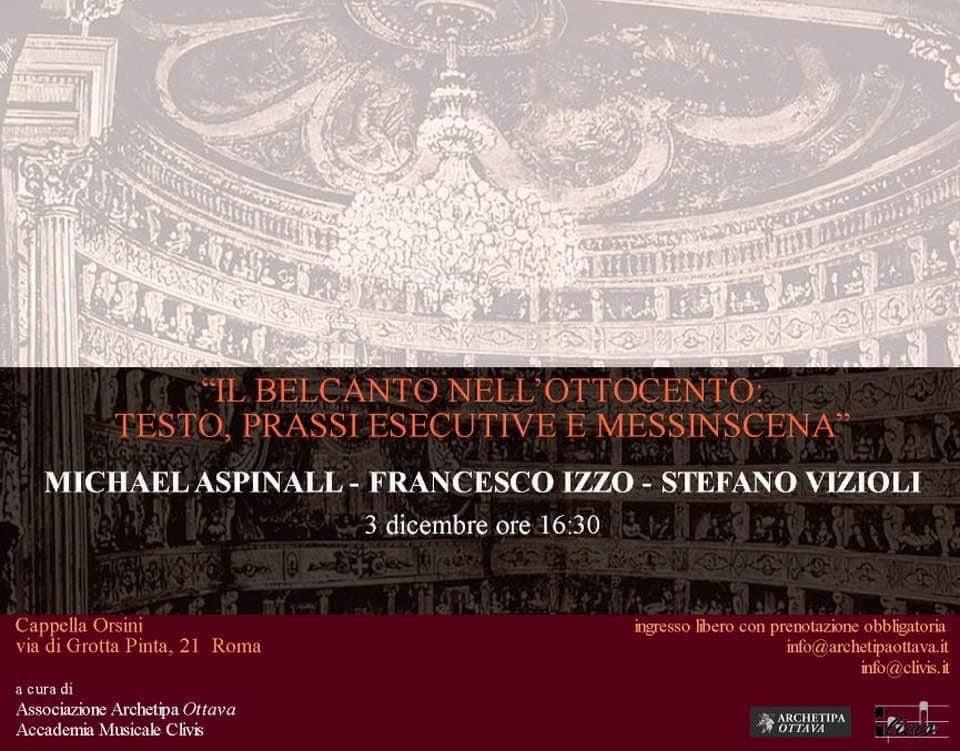
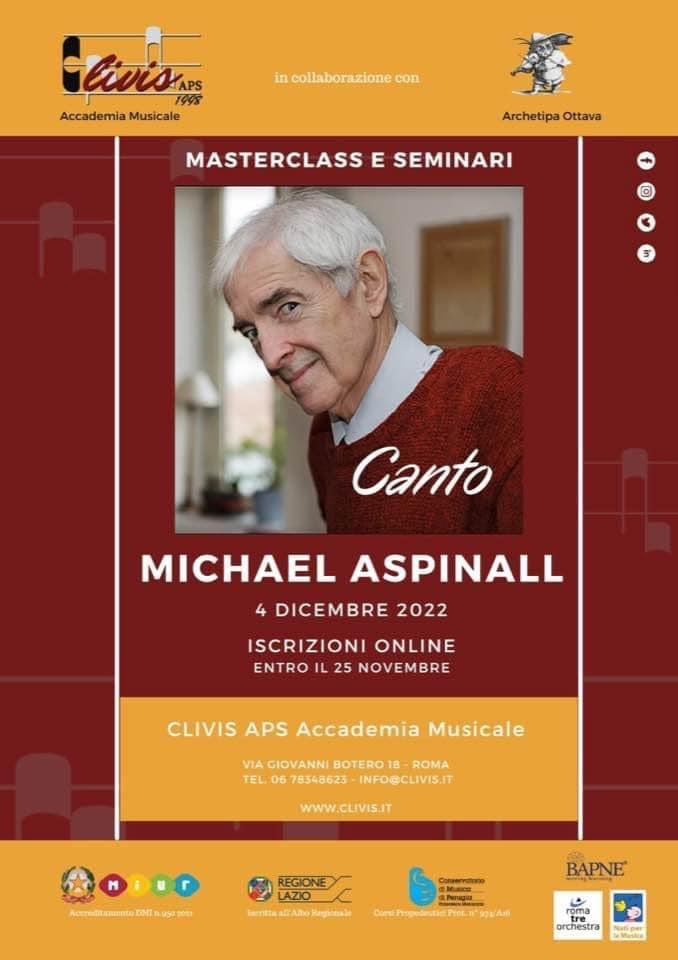
Michael Aspinall is back in Rome ‘On Wings of Song’

Nice to see Michael Aspinall back in via di Grotta Pinta where in the Teatro De Satiri all the great singers that he imitated came to see themselves mirrored in his inimitable performances.
A great musicologist immersed in the world of song and delving deep into the archives still rich with material from the eighteenth and nineteenth century Golden Age of Song.Let’s not forget that it was Aspinall who provided Monserrat Caballé with her cadenza embellishments with which she ravished the operatic world following on from the Belcanto of Callas and Sutherland.


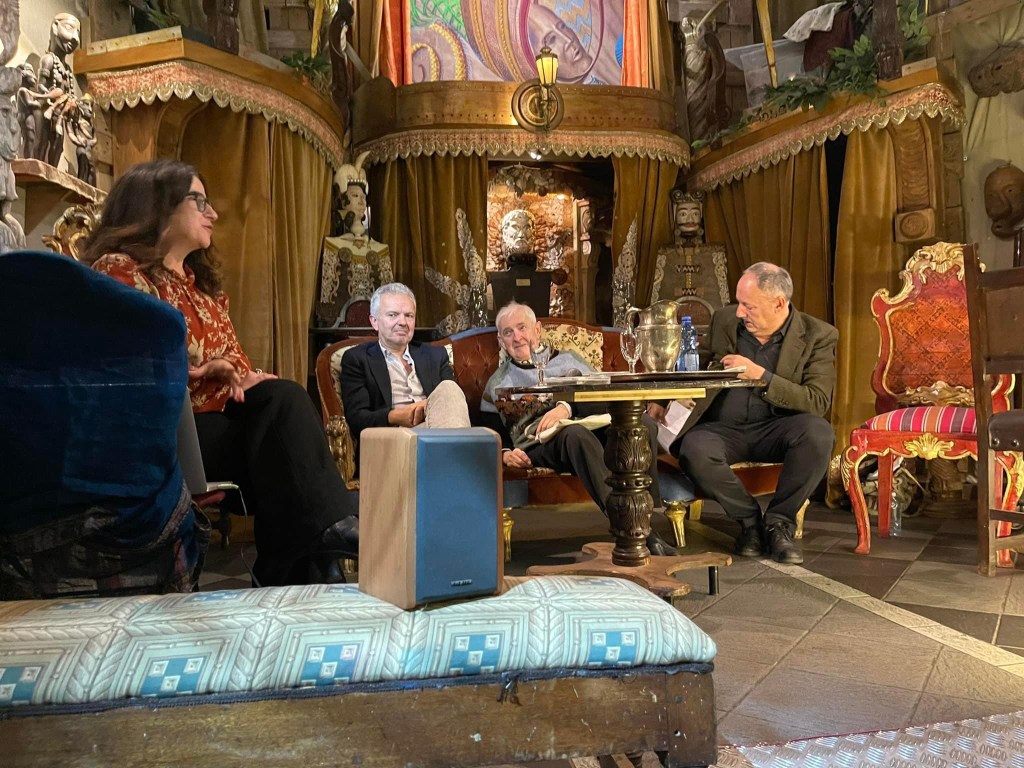
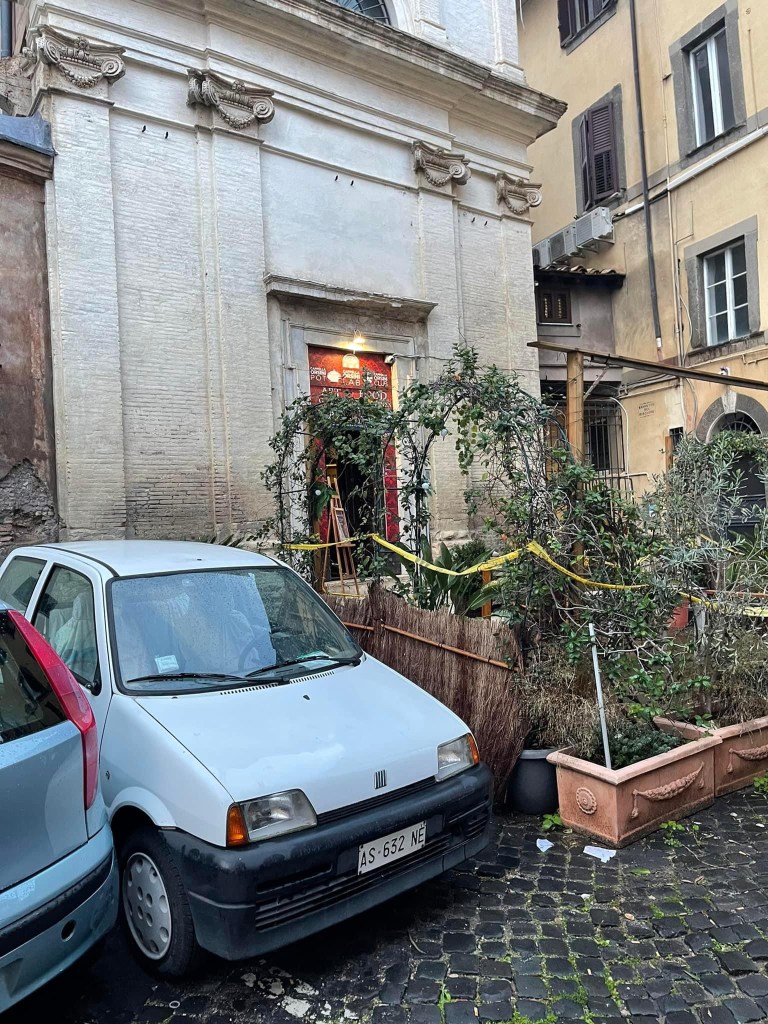
Is Belcanto Dead ? What is Bel Canto ?These were on the table,turning back the clock,as we entered this magical old curiosity shop that is the Oratorio Orsini.


No sign of the Teatro de Satiri in this same square where Benny Margiotta filled this historic family owned theatre with delights that were sure to tittivate all the senses.
Arnaldo had the restaurant next door where artists performing in Rome would congregate after their performances relaxing with their artistic colleagues as they delighted in Arnaldo’s speciality of cream of chestnut pudding!

1986 One of his many appearances at the Teatro Ghione


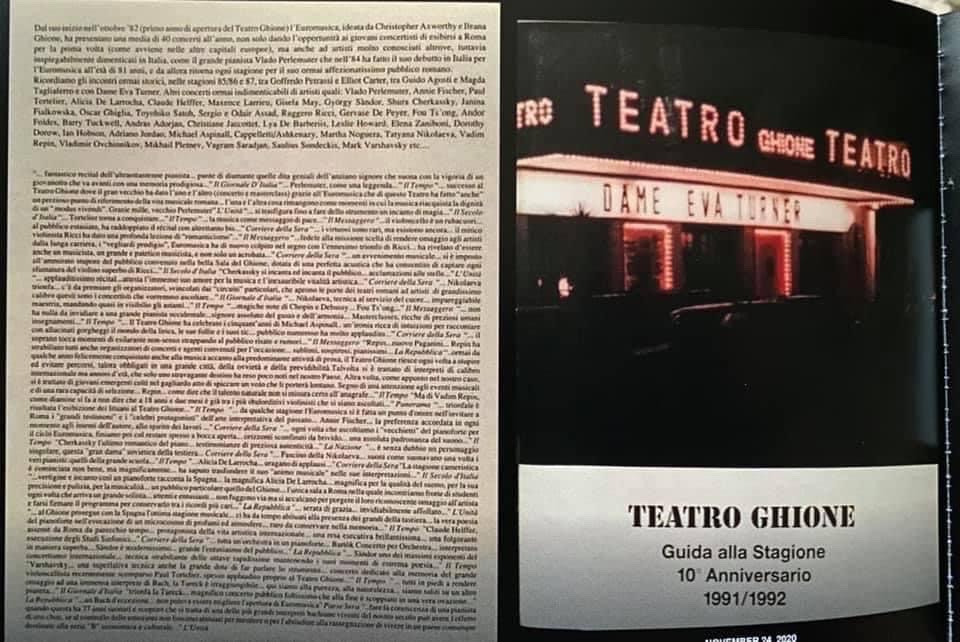
I remember bringing eighteen year old Vadim Repin and Margaret Price there after their performances just down the road at the Ghione Theatre. Dino Villatico,the distinguished music critic of La Repubblica lived above the restaurant.


It was the Ghione Theatre that Aspinall chose for his last public performance as the ‘Gentleman Soprano’ in 2010 – his seventieth year.
Now 13 years on,time has stood still for him as he is still flying high on Wings of Song !Well he did say he would come out of retirement if the money was right!


Here,this weekend, he came up from the Naples that has adopted him with open arms ,on the invitation of one of his former singing students and will be giving a masterclass too on the 4th .
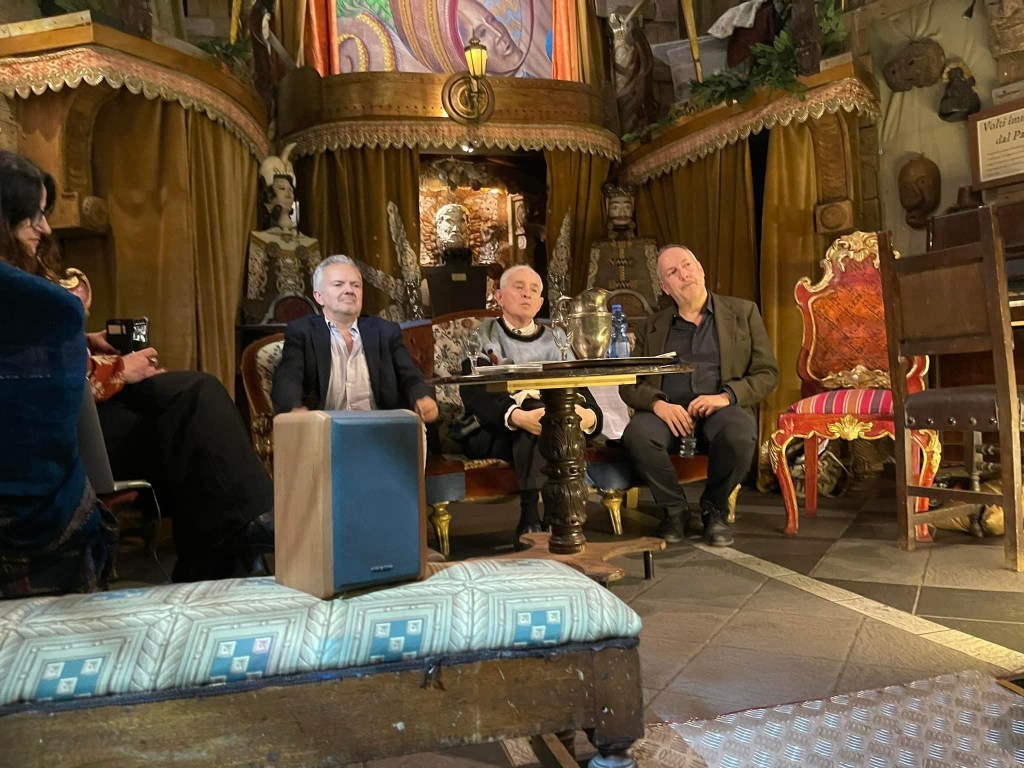
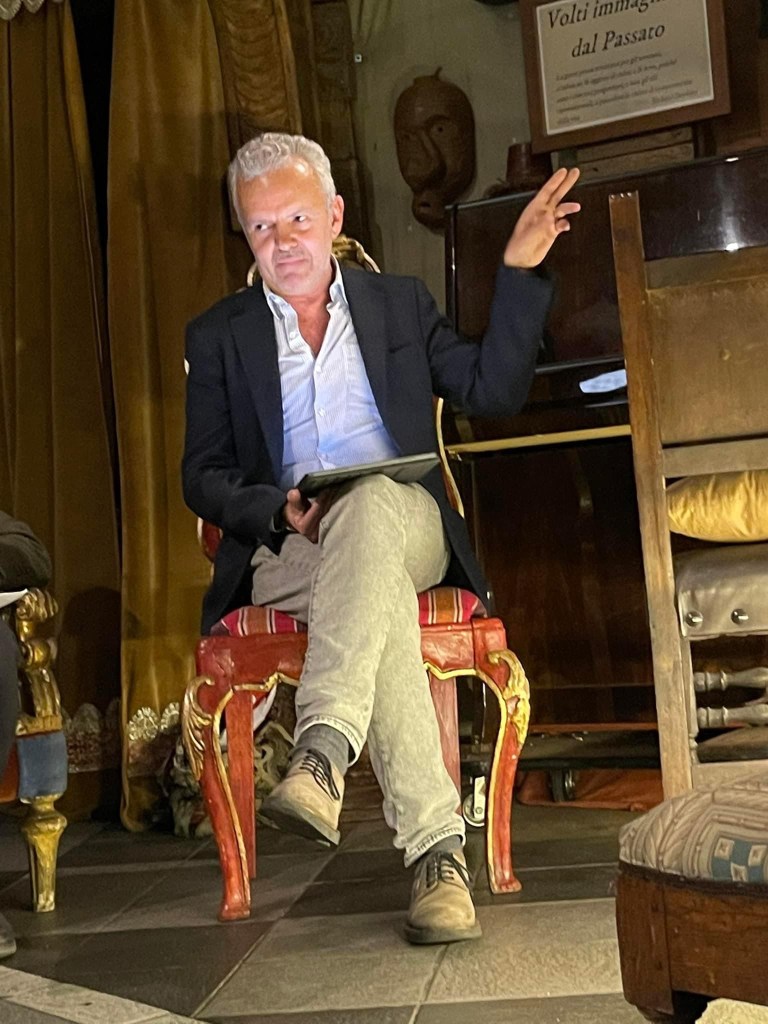
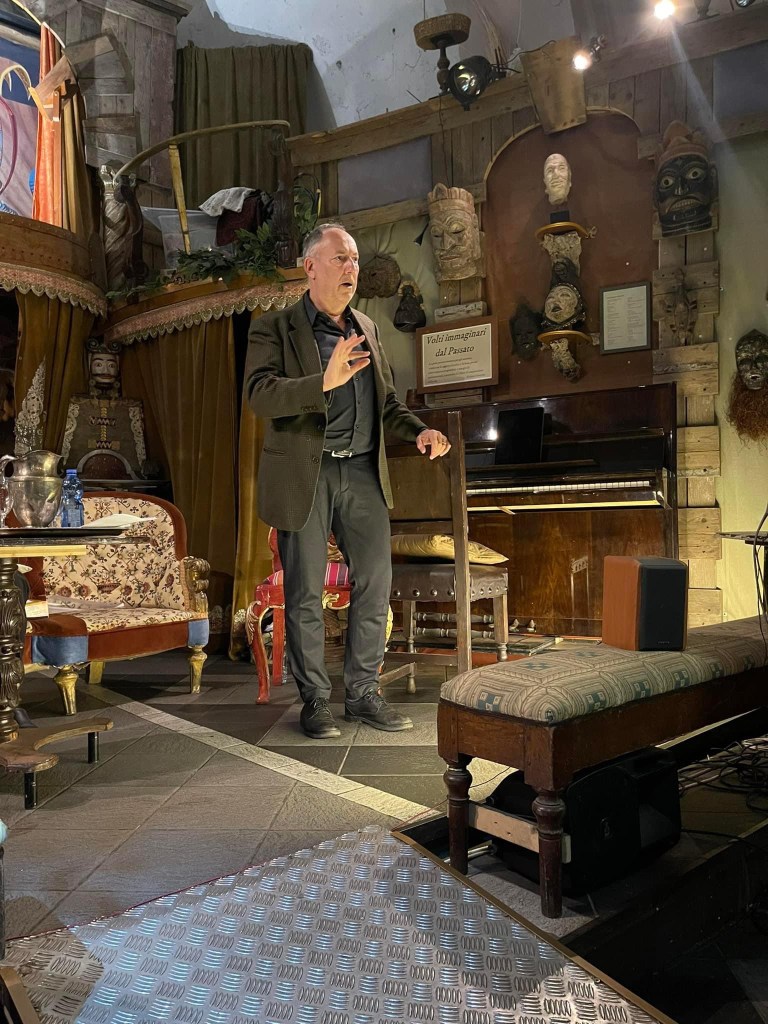
Today there was a fascinating and very amusing talk from three passionate advocates of Belcanto.


Michael Aspinall “Cantare bene é facile”


Francesco Izzo “Belcanto dopo il belcanto:il caso Verdi”


Stefano Vizioli “Suonare il palcoscenico”Esperienza di un regista con donne e prime donne

A distinguished audience of musicologists and lovers of belcanto
Michael Aspinall’s former student who has created the Accademia musicale Civis
Cappella Orsini

Quiet Authority at Temple Church review by Angela Ransley

QUIET AUTHORITY AT  TEMPLE CHURCH


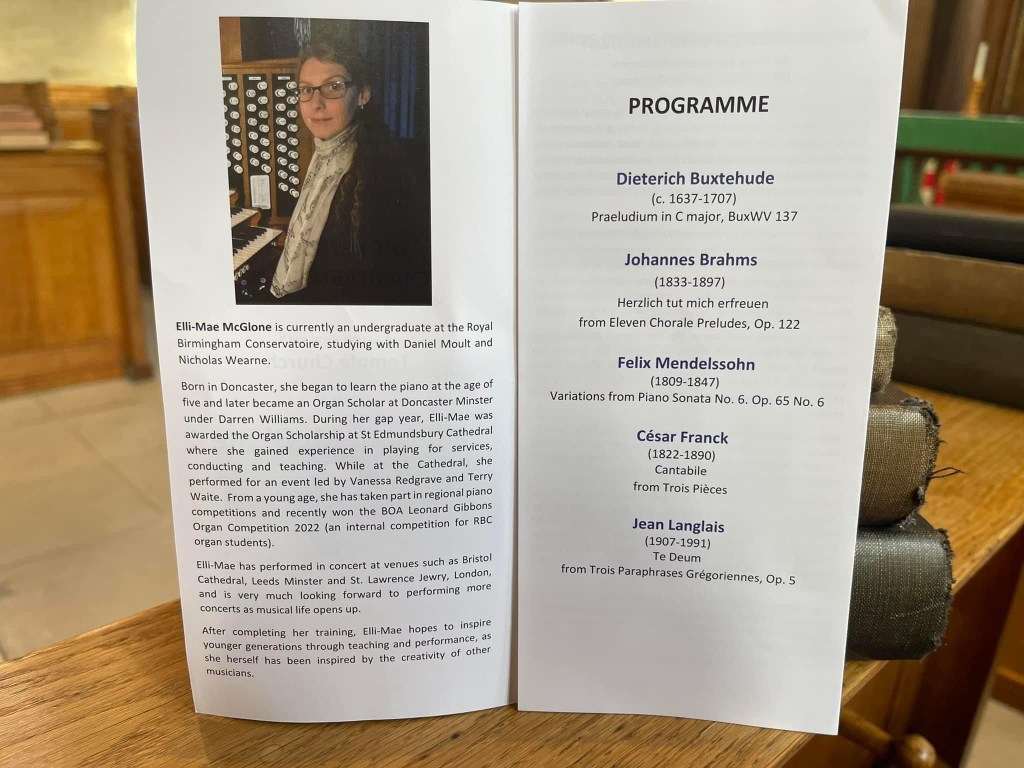
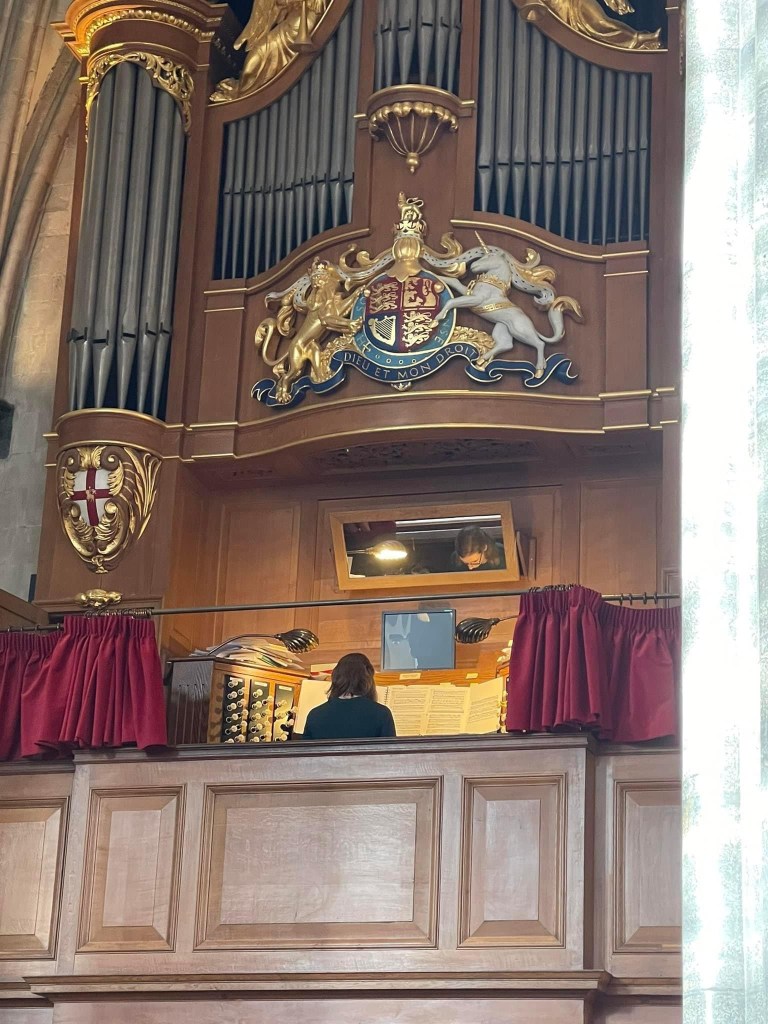
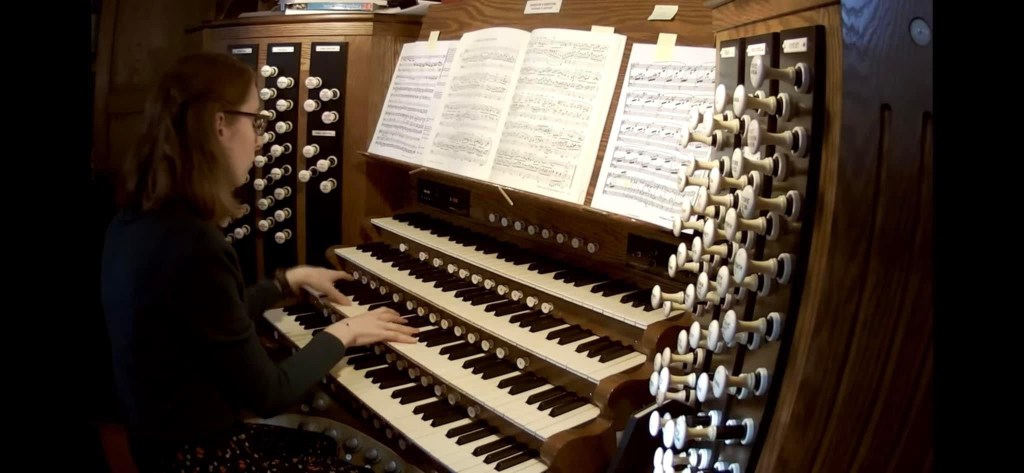
                                                             Elli-Mae  McGlone

IN ITS ROLE AS PROMOTER OF EXCEPTIONAL YOUNG TALENT, THE KEYBOARD TRUST HAS CONTRIBUTED TO THE REGULAR WEDNESDAY LUNCHTIME ORGAN RECITALS AT THE TEMPLE CHURCH FOR NEARLY 20 YEARS. THE LATEST YOUNG ARTIST, BILLED AS ‘A RISING STAR OF THE ORGAN WORLD’, IS ELLI-MAE McGLONE. STILL A STUDENT AT THE ROYAL BIRMINGHAM CONSERVATOIRE, ELLI-MAE HAS  HELD THE POST OF ORGAN SCHOLAR AT BURY ST EDMUNDS CATHEDRAL AND IS ALREADY A MUTLIPLE PRIZEWINNER.

30 MINUTES DOES NOT SEEM LONG IN WHICH TO MAKE ONE’S MARK,  BUT ELLI-MAE PROVED THAT IT CAN BE TRANSFORMATIVE, OFFERING TWO MAJOR  WORKS: PRAELUDIUM IN C BY BUXTEHUDE AND THE CHORALE AND VARIATIONS FROM MENDELSSOHN’S  6TH  SONATA, INTERSPERSED BY SHORTER ROMANTIC PIECES BY BRAHMS AND FRANCK AND A 20TH CENTURY BARNSTORMER BY LANGLAIS TO FINISH.

BUXTEHUDE IS BEST KNOWN AS THE CELEBRATED ORGANIST THE 20-YEAR-OLD JOHANN SEBASTIAN BACH TRUDGED 250 MILES TO HEAR IN LUBECK IN NORTH GERMANY. MUCH OF HIS ORGAN REPERTOIRE IS NOW LOST, BUT THE  WORKS THAT REMAIN JUSTIFY HIS REPUTATION AS THE GREATEST ORGANIST AND COMPOSER OF THE LATE 17TH CENTURY. THE 19 REMAINING PRELUDES DEMONSTRATE IN THEIR VARIETY THE VOGUE FOR STYLUS FANTASTICUS INCORPORATING A VARIETY OF COMPOSITIONAL TECHNIQUES INCLUDING IMPROVISATION AND FUGUE. PRAELUDIUM IN C  IS IN THREE SECTIONS: PRELUDE,  FUGUE AND CHACONNE. THE MOST IMPORTANT PRINCIPLE OF THIS STYLE WAS FORMAL FREEDOM AS DESCRIBED IN A CONTEMPORARY ACCOUNT:


          ‘Players should not play strictly according to the score, but imitate the                    singer more. Now swift, now hesitating, now in one voice, now in many                  voices, now for a while behind the behind the beat, but not without the           intent to please, to overtake and to astonish’.

WE ARE NOT TO BE SURPRISED, THEN, BY THE DRAMATIC PEDAL SOLO THAT OPENS THE WORK, EXTENDED  FUGAL PASSAGES, VIRTUOSIC SEMIQUAVER FLOURISHES AND  A DANCE-LIKE CHACONNE TO FINISH! WHILE OBSERVING THE NORMS OF BAROQUE REGISTRATION, ELLI-MAE USED THE FULL RANGE OF THE 4-MANUAL ORGAN TO HEIGHTEN THE UNEXPECTED: CLARITY OF VOICE-LEADING IN THE FUGATO AND  BRIGHTER STOPS  INCLUDING TROMBA AND CLARION IN THE MORE IMPROVISATORY, VIRTUOSO SECTIONS.

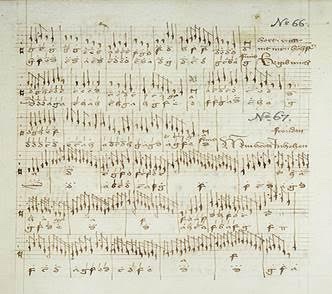
Buxtehude manuscript in organ tablature, an early form of notation also used by JS Bach

BRAHMS CHORALE PRELUDE HERZLICH TUT MICH ERFREUEN MADE A SKILFUL LINK BETWEEN THE BUXTEHUDE AND THE MENDELSOHN CHORALE AND VARIATIONS, DESPITE BEING A LATE BRAHMS WORK OF 1896. IT IS WRITTEN IN TRADITIONAL CANTUS FIRMUS STYLE WHERE THE CHORALE MELODY SINGS SLOWLY ABOVE .COMPLEX FLOWING LINES. THE GERMAN LUTHERAN HYMN, BASED ON A SECULAR SONG ABOUT THE RETURN OF SPRING, IS HEARD JUST ONCE. ELLI-MAE GAVE TO THE MELODY JUST THE RIGHT AMOUNT OF RUBATO TO EMPHASISE ITS BEAUTIFULLY SHAPED LINES AND FINELY JUDGED, RESTRAINED REGISTRATION LENT THE ACCOMPANIMENT JUST THE RIGHT  ELEGIAC, BRAHMSIAN SOUND.


Mendelssohn with Queen Victoria and Prince Albert at the organ


          ‘His execution of Bach’s music is transcendently great, his extempore

           playing is very diversified – the soft movements full of tenderness and

           expression, exquisitely beautiful and impassioned. In his loud preludes

           there are an endless variety of new ideas  and the pedal passages so

           novel and independent  as to take his auditor quite by surprise.’

MENDELSSOHN’S  ORGAN PLAYING WAS JUST AS LEGENDARY IN HIS NATIVE GERMANY AS IN ENGLAND, WHICH HE CALLED HIS SECOND HOME. THE CHORALE AND VARIATIONS CONSTITUTE THE FIRST MOVEMENT OF SONATA NO 6 IN D MINOR COMMISIONED BY THE ENGLISH PUBLISHER COVENTRY IN 1845. THEY WERE ORGINALLY CONCEIVED AS ORGAN VOLUNTARIES AND THEN WERE COMBINED INTO SONATAS –  NO 3 WAS WRITTEN FOR MENDELSSOHN’S SISTER’S WEDDING. HE WAS INVITED TO PERFORM THEM AT THE 1846 BIRMINGHAM FESTIVAL BUT THE STATE OF ENGLISH ORGANS  LAGGED BEHIND THOSE IN MAINLAND EUROPE, AND MENDELSSOHN WOULDN’T RISK IT:

‘The last time I passed through Birmingham the touch of the organ appeared to me so heavy that I could not venture to perform upon it in public. If however it is materially improved I shall be happy to play one of my sonatas; but I should not wish this to be announced before I had tried the organ myself’.

MENDELSSOHN CHOSE THE LUTHERAN CHORALE ‘VATER UNSER IN NIMMELREICH’ (OUR FATHER, WHO ART IN HEAVEN) ON WHICH TO BASE A SHORT SET OF VARIATIONS WHERE THE TUNE IS STATED IN FULL IN ALL REGISTERS AND ONLY IN THE FINAL, THRILLING TOCCATA IS IT SHARED AFTER APPEARING DRAMATICALLY IN THE PEDALS. DESPITE THIS SIMILAR CONSTRUCTION, EACH VARIATION HAS ITS OWN  CHARACTER, HIGHLIGHTED BY ELLI-MAE IN THE CHOICE OF REED STOPS FOR THE CHORALE AND WELL-BALANCED REGISTRATION FOR THE  FLOW OF COUNTERPOINT.

THE EARLY PART OF THE RECITAL FEATURED MUSIC FROM THE GERMAN LUTHERAN TRADITION FROM BUXTEHUDE TO BRAHMS, TAKING  CHORALES FFROM THE LATE RENAISSANCE AS THEIR INSPIRATION. THE SECOND PART MOVED TO CATHOLIC FRANCE IN THE MUSIC OF CESAR FRANCK AND JEAN LANGLAIS.  WE ENTERED NEXT THE PERFUMED WORLD OF FRENCH ROMANTIC MUSIC  DOMINATED BY THE MIGHTY ORGANS OF ARISTIDE CAVAILLE-COLL. CESAR FRANCK DEMONSTRATED THESE ORGANS THROUGHOUT FRANCE FOR HIM AND PLAYED HIS OWN IN THE BASILICA OF ST-CLOTHILDE IN PARIS. CANTABILE IS TAKEN FROM TROIS PIECES POUR ORGUE  WRITTEN IN 1878. THE DATE IS SIGNIFICANT AS AROUND THIS TIME FRANZ LISZT PRODUCED HIS BAGATELLE SANS TONALITE.  WHILE ROOTED IN  CLASSICAL TONALITY AND THE  RELIGIOSE SWEETNESS FASHIONABLE AT THE TIME  – FAURE’S IN PARADISUM  FROM THE REQUIEM  BEING A PRIME EXAMPLE – , THE HAUNTING MELODY AND UNEXPECTED HARMONC PROGRESSIONS HINT OF CHANGE TO COME.  ELLI-MAE SEEMED MOST AT HOME IN THIS MUSIC, USING A FINELY DISTINGUISHED PALETTE TO CAPTURE THE MOOD OF MELANCHOLY NOSTALGIA.

The Cavaille-Coll organ at the Basilica of St Clothilde, Paris

TE DEUM  FROM HYMNES ACTION DE GRACES  BY JEAN LANGLAIS BROUGHT THE RECITAL TO A FITTING CLIMAX. DESPITE BEING BLIND FROM THE AGE OF  TWO DUE TO GLAUCOMA, LANGLAIS LED A SUCCESSFUL LIFE AS  CONCERT ARTIST, PROFESSOR AT THE PARIS CONSERVATOIRE, PROLIFIC COMPOSER AND SUCCESSOR TO FRANCK AT ST CLOTHILDE. HE DESCRIBED HIMSELF AS ‘BRETON, FOI CATHOLIQUE’ AND THESE TWO  ELEMENTS FUEL THE HEART OF HIS MUSIC.

IN  TE DEUM HE REACHED BACK FURTHER THAN ANY OF THE OTHER COMPOSERS REPRESENTED TO EARLY PLAINCHANT AND PRESENTS IT AS A CATHOLIC RESPONSORIAL PSALM. THE CHANT, WHICH WOULD NORMALLY BE SUNG BY A CANTOR, IS HEARD SOLO IN THE PEDALS WITH THE RESPONSE IN THE UPPER REGISTERS. AND WHAT A RESPONSE! THE TEXT OF THE 4TH CENTURY LATIN HYMN OF PRAISE INCLUDE THESE LINES:

              ‘To Thee all Angels cry aloud, Heaven and Earth are full of the majesty                  of  Thy Glory’

THE CRIES ARE MOUNTING CHORDS OF ANGULAR DISSONANCE, CERTAINLY LOUD ENOUGH TO BE HEARD IN HEAVEN.  ELLI-MAE USED THE FULL POWERS OF THE BRIGHT BRASS STOPS –  TROMBA, TRUMPET, CLARION – TO  ANIMATE THE DRAMA.

                                                                  Jean Langlais

FOR HER DEBUT RECITAL, ELLIE-MAE CHOSE  A LARGELY REFLECTIVE PROGRAMME WITH ONLY THE MENDELSSOHN TOCCATA  AND THE LANGLAIS GIVING THE ORGAN  ITS FULL POWERS. SHE PLAYED THE  MELODIC LINES WITH CLARITY AND OFTEN  A LINGERING AFFECTION AND DEMONSTRATED A KEEN EAR IN HER SUBTLE TONAL LAYERING. ALL CREDIT TO HER INSPIRATIONAL TEACHERS AT BRIMGINGHAM, DANIEL MOULT AND NICHOLAS WIERNE, FOR DEVELOPING SUCH INTUITIVE ARTISTRY AND ENABLING US TO HEAR A RECITAL OF QUIET AUTHORITY.

                                                       Temple Church, London

ANGELA RANSLEY IS DIRECTOR OF THE HARMONY SCHOOL OF PIANOFORTE AND ALSO WORKS AS A FREE-LANCE ORGANIST.

https://christopheraxworthymusiccommentary.com/2022/09/14/the-gift-of-life-the-keyboard-trust-at-30/

Alistair Wroe and Raffaello Moretti in Rome Magical return of Music and Poetry

Magic again at the Ghione Theatre in Rome with the return of Alistair Wroe and Raffaello Moretti in an evening dedicated to poetic movements and music.
The ultra sensitive sounds of the piano in music from Scarlatti to De Falla with the poetic movements of dance.


Appearing on the wings of song as Alistair appeared out of the mist vibrating to the music as he delved deep into the very soul of creation.
The aria from the Goldberg Variations was exquisitely played by Raffaello and was brought movingly to life by the subtle movements of Alistair.

Scarlatti sonatas of delicacy and luminosity were but scintillating jewels made to glow ever more radiantly by poetic movements of subtle grace.

Exotic sounds and drumming of feet in De Falla’s Fantasia Baetica with its clashing pungent harmonies astonishingly illuminated even more with the entry of Alistair in the final few moments.

Satie’s barely whispered Gnosiennes were merely washes of colour and shape where atmospheres and sounds were combined in moments of pure magic.

The first twelve of Chopin’s preludes op 28 were played with ravishing sounds with Alistair making his appearance only in the fourth where one of Chopin’s most beautiful melodic inventions was shaped by them both with great intensity and ravishing beauty.It was the same beauty in a little Chopin Mazurka that they shared as an encore with an enthusiastic audience demanding more after the final sublime gasps of the Bach Aria of his monumental Goldberg Variations.


A concert of music and movement recalling the golden age of the 1920’s when music and movement could still speak louder than words.

https://christopheraxworthymusiccommentary.com/2022/04/11/alistair-wroe-raffaello-moretti-in-concert-at-teatro-ghione-rome-illumination-and-exhilaration-of-a-new-art-form/

Alistair Wroe: Originario del Worcestershire, Alistair Wroe ha iniziato la sua formazione di ballerino presso il Center for Advanced Training di Birmingham e la Worcestershire Youth Dance Company. Ha completato un-BA (Hons) in Danza Contemporanea al Trinity Laban Conservatoire of Music and Dance. Durante la sua laurea ha lavorato con diversi coreografi tra cui Gary Lambert, Struan Leslie e Marie Gabrielle- Rotie. Inoltre, Alistair ha lavorato a stretto contatto con Alison Curtis- Jones e la Dott.ssa Valerie Preston-Dunlop, in particolare su nuove realizzazioni delle opere di Rudolf Laban Nacht e Green Clowns. Ha quindi continuato la sua formazione presso la London Contemporary Dance School, dove ha conseguito il suo Master of Arts, seguito da un tour internazionale come membro di EDge. Alistair ha avuto l’opportunità di lavorare con Philippe Blanchard, Alexander Whitley, Dazed Magazine per Craig Green, Tom Rosenthal, Tom Roden e Joseph Toong, rivelandosi come uno degli artisti più̀ talentuosi ed interessanti della nuova generazione di ballerini britannici, per carisma, presenza scenica, tecnica, eclettismo e profondità̀ di interpretazione.Si è esibito a livello internazionale in Svizzera, Malesia, Norvegia e Italia. Attualmente continua ad esplorare ulteriormente il suo ruolo di interprete ed é inoltre interessato ad acquisire una profonda comprensione della pratica coreografica.

Raffaello Moretti: Diplomatosi a 18 anni con il massimo dei voti e la lode, Raffaele Moretti é stato allievo prima a Parigi di Aldo Ciccolini e Marie- Françoise Bucquet, ed in seguito di Alicia de Larrocha (Master triennale presso l’Academia Marshall- Barcellona) e Tatiana Sarkissova (Master biennale presso la Royal Academy of Music – Londra).Ha inoltre studiato per quattro anni presso la International Piano Foundation- Lake Como, presediuta da Martha Argerich, seguendo le lezioni di William Grant Naboré, Leon Fleisher, Claude Franck, Menahem Pressler, Charles Rosen, Dmitri Bashkirov, Fou Ts’ong ed Andreas Staier. Ha quindi lavorato intensivamente con Galina Eugiazarova, a Madrid. Masterclasses press il Mozarteum di Salisburgo (Andrzej Jasinski), la Foundation Yamaha di Parigi (Elisso Virsaladze) e lo Schwelzig Holstein Musik Festival di Lubecca (Bruno Leonardo Gelber). Laureato della Fondazione Cima in Toscana, ha inoltre vinto il Primo Premio assoluto presso diversi Concorsi Internazionali (tra cui Moncalieri e Mondovì). Concerti in Italia, Francia, Spagna, Germania, Inghilterra, USA, Messico ed Argentina. Ha inoltre collaborato per diversi anni con il Quintetto de I Solisti Aquilani. Laureato in Filosofia con il massimo dei voti presso la Università Statale di Milano, dove ha discusso con Carlo Sini una tesi su Nietzsche, ha seguito altresì le lezioni di Jacques Derrida presso l’HESS di Parigi. Sta completando un PhD su Alfred Cortot presso il King’s College di Londra con Daniel Leech- Wilkinson.

Looking forward to their next performance in Rome on 1st December with the Goldberg Variations.
Nice to see Alistair and Raffaello in one of the most beautiful concert venues in London.
I have admired their recent performances in the equally beautiful Ghione Theatre in Rome.
Raffaello is a masterly pianist who has created a new formula of dance movements that add such atmosphere to the beauty of his playing.

St. John’s Smith Square Westminster

Alistair Wroe and Raffaello Moretti in Concert
Alistair Wroe
DANCE
Raffaello Moretti
PIANO
C. Debussy
Preludes, Book One
Terry Riley
The Heaven Ladder, Book 5 (Etude from the Old Country)
J. S. Bach
Fantasia and Fugue in A minor, BWV 904
M. Mussorgsky
Pictures at an Exhibition
In their second Autumn Concert at St John’s Smith Square, Alistair Wroe and Raffaello Moretti will explore an eclectic and exciting program that returns to Johann Sebastian Bach and then goes to the Preludes of Claude Debussy and the Pictures of Modest Mussorgsky, with a foray into the minimalistic repertoire of Terry Riley, for an evening of dance and music to remember.

ALISTAIR WROE
Originally from Worcestershire, Alistair completed his BA (Hons) Degree in Contemporary Dance at Trinity Laban Conservatoire of Music and Dance and went on to join EDge at London Contemporary Dance School where he worked with choreographers including Alexander Whitley and Philippe Blanchard. After completing a Master’s degree at London Contemporary Dance School, Alistair has had the opportunity to perform and present work at venues including Halle am Berghain (Berlin), Trauma Bar und Kino (Berlin), Szene (Salzburg), The Place Theatre (London), KLPAC (Kuala Lumpur) and Venue Cymru (Llandudno). As a dance artist he has worked with Möbius Dance, Matan Zamir, Gal Naor, Jack Philp Dance, Alexandra Green, Craig Green for Dazed Magazine, The Irrepressibles and Tom Rosenthal, amongst others. Alistair is one of the top emerging artists of his generation, distinguished by his technical skills, eclecticism and magnetism on stage.

RAFFAELLO MORETTI
Having graduated in Piano Performance in Milan at the age of 18, Raffaello then studied in Paris with Aldo Ciccolini and Marie-Françoise Bucquet; in Barcelona with Alicia de Larrocha and finally in London with Tatiana Sarkissova, acquiring a Master’s degree from the Royal Academy of Music. Meanwhile, he studied at the International Piano Academy Lake Como – directed by Martha Argerich- and worked intensively with Galina Eguaziarova, in Madrid. He has a broad international performance experience in Italy, France, Spain, Germany, England, USA, Mexico and Argentina. Raffaello also graduated in Philosophy with top marks at the University of Milan and followed the lessons of Jacques Derrida at the EHESS in Paris. Recently, he has completed a PhD from King’s College in London with Daniel Leech-Wilkinson.

Teatro Ghione Rome