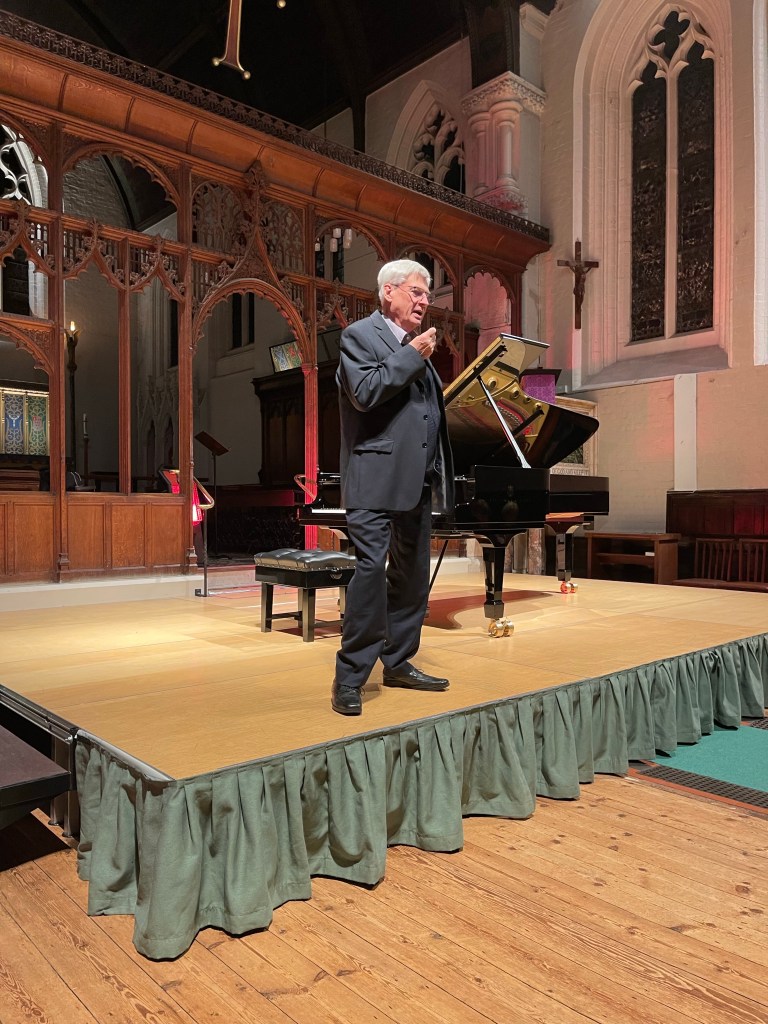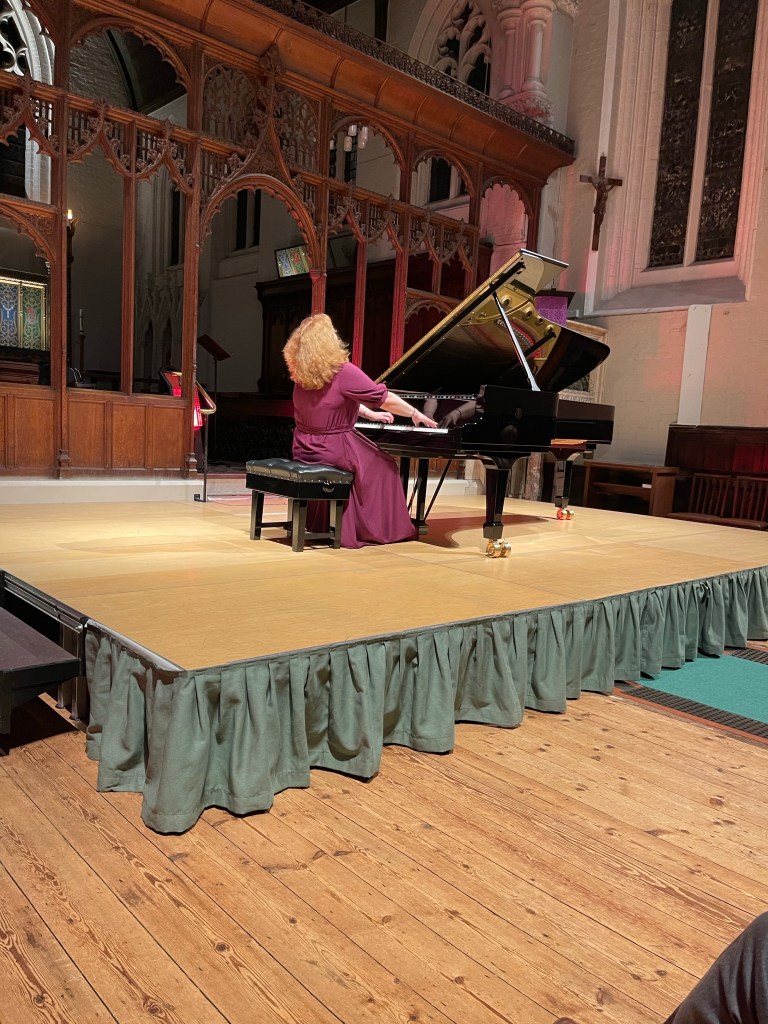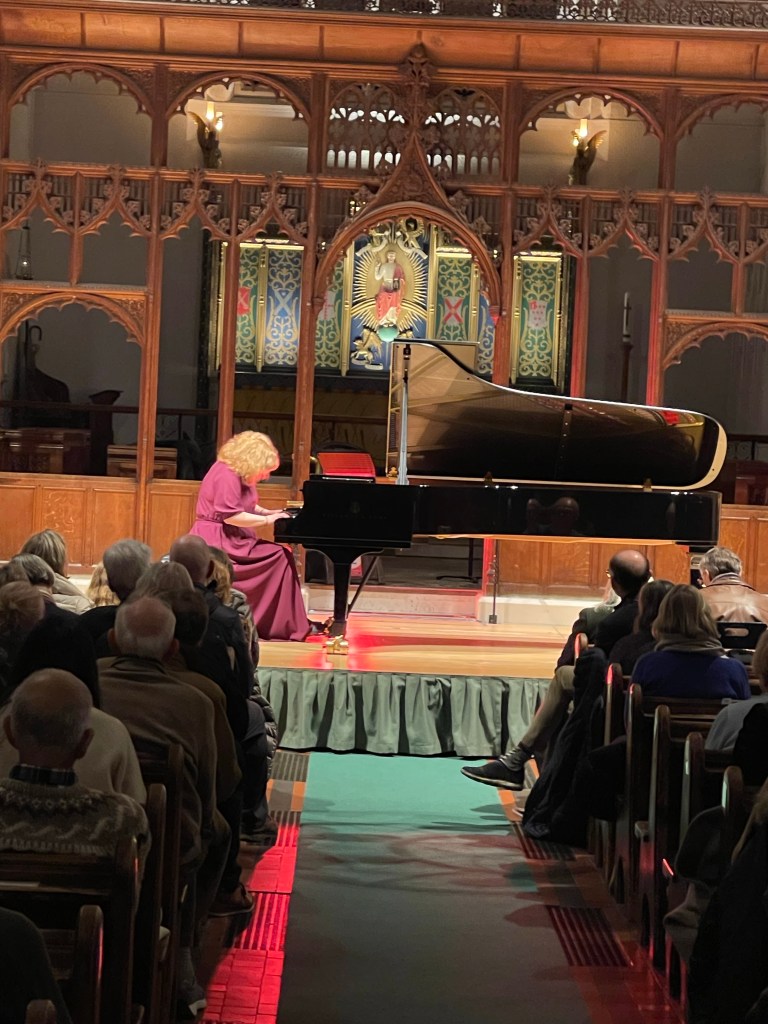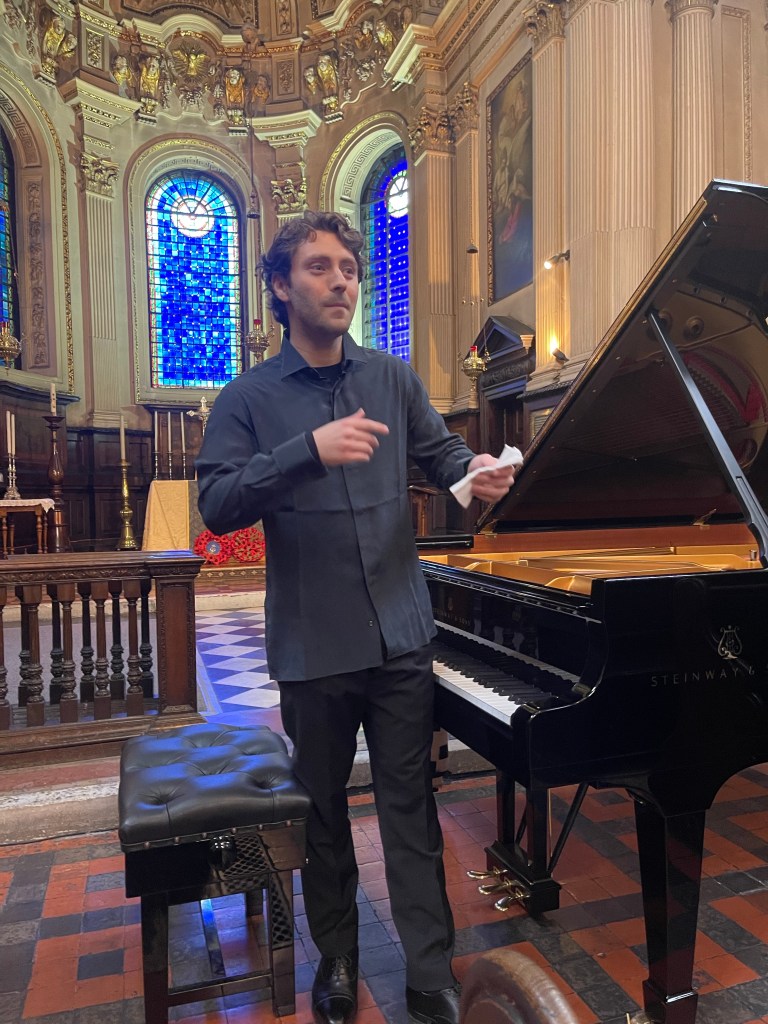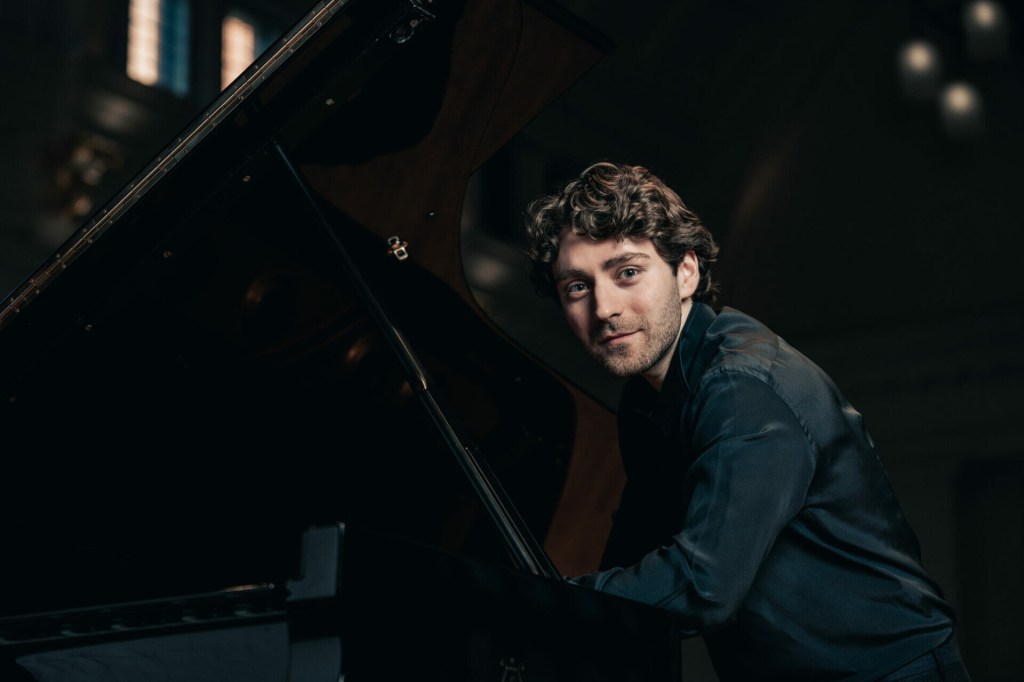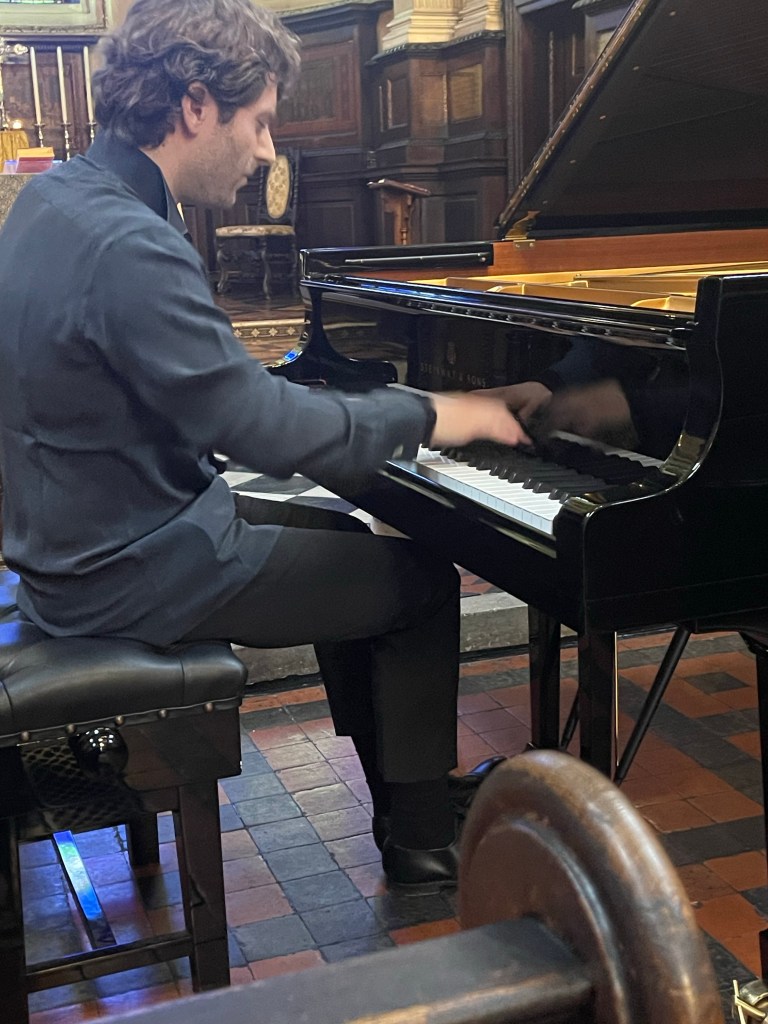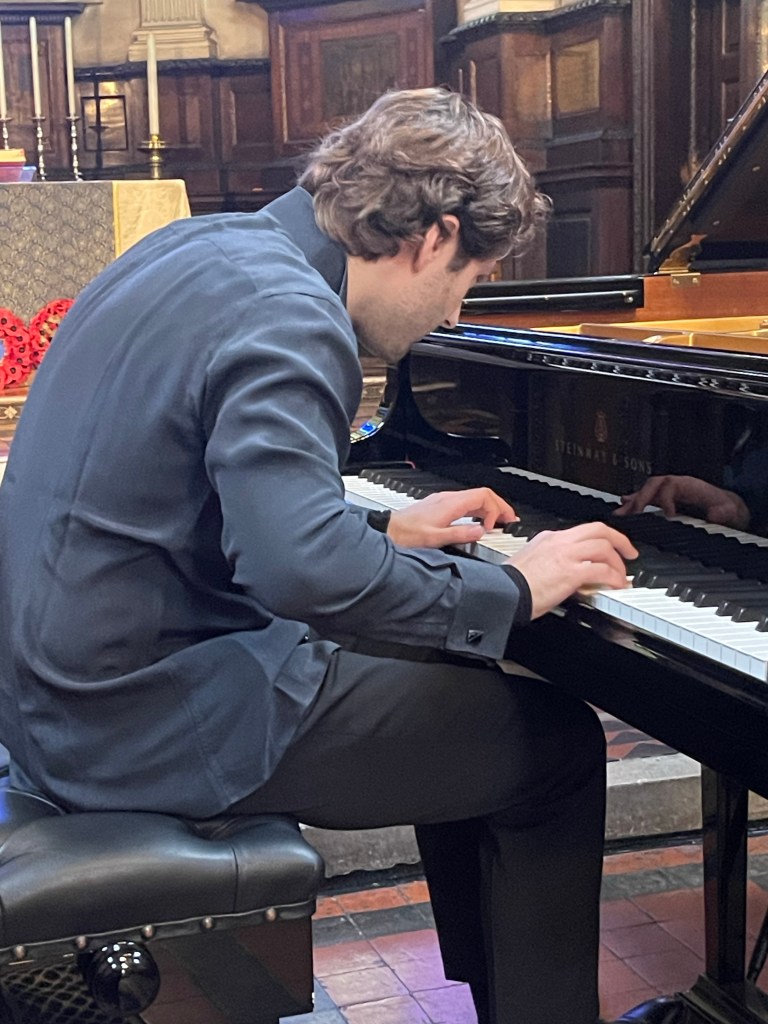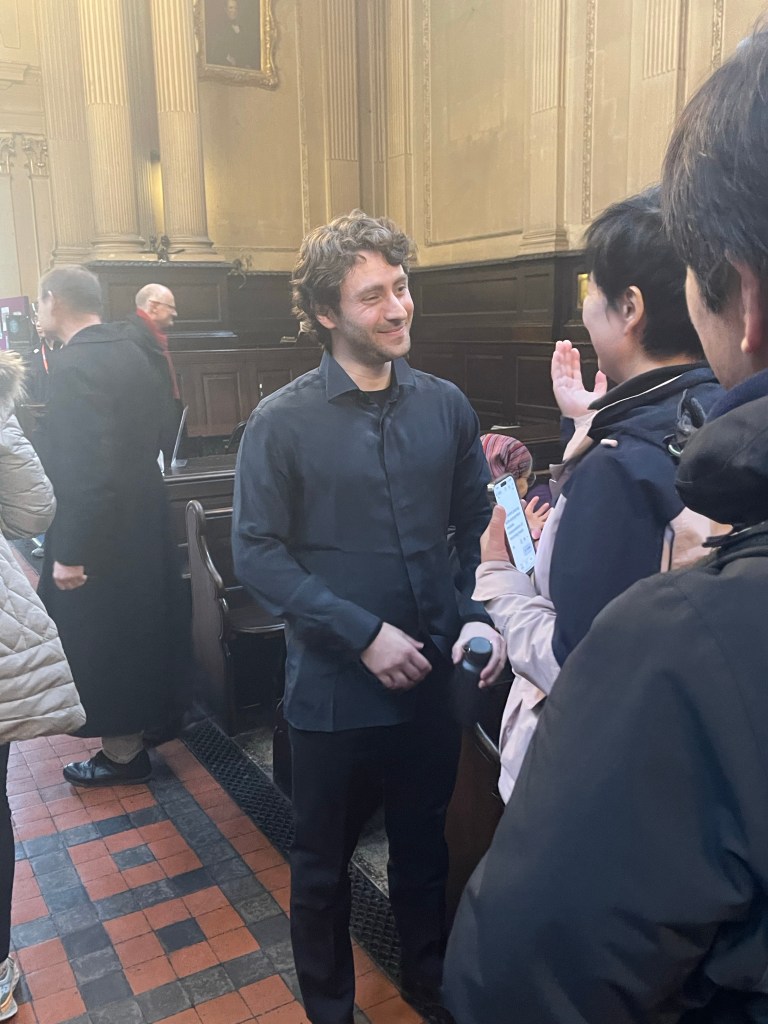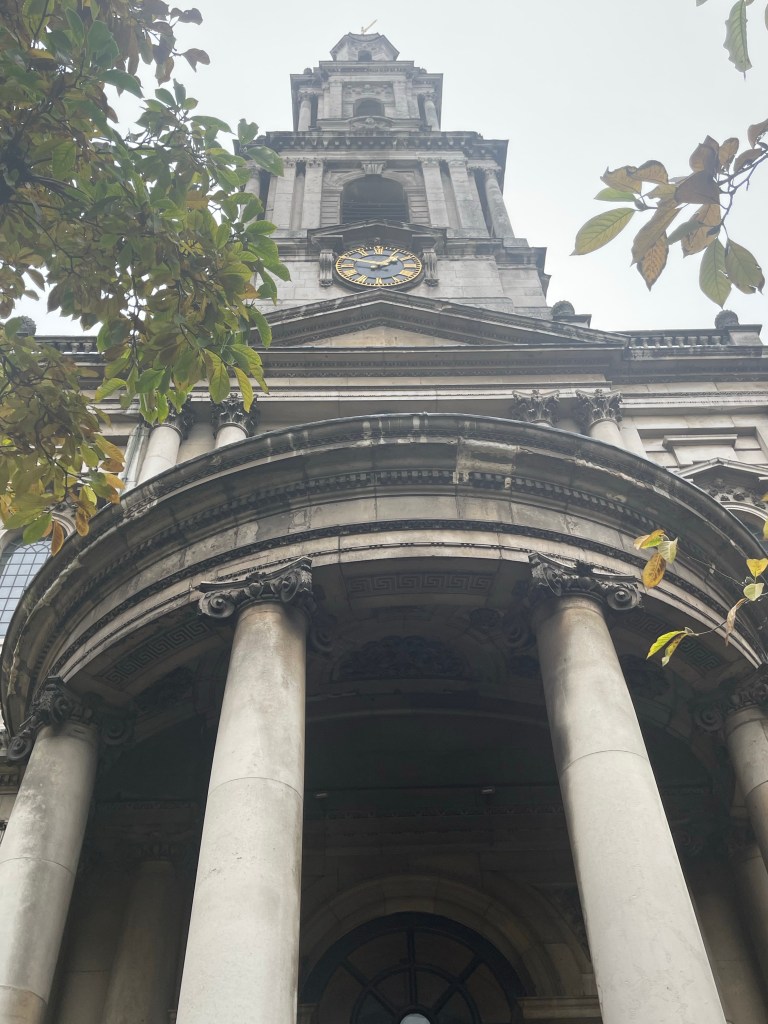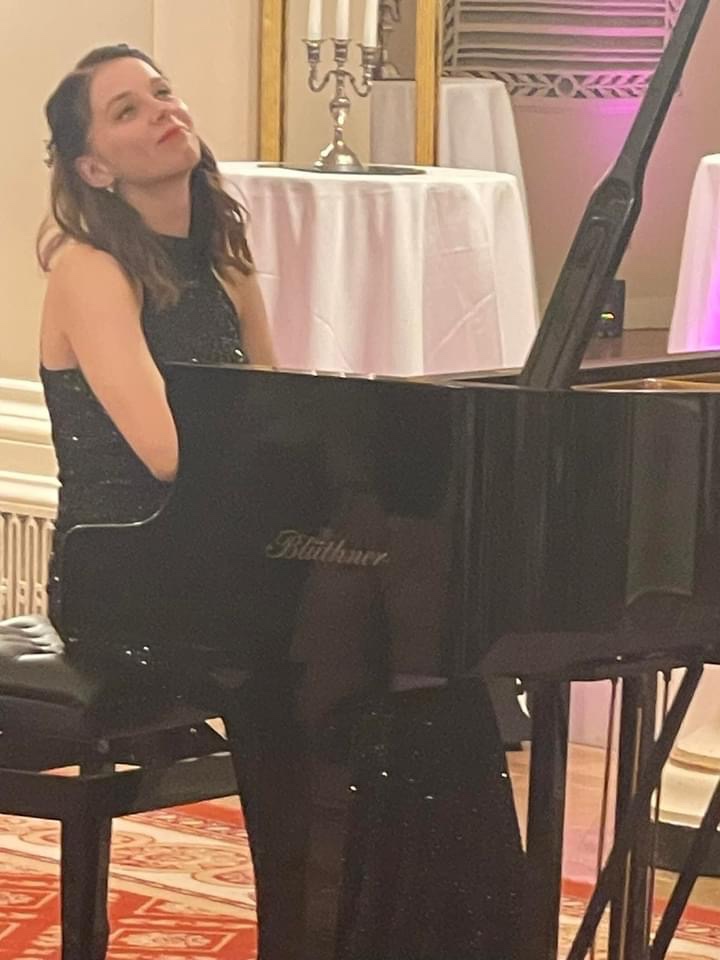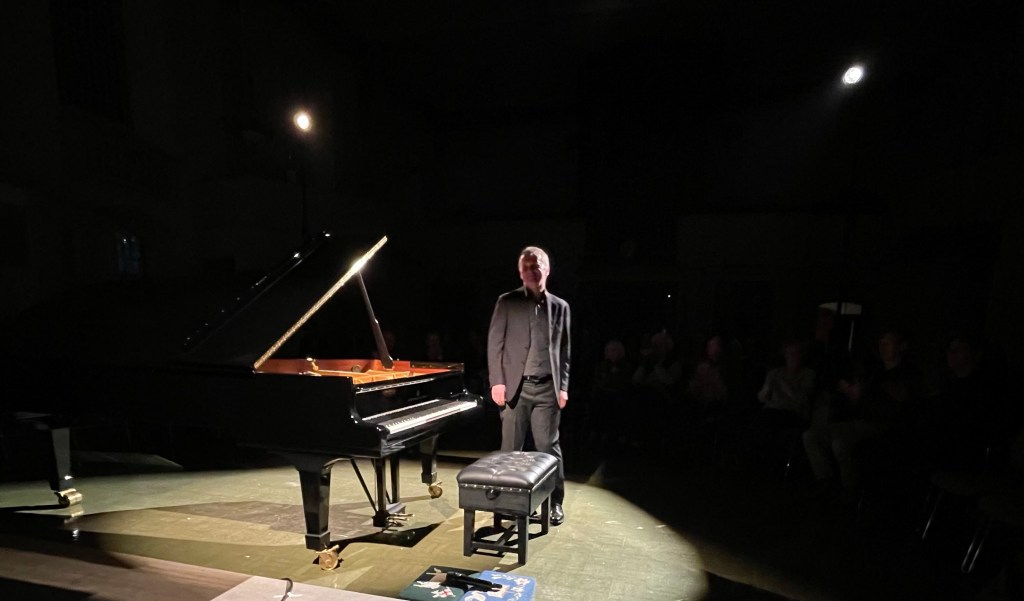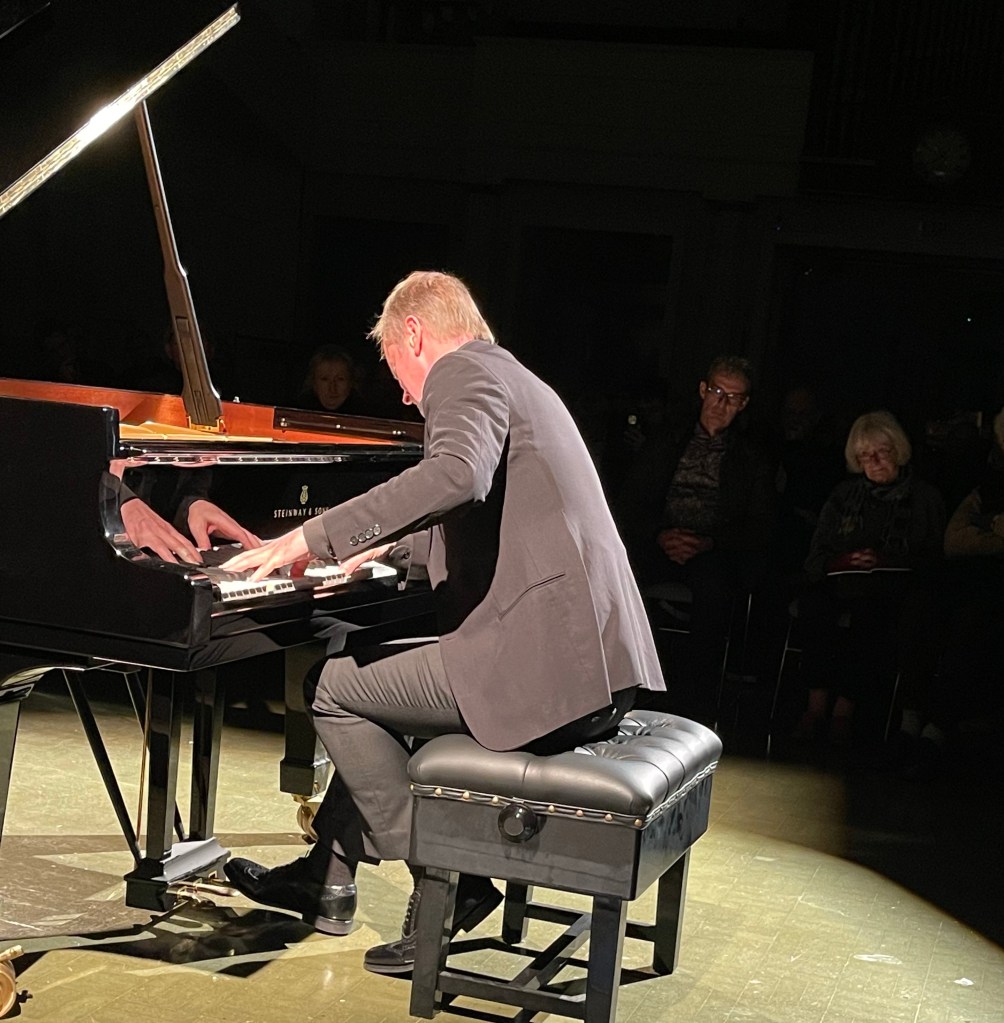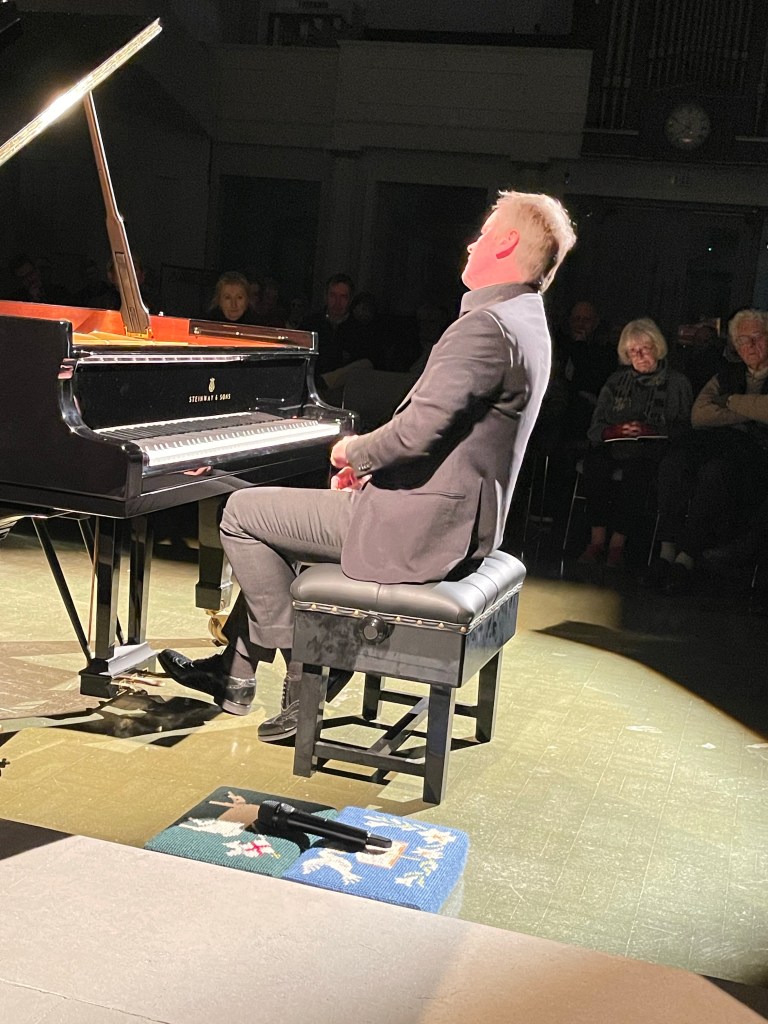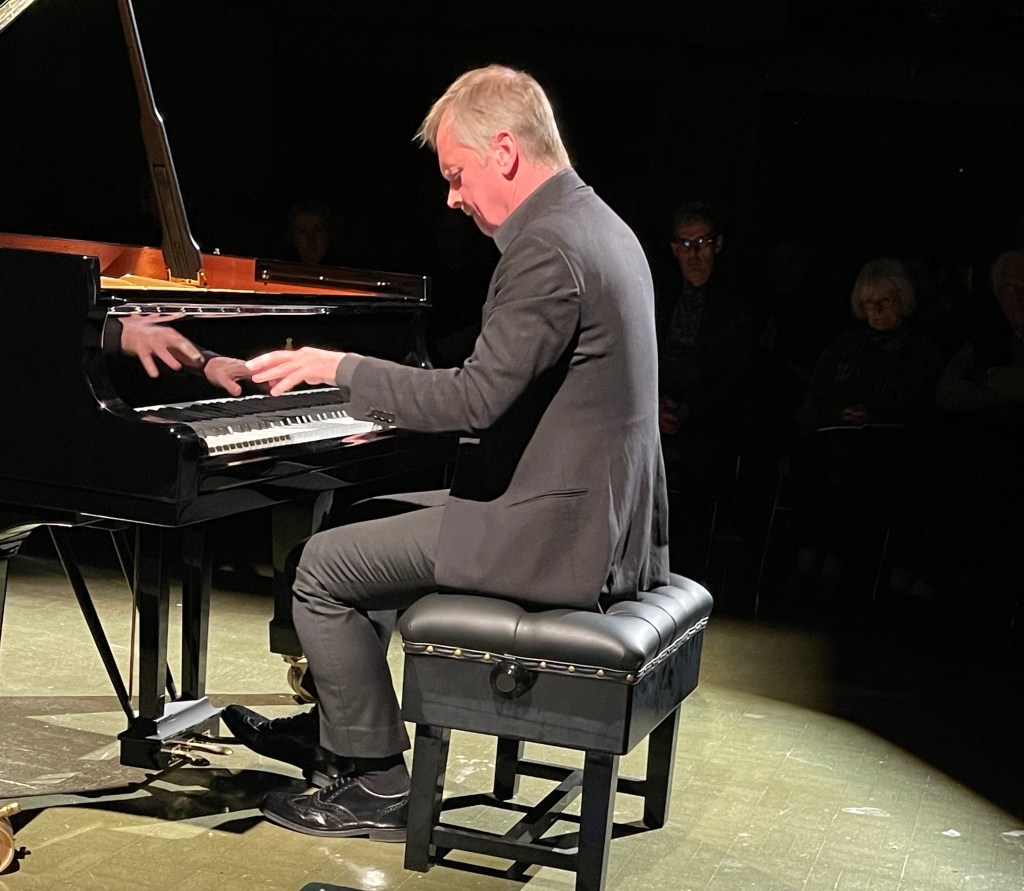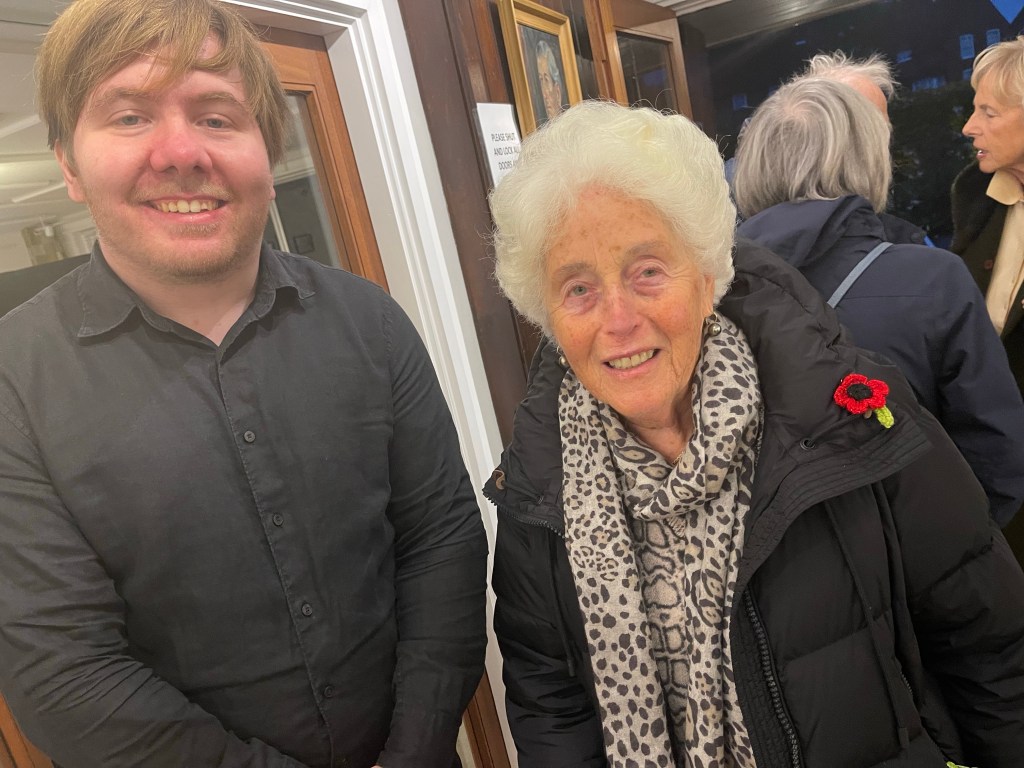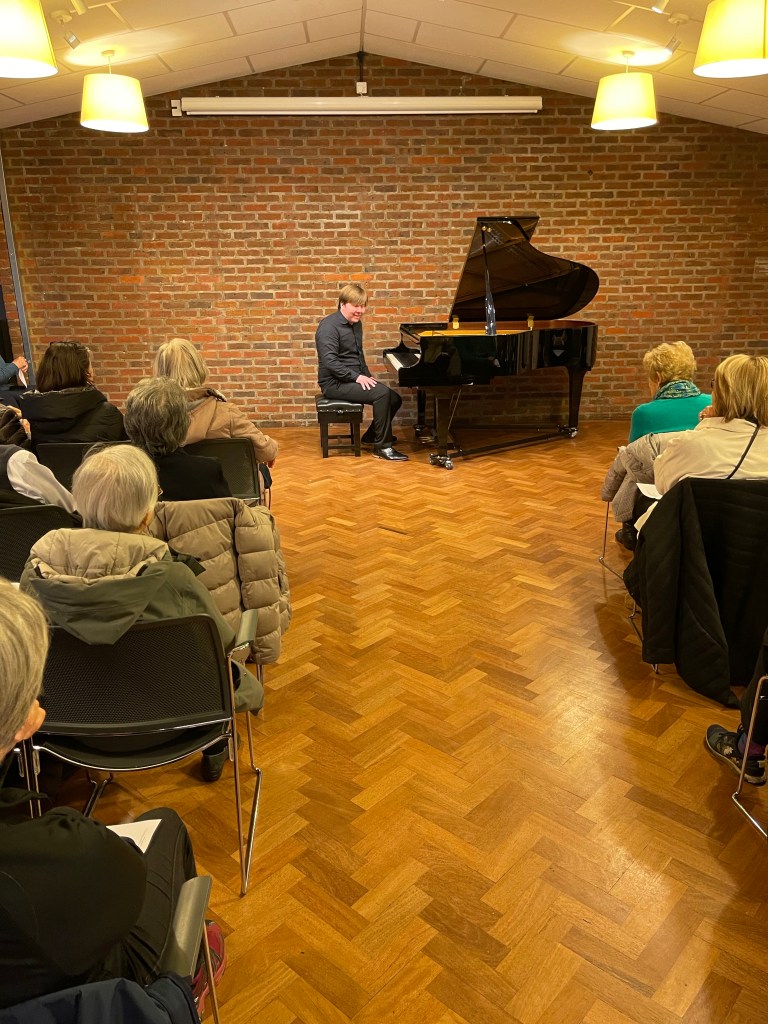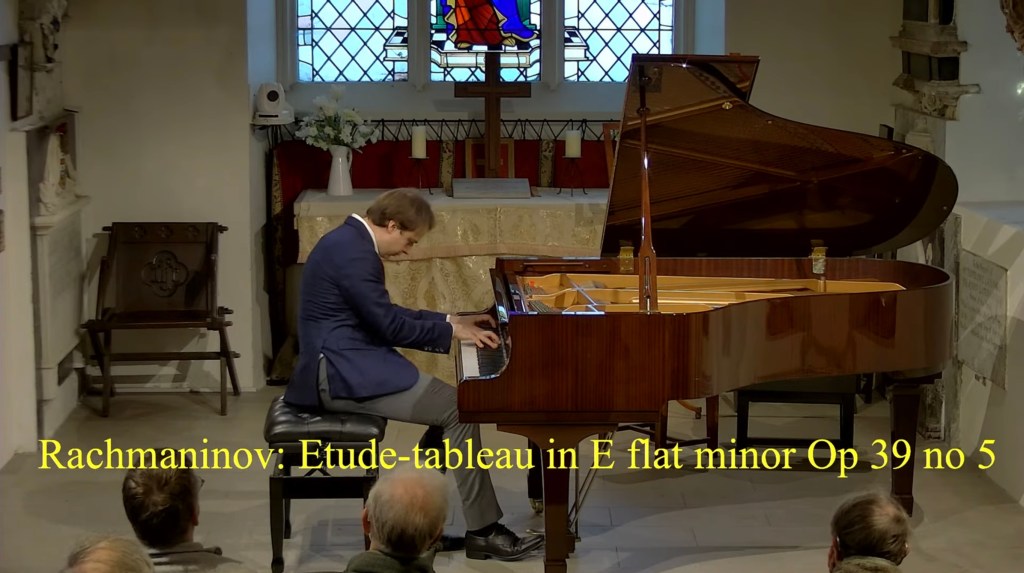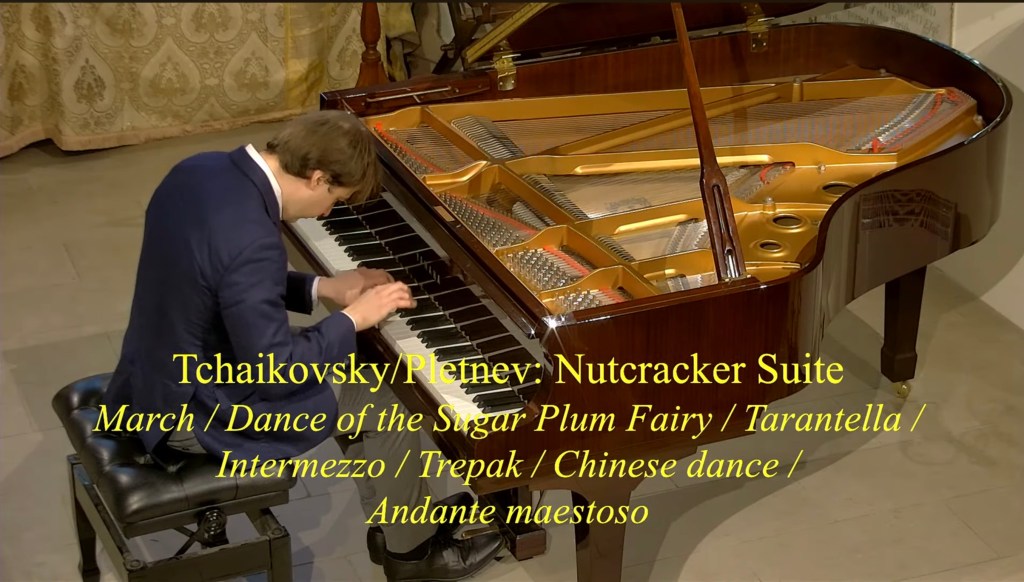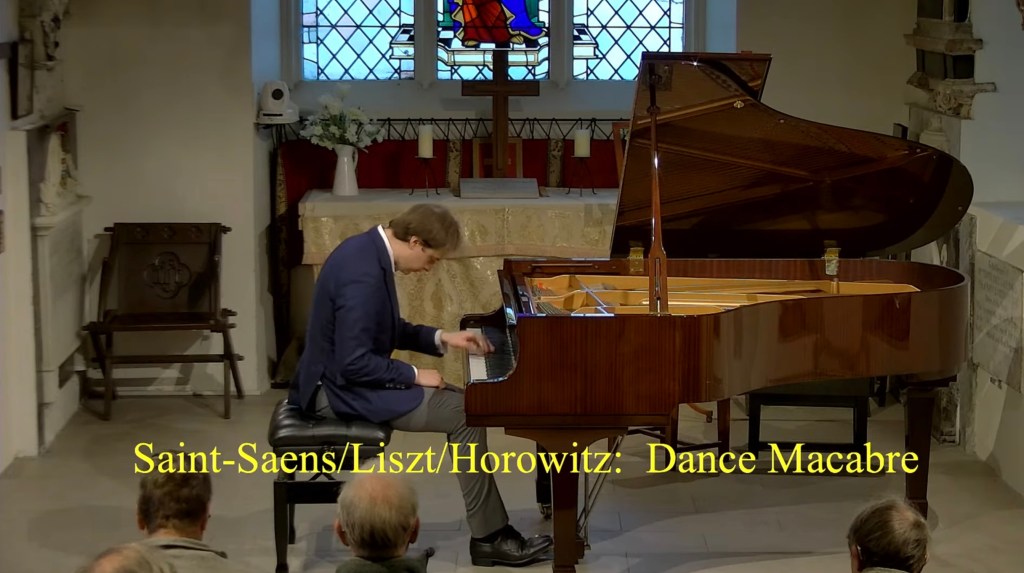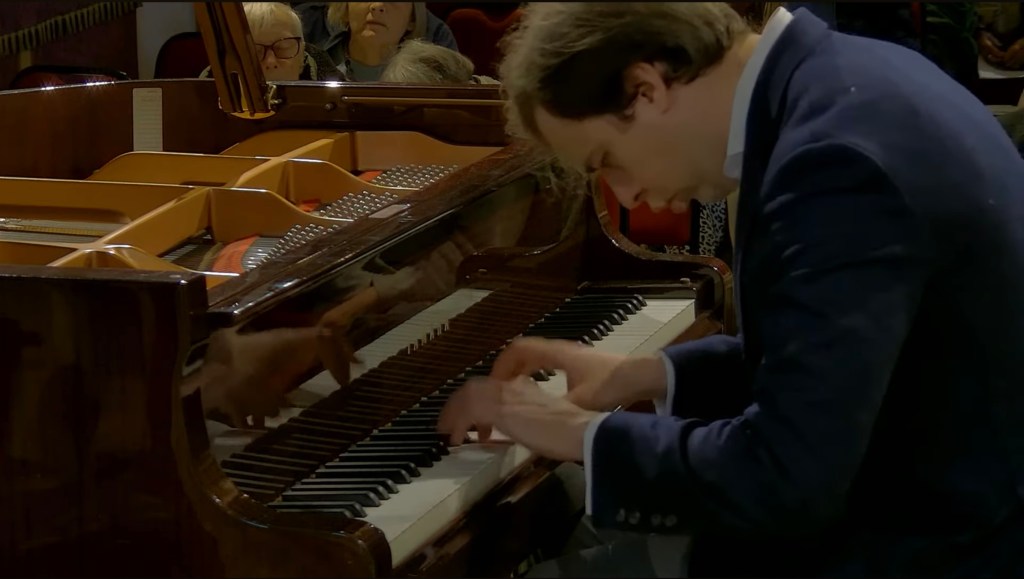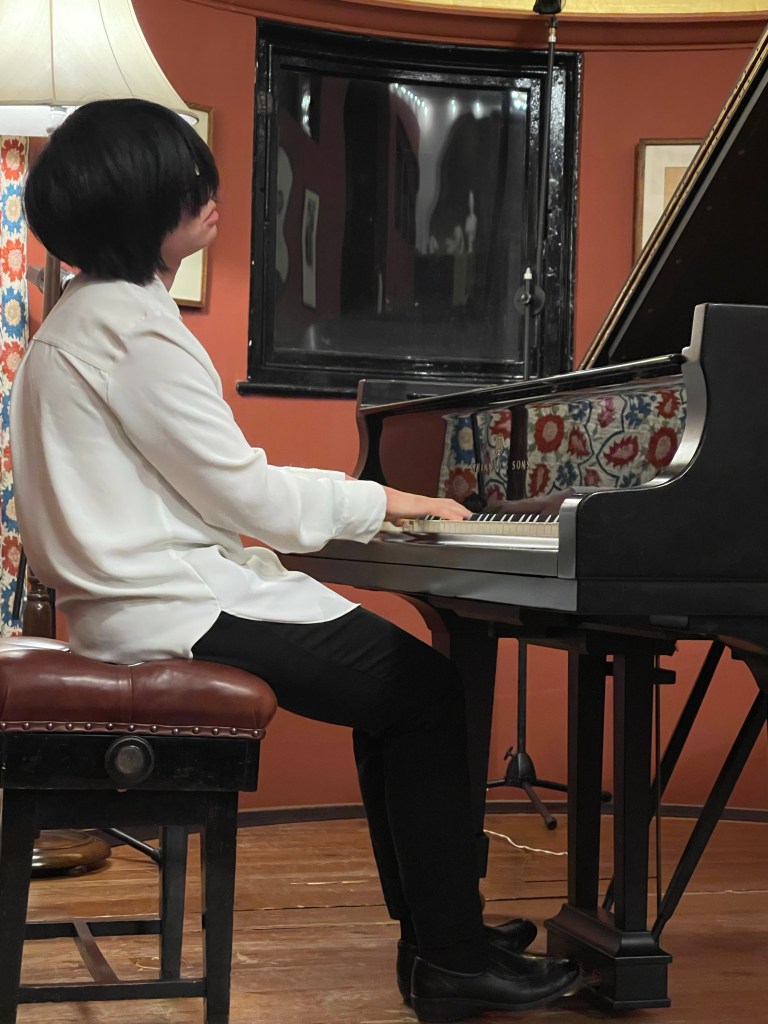
Thomas Kelly at St Mary’s a programme fit for a Prince

Tuesday 20 June 3.00 pm 

https://youtube.com/live/JntazPiqCHc?feature=share

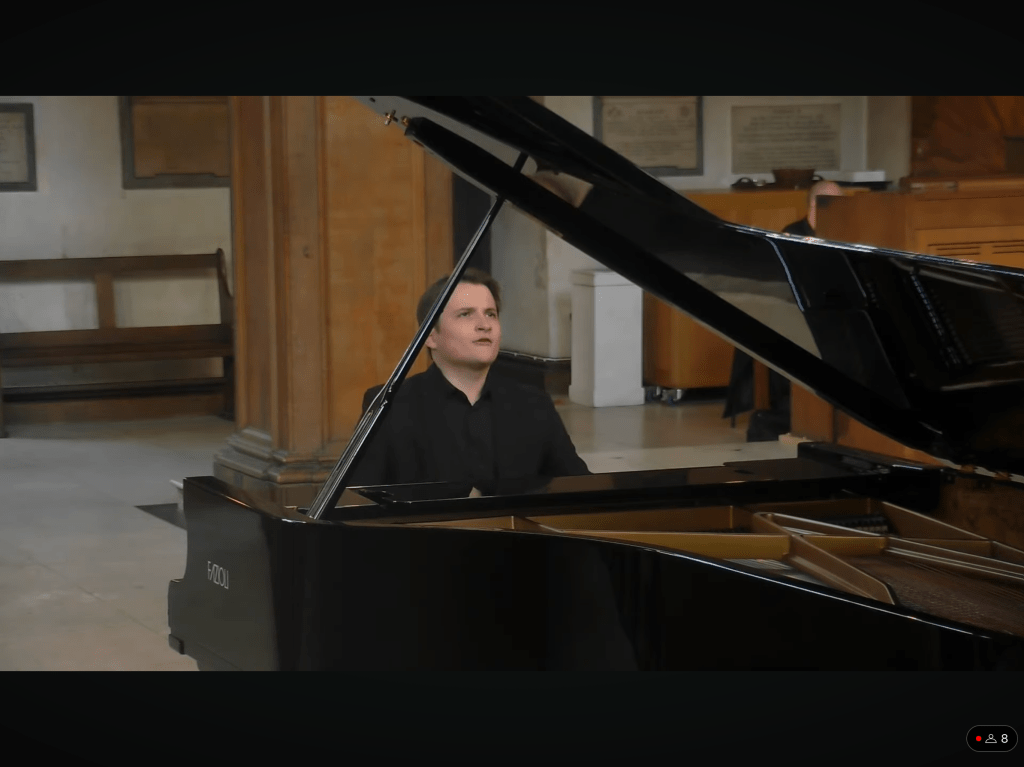
From the very first notes of Scarlatti it was clear that we were in for a very special afternoon of sumptuous playing from the Golden age of piano playing .The age when not only was there an ease of playing but there was a fantasy and imagination that with a palette of a seemingly infinite range of sounds that could ravish beguile,charm and astonish .
The idea was put into words by Tobias Matthay who would describe the way that in every note there was an infinite gradation of sounds that with a very sensitive touch could be as expressive as the human voice.I remember my first visit as a schoolboy to Sidney Harrison who sat at his wonderful inlaid Steinway and played the theme of Schumann’s Symphonic Studies.It was then that I knew music was to be the most important thing in my life.Lessons with him would be a revelation as he would search out songs where he could show me how to make the music speak in the same way as the human voice.We would spend hours finding the right inflection and shape to Traumerei of Schumann’s Kinderszenen.Of course there was also the technical preparation of Geoffrey Tankard’s books and Bach Preludes and Fugues,and much else besides but the seed was set.He would take me down the road to hear Frank Holland’s piano rolls in the Brentford Piano Museum of which he was honorary president .I could not believe the superhuman sounds of Godowsky,Rosenthal.Lhevine or the scintillating charm of Levitski.Later I was to be bowled over by Cortot’s Ballades on old recordings on loan from the local library.Followed by Horowitz’s return to the Carnegie Hall with his Schumann Fantasy of unbelievable colour and unashamed passion.Etincelles of scintillating charm and phenomenal technical wizardry.And later a mind blowing Stars and Stripes where the cheeky little piccolo would appear miraculously amidst his full orchestral sounds.Later the discovery of Rubinstein in concert where the beauty of his sound had us queuing up at six in the morning to be sure of getting in to his annual return visits.
All this to say that I was reminded of this world listening again to Thomas Kelly today.Someone who is steeped in a style of what I thought a bygone age.A fluidity and technical mastery that made sense of the word ‘jeux perlé’.A pianist who listens to himself and in love with the sound of the piano as he shapes and delves deep in to the keys and draws more secrets out of them than others who do not even know they exist.I have heard Thomas many times since five years ago when he surprised everyone with his prize winning Carnaval for the Schumann Prize at the RCM.I have followed his progress since then and seen a supremely gifted young student become and artists of great stature.Of course the seeds were set by his friend and mentor the late Andrew Ball.https://christopheraxworthymusiccommentary.com/2023/02/14/a-celebration-of-the-life-of-andrew-ball-the-thinker-pianist-at-the-r-c-m-london/. Now his artistry has been transformed into a complete mastery thanks to the help and encouragement from the Alexeevs and their past prodigies now distinguished teachers and performers in their own right.https://christopheraxworthymusiccommentary.com/2021/11/13/dmitri-alexeev-mastery-and-communication-beyond-all-boundaries/Above all thanks should go to the Head of Keyboard Vanessa Latarche who had taken over the reigns of this post from Andrew Ball fifteen years ago and who has had the not easy task of helping this young ‘Ogdon’ to come to terms with a world outside music !

The very first notes of the four scarlatti Sonatas that’s he had chosen showed off a unique voice and sense of colour with shading of such subtle artistry.A ‘joie di vivre’ that illuminated K 13 in G and ‘La Chasse’ played with such an original new voice.

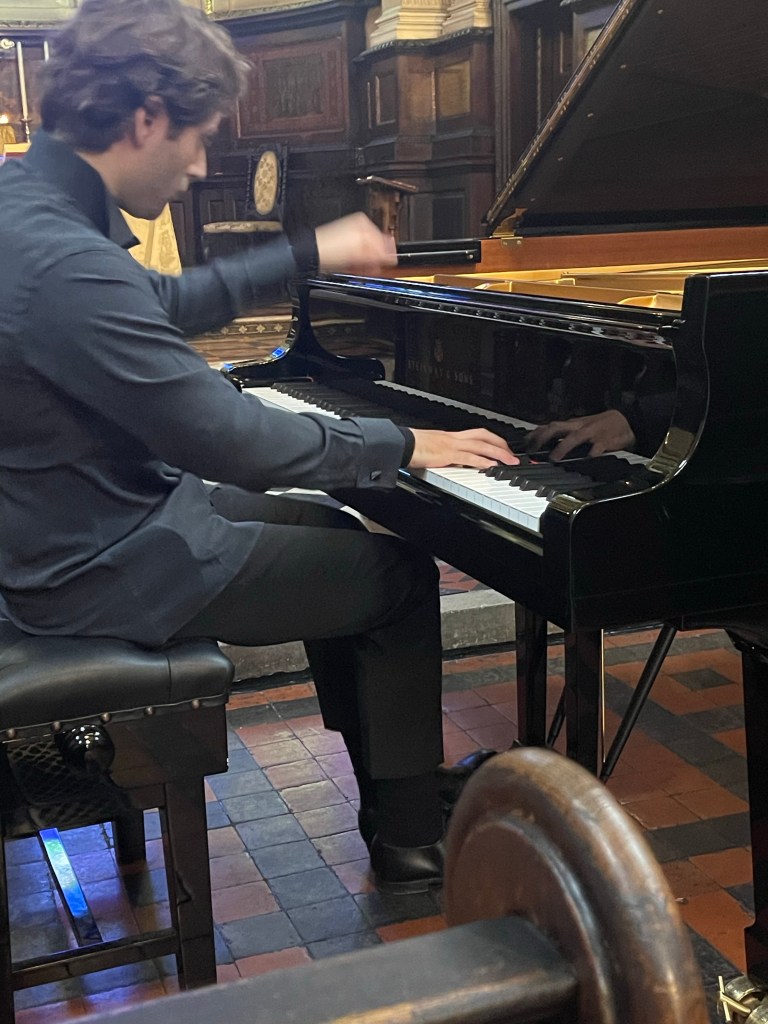
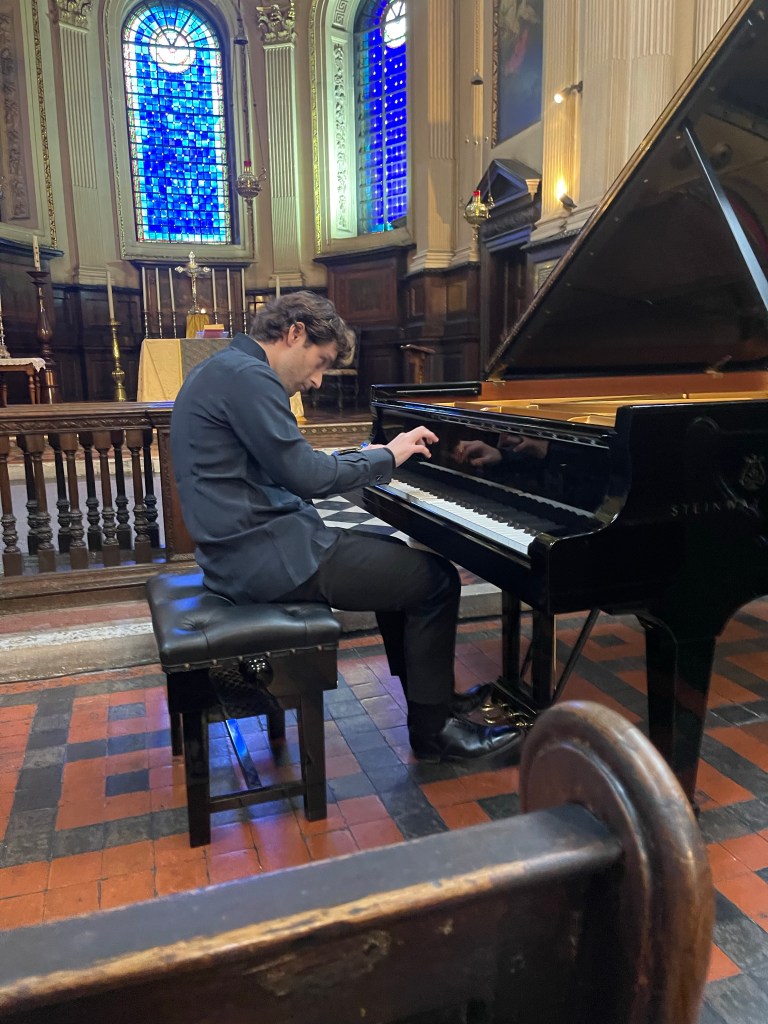
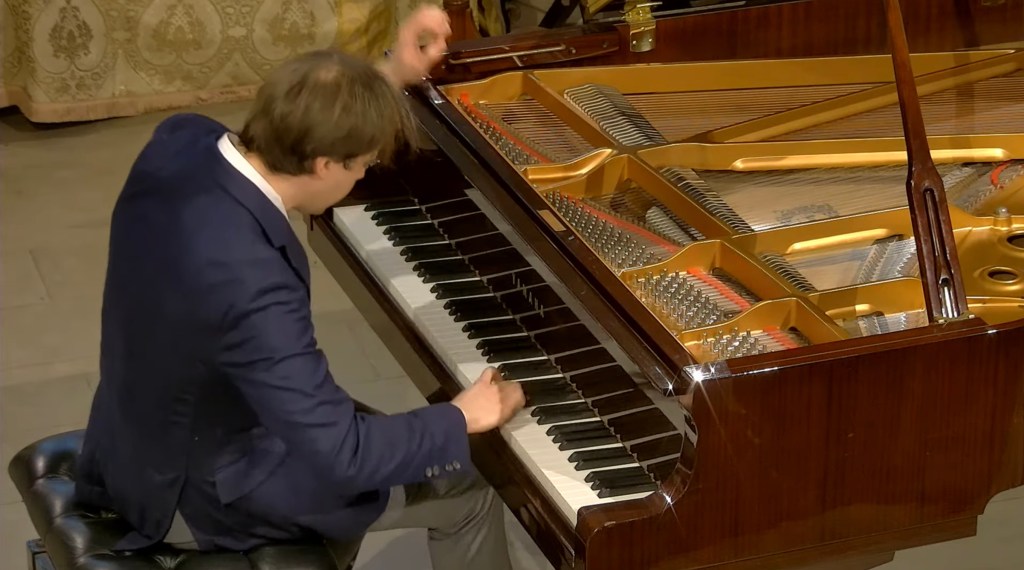
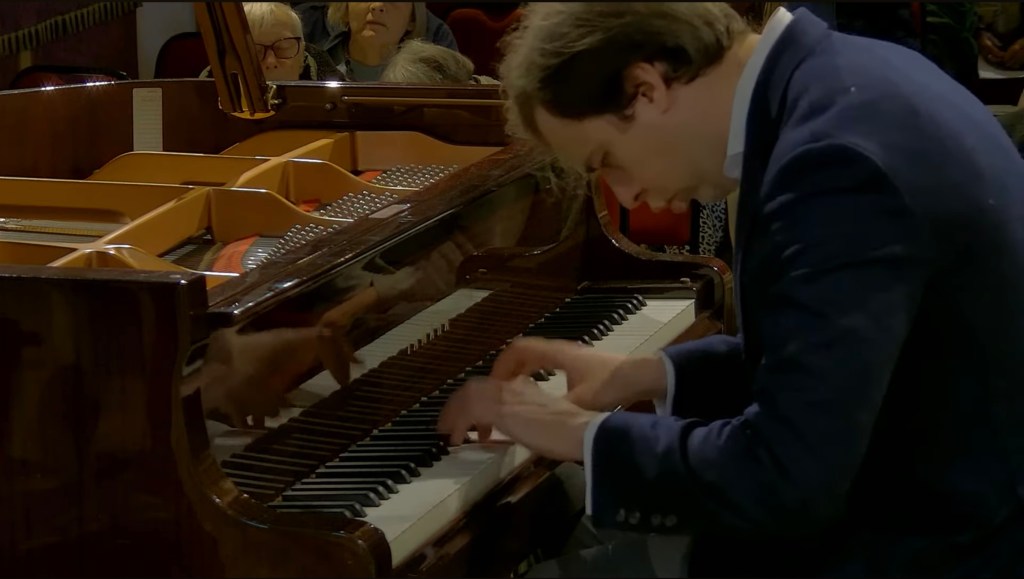
Ravel’s’ Jeux d’eau with a subtle flexibility and an aristocratic sense of style with ravishing colours and seemingly endless layers of sound.The overhead cameras at St Mary’s allowed us to observe the beautiful circular movements of Thomas’s chubby fingers.Like someone swimming in an imaginary bath of sound.The natural movements of the hand and arms are something that are to marvel at with Volodos.Thomas is still not completely liberated with his body movements as is the ‘Master’ but it is only a question of time until his whole body will unite in this unique union with the keyboard.Infact the piano seemed to glow with a golden radiance at the end of the Ravel as Thomas gradually allowed his body to shadow and be enveloped by the sounds he was producing.

There was a beguiling charm to the Paganini study in E flat and awe inspiring octaves played with nonchalant ease and charm.There was extraordinary clarity in the central episode of octaves but it was the beguiling charm of the opening that revealed the art that conceals art.It is something that cannot be taught and it is inspired by a sensitivity at the moment of creation almost teasing and playing with his audience like a cat and mouse.The A minor study was played with great fantasy and grandeur as the variations gradually unfolded to the final triumphant flourishes.Here we were treated to the Grandest of Grand Pianos.

Instinctively the world of Busoni was linked to the world of Liszt as without a break the waves of the Gondeliera grew out of the final mysterious bars of All’Italia.The strange world of Busoni takes a remarkable musician to make sense of the washes of sound that had been inspired by Liszt’s prophetic late experiments in a search for a new sound world.It was Kiril Gernstein who recently opened up this world for us and showed us the very clear link between Liszt and Busoni and who like Thomas today could see a line that guides us through the clouds of mist and mystery which surrounds a line that is apparent only to the very finest of musicians.Thomas today revealed a work of sumptuous sounds of fantasy and grandiloquence.The amazingly atmospheric final few sounds were so rightly linked up to the Liszt that followed without the slightest break.

There was ravishing beauty to the Gondoliers song with a fluidity and ease that led so naturally into the plaintive cry of the ‘Canzone’ that followed.Thomas chose not to follow Liszt’s very precise pedal marking that links the ‘Canzone’ to the’Tarantella’ but all must surely be forgiven when the breathtaking virtuosity and sublime beauty that he brought to this ‘cavallo di battaglia’ of so many virtuosi of the past was quite unique.La Campanella offered as an encore was played with a subtlety and refined tone palette together with a scintillating technical mastery that reminded me of the piano role of Lhevine that had so inspired my undying love of the piano.

Thomas Kelly was born in 1998. He passed Grade 8 with Distinction in 2006 and performed Mozart Piano Concerto No. 24 in Canterbury’s Marlowe Theatre two years later. After moving to Cheshire, he regularly played in festivals, winning prizes including in the Birmingham Festival, 3rd prize in Young Pianist of The North 2012, and 1st prize in the 2014 Warrington Competition for Young Musicians. Since 2015, Thomas has studied with Andrew Ball, initially at the Purcell School for Young Musicians and now at Royal College of Music, where he is a third-year undergraduate. Thomas has won first prizes including Pianale International Piano Competition 2017, Kharkiv Assemblies 2018, Lucca Virtuoso e Bel Canto festival 2018, RCM Joan Chissell Schumann competition 2019, Kendall Taylor Beethoven Competition 2019 and BPSE Intercollegiate Beethoven Competition 2019. He has also performed in venues including the Wigmore Hall, Cadogan Hall, Holy Trinity Sloane Square, St James’ Piccadilly, Oxford Town Hall, St Mary’s Perivale, St Paul’s Bedford, Poole Lighthouse Arts Centre, Stoller Hall, Paris Conservatoire, the StreingreaberHaus in Bayreuth, the Teatro del Sale in Florence, in Vilnius and Palanga. Thomas’ studies at RCM are generously supported by Pat Kendall-Taylor, Ms Daunt and Ms Stevenson and C. Bechstein pianos. He won 5th prize at the 2021 Leeds International Piano Competition, and was the first British pianist to reach the finals of this prestigious competition for 18 years. He has been given the ‘Young Talent (piano)’ award for 2022 by the Critics’ Circle.

A celebration of the life of Andrew Ball -‘The thinker pianist’ at the R.C.M London

Thomas Kelly …..’Reaching for the stars!’ – a voyage of discovery at Leighton House

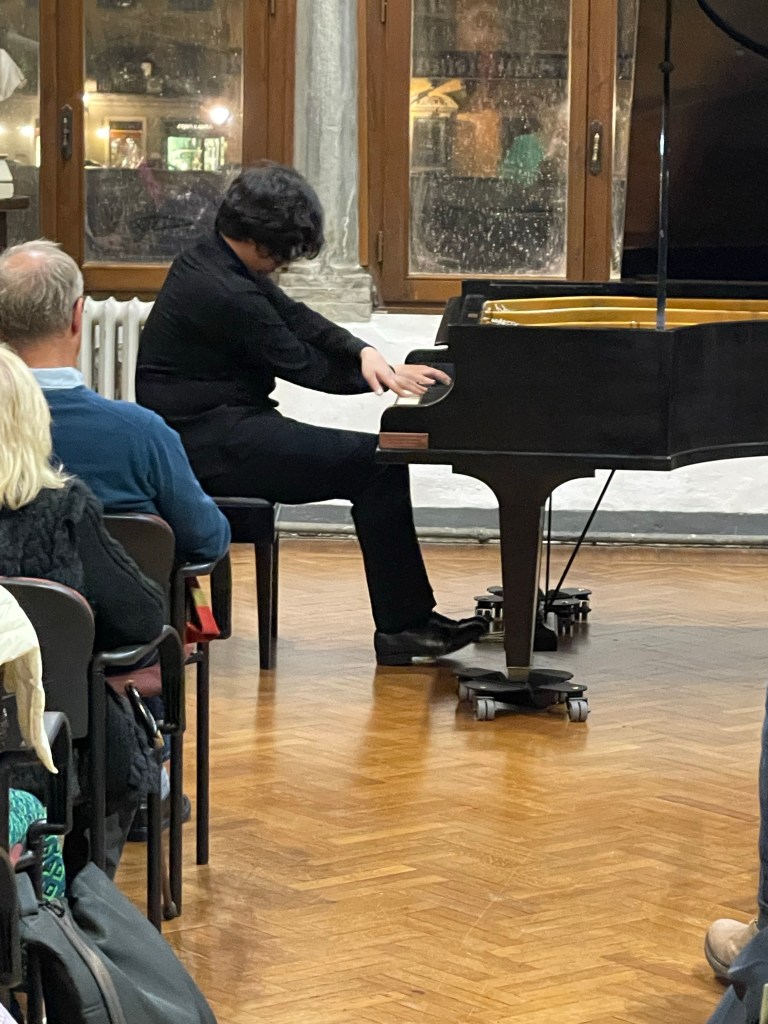
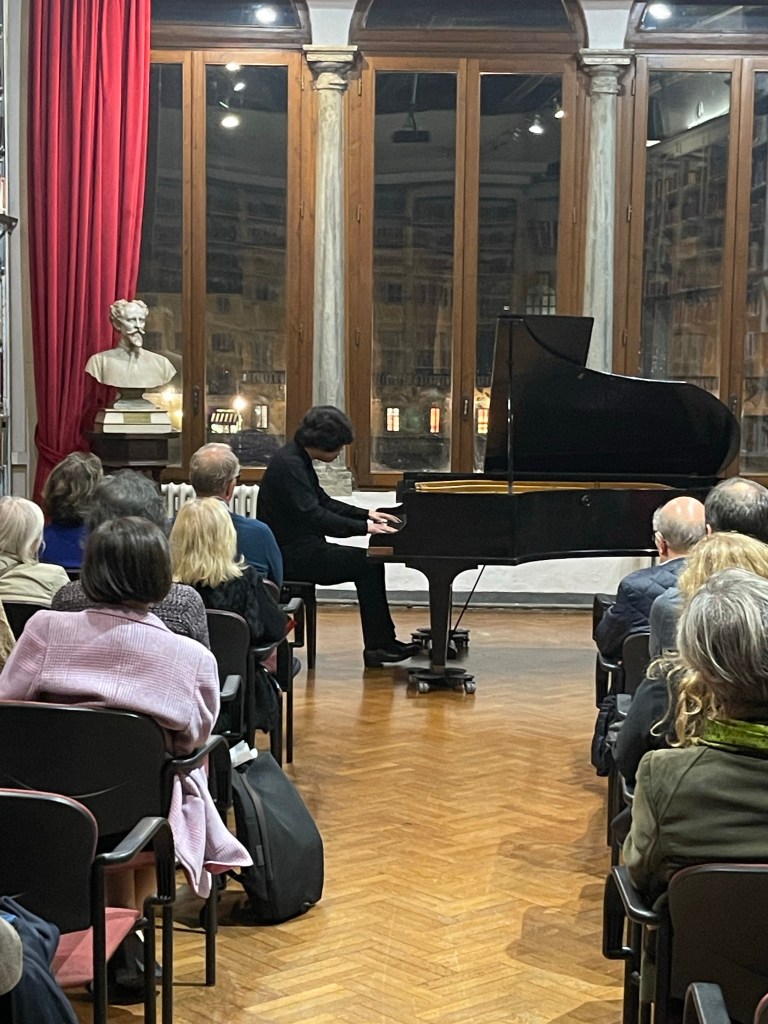
Thomas Kelly takes Florence by storm Music al British

Thomas Kelly at St Mary’s Masterly playing from the Golden Age

José Navarro Silberstein at St James’s A master musician with a heart of gold

Ludwig van Beethoven – Piano Sonata No. 27in E minor, Op. 90
Frédéric Chopin – Ballade No. 4 in F minor, Op. 52
Alberto Ginastera – Suite de Danzas Criollas
Alexander Scriabin – Sonata No. 5, Op. 53 

Presented in association with the Royal College of Music

https://youtube.com/live/B_F1R5LBjko?feature=share

I have heard José play many times – it was unavoidable as he was living for six months in my house!I thought I had heard all his recent repertoire so it came as a complete surprise to see the programme that he presented under the auspices of the Royal College of Music.I had heard recently his final concert at the Royal College where he has been working for the past year with Norma Fisher and even heard some of his programmes for competitions and concerts he had been preparing throughout this past year.

Jose Navarro Silberstein – masterly performances of red hot intensity

José had been discovered in Bolivia by one of the Keyboard Trust Trustees – Dr Moritz von Bredow – who was with a choir on a tour from Germany at the time .He was so impressed when he heard the very young José that he invited him to give some concerts in Germany.From there he went on to study for seven years in Cologne with the renowned pianist and pedagogue Claudio Martinez Mehner.This past year he was invited to study at the RCM and to complete his studies in London with Norma Fisher.

Norma and I had the same piano ‘daddy’ Sidney Harrison when we were schoolchildren.Norma was later taken under the wing by Gina Bachauer who took her to her own teacher Ilona Kabos.Norma fast made a name and important career for herself until she was struck down by a cruel muscular disease that curtailed her playing career.

Norma Fisher at home with her family of students in her class at the RCM

Norma Fisher at Steinway Hall The BBC recordings -On wings of song- the story continues

Norma with José in her beautiful garden in Golders Green .

She is one of the finest musicians I know with impeccable good taste and like Chopin ( or even Shenker – call it what you will!) she believes that the root of music should be firmly planted in the ground and it is only then that the music above is free to move and take flight.A freedom within a certain framework that does not disturb the essential river like undercurrent.It was exactly this that was so apparent in José’s masterly performances today.The same solidity that was so much part of the playing of Gilels (or Solomon ) who was one of Norma’s favorite colleagues.It was the solidity that I remember hearing from Norma when Sidney Harrison took me back stage and proudly presented me as the Liszt Scholar at the Royal Academy to his former star student who was giving a recital at the Wigmore Hall.I have never forgotten the solidity of her Brahms Handel Variations or the beauty combined with strength of Chopin’s Berceuse.

The performance of the Fourth Ballade today had a solidity and beauty that had something of the monumental about it.Gone were the whispered asides and distortions that this work so often suffers in the name of tradition.In it’s place was a driving energy like a great wave the enveloped us as we experienced a journey where we were ravished,seduced,astonished and finally overwhelmed by a torrential passionate outpouring of seemless ease.But it all took place under the same roof in a unique sound world where all these wonders belonged with such unflinching certainty and beauty.Aristocratic might be a name for it,and that was certainly how one could have described Arthur Rubinstein’s inimitable performances during his glorious Indian Summer.But words are superfluous in trying to describe a monument of such originality and searing beauty as this Pinnacle of the Romantic piano repertoire.

The concert had opened with Beethoven’s ‘little’ Sonata op 90.The most Schubertian of Beethoven’s Sonatas with a second movement that is a continuous outpouring of mellifluous simplicity.The first movement had an inner intensity from the very first chords.A forward movement that did not exclude beauty and delicacy though.Scrupulous attention to detail had me searching the score for things that I had not been aware of.The sudden pauses and change of dynamics gave such authority and weight to this seemingly innocent two movement work that was the be the prelude to Beethoven’s final visionary works for piano.Masterpieces where Beethoven’s tumultuous existence was at last to find celestial peace.No ritardando at the end of this first movement but beautifully curtailed leaving a question mark that was to find a reply in the beautiful fluidity of the second movement.’I found this a little too fast at the beginning for Beethoven’s ‘nicht zu geschwind ‘ marking to exclude any forcing of phrasing or external interference.It linked up though with the question and answer of the following episode superbly characterised without any exaggeration.Leading,like in Schubert, to a seemingly endless stream of melodic invention and in José masterly hands I realised what a masterpiece of art that conceals art this work really is.Beethoven writing so precisely his indications and followed by José not with cold precision but with full blooded understanding of the duel character of this universal genius.The last five bars marked ‘accelerando -crescendo -piano -a tempo -pianissimo’ and José almost made it but it was not as convincing as the end of the first movement had been.It is more charming than capricious and it was the only blemish in a performance that was a jewel shining so brightly nurtured with loving sensibility and intelligence.

The Ginastera was given a performance of brilliance and with a kaleidoscope of sounds and a total command of a world that is after all José’s birthright.Ravishing,piecing delicacy of the ‘Adagietto pianissimo’was followed by the dynamic animal rhythms of the ‘Allegro rustico’.The delightfully flowing ‘Allegretto cantabile’ with its seductively beautiful tenor voice.The radiance of the doubling of the melodic line bathed in a mist of pedal was indeed ‘Calmo e poetico’ and was thanks to his wonderfully sensitive sense of balance.José took us by the scruff of the neck with his animal like attack in the last ‘Scherzando’ where it was astonishing to see with what speed and precision his hands and arms were wading in an imaginary fluid stream as these unexpectedly savage sounds filled the hallowed air of this most beautiful edifice.It was a good preparation for Scriabin’s demonic fifth sonata.

A feast both diabolical and sensual but played with a sense of architectural shape that was breathtaking in its mastery of the complexity involved.The three great notes ringing out throughout the cauldron of red hot sounds like blazing laser beams of Scriabin’s meteor and that finally unite as the ‘star’ shining in a final explosion of ecstatic excitement.I have heard José practicing it in my house but I never imagined that he would master its complexities with such overwhelming authority and take such breathtaking risks that had us on the edge of our seats.It brought the audience spontaneously to their feet at the end with the final release of tension as he shot from one end of the piano to the other.A star indeed in every sense!

Beethoven’s previous piano sonata, popularly known as Les Adieux ,was composed almost five years before Op. 90. Beethoven’s autograph survives and is dated August 16 but it was published almost a year later, in June 1815, by S. A. Steiner, after Beethoven made a few corrections.Beethoven’s letter to Prince Moritz von Lichnowsky, sent in September 1814, explains the dedication:

‘I had a delightful walk yesterday with a friend in the Brühl, and in the course of our friendly chat you were particularly mentioned, and lo! and behold! on my return I found your kind letter. I see you are resolved to continue to load me with benefits. As I am unwilling you should suppose that a step I have already taken is prompted by your recent favors, or by any motive of the sort, I must tell you that a sonata of mine is about to appear, dedicated to you. I wished to give you a surprise, as this dedication has been long designed for you, but your letter of yesterday induces me to name the fact. I required no new motive thus publicly to testify my sense of your friendship and kindness.

Beethoven’s friend and biographer Anton Schindler reported that the sonata’s two movements were to be titled Kampf zwischen Kopf und Herz (“A Contest Between Head and Heart”) and Conversation mit der Geliebten (“Conversation with the Beloved”), respectively, and that the sonata as a whole referred to Moritz’s romance with a woman he was thinking of marrying.Schindler’s explanation first appeared in his 1842 book Beethoven in Paris and has been repeated in several other books. Later studies showed that the story was almost certainly invented by Schindler, at least in part, and that he went so far as to forge an entry in one of Beethoven’s conversation books to validate the anecdoteMost of Beethoven’s piano sonatas are in three or four movements, but this one has only two. Both are provided with performance instructions in German. A few of Beethoven’s works of this period carried similar instructions in place of the traditional Italian tempo markings:

Mit Lebhaftigkeit und durchaus mit Empfindung und Ausdruck (“With liveliness and with feeling and expression throughout”)

Nicht zu geschwind und sehr singbar vorgetragen (“Not too swiftly and conveyed in a singing manner”)

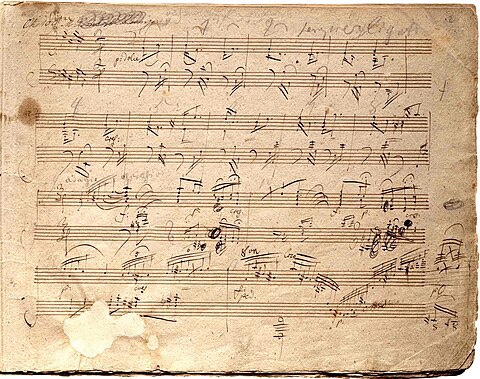
Autograph manuscript, Bodleian Library ,1842

The Ballade No. 4 in F minor, Op. 52 was completed in 1842 in Paris and is considered not only one of Chopin’s masterpieces, but one of the masterpieces of 19th-century piano music.john Ogdon described it as “ the most exalted, intense and sublimely powerful of all Chopin’s compositions… It is unbelievable that it lasts only twelve minutes, for it contains the experience of a lifetime.”

Dedicated to Baroness Rothschild ,wife of Nathaniel de Rothschild,who had invited Chopin to play in her Parisian residence, where she introduced him to the aristocracy and nobility.

Alfred Cortot claims that the inspiration for this ballade is Adam Mickiewicz’s poem The Three Budrys, which tells of three brothers sent away by their father to seek treasures, and the story of their return with three Polish brides.

  • Suite de Danzas Criollas op 15 (1946) Alberto Ginastera
  • I. Adagietto pianissimo
  • II. Allegro rustico
  • III. Allegretto cantabile
  • IV. Calmo e poetico
  • V. Scherzando: Coda

Scriabin’s Sonata No 5, Op 53, was written as an offshoot of the orchestral ‘Poem of Ecstasy’ in 1907; its composition took only three to four days. Scriabin provided a text, a few lines from the poem written for the orchestral work:

Cover page of one of the first editions of the work. Russischer Musikverlag, 1910. The engraving is by Ivan Bilibin

I call you to life, mysterious forces!
Drowned in the obscure depths
of the creative spirit, timid
Embryos of life, to you I bring audacity!

—a vivid description of the release of material from the unconscious mind necessary for the creation of such a complex and innovative work in such a short space of time. Like the Fourth, the Fifth Sonata belongs to the middle period of Scriabin’s music where harmony relates directly and clearly to the tonal system, but many features point already to the final phase.

Scriabin decided to go to live in Lausanne with his pregnant wife Tatyana,since he found the place to be cheaper, quieter, and healthier, and only 7 hours away from Paris. On 8 December 1907 Tatyana wrote to a friend:

‘We go out a little, having caught up on our sleep. We begin to look normal again. Sasha even has begun to compose – 5th Sonata!!! I cannot believe my ears. It is incredible! That sonata pours from him like a fountain. Everything you have heard up to now is as nothing. You cannot even tell it is a sonata. Nothing compares to it. He has played it through several times, and all he has to do is to write it down …

In late December, Scriabin wrote to Morozova about the imminent completion of his new work:

‘The Poem of Ecstasy took much of my strength and taxed my patience. … Today I have almost finished my 5th Sonata. It is a big poem for piano and I deem it the best composition I have ever written. I do not know by what miracle I accomplished it …’

With Yisha Xue from the National Liberal Club

Geoff Cox – A celebration The Wiercinski brothers amaze delight and rejoice

Sunday 25 June 3.00 pm 

https://youtube.com/live/FH2C700m8-o?feature=share

Wonderful tribute to a dear friend of so many aspiring young artists.
The two Wiercinski ‘boys’ coming together to play a Dvorak Slavonic dance together with such ‘joie de vivre’ and astonishing finesse.
This was after masterly performances of Beethoven,Bach and Chopin.
Andrzej Wierciński who I had heard recently in Ischia play the same pieces but today there was even more magic in the air.


A Bach that had such authority from the seemless clarity and nobility of the Prelude to the beauty of the Fugue.Shaping the awkward fugue subject with a fantasy and sense of colour without ever disturbing the french overture but illuminating it with sublime beauty.


The Chopin Mazukas too were played with an overpowering authority and ravishing beauty as well as a freedom and sense of dance that are of the manner born.


Beethoven’s penultimate sonata was given a memorable performance in which all of Andrzej great artistry was given a freedom within the confines of what Beethoven so minutely describes in the score .The passionate outburst of the final pages was of overpowering conviction of a man who had indeed a vision of Paradise.


Kyzysztof complimenting his brother with longer spindly fingers capable of creating startling clarity.A musicality that had him searching for hidden colours which was immediately evident in the beauty of Chopin’s B major nocturne op 62 n.1 .There was a luminosity and fluidity of sound to which he added a freedom as he dug deep into the core of the harmonies to seek out its inner secrets.


The Second Ballade was played with a beautiful simplicity and flowing melodic line.There was such delicacy too due to his very sensitive sense of balance.His big hands made easy work of the tempestuous interruptions but always shaped them with the musicianship that obviously runs in their remarkable family.Again seeking out some secret inner colours but never forsaking the overall architectural shape.On the wave of the final great flourish was a heartrending final uttering that only the genius of Chopin could have penned and was beautifully played with a quiet mysterious whisper.


Beethoven’s early Sonata op 26 ,with its third movement Funeral March was beautifully and very clearly played .The mellifluous theme was followed by variations of great character.The almost too pompous second with its alternating hands was followed by the deep brooding of the third.Only to be interrupted by the scherzando bagatelle of the fourth followed by the beautiful pastoral fluidity of the fifth.
There was a contrastingly rhythmic Scherzo with the beautifully shaped trio with its inner voicing.The Funeral March was played with quiet intensity and superb rhythmic control.The final Allegro Rondo was bubbling over with ‘joie de vivre ‘ with a rhythmic energy and bite leading to the surprise ending.


Chopin’s Scherzo in B flat minor was played with astonishing technical freedom with clarity and driving energy .Even in the beautiful cantabile there was a forward movement with some very subtle shaping of great beauty and poignancy.There was freedom to the contrasting central episode with its insinuating mazurka like outpourings.Here again were some beautiful colours from the voicing of the thumb which gave great depth to the melodic line.But it was the astonishing technical brilliance and passion that he brought to Chopin’s scintillating outpouring of notes that was breathtaking and the final pages were played with overwhelming excitement and exhilarating virtuosity.


The Dvorak Slavonic Dance played together as an encore was a wonderful treat to see these two young brothers united with such accomplishment and obvious enjoyment and to see Dr Mather struggling to turn the pages of the two separate scores simultaneously.
Geoff would have loved it and it was a wonderful tribute to a great friend of so many talented young musicians.And above all a close and loyal friend to all of us Friends of St.Mary’s who will dearly miss him.

Andrzej Wiercinski was born in Warsaw in 1995 and graduated with distinction from the Karol Szymanowski Academy of Music in Katowice (2014-2019) and in 2020 received a postgraduate diploma from the Mozarteum University in Salzburg. From September 2023 he will be pursuing an Artist Diploma at the Royal College of Music in London, with Professor Norma Fisher. Andrzej has won 1 st Prize in numerous piano competitions, including: Saint-Priest International Piano Competition (2019); First International Music Competition in Vienna (2019); Masters Neapolitan Piano Competition (Naples, 2018); International Chopin Competition “Golden Ring” in Slovenia (2014); International Chopin Competition in Budapest (2014); and the Polish National Chopin Competition (2015). He was a semi-finalist in the 18th International Fryderyk Chopin Piano Competition in Warsaw (2021), He is the recipient of several international Scholarships.In recent years he has given recitals in most European countries as well as in Canada, Indonesia and Japan. This year he performed Chopin’s F-minor Piano Concerto in Darmstadt with the Deutsche Philharmonie Merck Orchestra and in 2022 Beethoven’s Third Piano Concerto in the Warsaw National Philharmonic Hall with the Sinfonia Iuventus Orchestra. Andrzej released his first CD in 2015, playing solo piano works by Scarlatti, Schumann and Chopin. 

Krzysztof Wiercinski was born in 2003 in Warsaw. He began his musical education at the age of 7 and now studies at the Fryderyk Chopin University of Music in Warsaw, also benefiting from masterclasses with several eminent artists and pedagogues. Entering his first piano competition at the age of 8, Krzysztof has won many prestigious awards at national and international competitions since. His First Prizes include at: the First International Chopin Competition in Turzno (with special award of a concert at Carnegie Hall, 2019); the 19th Juliusz Zarebski International Music Competition in Warsaw (2019); the Fifth International Chopin Competition in Rzeszów (2019); the International Music Competition in Moscow (2020); the 6th International Online Piano Competition in Trzciana (2020); the International Piano Competition Maurycy Moszkowski in Kielce (2021, with special prize for the best performance of a concerto); and at the International Music Competition “ISCART” in Lugano, Switzerland (2021). He has performed concerts in numerous cities throughout Poland (including at the National Philharmonic and the Royal Castle in Warsaw and at Chopin’s birthplace at Zelazowa Wola) as well as in Switzerland, Estonia, Lithuania and Austria. In March 2022, he gave 21 Chopin recitals in 7 days at the Polish pavilion at EXPO 2020 in Dubai, being also the youngest of the Polish pianists to play there. His recital at St Mary’s Perivale is his UK debut. 

Geoff’s son in law spoke of Geoff’s happy life and how much St Mary’s had meant to him.Other family members were seated in the front row.

This concert is dedicated to the memory of GEOFF COX (1941 – 2023) who promoted the careers of many of our finest pianists and was an enthusiastic attender of recitals at St Mary’s Perivale and many other venues. He was dedicated to promoting the careers and welfare of young musicians, and he will be sadly missed by his many friends. We send our deepest condolences to his family.

Anna Tsybuleva writes “Thank you for sending this to me! He was such a good man!! I still can’t believe he is not here’. https://christopheraxworthymusiccommentary.com/2021/10/11/anna-tsybuleva-mastery-at-st-marys-2/

Andrzej Wiercinski

Andrzej Wiercinski at La Mortella Ischia The William Walton Foundation – Refined artistry and musical intelligence in Paradise

Krzysztof Wiercinski

Krzysztof Wiercinski in Warsaw the remarkable Wiercinski brothers.

Derek Wang at the Fazioli Concert Hall – A master musician and poetic virtuoso.

With the “pure poetry” of his playing (Seen and Heard International), pianist Derek Wang is drawing increasing acclaim from audiences and critics alike in wide-ranging appearances as soloist, collaborator, and communicator. A musically eloquent proponent of the original works and virtuosic transcriptions of Franz Liszt, Derek was awarded second prize at the 12th International Liszt Competition (Liszt Utrecht) in the Netherlands in 2022, which followed on the heels of first prize at the inaugural New York Liszt Competition in 2021. Deeply experienced in contemporary music, Derek held a three-summer-long fellowship position as pianist of the Aspen Contemporary Ensemble at the Aspen Music Festival under conductors Donald Crockett and Timothy Weiss, performing a total of over fifty works of the 20th and 21st centuries. Derek holds Bachelor and Master of Music degrees from The Juilliard School, where he received a Kovner Fellowship and the Joseph W. Polisi Prize for exemplifying the school’s values of the artist as citizen. He continues studies at the Yale School of Music as an Artist Diploma candidate. His principal teachers have included Stephen Hough, Yoheved Kaplinsky, Matti Raekallio, and Boris Slutsky. For more information and the latest concert schedule, please visit www.derek-wang.com.

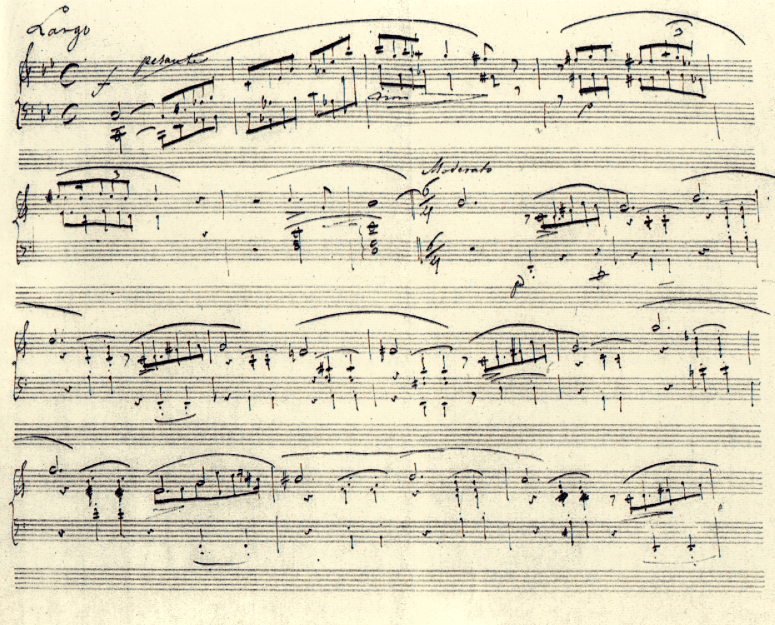
Manuscript of the opening of the Sonata n.2 op 35 by Fryderyk Chopin

Chopin completed the Piano Sonata n.2 in B flat minor op 35 while living in George Sand’s manor in Nohant some 250 km (160 mi) south of Paris ,a year before it was published in 1840. The first of the composer’s three mature sonatas (the others being the Piano Sonata n.3 in B minor op 58 and the Sonata for Piano and Cello op 65).In a letter on 8 August 1839, addressed to Fontana, Chopin wrote:I am writing here a Sonata in B flat minor which will contain my March which you already know. There is an Allegro, then a Scherzo in E flat minor, the March and a short Finale about three pages of my manuscript-paper. The left hand and the right hand gossip in unison after the March. … When the sonata was published in 1840 in the usual three cities of Paris,Leipzig and London,Paris ,the London and Paris editions indicated the repeat of the exposition as starting at the very beginning of the movement (at the Grave section). However, the Leipzig edition designed the repeat as beginning at the Doppio movimento section. Although the critical edition published by Breitkopf &Hartel (that was edited, among others, by Franz Liszt, Carl Reinecke , and Johannes Brahms)indicate the repeat similarly to the London and Paris first editions, almost all 20th-century editions are similar to the Leipzig edition in this regard. Charles Rosen argues that the repeat of the exposition in the manner perpetrated by the Leipzig edition is a serious error, saying it is “musically impossible” as it interrupts the D♭ major cadence (which ends the exposition) with the B♭ minor accompanimental figure.However, Leikin advocates for excluding the Grave from the repeat of the exposition, citing in part that Karol Mikuli’s 1880 complete edition of Chopin contained a repeat sign after the Grave in the first movement of the Piano Sonata No. 2. Mikuli was a student of Chopin from 1844 to 1848 and also observed lessons Chopin gave to other students – including those where this sonata was taught – and took extensive notes.

https://youtube.com/watch?v=cGaXJbHmXgs&feature=share.
Derek decided to eliminate the repeat completely as do so many other great performers like Rachmaninov,Rubinstein,Horowitz,Kissin and Ohlsson.
It was a performance of real weight and with an aristocratic sense of shape and forward propulsion.A restrained and noble ‘Grave’ introduction was followed by the fluidity of the ‘doppio movimento’.If the sostenuto was more symphonic than bel canto it was because of Derek’s great sense of the structure being built up by the harmonies from bass.It was infact in the development where the ‘Grave’ is reworked in the bass that was structurally so beautifully realised.
The coda was played with great excitement and the inevitable drive to the final three chords reminded me of the animal excitement that Rubinstein would suddenly unleash with his aristocratic nobility unexpectedly mixed with animal fervour.
The scherzo had a great sense of line and the long held B flats shone like stars within this impetuously forward moving framework.
It was the ‘più lento’,though,that revealed at last the true ‘bel canto’ and sumptuous use of pedals ,that Derek had been rather over careful with,in his effort not to cloud any detail.
Beautifully shaped with the deep cello melodic line allowed to weave its way so naturally and inquisitively.
If the Funeral March was a little fast for ‘Lento’ it was again like Beethoven’s ‘Arietta’ because Derek was keen to show us the overall architectural shape and never to wallow or sentimentalise such nobly poignant outpourings.
The Trio was beautifully poised and again the sense of ‘bel canto’ was allowed full reign with sumptuous pedal on which the melodic line floated so miraculously.
It was the ‘other’ Rubinstein who stated that the pedal was ‘the soul of the piano’ and nowhere could it have been clearer than in this Trio and the ‘Più lento’ of the Scherzo.The return of the Funeral March was overwhelming with the almost manic insistence of the relentless bass and it was here that I understood Derek’s very intelligent reading of this notoriously popular movement!
The extraordinary wailing Finale was played with astonishing clarity but it missed the washes or waves of sound and the deep throbbing of a melodic line that can be found hidden in its midst by some other pianists.
Chopin himself had not actually indicated any melodic line in the score but I feel it needs some sort of shape or backbone or maybe even more pedal if it is truly to depict the wailing of wind puffing and blowing over such a desolate scene.
As Schumann said about this revolutionary last movement :’What appears in the last movement under the name of Finale is more of an irony than any kind of music.
And yet, it must be confessed, even here […] a strange horrible spirit blows […], so we listen as if fascinated and without protesting to the end – but also without praising, since this is not music”.

Written in 1921, three years before Fauré s death, the tragic despair of the Thirteenth Nocturne shares its depth of feeling with few other works in the piano repertoire. Certainly nothing like this was written by Debussy or Ravel, and only in the last pages of Beethoven, Schubert, Mozart or Bach can parallels be found to its austere heartbreak. The work can be regarded as autobiographical. For the last few years of his life the composer suffered from a distressing hearing defect which caused him to hear distortion in the higher frequencies of the sound spectrum. Knowing this, the chains of suspensions which open this last Nocturne take on an added significance. The piece as a whole is filled with a feeling of regret and farewell,with a vehement and angry middle section rising to a climax of the greatest fury where the unmistakable note of despair which this reveals is all the more affecting. It ends on a note of utter resignation, the music of a man on the threshold of death.The essence of Fauré is in this Nocturne ,and not until one has entered its tragic world can one truly be said to understand him.

https://youtube.com/watch?v=3AcgxS6I4jE&feature=share.
Derek offered a deeply felt performance of this extraordinary late work.I remember Perlemuter allowing me to tell the public in Rome,in one of his many recitals for our Euromusica Series,that he had lived as a student in the same house as Fauré who would send his music down to be tried on the piano with the ink still wet.
Derek gave a magnificent intensely personal performance with a kaleidoscope of sounds – ‘sentiment but no sentimentality’ Fauré would implore.
It was exactly this that gave such poignant nobility to this masterly work.He seemed to have freed himself of his intellectual restraints as the ravishing sounds and use of the pedals were all suddenly allowed free reign for the glory of this extraordinary work.A masterly performance with such a clear sense of line and shape allied to an intensity and beauty of sound.

Beethoven conceived of the plan for his final three piano sonatas (Op 109,110 and 111) during the summer of 1820, while he worked on his Missa solemnis. Although the work was only seriously outlined by 1819, the famous first theme of the allegro ed appassionato was found in a draft book dating from 1801 to 1802, contemporary to his Second Symphony.Moreover, the study of these draft books implies that Beethoven initially had plans for a sonata in three movements, quite different from that which we know: it is only thereafter that the initial theme of the first movement became that of the String Quartet n.13 and that what should have been used as the theme with the adagio—a slow melody in A flat – was abandoned. Only the motif planned for the third movement, the famous theme mentioned above, was preserved to become that of the first movement.The Arietta, too, offers a considerable amount of research on its themes; the drafts found for this movement seem to indicate that as the second movement took form, Beethoven gave up the idea of a third movement, the sonata finally appearing to him as ideal.

https://youtube.com/watch?v=HQ1NlXA84Pc&feature=share

Some masterly playing with scrupulous attention to Beethoven miraculously precise indications in a score that he could only hear in his head. From the very opening imperious chords with the three great outbursts,each one more intense than the last and each one a risk.This important element of struggle pervades the whole movement before the release into a visionary world of what awaits beyond.Gradually dissolving into the first great gasp of disbelief with the arch of the left hand phrase shaped with Beethoven’s impatience with no half measures but simply ‘sfp’ markings.Its plaintive reply with the beautiful legato of the right hand answer could,though.have been given more weight by playing into the keys – Perlemuter a student also of Schnabel was such a master of this ‘weight’ or ‘organistica’ legato.Derek lacked the inner intensity of something that was about to explode.The full stop on ‘forte’and then the opening theme ‘fortissimo’,often overlooked by many,was magnificently played as the forward drive of the ‘Allegro con brio ed appassionato’ was being felt with the sinister undercurrent that Beethoven prescribes.
A movement that Perlemuter described as like water boiling over at 100 degrees was played with great control and technical mastery but something of the burning intensity and relentless forward drive was impeded by an anxiety to show detail at the expense of the inner meaning of this demonic movement.The staccatos I felt could have been given more weight and the care over the slurs that Beethoven obviously placed to stop virtuosi running amock did not allow the build up of intensity that is so much part of this extraordinary prelude to Beethoven’s vision of what awaits.
The clarity and forward drive of the coda was beautifully played and prepared us for the magical vision in the major.This was,after all,to be Beethoven’s last poignant statement over a lifetime span in thirty two instalments!
Derek had obviously seen the ‘Adagio’ as Beethoven describes with ‘simplicity’ but his string quartet texture although admirable and of fine musicianship did miss the celestial ‘cantabile ‘that Beethoven also asks.The magic atmosphere was not totally created because of this sense of balance and also the fast tempo ,which was maintained throughout,but did not allow us to savour the real perfume of this sublime mellifluous outpouring.The mighty third variation was played with great mastery and his added use of the pedal smoothed over some of Beethoven’s jagged edges to great effect.Dissolving into a cloud of sound on which Beethoven floats fragments of insinuating melody similar to the technique that Sibelius was to use a century later.I found this a little too clean and clear and rather lacking in mystery and suggestion rather than Derek’s more direct statement.It led to the final pages that were beautifully played and the triumphant outpouring of melody was played with ravishing beauty and intensity and where suddenly the vibrations on high mingled with the theme were extraordinarily beautiful.The final three layers of sound led so poetically to the final sighing phrases and the resting place of Beethoven’s vision of paradise with a barely whispered C major chord.

Totentanz (Dance of the Dead): Paraphrase on the ‘Dies irae’, S126 for pianoforte and orchestra is notable for being based on the Gregorian hymn Dies irae as well as for its many stylistic innovations. The piece was completed and published in 1849, and later revised twice (1853-9 and early 1880s. All these versions were also prepared for two pianos). In the late 1860s, Liszt published a version for pianoforte solo, S525. Some of the titles of Liszt’s pieces, such as Totentanz, Funérailles, La lugubre gondola and Pensée des morts show the composer’s obsession with mortality, as well as his profound Christian faith, these things being apparent from Liszt as a teenager right up until his last days – more than 50 years later.

The Dance of Death (Totentanz) from Liber Chronicarum [Nuremberg Chronicle], 1493, attr. to Michael Wolgemut

In the last movement of the Symphonie fantastique by Berlioz the medieval (Gregorian) Dies Irae is quoted in a shockingly modernistic manner. In 1830 Liszt attended the first performance of the symphony and was struck by its powerful originality. Liszt’s Totentanz presents a series of variations on the Dies irae – a theme that his will have known since 1830 at the latest from Berlioz’s Symphonie fantastique. As an early biographer noted, “Every variation discloses some new character―the earnest man, the flighty youth, the scornful doubter, the prayerful monk, the daring soldier, the tender maiden, the playful child.” A second theme, beginning at variation 6 – taken from the Prose des morts in the Catholic breviary – is itself varied before the first theme returns at the end of the work.

https://youtube.com/watch?v=ejvJVnPpQXg&feature=share.
Some masterly playing of amazing pyrotechnics but also what clarity and musicianship he could add to this mind boggling maze of notes.He made the piano roar like a lion and sing like an angel and his intellectual understanding and control gave strength to a work that in lesser hands can appear as a series of circus tricks.
Arrau used to bring the same nobility and seriousness to this work that I heard him play with orchestra in the 70’s.
Derek could have been much freer with the pedal but his enviable technical control and innate musicianship allowed for admirable clarity.I think now he could let the brass and percussion have a fair share in his wonderful orchestra adding two virtuosistic feet to his two wonderful hands!

Mozart’s last unfinished masterpiece, the Requiem, exercised the minds of many nineteenth-century composers, and Liszt confines himself to very clean accounts of the last two portions of the Sequenz: the powerful Confutatis, and the Lacrimosa, of which the textual evidence is that Mozart sketched only the first eight bars and Süssmayr completed it after Mozart’s death. (However, if Süssmayr did write the rest of it makes the question of what he, Mozart and others actually sang around Mozart’s death-bed when, as the biographers tell us, the Lacrimosa was sung.)

https://youtube.com/watch?v=3AcgxS6I4jE&feature=share
A truly overwhelming performance of intensity,fluidity and beauty.Suddenly the piano had become a full orchestra with an extraordinary range of sounds.A sense of balance with a richness of sonority but never harshness.After the tumultuous opening the heavens opened to reveal the very heart of this extraordinary work played with poignant nobility.Liszt’s transcription is a marvel of recreation revealing not only the genius of Mozart but also that of Liszt.

ROME CHAMBER MUSIC FESTIVAL- Superb music making returns to Teatro Argentina

Tyler Hay and David Zucchi celebrate the work of Radamés Gnattali at the Sala Brasil

The Embassy of Brazil in London
in partnership with the Keyboard Trust
A concert celebrating the. Brazilian composer Radamés Gnattali

Radamés Gnattali is one of Brazil’s most active and celebrated composers of the 20th century. A virtuoso pianist, skilled violinist, with a gigantic compositional output: five symphonies, more than thirty concertos for soloists and orchestra (including five for piano and four for violin) and a large repertoire of chamber and solo instrumental music.
Considered one of the most influential names of Brazilian popular music in the 20th century, his fame as a prolific arranger has led him to write more than 1000 arrangements for radio, TV and concert orchestras. An inspiration for young musicians as well as a key personality in the revival of choro music in the late 1970s, he toured the world with his jazz sextet.
The evening’s performances by British pianist Tyler Hay and Canadian saxophonist David Zucchi will provide an overview of Gnattali’s music: ranging from the three Vaidosa waltzes – a highlight of Brazilian popular music – to one of his piano sonatas (written for the concert stage), as well as one of the pieces of the Brasiliana series where both the classical and popular merge in a very personal way.

Radamés Gnatalli (1906-1988)

Vaidosa No. 1
Vaidosa No. 2
Vaidosa No. 3
Brasiliana No. 4 for Heitor Alimonda
Rio de Janeiro, 1949

I – Prenda minha (moda gaúcha)
II – Samba-canção (Rio de Janeiro)
III – Desafio (Nordeste)
IV – Marcha de Rancho (Rio)

Sonata No. 2 for piano (Rio, 1963)

Brasiliana No. 7 for tenor saxophone & piano
Variações sobre um tema de viola
Samba-canção

Elena Vorotko,co artistic director of the Keyboard Trust,in her own words a personal appreciation :

A triumph it was- Tyler Hay displayed total command of the music with all its technical challenges and the style of the enigmatic, seductive and exotic music of Brazil’s most prolific composer Radamés Gnattali. Charming and soulful miniatures entitled Vaidosas 1,2 and 3 carried the mesmerised audience away on their shimmering wings, glistening with every colour and shade achievable on a piano. The more vivacious Brasiliana no 4 gave us the flavour of Rio de Janeiro, with Tyler brilliantly balancing intense rhythms with sensitive rubato to create an evocative narrative. The rather grand Piano Sonata no 2 with its many challenges revealed Tyler as a great interpreter of large scale works too- he grasped the somewhat elusive shape of the piece and conveyed its drama with great technical precision and panache.
The last work in the programme was performed as a duo with a fantastic tenor saxophonist David Zucchi. This was their first collaboration, performing Braziliana no 7, though they sounded as one in both the warmth of tone and their musical intuition. Tyler transformed himself into a very sensitive duo partner, matching the varying sonorities of the saxophone and supporting David in his breathtakingly brilliant solos. The exhilarating musicianship of both performers, the joyful play of Brazilian rthythms and harmonies of the music and the excitement of the grand applause and rousing ‘Bravos’ from the public brought this celebration of Brazilian music and Radamés Gnattali to a triumphant close.
Elena Vorotko
Roberto Doring Pinho da Silvia welcoming the public to the Sala Brasil

TYLER HAY was born in 1994. In 2007 he gained a place at the Purcell School, where he studied with Tessa Nicholson. He has also studied with Graham Scott and Frank Wibaut at the Royal Northern College of Music, and with Niel Immelman and Gordon Fergus-Thompson at the Royal College of Music. Tyler has performed Rachmaninoff’s Sonata No. 2 at Wigmore Hall, Scriabin’s Sonata No. 5 at the Purcell Room and Ravel’s Concerto for Left Hand at the Queen Elizabeth Hall. In 2016, he won First Prize in the keyboard section of the Royal Overseas League Competition in addition to winning the RNCM’s Gold Medal competition. That year he also won First Prize in the Liszt Society Competition. In 2021 Tyler was a finalist in the Leeds International Piano Competition and, in 2022, he won First Prize in the Dudley International Piano Competition. His recordings of works by Liszt, John Ogdon and Kalkbrenner are available on Piano Classics and Tyler’s latest album of virtuoso piano music by Simon Proctor is now available on Navona Records.


DAVID ZUCCHI is a graduate of the Royal College of Music’s Master’s and Artist Diploma programmes, where he was an Edward and Helen Hague Scholar. He is currently a PhD candidate at the University of Huddersfield, supported by the Canadian Centennial Scholarship Fund’s Belle Shenkman Award, and he has also attended the Université Européenne de Saxophone in Gap (France). David enjoys a varied career as a performer of classical, contemporary, experimental, and improvised music, collaborating regularly across the UK, Europe, and Canada. Recent appearances as a soloist and chamber musician include Wigmore Hall, Purcell Room, Cadogan Hall, London Contemporary Music Festival, Sounds Like This! Festival (UK), Verbier Festival (Switzerland), Vale de Cambra Music Festival (Portugal), and the Glenn Gould Studio (Canada). He appears on recordings from NMC, Another Timbre, Birmingham Record Company, and has been broadcast on BBC Radio 3.

Radamés Gnattali was born in Porto Alegre (the capital of Rio Grande do Sul ,the southernmost state of Brazil) on 27 January 1906. His parents were both musicians who had emigrated from Italy at the end of the 19th century.His mother, Adélia Fossati, was a pianist and music teacher.His father, Alessandro Gnattali, had been a carpenter in Italy, but after arriving in Brazil applied his passion for music to creating a new career for himself as a successful bassoonist and conductor (as a union leader with strong anarchist sympathies he also went on to organize a strike of the musicians’ union in 1921).The couple had five children, three of whom, including Radamés, were named after characters from Verdi operas (the others being Aida and Ernani)

Tyler Hay and David Zucchi

He began to play the piano with his mother at the age of 6, and went on to learn the violin with his cousin Olga Fossati.When he was 9 he received an award from the Italian consul for conducting a children’s orchestra in arrangements of his own.In the following years, he also learned the guitar and cavaquinho and started playing these instruments in a successful group called Os Exagerados, as well as at silent films and dances.In 1920, at the age of 14, he entered the School of Fine Arts at the University of Rio grande do Sul where he studied with the musicologist and piano teacher Guilherme Fontainha (a student of Vianna da Motta )eventually winning a gold medal for piano playing in 1924He then moved to Rio de Janeiro where he gave a series of successful piano recitals, while also studying at the National Music Institute.His lifelong association with Ernesto Nazareth ,the renowned composer of Brazilian national music dates from this period.Back in Porto Alegre due to lack of money, Gnattali founded the Quarteto Henrique Oswald in which he played first as a pianist and then as a violinist.

A 1929 performance as soloist in Tchaikovsky’s B flat piano concerto played with the orchestra of the Teatro Municipal in Rio de Janeiro, was praised in the press but did not lead to a long-term career as a concert pianist.Instead, Gnattali began a career in Rio as a successful conductor and arranger of popular music—activities which tended to divert his attention from other genres.Financial needs led him to work for radio stations and record companies as a pianist, conductor and arranger of popular music.His background music for radio serials and his clever arrangements of the tunes and dances of the day made him a successful figure.

In parallel, he pursued a career as a self-taught composer of classical music. While beginning to compose music influenced by Brazilian folk materials, he continued to dream of becoming a major concert artist. The chance of winning a post as piano professor at the National Music Institute in Rio de Janeiro, with the support of the newly installed President of Brazil, Getulio Vargas (following the Revolution of 1930), who received the musician in person, disappointingly came to nothing (though Gnattali later commented that the encounter with Vargas changed his life).

When a national radio station, Radio National ,was inaugurated in 1936, Gnattali immediately became involved.He remained an influential figure in the institution for 30 years, conducting and providing sophisticated arrangements of popular music.He gradually developed the radio’s house band, building it up to become a full orchestra .

He died in Rio de Janeiro on 3 February 1988.

Gnattali’s musical career straddled popular and classical genres and their traditions. His arrangements of sambas pieces, involving strings, woodwind and brass (rather than the traditional accompaniments with two guitars, cavaquinho,accordion,tambourin and flute) exposed him to lifelong critical attacks from Brazilian musical traditionalists who resented the “jazzing up” of the genre.Conversely, some of his serious concert pieces (música de concerto) attracted the opposite criticism of inappropriately introducing instruments such as the mandolin,marimba,accordion, mouth organ and electric guitar into the concert hall.In doing this, he was inspired by his friends from the world of popular music, including Jacob do Bandolim (literally, “Mandolin Jacob”), Edu da Gaita(“Harmonica Edu”) and Chiquinho do Acordeom (“Accordion Chiquinho”), for each of whom he composed dedicated concert pieces.

By the 1930s he was composing concert music in a Neo – Romantic style also incorporating jazz and traditional Brazilian strains. Over the decades, the emphasis Gnattali placed on these components shifted towards jazz in the early 1950s and back towards the Brazilian popular styles by the start of the 1960s. He composed several major guitar scores, including three solo concertos and three duo concertos. Brazilian composer Antonio Carlos Jobim included the song “Meu Amigo Radamés” as a tribute to Radamés in his final album, Antonio Brasileiro (1994).

https://christopheraxworthymusiccommentary.com/2022/09/14/the-gift-of-life-the-keyboard-trust-at-30/

Keyboard Charitable Trust for Young Professional Performers
Patron: Sir Antonio Pappano

https://christopheraxworthymusiccommentary.com/2023/05/31/brazilian-embassy-the-tree-of-life-with-pablo-rossi-a-man-for-all-seasons/

Tyler Hay and the Mitsu Trio at the Brazilian Embassy.Fun and games for the joint Anniversary Celebrations with the Keyboard Trust

https://christopheraxworthymusiccommentary.com/2023/06/06/giovanni-bertolazzi-liberal-club-en-blanc-et-noir-5th-june-2023-a-star-is-born/

ROME CHAMBER MUSIC FESTIVAL- Superb music making returns to Teatro Argentina

The historic Teatro Argentina built in 1732 on the site where Julius Cesar was assassinated in the Curia Pompeii.
In 1816 Rossini’s Barber of Seville saw the light of day in a theatre that also was the seat for many years of the Accademia di S.Cecilia Concert Season .It is now the seat for many of the concerts of the Filarmonica Roma.It is also principally the seat of the National Theatre with a full season of important stage productions of the Teatro di Roma .
Schubert Piano Quintet D 667 ‘The Trout’ Andrea Lucchesini-Amy Schwartz Moretti-Leonardo Taio-Erica Piccotti-Reed Tucker –


Andrea Lucchesini distinguished teacher at the prestigious Music Academy in Fiesole and artistic director of the Amici della Music di Firenze.I remember Shura Cherkassky being invited to Luciano Berio’s house after his recital in Empoli to listen to the teenage prodigy Lucchesini playing the Watermusic by Berio.Cherkassky was very impressed and it is nice to see this star from the class of Maria Tipo years later playing a prominent part on the world stage https://christopheraxworthymusiccommentary.com/2020/07/20/50th-anniversary-of-the-pontine-festival-foundation-streamed-live-from-sermoneta-and-ninfa/.

Rome Chamber Music Festival in the historic Teatro Argentina in the centre of Rome.
Derek Wang and friends with Shostakovich’s amazingly evocative Quintet in G minor op 57 and Andrea Lucchesini in Schubert’s Trout Quintet with the quite hypnotic Amy Schwartz Moretti and Erica Piccotti.

Shostakovich Piano Quintet op 57 Derek Wang-Stefan Jackiw-Virgil Moore-Kinga Wojdalska,Silvia Gira
Robert Mc Duffie presenting the 13 young artists on the De Simone Young Artists programme
Derek Wang
Rainy Rome but the Trout safely at home inside Teatro Argentina
Robert Mc Duffie welcoming his guests as he has done for the past twenty years in his beloved Eternal City

Adam Heron at the National Liberal Club. An eclectic musician of refined taste and eloquence

Another memorable occasion for the second in the series of six recitals presenting aspiring young pianists by the Keyboard Trust together with the Robert Turnbull Foundation at the National liberal Club for the Asia Circle directed by Yisha Xue
A beautiful Club where legend has it that Rachmaninov and Moiseiwitch gave recitals in its glorious past history.

As Janet Berridge of the Liberal Club proudly told us that with the acquisition of a magnificent Steinway Concert Grand great music is again being heard in these hallowed surrounds.
What better than to give a platform to the stars of tomorrow on their long journey to Parnassum!
What better indeed than in the company of Beethoven,Bach and Chopin when played by a young pianist like Adam Heron who is such a superb communicator and musician


An evening where pure music was allowed to pour from his fingers with a simplicity and beauty without any pianistic gymnastics or anything other than communicating the very essence and soul of great music as bequeathed to us by these universal giants.
An early Beethoven Sonata where Adam was content to allow the music to unfold following in the tradition of Haydn and Mozart.This was before the trials and tribulations of a turbulent life which would take Beethoven into new uncharted territory with an eventual vision of the peace and paradise that was awaiting him at the age of only 57.
A Bach Italian Concerto played with vibrant urgency and clarity with the sublime simplicity of the Andante in which Adam etched the melodic line with disarming aristocratic simplicity.


Chopin’s Funeral March Sonata where indeed the third movement was played with such inevitability by Adam that made it so apparent that the ravishing beauty of the Trio was obviously Chopin’s own vision of Paradise that he was to reach even before his 40th birthday.Chopin’s graphic depiction of the wind blowing over the graves with the extraordinarily original last movement was given by Adam a remarkable sense of line and musical shape of a movement that not even Schumann could make head or tail of .Schumann had described the sonata as “four of his maddest children under the same roof” He also remarked that the Marche funèbre “has something repulsive” about it, and that the last movement “seems more like a mockery than any sort of music”.
Adam’s simple musicianship brought this masterpiece vividly to life and had infact been the hallmark of this hour long recital of three great masterpieces that Adam shared so generously with us.


A beautiful appreciation of a very special talent by Prof. Christopher Elton,Adam’s distinguished former teacher at the Royal Academy,was crowned with a short encore by a visibly moved Adam .


James Kreiling shared his memories of Robert Turnbull and the Piano Foundation created in his memory which has given the Keyboard Trust the possibility to present young musicians on the first steps of a ladder.A journey without any ending as the true artist is he who seeks an unattainable Utopia.
It is this voyage of discovery that is the very essence of music as we were shown today by the simple unadorned musicianship that Adam shared with us.

Yisha Xue Janet Berridge Roger Pillai of the National Liberal Club with Adam after the concert

Nikita Lukinov will be playing in the En Blanc et Noir Festival Lagrasse,France in a collaboration with the Keyboard Trust on the 10th July.A beautiful programme for a unique setting that can be seen in this video :https://youtu.be/iVLS7LKaQNs
Beethoven op.2 no 3 (25) — interval — Tchaikovsky, “Meditation” op.72 (5); Chopin, etude 10 op.25 (4) ; Scriabin, 2 Poems op.32 (5) ; Scriabin, Valse op.38 (5); Prokofiev, “Pas de Chale” and “Amoroso” from ‘6 pieces from Cinderella’ op.102 (9)
https://christopheraxworthymusiccommentary.com/2023/06/05/nikita-lukinov-at-st-marys/

Programme notes by Adam Heron

Sir Edward Elgar

Sir Edward Elgar (1857 – 1934)
In Smyrna (1905)
In addition to his famed choral and orchestral works, Sir Edward Elgar produced several compositions for the piano. Excluding the Concert Allegro (1901) and the unfinished Piano Concerto (1913), they are typically intimate works; devoid of the quintessentially Edwardian extroversion and grandeur for which he is renowned, and instead conceived for the living room rather than the concert platform. From the witty Sonatina (1889) to the more wistful Adieu (1932), each purveys a sense of delicacy as well as vulnerability, whilst remaining steadfastly faithful to his distinctive harmonic sound-world. One of the most enigmatic of these compositions is In Smyrna, which takes its inspiration from the Mediterranean cruise on which Elgar embarked during the Autumn of 1905 aboard the Royal Navy vessel HMS Surprise, with his friend Frank Schuster. Upon docking in the Ottoman settlement of Smyrna, which is now the city of İzmir in modern-day Turkey, Elgar took the opportunity to step ashore and visit one of the local mosques. Inspired by the beauty of Islamic architecture as well as the sound of the Adhan echoing throughout Smyrna, Elgar felt compelled to document a musical memoir of his experience. In his sketchbook, In Smyrna appears atop the subtitle In the Mosque. The miniature work opens with a distant right-hand tremolo, effectively depicting the cool waves gently stroking the hull of his ship.


Ludwig van Beethoven (1770 – 1827)
Sonata in C-minor Op. 10 No. 1 (1798)

Beethoven’s early Sonata the first of three op 10 opened with a dynamic declaration swiftly dissolving into a beautiful melodic outpouring of a natural musicality of touching simplicity.Beethoven’s startling duel personality was less evident in this early sonata as it was to become in the later sonatas that charted his life span in 32 remarkable steps .There was a disarming simplicity to the ‘Adagio molto’ ,Adam allowing the music to flow naturally with some beautifully sensitive phrasing.Even the Fortissimo outbursts with their Piano reply in the looked more backwards to Haydn than what was to follow in the future steps of Beethoven’s tormented life.The ‘Prestissimo’ finale was played with grace and charm and with great character but not yet showing us the ‘Sturm und Drang’ that was soon to follow.
  1. Allegro molto e con brio
  2. Adagio molto
  3. Prestissimo
    It is possible to assert that both Ludwig van Beethoven and the key of C-minor are symbiotically
    intertwined with one another; two co-dependent entities which, across many historiographies of Western Classical Music, have remained almost synonymous. Some of the most formidable Beethovenian compositions appear in this key, including the Coriolan Overture Op. 62 (1807), the Symphony No. 5 in C-minor Op. 67 (1808), and the Sonata in C-minor Op. 111 (1822), to name a just a few. The Sonata in C-minor Op. 10 No. 1 (1798) represents an early example of the volatile turbulence that characterises Beethovenian pianism. Not dissimilar from how Robert Schumann (1810 – 1856) depicts his dichotomous personalities of Eusebius and Florestan, Beethoven contrasts the virulent force of his Sturm und Drang style with a distinctively tender sublimity to which the German author E. T. A. Hoffmann (1776 – 1822) consistently refers. The erratic drama of the first movement appears so far removed from the serene spirituality that engulfs the second, whilst the Prestissimo finale exhibits a powerful sentiment of anxiety and incessant momentum.

Johann Sebastian Bach (1685 – 1750)
Italian Concerto BWV 971 (1735)

TITLE PAGE OF CLAVIERUBUNG II BY JOHANN SEBASTIAN BACH, FIRST EDITION, 1735
The Bach Italian Concerto suddenly sprang to life with energy and beauty but it was the clarity and rhythmic drive that was so hypnotic.A fairly sedate tempo but played with a constancy and beauty of touch that we were reminded of later in Prof.Christopher Elton’s praise for his ex students remarkable Bach playing.The Andante was played with a gentle flowing bass on which Adam magically chiselled with great beauty the lines of Bach’s simple noble melodic outpouring.And at last there was the release of tension with the Presto played in two but always with a remarkable control and intelligent contrapuntal sense of line.
  1. Allegro 2. Andante 3. Presto
    The percussionist Ed Stephan once asserted that “Bach is the original Jazz boss”. When presented with such a bold work as the Italian Concerto (1735), it is easy to understand why. Boasting an abundance of thrilling virtuosity and unmistakable dance-like syncopations, the work is an unfailingly popular component of the pianistic canon. It is also interesting to note that the Italian Concerto exhibits one of the rare instances when Bach explicitly provides dynamics for a keyboard player, due to the work having been conceived for a double-manual harpsichord; the versatility of which enables the musician to achieve stark contrasts between forte and piano. As a result of this, it is generally accepted that Italian Concerto represents an example – some might assert a model – of orchestral writing as conceived for a solo keyboardist. Bach demonstrates a thorough mastery of the Italian concertante style; showcasing frequent alternations between the extrovert tutti sections and the more intimate ripieno passages, in addition to showcasing his characteristic aptitude for dance music; quite extraordinary for a composer who never had the opportunity to leave Germany, let alone visit New Orleans in the Jazz Age

  2. Frédéric Chopin (1810 – 1849)
    Sonata No. 2 in B-flat Minor Op. 35 (1839 Grave – Doppio movimento. Scherz. Marche funèbre: Lent. Finale: Presto
    Chopin composed the harrowing third movement from his Sonata No. 2 in B-flat Minor Op. 35 (1839) as a stand-alone work in 1837. It has since become an iconic masterpiece in itself, featuring a characteristically ominous depiction of both solemnity and mortality, interspersed with the hauntingly profound stasis of its middle section. It was another two years before Chopin composed the outer three movements, finally culminating in a gargantuan Sonata of significant musical and cultural importance. The cryptic opening chords of the Sonata seem to revive the spirit of Ludwig van Beethoven (1770 – 1827) in his aforementioned Sonata in C-minor Op. 111 (1822). It is perhaps for this reason that the Chopin Sonata No. 2 often appears somewhat atypical amongst his more popular works, deeply inspired by brooding Faustian metaphors, and forever indebted to the musical legacy of Beethoven. Yet despite being a work that remains largely rooted in the contrapuntal traditions of the Old German School – the theorist Heinrich Schenker (1868 – 1935) famously proclaimed Chopin to be an “honorary German” – the Sonata demonstrates a uniquely idiosyncratic medium of expression that is well beyond its time. From the stormy Scherzo that in its main sequences appears to depict a nefarious and hellish dance, to the near-atonal gusts of wind that echo throughout the fleeting Finale, Chopin clearly showcases an inimitable artistic voice.
The beauty of Adam’s playing was nowhere more apparent than in his playing of Chopin’s B flat minor Sonata.What was missing in dynamic drive and passion was compensated for with a timeless beauty where the melodic lines were given just the time to unfold so eloquently.Adam repeated the exposition ,in my opinion quite rightly,without the Grave introduction which was even indicated in the New Polish Edition which I noticed Adam had in his bag!But then Adam is a very intelligent musician as of course was Charles Rosen!
I am used to hearing the ‘Scherzo’ much more hard driven than in Adam’s performance but his innate musicianship linked it up with the beautiful ‘più lento ‘ and it gave a great architectural shape to a movement that can sometimes sound like two!
A very fine ‘Funeral March’ where Adam’s sense of rock solid unmovable tempo gave great nobility and weight to a much maligned masterpiece .In fact it had confounded Chopin’s contemporaries with a Sonata with four seemingly unrelated movements.The beauty and stillness that Adam brought to the ‘Trio’ gave even more strength and nobility to the return of the ‘Funeral March’.The last movement was allowed to flow from Adam’s fingers with the authoritative shape of a musician who could see his way so clearly through a seemingly endless maze of sounds.It was exactly this sense of architectural shape that Adam brought to the Sonata that was so poignantly beautiful.If the dynamic energy and passion were underplayed it was because Adam had a vision of the piece as a whole.Calming and joining Chopin’s four naughty children into one serene happy family!
The opening of Chopin Sonata op 35

Chopin completed the Piano Sonata n.2 in B flat minor op 35 while living in George Sand’s manor in Nohant some 250 km (160 mi) south of Paris ,a year before it was published in 1840. The first of the composer’s three mature sonatas (the others being the Piano Sonata n.3 in B minor op 58 and the Sonata for Piano and Cello op 65).In a letter on 8 August 1839, addressed to Fontana, Chopin wrote:I am writing here a Sonata in B flat minor which will contain my March which you already know. There is an Allegro, then a Scherzo in E flat minor, the March and a short Finale about three pages of my manuscript-paper. The left hand and the right hand gossip in unison after the March. … When the sonata was published in 1840 in the usual three cities of Paris,Leipzig and London,Paris ,the London and Paris editions indicated the repeat of the exposition as starting at the very beginning of the movement (at the Grave section). However, the Leipzig edition designed the repeat as beginning at the Doppio movimentosection. Although the critical edition published by Breitkopf &Hartel (that was edited, among others, by Franz Liszt, Carl Reinecke , and Johannes Brahms)indicate the repeat similarly to the London and Paris first editions, almost all 20th-century editions are similar to the Leipzig edition in this regard. Charles Rosen argues that the repeat of the exposition in the manner perpetrated by the Leipzig edition is a serious error, saying it is “musically impossible” as it interrupts the D♭ major cadence (which ends the exposition) with the B♭ minor accompanimental figure.However, Leikin advocates for excluding the Grave from the repeat of the exposition, citing in part that Karol Mikuli’s 1880 complete edition of Chopin contained a repeat sign after the Grave in the first movement of the Piano Sonata No. 2. Mikuli was a student of Chopin from 1844 to 1848 and also observed lessons Chopin gave to other students – including those where this sonata was taught – and took extensive notes.Adam plays the repeat without the Grave introduction

A portrait of Saint-Georges (1788),
Born
25 December 1745 Guadeloupe

Died
9 June 1799 (aged 53)
Paris Joseph Bologne, Chevalier de Saint-George(s) (25 December 1745 – 9 June 1799) was a French violinist, conductor and composer A biracial Creole free man of colour he is considered the first classical composer of African descent to receive widespread critical acclaim.It was a little Andantino that Adam had saved as surprise encore after the beautiful warm words from his former teacher.
It was typical of Adam ,the complete eclectic musician,that he should surprise us with a virtually unknown composer of such obvious importance.
A sting in the tail from a remarkable musician.

Adam Heron was born in Hong Kong of Nigerian-Filipino descent and subsequently adopted by his Irish mother.Acclaimed by The Sunday Times for the verve and spirit of his performances, Adam Heron is swiftly earning a reputation as one of the most innovative pianists of his generation.Adam rose to prominence following his television debut in 2018 as a ‘BBC Young Musician’ piano finalist and went on to win the 2020 Harriet Cohen Bach Prize. He has given solo recitals at leading international venues including the Center for Arts in Cairo and the National Centre for the Performing Arts in Mumbai. Performances in the UK have included such venues as Hampton Court Palace, the Royal Albert Hall, Snape Maltings Concert Hall, Southbank Centre, St George’s Bristol, St Martin-in-the-Fields, The Holburne Museum and Wigmore Hall.He has attended masterclasses with renowned pianists including Anne Queffélec, Imogen Cooper, John Lill, Paul Lewis, Stephen Hough and Yevgeny Sudbin.Festival appearances include The Aegean Arts International Festival (Greece), The Cayman Arts Festival (Cayman Islands), The Cheltenham Music Festival (UK) and The GAP Arts Festival (Ireland).Adam appears regularly in the media including on BBC Radio 3 and specialist broadcast platforms such as Colourful Radio. He has worked with leading presenters including Katie Derham and Sean Rafferty.In addition to his solo work, Adam is also a collaborative pianist, composer and conductor. He has performed with eminent musicians such as saxophonist Amy Dickson, double-bassist Chi-chi Nwanoku CBE, violinists Christopher Quaid and Daniel Pioro, sopranos Francesca Chiejina and Yaritza Véliz, as well as cellists Laura van der Heijden and Jamie Walton. In 2016, the Chineke! Orchestra invited him to become one of its first concerto soloists, and he has since worked with leading conductors including David Curtis, Jonathon Heyward, Pete Harrison and Timothy Carey.Adam is a laureate of the Stefano Marizza International Piano Competition in Italy and the International Piano Competition HRH Princess Lalla Meryem in Morocco, where he additionally received the Prix Spécial from the Embassy of France in Rabat for his command of French music.As a recipient of the Hargreaves and Ball scholarship, Adam studied with Christopher Elton at the Royal Academy of Music in London, before pursuing a Master’s Degree in Music at the University of Cambridge.Supported by the Keyboard Charitable Trust, Irish Heritage, The Hattori Foundation, the Macfarlane Walker Trust, Talent Unlimited Foundation and The Tillett Trust, Adam currently studies with Penelope Roskell in London.

Garo Keheyan of the Pharos Arts Foundation ,Cyprus – an important venue for KT artists
https://christopheraxworthymusiccommentary.com/2023/04/03/damir-durmanovic-in-cyprus/
with Sarah Biggs CEO of the KT and Elena Vorotko co artistic director
In discussion with Christopher Elton and Alberto Portugheis.

https://christopheraxworthymusiccommentary.com/2023/02/23/alberto-portugheis-a-renaissance-man-goes-posk-to-celebrate-the-213th-birthday-of-fryderyk-franciszek-chopin/
The distinguished concert manager Lisa Peacock with Cristian Sandrin and Prof. Christopher Elton https://christopheraxworthymusiccommentary.com/2023/04/26/cristian-sandrin-visions-of-life-dedicated-to-his-father-sandu-sandrin/
Birthday celebration after the concert for Boe and Giselle Paschall together with Jose Navarro Silberstein
https://christopheraxworthymusiccommentary.com/2023/06/21/jose-navarro-silberstein-at-st-jamess-a-master-musician-with-a-heart-of-gold/
The magnificent staircase leading to the David Llloyd George music room

Adam Heron at Steinway Hall for the Keyboard Trust

Adam Heron delights in Dulwich with Schumann Piano Concerto review by Angela Ransley

HHH Concerts and The Keyboard Trust a winning combination of youthful dedication to Art

https://christopheraxworthymusiccommentary.com/2022/09/14/the-gift-of-life-the-keyboard-trust-at-30/
https://christopheraxworthymusiccommentary.com/2023/06/06/giovanni-bertolazzi-liberal-club-en-blanc-et-noir-5th-june-2023-a-star-is-born/

Next concert in the En Blanc et Noir series at the National Liberal Club Monday 4th September 6.30 pm MILDA DAUNORAITE. https://christopheraxworthymusiccommentary.com/2022/10/19/milda-daunoraite-youthful-purity-and-musicianship-triumph-in-florence/

Milda Daunoraite

Massimo Urban- The prodigious intelligence and refined sense of colour of a born pianist

More remarkable playing in the Pitti Piano Festival with 17 year old Massimo Urban.
A student of Vincenzo Balzani who already reveals an intellectual curiosity and an extraordinary technical command similar to that many years ago of the genial Andrea Bacchetti.
What he misses in weight he makes up for with a scintillating jeux perlé of remarkable natural ease and a musicality allied to an intelligence and refined sense of colour.
His playing was ideally suited to the rarely played Schumann Allegro op 8. The Mendelssohnian washes of colour were mere moving harmonies brought to life with a rhythmic drive on which floated Schumann’s magical melodic invention.A sense of architectural shape made sense of a piece that has suffered from less intelligent hands.Played with the musical intelligence and refined beauty as in today’s enlightened performance it should be much more often heard in the concert hall.


Chopin’s Héroique Polonaise was brilliantly played but the aristocratic nobility was not yet in our young pianist’s vocabulary.The famous left hand octaves were quite remarkable for their lightness and speed but this is the cavalry and the military march that they accompany was a little lost in this misty atmosphere.The ending was played with remarkable agility and excitement but the nobility and grandeur that Rubinstein gave so inimitably to it will have to wait until his youthful exhilarance and ‘joie de vivre’ turns into something darker and deeper.
The three Rachmaninov Etudes tableaux were remarkable for their washes of chameleon like changes of colour but the sense of line was sometimes forfeited for a remarkable dexterity that was always of ravishing beauty and never just empty note spinning but needed more overall direction.
The most successful was the E flat minor study that Massimo had told us he found the most difficult.
It was exactly for this reason that he gave a truly memorable performance full of passion,sumptuous sounds and real poetic understanding.The final bars in particular,like those of the Liszt B minor sonata,I have rarely heard with such poetic meaning.


His exemplary introduction to the Liszt Sonata was mirrored in a remarkably intelligent performance where Liszt’s precise indications were scrupulously noted.His youthful enthusiasm and extraordinary technical facility led him,though,to take the fugato too fast for the orchestral clarity that Liszt demands and it became a bit of a showcase for the pianist not the composer.
However there were many beautiful things in a remarkable but still youthful performance,not least the final page which is the most extraordinary page in all of Liszt’s vast output.The composer suffered for this page having scratched out his original triumphant ending and substituted it for a visionary page which sums up the entire sonata in so few meaningful notes.
Massimo’s own composition played as a much requested encore just underlined the prodigious and rare talent of this young man still remarkably in his teens.

Shunta Morimoto- Pitti Piano Festival Florence – The inspired recreation of a great artist

Shunta Morimoto- Pitti Piano Festival Florence – The inspired recreation of a great artist

William Grant Naboré mentor of Shunta in Rome/Lake Como Academy in rehearsal

https://christopheraxworthymusiccommentary.com/2022/09/26/william-grant-nabore-thoughts-and-afterthoughts-of-a-great-teacher/

Wonderful to realise that our ‘little’ Shunta has grown into a mature artist.Discovered at the Van Cliburn as a child prodigy,when his performances went viral on the net,he has now,at the ripe old age of eighteen,joined the ranks as one of the most astonishingly profound interpreters of his generation.
His superb performances of Beethoven 4 and Liszt 1,recently,with the RPO as winner of the Hastings International Competition gave some idea of his maturity added to an already extraordinary technical command. https://christopheraxworthymusiccommentary.com/2023/05/06/shunta-morimotos-all-or-nothing-performance-of-liszt-with-aristocratic-nobility-and-brilliance/

Palazzo Pitti Florence


But no one could have imagined the refined aristocratic performances that we were privileged to hear yesterday in the great Sala Bianca of Palazzo Pitti in Florence.
From the opening Bach Chromatic Fantasy of such monumental authority.There were moments of breathtaking beauty but always with an overwhelmingly inevitable drive that drew us on to this tidal wave of magnificence.I have not heard the like since Agosti would intone his teacher Busoni’s refined edition in his studio in the Chigiana in Siena.

In rehearsal as in performance there are no half measures when you are possessed by music


A Polonaise Fantasy of nobility and poetry.An amazing freedom that made us aware of the improvised inspiration that Chopin was to reach at the end of his short life.
The A minor mazurka was added because Shunta felt that this was just the right transition to Rameau.This usually bitter sweet mazurka was given a nobility and strength that made of it a moving tone poem gliding in and out on a murmured wave of undulating sounds.
The opening of the Rameau was of the grandeur and nobility of its age.Fearlessly ornamented because Shunta has studied deeply the performance practices of the period.A nobility that was a barely whispered memory on its repeat.The clarity of the dance that followed where from a mere whisper Shunta added voice after voice until the joy and exhilaration of the entire population was hypnotic and quite overwhelming.
Liszt’s Dante Sonata was a true Symphonic Poem in this teenager’s demonic fingers .But it was more than in his fingers it was in his soul as his whole body was involved in a recreation that all those present will never forget.

The Sala Bianca in Palazzo Pitti


A standing ovation and cries for more but as Shunta said I already played the encore of the Mazurka and that was enough.
A feast fit for a King …noblesse oblige ….as we cheer the arrival of one of the greatest interpreters of his age …….

Shunta Morimoto takes London by storm ‘I have a dream’ a poet speaks through music

The Bach Chromatic Fantasy and Fugue was in the Busoni edition usually so frowned on in these days of ‘authenticity’ ( His wife was often introduced as Mrs Bach-Busoni!) .Busoni was not trying to emanate the Organ here as in many of his Bach transcriptions but happy to clarify the overall architectural shape of this monumental work.
There was great drama from the very opening – a stroke of lightening with it’s call to arms-and the start of an epic journey of astonishing invention and emotional impact.
So often played as an ‘opener’ with rather respectfully formal inevitability but today revealed as a revolutionary outpouring of improvised fantasy allied to Bach’s contrapuntal genius.Moments of astonishing tenderness alternating with imperious declarations.All with a dynamic drive and energy of Beethovenian proportions – no half measures but astonishing shifts of mood.
The subtle entry of the Fugue ( Beethoven op 110 springs to mind).Rather fast was an instinctive first reaction but then as it built in power and drive it was ever more convincing as the ‘knotty’ twine just miraculously unfolded like a great unstoppable wave.A monumental inevitability as it built to the final great climax that was several bars before the final cadence which was just the simple closing of the book of truth and not the more usual throwing it into the ring with a bang!What a revelation – what artistry! What a universal masterpiece!

The Chopin Polonaise Fantasie op 61 opened with gentle nobility and an improvised freedom to the radiance that Chopin spreads with such delicacy over the entire keyboard.What beauty in the physical movement – like Volodos- where the shape of the music is the same shape as the body that creates it.A left hand that hovered over the right like a bird in flight in a great arch ready to land so naturally on the final note.So rare these days of verticality.It was Chopin who realised that natural movements of the body are those that can create beauty horizontally.His aristocratic pupils would not struggle with scales in C major but more in D flat that was the real shape of a hand that belonged to the keys.
There was a stretching of time in Shunta’s performance like pulling something open of rubber with the fleeting changes of character.From a pastoral simplicity and playfulness to a mellifluous nobility where the bel canto ornamentation was part of the overall conversation and not just pretty asides.
A true nobility as Rubinstein used to remind us where the sentiment is in the note not on top of it.
Shunta instinctively delved into the very soul of each note where any technical difficulties are of such irrelevance as Cortot too has shown us!!It is the poetic content that reveals the true genius of Chopin,nowhere more than in the long drawn out central section.It’s quietly shifting harmonies and the bewitching beseeching melodic line more like a string quartet texture than soloist and accompaniment.
Of course Shunta brought all his youthful ecstatic excitement to the ‘star’ that Chopin allowed to shine so brightly at the end before exhaustedly disappearing into the distance with just a final ray of light left over for the last word.
What a revelation was Rameau’s ‘Les Niais de Sologne!’.An imperious opening of another age with an elaborate ornamentation of a Crown Imperial.Grandeur and Nobility went hand in hand with truly visionary changes of register .Ornaments that unwound like springs and that glistened as Shunta allowed his gaze to look on in such wonderment.
The seemingly simple dance gradually building up with layer upon layer of sound as Shunta opened up door after door until there was no more room in the ark that led inexorably to the final exhilarating explosion of glory and joy.
An extraordinary control of sound that never allowed the tension to sag but moved relentlessly forward.
Onwards and upwards with hypnotic conviction.
What to say of his demonic performance of Liszt’s Dante Sonata with its commitment and total self identification with a world where a story was unfolded with amazing vision and impact.
Here is a short video of the final few bars that speak much louder than any words I might be able to use.

Shunta confided afterwards that this was his first public performance which was even more astonishing!
But then nothing surprises me anymore with Shunta’s maturity opening windows on a world that most do not know exists!Genius is never predictable but a continuous voyage of discovery.

https://www.facebook.com/christopher.axworthy/videos/1642831572858226/
A magnificent new home for a magnificent new piano.
The Yamaha team led by Giovanni Iannantuoni

Shunta Morimoto – A colossus bestrides Villa Aldobrandini as it had when Liszt was in residence – complete review with Tokyo link to Schumann op 13

The magnificent CFX Yamaha from the studio of Giovanni Iannantuoni now acquired by the Uffizi in Florence
Sorry to miss André,a remarkable musician and now also Vice Director of the Piano Academy in Imola.
The founder/director Franco Scala was a fellow student of Carlo Zecchi who shared ‘digs’ with William Naboré in their student days in Rome.Bill went on to found that other great school ‘The International Piano Academy Lake Como’.Presided over by Martha Argerich and where Shunta is it’s youngest disciple ever.
Here we are in a podcast for the Keyboard Trust discussing the secrets of André’s seemingly simple mastery of the piano

https://youtu.be/1TTxiaFESH0
Caught on a candid camera.Bill and I have known each other since my student days with Agosti in Rome in 1972.He had been a star student of Carlo Zecchi and I still remember his magnificent performance of the ‘Diabelli Variations’ in the ‘Gonfalone Oratorio’ of Via Giulia.
Sir David Scholey with William Naboré

Kaploukhii – Matthews at St James’s Piccadilly – Two stars of Talent Unlimited shining brightly

https://youtube.com/live/EbSKDKMxWpo?feature=share

Misha Kaploukhii plays Liszt at the RCM A Sea Symphony Concert…..Youth and music a joy to ‘behold’!

The indomitable Canan Maxton of Talent Unlimited presents two superb young artists in the magnificent surrounds of St James’s Piccadilly.
An oasis of peace just a stone’s throw from Piccadilly Circus.


Some magnificent playing of real artistry from Misha Kaploukhii whose playing I have heard twice over the past year or so. https://christopheraxworthymusiccommentary.com/2022/10/13/misha-kaploukhii-plays-rachmaninov-beauty-and-youthfulness-triumph/. This is not the usual barn storming Rachmaninov but playing of ravishing colour and imagination where each one of these miniature tone poems was brought vividly to life with fantasy and a transcendental control sound.Not only velocity but more importantly Misha knew how to delve deep into the notes and extract a meaning that allowed the music to speak so eloquently.There was certainly astonishing agility with the jeux perlé playing of the sixth study.Notes that just shot over the keyboard like a gust of wind out of which glistened and gleamed fragments of a melodic line.


Such nobility he brought to the seventh with it’s sumptuous almost too important pomposity bursting into a festive ‘joie de vivre’.
Delicacy and fluidity of the eighth on which floated a melodic line of searing nostalgic intensity only to be awakened by the imperious majesty of the opening of the ninth.Greeted by a cauldron of red hot sounds very reminiscent of the sound world of Scriabin with its flaming intensity.Never loosing sight of the overall musical line as the music was swept along with Misha’s youthful passion.The strident first study that could almost be Prokofiev or Shostakovich with its spiky military stance.But there was radiance with the sumptuous rays of light that suddenly appeared with the second study.The third was remarkable for it’s sense of line and a control of sound where the ravishing beauty of the murmuring meno mosso was indeed a momento to cherish.There was playful ‘joie de vivre’ in the fourth with its obstinate false start and remarkable sense of line as all the components magically were knitted together.


It was a refreshing surprise to hear the superb guitar of Michael Matthews in the second half of this short concert.
In Rome we would often invite guitarists to play for us in our Euromusica concert series.I remember being so impressed by the Duo Assad.David Russell was a much awaited annual event of concert and masterclasses.Julian Bream,Oscar Ghiglia and John Williams were amongst the stars too.
Today it is all too rare to find a guitar recital in a regular concert series so it was refreshing to be able to admire the beautiful sound and superb musicianship of this young guitarist today .I can only listen and admire what I heard and hope that in the future there will be many more guitar recitals in a church that has an ideal resonant acoustic.

Misha Kaploukhii, pianist and flautist was born on the 5/12/2002 and is an alumnus of the Moscow Gnessin College of Music, where he studied in the piano class of Mikhail Egiazarian. Misha is currently studying at the Royal College of Music; he is an RCM and Robert Turnbull Piano Foundation scholarship holder generously supported by Talent Unlimited charity studying for a Bachelor of Music with Professor Ian Jones. He also gained inspiration from lessons and masterclasses with musicians such as Claudio Martínez Mehner, Dmitri Bashkirov, Jerome Lowenthal and Konstantin Lifschitz. Misha already has experience of performing with orchestras internationally including his recent debut in Cadogan Hall with the Rachmaninoff 1st Piano Concerto and his overall repertoire includes a wide range of solo and chamber music. Recently, Misha has won prizes in the RCM concerto competition (playing Liszt’s 2nd Piano Concerto) and in the International Ettlingen Piano Competition.

Born in the UK, Michael Matthews’ flamboyant and expressive performances are placing him at the forefront of the young generation. He has been praised for a rigorous technique alongside his natural creativity by leading figures in the field. His concerts are communicative, unpredictable and provocative. He brings a new identity to traditional repertoire as well as verve and dynamism to contemporary and lesser-known works. In his youth, Michael studied with teacher and performer Rob Johns. He has subsequently performed in recitals, masterclasses and competitions across the country and abroad. From 2021, Michael continues his postgraduate studies at the Royal Academy of Music under a scholarship. In the spring of 2017, Michael gave his debut performance of Joaquin Rodrigo’s Concerto de Aranjuez and performed Fantasia para un Gentilhombre in 2019. In 2018 Michael was chosen by the Tillett Trust to give recitals across the UK during the 2018/2019 season. He was also selected by the Concordia Foundation to perform in outreach projects and recitals in central London and abroad. In 2019-2020 Michael studied with Paolo Pegoraro at the Segovia Guitar Academy in Pordenone, Italy. In 2019 Michael was awarded the Sir John Manduell Prize at Bromsgrove International Musicians Competition for the best performance of a contemporary work. He was supported by Help Musicians UK in 2020 and was selected by Talent Unlimited and the Countess of Munster Trust trust in 2021. Recent engagements include giving masterclasses at St Andrews and Hull universities and recitals at Brighton Festival, King’s Lynn Festival, St James’s Church Piccadilly and his debut appearance at the Wigmore Hall.

Canan Maxton (right) Yisha Xue (centre )Ayse Tugrul Colebourne (left)
Misha with Yisha Xue of the National Liberal Club

https://youtu.be/wUyPfoO2NuQ