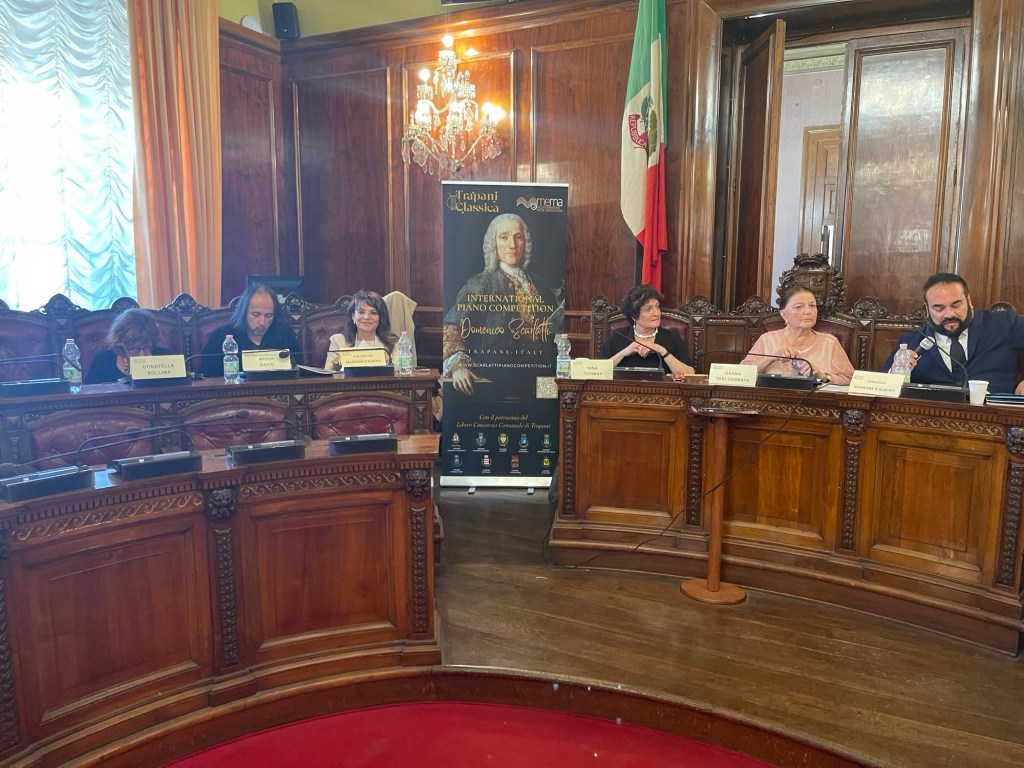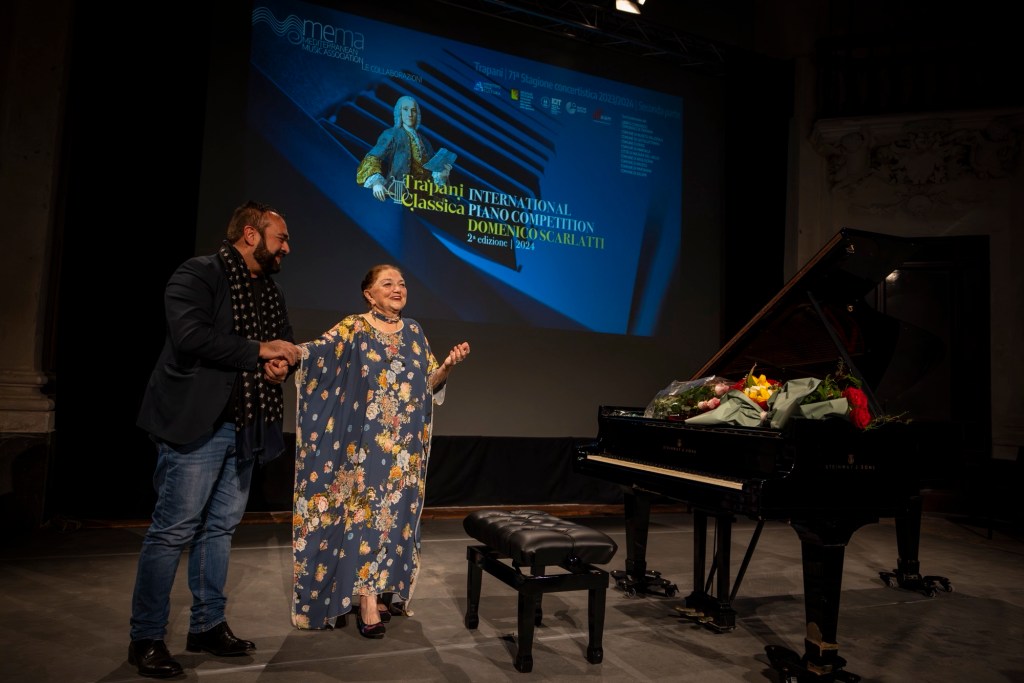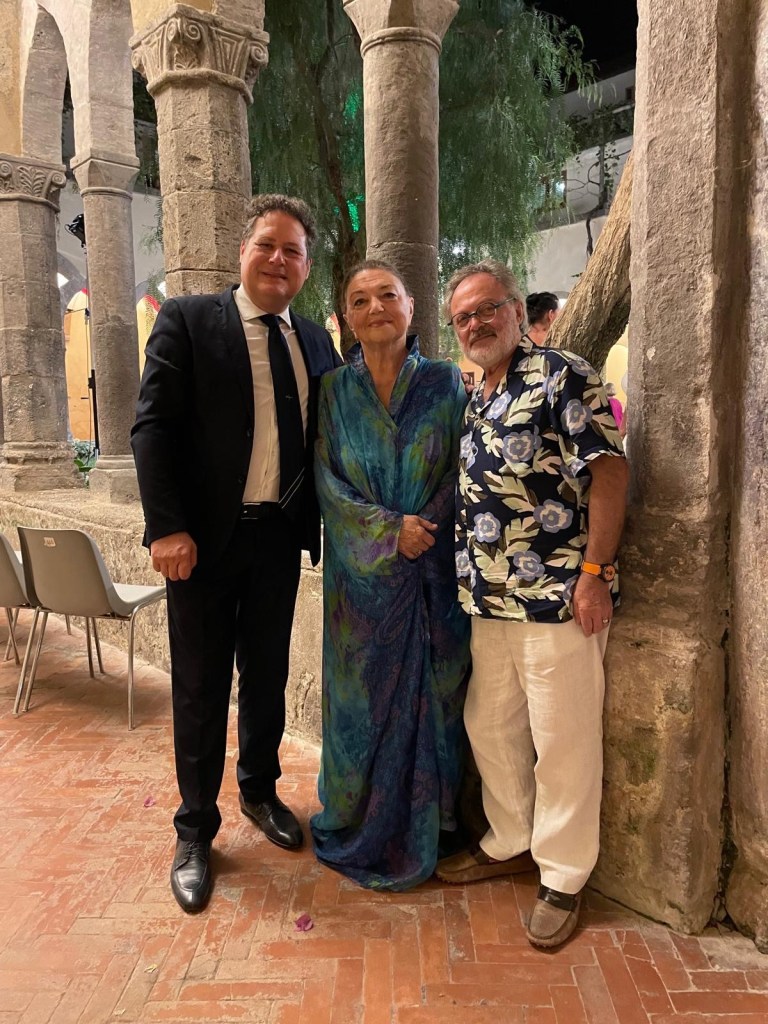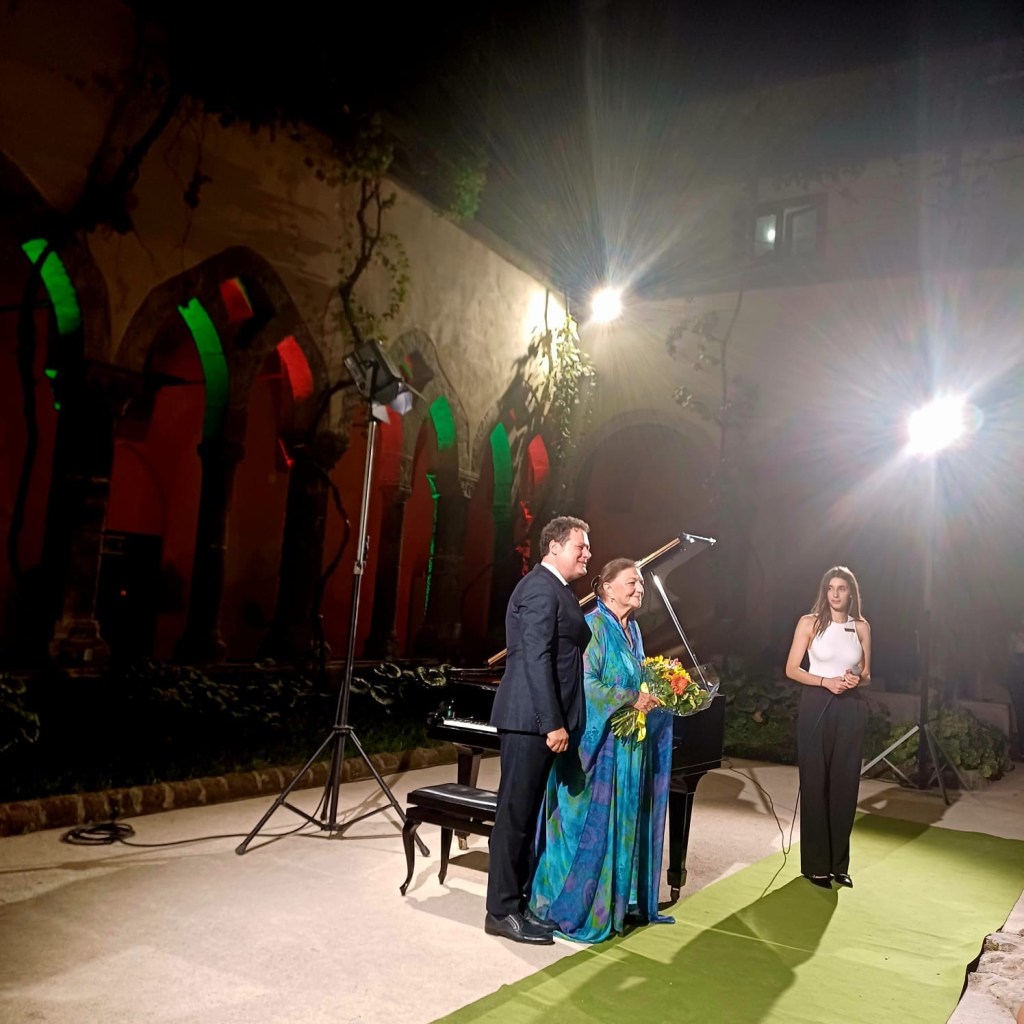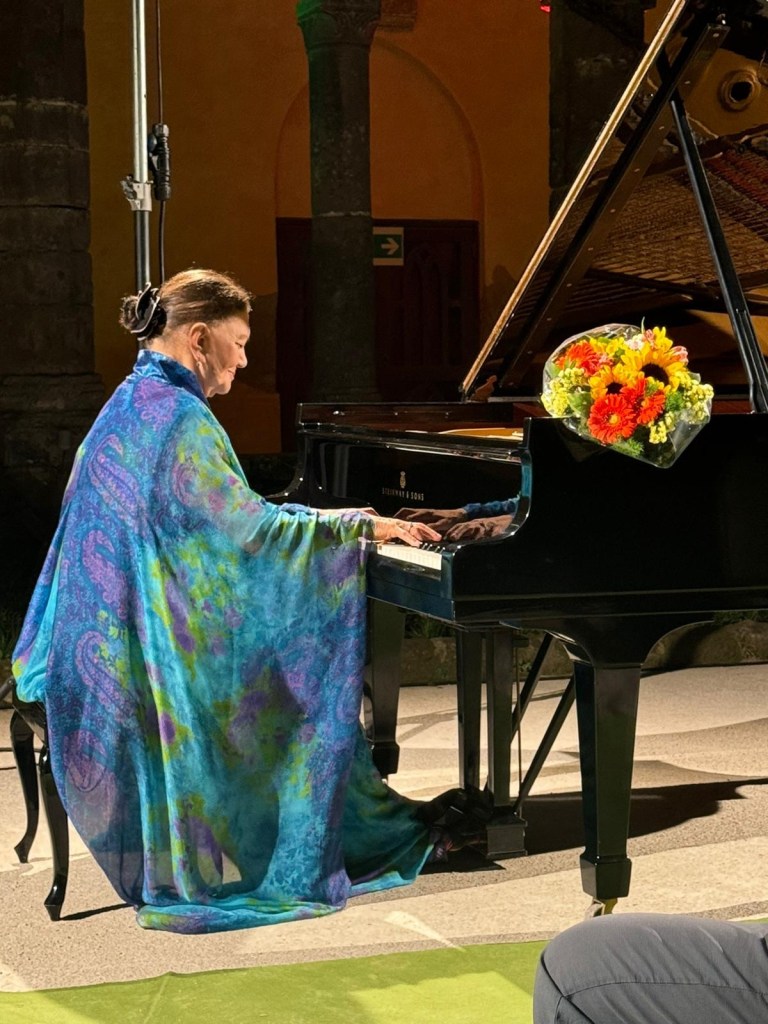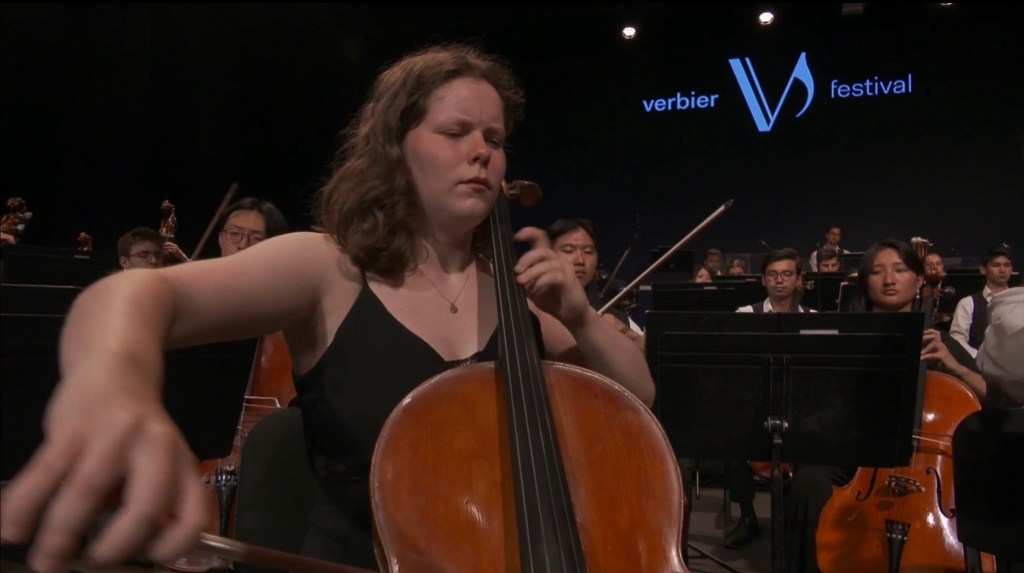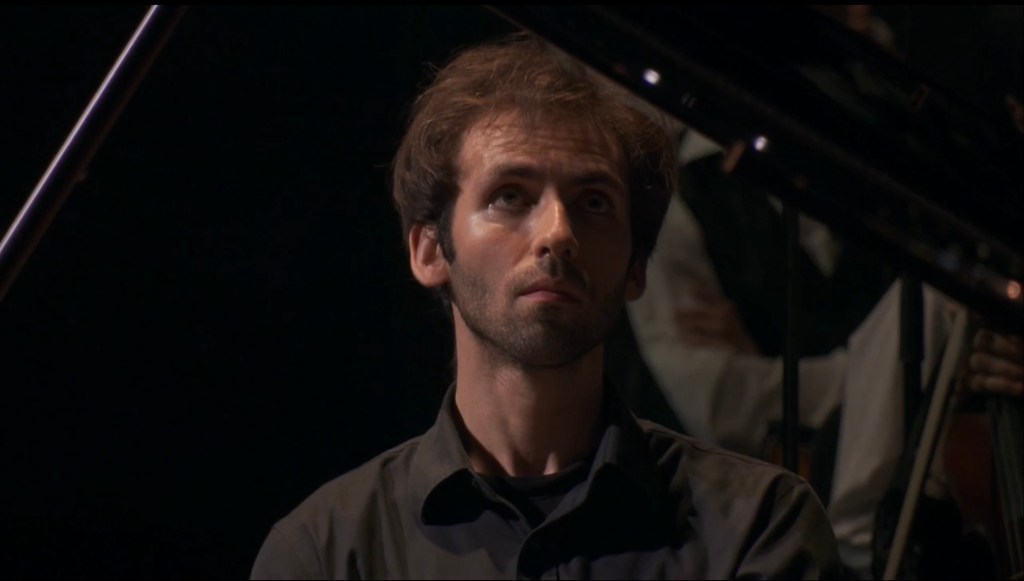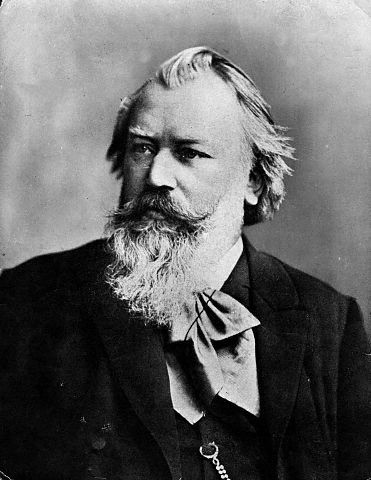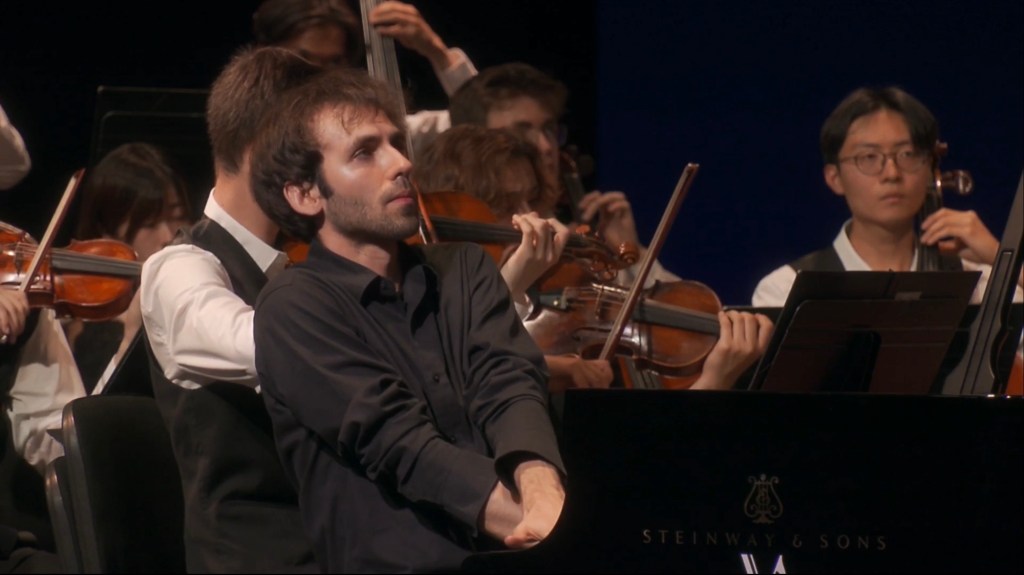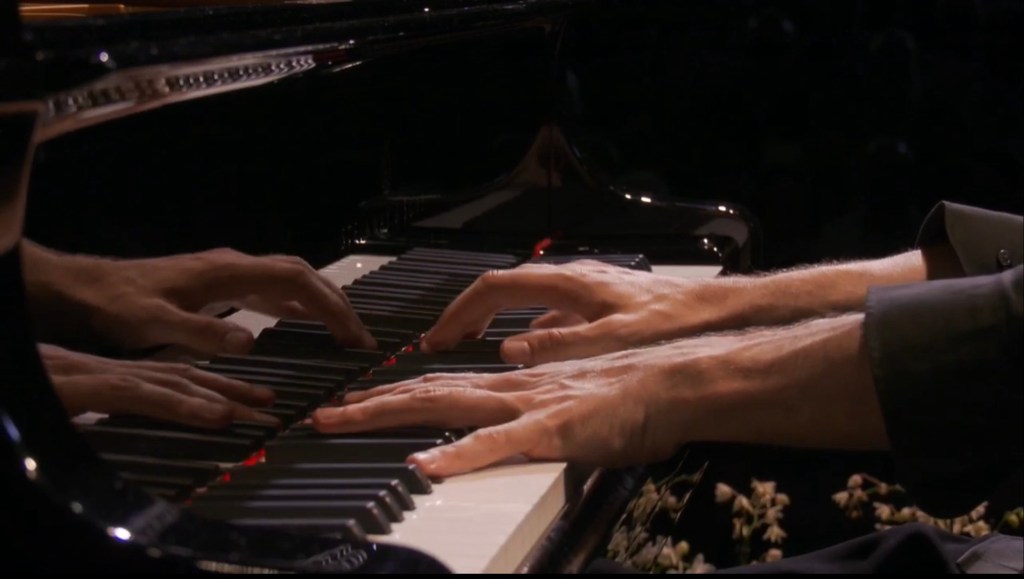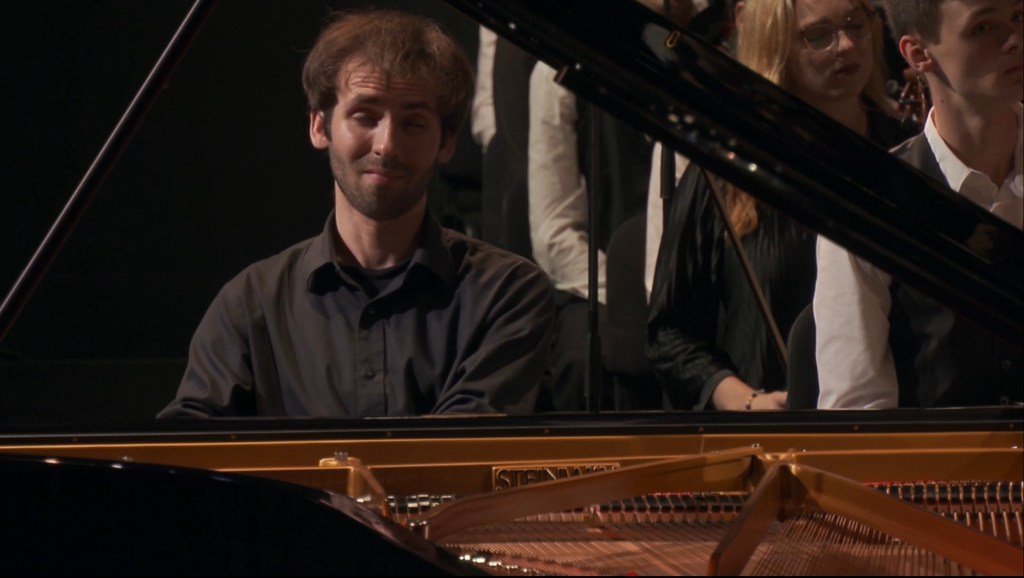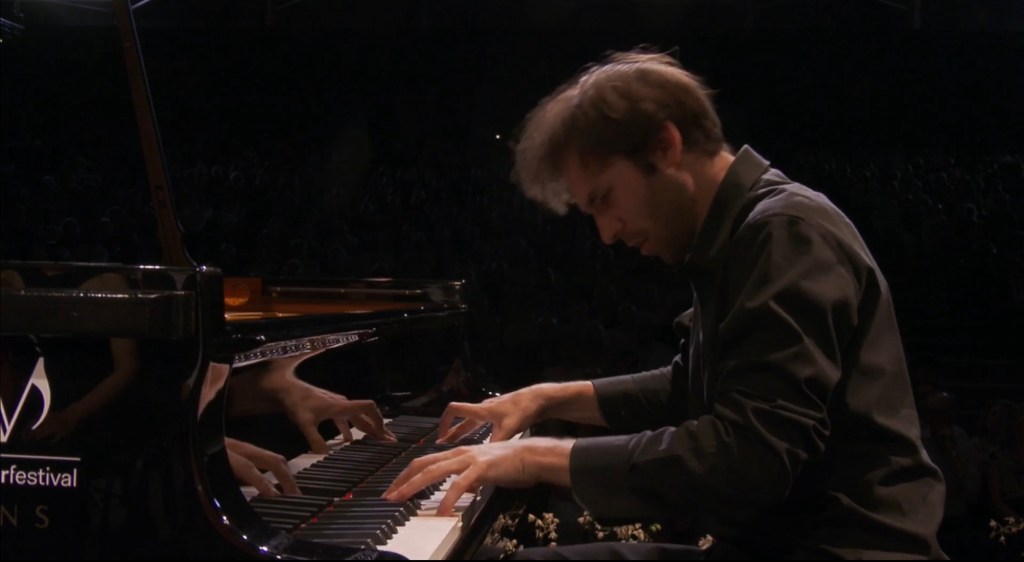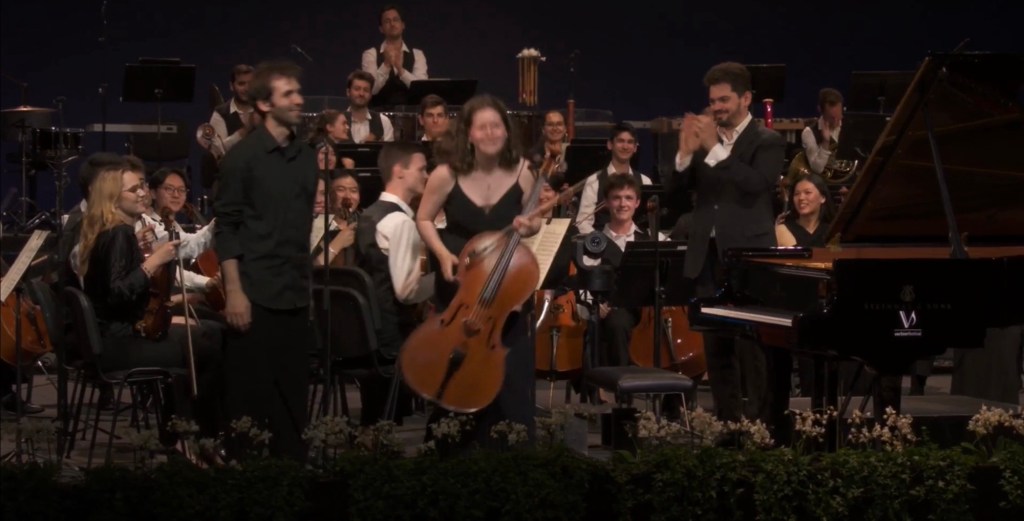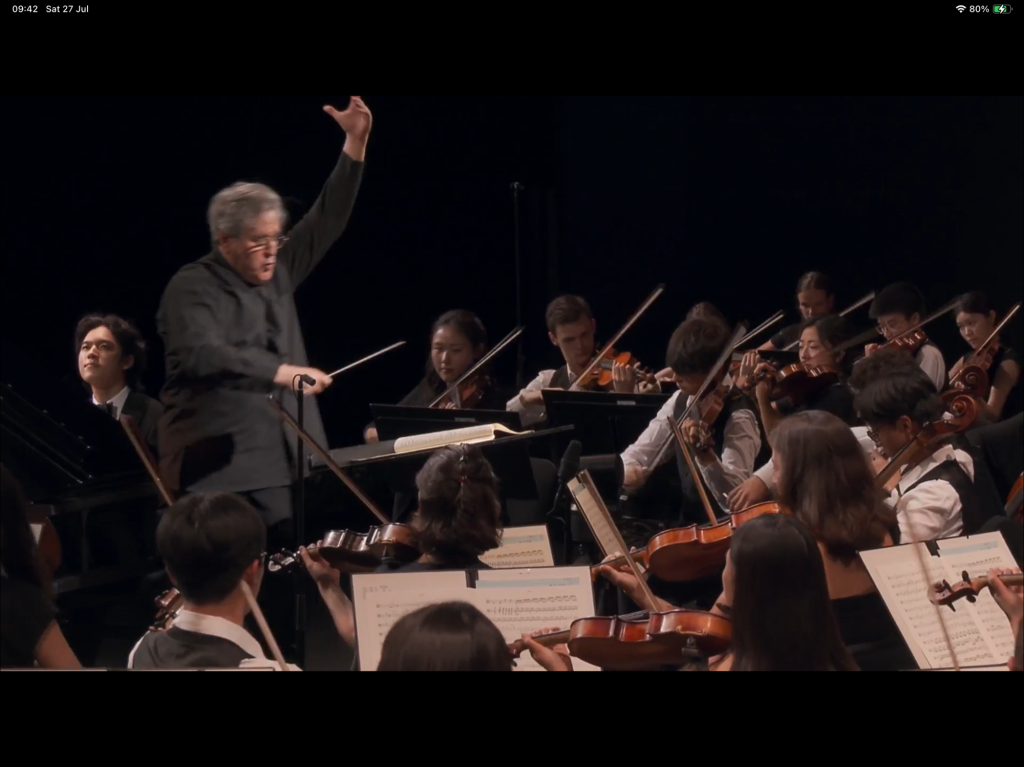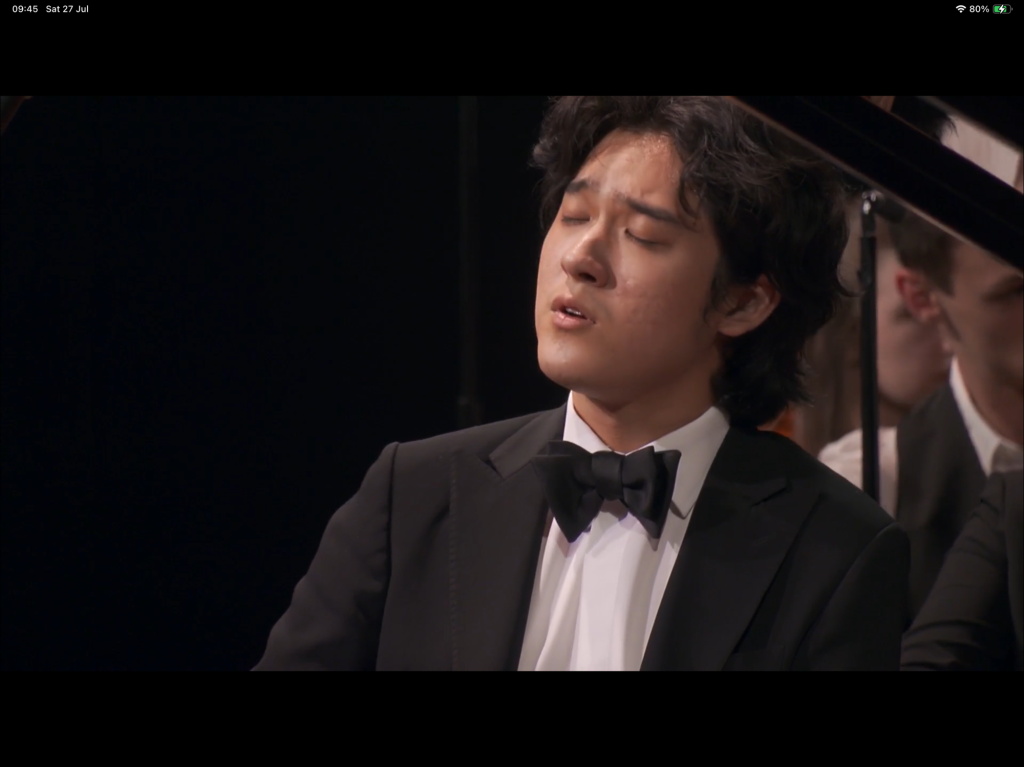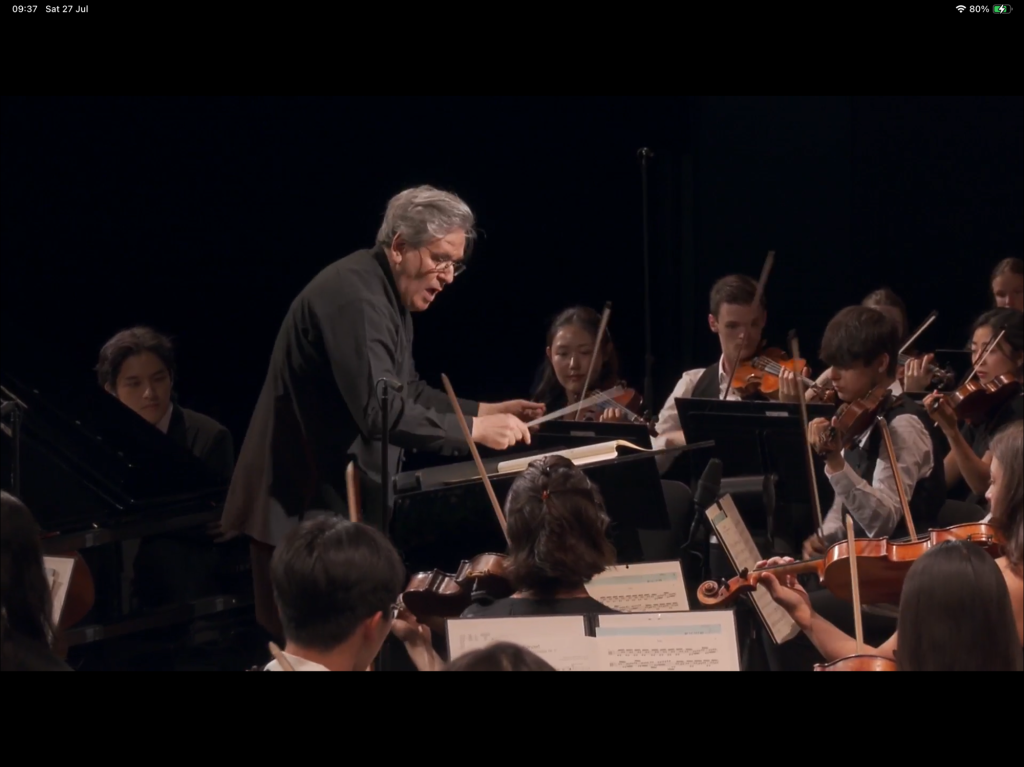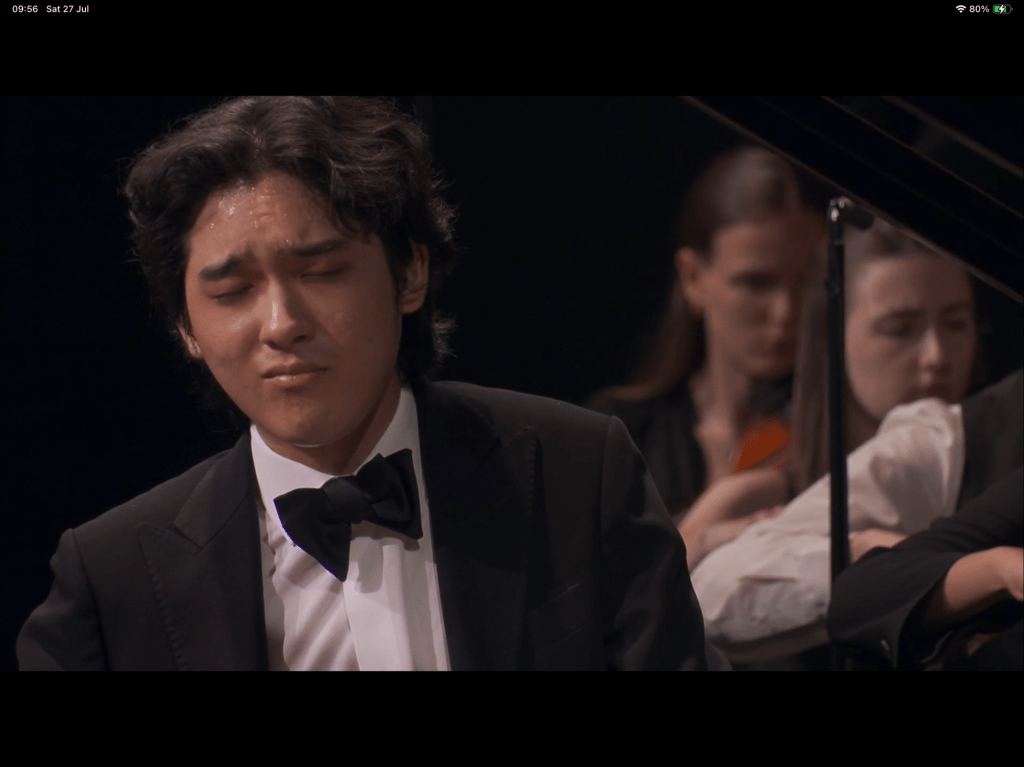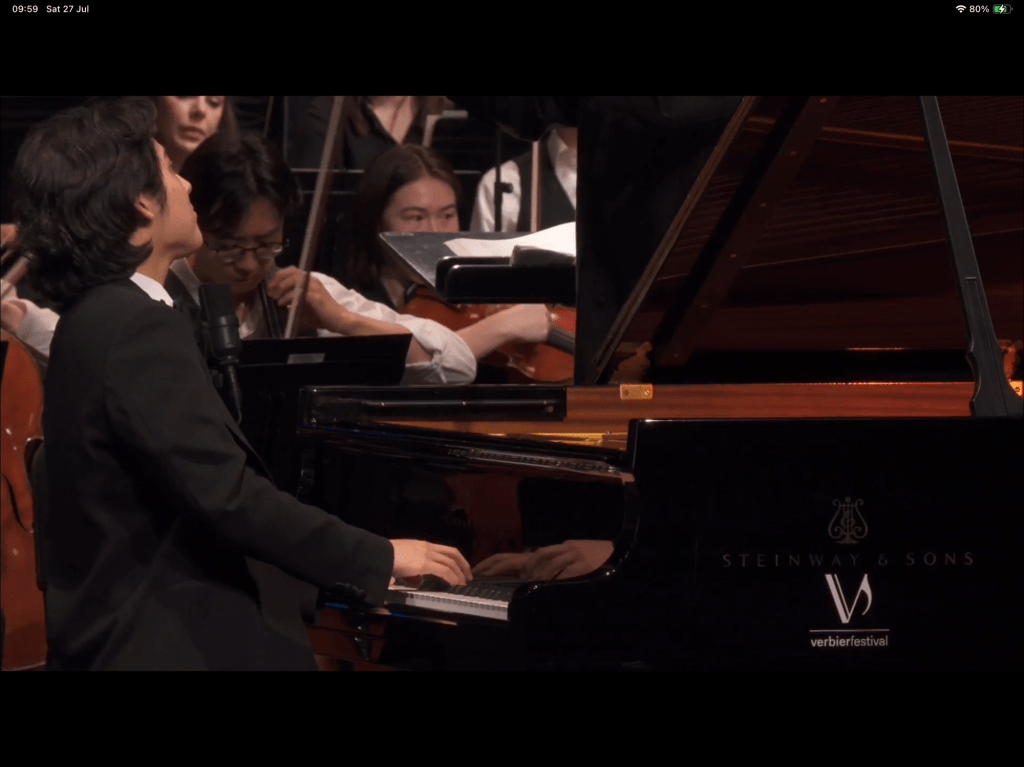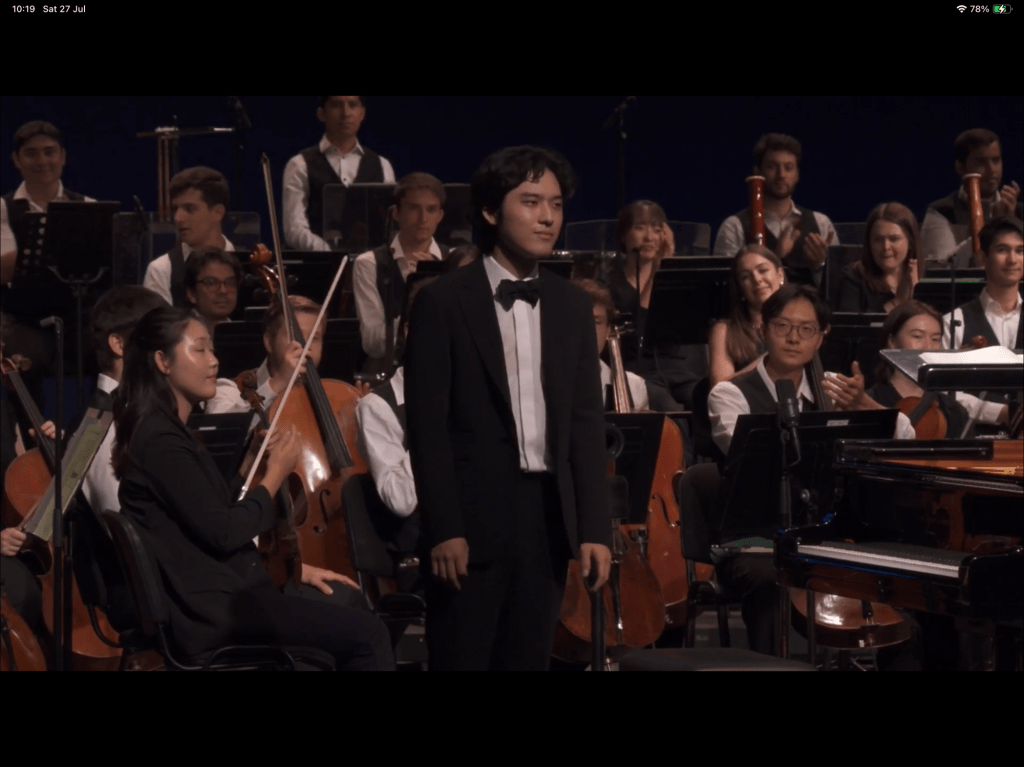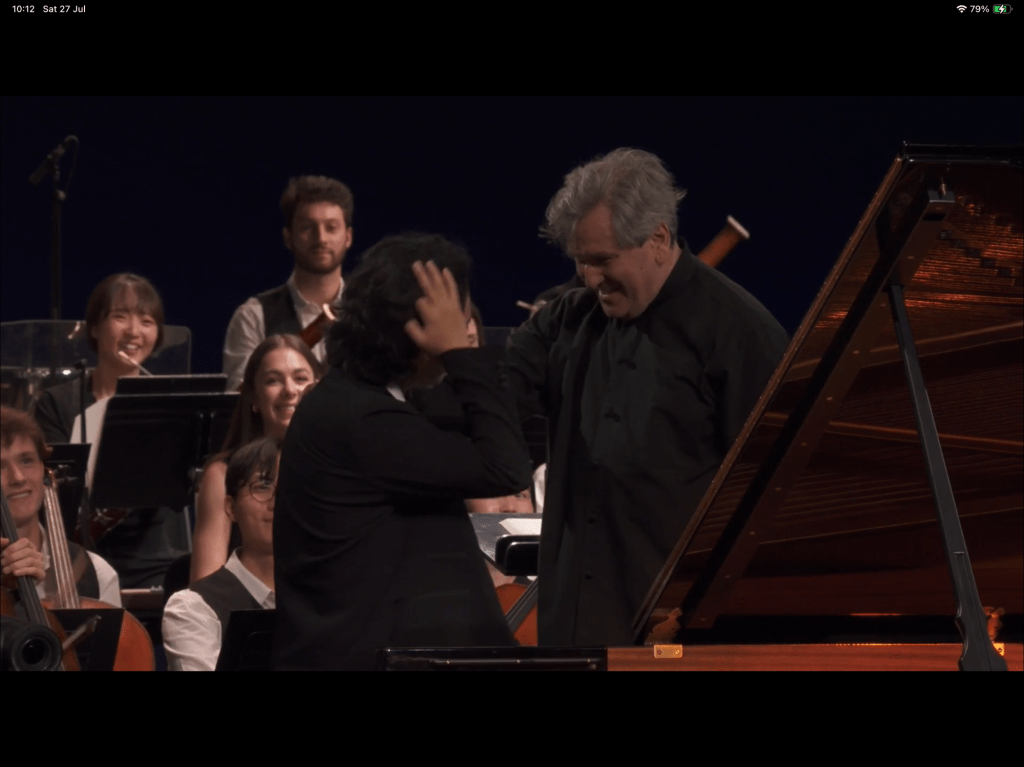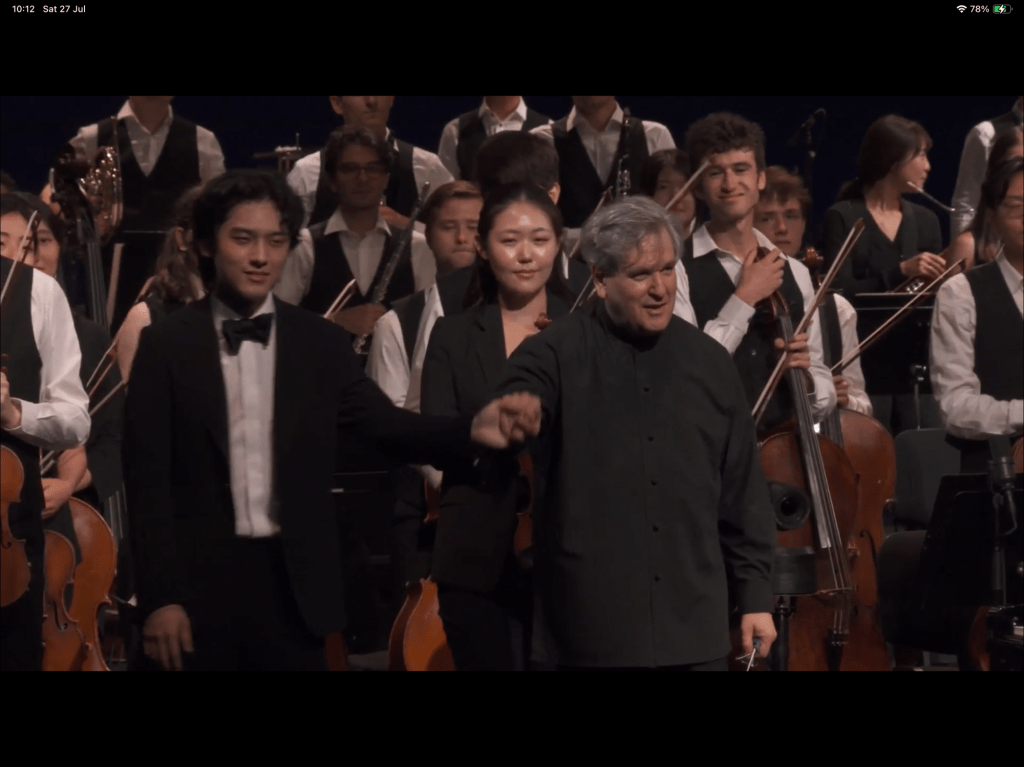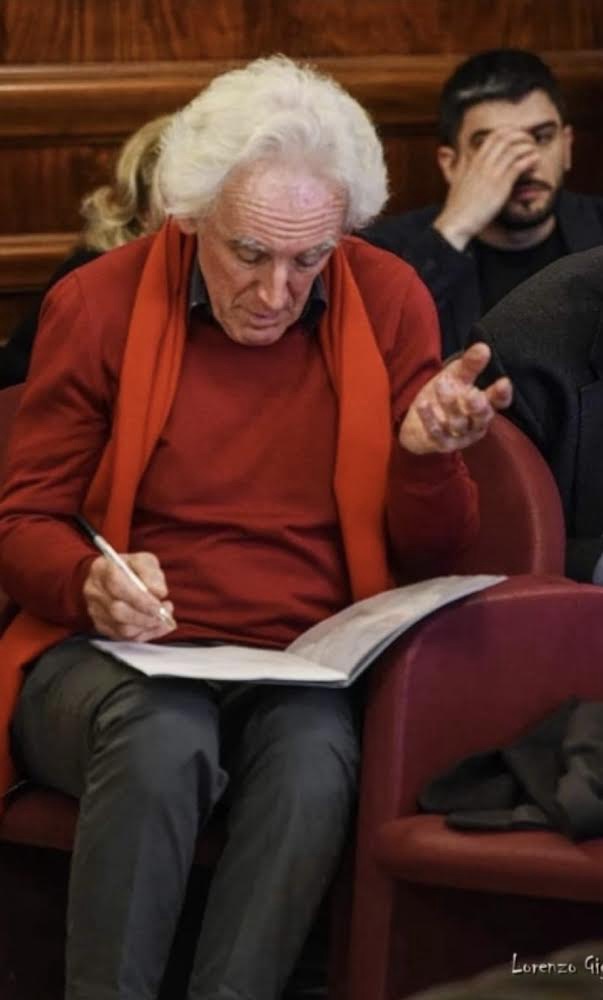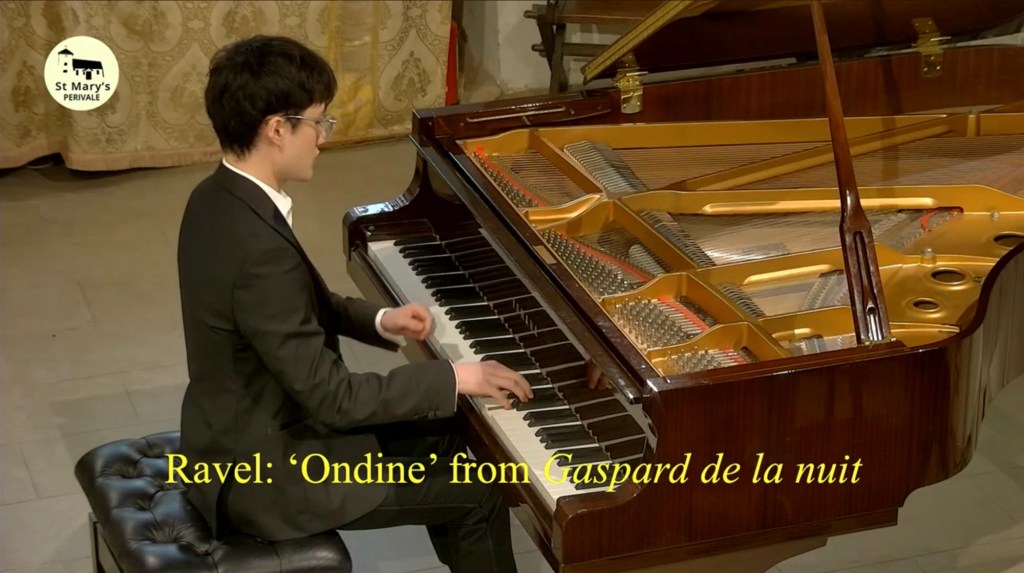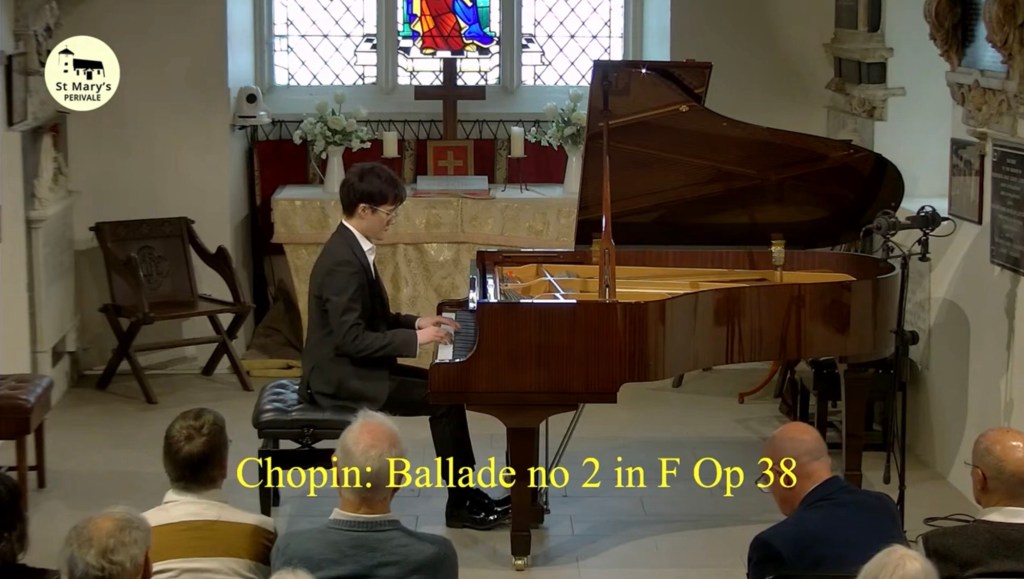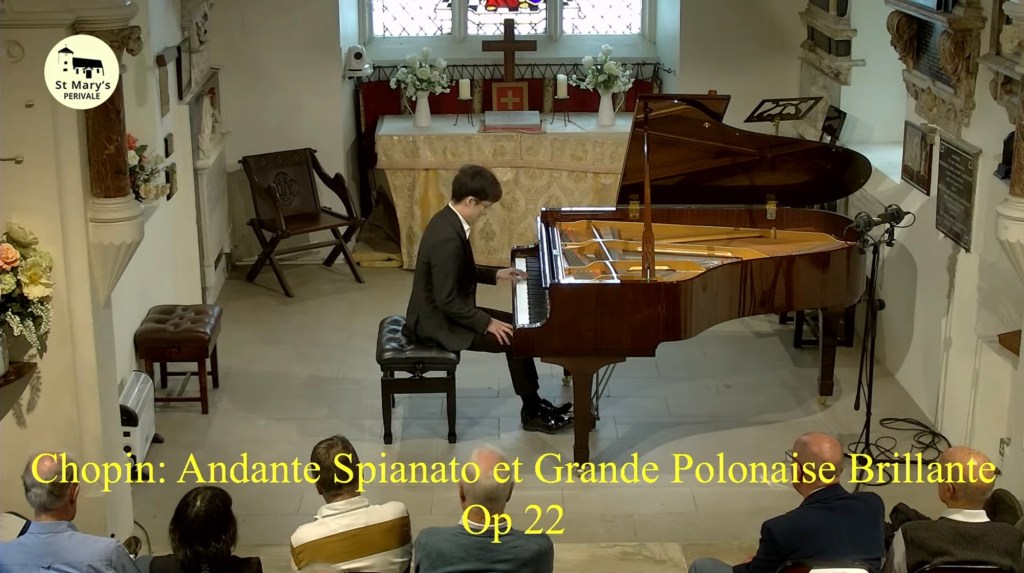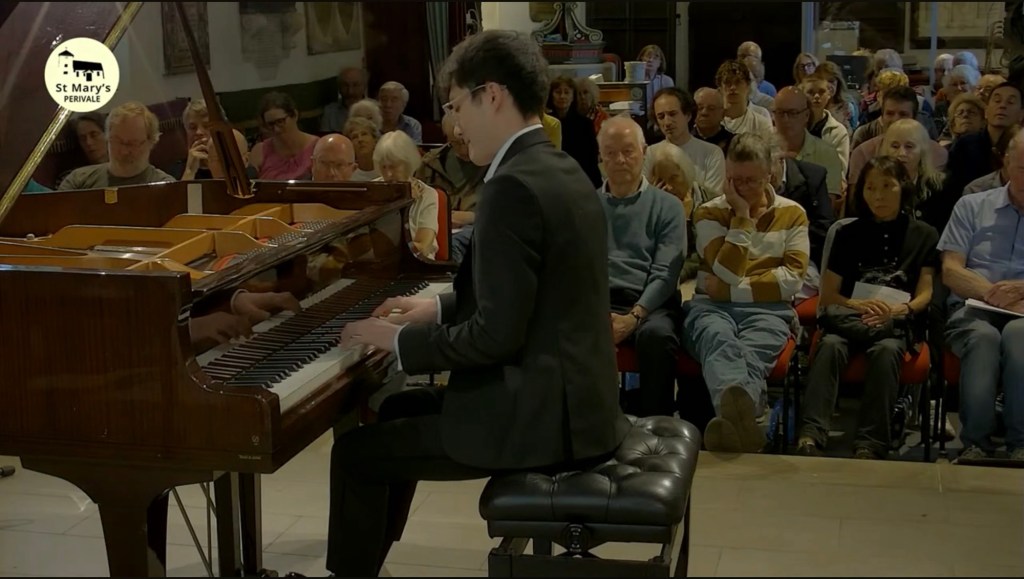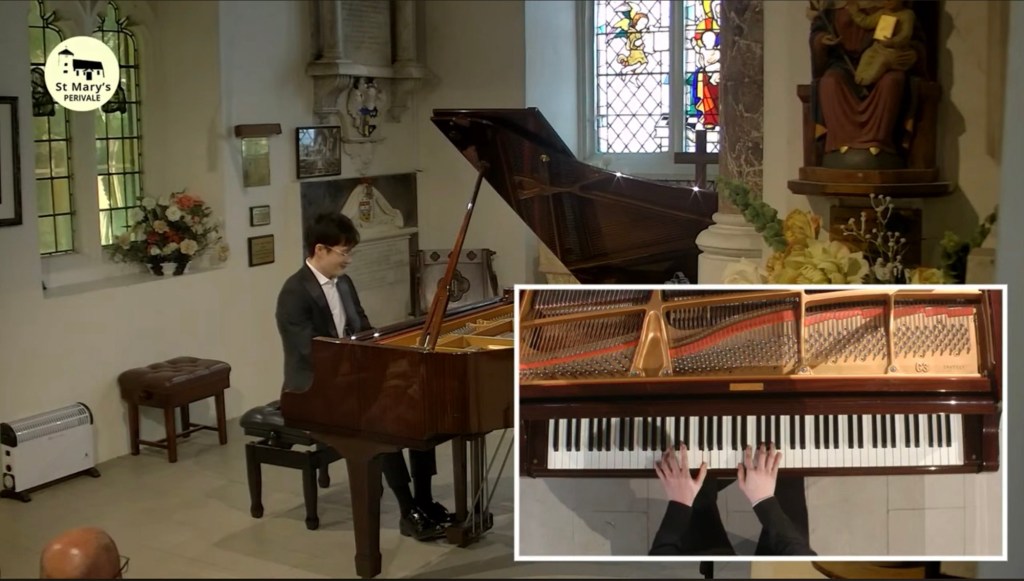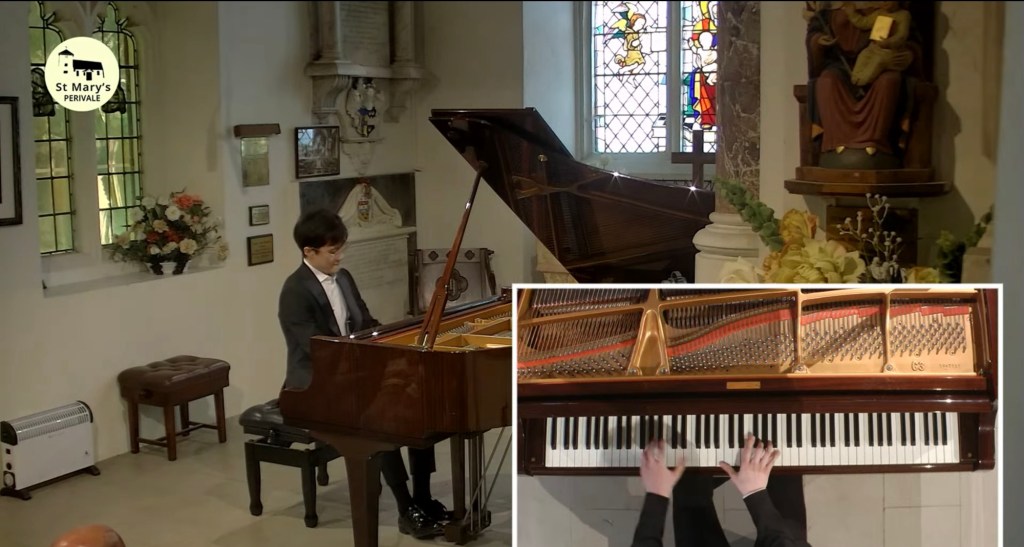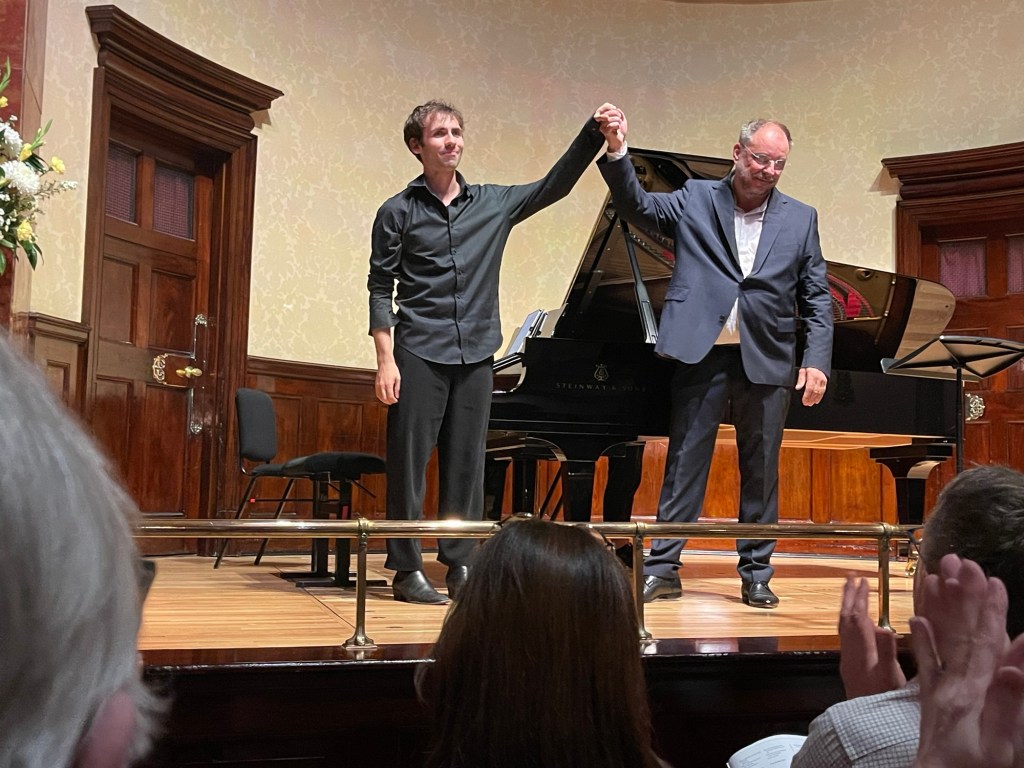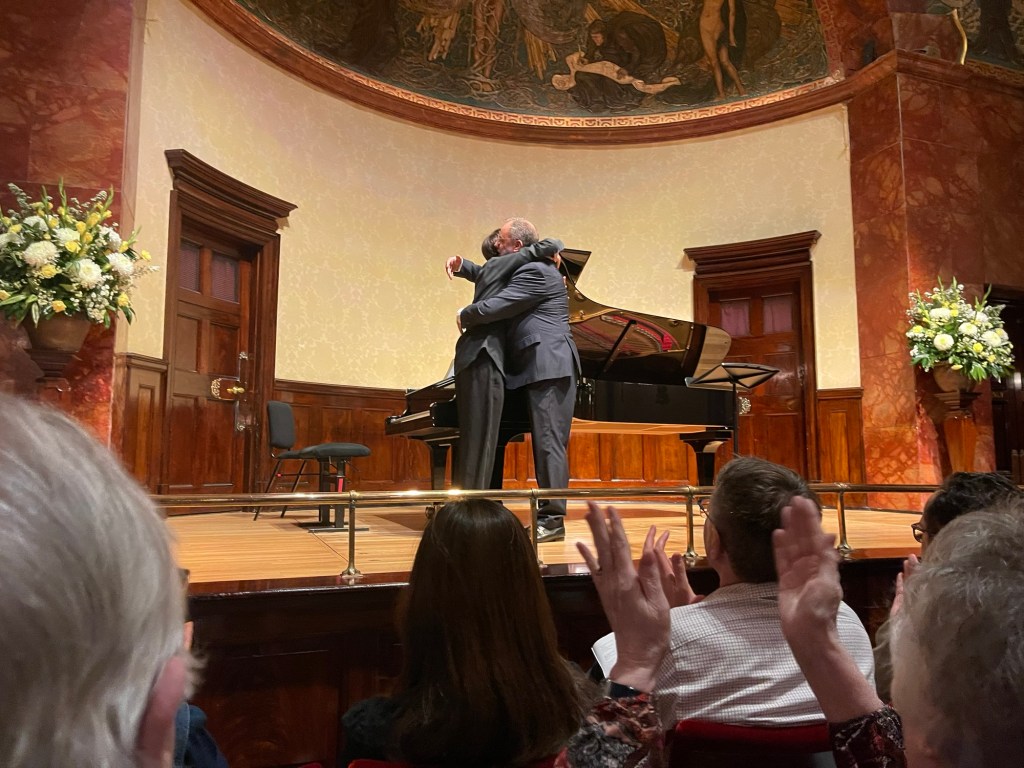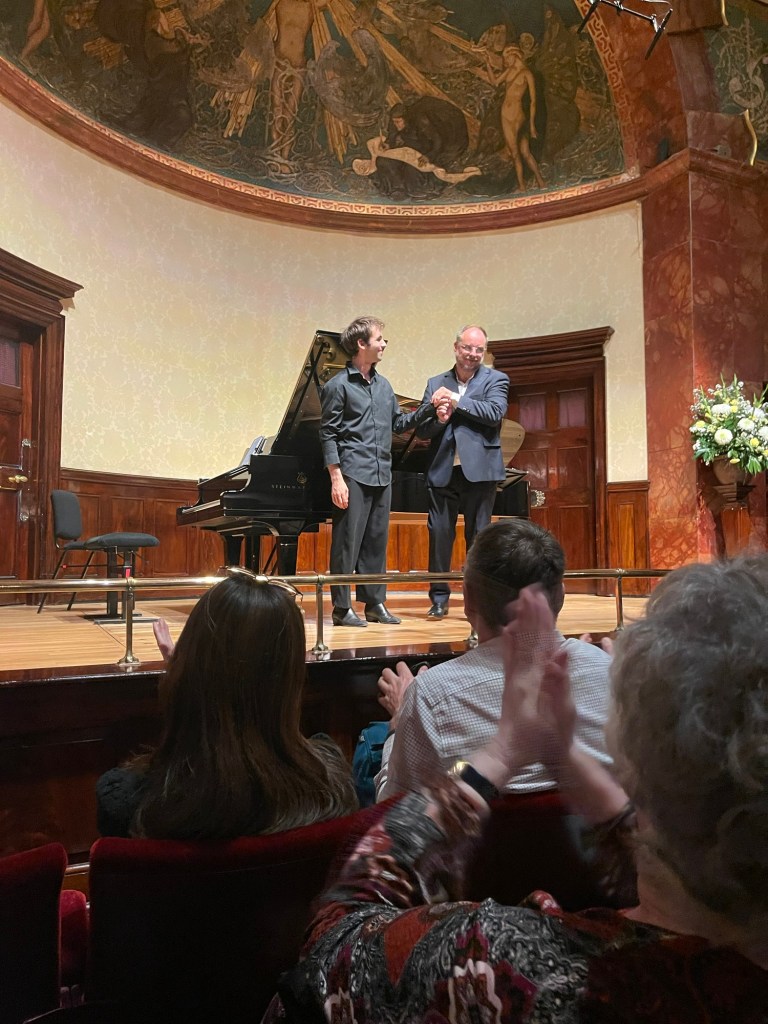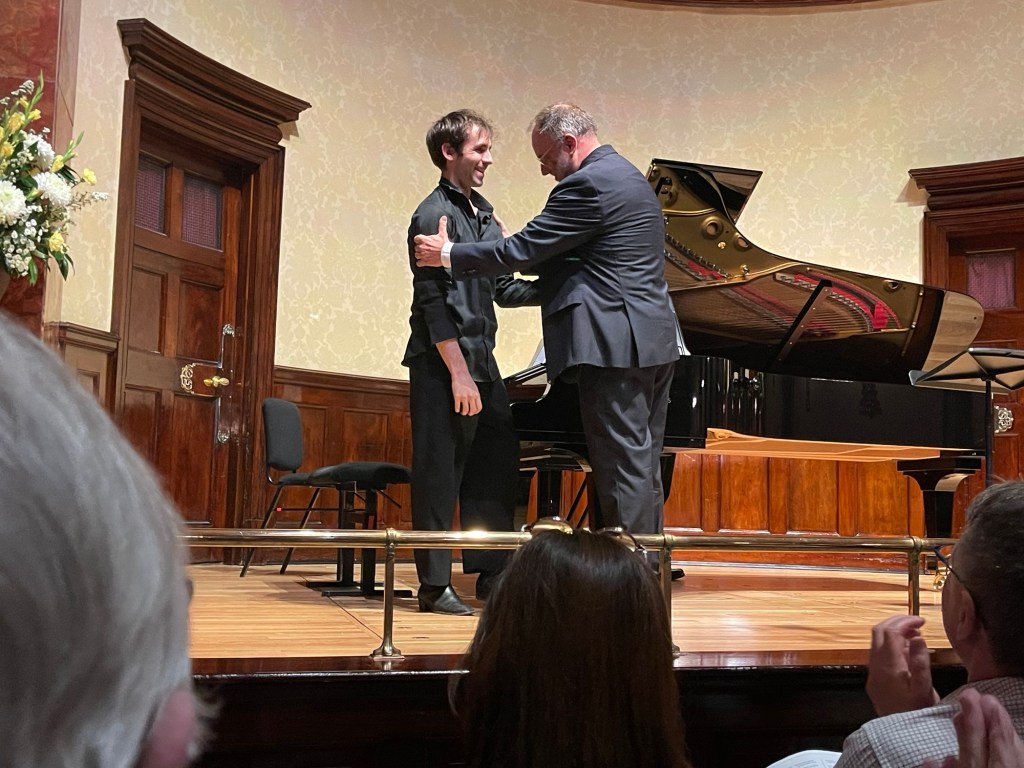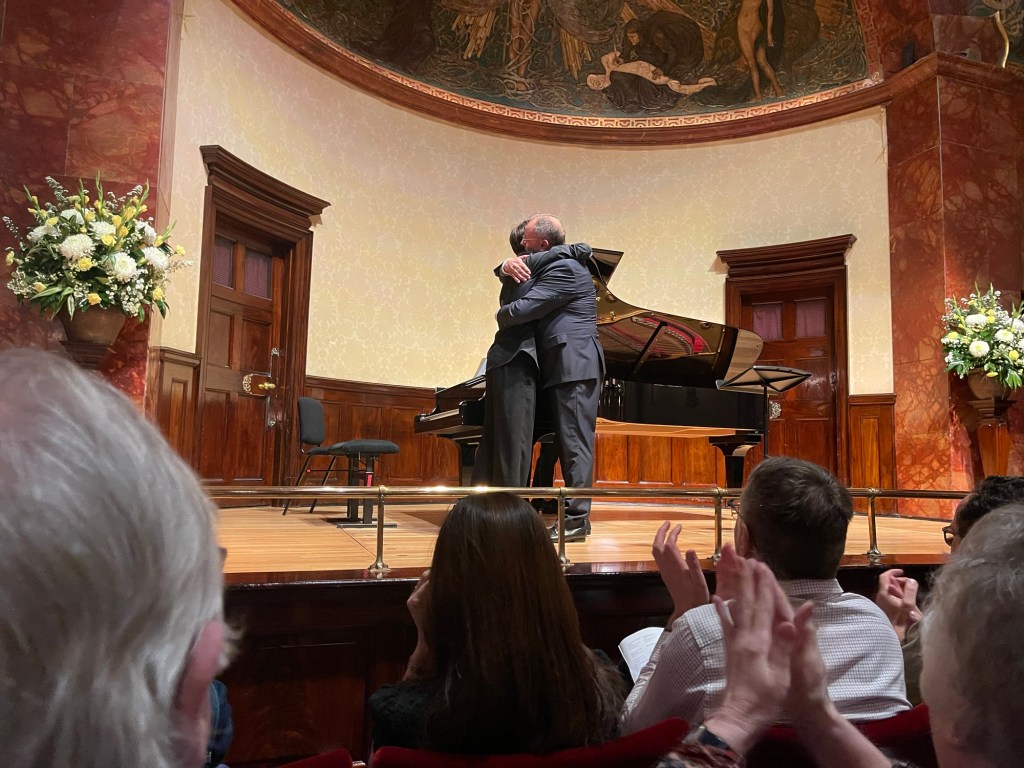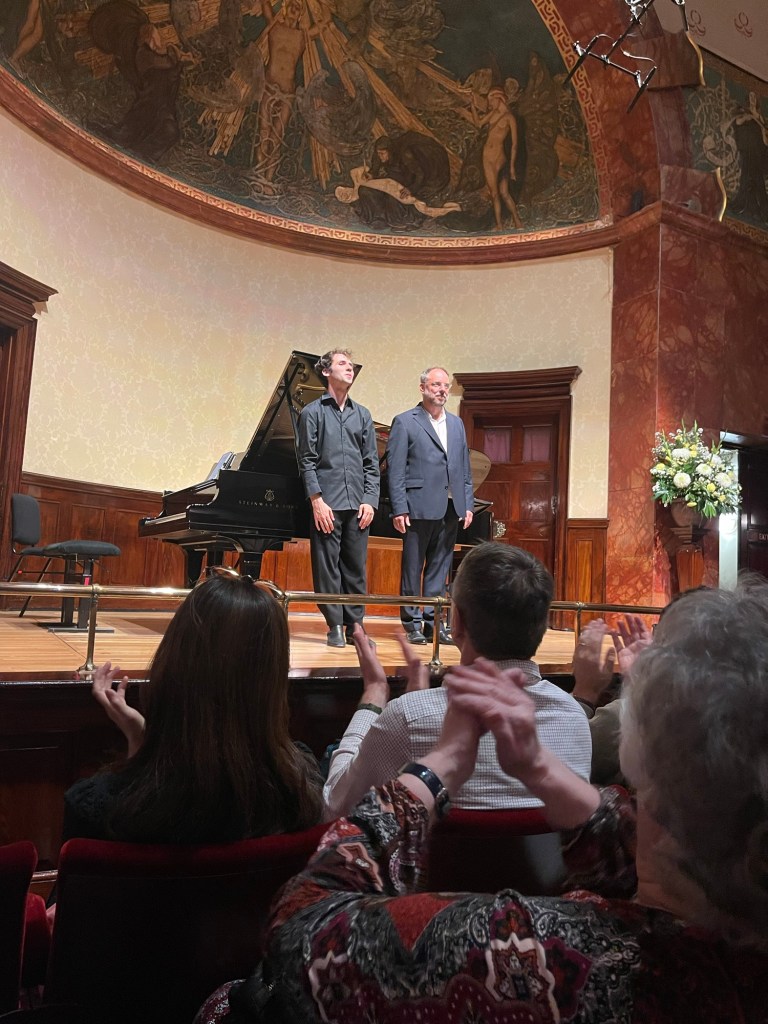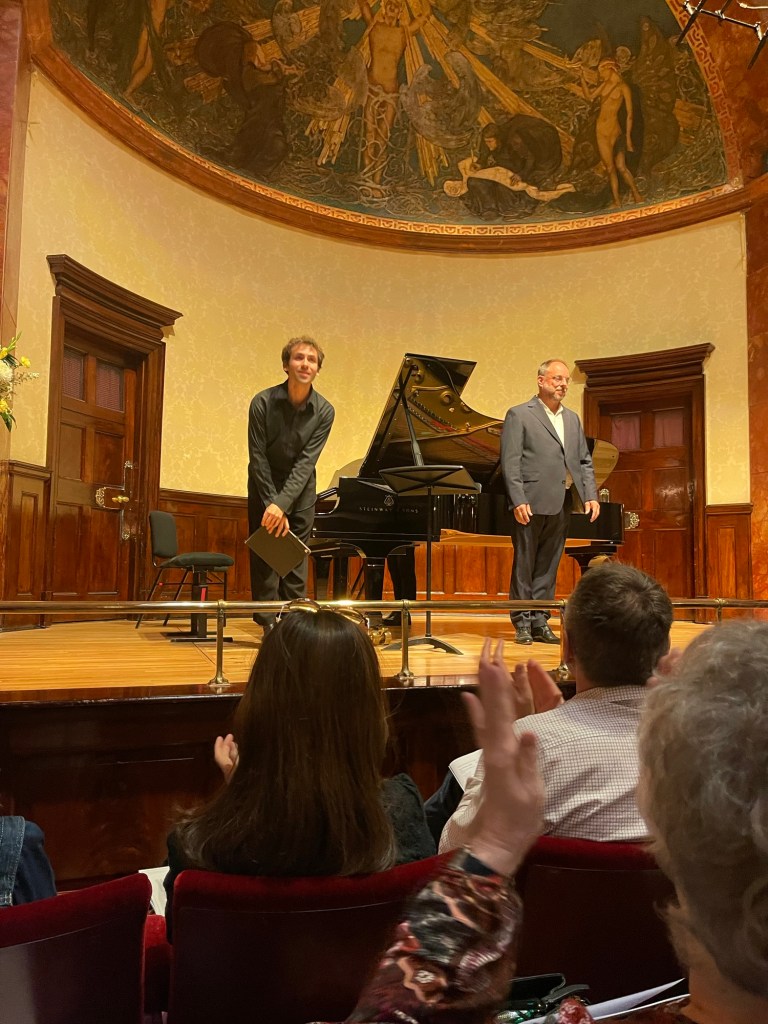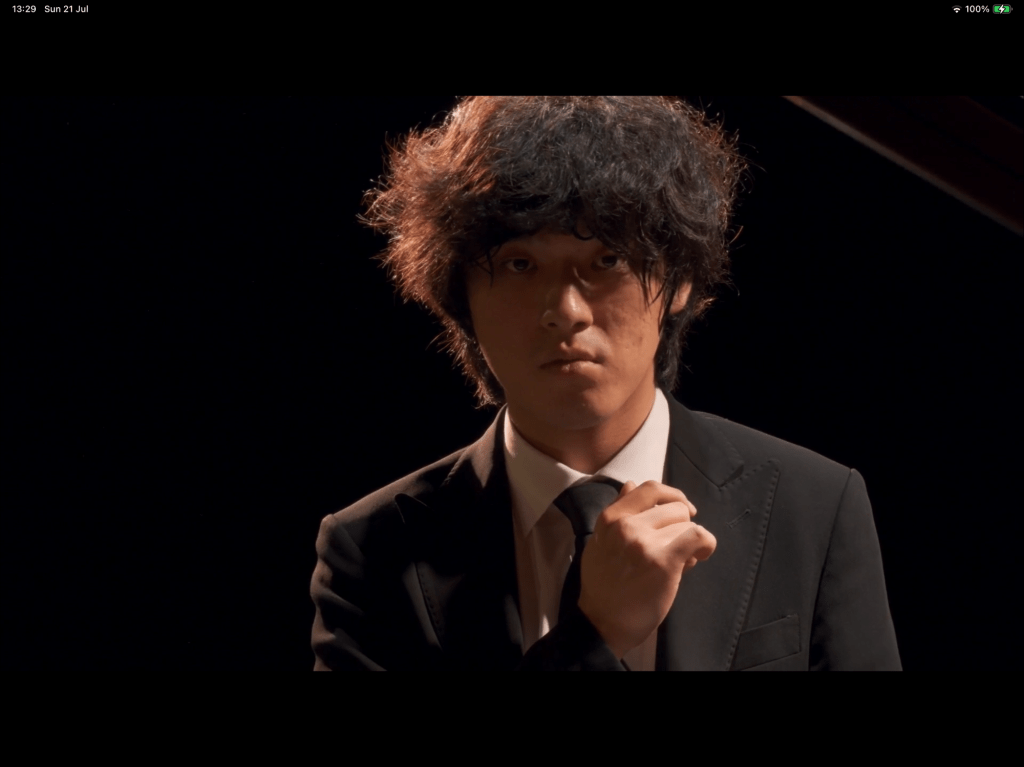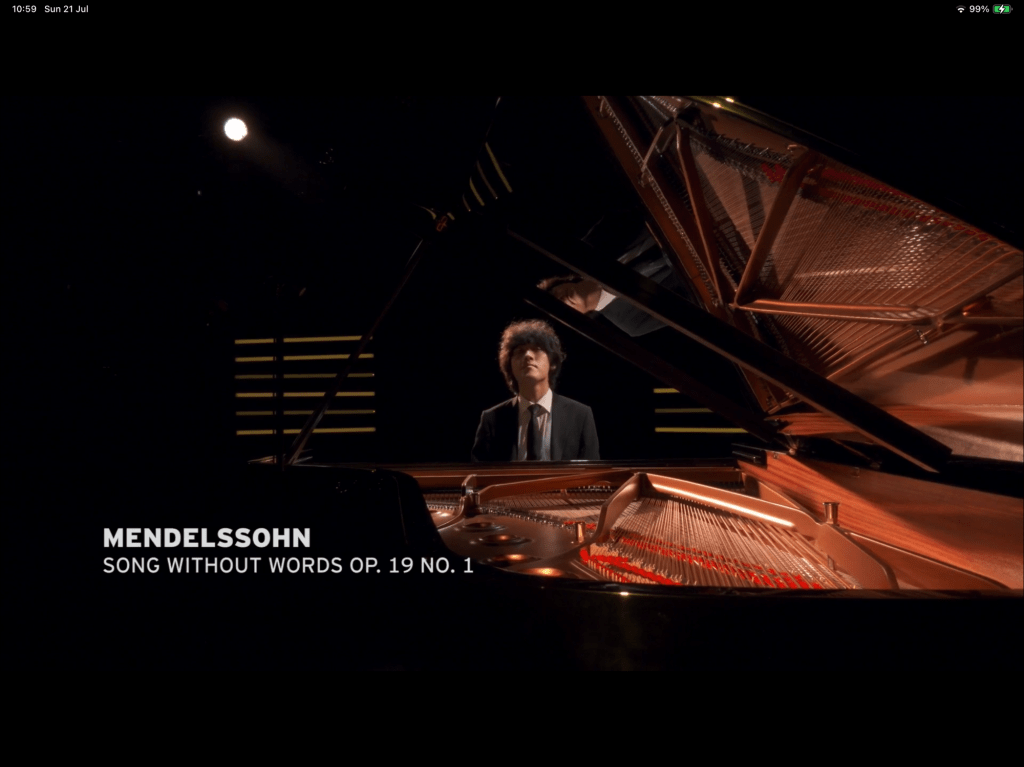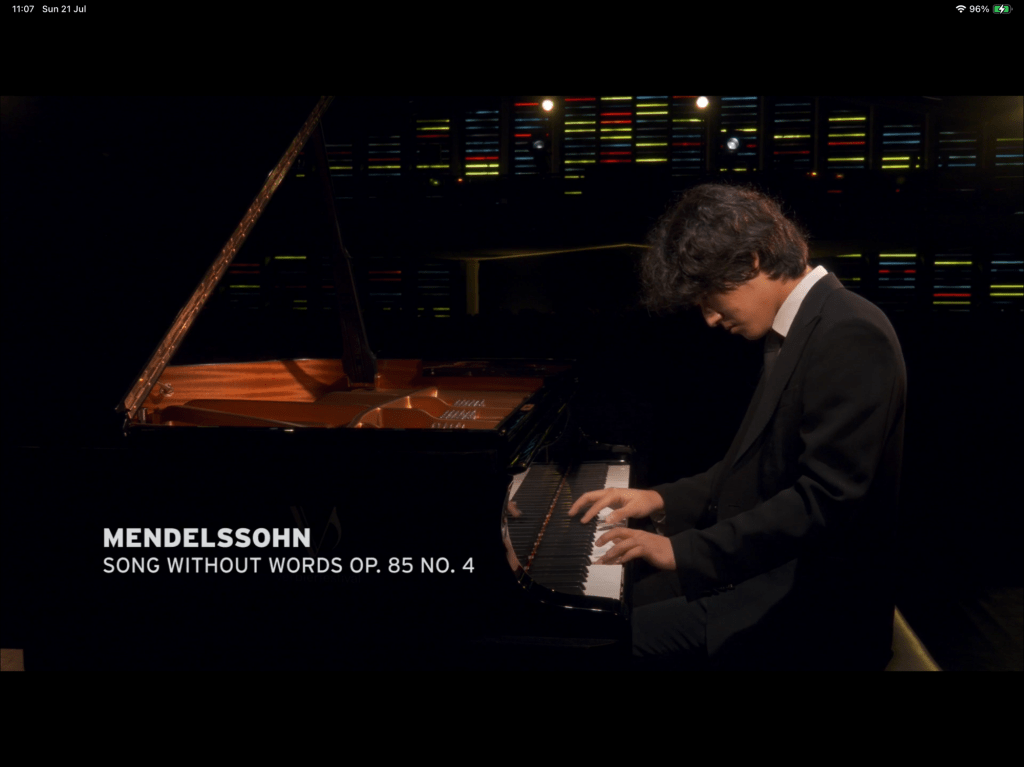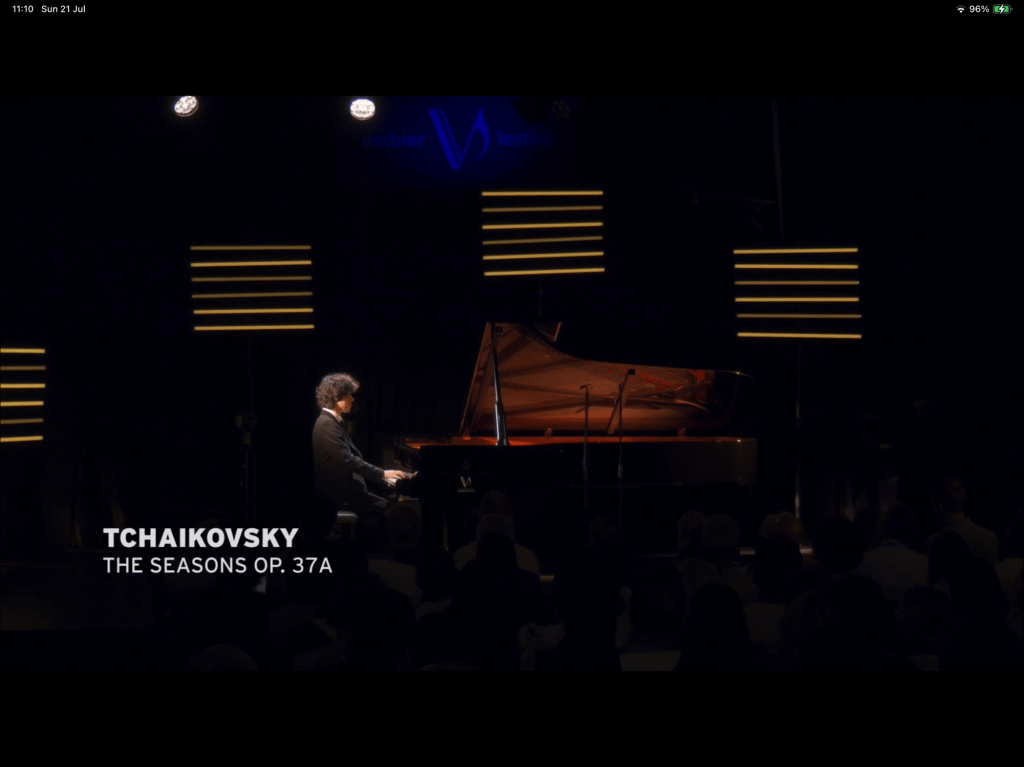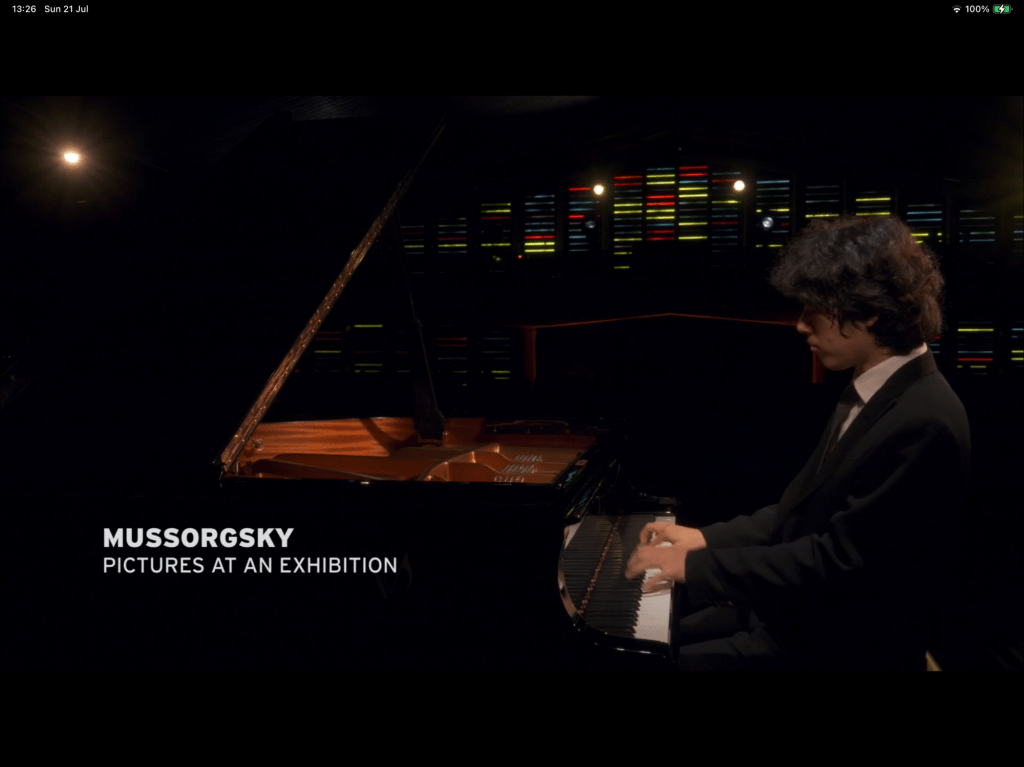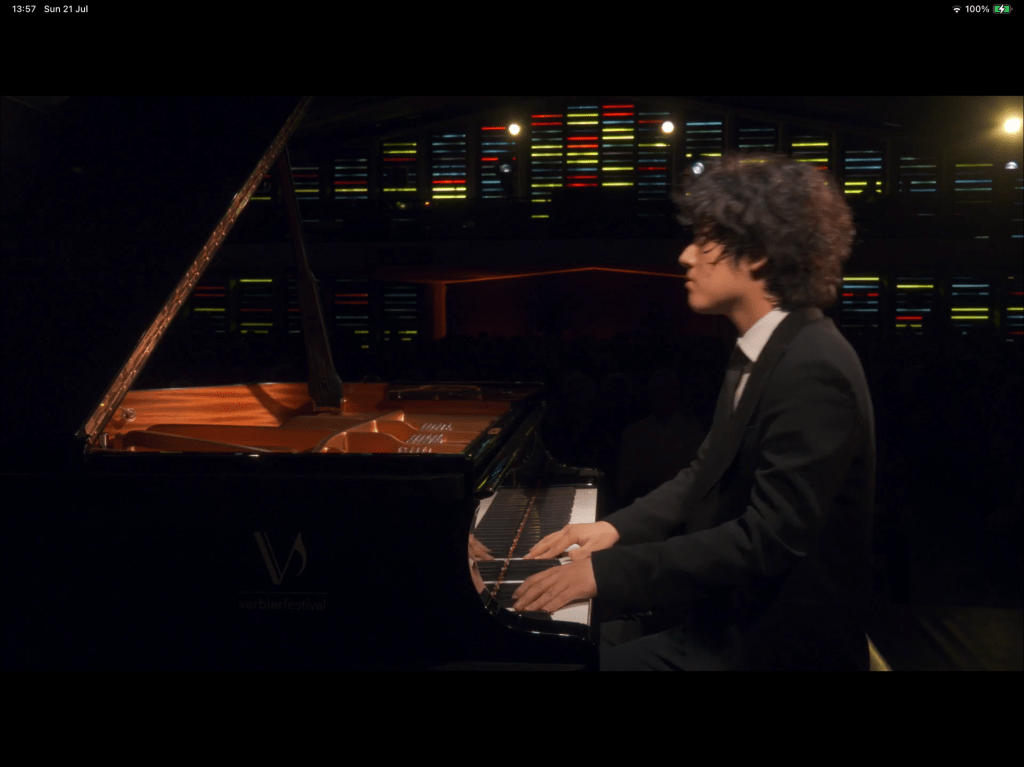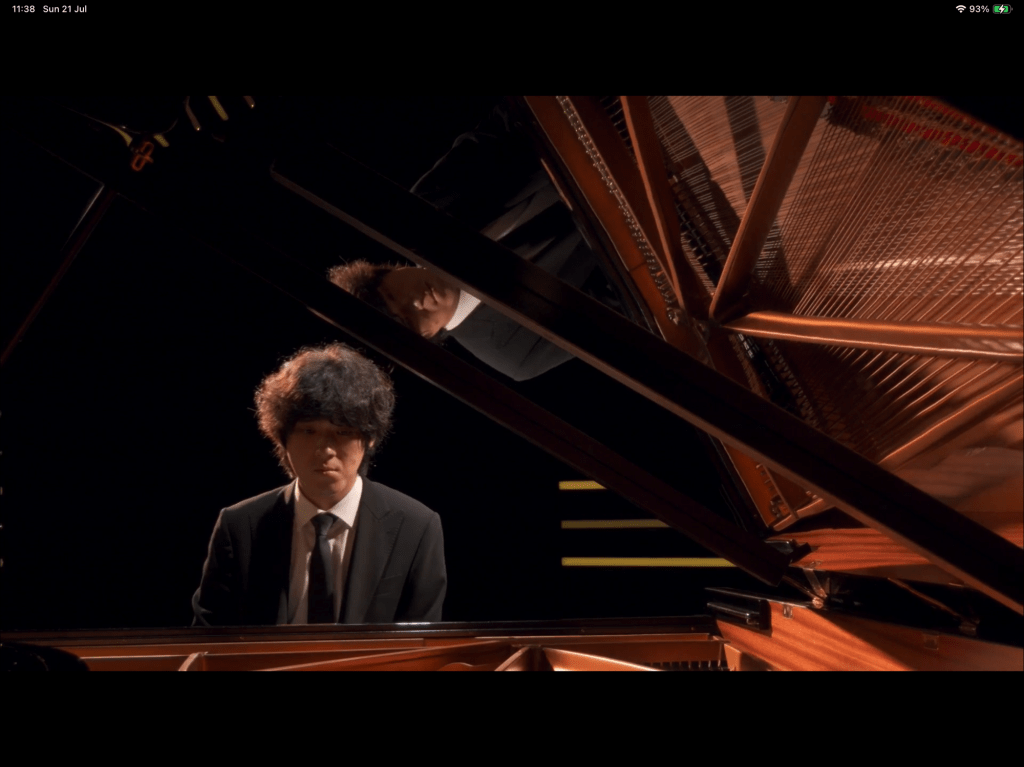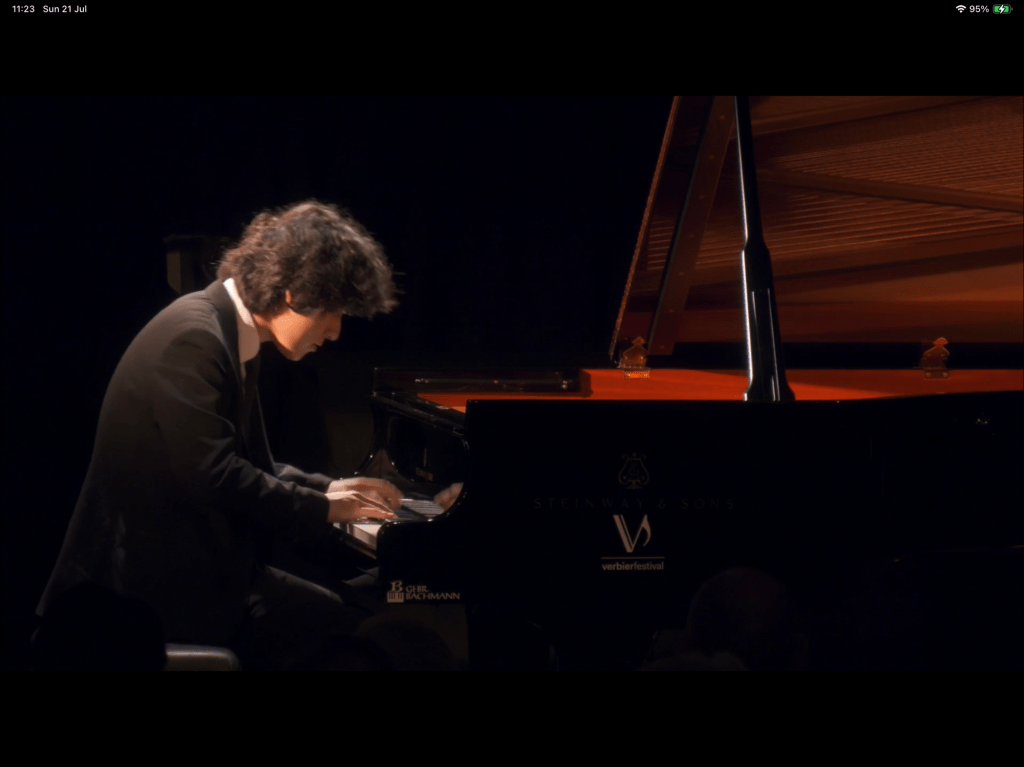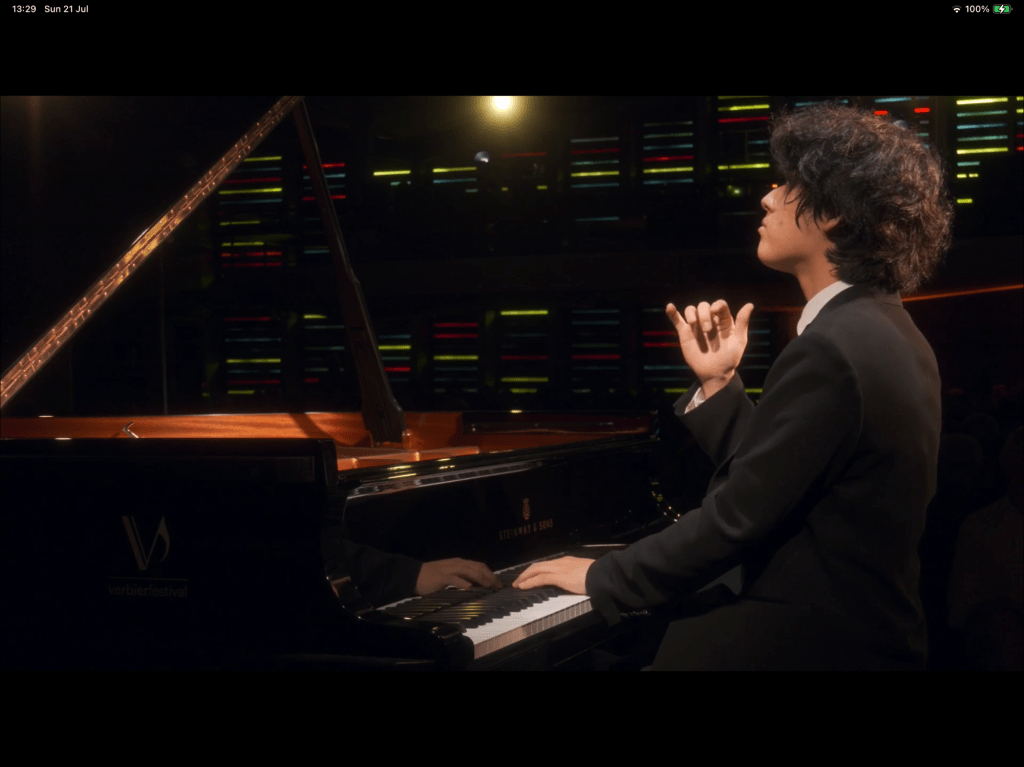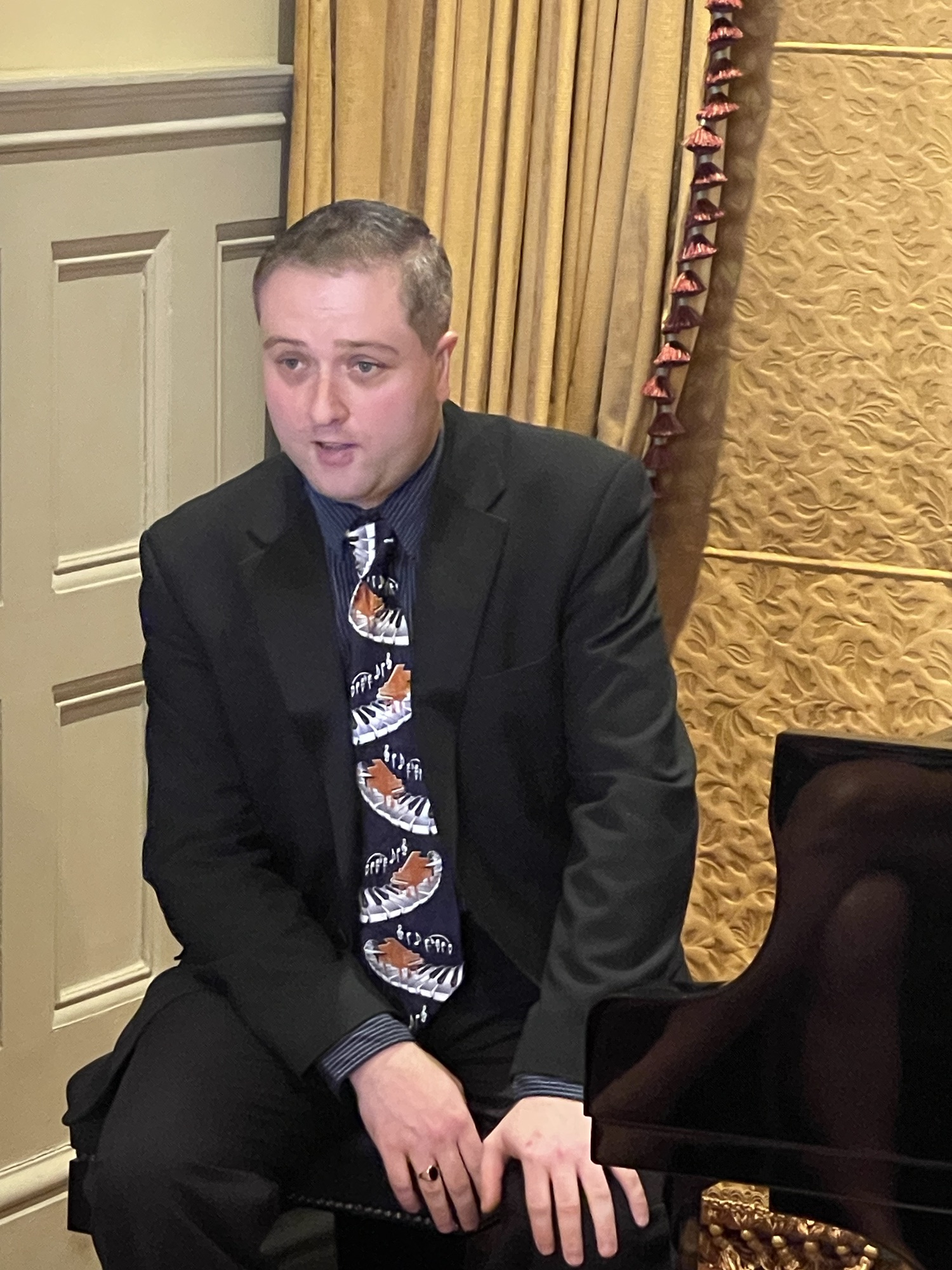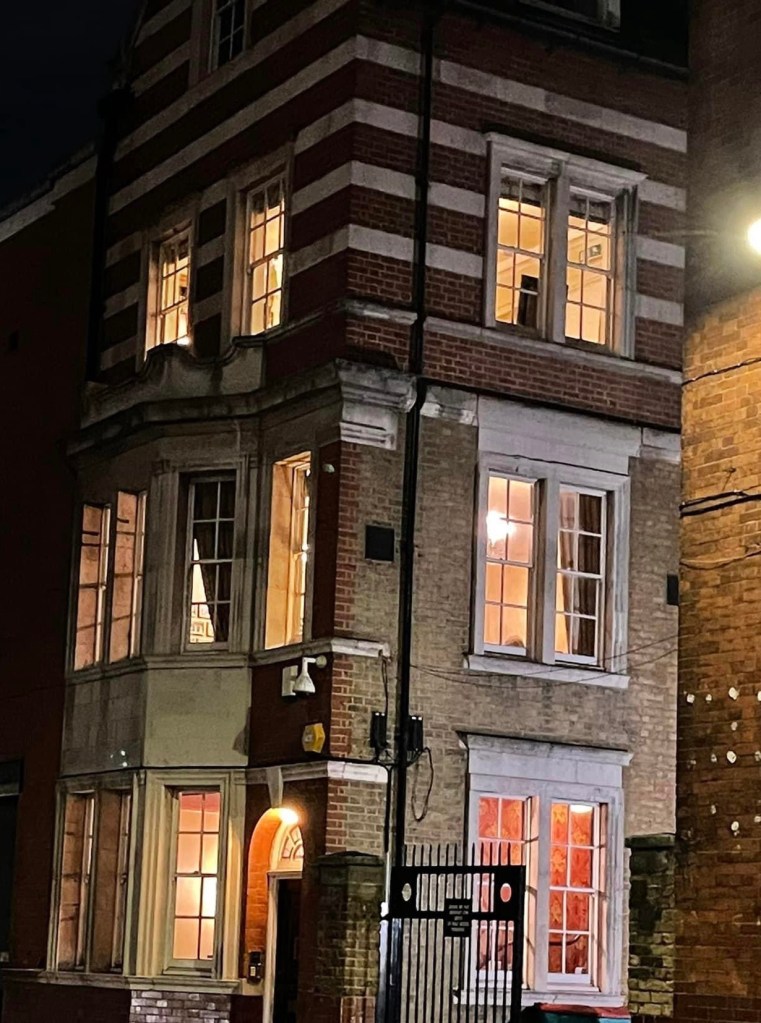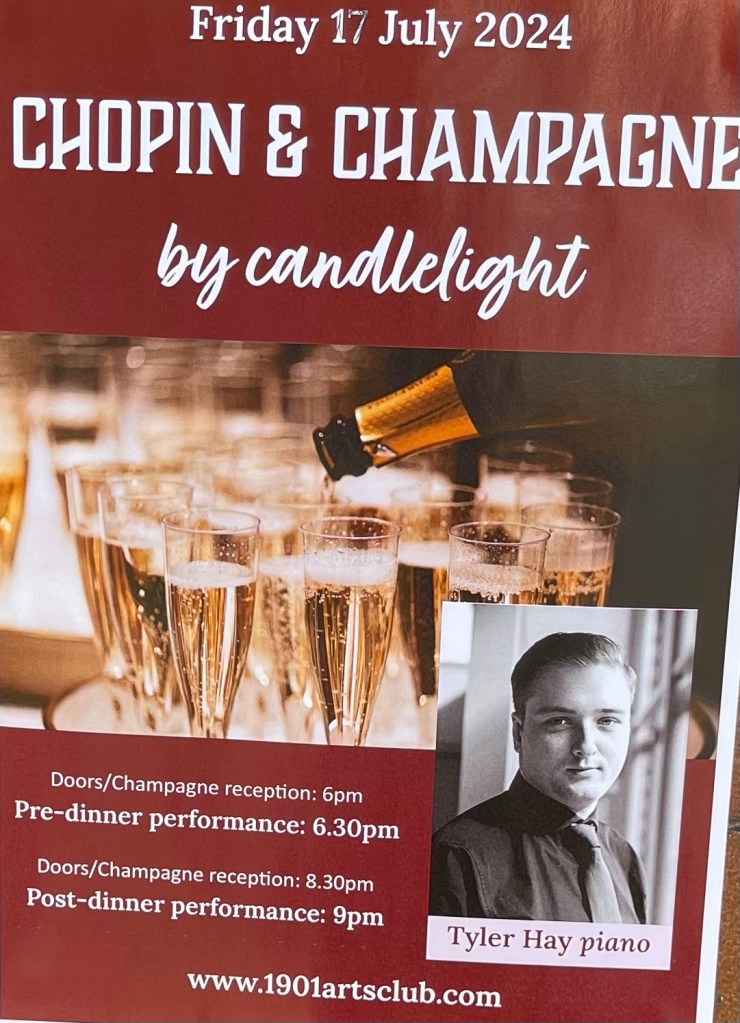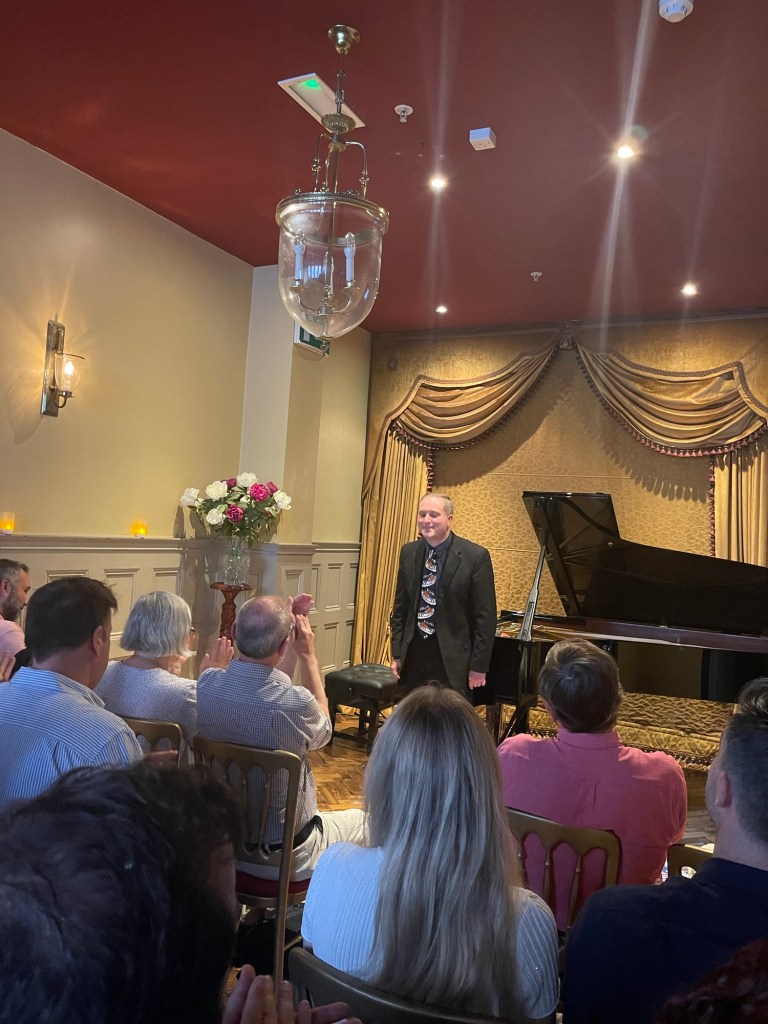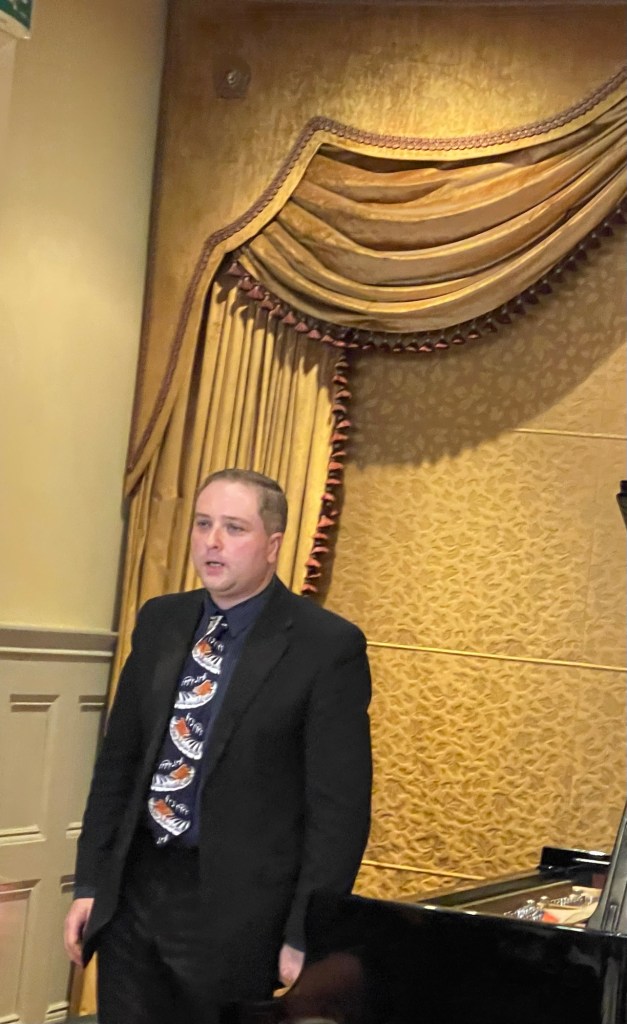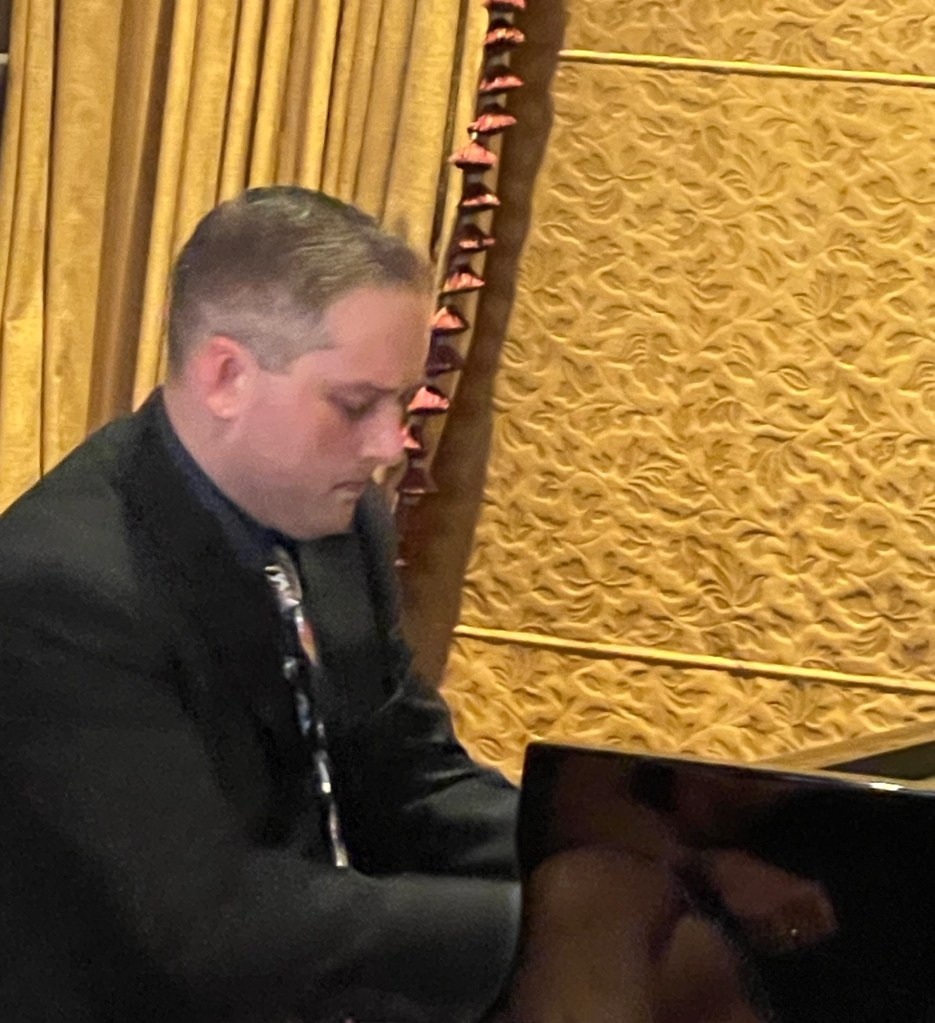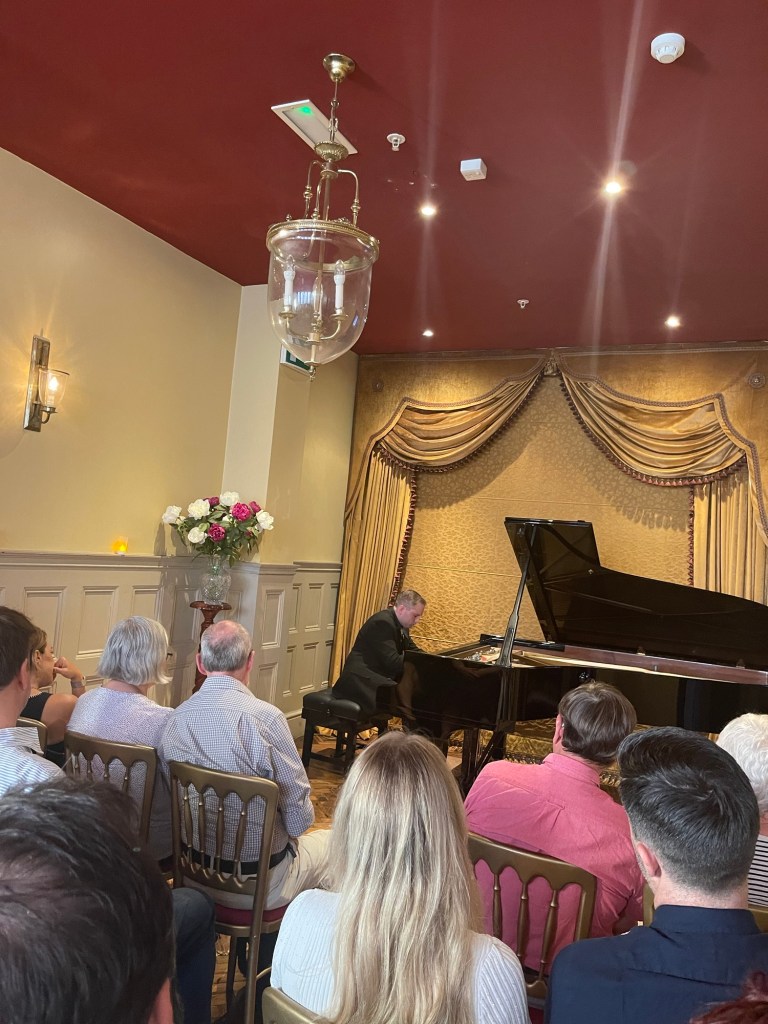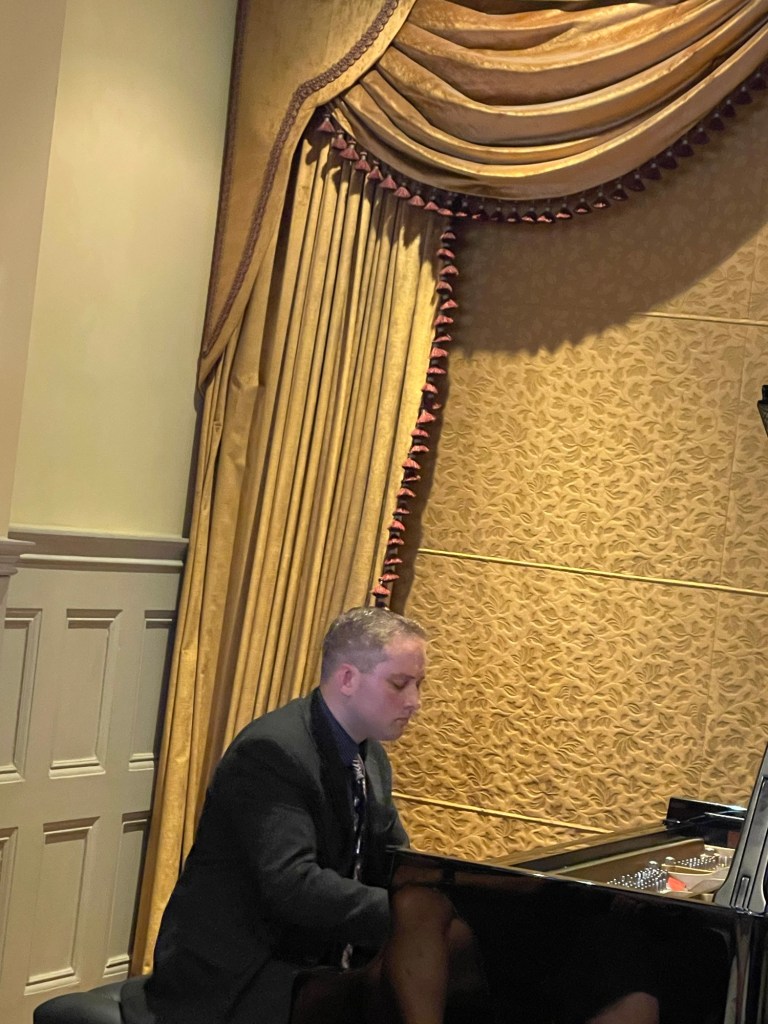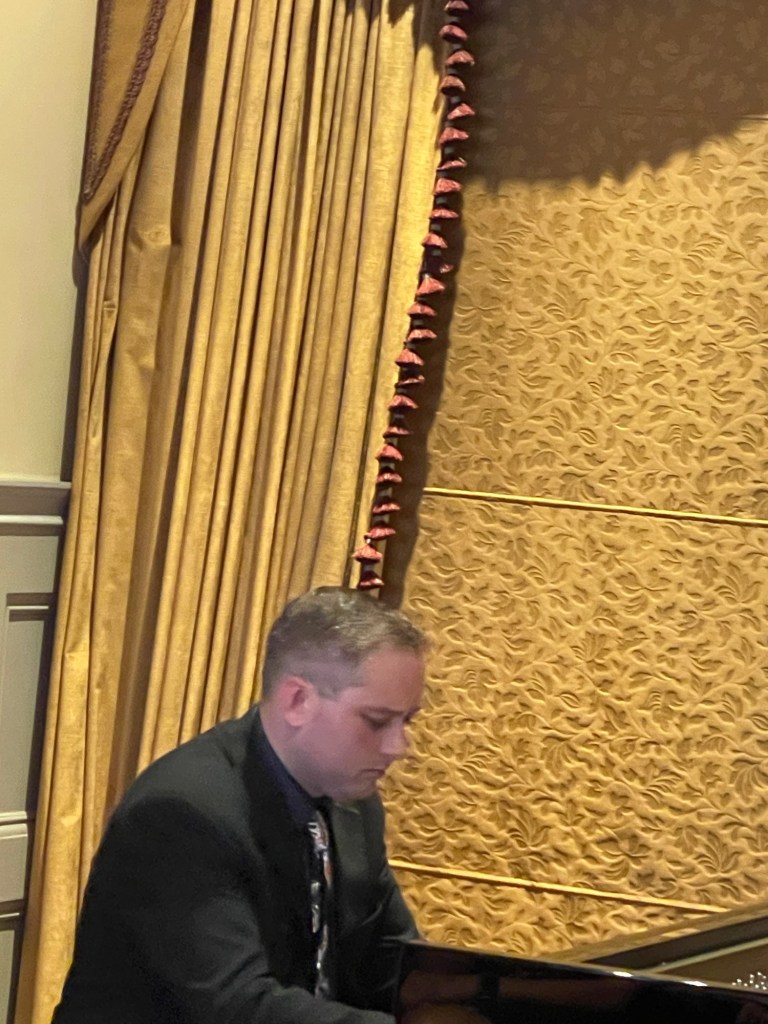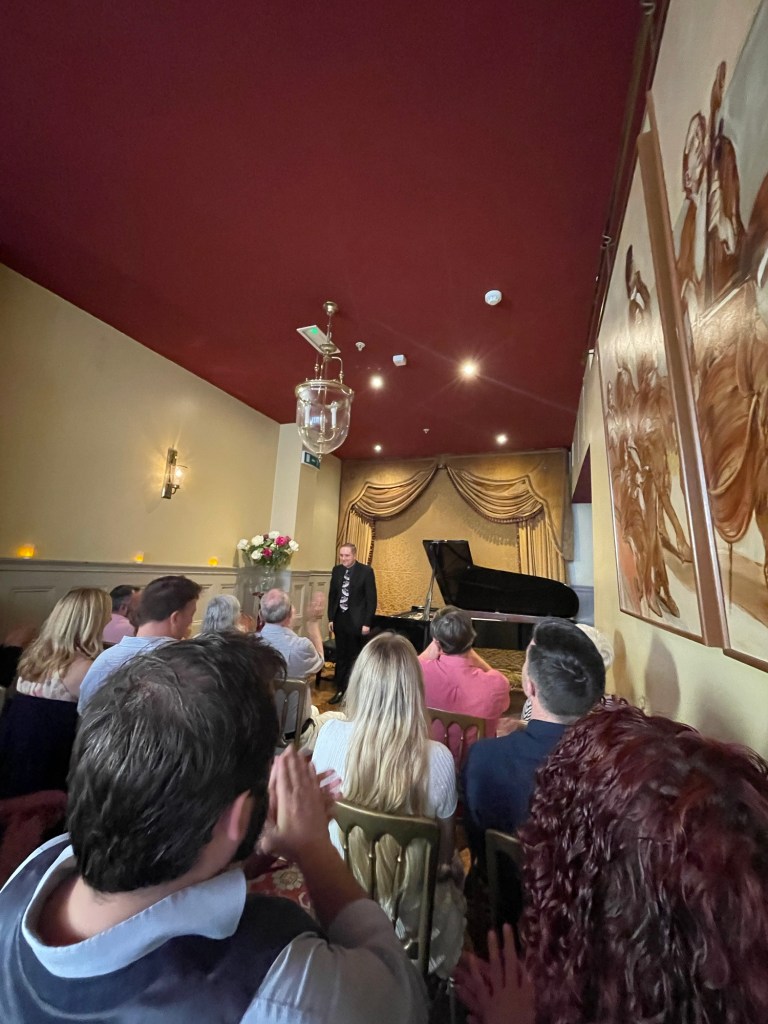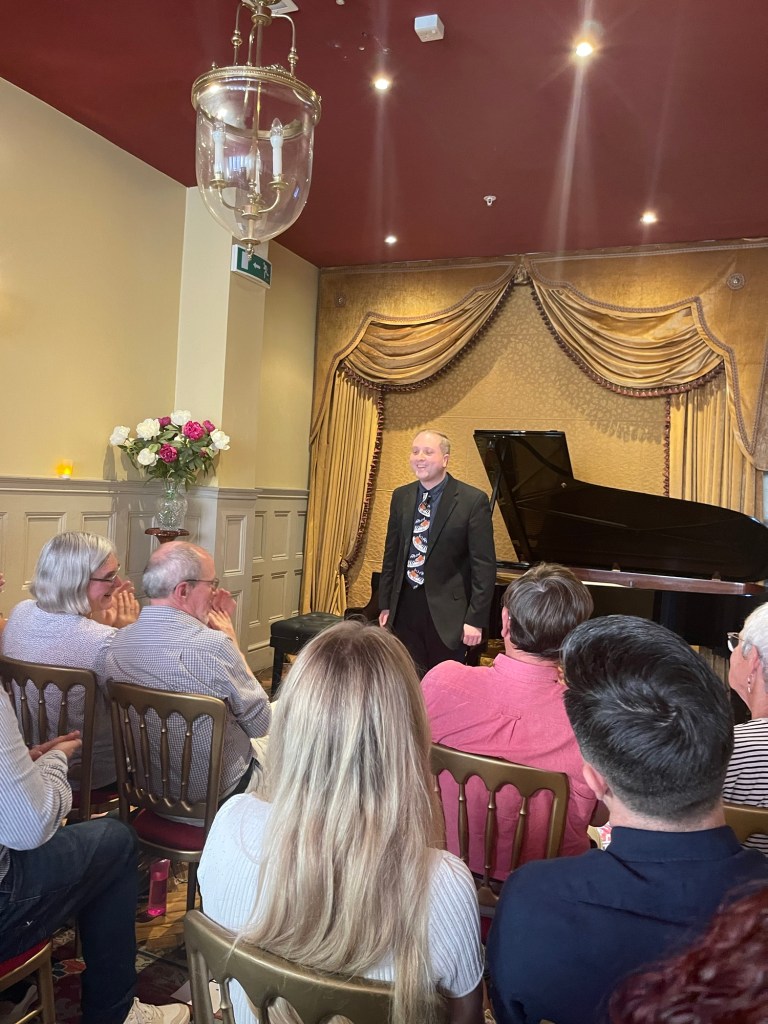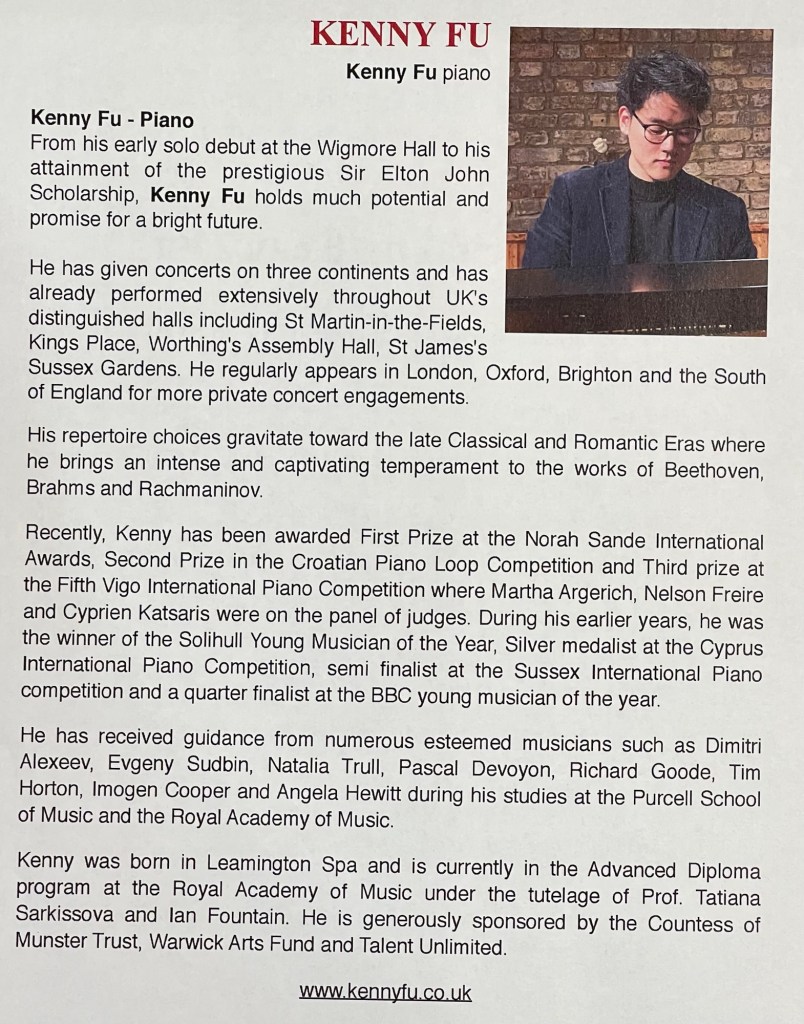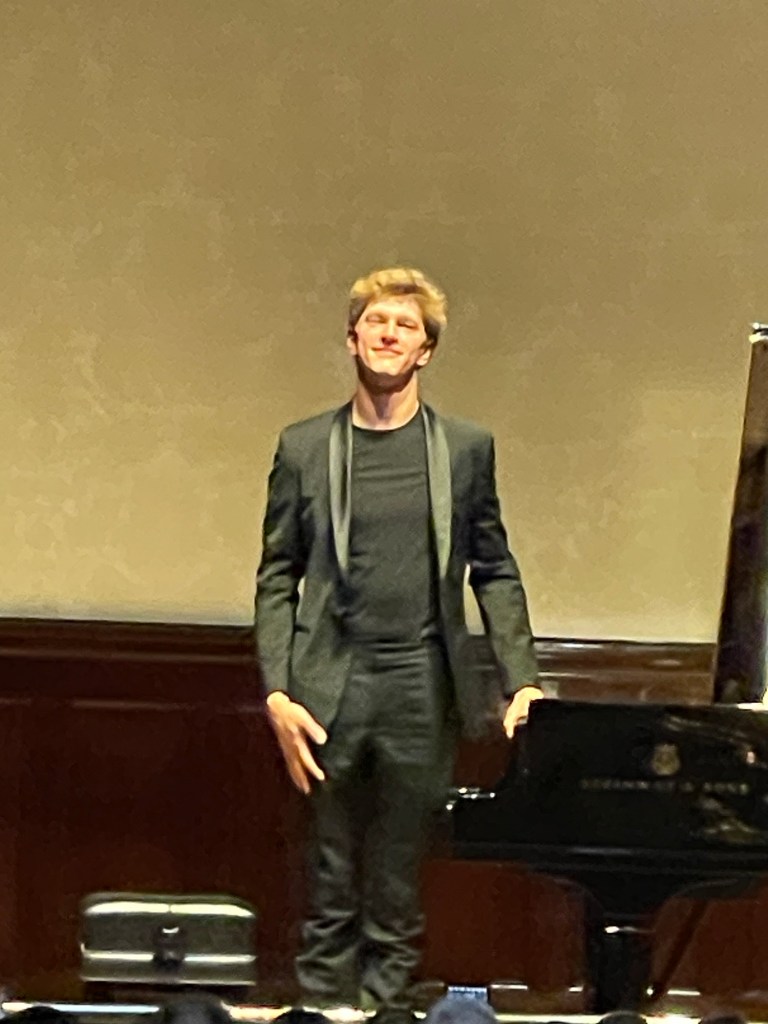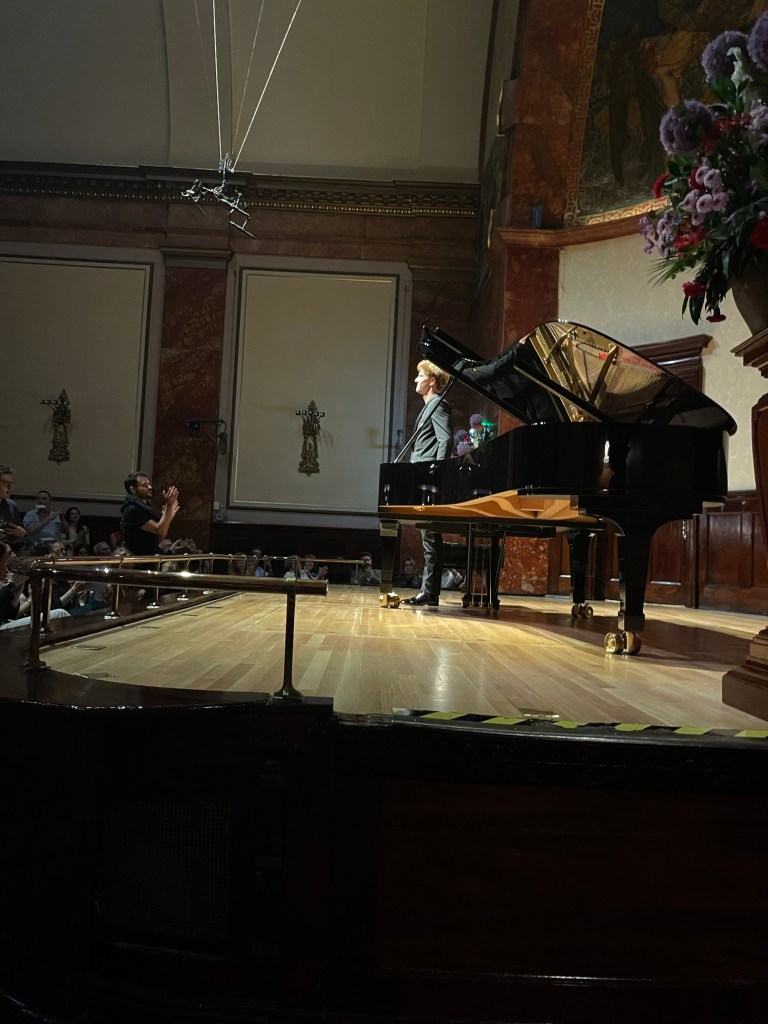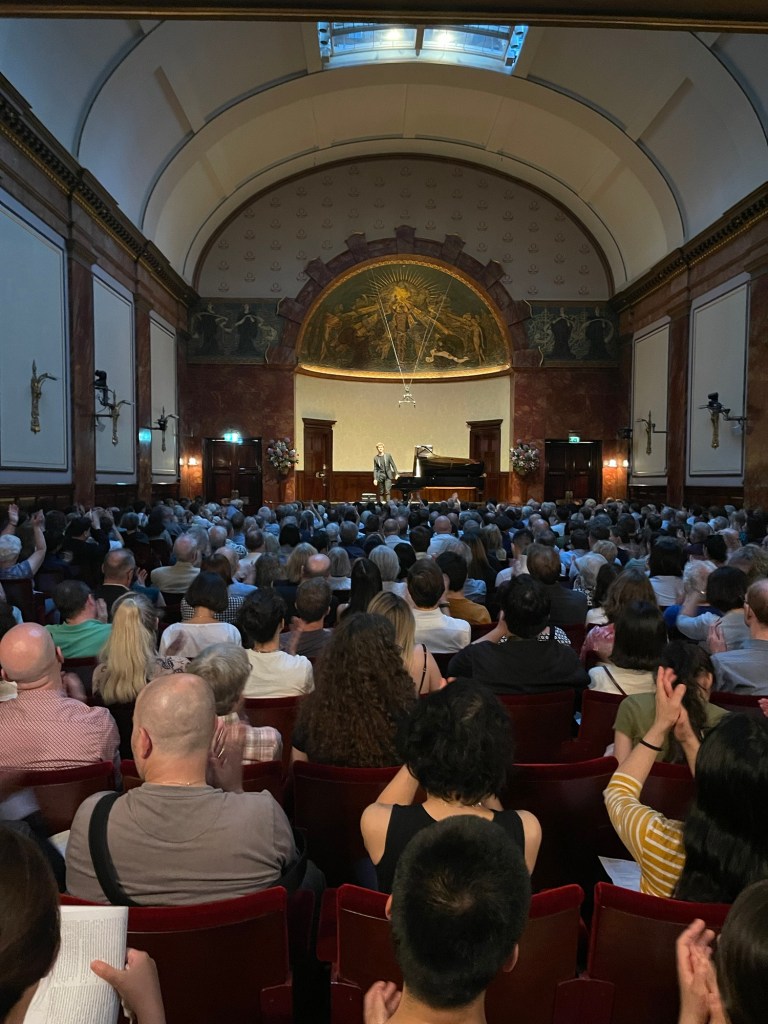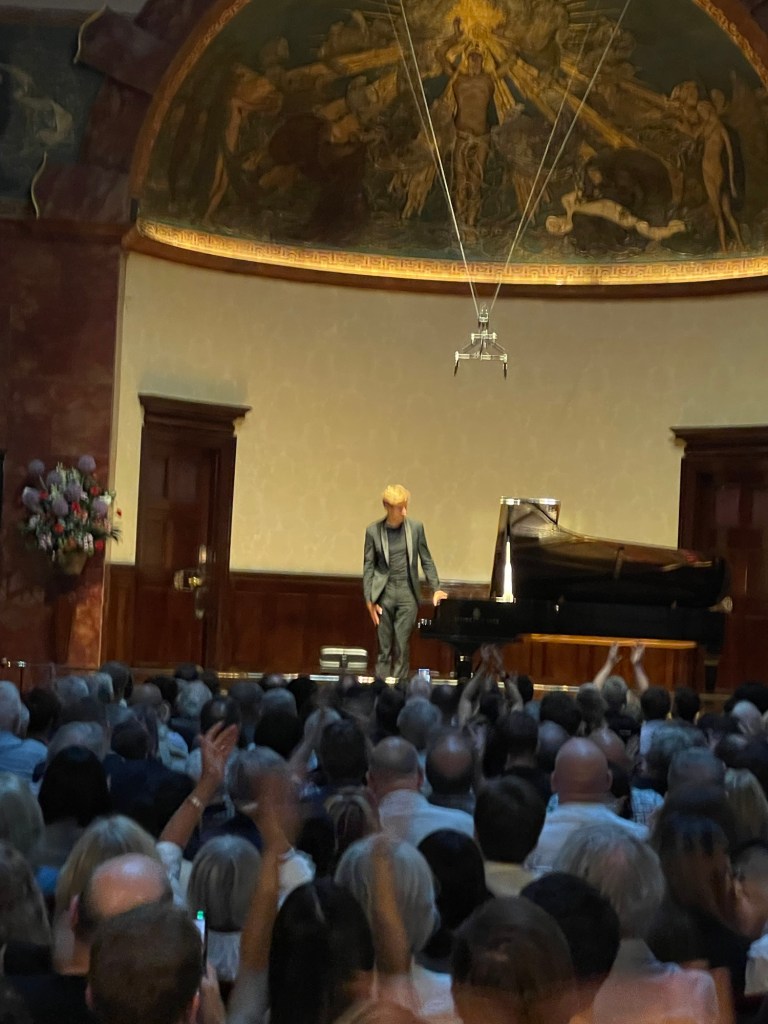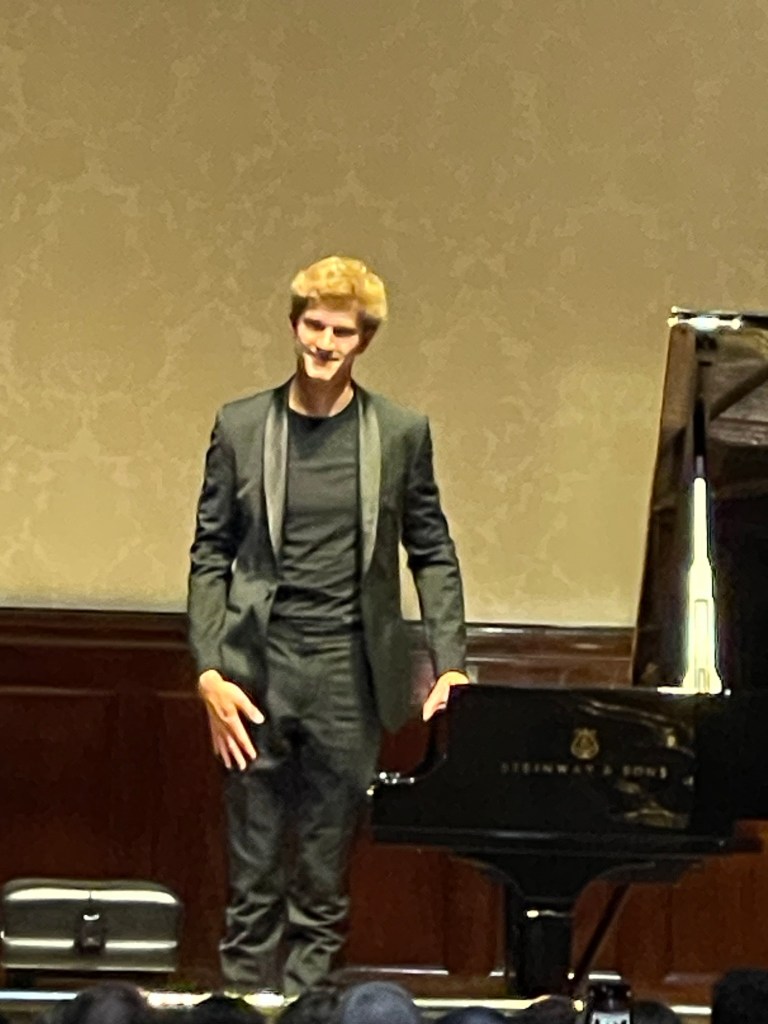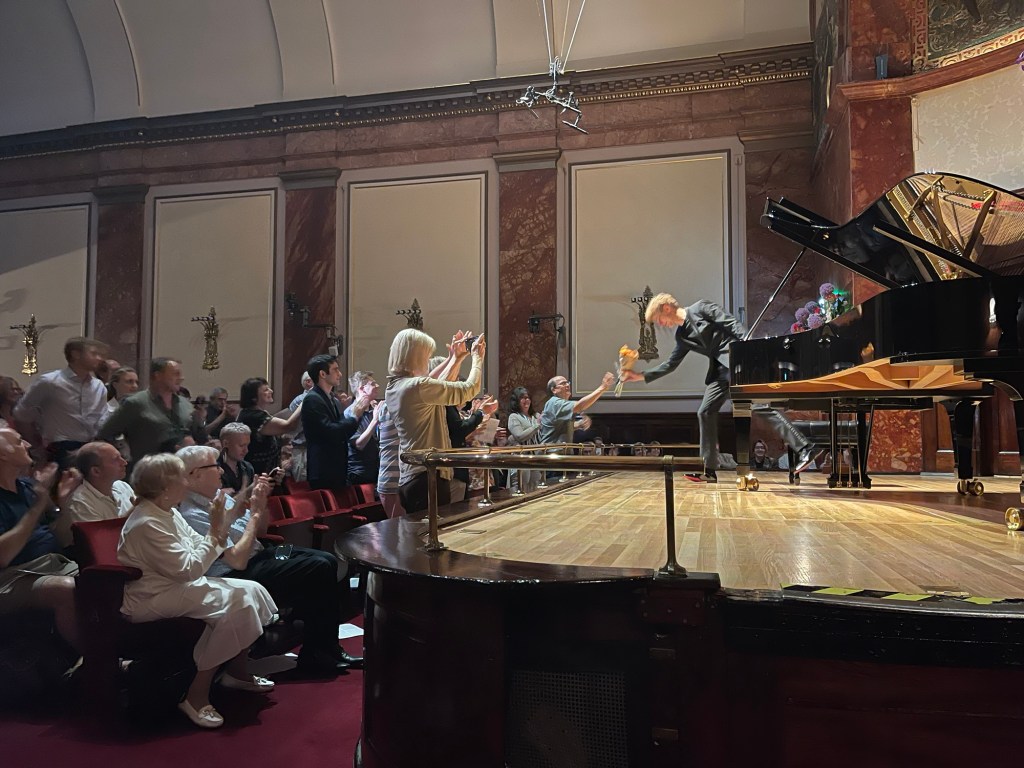
A great start to Stephen Dennison’s new season in Haslemere with three stars from the Keyboard Trust roster : Damir Durmanovic ,Gabrielé Sutkuté and Víctor Braojos But the real star of the first concert was the brand new Shigeru Kawai piano chosen by the emeritus KT artist Sasha Grynyuk.It will be a valuable asset for all the many music lovers in Haslemere.
Angela Hewitt has agreed to give a special benefit concert next season with a much awaited performance of the Goldberg Variations.
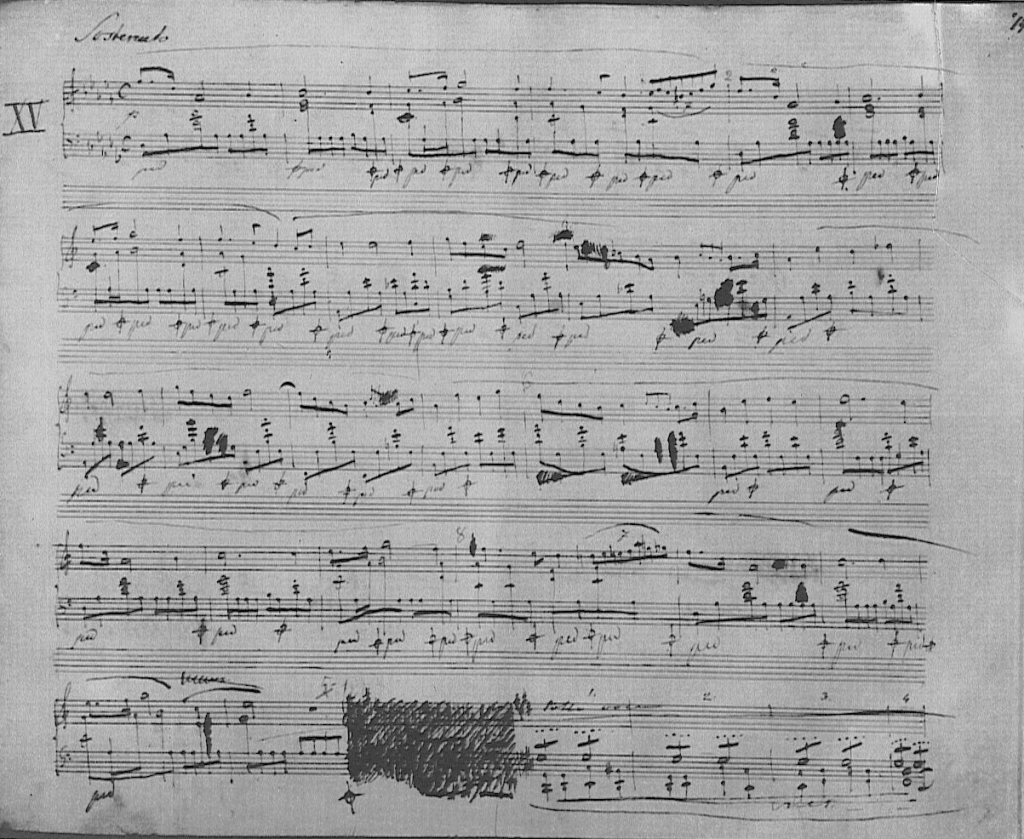
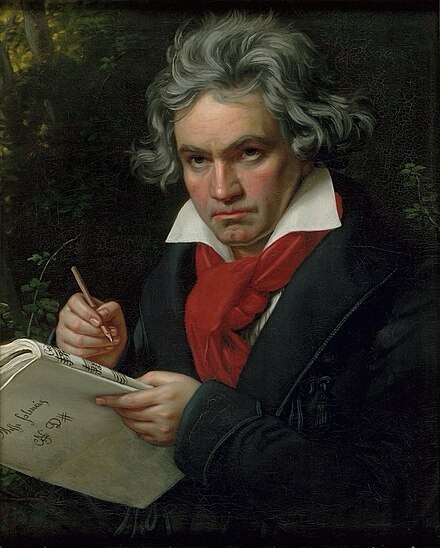
This new series was inaugurated by Damir with one of the greatest works of the Romantic era : Schumann’s Fantasie op 17 dedicated to Liszt and it was Schumann’s contribution to Liszt’s fundraising to build a monument to his teacher : Beethoven .
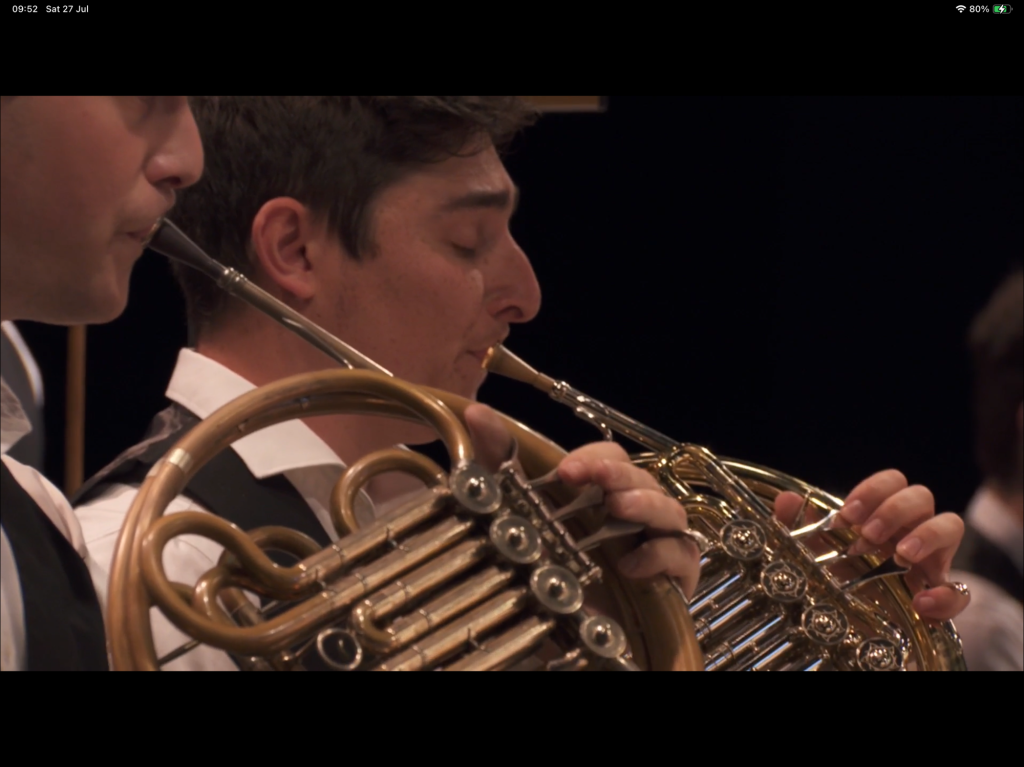
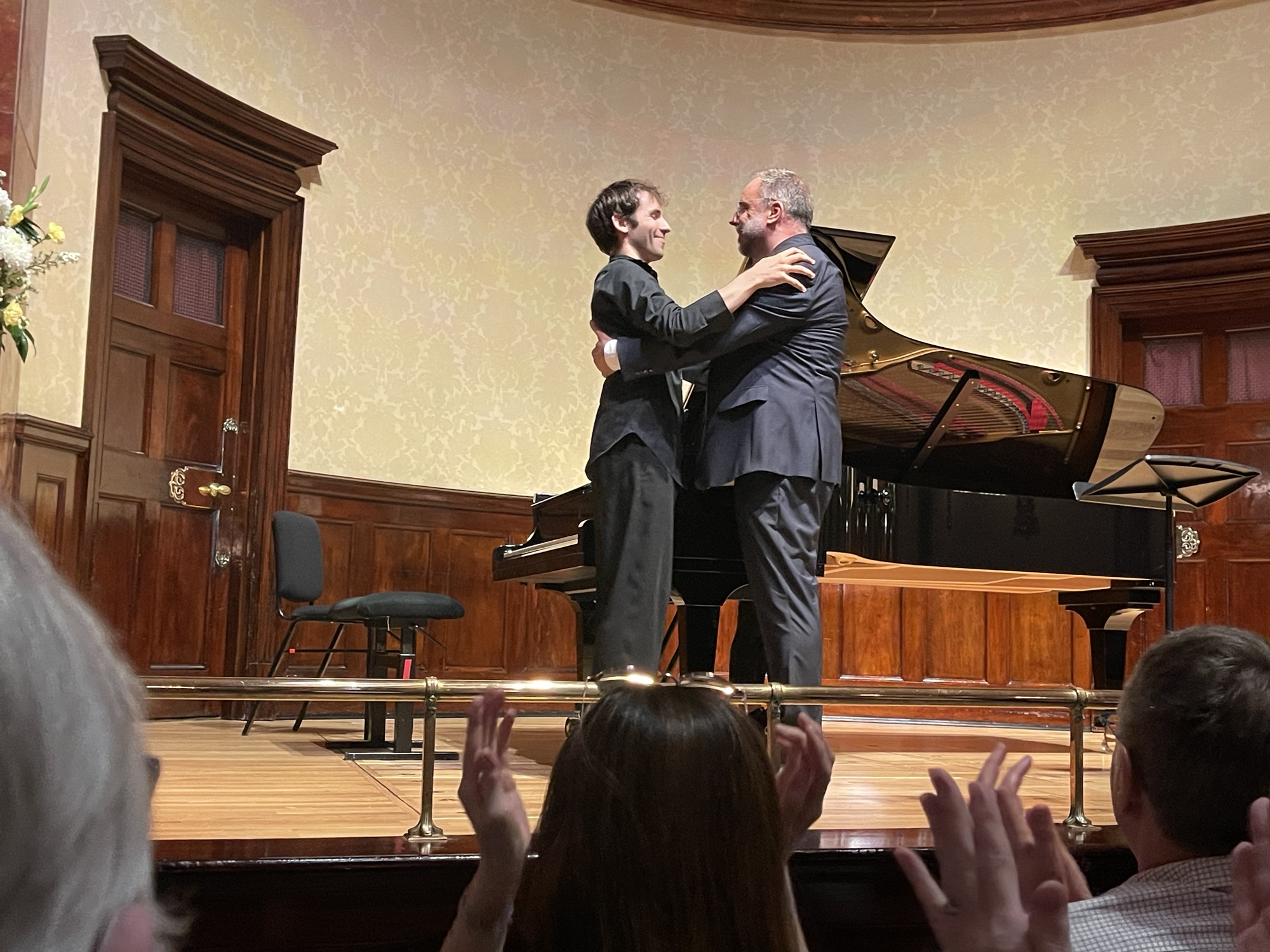
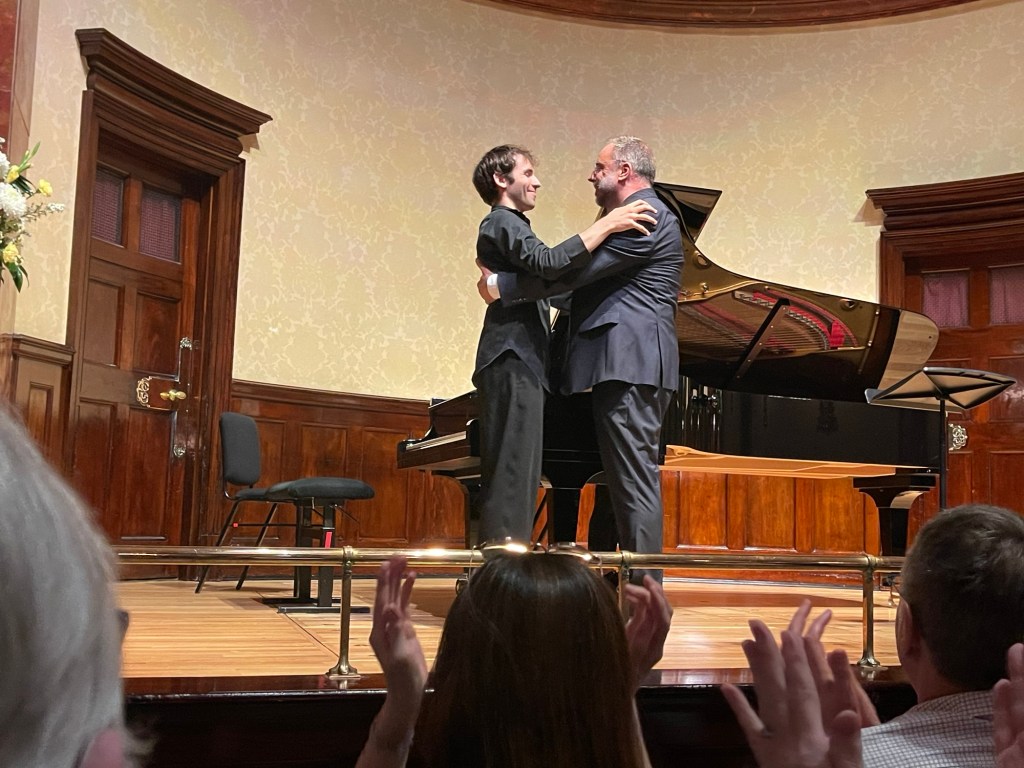
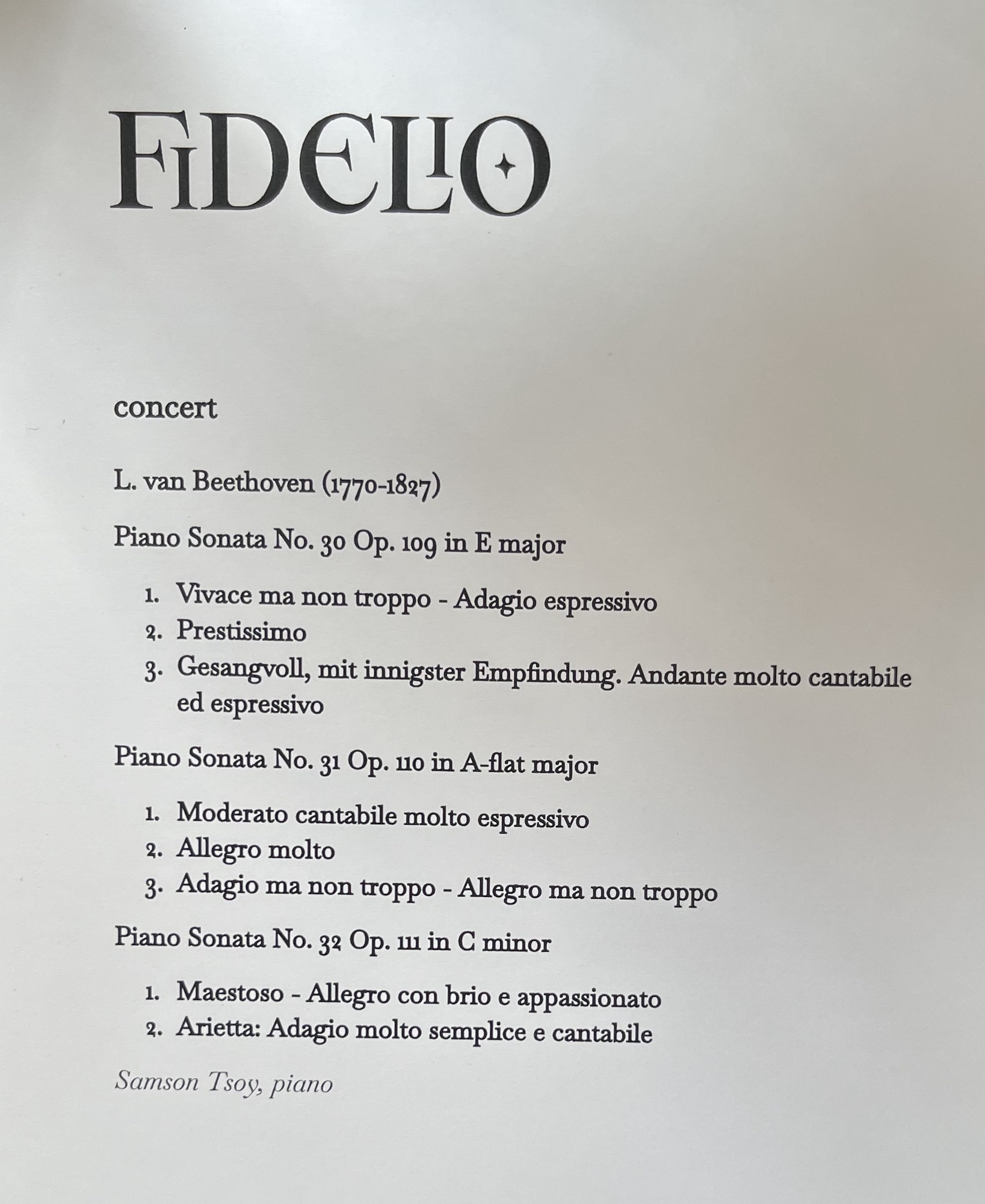
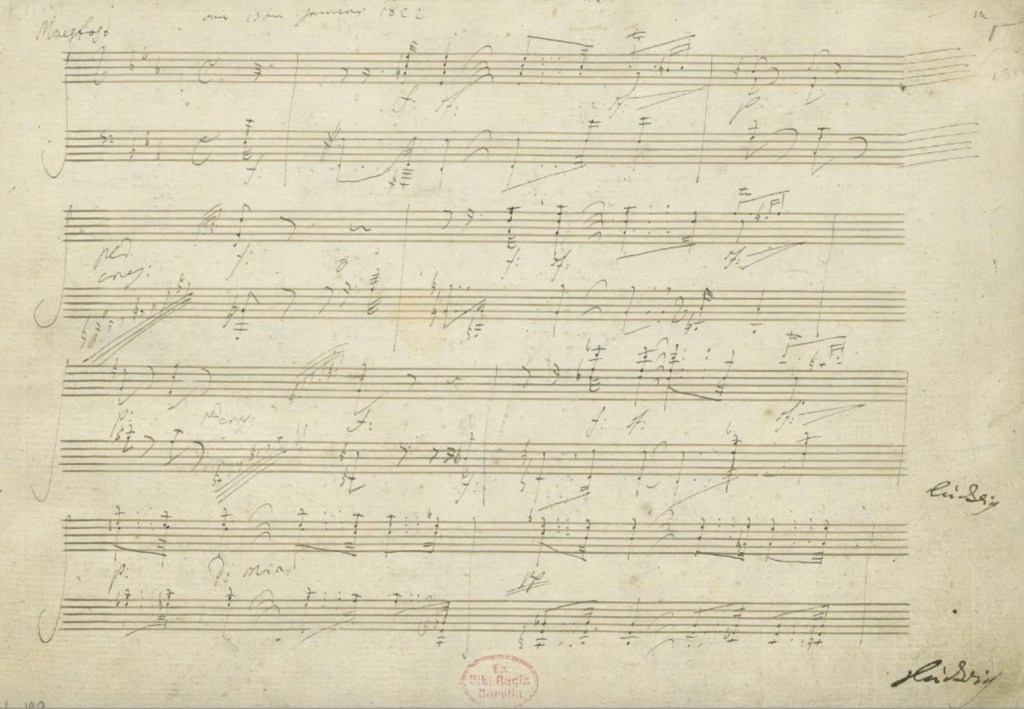
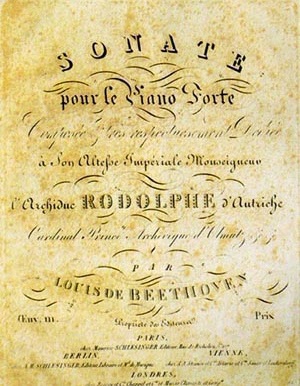
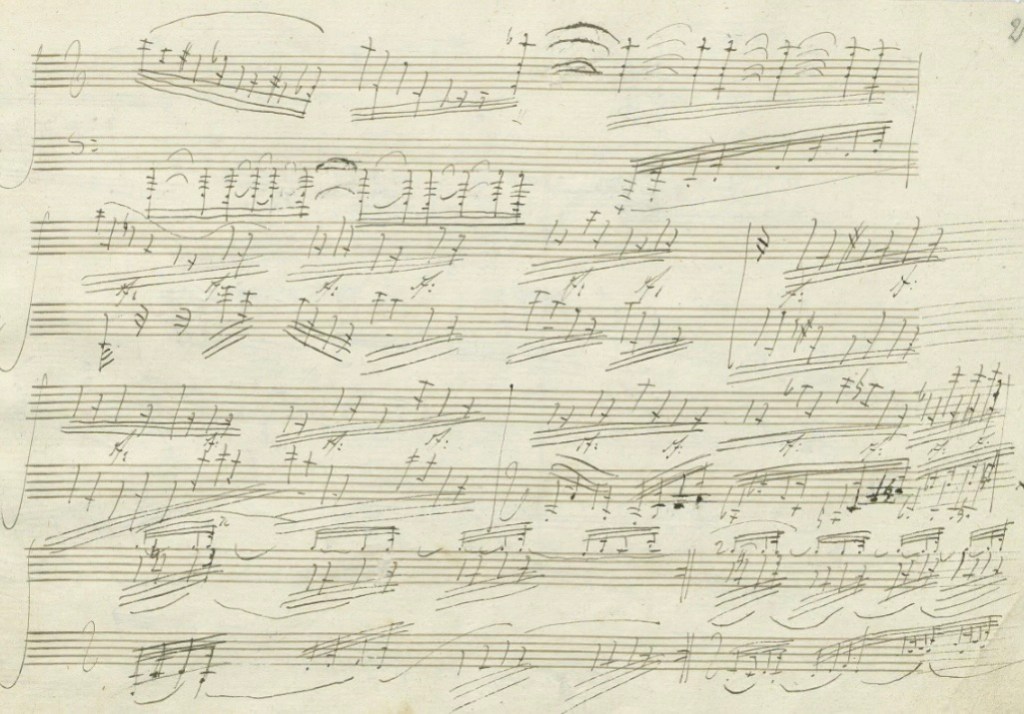
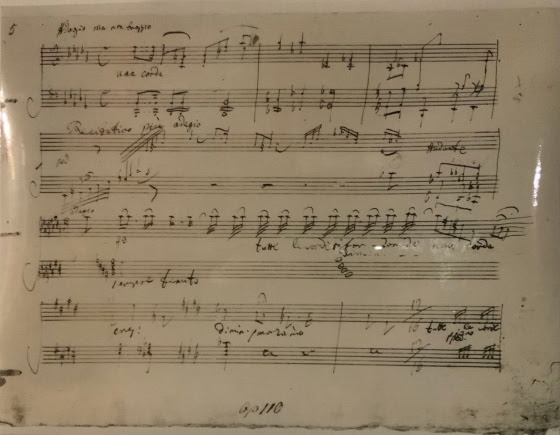
And it is Beethoven’s monumental Sonata op 111 from the hands of Victor Braojos that closed this three day feast of music .
And from Anne of HHH concerts :’What a beautiful young man who made that piano sing today….Wow ‘
Thursday Gabrielé Sutkuté ,winner of the RCM Chappell Gold medal last year , repeated the memorable concert she gave only the day before at St Mary’s Perivale :
I was not able to be present for the concert but was happy and not surprised to read this : ‘Dear Christopher,’ writes Áine. HHH Concerts’ volunteer. ‘Stunning recital by Gabrielé today in Haslemere. Intense, emotional and beautiful. Some photos and short clip .Concert was sold out. Change of programme. Very special.’
Damir on the opening concert with the golden tones of this Shigeru Kawai it was indeed as Schumann had written to his beloved Clara :’. the most passionate thing I have ever composed – a deep lament for you.’
In Damir’s hands it was an outpouring of song where even the second movement was shaped not just rhythmically but poetically and the last movement was a continuous stream of subtle sounds.The ravishing beauty of the ending where Damir’s supremely stylish playing was able to produce sounds that were indeed made of pure magic.
The rather overlong Bach that opened the concert was played with the musicianship of someone who had been inspired at an early age by the mastery of Robert Levin and Marcel Baudet at the Menuhin School.A knowledge of ornamentation and improvisation together with an impeccably clear ‘diction’.
It was though a difficult choice for the numerous children who had been brought by their enlightened teachers to listen to a piano recital probably for the first time. It was more the scintillating virtuosity of Clementi that caught their full attention in a performance of brilliance and character.The spell was now set and these eleven year old schoolchildren sat listening in wonder to sounds they probably never knew existed.A thing of beauty is a joy forever and with their lives still ahead of them lets hope that the joy of music may inspire one or two of them to ask for more! Damir too had fallen in love with this beautiful instrument and it was hard to stop his rehearsal when it was time to open the doors to the large amount of public that had turned out on this very wet day to listen to great music played by great young musicians.
The subtle sounds that Damir drew from this new piano were indeed as Schumann had indicated :’Resounding through all the notes; In the earth’s colourful dream ;There sounds a faint long-drawn note; For the one who listens in secret.’ Sounds that ranged from the passionate opening of the first movement with it’s sweeping intensity and the quote from Beethoven’s ‘To the distant beloved’ : ‘Accept then these songs beloved, which I sang for you alone’.
This is what I wrote last year in the first of this annual series : Https://christopheraxworthymusiccommentary.com/2023/02/12/hhh-concerts-and-the-keyboard-trust-a-winning-combination-of-youthful-dedication-to-art/
A spontaneous standing ovation greeted the end of a monumental performance of Beethoven 9th from the four hands of these two South African artists.I have followed the extraordinary concert seasons at Perivale for some years but I have never seen such a display at the end of a performance before.The energy and exhilaration that Tessa and Ben gave to the final bars of this monumental work was truly worthy of the great performances of Toscanini or Furtwangler that have passed into legend .As Hugh Mather said the art of playing duets is an art indeed when played like this where two artists on the same instrument can play as one.
A single mind – servants of the same Master .
I think this is the second or third time In have heard them play this and other symphonies and it has been a long gestation period to arrive at a performance of such intensity as yesterday in Perivale .
Tessa Uys and Ben Schoeman piano duo : In 2010, Tessa Uys and Ben Schoeman established a duo partnership after being invited to give a two-piano recital at the Royal Over-Seas League in London. Ever since, they have performed regularly at music societies, festivals and at the BBC and in 2015, they embarked on their journey with the nine Scharwenka/Beethoven Symphonies transcriptions.
Tessa and I were near contemporaries at the Royal Academy in the class of Gordon Green .I was the new boy having studied as a schoolboy with Sidney Harrison and then three years with him as the Liszt Scholar.I found myself though never having had any training in public performance .Private lessons can be very isolating and not the training for a playing career.I had heard about Gordon Green from Sidney who said he was the Professor who he was most attuned to . I had heard too from his students that every friday there was a class where his they would perform as if in a public concert. He would listen and only afterwards make comments from his copious notes.
I went to Gordon in desperation but that was not a word that he recognised because he was calm, reassuring ,very thorough and we all adored him.Even affectionately nudge each other as his eyes would gently close around 3 in the afternoon!I was the new boy and was not asked to play immediately as his other students all had performances that they needed to try out.Philip Fowke,John Blakely,Ann Shasby,Richard McMahon ,Peter Bithell and of course Tessa.I remember many memorable performances from Tessa and will never forget her Schumann Humoresque or the Mozart Concerto K 271 .Memorable too was her duo performance of Cesar Franck with the star violinist of the RAM Josef Frohlich.I even went with them to Harry Blech’s house when they were invited to audition for his London Mozart Players.
Tessa won the Macfarren Gold Medal the top award for pianists and I won it,thanks to Gordon, two years later.Tessa many years later came to play in my concert series in Rome and found immediately in my wife a kindred spirit with their love for cats and much else besides.
My wife and I taken by Tessa on her visit to play for us in Rome
There was also another bond that I have only recently realised they shared and was the reason why they immediately understood each other.Tragedy leaves its mark ,even if not spoken about can unknowingly unite kindred spirits.
https://youtube.com/live/HNXt-6WDPzw?feature=sharedTessa spoke so beautifully about her mother Helga Bassel who was a German concert pianist, whom the Nazis expelled from the Reichsmusikkammer in 1935 as part of their campaign to root out Jewish artists.She later escaped to South Africa and managed to take her grand piano with her, with which she taught her daughter, Tessa Uys now a concert pianist based in London.Bassel spoke little about her Jewish past to her children. It was only after her suicide that they discovered she was Jewish.Tessa spoke very movingly about finding all the Beethoven Symphonies in the music that was bequeathed to her.
Tessa Uys was born in Cape Town, and was first taught by her mother, Helga Bassel, herself a noted concert pianist. At 16, she won a Royal Schools Associated Board Scholarship and continued her studies at the Royal Academy of Music in London where she studied with Gordon Green. In her final year she was awarded the MacFarren Medal. Further studies followed in London with Maria Curcio, and in Siena with Guido Agosti. Shortly after this Tessa Uys won the Royal Over-Seas League Competition and was elected an Associate of the Royal Academy of Music. During the past decades, Tessa Uys has established for herself an impressive reputation, both as concert performer, and as a broadcasting artiste, performing at many concert venues throughout the world and with such distinguished conductors as Sir Neville Marriner, Walter Susskind, Louis Frémaux and Nicholas Kraemer.
Ben Schoeman was also born in South Africa, He studied piano with Joseph Stanford at the University of Pretoria and then received post-graduate tuition from Boris Petrushansky, Louis Lortie, Michel Dalberto, Ronan O’Hora and Eliso Virsaladze in Fiesole, Imola and London. He obtained a doctorate from City, University of London and the Guildhall School of Music and Drama. He won 1st Prize in the 11 th UNISA International Piano Competition, the Gold Medal in the Royal Over-Seas League Competition, the contemporary music prize at the Cleveland International Piano Competition, and the Huberte Rupert Prize from the South African Academy for Science and Art. He has performed at Wigmore Hall, the Barbican Centre and Queen Elizabeth Halls in London, Carnegie Hall in New York, the Konzerthaus in Berlin, the Gulbenkian Auditorium in Lisbon, and the Enescu Festival in Bucharest. Ben Schoeman is a Steinway Artist and a senior lecturer in piano and musicology at the University of Pretoria.
Beethoven’s Symphony no 9 in D minor, Op 125, is his final complete symphony composed between 1822 and 1824. Famously commissioned by the Royal Philharmonic Society, it was first performed in Vienna on 7 May 1824, so this year we celebrate the bicentenary of its premiere. The symphony is regarded by many as a masterpiece of Western classical music and one of the supreme achievements in the entire history of music.
If there is one work for which Beethoven is best known, it must surely be his monumental ninth symphony, arguably the most profound and moving of his symphonies. Although its revolutionary form and extreme technical difficulties meant that full appreciation of this iconic work was slow to form, by the 19 th century, the symphony was fully established and many of the great composers considered it to be the central inspiration for their creative voices. Its influence continues unabated today; when the Berlin wall fell in 1989, Leonard Bernstein conducted a legendary performance with a composite cast of musicians from all over the world. There are several anecdotes about the premier, some suggesting that it was under-rehearsed and rather ragged in execution, others reporting that it was a huge success. Now almost completely deaf, though Beethoven was billed as the conductor and did indeed appear to beat time, the players had been cautioned to pay no attention to him and to follow the reliable beat of the concertmaster. In one of the most famous accounts, the audience burst into applause at the end, but Beethoven couldn’t hear the ovation. Only when the contralto soloist Carolyn Unger touched him on the shoulder and turned him around to see his public applauding wildly, did he realise the enormous ovation his masterpiece had produced.
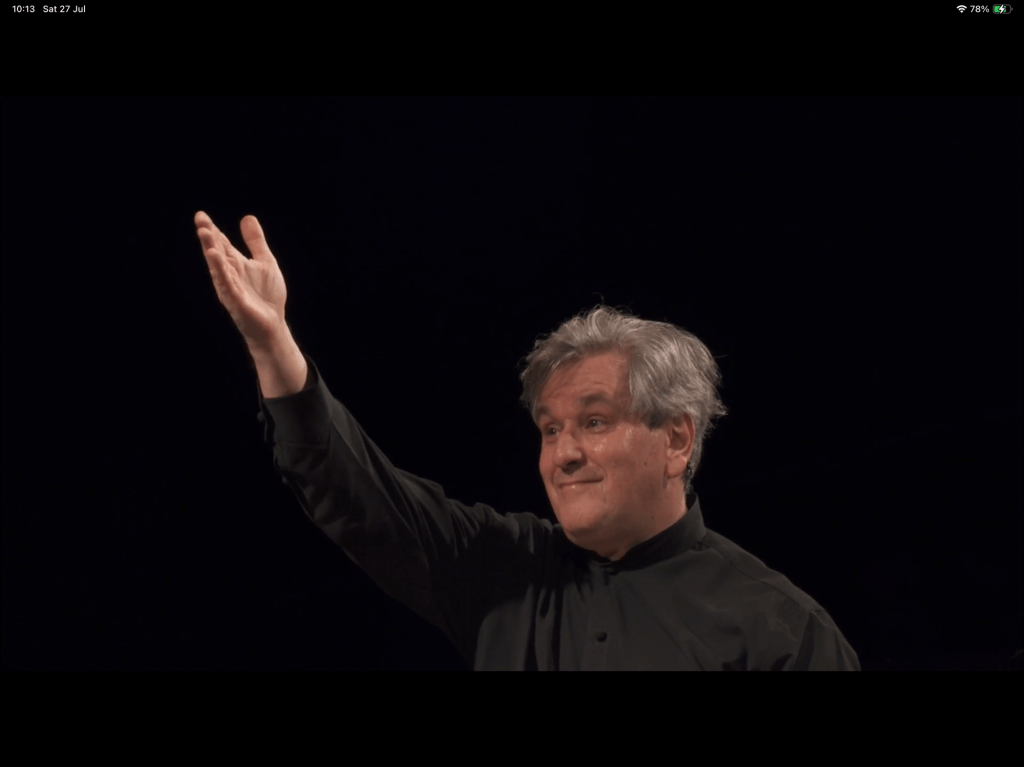
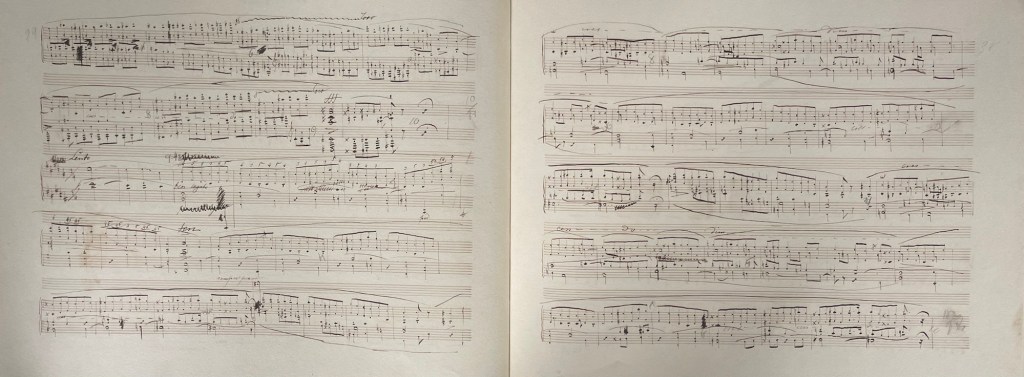
Franz Xaver Scharwenka was born in 1850 near Posen East Prussia and died in Berlin in 1924. Although he began learning the piano by ear when he was three, he did not start formal music studies until he was 15, when his family moved to Berlin when he enrolled at The Akademie of Tonkunst. He travelled widely as a piano virtuoso and scored a considerable success in England both as pianist and composer. He was an exceedingly fine pianist, praised for his beauty of tone and for his interpretations of the music of Fréderic Chopin. He was also an inspiring teacher and composer of symphonies, piano concerti and an opera which was performed in New York as well as much piano and the famous Beethoven symphonic transcriptions.
Historic background In the years before recordings when CDs, iPods, Spotify, and YouTube were unknown and live concerts the prerogative of the wealthy, piano transcriptions were widely admired, making such music as tonight’s symphony and other orchestral masterworks available to a generation of listeners who might not otherwise have come to know them. Amongst the most illustrious of such transcriptions were those by Franz Liszt and tonight’s composer, the German/Polish Franz Xaver Scharwenka. Initially Liszt balked at what he deemed was ‘the impossibility of arranging the 9 th Symphony for two hands.” But Scharwenka’s transcription for four hands to be played on one rather than two pianos, works better, as well as enabling more people to perform and hear the music, as few households owned two pianos.
Tessa Uys has a very personal connection with the music, as her concert pianist mother, Helga Bassel was from Berlin, the city where Scharwenka lived. In the 1930’s along with thousands of Jews she fled the city seeking refuge in Cape Town where her daughter was born.
Helga Bassel and Franz Michels Berlin 1928
By a stroke of good fortune, she had been able to take not only her beloved Bluthner piano with her but also her collection of piano music including the Scharwenka transcriptions, which were eventually bequeathed to Tessa. In 2004 the piano was returned to the Blüthner factory in Leipzig for restoration and finally gifted to the Jewish Museum in Berlin, thus completing a journey from Nazi Germany and Apartheid South Africa to a new era back in Germany. The complete cycle of Beethoven’s symphonies has never been presented in this format and leading publications such as BBC Music magazine, Gramophone, International Piano Magazine and The Sunday Times have unanimously praised Uys and Schoeman for their “enthralling” and “ground-breaking” recordings of these beloved works. This piano duo is currently touring countrywide performing the 9 th and all the other Symphonies by Beethoven, and promoting their new album and the complete six-CD box set.
A quick swop around for the encore by Johnnie Brahms!Pieter-Dirk Uys ,Tessa’s equally remarkable brother is a South African performer, author, satirist, and social activist. One of his best known roles is as Evita Bezuidenhout, an Afrikaner socialite.Uys is particularly well known for his character Evita Bezuidenhout (also known as Tannie Evita, Afrikaans for “Auntie Evita”), a white Afrikaner socialite and self-proclaimed political activist. The character was inspired by Australian comedian Barry Humphrie’s character Dame Edna Everage. Evita is the former ambassadress of Bapetikosweti – a fictitious Bantustan or black homeland located outside her home in the affluent, formerly whites-only suburbs of Johannesburg . Evita Bezuidenhout is named in honour of Eva Peron . Under Apartheid, Uys used the medium of humour and comedy to criticise and expose the absurdity of the South African government’s racial policies. Much of his work was not censored, indicating a tacit approval of his views by many members of the ruling party, who were not so bold as to openly admit mistakes and criticise the policies themselves.For many years Uys lampooned the South African regime and its leaders, as well as the sometimes hypocritical attitudes of white liberals.Brahms Hungarian Dance in G minor Book 1
I have heard Gabrielé many times over the past few years whilst she has been perfecting her studies in London .A very serious artist and her seriousness on stage does not reflect the charm and simplicity of this delightful young lady from Lithuania.Her playing has always been of supreme intelligence and with a refined sense of style but above all there is a fluidity and purity of sound that I have noticed is very much part of her Lithuanian heritage.
Rokas Valuntonis,Milda Daunoraite and recently Kasparas Mikzukis have all come to London from Lithuania with an impeccable technical preparation and inborn musicianship and all with a fluidity of sound that comes from being completely relaxed and with a natural flexibility that must be something in the air in those parts!
It was demonstrated immediately with the first pieces that she chose to play by Rameau .Crystalline beauty of the melodic line was etched and sculptured with purity and with ornaments that unwound with refined beauty and were just sounds that glowed in this rarified atmosphere of the civilised elegance of a bygone age.They were indeed ‘Tendres Plaintes’ of hidden sentiments .’Les Cyclopes’ on the other hand was a perpetuum mobile of beguiling and hypnotic drive with precision and passionate delicacy.
I have heard her Scriabin on other occasions but Gabrielé is an artist who reacts with chameleonic character to her different surroundings.Today there was a more dream like atmosphere to the first movement where the whispered opening was gradually swept up on a wave of sumptuous sounds as the melodic line emerged like jewels sparkling in this rarified atmosphere.Notes that were mere sounds of shifting harmonies that enveloped the rich melodic line.The second movement too was less driven today and more like a sea of sounds that allowed her to build up gradually to the sumptuous climaxes and the great romantic melodic outbursts that were swept up on this wave of sound.
The little miniatures by Mompou were played with a simple nursery tale elegance.It was good to hear ‘Le Jeunes Filles’ again which is of such beguiling beauty and I have not heard it since the late Nelson Freire would often play it as an encore.Gabrielé played it with the same exquisite simplicity of purity and beauty.
It was a good preparation for Janacek’s Sonata that is of haunting austere beauty quite unlike any other composer.It is a voice that Gabrielé played with introspection and deep nostalgic feeling.A delicacy and kaleidoscope of sounds that made one wonder why we do not hear this work more often in the concert hall.
Ravel’s ‘Oiseaux tristes’ found the ideal interpreter in Gabrielé where the luminosity of sound was of a piercing purity of deep melancholy over kaleidoscopic murmurs of an austere rarified atmosphere .
The three Etude Tableaux showed off her mastery of the keyboard with the sumptuous sounds of searing intensity of the E flat minor with a wondrous sense of balance that allowed the melody to rise above this blistering passionate outpouring.The simplicity of the D minor where the quite considerable technical difficulties just disappeared as she wove a magical web of sounds.There was a tumultuous call to arms with the D major Study where she played like a woman possessed throwing herself into the fray with courage and bravura.
Greeted by an ovation for a quite exceptional recital of refined elegance and passionate commitment she offered the simple beauty of the slow movement of the Haydn B minor Sonata that demonstrated even more her intelligence and quite considerable artistry .
Lithuanian pianist Gabrielé Sutkuté has already established herself as a musician of strong temperament and “excellent precision and musicality” (Rasa Murauskaite from “7 days of Art”). She has given many concerts and performed in numerous fesOvals throughout Europe and appeared in prestigious halls such as the Wigmore Hall, Cadogan Hall, the Steinway Hall UK, the Stoller Hall, the Musikhuset Aarhus and Lithuanian National Philharmonic Hall. In addiOon to being a soloist, Gabriele frequently performs with chamber ensembles and symphony orchestras. In 2023, she performed Grieg’s Piano Concerto with the YMSO at the Cadogan Hall, conducted by James Blair. In 2020, she performed Rachmaninov’s 2nd Piano Concerto with the Grammy-nominated Kaunas Symphony Orchestra, conducted by Markus Huber, and was also invited to play with the renowned Kaunas String Quartet in Lithuania twice. Gabriele is a winner of twenty international piano competitions where she also received numerous special awards. She was awarded the 1st Prize at the Chappell Medal Piano Competition 2023 and won the 2nd Prize and the Audience Prize at the Birmingham International Piano Competition 2022. She was also the recipient of the presOgious Mills Williams Junior Fellowship 2022/23. For her musical achievements, Gabriele received Lithuanian Republic Presidents’ certficates of appreciation six times. From 2016-22, she had been studying with Professor Christopher Elton and received her Bachelor of Music Degree (First Class Honours) and Master of Arts Degree with Distinction from the Royal Academy of Music. Gabriele graduated from the Artist Diploma course at the Royal College of Music in July 2023, where she had been studying with Professor Vanessa Latarche and Professor Sofya Gulyak.
A spontaneous standing ovation greeted the end of a monumental performance of Beethoven 9th from the four hands of these two South African artists.I have followed the extraordinary concert seasons at Perivale for some years but I have never seen such a display at the end of a performance before.The energy and exhilaration that Tessa and Ben gave to the final bars of this monumental work was truly worthy of the great performances of Toscanini or Furtwangler that have passed into legend .As Hugh Mather said the art of playing duets is an art indeed when played like this where two artists on the same instrument can play as one.
A single mind – servants of the same Master .
I think this is the second or third time In have heard them play this and other symphonies and it has been a long gestation period to arrive at a performance of such intensity as yesterday in Perivale .
Tessa Uys and Ben Schoeman piano duo : In 2010, Tessa Uys and Ben Schoeman established a duo partnership after being invited to give a two-piano recital at the Royal Over-Seas League in London. Ever since, they have performed regularly at music societies, festivals and at the BBC and in 2015, they embarked on their journey with the nine Scharwenka/Beethoven Symphonies transcriptions.
Tessa and I were near contemporaries at the Royal Academy in the class of Gordon Green .I was the new boy having studied as a schoolboy with Sidney Harrison and then three years with him as the Liszt Scholar.I found myself though never having had any training in public performance .Private lessons can be very isolating and not the training for a playing career.I had heard about Gordon Green from Sidney who said he was the Professor who he was most attuned to . I had heard too from his students that every friday there was a class where his they would perform as if in a public concert. He would listen and only afterwards make comments from his copious notes.
I went to Gordon in desperation but that was not a word that he recognised because he was calm, reassuring ,very thorough and we all adored him.Even affectionately nudge each other as his eyes would gently close around 3 in the afternoon!I was the new boy and was not asked to play immediately as his other students all had performances that they needed to try out.Philip Fowke,John Blakely,Ann Shasby,Richard McMahon ,Peter Bithell and of course Tessa.I remember many memorable performances from Tessa and will never forget her Schumann Humoresque or the Mozart Concerto K 271 .Memorable too was her duo performance of Cesar Franck with the star violinist of the RAM Josef Frohlich.I even went with them to Harry Blech’s house when they were invited to audition for his London Mozart Players.
Tessa won the Macfarren Gold Medal the top award for pianists and I won it,thanks to Gordon, two years later.Tessa many years later came to play in my concert series in Rome and found immediately in my wife a kindred spirit with their love for cats and much else besides.
My wife and I taken by Tessa on her visit to play for us in Rome
There was also another bond that I have only recently realised they shared and was the reason why they immediately understood each other.Tragedy leaves its mark ,even if not spoken about can unknowingly unite kindred spirits.
https://youtube.com/live/HNXt-6WDPzw?feature=sharedTessa spoke so beautifully about her mother Helga Bassel who was a German concert pianist, whom the Nazis expelled from the Reichsmusikkammer in 1935 as part of their campaign to root out Jewish artists.She later escaped to South Africa and managed to take her grand piano with her, with which she taught her daughter, Tessa Uys now a concert pianist based in London.Bassel spoke little about her Jewish past to her children. It was only after her suicide that they discovered she was Jewish.Tessa spoke very movingly about finding all the Beethoven Symphonies in the music that was bequeathed to her.
Tessa Uys was born in Cape Town, and was first taught by her mother, Helga Bassel, herself a noted concert pianist. At 16, she won a Royal Schools Associated Board Scholarship and continued her studies at the Royal Academy of Music in London where she studied with Gordon Green. In her final year she was awarded the MacFarren Medal. Further studies followed in London with Maria Curcio, and in Siena with Guido Agosti. Shortly after this Tessa Uys won the Royal Over-Seas League Competition and was elected an Associate of the Royal Academy of Music. During the past decades, Tessa Uys has established for herself an impressive reputation, both as concert performer, and as a broadcasting artiste, performing at many concert venues throughout the world and with such distinguished conductors as Sir Neville Marriner, Walter Susskind, Louis Frémaux and Nicholas Kraemer.
Ben Schoeman was also born in South Africa, He studied piano with Joseph Stanford at the University of Pretoria and then received post-graduate tuition from Boris Petrushansky, Louis Lortie, Michel Dalberto, Ronan O’Hora and Eliso Virsaladze in Fiesole, Imola and London. He obtained a doctorate from City, University of London and the Guildhall School of Music and Drama. He won 1st Prize in the 11 th UNISA International Piano Competition, the Gold Medal in the Royal Over-Seas League Competition, the contemporary music prize at the Cleveland International Piano Competition, and the Huberte Rupert Prize from the South African Academy for Science and Art. He has performed at Wigmore Hall, the Barbican Centre and Queen Elizabeth Halls in London, Carnegie Hall in New York, the Konzerthaus in Berlin, the Gulbenkian Auditorium in Lisbon, and the Enescu Festival in Bucharest. Ben Schoeman is a Steinway Artist and a senior lecturer in piano and musicology at the University of Pretoria.
Beethoven’s Symphony no 9 in D minor, Op 125, is his final complete symphony composed between 1822 and 1824. Famously commissioned by the Royal Philharmonic Society, it was first performed in Vienna on 7 May 1824, so this year we celebrate the bicentenary of its premiere. The symphony is regarded by many as a masterpiece of Western classical music and one of the supreme achievements in the entire history of music.
If there is one work for which Beethoven is best known, it must surely be his monumental ninth symphony, arguably the most profound and moving of his symphonies. Although its revolutionary form and extreme technical difficulties meant that full appreciation of this iconic work was slow to form, by the 19 th century, the symphony was fully established and many of the great composers considered it to be the central inspiration for their creative voices. Its influence continues unabated today; when the Berlin wall fell in 1989, Leonard Bernstein conducted a legendary performance with a composite cast of musicians from all over the world. There are several anecdotes about the premier, some suggesting that it was under-rehearsed and rather ragged in execution, others reporting that it was a huge success. Now almost completely deaf, though Beethoven was billed as the conductor and did indeed appear to beat time, the players had been cautioned to pay no attention to him and to follow the reliable beat of the concertmaster. In one of the most famous accounts, the audience burst into applause at the end, but Beethoven couldn’t hear the ovation. Only when the contralto soloist Carolyn Unger touched him on the shoulder and turned him around to see his public applauding wildly, did he realise the enormous ovation his masterpiece had produced.
Franz Xaver Scharwenka was born in 1850 near Posen East Prussia and died in Berlin in 1924. Although he began learning the piano by ear when he was three, he did not start formal music studies until he was 15, when his family moved to Berlin when he enrolled at The Akademie of Tonkunst. He travelled widely as a piano virtuoso and scored a considerable success in England both as pianist and composer. He was an exceedingly fine pianist, praised for his beauty of tone and for his interpretations of the music of Fréderic Chopin. He was also an inspiring teacher and composer of symphonies, piano concerti and an opera which was performed in New York as well as much piano and the famous Beethoven symphonic transcriptions.
Historic background In the years before recordings when CDs, iPods, Spotify, and YouTube were unknown and live concerts the prerogative of the wealthy, piano transcriptions were widely admired, making such music as tonight’s symphony and other orchestral masterworks available to a generation of listeners who might not otherwise have come to know them. Amongst the most illustrious of such transcriptions were those by Franz Liszt and tonight’s composer, the German/Polish Franz Xaver Scharwenka. Initially Liszt balked at what he deemed was ‘the impossibility of arranging the 9 th Symphony for two hands.” But Scharwenka’s transcription for four hands to be played on one rather than two pianos, works better, as well as enabling more people to perform and hear the music, as few households owned two pianos.
Tessa Uys has a very personal connection with the music, as her concert pianist mother, Helga Bassel was from Berlin, the city where Scharwenka lived. In the 1930’s along with thousands of Jews she fled the city seeking refuge in Cape Town where her daughter was born.
Helga Bassel and Franz Michels Berlin 1928
By a stroke of good fortune, she had been able to take not only her beloved Bluthner piano with her but also her collection of piano music including the Scharwenka transcriptions, which were eventually bequeathed to Tessa. In 2004 the piano was returned to the Blüthner factory in Leipzig for restoration and finally gifted to the Jewish Museum in Berlin, thus completing a journey from Nazi Germany and Apartheid South Africa to a new era back in Germany. The complete cycle of Beethoven’s symphonies has never been presented in this format and leading publications such as BBC Music magazine, Gramophone, International Piano Magazine and The Sunday Times have unanimously praised Uys and Schoeman for their “enthralling” and “ground-breaking” recordings of these beloved works. This piano duo is currently touring countrywide performing the 9 th and all the other Symphonies by Beethoven, and promoting their new album and the complete six-CD box set.
A quick swop around for the encore by Johnnie Brahms!Pieter-Dirk Uys ,Tessa’s equally remarkable brother is a South African performer, author, satirist, and social activist. One of his best known roles is as Evita Bezuidenhout, an Afrikaner socialite.Uys is particularly well known for his character Evita Bezuidenhout (also known as Tannie Evita, Afrikaans for “Auntie Evita”), a white Afrikaner socialite and self-proclaimed political activist. The character was inspired by Australian comedian Barry Humphrie’s character Dame Edna Everage. Evita is the former ambassadress of Bapetikosweti – a fictitious Bantustan or black homeland located outside her home in the affluent, formerly whites-only suburbs of Johannesburg . Evita Bezuidenhout is named in honour of Eva Peron . Under Apartheid, Uys used the medium of humour and comedy to criticise and expose the absurdity of the South African government’s racial policies. Much of his work was not censored, indicating a tacit approval of his views by many members of the ruling party, who were not so bold as to openly admit mistakes and criticise the policies themselves.For many years Uys lampooned the South African regime and its leaders, as well as the sometimes hypocritical attitudes of white liberals.Brahms Hungarian Dance in G minor Book 1
Refined elegance and intelligence was the hallmark of a beautiful performance of one of the greatest works for piano trio.It was also a first performance of the ‘Archduke’ for this trio. I had heard them recently play the Granados and Piazzola which I am quoted as saying was a ‘sumptuous feast of exhilaration and seduction’ . Alexander Pope would have relished that indeed!
I can only confirm that it was even better and more seductive tonight for the atmosphere that the ‘impresario’ Cristian Sandrin had created with the magical lighting not only around the piano but in the suggestive garden overlooking the Thames in which this beautiful church stands.Missing only the candelabra on the piano which brought to mind a rather cruel but apposite comment from a distinguished New York critic friend.He had penned about a rather scantily clad lady pianist playing to the gallery recently that she made Liberace look like Schnabel ! This was not the case tonight because although Liberace was actually a fine pianist who had become an iconic entertainer ( a bit like Lang Lang ) Cristian is a serious artist who allows the music to speak for itself without any superfluous titivation or tinsel.I am glad that the order of programme was changed to allow the ‘Archduke’ to fill the entire first half with refined beauty and nobility before letting their hair down with the exhilarating seductive sounds that had been promised !It is interesting to note that Pablo Casals was the cellist in the first performance of the Granados together with the composer at the piano ( before Granados and his wife were blown to pieces by a submarine in the English Channel ).It is Casals who is the cellist in the historic formation of Thibaud- Cortot – Casals whose performance of the Archduke has gone down in history and was indeed the first performance I had ever heard of this work on a scratchy 78 rpm recording.
The ravishing beauty of the opening opens the window to the world of Beethoven that was calming his impossible irascible temper as he imagined the sounds only in his head when total deafness was cruelly only just around the corner.The searing intensity of the ‘cellist visibly transformed by the sublime opening as the violinist too was under Beethoven’s spell from the very opening sublimely simple notes of ravishing beauty from Cristian’s very sensitive hands.A continuous stream of wonderment was interrupted only by the rhythmic drive and impish good humour of the scherzo.There was again the beauty of the solo piano in the opening of the Andante cantabile where the religious stillness of the late quartets was foreseen here as the violin and cello took up and varied the poignant melody with elegance and refined mutual anticipation.The Allegro moderato opening with a subtle call to arms was where Beethoven could finally let his hair down with dynamic drive and brilliance not as successfully as Cristian today if we are to believe the reports from two distinguished musicians of Beethoven’s day!
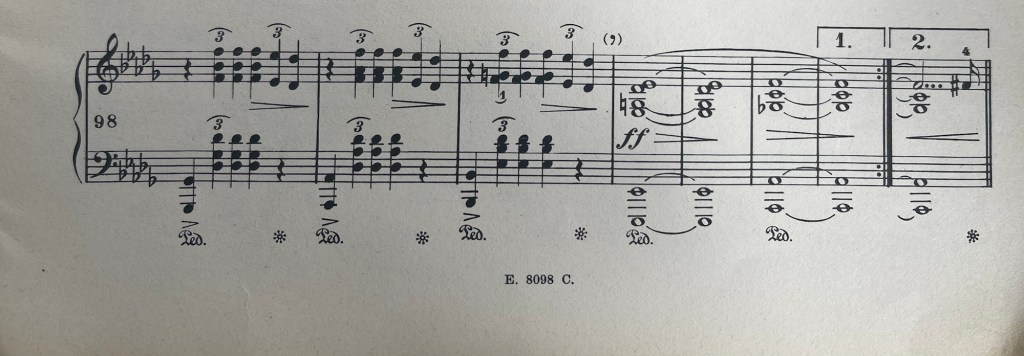
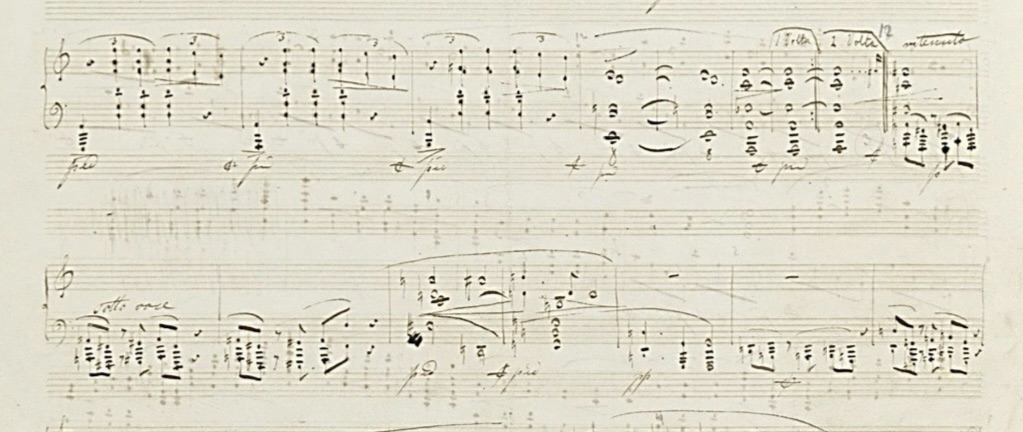
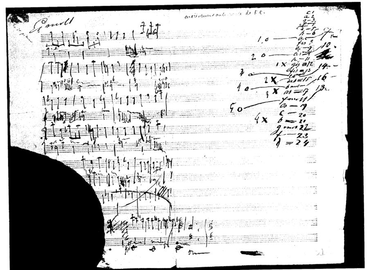
Alexander Pope (21 May 1688 – 30 May 1744) was an English poet, translator, and satirist of the Enlightenment era and is considered one of the most prominent English poets of the early 18th century. Some of his verses having entered into everyday use e.g. “damning with faint praise” or “to err is human;to forgive is devine” Pope’s education was affected by the recently enacted Test Acts , a series of English penal laws that upheld the status of the established Church of England , banning Catholics from teaching, attending a university, voting, and holding public office on penalty of perpetual imprisonment. Pope was taught to read by his aunt and also attended two Roman Catholic schools in London.Such schools, though still illegal, were tolerated in some areas. Pope lived in his parents’ house in Mawson Row, Chiswick ,between 1716 and 1719; the red-brick building is now the Mawson Arms commemorated with a blue plaque on what is now the ever busy Chiswick roundabout. The money made from his translation of Homer allowed Pope to move in 1719 to a villa in Twickenham , where he created his now-famous grotto and gardens. The serendipitous discovery of a spring during the excavation of the subterranean retreat enabled it to be filled with the relaxing sound of trickling water, which would quietly echo around the chambers. Pope was said to have remarked, “Were it to have nymphs as well – it would be complete in everything.” Although the house and gardens have long since been demolished, much of the grotto survives beneath Radnor House Independent Co-educational School.The grotto restored is open to the public for 30 weekends a year from 2023 .Pope’s most famous poem is The rape of the Lock , first published in 1712, and satirises a high-society quarrel between Arabella Fermor (the “Belinda” of the poem) and Lord Petre , who had snipped a lock of hair from her head without permission. The satirical style is tempered, however, by a genuine, almost voyeuristic interest in the “beau-monde” of 18th-century society with the onset of acquisitive individualism and a society of conspicuous consumers. In the poem, purchased artefacts displace human agency and “trivial things” come to dominate..Sketches for the third and fourth movements of Piano Trio, op. 97, 1810–1811
The Archduke Trio op. 97, was completed in 1811, late in Beethoven’s so-called “middle period”. and was dedicated to Archduke Rudolph of Austria. The youngest of twelve children of Leopold II ,Holy Roman Emperor and was an amateur pianist and a patron, friend, and composition student of Beethoven who dedicated about a dozen compositions to .Beethoven also wrote personally to the Archduke with the newly composed trio to have it copied within the archduke’s palace out of fear that it would be stolen.This was a frequent transaction between the two and resulted in the archduke establishing a library of all of Beethoven’s compositions with manuscript copies for preservation.Two days after completion in 1811, Beethoven played the Archduke Trio in an informal setting at the Baron Neuworth’s residency with no known performance after until 1814.The first public performance was given by Beethoven himself, at the Viennese hotel Zum römischen Kaiser on April 11, 1814. At the time, Beethoven’s deafness compromised his ability as a performer, and after a repeat performance a few weeks later, Beethoven never appeared again in public as a pianist.
The violinist and composer Louis Spohr witnessed a rehearsal of the work, and wrote, “on account of his deafness there was scarcely anything left of the virtuosity of the artist which had formerly been so greatly admired. In forte passages the poor deaf man pounded on the keys until the strings jangled, and in piano he played so softly that whole groups of notes were omitted, so that the music was unintelligible unless one could look into the pianoforte part. I was deeply saddened at so hard a fate.”
The pianist and composer Ignaz Moscheles attended the premiere, and wrote about the work, “in the case of how many compositions is the word ‘new’ misapplied! But never in Beethoven’s, and least of all in this, which again is full of originality. His playing, aside from its intellectual element, satisfied me less, being wanting in clarity and precision; but I observed many traces of the grand style of playing which I had long recognized in his compositions.”
St Mary’s Twickenham A surprise visit from the distinguished Ballet critic Simonetta Allder.Flown in from Rome for Manon at Covent Garden with Roberto Bolle and Marianela Nunez she was equally entranced by the Trio tonightImpresario Cristian Sandrin just minutes before ravishing us with the sublime opening of the Archduke
Some remarkable playing from this young pianist with a programme that showed off her crystal clear playing of enviable precision and purity.Sounds that were truly of a chiselled beauty that reminded me very much of Michelangeli.It is a school of playing more based on instrumental expertise rather than vocal freedom being more vertical in approach than horizontal. A technical perfection placed at the service of impeccable musicianship with masterly crafted playing of absolute intelligence and sensibility to gradations in sound.But it is a musicianship that thinks more in orchestral layers than individual phrases.
There was no terror for her of the double notes in Scarlatti’s infamous sonata in D minor a favourite encore of Martha Argerich .It was played with beautiful changes of colour as the harpsichord would have changed register but just missed the overall shaping of the phrases.It was a remarkable tour de force and was played at times with great delicacy and superb control but I could not help feeling that this was more of the dance than the song.In fact it is sometimes known as ‘Toccata’ and was a very courageous opening to her recital and the nobility she brought to the final cadence was of a true artist.
Mozart on the other hand was always based on the human voice and although diana played the Allegro moderato with absolute clarity and delicacy with the trills that shone like finely spun jewels just catching a ray of light her playing was more in layers more instrumental than vocal phrasing .There was great control and finesse from a finely spun web of well oiled fingers.The Andante cantabile was played with a chiselled beauty of refined grace and her sensitivity to Mozart’s startling changes of harmony was quite breathtaking .The Allegretto was played with crystal clarity and rhythmic precision but I doubt that these operatic personalities would have been quite so black and white on stage .
The French repertoire found the perfect interpreter with Osieaux tristes played with a chiselled luminosity over sultry moving harmonies of great atmosphere.It was a sound though that was more on the surface than really with weight searching for the sounds within the keys. Perlemuter had learned from Alfred Cortot – never to let go of the key sometimes changing fingers on the same note so that the weight could feel and suck the sounds from within the note which avoids the percussive nature of the piano and persuades us that real legal is actually possible on an instrument of hammers that hit strings.It is an illusion and a pianist should quite simply aim to be the greatest illusionist of all.
The crystalline clarity and rhythmic precision she brought to Alborada was masterly and the repeated notes and double glissandi held no terror for her.A relentless drive interrupted only by fleeting glances of what was going on around but leading to the hysterical final outburst and a masterly ending to this exemplary performance.
Chopin of course was influenced by bel canto of Bellini .Diana with her beautifully delicate chiselled sounds of great purity could float Chopin’s magic melody over a gently murmuring accompaniment in a masterly way.The delicacy of the cascades of notes after the mazurka interruption was of ravishing beauty showing quite extraordinary control.The Polonaise was played with impeccable control and clarity and there were many beautiful moments but one could not help feeling that it missed the overall sweep of a swimmer stroking the waves rather than a runner counting his steps.Diana Cooper is an artist to be reckoned with and although from the French instrumental school of Sancon rather than the poetic one of Cortot her performances were of impeccable musicianly good taste and style and she held her small audience in her spell from the first to the last note with great artistry.
Winner of numerous awards including 1 st Prize at the Brest Chopin Competition, 1 st Prize at the Halina Czerny-Stefanská International Competition in Poznan (Poland) and 1 st Prize at the Concurso Internacional de Piano de Vigo (Spain), Diana Cooper has been invited to perform in various venues and festivals in France and abroad, including the Nohant Chopin Festival , the Festival Chopin à Paris , the Salle Cortot , the Polish Embassy in Paris, the Ysaye Festival in Belgium, the Palacio de Congresos in Huesca (Spain), the Hrvatski dom Split in Croatia, the Kielce Filharmonia in Poland…In 2023, she was selected to take part in the project Un été en France avec Gautier Capuçon , for which she perfomed as a soloist and in chamber music.She was invited in 2018 to take part in the radio program Générations Jeunes Interprètes on France Musique and, in 2023, performed as a trio in the television programme Fauteuils d’orchestre , broadcast on France 5. Her activity has been enriched by solo appearances with the Orchestre Symphonique du Sud Ouest in Chopin’s 1st Concerto, the Orchestre Appassionato in Mozart’s 20 th concerto, and the Orchestre des Lauréats du Conservatoire de Paris in Schumann’s concerto, performed in 2023 at the Cité de la Musique in Paris.
L aureate of the Fondation de la Banque Populaire , the Fondation Safran and the Kathleen Trust , Diana is currently settled in London, studying at the Royal College of Music in London on an Artist Diploma programme in Norma Fisher’s class. She has recently joined the Talent Unlimited charity offering concerts in London for young talented musicians. She is, in parallel, on a second Artist Diploma course at the Conservatoire de Paris (CNSMDP), where she studied formely with Jean-François Heisser and Marie-Josèphe Jude and graduated with a Master’s degree in 2018. She also spent three years at the Ecole Normale de Musique receiving the teaching of Rena Schereshevskaya. In 2022, she was selected to join the new season of the Académie Musicale Philippe Jaroussky , where she perfected her skills with Cédric Thiberghien. Following her pre-selection in 2021 for the prestigious Chopin Competition in Warsaw, she was invited the following summer by Philippe Giusiano to take part in masterclasses in Katowice as well as concerts at the Chopin Manor in Duszniki, organized by the Chopin Foundation. Diana has recently recorded her first CD, featuring works by Haydn, Chopin and Ravel, after winning in 2022 the 1 st Prize in the Concours d’aide aux Jeunes Artistes organized by the Festival du Vexin.
The Haydn and Brahms I had heard before but today the concert began with Scriabin’s ‘Vers la flamme’.At St James’s Piccadilly this live performance had united artistry and mastery with a Fazioli piano that I have rarely heard played with such a range of sounds.There are just two notes in the Scriabin that are of piercing insistence as they are heard over a cauldron of murmuring menacing sounds.Two beacons shining brightly in this mist as the intensity builds to fever pitch until bursting into the flaming light that is Scriabin’s’ guiding star.An extraordinary control of sound and poetic sensibility as the atmosphere rose so gradually that the actual final explosion came as a mesmerising surprise and infact left Nicolas visibly depleted at the beginning of a recital where major sonatas by Haydn and Brahms were still to come.
This a different artist from the young pianist I had heard in the beautiful but chilly St Mary le Strand.An artist that can open with Vers la Flamme and then change almost immediately to the civilised charm of an elegance of another age with chameleonic ease is an artist to be reckoned with indeed.Like visiting an art gallery and walking from the ‘Impressionists’ to the ‘Renaissance’ it is a sign of the stature of this young artist that he could almost immediately enter this new world of civilised elegance and mutual anticipation .There was a clarity and sense of style with a beguiling charm with the very opening notes.Music that spoke so eloquently and Haydn’s own pedal indications ( that were later to be taken up by his most illustrious pupil ) translated into the sounds of a magical music box.A slow movement that was a cantilena of bel canto that was allowed to unfold so naturally with grace and character on a velvet carpet of sumptuous sounds.What fun there was in the last movement brought vividly to life in this young man’s poetic hands.
What drama there was with the opening of Brahms Sonata in F sharp minor .I have never heard it played with such character and orchestral sense of colour .This was a pianist whose interpretation has matured immeasurably from last November as the arresting opening flourish just opened the doors to a sumptuous voyage of discovery of beauty.Above all an architectural shape that made sense of Brahms’s seemingly rambling early Sonatas for piano.A Scherzo of orchestral colour contrasting with the beauty of the Trio in an extraordinary performance from an artist of great stature.
The Prokofiev encore was played with amazing technical and musical perfection and just a touch of showmanship – che non guasta!
All six finalist played magnificently but when you are up against Genius – noblesse oblige applies and we can all just look on and admire in awe.
The distinguished ,critic,commentator ,pianist and composer Jed Distler flown in especially from New York for this prestigious piano competition.
Jed Distler’s astonished words on hearing Magdalene was :’This is the real thing!’ ……………….well I did tell you Jed ! And I have been shouting it from the rooftops since hearing her at Joan Chissell’s Schumann prize a year ago. An 8th Novelette more beautiful than Richters ……unbelievable but miracles can happen.
Grace Dong .A well oiled Haydn in which her agile fingers spun Haydn’s fine web of sounds but missed a little of the charm and style that she was only to find in the beautiful Adagio.A kaleidoscope of colours in Estampes and some very beautiful moments in Liszt’s tragic tale of Hero and Leander but where the great sweeps of sound in the virtuoso passages were strangely divorced from this harrowing tale . https://youtube.com/live/nFAoqKblBx0?feature=sharedThomas Luke winner at 16 in 2020 of the BBC young musician keyboard prize.Now at the age of 19 he gave a beautiful performance of Scriabin’s Fantasy Sonata that was played with sumptuous sounds and technical assurance.If his Bach and Haydn were a little too earthbound and Chopin’s dynamics a little exaggerated he is learning to fly under the artistic guidance of Alim Baesembayev and Vanessa Latarche who are sure to give him the wings to fly ever higher.Diana Cooper from the class of Norma Fisher showed herself to be a real artist .Mozart of great beauty even if the Allegretto was taken at breakneck speed.Scarlatti that had been like a spring being released and more ‘ toccata’ than dance .An astonishing Alborada and a ravishing Oiseaux tristes .The beauty of the Andante Spianato suddenly became a Polonaise that was more ‘brillante’ than scintillating and beguiling. Competitions are for horses and being forced to jump hurdles faster and higher than another can lead to a born artist sacrificing quality for quantity. Competative music making is obviously not for an artist of Diana’s stature .
.
Misha I have followed his career since his first performance three years ago of Rachmaninov First Concerto in Cadogan Hall .Last month I heard his masterly performance of the Fourth Concerto with his friends and colleagues joined together at St James’s for music making with youthful expertise and joy. Misha’s Beethoven was of a maturity way beyond his 21 years.Astonishing performances of the intricate meanderings of Bartok were crowned with Godowsky’s Fledermaus played with the charm and astonishingly subtle virtuosity of a bygone age .What can I say ……..music speaks louder than words and all those present to hear her Scriabin’s 7th were as overwhelmed with her performance as she was with her musical discovery.A discovery of Fou Ts’ongs wife in Malaysia when she was a schoolgirl with a massive talent . Ts’ong was the greatest genius I have ever known and Patsy was at his side for a lifetime – you see it takes one to recognise one.Ts’ong learnt the Schumann op 6 specially for me in my concert series in Rome where he gave innumerable recitals and masterclasses. It is a very elusive work that if you fall one way it can be too exaggerated and if you fall another it can be too rigid.You have to have the courage to get up onto the high wire to arbitrate and where Schumann tries to unite Florestan with Eusebius. Magdalene has just such courage and held us spell bound and overwhelmed by Schumann’s poetic fantasy world.The regal presence of Ilayda was reflected in her playing of refined elegance .Some impish ornamentation in the Mozart of a Sonata that was played like the Scarlatti with very beautiful rich sound.Her most successful performance was the Scriabin 9th Sonata where she found its elusive architectural shape and a wide range of colours .The study by Saygun was astonishing and overwhelming and a wonderful way to finish this exciting day of piano playing before awaiting the result of a winner who had passed through the most hoops successfully! All the fun of the circus indeed. I wonder sometimes how Michelangelo would have fared with Leonardo Da Vinci in a similar contest of artistic integrity !Vanessa Latarche who I have known from when she was the star student of Miss Rowe in Ealing .Now the head of Keyboard at the RCM and with many other responsabilites and accolades world wide she has remained the same Vanessa of yore with the same unforgettable dedication that Miss Rowe bequeathed to us all
The Haydn and Brahms I had heard before but today the concert began with Scriabin’s ‘Vers la flamme’.At St James’s Piccadilly this live performance had united artistry and mastery with a Fazioli piano that I have rarely heard played with such a range of sounds.There are just two notes in the Scriabin that are of piercing insistence as they are heard over a cauldron of murmuring menacing sounds.Two beacons shining brightly in this mist as the intensity builds to fever pitch until bursting into the flaming light that is Scriabin’s’ guiding star.An extraordinary control of sound and poetic sensibility as the atmosphere rose so gradually that the actual final explosion came as a mesmerising surprise and infact left Nicolas visibly depleted at the beginning of a recital where major sonatas by Haydn and Brahms were still to come.
This a different artist from the young pianist I had heard in the beautiful but chilly St Mary le Strand.An artist that can open with Vers la Flamme and then change almost immediately to the civilised charm of an elegance of another age with chameleonic ease is an artist to be reckoned with indeed.Like visiting an art gallery and walking from the ‘Impressionists’ to the ‘Renaissance’ it is a sign of the stature of this young artist that he could almost immediately enter this new world of civilised elegance and mutual anticipation .There was a clarity and sense of style with a beguiling charm with the very opening notes.Music that spoke so eloquently and Haydn’s own pedal indications ( that were later to be taken up by his most illustrious pupil ) translated into the sounds of a magical music box.A slow movement that was a cantilena of bel canto that was allowed to unfold so naturally with grace and character on a velvet carpet of sumptuous sounds.What fun there was in the last movement brought vividly to life in this young man’s poetic hands.
What drama there was with the opening of Brahms Sonata in F sharp minor .I have never heard it played with such character and orchestral sense of colour .This was a pianist whose interpretation has matured immeasurably from last November as the arresting opening flourish just opened the doors to a sumptuous voyage of discovery of beauty.Above all an architectural shape that made sense of Brahms’s seemingly rambling early Sonatas for piano.A Scherzo of orchestral colour contrasting with the beauty of the Trio in an extraordinary performance from an artist of great stature.
The Prokofiev encore was played with amazing technical and musical perfection and just a touch of showmanship – che non guasta!
Amazing, astonishing ,breathtaking were some of the comments last night as Tamta Magradze filled this beautiful Lloyd George room with the sumptuous sounds that I have not heard since the arrival in London of Lazar Berman – a true laser beam of astonishing pyrotechnics and sumptuous overwhelming sounds on the grandest of pianos.
Here in the Liberal Club where Rachmaninov gave his last European performance before leaving for America never to know how the evil machinations of Hitler would be played out .There now stands a new piano for a new era and the Liberal Club is once again resounding to the grandest of music thanks to the dedication of Cristian Sandrin , Yisha Xue and all those involved with the Keyboard Trust and Kettner Music Society.
Cristian Sandrin the ring master
This was ‘Lisztomania’ recreating the world of the greatest showman the world has ever known .Together with Paganini, Liszt would have the elite noble gentry of the great castles and salons of the day reduced to a screaming mob rushing forward at the end of their idols circus like exhibitionism to grab a souvenir of a lock of hair or cigar but to take home perchance to dream of a private encounter of a secret nature ! Just like the pop stars of today ……Lang Lang eat your heart out ! This is just the beginning as Lisztomania n 2 is already on the cards in the not too distant future with the remarkable Mark Viner who will reignite this atmosphere adding an even more strange twist from the past with the most enigmatic friend of both Chopin and Liszt : Charles Valentin Alkan .
Jed Distler in discussion with Mark Viner about the Lisztomania n. 2 and much else besides – wine glasses on hand – che non guasta!
Rumour has it that this strange elusive figure from the past hid his music away as only he could play such difficult hoarded secret scores for solo piano made up of fearfully difficult Symphonies ,Concertos and studies and much more besides . A recluse that rumour has it was crushed to death reaching for the Talmud on the top shelf of his library.Chopin had bequeathed his final studies to his friend and colleague as he was the only one who could complete the thesis on piano playing that Chopin knew he would never have time to finish.
Tamta on the regal staircase leading to the Lloyd George Music Salon with Yisha Xue and Cristian Sandrin
Today the 29 year old Tamta Magradze fresh from the Liszt Academy in Weimar took the Liberal Club by storm with overwhelming performances of three works that Liszt himself would have performed throughout Europe on his leggendary concert tours from 1839 to 1847. An opening that was immediately a call to arms with the sumptuous full sounds of grandiloquence of Liszt’s full blown vision of Handel’s Sarabande and Chaconne from his first opera Almira of 1795 .
Opera was for the elite but Liszt made it readily available to his fans where his ten fingers could bring the operas vividly to life with even more excitement than in the opera house. Tamta’s limpet like fingers with robust arms outstretched as she allowed them to caress and seduce the black and white keys set before her that by some strange alchemy became an orchestra of the noblest proportions .
This was just the opening of an all too short survey that was concluded with what Leslie Howard considers Liszt ‘s masterpiece: the Grosses Konzertsolo .The prelude to the B minor sonata which is the greatest work of the Romantic era-considered with Schumann’s Fantasie op 17 and Chopin’s Fourth Ballade op 52 absolute monuments of the nineteenth century . Tamta played it with total commitment and mastery throwing herself into the burning furnace with scintillating and life enhancing sounds . The well known Mephisto Waltz n.1 the cavallo di battaglia of so many great virtuosi was often added to by the disciple of the great master, Ferruccio Busoni .Not even content with this Horowitz would add his own cadenza and ending which earned him the accolade of ‘the greatest pianist alive or dead ! ‘ on his arrival in Paris in the 1930’s. Rubinstein of course had his nose put out of joint as Paris in that period was very much his kingdom that he reigned over until this moment.
It evoked the duel between Liszt and Thalberg a century earlier .Fighting it out in the Princess Belgioso’s salon where she declared at the end of the pianistic duel between giants that Thalberg was the greatest pianist alive but Liszt was unique!Honour was saved and noblesse oblige!With Horowitz and Rubinstein the Holocaust intervened and united so many great artists in their mutual fight against evil.
Tamta played Liszt’s original Mephisto Waltz n. 1 where the throbbing opening of the opening was transformed into a glittering display of virtuosity but also of sumptuous beauty .Bird calls played with crystalline clarity and the treacherous final leaps played with enviable accuracy and not a little courage .If she just missed the charm of Gounod’s Waltz from Faust she warmed the ‘cockles of our hearts ‘ with the sublime beauty of Liebestraum and the lesser known but even more sublime transcription of Schubert’s Litanei.
A real ovation greeted the final chords of the Grosses Konzertsolo and what could one play after that ? Follow that indeed! What better that Liszt’s transcription of Beethoven’s First Symphony.Beethoven had after all kissed the child prodigy of his pupil Czerny before unleashing the greatest showman on earth to an unsuspecting public ! Wonderful to see what had been written about Tamta at a previous performance and which I can only repeat here and confirm :’Tamta Magradze summoned up epic musical adventures with every note she played,throwing grand gestures off with casual virtuosity like a coloratura soprano’
Jed Distler, with Cristian and Yisha, had joined us from New York where he is a major figure as critic,commentator and pianist