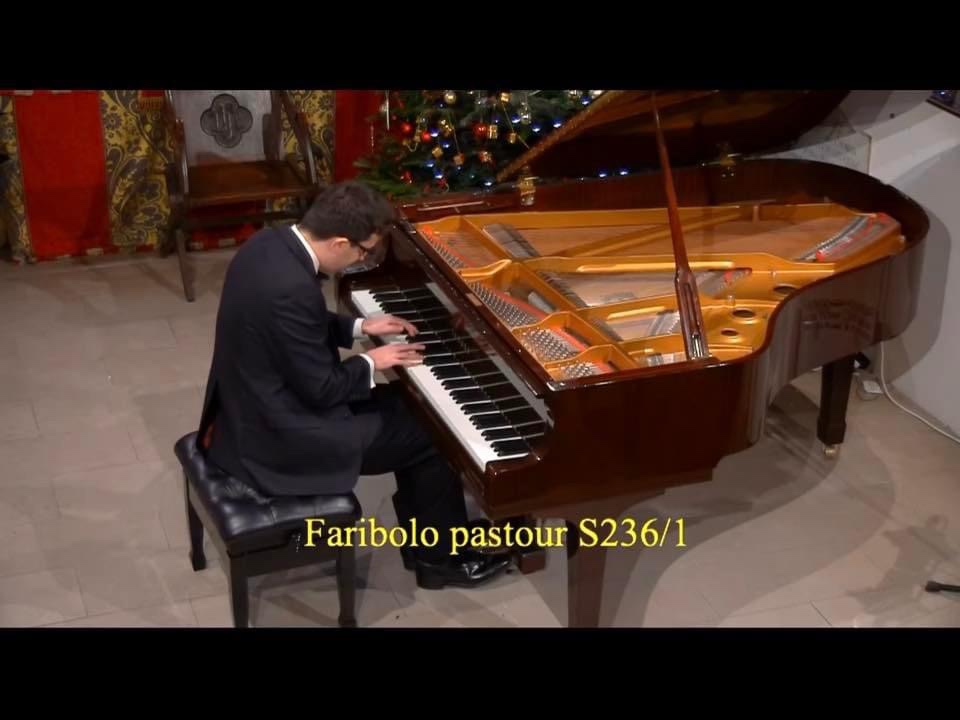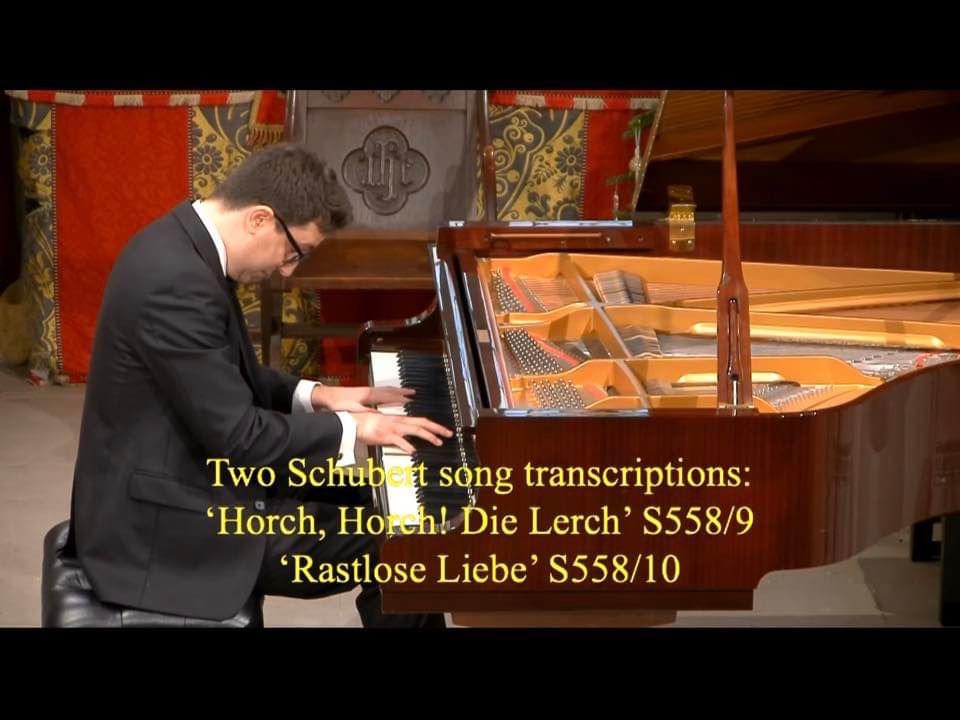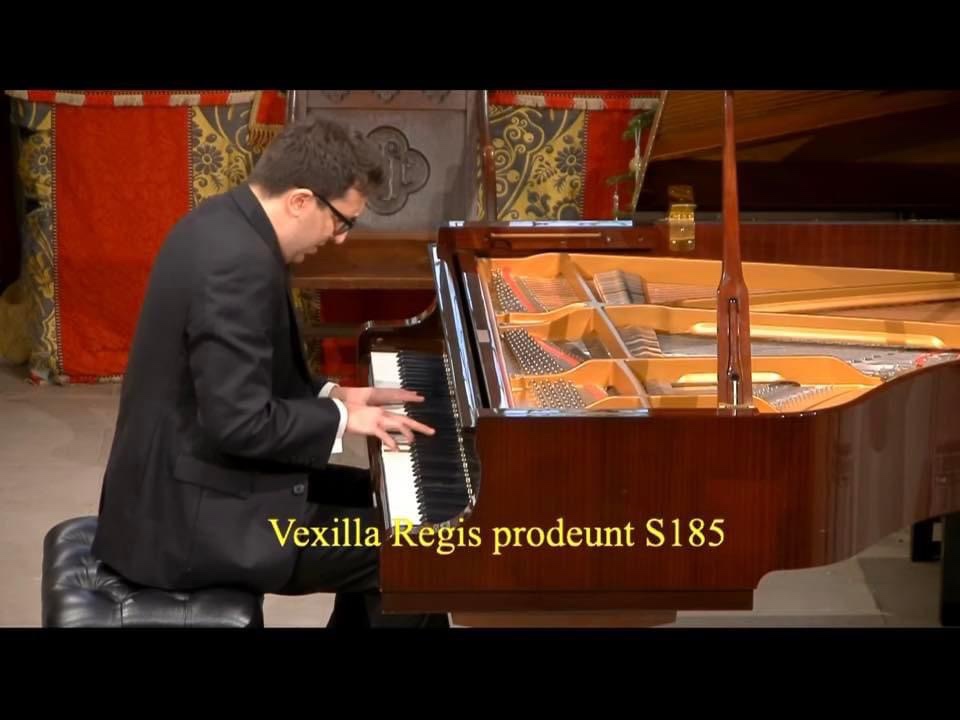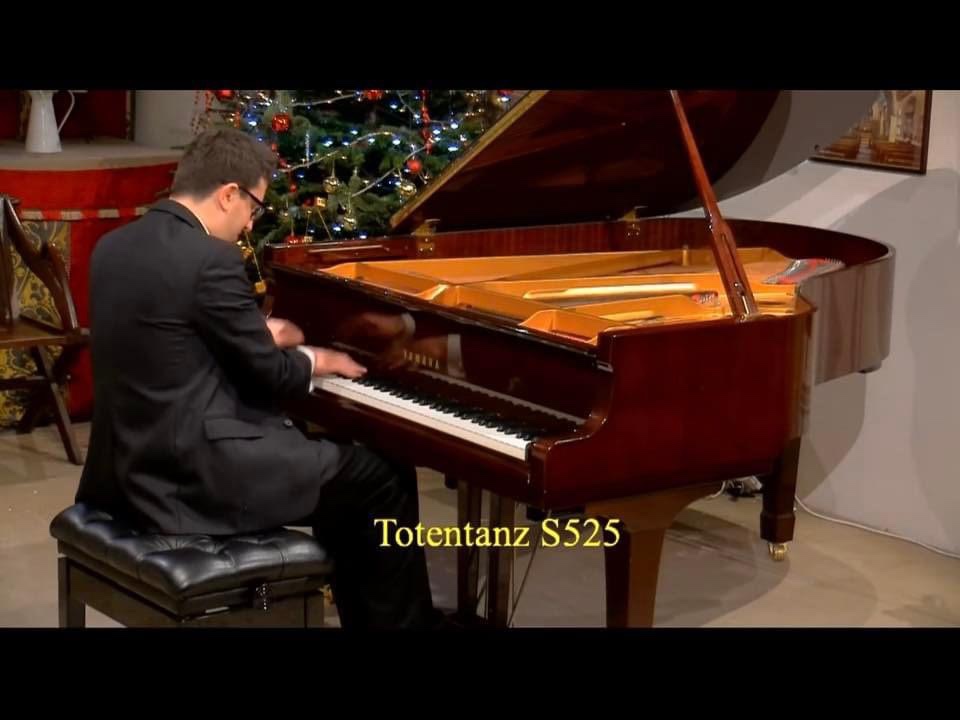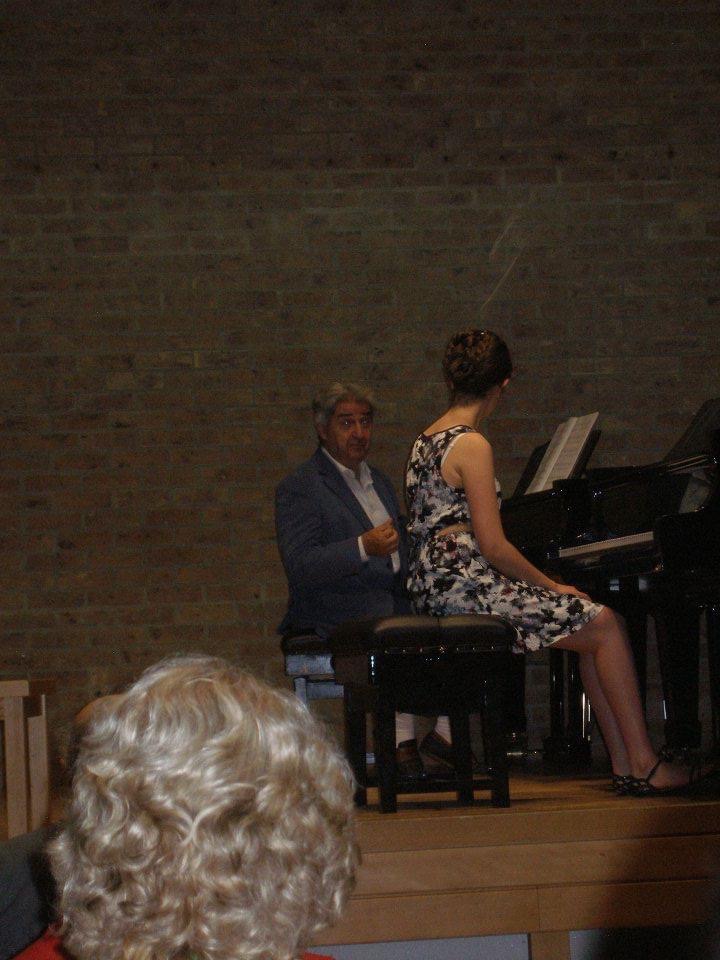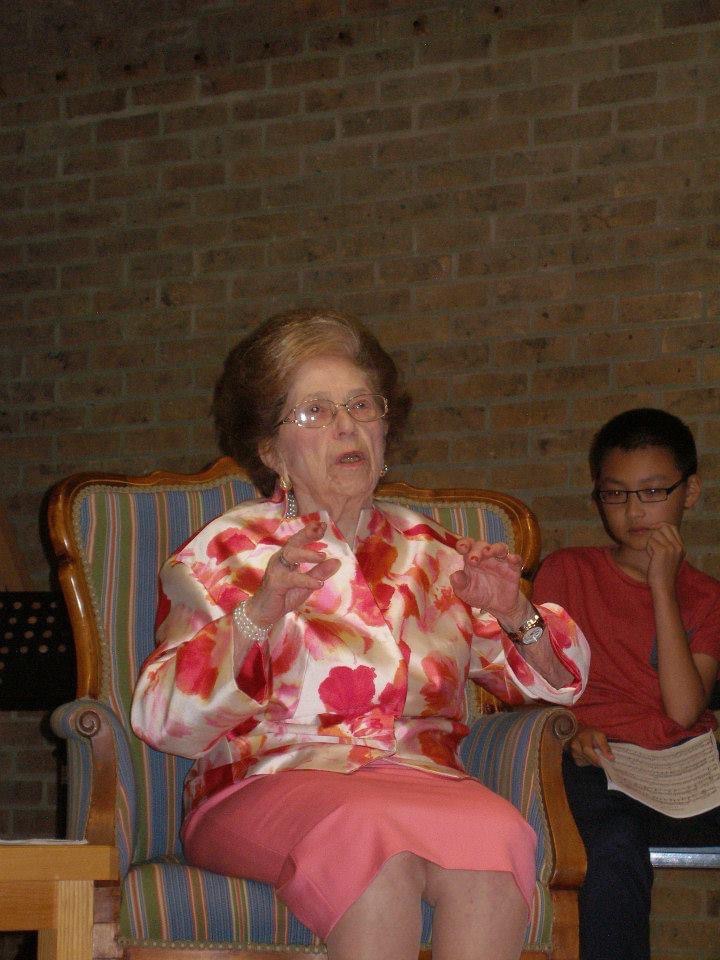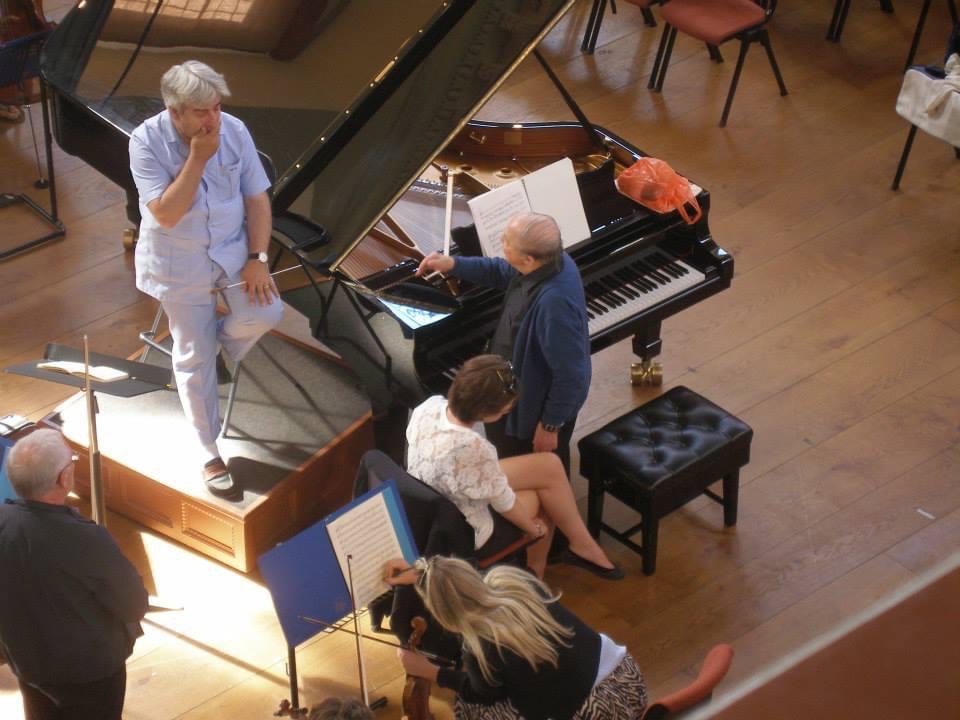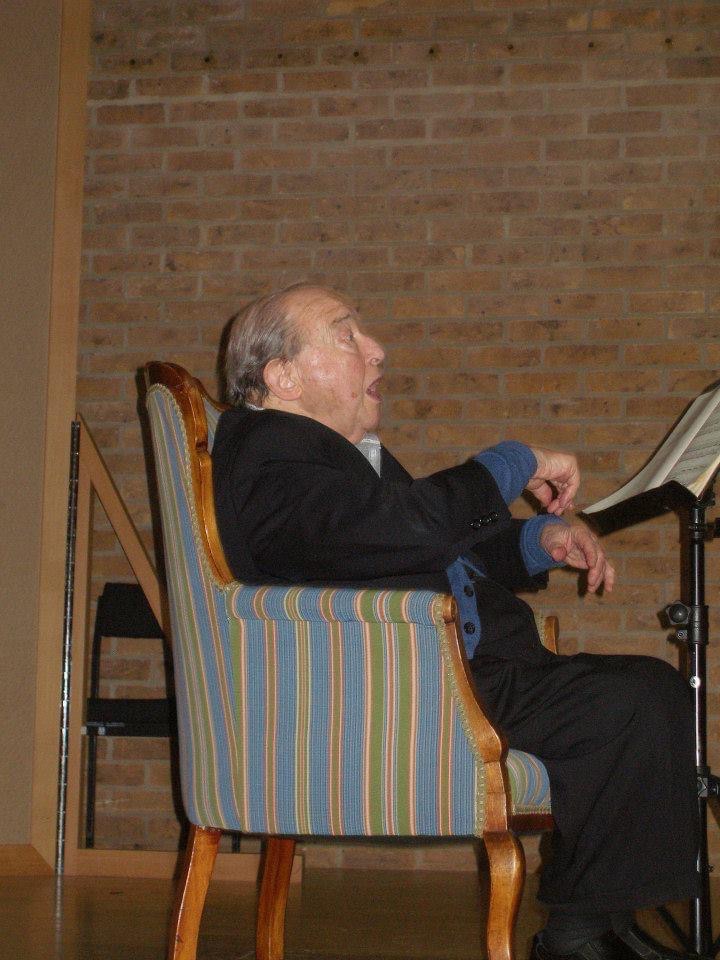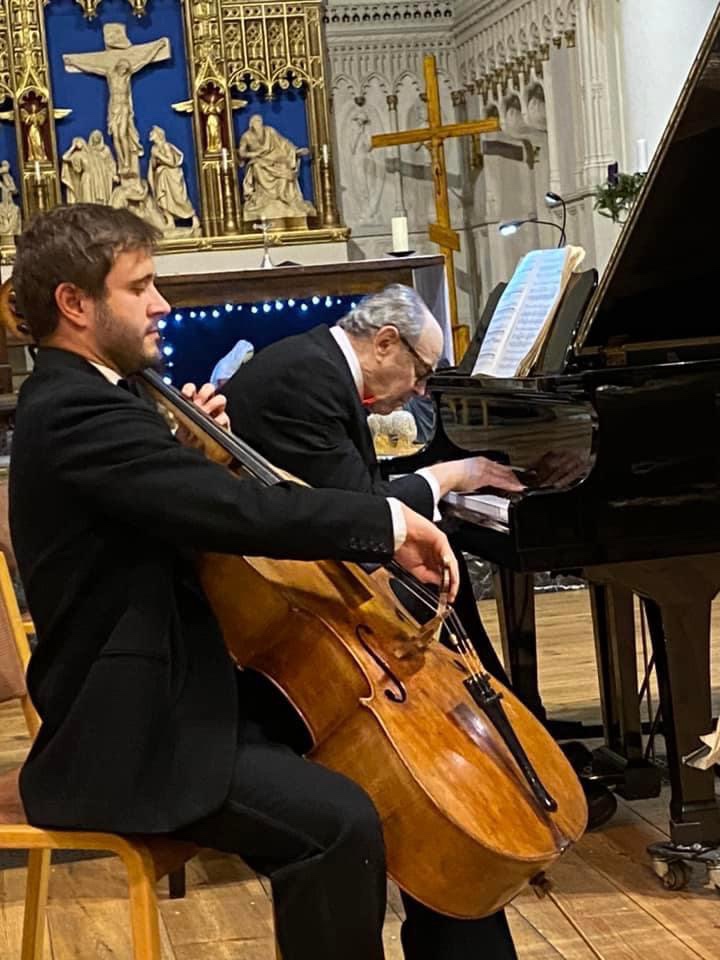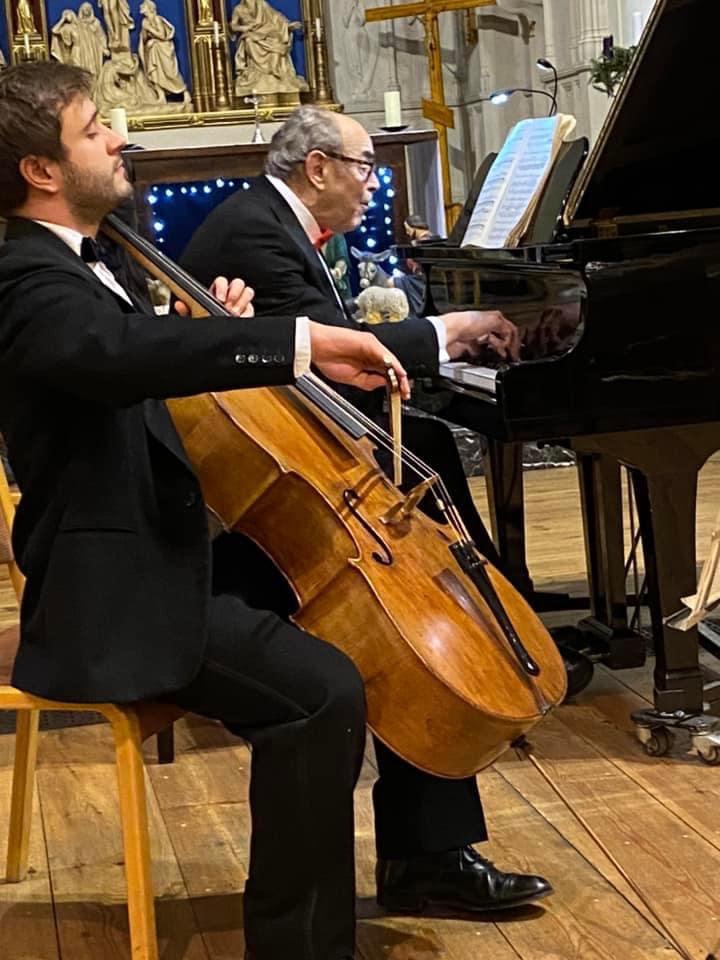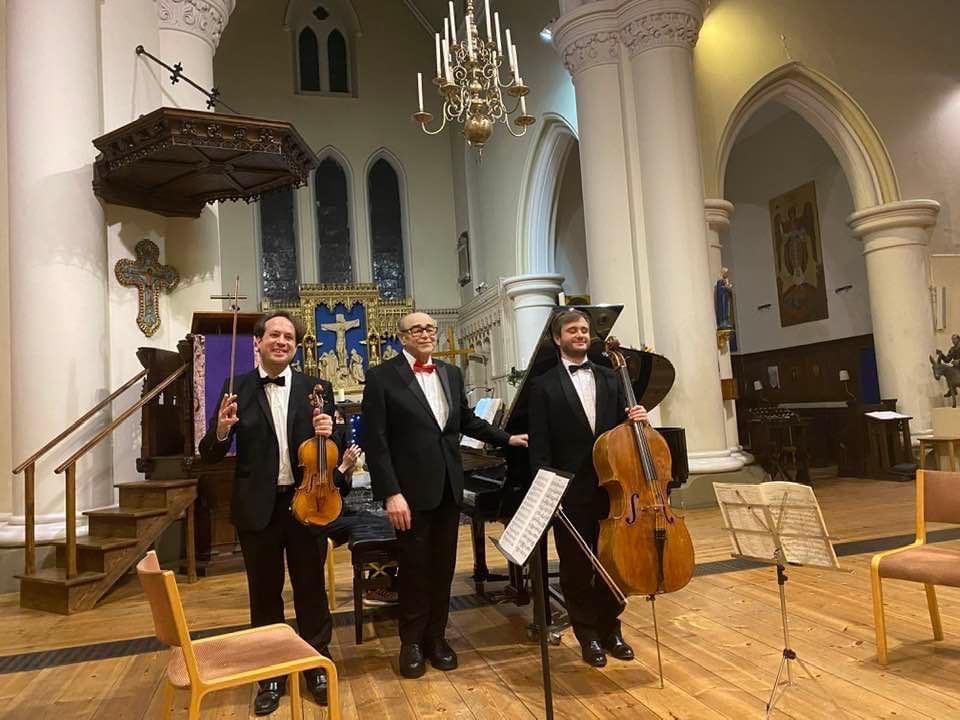
Dame Fanny Waterman – a tribute by master pianist and pupil Benjamin Frith

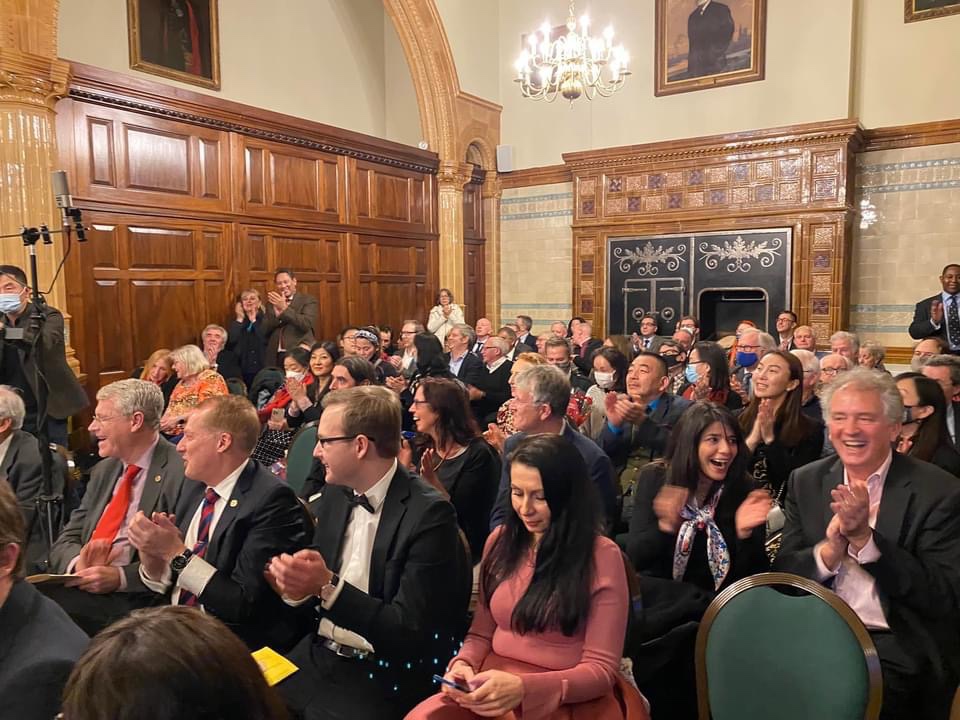
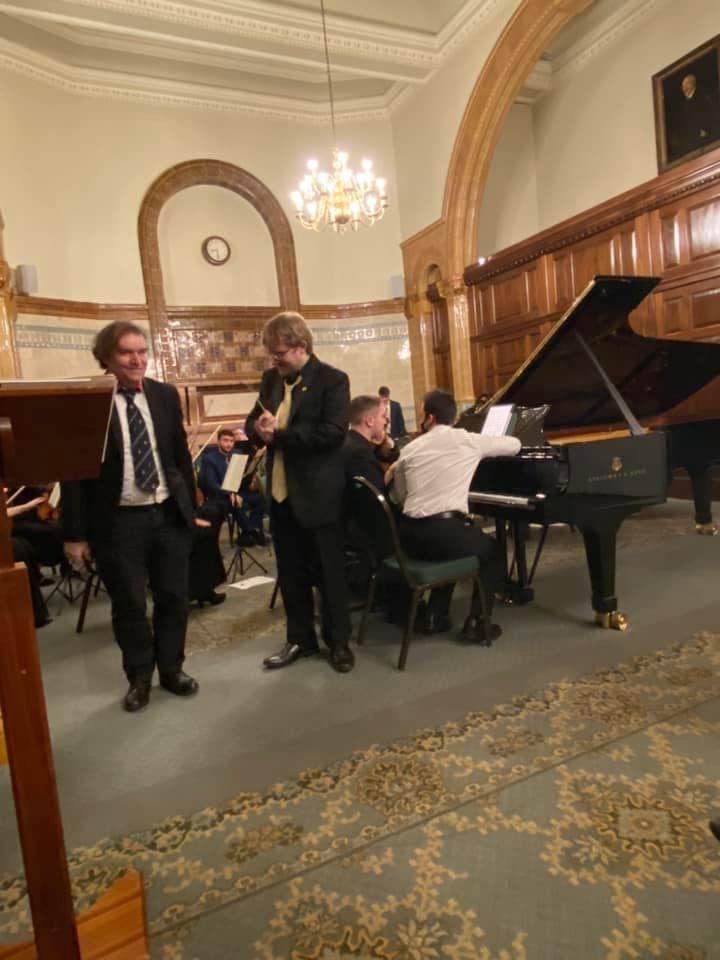
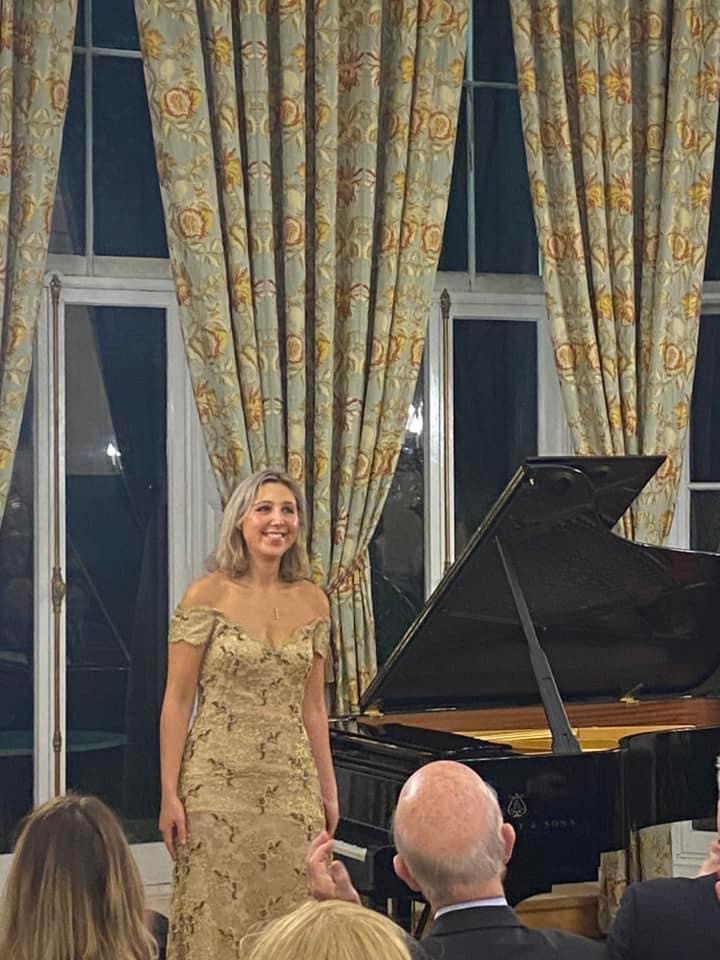
A beautiful tribute by Benjamin Frith to his much missed teacher Dame Fanny Waterman.
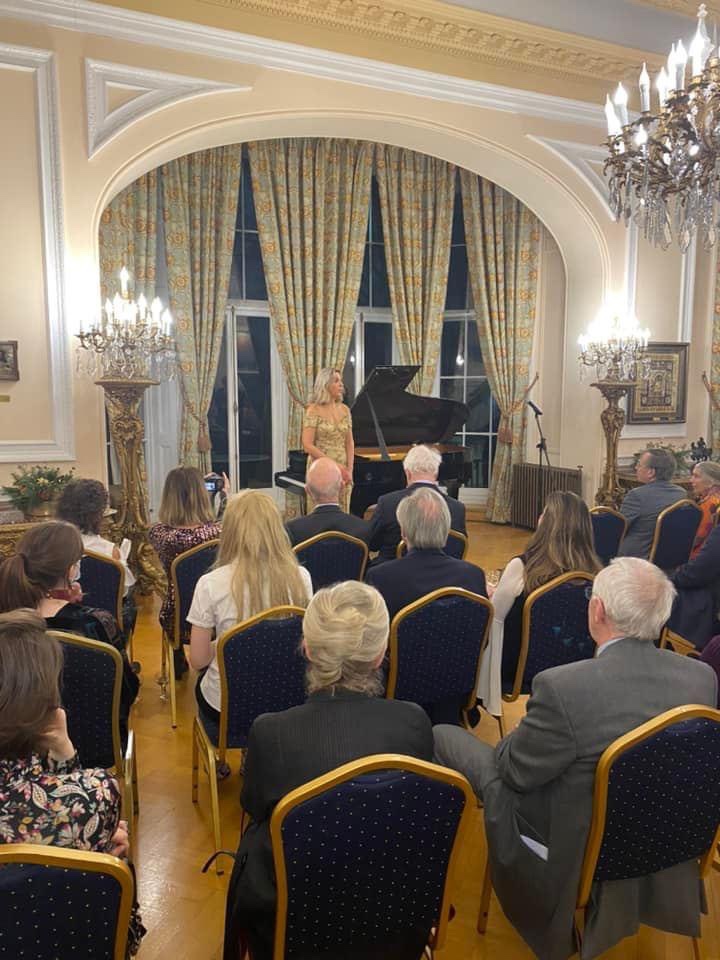
She would often tell me how eloquent I was as indeed Ben was tonight in Oleg and Pollina Kogan’s Rasumovsky Academy.
But it was the beauty of the playing of this Gold medal winner of the Rubinstein competition that would have thrilled her more than any words.
Someone who still knows how to ‘mould’ as she would so simply describe the real Matthay legato.Playing of real intelligence and musical integrity as you might expect having studied since childhood with someone who simply declared that she was the reincarnation of Mozart!
It avoided any discussions or doubts with her young students who might question her sterling musicianship.


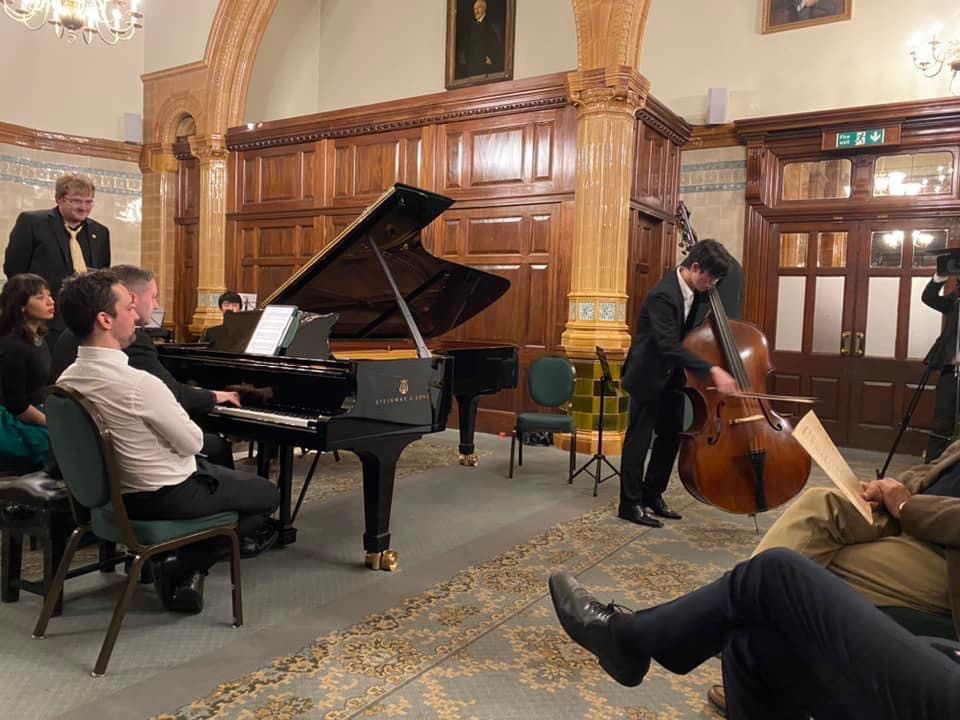
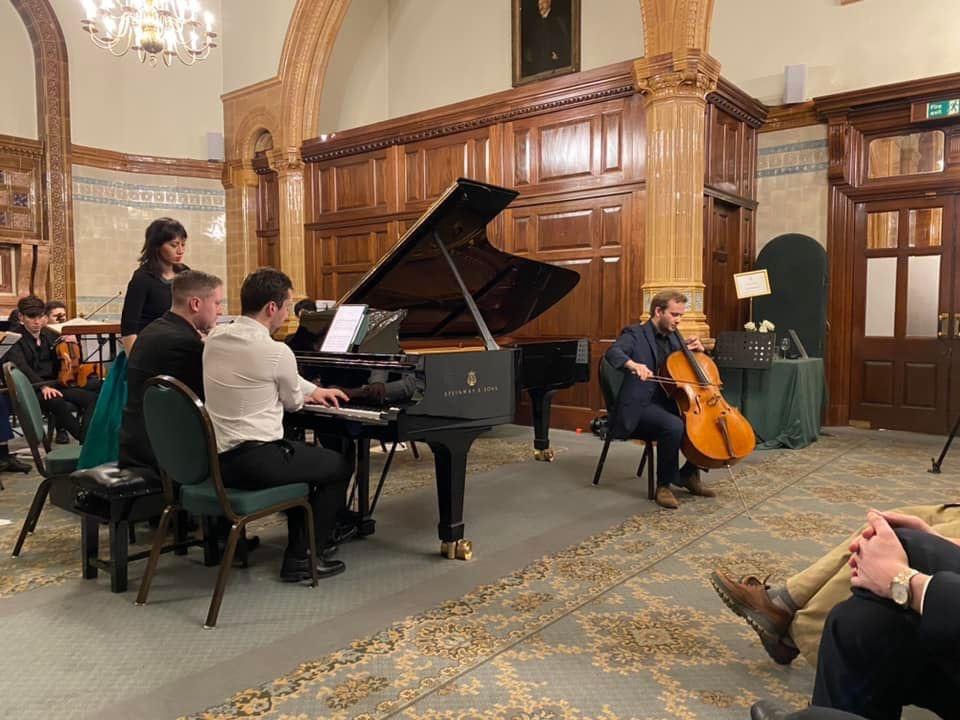
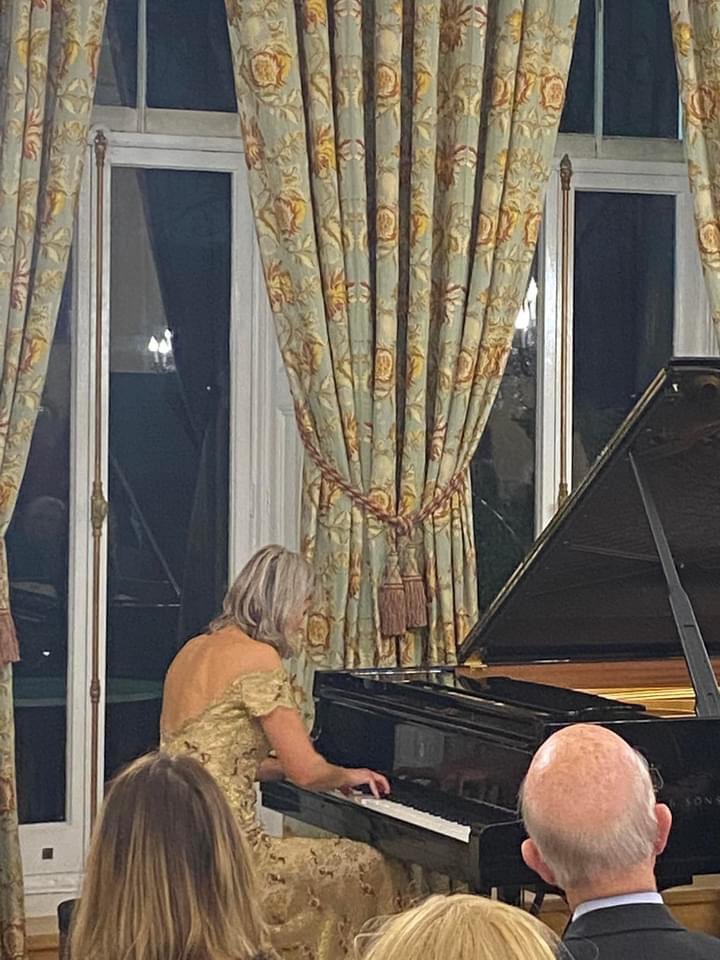
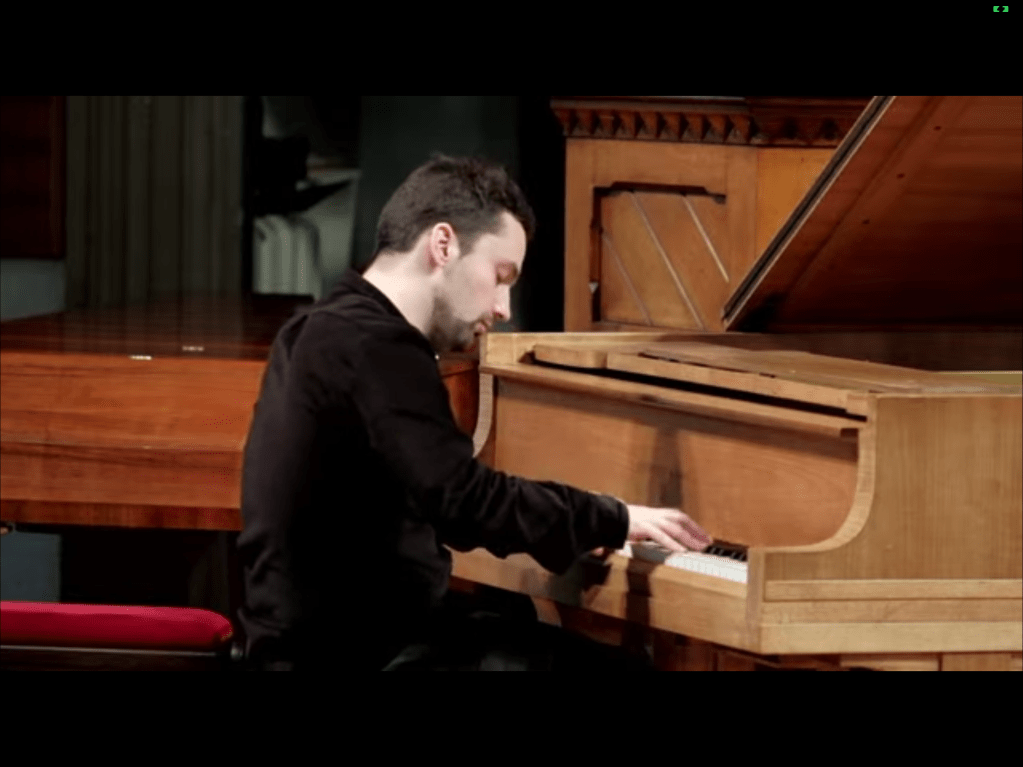
Ravishing sounds from this piano that once belonged to Fou Ts’ong and that lovingly restored is now cherished by Oleg.
In Ben’s hands tonight it gleamed and shone as it must have done in Ts’ongs hands and it could not have found a more warm and welcoming home.
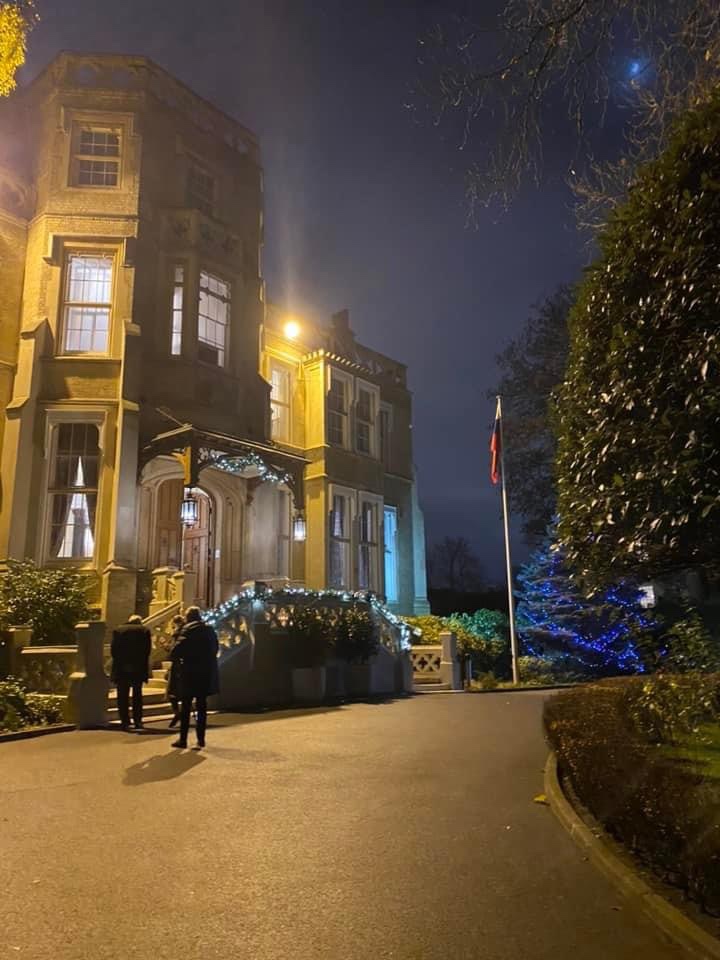
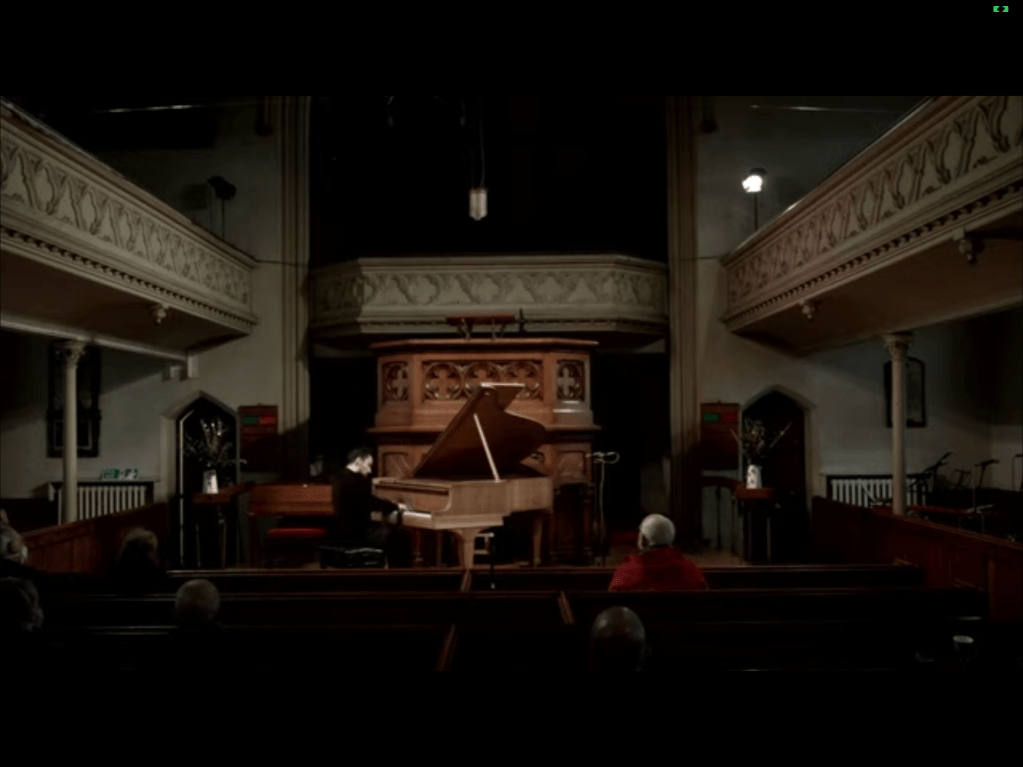
A home built with love and passion by Oleg with his own hands.The hands of a renowned cellist who has created this beautiful venue where the predominance of wood has been lovingly restored by him as if it were indeed his own cello.

Oleg Kogan

Some fascinating reminiscences of a childhood shaped by Dame Fanny and that led Dennis Matthews to describe the 14 year old Benjamin Frith as the ‘Prodigy of Prodigies’.In 1989 he was awarded the Gold Medal at the Rubinstein Competition ,tying with Ian Fountain,the only British pianists ever to have won this very prestigious prize,having already won the top prize in the 1986 Busoni Competition in Bolzano.In fact I first met Dame Fanny in Oxford where she was giving Masterclasses in Marios Papadopoulos’s annual Piano Festival.I was with a young Russian pianist who the keyboard Trust had taken under their wing .I asked her ,rather mischievously,if she would like to meet the winner of her next competition in Leeds.’Come with me’ she said to the young Russian pianist ,‘play me something classical ‘.Vitaly Pisarenko went on to win a top prize in the competition.

Ben tells the story too of Irving Moskovitz calling from New York.’Would you please book me a room at the Queens Hotel.I am coming over to Leeds ,and I’m bringing the winner with me .’Really?’asked Fanny.’Well if he doesn’t win I want to be there to hear the pianist who beats him’.Murray Perahia’s performance of the ‘Davidsbundlertanze ‘had many of the jury members in tears and of course he swept the board being already the great pianist the world has since recognised.Ben remembers hearing the performance a year later and falling in love with it.Ben’s recording of it since has been highly praised by the critics .And it was with this work that he chose to close his tribute to Dame Fanny,transforming Ts’ongs Steinway D into a jewel box of emotions of ravishing beauty.

Fou Ts’ong used to come to my concert series in Rome every year and his wife Patsy used to thank me for being so faithful.Thank me!But it is I that should thank him for sharing with us not only his performances but also his unique musical knowledge with young musicians in his Masterclasses for over ten years One year I had suggested he might like to look at the ‘Davidsbundler’which he immediately fell in love with.He played it the next time he came to Rome but unfortunately I was on tour with our theatre company at the other end of Italy.’Oh Chris’,he exclaimed ‘ it is as though I have cooked you a sumptuous meal and you did not turn up to eat it!’Just a few years ago I had listened to a concert on Radio 3 from my home in the depths of the Italian countryside and in writing to Dame Fanny sending her birthday greetings,I mentioned how moved I had been by Graham Johnson’s wonderful accompaniments .She immediately replied saying that she too had listened on the radio in Leeds and considered Graham the greatest living accompanist of our day.Graham and I had been students together at the Royal Academy and when I told him of Dame Fanny’s enthusiasm he immediately thanked her and that day a beautiful friendship was sealed.I was pleasantly surprised one year when she accepted an invitation to a Keyboard Trust concert at the Brazilian Embassy in the beautiful Cunard Hall in Trafalgar Square.Unknown to Pablo Rossi the brilliant Brazilian pianist she sat in the front row and nodded her head on every note that he played.She was much feted by an audience full of distinguished musicians and of course Pablo was thrilled to think such a leggendary figure had come to hear him.’You are such a wonderful host’,she affectionately exclaimed as I hailed a taxi to take her to the Hotel Club where she was staying.

Dane Fanny in heated discussion with Menahem Pressler

She and Menahem Pressler are the only two people I have ever met that listen with such untiring concentration to every single note that is played.Even Pressler complains though that when he is on the jury of Fanny’s competition in Leeds she wants him to sit next to her.So while many jury members are able to nod off for a second in the afternoon of a long session,Pressler sitting with Dame Fanny has to stay continuously alert!There are many anecdotes that Ben affectionately shared with his audience but it was his music making that stood for all the principles that this great lady fought for in her long life.He was often called on to play in fund raising concerts where Fanny would ask him to play works that were easily accessible to an aristocracy that would be the life blood of her competition.Mendelssohn was Queen Victoria’s favourite composer and so as he was playing invariably in Victorian mansions for fund raising concerts Mendelssohn must be included.The two ‘Songs Without Words’ that he played today op 67 n.1 & 2 immediately showed off his ‘moulding’ with ravishing legato playing.The melodic line just floating on a stream of golden sounds as the melody was beautifully shaped with delicious embellishments and a real feeling of nostalgia of times passed.The second ‘Song’ showed his transcendental control of sound and colour with a subtle melodic line accompanied by staccato notes of such exquisite delicacy.There was also a musicianly architectural shape to this miniature tone poem with a subtle refined finale just thrown off with the charm and ease of another age.

The concert had opened with two contrasting Sonatas by Scarlatti.K 213 in D minor was played with subtle delicacy of pastoral atmosphere with beautifully varied sounds.K 492 in D major was played with a crystalline clarity and a rhythmic exuberance that immediately betrayed Scarlatti’s Spanish roots.There was playful charm but also passion and clockwork precision with glitteringly characterful jewels much as I remember Ts’ongs inimitable playing of these very works.

Master piano specialist Nigel Polmear with Oleg at post the concert celebration

The variations on a theme of Schumann op 9 ,deeply elegiac,is Brahms’s first true masterpiece in the genre. The almost overwhelming pathos of this work mirrors the circumstances of its composition in proximity to the stricken Schumann household in Düsseldorf in May and June of 1854 (apart from variations 10 and 11, which were inserted in September). Schumann had only recently been confined in the Bonn asylum for the insane, leaving his wife Clara, pregnant with their seventh child, to look after their five surviving children. She is the work’s dedicatee; Brahms brought each of his variations to show her as he composed them as his love for Clara was tinged with his respect for Robert.The theme comes from the fourth of Schumann’s Op 99 Bunte Blätter—and is the same theme as Clara had chosen for her own set of Variations, Op 20, composed the previous year. But it is Robert who chiefly presides over Brahms’s work: there are stylistic and textural reminiscences of several of his other works, and the variation techniques as such, based especially on the free melodic transformations of the theme or its bass in ‘fantasy’ style, show Brahms absorbing some of Schumann’s most personal innovations. (In the manuscript, though not as published, many of the individual variations are signed: the more lyrical ones 4,7,8,14 and 16 with ‘B’—for Brahms—and the faster, more ardent ones 5,6,9,12 and 13 with ‘Kr’—for ‘Johannes Kreisler Junior’, the romantic alter ego Brahms had invented for himself while still a teenager, after the protagonist of E T A Hoffmann’s novel Kater Murr. N.10 and 11 added later are entitled:’Rose and Heliotrope smelled sweet’(Similar to Schumann’s way of assigning the movements in Davidsbündlertänze to ‘Eusebius’ and ‘Florestan’.)

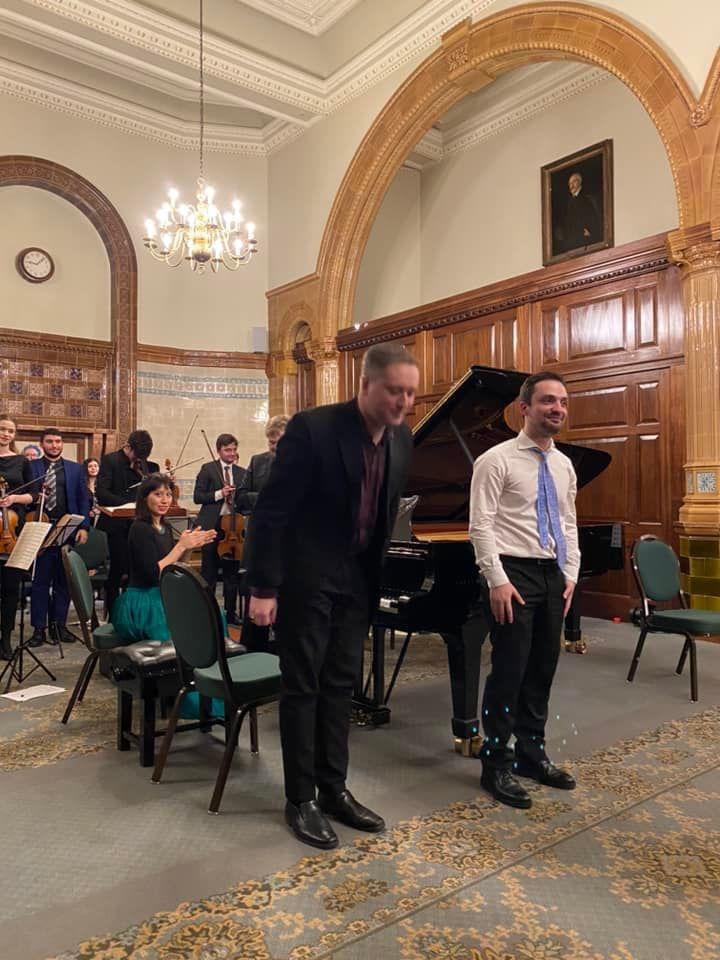
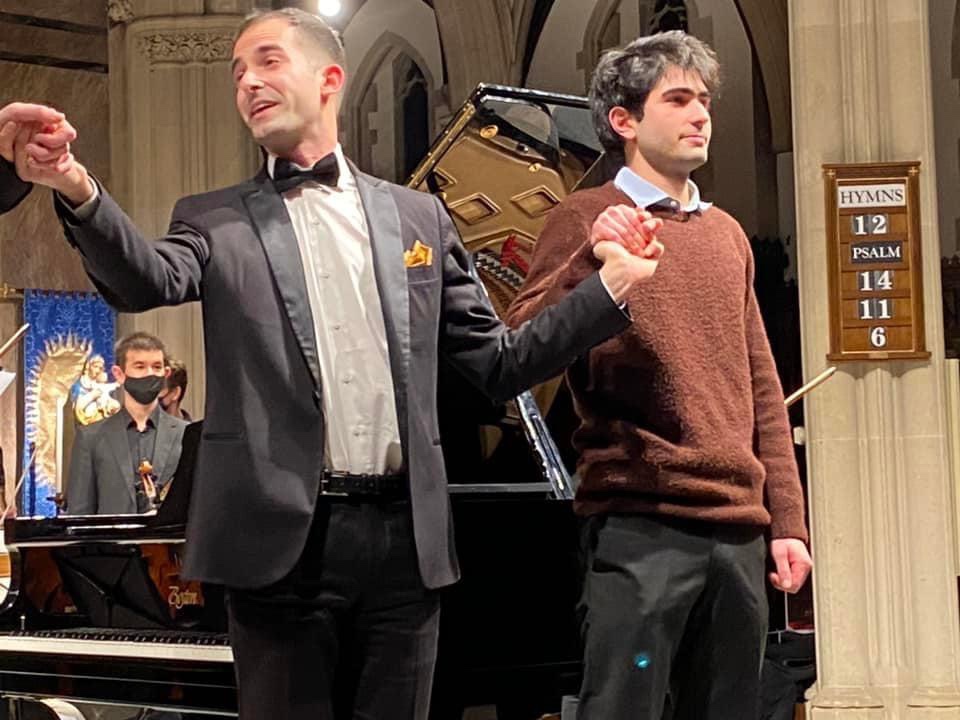
Oleg Kogan with Benjamin Frith

There was beauty and simplicity in the theme and first variation.The second variation showed a beautiful sense of shape and colour with its legato right hand and staccato left and the fourth variation with the gentle rocking rhythmic accompaniment that led to the outburst of the Allegro capriccioso.There were cascades of brilliance in the sixth variation and the subtle sumptuous beauty of the seventh and eighth.There was great agility in the ninth and an almost religious stillness to the ‘poco adagio’ tenth with its sumptuous accompaniment.Great technical agility in the twelfth and thirteenth before the sumptuous beauty of the fourteenth with its beautiful melodic line suspended above a staccato accompaniment.There was magic in the air as the etherial beauty of the fifteenth variation gave way to the desolation of the final sixteenth.

Ben in discussion with colleague of yore,Linn Rothstein with Pollina Kogan looking on amused.

This was just a preparation for the sumptuous beauty and passionate commitment of the ‘Davidsbundler’.Schumann’s early piano works were influenced by his relationship with Clara Wieck. On September 5, 1839, Schumann wrote to his former professor: “She was practically my sole motivation for writing the Davidsbündlertänze, the Concerto, the Sonata and the Novellettes.” They are an expression of his passionate love, anxieties, longings, visions, dreams and fantasies.From the subtle passionate syncopation of the opening to the sublime musings of the second piece played with such clarity of line and heart melting beauty- Eusebius indeed had entered before being knocked of his pedestal by the rumbustuous Floristan.There was disarming simplicity with the fifth ‘Einfach’ before the rollicking moto perpetuo of the sixth.Extraordinary beauty of the seventh where time seemed to stand still before the rhythmic drive of the following three movements ending in the epic Balladenmassig played with passionate ardour.The gentle shadowed lyricism of the eleventh was followed by the whimsical twelfth thrown of with nonchalant ease.Passion and fire ignited the thirteenth with the wonderfully lyrical middle section that seems to arise above the turbulant waves with a coda that was thrown off with the ease of the great pianists of another age.The fourteenth is one of Schumann’s most sublime creations and it was played with a golden sound of heart rending simplicity.There was great sweep to the fifteenth with its passionate outpouring of melody and the entry of a brief lighthearted play on rhythm ‘mit gutem Humor’.The sixteenth is an epilogue with magical apparitions of past memories.Very similar in atmosphere to the epilogue of Ravel’s Valses Nobles.

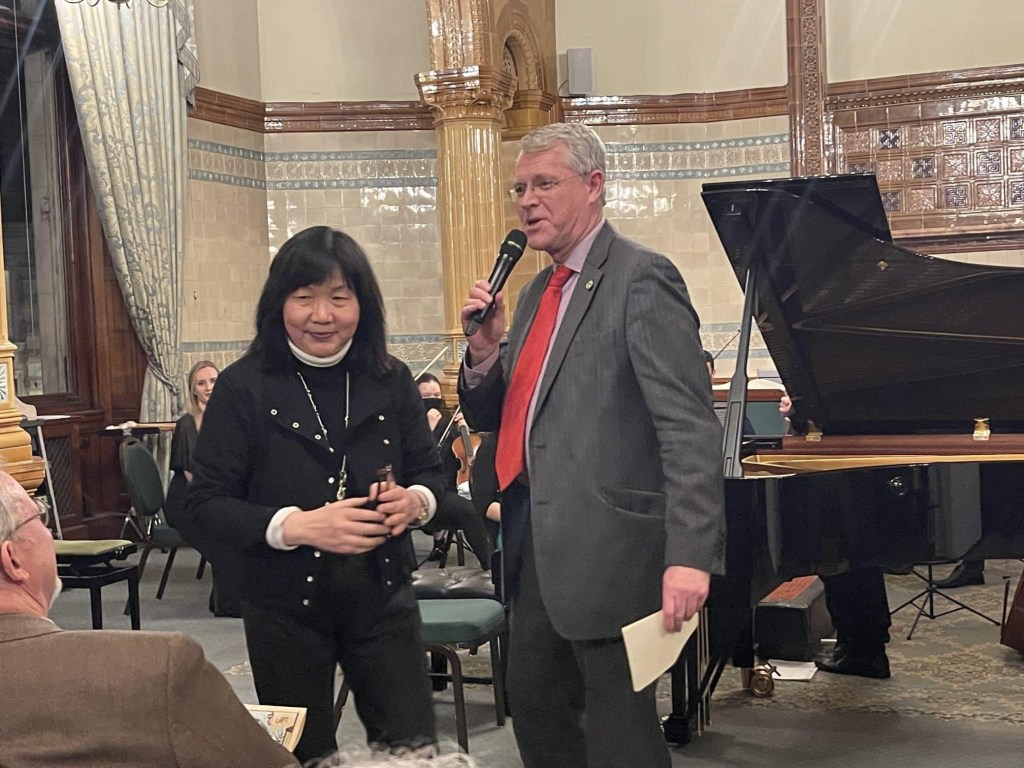
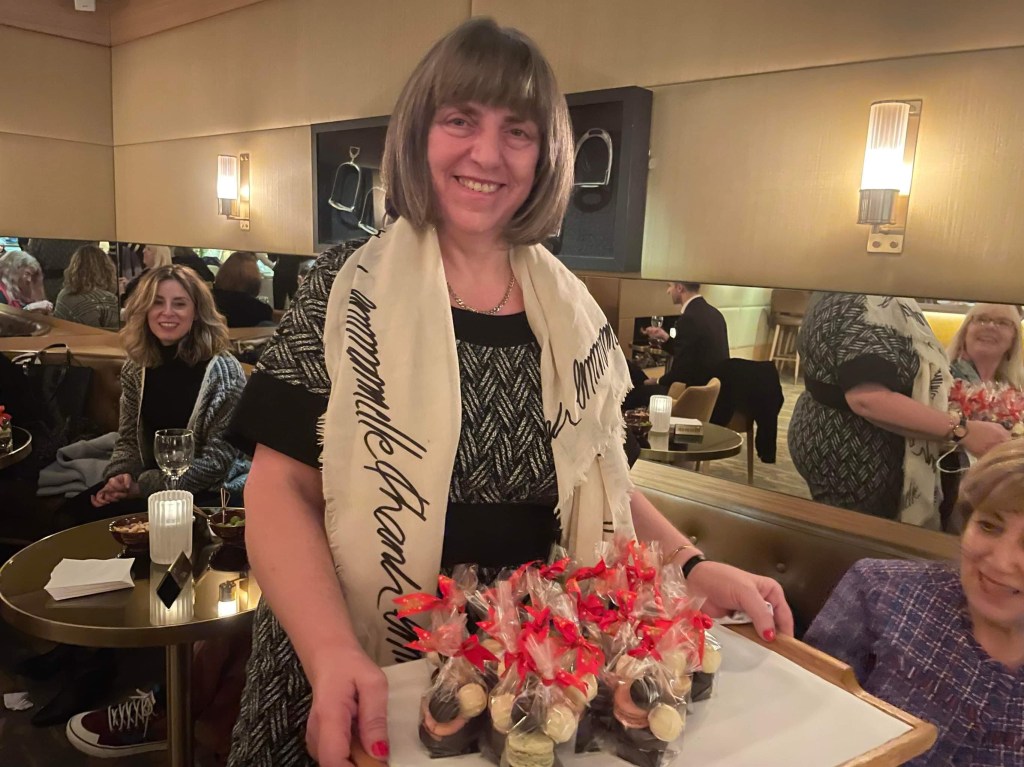
An honoured guest presenting Oleg Kogan with a present of esteem and thanks

It built up to an exhilarating climax only to die away to the whispered simplicity of a waltz of such nostalgia and beauty that is no longer as time has passed.The entire penultimate piece is played ‘as if from afar’, lending the music a patina of nostalgia. None of this, however, prevented Schumann from adding his C major postscript—a gentle waltz whose simplicity is infinitely affecting. As it draws towards its close, the music begins to fade away with the chimes of midnight sounding deep in the bass. The inscription Schumann placed at the head of this piece in the original edition tells its own story: ‘Quite superfluously Eusebius added the following; but in so doing, much happiness radiated from his eyes.The first edition is also preceded by the following epigraph that sums up so poignantly the magical atmosphere of this masterpiece: Old saying
In each and every age
joy and sorrow are mingled:
Remain pious in joy,
and be ready for sorrow with courage.

Ben with Pollina Kogan

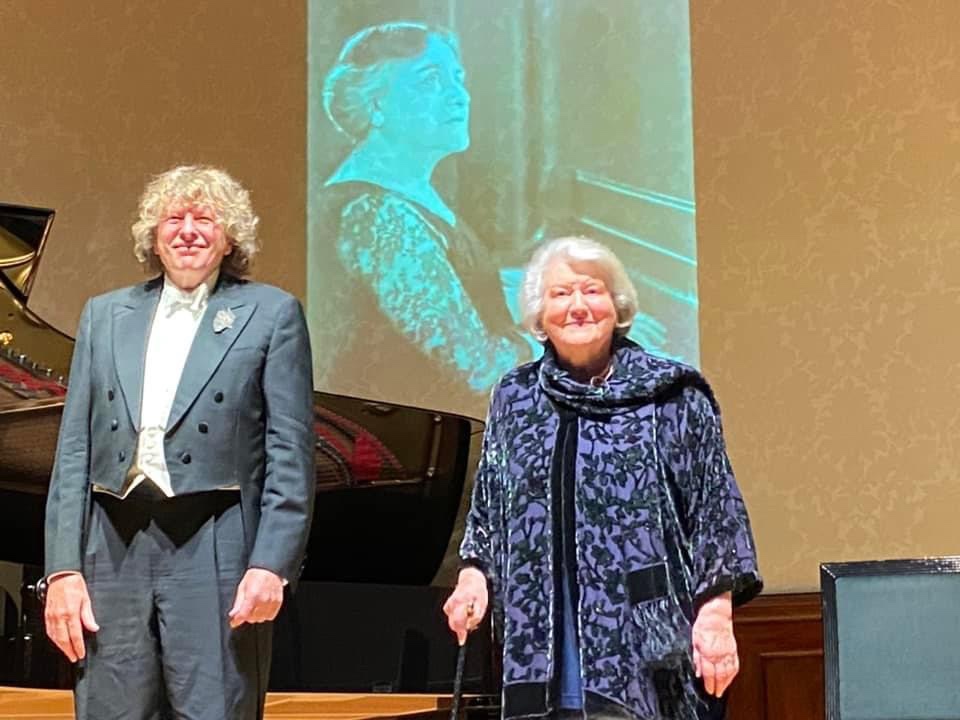
A wonderful tribute to a remarkable lady from a master pianist formed and shaped by her and demonstrating her great legacy of integrity,intelligence and humility in her approach to the classical repertoire.Something that with her unique northern directness and simplicity she promoted with untiring energy and passionate enthusiasm.

https://christopheraxworthymusiccommentary.wordpress.com/2021/01/13/roberto-prosseda-pays-tribute-to-the-genius-of-chopin-and-the-inspirational-figure-of-fou-tsong/

Arcadi Volodos whispered secrets of introspection and fantasy

Arcadi Volodos at S.Cecilia that like Richter chose to play in penombre as he comuned with the very soul of Schubert’s D major Sonata. Sounds of sublime beauty contrasting with driving rhythmic urgency.Moments of such ravishing beauty that time seemed to stand still as he relished the perfumed sounds of such subtle fragrance.Sounds that I have only ever heard from Gilels where his fingers were like limpets driving deep into each key to produce velvet sounds of glowing richness.
But Gilels never forgot that even in Schuberts most mellifluous continuous outpouring of melodic invention there must always be that underlying rhythmic current that holds the whole architectural structure together.


Curzon was a master of this as demonstrated by his famous recording of this sonata.I remember a youthful Murray Perahia holding our rapt attention with it in Rovigo.A recital that included Mozart D minor Fantasy and Chopin four ballades – a truly unforgettable experience.
Forty minutes of sublime sounds and transcendental control but with Volodos tonight it did not hold us on the edge of our seats as Curzon,Gilels,Brendel or Perahia could do.
Could it be that such pianistic perfection should also contain some imperfection too?
A performance to marvel at but not to be devoured by.

I was hoping that like in his last recital his concentrated playing was so great that the first half of late Liszt had me exclaiming that this was the greatest pianist of our day.The way he touched the keys ,his supreme artistry where the shape of his hands was like a sculptor shaping the sublime sounds he was able to create.The first half of late Liszt played as a whole without a break was quite sublime and will never be forgotten.The range of sound and above all the supreme musicianship was of a different age.The second half had been less convincing as the musical vocabulary became repetitive rather than creative.https://christopheraxworthymusiccommentary.wordpress.com/2020/02/04/3822/

The second half today was dedicated to two of the most loved works in the piano repertoire: Schumann’s Kinderscenen op 15 and the Fantasy op 17,only Kreisleriana op 16 separates them.A series of masterpieces that poured from Schumann’s soul from op 1 to op 26. Unfortunately it was an evening where Volodos seemed to be like a cat playing with a mouse.Ravishing sounds that seem to stand like little episodes on their own,discovered and played with like an improvisation Little counterpoints that would suddenly appear as quickly as they would disappear without any apparent reason except for a personal journey of discovery.Could he be bored and looking for new things to ignite and renew that initial voyage of discovery?After a lifetime of playing these works instead of becoming more profound with a deeper insight Volodos- the greatest pianist alive or dead – seemed tempted today to look into the nooks and crannies forgetting the actual point of arrival of the journey.A distinguished pianist present at the end told me he had not realised that it was to be an all Scriabin programme!

Kinderscenen was played with ravishing sounds that rarely rose to mezzo forte.A ‘Traumerei’ where the climax was played so gently as it dissolved to an incredible pianissimo.Sounds that I have only ever heard from this pianistic genius.Of course there were many beautiful things because Volodos is a great artist even though today he seemed distracted and to have lost his way. There was a beautiful melodic line in ‘Of foreign Lands and Peoples’ and a gentle playfulness to ‘A curious story’.Fleeting lightness of ‘Blind Man’s Bluff’ was followed by some beautiful subtle shaping of the ‘Pleading Child’ and ‘Happy Enough’.The ‘Important Event’ was played with a restrained mezzo forte to contrast with the forte of the central section as ‘The Knight of the Hobbyhorse’ was played with delicious rhythmic verve but always in penombra.By the time he got to the ‘Child falling asleep’ I was too!The ravishing sounds of a ‘Poet Speaks ‘ we had heard it all before.There was a lack of overall architectural shape to this miniature masterpiece that Volodos had neglected in his search for half lights and whispered asides.Sounds of course that no other pianist alive could even imagine but that today he too seemed to have got lost in this maze of sublime creation.

One of the greatest masterpieces of the Romantic era is the Fantasie in C op 17 by Schumann that is dedicated to Liszt.Liszt in turn dedicated his Sonata in B minor to Schumann,that other pinnacle of the Romantic repertoire.I was expecting an overpowering authoritative performance from Volodos but who today had chosen to make his own fantasy on Schumann’s already perfect masterpiece.Added octaves and unexpected eruptions of volcanic proportions.Strange counterpoints underlined at the expense of the musical line,episodes that seemed to end in a sumptuous dead end as it had been teased and played to death.An architectural line that today Volodos had sacrificed to the intimate secret confessions that maybe suited his mood as he sat in almost total darkness in front of this magnificent black box.Today it seemed full of toys and play things instead of the wondrous jewels that I was indeed hoping for from one of the greatest pianist before the public today.

Five encores were generously offered to the very small but enthusiastic audience.The slow movement from the A major Sonata op posth by Schubert where for a moment the turbulent middle section seemed to bring some much needed contrast to the sublime sounds he had teased out of the piano before and after.Another four encores including the famous Brahms Intermezzo op 117 and other works that I could not identify but presume of the school of Scriabin even with a hint of Sondheim in one of them.But where is the Volodos of the Turkish March or the other fabulous encore pieces that had us all in delirium the first time he appeared in Rome.A recital programme must have some shape and contrast and be like a great theatrical production full of every facet of life .Grief ,sadness,and whispered secrets but also joy,life and exhilaration.It is a show and needs a showman to lead us like Rubinstein or Horowitz or indeed the greatest showman ever,Franz Liszt.

It was nice to see all the pianists gathered here today to pay homage to this great artist.Eduardo Hubert an intimate friend of Martha Argerich who like me was studying in Rome many years ago!He was even the page turner for a duo I had with Mirta Herrera in that period.He is a much better pianist and composer than page turner,by the way.50 years ago cannot have been me then!Greeted by Maria Teresa Carunchio,a prodigy of Emma Contestabile,who insisted on calculating the years that had passed since she too had been studying in Rome and shared the Pensione Rosario in via Sistina with us all.Musicians all following on the trail of the much missed Fausto Zadra in the class of Carlo Zecchi and Guido Agosti.

A masked Daniil Trifonov still in Rome instead of Vienna

Daniil Trifonov was present too.He had braved tennis elbow to respect his tour with Pappano and the S.Cecilia Orchestra only to be cheated out of their concert tonight in the Musikverein in Vienna- cancelled as COVID once again raises its evil eye.The life of a travelling musician is certainly not an easy one but in the end what and honour to know that all roads lead to Rome and this magnificent hall that Renzo Piano has donated to the Eternal City.

Julian Trevelyan at St Mary’s – Liszt restored to the pinnacle of the Romantic repertoire

Tuesday 30 November 3.00 pm

Debussy :Prélude a l’Apres-midi d’un Faune

Chopin: Barcarolle Op 60

Liszt: Sonata in B minor

Faure: Nocturne in B minor Op 119

A truly remarkable performance of the Liszt Sonata was the highlight of Julian Trevelyan’s recital at St Mary’s .


I have heard him give extraordinary performances of the Hammerklavier Sonata and the Diabelli variations.But it is the Liszt Sonata today that will remain for a long time in my memory not only for it’s Arrau type control but also for his scrupulous attention to Liszt’s detailed instructions.
How often they are ignored by fine pianists as tradition takes over from intelligence and real musicianship sacrificed to passionate fervour and showmanship.
The simple staccato B that ends this one movement masterpiece was the same simple staccato note that had opened the gate to this vast range of emotions and revolutionary transformation of themes that was to be the inspiration later for Liszt’s son in law Richard Wagner.There was a remarkably musicianly opening with a clarity and scrupulous attention to detail .A sumptuous full sound in the first big climax that was immediately diffused and where the silences too had great emotional significance.There was the devilish left hand motif of such menace leading to the beauty of the ‘Marguerite’ melody played with great shape and style.

A highly controlled performance where any slight blemishes were of no significance in a performance of such noble vision,The opening of the slow movement where the hands were slightly out of sinc as he strove to find the right colours in the magically atmospheric chords.The passionate central climax was played with superb control and a wonderful balance between the hands.The anchor very much in the bass giving an aristocratic control and an ‘Arrau’ sense of weight of notes pregnant with significance.There was a stillness in the long falling passages above radiant left hand chords leading to the clarity and absolute precision of the fugato.The treacherous octaves at the end were played with enviable clarity and control as the sonata unwound to its inevitable celestial conclusion.


Already from the opening of the Debussy ‘Prélude a l’Apres-midi’ there was extreme delicacy with washes of colour and a wonderfully rich orchestral sense of colour adding such atmosphere with the refined detail he gave to the different instrumentation.


A Barcarolle that suffered a little from too much water and at one point risked sinking altogether!But it was played with a wonderful sense of melody with Chopin’s magical golden line shining through with such colour and sensitivity.A gentle opening with a wonderful lilt to the gentle lapping of waves that created the base for this continuous outpouring of song.I was not convinced by the non legato/staccato embellishments that sounded suddenly too contrived and pianistic but it was a momentary lapse in an overall performance of great warmth and love.There was a moment too in the transition that sounded nit a little laboured and could have been more simply,opening the door as it does to one of the most magical moments that Chopin has ever created.It was the moment that had Perlemuter exclaiming that this was paradise.Julian at a certain point though looked rather tense with shoulders high and I wonder if all his energy had been directed to the Liszt and poor Chopin had been given poor shrift in its preparation this time!


The Fauré Nocturne in B minor op 119 was one of Fauré’s last works written when he was in his nineties and hard of hearing.But like Beethoven,Fauré could hear wondrous sounds in his head that he was able to share with posterity on the printed page.Written in 1921, three years before Fauré s death, the tragic despair of the Thirteenth Nocturne shares its depth of feeling with few other works in the piano repertoire. Certainly nothing like this was written by Debussy or Ravel, and only in the last pages of Beethoven, Schubert, Mozart or Bach can parallels be found to its austere heartbreak and it should be regarded as deeply autobiographical.The 13th nocturne has long been considered a secret masterpiece by Perlemuter ,Horowitz and many other great musicians.
It showed off all the remarkable facets of Julian’s artistry:intelligence,transcendental control of balance and colour together with the passionate commitment of an artist who has a burning desire to share his musical discoveries with others.An encore of the Intermezzo in C op 119 by Brahms was played with the same consumate ease and style that I remember from the hands of Clifford Curzon

Dr Hugh Mather :’It was a truly remarkable recital indeed by a very special pianistic talent.’Here is the link https://youtu.be/bzfgIJXv8HM

Julian Trevelyan is a British pianist and performs regularly throughout Europe and the UK.  Performances in the 2019/20 season have included Prokofiev’s fifth piano concerto with the Russian State Academy Symphony Orchestra, Howard Blake piano concerto and Brahms’ first piano concerto in the UK.  He gave the first Russian performance of the Concertino for piano and orchestra by Lucas Debargue in the Zaryadye Hall in Moscow in December 2018.  His solo recitals have included performances of Beethoven’s Diabelli variations in London, Munich, Paris,  and Switzerland. Over the past four years, Julian has studied piano with Rena Shereshevskaya at the Ecole Normale de Musique in Paris.  Since 2018 he has also been studying Musicology at Oxford University.  He composes, regularly performs chamber music on piano, violin and viola, and sings with an acappella group in Oxford. Since the pandemic eased In the summer of 2020 he has taken part in the Vienna Summer School of the International Piano Foundation Theo and Petra Lieven of Hamburg, and has been able to return to France to give a number of solo recitals.

https://christopheraxworthymusiccommentary.wordpress.com/2019/03/27/julian-trevelyan-plays-the-diabelli-variations-at-st-marys/

https://christopheraxworthymusiccommentary.wordpress.com/2017/04/11/julian-trevelyan-at-st-marys/

Maria Serena Salvemini triumphs in Frascati

Some scintillating playing from the 16 year old violinist Maria Serena Salvemini with her mother and teacher Daniela Carabellese and the pianist Pietro Laera.
Yesterday this very gifted young violinist was awarded the Gold Medal for her exceptional youthful activity,by the ‘Maison des Artistes ‘in the Aula Magna of La Sapienza University of Rome.

Maria Serena Salvemini in the Aula Magna of La Sapienza University of Rome


Today they had been invited to play in Villa Aldobrandini by the distinguished pianist Marylene Mouquet.

Marylene Mouquet


The Trio are from Puglia – that land kissed by the Gods from which so many distinguished musicians have their roots.Not least of whom the legendary violinist Gioconda de Vito from Martina Franca and Riccardo Muti from Molfetta the very town where our young violinist was born too.Not to mention Beatrice Rana,Benedetto Lupo and Francesco Libetta.
Five pieces for two violins and piano by Shostakovich immediately presented their notable musical credentials.Short works played with charm and character from the beautiful mellifluous opening to the charmingly shaped Viennese style waltz and the final flamboyant dance.


This was just the opening for a series of violin show pieces :Ziguenerweisen by Sarasate and the solo 24th caprice by Paganini which were given scintillating performances that showed off the technical and musical mastery of this young artist.

Maria Serena Salvemini


The mother Daniela gave a performance of the Spanish Dance from La Vida Breve of De Falla that was full of the flair and colour that Kreisler had brought to his transcription of this piece.
Together in Saratsate’s Navarra mother and daughter brought a subtle display of scintillating virtuosity.


The scene was set for the highlight of the concert with a remarkable performance by Maria Serena of Saint Saens famous violin warhorse the Introduction and Rondo Capriccioso.A performance full of subtle artistry and technical command and a maturity way beyond her sixteen years.Some very fine playing from her orchestra Pietro Laera,who throughout the concert had followed the violinists every move listening very carefully and never overpowering his companions even with the lid of the Steinway fully open to reflect the sound.A very interesting work was written especially for Maria Serena by the composer Massimo De Lillo and was played in a real duo performance with Pietro Laera.Both artists showing off to the full this very interesting work with its beautifully mellifluous opening and sumptuous accompaniment to the energetic finale of great fervour.


A beautiful Tarantella full of ravishing sounds and excitement was played by the trio with superb ensemble and brought this very enjoyable concert to its official end.
A standing ovation after their delicious Hungarian encore was a just reward for these remarkable musicians.

Minkyu Kim – mastery exults to the glory of Liszt

Saturday 27 November St Mary’s Perivale

The Liszt Society Annual Day and Competition

Minkyu Kim Leslie Howard Mark Viner

1.00 pm Recital by Minkyu Kim (1st prize in the 2019 competition) 

Two Hungarian Recruiting Songs ‘Zum Andenken’, S241Scherzo in G minor, S153
Schlaflos! Frage und Antwort (‘Question and Answer’) – Nocturne nach einem Gedicht von A Raab, S203i
Schubert song transcriptions S558: no 1 Sei mir gegrüßt
Soirées de Vienne – Valses-Caprices d’après Schubert, S427: No. 4
Variationen über das Motiv von Bach, ‘Weinen, Klagen’ S180
Grande Fantaisie sur des thèmes de Paganini – La clochette et Le carnaval de Venise,

https://christopheraxworthymusiccommentary.wordpress.com/2020/01/21/minkyu-kim-at-st-marys-viva-franz-liszt-the-poet-of-the-piano/

Some quite extraordinary playing from Minkyu Kim.A total mastery of the keyboard,a transcendental technique that seems to know no difficulties .But above all a poet’s soul allied to an intelligence that brings to life a programme of almost unknown works of Liszt.A Campanella Fantasy that Mark Viner exclaimed was impossibly difficult .Not for this young pianist who brought it vividly to life.One could see Liszt’s work in progress and indeed understand the gentleman in Dublin who exhorted Liszt :“Play them bells again Paddy”.The only work that I knew was the extraordinary “Weinen Klagen Variations” that received a truly monumental performance.There was a great sense of balance even when there were transcendental left hand octaves but he was always aware of the overall architectural line.The triumphant ending of a work,that even Perlemuter in his old age had on his music stand,was played with total conviction and mastery.There was great rhythmic control and clarity in the two Hungarian Recruiting Songs S 241 and scintillating playing of great rhythmic drive in the Scherzo S.153.There was also the great beauty of the tenor melody in Schubert’s ‘Sei mir gegrusst’accompanied by ravishingly arpeggiated chords played with such subtle colouring .Soirée de Vienne S.427 N.4 was a novelty as we know only the famous one immortalised by Horowitz and the virtuosi of the Golden age of piano playing.An irresistible rhythmic pulse of extreme delicacy led to a gradual build up to a mighty climax all played with crystalline clarity.An encore of a March that had remained unknown for over a century ,of course now recorded by Leslie Howard,but that Minkyu wanted to play as a final tribute to Liszt at his prizewinners concert today at St Mary’s.

Minkyu Kim was born in South Korea in 1995. He studied piano with Soojeong Jeong at Goyang High School of Arts and with Hyung-Joon Chang and Sehee Kim at Seoul National University and harpsichord with Joohee Oh. He has won many prizes including second prize in the Korean Liszt Competition, first prize in the Jock Holden Memorial Mozart Prize (RCS), Governors’ Recital Prize for Keyboard (RCS), Philip Halstead Prize (RCS) and third prize in the Windsor International Piano Competition. He was selected as one of 14 semi-finalists of International Franz Liszt Competition in 2020, unfortunately cancelled due to the pandemic. Minkyu has given many recitals in Korea, including several lecture concerts. He has also performed the entire Transcendental Études by Franz Liszt. Minkyu has performed piano concertos with Goyang High School of Arts Orchestra, Scottish Ensemble and the Royal Scottish National Orchestra, and has had several chamber music concerts with Seoul National University Philharmonic Orchestra. After graduating with distinction from the University in 2017, he began his studies at Royal Conservatoire of Scotland with a full scholarship from ABRSM. He is currently studying for a Doctor of Performance degree at the RCS in with Professor Aaron Shorr and Sinae Lee with a full scholarship.

The Liszt Society International Competition 2021


HyunJeong Hwang (aged 31, from Korea)

Études d’exécution transcendante d’après Paganini, S140: nos 2 in E flat / 6 in A minor
Rapsodie espagnole – Folies d’Espagne et Jota aragonesa, S254

Anastasia Tionadewi (aged 24, from Indonesia)

Harmonies poetiques et religieuses, S173 no 3: Bénédiction de Dieu dans la solitude

Eri Yamamoto (aged 27, from Japan)

Rigoletto de G. Verdi – Paraphrase de concert, S434
Deuxieme Année de pèlerinage – Italie, S161: no 7: Après une lecture de Dante – Fantasia quasi Sonata


Results of the competition announced

Anastasia Tionadewi winner

Some very fine playing from all three contestants in the Annual Liszt competition.Some rather over cautious playing from HunJeong Huang but nevertheless with some beautiful shaping of great musicality.A finely spun Dante Sonata from Eri Yamamoto after a scintillating Rigoletto paraphrase.But it was to the beautiful unrestrained musicality of Anastasia Tionadewi that first prize was given.

HyunJeong Hwang

HyunJeong Hwang is a keen pianist with a passion for the classical and romantic repertoire, and she enjoys an active and multifaceted musical life, performing as a soloist and chamber musician.  She won various competitions in South Korea from the age of 17, and went on achieve a high commendation in the Lilian Davis Competition at the Royal Academy of Music, the 4th prize in the Osaka International Competition, 2nd prize in the Lazar Berman Competition in Italy,  and was also asked to be an official accompanist at the Grand Virtuoso Prize in London for the winning concert at the Elgar Room, Royal Albert Hall. A frequent guest at international festivals she has played in Amalfi (Italy), Gabala (Azerbaijan), Puigcerda (Spain) and Kyiv (Ukraine) – where she performed Beethoven’s Fourth Concerto. She holds a BMus and MMus from the RAM, where she studied with Daniel-Ben Pienaar and Colin Stone, and she continued with her doctorate at the Guildhall. 

Anastasia Tionadewi

 Anastasia Tionadewi was borin in Indonesia in 1997, and pursued her musical education in Melbourne Conservatorium of Music, The University of Melbourne under the tutelage of Miss Janine Sowden. She has performed throughout Australia, and is the winner of many national awards and prizes there, including the Hephzibah Menuhin Award, the Florence Menk Meyer Prize, the C G McWilliam Bequest, and the Ormond Exhibition Scholarship for the best student of the course for the Bachelor of Music (Hons). Anastasia is now one of the Guildhall School of Music scholars, studying with Joan Havill in the artist master’s programme. 

Eri Yamamoto

Eri Yamamoto was born in Tokyo and, after achieving her BA and MA with highest honours at the F. Liszt Academy of Music in Budapest as a Stipendium Hungaricum scholar, she moved to London in 2017 to further her skills on the Professional Diploma course at the Royal Academy of Music. Currently she is also an official piano accompanist of the RAM. She has won numerous prizes and awards throughout Europe and Asia, and she has recently performed important engasgements in Warsaw, Budapest Salzburg and Tokyo. She studied with Na´dor Gyo¨rgy and Orsolya Szabo´ and participated in masterclasses by Cyprien Katszaris and Pavel Gililov. Eri currently receives coaching from Julian Jacobson.

https://christopheraxworthymusiccommentary.wordpress.com/2019/12/01/liszt-comes-to-perivale/

Trio Eidos -Margoni -Bruno- Loperfido ‘ A winning combination of musical integrity and youthful passion together with intelligence and technical brilliance’.

What a wonderful surprise to find this concert in the local town hall full to the rafters on this wet winters evening,ready to applaude a trio of young twenty year old musicians.
It speaks louder than words of the perseverance in the name of young talent,of Elisa Cerocchi and Tiziana Cherubini.


Determined to maintain the crusade of Arch Riccardo Cerrochi to bring the highest excellence of culture to this magical but much overlooked part of Italy.
The masterclasses at Sermoneta on the hills around Latina have become legend since their beginning with the noble Cattani/Howard family.
The decision to create the marvel that are the gardens at Ninfa, the ruin that Liszt knew and frequented as his pupil was Roffredo Cattani, the composer.
They invited Menuhin and Szigeti to their castle to play and give masterclasses in the 60’s to help and encourage future generations-Jaqueline Du Pre was one of the first students.
Arch Cerrochi maintained and amplified that promise until his death a few years ago.
It is nice to see his daughter now at the reigns with the same devotion and surrounded by expert musicians whose care and advice is obviously bringing new life and opportunities for young musicians.


Trio Eidos is made up of Ivos Margoni (1999) a student of Accardo at the extraordinary Stauffer Academy in Cremona. Stefano Bruno (2000) student of Giovanni Solima and Giulia Loperfido(2000) student of Benedetto Lupo, both at the S.Cecilia Accademy in Rome.Playing of such intelligence and musical integrity together with youthful passion and technical brilliance.
And what wonders they produced with a scintillating performance of Mendelssohn D minor Trio. Glittering silver from Giulia’s fingers as Ivos and Stefano intoned Mendelssohn’s passionate outpouring of melody.Both listening to Giulias beautiful playing of the Andante ready to join in a musical conversation full of the passion and enthusiasm that only youth can offer.


A recently written work by Capogrosso saw the perfect gentleman of a cellist helping a damselle in distress as Giulia valiantly prepared surprises inside the piano.Some very energetic sounds all expertly played with great seriousness finally ending with a magical ethereal coda of ravishing effect.Just ten minutes that cleansed and refreshed the ears like a sorbet at a ‘cordon bleu’ dinner party
Of course Brahms C minor trio op 101 found its ideal interpreters with these wonderful passionate young players.
Superb intonation and balance throughout meant that Brahms’s passionate outpourings could sweep over this very full hall and hold us all in their spell to the final noble chords.
An encore by Beethoven just underlined the extraordinary musical credentials of this newly formed youthful Trio.
Elisa and the Cherubini family very much in evidence .Elisa’s astonished remark – ‘all only 20’ – as she too was bewitched and thrilled that her fathers wish was being maintained in the name of youth and culture in his beloved home town Latina

https://christopheraxworthymusiccommentary.wordpress.com/2021/07/24/alfonso-alberti-celebrations-the-shadow-of-dante-in-the-magic-garden-of-ninfa/

Peter the Great- Peter Frankl with the Kelemen Quartet in Budapest

A wonderful review from the distinguished critic Ates Orga after reading Julian Jacobson’s comment on social media: ‘Jaw dropping ‘ http://www.colinscolumn.com/peter-frankl-the-kelemen-quartet-in-budapest-the-sole-f-minor-piano-quintets-by-brahms-and-franck-live-webcast/

Peter Frankl and the Kelemen Quartet in Budapest tonight with superb performances of the Franck and Brahms Quintets.What a lesson Peter Frankl in his 87th year playing with all the youthful passion of the superb Kelemen Quartet less than half his age.I remember Peter remarking about his friend Menahem Pressler playing the Franck Quintet for the first time in his nineties and remarking that it was one of the most difficult and strenuous works in the repertoire.
And yet here in Budapest Peter played not only the Franck Quintet but also the Brahms Quintet – two monuments of the chamber music repertoire.
And what a lesson it was as he weaved his way in and out with his magnificent players in a musical conversation that today has no peers.
Hugh Mather,of that musical Mecca of St Mary’s in Perivale,just commented that he thought Peter no longer played in public.
How wrong can you be!
Just listen to these performances last night!


Peter had to have two 80th birthday parties in London – one for his English friends and one for his Hungarian friends – there were so many people that wanted to pay tribute to one of the most loved musicians of the day.Together with his inseparable wife Annie they are one of the most loved couples for their intelligence warmth,humility and supreme artistry.A rarity indeed these days where quantity has been mistaken for quality.
Many people thought he no longer lived in London as he never plays there any more.
Peter would commute to Yale University for many years but always came back home to London.
He would often come with Annie to play for us in Rome and it would of course include a visit to the Villa Borghese or other famous monuments.But they also insisted on coming to see my wife on stage and I well remember the fun we had in my wife’s green room afterwards.One year Peter got a letter from Dame Moura Lympany congratulating on his superb performance of the Liszt Sonata at the Ghione Theatre.He had no idea that such an illustrious colleague had been present.Little did anyone know that when Moura was housebound in Montecarlo due to a stroke just before her 80th birthday,I used to send her videos of all the concerts at the Ghione theatre.We would then discuss and enjoy the performances together.I well remember a young Canadian pianist Katherine Chi from the International Piano Academy in Como ,playing the Hammerklavier Sonata and both Moura and Peter after hearing the video asking how they could help such an enormous talent.Moura and Peter – two of the most generous artists that has been my privilege to know.
Peter and Annie go more to the opera and the theatre than to piano concerts and they would often ring us up to say they had seen a play that would be particularly ideal for Ileana.
‘Glass Menagerie’ was a terrific success for Ileana thanks to them.( Rosalyn Tureck made a journey especially from Florence to Empoli to see her in it)


Peter now feels uncomfortable to play solo piano from memory and refuses to use a score.So in the past few years he has dedicated himself to the vast Chamber music repertoire of which he is the indisputed master now that Menahem Pressler has retired.(There are only us two left as Horowitz said to Cherkassky when Bolet died).


This can be seen and heard in Budapest last night and it is indeed strange that so many great artists living in London are never actually invited to perform there.Cheethams in Manchester (where he gave the greatest performance of Beethoven’s 4th Concerto that Craig Shepherd had ever heard ) and the Oxford Philamusica have been two enlightened oasis that have been able to enjoy his performances and precious advice in Masterclasses,but London has been deaf for too long to the gold that is hidden at the bottom of its garden!

https://youtube.com/watch?v=nG3jCI2_pHo&feature=share

Jianing Kong Master musician at St Mary’s

Tuesday 23 November 3.00 pm


Beethoven: Piano sonata in E Op 109
Vivace / Prestissimo / Andante and variations

Brahms: Piano sonata in F minor Op 5
Allegro / Andante / Scherzo / Intermezzo / Finale

It was very stimulating to be able to hear Jianing Kong in the Brahms F minor Sonata just a few days after hearing his mentor Dmitri Alexeev play it in his series of concerts dedicated to his own mentor Dmitri Bashkirov.Of course both are superb musicians and real artists with all the technical resources at their fingertips to be able to concentrate on the actual meaning behind the notes and the overall architectural shape of this monumental work.One cannot make comparisons between two such committed performances.Each one stands on it’s own and in that moment is totally convincing.But it is possible on reflection to make some comments and observations as one rethinks of the performances and of things that linger in ones mind and are to cherish for a long time after the sounds have died away.Let me say immediately that the comparison for me is between Alexeev at the helm of the Philadelphia under Ormandy and Jianing with the New York Philharmonic under Boulez.

Some time ago I heard Volodos play the Brahms second piano concerto at the Festival Hall.Volodos ,also a pupil of Bashkirov,has been glibly but with a grain of truth described as the greatest pianist alive or dead!It was a magnificent performance that just slipped out of his fingers with his ravishing tone and transcendental technical control. I remember very little else about subtle details or those velvet moments (to use Joseph Coopers very apt remark about the F sharp major episode of the slow movement). I do though still remember 30 years on the performance by Curzon at the Proms where he sweated blood and tears together with the Concertgebouw orchestra .I was standing almost next to him and could see the enormous effort that went into the performance.My teacher Sidney Harrison listening on the radio confirmed that it was indeed a memorable performance.

Recently a well known critic went to hear the Beethoven trilogy played by a very fine artist who having come to the end of his cycle of 32 sonatas had to repeat the trilogy on the same day such was the demand for tickets.I listened to the first performance on the radio in my garden ,the score at hand ,and was overwhelmed by a performance of such perfection and absolute fidelity.The critic had been only able to secure a seat for the second performance and he confirmed my impression of the earlier concert.’There is only one point though’ he said very wisely ‘ when I heard Arrau play this trilogy in the Festival Hall he was so exhausted and exhilarated at the end of such a mammoth journey as was his audience too.It would have been unthinkable that he could have just had a cup of tea and done it all over again’.Wise words indeed.Make of it what you will!Music ,must be a struggle. Like climbing a mountain a life embracing all or nothing effort.

Jaining’s performance of Brahms op 5 I have admired enormously for his formidable technical control and superb musicianship.A rhythmic precision that in this sonata is a great challenge to the performer.There were some beautiful counterpoints in the ‘con espressione’ of the first movement and the transition to D flat was quite magical.His sense of architectural shape was also quite remarkable.The beauty and colouring he found in the Andante duet between voices was only surpassed by the delicacy with which he played the ‘poco più lento.’There was passion too in the gradual build up to the climactic outpourings.Sumptuous rich sounds in the coda that started with a mere whisper and built up to a climax of orchestral proportions.The scherzo was played with enviable clarity and rhythmic energy and his colouring of the trio was of great beauty. The startling Intermezzo was played with great attention to detail but did not quite create the desolate atmosphere of this extraordinary movement.The Finale was played with enviable precision and kept firmly in control as the beautiful mellifluous ‘con espressione’ created a wonderful contrast.There was such a rich sound to the chorale melody too that built to up to an overwhelming opulence.His very clean and precise ‘più mosso’ was just the right maze on which this beautiful chorale melody was to wind it’s way to a tumultuous climax.A remarkable performance that I admired enormously.It is however the struggle and turmoil of Alexeev’s conquest that will remain with me for a long time to come.

https://christopheraxworthymusiccommentary.wordpress.com/2021/11/13/dmitri-alexeev-mastery-and-communication-beyond-all-boundaries/

Jaining’s Beethoven playing I have always admired for it’s precision,clarity and utmost fidelity to the score.But in Beethoven he seems to have understood also the very soul of the composer and I have never forgotten a quite remarkable recital he gave at St Mary’s a few years ago.

https://christopheraxworthymusiccommentary.wordpress.com/2016/12/13/jianing-kong-in-perivale/

Today I will add his op.109 as a thing to cherish.The very opening was played with the feeling that the melodic line had started like a bubbling brook in a distant paradise and had just momentarily resurfaced before disappearing just as mysteriously.It was played with a sense of improvisation that made the ‘Adagio espressivo’ episodes so startling in their rhetorical freedom.Written in such a way that one was not aware that ‘vivace’ was being interrupted by an ‘adagio.’It was a continual magical discovery played by Jianing with such understanding that allowed Beethoven’s notes to unwind with a simplicity that seemed to let the music speak for itself.The ‘prestissimo’ was played very deliberately giving time to allow the intricate details to speak so clearly.Even the ‘fortissimo’ opening was played with an understanding of the overall architectural shape of this rude interruption that Beethoven places as a contrast between two of his most meaningful statements.The opening of the last movement showed the true stature of Jaining’s Beethoven.The theme was played like in the last quartets with a richness of sound where every strand had a deep meaning as Beethoven asks ‘mit innigster Empfindung’ .A first variation was played with such restrained dignity,the almost waltz time accompaniment played with great weight.Rarely have I heard it so full of emotional significance.The ‘leggermente’staccato of the second variation was contrasted so well by the mellifluous ‘teneramente’ where his sense of contrapuntal line was quite extraordinary in it’s logical simplicity.Each semiquaver in the Allegro vivace third variation was give a significance that stopped it running ‘helter skelter’ as it so often does in lesser hands.It led so naturally to the gradual unwinding of the fourth variation before the great weight of the fifth,’Allegro.’’Non troppo’ Beethoven marks and it was this utmost precision that gave such significance to the great rhythmic impulse of this movement.It takes us to a magical realm that only Beethoven could experience in his inner ear but by some miracle could write down to share this celestial world with posterity.In Jaining’s hands it was truly a magical experience and the sublime reappearance of the theme with its subdued sumptuous string quartet writing brought to a close one of Beethoven’s most perfect creations.

Jianing is one of group of musicians from the school of Alexeev who now have illustrious careers of their own.Jianing Kong,Caterina Grewe and Vitaly Pisarenko in pauses from their own concert tours are sharing their knowledge and experience with the next generation at the Royal College of Music so ably run by Vanessa Latarche Head of Keyboard studies.An Ealing girl and like Dr Mather has her origins in the remarkable school of the much missed Eileen Rowe.

https://christopheraxworthymusiccommentary.wordpress.com/2021/10/24/dmitri-alexeev-into-a-new-golden-world-with-jianing-kong-victor-maslov-caterina-grewe-vitaly-pisarenko-at-st-johns/

Jianing Kong has performed to great critical acclaim throughout the UK, US, Continental Europe and Asia. He appeared in many major concert venues as well as with renowned orchestras such as the Hallé Orchestra, Sydney Symphoney Orchestra, Orchestre Royal de Chambre Wollone, Orquesta Sinfónica de Radiotelevisión Espanõla, Scottish National Symphony Orchestra and National Symphony Orchestra of Dominican Republic. Jianing has been awarded numerous prizes in many prestigious international piano competitions such as the Leeds, Scottish, Santander, Beethoven (Bonn), Valsesia and Tunbridge Wells. In 2016, he became finalist and prizewinner at the Sydney International Competition, where his performances of Beethoven Diabelli Variations and Mozart K.467 concerto won unanimous praise and was awarded the Ignaz Friedman best semi-final prize and the best classical concerto prize, respectively. During 2012-13 season, Jianing was invited by the Keyboard Charitable Trust to give a series of recital tour at venues across Europe and America, including a gala-recital Maestro Lorin Maazel’s home Estate — the Castelton Festival Theatre in Virginia, at which Maestro Christopher Eschenbach was one of his audience. In the same year, Jianing was also selected by the Kirckman Concert Society as one of their artists and has since given his Wigmore Hall Debut Recital to an enthusiastic public. In recent seasons, Jianing gave extensive tours in Spain (Madrid, Seville, Córdoba, Santander and Bilbao); in China (all major cities) and in New Zealand. In 2019, Jianing has begun to embark on a new journey of recording and performing the complete Beethoven piano sonatas cycle and the complete chamber music. Jianing studied at the Purcell School with the legendary British pianist Ronald Smith and at the Royal College of Music, first with Ruth Nye and Gordon Fergus-Thompson, and then with Prof. Dmitri Alexeev. He also received regular coaching and mentoring from the renowned Chinese pianist Fou Ts’ong. Apart from a busy performing schedule, Jianing has joined the piano faculty at the Purcell School since 2011, and is now a professor of piano at Royal College of Music.

Shunta Morimoto takes Rome by storm

Talents of the future at Santa Cecilia
Shunta Morimoto
Pianoforte
in collaborazione con International Piano
Academy Lake Como


Sala Accademica
23 novembre 2021 ore 20:30

Johann Sebastian Bach: Partita Nr.4 in Re maggiore BWV 828 Overture,
Allemande,
Courante,
Aria, Sarabande, Menuet, Gigue

César Franck:
Prelude, Chorale et Fugue in Si minore M.21.

Manuel De Falla: Fantasia Bætica

Maurice Ravel : da “Miroirs” Oiseaux tristes,
Alborada del gracioso

Chopin, Fryderik: Sonate no.2 “Marche funèbre” in si bemolle minore Op.35
Grave, Doppio movimento
Scherzo,
Lento, Marche Funèbre
Presto


Wonderful to be back in this hall where as a student at S Cecilia I heard all the greatest musicians of our time.I even remember sitting on stage behind Elisabeth Schwarzkopf and Murray Perahia substituting an indisposed Serkin to play the three Brahms Sonatas with Pina Carmirelli.I remember too our old piano tuner Mordacchini telling me of a certain M°Brendel who he was most impressed with. Mordacchini was a marvellous tuner from the old school who did not bother with the top or bottom registers of the piano that in his opinion were rarely used!This historic hall was immortalised by Visconti in the film ‘Death in Venice.’

Sala Accademica of S.Cecilia in Rome


Today it is the setting for the debut of one of the most , talents of his generation.Already amazing everyone at the age of twelve with performances of Liszt Venezia e Napoli that astonished the musical world . https://youtube.com/watch?v=RgqX6cqNv7I&feature=share. Now at sixteen he is an artist ready to be placed amongst the most revered. https://youtube.com/watch?v=beUHzao-ZXw&feature=share

Shunta at the after concert celebrations engrossed in Beethoven

A eclectic programme that showed off every facet of his artistry. From the precision of Bach,through the passionate out pourings of César Franck.The throbbing heartbeat of the Spain of De Falla,the refined transcendental pianism of Ravel to the aristocratic marvels of Chopin.A programme chosen together with his esteemed mentor William Grant Naboré for his European debut in the historic Sala Accademica of S.Cecilia where Shunta is enrolled in the class of Giovanni Velluti.

William Naboré ( left),Giovanni Velluti (centre).Shunta,Roberto Giuliani (right)

A special event organised by Roberto Giuliani,director of S.Cecilia Conservatory and William Naboré founder and director of the International Piano Academy Lake Como.

Shunta with Giovanni Velluti

Giovanni Velluti I have known since as a student he often used to play in the Ghione theatre and went on to accompany great singers such as Katia Ricciarelli.William(Bill) Naboré I first heard play in Rome in 1972 when he gave a remarkable performance of the Diabelli variations in the Gonfalone Chapel of the indomitable Gaston Tosati.When I had already launched my concert season in Rome in 1982 with Guido Agosti and Vlado Perlemuter both in their 80’s it caused quite a stir with many great artists strangely neglected in Italy .I also gave a much needed platform to many of the most gifted of the younger generation.Bill was starting up his Academy in Como as fellow student of Carlo Zecchi ,Franco Scala,would do too, later in Imola.They have become the two most important Academies in Europe and a living testimony of the need of a place of excellence where the finest young pianists could find specialist training and help in building a career.Bill would often call me up to ask if I could persuade Alicia de Larrocha,Moura Lympany,Rosalyn Tureck ,Fou Ts’ong and many others to come to Como for brief periods to live and work with some of the finest young pianists.They flocked to his Academy that was dedicated to the serious study of the piano with some of the most revered artists of our day.Martha Argerich is the President.

Bill Naboré,Shunta,Giovanni Velluti

Bill has been helping this young boy together with his early teacher Shohei Sekimoto for some time in Japan.Now at 16 Shunta has come to Rome to work more intensively with Bill and also is enrolled in the class of Giovanni at the historic S.Cecilia Conservatory.

The Bach Partita n.4 was a perfect visiting card to show the serious musicianship and intent of this young man.Nobility together with rhythmic authority were the hallmarks of an interpretation of a maturity way above his 16 years!Ornamentation that was never exaggerated but just added to the architectural structure and emotional content of Bach’s ‘knotty twine’- to quote Delius!Together with the second Partita it is one of the noblest of openings where in just a few bars one knows who one is talking to!It was contrasted with wonderful bass voicing leading to extreme lightness and fleeting agility too.Contrasts in dynamic colouring that seemed to point to the different keyboards of the period all played with the minimum of pedal that allowed for a remarkable clarity of texture.A beautiful mellifluous Allemande with such a subtle telling rubato of a vocal quality that allowed the music to live and breathe so naturally.The rhythmic very decided characterful spirit of the Courante contrasted with the delicacy of the Aria.There was a subtle luminosity to the opening question mark posed by the Sarabande full of such noble,aristocratic sentiment.A Menuet of limpid fluidity was followed by the tornado of the final Gigue.An amazing feat of transcendental playing but I just felt a little too fast for this imperious ending of such nobility.Separate bows not slurred would necessitate a speed limit as with the first of the Goldberg variations and is the only slight blemish for me in a truly exemplary performance.

There was a complete change of scene for the César Franck with its gentle wash of etherial fluidity.A heartfelt sense of yearning (with a Casals inspired effort) had a sense of improvisation and wondrous colouring.The transition to the Chorale and to the Fugue was so subtle where Shunta’s silences and delicate sounds took us unawares to our inevitable destinations.The chorale always anchored from the bass upwards which gave it a remarkable architectural shape leading to a climax of overwhelming authority.One could fully imagine Franck seated at the organ of the Basilica of St Clotilde in Paris with the stops fully open with an outpouring of true religious intensity.There was great clarity in the fugue contrasted with a scherzotic middle section where clarity was sacrificed to the burning intensity of the gradual build up.Pure magic returned though as the fleeting arpeggiandi created a cloud on which the theme appeared like a truly celestial vision.It gradually built up to its mighty conclusion with the bass stops again now fully opened.There was an overpowering passionate outpouring of exhilaration and brilliance that brought us to the tumultuous conclusion of an extraordinary performance.

De Falla’s scintillatingly atmospheric Fantasia Baetica was written for Artur Rubinstein and is full of the passion,fire and pure showmanship that was so much part of that much missed artist.Shunta is an ideal champion with his youthful passionate involvement and a fearless technical control that can comunicate such animal excitement.He also has the clarity and the sensual sense of colour that is so much part of this ‘earthy’ music.Sharp,crisp sounds and swirling notes like being caught up in the wild frenzy of flamenco.Better than Alicia de Larrocha I heard from an exhilarated member of the audience -and certainly on a par say I-for a work too rarely played in recital these days where Ginastera and Piazzola seem to have taken pride of place.

Have Ravel’s Oiseaux Tristes ever been in such a sumptuous atmospheric aura of stillness and isolation as in the hands of this young magician?There was a wild sense of improvisation in Alborada del gracioso and a driving sense of rhythmic frenzy contrasted with the most sensuous ‘X’ certificate outpourings.His sense of colour was every bit as astonishing as the double glissandi that he just rattled off with such transcendental ease.I am not surprised that his you tube performances have broken all records of listeners ! https://youtube.com/watch?v=wCvIWUBj5yg&feature=share

Shunta surrounded by admirers

Shunta is a born Chopin player as was shown tonight with an exemplary performance of the masterpiece that is the Second sonata in B flat minor.A very sonorous opening ,never hard or heavy opened the flood gate for the burning drive of passionate forward movement.It became overwhelming with its power and great insistence on the bass in the development and the contrasts between the demonic and the sublime.The second subject was played with an aristocratic nobility that truly reminded one of the majesty and nobility of Rubinstein rather than that of sickly sentimentality that is too often inflicted on it in the name of tradition!The scherzo began with a lighter texture with a gradual build up in sound and tension.The beautiful middle section was played with a continual forward movement that gave strength to the sublime beauty of one of Chopin’s greatest creations.The utmost simplicity of the Trio section of famous Funeral March showed a transcendental control of sound where his fingers barely brushed the keys but with his superb sense of balance sang out without any obvious projection but with a tenderness that was truly remarkable as it was moving.Of course the last movement was truly a masterly wind blowing over the graves but always with a subtle sense of architectural line and shape.One of the finest performances I have heard was matched and even superseded by a magical performance of the Waltz in A flat op 34 n.1 .The great Nikita Magaloff must be turning in his grave to hear such wondrous jeux perlé from this young master.A scintillating display of style and technical brilliance that was the highlight of an extraordinary evening!

Deep in thought with a newly found book on the works of Beethoven

That is until Shunta reappeared with nothing less than the mighty octaves of Liszt’s transcription of Schubert’s Erlkonig.An amazing array of power,delicacy resilience allied to a sense of artistry where Schubert’s terrifying vision was brought vividly to life.

An evening to remember and seeing telecameras in the hall surely a record breaker again for YouTube visitors.

What more do they want?


Shunta Morimoto (with apologies for his biography that I could only find in Italian)
Nato a Kyoto, in Giappone nel dicembre del 2004. Fin dalla più tenera età mostra un grandissimo talento per il pianoforte sorprendendo e sbalordendo il mondo della musica.
Vince all’età di 12 anni, nel 2017, il prestigioso Primo Premio e la borsa di studio “Fukuda Scholarship Award” riconoscimento messo in palio dalla Piano Teachers Association of Japan, uno dei più importanti premi per un giovane musicista.Questo gli permette di studiare con alcuni dei più importanti pianisti pedagoghi del mondo.
Partecipa al concorso Van Cliburn Junior a Dallas, in Texas a 14 anni nel maggio del 2019 con eccezionale successo di pubblico. Le sue esibizioni sono diventate virali su Internet e gli hanno procurato un vasto seguito di appassionati, critici, musicisti in tutto il mondo.
Da allora si è esibito in concerto con importanti musicisti e orchestra sinfoniche in Giappone e all’estero. A settembre 2020 ancora neanche,sedicenne, ha vinto il Secondo Premio nel concorso “Piano Teachers Association of Japan”, uno dei più importanti concorsi del Giappone . https://youtube.com/watch?v=beUHzao-ZXw&feature=share
In seguito a questa vittoria ha suonato il Terzo Concerto per pianoforte e orchestra di S.Rachmaninov in con al Tokyo Simphony Orchestra e a Graz, in Austria,il sestetto per pianoforte ed archi di F.Mendelssohn Bartholdy con i membri del famoso quartetto Hagen.
Nel 2021 ha eseguito il concerto per pianoforte e orchestra in la minore di R.Schumann con Tacticart orchestra e ,sempre a Tokyo, il quintetto per archi e pianoforte di C.Franck e la seconda sonata per violino e pianoforte di Brahms.
Attualmente studia con il Maestro William Grant Naboré come studente speciale della International Piano Academy Lake Como e studia accompagnamento pianistico nella classe del Maestro Giovanni Velluti presso il Conservatorio di S.Cecilia a Roma

Only 16 and a star shining brightly

The back of beyond -Bright future for the class of Dmitri Alexeev -Jacky Zhang-Alexander Doronin-Nikita Burzanitsa-Thomas Kelly -JunLin Wu

The final concert in this series of four that Dmitri Alexeev dedicated to his mentor Dmitri Bashkirov.
Visibly moved the usually reticent Alexeev made a short speech to point out the importance of Bashkirov and the Russian tradition of piano playing via Goldenweiser to Liszt.

Dmitri Alexeev paying tribute to a Genius

Dmitri Aleksandrovich Bashkirov November 1, 1931 – March 7, 2021.Trained in his hometown Tbilisi and Moscow and began an International career as a soloist when he won the Marguerite Long Competition in Paris in 1955. He taught at the Moscow Conservatory from 1957 to 1991, and at the Queen Sofia College in Madrid from 1991 to 2021. He taught also as a guest at other international conservatories and is regarded as Dmitri Alexeev said as a representative of the Russian piano school. He taught many internationally renowned artists such as Dmitri Alexeev,Arcadi Volodos,Nikolai Demidenko,Kiril Gernstein ,Stanislav Ioudenitch ,Denis Kozhukhin,Dang Thai Son and many others .He also taught at the International Piano Academy on Lake Como,the Shanghai Conservatory,the Chapelle musicale Reine Elisabeth in Brussels,the Paris Conservatoire,Salzburg Mozarteum etc.His daughter,also his pupil,is married to Daniel Barenboim.

The Royal College of Music pays tribute to a Genius

Memorable for many reasons were his Masterclasses at the Royal College on this very stage.In private he was a revelation but in public he was a tyrant.I well remember a young Serbian pianist preparing with him in private lessons the Rachmaninov Corelli Variations .Invited to play them at his public masterclass he dressed in his best concert outfit to find that the Maestro in front of a shocked public shrieked and shouted at him and he only got as far as the first bar.Another young pianist ,who had just won the coveted Schumann prize with the Sonata op 14 he reduced to tears and most of the public at this point left in a state of shock and disbelief.Genius is never easy to live with,which is easy to appreciate from the list of pianists who passed through his hands and thanks to him have gone on to great careers.

JunLin Wu,Thomas Kelly,Nikita Burzanitsa,
Alexander Doronin,Mykyta,Dmitri Alexeev,Jacky Zhang


And so now to the Alexeev school of piano playing at the Royal College in London with five of his actual students invited to give a scintillating display of this remarkable tradition of piano playing.

Jacky Zhang


A very young looking Jacky Zhang gave a remarkable account of the Brahms Handel variations.
From the clarity of the theme through a series of episodes of such character but with such burning intensity and drive.From the most delicate sounds to the mighty and powerful and from the veritable music box to the menacing build up with swirling crescendi from the bass to the triumphant exhilaration of Handel’s mighty theme.
There was astonishing clarity in the fugue where the bells of Kiev rang out first in the treble answered by the bass with overwhelming authority while the knotty twine of the fugue was wending its way to the tumultuous final bars.

Alexander Doronin


A very pale looking Russian boy Alexander Doronin proceeded to ravish us with a sumptuous performance of Berg’s one movement sonata.There was magic in the air as the sounds he produced were pure streams of gold with so many layers,one overlapping the other but with a sense of architectural line that was quite remarkable.
The absolute clarity and rhythmic control he brought to Ligeti’s extraordinary ‘l’escalier du diable’showed a remarkable technical control and rhythmic drive -a real Jekyll and Hyde and a name to look out for in the future.

Shura,me,and Connie Channon Douglass in Sabaudia on holiday

I well remember the legendary Russian virtuoso,Shura Cherkassky arriving one summer at my beach house with a tattered BBC copy of this study.Even in his 80’s he made himself learn a new contemporary work each season.He had previously learnt Copland’s El Salon Mexico and what impish joy he took is attacking the deep bass notes .Morton Gould’s Boogie Woogie Etude he teased his audiences with.So it was in fact the title of the piece that he loved but little had he realised the transcendental difficulties that Ligeti demands in his studies.It is a young man’s piece as Alexander showed us so magnificently today.But Shura eternally youthful performed and recorded it to great effect too.

Nikita Burzanitsa


Nikita Burzanitsa played with just the demonic control that I had heard a year ago from his teacher Dmitri Alexeev in a concert streamed live from Poland.The star ringing out at the beginning in a mist of mysterious sounds that grew in intensity until the final ecstatic explosion. A very fine performance just missing the absolute frenzy of his mentor who had literally brought the final few bars to an unrelenting fever pitch that was so hypnotically exhausting as it was memorable. https://christopheraxworthymusiccommentary.wordpress.com/2020/08/11/dmitri-alexeev-in-poland-a-master-speaks-the-supreme-stylist/

Thomas Kelly


Thomas Kelly is now making a mark for himself and his great artistry is being revealed.I heard him in this hall four years ago when he gave an extraordinary account of Schumann’s Carnaval and much to everyone’s surprise, except mine,he swept the board and was awarded the much coveted Joan Chissell Schumann prize.
It is she that had turned the phrase ‘Mr Rubinstein turned baubles into gems’ referring to Villa Lobos ‘O prol do bebe’ suite.
The same could be said of the works by Medtner that Thomas played today.I know I risk a black eye but have always thought of Medtner to be Rachmaninov without the tunes !
Today with the great artistry of Thomas he convinced me that I was wrong.
The absolute charm of the melodic line in ‘Canzona Matinata’ had all the aristocratic colour and sound of the Poulenc Intermezzo in A flat in the hands of Rubinstein – that sense of elegance without sentimentality.But what wondrous colours Thomas could conjure from the piano and this was just a prelude to the eruption of the Sonata Tragica.
Sounding like the opening of Rachmaninov’s much overplayed second sonata there followed a continuous outpouring of sumptuous sounds.But sounds with a meaning and overall sense of direction and a subtle sense of balance that never once lost the illusive thread.A quite extraordinary performance from an artist who is fast getting the recognition that he deserves.A finalist in the Leeds piano competition,he has shown the world what talent there is on the horizon.

JunLin Wu


JunLin Wu I had heard three years ago he was astonishing then but now matured into a quite amazing artist.
https://christopheraxworthymusiccommentary.wordpress.com/2019/03/27/jun-lin-wu-a-star-is-born/
A sense of style and colour that brought Albeniz’s ‘baubles’ to life as only Alicia de Larrocha could have done.A driving insistence in the Prelude interspersed with a melodic line doubled at the octave that was so atmospheric with such quixotic changes of character.A sense of rubato or flexibility as a Spanish singer would do instinctively,born into the Spanish tradition.A wonderfully mellifluous Córdoba was answered by the infectious rhythmic outpouring of Triana.
But this was just the prelude to a transcendental performance of Ravel’s La Valse.
Ravished,seduced,astonished!
How was that possible from this youthful young musician.
Pure magic!
Only a true magician knows the secrets of how to turn this black box of strings and hammers into an instrument of blazing emotions and searing excitement.
Glissandi shot out of his fingers like rockets as the Valse did it’s demonic deed and we were all caught up in this diabolical display of transcendental piano playing.’X’ certificate stuff indeed!

JunLin Wu


The Russian school of piano playing as shown by Alexeev not only from his teaching but also as he showed us last week in his magnificent totally committed performances.
https://www.russianartandculture.com/dmitri-alexeev-mastery-and-communication-beyond-all-boundaries/
It is a misunderstood school that for once has been clarified today not as a school of extremes but a school where the absolute fidelity to the composers intentions are exulted by a total command of the keyboard.
First and foremost with orchestral colours added to a transcendental technique where any difficulties are those of interpretation,any others just do not exist.
This is what was on display today in these young musicians hands and there could be no greater tribute to the genius of Bashkirov thanks to Dmitri Alexeev

https://christopheraxworthymusiccommentary.wordpress.com/2021/10/24/dmitri-alexeev-into-a-new-golden-world-with-jianing-kong-victor-maslov-caterina-grewe-vitaly-pisarenko-at-st-johns/

https://christopheraxworthymusiccommentary.wordpress.com/2021/11/13/dmitri-alexeev-mastery-and-communication-beyond-all-boundaries/