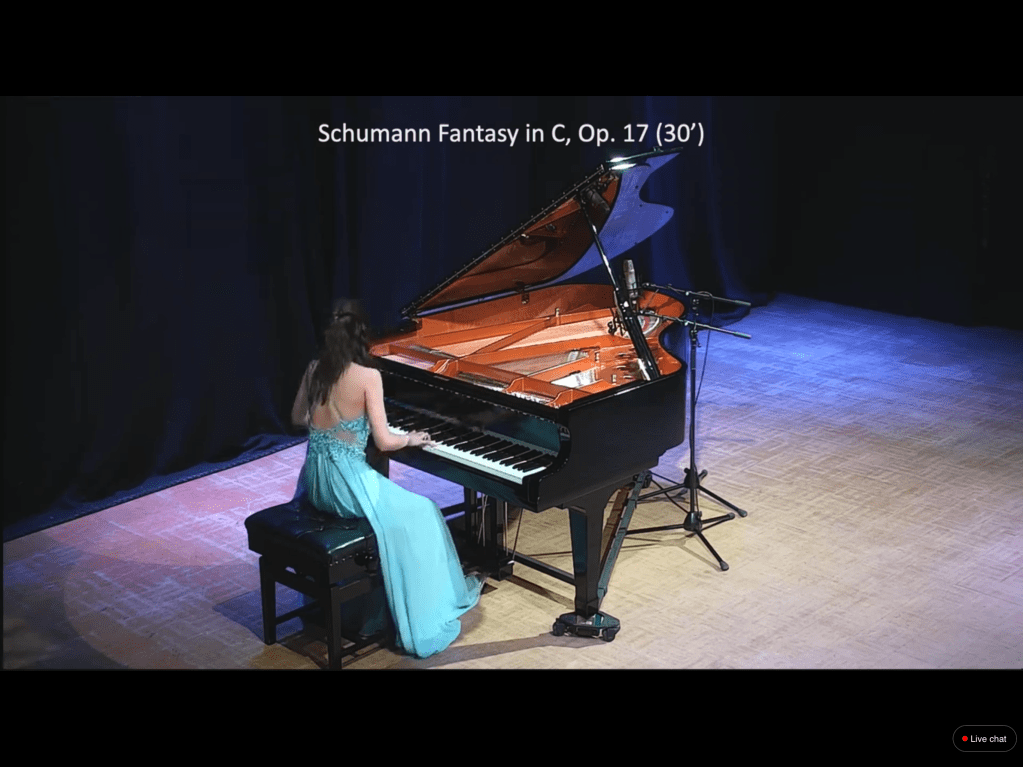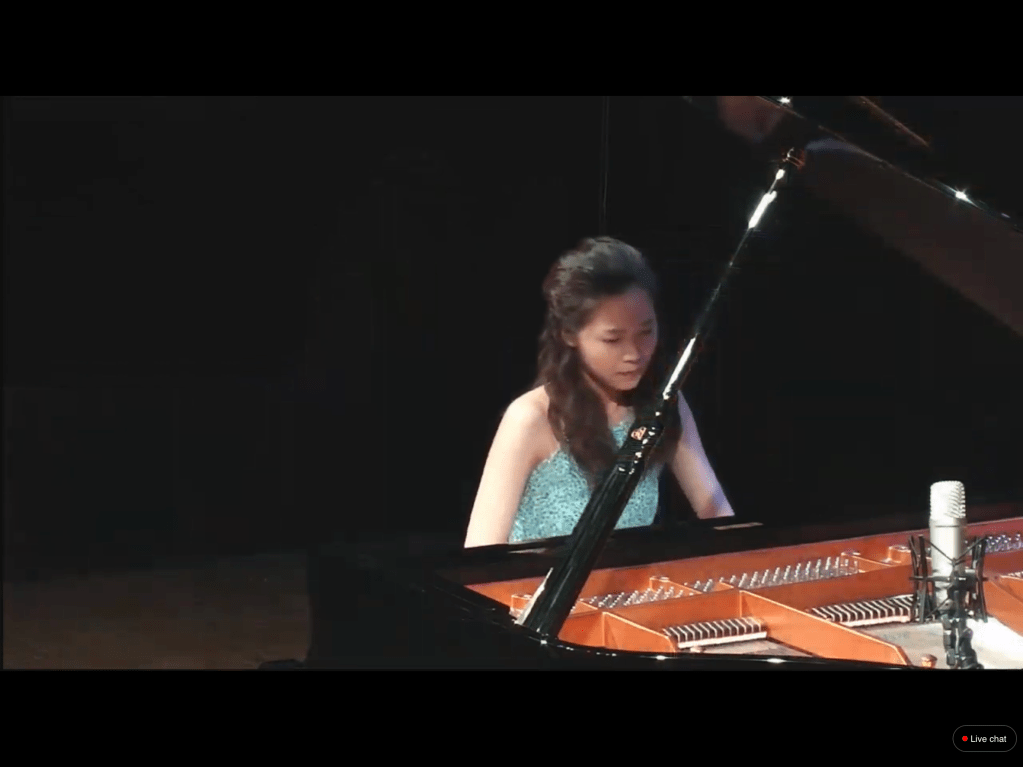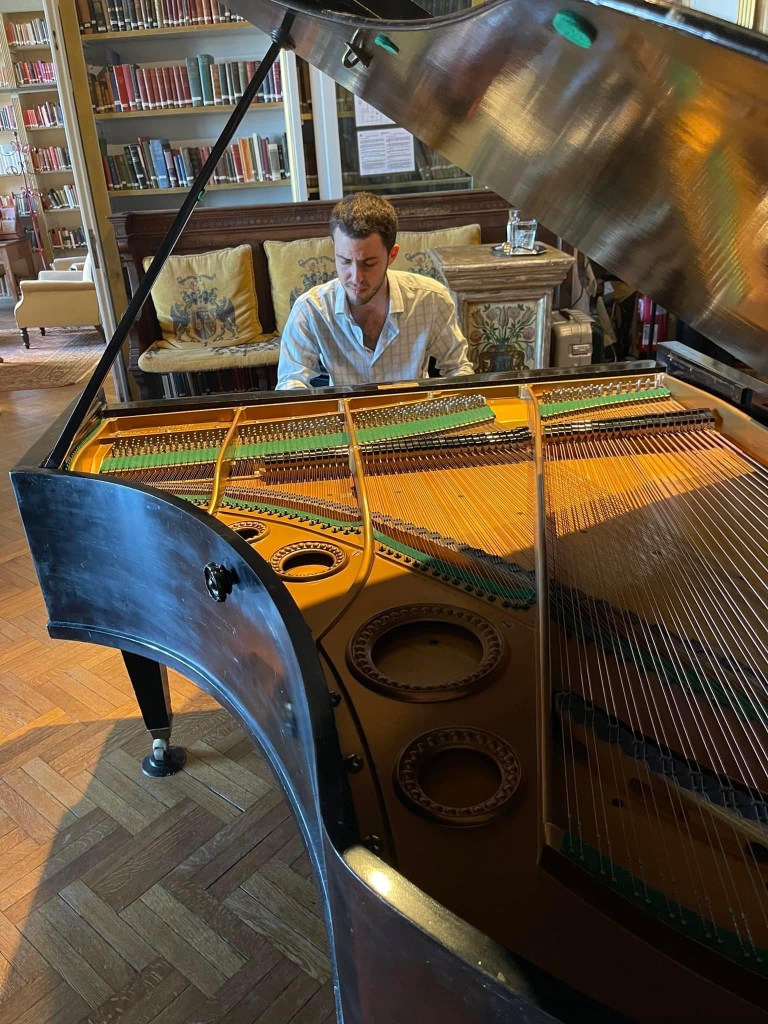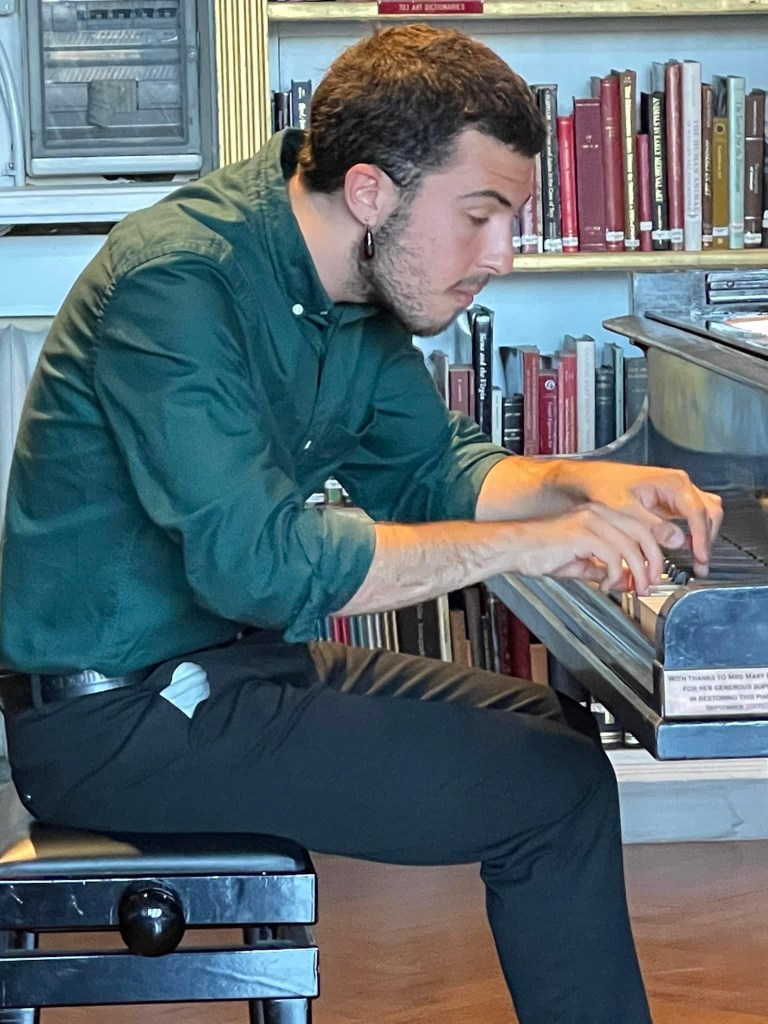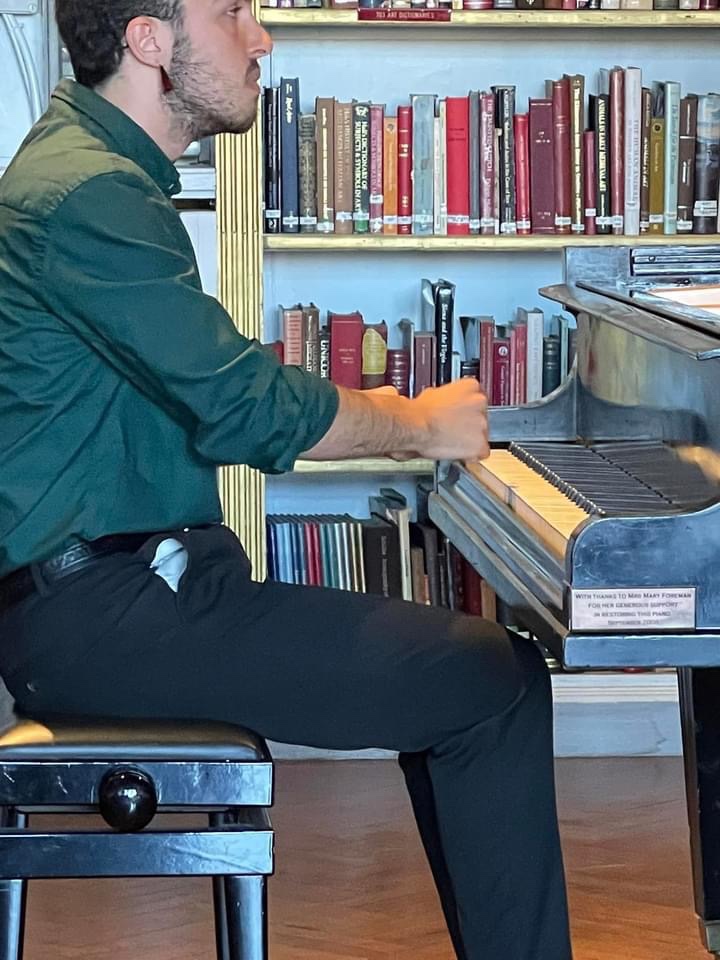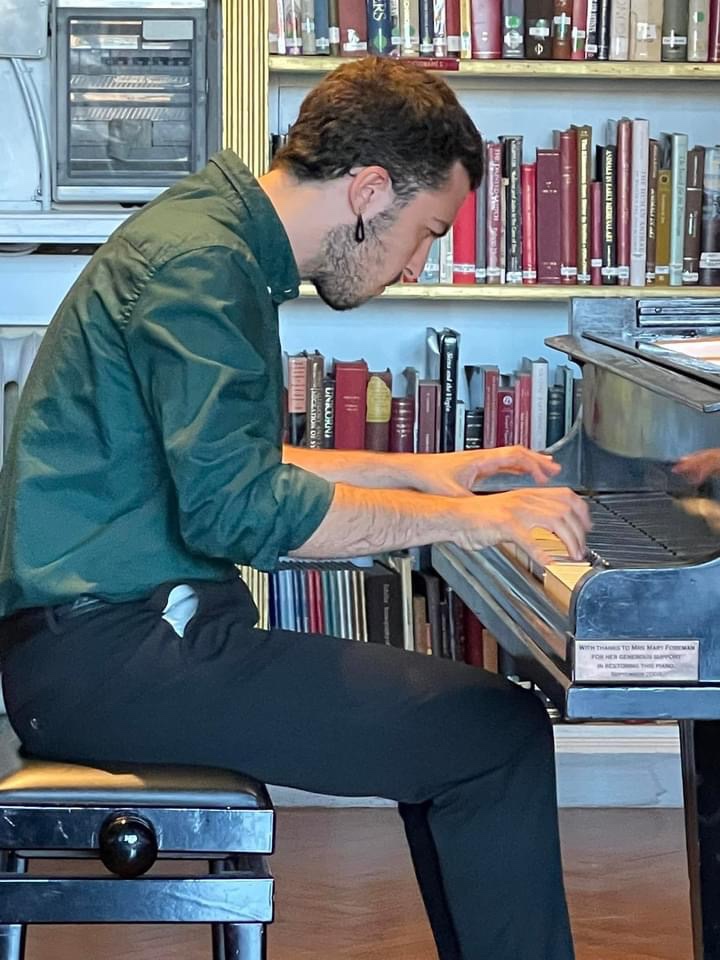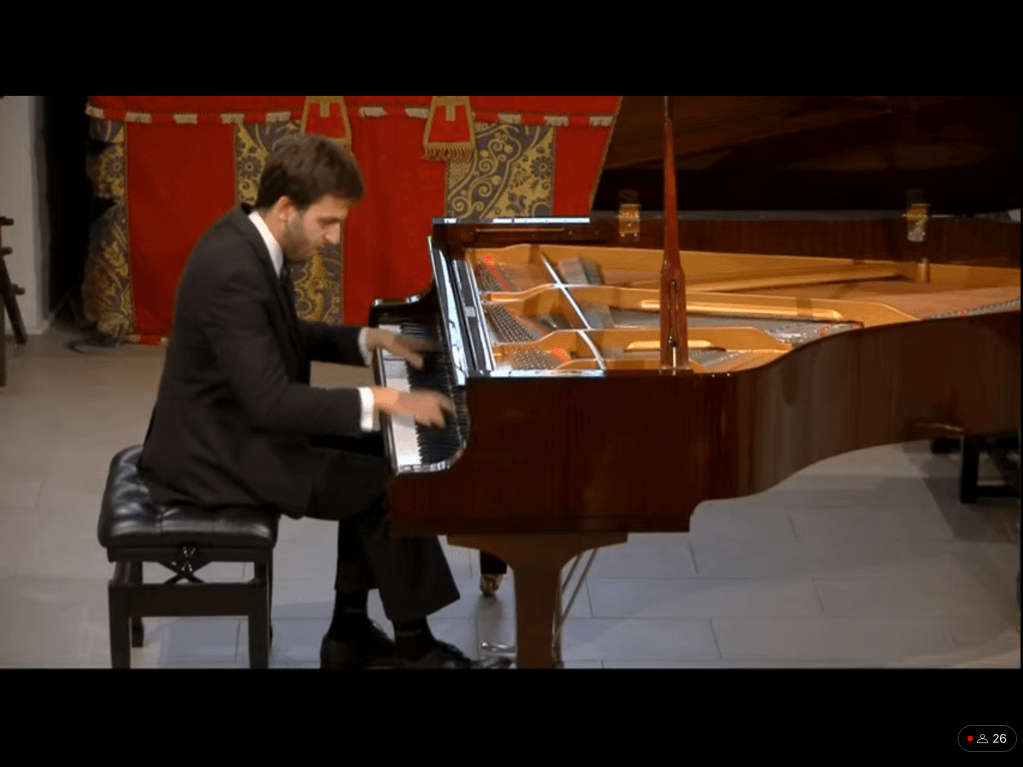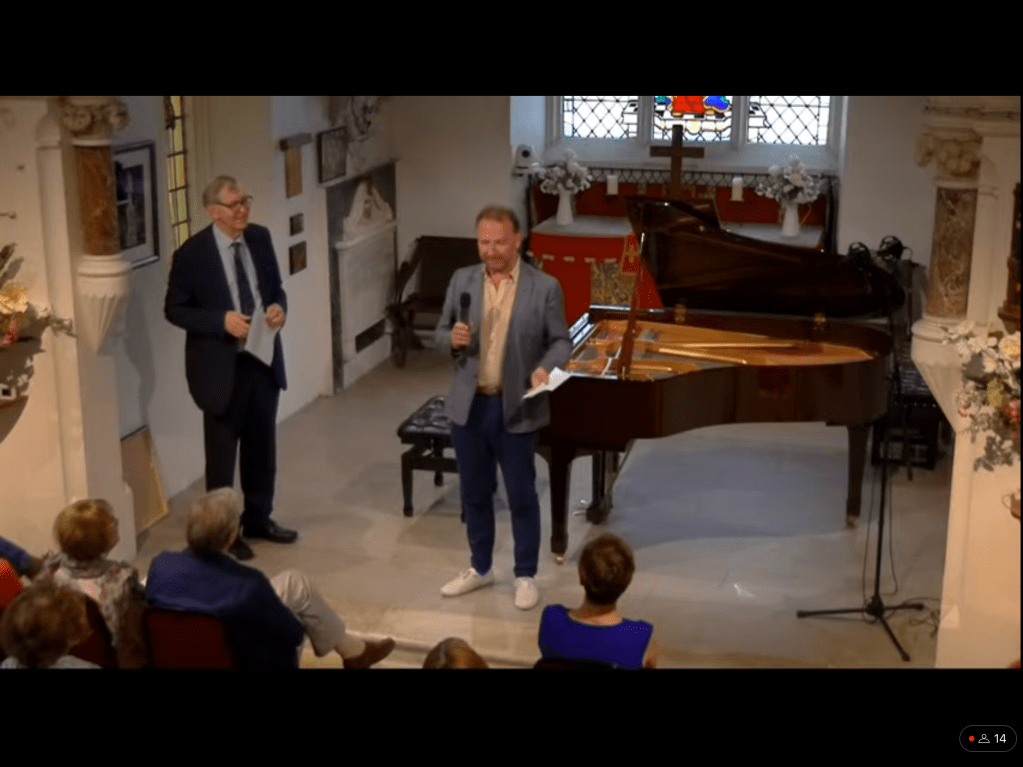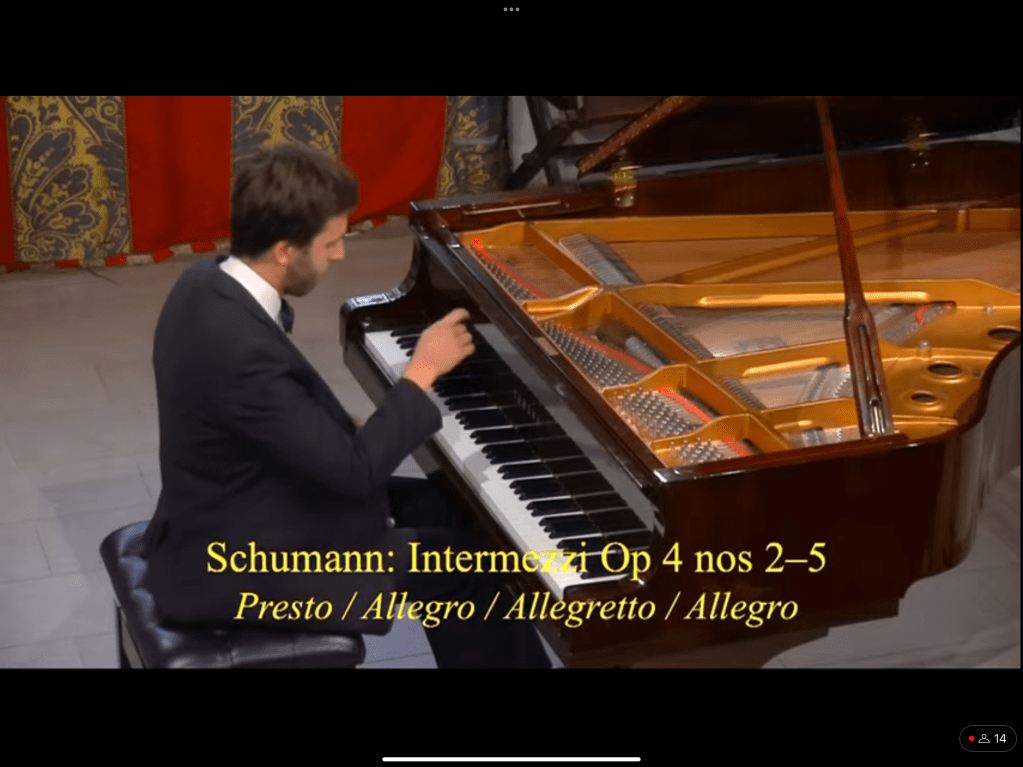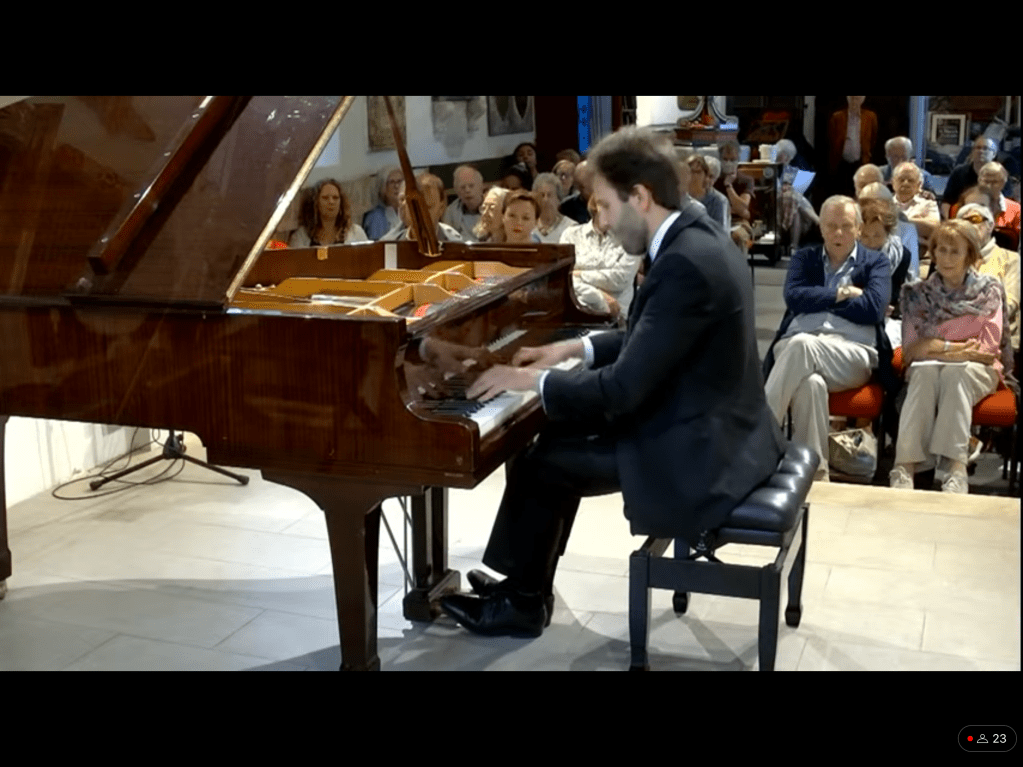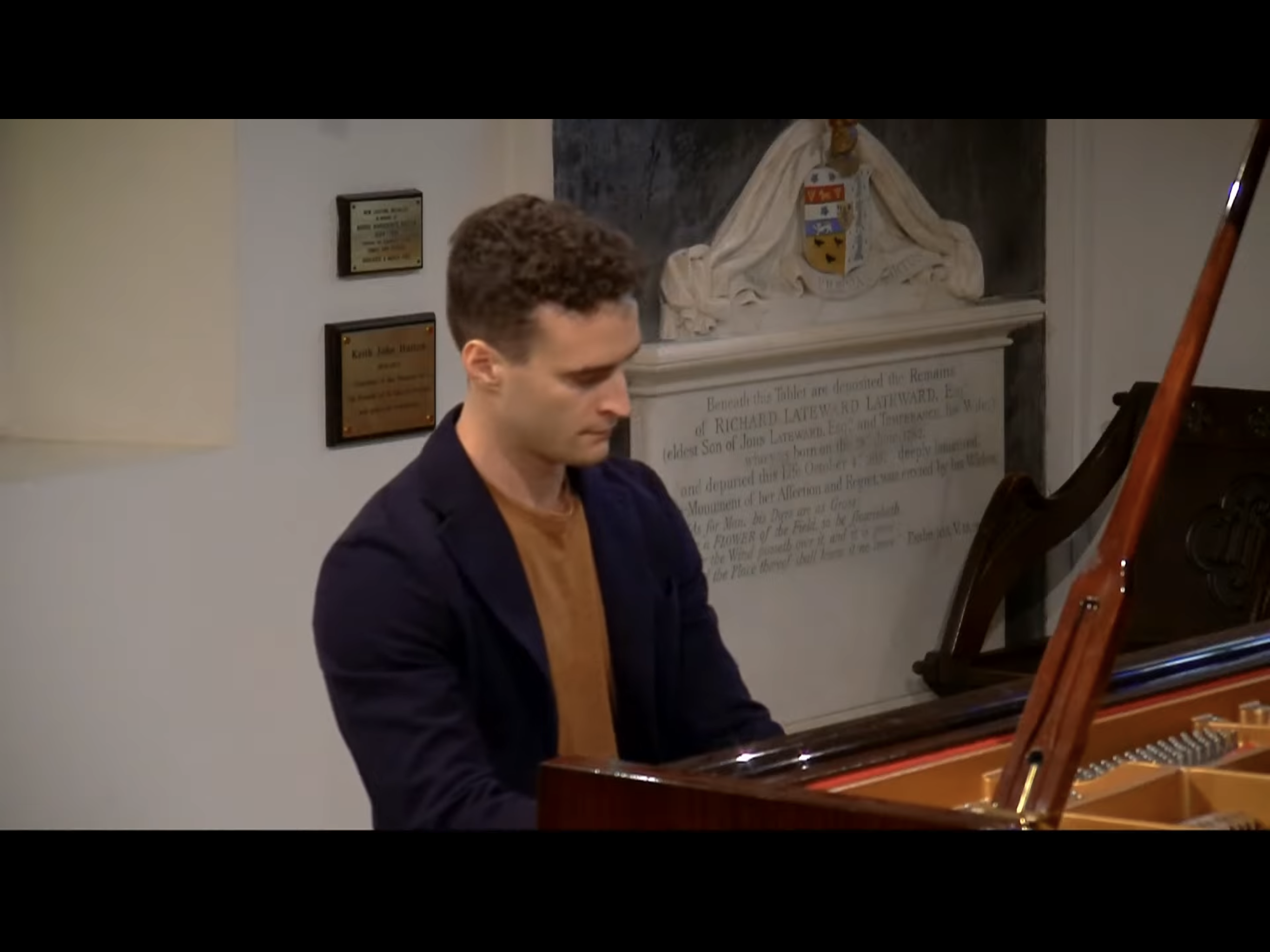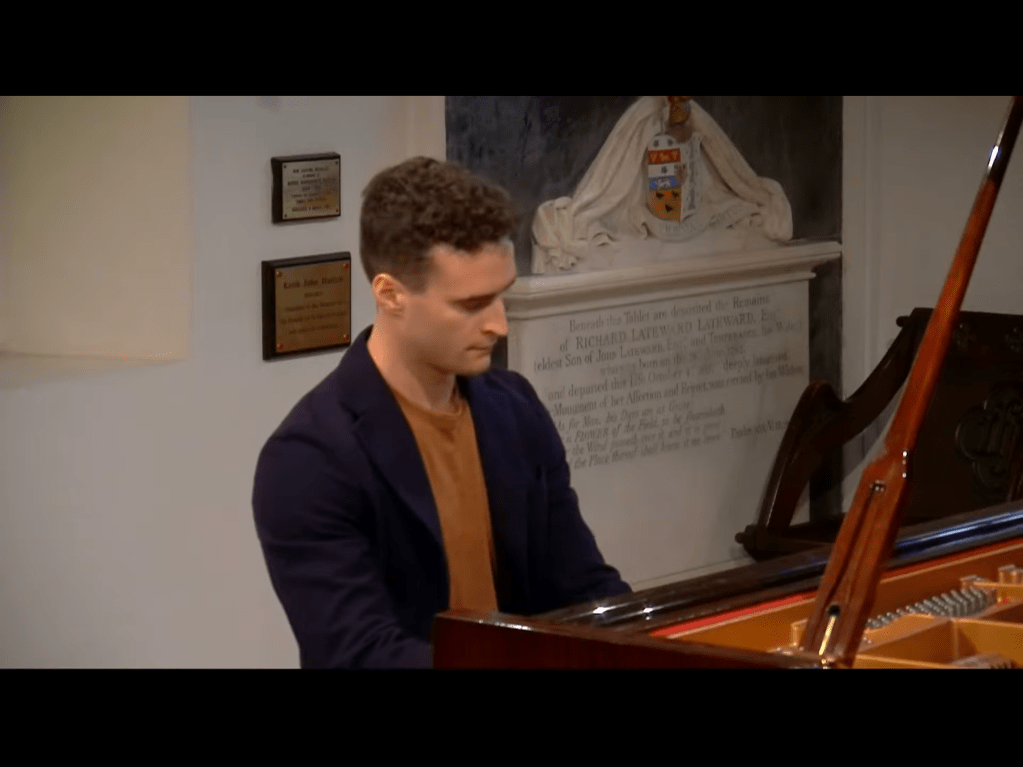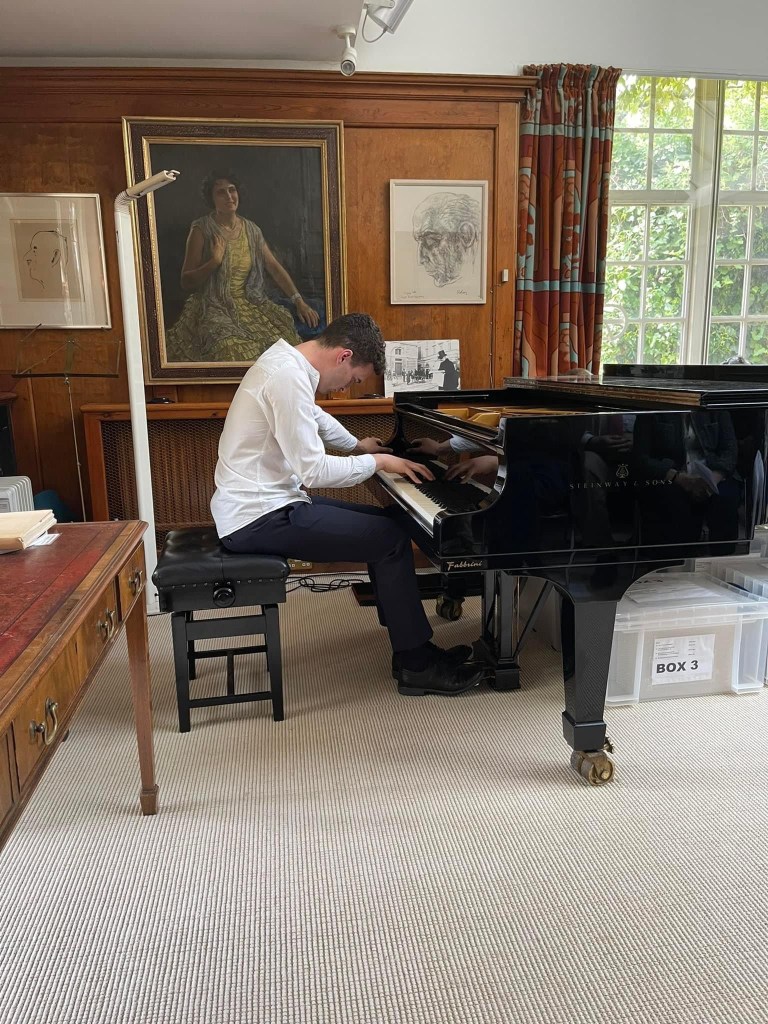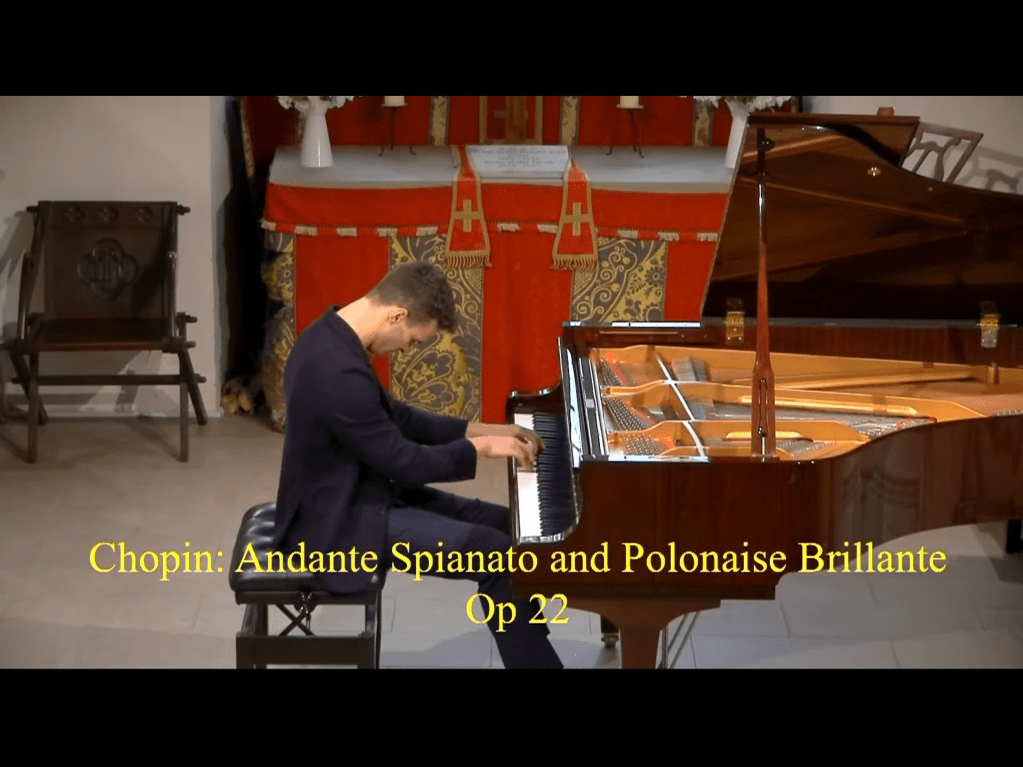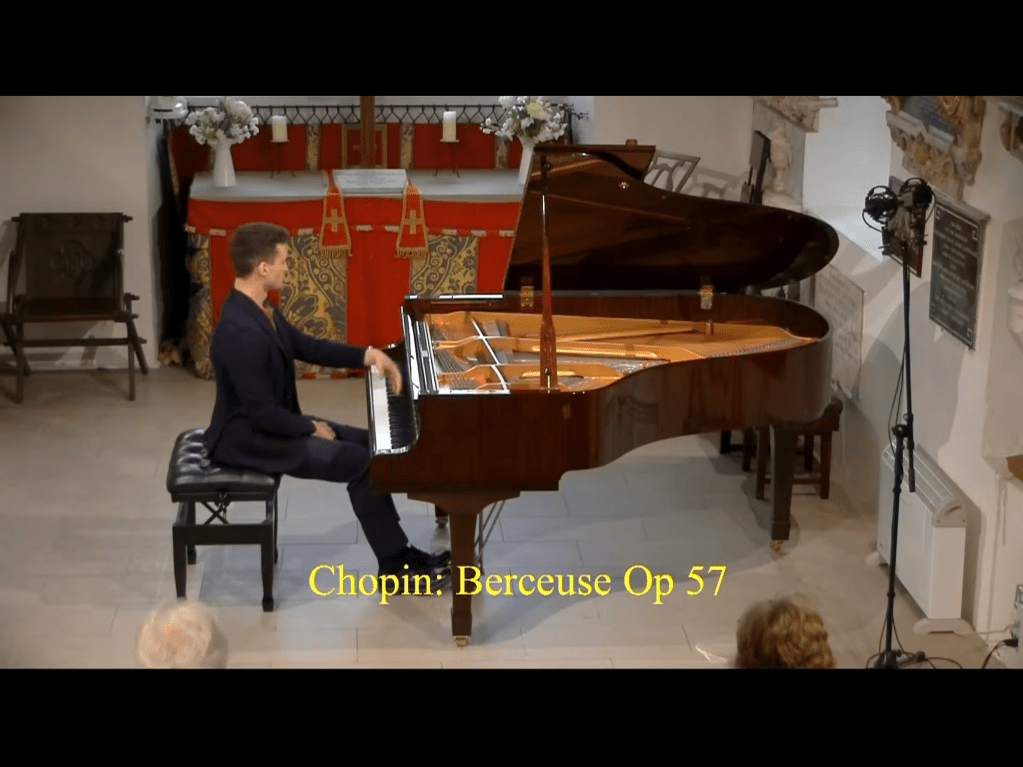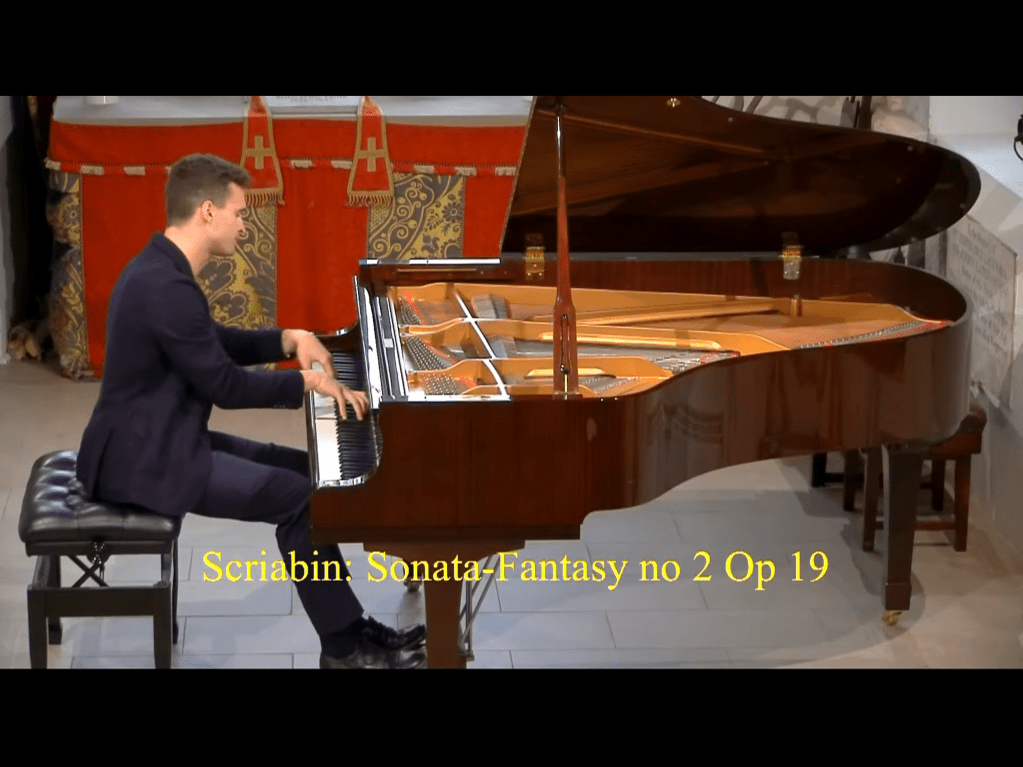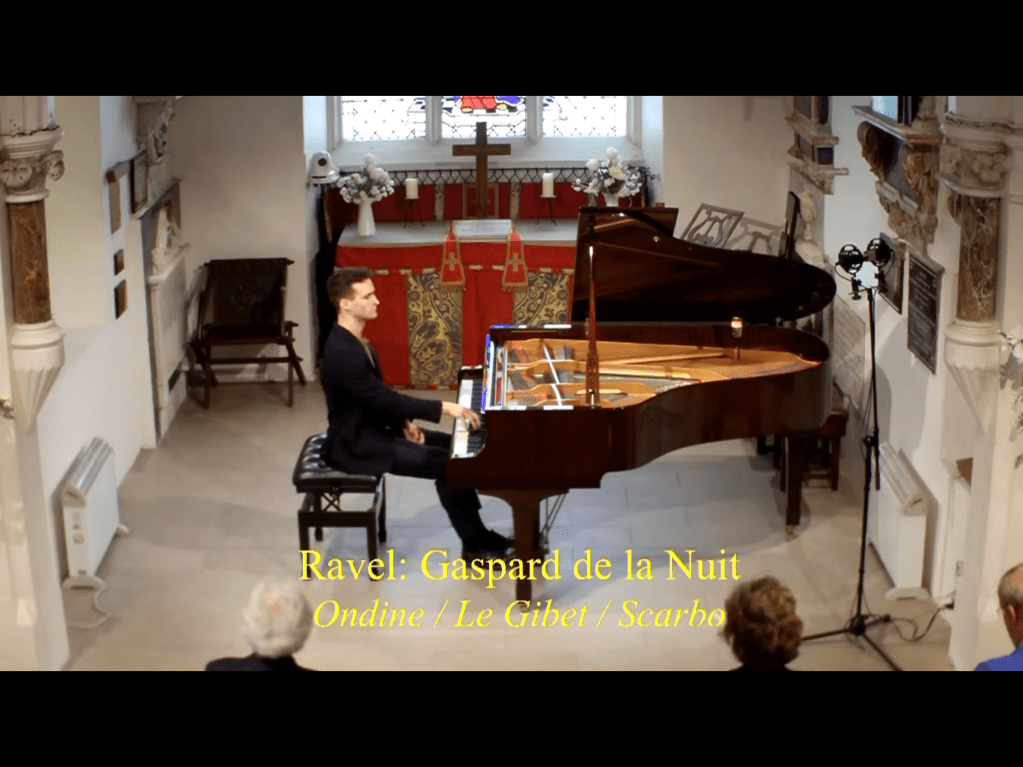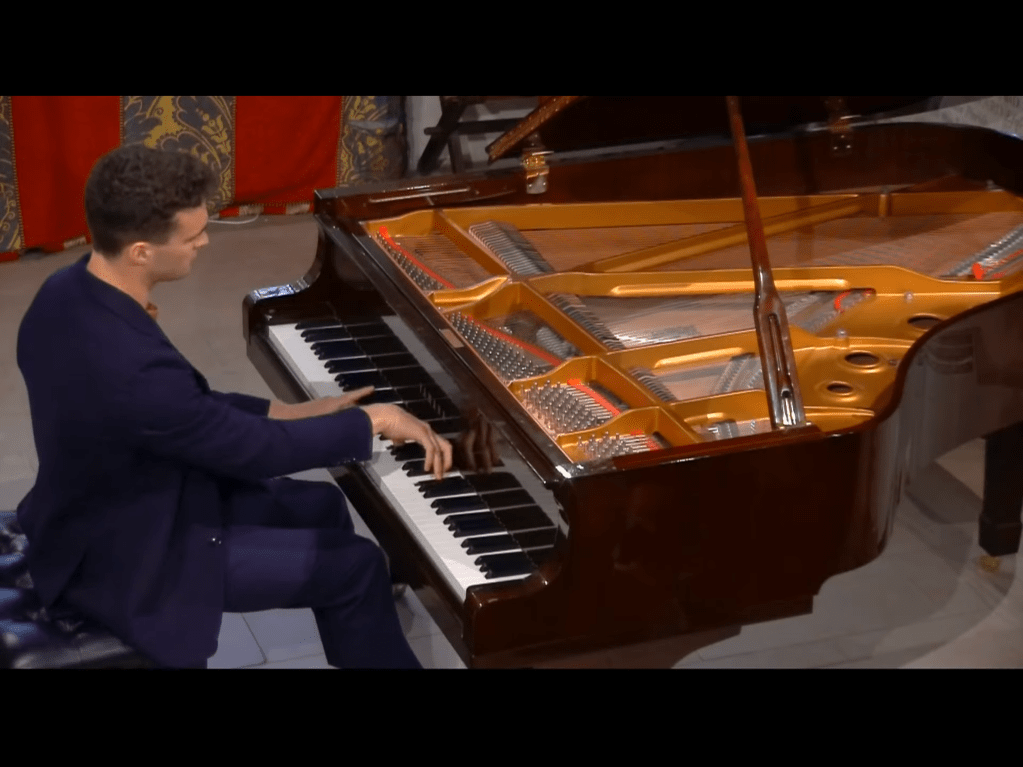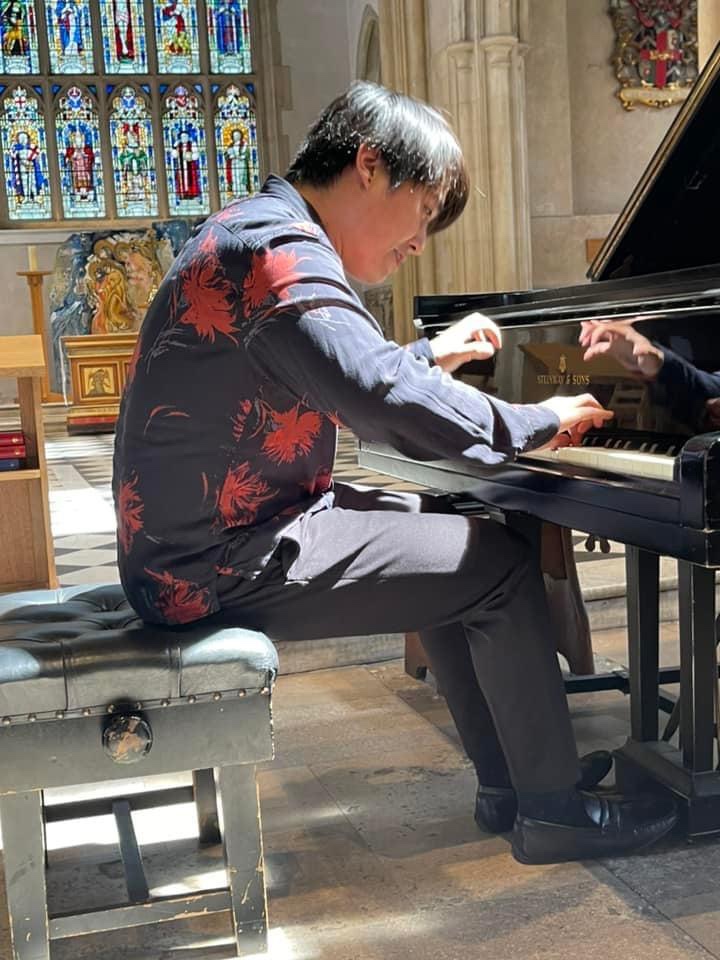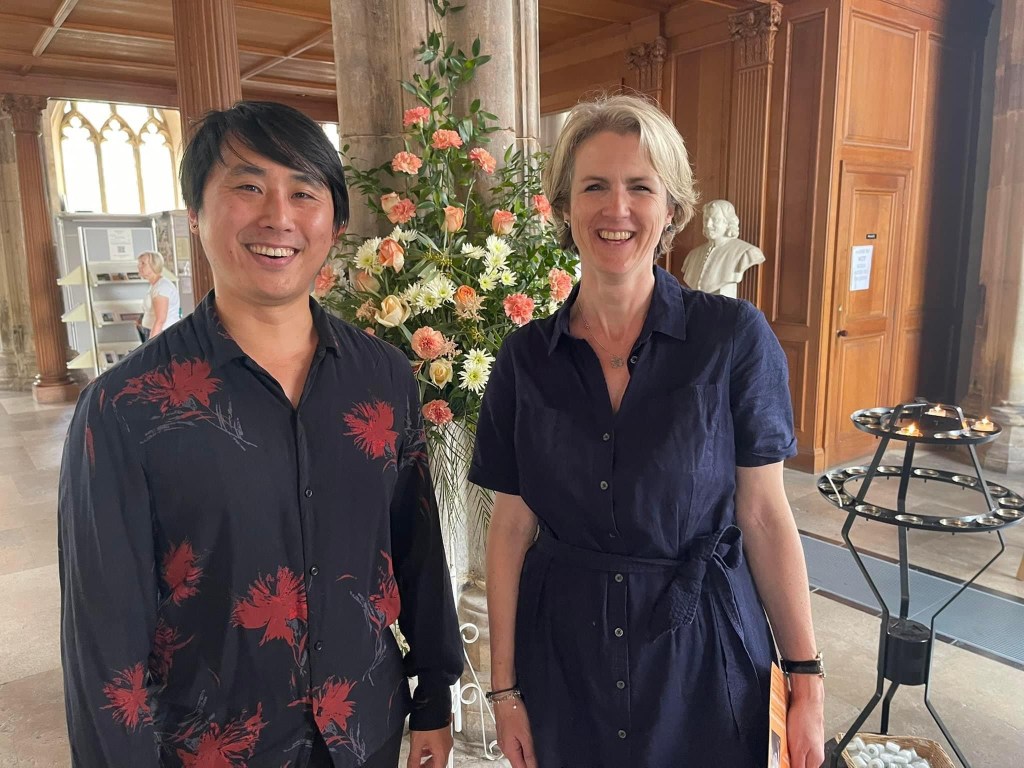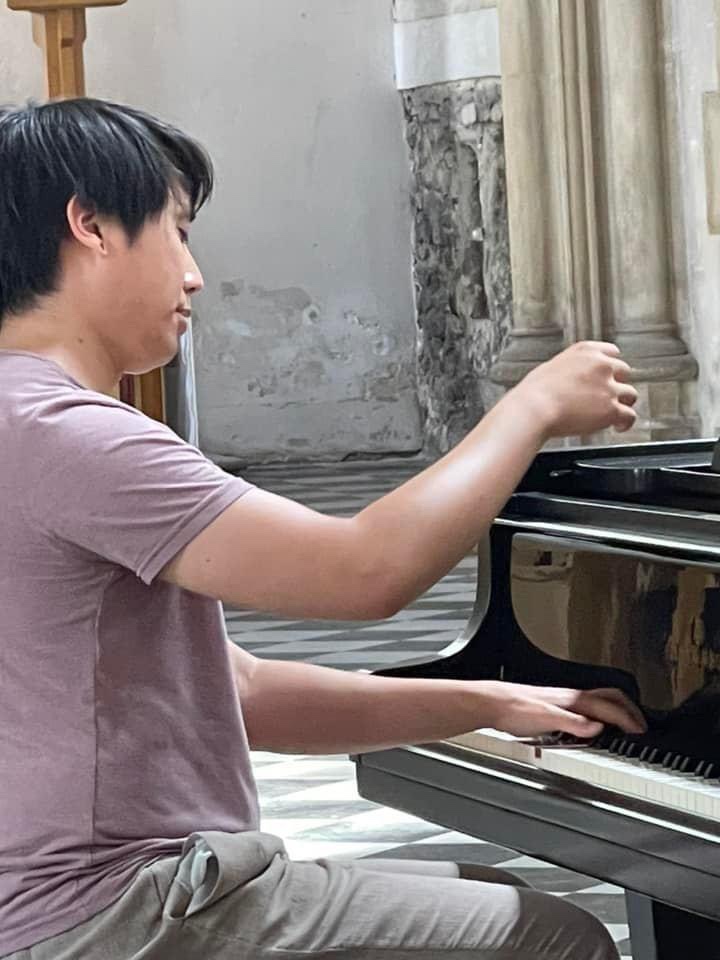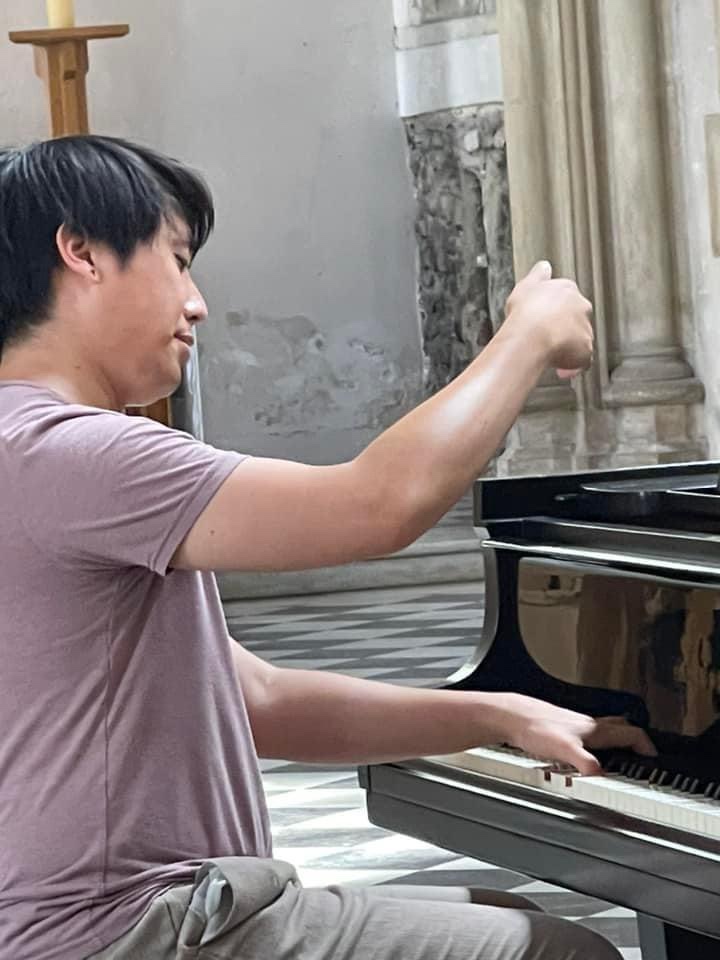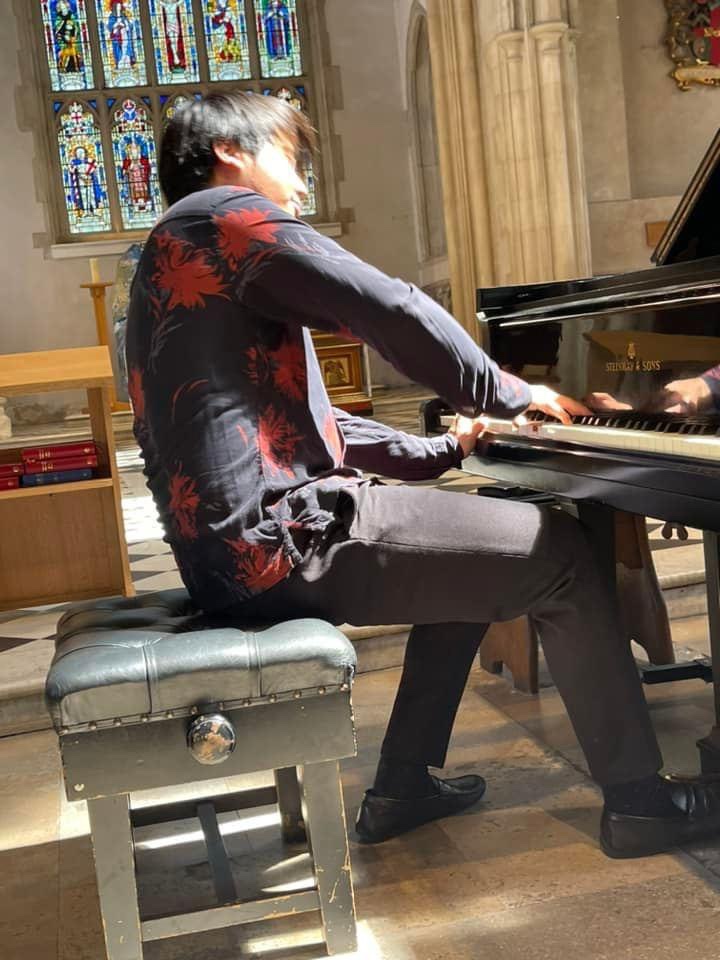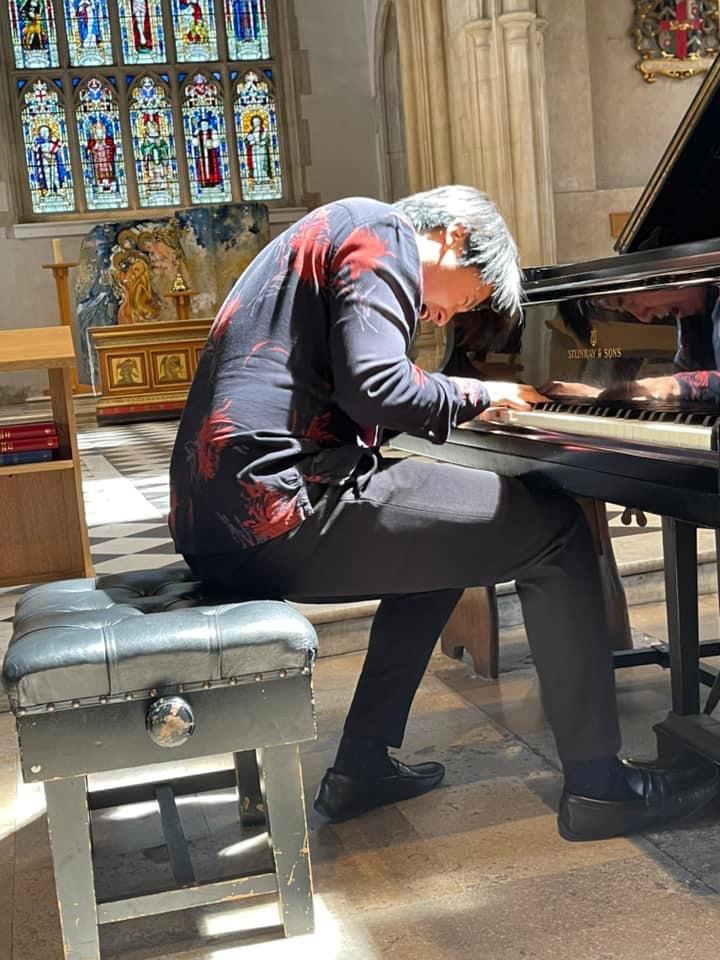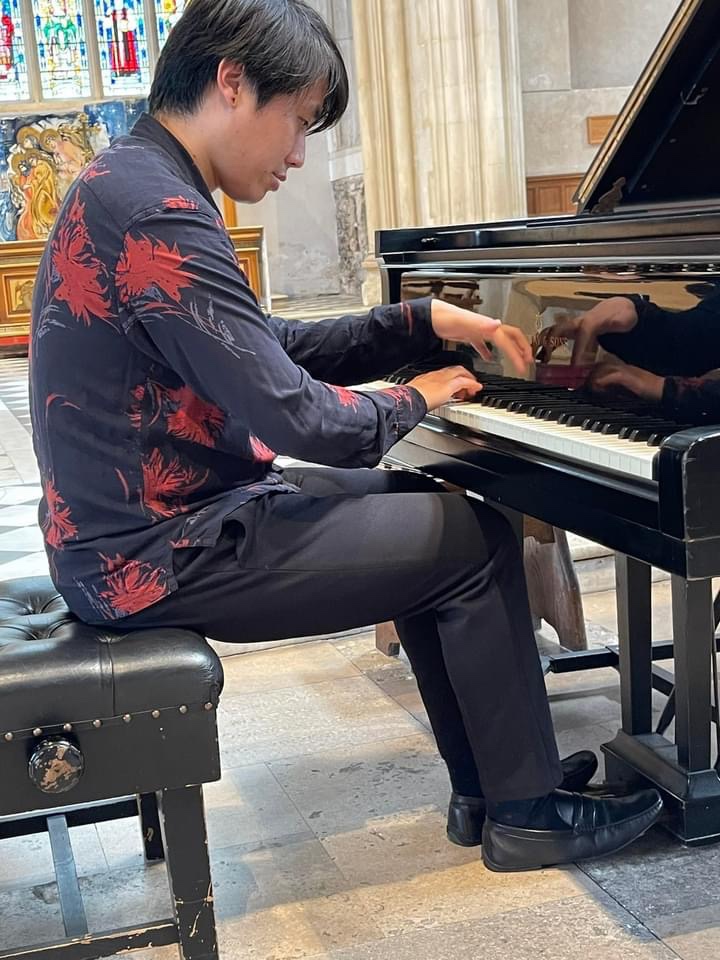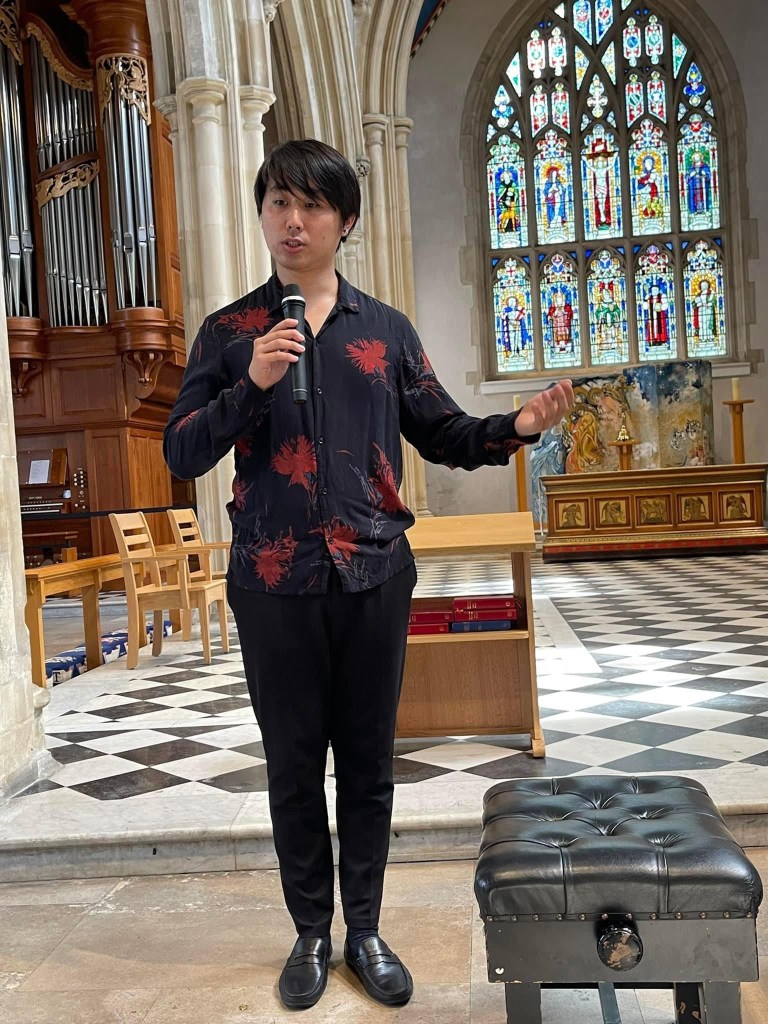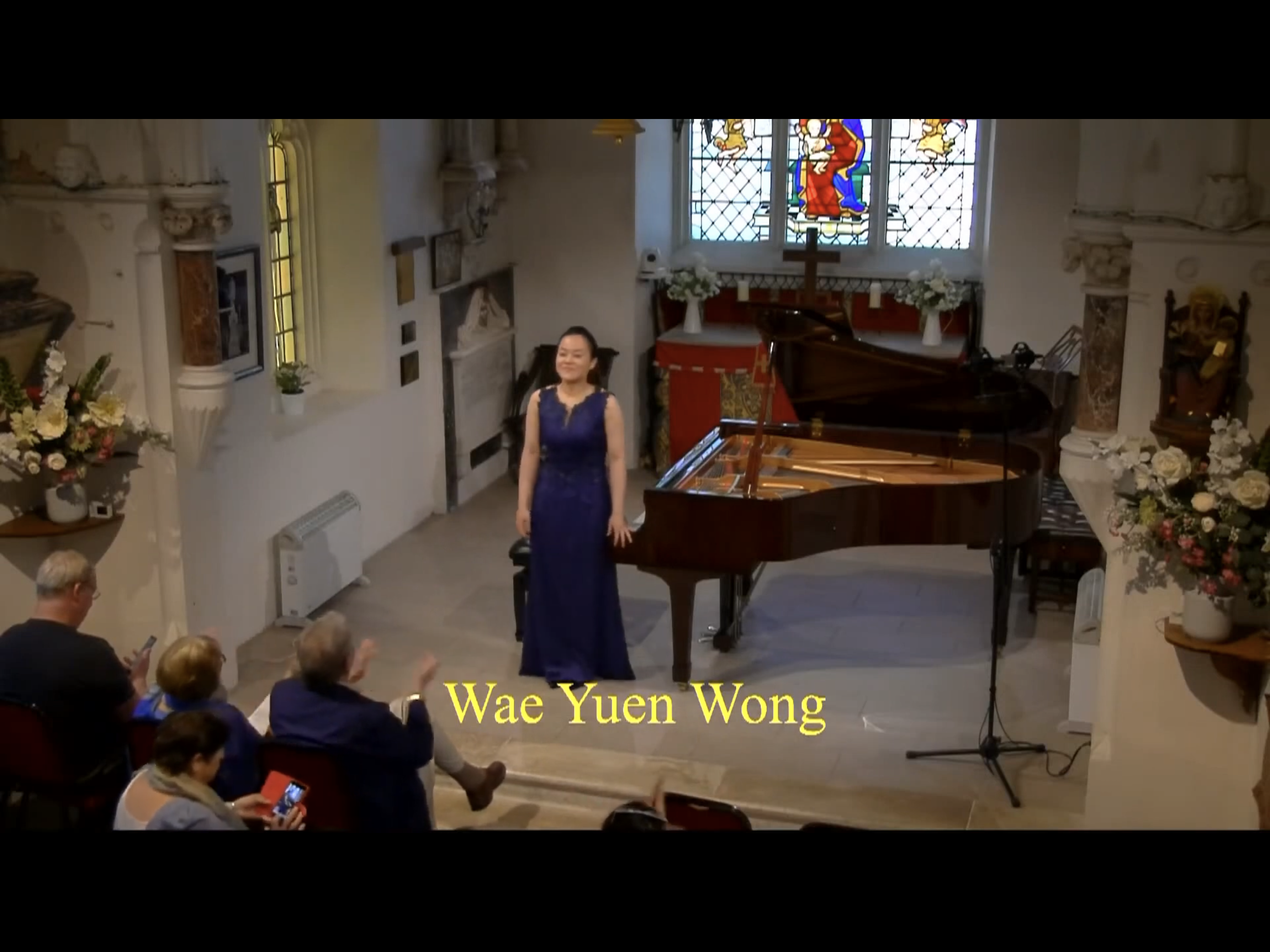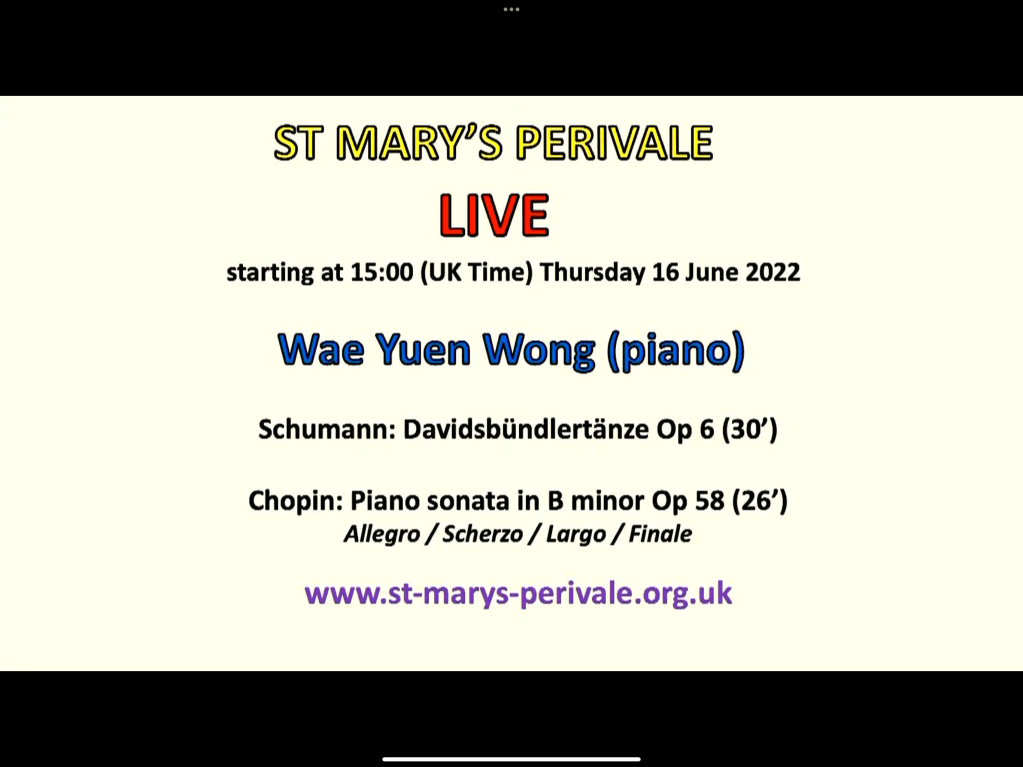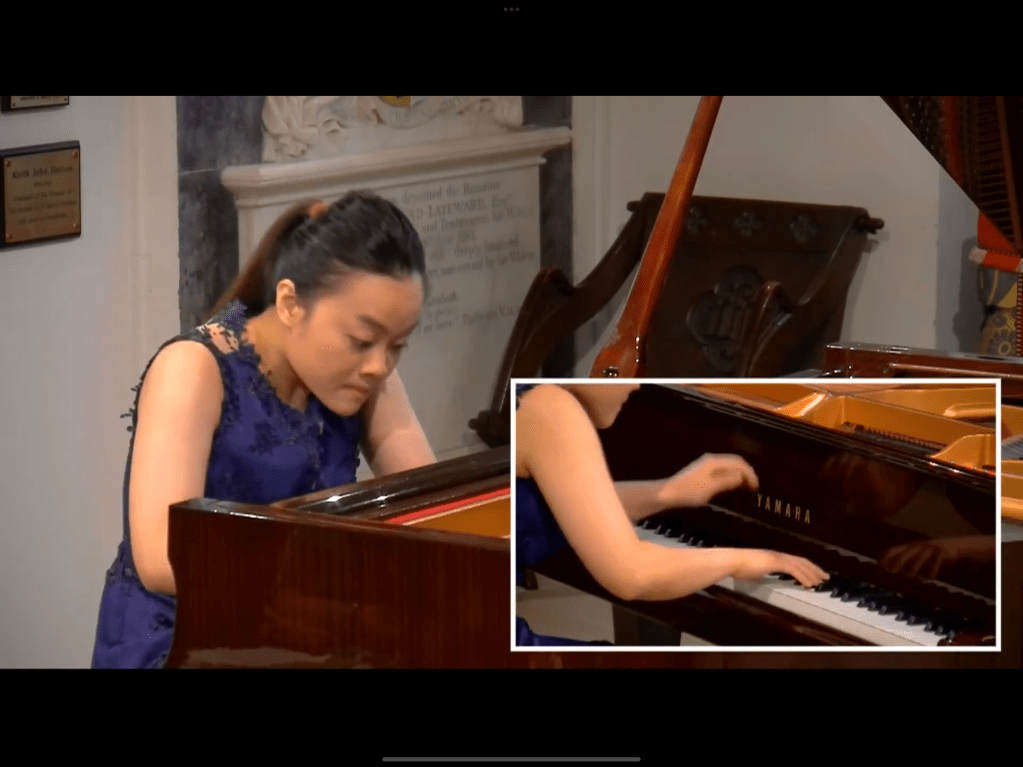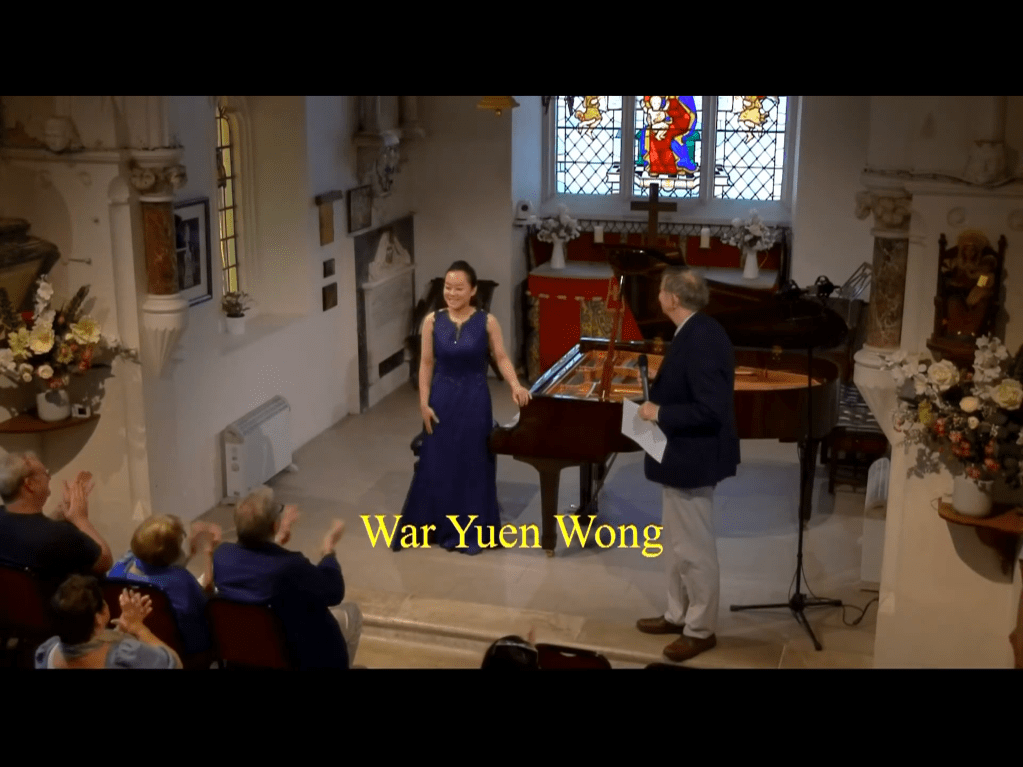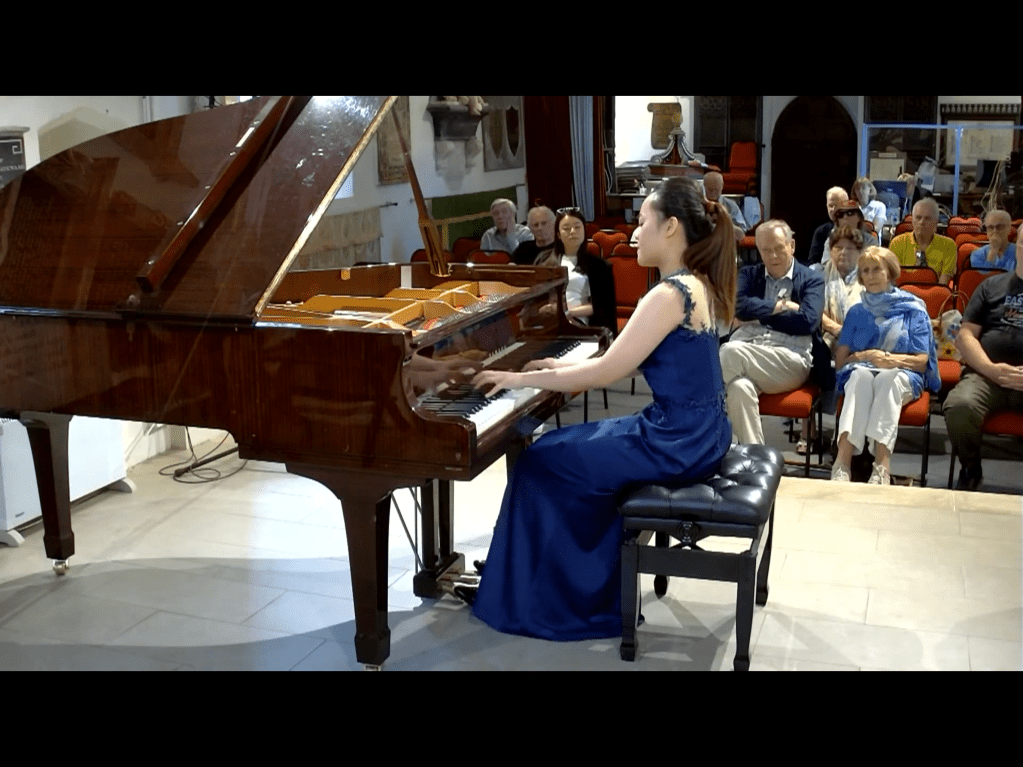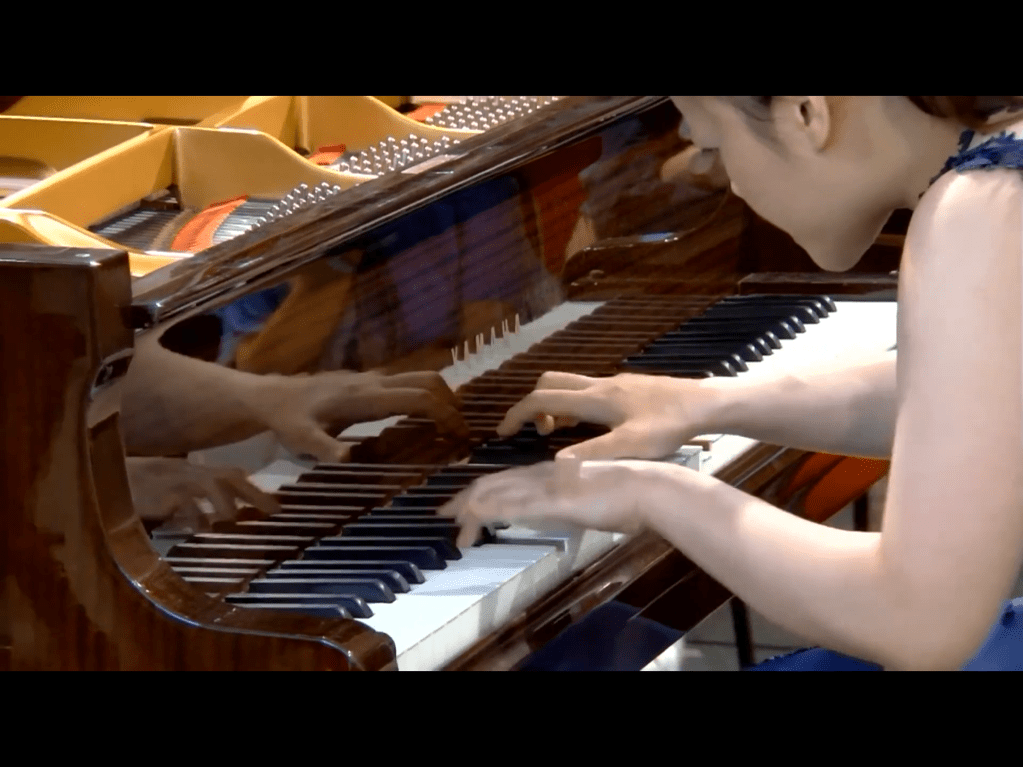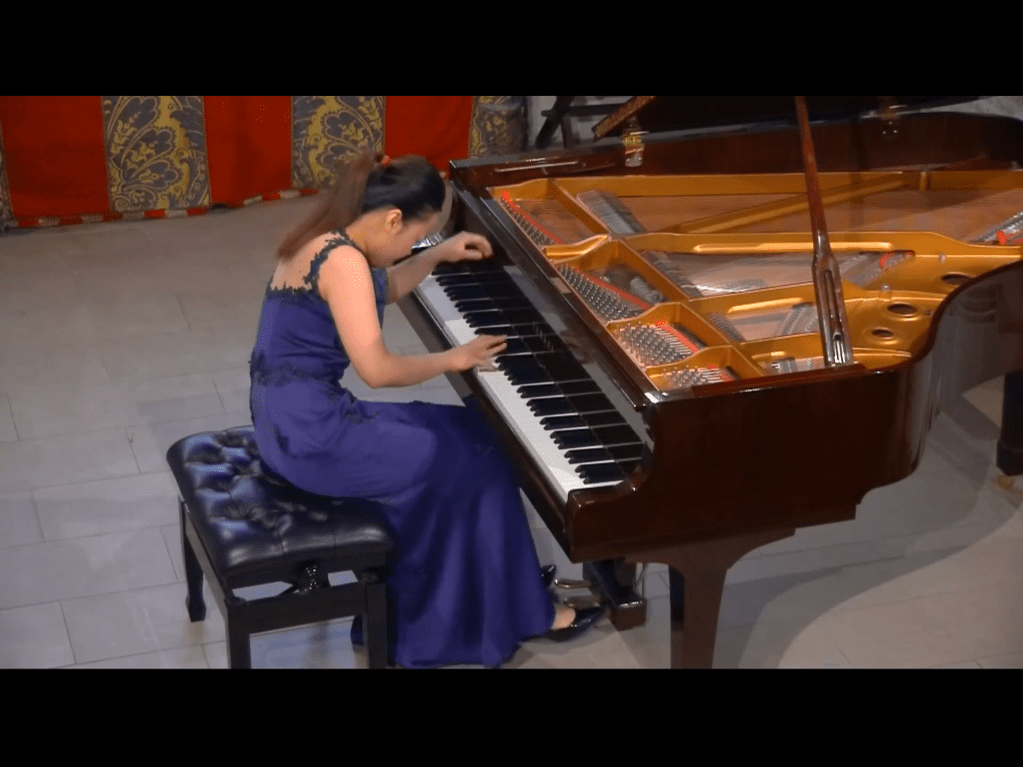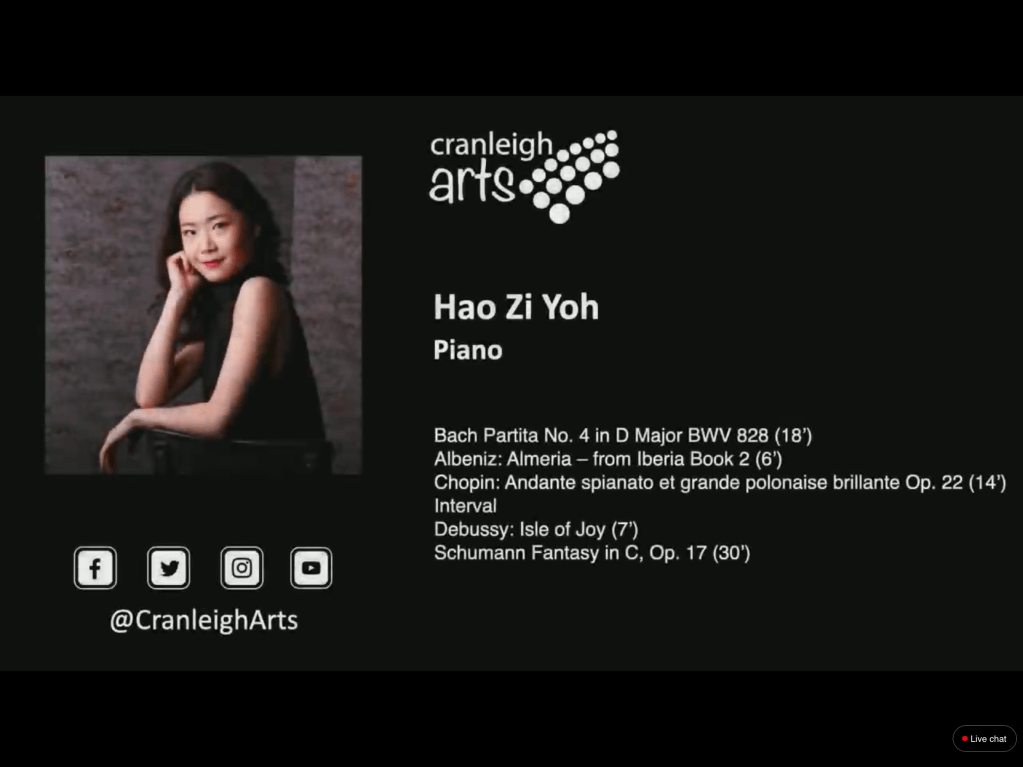
Hao Zi Yoh – the luminosity and delicacy of a great artist at Cranleigh Arts

https://youtube.com/watch?v=PznuP-BdAhI&feature=share

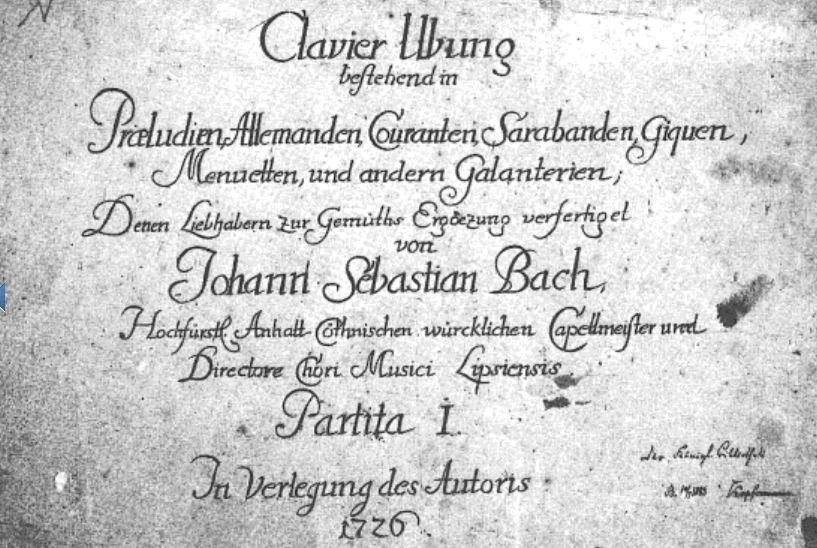
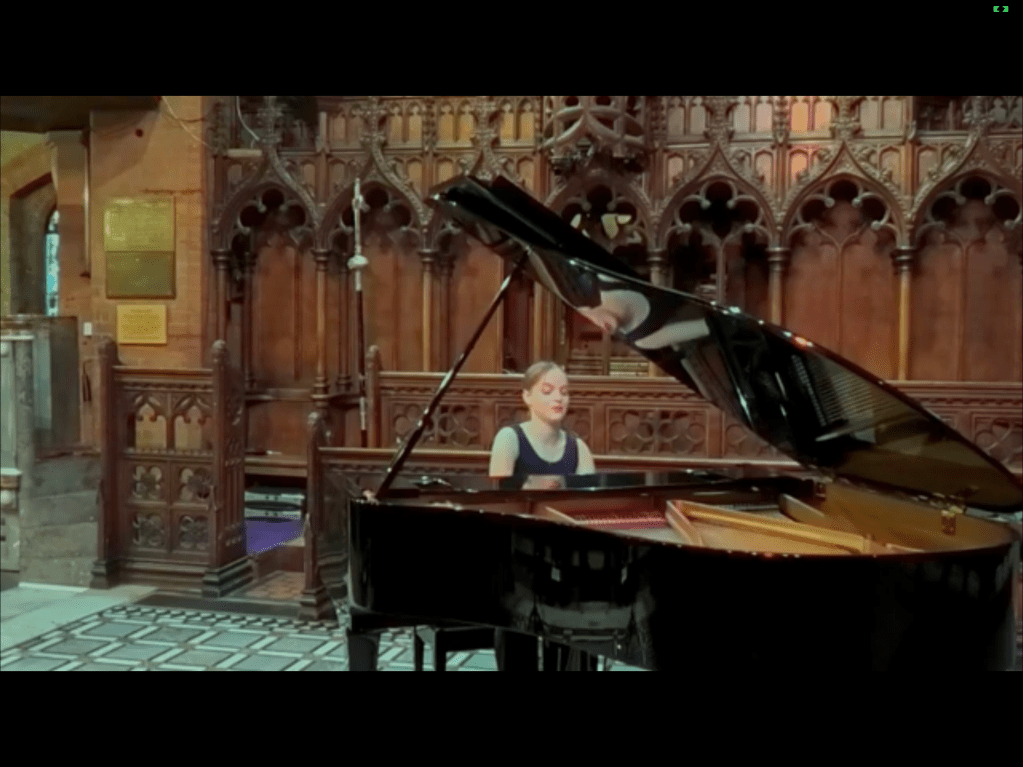
Bach: Partita No. 4 in D Major BWV 828

– Ouverture -Allemande-Courante-Aria-Sarabande-Menuet- Gigue

Albeniz: Almeria – from Iberia Book 2

Chopin: Andante spianato et grande polonaise brillante Op. 22

Interval 

Schumann: Fantasy in C, Op. 17

I. Durchaus fantastisch und leidenschaftlich vorzutragen; Im Legenden Ton

II. Mäßig. Durchaus energisch

III. Langsam getragen. Durchweg leise zu halten

Debussy: Isle of Joy

Hao Zi Yoh
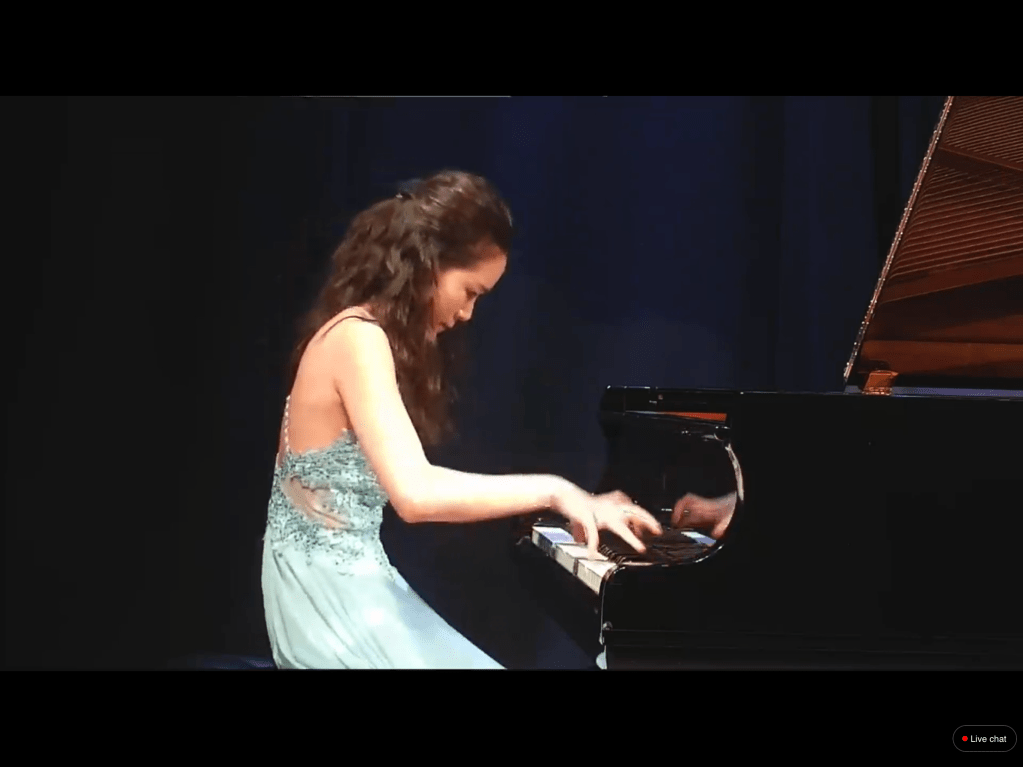
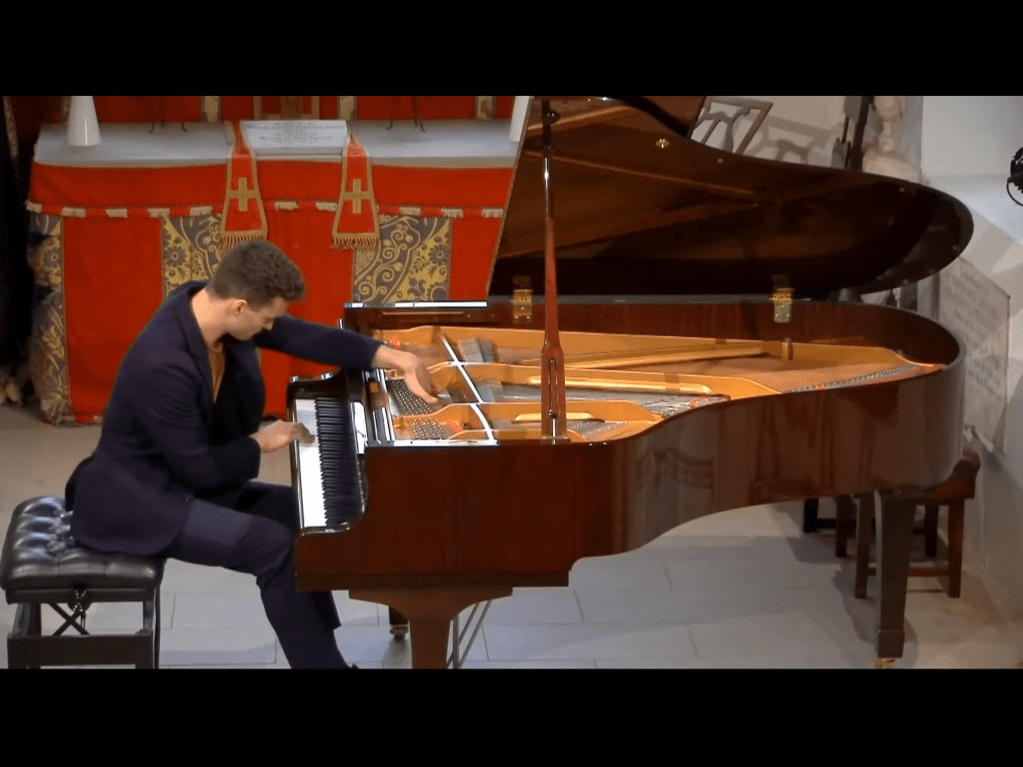
I have heard Hao Zi many times but today in this glorious programme she made me even more aware of her unique qualities of scrupulous musicianship but also with a sensitivity to sound and colour that brought everything she touched vividly to life.Even the encore that she introduced so eloquently depicting a Malaysian rain forest was played with the same artistry and luminosity that she had brought to the Bach Partita that had opened this programme.Gently coaxing out sounds by plucking and dampening the piano strings whilst gently intoning a native chant.Bursting into more traditional cascades of notes played in the traditional manner all done with the utmost seriousness that created the atmosphere of her native country.
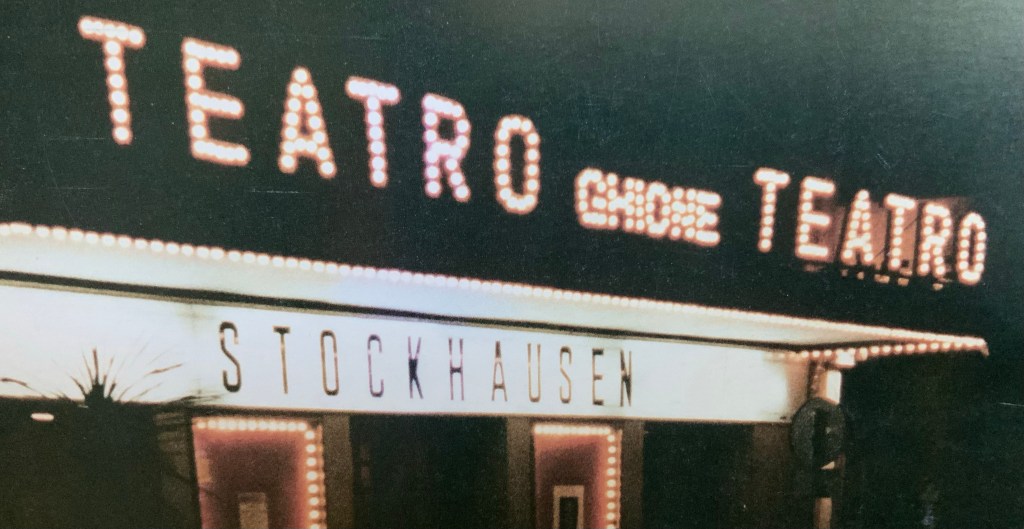
I remember Stockhausen asking me in Rome if he could use our Steinway Concert grand instead of the Yamaha that had been brought in specially for his complete Klavierstucke.How could I say no?But I did specify that the piano could only be used with two hands and two feet in the traditional manner!I had recently seen John Tilbury fill a piano with nuts and bolts in the search for special sound effects.Adulescu too turned the piano on its side as he threw rocks onto the strings!Luckily they were pianos that were brought in for the occasion whilst mine sat safely locked in a corner of the hall.
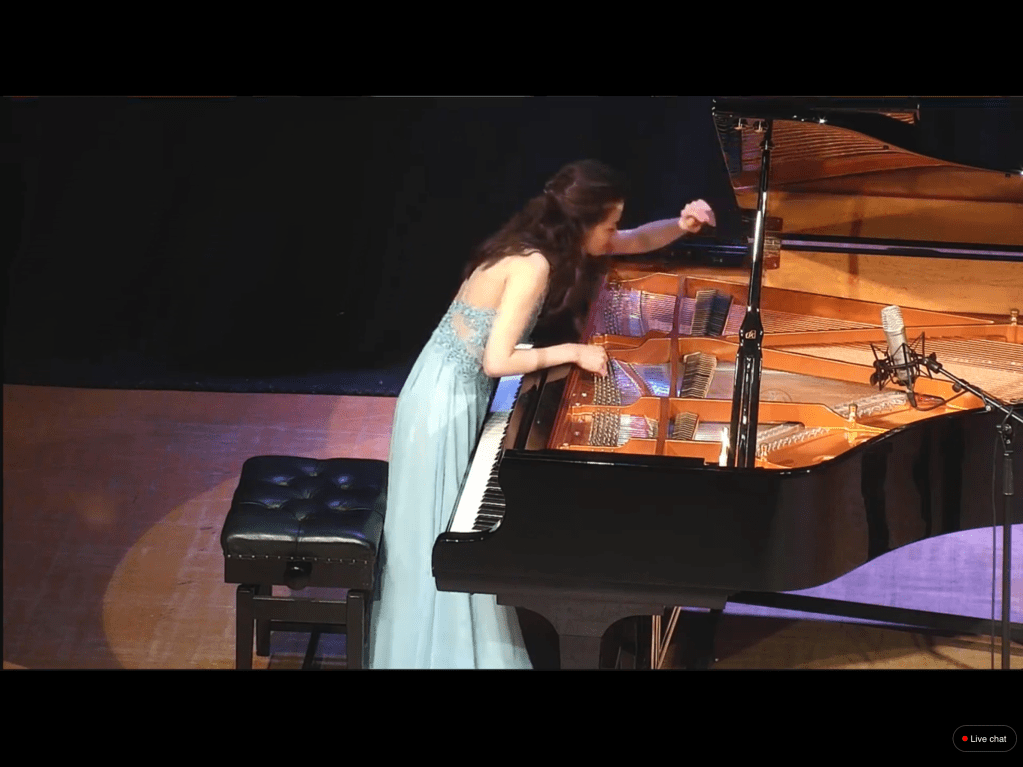
It just shows the esteem that Stephen Dennison and his colleagues in Cranleigh have for the artistry of Hao Zi to allow her to search for sounds inside the piano instead of only from the exterior.Infact from the very first notes of Bach’s glorious fourth partita we were aware of the extraordinarily luminous sounds that Hao Zi could conjure from this new Shegeru Kwai that was especially chosen by Sasha Grynyuk for the hall.
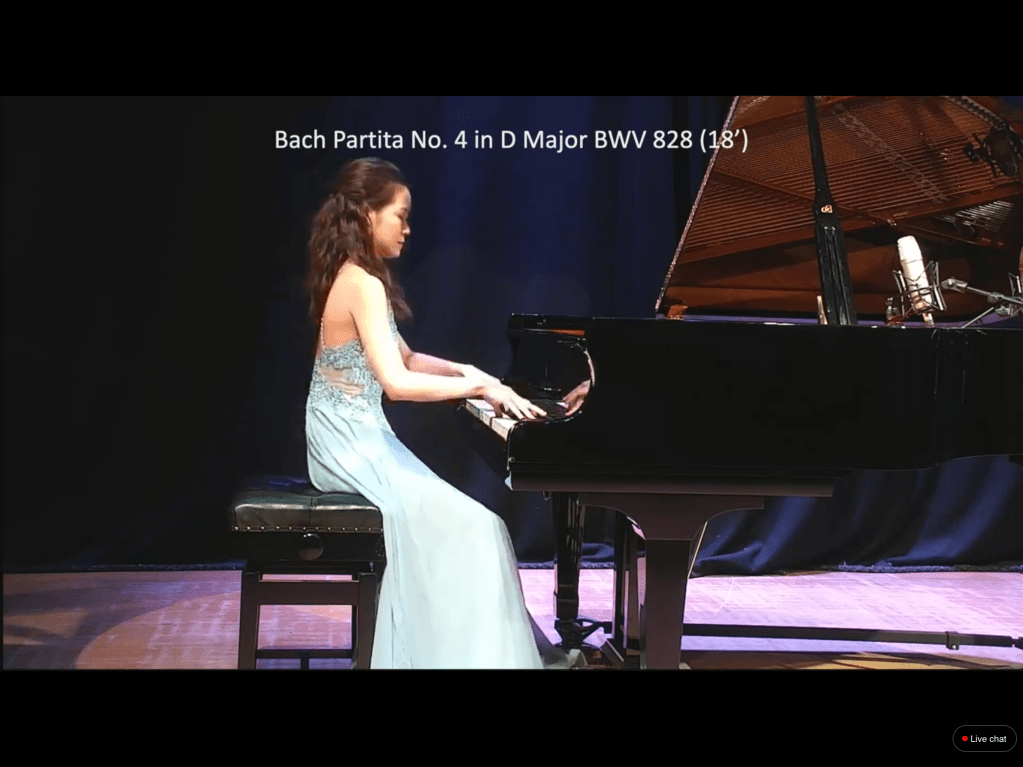
The opening of the fourth Partita BWV 828 was played with authority and with a sound of great clarity as the imperious opening chords in 2/2 are suddenly brought to life in 9/8 bringing a sense of rhythmic energy as it springs to life at the opening of this Partita written in 1728 and part of the Clavierubung n.1.There was an operatic freedom to the Allemande that was shaped with delicacy with some very subtle colouring that immediately brought a magic spell to this mellifluous outpouring .This contrasted with the injection of rhythmic energy of the Courante before the ravishing beauty of the Aria.Hao Zi brought subtle phrasing and a sense of colour with playing of great delicacy.Even the final cadence was judged to perfection before the playful Sarabande with its cascades of arpeggios ,just shifts of sounds creating an orchestral effect of shifting harmonies.There were ornaments in the Menuet that sparkled like jewels as even here she brought this playful movement vividly to life .She brought authority to the Gigue which was played with relentless rhythmic energy but was also shaped with such care with a sound that was never hard or mechanical as often it can be in lesser hands as they cope with the transcendental technical difficulties of this movement.Hao Zi was not at all intimidated as she turned any technical hurdles into music of searing intensity and intelligence .
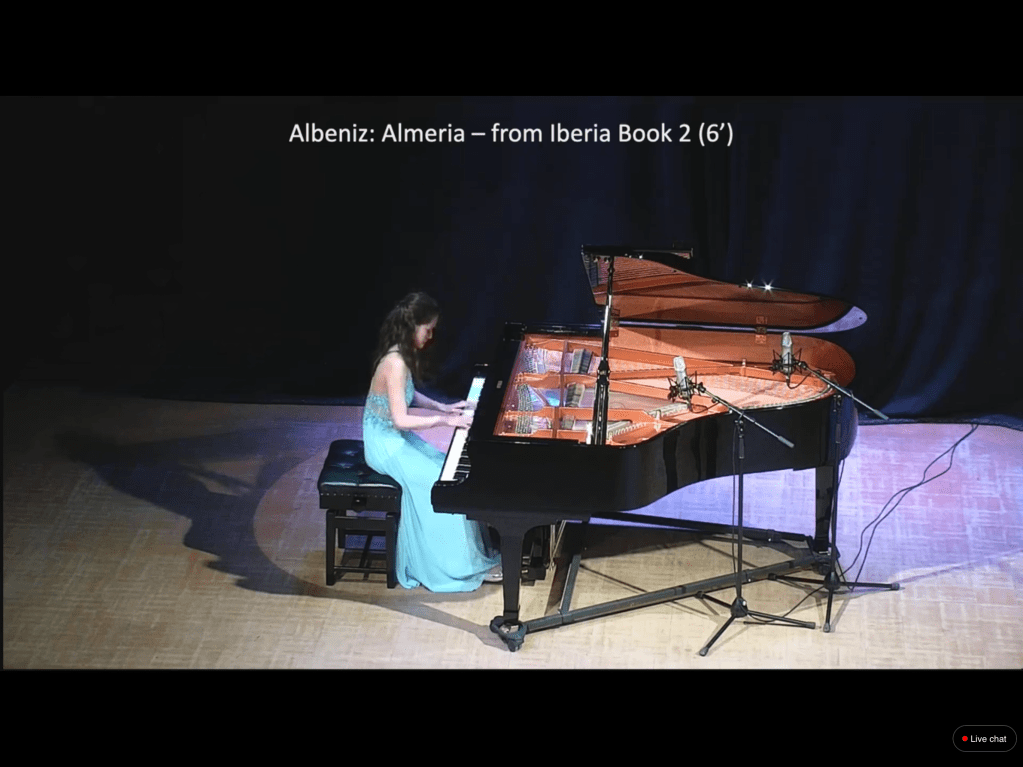
Iberia is a suite for piano composed between 1905 and 1909 by Isaac Albeniz. There are four books of three pieces each; Almeria is from the second book.
Iberia is Albéniz’s best-known work and considered his masterpiece. It was highly praised by Debussy and Messiaen , who said: “Iberia is the wonder for the piano; it is perhaps on the highest place among the more brilliant pieces for the king of instruments”.A critic in New York in 1988 pointed out whilst praising Alicia de Larrocha’s performance:’There is really nothing in Isaac Albeniz’s Iberia that a good three-handed pianist could not master, given unlimited years of practice and permission to play at half tempo. But there are few pianists thus endowed. The Andalusian seaport of Almeria, is loosely based on tarantas, a flamenco form characteristic of the region of Almeria.Alicia de Larrocha often played in my season in Rome so I could admire in rehearsal and performance her workmanlike simplicity and intelligence born of hard work and dedication.A small hand that could with rubber like placticity mould itself around even the most gargantuan chords.I was reminded of her today as I listened to the sumptuous performance of Hao Zi where she filled this tone poem with subtle sounds and passionate outpourings.There was heartrending nostalgia too as the melodic line just floated on a cloud of sounds without any sentimentality or added effects apart from those that Albeniz depicts in the score.Grandiose chords too of a fullness that was never hard or ungrateful but luminous and inviting as they dissolved into the magic land of Almeria
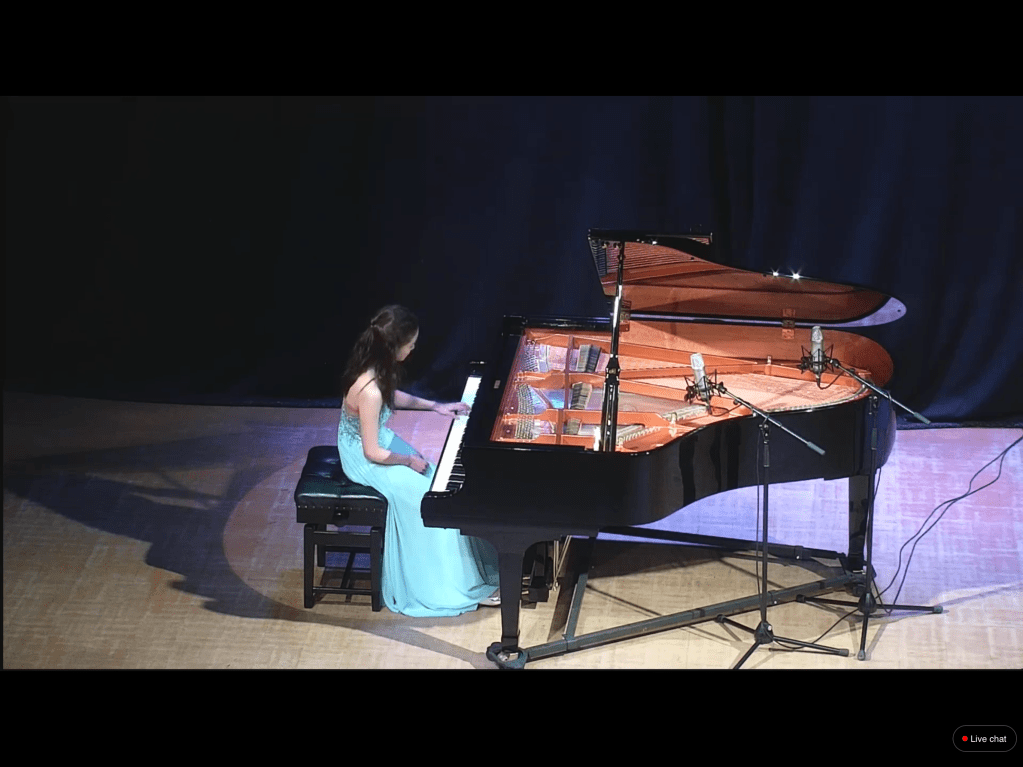
The spell had been set for the Chopin Andante Spianato that floated in on the wave of Almeria .An audience that was obviously too entranced to break this spell with applause was rewarded with a performance of such subtle beauty and shape.One was not aware of single notes as her sense of legato enveloped even the most elaborate of embellishments that were just streams of gold and silver sounds ornamenting this magic bel canto atmosphere.Playing the full orchestral introduction to the ‘Grande Polonaise Brillante’ this was more a Polonaise Fantasy with which Chopin would have entranced the aristocracy in the Parisian salons of the day so used to the funabulistic high jinks of Liszt or Thalberg.
It was to lead Schumann to exclaim ‘Hats off gentlemen ,a genius’.Hao Zi spun a magic web where ,of course,there were moments of great brilliance and octaves of majestic grandeur. The jeux perlé streams of sound though were played with subtle shape and sense of phrasing that one was not aware of the ‘fingerfertigkeit’ involved.Music just streamed from Hao Zi’s hands as it must have done from Chopin’s creating a magic and enveloping sense of forward movement where every note was part of a musical shape of ravishing charm and elegance.
Liszt taking the Parisian salons by storm in his own inimitable way.


The Schumann Fantasy has its origin in early 1836, when Schumann composed a piece entitled ‘Ruines’expressing his distress at being parted from his beloved Clara Wieck (later to become his wife). Schumann prefaced it with a quote from the poet Schlegel :’Resounding through all the notes
In the earth’s colourful dream
There sounds a faint long-drawn note
For the one who listens in secret.’ Also a quote from Beethoven’s song cycle An die ferne Geliebte (to the distant beloved) in the coda of the first movement :’Accept then these songs beloved, which I sang for you alone’.Schumann wrote to Clara: ‘The first movement may well be the most passionate I have ever composed – a deep lament for you.’It became the first movement of the Fantasy.Later that year, he wrote two more movements to create a work intended as a contribution to the appeal for funds by Liszt to erect a monument to Beethoven in his birthplace, Bonn.It is dedicated to Liszt who in turn dedicated to him his B minor Sonata – two pinnacles of the Romantic piano repertoire.It was exactly this romantic sweep and passionate beauty that Hao Zi brought to the first movement.With a great sense of architectural line she managed to piece together all the various episodes with a wonderful sense of colour and style.The middle,section Im leggenden ton had some truly magical moments as it built to a passionate climax of great intensity.There was rhythmic energy in the second movement which despite the intricate dotted rhythms was beautifully shaped and led to the transcendental difficulty of the coda where the difficulties just disappeared as Hao Zi turned these hurdles into music of passionate urgency.There was an aristocratic sense of timelessness in the last movement and the gentle resolution although not exactly what the composer asks for was a musical solution of sublime beauty.The three last chords were of such beauty and calm creating a magic atmosphere where the audience held their breath for many minutes after the last chord had sounded.
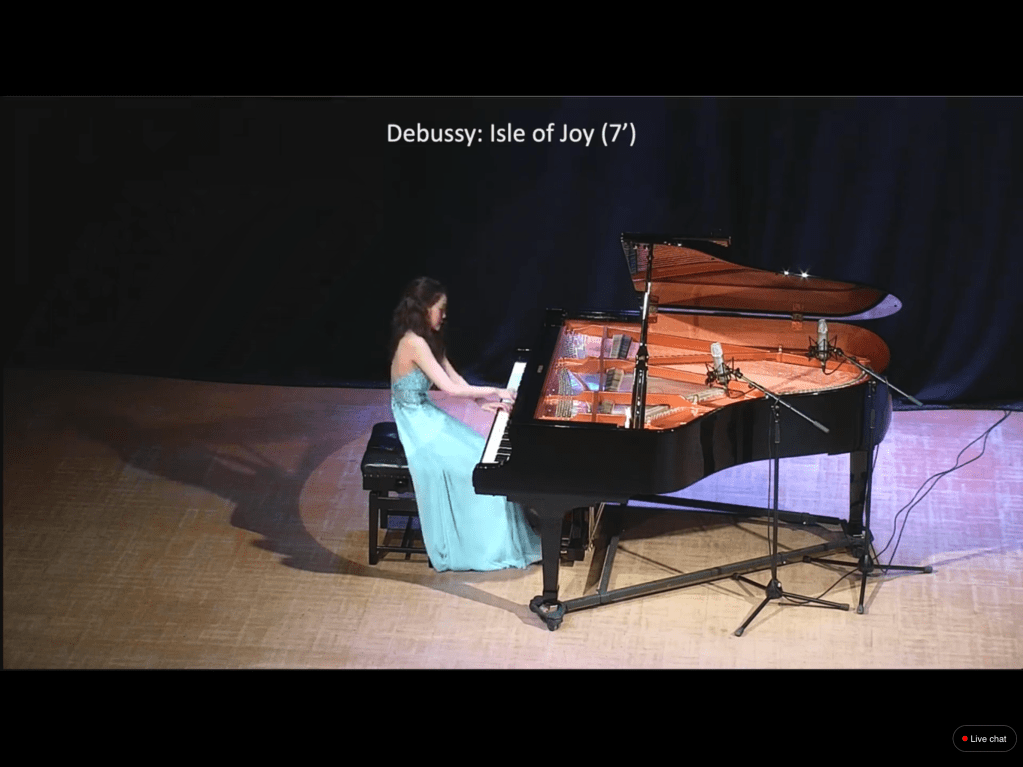
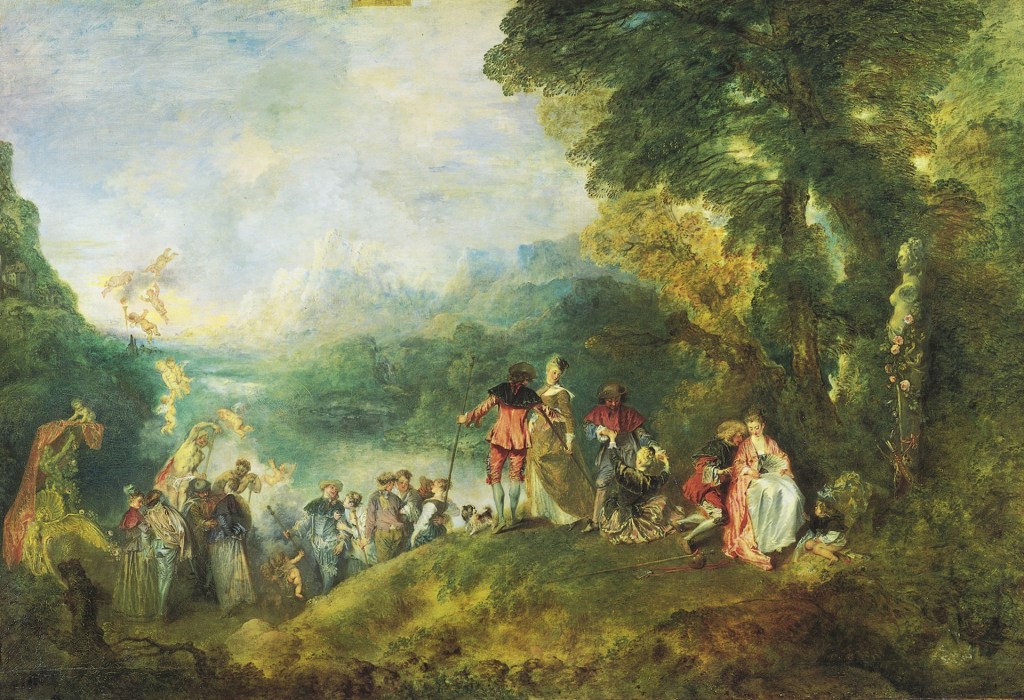
L’isle Joyeuse with its opening of mystery and delicacy as the astonishing clarity of Hao Zi’s playing brought this very evocative piece vividly to life.Written in 1903 as originally part of a series of three pieces :L’isle joyeuse,Masques and a piece that became D’un cashier d’esquisses.L’isle joyeuse was inspired by a painting by Watteau:’Pèlerinage à l’ile de Cythère’.Most probably the island was Jersey,where Debussy had spent much time with his new companion Emma Bardac.Played with great temperament and sense of colour with the passionate outpouring of the final triumphant declaration bringing this beautiful recital to a stimulating conclusion.
Watteau:’Pèlerinage à l’ile de Cythère’

Malaysian pianist Hao Zi Yoh was born in 1995 and began her music studies at the age of 3. By the age of 12, she already performed at Carnegie Hall as a gold medalist of the Bradshaw and Buono International Piano Competition. Most recently, Hao Zi was selected as participant in the Preliminary Round of Chopin Piano Competition in Warsaw 2021. At the age of 14, she moved to Germany to study with Prof. Elza Kolodin at the Hochschule für Musik Freiburg. It was then she won top prizes in many international competitions including EPTA Belgium, Enschede, RNCM James Mottram (Manchester, 2012) and Concurso international de piano Rotary Club Palma Ramon LLull, Mallorca (Spain 2013).In 2014, she came under the tutelage of Prof. Christopher Elton at the Royal Academy of Music, London, generously supported by Lynn Foundation, Leverhulme Trust, Countess of Munster and Craxton Memorial Trust. She received 3rd Prize at Roma International Piano Competition, the Phillip Crawshaw Memorial Prize for an Outstanding Musician from Overseas at the Royal Overseas League Competition. She was also recipient of prestigious Martin Musical Scholarship Trust Philharmonia Piano Fellowships on the Emerging Artists Programme 2017/18. During her studies, she explored her relationship with music and her interest in creating sound colours: her MMus Project 2016 involved collaborating with percussionist Daniel Gonzalez to create a version of Ravel’s Gaspard de la nuit for Piano and Percussion.Apart from this, Hao Zi also participated in creative outreach projects led by the Open Academy for children and elderly with Dementia, where she performed in Music for Moment Concerts at the Wigmore Hall. She collaborated with author-illustrator David Litchfield and improvised to his storytelling of award-winning book “The Bear and the Piano”.She is further developing her performing career being part of the Keyboard Trust London, Talent Unlimited. Hao Zi is also a piano tutor at King’s College London and gives masterclasses at Imperial College London.
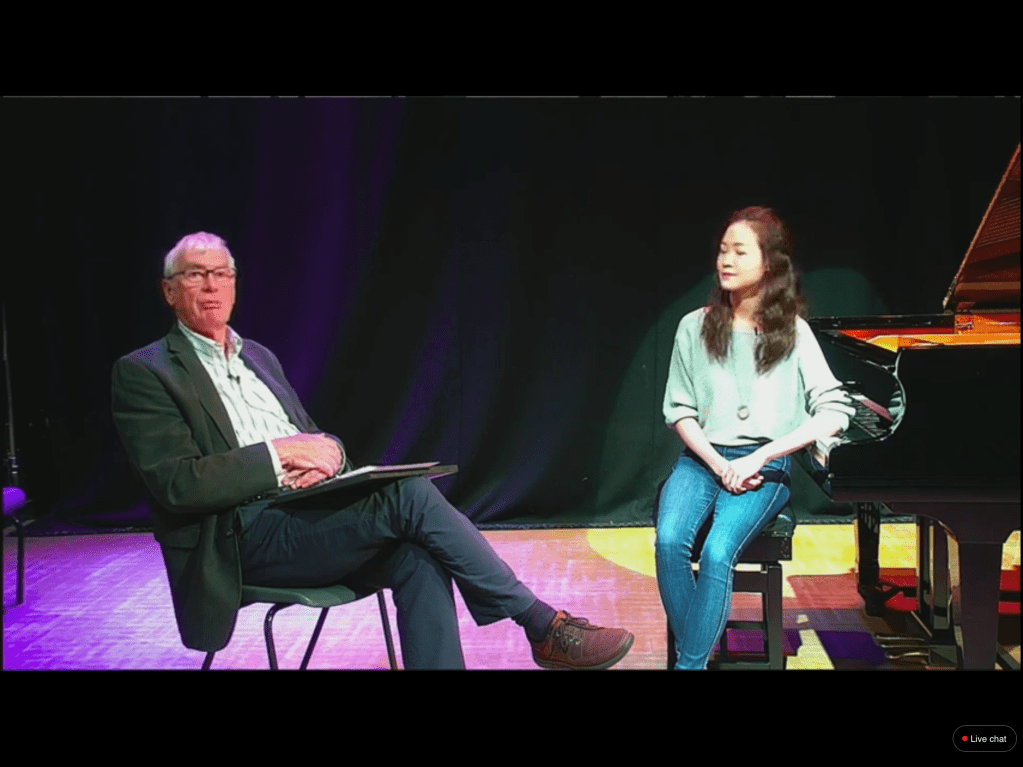
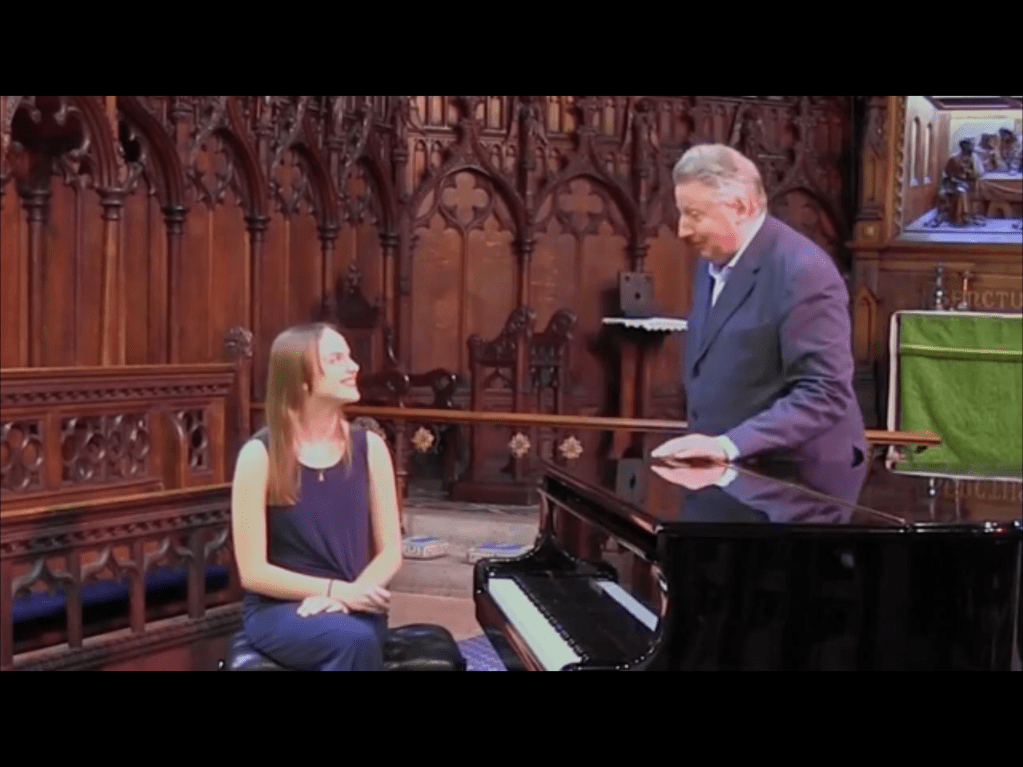
A very interesting interval conversation between Stephen Dennison and Hao Zi Yoh

https://christopheraxworthymusiccommentary.com/2022/03/31/hao-zi-yoh-at-the-l-s-e-puritysensibility-and-elegance-simply-expressed/

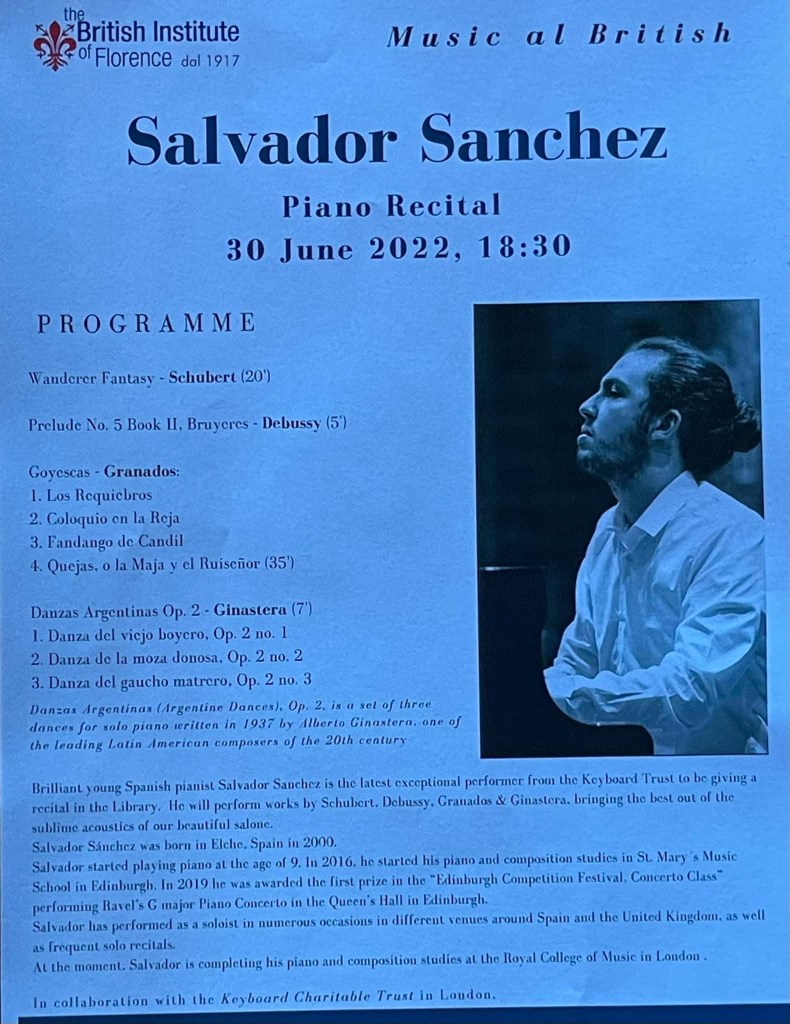
Salvador Sanchez ignites Florence the Terra Del Fuoco

Terra del Fuoco indeed as this young Spanish pianist /composer ignited the already torrid heat in Florence with a scintillating display of ‘joie de vivre’as rays of sunlight just shot from his agile fingers.

In rehearsal on the 1890 Bechstein in the Harold Acton Library


A Wanderer Fantasy where Schubert’s youthful energy and brilliance were matched with intelligence and sublime beauty as Salvador Sanchez with his noble opening statement took us on a long and intricate journey.From the heroic opening,the teasing fun of the scherzo to the very heart of the Wanderer.It was here that Salvador’s romantic soul allowed the sublime variations to seduce and beguile before the astonishing pyrotechnics of the fugato.

The four-movement Fantasy in C op 15 D.760 was written in 1822 and is widely considered Schubert’s most technically demanding composition for the piano. Schubert himself said “the devil may play it,” in reference to his own inability to do so properly.The whole work is based on one single basic motif from which all the themes are developed. This motif is distilled from the second movement, which is a sequence of variations on the song “Der Wanderer”, which Schubert wrote in 1816. It is from this that the name is derived.
The four movements are played without a break. After the first movement Allegro con fuoco ma non troppo and the second movement Adagio follow a scherzo presto and the technically transcendental finale, which starts in fugato becoming more and more virtuosic as it moves toward its thunderous conclusion.Liszt was fascinated by the Wanderer Fantasy, and transcribed it for piano and orchestra (S.366) and two pianos (S.653). He also edited the original score and added some various interpretations making a complete rearrangement of the final movement (S.565a).


Calming the waters with Debussy’s mists of sound Salvador was able to conjure up an atmosphere that was certainly not the one we were experiencing in Florence today.
The wonderful blue sky and crystal clear atmosphere was more a tune to what Salvador had up his sleeve in the second part of his recital in the Harold Acton Library of the British Institute.
His performance of the complete Goyescas had Leslie Howard on the edge of his seat a while ago in his first concert for the Keyboard Trust. https://christopheraxworthymusiccommentary.com/2021/06/30/salvador-sanchezs-scintillating-artistry-for-the-keyboard-trust/ Four pieces were re-enacted today without even waiting for the mist to clear!

Goyescas op 11 is subtitled Los majos enamorados (The Gallants in Love), and was written in 1911 . It was inspired by the work of the Spanish artist Francisco Goya even though the piano pieces have not been authoritatively associated with any particular paintings with two exceptions not included in the selection of these four pieces from the seven that make up the two books. The piano writing of Goyescas is highly ornamented and extremely difficult to master, requiring both subtle dexterity and great power. Some of them have a strong improvisational feel.The suite was written in two books starting in 1909, and by 31 August 1910, the composer was able to write that he had composed “great flights of imagination and difficulty.” Granados himself gave the première of Book I in Barcelona on 11 March 1911 and completed Book II in December 1911 giving its first performance in Paris on 2 April 1914.The boat ‘The Sussex’ on which he was returning from America was torpedoed in the English Channel on the 24th March 1916.A survivor of the 1916 torpedo attack on a Cross channel ferry, Sussex, recognised Spanish composer Granados in a lifeboat, his wife in the water. Granados dived in to save her and perished.”The ship broke in two parts, and only one sank (along with 80 passengers). Ironically, the part of the vessel that contained his cabin did not sink and was towed to port, with most of the passengers, except for Granados and his wife, who were on the other side of the boat when it was hit. Granados and his wife left six children: Eduard (a musician), Solita, Enrique (a swimming champion), Víctor, Natalia, and Francisco.


Music that is clearly in the blood of this young virtuoso from Alicante.Conquering the enormous technical hurdles that Granados delighted in pouring into his famous Goyescas.Written of course before he went down with the ship.(His ship was torpedoed on his way home from New York where his opera based on Goyescas received its premiere.Being summoned to play for the President at the White House’ he fatally caught a later boat home).
Pieces of a transcendental difficulty not only to play the notes but to keep in the memory with the intricate strands of melody that are so richly embellished in a true maze of sounds.The ‘Fandango’was played with hypnotic rhythmic verve and contrasted with the sublime beauty of ‘The Maiden and the Nightingale’ where the sheer beauty of the maiden truly delighted the nightingale who was ready to warble to her hearts delight with such clarity and daring.’Los Requiebras’ was a tour de force of technical and musical mastery as the melodic line passed from one part of the keyboard to the other.Magical filigree embellishments of fleeting beauty passed like shafts of gold and silver ornamenting the sumptuous beauty of the melodic line.’Coloquio en La Reja’ showed off his extraordinary sense of balance allowing sounds of ravishing beauty to sing so naturally unforced.
This young Spaniard’s sense of timing and subtle stretching of the tempo that like Chopins Mazurkas cannot be taught but has to come from the soul.
And Salvador not only has a soul but also the passion and fire of a hot blooded Latin.

Op. 2, is a set of three dances written in 1937 by Alberto Ginastera one of the leading Latin American composers of the 20th century .The first piece, Danza del viejo boyero (“Dance of the Old Herdsman”), immediately strikes the ear as being odd as the left hand plays only black notes, while the right plays only white notes.Danza de la moza donosa (“Dance of the Donosa Girl”) is a gentle dance in 6/8 time where a piquant melody meanders its way through the first section, constantly creating and releasing tension through the use of chromatic inflections.With directions such as furiosamente ,violente ,mordento and salvaggio ,Ginastera left no doubt as how to play the third dance, Danza del gaucho matrero (“Dance of the Outlaw Cowboy”)!


No more evident that in the Argentinian Dances by Ginastera where having astonished with the brilliance of the ‘del viejo boyero’he seduced with the sublime musings of ‘la moza donosa’only to be literally caterpulted into the astonishing exuberances of ‘del gaucho matrero’
Astonished and not a little exhausted by this sparkling display of virtuosity Salvador was ready to offer one of his own compositions.
The calm and translucent sounds brought us to the atmosphere that Bartok brings to his own ‘open air’ that was probably the inspiration for this very evocative piece.
Salvador is also a remarkable composer and on the 10th July a commissioned work for string quartet and magnetised (!)piano will receive it’s premiere in London.
Simon Gammell OBE director of the British Institute


It was so refreshing on this suffocatingly hot day to see the radiance and fun he was evidently having sharing music with this elite audience.A new series that director Simon Gammell and wife Jennifer have organised with the astonishing array of artists from the ever expanding roster of the Keyboard Trust.Here they are in our collaboration with six of the artists chosen to play this season in Florence from October ‘21 to October ‘22

Jonathan Ferrucci the return of a warrior The Goldberg Variations in Florence

Cristian Sandrin a message of Hope and Peace in Florence the cradle of our culture

Simone Tavoni triumphs on the Italian tour for the Keyboard Trust – part 1 Florence – part 2 Venice and Padua

Thomas Kelly takes Florence by storm Music al British

Luca Lione in London 23rd June 2022

📌🇬🇧 Concerto per The Keyboard Charitable Trust presso la Steinway Hall di Londra.

Un concerto difficile da spiegare in poche parole, una impresa titanica svolta interamente in 24h. Poche ore di sonno, ritardi del volo, scioperi in città (e che città, incredibile!), arrivo soltanto due ore prima del concerto!

Tutte le fatiche, però, ripagate da un concerto con un pubblico di altissimo livello, dalle commoventi parole di stima e affetto che custodirò gelosamente dentro di me soprattutto da parte di Noretta Conci-Leech (allieva e assistente di Arturo Benedetti Michelangeli).
L’incontro con il leggendario Maestro Leslie Howard, invece, illuminante. Grazie per l’invito e per tutto ciò che mi ha anche insegnato in così poco tempo.
Grazie a Christopher Axworthy, cuore pulsante di questa realtà londinese.
Grazie Sarah Biggs.
Grazie a tutti, per l’accoglienza e per ciò che avete lasciato dentro di me. Il potere della Musica è davvero infinito.

Sono grato alla Musica, alla Vita.

Thank you, London! ♥️🇬🇧

Luca Lione takes London by storm.
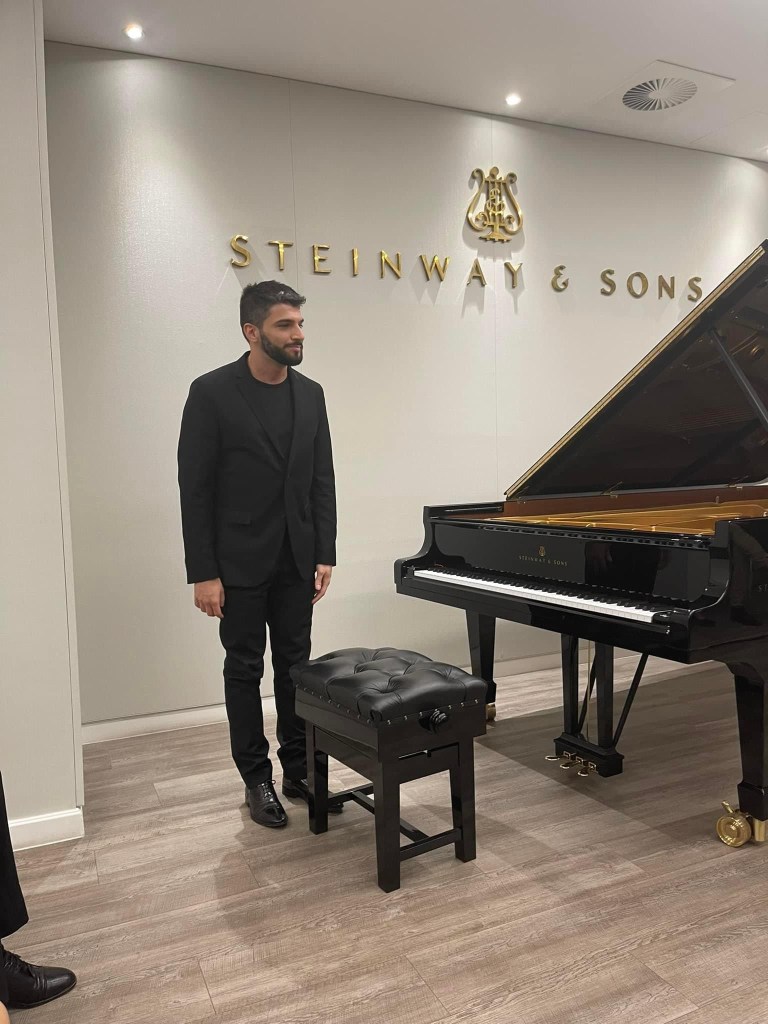
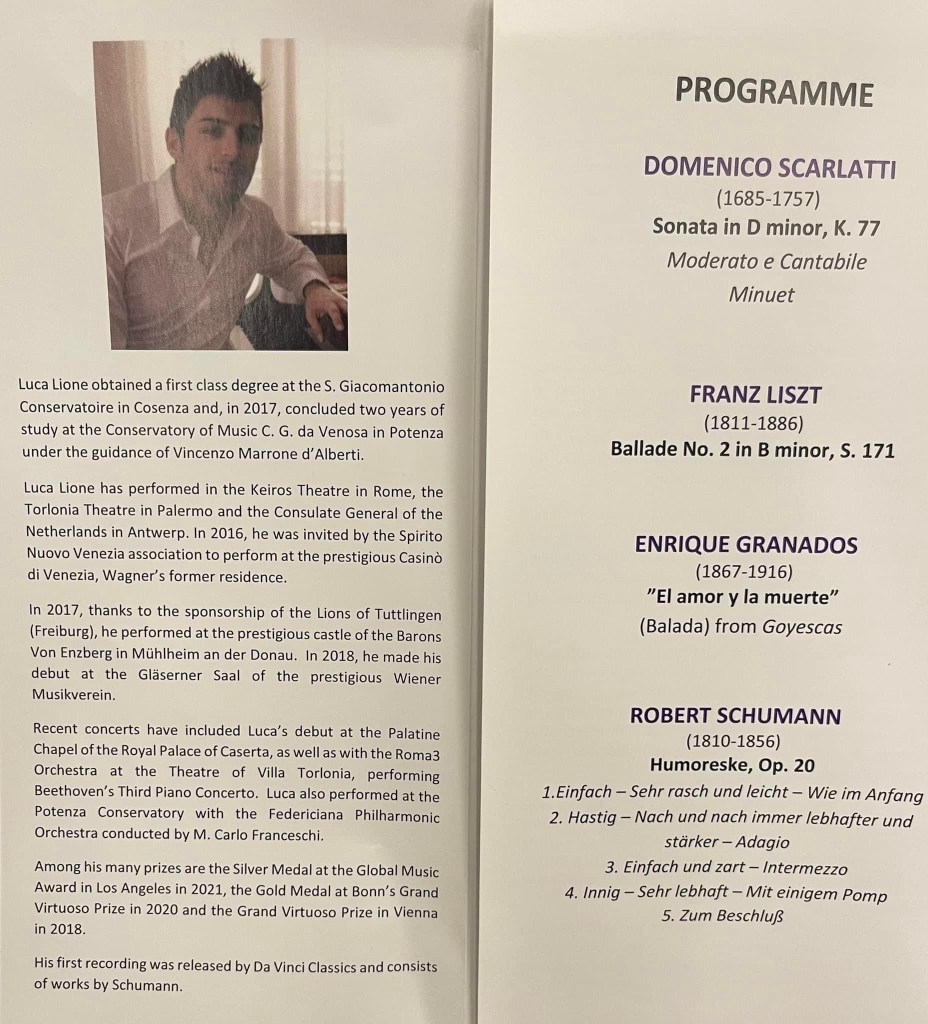
Flying in at the last minute from Potenza in Southern Italy the moment this young man sat at the piano the beauty and calm he shared with us in Scarlatti’s two movement sonata K.77 belied the passion and transcendental display of virtuosity that he was to unleash on an unsuspecting audience at Steinway Hall.
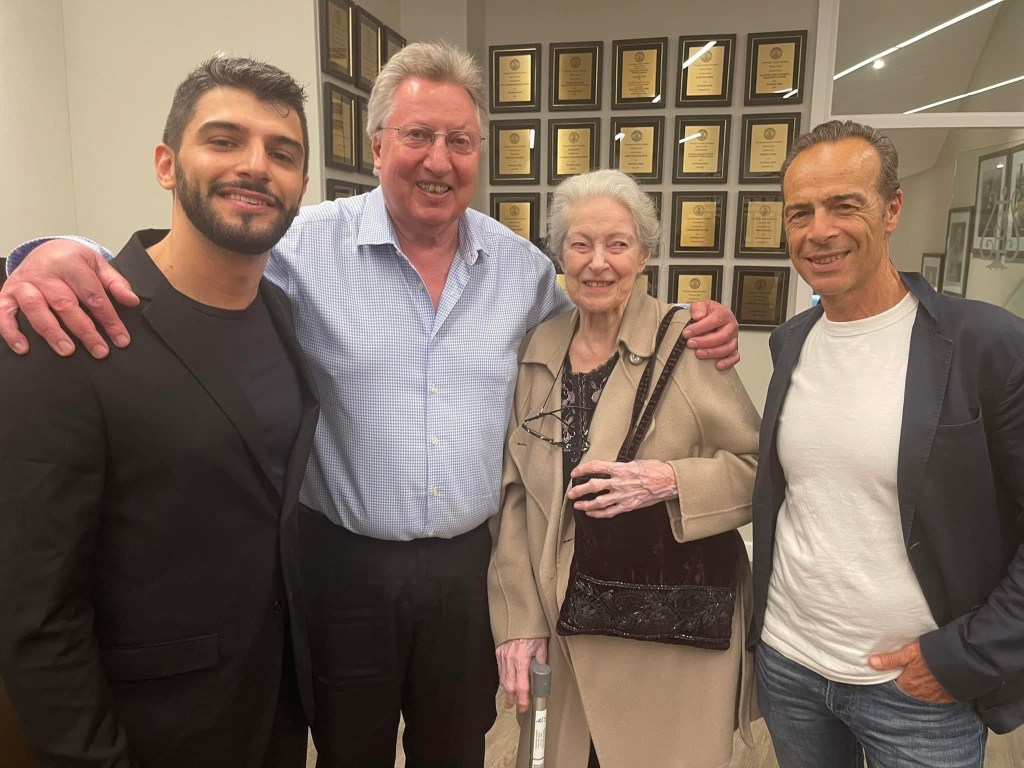
His Romantic good looks and fiery Latin temperament ignited this magnificent Steinway concert grand with performances of beauty and grandeur that astonished even Noretta Conci-Leech ,assistant for many years to Arturo Benedetti Michelangeli !
The Liszt expert and one of the founder trustees of the Keyboard Trust,Leslie Howard,realised that any conversation after performances of that stature were an unnecessary intrusion where music had been allowed to speak louder than words.
The distinguished actor Marco Gambino exclaimed that the Liszt Ballade in B minor had told the story of Hero and Leander better than words ever could .
Noretta Conci Leech was amazed at his authority and passion in a performance of Schumann’s Humoresque ,one of his most complex works.
Granados ‘El amor y La muerte’ was breathtaking in its sweep and subtle colouring.
London awaits a return match from this dashing young Italian virtuoso.
https://christopheraxworthymusiccommentary.com/2020/02/27/a-lion-in-villa-torlonia-luca-lione-at-teatro-di-villa-torlonia/

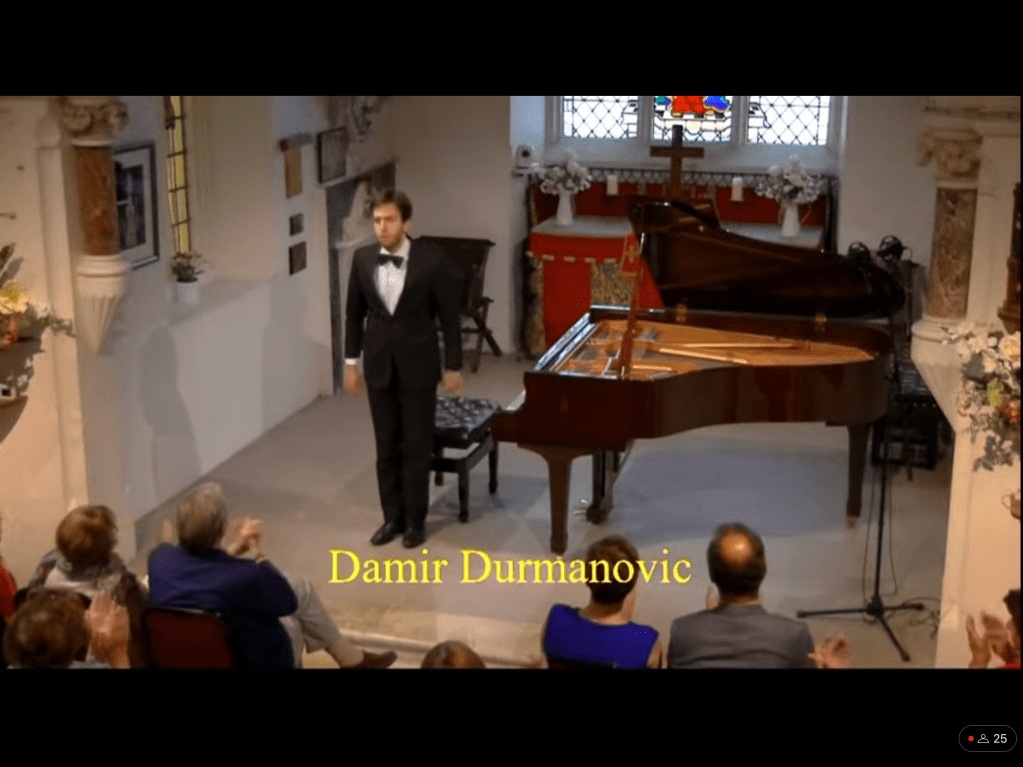
Damir Durmanovic at St Mary’s stars shining brightly in Perivale today

Tuesday 5 July 3.00 pm


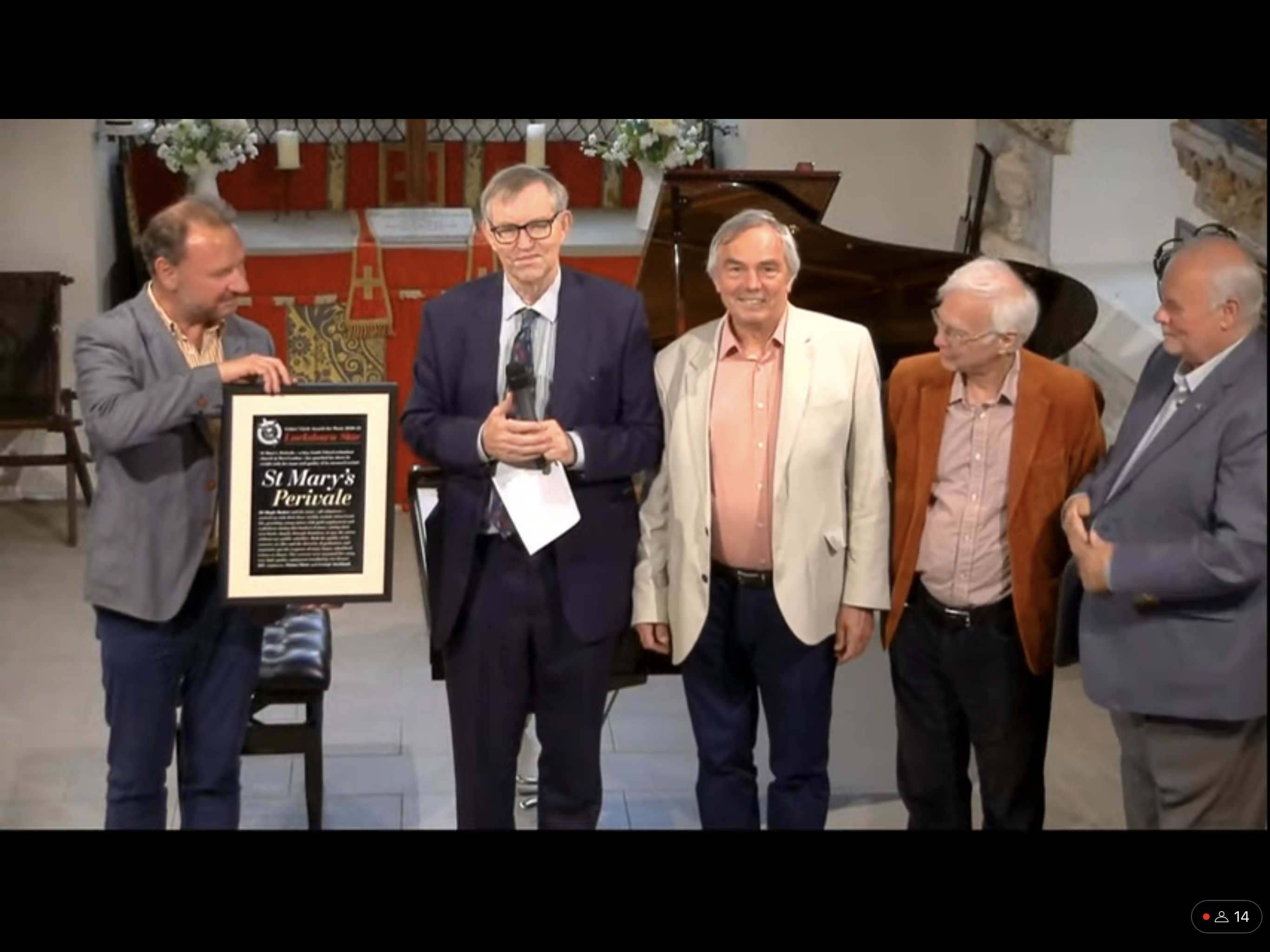
Presentation of Award by Critics’ Circle to St Mary’s Perivale
‘Lockdown Star Venue’

DAMIR DURMANOVIC

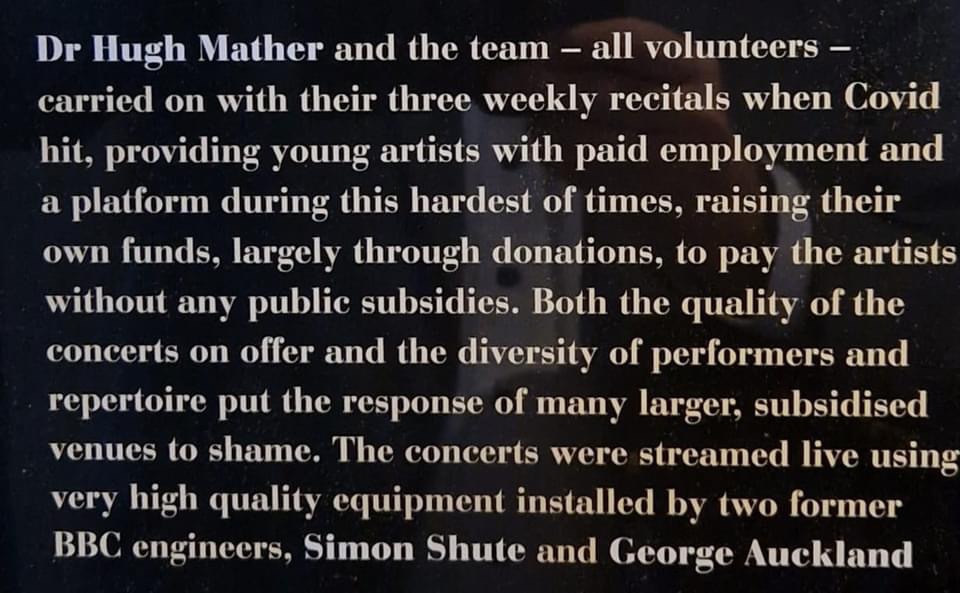
‘Lockdown stars’ as Robert Fitness of the critics circle described the Mecca for young musicians that has been created by an extraordinary team of passionate ‘amateurs’ in a small redundant church on Ealing Golf Course.

Robert Fitness Chairman of the Music section of the Critics Circle


But as Rosalyn Tureck once said to my wife:it is a great satisfaction to have one’s work recognised but it is the work that counts!

Rosalyn Tureck ‘The High Priestess of Bach’ conducting the Philharmonia in 1959


Damir Durmanovic was the living proof of that today giving a recital of such musicianship and artistry that I was reminded of the unique sounds that Moiseiwitch would coax out of the piano with his ravishing sense of balance and aristocratically natural musicianship.
Sounds from the piano that Matthay had shared with Myra Hess and Moura Lympany where every note has an infinite variety of beautiful sounds that can as if by magic turn a box of hammers and strings into a wondrous world of fantasy and sumptuous delight.
Damir has much in common with them too with his natural musicianship that has been nurtured from his youthful studies with Marcel Baudet and Robert Levin at that remarkable school that Menuhin has bequeathed to his adopted country.
Programmes that are constructed with key relationships in mind.
Repertoire chosen from a vast range of neglected masterpieces.
A true musician who can improvise and modulate as was the norm in Bach’s day but has now become a rarity.
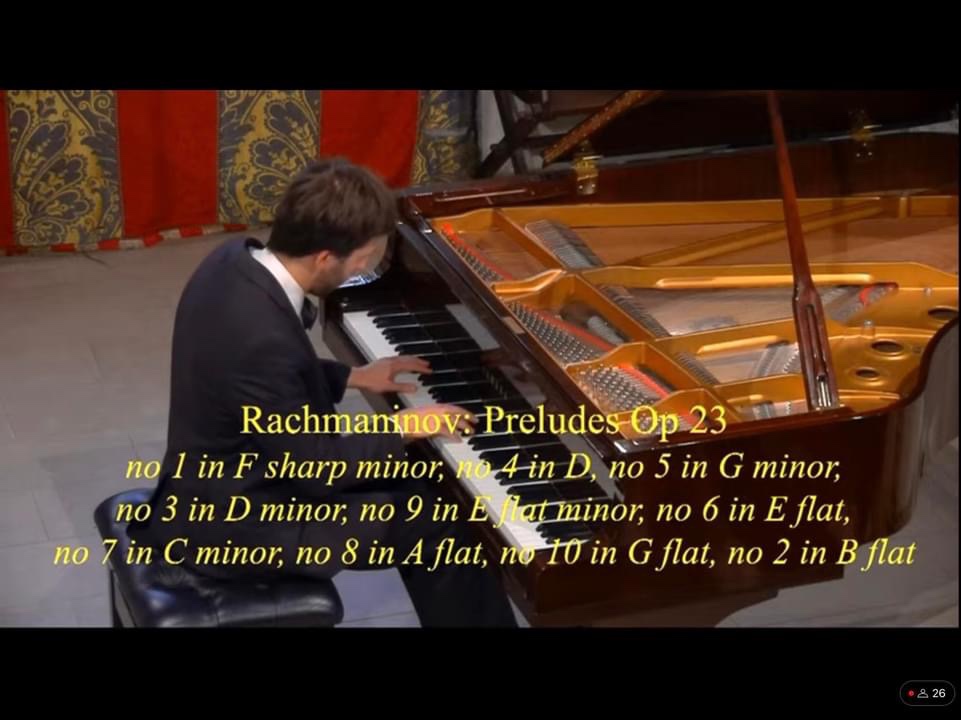
I am not sure if the public were aware of the improvised link between the rare pieces by Lyadov and the Rachmaninov Preludes
Dr Hugh Mather sounded perplexed as to why Damir should play the well known Rachmaninov preludes in a seemingly arbitrary order.
Damir simply explained that the preludes had never been written by Rachmaninov with the idea to be played all together and so he had tried to link them by key relationships to make a more satisfying whole.
Well Damir is part of the school of Andras Schiff,Paul Baudura Skoda and Robert Levin with their extraordinary curiosity that comes from deep research together with the natural musicianship like the ‘kapellmeisters’ of a bygone age.

The Intermezzi…might equally well have been called ‘Improvisations’, they convey so strongly the impression that the composer is as surprised and gratified at what is emerging as his audience…
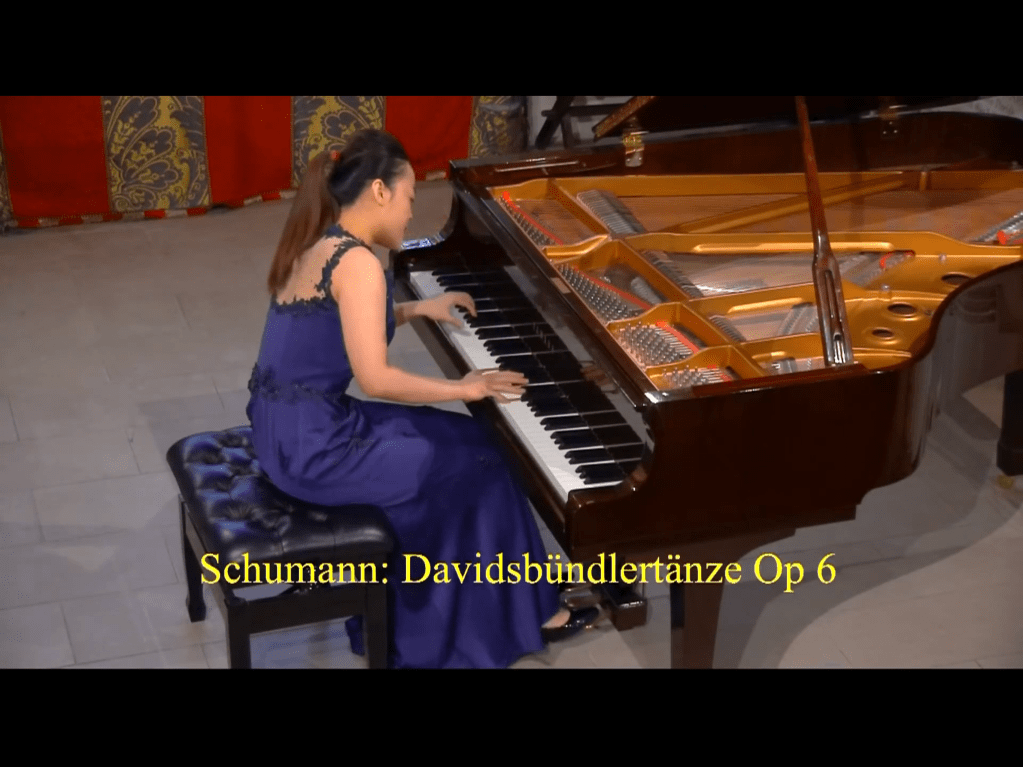
Schumann composed the Intermezzi Op. 4 in Spring 1832 and declared that they were special works, conceived as “longer Papillons” where “every note ought to be weighed and balanced”. The Intermezzi employ the same techniques used in Op. 2: quotations, fragments, and metamorphoses of poetry into music.The scherzo-like No. 2 in E minor is a depiction of Faust’s and Mephistopheles’ journey through the air; there is much interest in the complex rhythms that throw the underlying pulse out of sync with the melodic and harmonic rhythm. Unusual rhythms and accentuation highlight the main section of No. 3 in A minor; Schumann curiously labels the faster central section “Alternativo.” Schumann constructed No. 4 in C major, the shortest of the Intermezzi, from fragments of three earlier discarded works. No. 5 in D minor is more lyrical than its partners, in spite of its fast tempo; the central section, labeled “Alternativo” as in No. 3 above, is probably the most beautiful passage in the entire set. It was exactly the contrast of quixotic and romantic that was so fascinating.Damir has a way of coaxing the sounds out of the piano like a painter with strokes on the canvas which adds such a sumptuous sense of colour and balance to these flights of fancy.There are moments when the clouds seem to clear and we catch a glimpse of the sublime melodic line that is to become ever more evident in the works that are to follow on closely.From op 6 Davidsbundler through the extraordinary technical hurdles and romantic outpourings of the Toccata op 7 to the Carnaval op 9.These are like a painter trying out his ideas before arriving at the final masterpiece.Damir gave a very convincing performance that makes one want to hear the entire set of six as Schumann intended them to be heard together.
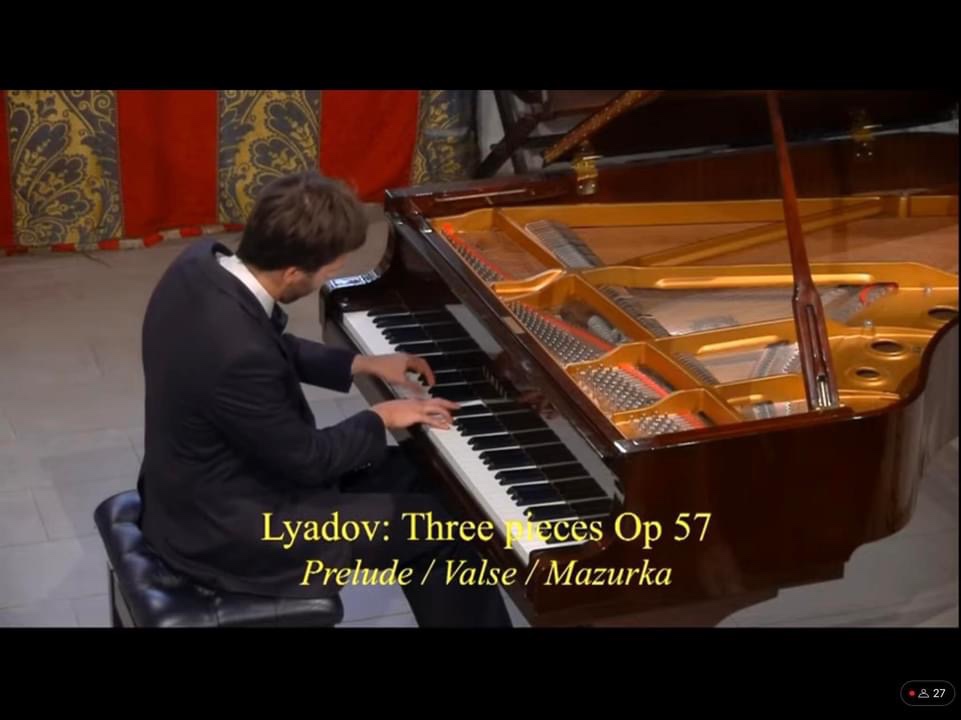
Lyadov taught at the St. Petersburg Conservatory from 1878, his pupils included Sergei Prokofiev.Stravinsky remarked that Lyadov was as strict with himself as he was with his pupils, writing with great precision and demanding fine attention to detail. Prokofiev recalled that even the most innocent musical innovations drove the conservative Lyadov crazy. “Shoving his hands in his pockets and rocking in his soft woollen shoes without heels, he would say, ‘I don’t understand why you are studying with me. Go to Richard Strauss .Go to Debussy.’ This was said in a tone that meant ‘Go to the devil!'”Still, Lyadov told his acquaintances about Prokofiev. “I am obliged to teach him. He must form his technique, his style—first in piano music.”While Lyadov’s technical facility was highly regarded by his contemporaries, his unreliability stood in the way of his advancement. His published compositions are relatively few due to a certain self-critical lack of confidence. Many of his works are variations on or arrangements of pre-existing material (for example his Russian Folksongs, Op. 58). He composed a large number of piano miniatures, of which his Musical Snuffbox of 1893 is perhaps most famous.His three pieces of op 57 are from 1900-1905.Three salon pieces similar to the early pieces by Scriabin.A prelude with a wonderful sense of style and balance with a subtle delicacy of another era.There was such control and sense of atmosphere in the Valse and a mazurka of beautiful musings of almost improvised radiance.A gentle improvisation invented even by Damir as pianists of another generation would have done between piece which took us from F minor of the Mazurka to the first Rachmaninov Prelude in F sharp minor .
Rachmaninov completed Prelude No. 5 in 1901. The remaining preludes were completed after Rachmaninov’s marriage to his cousin Natalia Satina: Nos. 1, 4, and 10 premiered in Moscow on February 10, 1903, and the remaining seven were completed soon after.
1900–1903 were difficult years for Rachmaninov and his motivation for writing the Preludes was predominantly financial.Composed in the Hotel America, financially dependent on his cousin Alexander Siloti, to whom the Preludes are dedicated.
The popular Prelude in C sharp minor op 3.n.2 perhaps unfairly eclipses the Op. 23 Preludes. Rachmaninov remarked, “…I think the Preludes of Op. 23 are far better music than my first Prelude, but the public has shown no disposition to share in my belief….”
The composer never played all of the Preludes in one sitting, preferring to cycle through a rotating mix of his favorites.There was a beautifully flowing tempo as the melodic lined duetted between the tenor and soprano registers in the first prelude .A bold melodic line was etched out in the beautiful D major prelude full of nobility and there was pure magic as the melodic line was embellished with a golden web of ravishing beauty above a sumptuous undercurrent of romantic sounds.The famous G minor prelude was played with deliberately beguiling capriciousness which contrasted so well with the aristocratic beauty of the mellifluous central episode.The excitement of the return of the march was enthralling but there was also an unexpected finesse to the phrasing as it just blew itself out so innocuously .The third in D minor was played with the capricious left hand melody answered by the solidity of the right hand chords with a deep sounding bass note that heralded a coda of magic discovery.The transcendental difficulties of the E flat minor prelude were disguised with such subtle phrasing and ‘will o’the wisp’ fleeting colours that was just as breathtaking as Liszt’s miniature tone poem.There was a ravishing melodic line of such fluidity in the E flat prelude as this most romantic of preludes just weaved it’s way into our hearts.There was such clarity in the mighty C minor prelude with its unrelenting rhythmic energy on which emerges the melodic line floating on this wave of busy weaving sounds with an even more exhilarating coda of sumptuous golden sounds.Strands of melody emerged out of the busy meanderings of the A flat prelude contrasting so well with the beauty of the melodic line of the tenth in G flat.Romantic sounds unfolded with such grace and beauty over the entire keyboard until the eruption of the second prelude in B flat.Transcendental playing of overwhelming romantic sounds like a call to arms before the sumptuous beauty of the central section where the melodic line emerges from an accompaniment spread over the entire keyboard.Fearless chords and cascades of notes brought this performance of the preludes op 23 to a brilliant conclusion.

An eclectic encore of a very moving performance with the sumptuously rich sounds of Brahms ‘Herzlich tut mich verlangen’op posth 122 in the richly embroidered version for piano by Busoni.The chorale preludes, not published until five years after his death, turned out to be Brahms’ last work. From one of the greatest composers of symphonies, chamber works, a requiem and more—a collection of short pieces that honour the past, reflect his own time, and continue to be re-interpreted today.Brahms wrote the 11 preludes in 1896 for organ,soon after the death of his dear friend, Clara Schumann. The short liturgical pieces, used to elaborate hymn tunes during a service, recall the music of J.S. Bach.

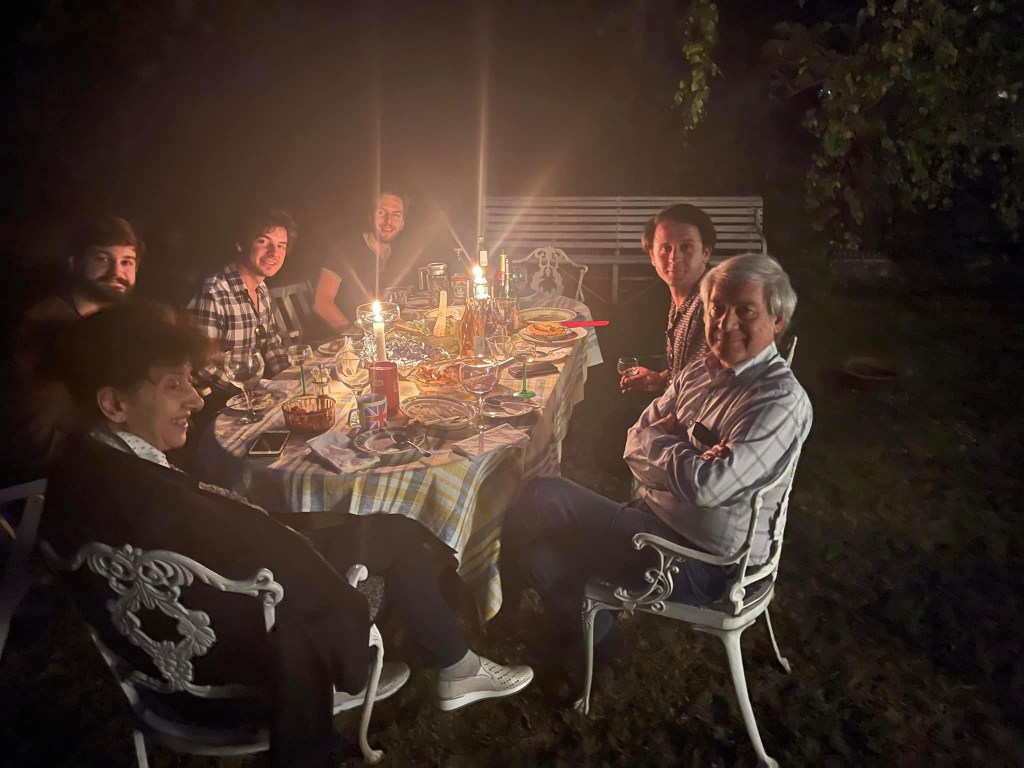
Tatyana and Dmitri Alexeev -Vitaly Pisarenko-Damir Durmanovic-Can Arisoy-Victor Maslov


Damir is also an excellent cook and the magic he cooked up for his teacher Dmitri Alexeev and family the other day in my garden was the same magic that he cooked up today at the keyboard!
Music is life and life is music,just as the dedicated people of St Mary’s are showing us at least three times a week.
They say miracles do not happen twice in the same place ….well I know differently.

As an internationally sought-after performer, Damir Durmanovic has performed in venues and festivals including the Wigmore Hall, Champs Hill Studios, YPF Festival Amsterdam, Wimbledon Music Festival, Renia Sofia Audotorium Madrid, Gstaad Menuhin Festival, Derby Multifaith Center, Flusserei Flums, ‘Ballenlager’ Vaduz. He has won prizes in numerous international competitions including The Beethoven Intercollegiate Junior Competition in London, Adilia Alieva International Piano Competition in Geneva and Isidor Bajic International Piano Competition in Novi Sad. He has performed in masterclasses with Claudio Martinez-Mehner, Dmitri Bashkirov, Pascal Devoyon, Jacques Rouvier, Robert Levin, Jean-Bernard Pommier, Tatyana Sarkisova, and chamber ensembles such as the Emerson Quartet. Damir is also a scholar at the ‘Musikakademie Liechtestein’ and regularly participates in the courses organised by the academy. Damir began his studies at age of eight in his home country, Bosnia and Herzegovina, with Maja Azabagic before continuing his studies at the Yehudi Menuhin School where he studied with professor Marcel Baudet. He is an ABRSM scholar and is kindly supported by the Talent Unlimited Scheme. He is currently studying at the Royal College of Music in London with professor Dmitri Alexeev.

https://christopheraxworthymusiccommentary.com/2022/04/18/damir-duramovic-at-cranleigh-arts-a-musician-speaks-with-simplicity-and-poetry/

https://christopheraxworthymusiccommentary.com/2021/09/30/damir-durmanovic-the-complete-musician-at-saint-olave-tower-hill/

Milda Daunoraite live stream concert for the Keyboard Charitable Trust – youthful charm and ease at the service of music

Recorded at St Matthew’s Church, Ealing
and now Free-to-View on our YouTube channel. https://youtu.be/nGbJemRih0g

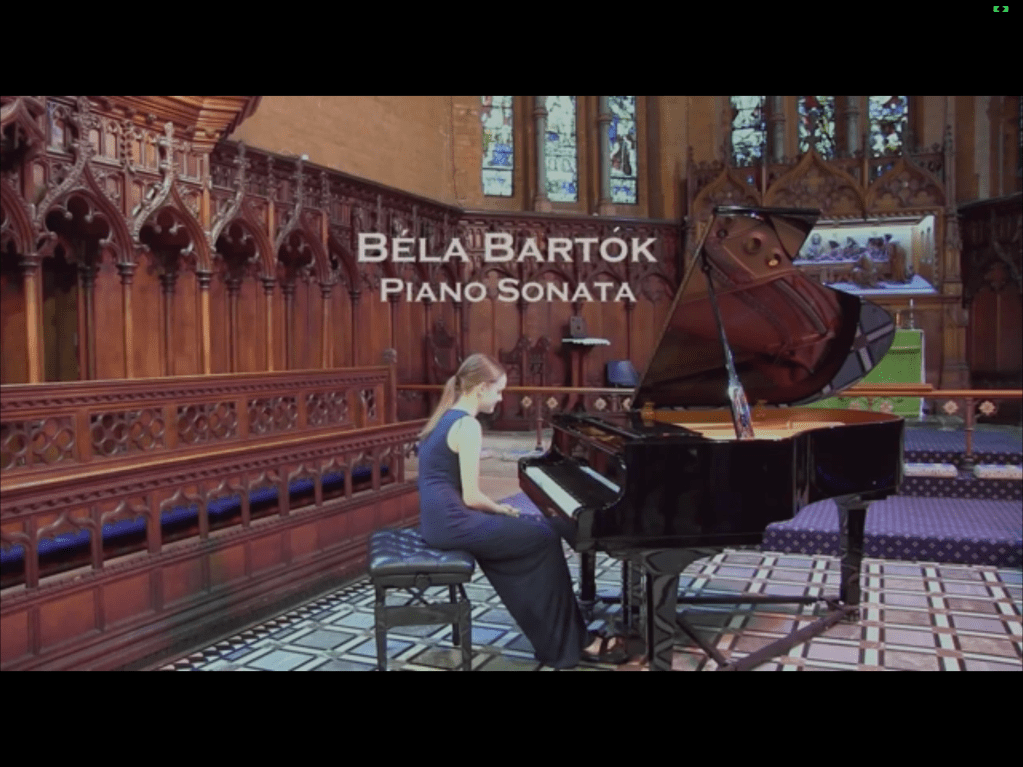
It was the same innocence of simple music making that I had heard from Milda in Perivale recently that was the hallmark of her recital for the Keyboard Trust .Such a refreshing ‘joie de vivre’ of a young pianist who actually looks carefully at the score and with crystalline technical ease can imbue the music with youthful charm and energy.The same innocent charm that she shared with Prof Leslie Howard in their brief post concert slightly one sided conversation.Charmed he was too!Especially having enjoyed her performances of Beethoven,Debussy and Bartòk where she had delved deeply into the score and translated what she had found into sounds of such buoyancy and well oiled fluency.It was good to be reminded by Prof.Howard that Bartòk had written his Sonata with the Imperial Bosendorfer in mind – a piano that can be bewildering with its 97 keys- the extra keys painted black or even covered by a wooden box! It can be very disconcerting to a pianist that is used to navigating the standard keyboard.The nine extra keys are coloured black so the pianist can distinguish them from the standard 88. The keys are rarely used, but the extra bass strings add harmonic resonance that contributes to the rich, overall sound of the instrument.

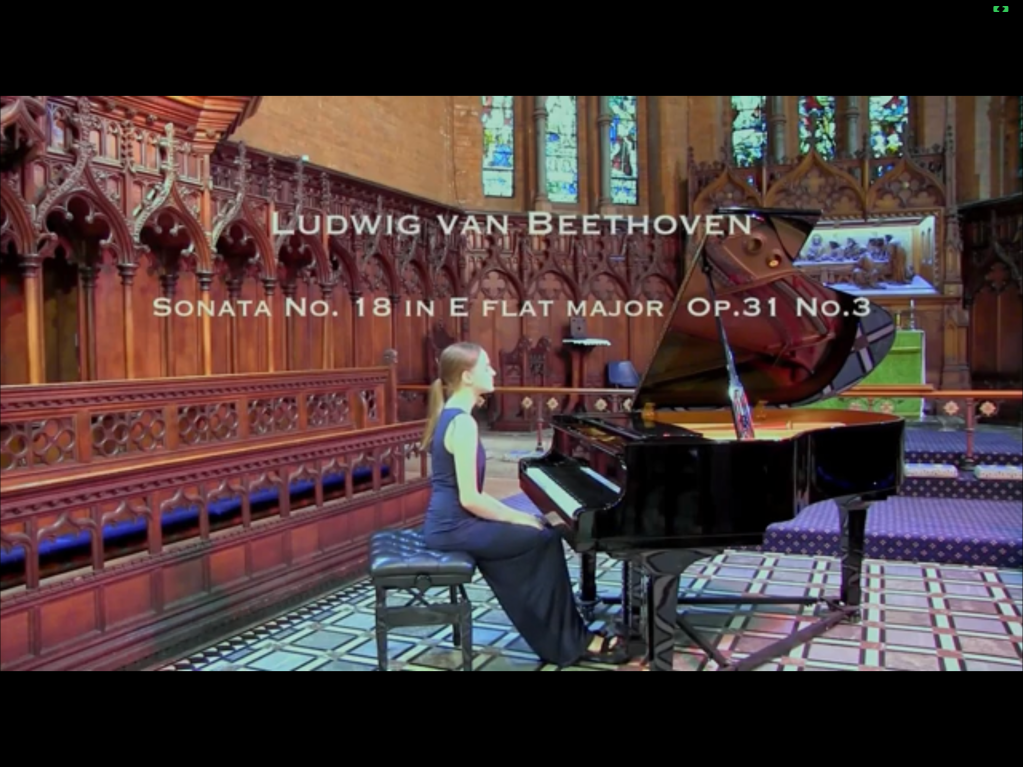
Beethoven Sonata No. 18 Op. 31 No.3

As Prof Howard had pointed out the three Sonatas op 31 could not be more varied.The first with is syncopated rhythms and extended bel canto Adagio grazioso to the dramatic outpourings of the second – so called ‘Tempest’ and the third that could almost be called pastoral.A sonata full of lightness and bucolic energy.I had heard Milda play op 81a ‘Les Adieux’ and was surprised as I was today by her youthful spirit and sense of improvisational discovery together with a microscopic attention to the composers meticulous indications.It is the same youthful sense of freedom that was so much admired in Annie Fischer well into her seventies!The ever youthful Artur Rubinstein chose this sonata to open the final concert in his long career at the Wigmore Hall when he was already in his 90th year!The opening of the sonata where the rests are as important as the notes and the intricate joining scale passages played with a precision never allowed the rhythmic impulse to waver in a haze of imprecision.Milda had all the precision of a Swiss watch but never allowed the music to sound mechanical or unnatural.The music unfolded with such bucolic energy that the mellifluous second subject just floated on a wave of energy that would have done ‘Alberti’ proud!Never allowing the phrases to be rounded off by a change of tempo and even the lead up to the recapitulation revealing the opening as if by surprise.The final two chords at the end of the movement were thrown off quietly and rather too matter of fact and came as a surprise. Beethoven had not been clear but his irascible temperament has never been in doubt though!The Scherzo was played with continual rhythmic buoyancy and one can see where Saint Saens got much of his inspiration almost a century later.A mixture of jeux perlé and ‘lost penny’ precision.No rage here though with a movement like a gust of fresh air blowing over the canvas.Exhilarating playing of character and unrelenting forward movement with fists full of notes playfully chasing each other up and down the keyboard.The ending pianissimo with no rallentando was exactly what Beethoven wrote and was just like the great man blowing out the final candle.A Menuetto and Trio in place of the usual slow movement just showed the character that Beethoven had imbued into this pastoral scene.A beautiful sense of balance allowed the melodic line to sing out so naturally and the simple poignancy of the coda was Beethoven’s genius raising its head so clearly.Even the seemingly innocent Trio full of meticulous indications was played with refreshing simplicity that made one realise why Saint Saens had chosen this as the basis of variations for two pianos.The bucolic ‘joie de vivre’of the ‘Presto con fuoco’ suited Milda’s youthful verve and energy.Unrelenting in its rhythmic energy and Milda’s meticulous care of phrasing gave extraordinary life and vigour to Beethoven’s simple melodic outline.Almost too serious in the poco ritardando after the accumulation of sounds led to the sudden electric injection of energy to the final few bars.The typical Beethovenian impatience slamming the door firmly shut ( surely what was intended in the first movement too?).
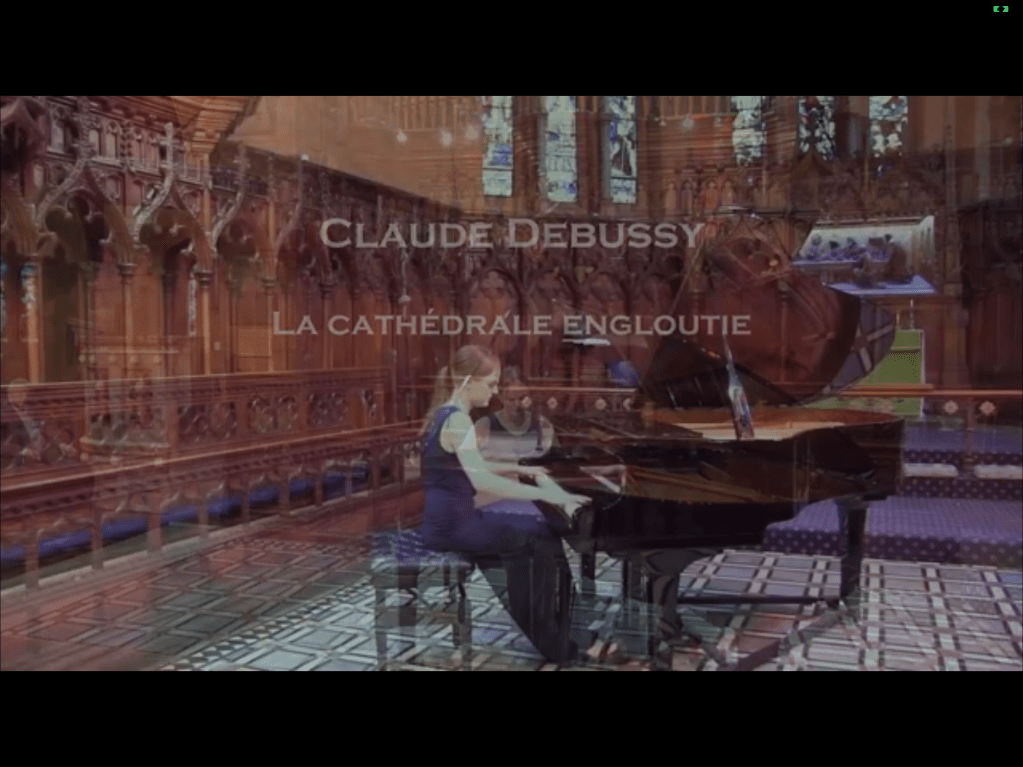
‘Sonore sans dureté ‘ ‘doux et fluìde’’sans nuances’ Debussy writes in the score of this tone poem of the Cathedral rising out of the sea .All beautifully realised by Milda with the ‘un peu moins lent’ played with delicacy and Michelangeli icy precision as it moved to the final climax before disappearing again.A murmuring bass that was played with such delicate precision and transcendental control before the return to the scene of the cathedral once more under the waves and out of sight .Minstrals was played with great character and rhythmic drive.The rapid changes showing Milda’s chameleonic kaleidoscope of sounds as she moved into the sleezy night club atmosphere that Debussy cheekily adds to try to dampen his minstrel’s gaiety.’La terrasse des audiences du clair de lune’ was played with a sumptuous sense of atmosphere and real delicacy all the time maintaining the long architectural line with a rhythmic undercurrent on which these sounds were floated so magically.Debussy’s very precise indications of touch were beautifully played with the luminosity of the calm and silence of this moonlit scene.Some remarkable playing of great delicacy allied to a rhythmic intensity that allowed her to give such shape and meaning to these ravishing jewels.Debussy wanted them to speak for themselves adding a title only after the last note had sounded.


Debussy Préludes
La cathédrale engloutie
Minstrels
La terrasse des audiences du clair de lune

To quote myself if I may:’ a demonic performance with its pungent rhythms and kaleidoscopic range of sounds.‘ ‘A slow movement of intensity and crystalline simplicity -sostenuto e pesante indeed.Breathtaking as it was breathless the driving rhythmic energy of the Allegro molto.’


Bartók Piano Sonata, BB 88 (Sz. 80)

The Piano Sonata, BB 88, Sz. 80,Hungarian composer Béla Bartòk was composed in June 1926 known to musicologists as Bartók’s “piano year”, when he underwent a creative shift in part from Beethovenian intensity to a more Bachian craftsmanship.It is in three movements: Allegro moderato. Sostenuto e pesante. Allegro moltoIt is tonal but highly dissonant (and has no key signature), using the piano in a percussive fashion with erratic time signatures. Underneath clusters of repeated notes, the melody is folklike. Each movement has a classical structure overall, in character with Bartók’s frequent use of classical forms as vehicles for his most advanced thinking.Bartok wrote it with an Imperial Bosendorfer in mind, which has extra keys in the bass (97 keys in total) and the second movement calls for these keys to be used (to play G sharp and F).It is dedicated to his second wife Ditta-Pasztory – Bartòk

The Italian composer, conductor and pianist Ferruccio Busoni meticulously transcribes the famous organ works of Bach.He soon realises that he requires additional bass notes in order to do Bach’s masterpieces and the immersive sound of 16 to 32 feet bass pipes found in an organ justice. Ludwig Bösendorfer is ready to take on the challenge and builds the first prototype having full 8 octaves in tonal range. Not only Busoni starts to appreciate the exceptional qualities of the – later coined – Imperial Concert Grand: Bartók, Debussy and Ravel compose further works to exploit the tremendous resonance of this very instrument. These oeuvres can only played and interpreted as they were meant to on this Concert Grand. Evoking an extraordinary sound – sonorous and rich in expression and resonance – the timbre of the Imperial Grand seems to be orchestral. The additional deeper bass notes resonate with every key you strike and the massive soundboard supports the projection of any frequency. Ludwig Bösendorfer’s Imperial still to this day represents the precious heritage of the Bösendorfer piano manufactory.

Exhilarated and charmed by the youthful spirit of the remarkably talented young musician

Born in September 2001 in Anykščiai, Lithuania, Milda Daunoraite began her piano studies at the age of six.Studying piano performance at the The Purcell School For Young Musicians, London, with Tessa Nicholson she now continues her studies with her on a full scholarship at the Royal Academy of Music .With the support of “SOS Talents – Fondation Michel Sogny pour les Enfants Talentueux” and Mstislav Rostropovich Foundation, Milda began performing extensively throughout Europe for many eminent music societies, festivals and key events. Milda has performed at venues such as the Concertgebouw in Amsterdam, The Wigmore Hall in London, Musikhuset Aarhus in Denmark, United Nations headquarters in Geneva amongst others. In addition, she was given the opportunity to appear in countries such as France, Austria, Georgia, Poland, Switzerland, Germany, Denmark, Holland, Latvia, Russia, Sweden, United Kingdom and many cities across Lithuania. Furthermore, Milda is a prize-winner of numerous national and international piano competitions.In 2010, she was adjudicated a Grand Prix winner in the 10th International Competition “Music Without Limits”, Lithuania. In 2014, Milda won Grand Prix in the International Musicians Competition – festival “Renaissance”. In 2015, she won 1st prize in the 4th International Competition in Stockholm and the International Young Pianists Competition in Klaipėda, Lithuania. That year, Milda‘s playing impressed the jury once again and she received grand prix in the 15th International Competition “Music Without Limits”, Lithuania. Moreover, Milda was a four-time Prize winner in the National and International Balys Dvarionas Competitions for young pianists and violinists, followed by several special prizes: the best performance of a baroque piece, best performance of a classical composition, best performance of a contemporary piece, artistic prize. In 2016, she won the jury prize in the PIANALE International Academy & Competition and was awarded a concert in Fulda, Germany, and an opportunity to play with an orchestra. In 2017, Milda was a 1st prize winner in the 17th international competition-festival “Akordy Khorticy”, as a soloist and as soloist with orchestra.In March 2018, she won the 1st Prize in the International Vladimir Krainev Young Pianist Competition in Kharkov, Ukraine, as well as special prizes: the best performance of a classical period composition, best performance of a piece by F. Liszt, best performance of a virtuoso piece, EMCY Prize. In April 2018 she also won the Grand Prix at “Akordy Khorticy”. At the end of the 2019 academic year, Milda won the 1st prize in the Solo Competition at the Purcell School and as a prize she is going to perform Ravel’s Piano Concerto in G major in the Queen Elizabeth Hall in March, 2020.Every year, Milda has an opportunity to appear in a Christmas concert held on the Champs Elysées in Paris. The young pianist’s performances were broadcast by Mezzo, TV5 Monde and Radio Classique. She has also performed in the Batumi concert hall twice, which was watched by both the Lithuanian and Georgian Presidents and at the EMMA World Summit of Nobel Prize Peace Laureates in Warsaw, Poland.Milda was invited to perform V. Bacevičius Concerto for Piano and Orchestra No.4, in the Lithuanian National Philharmonic with Lithuanian Philharmonic Symphony Orchestra, together with conductor Martynas Stakionis, which was broadcasted by Euroradio, in November 2018.Milda was previously a student of Justas Dvarionas and has participated in masterclasses with artists such as Olga Kern, Pascal Devoyon, Pietro De Maria, Yong Hi Moon, Grigory Gruzman, Fali Pavri, William Fong, Mūza Rubackytė, Uta Weyand, Petras Geniušas and many others.

https://christopheraxworthymusiccommentary.com/2022/05/16/milda-daunoraite-at-st-marys-refreshing-simplicity-and-beauty-of-a-musician/


Click here to view now on YouTube.

Please consider a donation Please help us to continue supporting talented young artists by making a donation to the Keyboard Trust. Every penny will be used to help these outstanding musicians. Thank you so much.

Keyboard Charitable Trust for Young Professional Performers
30th Anniversary Year
Patron: Sir Antonio Pappano

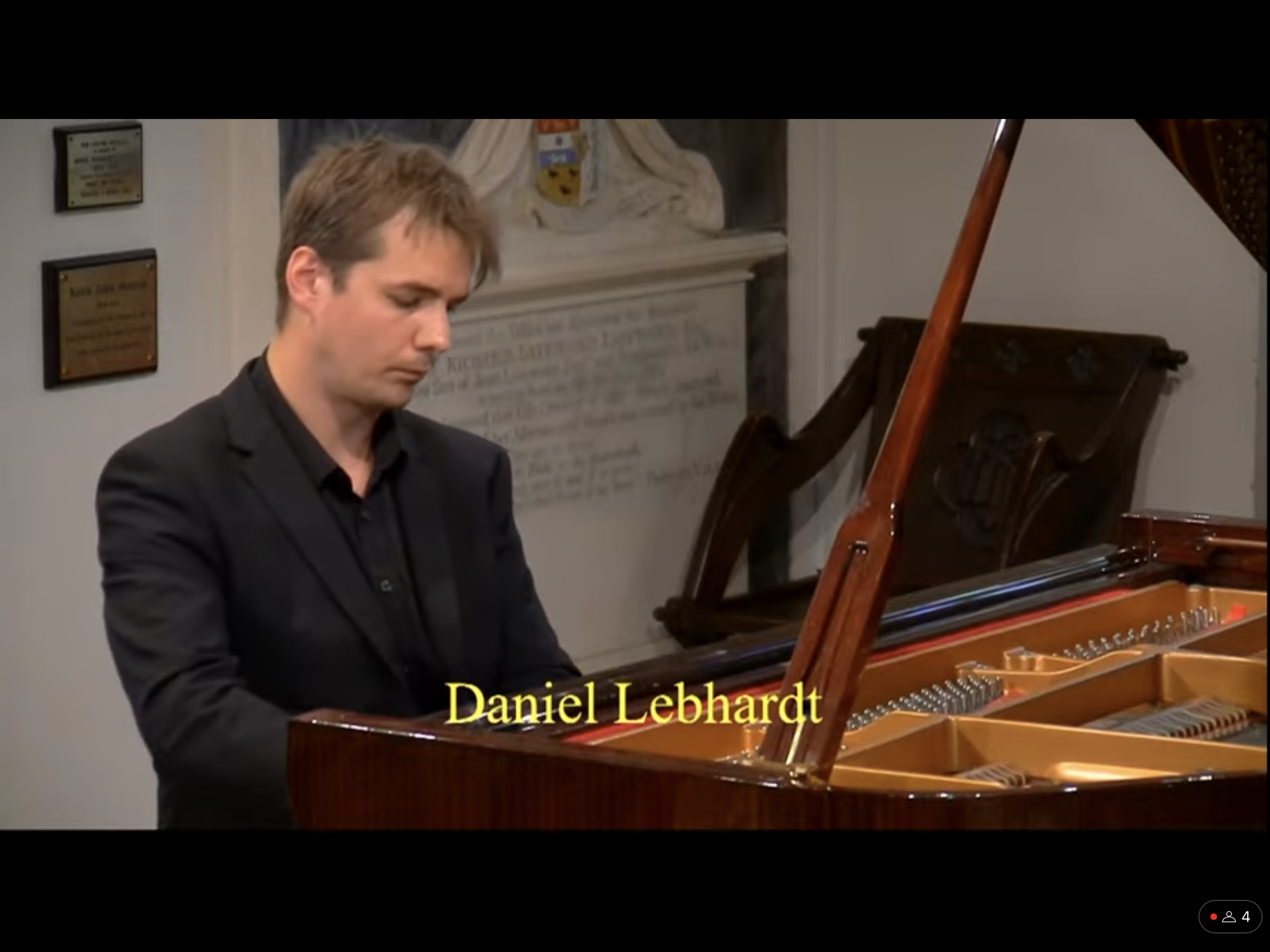
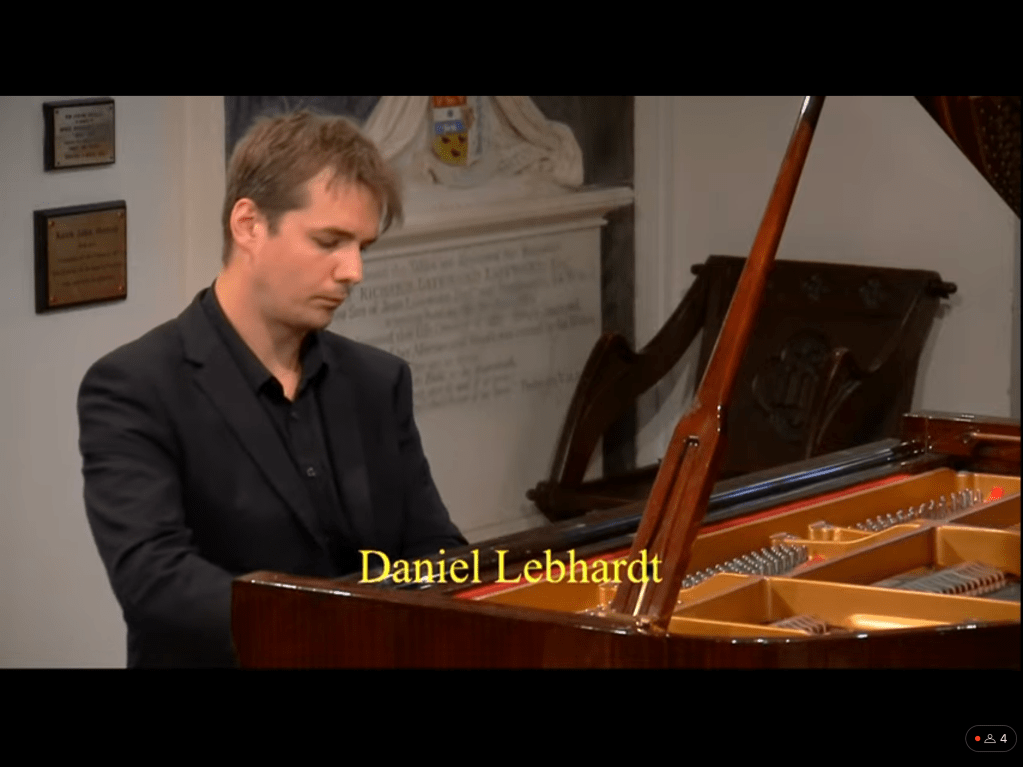
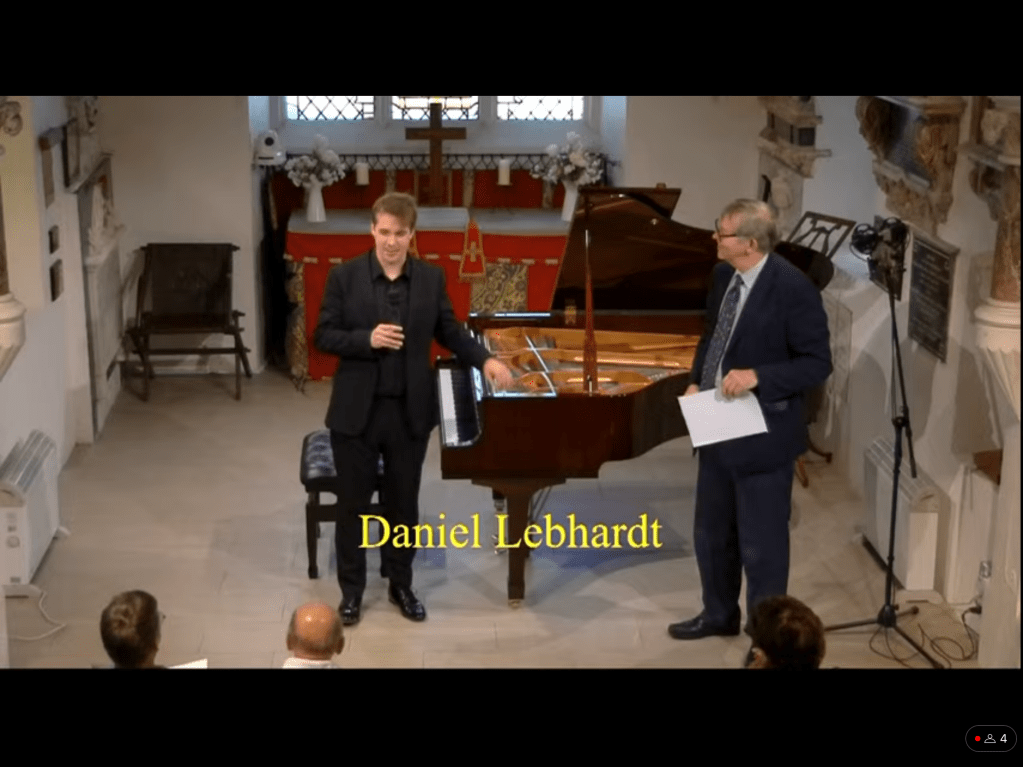
Daniel Lebhardt ‘The Prince of Piano’ descends on St Mary’s

Tuesday 28 June 3.00 pm

The Prince of the piano descends on St Mary’s with a masterly display of playing of breathtaking scope and aristocratic intelligence.
I had heard Daniel play the Emperor concerto at the Barbican recently and had written an article of appreciation entitled :’Emperor for a night’:https://christopheraxworthymusiccommentary.com/2021/12/29/daniel-lebhardt-emperor-for-the-night/


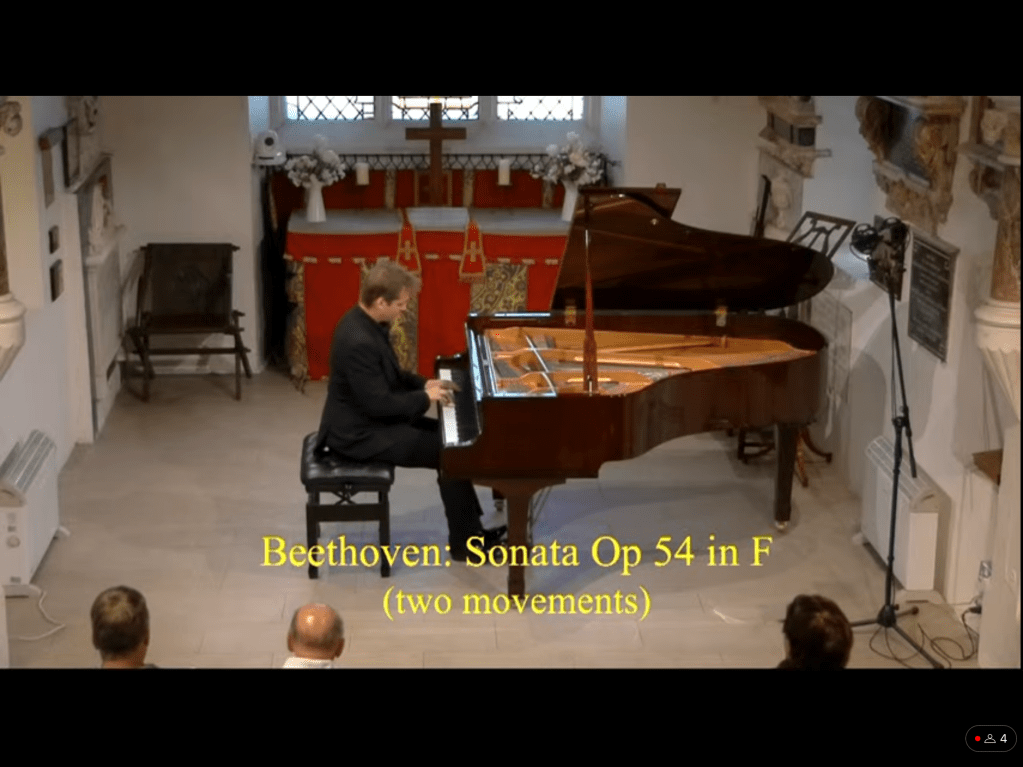
Beethoven: Sonata Op 54 in F
In Tempo d’un Menuetto – Allegretto

It is interesting to note what Sir Donald Tovey writes about this sonata :
…’the whole work is profoundly humorous, with a humour that lies with the composer rather than with the childlike character portrayed by the music. No biographical details are known as to whether Beethoven thought of any person or household divinity in connection with this sonata; but its material is childlike, or even dog-like, and those who best understand children and dogs have the best chance of enjoying an adequate reading of this music; laughing with, but not at its animal spirits; following in strenuous earnest its indefatigable pursuit of its game whether that be its own tail or something more remote and elusive; and worthily requiting the wistful affection that is shown so insistently in the first movement and even in one long backward glance during the perpetuum mobile of the finale.’


But today listening to such burning intensity and contrasting beauty I was reminded of Joan Chissell ‘s review of Artur Rubinstein in the 70’s …..’The Prince of pianists’ was the title and she went on to say that Mr Rubinstein had turned baubles into gems……..referring to ‘O prol do bebè’ suite by his friend Villa Lobos.
I cannot say that Daniel did that because he played a programme of master works which he nurtured,caressed,savaged and seduced in a programme where Beethoven’s much neglected op 54 Sonata was played ‘quasi una fantasia’ that I had not been aware of until today as maybe even Beethoven had not realised with what fantasy he had imbued this two movement sonata.
But there we were today with a sonata of such fantasy and kaleidoscopic sense of colour and chameleonic sense of character that it took Daniel today to reveal it’s true character .
The capricious opening motif that erupts all through a movement that is rudely interrupted by Beethovens irascible temperament was followed by a perpetuum mobile ‘Allegretto’ that Daniel ignited with a rhythmic energy that was breathtaking .


It was by no means the poor bed fellow of the ‘Appassionata’which also received a performance where Beethoven’s markings had been remarkably reproduced but above all the temperament behind the notes had been hypnotically characterised with a rhythmic intensity that I have only heard the like from Serkin.
I had bumped into Daniel after the recital of Giordano Buondonno in Perivale ……https://christopheraxworthymusiccommentary.com/2022/06/20/giordano-buondonno-crystalline-clarity-and-mastery-at-st-marys/. He had come to try the piano a week before his concert.In fact as Curzon famously said a great pianist is 90 % work and 10% talent.
That 10% is God given and God has been very generous to Daniel as he was with Curzon.


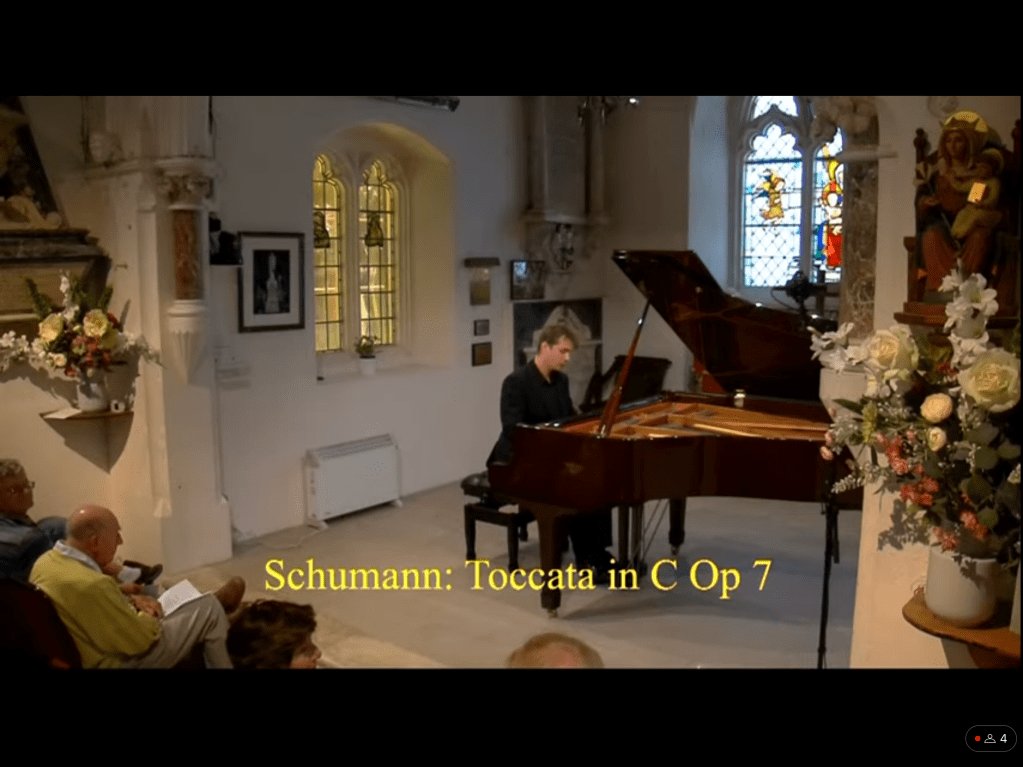
Schumann: Toccata in C Op 7

completed in 1830 and revised in 1833.
The work was originally titled Etude fantastique en double-sons (Fantastic Study in Double Notes), and was infamously referred to by Schumann as the “hardest piece ever written”—to this day it remains as “one of the most ferociously difficult pieces in the piano repertoire”.
The development features rapidly repeated unison octaves and knotty counterpoints at breakneck speed.
Schumann dedicated the work to his friend Ludwig Schuncke who had dedicated his Grande Sonata in G minor, Op. 3, to Schumann. It is partially based on the Czerny Toccata in C op 92,which Clara Schumann spent much of her youth practicing.


A quite extraordinary performance of Schumann’s Toccata in which his sense of legato was more astonishing than his transcendental control of the obstacles that Schumann throws into the path of pianists who dare attempt the technical hurdles that abound in this early work.Suddenly one was aware of the wonderful romantic harmonies and overall architectural shape before even contemplating the technical mastery that could allow this to happen.


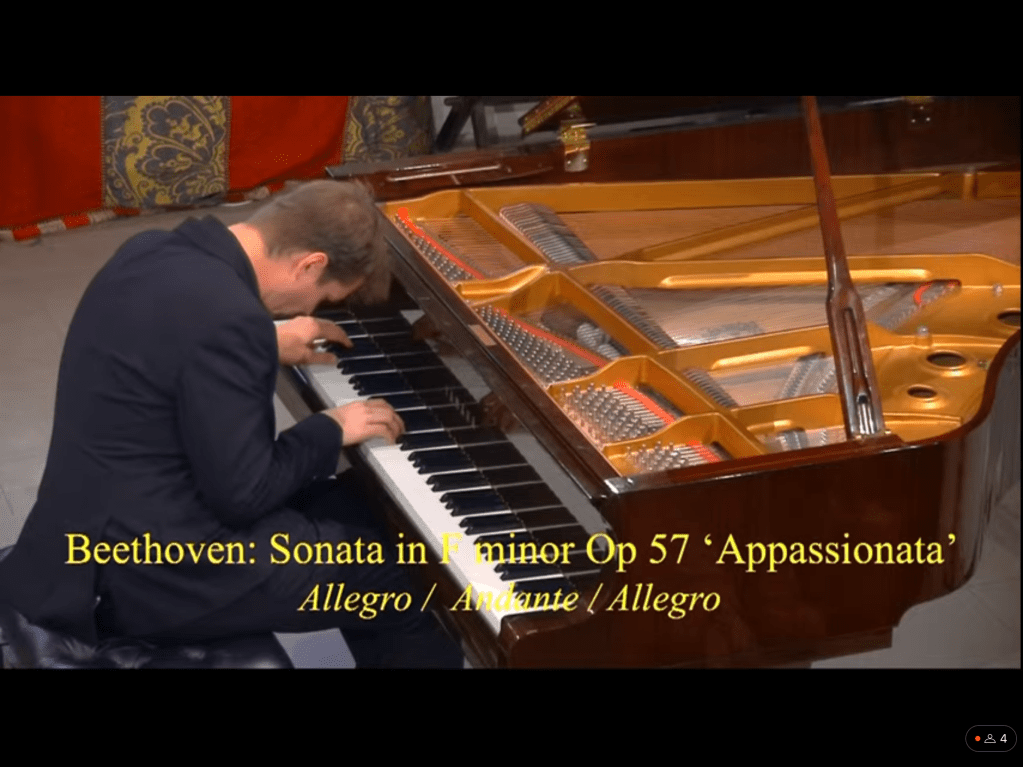
Beethoven: Sonata in F minor Op 57 ‘Appassionata’
Allegro assai / Andante con moto / Allegro ma non troppo

Composed during 1804 and 1805, and perhaps 1806 was dedicated to Count Franz von Brunswick. The first edition was published in February 1807 in Vienna
Unlike the early Sonata op 13 Pathétique the Appassionata was not named during the composer’s lifetime, but was so labelled in 1838 by the publisher of a four-hand arrangement of the work. Instead, Beethoven’s autograph manuscript of the sonata has “La Passionata” written on the cover, in Beethoven’s hand.
One of his greatest and most technically challenging sonatas the Appassionata was considered by Beethoven to be his most tempestuous piano sonata until the Hammerklavier op 106.1803 was the year Beethoven came to grips with the irreversibility of his progressively deteriorating hearing.


The ‘Appassionata’in which Beethovens indications were scrupulously observed.Even the seemingly awkward arpeggios were played with the struggle that Beethoven intended and not simplified into a pianistic juggling act !
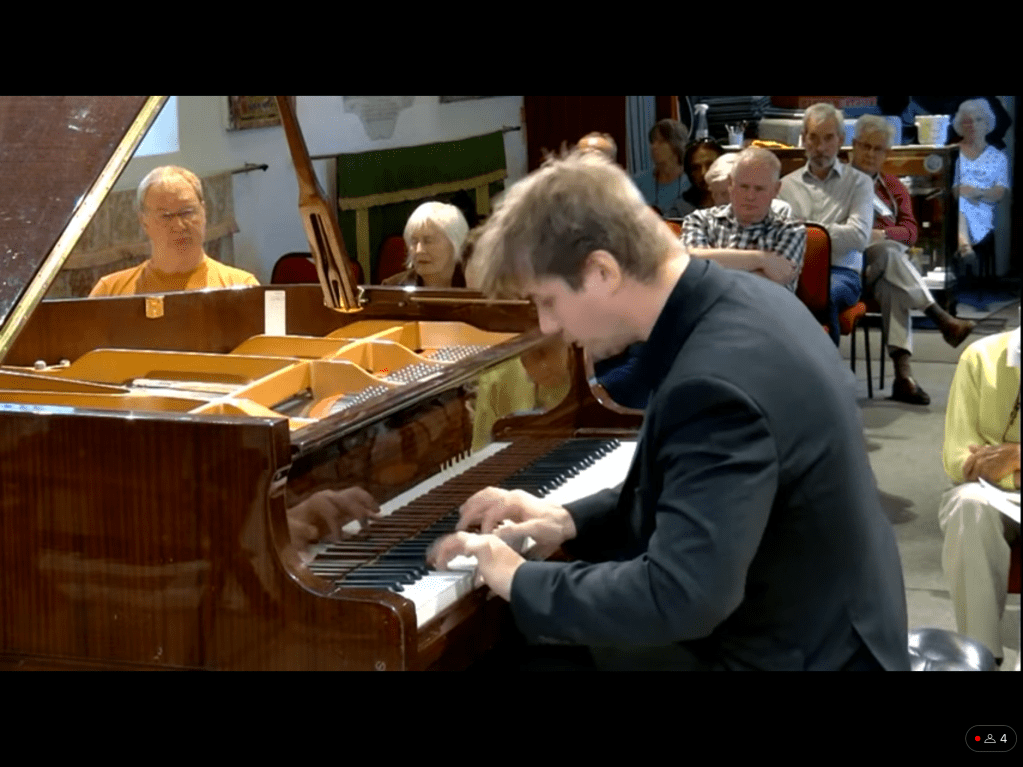
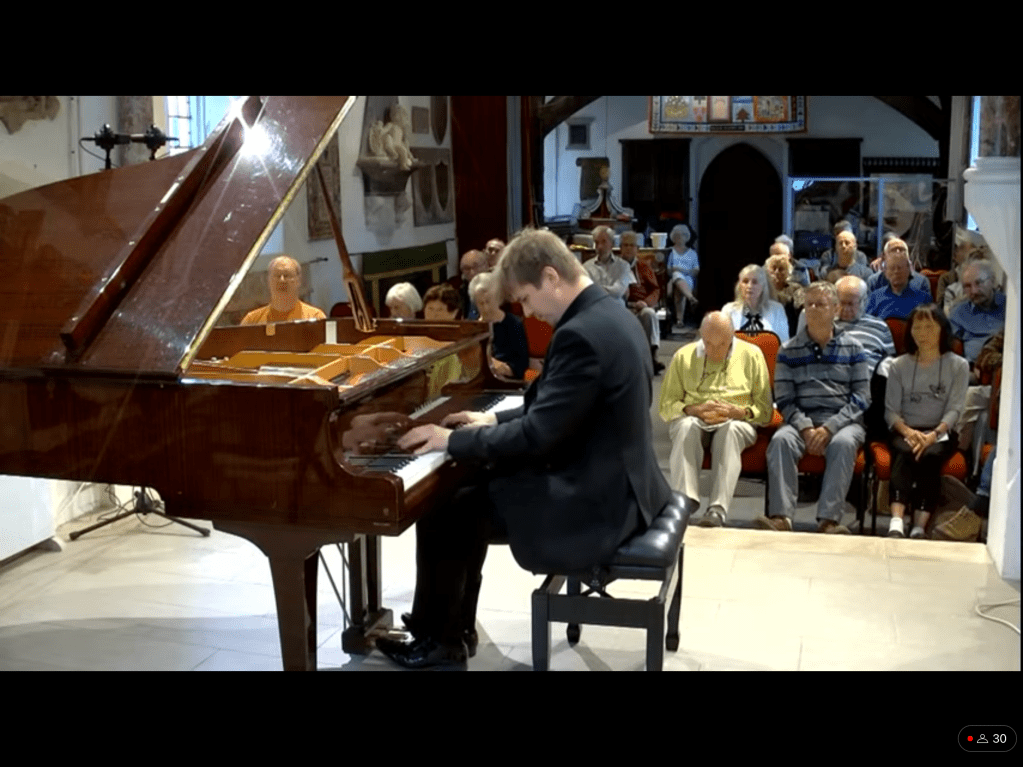
Extraordinary to watch Daniel’s cat like movements ready to pounce with his body in continual almost imperceptible motion depending on which way the music was to unfold.It was the same cat like movements of Peter Frankl with the Kelemen Quartet playing in the Liszt Academy in Budapest last winter.One was aware of music making of the ‘old school’ the one that listens to every sound and is ready to respond in a musical conversation that is a continual voyage of discovery. https://christopheraxworthymusiccommentary.com/2021/11/27/peter-the-great-peter-frankl-with-the-kelemen-quartet-in-budapest/
Daniel is a graduate of the Liszt Academy so could it be that the genial tentacles of Liszt are still very much in the air?


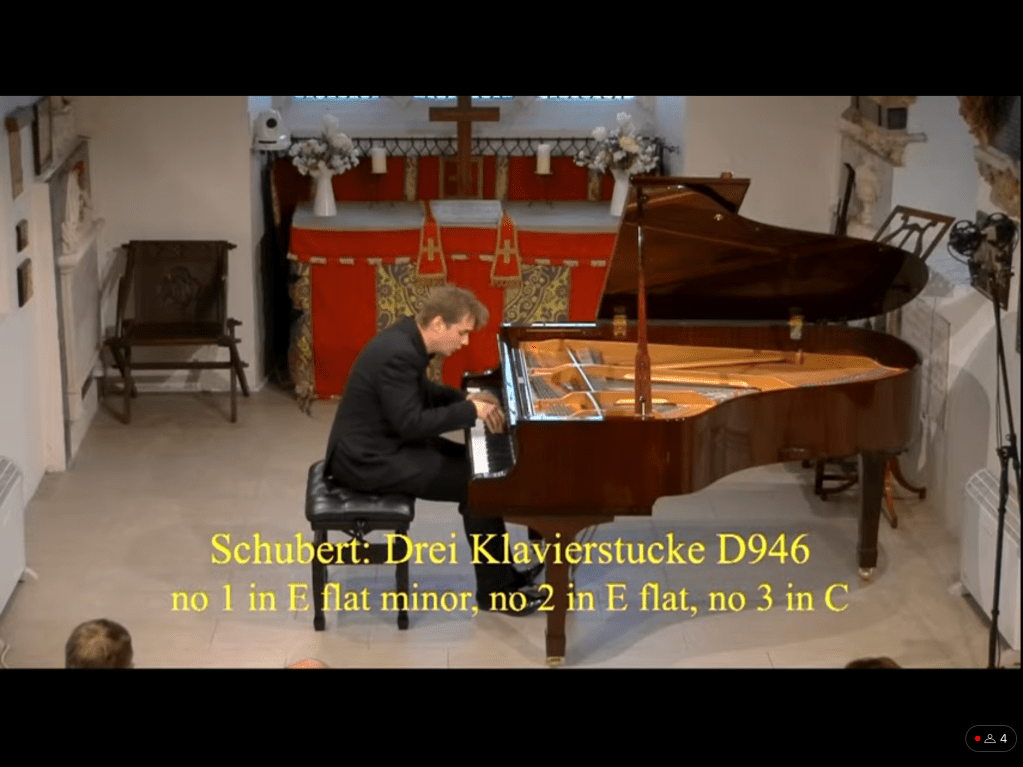
Schubert: Drei Klavierstucke D 946
(1 in E flat minor, 2 in E flat major, 3 in C major)

In the last years of his life, Schubert increasingly succeeded in finding publishers for his works. His Impromptus and Moments musicaux, for example, appeared in print in 1827 and 1828. Probably to pick up on the success of these editions, he wrote three further pieces in May 1828; though no less outstanding than their predecessors, they were not printed until Brahms’edition of 1868, which is perhaps one reason – a completely unjustifiable one –why they are still not very well known today.
Schubert did not live to see the publication of his three impromptus composed in May 1828. They were not printed until 40 years later (!), and it was no less a person than Johannes Brahms who edited these piano pieces beloved by pianists and audiences down to the present day.
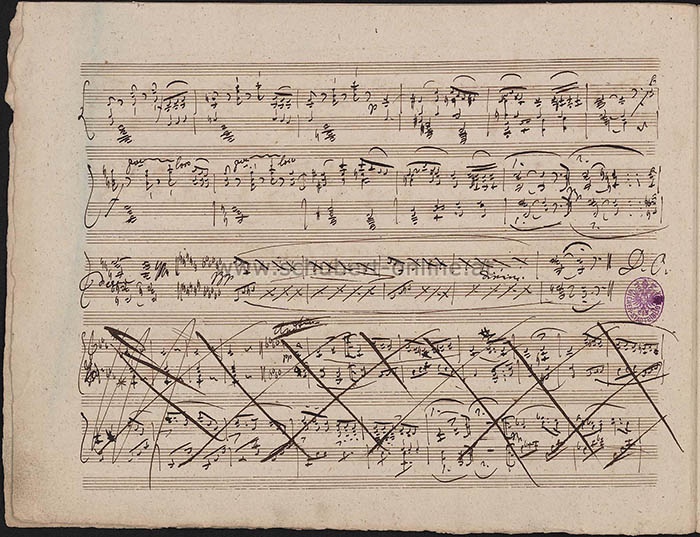
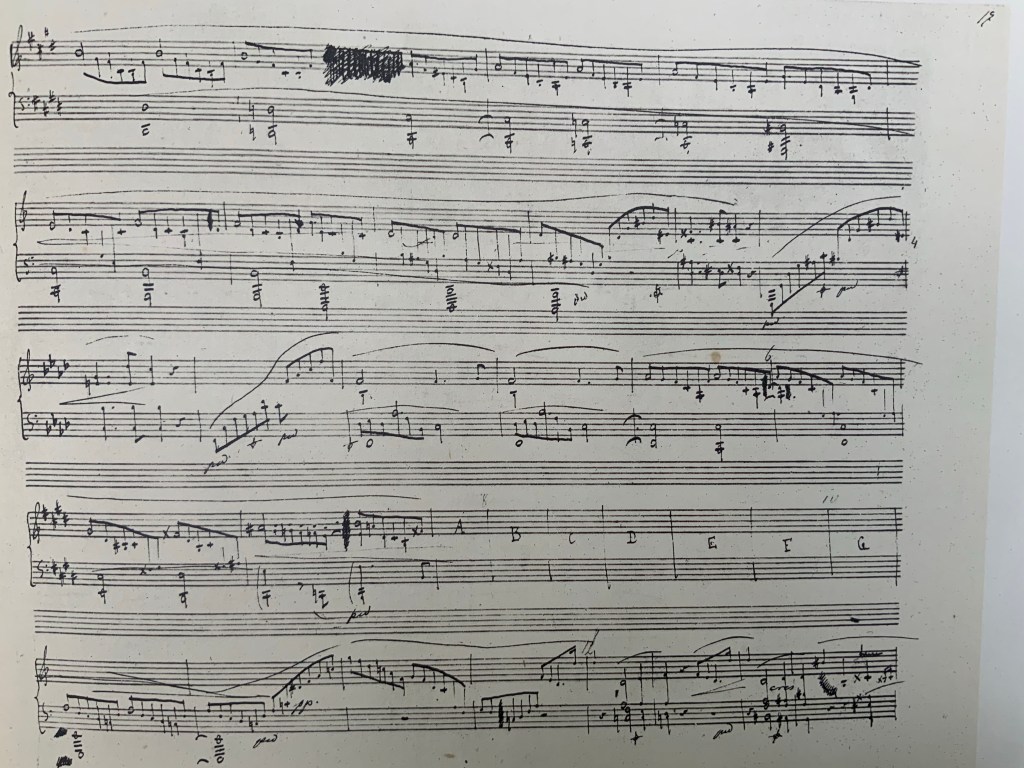
There is a problem in the first piece in e-flat minor.This concerns the ‘C part’ of the rondo-like piece, A – B – A – C – A. Only a few are aware of the fact or take it seriously that in his autograph Schubert unmistakeably crossed out this ‘C part’, thus cancelling it:We can indeed speculate as to the reasons for this autograph deletion: Was it on formal grounds? Hardly likely, because just such a rondo form is known through many other Schubert pieces. Did Schubert perhaps feel the piece was too long, which is why he crossed out around at least 165 measures (not counting the repeats)? That could have been a reason since both of the other piano pieces of D 946 are only about half as long. Or, did he possibly consider that on musical grounds it was compositionally too slight?
But the problem is that Johannes Brahms, editor of the first edition, reversed Schubert’s cancellation and had all the notes reprinted. He, who of all people was so scrupulous, who knew the struggle of a composer for the optimal solution, he ignored Schubert’s express wishes .Brahms identified the original deletion by adding a footnote:


A very long programme that Schnabel would have boasted that the difference between his programmes and those of his colleagues was that his were a hundred per cent boring.
So after Beethoven op 54 and 57 a Schumann Toccata as light relief we were rewarded with Schubert’s Drei Klavierstucke played with a sense of style and subtle beauty that rather than being an over zealous intellectual enterprise was a ray of wonder where such beauty could quite happily have lasted even longer.

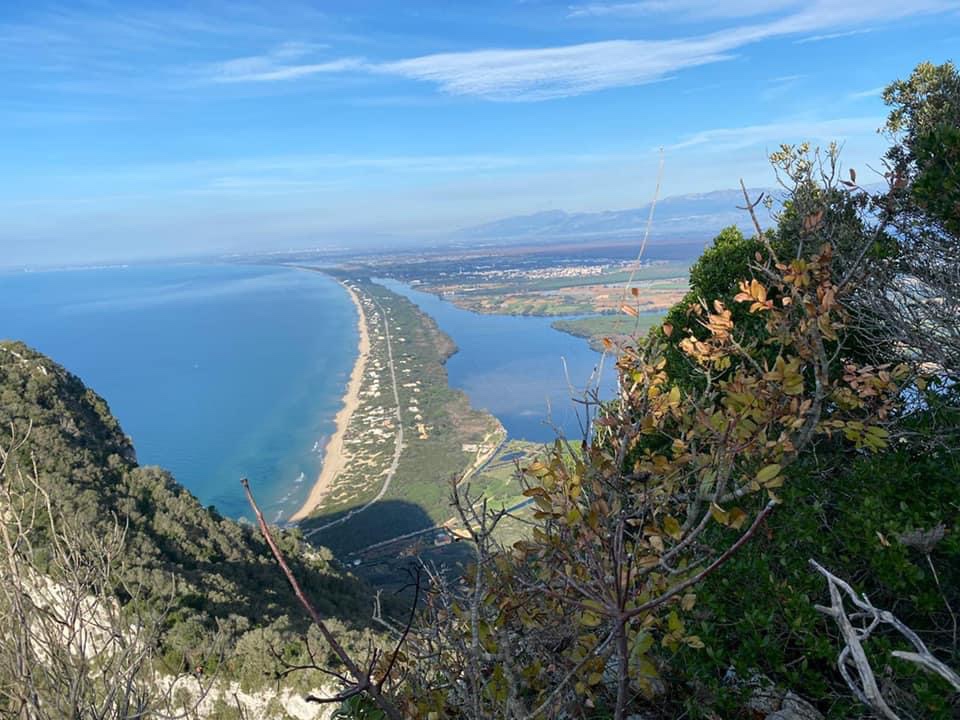
S.Felice Circeo where the God given waves of the sea are stronger than the Man made waves in the air!


Now as I am struggling with internet in the depths of the Italian countryside I am happy to add my first impressions having been able to listen to the recital in sporadic moments where the air waves had taken second place to the the glorious waves of the Mediterranean.

On the crest of a wave indeed ………that of St Mary’s Perivale with Dr Hugh Mather our genial host in the Mecca that he and his colleagues have created for young musicians in West London


I had a feeling that even Daniel had enjoyed the experience of sharing these masterworks with such a discerning audience and that he would gladly have added a minute or two more to it.
Dr Mather being our genial host but also referee had realised that we had gone into overtime .. ………..and so a return match is inevitable and awaited with great joy.

In 2014 Daniel Lebhardt won 1st Prize at the Young Concert Artists International auditions in Paris and New York. A year later he was invited to record music by Bartók for Decca and in 2016 won the “Geoffrey Tozer Most Promising Pianist” prize at the Sydney International Competition. In 2018 he has been signed for commercial management by Askonas Holt. March 2020 saw Daniel make his debut with The Hallé, performing Beethoven’s Piano Concerto No 5 – a work he has also performed at the Barbican, London and Symphony Hall, Birmingham. The last two concert seasons have also witnessed recital debuts in Dublin and Kiev, and at the Lucerne International, Tallinn International and Miami International Piano festivals. He has received reinvitations to Wigmore Hall, London, the Auditorium du Louvre, Paris and Merkin Concert Hall in New York (‘He brought narrative sweep and youthful abandon to [Liszt’s B minor Sonata], along with power, poetry and formidable technique’ – The New York Times). Other recent highlights include a return to Paris for a recital at L’Église Saint-Germain-des-Près, as part of the festival ‘Un week-end à l’Est’; an appearance as soloist in Mozart’s Piano Concerto No 21 at the Royal Festival Hall, London; and tours in China, South America and the USA. Born in Hungary, Daniel studied at the Franz Liszt Academy in Budapest with István Gulyás and Gyöngyi Keveházi, then with Pascal Nemirovski at the Royal Academy of Music and Royal Birmingham Conservatoire. He was a prizewinner at the Young Classical Artists Trust auditions in 2015 and currently lives in Birmingham.

https://christopheraxworthymusiccommentary.com/2021/07/20/daniel-lebhardt-the-simple-grandeur-of-j-s-bach-at-st-marys/

Giordano Buondonno crystalline clarity and mastery at St Marys

Thursday 23 June 3.00 pm


Giordano Buondonno (piano)

https://youtube.com/watch?v=GrlBfNmzL_k&feature=share

Having heard recently this young Italian pianist in the Solti studio I was very glad to be able to listen again not only to the Ravel and Scriabin but to hear also two works by Chopin in place of the previous Brahms Ballades op 10.These works of Chopin,Brahms and Ravel were all works that were immortalised by the legendary fellow Italian:Arturo Benedetti Michelangeli.

Solti Studio …Fabbrini Steinway that once belonged to Michelangeli

In the Solti studio he had the privilege to play on the Fabbrini Steinway ‘D’ piano that had once belonged to the Italian master.Wherever Michelangeli played there would be Angelo Fabbrini to insure that the piano had been fine tuned and in perfect running order like the racing cars that he also liked to fine tune himself and to drive as fast as possible.There was such a close relationship between Fabbrini and the Maestro that Michelangeli became the Godfather to his children.Often I would queue up a month in advance in London for tickets to hear the great masters like Rubinstein,Richter or Michelangeli .Michelangeli would regularly cancel at the last minute if he thought the conditions were not right for the piano and he could not produce the sounds that were ingrained in his being.Nothing less than pianistic perfection was possible!I never got to hear Michelangeli in London but I did hear him once in the Vatican City in Rome.The videos of his performances have become classics and his first recording of the Bach Chaconne has remained with me ever since .Watching and listening to Giordano again especially in this repertoire reminded me so much of the crystalline clarity and chiselled precision of Michelangeli.A pianist that listens to himself with such scientific care is indeed a very special artist.Giordano hardly moving but watching like a hawk about to pounce as his long fingers etched out the sounds with such crystalline clarity.One could see him pointing to the keys before striking the note,with his head down in total concentration on the sounds he wanted those fingers to make as they landed full centre on the note.I have written recently about his Scriabin and Ravel that he also played today on this fine Yamaha piano,playing with the same precision and clarity that he had on Michelangeli’s own Steinway.’Ondine’ was even more memorable today than it had been in the Solti Studio.His remarkable sense of balance allowed the water nymph to flit in and out of the flowing waters without ever for a second being overwhelmed by the enormous amount of notes that Ravel adds to his score.The desolation of Le Gibet was even more terrifying for its austere clarity and absolute control of sound.Scarbo was played with transcendental control and sense of drive in a work that Ravel wrote of such extraordinary difficulty putting to the test any pianist who could dare play it after Balakirev’s Islamey.There were no such problems for Giordano who etched out with clarity and precision the antics of the diabolical Scarbo.Scriabin too he played with ravishing colours and sense of balance.The end of the first movement suddenly becoming alive as the romantic outpourings of the second movement swept across the keyboard.

Hands on performance of Fazil Say

His encore of ‘Black Earth’ by Fazil Say had Dr Mather a little alarmed as he saw Giordano placing his hands inside the piano to mute the strings to make a drum like effect.(I remember being asked by Stockhausen if he could use my Steinway instead of the rather inferior piano that had been brought in especially for a performance of his 12 Klavierstucke …….How could I say no ? I did specify though that it should only be used by two hands and two feet in the traditional manner).However there was no need to worry about the sounds that Giordano manage to evoke from the piano.They were as unexpected as they were extraordinary,playing with the same precision and seriousness that had been a hallmark of the entire recital

There was absolute precision with Giordano’s long pointed fingers etching out sounds of such subtle clarity.A sense of balance where the left hand was a mere murmur (not sure sharing the opening with two hands was quite what Chopin intended).Playing of great beauty and clarity.If the orchestral tutti was kept to a minimum it just opened the gate to Giordano’s superb jeux perlé of such beguiling shape and aristocratic grandeur.Scintillating notes of silver just glistened as they spun their magic web around the Polonaise with such brilliance as Chopin himself might have done in the Parisian salons that announced his arrival as a musical genius to rival even Liszt.
A beautiful flowing tempo that allowed the melodic line to be played with such flexibility.There was clarity but bathed in velvet with a mysterious cloud of sound towards the end out of which emerged the melodic line creating an atmosphere of pure magic.Golden fingers but also a heart of gold!

https://christopheraxworthymusiccommentary.com/2022/05/18/giordano-buondonno-at-the-solti-studio-masterly-performances-of-searing-intensity/

Italian pianist Giordano Buondonno graduated from the Giacomo Puccini Conservatoire with Honours, receiving the highest mark in his class, and completed his MMus with Distinction in 2021 at Trinity Laban Conservatoire, London.. He is studying for an Artist Diploma under the guidance of Sergio De Simone and Deniz Gelenbe. Giordano is a proud recipient of The Leverhulme Arts Scholarship, the Jaqueline Williams Scholarship and the Arthur Haynes Scholarship for his studies at Trinity Laban. At the age of 19, he won first prize at the Clara Schumann Competition and performed for the Piano City Festival in Milan. He also came first in the PianoLink Concerto Competition, playing Chopin’s First Piano Concerto with the PianoLink Philarmonic Orchestra in Milan. Giordano’s performance highlights include a recital at Steinway Hall London, King’s Place Hall, and a recital at Henley Park Manor in Surrey, for His Serene Highness Prince Donatus von Hohenzollern; representing Trinity Laban as a finalist at the 2019 Beethoven Society Intercollegiate Piano Competition; the Sheepdrove Intercollegiate Piano Competition, the Young Artist concert series organised by Roma Tre Orchestra, South Hill Park Arts Centre in the International Conservatoire series, Paganiniano Festival in Italy, the Old Royal Naval College, St. Alfege Church and St. James’s Piccadilly in London.
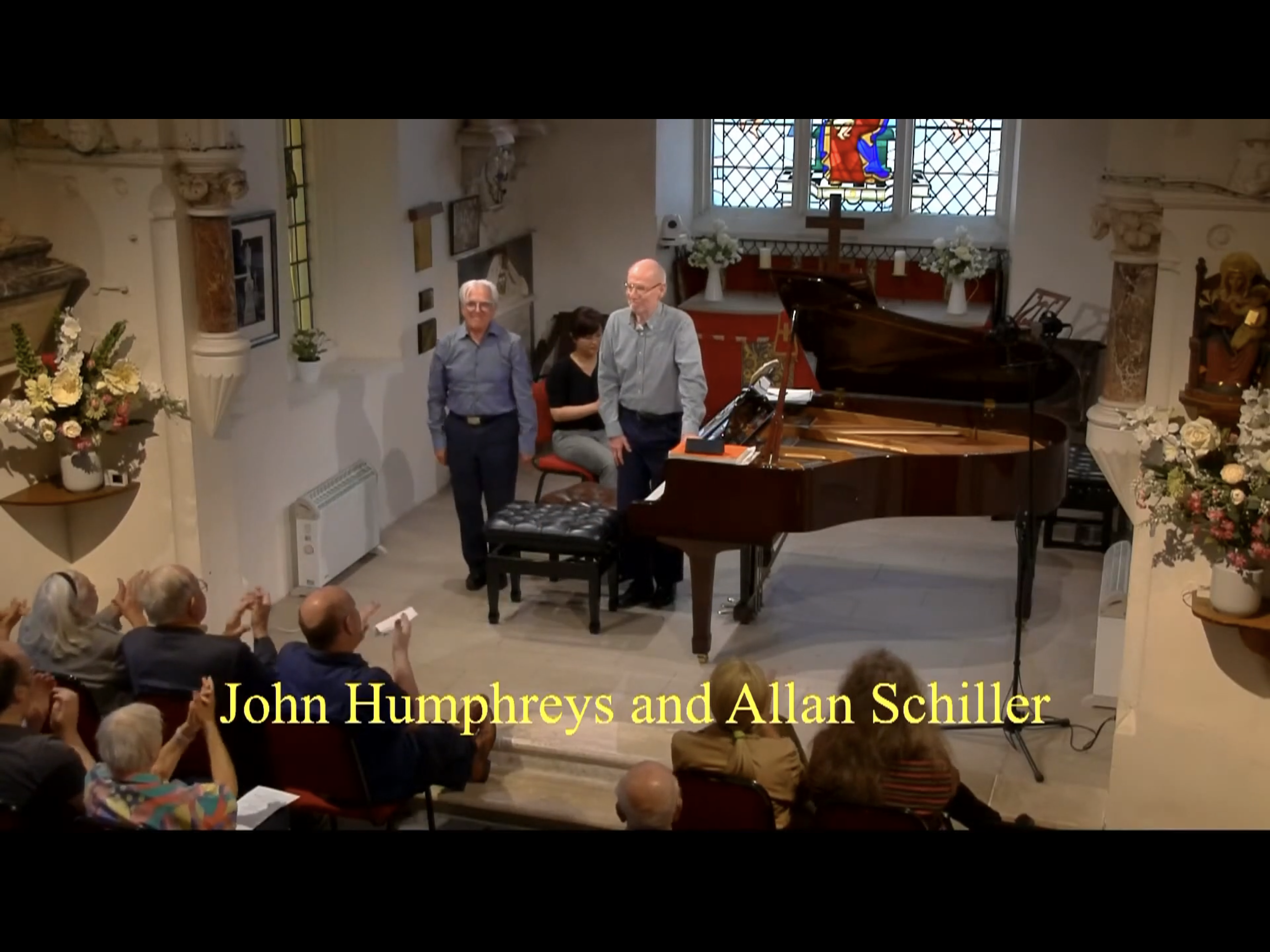
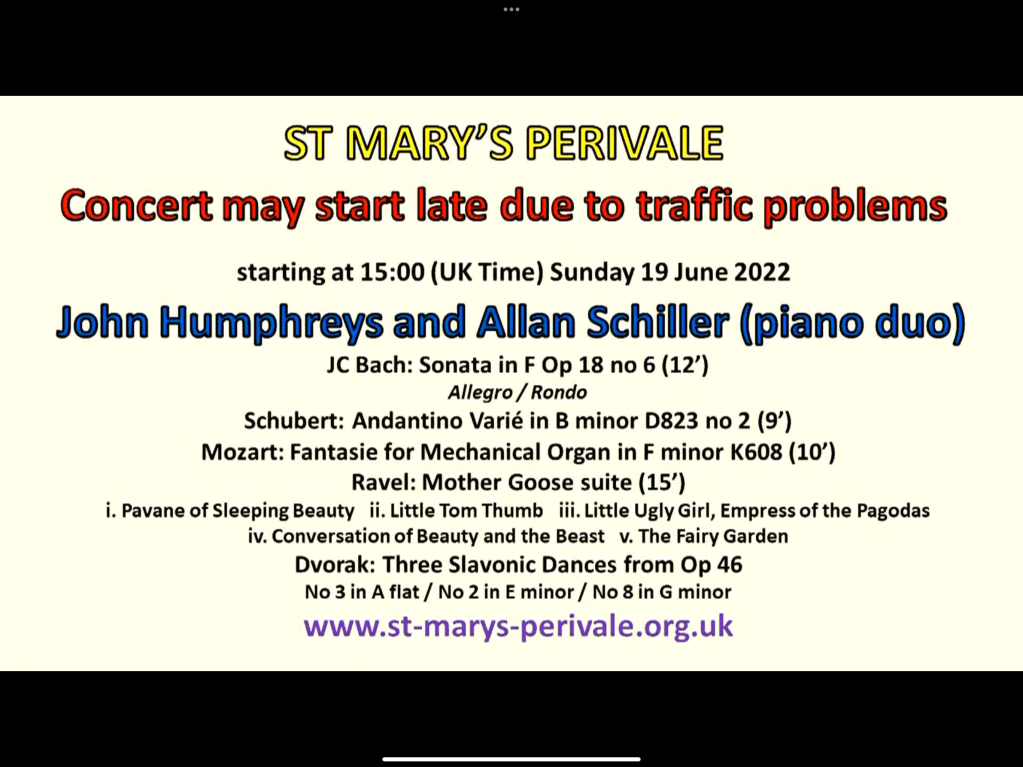
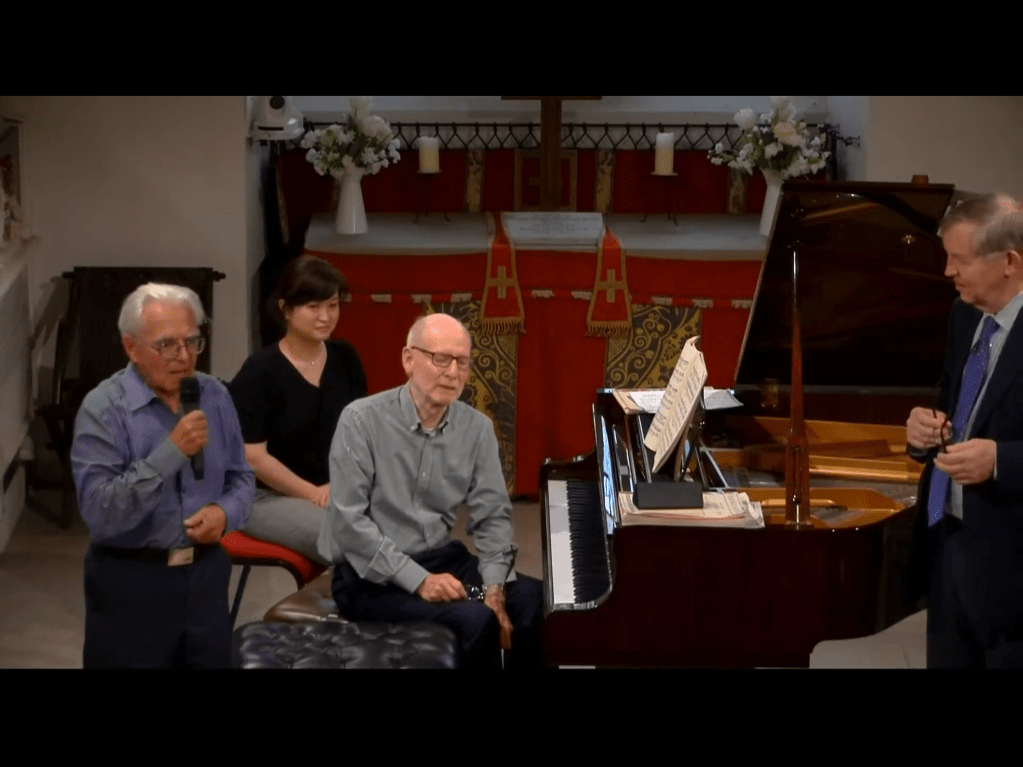
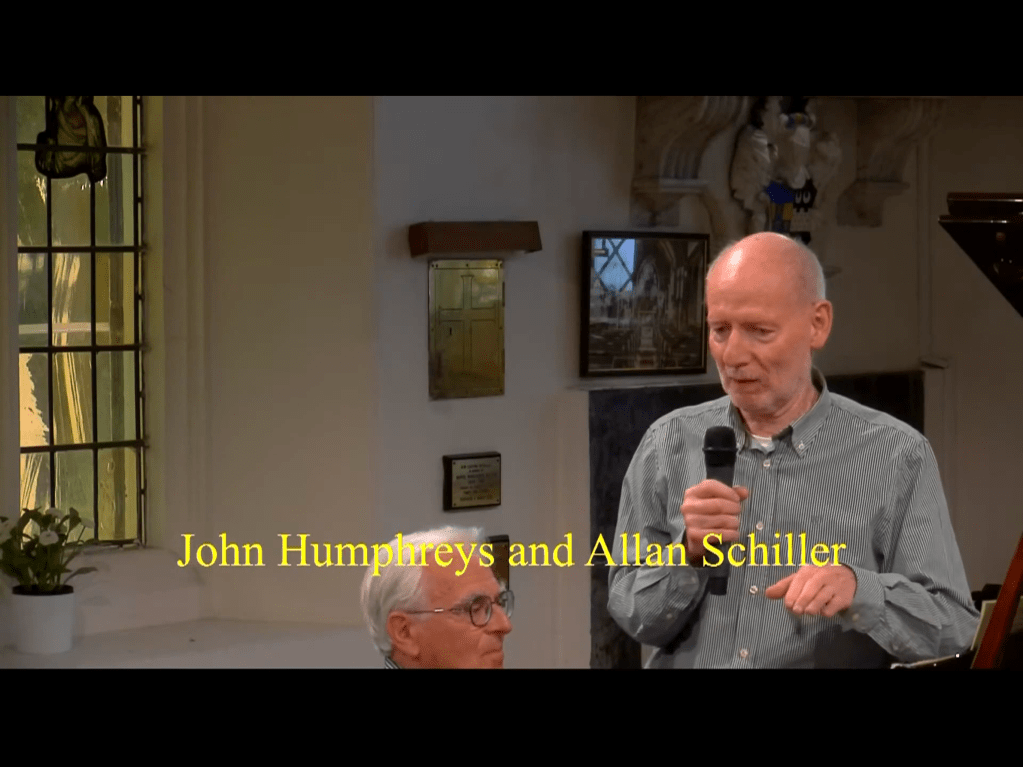
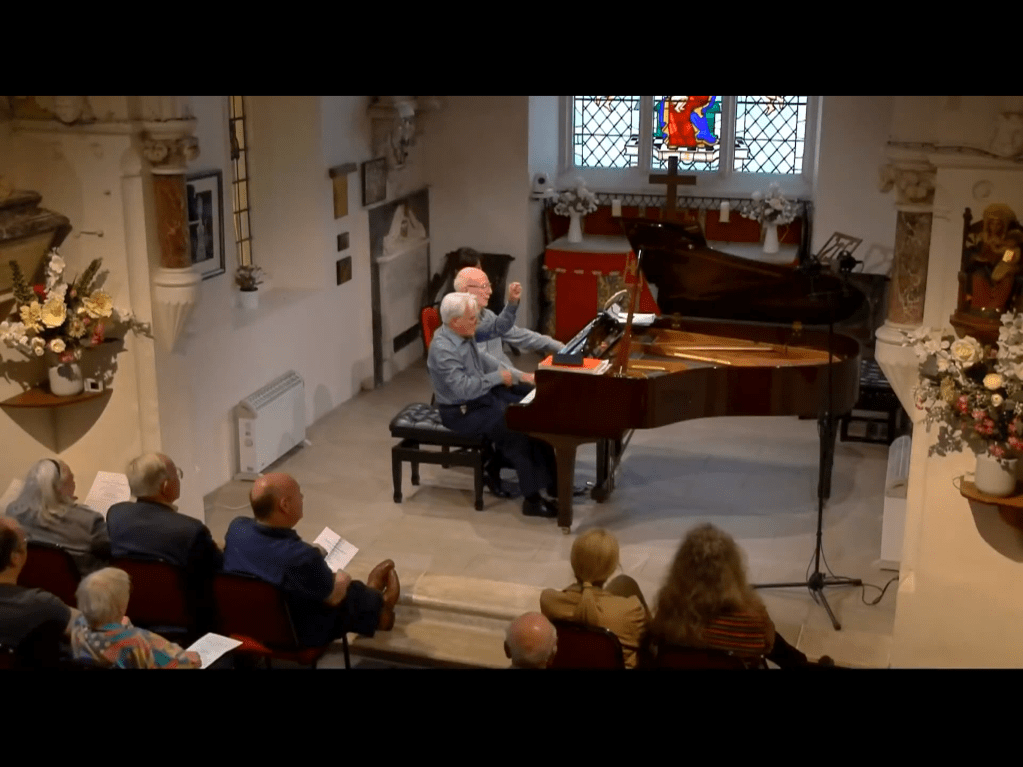
John Humphreys – Allan Schiller 50th Anniversary concert at St Mary’s – the humility and simplicity of master musicians:‘notre amitié est invariable’

Sunday 19 June 3.00 pm

https://youtube.com/watch?v=5NGxh1I3nN4&feature=share

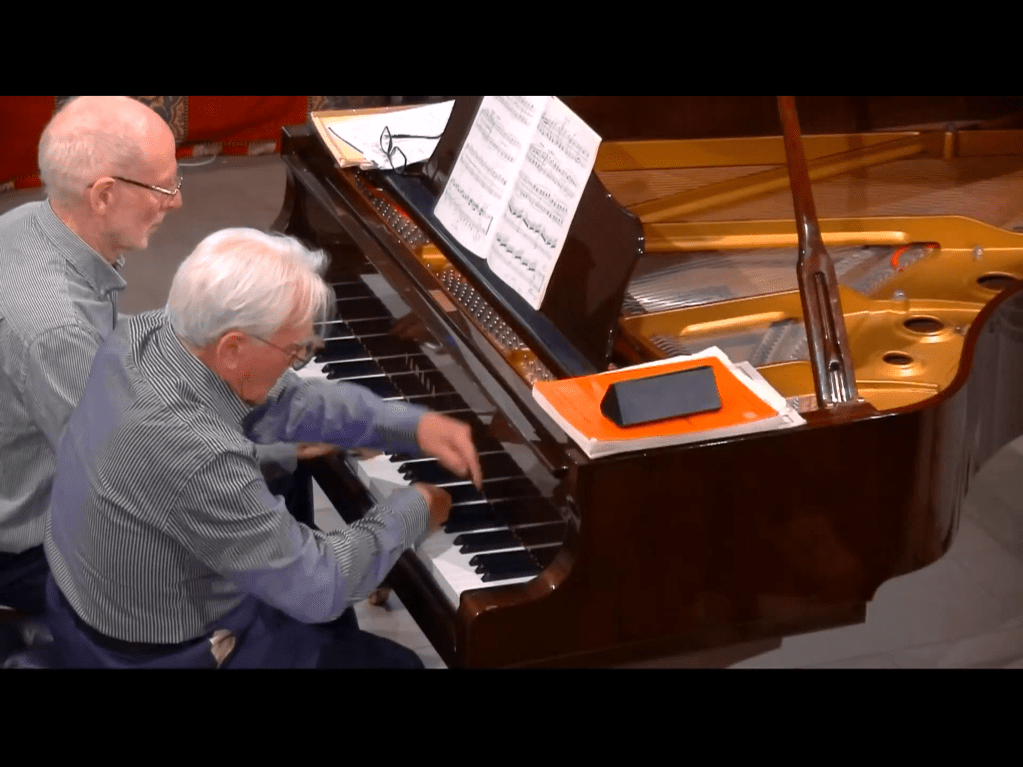
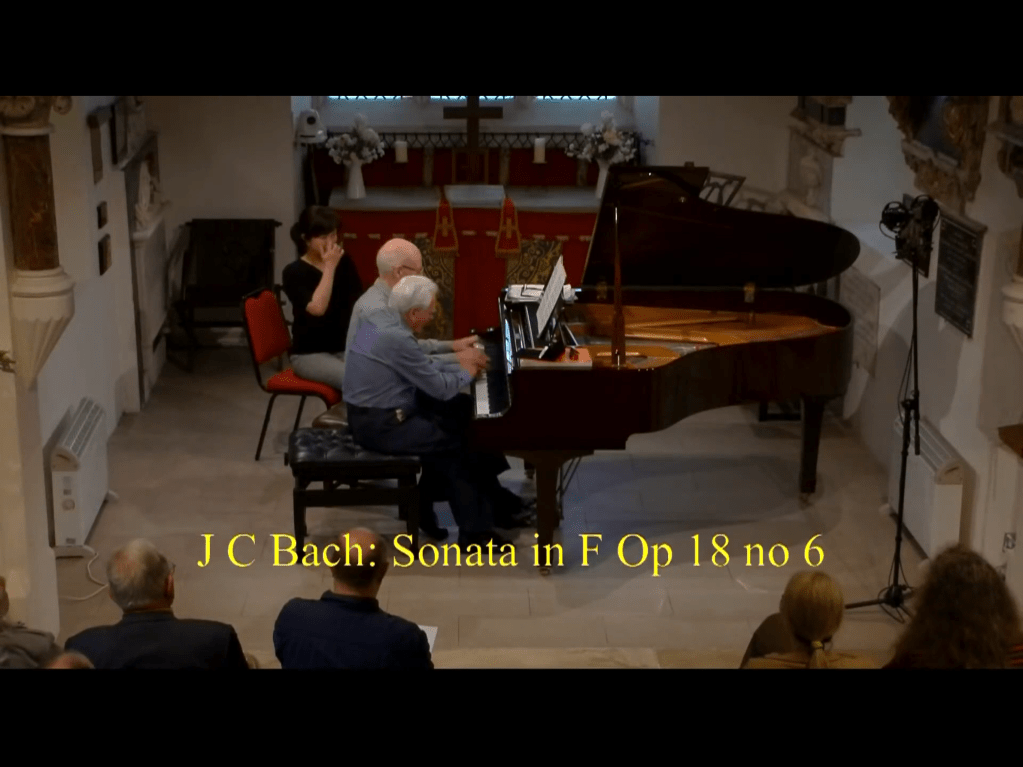
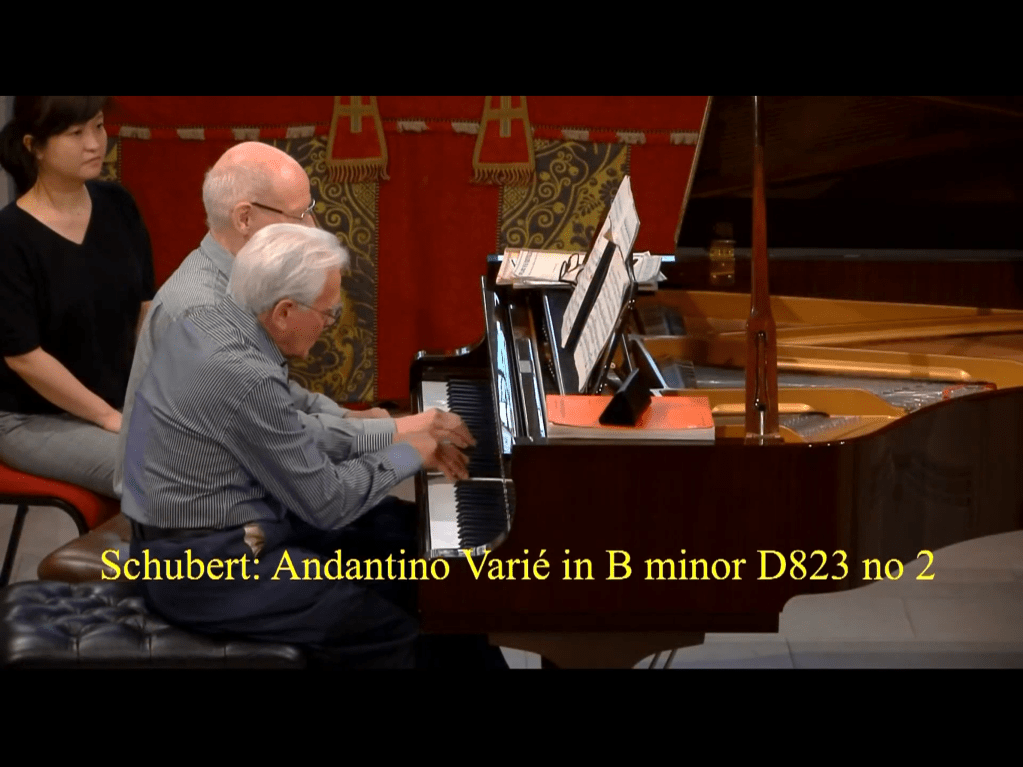
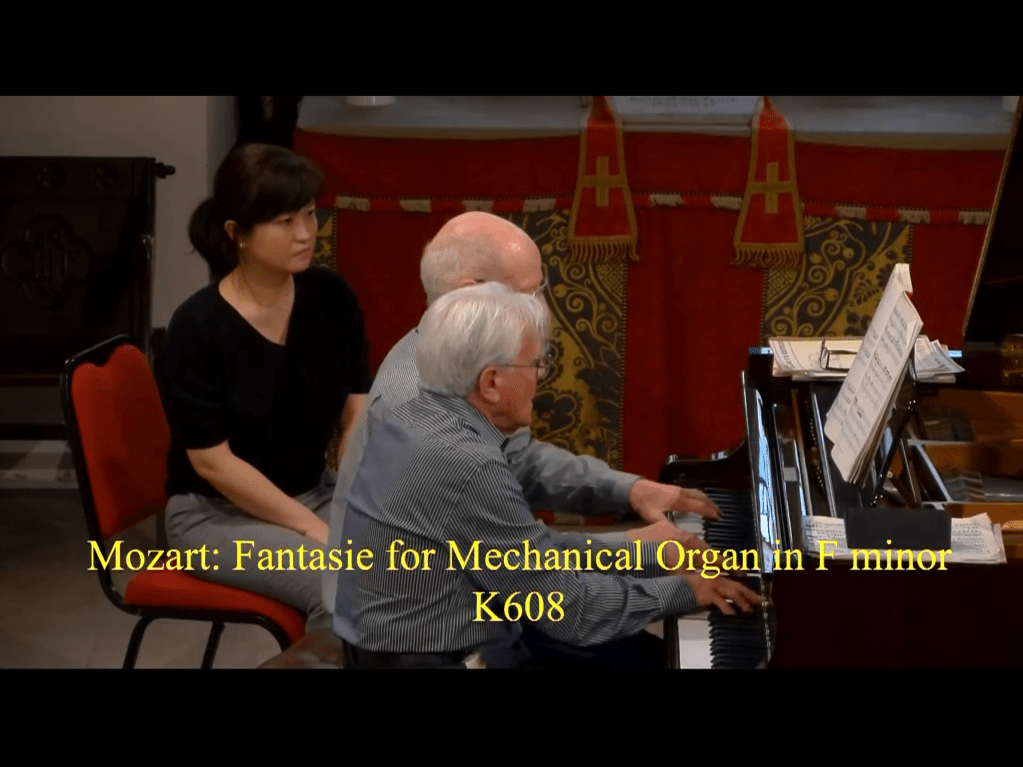
Some masterly playing from two musicians with celebrated careers that now in their Indian summer have chosen to share together with us their inestimable experience and profound understanding of music.Playing as one where their musical minds and intelligence combined in an exhilarating afternoon of music making at its purist and most enjoyable.No mean feat as Dr Mather pointed out after an hour listening to music making of rare humility,modesty but above all ‘joie de vivre.’As Schubert titles one of his rondos :”Nostre amitié est invariable”.There was the absolute clarity of J.C Bach where Allan Shiller’s ornaments glistened like jewels.Charm and beauty were the hallmark of Schubert’s Andante varié D 823 n.2 – the second of three pieces that make up the ‘Divertissement sur des motifs originaux francais’ – which John Humphrey’s puts on the same level as his celebrated Fantasy in F minor.Playing of great sensitivity where John’s care of balance and superb use of pedal allowed Schubert’s mellifluous outpouring to sing out unimpeded by any hard or ugly sounds.In fact music just poured from their four hands and two feet!There was grandeur in the Mozart with perfect synchronisation between the four hands – after 50 years it is the least one could expect! But there was much much more besides!As Dr Mather said at the end we look forward to celebrating the next fifty!Hugh who had heard Allan when they were both children over sixty five years ago!Allan of course was one of the many child prodigy’s that came under the spell of the indomitable Dame Fanny Waterman.

Dame Fanny in her 80’s helping young musicians to excel https://christopheraxworthymusiccommentary.com/2021/12/02/dame-fanny-waterman-a-tribute-by-master-pianist-and-pupil-benjamin-frith/

I had not realised that Allan had gone on to study with Guido Agosti in Italy which goes a long way to explain his intelligent musical pedigree.I used to play four hands with Agosti for eight hours a day whilst our wives spent a peaceful day on the beach!Agosti was never happy away from the piano.We would prepare a concert for them in the evening after supper.

Guido Agosti with our wives Lydia Agosti (left) Ileana Ghione (right)

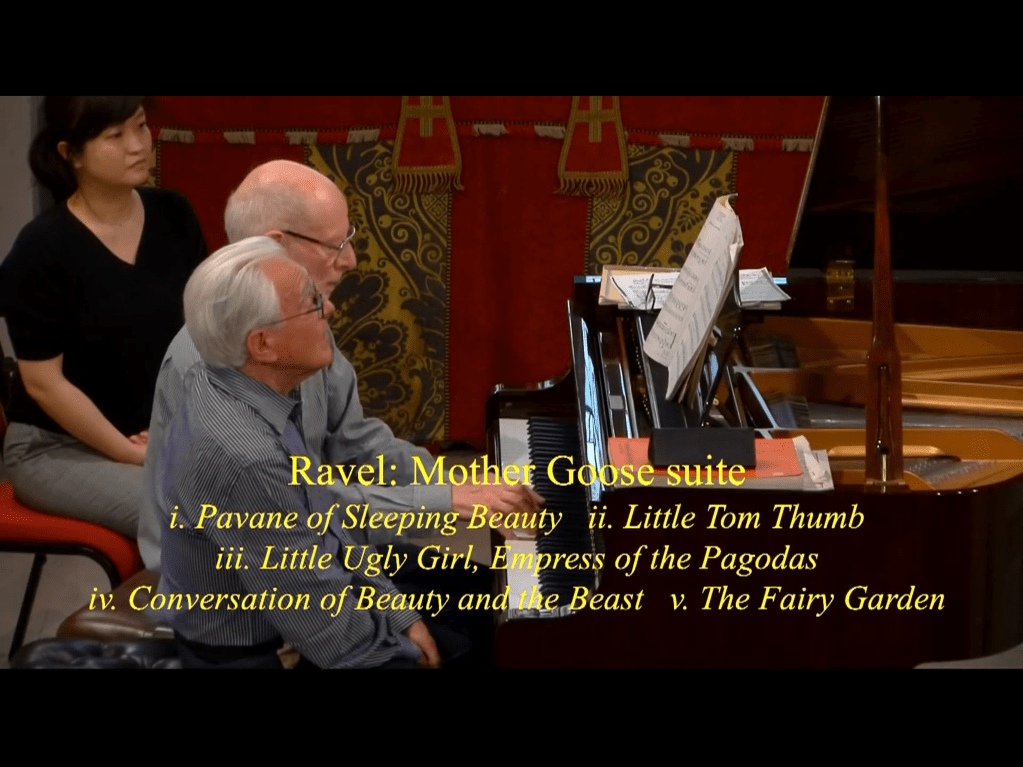
It was the same spirit of friendship and relaxed music making that made today so poignant and special.The Ravel Mother Goose can she ever have sounded so contented and ready to share all her ravishing secrets with us.

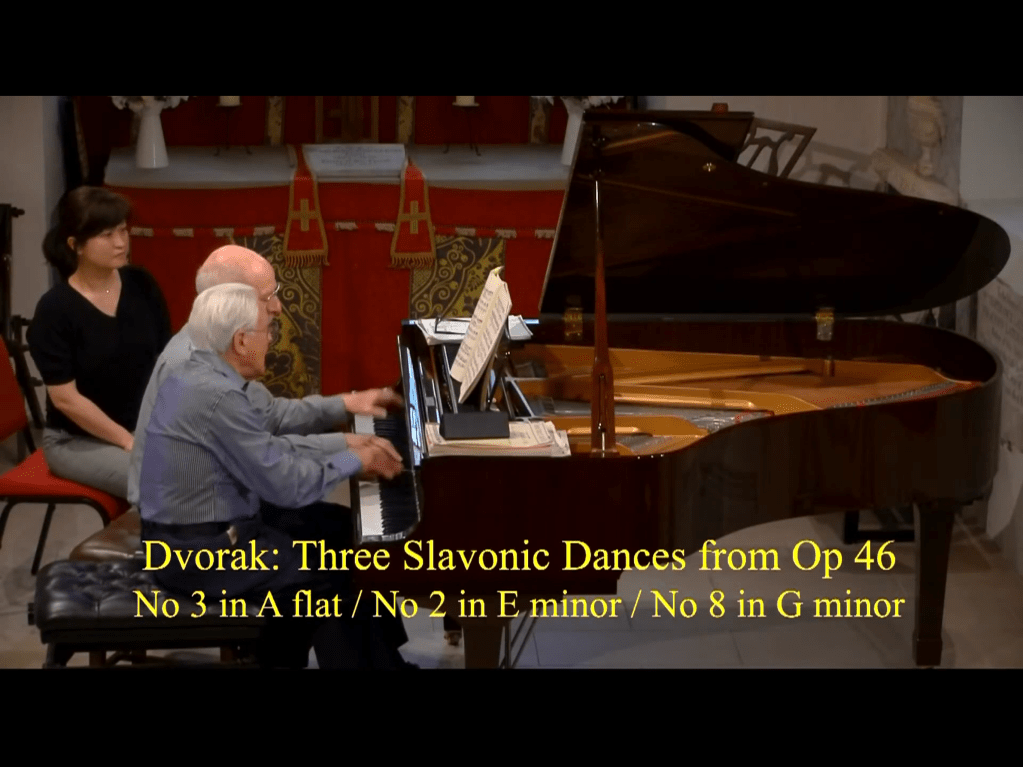
A superb ensemble of transcendental control from both players and glissandi at the end that were like a silver lining to the almost religious chorale of peace and Elgarian importance of Ravel’s Jardin Féerique.Three Slavonic dances by Dvorak were played with rhythmic intensity and beguiling gypsy freedom.The simplicity and beauty they brought to the four Ländler by Schubert played as an encore just summed up the elegance and humility of the Hausmusik that we had been allowed to eavesdrop on all afternoon .

Allan Schiller and John Humphreys have been playing as a piano duo since 1972 and in 2022 will be celebrating their 50th anniversary with appearances throughout the UK, ending with a recital at Wigmore Hall on Saturday 25th June .They have recorded Busoni and Schubert for Naxos and on 26th January 2006 were invited by Wigmore Hall to present a recital on the 250th anniversary of Mozart’s birth. In addition to BBC Radio 3 broadcasts they have played throughout the UK and more recently have played in Iceland.

Allan Schiller is widely regarded as one of the UK’s finest pianists. Born in Leeds he studied initially with Fanny Waterman making his debut at the age of ten with the Halle Orchestra under Sir John Barbirolli. He later studied with Denis Matthews and became the first British pianist to be awarded a scholarship to study at the Moscow Conservatoire. After further study under Guido Agosti in Italy he returned to this country and rapidly established a reputation as one of the most exciting pianists of his generation with solo appearances throughout the country and concerto performances with all the major UK orchestras and the BBC Symphony Orchestras. He has made countless broadcasts for BBC Radio 3 and recorded a number of highly regarded cds. 

John Humphreys was born in Liverpool and studied with Henryk Mierowski and later with Harold Rubens at the Royal Academy of Music. In 1967 he was awarded one of four scholarships by the Austrian Government to study in Vienna and on his return to this country made his Wigmore Hall debut in 1972 with Busoni’s rarely heard ‘Fantasia Contrappuntistica’. Since then he has appeared throughout the country as soloist, accompanist and chamber musician. In 1975 he performed the cycle of Mozart piano sonatas in London and elsewhere and has given many performances of Bach’s ‘Goldberg Variations’. John was Assistant Head of Keyboard Studies at Birmingham Conservatoire until 2009. He is also Chairman and Artistic Advisor to the Dudley International Piano Competition. In 1998 he was awarded the ARAM for ‘his distinguished contribution to music’.
George Fu his joy and exhilaration saves the day and uplifts our spirits

Fantastic George Fu coming to the rescue at 48 hours notice .
A lesson in beauty and seduction and a charmer on and off the stage where his love for music is irrepressible as it is irresistible.
Harvard ,Curtis and Royal Academy have given him much but the spirit and joy of sharing music is his birthright.Beguiling,sensuous and intelligence added to a transcendental command of the instrument combine in an unforgettable musical experience of joy and exhilaration.

What better way to celebrate the platinum Jubilee of our much loved Queen.
We send all best wishes to Thomas Kelly who had to cancel all his engagements due to what we hope is only a temporary indisposition

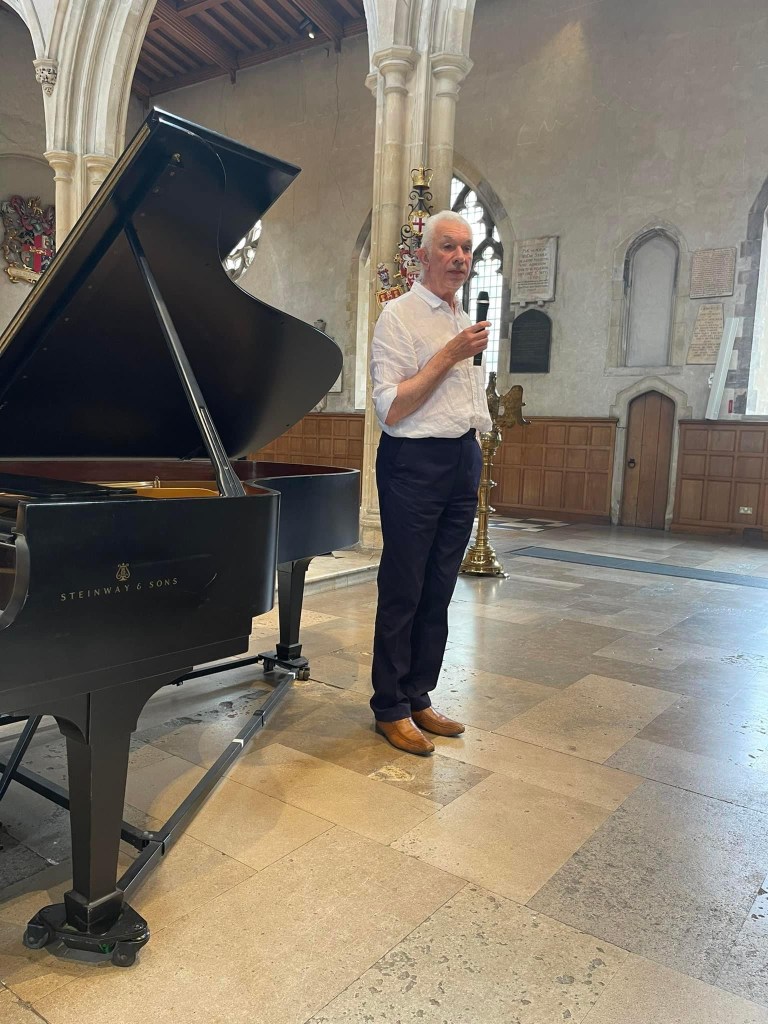
Co artistic director Ian Maclay introducing the concert and explaining the change of programme and artist.
Thomas Kelly rapidly making a name with his success at the Leeds and Hastings competitions recently found himself ill in bed having prepared a programme that was to have included transcriptions or revisitations of Brigg Fair and Peter Grimes Having to cancel his final masters recital too at the RCM.
https://christopheraxworthymusiccommentary.com/2022/04/18/thomas-kelly-takes-florence-by-storm-music-al-british/
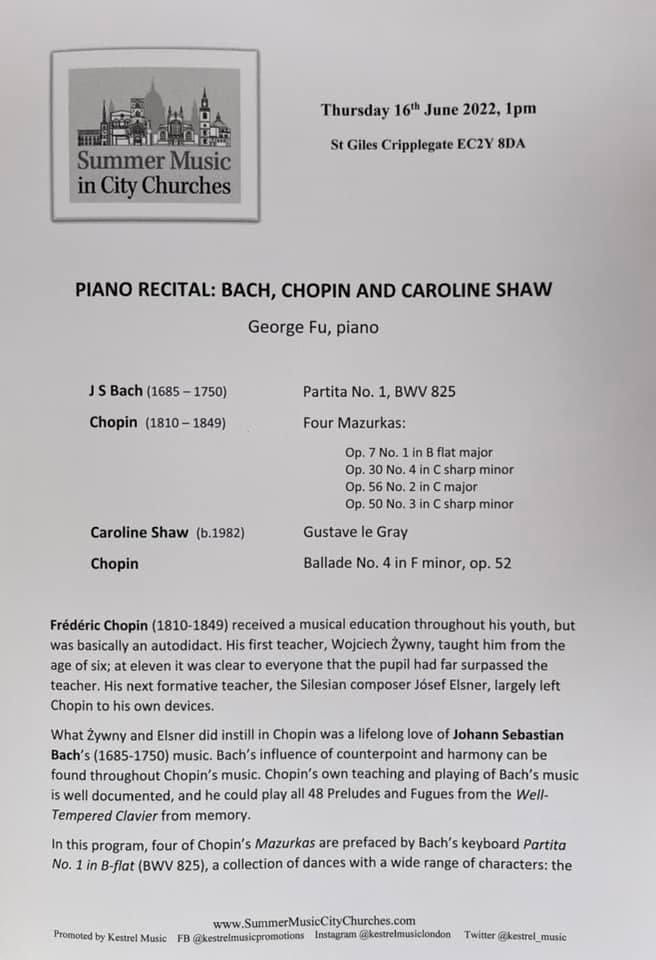
George Fu at less that 48 hours notice was able to step in today even finding time to prepare the very interesting notes for his unexpected programme.
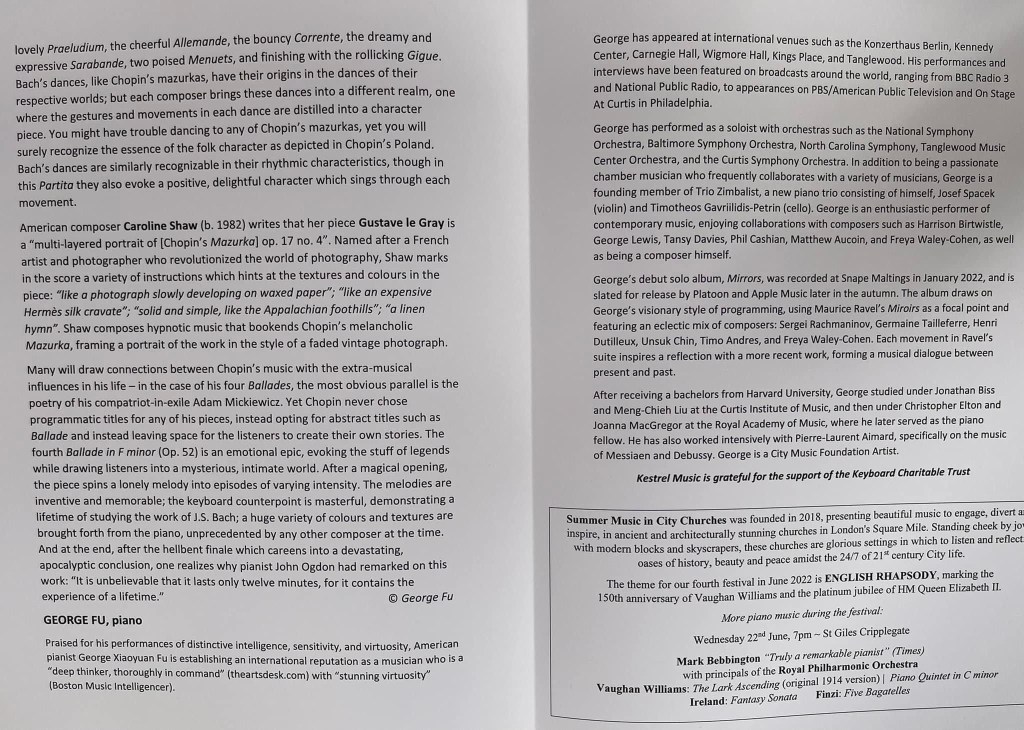
George Fu’s own programme notes that he wrote especially for this last minute concert
George Fu with co artistic director Jenny Robinson
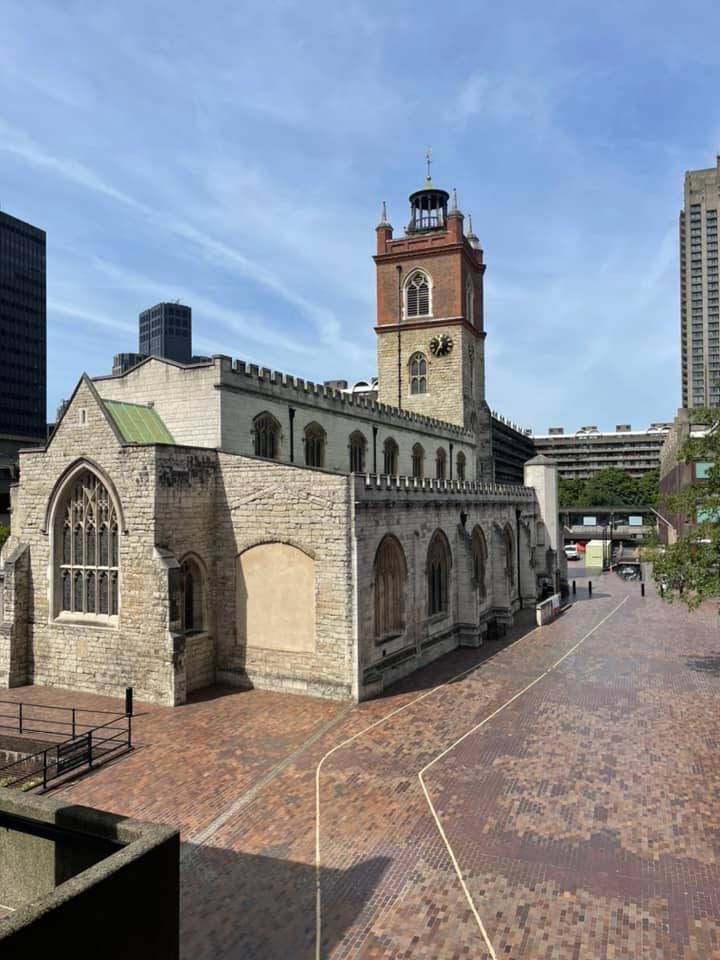
St Giles Cripplegate Old and New at the Barbican Centre
George in rehearsal with his wonderfully fluid natural movements of continuous motion with the fingers making contact like floating in water.Exactly the natural position that Chopin had discovered for himself with the advent of the piano where touch and sensitivity were crucial in disguising the percussive nature of a box of hammers and strings.Chopin with the sound of bel canto in his ears could search for a way to extract the sounds from the instrument that could mirror the sounds in his ear creating compositions and technical innovations .Exactly in the same way that Casals was to do with the performance of Bach on the cello or Segovia on the guitar a century later.
The six partitas for keyboard form the last set of suites that Bach composed, and are the most technically demanding of the three. They were composed between 1725 and 1730 or 1731. As with the French and English Suites, the autograph manuscript of the Partitas is no longer extant.The first Partita is the most luminous for it’s agility,lightness and nobility.
It was fascinating to watch George in rehearsal as though he were conducting the music with the continuous sense of circular movement of his arms with his hands and fingers just caressing the keys as they made contact on their natural onward journey.
Experimenting too with possible ornamentation that he might use in performance on a voyage of discovery where the response of the piano and even the vibrations from the audience would lead him in an ever new direction.Even transposing one phrase up an octave as one might change manual on the harpsichord.
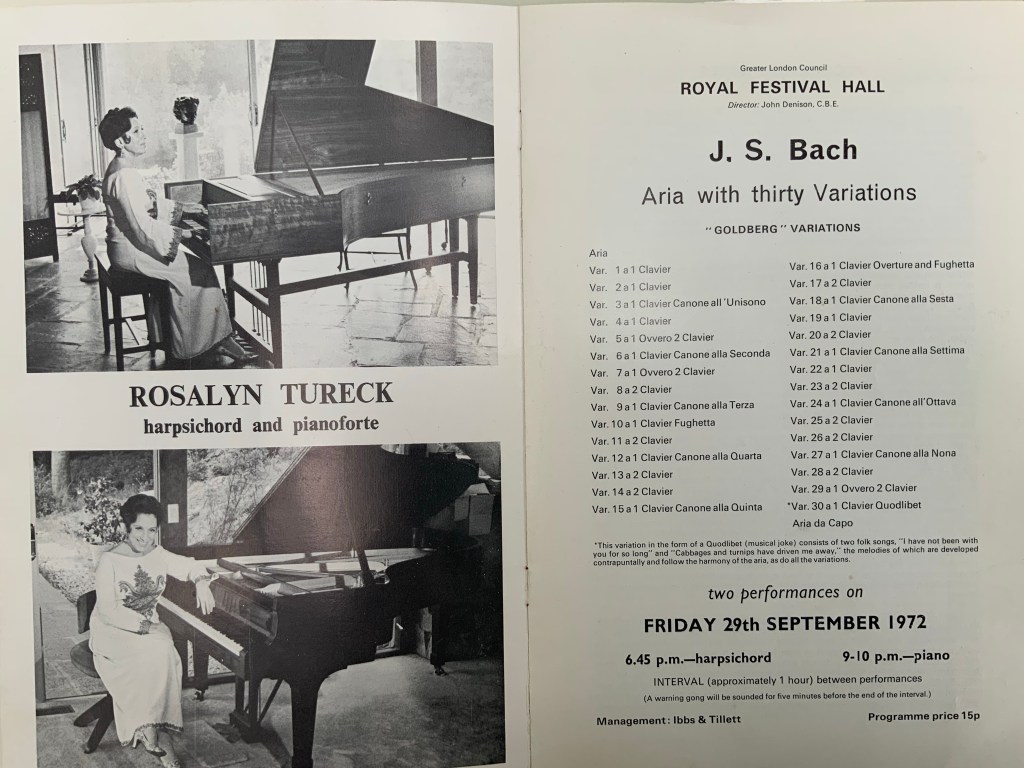
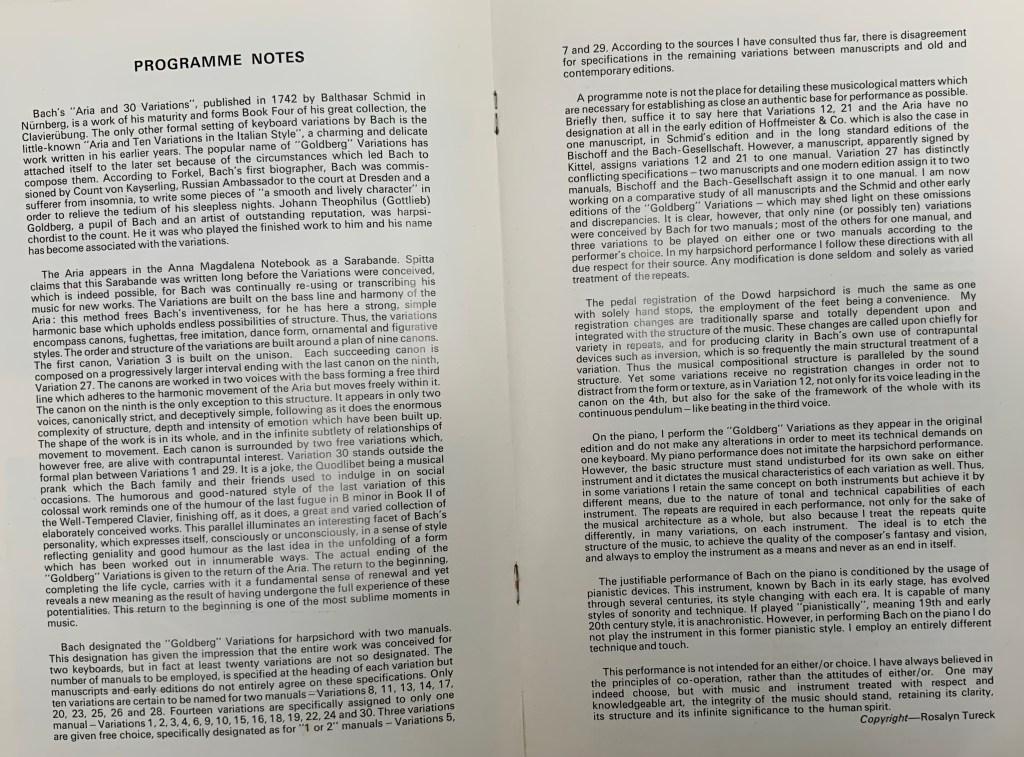
George said that he had been listening to the monumental performances of Rosalyn Tureck and he was surprised to know that I had been not only a great friend but also one of the trustees of her Oxford Bach Research Institute.I pointed out that Rosalyn was not one to imitate the harpsichord on the piano and so would never have tried to transpose up an octave .She gave an unforgettable recital in London in 1972 when she played the Goldberg Variations twice – once on the harpsichord and once on the piano – both without the score and both completely different!
I rather liked his transposition up an octave at the end of the Gavotte I – but the vibes were not right today or super intelligent George had been chewing over our discussion in the green room! It was the beauty and luminosity of sound that illuminated all that George did but nowhere more than in the Praeludium of the Partita with the crisp beauty of the trill passing from the right hand to the left without any hesitation or doubt, like the greatest of singers and all within the gentle pastoral flow of simple beauty.There was such fluidity in the Allemande played with absolute purity and clarity of sound with beguiling ornamentation in the repeat with very subtle colouring of ravishing simplicity.Gentle is the word in this Partita where any aggression or disturbances are alien to its very pastoral nature.There was the beautiful non legato of the Corrente with its gradual build up in volume leading to the whispered opening of the repeat with its simple scintillating ornamentation.The noble beauty of the Sarabande was allowed to grow out of the Corrente with magic effect and the improvised freedom of the deep bass line was of operatic weight over the subtle trill of the right hand.The Gavotte entered with grace and elegance and the Gavotte II was imbued with subtle phrasing and articulation .The gentle glissando of notes back into the Gavotte 1 was intoxicating in its subtle charm.The Giga was played with solidity but also a clear hypnotically enticing melodic line with a majestic final fearless flourish.
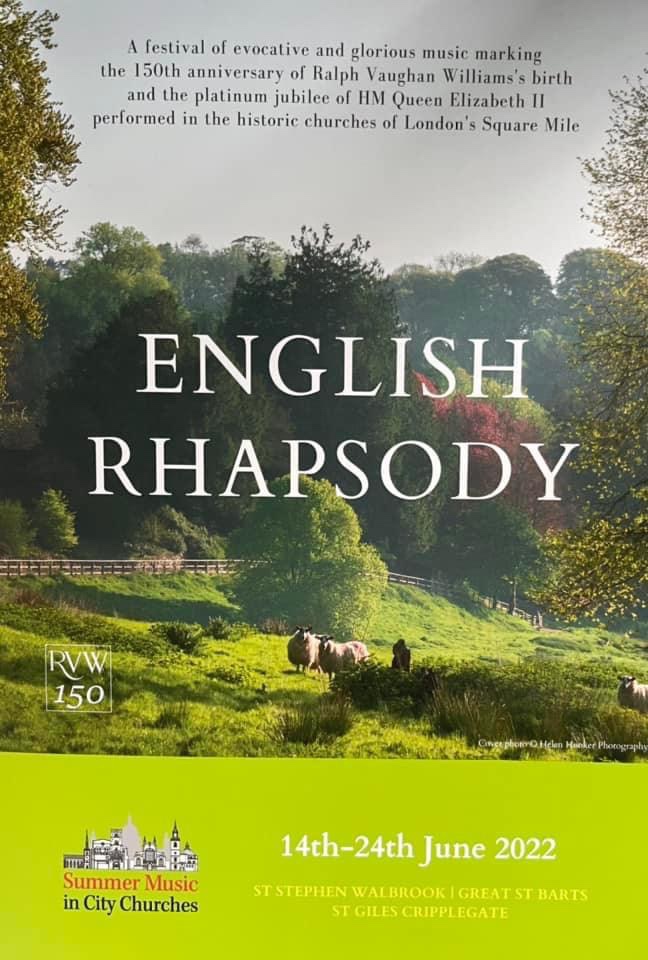
An opening to a recital that indeed was like the vision of the fresh air and vivid greenery of an English Country Garden or Rhapsody.
Rosalyn Tureck’s own programme notes for the Goldberg Variations.
Chopin based his mazurkas on the traditional Polish folk dance also called the mazurka (or “mazur” in Polish). However, while he used the traditional mazurka as his model, he was able to transform his mazurkas into an entirely new genre.
George chose four contrasting Mazukas from the published 58 that were written from the age of 15 up to his untimely death at only 39.
Op 7 n.1 was played with exhilarating rhythmic energy so typical of the folk dance but with a sense of style and mystery in the ‘sotto voce’ middle episode before exploding into dance again.
Op.30 n.4 showed us the intensely expressive character playing with feeling and temperament but also ravishing beauty.There was great contrast between the song and the dance with the final breathtaking beauty of the intensely felt downward scale and the final ‘blue’ note of E.
Bursting into bucolic dance with op 56 n,2 played with infectious rhythmic verve and a final haze of sounds as though from afar.
Op.50 n.3 where nostalgia and beauty unite to create a hypnotic effect ending in a dream world suddenly awoken with the final stamp of the feet.
What a marvellous world George showed us today as he took us on the journey of Chopin’s life passed a long way from his homeland but where his heart was in the end to be forever rested.
https://www.google.co.uk/url?sa=t&rct=j&q=&esrc=s&source=web&cd=&ved=2ahUKEwj0v-ueu7T4AhVeQkEAHdEFDyMQFnoECAkQAQ&url=https%3A%2F%2Fwww.thefirstnews.com%2Farticle%2Fhome-is-where-the-heart-lies-the-amazing-story-of-chopins-heart-10636&usg=AOvVaw12ievY6_oE_KLHvU2tPrK4
It was fascinating to see how this journey to the intimate world of Chopin could be created by a contemporary American composer Caroline Shaw.Creating the atmosphere of a faded vintage photograph of one of Chopin’s best loved Mazurkas,that in A minor op 17 n.4.
Gentle whispered sounds reaching at some point fever pitch all based on the left hand chords of the original Mazurka.Eventually the original being exposed as if seen from afar gradually getting more and more in focus with almost unbearable intensity.It was a similar effect that Artur Rubinstein would seek in his all Chopin recitals where he would add four Mazurkas op 50 by his friend Szymanowski, dedicated to him,that would cleanse the taste buds like a sorbet during a sumptuous meal.
The fourth Ballade of Chopin is one of the pinnacles of the pianistic repertoire and it was this that George chose to finish his recital with.
A true voyage of discovery played with ravishing beauty and simplicity but also passion and transcendental technical command.
It was a real voyage of discovery from the mysterious opening to the seeming simplicity of the theme.It had though such intensity sown into each note lovingly caressed by George’s unrelenting and irrepressible sensitivity.The subtle counterpoints of the first variations leading to a climax of passionate intensity.Dissolving into the beauty of the second subject that was played with such complete understanding.A series of unwinding modulations led to the return of the opening whispered statement ‘avec un sentiment de regret’.
Knotty twine of counterpoints appear out of a magical cascade of notes.With the theme being entwined before it’s liberation into swirls of embellishments that lead to the final passionate climax.Explosion of chords played with extraordinary technical prowess were answered by five exquisitely whispered chords before the exhilaration and explosion of the coda.A remarkable performance played with passion,sensitivity and intelligence never rhetorical or sentimental.
A tour de force indeed but then as George would say ‘here we go’.
The ‘Valse de l’adieu’ by Chopin was indeed George’s farewell to us today.But what fun he had with the ravishing embellishments and subtle rubatos all thrown off with the ease of the master that we only too readily realised we had before us so unexpectedly today.
We wish all best wishes to George and Leda who have announced their marriage next month …..not sure who is the luckiest.

https://christopheraxworthymusiccommentary.com/2022/01/01/george-x-fu-ravishing-the-senses-as-a-young-eagle-descends-on-st-marys/

The Keyboard Trust celebrating it’s 30 anniversary is happy to be associated with the Summer Music in City Churches with the second collaboration in the beauty of St Giles Cripplegate

https://christopheraxworthymusiccommentary.com/2019/06/26/words-and-music-nicola-losito-poetry-and-virtuosity/

Wai Yuen Wong soaring high at St Mary’s

Thursday 16 June 3.00 pm

https://youtube.com/watch?v=IbZX26yvyGw&feature=share

Some beautiful musicianly playing of great intelligence with a near scrupulous attention to the composers intentions.A programme of two master works from the Romantic piano repertoire.It was though in the Scriabin Waltz op 38 played as an encore that she suddenly found the improvised freedom that had been lacking in her exemplary but over respectful performances.In her beautiful playing of Schumann and Chopin she had been searching for a deeper meaning and expression but sometimes loosing sight of the overall architectural shape.Trees of ravishing beauty where the confines were not clearly enough defined.

Eleonor Wong and Norma Fisher are two teachers of enormous musical stature.Eleonor was a highly respected student in her final year at the Royal Academy under Frederick (Freddie) Jackson,a much respected musician who died conducting the Verdi Requiem in the RAM Dukes Hall.I was in my first year and was very much in awe of her and her sister Linda.Eleonor would often ask me if she could play through her programmes that she was preparing for competitions.I was always so overcome by her musical and pianistic perfection in performances of Schumann Kinderscenen,Mozart C minor Sonata or Beethoven op 110 that I like to think that my unbounded enthusiasm evidently gave her the courage to go on and win many important International competitions .Her teacher had recently awarded me the Liszt Scholarship and it was my teacher Sidney Harrison who took me to the Wigmore Hall to hear his star student Norma Fisher giving a recital in the prestigious London Piano Series.I felt almost as proud as he did as he presented me to her as the new Liszt Scholar after a wonderful recital.I still remember to this day her performances of Brahms Handel Variations ,Chopin Berceuse and Debussy studies. https://christopheraxworthymusiccommentary.com/2022/05/12/norma-fisher-at-steinway-hall-the-bbc-recordings-on-wings-of-song-the-story-continues/

So it is a small world where now half a century later I listen to a pupil of both Eleonor and Norma.Gordon Green,my second teacher at the RAM would cheekily say two Wongs do not necessarily make a right!An innocent remark from one of the most loved and respected teachers of his day.In this case dear Gordon they do!There was great beauty in Wae Yuen’s playing with never an ugly or ungrateful sound.If she loved the music too much is that really a bad thing?Scriabin liberated her of all her inhibitions and left her free as a bird to soar to the heights where her superb technique and musicianship can really take her.

Davidsbündlertänze (Dances of the League of David),op.6 is a group of eighteen pieces composed in 1837 by Schumann who named them after his music society Davidsbundler.The low opus number is misleading: as it was written after Carnaval op.9 and the Symphonic Studies op 13 .His early piano works were influenced by his relationship with Clara Wieck as he wrote to his former professor: “She was practically my sole motivation for writing the Davidsbündlertänze, the Concerto, the Sonata and the Novellettes.” They are an expression of his passionate love, anxieties, longings, visions, dreams and fantasies.The theme of the Davidsbündlertänze is based on a mazurka by Clara Wieck and these intimate character pieces are his most personal work. In 1838, Schumann told Clara that the Dances contained “many wedding thoughts” and that “the story is an entire Polterabend – a German wedding eve party, during which old crockery is smashed to bring good luck”.18 characteristic pieces or musical discussions about contemporary music between Schumann’s characters Florestan and Eusebius. These represent the impetuous and the lyrical, poetic sides of Schumann’s nature. Each piece is ascribed to one or both of them. Their names follow the first piece and the appropriate initial or initials follow each of the others except the sixteenth (which leads directly into the seventeenth) and the ninth and eighteenth, which are respectively preceded by the following remarks: “Here Florestan made an end, and his lips quivered painfully”, and “Quite superfluously Eusebius remarked as follows: but all the time great bliss spoke from his eyes.”The suite ends with the striking of twelve low C’s to signify the coming of midnight.The first edition is preceded by the following epigraph: In each and every age
joy and sorrow are mingled:
Remain pious in joy,
and be ready for sorrow with courage.

A beautifully shaped capricious opening with such subtle colours but sometimes slowing down too much and loosing the essential impish impetus of this first piece that is ascribed to both Florestan and Eusebius.A beautiful sense of balance and sensitivity -inning- in the second piece but slowing down a little too much at the end.She brought lightness and wit to the third with a beautiful sweeping coda of fleeting colours and great passion to the fourth.The fifth ascribed to Eusebius with delicate phrasing that she played with loving care!There was great agility and sense of forward propulsion in the sixth contrasting with the beauty of the seventh where the middle section was allowed to flow so naturally.Florestan was now in charge with the scintillating ‘Frisch’ of the eighth or the passionate duet of the ninth and the almost Brahmsian fullness of the tenth.The ‘wild und lustig’ of the thirteenth was lacking in pedal and although a good contrast with the beautiful mellifluous central episode it somehow did not seem to link up as a whole.The coda was played with fleeting sounds disappearing to a whisper of jeux perlé swirls of notes.The fourteenth is the very heart of Schumann -zart und singend – and was played with ravishing tone even if the accompaniment and melody seemed to be heading for a collision at one point.The ‘Frisch’ of the fifteenth I found a bit too heavy at the opening but then she allowed herself such freedom that the middle section soared into the heights of sublime romantic sounds.The sixteenth is a preparation for the sumptuous beauty of the seventeenth and could have had a little more forward movement as it leads to the magical F sharp which opens up Schumann’s dream world of fantasy where Florestan and Eusebius are at last united.The final nostalgic waltz was played with a wonderful sense of phrasing that just added such poignancy to the twelve remarkable chimes of C and the gradual disappearance into the distance of one of Schumann’s most miraculous creations.

Chopin Piano Sonata No. 3 in B minor,op .58, is the last of his piano sonatas and was completed in 1844, only five years before his death,and is the only one to finish in a major key.

The opening of the B minor Sonata
Chopin’s very precise indications in the autograph manuscript
The first movement of the B minor Sonata was played with great forward movement that gave such nobility and strength with a sense of architectural sweep where her occasional caressing of beautiful corners was even the more poignant and ravishing.There could have been a little more care of Chopin’s own pedal markings in the ‘leggiero’ passage that would have sounded more melodic and less quixotic and of the final chords three are marked forte and the final two fortissimo.But it was a remarkably fine performance where the second subject was allowed to soar on high with such freedom and emotional strength .The scherzo was played with admirable clarity and agility but given such shape too.If she tended to dwell too much in the long central section the gentle return of the scherzo was masterly.Like the very fine musician she is understanding instinctively that the final fortissimo of the scherzo leads immediately into the opening aristocratic fanfare of the Largo.Beautifully played and managing to keep the tempo moving it might be useful now to look at Chopin’s own pedal indications that could inspire her to even greater flights of fantasy.The Finale was played with exemplary precision and control not allowing the opening agitato indication to lead her astray too soon.Great excitement,passion and technical prowess were the extraordinary ingredients that brought this very fine performance to a remarkable end .
The autograph showing Chopin’s very precise pedal indications

Born in Hong Kong, Wai Yuen Wong graduated from the Hong Kong Academy for Performing Arts, Music department under Professor Eleanor Wong, Artist-in- residence. While followed Miss Juile Kuok at younger age. She is now studying the Master Degree of the Royal College of Music, under Professor Norma Fisher.She has won many overseas and local music competition prizes: Concerto trial prize with the the HKAPA orchestra, the 2nd prize at the International Piano Competition for Young Musicians, Enschede of the Netherlands. The 3rd Prize in the 1st Korea International Competition for Young Pianists, the First Prize and Professional Grand Prize at the 75th Steinway & Sons International Youth Piano Competition and was invited to perform at “The International Steinway Art Festival ” held in Hamburg, Germany. She was also awarded the First Prize at the 65th Llangollen International Musical Eisteddfod in Wales, UK. In addition to holding recitals in Hamburg, Beijing and Xiamen, she also performed the “Magic Piano & The Chopin Shorts” and “Beyond Impressionism” at the 42nd and 46th Hong Kong Arts Festival respectively.She was awarded a Certificate of Commendation by the Hong Kong Government in recognition of her outstanding achievements in the promotion of international arts and culture activities.