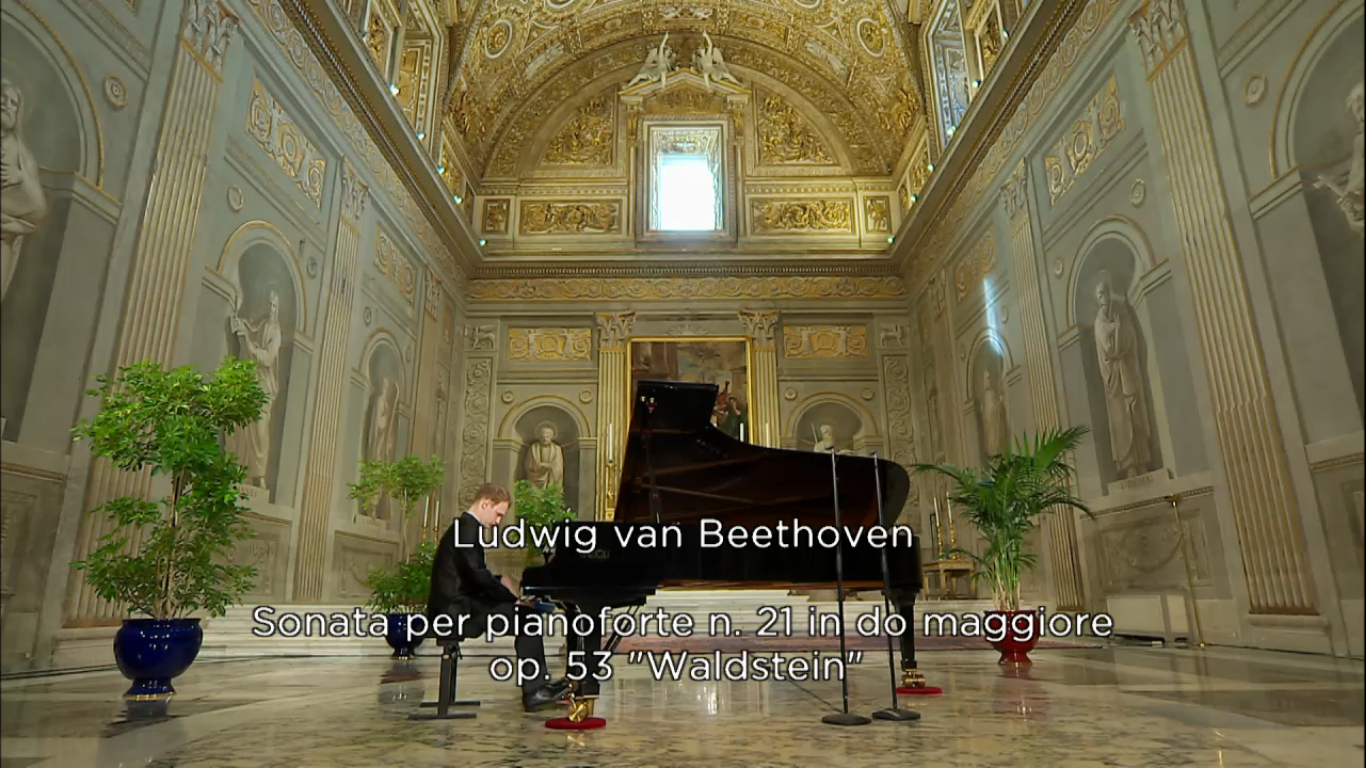
Ludwig van Beethoven (1770 – 1827) Sonata per pianoforte n. 21 in do maggiore op.53 “Waldstein” (1804) – Allegro con brio – Introduzione. Adagio molto (fa maggiore) – Rondò. Allegretto moderato
Felix Mendelssohn Bartholdy (1809 – 1847) – Variations sérieuses in re minore op.54 (1841) – Tema: Andante sostenuto – … – Un poco più animato – Più animato – Scherzo in forma di canone – Variation en écho – Con fuoco – Allegro vivace – … – Moderato – Cantabile – Tempo del tema – Sempre assai leggero – Adagio in re maggiore – Poco a poco più agitato – Allegro vivace – Presto
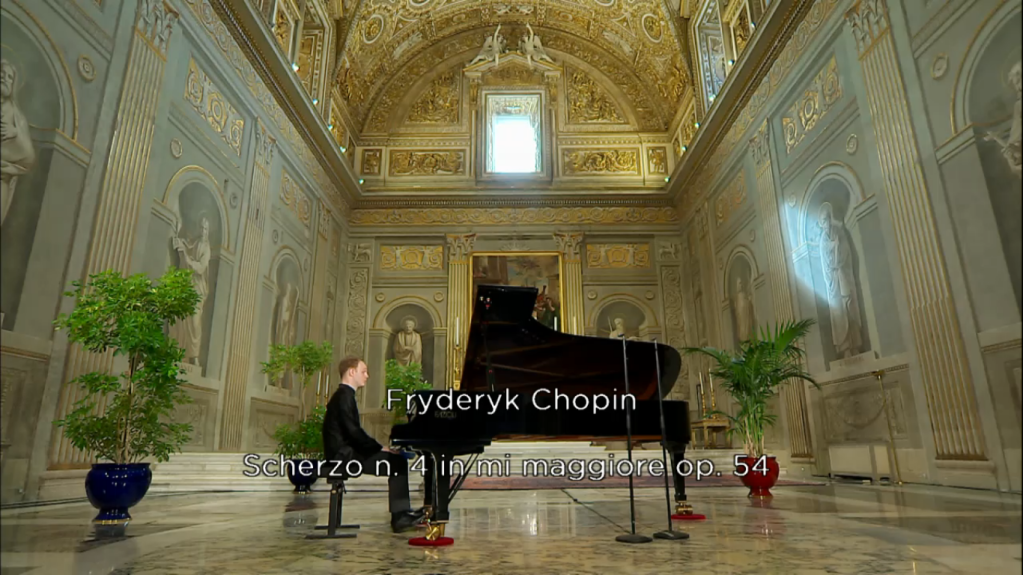
Fryderyk Chopin (1810 – 1849) Scherzo n. 4 in mi maggiore op.54 (1842)
Franz Liszt (1811 – 1886) Rapsodia ungherese n. 12 per pianoforte S 244 (1847)
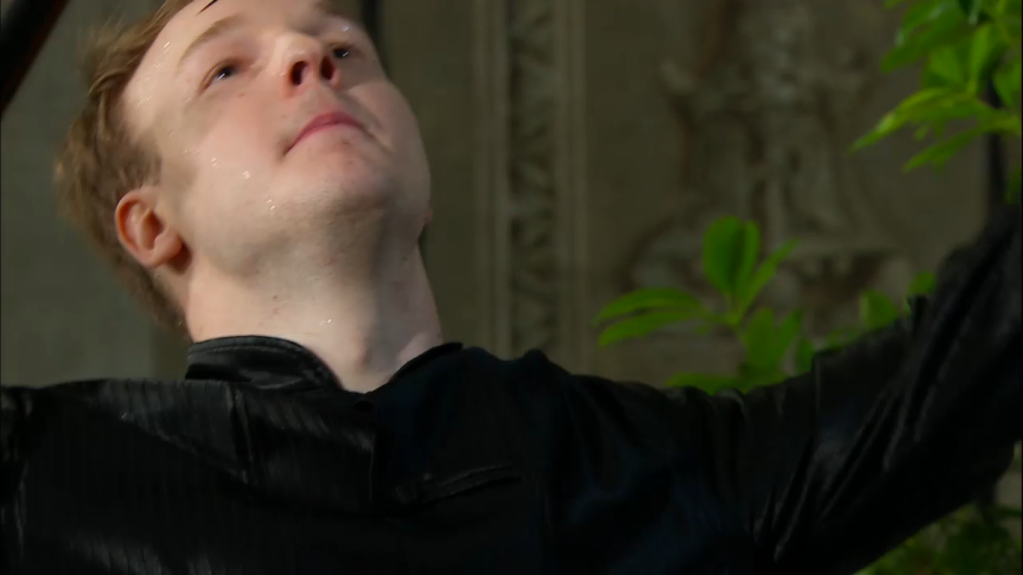
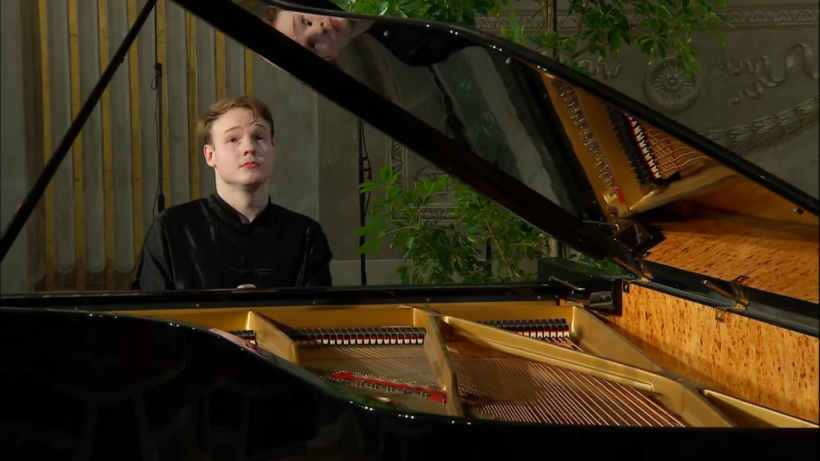
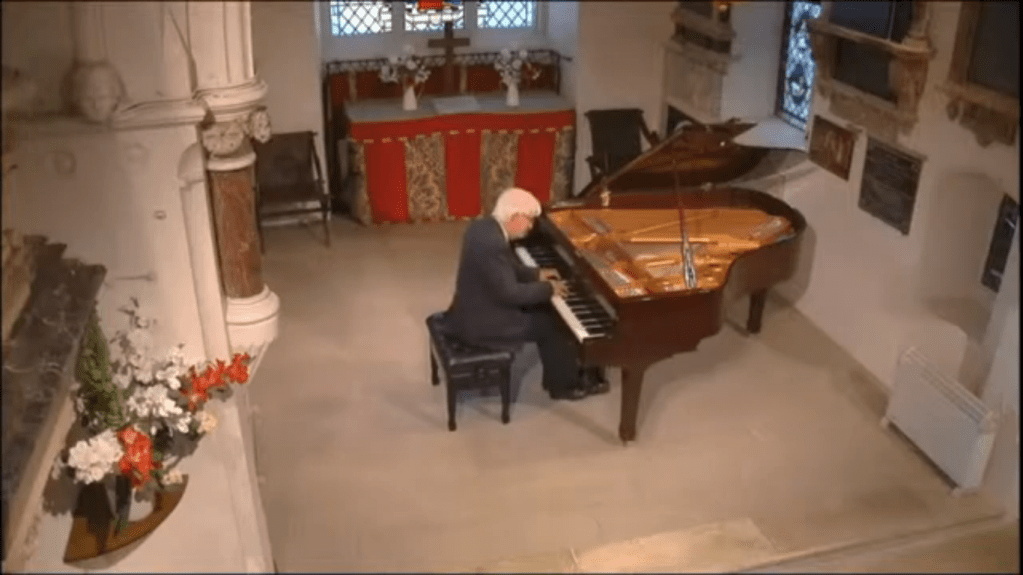
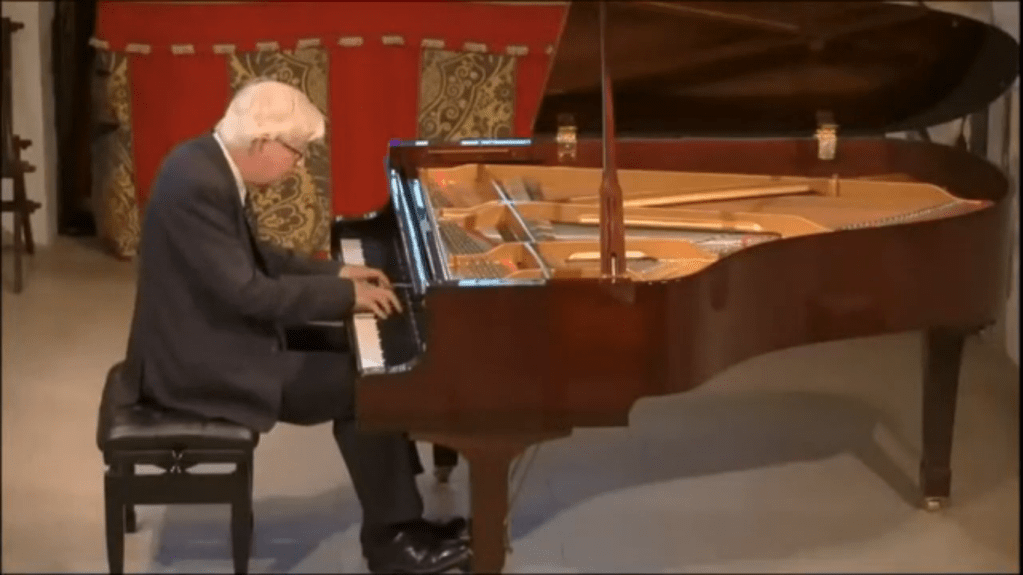
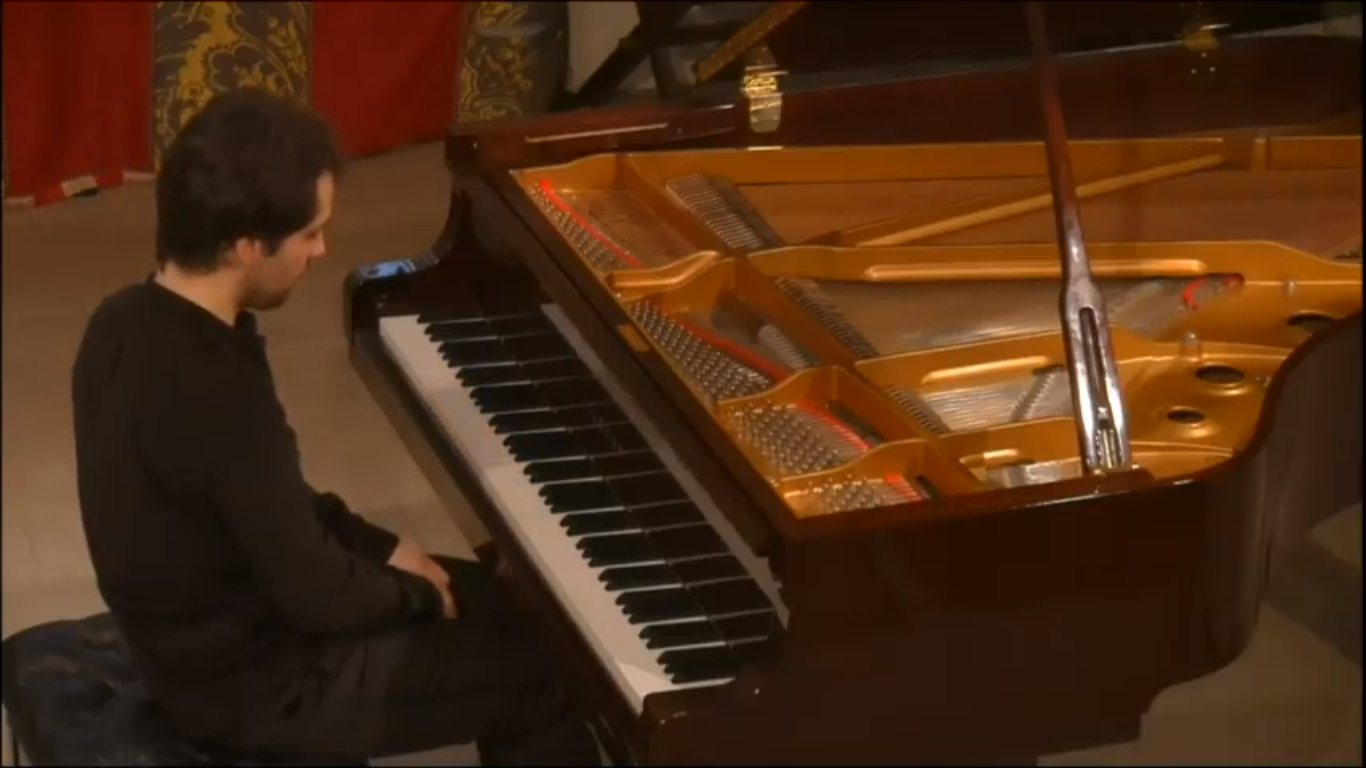
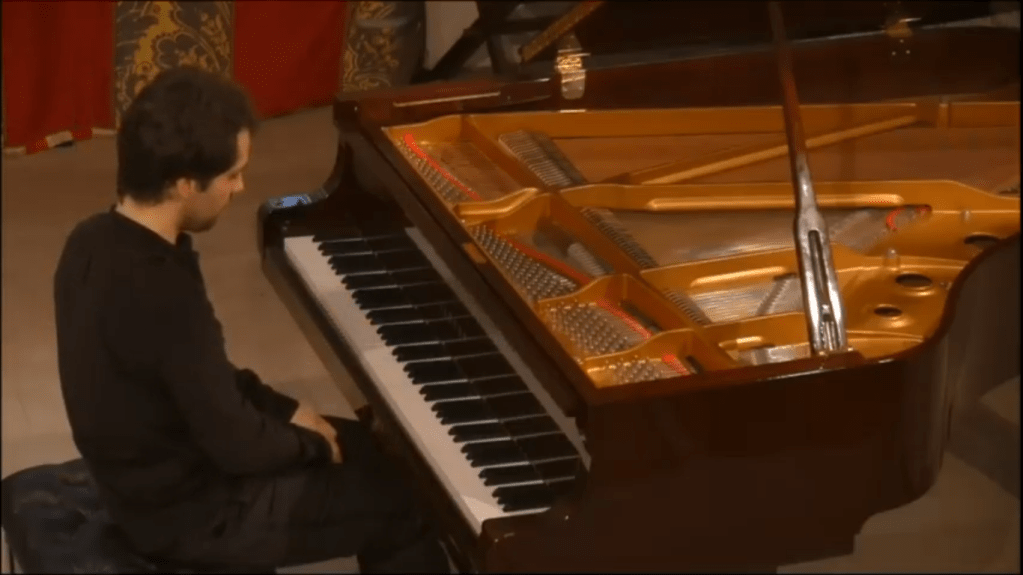
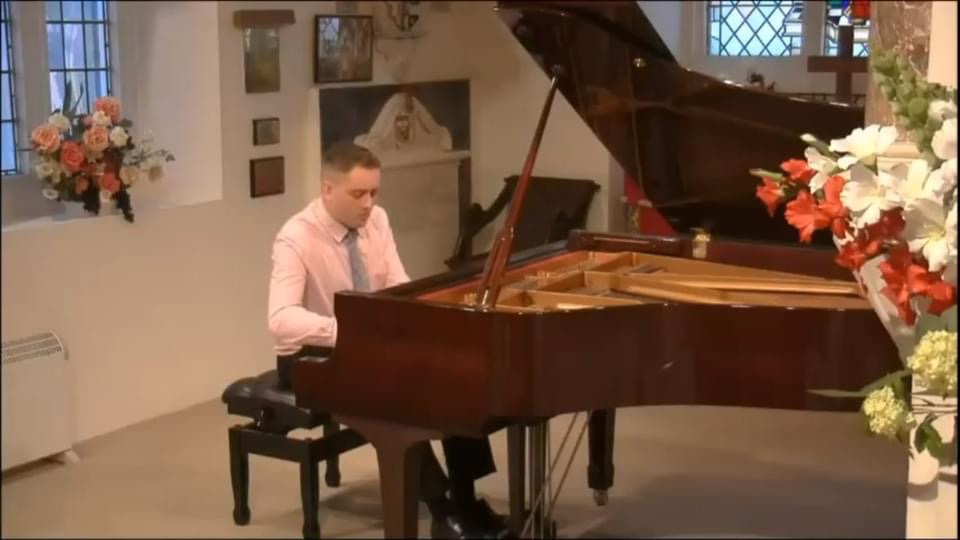
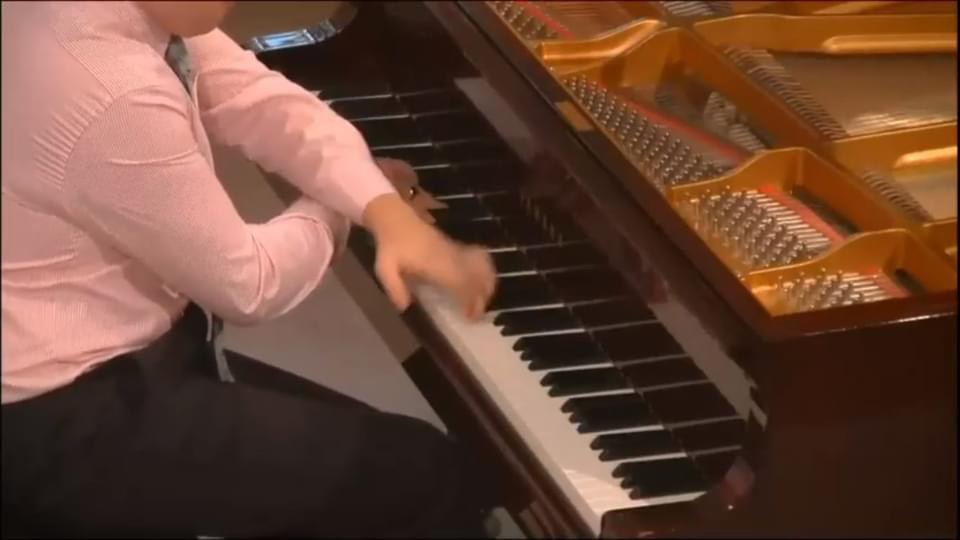
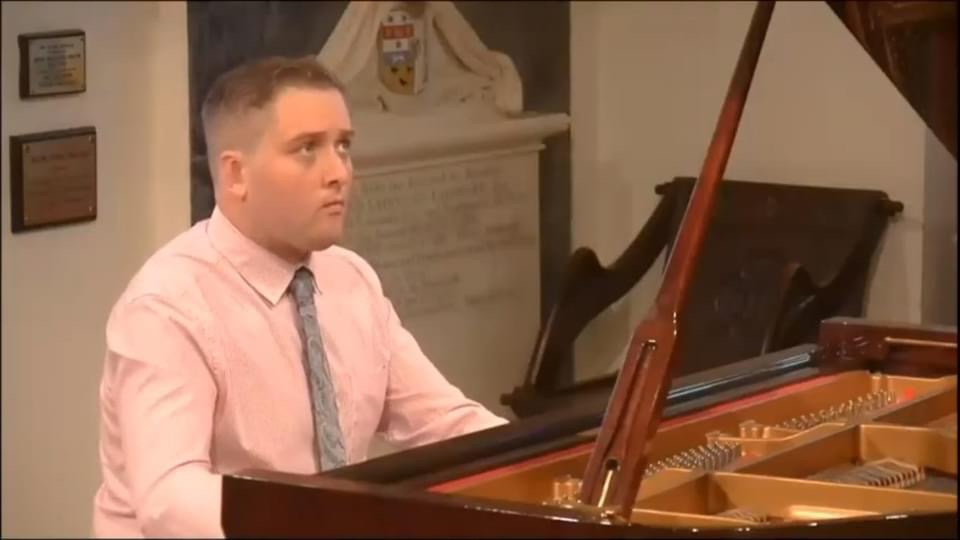
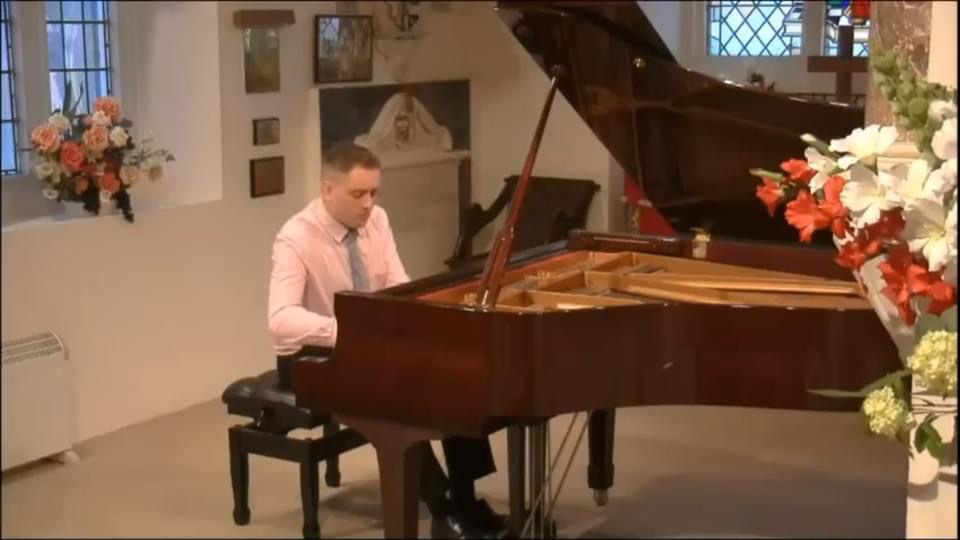
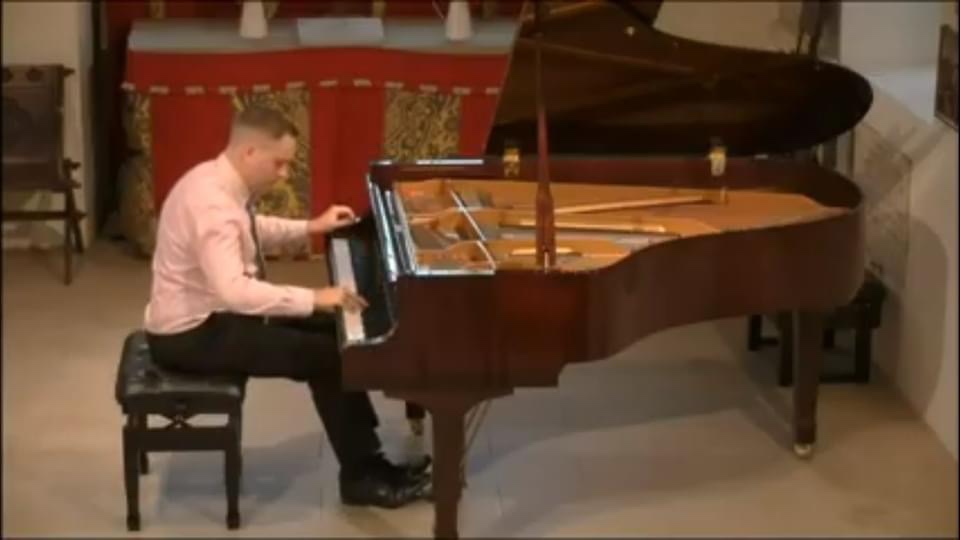
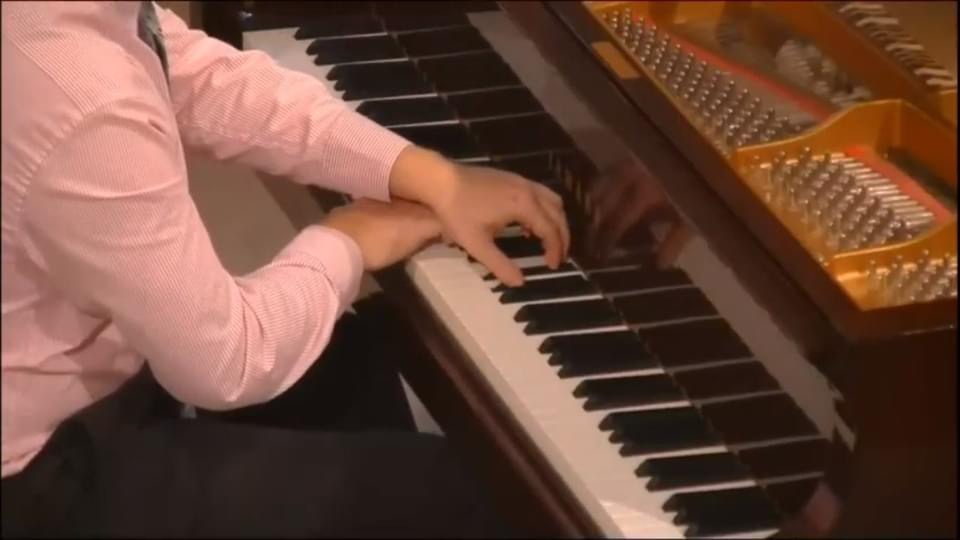
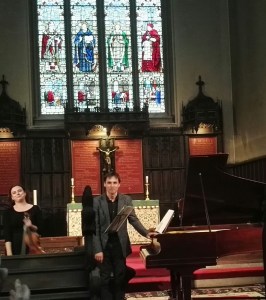
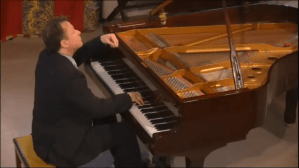
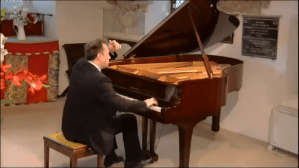
Giovanni Bertolazzi , pianoforte
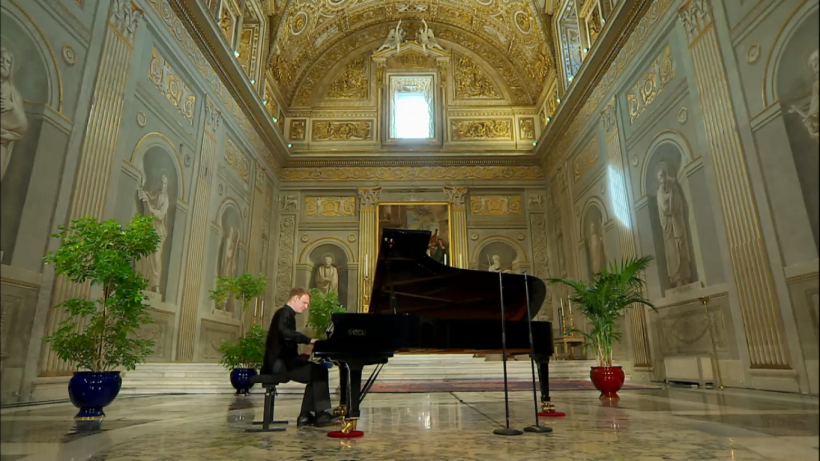
Veneto, nato nel 1998, Giovanni Bertolazzi si è imposto in numerosi premi internazionali e si è segnalato alla critica specializzata nel 2019, dopo un exploit al Concorso Busoni e il secondo posto conseguito al Premio Venezia. Esordisce ai Concerti di Radio3 al Quirinale con un programma che parte da Beethoven (Sonata per pianoforte n. 21 op. 53) e attraversa alcuni capisaldi del suo repertorio: Mendelssohn, Chopin e Liszt.
A star was shining brightly at the President’s Palace in Rome today and Giovanni Bertolazzi‘s magnificent recital might be the last for a long time as the Prime Minister Conte will probably announce tonight…………
A Waldstein Sonata of great rhythmic energy and astonishing contrasts.The wonderful deep notes of a superb Fazioli gave such poignancy to the introduction to the Rondo that was a true miracle of subtle colouring and virtuosity.Even Beethoven’s very precise pedal indications made such sense as did the glissandi that seemed to slip from this young musicians fingers with such ease and mastery.
Mendelssohn’s Variations Serieuses were played with such subtle colouring and an undercurrent of energy that was hypnotic.The sudden hushed fugato out of which was ,after a moving respite, a rebirth of almost mystical beauty.It led so naturally to the final pages of transcendental pyrotechnics thrown off with an ease and grace that was astonishing.
A great sense of characterisation in Chopin’s fourth Scherzo built to a monumental climax before melting away to a heartrendingly haunting melodic line that was masterly.The almost timeless ornaments and whispered repeat were pure magic.But nothing could compare with the aristocratic control of an exultant ending of passionate excitement .
The Liszt 12th Rhapsody was full of subtle colouring alternating almost animal stimulation with moments of mouthwatering delicacy and charm.Whispered confessions of intimacy alternated with truly demonic technical wizardry-No wonder Liszt was chased like a pop star by all the usually well behaved artistocracy of his day.
I have heard all these pieces from Giovanni over the last year or so since hearing him at the Busoni Competition
.It looks as though this too will be the last concert for a while.Another threatened lockdown seems inevitable as the Prime Minister of Italy will explain tonight on television.
Vivace ,ma non troppo – Prestissimo -Andante molto cantabile ed espressivo
Sonata n.31 in A flat major op 110
Moderato cantabile ,molto espressivo -Allegro molto-Adagio ma non troppo – Fuga
Sonata n.32 in C minor op 111
Maestoso-Allegro con brio ed appassionato-Arietta:Adagio molto semplice e cantabile
“He is a genius, and I don’t say that about many people. Absolutely amazing for a 65 year old with about 3 other major careers !” So wrote Hugh Mather who being a pianist,organist,retired physician and concert promoter should know.
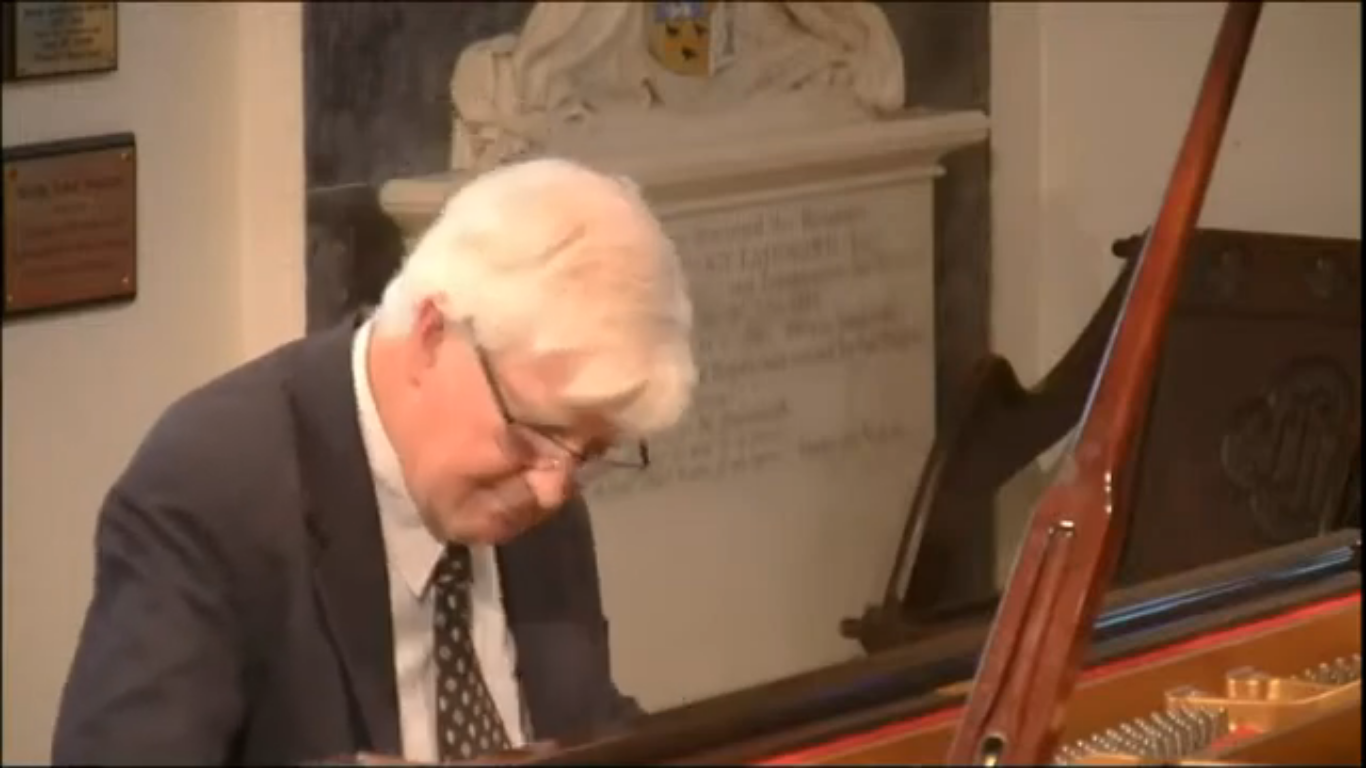
I was very intrigued to be able to hear Dr Grier ,who I had heard in Trio with his daughters but never in a solo recital!The three last Sonatas by Beethoven.What greater test could there be of intelligence,pianistic skill and that elusive quality that some may describe as soul?
I remember a renowned critic who was only able to listen to the last three sonatas in a concert at the Wigmore Hall for the second performance. Such was the demand for an earlier performance, that was also relayed live on the radio,that a repeat performance had been arranged an hour later.It was the end of a long much praised journey of all the 32 Sonatas .I listened at home on the radio with the Urtext at hand and a glass of wine in the other ready to switch off if need be.
It was one of the most remarkable performances that I have heard where every note was mirrored in the score with such intelligence and temperament.I asked my colleague what he thought of the repeat performance a few hours later.”Well” he replied”When I heard Arrau or Serkin play the same trilogy at the Festival Hall not only were they visibly elated and exhausted but the audience were too””It would have been impossible to contemplate a repeat performance after a cup of tea!”Make of that what you will!
Elusive indeed .Beethoven demanded a lot from himself with a kaleidoscope of feelings from the sublime to the ridiculous in a framework that evolved over a lifetime from the early Sonatas op 2 through op 31 and 57 to the monumental Hammerklavier op 106.They opened a new way – the gate to heaven maybe- to the last three sonatas. Beethoven had come to terms with life as a cloud seemed to lift and indications appear such as Adagio espressivo,Andante molto cantabile ed espressivo,Leggiermente,cantabile,Arioso dolente,Arietta:Adagio molto semplice e cantabile.
Even the very last Sonata finishes pianissimo in the major key.There are of course flashes of the irascibile temperament of his youth but they soon give way to a serenity and calm often with the magic sound of trills accompanying thematic material.
Today listening to this 65 year old polyhedric gentleman as he played these three monumental works,I was struck by the extreme simplicity and directness with which he comunicated Beethoven’s last thoughts on the Sonata.
The 32 Sonatas that St Mary’s had offered only a few weeks ago with 32 pianists over two days as their contribution for the 250th anniversary celebrations.I might also talk of their generosity and humanity in offering a professional engagement to 32 pianists in this time of crisis for musicians in a world struck dumb by a totally unexpected pandemic.
It was obvious from the very first bars that here was a musician of intelligence who could transmit the very essence of the music through the composer’s very detailed indications in the score.Op 109 started as though a door had opened and we were eavesdropping on something that had already begun in the distance.Interrupted by cadenza type passages in Adagio espressivo episodes before disappearing into the distance from where if had begun.Rudely interrupted by the Prestissimo second movement which in Dr Griers hands was the same orchestra with never any addition of Tchaikovskian brass!There was great energy but with a sheen to the sound that gave a great sense of line to the trilogy from the opening of op 109 through the almost pastoral op 110 to the magically atmospheric end of op 111.The Andante molto espressivo and variations were played with a simplicity but also a weight that did not allow any sentimentality – there is no place for romantic rhetoric in Beethoven.The first variation that so often can sound like a slow waltz was here played with true aristocratic sentiment – molto espressivo as the composer beseaches us.The leggiermente of the second variation was alternated with it’s cantabile trills.Some very solid playing in the third contrasted so well with the fragmented fourth.Rock solid Allegro ma non troppo of the fifth heralding the return of the main theme (so similar to the 22nd variation of Bach’s Goldberg) and its eventual disintigration as it reaches for the stars and the sublime opening of op 110 that follows.There was a luminosity of sound and simplicity in this opening that we were to find again in the Arietta of op 111.
The Allegro molto of the second movement was again beautifully judged and never allowed any percussiveness as this great architectural arch was always foremost in Dr Grier’s interpretation .There was a memorable unfolding of the chords as the Adagio moved to piu adagio- even slower.The luminosity of the bebung (repeated notes that on the original instruments of the time could almost be made to vibrate)was ravishing and led to the heartrending simplicity of one of Beethoven’s most sublime creations.Beethoven’s frenzy at the end of the fugue was more restrained than Serkin and owed more to the complete command of Arrau.
The commanding Maestoso of op 111 was played with great authority and although the Allegro con brio ed appassionato that followed was not quite like ‘water boiling at 100°’ according to Perlemuter who had studied with Schnabel,it had a great sense of line and smoothed over the jagged corners that every so often slipped from Beethoven’s pen in his final thoughts.The Adagio was played in three and not nine as is so often the case. It gave a forward impulse to the Arietta and variations .Agosti often had to point this out to the pianists that flocked each summer to his studio in Siena: Adagio ………..molto semplice e cantabile. Dr Grier’s simplicity and sense of architectural shape was quite overwhelming as it moved inexorably and inevitably into a better world.
Dr Mather was so moved he almost found it impossible to talk about donations after such an emotionally moving experience.
Francis Grier was born 29 July 1955 in Kota Kinabalu,Malaysia and used to be organist of Christ Church Cathedral, Oxford, and gave the first ever Prom concert given over to a solo performer in 1985. He is now a psychoanalyst and composer. In 2006 his Passion , commissioned by the BBC and VocalEssence in Minneapolis was described by the Independent as “a work of vital attack, shivering beauty and compelling power…”, and by the Minneapolis Star Tribune as “a modern masterpiece.” He was awarded a British Composer Award for his Missa Brevis (2011) for St Paul’s Cathedral. As a chamber music pianist he has recorded with Joshua Bell and Steven Isserlis, and has performed with Colin Carr, Louise Williams and Andrew Marriner – as well as with his daughters Savitri and Indira. In June 2018 the Choir of King’s College Cambridge digitally released Lit by Holy Fire ; in September a CD was released of his organ music performed by Tom Winpenny at St Albans Abbey. His new oratorio Before All Worlds will be performed by the BBC Singers in November 2020.
A very fine first outing for Cristian Sandrin’s Goldberg and what courage after months in lockdown to choose a new work from his repertoire : the Goldberg Variations, that without repeats lasts the 50 minutes of St Mary’s Live Stream Tuesday recitals.
Playing without the score it was a tour de force indeed.
Even Rosalyn Tureck who had played them all her life had aide memoire cards in the piano except on the occasion when she was about to cancel her concert in Florence.I told her it was a pity because the head of Deutsche Grammophon was coming especially! She was well into her 80’s but not only played them but played them completely without the score.Even she came momentarily adrift though in the treacherous 23rd variation as Cristian today had had one or two slight moments of doubt too.
Tureck was invited on that performance to make her very last recording of her long career.Cristian too today demonstrated his supreme musicianship and simple command of the keyboard allied like Tureck to a sense of structure and overall architectural shape.
After the 29th virtuoso variation one usually hears an almost triumphant Quodlibet (Busoni played it fortissimo with all the trumpets ringing) but in Cristian’s hands it was played in a very subdued way leading so naturally to the magical repeat of the Aria .But the Aria very gradually and in such good style grew in intensity dissolving to the final chord after a journey of a lifetime.
It was a wonderful musicianly idea and gave a totally satisfying shape to this monumental work.
From the very first note there was a crystalline clarity and a beauty of sound that was created by very little use of the sustaining pedal but rather use of a finger legato that gave great weight and substance to the sound even in the most touchingly profound 25th variation or the dark brooding of the 21st.There was also a great sense of energy from the very first variation and some transcendental piano playing in the 14th and 26th amongst many others.
The great french overture of the 16th that signals the end in sight was played with a nobility and sense of style that was remarkable.There was delicacy too from the outset in the 2nd variation with the gentle left hand continuo meandering along like water in a brook over which sang a simple duet between two voices.It led so rightly to the gentle lilt of the canon in unison of the 3rd variation .I am used to hearing the 4th variation slower as the first suggestion of the grandeur that is to come but Cristian played it with such commanding authority I was swept along on this continuous undercurrent that he created from the first to the last note of this monumental work.
The variations were written for the insomniac Count von Kesserling who had asked Bach to write some pieces of ‘smooth and lively character’ to relieve the tedium of his sleepless nights.Johann Goldberg ,a pupil of Bach and an artist of outstanding reputation was harsichordist to the Duke and it is his name that has become associated with the variations.
The ‘knotty twine’ of the fifth variation that Bach does not specify if for 1 or 2 manuals was played with a true jeux perlé of such delicacy that it belied the transcendental difficulty of playing this variation on the single keyboard.
Bach did know the piano in its early stage but it has evolved through several centuries,its style changing with each era.The justifiable performance of Bach on the piano is conditioned by the usage of pianistic devices such as these.
To quote Rosalyn Tureck :’One may choose the instrument but with music and instrument treated with respect and knowledgeable art,the integrity of the music should stand,retaining its clarity,its structure and its infinite significance to the human spirit’
There was a great contrast with the almost pastoral simplicity of the 7th variation the playful 8th and the deeply contemplative 9th.And as if to remind us that we are on a long journey it was back to business with the almost military style Fughetta of the 10th.
The ravishing beauty of the 13th variation was treated with such aristocratic care by Cristian that the contrast between the transcendental eruption of the 14th was even more astonishing.The gentle yearning of the 15th was played so eloquently and with such nostalgia dissolving at the end into thin air.
The French overture I have mentioned before and it signifies the half way mark of the variations.A subdued suggestion of what is to come in the 18th variation was very moving and was answered by the gentle lilt of the 19th.The excitement mounting with the transcendental difficulties of the 20th was followed by the dark brooding of the 21st.The 22nd reminds us of the long journey we are on before the treacherously difficult 23rd variation which even Tureck treated with caution.The sublime 25th with its yearning ornamentation ( Cristian had told me of Imogen Cooper’s hilarious way of describing this way of leaning expressively on the first note)Now the virtuosistic final variations( the 26th even playing 18/16 against 3/4 ) leading to what infact is the final variation the 29th (this variation was one of Tureck’s favourite encore pieces together with the Gigue from the first partita).
The 30th variation stands outside the formal plan between variations 1 and 29.
To quote Tureck again’The 30th or Quodlibet is a joke.A musical prank which the Bach family and their friends used to indulge in on social occasions.It consists of two folk songs:”I have not been with you for so long” and “Cabbages and turnips have driven me away”.The melodies of which are developed contrapuntally and follow the harmony of the aria,as do all the variations.The humorous and good-natured style of the last variation of this colossal work reminds one of the humour of the last fugue in B minor Book 2 of the Well-Tempered Clavier,finishing off, as it does,a great and varied collection of elaborately conceived works.’
The ending of the Goldberg Variations is given to the Aria with the return to the beginning completing the life cycle.It is one of the most sublime moments in music and Cristian captured it with such poignancy that I am sure the audience from wherever they were listening would have relished the moment of silence that this communion with one’s soul demands.
Born to a family of musicians from Bucharest, Romania, Cristian Sandrin made his solo debut at prestigious Romanian Atheneum Hall at the age of 13. After graduating the “Dinu Lipatti” Art College in Bucharest, Cristian moved to London where he studied at the Royal Academy of Music. Having graduated with First Class Honours in 2016, he is currently pursuing a postgraduate degree at the same institution. He is currently a receiver of the Piano Fellowship of the Philharmonia Orchestra’s Martin Musical Scholarship Fund 2017/2018, benefiting also from a scholarship of the Imogen Cooper Music Trust.Cristian Sandrin won numerous prizes and awards at international and national competitions. A Second Prize Winner of the Windsor International Piano Competition (2018), Third Prize Winner of the Sheepdrove Intercollegiate Piano Competition (2018), Prize winner of the Yourii Boukoff International Competition in Sofia (2009), a runner up of the Automobile Club de France Piano Competition in Paris (2011) and a First Prize winner of the ProPiano Competition (2012), At the Royal Academy of Music he has been awarded the William Sterndale Bennett Prize for a recital of Romantic repertoire and in 2016 has been awarded the Harold Craxton Prize for chamber music.Cristian had his solo debut recital at the Wigmore Hall in London in September 2017. His passion for conducting led him to direct numerous piano concertos by Mozart from the keyboard. Other London highlights include solo and chamber performances at the St Martin-in-the-Fields, St James Piccadilly Church and the Freemason Hall. In Romania, Cristian Sandrin is a regular guest artist of the Filarmonica “Mihail Jora” Bacau, the Sibiu Sibiu Philharmonic, Ramnicu-Valcea National Philharmonic and Bucharest Symphony Orchestra. Other international engagements include performances at “La Fenice” Theatre in Venice, Theatre de la Montjoie, Salla Manuel de Falla in Madrid, Palazzo Ricci in Montepulciano, the Romanian Atheneum in Bucharest, and “Bulgaria Philharmonic Hall” in Sophia.
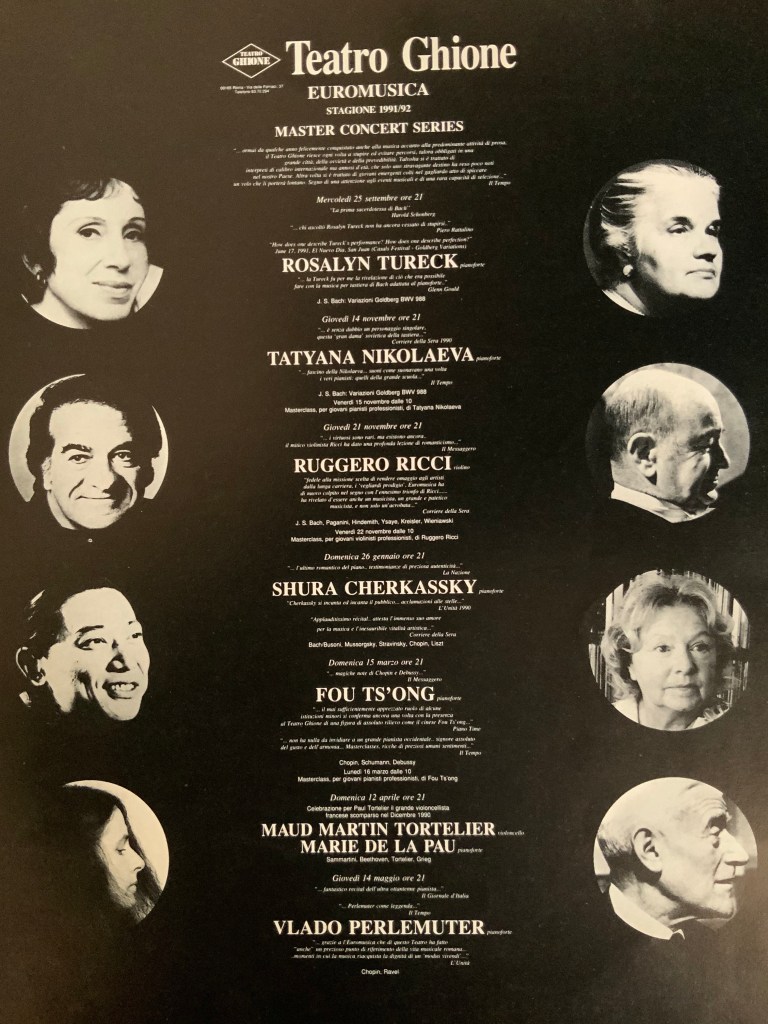
I had heard Rosalyn Tureck in London on the 29th September 1972 in the Royal Festival Hall when she played the variations first on the harpsichord and then after an hour interval on the piano.I could not understand why no one in Rome had heard of her.
Some years later having opened with my actress wife a theatre next to St Peter’s Square I had the opportunity to invite her and Tatyana Nikolaeva to play the Goldberg Variations.
Rosalyn had not played for almost twenty years as she had decided to concentrate on her study of Bach in Oxford where she was a fellow of St Hilda’s.She created the Oxford Bach Research Institute that she invited me to become a trustee of many years later.She was nominated by the eminent NY critic Harold Schonberg as the High Priestess of Bach and Rubinstein quipped the Tureck made Bach box office .
The comparison between her and Nikolaeva was quite extraordinary.Nikolaeva based her interpretation on the song and the dance element whereas Tureck put him on a pedestal the rock on which civilisation is born.
Faites vos jeux ……..but the jeux is always Bach’s!
This is the season at the Ghione Theatre in 1991/92
All 32 piano sonatas played by 32 pianists to celebrate the 250th anniversary of Beethoven’s birth in 1770 Saturday and Sunday October 3rd and 4th 2020
This major festival will be streamed LIVE. Watch on the website . We will pay all the pianists, and we hope you might donate via our website
‘Thanks so much Hugh……I will try to write about the magnificent Beethoven event but am wary at leaving anyone out .Public recognition surely must be due …..I keep saying it but fear these things depend on who you know and the Johnsons or Trumps are not people I would ever frequent. Many thanks again Hugh …lovely to see your little show with Felicity ….what wonders you are.’
‘Yes I agree with pretty well all of that. Don’t feel obliged to write about 32 performances in detail – you will go crazy ! We can talk next time we meet. Absolutely fascinating.’
I could write a book about Trevelyn’s Hammerklavier that took me by the scruff of the neck and made me miss Schiff on the other chanel!I loved the style of Alex’s Moonlight and our wonderful Evie was in a class of her own,of course .The great professional Alim closing in masterly fashion with op 111 – a very fine musician.I loved Amit’s jewel like precision in op 109 .Iyads op 31 n.2 was superbly professional but this time just lacking that ultimate spark.Dinara was exquisite,a great pianist that the world has yet to discover- it will !Daniel Lebhaft played after Dinara and I can now see why YCAT took him on.Sasha Grynuk always plays well and should be playing at least as much as his brother.Ilya’s Les Adieux I know and it has now matured as has he.Slight lack of concentration towards the end but of no overall importance- it was his birthday after all.Edward Leung was a magnificent start followed by Andrew very good but last movement trying to be Schubertian and the rhythmic impetus was slightly lost.Florian op 2 n.3 the bits I heard sounded very good indeed.
Leslie Howard,standing in at four days notice for a quarantining Thomas Kelly showed us just why he is a leggendary figure.Ben Shoeman gave an impeccable performance of the notoriously difficult ‘little’ op 54 .It was difficult to follow Luke Jones’ superb Waldstein.Callum McLachlan lived up to his his family’s name with a very fine Pathetique .I only caught the end of Menyang’s op 10.n.3 but it showed all the precision and delicacy that one associates coming like Alim and Mark from the class of Tessa Nicholson .Mark showed us that apart from astonishing the world with his five star Alkan and Thalberg what an intelligent musician he is with a refreshing(Aimard springs to mind) simplicity op 90. Must listen to some more and apologies to too many that I have not mentioned here but it is a marathon task and I am no Hugh Mather!
And a message from Hugh Mather:
The St Mary’s Perivale Beethoven Festival went very well indeed. All 32 pianists turned up on time, and played wonderfully well. The livestream recordings are all available on https://www.youtube.com/channel/UC43OVDn283J__YlsucboMlw. We had some minor internet problems on Session 3 – yesterday afternoon – Op 31 no 2 to Op 81a – but we are uploading a high-definition version which will be available later. We had many wonderful performances – have a look ! I would like to thank all our pianists for taking part in the festival. Our camera operators were Roger Nellist, Rob Jenkins and Andrew Whadcoat, and our technical team comprised Simon Shute, George Auckland, Patrick Magill and Andrew Whadcoat. Thanks also to Felicity Mather and Gill Rowley for sanitizing piano keys etc. Thanks also to Rebecca Breen, James Ross, Jessica Duchen and Frances Wilson for help with publicity. The full programme is still here and you can use it to find a particular performance on our Youtube channel. http://www.st-marys-perivale.org.uk/events…
Chopin: Waltz in A flat Major Op 34 no 1 Chopin: Waltz in D flat Major Op 64 no 1 Chopin: Waltz in C sharp minor Op 64 no 2 Chopin: Waltz in E minor Op posth
Beethoven: Piano Sonata no 23 in F minor Op 57 ‘Appassionata’
Allegro assai
Andante con moto (in re bemolle maggiore) – attacca:
Allegro, ma non troppo – Presto
The programmes of Tyler Hay are like his colleague Mark Viner’s full of unusual works by composers we have read about but rarely ever been able to hear in the concert hall.Both from the school of Tessa Nicholson at the Purcell School where they have received a technical and musical training second to none.Mark Viner’s landmark recordings of Alkan,Thalberg and Chaminade are being received with five star reviews.Tyler Hay’s recordings of works by Liszt,Ogdon and Kalkbrenner are being equally enthusiastically greeted by the critics.To quote Bryce Morrison in IPQ ‘an awe-inspiring tribute to what is clearly a special love’ or Guy Richards in Musical Opinion:’a beguiling delicacy of touch when required and awesome technique when necessary.Hay plays it superbly’
And so today a programme that opens with the 7th of Czerny’s many Sonatas, that I have never heard on the concert platform before, combined with one of Beethoven’s most performed Sonatas – The Appassionata and in between four of the most well known Waltzes by Chopin
It is interesting to delve into the archive and remind ourselves who Czerny was and his influence on piano playing that reaches even into twenty first century.
Carl Czerny ( 21 February 1791 – 15 July 1857) was an Austrian composer, teacher, and pianist of Czech origin whose vast musical production amounted to over a thousand works. His books of studies for the piano are still widely used in piano teaching. He was one of Beethoven’s numerous pupils.At the age of fifteen, Czerny began a very successful teaching career. Basing his method on the teaching of Beethoven and Muzio Clementii, He taught up to twelve lessons a day in the homes of Viennese nobility and his ‘star’ pupils included Stephen Heller , Sigismond Thalberg,Theodor Leschetizky,Theodor Kullak .In 1819, the father of Franz Liszt brought his son to Czerny, who recalled:’He was a pale, sickly-looking child, who, while playing, swayed about on the stool as if drunk…His playing was…irregular, untidy, confused, and…he threw his fingers quite arbitrarily all over the keyboard. But that notwithstanding, I was astonished at the talent Nature had bestowed upon him.’
Liszt became Czerny’s most famous pupil and the Liszt family lived in the same street in Vienna as Czerny, who was so impressed by the boy that he taught him free of charge. Liszt was later to repay this confidence by introducing the music of Czerny at many of his Paris recitals. Shortly before Liszt’s Vienna concert of 13 April 1823 (his final concert of that season), Czerny arranged, with some difficulty (as Beethoven increasingly disliked child prodigies) the introduction of Liszt to Beethoven. Beethoven was sufficiently impressed with the young Liszt to give him a kiss on the forehead. Liszt remained close to Czerny, and in 1852 his Transcendental Studies were published with a dedication to him.
After 1840, Czerny devoted himself exclusively to composition and wrote a large number of piano solo exercises for the development of the pianistic technique, designed to cover from the first lessons for children up to the needs of the most advanced virtuoso.Czerny’s many piano sonatas show themselves as an intermediate stage between the works of Beethoven and Liszt. They blend the traditional sonata form elements with baroque elements, such as the use of fugato, and free forms of fantasy.
The seventh Sonata op 143 opened with great drama and as one would expect arpeggios abound.There was also a great sense of fantasy and colour with some beautiful lyrical playing bathed in pedal that created a great contrast to the more rhythmically energetic episodes.The beautiful Andante was played with simplicity and great luminosity in the variation of the theme that follows.There was a great lightness almost Mendelssohnian in the Scherzo played with great charm and delicacy. The music box motion of the Intermezzo was almost Schubertian in its gentle continuous motion.The last movement was a tour de force of energy provided by the left hand repeated notes and great flourishes of notes brought this interesting but rather uninspired Sonata to its inevitable conclusion.
There was a world of difference between Czerny and Chopin as was immediately evident from the opening notes of the first of four waltzes that Tyler offered as a contrast to the two Sonatas on the programme by master and pupil.Chopin was full of refined lyricism and scintillating virtuosity where every note had a meaning. The subtle beauty and charm of the Waltz op 34 was quite ravishing in Tyler’s hands.Playing with a great sense of style and perfect balance Chopin’s magical web was spun with irresistible forward propulsion.The so called Minute waltz that followed was played slightly too fast to let the notes to breathe as naturally as he allowed the lyrical middle section to be shaped with a great sense of flexibility.The waltz in C sharp minor that followed had a beautiful natural delicacy and sense of rubato that contrasted with the simplicity of the middle section.The E minor Waltz op posth was played with great beauty of tone and sense of style even if some of the faster parts were thrown off a little too casually but the excitement generated in the coda brought this refreshing group of Chopin to a joyous conclusion.
The highlight of the recital was Beethoven’s Appassionata Sonata.It was played with great architectural shape and sense of rhythmic drive.The lyrical passages were shaped most beautifully and contrasted so well with Beethoven’s bursts of startling virtuosity.Thrown off with remarkable precision and sense of drama even though he chose not to completely follow Beethoven’s very precise pedal effects.
The Andante con moto was played as a ‘Pilgrims March’ to use Agosti’s words and the variations that followed were played with great sensitivity and ravishing tone.Maybe more weight and less reliance on the sustaining pedal would have given even more depth to this remarkable movement.
The last movement was played with relentless rhythmic drive but always shaped so clearly with a great sense of line.The long quiet arched arpeggio could have been even clearer with less pedal as it led to the return of the main theme on its relentless journey and Tyler’s masterly control of the coda which brought this magnificent Sonata to an exciting conclusion.
Beethoven undoubtedly the master always.Q.E.D
Tyler Hay was born in 1994 in Kent and began learning the piano at the age of 6. He studied with the Head of Keyboard, Andrew Haigh at Kent Music Academy for 3 years before gaining a place to study at the Purcell School for Young Musicians in 2007 where he received a scholarship from the Government’s Music and Dance Scheme and studied the piano with Tessa Nicholson. He completed his studies at the Royal Northern College of Music in 2016 where he received the keyboard department’s ABRSM scholarship. He studied with the Head of Keyboard, Graham Scott and the British pianist, Professor Frank Wibaut. Before completing his 4th year in June 2016, Tyler won the esteemed Gold Medal competition at the Royal Northern and played in the prize winner’s concert at Wigmore Hall in the Spring of 2017. He has also received a scholarship covering all fees to study at the Royal College of Music in 2017, where he studied with South African pianist, Niel Immelman and now continues with renowned British pianist, Gordon Fergus-Thompson.
Tyler has become a virtuoso pianist who enjoys tackling some of the most demanding works in the repertoire. He has performed Rachmaninoff’s 2nd Sonata at Wigmore Hall and Cadogan Hall, Scriabin’s 5th Sonata at the Southbank’s Purcell Room and as a result of winning the Senior Concerto Competition at the Purcell School, he played Ravel’s Concerto for Left Hand Alone at the Queen Elizabeth Hall in Spring, 2013. Tyler is proud to have successfully organised a full evening recital at the Purcell School as a charity event, raising close to £2000 for the Watford Peace Hospice in Summer, 2012. He has also achieved a full performance of Chopin’s 24 Etudes in Blackburn, 2014. Most recently, Tyler won first prize in the keyboard section of the Royal Overseas League Competition in February 2016 and also went on to win first prize in the Liszt Society Competition in November, later that year. CDs of Liszt’s piano music and John Ogdon’s unpublished works were both released in the Spring of 2018 under the Piano Classics label and received superb critical acclaim. A new album consisting of Kalkbrenner’s Etudes op 143 is due to be released in the summer of 2019 and this will be the first commercial recording made on a modern pianoforte of these highly inventive and attractive works. In addition to playing concerts for the Park Lane Group, Tyler is proud to be a new member of Canan Maxton’s Talent Unlimited which is a charity aimed at propelling young musicians in the opening stages of their career.
In 2012, Tyler won the £5000 Fenton Award from the Purcell School as a scholarship for furthering his musical education and as well as having performed in South Africa, Spain, Italy, Cyprus and Germany, Tyler continues to play solo recitals, chamber recitals and Concertos throughout the UK.
Some remarkable playing from this disciple of Elisso Virdsaladze.
Of Czech-German origin although now based in the UK his recital for Opus Musica series directed by Alberto Portugheis was a revelation of authority,intelligence and supreme sensitivity.
The small socially distanced audience were mesmerised by magisterial performances of Bach and Beethoven.
Never have I heard this Fazioli piano,that had been chosen some years ago by Alberto Portugheis, sound so sumptuous in the bass yet so luminous in the treble with a middle register that could only be compared to the finest of Bechstein pianos.
Throwing down the gauntlet from the very first work on the programme: The Chromatic Fantasia and Fugue by Bach.It was immediately played with assertive authority almost too aggressive until a miracle occurred with the beautiful modulation dissolving into the most subtly coloured arpeggios with very deep added bass notes that just seemed to open up endless possibilities of sound.
They were not ‘alla Busoni’ but so subtle one was hardly aware of this magician’s trick of finding the key that could make the whole piano glow with astonishing radiance.
The recitativos were so expressive and were answered by chords that were listening and entering into this musical conversation too.A feeling of great nostalgia in the coda coming to rest for a moment’s peace on a major chord full of hope.
It was out of this chord that the fugue subject emerged and was played with a delicacy and clarity that was quite formidable in its audacity and complete technical command.There was a jewel like perfection to the fugue as he brought this opening work to an eventual tumultuous end.
Beethoven’s song-cycle’ An die ferne Geliebte’ (‘To the Distant Beloved’) was completed in 1816 and dedicated to Prince Lobkowitz. The words of the six songs that form the work were by a young medical student, Alois Jeitteles, and were perhaps commissioned by the composer.
They express a mood of longing and resignation as reflected in Liszt’s feelings as he made the transcription in 1849. Bela pointed out before playing the the four he had chosen( from the cycle of six) of Liszt’s admiration for Beethoven and where his piano version tries only to make still clearer the essential unity of the cycle.Some have criticised Liszt but as Bela pointed out it is an effective guide and model for later composers and no greater compliment could Liszt have offered to the man he had built a monument to!
The beautiful cantabile was deeply moving as the radiant colours that Bela drew from the piano became ever more full of fervour.There was a luminosity of sound of such subtle magic and Beethoven’s eventual meanderings were played with an irresistible nonchalance.The melodic line appearing in the tenor register and taken over with glowing sounds by the treble.The final poetic declamations were played with a charm and rhythmic sense of forward movement.
It opened the door for the outpouring of song with which Beethoven’s Sonata op 101 opens.One voice answered another in a subdued conversation of magical sounds that led to almost unbearably serious chords that at once dissolved into jewels of mellifluous beauty.
The second movement was played with great rhythmic fervour but even here there were the magic pedal points of Beethoven with his sudden outbursts of dramatic contrasts brought to the fore.
The clarity and beauty of the parts in the middle section was a wonder of technical control-indeed that of a true poet- and the gradual build up to the repeat of the first section was indeed masterly.
Removing his spectacles for the poignant’ Adagio ,ma non troppo,con affetto’,it was evident of his devotion to this most sublime but all too short introduction to the final Presto/Allegro.
An astonishing sense of legato almost eliminated bar lines as the piano was allowed to sing in such a lovingly natural way.Beethoven’s dissonances were allowed to speak for themselves without any exaggerations as the magic of the opening Allegretto was recreated for a moment as in a dream before the final relentless forward motion of the last movement.
It was played with real Beethovenian fervour .The almost pastoral aspirations were allowed to bounce along like a breath of fresh air and the slight hesitations in the fugato were very telling indeed.Leading after some perfect meanderings to the glorious triumphant ending.
A small but very enthusiastic audience was rewarded with a Viennese waltz almost Schubertian with a touch of help from Godowsky.On further investigation it turned out to be Bela’s own transcription of a waltz by Brahms.
Barely an hour of live music but as Shakespeare said ‘If music be the food of love,play on’
Béla Hartmann studied with Elisso Virdsaladze and Vadim Suchanov in Munich, as well as the celebrated Cyprot pianist Nicolas Economou. He continued his studies with John Bingham at Trinty College of Musc , London, where he was the recipient of several college prizes, as well as winning an award from the Tillett Trust in 1996. Whilst at Trinity, he was selected to represent the college at the launch of the Beethoven Piano Society of Europe. He has given recitals at prestigious venues in several European cities, as well as the USA, where he appeared at the Carnegie Recital Hall, New York. In London he has played in venues such as thePurcell Room Wigmore Hall, St Martin-in-the-Fields, St James’ Piccadilly andSt John’s Smith Square. Béla Hartmann has performed widely for music societies in Wales, Scotland and England, and Germany (Gasteig, Munich), theCzech Republc (Estate Theatre, Prague) and Switzerland, and has given highly acclaimed concerto performances around the UK of concertos by Mozart, Beethoven, Dvorak, Brahms and ProKofIev. His playing has been broadcast onBBC Radio 3 as well as on German and Luxemburg radio. Béla Hartmann has given several masterclasses and teaches regularly at bothTrinty College of Music and the Royal College of Music Junior departments.
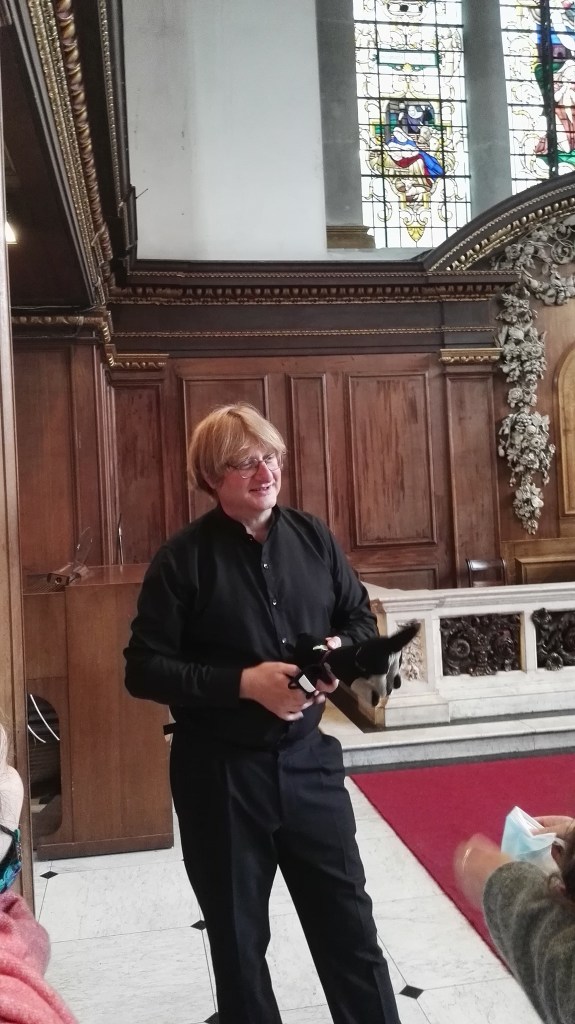
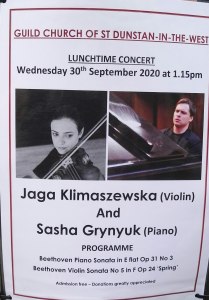
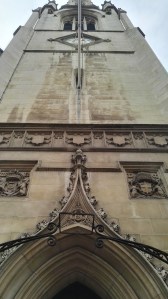
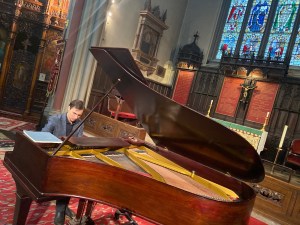
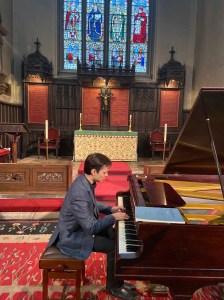
I have written many times about Sasha Grynyuk’s playing and it was indeed like a breath of fresh air in the imposing space of St Dunstan-in -the-West in Fleet Street.
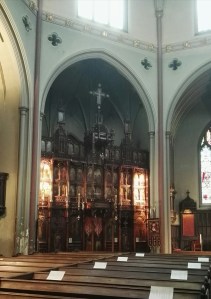
The Guild Church is dedicated to Dunstan Bishop of London and Archbishop of Canterbury.Of medieval origin, although the present building, with an octagonal nave, was constructed in the 1830s to the designs of John Shaw. In the early 19th century the medieval church of St Dunstan was removed to allow the widening of Fleet Street and a new church was built on its burial ground. St Dunstan-in-the-West is one of the churches in England to share its building with the Romanian Orthodox community (St. George church).
The chapel to the left of the main altar is closed off by an iconoctasis, formerly from Antim Monastery in Bucharest and dedicated in 1966.
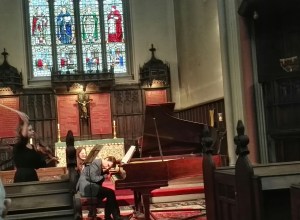
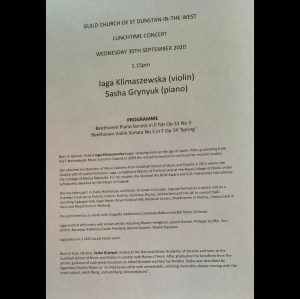
Two of the happiest works by Beethoven were on the programme.The Sonata for solo piano in E flat op 31 n.3 (The Hunt) and the Sonata for violin and piano op 24 (The Spring ) both written in 1801 and 1802.Sasha was joined by the distinguished violinist Jaga Klimaszewska.
The Sonata op 31 n.3 was the one much associated with Artur Rubinstein and was infact the opening work in his farewell recital that he gave at the Wigmore Hall in 1976.Rubinstein was a stylist and he made the sonata speak in a unique way without ever loosing sight of the very precise indications of the composer.It was exactly this that came across today from the very first notes in Sasha Grynyuk’s very sensitive hands.The two questioning bars, the same notes but a different inflection on each was answered by the rather serious chords growing in sound before the bubble burst and Beethoven’s bucolic humour was allowed full reign to spontaneously overflow.A whole world in only six bars but as any great actor will tell you it is exactly when the lights go up that the scene is set and you either captivate your audience or loose them.Such subtle details just added to the fun .The rather awkward left hand commented on so coquetishly by the right.The sparkling trills chasing each other up and down the keyboard alternating with the pastoral good humour of the burst of song that seemed to appear out of the fresh country air.The two final chords played quietly took me pleasantly by surprise but made me wonder if that was Beethoven’s or Sasha’s intention!
The Menuetto sang so beautifully it was a real ‘song without words’ and so reminiscent of the ravishing beauty of some of Mendelssohn’s later works of that very title .The famous trio was played with a grace and charm where one could almost envisage the dancers elegantly bowing to each other and it made one realise why Saint- Saens had taken it as the theme for his set of variations for two pianos.The ‘almost too serious’ coda was allowed to die away to a whisper making room for the bubbling good natured Scherzo.This inversion of the Menuet and Scherzo was unusual and I wonder again whose idea it was?It was so convincing that surely Sasha must know something new from recent authentic editions? Barenreiter of Jonathan Del Mar or the new Murray Perahia editions perhaps .Beethoven even after 250 years is still the revolutionary!
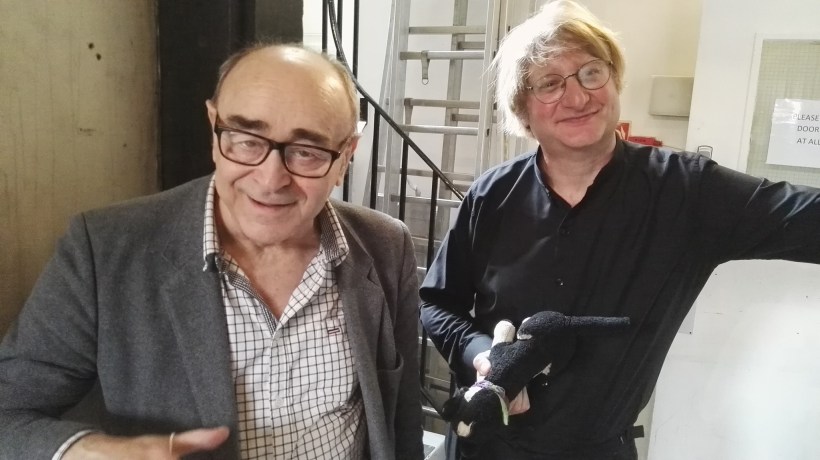
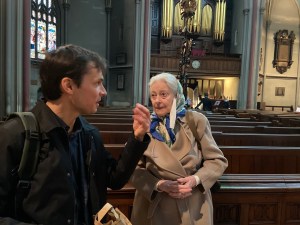
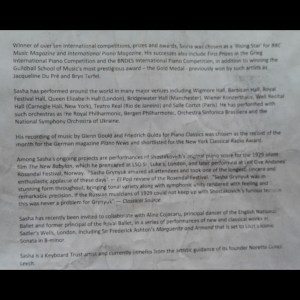
Sasha with his mentor Noretta Conci Leech.For many years assistant to Arturo Benedetti Michelangeli, now in her 90th year she is happy to share her knowledge with an artist such as Sasha .
This scherzo in Rubinsteins hands had an infectious rhythmic relentlessness the same as he had in the Liszt 12th Hungaran Rhapsody or the Saint- Saens 2nd Concerto that my old teacher Freddie Jackson used to tell me had the students on their feet cheering at the end.Beethoven of course is not to be confused with Saint- Saens or Liszt but this unrelenting rhythmic drive with at the same time subtle phrasing and colouring is of a chosen few.Sasha can be added to that list on hearing his subtle inflections and characterful playing whilst never loosing sight of the unrelenting undercurrent of energy.The final pianissimo octaves at the end were thrown off with a nonchalant teasing ease that was irresistible indeed especially when coloured so masterly from the bass.The bustling energy of the hunt with the jumping of hurdles and horn calls was thrown off with mischievous good humour that made light of the transcendental control that made it all possible.The humorous feigned tiredness after the hunt and the renewed energy that took us to the final triumphant chords was the ultimate tour de force in this vividly perceptive performance.
What better to follow than with the mellifluous ‘Spring ‘ Sonata .Misjudging the acoustic it seemed slightly too fast at the beginning but they soon found their natural tempo where everything seemed to fit so perfectly into place.The sublime beauty of the Adago molto espressivo in Sasha ‘s hands was commented on so movingly by Jaga’s violin.The Scherzo was a tour de force of rhythmic drive and energy before the simple cantabile of the Rondo Allegro ma non troppo.
Sasha Grynyuk can be heard again in the same sonata in the marathon of Beethoven 250 celebrations.The 32 Sonatas played by 32 remarkable pianists on Saturday 3rd and Sunday 4th October from 2 until 9 each day- starting with op 2 on Saturday and finishing with op 111 on Sunday.Streamed live on St Mary’s Perivale website
Saturday 3 October 2 – 6 pm
St Mary’s Perivale Beethoven Piano Sonata Festival – Session 1 2.00 Edward Leung: Sonata in F minor Op 2 no 1, 2.25 Andrew Yiangou: Sonata in A major Op 2 no 2, 2.55 Florian Mitrea: Sonata in C major Op 2 no 3, 3.30 Simon Watterton: Sonata in E flat major Op 7, 4.05 Simone Tavoni: Sonata in C minor Op 10 no 1, 4.30 Colin Stone: Sonata in F major Op 10 no 2, 4.50 Mengyang Pan: Sonata in D major Op 10 no 3, 5.20 Callum McLachlan: Sonata in C minor Op 13 ‘Pathetique’, 5.45 Petr Limonov: Sonata in E major Op 14 no 1
Saturday 3 October 7 – 10pm
St Mary’s Perivale Beethoven Piano Sonata Festival – Session 2 7.00 Ashley Fripp: Sonata in G major Op 14 no 2, 7.25 Leslie Howard : Sonata in B flat major Op 22, 7.55 Mishka Rushdie Momen: Sonata in A flat major Op 26 ‘Funeral March’,8.20 Evelyne Berezovsky : Sonata in E flat Op 27 no 1,8.40 Alexander Ullman : Sonata in C sharp minor Op 27 no 2 ‘Moonlight’,9.05 Julian Jacobson: Sonata in D major Op 28 ‘Pastoral’, 9.35 Olga Paliy: Sonata in G major Op 31 no 1
Sunday 4 October 2 – 6 pm
St Mary’s Perivale Beethoven Piano Sonata Festival – Session 3 2.00 Iyad Sughayer: Sonata in D minor Op 31 no 2 ‘Tempest’, 2.30 Sasha Grynyuk: Sonata in E flat major Op 31 no 3, 3.00 Andrew Bottrill: Sonata in G minor Op 49 no 1, 3.15 Veronika Shoot: Sonata in G major Op 49 no 2, 3.30 Luke Jones: Sonata in C major Op 53 ‘Waldstein’, 4.05 Ben Schoeman: Sonata in F major Op 54, 4.25 Martin Cousin: Sonata in F minor Op 57 ‘Appassionata’, 5.00 Dinara Klinton: Sonata in F sharp major Op 78, 5.20 Daniel Lebhardt: Sonata in G major Op 79, 5.35 Ilya Kondratiev: Sonata in E flat major Op 81a ‘Les Adieux’
Sunday 4 October 7 – 10 pm
St Mary’s Perivale Beethoven Piano Sonata Festival – Session 4 7.00 Mark Viner: Sonata in E minor Op 90, 7.20 Yehuda Inbar: Sonata in A major Op 101, 7.50 Julian Trevelyan: Sonata in B flat major Op 106 ‘Hammerklavier’, 8.40 Amit Yahav: Sonata in E major Op 109, 9.05 Konstantin Lapshin: Sonata in A flat major Op 110, 9.30 Alim Beisembayev: Sonata in C minor Op 111
A small audience due to distancing regulations but a very distinguished one.I could just discern amongst this masqueraded audience Dr Hugh Mather,Lisa Peacock,Julian Jacobson,Mathew of the McLachlan clan and the distinguished composer Howard Blake. Our sound engineer Petar Dimov and much admired commentator Jessie Harrington would never miss such an event either.Our indomitable, courageous hostess Canan Maxton of course presented the artists.
An interesting programme that showed off to the full the artistry of these musicians selected for this annual showcase recital.
From Brahms to Schubert and Hindemith with two contemporary works by Knox and Leung.
A superb Brahms Sonata from Miguel Sobrinho and
Ivelina Krasteva
…has the piano ever sounded so sumptuous? – a Bosendorfer bass and a Bluthner treble in these expert hands.The viola of Miguel who seemed to grow in stature as he nurtured the most beautiful sounds from his instrument.
Unbelievable pyrotechnics took us by storm when the cellist Findlay Spence joined Miguel for a new work by Knox that inhabited a quite scintillating roguish sound world – not sure if Irish or Scottish but definately a native participation.
Remarkable musicianship and sheer resiliance from both performers.
After a sumptuous performance of Debussy’s Apres midi…… from Sirius Chau and Kumii Matsuo – a truly magical performance was followed by the inevitable Hindemith Sonata for flute( I think he must have written for every instrument including the kitchen sink- what versatility!) For my ears it was in the work by Leung where an alto flute is called for : ‘As the wind resonates’ that we could appreciate the true magical sounds from both artists.This was before finishing the concert with a scintillating performance of the Schubert Variations on Trockne Blumen……..can it really be by Schubert? – a virtuoso piano part , of great difficulty as Dr Hugh Mather exclaimed, played by a pianist whose fingers seemed to cling to the keys with limpet like tenacity whilst Sirius spun his magic web of extraordinary beauty and dexterity.
Hats off to Canan Maxton for having found these players who are obviously headed for the stars, with a little help from Talent Unlimited,
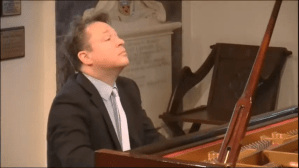
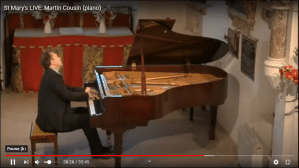
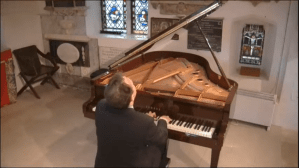
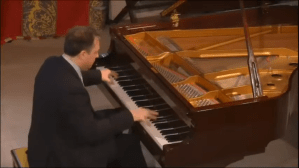
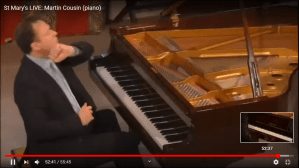
Martin Cousin is now regarded as one of the most exceptional pianists of his generation, having been awarded 1st prize at the 2005 Ettore Pozzoli International Piano Competition (Seregno, Italy) and Gold Medal at the 2003 Royal Over-Seas League Music Competition (London). Martin has appeared regularly in the major British musical venues since graduating from the Royal College of Music, making his London solo debut at the Purcell Room in 1998. Numerous solo recitals followed, most notably at the Wigmore Hall in 2001, 2005, and 2011 and he has appeared as concerto soloist with the London Philharmonic, Halle, Royal Philharmonic, Philharmonia and BBC Concert Orchestras. Performances further afield have included tours of New Zealand, Italy, the US and concerts in Stockholm, Brussels, Toronto, Berne and The Hague.2006 saw the release of his debut CD, Rachmaninov’s Sonata No.1 and Morceaux de Salon with SOMM Recordings, which was selected as Classical CD of the week by the Daily Telegraph. The US magazine Fanfare added, “This is the performance of the 1st Sonata that I have always heard in my head but never thought I’d actually get to hear with my ears. This guy’s the Real Deal!” His second CD for SOMM, featuring Glazunov’s piano sonatas, was released in 2010 to great acclaim, with Gramophone stating that the new release is ‘in every way, an impressive disc.’ His latest disc of Rachmaninov’s Etudes-Tableaux was released in 2014 and was proclaimed ‘a landmark recording’ by the Observer with a 5-star review. Classical Source added, ‘This is one of the best solo piano records I have heard for a very long time – the more so considering it faces some pretty severe competition in the catalogues. Those who do not know these extraordinarily original masterpieces are strongly advised to acquire this disc. There is none better’.Fanfare Magazine proclaimed, ‘Based on the present disc and on the towering performance of the First Sonata on his debut CD, I am prepared to state that Cousin is among the most distinguished Rachmaninoff pianists of our generation.’Martin is also a member of the Aquinas Piano Trio and chamber music has taken him to places such as Prague, Tokyo, Indonesia, Thailand, Zimbabwe and Barbados.Martin’s hands were featured on the big screen in the Oscar-winning film “Shine”, for the scenes involving Rachmaninov’s 3rd Concerto.
As Dr Hugh Mather said at the end of this programme of ‘Lollipops’, it was one of the finest recitals in a hall that has seen some wonderful performances in the past few weeks.It was playing of beautiful fluidity ,great clarity and assurance.There was no doubt about this artists intentions from the very first notes of the Chopin G minor Ballade to the final cheeky note thrown off with great elan at the end of Rachmaninov’s Humoresque.
His total control was evident from the opening of the Chopin first Ballade.Played with a simplicity and intelligence.He gave more weight to the accompaniment than I am used to but it contrasted so well with the second subject that seemed to float on the arpeggios that flowed so naturally from his hands.Leading gradually to the first great climax with sumptuous sounds from the bass and a great sense of balance and aristocratic control.Dissolving to the touchingly delicate return of the opening theme that led to the gradual built up to the tempestuous coda played with a technical brilliance and sense of shape that was remarkable.The final flourishing scales contrasted so well with the stillness that he found with the chordal interruptions and the final octaves that brought this opening work to an exciting close.
It was the longest work on the programme that continued with the Brahms intermezzo op 116.n.4 played with a luminosity of sound of yearning nostalgia and a purity that was most touching.The beautifully mellifluous middle section floated on a wave of ravishing sounds leading to the magical return of the opening theme only to vanish into the distant heights of the piano.
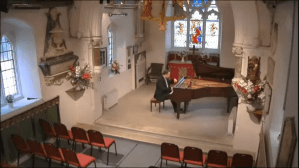
Three lyric pieces by Grieg were played with a wonderful sense of colour and contrast. The March of the Dwarfs an irrisorial rhythmic drive contrasted so well with the magical lyrical central section.The sheer beauty of the Notturno was played with a wonderful sense of balance that allowed the bird calls at the end to be heard so clearly and poetically ………an interesting use of the thumb in the left hand gave a sense of colour to a simple scale as it traversed the keyboard.The Wedding day at Troldhaugen was played with a truly joyous lilt with a beautifully evocative middle section before the final peal of wedding bells – as Martin said St Mary’s was just the place for them.
Claire de Lune by Debussy was played with a lovely liquid sound with a beautifully flowing middle section and a final page of poignant stillness and tranquility. The majestic opening of THE Rachmaninov prelude broke the spell and took us into another world of Russian nostalgia and grandeur.As Martin said :Rachmaninov himself used to turn to the public after his recitals and ask if he really had to play it! It is rarely played these days which is also the fate of Liszt’s Liebestraum or Sinding Rustle of Spring.They were amongst the most loved and played pieces for amateur pianists in the good old days !In simplified editions of course which was not the case today as Martin played the middle section of the prelude with great elan and control that led to the final explosive exulted sounds.A hauntingly beautiful Romance op 10 n.6 was followed by the rumbustuous Humoresque.It brought this recital of ‘Lollipops’ to a scintillating end with the syncopated rhythms played wth a buoyancy and filigree passage work that was thrown off with great ease and above all style.
We can look forward to his performance of the ‘Appassionata’ Sonata op 57 in the marathon Beethoven series at St Mary’s on the 3rd and 4th of October when 32 superb pianists will play Beethovens 32 piano sonatas as part of their 250th anniversary celebrations this year.
Saturday 3 October 2 – 6 pm
St Mary’s Perivale Beethoven Piano Sonata Festival – Session 1 2.00 Edward Leung: Sonata in F minor Op 2 no 1, 2.25 Andrew Yiangou: Sonata in A major Op 2 no 2, 2.55 Florian Mitrea: Sonata in C major Op 2 no 3, 3.30 Simon Watterton: Sonata in E flat major Op 7, 4.05 Simone Tavoni: Sonata in C minor Op 10 no 1, 4.30 Colin Stone: Sonata in F major Op 10 no 2, 4.50 Mengyang Pan: Sonata in D major Op 10 no 3, 5.20 Callum McLachlan: Sonata in C minor Op 13 ‘Pathetique’, 5.45 Petr Limonov: Sonata in E major Op 14 no 1
Saturday 3 October 7 – 10pm
St Mary’s Perivale Beethoven Piano Sonata Festival – Session 2 7.00 Ashley Fripp: Sonata in G major Op 14 no 2, 7.25 Thomas Kelly: Sonata in B flat major Op 22, 7.55 Mishka Rushdie Momen: Sonata in A flat major Op 26 ‘Funeral March’,8.20 Evelyne Berezovsky : Sonata in E flat Op 27 no 1,8.40 Alexander Ullman : Sonata in C sharp minor Op 27 no 2 ‘Moonlight’,9.05 Julian Jacobson: Sonata in D major Op 28 ‘Pastoral’, 9.35 Olga Paliy: Sonata in G major Op 31 no 1
Sunday 4 October 2 – 6 pm
St Mary’s Perivale Beethoven Piano Sonata Festival – Session 3 2.00 Iyad Sughayer: Sonata in D minor Op 31 no 2 ‘Tempest’, 2.30 Sasha Grynyuk: Sonata in E flat major Op 31 no 3, 3.00 Andrew Bottrill: Sonata in G minor Op 49 no 1, 3.15 Veronika Shoot: Sonata in G major Op 49 no 2, 3.30 Luke Jones: Sonata in C major Op 53 ‘Waldstein’, 4.05 Ben Schoeman: Sonata in F major Op 54, 4.25 Martin Cousin: Sonata in F minor Op 57 ‘Appassionata’, 5.00 Dinara Klinton: Sonata in F sharp major Op 78, 5.20 Daniel Lebhardt: Sonata in G major Op 79, 5.35 Ilya Kondratiev: Sonata in E flat major Op 81a ‘Les Adieux’
Sunday 4 October 7 – 10 pm
St Mary’s Perivale Beethoven Piano Sonata Festival – Session 4 7.00 Mark Viner: Sonata in E minor Op 90, 7.20 Yehuda Inbar: Sonata in A major Op 101, 7.50 Julian Trevelyan: Sonata in B flat major Op 106 ‘Hammerklavier’, 8.40 Amit Yahav: Sonata in E major Op 109, 9.05 Konstantin Lapshin: Sonata in A flat major Op 110, 9.30 Alim Beisembayev: Sonata in C minor Op 111
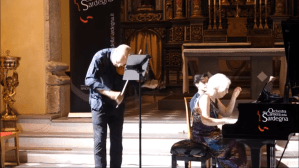
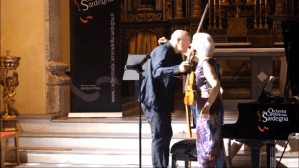
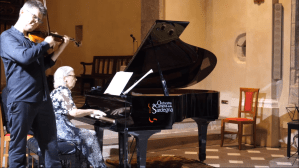
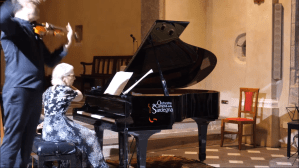
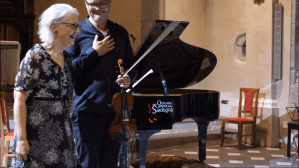
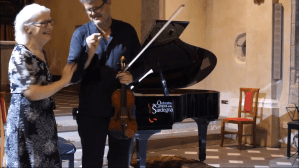
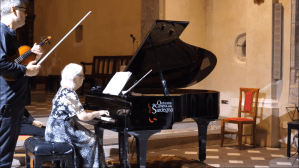
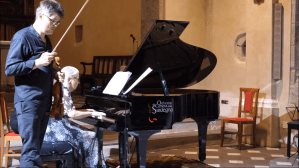
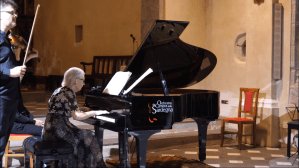
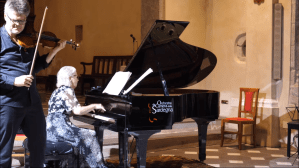
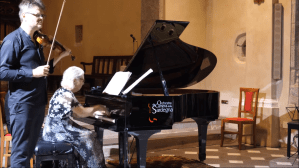
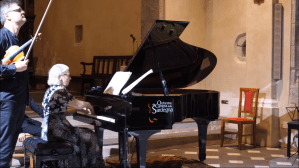
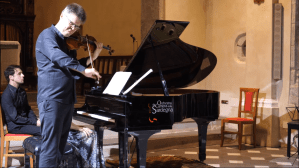
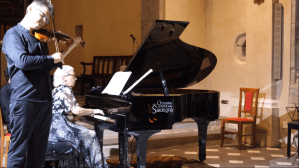
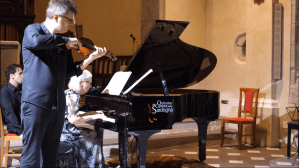
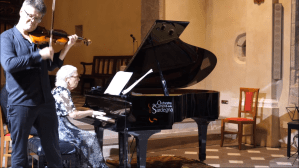
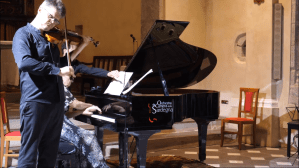
Some amazing music making as you can see below from this summers’ festival in Santu Lussurgiu in Sardinia.
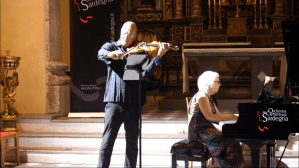
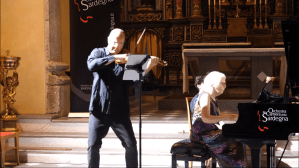
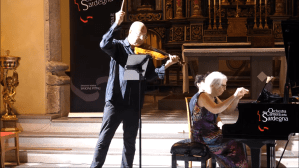
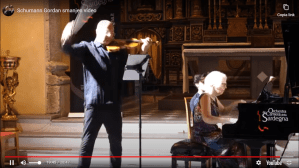
A superb performance of Schumann’s Sonata n.1 in Aminor op 105 with Gordan Nikolitch and Linn Rothstein
It was written in a week in September 1851 and Schumann was not pleased with it saying:”I did not like the first Sonata for Violin and Piano; so I wrote a second one which I hope has turned out better”. It was given its official premiere by Clara Schumann and Ferdinand David in March 1852.It has since become together with the Cesar Franck Sonata one of the most loved of the romantic repertoire for violin and piano.
The passionate first movement was played with a great sense of balance the piano answering the violin deep in the bass and later a touching question and answer from the piano to the violin.The innocent capriciousness of the second movement where Schumann’s duel personality of Florestan and Eusebius were playfully realised in a true refreshing Allegretto tempo with some magical pedal effects from the piano at the end.The last movement almost Beethovenian in character with the violin and piano seemingly chasing each other until coming together in great passionate outbursts of rhythmic energy and strength.
Gordan Nikolitch, also spelled Gordan Nikolić,(Serbian: Гордан Николић; born 1968) is a Franco-Serbian violinist. He was the first concertmaster of the London Symphony Orchestra for nearly 20 years, having stepped down in October 2017 to concentrate on directing and teaching.Born in a music loving family Gordan Nikolitch began playing the violin when he was seven. He studied at the Conservatory in Basel with .Jean-Jaques Kantarow He also met and worked with Walter Levin, Wytold Lutoslavsky, György Kurtág, Hans Werner Henze etc, cultivating an interest in contemporary music.As a violinist, he participated and was awarded in many competitions, the Tibor Varga competition, Paganini competition at Genoa, Brescia and Vaclav Hummel competition Zagreb. In 1989, he became concertmaster of Orchestra d’Auvergne post he held until 1999.Nikolitch has been as well the leader of the Orchestra de Chambre de Lausanne and the Chamber Orchestra of Europe. Prince consort professor at the Royal College of Music in London, giving masterclasses at the Guildhall School of Music and Drama, he also teaches Master since 2005 at the CODARTS, Rotterdam Conservatory of Music and since 2017 he is Professor at the Hochschule für Musik Saarbrücken.In 2004 he was named artistic director of the Netherlands Chamber Orchestra, Amsterdam, a group created in the 50es by Szymon Goldberg, the great concertmaster of the Berlin Philharmonic from the times of their conductor Wilhelm Furtwängler.
And another superb performance this time of the Cesar Franck Sonata for violin and piano with Roman Simovic and Linn Rothstein enhanced by the page turning of Vitaly Pisarenko.
Sometimes known in the profession as the Frank Sinatra ! It is one of Franck’s best-known compositions, and is considered one of the finest sonatas for violin and piano ever written. It is an amalgam of his rich native harmonic language with the Classical traditions he valued highly, held together in a cyclic framework.It was written in 1886 as a wedding present for the 28-year-old violinist Eugène Ysaye. Franck was not present when Ysaÿe married, but on the morning of the wedding, on 26 September 1886 in Arlon, their mutual friend Charles Bordes presented the work as Franck’s gift to Ysaÿe and his bride Louise Bourdeau de Courtrai. After a hurried rehearsal, Ysaÿe and Bordes’ sister-in-law played the Sonata to the other wedding guests .The work is notable for the difficulty of its piano part, when compared with most of the chamber repertoire. Its technical problems include frequent extreme extended figures—the composer himself having possessed huge hands—and virtuoso runs and leaps, particularly in the second movement.
From the very first notes of Roman’s entry it was obvious that there was magic in the air.A freedom and playing of such burning intensity.The serene opening of the magical opening notes from the piano were immediately answered by the magnificent creamy rich sounds from the violin.A forward movement that gave great architectural shape and sense of drive.The technical brilliance in the second movement was breathtaking in its audacity and sensitivity to sound from the glorious rich sonorities of the piano melting into the most delicate jewel like sounds glistening in this wondrous sound world that they had created together.The passionate outbursts were breathtaking in their intensity and its effect was amply demonstrated by the spontaneous applause and cat calls after the second movement from a public mesmerised by such glorious sounds. The same reaction as a home goal on the football pitch except much less frequent in the concert hall!
There followed the recitativo of great stillness and beauty mingling with whispered confessions from the violin as the golden notes from the piano penetrated the soul of the work concluding with the wondrous final chords .There was a simplicity and joy on Roman’s face as he allowed the last movement to almost play itself with such natural lyricism before the pulsating excitement generated by the left hand of the piano leading to the exultant final passionate outpourings.
Only one word to describe a performance of this calibre :”Glorious”
Roman Simovic’s brilliant virtuosity and seemingly-inborn musicality, fueled by a limitless imagination, has taken him throughout all continents performing on many of world’s leading stages including the Bolshoi Hall of the Tchaikovsky conservatory, Mariinsky hall in St. Petersburg, Grand Opera House in Tel-Aviv, Victoria Hall in Geneva, Rudolfinum Hall in Prague, Barbican Hall in London, Art Centre in Seoul, Grieg Hall in Bergen, Rachmaninov Hall in Moscow… Roman Simovic has been awarded prizes at numerous international competitions among which are:”Premio Rodolfo Lipizer” (Italy), Sion–Valais (Switzerland), Yampolsky Violin Competition (Russia) and the Henryk Wieniawski Violin Competition (Poland), placing him among the foremost violinists of his generationAs soloist, Simovic has appeared with the world leading orchestras: London Symphony orchestra, Mariinsky theatre symphony orchestra, Teatro Regio Torino, Symphony Nova Scotia (Canada), Franz Liszt Chamber Orchestra (Hungary), Camerata Bern (Switzerland), Camerata Salzburg (Austria), CRR Chamber Orchestra (Turkey), Poznan Philharmonia, Prague Philharmonia, North Brabant (Holland)…with such a conductors like: Valery Gergiev, Antonio Pappano, Daniel Harding, Gianandrea Noseda, Kristian Jarvi, Jiri Belohlavek, Pablo Heras Casado, Nikolai Znaider… A sought-after artist, Roman Simovic has been invited and continues to perform at various distinguished festivals such as the “Verbier Festival”, ” White Nighsts” Festival St. Petersburg, Easter Festival Valery Gergiev Moscow, Dubrovnik Summer Festival in Croatia, “Kotor Art” Montenegro, the BEMUS and NOMUS Festivals in Serbia, “Sion Valais” Switzerland, Norway’s Bergen Festival, “Moscow Winter” Festival in Russia, Portogruaro Festival in Italy, “Granada music festival” in Spain, collaborating with such renowned artists as Leonidas Kavakos, Yuja Wang, Gautie Capucon, Tabea Zimermann, Misha Maisky, Schlomo Mintz, Francois Leleux, Itamar Golan, Simon Trpceski, Janine Jansen, Julian Rachlin… Aside from being an active soloist, Roman Simovic is an avid chamber musician, and is a founding member of the distinguished Rubikon String Quartet. As an educator, he has presenter master-classes in the US, UK, South Korea, Serbia, Montenegro, Israel. Roman Simovic plays a 1709 Antonio Stradivari violin which was generously given to him on loan from Jonathan Moulds, Bank of America’s president. In the 15/16 season Roman Simovis is relising two cd’s directing LSO string orchestra for the LSO label and Tchaikovsky and Glazunov concertos with Gergiev and Mariinsky orchestra for Mariinsky label.Mr Simovic is serving as a leader of the great London Symphony
Linn Rothstein is far too modest to have a published curriculum .She came to England in 1970 to study with John Lill and Peter Katin having been trained in Canada by her mother and Robin Wood.After her first appearances in Dartington and elsewhere aged 20 she was immediately helped by Andre Tchaikowsky,Hans Keller and John Amis who introduced her to the agents Harrison Parrot.But her heart was with chamber music and infact she lost her heart to the violin and a violinist in particular and became with her husband Jack Rothstein an important part of the music life in London. Jack Rothstein (15 December 1925 – 16 November 2001) was a Polish-born violinist and conductor, living most of his life in England.He was born in Warsaw , and moved to Israel with his family at the age of two. Later on, he was sent to live with his aunt in Cairo and attended a French school where he also started his music studies.During World War II he joined the British Army as a musician and performed in the Middle and Far East. Following the war, he settled in London and married Linn Hendry.He studied at the Guildhall School of Music in the early 1950s, and took part in masterclasses by Sascha Lasserson, Leonid Kogan, Felix van Dyl and Henryk Szeryng. In the 1954 Carl Flesh Competition he won the second prize.Throughout his professional career he also performed as a soloist, playing most of the well-known violin concertos with leading orchestras and giving solo recitals, appearing at the Royal Festival Hall and the Barbican on various occasions.
Here is a recent concert that Milena Simovic and Vitaly Pisarenko gave at Hatchlands for the Cobbe Collection Trust – only snippets for reasons beyong my control remain of their performances together in Sardinia .
Here is part of the group who spend their summers sharing their music with the lucky inhabitants of a little town in the hills of Sardinia together with Gordan Nikolitch and Celine Flamen.
Roman and Milena Simovic- Vitaly Pisarenko and Linn Rothstein in rehearsal here in London





 ChristopherAxworthy-MusicCommentary