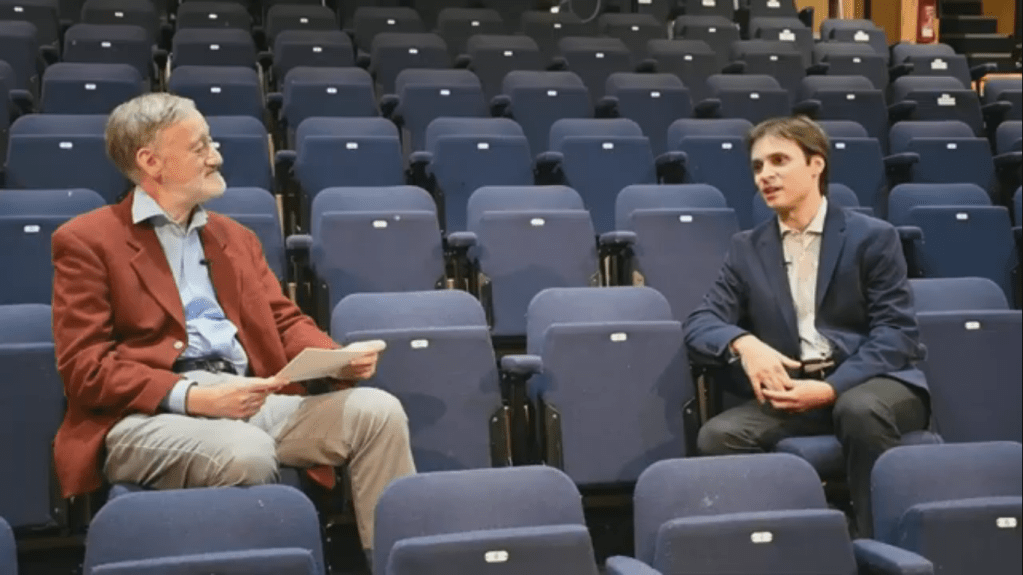
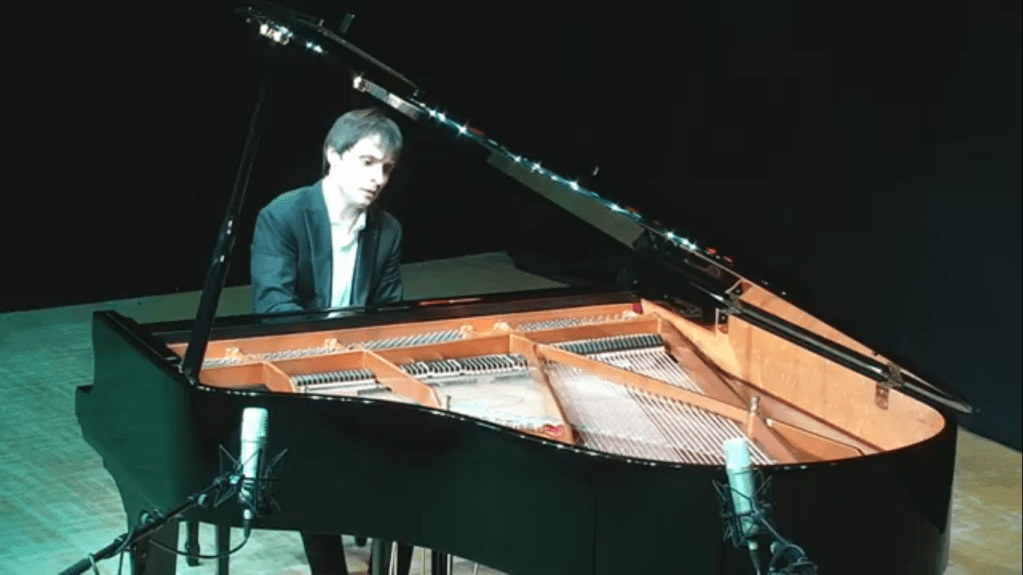
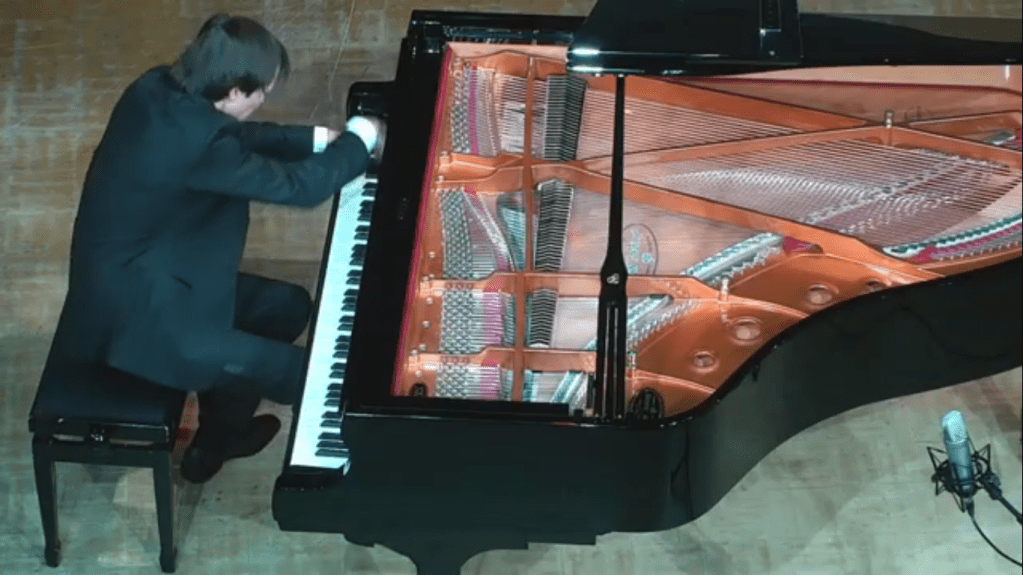
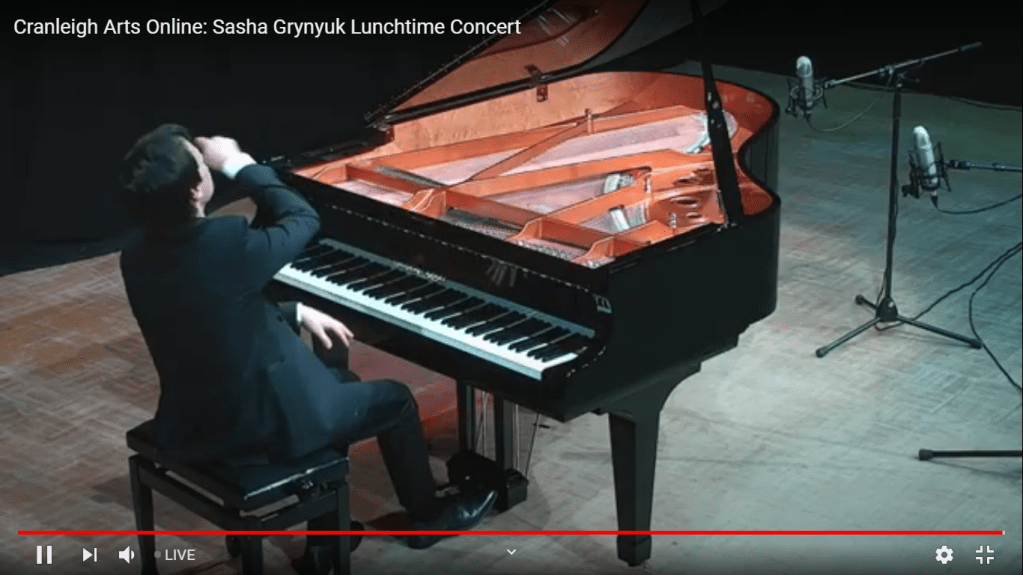
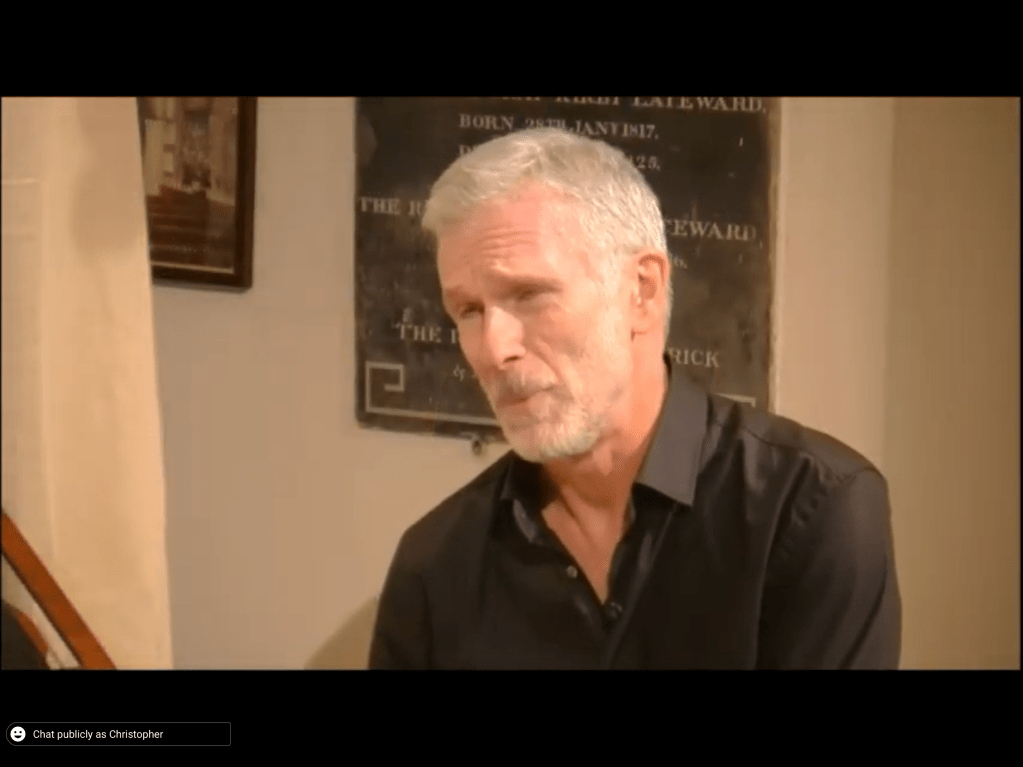
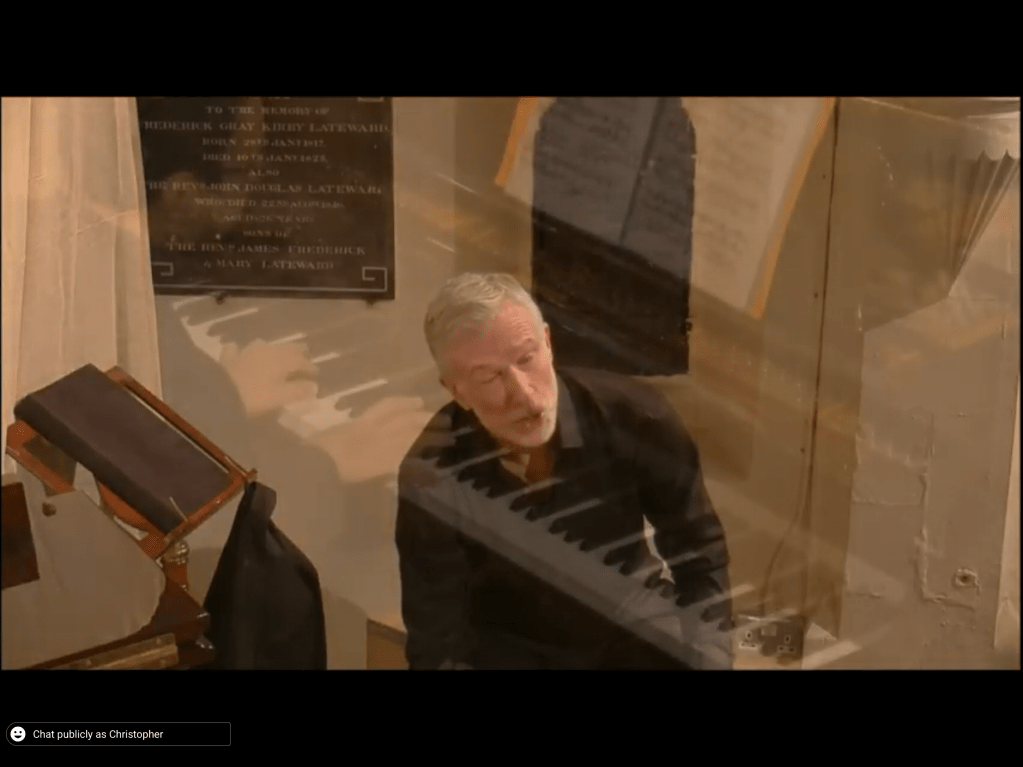
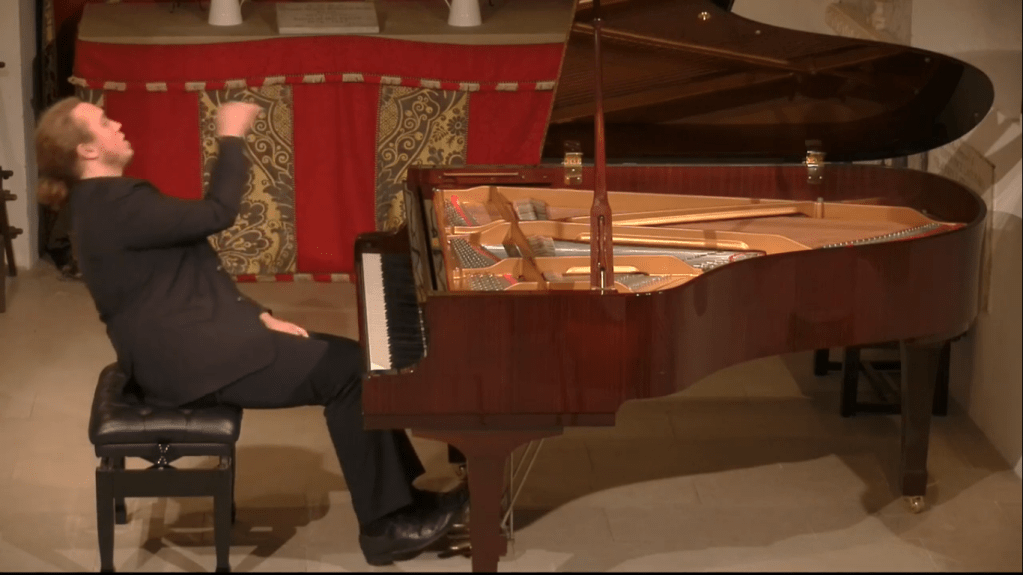
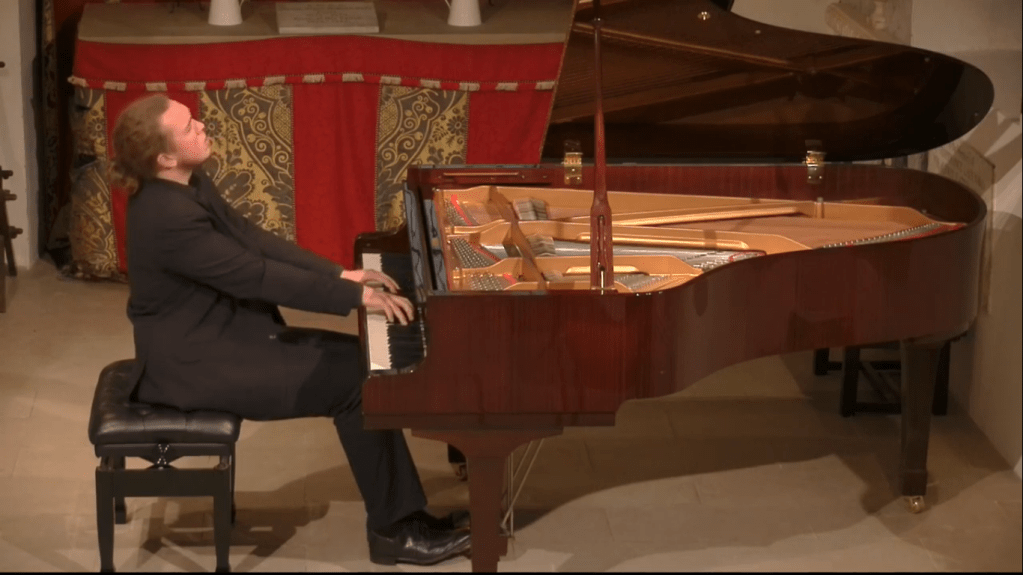
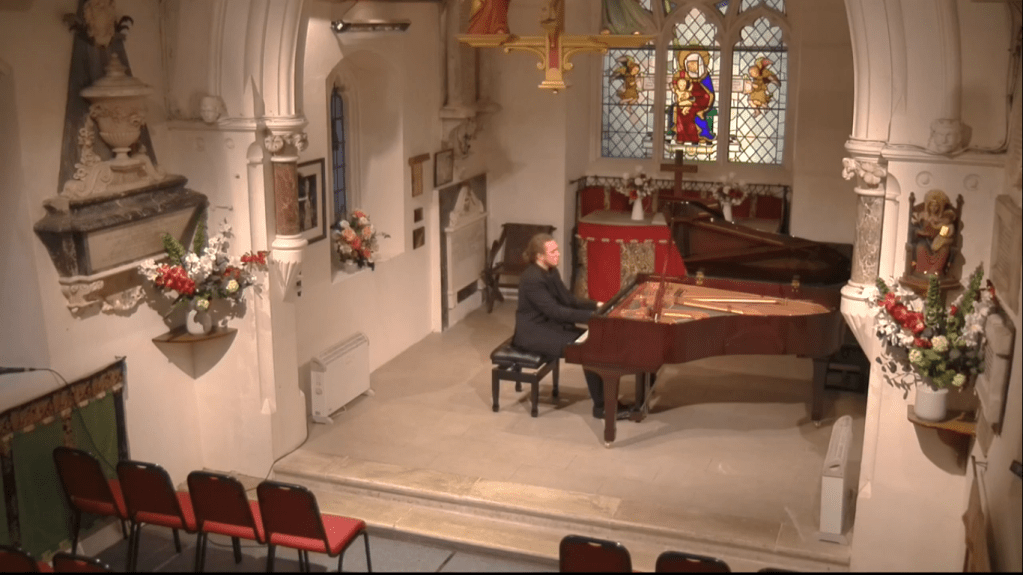
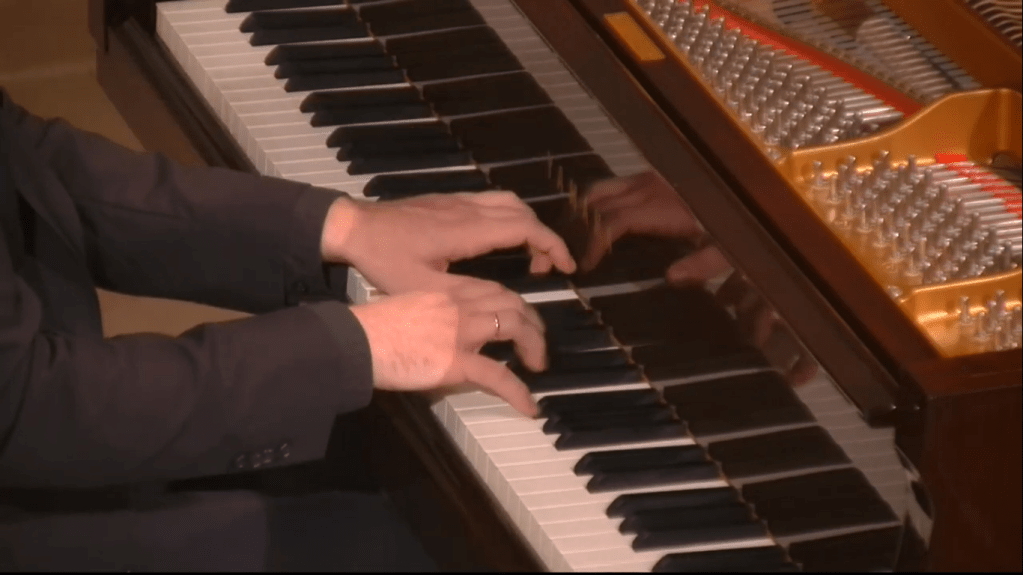
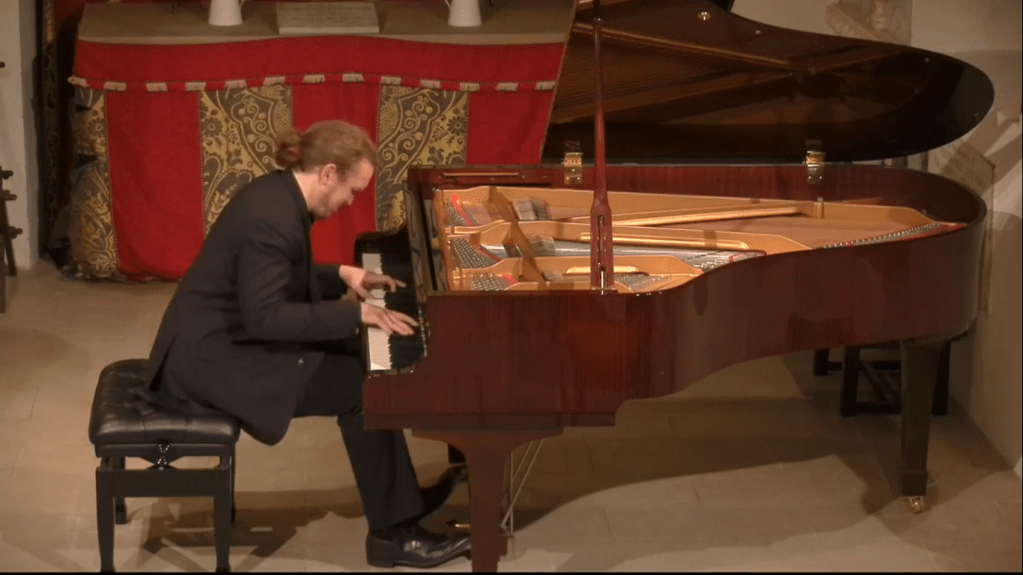
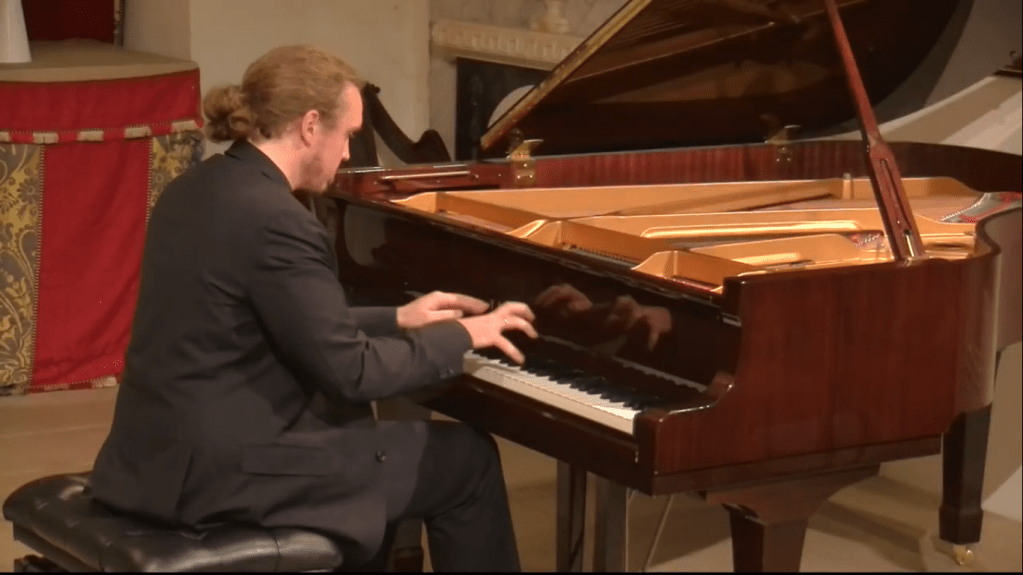
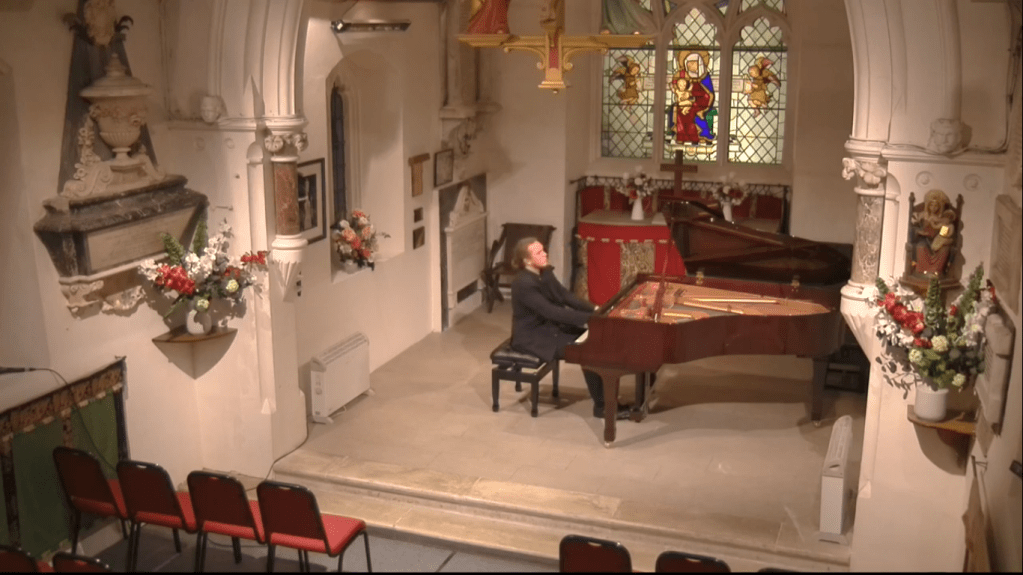
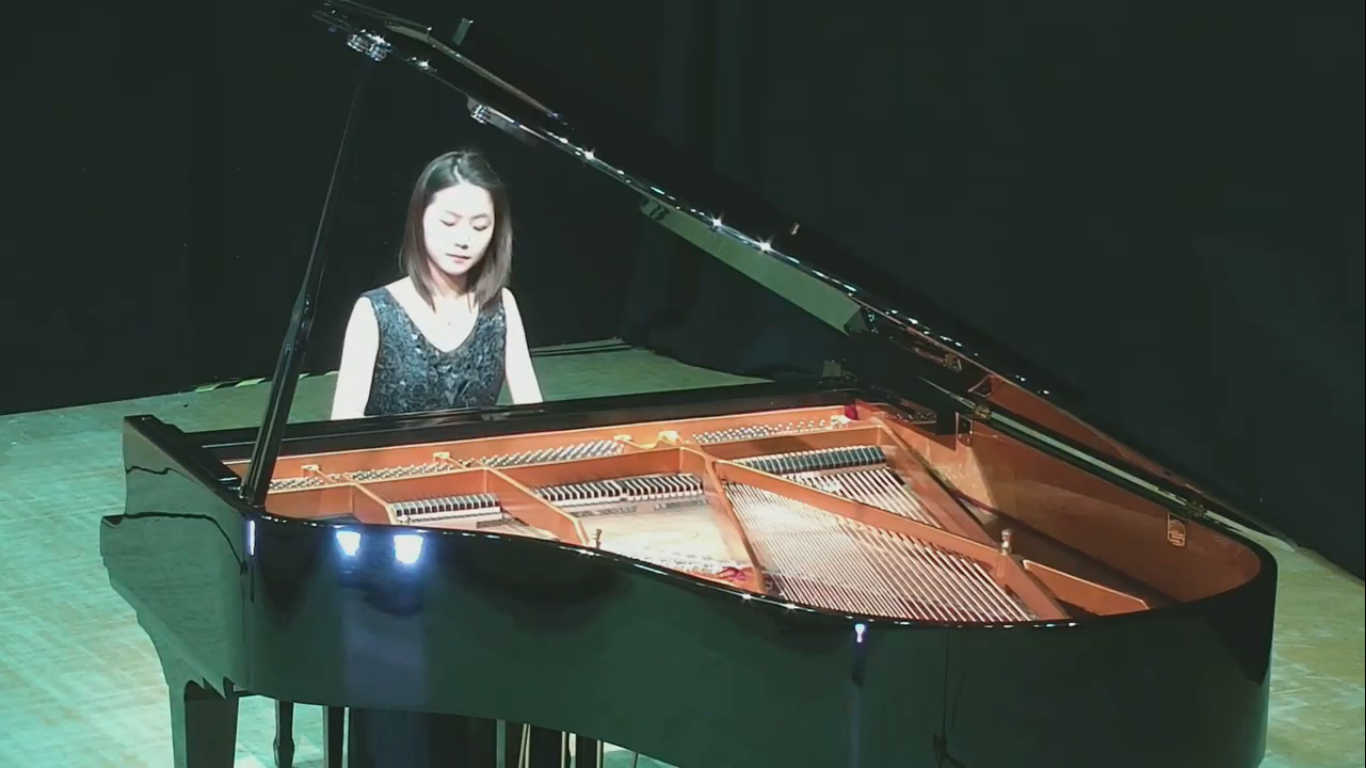
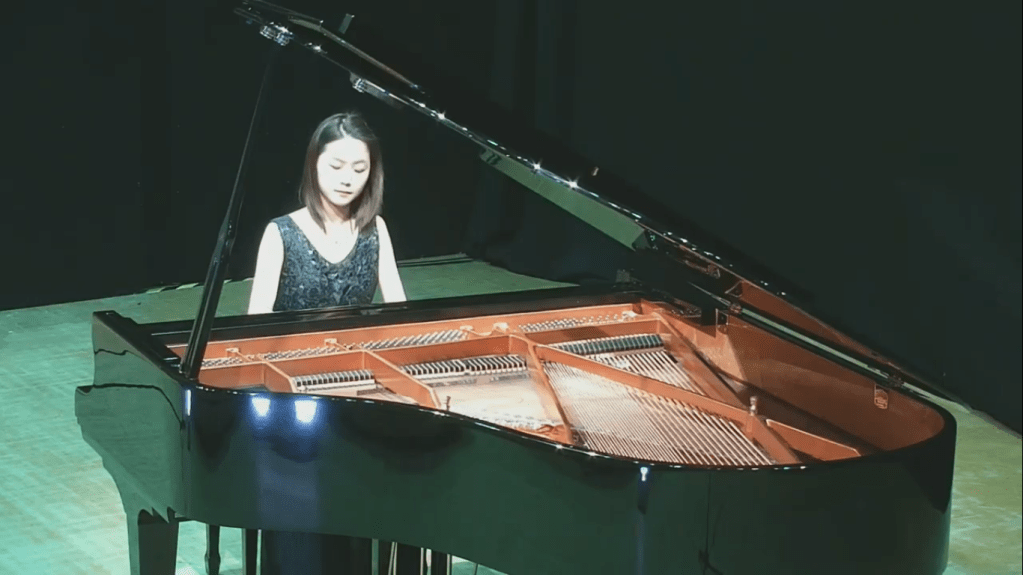
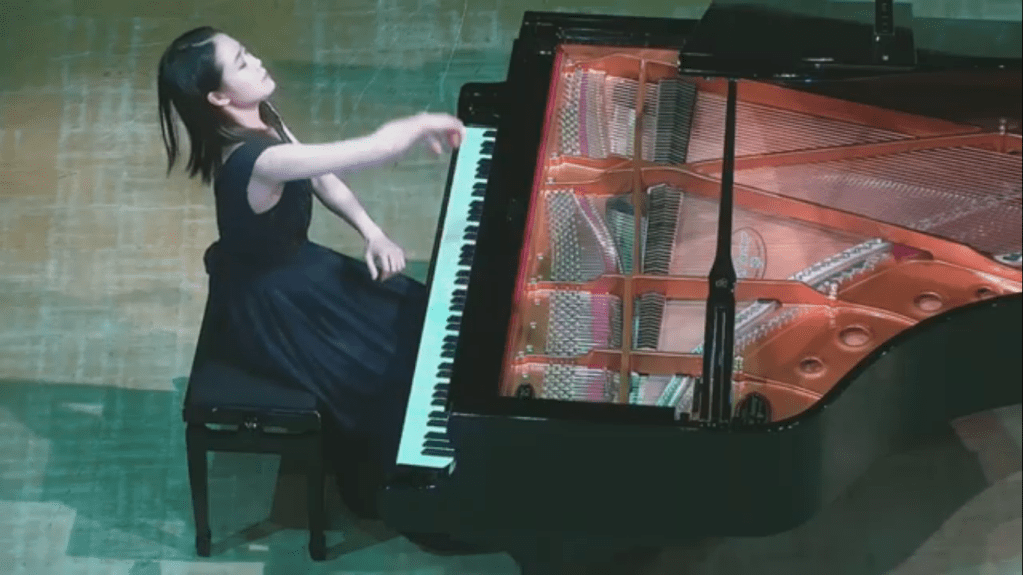
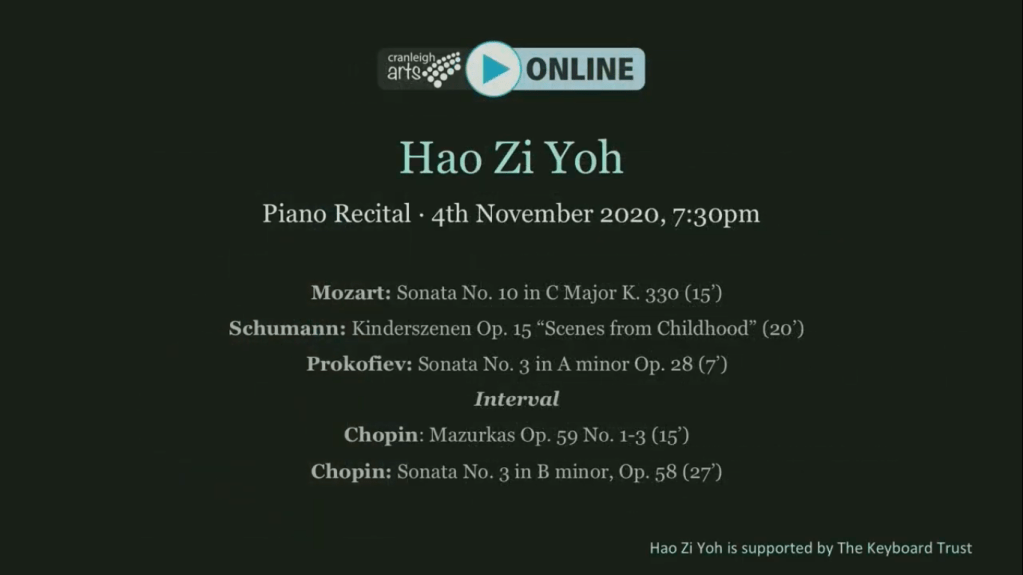
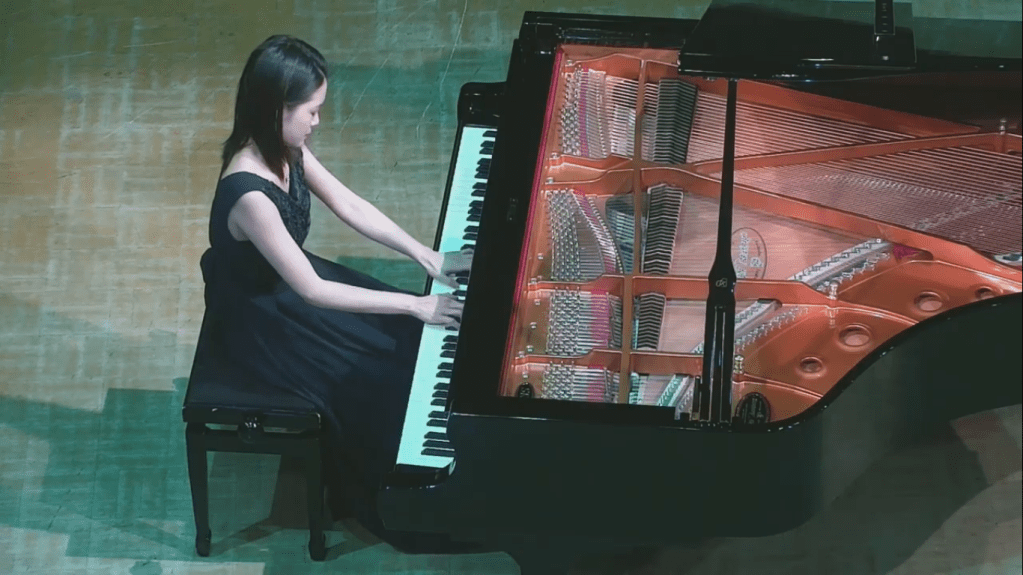
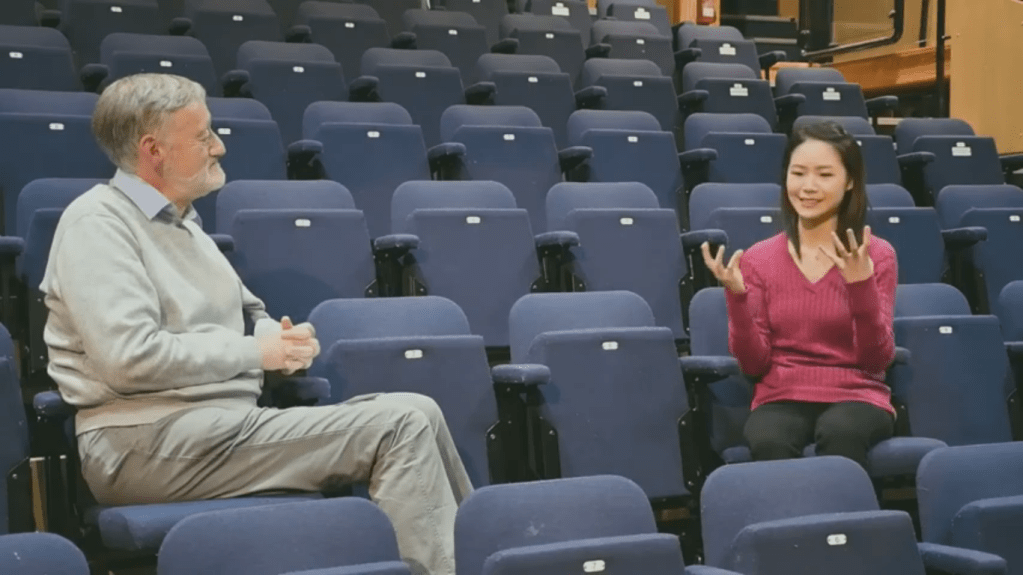
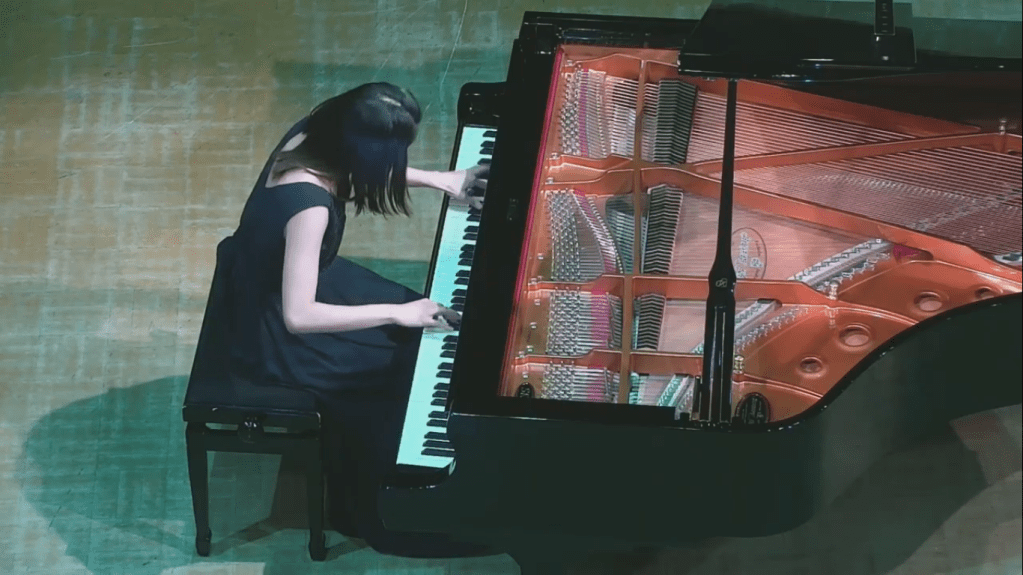
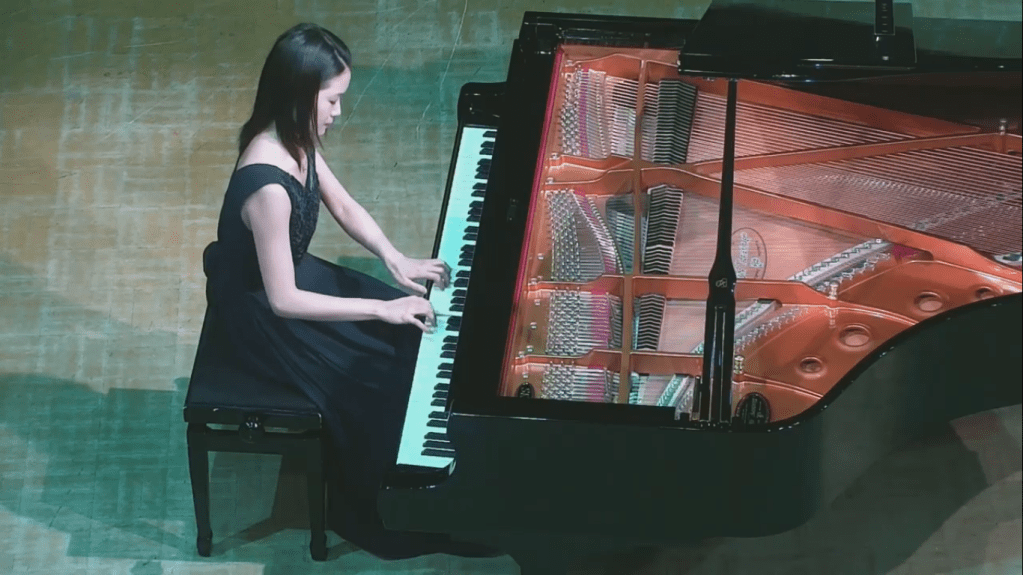
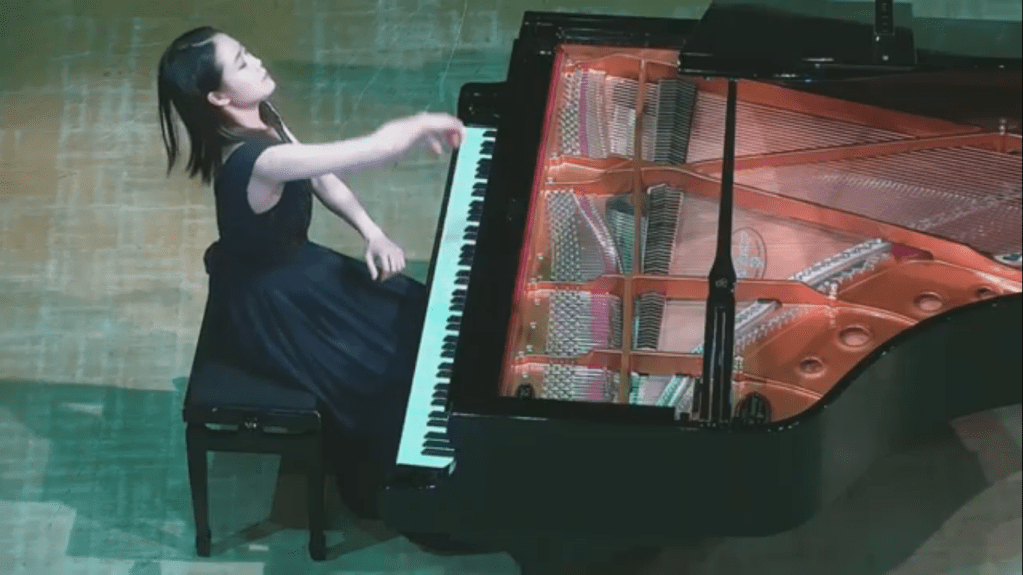
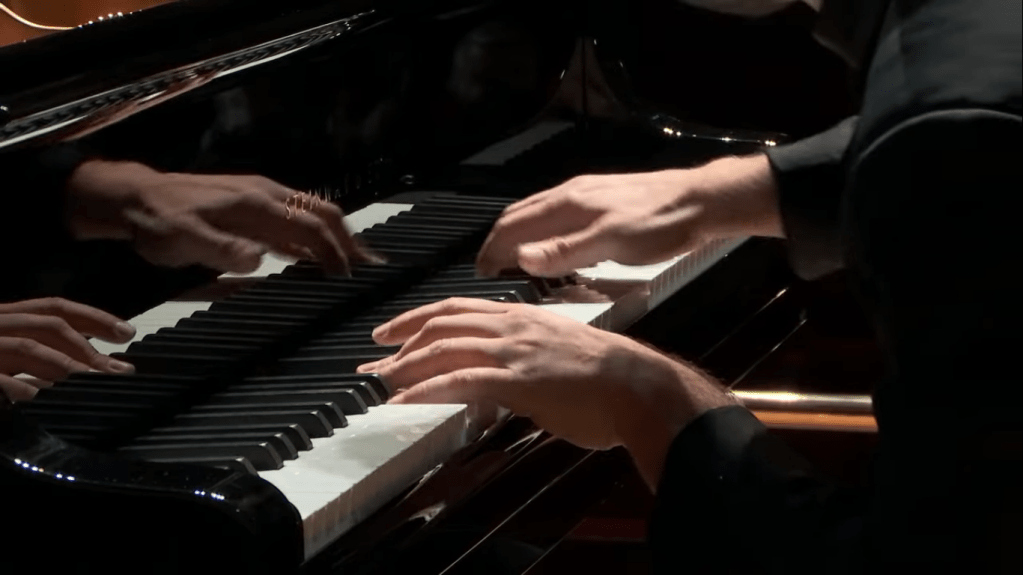
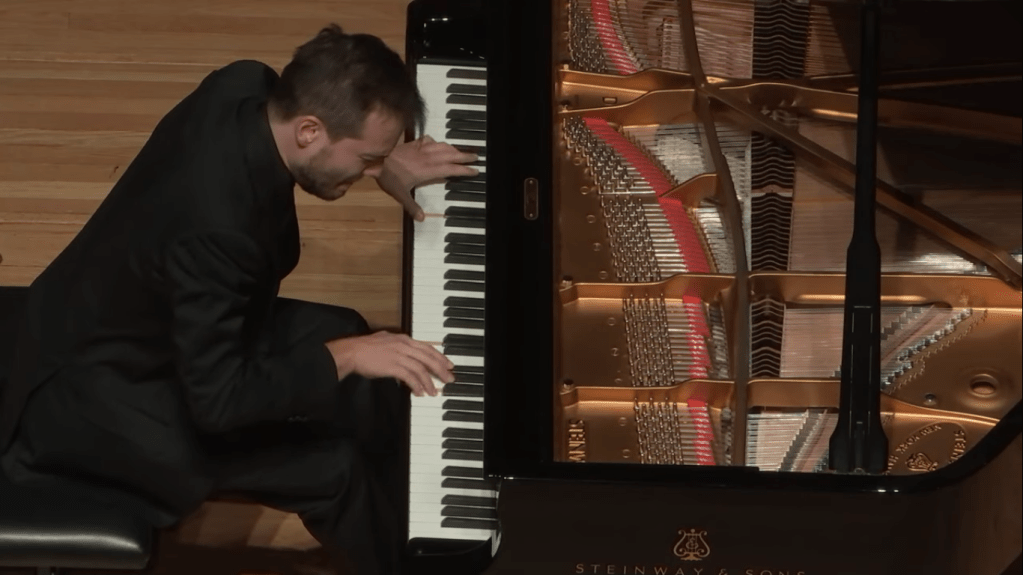
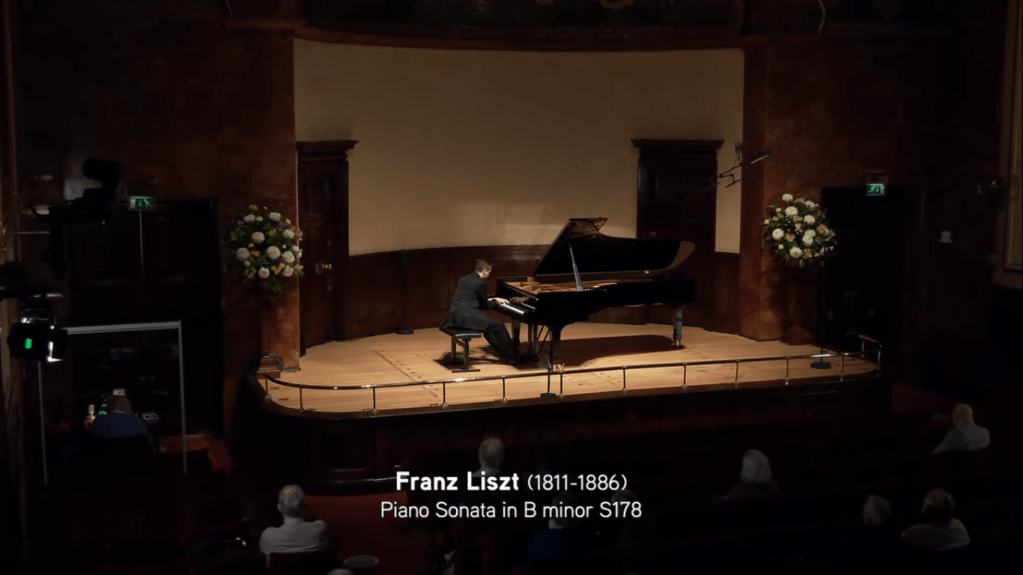
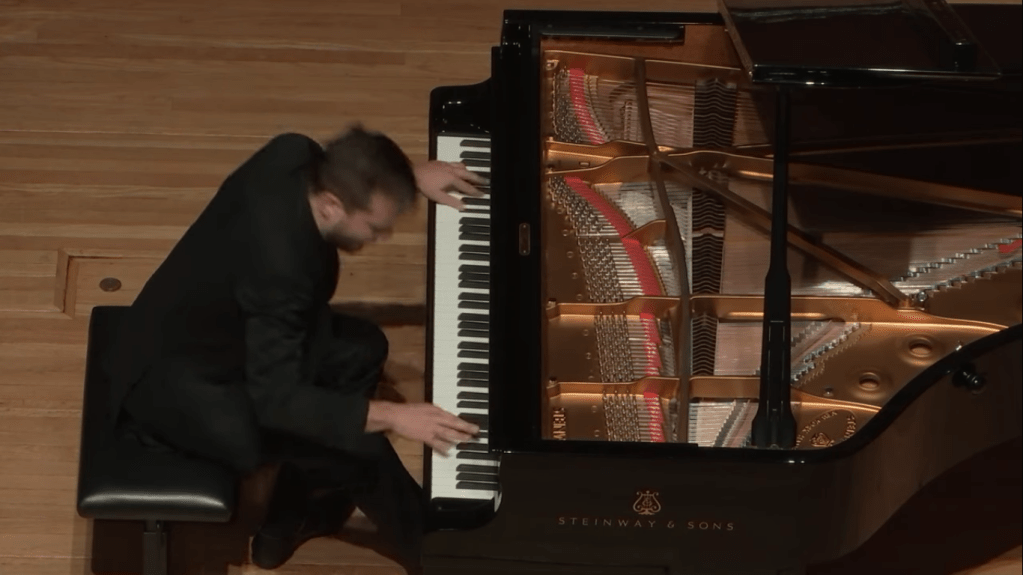
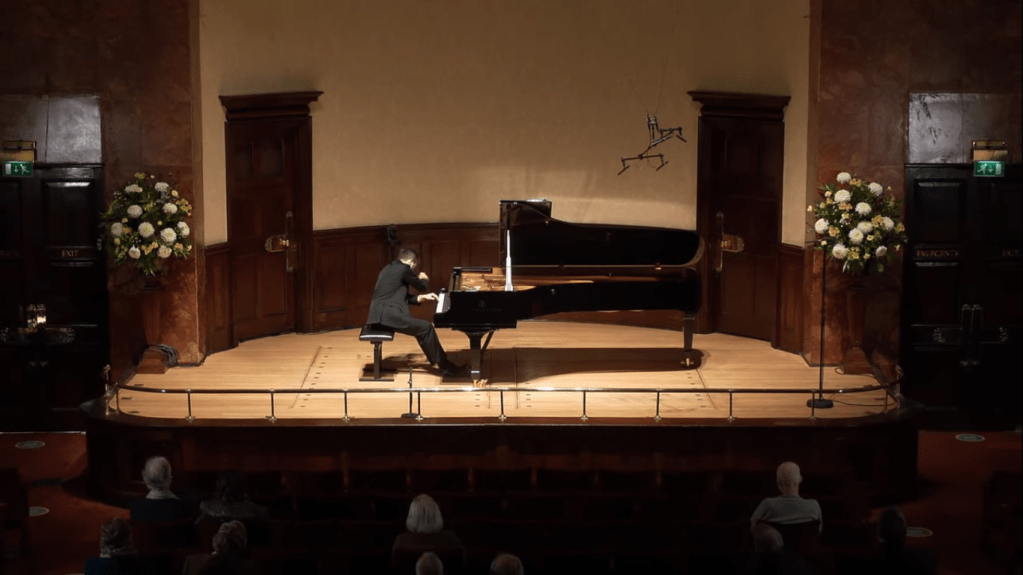
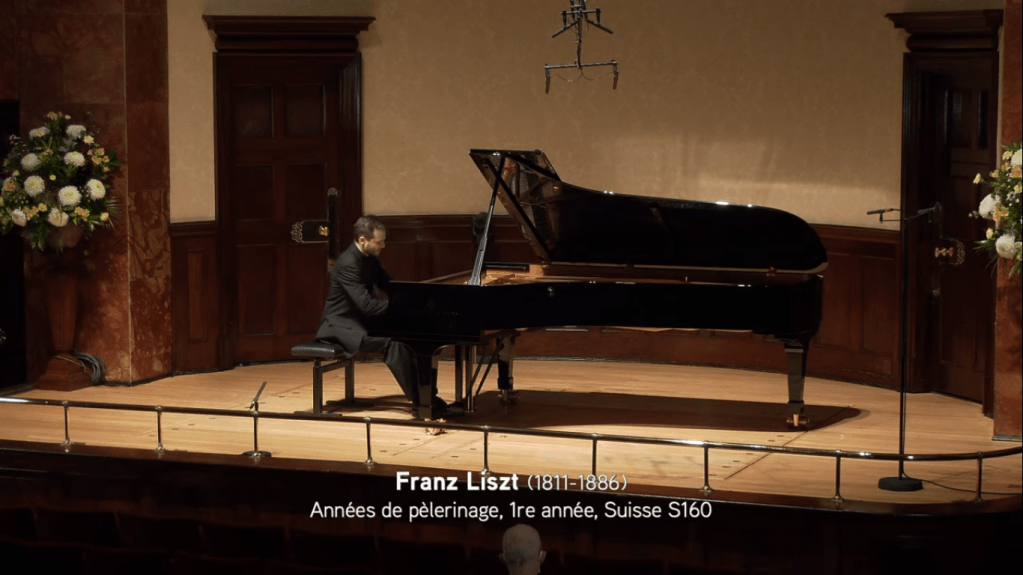
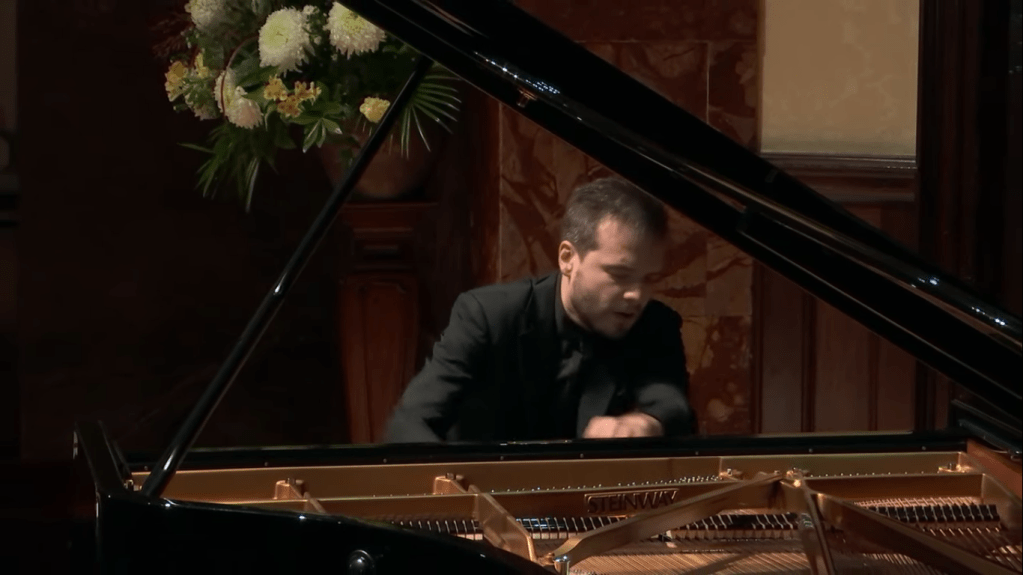
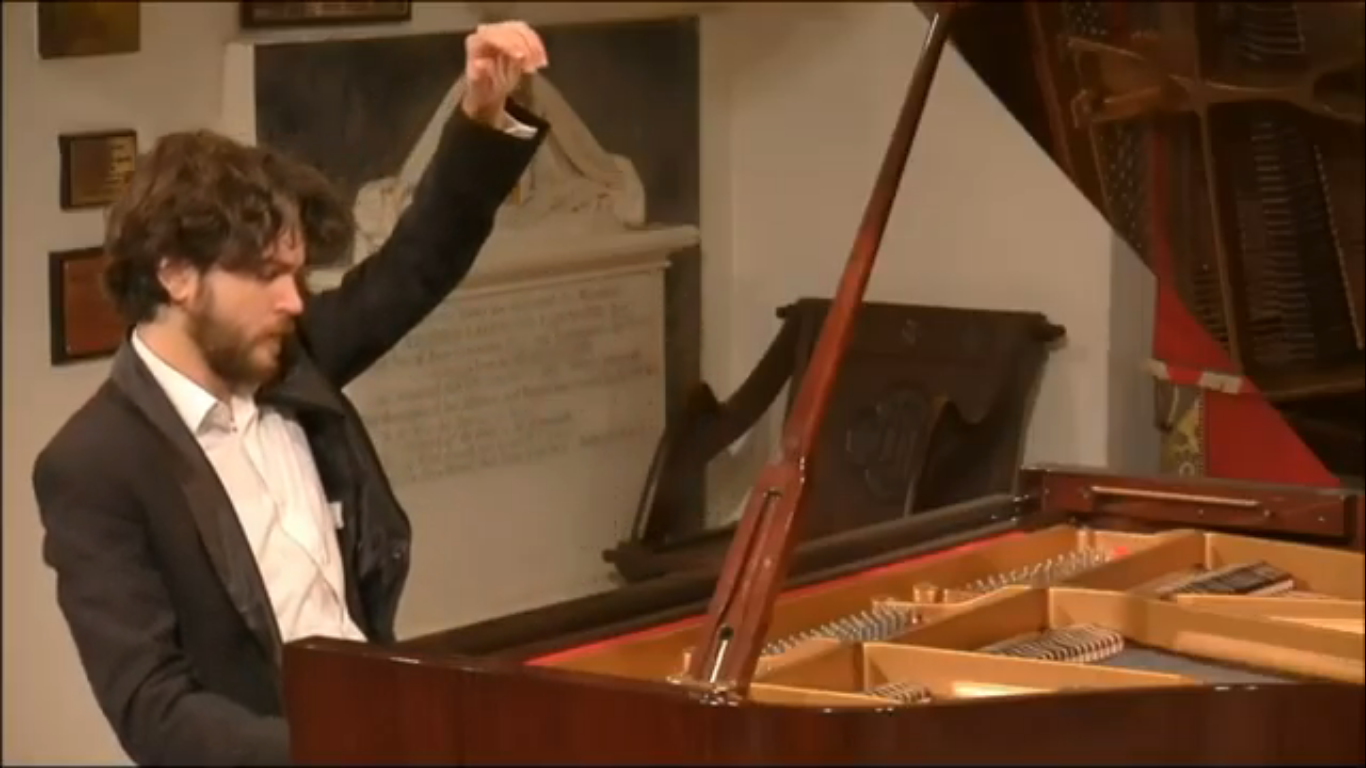
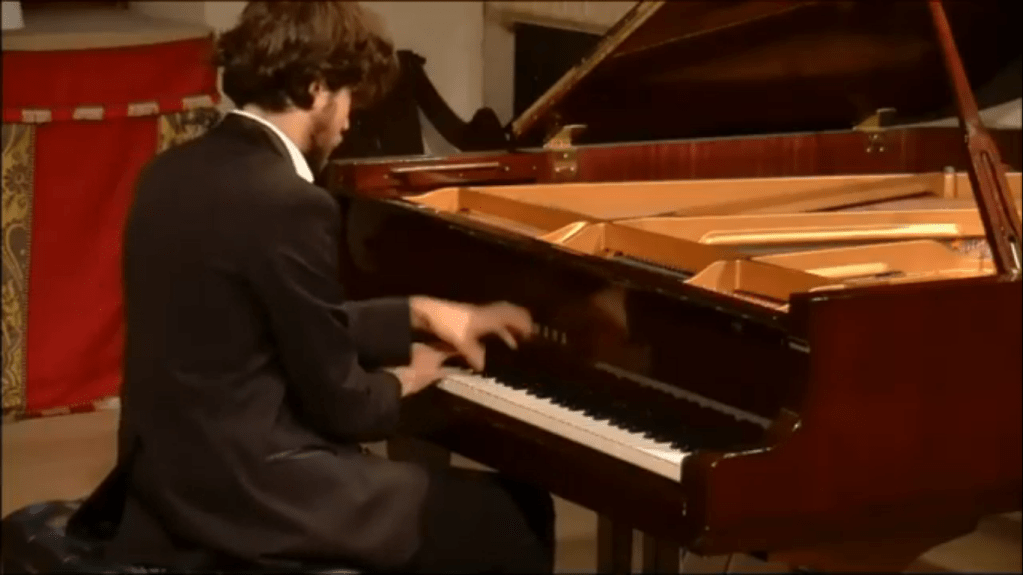
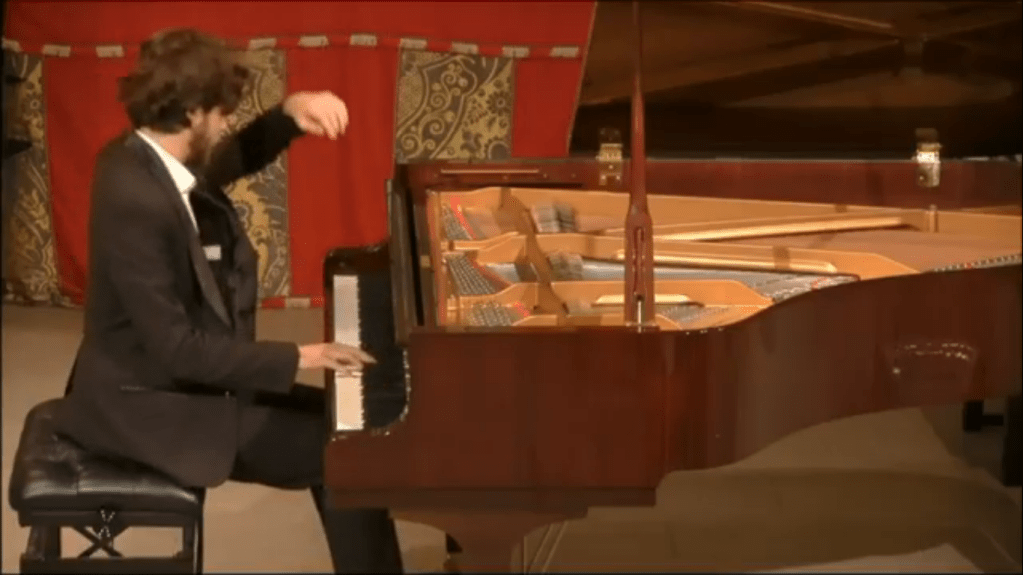
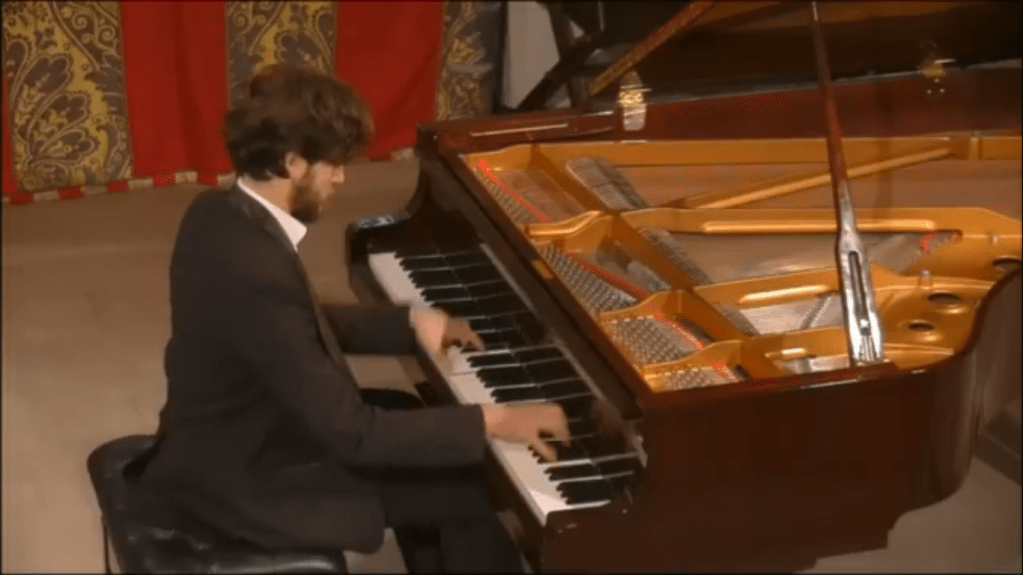
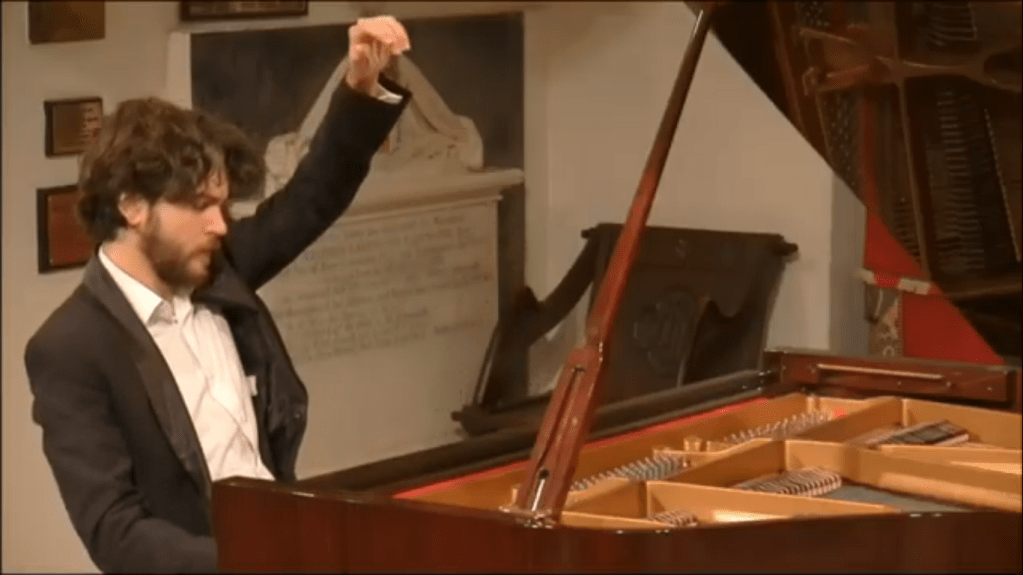
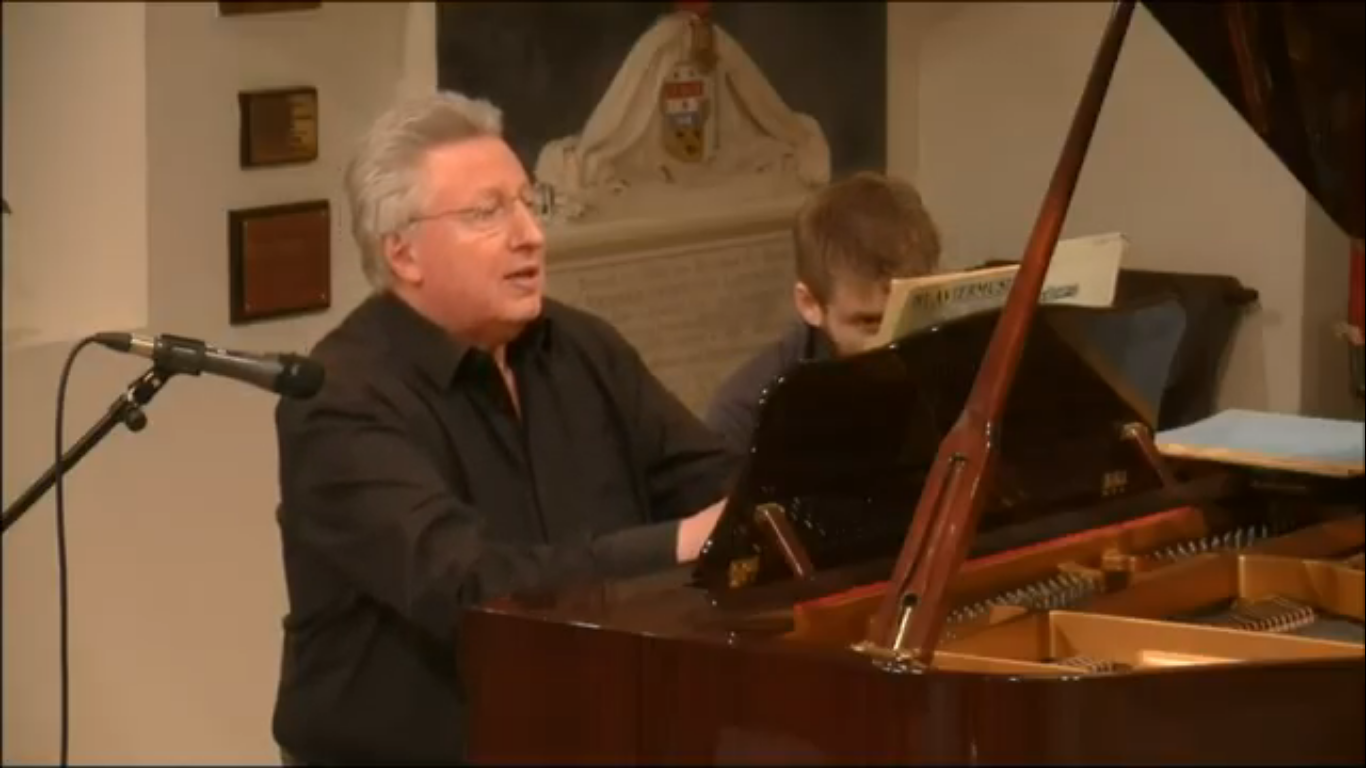
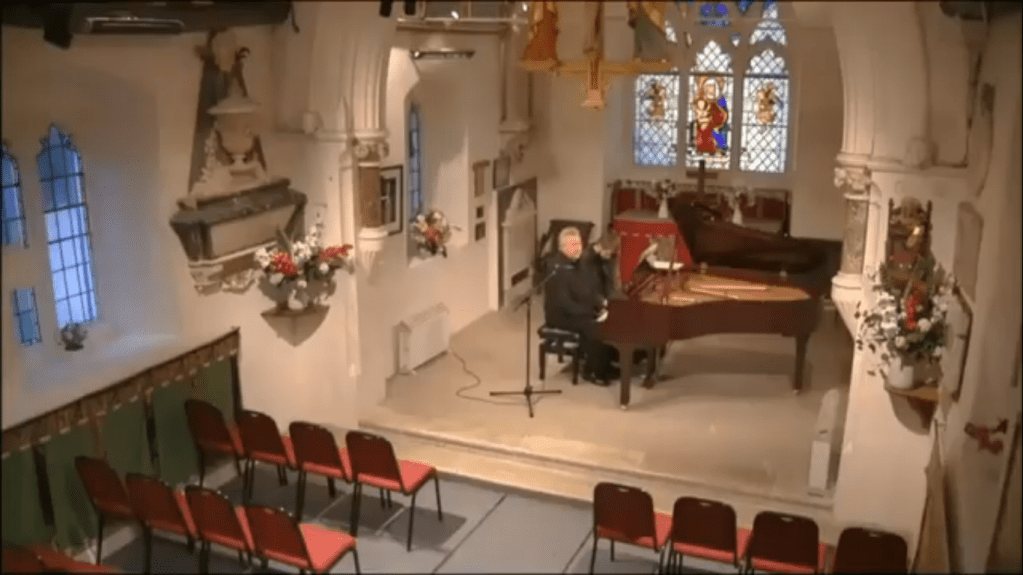
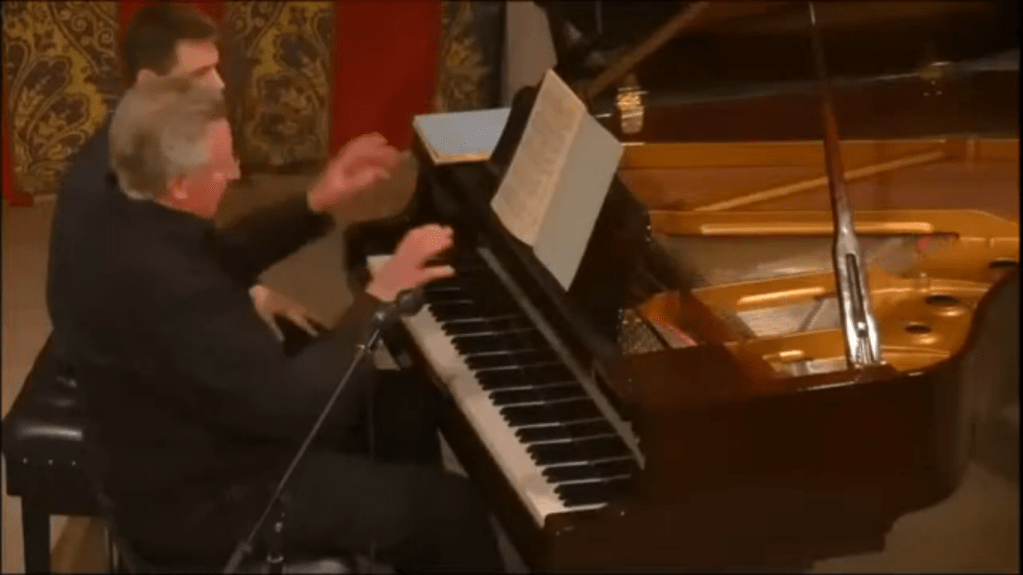
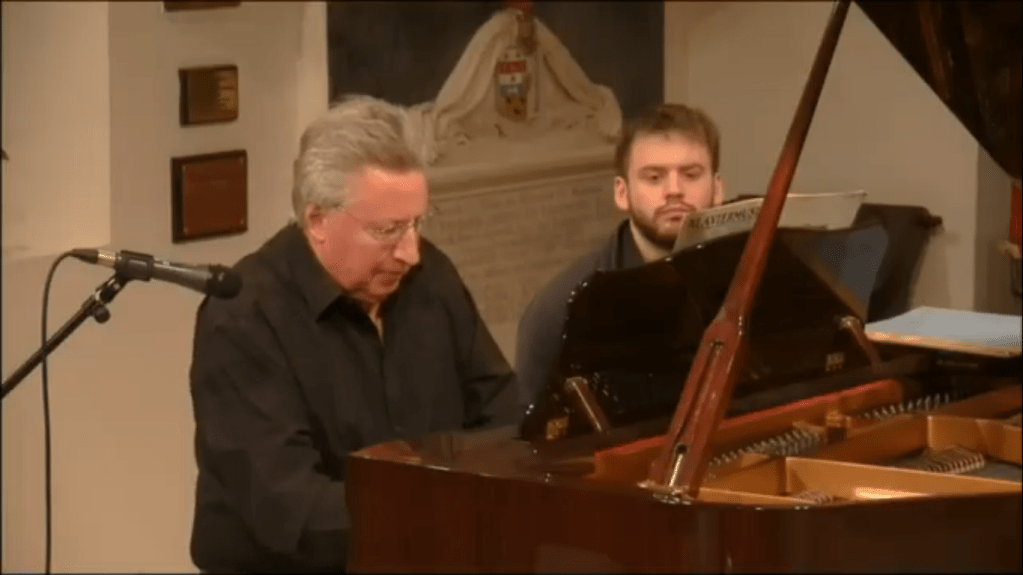
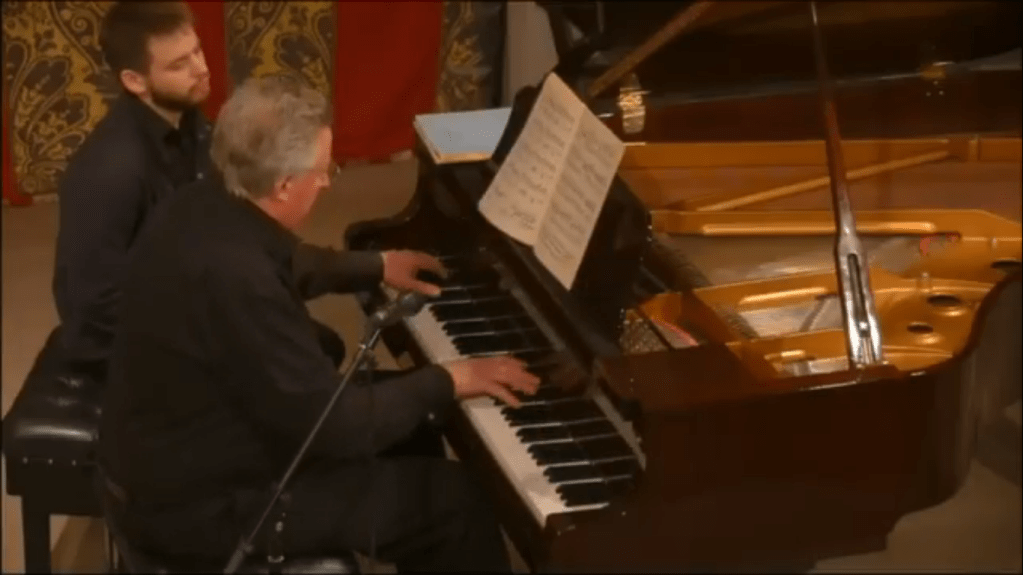
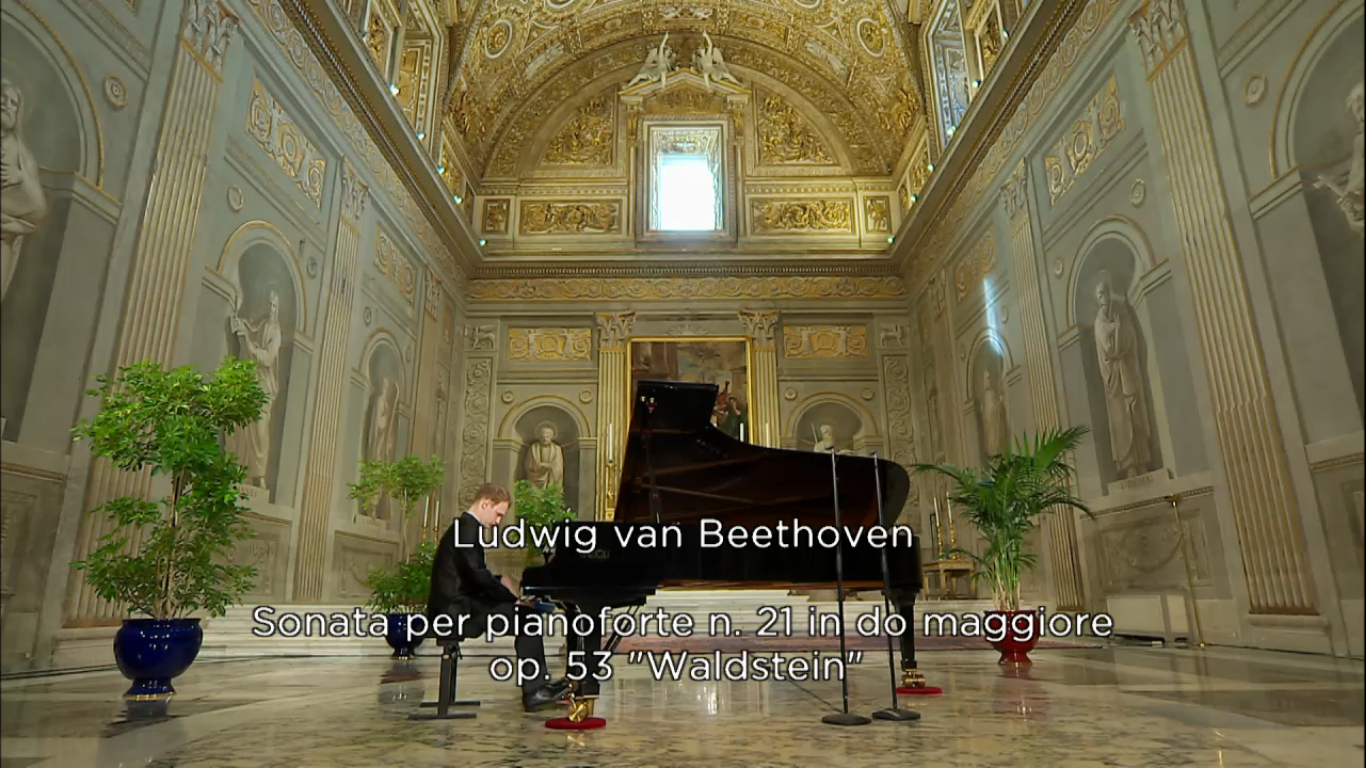
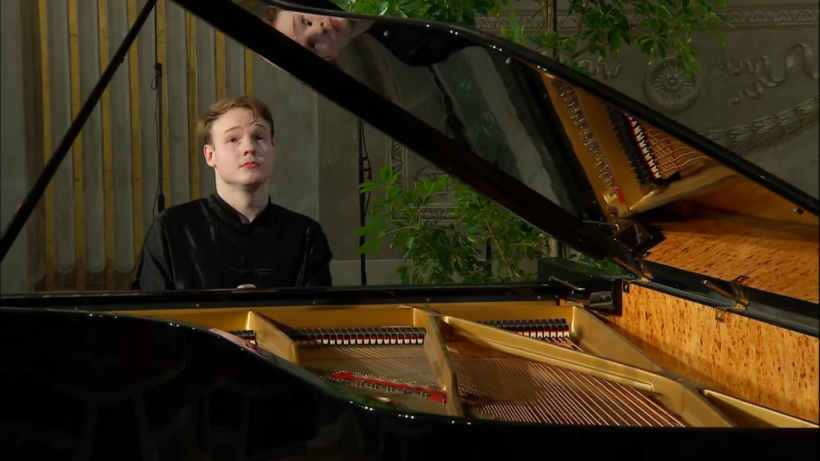
Viterbo Tuscia University Yuanfan Yang 25th January 2020

VITERBO TUSCIA UNIVERSITY

Franco Carlo Ricci
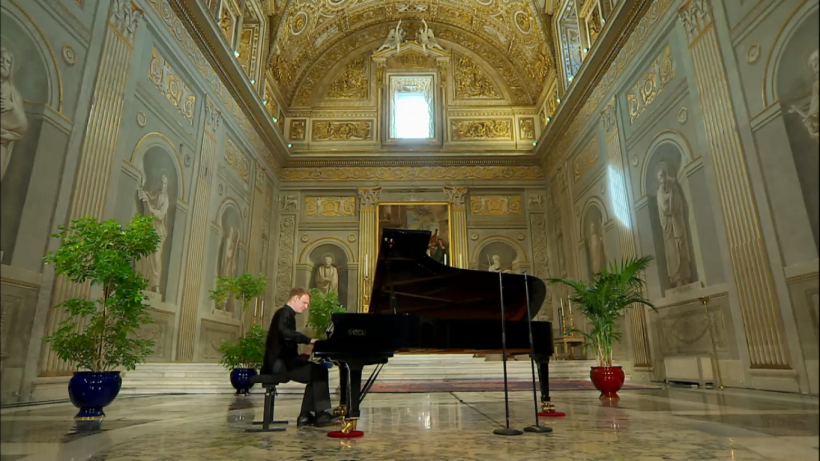
Fondatore e Direttore artistico della Stagione concertistica pubblica dell’Università degli Studi della Tuscia-Viterbo
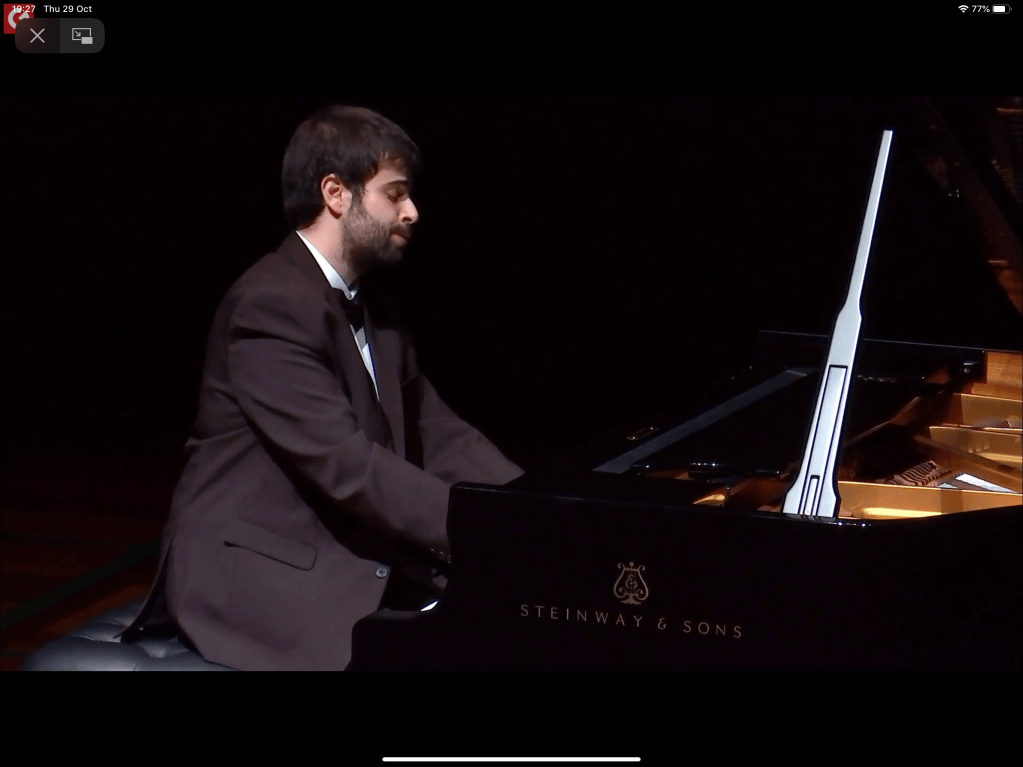
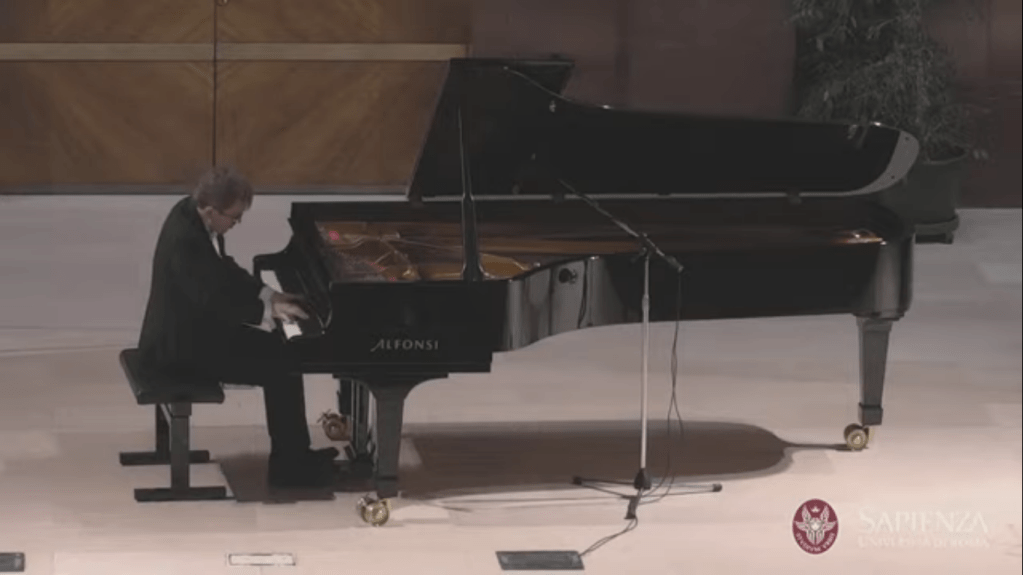
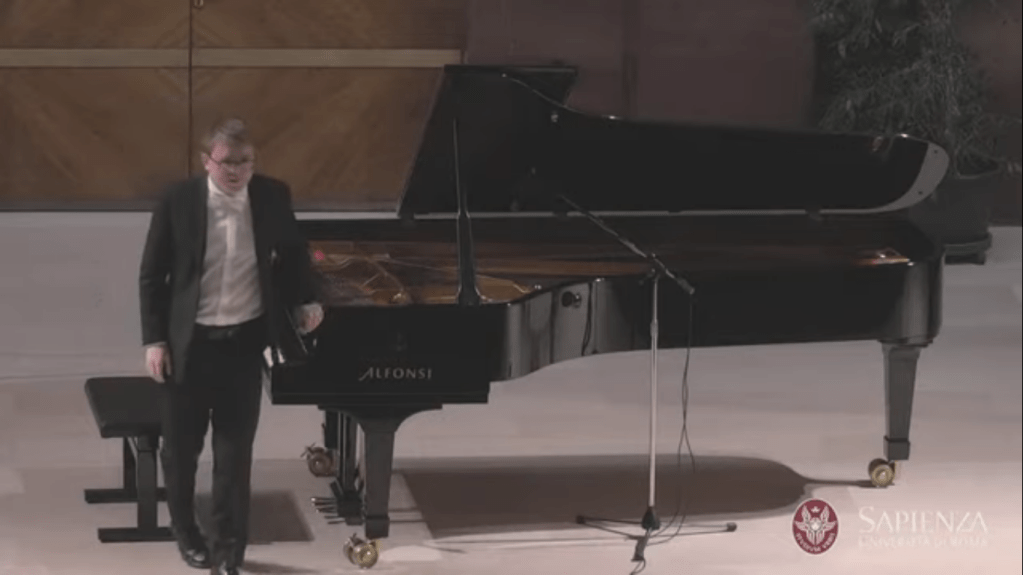
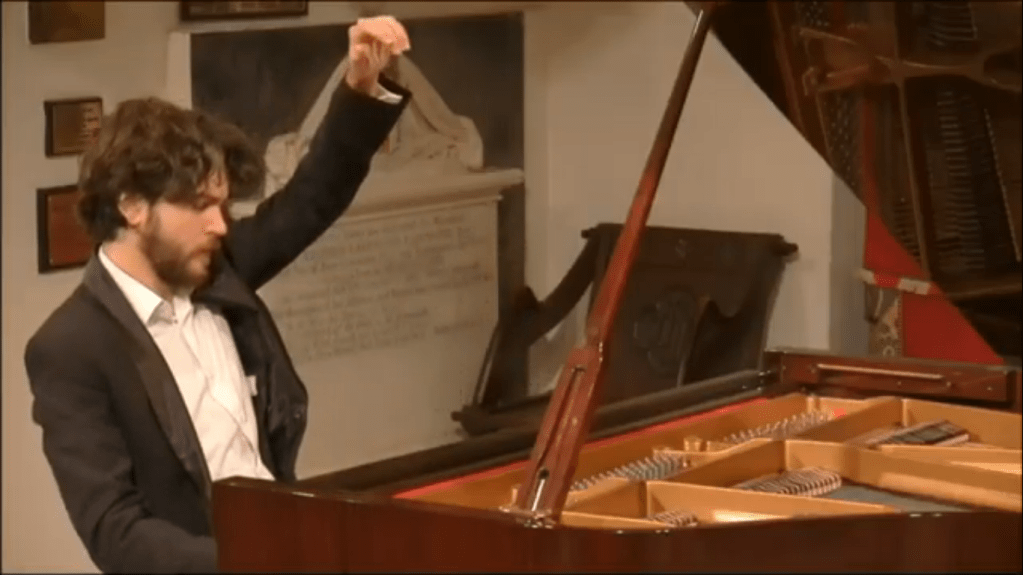
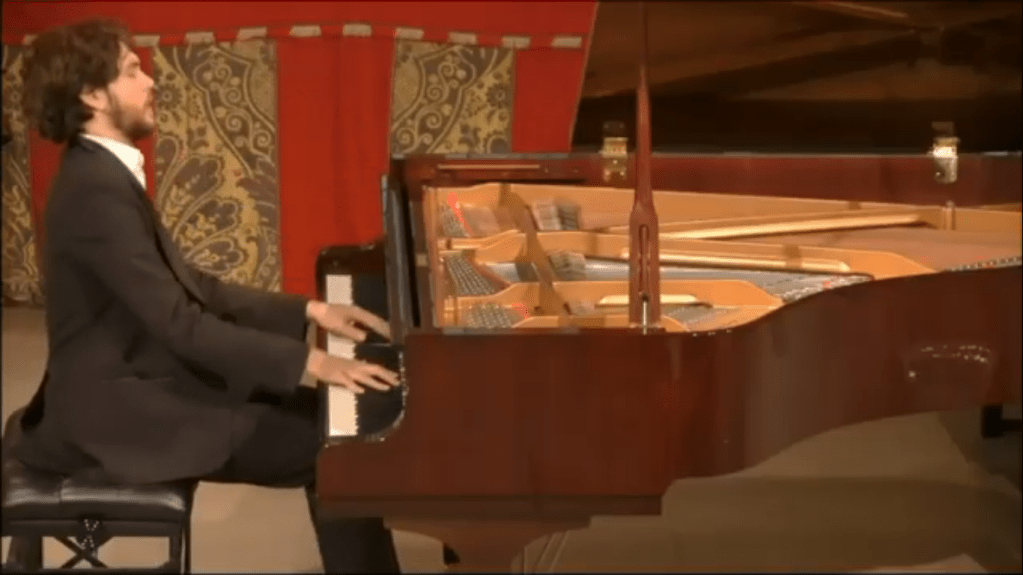
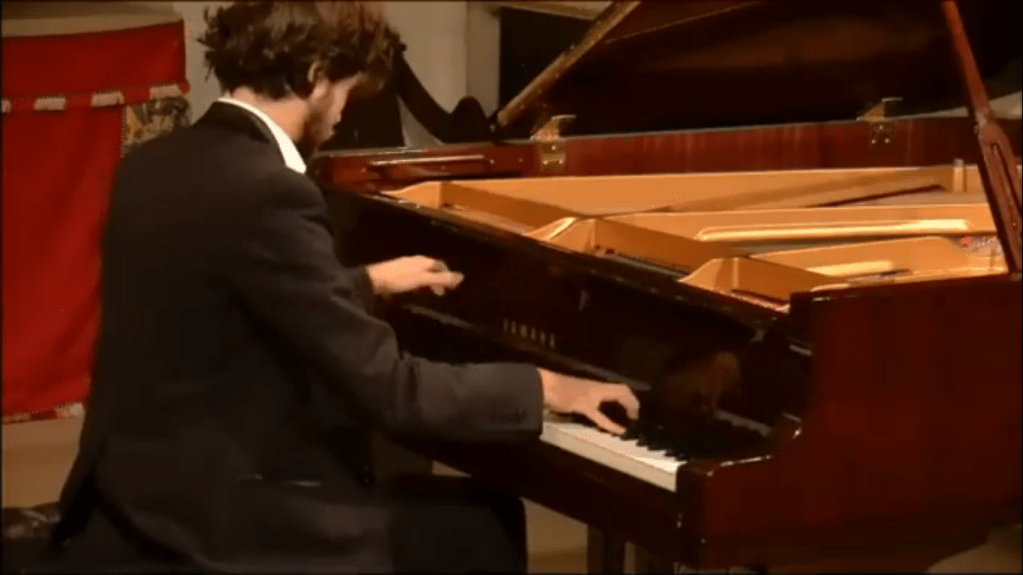
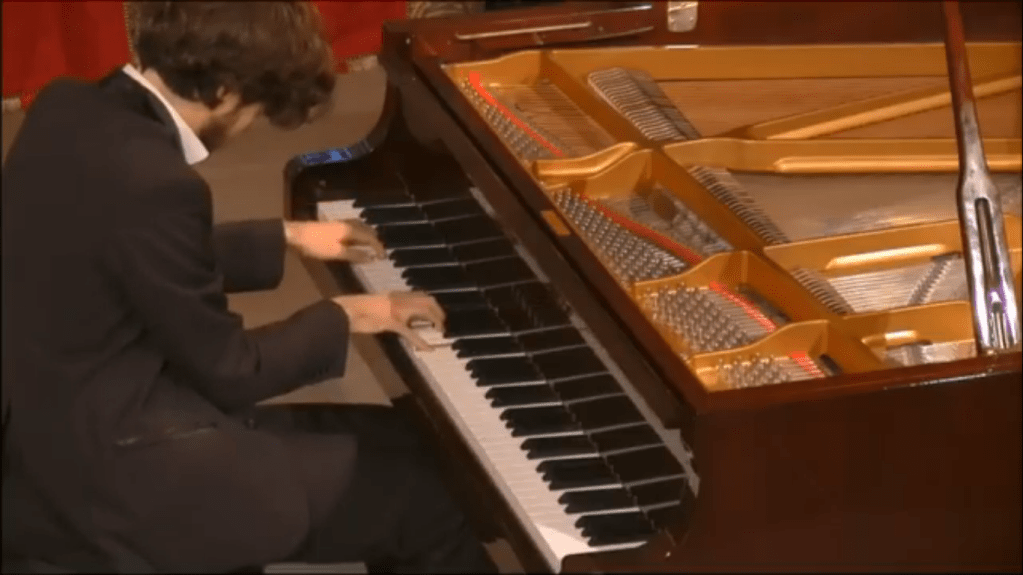
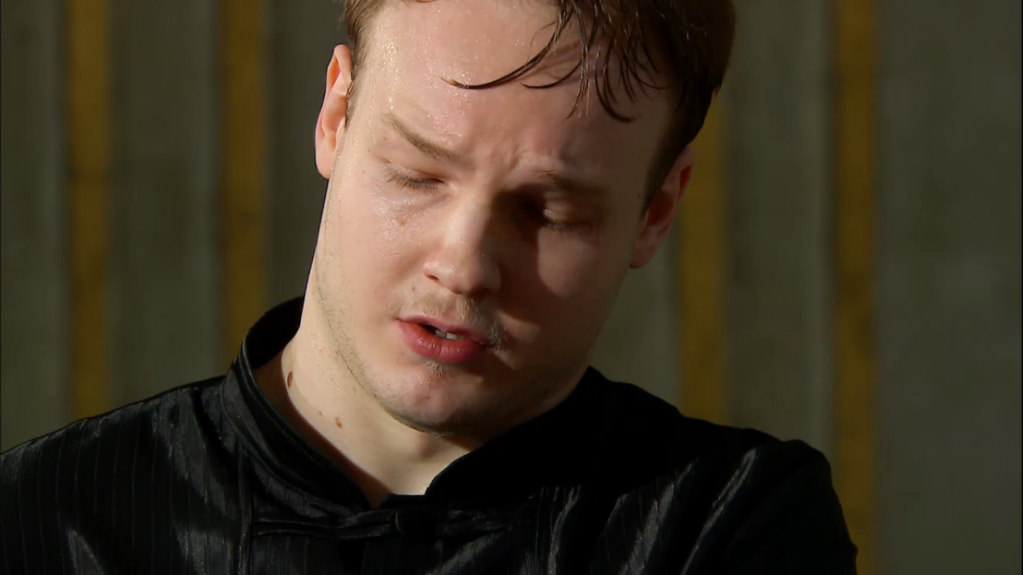
Il concerto di sabato 25 gennaio 2020, una delle vette della XV Stagione concertistica 2019-2020 dell’Università degli Studi della Tuscia-Viterbo (Auditorium di S. Maria in Gradi, ore 17), ha come protagonista un giovane, straordinario pianista inglese, nato ad Edimburgo da genitori cinesi, Yuanfan Yang, vincitore del prestigioso Premio Chopin di Roma 2018. Vincitore di numerosi altri concorsi pianistici, tra cui il Hastings International Piano Concerto Competition, il Concorso Pianistico Internazionale di Young Artists di Cleveland e il 4°Concorso Internazionale Franz Liszt di Weimar,Yuanfan, che è anche compositore versatile e abile improvvisatore, ha suonato per molte importanti società musicali e festival in Gran Bretagna, Cina, Danimarca, Francia, Germania, Italia, Polonia, Romania, Spagna, Svizzera e Stati Uniti, e ha eseguito i più importanti concerti classico-romantici con molti eminenti direttori e orchestre quali la Royal Northern Sinfonia, La Royal Liverpool Philharmonic, la Romanian Radio National Symphony Orchestra, la Wuhan Philharmonic Orchestra, la Symphony Orchestra di Cleveland e la Camerata di Manchester.
Realizzato in collaborazione con il Keyboard Charitable Trust di Londra il Concerto all’Università della Tuscia prevede pagine celeberrime dei più grandi compositori della storia della musica quali Johann Sebastian Bach (Toccata in do minore BWV 911), Robert Schumann (Carnaval op 9), Fryderyk Chopin (Sonata n. 2 in si bemolle minore op 35 “Marche Funébre”).
Fondatore e Direttore artistico: Franco Carlo Ricci
Sabato, 25 gennaio 2020, ore 17
In collaborazione con il Keyboard Charitable Trust di Londra
Pianista
Yuanfan Yang
(Vincitore Premio Chopin di Roma 2018)
Johann Sebastian Bach (Eisenach, 1685-Lipsia, 1750)
Toccata in do minore BWV 911
(Moderato; Adagio; Allegro moderato; Adagio; Tempo I; Adagio; Presto)
Robert Schumann (Zwickau, 1810-Endenich, 1856)
Carnaval op 9
(Préambule, Pierrot, Arlequin, Valse noble, Eusebius, Florestan, Coquette, Replique, Papillons, A.S.C.H.-S.C.H.A (Lettres dansantes), Chiarina, Chopin, Estrella, Reconnaissance, Pantalon et Colombine, Valse allemande, Paganini, Aveu, Promenade, Pause, Marche des “Davidsbundler”contre le Philistins)
*
Yuanfan Yang (Edimburgo, 1997)
The Haunted Bell
Fryderyk Chopin (Żelazowa Wola, 1810-Parigi, 1849)
Sonata n. 2 in si bemolle minore op 35 “Marche Funébre”
(Grave, Doppio Movimento; Scherzo; Marche Funèbre Lento; Finale Presto)

Auditorium S.Maria in Gradi Viterbo

Edvina and Michael Aspinall

Edvina and Michael Aspinall

Marie Louise Edvina
A pot of gold indeed innocently found in Cecil Court in London as a Christmas Gift for an old friend Michael Aspinall ………..I said it might be of interest and had he ever heard of her ……..here is his quite unique reply:
Marie Louise Edvina
She was born Marie Louise Lucienne Juliette Martin, in Montreal on the 28th May 1878. She latterly claimed to be descended, through her mother, from Pocahontas. She had a convent education and her beautiful voice was noticed by the nuns, who encouraged her to sing. The nuns indulged her even to the point of allowing her a glass of port on days when she was due to sing in church, “for the good of her voice”. In 1898 she married an Englishman who died suddenly the following year. In 1901 she married the Hon. Cecil Edwardes, brother of Lord Kensington. It soon became apparent that her husband was rapidly losing money through bad investments; to save the family fortunes Marie Louise decided to capitalize on her vocal talent, and went to Paris to study with the great tenor Jean de Reszke, leaving her two children with her husband’s family. De Reszke, a very expensive teacher, did not charge her for her lessons as a compliment to Lord Kensington.
Mrs. Edwardes made her Parisian début as Marie Louise Edvina in concerts conducted by Reynaldo Hahn, and her operatic début took place at Covent Garden on the 15th July 1908, as Marguerite in Gounod’s Faust with an all-star cast: Alessandro Bonci (tenor), Mario Sammarco (baritone) and Juste Nivette (bass), conducted by Ettore Panizza. It was a success, though she would soon achieve much greater things and more rapturous criticisms. During the next five seasons at Covent Garden she rapidly advanced to becoming one of the best-loved artists of her time. Lady Howard de Walden wrote in a private letter in 1972: “She was…the first opera star with a good figure who dressed beautifully and acted properly…” In 1909 she triumphed in the first performances at Covent Garden of Charpentier’s Louise, which she also sang at the Opéra-Comique, Paris in 1910, and in Boston and Chicago. Charpentier himself conducted her in the opera in Paris in 1915 and was enchanted with her. She studied Pelléas et Mélisande with Debussy and sang it for the first time at Covent Garden in 1910. In 1911 she added Massenet’s Thaïs, which she repeated in Paris, Brussels, Monte Carlo and Covent Garden again in 1920. Her next rôles were in Otello, I gioielli della Madonna, and Tosca, which she first sang in Paris – at first the critics were unenthusiastic, but she worked hard on her interpretation and it became one of her greatest successes.
She was now referred to as “Society’s prima donna” and her family friends included all the influential men and women in the London musical scene. Despite this, she maintained her celebrity status by outstandingly lovely singing and a gracious onstage manner and was equally successful in America. In 1912 she crossed the Atlantic and appeared as Louise in her native Montreal, followed by Faust and Tosca. She appeared at the Boston Opera House in two seasons, 1912 and 1913, making her début there as Antonia in Les contes d’Hoffmann; Boston heard her in most of her rôles and in 1913 she made her only two appearances as Madama Butterfly there and in Washington. In April 1914 she sang in Montemezzi’s L’amore dei tre re at the Champs-Elysée theatre in Paris, repeating the work at Covent Garden together with Zandonai’s Francesca da Rimini.
During the 1914-18 war Edvina dedicated herself to concerts and charity work: her husband joined the army and the pair separated. It appears that while singing for the troops at the front in 1915 she badly strained her voice, which was never the same again In 1915 she sang at the Chicago Opera and then in November made her one and only appearance at the Metropolitan, New York, substituting for Geraldine Farrar in Tosca, with Enrico Caruso. The audience liked her, but the critics were unenthusiastic. In 1916 she made a concert tour of Canada, then sang Faust and Thaïs at the Paris Opéra.
In December 1916 Edvina sang again at the Chicago Opera, then appeared in concerts in New York in January 1917. After her husband was killed in action in France in 1917 she retired for a long period. Edvina returned to Covent Garden for Sir Thomas Beecham’s first post war season in 1919, singing Manon, which she had sung before the war in Brussels but never, so far, in London, Thaïs, Tosca and Louise. In November 1919, at the age of 41, she married Major Nicholas Rothesay Stuart Wortley, who was 27, and had fallen in love with Edvina across the footlights at Covent Garden. The bride was given away by her former brother-in-law, Lord Kensington. She interrupted their honeymoon to give performances of Thaïs in Brussels. She repeated her most popular parts at Covent Garden in the 1920 season, returning in 1924 for two last performances of Tosca, her unannounced farewell to opera. She had appeared at Stockholm in 1923 in I gioielli della Madonna, Tosca and Faust.
Her operatic career had an unusual sequel: in June 1926 she starred in an operetta, Hearts and Diamonds, music by Bruno Granichstädten and words by P.G. Wodehouse, at the Strand Theatre, London; it was not a success. Edvina and her husband then opened an antique furniture shop in Cannes, but shortly after Christmas Major Stuart Wortley died from complications of diabetes.
Marie Louise spent the rest of her life on the French Riviera, looking after her shop. Her husband had left her a rich woman, so she was able to indulge her habit of refusing to sell the objets d’art in her shop that she was particularly fond of. In the ‘twenties her daughter Marie Edwardes had suffered a mental collapse and spent the rest of her life in a sanatorium in Switzerland. When the Second World War broke out, Edvina moved to Switwerland to be near her. Her other daughter Lumena, after heroic work in the resistance movement in Malta, died in 1944.
Marie Louise Edvina died of cancer in London on the 13th November 1948.
Recordings: Edvina made a few records for His Master’s Voice towards the end of her career, in 1919 and 1921 Despite some little trouble with the highest notes, her singing is very beautiful and of exemplary elegance, typical of the de Reszke pupils (of whom Maggie Teyte is the best remembered).
DB 547 Noël des enfants qui n’ont plus de maisons (Debussy)
Phidylé (Duparc)
DB 548 Louise (Charpentier): Depuis le jour
Tosca (Puccini): Vissi d’arte
DA 447 Thaïs (Massenet): Qui te fait si severe?
L’amour est une vertu rare
DB 547 with Percy Pitt, piano; DB 548 & DA 447 with orchestra conducted by Percy Pitt

Michael Aspinall final appearance after forty years on the boards

17th International Competition “Premio Citta’ di Padova” for soloists and orchestra

17th International Competition “Premio Citta’ di Padova” for soloists and orchestra.
It was nice to be back in Padua again to help,admire and encourage this magnificent competition now in its 17th year.
Much has been said above so I will just announce the results of this year’s competition:
17th International Competition “Premio Citta di Padova” for soloists and orchestra
Orchestra di Padova e del Veneto directed by Nicolò Jacopo Suppa
First prize Ulisse Mazzon : Paganini Concerto n.4
Second prize Giovanni Claudio Di Giorgio :Mozart K218
Third prize Wada Ayako Rachmaninov Concerto n. 2

Jury members Ezio Caroli Zoltan Szabo – prize winners and Elisabetta Gesuato

Jury member Lucia Visentin temporarily incapacitaded with retired banker and now ticket salesman and administrator Dott. Gesuato

Wada Ayako with Orchestra di Padova e del Veneto 3rd Prize

Giovanni Claudio Di Giorgio 2nd Prize

Ulisse Mazzon 1st Prize

Wada Ayako Ulisse Mazzon Giovanni Claudio Di Giorgio

Elia Modenese Nicolò J.Suppa Wada Ayako Ulisse Mazzon Giovanni C dI Giorgio Elisabetta Gesuato

Ivan Krpan and Yuanfan Yang in Rome

Ivan Krpan and Yuanfan Yang in Rome

Yuanfan Ivan and me
Ivan Krpan with the Zagreb Philharmonic at S.Cecilia Hall in Rome – Liszt n.1
after concert greetings from Yuanfan Yang….after a 7 hour drive from his concert in Vicenza awaiting his live broadcast tomorrow evening at 11pm RAI Radio 3 .

Programme for the Sala S. Cecilia Celebration concert
Both superb young artists receive help and encouragement from the Keyboard Charitable Trust.

Ivan Krpan
Roby Lakatos ignites the hall after wonderful Liszt I and Beethoven 3 with the Zagreb Philharmonic directed by Dawid Runtz with Ivan Krpan,winner of Busoni 2017 and Mia Pecnik all in their early twenties.

Mia Pecnik
It was followed by ……Roby Lakatos -the violin of the devil-
“There is not one violinist who is not in awe of this man…”Linn Rothstein
………..together with his his gypsy ensemble to celebrate the Presidency of Croazia to the European Union

Roby Lakatos and Ensemble

Roby with surprise guest artist

Roby Lakatos with Ensemble and Zagreb Philharmonic

Yuanfan Yang and Ivan Krpan backstage at the Sala S,Cecilia in Rome

YUANFAN YANG IN ITALY Part 1 Vicenza and Rai Radio 3

YUANFAN YANG IN ITALY Part 1 Vicenza and Rai Radio 3
Yuanfan Yang at the Teatro Comunale in Vicenza.
Amazing performance for Incontro sulla Tastiera that for 45 years the indefatigable Maria Antonietta Squeglia has been organising in the beautiful city of Palladio.
But today there was something special in the air and a party atmosphere ignited by a young UK born chinese pianist whose improvisations and incredibly natural musicianship were being likened by an enthusiastic public to the prodigy Mozart!
At the end of the concert Yuanfan announced that he wanted to give the audience the chance to take part too.Can anyone offer a few notes on which he would create a piece,their piece,in this very moment?

Discussing the encore improvisation of three voices in jazz style
The public were a bit wary of this novelty and no one wanted to be embarrassed.So Yuanfan turned his back on the keyboard and played five or six random notes and then created a piece in the style of Beethoven.
The President of the Incontro was heard complaining that Beethoven had been missing from the programme!
And what a beautiful piece it was!Even better than Beethoven?!

Review of the concert in Vicenza by Eva Purelli
Now of course the cat was out of the bag and three people wanted to offer notes for a second encore from a now very insistent public.
No problem for our young musician touched by genius.
He improvised in jazz style using all three themes.
It brought the house down and poor Maria Antonietta and the sponsor Ermanno Detto have been bombarded by enthusiastic messages of disbelief and astonishment from their public.

Maria Antonietta Squeglia and Mrs Jieling Yu Yang in the Teatro Comunale of Vicenza
But it was the story that his mother had to tell over breakfast today that revealed the true amazing facts about a young boy who out of the blue was discovered at a birthday party to be able to play the piano!
He was 5.
At the age of 6 the BBC made a programme about him and his amazing musical genius.
Yuanfan Yang’s parents from Beijing were at Edinburgh University where he was born.His mother obtained a master in Telecommunications and his father in East European Studies.An exchange between the UK and China in the Thatcher period.Both had top class degrees from Bejing University.
His father is a professor now at Leeds University and for many years his mother taught at Leeds High School.

Yuanfan with Busoni Winner 2017 Ivan Krpan after Ivan’s performance of Liszt 1 at the Sala S.Cecilia in Rome with the Zagreb Philharmonic in celebration of the Presidency of Croazia to the European Union.Yuanfan made a 7 hour trip from Vicenza to salute his colleague and fellow KCT artist……what a family we are!
They brought the five year old Yuanfan a piano as soon as they realised that he was born with this talent.
The mother of one of his friends had asked who his teacher was,as he had played so beautifully.But he does not play the piano,she exclaimed, we do not even have one at home!
Well all that changed overnight and Yuanfan was taken to study at Chethams in Manchester with that magnificent trainer of so many amazing talented children,Murray McLachlan.
The family have altered their own lifestyle to give him all the opportunities that his talent demands.
Winning many International competitions and even the BBC Composing Competition and top prize in China for his First Piano Concerto that as winner toured eight major cities in China!
It was,infact,his own piece :’The Haunted Well’ ,the prize winning piece of the BBC competition played immediately after the interval that ignited the enthusiasm of a usually rather reticent audience.
It was this four minute piece that the audience looked at with suspicion in a programme that included Schumann Carnaval,Chopin B flat minor sonata and Bach C minor toccata.
They soon realised that they need not have worried about this so called ‘contemporary ‘ piece.
They had obviously had some nasty experiences in the past!
But here was a piece full of magical sounds.
Of a fantasy of colours and subtle shading of the clock that strikes 13 at midnight (so clearly introduced by Yuanfan in a charmingly simple way….apologising for not being able to talk in Italian).
It was all so clear as these’pictures’painted in sound filled the air with such sumptuous sounds.
Transcendental technical feats alla Messiaen were eagerly accepted by an audience immediately so involved in the story ..just like the ‘Papillons’ of Schumann ….that he had to tell.
The Chopin B flat minor sonata ( his performance is new to me) was a revelation of clarity allied to a beauty and rigor that I have only experienced from the hands of Rubinstein.
If only we could have started the concert over again we would have realised what a superb performance he gave of Schumann Carnaval.Full of subtle poetry and colour but with an aristocratic sense of rubato and flow that is of the chosen few.

Raffaella Squeglia presenting the concert
Technical considerations never entered into the discussion such was his total mastery.But his incredible technical mastery was also there to be admired by colleagues who have struggled for hours to master ‘Paganini’ or the ‘March of Davidsbundler!’

Sponsor Ermanno Detto with Maria Antonietta Squeglia and enthusiastic friends.
His Bach Toccata now is like a rock.But a multicoloured rock that never wavers but is full of subtle colours and discrete ornamentation …..much more to follow….but would recommend wherever you are in the world to tune in on Friday 24th Jan at 11 pm Italian time to his live broadcast on RAI Radio 3.
Rai Radio 3 ‘La Stanza della Musica’

Stefano Roffi – left – producer La Stanza della Musica Rai 3
Yuanfan Yang last nights broadcast available on their website
Rai radio 3 ‘La stanza della musica.’
It created quite a stir.
Due to the overruning of Tristan with the live transmission from the opening of the season in Bologna there was barely 30 minutes left to midnight.
Like Cinderella the midnight hour decides our fate!
There was a quick rethinking for the programme and as in all true theatre and live performances there was magic in the air.

Yuanfan sound check
After one of the most beautiful Chopin Barcarolle`s that I can remember and opening with his own piece which starts on the same E flat with which the live relay of Tristan finishes.
He was invited by a phone in audience to improvise on The Godfather Theme of Nino Rota.
As requested ,first in jazz mode and then in vulcanic mode.
A sensational way to finish the day for Stefano Roffi and all his team applauding and cheering him from behind the glass that separates the studio from the control room.
Radio switchboard almost erupted too with enthusiastic calls…….and it was almost midnight as Yuanfans prize winning piece’ The Haunted Bell’ struck its midnight E flat 13 times!
Stefano tells me it is available forever on their web site.
From ” Here to Eternity” one might well say!

Yuanfan Yang in concert

Matteo Pomposelli at Teatro Flaiano Rome

Matteo Pomposelli at Teatro Flaiano Rome
Fourteen year old Matteo Pomposelli gave some very musicianly performances of Haydn,Albeniz,Szymanowsky
and Rachmaninov.
Playing to a packed out hall his professional presentation at that age was something to truly marvel at.
Already we had had a glimpse six months ago of what was on the horizon when he played Saint Saens 2nd piano concerto at Teatro Argentina.
Showing then great promise that is fast turning into fact as he played a very sensitive account of Haydn C major Sonata.
The new Steinway was a bit too muffled to allow the fluidity of sound that Haydn loved to explore in this Sonata.
It was generously donated though for the occasion by Alfonsi a major sponsor for many a year of this child prodigy fast maturing into a very serious artist.
Some sumptuous sounds in Albeniz El Albaicin ignited a passionate involvement as had the choice of his obviously very attentive mentor in choosing also the rarely heard Szymanowsky Chopin variations.
They allowed this young man to take command of the extreme technical demands that the composer made of his friend Arthur Rubinstein in the early 1900’s.

Franco Buzzanca indefatigable organiser with Mr Pomposelli
But it was in the Rachmaninov Moments Musicaux that allowed this young man to be totally involved in his search for the sumptuous nostalgia and romantic fervour that the composer demands.
Chopin’s “Cat” waltz op 34 n.3 was rattled off a bit too fast to allow these cats enough time  to preen their whiskers.
But the nocturne in C sharp minor op posth with which he closed gave us another glimpse of the artistry that is gradually being awakened in this already remarkably professional young pianist.
His next appearance will be eagerly awaited!

Teatro Flaiano in the centre of Rome just off Piazza Venezia

The charming foyer of Teatro Flaiano

Foyer of Teatro Flaiano in the centre of Rome

The fourteen year olf prodigy rapidly growing in stature

YUANFAN YANG IN ITALY Part 1 Vicenza and Rai Radio 3

YUANFAN YANG IN ITALY Part 1
Yuanfan Yang at the Teatro Comunale in Vicenza.
Amazing performance for ‘Incontro sulla Tastiera’ that for 45 years the indefatigable MariaAntonietta Squeglia has been organising in the beautiful city of Palladio.
But today there was something special in the air and a party atmosphere ignited by a young UK born chinese pianist whose improvisations and incredibly natural musicianship were being likened by an enthusiastic public to the prodigy Mozart!
At the end of the concert Yuanfan announced that he wanted to give  the audience the chance to take part too.
Can anyone offer a few notes on which he would create a piece,their piece,in this very moment?

Discussing the encore improvisation of three voices in jazz style
The public were a bit wary of this novelty and no one wanted to be embaressed.
So Yuanfan turned his back on the keyboard and played five or six random notes and then created a piece in the style of Beethoven.
The President of ‘Incontro’ was heard complaining that Beethoven had been missing from the programme!
And what a beautiful piece it was!
Better than Beethoven?!

Review of the concert in Vicenza by Eva Purelli
Now of course the cat was out of the bag and three people wanted to offer notes for a second encore from a now very insistant public.
No problem for our young musician touched by genius.
He improvised in jazz style using all three themes.
It brought the house down and poor Maria Antonietta and the sponsor Ermanno Detto have been bombarded by enthusiastic messages of disbelief and astonishment from their public.

Maria Antonietta Squeglia and Mrs Jieling Yu Yang in the Teatro Comunale of Vicenza
But it was the story that his mother had to tell over breakfast today that revealed the true amazing facts about a young boy who out of the blue was discovered at a birthday party to be able to play the piano!
He was 5.
At the age of 6 the BBC made a programme about him and his amazing musical genius.
Yuanfans parents from Beijing were at Edinburgh University where he was born.With first class degrees from Bejing University they were invited on the Thatcher UK/China exchange to complete their Master degrees at Edinburgh University.
His mother obtained a master in Telecomunications and his father in East European Studies.
His father is a professor now at Leeds University and for many years his mother taught at Leeds High School.

Yuanfan with Busoni Winner 2017 Ivan Krpan after Ivan’s performance of Liszt 1 at the Sala S.Cecilia in Rome with the Zagreb Philharmonic in celebration of the Presidency of Croazia to the European Union.Yuanfan made a 7 hour trip from Vicenza to salute his colleague and fellow KCT artist….a true family indeed.
They brought the five year old Yuanfan a piano as soon as they realised that he was born with this talent.
The mother of one of his friends had asked who his teacher was,as he had played so beautifully.
But he does not play the piano,she exclaimed, we do not even have one at home!
Well all that changed overnight and Yuanfan was taken to study at Chethams in Manchester with that magnificent trainer of so many amazing talented children,Murray McLachlan.
The family have altered their own lifestyle to give him all the opportunities that his talent demands.
Winning many International competitions and even the BBC composing competition and top prize in China for his First Piano Concerto that as winner toured eight major.cities in China!
It was,infact,his own piece :’The Haunted Well’ ,the prize winning piece of the BBC competition, played immediately after the interval that ignited the enthusiasm of a usually rather retiscent audience.
It was this four minute piece that the audience looked at with suspicion in a programme that included Schumann Carnaval,Chopin B flat minor sonata and Bach C minor toccata.
They soon realised that they need not have worried about this so called ‘contemporary ‘ piece.
They had obviously had some nasty experiences in the past.
But here was a piece full of magical sounds.
Of a fantasy of colours and subtle shading of the clock that stikes 13 at midnight (so clearly introduced by Yuanfan in a charmingly simple way….apologising for not being able to talk in Italian)’
It was all so clear as these’pictures’painted in sound filled the air with such sumptuous sounds.
Transcendental technical feats alla Messian were eagerly accepted by an audience immediately so involved in the story ..just like the Papillons  of Schumann….that he had to tell.
The Chopin B flat minor sonata ( his performance is new to me) was a revelation of clarity allied to a beauty and rigour that I have only experienced from the hands of Rubinstein.
If only we could have started the concert over again we would have realised what a superb performance he gave of Schumann ‘s Carnaval.
Full of subtle poetry and colour but with an aristocratic sense of rubato and flow that is of the chosen few.

Raffaella Squeglia presenting the concert
Technical considerations never entered into the discussion such was his total mastery.
But his incredible technical mastery was also there to be admired by colleagues who have struggled for hours to master ‘Paganini’ or the ‘March of Davidsbundler!’

Sponsor Ermanno Detto with Maria Antonietta Squeglia and enthusiastic friends.
His Bach Toccata now is like a rock.But a multicoured rock that never wavers but is full of subtle colours and discreet ornamentation …..much more to follow….but would recommend wherever you are in the world to tune in on Friday 24th Jan at 11 pm Italian time to his live broadcast on RAI Radio 3.
Rai Radio 3 ‘La Stanza della Musica’
Yuanfan Yang last nights broadcast available on their wesite Rai radio 3 ‘La stanza della musica.’
It created quite a stir.
Due to the overunning of Tristan with the live transmission from the opening of the season in Bologna there was barely 30 minutes left to midnight.
Like Cinderella the midnight hour decides our fate!
There was a quick rethining for the programme and as in all true theatre and live performances there was magic in the air.
After one of the most beautiful Chopin Barcarolle`s that I can remember and opening with his own piece which starts on the same E flat with which the live relay of Tristan finishes.
He was invited by a phone in audience to improvise on The Godfather Theme of Nino Rota.
As requested ,first in jazz mode and then in vulcanic mode.
A sensational way to finish the day for Stefano Roffi and all his team applauding and cheering him from behind the glass that separates the studio from the control room.
Radio switchboard almost erupted too with enthusiastic calls…….and it was almost midnight as Yuanfans prize winning piece The Haunted Bell struck its midnight E flat 13 times!
Stefano tells me it is available forever on their web site.
From ” Here to Eternity” one might well say!

Yuanfan Yang in concert

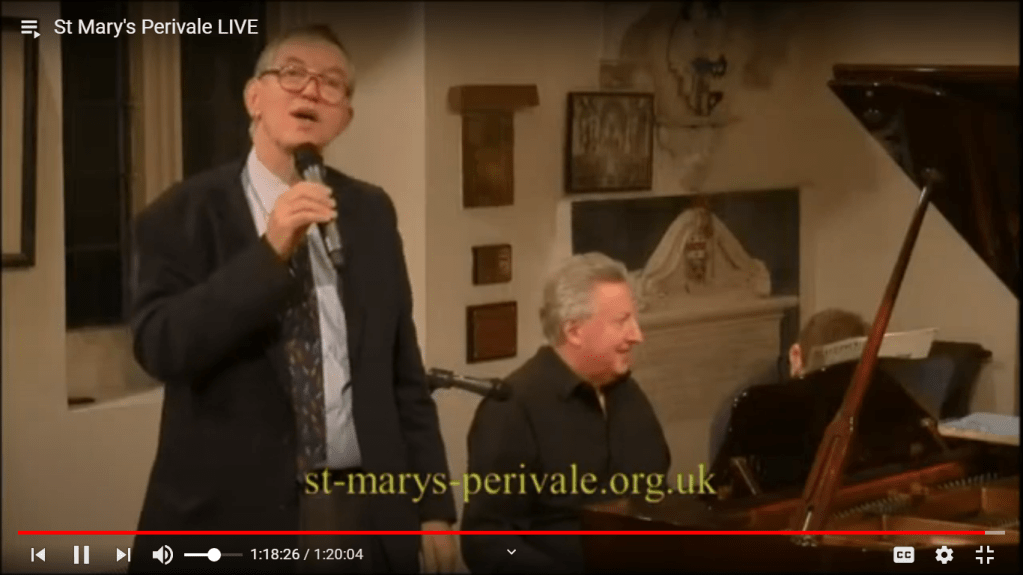
Minkyu Kim at St Mary’s Viva Franz Liszt – the poet of the piano!

Minkyu Kim was born in South Korea in 1995. He studied piano with Soojeong Jeong at Goyang High School of Arts and with Hyung-Joon Chang and Sehee Kim at Seoul National University. He won many prizes including second prize in the Korean Liszt Competition, first prize in the Jock Holden Memorial Mozart Piano Prize at RCS and first prize in the BPSE Senior Intercollegiate Piano Competition. In addition to performing the entire Transcendental Etudes by Liszt, Minkyu has performed piano concertos with the Scottish Ensemble and Royal Scottish National Orchestra.
After graduating with honours from the university in 2017, he is now attending Royal Conservatoire of Scotland with a full scholarship from ABRSM, studying with Aaron Shorr and Sinae Lee.
It was Dr Hugh Mather who recommended me not to miss this concert and  to listen to this “staggering recital by a master pianist”.
And so it was that I listened in Rome on the excellent streaming from Perivale thousands of miles away.Little could Minkyu have imagined that I was listening in the company of:

Vlado Perlemuter and Alicia De Larrocha
Vlado Perlemuter,Alicia De Larrocha,Rosalyn Tureck  and others who adorn the walls of the Ghione theatre just a stone`s throw from St Peters Square.
Minkyu Kim is one of 14 pianist selected to compete in the Utrecht Liszt Competition next March.
A competition that has seen the launching of artists such as Vitaly Pisarenko, Alexander Ullman and Mariam Batsashvili.

Rosalyn Tureck,Stockhausen, Berio,Fausto Zadra and Ileana Ghione
And of course how could Dr Hugh Mather be mistaken as he listens regularly to the finest young pianists in his series dedicated to helping hundreds of young musicians.Offering professional engagements to these young musicians for the loyal very discerning public in his hallowed haven of St Mary`s?
We are used to barnstorming Liszt performances of his early works or rather tepid intellectual experiences with the later obscure works that look very much towards the future.
But today we were treated to both early and late Liszt together with the transcription of 6 of Chopin`s Polish songs
It was of a sublime beauty where every note was caressed with such love and care.Yes caressed for such were the beautiful movements of his hands on the keyboard just as Giulini`s conducting movements were like watching a Michelangelo afresco.
It was the beauty of sound and the subtlety of phrasing that held a rather depleted but courageous audience spellbound from the first to the last note of this all Liszt recital.
Between 1847 and 1860, Chopin’s friend Franz Liszt arranged six of the Op. 74 songs as piano transcriptions under the title Six Chants polonais, S.480, a set which has long been a concert and recording favourite. The six are:
  • 1. Mädchens Wunsch (No. 1: Życzenie – The Wish) Played with great delicacy combined with an extraordinary flexibility and at times passionale musicality
  • 2. Frühling (No. 2: Wiosna – Spring)Such beautiful simple lyricism with some wonderful colouring and very subtle phrasing.
  • 3. Das Ringlein (No. 14: Pierścień – The Ring), which leads without a break into …
  • 4. Bacchanal (No. 4: Hulanka – Merrymaking)A real understanding of rubato brought the Mazurka to life with lyricism and rhythmic energy.A moment of absolute magic before the glissandi that gradually grew in energy until the final double handed flourish.But even here Liszt was careful to fully recognise the subtle artistocratic style of Chopin rather than the demonstrative glissandi of his own Hungarian Rhapsodies.
  • 5. Meine Freuden (No. 12: Moja pieszczotka – My Darling)Played with such a delicate melodic line a meltingly beautiful ending of pure magic
  • 6. Heimkehr (No. 15: Narzeczony – The Bridegroom).The stormy sounds shaped so beautifully by Minkyu where we could almost picture the tempestuous rowdiness of the Bridegroom!
In this arrangement, Das Ringlein leads without a break into Bacchanal, and towards the end of the latter song, immediately before the coda, Liszt includes a short 6-bar reprise of the earlier song.
These were followed by four late works written in 1880 just six years before Liszt’s death at the age of 75.The beautiful En Reve that my teacher Gordon Green(a disciple of Egon Petri) encouraged his students to learn  together with the Bagatelle sans tonalité long before they had been accepted as part of the repertoire.
En Reve is so beautiful – very short as are all these later pieces- finishing as it disappears into oblivion.The Bagatelle too almost like one of the Valse Oubliée fifty years on when the genius of Liszt was reaching far into the distance foreseeing the direction that music was to take.All beautifully and convincingly played by someone who was totally
dedicated to transmitting his love of this music to a public that were following every note of his quite ravishing playing.
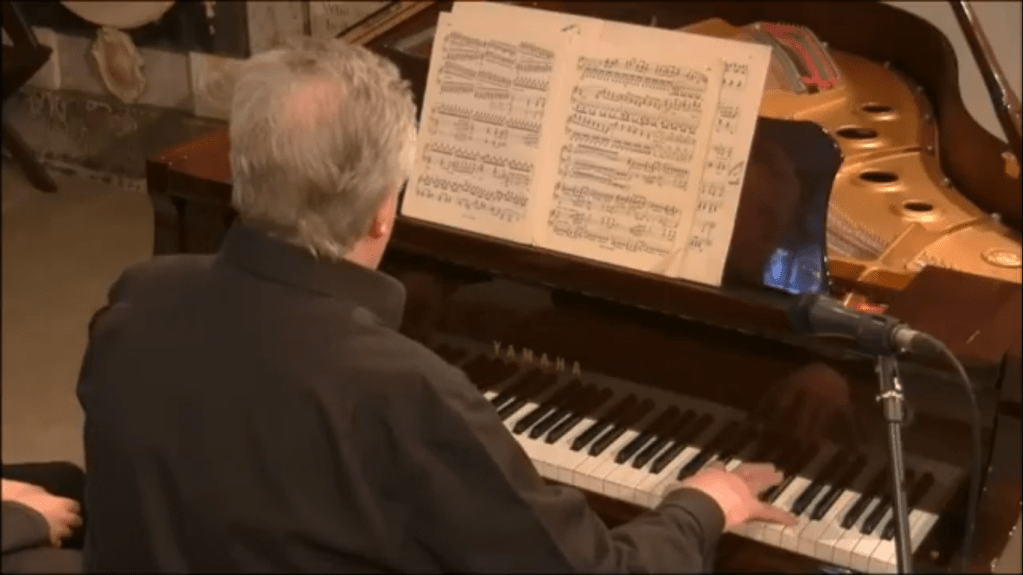
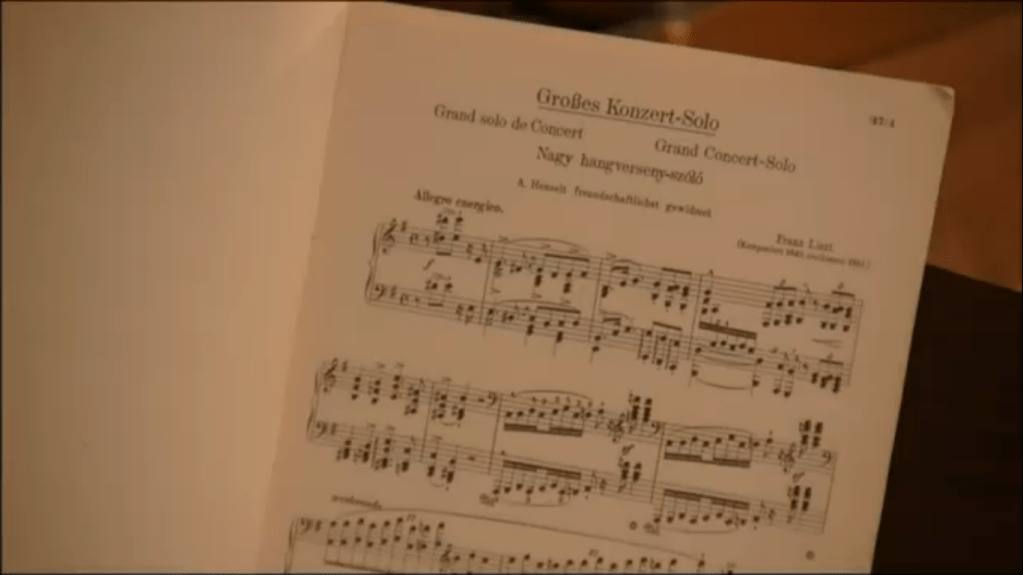
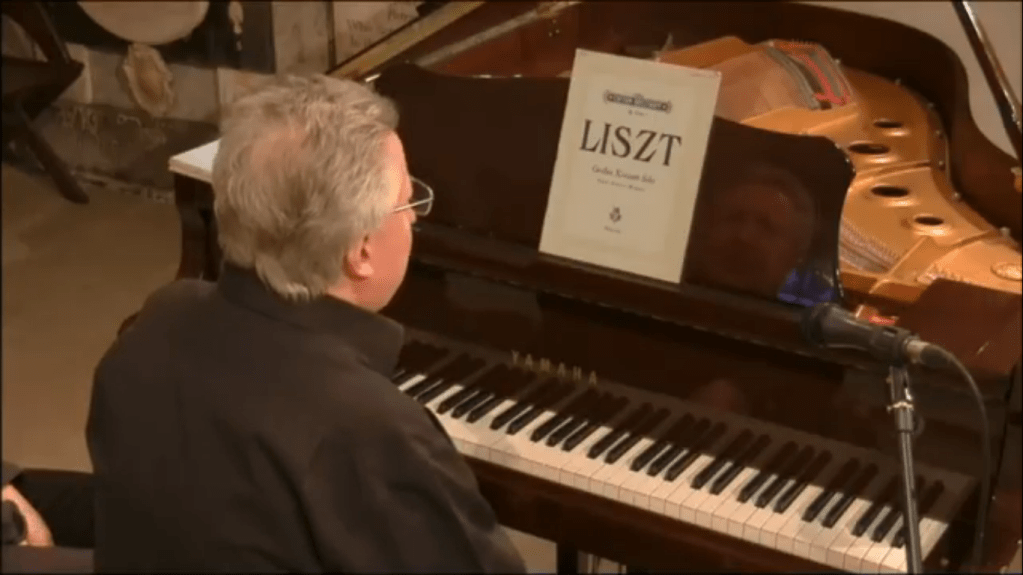
The final work was the Grosse Konzertsolo S 176 which was written a few years before the great B Minor Sonata.
As Leslie Howard said in his introduction in this very hall a few months ago this almost unknown or at least rarely played piece would be the ideal preparation for those wishing to approach the B minor Sonata which is one of the pinacles of the Romantic repertoire.
A superb performance that showed not only his ultra sensitivity but also his aristocratic sense of grandeur and superb sense of line.A wonderful sense of balance that allowed the melodic line to sing so mellifluously but allied to an enormous command of the keyboard that could unleash all the extraordinary technical demands that Liszt himself commanded before his astonished and doting public.
A very interesting encore was of the early version of Chasse Neige the last of Liszt’s 12 Transcendental studies .It was fascinating to hear this early version of a much loved piece .
An extraordinary recital of rarely heard music in the hands of a true poet of the piano.All best wishes to him in Utrecht in March. Viva Franz Liszt!

A Chain of Magnificence in Villa Torlonia – Costantino Catena plays Wolf-Ferrari

A CHAIN OF MAGNIFICENCE IN VILLA TORLONIA
A superb display of musicianship and virtuosity in the true magnificence of Teatro Torlonia in Rome.

Arricia –  Costantino Catena in front of ‘Saint’Agostino e il Bambino’ by Alessandro Mattia
A continuous ‘chain’ of notes of sumptuous beauty in the extraordinary hands of Costantino ‘Catena’ .
From the opening Schumannesque Bagatelles of Wolf-Ferrari to the truly transcendental display of the Liszt Norma fantasy.
Taking in the rarely heard Gesange der Fruhe one of the last works of Schumann.
It is a work that Guido Agosti often had on his music stand and that he loved to play so much.
The Carnaval Jest of Vienna completed a fascinating programme from a master pianist.
The concert was presented by Giovanna Manci Accademia Sfaccendati a friend and colleague of long standing.
We gave many lieder/song recitals together and even recorded the music for ‘Cosi e se vi pare’ by Pirandello, the last work directed by the legendary Orazio Costa Giovangili.
It toured the world for many years with my wife Ileana Ghione whose birthday it would have been today 15th January.

The last public performance of the musicologist Michael Aspinall who wrote the cadenzas for Caballe and Sutherland .They even came to applaud him in Rome .Now dedicated to teaching some of the finest young singers in career
Our bank manager had told us that his daughter had a nice voice and could she audition for us.
Her voice was of a ravishing beauty in the words of Michael Aspinall,with whom we recommended she studied immediately after we too had been seduced by the agility and beauty of her voice.

Costantino Catena with Giovanna Manci
A great singing career eluded her as she and her husband Giacomo Fasolo dedicated themselves to promoting young musicians via their Coop Art based in the magnificent Palazzo Chigi in Arricia in the hills above Rome.
It was just this organisation now in its 40th year that had collaborated with the ever attentive Valerio Vicari of Roma 3 University in presenting their discovery of Wolf-Ferrari.
It had brought them to Teatro Torlonia,one of the principal homes of Roma 3,which also includes Teatro Palladium and their own Aula Magna.
Promoting the almost unknown chamber works of Ermanno Wolf -Ferrari with the remarkable Neapolitan pianist Costantino Catena.
His first recording in this series was recorded at Palazzo Chigi in Ariccia.
To follow are CDs of the works for violin and piano and Quintets in a series that aims at a revalutation of this much neglected composer.
Villa Torlonia,the residence of Mussolini had also been neglected for obvious reasons.
Wolf -Ferrari ,being the son of the German painter August Wolf and Venetian mother Emilia Ferrari had found himself in the same conflict as Furtwangler and many others for working under the Nazi regime.
However in recent times Villa Torlonia has been restored to its magnificence and given to the Italian people for cultural events.
It is time now to revalue the chamber works of Wolf-Ferrari .His operas have long been accepted and performed in the greatest opera houses.
It has taken Costantino’s searching mind and curiosity to bring his many neglected works to our attention now.

Costantino Catena-“Catena jumps through all the circus hurdles with grace and fluidity in the ‘Tarantella di Bravura sulla Muette’ di Portici by Liszt and shows extreme sensibility in ‘RW- Venezia’ capturing all the desolation of Liszt at Wagner’s funeral” Bryce Morrison Gramophone
Costantino Catena’s early training was from the School of Luigi D’Ascoli in Salerno.He was much influenced and helped by Aldo Ciccolini,Joaquin Achucarro and Michele Campanella but also obtained degrees in Philosophy and Psychology from Naples University!
His inquisitive mind and quite extraordinary musicianship is allied to a transcendental technique that seems to have no limits.
It also allowed him to unearth the manuscript in the Staatsbibliothek in Munich of the Bagatelle that opened todays recital and is the first work on his new CD.

The first in a series of CD’s dedicated to the chamber works of Wolf-Ferrari and produced in Ariccia.The cover is a painting of brother Teodoro Wolf – Ferrari(1876-1945)
https://www.facebook.com/notes/christopher-axworthy/the-hills-of-rome-are-ringing-with-the-sound-of-music-donchev-in-velletri-and-ta/10156952461477309/
As Luca Ciammarughi (another remarkable artist from the Ariccia stable) states in the programme notes of the CD “we are closer to the world of Brahm’s Klavierstucke than that of Beethoven.There is also a certain theatricality in Wolf-Ferrari’s piano pieces,not only in their life like humour-but in their writing which is characterised by continuous contrasts in which the pauses and the interruptions purposely disturb the serene flow of line”

The concert programme at Teatro Torlonia
I would go even further and say they are more similar to the sound world of Schumann with his Floristan and Eusebius contrasts that characterise the inner conflict and anguish than affected them both.
Amazingly Costantino had also re -constructed the first of the Bagatelles that was based on the unfinished sketch left by the composer.
This first of the 6 Bagatelles was very imposing indeed immediately dissoving into a delicate cantabile.Even the rhythmic scherzo type bagatelle had something of the sound world of Schumann as certainly also the sumptuous delicacy reminded one of Kreisleriana.
The last Bagatelle was of a grandeur that might be almost Rachmaninov with its great horn like melody and bells ringing.
There was a very impressive pianissimo ending too that showed off the enormous range that this remarkable pianist could find on a quite modest Yamaha B piano.
It may not have been just a coincidence that the recital continued with two important works of Schumann from both his early and late periods.

The beautiful Teatro Torlonia
The Faschingsshwank aus Wien op 26 (Carnaval Jest of Vienna ) was given a very musicianly reading with a great sense of architectural line.There was a sumptuous full sound (hard to believe it was a Yamaha) and a foreward movement that was quite exhilarating.The melody was played with a delicate passion ,the swirling accompaniment never overpowering the flow of Schumann’s melodic invention.The syncopated chords were played with a delicacy without a trace of sentimentality.
I am not sure I would have slowed the march section down to accomodate the Marseillaise.Schumann certainly does not ask for it but then Costantino is a great artist and if that is his decision there must be a reason and it was very impressive!
There was beauty and delicacy to the sound in the Romanze played with a simplicity and real sense of line.The Scherzino was rather on the light side with some rather clipped phrasing that was not so convincing and not asked for by Schumann.The Intermezzo was passionately played with great sonority dissapearing to a magical whisper as it heralded the Finale.There were some strange fluctuations in tempo and again clipped ending to phrases instead of just shaping but there was great forward movement and the presto coda brought the piece to an impressive ending.

The camera cannot quite keep up with Maestro Catena in certain parts
The Gesange de Fruhe op 133 (Songs of Dawn) were beautifully played and showed even more the influence that Schumann had obviously had on Wolf-Ferrari.
It is a comlex work and I fear the audience got lost by the end!
There was a beautiful musicianly sense of line and architectural shape and a relentless rhythmic impetus to the Lebhaft.
The most beautiful of these strange late pieces is the fourth and it is the one that both Agosti and Fou Ts’ong would play over and over again.It is very similar to the last of Brahms Ballades op 10 and here it was beautifully shaped with the accompanying figurations quite magically following Schumann’s beautiful melodic line.
There was no applause as the audience had obviously got lost!

The public staircase to the Theatre
No matter because the opening fanfare of the Norma fantasy kept everyone on their toes as we were treated to the most transcendental display of piano playing that I have witnessed since Mark Viner played it for us in London.
They were even more impressive that Hamelin because both Costantino and Mark had a fearless sense of grandeur and a real sense of theatre.
Of the curtain opening and something magical about to happen.
It certainly was an extraordinary performance even the more so for the sonorities that he managed to obtain from this rather modest piano.
His great sense of balance and ear for sumptuous sound allied to a technical fearlessness, even in the most impossibly difficult alternating hands, really held us spell bound.
The combination of the two melodies together at the end were played in an almost hushed cantabile that was nothing short or a revelation.
As Schumann would have said “Hats off Gentlmen.A genius!”.

Teatro Torlonia
In reply to the ovation he received from a large enthusiastic audience he played just one more piece by Wolf-Ferrari .
Beautiful it was indeed and he tells me it is on his CD.
But I was quite satisfied to close the curtain after Norma as in the  greatest of Opera Houses.

“Puttin’ on the Ritz” Chines Shines in Padua for the Keyboard Trust

Alberto Chines at the Ritz
It was nice to hear Alberto Chines at last playing in the North Italian Tour for the Keyboard Charitable Trust.
He had played some time ago at Steinway Hall in London and Elena Vorotko-Bridges,co artistic director and responsable in particular for the Historic Instrument programme of the Keyboard Trust had been enthusiastic about his scholarly but artistic approach to the baroque repertoire.
Infact the original programme for this tour had been modified as the organisers who know their public had thought it might be too eclectic for their numerous faithful public of over 20 years standing.
Talking to Alberto one is immediately aware of his intelligent and informed musicianship.
His awareness, as he himself says, that an artist is known by the programmes he presents.
It is something that Leslie Howard,founder trustee and co artistic director,is equally insistent on.He often advises young musicians on how to organise and arrange a programme rather than just offering a haphazard series pieces that they are preparing ,most often for International Competitions!This was the original proposal:
RAMEAUSuite in E minor RCT 2:La Villageoise Le Rappel des Oiseaux Rigaudons  Musette en RondeauTambourin BEETHOVEN Sonata in D major Op.28(Pastoral) RAMEAU Suite in A minor RCT5:V11. Gavotte with Six Doubles BEETHOVEN Variations and Fugue for Piano in E flat major Op. 35 ‘Eroica’

Palazzo Barbarigo Padua
Of course the promoters of over 20 years standing ,Elia Modenese and Elisabetta Gesuato are both very fine musicians and know their audience.
Alberto was happy to offer from his very large repertoire a more immediately accessable programme of 4 Scarlatti Sonatas,Beethoven Sonata op 27 n.2 (Moonlight),Schubert Sonata in B flat D.960.
While I was sorry not to hear the first programme Alberto’s superb musicianship shines through and informs everything he does.
I do sometimes make some notes during a performance if I think it can be helpful.But for me it is the overall impression that is so important.

The Ritz Abano
It was the absolute clarity of Alberto’s performances that was so remarkable .The sense of architecture of each of the works he presented whether a short Scarlatti Sonata of a few minutes or the last Sonata of Schubert of over 40.
It is not a dry clarity but a very subtle use of the pedals as he searches for the sound that he thinks the composer was striving for.
The so called ‘Moonlight’ Sonata is a case in point where Beethoven asks for a very long sustaining pedal in the first movement ‘Adagio sostenuto.’The name ‘Moonlight’ was not actually a title that Beethoven attributed and in a recent masterclass by Andras Schiff he started very spiritedly with:”now lets forget about this Moonlight thing!”
Andras Schiff also recently played the two Brahms concertos on an instrument of the period .Conducting too from the keyboard as he said “it is sometimes good to play without a policeman!”
He has just finished recording them in London with the Orchestra of the Age of Enlightenment.
It does indeed shed new light on works we thought we knew intimately.

Presentation in Il Mattino di Padova
The sound is very particular to pianos of that period but it is the impression that an informed musician can strive for even on a modern day instrument.The tempo too. Adagio but played in 2 not 4 that might also give an impression of Andante if not treated very carefully.
But as Alberto says the instruments of that period could not sustain sounds as the modern day instruments and it is essential though that the long melodic line must be allowed to flow and be shaped and we must not just be aware of the triplet accompaniment that most amateur pianists churn out with delight so regularly!
In Albertos performance there was also some very subtle phrasing with some slight inflections to the rhythm that only a true artist could add to shape and create the revolutionary (for it’s time) atmosphere for which the composer was obviously striving.
The ‘Allegretto’ was quite simply played with some very pointed phrasing in the trio before its return.
It created an almost hushed serene atmosphere before being taken by storm with the ‘Presto agitato.’

with critic Alessandro Tomassi and surgeon uncle Emilio
Played with great rhythmic drive and absolute clarity but with an almost orchestral sense of colour.A very acute sense of balance allowed the melodic line to sing so clearly without force The final two great flourishes normally played with such vehemence were here played with an almost echo effect with the long trill dissolving so magically into the downward spiral to the distant murmur from the bass and the immediate build up to the final explosive flourish and slam of the door.

Elia Modenese presenting the programme at the Ritz
This was a real musician’s performance where a great work that has been overplayed in every way for too long is now restored to its orginal quite revolutionary form.
It is the same great musicianship that we have come to expect from Murray Perahia where even seasoned performers reach for their scores as they are taken on his often remarkable journey of rediscovery.
It is the same journey that we were treated to today.
Even more remarkable was the little encore offered at the end of a long recital listened to with great attention by a numerous public of long standing.
’Fur Elise’ that I have not heard in concert since Wilhelm Kempff’s rare recitals years ago in London.
It was played very slowly but with such beauty and it brought an instant cry of recognition from the public.
It was played with a freedom and with great feeling.The crystal clear cantabile of the middle section contrasted so well with the disarming innocent return of the original melody.
There was a charm that one does not often associate with Beethoven.
Absolute adherence to Beethoven’s own indications with no ritardando at the end allowed for some moments of magical silence before being greeted by an ovation from a public totally won over on hearing such well known works as if for the first time!

Programme for the three concerts in Venice and Padua
The four Scarlatti Sonatas with which he opened his programmes were played with a crystal clarity and unrelenting rhythmic pulse.
Some beautiful elaborate ornamentation played with astonishing clarity and precision brought such expressivess to the simple melodic lines of the Sonatas.
K 209 was played with a driving rhythm but with some beautiful contrast in dynamics.
It was not the sound of a Horowitz or Michelangeli where each note was a single jewel or icicle but this was played more with layers of sound as one could imagine changing from one manual to another.
The well known Sonata K.159 was played at quite a pace but was beautifully shaped and ornamented with some very pointed and telling phrasing.

biography of Alberto Chines in the programme in Abano
We were treated to the famous Rigaudon by Rameau as an encore at the Ritz and were able to appreciate the driving almost drum like rhythmic energy that Alberto gave this music even on the modern day Steinway.
His ornamentation was quite superb and only added to the jewel like precision and beauty of this music originally conceived for other keyboards.
The Schubert B flat Sonata D.960 the last of the three written in such a short while before Schubert’s untimely tragic death.
This was a ‘classical’ performance of absolute clarity and a sense of architectural forward movement that was quite mesmerising.It was the same almost insistant forward movement that was so much part of Serkin’s almost frenzied but certainly not sentimental performances of these great monuments that Schubert has left us.
Then suddenly in the development section,like ray of light, there would be more pedal and a slight ease of the tension that created absolute magic.
It was magic too in the ‘Andantino’ second movement that was played with such subtle colouring and flexibility of the melodic line just as the great lieder singers have taught us .

Elisabetta Gesuato presenting the programme at Palazzo Barbarigo
The middle section was played like the entry of the horns in a great symphony – sounding so much like Brahms!
To be taken over by the flutes and clarinet – it was all so clear in this musical conversation that Alberto was treating us to in such a fascinatingly simple way.
The return of the opening melody was then played with a simplicity and intensity that was quite breathtaking .As it quietly modulated and more and more pedal was added as it came to the end of its heartfelt journey.
The Scherzo seemed to enter in on this magic cloud as Alberto took us on this journey where everything seemed to make such logical sense .Even the stabbing syncopated interruptions in the bass were integrated into the whole.
The last movement was played as Schubert asks “Allegro ma non troppo” and the call to arms of the single octave and simple rondo theme which follows leads to some passionate outbursts and typical rondo like melody over a rolling bass – so similar to the preceeding C minor or G major Sonatas.
The final few bars were played with transcendental aplomb and brought this great work to a tumultuous close.
It is a performance that will long be remembered by all those present.
I am looking forward now to hearing his new CD of Dances and Tales.
They should indeed be quite a remarkable musical journey in the hands of this extraordinary young artist.

Music in the air in Padua

and in the square of the famous Cafe Pedrocchi

How does he get the piano into position one wonders

Prior to his two concerts in Padua ….Alberto checks out the other musicians that seem to be everywhere

Dances and Tales new CD repertoire

faithful Padua public and now old friends

Behind Alberto the genial Avv.Malipiero who was at school in this Illustrious Institute with such a proud history of Resistence during the war

The White Glove Restaurant at the Ritz
‘Puttin’ on the Ritz’ – Fred Astaire
Have you seen the well to do
Up and down Park Avenue
On that famous thoroughfare
With their noses in the air
High hats and narrow collars
White spats and lots of dollars
Spending every dime
For a wonderful time
Now, if you’re blue
And you don’t know where to go to
Why don’t you go where fashion sits
Puttin’ on the Ritz
Different types who wear a day coat
Pants with stripes and cutaway coat
Perfect fits
Puttin’ on the Ritz
Dressed up like a million dollar trooper
Trying hard to look like Gary Cooper
Super duper
Come, let’s mix where Rockefeller’s
Walk with sticks or “umbrellas”
In their mitts
Puttin’ on the Ritz
Now, if you’re blue
And you don’t know where to go to
Why don’t you go where fashion sits
Puttin’ on the Ritz
Different types who wear a day coat
Pants with stripes and cutaway coat
Perfect fits
Puttin’ on the Ritz
Dressed up like a million dollar trooper
Trying mighty hard to look like super duper
Mr. Cooper
Come, let’s mix where Rockefeller’s
Walk with sticks or “umbrellas”
In their mitts
Puttin’ on the Ritz

The Hall of Mirrors at the Ritz where my dear duo partner Lya De Barberiis used to perform regularly as did the Armellini’s a permanent fixture on the music scene at home in Padua