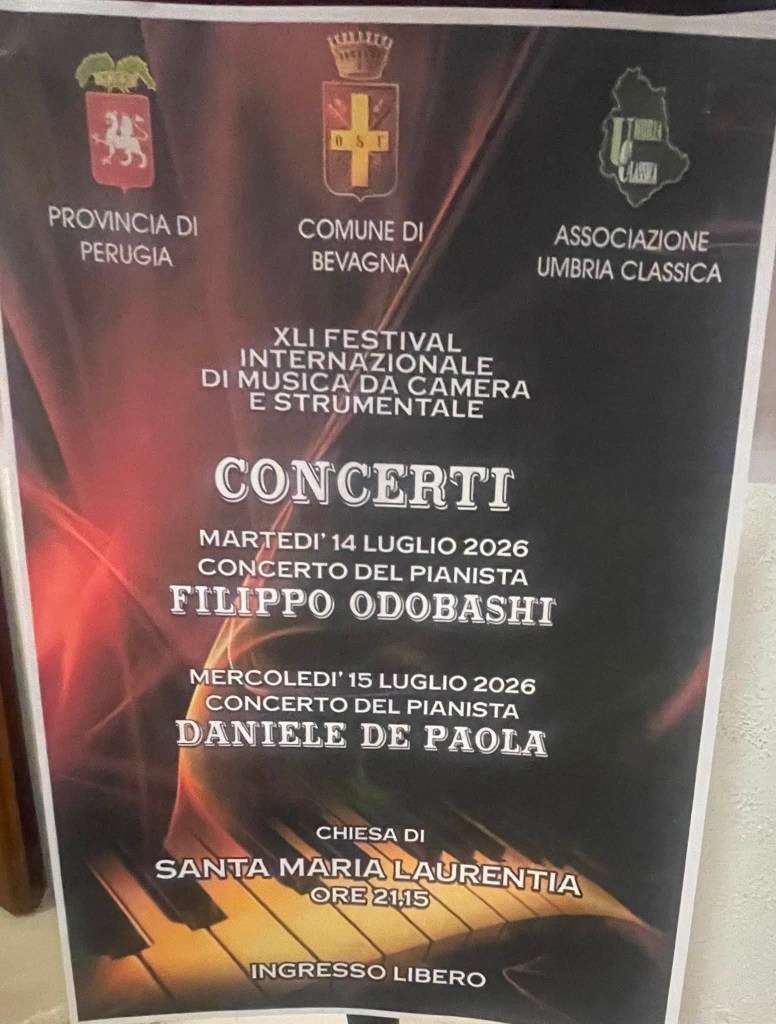
The second concert for Umbria classica in Bevagna saw Daniele De Paola playing two very important works for piano: Beethoven’s Sonata op 10 n 3 and Mussorgsky’s monumental Pictures at an Exhibition.
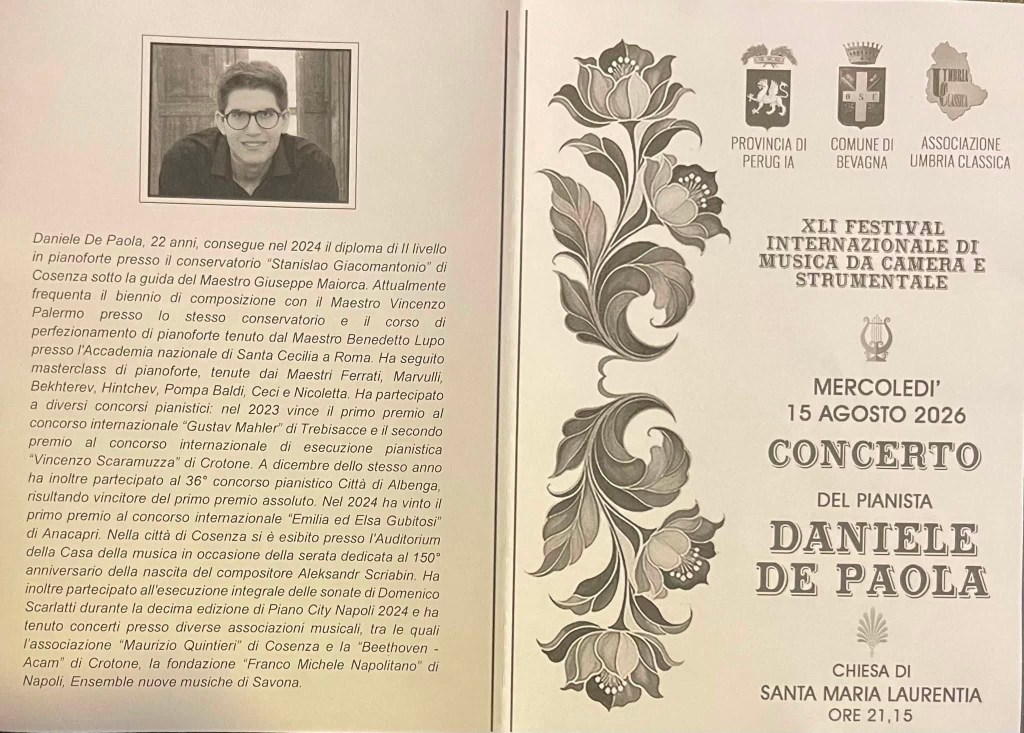
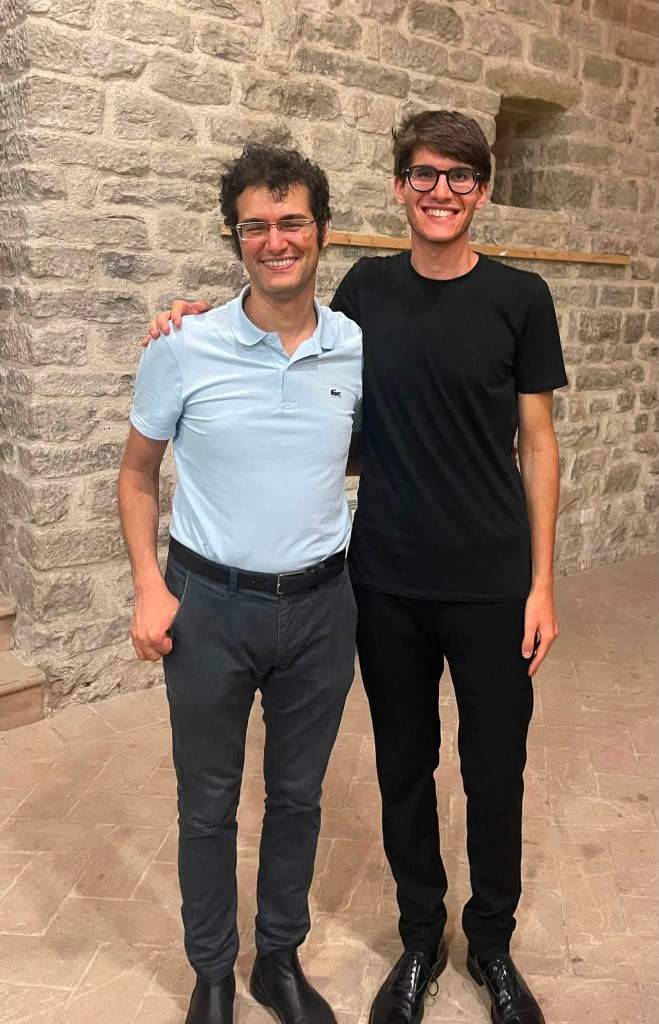
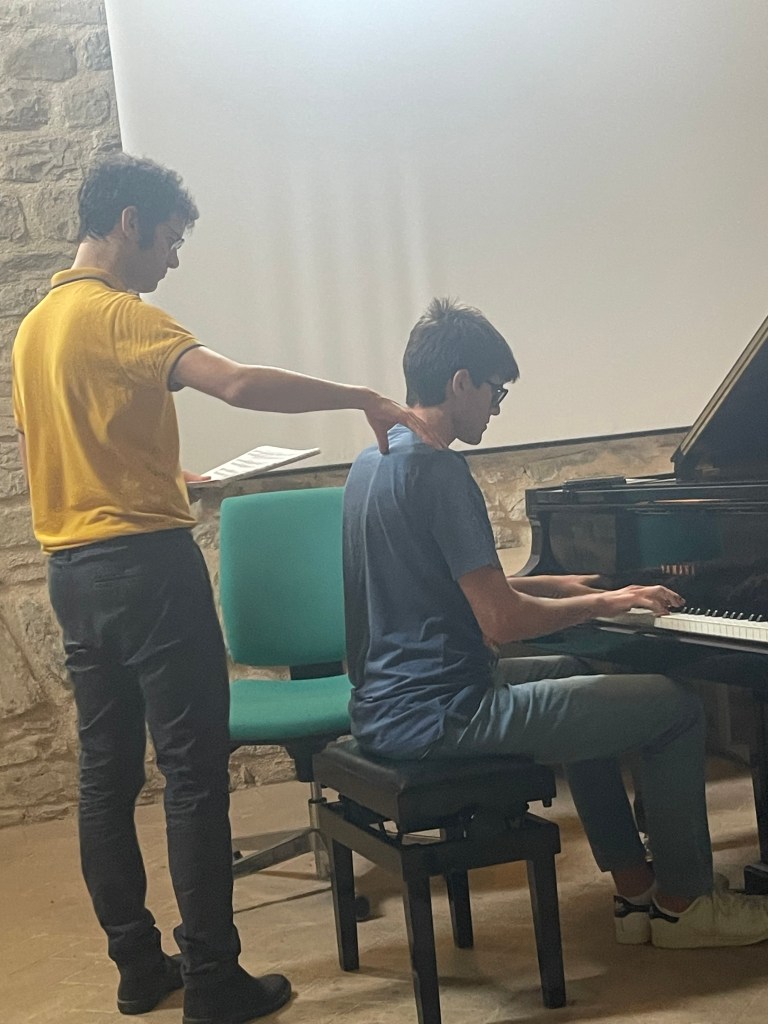
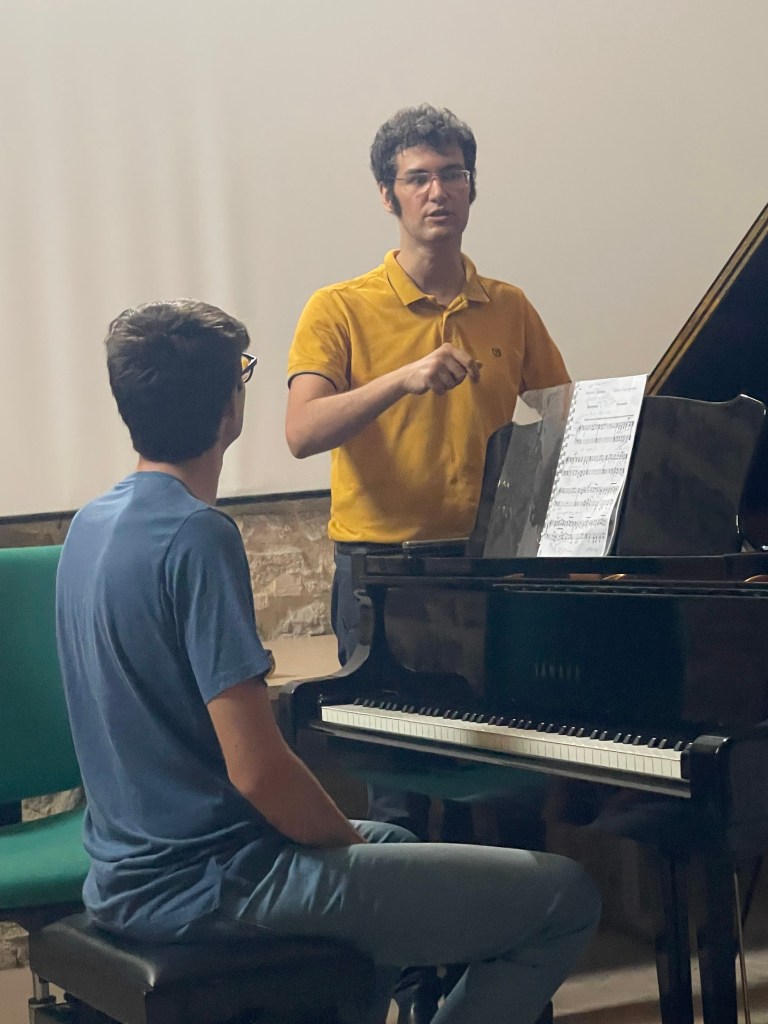
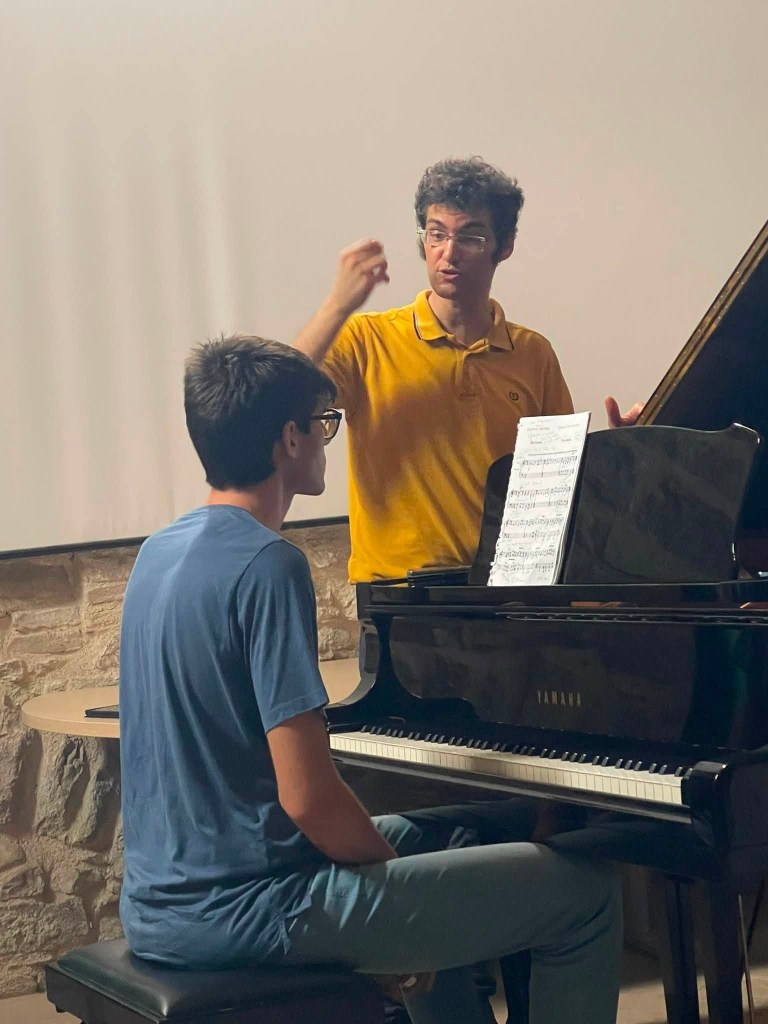
Daniele is in Bevagna to play in the Masterclass of Federico Nicoletta but studies at the Academy in Rome with Benedetto Lupo.
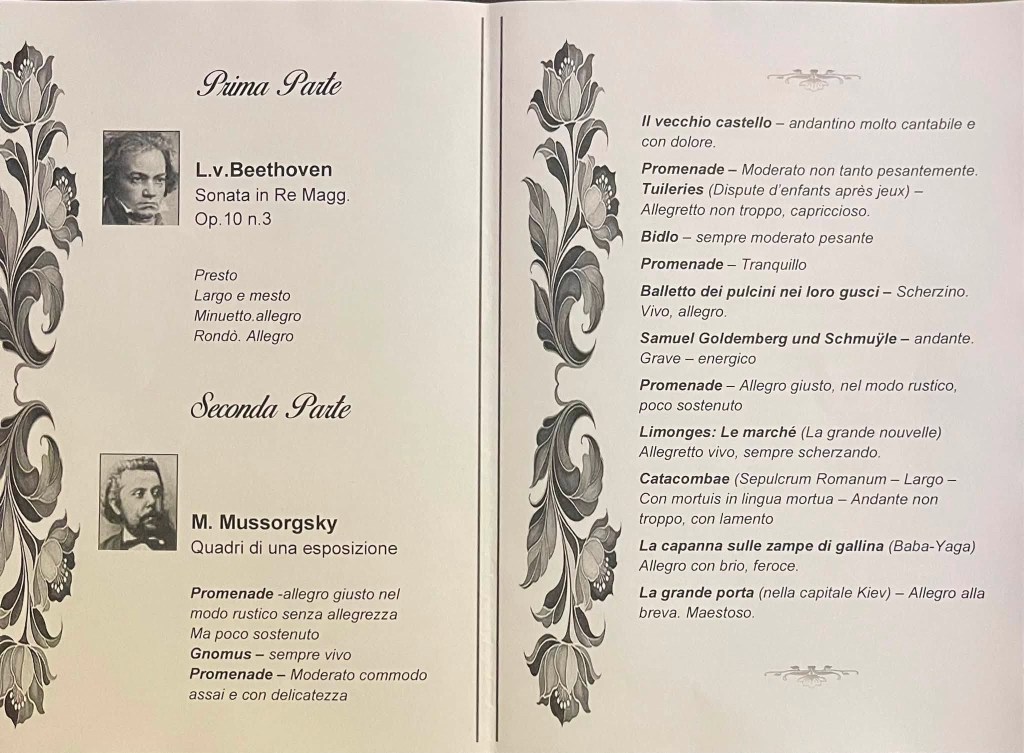
His musical pedigree shone through all he did, from the dynamic drive of Beethoven to the monumental authority in Mussorgsky. Finally the refined simplicity and crystalline Scarlatian clarity of Rachmaninov’s transcription of the Gigue from Bach’s violin suite in E.
Throughout the recital though I was continually surprised by his kaleidoscope of colours and his understanding of the architectural line and realised that what I had heard in the class earlier had been a work in progress of a craftsman learning his trade, where the ultimate goal is that of a artist of integrity and humility as he pays scrupulous attention to the composers indications.
The three Sonatas op 10 are early works as the three of op 2, where in the last of each set Beethoven breaks away from his master Haydn, and the slow movements become dramatic statements of great significance. The Sonata op 7 too, is where the genius of Beethoven develops the form that the has inherited and turns it into something quite original and unique.
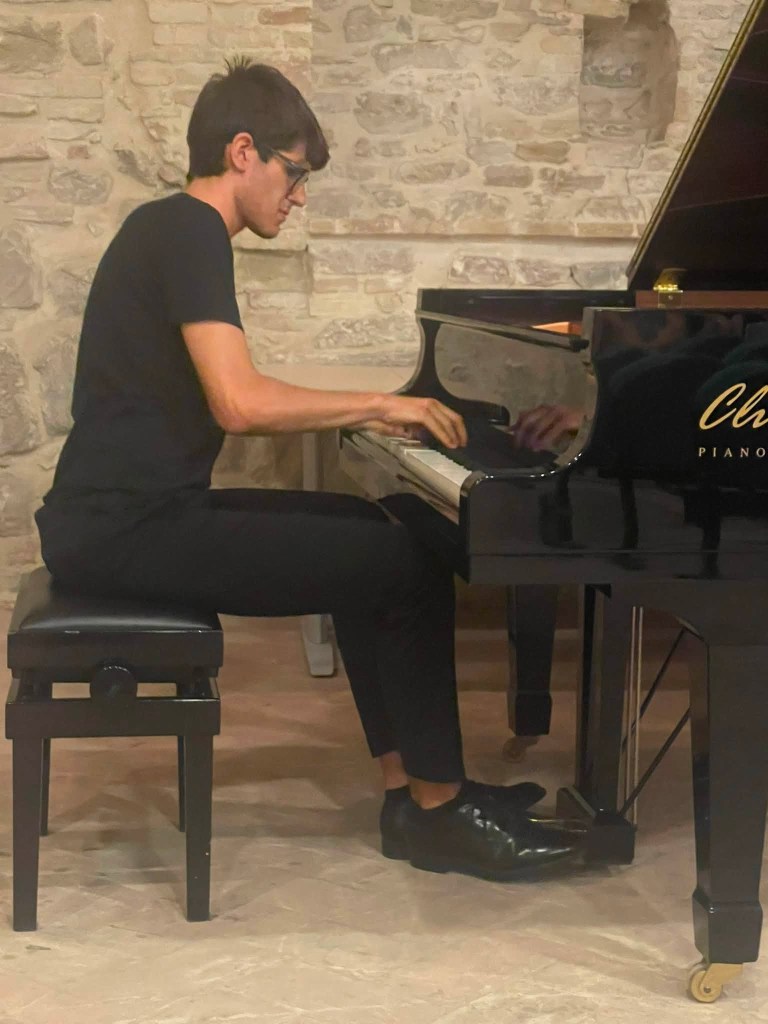
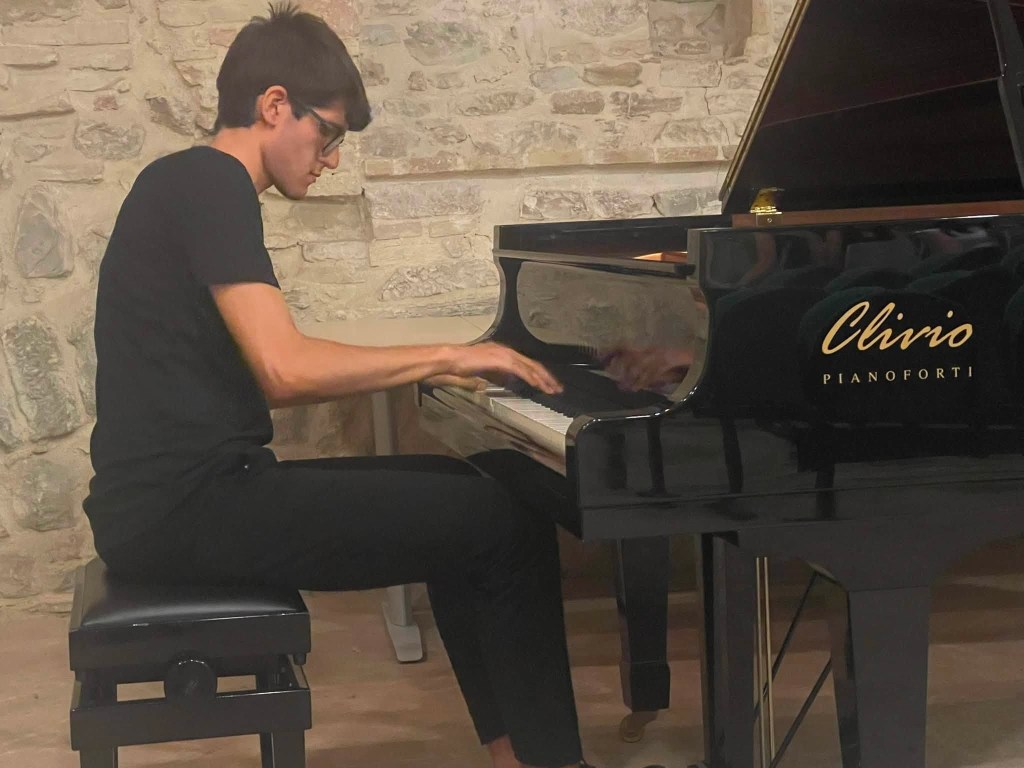
It was in the ‘Largo e mesto’ that Daniele played with a burning inner intensity and if the opening chords could have been played with even more weight the beauty and almost religious fervour of the central episode was of poignant significance. The opening ‘Presto’ had been played with dynamic drive and a palette of colours that gave great shape to the burning urgency always beautifully controlled and played with great clarity. The ‘Minuet’ was allowed to unfold with simplicity and radiance as the ‘Trio’ suddenly took wing with the pastoral ‘joie de vivre’ of question and answer over a bubbling accompaniment. The unanswered question of the ‘Rondò’ was played with extraordinary mastery where the fleeting jeu perlé scales just flowed from his fingers with the bass insisting on an answer which remains unanswered in the bass of the piano.
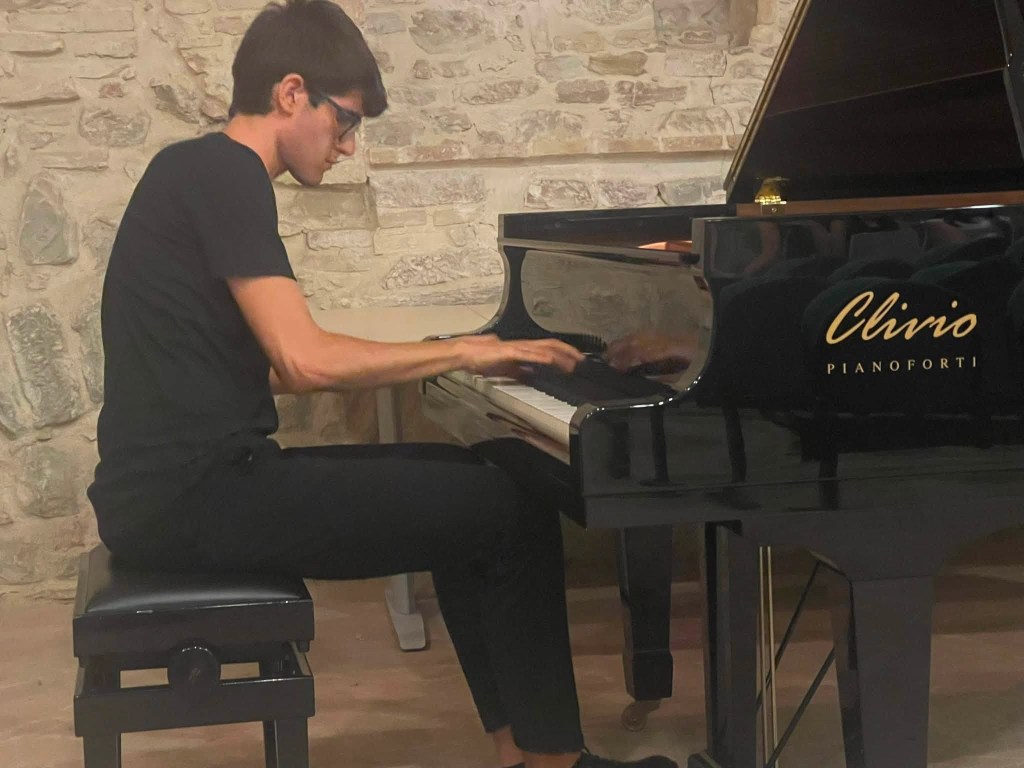
The Mussorgsky was a pleasant surprise too as it was played as the piano piece that Mussorgsky originally intended and not the orchestral transcription that was to come much later from the hands of Ravel and many others.
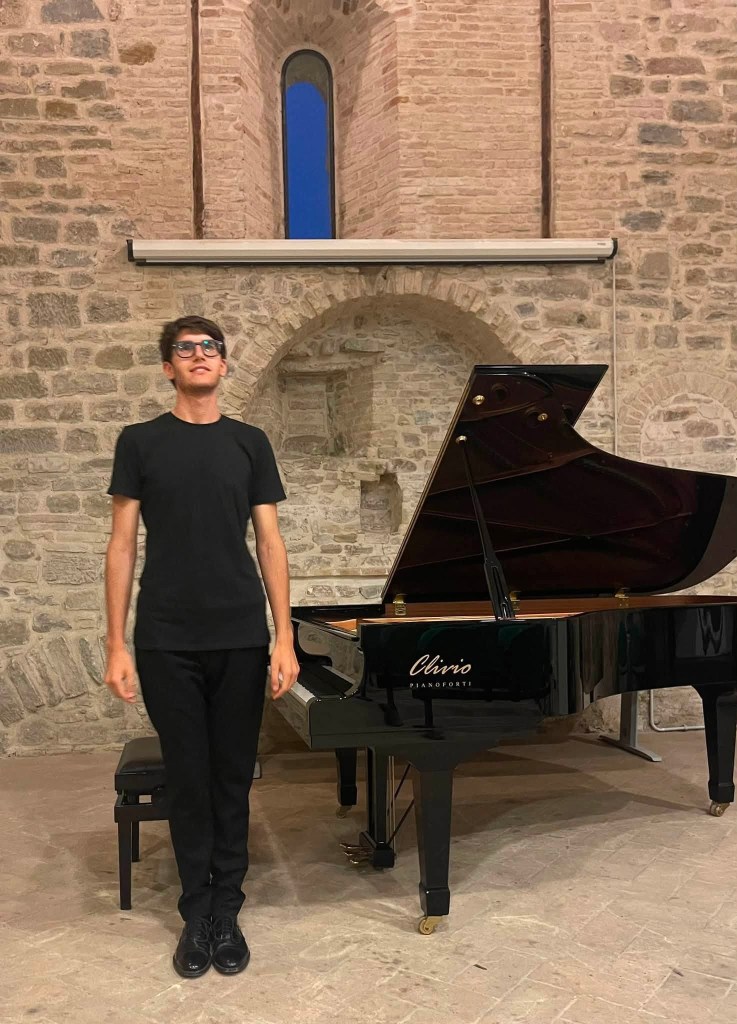
Instead of the usual strident declamation of the opening promenade Daniele played it with nobility but also with beauty. ‘Gnomus’ struck fear into us and was played with an authority that soon gave way to dynamic contrasts and shape. The final closing scale was played with remarkable technical mastery too. A whispered Promenade to the beauty of the ‘Old castle’ that Daniele played with poetic beauty and a remarkable sense of balance . ‘Tuileries’ was played with absolute clarity and sense of character as ‘Bydlo’ came lumbering on with sumptuous full sounds. The ‘Ballet of the unhatched chicks’ was played with charm and style of lightweight mastery. Interrupted only by the strident voice of Goldenberg and the whimpering of Schmuÿle, where Daniele’s remarkable sense of colour brought these two characters vividly to life. There was again a contrasting clarity with the ‘Market Place of Limoges’ that was contrasted with the disturbing resonance of ‘Catacombs’ which dissolved with remarkable control and ravishing beauty into the ‘cum mortuis in lingua mortua’. It was here that Daniele now let rip with the strident ugly sounds of ‘Baba-Yaga’ but was contrasted with the beauty of the central episode where Daniele’s remarkable control of sound and balance brought an orchestral feel to this remarkable movement. Arriving at the vision of the imaginary ‘Gate of Kiev’ that Daniele played with great architectural control. The bells peeling all over the keyboard and played with almost too much control but that Daniele relinquished for the final monumental appearance of ‘A Great Gate’ of such actual significance.
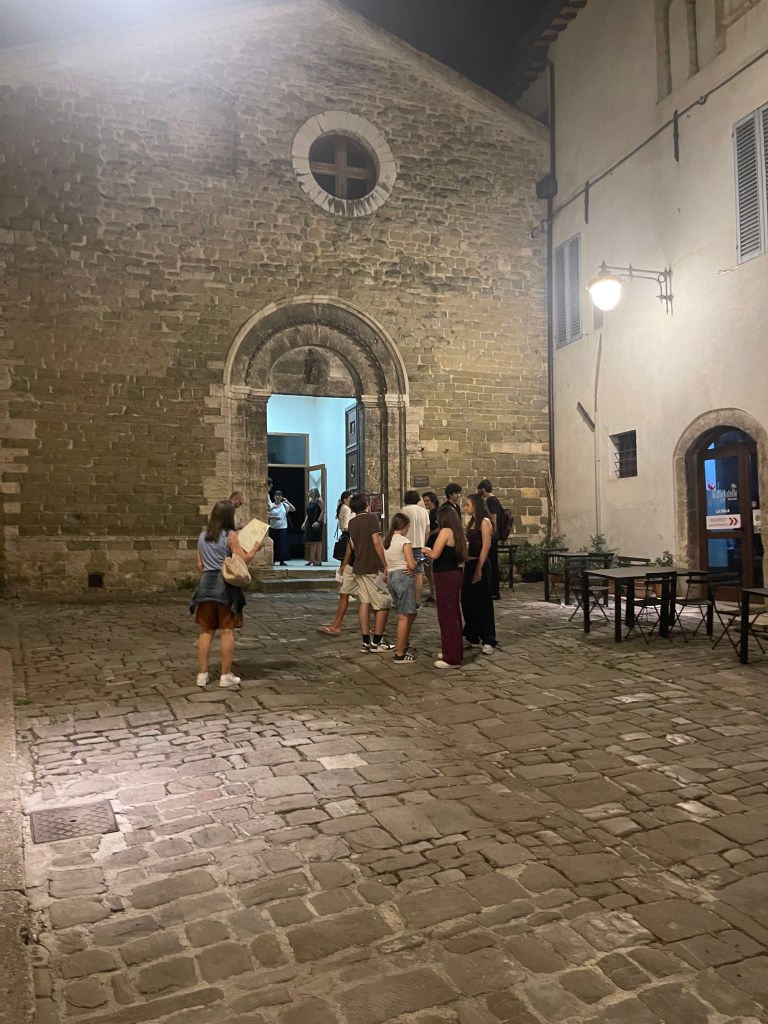
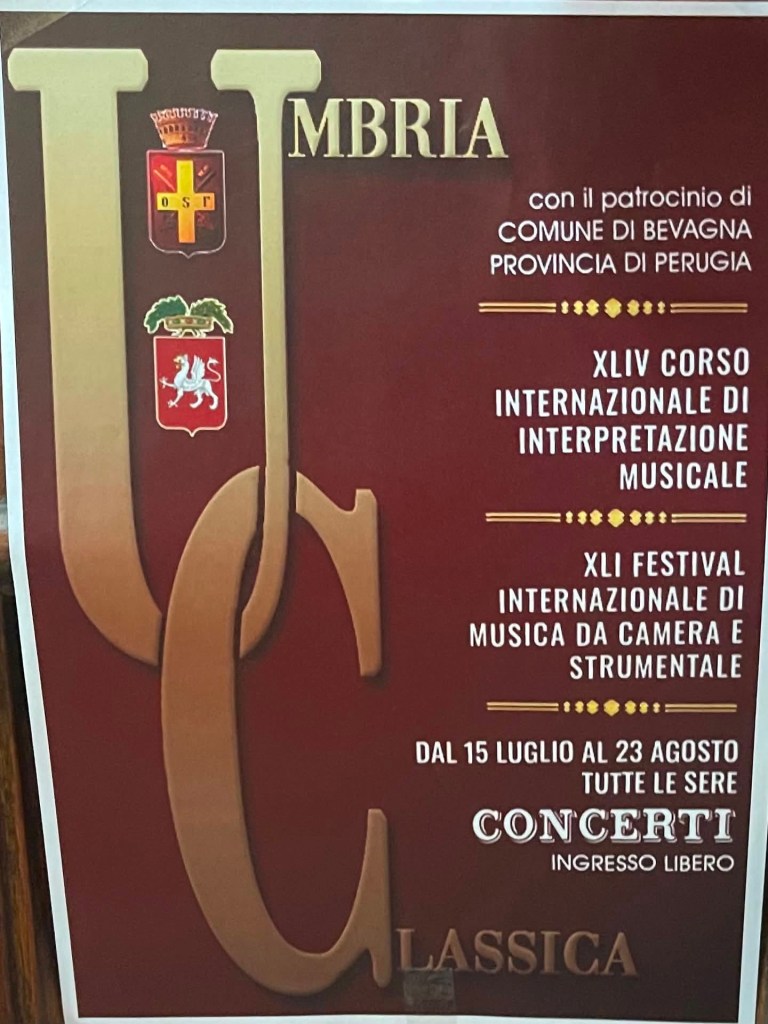
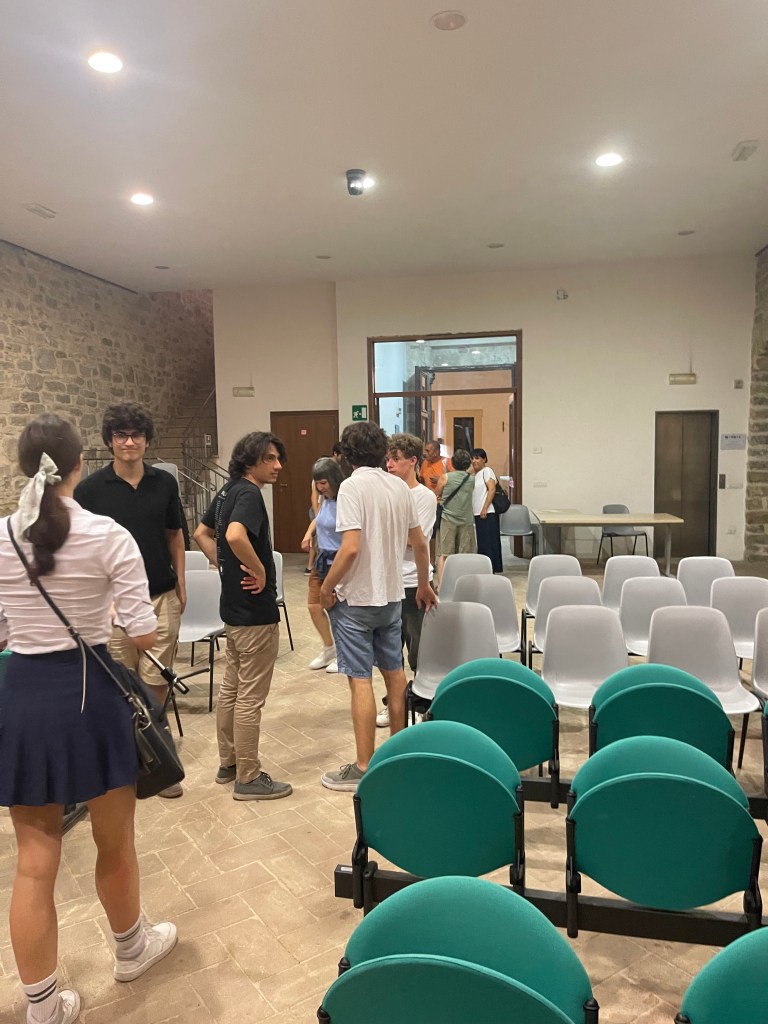
A remarkable performance of a work that always strikes terror into me for how it can be manhandled and abused by pianists who use it as a vehicle for bravura rather than the poetic images of the works of Mussorgsky’s friend Hartmann that Daniele showed us today.
I remembered that I had heard the same transformation in Lupo’s Graduation Recitals at the Academy this year. Federico Nicoletta a disciple of Lupo is continuing the same great lesson of integrity, mastery and humanity that are the ingredients of all true artists.