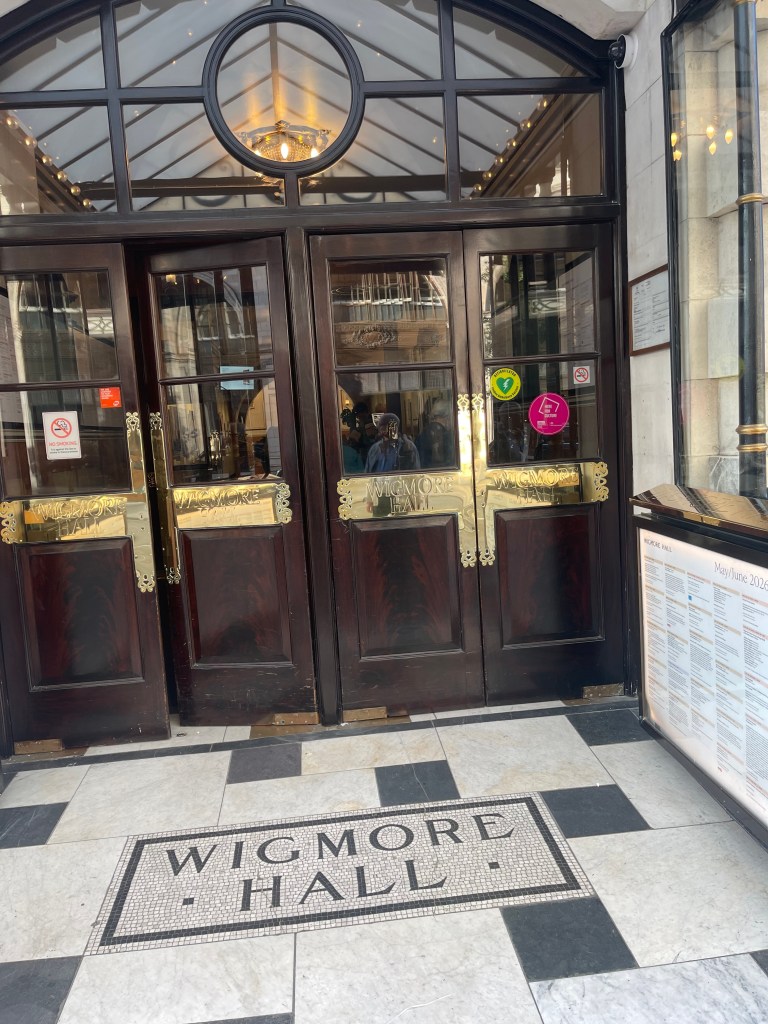
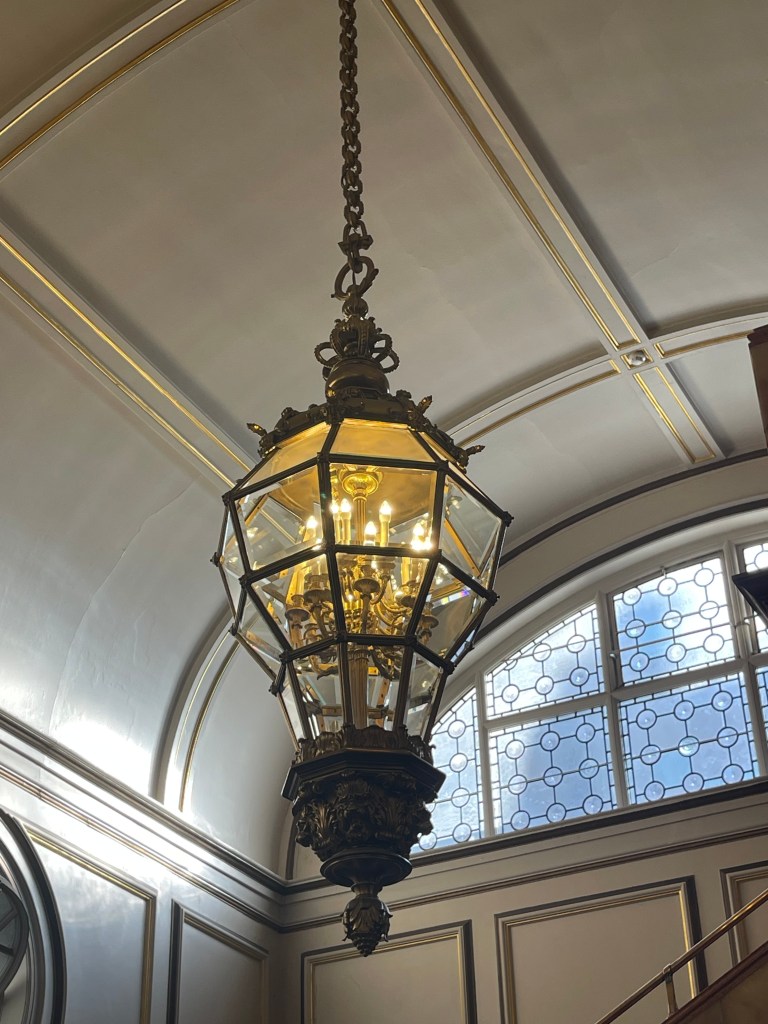
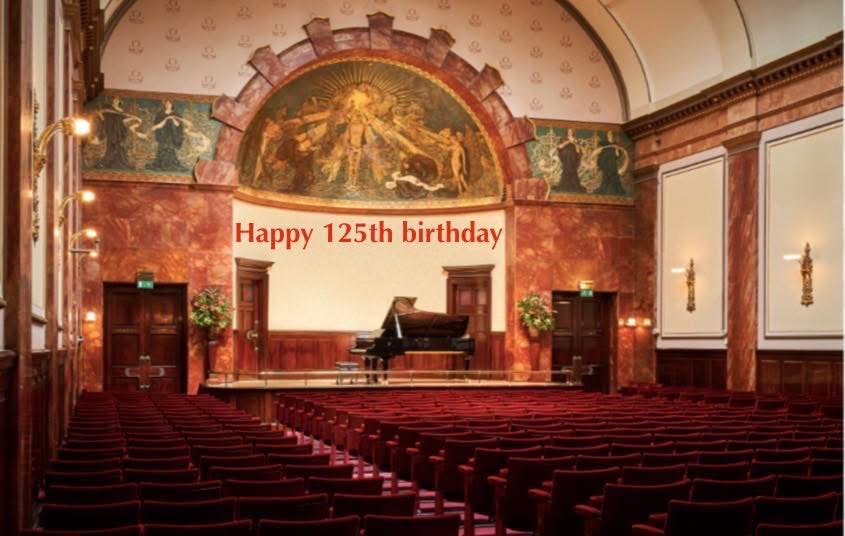
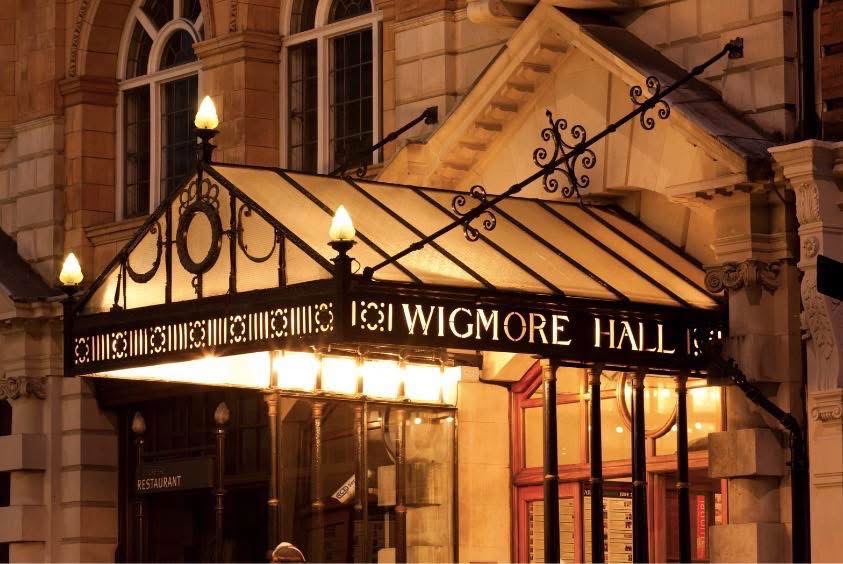
Lukas Sternath at the Wigmore Hall on the final day of the 125 Celebrations and a star is born.This is no ordinary star but one born on wings of song for which this hallowed much loved hall is famous. A pianist who is above all a musician where every note he plays is pregnant with meaning and with his searching musical intelligence can find the hidden secrets in the score that are there only for the very few. Living and brought up in Vienna where he was a member of the Vienna Boys Choir he has since been mentored by Igor Levit and Paul Lewis.
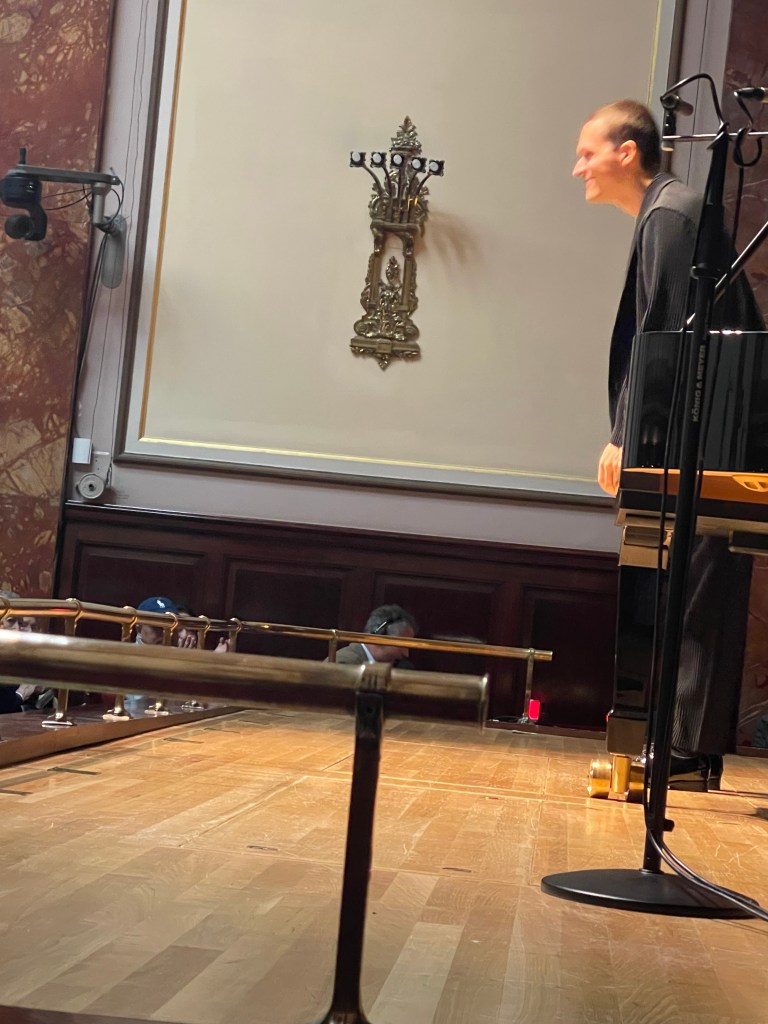
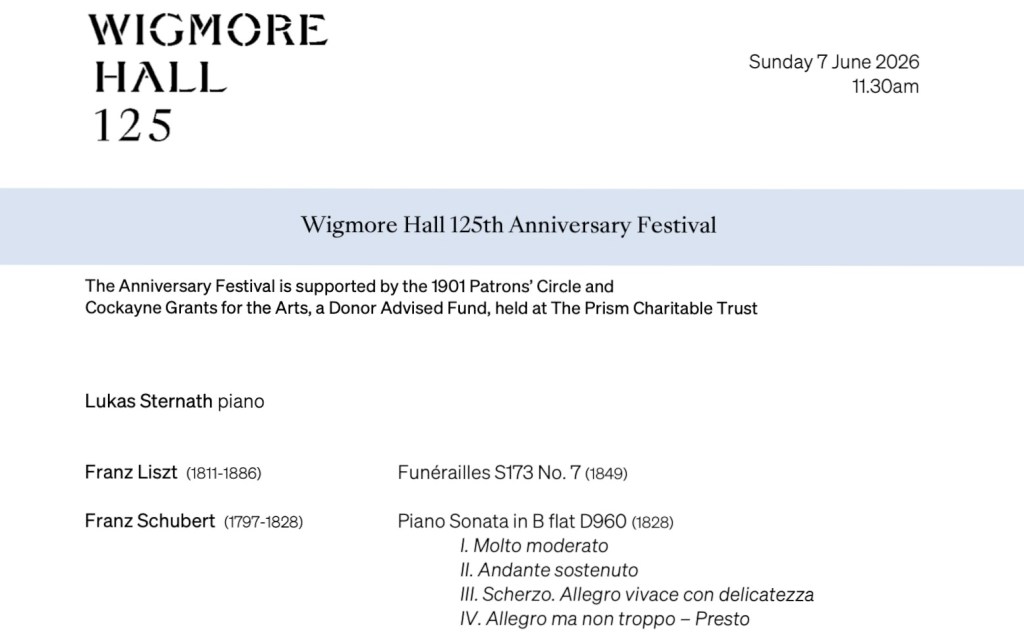
Just two works on his programme linked by the motif of death, with Liszt’s Funérailles transformed into Schubert’s last Sonata, written just months before his untimely death. There was no break between the two works which were linked by so many things, not least the rumble in the bass as Schubert announces the repeat of the opening of his B flat Sonata. This was no ordinary rumble but the death rattle before the reappearance of the heavenly opening of this last sonata.
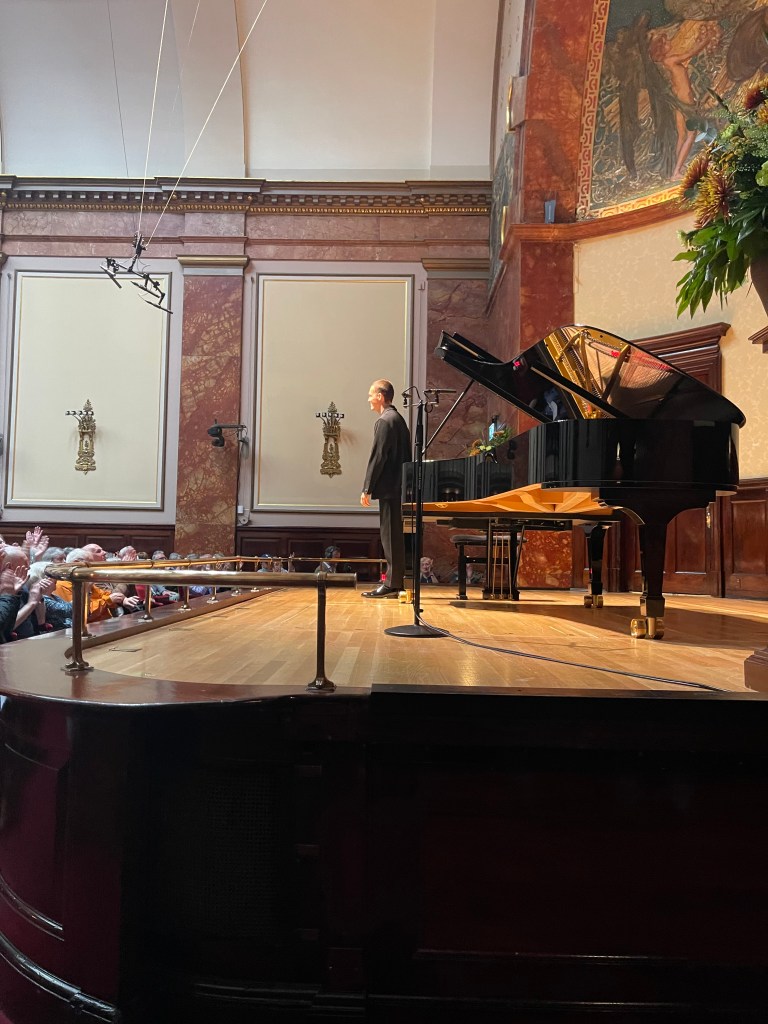
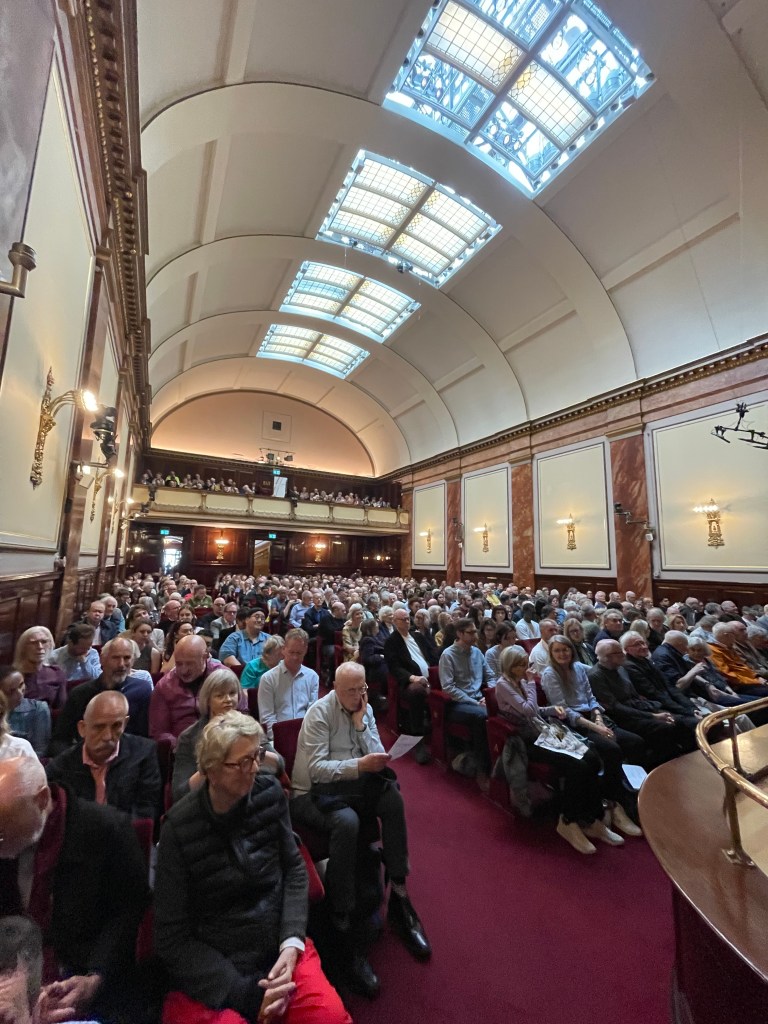
Cloudy mystery had opened the concert with the opening of Funérailles as if from afar as as it grew in imperative intensity. There was throughout, the death toll played with absolute neutrality like the forbidding thud of something ominous. The melody that opens in the bass was played with whispered luminosity whilst the death toll was menacing above. Opening to a melody of radiance and beauty played with a glowing luminosity and timelessness, disappearing to a whisper and then ……….’deathly’ silence. In fact all through the recital silence had been as eloquent as the actual sounds. The entrance of the military from afar was played almost without pedal with a clarity that allowed the call to arms above to speak with military precision and insistence. Building to a climax that was even more alarming for the build up of volume and sumptuous sound and then……. silence. A burning silence out of which a lone voice was heard of purity and beseeching innocence.The military are heard in the distance in a cloud of smoke before the final chords played with a whispered deathly precision .It was here that the lone voice of Schubert was allowed to stray with it’s calming balm of simplicity and radiant unearthly beauty. A quite remarkable achievement for a young artist on his Wigmore Hall debut to be able to capture the audience from the very first note. Not a sound was heard from the audience from the first to the last note, Silence in every sense was Golden like the beautiful fresco that has looked on from above for the past 125 years.
The Schubert Sonata was played with simplicity and beauty with marvels of accompaniment that were washes of sound on which Schubert’s seemingly endless mellifluous inspiration could float. Everything had been a haze of unearthly beauty until the menacing interruption of the ritornello and the explosion, completely unexpected and played with startling violence. It made the reappearance of the opening of the Sonata even more unearthly, just as it had been coming after Funérailles. Everything that Lukas played was without accents, singing with a natural fluidity and glowing beauty. Simple playful passages denied the ominous cloud that was to erupt with such passionate vehemence in the development. Schubert’s continual heart beat was interrupted only by wondrously played bass counterpoints of great clarity, but that took us to a different level of intensity each time. There was magic in the air as the ‘pianississimo’ that Schubert rarely marks in his works, was allowed to speak for itself with breathtaking beauty. Always projecting the sound but with a sense of balance and scrupulous attention to the score, in a strange way it drew us in even more to him, as the tension in the air was palpable with strangers united on wings of celestial beauty. Again unearthly silence after the beautifully placed final chords and the appearance of a new voice, that of a deep benediction of rapt contemplation. A control of sound that revealed a true mastery and sensitivity of touch where the melodic line could sing with a unique voice as the accompaniments were just wafts of stray sounds blowing in this torrid breeze. The return of the opening after a quasi religious outpouring of rapt chorale like intensity, was played with ever more mastery, where this box of hammers and strings was truly turned into a celestial harp of sounds wafted on wings of song. Suddenly the ‘Scherzo’ opened with a completely different sound that was of freshness and light with the question and answer of the phrases played with simple joyous enticement. A beautiful simple whispered legato to the ‘Trio’ was interspersed discretely with Schubert’s unsettling bass interjections. The ominous ‘G’ of the last movement was played with the terror that Schubert intended, as it interrupted the mellifluous flow of the simple länder. An interruption indeed just as that trill had been and as the following thunderous interruptions were to signify. Masterly playing from these Beethovenian irascible outbursts, but that Lukas immediately dissolved into a magic lilting dance that seemed to disappear into the distance with extraordinary sensitivity, allowing his hands to glide to the top of the keys barely able to reach that far . This was a performance that will long reverberate in this hall for the searching musicianship and simplicity allied to a technical mastery and beauty of sound where I could envisage the shadow of Alfred Brendel looking on with a knowing smile of recognition.
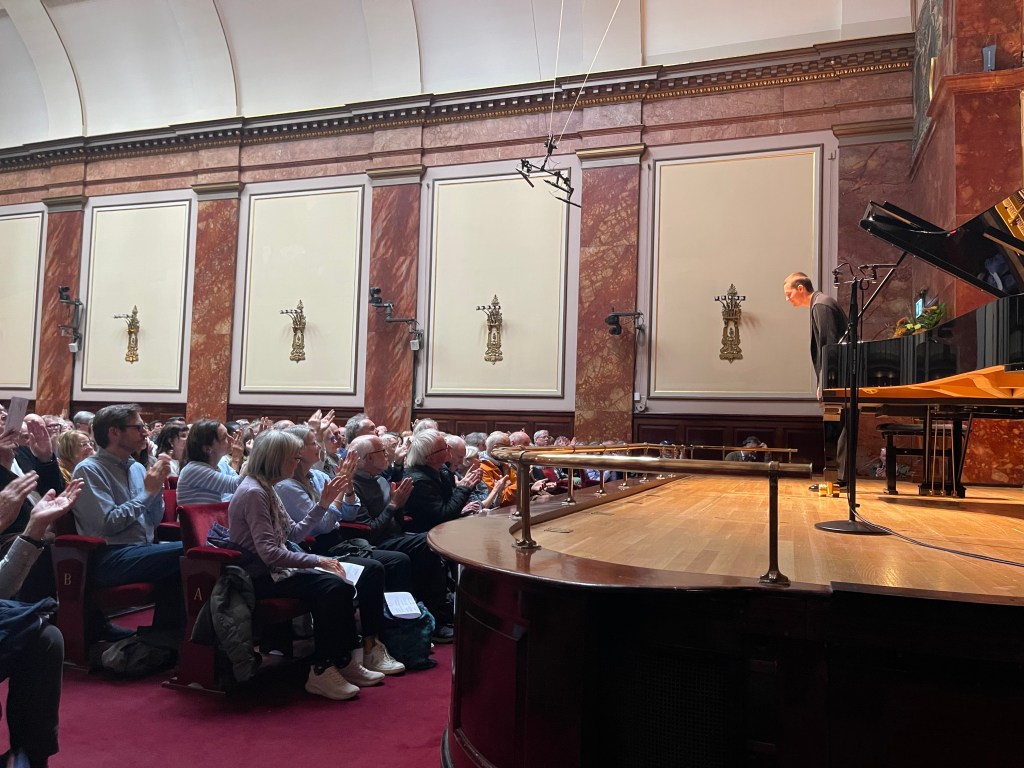
The Intermezzo in A major op 118 n.2 by Brahms was a fitting benediction for the experience we had received on this final Sunday morning of Wigmore celebrations. A performance of ravishing beauty but also of architectural strength as he allowed himself a moment of sumptuous orchestral richness which gave even more poignant meaning to the tender return of the opening. He had created in a few minutes a miraculous tone poem of searing beauty with many of the audience not wanting to rush out of the hall, wishing to wallow a little longer in the magic atmosphere of a rising star who has found a home for his extraordinary gifts.
It had no importance that we that lingered found the promised coffee pot and sherry glasses empty, because for us merry few Music is the Food of Love especially when served on Wings of Song as this morning.
https://christopheraxworthymusiccommentary.com/2024/03/20/christopher-axworthy-dip-ram-aram/

