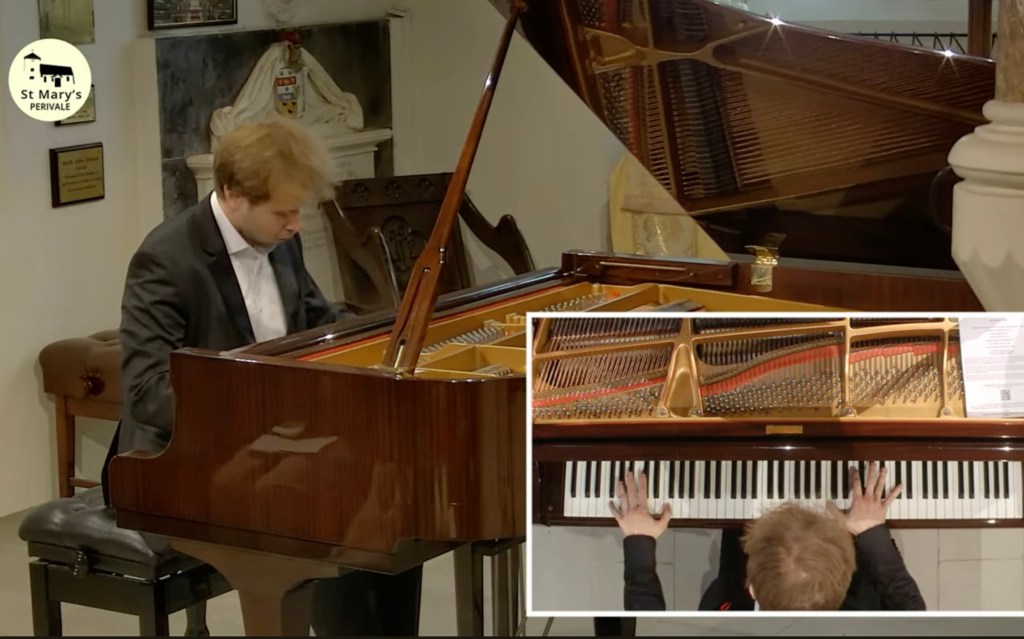
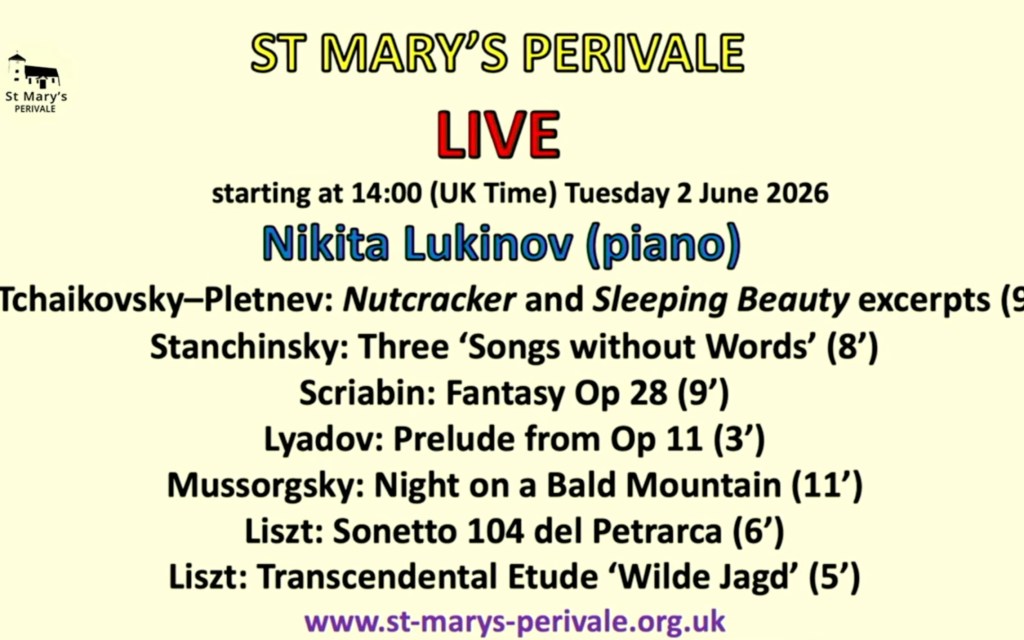
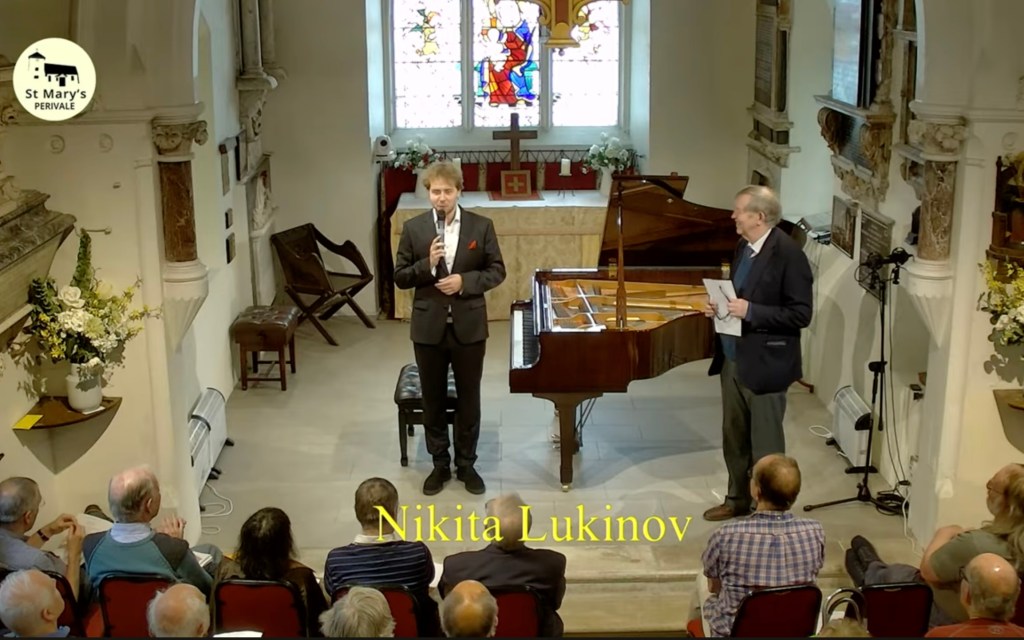
Hugh Mather said it all really at the end of a recital where once again this young Russian,Scottish based pianist proved himself to be a Prince of Pianists : ‘ A staggering performance of a largely Russian programme this dramatically thundery afternoon by Nikita Lukinov. An exceptional pianist, phenomenal technique, such a noble style of playing. An unforgettable recital of breathtaking proportions, well worth rewatching on our website. And such interesting, entertaining and eloquent introductions to each of his 7 pieces too.’
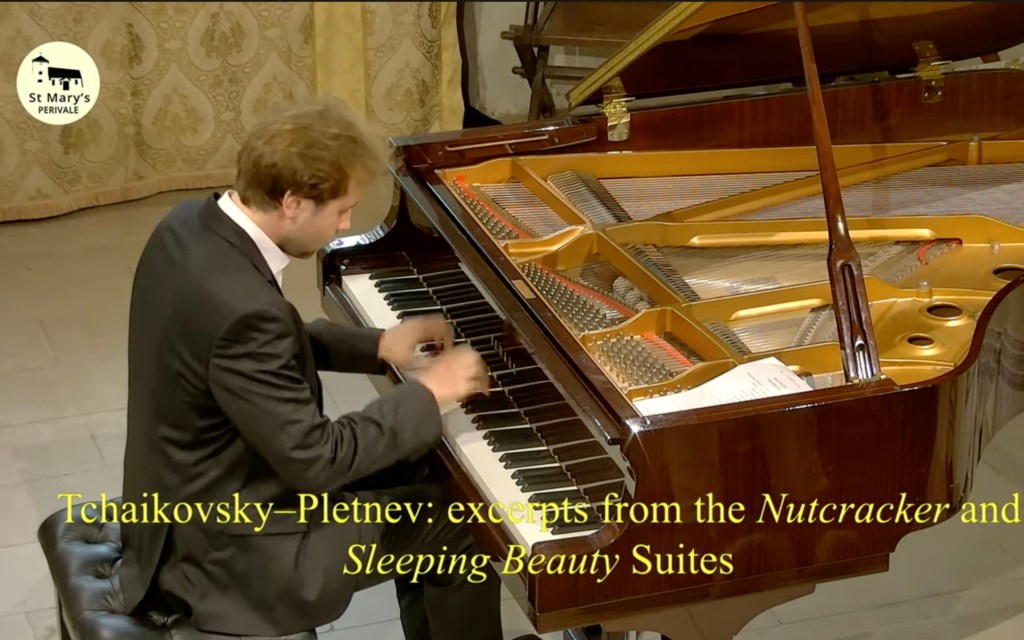
Beginning the recital with three pieces from Pletnev’s masterly transcriptions from Tchaikowsky Ballets , that had brought him victory in the Tchaikovsky Competition in Moscow in 1978 at the age of 21. The two opening pieces from Sleeping Beauty were played with a kaleidoscope of characterisation. From the impish delight and pianistic hi-jinx of ‘The Dance of the Pages’ to the ravishing beauty of the ‘Adagio’. Freedom and sumptuous beauty united as this young man could transform the piano into an orchestra of grandeur and create the exhilarating atmosphere of the theatre where Tchaikovsky is the undisputed master.The impish tip-toe of the ‘Sugar Plum Fairy’ from the ‘Nutcracker’ with the piccolo high in the piano that Nikita played with ice cool clockwork precision to ravishing effect. Nikita is not only a communicator in music but he has a charm and intelligence to inform with words precious information about the composers and the works he was about to play. Red socks and matching red handkerchief just add to an artist who can charm and seduce his audience like a dashing Russian Prince on horseback.
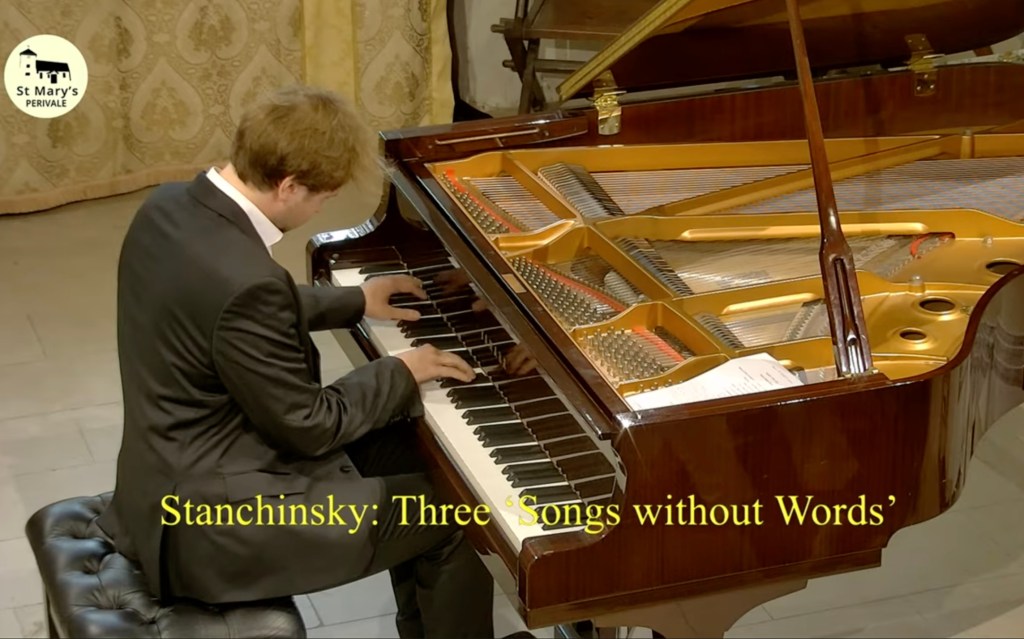
Stanchinsky is surely one of the few composers that have never been heard in Perivale or anywhere else, but Nikita had delved deeply into the archive and found a composer of ‘darkness, simplicity and honesty’ who was to take his life at only 26. A quite considerable amount of music remains and much more probably in the Russian archives, but Nikita had found three Songs without Words obviously of Mendelssohnian inspiration. The first was a hymn like piece of sombre meditation with Nikita’s beautiful sense of balance that could allow the tenor and soprano melody to duet with sumptuous beauty. The second was a ‘Barcarolle’ of radiance and beauty with its gently moving undulations accompanying its mellifluous partner. The third was a long outpouring of nostalgia and rhapsodic beauty. As Dr Mather said he would love to hear more of this enigmatic composer ……..and there is still much to discover.
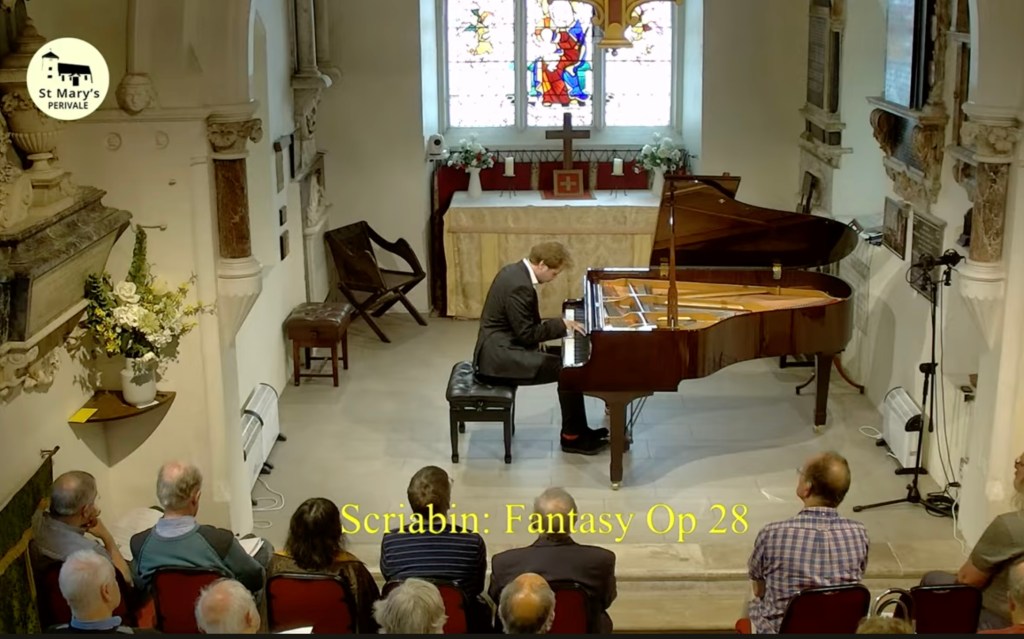
I have heard Nikita play the Scriabin Fantasy before but his enticing introduction allowed me to listen in a different light being reminded of his Mysterium theory and of creation being a means to resist the world we live in. These early works show the pianistic influence of Chopin and even Liszt as the Fantasy is a sumptuous outpouring of passionate intensity dissolving into moments of melting bel canto beauty. Notes spread over the entire keyboard with a control of the pedal that allows for a clarity of line no matter the amount of notes pouring from Nikita’s hands with such voluptuous virtuosity.
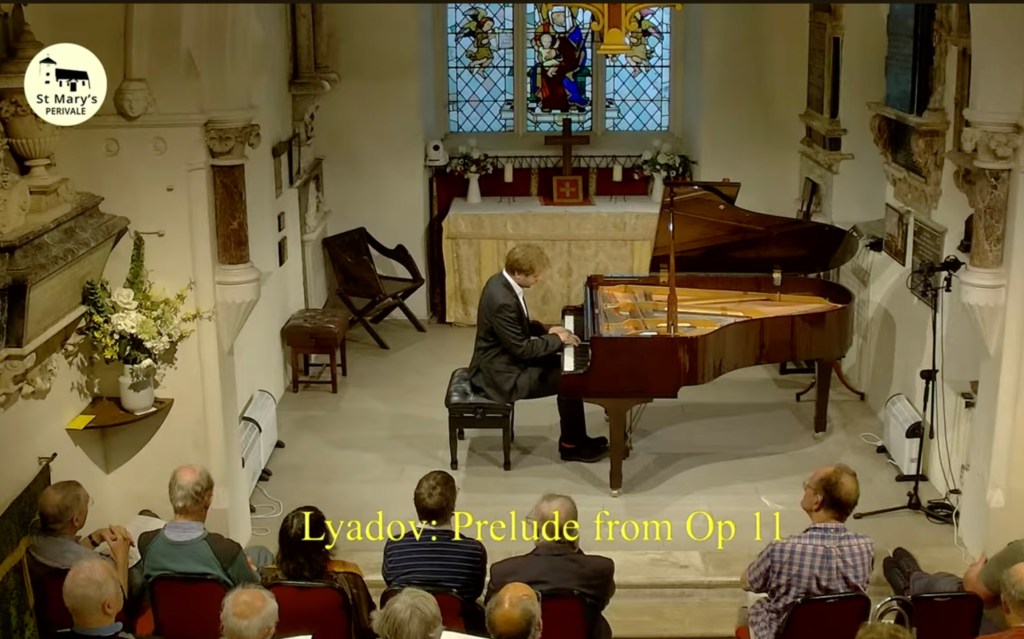
A gentle lullaby by Lyadov that Nikita confesses to be enamoured of, even if only momentarily! He demonstrated it with playing of great delicacy and glistening beauty with its beautifully atmospheric ending.
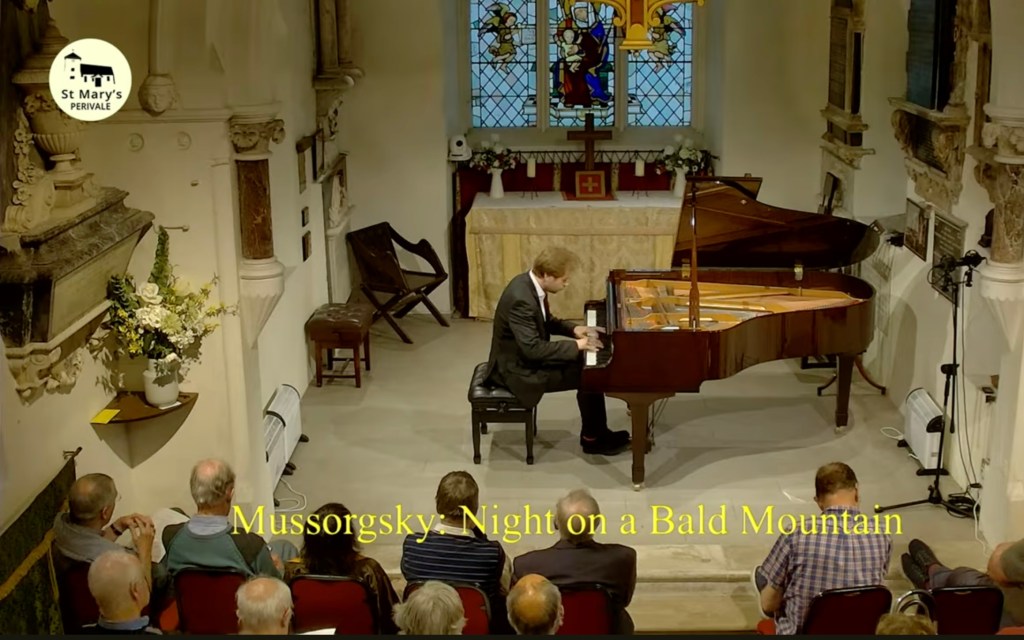
Mussorgsky I have heard Nikita play solo and on two pianos but his total conviction of frenzy and brilliance are so overwhelming that each time is a scintillating discovery of a work that Nikita told us is still in evolution, searching within the original score that the composer was destined never to hear performed.
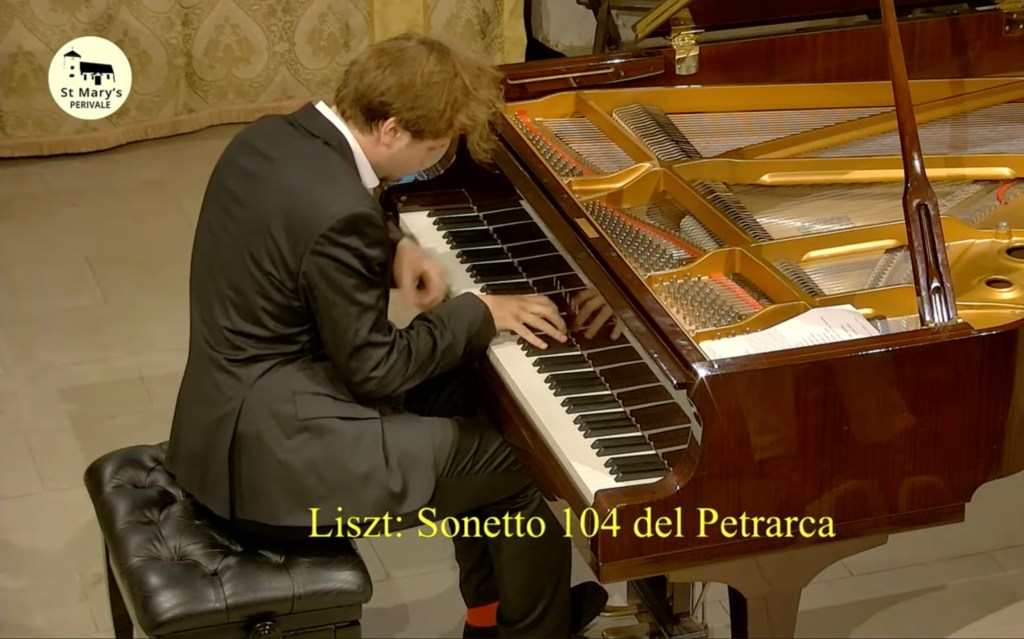
Some beautiful playing of poetic beauty and fluidity with embellishments thrown off with audacious ease as the Sonetto was allowed to unfold with simplicity and mastery.
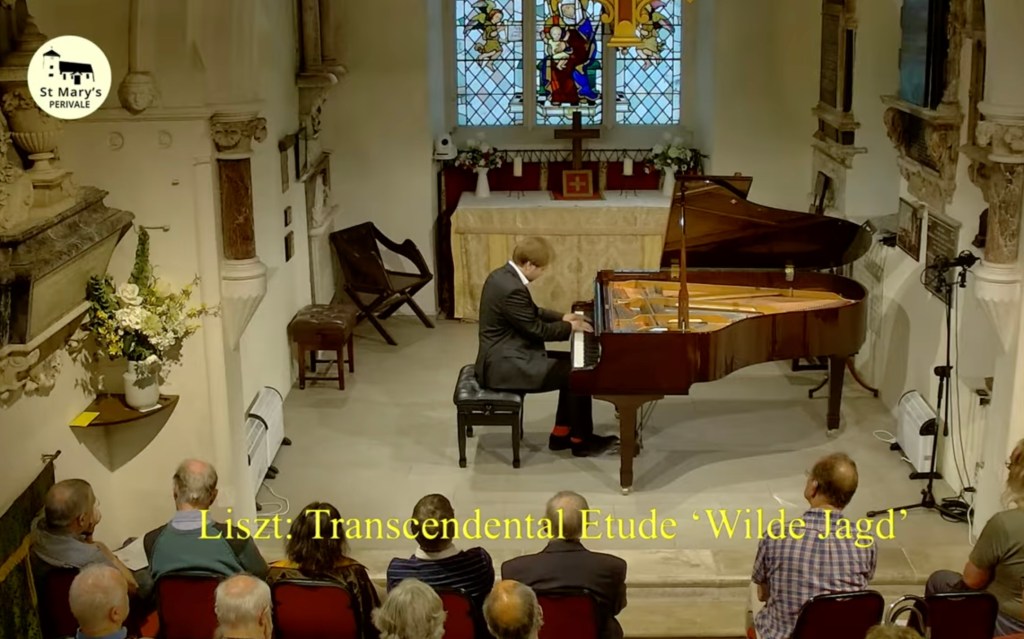
Liszt’s Transcendental study was played with breathtaking daring and masterly control as this was fearless playing of a daring young man not afraid to risk all, flying ever higher with nobility and grandeur.
After so many notes it was the choice of a real artist to treat us to the calming balm of Bach’s C sharp minor Prelude from Book One of the 48. Simplicity, respect and artistry combined to calm the atmosphere and allow us to contemplate the wonders that had befallen us and the rain that awaited a very full audience outside this beautiful redundant church that rings with the sound of music.
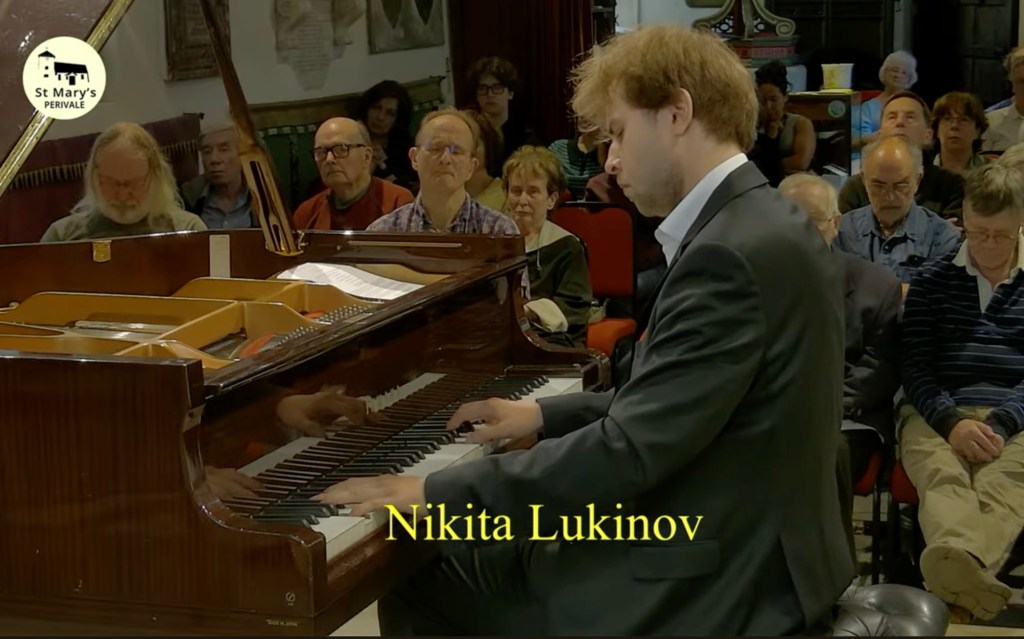
Nikita Lukinov is a Scotland-based concert pianist praised for his “extraordinary breadth and freedom of imagination” (Gramophone), described as a “ true master of storytelling through music” (The Pianist), and named a “ Rising Star” by BBC Music Magazine. He has performed as a soloist across the UK, Europe, Asia, and Russia, appearing at leading venues including Wigmore Hall, Southbank Centre in London; Usher Hall in Edinburgh; Palau de la Música in Barcelona; Guangzhou and Shanghai Opera Houses; and the Tchaikovsky Conservatoire in Moscow. His performances have been regularly broadcast on BBC Radio 3, BBC Radio Scotland, and Scala Radio.
A recent milestone was his 2024/25 Scotland tour, comprising over 40 performances from the Borders to Orkney. Alongside major concert venues, the project included extensive outreach work in socially disadvantaged communities and special education settings, reflecting Nikita’s commitment to widening access to high-quality live music. In 2025, Nikita was awarded 3rd Prize at the Málaga International Piano Competition and undertook a major tour of China, combining recitals with masterclasses at institutions including Beijing University and leading concert halls in Beijing, Shanghai, Suzhou, Chengdu, and Guangzhou.
Born in Russia, he studied at The Purcell School and the Royal Conservatoire of Scotland on full scholarships, completing Bachelor’s, Master’s, and Artist Diploma degrees. He has been a senior piano lecturer at RCS since 2021 and is among the youngest senior faculty members across the UK conservatoire sector. Nikita’s debut album Kaleidoscope (KNS Classical, 2023) features works by Tchaikovsky, Scriabin, and Prokofiev. He is also active in developing innovative performance formats, including chamber concerto arrangements and cross-genre collaborations.
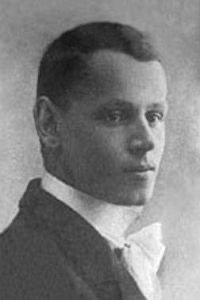
Alexei Vladimirovich Stanchinsky 21 March 1888 – 25 September (OS) / 6 October 1914
From a young age Stanchinsky was a gifted musician, composing and performing his first works at the age of six years. At the age of 16, he continued to develop his skills by taking lessons from music educators such as Josef Lhévine and Konstantin Eiges for piano and Nikolai Zhilyayev and Alexander Gretchaninovf or counterpoint, harmony, and composition. At the age of 19, Stanchinsky entered the Moscow Conservatory to continue his musical studies with Taneyev and Igumnov to assist his musical growth.] Stanchinsky had always shown great promise as a musician even at a young age, but was often viewed as “unstable” and a victim of his own nerves. This became very prominent when his father died in 1910, as Alexei became quite delusional and suffered from this state for many years.After a brief hiatus from music, Stanchinsky returned to his roots by gathering folk tunes for a personal collection and eventually returned to the conservatory life-style by studying with his colleagues again. However, his life would never again be what it was. In October 1914, he was found dead next to a stream near Logachyovo after wandering the countryside. His death is still a mystery, as details were never revealed about his last days.