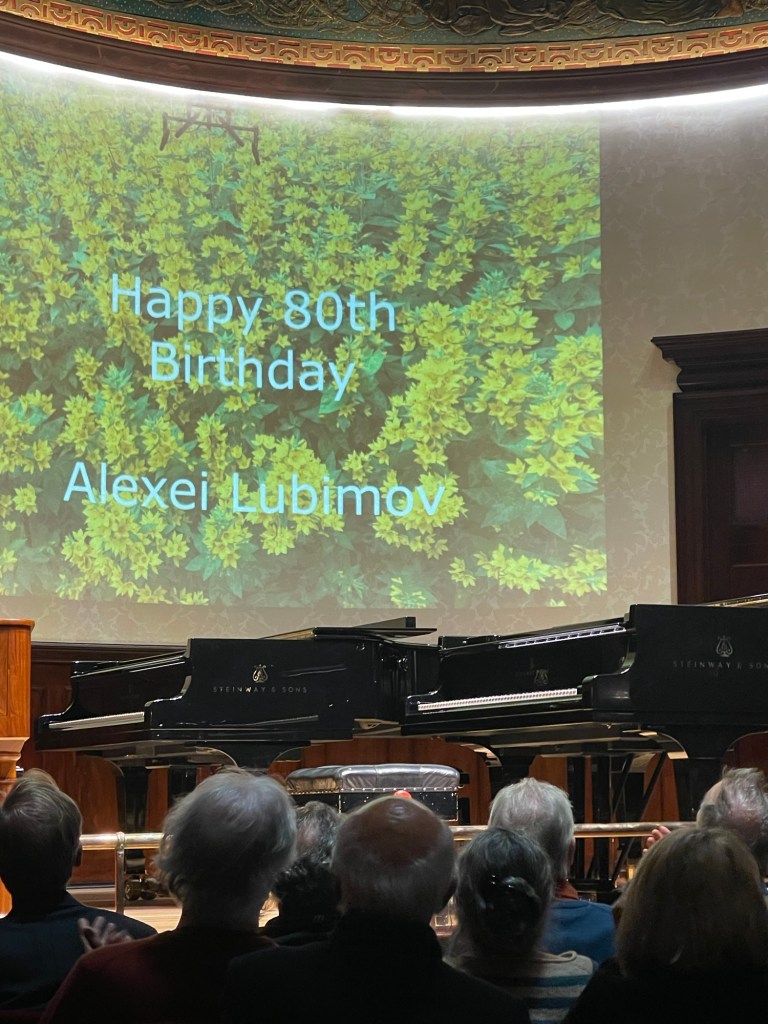
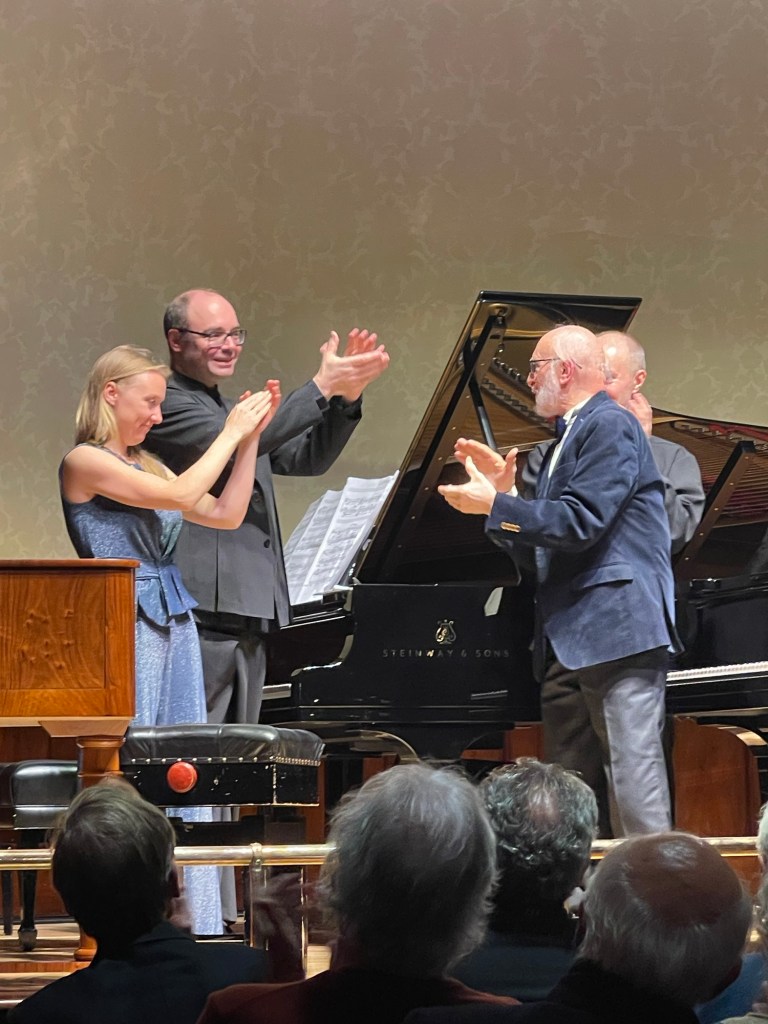
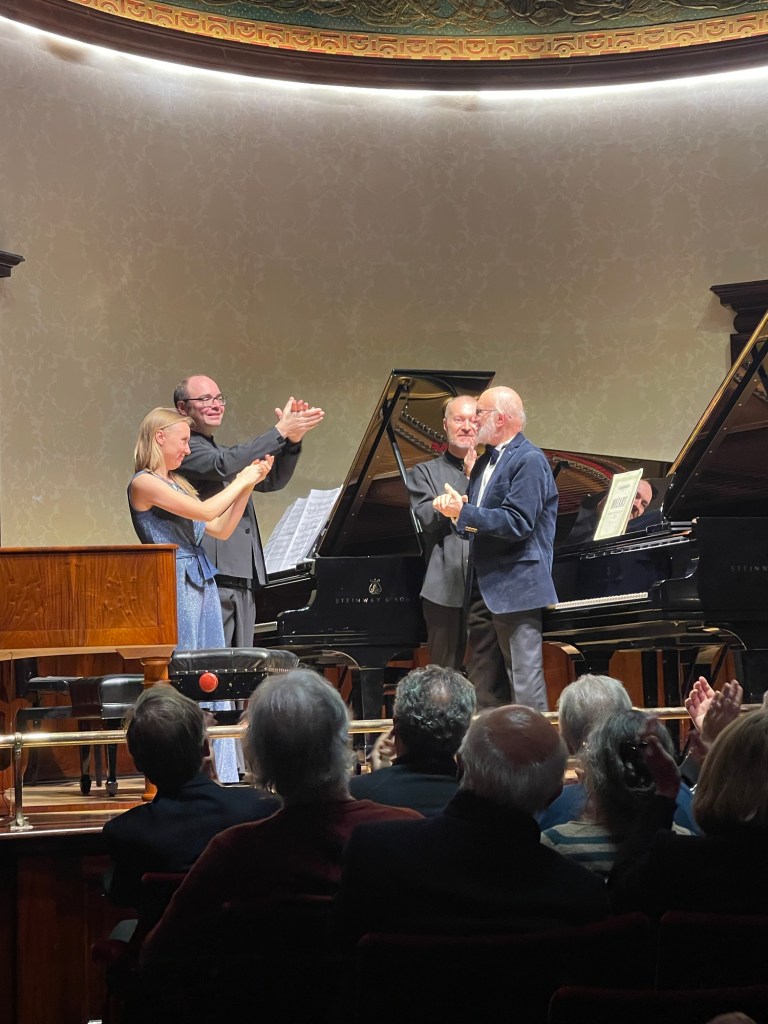
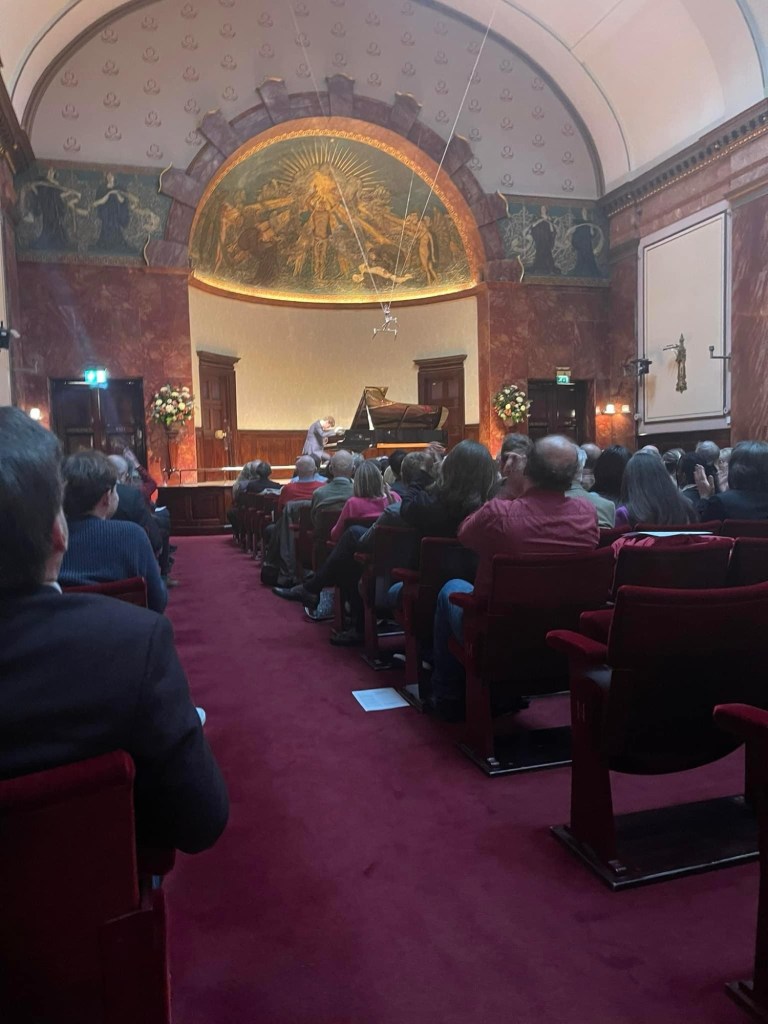
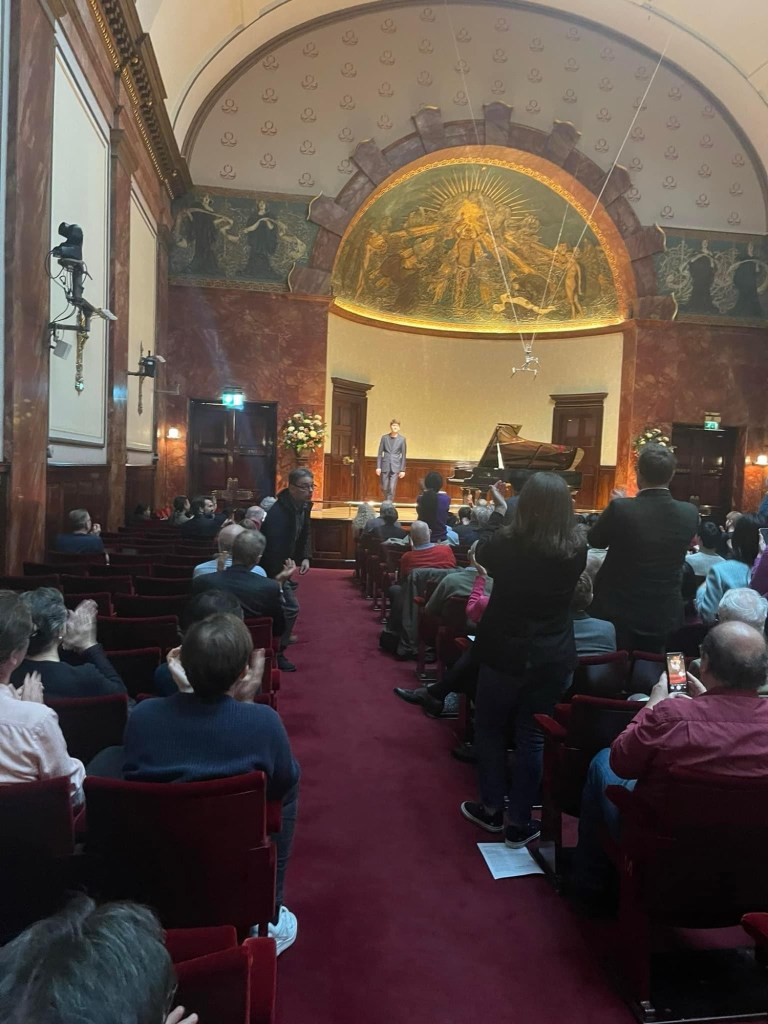
To celebrate the 80th birthday of the visionary pianist, fortepianist and harpsichordist Alexei Lubimov, whose influence spans the 20th and 21st centuries, three outstanding pianists and the master himself come together for a programme which starts and ends with Mozart but encompasses a wide range of repertoire in between
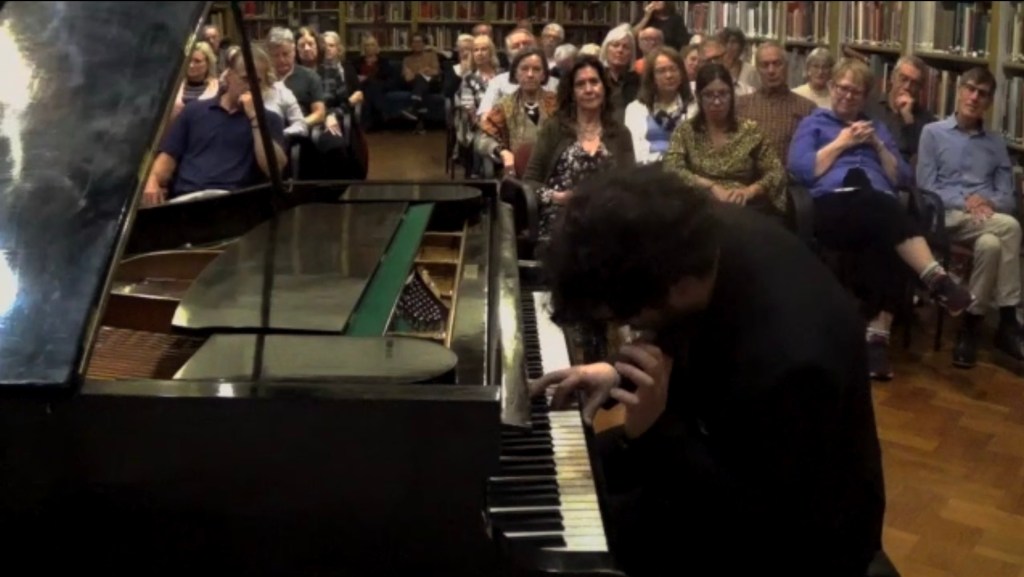
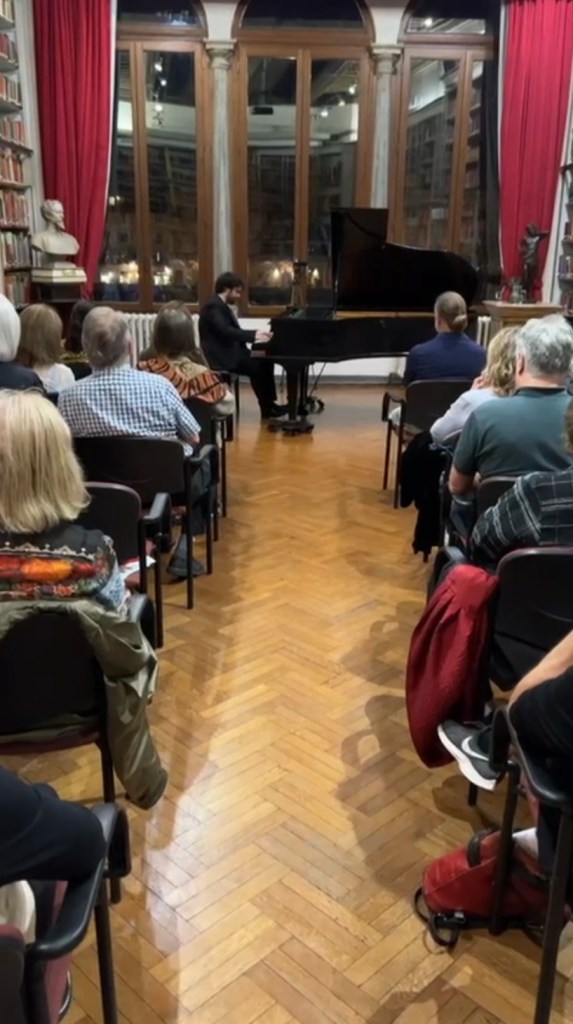
A celebration for a legendary figure from his illustrious disciples.It was with great love that Alexander Melnikov had organised an eightieth birthday for his mentor who far from our shores is a revered master It was obvious from the first notes of Mozart’s D minor fantasy on a modern day fortepiano that here was a master able to bring to life with an improvisatory freshness such a well know masterpiece .A timeless simplicity where every note was a living glowing presence that held us spell bound as a whole opera opened up before us .The mystery of the opening Andante set the scene for the poignant crystalline beauty of the Adagio played with the freedom of a stage personality in an opera with beseeching sighing semiquavers that were heart rending .The cadenzas were thrown off with nonchalant ease as the simple Allegretto entered like a breath of fresh air with ornaments that just brought even more sunshine to such radiance.
The whispered jeux perlé of the early A flat impromptu of Schubert was played with a clarity and even more so as the pedal stop was changed and we had to strain to hear such whispered beauty .The answering chords were given all the time they needed to make the music talk as never before .The subtle passion of the central episode was played with the same aristocratic timelessness that I remember from Rubinstein. Infact Lubimov belongs to those very special memories in this hall that I have of Perlemuter Tagliaferro ,Del Peyo and of course Rubinstein who could all play with the real weight of artists who had digested the music and made it their own. A sense of communication where musical meaning and values were more important than stale perfection. It is to Rubinstein we have to thank for saving the old Bechstein Hall from demolition in the 70’s .A hall reborn under William Lyne’s inspired programming having been renamed Wigmore after the First World War’s confiscation of all things German.
It is interesting to note that a new Bechstein Hall is about to be reborn just a stone’s throw from the old one almost 100 years on! Some magnificent playing from Lubimov ‘s disciples in Stravinsky Beethoven and the dissident Volkonsky.But it is the master that we have come to celebrate tonight and it was a joyous occasion where the musical chairs in Schubert’s Divertissement allowed us another glimpse, if all too brief, of their master as he took his turn . And of course the master himself includes always in his programmes the music of the Ukrainian composer Silvestrov as a statement of protest and solidarity and tonight he included his Kitsch Music of 1977 A final glimpse of Mozart from Lubimov’s hands in duo with Olga Pashchenko illuminated this heartfelt tribute . It concluded with three short Moments Musicaux specially written for the masters birthday celebration.
Hats off to Alexander Melnikov for honouring London with such a celebration of a giant of our time.
Dear illustrious colleague, I agree about Schubert but when it is done with such conviction and communication from the hands of a master it does open a door like in Mozart that we take for granted too often. Listen to Cortot for example but only in small doses and never to be copied but to understand the poetic intent. Boulanger would always quote Shakespeare :’words without thought no more to heaven go ……..,’ not to copy but to open a gate……
Jonathan Ferrucci returns after his outstanding 2022 Norden Farm solo recital to play one of the greatest of all Mozart’s piano concertos.Followed by the charming and virtuoso, Saint-Saens Havanaise; an entrancing showpiece for local young violinist Elena Tomey.Concluding with the Beethoven symphony cycle (21-25) which continues with the radiant and witty Second.
Jonathan Ferrucci (piano) Elena Tomey (violin) Nigel Wilkinson (conductor)
Faure Pavane Mozart Piano Concerto No.24 in C minor, K.491 Saint-Saens Havanaise Beethoven Symphony No.2
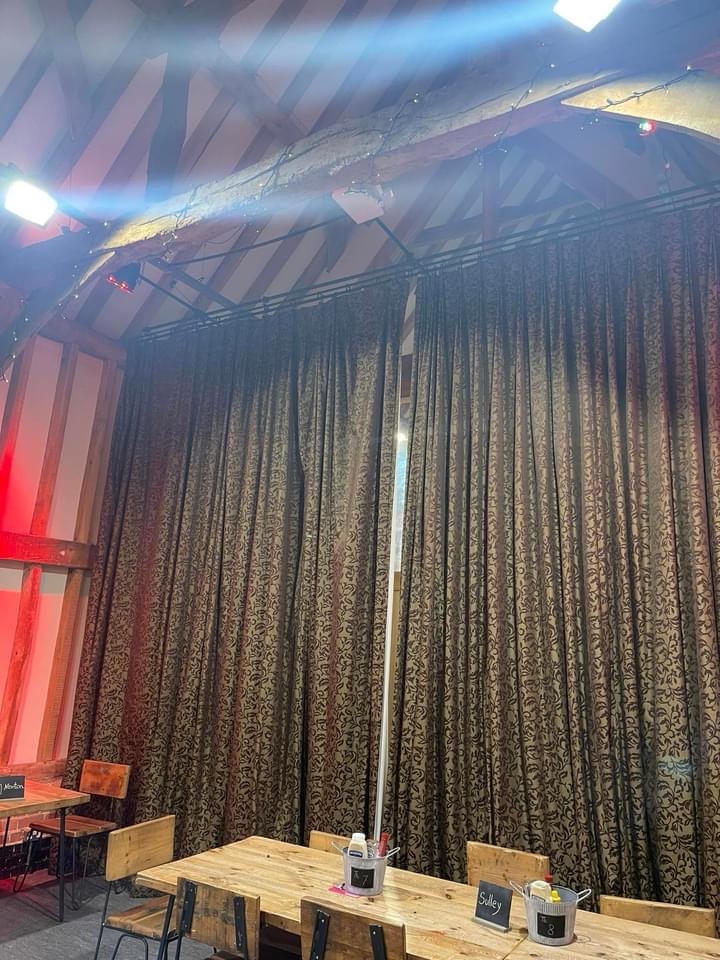
Courtyard Theatre
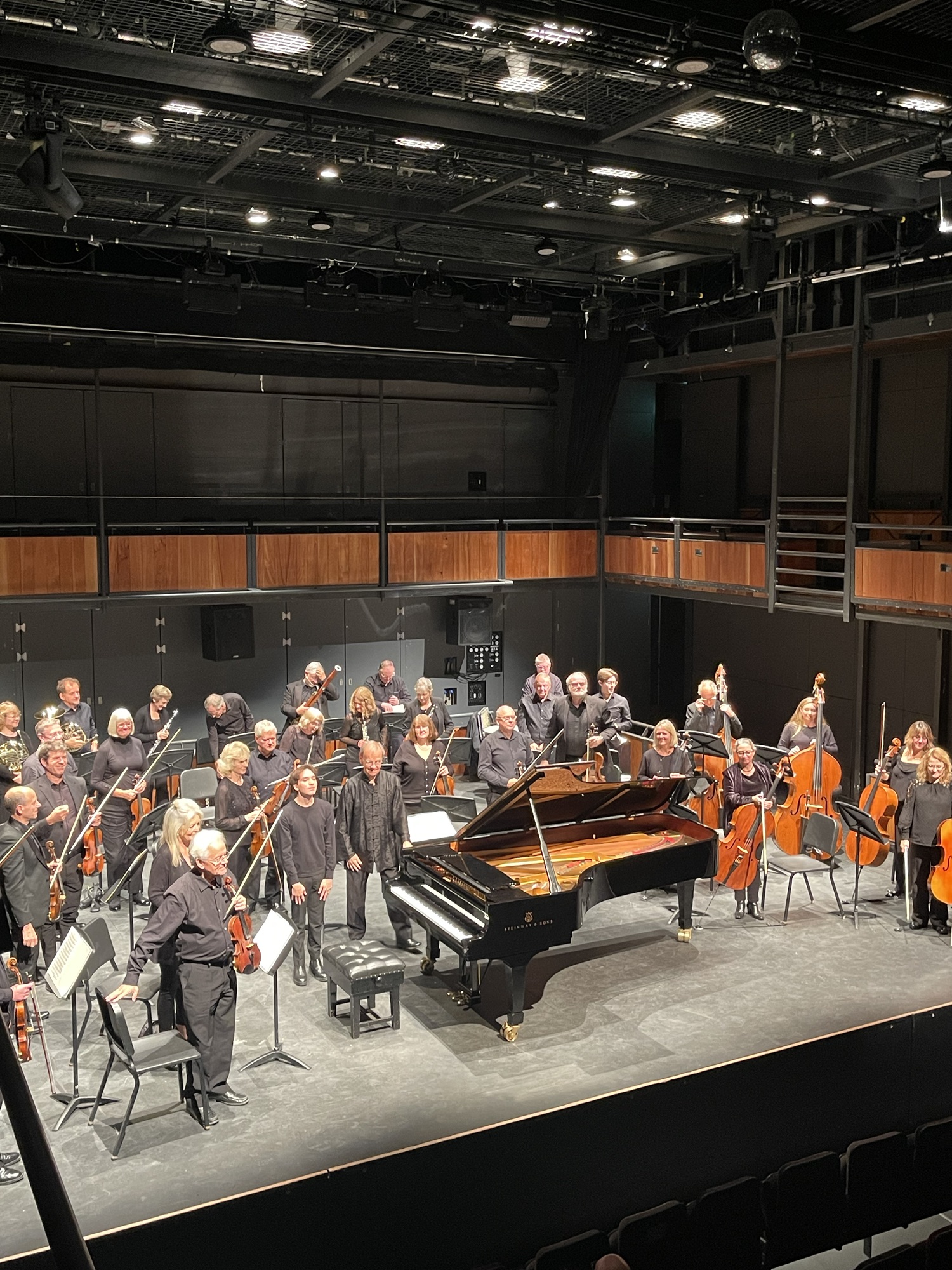
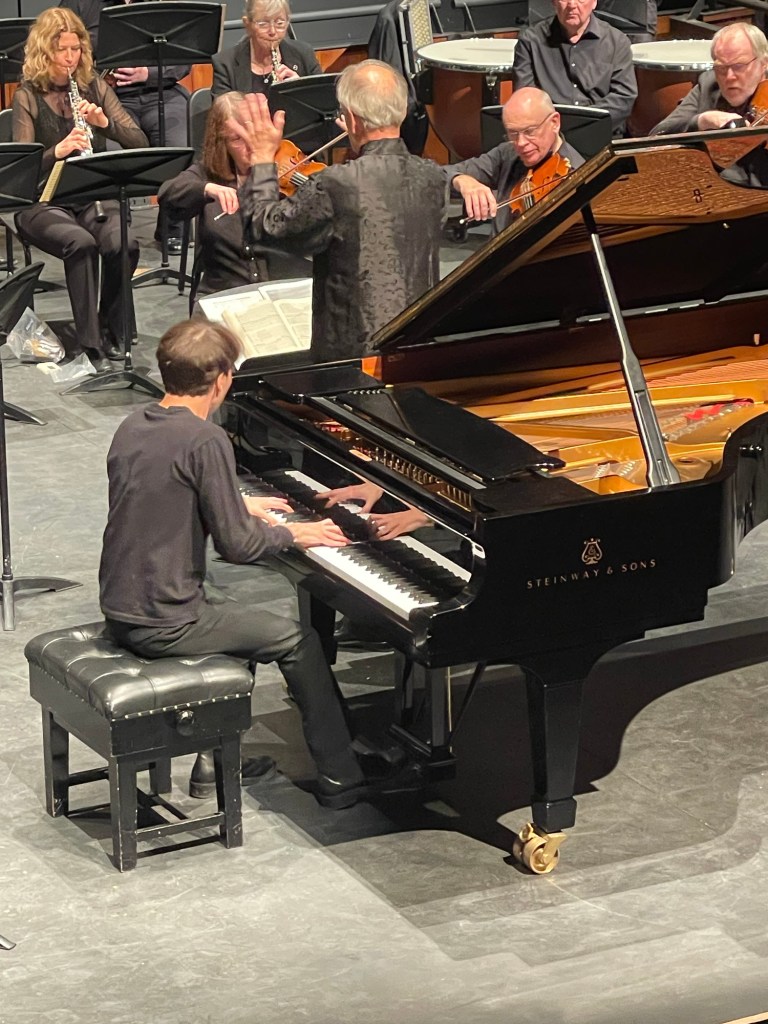
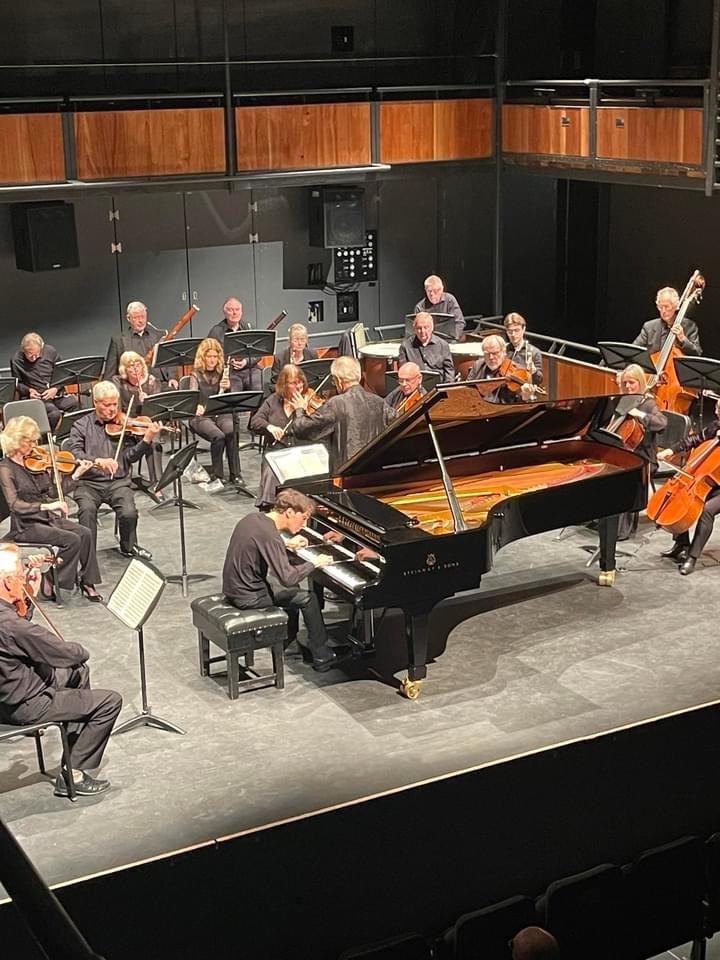
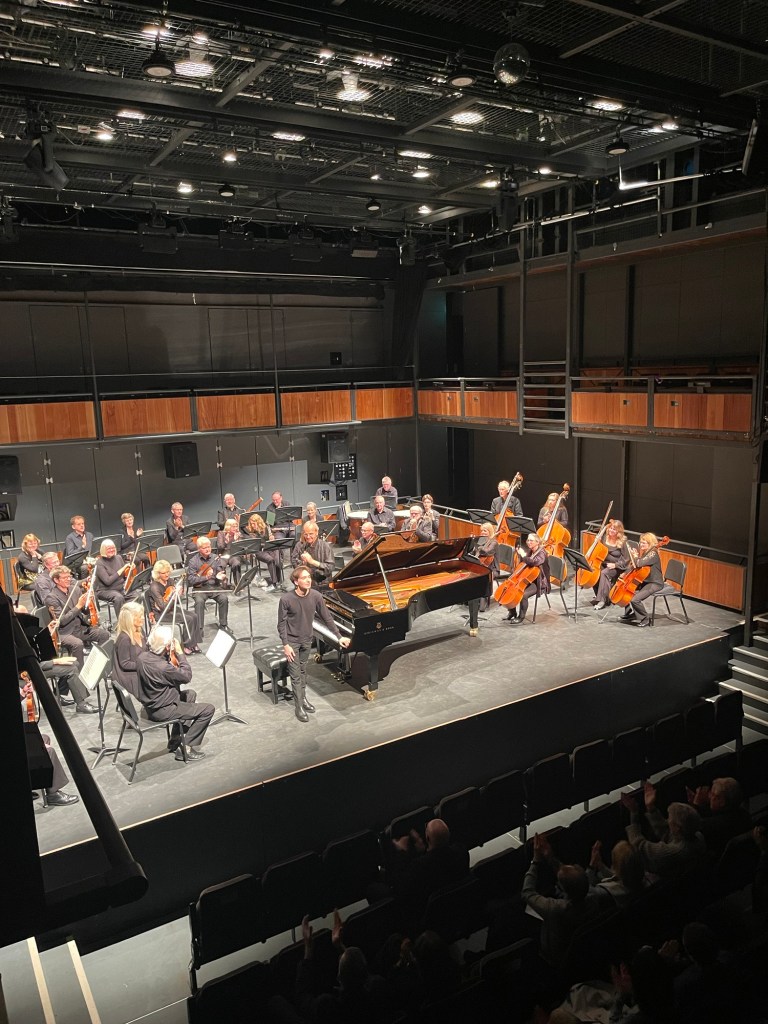
Jonathan Ferrucci at Norden Farm Arts Centre with the St John’s Chamber Orchestra under Nigel Wilkinson playing Mozart’s Concerto in C minor K 491.
Jonathan playing with refined good taste and colours that can illuminate such a well loved work with beguiling simple fantasy but allied to a sense of style and intelligence that even a great flourish in the slow movement made such musical sense. A crystalline clarity to the Larghetto was played with a disarming simplicity where the delicate embellishments he added later made such sense in a conversation of exquisite beauty.The cadenza too,his own, in the Larghetto was a consequence of all that had gone before and although a surprise it was a very pleasant one.
The cadenza in the first movement made a refreshing change from Hummel too , when played with such fantasy and radiance.A brilliant scale passage at the end was remarkably well caught by the very attentive conductor Nigel Wilkinson.In fact he had brought out the best throughout the concerto from his well prepared amateur players.
Drama and scintillating brilliance from Jonathan in the Allegro first movement were given a sparkling ‘joie de vivre’ in the Allegretto finale where yet another of his cadenzas was beautifully integrated into Mozart’s genial concerto that was to be such an inspiration for Beethoven. Infact Hummel’s cadenzas are usually played but today Jonathan chose to play his own adding a breath of fresh air and new life to a work that like his mentor Robert Levin continues a tradition of improvisation and embellishing the bare outlines left by the composer. There are many cadenzas for this concerto and Murray Perahia played a lot of them including one of his own. When on tour with the St Martin in the Fields Orchestra he would have fun surprising them each night,not telling them which he was going to play- sadistically keeping them on their toes!
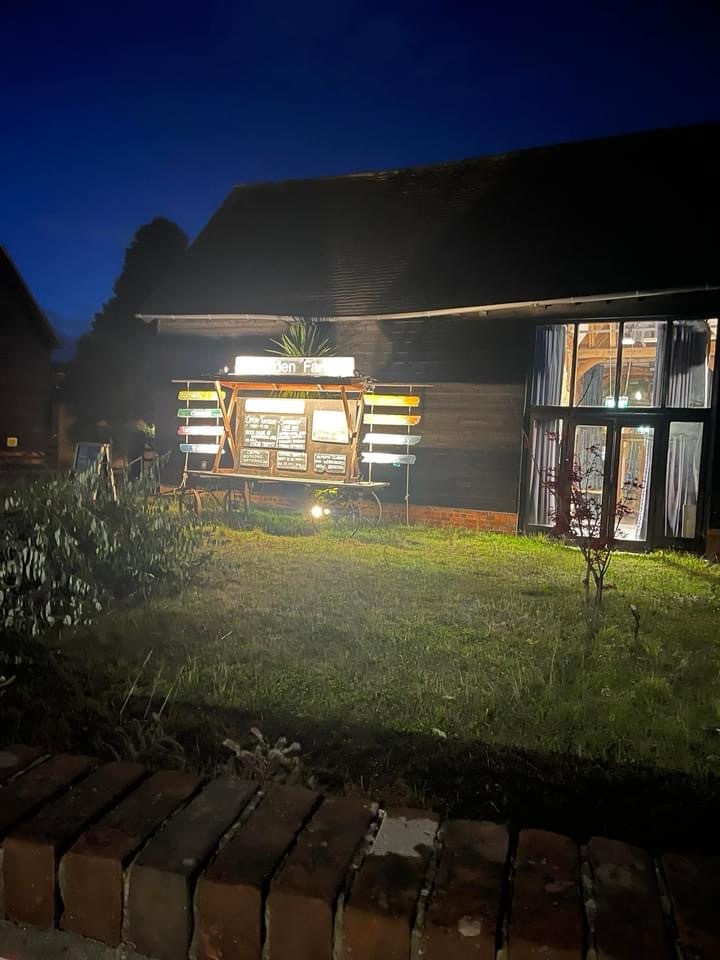
Norden Farm is built on the site of an ancient Dairy Farm. The site includes two original, listed buildings; a Georgian Farmhouse and 18th Century Long Barn. The plan to have an arts centre in Maidenhead had been a long held dream. Lobbying for such a space had begun in the 1970’s when a strong demand for an arts centre for Maidenhead began to emerge. Maidenhead Arts was set up in 1978 as an umbrella organisation of local arts groups committed to this vision.
The site had been received by the RBWM Council as planning gain for housing development on the farmland in 1992, and the first Norden Farm Board raised funds from the Foundation for Sport and the Arts to develop the buildings and build a small scale theatre (where the current studio lives today) starting work in 1994. Norden Farm Centre Trust applied to the Arts Council for lottery funding to complete Norden Farm.
Following an intensive and detailed design and public consultation phase, planning approval was granted in September 1997. The Arts Council carried out a full assessment during autumn 1997, prior to an announcement of support and approval for the finished scheme with a Lottery award of £5,295,000 in January 1998. The assessment changed the original vision for Norden Farm. In order to receive lottery funds, the design needed to change to a much larger arts centre plan that would serve the wider community and be able to present a larger range of professional touring work. This meant that a new theatre, now known as The Courtyard, with a 280 capacity, joined The Studio theatre, with a 100 capacity, together with other spaces.
The final design stage of the project was completed in late 1998 and Norden Farm Centre for the Arts finally opened its doors to the public on the 17 September 2000 with Director, David Hill at the helm. Annabel Turpin took over in 2003, followed by the current custodian, Jane Corry.
Today, Norden Farm presents a performance and participation programme of film, theatre, music, visual arts, comedy and classes. It is also a venue for conferences, seminars, meetings and social functions.
Commissioned Artwork at Norden Farm
The new design for Norden Farm, had a radical plan to incorporate visual artists into the design team from the outset, ensuring that art was literally at the heart of the arts centre. At the same time, a poet in residence.
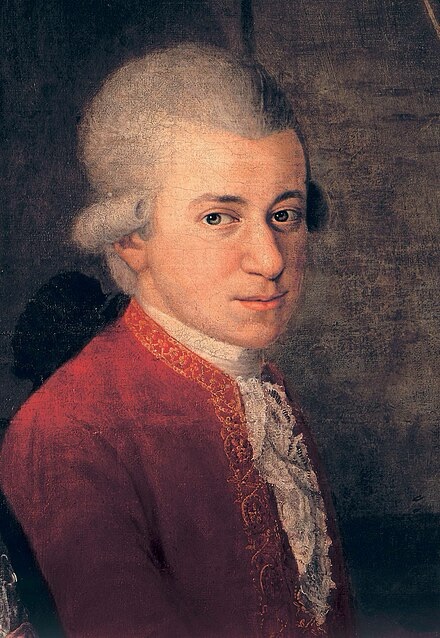
27 January 1756 Salzburg 5 December 1791 (aged 35) Vienna
The Piano Concerto No. 24 in C minor K 491, was composed in the winter of 1785–1786, finishing it on 24 March 1786, three weeks after completing his Concerto in A K.488 . As he intended to perform the work himself, Mozart did not write out the soloist’s part in full. The premiere was in early April 1786 at the Burgtheater in Vienna. Chronologically, the work is the twentieth of Mozart’s 23 original piano concertos which Mozart composed in the winter of 1785–86, during his fourth season in Vienna. It was the third in a set of three concertos composed in quick succession, the others being n. 22 in E flat and 23 in A. Mozart finished composing the C minor concerto shortly before the premiere of his comic opera The Marriage of Figaro ; the two works are assigned adjacent numbers of 491 and 492 in the Kochel catalogue Although composed at the same time, the two works contrast greatly: the opera is almost entirely in major keys while the concerto is one of Mozart’s few minor-key works.The pianist and musicologist Robert Levin suggests that the concerto, along with the two concertos that precede it, may have served as an outlet for a darker aspect of Mozart’s creativity at the time he was composing the comic opera.
The concerto was premiered at the Burgtheater in Vienna.
The premiere of the concerto was on either 3 or 7 April 1786 at the Burgtheater in Vienna; Mozart featured as the soloist and conducted the orchestra from the keyboard.
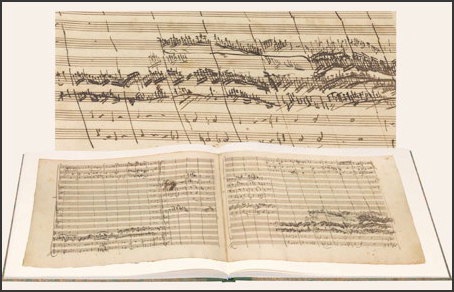
In 1800, Mozart’s widow Costanze sold the original score of the work to the publisher Johann Anton André of Offenbach am Main . It passed through several private hands during the nineteenth century before Sir George Donaldson, a Scottish philanthropist, donated it to the Royal College of Music in 1894.
The College still houses the manuscript today. The original score contains no tempo markings ; the tempo for each movement is known only from the entries Mozart made into his catalogue. The orchestral parts in the original score are written in a clear manner whereas the solo part is often incomplete: on many occasions in the score Mozart notated only the outer parts of passages of scales or broken chords. This suggests that Mozart improvised much of the solo part when performing the work.The score also contains late additions, including that of the second subject of the first movement’s orchestral exposition.There is the occasional notation error in the score due to Mozart having “obviously written in great haste and under internal strain”.
The concerto is divided into the following three movements
Allegro
Larghetto in
Allegretto ( variations with the eight variations and coda )
The concerto is scored for one flute , two oboes , two clarinets , two bassoons, two horns , two trumpets , timpani and strings . This is the largest array of instruments for which Mozart composed any of his concertos.
It is one of only two of Mozart’s piano concertos that are scored for both oboes and clarinets (the other, his concerto for two pianos K.365 has clarinets only in the revised version). The clarinet was not at the time a conventional orchestral instrument. Robert Levin writes: “The richness of wind sonority, due to the inclusion of oboes and clarinets, is the central timbral characteristic of the concerto : time and again in all three movements the winds push the strings completely to the side.”
The solo instrument for the concerto is scored as a “cembalo”. This term often denotes a harpsichord , but in this concerto, Mozart used it as a generic term that encompassed the fortepiano , an eighteenth-century predecessor of the modern piano that among other things was more dynamically capable than the harpsichord.
Beethoven admired the concerto and it may have influenced his own Piano Concert n. 3 ,also in C minor. After hearing the work in a rehearsal, Beethoven reportedly remarked to a colleague that ” we shall never be able to do anything like that.” Brahms also admired the concerto, encouraging Clara Schumann to play it, and wrote his own cadenza for the first movement.Brahms referred to the work as a “masterpiece of art and full of inspired ideas.”
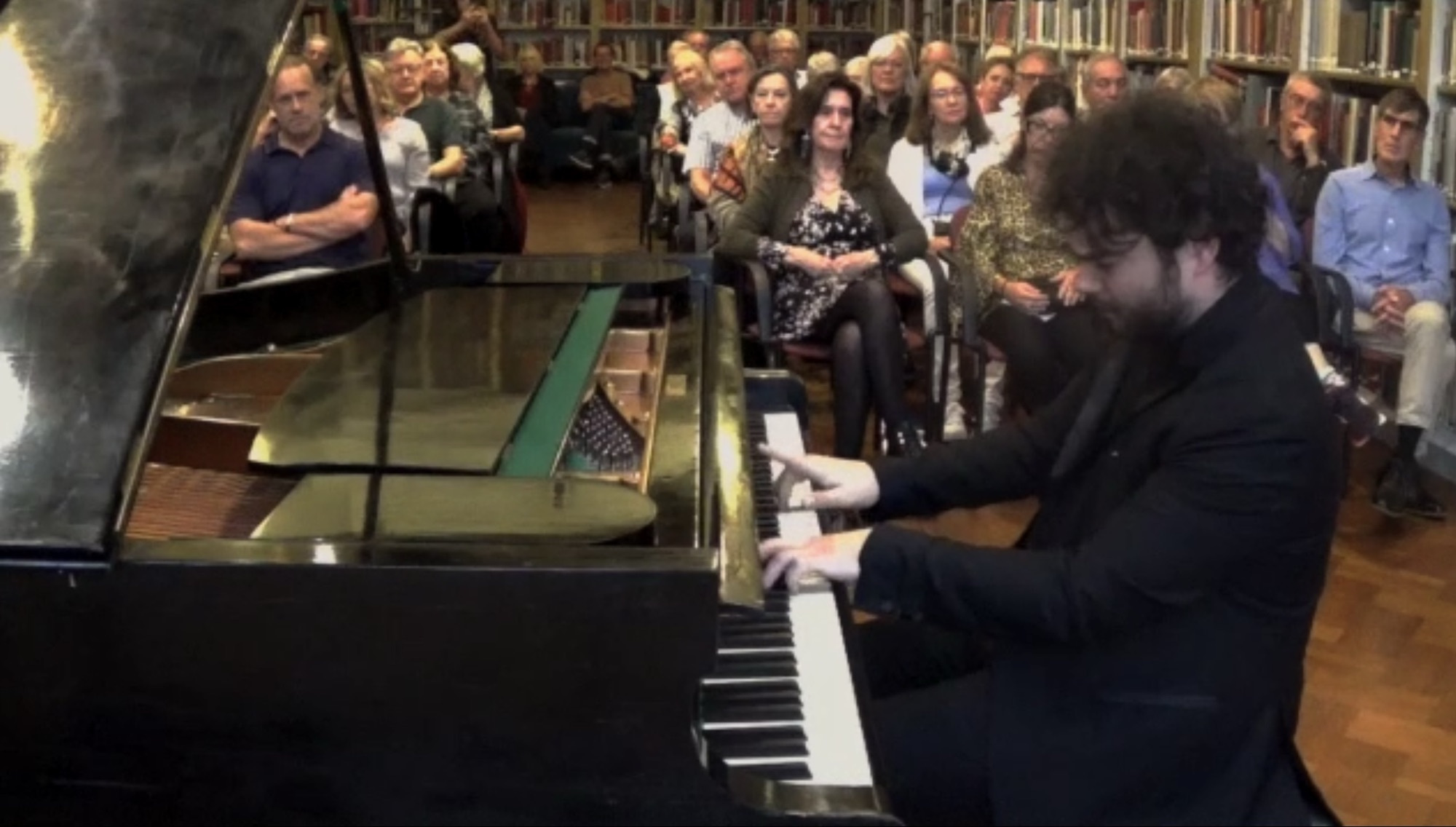
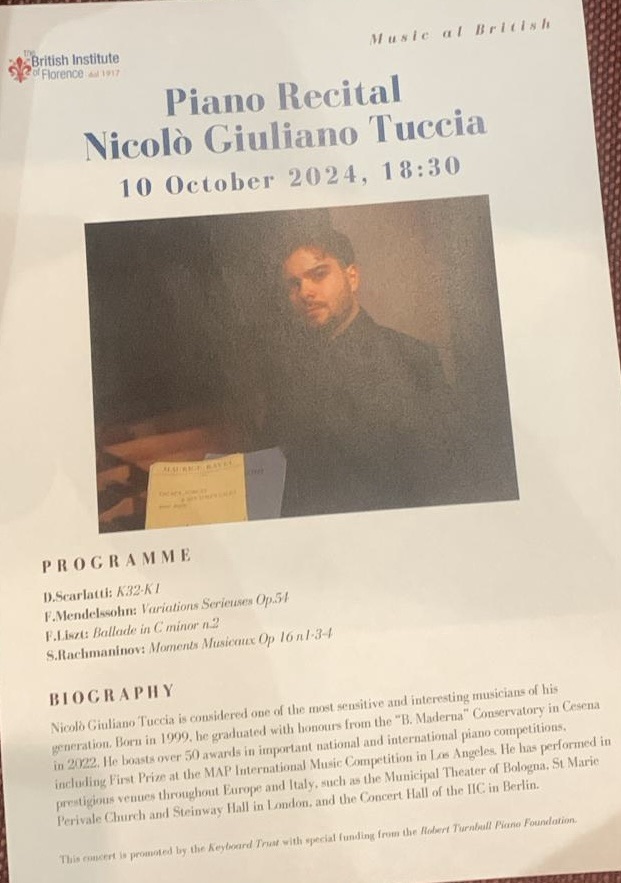
Simon Gammell OBE director of the British institute writes : ‘It was an exceptionally good concert. Giuliano has extraordinary sensibility aligned to his flawless technique – I have rarely been part of an audience so completely absorbed in the music. Truly fabulous! As he lives quite near Florence, it should be practical to invite him back sometime next year, which I would be happy to do .Thanks so much to all at KT for such a special evening.’
Giuliano writes :The concert was amazing!! Mister Simon was very kind and so happy to ask me to come and play again, even without the support of the kct. I attach screenshots. He said exactly with his own words: “one of the best concert of this year”. I am really very happy! also the audience filled me with compliments and bought some of my cds. I attach some photos thanks!!!
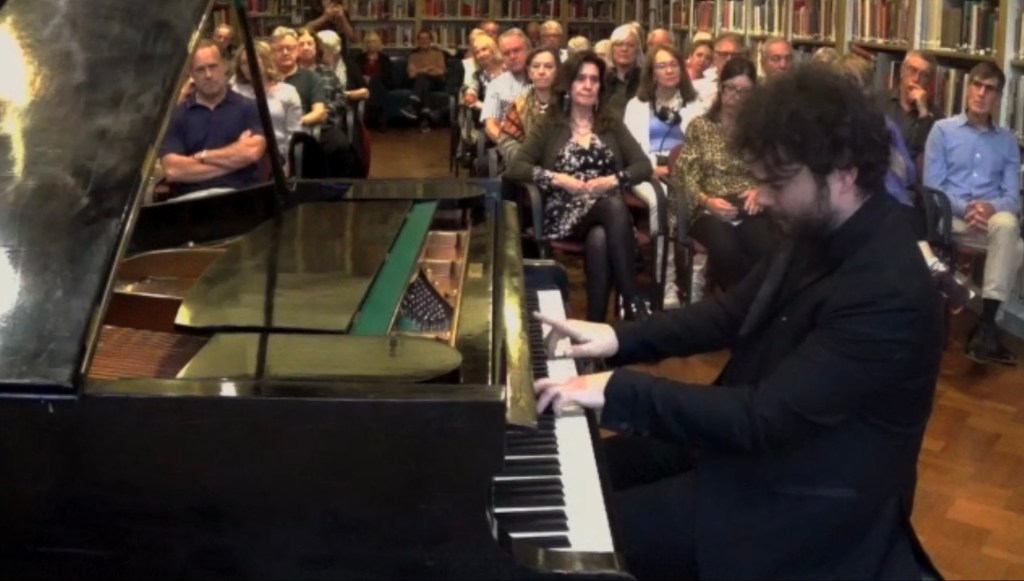
Not only a fine pianist but Giuliano also recorded his concert while he was playing ! Here as some screen shots of the concert and although I was not able to be present this time Giuliano had sent me the recording so I too could enjoy a sumptuous feast of music making from afar.
He may be a rough diamond but he is a diamond through and through as was demonstrated yet again in this recital .A performer in public must be able to communicate emotions ,atmospheres and delve into the audience’s soul to reveal feelings that even they did not realise they had. This young man from Forlì has this power to communicate and already has quite a baggage of technical preparation.As he performs more and more before a doting public he ,like Rubinstein, will continue to polish and look at some rough corners where emotions have taken precedence over cerebral note picking accuracy. I remember an anecdote ,that Rubinstein was happy to share, about a debut concert in Paris as a teenager ,where he cared more about life than sitting for hours at the piano. He played the Saint Saens second piano concerto which was more of a good impression than an example of precision . It did though also impress the composer – and for an encore he played the Chopin Winter Wind study op 25 n. 11 bringing out the march like rhythm in the left hand and leaving the right to fend for itself. An ovation from a public who had come to be seduced and not just to count the eggs in the basket . Myra Hess used to come on stage after playing late Beethoven with two carrots and an orange to play the ‘Black Key ‘ study op 10 n. 5 by Chopin!
All this to say that Giuliano Tuccia has been born with the gift to communicate and although still perfecting his studies in Rovigo and Imola he can already hold an audience far better than many winners of International Competitions. Music is about communication and where words are not enough music can take us into a world of fantasy,colour and emotion where only the greatest of poets dare to tread.
Two Scarlatti’s Sonatas played with a freedom and sense of fantasy with the whispered secrets of poignant beauty and almost improvised inner feelings of the first and the scintillating brilliance and delicacy of the second. Mendelssohn again with an improvised freedom allied to a musical intelligence and fearless technical panache. There were moments of ravishing beauty as there were of breathtaking brilliance.A deep contemplation of the 14th and 15th variation before the final explosion of the Allegro vivace . Dynamic drive combined with astonishing immediacy as we reached boiling point.
Liszt’s Second Ballade from the very opening a great drama was about to unfold from the hands of an artist who had seen a vision of this tragic world of Hero and Leander.Playing of aristocratic nobility and heartrending contrasts with Liszt the greatest showman on earth but also one of the most original composers of his day. Playing the second version that finishes in a dream not in triumph as Giuliano made us wait for the final resolution of the appoggiatura where peace and silence once more reign.Moments Musicaux that like Rachmaninov’s Etudes Tableaux are miniature tone poems of aching nostalgia and brooding intensity combined with sumptuous sounds and driving exhilaration.The simple beauty of the first with a stream of wondrous sounds out of which a single voice appears smothered by a gleaming trail of golden jeux perlé sounds.The deeply reflective brooding of the third was played with full rich sound with deeply felt participation of real intensity from Giuliano.The left hand footsteps crept about with sinister intent as the melodic line was etched above.The fourth Moment is a glorious outpouring of romantic sounds and pyrotechnics that was played with burning intensity and fearless abandon.
An ovation from an audience deeply moved to be part of such an uplifting musical experience were awarded with the most famous of all Chopin’s 19 Nocturnes.The one in E flat op 9 n. 2 that was played with the rubato and ravishment of the true Bel Canto and a delicacy and artistry of pianists of another age .
Giuliano not only a superb pianist but also an impresario of a concert series started in Forlì in memory of the illustrious but forgotten Genius, Guido Agosti, born and buried there
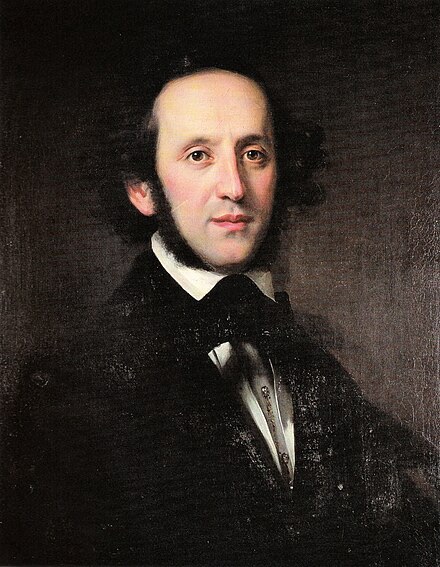
I’m looking forward to seeing him. You gave me his lovely Haydn disc which I played on between the keys. Nicola Tuccia played a fantastic Liszt 2 ballade in class today and he is a very gifted musician. Jed Distler with masterclass in Rovigo – critic ,pianist and commentator based in New York https://www.wwfm.org/show/between-the-keys-with-jed-distler Jakob Ludwig Felix Mendelssohn Bartholdy 3 February 1809 Hamburg 4 November 1847 (aged 38) Leipzig
Variations sérieuses – Theme and 17 variations op 54, was completed on 4 June 1841.
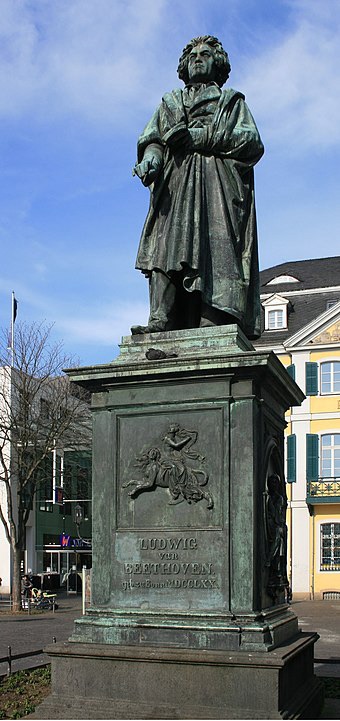
It was written as part of a campaign to raise funds for the erection of a large bronze statue of Beethoven in his home town of Bonn 1]The publisher Pietron Mechetti asked Mendelssohn to contribute to a ‘Beethoven Album’, published in January 1842, which also included pieces by Liszt,Chopin,Moscheles and others, of which the proceeds would go to the Monument.Schumann’s Fantasie op 17 was the final result of a work originally intended for the same purpose
In 1828 the idea was born of a monument to Beethoven in his native town Up to that time it had not been German or Austrian practice to erect statues of great cultural figures. Schiller had to wait until 1839; the first one of Mozart in Salzburg was not unveiled until 1842; and the first one of Beethoven in Vienna the city he spent most time in, was most associated with, and died in, was not created until 1880. Liszt involved himself in the project in October 1839 when it became clear it was in danger of foundering through lack of financial support. Till then, the French contributions had totalled less than 425 francs; Liszt’s own personal donation exceeded 10,000 francs.He contributed his advocacy and also his personal energies in concerts and recitals, the proceeds of which went towards the construction fund. One such concert was his last public appearance with Chopin , a pair of piano duo concerts held at the Salle Pleyel and the Conservatoire de Paris on 25 and 26 April 1841. The sole condition of Liszt’s involvement was that the sculptor of the statue of Beethoven should be the Italian, Lorenzo Bartolini but in the end the contract was awarded to a German, Ernst Julius Hahnel (1811–1891).The casting was done by Jakob Daniel Burgschmiet of Nuremberg. Liszt returned to the concert stage for this purpose; he had earlier retired to compose and spend time with his family. He also wrote a special work for occasion of the unveiling, Festival Cantata for the Inauguration of the Beethoven Monument in Bonn, S.67 (Festkantate zur Enthüllung des Beethoven-Denkmals in Bonn).
Mendelssohn is known to have written three sets of piano variations, but only this one was published during his lifetime.The work consists of a Theme and Coda and 17 variations
Theme: Andante sostenuto
Variation 1
Variation 2: Un poco più animato
Variation 3: Più animato
Variation 4
Variation 5: Agitato Variation 6: A tempo Variation 7: Con fuoco Variation 8: Allegro vivace Variation 9 Variation 10: Moderato Variation 11: Cantabile Variation 12: Tempo del Tema Variation 13: Sempre assai leggiero Variation 14: Adagio Variation 15: Poco a poco più agitato Variation 16: Allegro vivace Variation 17 Coda: Presto
The Ballade No. 2 in B minor S. 171 was written in 1853.
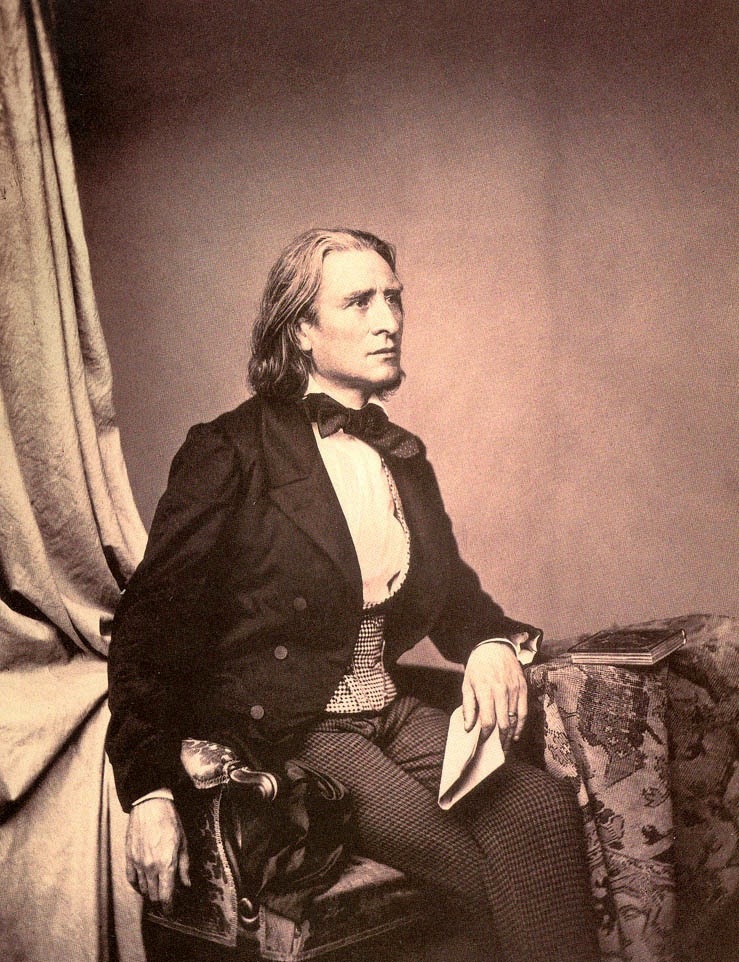
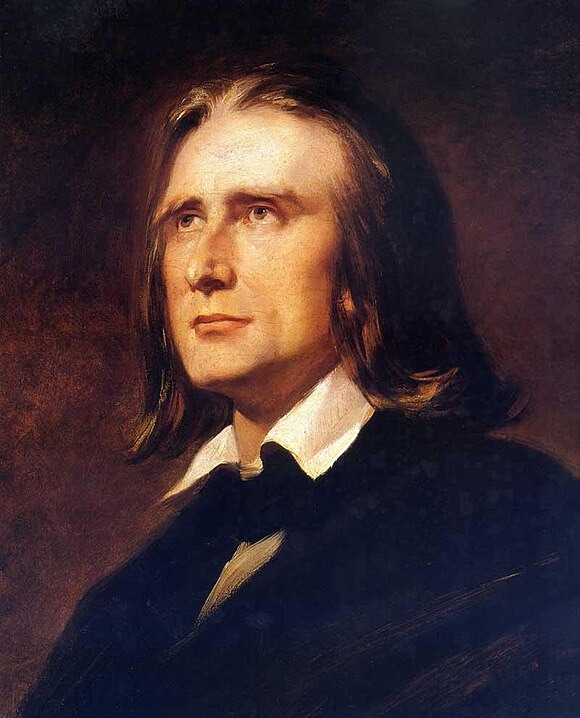
Franz Liszt 22 October 1811 Doborjan , Kingdom of Hungary, Austrian Empire 31 July 1886 (aged 74) Bayreuth , Kingdom of Bavaria, German Empire
Claudio Arrau , who studied under Liszt’s disciple Martin Krause , maintained that the Ballade was based on the Greek myth of Hero and Leander , with the piece’s chromatic ostinati representing the sea: “You really can perceive how the journey turns more and more difficult each time. In the fourth night he drowns. Next, the last pages are a transfiguration”.
The ballade is based largely on two themes: a broad opening melody underpinned by menacing chromatic rumbles in the lower register of the keyboard, and a luminous ensuing chordal meditation. These themes are repeated a half-step lower; then march-like triplet-rhythms unleash a flood of virtuosity. Eventually, Liszt transforms the opening melody into a rocking major-key cantabile and reiterates this with ever-more grandiose exultation. The luminous chords provide a contemplative close.
Leslie Howard writes about the original version S 170 a : ‘To be honest, Liszt never expected the original version of his Ballade No 2 to be published, but the original form has long been known—differing from the final version by the absence of two eight-bar phrases in the closing B major section, and by having a fast coda which recalls the central martial development material—this coda being itself a second draft of another cancelled fast ending. The original coda has appeared in several editions, although most of them fail to remark that, if it is performed, two eight-bar cuts need also to be made to restore the original text. It goes without saying that the beautiful quiet coda of the later version is a stroke of genius, but the present ending is not without its merits’
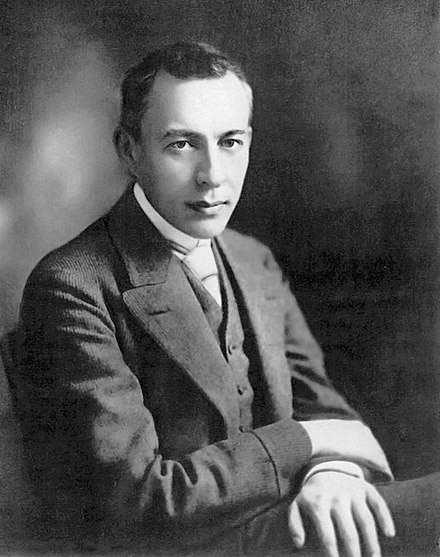
Sergei Vasilyevich Rachmaninov 1 April 1873 Semyonovo, , Novgorod Governorate, Russian Empire 28 March 1943 (aged 69) Beverly Hills California, U.S.
Six moments musicaux op.16, were written between October and December 1896.Each Moment musical reproduces a musical form characteristic of a previous musical era. In an interview in 1941, Rachmaninoff said, “What I try to do, when writing down my music, is to make it say simply and directly that which is in my heart when I am composing.” Even though Moments musicaux were written because he was short of money,the pieces summarize his knowledge of piano composition up to that point.
By the autumn of 1896, 23-year old Rachmaninoff’s financial status was precarious, not helped by his being robbed of money on an earlier train trip.Pressed for time, both financially and by those expecting a symphony, he “rushed into production.” On December 7, he wrote to Aleksandr Zatayevich , a Russian composer he had met before he had composed the work, saying, “I hurry in order to get money I need by a certain date … This perpetual financial pressure is, on the one hand, quite beneficial … by the 20th of this month I have to write six piano pieces.”[10]Rachmaninoff completed all six during October and December 1896, and dedicated all to Zatayevich
Andantino opens the set with a long, reflective melody that develops into a rapid climax. The third Andante cantabile is a contrast to its surrounding pieces, explicitly named ‘funeral march’ and ‘lament’ The fourth Presto draws inspiration from several sources, including the Chopin Preludes with an explosion of melodic intensity.
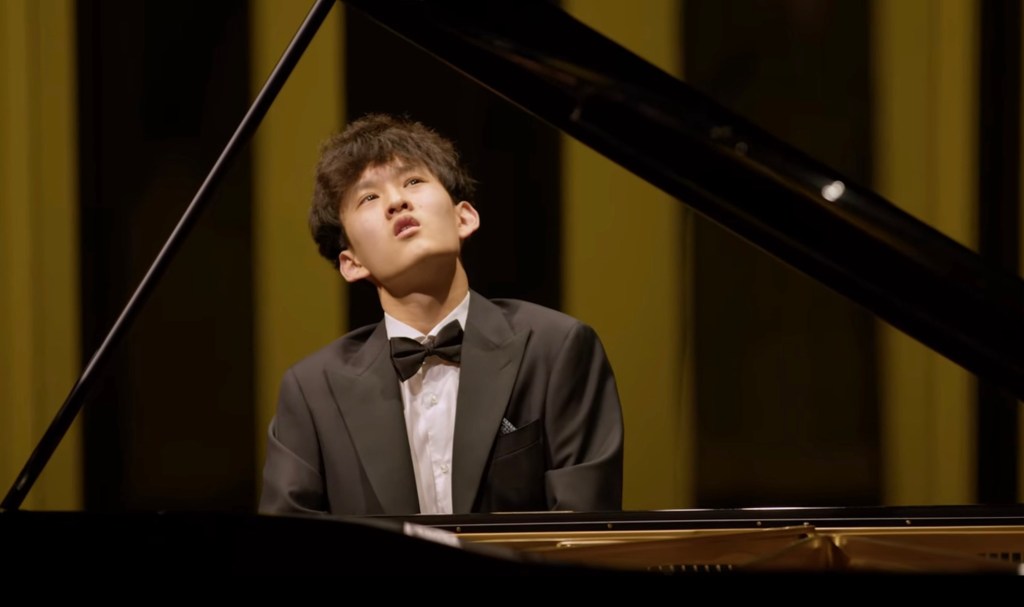
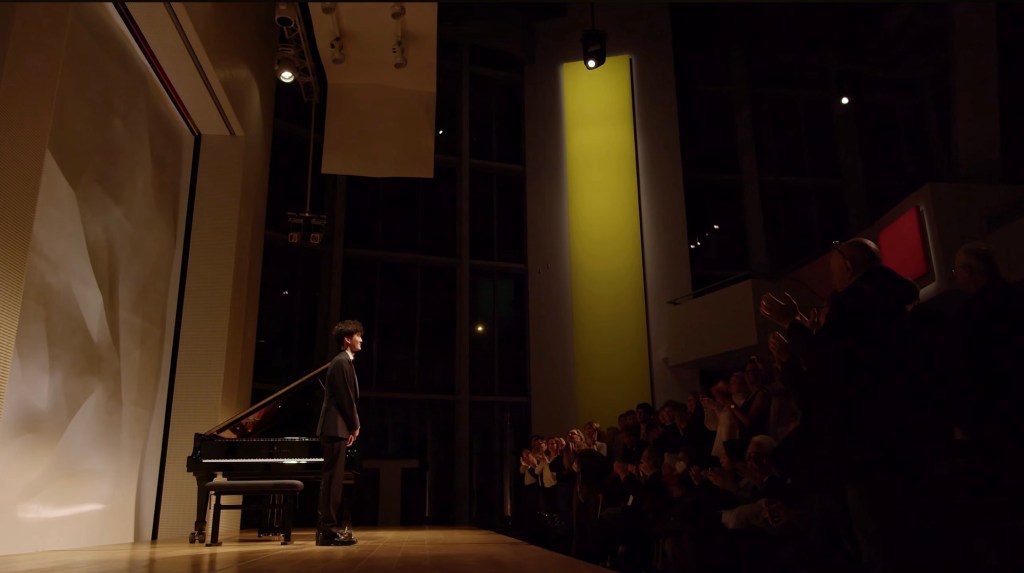
It was just a few weeks ago that I heard Ryan at the Windsor Festival and was astonished at the mastery and maturity of a sixteen year old.So when I received this recording of a year previously I was so overwhelmed that I just had to write some thoughts and impressions of a young master.
I had heard Ryan for the first time at the final of the Montecatini Competition in Florence a year ago .The moment he touched the piano I was immediately struck by his artistry as he played a selection of Chopin’s 24 Preludes. I sent a message down to Sofya Gulyak saying ‘At last an artist’.
I met his mother and brother Michael and learned that both the boys of fourteen and fifteen were on music scholarships to Eton where the whole family had transferred from Canada to pursue a dream. I later heard Ryan in the National Liberal Club invited by the indomitable Yisha Xue to play in her Chinese New Year celebrations.He played the Liszt ‘Don Juan fantasy’ in between the various courses of a sumptuous feast. Needless to say the highlight of the evening was this young man giving a masterly performance of one of the most notoriously difficult of all Liszt’s funabulistic Operatic paraphrases
I asked Iris Wang how Michael was coping with a brother being celebrated as such a star? ‘Oh but Michael is a happy boy and loves it!’ Genius is never easy to live with and Ryan has been blessed with a talent that is so extraordinary suffering to find perfection in his art and this is how I interpreted a loving Mothers simple remark.
Listening to this remarkable recital one is aware of an artist who lives every note as he moves and weaves with the music that he is creating. Some things can never be taught but are gifts born by early experiences that no one is aware of but reveal themselves later on as an early aptitude is translated into mastery. Of course as George Fu so aptly stated in a recent interview for the radio before embarking on a performance of the Messiaen 20 regards a good teacher has to know how to push but also let go.
Ryan has obviously had the good fortune to have teachers who have given him the means to allow his natural talent to grow and flower.
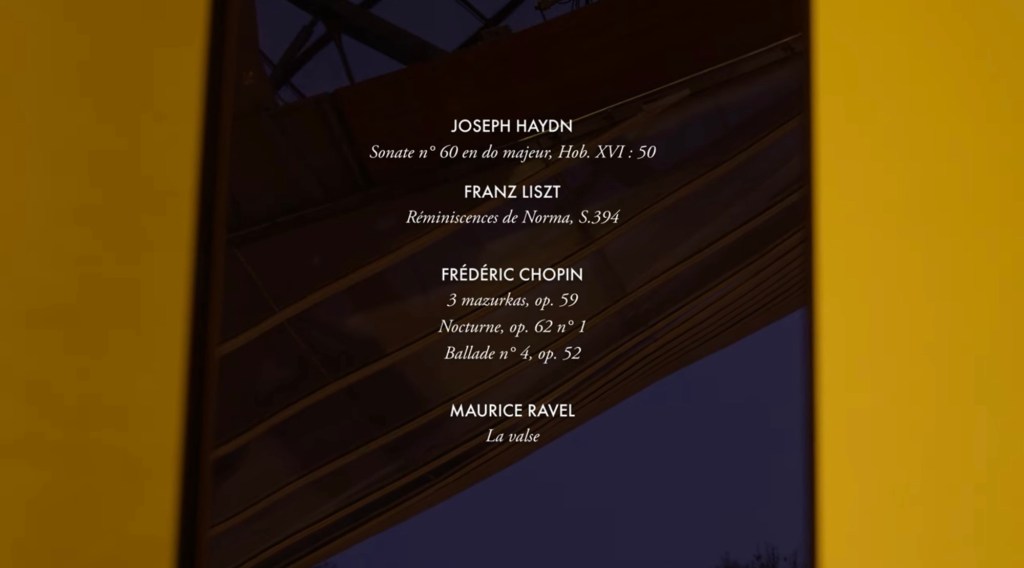
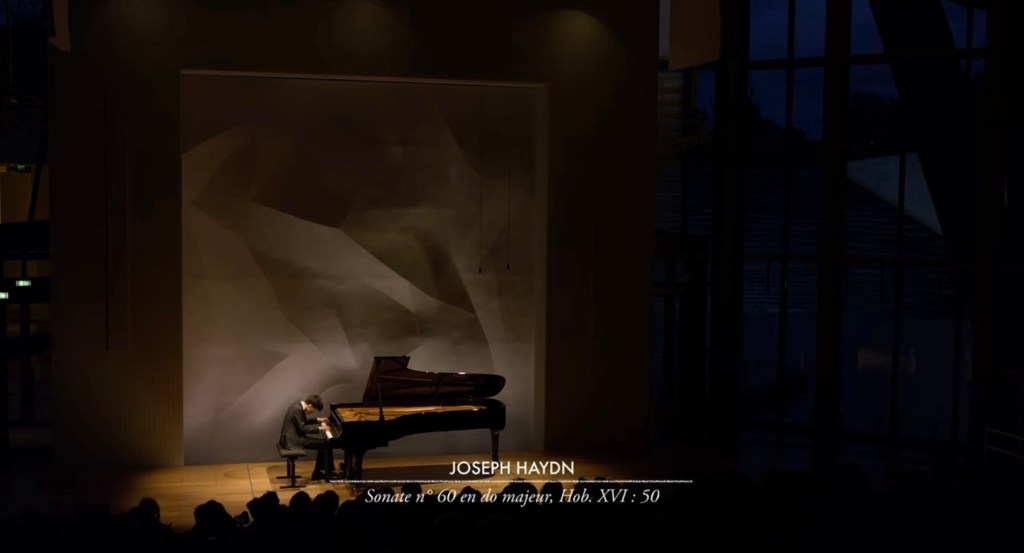
There was remarkable clarity and simplicity to the Haydn Sonata that was full of character and colour but always within stylish good taste.Haydn’s genial pedal indications were scrupulously noted but even more they were interpreted for the music box carillon that the piano with pedals could at last allow in that period . Every moment of the sonata was full of vital energy but with extraordinary sensitivity to Haydn’s sound world.The Adagio had a chiselled beauty and a radiance of colours and emotions where the deeply brooding minor key was played with searching intensity looking for a way back. A moment that Ryan found with the magic of barely whispered contemplation.There was an extraordinary clarity to the Allegro molto with phrasing that allowed the music to take wing with exhilaration and extraordinary fantasy.
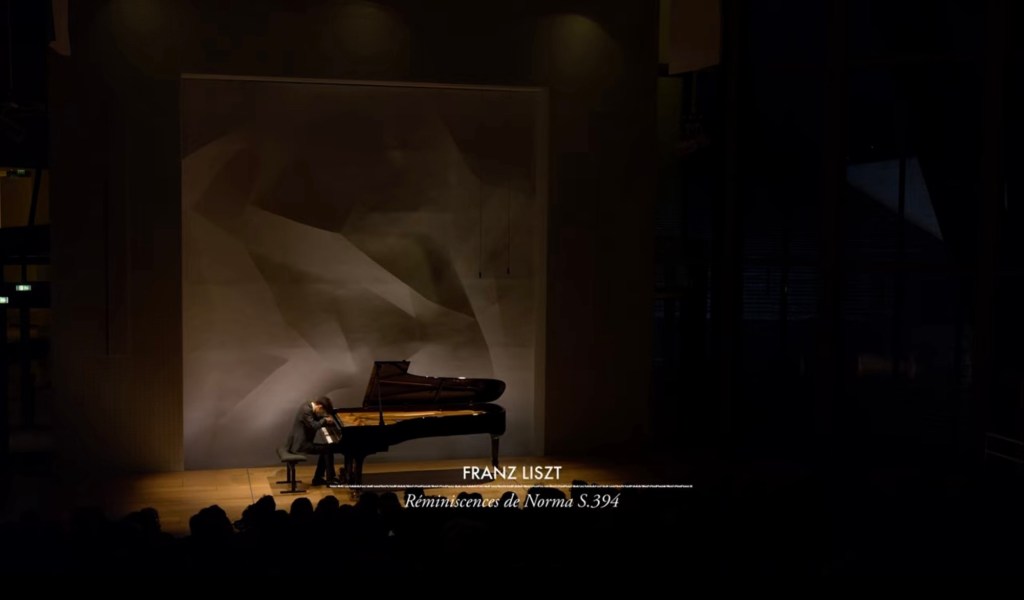
The Norma Fantasy I have never heard played with such mastery.This is a work that needs enormous reserves of technique to allow the music to unfold with a continual forward movement no matter what technical difficulties are involved. It was just this wave of sound that this young man created from the first note and never let go. Sumptuous sound and great characterisation as the drama unfolded in Liszt’s masterly paraphrase correcting Bellini’s own order as an architectural shape is unfolded with breathtaking brilliance and sumptuous beauty. Thalberg and Liszt were both accused of having three hands such was the illusion that they like Paganini could create on their chosen instrument. Ryan was not only a poet but also a showman as indeed Liszt himself was. Liszt though ,like today’s a pop stars, with aristocratic ladies reduced to a hysterical rabble trying to get souvenirs of their idol to take back home perchance to dream! Ryan today showed us the masterly control of tension that held us on the edge of our seats as pyrotechnics and ravishing beauty were united under one glorious roof with breathtakingly fearless abandon.
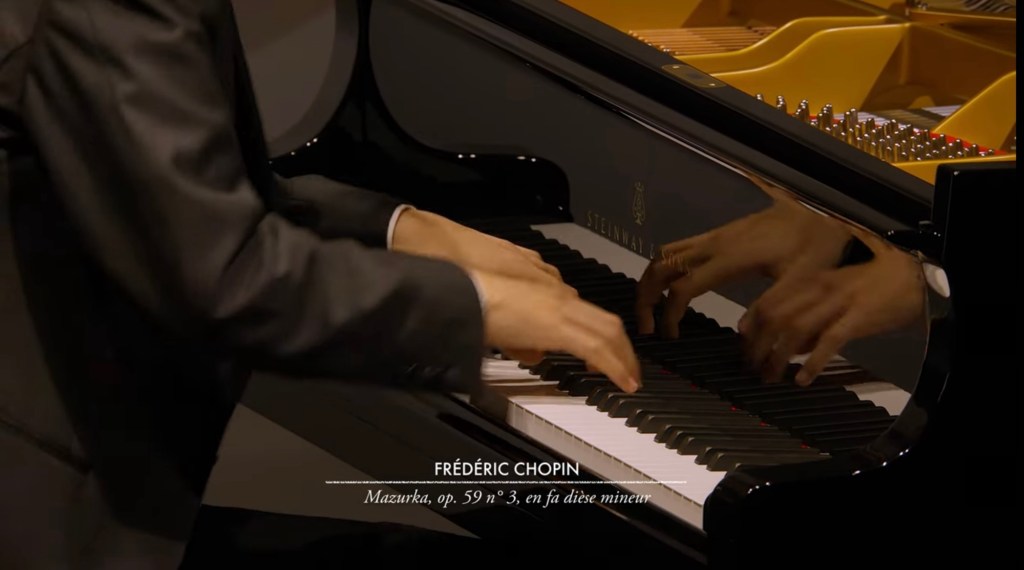
Sublimely beautiful Chopin from the three Mazurkas op 59 played with beguiling rubato and fearless abandon to the senses and a timeless grandeur to the opening of one of Chopin’s last Nocturnes op 62 n. 1 .A Fourth Ballade that was indeed the pinnacle of the Romantic piano repertoire and played with remarkably mature aristocratic musicianship of searing intensity.
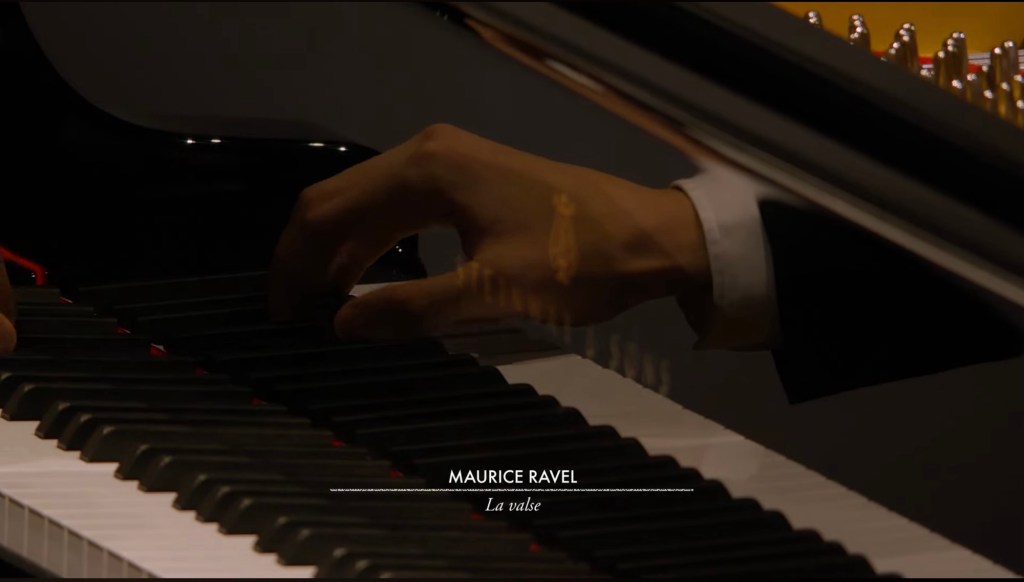
La Valse in Ravel’s own transcription was full of subtle insinuations erupting into naked abandon.A tour de force of technical perfection where streams of notes were thrown off as the musical meaning of decadence and passion were absorbed by this young man and thrown at us with fearless abandon as a kaleidoscope of sultry sounds filled the torrid air.
A standing ovation for a master of only fifteen! It was rewarded as Rubinstein would himself have done with Chopin’s ‘Winter Wind’ study where every note was absorbed and played with depth and meaning ( Rubinstein himself had told how as a lazy young man in Paris he had faked it but played with such character that it earned him an ovation ) .
The Chopin Héroique Polonaise played every bit as I remember Rubinstein and with the same reaction of an audience on their feet to applaude and feast such genius.
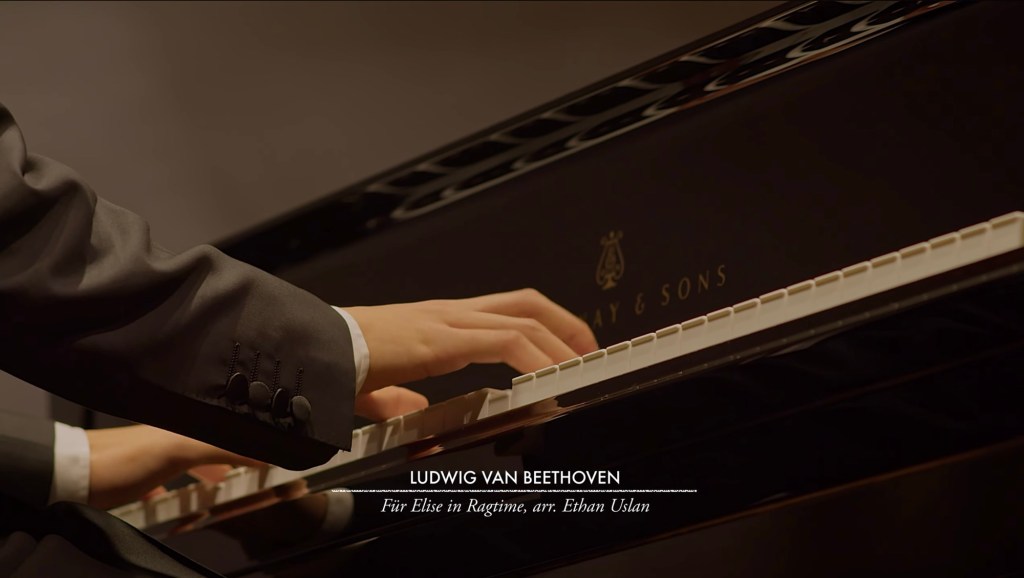
But Ryan had even more up his sleeve as with a slight laugh of recognition from the audience he played Beethoven’s much maligned ‘ Fur Elise’. But this was not the work that every music student has struggled with but a boogie woogie study of a masterly showman where I feel Volodos or Hamelin had got his hands on Beethoven to devastating effect but learn it is infact by Ethan Uslan
What a recital and only fifteen …………hard to believe but the link is there to behold for yourself .Q.E .D.
Far left Gareth Owen Ryan’s teacher at Eton ….Iris Wang and Yisha Xue On right of Ryan ,Gareth Owen Professor at Eton . Marian Rybicki ,Ryan’s Professor in Paris and Yisha Xue. Left of Ryan ,Madame Yun Li a distinguished Parisian piano teacher and Ryan’s host in Paris
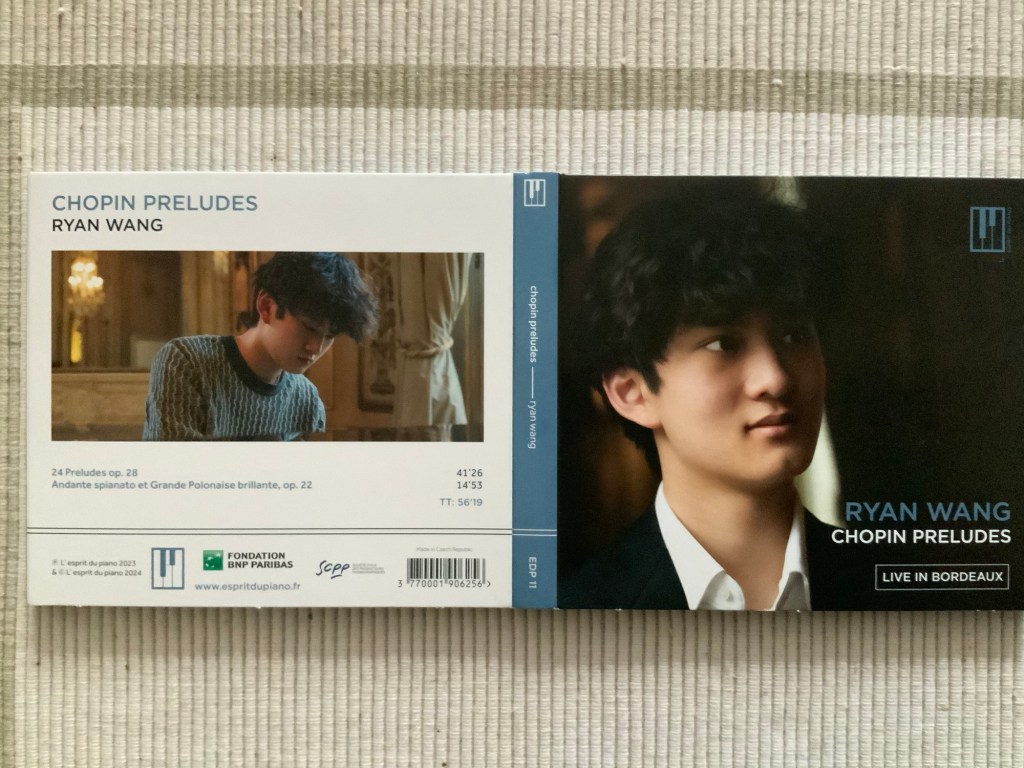
Today is Ryan’s cd releasing date in France. this was broadcast at 9:00 am on national french radio France Musique, they liked it, “so poetic!” they want to follow Ryan and they will broadcast other pieces of the CD later 😃
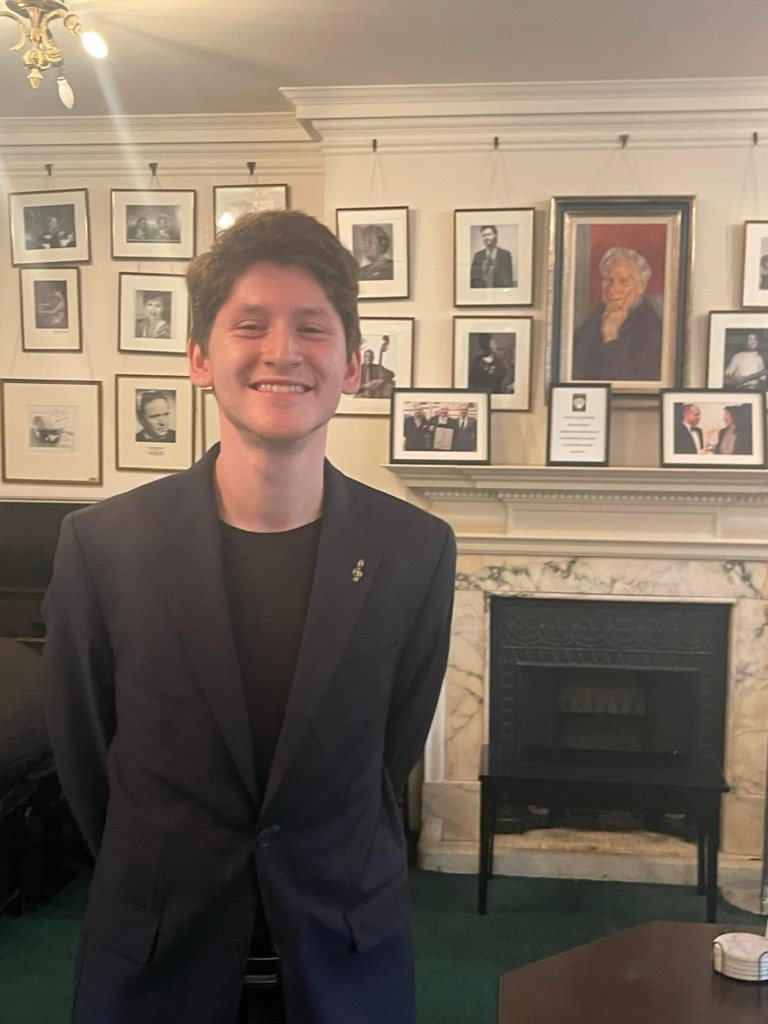
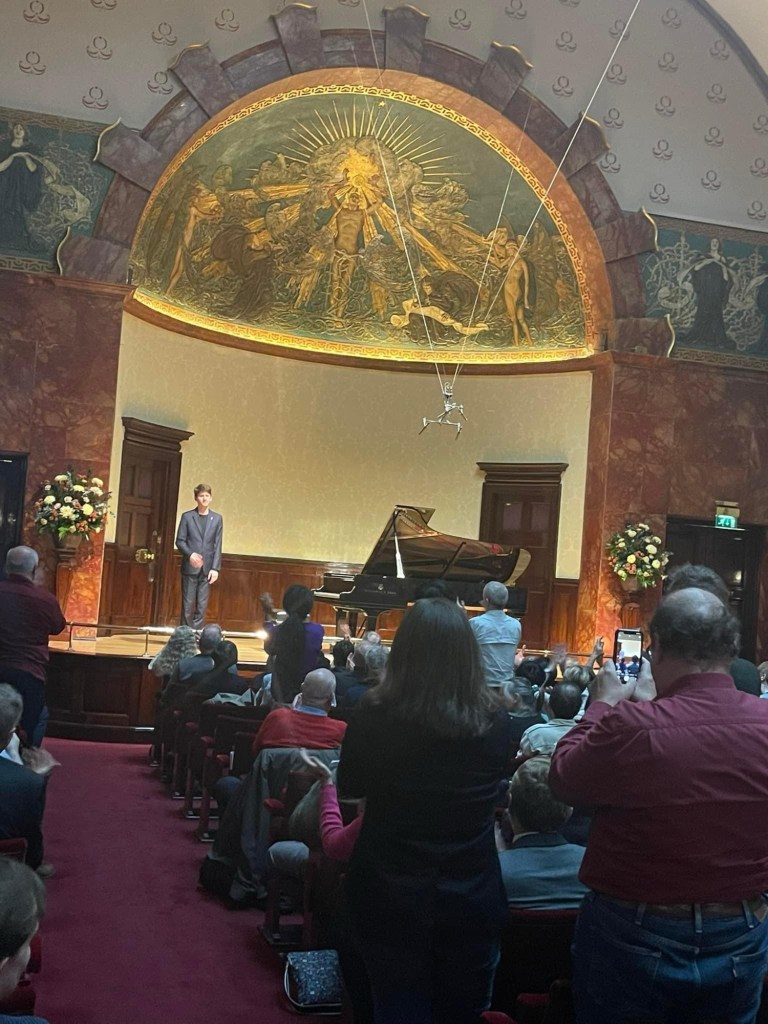
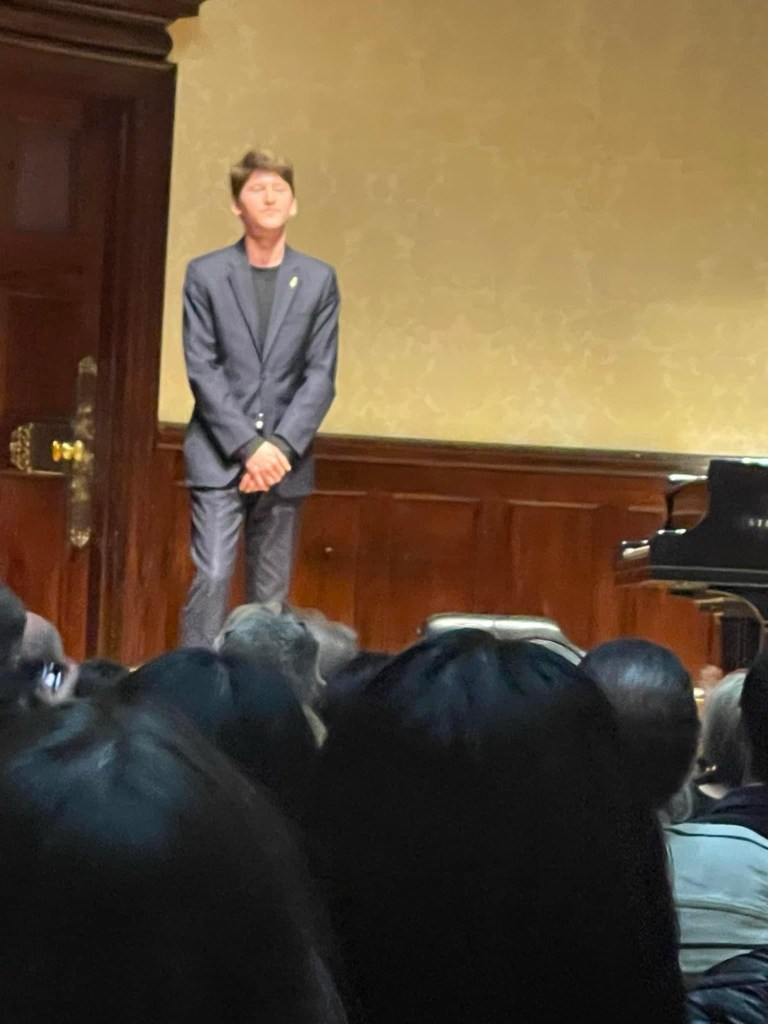
Sensational is the only way to describe the performance today and I have heard Ursula Oppens who commissioned it and Kholodenko in London recently. Both magnificent performances but today this impossible piece took wing as we sat mesmerised by a kaleidoscope of chameleonic colour and character that kept a rapt audience hypnotised by a tour de force of unbelievable mastery .A true mastery that of musical communication no matter what the odds And after almost an hour a simple song without words to calm the earth shattering atmosphere . Rzewski liked Mendelssohn Emanuil told me in the green room . Of course but would Mendelssohn have like Rzewski !
Commissioned and first performed in 1975 by Ursula Oppens who passed by Siena to play to Agosti in 1968 before catching the train to Bolzano where she won the Busoni Competition.Emanuil won the Busoni Competition in 2019
The song on which the variations is based is one of many that emerged from the Unidad Popular coalition in Chile between 1969 and 1973, prior to the overthrow of the Salvador Allende government. Rzewski composed the variations in September and October 1975, as a tribute to the struggle of the Chilean people against the newly imposed repressive regime of Augusto Pinochet ; indeed the work contains allusions to other leftist struggles of the same and immediately preceding time, such as quotations from the Italian traditional socialist song “Bandiera Rossa “ and the Bertold Brecht /Hans Eisler “Solidarity Song”
In general, the variations are short, and build up to climaxes of considerable force. The 36 variations, following the 36 bars of the tune, are in six groups of six. The pianist, in addition to needing a virtuoso technique, is required to whistle, slam the piano lid, and catch the after-vibrations of a loud attack as harmonics: all of these are “extended” techniques in 20th-century piano writing. Much of the work uses the language of 19th-century romanticism, but mixes this language with pandiatonic tonality, modal writing, and serial techniques .
As in the Goldberg Variations , the final variation is a direct restatement of the original theme, intended to be heard with new significance after the long journey through the variations.
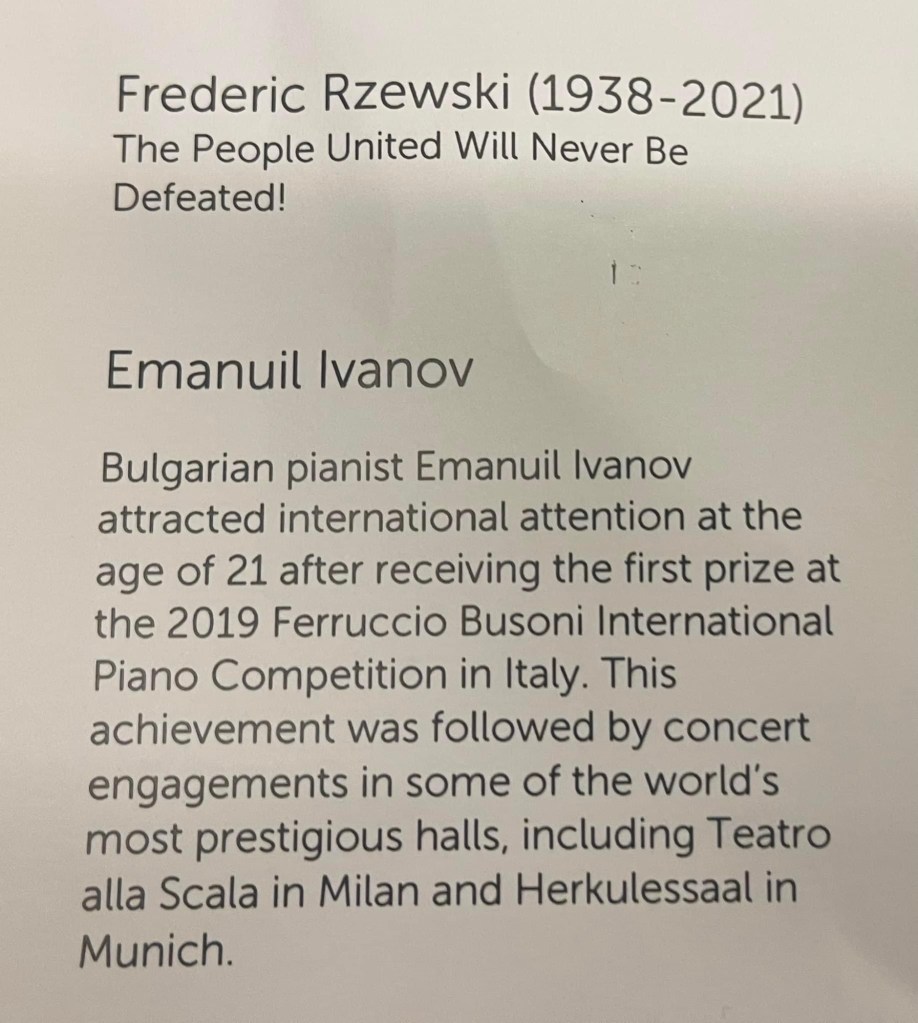
The Bulgarian pianist Emanuil Ivanov attracted international attention at the age of 21 after receiving the First Prize at the 2019 Ferruccio Busoni International Piano Competition. Known for his elegant performances of late Romantic music, he presents one of the most ambitious keyboard works of the 20th Century. The People United Will Never Be Defeated! builds its 36 glittering variations from a celebrated Chilean protest song, encompassing triumph and despair, intricate abstraction alongside jazzy improvisation – an unforgettable musical journey.
Frederic Anthony Rzewski April 13, 1938 Westfield Massachusetts USA June 26, 2021 (aged 83) Montiano Italy
Rzewski was born on April 13, 1938,to parents of Polish and Jewish descent,and raised Catholic.[He began playing piano at age 5 and attended Phillips Academy Harvard and Princeton , where his teachers included Randall Thompson,Roger Sessions,Walter Piston and Milton Babbitt . In 1960, he went to Italy on a Fulbright Scholarship where in addition to studying with Luigi Dallapiccola in Florence he began a career as a performer of new piano music, often with an improvisatory element.
In 1966, Rzewski co-founded Musica Elettronica Viva with Alvin Curran and Richard Teitelbaum in Rome which was conceived music as a collective, collaborative process, with improvisation and live electronic instruments prominently featured. In 1971, he returned to New York from Italy.
In 1977, Rzewski became Professor of Composition at the Conservatoire Royal de Musique in Liège, Belgium, then directed by Henri Pousseur
In 1963, Rzewski married Nicole Abbeloos; they had five children.While Rzewski never divorced Abbeloos, his companion for about the last 20 years of his life was Françoise Walot, with whom he had two children. He also had five grandchildren.Rzewski died of an apparent heart attack in Montiano Tuscany on June 26, 2021, at the age of 83.Nicola Slonimsky said of Rzewski in 1993: “He is furthermore a granitically overpowering piano technician, capable of depositing huge boulders of sonoristic material across the keyboard without actually wrecking the instrument.”Michael Schell called Rzewski “the most important living composer of piano music, and surely one of the dozen or so most important living American composers”.
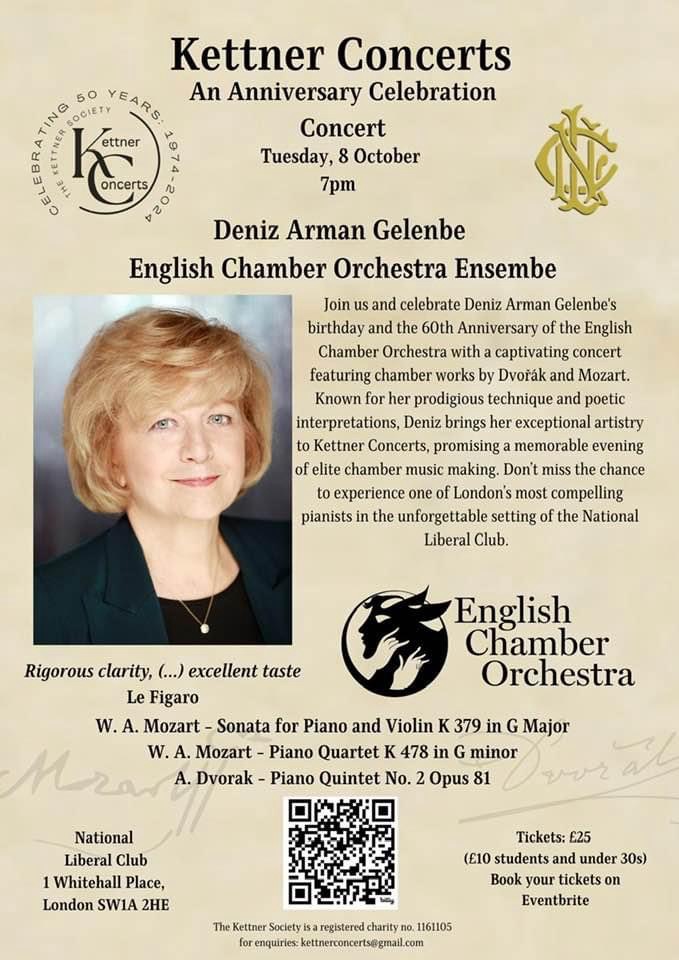
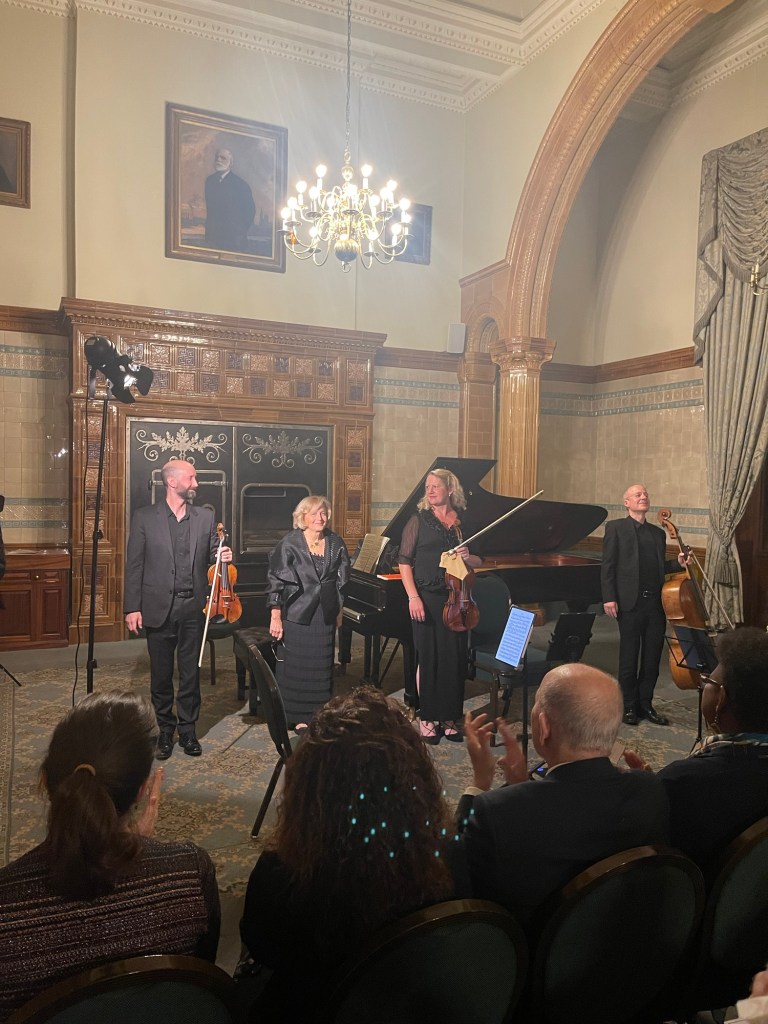
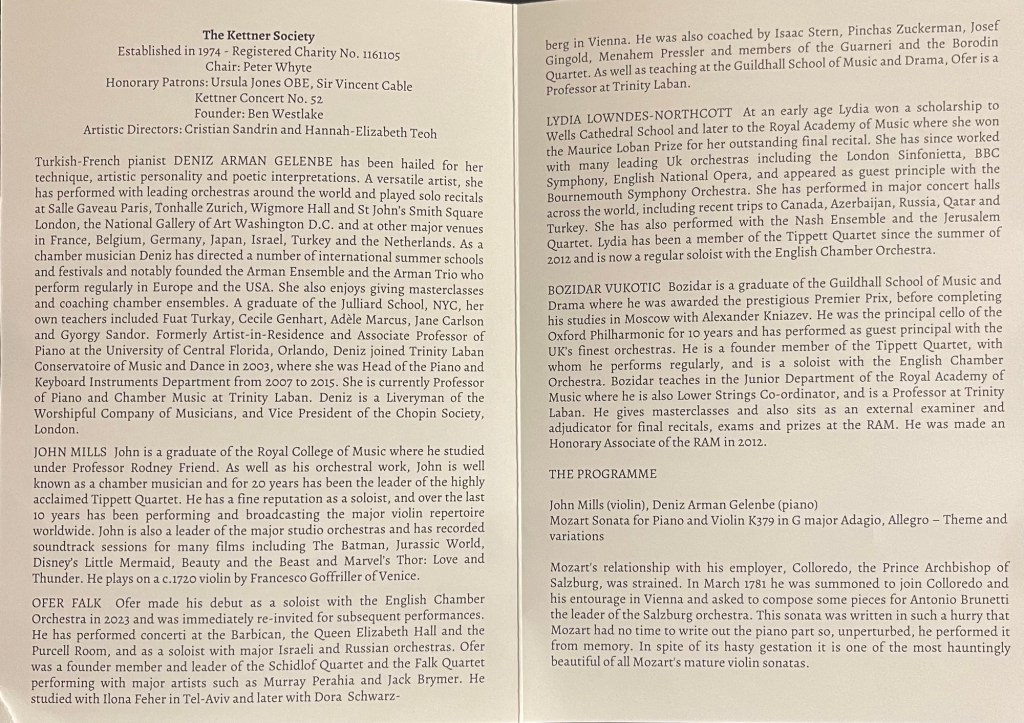
Happy Birthday Deniz Arman Gelenbe. Say it with music takes on a different significance when a very special occasion is treated to such sumptuous music making. The simple unadorned beauty of Mozart contrasted with the dynamic drive of Dvorak. Surrounded by friends and admirers what better way could there be to celebrate for a much loved musician of such stature. With illustrious colleagues from the English Chamber Orchestra this beautiful Lloyd George Hall in the National Liberal Club resounded with music making of refined elegance in Mozart and Dvorak’s sumptuous homage to his native Bohemia.
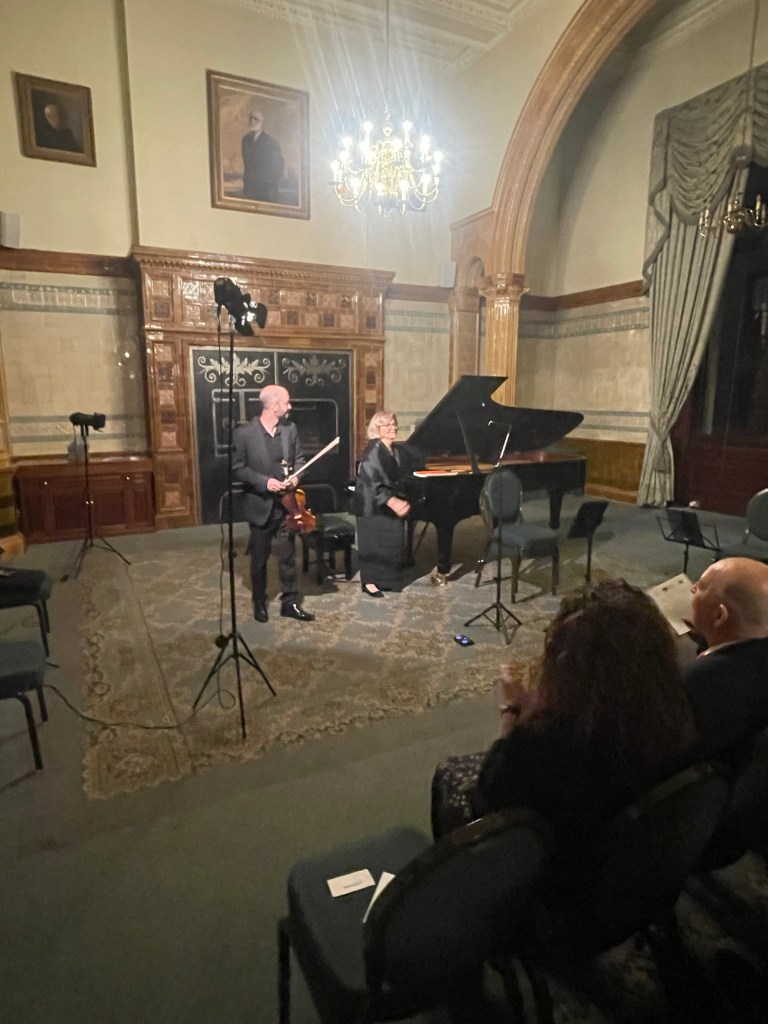
John Mills and Deniz – Mozart Violin Sonata in G K.379
Mozart’s late violin sonata in G opened the concert with almost Beethovenian vehemence but also the refined elegance and genial outpourings that could only be from the age of Mozart. Variations in which the piano shone through with a purity and style as the superb artistry of John Mills allowed our ‘birthday girl’ Mozart’s own spotlight
Mozart G minor Quartet K.478
The G minor Quartet already opens with a Beethovenian call to arms immediately replied by the beseeching sigh from the piano before bursting into outpourings of mellifluous buoyancy.
The Andante opening with Deniz’s beautiful simple prayer of thanksgiving was taken up by her superb colleagues with stylish playing of disarming simplicity. If the Rondo could have taken flight more and was a little earthbound for the fun that Mozart allows himself even in G minor it allowed the continual genial outpouring of melodic effusions to sing with unusual clarity and refined good taste.
Dvorak Quintet n. 2 op 81
It was in the Dvorak and the addition of the second violin of Ofer Falk that the music making really took wing .
Bozidar Vukotic sumptuous playing in Dvorak. Son of the late Catherine Butler Smith Vukotic, whose aunt is the renowned Rome based actress Milena Vukotic .Star of many of Fellini’s films and recent winner at the age of 85 of ‘Ballando con le Stelle’ the Italian version of ‘Strictly come Dancing’!
A sumptuous performance enhanced by the ravishing cello playing of Bozidar Vukotic but also the supreme musicianship of Deniz who could weave in an out of the sumptuous string sounds looking and listening ready to pounce and enhance.
Lydia Lowndes-Northcott viola with John Mills violin
The superb viola of Lydia Lowndes – Northcott looking and waiting as she listened so attentively to her colleagues, completing and supporting the voluptuous sounds from her colleagues. John Mills inspired and inspiring as Deniz played with passionate abandon but also the intelligent mutual anticipation of a seasoned chamber music player.
Deniz ….say it with flowers ……..Happy Birthday
It is nice to remember Gyorgy Sandor the mentor of Deniz and great friend of ours in Rome on such a joyous occasion.
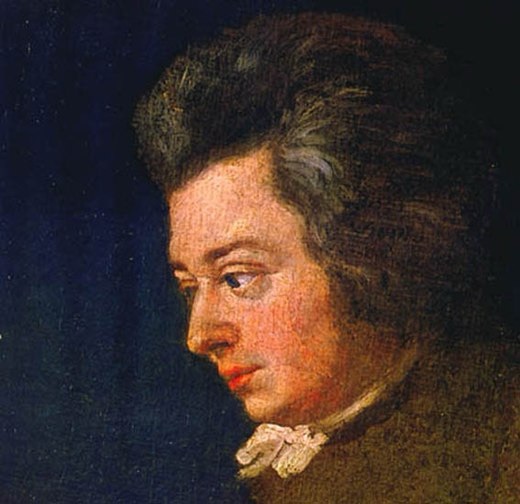
Wolfgang Amadeus Mozart 27 January 1756 Salzburg – 5 December 1791 (aged 35) Vienna
Violin Sonata No. 27 in G K.379/373a)was composed in Vienna in 1781 and first published in the same year.
It consists of two movements.
Adagio – Allegro
Theme : Andantino cantabile, with variations :
Variation 1 (piano without violin)
Variation 2
Variation 3
Variation 4 in
Variation 5: Adagio
Allegretto (Thema da capo – Coda)
On 12 March 1781 Mozart was summoned by his employer, the Prince-Archbishop of Salzburg, to join him and his retinue in Vienna, where they were staying during the celebrations marking the accession of the Emperor Joseph II. Mozart had been in Munich since the previous November, preparing for the premiere there of his opera Idomeneo, and he arrived in the Austrian capital on 16 March. That evening he found himself obliged to organize a private concert centred around the talents of some of the Salzburg court musicians. Mozart’s deep resentment towards the Archbishop, who refused to grant him permission to perform in public, can be discerned from his letters of the time to his father.Three weeks after his arrival in Vienna, Mozart had to provide pieces for the leader of the Salzburg orchestra, Antonio Brunetti, for whom he wrote a Rondo for violin and orchestra (K373), and the Sonata in G major, K379. The latter was so hurriedly composed (Mozart claimed to have completed it within the space of a single hour) that there was no time to write out the piano part, and Mozart had to play it out of his head at the work’s premiere the following day. Despite the circumstances in which it was written, this is one of the most beautiful and original of all Mozart’s violin sonatas. It is one that was well known to Schubert, who based his only song in variation form, Im Frühling, D882, on a theme very similar to that of Mozart’s variation finale.
Mozart received a commission for three quartets in 1785 from the publisher Franz Anton Hoffmeister .who thought this quartet was too difficult and that the public would not buy it, so he released Mozart from the obligation of completing the set. (Nine months later, Mozart composed a second quartet anyway, in E flat K. 493).
Hoffmeister’s fear that the work was too difficult for amateurs was borne out by an article in the Journal des Luxus und der Moden published in Weimar in June 1788. The article highly praised Mozart and his work, but expressed dismay over attempts by amateurs to perform it:
“( as performed by amateurs] it could not please: everybody yawned with boredom over the incomprehensible tintamarre of 4 instruments which did not keep together for four bars on end, and whose senseless concentusnever allowed any unity of feeling; but it had to please, it had to be praised! … what a difference when this much-advertised work of art is performed with the highest degree of accuracy by four skilled musicians who have studied it carefully.”
The assessment accords with a view widely held of Mozart in his own lifetime, that of a greatly talented composer who wrote very difficult music.
At the time the piece was written, the harpsichord was still widely used. Although the piece was originally published with the title “Quatuor pour le Clavecin ou Forte Piano, Violon, Tallie [sic] et Basse,” stylistic evidence suggests Mozart intended the piano part for “the ‘Viennese’ fortepiano of the period”
The work is in three movements :
Allegro
Andante
Rondo Allegro
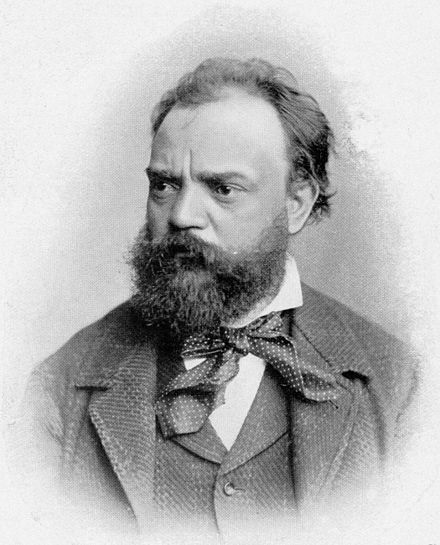
Antonín Dvořák in 1882 8 September 1841 Nelahozeves Austrian Empire 1 May 1904 (aged 62) Prague
Dvorak’s Piano Quintet No. 2 in A op 81 B 155, was composed between August 18 and October 8, 1887, and was premiered in Prague on January 6, 1888.
The work was composed as the result of the composer’s attempt to revise an earlier work, the first Piano Quintet in A Op. 5.Dvořák was dissatisfied with the Op. 5 quintet and destroyed the manuscript not long after its premiere. Fifteen years later, he reconsidered and retrieved a copy of the score from a friend and started making revisions. However, he decided that rather than submitting the revised work for publication, he would compose an entirely new work.The new quintet is a mixture of Dvořák’s personal form of expressive lyricism with elements from Czech folk music. Characteristically, those elements include styles and forms of song and dance, but not actual folk tunes; Dvořák created original melodies in the authentic folk style.
The music has four movements :
Allegro, ma non tanto
Dumka : Andante con moto
Scherzo (Furiant) : Molto vivace
Finale: Allegro
.
Milena with the distinguished pianist William Grant Naboré s : ‘ I will run to see her. She is great like Judi Dench, Maggie Smith, and Vanessa Redgrave!’
Once upon a time there were performing artists that had a voice that was an instrument.Thanks to a diaphragm trained like a singer had a kaleidoscope of colours and a projection that could point the voice to the last row with the same intensity as the first without mechanical assistance. A memory that like a sponge could absorb a text studied in depth through thirty days of hard work.Seemingly infallibly producing it night after night ever more in depth without the assistance of a mechanical aide memoir. Artists that would arrive in the theatre hours before each performance to check the set ,lighting and repass the text until it became as if freshly minted. These artists were called actors and they are a true rarity these days. One does still exist and at the age of eighty five she astonished,amazed and moved us last night at the Off Off theatre in the historic Via Giulia in the heart of Rome. Her name is Milena Vukotic and may she reign over the stages she graces for many years to come.
Some superb playing of great artistry and intelligence allied to an aristocratic grandeur and complete technical command. Infact these two masterworks were revealed in a new light where any of the rhetoric of tradition was substituted by a scrupulous attention to the composers detailed indications in the score.
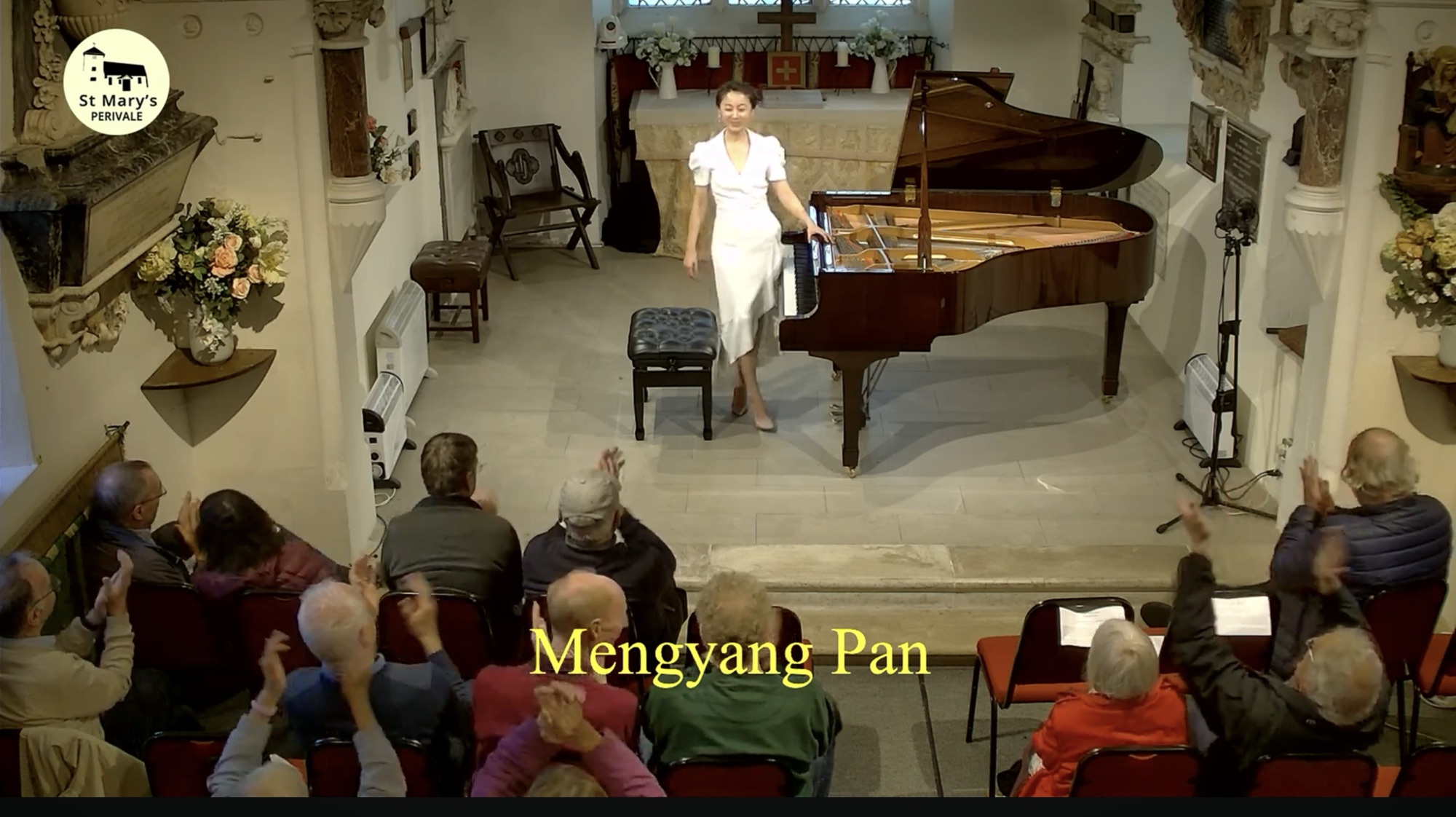
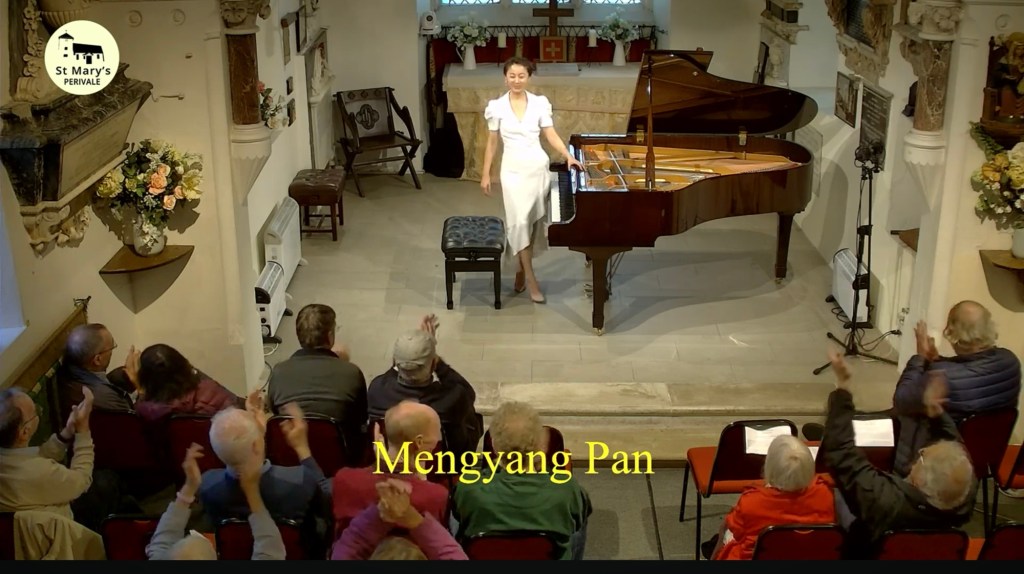
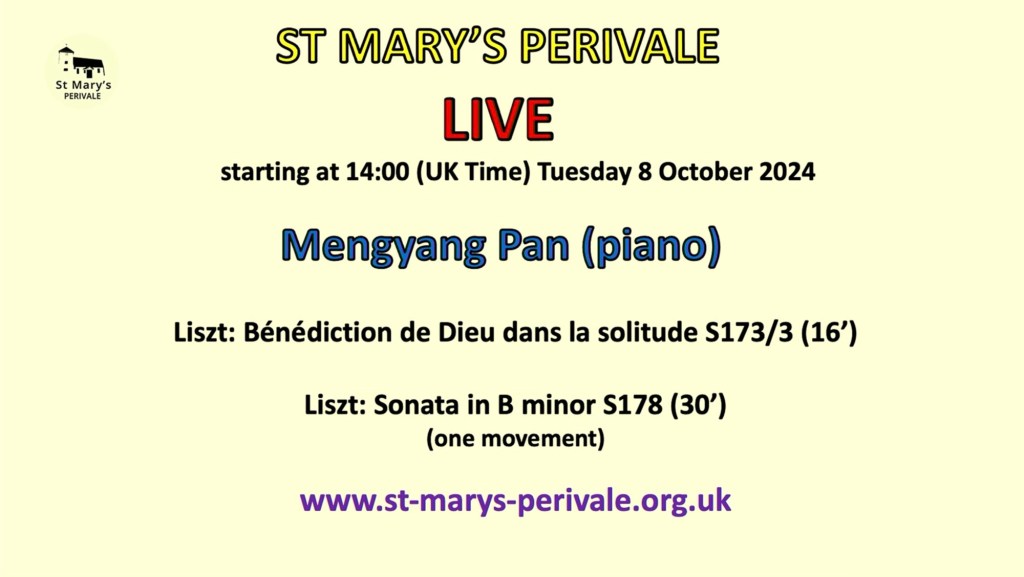
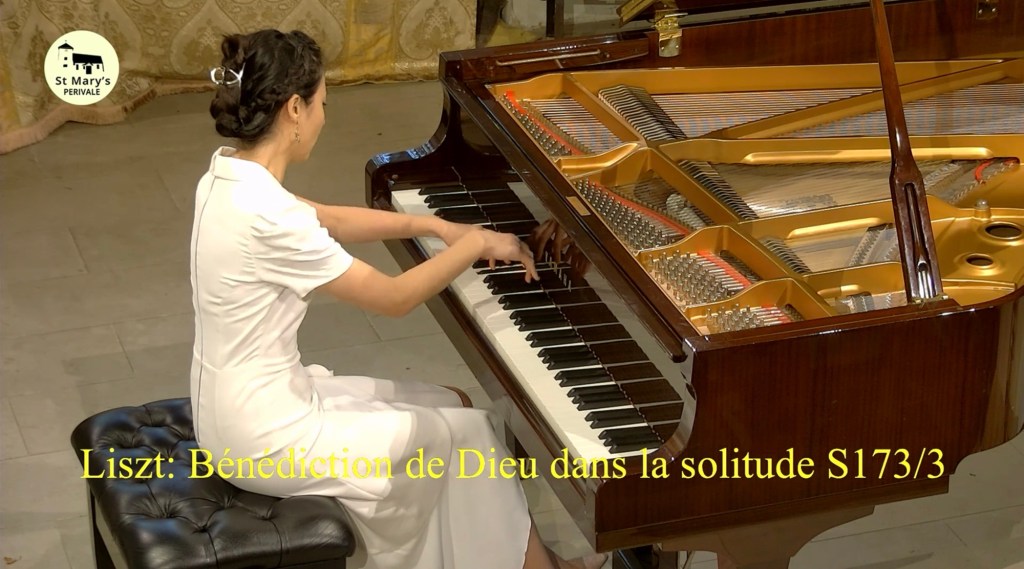
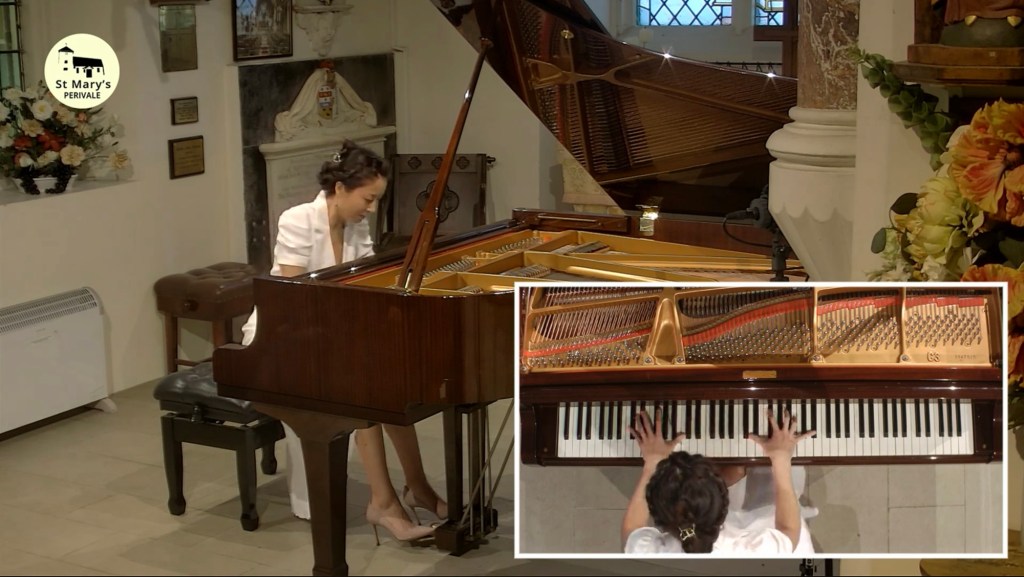
Bénediction I well remember from the early recordings of Liszt by Alfred Brendel that it was exactly his musicianship , technical mastery and respectful integrity that we heard for the first time with a composer too often represented as a barnstorming virtuoso and seducer of the senses. The leisurely opening of Mengyang’s performance created the atmosphere of reverence and dignified beauty with the bass melody allowed to unfold with the shimmering accompaniment above it , gradually building to a passionate outpouring of sumptuous sounds .’Cantando sempre’ as the melodic line moves so magically from the bass to the tenor with harp like chords just adding a golden sheen to such beauty. Mengyang judged superbly the gradual build up in intensity to a sumptuous climax that dissolved immediately to prepare for the chorale like ‘Andante’ that she played with simplicity and devout beauty. ‘Più sostenuto quasi preludio’ was played with aristocratic good taste as the melodic line was now reversed with the theme in the right hand and with shimmering left hand harmonies just adding to the radiant fluidity. Building this time to a climax that Liszt marks ‘rinforzando molto e sempre più appassionato’ and is the cry of Liszt the fervent believer with an almost unbearable intensity. Menyang calling on her wonderfully florid arms to add ever more sumptuous sounds without ever a trace of hardness. In fact the beauty and luminosity of sound was one of the most remarkable things of this performance and of the sonata that was to follow. Streams of harp like sounds were played with ravishing fluidity as the left hand melodic line sang it’s heart out with refined and respectful beauty. ‘Andante semplice espressivo’ was indeed the final prayer with Liszt on his knees calling on all the sublime beauty and radiance that he could offer to his maker. This was a remarkable performance and was the ideal accompaniment for the B minor Sonata. Two great works restored to their rightful place at the pinnacle of the pianistic repertoire.
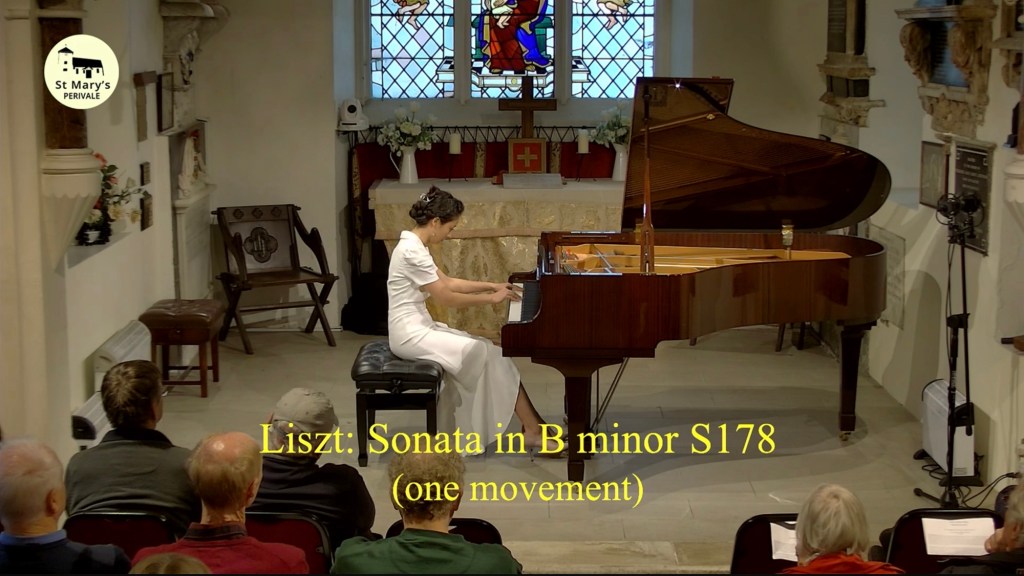
The Liszt Sonata saw Mengyang in demonic mood sometimes playing with a clenched fist as the drama unfolded.The three opening themes that are transformed throughout the Sonata were played with such characterisation from the mystery of the sombre deep bass to the call to arms of the ‘Allegro energico’ and the pummelled bass notes that Liszt indeed indicates ‘marcato’. This was a truly superb performance where her technical command was allied to a poetic understanding as she allowed this masterpiece to unfold with scintillating virtuosity and sumptuous beauty. The same quasi religious integrity of Benediction she brought to the ‘Andante sostenuto’ and was remarkable for the simplicity and beauty that unfolded from her delicate fingers .The ‘Quasi Adagio’ was breathtaking in it’s delicacy ‘dolcissimo con intimo sentimento’ as it lead to the nobility and majesty of the passionate climax before reaching for the infinite with scales that just wafted over the keys with featherlight whispered sounds.The Fugato that follows was played with fearless control and dynamic energy as she dispatched Liszt’s diabolical octaves with enviable mastery. The final prophetic pages were played with a radiance and beauty of two pages that demonstrate more than any other the genius of Liszt looking always into the future.
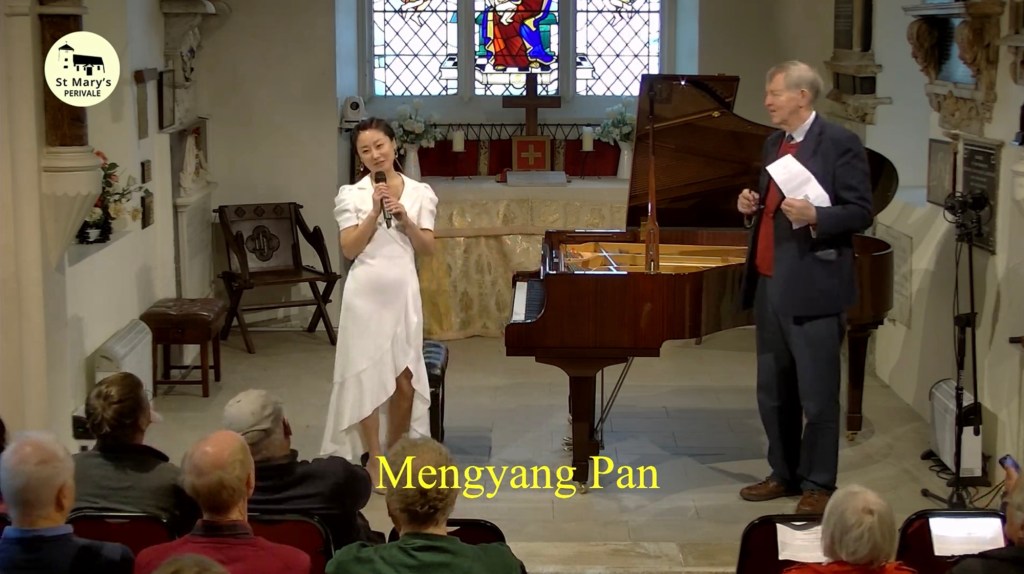
Pianist Mengyang Pan, known for her captivating performances, has graced prestigious stages worldwide, including the Royal Festival Hall, the Wigmore Hall, Bruckner Haus Austria, UNESCO Paris and many more. Born in China, she began her musical journey at the Central Conservatory of Music and later pursued her studies in the UK at the Purcell School and the Royal College of Music. Earning accolades at competitions such as the Ettlingen International Piano competition, Rina Sala Gallo International Piano Competition, Dudley International Piano Competition Birmingham International Piano Competition and many more, Mengyang’s mastery of both traditional and contemporary repertoire has earned her critical acclaim, with her delicate touch and tonal shades praised by critics. Collaborating with renowned conductors like Vladimir Ashkenazy and John Wilson, her electrifying performances have garnered high acclaim.
Beyond performance, Mengyang is a dedicated educator, serving as a piano professor at the Royal College of Music and actively participating in international competitions and music festivals as an adjudicator and masterclass instructor. Co-founding the Elisi-Pan Piano Duo, she continues to share her musical expertise through recitals worldwide. Additionally, Mengyang contributes significantly to piano pedagogy as a module leader and lecturer at the RCM and directs various music education programs, including the IPPA Conero International Piano Competition. Her passion for musical exploration is evident in her curation of festivals dedicated to reviving overlooked compositions and composers while embracing contemporary expressions.
Franz Liszt 22 October 1811 Doborjan, Kingdom of Hungary, Austrian Empire
31 July 1886 (aged 74) Bayreuth Kingdom of Bavaria, German Empire
Harmonies poétiques et religieuses (Poetic and Religious Harmonies), S.173, is a cycle of piano pieces written by Franz Liszt at Woronince the Polish-Ukrainian country estate of Liszt’s mistress Princess Caroline von Sayn-Wittgenstein in 1847, and published in 1853. The pieces are inspired by the poetry of Alphonse de Lamartine as was Liszt’s symphonic poem Les Préludes.
The ten compositions which make up this cycle are:
Invocation (completed at Woronińce);
Ave Maria (transcription of choral piece written in 1846);
Bénédiction de Dieu dans la solitude (‘The Blessing of God in Solitude,’ completed at Woronińce);
Pensée des morts (‘In Memory of the Dead,’ reworked version of earlier individual composition, Harmonies poétiques et religieuses (1834));
Pater Noster (transcription of choral piece written in 1846);
Hymne de l’enfant à son réveil (‘The Awaking Child’s Hymn,’ transcription of choral piece written in 1846);
Funérailles (October 1849) (‘Funeral’);
Miserere, d’après Palestrina (after Palestrina);
La lampe du temple (Andante lagrimoso);
Cantique d’amour (‘Hymn of Love,’ completed at Woronińce).
Liszt’s Bénédiction de Dieu dans la solitude [“Benediction of God in solitude”] is the third work from his cycle Harmonies poétiques et religieuses [“Poetic and Religious Harmonies”] completed in 1853. This magnificent piece is the perfect marriage between Liszt’s abilities as a virtuoso pianist and his profound spirituality. The Benediction is prefaced by a poem of the French literary romantic Alphonse de Lamartine, and comes from a collection dating from 1830 also titled Harmonies poétiques et religieuses. Through several meetings, Lamartine’s socio-political, aesthetic, and religious views influenced Liszt greatly. Despite the popular belief that he only converted to Catholicism late in life in order to repent from his youthful transgressions, Liszt’s father took him to several churches as a young boy and instilled in him a curiosity and reverence which would persist through old age.
The piece can be divided into four large sections [ABCA’]. The A section features long, rich, fluid melodies while B is contrasting in its short gestures and pastoral peacefulness. Section C is rather improvisatory and guides the music emotionally from the tranquil B section to the glorious return of the A section. This time, the melody is further ornamented with elaborate accompanimental figures as the music climactically ascends to the heavens. An introspective, prayer-like postlude follows in which a fragment from the B section appears as a reminiscence, a cyclical feature present in many of Liszt’s larger late works. A professor of mine once remarked about the piece, “It doesn’t matter whether you are religious or not, when you listen to the Bénédiction you are convinced that there is a God.”
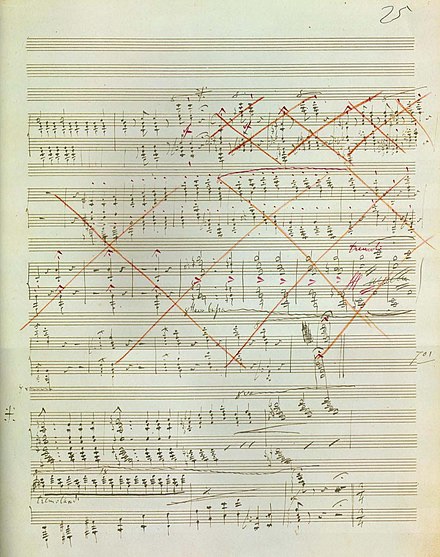
The Piano Sonata in B minor S.178 is in a single movement and was completed the work during his time in Weimar, Germany in 1853, a year before it was published in 1854 and performed in 1857. He dedicated the piece to Robert Schumann , in return for Schumann’s dedication to Liszt in his Fantasie in C major op 17. A copy of the work arrived at Schumann’s house in May 1854, after he had entered Endenich sanitorium . Pianist and composer Clara Schumann did not perform the Sonata despite her marriage to Robert Schumann; according to scholar Alan Walker she found it “merely a blind noise”.Already in 1851 Liszt experimented with a non-programmatic “four-movements-in-one” form in an extended work for piano solo called Grosses Concert – Solo which in 1865 was published as a two-piano version under the title Concerto Pathétique shows a thematic relationship to both the Sonata and the later Faust Symphony .Walker claims the quiet ending of the Sonata was an afterthought; the original manuscript contains a crossed-out ending section which would have ended the work in a loud flourish instead.[7]
Page 25 of the manuscript. The large section crossed out in red contains the original loud ending
The Sonata was published by Breitkopf & Härtel in 1854 and first performed on 27 January 1857 in Berlin by Hans von Bulow. It was attacked by Eduard Hanslick who said “anyone who has heard it and finds it beautiful is beyond help”. Brahms reputedly fell asleep when Liszt performed the work in 1853. However, the Sonata drew enthusiasm from Richard Wagner following a private performance of the piece by Karl Klindworth on April 5, 1855.It took a long time for the Sonata to become commonplace in concert repertoire because of its technical difficulty and negative initial reception due to its status as “new” music. However by the early stages of the twentieth century, the piece had become established as a pinnacle of Liszt’s repertoire and has been a popularly performed and extensively analyzed piece ever since.
Camille Saint – Saens , a close friend of Liszt, made a two-piano arrangement of the Sonata in 1914, but it was never published in his lifetime because of rights issues. It was first published in 2004 by Durand in Paris, edited by Sabrina Teller Ratner. According to a letter from Saint-Saëns to Jacques Durand , dated 23 August 1914, the two-piano arrangement was something that Liszt had announced but never realized.
Liszt effectively composed a sonata within a sonata, which is part of the work’s uniqueness, and he was economical with his thematic material.The first page contains three motive ideas that provide the basis for nearly all that follows, with the ideas being transformed throughout. The complexity of the sonata means no analytical interpretation has been widely accepted.Some analyses suggest that the Sonata has four movements,although there is no gap between them. Superimposed upon the four movements is a large sonata form structure,although the precise beginnings and endings of the traditional development and recapitulation sections have long been a topic of debate. Others claim a three-movement form,an extended one-movement sonata form,and a rotational three-movement work with a double exposition and recapitulation .Inspired by the Wanderer Fantasie by Schubert that Liszt much admired which is a work where the transformation of the themes was incorporated into a more conventional form and was the basis of Liszt’s breaking away from the conventional forms of the day but having allowing themes to be transformed like character terms in a play.And has provoked a wide range of divergent theories from those of its admirers who feel compelled to search for hidden meanings. Possibilities include the following:
The Sonata is a musical portrait of the Faust legend, with “Faust,” “Gretchen,” and “Mephistopheles” themes symbolizing the main characters.
The Sonata is autobiographical; its musical contrasts spring from the conflicts within Liszt’s own personality.
The Sonata is about the divine and the diabolical; it is based on the Bible and on John Milton’s Paradise Lost
The Sonata is an allegory set in the Garden of Eden ; it deals with the Fall of Man and contains “God,” “Lucifer,” “Serpent,” “Adam,” and “Eve” themes.
The Sonata has no programmatic allusions; it is a piece of “expressive form” with no meaning beyond itself.
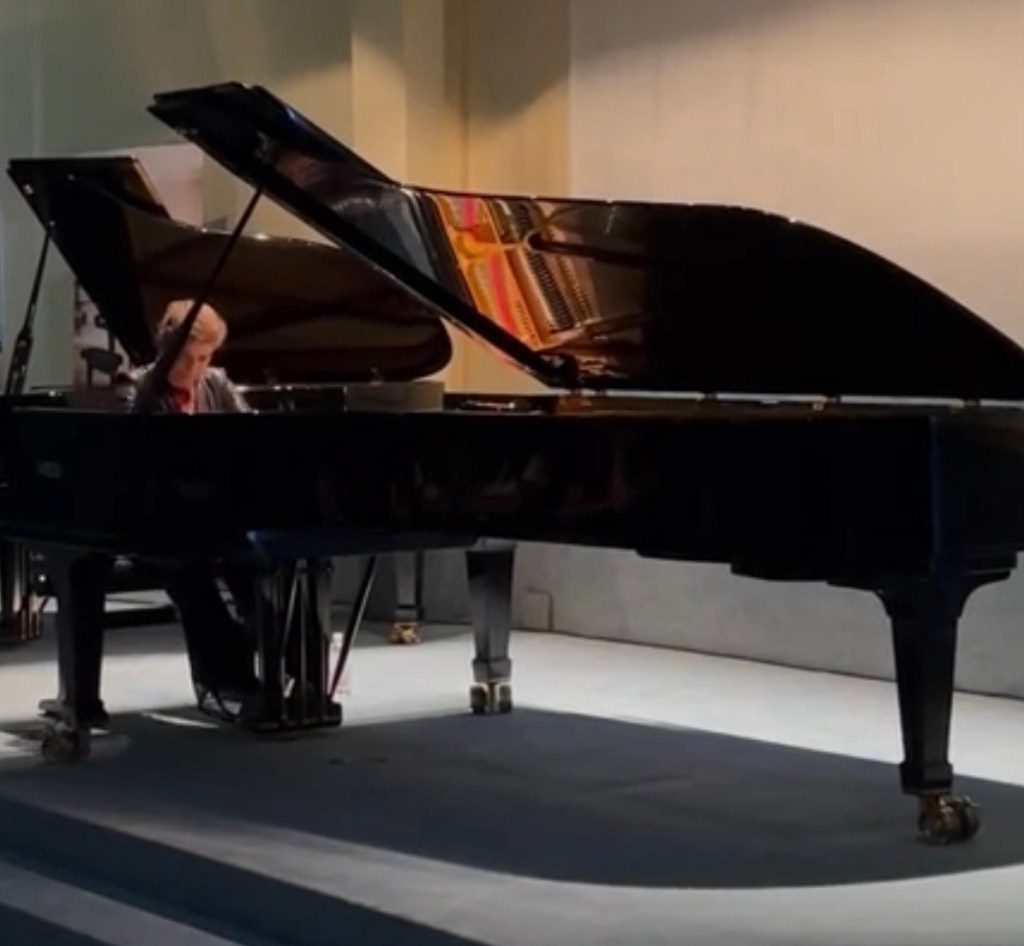
I was very interested to hear Inna Faliks play the Brahms F minor Sonata and here is a recording made in Cremona on the 28th September in the Fazioli Concert Hall.
It is an orchestrally conceived piece of great breadth and grandeur and a remarkable testament to a composer who was only twenty when he wrote it. In many ways it is pianistic as it knows how to exult the sounds within the piano but it is in many ways also awkward in its insistence of orchestral timbre and architectural shape. It is truly a pianistic symphony,a title that Alkan was quite happy to give to his study op 39, but for Brahms his four symphonies were much more suffered and required a long period of gestation. It is very difficult for the interpreter not to get distracted by detail as it is the overall architectural shape that is of fundamental importance. But it is also essential that Brahms’s subtle and sumptuous sound world is given time to breathe and expand. It is a work that in the wrong hands can sound either like a bull in a china shop or a fussy stylist who cannot see the wood for the trees.
Inna entered this world of Brahms with fearless abandon with leaps that are not negotiable, as they can wrongly be in Beethoven’s op 106 or 111. Leaps that must immediately establish the tempo and rhythmic drive of this monumental work. Inna played with freedom but above all with intelligence and aristocratic nobility. There was a majesty to the voices as they cried out within the ever rhythmic tolling bell as we are seduced by the luxuriant sound of the tenor melody as suddenly the strings take over with a succulent richness – ‘quasi cello espressivo’ indeed. Played by Inna with weight, digging deep into the soul of this magnificent Fazioli piano as rarely we have heard it divulge such secrets before! Deep bass notes held in the pedal, as Brahms indicates, starting pianissimo as the excitement increases. A beautifully shaped ‘più vivo’ with just the right amount of rubato, that Brahms suggests, leading to a final glorious outpouring. Pure orchestral chords for the ‘più animato’ suddenly brought nobility and order to the passionate outpouring of the youthful intensity of Brahms.
The ‘Andante espressivo’ was played with disarming clarity and a sense of balance that was of great beauty with a gently flowing tempo of mellifluous fluidity. The ‘ben cantando’ whispered duet between the voices was of deeply moving poignancy and the gentle ‘poco più lento’ floated on a sublime wave of searing beauty. There were moments of passionate outpourings but they were short lived and played with sensitive understanding as we drew ever closer to the sublime coda :’Andante molto – pianississimo ed espressivo ‘. From this sublime reawakening Inna built up a climax of earth shattering passion allowing it to drift away on a stream of harp like sounds of such simple purity and serenity.
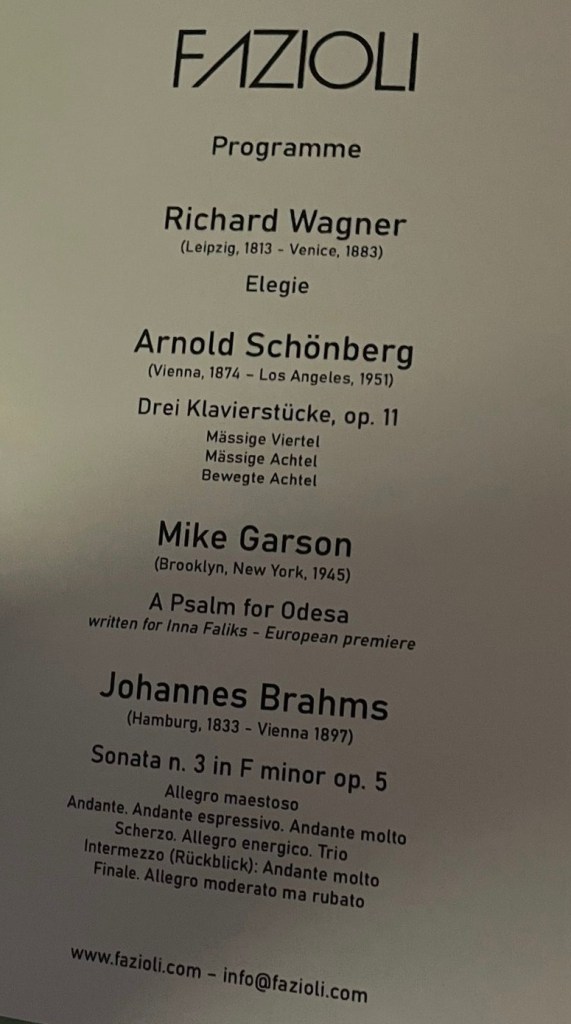
The entire programme of the concert in Cremona on the 28th September
This was immediately dispelled by the dynamic energy and great characterisation she brought to the ‘Scherzo’. She produced a beautiful full tone to the ‘Trio’ with it’s sombre elegance and whistful searching. The extraordinary ‘Intermezzo’ is a calming voice between the two vigorously quixotic third and fifth movements. Infact it could almost have been conceived like the ‘Waldstein’ sonata where Beethoven substituted his first thoughts and placed an introduction to the final movement. The whispered meditation with its bass drum rolls ever more menacing that Inna carved with a superb sense of architectural shape whilst never loosing the rhythmic impact of devastating desolation that it can and should provoke. The ‘Allegro moderato’ that followed was indeed ‘con rubato’ with its buoyant rhythms and syncopated replies bursting into song ‘con espressione.’ Leading to the glorious ‘chorale’ played by the sumptuous string like sounds of Philadelphian beauty. Building of excitement with the drive of the ‘più mosso’ before the devilish dance of the ‘Presto’ played with astonishing technical mastery that went completely unnoticed as it was the musical message that was so overpowering before the orgiastic release of the final few bars .
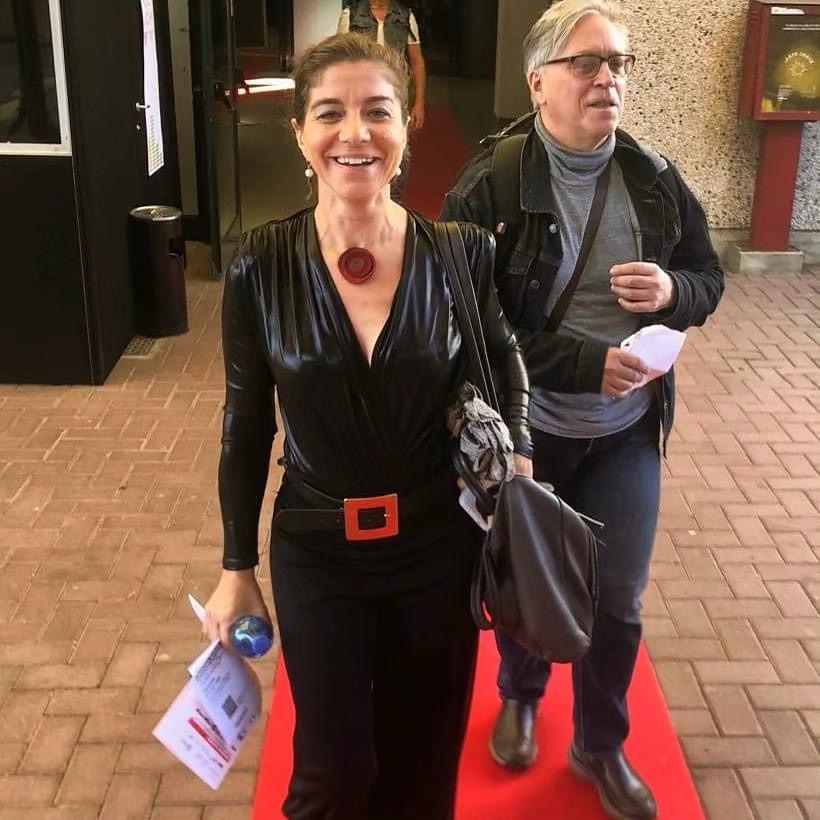
A red carpet for Inna and the critic/pianist and commentator Jed Distler
A remarkable performance of great authority and poetic beauty from a master musician .
Brahms in 1889 7 May 1833, Hamburg – 3 April 1897 (aged 63) Vienna
Brahms’s Piano Sonata No. 3 in F minor, Op. 5 was written in 1853 and published the following year. It is unusually large, consisting of five movements , as opposed to the traditional three or four. Brahms, enamored of Beethoven and the classical style the sonata with a masterful combination of free Romantic spirit and strict classical architecture. As a further testament to Brahms’ affinity for Beethoven, the Piano Sonata is infused with the instantly recognizable motive from Beethoven’s Symphony n. 5 in the first, third, and fourth movements.Composed in Dusseldorf it marks the end of his cycle of three sonatas , and was presented to Robert Schumann in November of that year; it was the last work that Brahms submitted to Schumann for commentary. Brahms was barely 20 years old at its composition. The piece is dedicated to Countess Ida von Hohenthal of Leipzig.The five movements are :
Allegro maestoso
Andante espressivo — Andante molto The second movement begins with a quotation above the music of a poem by Otto Inkermann under the pseudonym C.O. Sternau. Der Abend dämmert, das Mondlicht scheint, da sind zwei Herzen in Liebe vereint und halten sich selig umfangen
Through evening’s shade, the pale moon gleams While rapt in love’s ecstatic dream
Scherzo . Allegro energico avec trio beginning with a musical quotation of the beginning of the finale of Mendelssohn’s Piano Trio n.2 op 66
Intermezzo (Rückblick / Regard en arrière) Andante molto
Finale. Allegro moderato ma rubato
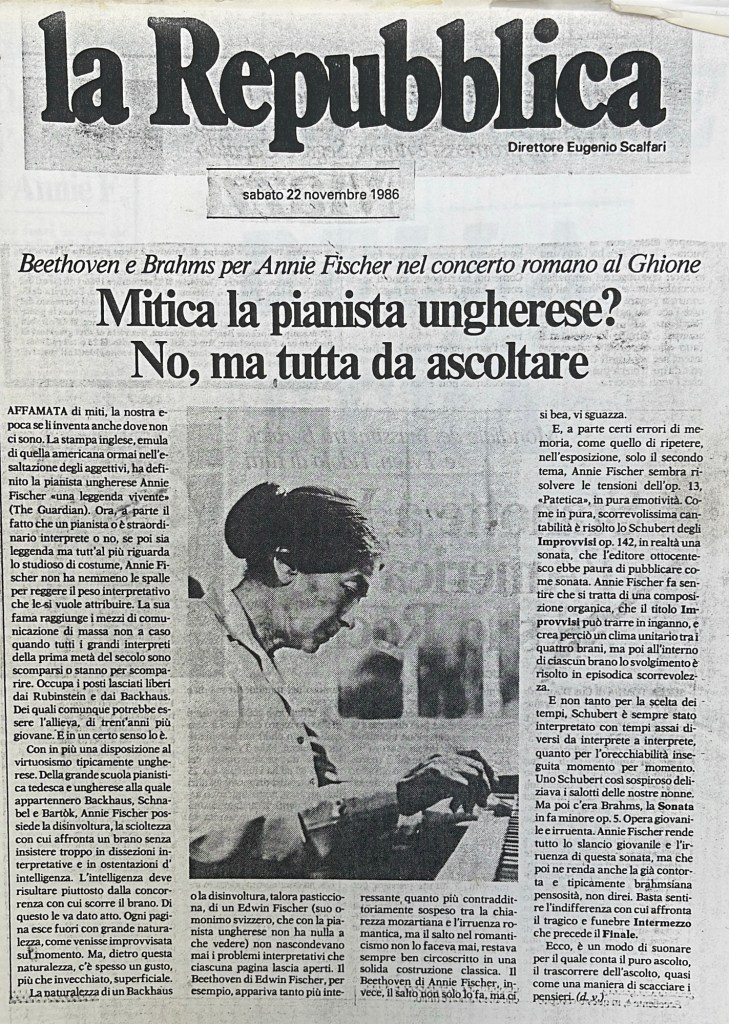
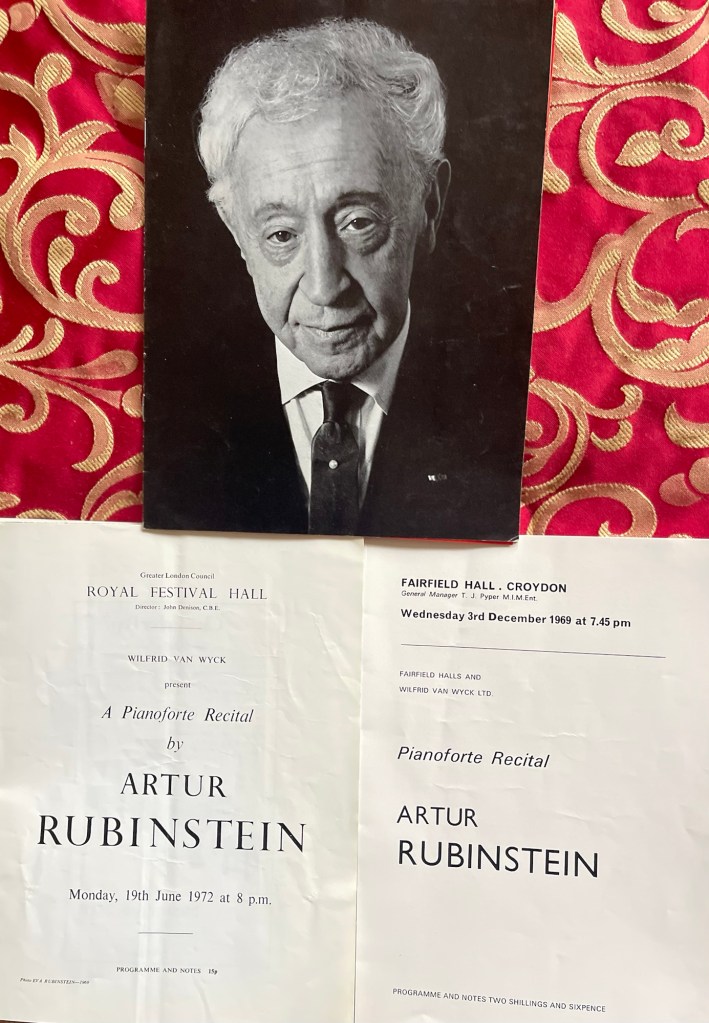
Annie Fischer played it in her first recital of three for us in Rome.Trying the piano out with a great flourish that broke a string ! I used to hold a lighted cigarette for her in the wings. One of the truly great interpreters born to play the piano with a naturalness,intelligence and passion she was a truly remarkable lady and and her performances and presence in out lives will never be forgotten .I heard Artur Rubinstein play the Brahms twice in 1969 and 1972 A work that was truly ‘his’ I KNEW I was a musician long before I knew I was Jewish, Ukrainian, or Soviet.” So begins the captivating memoir Weight in the Fingertips: A Musical Odyssey from Soviet Ukraine to the World Stage (2023) by Inna Faliks, a distinguished concert pianist and now a music professor at UCLA’s Herb Alpert School of Music. Her journey from child musical prodigy in Soviet Ukraine to an émigré artist at the highest levels of her profession takes several surprising twists, described in prose alternating between thoughtful and delightfully breezy but always deeply wise in its contemplation of a life spent pursuing an individual musical voice true to the disparate components of her identity. Manuscripts Don’t Burn is a recital/reading that delves into the world of Inna Faliks’s recently published memoir about her adventures as an acclaimed, Ukrainian-American, Jewish concert pianist: In Weight in the Fingertips Inna Faliks weaves together excerpts from her memoir with performances of old and new works that have been especially meaningfull to her. It also marks the release of “Manuscripts Don’t Burn,” a new recording on Sono Luminus.
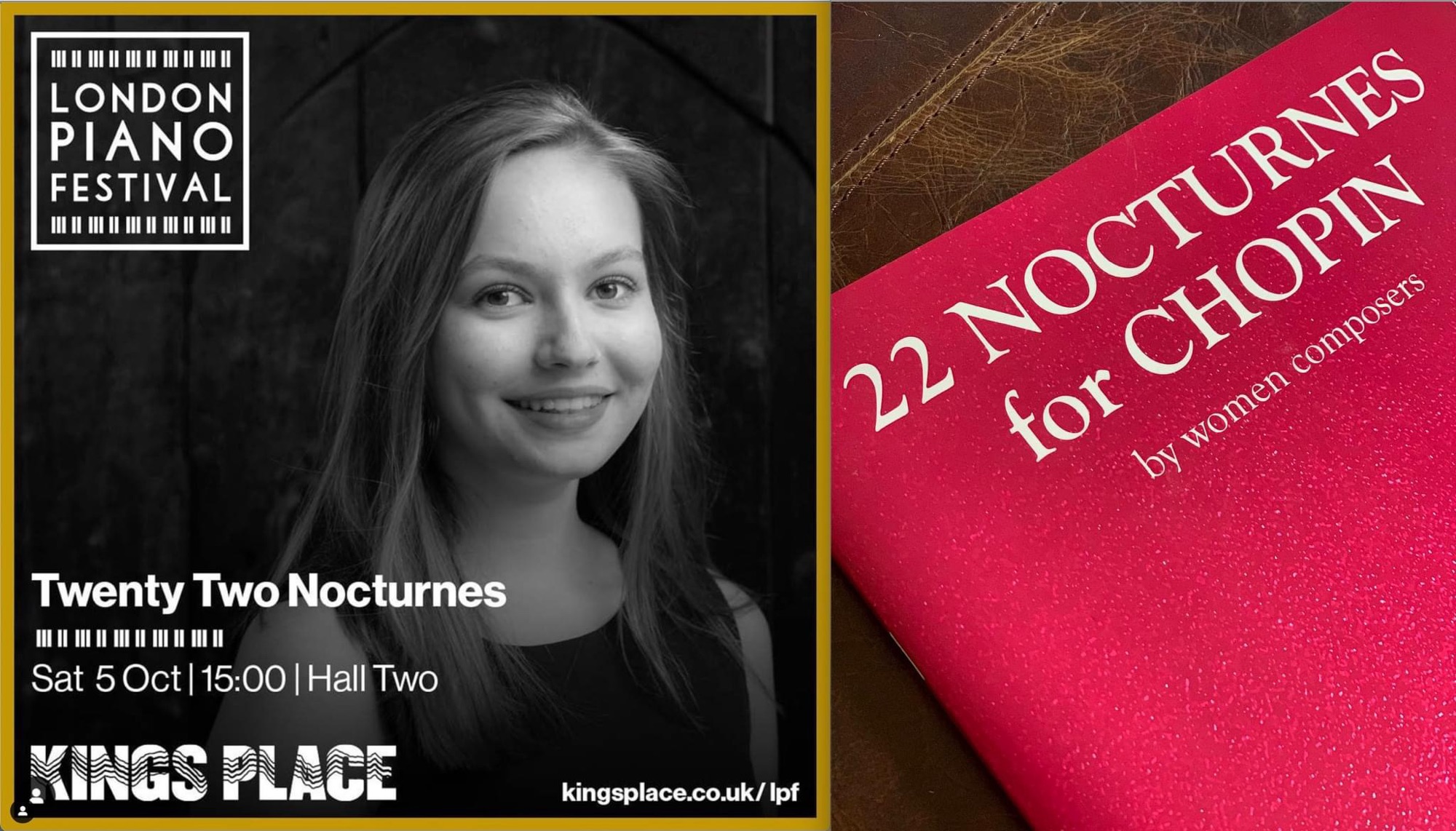
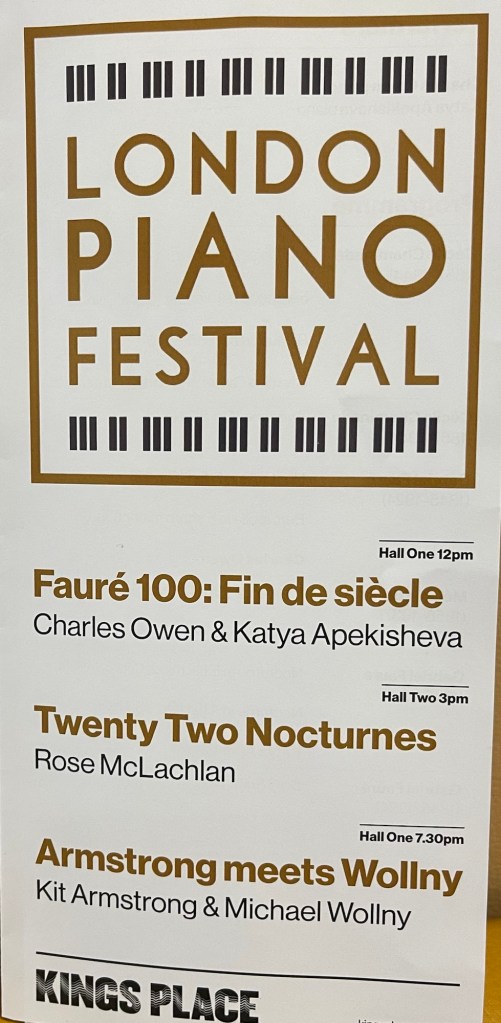
Today at Kings Place Rose McLachlan played with such exquisite finesse and beauty that I am tempted to say that she turned ‘baubles’ into ‘gems.’
Only time will tell if they are indeed gems but these lucky 22 women composers have certainly found a superb artist to present their beautiful ‘nocturnes ‘.
Eight of the twenty two composers present today
I already know that the pianist and critic in New York Jed Distler after hearing the première last September is playing several of the nocturnes in his programmes including those by Nancy Litten’s Night Time Stroll and Alanna Crouch. But today listening again at the distance of a year I was mesmerised by the exquisite beauty of each and every nocturne. Could it be the influence of Katya Apekisheva on Rose that she has entered that magic world of ravishing sounds and whispered confessions. Like her brother ,a door has opened to a magic world of colour and fantasy, and whose performances in Leeds recently could only be described as sublime. As Elena Cobb wrote :
“ Enjoy the view of the full house at the London Piano Festival earlier today anticipating Rose McLachlan’s recital. A professional film, created by Katie Edwards will be available next week on YouTube.
Everyone who was there will agree that Rose’s playing was spell bounding. Her pianissimo was especially impressive as I agree with Herbert von Karajan who once said: “Everyone can play loud and fast. Try slow and quiet.”
I was so happy to be able to whisper in her father’s ear, as I did when I heard Callum play Schumann op 13 : ‘You must be so proud’.
And yet another of the McLachlan clan ,Matthew, with the Chappell Gold Medal already to his credit. I wonder is there no limit to the artistry and industry of this embarrassingly talented family?
https://christopheraxworthymusiccommentary.com/2022/10/08/schubertiade-at-kings-place-all-you-need-is-love/Charles Owen and Katya Apekisheva ,Directors of the LPF ,on extremities of the group Prof Tessa Nicholson with Nancy Litten whose Fred and Berties’s Night- Time Stroll with thoughts of Chopin op 55 n.1 was one of twenty two gemsAnn Martin-Davis with Kathryn Page McLachlanA full house in Hall Two A birds eye view of the performers and directors
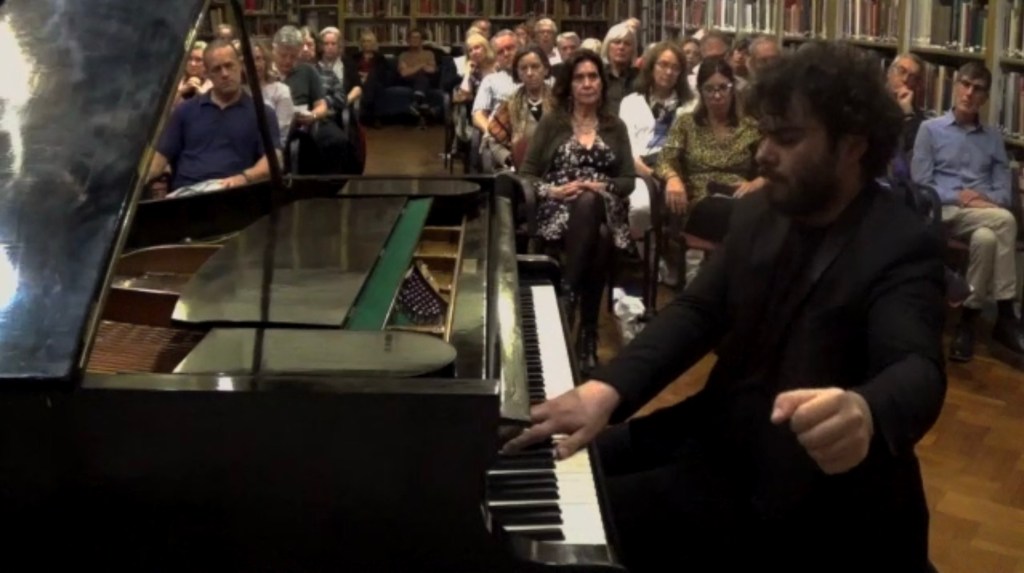
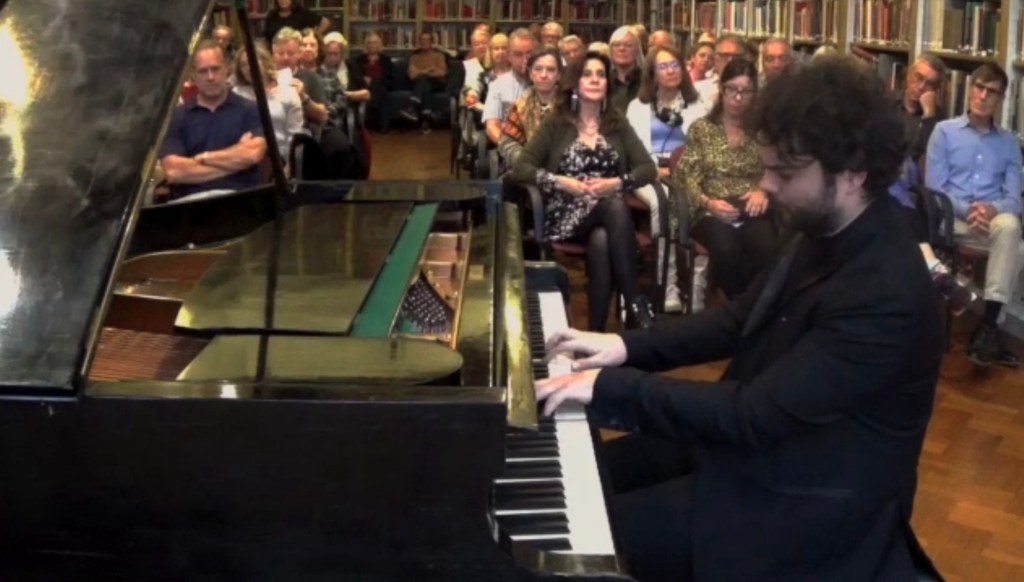
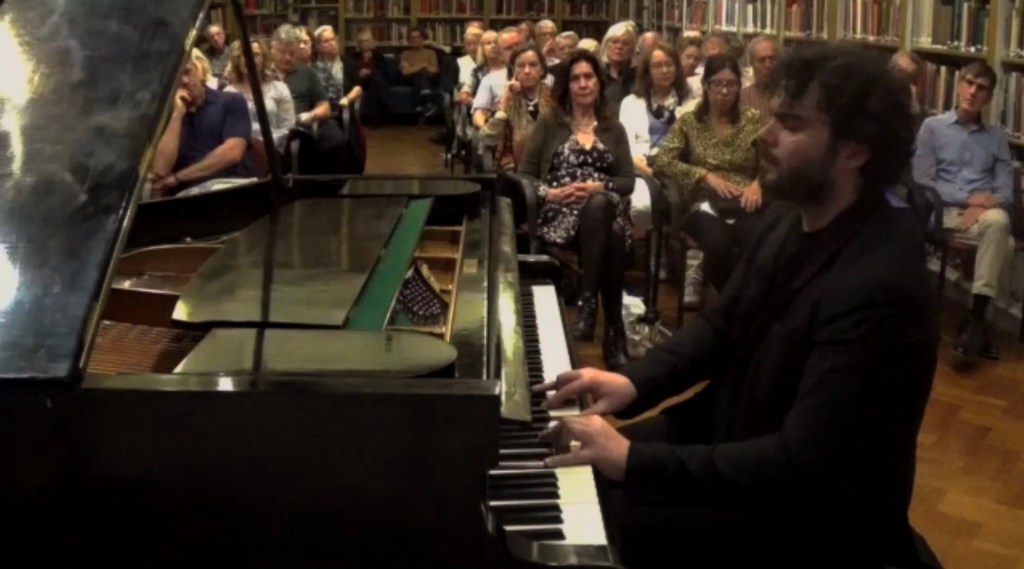
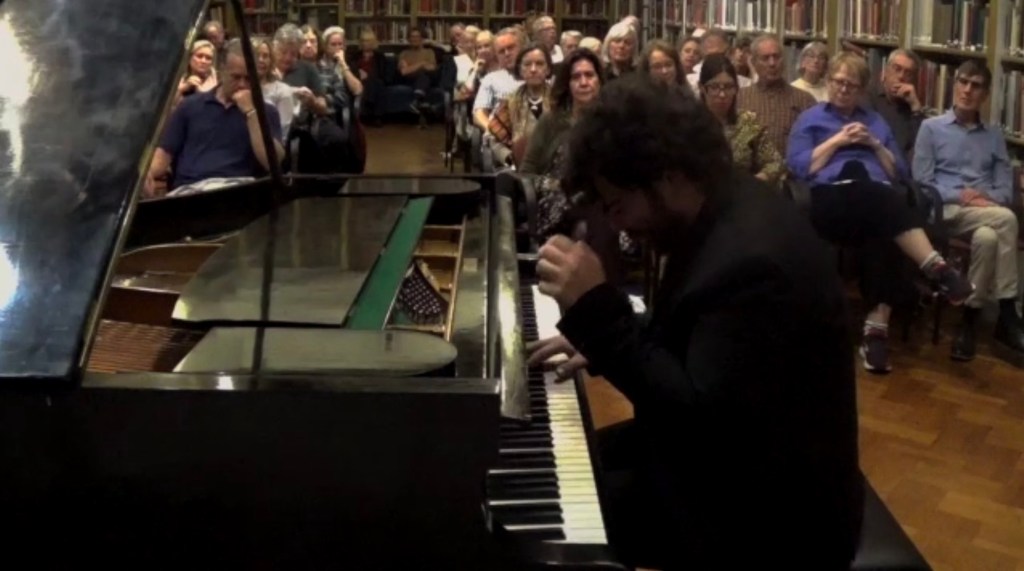
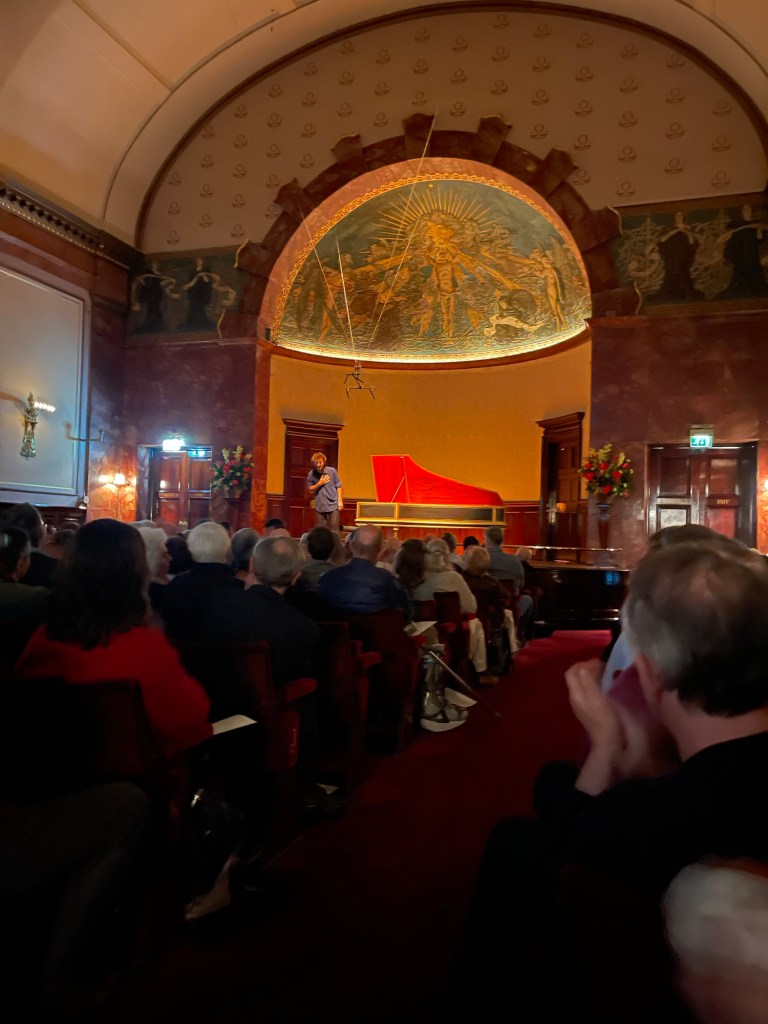
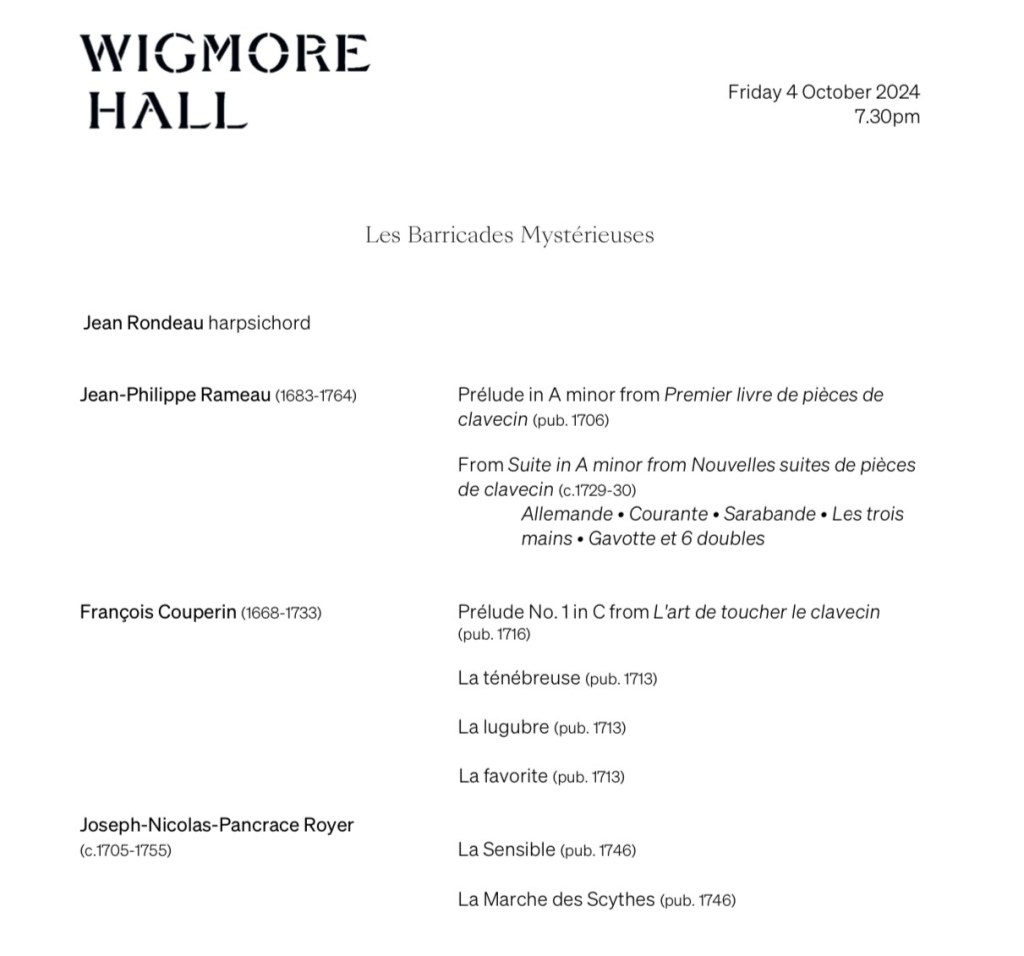
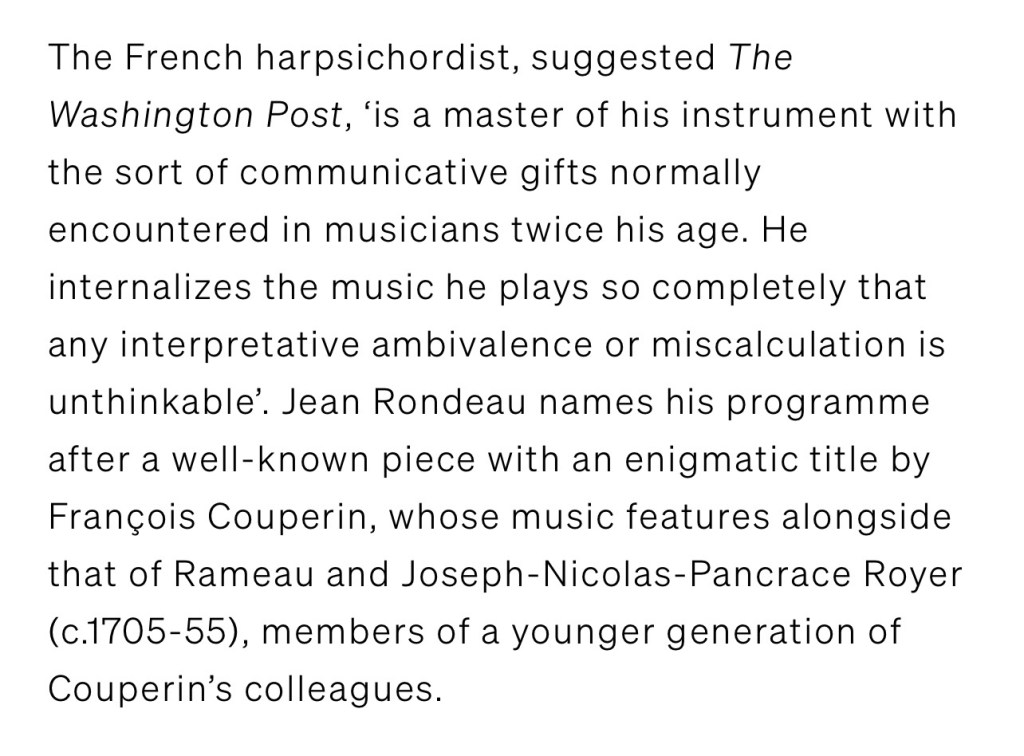
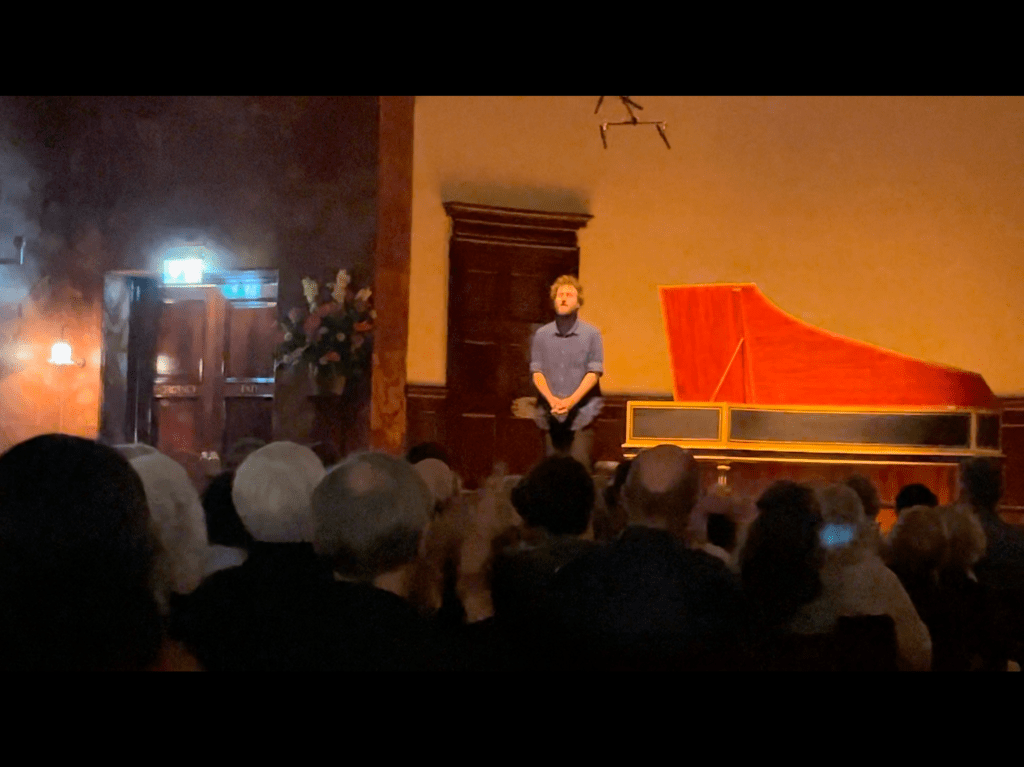
No doubt for me this is the finest artist before the public today. Eighty minutes in which the golden aura that surrounded him illuminated and uplifted souls as no other artist can today . Swaying gently as the music just poured from him with a simplicity and staggering mastery. It was just him and us immersed in a glorious outpouring of golden strands of music. This was an artist recreating the music with an improvisatory mastery and we were held mesmerised in his spell No external assistance from I pads which would have been unthinkable with an artist of his genius because this wild looking young man carries the music with him deep in his soul ‘Hats off a Genius’ is too little to express the emotions that his pure simple music making provokes and enriches. It was to the ‘Barricades’ that he turned at the end of this musical seance as an encore , coming full circle as he played it ever more searchingly with its beguiling insinuatingly daring harmonic changes. The Wiggies in delirium wanted even more and this humble servant of music sent us away with the most famous of all baroque pieces :’Le Tic Toc Choc’ ,played with astonishing fluidity and plucked ease – Sokolov eat your heart out !
Les Barricades Mystérieuses (The Mysterious Barricades) is a piece of music that Francois Couperin composed for harpsichord in 1717. It is the fifth piece in his Ordre 6ème de clavecin in , from his second book of collected harpsichord pieces (Pièces de Clavecin).
“The four parts create an ever-changing tapestry of melody and harmony, interacting and overlapping with different rhythmic schemes and melodies. The effect is shimmering, kaleidoscopic and seductive”
Debussy considered François Couperin to be the “most poetic of our [French] harpsichordists” expressed particular admiration for Les Barricades Mystérieuses.In 1903, wrote:
“We should think about the example Couperin’s harpsichord works set us: they are marvelous models of grace and innocence long past. Nothing could ever make us forget the subtly voluptuous perfume, so delicately perverse, that so innocently hovers over the Barricades Mystérieuses.”







































 ChristopherAxworthy-MusicCommentary