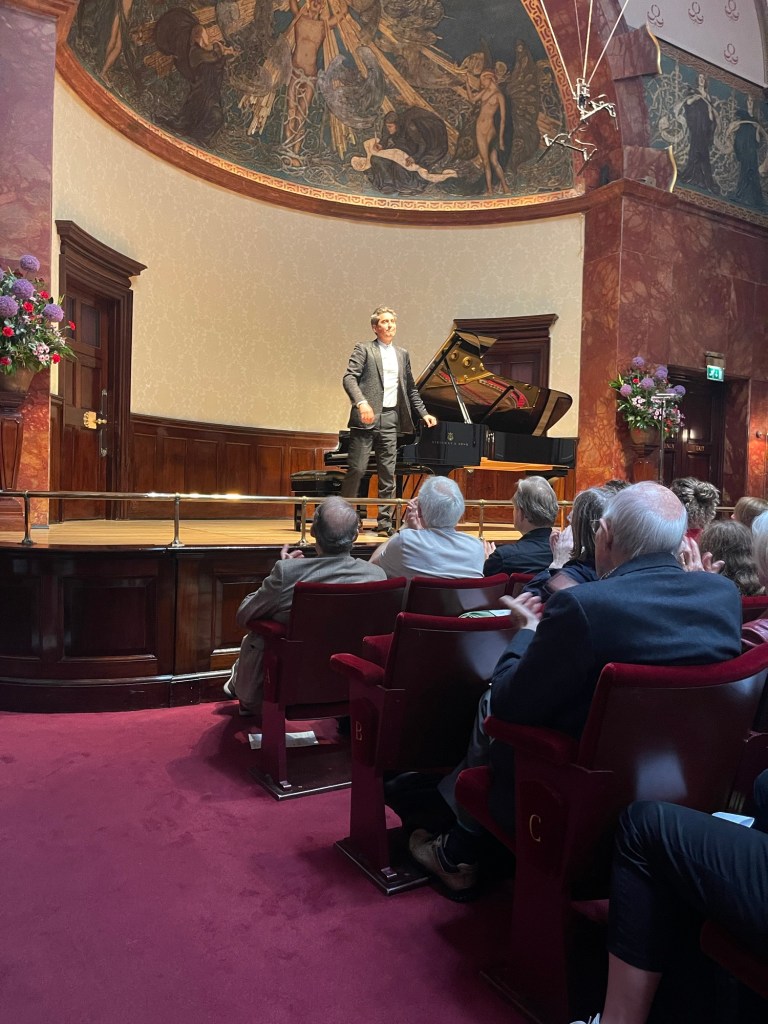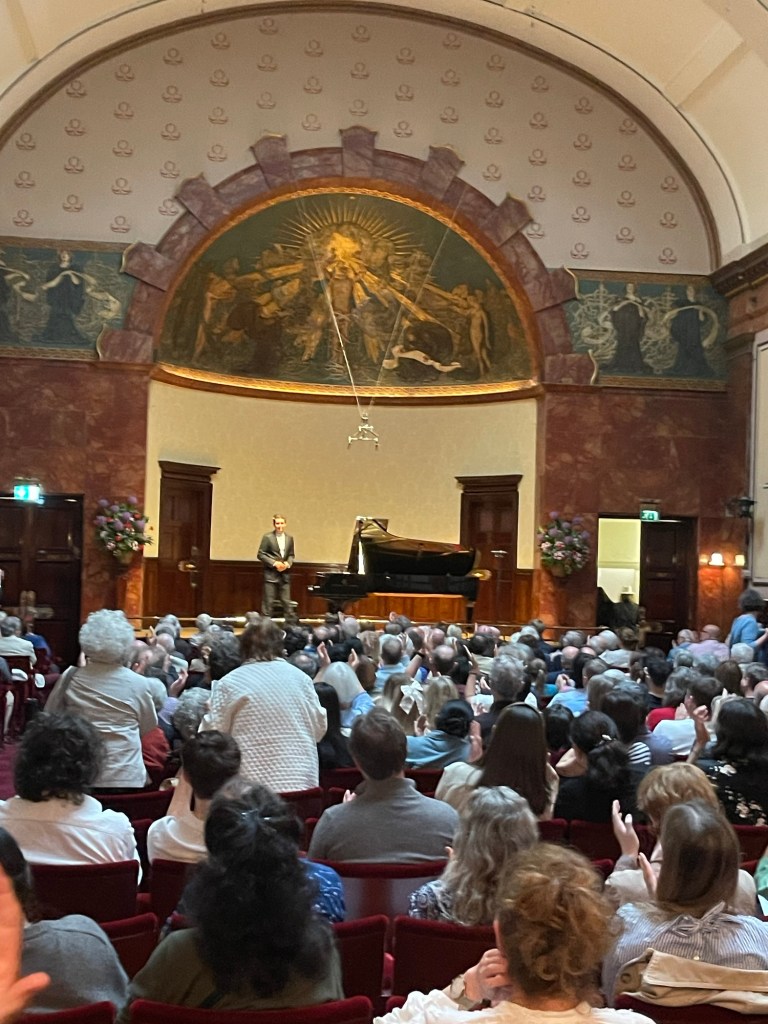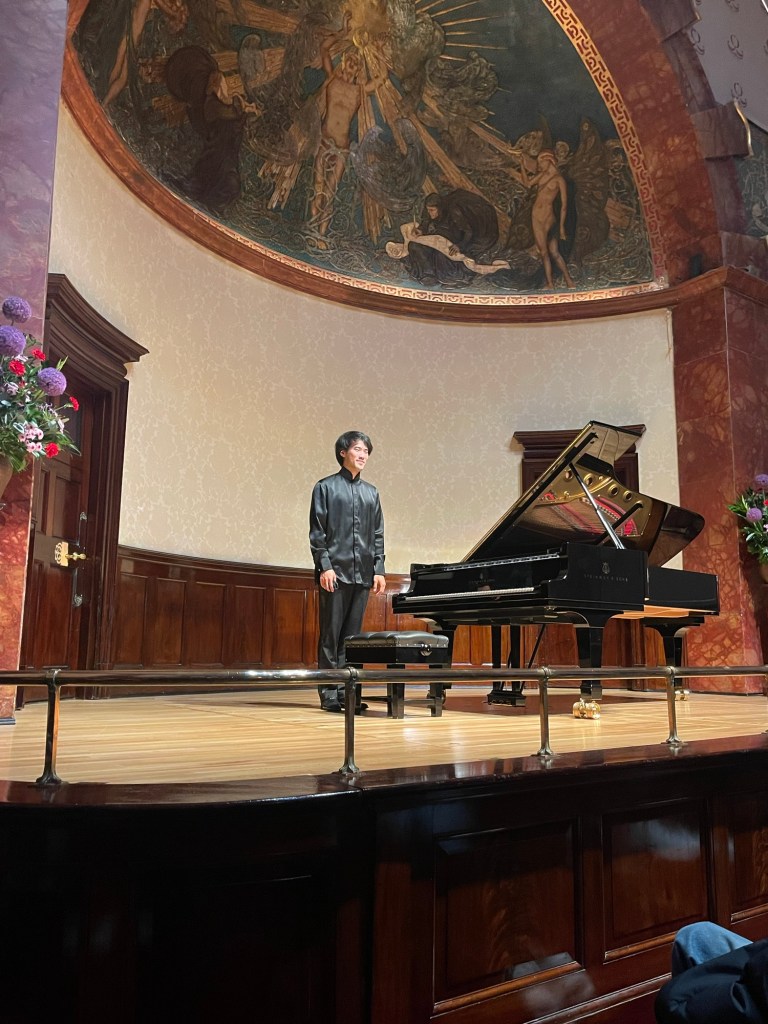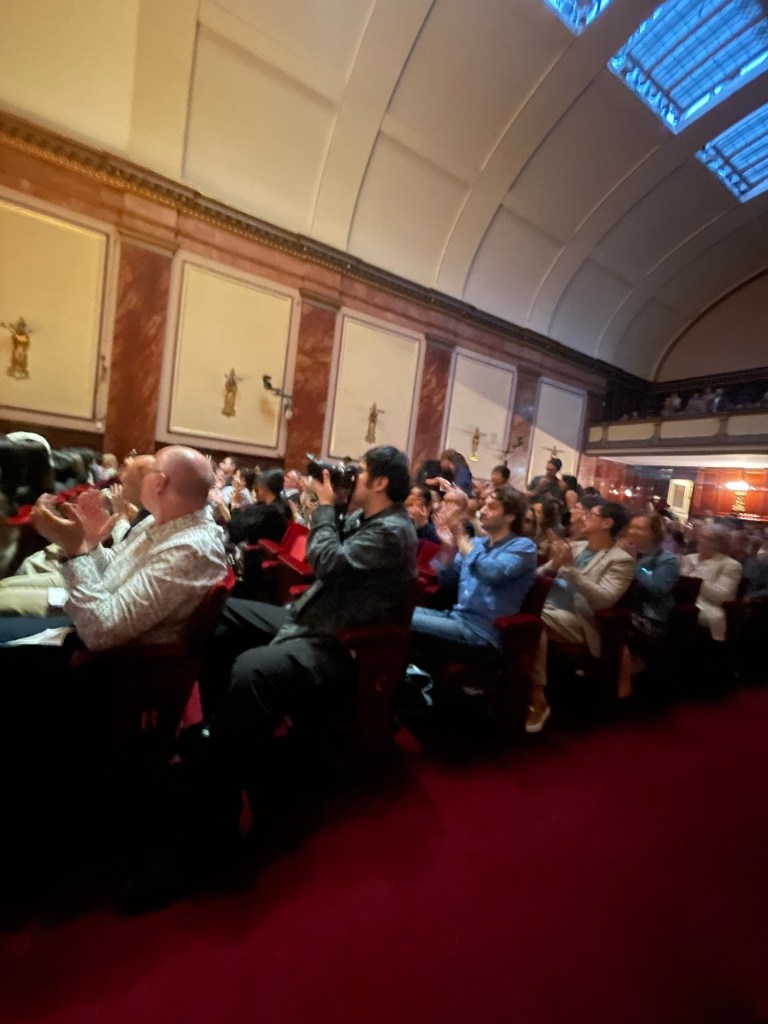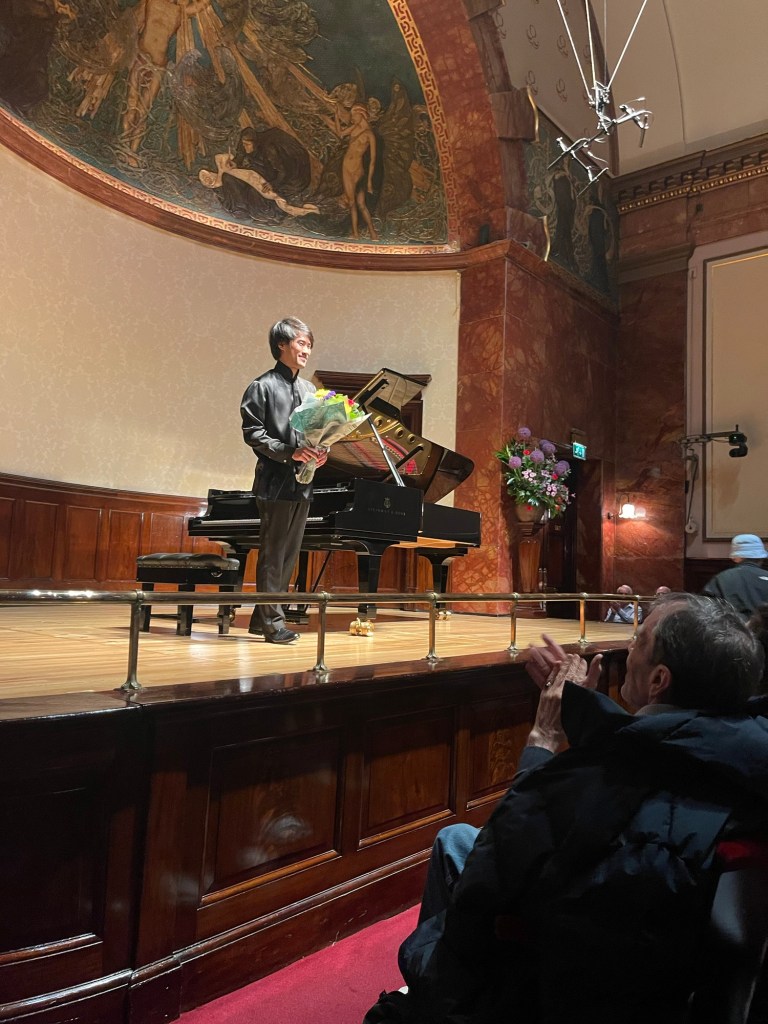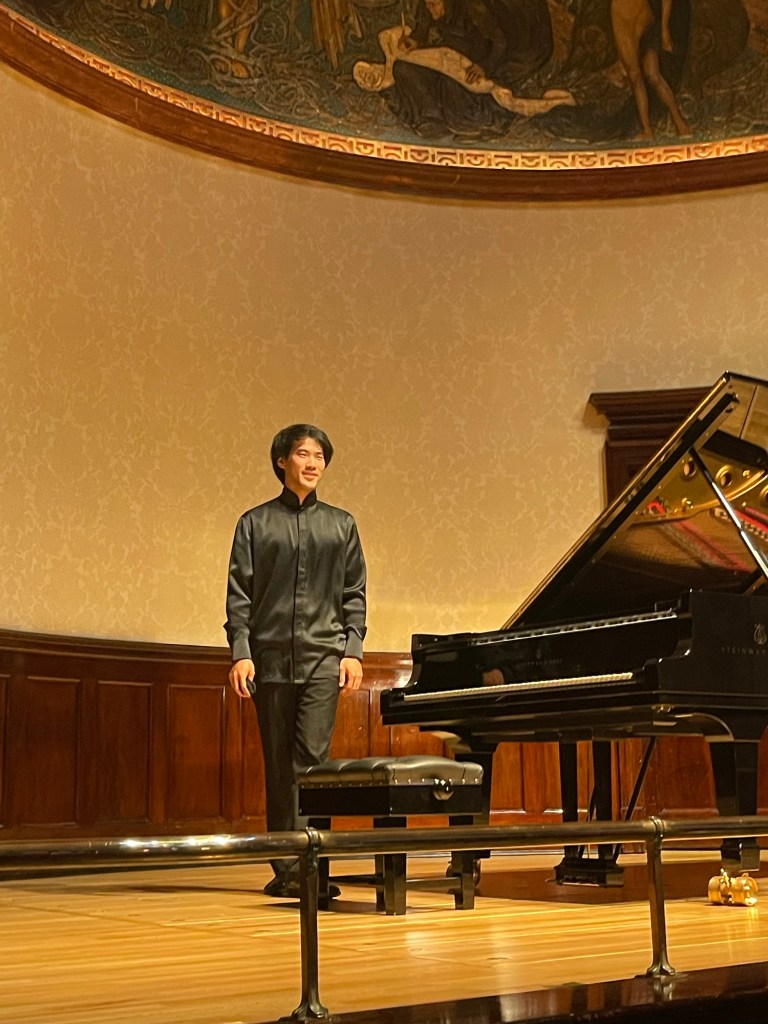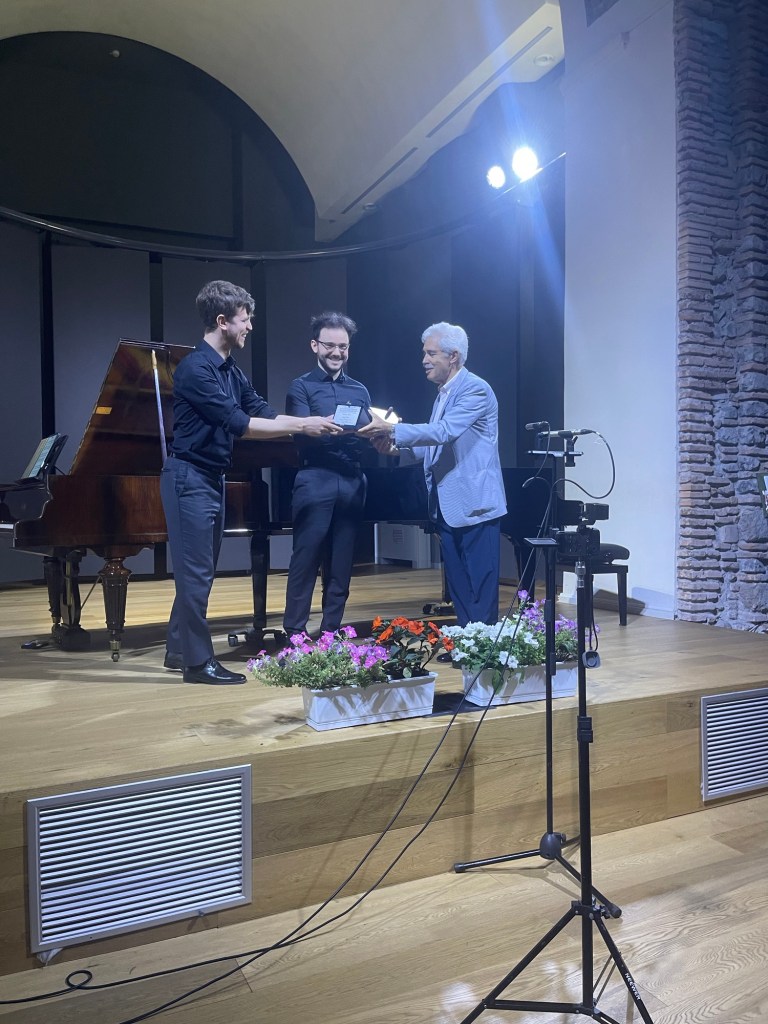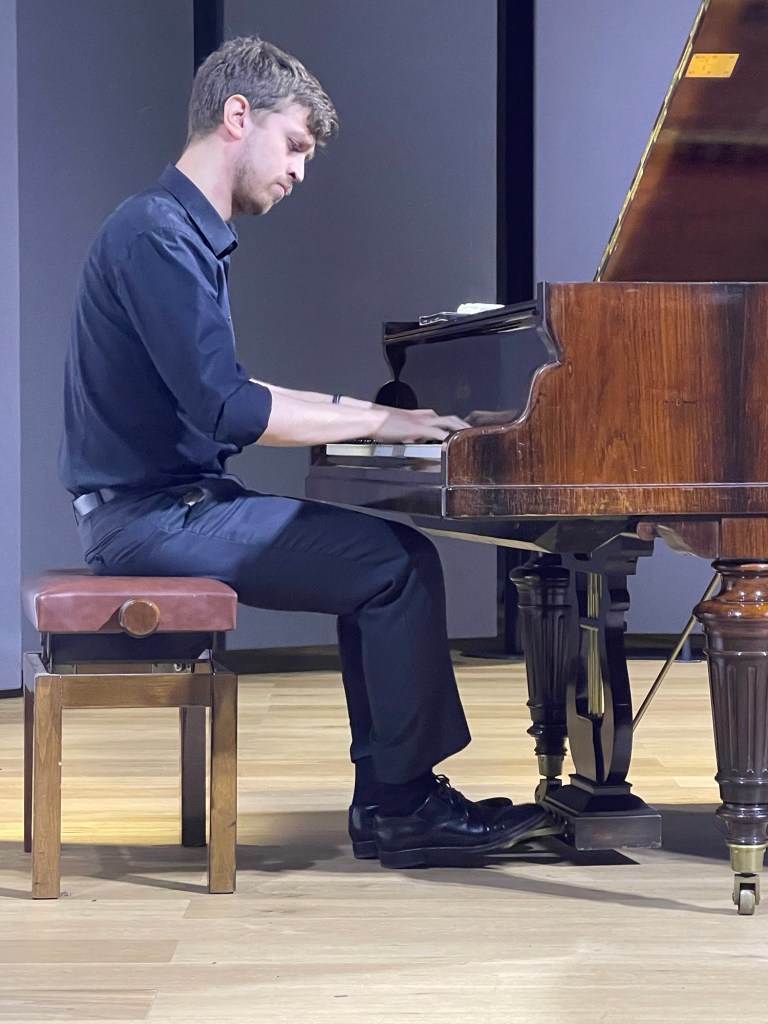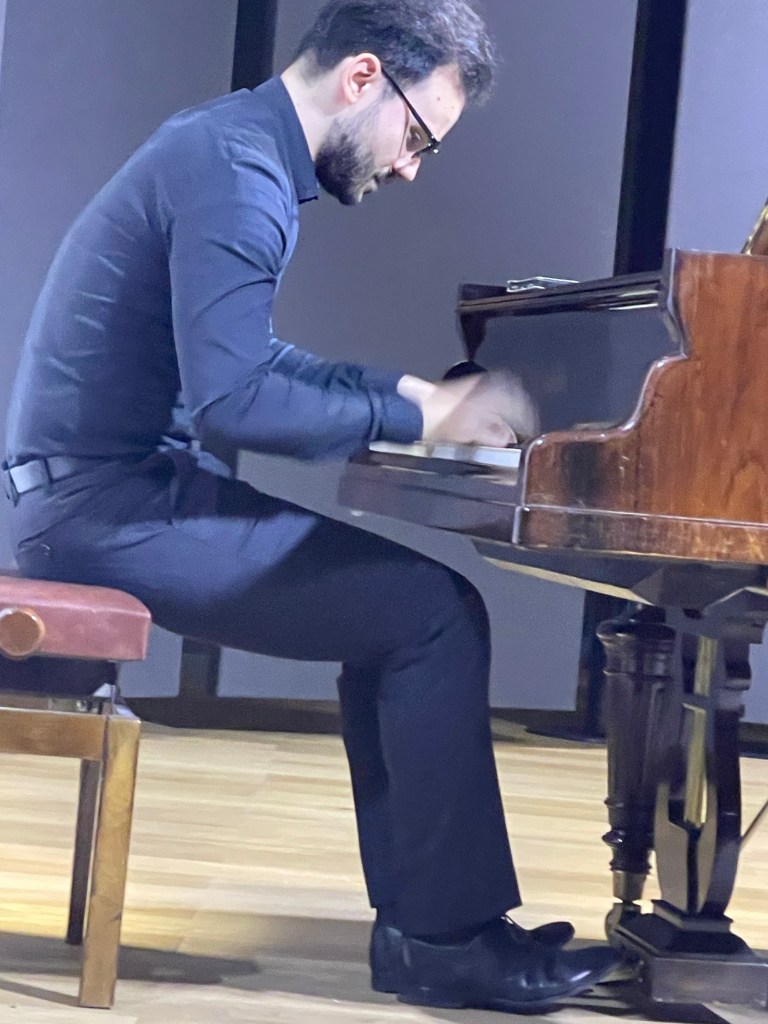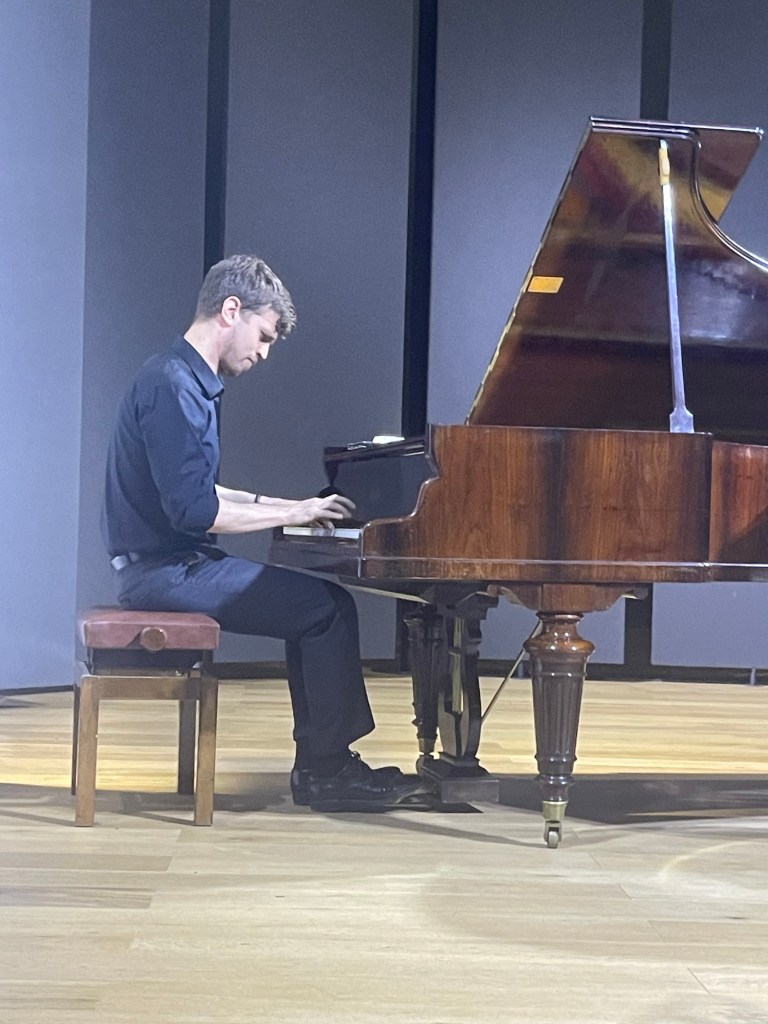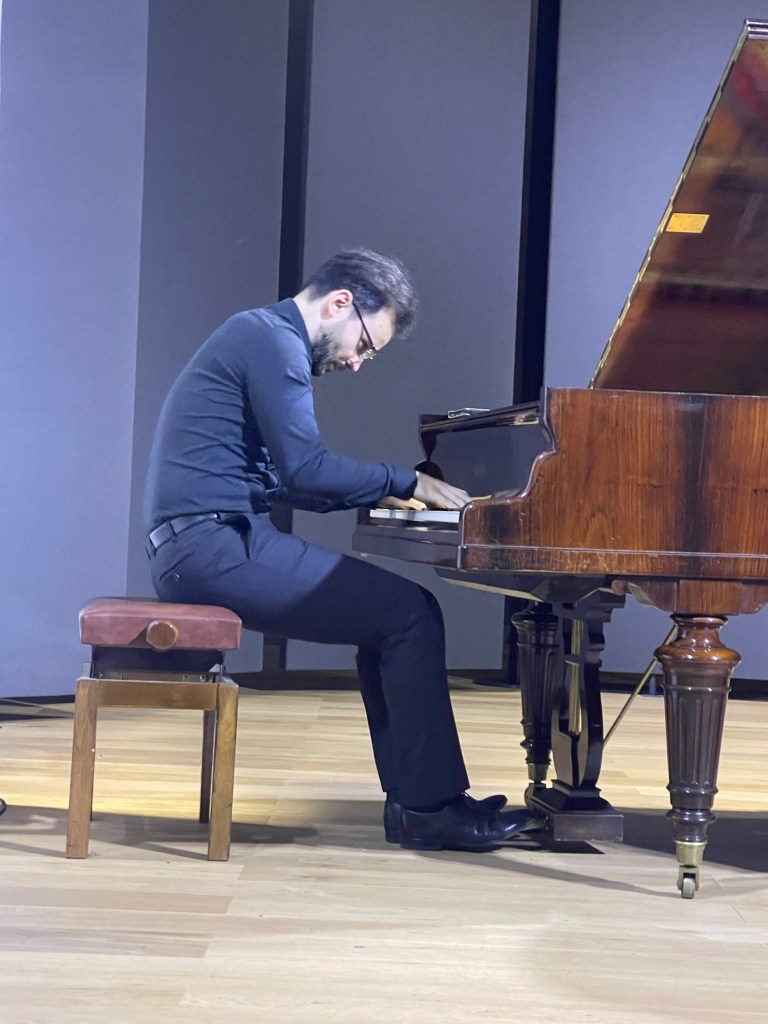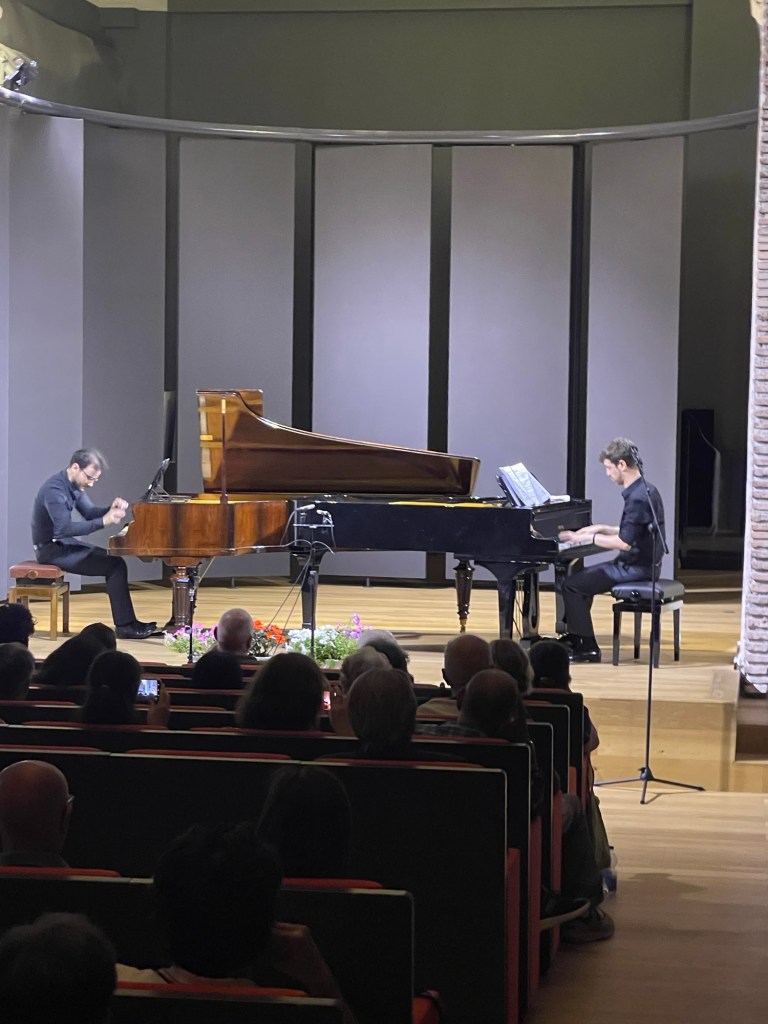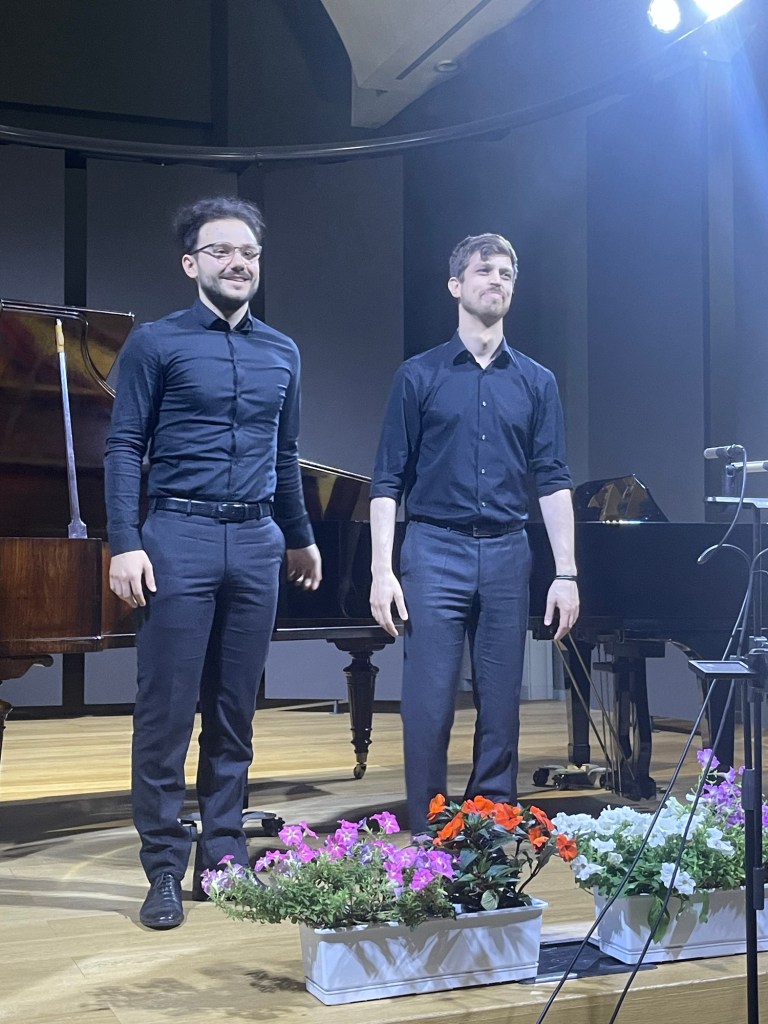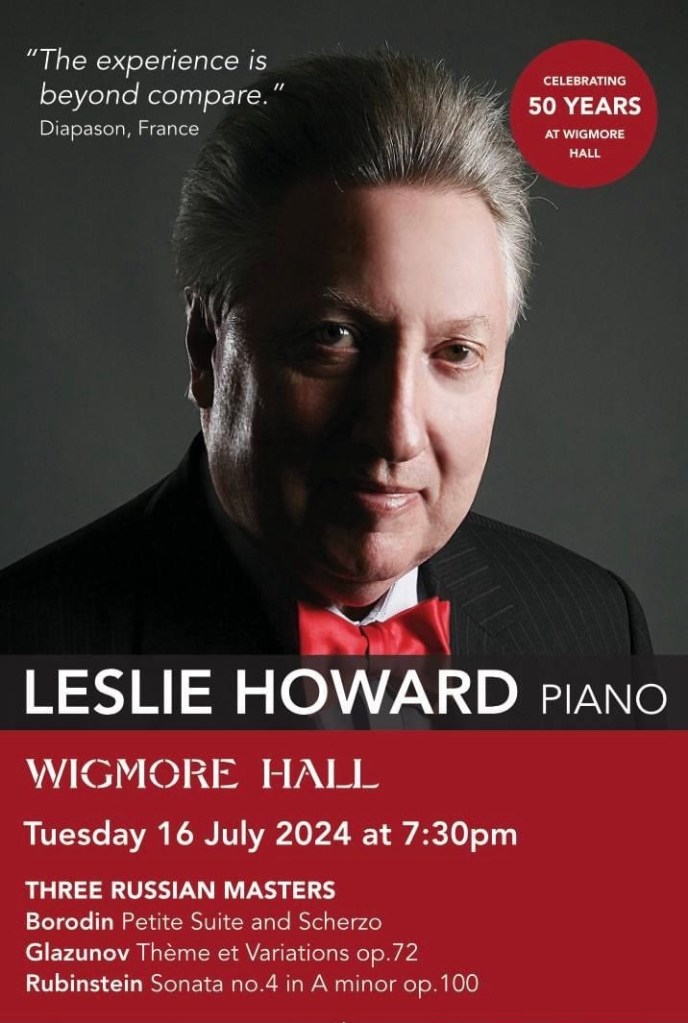
Leslie Howard ‘The Prince of Pianists’ 50th Anniversary concert at the Wigmore Hall

‘Leslie Howard presented an all-Russian programme this July. Famous for his scholarship and understanding of Liszt, Howard’s love of the Russian composers Glazunov, Borodin and Rubinstein is unsurprising in that they all owe a debt to the Hungarian composer and pianist in one way or another. It was Liszt who took the burgeoning Borodin under his wing and conducted his music whenever he could, and Borodin dedicated his orchestral masterpiece In the Steppes of Central Asia to Liszt; Glazunov visited Liszt in Weimar in 1884 (Liszt arranged for the teenager’s First Symphony to be performed, and the Second Symphony was dedicated to Liszt in gratitude); and although Liszt did not need to help the young Rubinstein in promoting his compositions, the lad had spent much time studying the master’s performance technique and was soon to be celebrated as the greatest pianist after Liszt.’
Aleksandr Porfiryevich Borodin (1833-1887) Petite Suite and Scherzo (1885)
Au couvent • Intermezzo • Mazurka in C •
Mazurka in D flat • Rêverie • Sérénade •
Scherzo – Nocturne – Scherzo
Aleksandr Glazunov (1865-1936) Thème et Variations Op. 72 (1900)
Interval
Anton Rubinstein (1829-1894) Piano Sonata No. 4 in A minor Op. 100 (c.1876-80)
I. Moderato con moto • II. Allegro vivace •
III. Andante • IV. Allegro assai
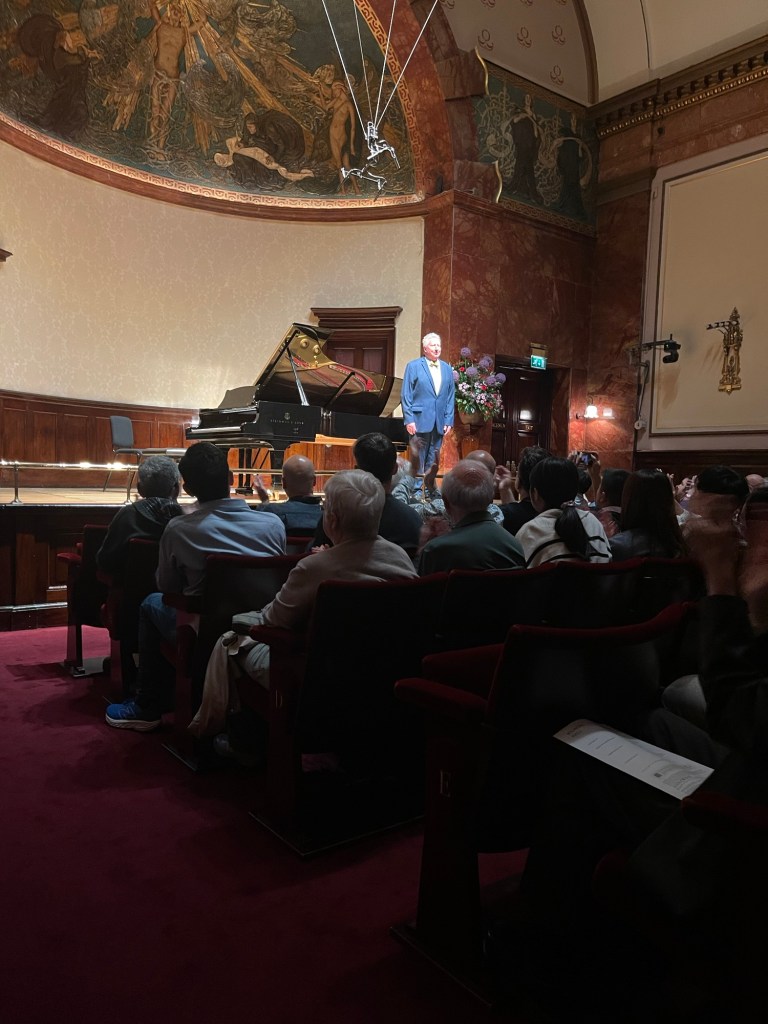
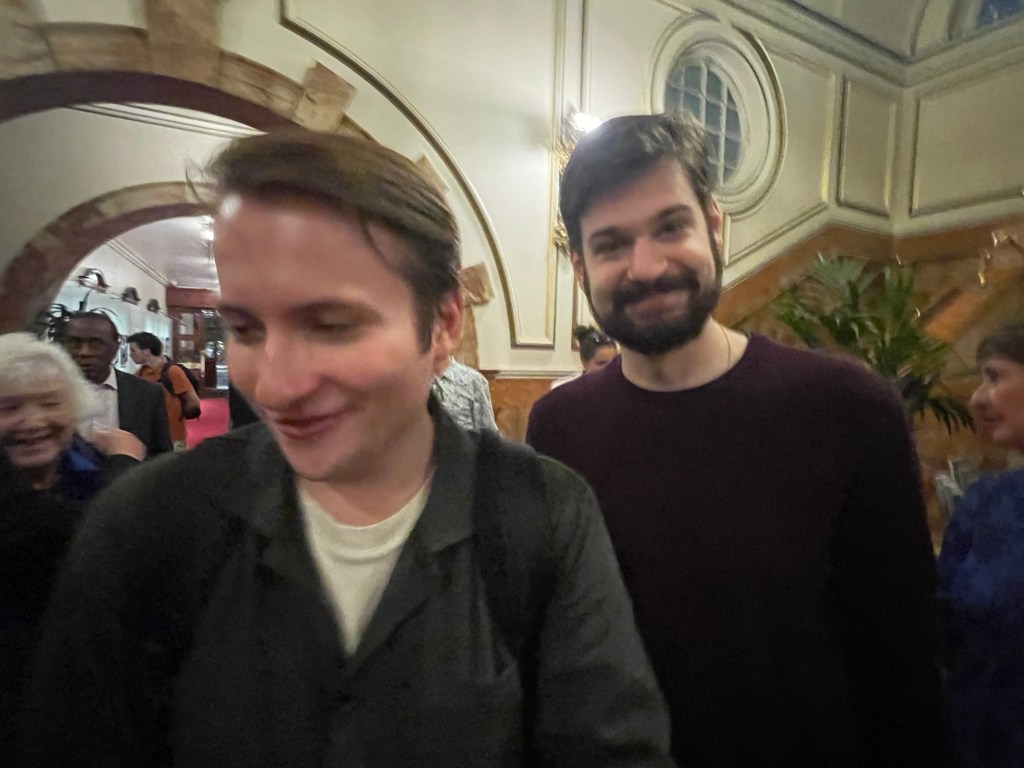
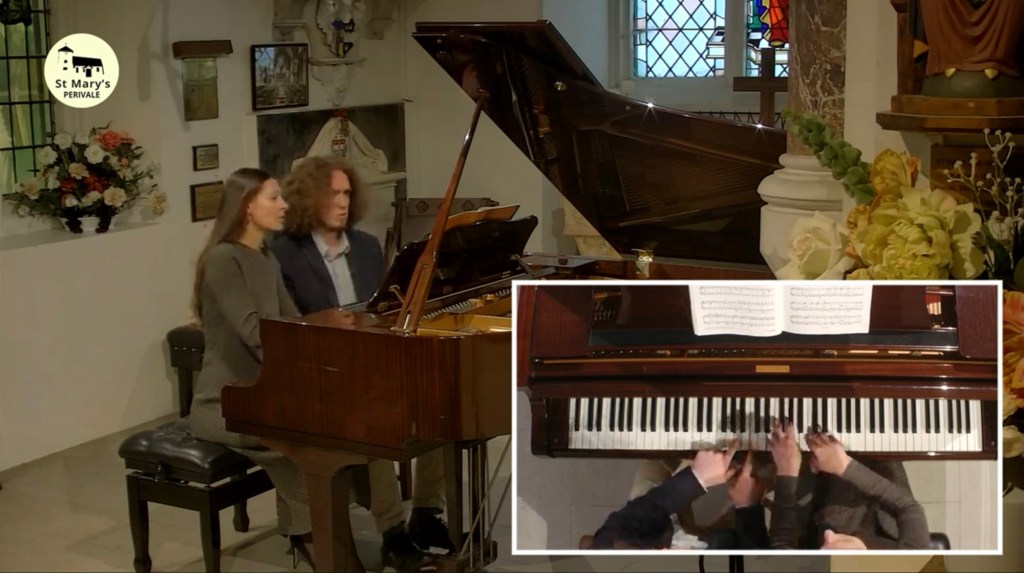
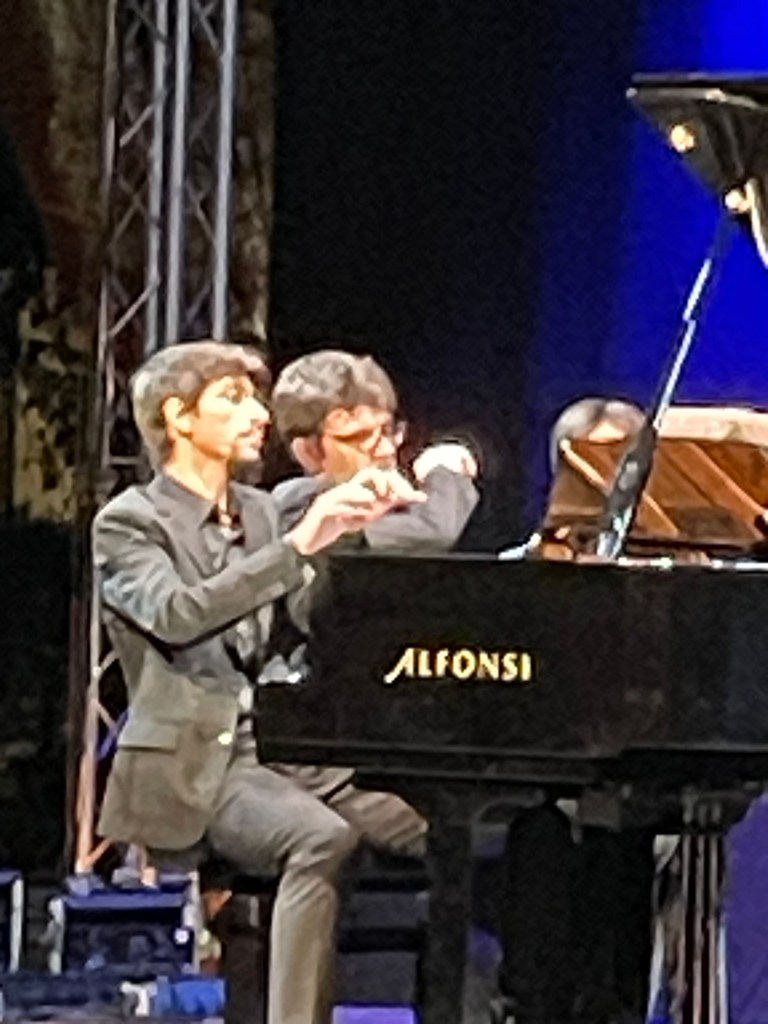
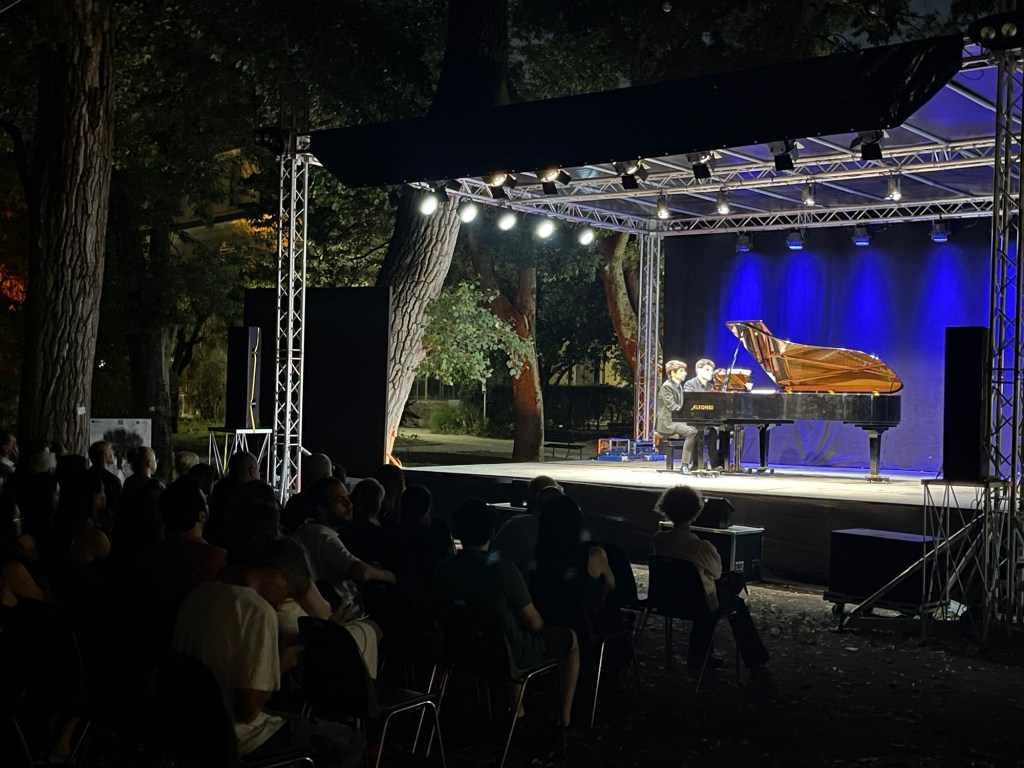
The Wigmore full up with pianists today to greet the Prince of Pianists who has so generously encouraged and supported so many young musicians over the years. It is with the same courage that the most eclectically inquisitive of all pianists presented a programme that none of those pianists has probably heard before .
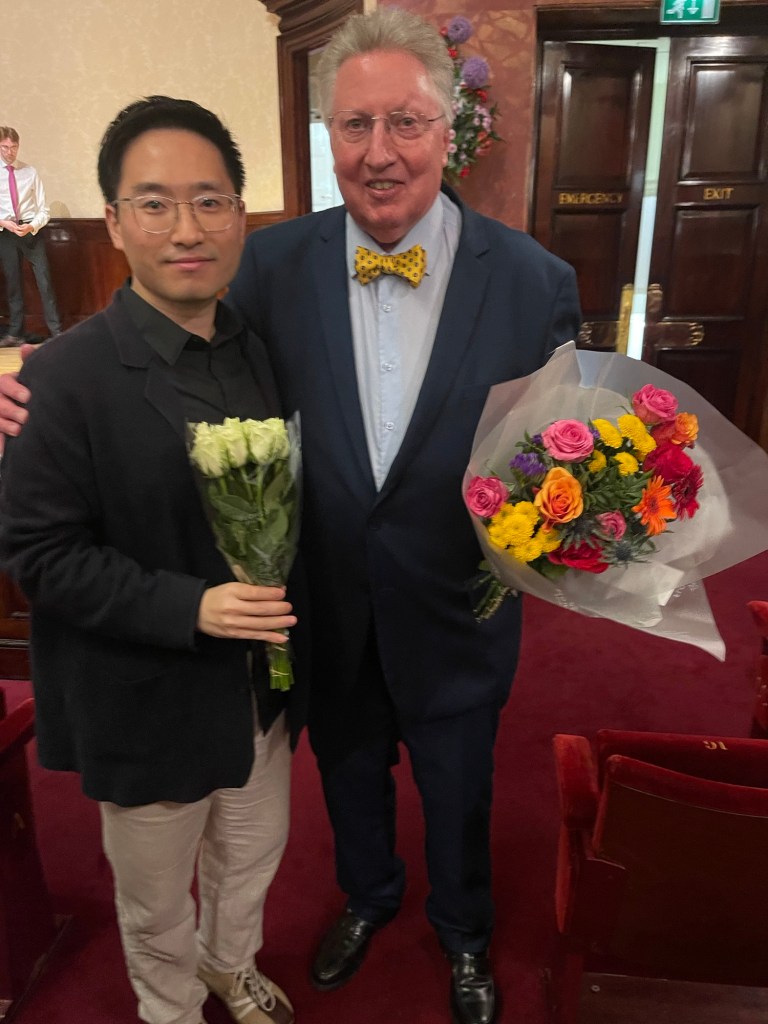
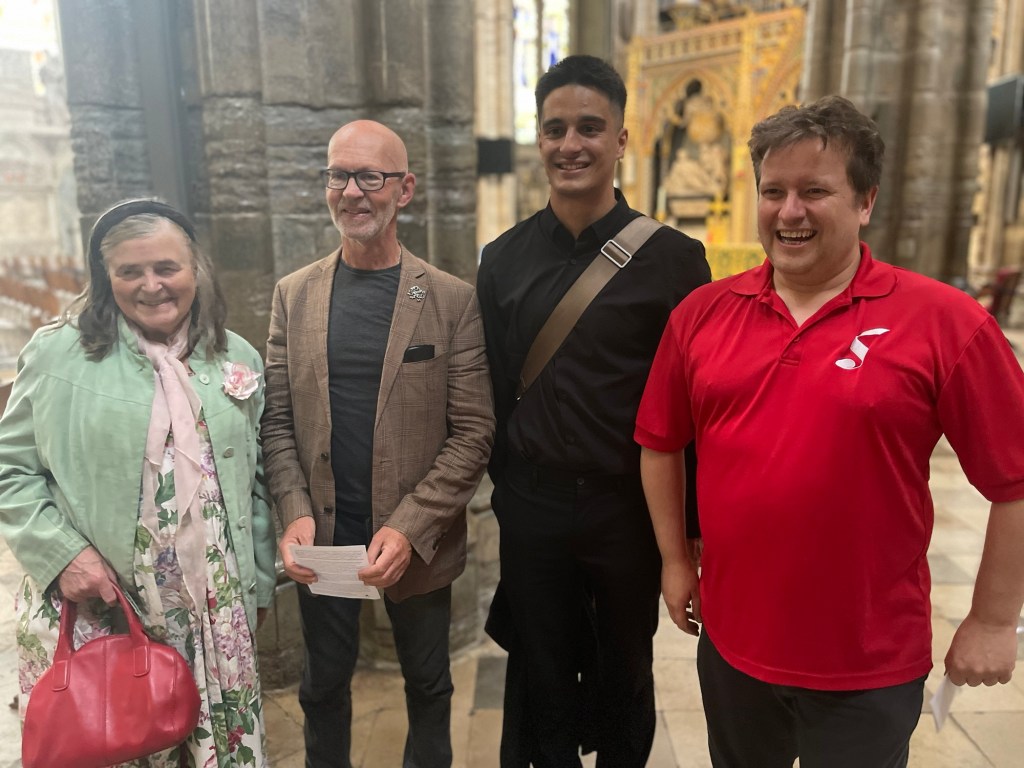
With Hao Yao


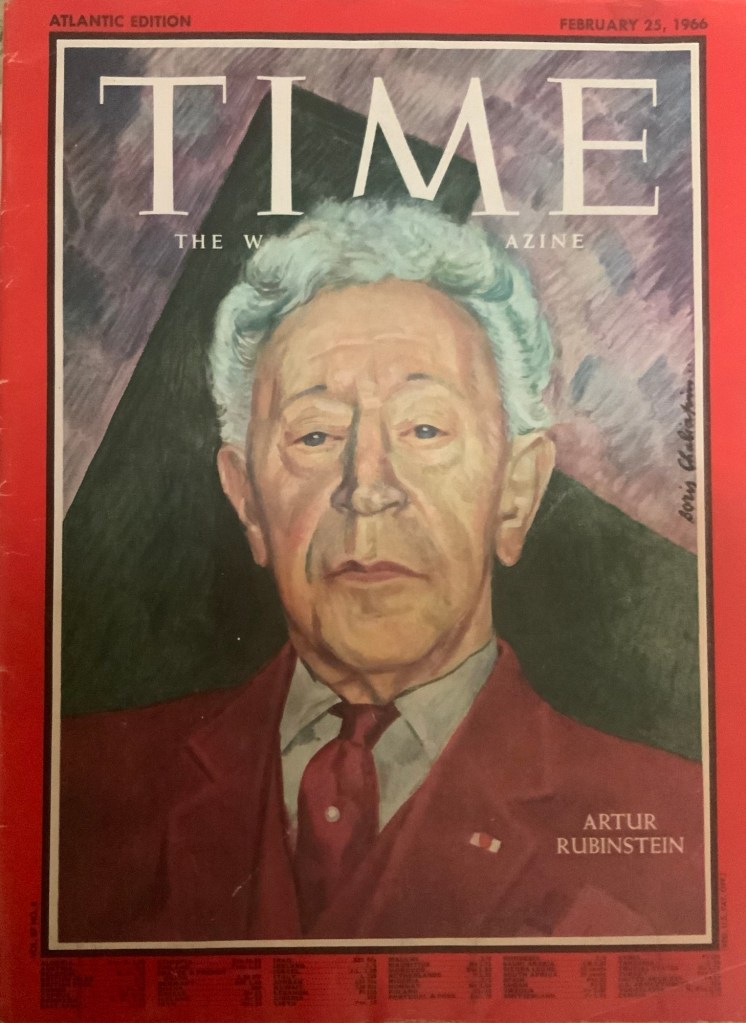
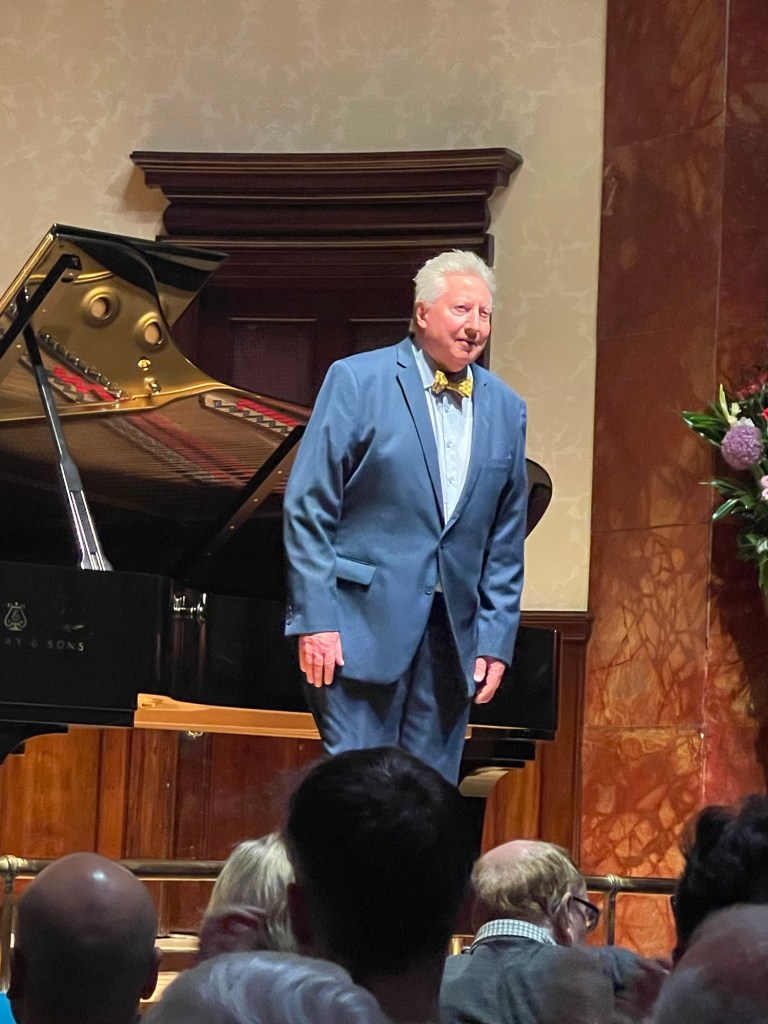
Seated at the piano with Artur Rubinstein’s authority ,hardly moving a muscle but producing a kaleidoscope of sounds that are rarely heard in this hall.A hall that Leslie has played in for the past fifty years and which culminated some years ago in a series of ten Liszt recitals that have gone down in history.
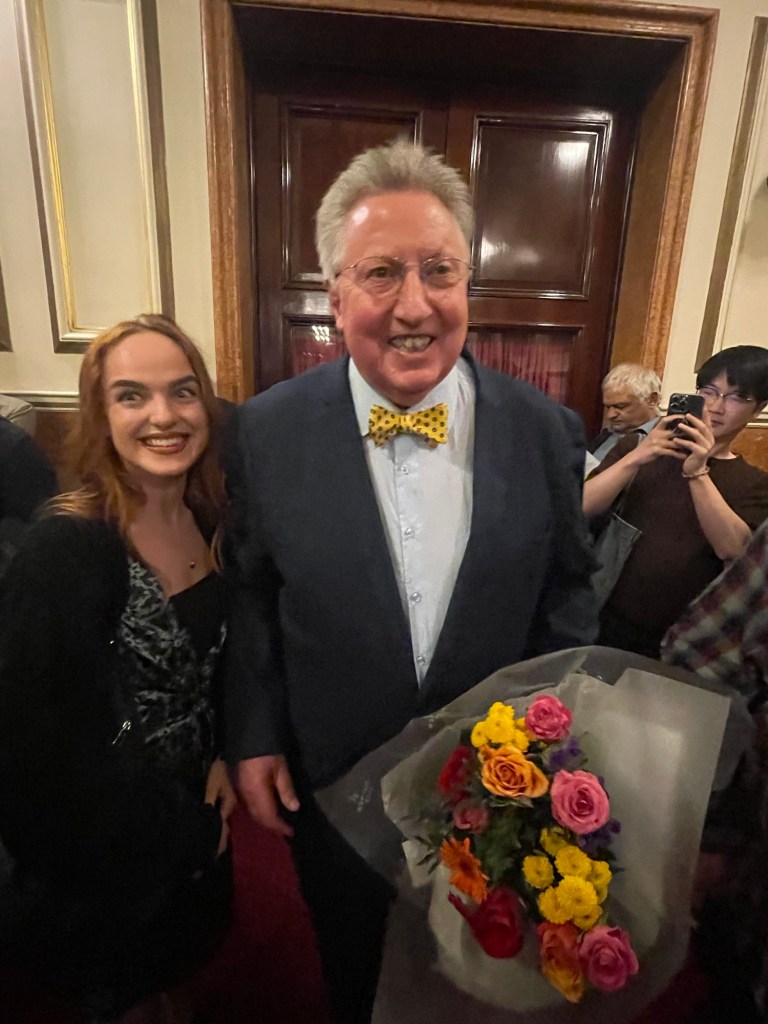
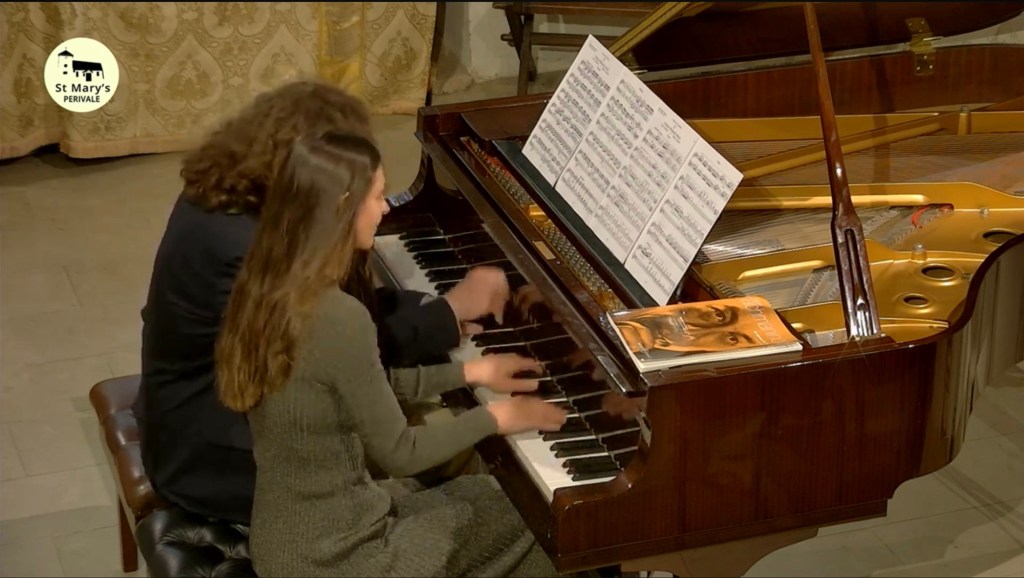
With Milda Daunoraite
https://christopheraxworthymusiccommentary.com/2023/09/05/milda-daunoraite-at-the-national-liberal-club-sparks-flying-with-refined-piano-playing-of-elegance-and-simplicity/


The world of Liszt and his disciples has been a lifetime’s study and he is even in the Guinness book of records as the only pianist to have recorded all the masters works on over 100 CD’s

Leslie in the front row with long hair and glasses .A very intense Jack Krichaf playing the Aria from the Goldberg Variations and Chopin’s B minor Sonata. At a later lesson he presented a piece by Mompou that Agosti famously placed in the bin saying ‘now play me some music !’


I remember a blue eyed,blond Australian who came to Siena to seek out the last disciple of Busoni and a true link to the genius of Liszt.Not the barnstorming Liszt that had been used by virtuosi to show of their wares but the genius who could edit the works of Beethoven as well as creating new forms and visionary new sounds.
Agosti was a very reserved man hard to get close to and with a terror of playing in public.In his studio in Siena, where he held court for the summer months,the sounds that were heard there have never been forgotten .

https://christopheraxworthymusiccommentary.com/2024/01/03/forli-pays-homage-to-guido-agosti/
Agosti immediately realised that he and Leslie had so many things in common but above all a total respect for the composers they were serving.
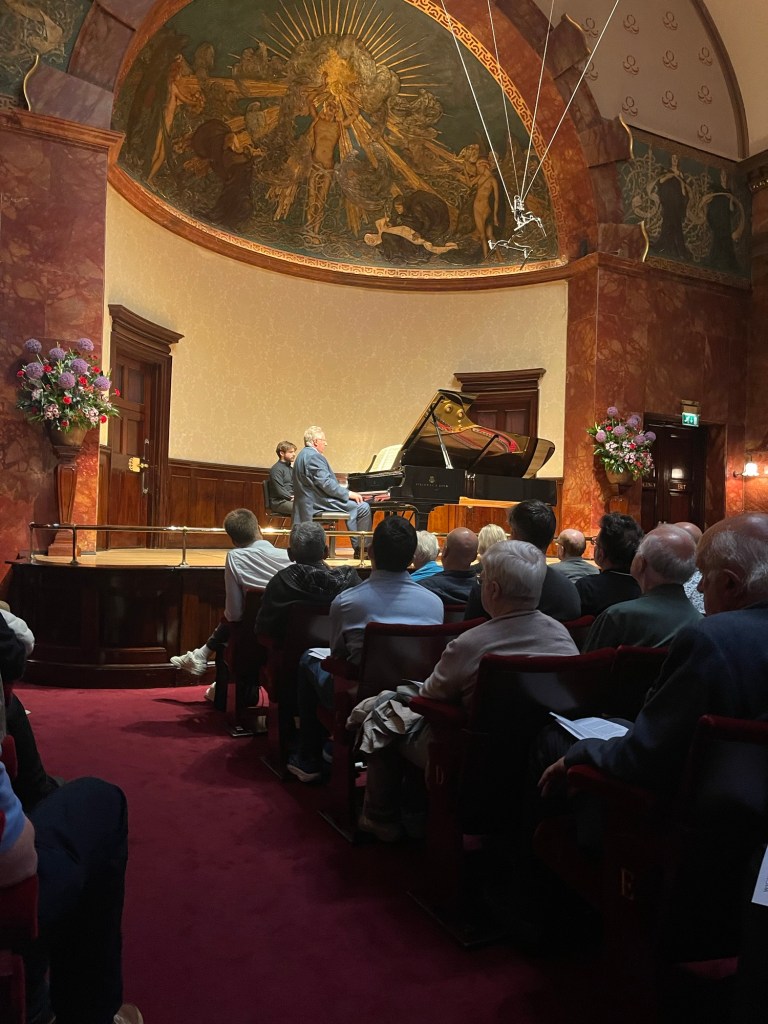

The extraordinary thing about Agosti’s pianism was that his hands were always close to the keys and with fingers of steel and wrists of rubber he would command his hands to carve out the sounds that he had in his mind and soul.There was a complete lack of unnecessary movement but the range of sounds he could find I have never heard elsewhere.
It was exactly this saving of unnecessary energy that was so noticeable about Leslie’s playing today .

In rehearsal photo by Hao Yao


Seated at the piano as in a sumptuous armchair listening attentively as he proceeded to direct the performance like a great conductor before his orchestra.
There was a beauty of sound that even in the most strenuous of passages was never hard or ungrateful.
A range of orchestral colours as he led us through a maze of notes carving out a musical line that was of such clarity and simplicity.
Looking at Leslie’s discography I was astonished to learn that he was one of the first to record all four of Anton Rubinstein’s Sonatas.It was the fourth sonata that was to be the crowning glory of this extraordinary recital filling the entire second half with a work rarely heard in the concert hall even today.
The concert had begun with Borodin’s Petite Suite and Scherzo.A series of six little pieces with the addition of the scherzo which was the only movement that is vaguely familiar.The sombre sounds of the opening ‘Au convent’ were of great resonance with the whispered chant of the nuns of simplicity and purity. Distant and dissonant chimes played with great authority created the atmosphere for this extraordinary work.An ‘Intermezzo’ of a completely different sound world of luminosity and luxuriant melodic outpourings.The ‘Mazurka in C ‘ broke this melancholic atmosphere as it sprung to life with scintillating energy.The ‘Mazurka in D flat’ that followed returned to the languid opening atmosphere with a ravishing tenor melody answered by the soprano voice in a duet of glowing beauty.There was beauty too as the arpeggios gently streamed across the keyboard for a ‘Reverie’ of sumptuous sounds.The gentle pulsating heart beat of the ‘Serenade’ allowed the music to unfold with simplicity and the unmistakable voice of Borodin.The Scherzo ,which Glazunov had added,was played with quixotic drive and scintillating colours interrupted only by the beautiful lyrical ‘Nocturne’ that serves as a Trio in this genial arrangement.
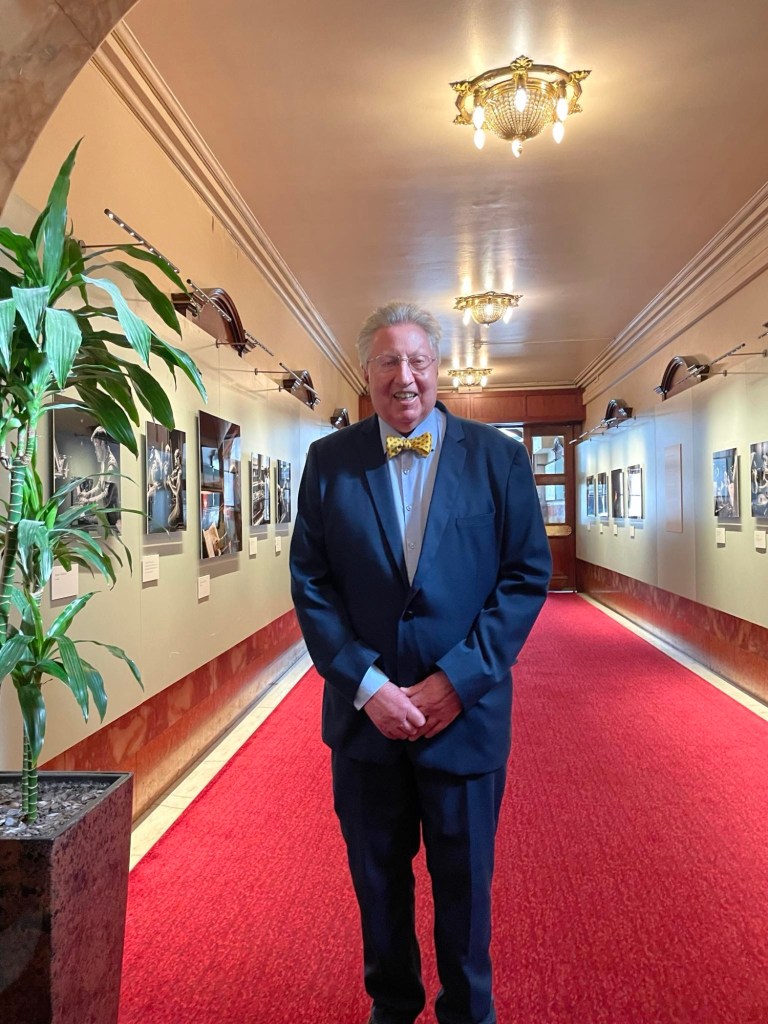
Leslie Howard on the red carpet of the Wigmore Hall in a photo taken by Hao Yao

Glazunov’s own Theme and Variations is a large scale work opening with great Russian bells tolling with nobility and creating the atmosphere in which the fifteen variations could evolve.There were etherial sounds of glittering beauty and variations that flowered with sumptuous richness , even a variations that owed much to Brahms.Following on with variations of kaleidoscopic colour and beguiling sounds with streams of notes as the intensity gradually grew.An extraordinary work that Leslie played with an architectural shape and mastery that had us wondering how such an important work could lay hidden from pianists for so long.
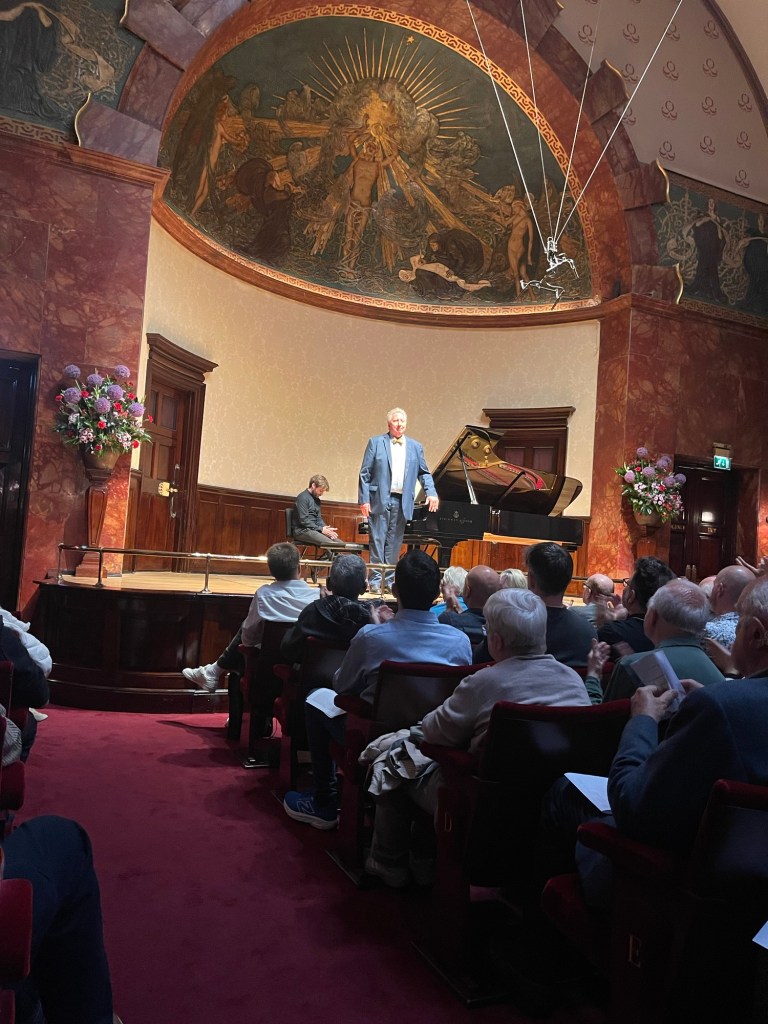
The Rubinstein Sonata that Leslie has long been an advocate, is a work of great importance.It has suffered the fate of Rachmaninov’s First Sonata always in the shadow of the Second which was launched in our day by Horowitz and is now overplayed.It has taken Kantarow to show us the way with the First Sonata which is now being taken up by many pianists in the Juilliard School.Listening to Leslie with playing of absolute clarity and authority that gave an architectural shape and above all an overall sound and will open the way for other pianists to follow . There was the same sense of leit motiv in the first movement which can sometimes get submerged by the cascades of notes and chameleonic changes of character that abound .There was a dynamic rhythmic energy to the ‘Scherzo’ and a glorious outpouring of luxuriant melody to the ‘Andante’ with its strange chordal meanderings that Leslie shaped with poignant meaning.There was a relentless forward drive to the ‘Allegro assai’ that just shot from Leslie’s fingers with military precision.Moving inevitably and with scintillating virtuosity to a final melodic climax before the grandiose ending.

A little Barcarolle n.1 by Rubinstein ,played as an encore,showed us the other side of a composer who was a great pianist who could charm and seduce his public also with grace and beauty! I remember being stopped in my tracks as I listened to Rubinstein’s’ Melody in F played with ravishing beauty on the radio – Leslie Howard was the pianist!

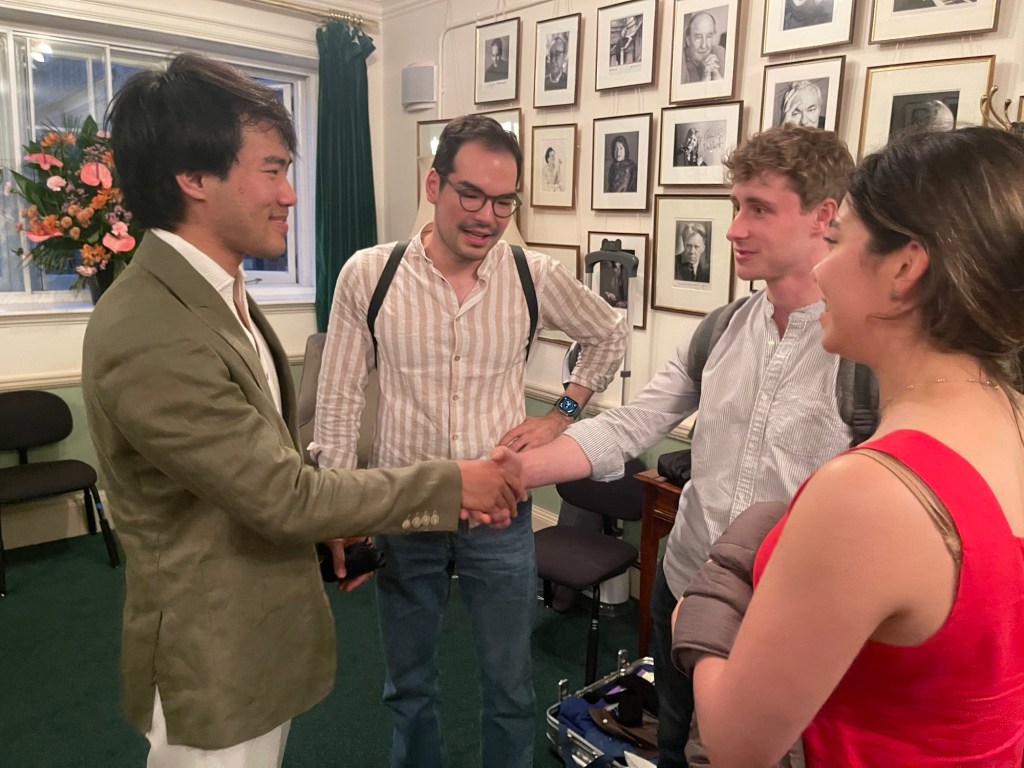
Tyler Hay ( centre) arriving from his own concert with Mark Viner ( page turner par excellence ) and Misha Kaploukhii ( winner of the Sheepdrove Competition at Newbury Festival )
https://christopheraxworthymusiccommentary.com/2024/07/16/tyler-hay-at-st-marys-perivale-the-perfect-pianist-comes-of-age/
Elias Ackerley student of Gary Graffman at Curtis and on tour in October in America for the Keyboard Trust and Sherri Lun student of Christopher Elton and winner of the Birmingham International Piano Competition
https://youtube.com/watch?v=kI16VdEWRPU&feature=shared
https://christopheraxworthymusiccommentary.com/2024/04/25/sherri-lun-at-steinway-hall-for-the-keyboard-trust-masterypassion-and-intelligence-of-twenty-year-old-pianist/
Bobby Chen and Hao Yao
https://christopheraxworthymusiccommentary.com/2019/03/27/bobby-chen-in-paradise-andata-e-ritorno/
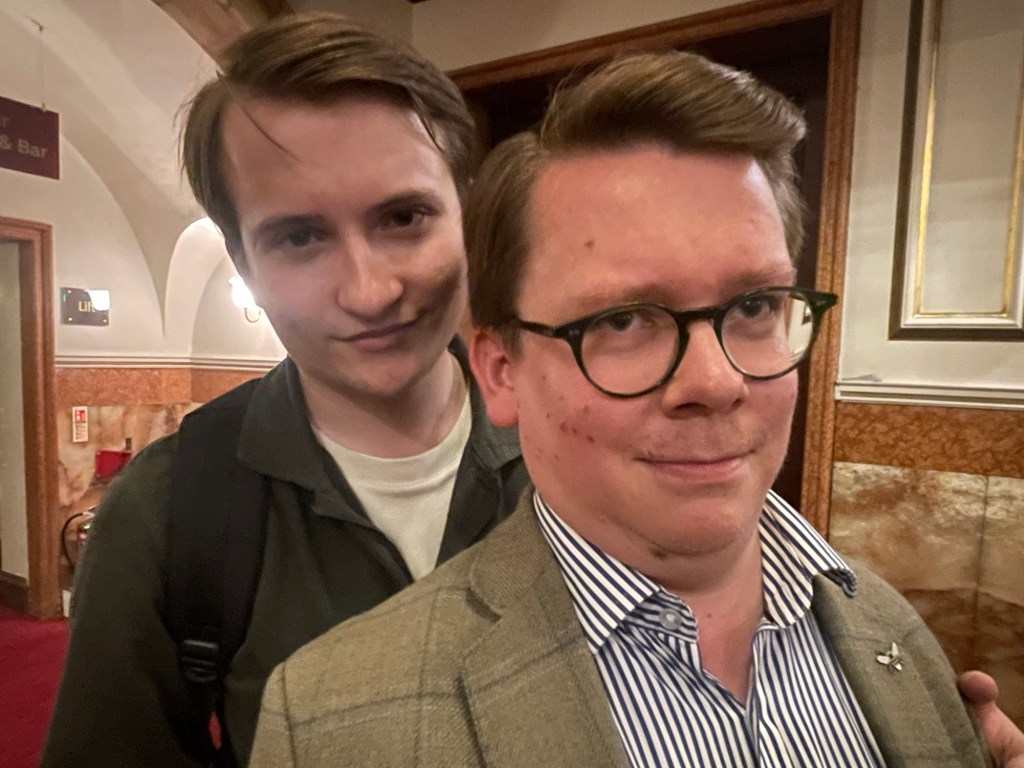
Misha Kaploukhii and Mark Viner
https://christopheraxworthymusiccommentary.com/2024/05/05/misha-kaploukhii-mastery-and-clarity-in-waltons-paradise-where-dreams-become-reality/
https://christopheraxworthymusiccommentary.com/2024/04/18/mark-viner-at-st-michael-and-all-angels-bringing-mastery-and-discovery-to-chiswick/
Edward Leung
Winner of the 2024 ‘Pianos and Soul’ / Amadeus Festival Vienna prize
https://christopheraxworthymusiccommentary.com/2024/02/13/edward-leung-at-st-marys-a-complete-artist-of-maturity-and-stature/
Victor Maslov ( right)
https://christopheraxworthymusiccommentary.com/2023/04/01/victor-maslov-at-cranleigh-arts-a-great-artist-illuminates-and-enriches-our-lives/
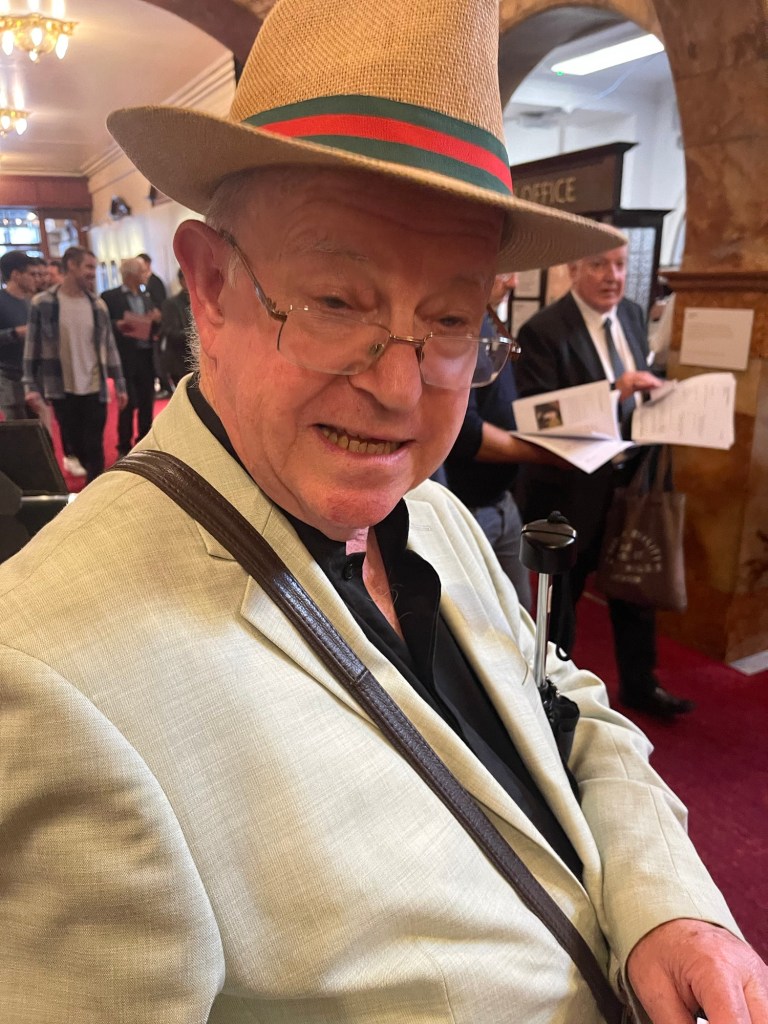
The distinguished pianist Julian Jacobson who together with Leslie and Jonathan Del Mar have edited the new Barenreiter Edition of Beethoven
https://christopheraxworthymusiccommentary.com/2020/02/29/barenreiter-beethoven-of-jonathan-del-mar/
https://christopheraxworthymusiccommentary.com/2024/06/12/kapellmeister-julian-jacobson-reveals-the-debussy-preludes-at-the-1901-arts-club-with-integrity-and-old-style-musicianship/
And so to the Green Room
The improvised Green Room – the only place able to accomodate Leslie’s many admirers
Alexander Porfiryevich Borodin
12 November 1833, Saint Petersburg – 27 February 1887 Saint Petersburg

There is one element that looms over this recital of
Russian 19th-century piano music: the so-called ‘Mighty
Handful’ (the term coined by the Russian critic Vladimir
Stasov in 1867). It was a self-appointing group of five
composers dedicated to sustaining Russian national
tradition (initiated by Glinka) at the time of the western European Romanticism of Liszt, Berlioz and
Wagner. The original group had gathered around Balakirev (1837-
1910), in the early 1860s, and included Aleksandr Borodin,
the illegitimate son of a Georgian noble. A doctor and chemist by profession and training, Borodin made important early contributions to organic chemistry and regarded medicine and science as his primary occupations, only practising music and composition in his spare time or when he was ill.As a chemist, Borodin is known best for his work concerning organic synthesis and was a promoter of education in Russia founding the School of Medicine for Women in Saint Petersburg, where he taught until 1885.

Balakirev took him under his wing in 1862, pushing him towards more overtly Russian, large-scale work notably his only opera Prince Igor (a
historic epic like Musorgsky’s Boris Godunov or Glinka’s A
Life for the Tsar). But, as with other works by him, and to the
increasing frustration of his fellow musicians, Prince Igor
kept Borodin fitfully occupied for the rest of his life and was completed posthumously by Rimsky-Korsakov and Glazunov
Borodin did, however, find time in 1885, near the end of his
life, to return to the small scale in which he felt more
confident. His fame outside Russia  was made possible during his lifetime by Liszt , who arranged a performance of the Symphony No. 1 in Germany during 1880, and by the Comtesse de Mercy- Argenteau in Belgium and France. His music is noted for its strong lyricism and rich harmonies. Along with some influences from Western composers, as a member of The Five, his music is also characteristic of the Russian style where his passionate music and unusual harmonies proved to have a lasting influence on the younger French composers Debussy and Ravel (in homage, the latter composed during 1913 a piano piece entitled “À la manière de Borodine”).

The draft of the suite met with approval from Liszt, to whom
Borodin showed the work in Weimar that summer; they had
first met several years earlier, on which occasion Liszt’s
advice to him had been uncompromising: ‘Work in your own
way and pay no attention to anyone’.

The Petite Suite is a suite of seven piano pieces, written by Alexandr Borodin , and acknowledged as his major work for the piano. It was published in 1885, although some of the pieces had been written as far back as the late 1870s.After Borodin’s death, Alexandr Glazunov  orchestrated the work, and added his orchestration of another of Borodin’s pieces as an eighth number.

The suite was dedicated to the Belgian Countess Louise de Mercy-Argenteau , who had been instrumental in having Borodin’s First Symphony  performed in Verviers and Liège. She had also arranged for French translations of some of his songs and excerpts from Prince Igor ; and had initiated the sponsorship of Camille Saint-Saens and Louis- Albert Bourgault-Ducoudray -Ducoudray  for Borodin’s membership of the French Society of Authors, Composers and Editors.

Borodin’s original title for the work was Petit Poème d’amour d’une jeune fille (“Little poems on the love of a young girl”), but by publication time the name Petite Suitehad been applied to it.

The original suite consisted of the following 7 movements, with descriptions supplied by the composer:

  1. Au couvent, Andante religioso, C-sharp minor (“The Church’s vows foster thoughts only of God”)
  2. Intermezzo, Tempo di minuetto, F major (“Dreaming of Society Life”)
  3. Mazurka I, Allegro, C major (“Thinking only of dancing”)
  4. Mazurka II, Allegretto, D-flat major (“Thinking both of the dance and the dancer”)
  5. Rêverie, Andante, D-flat major (“Thinking only of the dance”)
  6. Serenade, Allegretto, D-flat major (“Dreaming of love”)
  7. Nocturne, Andantino, G-flat major (“Lulled by the happiness of being in love”).( Later to become the Trio of the added Scherzo)

After Borodin’s death in 1887, Alexander Glazunov  orchestrated the suite, but incorporated into it another piano piece by Borodin, the Scherzo in A flat , and slightly rearranged the order of the pieces.

  1. Au couvent
  2. Intermezzo
  3. Mazurka I
  4. Mazurka II
  5. Rêverie
  6. Serenade
  7. Finale: Scherzo (Allegro vivace, A-flat major) – Nocturne – Scherzo ( the original nocturne becoming the Trio of the added Scherzo)

https://youtube.com/watch?v=IepGv-kJPJ0&feature=shared


Alexander Konstantinovich Glazunov
10 August 1865 Saint Petersburg – 21 March 1936 Neuilly-sur-Seine


As a teenager, Aleksander Glazunov was steered by
Balakirev to study with Rimsky-Korsakov (also one of the
Mighty Handful), although by then (the early 1880s)
Balakirev’s mantle had been assumed by the philanthropist,
publisher and patron Mitrofan Belyayev, who promoted his
young protégé around western Europe, including arranging
meetings with Liszt and Wagner.

Glazunov made his conducting debut in 1888. The following year, he conducted his Second Symphony in Paris at the World Exhibition.He was appointed conductor for the Russian Symphony Concerts  in 1896. In 1897, he led the disastrous premiere of  Rachmaninov’s Symphony n. 1 which led to Rachmaninoff’s three-year depression. The composer’s wife later claimed that Glazunov seemed to be drunk at the time , according to Shostakovich, kept a bottle of alcohol hidden behind his desk and sipped it through a tube during lessons.

Drunk or not, Glazunov had insufficient rehearsal time with the symphony and, while he loved the art of conducting, he never fully mastered it.Glazunov toured Europe and the United States in 1928,and settled in Paris by 1929. He always claimed that the reason for his continued absence from Russia was “ill health”; this enabled him to remain a respected composer in the Soviet Union. He wrote three ballets; eight symphonies and many other orchestral works; five concertos (2 for piano; 1 for violin; 1 for cello; his last work was a concerto for saxophone); seven string quartets; two piano sonatas and other piano pieces; miscellaneous instrumental pieces; and some songs. He also collaborated with the choreographer Fokine  to create the ballet Les Sylphides, a suite of music by Chopin orchestrated Chopin by Glazunov.

Theme and Variations, Op 72, which uses as the theme for fifteen variations the same folk-song as Glazunov’s later Finnish Fantasy for orchestra. The work was written in the same year as the first piano sonata and is undoubtedly one of Glazunov’s most successful forays into the piano medium.Glazunovs Theme and variations, Op 72, was written in 1900 and is one of three large-scale works for piano (the others being his two sonatas) completed during his last significant period as a composer1899 to 1906. Originally given the title Variations on a Finnish Folk Song, The work comprises a theme and fifteen variations


Anton Grigoryevich Rubinstein

28 November 1829 Ofatinți Moldova – 20 November 1894 Saint Petersburg

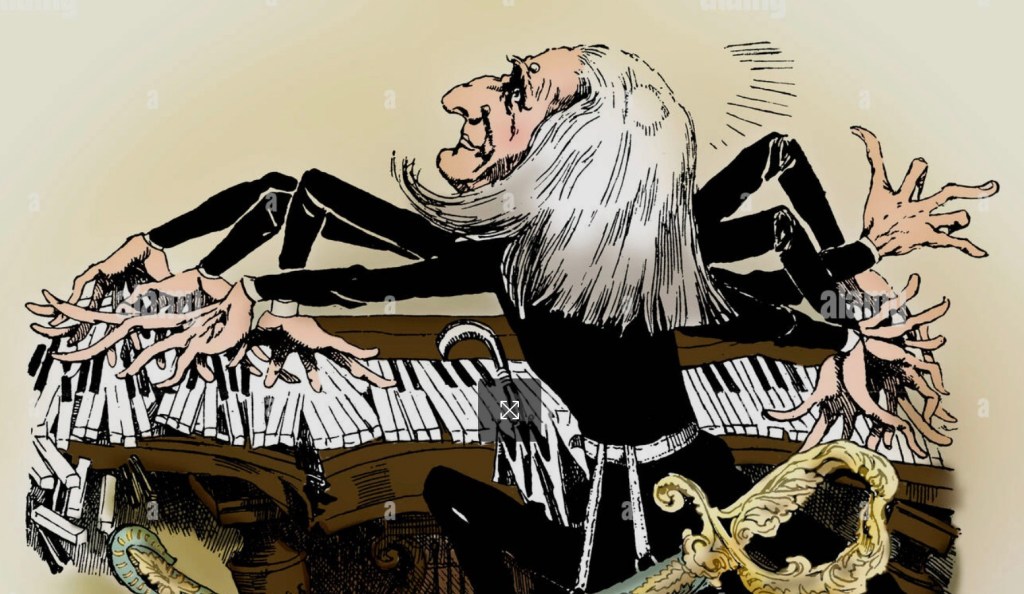
His resemblance to Beethoven was much remarked upon – Liszt referred to Rubinstein as “Van II.” This resemblance was also felt to be in Rubinstein’s keyboard playing. Under his hands, it was said, the piano erupted volcanically. Audience members wrote of going home limp after one of his recitals, knowing they had witnessed a force of nature.When caught up in the moment of performance, Rubinstein did not seem to care how many wrong notes he played as long as his conception of the piece he was playing came through.Rubinstein himself admitted, after a concert in Berlin in 1875, “If I could gather up all the notes that I let fall under the piano, I could give a second concert with them.”

Part of the problem might have been the sheer size of Rubinstein’s hands. Josef Hofmann ,his only private pupil ,noted that Rubinstein’s fifth finger “was as thick as my thumb—think of it! Then his fingers were square at the ends, with cushions on them. It was a wonderful hand.”


As a child prodigy he had played for Chopin and Liszt who refused to take him on as a pupil.He toured throughout Europe and the
United States as the first great international Russian pianist .Engaged by Steinway & Sons, Rubinstein toured the United States during the 1872–73 season. Steinway’s contract with Rubinstein called on him to give 200 concerts at the then unheard-of rate of 200 dollars per concert (payable in gold—Rubinstein distrusted both United States banks and United States paper money), plus all expenses paid. Rubinstein stayed in America 239 days, giving 215 concerts—sometimes two and three a day in as many cities.

Rubinstein wrote of his American experience, 

‘May Heaven preserve us from such slavery! Under these conditions there is no chance for art—one simply grows into an automaton, performing mechanical work; no dignity remains to the artist; he is lost… The receipts and the success were invariably gratifying, but it was all so tedious that I began to despise myself and my art. So profound was my dissatisfaction that when several years later I was asked to repeat my American tour, I refused pointblank…’

Like Liszt, Rubinstein was a prolific composer – his works
include six symphonies, five piano concertos, many solo
works for piano and 20 operas, among them The Demon,
which is still on the fringes of the repertoire – and he
founded the St Petersburg Conservatoire in 1862 (where
Glazunov later was also director).
Hans von Bülow describe him as
the ‘Michelangelo of music’ – and these qualities define his
last Piano Sonata, No. 4 in A minor Op. 100. The first three
were composed in the late 1840s and early 1850s, with a gap
of 25 years before No. 4 appeared around 1880. In his own words he described himself thus :

‘Russians call me German, Germans call me Russian, Jews call me a Christian, Christians a Jew. Pianists call me a composer, composers call me a pianist. The classicists think me a futurist, and the futurists call me a reactionary. My conclusion is that I am neither fish nor fowl—a pitiful individual.’

Leslie Howard writes for his recordings on Hyperion of the Rubinstein Fourth Sonata :

‘In the more than a quarter of a century which separates the third from the fourth of the Rubinstein sonatas (the fourth appeared in 1880) lie only two of his major works for piano—the Fantasy, Opus 77, and the Theme and Variations, Opus 88, both of which are larger than any of the earlier sonatas and show a very different weight of thought from the dozens of character pieces which otherwise fill the Rubinstein piano œuvre. The fourth sonata turns out to be in this grand mould, on a much broader scale than the others, and is almost leisurely in its expansiveness.

There are two parts to the first theme of the Moderato con moto: a strong rhythmic motif marked appassionato e con espressione and a gentler rising theme accompanied by triplet chords. An animated transition passage leads to the second group of themes: a lyrical melody which is immediately extended and developed, and a codetta which contains two more melodic ideas, the second of which introduces the development after the exposition is repeated. All the themes other than the lyrical second subject play a part in the development, and the opening theme is treated fugally. The regular recapitulation is rounded off with a short coda.

The scherzo is a very powerful affair whose skittish moments are generally interrupted by gruff cadences on the off beats, and there is some occasional mildly experimental dissonance. The calmer trio section curiously calls to mind the Grieg of the Lyric Pieces, with its two-bar phrases and delicate syncopations.

The slow movement is very generous with melody—the exposition contains seven distinct themes, three in the home key of F major before a more animated theme in 5/8 introduces D flat. A modulatory theme leads to the second subject and codetta in C major. Development is confined to the first of the themes, but the recapitulation introduces many variations in texture and tonality. A second development turns out to be a long valediction on the first subject group.

The finale is a very busy moto perpetuo with a theme appearing in octaves in the bass before it undergoes the first of many transformations. A brief attempt at a lyrical second theme is doomed by the insistent return of the first for development, but a more expressive section intervenes before the recapitulation, in which the second subject finally takes wing before precipitating headlong into the conclusion.’ Dr Leslie Howard
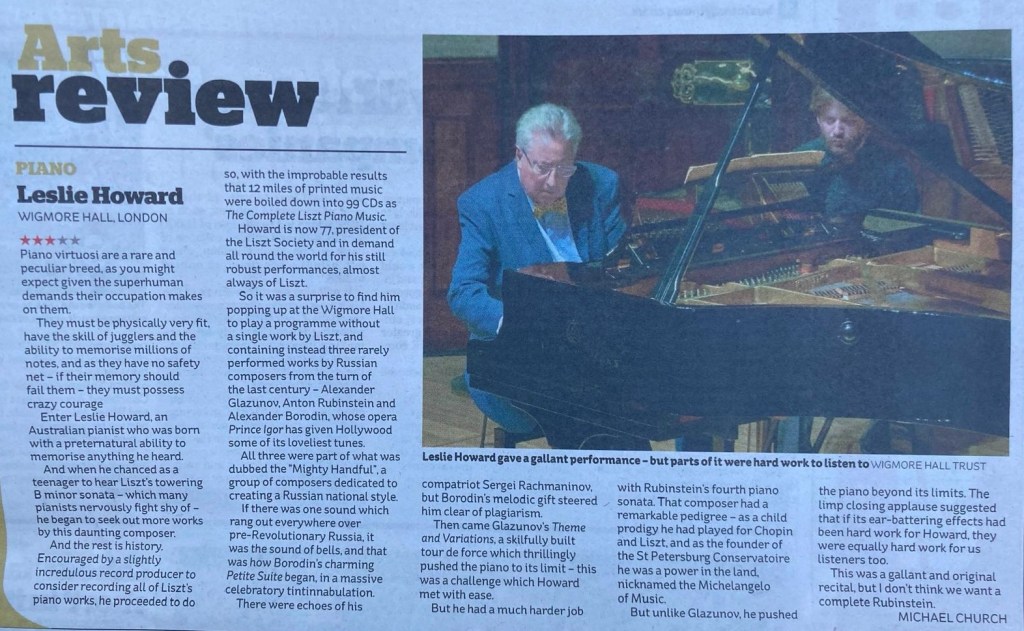
Leslie Howard 75th Birthday Concert ‘An experience beyond compare’- The true heir to Agosti – Busoni -Liszt

Leslie Howard Masterclass at the R.C.M Scholarship and Mastery shared

Tyler Hay at St Mary’s Perivale ‘The Perfect Pianist comes of age ‘

https://youtube.com/live/FlRvHHw6XQQ?feature=shared

On the eve of his 30th birthday, Tyler Hay offers a surprise present to his audience – a hand-picked selection of the most virtuosic, dramatic, expressive, melodic and deliciously charming studies ever written for the piano. It will be a unique recital 

The secret is out …….lock the doors says Tyler as he arrives on stage to reveal the secret composers identity

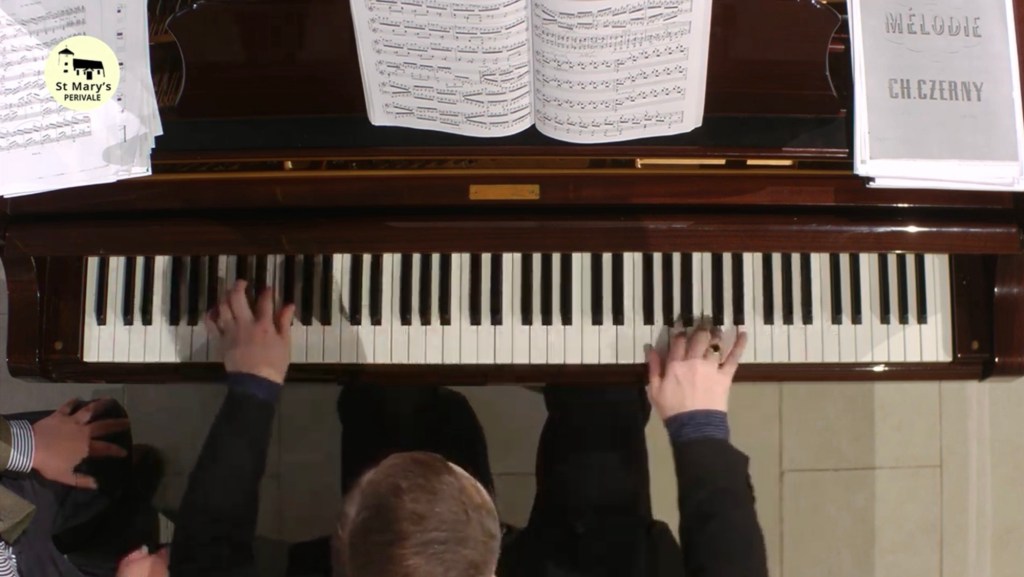
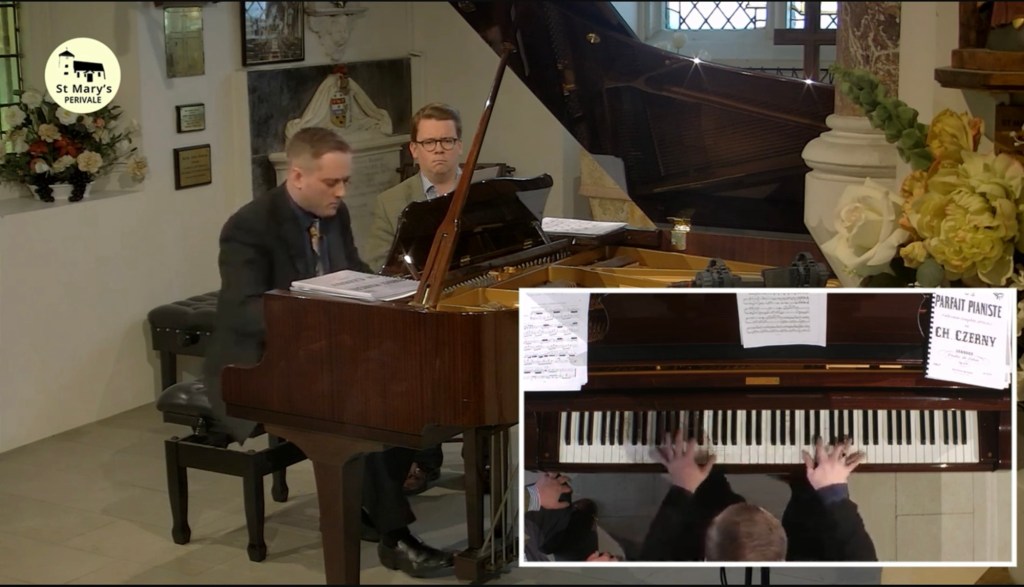
Happy Birthday Tyler together on stage with Mark Viner who celebrated his birthday just a few days ago .Two of the finest most eclectic young virtuosi both from the class of Tessa Nicholson.And with what humility and simplicity they both share their extraordinary talent bringing to life music that we have only read about in encyclopaedias.And bringing to life Tyler certainly did with 24 studies by Czerny of Gradus ad Parnassum fame whose opus numbers reach out to op 861 and beyond!


What jewels they are with a choice of 24 that show a range of styles from Mendelssohnian charm to virtuosistic Liszt opera paraphrases of Rossinian ‘joie de vivre’.There were studies of impish quixotic good humour and coquettish charm with the same freshness and innocence that we associate with the salon works of the Victorian period.Never too serious even though attempting a fugato in n. 46 from op 822.
But there was such character to each of these miniature gems that sparkled and shone as they spun from Tyler’s masterly fingers with an ease and a jeux perlé of quite extraordinary subtlety.What was so remarkable was the clarity and beauty of sound that Tyler brought not only to the mellifluous song without words studies but also to the more energetic transcendentally difficulty ones.


A remarkable ‘tour de force’ as this youngster on the last day in his twenties becomes a mature master ready to take the world by storm just as his page turner has been doing since he too passed the same starting point a few years ago.

Mark Viner at St Mary’s ‘Mastery and mystery of a unique artist and thinking musician.’

Tyler Hay was born in 1994 and first showed a prodigious talent for the piano when he won the Dennis Loveland award in Kent for his performance of Liszt’s Mephisto Waltz no 1 at the age of 11. He gained a place to study at the Purcell School in 2007 where he studied under Tessa Nicholson. He continued his studies with Graham Scott and Frank Wibaut at the Royal Northern College of Music and with Niel Immelman and Gordon Fergus-Thompson for a Masters degree at the Royal College of Music. Tyler has performed programmes at Wigmore Hall, Cadogan Hall and the Purcell Room and has played Ravel’s Concerto for Left Hand Alone at the Queen Elizabeth Hall and Saint-Saëns’ Piano Concerto no 2 at Symphony Hall with the City of Birmingham Symphony Orchestra. In 2016, Tyler won first prize in the keyboard section of the Royal Overseas League Competition and as well as winning the RNCM’s Gold medal competition, also won first prize in the Liszt Society International Competition. Tyler won 1st prize in the Dudley International Piano Competition in November, 2022. CDs of Liszt, John Ogdon, Kalkbrenner and Field are available on Brilliant Classics and an album of virtuoso piano music by contemporary British composer Simon Proctor is also available on Navona Records.

Tyler Hay reaching for the stars.’From candlelight to starlight’.A masterly display of artistry and showmanship at St Martin in the Fields

Tyler Hay and David Zucchi celebrate the work of Radamés Gnattali at the Sala Brasil


21 February 1791 Vienna – 15 July 1857 Vienna

Carl Czerny was an Austrian composer, teacher, and pianist of Czech origin .His vast musical production amounted to over a thousand works and his books of studies for the piano are still widely used in piano teaching. He was one of Beethoven’s best-known pupils and would later on be one of the main teachers of Liszt.As a child prodigy, Czerny began playing piano at age three and composing at age seven. His first piano teacher was his father, who taught him mainly Bach,Haydn and Mozart . He began performing piano recitals in his parents’ home. Czerny made his first public performance in 1800 playing Mozart’s Concert in C minor K.491.

At the age of fifteen, Czerny began a very successful teaching career. Basing his method on the teaching of Beethoven, Clementi and Hummel teaching up to twelve lessons a day in the homes of Viennese nobility.In 1819, the father of Franz Liszt  brought his son to Czerny, who recalled:

‘He was a pale, sickly-looking child, who, while playing, swayed about on the stool as if drunk…His playing was… irregular, untidy, confused, and…he threw his fingers quite arbitrarily all over the keyboard. But that notwithstanding, I was astonished at the talent Nature had bestowed upon him.

Liszt became Czerny’s most famous pupil. He trained the child with the works of Beethoven, Clementi, Moscheles and Bach . The Liszt family lived in the same street in Vienna as Czerny, who was so impressed by the boy that he taught him free of charge. Liszt was later to repay this confidence by introducing the music of Czerny at many of his Paris recitals.Shortly before Liszt’s Vienna concert of 13 April 1823 (his final concert of that season), Czerny arranged, with some difficulty (as Beethoven increasingly disliked child prodigies) the introduction of Liszt to Beethoven. Beethoven was sufficiently impressed with the young Liszt to give him a kiss on the forehead.[16] Liszt remained close to Czerny, and in 1852 his Transcendental Studies  were published with a dedication to Czerny.

Czerny left Vienna only to make trips to Italy, France (in 1837, when he was assisted by Liszt) and England. After 1840, Czerny devoted himself exclusively to composition. He wrote a large number of piano solo exercises for the development of the pianistic technique, designed to cover from the first lessons for children up to the needs of the most advanced virtuoso. Czerny died in Vienna at the age of 66. He never married and had no near relatives. His large fortune he willed to charities (including an institution for the deaf), his housekeeper and the Society of Friends of Music in Vienna, after making provision for the performance of a Requiem mass in his memory.

Czerny composed a very large number of pieces (more than one thousand and up to op. 861).

Czerny’s works include not only piano music (études, nocturnes, sonatas, opera theme arrangements and variations) but also masses and choral music, symphonies, concertos, songs, string quartets and other chamber music. The better known part of Czerny’s repertoire is the large number of didactic piano pieces he wrote, such as The School of Velocity and The Art of Finger Dexterity. He was one of the first composers to use étude  (“study”) for a title. Czerny’s body of works also include arrangements of many popular opera themes.

The majority of the pieces called by Czerny “serious music” (masses, choral music, quartets, orchestral and chamber music) remain in unpublished manuscript form and are held by Vienna’s Society from the Friends of Music , to which Czerny (a childless bachelor) willed his estate.

The famous magazine The Etude, a U.S. magazine dedicated to music, which was founded by Theodore Presser (1848-1925) at Lynchburg, Virginia, and first published in October 1883 and continued the magazine until 1957, brought in its issue of April 1927 an illustration showing how Carl Czerny should be considered the father of modern pianistic technique and base an entire generation of pianist that extends to the present day.

Yevgeny Sudbin at the Wigmore Hall ‘The Devil and the Deep Blue Sea’ – an artist of fearless virtuosity and intelligence

Yevgeny Sudbin has been hailed by The Telegraph as ‘potentially one of the greatest pianists of the 21st century’. His recordings have met with critical acclaim and are regularly featured as CD of the Month by BBC Music Magazine or Editor’s Choice by Gramophone. This recital programme includes Skryabin’s tenth sonata; for recordings of the composer, the pianist was awarded CD of the Year by The Telegraph and received the MIDEM Classical Award for Best Solo Instrument Recording at Cannes.

Franz Liszt (1811-1886) Funérailles S173 No. 7 (1849)
Fryderyk Chopin (1810-1849) Ballade No. 4 in F minor Op. 52 (1842)
Claude Debussy (1862-1918) L’isle joyeuse (1903-4)
Aleksandr Skryabin (1872-1915) Piano Sonata No. 10 Op. 70 (1912-3)
Franz Liszt Danse macabre (after Saint-Saëns) S555 (1876) arranged
by Vladimir Horowitz arranged by Yevgeny Sudbin

Yevgeny Sudbin at the Wigmore Hall BBC live broadcast Liszt,Chopin,Debussy,Scriabin and Saint -Saens .


From the very first authoritative notes it was obvious that here was a virtuoso with a clarity of vision and a technical means to show us the great architectural shape of the music with directness and simplicity.
Revving up with arms like a swimmer in murky waters he delved deep and drew some breathtaking sounds from the piano of enormous sonorities with Horowitzian wizardry.Intimate glowing sounds too of luminosity and fluidity that was more the diabolical world of Scriabinesque contrasts searching for the ‘Star’ rather than the refined aristocratic world of the consumptive poet Chopin.
Having to compete with a pneumatic drill from our neighbours next door Sudbin valiantly played on even though concentration for him and for the audience was unusually strained in this usually most perfect of chamber halls.


Funerailles was played with noble and passionate gestures and the opening although slightly too loud and unvaried was arresting and of great authority.The beautiful melodic episodes were played with radiance and a sense of balance that even in the climaxes the melodic line shone out with passionate abandon.The cavalry too were played with astonishing technical brilliance from their gentle entry one by one until the whole force joined with overwhelming volume and exhilaration.The gentle bass melody of the opening was now transformed into a passionate outcry of heroic abandon only to die away into the distance with heart rending whispered simplicity.


Chopin’s great Fourth Ballade was played with simplicity and a continual forward movement that gave great strength to this ‘pinnacle of the romantic repertoire’.There were many beautiful moments but never lingered over as Sudbin had seen the whole architectural shape leading to the tumultuous final chords before the treacherous final coda.A performance of aristocratic intelligence and good taste that showed us the strength in Chopin rather than his weakness.


Debussy’s view of Jersey from Eastbourne was played with a directness and at times rather dry percussiveness reminiscent of Horowitz’s conception where the dynamic contrasts between fluidity and percussiveness were brought to the fore a little at the expense of the overall atmosphere and etherial beauty of this ‘joyous island’.
Sudbin like Horowitz is the ideal interpreter of Scriabin with moments of transcendental diavolerie mixed with etherial fluidity.Rhythmic shocks that send an electricity into this strange world of trills and thrills and with a vital undercurrent that is like a wave taking us to a landscape of strange shapes and colours.


What better way to end this short recital than with a transcription of Saint -Saens Danse Macabre that luckily in the second half no longer had to compete with the neighbours who had obviously been persuaded to take a lunch break .
Saint – Saens transcribed by Liszt,Horowitz and Sudbin.An extraordinary tone poem of colours and transcendental virtuosity of a real Lion of the Keyboard of which Sudbin like his illustrious forbears was in total command and control.An ovation from a full hall exhilarated and excited by such overwhelming authority but running a little overtime for the broadcast but nevertheless Sudbin generously played a early Mazurka op 25 n. 3 by Scriabin full of radiance and exquisite beauty and the most mellifluous of Rachmaninov’s Preludes op 32 n. 5 .https://youtube.com/watch?v=Colki_YMhw8&feature=shared

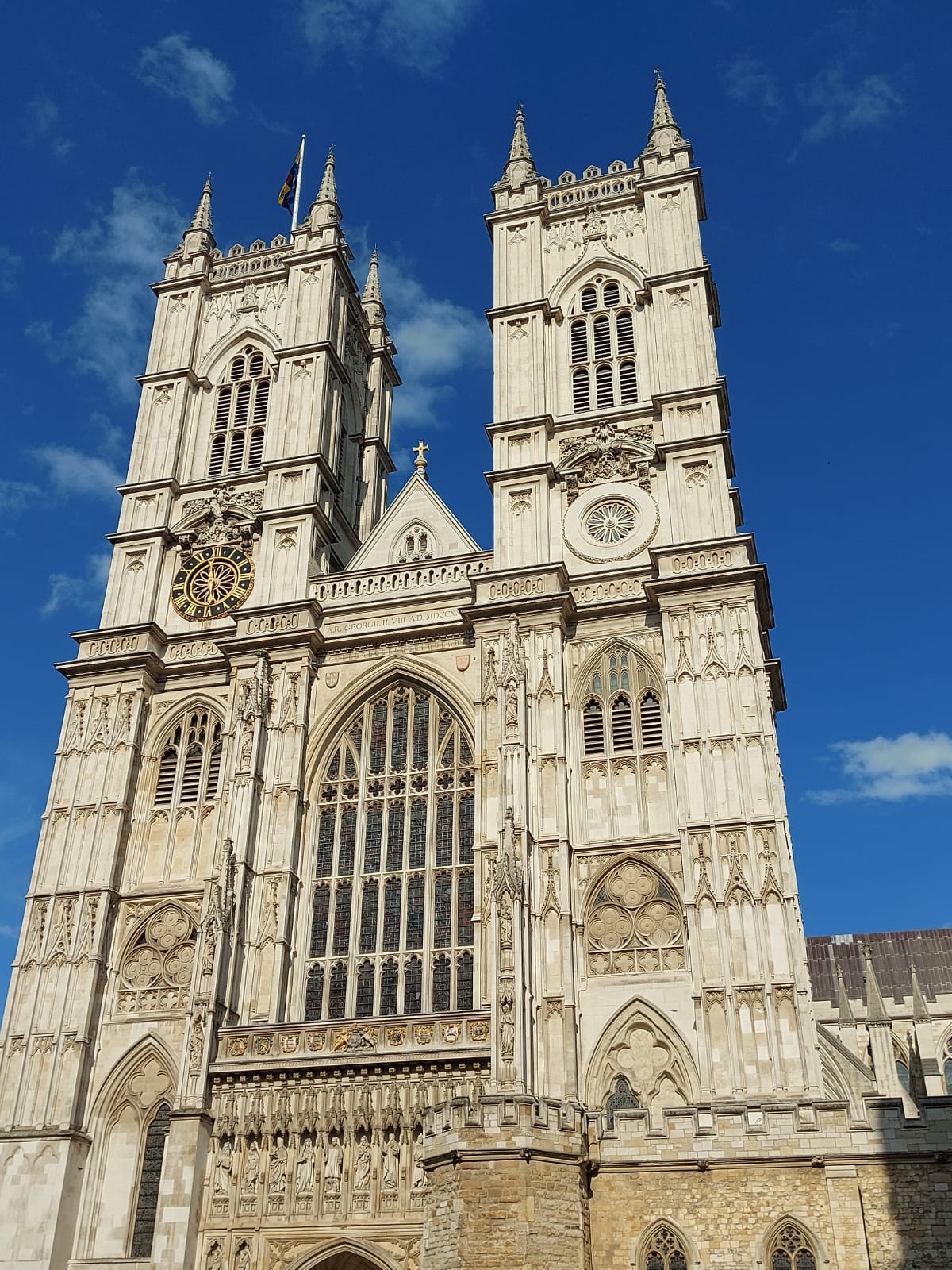
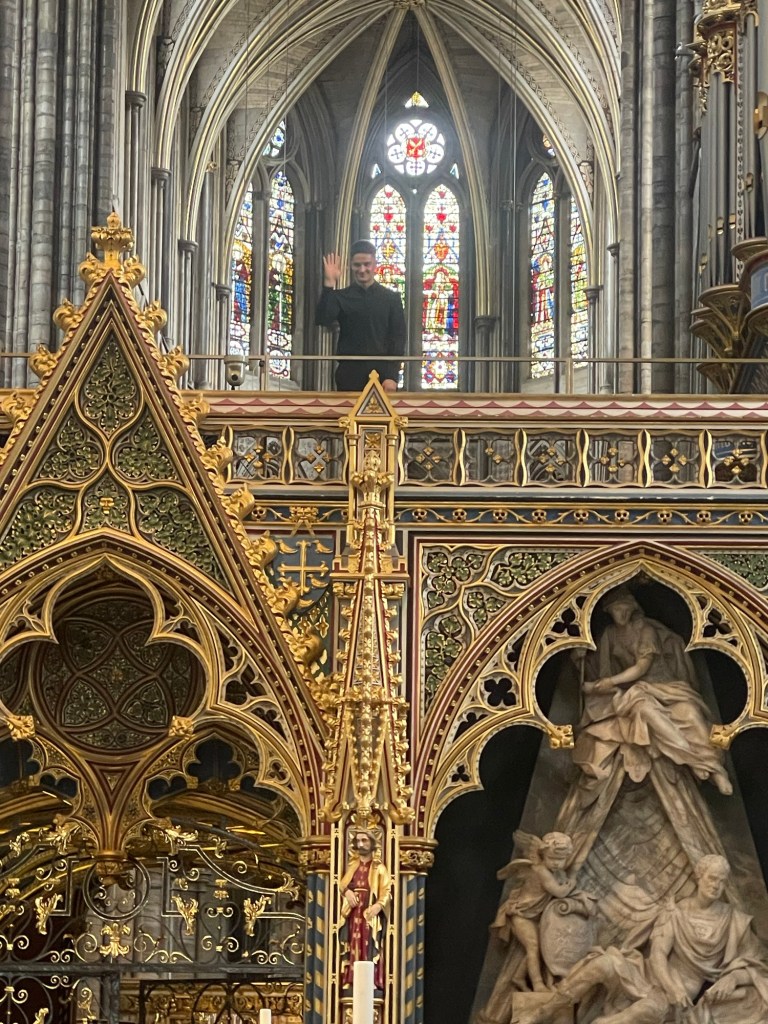
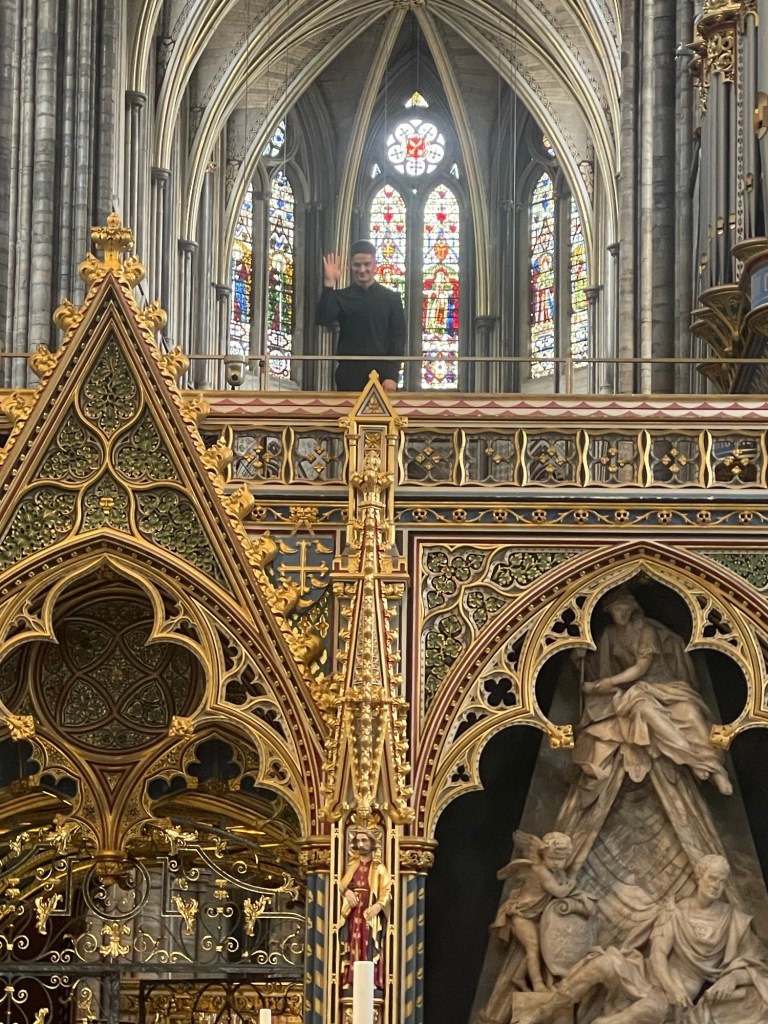
Timothy Stewart a 20 year old master organist triumphs at Westminster Abbey A review by Angela Ransley :’HIGH ROMANTICISM AND THE UNSEEN MASTER’

Widor  Symphony No. 6, 1st movement
Bach  Fantasia in C minor, BWV 562
Schumann  Studien für den Pedalflügel: IV. Innig, V. Nicht zu schnel
Thierry Escaich  Poèmes pour orgue: III. Vers l’esperance

Sunday 14 July 2024, 5.00pm

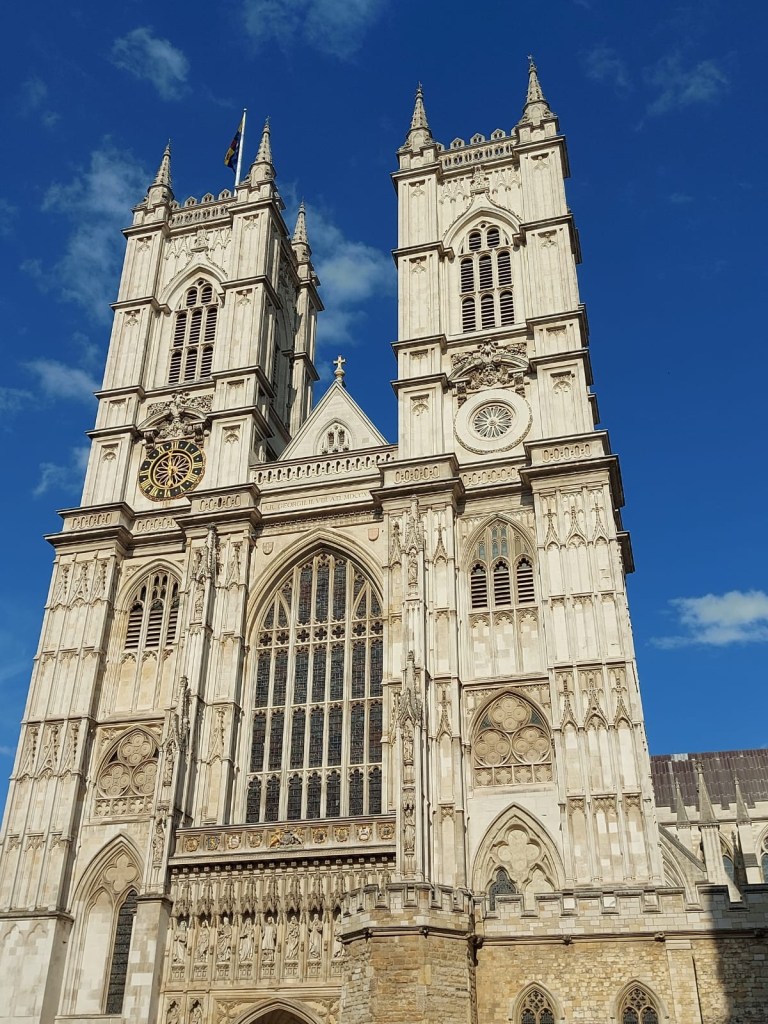
The splendours of Westminster

The Keyboard Trust at Westminster Abbey presenting
Timothy Stewart .
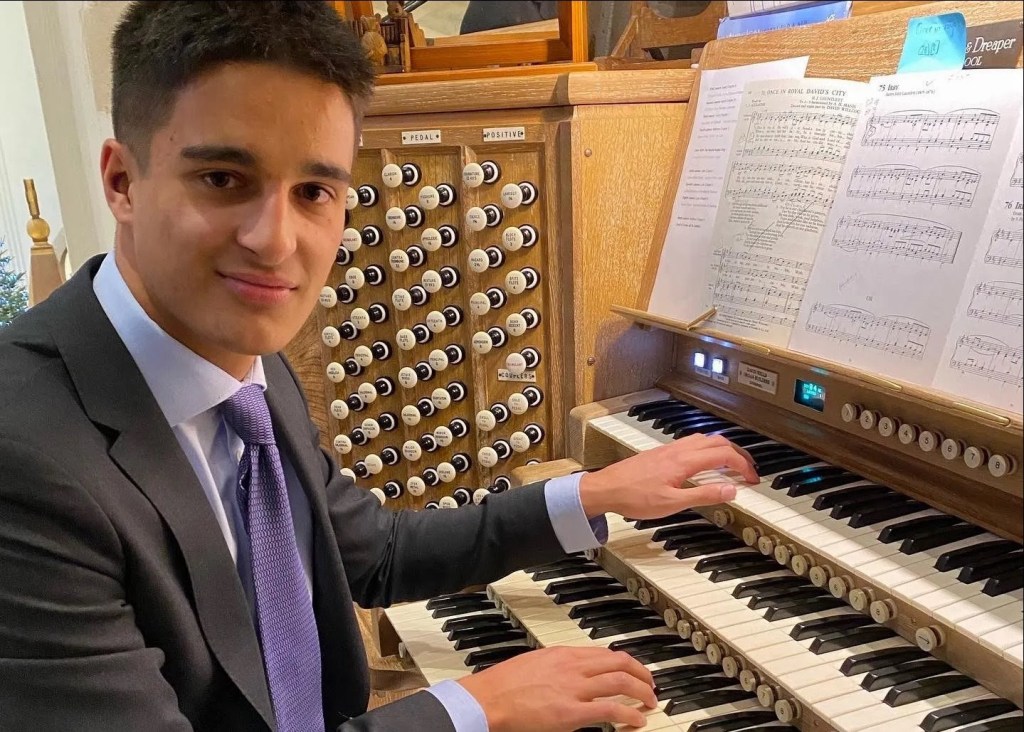
A child prodigy in Guildford and now at the Royal Birmingham Conservatory under the enthusiastic guide of Daniel Moult .At only 20 having won many prestigious prizes with many important recitals under his belt ,today he reached the ultimate goal of all organists to play the mighty organ of Westminster Cathedral .

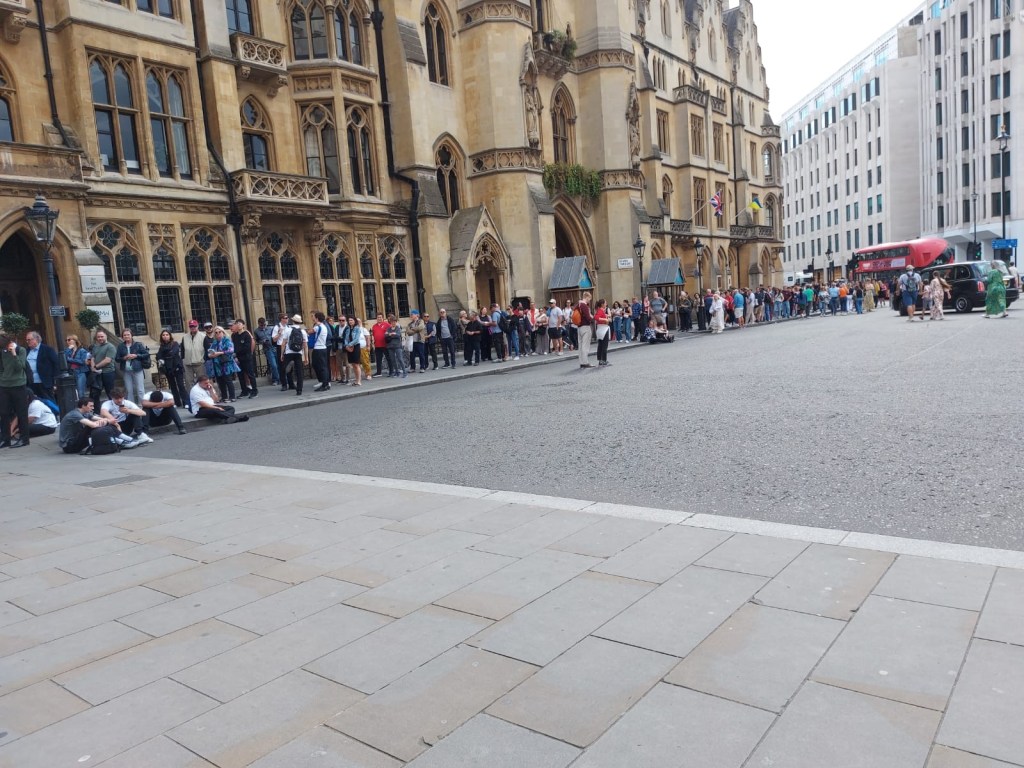
The queue for Timothy’s recital


A queue all down the road for a public that filled this vast historic edifice just as Timothy was to fill it with the noblest sounds from such a mighty instrument.
The ping of the tennis ball all but forgotten as many in the queue were watching the closing moments of Wimbledon Men’s Final before being truly overwhelmed by the artistry of this young musician.

The enormous sonorities of Widor were complemented by the knotty twine of Bach.
There was grace and charm too with two of Schumann’s Pedal Piano Studies op 56.
Finally the wake up call of ‘Vers l’espérance’ from the organ Poèmes of the contemporary Thierry Escaich .
An ovation for this young man who when asked how he found the experience simply replied :’ A dream come true ‘
Dreaming of the ‘ match’ tonight …….could it be a Spanish Inquisition !
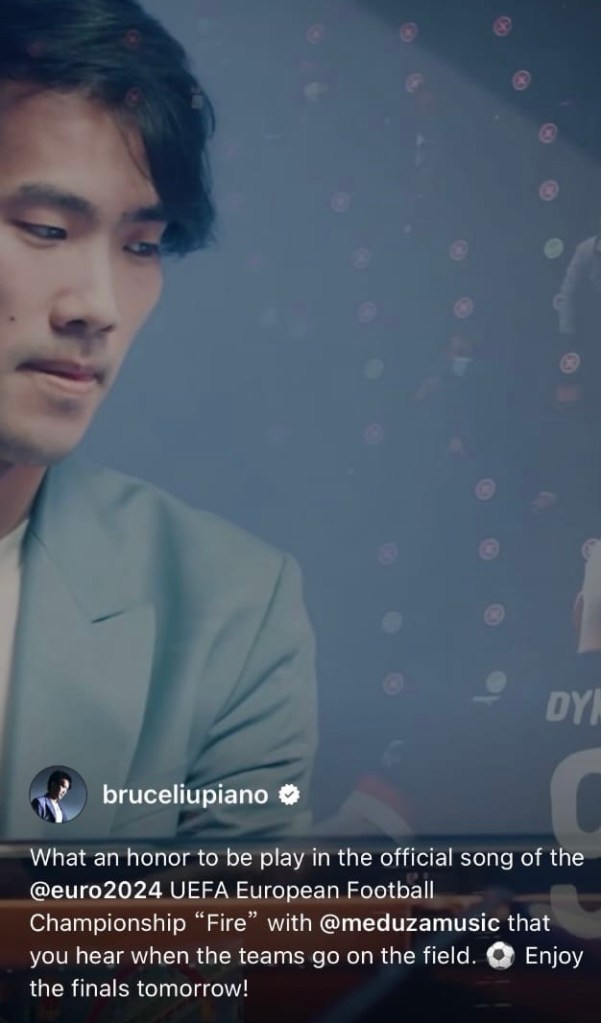
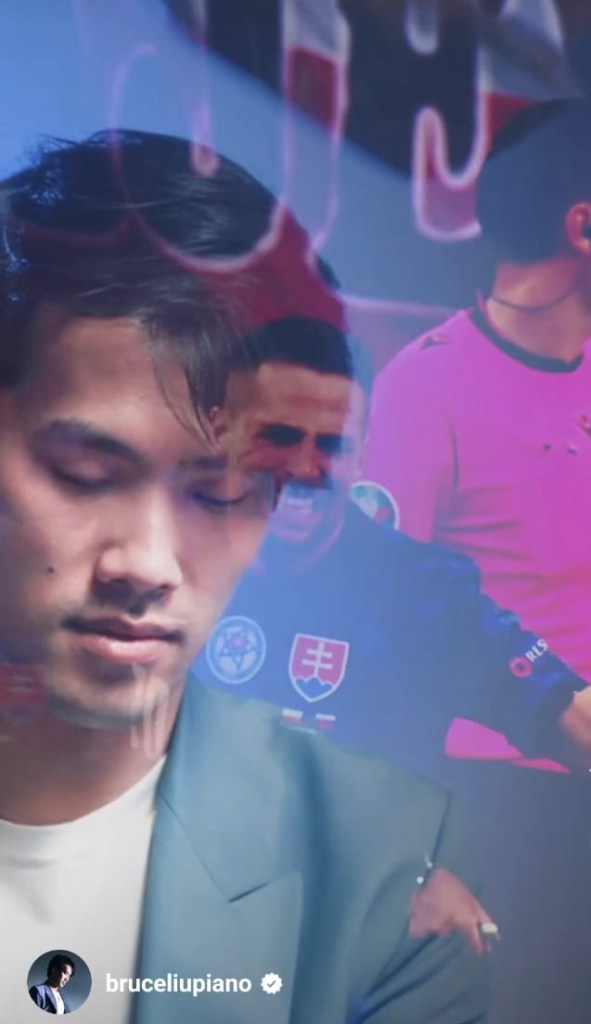
Bruce Liu playing as the players go on to the pitch but he will actually be in London with kick off at the Wigmore at the same time as in Berlin.

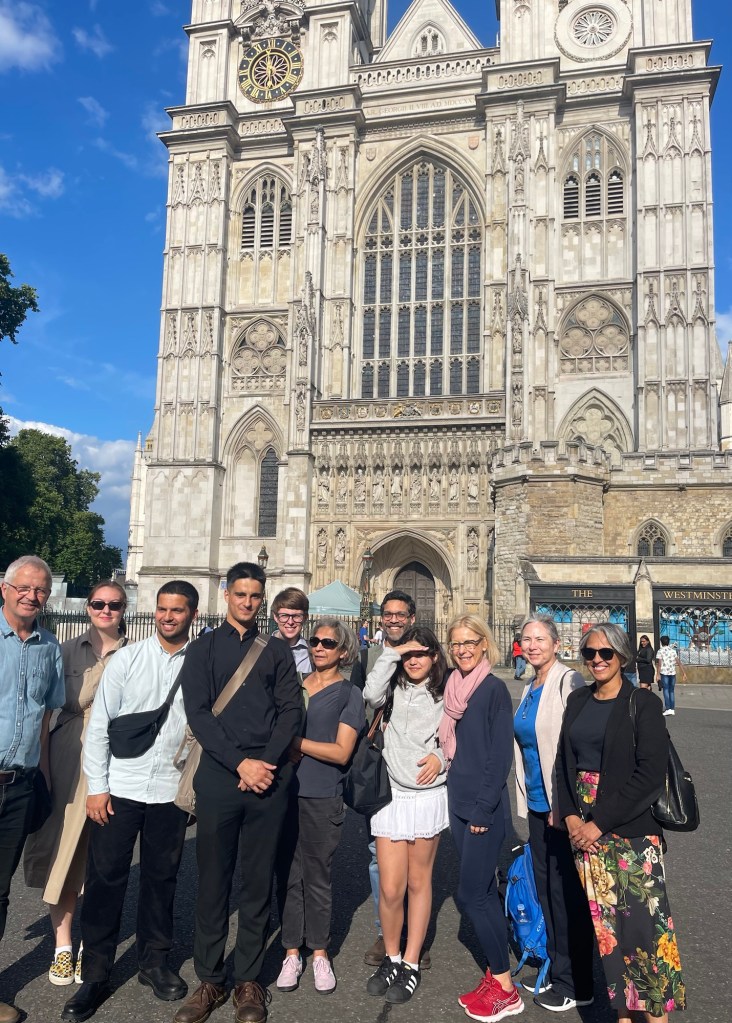
Daniel Moult ( far right ) of the Royal Birmingham Conservatoire with reviewer Angela Ransley ( far left ) and Mark Eynon director of the Newbury Spring Festival -Sheepdrove Piano Competition


He is currently in his first year at the Royal Birmingham Conservatoire after having been awarded the DMC McDonald Foundation Scholarship Award. At the Conservatoire, he is studying for a BMus in Organ Performance under Daniel Moult and Nicholas Wearne as well as receiving regular tuition from visiting tutors such as Martin Schmeding, Erwan le Prado and Nathan Laube. Alongside his studies, he holds the post of Organ Scholar at Birmingham Cathedral (St Philip’s) where he assists the Organist and Assistant Organist in the daily music-making of the Cathedral.

In serious post concert discussion with Mark Eynon ,director of the Newbury Spring Festival


Timothy has enjoyed recent competition success after being awarded First Prize at both the London Organ Competition held in St Clement Danes Church, London (2023), and the Leonard Gibbons Organ Competition which was held at St Chad’s Cathedral, Birmingham (2024) and Second Prize at the Kent Organ Competition (2024). In addition, he was a finalist in the Dame Gillian Weir Messiaen Competition (2024). He is active as a recitalist, having given recent performances at Portsmouth, and Chichester Cathedrals, Clare College, Cambridge and many other parish churches around the country. He was also invited to play at l’Abbaye Saint-Sauveur in Redon, France (2020). Future performances include recitals at Westminster Abbey and Coventry Cathedral.

Family and friends sharing in Timothy’s triumph at Westminster Abbey

Timothy Stewart began his musical training in singing and piano at the age of six. He started organ lessons aged twelve with Gillian Lloyd at the URC in Guildford. As a chorister at Holy Trinity, Guildford under Martin Holford, he was introduced to the organ’s qualities and potential and was also given opportunities to play voluntaries before and after services. He was then appointed to the post of organist at All Saints’ Church, Dummer, Hants and St Giles’, Ashtead whilst also assisting with organ playing at Holy Trinity and URC churches in Guildford. During this time, studying with Katherine Dienes-Williams (Organist and Master of the Choristers at Guildford Cathedral), he achieved distinctions in both grade 8 piano and organ.

An unusual way to thank his public filling every corner of this vast edifice


Prior to starting his degree, Timothy took a gap year and was the Organ Scholar of Chichester Cathedral.  Alongside this position he was the principal accompanist to the choral society ‘Cantemus’, based in Havant.

Westminster Abbey
20 Deans Yard, London SW1P 3PA
Sunday 14 July 2024, 5.00-5.30pm


Review by Angela Ransley :

‘ HIGH ROMANTICISM ……AND THE UNSEEN MASTER

Timothy Stewart at Westminster Abbey

Organ recital programme:

Widor  Symphony No. 6, 1st movement
Bach  Fantasia in C minor, BWV 562
Schumann  Studien für den Pedalflügel: IV. Innig, V. Nicht zu schnell
Thierry Escaich  Poèmes pour orgue: III. Vers l’esperance


                                                  Timothy Stewart

The Westminster Abbey Summer Organ Festival returns once again with its fabulous mix of celebrity recitals and fresh faces on the Young Artists Platform. This year the Keyboard Charitable Trust presented 20-year-old TIMOTHY STEWART a first year student from the Royal Birmingham Conservatoire. Music has been his life since the age of 6: a full account of his progess can be found below.

The Westminster Abbey organ is a majestic instrument of five manuals and 94 stops offering a complex range of solo and combined registration. The recital opened grandly with the first movement of Widor’s Symphonie in G minor Op 42 no 2, first performed in 1876. This is one of ten such works which now form the backbone of the organ repertoire. They were called Symphonie because new organ-building techniques by French organ builder Aristide Cavaille-Coll extended the colour palette of the organ and created a warmer sound. Organists now refer to this type of instrument as Romantic or symphonic, hence Widor’s title.

Aristide played a vital role in Widor’s early life, being a friend of the family. He arranged his early tuition in Brussels and then supported his temporary appointment to Saint-Sulpice in Paris which lasted a mere 63 years! Aristide had installed one of his finest instruments there, which prompted a novel response from Widor: this organ demands new music, a new way of writing..Widor combined this post with teaching organ at the Paris Conservatoire before suceeding Dubois as professor of composition.

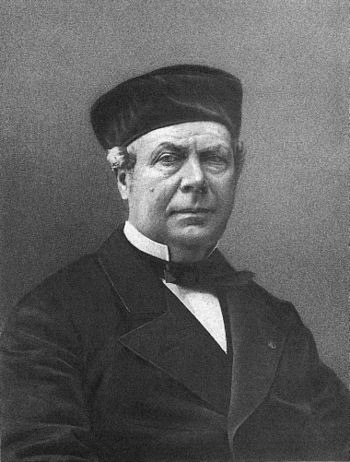
Aristide Cavaille – Coll

Both Widor’s prowess as a performing artist and mastery of compositional technique are found in this movement. Forceful chords announce the opening and also the central idea on which the movement is based. The organ has the unique ability to sing at every level and the main motive is used adventurously by Widor throughout the entire range of the instrument. Although marked Allegro, the organist needs to consider the Abbey’s acoustic. Timothywisely opted for a spacious tempo allowing appreciation of the musical detail. Registration was well chosen, with bright reeds lending clarity to the main theme, and darker colours enhancing the sinuous interludes.

The organ at Saint Sulpice ,Paris

 The Fantasia in C minor BWV 562 by JS Bach (1685-1750) is an early work dating from his period of service to the Duke of Weimar 1708-17. Its austere, tearful character derives from the long pedal notes extending over many bars and the falling, sighing phrase often associated with mourning: the final chorus of  St Matthew Passion comes to mind. It obviously had a special meaning for Bach as he returned to it near the end of his life to add a Fugue, which he never completed. This is consummate counterpoint with the falling phrase hardly absent from the five moving parts. A flurry of semiquavers brings the comfort of a major key – a signature ending for Bach.


The composer leaves us the notes. It is for the artist to make sense of them. Timothy gave us an impassioned account at a surprisingly high dynamic level, which emphasised the architecture of the contrapuntal writing. Solo stops were carefully chosen to emphasise new entries without disrupting the flow.


                                                        Weimar in the time of J S Bach

 If you pass near a church and you hear the organ playing, go inside and listen.. Never waste an opportunity to practise the organ: there is no other instrument able so swiftly to dispense with all that is impure and imprecise, both in the music itself and in the manner of playing it.

(Rules of House and Life 1850 – Robert Schumann).


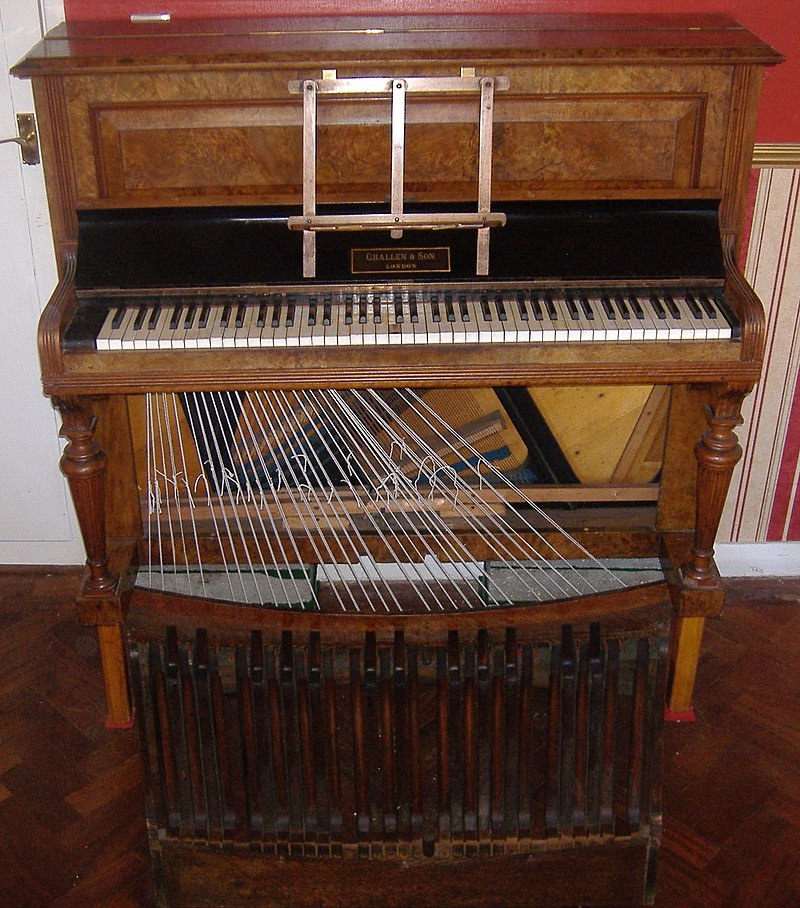
Celebrated for his piano works and lieder, it should not be forgotten that Schumann (1810 – 1856)  also wrote masterly works for the organ. Two pieces followed from 6 Canonic Studies Op 56: Innig and Nicht zu schnell.  Keyboard instruments with a pedalboard existed long before the pedalier, for which these pieces were written, enabling organists to practice at home rather than in a freezing church. Bach owned a pedal harpsichord and Mozart had a pedal fortepiano. Schumann had a pedal piano made in 1843 and his enthusiam for it led to much composition.They were dedicated to his first piano teacher who predicted that Schumann would attain to fame and immortality and that in him the world would possess one if its greatest musicians. These works are now performed on the pipe organ.

A pedal piano

Innig opens with a heart-stopping melody of rare beauty worthy of his greatest love songs. Despite th technical challenge of writing in canon, the expressive quality is always paramount. By contrast, Nicht zu schnell employs a texture of light chords to create a musical romp. In this work we see a different side of Schumann: one, who – unaided – had found his way to Bach when the popular view was that of an outdated contrapuntist. These are character pieces and Timothy found convincingly the individual nature of each. Innig could possibly have been indulged more: a little slower with greater elasticity within the phrase. Nicht zu schnell was delightfully crisp and clear – and huge fun!


Thierry Escaich

Thierry Escaich (1965-) is a French organist, composer, teacher and improviser much in demand on the international stage. He is a worthy successor to the celebrated organist-composers of the late Romantic: Liszt, Franck, Saint-Saens, holding a senior church post in Paris  and teaching at the Paris Conservatoire. He was appointed Organist at Notre-Dame when it reopened  in 2024.

He has written over 100 works for a wide variety of forces and particularly for his own instrument.

Vers l’Esperance, the final piece in Timothy’s recital, comes from Poemes pour orgue, composed in 2002. Its subject is highly Romantic, portraying in Escaich’s own words:  a frightening flight from death and the hope of something beyond. It was inspired by Tunisian poet Suied:


Qu’est-ce qui nous traque                                                Who  is stalking us                   
et nous tord                                                                          And twists us
et se joue de nous                                                                 And plays with us

derrière nos masques?                                                      Behind our masks?
Qu’est-ce qui souffre                                                             What is suffering
et se révolte                                                                           And revolts

au fond de nous malgré nos rêves?  Deep inside us despite our dreams?
Qui es-tu, triste                                                                      Who are you, sad
matière silencieuse?                                                              Silent matter?

De quel parage du ciel es-tu,     From what part of the sky are you messagere oublieuse,                                                      Forgetful messenger

De quelle détresse                                                             From what distress 

Etu le gouffre indéchiffrable?            Are you the undecipherable abyss?

Qu-est-ce qui nous porte et nous appelle     Which carries us and calls us

Au-dessus de nous                                                                  Above ourselves    dans l’espérance?                                                                    Into hope?
 

Escaich’s music is notable for its forceful rhythms and startling dissonances, allowing the King of Instruments a lion’s roar. What a fitting climax to an ambitious half hour recital!  His formidable technique fully engaged, Timothy made full use of the 94 stops to create an dramatic sound image with  screaming brass reeds – oboe, trumpet and clarion – confirming the inescapable advance of Death. It was both thrilling and chilling..


Cesar Franck made the famous remark about his new Cavaille-Coll instrument: mon nouvel orgue..c’est un orchestre! (my new organ, it’s an orchestra!) There is no doubt that the symphonic organ led to a more expressive style of writing. Today’s composers – Widor, Schumann, Escaich –   all empowered the organ to sing high or low and to employ an amazing range of textures and colours. There is another common thread: all three organists were steeped in the music of JS Bach. Widor’s early training was in his works for organ and he astonished his pupils at the Paris Conservatoire by demanding the same. Schumann made his own way to Bach and honoured his debt by composing 6 Fugues on the name BACH. Escaich modelled his Etudes-Chorals on the chorale preludes. The influence of Bach remains regardless of the intervening years as the Unseen Master, ever ready to guide and inspire.

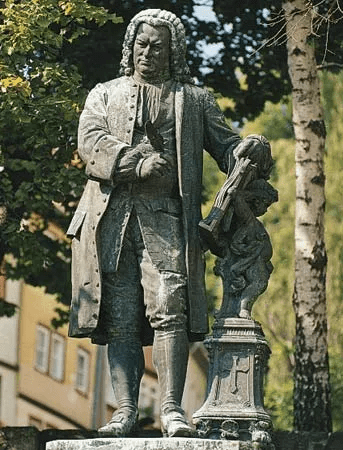
J.S. Bach

Timothy Stewart began his musical training aged 6 in singing and piano.  He started organ lessons aged 12 with Gillian Lloyd at the URC in Guildford.  As a chorister at Holy Trinity, Guildford under Martin Holford, he was introduced to the organ’s qualities and potential and was also given opportunities to play voluntary’s before and after services. He was then appointed to the post of organist at All Saints’ Church, Dummer, Hants and St Giles, Ashtead whilst also assisting with organ playing at Holy Trinity and URC churches in Guildford. During this time, studying with Katherine Dienes-Williams (Organist and Master of the Choristers at Guildford Cathedral), he achieved distinctions in both grade 8 piano and organ. Prior to starting his degree, Timothy took a gap year and was the Organ Scholar of Chichester Cathedral and alongside this position he was the principal accompanist to the choral society ‘Cantemus’, based in Havant.

He is currently in his first year at the Royal Birmingham Conservatoire after having been awarded the DMC Mcdonald Foundation Scholarship Award. At the Conservatoire, he is studying for a BMus in Organ Performance under the tutelage of Daniel Moult and Nicholas Wearne, as well as receiving regular tuition from visiting tutors such as Martin Schmeding, Erwan le Prado and Nathan Laube. Alongside his studies, he holds the post of Organ Scholar at Birmingham Cathedral (St Philip’s) where he assists the Organist and Assistant Organist in the daily music making of the Cathedral.

Timothy has enjoyed recent competition success after being awarded first prize at both the London Organ Competition held in St Clement Danes church, London (2023), and the Leonard Gibbons Organ Competition which was held at St Chads Cathedral, Birmingham( 2024) and 2nd prize at the Kent Organ Competition (2024). As well as this, he was a finalist in the Dame Gillian Weir Messiaen Competition (2024). He is active as a recitalist, having given recent performances at, Portsmouth, and Chichester Cathedrals, Clare College, Cambridge, and many other parish churches around the country. He was also invited to play at l’Abbaye Saint-Sauveur in Redon, France (2020). Future performances include Westminster Abbey and Coventry Cathedral.


Angela Ransley is an advanced piano teacher and writer based in London. She is Director of the Harmony School of Pianoforte and works closely with the Keyboard Trust.


https://christopheraxworthymusiccommentary.com/2023/06/02/the-gift-of-music-the-keyboard-trust-at-30/

This is a link to one of the KT artists who has played the pedal piano in the Royal Festival Hall in London.The Gounod pedal piano concerto and as an encore a study for pedal piano by Schumann

https://www.facebook.com/notes/christopher-axworthy/get-closer-roberto-prosseda-and-oleg-caetani-at-the-festival-hall/10156098635657309/

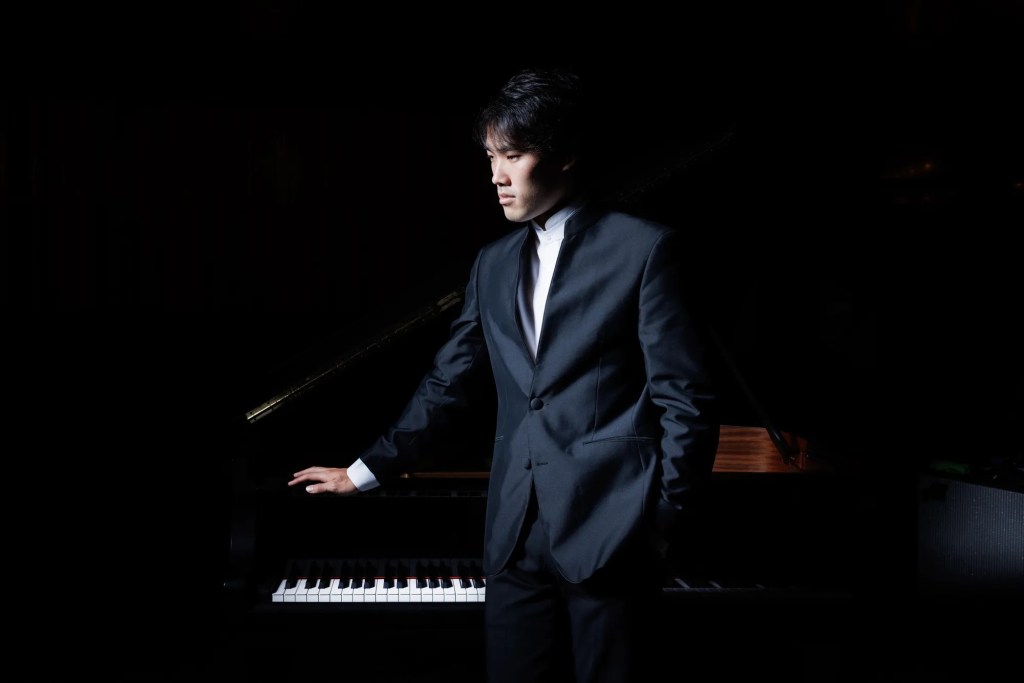
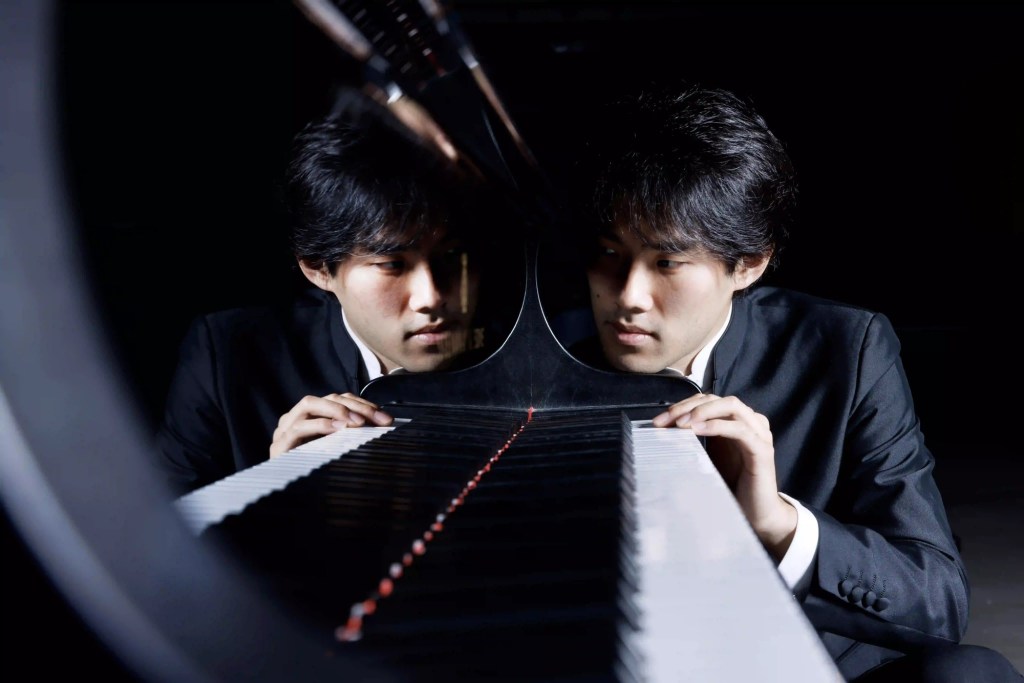
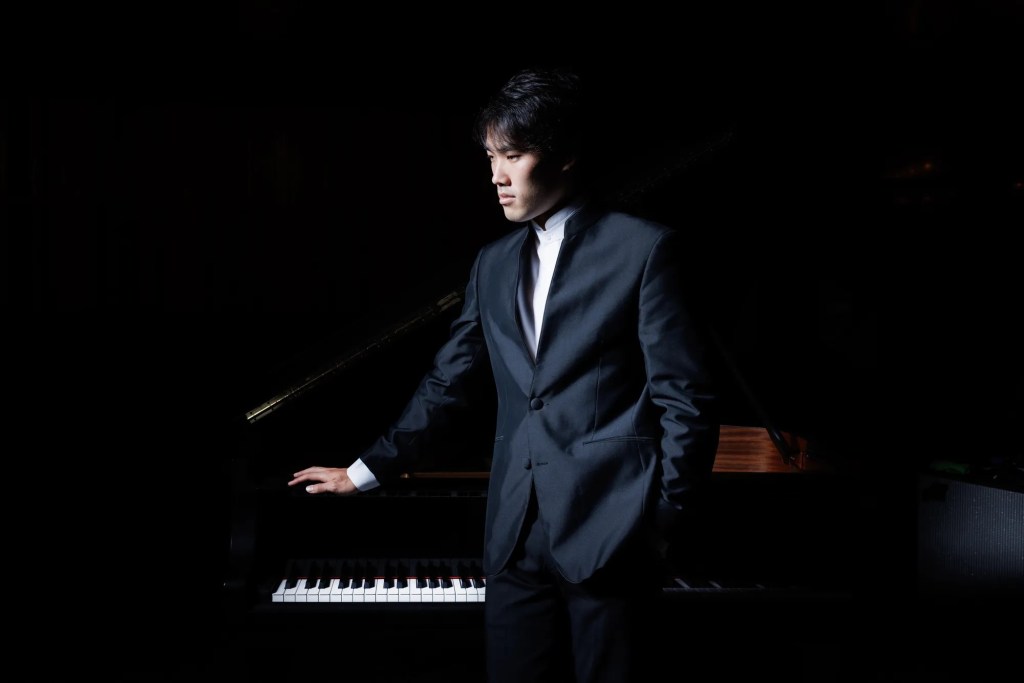
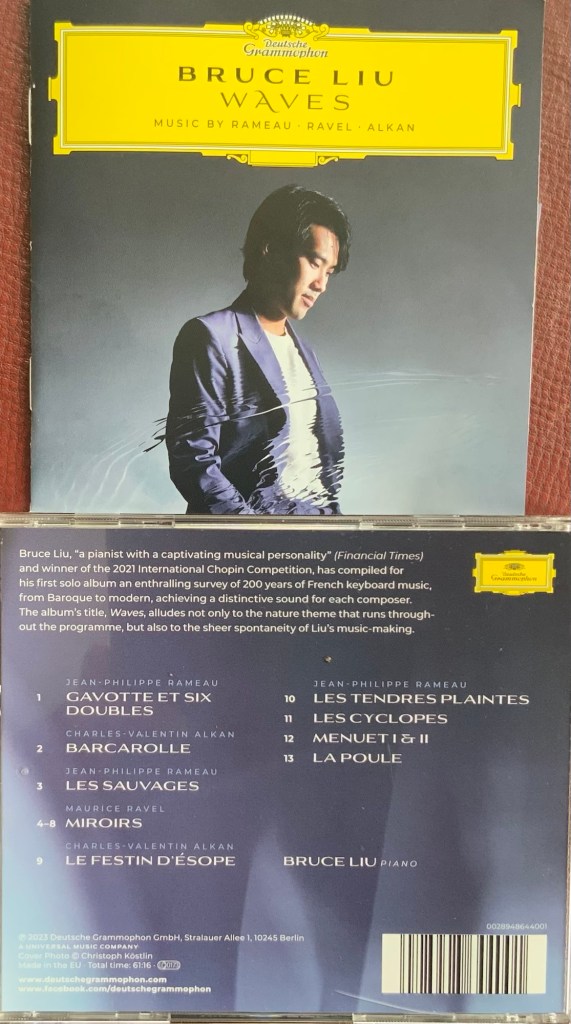
Bruce Liu at the Wigmore Hall London A supreme stylist creating a new Golden Age of piano playing of mastery and refined good taste

Bruce Liu piano
Joseph Haydn (1732-1809) Piano Sonata in B minor HXVI/32 (by 1776)
I. Allegro moderato • II. Menuet • III. Finale.
Presto
Fryderyk Chopin (1810-1849) Piano Sonata No. 2 in B flat minor Op. 35
‘Funeral March’ (1837-9)
I. Grave – Doppio movimento • II. Scherzo •
III. Marche funèbre • IV. Finale. Presto
Interval
Jean-Philippe Rameau (1683-1764) Les tendres plaintes (pub. 1724)
Les cyclopes (pub. 1724)
Menuet I and II (c.1729-30)
Les sauvages (c.1729-30)
La poule (c.1729-30)
Gavotte et 6 doubles (c.1729-30)
Fryderyk Chopin Variations on ‘Là ci darem la mano’ Op. 2 (1827)


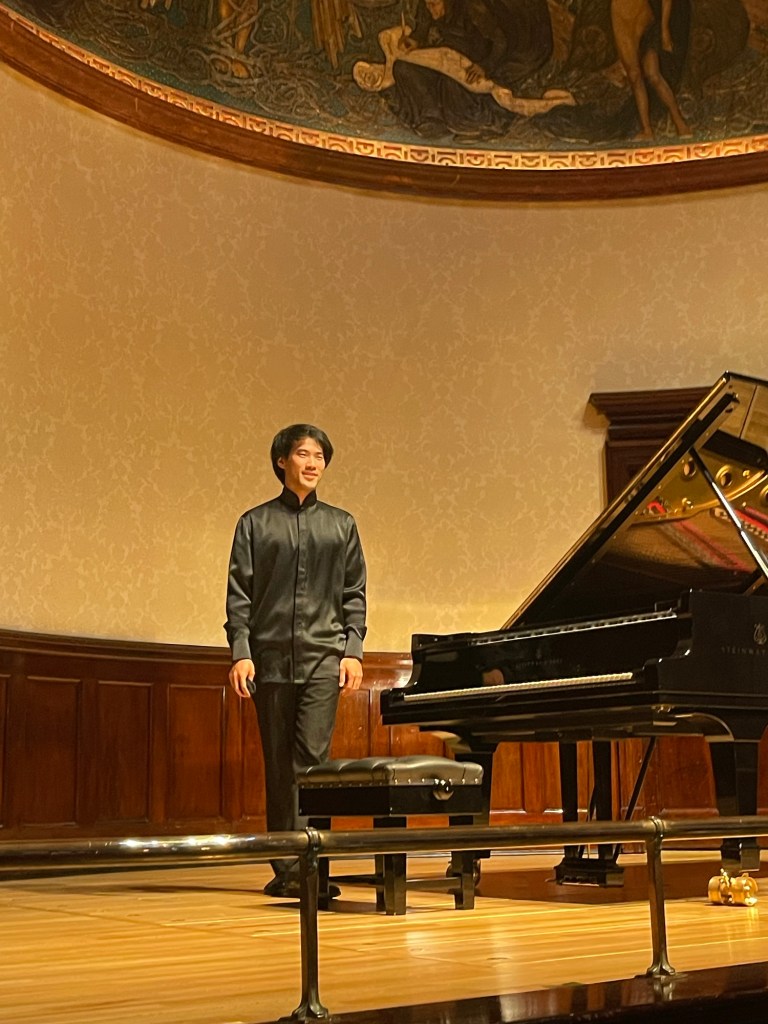
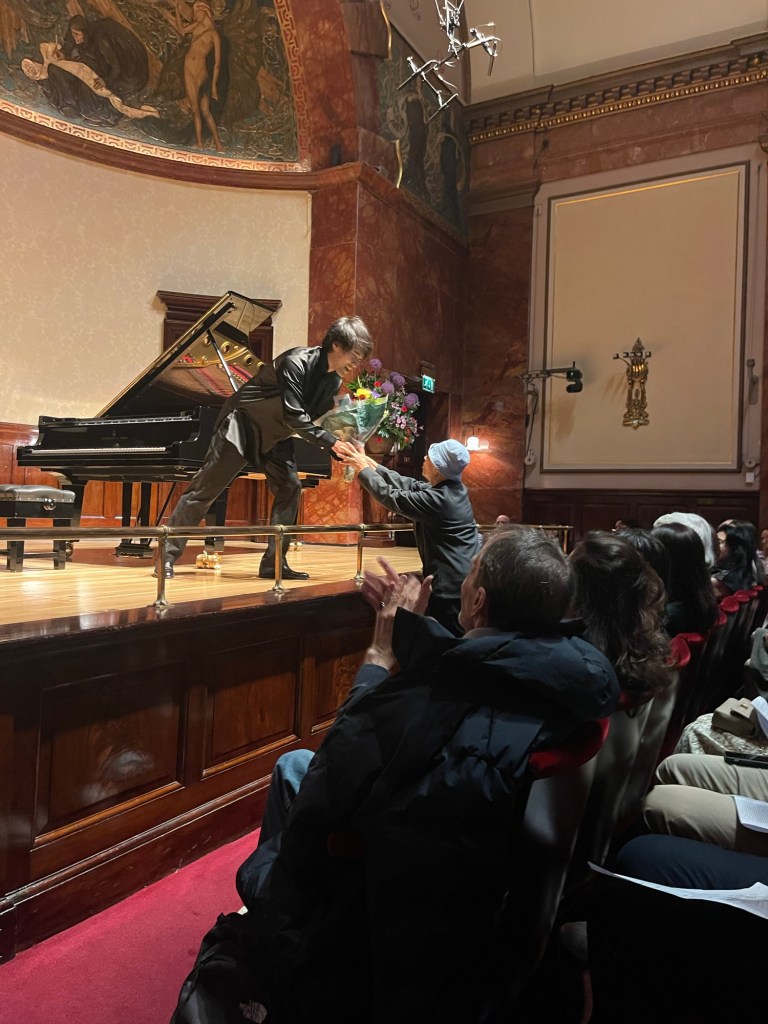
Bruce Xiao Liu kicking off in London while the whole world is watching the kick off in Berlin .
I have no idea how the players are getting on but I do know that from the very first notes of the Haydn B minor Sonata Bruce created the same magic of the greatest musicians from a past age that are now just posters in the green room of a golden age.


It was Jed Distler ,the New York correspondent for the Chopin competition,who had immediately noticed this young man for his sense of colour and style in the Chopin Rondo op 2 .The one that Schumann on hearing Chopin play wrote :’Hats off gentlemen a Genius’.
The ravishing jewel like precision of the opening Allegro moderato of Haydn was with a delicacy and range of colours but always a great sense of style and elegant good taste .There was dynamic drive and superb clarity of a jeux perlé that was beguiling and mesmerising .Such crystalline clarity and beauty of shading that the only word to describe it , is exquisite. But not of a porcelain doll but of a passionate vibrancy of great daring and intelligence .
A Menuet that was a true jewel box of delicacy and a trio of passionate persuasion
A presto Finale that was of lightweight etherial brilliance with a ‘joie de vivre’ of scintillating impish good spirits .


The noblest of ‘Grave’ introductions to the Chopin B flat minor Sonata was that of a true storyteller who had something wondrous to share .A Chopin of aristocratic nobility and architectural shape and with a continual forward movement of passionate conviction. A relentless ‘doppio movimento’ that at times might have seemed too driven until one arrived at the sumptuous outpouring of the second subject.No worries about the much discussed repeat that Bruce had no time to even consider as he had seen this movement as a flowering of genial invention.
The menacing opening of the development in the bass was answered by the radiance and beseeching beauty of the reply in a question and answer of poignant significance .Leading to the mighty climax where the genial invention of Chopin turns the formal sonata form into a throbbing intensity where form and soul are united in a passionate outpouring finding an outlet only with the gloriously triumphant return of the second subject.A masterly control of balance allowed us to see so clearly a masterpiece opening up before our eyes as rarely before.A coda that was of a nobility and controlled passion that I have only ever witnessed from Rubinstein.
The Scherzo immediately entered with a dynamic rhythmic drive that was never hard or allowed to turn into a vulgar dance .There was a forward movement that was only to be relieved by a Trio of ravishing beauty of chameleonic colours and subtle rubato.
The funeral march entered with whispered insistence with a ponderous and relentless bass over which the melodic line was at first overheard from afar but gradually ,almost imperceptibly,growing in intensity until exploding into a passionate outpouring of overwhelming significance.
The ravishing beauty of the bel canto Trio I have never heard as today where above all there was an architectural shape and unexpected colours from within.The whispered repeats were of a beauty that was so natural that one almost dared not breathe in such rarified air.The end of the Funeral March too was a mere murmur as we in the public barely recognised a work we have known all our lives such was the act of recreation from a great artist of rare sensibility.The last movement was indeed a real wind that passed over the graves as notes became streams of sounds whispered,wailing and almost without form until a glimmer of light at the end of the tunnel brought us to the final tumultuous chords .A movement of such originality that it is no wonder that Chopin’s contemporaries could not understand the visionary genius of a composer who was condemned to die before his fortieth birthday.Like Schubert ,who died even earlier ,both were much criticised for works lacking in formal construction .Theirs was such a revolutionary new vision that it needed another hundred years to pass before being recognised as works of genius.

After the interval a group of pieces by Rameau that was refreshing for the purity of sound and exhilarating for the transcendental ‘ fingerfertigkeit’ that this young artist demonstrated with such simplicity.We have often marvelled at Sokolov with his trills like taut springs of Swiss clock precision but today there was the same mastery but allied to a sense of colour like a prism shining light on unexpected corners of jewels glowing as they caught the light. Has ‘Les tendres plaintes’ ever sounded as beautiful as today where simplicity and beauty were combined with some remarkable colouring just hinted at in the bass? Dynamic playfulness of ‘Les Cyclopes’ with the left hand murmurings adding a throbbing heartbeat to the quixotic melody.There was elegance and delicacy to the two Menuets with the second played with a charming lilt before the whispered return of the first.A hypnotic rhythmic elan to ‘ Les Sauvages’ with a kaleidoscope of colours, and an infectious good humour to Rameau’s famous impersonations in ‘La Poule’. The Gavotte et 6 doubles is a real masterpiece .A remarkable theme and variations with an opening of disarming simplicity and a gradual increase in intensity as the variations become ever more virtuosistic.These pieces by Rameau as played today showed a technical refinement and controlled brilliance that was every bit as breathtaking as the more obvious Black Key Study that Bruce was to astonish us with as his penultimate encore.

Chopin’s Rondo op 2 was the work that Bruce chose to close his first London recital with since his triumph with this very piece in the Chopin competition in Warsaw.There was beguiling dance,dynamic drive and the breathtaking Bel Canto of a supreme stylist who could play with brilliance and the charm of a jeux perlé of another era – the Golden Age of piano playing of the likes of Lhevine,Hoffman or Godowsky. Notes that in this young magicians hands could make the music speak with extraordinary simplicity and subtle beauty.

Even the first encore of the Allemande from Bach’s Fifth French suite was played with refreshing originality with some subtle pointing of the bass and the colours of a pianist who like Van Cliburn said he would never play faster than he could sing. Chopin’s ‘Black Key’ study op.10 n.5 was breathtaking for it’s subtle colouring and astonishing technical brilliance.The last encore Chopin’s Nocturne op. posth in C sharp minor was played with a ravishing sense of balance and the disarming simplicity of this ‘new’ Golden Age .The path that this remarkable young artist is fast showing a world where music is allowed to speak with a voice of such stylish mastery and humanity.

With Alim Beisembayev and other pianists from the class of Tessa Nicholson
With Yisha Xue
Two great artists ‘birds of a feather’ both still in the ‘20’s .Bruce winner of Warsaw and Alim winner of Leeds. Both giving sensational recitals in this hall in the same month.A hall which has always resounded to the sound of the greatest musicians and is continuing thanks to the generous legacy that Artur Rubinstein bequeathed when he gave the last concert of his career in 1976 and beseeched us all not to ever let the developers through these hallowed doors
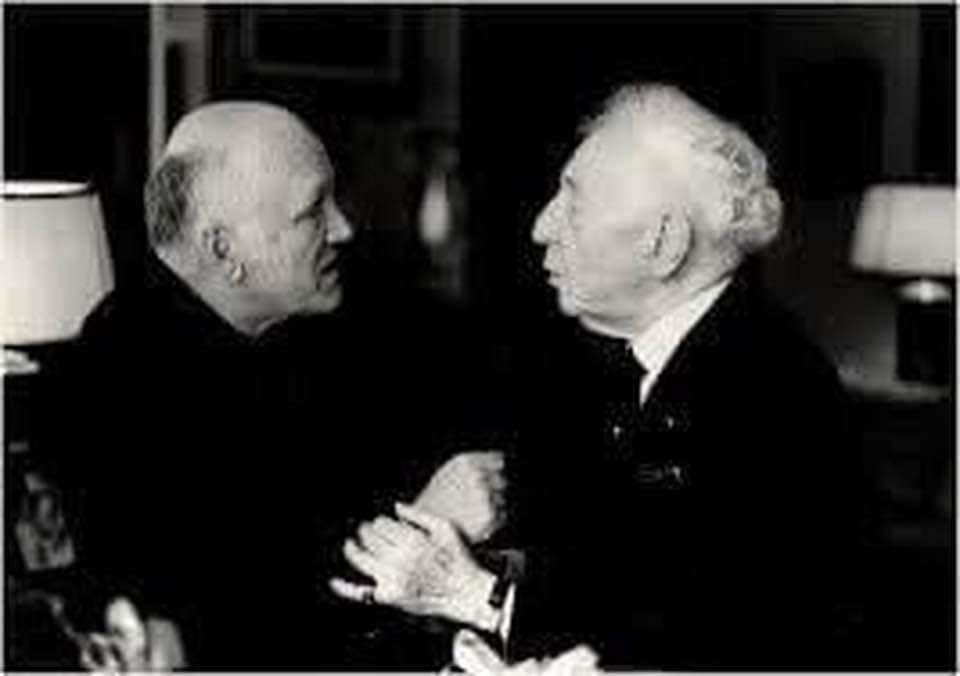
Artur Rubinstein with Sviatoslav Richter .A truly historic encounter both needing the attention of a doctor the next day to recover from the Champagne enjoyed together by the greatest pianists of all time

Bruce Liu’s triumphant debut at the Edinburgh Festival

Bruce Liu takes London by storm

Bruce Xiaoyu Liu showing the way to Eutopia for Chopin’s 212th birthday

Stars shine brightly in Warsaw with Dang Thai Son,Bruce Liu and Lukas Geniusas


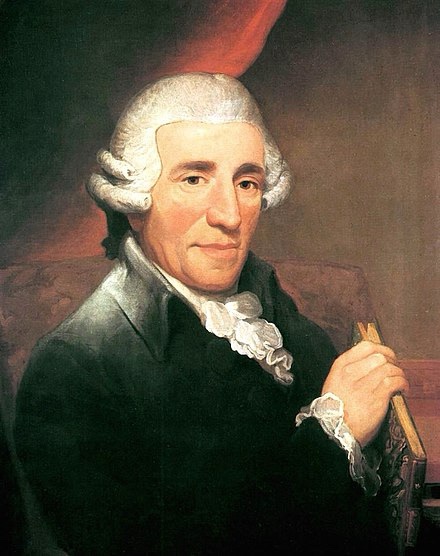
Franz Joseph Haydn 31 March 1732 – 31 May 1809 Born in Rohrau,Austria .
On 26 May Haydn played his “Emperor’s Hymn” with unusual gusto three times; the same evening he collapsed and was taken to what proved to be to his deathbed.He died peacefully in his own home at 12:40 a.m. on 31 May 1809, aged 77.On 15 June, a memorial service was held in the Schottenkirche at which Mozart’s Requiem was performed. Haydn’s remains were interred in the local Hundsturm cemetery until 1820, when they were moved to Eisenstadt by Prince Nikolaus. His head took a different journey; it was stolen by phrenologists shortly after burial, and the skull was reunited with the other remains only in 1954, now interred in a tomb in the north tower of the Bergkirche!

The 55 Haydn Sonatas are perhaps the least-known treasures of the piano repertoire. In them one can hear Haydn virtually inventing the classical style, from the early, somewhat tentative beginnings, through the bold experiments of the 1770s, to the adventurous late works. As with Beethoven (Haydn’s somewhat recalcitrant student) each sonata is a new exploration, and the element of surprise is ever present. Haydn delights in abrupt transitions, twists and turns, sudden pauses, and apparent non sequiturs; listening to him demands a constant alertness.

Many of Haydn’s string quartets bear curious nicknames (“The Lark,” “The Razor,” “The Frog,” etc.). I am tempted to call the very serious B-minor Sonata “The Bear”; the lumbering bass figure at the beginning, the repeated chorded growls in the bass, and a general air of surly brusqueness give it unusual power. In exquisite contrast, the central Minuet is one of the most delicate and graceful pieces Haydn ever wrote – an unusually Mozartean moment. The bear returns in the minor-key trio, accompanied later on by some angry bees buzzing in the right hand. The Presto hammers away in repeated notes, at the first movement’s opening third, and the bees also return with a vengeance. The end is stark and uncompromising. The b-minor Sonata is part of a group of six piano sonatas which, according to Haydn’s own handwritten catalogue of works, was composed in 1776. The autograph has not survived, and the first edition of 1778 was not authorised. However, numerous copyist’s manuscripts have survived in which Haydn had his six sonatas disseminated.

Franz Joseph Haydn
Sonata in B minor Hob. XVI:32

The jovial, witty and ever-cheerful ‘Papa’ Haydn writing in a minor key? What brought that on?

The 1770s, when Haydn’s Sonata in B minor was composed, was the age of Sturm und Drang (storm and stress) in German culture, an age when aberrant emotions were all the rage in music; and what better tonal avouring than the minor mode to convey these emotions? Composers such as C. P. E. Bach rode this cultural wave with enthusiasm, writing works that elicited powerful, sometimes worrisome, emotions by means of syncopated rhythms, dramatic pauses, wide melodic leaps and poignant harmonies of the type that minor keys were especially adept at providing.It is also important to note that the 1770s was the period in which the harpsichord was gradually giving way to the new fortepiano, precursor of the modern grand, and there is much in this sonata to suggest that it still lingered eagerly on the harpsichord side of things, at least texturally. The kind of writing you find in the first movement, especially, is the sort that speaks well on the harpsichord. Moreover, there are no dynamic markings in the score, as you would expect in a piece that aimed to take advantage of the new instrument’s chief virtue: playing piano e forte.This cross-over period between harpsichord and fortepiano plays out in the nature of the first movement’s two contrasting themes. The first is austere and slightly mysterious, amply encrusted with crisp, Baroque-style mordents on its opening melody notes. The second churns away in constant 16th-note motion – the very thing the harpsichord is good at. And while this second theme is set in the relative major, its subsequent appearance in the recapitulation is re-set in the minor mode, yet a further sign of the serious Sturm und Drang tone that pervades this movement.In place of a lyrical slow movement, Haydn offers us a minuet and trio – but where is the emotional drama in that? Haydn has a plan. His minuet and trio feature thematic material as dramatically contrasting as the first and second themes of the first movement. The minuet is in the major mode, set high in the register, sparkling with trills and astonishing us with melodic leaps everywhere, one as large as a 14th. The trio, normally con gured as sugary relief from the sti formality of courtly dance ritual, is daringly in the minor mode, set low, and grinds grimly away in constant 16th-note motion.

Haydn wouldn’t be Haydn if he didn’t send you away with a toe-tapping finale and such a movement ends this sonata. To that end, Haydn’s go-to rhythmic device is repeated notes, and this nale chatters on constantly at an 8th-note patter, interrupted at random, it would seem, by surprising silences and dramatic pauses – as if to allow the performer to turn sideways and wink at his audience.

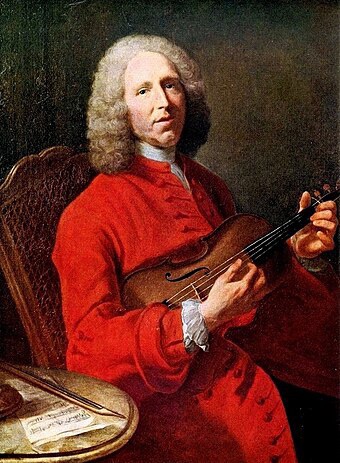
Jean-Philippe Rameau, by Joseph Aved, 1728

Jean-Philippe Rameau, who
was not only a superb organist and composer but also,
in his day, a noted music theorist. The selections in
tonight’s concert are drawn from the suites that make
up his Pièces de clavecin, published in three volumes
over a period of twenty years (1706-26/7). In addition to
dance movements such as the Menuets or the Gavotte,
the suites contain a number of character pieces, with
titles such as Les tendres plaintes (‘The tender
complaints’) and Les cyclopes (both found in the Suite
in D minor). Les sauvages, from the Suite in in G minor,
was inspired by a performance Rameau attended in
1725 of a dance by Indigenous Americans brought to
Paris, and became so popular that he reworked it for
inclusion in his opera Les indes galantes. La poule,
meanwhile, is full of dramatic contrasts and features a
theme made up of repeated notes that musically
represents the clucking of the hen.

The French Baroque composer Jean – Philippe Rameau wrote three books of Pièces de clavecin for the harpsichord .The first, Premier Livre de Pièces de Clavecin, was published in 1706 ; the second, Pièces de Clavessin, in 1724; and the third, Nouvelles Suites de Pièces de Clavecin, in 1726 or 1727. They were followed in 1741 by Pièces de clave in En concerts, in which the harpsichord can either be accompanied by violin (or flute) and viola da gamba or played alone. An isolated piece, “La Dauphine“, survives from 1747.

Pièces de Clavessin (1724)

Two played tonight are from 1724 and are the first and eighth from his Suite in D : Les Tendres Plaintes – Les Cyclopes

  1. Les Tendres Plaintes. Rondeau .An almost tongue-in-cheek character piece, with a title so hackneyed that Rameau was surely poking a bit of fun: Les tendres plaintes (‘The tender sighs ‘) It is nevertheless a ravishing pearl piece , and Rameau clearly thought enough of it to rework it as a ballet movement in Zoroastre (1749).
  2. Les Niais de Sologne – Premier Double des Niais – Deuxième Double des Niais
  3. Les Soupirs. Tendrement
  4. La Joyeuse. Rondeau
  5. La Follette. Rondeau
  6. L’Entretien des Muses
  7. Les Tourbillons. Rondeau
  8. Les Cyclopes. Rondeau. Is the jewel of the set with a musical description of the mythological smithies who forged Jupiter’s thunderbolts in the deep recesses of the Earth. Here Rameau uses his special technique of ‘batteries’ which he claimed to have invented. As he explains in the preface to the 1724 collection: ‘In one of the batteries the hands make between them the consecutive movement of two drumsticks; and in the other, the left hand passes over the right to play alternately the bass and treble.’ Incidentally, Les cyclopes is believed to be one of the pieces played by the Jesuit Amiot before the Chinese Emperor; sadly, it seems to have not made much of an impression.
  9. Le Lardon. Menuet
  10. La Boiteuse

Nouvelles Suites de Pièces de Clavecin (1726–1727)

Suite in G major/G minor, RCT 6

  1. Les Tricotets. Rondeau
  2. L’indifférente
  3. Menuet 1- Menuet 11
  4. La Poule Among Rameau’s harpsichord pieces, La Poule is certainly one of the most famous. It is a perfect illustration of the French harpsichord style of the 17th and 18th centuries, characterized by the use of numerous ornaments, the concern for the picturesque and descriptive intentions, and the supreme elegance and refinement of the melody.
  5. Les Triolets
  6. Les Sauvages …Best and most celebrated pieces, Les Sauvages, later used in his opéra ballet Les Indes galantes (first performed 1735). The following year, at the age of 42, he married a 19-year-old singer, who was to appear in several of his operas and who was to bear him four children.
  7. L’Enharmonique. Gracieusement.
  8. L’Égyptienne

Suite in A minor, RCT 5


  1. Allemande
  2. Courante
  3. Sarabande
  4. Les Trois Mains
  5. Fanfarinette
  6. La Triomphante
  7. Gavotte et six doubles This is a theme and six variations (termed doubles) for harpsichord. The theme is titled Gavotte. The work is in A minor and has little harmonic interest and a simple melody


Fryderyk Franciszek Chopin 1 March 1810 – 17 October 1849
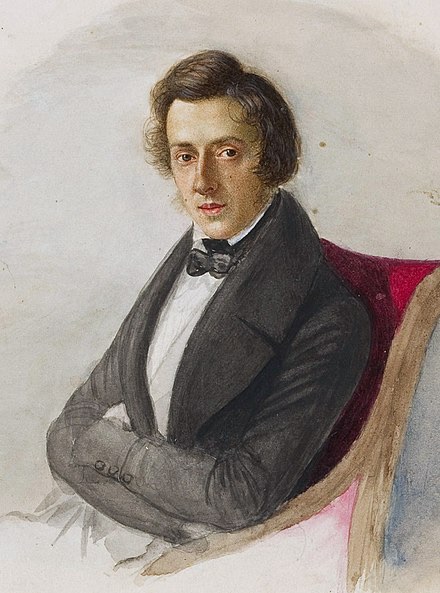
Chopin at 25, by his fiancée Maria Wodzinska, 1835

The Piano Sonata No. 2 in B flat minor , op .35 was completed by Chopin while living in Georges Sand’s manor in Nohant some 250 km (160 mi) south of Paris ,a year before it was published in 1840.

Some time after writing the Marche funèbre, Chopin composed the other movements, completing the entire sonata by 1839. In a letter on 8 August 1839, addressed to Fontana, Chopin wrote:

‘I am writing here a Sonata in B flat minor which will contain my March which you already know. There is an Allegro, then a Scherzo in E flat minor, the March and a short Finale about three pages of my manuscript-paper. The left hand and the right hand gossip in unison after the March. … My father has written to say that my old sonata [in C minor, Op. 4] has been published by [Haslinger] and that the German critics praise it. Including the ones in your hands I now have six manuscripts. I’ll see the publishers damned before they get them for nothing.

When the sonata was published in 1840 in the usual three cities of Paris,Leipzig and London the London and Paris editions indicated the repeat of the exposition as starting at the very beginning of the movement (at the Grave section). However, the Leipzig edition designed the repeat as beginning at the Doppio movimentosection. Although the critical edition published by Breitkopf & Hartel (that was edited, among others, by Franz Liszt, Carl Reinecke and Johannes Brahms ) indicate the repeat similarly to the London and Paris first editions, almost all 20th-century editions are similar to the Leipzig edition in this regard. Charles Rosen argues that the repeat of the exposition in the manner perpetrated by the Leipzig edition is a serious error, saying it is “musically impossible” as it interrupts the D♭major cadence (which ends the exposition) with the B♭ minor accompanimental figure.Others  agree, calling the repeat to the Doppio movimento“nonsense”. However some others advocates for excluding the Grave from the repeat of the exposition, citing in part that Karol Mikuli’s 1880 complete edition of Chopin contained a repeat sign after the Grave in the first movement of the Piano Sonata No. 2. Mikuli was a student of Chopin from 1844 to 1848 and also observed lessons Chopin gave to other students – including those where this sonata was taught – and took extensive notes.

Although the third movement was originally published as Marche funèbre, Chopin changed its title to simply Marche in his corrections of the first Paris edition.In addition, whenever Chopin wrote about this movement in his letters, he referred to it as a “march” instead of a “funeral march”.Kallberg believes Chopin’s removal of the adjective funèbre was possibly motivated by his contempt for descriptive labels of his music.After his London publisher Wessel & Stapleton added unauthorised titles to Chopin’s works, including The Infernal Banquet to his first scherzo in B minor Op. 20, the composer, in a letter to Fontana, wrote:

‘Now concerning [Christian Rudolf Wessel], he is an ass and a cheater … if he has lost on my compositions, it is doubtless due to the stupid titles he has given them in spite of my repeated railings to [Frederic Stapleton]; that if I listened to the voice of my soul, I would have never sent him anything more after those titles.’

In 1826, a decade before he wrote this movement, Chopin had composed another Marche funèbre in C minor, which was published posthumously as Op. 72 No. 2.Chopin, who wrote pedal indications very frequently, did not write any in the Finale except for the very last bar. Although Moritz Rosenthal  (a pupil of Liszt and Mikuli) claimed that the movement should not be played with any pedal except where indicated in the last measure, Rosen believed that the “effect of wind over the graves”, as Anton Rubinstein described this movement, “is generally achieved with a heavy wash of pedal”.The first major criticism, by Schumann , appeared in 1841 and was critical of the work. He described the sonata as “four of [his] maddest children under the same roof” and found the title “Sonata” capricious and slightly presumptuous.He also remarked that the Marche funèbre “has something repulsive” about it, and that “an adagio in its place, perhaps in D-flat, would have had a far more beautiful effect”.In addition, the finale caused a stir among Schumann and other musicians. Schumann said that the movement “seems more like a mockery than any [sort of] music”,and when Felix Mendelssohn was asked for an opinion of it, he commented, “Oh, I abhor it”. Franz Liszt, a friend of Chopin’s, remarked that the Marche funèbre is “of such penetrating sweetness that we can scarcely deem it of this earth”

Chopin heard Nicola Paganini  play the violin in 1829 and composed a set of variations, Souvenir de Paganini. It may have been this experience that encouraged him to commence writing his first Etudes (1829–1832), exploring the capacities of his own instrument.After completing his studies at the Warsaw Conservatory, he made his debut in ViennaHe gave two piano concerts and received many favourable reviews – in addition to some commenting (in Chopin’s own words) that he was “too delicate for those accustomed to the piano-bashing of local artists”. In the first of these concerts, he premiered his Variations on ‘La ci darem la mano ‘op 2 variations on a duet from Mozart’s opera Don Giovanni ) for piano and orchestra.He returned to Warsaw in September 1829,where he premiered his Piano Concerto n.2 Op. 21 on 17 March 1830.


The final piece in tonight’s programme formed the
centrepiece of the teenage Chopin’s debut concert in
Vienna, at the Kärntertortheater (which housed the
première of Beethoven’s Ninth Symphony) in August 1829.This work, his Op. 2 Variations on ‘Là ci darem la
mano’ from Mozart’s Don Giovanni, has come down to
us in two versions, one for piano and orchestra and one
for solo piano. In the original opera, the duet is heard
during the first act, where Don Giovanni tries to seduce
Zerlina into coming to his castle, and sings to her,
‘There we will give each other our hands, there you will
say “yes” to me. See, it’s not far; let’s go, my dear, from
here’. Mozart’s charming melody was very popular in
the early 19th Century and formed the basis of
numerous other pieces, including a set of variations for
cello and piano by Beethoven (WoO. 28). It is therefore
hardly surprising that the 19-year-old Chopin chose his
own Variations on this theme to introduce himself to
the Viennese public.
The work opens with a slow, improvisatory
introduction, imbued with a sense of expectation.
When the theme does appear, it is presented cheerfully
and simply; however, Chopin soon launches into his
first variation, a virtuosic miniature in the so-called
‘brilliant style’, which then rapidly gives way to an even
faster variation, where the theme is presented in demi-
semiquaver motion in the right hand. In the more lyrical
third variation, it is the left hand’s turn at delicate
figuration, against the melody in the right hand. The
fourth variation, marked ‘con bravura’, is full of
treacherous leaps, just as exciting to watch as to listen
to, whilst the fifth takes a dramatic and deeply
expressive turn into B flat minor. Chopin saves his best
until last, however, with a spectacular finale in which
Mozart’s theme is cast as a brilliant polonaise. With
these Variations, dedicated to his school friend Tytus
Woyciechowski, the young virtuoso was propelled to
stardom. As Chopin wrote to his parents after the
Vienna concert, ‘at the end, there was so much
clapping that I had to come out and bow again’; the
work’s publication the following year, meanwhile,
inspired Robert Schumann to famously remark: ‘Hats
off, gentlemen – a genius!’.

On 7 December 1831, Chopin received the first major endorsement from an outstanding contemporary when Schumann reviewing the Op. 2 Variations in the Allgemeine musikalische Zeitung (his first published article on music), declared: “Hats off, gentlemen! A genius.”On 25 February 1832 Chopin gave a debut Paris concert in the “salons de MM Pleyel” at 9 rue Cadet, which drew universal admiration. The critic Francois- Joseph Fetis  wrote in the Revue et gazette musicale : “Here is a young man who … taking no model, has found, if not a complete renewal of piano music, … an abundance of original ideas of a kind to be found nowhere else …”After this concert, Chopin realised that his essentially intimate keyboard technique was not optimal for large concert spaces. Later that year he was introduced to the wealthy Rothschild banking family, whose Patronage also opened doors for him to other private salons of social gatherings of the aristocracy and artistic and literary elite. By the end of 1832 Chopin had established himself among the Parisian musical elite and had earned the respect of his peers such as Hiller, Liszt, and Berlioz. He no longer depended financially upon his father, and in the winter of 1832, he began earning a handsome income from publishing his works and teaching piano to affluent students from all over Europe.This freed him from the strains of public concert-giving, which he disliked.

Chopin seldom performed publicly in Paris. In later years he generally gave a single annual concert at the Salle Pleyel, a venue that seated three hundred. He played more frequently at salons but preferred playing at his own Paris apartment for small groups of friends. The musicologist Arthur Hedley  has observed that “As a pianist Chopin was unique in acquiring a reputation of the highest order on the basis of a minimum of public appearances – few more than thirty in the course of his lifetime.”

Bruce Liu

First prize winner of the 18th Chopin Piano Competition 2021 in Warsaw, Bruce Liu’s “playing ofbreathtaking beauty” (BBC Music Magazine) has secured his reputation as one of the most excitingtalents of his generation and contributed to a “rock-star status in the classical music world” (TheGlobe and Mail).

Highlights of Bruce Liu’s 2023/24 season include international tours with the Tonhalle-OrchesterZürich and Paavo Järvi, the Philharmonia Orchestra and Santtu-Matias Rouvali, and the WarsawPhilharmonic and Andrey Boreyko, as well as the Münchener Kammerorchester in a play-directprogramme. Furthermore, he makes anticipated debuts with the New York Philharmonic, FinnishRadio Symphony, Danish National Symphony, Gothenburg Symphony and Singapore SymphonyOrchestras. He works regularly with many of today’s most distinguished conductors such as GustavoGimeno, Yannick Nézet-Séguin, Gianandrea Noseda, Rafael Payare, Vasily Petrenko, Jukka-PekkaSaraste, Lahav Shani and Dalia Stasevska.

Bruce Liu has performed globally with major orchestras including the Wiener Symphoniker,Accademia Nazionale di Santa Cecilia, Rotterdam Philharmonic, Orchestre Philharmonique duLuxembourg, Royal Philharmonic Orchestra, Los Angeles Philharmonic, San Francisco Symphony,The Philadelphia Orchestra, Orchestre symphonique de Montréal and NHK Symphony Orchestra.

As an active recitalist, he appears at major concert halls such as the Carnegie Hall, WienerKonzerthaus, BOZAR Brussels and Tokyo Opera City, and makes his solo recital debuts in the2023/24 season at the Concertgebouw Amsterdam, Philharmonie de Paris, Wigmore Hall London,Alte Oper Frankfurt, Kölner Philharmonie and Chicago Symphony Center.

Having been a regular guest at the Rheingau Musik Festival since 2022, Liu will return in summer2024 to feature in a series of wide-ranging events. In recent years, he has appeared at LaRoque-d’Anthéron, Verbier, KlavierFestival Ruhr, Edinburgh International, Gstaad Menuhin andTanglewood Music Festivals.

An exclusive recording artist with Deutsche Grammophon, Liu’s highly anticipated debut studioalbum “Waves” spanning two centuries of French keyboard music (Rameau, Ravel, Alkan) is beingreleased in November 2023. His first album featuring the winning performances from the ChopinInternational Piano Competition received international acclaim including the Critics’ choice, Editor’schoice, and “Best Classical Albums of 2021” from the Gramophone Magazine.

Bruce Liu studied with Richard Raymond and Dang Thai Son. Born in Paris to Chinese parents andbrought up in Montréal, Liu’s phenomenal artistry has been shaped by his multi-cultural heritage:European refinement, North American dynamism and the long tradition of Chinese culture.

Christopher Axworthy Dip.RAM ,ARAM

‘The Willie Wonka of the Piano’ Jed Distler

Roman Kosyakov and Tanya Avchinnikova at St Mary’s Playing that were pictures painted in sound by two extraordinary artists united in art and in life .

https://youtube.com/live/MaRRzvywv4I?feature=shared

Ravel: Miroirs
Noctuelles (‘Moths’)
Oiseaux tristes (‘Sad birds’)
Une barque sur l’océan (‘A boat on the ocean’)
Alborada del gracioso (‘The jester’s aubade’) 
La vallée des cloches (‘The valley of bells’)

Rachmaninov : 6 Morceaux for piano duet Op 11
Barcarolle,  Scherzo, Chanson Russe, Valse, Romance and Slava. 


Ravel’s evocative Miroirs were played with ravishing colours and technical brilliance .
From the fleeting moths calmed for a moment by the solemn tolling of a languid chant before flitting off with featherlight ease and grace.Roman created just the sultry atmosphere in which the saddest of birds could sing their lament with glowing fluidity.Cascades of notes swept from his fingers as the waves enveloped the boat on the ocean before being calmed and with a miraculous song of thanks giving being floated with whispered magic on the now calmest of seas. Rhythmic energy and recitativi with the pulsating Spanish throbbing of passionate cries in Alborada that only a French composer could truly describe .A technical mastery that could cope with Ravel’s insinuating double notes and triple glissandi as only few could do.And finally a calm and desolate landscape where bells are heard in the distance with sounds without beginning or ending only proving that as T.S. Eliot says in the beginning is our end as infinite sounds reverberate in the distance.
This was the landscape that Roman so nobly depicted in sound today and it was wonderful to meet his wife who is certainly his peer pianistically but had also discovered during the pandemic a talent to paint the sea in pastels as she and her husband were guests in Hastings where Roman had been winner and is now ambassador of their International Piano Competition.Rachmaninov’s beguiling early suite for piano duet op 11 was played by husband and wife with charm,style and not a little Russian nostalgia.And charm there was too in the little encore by Respighi apparently based on Christmas which had Tanya leaping down to the bass to have the last word over her husband.
A truly joyous occasion of wonderful music making ‘en famille’


Roman Kosyakov is a Russian pianist, Ambassador for the Hastings International Piano Concerto Competition . He is a laureate of many international competitions : most recently he won the Third Prize and The Bridget Doolan Prize for the best performance of a piece by Mozart of The 12th Dublin International Piano Competition (Ireland, 2022); First Prize, Orchestra Prize and an Audience Prize of the XV Campillos International Piano Competition (Spain, 2021); a s part of “Fitzroy Piano Quartet” Roman won the Royal Over-Seas League Annual Music Competition string ensembles section (UK, 2020 ); Second Prize of the UK Piano Open International Piano Competition (UK, 2020); First Prize and the Orchestra Prize of the 14th Hastings International Piano Concerto Competition (UK, 2018) .Roman’s performance career includes engagements in the most important venues and festivals across the UK, US and Europe such as Kings Place, St James Piccadilly, St Mary’s Perivale and Cadogan Hall in London, Sursa Performance Hall in Ball State University, Lemington Festival, Battle Festival, Furness Classical, North Norfolk Festival, West Meon Festival and European Chamber Academy Leipzig. In 2019 recorded a debut CD for “Naxos” with works by Liszt. 

Tanya Avchinnikova is a pianist and an award winning soft pastel artist. After graduating from Belorussian Academy of Music and The Royal Birmingham Conservatoire she started her artists career. Recently she received the Unison Colour young artist award 2022; Enduring Brilliance, NY – President’s Award, 2023 and the Pastel Society West Design Faber Castell Award , 2023.  Tanya is also a Member of Pastel Society UK and a Signature Artist of Pastel society of America.

Roman Kosyakov a Masterly light shining brightly at St Marys

Roman Kosyakov Hastings prize winners’ concert with the RPO at Cadogan Hall under Kevin John Edusei


Joseph Maurice Ravel 7 March 1875 – 28 December 1937

“Miroirs” – Ravel dedicated each of these five piano pieces to a member of the Parisian artistic circle “Les Apaches”. Ravel also belonged to this circle of poets, painters and musicians, giving first performances of many of his works at gatherings of this illustrious group.
In “Miroirs” he went a step further than in “Jeux d’eau”. The music was to sound as if it came from a sketchbook. The bold harmony irritated his contemporaries at first but pointed the way ahead for Ravel’s subsequent works. Around 1900, Maurice Ravel joined a group of innovative young artists, poets, critics, and musicians referred to as Les Apaches or “hooligans”, a term coined by Ricardo Vines  to refer to his band of “artistic outcasts”.To pay tribute to his fellow artists, Ravel began composing Miroirs in 1904 and finished it the following year. It was first published in 1906 and first performed by ricardo Vines inn that year. The third and fourth movements were subsequently orchestrated by Ravel, while the fifth was orchestrated by Percy Grainger among others.

Noctuelles” (“Night Moths”) is dedicated to Léon – Paul Fargue and is a highly chromatic  work, maintaining a dark, nocturnal mood throughout. The middle section is calm with rich, chordal melodies, and the recapitulation takes place a fifth below the first entry.

Oiseaux tristes” (“Sad Birds”) is dedicated to Ricardo Vines this movement represents a lone bird whistling a sad tune, after which others join in. 

“Une barque sur l’océan” (in English “A Boat on the Ocean”). Is dedicated to Paul Sordes , the piece recounts a boat as it sails upon the waves of the ocean. Arpeggiated sections and sweeping melodies imitate the flow of ocean currents and is the longest piece of the set.”Alborada del gracioso” (Spanish: “The Jester’s Aubade / Morning Song of the Jester”) is dedicated to Michel-Dmitri Calvocoressi , Alborada is a technically challenging piece that incorporates Spanish musical themes into its complicated melodies.

La vallée des cloches” (“The Valley of Bells”) is dedicated to Maurice Delage and evokes the sounds of various bells  through its use of sonorous harmonies.


Sergei Rachmaninov
1 April 1873, Novgorod Russia – 28 March 1943 Beverly Hills , California, U.S.

Composed in 1894, the Six Morceaux, op. 11 for piano four-hands is among the finer compositions of Rachmaninoff’s youthful period following his studies at the Moscow Conservatory. The opening Barcarolle in G minor is dark and mysterious, its gently rocking rhythms depicting a gondolier navigating the Venetian canals beneath a moonlit sky. The piece builds to a dazzling climax with rapid figurations atop the rich and powerful chords so typical of Rachmaninoff’s piano music. These same figurations return to close the piece in a much brighter mood than it began. The following Scherzo in D major is a sprightly and brilliant composition with a relentless rhythmic drive. There is no actual Trio section, but instead a coquettish secondary theme that momentarily hold the Scherzo’s impetuosity at bay.

Occupying the third position in the set is the Chanson Russe, a set of variations on an unknown folk song. The piece begins quietly but builds quickly into a majestic variation in which the theme is heard against a rushing counterpoint of sixteenth notes. From this climax, the music recedes through a quiet variation only to be roused again at the final cadence. Next, the Valse is reminiscent of Chopin in its amalgamation of different waltz tunes. However, the style is certainly that of Rachmaninoff and possesses a power that is at odds with both the graceful Viennese dance and the ruminations of Chopin. Yet, the Valse is not wholly without elegance.

Fifth in the set is the Romance. In C minor, it is a passionate piece with a particularly poignant principal theme that seems to anguish over some grief. Brief moments of light shine across the otherwise dismal canvas of the Romance, but never break the otherwise gloomy air. Lastly, Slava! (Glory) closes the set. A set of variations based on the Russian chant used by Mussorgsky in Boris Godunov, it provides the opus 11 with a majestic and towering conclusion.  The Six Morceaux are among the earliest of Rachmaninoff’s mature works. Rachmaninoff had graduated from the Moscow Conservatory in 1892, and-only two years later-had already made a reputation for himself as a pianist and as a composer. These little pieces reflect themes of yearning and display some of Rachmaninoff’s famous intricate passagework. The Morceaux are often considered as the forerunners of his later 13 Preludes, Op. 32, from 1910.   

Ottorino Respighi
9 July 1879 Bologna 18 April 1936  Rome, Italy

If there is a neglected area of Italian music, it is piano music, and in particular that for four-hands .Ottorino Respighi was a member of Italian classical music’s ‘golden generation’ for whom the opera was not the be-all and end-all. Yes, he composed operas, twelve to be exact, but his fame firmly rests on his orchestral output, which included the interesting and well worth investigating Sinfonia Drammaticaas well as concertos. People usually know his music through his Roman Triptych but he also composed some very engaging works on a smaller scale, including string quartets, works for violin and piano and piano works, of which the Sonata in F minor is very good. He was also to arrange some of his orchestral music for piano four-hands.Six Pieces which are quite short and remarkable.

Respighi: Six little pieces for piano duet of which Roman and Tanya chose the fourth as an encore

  • Romanze
  • Sizilanisches Jagdlied
  • Armenisches Lied
  • Weihnacht, Weihnacht!
  • Schottische Weise
  • Die kleinen Hochländer

The six pieces open with a Romanza which would be quite at home played by a musical box; the spritely tinkering fingers produces a pleasant melody. There is a more boisterous Canto di caccia siciliano, which has the air of a Neapolitan song, followed by a Canzone armena which is more lilting. This is followed by a jolly Christmas tune which was played today as an encore : Natale, Natale! But it is the final two pieces of the set which come as the main surprise here. The Cantilena scozzese and the Piccoli highlanders offer the listener music of a distinct Scottish lilt, charming.

Bravi- Scapicchi – Some Enchanted Evening- A duo playing as one with artistry and mastery.

Sunset in Rome with the sumptuous sounds of Stravinsky from Francesco Bravi and Adriano Leonardo Scapicchi


An illustrious public including Beatrice Rana and Massimo Spada whose Rite of Spring was the last time I heard it played in public on one piano .It is fifty four years since the very first time in London at the South Bank Festival with Ashkenazy and Barenboim in 1968.( As Beatrice kindly pointed out her ‘mother’ would have been 4 years old then !) Alberto Portugheis adds:’And l turned pages 54 years ago for Vloda and Daniel at the QEH. I will never forget Danny’s confusion in rehearsal, with the repeated chords, because Vladimir counted them aloud in ………. Russian!’

Beatrice Rana and Massimo Spada

https://christopheraxworthymusiccommentary.com/2021/06/28/rana-and-spada-the-crossing-of-swords-with-sublime-music-making-in-viterbo/

Even Michele Suozzo of the historic Barcaccia -the opera buff’s delight on Radio Rai 3 – was here to check out these two young musician’s dance steps .

Michele Suozzo


Such an overwhelming success that these musicians from the Avos Academy were persuaded to add Stravinsky’s Danse Russe and Ravel’s Habanera as encores.


Opening with Debussy ‘Après-midi d’un faune’ as the sun turned the sky red over the Eternal City and the magic was set for the supreme artistry of two pianists who play as one!

From the very first notes there was a clarity that was slightly helped by very discrete amplification but maintaining still a kaleidoscope of colours that matched those that were being formed over the Eternal City with the sun setting on such a balmy night as this.( Hugh Mather full of admiration for this duo ,who he has invited back to Perivale next season, tells me it is raining in London as always!).There were washes of sound out of which emerged the magic atmosphere that only Debussy could conjure ( “Les sons et les parfums tournent dans l’air du soir”,’Springs’ to mind).

But it was the ‘Rite of Spring’ that truly ignited the atmosphere already with the wistful seeming innocence of the ‘Adoration of the Earth’. Here,immersed in the luxuriant vegetation of the Botanical Gardens, at the foot of the Gianicolum Hill overlooking Rome,we found ourselves involved in a monumental drama every bit as terrifying as the one played out centuries ago in the Foro Romano below us.

A beautiful sense of balance on a magnificent piano that had been especially prepared by that technical magician Mauro Buccitti.

I have already written about their performance but I was struck by the freshness of their interpretation today where they played as one.An artistry that allowed them to show us such a clear path through this meandering drama as it unfolded before our eyes. Linking up so beautifully with the etherial beauty of Debussy ,the peace was soon to be broken by the throbbing savagery as the ‘Dances of the Young Girls’ were performed with naked abandon.Radiant beauty and delicacy with the ‘Spring Rounds’ where Francesco’s endless trill seemed to signify the trembling expectancy of all that was to follow.Adriano’s beautifully simple melodic line was like the first rays of sunlight illuminating such an intense scene.

A relentless forward movement and technical mastery brought this first part to an extraordinary close.Interrupted only by the etherial beauty of the ‘Sacrifice’.I had never been aware of the ravishing beauty and subtle shading of Stravinsky’s mellifluous outpouring until today. It was soon interrupted by the ‘Glorification of the Chosen One’. The menace behind the notes in the ‘Ritual Action of the Ancestors’ sent a shiver down our spine as we were now all totally involved in this drama that these two young artists were unfolding before us with mastery and absolute conviction .The throbbing intensity from Adriano was played with terrifying ‘sang froid’ whilst Francesco shot rays of light of brilliance over the proceedings. A tour de force of mastery and artistry brought this Rite vividly to life with a clarity and sense of architectural line that rarely I have experienced before.

Above all I was left with the impression of how much beauty there was in Stravinsky’s soul.It was Nadia Boulanger who told me as I played his 1924 Sonata to her how much sentiment there was in Mr Stravinsky’s music .Fifty years later I realise how right she was!

Nadia Boulanger with Leonard Bernstein

An ovation from a large audience who had come to hear these two young pianists from the Avos Academy in the last in their series in collaboration with La Sapienza University of Rome.

Danse Russe and Ravel’s Habanera were offered to an audience not wanting to break this magic spell too soon.Ravel was full of the insinuating Spanish idioms that only a French composer could imagine and was played with ravishing colours and passionate intensity.Danse Russe ,one could almost see the ballet being performed before our very eyes.A tempo di ballo rather than of showmanship virtuosity which opened up a tone poem of scintillating vibrancy.

The director of the Avos Academy ,Mario Montore, presenting the concert and outlining their mission to help young artists reach their goal

https://avosproject.it/

Roma 3 Orchestra -Young Artists Series streamed live from Teatro Palladium Rome

A recital next week by one of the illustrious teachers of the Avos Academy .

https://christopheraxworthymusiccommentary.com/2023/11/18/leonardo-pierdomenico-a-master-at-st-marys-a-memorable-recital-by-a-great-artist/

https://christopheraxworthymusiccommentary.com/2024/01/24/malta-philharmonic-orchestra-in-rome-with-erica-piccotti-and-carmine-lauri-directed-by-michael-laus/
In the shadow of the Accademia dei Lincei next to Regina Coeli ( Queen of Heaven ) Rome’s Prison

Velletri celebrates the 100th Anniversary of Rhapsody in Blue.Feresin and Grano beauty and brilliance unite with intelligence and artistry


Rhapsody in Blue comes of age in Velletri with the centenary performance played by Jacopo Feresin and Francesco Grano.
Other anniversaries could not escape the genial eyes of Ing Giancarlo Tammaro whose passion and erudite musicianship have guided twelve seasons since the very first at Villa d’Este to celebrate Liszt’s bicentenary.These two pianist had given such masterly performances just two months ago of Beethoven and Rachmaninov that Ing Tammaro was only too pleased to invite them back for this extra concert to close his 12th season.

Ing Tammaro presenting the two artists with the award of ‘il “Suono ” di Liszt a Villa d’Este’

Jacopo Feresin and Franceso Grano two superb musicians united with mastery,intelligence and artistry.


Seasons based around an Erard piano similar to Liszt’s favourite instrument and now lovingly restored by its proud owner.
Jacopo Feresin chose to play a Brahms Rhapsody that just happened to be composed in the same year as this Erard piano.
An Erard piano that Gershwin would certainly not have known was matched with a modern day Pleyel as these two pianos took centre stage in a programme ranging from Bach to Kurtag. Culminating in the evergreen Blue of Gershwin’s Rhapsody where there is no business like show business .

It was the scintillating bravura of both players who had us rocking in the aisles and a little old lady in front of me was conducting with her hands unable to keep them still with such electricity being generated by these two virtuosi.
Virtuosi they certainly are but above all masterly musicians as they demonstrated throughout a long and varied programme.

Erard and Pleyel on stage


Grieg played with delicacy and beauty and once one had got attuned to the mellow sound of the Erard one began to appreciate the beauty without percusiveness of these early instruments. ‘Morgenstemning’ – ‘ Morning Mood’ from Act IV of Ibsen’s Peer Gynt was beautifully stylish with subtle rubato and a kaleidoscope of colour where even the bird calls provided on the Pleyel by Francesco were wonderfully evocative of this pastoral landscape.’The Death of Aase’ was suitably sombre with chords of poignant portent from both pianists where the lack of a gripping inner energy was replaced with a subtle pastel colouring and perfect coordination with these slow moving chords.

Francesco Grano

Francesco Grano chose two aria’s from Bach Cantatas in transcriptions by Harold Bauer and Egon Petri. ‘Die Seele ruht in Jesu Handen’ from the Cantata BWV 127 was played with ravishing colour as the melodic line was whispered with heart rending simplicity. The gentle pulsating of it’s heart beat was richly enhanced by the mellifluous beauty of this Erard ,much praised by the Scottish pianist Harold Bauer ( see below) , where this beautiful instrument could offer a ravishing beauty to the counterpoints with their seemingly infinite meanderings into Paradise.

The famous Aria ‘Schafe konnen sicher weiden’ in this transcription from the Cantata BWV 208 by Egon Petri.He was a disciple of Busoni whose centenary had also been celebrated by Ivan Donchev just a month ago on this very stage.Busoni,of course,was famous for his transcriptions of Bach – his wife was once introduced at a party as Mrs Bach- Busoni! I had never thought that Egon Petri was Dutch of original until informed by Ing Tammaro reading his very informative programme brochure . However ‘Sheep may safely graze’ has been transcribed by many great pianists not least Percy Grainger who liked to call his transcriptions a ‘ramble’ which in this case is very apt.Petri’s transcription has the same pure magic as his master with it’s gentle pastoral beauty where the purity of the melodic line is allowed to sing gloriously embellished by such peace and well- being.

Jacopo Feresin

Jacopo Feresin chose to play the Brahms Rhapsody in G minor op 79 n. 2 written in the same year that this Erard was made ! A performance that was at once bold and free with orchestral colours and deep bass notes sustaining the nobility of all that was placed on it. Jacopo had a great sense of freedom which I have a feeling must stem from a research of historic performance practices with a license of freedom that was of an improvised creativity.

Francesco Grano

Francesco Grano returned into the circus arena with Liszt’s transcription of Bach’s Fantasy and Fugue in G minor for Organ BWV 542.Nothing improvised about this but a grandiose opening of great portent.A masterly control of sound and balance with the innocent appearance of the fugue growing out of the final mighty chord of the fantasy. There was absolute clarity and rhythmic drive to the fugue with a continuous build up of sound until the breathtaking entry of the bass exulting the glory of ‘God on High’. The temperature was rising though and maybe Francesco’s total commitment would have been better accommodated on a modern day Steinway instead of an Erard beginning to shake in terror at such overwhelming vehemence and passionate commitment. Nevertheless it was a masterly performance of a fervent believer.

Jacopo Feresin

It was complimented by the ravishing beauty and delicacy the Jacopo brought to another Liszt transcription,this time of Schumann. ‘Widmung’ was one of the songs that Schumann gave to his betrothed as a wedding gift and which Jacopo played with an intensity and beautiful sense of balance.Tenor and soprano duetting with the freedom and passionate intensity of two lovers entwined.Some beautifully spread chords where Jacopo understood that the strength in these pianos is to be found horizontally not vertically.

Both players had lain their artistic credentials before us and now fully warmed up and attuned to one another and these two instruments, they were free to really relish the bright lights of Broadway. Breathtaking virtuosity went side by side with subtle colouring and mischievous rubato. Francesco was Paul Whiteman and Jacopo was George Gershwin as they joined forces in a performance that Ing.Tammaro declared better than the orchestral version.It was certainly a performance that held the audience spellbound as Jacopo raced up and down the keyboard like a ‘kitten on the keys’ and Francesco provided the sumptuous sounds of a big band of radiance with rhythms of hypnotic driving intensity.

After such high jinks our two brilliant soloists played the Bach Choral ‘Gottes Zeit ist die allebeste Zeit ‘ Actus Tragicus in Kurtag’s beautiful transcription for four hands.Stillness, beauty and peace what better way to end such a feast of ‘rhapsodies’ between the old and new worlds.

Ing Tammaro with Felice Ciccarelli ,his extraordinary piano technician

“Anche la Rhapsody in Blue fu orchestrata dall’arrangiatore fisso dell’orchestra di Whiteman, Grofé, sulla base della versione per due pianoforti che Gershwin sfornò in meno di un mese. …”

(Gianfranco Vinay: “Gli anni di Gershwin” in ‘Musica e Dossier’n.8-ed. Giunti 1987)

President of the ‘Suono’ di Liszt Valeriano Bottini with Felice Ciccarelli

Riprendiamo quest’anno la consuetudine del “supplemento” alla programmazione ordinaria de “Il suono di Liszt a Villa d’Este”, anche per recuperare un concerto annullato in precedenza e soprattutto con l’intento di celebrare il centenario di questa composizione di Gershwin, che per prima ha reso popolare la musica d’oltreoceano anche nell’ambiente della musica colta europea già poche settimane dopo il suo debutto il 12 febbraio 1924 a New York. Il programma ci conduce, in modo realmente “rapsodico”, attraverso brani di grandi autori europei quali Bach, Schumann, Brahms e Grieg – ma anche Liszt, in qualità di eccelso trascrittore – per approdare infine, nella seconda parte, in America con la Rhapsody in Blue. Questa verrà eseguita nella versione a due pianoforti, che molto probabilmente è quella scritta realmente di proprio pugno dall’autore in quel febbraio del 1924, come testimonia Gianfranco Vinay nella sua monografia dedicata a George Gershwin del 1987. Alle tastiere dei nostri due pianoforti  (Erard del 1879 e Pleyel del 1998) saranno Jacopo Feresin e Francesco Grano che in tale formazione hanno già partecipato a questa XII edizione lo scorso 28 aprile, offrendoci una magnifica interpretazione del Concerto n.4 di Beethoven e del Concerto n.1 di Rachmaninov.                                    

George Gershwin rappresenta un caso particolare nella storia della musica, tanto di quella popolare, canzoni per commedie musicali e film, quanto di quella colta, quella che definiamo comunemente “musica classica”. Autore ed esecutore (quasi esclusivamente di se stesso) di grandissimo successo durante la sua breve ed intensa vita, conquistò la popolarità proprio grazie alle canzoni ed alle commedie musicali, ma la sua passione per la musica afro-americana, blues e jazz in particolare, e la sua mai sopita aspirazione alla composizione colta, sinfonica e operistica sul grande modello europeo, sono quelle che gli hanno dato la massima notorietà internazionale ed una fama duratura.Nato da genitori entrambi russi solo quattro anni dopo il loro arrivo negli Stati Uniti – il suo vero nome era Jacob Gershovitz – ha però incarnato perfettamente il personaggio tipico dell’America emergente di quegli anni: l’uomo di successo che si è fatto da sé grazie ad un abile sfruttamento del proprio talento naturale. Il piccolo George cresce, come tutti i ragazzini di famiglie di modeste condizioni, nelle strade rumorose e cosmopolite di Brooklyn e di Manhattan, dove sicuramente non gli mancava l’occasione di ascoltare musica, e canti dal vivo: canti ebraici, canzoni irlandesi, francesi, napoletane, i canti afro-americani, le prime orchestrine jazz e soprattutto le prime composizioni di quelli che furono i suoi due idoli e modelli, prima che egli stesso li raggiungesse nel firmamento della canzone d’autore americana: Jerome Kern e Irving Berlin. A quell’epoca tra l’altro cominciavano a funzionare le prime macchine sonore a gettone e anche i primi rudimentali juke-box che utilizzavano addirittura i cilindri del fonografo di Edison, e quindi il piccolo George ebbe modo di formare l’orecchio a tutti questi diversi stimoli musicali. Da questo substrato di esperienze multiculturali e dal suo innato, formidabile talento musicale deriva il fenomeno Gershwin che attraversa, purtroppo veloce come una meteora, i due decenni tra gli anni ’20 e ’40 del ’900.Eppure malgrado l’incredibile successo nel campo della musica di consumo (e a quel tempo, con l’avvento del grammofono e poi della radio, già si poteva definire così) nella quale del resto egli aveva raggiunto un altissimo livello artistico, per quanto riguarda le sue aspirazioni più profonde – quelle di compositore colto e che per di più era riuscito a nobilitare nelle forme classiche un linguaggio musicale allora ritenuto popolare e di secondo ordine come il jazz – ebbe in vita più considerazione nella vecchia Europa che non in patria. Le sue tournée europee, a Londra nel ’24 e a Parigi, Londra e Vienna nel ’28, furono trionfali, ebbe l’amicizia e la stima di grandi compositori e interpreti come Ravel, Schönberg, Milhaud, Toscanini, e addirittura pochi giorni prima della morte, tanto che la notizia non gli giunse in tempo, era stato nominato ad honorem “accademico di S.Cecilia”, il che, per un autore quasi autodidatta e di ambiente angloamericano, nell’Italia autarchica del 1937 è un segno di stima che non ammette riserve.                                                 (Giancarlo Tammaro)


A parziale sostegno di una non trascurabile radice “lisztiana” nella musica di Gershwin, che quindi la rende naturalmente pertinente in una rassegna intitolata a Liszt, riportiamo un paio di interessanti citazioni ricavate dal libro di Stuart Isacoff: “Storia naturale del pianoforte (lo strumento, la musica, i musicisti: da Mozart al Jazz e oltre)” pubblicato per l’edizione italiana nel 2012 da EDT- Torino : 


«Gershwin si trasformò in una spugna musicale, assorbendo il modernismo francese di Debussy e Ravel, il virtuosismo romantico di Franz Liszt, gli esperimenti atonali di Alban Berg e tutta una serie di popolari stili pianistici, tra cui quello tipico dei dimostratori (che impiegò nel suo primo lavoro, quello di venditore di spartiti), lo stile novelty (quello di pezzi ‘torci-dita’ come Kitten on the keysdi Zez Confrey) e lo swing di Harlem  …»


«Le ‘rapsodie’ musicali sono opere che sembrano risultare dall’assemblaggio e dalla cucitura di frammenti musicali e idee diverse; questa, in particolare, [la ‘Rhapsody in blue’- n.d.r.] era un pot-pourri che conteneva saggi di tutto quanto Gershwin aveva imparato. Una sezione, spiegò, era stata innescata da un viaggio in treno “con i suoi ritmi d’acciaio, il suo rumoroso sferragliare”. Altre si compiacevano di temi d’amore di sapore lisztiano, oppure alludevano a ribalde danze ebraiche di origine europea. La scrittura del pianoforte univa figurazioni virtuosistiche ispirate a Liszt e Confrey e un bouquet di melodie ispirate ai lamenti del blues, … »

Mrs Celeste Tammaro on the door – everything ‘Blue’ indeed today!
Unexpected congratulations for Ing.Tammaro ,from a distinguished guest in ‘blue’, for his unabated passion and erudite musicianship and in particular for producing a highly researched brochure year after year

Cover of the original sheet music of Rhapsody in Blue

Rhapsody in Blue was written in 1924 for solo piano and jazz band, which combines elements of classical with jazz influenced effects. Commissioned by bandleader Paul Whiteman , the work premiered in a concert titled “An Experiment in Modern Music” on February 12, 1924, in Aeolian Hall ,New York City.Whiteman’s band performed the rhapsody with Gershwin playing the piano.Whiteman’s arranger Ferde Grofé orchestrated the rhapsody several times including the 1924 original.

With only five weeks remaining until the premiere, Gershwin hurriedly set about composing the work.He later claimed that, while on a train journey to Boston ,the thematic seeds for Rhapsody in Blue began to germinate in his mind.

The Rhapsody premiered on a snowy afternoon at Aeolian Hall, Manhattan, pictured here in 1923.

It was on the train, with its steely rhythms, its rattle-ty bang, that is so often so stimulating to a composer…. I frequently hear music in the very heart of the noise. And there I suddenly heard—and even saw on paper—the complete construction of the rhapsody, from beginning to end. No new themes came to me, but I worked on the thematic material already in my mind and tried to conceive the composition as a whole. I heard it as a sort of musical kaleidoscope of America, of our vast melting pot of our unduplicated national pep, of our metropolitan madness. By the time I reached Boston I had a definite plot of the piece, as distinguished from its actual substance.


Francesco Grano
Nato a Catanzaro, si è diplomato in pianoforte presso il Conservatorio di Musica “Licinio Refice” di Frosinone all’età di 17 anni. Successivamente ha conseguito il diploma di alto perfezionamento presso l’Accademia Pianistica Internazionale “Incontri con il Maestro” di Imola sotto la guida di Roberto Giordano, Enrico Pace e Piero Rattalino.
Fin dall’età di nove anni ha tenuto regolarmente concerti pubblici e recital solistici in molte città italiane e all’estero (Francia, Polonia, Belgio, Olanda, Emirati Arabi).
Si è esibito in teatri e sale da concerto come la “Sala Mozart” della “Regia Accademia Filarmonica” di Bologna, “Teatro dell’Aquila” di Fermo, Teatro Politeama “Mario Foglietti” di Catanzaro, “Musei Capitolini” in Roma, “Sala Majeska” di Piła (Polonia), “Teatro Comunale” di Siracusa, “Teatro Massimo Troisi” di Nonantola, “Galleria di Arte Moderna” di Milano, “Teatro Rossini” di Gioia del Colle, Auditorium “Casa della Musica” di Cosenza, “Sala Accademica” del “Pontificio Istituto di Musica Sacra” di Roma, “Foyer Rossini” del “Teatro Comunale” di Bologna, “Teatro Ebe Stignani” di Imola, “Teatro Palladium” di Roma e tanti altri.
Tra i festival musicali e gli enti concertistici che lo hanno ospitato si ricordano tra i più importanti: “Accademia Filarmonica di Bologna”, Festival Pianistico Internazionale “Mario Ghislandi”, “Piła Festival&Academy”, “Amici della Musica di Modena”, “Armonie della Sera”, Fondazione “Politeama Città di Catanzaro”, “Associazione Siracusana Amici della Musica”, “Lirico Festival” del “Teatro Comunale” di Bologna, “Associazione Amici della Musica V. Cocito” di Novara, “Associazione InCanto” di Terni, “Imola Summer Music Academy and Festival”, “IMEP” di Namur (Belgio).
È stato solista anche con diverse orchestre quali “I Solisti Aquilani”, la “Youth Orchestra del Teatro Comunale di Bologna” e la “Roma Tre Orchestra”, collaborando con direttori
d’orchestra quali Sieva Borzak, Cinzia Pennesi, Tonino Battista e Anna Handler.
La sua discografia comprende un CD monografico su R. Schumann pubblicato da “La Bottega Discantica” nel 2022, con Pietro Tagliaferri come producer e sound engineer. La
rivista musicale “Amadeus” ha pubblicato nel 2019 la sua registrazione della Sonata n. 7 op. 72 di Alessandro Longo (prima incisione mondiale). È stato protagonista di un DVD
musicale, prodotto dall’ “Accademia del Po”, dedicato all’esecuzione de “L’Almanacco Musicale” di Giulio Ricordi. Ha inciso inoltre per la “2R Studio Produzioni Multimediali”.
Nel 2017 è stato selezionato dalla “Yamaha Music Foundation of Europe” tra i 6 finalisti per la borsa di studio.
È docente di Pratica e Lettura Pianistica presso il Conservatorio di Musica “Alessandro Scarlatti” di Palermo.

https://christopheraxworthymusiccommentary.com/2021/02/09/roma-3-orchestra-the-mozart-project/

Jacopo Feresin
Jacopo Feresin, nato a Trieste il 10 ottobre 1997, ha intrapreso lo studio del pianoforte a 2 anni e mezzo seguito dall’insegnante Elena Bidoli. All’età di 3 anni, ha partecipato al suo primo concorso a Cesenatico vincendo il 1° Premio Assoluto e da quella data ha continuato a riscuotere primi premi, primi premi assoluti e borse di
studio in tutti i concorsi Nazionali ed Internazionali a cui ha partecipato.
Ha suonato per importanti Rassegne Musicali dedicate ai giovani talenti. E’ stato ospite per due anni del «DEBUSSY FESTIVAL» tenuto presso la casa-museo di Claude Debussy e intitolata “Claude Debussy vu par de jeunes prodiges européens”.
A Salemi (Sicilia) si è esibito in due concerti in occasione dell’ouverture delle celebrazioni per il 150° anniversario dell’Unità d’Italia.
A Milano ha tenuto un concerto alla Showroom nella prestigiosa manifestazione “INCONTRIAMOCI DA FAZIOLI”.
Presso il Teatro Miela di Trieste e a Gradisca d’Isonzo (GO) presso il Nuovo Teatro Comunale si è esibito, in qualità di solista, con l’Orchestra da Camera Archi Giuliani diretta da Carlo Grandi.
A Roma si è esibito presso il Museo Napoleonico, il Museo Bilotti, l’ Aranciera di Villa Borghese e nell’Aula Magna dell’Università Roma Tre. A Villa Mondragone (Frosinone), dove si è esibito su un pianoforte Erard del 1879.
In collaborazione con l’Associazione Dino Ciani ha tenuto a Venezia un concerto presso il Palazzo Albrizzi-Capello e a Milano presso il Teatro Volta.
Nel 2020 e nel 2021 in quanto vincitore di “RomaTreOrchestra Young Pianist 2019” ha tenuto concerti con RomaTreOrchestra sotto la direzione di Massimiliano Caldi a Roma e in Puglia.

https://christopheraxworthymusiccommentary.com/2021/07/15/summer-harmonies-at-teatro-palladium-for-roma-tre-orchestra/

Pedro Lopez Salas at the Royal College of Music – A poet of aristocratic refinement

Unable to be present at the Royal College for the live performance I was glad that Pedro had anticipated his performances a few days before in a private try out performance in my home.Beautiful playing from a great artist and the one or two comments that I could not make before such an important event I am glad to add now afterwards from far off Italy . All best wishes to this young artist on the crest of a wave

Thinking of Pedro’s performances in far off Circeo

Mozart Sonata K.330 of refined good taste and delicate tone palette .A way of using his musically informed embellishments to enhance the grace and style of Mozart’s perfection without disturbing the simple beauty of aristocratic poise and elegance. The ornaments of the opening were enticing and beguiling whereas that of the last movement left me a little perplexed .Not the grace and beguiling charm of the movement,though, that was always full of the operatic characters that are so much part of Mozart’s world. A slow movement of refined beauty where his extraordinary sensitivity to sound for me would have been enough as the modern piano can sing in a way that Mozart’s keyboard instruments could not if not helped by improvised embellishments to add colour and emotion where touch was not yet an option. Of course it is always the human voice that is uppermost in Mozart’s mind as it is in Pedro’s and his extraordinary way of allowing the music to speak shows a musician who actually listens to himself and as I often quote Cherkassky :’je sens ,je joue ,je trasmets’. Here it could not have been more poignantly described – to ornament or not is a debatable matter but to allow the music to sing is not!

There was a searing red hot intensity to the De Falla ‘Fantasia Baetica’ with an extraordinary sense of line and architectural shape in a work that the dedicatee Artur Rubinstein complained was too long – it certainly did not seem like that in Pedro’s hands today! There was a brooding undercurrent of animal drive and in the melodic episodes a smoky decadence as they were played with a kaleidoscope of colours with mysterious passionate desires always just under the surface about to erupt. Glissandi that were mere streams of sounds like a masculine stroke of the guitar with passionate indifference. Wonderfully soulful recitativi doubled at the octave as they wailed and cried with animal longing. A pounding insistence always of a cauldron of burning emotions that was exactly a portrait of De Falla’s friend Rubinstein who actually complained that he found the work too long- perhaps he meant too lifelike!

With Vanessa Latarche

The Chopin Sonata op 35 in B flat minor received a masterly performance but strangely the first movement seemed rather sectionalised and not the same architectural shape of searing intensity that he brought to the other three movements. An introduction that seemed rather too slow and divorced from what follows. A doppio movimento that was rather hurried instead of an internal intensity. A second subject of sublime beauty but did not seem to grow out of the organic material of this masterly constructed work.The development suddenly found all the pieces coming together with extraordinary musicianship and poignancy as the opening introduction suddenly appeared in the bass with menacing insistence. Pedro’s playing of the coda showed a masterly control with his mature passion not allowing Chopin’s accelerando indication to seemed hurried or matter of fact but on the contrary of aristocratic nobility allowing him to place the final chord with breathtaking courage.The Scherzo was played with passion and control with the ravishing beauty of the central episode played with beguiling shape and a style of great elasticity and sensitivity without disturbing it’s pulse or poignant beauty.There was a remarkable architectural shape – that had been missing in the first movement- without ever losing the passion and poignancy of this remarkable movement. Even the final two strokes in the bass over a long held chord were strokes of genius and played as such with great maturity and authority.There was an infectious rhythmic lilt to the bass of the Funeral March as the melodic line unfolded with nobility and measured beauty all of a line even at it’s most passionate with left hand trills a mere vibration of pent up emotion.There was sublime whispered beauty to the Trio played with a true bel canto and an innate flexibility almost at the limit of it’s natural emotional expanse.On the edge of our seats as we were drawn into the magic this poet was whispering in our ears and occasionally underlining such sublime beauty with jewels that glittered in the left hand as the light from his magic prism just shone so unexpectedly with these breathtaking glimpses of a paradise found. The last movement were just washes of sound – wailing indeed and it was with a stream of agitated sounds rising and falling almost imperceptibly until suddenly on the horizon a deep pulsating line could be felt throbbing in it’s midst in this wailing cauldron of obsessive insistence . A transcendental control and poetic sensibility were united as they were brought to a close with nobility and aristocratic authority.This was undoubtedly one of the finest performances I have ever heard of Chopin’s greatest masterpiece.

With Norma Fisher

Pedro Lopez Salas at the National Liberal Club with aristocratic style and artistry

🇬🇧So happy to have received the Artist Diploma of the Royal College of Music of London! It is a privilege to have graduated in the no. 1 institution for music and performing arts around the world. So grateful for the support and guidance received from my professors here, Norma Fisher in the Masters and Vanessa Latarche in the Artist Diploma. What an exciting journey it has been!🎹 Also, thanks to Christopher Axworthy for all of his support😊
Graduation day

Martin Garcia Garcia with the aristocratic playing of a great artist.A Fantasia of marvels in Chopin’s birthplace

https://www.youtube.com/live/0txU__J1-7w?si=x4lrK0u_LSCsfjLq
Chopin’s birthplace in Poland immersed in nature
Like Walt Disney the director of photography allowed us glimpses of the creatures that inhabit such beauty

What a marvel this streaming is ! I was not expecting to be invited into such an intimate atmosphere where there was just a magnificent pianist playing Chopin’s piano ( an Erard of 1838 ) in the house where Chopin was born. An ideal situation for a historic instrument , which is lost when brought into the modern day concert hall, but in this intimate atmosphere becomes the very voice of Chopin. Sounds that he would have known and loved as he pioneered a completely new way of using a keyboard instrument with a pedals .It was Anton Rubinstein who had said that the pedals were the soul of the piano and it was the genius of Chopin who could create such a revolutionary new world on the evolving keyboard instruments of his time.Schumann was the first to notice when an eighteen year old pole presented himself in Paris with his own composition op 2 :”Hats off Gentlemen,a Genius !”.

I have heard Martin play before in Cremona when he was invited to give an equally short recital in the Fazioli Concert Hall that transfers to Cremona for three days every year.Very fine performances of Chopin there too,including the Chopin 3rd Sonata op 58, but I was not prepared for what I was to hear today as I watched and listened to this live stream and realised that we were in the presence a great interpreter.

Cremona the city of dreams – a global network where dreams become reality

A director of photography too with a rather more refined fantasy than Walt Disney who chose just the right moments to give us glimpses of the marvels that surrounded Chopin in his youth and which was to torment him all his short life exiled from such simplicity and beauty.

Martin looking ever more like his mentor Jerome Rose who I had heard in London when I was a schoolboy .Jerome was winner of the Busoni Competition in Bolzano and invited to play the Tchaikowsky Concerto in the Sunday evenings dedicated by Victor Hochauser to the violin and piano concerti and Romeo and Juliet overture. It would invariably finish with the 1812 overture with the canon effects reverberating around the vast space of the Royal Albert Hall .Little could I have imagined that I would invite Jerome to play in my own Euromusica concert season in Rome in 2002 and invite him to dine with us at home with my Italian actress wife Ileana Ghione.I still remember his performance of the great A major Sonata by Schubert ,and the reason I mention it is because of the same limpet type fingers that I saw today from the superb close ups on Martin’s hands.

Martin even shared the same frame with a local inhabitant come to bathe in the sublime beauty of the B flat minor Sonata
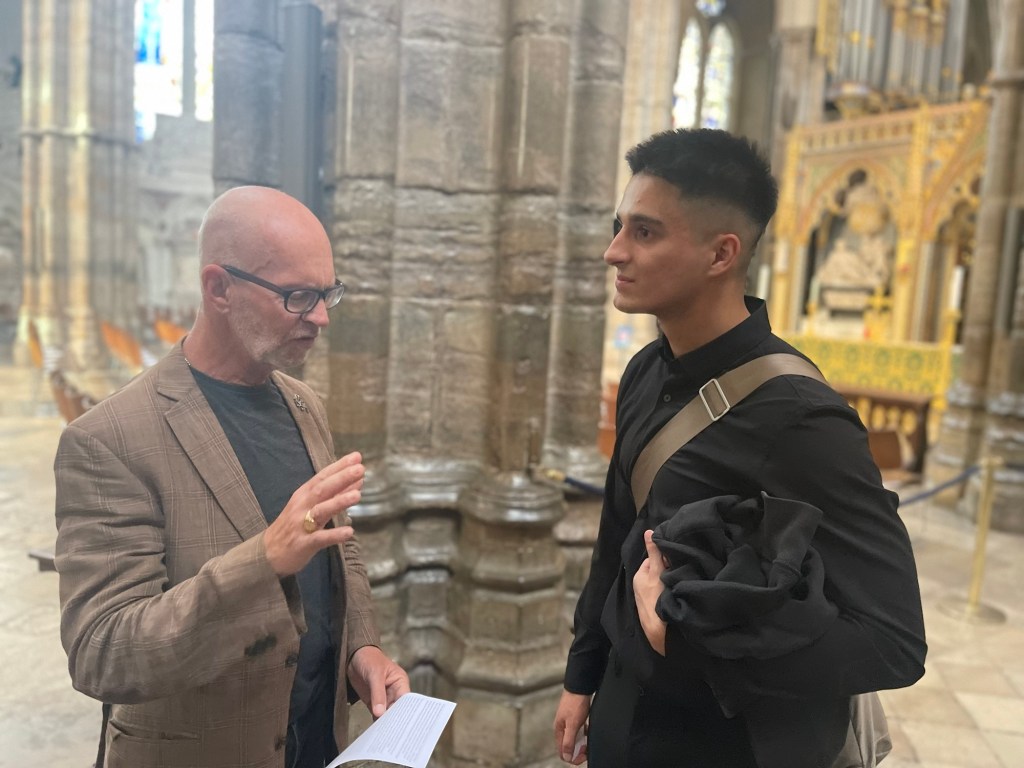
Martin’s performances were with just the shadow of Chopin looking on ( and of course the recording crew one of whom gallantly applauded at the end) .This was a pianist creating,in such intimacy, the same magic that Chopin himself would have created in the noble salons he was to frequent as a teenager in Paris.But today it was just a piano that Chopin would have known ( I do not know if it had actually belonged to Chopin) and a pianist who allowed himself to be totally immersed in the music without any care of personal appearances with grimacing, grunting and singing alla Glenn Gould. It was we that were trespassing on such intimate confessions – if only Chopin had had the same technology as today ! Here taking away the pressure of performance before an audience we were treated to performances of some of the greatest masterworks of Chopin that were some of the finest I have ever heard.A total dedication to the music with an aristocratic sense of style and taste that did not preclude a hypnotic personal interpretation of overwhelming authority and beauty.

The Polonaise op 44 opened this short concert and immediately we were immersed into a sound world with a very particular soul, like looking at a Daguerreotype photo ( https://en.wikipedia.org/wiki/Daguerreotype) of which just one famously was taken of Chopin.But there was nothing dated or brown around the edges about this performance as it was very expressive and beautifully rhapsodic with restrained passion. Martin’s limpet like fingers could make the octaves sing with such beauty of legato and shape with a supreme sense of style.He brought an extraordinary architectural shape to the central transition dissolving so naturally into the beautiful central Mazurka.The final eruptions that lead back into the polonaise were like thunderbolts played with fearless abandon .The final coda I always have Stefan Askenase in my mind but today there was the same nobility and delicacy but also an extraordinary clarity .This was the performance of a true artist who had seen this work as a great tone poem and had lived every moment of it with mastery and poetic vision.

The Barcarolle is one of the greatest of works for the piano where there is a continual outpouring of mellifluous beauty reaching heights of the sublime. There was a beautiful fluidity from the very first notes and it is hardly surprising that the director of photography discreetly showed us the brook that bubbles through Chopin’s garden.There was even a frog looking on with such marvels in his eyes with leaves being reflected in the water.Nothing could deflect from the refined beauty and poetry of the playing though.The overhead camera allowed us to appreciated the delicate continuous circular movement of his left hand as the barcarolle continued on it’s way with ravishing beauty.Sublime heights were reached with Chopin’s indication ‘dolce sfogato’ revealed with playing of rare sensitivy in a passage that Perlemuter would exclaim ‘we have arrived in heaven’. Martin picking up the tempo towards the end that gave great shape of joy and exultation and a point of arrival from which he could dissolve as the music gradually disintegrates with veiled beauty before our astonished eyes.

Four Preludes from op 28 were played with such beguiling mastery that I look forward in the future to hearing all 24 from such a master.

Op 28 n. 13 is one of the most beautiful of this box of jewels and it was the left hand that was played unusually expressively revealing the ravishing beauty of the melody that sits above this weaving wave of notes.

Op 28 n. 3 was a wash of sounds flooding the melodic line that was played with simplicity and clarity.

Digging deep into the sombre bass notes of n. 2 with the imperious melody played with just one finger projecting sounds of aristocratic, chiselled nobility.

There was a dark brooding to n. 14 which prepared us for the extraordinary last movement of the sonata that was to follow.
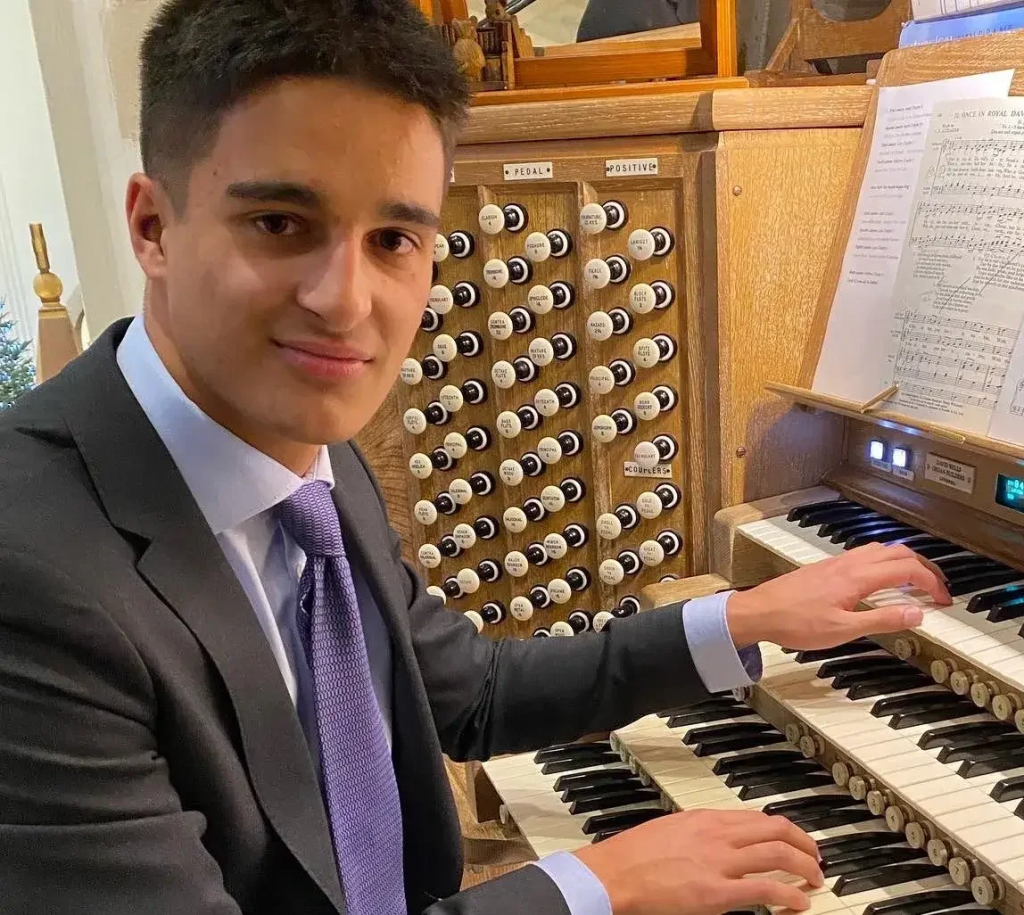
A masterly performance of the B flat minor Sonata op 35 which must truly be one of the greatest masterpieces of all time.Aristocratic nobility and clarity were mixed with luminosity and poetic mastery. A scrupulous attention to Chopin’s very precise markings had me scurrying to the score too see if the two chords before the second subject were indeed staccato! Adding the much debated repeat by going back to the ‘Grave’ introduction and not just the ‘Doppio movimento’ as tradition has dictated ,showed a true thinking musician at the service of the composer.A beautifully artistic scherzo ,not the usual rhythmic exercise but shaped with the same wonderful sound that was to pervade the whole of this recital.The ‘più lento’ I never thought I would hear as beautifully played as I remember from Rubinstein – today in Martin’s hands I was reminded of the sentiment without sentimentality of Rubinstein as was the frog linked in the same frame as the pianist in this live stream by a director of photography equally blessed by the Gods today. There was a gentle but relentless throbbing to the funeral march with the poignancy of the melodic line floated above it as it preceded with heart rending inevitability.I had never noticed the deep bass just before the entry of the Trio until today and again went scurrying to the score as I usually only do with artists of the calibre of Murray Perahia who like Martin really look deeply into the score to find the real meaning of the composer ,transmitting it with humility,intelligence and poetic sensibility.The last movement was exactly as it has been described as the wind wailing over the graves.No pointing of melody but again scrupulous attention to Chopin’s wishes.

The shadow of Chopin appearing on the screen during the Funeral March thanks to another artist behind the camera
Martin receiving a lone brave applause from one of the crew after such marvels

The sound of a single soul clapping at the end of such marvels seemed rather hollow but by some miracle these performances were recorded and will go down in history side by side with the greatest interpreters of the Genius of Chopin

https://en.wikipedia.org/wiki/Fantasia_(1940_film)