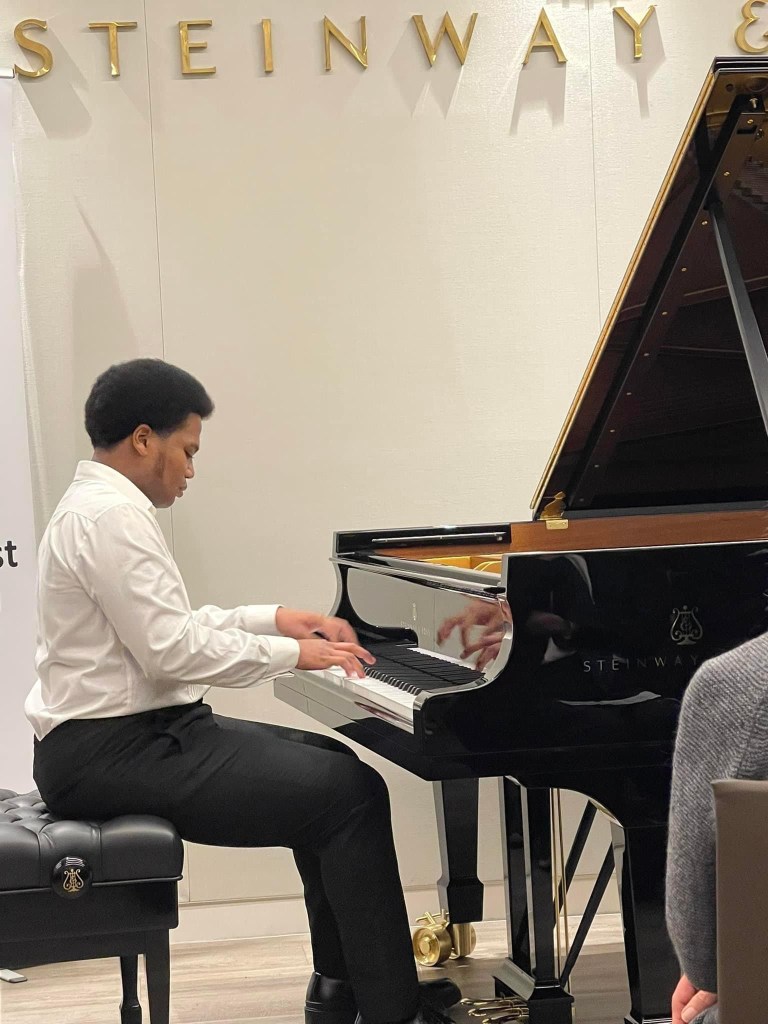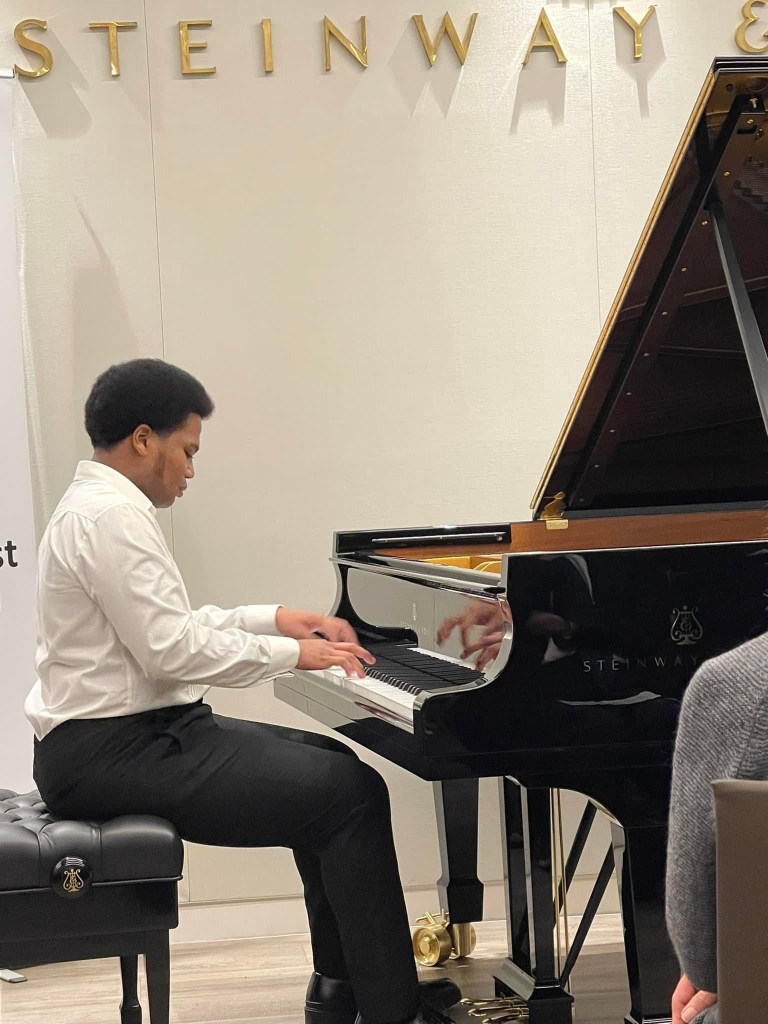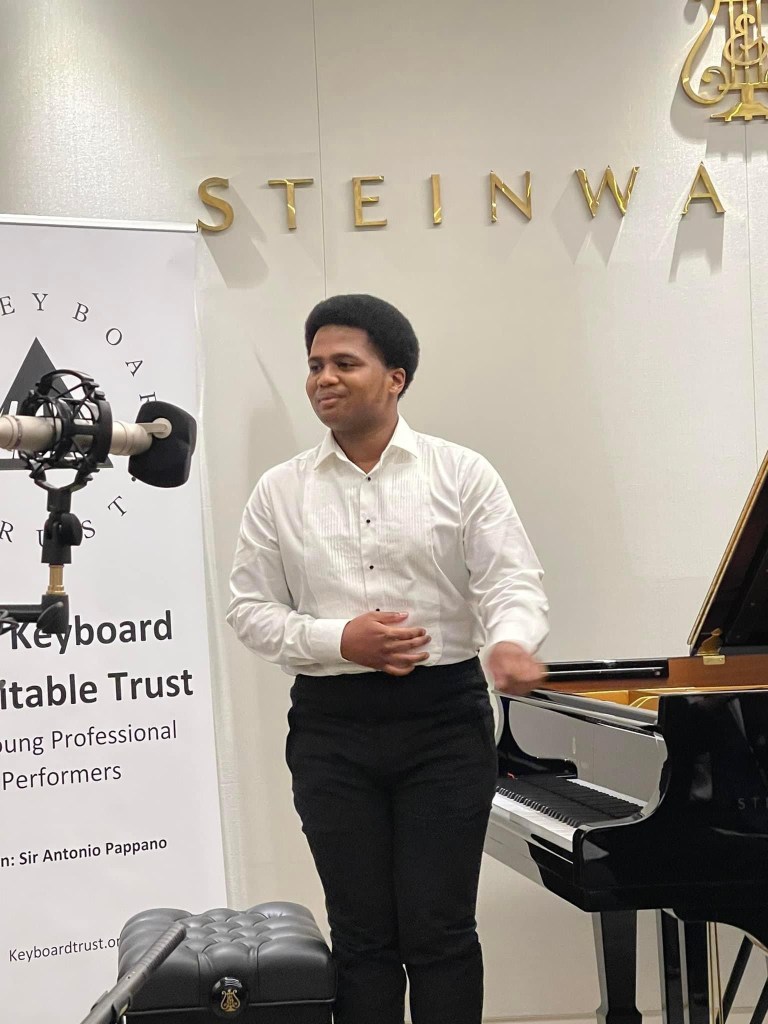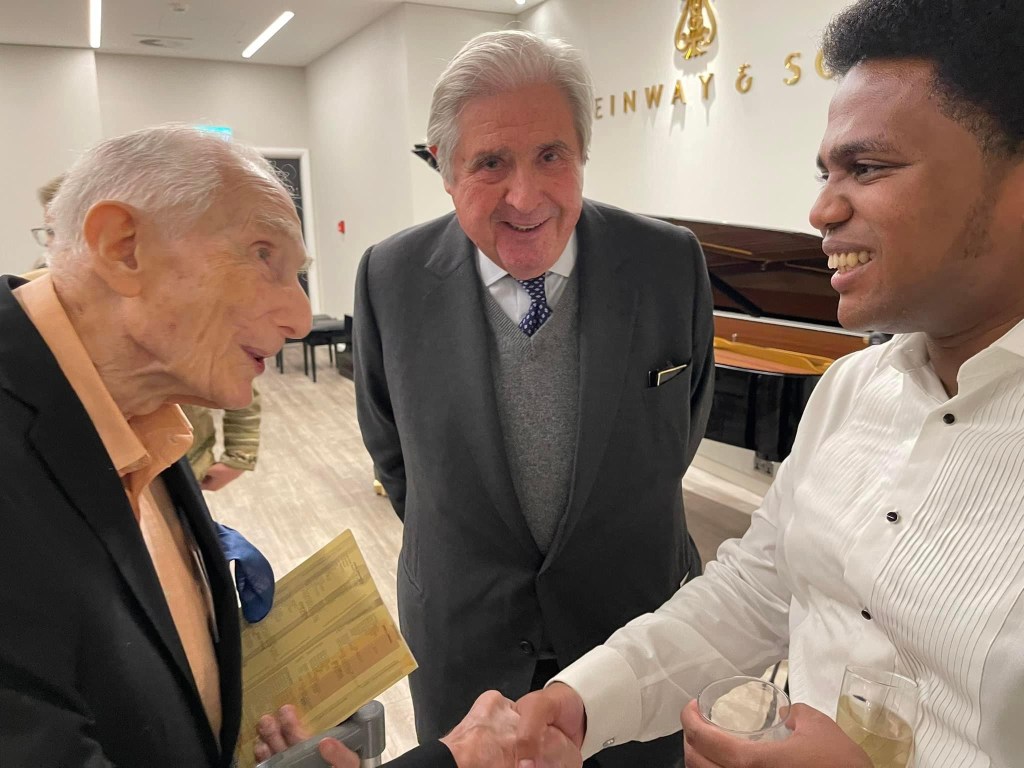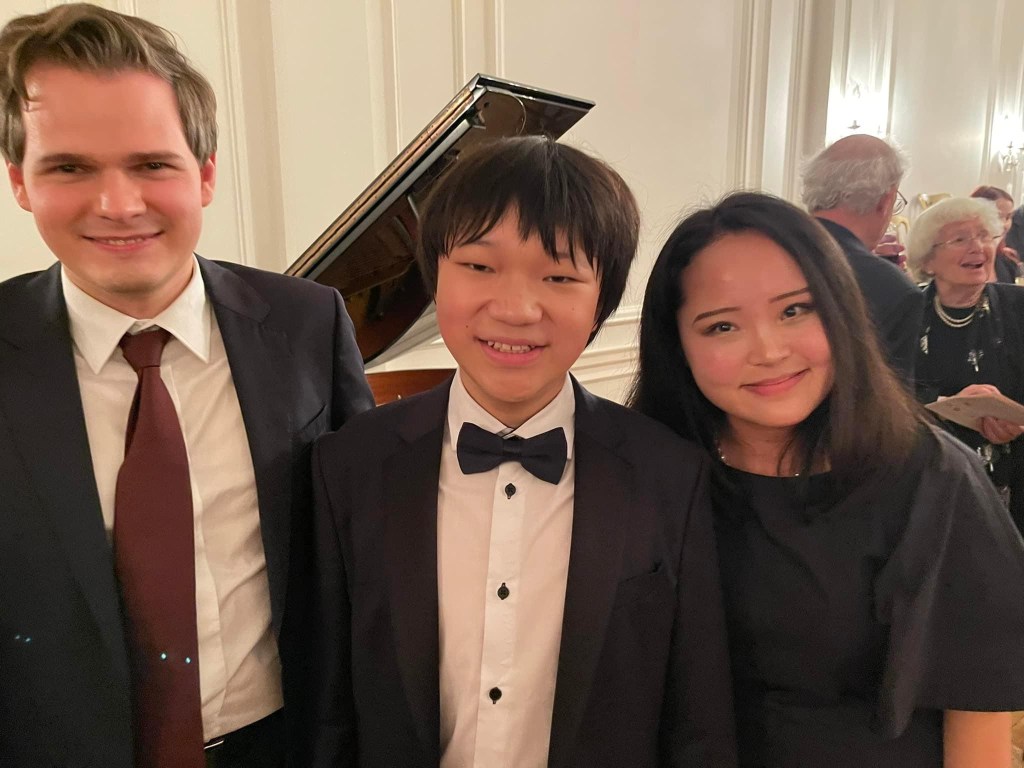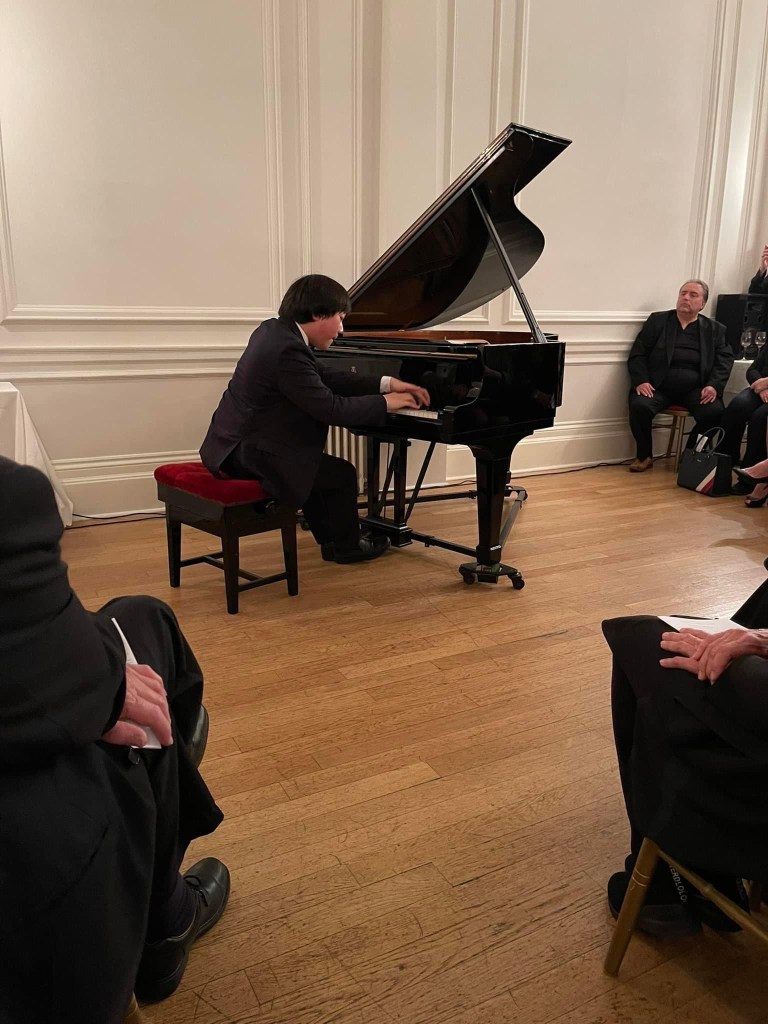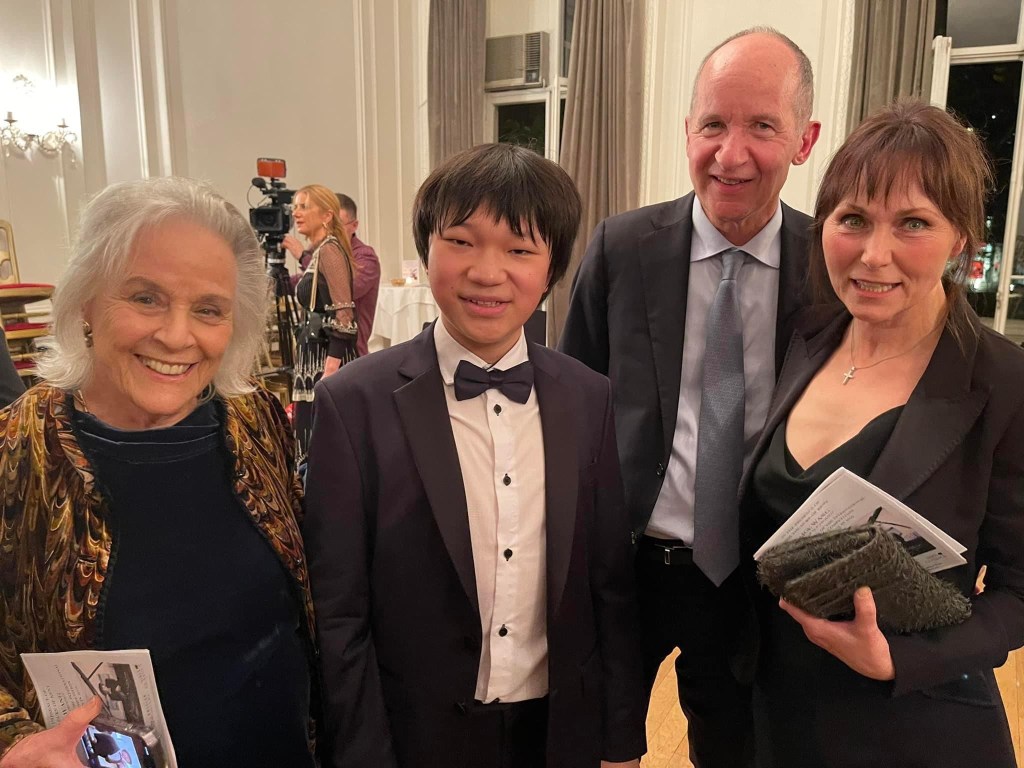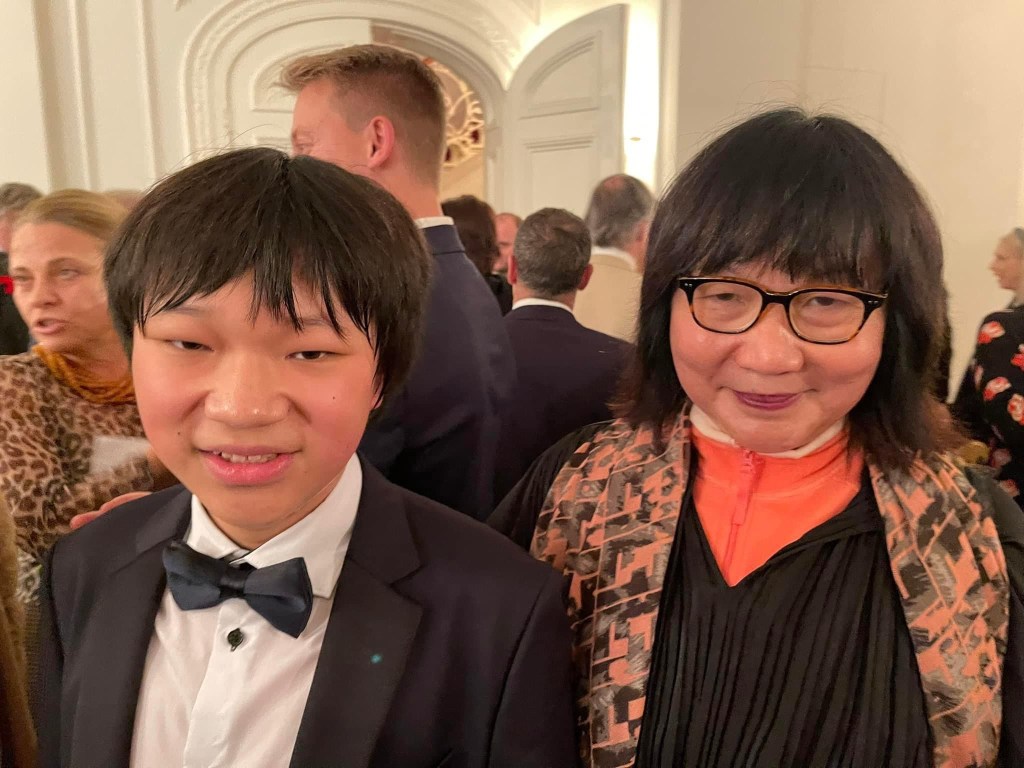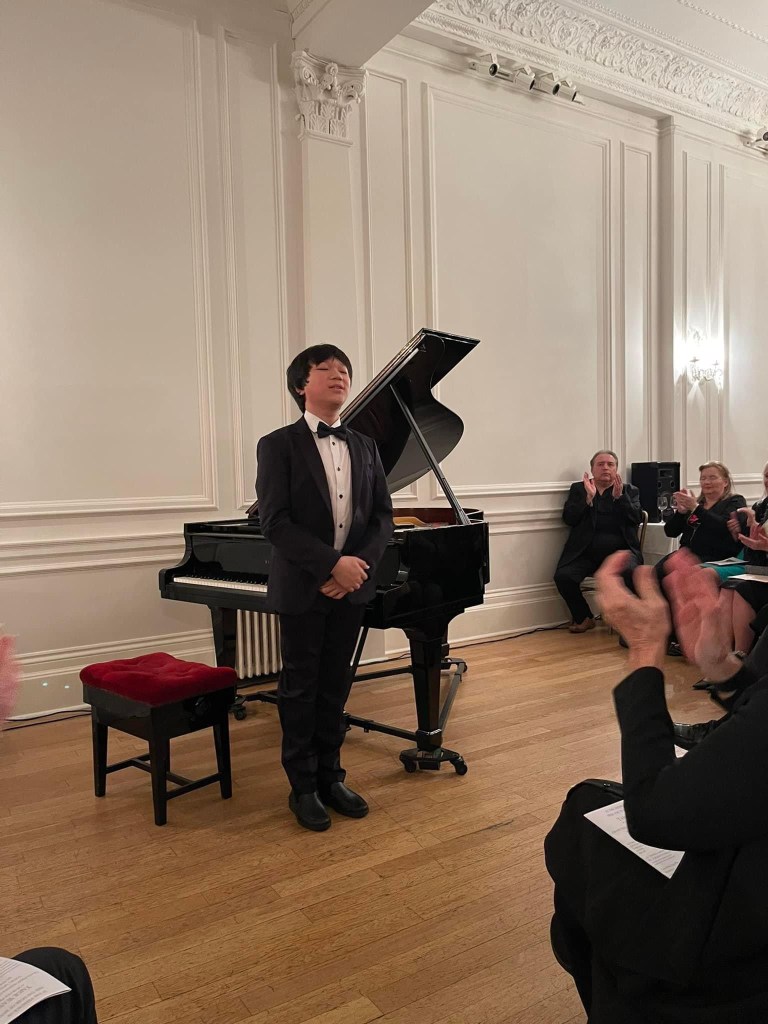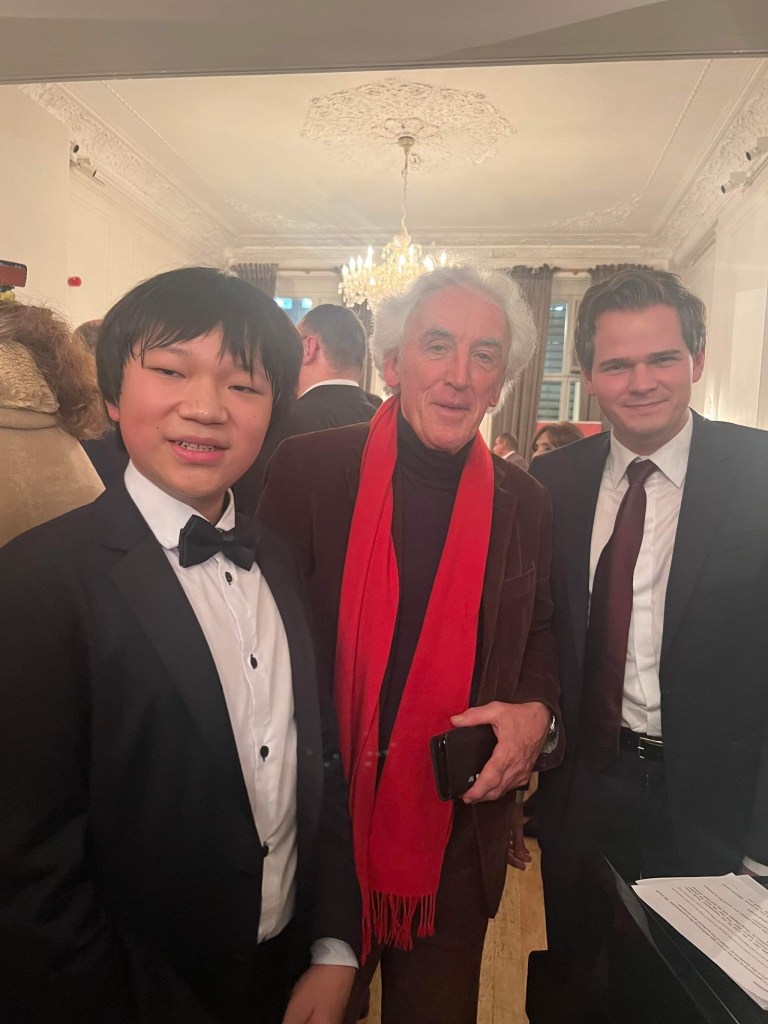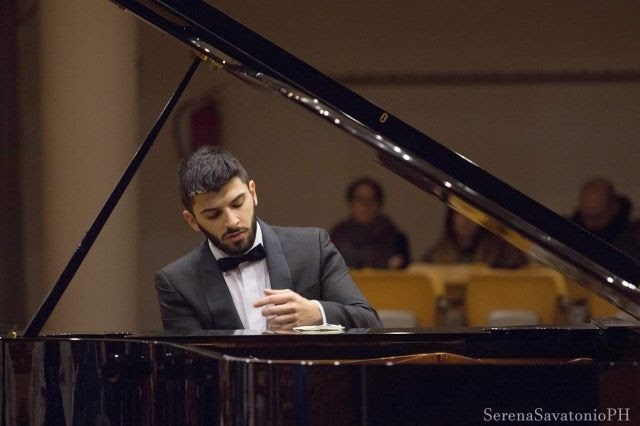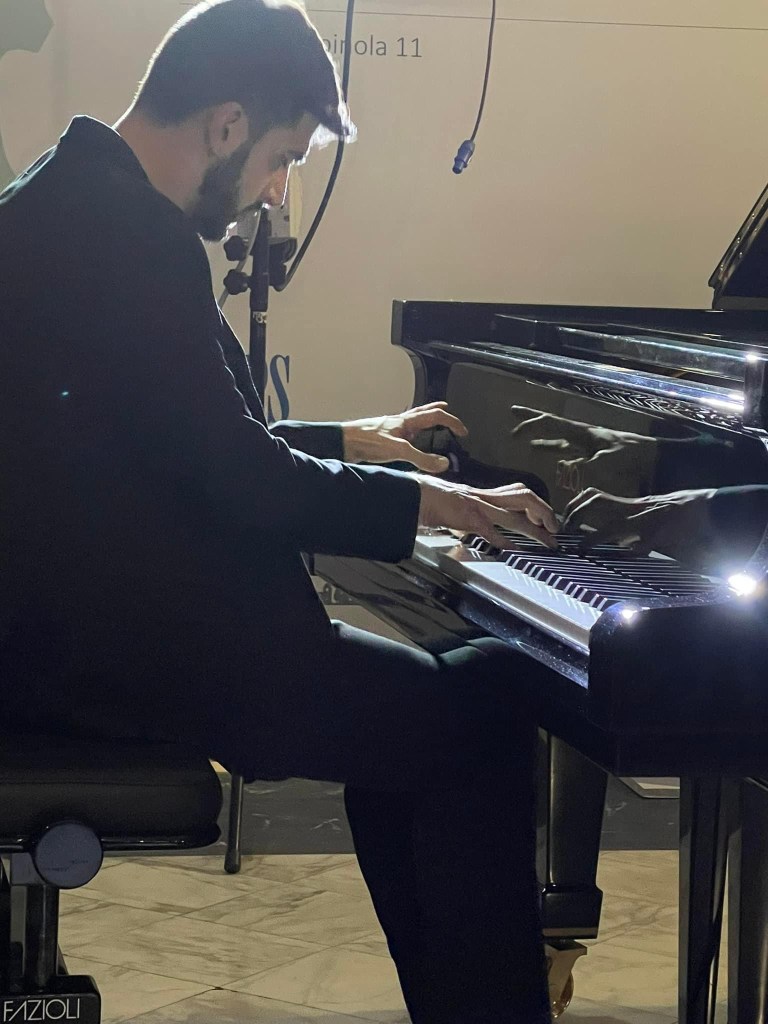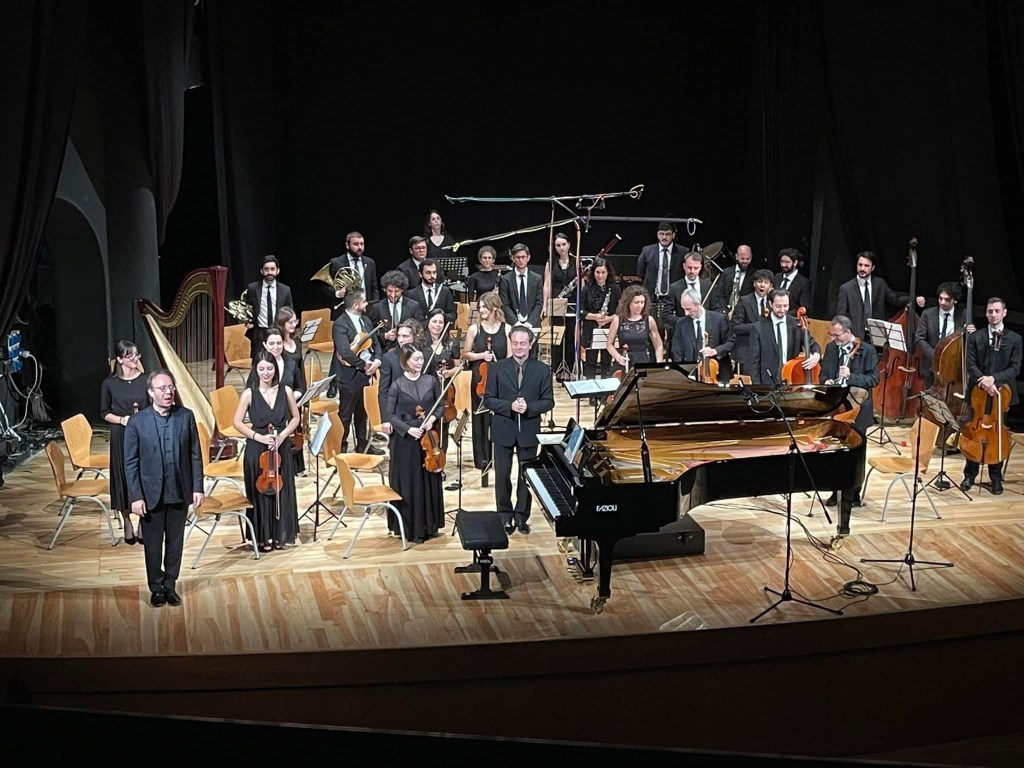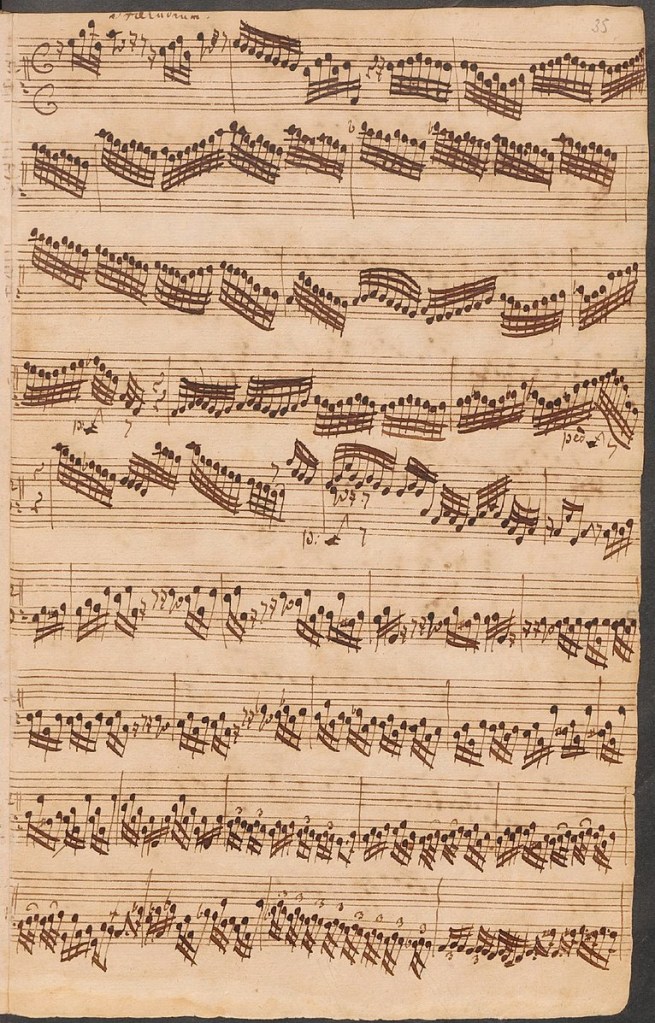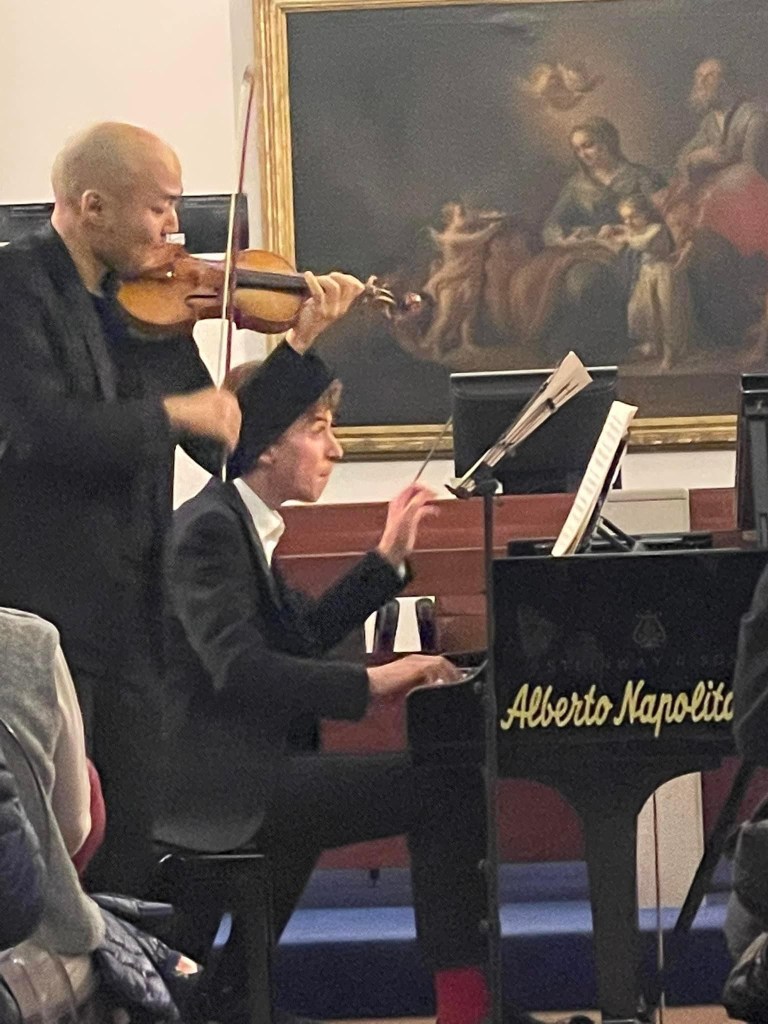
Can Arisoy Elfida su Turan Damir Durmanovic at St James’s Talent Unlimited presents music making at its most refined

Some superb music making in one of the most atmospheric churches that is St James’s in the heart of London .
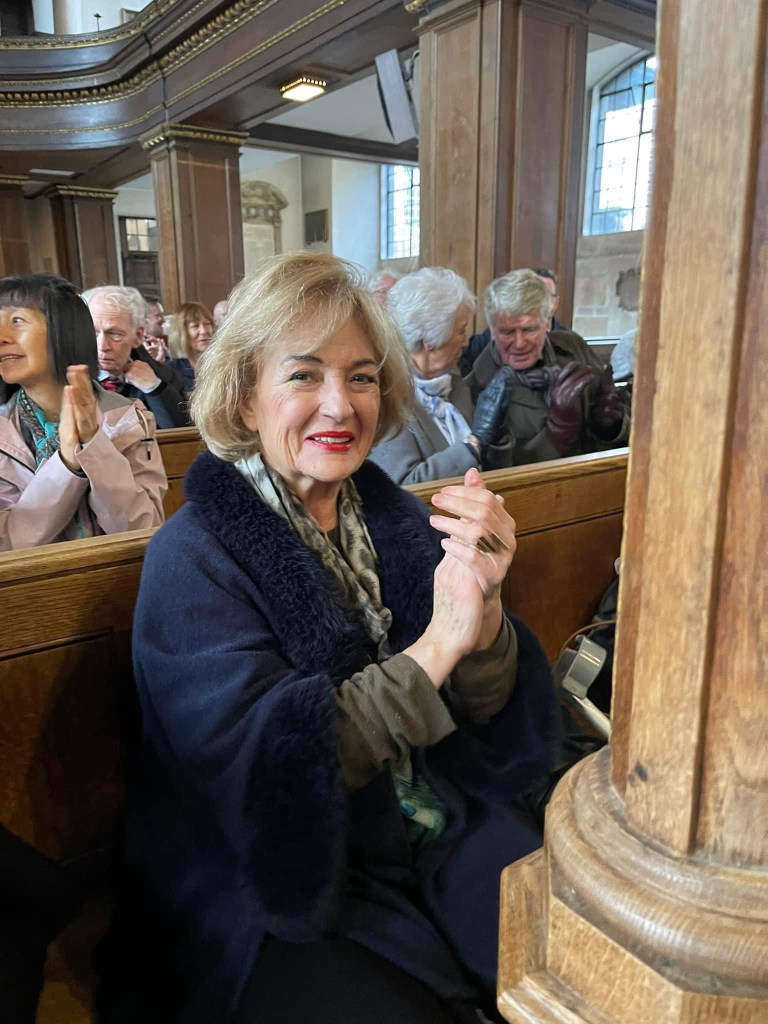
Canan Maxton founder of Talent Unlimited applauding her artists

The scene was set for three extraordinary musicians from the stable of Talent Unlimited directed by the indomitable Canan Maxton: Can Arisoy,Elfida Su Turan and Damir Durmanovic.

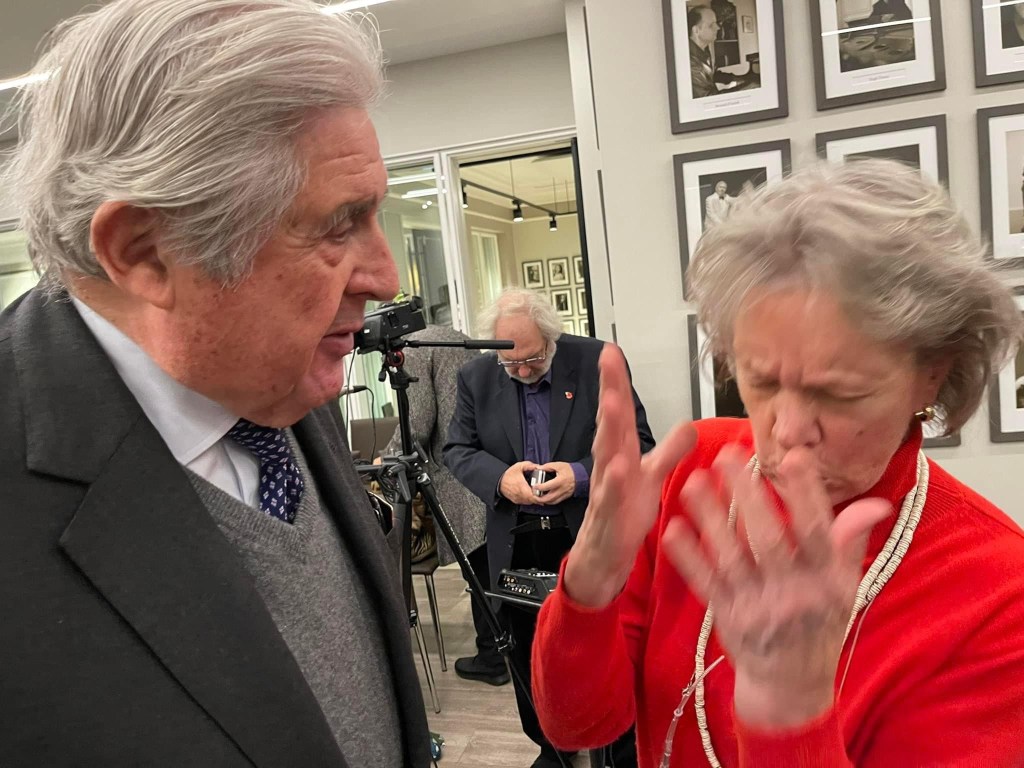
In the illustrious company of the Turkish Consul who had come to applaud in particular his compatriots Can Arisoy and Elfida Su Turan
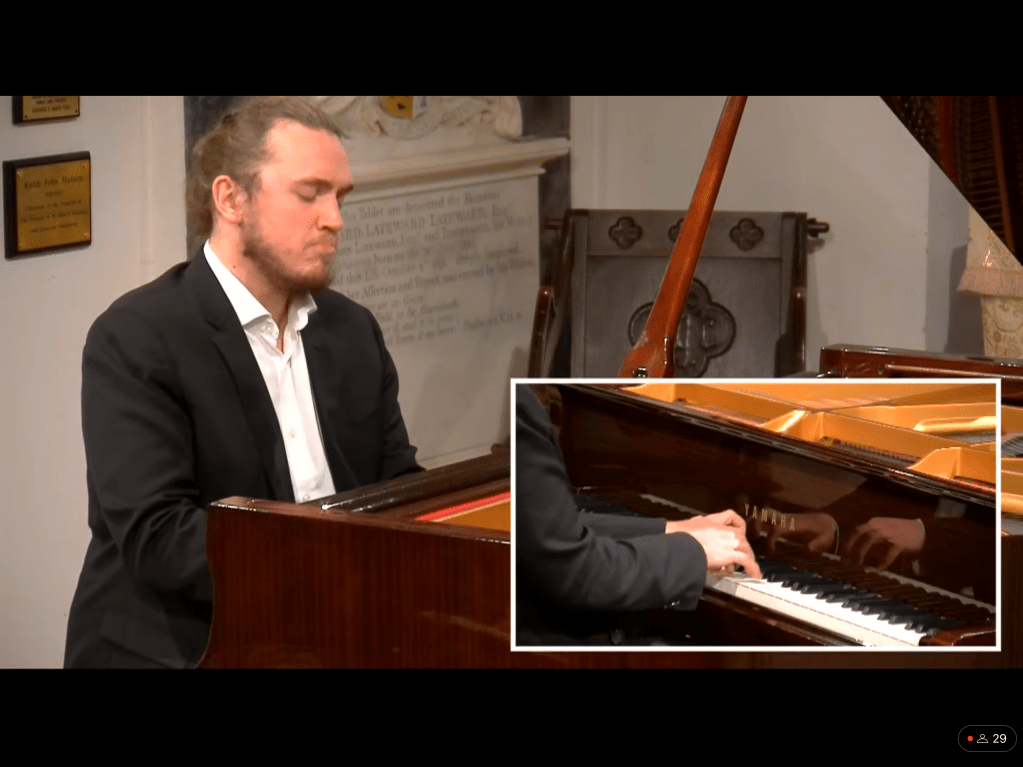
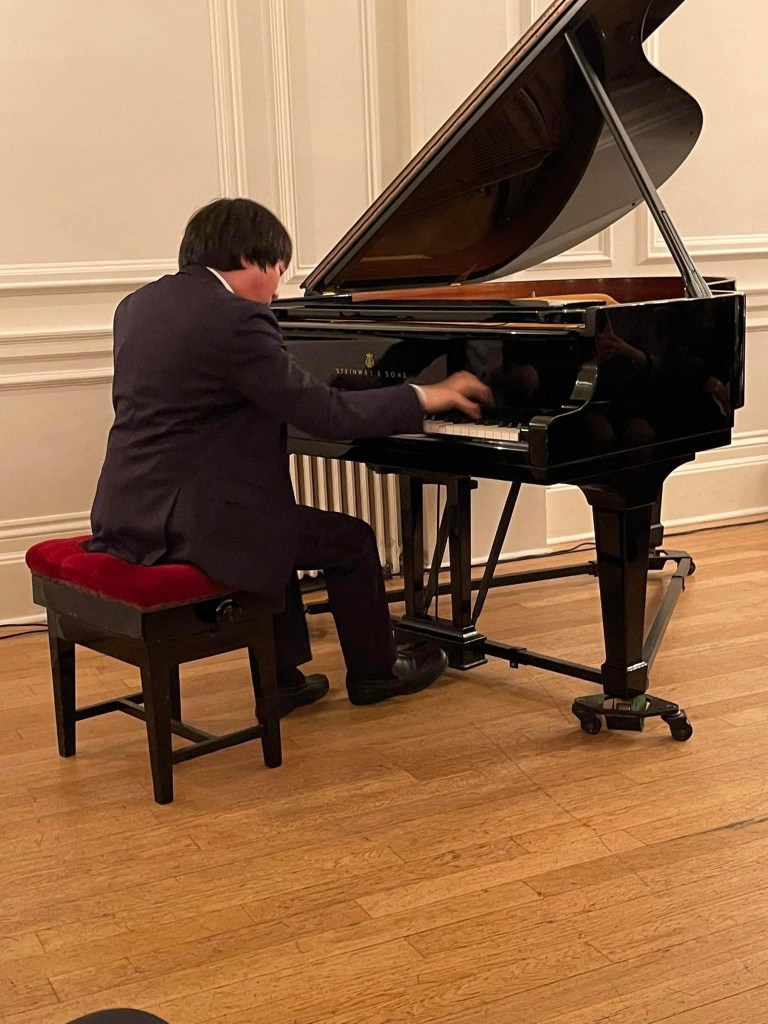
It was Can who opened the concert with an ultra sensitive performance of Beethoven’s ‘Les Adieux’ Sonata op 81 a.
A refined tone palette that created an atmosphere of such emotional impact in the introduction that the explosion and rhythmic energy of the Allegro came as a blessed relief.
There was a technical prowess that was not just of notes but of multicoloured streams of sound and magical echo effects of the coach horns replying to each other on their long journey .
An absence that was so delicate and subtly shaded with the bare whisper of Beethoven’s yearning for the return expressed so poignantly.

Les Adieux (“The Farewell”), was written during the years 1809 and 1810.
The French attack on Vienna, led by Napoléon Bonaparte in 1809, forced Beethoven’s patron, Archduke Rudolph , to leave the city.Beethoven titled the three movements “Lebewohl“, “Abwesenheit“, and “Wiedersehen” (‘farewell’, ‘absence’, and ‘reunion’), and reportedly regarded the French “Adieux” (said to whole assemblies or cities) as a poor translation of the feeling of the German “Lebewohl” (said heartfully to a single person).Indeed, Beethoven wrote the syllables “Le-be-wohl” over the first three chords.
On the first 1811 publication, a dedication was added reading “On the departure of his Imperial Highness, for the Archduke Rudolph in admiration”


And return there certainly was,as after Beethoven’s long held pedal and whispered asides Can attacked the piano like a man possessed.
There was extraordinary power and superlative technical control that gave such exhilarance to this most bucolic of movements.
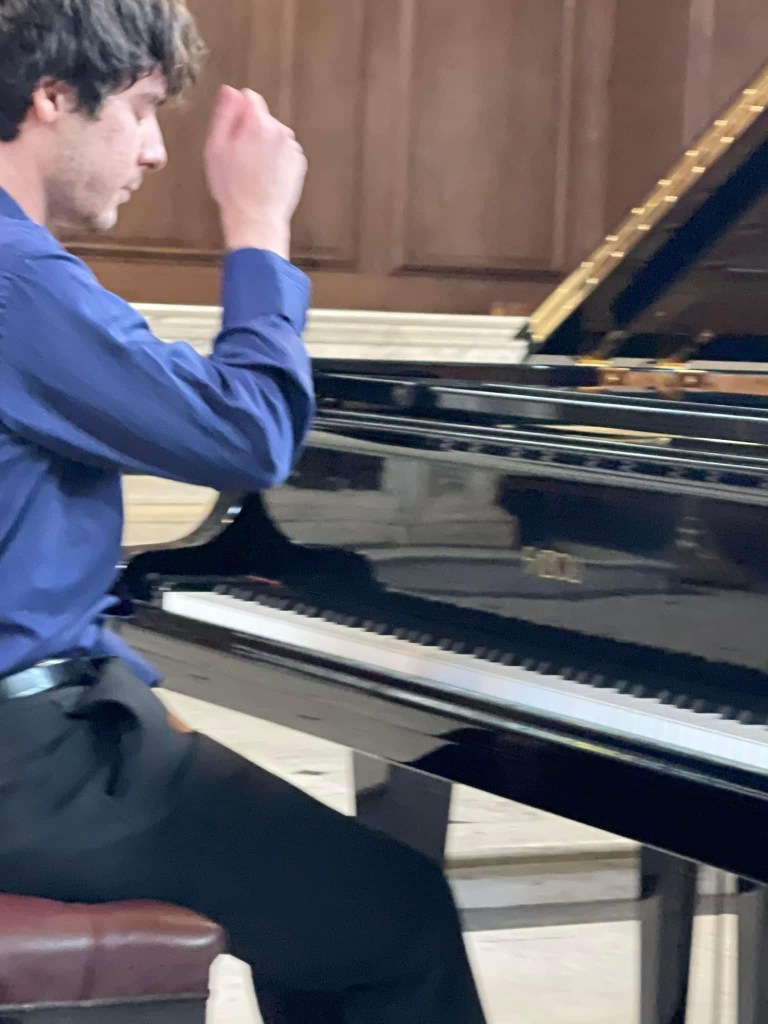
It was the same control and mastery of sound that he brought to the second work on his programme with Debussy’s Feux d’artifice.
A distant murmur of sounds as the fireworks drew nearer and nearer until they were there with us at our feet.Explosions of sound and glissandi where you could almost see the smoke rising out of this magnificent Fazioli piano.
Claude Debussy composed his two books of preludes during a remarkably brief period—the first, between December 1909 and February 1910; and the second, during roughly the same period in 1912-13. Though totaling twenty-four in number between the two books, Debussy’s preludes do not follow the precedent established by J. S. Bach’s Well-Tempered Clavier (namely, a prelude in each of the major and minor keys) and imitated by several other composers, including Frédéric Chopin, Charles-Valentin Alkan, and Sergei Rachmaninoff. However, this does not mean that Debussy’s preludes are without order, and the relationships that can be found among them indicate that their published order was, to a certain extent, quite purposeful, yet also designed with a degree of inherent flexibility. Debussy, in keeping with the artistic philosophy of his day, also composed each prelude with specific scene or image in mind. Yet, to partially disguise these intents from the listener and to allow his audience to discover them of their own accord, Debussy craftily placed his titles at the end of each prelude. The last of Debussy’s 24 preludes, Feux d’artifice (“Fireworks”) is also the most technically challenging. It depicts a brilliant and spectacular fireworks display over Paris, and captures in tones the many furious streaks of rockets and their colourful explosions in the night sky. Sweeping runs, outlining two major thirds a semitone apart, open the prelude, perhaps depicting the anticipation of the audience, while isolated tones, like little points of light, sound in the upper register of the piano. The texture of the piece grows ever thicker and more complex and colours abound as the harmonies, figurations and dynamics change to give representation to the wondrous display and patterns of colored light. At its close, the visual display begins to slowly fade away. Over a tremolo in the bass a brief quote of La Marseillaise is heard before the last flashes of colour


Bathed in pedal until just before the coda where there was a startling unexpected clarity before the final smokey ending with fragments of the Marseilles just recognisable in the distance.
A remarkable performance where Can could create such magic out of so little.
A pianist has to be both artist and magician if he is to persuade us that a box full of hammers and strings can create a world of dreams and desires.
Can Arisoy proved today that he is both.
Follow that !One might say . https://christopheraxworthymusiccommentary.com/2021/03/31/can-arisoy-keyboard-trust-new-artists-recital/
Poème was written in response to a request from Eugène Ysaye for a violin concerto Chausson felt unequal to the task of a concerto, writing to Ysaÿe: I hardly know where to begin with a concerto, which is a huge undertaking, the devil’s own task. But I can cope with a shorter work. It will be in very free form with several passages in which the violin plays alone.It was written while Chausson was holidaying in Florence in June 1896.He initially called it Le Chant de l’amour triomphant, then changed it to Poème symphonique, and finally to simply Poème. The title comes from the 1881 romantic novella The Song of Love Triumphant (Le Chant de l’amour triomphant by the Russian writer Turgenev who lived on the estate of the famed mezzo-soprano Pauline Viardot and her husband near Paris. Poème was published in May 1897, but not at Chausson’s own instigation as his friend Isaac Albeniz submitted the score to Breitkopf & Hartel while he was in Leipzig on a concert tour. They were reluctant to publish the work, considering it “vague and bizarre” and of “extraordinary difficulty”, and consequently would have “few adherents” They agreed to publish only when Albéniz undertook to pay for the costs of publication himself. He also gave Breitkopf 300 marks, which they were to send Chausson under the pretence of a royalty. Chausson never knew of Albéniz’s role in this episode, which was done solely to boost his confidence in his compositional skills (he did not need the money, as he had financial security through wealth inherited from his father).It was also a way for Albéniz to repay Chausson’s support and encouragement of him when he was a struggling student in Paris.


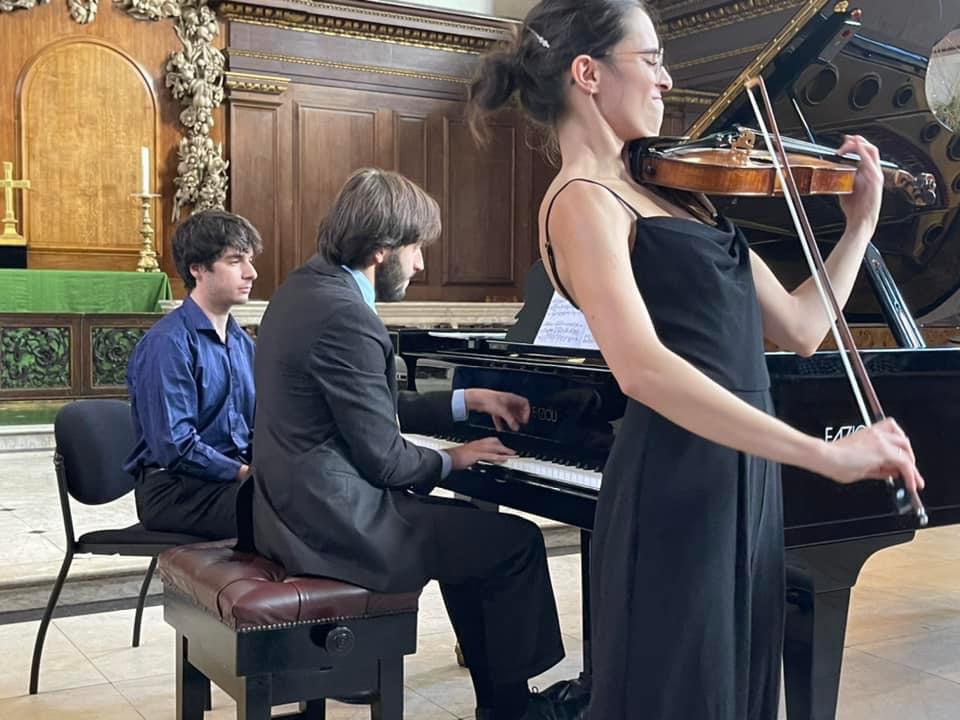
Elfida Su Turan and Damir Duramovic were ready to take up the gauntlet.
Damir standing in at the last minute for Can,his school friend from Menuhin days together, who preferred not to play a double role today.

https://christopheraxworthymusiccommentary.com/2022/03/29/brazil-200-and-keyboard-trust-30-a-collaboration-born-on-wings-of-brazilian-song/


Damir is a natural where everything he plays becomes part of his being as he moves with cat like stealth over the keys .A natural musicality that was truly mesmerising as Elfida reached for the passionately resonating notes that abound in Chausson’s score.
Watching and listening to them together as they intoned this inspired poem was like being present at the improvised creation of a masterpiece.
A fascinating voyage of discovery together recounting a fairy tale of ravishing beauty and passion.

Szymanowski’s cruelly complicated scores are always a test of the technical prowess and imaginative artistry for all those that dare trespass into such a minefield.
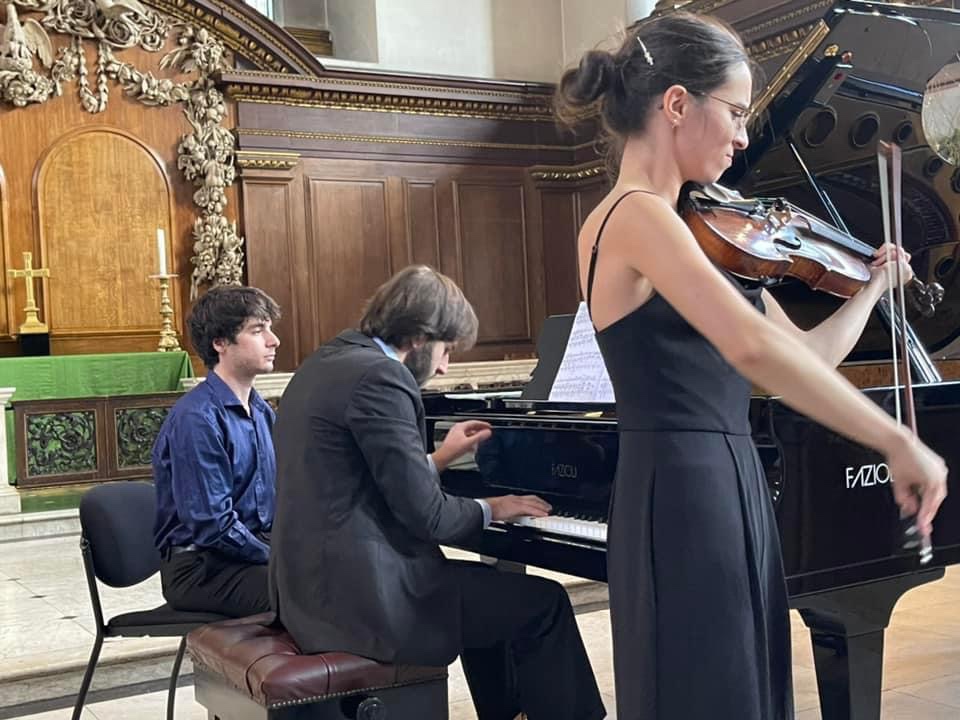
Not so for Canan Maxton’s carefully chosen artists who from the very first notes of the Notturno created the atmosphere of a wondrous landscape.
Playing as one they brought vibrant energy also to the treacherous Tarantella.
The same energy I am sure Paul Kochanski and Artur Rubinstein would have displayed a century earlier when the music of their friend was still wet on the page .
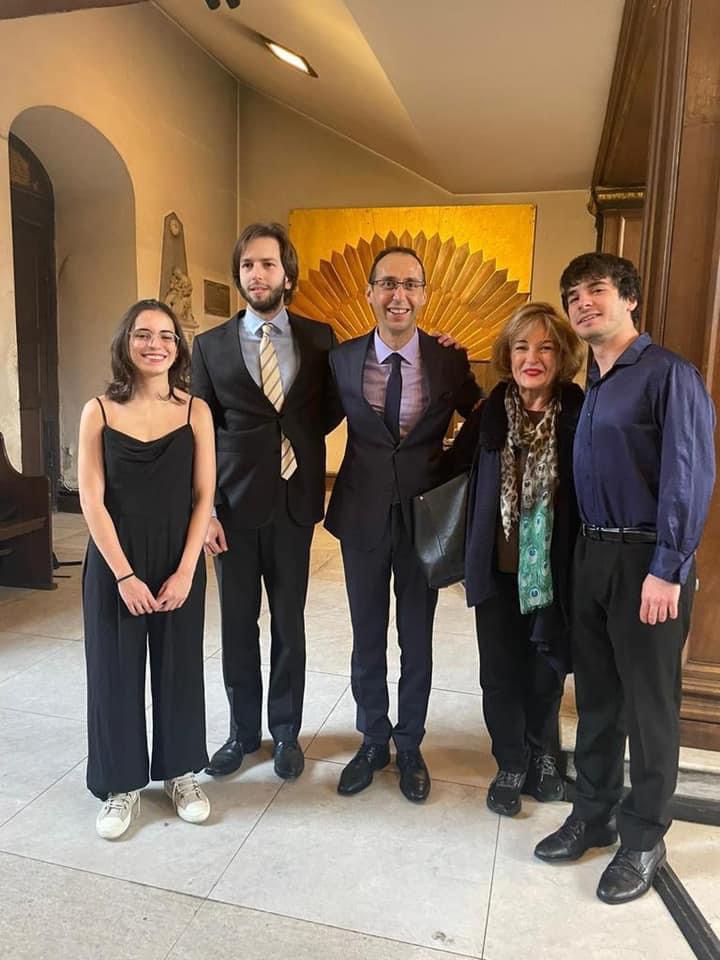
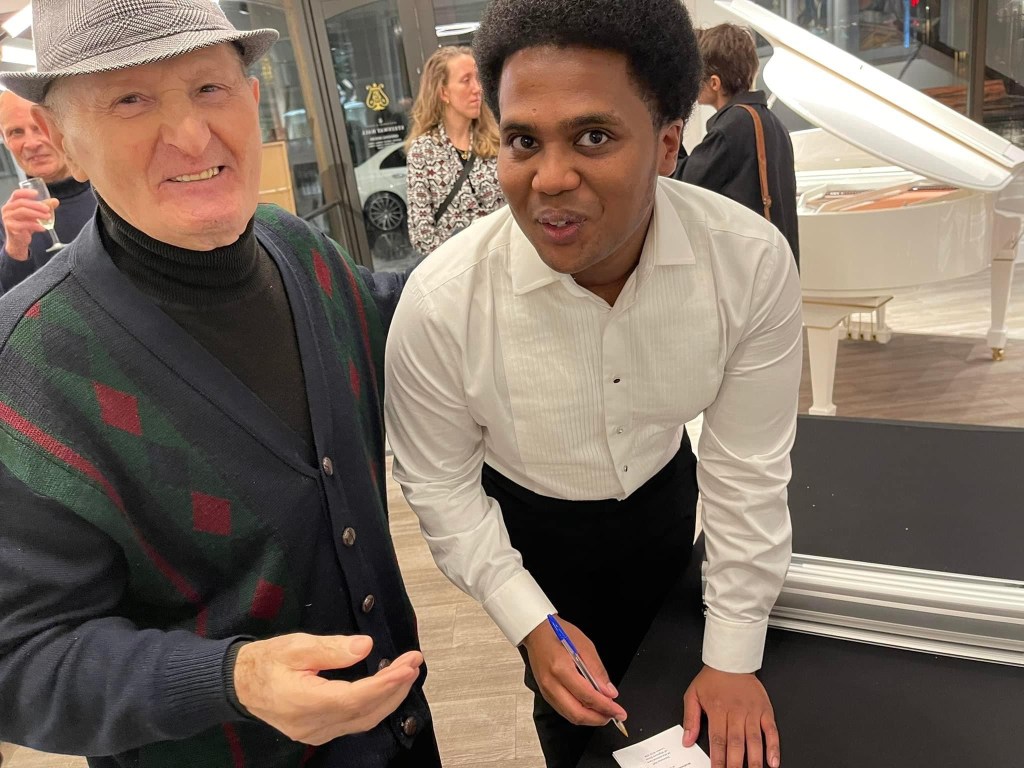
The artists with the Turkish Consul and Canan Maxton


Critically acclaimed pianist Can Arisoy was born in 2000 in Turkey. Can is the 2nd prize winner in the 2016 Beethoven Junior Intercollegiate Piano Competition in London and 2016 Nilüfer International Piano Competition. He was awarded The Young Talent Prize at the Ibiza International Piano Competition and was a finalist at the 2020 International Yamaha Music Foundation of Europe Scholarships. Can started his piano studies at the age of 5. In 2006, he was accepted to The Bilkent University’s junior music department with a full scholarship. He gave his first concert at the age of 7 and his first orchestral concert as a soloist at the age of 11 with Bilkent Youth Symphony Orchestra. At the age of 14, he was invited to the Turkish National Radio 3 Ankara for a recital and interview. At the same age, Can gained a place at The Yehudi Menuhin School with a full scholarship to study with Prof. Marcel Baudet. https://christopheraxworthymusiccommentary.com/2021/03/31/can-arisoy-keyboard-trust-new-artists-recital/
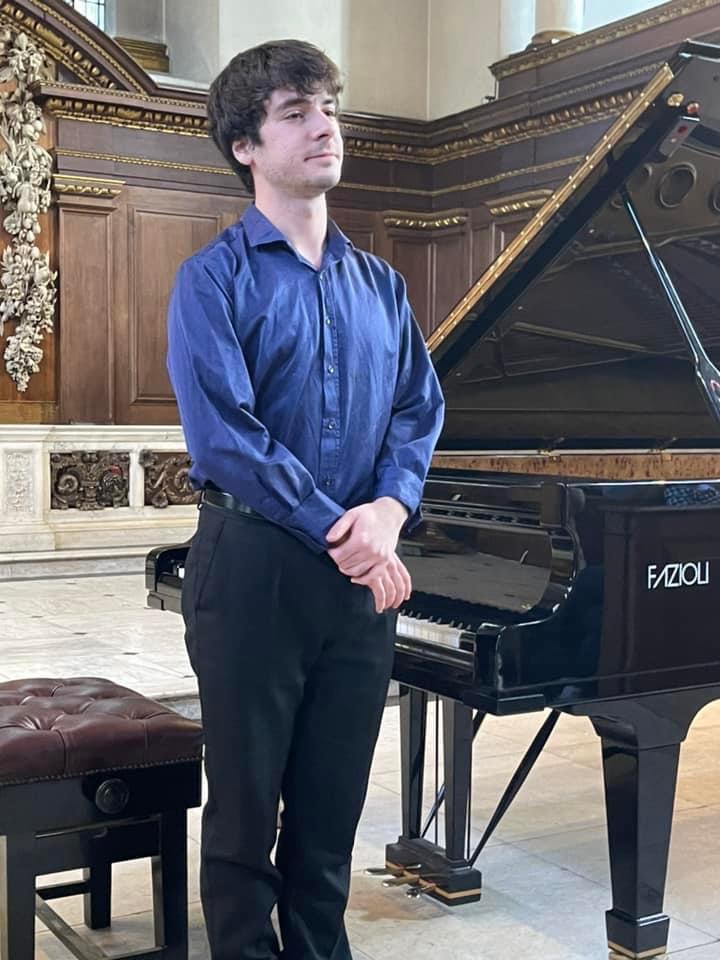

Can has worked with greatly acclaimed pianists such as; Boris Berman, Paul Roberts, Murray MacLahclan, Edith Fischer, Idil Biret, Robert Levin, Gülsin Onay, David Dolan, José Ramón Mendez, Markus Schirmer, Paul Coker, Jeremy Young, Pierre Réach and Jean Bernard Pommier in International Masterclasses.
Since the age of 14, Can gave concerts in England, Turkey, France, Spain, and Austria. Performed in venues such as Wigmore Hall, Steinway Hall, Champs Hill, Clapham Omnibus, London King’s Place, Gloucester Music Society, Bilkent Concert Hall and Saygun Hall. He played with The Pelly Concert Orchestra in 2017 and The Dorking Chamber Orchestra in 2018 as a soloist and performed in music festivals including The Gstaad Music Festival, ISA Piano Festival, Gümüslük International Piano Festival, Music Alp International Music Academy and Cheathams Piano Series.
Can also performed and gave an interviews at the Karnaval Radio, Turkish National Radio 3 Istanbul and Borusan Classic Istanbul. In 2018 his performance of Brahms’ Horn Trio was chosen for The Yehudi Menuhin School 2018 Highlights CD. In the same year, Can became a “Talent Unlimited” artist in the UK. In 2019 December he gave his first Masterclass at the Izzet Baysal Fine Arts University in Turkey. Can is continuing his studies at the Guildhall School of Music and Drama with Prof. Caroline Palmer.
Can is generously supported by Zetland Foundation, Talent Unlimited, Keyboard Trust and Sevda-Cenap And Music Foundation.
Presented in association with Talent Unlimited
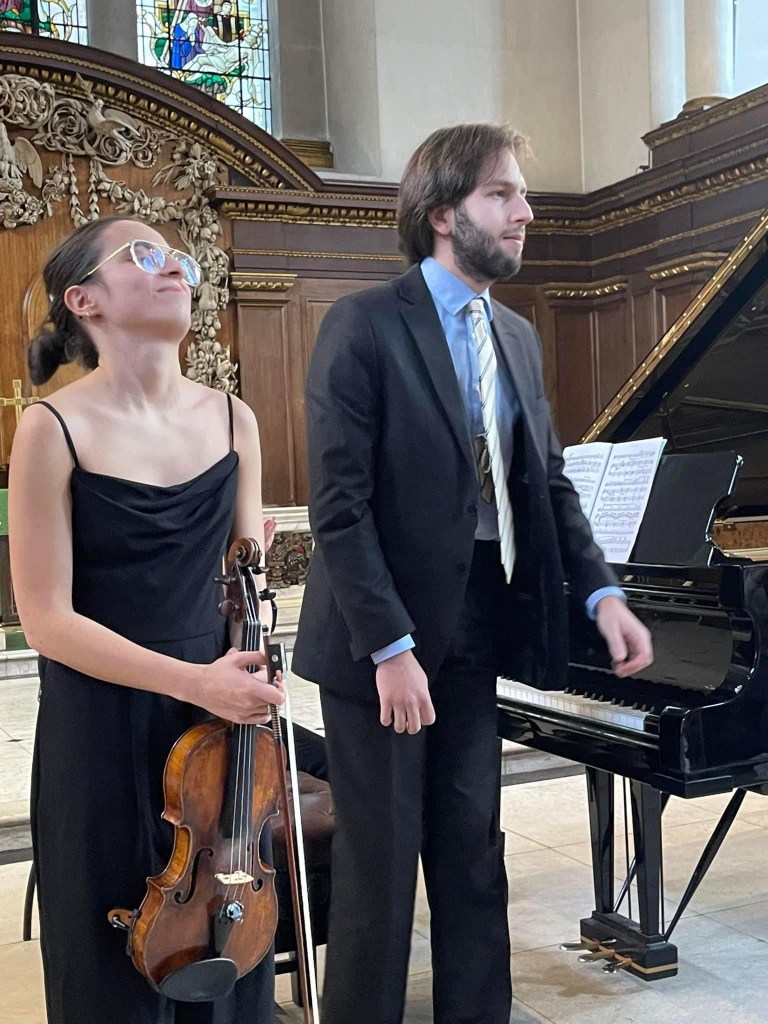
Nocturne and Tarantella, Op. 28 by Karol Szymanowski was written in the spring and summer of 1915
It was first performed in Warsaw on 24 January 1920, by Pawel Kochanski and Feliks Szymanowski (the composer’s elder brother), and published in 1921. It is dedicated to the composer’s friend August Iwański, at whose estate Ryżawka, and Józef Jaroszyński’s manor in Zarudzie the work was written.The Nocturne has mainly long elegant lines soaring high above the piano accompaniment, but also sometimes diverts off the pathway into a Spanish idiom style (Szymanowski had recently returned from a Mediterranean journey) and is alternately languid and febrile.The Tarantella is in a typically relentless Neapolitan 6/8 rhythm,with left hand pizzicatos,double stopping and other effects.It was sketched during a single evening of drinking with Kochanski and Izanski at Zarudzie.It has impressionistic overtones redolent of Debussy and early Stravinsky,but is also pervaded with the flavours of the Middle East,similarly to many of his works.


Born in Istanbul in 2002, Elfida Su Turan started studying the violin at Istanbul University State Conservatory with Veniamin Varsavsky. Elfida, has been performing as a soloist with orchestra since the age of 10 with orchestras such as; the Istanbul State Symphony Orchestra, İzmir State Symphony Orchestra, Başkent University Orchestra, Başkent Academy Orchestra, Aşkın Ensamble, and the Bakırköy Municipality Orchestra. Elfida has had the ultimate pleasure of giving multiple concerts at the Akbank Art, Istanbul Culture University, Istanbul Philharmonic Society, Uludag University Auditorium, Sarajevo Music Academy Auditorium, Hikmet Şimşek Culture Center, İş Sanat, Milli Reasuans, Presidential Symphony Orchestra, France Bastille Opera Hall, Yehudi Menuhin Hall, Auditorium of the Fitzwilliam College inCambridge, Gestaad Festival, Conservatoir Royal de Bruxelles, Audotorio de Zaragosa, Juan March Foundation Madrid and Jeju Festival. Having been invited to master classes both in Turkey and abroad, Elfida has had the opportunity to learn under Itzhak Raskovsky, Rodney Friend, Davide Alogna and Ani Schnarch, Akiko Ono, Cihat Aşkın, Bomsori Kim, Michelle Kim, Lutsia İbragimova.
She entered her first national violin competition when she was 10 years old and was awarded the 2nd prize as well as best interpreter of the mandatory piece the competition demanded which gave me the opportunity to play with an orchestra yet again. I was also announced prizewinner in; International Violin Competition organized by Serbian Music pedagogues in March 2013 won first place. Won first place in the 7th Agimus Firenze Premio Crescendo in June of 2015, first place in the 13th Individualis Competition held in Kiev, Ukraine in August of 2015, and won first place in the GrandPrize Virtuoso Competition held in France in November of 2015 and I won third place in the 2nd İlona Feher İnternational violin competition June 2018 in Budapest. And this year March, I was announced a finalist in the 13th Grumiaux Violin Competition. Sadly, the final round did not take place due to the worldwide pandemic.
In 2014 she was also awarded the Joseph Guarini 1883 violin by the Çağdaş Eğitim Foundation.
In February of 2016 she was invited to audition in the world renowned music school, which is considered to be one for the top 3 schools in the world for pre University, The Yehudi Menuhin School. She got accepted with full scholarship.
In November 2019, she auditioned for Royal Academy of Music and got accepted and was also awarded the Entrance Scholarship which covers the entire tuition fee for the full course. She feels incredibly lucky to have Talent Unlimited support her as a musician.
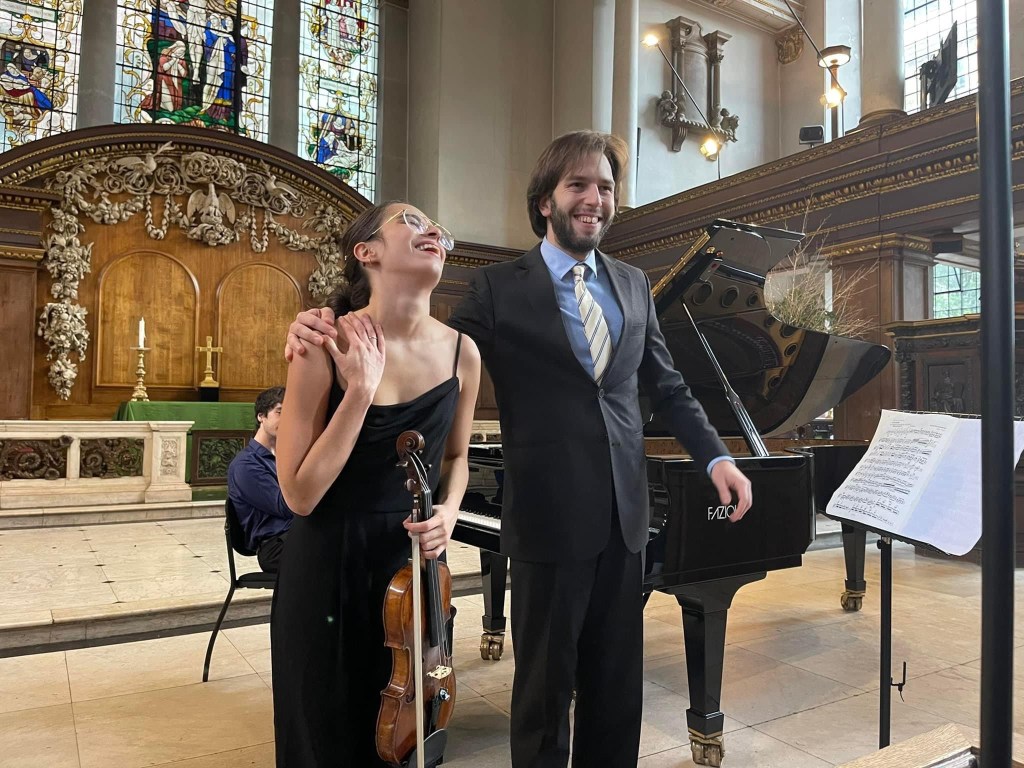

As an internationally sought-after performer, Damir Durmanovic has performed in venues and festivals including the Wigmore Hall, Champs Hill Studios, YPF Festival Amsterdam, Wimbledon Music Festival, Renia Sofia Audotorium Madrid, Gstaad Menuhin Festival, Derby Multifaith Center, Flusserei Flums, ‘Ballenlager’ Vaduz. He has won prizes in numerous international competitions including The Beethoven Intercollegiate Junior Competition in London, Adilia Alieva International Piano Competition in Geneva and Isidor Bajic International Piano Competition in Novi Sad.
He has performed in masterclasses with Claudio Martinez-Mehner, Dmitri Bashkirov, Pascal Devoyon, Jacques Rouvier, Robert Levin, JeanBernard Pommier, Tatyana Sarkisova, and chamber ensembles such as the Emerson Quartet. Damir is also a scholar at the ‘Musikakademie Liechtestein’ and participates annually in the courses offered by the Academy.
Damir began his studies at age of eight with Maja Azabagic before commencing his studies at the Yehudi Menuhin School where he studied with Professor Marcel Baudet.
Damir is an ABRSM scholar and is kindly supported by the Talent Unlimited Scheme. He is currently studying at the Royal College of Music in London with professor Dmitri Alexeev. https://christopheraxworthymusiccommentary.com/2022/10/04/damir-duramovic-reveals-the-true-soul-of-the-slavic-people-at-pushkin-house/
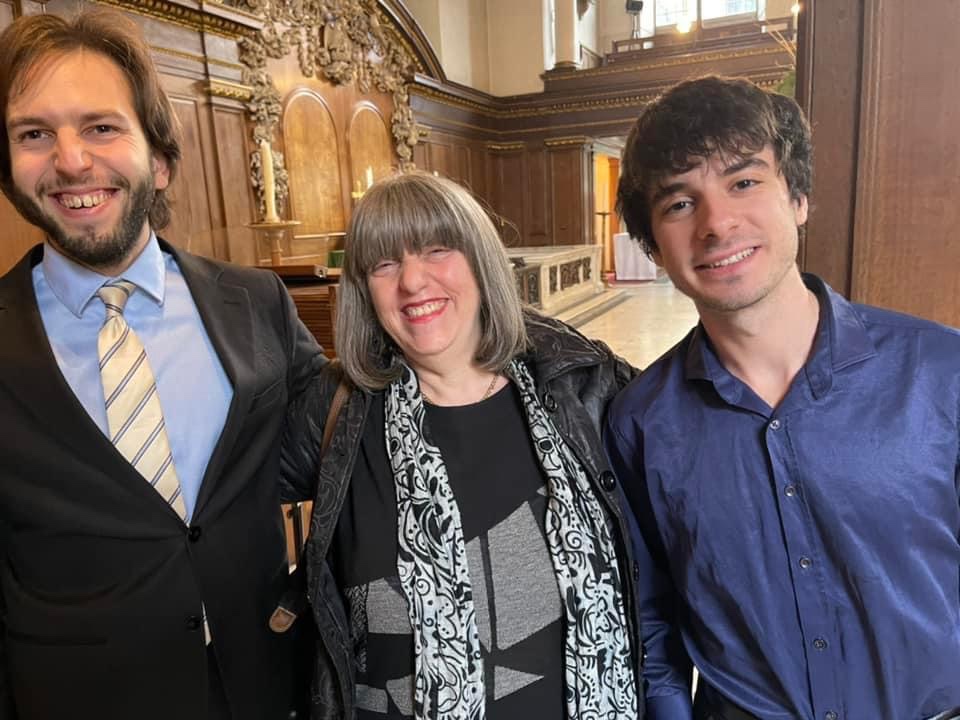
With Jessie Harrington tireless supporter of Talent Unlimited
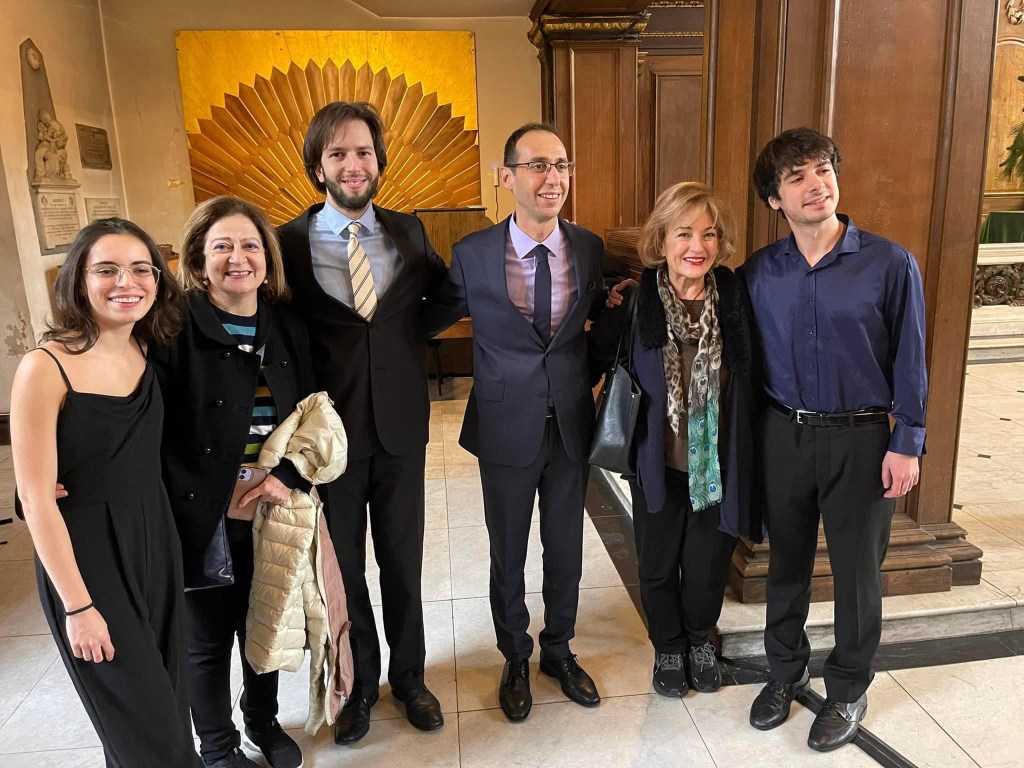
With the artists , Ayse Tugrul Colebourne supporter of Talent unlimited ,the Turkish Consul and Canan Maxton
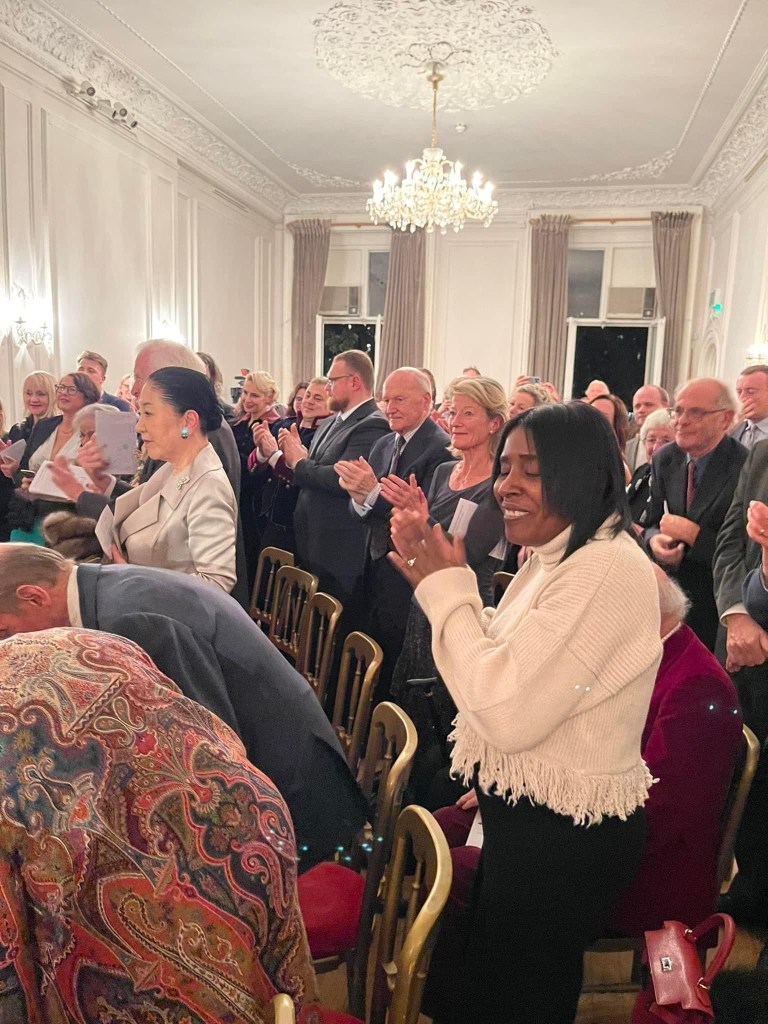
A full hall and ovation for the superb concert which can be seen on line https://youtube.com/watch?v=tCHvjokk-Y0&feature=share
Can Arisoy and the Turkish Consul
Foto courtesy of Jessie Harrington with Christopher Axworthy of the Keyboard Trust and Canan Maxton of Talent Unlimited dedicated to helping greatly talented young artists reach their goal.We share our interest in helping pianists Can and Damir
https://christopheraxworthymusiccommentary.com/2022/09/14/the-gift-of-life-the-keyboard-trust-at-30/

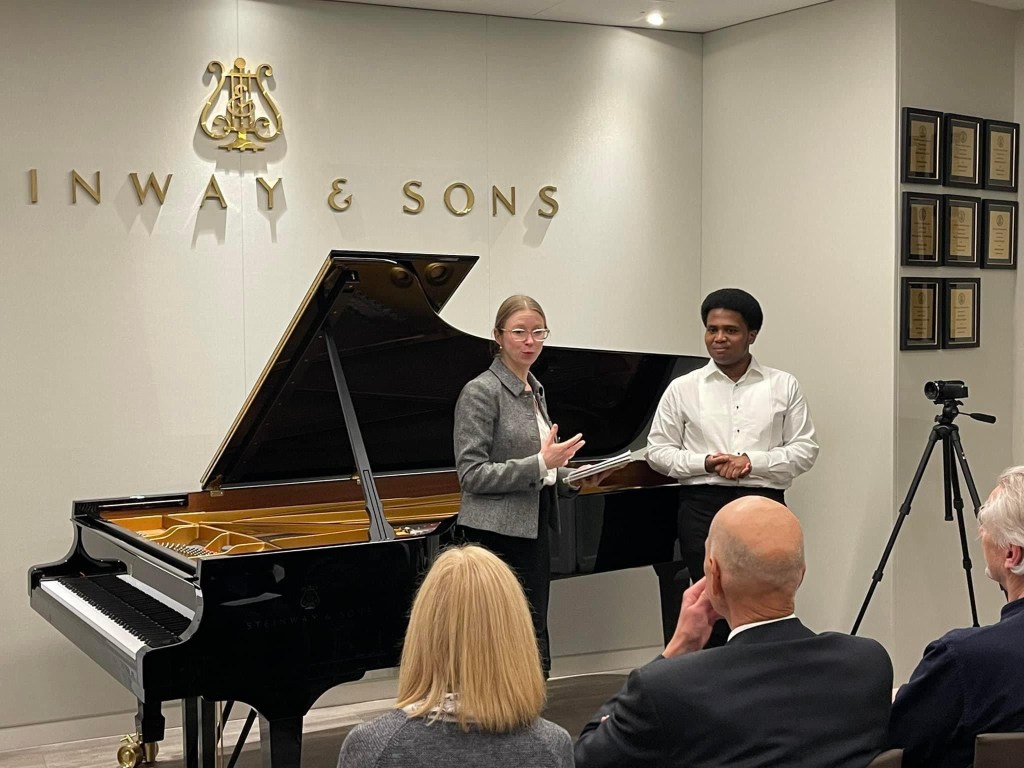
Adam Heron at Steinway Hall for the Keyboard Trust

A fascinating programme from an eclectic musician of refined taste and eloquence.Not only on the piano but in his short conversation with Elena Vorotko he showed off the same charm and remarkable scholarship that we had heard in a very stimulating and informative programme.

Adam in conversation with Elena Vorotko


Adam who after a two year absence from the concert platform is making his return to the Keyboard with style and aristocratic bearing.
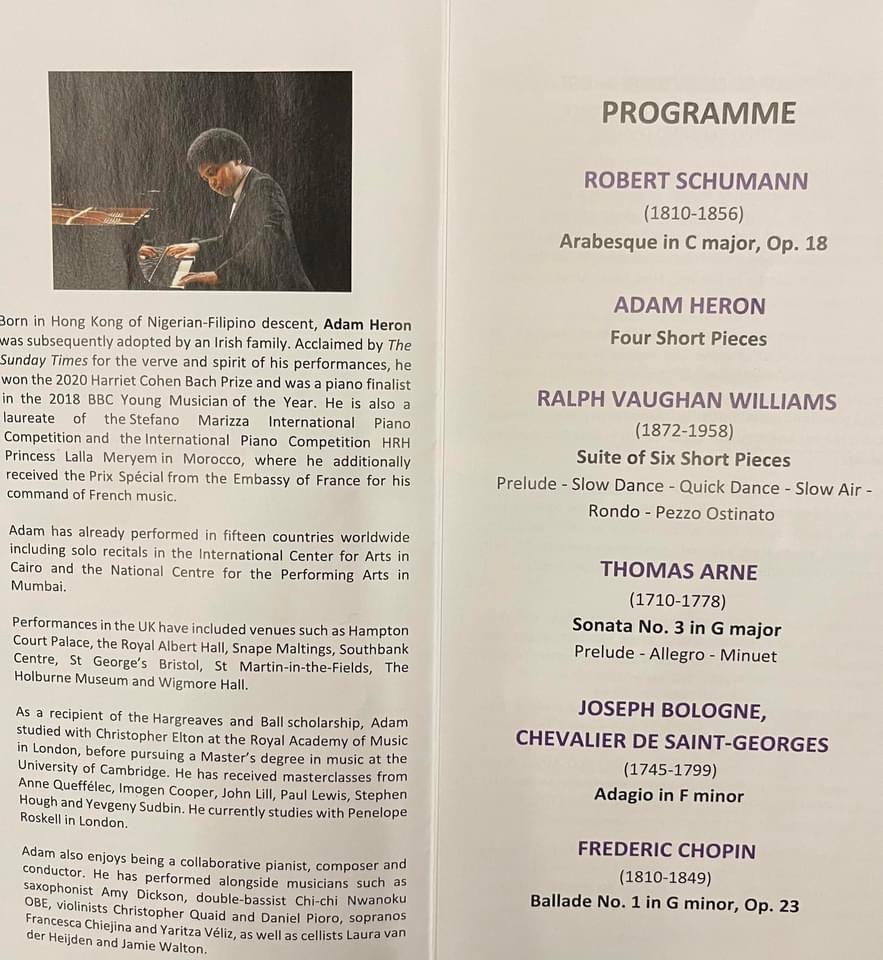
Born in Hong Kong of Nigerian Filipino descent with early success at the BBC Young Musician of the year in 2018.He graduated from the RAM under that master trainer of so many fine musicians,Christopher Elton, followed by a masters degree at Cambridge.He is also a conductor and composer but his piano career was halted for two years when struck down unexpectedly with tendonitis.

Elena Vorotko with Christopher Elton


This concert marks his come back to the concert stage as a pianist and Christopher Elton and many other distinguished guests were there to applaud him and to witness his complete recovery.
A sold out Steinway Hall for the Keyboard Trust with an audience that was treated to refined performances in a voyage of discovery of works from the completely neglected to the ridiculously overplayed!


As Adam said in his fascinating post concert conversation:’a musician should be able to master the great works of the repertoire as well as delving into the archives to find inexplicably neglected works of great value.’


And so it was with a Schumann Arabesque flowing so simply with great attention to the bass harmonies that gave such depth and freshness to this most radiant of pieces.The ravishing beauty of the coda astonishing us by its intimate intensity.


It led immediately into four short pieces by Adam of beguiling charm and character.
‘Why did he include Vaughan Williams?’asked Elena .’The simple answer is because it is his 150th anniversary year ‘ Adam replied with knowledgeable charm,’but also because there is a considerable amount of piano music by him that is totally ignored’.


And so it was with the same charm and delight in discovery that he shared the Suite of Six Short Pieces with us.
Thomas Arne too much of whose music was destroyed in the great fire at Drury Lane but there survived a considerable amount of Keyboard works of which the 3rd Sonata is only one of eight.Written in 1756 the year that Mozart was born it is a piece that could easily be confused for Scarlatti with its keyboard brilliance and sense of dance.
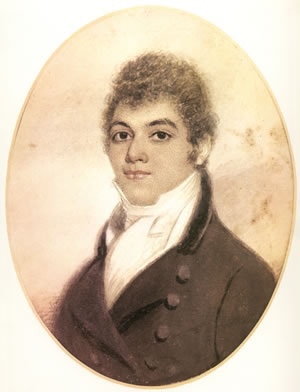
Joseph Bologne Chevalier de Saint Georges will have us delving deep into the archives to find information about a composer whose Adagio in F minor was of a disarming simplicity and poignant charm.

A large and attentive audience which included distinguished critics,agents and professional musicians.


Of course Chopin’s First Ballade hardly needed any explanation.
But in Adam Heron’s virgin hands it received a performance of refreshing simplicity.An aristocratic performance of great breadth and grandeur together with a touching simplicity.
It was shorn of all the rhetoric when used as a vehicle for virtuosistic showmanship.Instead Adam gave us a spacious reading where Chopin’s own words were allowed to speak without any unnecessary indulgences.

I heard Adam also in 2019. https://christopheraxworthymusiccommentary.com/2019/03/27/adam-heron-at-st-mary-at-hill/


A recital that was like opening a window to let in a blast of fresh air with a true musician of such charm and scholarship at the helm.
The recital will be streamed live at a later date on the Keyboard Trust you tube channel via their website :keyboard trust.org

Adam greeted by John Leech,founder with his wife Noretta Conci of the KCT with Sir David Scholey who had recently attended a KCT recital Pedro Lopez Salas in his home town of Florence.Pedro was going on to Poland to partecipate in the Paderewski Competition and we are delighted to hear he is now in the finals. https://christopheraxworthymusiccommentary.com/2022/11/04/pedro-lopez-salas-the-style-and-authority-of-a-great-artist-the-keyboard-trust-in-florence-goes-british/
Wiebke Greinus,concert and artistic manager of Steinways with Sarah Biggs,general manager of the KCT
Wiebke with Angela Ransley who will be presenting the next concert at Temple Church with Elli-Mae McGlone organ on 23 November at 12.40
Sir David had notice the participation of an audience member who is an ex ballet dancer describing how she related music to movement
Adam with Mario a special Italian friend of the Keyboard Trust
John Leech delighted to meet Sir David again having sent him a copy of the book that he wrote about the activity of the past 30 years of the KCT. https://christopheraxworthymusiccommentary.com/2022/09/14/the-gift-of-life-the-keyboard-trust-at-30/
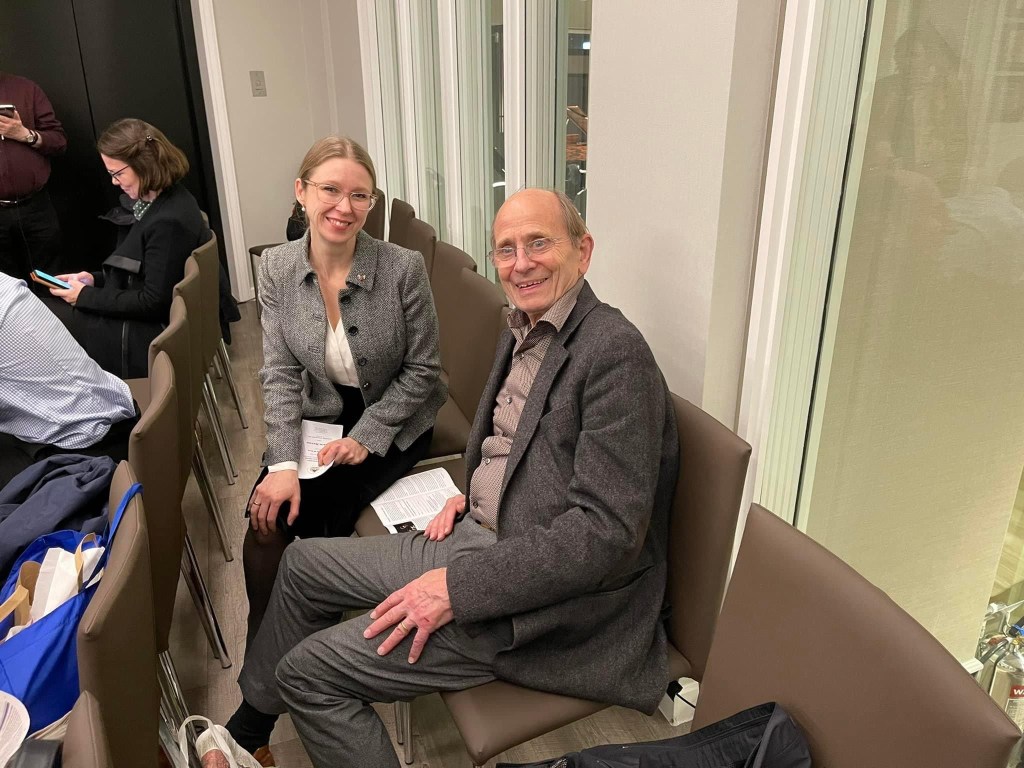
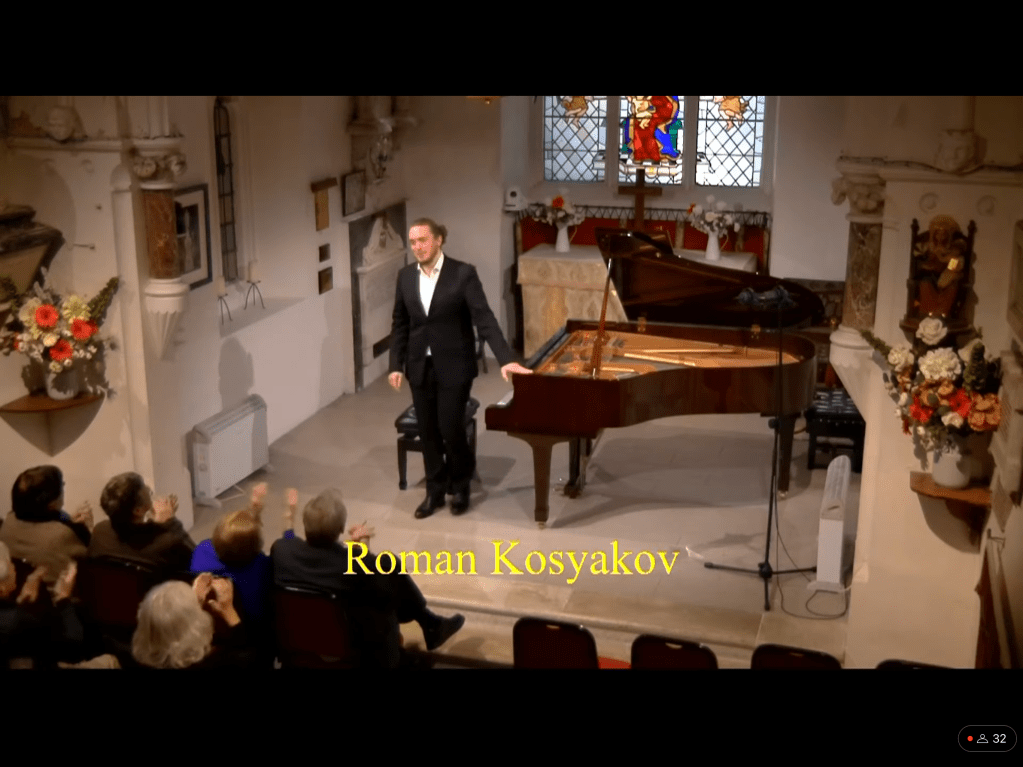
Roman Kosyakov a Masterly light shining brightly at St Marys

Thursday 17 November 3.00 pm

The French Suites, BWV 812–817, are six suites which Bach wrote for the harpsichord or clavichord between the years of 1722 and 1725.[Although Suites Nos. 1 to 4 are typically dated to 1722, it is possible that the first was written somewhat earlier.
The suites were later given the name ‘French’ as were the English Suites . The name was popularised by Bach’s biographer ForkelJohann who wrote in his 1802 biography of Bach, “One usually calls them French Suites because they are written in the French manner.”This claim, however, is inaccurate: like Bach’s other suites, they follow a largely Italian convention.The courantes of the first (in D minor) and third (in B minor) suites are in the French style; the courantes of the other four suites are all in the Italian style. In any case, Bach also employed dance movements (such as the polonaise of the sixth suite) that are foreign to the French manner. Usually, the swift second movement after the allemande is named either courante (French style) or corrente (Italian style), but in all these suites the second movements are named courante, according to the Bach catalog listing, which supports the suggestion that these suites are “French”. Some of the manuscripts that have come down to us are titled “Suites Pour Le Clavecin”, which is what probably led to the tradition of calling them “French” Suites.

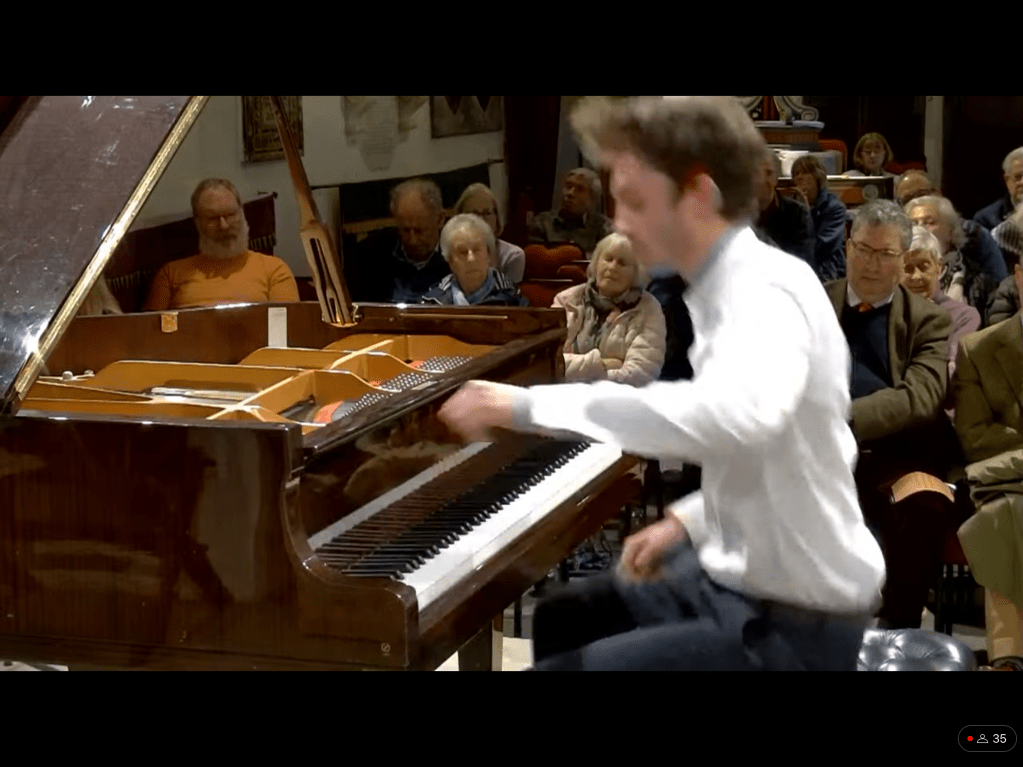
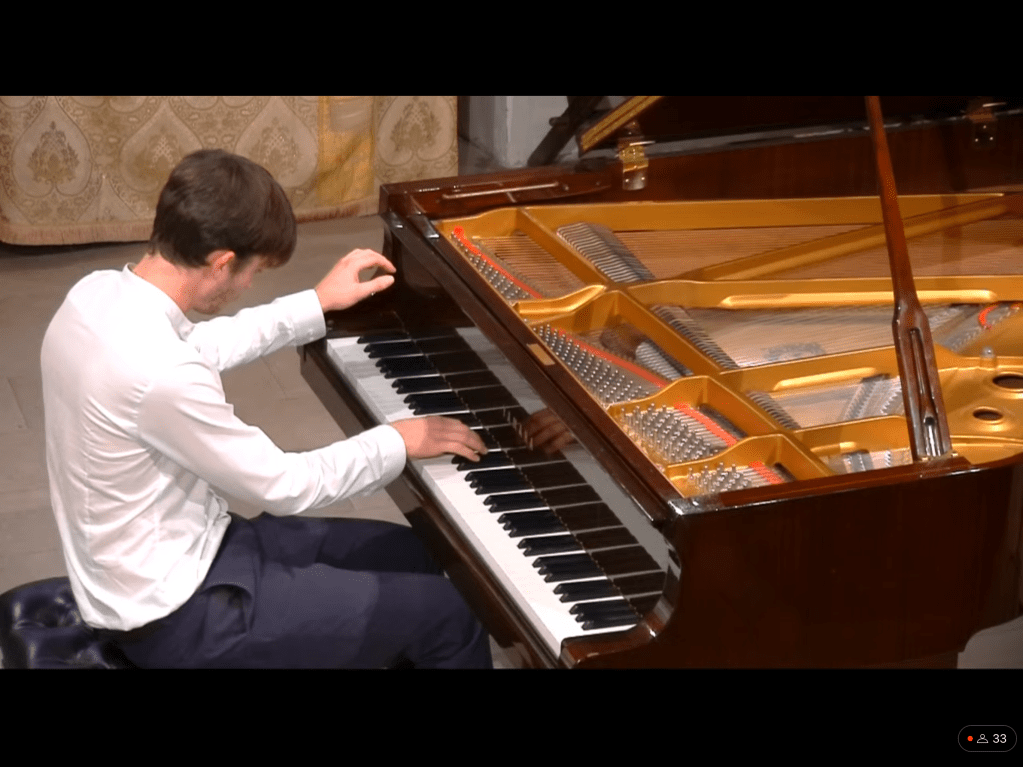
A masterly recital from a great pianist.
The fluidity and luminosity he brought to the Allemande of Bach’s first French Suite was contrasted with the absolute clarity and rhythmic energy of the Courante.The same harpsichord quality where all the strands of knotty twine merge to create a fullness of sound and a rich texture of absolute clarity.It shows a transcendental technical control where each finger is independent and at the same time dependent on the others.There was simplicity and beauty in the long melodic lines of the Sarabande with the ornamentation only adding to the poignancy within the notes themselves.This was no imitation of a harpsichord but a reinvention on the modern piano but with the elegance and style of another age.A remarkable feat of reinventing Bach on the keyboard with the same skill that had been mysteriously bequeathed to the High Priestess Rosalyn Tureck.
The absolute delicacy of the Menuet 1 with the high lifting fingers with the same elegance as the dance itself and the beauty of the bass in Menuet 2 that seemed to be plucked out of thin air.
The nobility and regal authority of the French overture rhythms in the final Gigue brought this rarely played gem to an exhilarating end from the authoritative hands of a master.

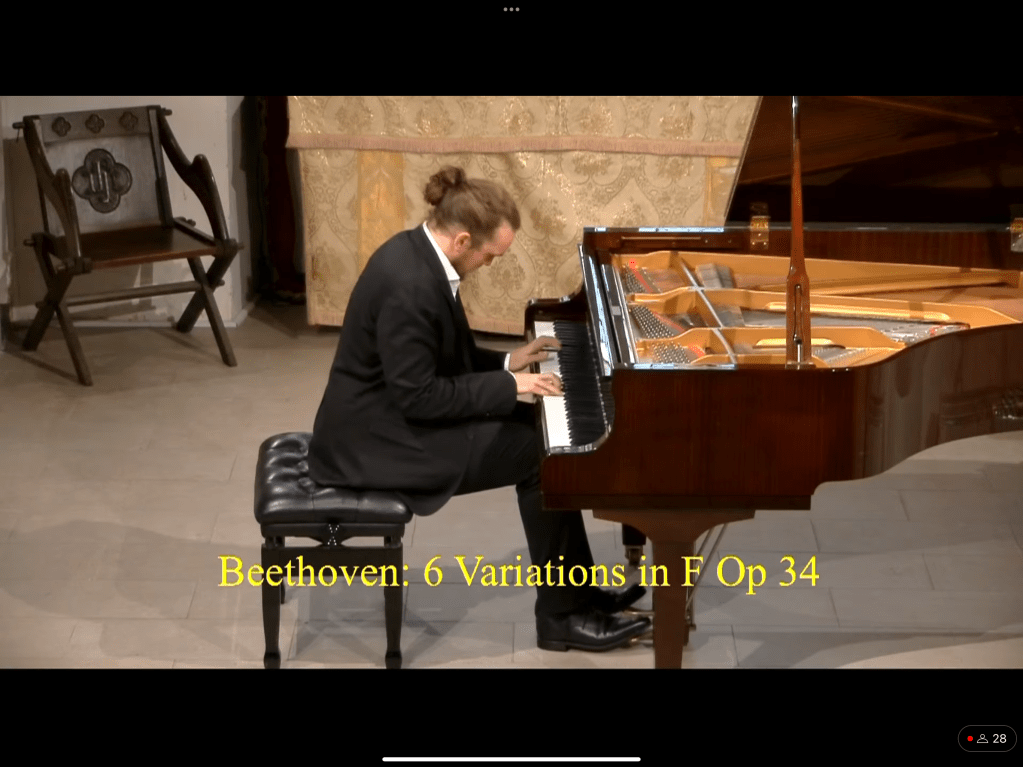
On 18 October 1802, barely a fortnight after Beethoven had penned his famous ‘Heiligenstadt Testament’, in which he confessed that his deafness had brought him to the brink of suicide, Beethoven wrote to the publishers Breitkopf & Härtel offering them two newly-composed sets of variations op 34 and 35 which were, he assured them, quite unlike any he had ever composed before. Both, he claimed, were written ‘in a quite new style and each in an entirely different way. Each theme in them is treated independently and in a wholly different manner. As a rule I only hear of it from others when I have new ideas, since I never know it myself; but this time—I myself can assure you that in both works the style is quite new for me.’


Richter was one of the most recent pianists in my lifetime to discover the variations in F by Beethoven.
It takes a great pianist to bring their multifaceted character to life with simplicity ease and strangely for Beethoven with an elegance and almost operatic delicacy.
From the bel canto ornamentation of the first variation contrasting with the march like energy of the second dissolving into the mellifluous fluidity of the third .The quixotic question and answer of the fourth followed by the inquisitous mystery of the fifth.
A final variation that was pure opera buffa as it dissolved into the magical return of the theme in the tenor register with the delicate embellishments of the final few bars.
It is hard to contemplate that the next work from Beethoven’s pen would be the mighty Eroica variations op.35!

The Grand Piano Sonata op .37, was written in 1878. Although initially received with critical acclaim, the sonata has struggled to maintain a solid position in the modern repertoire.It is dedicated to Karl Klindworth.Tchaikovsky complained about the difficulties he faced in writing his sonata:
‘I’m working on a sonata for piano… does not come easily. …I worked unsuccessfully, with little progress… I’m again having to force myself to work, without much enthusiasm. I can’t understand why it should be the case that, in spite of so many favourable circumstances, I’m not in the mood for work… I’m having to squeeze out of myself weak and feeble ideas, and ruminate over each bar. But I keep at it, and hope that inspiration will suddenly strike.
When Tchaikovsky’s violinist friend Iosif Kotek arrived at Clarens, the composer’s efforts quickly became focused on his Violin Concerto, and work on the sonata was discontinued.He resumed work on the sonata in mid-April and completed it before the month’s end. It was premiered in a concert of the Russian Musical Society by Nikolai Rubinstein , much to the composer’s delight:
‘The Sonata was performed… with such unattainable perfection, that I could not have stayed to listen to anything more, so I left the hall completely enraptured.


A masterly performance of Tchaikowsky’s Grand Sonata was breathtaking in its sweep and authority.A range of colours from the most majestic full sonority to delicate whispered moments of great introspection.This was indeed a performance to cherish and even make one wonder why this grandiose sonata is not more often heard in the concert hall.

Tatyana Nikolaeva on the stage of the theatre created by the great Italian actress Ileana Ghione seated with her

In Rome it had been Tatyana Nikolaeva who had played it for us programmed with Mussorgsky ‘Pictures’.this was in between programmes that included The Goldberg Variations and The Art of Fugue.It is a work that requires not only a virtuoso technique and a certain amount of showmanship but above all a musicianship that can see the wood from the beautiful trees.There is an underneath driving force that must never be broken and it is this that gives it a monumental architectural shape.It is exactly this unrelenting forward movement in Roman’s hands that made the performance so overwhelming in its nobility and subtle musicianly virtuosity.Breathtaking indeed when performed like today .

https://christopheraxworthymusiccommentary.com/2021/11/12/roman-kosyakov-hastings-prize-winners-concert-with-the-rpo-at-cadogan-hall-under-kevin-john-edusei/
Roman Kosyakov is a Russian concert pianist, and Ambassador for Hastings International Piano Concerto Competition. He is a laureate of many nationals and international competitions: 2 nd prize in UK Piano Open International Piano Competition (London, 2020), 1 st prize in the 14th Hastings International Piano Concerto Competition (2018), Gold Prize of the 3 rd Manhattan International Music Competition (2018); 1 st prize and the audience prize in the 10th Sheepdrove Piano Competition (2018). He studied at the Central Music School in Moscow and at the Tchaikovsky Moscow Conservatoire. Since 2017, he has studied at the Royal Birmingham Conservatoire with Pascal Nemirovski. Roman’s performance career includes engagements in prestigious venues and festivals across the UK, US and Europe. He is regularly invited to perform with the Hastings Philharmonic Orchestra, the English Symphony Orchestra and The Royal Philharmonic Orchestra. In January 2019 Roman received “The Royal Birmingham Conservatoire – Silver Medal” by the Musician’s Company in the UK, became a member of Musician’s Company Yeomen Young Artists’ Programme. Roman is a winner of The Denis Matthews Memorial Trust award, Kirckman Concert Society Artist Prize and is a scholar of the Drake Calleja Trust. He has recorded a debut CD for “Naxos” with works by Liszt which was released in late 2020.

https://christopheraxworthymusiccommentary.com/2021/04/22/roman-korsyakov-for-the-keyboard-trust/
Matthew McLachlan at St Mary’s – Dark Horses and united families of true artists

Tuesday 15 November 3.00 pm

Some extraordinary playing from one of the youngest members of the McLachlan clan.
A family where music is part of everyday life as they affront the most amazing activity as a united family with a freshness and disarming humility as they allow their music to flow so naturally from their being.
There is also a younger member of this remarkable clan ,the only one who does not play the piano professionally,but has instead chosen the path of professional goalkeeper.He has been chosen to be a junior member of the team in New York.
Matthew surprised even his mother last year when he ran off with the most prestigious piano prize at the Royal College of Music -The Chappell Gold Medal,when only in his second year.
To think it was by a hair string that he too had not followed his younger brother into the arena but as a professional boxer!
This is a family that if they decide to do something,they dedicate their heart and soul to it as we were only too aware today in Perivale.
A programme that would be enough to strike terror into the hearts of most pianists.
Brahms’s First Sonata op 1 and Chopin’s darkly brooding E flat minor Polonaise.Ending with the tour de force that is Stravinsky’s own arrangement of Petrushka dedicated to Rubinstein who rarely had the courage to play the three dances in public!
No sign of fear from Matthew today but just a glimmer every so often of being touched by the beauty of sounds that were pouring from his fingers.
Sitting back ,listening to his playing as he brought full orchestral sounds to this early work of Brahms.The rhythmic energy of the opening as he pounced on the keys dissolved as if by magic into the ravishing beauty of the second subject.A kaleidoscope of sounds and a sense of balance that never lost sight of the musical line and architectural shape as this symphony for piano was allowed to unfold .An Andante of rare beauty and simplicity, never allowing the pulse of the music to sag but the multi colours from a palette of sounds giving shape to this most pastoral of movements.
There was dynamic energy to the Scherzo contrasted with the Trio of the mellifluous richness of the finest of string orchestras.A final Allegro with a nervous energy that never let up until the final triumphant notes.
Chopin’s most mysterious and melancholic of Polonaises op 26 was played with whispered threats until a ray of sunlight brought things out into the open with spontaneous dance rhythms.The ever present cloud however was hovering over this work until the final shriek at the closure after a subdued vision of a distant military march.
There was no sign on this young man’s face of how deeply he felt the music but he was able through great technical control to share his hidden inner feelings with an audience following in rapt attention.
The infectious sense of dance in the three movement from Petrushka belied the technical hurdles that Matthew was scaling with seeming ease.Each dance was full of character as his range of sounds allied to a constant forward drive was indeed hypnotic.A tour de force of transcendental piano playing of great musicality and sense of character.
I don’t know how he would have been as a boxer but as a pianist it is evident his artistic soul and ease at the keyboard are remarkable gifts.

The Piano Sonata No. 1 in C major, Op. 1, by Brahms was written in Hamburg in 1853, and published later that year. Despite being his first published work, he had actually composed his second Sonata first, but chose this work to be his first published opus because he felt that it was of higher quality. The piece was sent along with his second sonata to Breitkopf & Hartel with a letter of recommendation from Schumann . Schumann had already praised Brahms enthusiastically, and the sonata shows signs of an effort to impress in its symphonic grandeur, technical demands, and dramatic character. It was dedicated to Joseph Joachim.The second movement is a theme and variations inspired by the song Verstohlen geht der Mond auf. Brahms was to rewrite it for female chorus in 1859 (WoO 38/20).Stealthily rises the moon.
Blue, blue flower!
Through silver cloudlets makes its way.
Blue, blue flower!
Roses in the dale,
Maiden in the hall,
O handsomest Rosa!
The Polonaise in C-sharp minor, Op. 26 No. 1 and the Polonaise in E-flat minor, Op. 26 No. 2 were composed by Chopin in 1836. Both of them were dedicated to Josef Dessauer.These were his first published polonaises.
Three Movements from Petrushka for the solo piano were composed ten years later than the ballet for his friend, pianist Arthur Rubinstein and are dedicated to him. Stravinsky is very explicit in stating that the movements are not transcriptions. He was not trying to reproduce the sound of the orchestra, but instead wished to compose a score which would be essentially pianistic even though its musical material was drawn directly from the ballet. Stravinsky also wanted to create a work which would encourage pianists to play his music, but it should be one in which they could display their technique, an objective he amply achieved.Stravinsky’s goal in arranging Petrushka for the piano (along with Piano-rag-Music)was to attempt to influence Arthur Rubinstein into playing his music. Rubinstein had commissioned a work from his friend,but when presented with the Piano Rag Music he refused to play such an ungrateful piece.A 1961 live recording featuring Rubinstein playing Petrushka at Carnegie Hall was published in 2012.)In order to gain the latter’s attention, Stravinsky ensured that Rubinstein would find the arrangement technically challenging but musically satisfying. Trois mouvements de Petrouchka reflects the composer’s intentions and, unsurprisingly, it is renowned for its notorious technical and musical difficulties. All three movements include wild and rapid jumps which span over two octaves, complex polyrhythms, extremely fast scales, multiple glissandos, and tremolos.

Matthew McLachlan was born in 2000 and started piano lessons with his father in 2008. At 11 years of age he passed grade 8 and entered Wells Cathedral School as a specialist musician, studying with John Byrne. After two years in Somerset he entered Chetham’s in Manchester where he studied piano with Dina Parakhina and Cello with Gill Thoday. After gaining the ATCL and LTCL recital diplomas with distinction in 2014 and 2015, Matthew was awarded the FTCL in 2016. This followed on from winning third prize in the senior division of the first Scottish International Youth Prize Competition, held at the Royal Conservatoire of Scotland in July 2016. In 2014 Matthew’s performance of Ravel’s G Major Piano Concerto was commended in the Chetham’s Concerto competition and in the same year he was a prizewinner at the 2014 Mazovia Chopin Festival in Poland. As a result of his performance in Mazovia, he was selected to perform a 60-minute solo recital at the 2015 World Piano Teachers’ Conference (WPTC) in Novi Sad, Serbia. In 2016 Matthew gave many recitals and was a finalist in the Chetham’s Beethoven Piano Competition for the second year running. In March 2017 he was awarded first prize in the Chetham’s Senior Bach competition. In August 2017 he performed Tchaikovsky’s Piano Concerto no. 1 in the Paderewski Festival in Poland. In Autumn 2017 he had a tour of concert performances featuring Brahms’ Sonata no. 1 in C major. Matthew is currently on a gap year, but before leaving Chetham’s he won the school’s Bosendorfer competition, playing Stravinsky’s ‘Three movements from Petrushka’. In 2018 he performed Mozart’s 13th concerto in Trieste, Haddington and Rhyl as well as Tchaikovsky’s first and Beethoven’s fourth concerto in Buxton with the orchestra of the High Peak. In the winter of 2018, the Knights of The Round Table awarded Matthew with a full scholarship at the Royal College of Music in London, where he now studies.

https://christopheraxworthymusiccommentary.com/2021/02/21/murray-mclachlan-at-st-marys/

https://christopheraxworthymusiccommentary.com/2022/08/24/rose-mclachlan-at-st-james-piccadilly-je-sensje-joue-je-trasmet-artistry-and-poetic-imagination-of-a-musician/

https://christopheraxworthymusiccommentary.com/2022/03/13/callum-mclachlan-the-troubadour-of-the-piano-at-st-marys/

https://christopheraxworthymusiccommentary.com/2021/06/07/matthew-mclachlans-own-goal-at-st-marys/

https://christopheraxworthymusiccommentary.com/2021/03/22/rose-mclachlan-and-the-amazing-clan-at-st-marys/

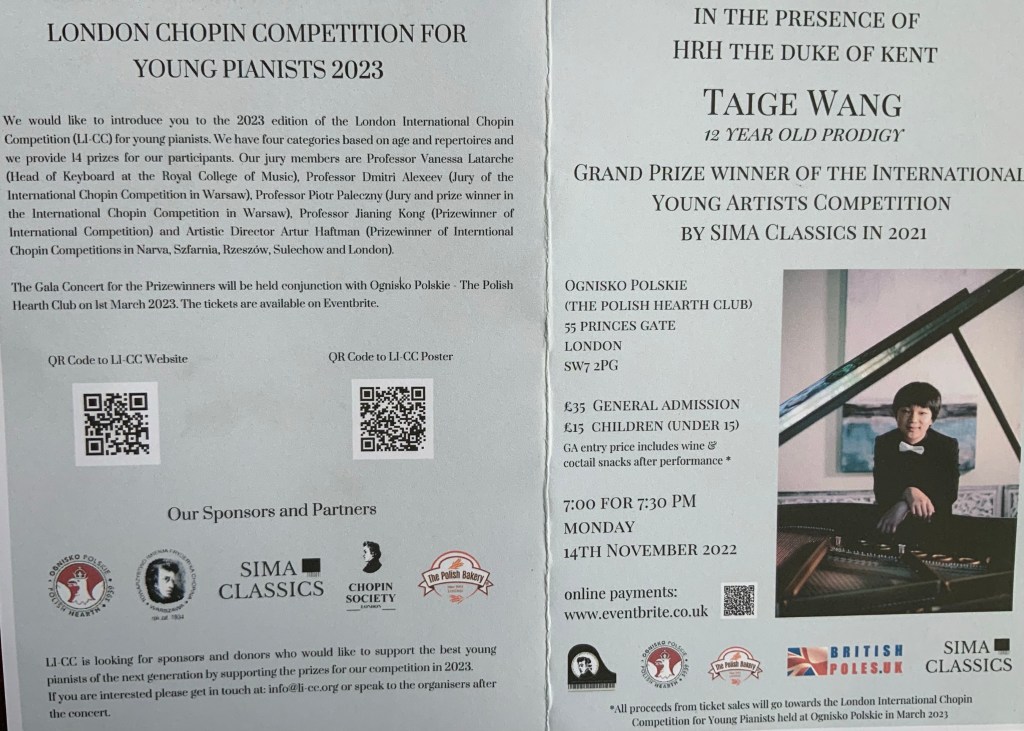
A tiger let loose in London – 12 year old Taige Wang astonishes and seduces for Chopin Gala fund Raising Concert

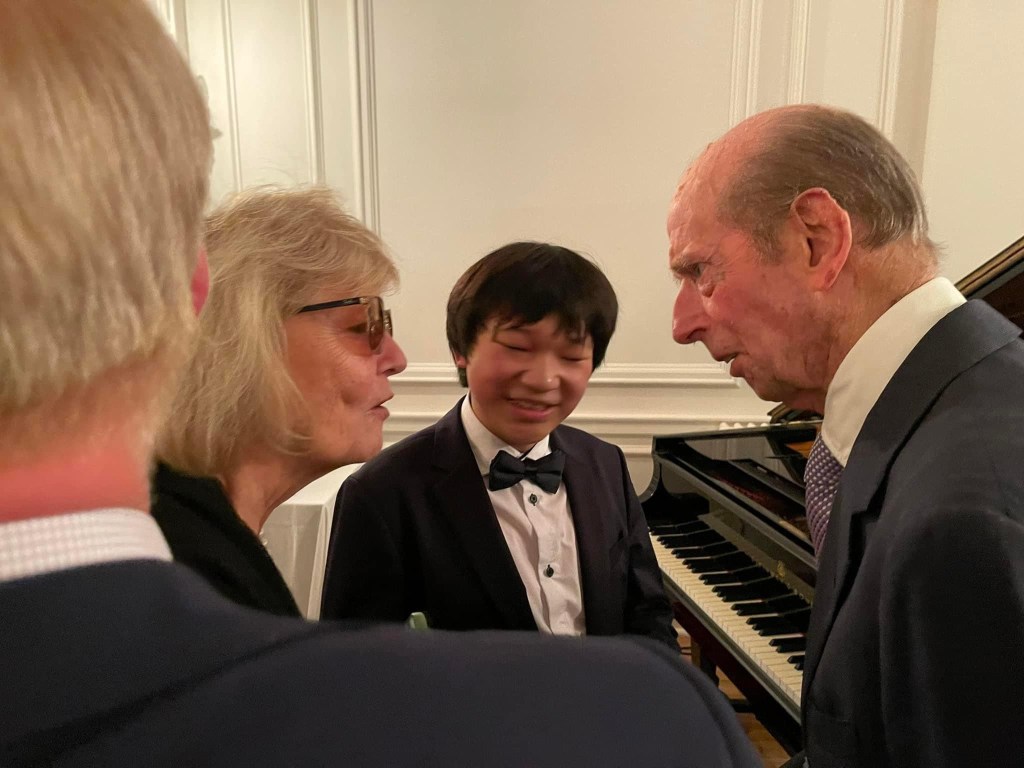
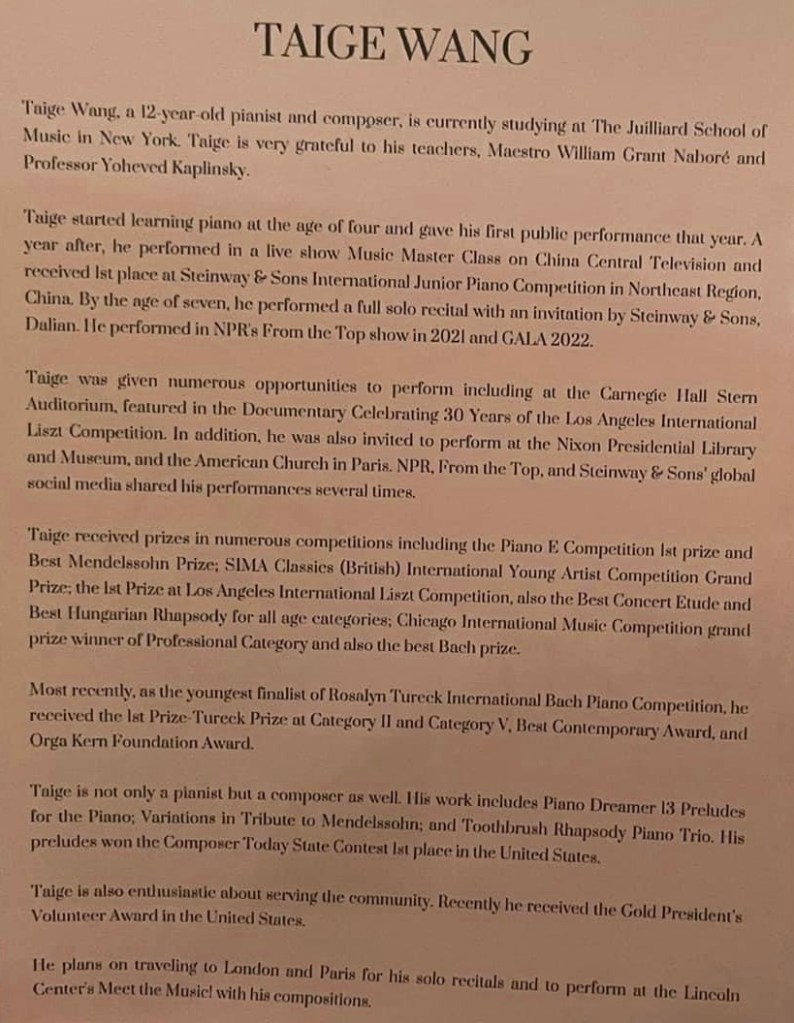
Astonished and amazed by the authority and superb musicianship of Taige Wang.A 12 year old pianist from California playing to a society audience,including HRH the Duke of Kent ,in the Polish Hearth Club to raise funds for the creation of The London International Chopin Competition for young pianists.

HRH The Duke of Kent


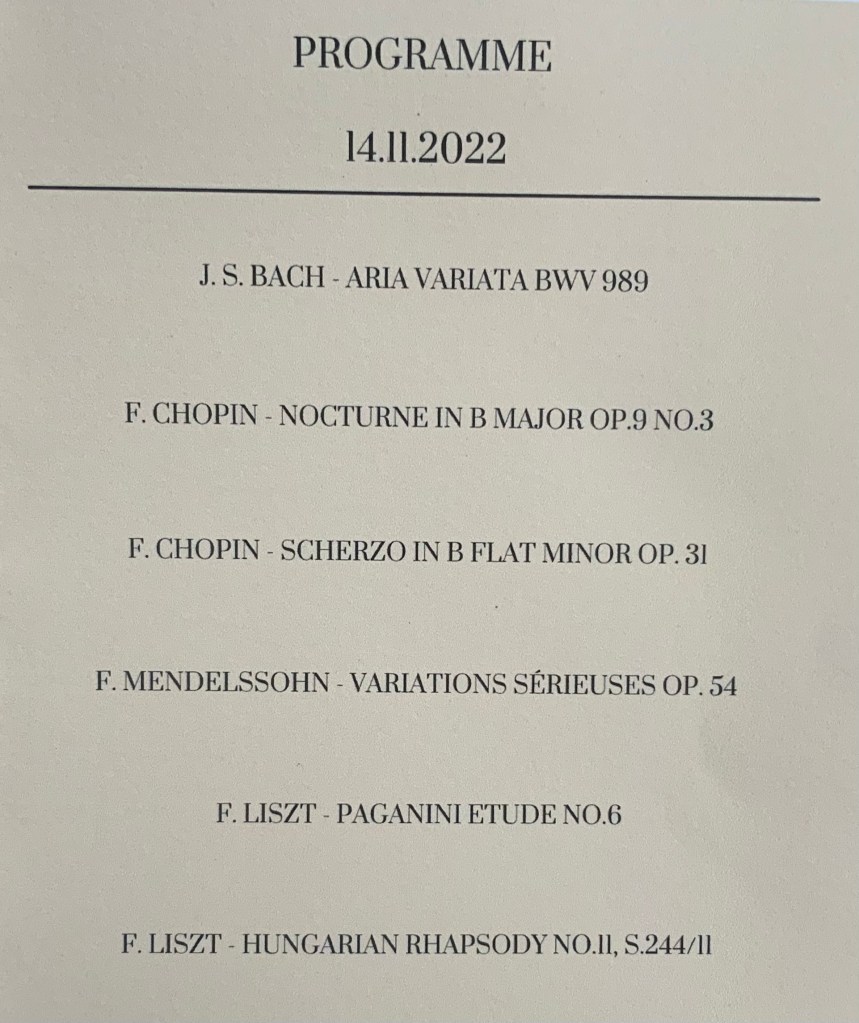
From Bach’s Aria Variata played with style and weight .Impeccable ornamentation and architectural shape were the hallmark of such a mature interpretation .
Chopin shorn of tradition gave us a Chopin Nocturne op 9 n.3 that was allowed to flow and speak so naturally with ravishing sound and tantalising rubato.Not since Lhévinne have I heard such a beguiling performance.


A B flat minor Scherzo of rhythmic precision , heart melting cantabile but above all an excitement that had us sitting on the edge of our seats as the finale exploded with a sumptuous display of pyrotechnics.
Mendelssohn’s Variations Serieuses were played with a driving rhythmic energy and kaleidoscopic sense of colour but above all an architectural shape that gave such strength to the work that Mendelssohn had donated to Liszt as his contribution to the proposed statue of Beethoven in Bonn.
Liszt’s Paganini Study n 6 and the 11th Hungarian Rhapsody showed off this young boy’s mastery but above all his impeccable musicianship in works that in lesser hands can seem like vulgar show pieces.It took these tiny hands today for them to be restored to their rightful place as masterpieces of their genre.
A Mendelssohn song without words op 67 n.2 showed off the subtle sense of style as the haunting staccato accompaniment became filled with all the charm and grace of pianists of another era – The Golden Age of Piano Playing .

The magnificent Polish Hearth Club where this Gala Concert took place

Aria variata alla maniera italiana in A minor, BWV 989 is a keyboard work by J.S.Bach from around 1709 It consists of a theme and 10 virtuoso variations, each of them in binary form (two sections, both repeated). The work was probably created for a harpsichord,but there are numerous recordings with other instruments, notably with piano and organ. It shares many formal similarities with the later Goldberg Variations.The aria, for instance, is repeated at the end, although it is not an exact reiteration but rather another variation (the last, No X) with some slight changes. Still, it is moving to return to the mood of the opening, especially after the brilliance of the preceding two variations. Also like the ‘Goldberg’, the variations are based on the harmonic outline rather than on the opening melody. Each variation is in binary form (two sections, both repeated) and often requires subtle ornamentation to sustain the interest.

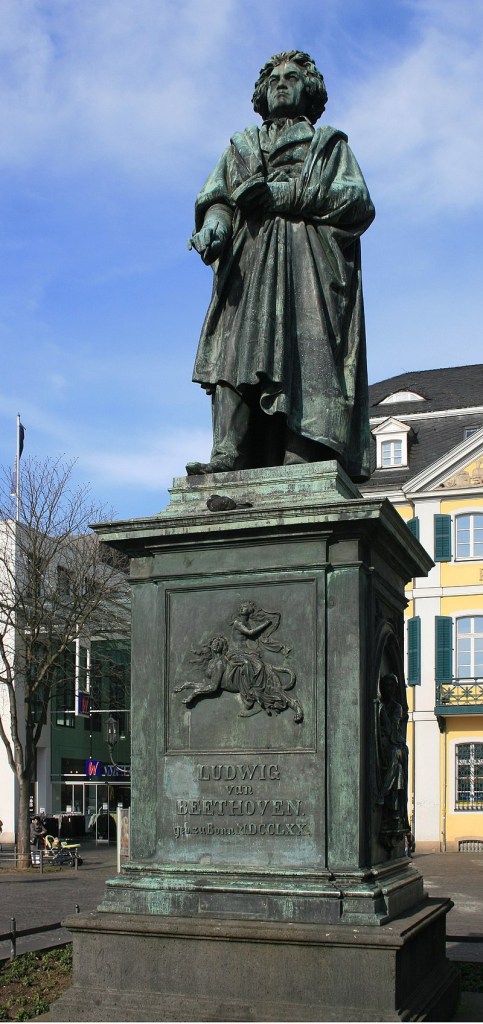
The Beethoven Monument in Bonn.Mendelssohn had donated his Variations to the fund created by Liszt to honour his teacher.

Variations sérieuses, op 54, by Felix Mendelssohn consists of a theme in D minor and 17 variations . It was completed on 4 June 1841.Many of the variations require a virtuoso technique. Mendelssohn’s good friend Ignaz Moscheles stated “I play the Variations sérieuses again and again, each time I enjoy the beauty again”.Mendelssohn is known to have written three sets of piano variations, but only this one was published during his lifetime.

Taige with our hosts Artur Haftman and Jenny Lee https://christopheraxworthymusiccommentary.com/2019/02/27/artur-haftman-at-st-marys/

The Scherzo No. 2 in B♭ minor, Op. 31 by Chopin was composed and published between 1835 and 1837,and dedicated to Countess Adèle Fürstenstein. Schumann compared this scherzo to a Byronic poem, “so overflowing with tenderness, boldness, love and contempt.” Chopin said that the renowned sotto voce opening was a question and the second phrase the answer: “For Chopin it was never questioning enough, never soft enough, never vaulted (tombe) enough. It must be a charnel-house.” The critic James Huneker “exults”: “What masterly writing, and it lies in the very heart of the piano! A hundred generations may not improve on these pages.”

A standing ovation for Taige

The Grandes études de Paganini, S 141, are a series of six étudesfor the piano by Liszt,revised in 1851 from an earlier version (published as Études d’exécution transcendante d’après Paganini, S. 140, in 1838).The pieces are all based on the compositions of Niccolò Paganini for violin, and are among the most technically demanding pieces in the piano literature (especially the original versions, before Liszt revised them, thinning the textures and removing some of the more outrageous technical difficulties). The pieces run the gamut of technical hurdles, and frequently require very large stretches by the performer of an eleventh (although all stretches greater than a tenth were removed from the revised versions).Étude No. 6 in A minor (Quasi presto, a capriccio) – after Caprice n.24,with a slightly altered theme and 11 variations. A technically demanding work abounds with rapid octaves, scales, and arpeggios.

The Hungarian Rhapsodies by Liszt S.244 R.106 are a set of 19 miniature tone poems based on Hungarian folk theme’s during 1846–1853, and later in 1882 and 1885. Liszt incorporated many themes he had heard in his native western Hungary and which he believed to be folk music, though many were in fact tunes written by members of the Hungarian upper middle class, or by composers such as Jòzsef KossovitsJózsef often played by Gypsy bands. The large scale structure of each was influenced by the verbunkos,a Hungarian dance in several parts, each with a different tempo.Within this structure, Liszt preserved the two main structural elements of typical Gypsy improvisation—the lassan (“slow”) and the Frisia (“fast”). At the same time, Liszt incorporated a number of effects unique to the sound of Gypsy bands, especially the pianistic equivalent of the cimbalom.He also makes much use of the Hungarian gypsy scale

With the widow of the distinguished composer Andrzej Panufnik on the left with friends
Yisha Xue with Taige
Tiger,Artur and me taken by Jenny Lee

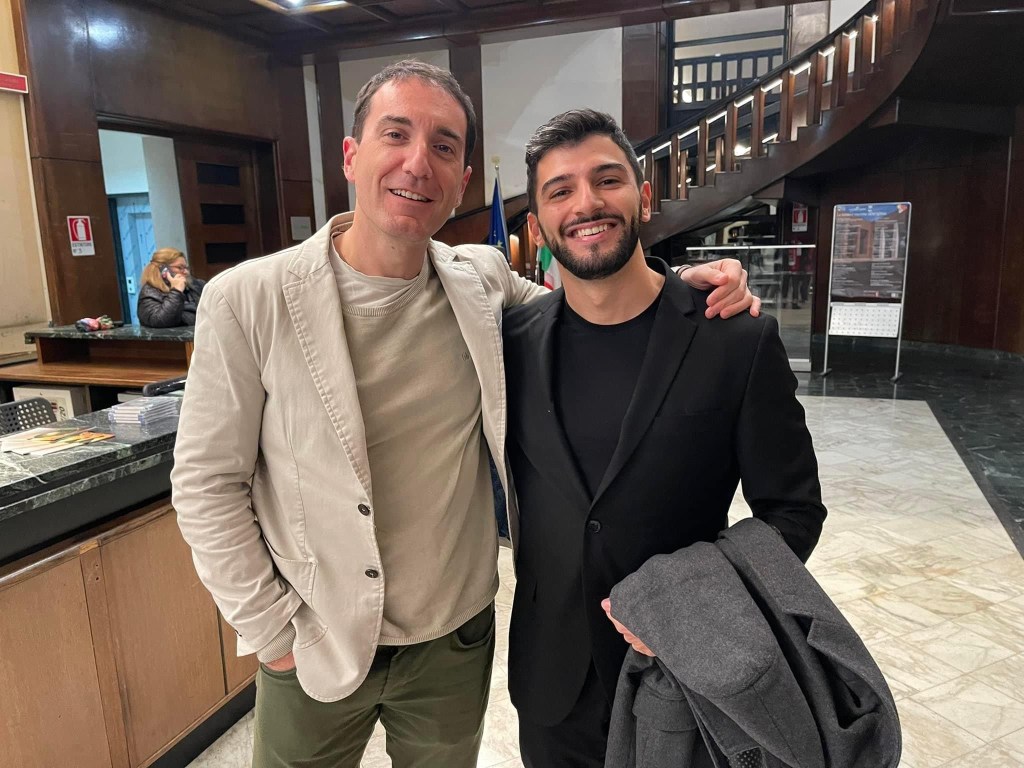
Luca Lione – the great communicator for Roma 3 Young Artist Series.

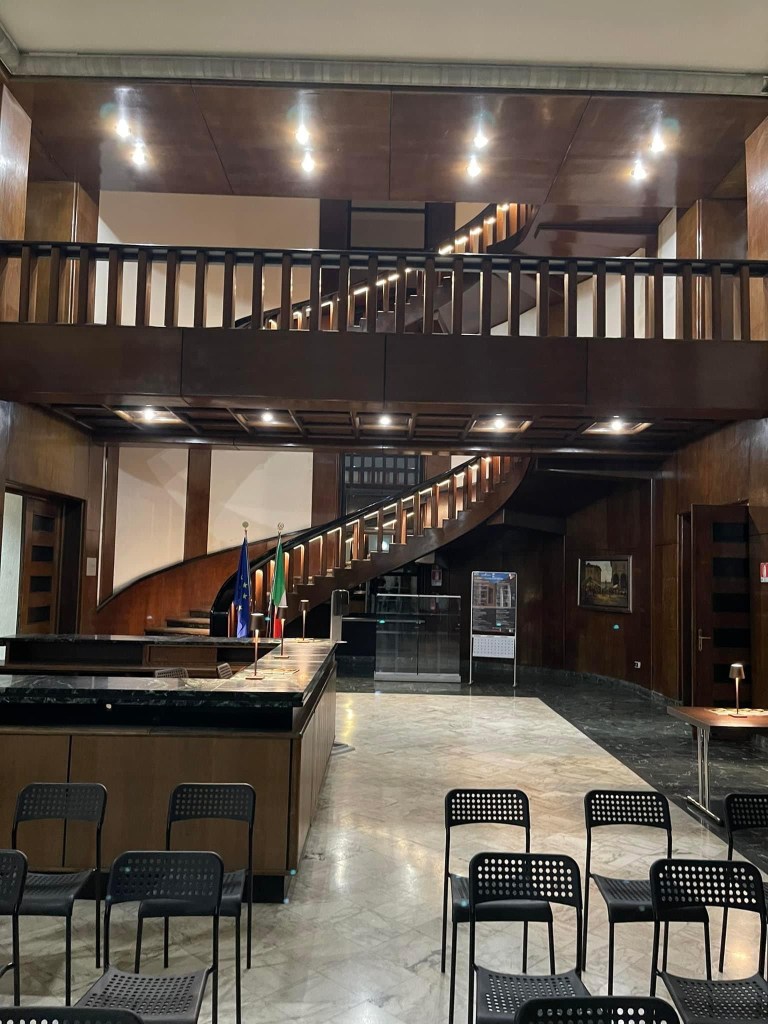
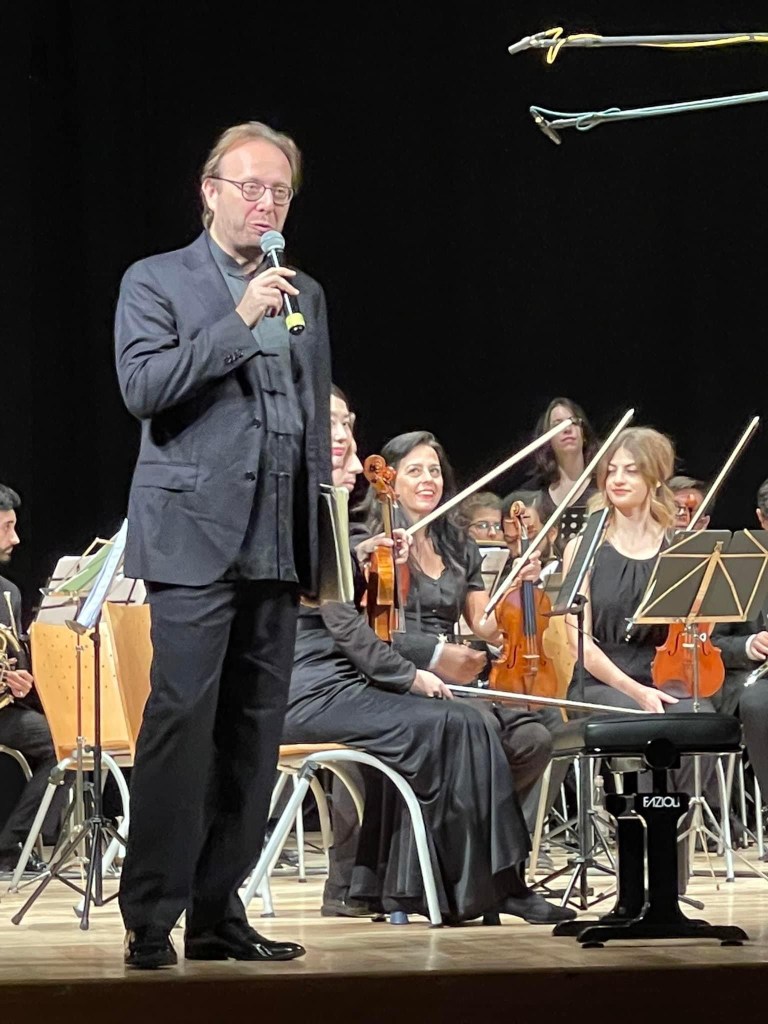
Luca Lione playing for Rome University in their splendid new venue,an important rationalist palace which is now part of INPS social services.

The new venue for Roma Tre Orchestra to add to the Teatro Palladium and historic Teatro Torlonia.


A programme that combined Beethoven with Schumann and Granados with Ginastera.
Schumann had written his fantasy and given it to Liszt to create funds for a monument to Beethoven in his home city of Bonn.
It is above all a deep lament for the love of his life Clara Wieck from whom he had been isolated by her wicked father …the piano teacher of both Clara and Robert.
The Andante Favori ,on the other hand,was written by Beethoven for his beloved Countess Josephine Brunsvik whose family considered Beethoven a ‘commoner’ whom she could never contemplate in marriage!
The Granados work from Goyescas,is the description of Love and Death which was unexpectedly to strike Granados and his wife when they both perished as he tried to save her from the water when their ship was torpedoed in the English Channel.
A haunting premonition with a tone poem full of ravishing beauty and dramatic virtuosistic eruptions.
A Beethoven played with all the grace and charm with which the composer had hoped to entice his lady friend.Played with a scrupulous attention to the composers indications and with character and kaleidoscopic colour as it led to the final beseechingly moving phrases.


In the Schumann Fantasy there was no doubt that this was a heartfelt lament for his future wife and mother of their eight children. https://christopheraxworthymusiccommentary.com/2022/11/05/the-house-of-schumann-clara-wieck-piano-concerto-rana-pappano-triumph-at-s-cecilia-in-rome/
Luca played it with passionate conviction which came across so vividly in a performance that demonstrated their anguish.He led us on a journey that was shared with spectacular and moving participation allowing his red hot Latin blood full range to seduce and ravish.It may have been too loud too soon and some details overlooked but Schumann’s passion was shared by Luca in an all or nothing performance which certainly reached his audience today and was greeted by spontaneous applause after each movement.It just demonstrated so vividly this young man’s unusually communicative showmanship.
His extraordinary participation certainly passed the footlights – passa la ribalta -the dream of all great communicators.
The dark somber ruminations and transcendental outbursts and washes of notes in Granados were played with equal conviction and spectacular virtuosity allied to a deep poetic understanding .
It was the same overwhelming conviction that brought Ginastera’s Three Argentine dances vibrantly to life.The Dance of the Donosa Girl was particularly poignant with its chiselled beauty that really penetrated our hearts before the ‘Outlaw Cowboy’ strode across the keyboard with astonishing technical prowess that was at times breath taking.


Rachmaninov’s Etude Tableaux op 39 n.1 was Luca’s way of thanking this very attentive audience with cascades of notes that streaked up and down the Keyboard with great nervous energy and mastery.

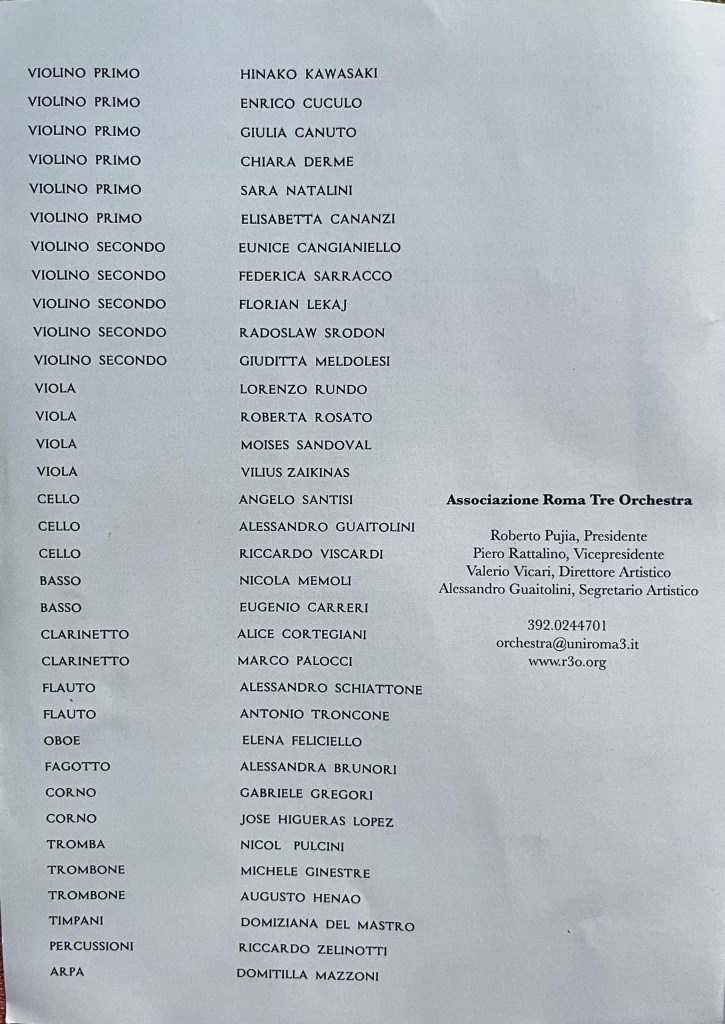
Prof Roberto Pujia,president and Valerio Vicari (his ex student) artistic director

https://christopheraxworthymusiccommentary.com/2022/07/01/luca-lione-in-london-23rd-june-2022/

Domenica 13 novembre 2022 ore 19 Complesso Vittorio Locchi
(I concerti si tengono all’interno del Complesso, NON più nel cortile esterno)


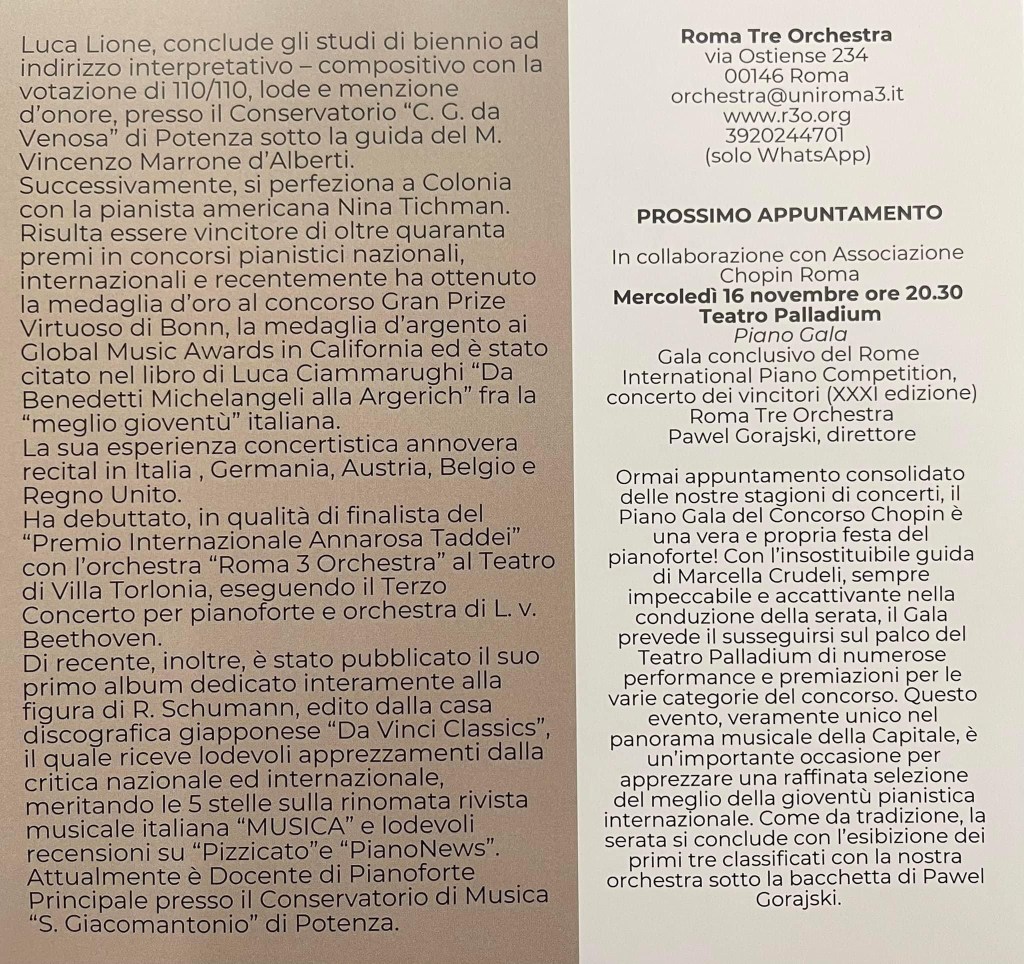
Luca Lione, conclude gli studi di biennio ad indirizzo interpretativo – compositivo con la votazione di 110/110, lode e menzione d’onore, presso il Conservatorio “C. G. da Venosa” di Potenza sotto la guida del M. Vincenzo Marrone d’Alberti. Successivamente, si perfeziona a Colonia con la pianista americana Nina Tichman.
Risulta essere vincitore di oltre quaranta premi in concorsi pianistici nazionali, internazionali e recentemente ha ottenuto la medaglia d’oro al concorso Gran Prize Virtuoso di Bonn, la medaglia d’argento ai Global Music Awards in California ed è stato citato nel libro di Luca Ciammarughi “Da Benedetti Michelangeli alla Argerich” fra la “meglio gioventù” italiana.
La sua esperienza concertistica annovera recital in Italia , Germania, Austria, Belgio e Regno Unito.

Luca with the indomitable artistic director Valerio Vicari


Ha debuttato, in qualità di finalista del “Premio Internazionale Annarosa Taddei” con l’orchestra “Roma 3Orchestra” al Teatro di Villa Torlonia, eseguendo il Terzo Concerto per pianoforte e orchestra di L. v. Beethoven.
Di recente, inoltre, è stato pubblicato il suo primo album dedicato interamente alla figura di R. Schumann, edito dalla casa discografica giapponese “Da Vinci Classics”, il quale riceve lodevoli apprezzamenti dalla critica nazionale ed internazionale, meritando le 5 stelle sulla rinomata rivista musicale italiana “MUSICA” e lodevoli recensioni su “Pizzicato”e “PianoNews”.
Attualmente è Docente di Pianoforte Principale presso il Conservatorio di Musica “S. Giacomantonio” di Potenza.

https://christopheraxworthymusiccommentary.com/2022/10/25/marcella-crudeli-launches-the-31st-edition-of-roma-international-piano-competition/
Alessandro Guaitolini and Flavio Mariana – enthusiastic assistants for Valerio Vicari’s ever growing activity to help young musicians at the start of their career.

The Andante favori was written between 1803 and 1804, and published in 1805. It was originally intended to be the second of the three movements of Beethoven’s Waldstein Sonata op 53 .A friend of Beethoven’s told him that the sonata was too long, for which he was terribly taken to task by the composer. But after quiet reflection Beethoven was convinced of the correctness of the criticism. The andante… was therefore excluded and in its place supplied the interesting Introduction to the rondo which it now has. A year after the publication of the sonata, the andante also appeared separately.It was composed as a musical declaration of love for Countess Josephine Brunsvik,but the Brunsvik family increased the pressure to terminate the relationship so she could not contemplate marrying Beethoven, a commoner.The reason for the title was given by Beethoven’s pupil Czerny, quoted in Thayer: “Because of its popularity (for Beethoven played it frequently in society) he gave it the title Andante favori (“favored Andante”).

Danzas Argentinas Op. 2, is a set of three dances for solo piano written in 1937 by Alberto Ginastera , one of the leading Latin American composers of the 20th century.The first piece, Danza del viejo boyero (“Dance of the Old Herdsman”), immediately strikes the ear as being odd. The reason is as simple as it is strange: the left hand plays only black notes, while the right plays only white notes. This means it is composed of two modes , with the right hand in C Major and the left in D♭ Major. Danza de la moza donosa (“Dance of the Donosa Girl”) is a gentle dance in 6/8 time. A piquant melody meanders its way through the first section, constantly creating and releasing tension through the use of chromatic inflections. The second section introduces a new melody, more assured of itself than the first.With directions such as furiosamente (“furiously”), violente (“violent”), mordento (“biting”), and salvaggio (“wild”), Ginastera left no doubt as how to play the third dance, Danza del gaucho matrero (“Dance of the Outlaw Cowboy”), should be performed. Ginastera makes use of gratuitous dissonance in this piece, opening it with a 12-tone ostinato and frequently using minor seconds to harmonize otherwise simple melodies

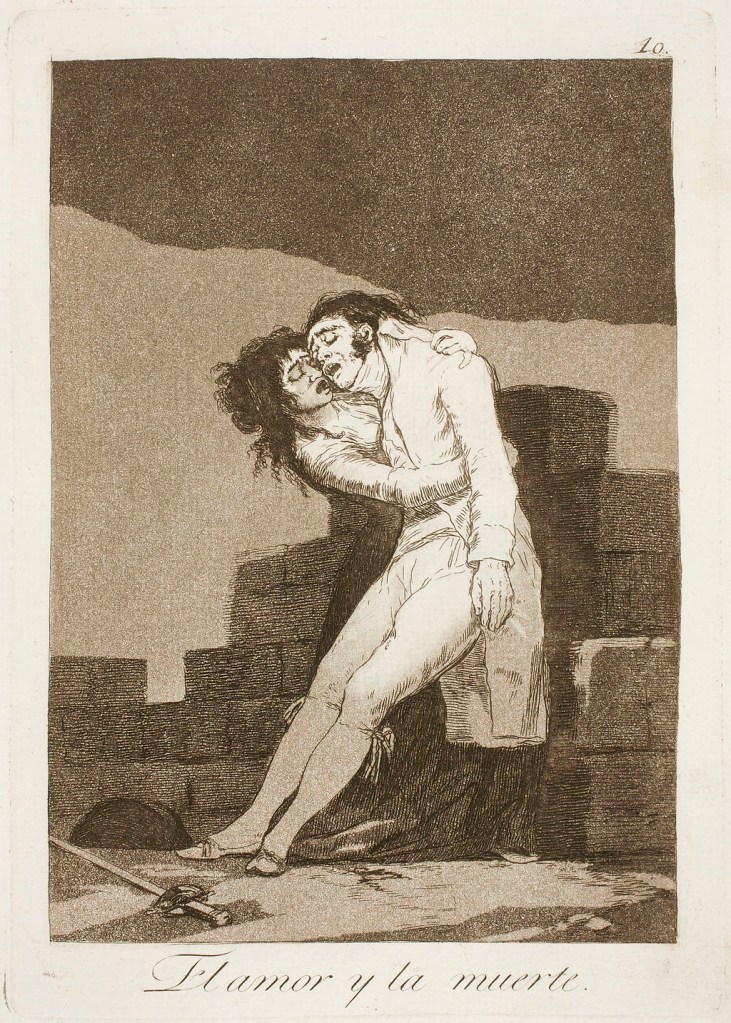
Goyescas, op 11, subtitled Los majos enamorados (The Gallants in Love), is a piano suite written in 1911 by Spanish composer Enrique Granados . It was inspired by the work of the Spanish artist Francisco Goya.The piano pieces have not been authoritatively associated with any particular paintings with two exceptions:

El amor y la muerte” a print by Goya from 1799
  • El amor y la muerte (Love and death) shares its title with one of Goya’s prints from the series called Los capricious
  • El pelele (The straw man) is one of Goya’s tapestry cartoons

The piano writing of Goyescas is highly ornamented and extremely difficult to master, requiring both subtle dexterity and great power. Some of them have a strong improvisational feel, the clearest example of this being the fifth piece, called El amor y la muerte (Love and Death). The suite is in seven episodes :Los requiebros (The Compliments)Coloquio en la reja (Conversation at the Window)El fandango de candil (Fandango by Candlelight)Quejas,o La Maja y el ruisenor (Complaint, or the Girl and the NightingaleEl Amor y la muerte (Balada) (Ballad of Love and Death)Epilogo: Serenata del espectro (Epilogue: Serenade to a Spectre)El pelele: Escena Goyesca (The Puppet: Goya Scene)

This piano suite was written in two books. Work on Goyescas began in 1909, and by 31 August 1910, the composer was able to write that he had composed “great flights of imagination and difficulty.” Granados himself gave the première of Book I at the Palau de la Musica Catalana in Barcelona on 11 March 1911. He completed Book II in December 1911 and gave its first performance at the Salle Pleyel in Paris on 2 April 1914.El pelele (The Straw Man), subtitled Escena goyesca, is usually programmed as part of the Goyescas suite; Granados gave the première in the Teatre Principal at Terrassa on 29 March 1914.Such was the success of this work that he was encouraged to expand it. He wrote an opera based on the subject in 1914, but the outbreak of World War I forced the European premiere to be canceled. It was performed for the first time in New York City on 28 January 1916 and was very well received. Shortly afterwards, he was invited to perform a piano recital for President Woodrow Wilson before leaving New York.By accepting the recital invitation, caused him to miss his boat back to Spain. Instead, he took a ship to England, where he boarded the passenger ferry SS Sussex for Dieppe , France. On the way across the English Channel, the Sussex was torpedoed by a German U boat. According to witness Daniel Sargent, Granados’s wife, Amparo, was too heavy to get into a lifeboat. Granados refused to leave her and positioned her on a small life raft on which she knelt and he clung. Both then drowned within sight of other passengers.However, according to a different account from another survivor, “”A survivor of the 1916 torpedo attack on a Cross channel ferry, Sussex, recognised Spanish composer Granados in a lifeboat, his wife in the water. Granados dived in to save her and perished.”The ship broke in two parts, and only one sank (along with 80 passengers). Ironically, the part of the vessel that contained his cabin did not sink and was towed to port, with most of the passengers, except for Granados and his wife, who were on the other side of the boat when it was hit. Granados and his wife left six children: Eduard (a musician), Solita, Enrique (a swimming champion), Víctor, Natalia, and Francisco.

The Fantasie in C, op 17, was written by Robert Schumann in 1836. It was revised prior to publication in 1839, when it was dedicated to Franz Liszt . Liszt in turn dedicated his B minor Sonata to Schumann .They are the two pinnacles of the Romantic piano repertoire

Its three movements are headed:

  1. Durchaus fantastisch und leidenschaftlich vorzutragen; Im Legenden-Ton
  2. Mäßig. Durchaus energisch
  3. Langsam getragen. Durchweg leise zu halten.

The piece has its origin in early 1836, when Schumann composed a piece entitled Ruines expressing his distress at being parted from his beloved Clara Wieck (later to become his wife). This later became the first movement of the Fantasy.Later that year, he wrote two more movements to create a work intended as a contribution to the appeal by Liszt for funds to erect a monument to Beethoven in his birthplace, Bonn.Schumann offered the work to the publisher Kirstner, suggesting that 100 presentation copies could be sold to raise money for the monument. Other contributions to the Beethoven monument fund included Mendelssohn’s Variations Serieuses.

Schumann prefaced the work with a quote from Friedrich Schlegel:Durch alle Töne tönetIm bunten ErdentraumEin leiser Ton gezogenFür den, der heimlich lauschet.

(“Resounding through all the notes

In the earth’s colorful dream

There sounds a faint long-drawn note

For the one who listens in secret.”)

A phrase from Beethoven’s song cycle An die ferne Geliebte in the coda of the first movement was not acknowledged by Schumann, and apparently was not spotted until 1910.The text of the passage quoted is: Accept then these songs [beloved, which I sang for you alone]. Both the Schlegel stanza and the Beethoven quotation shows his sorrow at being separated from Clara . Schumann wrote to Clara: The first movement may well be the most passionate I have ever composed – a deep lament for you. They still had many tribulations to suffer before they finally married four years later.

https://christopheraxworthymusiccommentary.com/2022/07/01/luca-lione-in-london-23rd-june-2022/

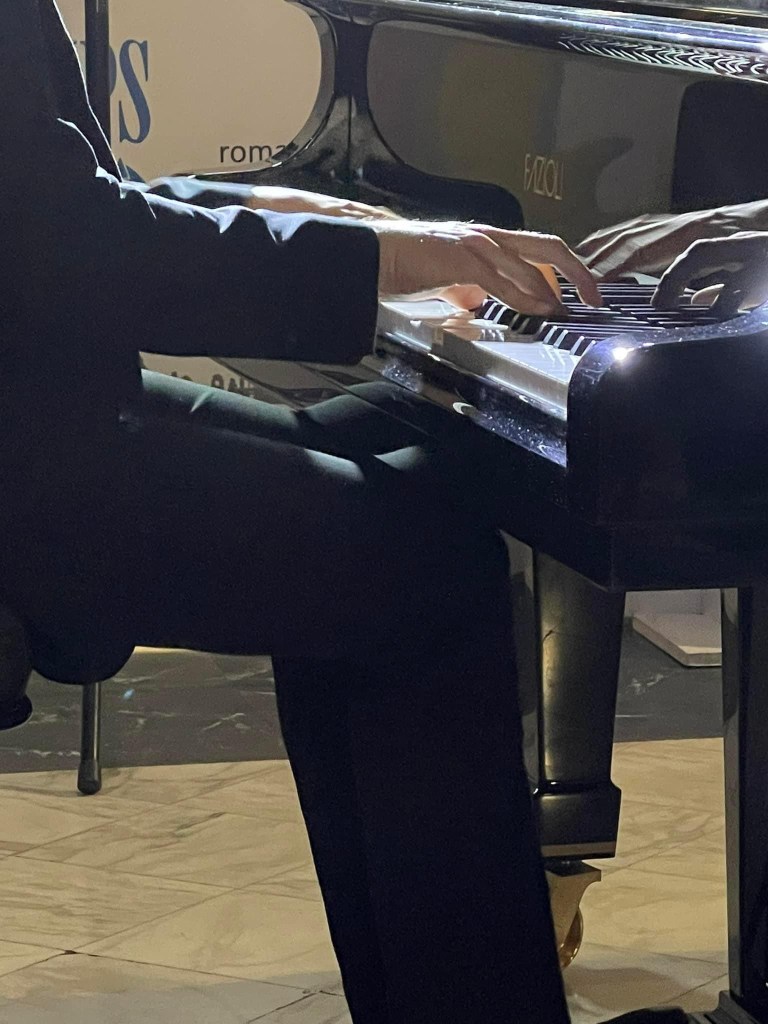
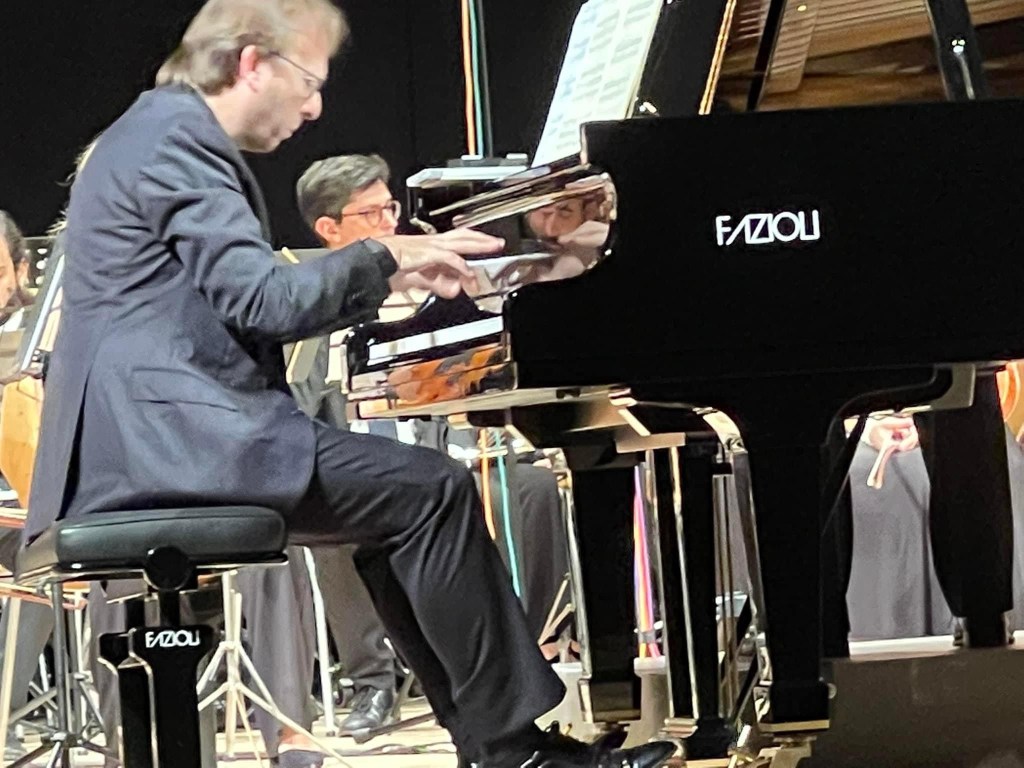
In rehearsal on this magnificent Fazioli piano
Spectacular to listen and watch

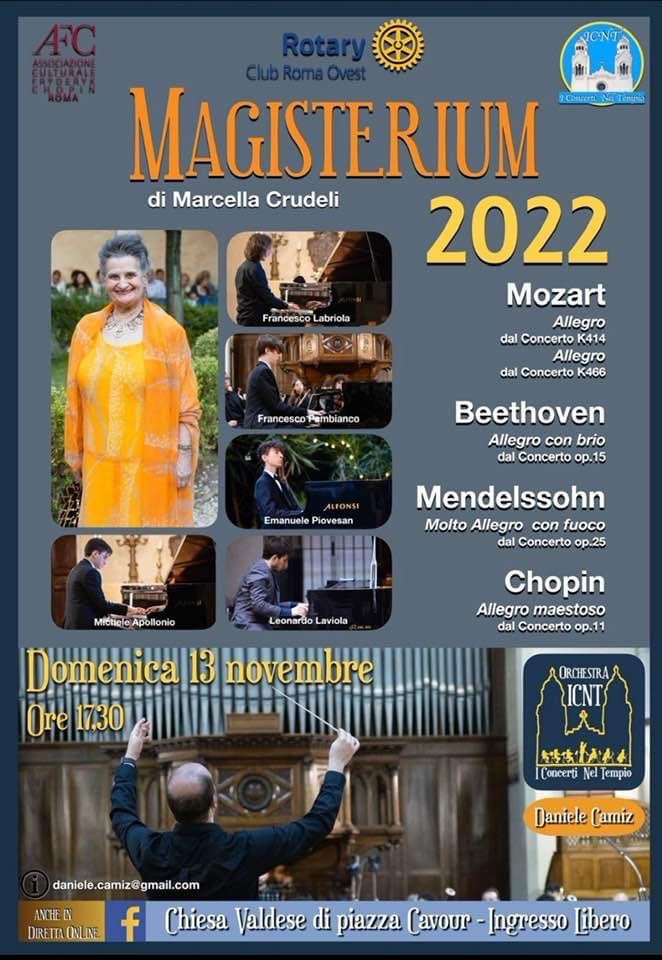
Marcella Crudeli Pianisti del Magisterium in Concerto a Viterbo

Marcella Crudeli with her students from her annual masterclass in Rome.In full activity with her International Piano Competition in Rome in its 31st year this Thursday arriving at the Grand Premio Chopin prize. https://christopheraxworthymusiccommentary.com/2021/11/16/marcella-crudelis-gift-to-the-eternal-city/. It is amazing that she can still find the time and energy to dedicate to her young aspiring students who she has taken under her wing this year in her Annual Magisterium https://christopheraxworthymusiccommentary.com/2021/07/31/sorrento-crowns-marcella-crudeli-a-lifetime-in-music/
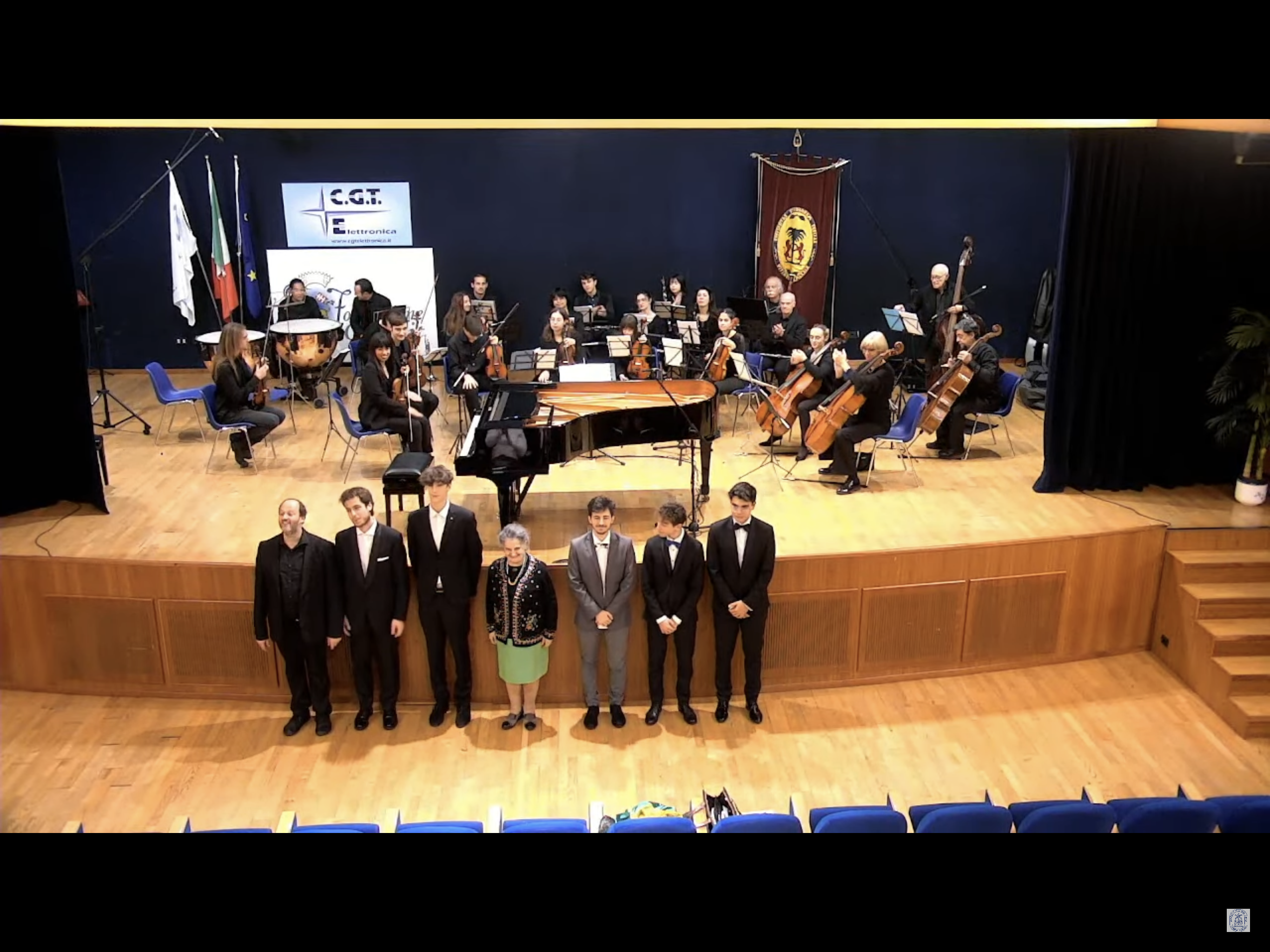
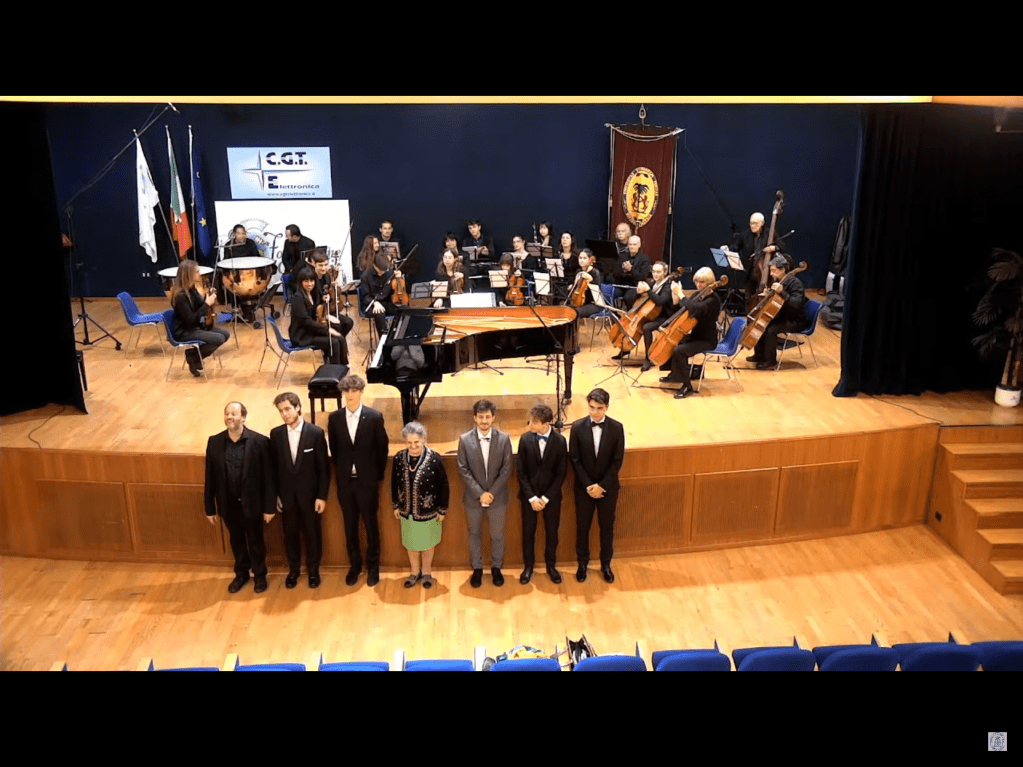
The equally indomitable prof Franco Ricci giving a stage to these young musicians at a turning point in their lives. https://christopheraxworthymusiccommentary.com/2021/10/23/magisterium-of-marcella-crudeli-takes-viterbo-and-rome-by-storm/
https://youtube.com/watch?v=1BZqZxed7jA&feature=share
Repeat performance in Rome
Francesco Labriola with a beautifully played Mozart K 414 a real sense of style and discipline.A Chopin Study op 25 n.1 of great breadth and technical control
Leonardo Laviola with a fine performance of Mozart K 466 and an interesting choice of cadenza ( not the usual Beethoven) played with great virtuosity and imagination.A passionate performance of Chopin Study op 10 n12 (Revolutionary) showed off his technical prowess to the full
Emanuele Piovesan with a very fine performance of Beethoven op 15.A pianist I have heard before but is now maturing as the pianist of great natural flair that I had noted a few years ago .His performance was indeed the high point of all these very fine young pianists.Prokofiev’s Suggestion Diabolique op 4 was the ideal choice for this young man of great character where his infectious enjoyment of all he did was refreshing to see .
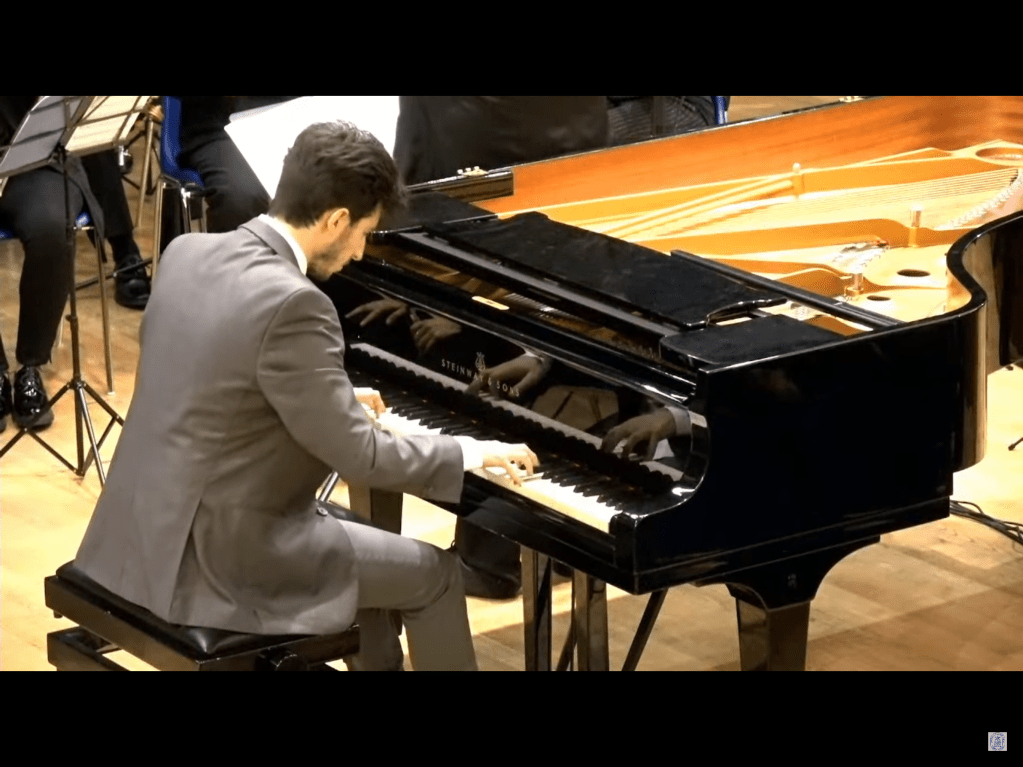
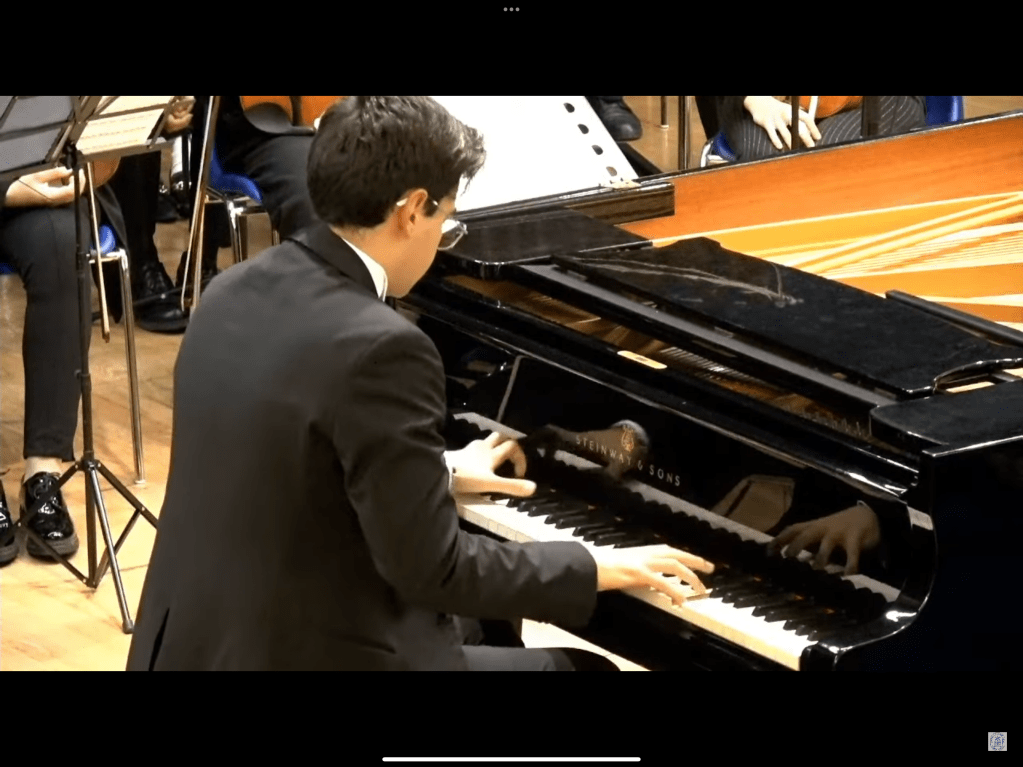
Francesco Pambianco with a Mendelssohn Concerto played with great flair and technical control …..it was a pity to interrupt the performance but obviously there was only time for one movement that unfortunately Mendelssohn had not contemplated .A very secure Chopin Study op 10 n4 showed off his exemplary technical control
Michele Apollonio with a very solid and secure Chopin Concerto op 11 .A mature performance where his technical control was doubly confirmed with a very secure performance of Liszt Transcendental study in F minor played with passionate conviction.
The amazing Marcella Crudeli who celebrated her 80th birthday some time ago has taken time off from her International Piano Competition in Rome to follow her young students to Viterbo to play with orchestra.The equally indomitable Prof Ricci ,he too in his 80’s,ever present to help bring young musicians to the fore as they dedicate their youth to art
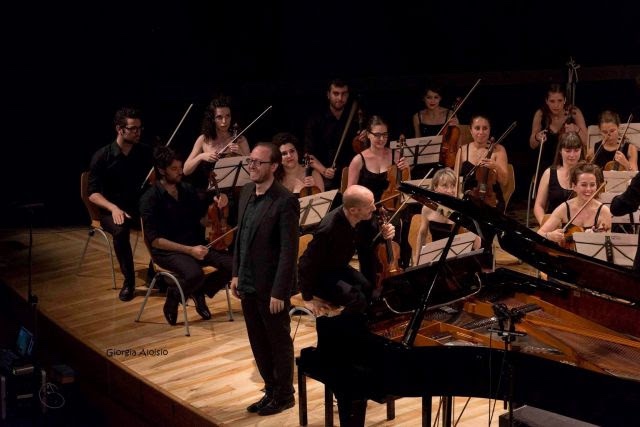
Daniele Camiz superb trainer/conductor of his youthful ICNT Orchestra giving to each performance superb musicianly support.

https://christopheraxworthymusiccommentary.com/2022/10/25/marcella-crudeli-launches-the-31st-edition-of-roma-international-piano-competition/

Roberto Prosseda a Phoenix hovers over Roma 3

La musica per un mondo nuovo


Il pianista Roberto Prosseda, già ospite di Roma Tre Orchestra in diverse occasioni, sarà il protagonista di questa serata al Teatro Palladium

Venerdì 11 novembre ore 20.30 Teatro Palladium
Phoenix
L. Dallapiccola: Piccolo concerto per Muriel Couvreux
M. Rubini: Phoenix per pianoforte e orchestra
A. Bruckner: Sinfonia n. 1 in do minore WAB 101 (trascrizione per orchestra da camera a cura di M. Rubini)
Roberto Prosseda, pianoforte
Roma Tre Orchestra
Massimiliano Caldi, direttore

In collaborazione con il Teatro Verdi di Pordenone, che ci ospiterà domani 10 novembre, questo programma prosegue il cammino del “Bruckner Project” che Roma Tre Orchestra dedica a trascrizioni delle sinfonie del celebre compositore austriaco, in vista dei 200 anni dalla nascita nel 2024.
La prima sinfonia è proposta in una trascrizione di Matteo Rubini che ne rielabora la scrittura per adattarla ad un organico strumentale più ristretto, sotto la sapiente guida di Massimiliano Caldi.
Rubini presenta inoltre un nuovo brano intitolato Phoenix, eseguito dal celebre pianista Roberto Prosseda. Versatile interprete attento alla musica moderna e contemporanea, Prosseda esegue anche il Piccolo concerto per Muriel Couvreux di Luigi Dallapiccola.

Roberto Prosseda with Muriel Couvreux

Questa partitura, dedicata alla figlioletta settenne di un’amica parigina, Lucienne Couvreux, nasce nei primi anni della seconda guerra mondiale, tra il 1939 e il 1941. Nulla traspare, in questa musica, della tragicità di quei giorni: la scrittura, ancora diatonica, ha la serenità che si conviene ad una musica scritta per una bambina. L’essenzialità delle frasi, la freschezza e la chiarezza degli impasti strumentali, il semplice dialogare tra il solista e la piccola orchestra sono le caratteristiche emergenti di questo lavoro, che pur presenta una tecnica canonica estremamente complessa. La prima esecuzione ebbe luogo al Teatro delle Arti di Roma il 1 maggio 1941 sotto la direzione di Fernando Previtali, solista l’autore stesso.Il curioso titolo di questa composizione porta il nome della dedicataria, figlia di un’amica parigina del compositore. Scritto tra il 1939 e il 1941, il brano ha ancora una scrittura diatonica (successivamente Dallapiccola sarebbe stato tra i primi italiani ad intraprendere la strada della dodecafonia). La prima esecuzione ebbe luogo presso il Teatro delle Arti di Roma il 1 maggio 1941, quando Parigi era ormai da quasi un anno sotto il giogo nazista.

Roberto Prosseda the ink still wet on the score

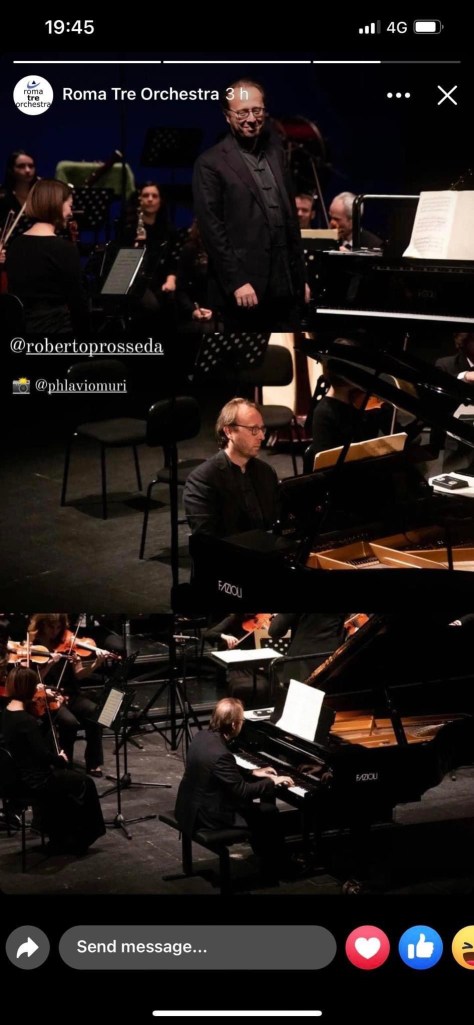
The rise of the Phoenix the eclectic Roberto Prosseda surprises us again as he hovers over the keyboard with a little known concerto by Dallapiccola and a world premiere of a concerto by Rubini.
The ink still wet on the page as Roberto flew in from Stuttgart and Israel where he has been performing the Gounod concerto for pedal piano and orchestra before arriving back home for this world premiere.
A work which had arrived only during the last month with Roberto mastering it inbetween rehearsals and plane journeys .He arrived back only a few days ago to rehearse in Pordenone where his equally astonishing colleague Maurizio Baglini organises an extraordinary musical season.Pordonone was actually the world premiere and Rome the consolidated second premiere.

Artistic director of Roma 3 Valerio Vicari


With the guardian angel of Roma 3 Valerio Vicari providing the orchestra that he has carefully formed and nurtured over the past 15 years he gave us the possibility to hear this concerto in the capitol.
Not an easy choice but then Valerio and Prof Pujia are intent on giving a platform not only to young musicians at the start of their career but also a platform for new music.
Even more surprising is that the score is also being published by Roma TrE-Press.

Maestro Rubini receiving applause from musicians and audience alike


A programme that together with these concertos also included Maestro Rubini’s transcription for chamber orchestra of Bruckner’s First Symphony WAB 101.
Anyone familiar with the mighty symphonic output of Bruckner would know that to reduce this symphonic mastery to a chamber ensemble is no mean feat.
It just shows the technical mastery of Maestro Rubini that we had already appreciated in his concerto.


Phoenix is a concerto for piano and orchestra in two movements and is prefaced by a very suggestive phrase from Dante’s ‘Inferno’:
‘che la fenice more e poi rinasce,quando al cinquecentesimo anno appressa erba ne’ biada in sua vita non pasce,ma sol d’incenso lacrima e d’amomo,e nardo son l’ultime fasce’ Inferno XX1V,107-111.
Like the Dallapiccola that preceded it this is a work in which the piano and orchestra create a world of chamber music proportions listening and working together to create a whole.
It was obvious that from the sinister bass comments from the piano in Phoenix that this was a work of darkness where the chiselled sounds of the piano in Dallapiccola were all lightness and purity.
Strange as this little known concerto was written in 1939 with the clouds of an imminent war hovering above!
They were played with a conviction and mastery that was remarkable and luckily I saw microphones so imagine it can be available to the vast public that it deserves.
Roberto’s advocacy of contemporary and unknown music is becoming leggendary.
I remember him as a young student from the school of Sergio Cafaro trying out his programmes at the nearby Ghione theatre before his competition successes.He even gave a programme of contemporary Italian composers that the teenage Roberto insisted he wanted to present without the score!

Goffredo Petrassi embraces his Circeo in the garden of Ileana Ghione who took this photo.


He made a CD of all the works of Petrassi that I was happy to place in the blind composers hands who was our neighbour during the summer months in San Felice Circeo.
Fou Ts’ong would often give masterclasses at the Ghione theatre and he was always overjoyed when Roberto could take part.’He can do everything I suggest immediately’exclaimed Ts’ong. https://christopheraxworthymusiccommentary.com/2021/01/13/roberto-prosseda-pays-tribute-to-the-genius-of-chopin-and-the-inspirational-figure-of-fou-tsong/

Maestro William Naboré founder of the Academy in Como and teacher of Roberto and Shunta Morimoto,new piano genius making his mark at only 17. https://christopheraxworthymusiccommentary.com/2022/05/23/shunta-morimoto-a-colossus-bestrides-villa-aldobrandini-as-it-had-when-liszt-was-in-residence/


It was only a year or two later that he was accepted to the International Piano Academy on Lake Como where he was able to perfect his playing under Fou Ts’ong and William Nabore.https://christopheraxworthymusiccommentary.com/2022/09/26/william-grant-nabore-thoughts-and-afterthoughts-of-a-great-teacher/

Roberto Prosseda introducing the programme


Not only an advocate of contemporary music but he also discovers in the musical archives music of the past that has been left on dusty shelves completely overlooked by less inquisitive eyes.
I have heard him in London play the completely overlooked pedal piano and give a remarkable performance of Gounod’s long forgotten concerto and as encore pieces written especially for this instrument by Schumann.https://christopheraxworthymusiccommentary.com/2018/11/17/roberto-prosseda-and-oleg-caetani-with-the-london-philharmonic-in-london/


The conductor with the LPO was Oleg Caetani ,the son of Igor Markevich.Caetani being the noble family owning much of the region of Latina where Roberto was born.
He has also uncovered so many forgotten works by the prodigious Mendelssohn and has recorded what might be considered the most complete survey of his music.
Fragments of a third concerto were pieced together by his colleague Maestro Buffalini,husband of Luisa Prayer also from the school of Sergio Cafaro ,and the work was played in London with the then little known Yannick Nezet – Seguin ( now the famous successor of Muti in Philadelphia ) and went on to record it with Riccardo Chailly.
Not content with all this performing activity he is also to be found publishing books on piano technique and running festivals such as Cremona Musica.https://christopheraxworthymusiccommentary.com/2022/09/26/cremona-the-city-of-dreams-a-global-network-where-dreams-become-reality/

He also has one of the most important classes in Rovigo Conservatory and also has an important piano duo with his wife Alessandra Maria Ammara . https://christopheraxworthymusiccommentary.com/2021/01/22/duo-prosedda-amara-french-women-composers-for-four-hands-from-palazetto-bruce-zane-in-venice/

And last but not least a happy family man of three children who will have much to live up to in the future !

He is dashing off after this concert to be the only pianist jury member for the Premio Venezia in Venice at La Fenice ……the Phoenix ……coincidence or is it written on the cards!

Maestro Rubini thanking Roberto Prosseda at the end of his performance of the Phoenix Concerto

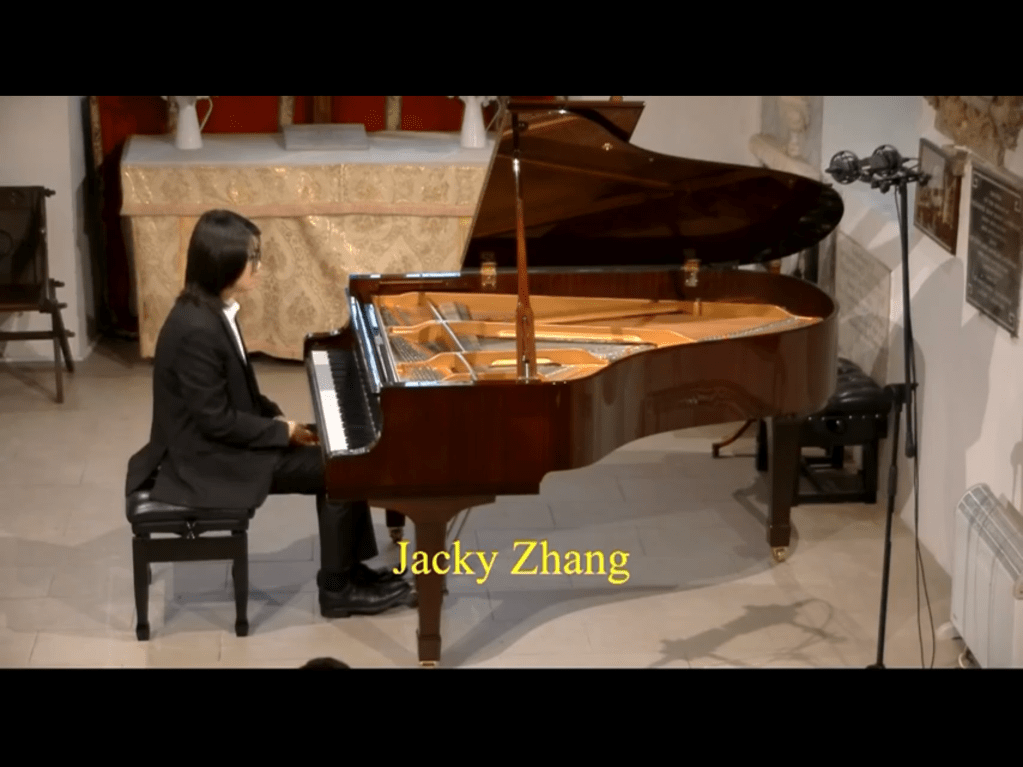
Jacky Zhang at St Mary’s the birth of a great artist and the start of a long voyage of discovery

An extraordinary display not only of great authority and total command of the keyboard.Above all ,though,this young man’s performances today will long be remembered for their aristocratic musicianship in which very note had a meaning and significance as it built to an architectural whole of great maturity.
From the very opening the power of the left hand gave such profundity to the sound giving it a richness of orchestral proportions adding such nobility and grandeur to Busoni’s recreation of Bach’s Toccata in C.
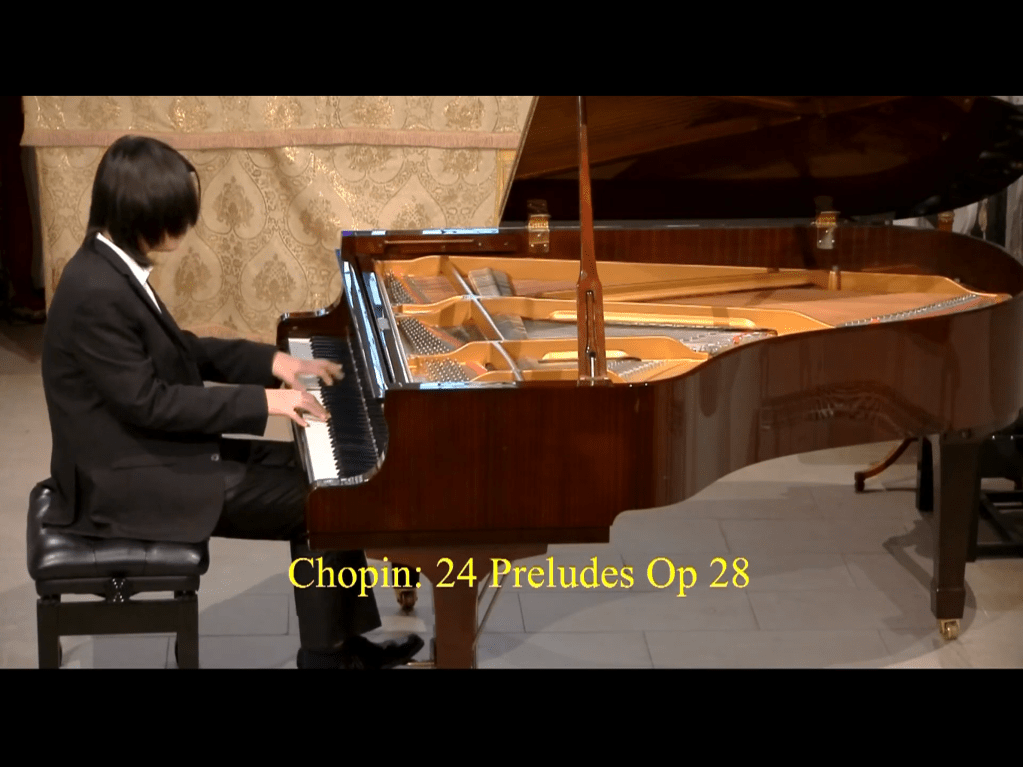
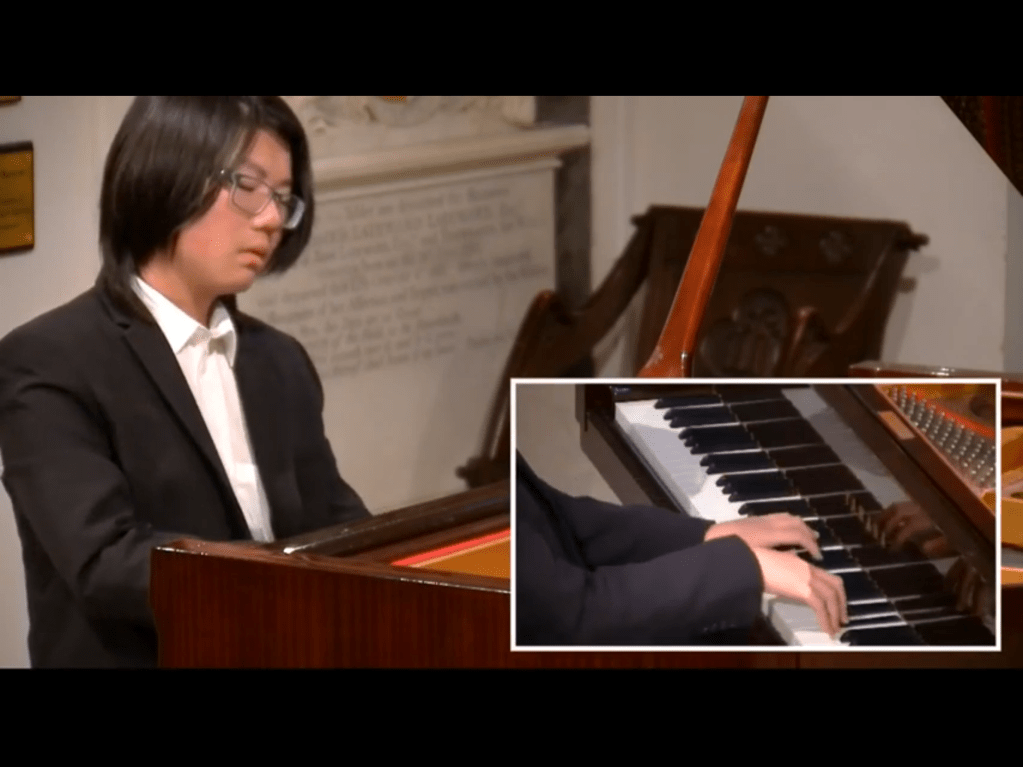
Twenty four preludes that were twenty four jewels in a crown that even the great Chopin player Fou Ts’ong declared were for most mortals twenty four problems.Not in Jacky’s poetic hands as the ravishing sounds and astonishing technical mastery allowed each individual prelude to become a miniature tone poem of simplicity and grandeur.
But it was the encore that was even more astonishing.
Mazeppa,one of Liszt’s most taxing of transcendental studies was played like the west wind blowing over the keys.A gust of wind that entered and built in power and brilliance that was breathtaking.
The ravishing beauty of the mellifluous central section was played with such subtle colouring and shape and was truly heartrending.
But as the west wind blew up again we were astonished at the volume of sound that this young man could produce without it ever becoming hard or ungrateful.
On the contrary it was the sound that only the greatest of players can find with such ease and refined brilliance and comes from very early training and an enormous amount of work and dedication to acquire fingers of steel but wrists of rubber.
Above all though to train ears that listen with the sensitivy of a poet and hands that caress the keys with the creativity of a sculptor.
A mentor of the stature of Dmitri Alexeev ‘non guasta’ as they say in my part of the world (I am listening from my home in Italy ) and who is also a long time resident of Ealing where a strange wind seems to bring the greatest of young musicians these days.
https://christopheraxworthymusiccommentary.com/2021/11/22/the-back-of-beyond-bright-future-for-the-class-of-dmitri-alexeev-jacky-zhang-alexander-doronin-nikita-burzanitsa-thomas-kelly-junlin-wu/

Toccata, Adagio, and Fugue in C major BWV 564 was written for organ by J.S.Bach As is the case with most other organ works by Bach, the autograph score has not survived and the earliest manuscript copies were probably made in 1719–1727. The title of the piece in these copies is given, as expected of organ literature of the time, simply as Toccata in C major and is an early work, probably composed in the mid-to-late Weimar years, i.e. 1710–1717. Busoni published his transcription for the piano in 1900; and is one of his many Bach transcriptions and the work influenced Busoni’s own Toccata for Piano (1920).

This very Toccata was the one that Horowitz chose for his return to the stage in 1965 at Carnegie Hall.The great Horowitz not having been heard in public for 12 years,missed the opening flourish and it sent a shiver down everyone’s spine but which soon turned into delirium as the concert passed into history as the triumph it truly was.

The opening of the Toccata by the hand of Johann Peter Kellner

Jacky at 14 gave a remarkable performance technically and musically.Impeccable but lacking the great organ sonorities that Busoni was trying to evoke on the piano.Bosendorfer had added another nine notes to their grand coda on Busoni’s quest for more sonority.The normal piano is of 88 notes and Bosendorfer could boast 97,the added bass notes usually covered with a wooden box but these days just painted black.The only composer I know who specifically used these extra notes was Bartok in his piano Sonata which most editors ignore !It was this great accumulation of sound that was missing whilst Jacky played with remarkable clarity and an enviable sense of contrapuntal lines.It lacked though the weight and mighty forward moving energy that is such an integral part of these organ works.

The Adagio by the same hand as above

The Adagio was played with ravishing tone but without the weight of a deep legato that would allow the melodic line to soar on high as a prayer of thanksgiving in one great line above the rather urbane accompaniment.The Fugue was again played with exemplary clarity and non legato but as the ever contrapuntal texture became denser Jacky at last allowed himself to add more pedal and more sonority as well as conquering the transcendental difficulties that abound.A remarkable performance that will grow in stature as Jacky grows in years!

Chopin’s 24 Preludes,op.28, are a set of short pieces for the piano, one in each of the twenty-four keys and were originally published in 1839.
He wrote them between 1835 and 1839, partly at Valldemossa,Mallorca,where he spent the winter of 1838–39 and where he had fled with George Sand and her children to escape the damp Paris weather.Liszt described them as ‘poetic preludes, analogous to those of a great contemporary poet, who cradles the soul in golden dreams…Chopin himself never played more than four of the preludes at any single public performance,nor was this the practice for the 25 years after his death. Individually they seem like pieces in their own right… But each works best along with the others, and in the intended order… The Chopin preludes seem to be at once twenty-four small pieces and one large one.No prelude is longer than 90 bars (No. 17), and the shortest (No. 7) is ca.45 sec. and No. 9 is a mere 12 bars The first pianist to programme the complete set in a recital was probably Anna Yesipova for a concert in 1876.Nowadays the Preludes are invariably played as a complete set.Ferruccio Busoni in 1915, was the first to record them when making piano rolls for the Duo-Art label. Alfred Cortot was the next pianist to record the complete set in 1926 which is still generally considered the finest interpretation on record.Cortot would programme them in the same concert together with the 24 Etudes op 10 and 25.Fou Ts’ong famously described the Preludes as 24 Problems!.
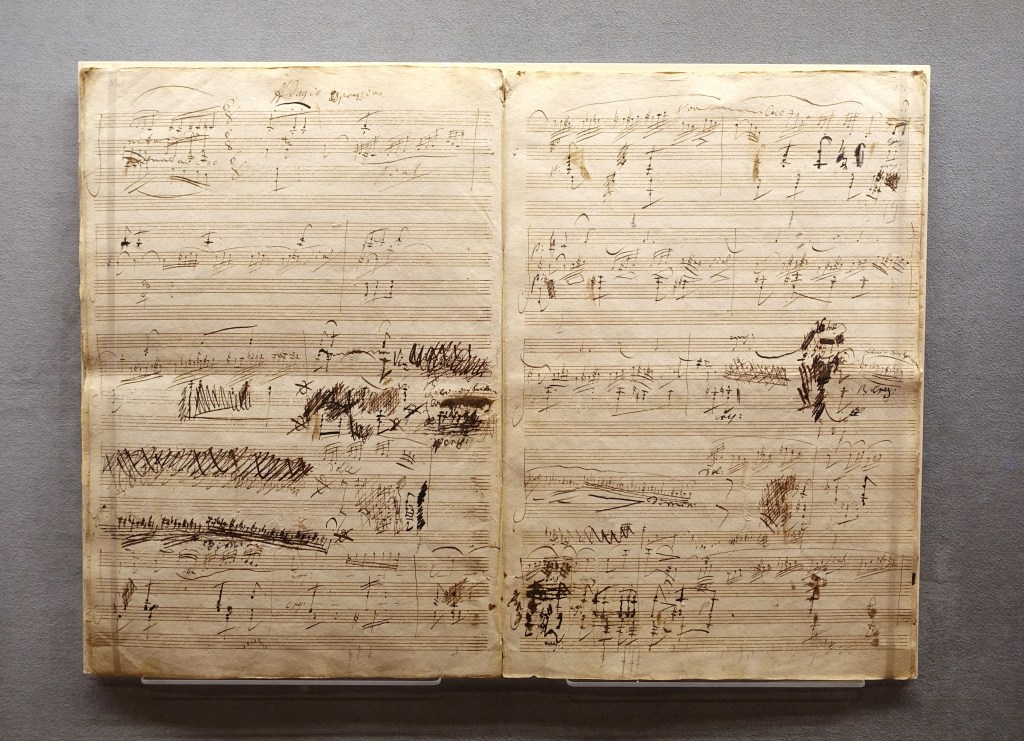
The autograph of the ‘raindrop’Prelude op 28 n.15

Let me just say that this performance of the Chopin preludes by a 14 year old boy was one of the most remarkable things I have heard for a long time.The concentration and aristocratic weight he brought to each of these twenty four tone poems was at times breathtaking as it was ravishing.A great diamond giving out rays of light as it slowly turned from one prelude to another.It was beautiful to see his long fingers poised on the keys as Chopin himself had explained to his pupils.Not the unnatural curved fingers of C major but the long caressing movement of C sharp!And what beauty he brought to the all too short introductory first Prelude.It is the one that Perlemuter could not capture in the recording studio but luckily at Nimbus a microphone had been left on while he was trying the piano and it was this improvised naturalness that had been so hard to find when the red light came on.Jackie understood this immediately which maybe goes to prove Schnabel’s famous line about Mozart being ‘too difficult for adults but too easy for children’.The deep brooding and flexible pulse of the second gave great shape to this rather bleak landscape.The left hand almost in duet with the long melodic lines bursting over only at emotional peaks which gave such impact to this usually rather bland opening prelude.The third was played with enviable clarity,the left hand in a continuous flow of notes with the melodic line played legato as it was shaped so beautifully above this gently flowing accompaniment.The beautiful fourth prelude started so slowly but gradually built in intensity always within an architectural shape that was so natural as it died away to a mere whisper.The gently flowing fifth was beautifully shaped and acted as a breath of fresh air as the sixth came sweeping in with unusual speed, it’s bass melody so delicately played with such flexibility.The little seventh was played with disarming simplicity with the eighth entering as a whisper as it grew in intensity and passionate commitment.It was played with astonishing control and sense of line and the mere vibrations of notes at the end created a magic atmosphere only broken by the final delicate chords .He brought great nobility and authority to the ninth before the scintillating Jeux perlé of the tenth as it commented on the rather capricious melodic line.The eleventh flowed beautifully as it was allowed to unfold so naturally before the final deep bass note out of which grew the frenzied dance of the twelfth.Here the transcendental difficulties were thrown off seemingly with ease but also with a rhythmic energy that was quite exhilarating.The sense of balance in the thirteenth allowed the melodic line to sing out beautifully with the transition to the central section played with the utmost sensibility.The very short fourteenth was barely a gust of wind before the sublime beauty of the ‘raindrop’ prelude.Played with mature simplicity and beauty with the deeply brooding central section suddenly becoming reminiscent of the opening prelude as it built in intensity before the return of the opening melody even more sensitively embroidered and a coda of quite extraordinary poignancy.Like with the ninth he added a quiet bass note before all hell let loose with the sixteenth prelude.After the opening declamatory chords there was the driving rhythmic energy of the swirls of notes that Jackie played with passionate involvement and an enviable technical prowess.The sweep and beauty of the seventeenth came as a great contrast with its beautiful coda where the melodic line floated on the deep bell like bass notes.The cadenza prelude of number eighteen was played with a declamatory display of dramatic effect.Number nineteen the most technically difficult of all the preludes was played with an ease and grace that belied it’s treacherous stretches and leaps as it flowed so mellifluously.There was grandeur and nobility in the twentieth variation which was later used by Busoni and Rachmaninov as a basis for their own variations .The chords imperceptibly dying away into the distance before the final chord placed with dramatic care by Jacky.There was a beautiful sense of balance to the twenty first with a flowing melody played with disarming simplicity before the octaves of number twenty two entered almost unnoticed as they built up to an exciting climax.The twenty third just flowed from his fingers with a grace and ease before the tempestuous final prelude.A prelude played with all the youthful passion and considerable technical control even adding a bass note at the moment of greatest intensity.Not sure why he would want to split the last great dive to the final three bass notes or play them all with the same intensity.But then I am forgetting that this is a boy of fourteen and not yet quite the mature master that I was convinced I was listening to today.

The triumph of Kulibaev and Kondratiev Beethoven alive and well in Capua the city of dreams.The complete Piano and Violin Sonatas

A Kreutzer from Kulibaev and Kondratiev that had us all on our feet after a three day tour de force of the complete piano and violin Sonatas of Beethoven.
Even the collection of Roman masks in this Museo Campano seemed to have a smile on their rather severe faces in this unique location .
Capua,a city that can boast 100 churches and a collection of Roman coins and effigies which is the envy of the world .


A Beethoven project which includes all the cello sonatas too that Antonino Cascio has programmed in his Autunno musicale series.
A full house here and at the nearby Reggio di Caserta with people obviously wanting more.

Greeted by a standing ovation after the Kreutzer


An eleventh sonata was not on the cards but the last movement of the G major sonata op.30 n.3 was!
It is the one in which Kreisler had got lost in his performance with Rachmaninov (it is a famous recording too ).
‘Where are we ?’ whispered the most loved of all violinists ‘Carnegie Hall’intoned the straight faced Rachmaninov!
No problem for this disciple of Zakhar Bron especially when the duo with Prof. Ilya Kondratiev had created a single glorious voice of such potency.

The Violin Sonata No. 6 in A major op.30 n.1, the first of his Opus 30 set, was composed between 1801 and 1802, published in May 1803,and dedicated to Tsar Alexander 1 of Russia.

  1. Allegro
  2. Adagio molto espressivo
  3. Allegretto con variazioni

The Sonata op 30 n.1 where the Allegro immediately established a scintillating play between the violin and piano with such subtle phrasing.Each player trying to out do the other with superb musicianship and control that led to a continual musical conversation that kept the audience spellbound throughout the recital.There was an uninterrupted flow of mellifluous beauty in the Adagio as the melodic line was passed first from the violin to the piano.Whispered beauty from the violin too was answered with a such refined accompaniment from the piano.The finale that Beethoven had substituted for the Kreutzer was of a pastoral freshness.There was some truly virtuoso playing from the piano in the very first variation and just the start of a real question and answer between these two extraordinary musicians.The coda was of a ‘joie de vivre’ that was quite ravishing.

The Violin Sonata No. 3 in E flat major op.12 n.3 , the third of his Opus 12 set, was written in 1798 and dedicated to Antonio Salieri .

  1. Allegro con spirito
  2. Adagio con molta espressione – in C major
  3. Rondo: Allegro molto

There was such effervescence in the Allegro con spirito which contrasted with the Adagio that was played with great intensity.The infectious rhythmic energy of the Rondo brought this early sonata to a brilliant end.

The Violin Sonata No. 9, in A major op.47 was written in 1803 and is notable for its technical difficulty , unusual length and emotional scope. It is commonly known as the Kreutzer Sonata after the violinist Rodolphe Kreutzer , to whom it was ultimately dedicated, but who thoroughly disliked the piece and refused to play it

In the composer’s 1803 sketchbook, the work was titled “Sonata per il Pianoforte ed uno violino obligato in uno stile molto concertante come d’un concerto” The final movement was originally written for the Sonata n.6 op 30 n.1 .

The sonata was originally dedicated to the violinist George Bridgetower (1778–1860) as “Sonata mulattica composta per il mulatto Brischdauer [Bridgetower], gran pazzo e compositore mulattico” (Mulatto Sonata composed for the mulatto Brischdauer, great madman mulatto composer).Though Beethoven had barely completed the sonata it received its first public performance at a concert in the Augarten on 24 May 1803 at 8:00 am,with Beethoven on piano and Bridgetower on violin. Bridgetower had to read the violin part of the second movement from Beethoven’s copy, over his shoulder.

He made a slight amendment to his part, which Beethoven gratefully accepted, jumping up to say “Noch einmal, mein lieber Bursch!” (“Once more, my dear fellow!”). George Bridgetower was born in Poland of a West Indian father described as an African Prince and German mother described as a Polish lady of quality.They were probably both in service!

1815 autograph
George Bridgetower a watercolour of 1800

George showed considerable talent while still a child and gave successful violin concerts in Paris,London,Bath and Bristol in 1789. In 1791, the Prince Regent , the future King George IV, took an interest in him and oversaw his musical education.He performed in the Philharmonic Society of London’s first season in 1813, leading the performance of Beethoven’s Quintet,and subsequently married Mary Leech Leeke in 1816. He later travelled abroad, particularly to Italy , where his daughter lived. He died in 1860 in Peckham , south London and is buried in Kensal Green Cemetery.After the premiere performance, Beethoven and Bridgetower fell out.While the two were drinking, Bridgetower apparently insulted the morals of a woman whom Beethoven cherished. Enraged, Beethoven removed the dedication of the piece, dedicating it instead to Rodolphe Kreutzer , who was considered the finest violinist of the day.After its successful premiere in 1803, the work was published in 1805 as Beethoven’s Op. 47, with its re-dedication to Rudolphe Kreutzer, which gave the composition its nickname. Kreutzer never performed the work, considering it “outrageously unintelligible”. He did not particularly care for any of Beethoven’s music, and they only ever met once, briefly.

The concentration of Erzhan before striking the solo opening declaration was like a climber contemplating Everest before the ascent!There was a feeling as the pianist too replied with flourishes of nobility and grandeur that we were about to hear something very special.These are two superb musicians who have already given some recitals together in London but have never contemplated a complete cycle of Beethoven until persuaded by the indomitable Antonino Cascio to play them this weekend in Capua.

They will repeat the cycle in Thailand in December before inevitably embarking on tours of the capital cities of the musical world.Here they were now at the end of a third day immersed in Beethoven surrounded by Romanic history and about to climb Everest together.And what an exhilarating journey it was too with the sudden burst of electric energy after the opening nobility of the Adagio sostenuto.Amazing outbursts of virtuosity from both players but also the heart rending beauty of the second subject played so aristocratically by the violin and mirrored by the sublime beauty of the melodic line in octaves on the piano.But then the crazy outbursts of energy and the knotty twine of the development where they managed to play as one even in the most intricate of passages.The sudden burst of energy in the coda was breathtaking coming after the serene rest of the Adagio chords that preceded it.It was in fact the continual unexpected contrasts that had led Maestro Kreutzer to consider it simply ‘outrageously unintelligible’.There was an ideal tempo set by Ilya in the Andante and the beauty of his playing and the mellifluous unwinding of the trills was matched by the simplicity and aristocratic style of Erzhan.A first variation in which the violin just comments on the elaborate piano part.Of course the second variation given to the violin with the repeated violin notes played not only ‘leggiermente’ as the composer asks but with a shape and rhythmic impulse all sotto voce and staccato that is a real tour de force of technical prowess.The deep communing between them in the minor was answered by their ravishing interplay in the major.It showed the absolute mastery of Beethoven who could create so much from so little as is evident also in the 3rd and 4th piano concertos of this same period.The interplay between these two artists in the coda reached such sublime heights that the slap of the fortissimo A major .It was the opening cry of the Presto and was like a stroke of lightening before the ferocious cat and mouse of the infamous rhythmic propulsion of this final exhilarating movement.A technical mastery from both players,having shared this long three day journey together ,could now let their hair down (metaphorically speaking dear Erzhan ).An ‘all or nothing’ performance that brought this complete panorama of masterworks of a genius to a truly thrilling ending .

The Cascio’s Artistic director and President of the Autunno Musicale Concerti
With Antonio Cascio and his prize student the superb page turner
The ‘Mothers’ were looking very pleased too