Who could substitute an indisposed Martha Argerich?No one is the simple answer she is quite simply unique.
Both she and her childhood friend Daniel Barenboim were seen still making music together in Berlin only ten days ago .https://youtube.com/watch?v=CzxZmvqZnEA&feature=share .A heart rending clip of two giants of our time who have given us so much for so long.
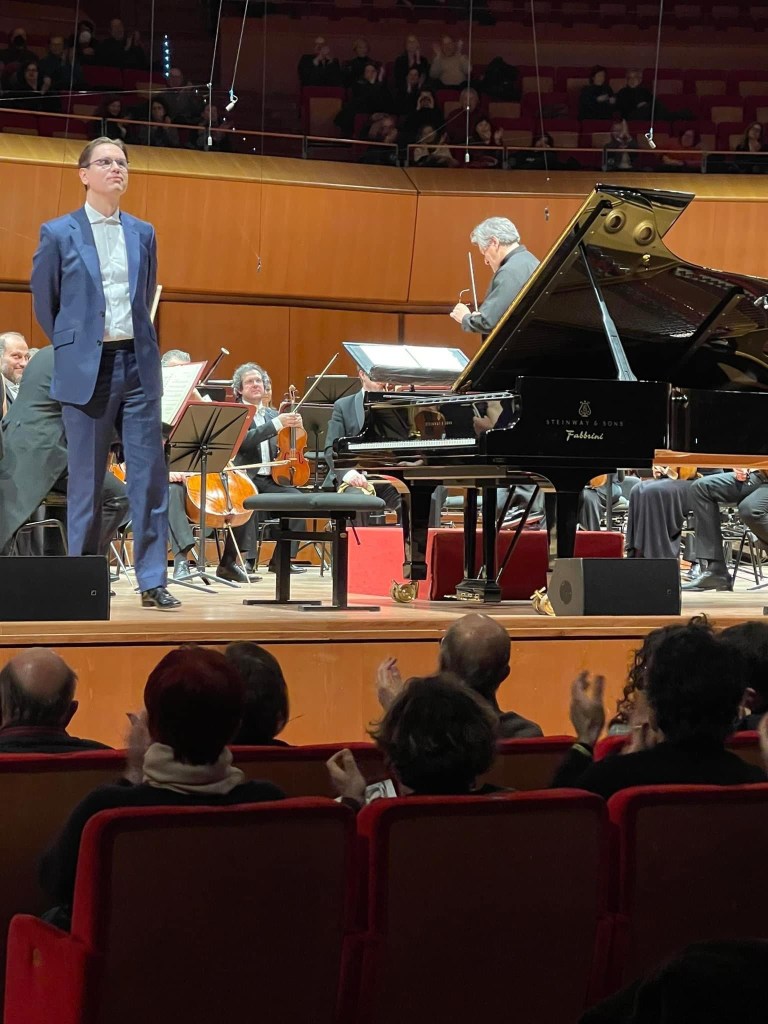
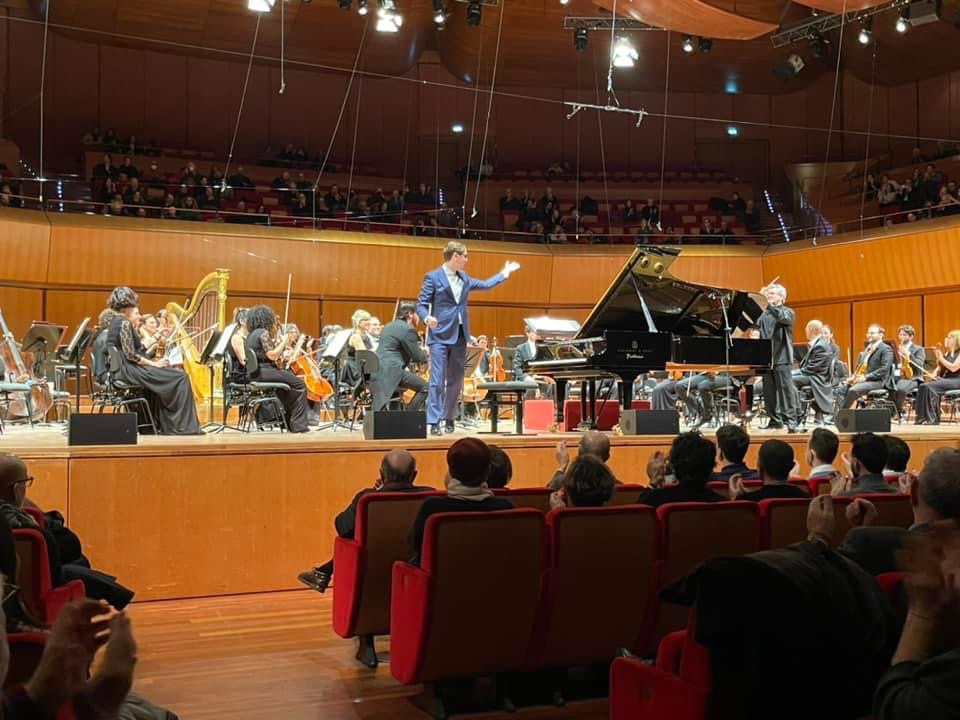
But tonight we were presented with a Viking bringing with him the coldest spell that Rome has known for some time.A hall decimated partly for the absence of Martha but mostly because of the extreme cold that has struck the Eternal City.
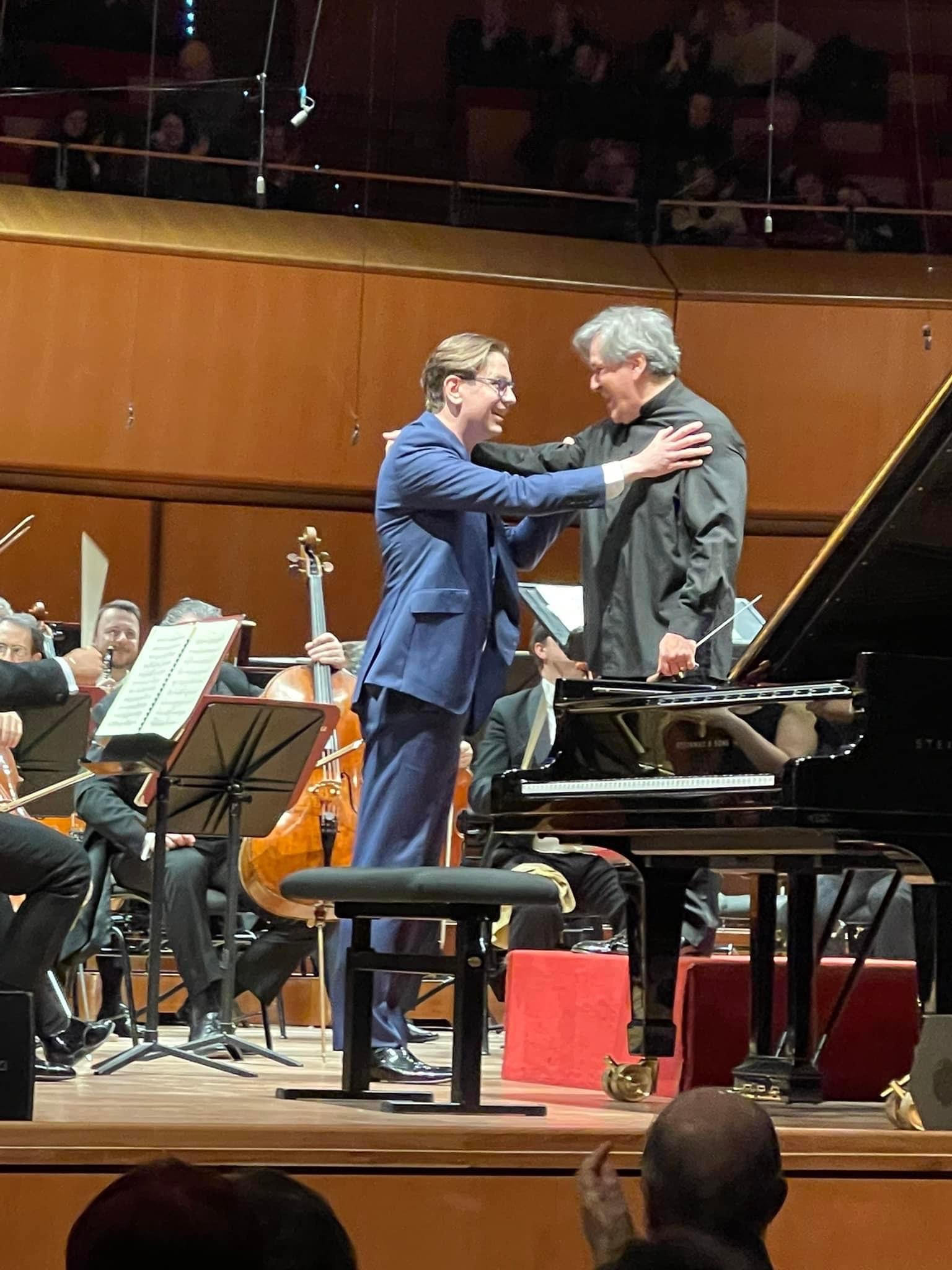
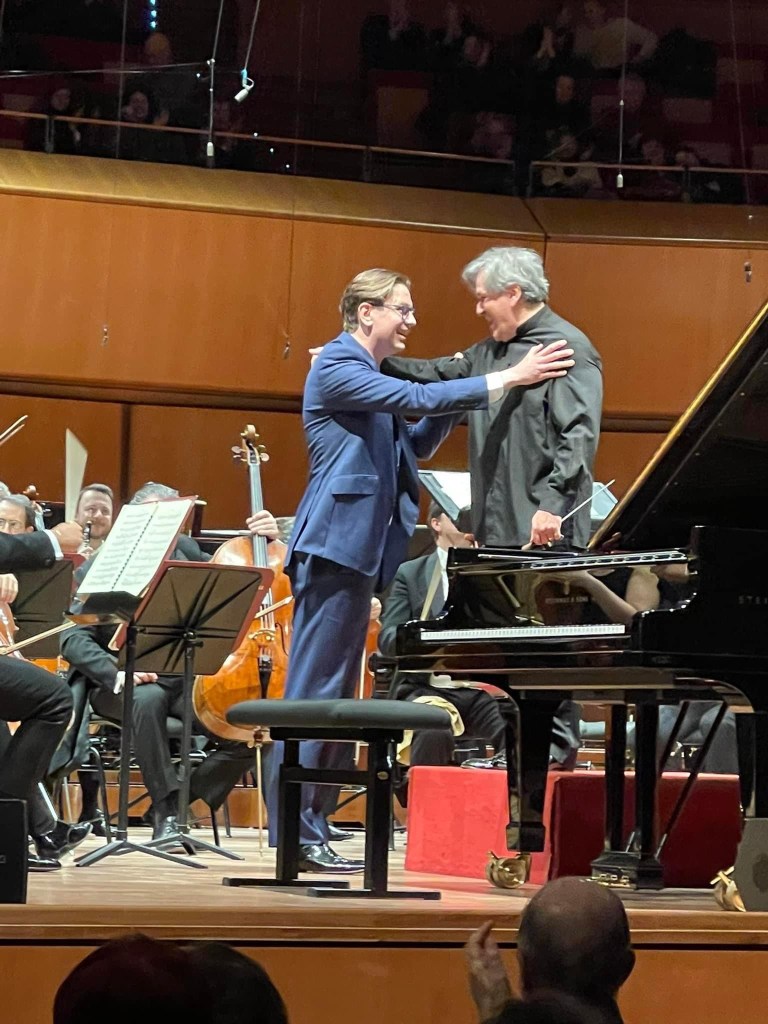
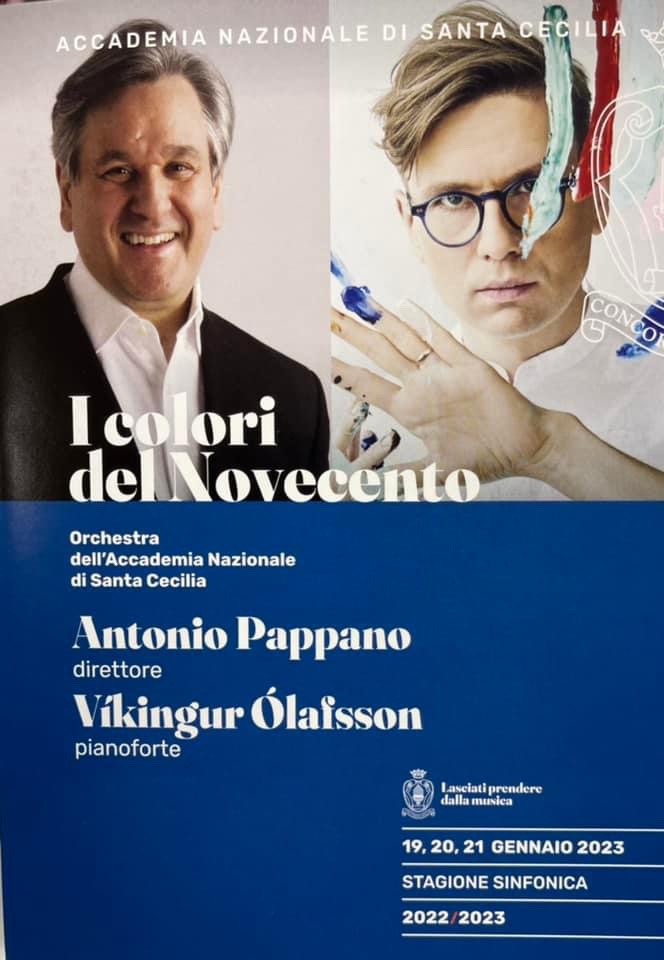
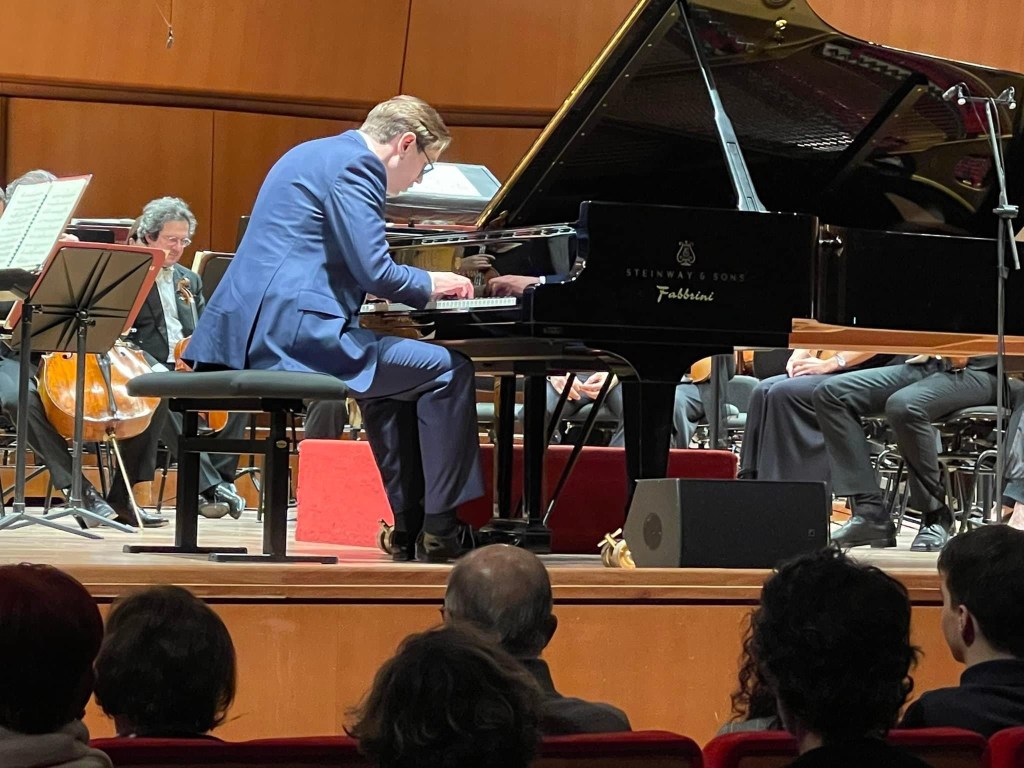
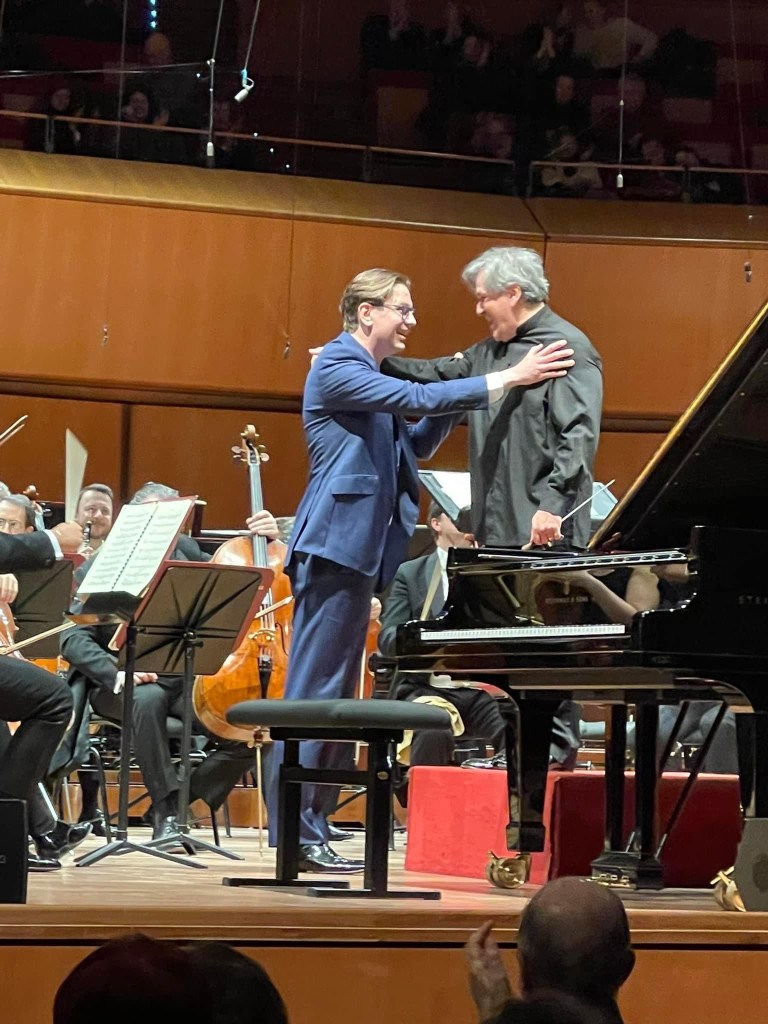
The Islandic pianist ,Vikingur Olafsson ,towered over our beloved ‘Toni’ Pappano as they came on stage together.It gave no idea of the musical giants that they both are. Sir Antonio we know,having savoured his intimate music making with the S.Cecilia Orchestra over the past twenty years until it has become one of the world’s finest orchestras.Pappano too has grown with them and is now one of the most sought after conductors of our time ready to take over the reigns of the historic London Symphony Orchestra. Vikingur Olafsson on the other hand has been noticed over the past few years for the remarkable recordings he has made mainly of transcriptions of Bach.A unique sound world of such luminosity that made one wonder if there had been some mechanical magic in the recording studio.
He is now gradually being heard in the great concert halls of the world and it was an inspired choice to invite him on this sad occasion to replace Martha Argerich.It must have been a daunting prospect for him too until he actually sat at the piano.
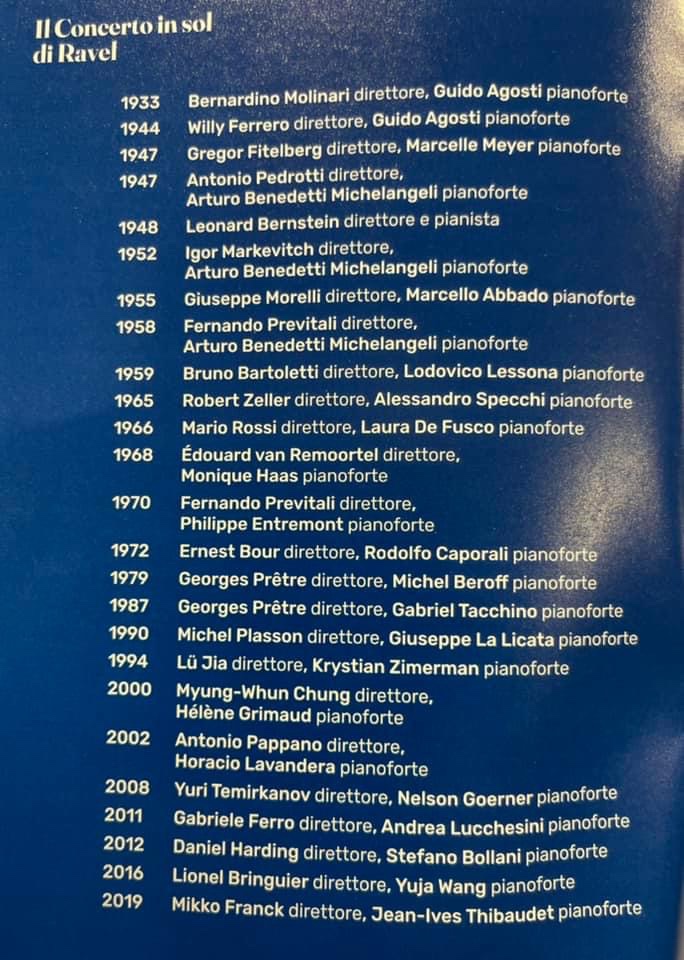
Past performances of the Ravel Concerto in Rome at S.Cecilia
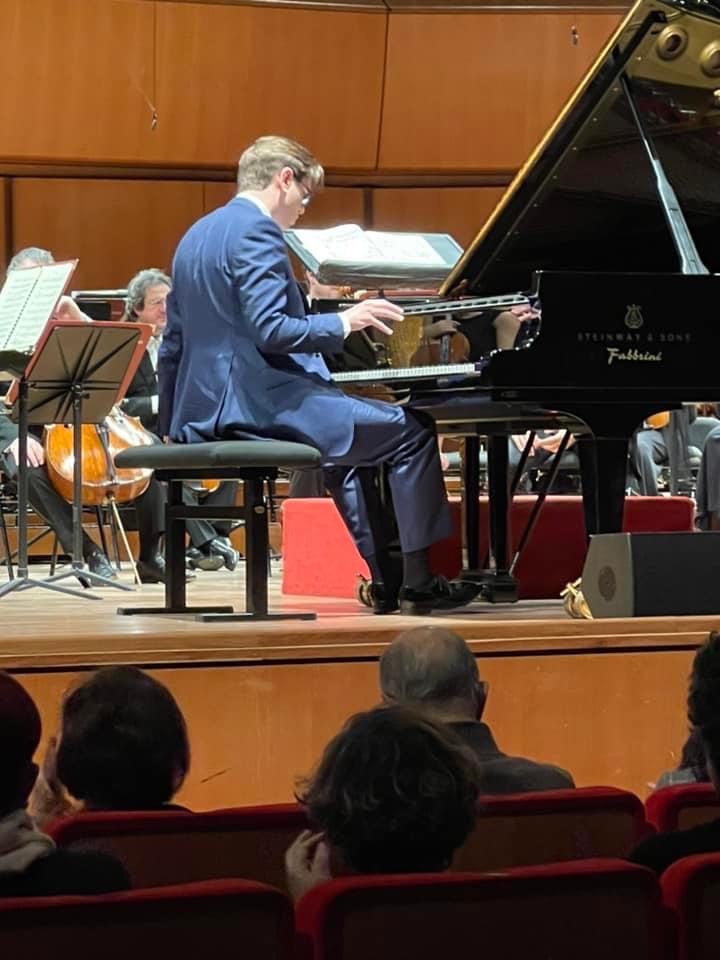
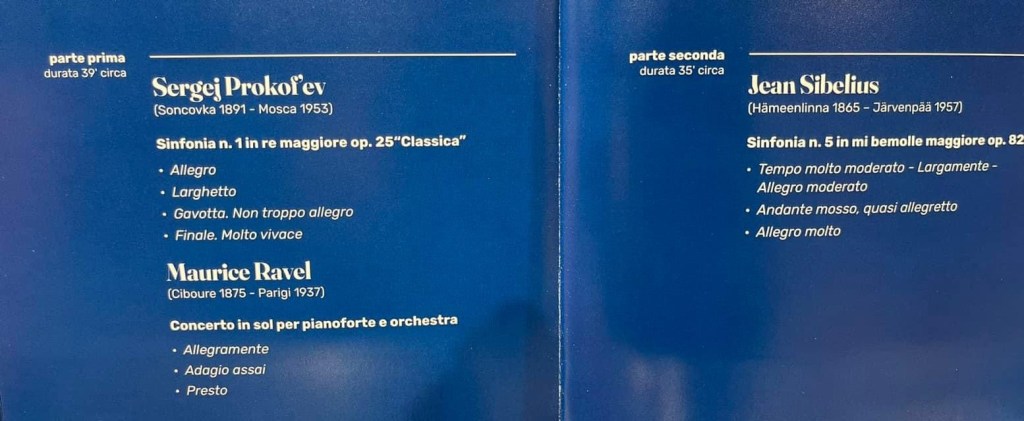
The Ravel concerto was premiered at S Cecilia,a year after the world premiere in Paris in 1932,by my teacher and friend Guido Agosti. A work that is pure chamber music and it was the way that the pianist today integrated and interwove with the players that was so impressive. Of course the heart of the concerto is the long ‘adagio assai’ in which the solo piano sets the scene for the unique magic colour and atmosphere that Ravel could conjure from an orchestra.The long slow opening was played in whispered tones where Vikingur’s unique sense of balance could allow the melodic line to float unimpeded on a bed of true gold but with that same radiance and fluidity that had been so noticeable in his recordings.With the superb wind players,all soloists in their own right,our Viking brought an incisive assured rhythmic impulse to the outer movements under the energetic and subtle eye of our musical magician ‘Toni’ .They all united in the spirit of improvised jazz idioms that Ravel has so ingeniously woven into his web of intoxicating sounds.
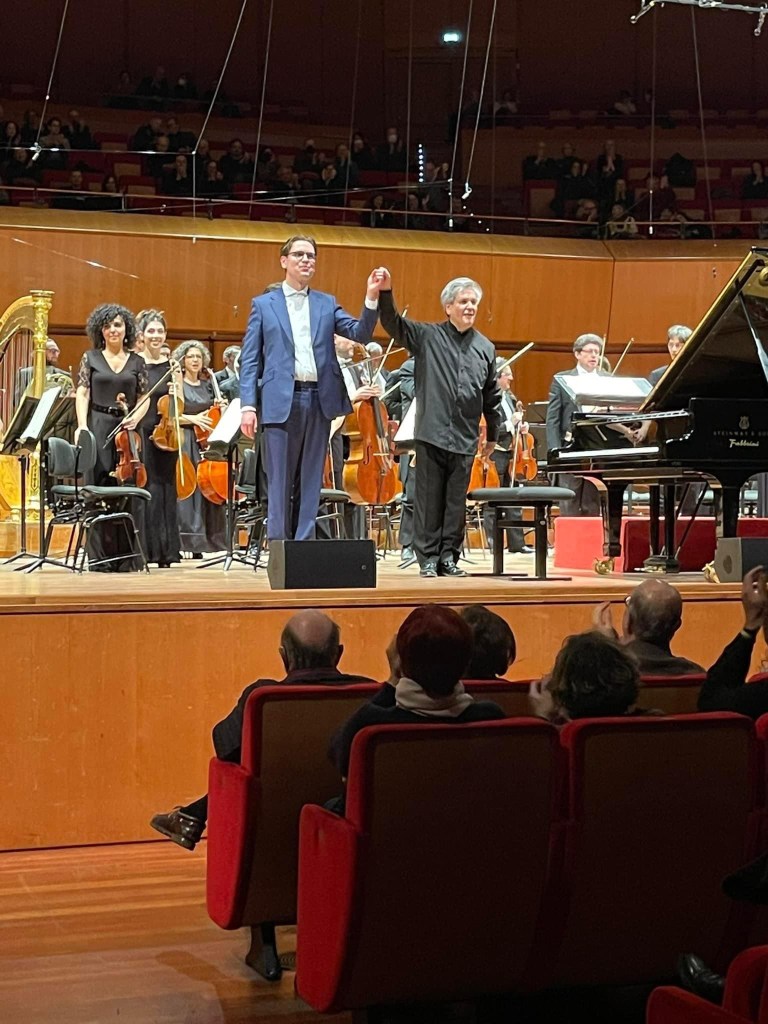
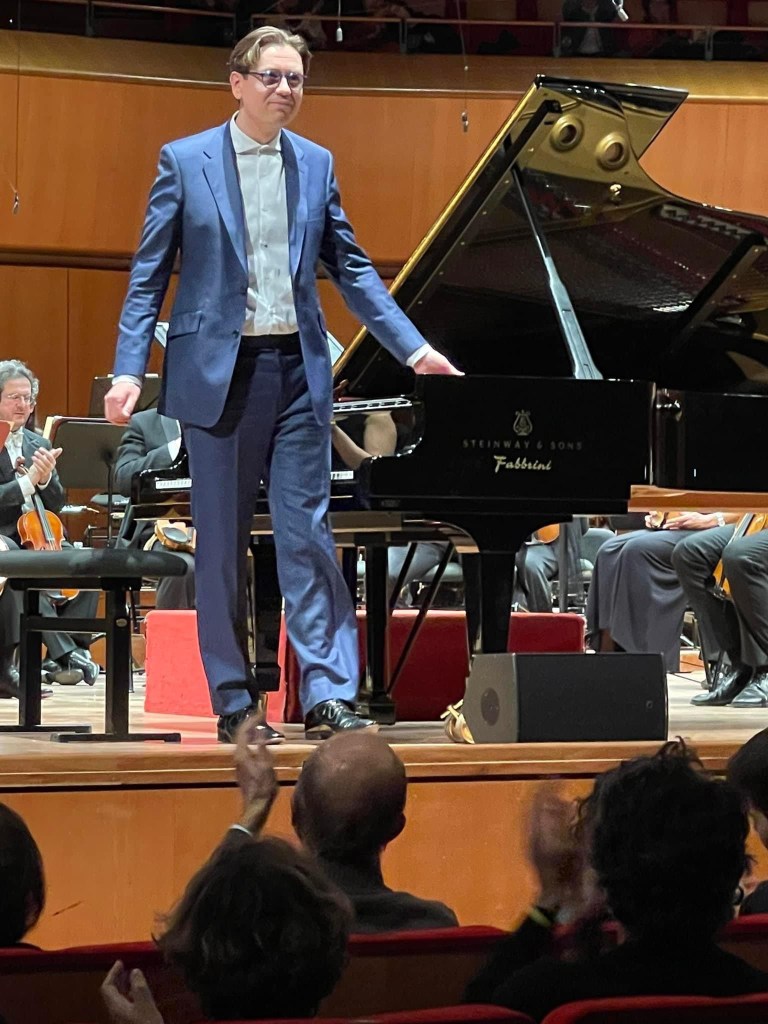
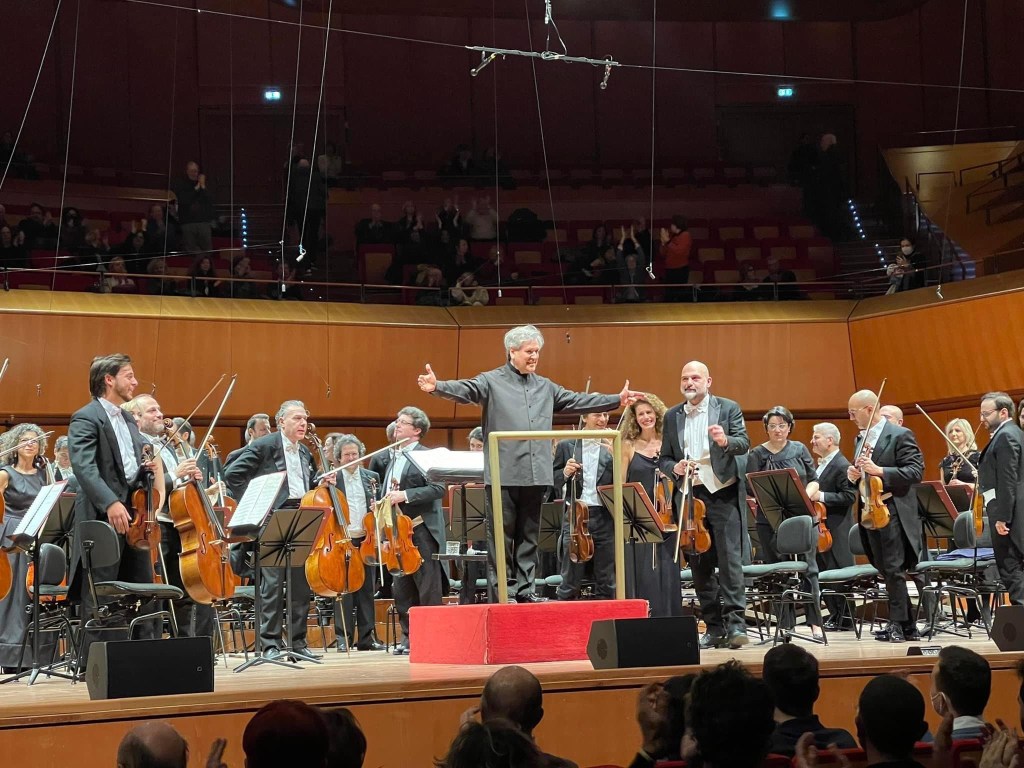
Greeted by an ovation from a suitably warmed up public our Viking had passed his test and was fully accepted by all as ‘the pot of gold at the end of the rainbow’.But there was more to come as our gentle giant thanked S.Cecilia for the honour of inviting him to play with them and their illustrious conductor,He offered as a thank you the second movement from Bach’s Fourth Organ Sonata.BWV 528 transcribed by August Stradal.Here the heavens truly opened with the same unique sounds that we had heard in his recordings.A whispered luminosity created by his extraordinary use of the pedals and a sense of balance building to a climax of Busonian proportions.Building the sonorities with great bass pedal notes on which he could float his unique sounds just as I imagine Busoni may have done.It may not be to everyone’s taste as it is these days a very unconventional way to approach Bach.But surely there is no one way to appreciate and worship at a shrine that is solely created for the glory of God.
A second encore and a little speech to praise the works of the unjustly neglected composer Domenico Cimarosa.The sonata n.55 in A minor was played with the same glistening tone palette of whispered beauty that drew the audience in to him rather than projecting the sound out.Inwards rather than outwards as we were mere eavesdroppers.But by some magic the sounds flew through the now heated air and reached an audience listening with baited breath to such sublime beauty.
He will be playing the Schumann Concerto next week at the Royal Festival Hall in London with the London Philharmonic under Edward Gardner and look forward to a solo recital with longer works by Beethoven and Schumann in order to appreciate his unique musical interpretations of other important solo masterpieces
The concert had begun with a beguiling account of Prokofiev’s classical Symphony from 1918.An orchestra in splendid form led by the genial Andrea Obiso and of course the masterly direction of Sir Antonio Pappano.Who also united the strands of Sibelius’s 5th symphony with a dynamic pulse and sense of architectural shape.
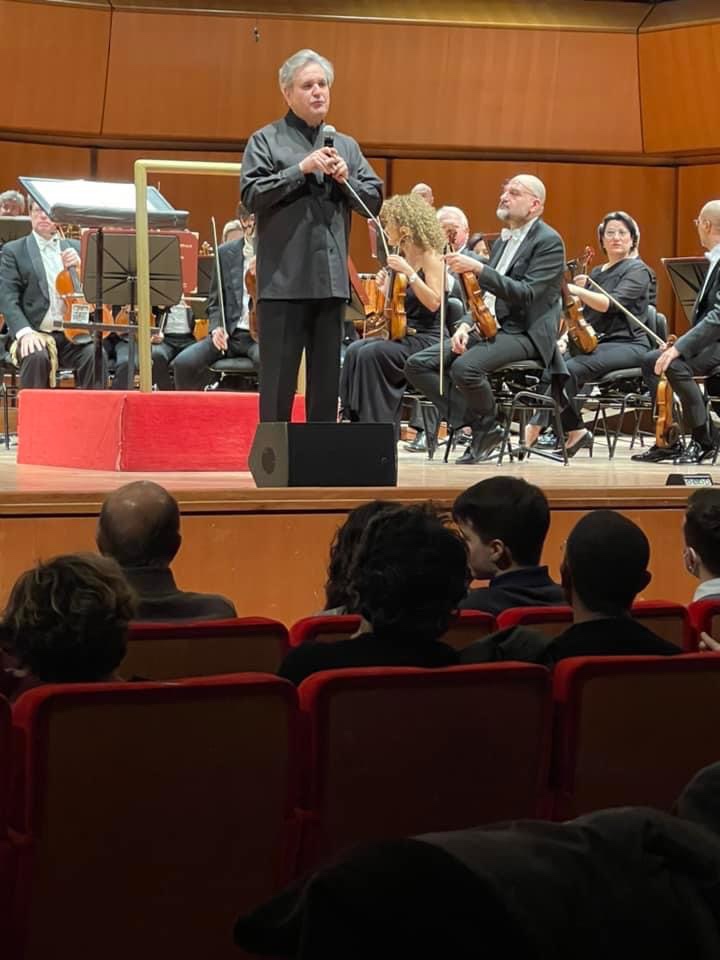
He is not only a musical communicator via the sounds he conjures out of thin air but also a moving commentator who can explain the technical construction of Sibelius’s compositional style but that is in the end only a means to the emotional impact that strikes deeply at the heart of a musical genius.
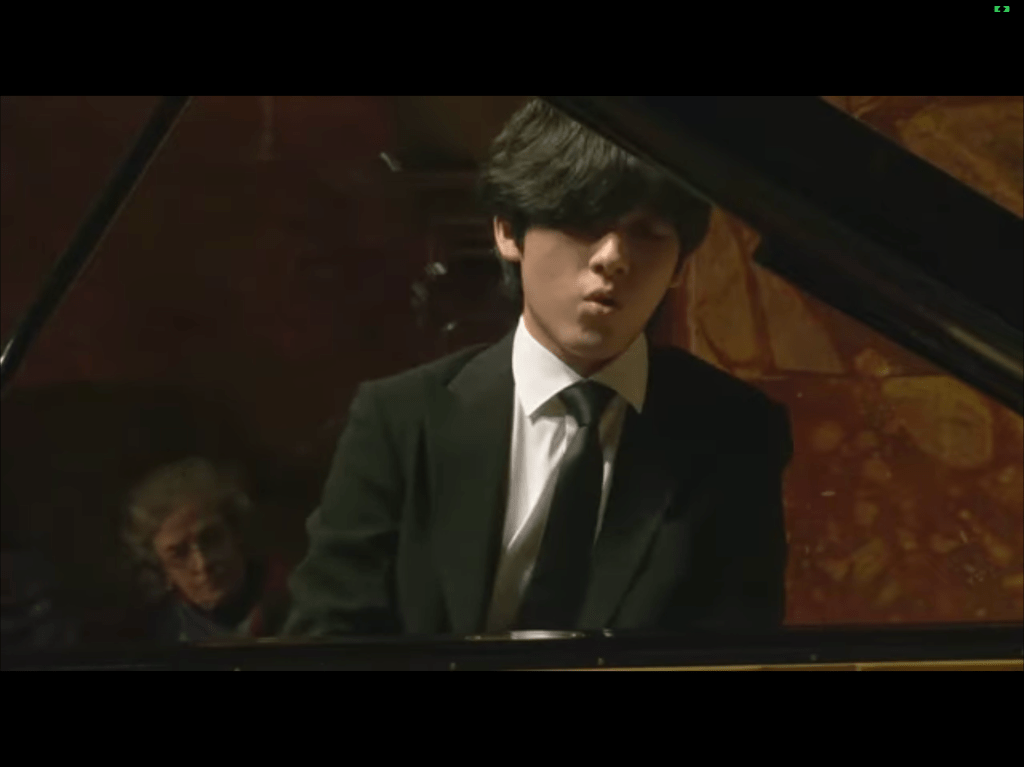
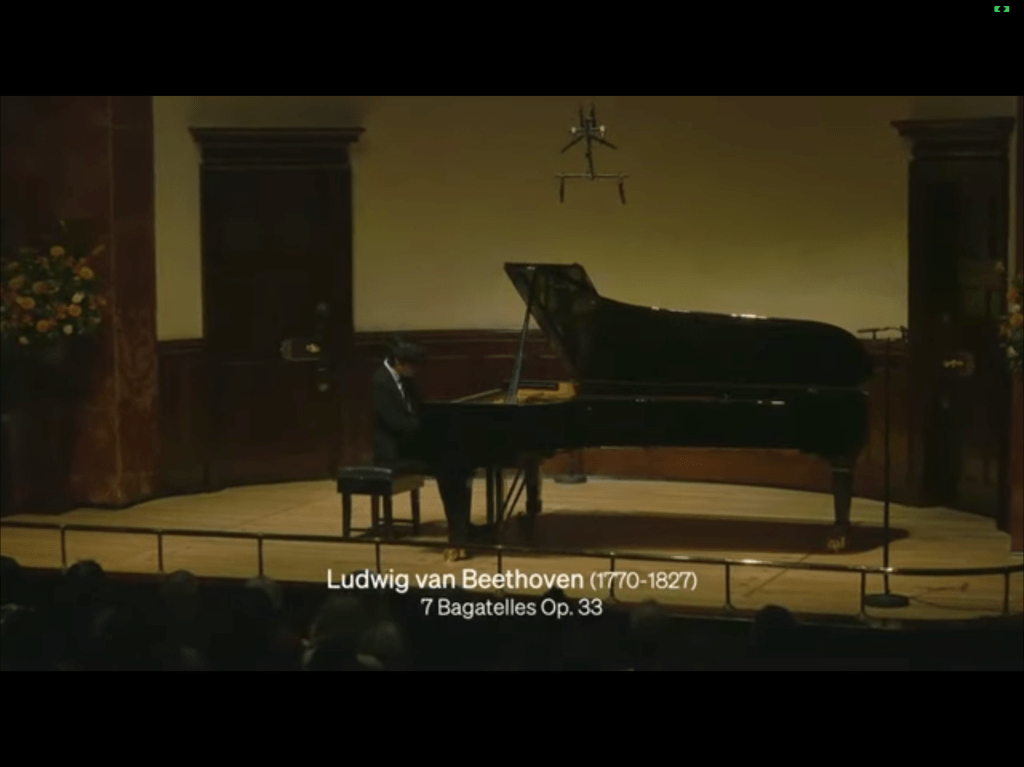
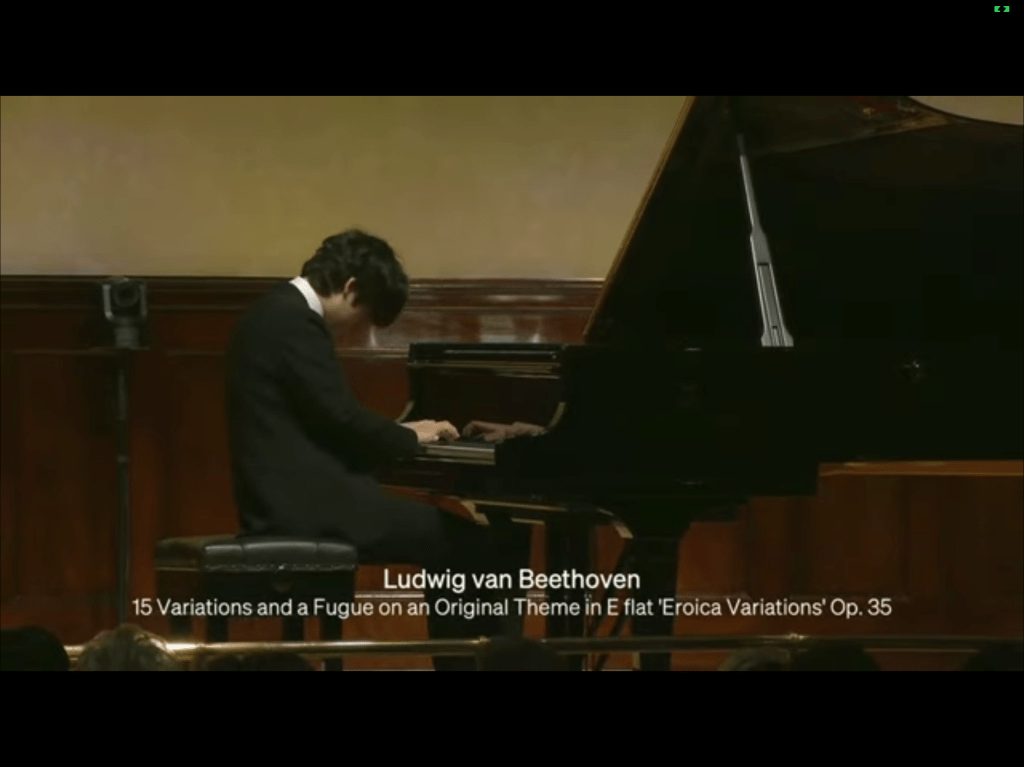
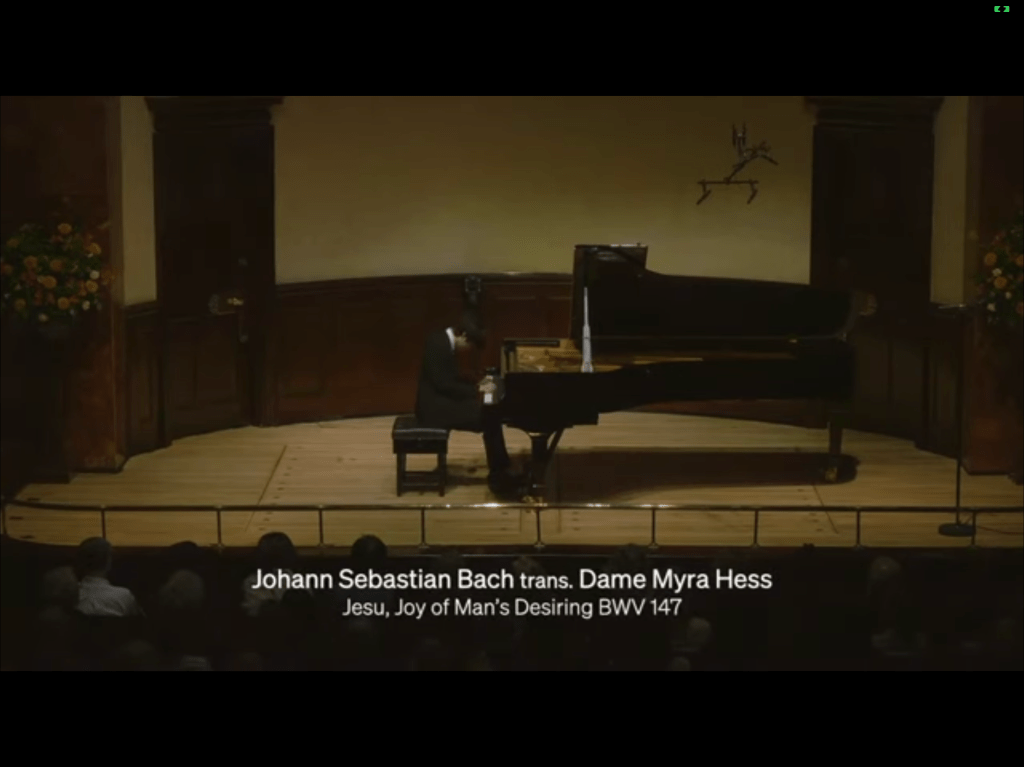
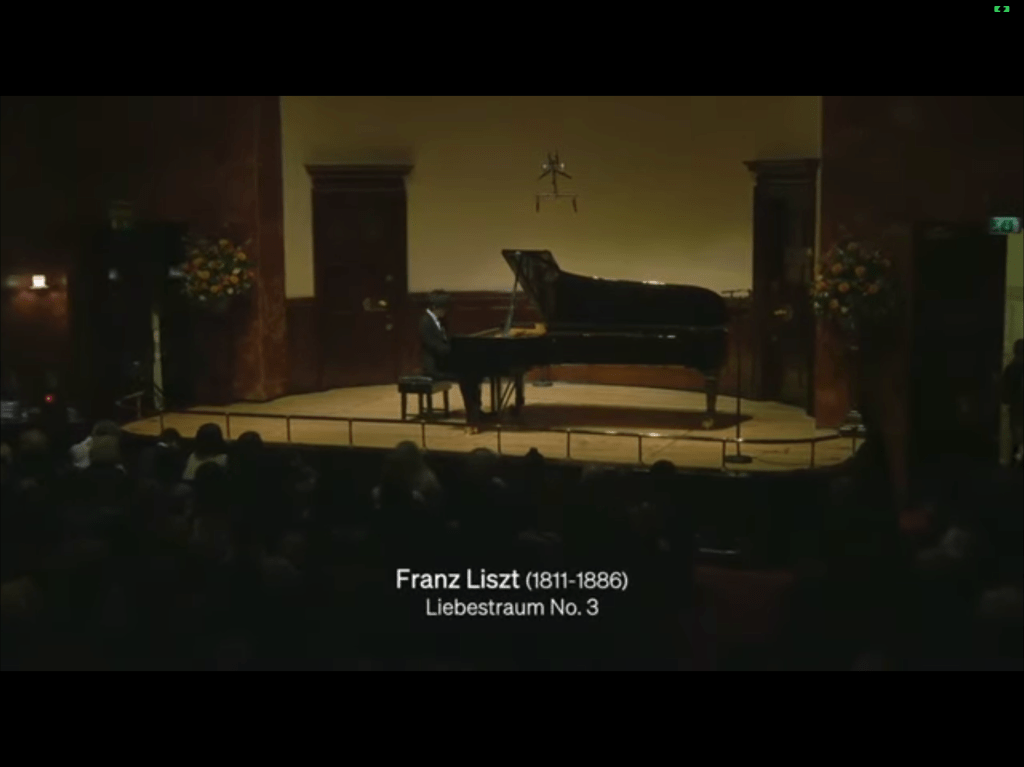
Yunchan made his triumphant London debut yesterday 18th January 2023 at Wigmore Hall to a standing ovations and two encores. Inspiring a five-star review from Richard Morrison in The Times, “If ever a young pianist made his London debut trailing clouds of glory, it was this 18-year-old South Korean.” Watch the performance here: https://www.youtube.com/live/RJeGcWZ-K5Q?feature=share Barry Millington of the Evening Standard with five stars exclaims ‘We’re at the start of something special and the audience knew It’ Andrew Clements in the Guardian with four stars:’Piano prodigy puts his brilliance on full display ‘.Five stars from Jessica Duchen :’The pianist’s playing is so good you think you are dreaming’
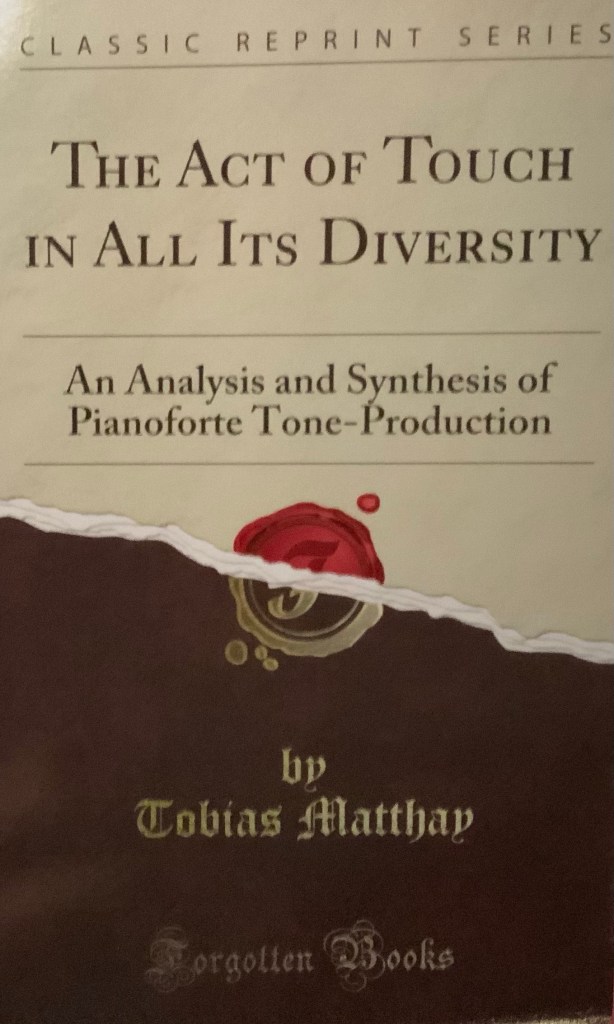
Pianistic perfection ……………. And much more besides.Not even from Cherkassky on this very stage have we heard a Liebestraum of such freedom and refined purity of sound. Myra Hess would have been astonished at the finesse and ravishing sense of balance in ‘Jesu Joy’.With or without Matthay this young man has a thousand gradations of sound in each finger and the intelligence and sensitivity to be able to read beyond the notes written on the page and into the very soul of the composer.
The piano bashers bible !
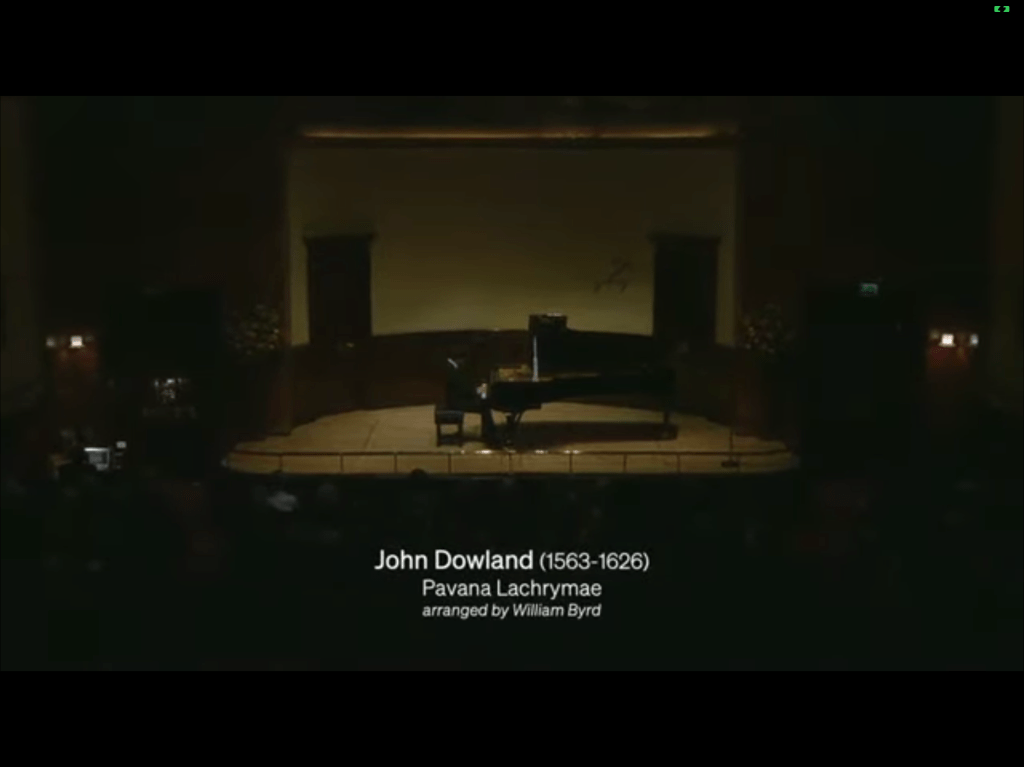
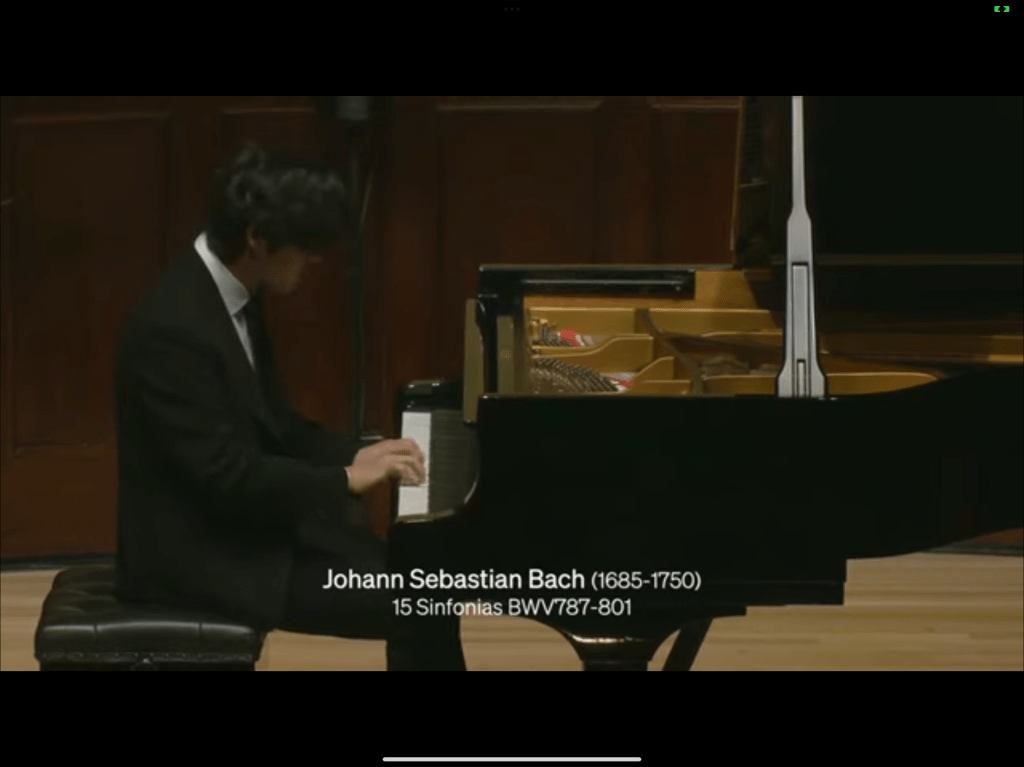
His Liszt and Rachmaninov may be of a superstar but his Beethoven Bach and Brahms are of a great interpretative artist.Daring to declare Byrd to be the greatest English composer four centuries from his death was taking his life into his hands on the Wigmore stage.His performance of simplicity and subtlety combined with glistening ornaments played in an unobtrusive but extraordinarily meaningful way convinced us that he was probably right!Have Bach’s 15 Sinfonia’s ever sounded so full of beauty and simplicity as he seemed to barely touch the keys?No showmanship or external interference with the music that just poured so naturally from his fingers and drew the audience in to the heart of the music rather than being projected to greedy but lazy ears.Knotty twine as Delius was wont to describe Bach but knots tied by the angels in a celestial paradise.It was in Beethoven too,where he truly understood the composers irascible character that erupted so unexpectedly from the golden streams of notes that flowed from his hands in the Bagatelles.The chameleonic quicksilver changes of character were superbly realised with a pianistic perfection that was revelatory and to say the very least ,extraordinary.The rage and dynamic energy he brought to the final A flat Bagatelle was quite overwhelming.’Rage over a lost penny’ we know but this,though,was a ‘rage over a million dollar note!’It led immediately to the great opening chord of the variations op 15 – a real call to arms.It put a stop to all those trifles and surprising Beethovenian frivolities as we got to the heart of the recital with a monumental performance of the Eroica Variations that I have described in detail below from his performance in Poland last summer.Not quite the characterisation of Curzon but the dynamism and drive of Serkin or Brendel with the beauty of sound of Gilels or Volodos.In a word at 18 he is already a complete artist of great stature.
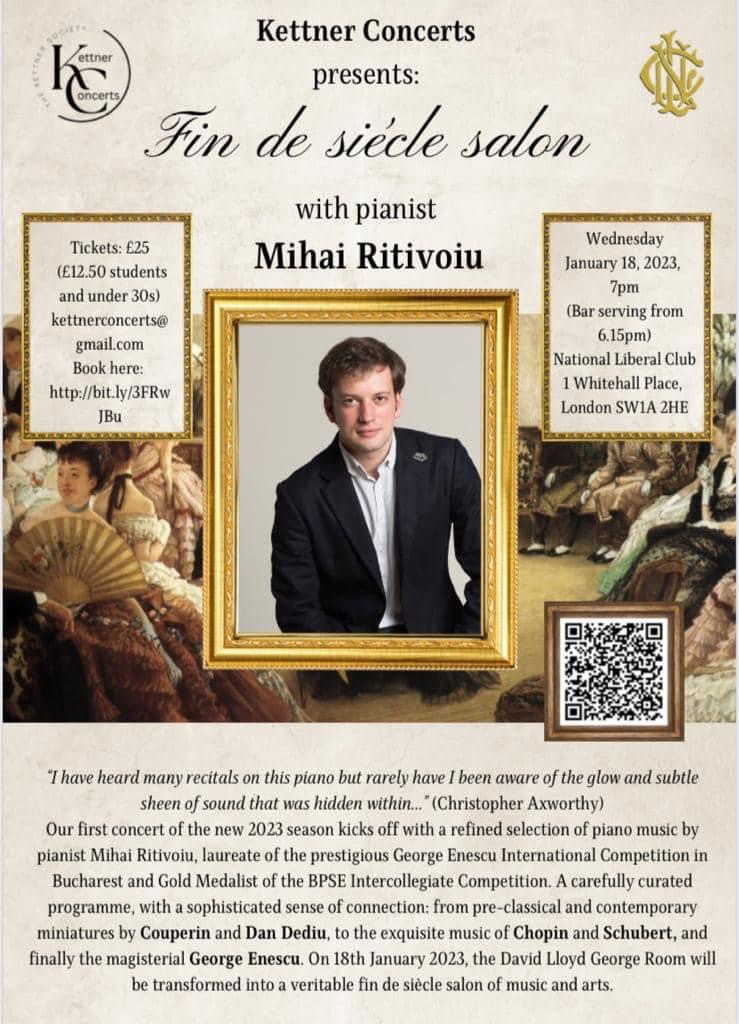
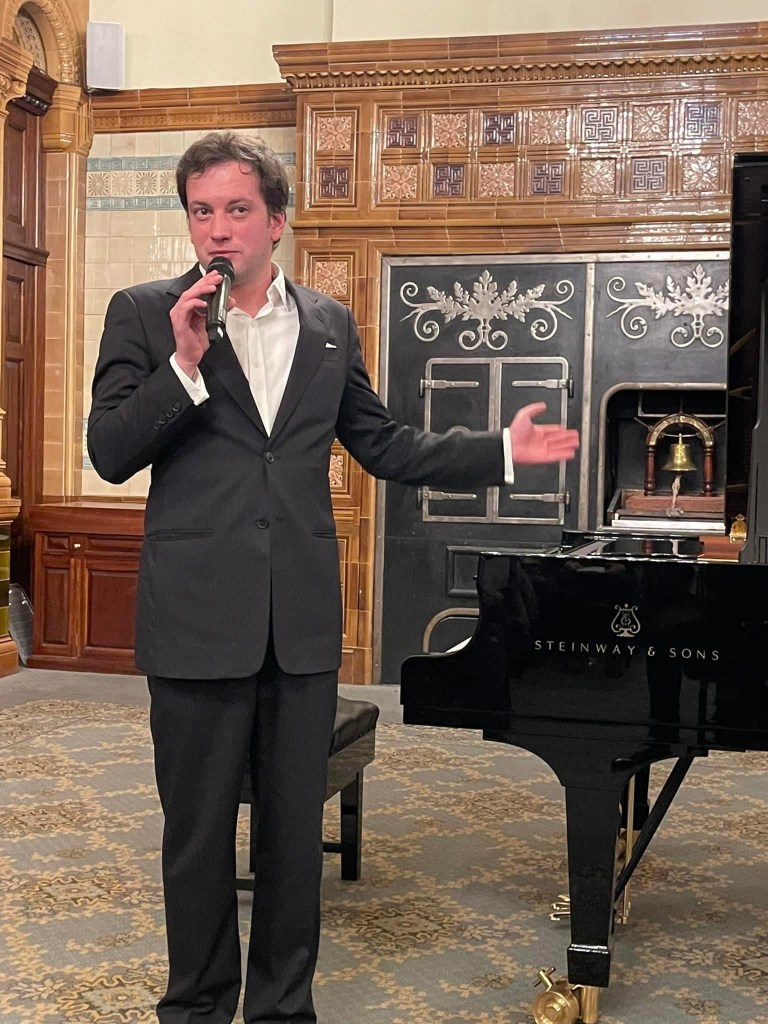
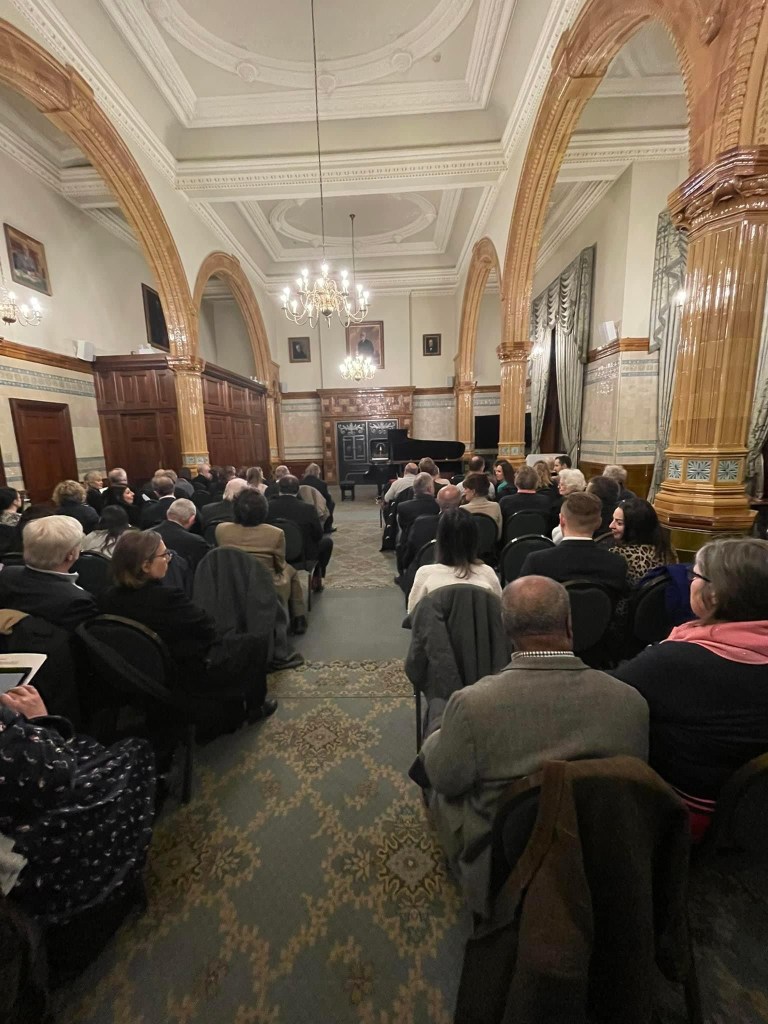
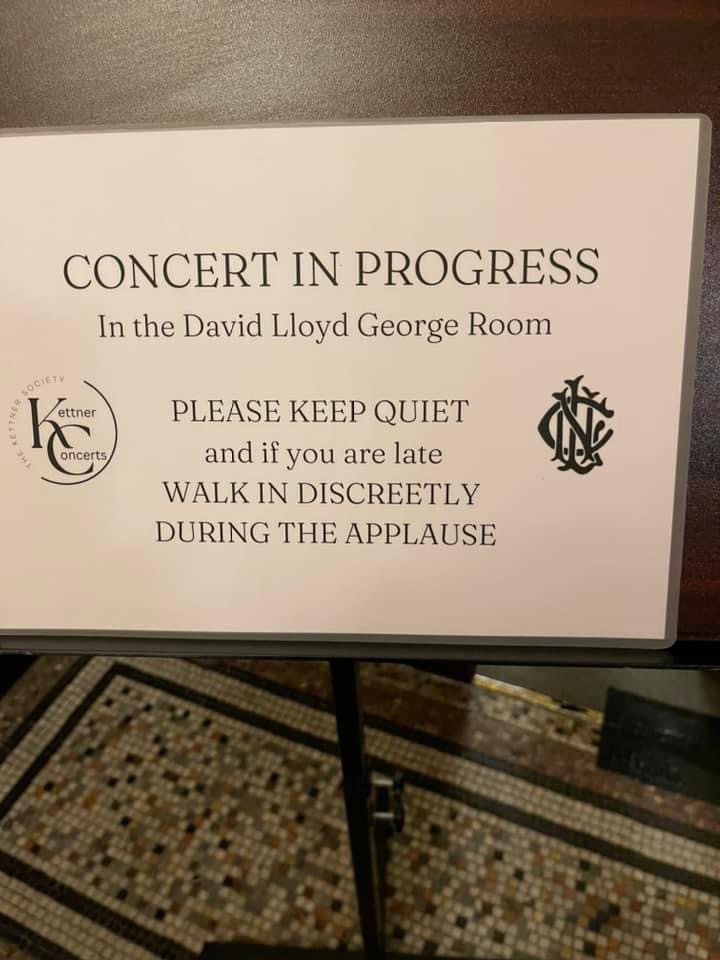
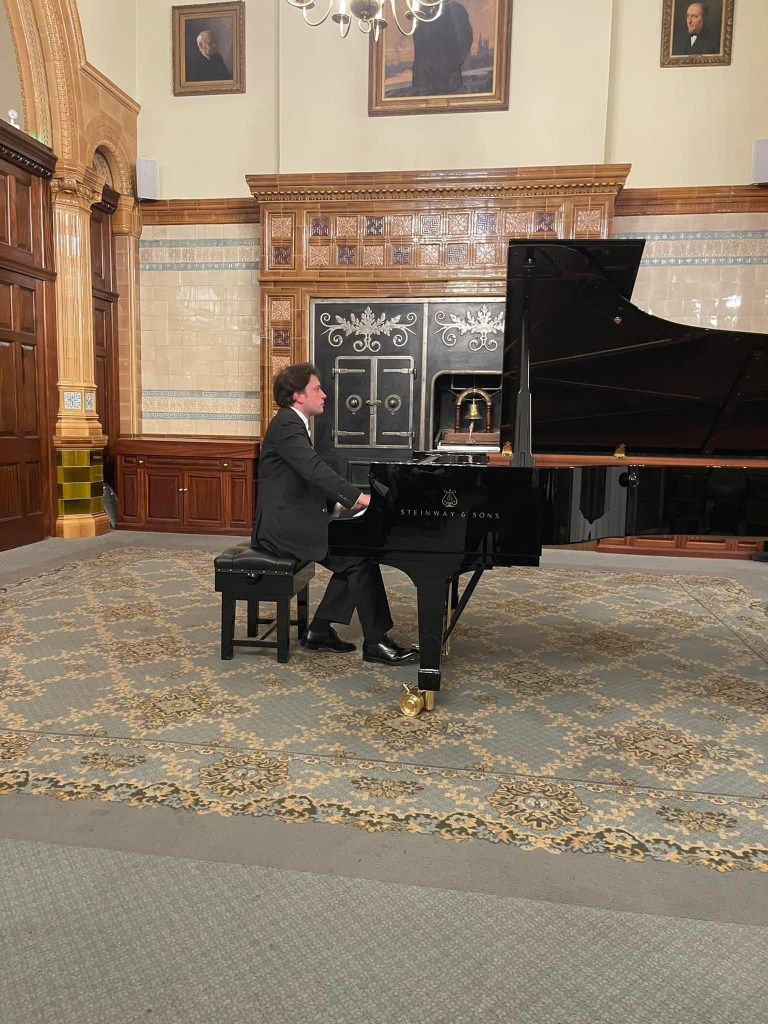
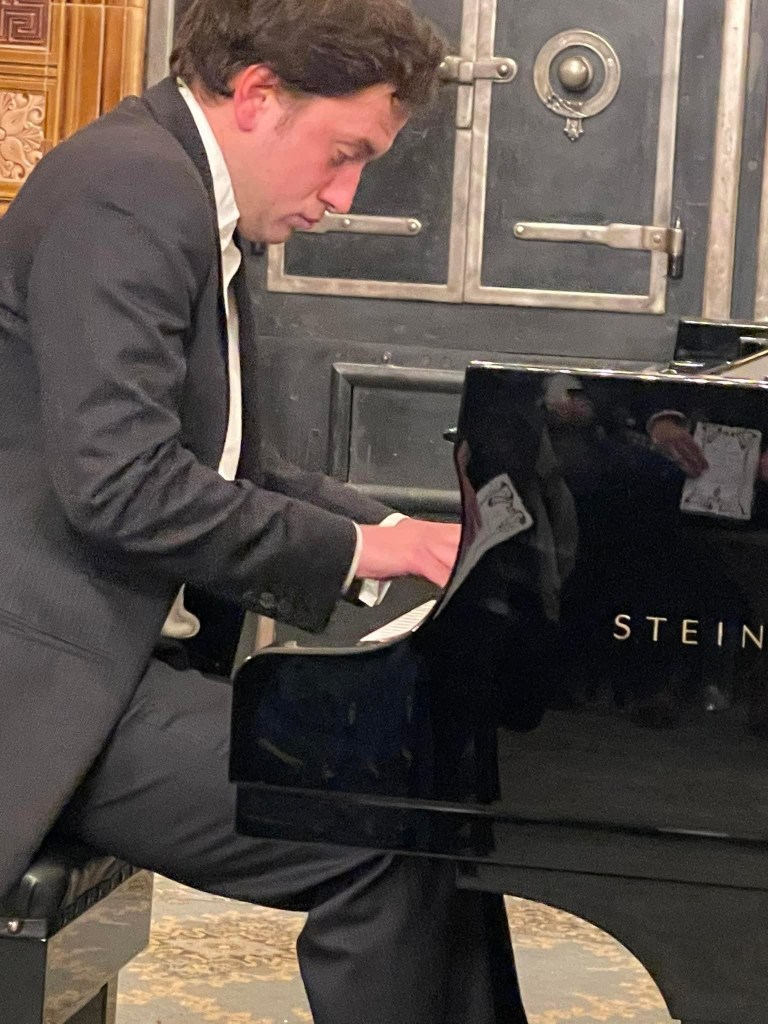
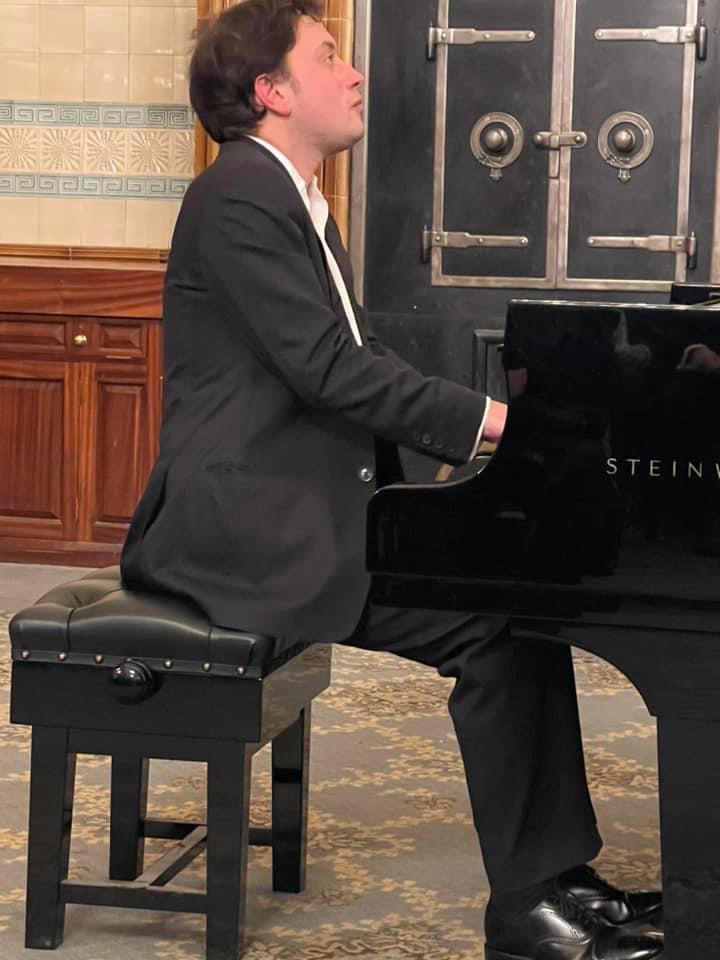
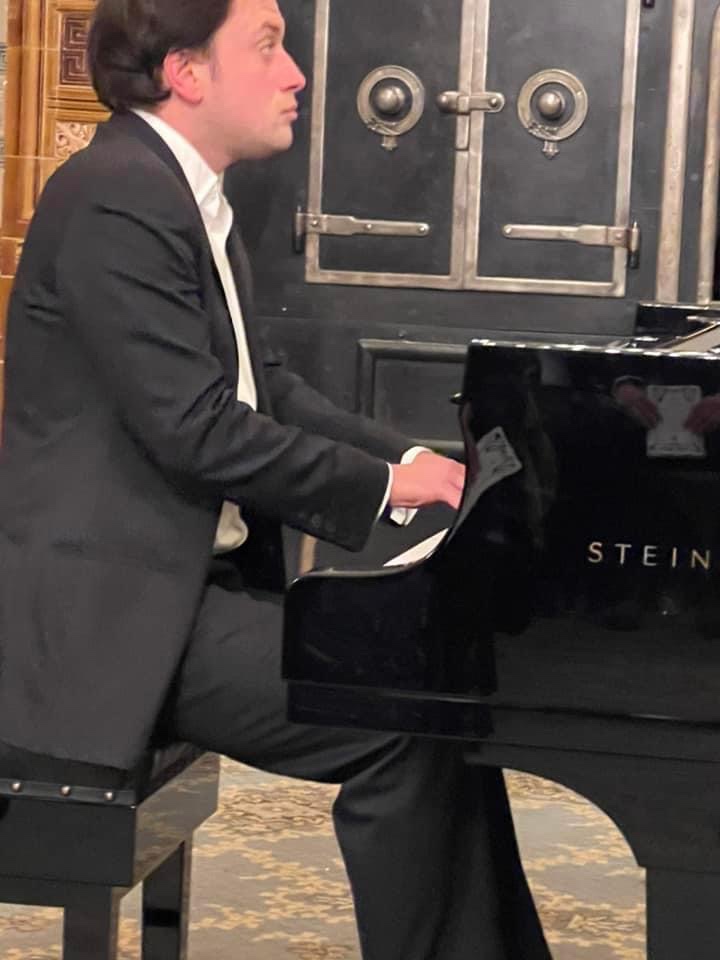
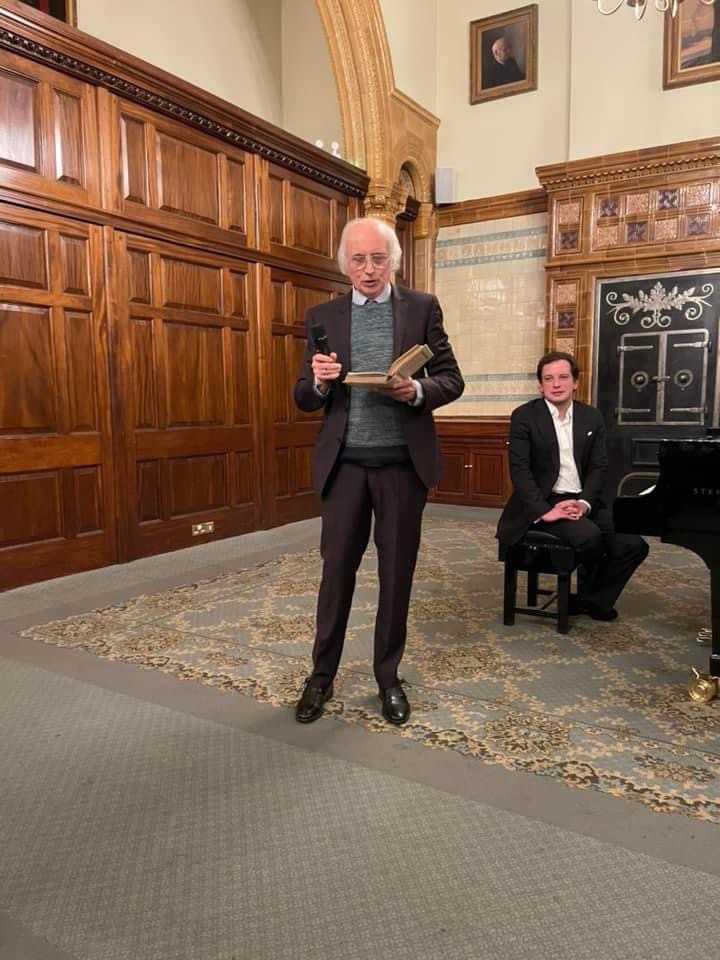
Old and New at the National Liberal Club where the Kettner Concert Society have been giving concerts for the past fifty years.A new artistic direction of Hannah-Elizabeth Teoh and Cristian Sandrin have taken over Ben Westlake’s inspired lead and now on its second concert this season has filled this unique hall with an enthusiastic audience for a superb recital given by the young Romanian pianist Mihai Ritivoiu.
Superb performances on the Club’s own magnificent Steinway but it was the scintillating encore of Chopin’s Study op 10 n.4 that brought the house down much as it had for Rubinstein in his last recital at the Wigmore Hall in 1976.The difference of course was that Mihai was not born then but he has inherited the same rhythmic drive and scintillating palette of sumptuous sounds that the 90 year old Rubinstein could still inspire his audience with.
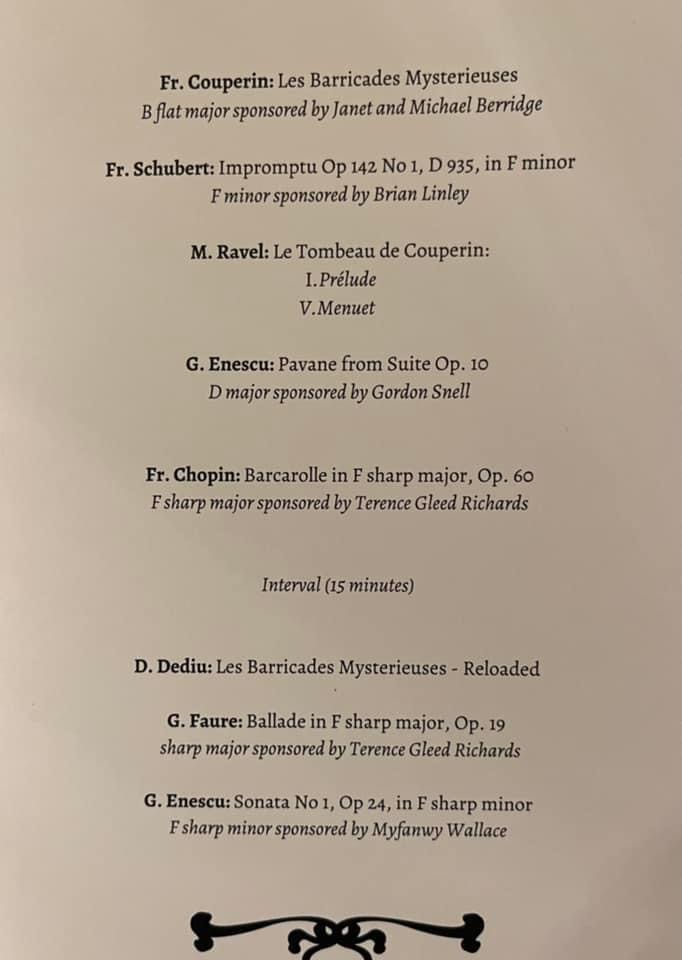
But this was only a thank you to an audience that had sat spellbound through a recital of impeccable good taste and intelligence from a musician who could conjure up magic from a black box of hammers and strings with sounds of simplicity and sumptuous beauty.A monumental performance of Enescu’s masterpiece the 1924 Sonata that had won Mihai a top prize at the 2011 Enescu International Piano Competition and which he has delved ever deeper into ,since,in a continual voyage of discovery.
This was after a ravishing performance of Chopin’s most perfect work,the Barcarolle op 60 .A performance of great stature with it’s continuous outpouring of song played with such delicacy and sumptuous richness by a master musician .Fauré’s beautiful early Ballade I had fallen in love with,as a child,in Robert Casadesus’ magical performance for piano and orchestra with Bernstein at the helm.I think this is the first time I have heard Fauré’s own solo piano version and I was overwhelmed by the same beauty of the mellifluous outpouring of an aristocratic French sound world that was to come to an end with the Great War.
A war that Ravel had taken part in as an active ambulance driver and had been inspired by the horrors that he saw to write a work that looked back to the perfection of the world of Couperin.A world of purity and simplicity that inspired him to dedicate each movement to friends whose young lives had been so cruelly curtailed.Mihai played just two movements with ravishing colours and the perfect clockwork mechanism of purity and perfection of the Prélude was complimented by the suave chiselled beauty of the Menuet.
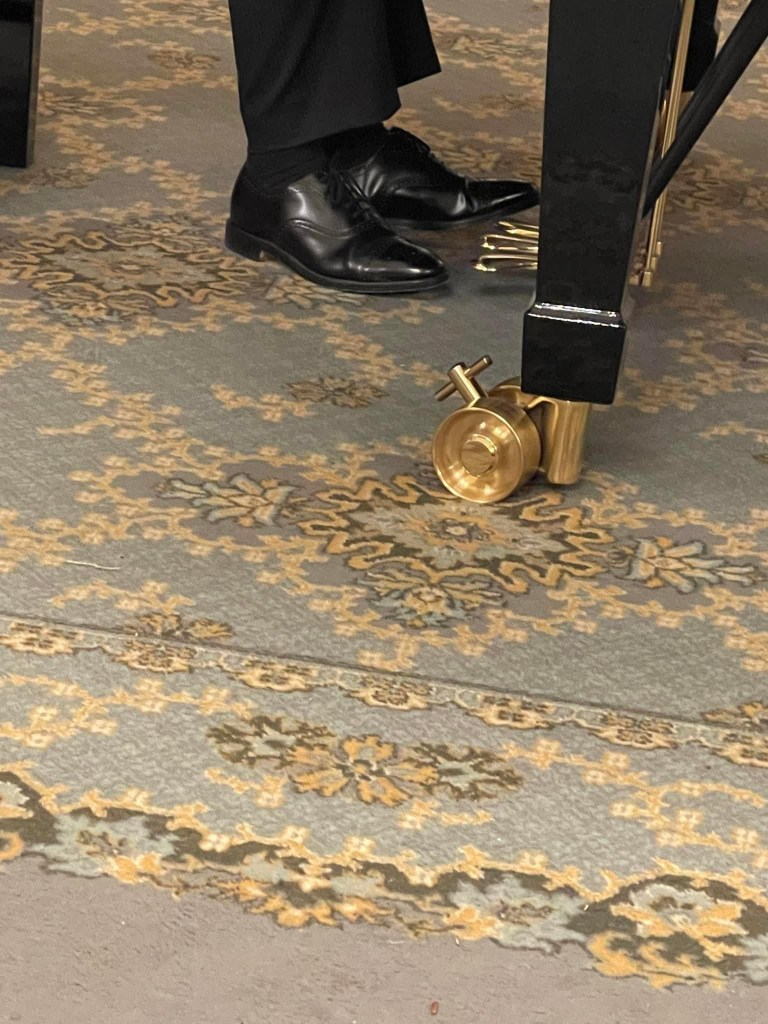
Q.E.D Mihai’s feet during the opening Couperin
Opening with Couperin’s Les Barricades Mysterieuses played entirely without pedal made a great contrast with the 2005 reworking by the Romanian composer Dediu in which the original is inverted and weaves a spider’s web of etherial fluid sounds.
Schubert’s first Impromptu D 935 was the real majestic opener and showed us the mature musicianship and sensitivity of an artist who could delve into the heart of such a well known work with such intensely moving originality and simplicity.
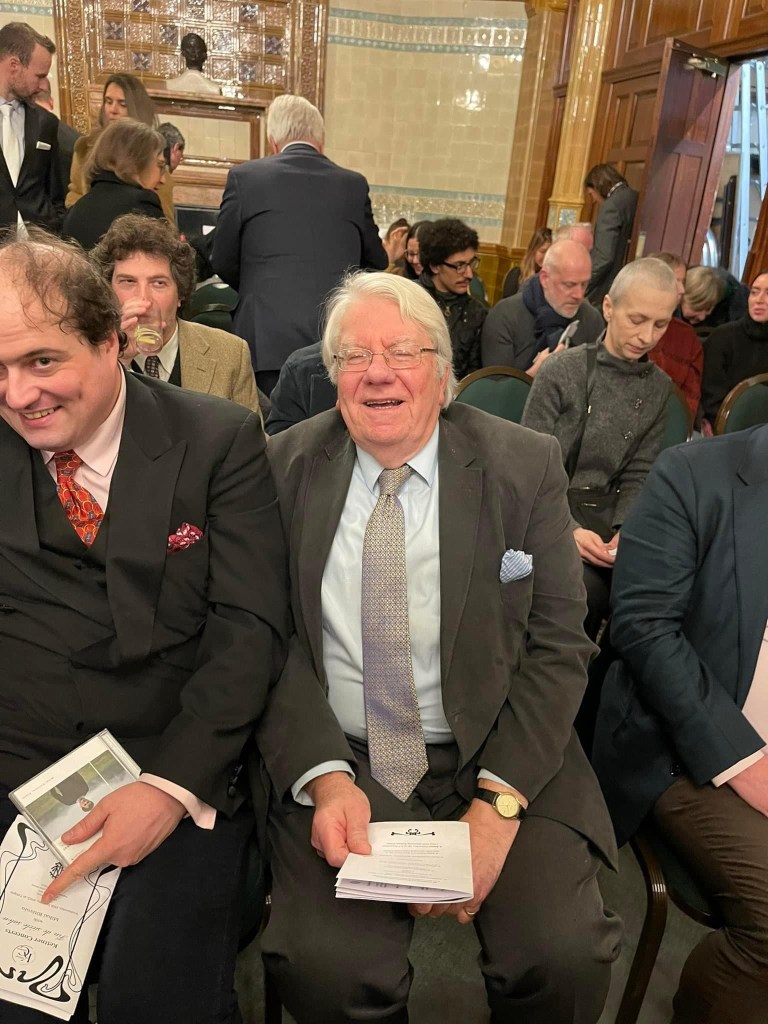
Peter Whyte surrounded by friends and admirers happy to sit back and enjoy such sumptuous music making
Peter Whyte,the venerable chairman,was happy to take back seat tonight as he passed the reigns to these two young artistic directors,who are also distinguished pianists,and who will take the Kettner Music Society to even greater heights.
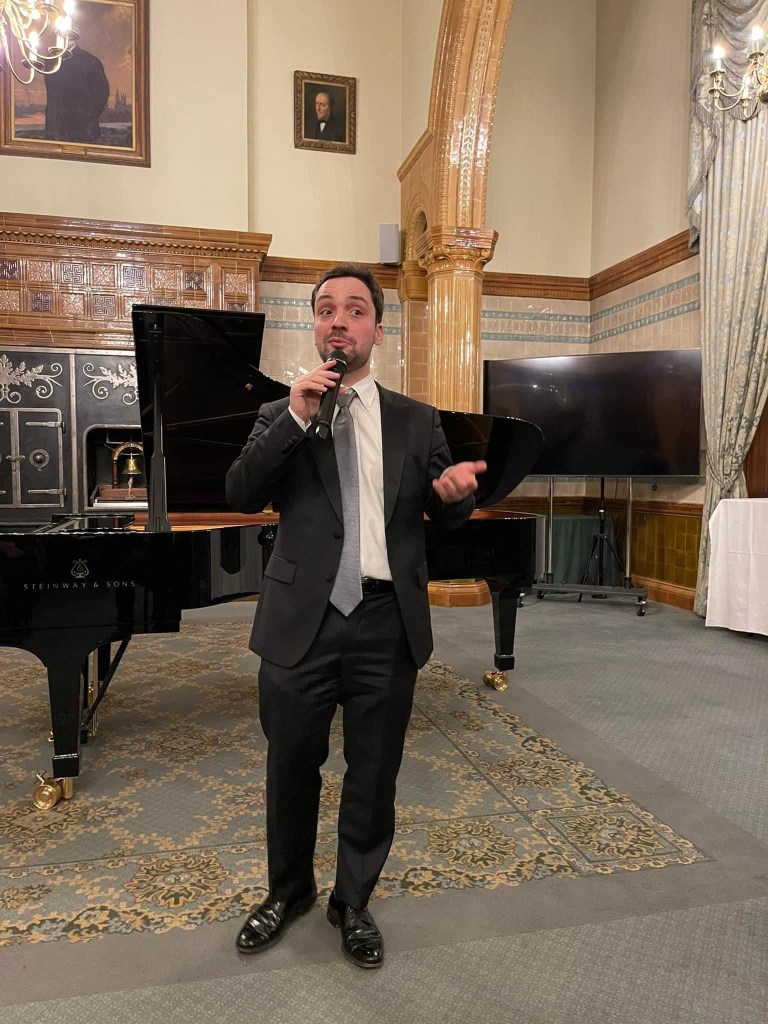
Cristian taking over the reigns of the venerable Peter Whyte
The next concert is on the 22nd February with the renowned English pianist Dame Imogen Cooper,who is also Cristians mentor via the Imogen Cooper Musical Trust.
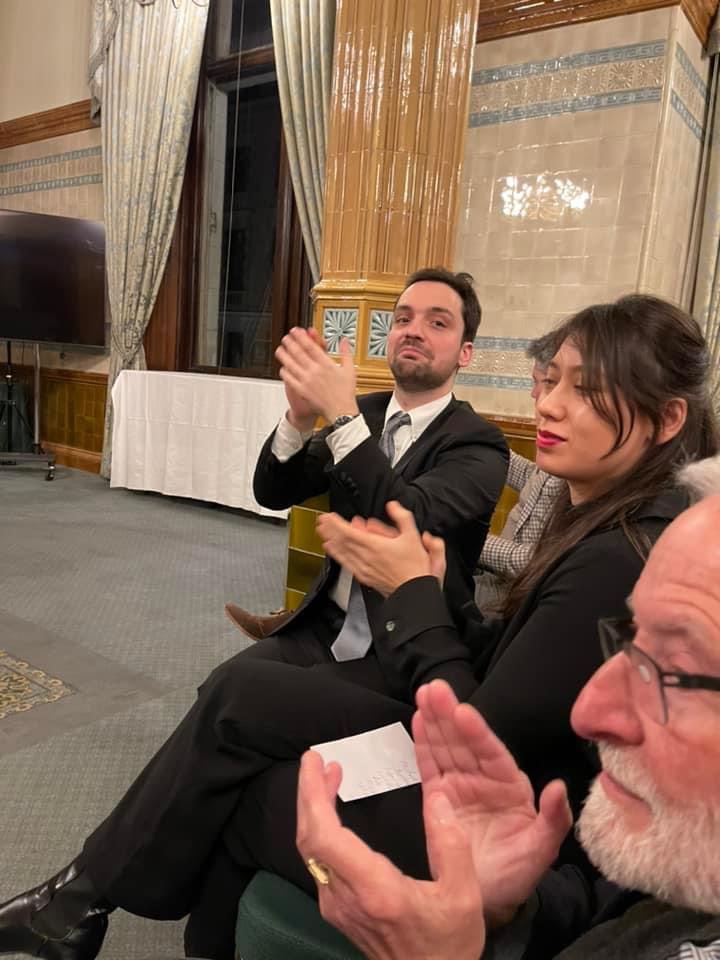
The new artistic directors applauding their colleague
Let us not forget that the Liberal Club has rung with the sounds of the likes of Rachmaninov and Moiseiwitch and now indeed looks like turning full circle – a true glorious renaissance Great music returns to the National Liberal Club with this series and others including the Keyboard Trust of which Cristian and Mihai have both been recipients.
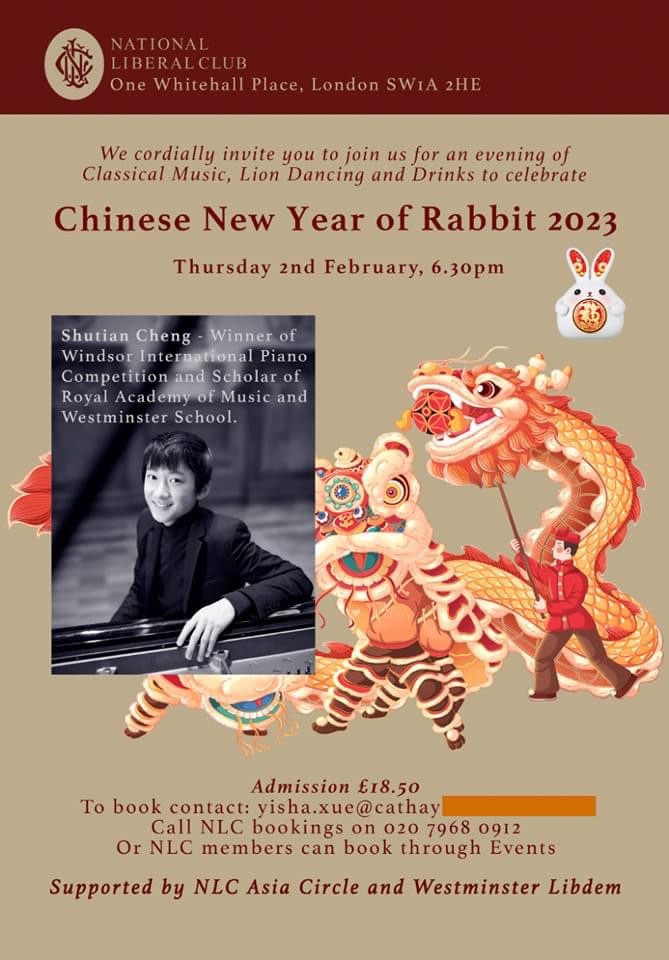
Yisha Xue celebrates the ‘Year of the Rabbit’ on the 2nd of February with a recital by a highly gifted teenager,Shutian Cheng,who recently played in St Johns SS Rachmaninov’s much revered and feared Third Piano Concerto. The National Liberal Club is indeed resounding with the sound of music
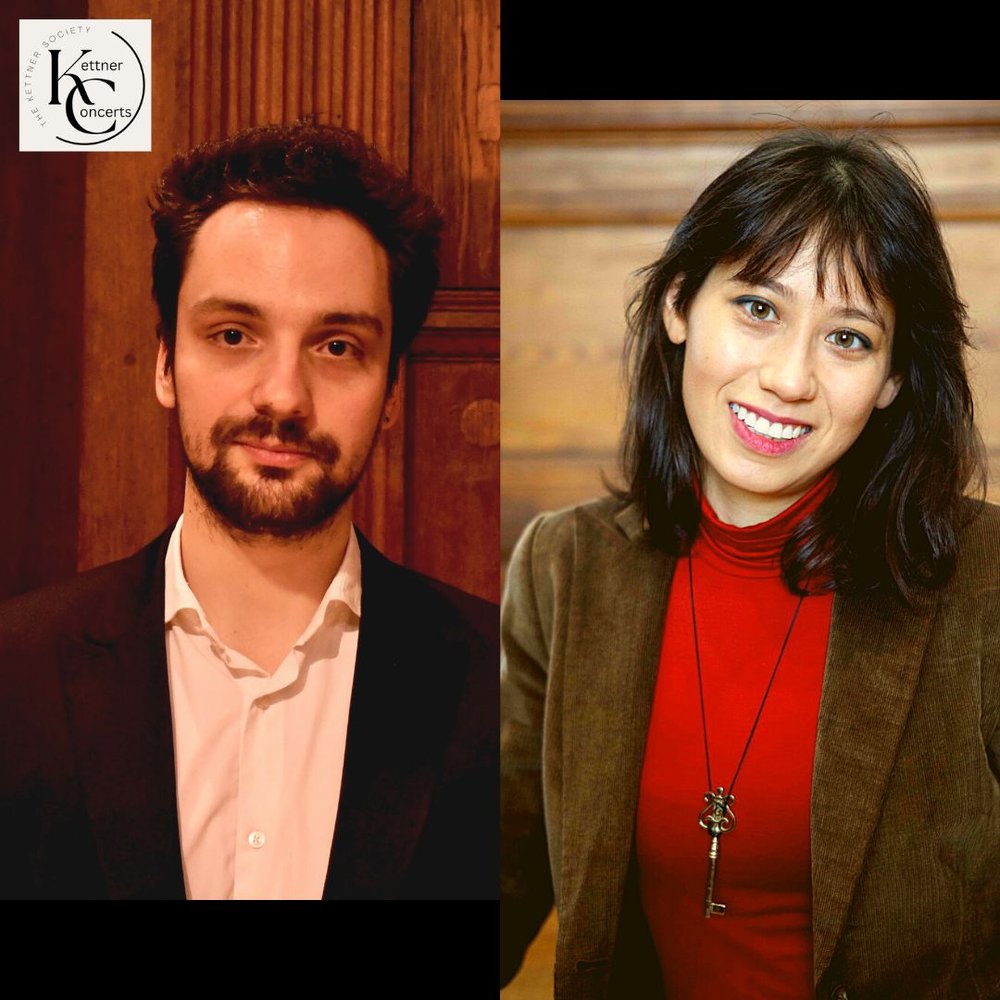
Artistic Directors of the Kettner Music Society
Hailed for her ‘dark energy’ and ‘uncommon sensitivity’, New Zealand born Hannah-Elizabeth Teoh is one of the most interesting young pianists in the UK. Following intensive periods of study at the Royal Academy of Music, the Ecole Normale de Musique de Paris and the Royal College of Music, she has won numerous awards including the Harold Samuel Prize, the Florence Murray Award, the Lesley Holland Scholarship and the Ivy Corkill Recital Award. As a concerto soloist she has performed around the world, including a premiere recording of Ross Harris’ Concertina for Piano and Orchestra with the New Zealand Symphony Orchestra, and most recently making her Italian debut with the Master Orchestra in Brescia playing Saint-Saëns’ second piano concerto. A keen exponent of contemporary music, Hannah-Elizabeth has premiered a number of works for piano including Kettner composer-in-residence Dan Chappell’s Microludes in a 2022 Kettner Concert. Supporting her musical life, Hannah-Elizabeth draws inspiration from literature and art and has a Masters in Philosophy from Birkbeck University.
Born in Bucharest, Romania, Cristian Sandrin had his Wigmore Hall debut recital in 2017. He collaborates often with orchestras in Romania and the UK, having had his debut with the prestigious “George Enescu” Philharmonic and the Bournemouth Bach Choir Orchestra in 2021. Cristian enjoys conducting Mozart concertos from the keyboard as well as chamber music collaborations. He has performed all over Europe, including recitals at the Salle Cortot, Teatro La Fenice and Palau de la Musica Catalana. He has won numerours prizes and distinctions in international piano competitions, such as the top prizes of the International Piano Competition Citta di Oleggio 2019, the Windsor International Piano Competition 2018, the Concours Musical de Versailles 2019, Automobile Club de France Piano Competition 2011 and the “Animato” Competition in Paris 2012. In 2019 he received the Rossalyn Tureck Prize for the best interpretation of Bach at the Olga Kern International Piano Competition in New Mexico. He is an alumni of the Imogen Cooper Music Trust, being supported as well by the Keyboard Charitable Trust. https://christopheraxworthymusiccommentary.com/2022/03/17/cristian-sandrin-liberally-speaking/
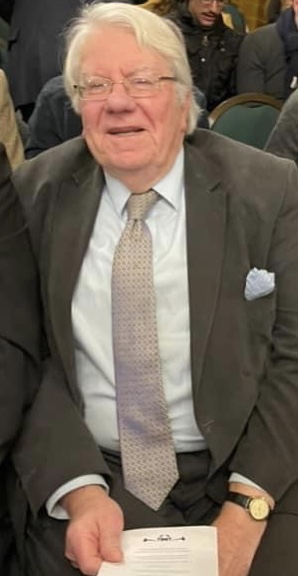
Chairman of the Kettner Music Society
Peter Whyte has been involved with the Kettner Society since its very beginning; it was while working at a tour operating firm in the 70s that he had a visit from Peter Boizot, who invited him to attend the new dining group he was starting. In 2003 Peter up the position of chairman, the sixth in the history of the society.Born and raised in North London, Peter’s interest in politics later led him to become chairman of the Bracknell Liberal Association. A keen cricketer, he has also chaired a cricket club. Always interested in commemorating significant figures, he is responsible for ten blue plaques in London, (including ones dedicated to Chopin and Mendelssohn) and six road names in Reading (including one to the Liberal statesman Rufus Isaacs).Since becoming interested in music, Peter has relished the opportunity to attend performances by many great pianists. Among those who left a particular impression are Claudio Arrau, Steven Bishop, Alfred Brendal, Artur Rubinstein, and John Ogdon.
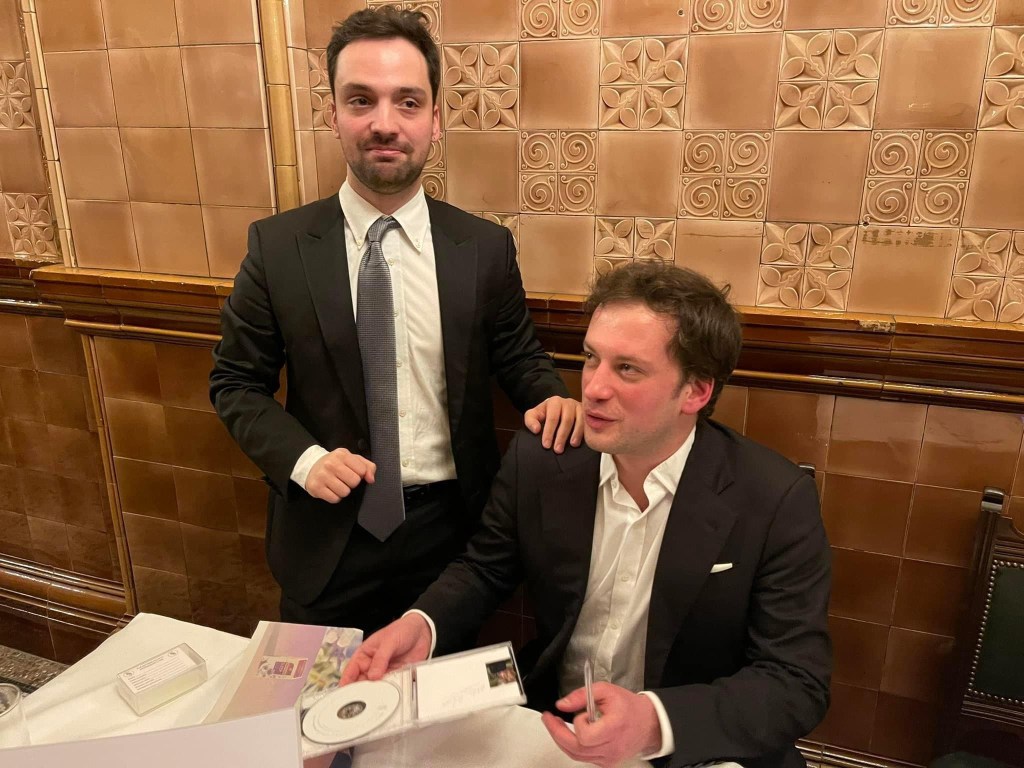
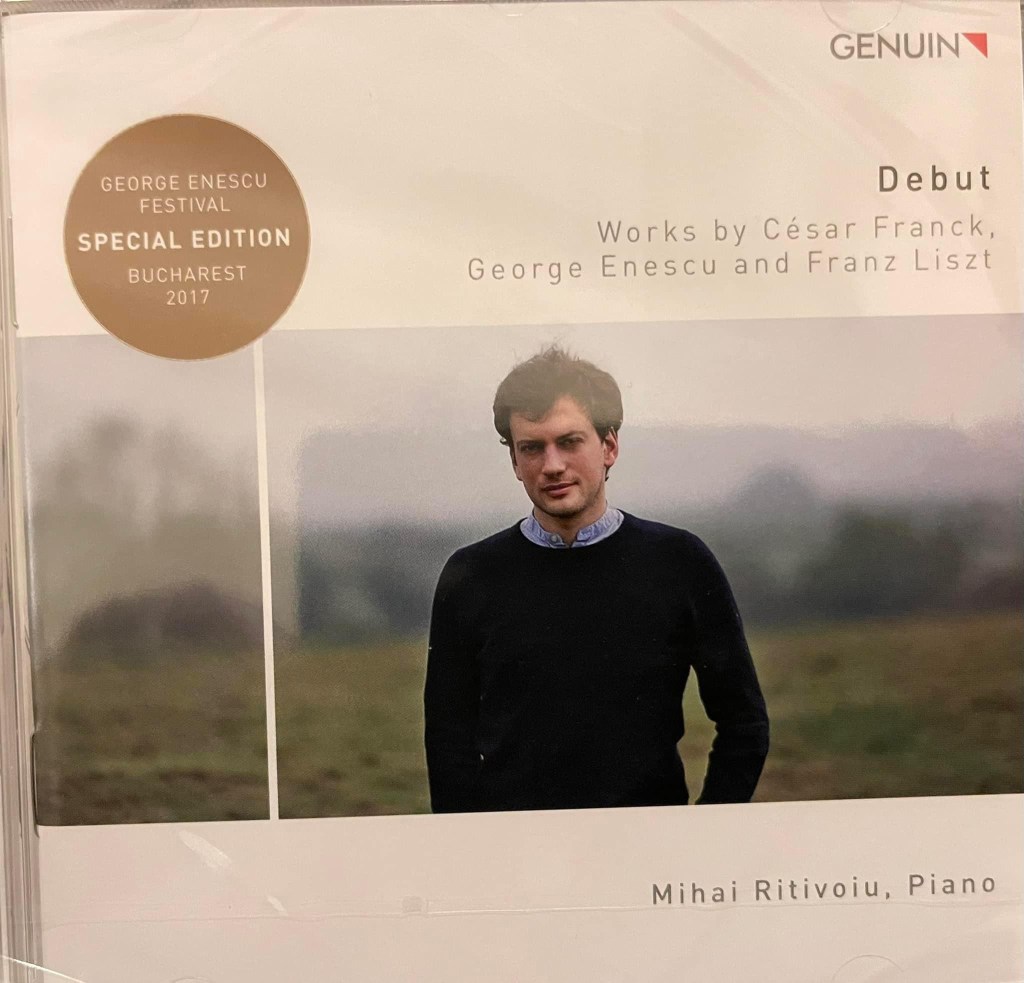
CD signing – two great Romanian pianists in London
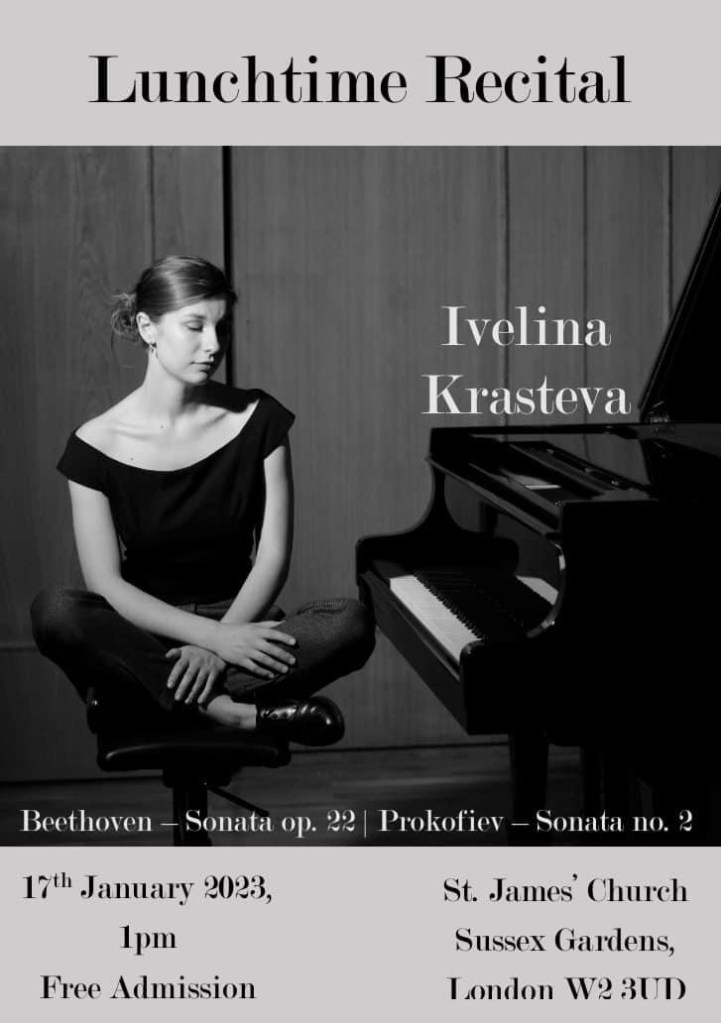
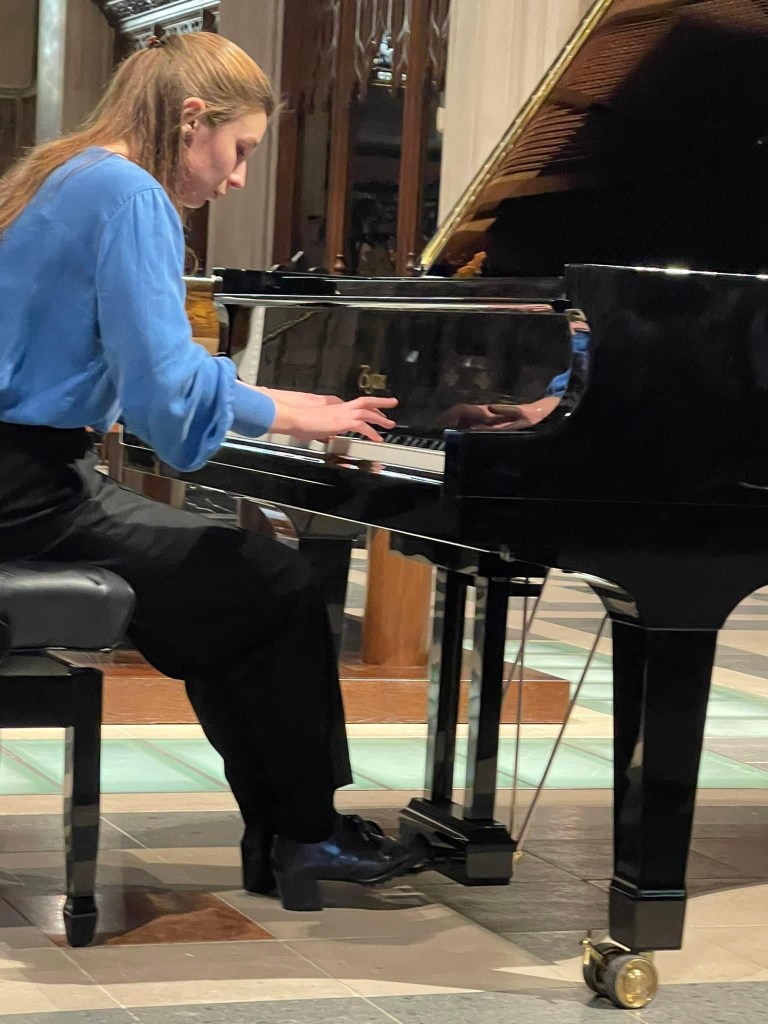
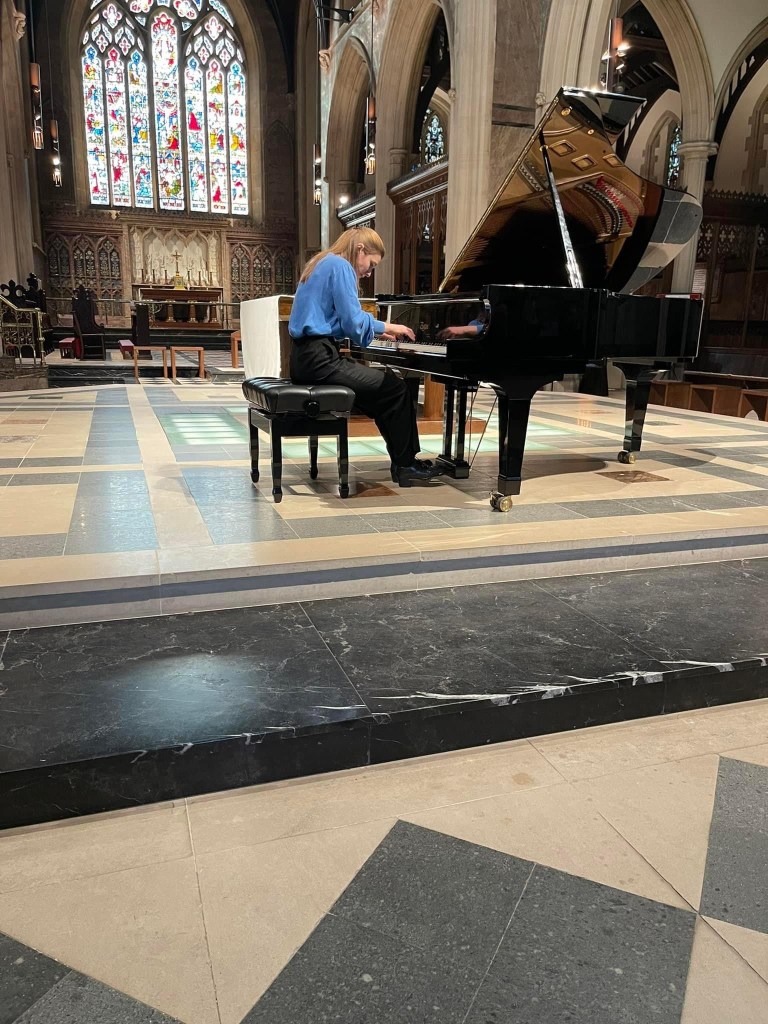
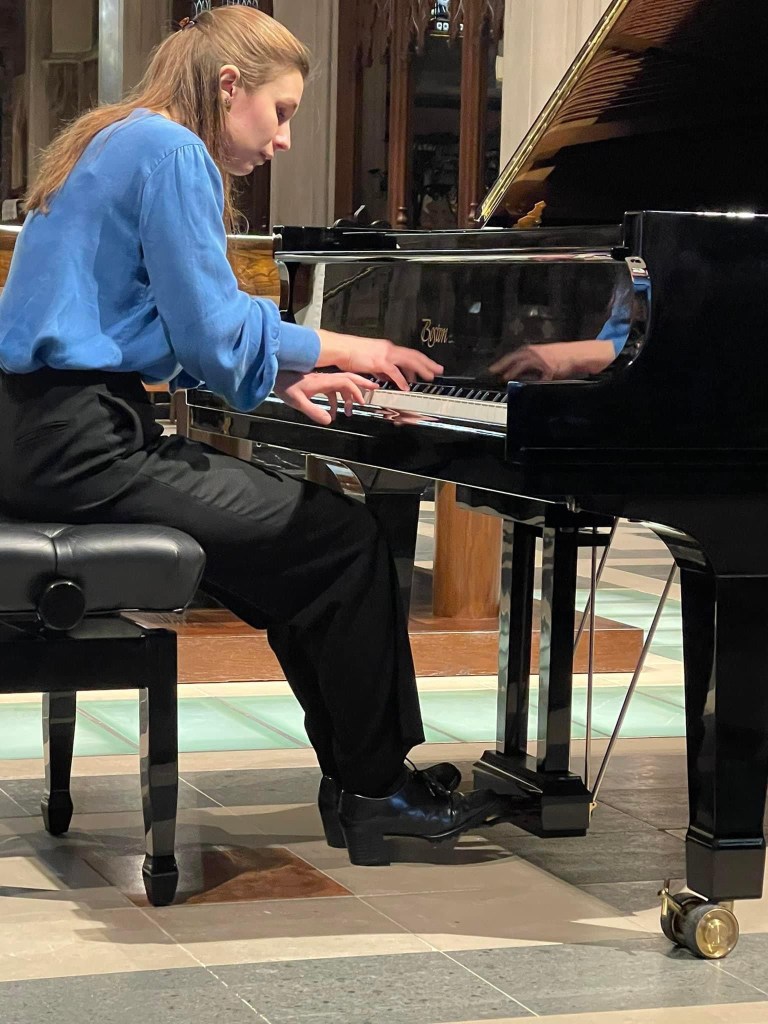
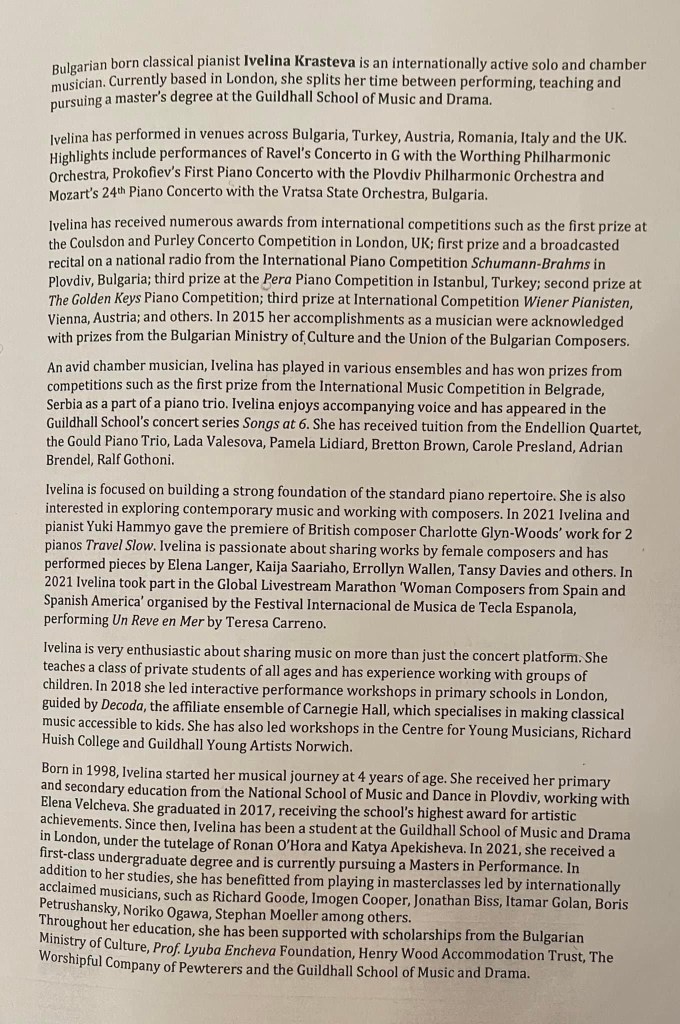
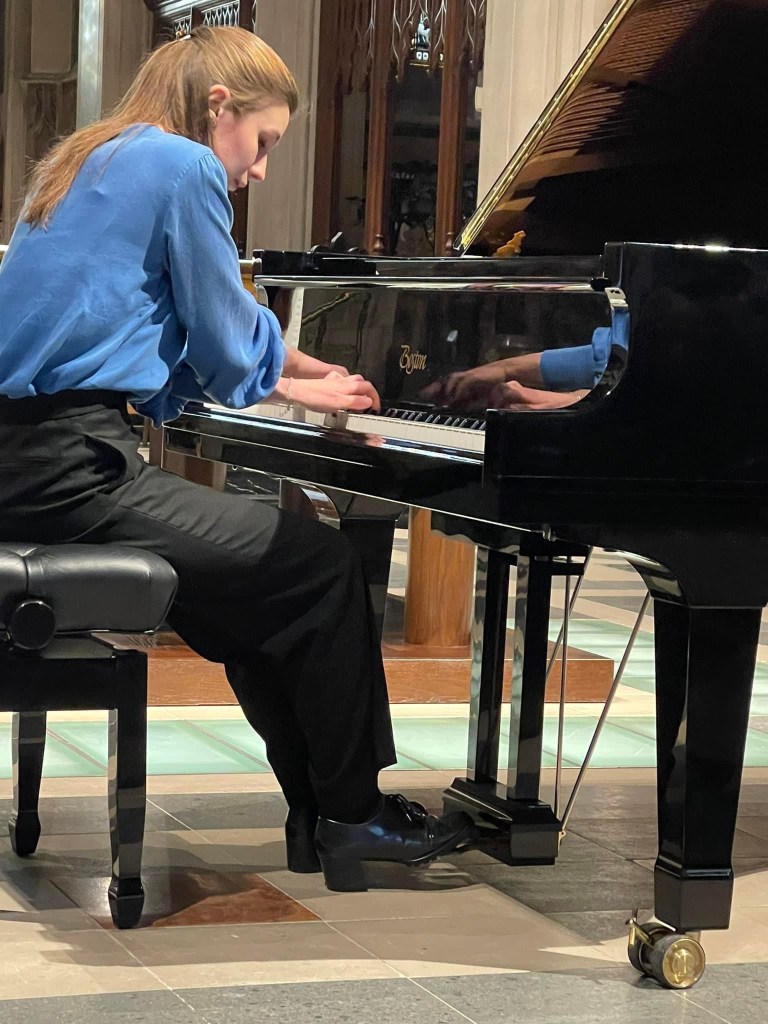
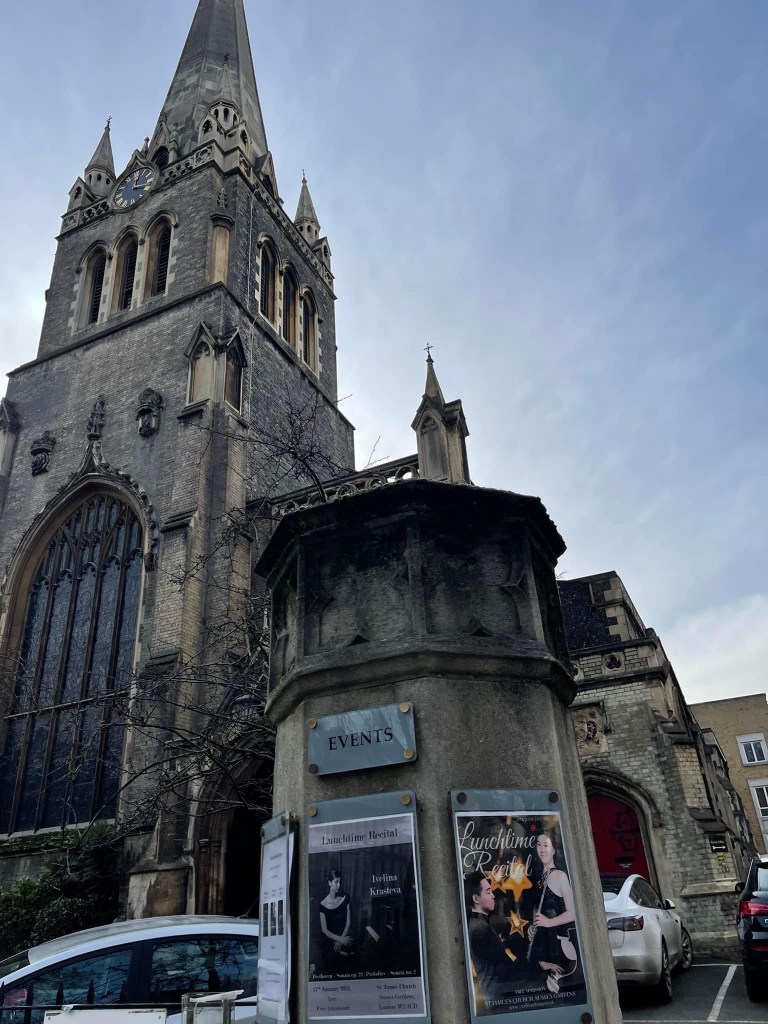
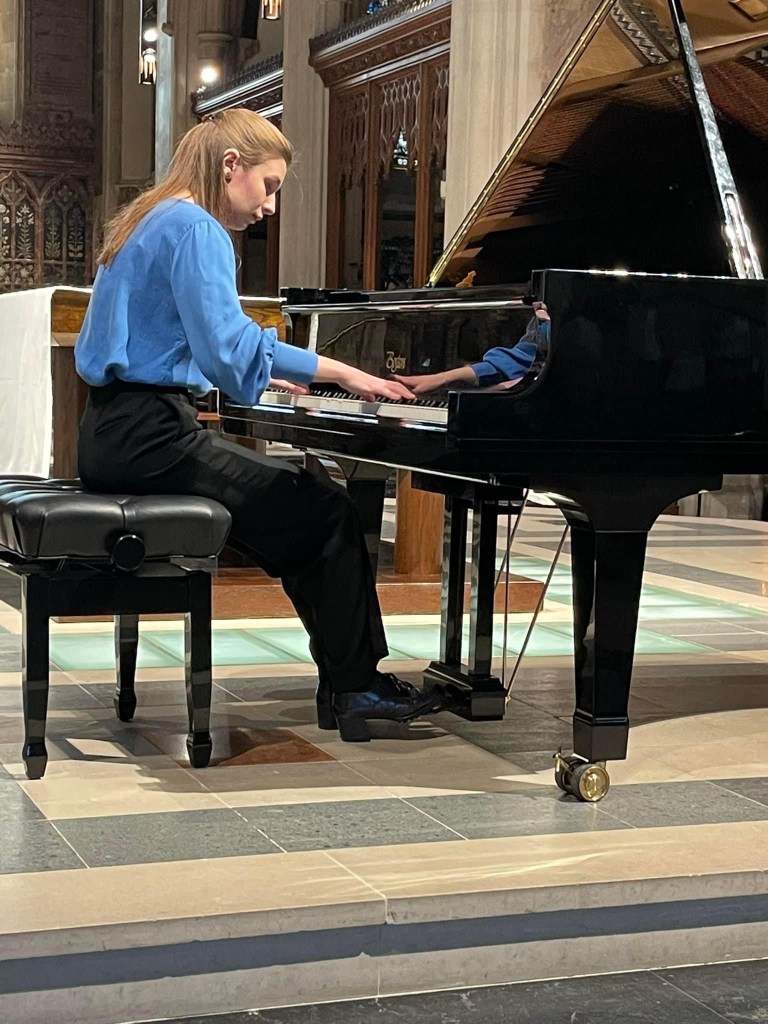
Some very assured musicianly playing from Ivelina Krasteva in St James’ Sussex Gardens. Beethoven’s op 22 Sonata was paired with the equally youthful 2nd Sonata of Prokofiev.Many striking similarities with their quixotic changes of character and dynamic rhythmic drive allied to a subtle sense of balance and colour.
Beethoven in particular showed her great sense of architectural shape as she not only imbued each movement with subtle detail and character but managed to combine all four movements into a unified whole of great significance. Such refined detail in the first movement ‘Allegro con brio’ where the seemingly innocent opening motif is transformed in so many genial ways ,a similar opening to his even earlier Sonata op 2 n 3. But now Beethoven has realised the great significance of the bass as he leaves his Haydnesque early world and strikes out into unexplored territory. A journey that will pervade his complete musical evolution (or revolution) through the thirty two sonatas that span his total existence on earth . The final sonatas pointing already to a celestial world away from the sturm und drang of his earthly existence. Ivelina realised this and it was the bass that she gave such weight to in the first movement.The melodic line in the development was allowed to murmur in the bass so magically where above were mere vibrations of sound.
An Adagio where the bass notes were hardly audible as she stroked and caressed them providing a carpet of sound on which Beethoven’s mellifluous outpouring could unwind with such beauty and aristocratic shape.Magic sounds where the left hand that was a mere heartbeat on which ever more expressive appoggiaturas could float with poignant significance.There was purity and simplicity as Ivelina allowed this extraordinary movement to unfold with simplicity and subtle projection. I remember being baffled by a critic writing about Richter’s performance in London on one of his first visits to the west.I did not understand at the time what he meant with ‘the Adagio was inexistant’.We had only just begun to understand the extraordinary sound world of the Russian school untainted by tradition as it was in the hands of this gigantic pianistic genius. Ivelina too today looked afresh at a Sonata that we have lived with for a lifetime. She imbued it with a clarity and intelligence that took us by surprise as it must have done when the ink was still fresh on the page. There was a simple mellifluous flow to the Minuetto followed by vibrations of sound answered by the distant strains of a march.A trio played with great control as the weaving strands in the left hand were allowed to flow with ease.A Rondo of pastoral grace and charm interrupted by ever more dramatic insistent episodes of febrile energy.A fugato where the dynamic pieces were gradually calmed ,burning themselves out as they found their way back to the Rondo that was now embellished with great style and charm.
From the first notes of Prokofiev’s second sonata we were plunged into a world of savage rhythms and sensual sounds.The opening pastoral innocence interrupted by celestial sounds and episodes of dynamic energy.A pedal note that is but a menacing rumble in the bass while frenzied energy is suddenly gathering force above.A Scherzo that was a continuous rhythmic outpouring played with relentless dynamic energy and a grotesque sense of humour. There was deep mediation in the Andante with the ravishing beauty of the melodic line over an ever moving wave of unearthly sounds.A treble eerily meandering over an insistent bass in continual motion ever more intense. There was a bustling rhythmic energy to the ‘vivace’ with an almost french flavour of sarcastic humour.A magical reappearance of the first movement theme was given a quixotic work over tainted by the good humoured banter of this early work as yet untouched by a world that had still to open up and turn upside down Prokofiev’s whole existence. Two works on their first outing for Ivelina that showed her mature intelligent musicianship and superb technical control. .
Some superb playing at St Mary’s today from a pianist of great sensibility and with a technical prowess that knew no hurdles.An aristocratic sense of style and ravishing sense of colour that belied any idea of showmanship or excess.This was a true thinking musician equipped with astonishing technical finesse who filled the notes with loving care rather than imbue them with dramatic tension and drive.Her charming introduction had already revealed a simple love for the music she was playing,describing Chopin’s Barcarolle as ‘a postcard from Venice’.
Three Scarlatti Sonatas opened her recital with K.121 of delicacy and brilliance ;K 146 beautifully shaped with elegant arpeggios and teasingly busy figurations and rather than finish with brilliance she chose K 534 of languid beauty and reflection.It was the same choice that she made at the end of the recital where rather than finish with the astonishing pyrotechnics of Erlkonig she chose the magic sounds and liquid beauty of Mompou’s evocative’El Lago’
Haydn’s Sonata was filled with ‘joie di vivre’ and as Haydn himself said he resorted to a spot of self-borrowing, recycling the perky tune of the Scherzando second movement of sonata No 36 from the same, ‘Auenbrugger’ set .Haydn added an explanatory note on the reverse of the title page to avoid eventual criticism:’Among these six sonatas are two movements that use the same idea for the first few bars … the composer wishes it to be known that he has done this on purpose to demonstrate different methods of treatment.’ The Adagio was played with a luminosity of sound shaped with simplicity and the beauty of gently flowing sounds.The Prestissimo had buoyancy and high spirits even if it could have had more abandon to bring it even more vividly to life.
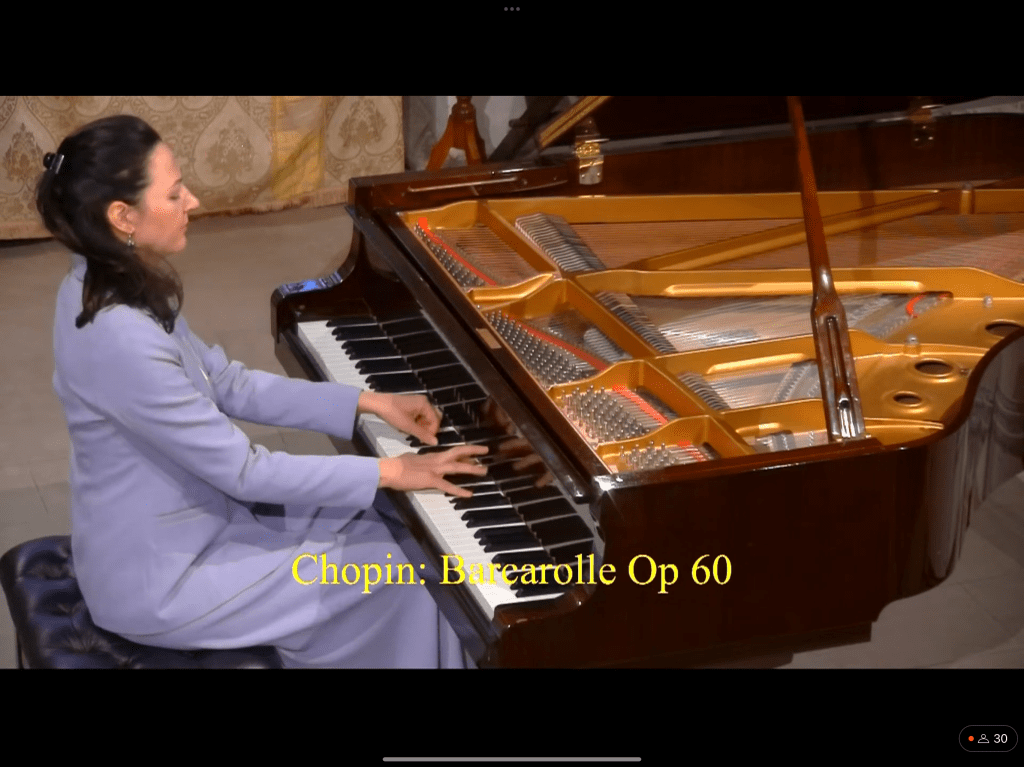
It was obvious from how she played the opening bass octave of Chopin’s Barcarolle that we were in the hands of a true musician.Not a declaration of intent but more the opening of a secret chest of jewels.And there were certainly ravishing sparkling sounds in this great song that Chopin had so miraculously penned towards the end of his short life.The golden sounds of the ravishing central nocturne effect that Perlemuter described to me as ‘here we are in heaven’.Sacrificing passion and showmanship for a more inward beauty as she brought this great ‘postcard from Venice’ to a ravishing end.
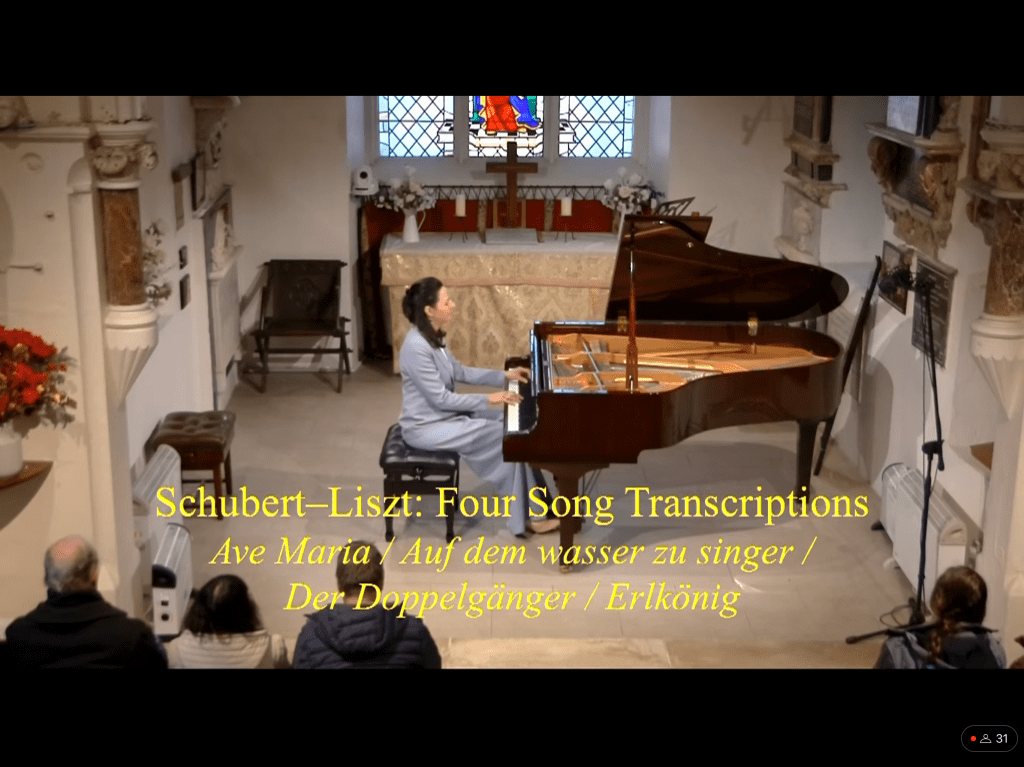
She chose four of Liszt’s poetic transcriptions of Schubert songs that created a sumptuous feast of refined playing with refined sounds and a sense of balance that no matter how elaborate the decorative accompaniment Schubert’s miraculous melodic invention shone through with heartrending meaning.’Ave Maria’ where the delicacy of the ever more elaborate embellishments gave even more poignancy to the simplicity of the melodic line.An elaborate crossing of hands and magic trickery worthy of Liszt’s great rival Thalberg were played with a religious fervour with sounds that made the piano vibrate with a sumptuous golden glow.She brought refined delicacy to ‘Auf dem Wasser zu singen’ where the the cascades of delicate notes from Ave Maria spilled over on to the tenor line with its magic arabesques linking up to the water bubbling over the stream.An extraordinary sense of balance and technical control as clouds appeared on the scene and the intensity grew more ruvid.The sombre atmosphere she created with her superb control of sound brought Der Doppleganger miraculously to life.It was her phenomenal technical control that brought the infamous octaves of Erlkonig vividly to life but always with the musical meaning being the instigator rather that the victim.The beseeching contrasts and fearsome final chords were indeed breathtaking and would have made a fitting ending for any recital.But it was beauty and serenity that Maya chose to close this very refined musical experience that she had share with us.
London-based Maya Irgalina is a Belarusian pianist of Tatar origin. Her musical interests include jazz and contemporary classics, including Nikolai Kapustin and Carl Vine; as well as Spanish and French impressionism alongside her European and Russian repertoire. Her work has paired her with celebrated tenor Simon O’Neal, cellist Abel Selaocoe, alongside her collaboration with mezzo-soprano Fleur Barron. As a guest pianist, she has played with the City of Birmingham Symphony Orchestra, Manchester Camerata and Belarusian Opera House Orchestra to name just a few. Maya has been selected as a Britten-Pears Young Artist and was featured in Semyon Bychkov’s Beloved Friend project about Tchaikovsky with the BBC Symphony Orchestra.
She has won prizes in such competitions as Dudley, Sydney, Maria Yudina, Scriabin etc., and performed internationally with the UK highlights including performances at Wigmore Hall, Barbican, Machynlleth Festival, Oscar Wilde Weekend, Rye Arts Festival, and Cheltenham Jazz Festival. Maya is very grateful to her professors Lilia Ter-Minasian, Graham Scott, Ronan O’Hora and Julius Drake. She holds the International Artist Diploma in Solo Performance and the Gold Medal from the Royal Northern College of Music and the master’s degree in Music from the Guildhall School of Music and Drama.
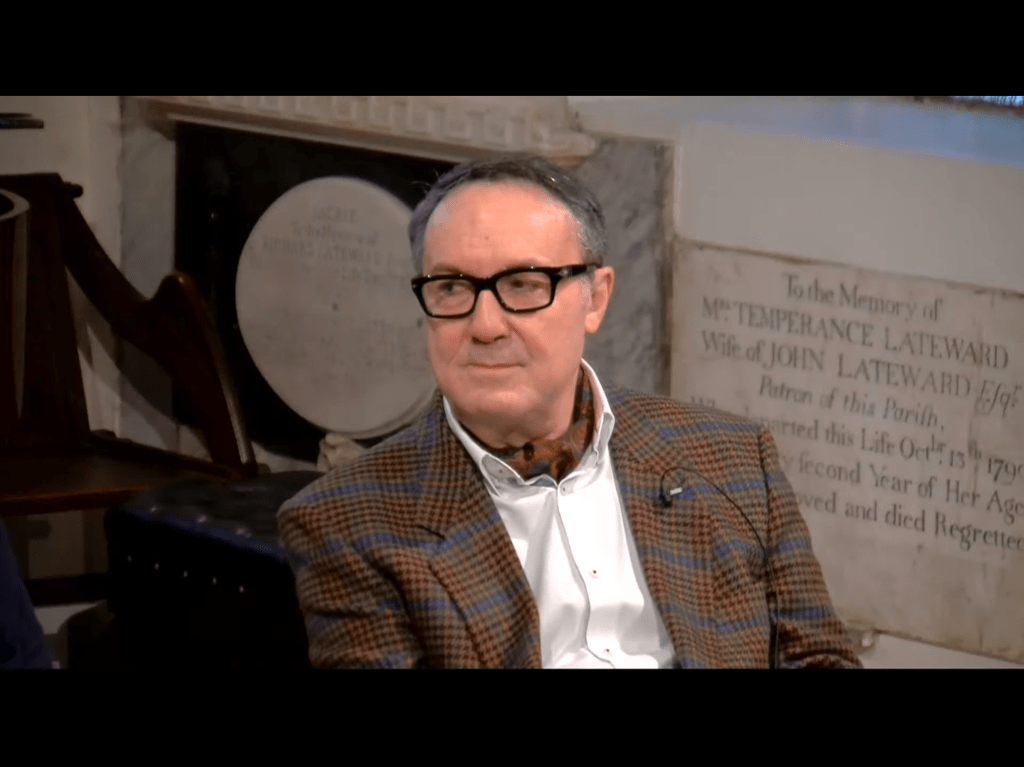
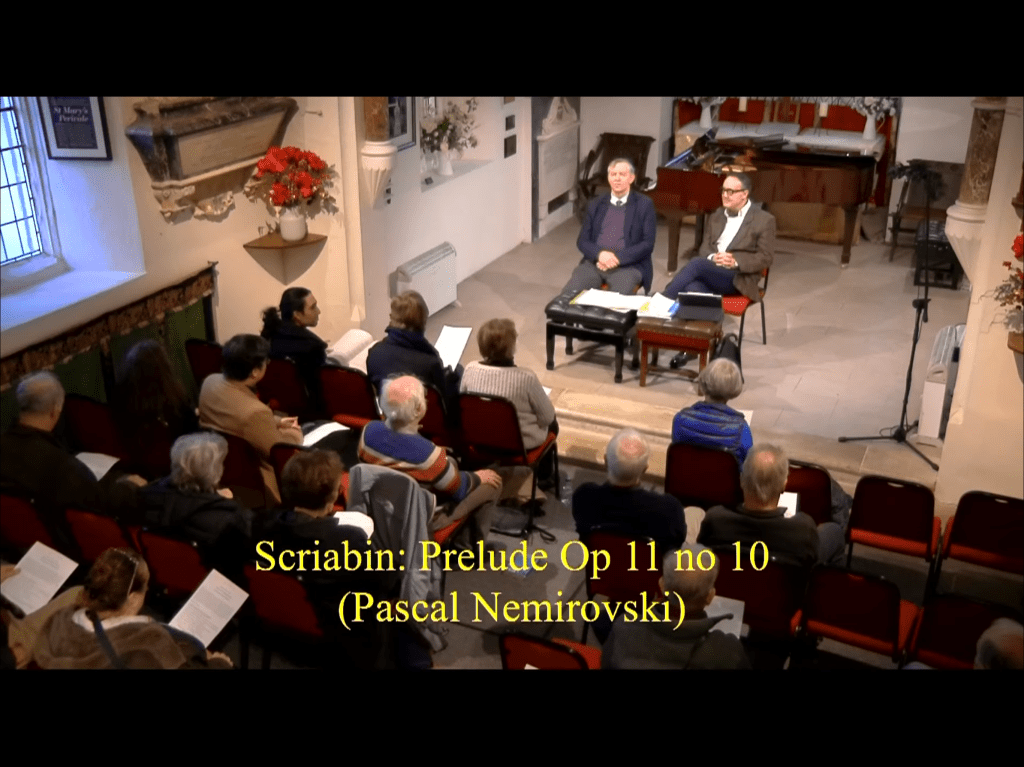
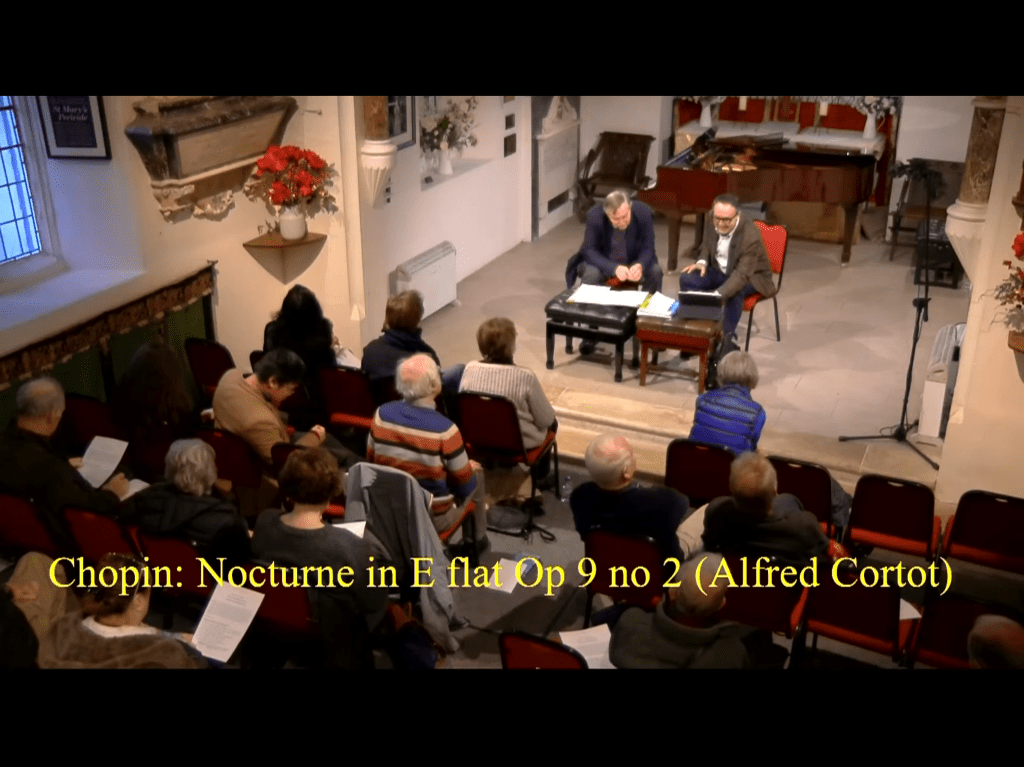
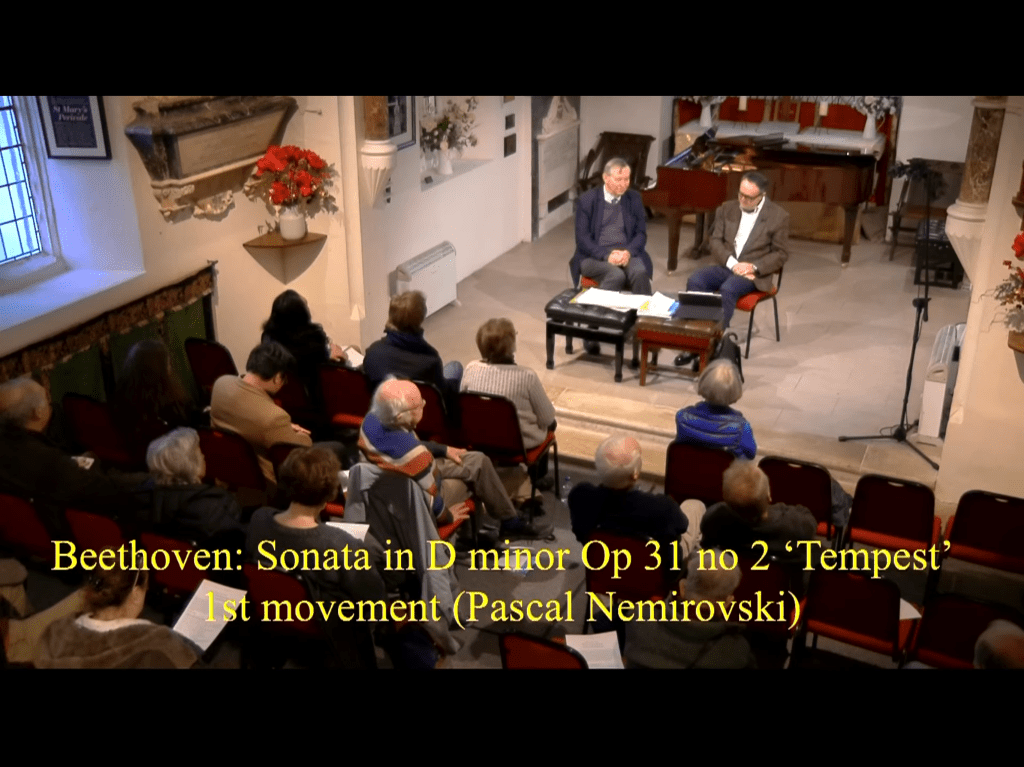
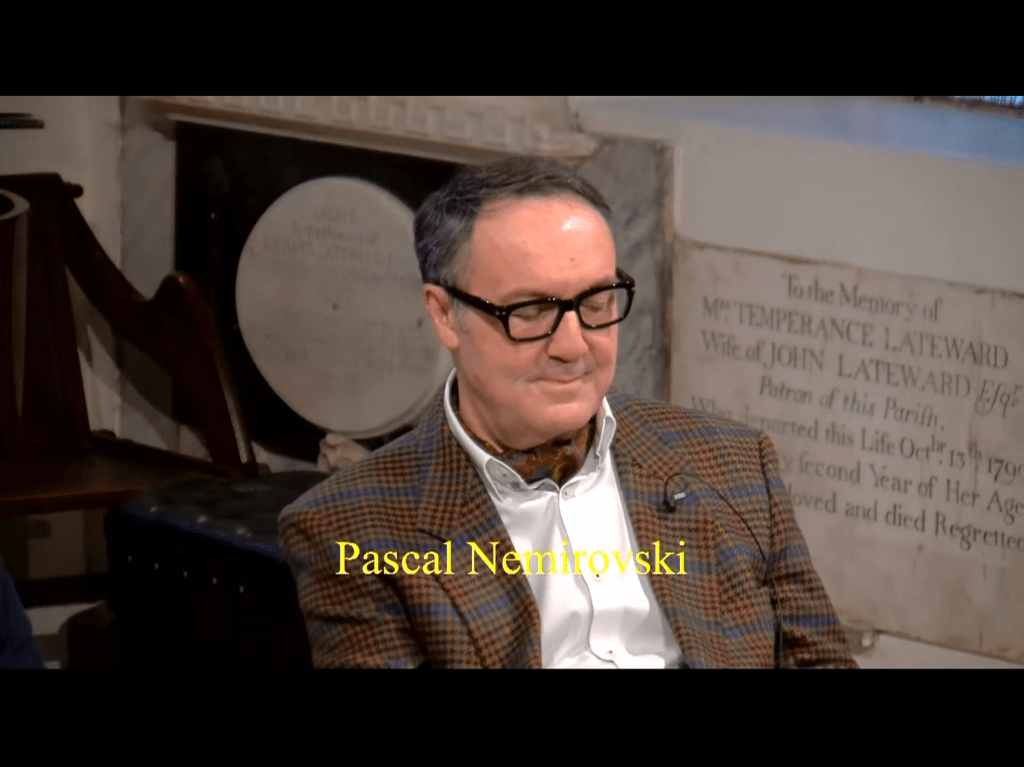
A fascinating conversation between Dr Hugh Mather and Pascal Nemirovski.But it was the recordings of his own performances in his formative years that were a revelation.Of course he encouraged us to listen to Cortot to show that there is no one way of playing the piano.As saying ‘thank you’,which the human voice can say with so many different inflections.The last word today was in fact given to the sublime voice of Janet Baker as an example of what we are all striving for.Listen ,listen ,listen was his message.In fact it was Shura Cherkassky after listening to the first recital of a complete series of the Beethoven Sonatas from a top prize winning pianist ,who turned to me and said I don’t think he is listening to himself!Just as Pascal charmingly told of Glenn Gould practicing with the vacuum cleaner on so he would have to strain to hear the musical sounds he was searching for on the piano.Of course Pascal touched on the subject of technique and the importance of correct posture that would not impede the energy from flowing through the fingers into the notes.But above all to think of the sound you are striving for before looking for the note on the keyboard.A fascinating conversation of great charm and ‘joie de vivre’ of an artist deeply in love with music and the idea of sharing this great love and experience with others.What better way to celebrate his extraordinary career than to hear five of his remarkable students ,three of whom have played on this very stage and Emanuil Ivanov ,winner of the 2018/19 Busoni Competition ,who will play on Valentine’s Day.
Pascal Nemirovski is recognized as one of the most sought-after piano pedagogues in the world with many of his students winning top international prizes (Leeds, Busoni, Ettlingen, YCA New York, YCAT London, BBC New Generation Artist…) and many of whom are now successful recording artists represented by major Concert Artist Management companies. These include Lise de la Salle, Louis Schwizgebel, Daniel Lebhardt, Mario Mora, Roman Kosyakov, Emanuil Ivanov, Edward Leung, Yi Zhong. He studied at the Juilliard School with Nadia Reisenberg and Adele Marcus from 1981 to 1984 on a full scholarship. Then he continued his studies in Paris with France Clidat and Alexis Weissenberg and gave concerts and masterclasses in Europe, the United States and Asia. He was a Piano Professor at the Royal Academy of Music from 2006 to 2017, and since 2015 has held the post of International Chair in Piano at the Royal Birmingham Conservatoire.
Variations and Fugue on a Theme of Handel Op. 24 (1861)
4 Klavierstücke Op. 119 (1893) Intermezzo in B minor,Intermezzo in E minor ,Intermezzo in C ,Rhapsody in E flat.
Franz Schubert (1797-1828)
Piano Sonata in B flat D960 (1828) I. Molto moderato II. Andante sostenuto III. Scherzo. Allegro vivace con delicatezza – Trio IV. Allegro ma non troppo
Samson Tsoy opening his recital with the Brahms Handel Variations followed by the four Klavierstucke op 119. Even the hall thought it must be a mistake and had to make an announcement to confirm the order that Samson had obviously communicated previously. A very bold move until we heard this early Brahms masterpiece in Samson’s hands played with such sensitivity and gentle luminosity where usually we are assaulted by robust ‘orchestral’ sound and strenuous virtuosity. This was quite a revelation as he moved from one variation to another with ravishingly delicate playing of exquisite tonal colour.There was grandeur and dynamism when called for but the overall impression was that this is the same ethereal world of his later miniature masterpieces of op 117,18 and 19. Schubert’s last Sonata was played with gentle authority of great aristocratic poise and poignancy. Momentary flashes of ‘storm und drang’were short lived as Schubert’s profoundest of utterings were given all the time needed to ravish and seduce the senses for the last time. The Impromptu in E flat played as an encore produced streams of sounds of pure gold as the jeux perlé notes were shaped with the same sensitivity and loving care that had been the hallmark of a recital dedicated to pure beautiful music making.An ovation,whistles and cat calls were greeted at last with a smile from this very dedicated young artist.
The opening theme was played with an unusual sensitivity and very subtle flexibility that immediately caught my attention.It was to be held with baited breath until the final tumultuous notes of the Fugue.Every variation was a revelation,as if the notes were still wet on the page,The silence too before the music box variation n. 22 towards the end was played as if in a wondrous dream of nostalgic recollection .It was the magic touch of a deeply committed artist.The first four variations were played with a liquid legato with cascades of arabesques in the second and deeply expressive fourth.Awakened by demonic octaves: dynamic and impressive as they burst onto this seemingly pastoral scene.Immediately contrasted with the mellifluous mysterious meanderings of the sixth and the very light rhythmic drive of the seventh and eighth.A subtle build up in intensity led to declamatory octaves phrases each one disappearing to oblivion with such nonchalant ease and grace.Cat and mouse delicately chasing up and down the keys with ‘kittenish’ playfulness.Delicacy and beauty followed and led to the gentle duet between fairy horns and flutes.There followed grandeur but with luminosity and very personal inflections.The pointed deep bass notes of the seventeenth was followed by the gentle pastoral cascades of notes in the eighteenth leading to the beautiful lilting ‘siciliano’ of the nineteenth .A very demonic build up followed with dry menacing staccato notes driving ever more excitedly with swirls of sounds like the west wind blowing.And after such tension the triumphant opening theme in all its glory ,worthy of Busonian exultation,came as such a cathartic relief.The bare notes of the fugue were like a window suddenly being opened and letting the blazing sun light dazzle us with Samson’s unrelenting technical prowess.The Great Gate of Kiev comes to mind as the chimes first in the right hand are answered by the left and accompanied by transcendental technical high jinx.Played with extraordinary architectural command of startling authority where even here he found a sense of colour and contrast that kept us on the edge of our seats until the final majestic chords.
The Variations and Fugue on a Theme by Handel, Op. 24, was written by in 1861. It consists of a set of twenty-five variations and a concluding fugue, based on a theme from Handel’s Harpsichord suite N.1 in B flat .Ranked by Tovey as “the half-dozen greatest sets of variations ever written”.They were written in September 1861 after Brahms, aged 28, abandoned the work he had been doing as director of the Hamburg women’s choir (Frauenchor) and moved out of his family’s cramped and shabby apartments in Hamburg to his own apartment in the quiet suburb of Hamm, initiating a highly productive period that produced “a series of early masterworks”.Written in a single stretch in September 1861,the work is dedicated to a “beloved friend”, Clara Schumann widow of Robert and was presented to her on her 42nd birthday, September 13.Brahms played the piece himself in his first solo performance in Vienna – even Wagner had to admit how much could still be done in the ‘old forms’. Brahms’s approach to variation writing is outlined in a number of letters. “In a theme for a set of variations, it is almost only the bass that has any meaning for me. But this is sacred to me, it is the firm foundation on which I then build my stories. What I do with a melody is only playing around … If I vary only the melody, then I cannot easily be more than clever or graceful, or, indeed, if full of feeling, deepen a pretty thought. On the given bass, I invent something actually new, I discover new melodies in it, I create.” The role of the bass is critical.
Op 119 is the last composition for solo piano by Brahms and was premiered in London in January 1894.In May 1893 Brahms wrote to his beloved Clara about the first intermezzo in B minor :”I am tempted to copy out a small piano piece for you, because I would like to know how you agree with it. It is teeming with dissonances! These may [well] be correct and [can] be explained—but maybe they won’t please your palate, and now I wished, they would be less correct, but more appetizing and agreeable to your taste. The little piece is exceptionally melancholic and ‘to be played very slowly’ is not an understatement. Every bar and every note must sound like a ritard[ando], as if one wanted to suck melancholy out of each and every one, lustily and with pleasure out of these very dissonances! Good Lord, this description will [surely] awaken your desire!”Samson gave us a moving glimpse of what Brahms had tried to put into words.There was a timeless luminosity to the gasps of sublime poetry that Brahms could miraculously convey in his old age.Have so few notes ever meant so much as in Samson’s sensitive fingers?Coming after the ‘barn storming’ young Brahms,Samson was immediately able to create a magic atmosphere with a Scriabinesque range of fluid sounds .Even the ‘poco agitato’ of the second intermezzo was bathed in pedal with the gentle ‘grazioso’ like a ray of light rising out of the mist.The third Intermezzo was also a ‘grazioso ‘ and ‘giocoso’ in the half light of dusk,rather than dawn,with the final swirls of notes played piano and the quixotic chords pianissimo ,as Brahms asks and rarely gets,with the final held pedal on the three last chords that were played with a real sense of awakening.A Rhapsody played with rhythmic drive even if the opening chords I found less rich in sound than i was expecting.It made an exciting contrast,though,to the mysterious held pedal a little later.The beautiful central section was played with a playful nonchalance ‘grazioso’ that brought a smile of whimsical capriciousness to Brahms’ last thoughts.
The last three sets of piano pieces, Op.117, 118 and 119, are linked by a certain personal intimacy, almost a secrecy of meaning. Brahms called the three pieces of Op. 117 ‘lullabies to my sorrows’, The pianist Ilona Eibenschütz on hearing Brahms wrote: ‘He played as if he were just improvising, with heart and soul, sometimes humming to himself, forgetting everything around him.’Fanny Davies wrote: ‘When Brahms played, one knew exactly what he intended to convey to his listeners: aspiration, wild fantastic flights, majestic calm, deep tenderness without sentimentality, delicate, wayward humour, sincerity, noble passion’.
In David Owen Norris’s refreshingly informed programme notes he talks about the sinister trill on the piano’s very bottom note being described by his grandmother as ‘the note the cat died on’.Someone must have trod on the cat’s tail today because the yelp she let out at the end of the ritornello of the first movement showed the intelligence of this young musician.Extra bars that are often left out because to return to the opening might seem excessive in an already long work!The sublime length of Schubert,sometime brought to the extremes by Richter,was today in Samson’s poetic hands only pure joy to hear again the sublime beauty of the exposition.The howl he let fire before the repeat only made us more aware of the sublime almost improvised creation that Schubert could envisage in his last days on earth.A magical performance of shape and colour and a sense of detail as in the combined tenor and soprano duet of the second subject that was sublime.There were true strokes of magic in the development that were quite breathtaking .The calm created before the storm was retraced with even more poignant delicacy as the melodic line floated on chords that were mere vibrations of sound.The Andante too was played with an architectural shape and direction without any exaggerations but allowing this sublime utterance to speak for itself.The Scherzo was indeed as Schubert asks ‘con delicatezza’ with also charm and subtlety.The sforzando/pianos of the Trio were not played like ‘spooks in the night’ but just pointed at with the same sheen and gloss that had been created in the Scherzo.The final Allegro was played at a leisurely pace with the call to arms of G interrupting so naturally the simple flow of Schubert’s timeless mellifluous outpouring .There was great passion and desperation in the first climax but it immediately dissolved into even more mischievous charm of disarming simplicity.The final climax was played with great brilliance and fire with the two last. Imperious chords placed with the aristocratic timing of a great artist in total command of his canvas.
Schubert’s last three piano sonatas D 958, 959 and 960, are his last major compositions for solo piano. They were written during the last months of his life, between the spring and autumn of 1828, but were not published until about ten years after his death, in 1838–39.Like the rest of Schubert’s piano sonatas, they were mostly neglected in the 19th century.By the late 20th century, however, public and critical opinion had changed, and these sonatas are now considered among the most important of the composer’s mature masterpieces.
The last year of Schubert’s life was marked by growing public acclaim for the composer’s works, but also by the gradual deterioration of his health. On March 26, 1828, together with other musicians in Vienna ,Schubert gave a public concert of his own works, which was a great success and earned him a considerable profit. In addition, two new German publishers took an interest in his works, leading to a short period of financial well-being. However, by the time the summer months arrived, Schubert was again short of money and had to cancel some journeys he had previously planned.Schubert had been struggling with syphilis since 1822–23, and suffered from weakness, headaches and dizziness. However, he seems to have led a relatively normal life until September 1828, when new symptoms appeared. At this stage he moved from the Vienna home of his friend Franz von Schober to his brother Ferdinand’s house in the suburbs, following the advice of his doctor; unfortunately, this may have actually worsened his condition. However, up until the last weeks of his life in November 1828, he continued to compose an extraordinary amount of music, including such masterpieces as the three last sonatas.The final sonata was completed on September 26, and two days later, Schubert played from the sonata trilogy at an evening gathering in Vienna.In a letter to Probst (one of his publishers), dated October 2, 1828, Schubert mentioned the sonatas amongst other works he had recently completed and wished to publish.However, Probst was not interested in the sonatas,and by November 19, Schubert was dead.In the following year, Schubert’s brother Ferdinand sold the sonatas’ to another publisher, Anton Diabelli , who would only publish them about ten years later, in 1838 or 1839.Schubert had intended the sonatas to be dedicated to Hummel, whom he greatly admired. Hummel was a leading pianist, a pupil of Mozart, and a pioneering composer of the Romantic style (like Schubert himself).However, by the time the sonatas were published in 1839, Hummel was dead, and Diabelli, the new publisher, decided to dedicate them instead to Robert Schumann,who had praised many of Schubert’s works in his critical writings.
Mother Clara a beautiful singspiel by Graham Johnson .
With Janet Suzman,Alexandra Gilbreath,Sophie Rennert,Roderick Williams they told the other story of Clara through the eyes of Eugenie,one of Clara’s seven siblings. Clara was a ‘tough cookie’,self centered and ‘a legendary matriarch of unimpeachable seriousness and dignity’.A pioneer who made concertising a respectable profession for young women. Receiving the sonata that Liszt had dedicated to her asylumed husband she declared it a fearful noise!Overtones of Bernard Shaw’s famous confrontation between mother and daughter.Another up to date ‘spare’ kiss and tell tale of abandoned love in childhood !’ ‘My kingdom for a horse’indeed!
A superb Janet Suzman being congratulated in the Green room by friends
A superb Janet Suzman,ravishing Sophie Rennert ,imposing Roderick Williams and the very outspoken Eugenie of Alexandra Gilbreath. But the real star was never ‘too loud’ and Graham’s chameleonic role of Sherlock Holmes ,scriptwriter and researcher was outshone not only by the magic that poured from his fingers but also the weight of his acting skills that could hold their own with such a noble assembly of artists
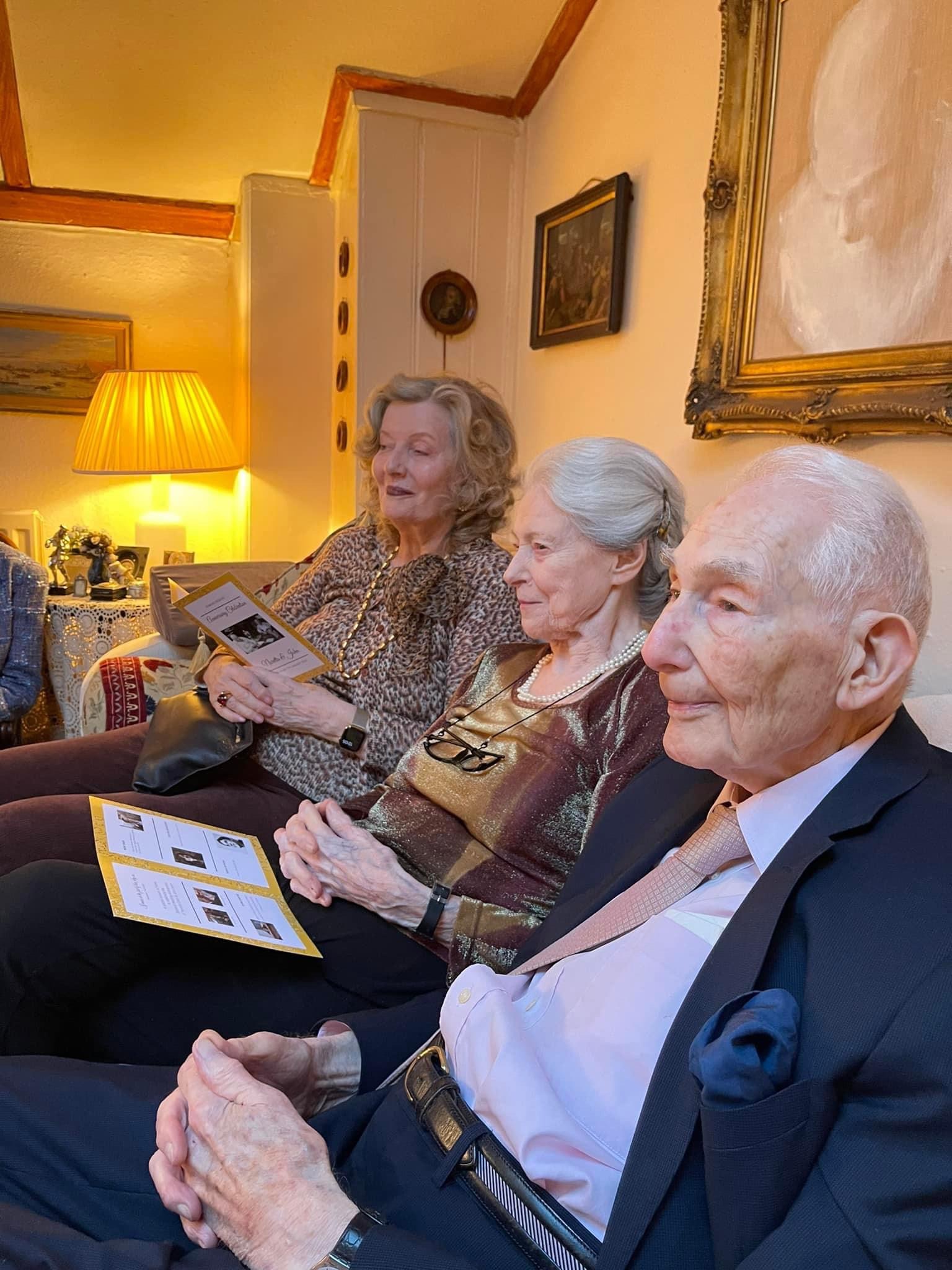
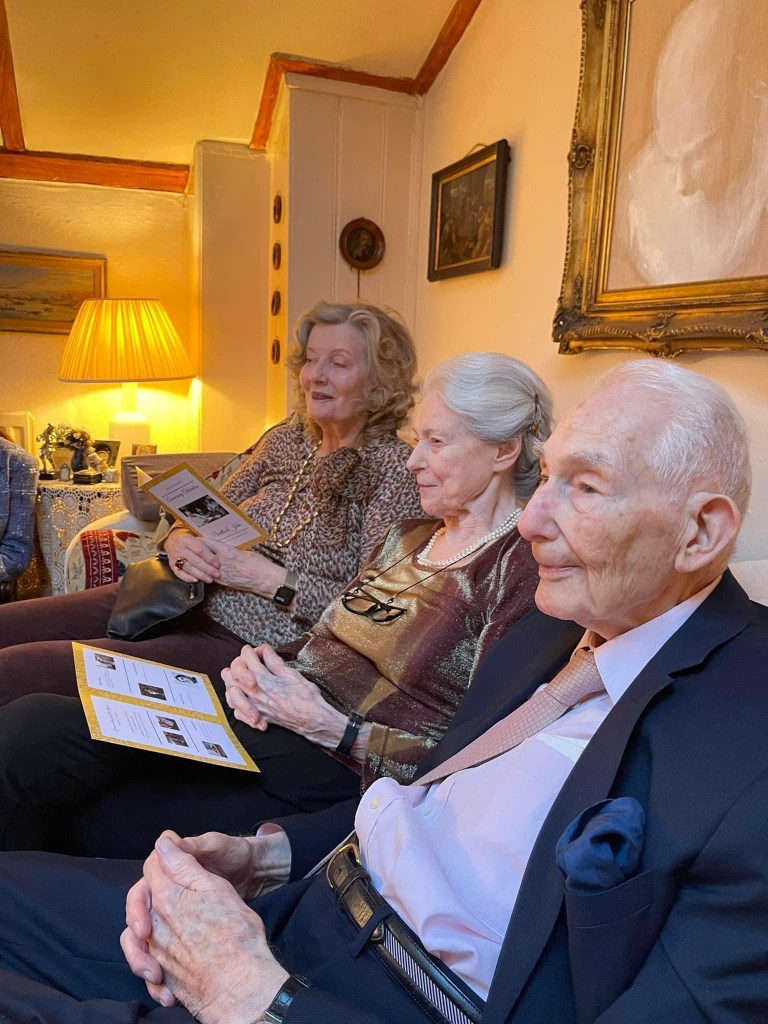
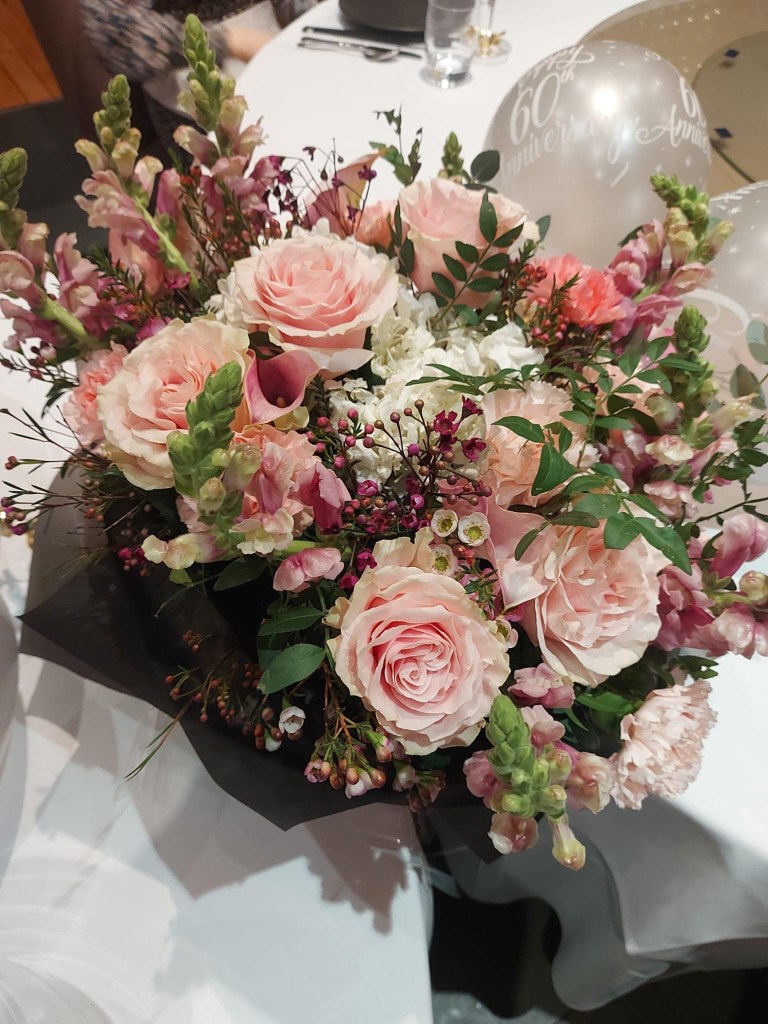
Moritz presenting his treat for Noretta and John and close friends A Rose is always a Rose and if Music be the food of love ,play on ………
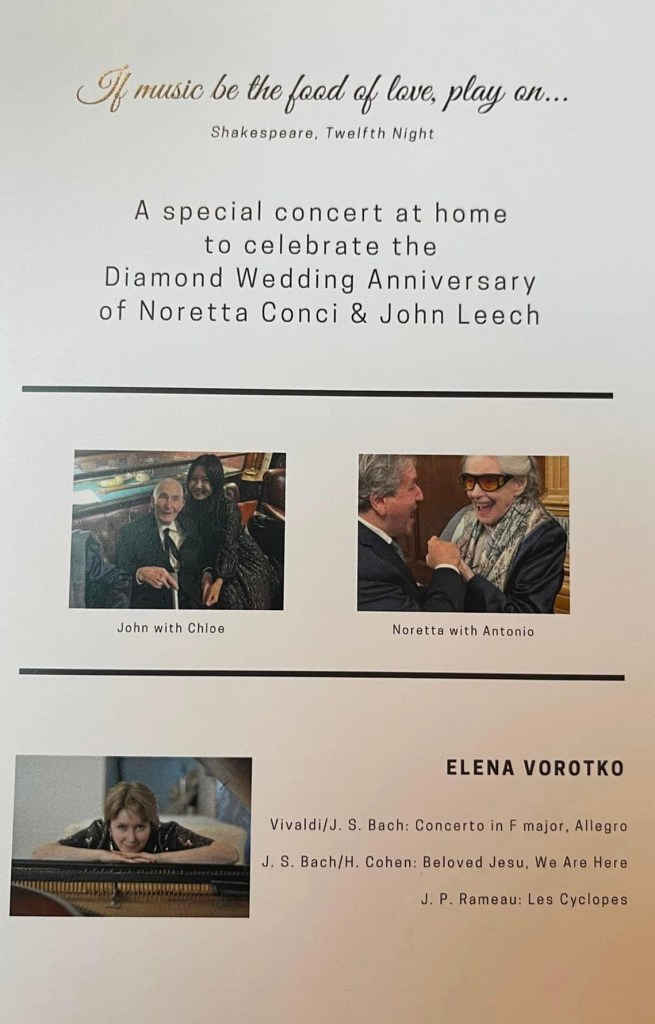
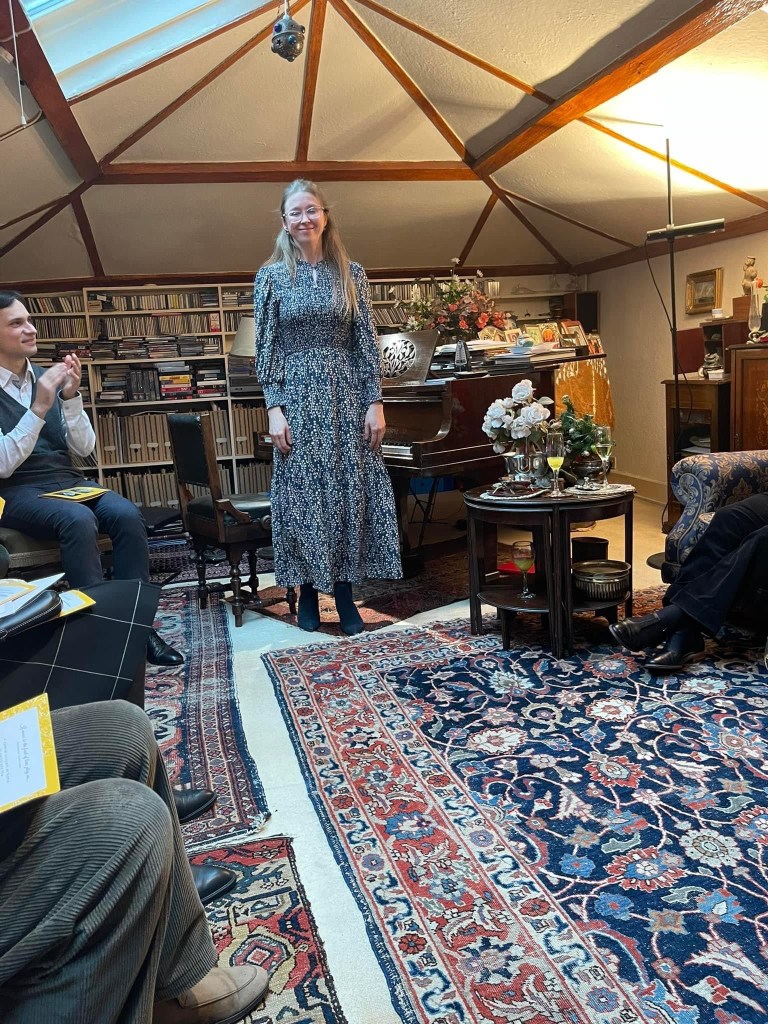
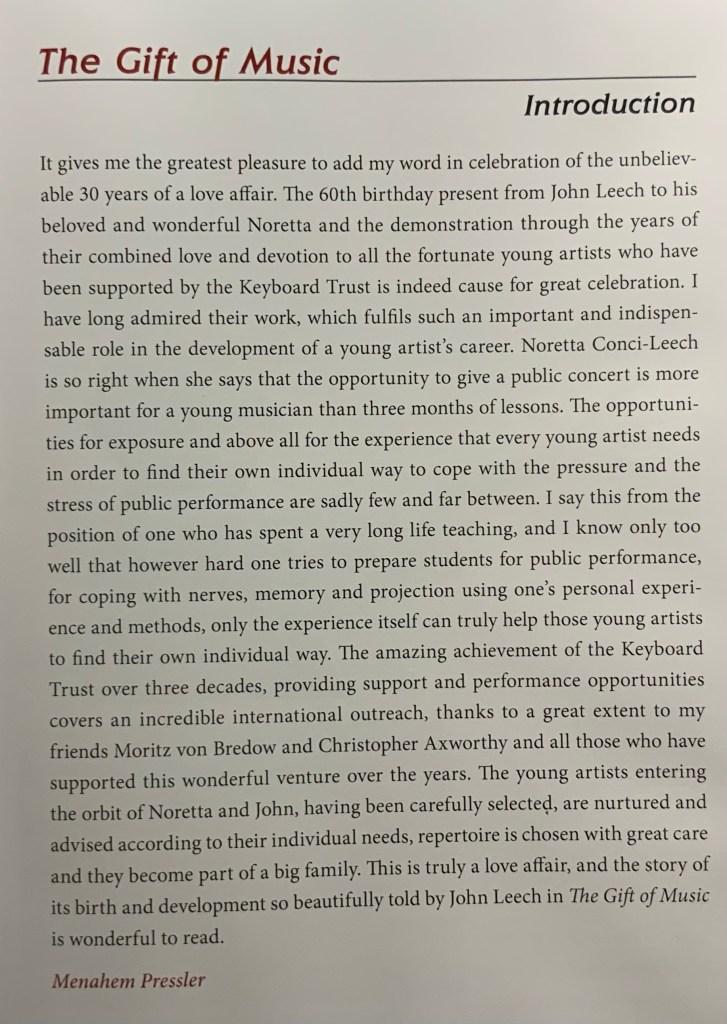
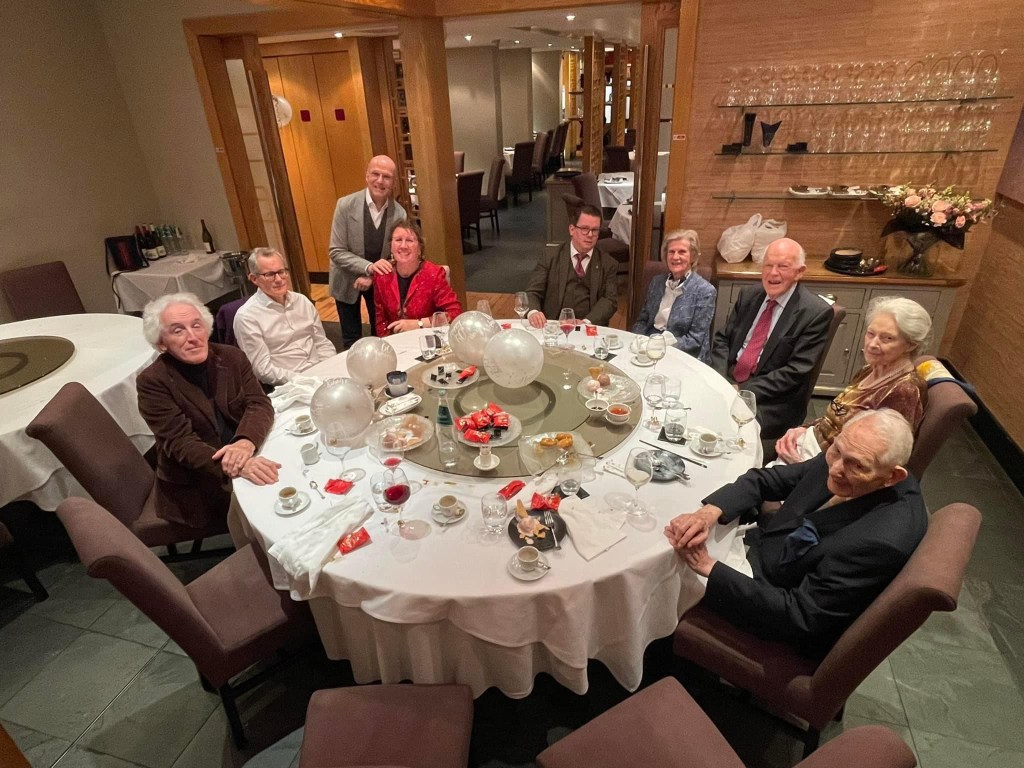
A surprise gift from a long standing friend and trustee of the Keyboard Trust,Dr Moritz von Bredow.A celebration of the enduring love that the founders of the Keyboard Trust have enjoyed for sixty years.By example sharing the Gift of Life so generously with so many talented young musicians and creating a true musical family.Offering concert opportunities,with their numerous musical friends worldwide,at the start of their career.All outlined in the book ‘The Gift of Music’ that John had so industriously formulated during the prolonged Pandemic lock down.Four of their favourite pianists were chosen by Moritz to give a fifteen minute recital in the music room in Chester Square that is known to so many musicians.There could easily have been four hundred but unfortunately time only permitted a selection that Moritz knew would give them such pleasure today.
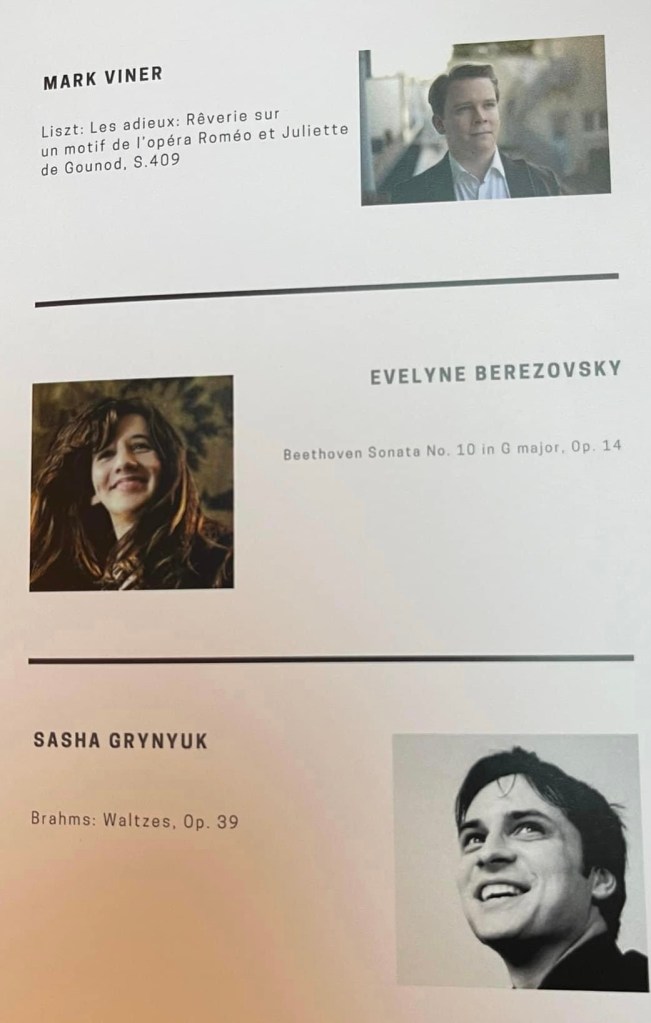
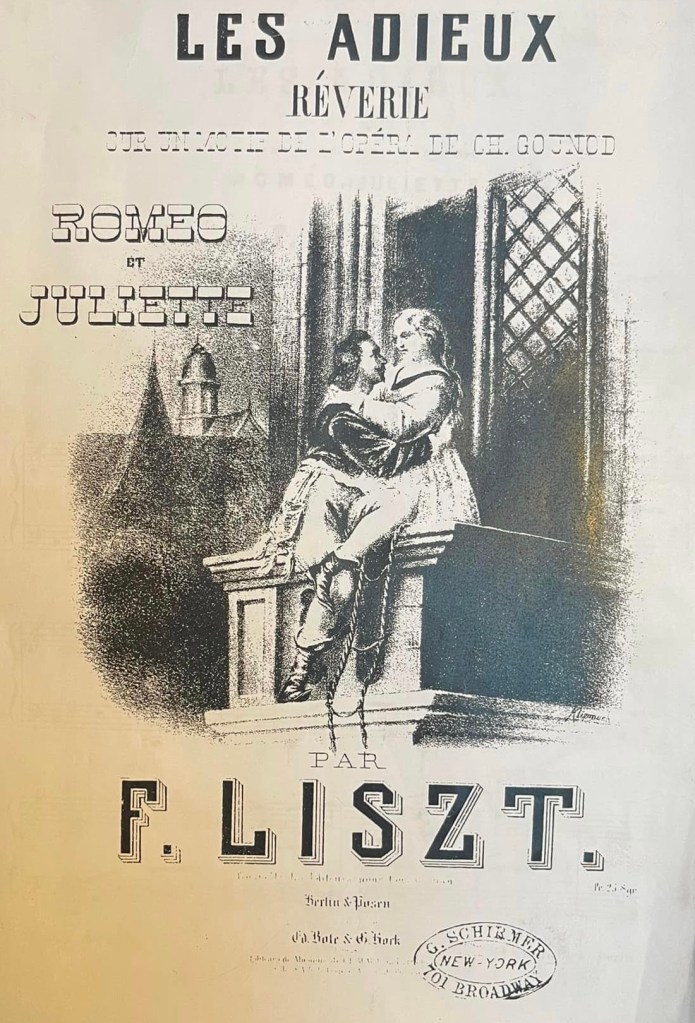
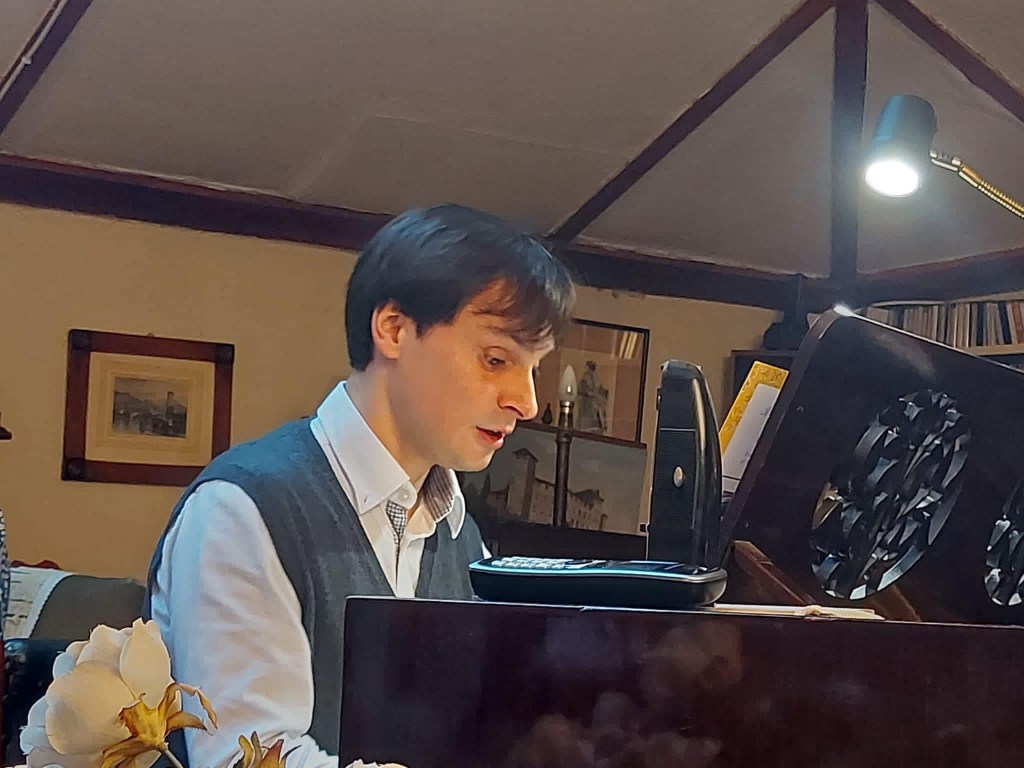
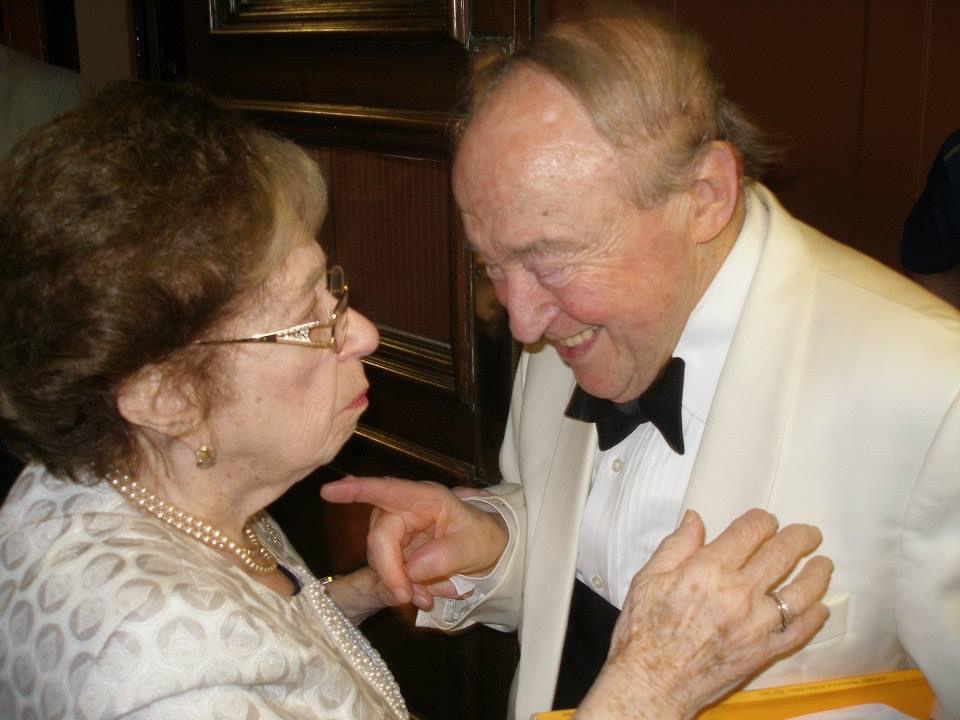
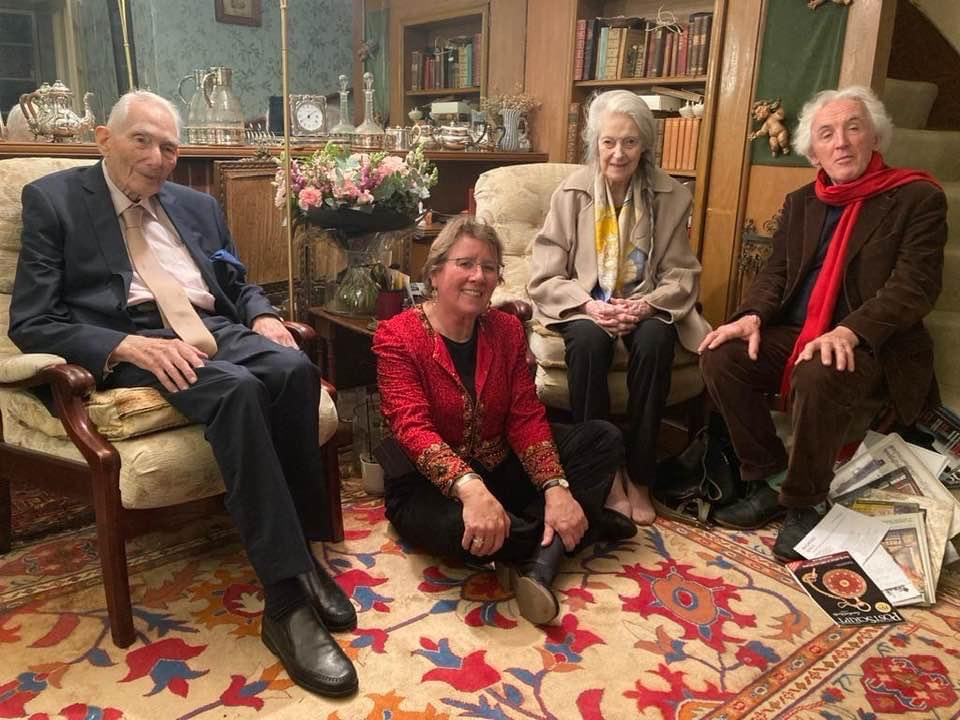
Elena Vorotko one of the three artistic directors nominated by John and Noretta on their retirement from their day to day running of the Trust.Elena has created a Historic Keyboard section within the trust and today played short works by Vivaldi/Bach;Bach/Cohen and Rameau.Explaining so poignantly that the transcription of ‘Liebster Jesu,wir sind hier ’ is a work that has followed her in all the most important events in her life.Mark Viner since making his Wigmore debut as a KCT prize winner,has made many CD’s all receiving five star reviews.He took both Rome and London by storm in concerts organised by the KCT and is fast becoming a very distinguished artist on the world stage .https://christopheraxworthymusiccommentary.com/2020/11/15/mark-viner-at-st-marys-faustian-struggles-and-promethean-prophesis/What better choice than to play Liszt’s rarely performed transcription from Gounod’s Romeo and JulietteEvie,Noretta and John’s absolute favourite ,and a born artist,who like Martha Argerich can do no wrong.Playing Beethoven’s miniature masterpiece op 14 n.2 with dynamic drive and insinuating lyricism .It was a work that Annie Fischer used to regularly include in her recitals playing with the same improvised intelligence and human warmth.A delightful poem that Evie had formulated just minutes before playing showed the same love to the ‘festeggiati’ as her playing did. https://christopheraxworthymusiccommentary.com/2022/02/25/evelyne-berezovsky-seduction-in-rome/Sasha Grynyuk who is like a son to John and Noretta and together with his wife Katya are always there in moments of need. Sasha regularly helps John with his computer studies every Friday after playing and working on a different work from his vast repertoire with Noretta .Today it was the Brahms Waltzes op 39 that showed off his great artistry. https://christopheraxworthymusiccommentary.com/2022/07/11/sasha-grynyuk-anniversary-recital-of-a-great-pianist-in-perivale/Lady Annabelle Weidenfeld who had left Menahem Pressler at home ,for health reasons, enjoying the celebrations of two other ‘youngsters’.Menahem,one of the great musicians of our time,recently celebrated his 99th birthday and had written a moving preface to John’s book :’ The Gift of music’Menahem Pressler with Dame Fanny Waterman in Oxford a few years ago A sumptuous luncheon had been organised by Moritz in a nearby restaurant.John being supported on both sides with loving warmth by Moritz and Noretta during his after luncheon speech of thanks An after luncheon celebration in Chester Square Mews – Moritz between John and Noretta Sarah seated between John and Noretta Dr Trevor Hudson talking to Sir Geoffrey Nice a trustee of long standing .Dr Hudson has been Noretta and John’s private doctor for the past sixty years .He was also,by coincidence,the trusted doctor of my old teacher Vlado Perlemuter and his companion Joan Floquart Booth. It was very reassuring to know from him that our ‘festeggiati’ are in good health and can look forward to many more celebrations! https://christopheraxworthymusiccommentary.com/2017/12/19/in-praise-of-joan-2/What fun was had by all .Our valiant general manger,Sarah Biggs,without whom this event certainly would not have run so smoothly …looking on is Dr Hudson’s wife,Sue,who expects a similar celebration in seven years time!Nice to see our two Russian pianists Evelyn Berezovsky and Elena Vorotko arm in arm as they pass from their mews concert to the luncheon table.Moritz to whom must go infinite thanks for masterminding this wonderfully heartfelt celebration Sasha Grynyuk with his wife Katya Richard Thomas the KCT administrator with Sue Hudson and Sarah Biggs.Poetically eloquent Dr Moritz von Bredow a true renaissance man and renowned pediatrician with hundreds of clients in his clinic in Hamburg.Thank you Moritz for such a memorable occasion
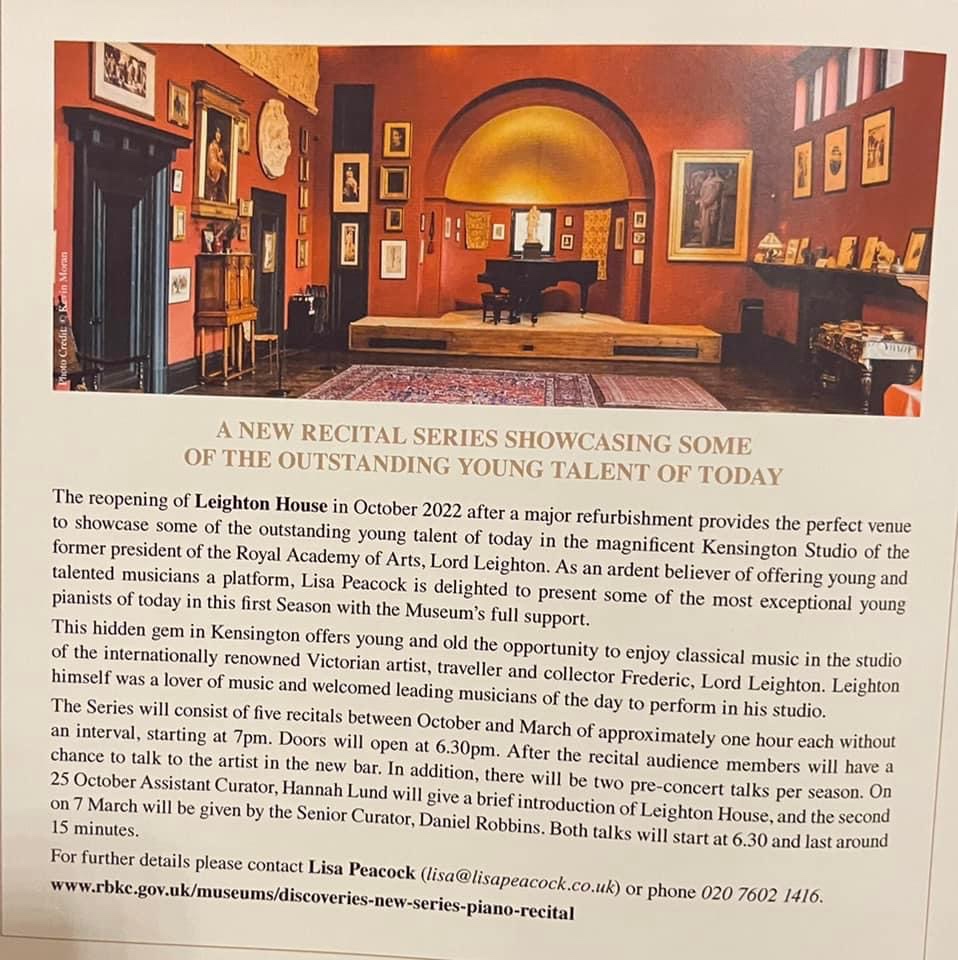
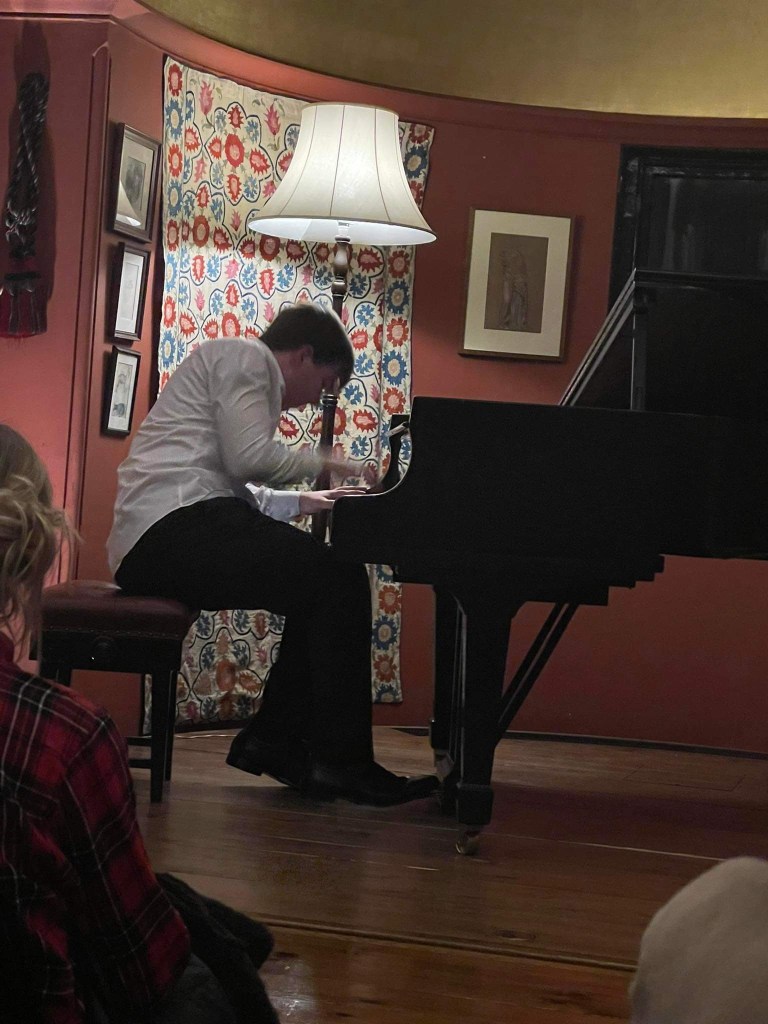
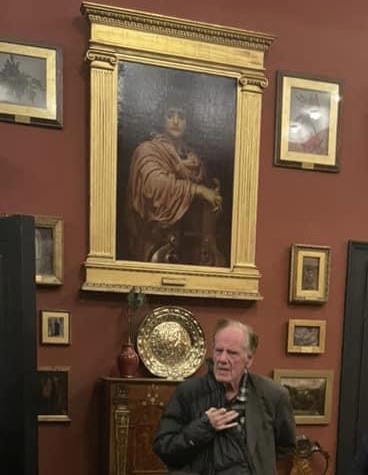
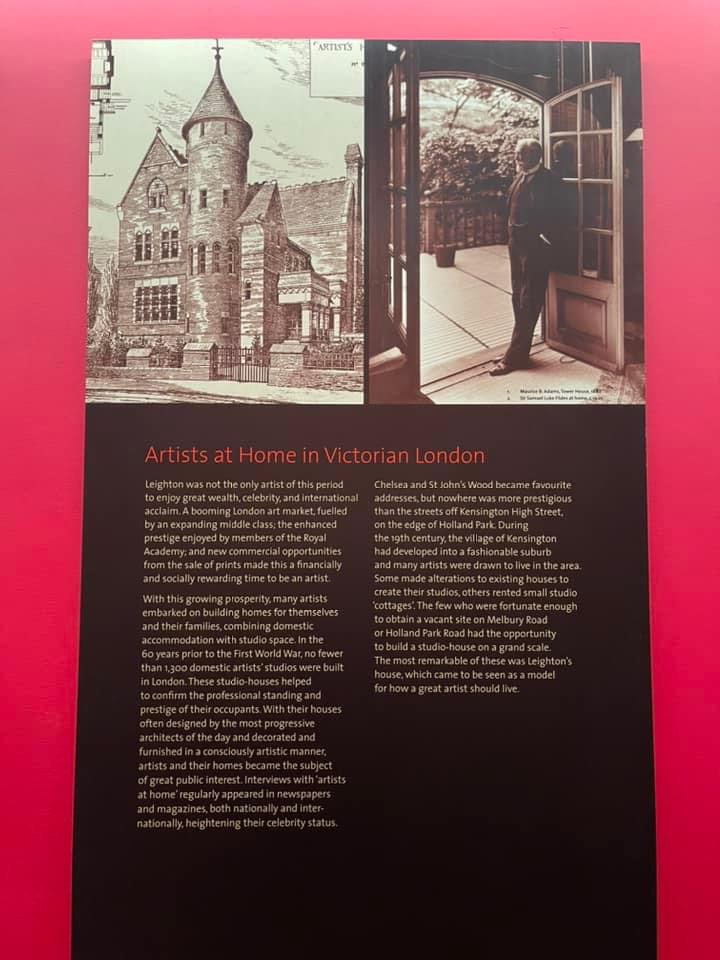
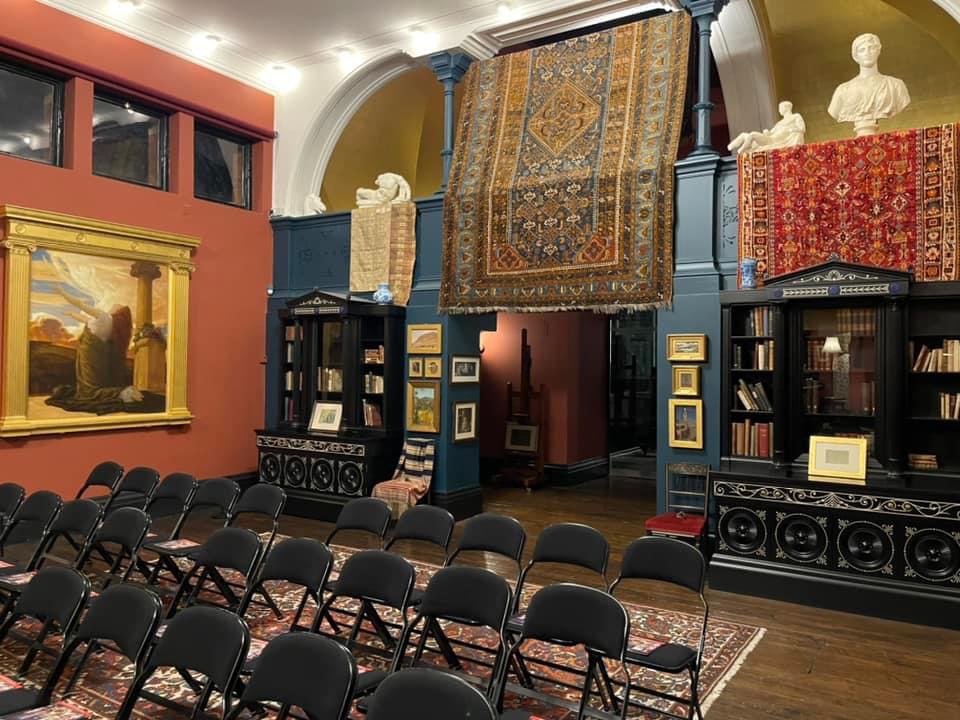
Stepping into the sumptuously restored home of Lord Leighton is like turning the clock back a hundred years. Listening to Thomas Kelly ,the fourth artist in the indomitable Lisa Peacock’s ‘Discovery’ series, is like listening to a pianist from another age.
Lisa Peacock presenting her discovery
The Golden Age of piano playing as inhabited by gentle giants who could ravish and seduce with their transcendental control of sound. Rosenthal,Hoffman,Godowsky,Rachmaninov spring to mind. Piano playing of such subtlety that was a mirror of the great bel canto singers who could drive their public to adoration and delirium.
Franz Liszt wouid drive his public into such adoration where seemingly austere aristocratic ladies would be turned into a frenzied mob ready to conserve a lock of hair,a cigarette but or even coffee dregs of the adored one. If music be the good of love ……play on.It just shows the power that music can have even today with ’pop’ idols filling stadiums with doting fans.
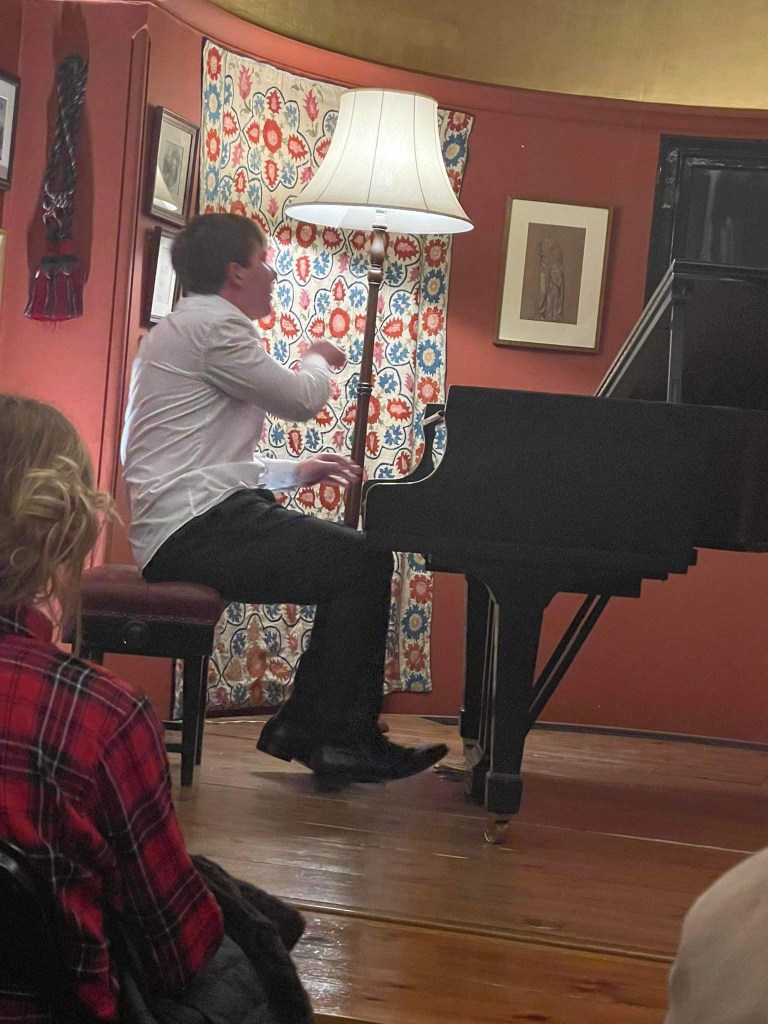
It was Ariel Lanyi who turned to me after Thomas’s sumptuous performance of Franck’s Prelude,Chorale and Fugue ,exclaiming between cheers that Thomas was born of the last century. His Rameau did not quite have the charm and colour of Cherkassky’s dip into the baroque but it was played with the same fleeting fingers of jeux perlé.Streams of golden notes that just flowed from his fingers with the charm and ease of a master. The Gavotte and Variations produced streams of ravishing notes with a hypnotic rhythmic drive that was teasingly captivating. It was the colour and architectural shape that he brought to the Prelude Chorale and Fugue that showed off his true artistic stature.Detail and understanding of the form were united in a performance of radiance and passion without a hint of sentimentality. Scriabin ,of course, opened a world that is truly Thomas’s.Glittering jewels that shone and glistened with ravishing sounds,from the almost inaudibile to the overpowering rich sonorities of driving passion. Of course the seeds of this amazing talent were sown by the late Andrew Ball who had taken Thomas under his wing and ignited this search for beauty in a box of hammers and strings.
It is now the great pianist Dmitri Alexeev,present in the hall with his wife Tatyana Sarkissova,who guides this light that is shining ever more brightly. Alexeev has just completed his complete survey of Scriabin’s piano music which has obviously inspired Thomas with his insatiable desire to consume lesser known scores and bring them to life. He had played not long ago the mammoth piano sonata by Liszt’s cherished pupil ,Reubke. https://christopheraxworthymusiccommentary.com/2021/01/20/thomas-kelly-at-steinway-halllondon-for-the-keyboard-trust-new-artist-series/ It was for the Keyboard Trust at Steinway Hall that this young man played a work that has so many notes it must go down in the Guinness book of records. Reubke had died at only 24 -Thomas’s age – and had left only two sonatas :one for organ and the other for piano. The organ sonata is standard repertoire but no one until Thomas has dared to conquer the marathon difficulties and mind boggling number of notes of the sonata for piano. And so it was to Scriabin for the final two works in this short recital. A world of introversion and exultation reaching for the star that is the unattainable goal and inspiration of all real artists. It was just this search for sounds that was so exhilarating from Thomas’s hands.A palette of colour that one could never have dreamt were laying dormant in this good but not exceptional Steinway. A Poeme Nocturne op 61 ( nothing like Chopin’s op 61 but just as original) that was a revelation not only of sounds but how these sounds could be sown together and given a shape and meaning and an overall architectural shape. Scriabin’s Fantasie op 28 like his Fantasy Sonata is often to be found in concert programmes but rarely have I heard it played with such menace and unbridled passion as tonight. Of course the true revelation was in the second encore : the old war horse of Saint Saens’ Etude en forme de Valse. We all know the performance of Cortot,an old 78 rpm recording that is part of the history of piano playing . Tonight ,as Ariel Lanyi had exclaimed, here is the reincarnation of pianists of another age .An age when performers were steeped in a hypnotic way of seducing their public with subtle colours of insinuating whispered asides and bursts of demonic virtuosity.Throwing notes off with a devil may care ease that just shows us the real meaning of jeux perle .
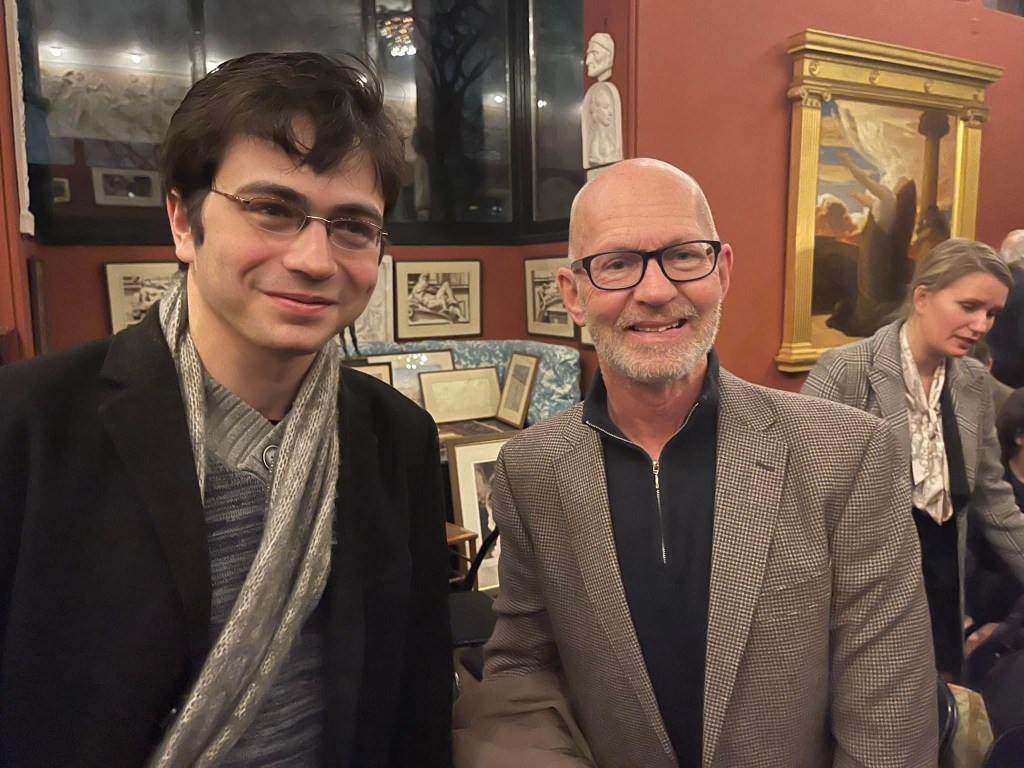
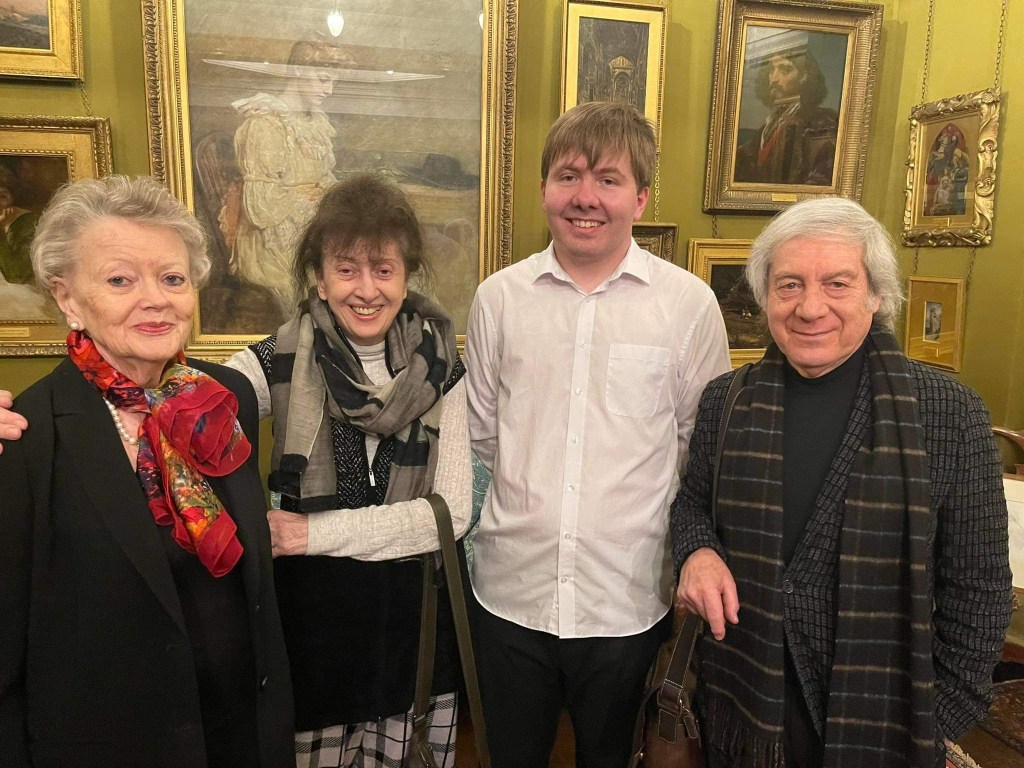
Lisa Peacock – Tatyana Sarkissova – Thomas Kelly – Dmitri Alexeev
Lisa Peacock has devised this series under the title ‘Discoveries’. No better word could describe what we were treated to tonight. It would be interesting in this newly restored house to know who the pianists were that Lord Leighton would have invited into this sumptuous den in an earlier very privileged age. Ariel Lanyi is playing here on the 24th and Alexeev in an all too rare gala recital on the 7th February.
Thomas Kelly started playing the piano aged 3, and in 2006 became Kent Junior Pianist of the Year and attained ABRSM Grade 8 with Distinction. Aged 9, Thomas performed Mozart Concerto No. 24 in the Marlowe Theatre with the Kent Concert Orchestra. After moving to Cheshire, he regularly played in festivals, winning prizes including in the Birmingham Music Festival, 3rd prize in Young Pianist of The North 2012, and 1st prize in WACIDOM 2014.Thomas studied with Andrew Ball, initially at the Purcell School of Music and then at the Royal College of Music. He is currently studying for his Masters at the Royal College of Music with Professor Dmitri Alexeev. Thomas has also gained inspiration from lessons and masterclasses with musicians such as Vanessa Latarche, William Fong, Ian Jones, Valentina Berman, Wei-Yi Yang, Boris Berman, Paul Lewis, Mikhail Voskresensky, Dina Yoffe.He has won 1st prizes including Pianale International Piano Competition 2017, Kharkiv Assemblies 2018, at Lucca Virtuoso e Bel Canto festival 2018, RCM Joan Chissell Schumann competition 2019, Kendall Taylor Beethoven competition 2019, BPSE Intercollegiate Beethoven competition 2019, 4th Theodor Leschetizky competition 2020, a finalist at Leeds in 2021 and 1st Prize in the Newbury Spring Festival Sheepdrove Piano Competition in 2022.
He has performed in a variety of venues, including the Wigmore Hall, Cadogan Hall, Paris Conservatoire, StreingreaberHaus, Bayreuth, Teatro Del Sale in Florence and in Vilnius and Palanga. Since the pandemic restrictions in 2020, Thomas’ artistic activities included participating in all 3 seasons of the “Echo Chamber” an online concert series curated by Noah Max, and releasing 3 singles under the Ulysses Arts label on digital platforms.Thomas is a C. Bechstein Scholar supported by the Kendall-Taylor award. He has been generously supported by the Keyboard Charitable Trust since 2020, and Talent Unlimited since 2021.






























 ChristopherAxworthy-MusicCommentary