Avery Gagliano is a thoughtful and reflective interpreter, and one looks forward to her future performances.” – South Florida Classical Review
“Her ability to inhabit every room in the immense imagination of Frédéric Chopin came as a revelation.” – New York Classical Review
Avery is a recent graduate of the Curtis Institute of Music, where she studied with Robert McDonald, Gary Graffman, and Jonathan Biss. In Fall 2024, she joins Sir András Schiff’s Performance Programme for Young Pianists at the Kronberg Academy in Germany.
9.08.2024 16:00 Wonderful recital – crystalline musicality and naturalness of the game! A pianist without exception devoted to the message of the depth of music, honest and modest – avoiding non-musical, cheap, theatrical gestures intended to arouse and unfortunately often effectively inducing applause from the audience. The entire second part of Avery Gagliano’s recital was filled with one monumental work. Schubert- exquisitely performed, extremely demanding Sonata in B flat major in D. 960 !! Well done and hearty congratulations 👏👏👏
I was very pleased to be able to hear this recital that Prof Paleczny had praised so highly.
Due to a copyright problem I was not able to hear the last recital of this year’s festival by Alberto Nosé and decided that I would listen instead to this beautiful programme of Avery Gagliano that I had missed but was still available on streaming.
Playing of a true musician and it was her encore of ‘Jesu Joy of Man’s Desiring ‘ that reminded me of Dame Myra Hess as had her whole programme.The imperious opening of Handel’s 5th Suite was played with a natural musicianship that allowed the music to breathe so beautifully.Rich golden sounds with hands that seemed to belong to the keys as they extracted the very life blood that was hidden within each note.
Uncle Tobbs (Tobias Matthay) the teacher of both Dame Myra Hess and Dame Moura Lympany wrote many a treatise on the art of touch .It was though these two great ladies who could show the world that with simple musicianship and infinite gradations of sound what it meant to make the music speak without resorting to crowd pleasing circus tricks.Murray Perahia and Andras Schiff have taken over that mantle today and they can take the most simple music and imbue it with such poignant meaning.Not for them the virtuosity or grandiloquence of the works of the Russian repertoire but more attuned to the deeply meaningful works of the Viennese classics where a lifetime is not enough to delve into the inner meaning of such masterpieces.
Avery today just looking a her programme showed the same selfless musicianship where the performer is at the service of the composer, delving deeply into the scores to find their inner meaning.There was a beautiful flowing tempo to the Allemande of the Handel Suite with a stimulating dialogue between the two hands.Even the Courante had a dynamic drive but always with a subtle musical shape to each phrase.The majestic opening of the Air with variations belied the simplicity with which she played this innocent melody.Variations that were played with a clarity and ever more exhilaration.
Even in Chopin her restrained passion and luminosity of sound gave such nobility to one of Chopin’s most passionate outpourings,the Nocturne op 55 n. 2 .Beautifully moulded mazurkas showed off the robust dance and deeply nostalgic melancholy of these miniature tone poems.
A completely different sound for Ravel that had a natural flexibility but above all a simplicity of ravishing glowing sound.The minuet was played with a velvet beauty to the sound with glowing colours glistening as the music moved inexorably forward.There was a dynamic drive to the Animé of moving harmonies and sumptuous sounds.
It was Schubert’s last Sonata ,though, that was given a monumental performance with the simplicity and poise of this great outpouring of song.The beauty of the opening with the ominous bass trill hardly changing the atmosphere but was a premonition of the deep uncertainty that was obviously encircling Schubert in his final year on this earth.In fact there was always a sense of the unknown as the modulations and even the attempts at bucolic brilliance always had a slight shadow over them thanks to Avery’s extraordinary poetic sensitivity.Such was her scrupulous attention to the composers wishes she even included the repeat of the first movement which includes some very important bars that are very often overlooked in trying not to overburden the listener.This is never the case for a true interpreter because such is the musical discourse that the listener can be taken on a wondrous voyage of discovery together.There was a simple noble beauty to the slow movement with full rich sound of the central chorale .A brilliant Scherzo and a trio that was allowed to speak for itself without any exaggeration.A slightly reticent Rondo that built in energy and depth each time that it was called to arms.Passion and rhythmic energy went hand in hand with the glorious outpouring of Schubert’s seemingly endless mellifluous invention.A performance of a true musician but also of a pianist of remarkable technical command and authority .
Two encores for a very enthusiastic audience that had listened with rapt attention to the wonderful music making that Avery had shared with them. ‘Jesu Joy of Man’S Desiring’ in the famous transcription of J.S. Bach by Myra Hess and a final rumbustuous Mazurka by Chopin.
A standing ovation after an extraordinary performance of Liszt’s ‘La Campanella’ which was the last encore in a recital of radiance and beauty.A kaleidoscope of sounds from a pianist who was also a magician who knew how to extract an extraordinary range of sounds by a sense of balance without ever overstepping the limit of the instrument.Sumptuous full sounds ,never hard or ungrateful .
What a revelation ‘The Great Gate of Kiev’ was after the enormous build up of Baba Yaga to suddenly see the vision of the imaginary gate from a distance .It gradually came nearer and nearer with the bells pealing and the whole air resonating with the vibrant outpouring of sounds.
There had been radiance and nobility from the very opening of this extraordinary recital with Bach’s Chorale Prelude ‘Nun komm der Heiden Heiland’ in the beautiful transcription by Busoni in his centenary year.There was a religious simplicity to the opening,out of which emerged the beauty of Bach’s Chorale.Sumptuous bass notes allowed radiance and luminosity in the upper reaches of the piano with quite magical effect.A whispered final few bars as the audience sat in revered silence as the deep bass C sharp of Chopin’s Barcarolle was allowed to enter this magic land.
The Barcarolle is one of Chopin’s greatest works and is a continuous outpouring of song .Arsenii gave a glowing fluidity to the melody as it floated on a very deliberately placed barcarolle of gently lapping water and was allowed to flow with ravishing beauty.There was an almost improvised freedom of ‘bel canto’ flexibility but it was always played with aristocratic nobility and heart rending beauty.The embellishments were cascades of jewels enriching this extraordinary late masterpiece.Some wonderfully original colours appeared in the left hand as the sotto voce throbbing of the waves enveloped this central episode leading to the ‘poco più mosso’ before the almost orchestral transition to the marvel that is the ‘dolce sfogato’ .The only time Chopin used this phrase as even he was stuck for an expression for something that in Perlemuter’s words is so heavenly. Arsenii played it with exquisite timeless beauty and a freedom that made the final build up even more passionate and breathtaking.The final page was played with an improvised freedom and the ‘leggiero’ ending that was particularly admired by Ravel was played with the same radiance and beauty of ‘Gaspard’ that we were shortly to admire from Arsenii’s magic fingers.
Three Chopin Mazurkas were played with a fantasy and sense of colour that was of quite extraordinary poetic sensibility.The A minor op 17 I have never heard played with such improvised freedom and beauty – ‘ Canons covered in flowers’ says Schumann and they were indeed miniature tone poems in the hands of a supreme stylist with a truly poetic soul.
The beauty of the shimmering water in which Ondine ,the water nymph cavorts with ever more fleeting glee,was at tour de force of technical perfection that I have rarely heard before in the concert hall. How lucky ‘Ondine’ was today to find such sumptuous beauty as she sang her song with delicacy and luminosity.There was great control in the mighty climax where the gradual build up of double notes lead to a sumptuous climax and ravishing glissandi that just shimmered on the surface of the keys. Ondine sang her final song bathed in the resonance of the pedal before disappearing into the distance. I have rarely heard this final page played with such poetic perfection as today .It was followed by the bleak picture of the gallows swinging in a barren landscape.Ravel marks ‘Le Gibet’ ‘Très lent sans presser ni ralentir jusqu’à la fin’ and it was exactly this that Arsenii played to perfection with a sense of architectural line that was quite extraordinary.The magic entry ‘pp un peu en dehors mais sans expression’ was quite sublime with playing of disarming simplicity and purity.
The tolling bell was repeated with hallowing effect and Arsenii lifting his left hand as the right barely touched the keys.This left hand that would become the devil in disguise of ‘Scarbo’. A work written by Ravel with the idea of writing a piece that would be even more technically challenging that Balakirev’s Islamey! Well he certainly succeeded but it was no trouble for Arsenii who not only met all the technical challenges but imbued them with passion and dynamic drive.There was an extraordinary clarity to the pianississimo central episode so often bathed in pedal but here ,like in the Debussy encore, was played with quite remarkable ‘fingerfertigkeit’.
There was nobility and clarity from the very first notes of Mussorgsky’s ‘Pictures’.A remarkable performance in which each picture was described with quite extraordinary conviction and character.From the startling contrasts of ‘Gnomus’ to the continuous heart beat of the ‘Old Castle’ with it’s inner colouring of mystery and luminosity.A hypnotic sense of phrasing where the squabbles in the ‘Tuileries’ were answered by the robust pedalled old cart horse ‘Bydlo’ that disappeared into the distance with masterly control of sound.A mysterious promenade was rudely interrupted by the squarking antics of the unhatched chicks.’Goldberg’ entered with such preposterous importance as poor ‘Schmyle’ was left whimpering in the distance.The ‘Market at Limoges’ has never sounded so busy as in Arsenii’s hands today or the ‘Catacombs’ sounded so imposing with a great sense of line dissolving into glistening sounds of barely whispered reverence.’Baba Yaga’ was surprisingly restrained at the beginning but soon build up energy and fervour in Arsenii’s sumptuous hands.The central episode usually played rather dryly was here played with remarkable colour and beautiful shape.’Baba Yaga’ taking complete control with technical prowess and volume only to be stopped in his tracks by the vision of such imaginary beauty as ‘The Great Gate of Kiev’.A masterly performance as Arsenii’s control of balance and sound allowed the final appearance of the Great Gate to be truly breathtaking in majesty and nobility as we all shared in the magic vibrations that were allowed to resound in the air.A remarkable performance from a supreme stylist and master of sound.
Three encores demanded by an audience that had been seduced,ravished and excited by performances of such poetic significance and communication .Debussy’s ‘Feux d artifice’ has rarely sounded so clear and precise ,as the Marseilles could just be heard in the distance.A ravishing lyric piece by Grieg was played with subtle colouring and ravishing beauty.Liszt’s La Campanella brought the audience to its feet to salute a remarkable virtuoso pianist who is a true poet and above all a supreme stylist.
Having heard Alex many times over the last six years it was refreshing to hear him again after a period of reflection and physical reeducation.Having been a top prize winner in the 18th Chopin Competition in Warsaw I was able to listen to him three times the following year before he took a sabbatical to reflect and refresh his remarkably original musicianship.I remember in Rome the hall being plunged into darkness as we were asked to prepare ourselves with two minutes of complete silence out of which a shadowy figure appeared playing the opening chords of Chopin’s Polonaise Fantasie.’Sounds were born before words’ we were told as Alex went on to enchant and enrapture the discerning Roman public with performances that have never been forgotten by those who were present that day.
Today I was reminded of that Roman concert as Alex began the concert with a work by Corigliano that was based on reverberations of luminosity and a quite extraordinary range of colours.Matthay sprang to mind with his treatise on the Art of Touch and his insistence that in every key there were endless varieties of touch and sounds.I remember Luciano Berio supervising a performance of a work of his written for vibrations created by deep bass notes in the piano.We got through three piano tuners that day as Berio’s superfine ear was not satisfied with the overtones that he knew were there in the piano for those with ultra sensitivity!
It was exactly this sound world that pervaded the whole of today’s recital.Corigliano ‘Fantasia on an Ostinato’ opened with sounds of glowing fluidity from every part of the keyboard .It made the appearance of dry lifeless sounds such a contrast as they appeared over insistent repeated notes.Suddenly Beethoven could be heard in the distance with jingling and tingling whispered sounds of Corigliano as Beethoven appeared as a vision from afar until it gradually appeared in Liszt’s quite extraordinary transcription.By now our ears and Alex’s were attuned to a kaleidoscope of sumptuous sounds and with Alex’s quite extraordinary sense of balance and masterly musicianship Beethoven’s Allegretto took on a clarity and beauty that is rare indeed.
Now the deep resonant bass notes of Liszt’s Funerailles rang out and it was the start of a journey with a musician of rare sensitivity and fantasy who could surprise and seduce at every turn as he listened so carefully to the sounds he was making.Music takes over where words are just not enough and it was this that made Alex’s playing so startlingly original without any idiosyncratic distortions or self gratification.This was a musician with the power of communication where the sounds became a musical language that created a bond between the performer ,the music and the listener.Over the deep Lisztian bass notes were chords of pleading insistence stopped in their track by a call to arms from single repeated notes. A desolate bass melody appeared of deep yearning gradually passing to the soprano with a wonderful luminosity and ravishing sense of balance as the melody grew in intensity.This was music making of a great tone poem that spoke with poetic sensitivity and beauty with a kaleidoscope of colours that could ravish and surprise. Silences too became so important as the deep aristocratic bass notes of great authority entered and the cavalry was unleashed with breathtaking power of sumptuous rich sounds.Reaching an enormous climax and suddenly there was a silence so achingly poignant before the triumphant melody resounded with nobility and passionate control.The cavalry could now only be seen as dust in the distance as this great poem was suddenly curtailed.
Five studies by Scriabin closed the first half of this highly original recital.There were the sumptuous sounds of richness and fluidity of op 42 n 6 and the absolute clarity of the teasingly beguiling trills of op 42 n. 3 .But it was the sound of a truly ‘Grand’ piano that rang out with romantic fervour and mastery with the passionate outpouring of op 42 n 5 .There was a beautiful simplicity and glowing melodic line to the early op 8 n. 8 and the sumptuous ‘revolutionary’ outpouring of unashamed virtuosity and romantic fervour of the study in D sharp minor op 8 n 12.
Five Scriabin Preludes were answered after the interval by six Chopin Preludes from op 28. Alex had opened with the penultimate prelude n.23 like a breath of fresh air pervading the red hot atmosphere generated in the first half.A beautiful pastoral meandering of chiselled luminosity followed by the octave prelude that was played as a great bass melody of unusual beauty.The recitativo of n 18 was played with an extraordinary sense of theatrical rhetoric of operatic proportions. Ravishing cantabile of the 13th with a glowing cantabile and a flowing bass of subtle colour and flexibility with noble simplicity of poignant beauty.Capricious light relief from the 10th that was played with beguiling rhythmic insistence as we arrived at the deep brooding of the second prelude.
It was the same brooding bass that linked the opening of the Black Mass by Scriabin to this most troubled of Chopin’s Preludes.And trouble was brooding with Scriabin’s extraordinary penultimate Sonata with its meanderings of such ominous overtones.Trills like electric shocks suddenly appeared answered by ominous bass clouds.Becoming ever more insistent like a cauldron building up to boiling point until erupting with a climax pounded out with one finger insistence by our young poetic hero.A quite remarkable work at the end of a remarkable journey that had taken us on a magic carpet to lands we never knew existed until today. From Corigliano through Liszt and Chopin and finally Scriabin with the star shine so brilliantly.
Now we were brought back to the world of Beethoven .Irascible irrational outbursts contrasted with ravishing beauty and originality wrapped up in the convention of the day that Beethoven allowed to encompass his unpredictable genius. Beethoven’s ‘Eroica’ 15 variations and fugue were played with scrupulous attention to Beethoven’s indications but also the fantasy and mastery of Alex who could breathe such new life into the score. From the very first opening chord that resonanted so imperiously at the beginning as it was to do throughout this remarkable work. Amazing technical prowess – has n. 4 or 6 ever been played with such mastery.It was ,though ,the character he could bring to the variations ,like Curzon, that could have us dancing one moment and crying the next.The charm of the eleventh or the brutal insistence of the thirteenth was followed by the sublime beauty of the fifteenth with its mysterious final whispered chord.The Final fugue was played at a real Allegro con brio with scintillating brilliance and transcendental authority.
Four encores all dedicated to Chopin crowned this recital that was a lesson in musicianship and communication. Chopin Mazurkas that were played with extraordinary sensitivity and style but it was the Third Scherzo that showed off the poetic brilliance and intelligence of this supreme stylist
I had heard Jaeden play in the Wigmore Hall in London in 2022 as winner of the Santander Competition with a remarkable performance of Rachmaninov’s First Sonata and the Brahms Quintet with the Casals Quartet.
The difference between the extrovert Floristan and the restrained Jaeden was made even more evident by the extraordinary Vera Martinez Mehner of the Casals Quartet.Try as I could there was such a compelling authority and conviction to all she did that for me she stole the show with a quite hypnotic stage presence in what was a remarkably unified performance of the Brahms Quintet. I had heard Jaeden again in Perugia playing in the masterclasses given by another extraordinary Canadian Angela Hewitt.Two movements of Ravel Miroirs were enough to show his absolute mastery and pianistic perfection but a hypnotic stage presence again seemed to elude him.
Jaeden has since gone on to win the Montreal competition adding yet another gold medal to his honours .They say there are not two without three and I hear Jaeden will be in Leeds next September trying for the triumvirate like Kevin Chen ! Jaeden is now mentored by Benedetto Lupo at the Rome Academy where he will graduate next summer when he will obviously be an established figure on the concert circuit ready to conquer the world’s greatest concert halls.It is interesting to note that another pianist from the remarkable class of Lupo- Gabriele Strata came second in Montreal.https://christopheraxworthymusiccommentary.com/2023/03/02/gabriele-strata-in-siena-micat-in-vertice-100-a-poet-speaks/
Jaeden is a First Prize winner at the 2022 Hilton Head International Piano Competition and the 2022 Maria Canals International Music Competition. Most recently, he was awarded the First Prize, the Canon Audience Prize, and the Chamber Music Award at the 20th Paloma O’Shea Santander International Piano Competition. He is also a Grand Prize winner at the Federation of Canadian Music Festivals’ National Competition, a winner of Juilliard’s Gina Bachauer Scholarship Competition, and a Second Prize and J.S. Bach Prize winner at the OSM Competition. Jaeden is the recipient of a 2024 Borletti- Buitoni Fellowship.Winner of the 2024 Montreal Competitionhttps://www.wfimc.org/news-media/jaeden-izik-dzurko-crowned-grand-prize-laureate-montreal#:~:text=Pianist%20Jaeden%20Izik%2DDzurko%20has,for%20his%20captivating%20stage%20charisma.
Born in Salmon Arm, British Columbia, Jaeden earned his Bachelor of Music degree at The Juilliard School with Yoheved Kaplinsky and his Master of Music degree at the University of British Columbia with Corey Hamm. He is also a former student of Ian Parker. He currently studies with Jacob Leuschner at the Hochschule für Musik Detmold and Benedetto Lupo at the Accademia Nazionale di Santa Cecilia.
Today thanks to Piotr Paleczny again for his extraordinary choice of artists at the Duszniki Festival ,I heard a different Jaeden with playing of burning intensity and conviction. A remarkable young musician who has turned into a great artist.The key to this elusive gate was Ligeti!
From the very first note of the Ligeti Etude n. 5 there were etched sounds of Messiaenic sharpness like broken glass played with a prismatic sense of colour .A kaleidoscope of sounds as they reached on high with heart rending intensity.A truly astonishing range of colours of poignant meaning as the notes disappeared into the infinity that lies at the top of the keyboard .In the Etude n. 6 there was a gradual burning intensity as the melodic line built in fervour with remarkable clarity and an extraordinary sense of balance.Magical sounds and an incredible technical mastery ending in an eruption in the bass of the piano that was truly breathtaking. This young man had taken us to ‘his’ world with hypnotic commanding mastery.
Everything paled in comparison to such intense masterly performances even though there was a refined musicianship of intelligence and mastery in everything he did.A technical and musical perfection that was quite remarkable as has been proven on the Competition circuit with the prospect of a great artist that awaits us in the wings which is an exciting prospect indeed.
Schumann’s Sonata op 11 is a great tone poem of refined elegance and beauty but it needs the burning intensity of an Annie Fischer to make it breathe with the dynamism and drive where the two personalities of Schumann can live together under one roof. It is a Sonata that needs a great architectural sense of shape to stop it being a collection of beautiful episodes.Jaeden is a remarkable musician of great intelligence and it is exactly this great arc that he was able to construct from the improvised beauty of the opening to the tumultuous orchestral finale.The opening had been played with great freedom and an extraordinary sensibility with a flexibility sustained by a sumptuously sonorous bass.Phrasing with the same sensibility as a singer until the entry of the impish left hand with it’s capricious sly entry as the chase was on.There was poignant nostalgia as the melodic line was allowed to wallow in an oasis of beauty interrupted only by the sinister entry of the left hand with its brooding interruptions.There were some exquisite embellishments too of sensitive artistry as the music moved inexorably forward.
Ravishing beauty of the slow movement – Aria- with a glowing melodic line played with great sensitivity and a wonderful sense of balance with comments from the bass of poignant beauty as the Aria remains suspended in thin air.Interrupted by the scherzo with scintillating lightness and drive with a beautiful sound world and great sense of style.Bursting into song ‘Alla burla ma pomposo’ with the dramatic beauty of the recitativi just missing the burning intensity that Jaeden had brought to his wondrous world of Ligeti.The Finale had a dynamic drive allied to a ravishing beauty where Florestan and Eusebius were at last united as the gradual build up to the final tumultuous ending was masterly controlled.
Ravel Miroirs was given a masterly performance of precision and delicacy .’Moths’ that were wisps of fleeting beauty with the whispered beauty of the ‘Saddest of Birds’ played with quite extraordinary control.A beautiful breathtaking fluidity to the ‘Boat on the Ocean’ with the magical apparition after the storm I have never heard played with such perfection missing only the depth of sound that I have only ever heard from Perlemuter. ‘Alborada’ was breathtaking in command and colour with double thirds thrown off with a mastery that I have rarely witnessed and where driving rhythms of animal excitement ignited the atmosphere as the bells were gently heard tolling in the distance.An ending of pure magic suspended in air as the notes were allowed to melt into the distance from where they had first appeared.
Chopin’s First Scherzo was given a fearless performance of poetic mastery.The ‘molto più lento’ I have rarely heard played more beautifully.Some hidden inner counterpoints in the ‘agitato’ that followed gave great depth to the streams of notes that ignited the atmosphere as we moved inexorably to the brilliance of the coda that was played with breathtaking audacity.
Two encores were offered by this remarkable young man with a standing ovation from many admirers would could appreciate the refined perfection of an artist headed for the heights.The second encore was a passionate outpouring of Romantic fervour with Scriabin’s early D sharp minor study .The first was a work of clockwork precision and extraordinary technical prowess and I could not even guess who the composer might be! Perhaps Jayden can tell us ?
Maestro Lupo has come to the rescue telling us it was Medtner Fairy Tale op 26 n. 2!
Robert Schumann. 8 June 1810 Zwickau 29 July 1856 Bonn
The Piano Sonata No. 1 in F♯ minor, Op. 11, was composed from 1833 to 1835. Schumann published it anonymously as “Pianoforte Sonata, dedicated to Clara by Florestan and Eusebius”.The Aria is based on his earlier Lied setting, “An Anna” or “Nicht im Thale”.Schumann later told his wife, Clara , that the sonata was “a solitary outcry for you from my heart … in which your theme appears in every possible.
Un poco adagio – Allegro vivace
Aria: Senza passione, ma espressivo
Scherzo : Allegrissimo (F♯ minor) – Intermezzo : Lento. Alla burla, ma pomposo – Tempo I
I will never forget the first time I heard Kevin Chen at the Liszt Competition in Budapest in 2021.Peter Frankl and I were flabbergasted by this young boy who could play with such mastery and breathtaking virtuosity.He swept the board at the competition and even Giovanni Bertolazzi,one of the finest pianists of his generation,had to bow to such a phenomenal genius.We discovered afterwards that he had studied with Marilyn Engle in Canada who had been one of the most remarkable Canadian pianists of her generation. https://www.thecanadianencyclopedia.ca/en/article/marilyn-engle-emc
Kevin Chen went on to win the International Competition in Geneva in 2022 and the Rubinstein Competition in 2023 . It is Marios Papadopoulos who has invited Marilyn Engle to give masterclasses at his annual Oxford Piano Festival and of course her star pupil to give a recital.( Since October 2023, Kevin currently studies at the Hochschule für Musik, Theater und Medien Hannover mentored by Professor Arie Vardi.)
The concert in Oxford had begun with four Scarlatti Sonatas played not only with scintillating clarity and brilliance but also with delicacy and elegance where ornaments were like tightly wound springs that just sparkled under his well oiled fingers.
There was a chiselled beauty to K.266 of great delicacy and charm with absolute precision and a non legato touch of beguiling elegance.
K 124 glistened with brilliance and ‘joie de vivre’ with a kaleidoscope of sounds of jewels shining so brilliantly and also bringing a heartwarming beauty of a mellifluous contrast of colours bathed in pedal.
K 87 where the languid beauty was allowed to emerge from all the accompanying counterpoints with a clarity and luminosity where every strand had a poignant meaning.
Kevin’s Chopin again reminded me so much of Solomon where Chopin is restored to it’s rightful place ,as Kevin followed scrupulously Chopin’s very precise indications.Gone were the rhetoric and tradition but a door was opened to a Chopin of nobility ,intelligence and poetic musicianship.I have never heard the Polonaise- Fantasie played with such a clarity of line from the very first opening chords played with aristocratic authority and an extraordinary sensitivity without ever forgetting the throbbing insistence that was to take us from the etherial fantasy of the opening reverberations to the blazing brilliance of the Polonaise.In Kevin’s hands it was all done with a subtlety and extraordinary sense of balance.There was a richness to the central chordal episode played with sumptuous sounds and rare sensibility. A nostalgic beguiling beauty of the gradual return to the opening polonaise as it built almost imperceptibly to the glorious outpouring of triumphant beauty.Dying away to a gentle ending in a performance that showed the rare humility of a musician who puts the composer before himself.
The first Ballade is one of the best known works of Chopin but rarely have we heard it restored to such greatness as today.The rare chiselled beauty of the opening was of simplicity and desolation.A maturity of measured beauty as Chopin’s bel canto was unfolded with rare simplicity.It was Kevin’s absolute clarity of thought that was so apparent as the music was allowed to unfold without any rhetoric or exaggeration.A sumptuous climax brought us to the brilliance of the coda that was given a musical shape of startling originality and excitement.The final scales were mere washes of sound as the recitativi became ever more insistent.
A beautiful Study by Moscheles where the beauty of the melodic line was allowed to float above a flowing bass in a Mendelssohnian mode of Neapolitan fantasy.There was great flexibility and poetic sensibility with scintillating embellishments of beauty and refined delicacy.
Schumann’s ‘Concert without orchestra’ was put on the map in my day when Horowitz played it in the recitals of his Indian summer.It was since taken up by Pollini and many other pianists.A work in four movements that in lesser hands can sound disjointed and rhapsodic.Kevin managed to link all four movements into one architectural whole where even the famous Clara Wieck Variations had a crucial part to play in a whole.It is interesting to note that the Sonata is dedicated to Moscheles with whom Kevin had prefaced it with his ‘Etude caractéristique’ . A passionate outpouring of sumptuous sounds of rare delicacy.Even Schumann’s dotted rhythms were give a shape and meaning of driving fluidity.A Scherzo of lightness and rhythmic drive with mellifluous outpourings never losing this fleeting forward movement.The Andantino was played very slowly with deeply felt meaning as the variations unfolded with subtle beauty gradually increasing in pace with a quixotic scherzando variation giving way to a noble outpouring of an almost too seriously poignant farewell. There followed a scintillating Prestissimo of constantly moving harmonies on which the genius of Schumann shines through with magical mellifluousness.This was one of the most satisfying performances I have ever heard of a work that is rarely given the architectural shape and understanding that we heard today.
Liszt’s beautiful transcription of Schumann’s Widmung was played as an encore and just showed even more the poetic sensibility and intelligence of this young genius.
Marilyn Engle’s colleague Linn Hendry /Rothstein writes :”Canada is a very big country and we all knew each other from the radio…..Marilyn’s teacher in Calgary was very well known for producing solid piano skills…Gladys Egbert…I met Marilyn in Switzerland,by chance, we were having dinner with Tibor Varga and she was in the same restaurant with Peter Feuchtwanger !!! https://christopheraxworthymusiccommentary.com/2016/07/02/peter-feuchtwanger/
She won CBC talent festival in 1966 and I think Janina (Fialkowska) did it in 1968 or 69.I came 2nd to William Tritt in 70 (he played Prokofiev 2 and I played Brahms 1) then the next year I played Rach 3 and got the top prize….I think in between Jane Coop was a winner and after me was Angela Hewitt as I remember. In those days there were quite a few CBC radio orchestras;one in each province so you could be pretty busy. I was always in awe of Marilyn’s bravery in travelling away from home to study. She did go back to Calgary though quite early which may have been for family reasons…and a career in music for a woman was not an easy ride.Janina was taken under the wing of Rubinstein when she was at a crossroads in her life.Angela Hewitt was offered a recording contract for all the works of Bach with the then almost unknown Hyperion label.Marilyn has obviously become a magnificent teacher which the world has discovered via Kevin Chen.
The only real contact between all of us was the CBC…We all knew each other from the radio though…personally I was given a ridiculous number of recital and concerto recording opportunities because of the CBC competition.
I just hope he can make a happy life..he has certainly brought cheer to my life with those 2 recitals…absolutely renews hope in the future if piano playing …the boy has integrity and true and deep respect for the composer…for once a young player who does not put himself forward as the most important part of the equation……he does not need a teacher now just support” Linn Hendry/Rothstein
Robert Schumann. 8 June 1810 Zwickau. 29 July 1856 Bonn
The Piano Sonata No. 3 in F minor, Op. 14, called “Concerto for piano without orchestra” by Tobias Haslinger , was composed in 1836 and dedicated to Ignaz Moscheles , to whom in a letter he comments “what crazy inspirations one can have”. Liszt believed that the work was rich and powerful. In 1853 Schumann revised the work and added a Scherzo as a second movement, which the performer could choose to play, or not play.
We offer all our livestreams free of charge. Please consider making a gift to support the Oxford Piano Festival, so we can continue to do so in future years: https://oxfordphil.com/support-us/ This stream will be available to watch on-demand for two years after initial broadcast. Filmed by Apple and Biscuit at the University Church of St Mary the Virgin, Oxford.
There must be something about the air in Duszniki that allows very fine artists to reach heights that rarely even they could have imagined. Superb live streaming allows us to eavesdrop on this wonderful array of pianists that Piotr Paleczny surprises us with every year.
Presiding over the concerts with such an eagle eye that when he gives a standing ovation to a pianist the whole audience follows suite.And it was just such a standing ovation that was awarded to Hao Rao today.
I had heard Hao Rao last year in that other series in the birthplace of Chopin but today, a year on ,I heard the same very fine young pianist but one that miraculously has become a great artist. Seated at the piano with the minimum of movement but with hands that remind me of Emil Gilels .Fingers that are like limpets sucking out the infinite colours within each key but without any percussive hardness.Always a rich velvet sound whether in the extreme delicacy of Debussy and Ravel or the romantic fervour of Chopin.It was obvious from the opening outpouring of ravishing sounds that here was a young artist of profound sensibility .One of Chopin’s most passionate outpourings op 55 n.2 was played with aristocratic sensitivity of poignant beauty.An audience at once caught in this young man’s spell as complete silence befell in the hall as the agitated sounds of Chopin’s third scherzo broke such a magic shared moment.
There was a full sumptuous sound to the octaves of the third scherzo.This was more a symphonic performance than a pianistic one with a great sense of architectural line .The ‘Presto con fuoco’ linked inexorably to the ‘meno mosso’ as passion and intelligence were allied to transcendental technical authority .Ravishing shimmering sounds to the arabesques that Chopin allows to grow from the deep chiming bass notes after the noble beauty of the chorale .There was the subtle change of key ‘sottovoce’ played with aristocratic sensibility with streams of notes disappearing into the distance as the coda was allowed to unwind with its insistent bass notes building up the tension to a Lisztian fervour .The burning intensity of the final coda bubbling over with dramatic intensity as Chopin was to do in his fourth ballade with even more poetic inspiration .Hao Rao played it with the youthful passion and brilliance of the virtuoso Chopin with a scrupulous attention to the composers indications and the controlled tension of a mature artist.
Ravel’s Valses nobles were played with a completely different palette of sounds.A kaleidoscope of colours with a ravishing fluidity and delicacy .A sultry timeless beauty to the second waltz with Hao Rao playing with natural flowing movements .He brought such character to each waltz as his musicianship and artistry combined with intelligence and sensibility.The third waltz had a simple child like lilt and there were wistful arabesques as the music moved forward with fleeting lightness.There were never any hard edges to the sound as this was a real chamber orchestra with players listening attentively with chameleonic sensibility. Perlemuter might have played with more weight of true finger legato but the colours that Hao Rao found today were indeed the sounds of the supreme colourist that was Ravel.
Hao Rao brought a theatrical colour to Liszt’s Mephisto with transcendental excitement as he depicted this tone poem with hypnotic brilliance and poetry. What beauty he brought to the central episode and I doubt whether the bird calls have ever sounded so crisp and clean with the languid beauty of streams of seemless scales just adding to the ravishing beauty. Virtuosity and brilliance too with the fearless abandon of the notorious final leaps, but there was also the oasis of beauty of the final recitativi interspersed with electric shocks of Lisztian dynamism.
Debussy’s ‘Clair de Lune’ was a beautiful way to preface Chopin’s most poetic set of studies op 25. ‘Andante très expressif ‘ Debussy writes and one should not forget that Debussy edited the works of Chopin so knew exactly the importance of the composers original thoughts .Hao Rao played with delicacy and beauty and yet another sound world with the freedom of a singer with languid beauty flowing and glowing with timeless beauty.The beauty of the ‘Tempo rubato’ was played with a rare whispered sensibility with the four arpeggiated chords almost inaudible , but a stage whisper that carried across the hall with penetrating beauty before the ‘un poco mosso’ .A wave of sumptuous sounds allowed the melodic line to glow and shine with simplicity and breathtaking beauty.Debussy writes on the final seven bars ‘pp morendo jusqu’à la fin’.It was just this as Hao Rao allowed the final D flat chord to become the opening of Chopin’s ‘Aeolian Harp’ study op 25 n.1.
Hao Rao has been playing the Chopin Studies since he was 13 and now at the ripe old age of 21 he has acquired a mastery of them that is remarkable.A technical mastery ,ca va sans dire ,but it is the poetic meaning that marks these studies out as Chopin the revolutionary.Creating a technique on the piano that was not just mechanical but with the advent of the pedals on pianos with a more sensitive touch adding a true technical mastery where the body and hand movements are allied to the musical shape that is being depicted.Like a great painter with his canvas and the artist using natural movements to create the harmony of nature.It was exactly this mastery that Hao Rao showed us today as the first study was a melodic line floating on moving harmonies as they reached for the climax before dissolving to seemless scales and a whispered final trill that was merely a pulsating heartbeat.There was the wistful entry of the F minor study as it wove it’s way forward with magic glowing sounds. Clarity and architectural shape he brought to the third with a beautifully phrased melodic line and the final notes allowed to disappear into the distance with nonchalant ease and mastery. The fourth was very rhythmically pointed and contrasted with the unusually mellifluous fifth study with it’s beautiful flowing tenor melody of bel canto flexibility and the final arpeggiated chord played with infinite mastery reaching out to the final top G sharp.The left hand was so beautifully shaped in the notorious double third study that the technical difficulty was of no relevance as the thirds were allowed to accompany the melodic line.
The beauty and poignancy he brought to the ‘ Lento’ duet study will long remain in my memory for the aristocratic sensibility and meaning he brought to this most beautiful of genial nocturnal musings.The study in sixths was allowed to float in on the final chord as this young artist had seen the studies op 25 as one architectural whole .The ‘Butterfly’ study was played with fleeting lightness but also with an overall architectural shape,keeping the tempo to the last note, I have never heard the final two bars played more convincingly and as Chopin had indeed indicated! The octaves of the tenth study again entered on the crest of the previous butterflies! Building to an enormous climax but with sumptuous full sounds never hard or brittle where the music was shaped ,as in the Scherzo, as living moving phrases.There was a ravishing beauty to the ‘Lento’ where Hao Rao’s legato playing was something rarely encountered with hands moving like a web welding the sounds together with sumptuous beauty and ease.The aristocratic authority he brought to the final two studies will long be remembered.From the barely whispered opening of the ‘Winter Wind’ to the overwhelming richness of sound that he brought to the ‘Ocean’. Study. A remarkable performance not only for the technical mastery but for the musical understanding and poetic intelligence he brought to each of the twelve steps leading to the creation of an overwhelmingly beautiful Gothic cathedral .
Three encores which included Volodos’s breathtaking reworking of Mozart ‘s Turkish March and the whispered beauty of Chopin’s study op 10 n. 3 ,brought Maestro Paleczny to his feet together with the entire audience to salute an artist of extraordinary mastery and poetic sensibility.
Hao Rao was born on 4 February 2004 in Xiangxi Prefecture, Hunan Province, China. He started learning to play the piano at the age of four. He developed his talent under the tutelage of Vivian Li at the secondary school of the Chinese Xinghai Conservatory in Guangzhou. A solo recital – which he gave when he was 13, during which he played Chopin etudes – at the Guangzhou Opera House/Guang Zhou Da Ju Yuan in China opened the door to performances all over the world. He has given concerts in China, the United States and Europe. He has taken part in many music festivals, performing on one stage with titled musicians. He is a laureate of prestigious competitions for young artists, e.g: The International Piano Competition in Ettlingen (Germany) and the International Piano Competition in Aarhus (Denmark), as well as the International Mozart Competition in Zhuhai (China), the Gina Bachauer International Piano Competition (USA) and the Vladimir Krajnev International Piano Competition in Moscow (Russia). He is also a laureate of the 2nd prize in the Junior e-Piano Competition of the University of Minnesota and the 5th prize in the International Fryderyk Chopin Youth Competition in Beijing. At the 18th International Fryderyk Chopin Piano Competition he qualified for the final “twelve” of the competition.
I was sorry to miss this in London but thanks to Maestro Paleczny I am able to catch up from home.
I had heard Martin just a month ago from Chopin’s birth place Zelazowa Wola playing on an Erard of 1838 in a concert streamed without audience.Today was the opening of the Duszniki festival playing this time to a full hall and on a new Fazioli Concert Grand piano. I had heard Martin play in Cremona in the Fazioli Concert Hall last September and had heard a very fine pianist who had made his mark in the Chopin Competition in Warsaw.Today I heard again that fine pianist who has now miraculously matured into a great artist. I quote from my review at Zelazowa Wola which I can only confirm.
The Polonaise op 44 opened this first half dedicated to Chopin in Duszniki : ‘Martin’s limpet like fingers could make the octaves sing with such beauty of legato and shape with a supreme sense of style.He brought an extraordinary architectural shape to the central transition dissolving so naturally into the beautiful central Mazurka.The final eruptions that lead back into the polonaise were like thunderbolts played with fearless abandon .The final coda I always have Stefan Askenase in my mind but today there was the same nobility and delicacy but also an extraordinary clarity .This was the performance of a true artist who had seen this work as a great tone poem and had lived every moment of it with mastery and poetic vision.’
‘The Barcarolle is one of the greatest of works for the piano where there is a continual outpouring of mellifluous beauty reaching heights of the sublime. Nothing could deflect from the refined beauty and poetry of the playing though.The overhead camera allowed us to appreciated the delicate continuous circular movement of his left hand as the barcarolle continued on it’s way with ravishing beauty.Sublime heights were reached with Chopin’s indication ‘dolce sfogato’ revealed with playing of rare sensitivy in a passage that Perlemuter would exclaim ‘we have arrived in heaven’. Martin picking up the tempo towards the end that gave great shape of joy and exultation and a point of arrival from which he could dissolve as the music gradually disintegrates with veiled beauty before our astonished eyes.’
‘Four Preludes from op 28 were played with such beguiling mastery that I look forward in the future to hearing all 24 from such a master.Op 28 n. 13 is one of the most beautiful of this box of jewels and it was the left hand that was played unusually expressively revealing the ravishing beauty of the melody that sits above this weaving wave of notes.Op 28 n. 3 was a wash of sounds flooding the melodic line that was played with simplicity and clarity.Digging deep into the sombre bass notes of n. 2 with the imperious melody played with just one finger projecting sounds of aristocratic, chiselled nobility.There was a dark brooding to n. 14 which prepared us for the extraordinary last movement of the sonata that was to follow.’
A masterly performance of the B flat minor Sonata op 35 which must truly be one of the greatest masterpieces of all time.Aristocratic nobility and clarity were mixed with luminosity and poetic mastery. A scrupulous attention to Chopin’s very precise markings had me scurrying to the score to see if the two chords before the second subject were indeed staccato! Adding the much debated repeat by going back to the ‘Grave’ introduction and not just the ‘Doppio movimento’ as tradition has dictated ,showed a true thinking musician at the service of the composer.A beautifully artistic scherzo ,not the usual rhythmic exercise but shaped with the same wonderful sound that was to pervade the whole of this recital.The ‘più lento’ I never thought I would hear as beautifully played as I remember from Rubinstein – today in Martin’s hands I was reminded of the sentiment without sentimentality of Rubinstein . There was a gentle but relentless throbbing to the funeral march with the poignancy of the melodic line floated above it as it preceded with heart rending inevitability.I had never noticed the deep bass just before the entry of the Trio until today and again went scurrying to the score as I usually only do with artists of the calibre of Murray Perahia who like Martin really look deeply into the score to find the real meaning of the composer ,transmitting it with humility,intelligence and poetic sensibility.The last movement was exactly as it has been described as the wind wailing over the graves.No pointing of melody but again scrupulous attention to Chopin’s wishes.’ The second half of this opening concert was dedicated to Spanish music by Mompou and Albeniz returning to Chopin for two encores. A beguiling performance of the first Impromptu op 29 with teasing jeux perlé of a lost age .A ravishing performance of the waltz in C sharp op 64 n. 2 that reminded me of the artistry of Rubinstein with it’s timeless elegance and beauty.And of course it was to Rubinstein that Martin turned for a performance of a work that had the audiences in Spain and South America in delirium carrying Rubinstein through the streets after such a rousing performance of Navarra.A work that the composer considered ‘ shamelessly cheap’- but surely a great artist can turn even a bauble into a gem as we heard again today!
But it was in the Variations by Mompou that Martin showed his supreme artistry with a kaleidoscope of sounds as he delved deeply into the piano and found jewels that glittered and seduced. With the final reminiscence of the Prelude that returned with a delicacy and a light that shone with such intimate blinding simplicity and beauty.This was after a series of variations that had ranged from the pungent harmonies and voices that suddenly appeared in the midst of an always recognisable Prelude.There was a playful dance of almost jazz idioms and a left hand study that was every bit as beautiful as Godowsky or Scriabin’s studies.It was played with supreme artistry of such subtle colouring and of quite seductive beauty as Martin’s sensitive fingers just stroked the keys with infinite care.There was even a Mazurka of infectious dance rhythm but full of the charm that Mompou exudes.There was a scherzo of scintillating quixotic brilliance and a nocturne of quite overwhelming beauty. Romantic ardour too of almost Shultz- Evler Viennese charm, but it was the sudden appearance of Chopin’s Fantasie Impromptu hidden amongst all the jewels that glittered and glistened in this remarkable young man’s hands that made one wonder why this work has rarely if ever been heard in the concert hall.I know of Mompou’s atmospheric salon pieces that Agosti placed in the waste basket when one of his students dared present them in his masterclasses in Siena in the 60’s.But this much larger work full of fantasy and contrasts showed the mastery of a much more serious composer than the one Agosti had in mind!
Albeniz of course was given masterly performances by an artist who was living every minute and where every sound had a meaning and a voice but always of refined good taste.I have not heard the like since Alicia De Larrocha showed us the true aristocratic sounds of Spain with the same kaleidoscopic sense of colour and brilliance that we witnessed today.
A Fazioli piano today and a historic Erard a month ago but artistry and supreme style are born in the soul not on the drawing board.
Piotr Paleczny ,artistic director of the Duszniki Festival since 1993,who manages to surprise and enthral us year after year with his enlightened choice of artists
On the occasion of Inauguration day 79 at the edition of the Chopinowski Festival in Duszniki-Zdrój, I have the honor to inform you about today’s book premiere by Dr. Aneta Teichman titled “Piotr Paleczny. Portrait of the Artist”. I would like to express my deep gratitude to the Author of the book, Mrs. Aneta Teichman, for her enormous, very complicated work and extraordinary commitment to the realization of this project. I sincerely thank the POLIHYMNIA Music Publishing House for their kindness, patience and help in keeping the planned date of the book premiere. I wholeheartedly thank Mrs. Anita W Ansik-Płoci fotografiiska, the author of the photograph used on the cover! I would like to thank everyone whose work and help made it possible to realize and publish the book!
The Variations on a Theme of Chopin is a work for solo piano by Federico Mompou. The theme is based on the Prelude in A op 28 n.7 (the shortest of the 24 Preludes ).
It started out as a piece for cello and piano, written in collaboration between Mompou and the cellist Gaspar Cassadò.Work on this version of the piece started in 1938, but was abandoned. Mompou completed the full set of 12 variations in 1957,dedicated to Mompou’s friend Pedro Masaveu, a banker who had made available to Mompou his house in which to compose.The variations were premiered by the Catalan pianist Albert Attenelle in 1964 after working with the composer.
Theme. Andantino (A major)
Variation 1. Tranquillo e molto amabile (A major)
Variation 2. Gracioso (A major)
Variation 3. Lento (D major, for the left hand)
Variation 4. Espressivo (F major)
Variation 5. Tempo di Mazurka (A major)
Variation 6. Recitativo (G minor)
Variation 7. Allegro leggiero (A major)
Variation 8. Andante dolce e espressivo (F major)
Variation 9. Valse (A major)
Variation 10. Évocation. Cantabile molto espressivo (F sharp minor; Mompou quotes his own Cancion y Danza n. 6 and in the middle section, he quotes the central theme from Chopin’s Fantasie Impromptu op 66
Variation 11. Lento dolce e legato (F sharp minor)
Variation 12. Galope y Epílogo (A major).
La Vega” was intended to be the second movement of a symphonic suite called Alhambra after the Arab palace in Granada , in the Andalusia region in Spain.The suite was drafted in Paris in December 1896, and consisted of six pieces:
Preludio
La Vega
Lindaraja
Generalife
Zambra
Alarme!
Albéniz completed only “La Vega” (on 26 January 1897) and the first 16 bars of “Generalife”. The score was written in piano solo format, and “La Vega” was later orchestrated. The orchestral version of “La Vega” was never published however, but the composer decided to publish the piano solo version after discarding the last three pages and writing a new, more developed version of the entire piece, with a reprise of the opening “A” section taking the place of the three discarded pages. This new expanded version was completed on 14 February 1897 and published that year.The piece lasts approximately 14 minutes.
“La Vega” is an evocation of the Granada plains on the edge of the city, a “musical reflection”, as the composer put it, contemplated from the Alhambra Palace. Claude Debussy , on hearing Albéniz play the piece, enthusiastically told him of his wish to immediately go and discover Granada.
Iberia is a suite for piano composed between 1905 and 1909 .It is composed of four books of three pieces each; El Polo (flamenco palo) and Lavapies,after a district of Madrid,both are from Book 3
It is Albéniz’s best-known work and considered his masterpiece. It was highly praised by Claude Debussy and Olivier Messiaen , who said: “Iberia is the wonder for the piano; it is perhaps on the highest place among the more brilliant pieces for the king of instruments”. Stylistically, this suite falls squarely in the school of Impressionism , especially in its musical evocations of Spain.It is considered one of the most challenging works for the piano: “There is really nothing in Isaac Albeniz’s Iberia that a good three-handed pianist could not master, given unlimited years of practice and permission to play at half tempo. But there are few pianists thus endowed.”Albéniz had originally intended to include Navarra in the last book of Iberia, but then he decided that it was ‘shamelessly cheap’ and did not belong there; he composed ‘Jerez’ as a substitute!
The twelve pieces were first performed by the French pianist Blanche Selva , but each book was premiered in a different place and on a different date. Three of the performances were in Paris , the other being in a small town in the south of France.
Book I: May 9, 1906, Salle Pleyel , Paris
Book II: September 11, 1907, Saint- Jean – de- Luz
Book III: January 2, 1908, Palace of Princess de Polignac , Paris
Book IV: February 9, 1909, Société Nazionale de Musique ,Paris
Marie Blanche Selva (Catalan Blanca Selva i Henry, 29 January 1884 – 3 December 1942) was a French pianist, music educator, writer and composer of Spanish origin. https://www.youtube.com/watch?v=IdlM-nK8ppM
Wonderful to see the ‘Soviet Union’s best kept secret‘ being celebrated world wide while she dedicates her life selflessly to music and to helping young musicians. Oxana had played in Rome in1985 invited by Bruno Nicolai to play in the Ghione Theatre and those that heard her play Prokofiev’s Third Sonata have never forgotten it .I recently had the fortune to spend a week together with this remarkable lady in Trapani where she was chairwoman of the jury of the second edition of the International Piano competition.
A new competition that aims to bring culture to the jewel in Sicily that is Trapani .It was a privilege to see how she listened to all the young contestants and was happy to discuss music and career with them.
A young Russian pianist ,he too an emigré in Weimar,won the first prize together with a more mature South Korean pianist ,Jeongro Park.
Mikhail Kambarov joint first prize winner in discussion Madame Yablonskaya The prize giving ceremony in Trapani
It was the attention she showed towards all the young pianists that was remarkable as was her willingness to enjoy the company of her colleagues with a ‘joie de vivre’ that was infectious.When she saw me arrive she very spiritedly said ‘Well now I will have to practice!’.There was no time to practice so after a gruelling last session on the jury she put on a beautiful gown with no wish to rest before she climbed onto the platform to give a recital that will remain in the memory of all those that were present. My poor words can never do justice to such artistry or mastery but I did my best’- she did even better!
‘Today the moment she sat at the piano she became another person as the serenity and simplicity she unfolded in C.P.E Bach’s Rondo espressivo from his B minor Sonata H.245 seemed to give her the vigour and stamina to contemplate a programme that included a major Sonata by Beethoven. The rondo was played with a delicacy and a ravishing sense of colour but above all a simplicity that allowed the music to speak for itself with disarming beauty.It is the same simplicity that Rubinstein was to share with his public when he too had reached Oxana’s age.It is a simplicity born of total mastery not only as a musician but also being able to play with such natural movements that it is like a great sage seated before us ready to recount the most wondrous stories.’
‘Relaxation in tension because to play the piano is also a physical exercise and Oxana’s technical mastery allows her to place her hands on the keys like a swimmer floating in water.The physical effort is reduced to a minimum with no superfluous crowd pleasing gestures .She like Rubinstein is there at the service of the music with the disarming simplicity of Art that disguises Art.’
‘The Beethoven she had chosen to play is one of the first major sonatas of the 32 that were to span the composers entire life.Breaking away from the model of his illustrious mentor Haydn it is in the Sonatas op 2 n 3 , op 7 and this op 10 n 3 that the composer reveals his revolutionary spirit in opening new paths into the future.It is in all three of these early sonatas that the slow movements become of great poignancy and beauty and show the depth of feeling and orchestral thinking of Beethoven.From the very first notes Oxana took us into a world of dynamic drive and suprising contrasts with the opening octaves shaped with her great artistry into a wind that blew in from a far to arrive at a light where the beautiful second subject could flourish with greater beauty but without ever sacrificing the drive that was to guide us from the first to the last note of this remarkable sonata .The dark sombre string quartet texture of the extraordinarily poignant Largo and mesto was followed by the wonderful way Oxana just allowed the minuet to float in like a ray of sunlight after such sombre brooding .The wonderful expression on this great artist’s face as Beethoven’s question and answer in the Rondo became ever more insistent .There was an ethereal ending with jeux perlé scales accompanying the still questioning left hand as it disappeared so peacefully into the depths of the keyboard . A remarkable performance of mastery and musicianship that will long be remembered.’
She burst into the second of Brahms Rhapsodies with a kaleidoscope of colour and sumptuous richness.A breath of fresh air blew over the keys as she brought simplicity and purity to the contrasting central episode.
‘Three Chopin Mazurkas were indeed ‘canons covered in flowers’ and became miniature tone poems in Oxana’s poetic hands.There was searing beauty full of nostalgia in the barely whispered A minor op 17 which was the bridge between two boisterous folk dances of Chopin’s native homeland.’
It was almost the same programme that she presented in Sorrento ,with Schubert- Liszt and Gluck instead of Mozart . She was just happy to receive such a prestigious award especially in one of the world’s most beautiful places. I was sorry not to be in Sorrento to hear such artistry again but happy that she played in a place where I had heard artists such as Shura Cherkassky,Rosalyn Tureck,Byron Janis and even her mentor Tatiana Nikolaeva .A great tradition of celebrating great artists in a unique setting.Last year the great Liszt expert Leslie Howard was awarded the Sorrento Classica award as was another great lady Marcella Crudeli the year before ( who,by coincidence,had been chairwoman of the first Trapani Competition) :
https://www.unita.it/2024/07/30/oxana-yablonskaya-a-sorrento-in-concerto-la-zarina-del-pianoforte/ Sorrento Classica“, in occasione della kermesse musicale in scena nella località costiera in provincia di Napoli, il primo agosto si esibirà Oxana Yablonskaya la “Zarina” del pianismo russo, che riceverà il premio alla carriera. Il festival musicale internazionale è diretto artisticamente dal Maestro Paolo Scibilia, ed organizzato dalla S.C.S. Società dei Concerti di Sorrento e dalla Città di Sorrento all’interno del programma ufficiale degli eventi della Città di Sorrento. Il 1 agosto si esibirà la grande “Zarina” del pianismo russo, Oxana Yablonskaya, mirabile esempio di senilità pianistica (classe 1938), oggi al culmine della sua settantennale e prestigiosa carriera internazionale. Per l’occasione le sarà conferito il “Premio Sorrento Classica alla Carriera”. Oxana Yablonskaya al “Sorrento Classica” Il programma del suo concerto, dal titolo “Grand Tsarina of Piano”, prevede C.P.E BACH Rondo Espressivo (dalla Sonata in Si min. H. 245), L. van BEETHOVEN Sonata nr. 7 in Re magg., Op. 10 n. 3 Presto – Largo e mesto (re minore) – . Minuetto. Allegro – Rondò. Allegro, J. BRAHMS Rapsodia Op. 79 nr. 2, C.W. GLUCK – O. YABLONSKAYA – Melodia (dall’Opera “Orfeo ed Euridice”), F. SCHUBERT – F. LISZT. Standchen;Auf dem Wasser zu singen ;Gretchen am Spinnrade, F. CHOPIN Cinque Mazurche. Oxana Yablonskaya, di origine Russa e naturalizzata statunitense dal 1977, è definita dalla critica internazionale “il segreto meglio custodito dell’Unione Sovietica”. Chi è Oxana Yablonskaya e il premio alla carriera Insignita col prestigioso titolo di “Solista della Filarmonica di Mosca” e di “Artista Emerita Melodya” (la principale casa discografica statale dell’Ex – Unione Sovietica), è annoverata a pieno titolo tra gli artisti d’élite russi, del calibro di Gilels, Richter, Rostropovich, Oistrakh e Kogan. Formatasi al Conservatorio di Mosca con i leggendari maestri Aleksandre Goldenweiser and Tatiana Nikolayeva, è stata vincitrice dei primi premi al concorso “Jacques Long-Thibaud” (Parigi 1963), “Rio de Janeiro” (1965) e “Beethoven” (Vienna 1969). Nota soprattutto quale una delle migliori interpreti di Rachmaninoff e Tchaikovsky, è stata anche la prima interprete assoluta del “Basso Ostinato” di Rodion Shchedrin, che è diventato il suo pezzo distintivo. La zarina del pianismo russo Oltre al suo enorme successo come pianista concertista e artista discografica, Yablonskaya ha ricoperto la carica di Professore di pianoforte alla Julliard School di New York Per l’occasione le sarà conferito il “Premio Sorrento classica alla carriera”. Di origine Russa e naturalizzata statunitense dal 1977, Oxana Yablonskaya è definita dalla critica internazionale “il segreto meglio custodito dell’Unione Sovietica“. Nota soprattutto quale una delle migliori interpreti di Rachmaninoff e Tchaikovsky, è stata anche la prima interprete assoluta del “Basso Ostinato” di Rodion Shchedrin, che è diventato il suo pezzo distintivo. Oltre al suo enorme successo come pianista concertista e artista discografica, Yablonskaya ha ricoperto la carica di professore di pianoforte alla Julliard School di New York.Paolo Scibilia,conductor,pianist and the organiser of all things musical in Sorrento.Recently he presented another great octogenarian pianist Martha Noguera
Born in Moscow to a Jewish family, Yablonskaya was a pupil of pianist Anaida Sumbatyan at the Moscow Central School for the Gifted where she studied from the ages of six through sixteen. She then pursued further studies in her native city with Alexander Goldenweiser upon entering the Moscow Conservatory as well as Goldenweiser’s Assistant Dmitry Bashkirov. She was a student of Tatiana Nikolaeva in her Doctorate program. After graduating from the conservatory in 1965, she joined the school’s piano faculty. She went on to win top prizes in the Long-Thibaud – Crespin Competition in 1963, Rio de Janeiro Piano Competition in 1965 and the Vienna Beethoven Competition in 1969. Yablonskaya was invited to perform with orchestras and in concert halls in the West during the 1960s and 1970s, but was never allowed to accept the engagements by the Soviet government. She also performed throughout the USSR and made numerous recordings on the Melodya label. She was named a “Soloist of the Moscow Philharmonic” and was also highly active as a soloist with the Bolshoi Orchestra In 1975 Yablonskaya, along with her father and son, applied for a visa to emigrate to the United States, a move which caused her to be fired from her post at the Moscow Conservatory and which blacklisted her from all concert venues in the USSR. She waited for over two years to obtain a visa which was approved largely due to a petition which had been organized by American composers, conductors, musicians, movie actors, writers and senators such as Elie Wiesel, Isaac Bashevis Singer, Leonard Bernstein, Stephen Sondheim, Katharine Hepburn, Shelley Winters, Norman Mailer, Henry F. Miller and many others. The family came to New York City in 1977 and later that year Yablonskaya gave a critically acclaimed recital at Carnegie Hall. This launched her career in the west, and she went on to appear with many of the world’s finest symphony orchestras. As recording artist, Oxana Yablonskaya recorded for labels such as Melodiya, Connoisseur Society, Naxos, Bel Air, Pro Piano. Mme. Yablonskaya is the Winner of Grand Prix du Disque from the Liszt Society in Budapest for her recording of music by Schubert-Liszt and Liszt. She is an Honorary Academician of the International Academy of the Arts at the United Nations, International Academy of the Arts in San Francisco and Independent Academy of Liberal Arts at the Russian Academy of Sciences. She is recipient of the Einstein Medal for Outstanding Achievements in the Arts. Yablonskaya is Online Master Teacher at Classical Academy with whom she has recorded several online Masterclasses. Yablonskaya’s son, Dmitry Yablonsky, has become a noted cellist. Educated at Juilliard, he has become principal cellist of the Bergen Symphony Orchestra in Norway,[and they have given mother and son recitals to critical acclaim. In 2016 Prof. Yablonskaya immigrated to Israel, where she now teaches at the Jerusalem Academy of Music and Dance and continues to dazzle audiences throughout Israel and abroad.Paolo Scibilia with Oxana Yablonskaya at the Grand Hotel Excelsior Vittoria where I had brought Shura Cherkassky in 1986 – He stayed in the room that was Enrico Caruso’s Sorrento Classica Award Paolo,Oxana and her husband After concert festivities
‘Singin in the rain’ the opening ceremony in Paris last Friday 27-year-old French pianist Alexandre Kantorow performs in the rain during the opening ceremony of the Paris 2024 Olympic Games. Kantorow, who in 2022 was named as one of Classic FM’s Rising Stars, played Ravel’s Jeux d’eau (‘Water Games’) to the worldwide audience of hundreds of millions.
Monday in Verbier playing the Brahms Second Piano Concerto a work I had heard him play a few month ago with his father conducting .Today he was conducted by Lahav Shani who had recently been conducting Martha Argerich in Rome and himself playing at home Prokofiev Third with his Rotterdam Philharmonic. Conducting without the score he was able to delve deep into the heart of Brahms as he and Kantorow ignited the passion of these young players re-creating together what Brahms called ‘a very small concerto with a small and pretty scherzo’.It is in fact a difficult work to master because on one hand it is one of the longest and most arduous of concertos, but on the other it has qualities that are pure chamber music .This is a work only for the greatest of musicians who can weave in and out of a monumental work without ever dominating or overpowering the architectural line.Many pianists succeed with the First concerto but are unable to come to terms as successfully with the second. Kantorow had chosen Brahms 2 and Tchaikowsky 2 that brought him an overwhelming victory in the competition in Moscow in 2019.
The Brahms of Kantorow is grandiose with sumptuous sound ,thinking always in orchestral terms never purely pianistic.It was immediately apparent the chamber quality of this work with the beautiful opening solo horn and the gentle comment from the piano where the final top F from the pianist shone like a gentle star in the distance as the full orchestra began to take their place.Brahms marks staccato very often but these are orchestral staccati that are full and robust ,more marcato than staccato .The pianistic crossing of hands at the end of the cadenza was a genial way of keeping control of the build up to the entry of the full orchestra.
Some very expressive conducting from Shani who knew how to get the very best from these superb young players.There were sumptuous full sounds from the piano but also sounds of radiance and beauty.Aristocratic nobility of the second subject before building up the tension with the orchestra .Poetic lyricism went hand in hand with dynamic technical command .Has the magical return to the recapitulation ever sounded so beautiful as it finds its way back to the haunting horn solo again? The Scherzo was played truly ‘Allegro Appassionato’ bursting into a poetic lyricism of searing intensity .Technical difficulties just dissolved in Kantorow’s hands as the pianissimo octave cadenza was just a prelude to expansive Brahmsian outpourings.The animal excitement of the ending was judged to perfection ,always in control but with an intensity that was hypnotic .The piano arpeggios ringing out at the end above the full orchestra as the final pianistic flourish was thrown off with enviable authority.
There was ravishing beauty in the ‘Andante’ with the solo cello of Clara Schlotz of aristocratic poise and intensity. Kantorow playing with a delicacy and sense of colour matched by the beauty of the orchestra in the sensitive hands of Shani.The sudden dramatic outbursts were played with dynamic drive and an architectural sense of great intelligence.The unearthly beauty of the ‘più Adagio’ was of heart rending beauty and restrained aristocratic intensity.The deep bass of the piano in the final drawn out chord was of such golden beauty that the innocence of the ‘ Allegretto grazioso ‘ came as a refreshing surprise and a release from such deeply felt sentiments.The last movement was played with a buoyancy and ‘joie de vivre’ where the syncopated chords from the piano just added even more of a dance character to this refreshingly lyrical final movement. The notorious difficulties of double thirds and much else just paled into insignificance with such a sumptuous pastoral feeling of well being and grandiose joy.
The Intermezzo op 117 n. 1 was Kantorow’ s way of thanking his audience and it was played with a kaleidoscope of colours of poignant meaning .The minutes of aching silence at the end showed the power this young poet has to hold us in his spell as he takes us on a wondrous voyage of discovery to a world of beauty and imagination.
Johannes Brahms 7 May 1833,Hamburg 3 April 1897 Vienna.
Piano Concerto No. 2 op 83 was written 22 years after the first concerto his.Brahms began work on the piece in 1878 and completed it in 1881 while in Pressbaum near Vienna. It took him three years to work on this concerto, which indicates that he was always self-critical. He wrote to Clara Schumann: “I want to tell you that I have written a very small piano concerto with a very small and pretty scherzo.” Ironically, he was describing a huge piece.It is dedicated to his teacher, Eduardo Marxsen . The public premiere of the concerto was given in Budapest on 9 November 1881, with Brahms as soloist and the Budapest Philharmonic Orchestra , and was an immediate success.[2] He proceeded to perform the piece in many cities across Europe.The slow movement is unusual in utilizing an extensive cello solo within a piano concerto (the source of this idea may be Clara Schumann ‘s Piano Concerto , which features a slow movement scored only for cello and piano). Brahms subsequently rewrote the cello’s theme and changed it into a song, Immer leiser wird mein Schlummer (“My Slumber Grows Ever More Peaceful”) with lyrics by Hermann Lingg op 105 n. 2. Within the concerto, the cello plays the theme for the first three minutes, before the piano comes in.
I have heard many memorable Emperor’s over the past half century or so but today will remain in my memory as one of the finest. I had heard many times Rubinstein – ‘The Prince of Pianists ‘ and one performance in particular where he played Beethoven 3, 4 and 5 with Antal Dorati in the Festival Hall in London (the 4th is on video ) .The slow movement of the Emperor was so beautiful even the orchestra in rehearsal applauded the great octogenarian. I had heard too Radu Lupu making his debut at the Proms playing the Emperor and the Choral Fantasy .This was the young Lupu ,like the early Kempff , who both played with breathtaking grandiosity before starting their search for the perfect legato,leaving their youthful exuberance behind for something much more poetically poignant. Lupu even played the horn part in the Choral fantasy when the horn failed to make its entry! Curzon too I heard in rehearsal and was so bowled over by the opening of the Choral Fantasy and the Emperor that I immediately spent my meagre student allowance of a ticket for the concert .
What came across today was the maturity of this young pianist . An opening of aristocratic nobility with great personality and authority even playing the single recitativi with one pointed finger. Living every moment with Pappano’s passionately inspired conducting inspiring the pianist and the young players to heights that I would not have believed possible. There was inspired playing in particular from the young horn and clarinet players.
Lim looking at them as fellow chamber music players as they conversed together with the extraordinary freedom that comes when you are all riding on the same wave with one player inspiring the other on a voyage of discovery together .
There was a glowing luminosity to Lim’s playing and a quite extraordinary delicacy and shading but always of imperial importance. The ‘ leggiermente’ of the first movement was truly magical as the pianissimo was projected with the timeless beauty that was truly Rubinstein’s. There was the ravishing beauty of the trills on the second entry of the piano as Lim moulded his gently falling phrases with poetic sensibility .Trills that were living sounds of subtle shaping as indeed they were in the last movement where the long trills before the entry of the Rondo brought a smile to this young man’s face as he played with slight crescendi e diminuendi matching his young colleagues in the orchestra.
This was not the Emperor of Napoleon but an Emperor of the people, of authority , sensitivity and generosity, listening to the people who had elected him Emperor. Quite extraordinary how he matched the pizzicato strings as scales just flowed leggieremente from his fingers like water from a stream .There was truly magic at the end of the cadenza where the horn and piano played with the sort of breathtaking inspiration that makes live music making so essential for true artists. It made one aware of those magic moments at the end of the cadenzas of the 3rd and 4th concerti too where time stands still as the Genius of Beethoven bewitches us and enriches our soul.Pappano right to the final resting place after the last three chords held the energy in the air with the authority and conviction that must surely have been Toscanini’s.
Wondrous beauty of the opening of the ‘Adagio un poco moto’ where the searing beauty of the violas I have never heard even from the sumptuous Philadelphia Orchestra .The crystalline beauty of Lim’s entry missing those unbelievable inflections that only Rubinstein could bring to a seemingly simple scale but nevertheless of ravishing simplicity .Playing the ornament before the beat so the top note shone like the star it is , with the falling scale transformed into a melody of extraordinary poignant beauty.
It was played with a subtlety of phrasing that was of a simplicity of breathtaking sensitivity. Even the double thirds that follow were played with an architectural shape and the final eight played with a timeless staccato before the trills, that was unbearably beautiful.Following the orchestra as Lim accompanied them with ravishingly beautiful embellishments before finally dying away to the note of B .
A note that Pappano was to transform into B flat with such sensitivity that the shock wave was palpable even on this streamed performance. Lim just hinting at what was to burst forth in the Rondo with subtle impish good humour.The Rondo bursting in ,sotto voce , before bursting into flames with the second fortissimo phrase.
All through this performance Lim’s scrupulous attention to the score was of such surprising fidelity that it had me hurrying to check out what I had taken for granted for over half a century! A Rondo of dynamic drive and crystalline clarity – Delius used to complain that Beethoven was all scales and arpeggios. An added bass note just gave a depth to the sound as notes cascaded across the keyboard with such mastery .But it depends who is playing these scales and arpeggios ! As living vibrant rhythmic elements as today and not just dry schoolboy exercises, Lim showed us just how live and vibrant they can be.
The second entry pianissimo was played with unbelievable breathtaking whispers where the arpeggios were barely audible over a bass of extraordinary clarity and clockwork precision.The recitativo poco ritard the last time was played forte ,not piano as the first time, and looking closely at the score I found that Beethoven had not marked them to be played the same.What a remarkable intelligent musician this young man is. Even the final scale and phrases of the coda were played in tempo with the ritardando only slight on the final bars and together with the percussion leading so inevitably to the final great explosion. Discreetly joining in with the final triumphant ending as I am sure is an Emperor’s right.
Mentioning Wilhelm Kempff it was his transcription of the Siciliano for the Sonata n 2 in E flat BWV 1031 that our young hero chose to thank the orchestra and the audience with today . A performance of breathtaking beauty where the fluidity and glowing beauty of the melodic line was matched by the non legato perfection of the accompaniment.Subtle pointing of tenor notes illuminated the velvet beauty that together with a discrete bass note just showed that we were in the hands of a true magician who could turn this box of hammers and strings into a sumptuous casket of glimmering jewels.This was indeed a Poet speaking and as the distinguished announcer said this young man is proving on each appearance to be one of the most important pianists of our time.
I remember the first time i heard this piece was in a recital by Kempff’s protégée Idil Birit in our theatre in Rome .When my wife came to produce and star in the the play ‘Who’s afraid of Virginia Woolf’ I was amazed to hear Idil play it quietly at the end when the wife breaks down on stage and admits their baby had died. My wife had remembered Idil’s magical performance and chose it as the music to accompany a moment so touchingly delicate. It was one of those breathtaking moments that was only to be repeated when Idil played it as an encore in memory of my wife who had since died on stage.
Yunchan is a man in love and like Pappano a love that knows no bounds as it is shared so generously with all those that come under their spell .
Yuchan Lim will be playing the Emperor at the BBC Proms at the Royal Albert Hall on Monday 29th July at 19.30 – broadcast on BBC Radio 3 – live and for 30 days after.
Live at the BBC Proms the BBC Symphony Orchestra, conducted by Paavo Järvi in Bruckner’s Symphony No. 1. Pianist Yunchan Lim plays Beethoven’s ‘Emperor’ Concerto.
Presented by Tom Service, live from the Royal Albert Hall, London
Sketch of the First Movement
The Piano Concerto No. 5 in E-flat major, Op. 73, known as the Emperor Concerto in English-speaking countries, was composed in 1809 in Vienna, and id dedicated to Archduke Rudolf, who was his patron, friend, and pupil.
Beethoven’s return to Vienna from Heiligenstadt in 1802 marked a change in musical style and is now often designated as the start of his middle or “heroic” period characterized by many original works composed on a grand scale.In the autumn of 1808, after being rejected for a position at the Royal Theatre, Beethoven received an offer from Napoleon’s brother Jerome Bonaparte , the King of Westphalia, for a well-paid position as Kapellmeister at the court in Cassel. To persuade him to stay in Vienna, Archduke Rudolf, Prince Kinsky , and Prince Lobkowitz pledged to pay him a pension of 4000 florins a year.Archduke Rudolf paid his share of the salary on the agreed date.Kinsky, immediately called to military duty, did not contribute and died in November 1812 after falling from his horse.When the Austrian currency destabilized in 1811, Lobkowitz went bankrupt. To benefit from the agreement, Beethoven had to obtain recourse from the law, which in 1815 brought him some payment.
Beethoven felt the Napoleonic Wars reaching Vienna in early 1809 and completed writing the piano concerto in April while Vienna was under siege by Napoleon’s armies.He wrote to his publisher in July 1809 that there was “nothing but drums, cannons, men, misery of all sorts” around him.To save his hearing, he fled to his brother’s cellar and covered his ears with pillows.The work’s heroic style reflects the war-ridden era in its military topics and heroic tone.Beethoven experimented with new techniques, such as the piano entrance beginning earlier than typical and with a cadenza.
The concerto’s public premiere was on 28 November 1811 in Leipzig with Friedrich Schneider as the soloist.Beethoven’s hearing loss did not prevent him from composing music, but it made playing at concerts increasingly difficult.The concerto debuted in Vienna on 12 February 1812, with Carl Czerny , Beethoven’s pupil, as the soloist.The English premiere was on 8 May 1820 with Charles Neate as soloist.Felix Mendelssohn gave an English performance on 24 June 1829.Archduke Rudolf of Austria was Beethoven’s aristocratic patron, and in 1803 or 1804, Rudolf began studying piano and composition with Beethoven. They became friends, and their meetings continued until 1824.Beethoven dedicated many pieces to him, including this concerto.
The origins of the concerto’s epithet, Emperor, are obscure and no consensus exists on its origin. An unlikely and unauthenticated story says that at the first Vienna performance, a French officer said, “C’est l’Empereur!”Other sources say that Johann Baptist Cramer coined it. Beethoven would have disliked the epithet due to his disapproval of Napoleon’s conquest and had previously reconsidered the dedication of his Eroica Symphony ; initially dedicated to Napoleon, Beethoven changed it after Napoleon assumed the title of emperor in 1804.
Liszt frequently performed the concerto throughout his life, including at an 1841 performance with Hector Berlioz conducting,at the unveiling of the Beethoven Monument in 1845,and at an 1877 all-Beethoven concert with Ferruccio Busoni in attendance.At the 1877 concert, Liszt played with nine fingers because of an injury to his left hand. Eleven-year-old Busoni was “bitterly disappointed” at his performance but was the only one who noticed.
The musicologist Alfred Einstein described the concerto as “the apotheosis of the military concept.” He believed it was the sister work of Eroica because it evokes imagery of an emperor such as Napoleon.Alfred Brendel said it has “a grand and radiant vision, a noble vision of freedom.”In the 1860 edition of his biography of Beethoven, Anton Schindler wrote that the concerto was “the summit of all concerto music ever written.”Joseph Kerman stated it was a “triumph”.As of 2021, it was the most performed piano concerto at Carnegie Hall , with 215 performances.
On 2 October 1912, Frank La Forge recorded the adagio movement with a studio orchestra for the Victor Talking Machine Company ; the recording was issued as Victor 55030-A.In 1922, Frederic Lamond made the first complete recording with the Royal Albert Hall Orchestra under Eugene Goossens .In 1945, Walter Gieseking made a stereophonic tape recording for German radio with the Grosses Funkorchester under Artur Rother . It is one of the earliest Stereo recordings and one of about 300 such recordings made during the war, of which five survived. During the quiet passages, anti-aircraft weapons can be heard.
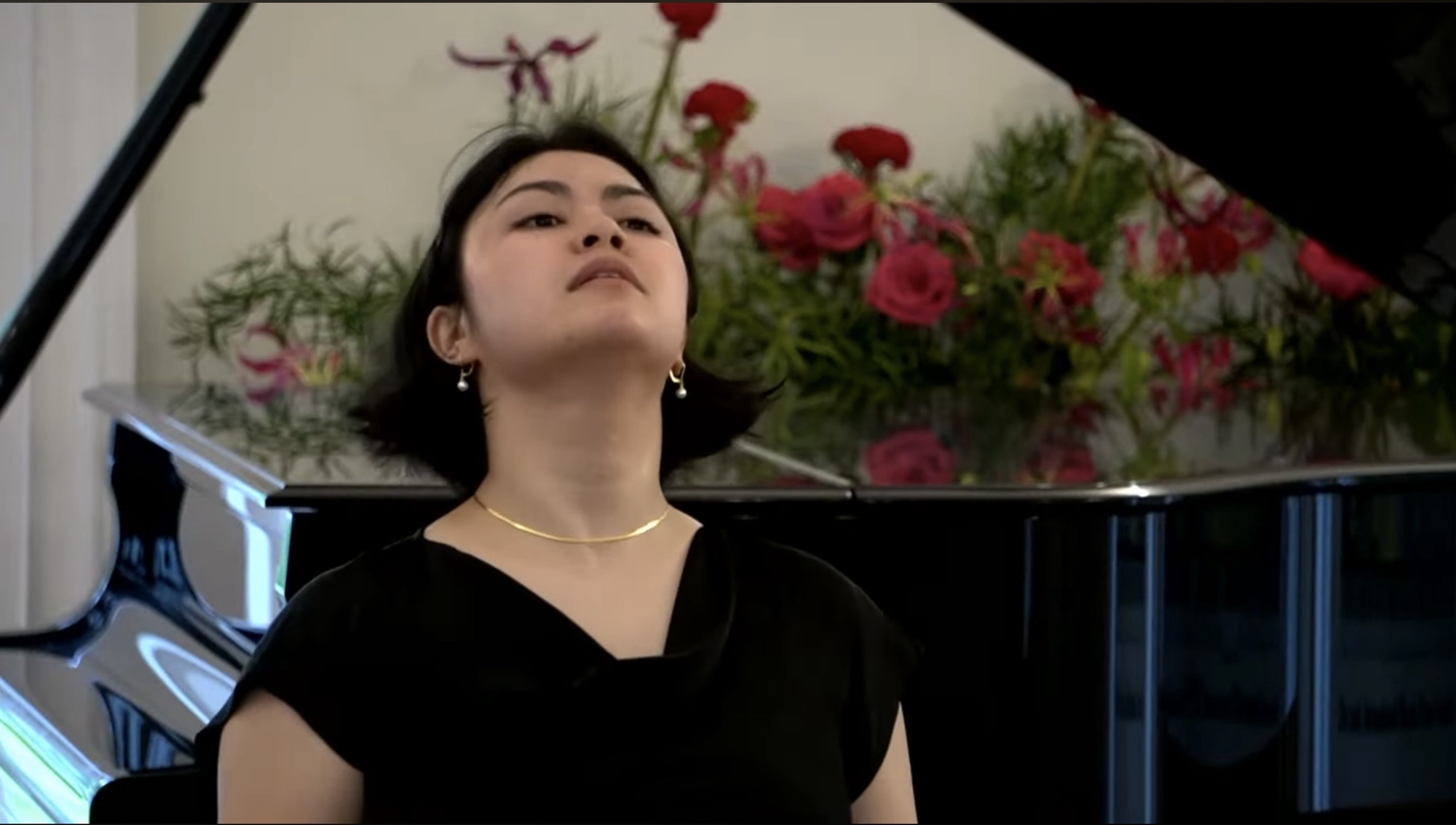
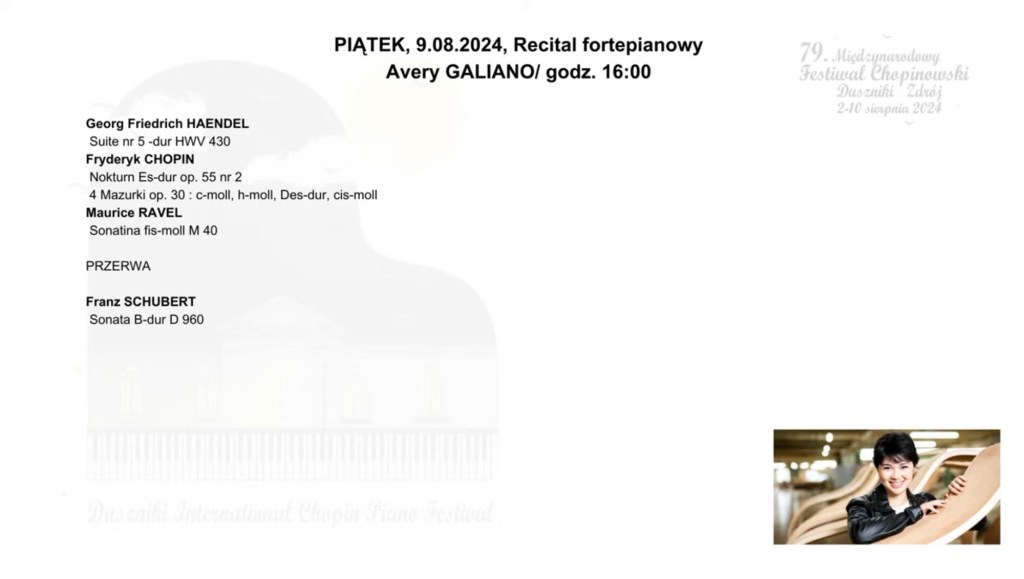
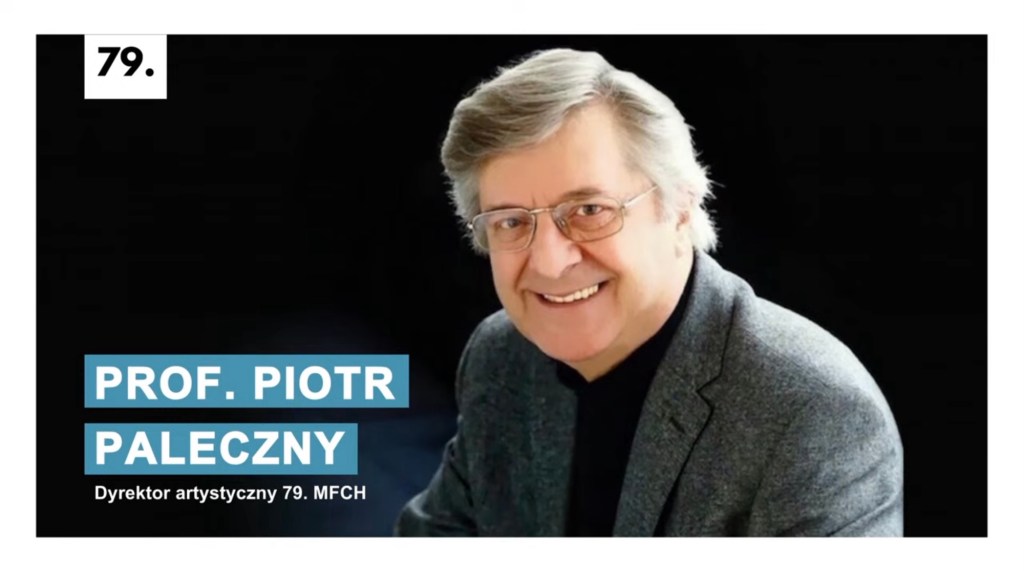
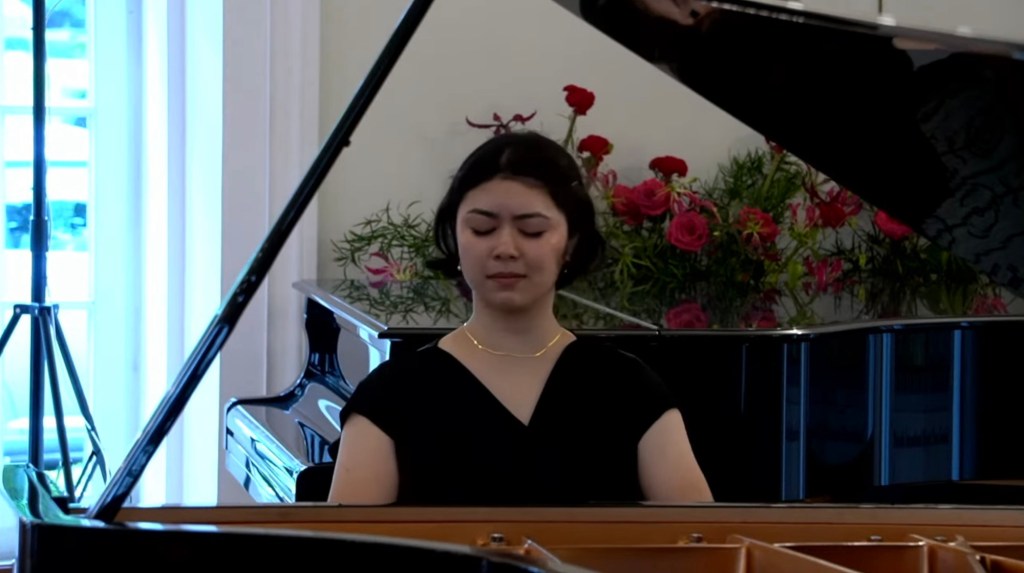
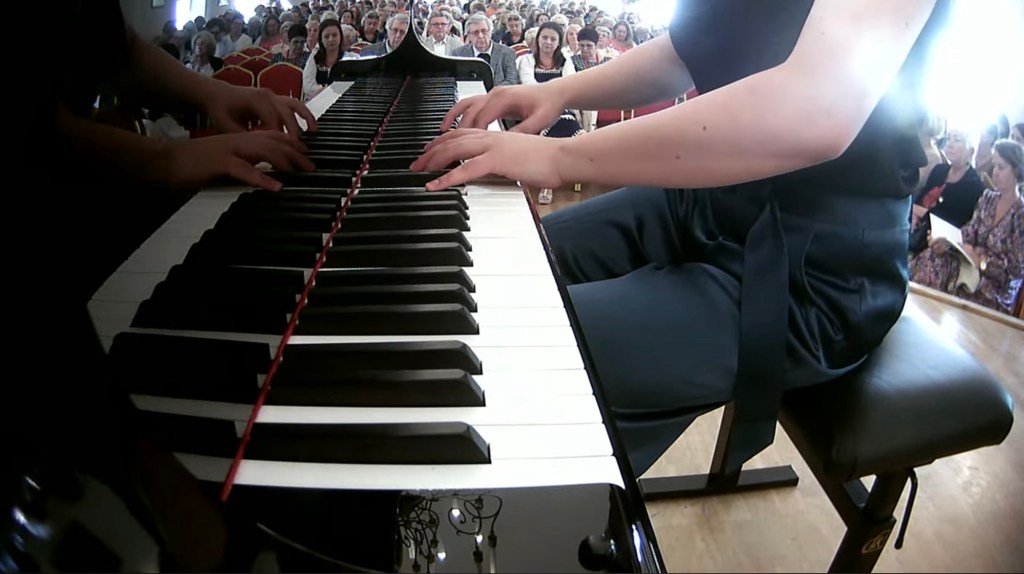
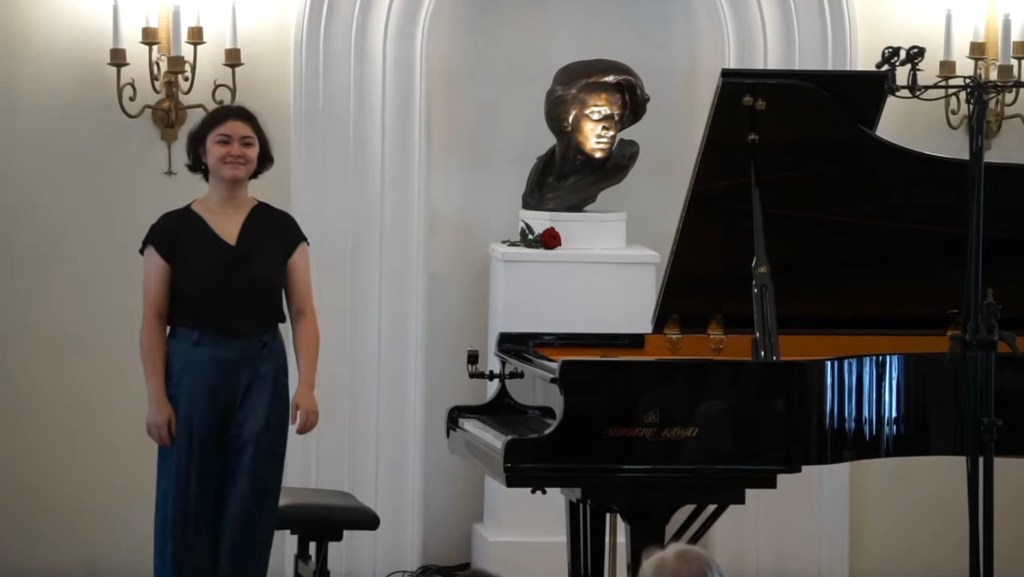
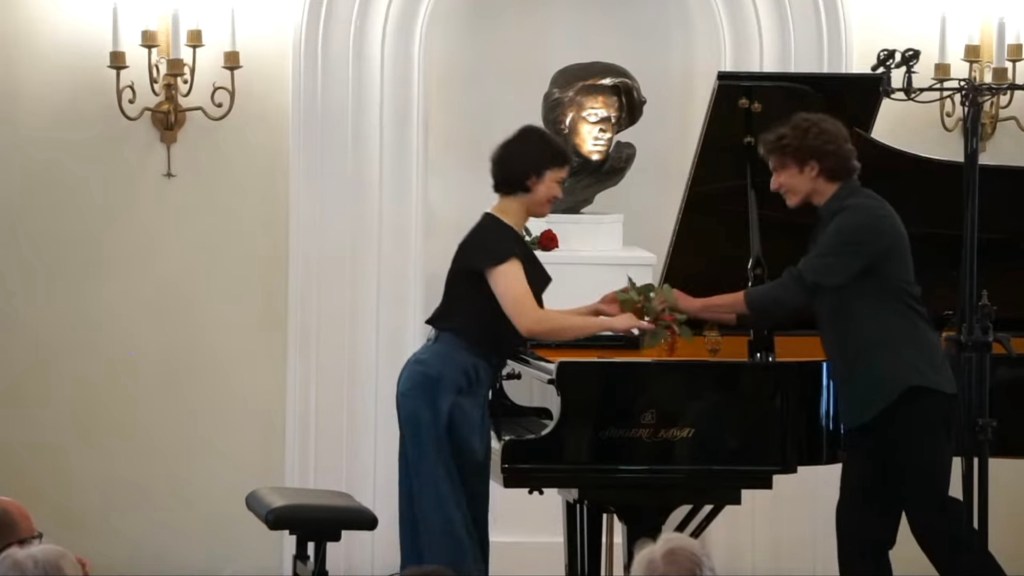
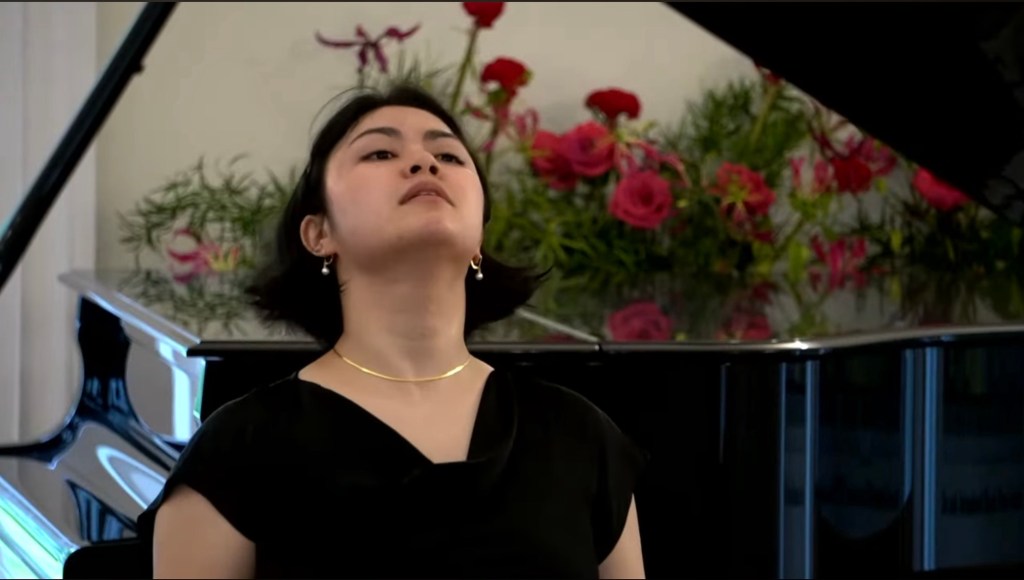
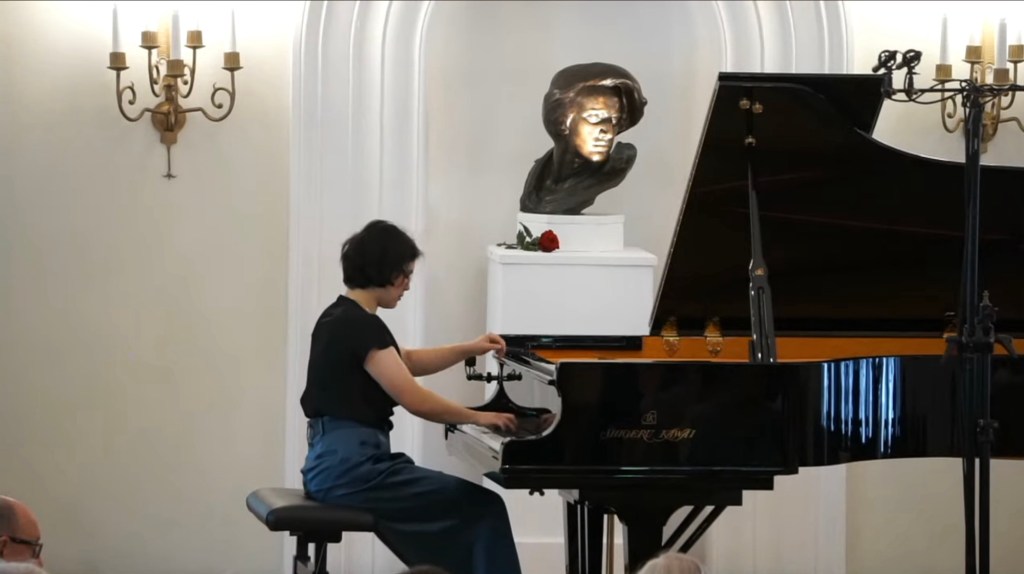
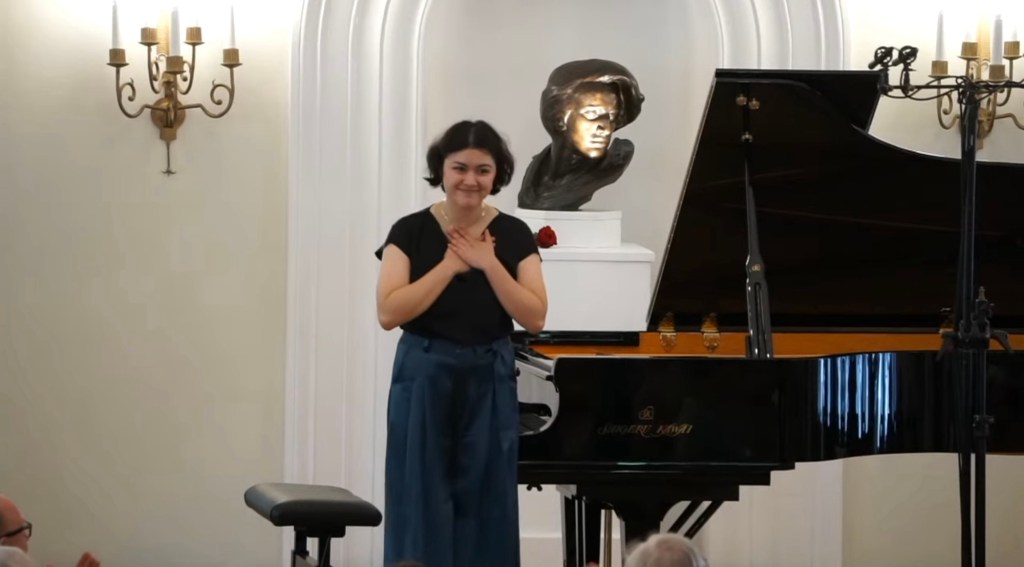
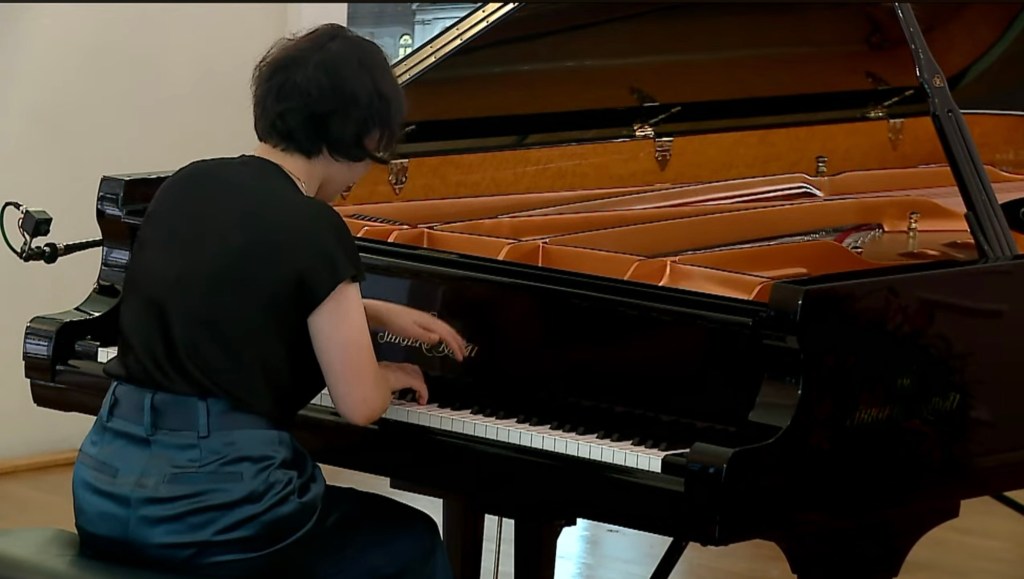
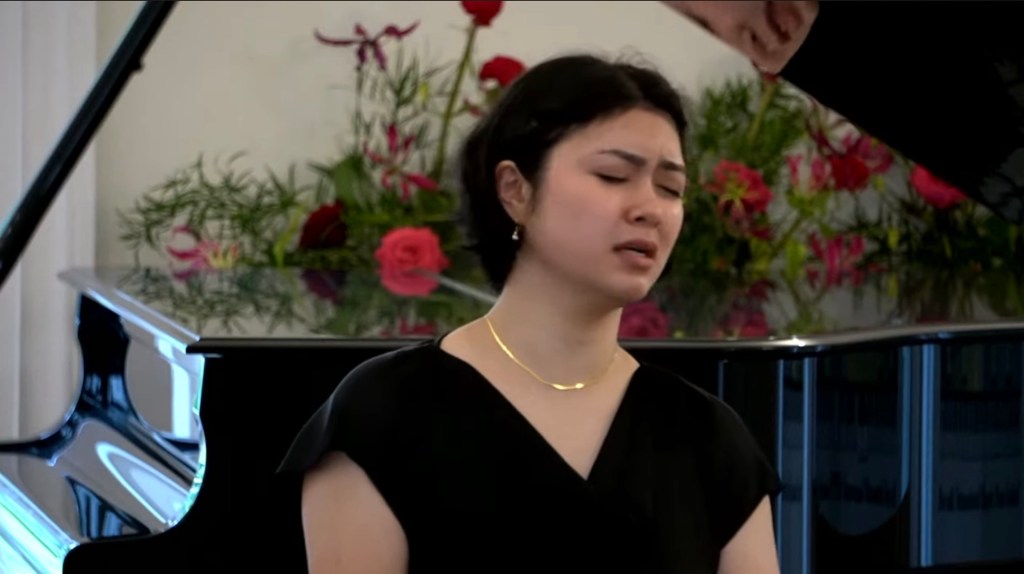


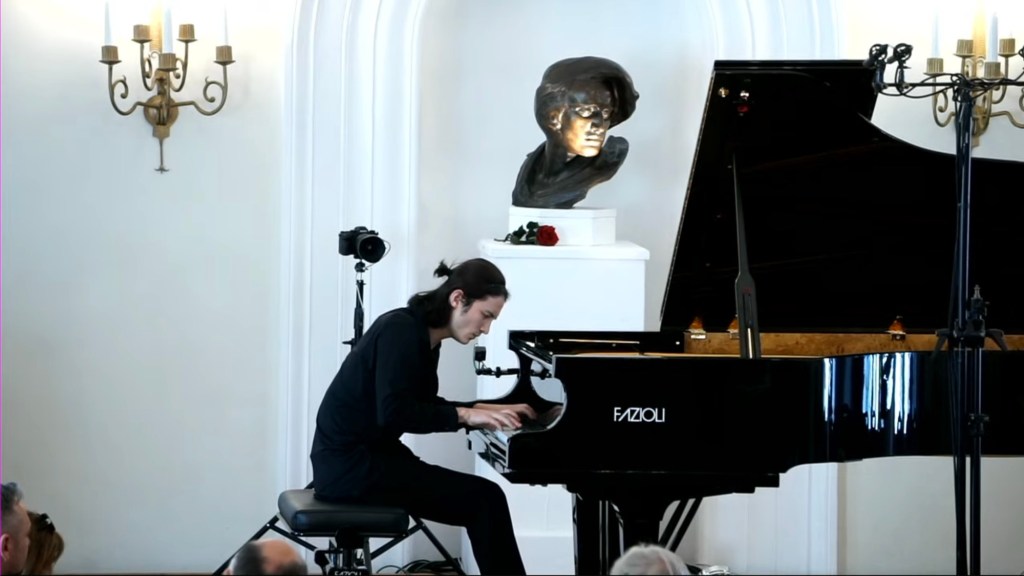


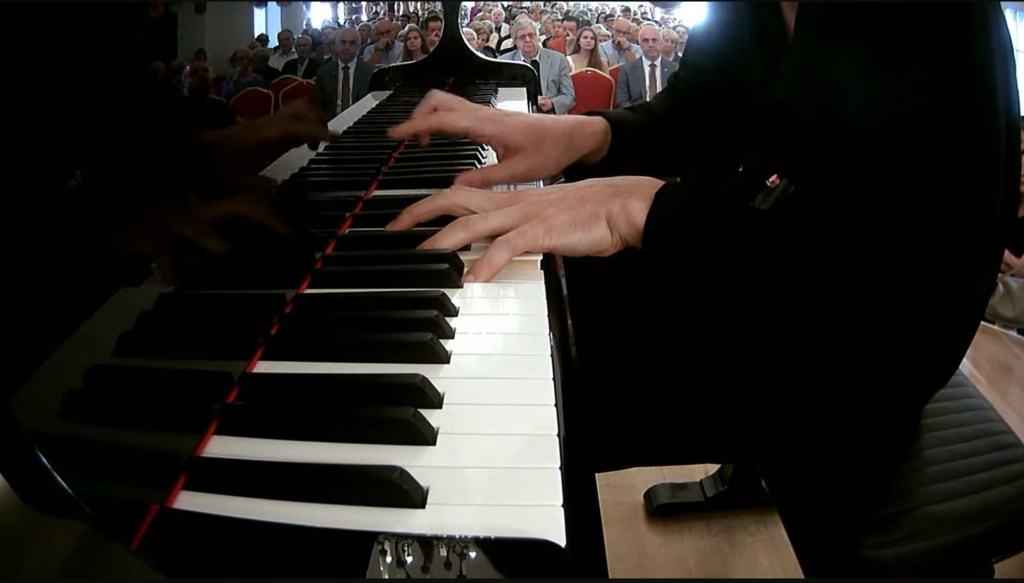

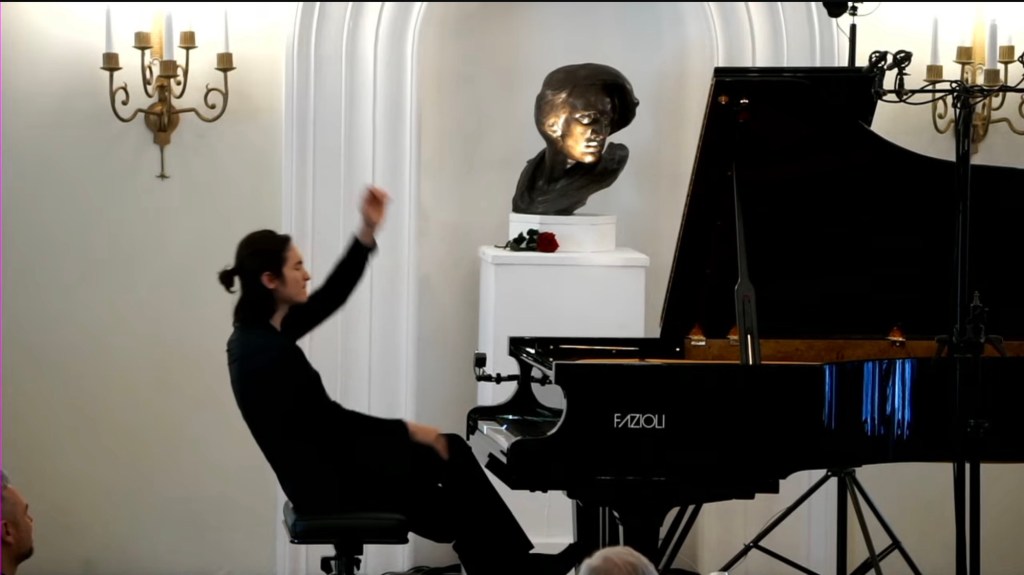

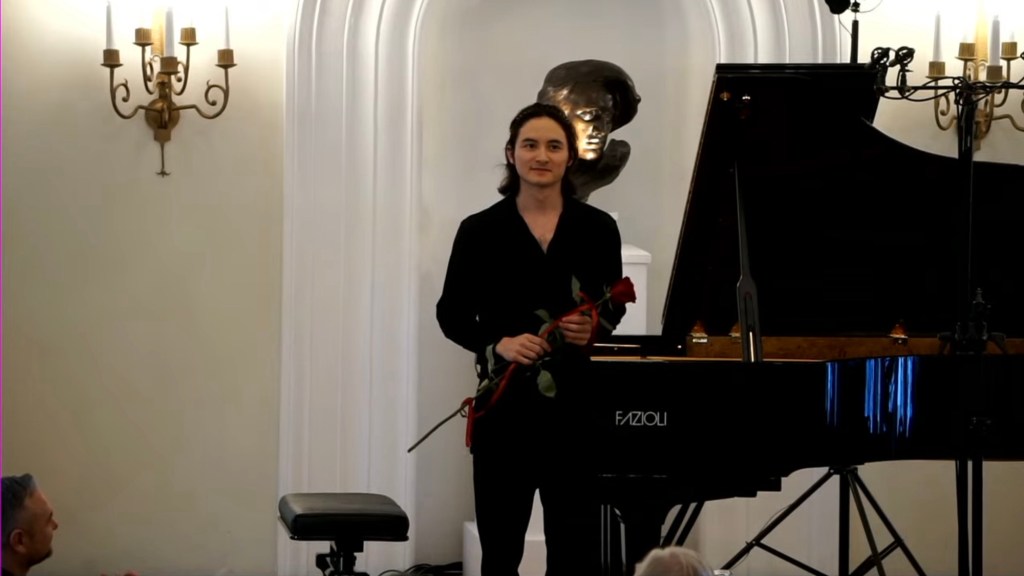
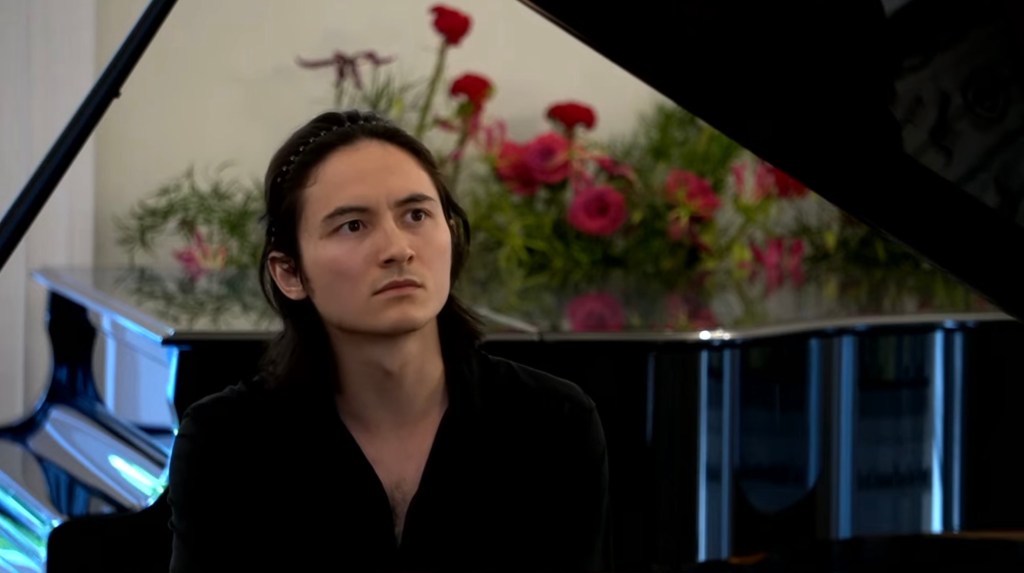


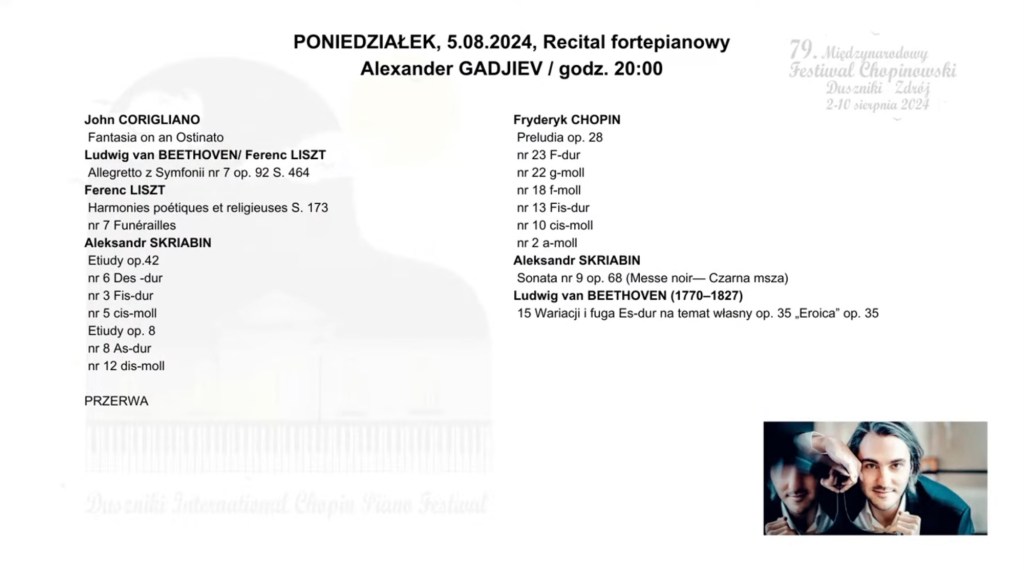
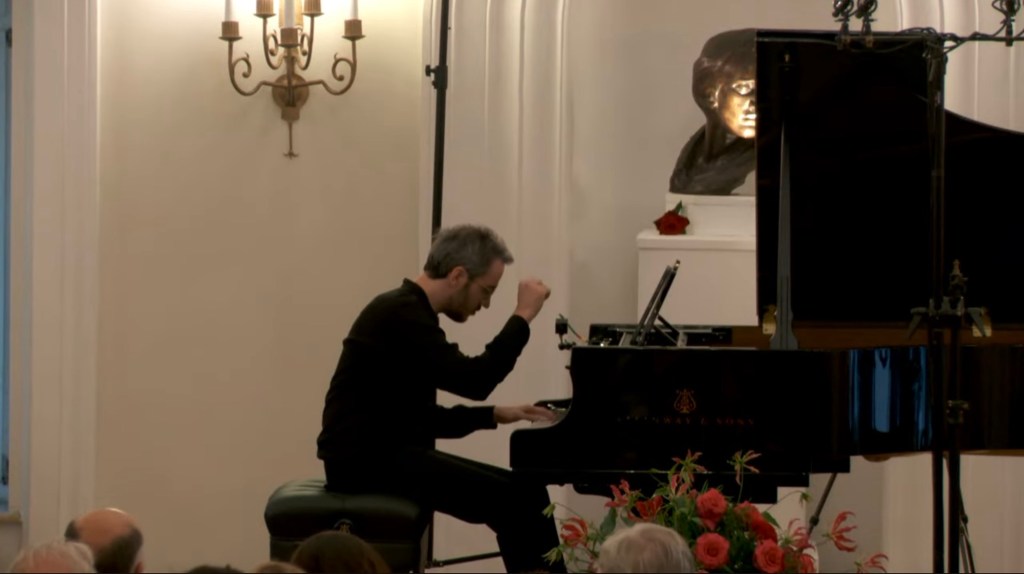

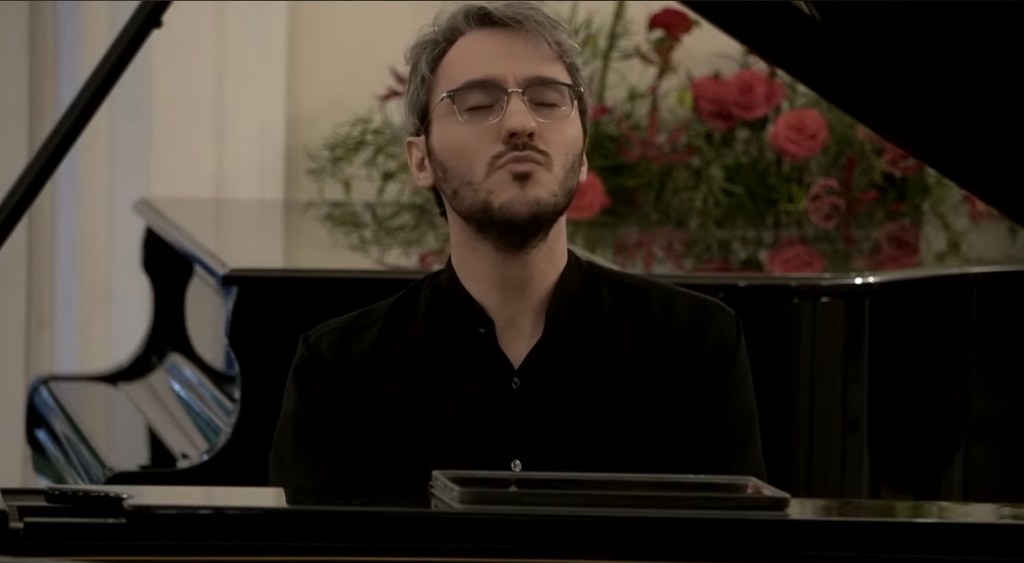
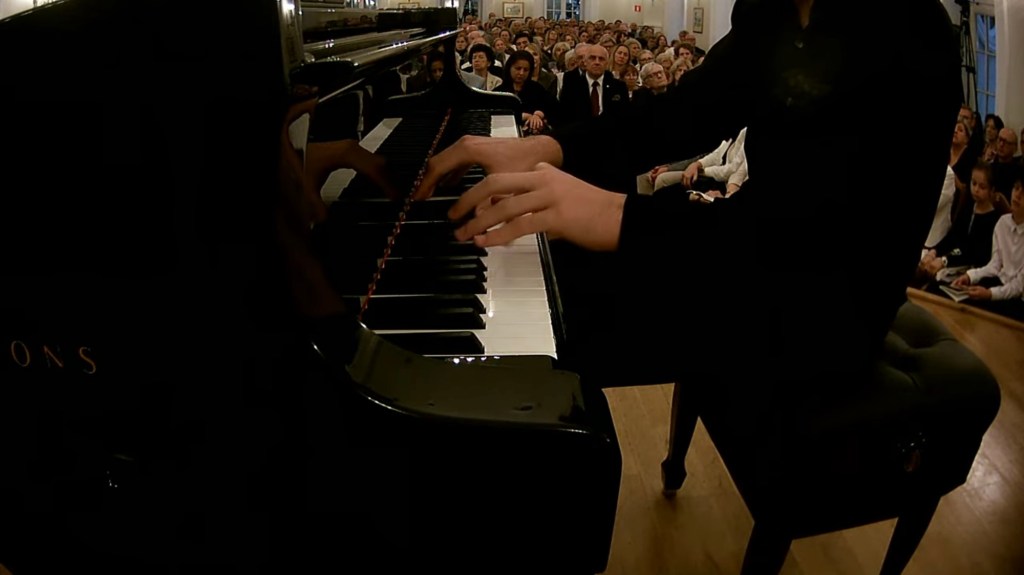

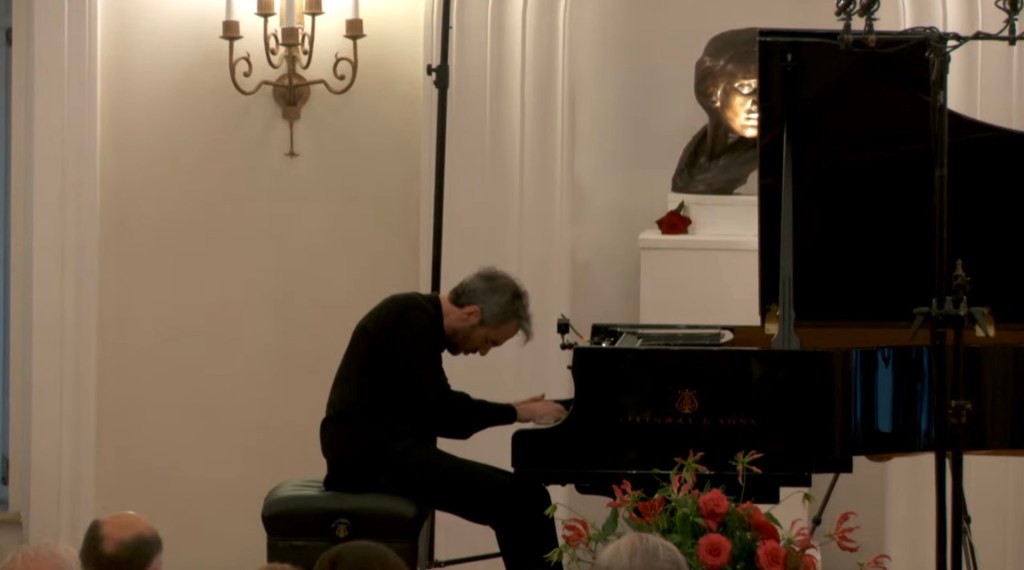

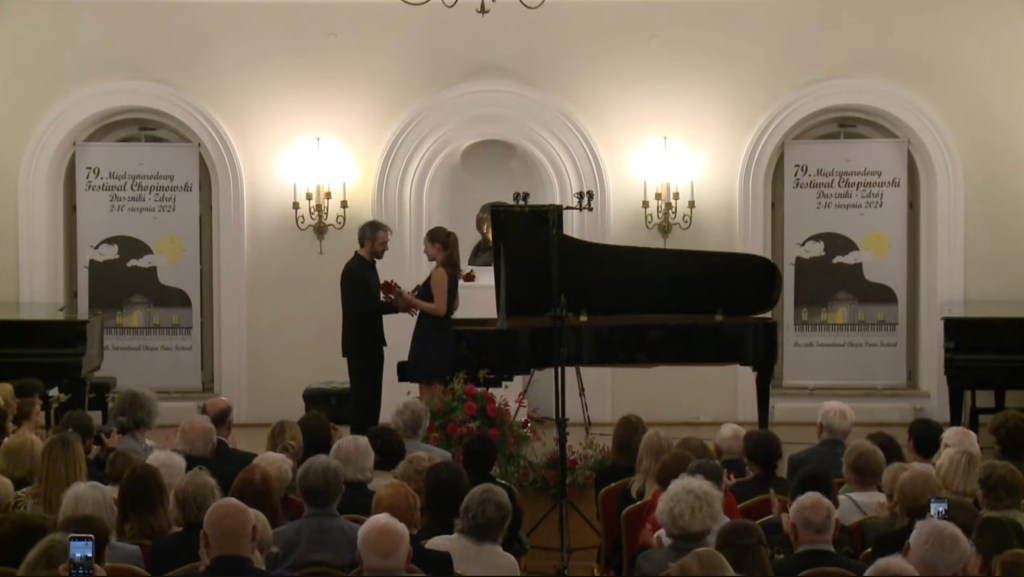


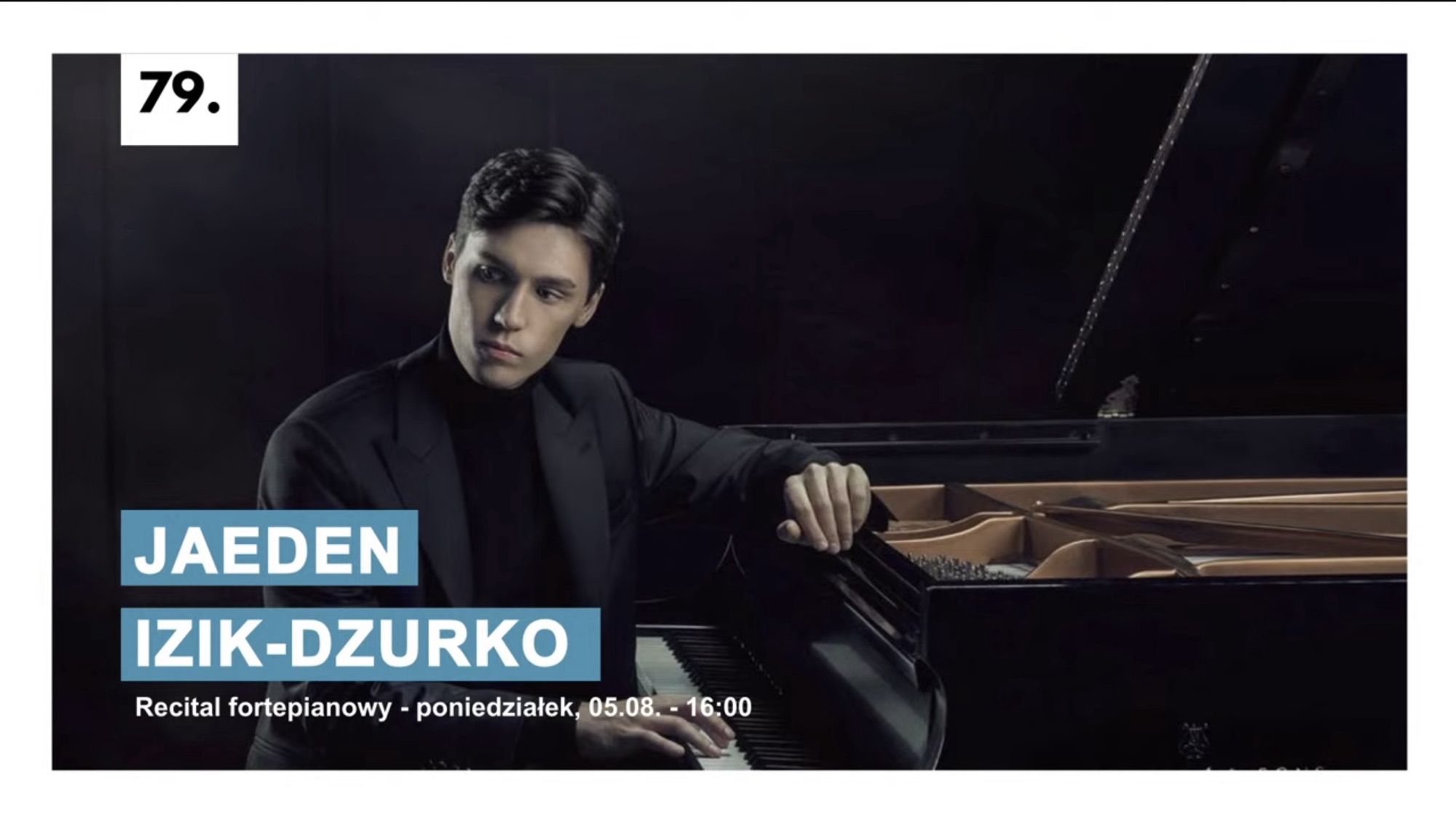

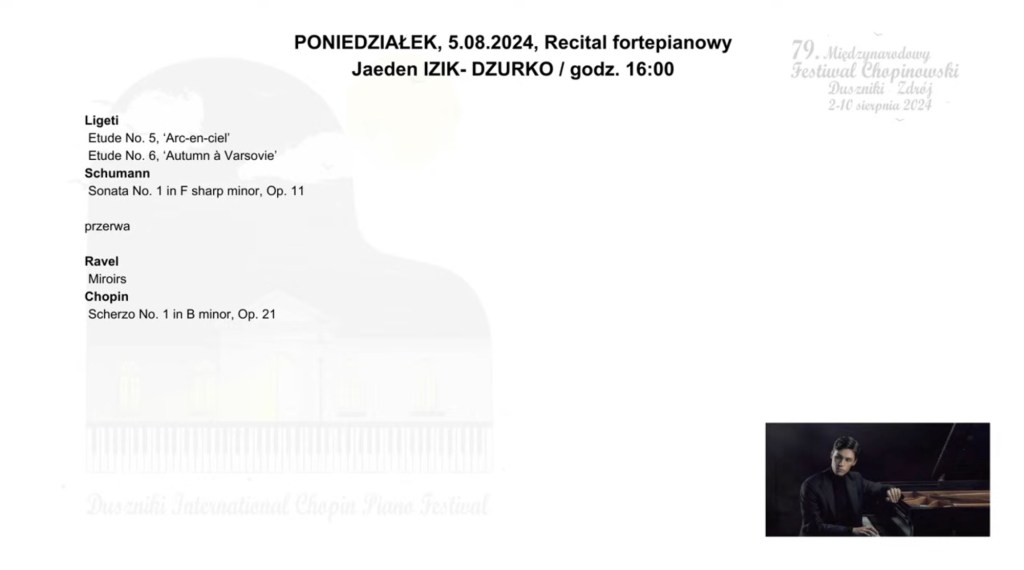
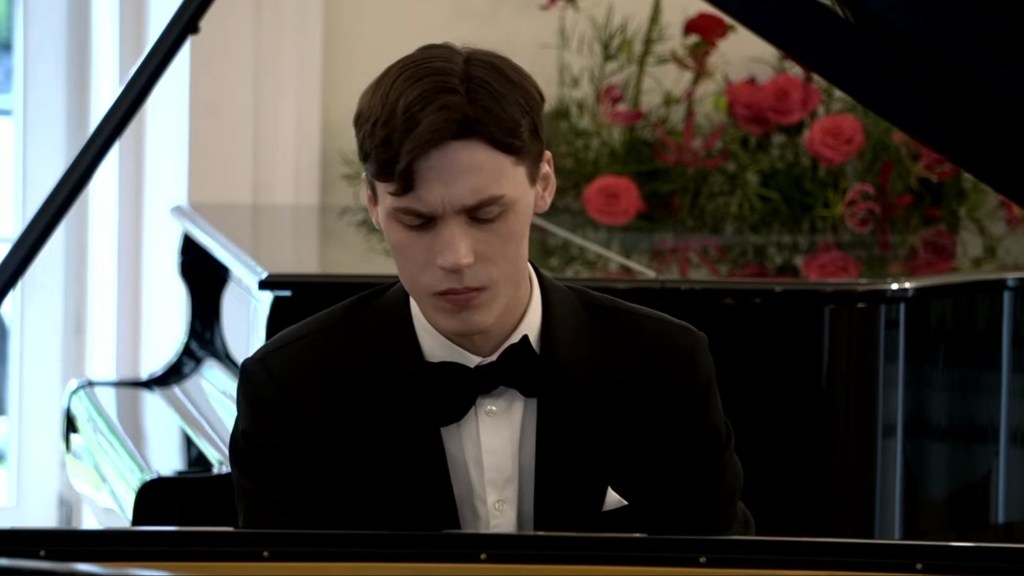


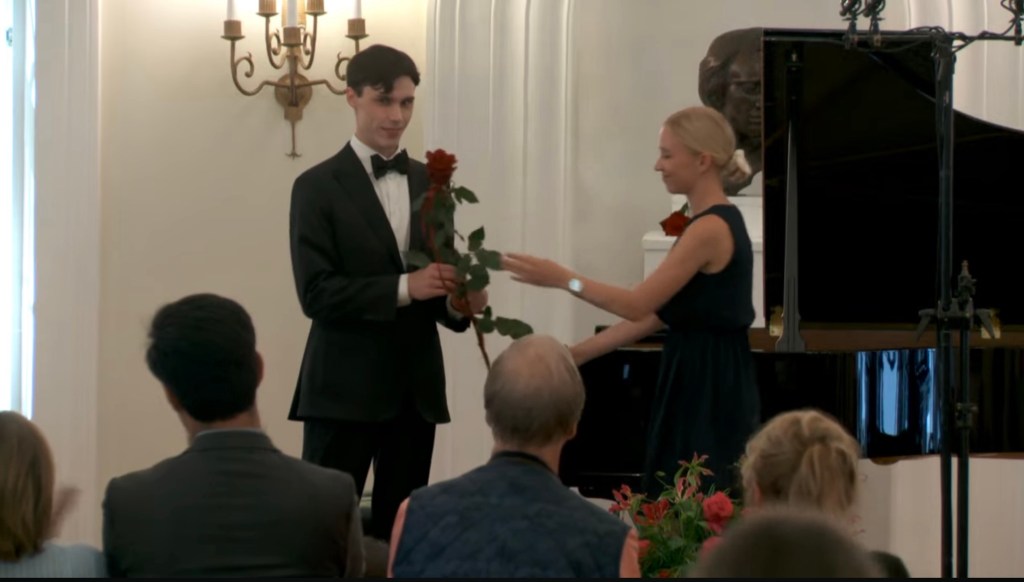
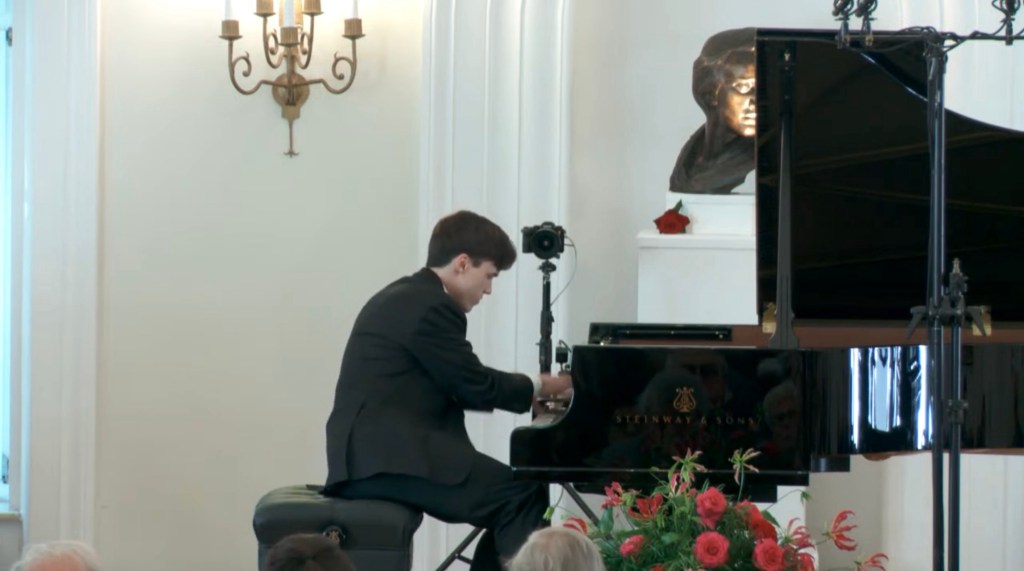
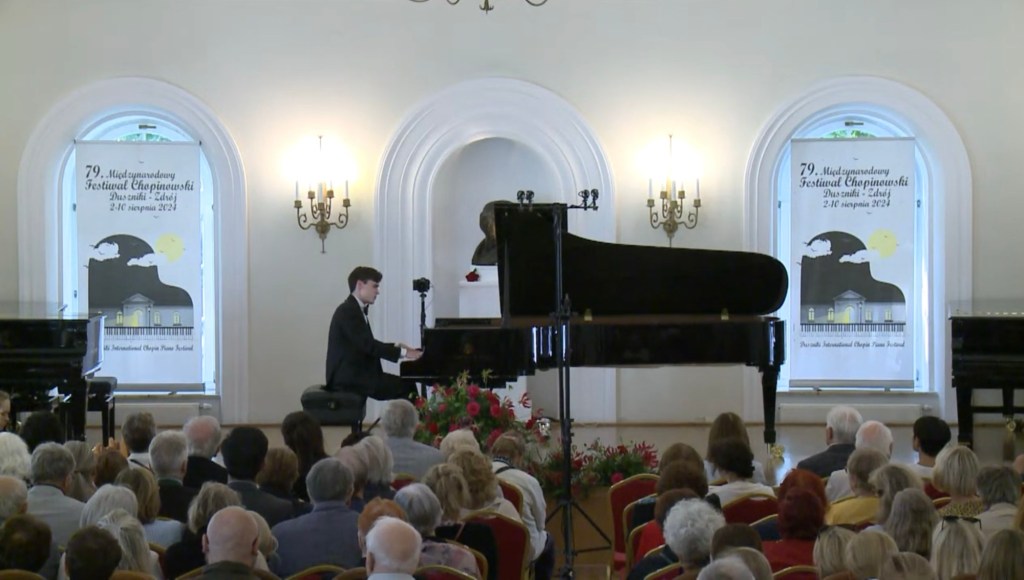

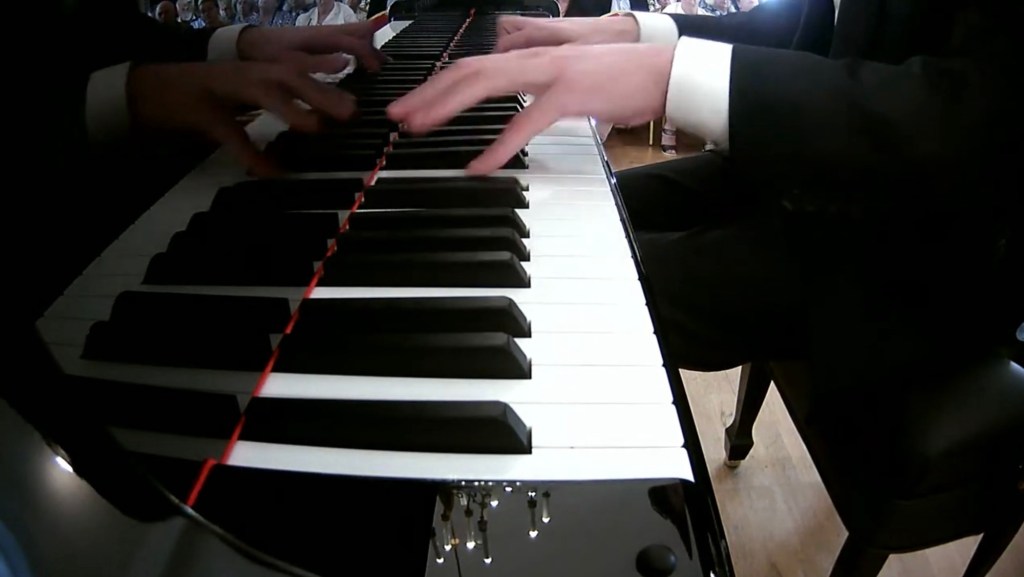

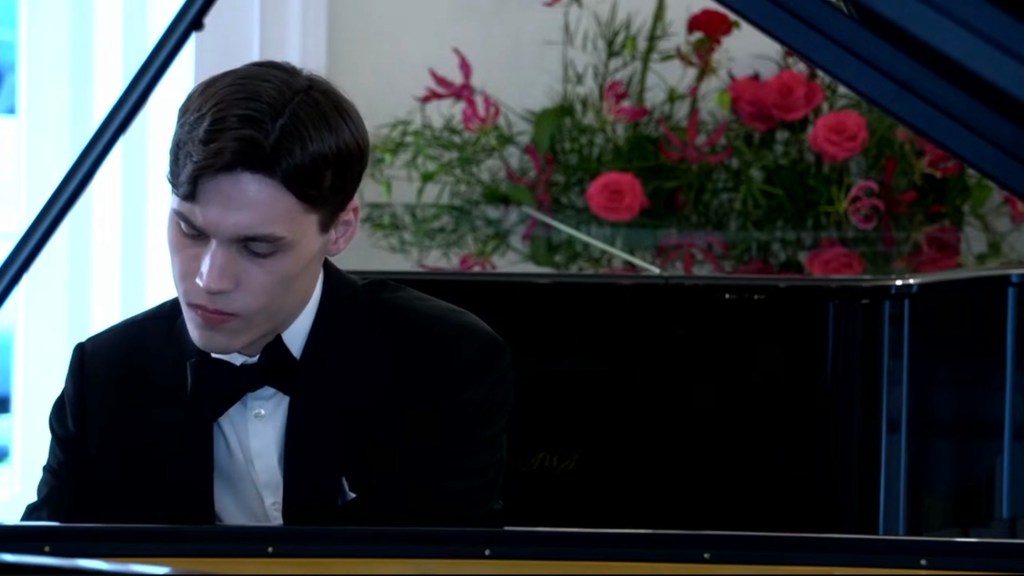
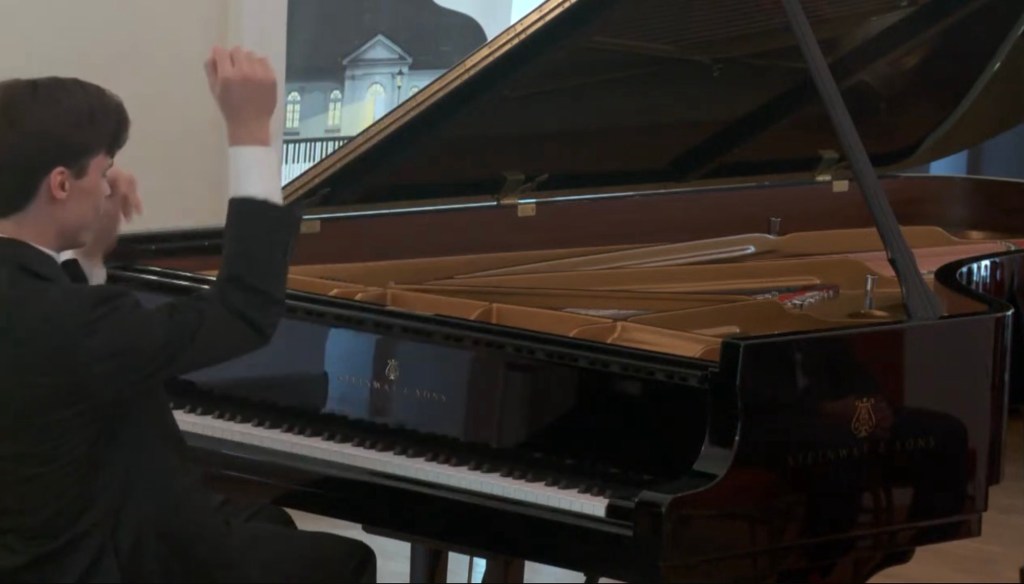
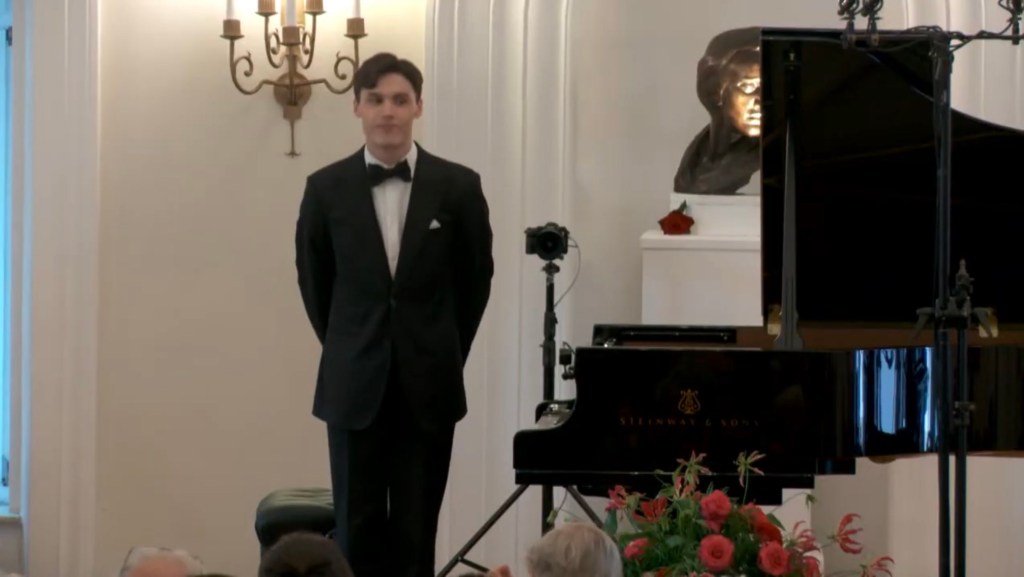

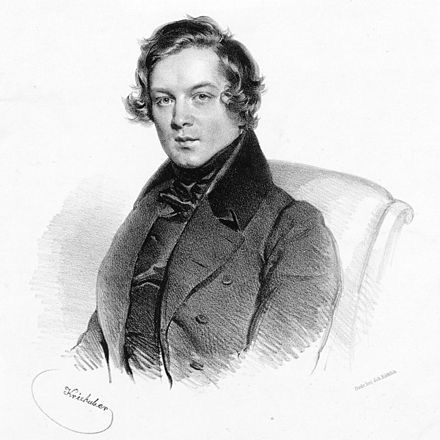
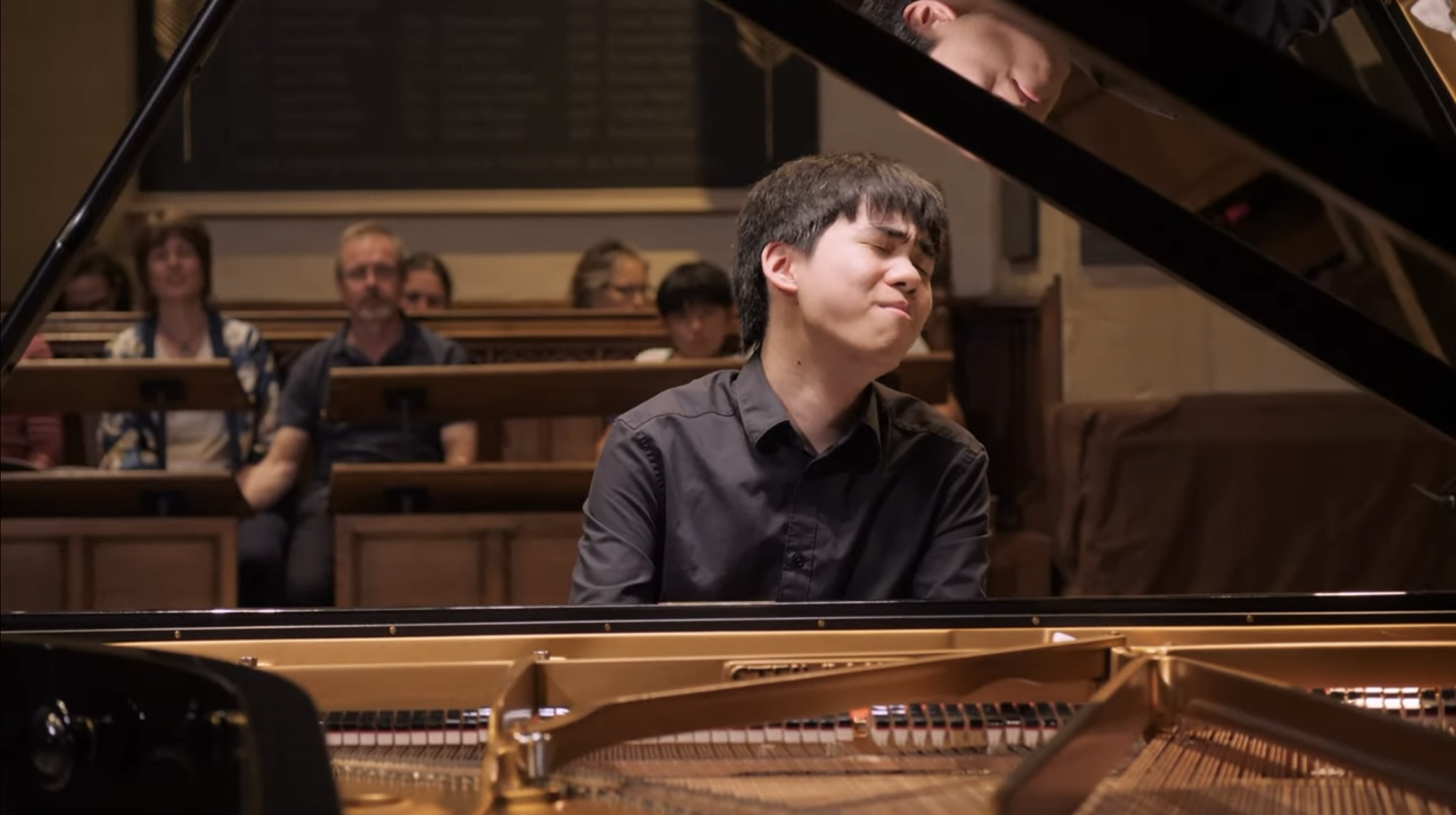


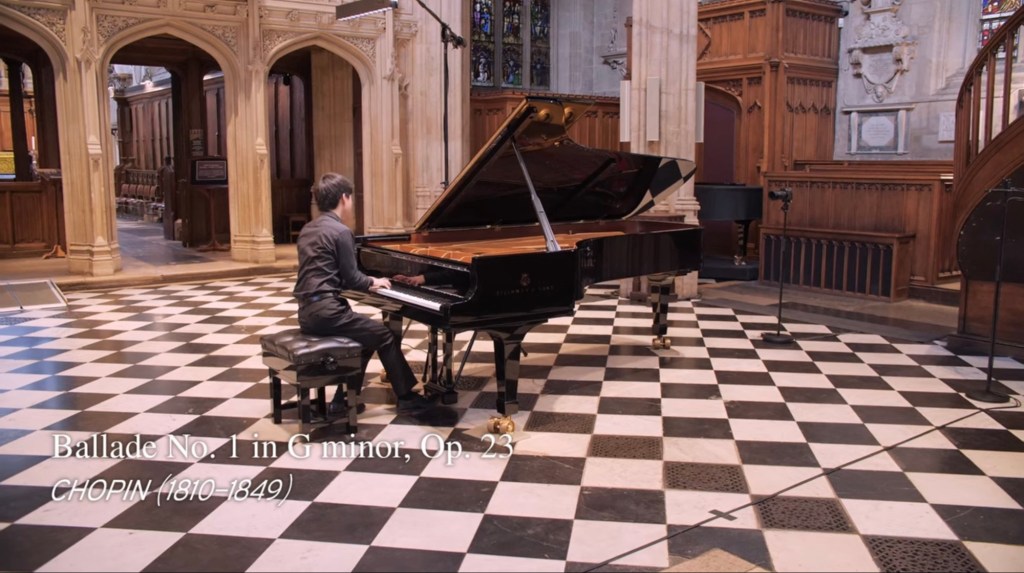
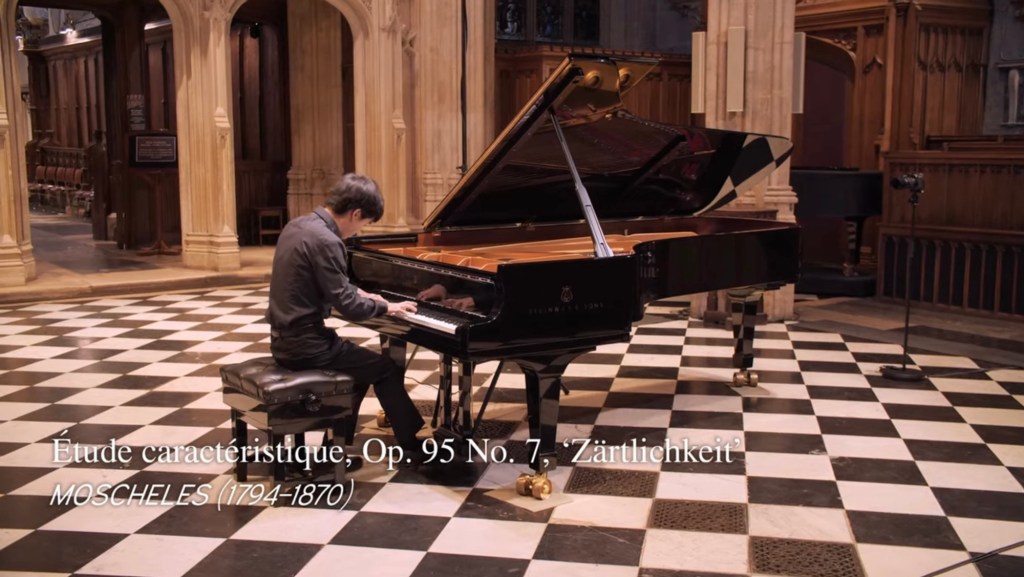
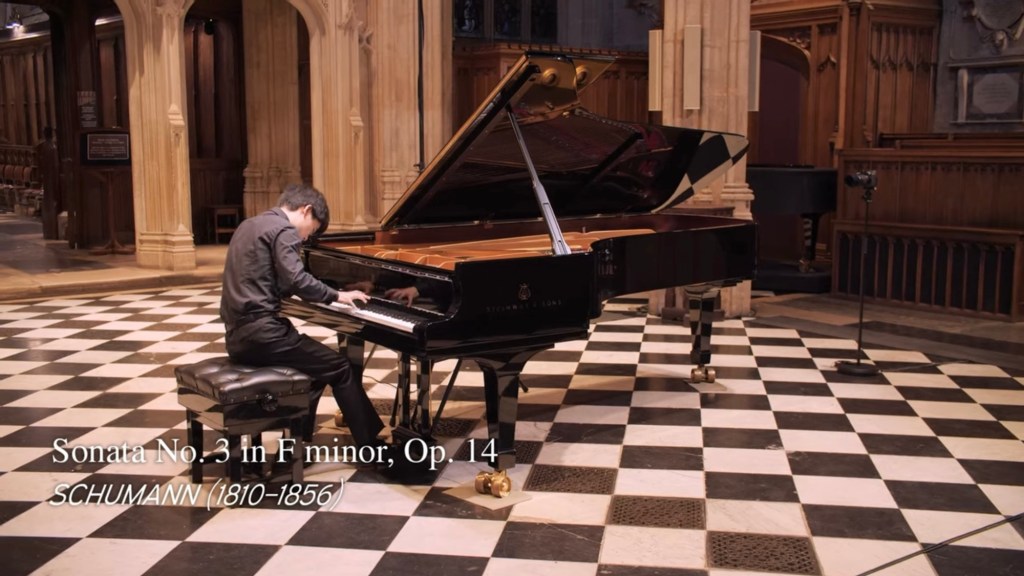


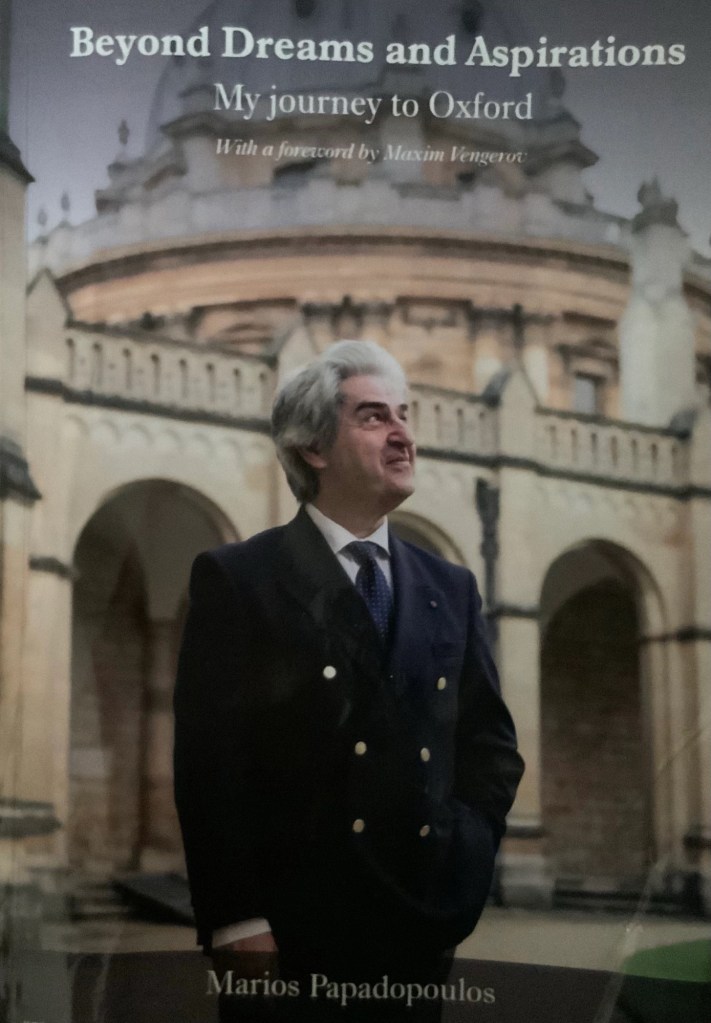


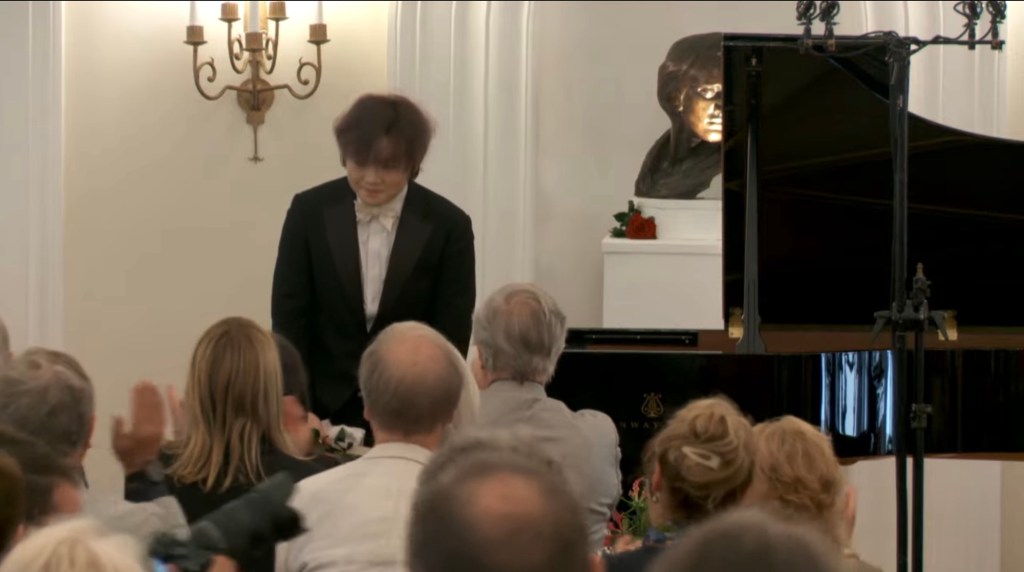
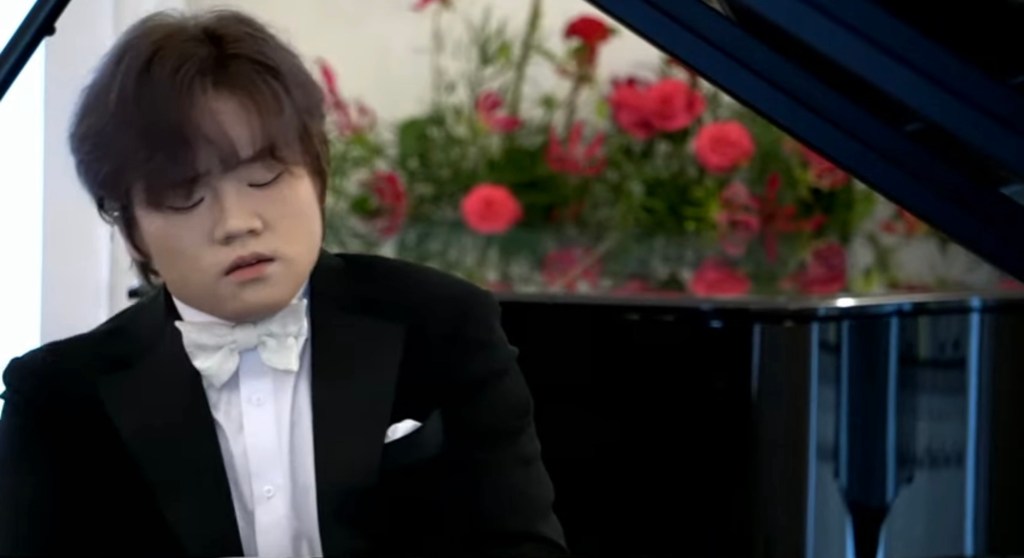
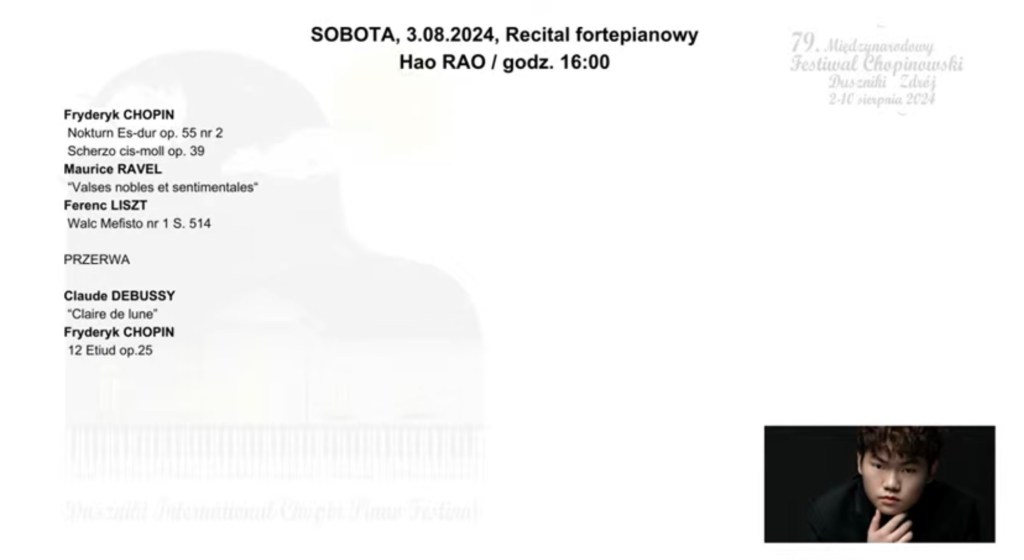

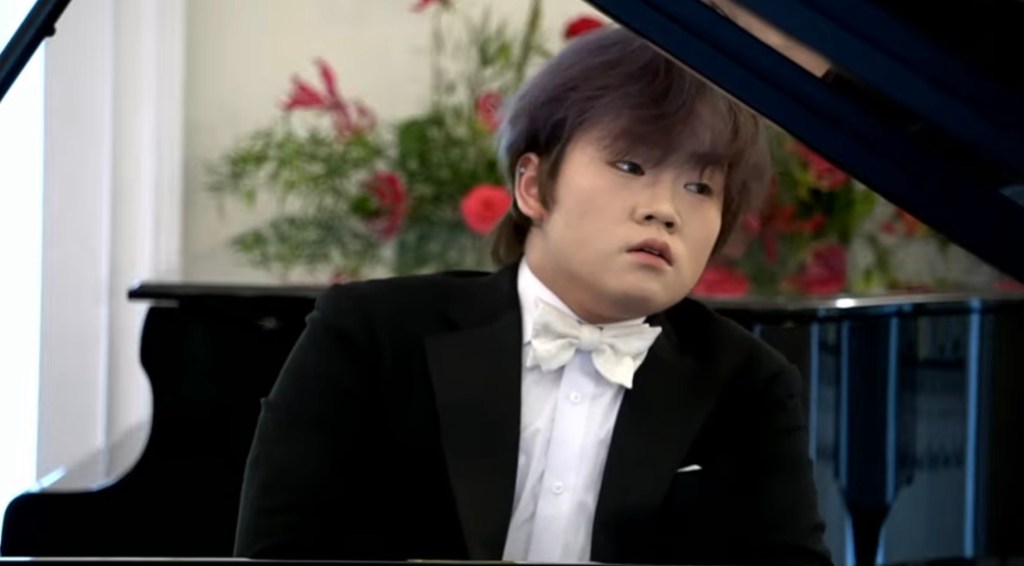
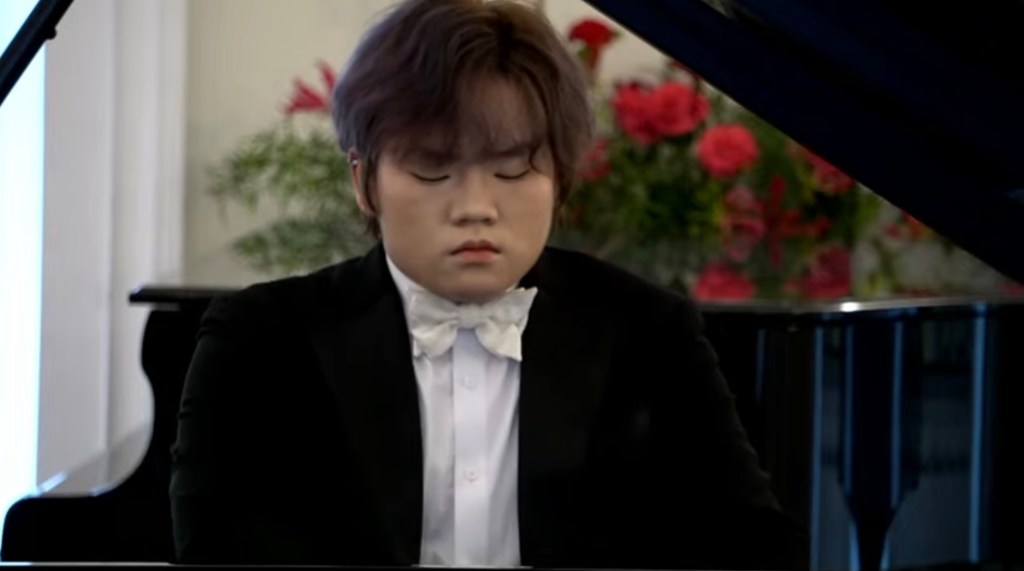
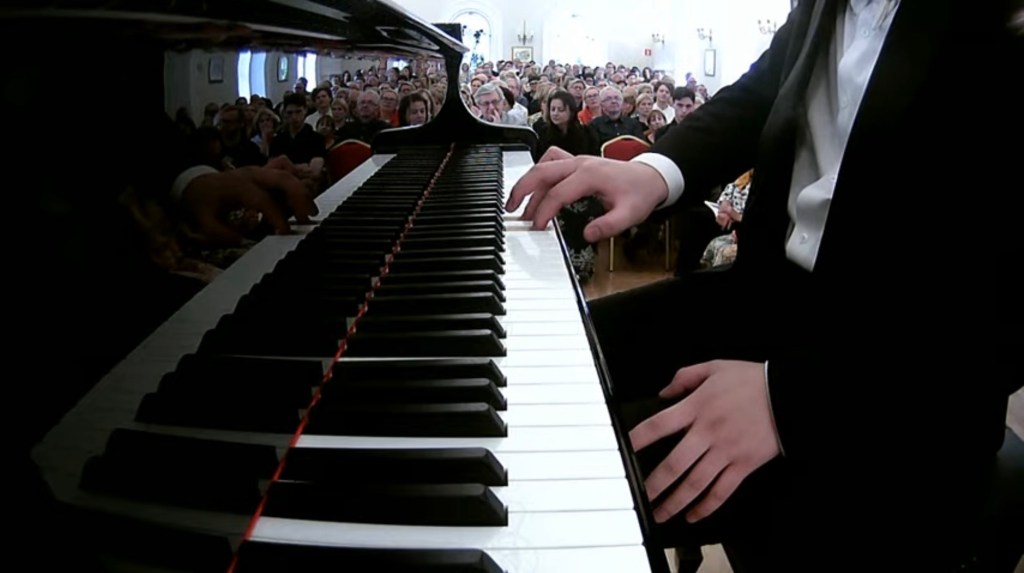


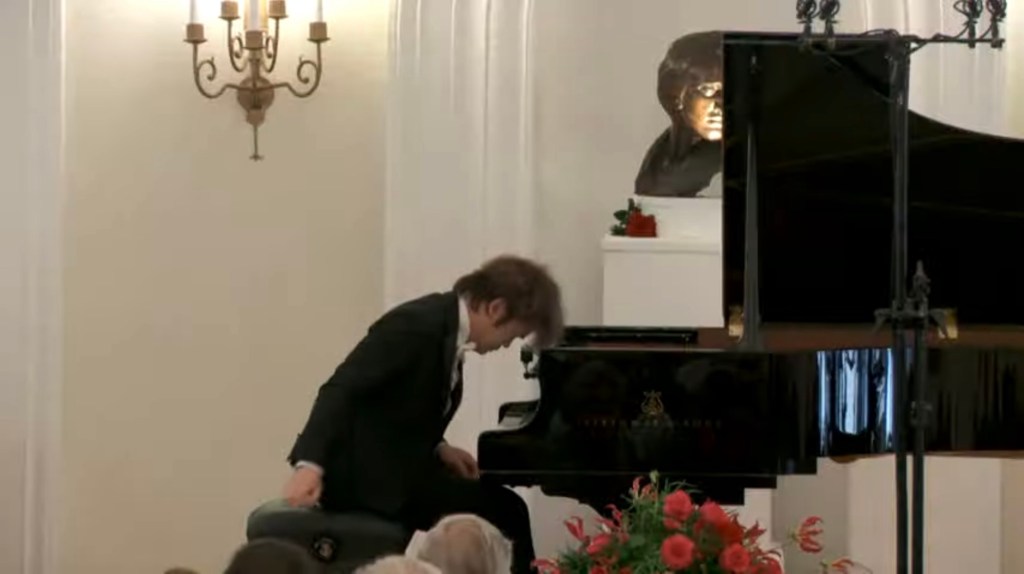
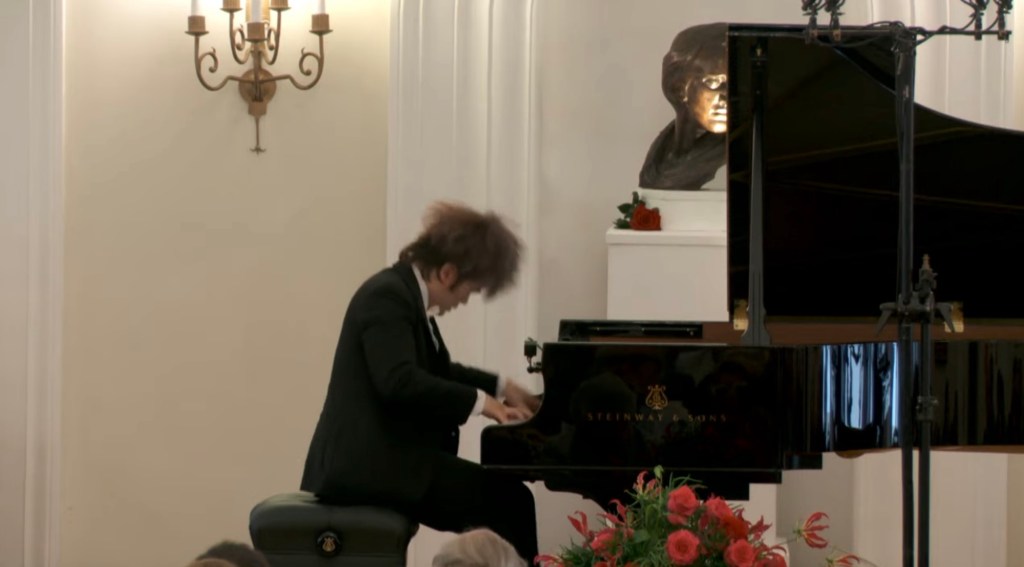



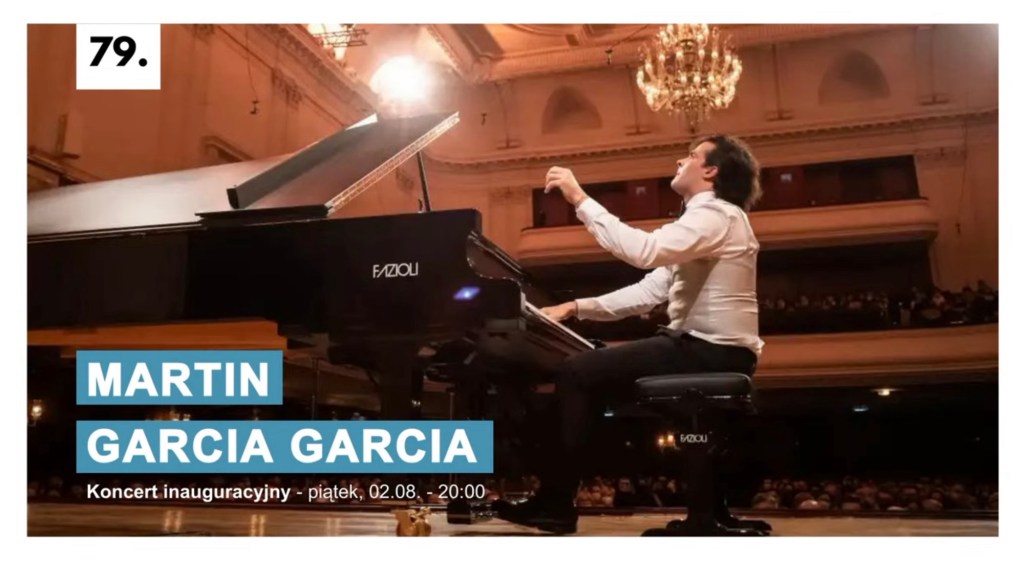
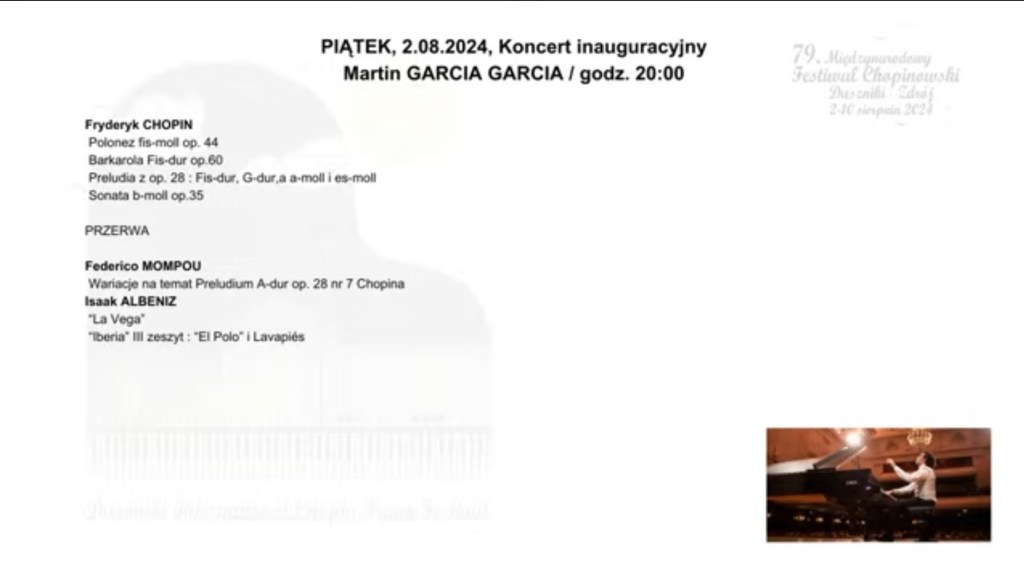
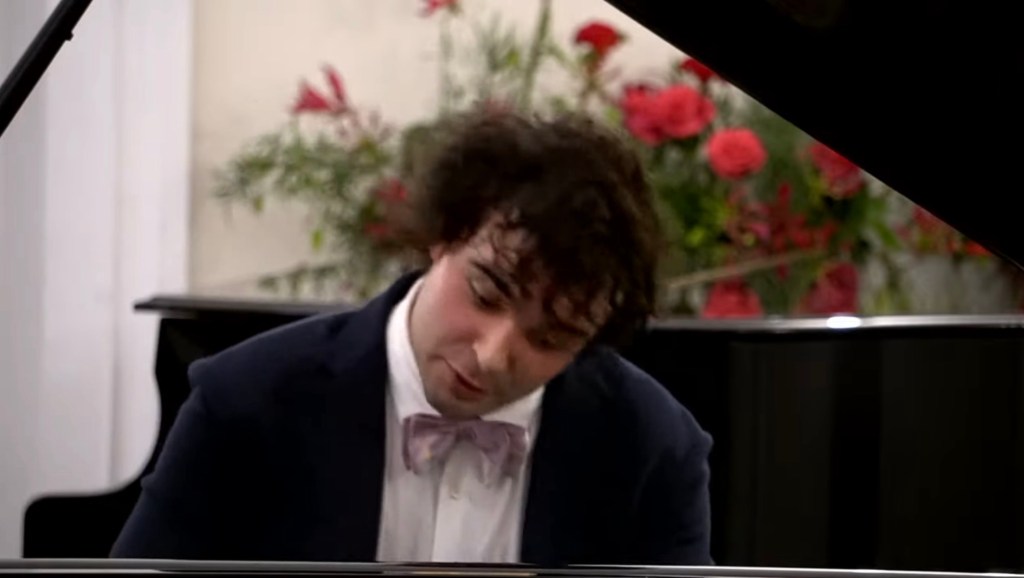
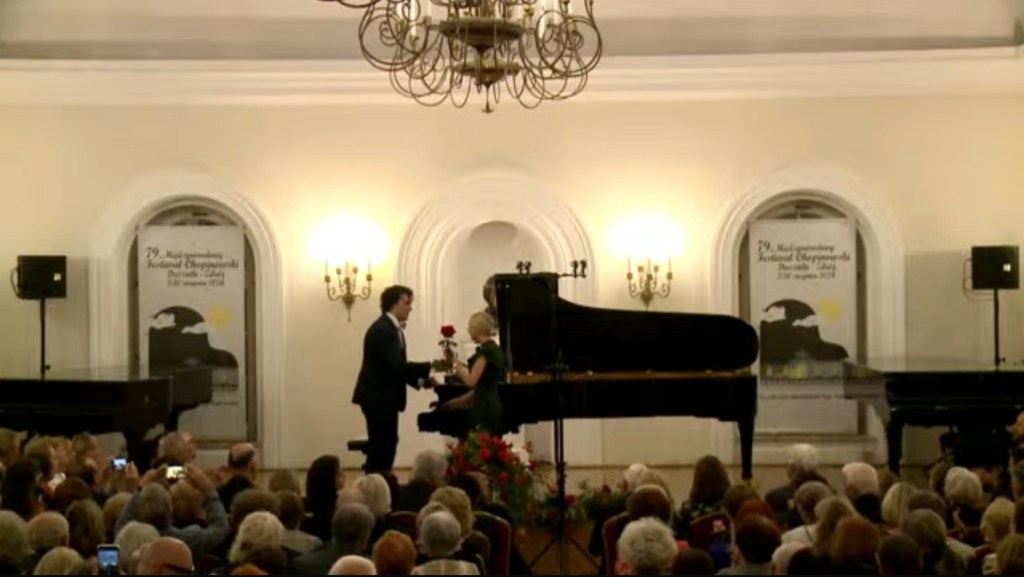

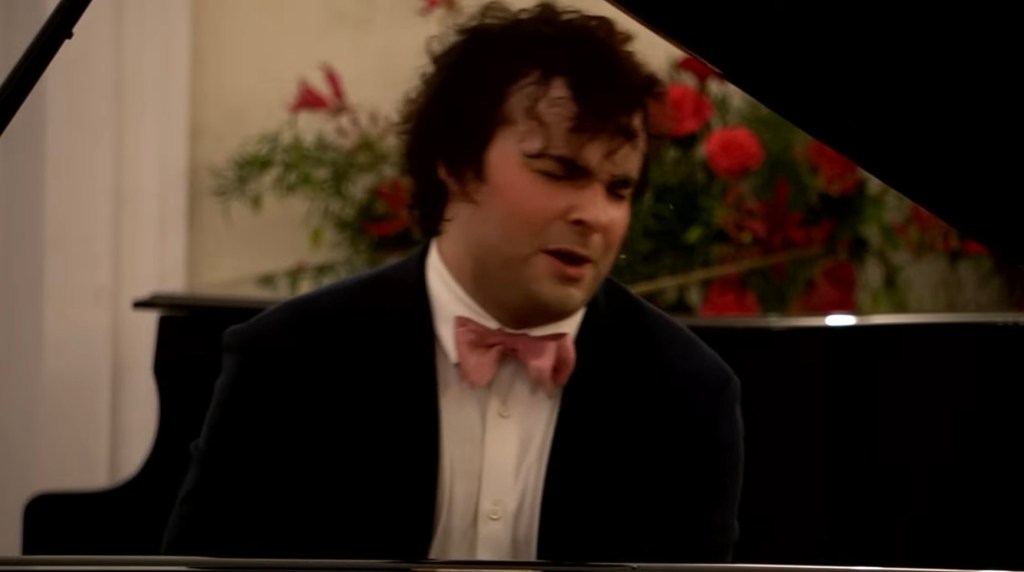


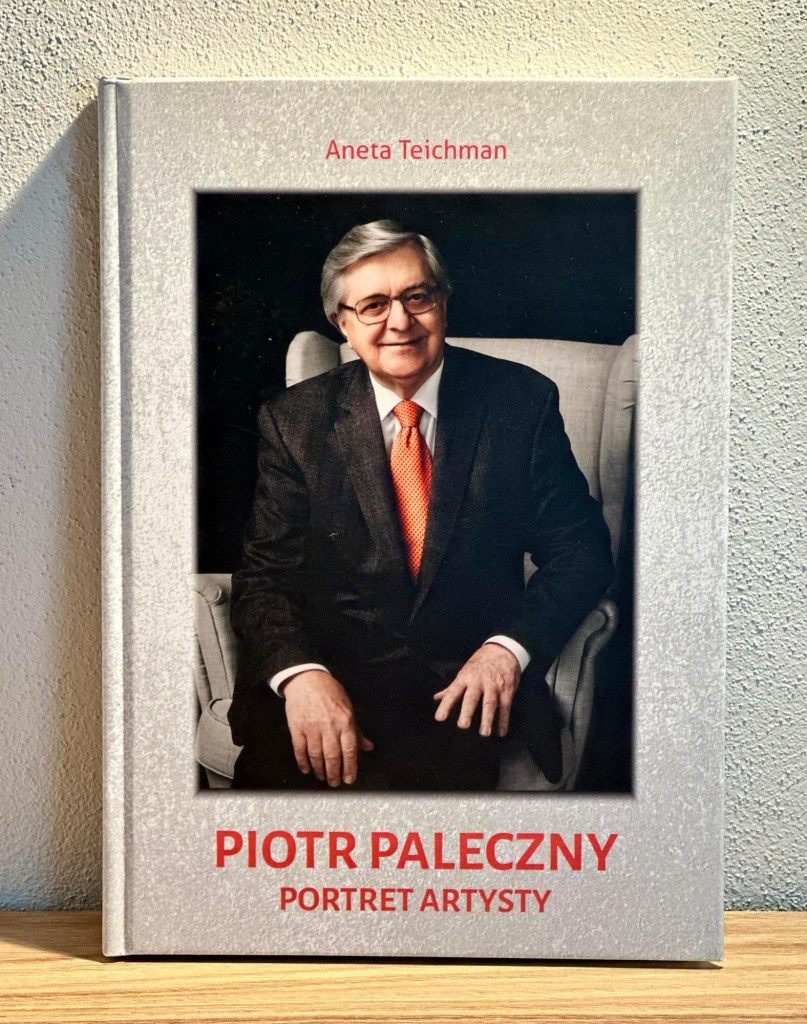
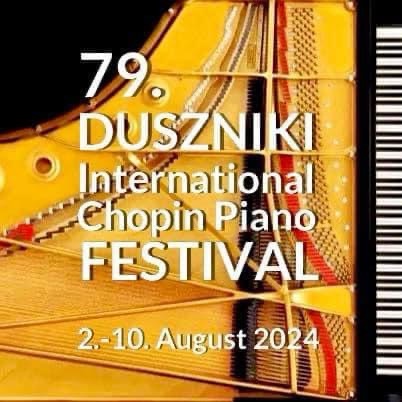
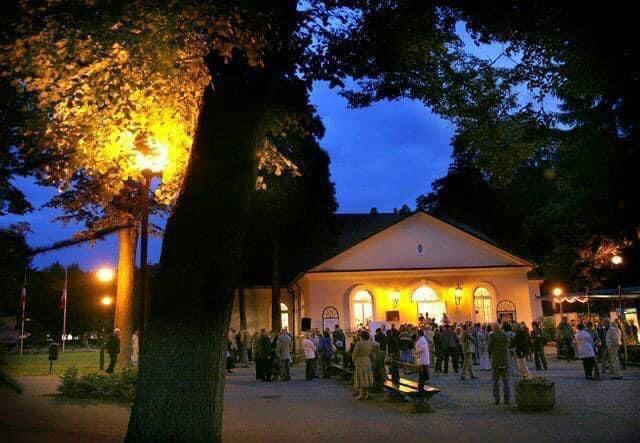

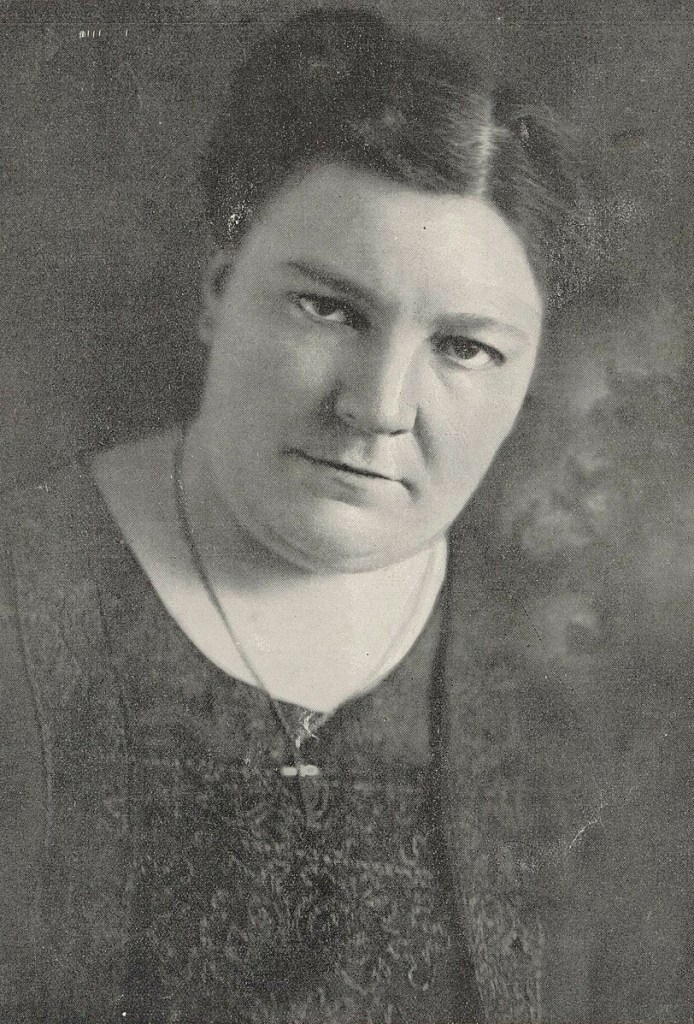
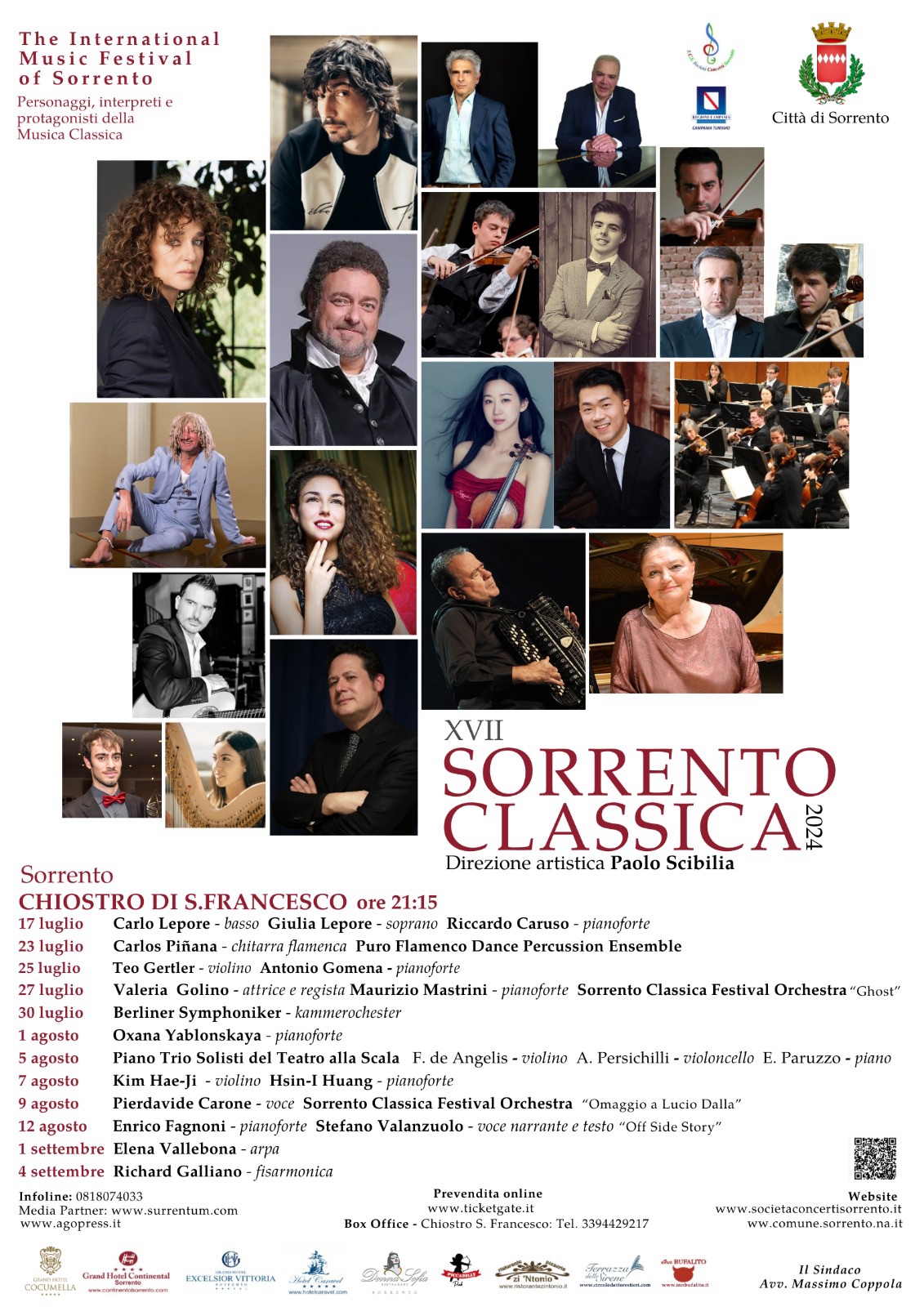
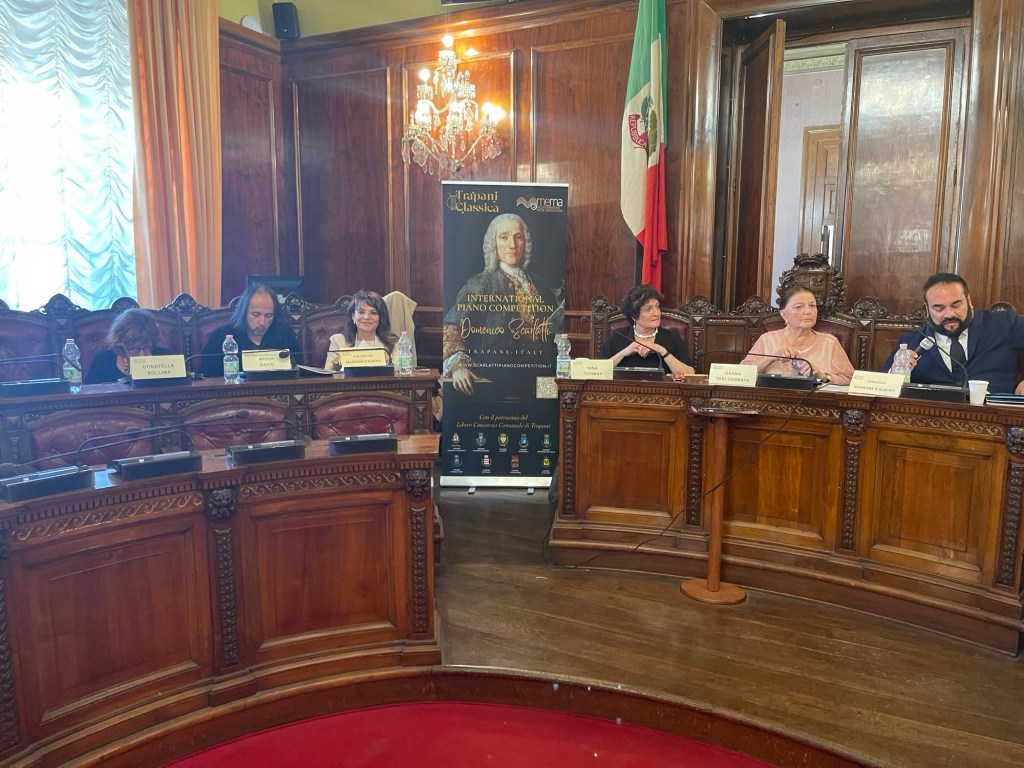
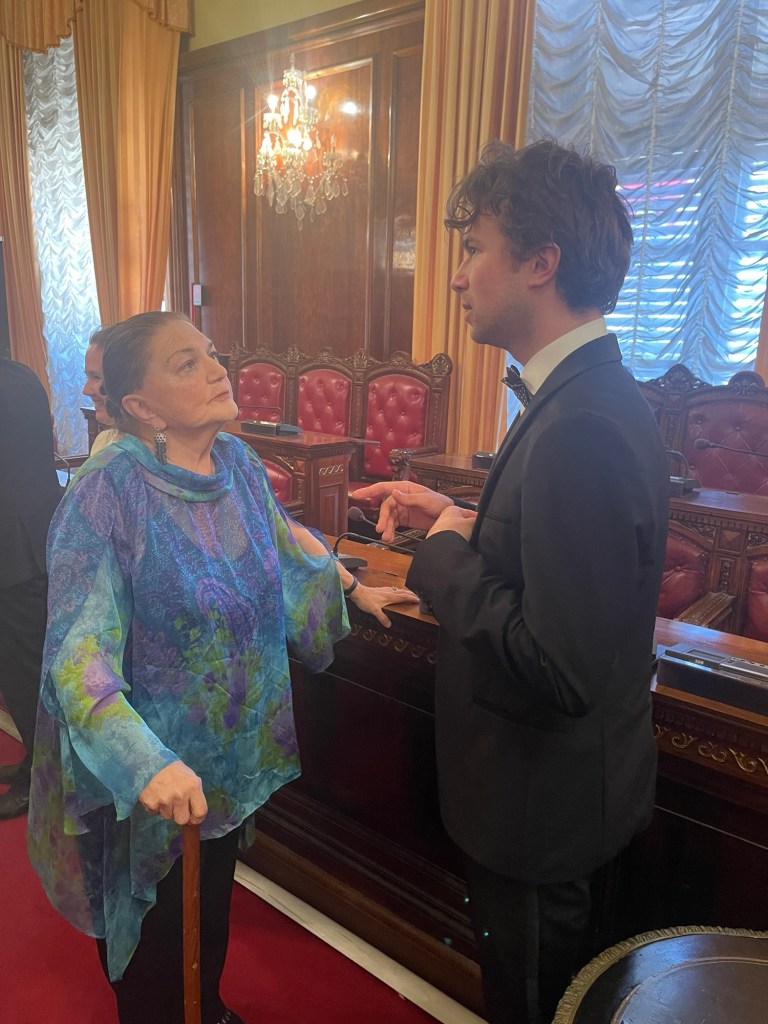

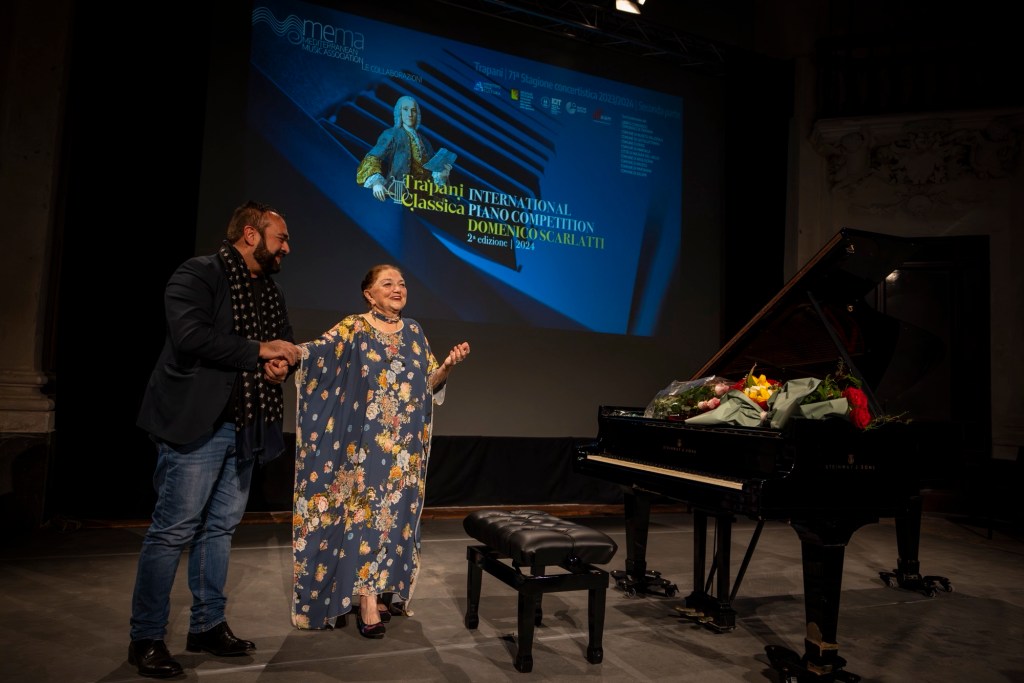


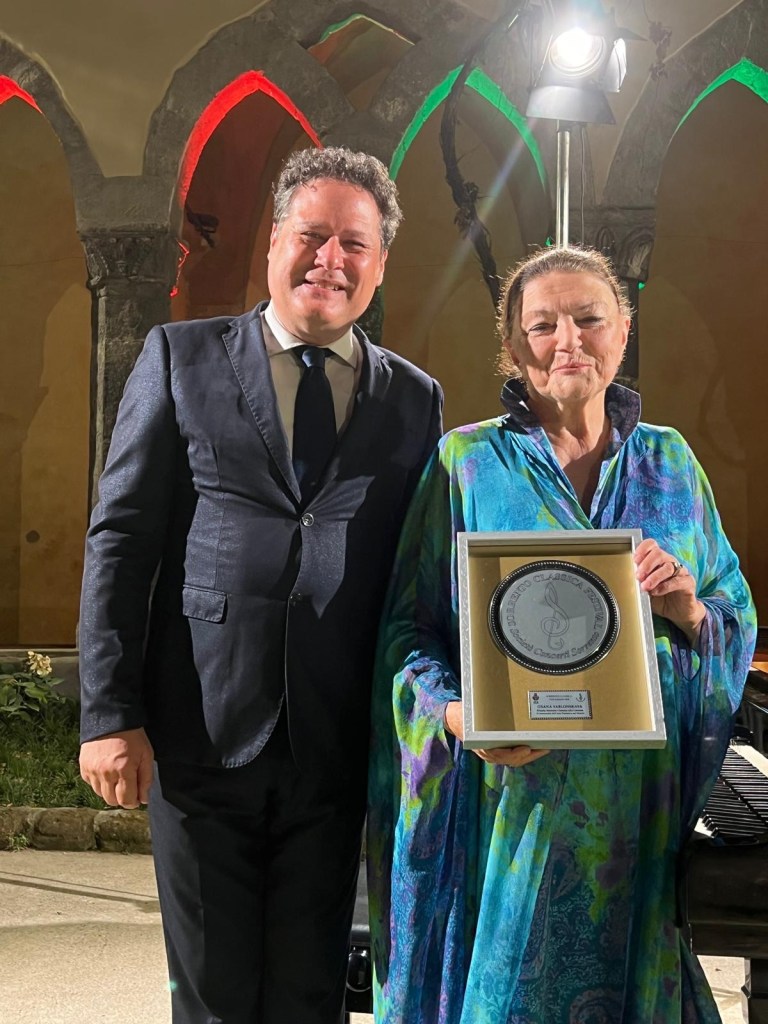
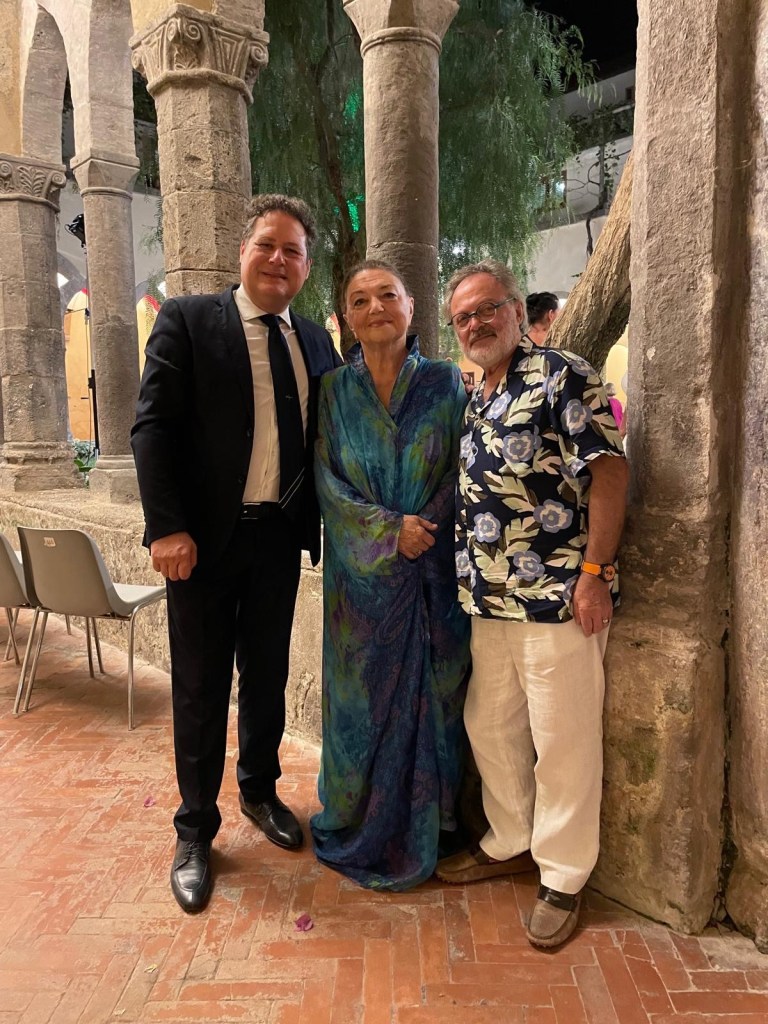


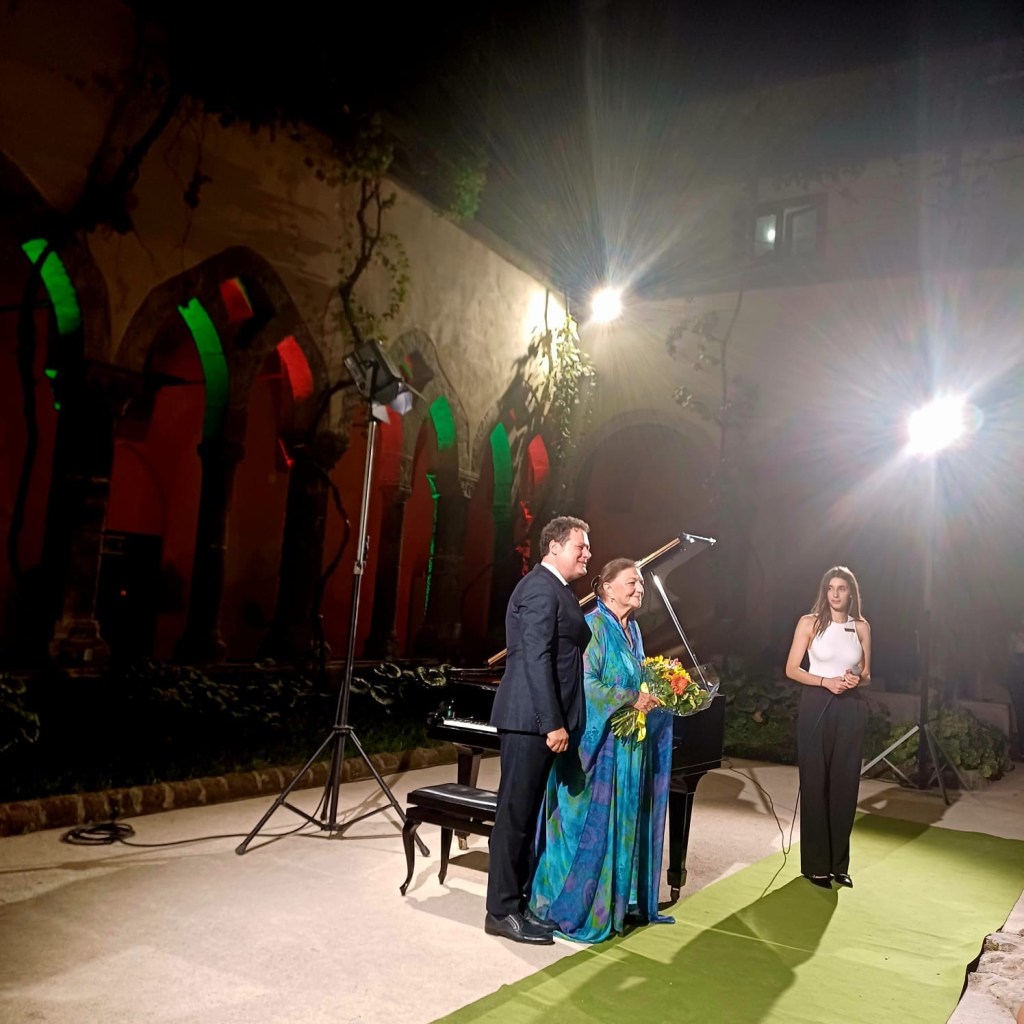
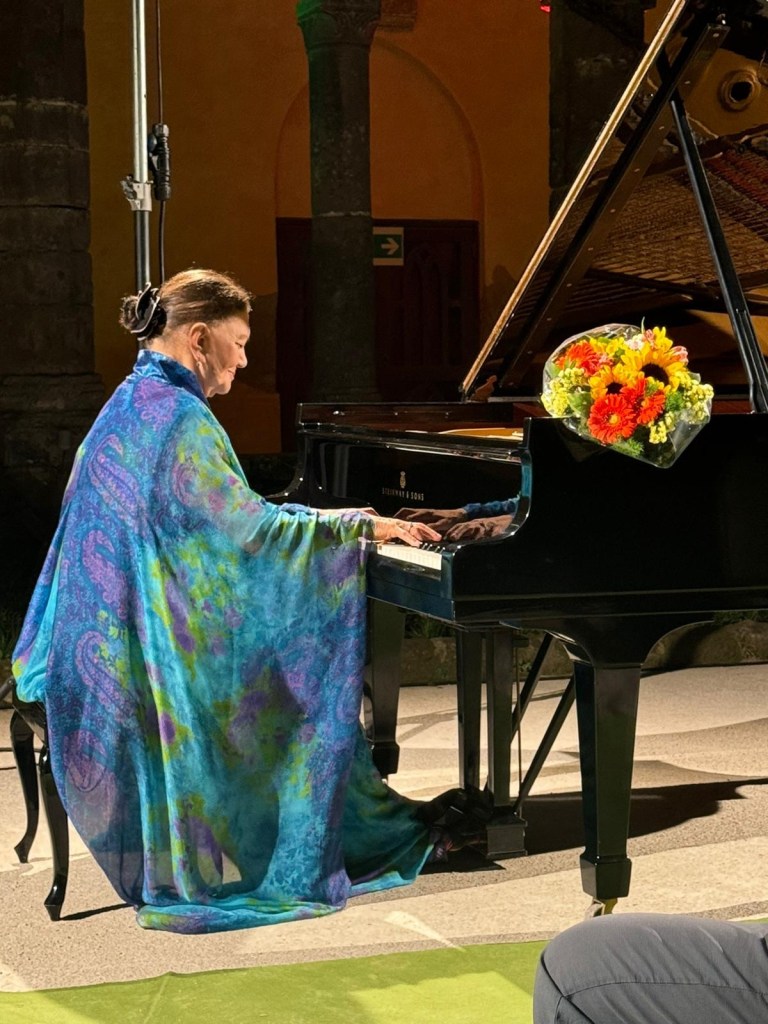

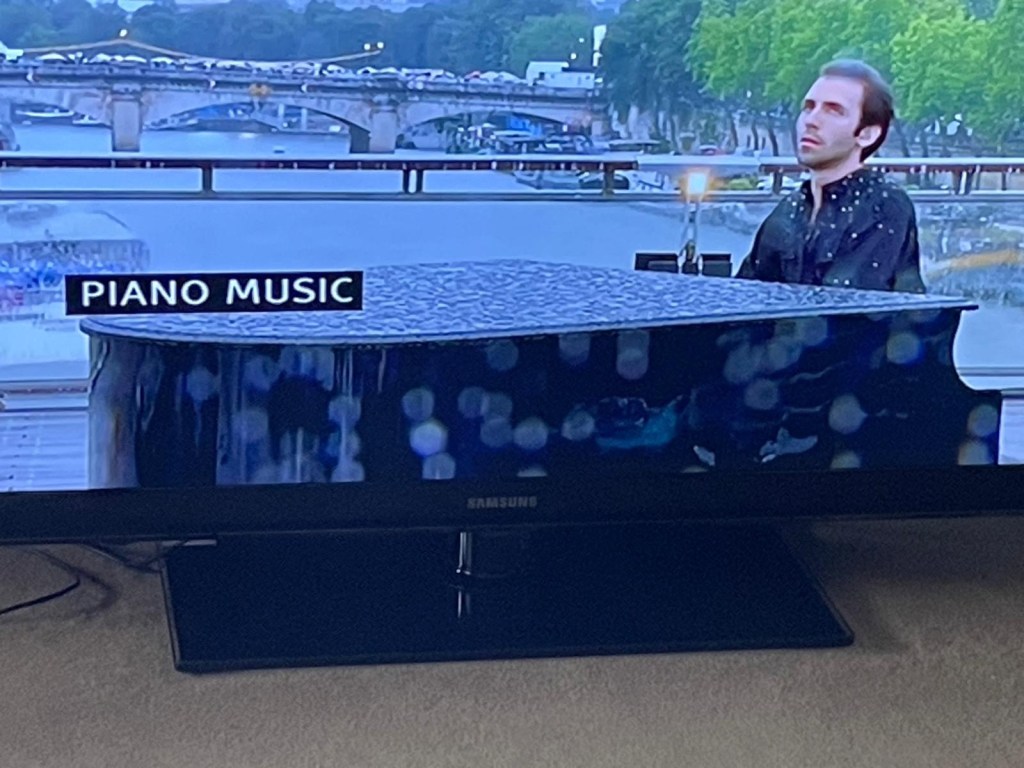
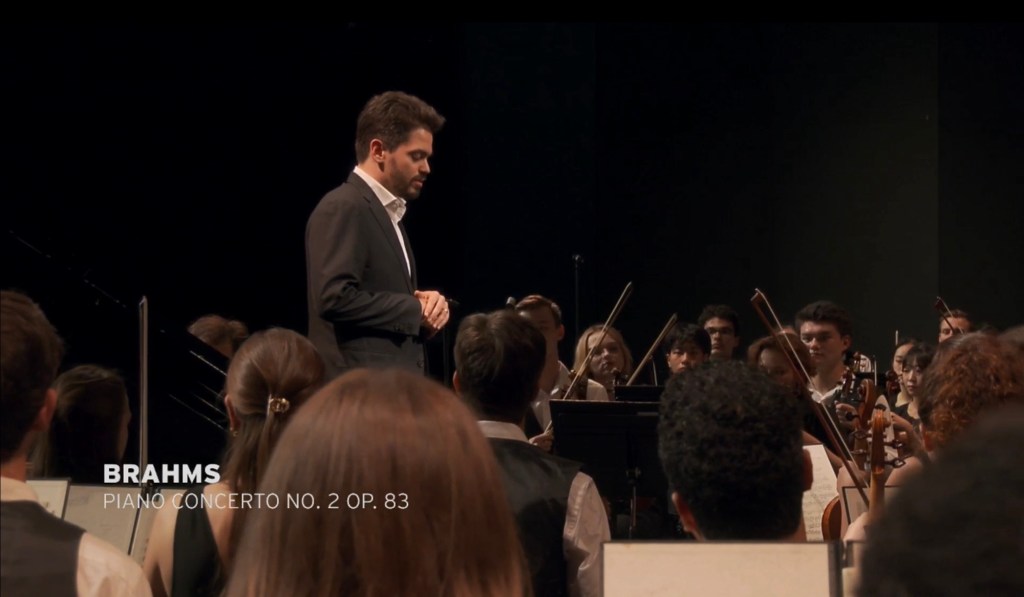
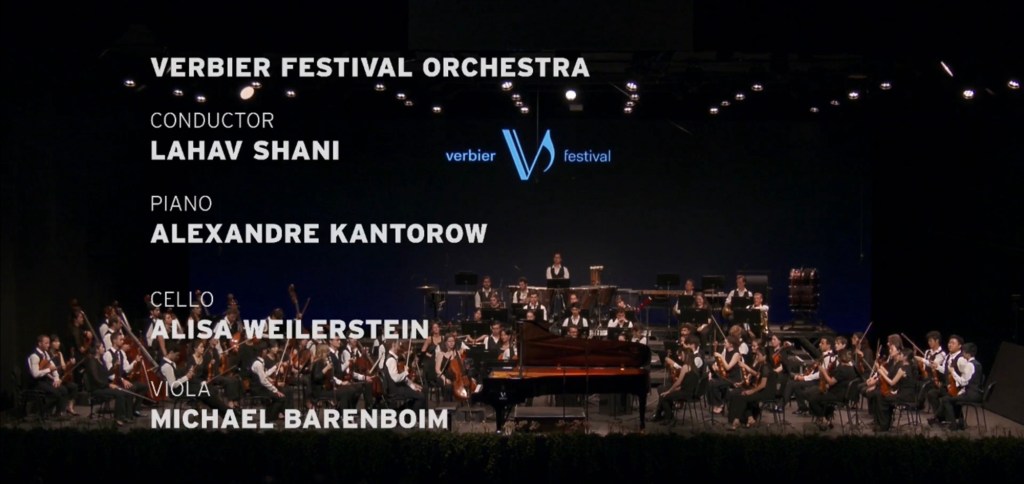
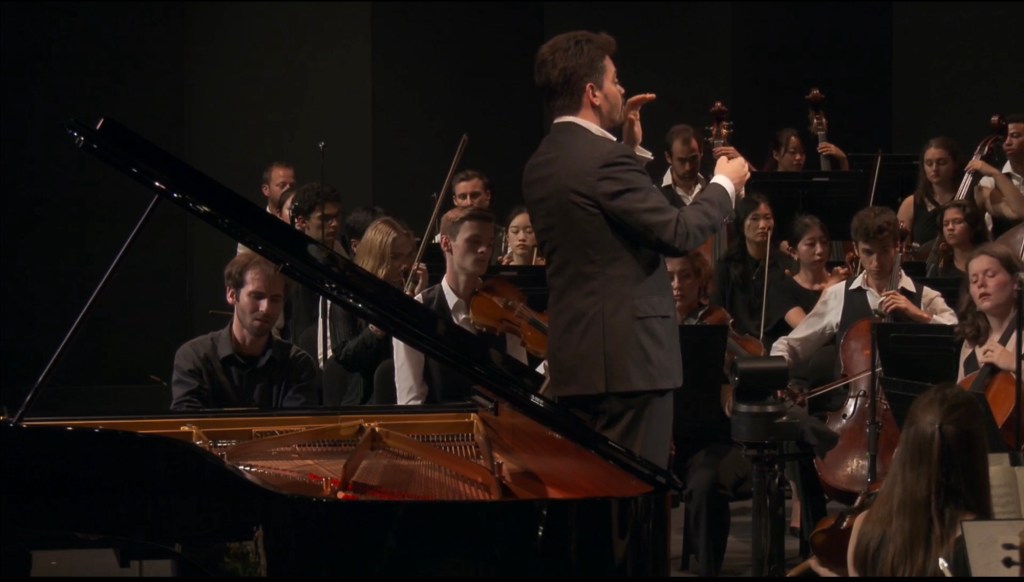
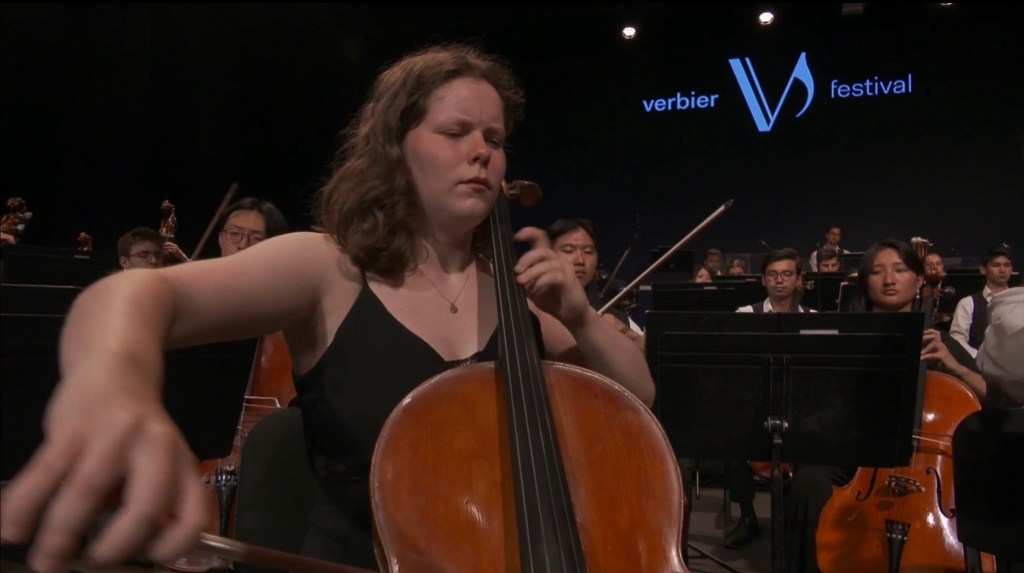
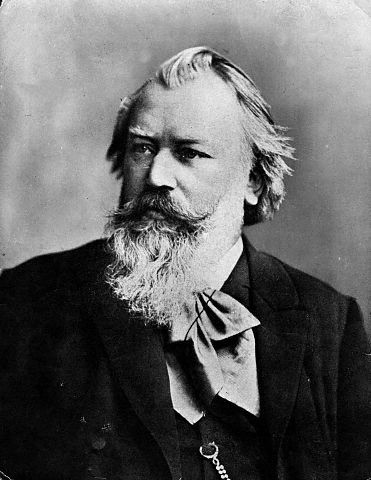
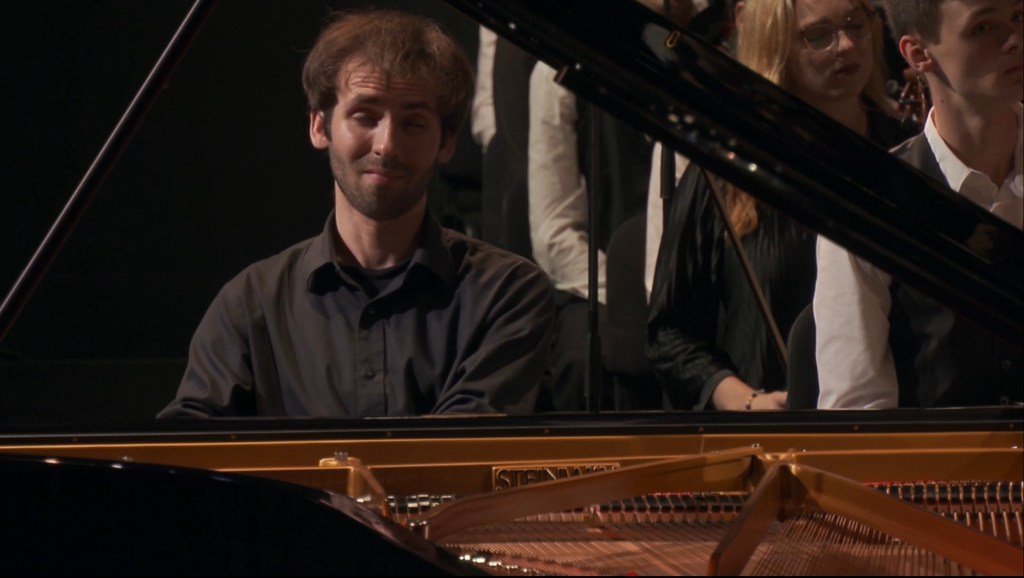
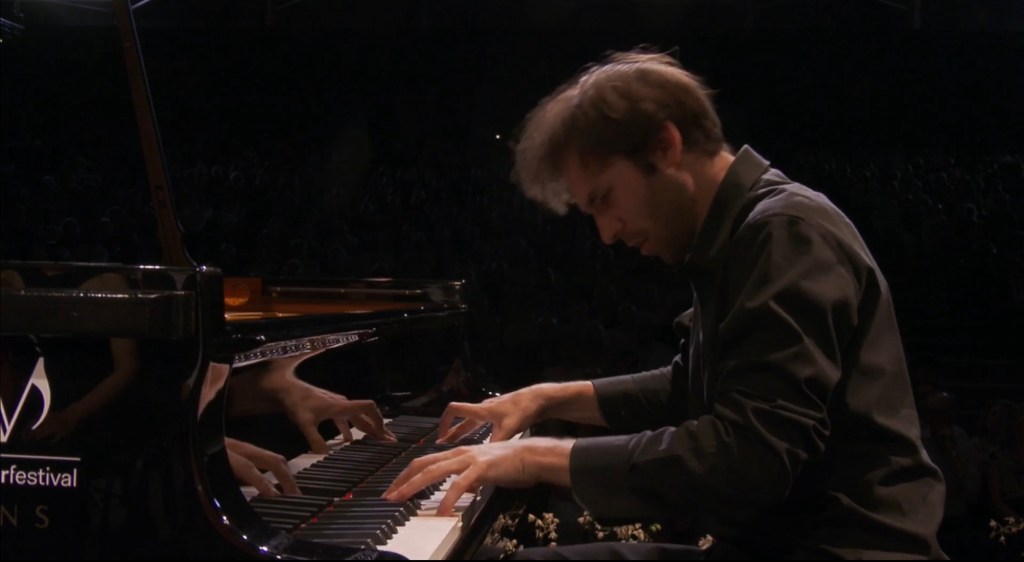
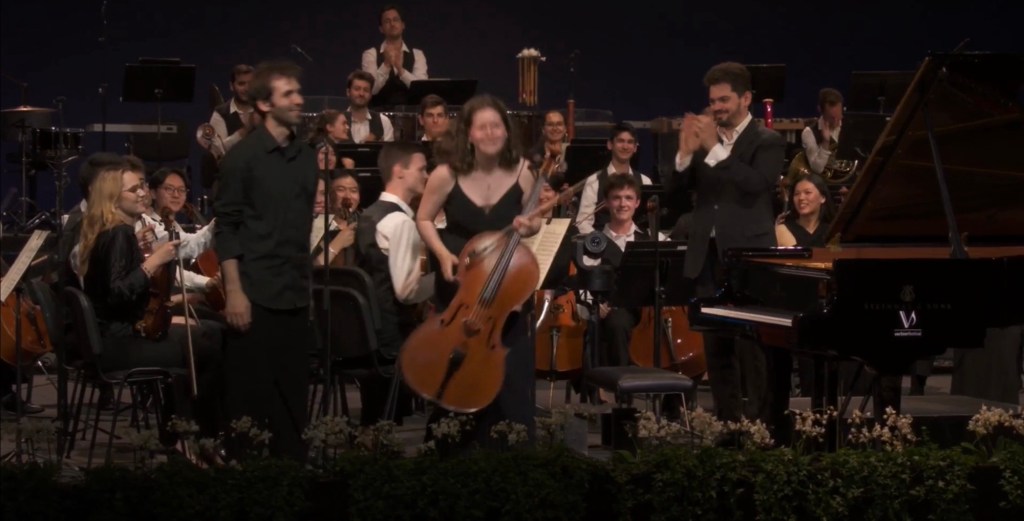
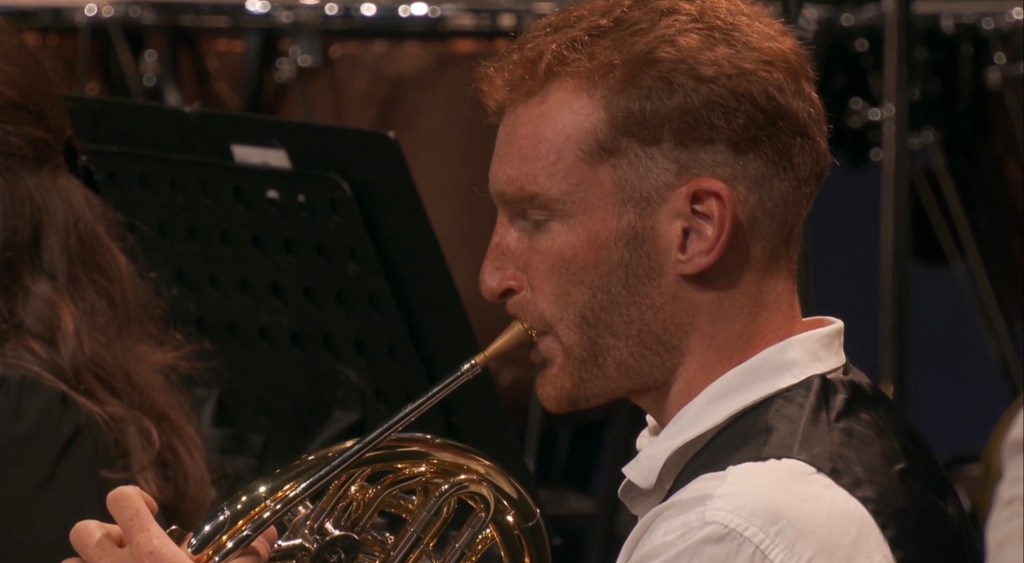
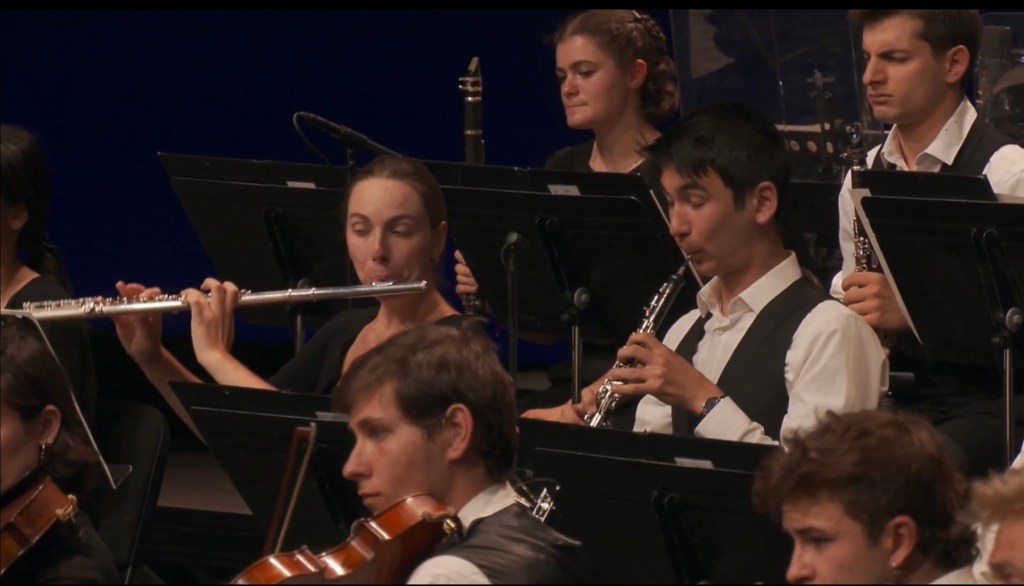
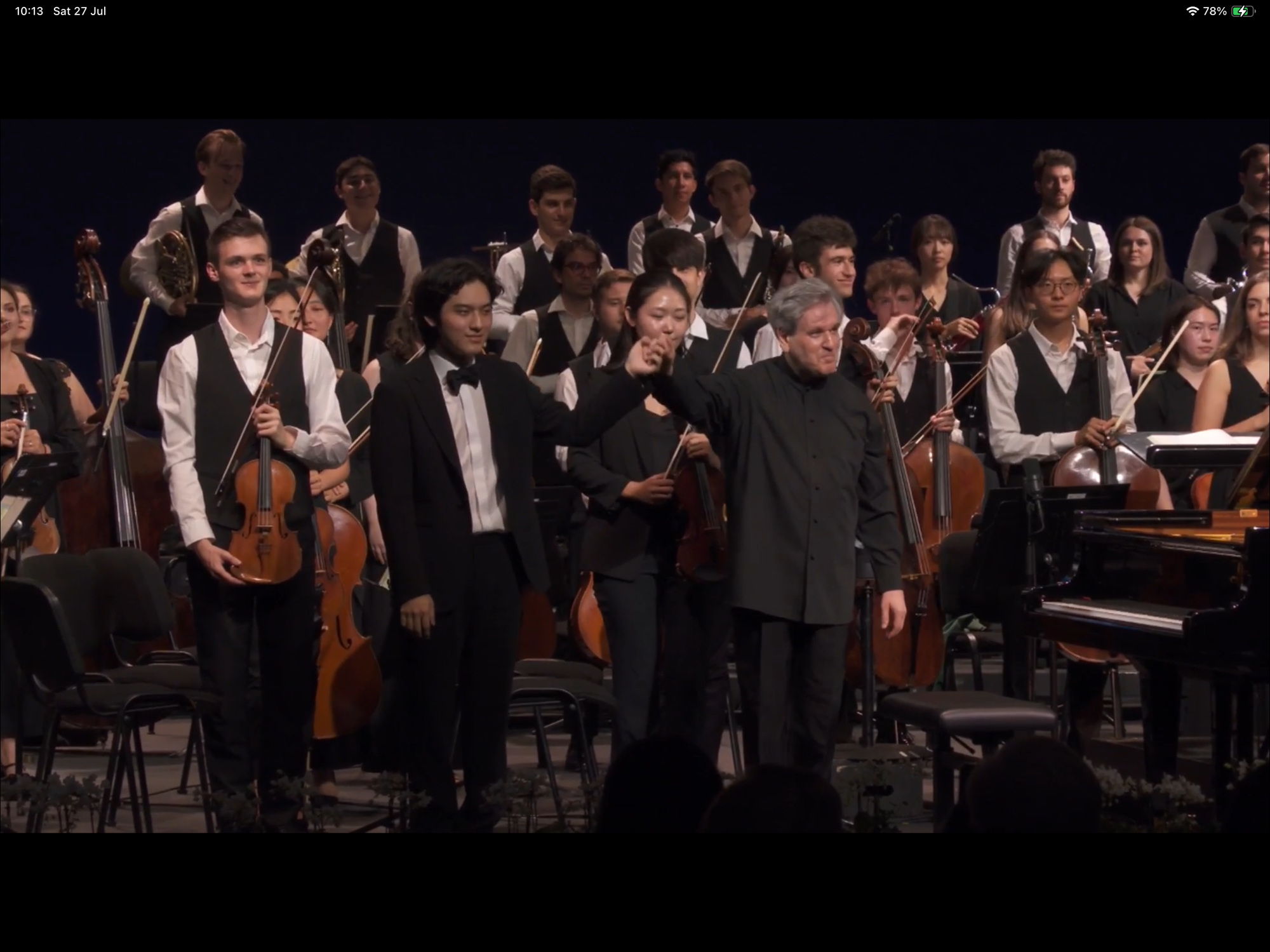

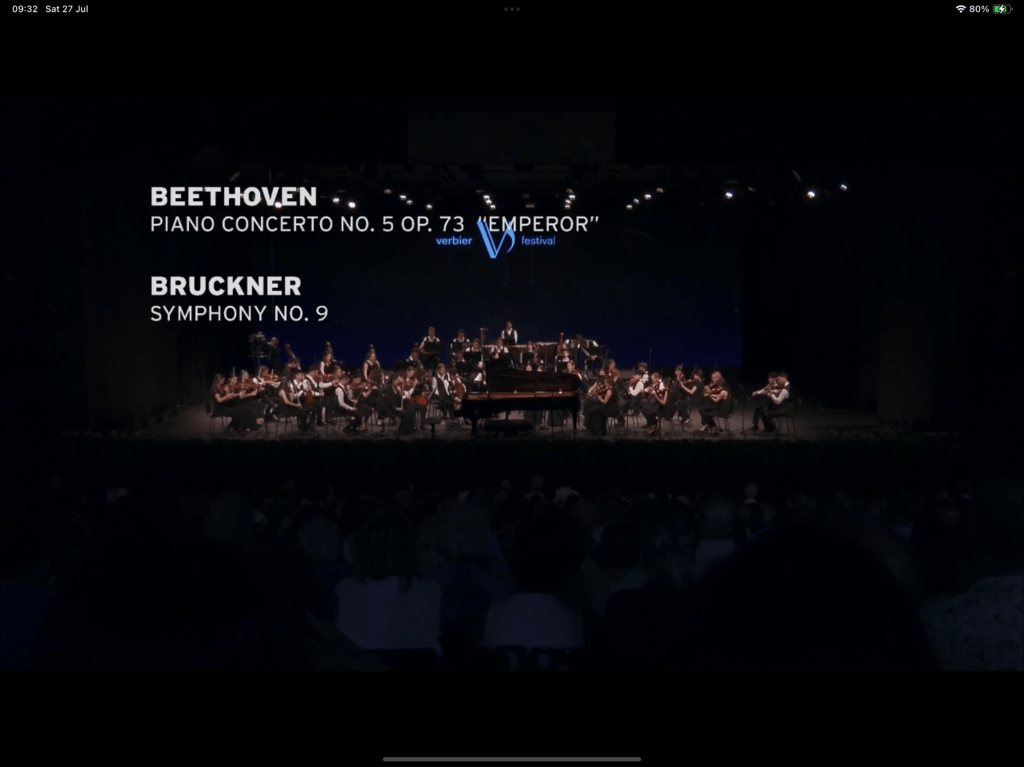
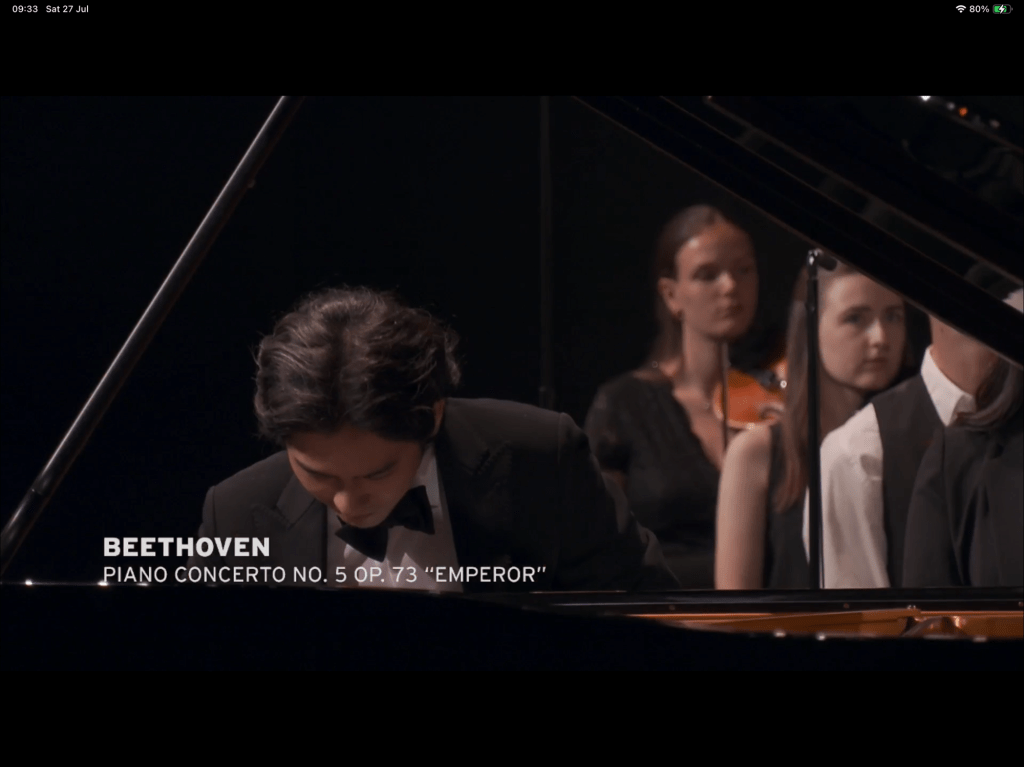
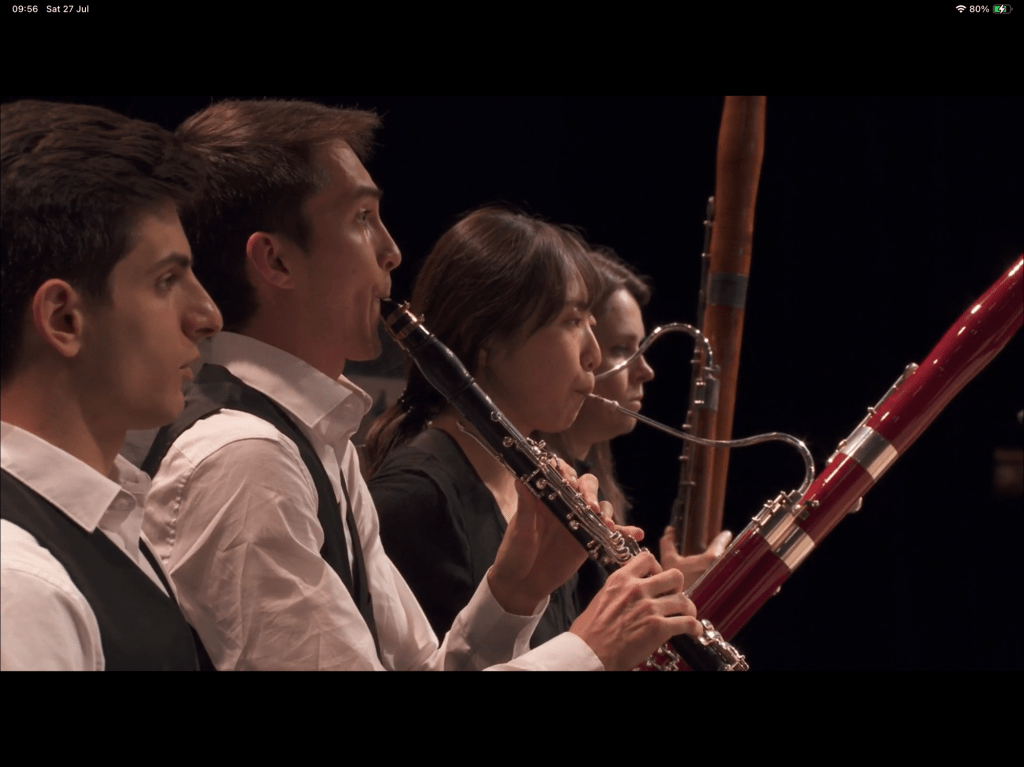
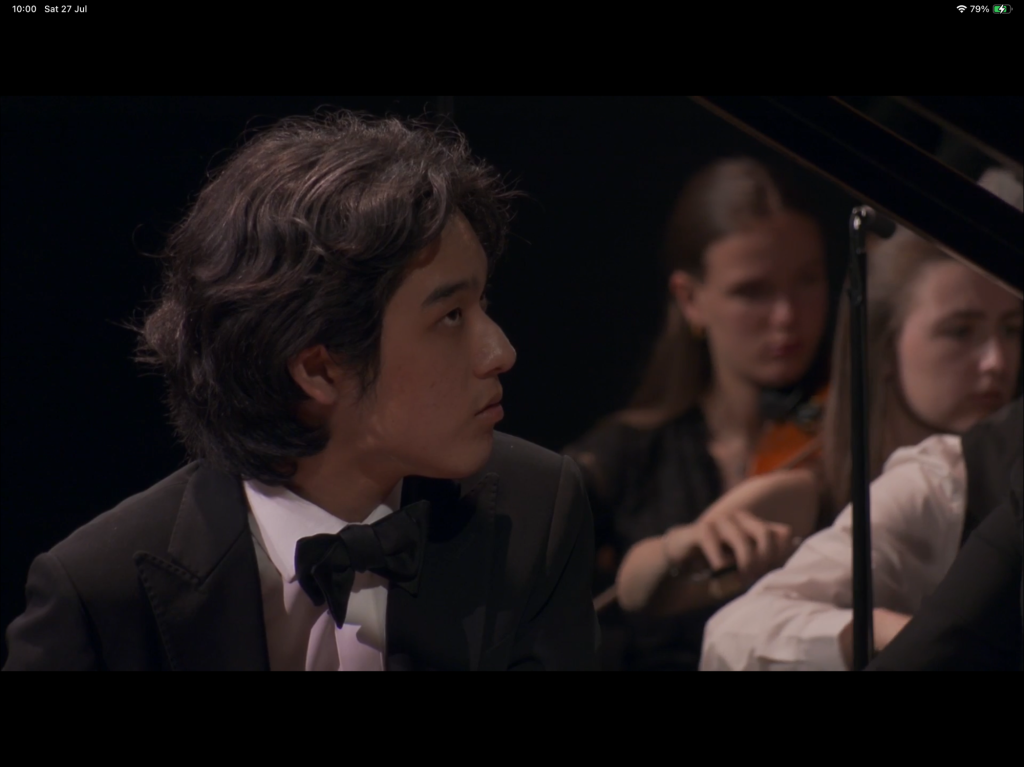
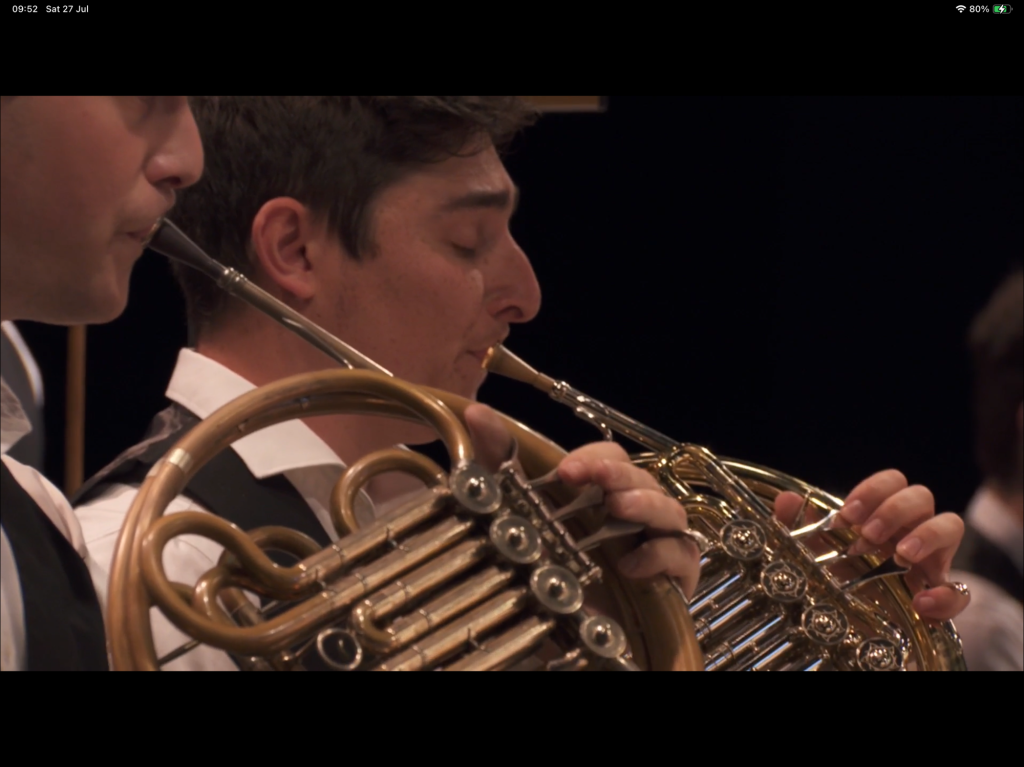
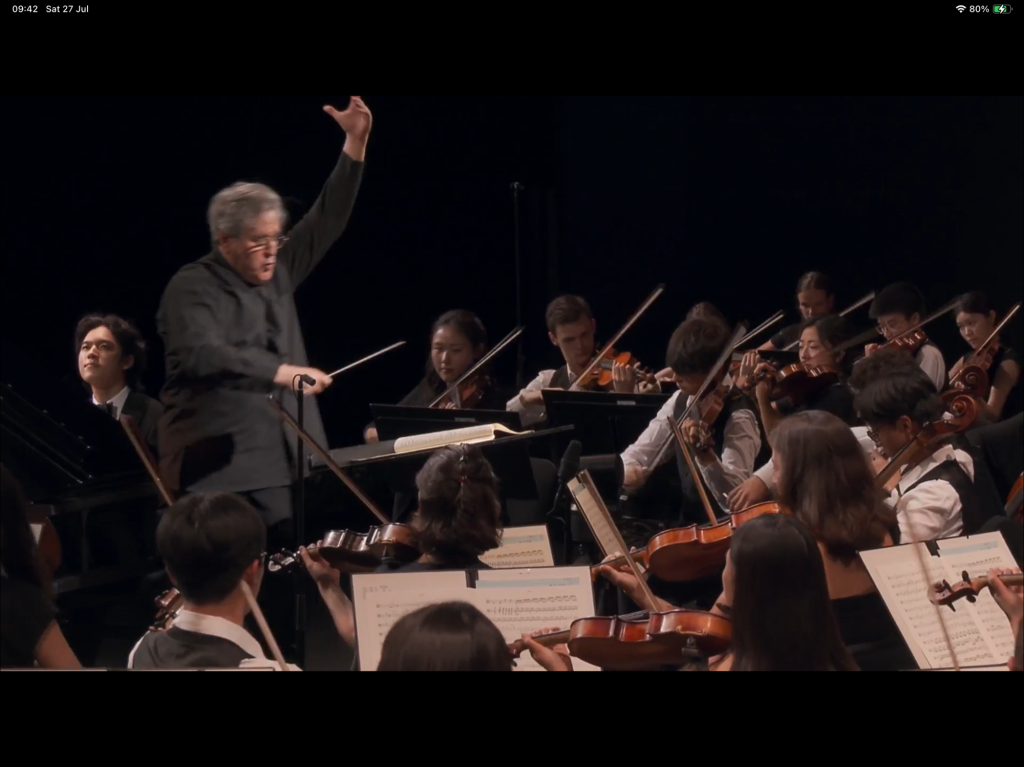
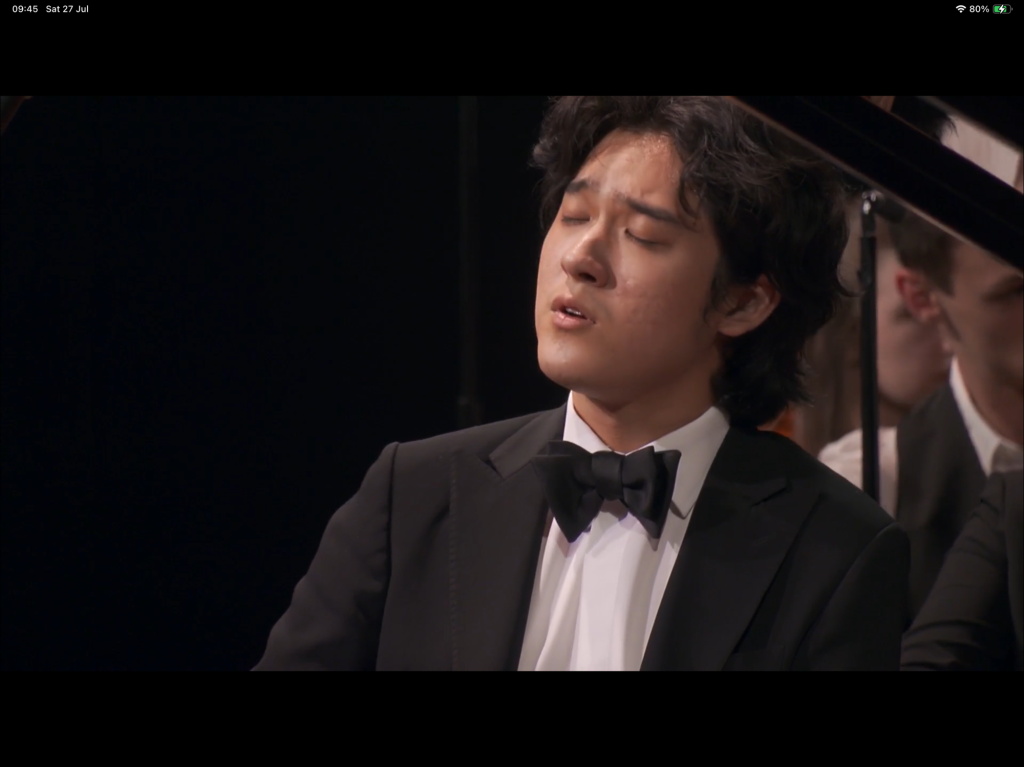
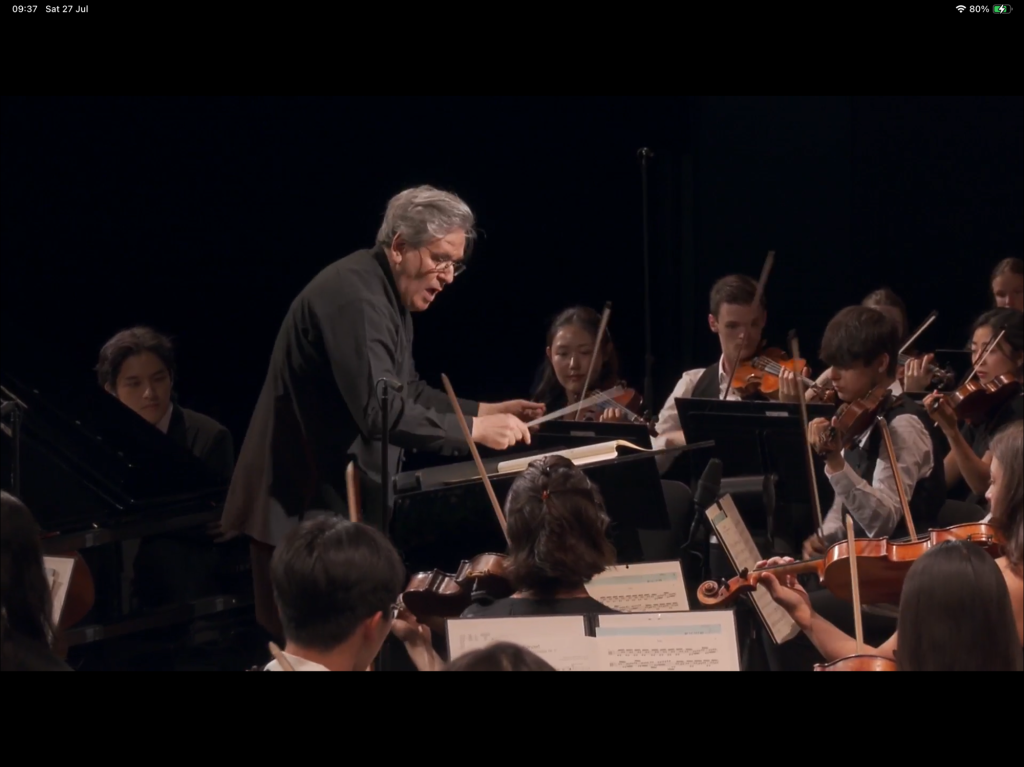
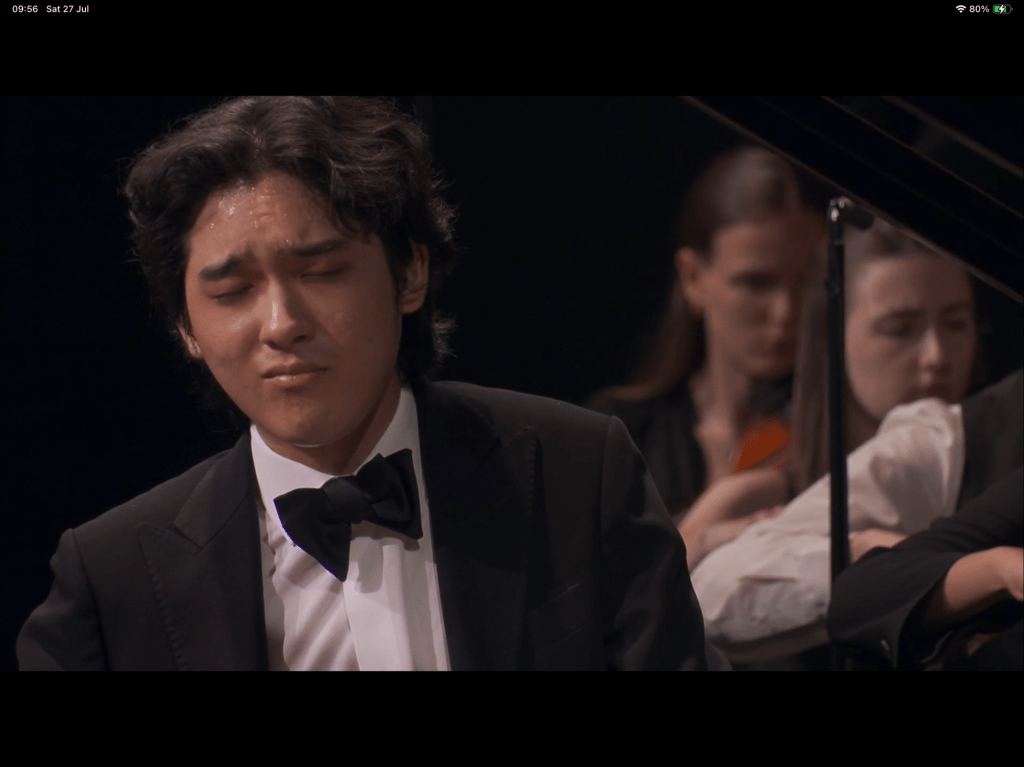
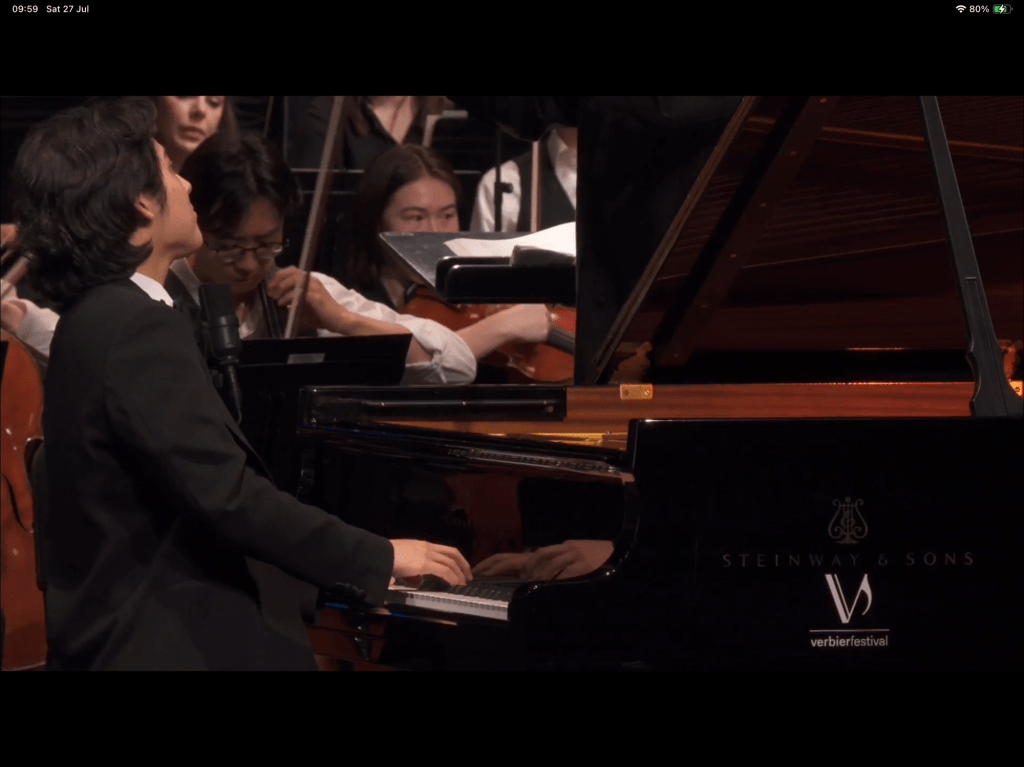
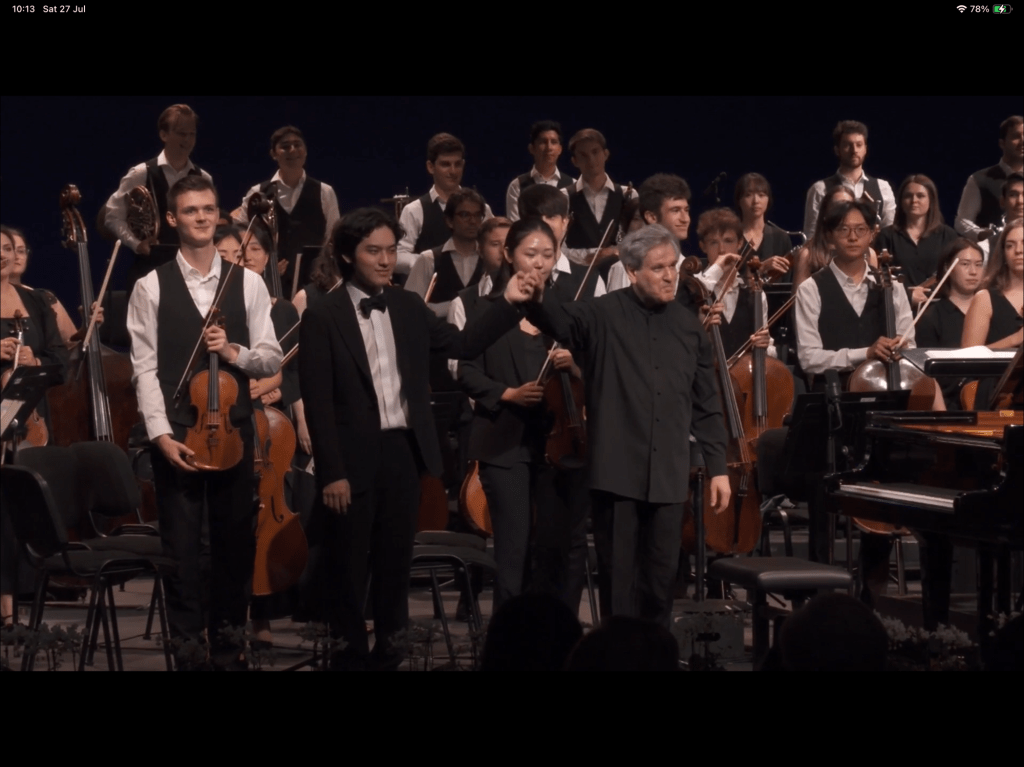

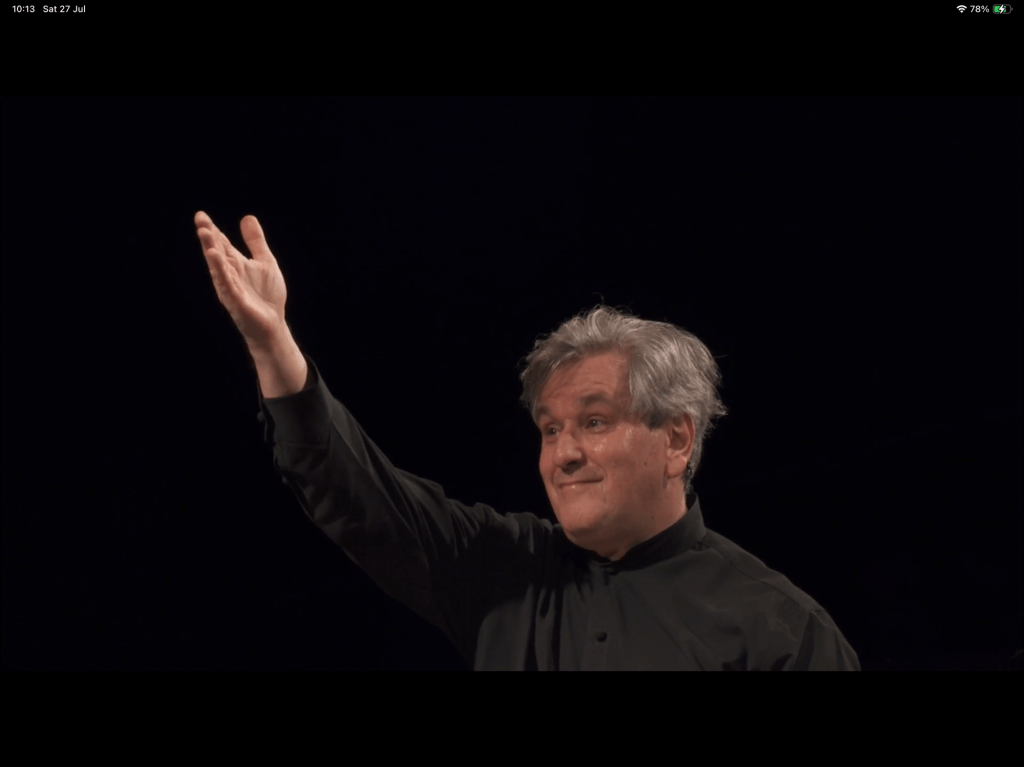
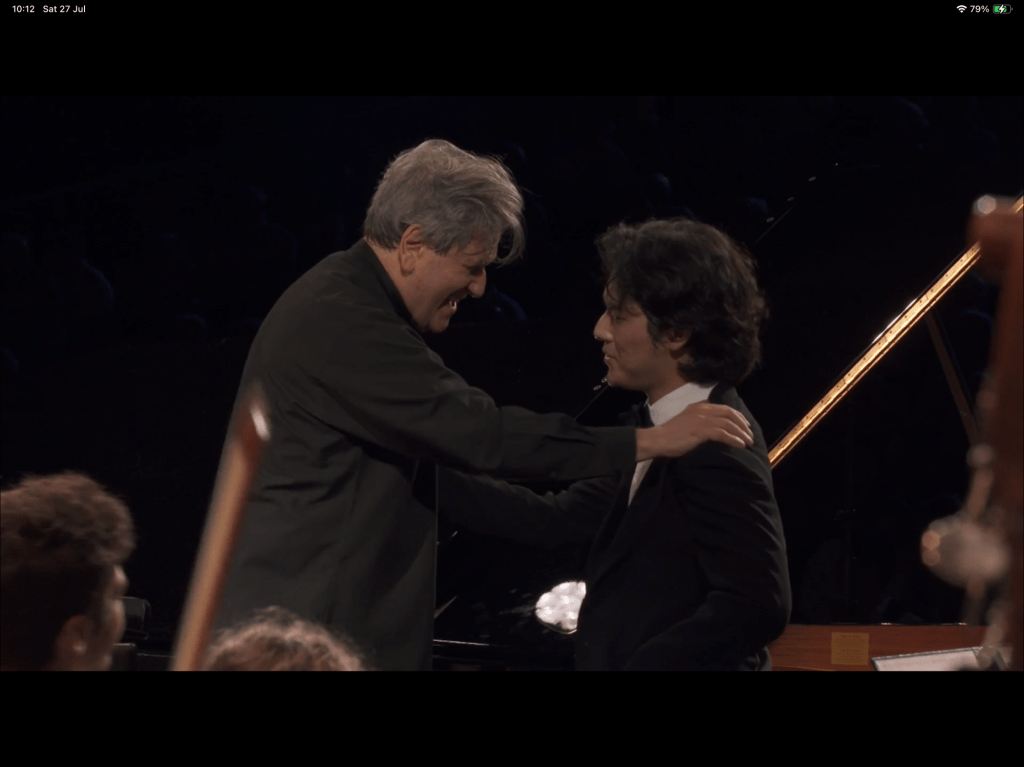

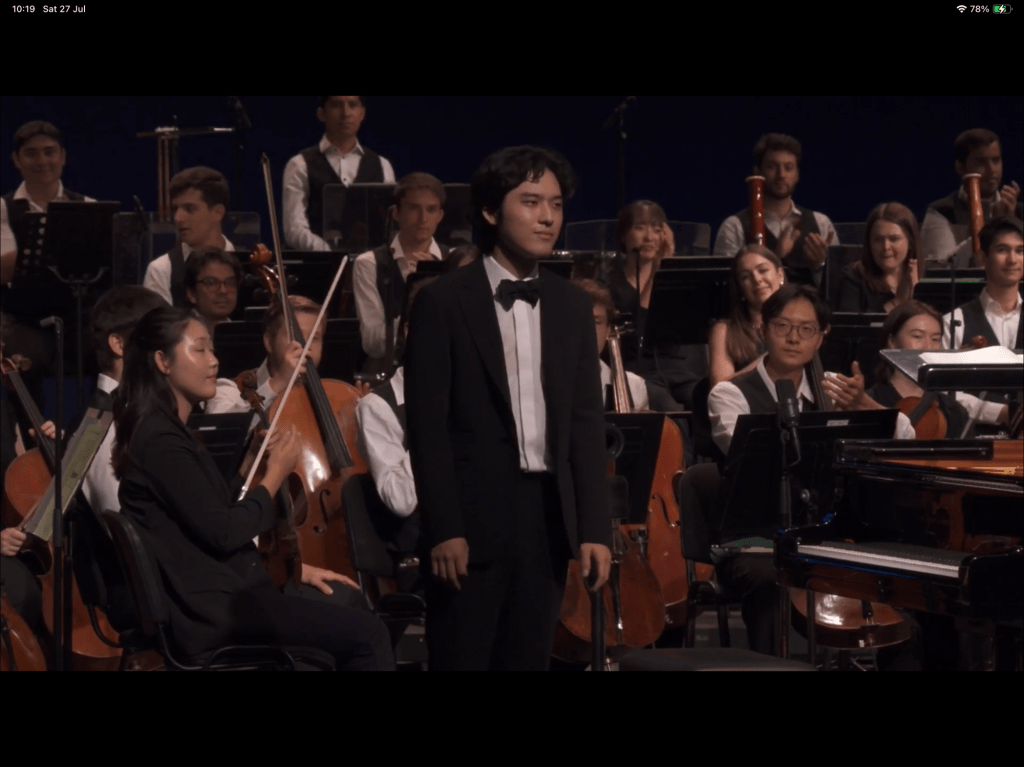
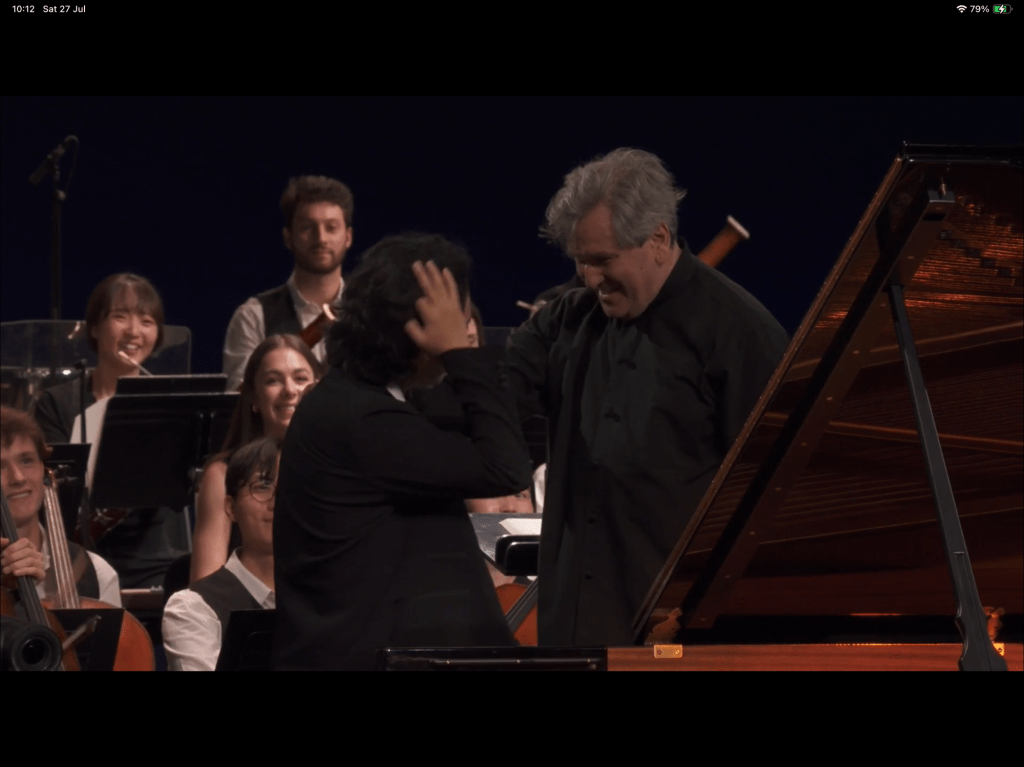
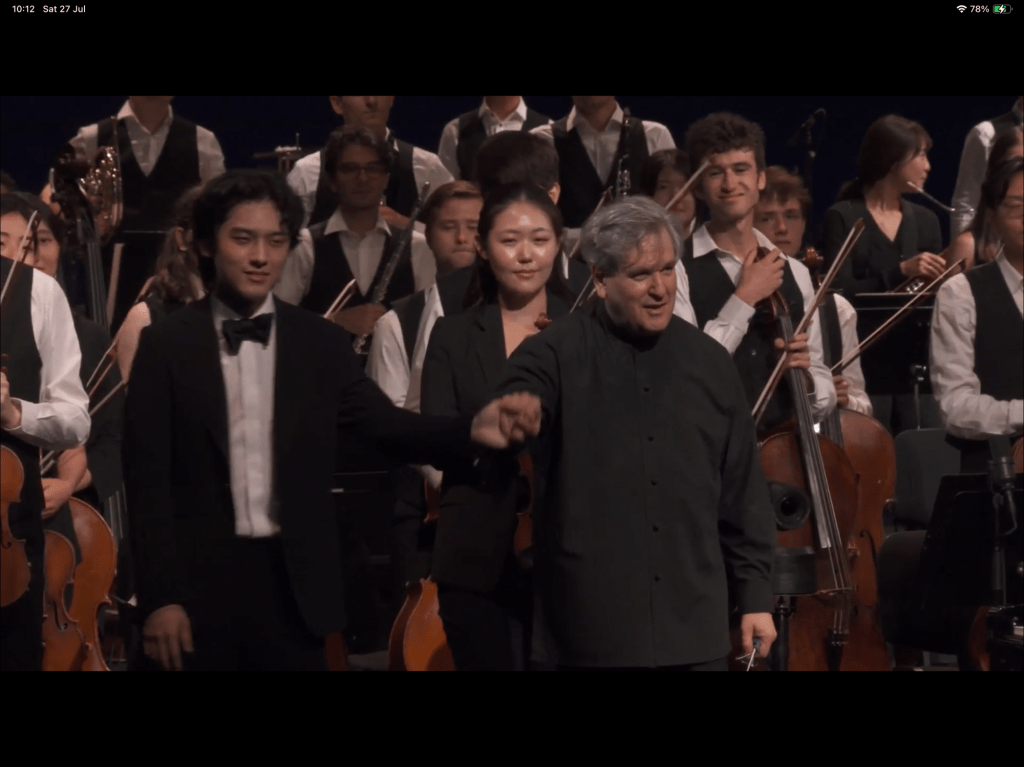
 ChristopherAxworthy-MusicCommentary
