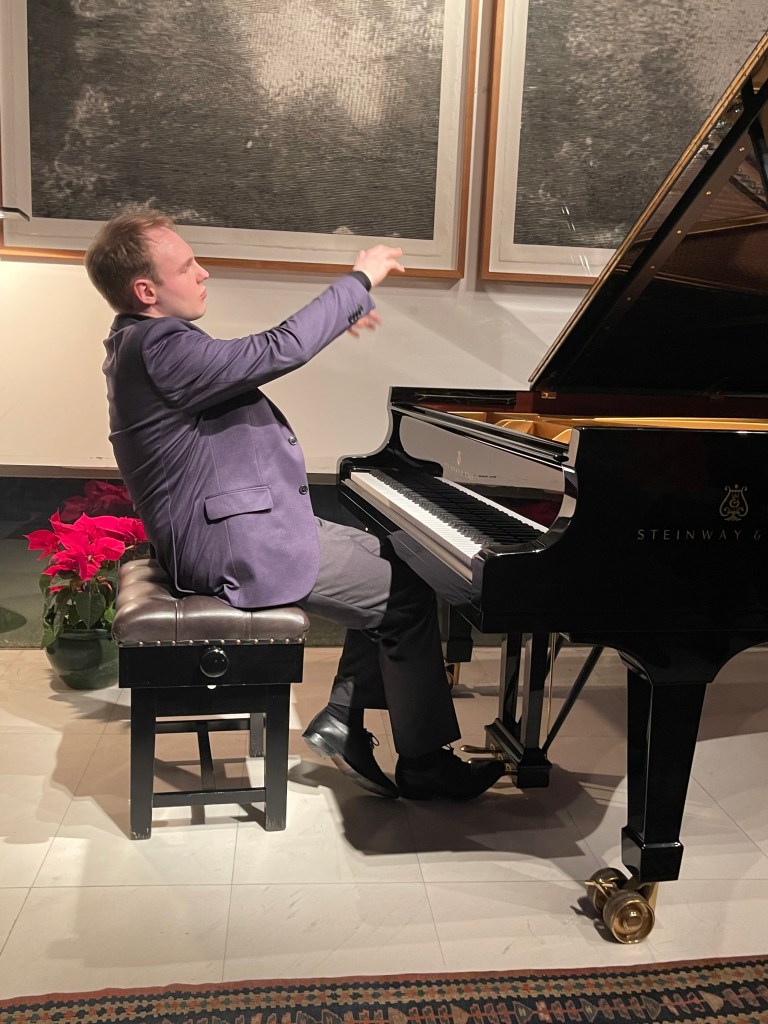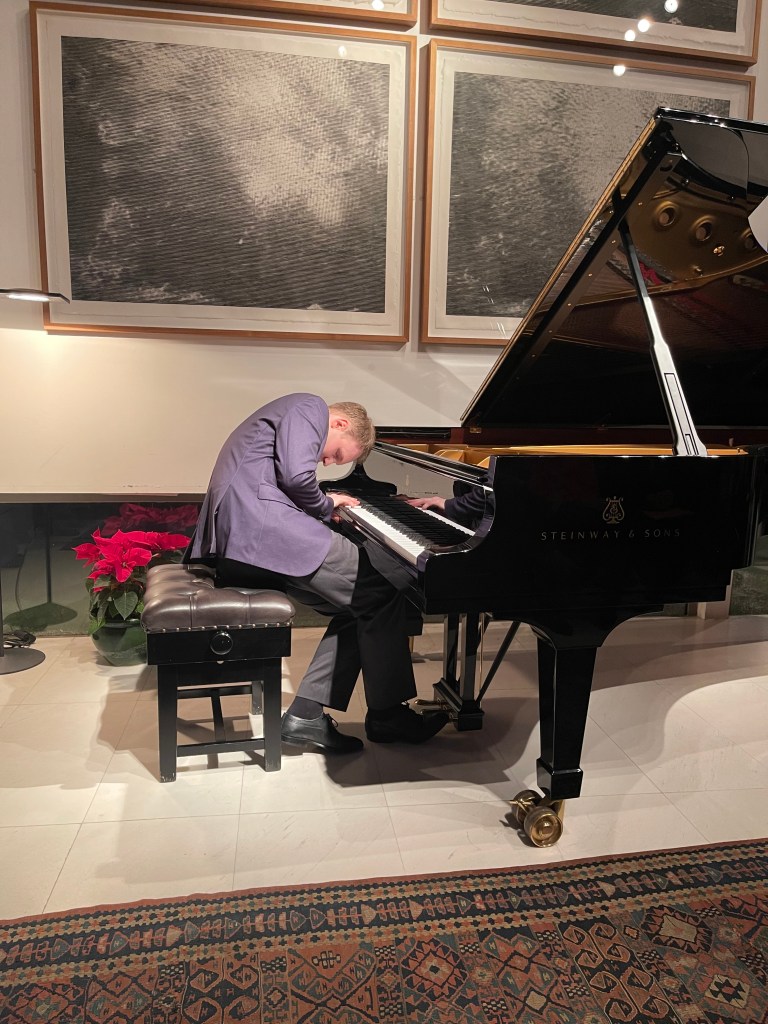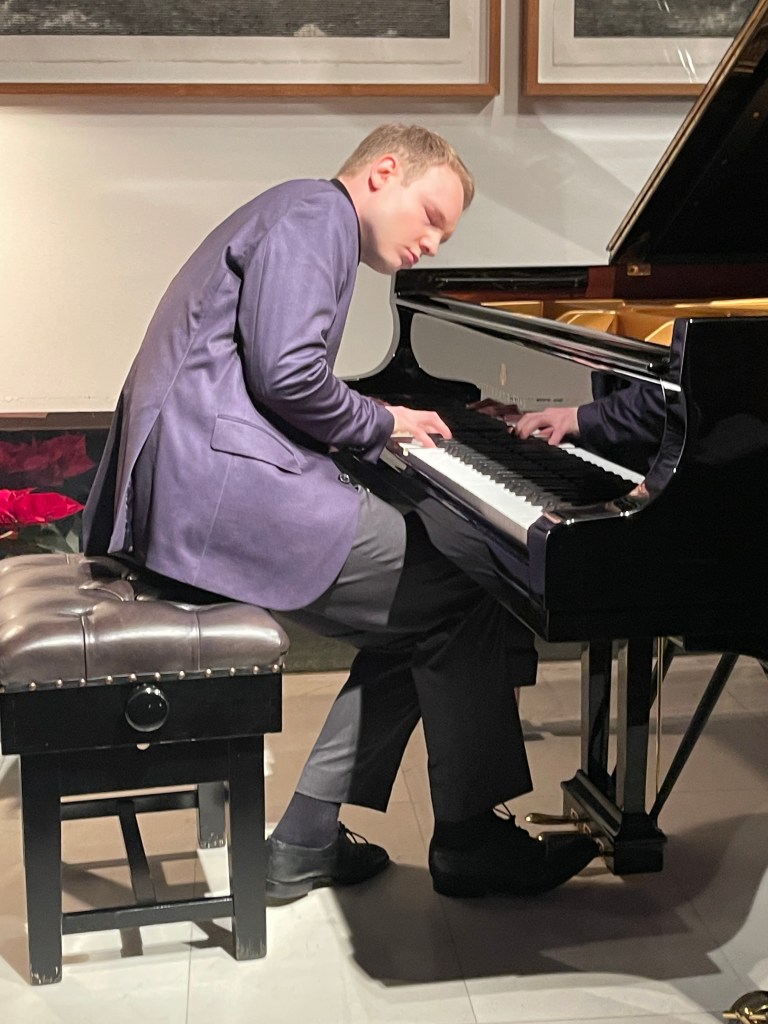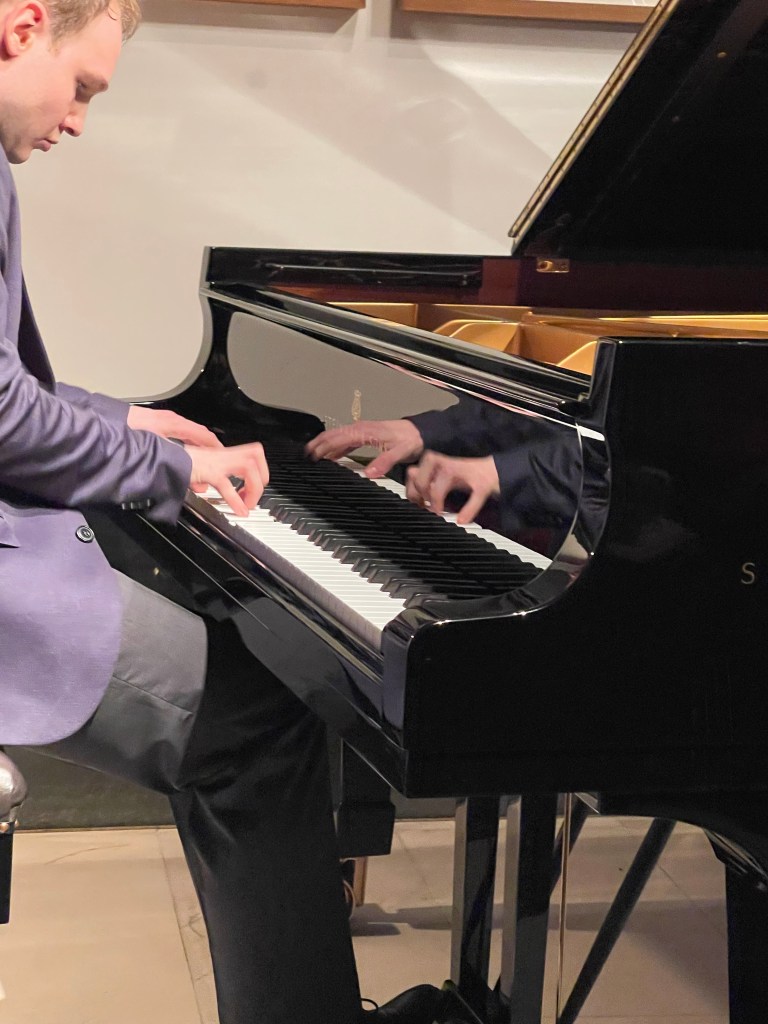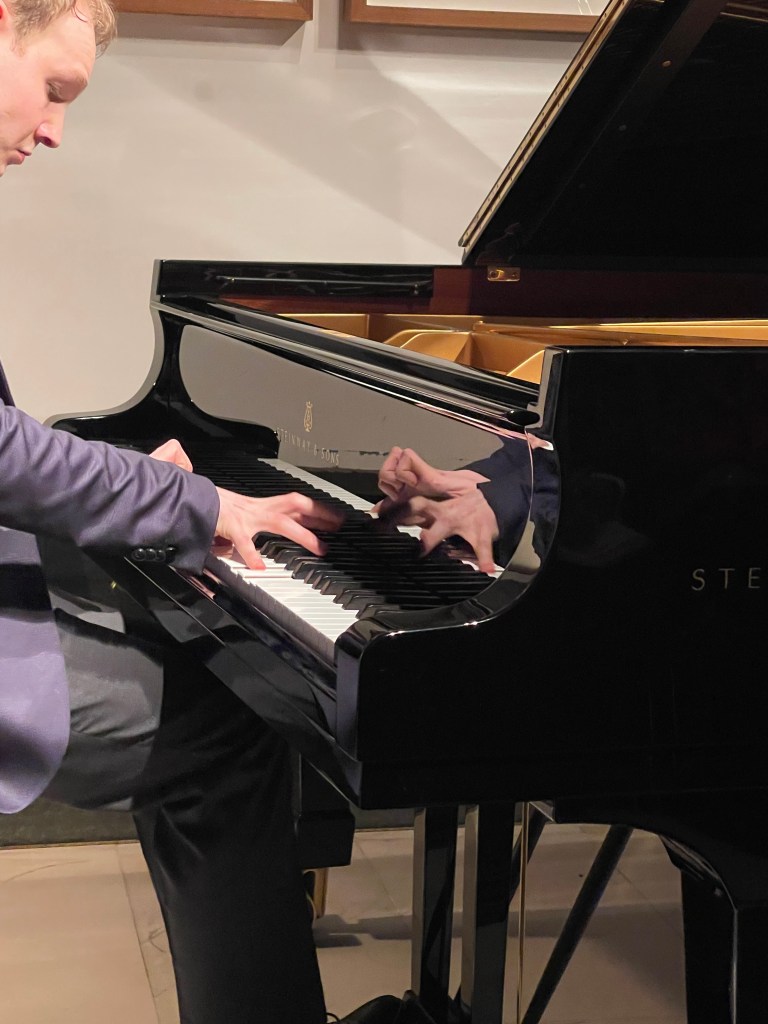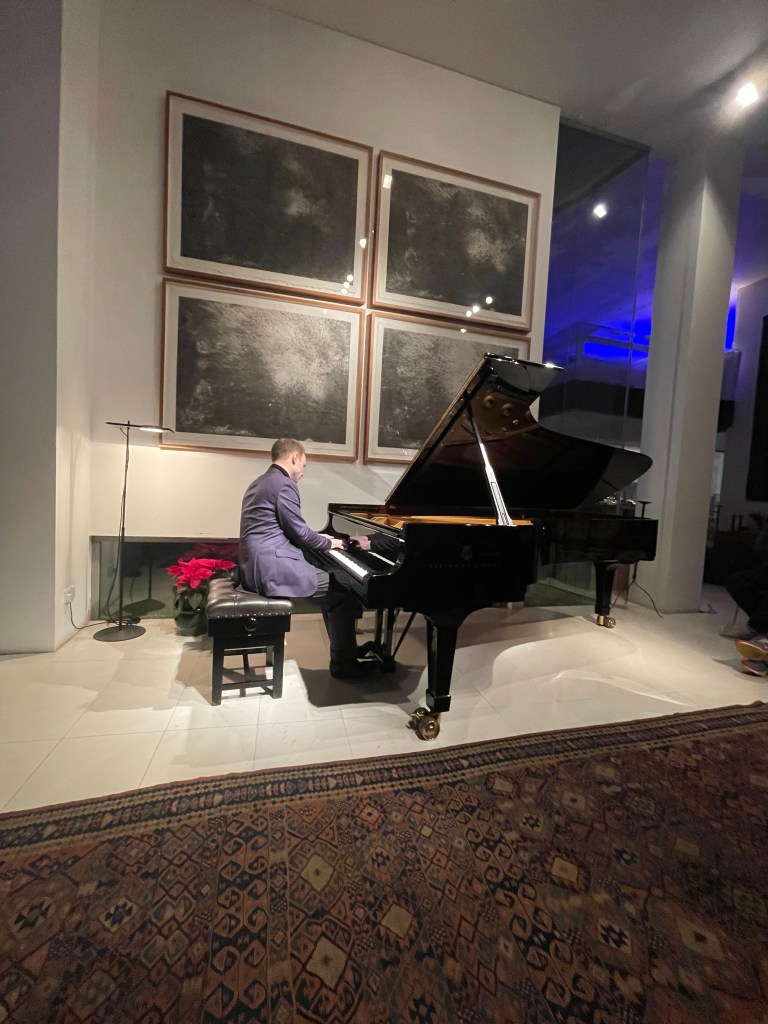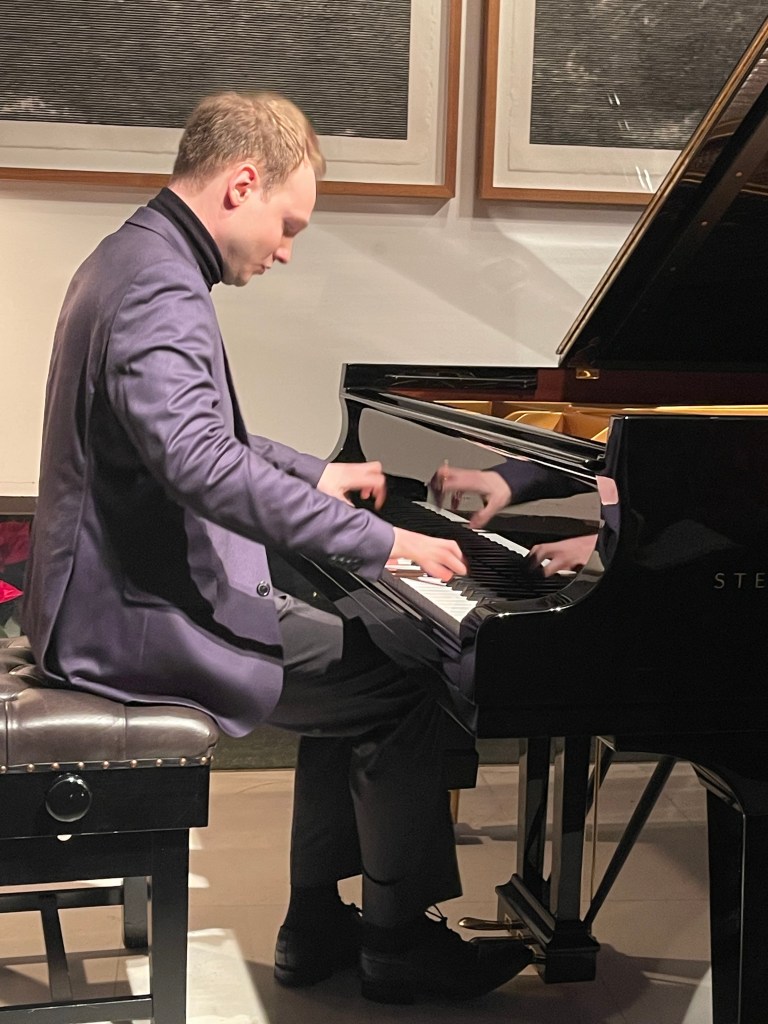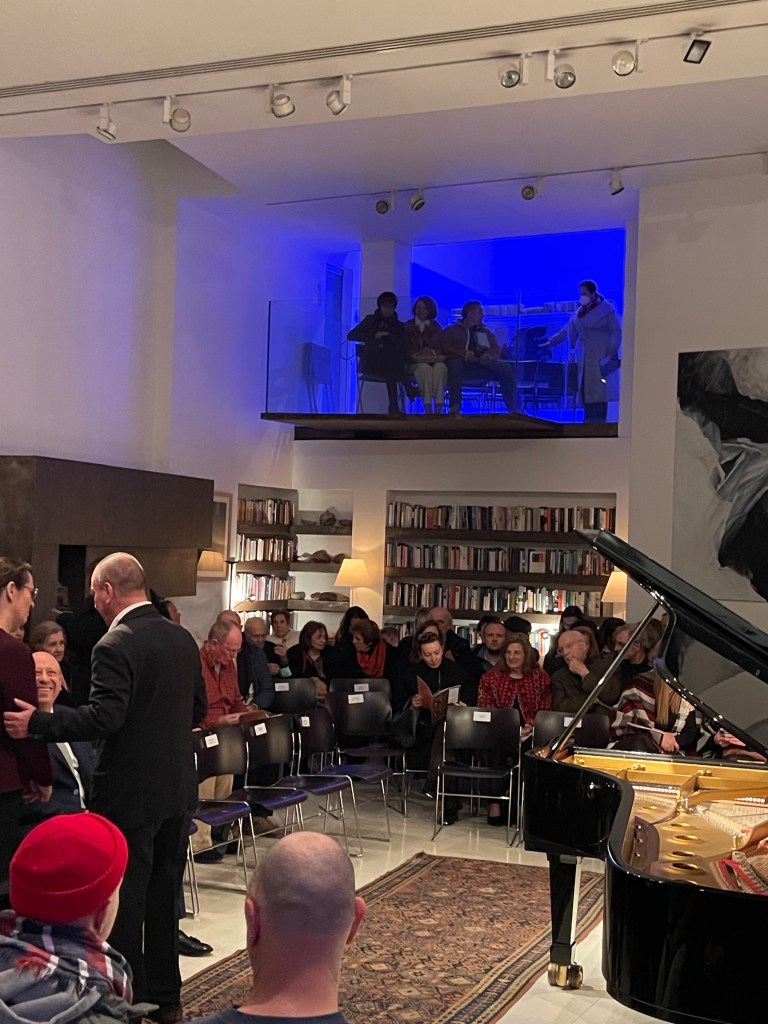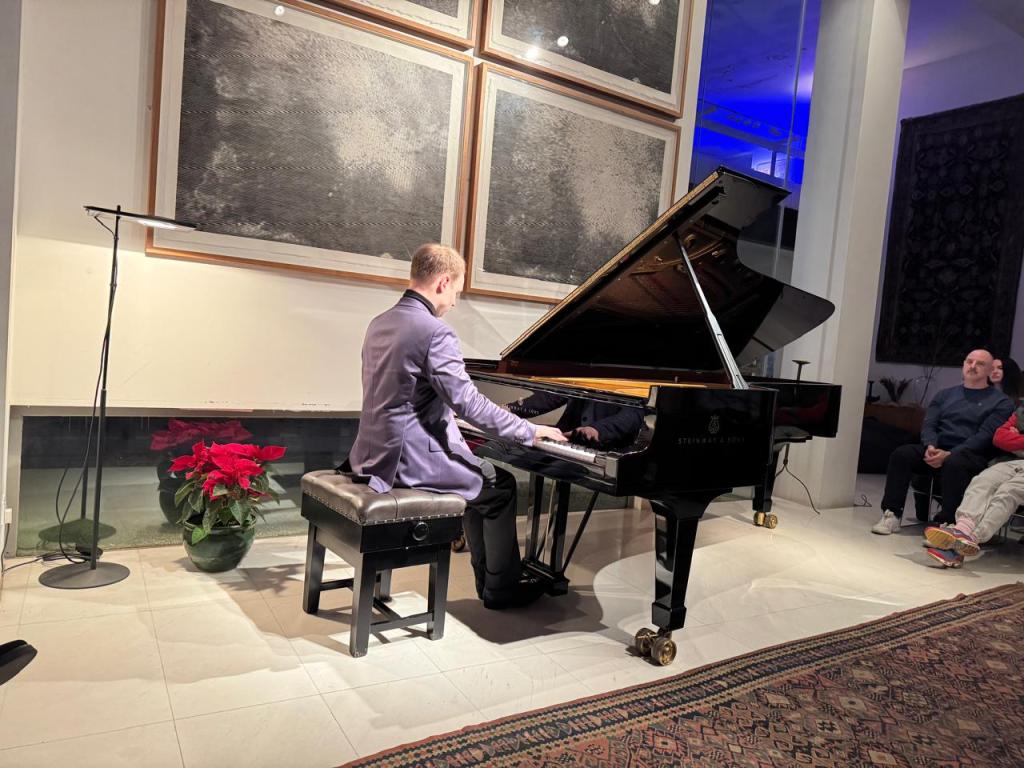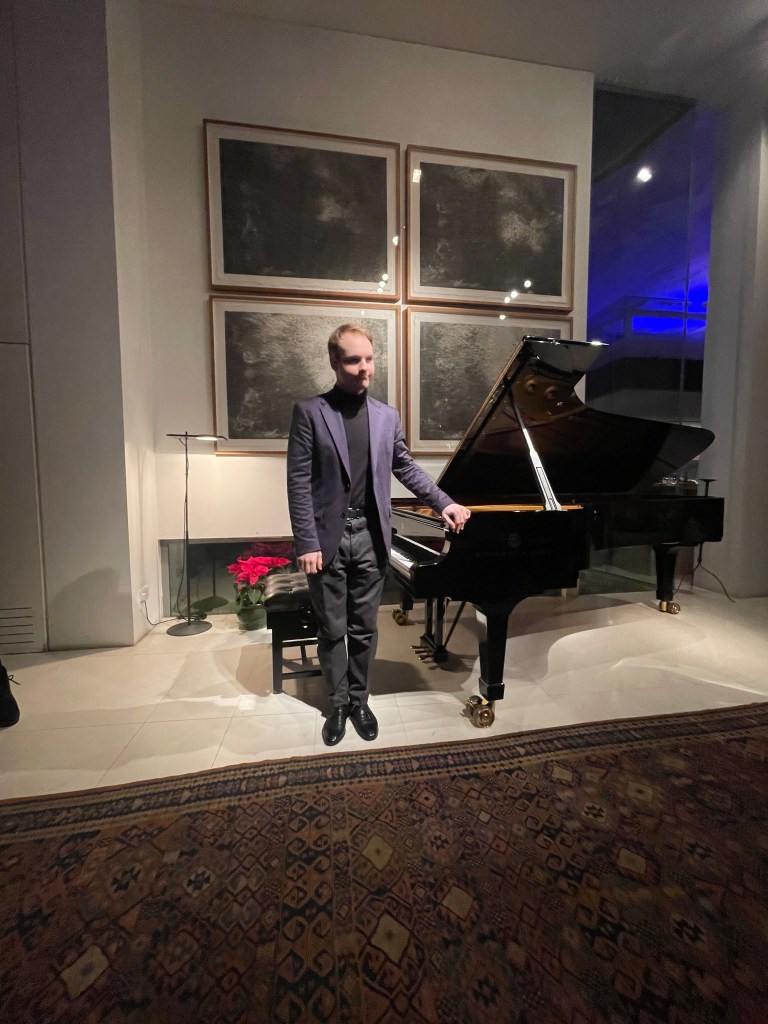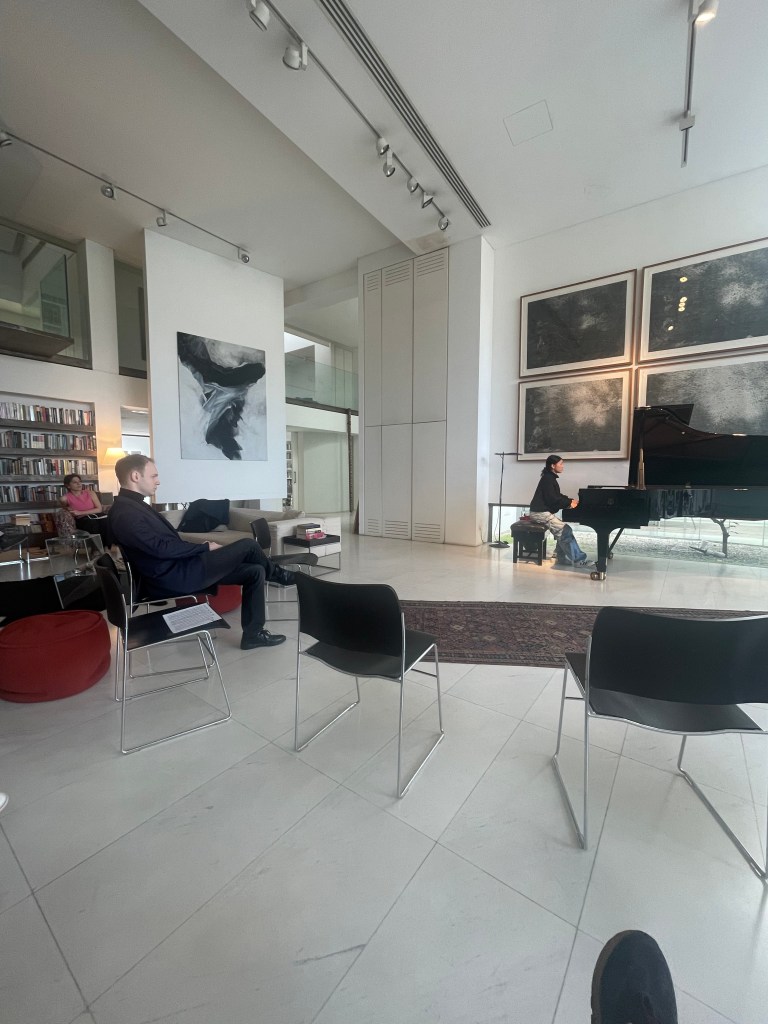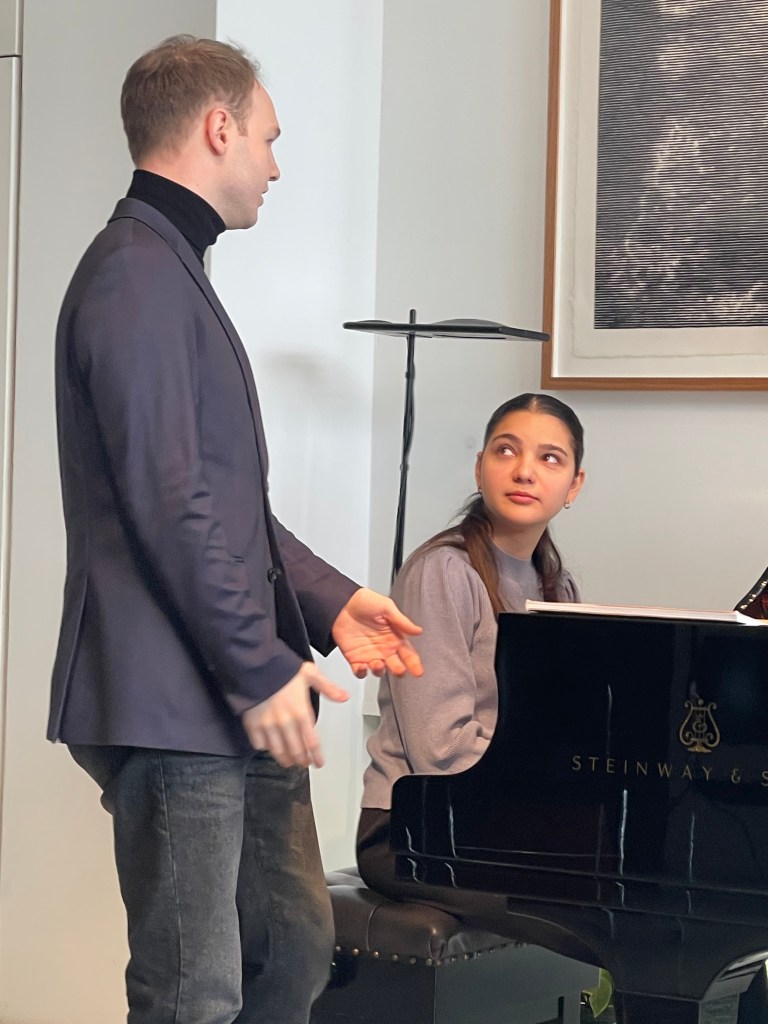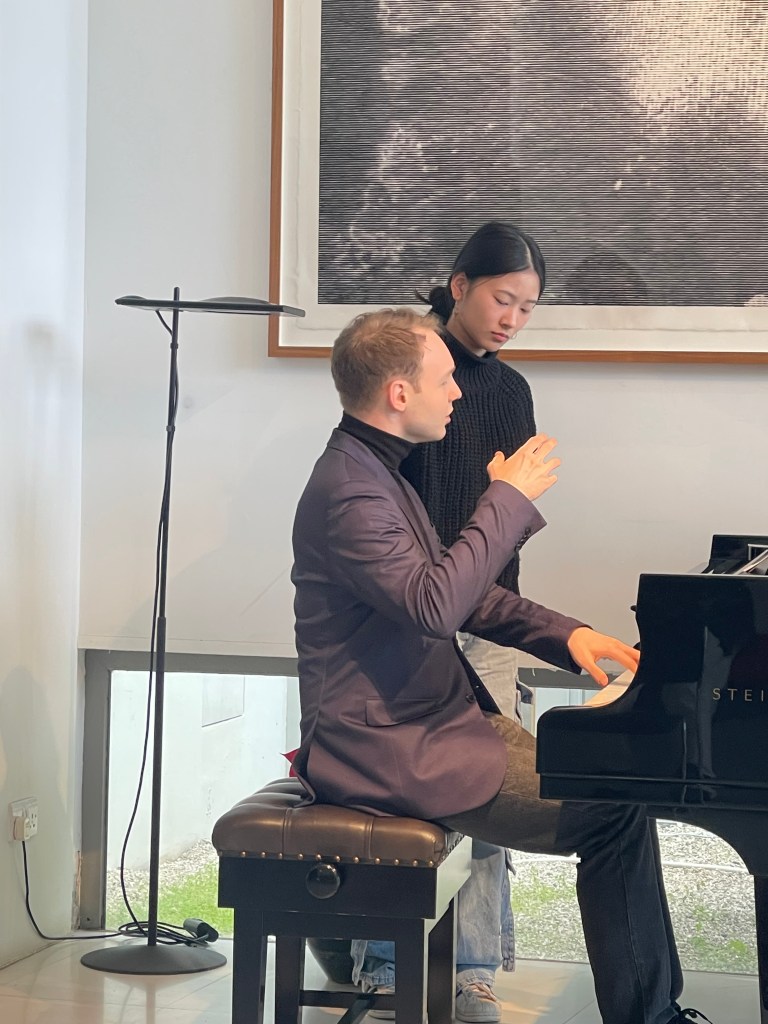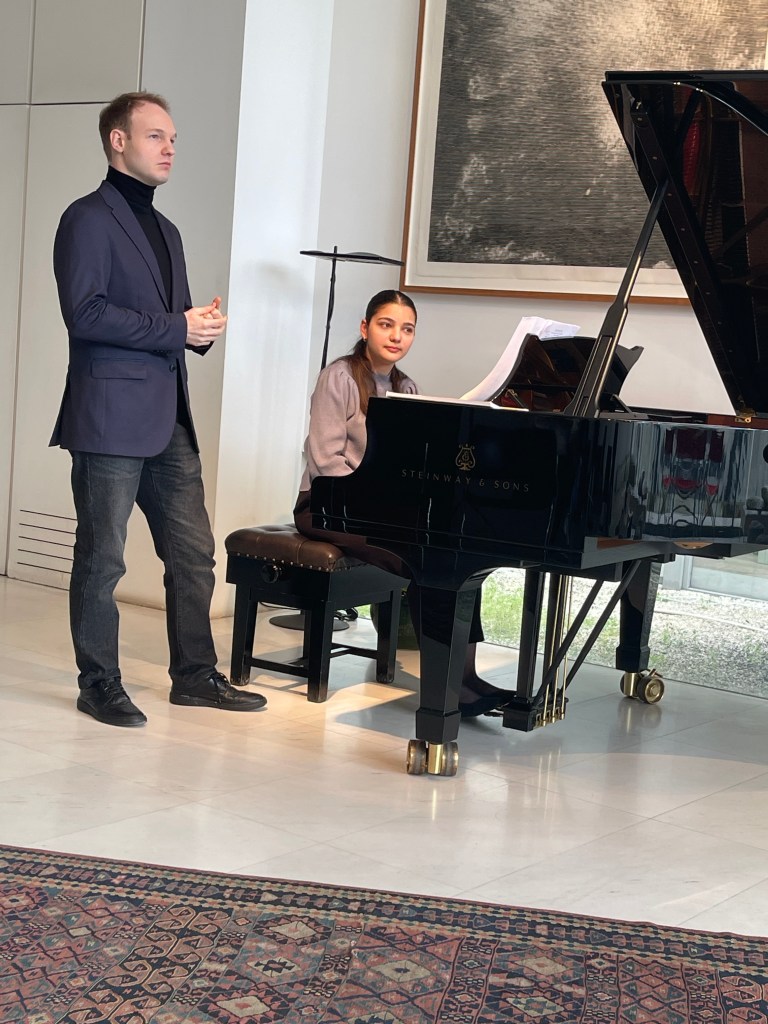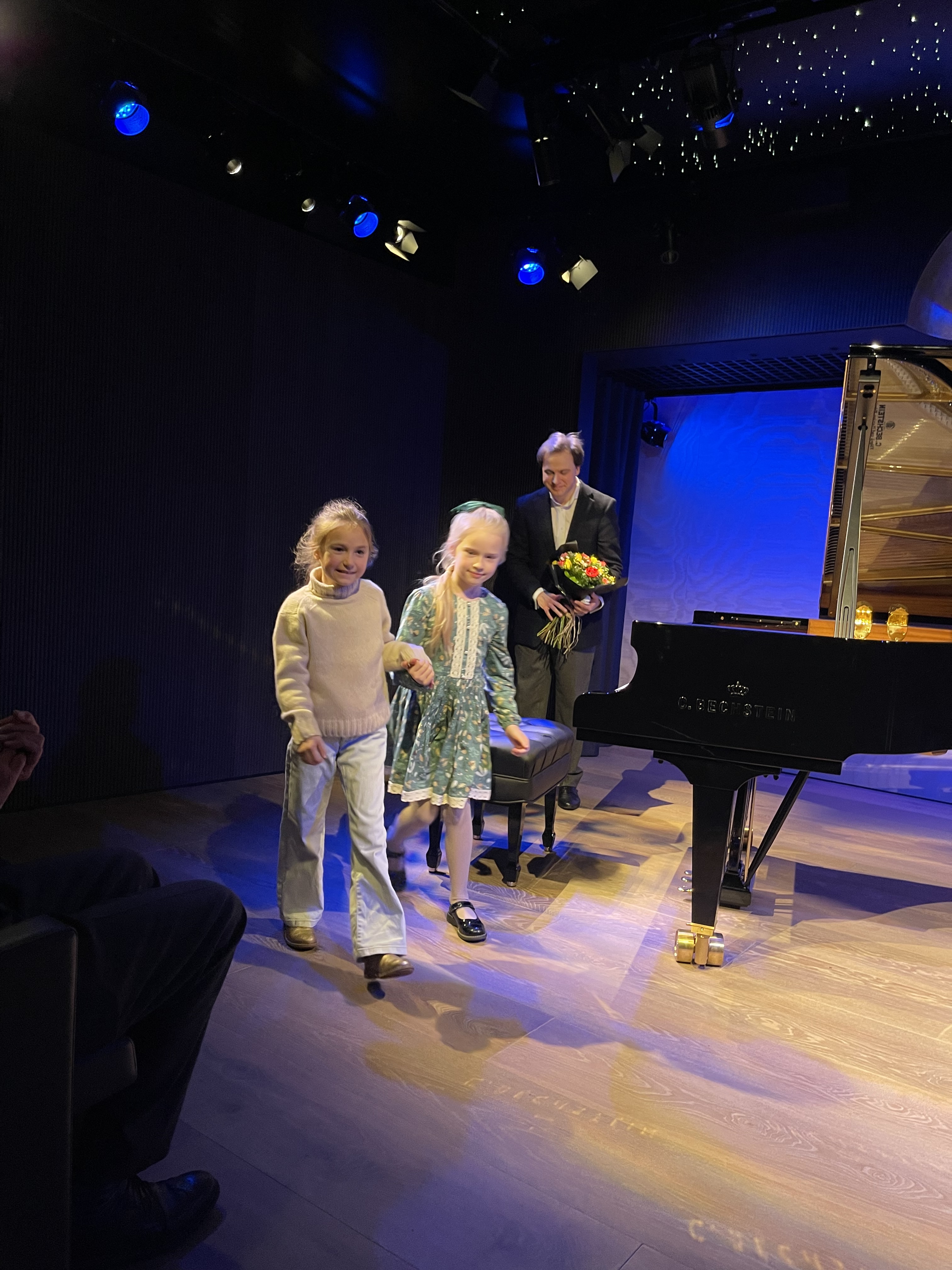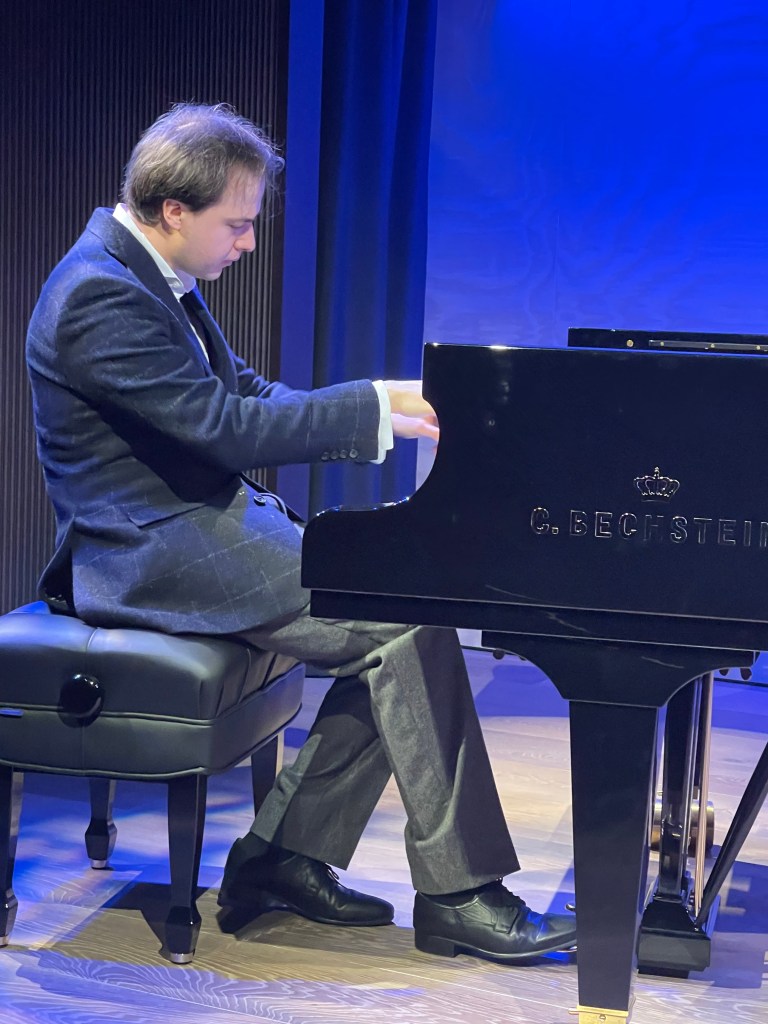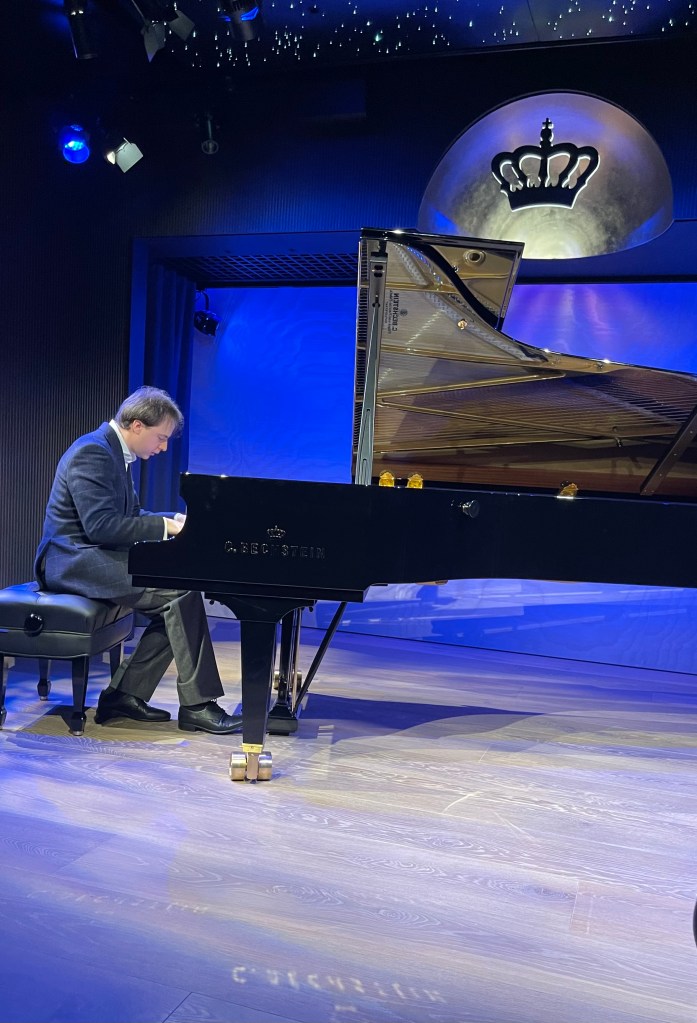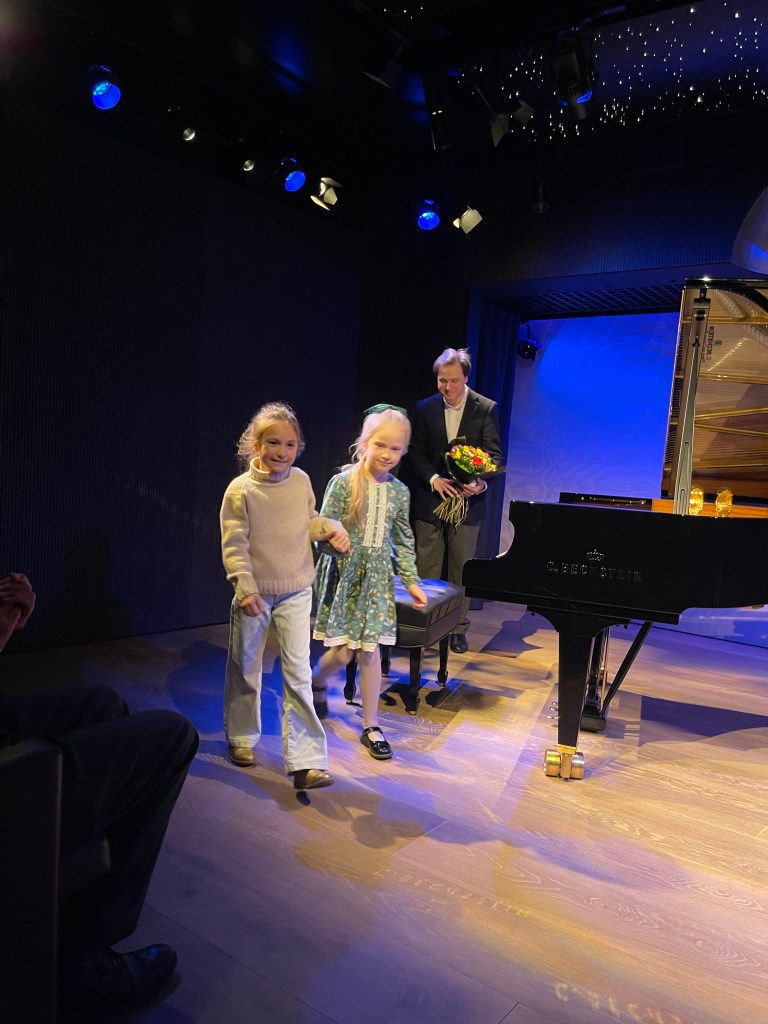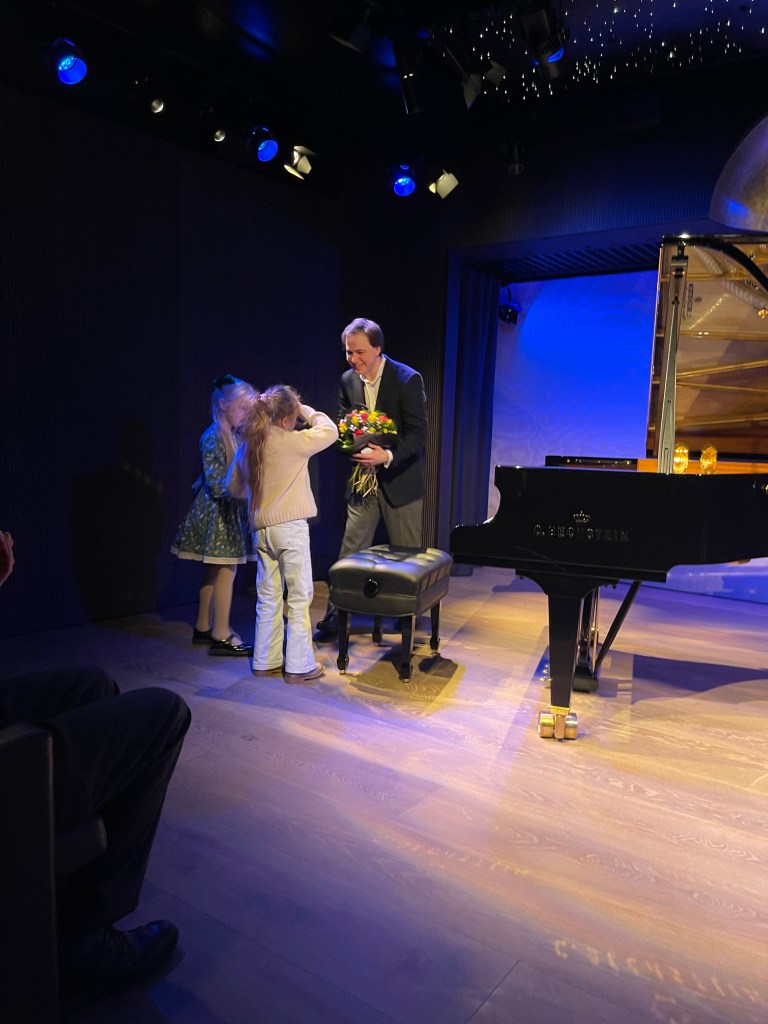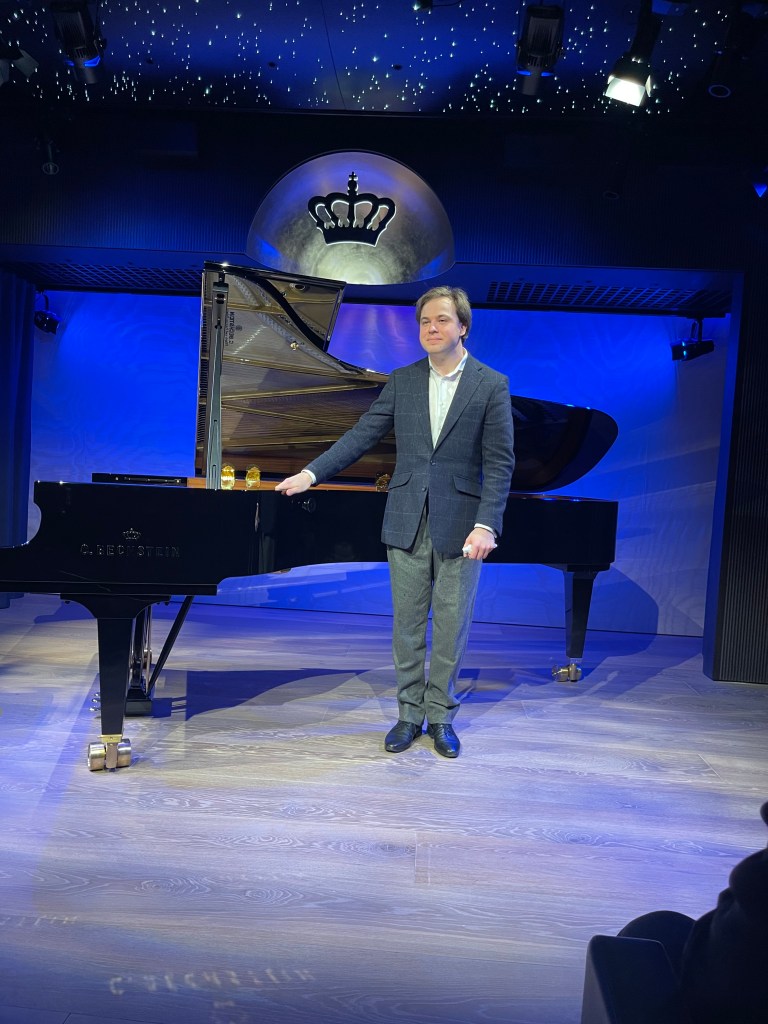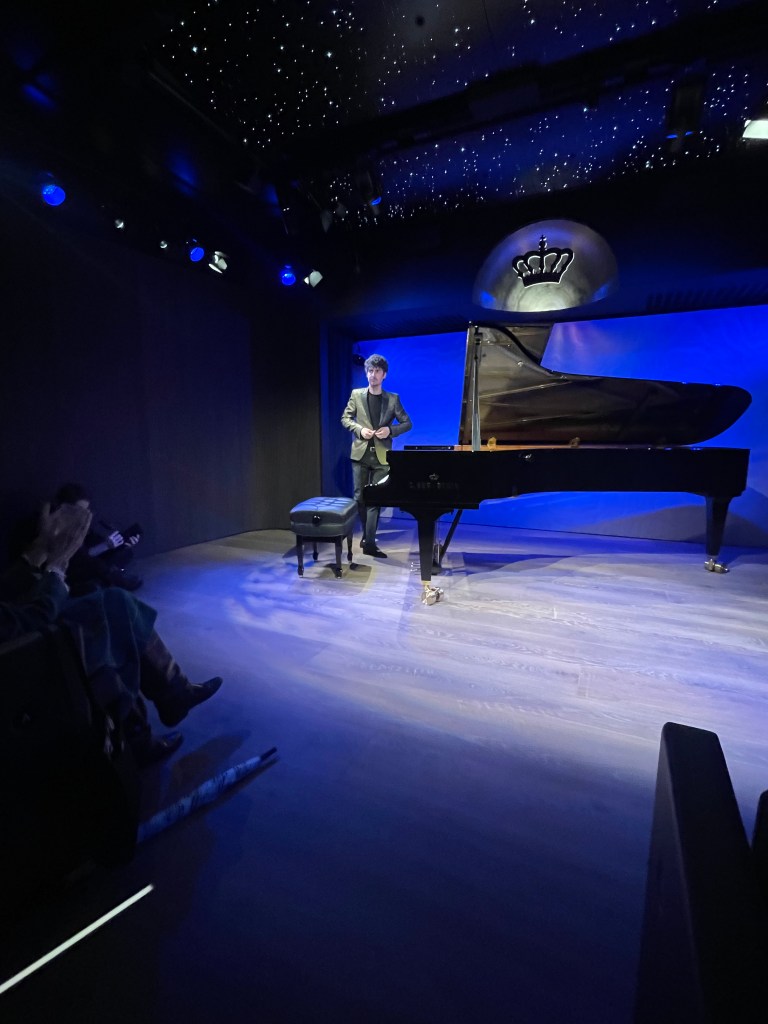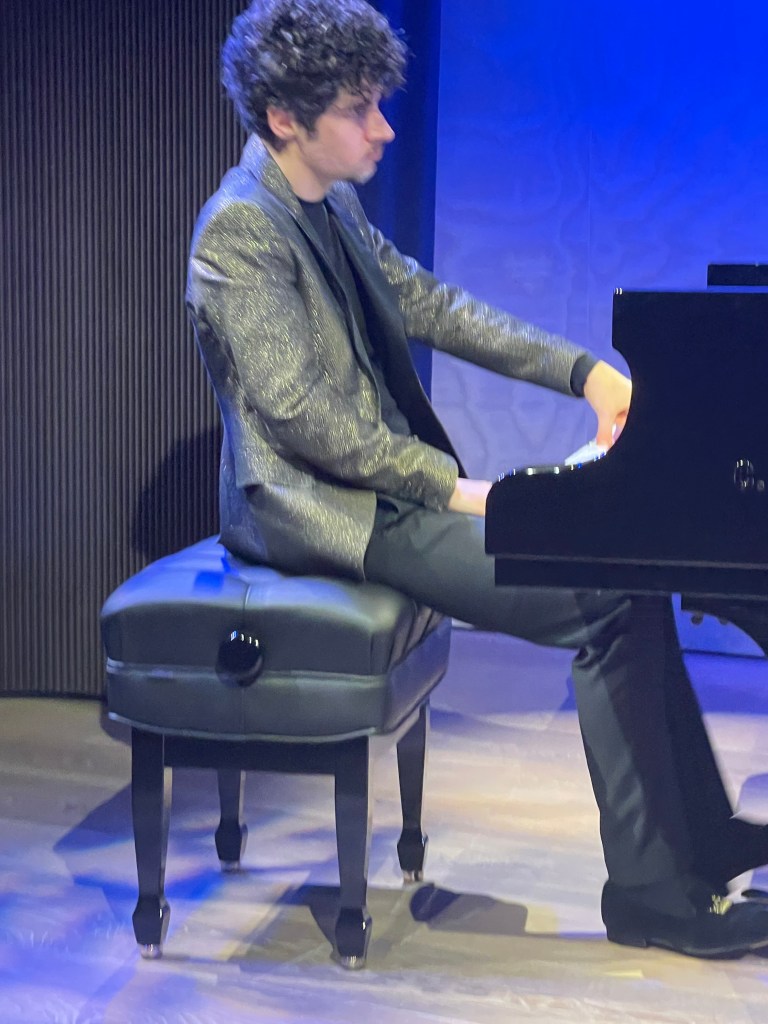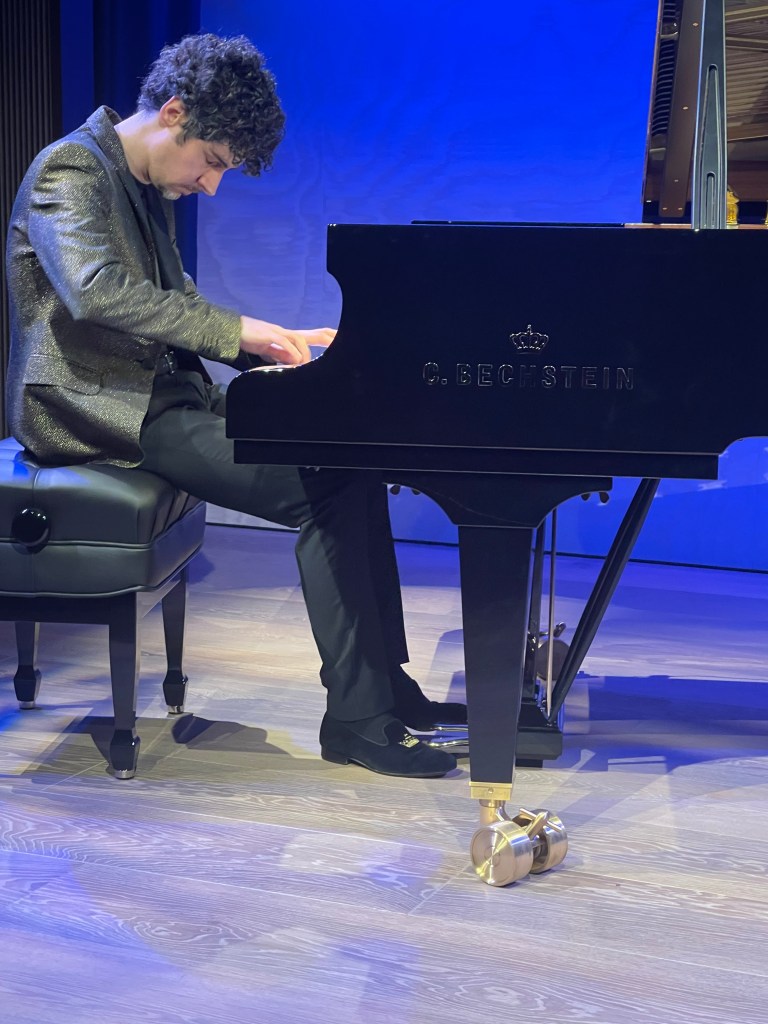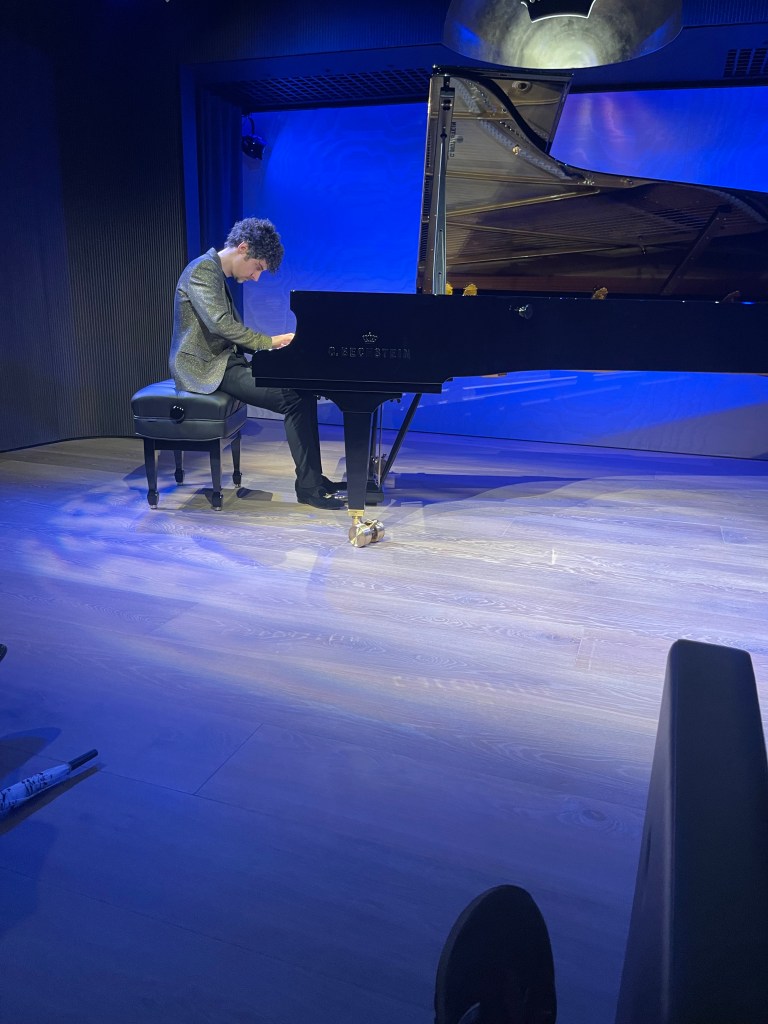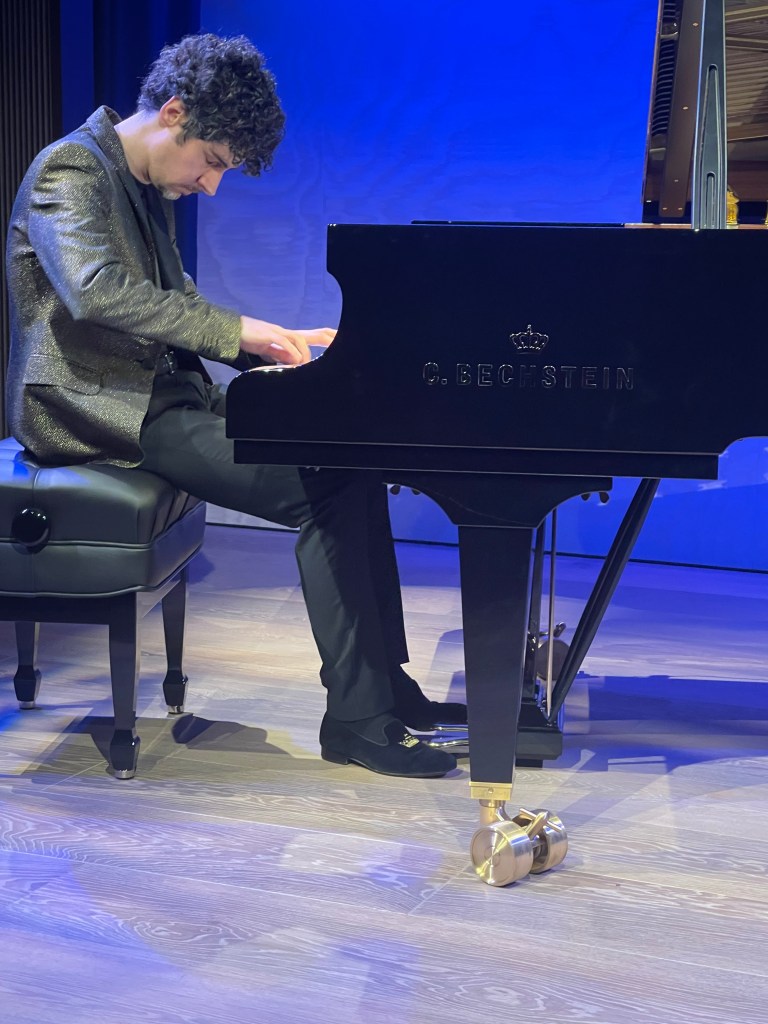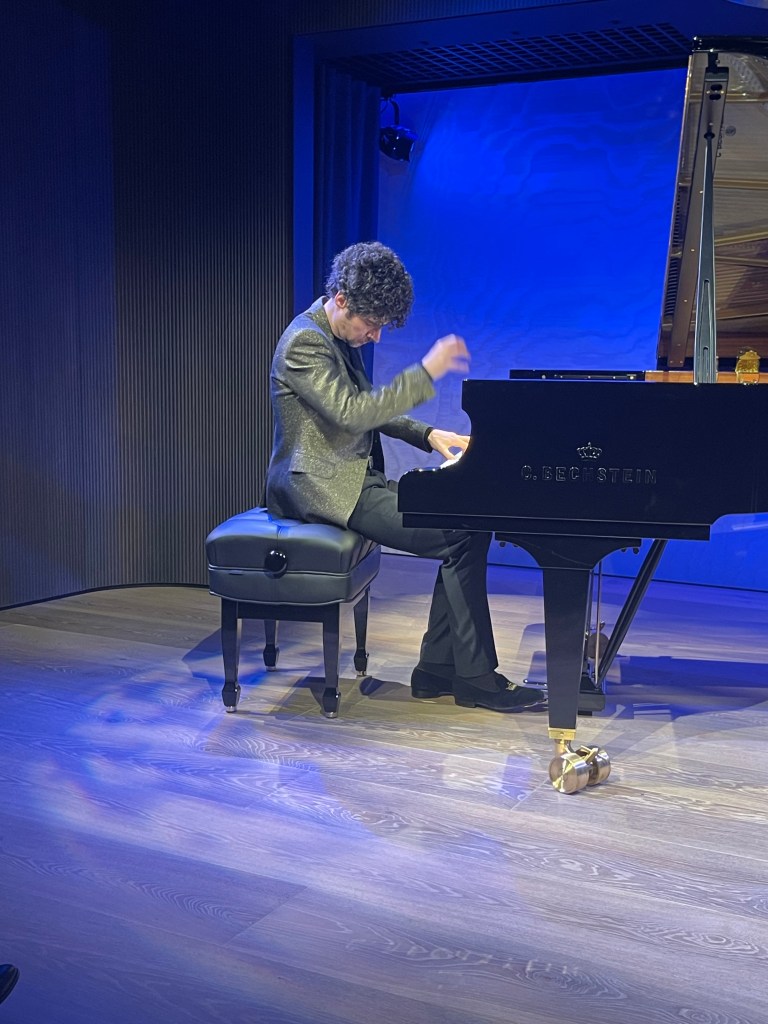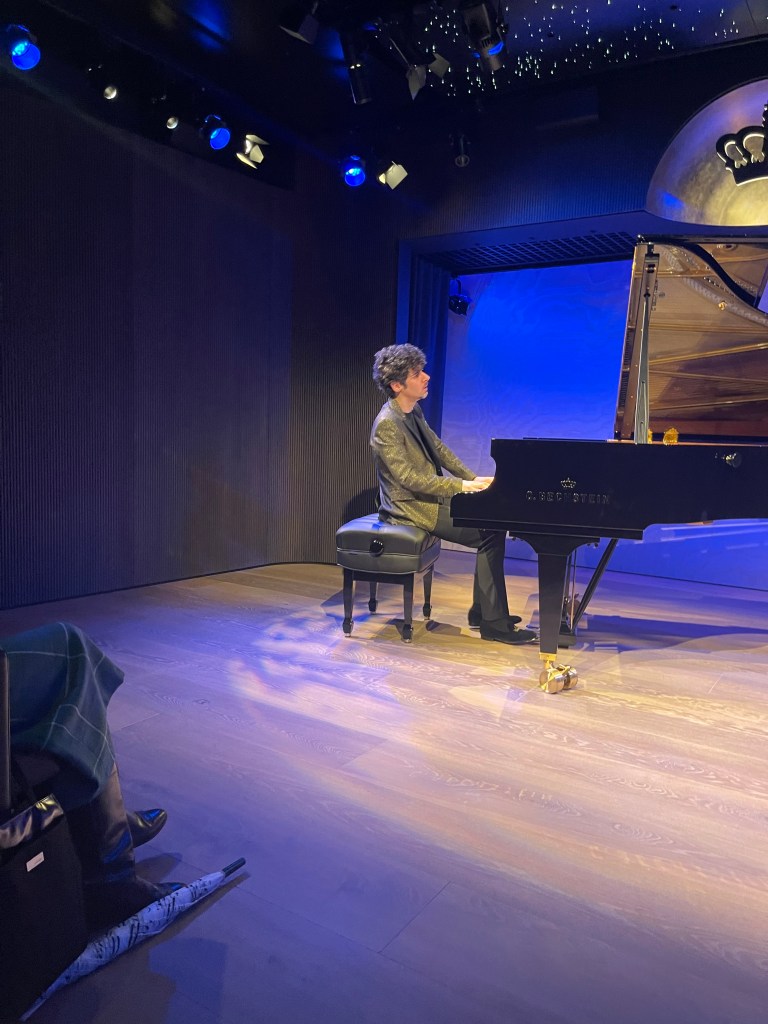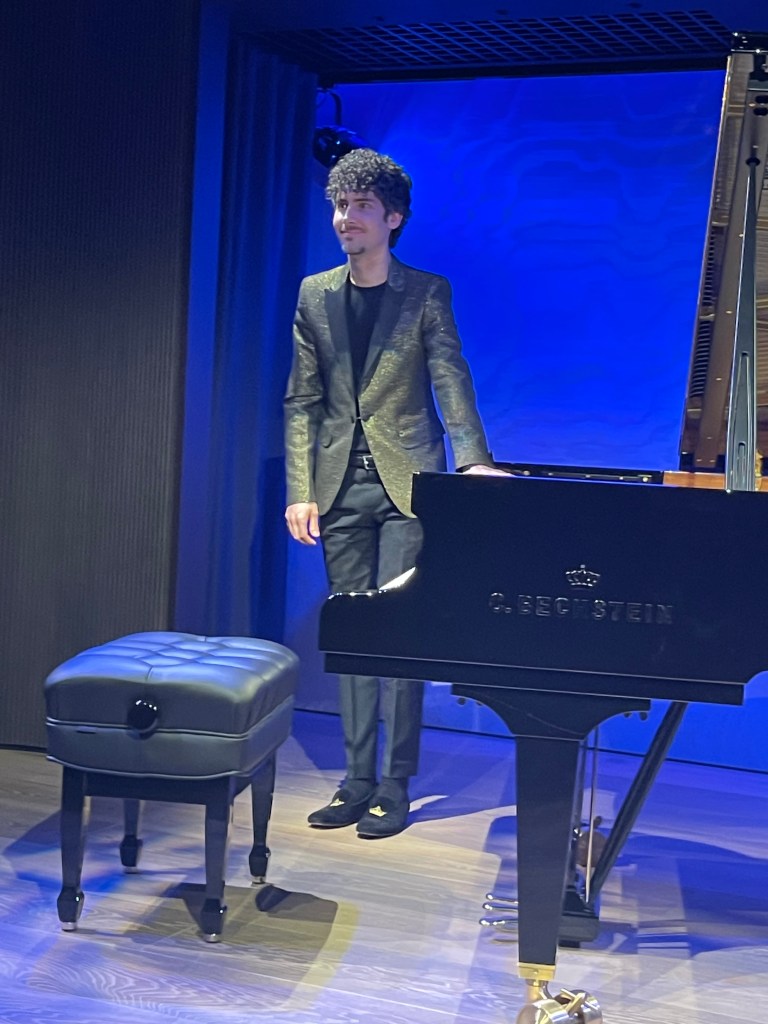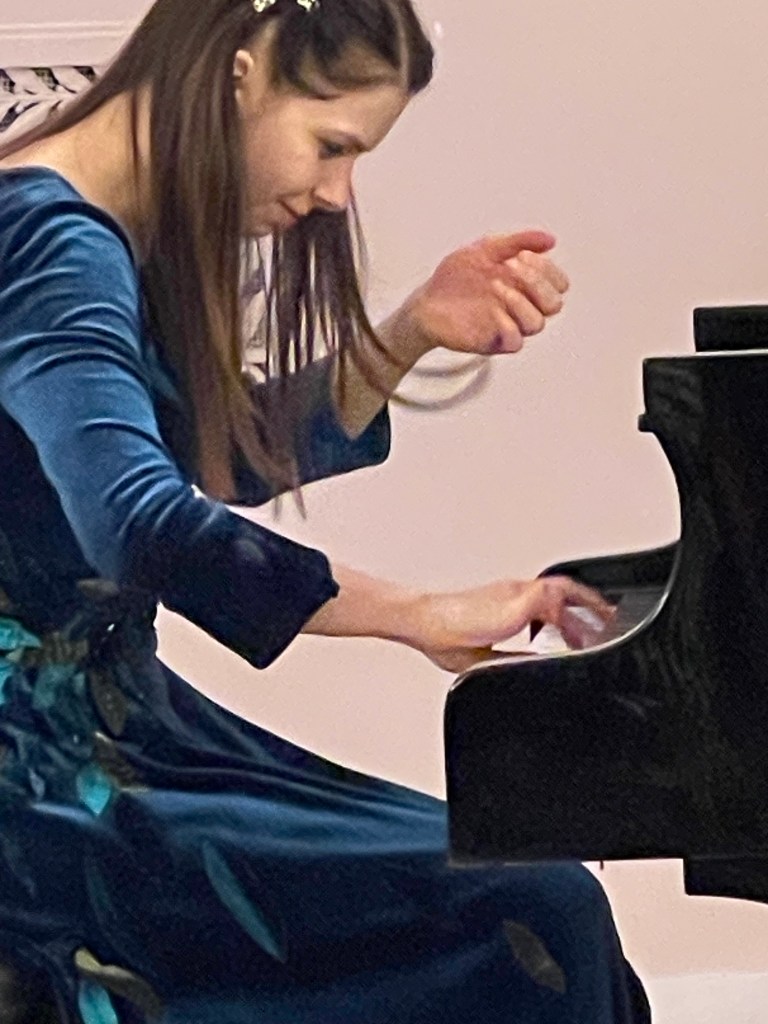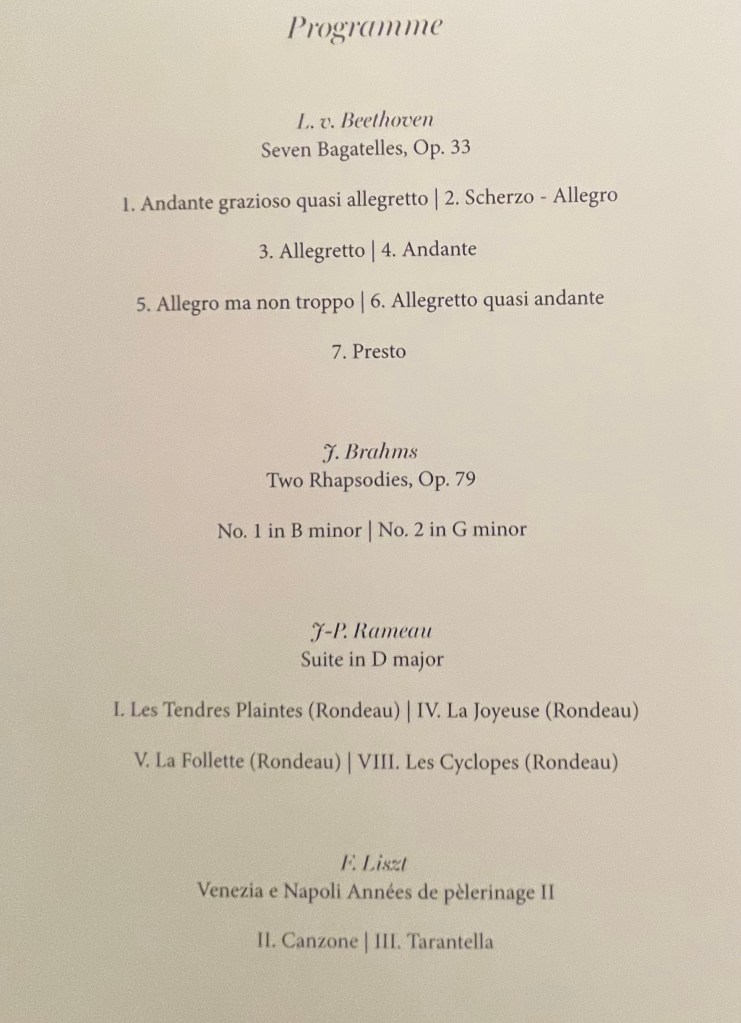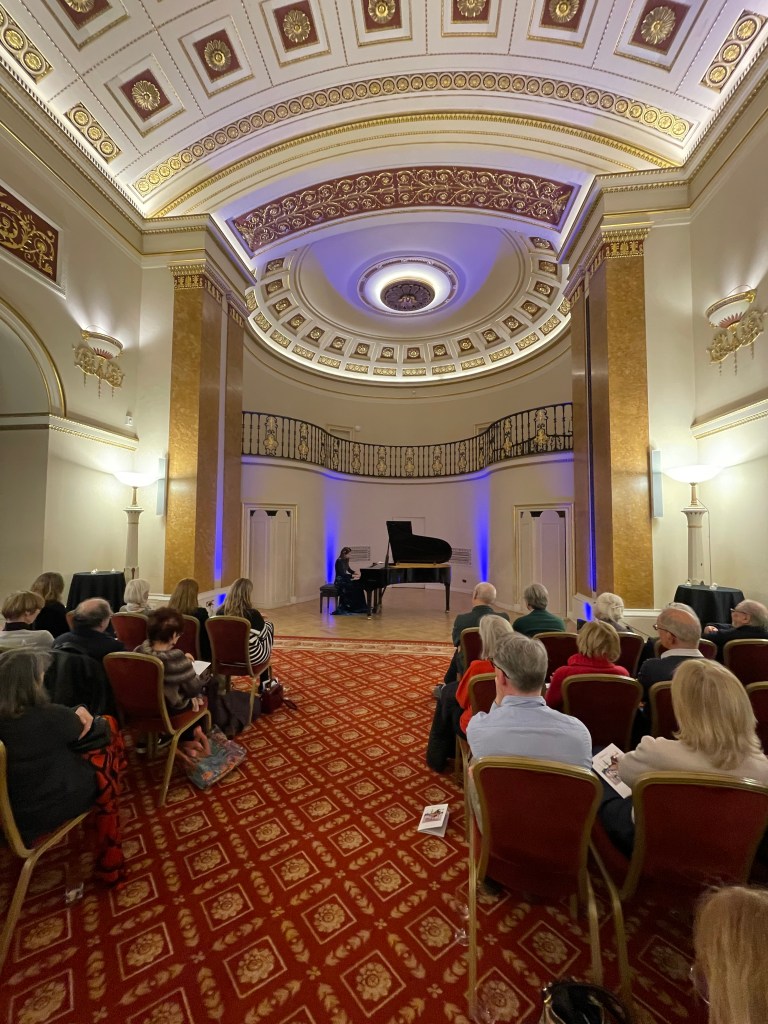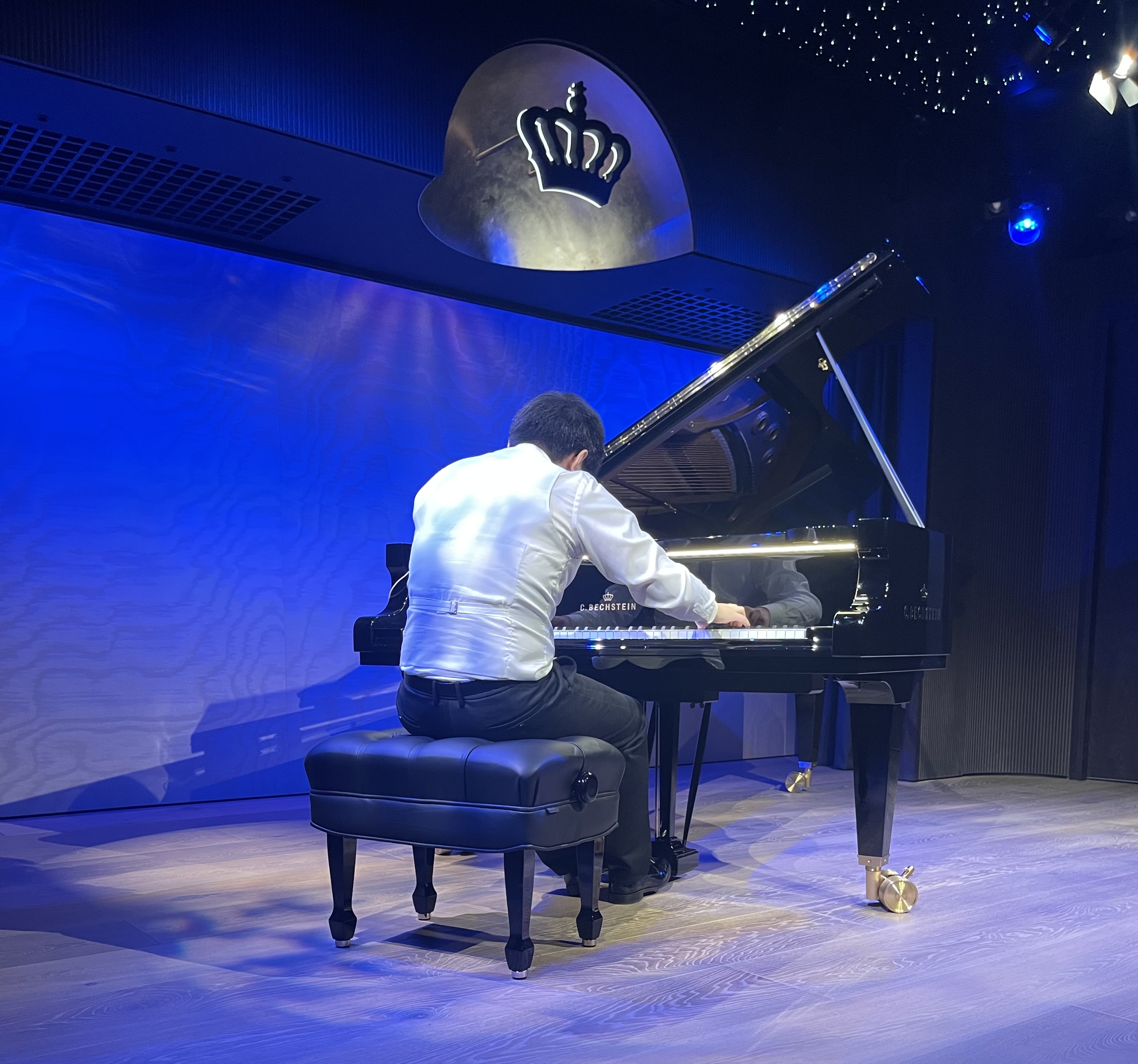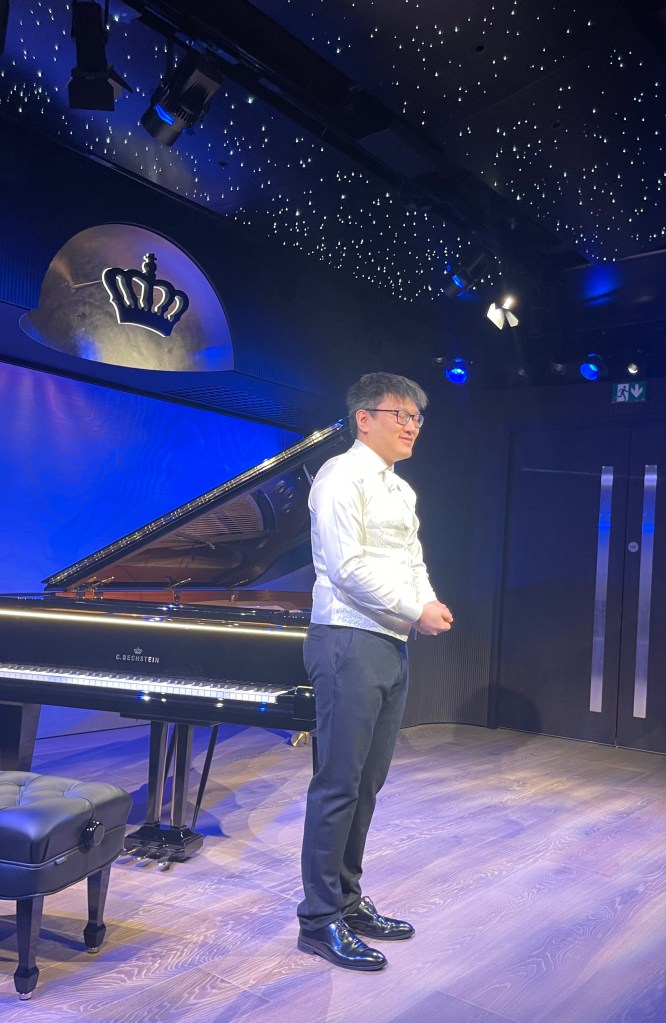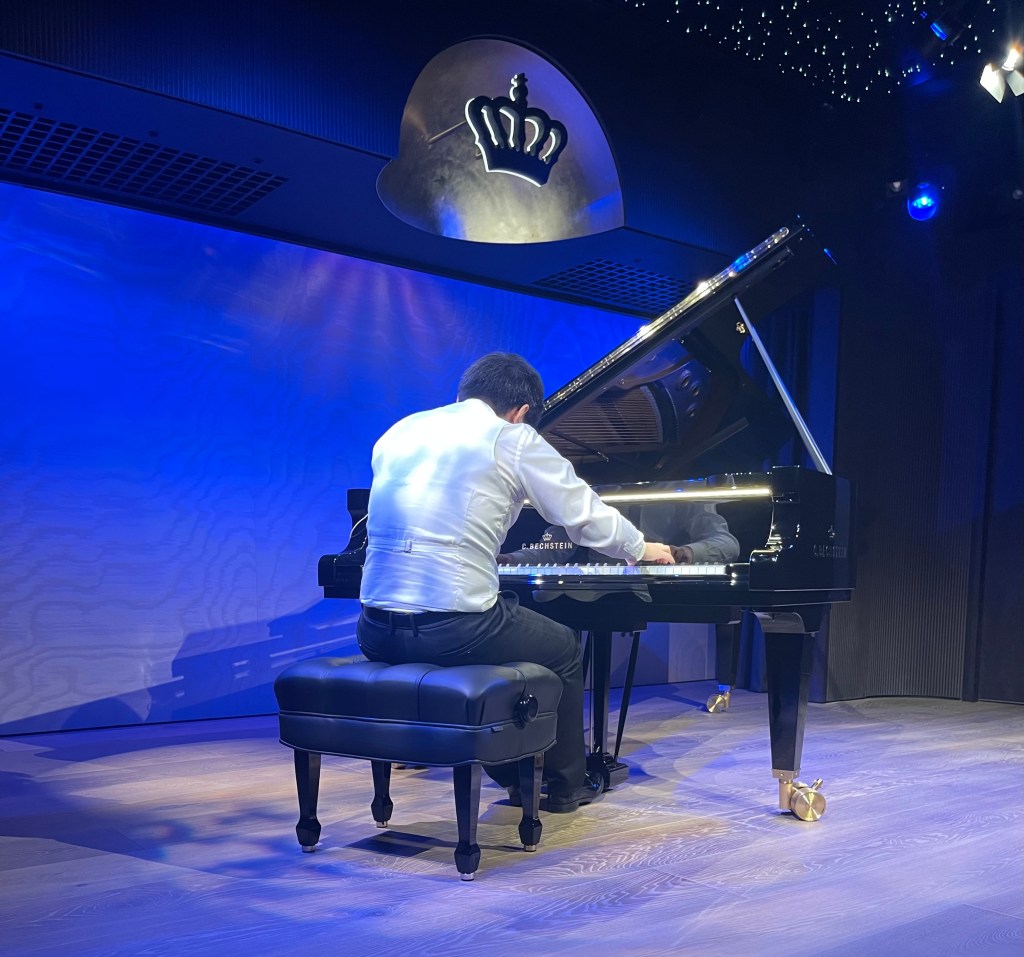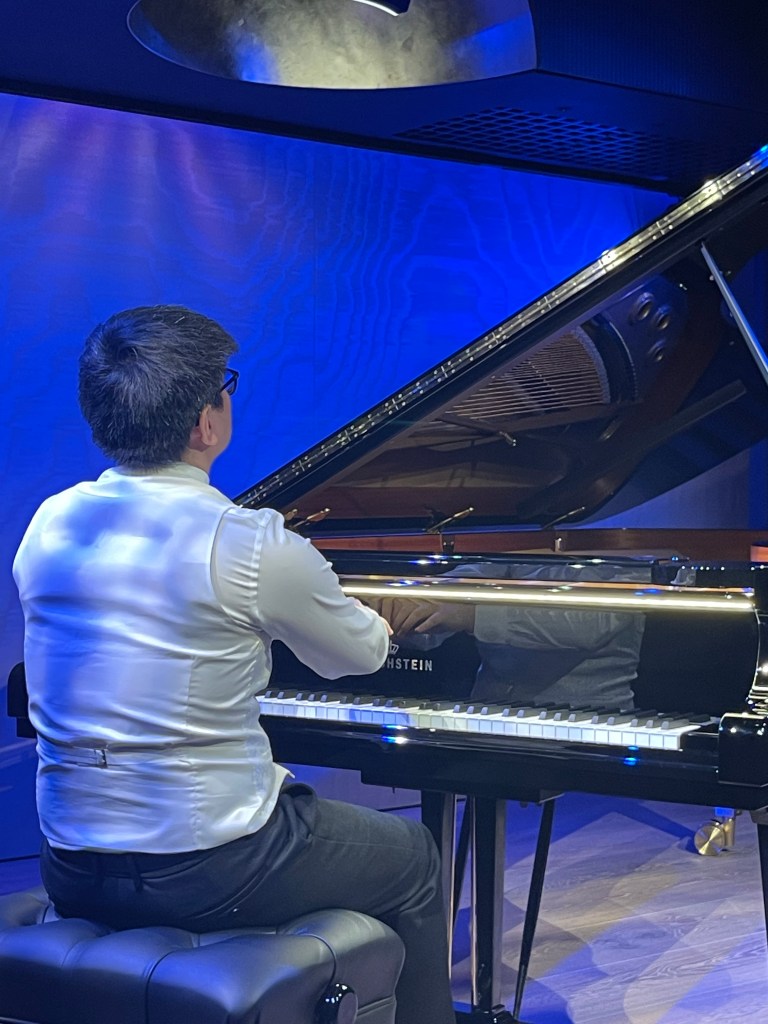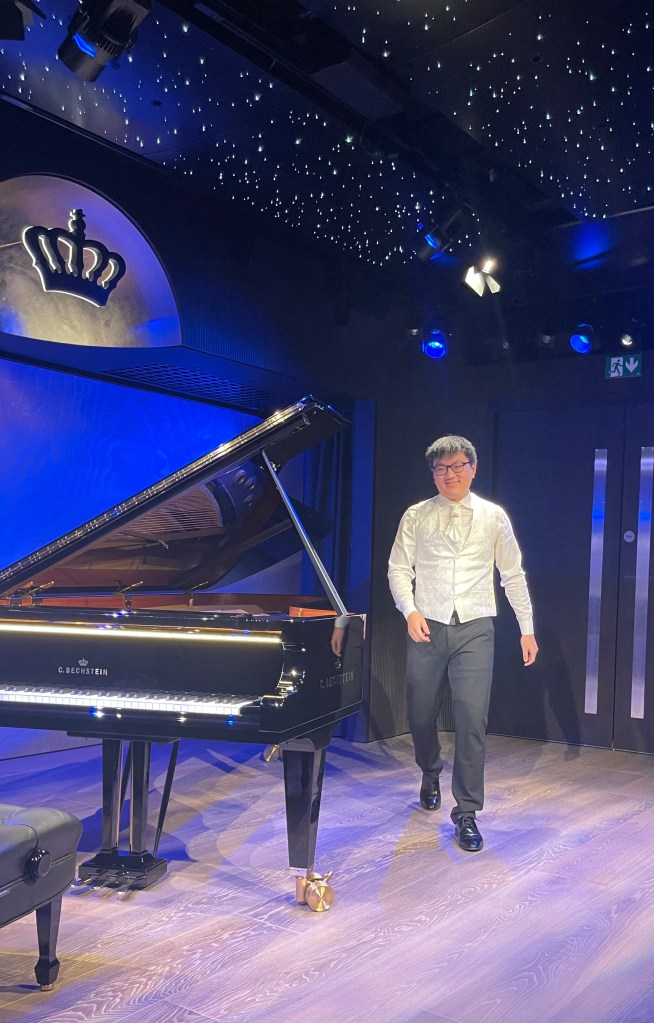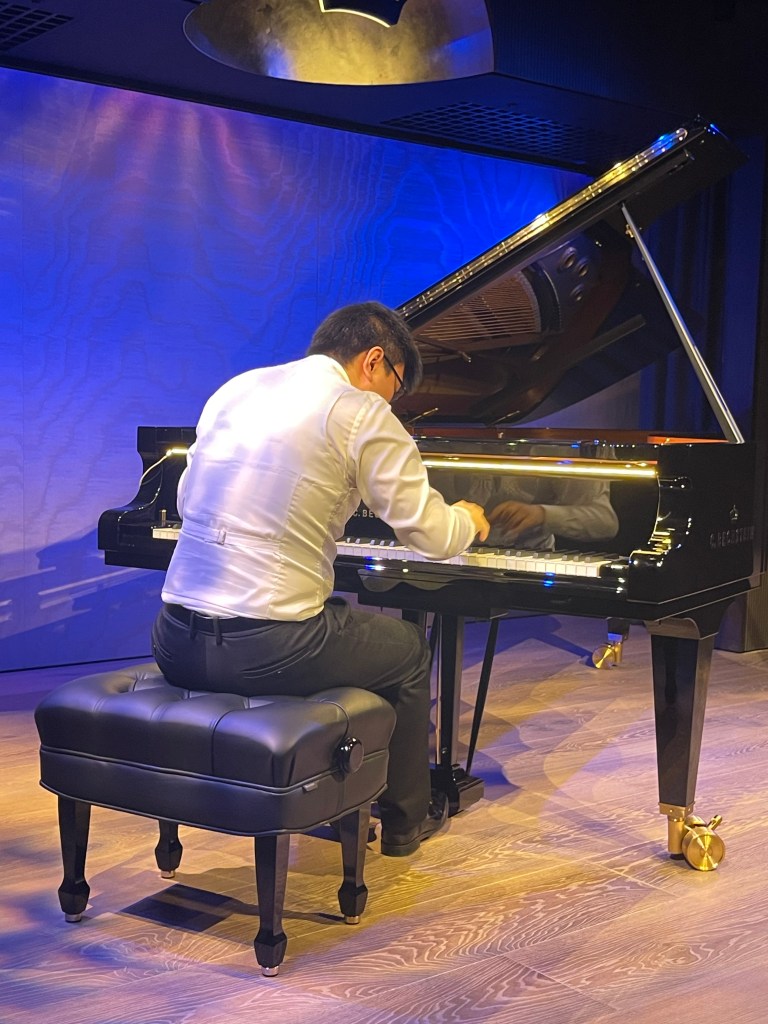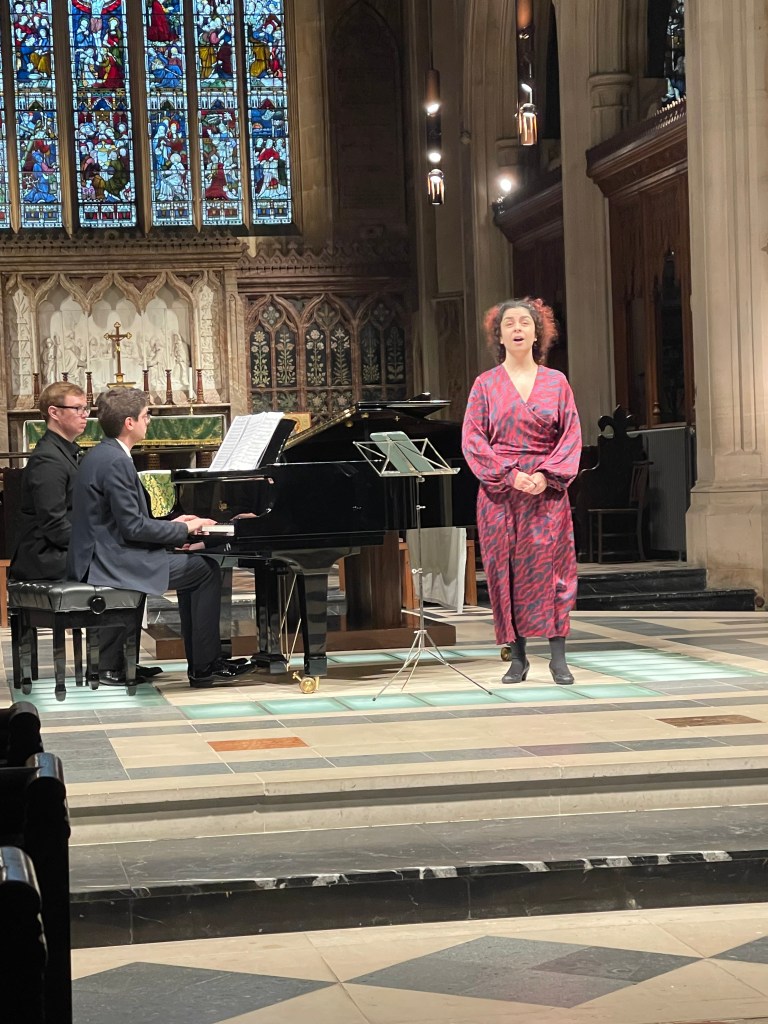
Rose McLachlan -radiance and beauty of a true artist

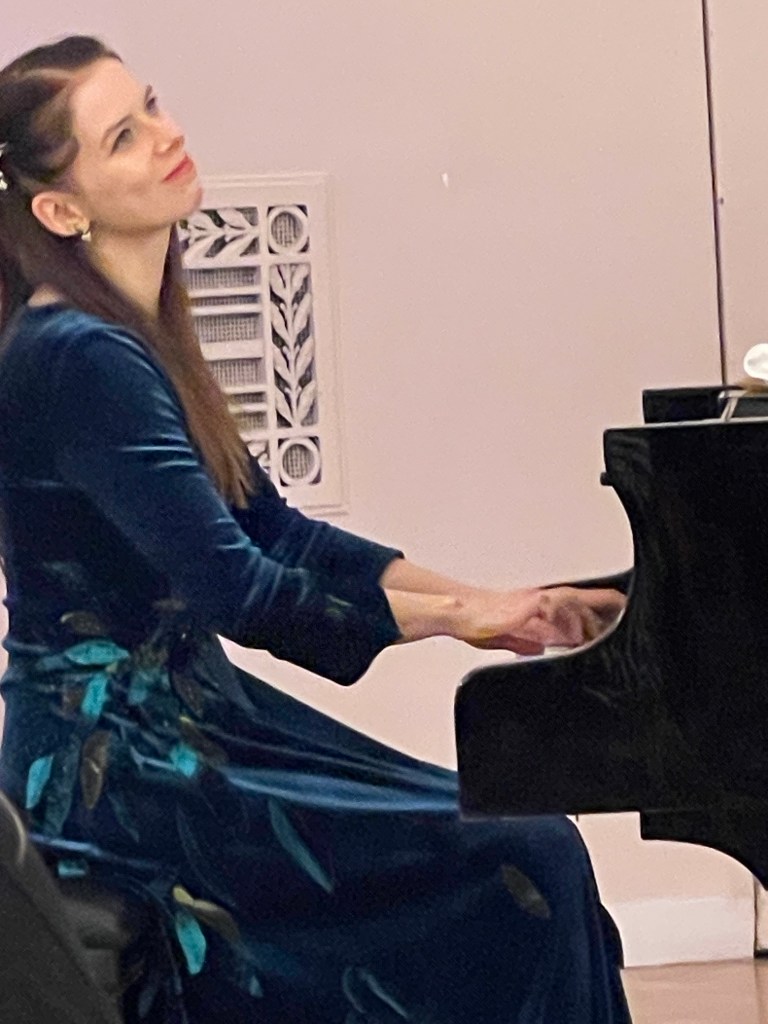
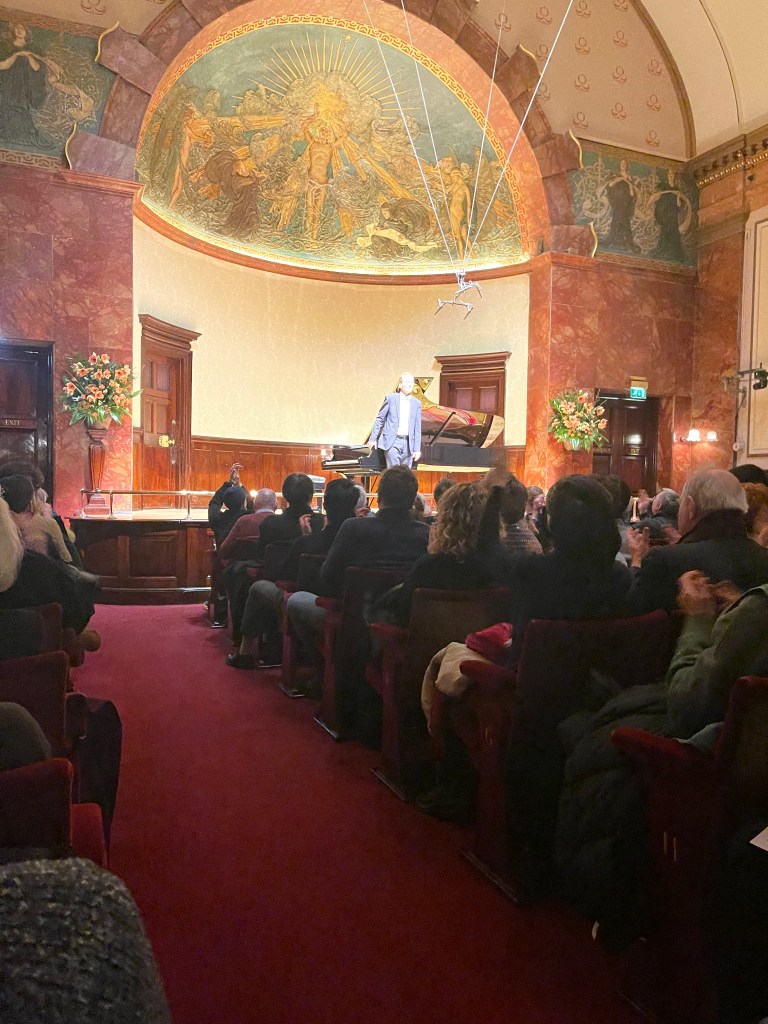
Beethoven,Debussy and Schumann an outpouring of beautiful sounds in a church illuminated by candlelight for yet another concert for Warren Maille-Smith’s City Productions .

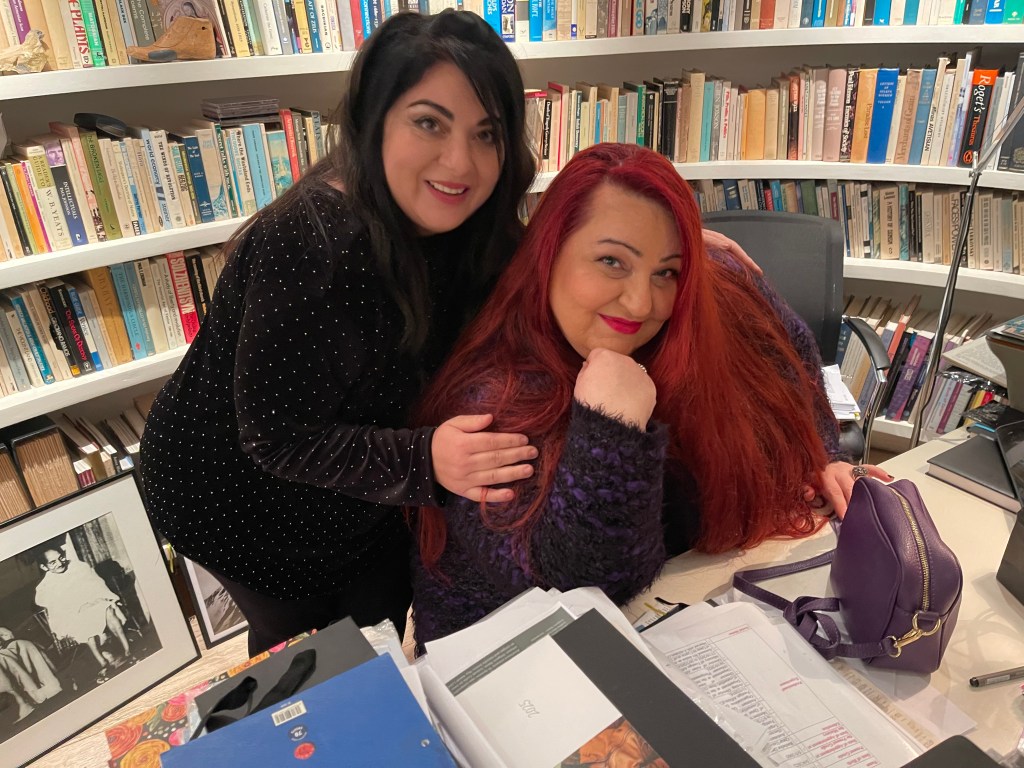
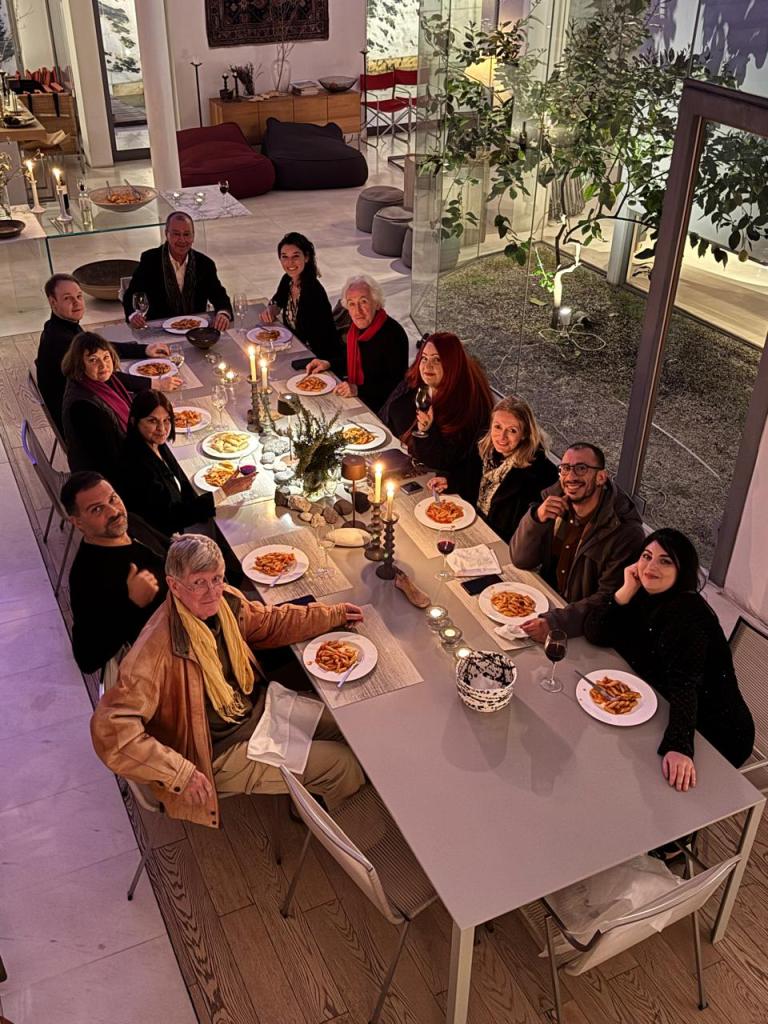
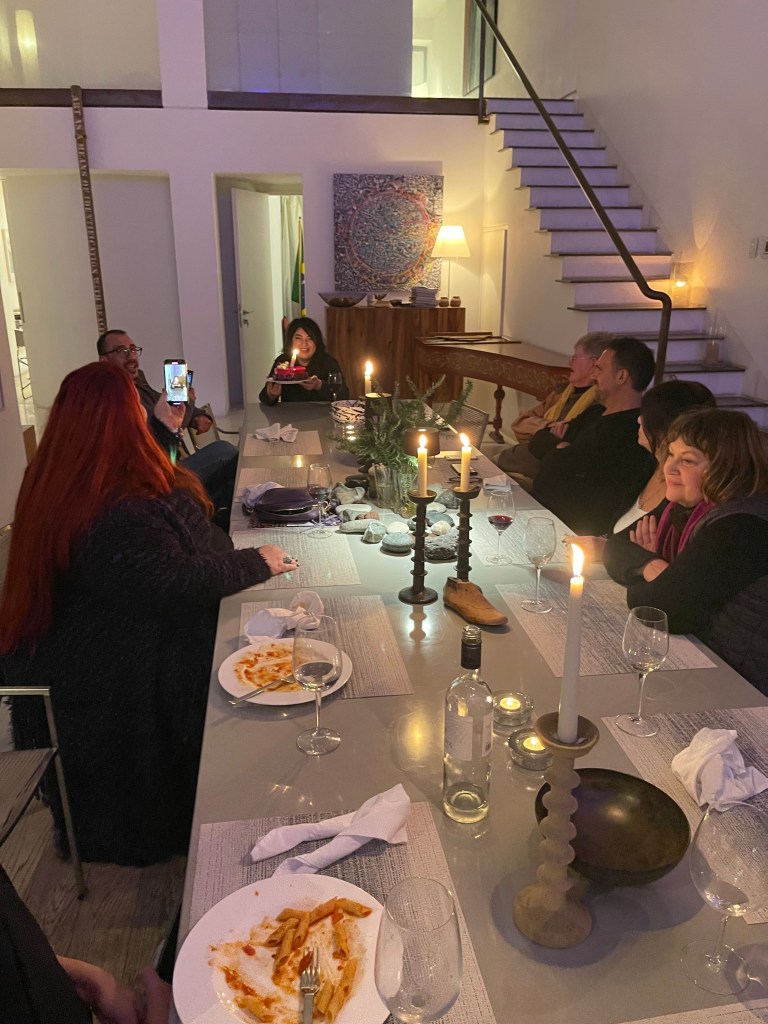
Tonight Rose Mc Lachlan was giving a concert for a special occasion that saw the remarkable McLachlan clan in London this weekend to celebrate a very special birthday.

https://christopheraxworthymusiccommentary.com/2024/09/15/rose-mclachlan-at-st-marys-another-jewel-in-the-crown-of-a-remarkable-family/

Kathryn Page McLachlan with her mother and husband Murray McLachlan https://christopheraxworthymusiccommentary.com/2021/02/21/murray-mclachlan-at-st-marys/

Beethoven’s early op 2 n 2 Sonata dedicated to his teacher Haydn but already stamping his own genius on a now established form. Beethoven imbues this early sonata with remarkable dynamic contrasts and chameleonic changes of character that Rose played with a kaleidoscope of colours , rhythmic drive and technical mastery. From the opening question and answer to the orchestrally conceived slow movement and a Scherzo and trio of whimsical seriousness.The delicacy of the ending of the first movement preparing us for the solemn beauty of the ‘Largo appassionato’ with it’s beautifully held melodic line and the gentle non legato accompaniment played with superb control and of long beautiful lines of poignant significance.It is in the slow movements of these early sonatas that Beethoven shows his originality breaking away from his teacher Haydn and creating an art form of intensity and profundity.The next sonata in this trio of op 2 has a slow movement of enormous proportions as do the sonatas that immediately follow of op 7 and op 10 n. 3 .The elegance and charm that Rose brought to the Scherzo was contrasted with the dynamic drive of the Trio. It was though the last movement where Beethoven paints great elegant lines of charm and originality that Rose played with a superb sense of style as the music was allowed to flow with grace until interrupted by a typical Beethovenian outburst of irascible impatience.Rose played this rumbustious interruption with dynamic drive and rhythmic precision with fleeting finger work of pointed energy until with an elegant wave of the hand Beethoven takes us back to the grace and elegance of the Rondo.The playful question and answer between the left and the right hand that followed was played with bucolic joy as the strident chords returned again creating a brilliant contrast before the gentle ending of refreshing consolation.

Two Debussy Preludes were played with subtle beauty and sensitivity.Rose had chosen two from the second book of 12 Preludes :Bruyères and Ondine in this series where all twenty four will be played by six different pianists.It was simple beauty that she brought to the opening ‘Heather’ with its pastoral feeling of a gentle breeze blowing in a peaceful pastoral scene.The ending was beautifully played with the deep rumbling bass just adding an extra sense of calm to such a ravishing scene.’Ondine’ was a favourite of Artur Rubinstein and is a miniature tone poem of beauty, grace and menace. Rose played it with a kaleidoscope of sounds from the gentle opening and mellifluous waves of sound played with delicacy and improvised freedom as her poetic sensibility was ignited by such ravishing beauty.The gentle murmur that followed was every bit as beautiful as in ‘La Terrace des audiences du Clair de lune’ where Debussy can paint incredible beauty in sound. Rubinstein used to build up to a great swirling outburst at this point ( he had, after all, known the composer who perhaps shared his extrovert interpretation ) but Rose followed Debussy’s very precise instructions and remained in a magic world of glistening ravishing sounds that spread over the keys with featherlight radiance.

It was in Schumann’s Davidsbündler that Rose reached moments of sublime inspiration as she played with passionate abandon and a ravishing sense of balance, bringing this masterpiece vividly to life.The fourteenth,one of the most beautiful melodies that Schumann ever penned, was played with restrained beauty and subtle luminosity: ‘Zart un singend’.Coming after the passionate outpouring of the thirteenth where the central chorale was played with sumptuous full sound before the fleeting lightness and beguiling charm of the ending.The twelfth was thrown off with whimsical mastery and had followed the sublime simple beauty of Schumann at his most enigmatic.The Brahmsian ballade of the tenth was played with passionate orchestral sounds of Philadelphian sumptuousness.Rose had thrown herself into the ninth with fearless abandon where Schumann’s whimsical fancy is a trial for any pianist! The sixth dance was played with a technical mastery where Schumann’s most precise demands were interpreted with dynamic drive and intoxicating ‘joie de vivre’,this was Florestan at his most devilish! As was the passionate outburst of the fourth with a passionate outpouring no doubt with this beloved Clara in mind.The disarming simplicity of the fifth where Eusebius just looks at the beauty that surrounds him with nonchalant innocence.The opening too where Florestan and Eusebius combine with flights of imagination and subtle beauty where Rose played with great artistry and understanding and a technical control that could turn Schumann’s precise indications into such beautiful sounds.The grandiose beauty of the fifteenth was breathtaking in it’s sweep and passionate conviction but even here Rose managed to interpret Schumann’s indications with respectful mastery and musicianship.She even threw herself into the fray ‘Mit gutem Humor’ with masterly playing of precision and a chameleonic sense of character.The heavenly vision that appears on the horizon ‘Wie aus der Ferne’ showed Rose’s quite extraordinary poetic understanding of Schumann’s elusive wonderland.Magic sounds were whispered with glowing beauty in a mist of heavenly sounds as Eusebius returned in a master stroke of a genius before allowing Florestan the last word. The final nostalgic and desolate waltz was so movingly beautiful that the public dared not applaud and break such a magic spell.As Schumann says ‘Quite superfluously Eusebius remarked as follows:but all the time great bliss spoke from his eyes’.

‘A thing of beauty is a joy forever’ and a Rose is always a rose!

A sensitive radiant Rose shining brightly at the London Piano Festival 2024

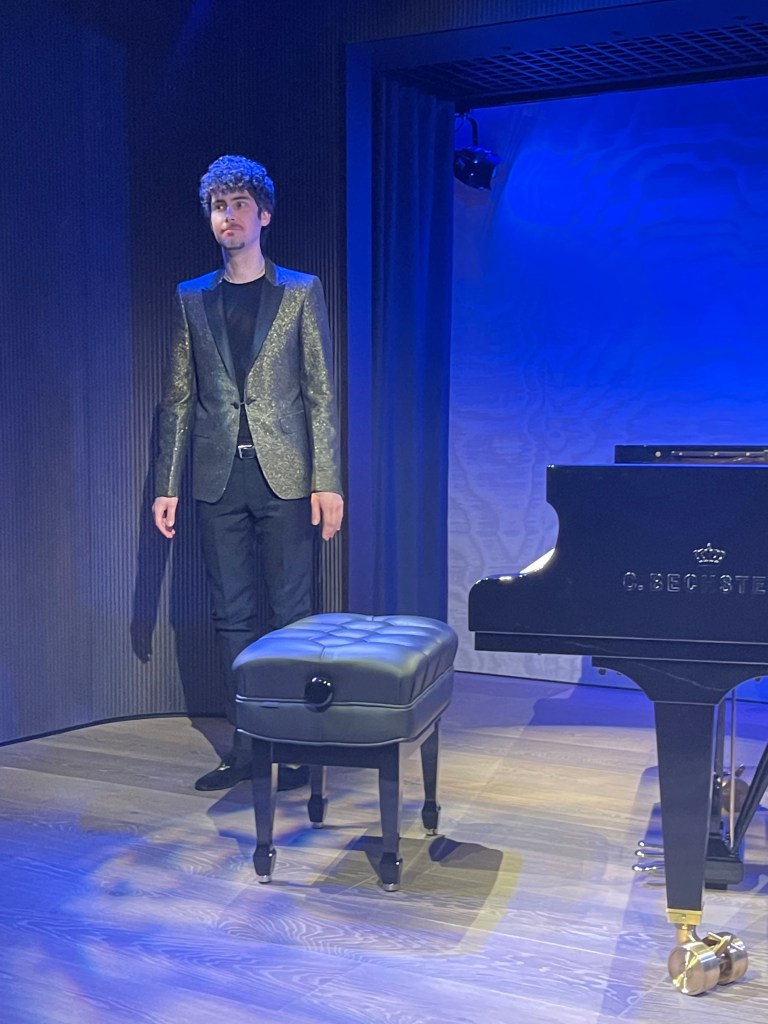
Kyle Hutchings The troubadour of the piano illuminates St Mary Le Strand

Some exquisite playing of rare beauty from Kyle Hutchings, the troubadour of the piano.

https://christopheraxworthymusiccommentary.com/2024/09/11/kyle-hutchings-a-poetic-troubadour-of-the-piano-reveals-the-heart-of-mozartschubert-and-franck-the-keyboard-trust-concert-tour-of-adbaston-ischiaflorence-and-milan/

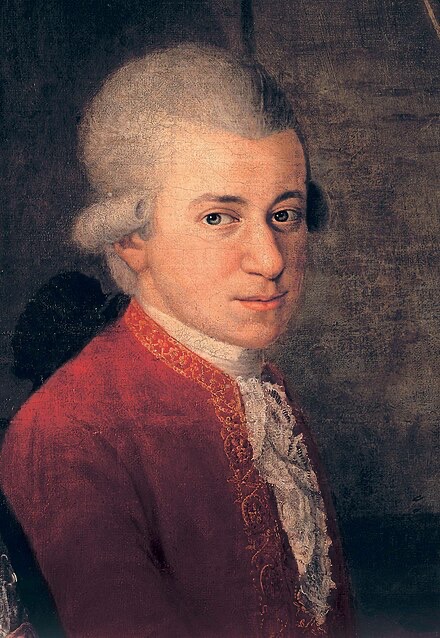
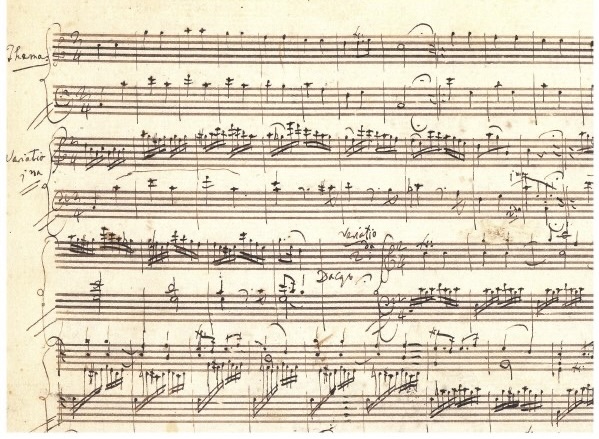
Mozart’s C minor Fantasy was played out with dramatic contrasts of whispered beauty.His playing completely without accents or ungrateful sounds but always with the human voice in mind that allowed the music to unfold in a quite unique way. We were drawn in to the sounds as eavesdroppers in the magical atmosphere of this beautiful candlelit church that the City Music of Warren Mailley- Smith regularly fill with glorious music.https://christopheraxworthymusiccommentary.com/2024/09/21/warren-mailley-smith-a-man-for-all-seasons-a-love-of-music-illuminated-by-candlelight/

There was a radiance to the sound as the dynamic contrasts that Mozart marks were played with a sense of balance and proportion as indeed it must have sounded on a keyboard of that period.There was a softness to the sound where the ‘forte’ seemed to dissolve into ‘piano’ without ever disturbing the musical line.The arabesques played with the same subtle colour as a singer as the music moved forward with some quite exquisite playing of repeated notes that became mere vibrations accompanying the melodic line that could sing so naturally without any forced projection. Even the Allegro was played with restrained sounds where everything was in civilised proportion where ‘forte ‘ had a dramatic effect because the ‘piano’ answer was played with whispered delicacy and always perfectly in proportion with a radiant tone of glowing beauty.A melodic line played with beautiful phrasing and a rarely experienced sensibility. An Andantino that was an oasis of civilised conversation.Streams of notes in the Più Allegro with a disarming recitativo finishing in a miraculous whispered sigh making way for the reappearance of the imperious opening. An extraordinary sound world where everything was perfectly in proportion but without any apparent projection, allowing for the creation of a kaleidoscope of sounds of exquisite glowing purity as this young troubadour revealed the secrets hidden deep in his artistic fantasy world.

A nobility to Beethoven’s penultimate sonata that was a timeless outpouring of ravishing sounds as the composer reached for the heights with sublime inspiration. An opening of undulating beauty as though it had appeared miraculously from afar where even the ‘Adagio espressivo’ became part of this fluid sound world played with an improvised freedom where the dramatic climaxes were alway within an overall framework of a continuous mellifluous outpouring of exquisite beauty.Streams of gently expressive notes brought us back to the undulating melody that was always present. A ‘Prestissimo’ played fearlessly but also shaped with beauty and clarity. Kyle may have missed the irascible impatience of Beethoven but he filled this movement with the same energy that was also part of Beethoven’s incontrollable temperament.The heart of this work is the last movement :a theme and variations of exquisite beauty and string quartet quality where every strand of the counterpoints has a deep significance.Kyle chose a tempo in which the theme could move with aristocratic nobility and intensity .There was magic in the air as he barely touched the B of the second half of the theme but with a glowing purity that was quite sublime.The first variation was played ‘molto espressivo’ but with a nobility and aristocratic simplicity that contrasted with the feathlight notes of the second. Beethoven bursting unexpectedly into song interrupted by the etherial ‘leggiermente’ as it moved towards the ‘Allegro vivace’ of the fourth variation. Allegro it might have been but with streams of notes alternating between the hands with masterly control and also an unusual fantasy that suddenly was revealed in the fourth variation.Beethoven here miraculously allows the theme to unfold with a continuous wave of sounds that he marks ‘piacevole’.It was indeed a release of tension and a breath of fresh air that blew over the keys as Kyle’s poetic fingers seemed to move on a wave of mellifluous beauty. Interrupted by the fifth which is a rather serious fugato that was played with dynamic drive but also with a superb sense of line and always musically impeccable.The return of the theme with Beethoven’s world of vibrating sounds was played with miraculous mastery and simplicity as it built to the climax or ‘star’ where the theme was allowed to shine brightly above these streams of sounds. All this was played with a simplicity and with head bowed in complete concentration intent on recreating the same visionary beauty that the composer obviously had conceived in his head.What a miracle that the composer,completely deaf could write down the sounds he had in his head for posterity.The ending was played with the same disarming simplicity with which this young poet of the keyboard had shared with us in this penultimate Sonata that was to signal the beginning of the end of the tormented life of the Genius from Bonn.

Franck’s haunting Prelude ,Fugue and Variation reverberated around this candlelit church creating a magic that will long be remembered. A transcription by the Scottish pianist Bauer it shows the improvisation quality of this piece written for organ with it’s magical opening theme floating in rarified air as it is transformed and in three movements that are united by the sublime beauty of this hauntingly beautiful melody.Here Kyle’s sense of architectural shape and uniting colouration took us on a wondrous journey where the sounds floated around this beautiful edifice with the same spiritual meaning that inspired Franck in his church of St Clotilde in Paris.

Three atmospheric pieces by Mompou ended the concert and where the glowing fluidity of his playing was filled with a languid beauty only to be relieved by an encore ,by great deman, of Schaefer’s beguiling transcription of a song by Rachmaninov.

An evening in which dreams became reality with music that was truly born on the ‘wings of song’

And just an hour later the remarkable Warren Mailley-Smith was playing The Trout Quintet whilst just next door skating was the order of the day at Somerset House https://christopheraxworthymusiccommentary.com/2024/09/21/warren-mailley-smith-a-man-for-all-seasons-a-love-of-music-illuminated-by-candlelight/

Second of a series of four concerts in collaboration with the Keyboard Trust

The Strand Rising Stars Series – Sherri Lun The magic and artistry of a star shining brightly

Misha Kaploukhii mastery and clarity in Walton’s paradise where dreams become reality – updated to include the Sheepdrove Competition and graduation recital

Magdalene Ho A musical genius in Paradise

Eric Lu ‘The poet of the piano ‘ at Richmond Concert Society

Some extraordinary playing from Eric Lu for the Richmond Concert Society where everything he played was touched with a refined sensibility to sound that made all he played seem so fresh and new.


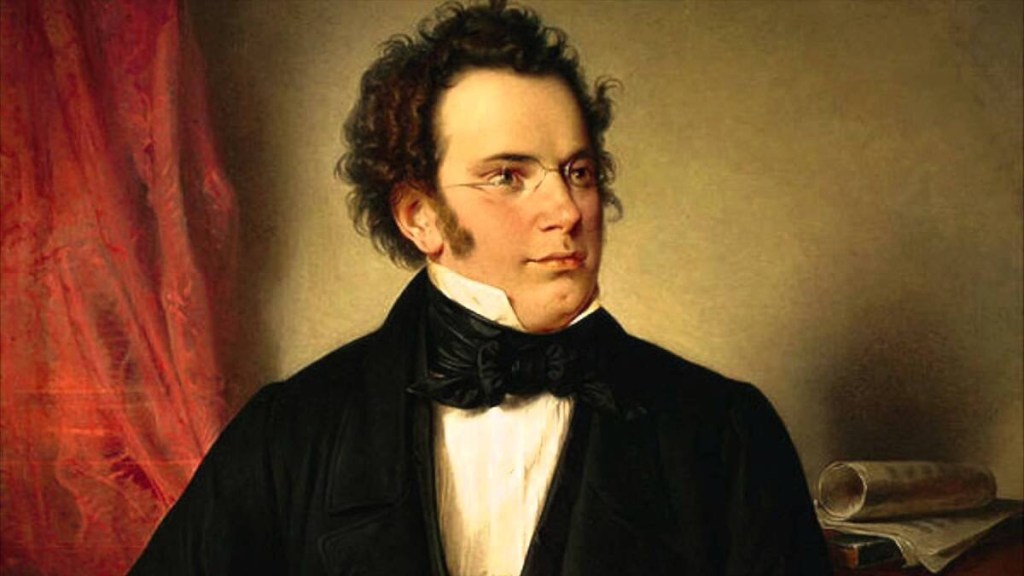
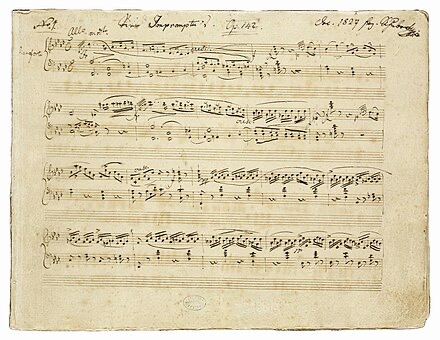
Even the choice of Chopin’s very mysterious nocturne op 27 n 1 drew us into a secret world of whispered sounds where an extraordinary sense of balance allowed him to reveal rather than project the melodic line .Even the central episode entered from afar as it gradually built up to its polonaise climax .The passionate vehemence he gave to the left hand recitativo was even more overwhelming as so unexpected.Never a hard or ungrateful sound even in the most passionate outpourings and it was this that made his playing of Schubert’s last Impromptus a continuous stream of sublime song.

Everything he did was of the human voice even the operatic opening of the first impromptu that immediately dissolved into a murmur on which floated Schubert’s sublime melodic outpouring .A remarkable way of understating where a lesser artist might be assertive.The ravishing beauty of the cantilena streams of golden sounds was quite breathtaking. The A flat impromptu played with delicacy and poetic beauty as the mellifluous central episode was like a gentle wave that slowly enveloped us in it’s sumptuous warmth, with the opening melody returning as if a memory of a glorious dream.The theme and variations were played with a jeux perlé of golden sounds that just seemed to pour so naturally from this young artist’s refined fingers. The final F minor Impromptu I will never forget the frenzied excitement and breathtaking, fearless abandon of Serkin . Today Eric Lu gave a more poetic view where frenzy was tempered by poetic sensibility .


It was in the three Mazurkas by Chopin that Eric Lu found his world of true wonderment. A fantasy and temperament that brought these ‘canons covered in flowers’ vividly to life with quite extraordinary imagination and it’s insinuating sense of dance linked to the Polish soul laid bare .


The B flat minor Sonata burst onto the scene with aristocratic grandeur and technical mastery. Returning to the opening introduction and repeating the exposition as the development unwound with dynamic contrasts and genial invention. It was though the Funeral March that showed the great artistry of Eric Lu as it unfolded with aristocratic timelessness and monumental simplicity. The last movement was an extraordinary tour de force of poetic and technical mastery. His beautifully stylish ending brought this monumental work to a glorious ending and earned him a standing ovation from a discerning public that had listened in total silence to the fantasy world of this young poet of the keyboard.
The best was still to come , though. with the slow movement of the Mozart Sonata K 330 played with quite extraordinary poetic sensibility.The waltz op 42 by Chopin showed his beguiling charm and transcendental virtuosity and his cheeky nonchalant ending was a perfect way to send us out into the freezing cold to catch our last bus home to reality Previous top prize winners in the Leeds invited to Richmond Concert Society http://christopheraxworthymusiccommentary.com/2024/05/22/ariel-lanyi-illuminates-richmond-concert-society-with-the-integrity-and-humility-of-a-great-artist/ https://christopheraxworthymusiccommentary.com/2023/03/15/alim-beisembayev-the-poetic-vision-of-a-great-artist/

“Leeds winner Eric Lu showed an astonishing command of keyboard tone and color.. the sign he is already a true artist. It was a spellbinding experience.”– The Guardian

“Lu’s playing is in a rare class – sensitive and emotionally intuitive.” – BBC Music Magazine

Eric Lu won First Prize at The Leeds International Piano Competition in 2018 at the age of 20. The following year, he signed an exclusive contract with Warner Classics, and has since collaborated with some of the world’s most prestigious orchestras, and presented in major recital venues.

Recent and forthcoming orchestral collaborations include the Chicago Symphony Orchestra, London Symphony Orchestra, Boston Symphony Orchestra, Los Angeles Philharmonic, Oslo Philharmonic, Orchestre Philharmonique du Luxembourg, Royal Stockholm Philharmonic, Orchestre National de Lille, Finnish Radio Symphony, Yomiuri Nippon Symphony, Seattle Symphony, Helsinki Philharmonic, Royal Philharmonic, Tokyo Symphony, Shanghai Symphony at the BBC Proms, amongst others. Conductors he collaborates with include Riccardo Muti, Mirga Gražinytė-Tyla, Ryan Bancroft, Marin Alsop, Duncan Ward, Vasily Petrenko, Edward Gardner, Sir Mark Elder, Thomas Dausgaard, Ruth Reinhardt, Earl Lee, Kerem Hasan, Nuno Coehlo, Dinis Sousa, and Martin Frӧst.

Active as a recitalist, he is presented on stages including the Köln Philharmonie, Concertgebouw Amsterdam, Queen Elizabeth Hall London, Elbphilharmonie Hamburg, Leipzig Gewandhaus, San Francisco Davies Hall, BOZAR Brussels, Fondation Louis Vuitton Paris, 92nd St Y, Aspen Music Festival, Seoul Arts Centre, Warsaw Philharmonic Hall, and Sala São Paulo. In 2025, he is appearing for the 7th consecutive year in recital at Wigmore Hall London. He has also been invited for the 7th time to Warsaw’s ‘Chopin and his Europe Festival’ and made his debut at La Roque-d’Anthéron Festival.

Eric’s third album on Warner Classics was released in December 2022, featuring Schubert Sonatas D. 959 and 784. It was met with worldwide critical acclaim, receiving BBC Music Magazine’s Instrumental Choice, writing, “Lu’s place among today’s Schubertians is confirmed”. His previous album of the Chopin 24 Preludes, and Schumann’s Geistervariationen was hailed ‘truly magical’ by International Piano.

Born in Massachusetts in 1997, Eric Lu first came to international attention as a Laureate of the 2015 Chopin International Competition in Warsaw aged just 17. He was also awarded the International German Piano Award in 2017, and Avery Fisher Career Grant in 2021. Eric was a BBC New Generation Artist from 2019-22. He is a graduate of the Curtis Institute of Music, studying with Robert McDonald and Jonathan Biss. He was also a pupil of Dang Thai Son.

Khrystyna Mykhailichenko at St Mary’s Perivale ‘Mastery and maturity of great artistry’


More remarkable playing from this young Ucrainian pianist only 19 years old, playing with extraordinary mastery and mature musical understanding.
Mozart,Debussy and Chopin were all treated to her glowing fluid playing where every phrase was imbued with rare musical meaning.A beauty of sound from fingers that like limpets could suck the meaning from each note with a kaleidoscope of ravishing sounds.A technical mastery that allowed her to dig deep into the architectural shape of each work as she could shape so fearlessly even the most challenging music.


Mozart’s Fantasia where drama and beauty combine with it’s imperious opening with a purity and luminosity of sound contrasting with the dynamic fearless drive of the Allegro. A sense of weight without hardness brought Mozart’s very precise dynamic markings vividly to life with a sense of orchestral colour where even the rests had an important part to play in a musical conversation of extraordinary beauty and startling originality. Even the contrast between legato and staccato was of orchestral proportions where the staccato was more an expressive non legato that she phrased with such sensibility.The Allegro that made such a dramatic entrance was played with remarkable solidity with the imposing bass declamations answered by the beseeching elegance of the reply. It expanded to a beautiful melodic outpouring of aristocratic good taste and style with the imposing left hand returning to take us to the cadenza played with nobility to the bottom of the keyboard where it took flight chromatically for the gentle preparation of the Andantino. Again another question and answer of operatic proportions gradually spread over the entire keyboard finishing on high before the eruption of the Più Allegro. Playing of masterly weight and rhythmic precision gradually dissolving into a series of arpeggiandi interspersed with calming chords ending in the whispered hights.The silence that followed was indeed pregnant with expectation as the imposing opening returned with ever more dramatic contrasts before the final scale that shot from the bass to the final chord on high.A remarkably mature performance of style and controlled passion.


The desolation of Debussy’s Footprints in the snow was played with an extraordinary maturity of musical line with it’s gently insistent footsteps proceeding in whispered tones of ‘piano’ and ‘pianissimo’ but which Khrystyna managed to give an architectural shape to with a kaleidoscope of colours that illuminated this trail of emptiness with extraordinary sensitivity.The clarity and character she brought to the West wind showed off her complete technical mastery and a fantasy that brought this extraordinary tone poem vividly to life.Quite extraordinary explosions of sound with some transcendental playing of astonishing precision and clarity where the insistent repeated notes created a hypnotic background to a melody ‘main en dehorn et angoissé it built to a tumultuous climax of extraordinary mastery, with the swirling whirlwind of sounds just pouring out of her fingers with amazing control and subtle colouring.The amazing crash of the waves at the end just prepared the way for the clear mist of sound out of which emerged the Sunken Cathedral . An aristocratic poise as the sunken cathedral made its emergence from the depths appearing in all it’s glory. A plain chant is heard with the tolling of bells as the gently rumbling bass prepared the scene, as the cathedral descended once more into the depths with wondrous magical sounds.
Fireworks I have rarely heard played with such clarity but also a vaste range of colours which showed her total mastery of the pedals. A remarkable control of sound allowed the Marseillaise to ring out above the smoke with glowing radiance after a most extraordinary exhibition of fireworks . I have never heard the sparkle of the fireworks ,as they shot off in all directions ,played with such precision over a mist of quite extraordinary clarity all played in pianissimo! A tour de force of technical mastery which gradually lead to the swirls of notes that enveloped the atmosphere with fireworks erupting with great insistence.A scherzando played with dynamic drive dissolving into a beautifully elegant series of arabesques before the final eruptions dying away to a whisper ‘de tres loin.

Chopin’s B flat minor Sonata showed off her remarkable musicianship where the second subject was allowed to emerge so naturally with sumptuous beauty and disarming simplicity.The opening introduction was not repeated but was transformed into a menacing development of passionate outpourings.
The Scherzo showed off her crystalline technical perfection as she allowed the music to unfold fearlessly and the trio to sing so eloquently.
Her youthful passion almost took over in the Funeral March which she obviously felt very deeply but it might have been even more expressive if she had played it with the same simplicity that she brought to the other movements.Of course the perpetuum mobile of the wind blowing over the graves held no terror for this young lady who brought this masterpiece to a tumultuous conclusion.

Khrystyna Mykhailichenko is a young Ukrainian pianist who was born in Crimea. She began to play the piano when she was four. Within six years, she was winning international piano competitions and was performing in concerts throughout Europe and in the USA. The venues include Salle Cortot in Paris, Bozar Hall in Brussels, the Music Academies of Bruges, Antwerp, Krakow, Bremen, Gariunu concert hall in Vilnius, the University of Miami and Broward Centre for the Performing Arts, the World Bank in Washington DC, the UN residence in New York and all the National Philharmonics of Ukraine. Her repertoire includes major piano concertos by Rachmaninov, Beethoven, Brahms, Liszt and a wide variety of solo recital’s programme. At the outbreak of war in February 2022, she fled to Poland with her mother and sister before settling in the North East of the UK in June. As well as continuing to travel extensively for performances, she studied at the Junior RNCM under Graham Scott. She won a full scholarship from the Royal Academy of Music in London and has started her undergraduate course there in September 2023 under professor Joanna MacGregor. Jonathan Freeman-Attwood, the Royal Academy’s principal, said: “Khrystyna Mykhailichenko is an extraordinary talent of rare maturity for her age. She came and played the Chopin Ballade No 1 to me recently and revealed what a serious artist she is, almost as if the burdens of a hard life were being channelled through her playing. This was well beyond the carefree virtuosity one hears in this piece so often. It also had real grip and originality.” https://christopheraxworthymusiccommentary.com/2023/10/24/khrystyna-mykhailichenko-at-st-marys-mature-artistry-and-refined-musicianship-of-a-great-pianist-in-the-making/

Marcella Crudeli reigns in the Eternal City The 33rd Roma International Piano Competition

The indomitable Marcella Crudeli will celebrate her 33rd Rome International Piano Competition tonight with the final prize winner’s concert in the beautiful Oratorio del Caravita in the centre of Rome.

https://christopheraxworthymusiccommentary.com/2021/07/31/sorrento-crowns-marcella-crudeli-a-lifetime-in-music/


The first prize winner Artem Kuznetsov will play the Tchaikowsky B flat minor concerto under the expert baton of Filippo Mancini .From the first imperious notes it was obvious that here was a pianist from the great Russian school who could play with weight and passion.


The ‘Emperor’ concerto will be shared by second prize winner Zvjezdan Vojvodic and third prize Pierpaolo Buggiani,who also got the prize for the youngest competitor and at only 18 is a talent to watch out for in the future with beauty of sound and stylish expressive playing.

Vojvodic is a twenty one year old artist who feels the music passionately but needs now to listen more carefully to the sounds he is making but his true love for the music is something to cherish, but also control.


There are many other categories and prizes to be shared tonight and with this beautiful Oratorio sold out it should create the excitement and heat that was sadly lacking this morning !


The final will be streamed live and hats off to Marcella and her team who have maintained the only International Piano Competition in the Eternal City that was home to Carlo Zecchi and Guido Agosti, two of the most important figures in the history of the piano.

https://christopheraxworthymusiccommentary.com/2023/10/17/roma-international-piano-competition-recital-by-emanuele-savron-a-giant-bestrides-the-capitoline-hill-in-rome/

The jury with the three finalists at the morning rehearsal for the evening Gala Concert

Marcella Crudeli with a member of the Cuomo Foundation.

Maestro Filippo Manci

The beautiful Oratorio del Caravita

Prof Franco Carlo Ricci with Maestro Alberto Urroz

Misha Kaploukhii in Florence and Milan for the Keyboard Trust and Robert Turnbull Piano Foundation

https://www.britishinstitute.it/en.

https://christopheraxworthymusiccommentary.com/2024/09/11/kyle-hutchings-a-poetic-troubadour-of-the-piano-reveals-the-heart-of-mozartschubert-and-franck-the-keyboard-trust-concert-tour-of-adbaston-ischiaflorence-and-milan/

https://christopheraxworthymusiccommentary.com/2024/10/12/nicolo-giuliano-tuccia-sensibility-and-mastery-ignite-the-harold-acton-library/

Simon Gammell OBE ,director of the British Institute, presenting the concert

Born in 2002, Misha Kaploukhii is an alumnus of the Moscow Gnessin College of Music where he studied with Mikhail Egiazaryan. He has recently completed his undergraduate studies at the Royal College of Music where he studies with Ian Jones and he has now been chosen as one of the recipients of the prestigious LSO Conservatoire Scholarships, 2024/5 which will include support and professional development along with coaching and performance opportunities.

Misha presenting the concert

He has performed in the UK, Italy and France at the venues including the Cadogan Hall, and St James’ Piccadilly as well as recitals for William Walton Foundation in Ischia and at the Perugia Music Festival.

Misha Kaploukhii mastery and clarity in Walton’s paradise where dreams become reality – updated to include the Sheepdrove Competition and graduation recital

Misha Kaploukhii at St James’s Piccadilly.The intelligence and maturity of a young master

‘An ovation as rarely heard at St James’s greeted this young artist headed for the heights.’

Programme:

BeethovenEleven Bagatelles Op. 119 

Giacinto ScelsiSuite No. 11, Cinquiême mouvement

ProkofievPiano Sonata No.4 Op. 29 

MessiaenRegards sur l’Enfant-Jésus No.15: Le Baiser de l’Enfant-Jésus

Godowsky-StraussSymphonic Metamorphosis on “Die Fledermaus”

This concert is promoted by the Keyboard Trust with special funding from the Robert Turnbull Piano Foundation.   

The Robert Turnbull Piano Foundation annually awards grants to young classical pianists of all nationalities at the start of their professional careers. It has a global reach, reflecting not only Robert’s devotion to music but also his lifelong passion for travel. 

A room with a view in Florence for Misha Kaploukhii filling the Harold Acton library with some astonishingly refined playing on a Bechstein of 1890.


He managed to dig deep to find the still noble soul of this vintage instrument where the multi faceted Bagatelles op 119 that Beethoven late in life could create of such miniature tone poems were brought to life with extraordinary character. Very measured but also very lyrical with the beautifully shaped second with its civilised question and answer between the hands and the charm of the third and the extraordinary lyricism of the fourth. A dynamic drive of the fifth with it’s spirited dance character followed by the quasi improvised beauty of the sixth. A handful of crazy notes in crescendoing abundance was followed by the charm of expanding arpeggios of sheer delight and the shortest piece ever that was just like a wind blowing over the keys as the last bagatelle opened with the poignant outpouring of a hymn to life.


Even the mysterious sound world of Scelsi was played with a kaleidoscope of sounds, whispered and barely audible hypnotic repeated notes building in rhythmic energy with a jumble of sounds of Bartokian contrast and explosions of atomic proportions with animal animations.
Messiaen’s ‘Kiss of the baby Jesus’ filled this beautiful library with ethereal sounds of masterly control and ravishing radiant beauty reaching for the emphatic deeply felt passion of a true believer.The ending was played with incredible control of sound , the radiance of bells pealing on high as the gentle opening prayer was accompanied by a whispered trail of barely audible strands of gold. The final two chords placed with the poignant timing of a true master. It contrasted with the brooding opening of Prokofiev’s Fourth Sonata with it’s startling range of sounds of dramatic effect. An Andante too with etherial sounds of great beauty. The last movement suddenly bursting into life with a dynamic drive and exhilarating ‘joie de vivre’ after Prokofiev’s deep contemplation of the tragic death of a dear friend .


But it was Godowsky’s scintillating arabesques that he wraps around Strauss’s Die Fledermaus that showed the mastery of this twenty one year old virtuoso. A sense of style from a past era when pianists could ignite the keyboard with ravishing sounds that could seduce and excite with displays of astonishing technical mastery as they turned baubles into gems .
And gems they certainly were in Misha’s hands as the audience listened with astonished delight to such an exhilarating display of ‘carefully manicured bad taste ‘. Godowsky suffered from stage fright but all those that heard him in his studio never forgot what they heard.’There is nothing like it in the world’ Hoffman declared and Arrau considered him one of ‘the greatest technicians of all time.’ Rubinstein simply stated that it would take him five hundred years to acquire a mechanism like Godowsky’s!


An encore that just underlined the eclectic musicianship of this young musician as Greensleeves resounded amid the intricate beauty of Busoni’s elaborate invention .

Sir David Scholey hosting an after concert feast with Simon Gammell and guests
Sir David in conversation with Elisabeth Ward-Booth
With Angela Camber
Rehearsing in Sir David’s beautiful home overlooking the Uffizi Gallery
https://christopheraxworthymusiccommentary.com/2023/12/17/steinway-celebrates-their-first-christmas-at-the-helm-in-milan/
with Alessandro Livi our host for the evening
With Alberto Chines
https://christopheraxworthymusiccommentary.com/2022/01/24/alberto-chines-artistry-and-scholarship-in-rome/
with Michael Peasland
with Anna Negrisoli Bellora
With Alberto and Ioana Chines after concert dinner
Adieu Milan
Sherri Lun one of the few to proceed with success in the Hamamatsu International Piano Competition in Japan
https://christopheraxworthymusiccommentary.com/2024/10/25/the-strand-rising-stars-series-sherri-lun-the-magic-and-artistry-of-a-star-shining-brightly/
https://christopheraxworthymusiccommentary.com/2023/06/02/the-gift-of-music-the-keyboard-trust-at-30/

Misha Kaploukhii at the Razumovsky Academy with technical mastery and poetic sensitivity

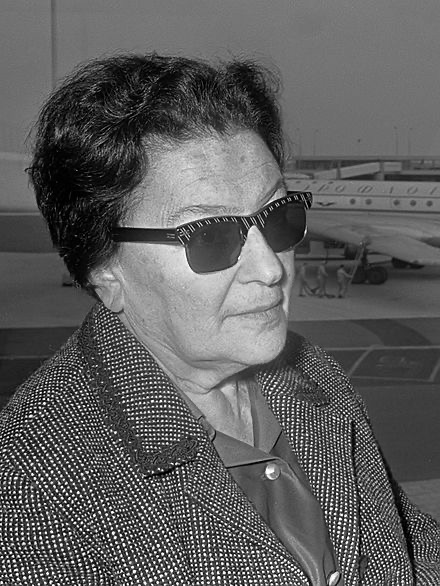
Prokofiev with his second wife Mira Mendelson 

Sergei Prokofiev’s  Piano Sonata No. 4 in C minor, Op. 29, subtitled D’après des vieux cahiers, or After Old Notebooks, was composed in 1917 and premiered on April 17 the next year by the composer himself in Petrograd The work was dedicated to Prokofiev’s late friend Maximilian Schmidthof, whose suicide in 1913 had shocked and saddened the composer.

  1. Allegro molto sostenuto 
  2. Andante assai 
  3. Allegro con brio,ma non leggiero 

In his notes accompanying the full set of recordings of Prokofiev’s sonatas by  Boris Berman David Fanning states the following:

Whether the restrained, even brooding quality of much of the Fourth Sonata relates in any direct way to Schmidthof’s death is uncertain, but it is certainly striking that the first two movements both start gloomily in the piano’s low register. Allegro molto sostenuto is the intriguing and apt marking for the first, in which a hesitant and uncertain mood prevails – the reverse of Prokofiev’s usual self-confidence. The Andante assai second movement alternates between progressively more elaborate statements of the opening theme and a nostalgic lyrical episode reminiscent of a Rachmaninov  Etude-tableau; finally the two themes are heard in combination. With the rumbustious finale Prokofiev seems to be feeling himself again. But for all the gymnastics with which the main theme is varied there is less showiness in this essentially rather introvert work than in any of the other piano sonatas.


Prokofiev, as drawn by Matisse  for the premiere of Chout  (1921)
27 April 1891 Sontsovka Russian Empire now Ukraine
5 March 1953 (aged 61)Moscow, Soviet 

The Eleven Bagatelles , Op. 119 were written  between the 1790s and the early 1820s.


Page one of the manuscript from Beethoven’s Bagatelle in G minor, Op. 119 n.1 (c. 1822)

By the end of 1803, Beethoven had already sketched bagatelles Nos. 1 to 5 (along with several other short works for piano that he never published). In 1820, he first finished the last five bagatelles of Op. 119, and published them as a set of five in June 1821 for  Wiener Pianoforteschule Schule by Friedrich Stark.The following year, he revised his old bagatelle sketches to construct a new collection for publication, adding a final bagatelle, No. 6, composed in late 1822.Initially Beethoven struggled to get a deal to publish any of the bagatelles Beethoven met with many people such as Peters of Leipzig and Pacini in Paris for publishing, who declined his request. Eventually Beethoven managed to have the entire set published: first by Clementi in London in 1823, Maurice Schlesinger in Paris some time around the end of 1823, and Sauer & Leidesdorf in Vienna on in April 1824. It is unclear to what degree this represents the composer’s intentions. 

Some scholars have argued that the two halves of Op. 119 — Nos. 1 to 6, and Nos. 7 to 11 — are best thought of as separate collections. However, it is also possible that when Beethoven composed No. 6 in late 1822, he had already planned to send all eleven pieces to England. In that case, No. 6 would not be meant as a conclusion to the first five, but as a way to connect them with the latter five. The key relationship and thematic similarities between No. 6 and No. 7 support this hypothesis, as does the fact that in subsequent correspondence, Beethoven expressed only satisfaction with how the bagatelles were published in England after his ex-pupil Ferdinand Ries  helped get the collection published.


Giacinto Francesco Maria Scelsi 8 January 1905 – 9 August 1988,was an Italian composer who also wrote surrealist  poetry in French.

Born in the village of Pitelli near La Spezia , Scelsi spent most of his time in his mother’s old castle where he received education from a private tutor who taught him Latin, chess and fencing. Later, his family moved to Rome and his musical talents were encouraged by private lessons with  Giacinto Sallustio . In Vienna, he studied with Walther Klein , a pupil of Arnold Schoenberg . He became the first exponent of dodecaphony in Italy, although he did not continue to use this system.He is best known for having composed music based around only one pitch , altered in all manners through microtonal oscillations , harmonic allusions, and changes in timbre and dynamics,as paradigmatically exemplified in his Quattro pezzi su una nota sola (“Four Pieces on a single note”, 1959).This composition remains his most famous work and one of the few performed to significant recognition during his lifetime. His musical output, which encompassed all Western classical genres except scenic music, remained largely undiscovered even within contemporary musical circles during most of his life. Today, some of his music has gained popularity in certain postmodern composition circles, with pieces like his “Anahit” and his String Quartets rising to increased prominence. The music of Scelsi was heard by millions in martin Scorsese’s Shutter Island , in which excerpts of his two works Quattro pezzi su una nota sola and Uaxuctum (3rd movement) .The suite n 11 was written in 1956 in Scelsi’s second period ( four periods are 1929/48 – 1952/59 – 1960/69 – 1970/85)

In Rome after the war, his wife left him (eventually inspiring Elegia per Ty), and he underwent a profound psychological crisis that eventually led him to the discovery of Eastern spirituality, and also to a radical transformation of his view of music. In this so-called second period , he rejected the notions of composition and authorship in favour of sheer improvisation . His improvisations were recorded on tape and later transcribed by collaborators under his guidance. They were then orchestrated and filled out by his meticulous performance instructions, or adjusted from time to time in close collaboration with the performers.Scelsi came to conceive of artistic creation as a means of communicating a higher, transcendent reality to the listener. In this view, the artist is considered a mere intermediary. For this reason, Scelsi never allowed his image to be shown in connection with his music; he preferred instead to identify himself by a line under a circle, as a symbol of Eastern provenance. Some photographs of Scelsi have emerged since his death.


Leopold Mordkhelovich Godowsky Sr. (13 February 1870 – 21 November 1938) was a Lithuanian-born American virtuoso pianist ,composer and teacher . He was one of the most highly regarded performers of his time,known for his theories concerning the application of relaxed weight and economy of motion within pianistic technique – principles later propagated by his pupils, such as Heinrich Neuhaus.
He was heralded among musical giants as the “Buddha of the Piano”.Ferruccio Busoni that he and Godowsky were “the only composers to have added anything of significance to keyboard writing since Franz Liszt”

In the three great Strauss transcriptions, Godowsky elevated the art of the piano paraphrase to a higher musical and pianistic plane; however their extreme technical difficulty remains a striking feature and places them out of the reach of ordinary pianists. The legendary pianist Leopold Godowsky (1870-1937) used to wow ‘em at concerts with these transcriptions of favorite tunes by the waltz king, and, in a delightful feat of anachronistic bravura. The quartet of arrangements–based on material from “Fledermaus,” “Wine, Woman and Song,” “Artist’s Life” and the “Symphonic Metamorphosis of the Schatz-Walzer Themes from ‘Zigeunerbaron’ For Left Hand Alone”–trades in sudden plunges into the minor, thick contrapuntal textures, excessive melodic embellishments and arpeggios for days. But these paraphrases truly retain the soul of the waltz. As a study in carefully manicured bad taste, this collection has few rivals.


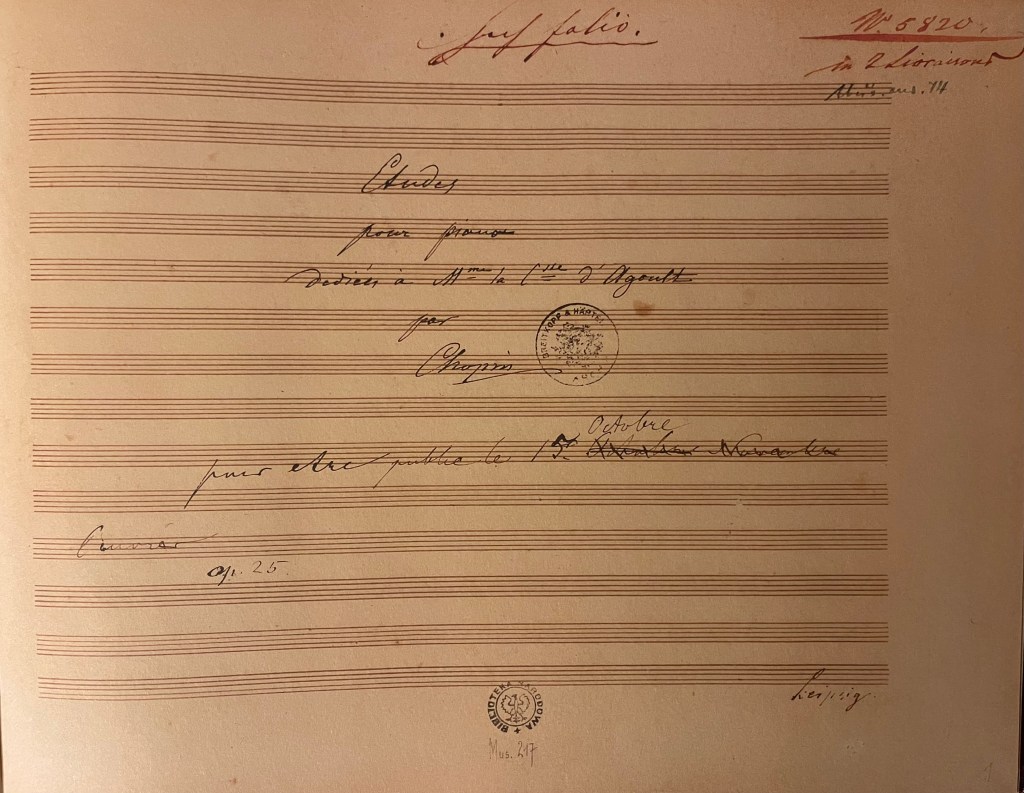
A page from Godowsky’s highly challenging arrangement of Chopin Op. 25, No. 1

As a composer, Godowsky has been best known for his paraphrases of piano pieces by other composers, which he enhanced with ingenious contrapuntal devices and rich chromatic harmonies. His most famous work in this genre is the 53 Studies on Chopin’s Etudes  (1894–1914), in which he varies the (already challenging) original études using various methods: introducing countermelodies , transferring the technically difficult passages from the right hand to the left, transcribing an entire piece for left hand solo, or even interweaving two études, with the left hand playing one and the right hand the other.Although his transcriptions are much more well known, Godowsky also composed a number of substantial original works. He considered the Passacaglia  (1927) and a collection of pieces for left hand alone (1930–31) to be his most mature creations; both, however, employ traditional approach to harmony and counterpoint. A more experimental work was the Java Suite  (Phonoramas) (1925), composed after a visit to Java, under the influence of gamelan  music. Godowsky was equally comfortable writing large-scale works like the Passacaglia or the five-movement Piano Sonata in E minor (1911) as he was creating collections of smaller pieces, such as the 46 Miniatures for piano four hands and the Triakontameron (1920; subtitled “30 moods and scenes in triple measure”).

Although he regularly played public concerts until 1930, Godowsky was plagued by stage fright , and particularly disliked the recording studio, like many performers of his time. On one occasion, he described the recording process thus:

‘The fear of doing a trifling wrong augmented while playing; the better one succeeded in playing the foregoing, the greater the fear became while playing. It was a dreadful ordeal, increasingly so the more sensitive the artist, I broke down in my health in London in the Spring of 1930, owing to these nerve-killing tortures. How can one think of emotion!

Consequently, it was acknowledged that Godowsky’s best work was not in public or in the recording studio, but at home. After leaving Godowsky’s home one night, Josef Hofmann  told Abram Chasins: “Never forget what you heard tonight; never lose the memory of that sound. There is nothing like it in the world. It is tragic that the world has never heard Popsy as only he can play.”Claudio Arrau ,declared Godowsky “one of the greatest technicians”, even though he considered his playing “boring” and complained that Godowsky “never played above mezzo-forte.” Artur Rubinstein simple stated that it would take him “five hundred years to get a mechanism like Godowsky’s”.


Olivier Messiaen
10 December 1908 Avignon France 27 April 1992 (aged 83)Clichy , France

The Vingt Regards sur l’Enfant-Jésus (“Twenty Contemplations on the Infant Jesus”) are a suite of 20 pieces for solo piano by the French composer Olivier Messiaen  (1908–1992).It was composed from March to September of 1944 following a January commission by Maurice Toesca wishing for a reading of his twelve poems on the nativity. The abandoned plan was later reworked with a dedication to his protégée Yvonne Loriod

  1. Regard du Père (“Contemplation of the Father”)
  2. Regard de l’étoile (“Contemplation of the star”)
  3. L’échange (“The exchange”)
  4. Regard de la Vierge (“Contemplation of the Virgin”)
  5. Regard du Fils sur le Fils (“Contemplation of the Son upon the Son”)
  6. Par Lui tout a été fait (“Through Him everything was made”)
  7. Regard de la Croix (“Contemplation of the Cross”)
  8. Regard des hauteurs (“Contemplation of the heights”)
  9. Regard du temps (“Contemplation of time”)
  10. Regard de l’Esprit de joie (“Contemplation of the joyful Spirit”)
  11. Première communion de la Vierge (“The Virgin’s first communion”)
  12. La parole toute-puissante (“The all-powerful word”)
  13. Noël (“Christmas”)
  14. Regard des Anges (“Contemplation of the Angels”)
  15. Le baiser de l’Enfant-Jésus (“The kiss of the Infant Jesus”)
  16. Regard des prophètes, des bergers et des Mages (“Contemplation of the prophets, the shepherds and the Magi”)
  17. Regard du silence (“Contemplation of silence”)
  18. Regard de l’Onction terrible (“Contemplation of the awesome Anointing”)
  19. Je dors, mais mon cœur veille (“I sleep, but my heart keeps watch”)
  20. Regard de l’Eglise d’amour (“Contemplation of the Church of love”)

Messiaen uses Thèmes or leitmotifs , recurring elements that represent certain ideas. They include:

  • Thème de Dieu (“Theme of God”)
  • Thème de l’amour mystique (“Theme of Mystical Love”)
  • Thème de l’étoile et de la croix (“Theme of the Star and of the Cross”)
  • Thème d’accords (“Theme of Chords”)

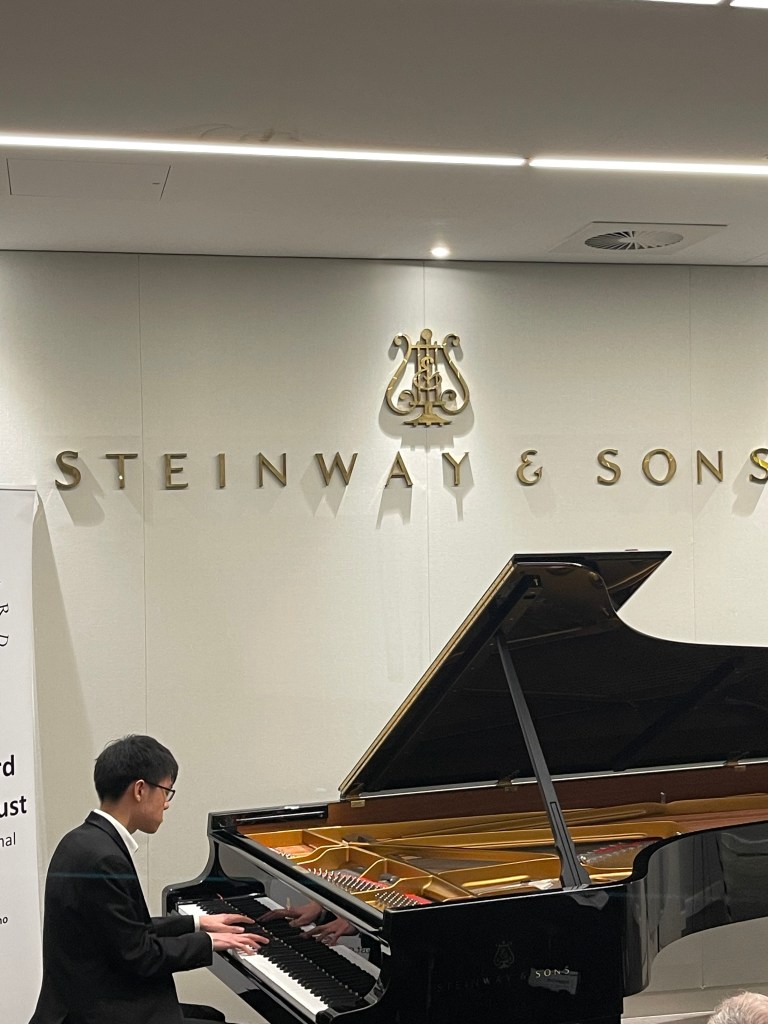
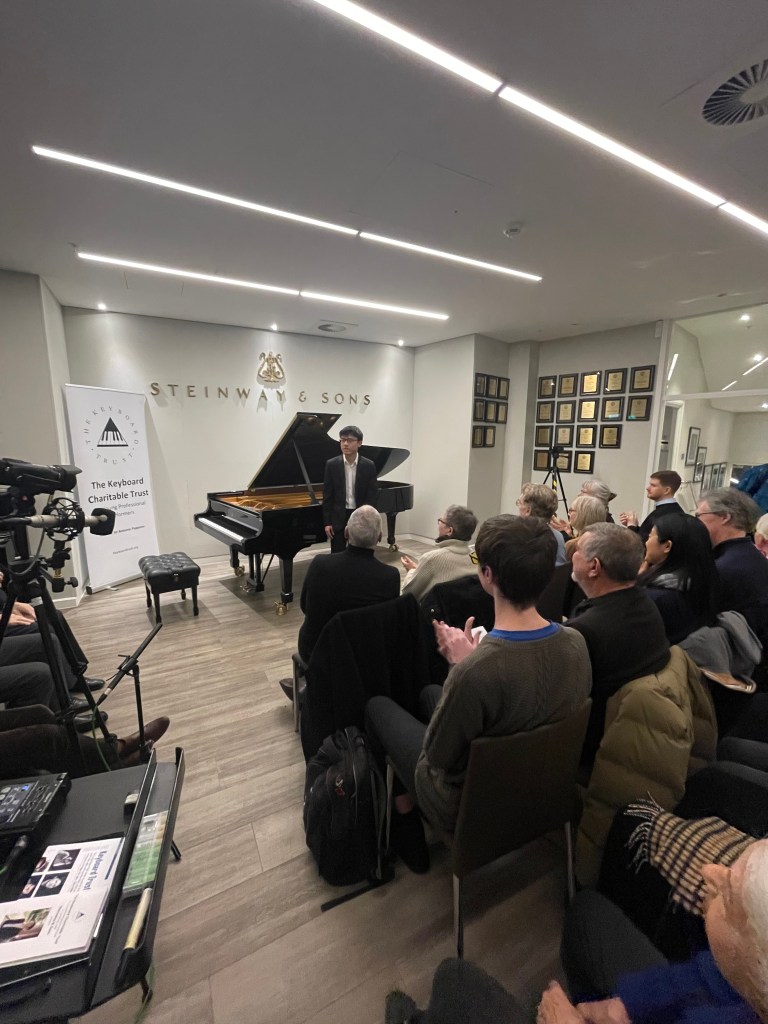
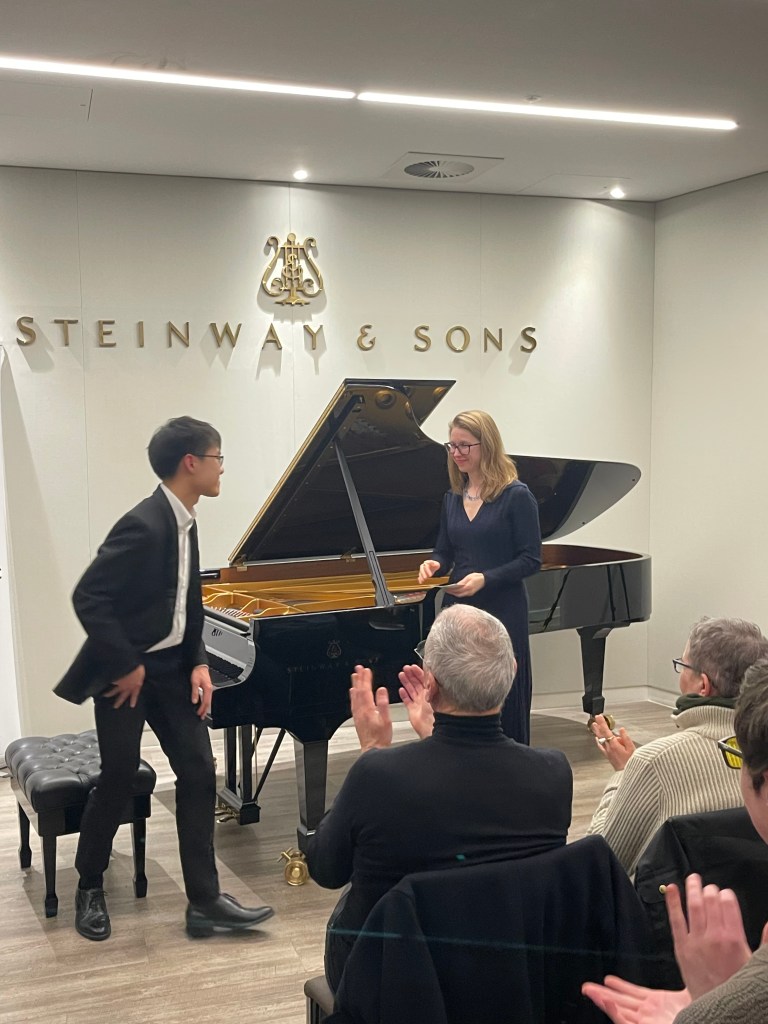
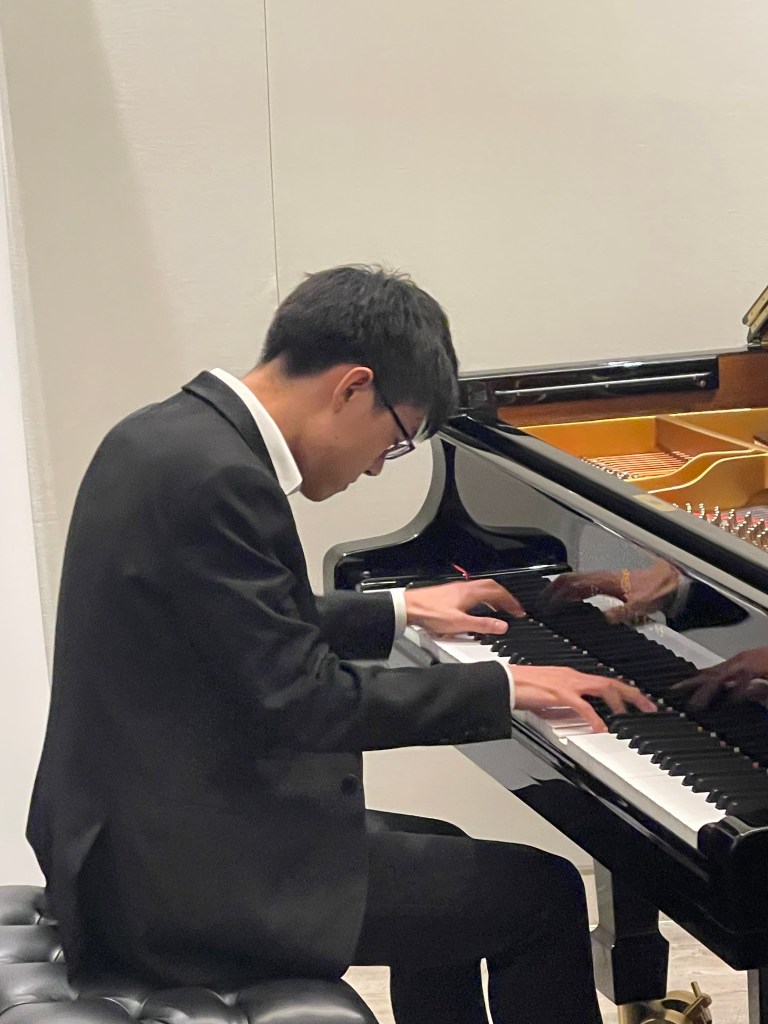
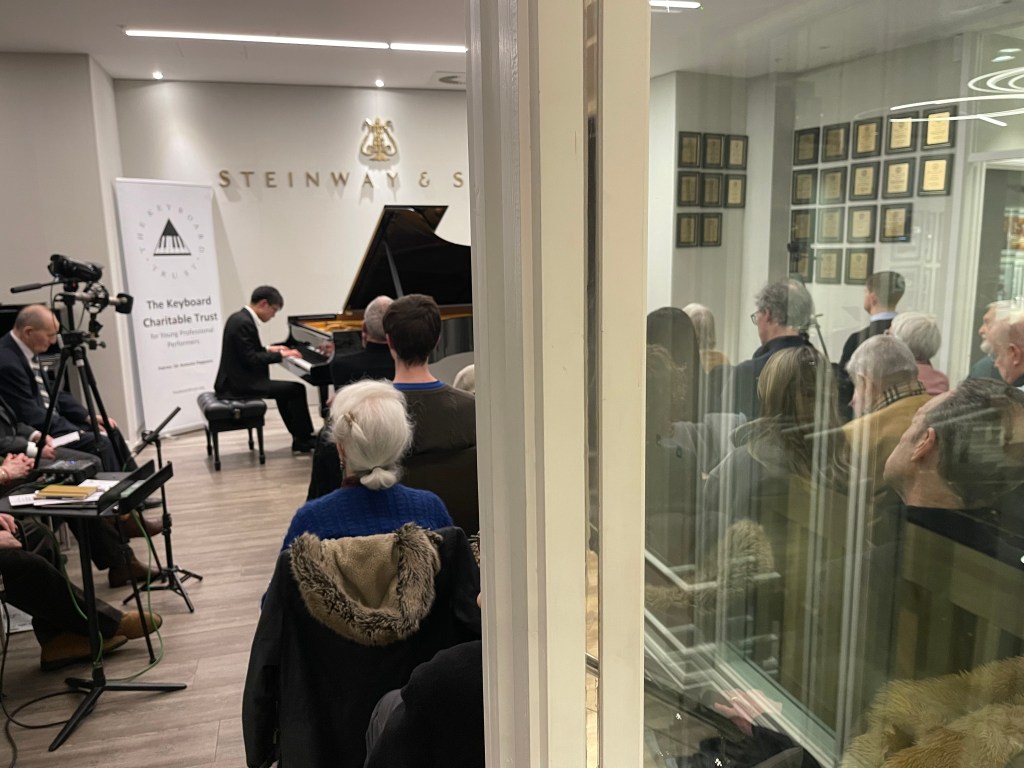
Jeremy Chan at Steinway Hall for the Keyboard Trust

Jeremy Chan at Steinway Hall London for the Keyboard Trust where his eclectic programme of the four Bs made for a box office success: Bach,Beethoven Brahms and Barber!
Bach as seen through the eyes of Rachmaninov and Beethoven particularly genial with the only Sonata that he was happy to add a title to describing a sad departure but also the glad return.
Brahms with four of his most poignantly ethereal and imperious miniature tone poems and Barber with demonic knotty twine that only Horowitz could completely hope to unwind.


An audience that included two of the KT artistic directors (the third is at Steinways in Milan to present Misha Kaploukhii to the Italian public ) who were happy to interrogate and converse with this young musician who I had heard just a month ago with the same programme:
https://christopheraxworthymusiccommentary.com/2024/09/19/jeremy-chan-at-st-olaves-tower-hill-with-playing-of-commanding-authority-and-towering-musicianship/

Elena Vorotko in conversation with the artist

Elena Vorotko writes :’ I thought Jeremy was rather good last night, definitely had something to say and rather beautiful/poetic in all the right places, made a rather hoarse piano sound rather beautiful. I thought he held back the volume skillfully without lacking contrast till he got to Barber and the let loose, rather rightly. I thought there was clarity overall and great attention to articulation and textural detail. I sat in front row with Garo from the Pharos Cultural Centre in Cyprus who really liked Jeremy’s playing ‘

‘The London Steinway Hall was buzzing with anticipation! The audience for this sold out concert included celebrated musicians, concert organisers and critics, taking the temperature up a notch for the evening’s performer- Jeremy Chan.

With the first notes of the Bach/Rachmaninov transcription one could feel Jeremy’s eager involvement in the music. While keeping to traditional norms of rolling beat and articulation, he indulged his public in cleverly voiced, clear tapestry of polyphony, sprinkling new iterations of the theme with new colours. Letting us enjoy Rachmaninov’s signature harmonies here and there, Jeremy created a playful character that was both charming and fun.

The Beethoven ‘Les Adieux’ sonata, so called by the composer himself, appeared like a triptych of related, but strongly contrasting movements. The poised flow of the musical narrative allowed the audience time to be present in the music. Full of colours and characterful articulation, the first movement portrayed worrysome anticipation rather effectively! The second movement was very moving in its simple, immediate and genuine expression. Mournful intonations were contrasted with the joyful episodes not only in volume, but sound quality and balance of textures, creating a fully immersive effect for the audience. Jeremy took us on a journey of dealing with grief, which resolved by transforming into the sound of distant celestial bells. The volume of the third movement was pleasantly well judged, at least for those seated in the front row – only about 2 metres away from the piano! Jeremy opted for bright and light sonorities, never pounding as can be easily done in this exciting piece. It seemed that he kept the general dynamic range relatively narrow, saving the greatest volume for what was to come later in the programme.

If one has not noticed this before, in Brahms it became particularly clear, just how much Jeremy loves music- loves creating beautful sonorities, that merge and transform into one-another while floating in the air. Loves making those phrases speak, loves playing with those textures, loves communicating through sound and making music a vivid reality for his listeners. The B minor intermezzo was beautifully played on the piano, that could easily sound hoarse and forced in the relatively small Steinway Hall. It is a true test for the pianist to be able to tame the glorious beast of a Steinway model D when the audience is breathing down your neck. But nobody was actually breathing, everyone held their breath in anticipation of every new sound Jeremy was creating. He made his soul sing through his fingers in an intimate and direct way and took our souls along with him.

The Barber Sonata was a sparkling kaleidoscope of emotions. With the grand structure thought through and realised, every detail supported the narrative arch and gripped the audience from start to end. When I asked some audience members what they enjoyed the most, quite a lot of them said- “ Barber”! But it was not just loud and fast and impressive, it was interesting, enlightening and beautiful. I loved the attention to textures in all works played by Jeremy that evening. His intellect shone through but did not get in the way of his heart, a rare balance to find in any human, let alone a musician! Bravo, Jeremy!’


I was sorry to miss a chance to hear Jeremy’s concert again but even sorrier to miss the fun and games afterwards.
The KT, thanks to the generosity of Steinway’s, encourages the public to mix and get to know some of the strains and struggles of these young musicians as they spend their youth reaching for the stars.
Also a chance to try some of the designer pianos that Steinways are presenting to the world with such success.

Elena Vorotko with Wiebke Greinus artist manager of Steinway and our genial hostess


Elena Vorotko was particularly inspired by the Walt Disney piano on display in the shop window.
Let’s not forget that it is thanks to Tom and Jerry who bequeathed the inspiration of Lang Lang to the millions of unsuspecting musicians that we now see emerging from China and more importantly buying pianos.It is the Lang Lang Foundation like the Keyboard Trust that so generously helps young musicians to survive and thrive on those first few steps of a ladder as long and thorny as a beanstalk!

In an after concert discussion with Leslie Howard
Elena with Garo Geyehan from Cyprus Pharos Cultural Centre
With actor Marco Gambino on the far right
Sarah Biggs CEO of KT with Stephen Dennison of HHH Concerts
Sir Geoffrey Nice QC trustee of the KT with Richard Thomas KT Administrator
With distinguished film director Tony Palmer in the far distance
https://en.wikipedia.org/wiki/Tony_Palmer_(director)
Sherri Lun one of the very few progressing in the prestigious Hamamatsu International Piano Competition in Japan in these days
https://christopheraxworthymusiccommentary.com/2024/10/25/the-strand-rising-stars-series-sherri-lun-the-magic-and-artistry-of-a-star-shining-brightly/
https://christopheraxworthymusiccommentary.com/2023/06/02/the-gift-of-music-the-keyboard-trust-at-30/

Maria Filippova at St James’s Piccadilly Winner of the 2004 Tunbridge Wells International Music Competition

https://www.youtube.com/live/kjLC5c_uCxE?feature=shared

Sigfrid Karg-Elert (1877-1933)P Sonate in B-dur op. 121 for flute and piano

Alexander Scriabian (1872-1915):

Desire op. 57
Danced caress op. 57, no. 2
Poem op. 32, no. 1
Etude op. 56, no. 4

Friedrich Kuhlau (1786-1832): Divertissement op. 68, no. 6 in C-Sharp
minor for flute solo
2. Dick Kattenburg (1919-1944): Sonata for flute and piano op.5
3. George Hüe (1858-1948) : Fantasie pour flûte et piano

Presented in association with Tunbridge Wells International Music Competition.

Russian flutist Maria Filippova made her concerto debut with the Symphony Orchestra of Nizhni Novgorod under the baton of Renat Zhiganshin in 2008. She has since performed in numerous concert halls across Russia and Europe. Over the years, Maria has performed as a soloist with several esteemed orchestras, including the Symphony Orchestra of Moscow state Philharmonic Society, Symphony Orchestra of Czech radio, Symphony Orchestra of Nizhniy Novgorod state Philharmonic Society named after M. Rostropovitch and various Municipal chamber orchestras across Russia. As an orchestral player Maria has extensive experience playing as part of the English-leading orchestras and ensembles and had a privilege to perform in various prestigious venues such as Cadogan Hall, Barbican Centre, Wigmore Hall and Royal Albert Hall. During her studies Maria became a laureate of the regional, all-Russia and international competitions more than once. In 2014, aged 14, Maria became the winner of the Nutcracker Television Competition and the Concertino-Praga Competition, where her gala performance was broadcast on Czech Radio. Since then, Maria was overall Grand Prix Laureate at the Gnessin Competition in Moscow, received a gold medal of the Delphic Games in Vladivostok and also became a finalist of the Moscow International Flute Competition, where she performed her program of the third round in the Great Hall of the Moscow Conservatory. In 2024 she became a winner of a Tunbridge Wells International Music Competition. This year Maria will be undertaking the Artist Diploma course at RCM supported by The Carne Junior Fellowship (Philip Carne) and the Neil Black award (Countess of Munster Musical Trust).

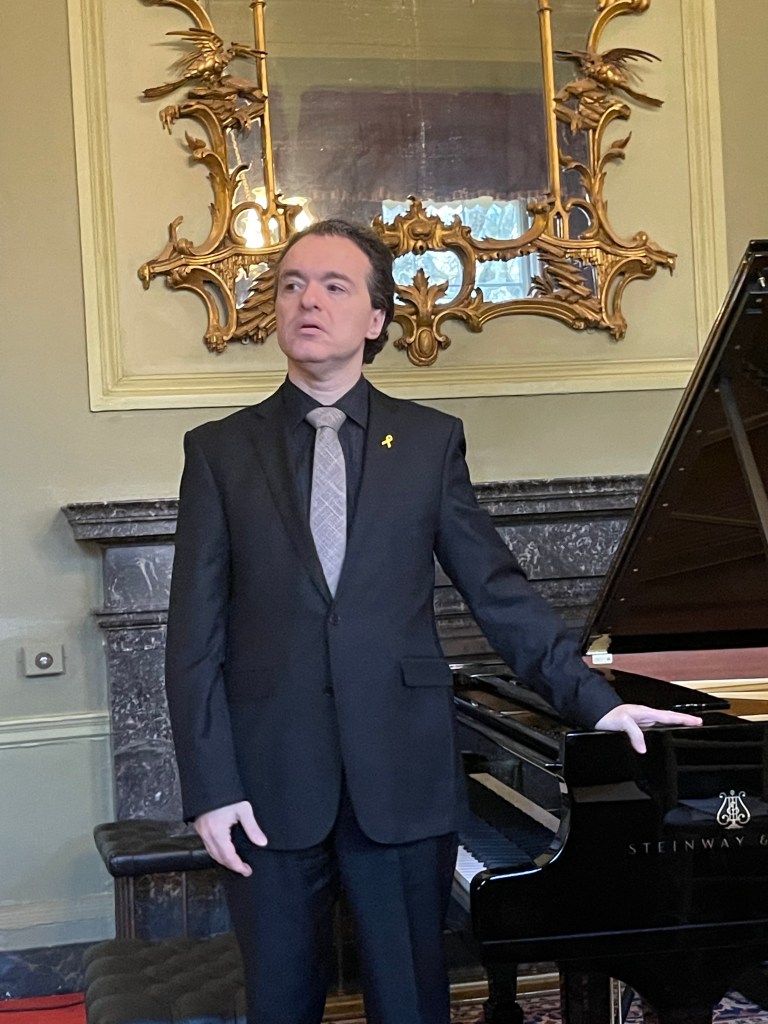
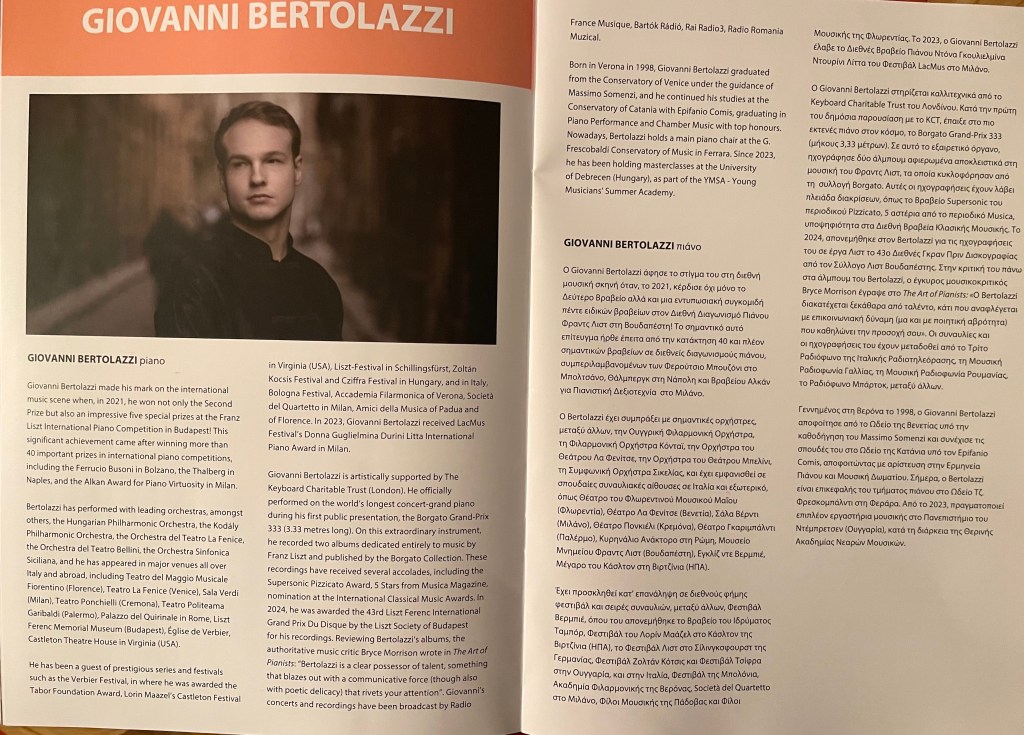
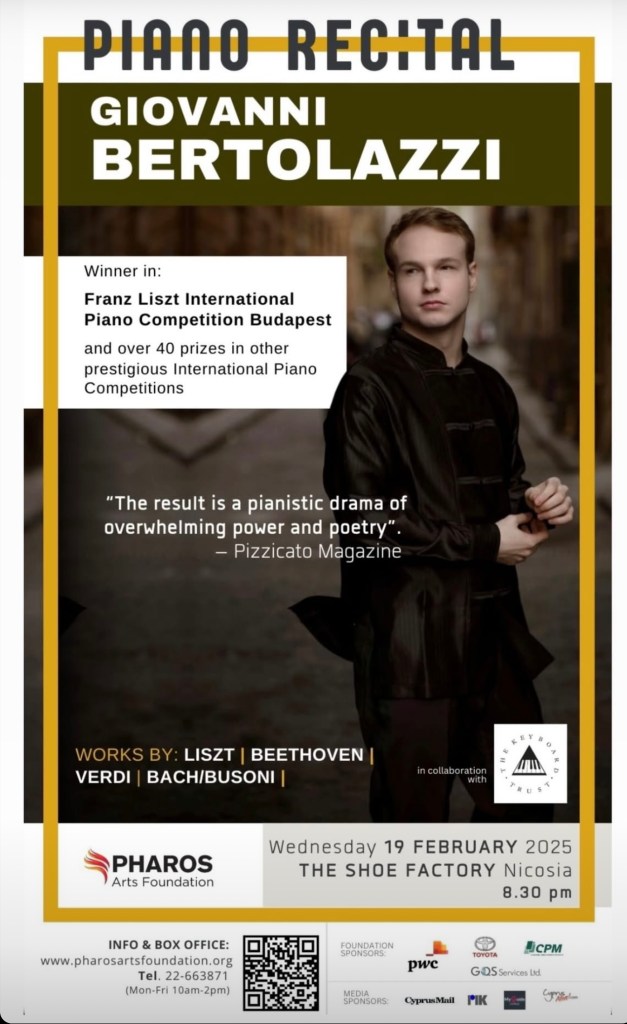
Giovanni Bertolazzi’s spellbinding mastery ignites and excites Roma 3 Orchestra

Domenica 10 novembre ore 12; Museo Pietro Canonica

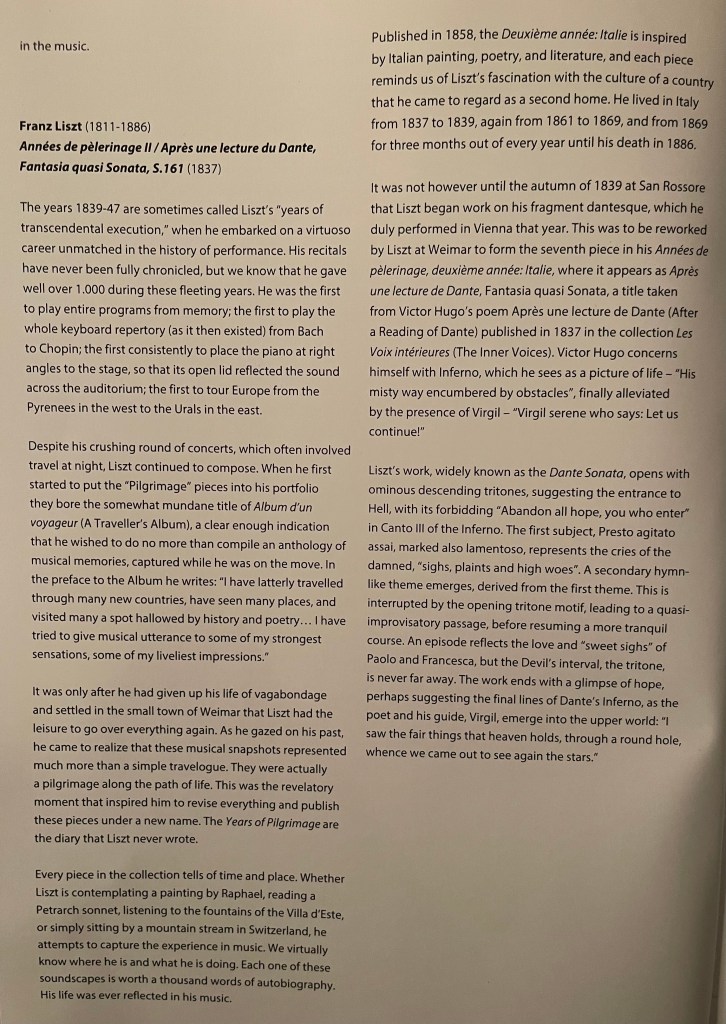
Le parafrasi da concerto di Franz Liszt da Verdi


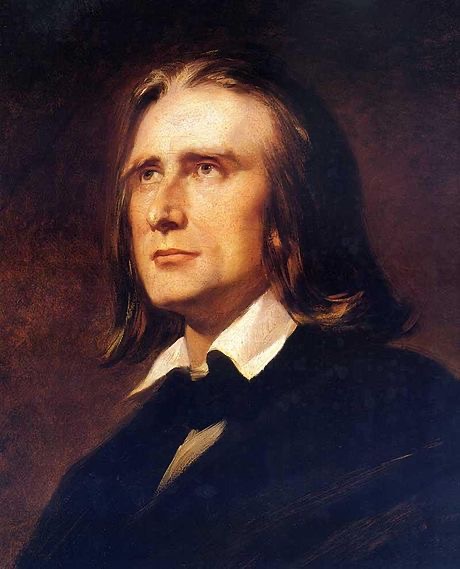
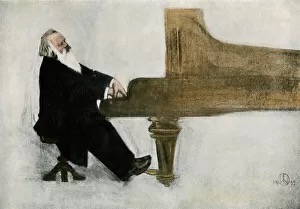
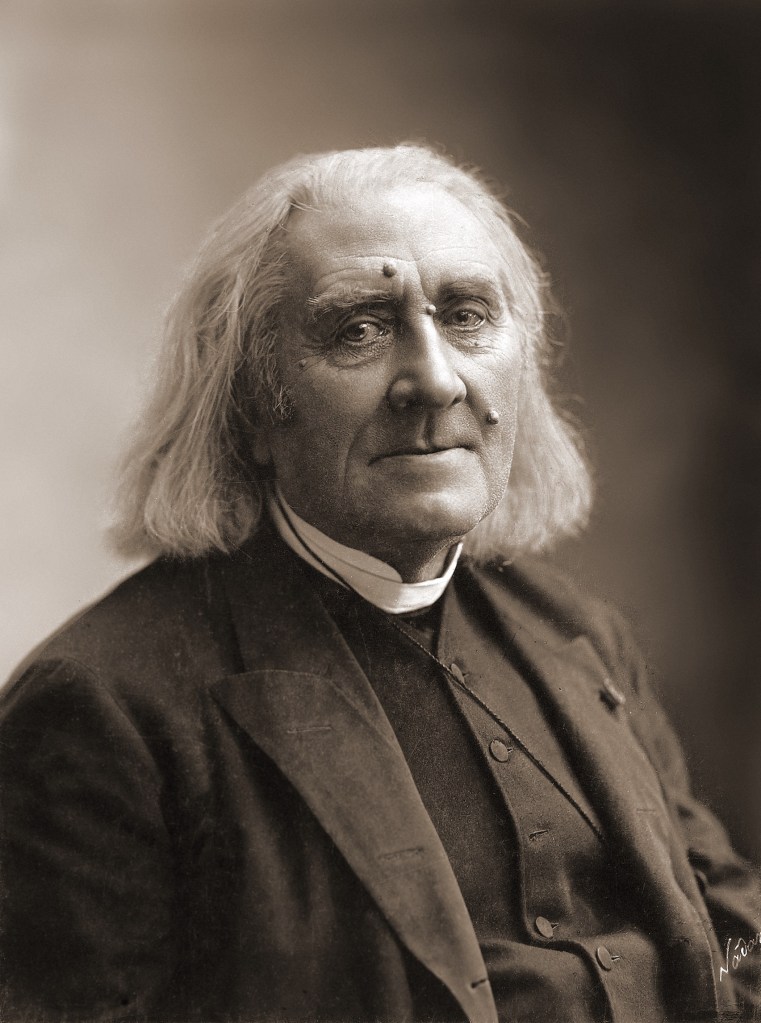
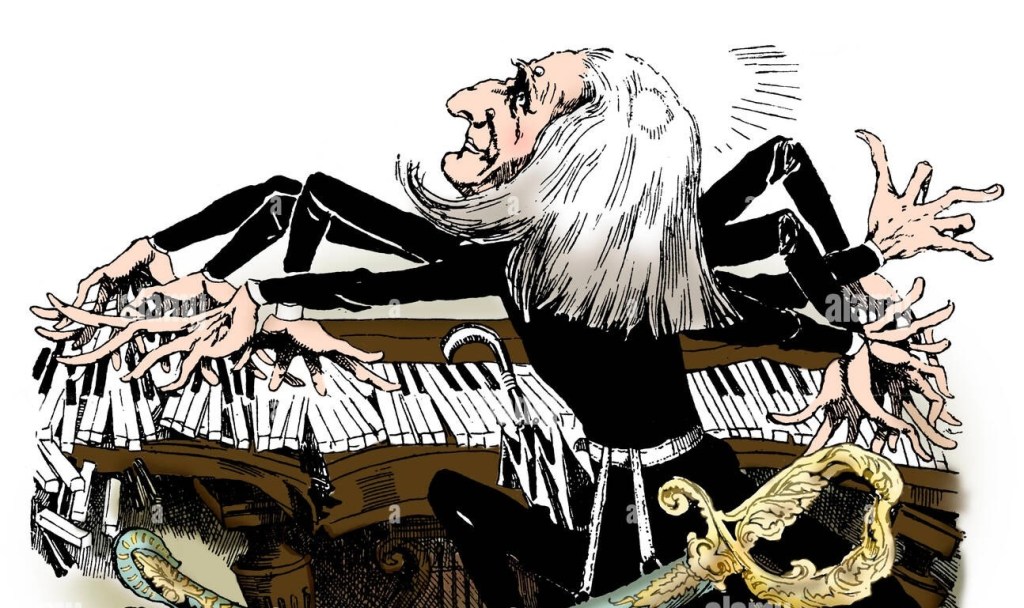
FRANZ LISZT
22 October 1811 Doborjan Kingdom of Hungary, AustrianEmpire

31 July 1886 (aged 74) Bayreuth , Kingdom of Bavaria, German Empire
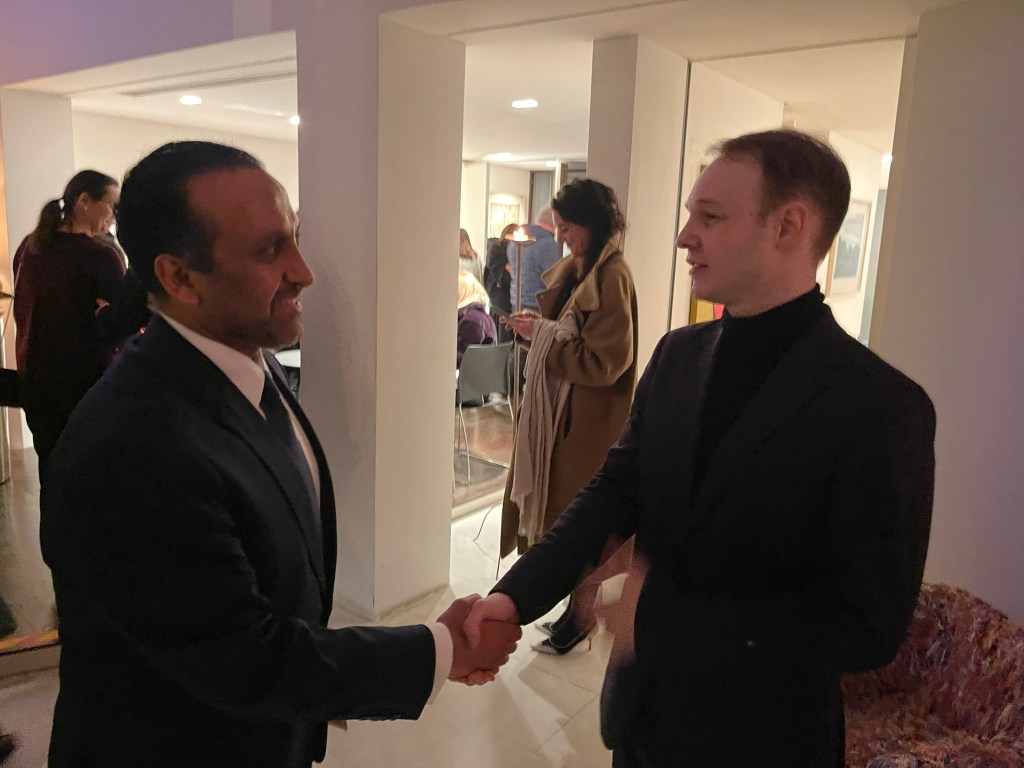
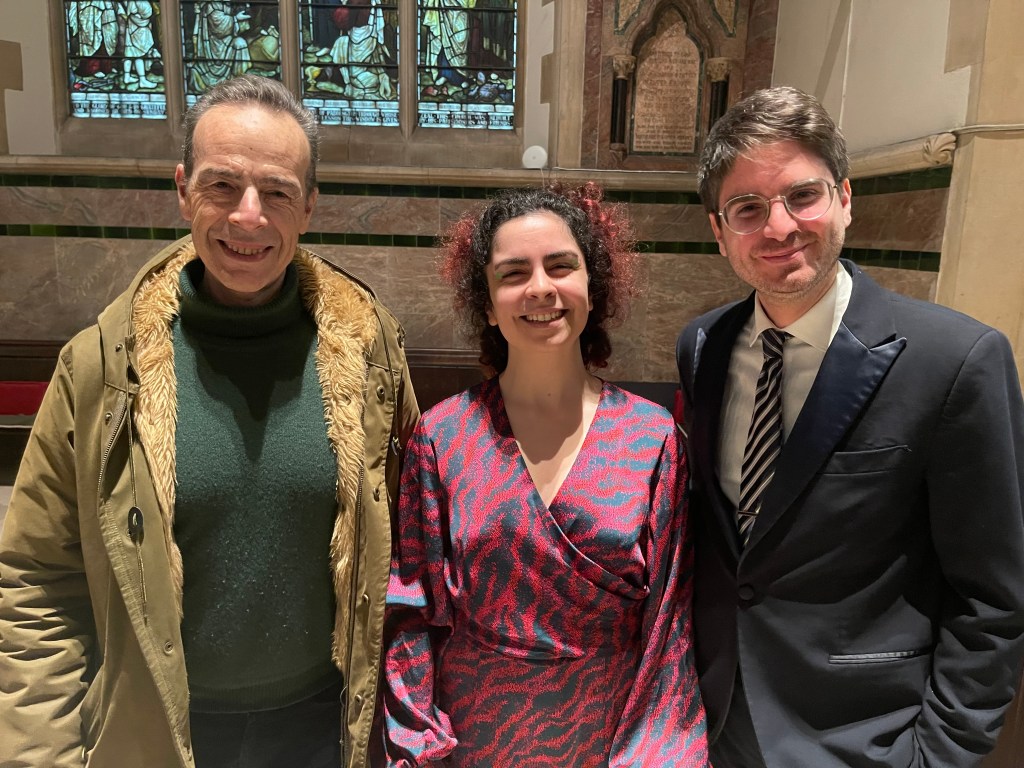
Master and pupil Giovanni Bertolazzi with Domenico Bevilacqua an ex student of Giovanni from Ravenna Conservatory now studying in Imola with Boris Petrushansky

R. Wagner – F. Liszt: Isoldes Liebestod, S. 447

Domenico Bevilacqua, pianoforte

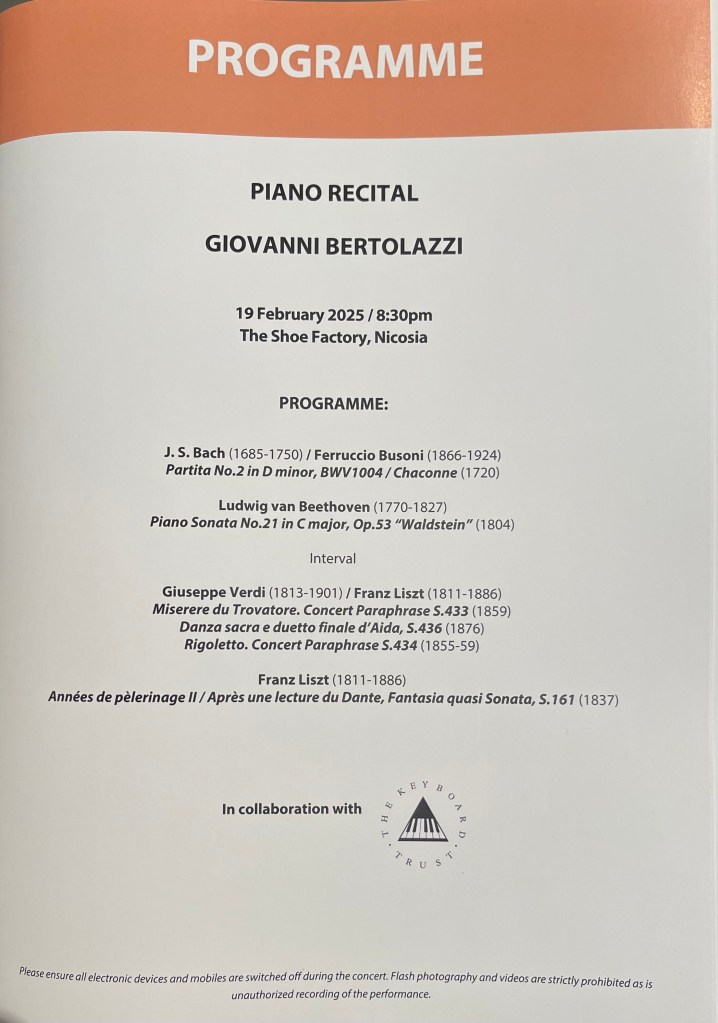
G. Verdi – F. Liszt: Ernani. Parafrasi da concerto, S. 432; Miserere dal Trovatore, S. 433; Salve Maria! Da Jérusalem (I Lombardi), S. 431ii ; Don Carlos. Coro di festa e marcia funebre, S. 435; Aida. Danza sacra e duetto finale, S. 436; Reminiscenze di Simon Boccanegra, S. 438; Rigoletto. Parafrasi da concerto, S. 434

Giovanni Bertolazzi, pianoforte

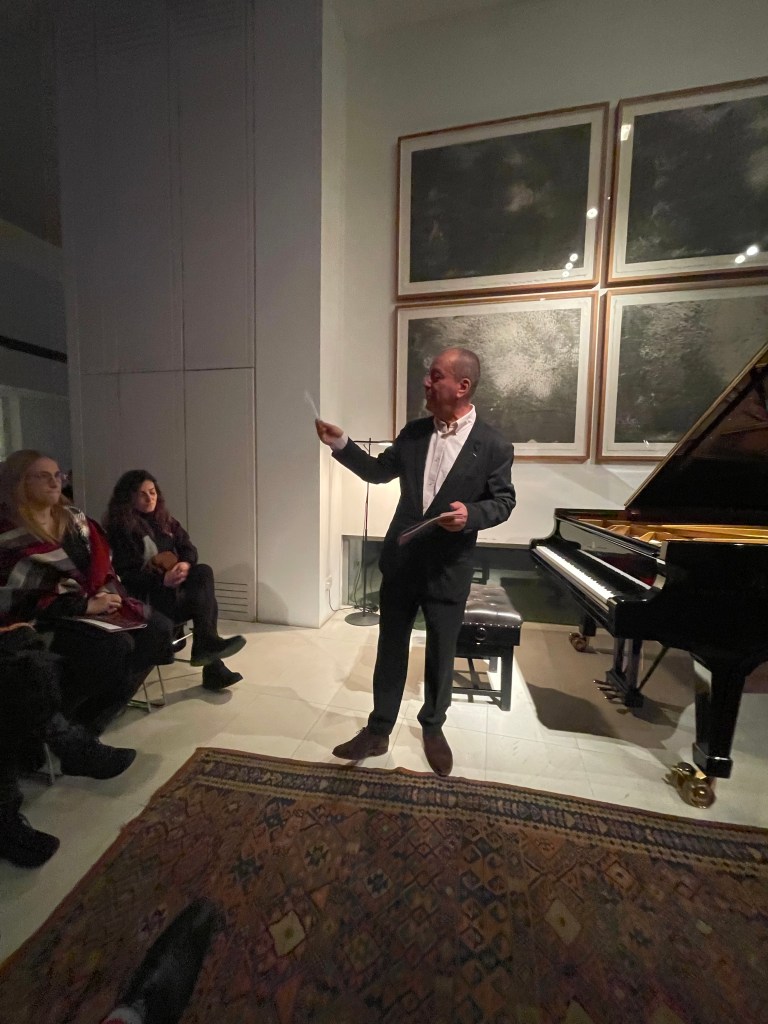
Valerio Vicari , the genial artistic director of Roma 3 Orchestra presenting the concert

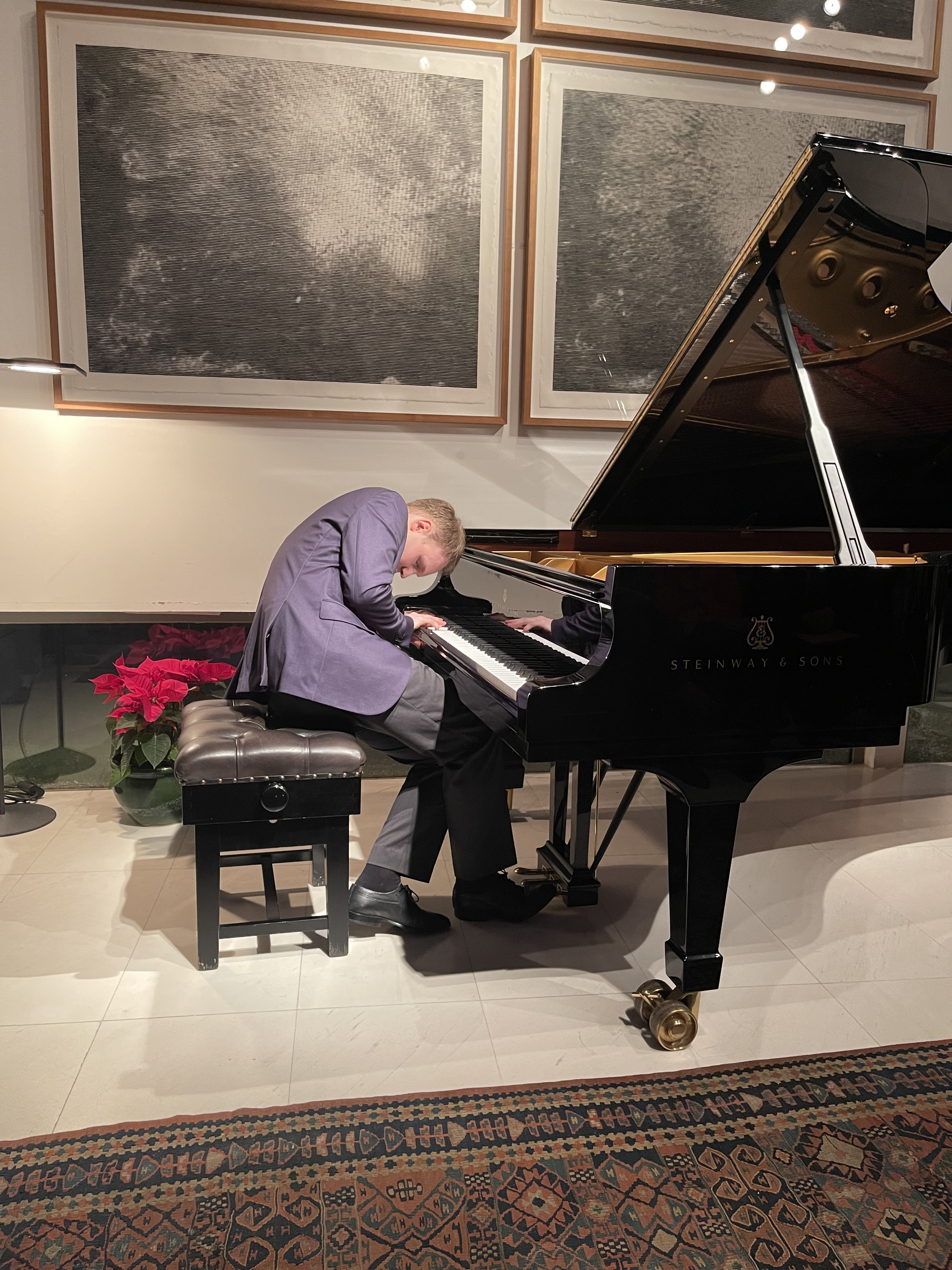
Sensational is the only word to describe Giovanni Bertolazzi playing all seven of the opera paraphrases of Verdi by Liszt
Presenting his student ,Domenico Bevilacqua, opening with Liebestod which had all the colours and musicianship of his mentor
But when Giovanni struck up the Ernani paraphrase there was a authority and breathtaking presence that was to hold a museum packed to the rafters mesmerised by such artistry on this sunny Sunday morning in Villa Borghese they even demanded more and Giovanni very generously offered three encores. A little waltz written for piano by Puccini ; De Falla’s Ritual Fire Dance alla Rubinstein ! And by even great insistence Valse Triste by the violinist Vecsey (Agosti was often his duo partner) in the spectacular arrangement for piano by Cziffra.

A triumph and it is thanks to Valerio Vicari who had spotted his talent a few years ago and has brought his talent to the fruition that is being applauded worldwide today.

Domenico Bevilacqua opened this all Liszt concert with a sumptuous performance of Liebestod .It is a work that Giovanni too had played a few years ago for Roma 3 in the historic Villa Torlonia.
https://christopheraxworthymusiccommentary.com/2022/01/17/giovanni-bertolazzi-in-rome-liszt-is-alive-and-well-at-teatro-di-villa-torlonia/
Today Domenico showed a depth of sound from the arresting opening chords that were played with strength but never hardness.A kaleidoscope of colours allowed the twisting and turning of the counterpoints to entwine with fluidity and glowing beauty as they built to a passionate climax only to die away to a magical whisper. A superb sense of style and stretching the insinuating sounds to their maximum without ever loosing sight of the overall architectural shape.
Authority and control immediately created an electric atmosphere where this young virtuoso held us in the palm of his hands as he took us on a wondrous voyage of discovery. And what a wonder this Ernani paraphrase is and strangely heard so rarely in the concert hall.Maybe because of it’s transcendental difficulty that for Giovanni was not a problem .The massive hurdles he surmounted with ease with a sense of style and balance always at the service of the music.

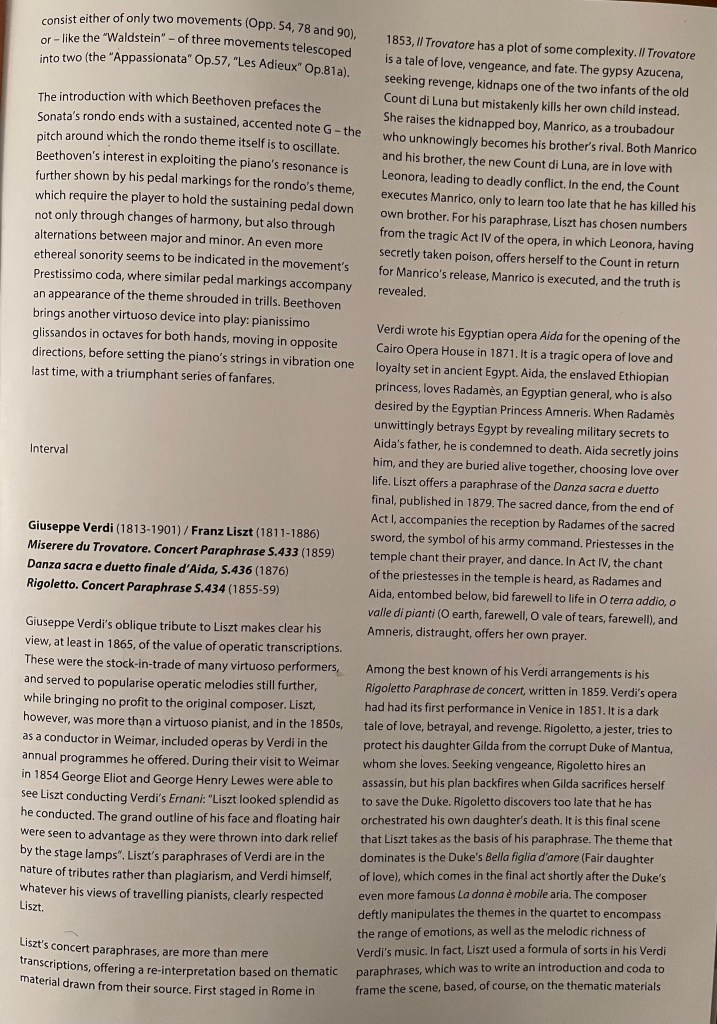
Liszt made a concert paraphrase of Ernani in 1847, but this remained unpublished. A second Paraphrase de concert was made in the following years and revised in 1859. The opera itself was first staged in Venice in 1844 and deals with the rivalry for the love of Elvira of the bandit Ernani and Don Carlo, King of Spain, complicated by the implacable hostility of Elvira’s uncle, Don Ruy Gomez, who conspires with Ernani against the King. When matters seem resolved, Don Ruy gives a signal, agreed with Ernani, that the latter should die, if Don Ruy demands it. The signal is given, and Ernani stabs himself. The third act is set in a cathedral vault at Aix-la-Chapelle, before the tomb of Charlemagne. Don Carlo, who is to be elected Holy Roman Emperor, overhears the conspirators, turns and addresses his illustrious predecessor in O sommo Carlo (O supreme Carlo), and extends clemency to Ernani and Elvira. It is this melody that provides the basis of Liszt’s paraphrase. 

The deep bass notes intoned with ponderous seriousness in the ‘Miserere’ before the sumptuous tenor melody with subtle gentle comments on high becomes ever more dramatic and insistent .

First staged in Rome in 1853, Il trovatore has a plot of some complexity. The troubadour of the title, Manrico, is the supposed son of the gypsy Azucena, but actually the stolen child of the old Count di Luna, a rebel and declared enemy of the young Count di Luna. Both are in love with Leonora, and Manrico, in his stronghold, is preparing to marry her, when news comes of the imminent death of his supposed mother, taken by the Count and condemned to death by burning. In his attempt to save her, Manrico is taken prisoner by the Count. In the fourth act Leonora, brought to a place outside Manrico’s prison, thinks to bring him new hope. From the tower the Miserere is heard, Miserere d’un’ alma già vicina / Alla partenza che non ha ritorno! (Have mercy on a soul already near / To the parting from which there is no return). Leonora’s horrified exclamation, Quel suon, quelle preci solenni, funeste (What sound, what solemn, mournful prayers) leads to Manrico’s Ah che la morte ognora / È tarda nel venir (Ah how slow the coming of death), from the tower, his farewell to his beloved. Once again Liszt has chosen the point of highest tragedy for his 1859 paraphrase. It is followed by Leonora’s offer of herself to the Count, in return for her lover’s release, having secretly taken poison, her death, and that of Manrico, executed, but now finally revealed by Azucena to the Count as his own brother. 

The ‘Salve Maria’ was Liszt’s first paraphrase of Verdi and it was played with chiselled sounds of great purity

Verdi’s opera of 1842, I Lombardi was recast in 1847 for Paris as Jérusalem. The Paris version transposes the action from Lombardy to France. The prayer, sung by Hélène, daughter of the Count of Toulouse, who has killed her lover’s father, again comes in the first act. Liszt’s version, more transcription than paraphrase, made originally in 1848, is dedicated to Madame Marie Kalergis, née Comtesse Nesselrode. The tremolo effect, originally for violins, is preserved in Liszt’s version, more particularly, perhaps, in the alternative transcription for the newly invented armonipiano, with its tremolo pedal. 

Don Carlos there was immediately a dynamic rhythmic energy with extraordinary empty bass sounds that created quite an astonishing atmosphere of desolation.

Dating from 1867-68, Liszt’s treatment of the Coro di festa e marcia funebre from Don Carlos is based on the opera of that name, first seen in its original version in Paris in 1867. Drawn from Schiller’s dramatic poem, the plot centres on the Spanish Infante, son of Philip II, and his love for Elisabeth de Valois, originally his betrothed but then the wife of the King. The involvement of Don Carlos with rebels in Flanders and the interventions of Princess Eboli, who is also in love with Don Carlos, bring further complications, ending in his condemnation and final mysterious rescue into the monastery founded by his grandfather, from behind whose tomb a voice calls him. The Church has an important part to play and the Grand Finale of the third act brings a popular celebration, in front of the Cathedral of Valladolid, honouring the King. This spectacular scene is followed by a funeral march, as monks escort heretics to their deaths at the stake. 

What a ravishingly beautiful paraphrase this ‘Aida’ is where Liszt has completely understood the chamber quality of an opera that is all too often thought of as only the triumphal march.The ending is one of the most beautiful things in all of Verdi’s operas and it was this that Giovanni played with ravishing sounds and an extraordinary expressiveness ending in bare whispers of breathtaking beauty.

Verdi wrote his Egyptian opera Aida for the opening of the Cairo Opera House in 1871. Aida, daughter of the King of Ethiopia but enslaved by the Egyptians, is in love with Radames, appointed captain of the Egyptian armies in their fight against the Ethiopians. Victorious in battle, Radames is promised the hand of Aida’s mistress, Amneris, daughter of the King of Egypt, as a reward for his triumph. In an assignation with Aida, whom he loves, he divulges military secrets to her, overheard by her father, a prisoner of the Egyptians. Accused of treachery, Radames is condemned to death, to the dismay of Amneris, and, immured in a tomb, he is joined by Aida, allowing the two to die together, while Amneris mourns the fate of her beloved Radames. Liszt offers a paraphrase of the Danza sacra e duetto final,published in 1879. The sacred dance, from the end of the first act, accompanies the reception by Radames of the sacred sword, the symbol of his army command. Priestesses in the temple chant their prayer to the god Phtha, Possente, possente Phtha!, followed by their dance. In the fourth act the chant of the priestesses in the temple is heard, as Radames and Aida, entombed below, bid farewell to life in O terra addio, o valle di pianti (O earth, farewell, O vale of tears, farewell), and Amneris, distraught, offers her own prayer. 

Boccanegra was the last of Liszt’s paraphrases and was played with a radiant beauty even if it appeared to me to be the least successful . There were many beautiful things but Liszt seemed to lack an overall shape and form that had been so clear in the previous paraphrases.

Liszt’s Réminiscences de Boccanegra was written in 1882, a year after Verdi’s revision of his 1857 opera. It deals with events in medieval Genoa, plots against the Doge, Simone Boccanegra, and the machinations of the goldsmith Paolo Albiani. The opera ends with the death of Boccanegra, poisoned by Paolo, but the happy joining together of his daughter Amelia with Gabriele Adorno, who succeeds Boccanegra as Doge. Liszt’s reminiscences start with a reference to the 1881 Prologue, in which the election of Boccanegra as Doge is proposed. This leads to the final chorus of the second act, All’armi, o Liguri (To arms, O Ligurians), a popular rebellion against the Doge, that is to be defeated. A further reference is to the final ensemble of the third act, bringing the death of Boccanegra, but otherwise general reconciliation. Liszt ends the work with a return to the theme of the Prologue.

Rigoletto paraphrase has long been a favourite of virtuosi in the concert hall. It is easy to see why with its ravishing rubato and sense of style allied to astonishing pianistic brilliance. There was charm and elegance too and Giovanni was certainly not lacking in showmanship and scintillating virtuosity in a performance of fearless dynamism.

Liszt’s concert paraphrases, are more than mere transcriptions, offering a re-interpretation based on thematic material drawn from their source. Among the best known of his Verdi arrangements is his Rigoletto Paraphrase de concert, written in 1859. Verdi’s opera had had its first performance in Venice in 1851. The plot centres on the court jester of the title, a servant and accomplice of the Duke of Mantua in his amorous adventures. Cursed by a courtier whose daughter the Duke has dishonoured, Rigoletto suffers the loss of his own daughter, Gilda, seduced by the Duke and then abducted, for the Duke’s pleasure, by the courtiers. In the last act of the opera Rigoletto has hired an assassin, Sparafucile to murder the Duke as he dallies with Sparafucile’s sister, Maddalena. They are observed from the darkness outside by Rigoletto and his daughter, who is to die at the assassin’s hands. It is this final scene that Liszt takes as the basis of his paraphrase. The theme that dominates is the Duke’s Bella figlia d’amore (Fair daughter of love), interspersed with the light-hearted replies of Maddalena, and the exclamations of Gilda, as she sees her lover’s infidelity exposed. 
Three encores from an enthusiastic over capacity audience : An original piano piece by Puccini – Piccolo valzer from 1894 ; Manuel De Falla Ritual Fire Dance ; Vecsey/Cziffra Valse Triste .The disarming simplicity of Puccini’s little waltz was immediately dispelled by the impetuosity and animal drive of De Falla Ritual Fire Dance. Hands thrown in the air ,a little less than Rubinstein, but it gave an electric shock drive to the boiling hot atmosphere that De Falla evokes.The Valse Triste I have heard Giovanni play many times in public but rarely with the same abandon and improvised freedom that he demonstrated today.
Giovanni had taken us on a long journey from Liszt the virtuoso to the Liszt the visionary, demonstrating that this talented young musician has become a great artist ready to grace the great concert halls of the world for years to come.

Franz Liszt compose diverse parafrasi da concerto su opere di Giuseppe Verdi, trascrizioni virtuosistiche ed elaborate, basate su celebri melodie da opere verdiane. Questi brani rappresentano non solo una forma di omaggio da parte di Liszt a Verdi, ma anche un’opportunità per il compositore ungherese di esplorare nuove possibilità tecniche ed espressive al pianoforte. Tra le più famose troviamo le parafrasi tratte da “Rigoletto”, “Il Trovatore” e “Aida”. Liszt prende i temi più drammatici o lirici delle opere e li rielabora con una scrittura pianistica virtuosistica e ricca di colori, che esalta sia le qualità tecniche del pianista che la forza emotiva della versione originale. Le parafrasi non si limitano a una semplice trascrizione: Liszt interviene trasformando, espandendo e rielaborando i temi, creando nuove opere che stanno in equilibrio tra la fedeltà al modello e l’innovazione personale.

La morte di Isotta, scena finale del “Tristano e Isotta” di Wagner, è una delle trascrizioni più celebri di Liszt. In questa parafrasi, Liszt trasforma il celebre “Liebestod” di Isotta in un capolavoro pianistico che evoca con grande intensità il senso di estasi e di annullamento amoroso che caratterizza la scena finale dell’opera. La trascrizione riflette la profondità tragica e mistica del dramma wagneriano, mantenendo l’intensità emotiva dell’originale, ma trasponendola in una dimensione intima e pianistica.

The house of Pietro Canonica in the centre of Villa Borghese
The Globe Theatre in Villa Borghese
Music everywhere on this Sunday morning in Villa Borghese
A sculpture by Pietro Canonica

Matvienko -Bertolazzi – Borgato in Florence and the season opens with a triumph

Giovanni Bertolazzi triumphs on the Keyboard Trust tour of USA October 2023 Virginia-Washington-Philadelphia- Delaware – New York

Standing at the back the distinguished pianist Clive Britton one of the last students of Claudio Arrau in New York and one of the few like his mentor to present all seven Verdi paraphrases in concert.Arrau was a student of Martin Krause a student of Franz Liszt
https://breraplus.org/en/story/clive-britton/
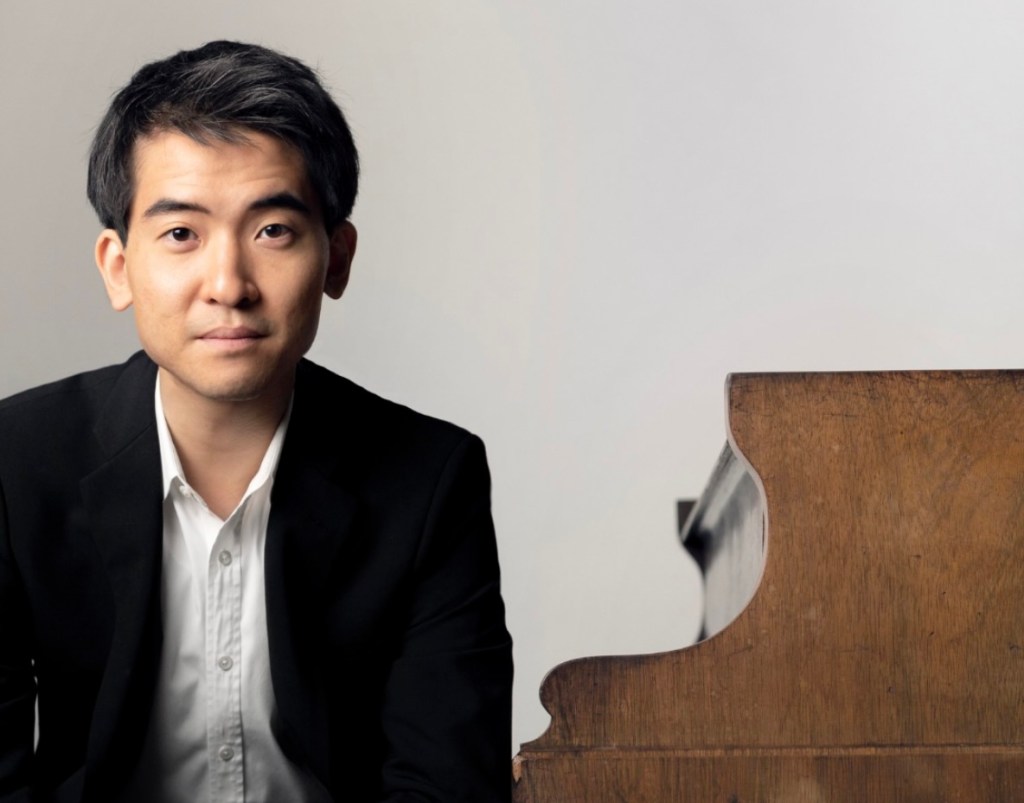
Giovanni Bertolazzi -Homage to Zoltan Kocsis A giant returns to celebrate a genius

Giovanni Bertolazzi Liberal Club ‘En Blanc et Noir’ 5th June 2023 ‘A star is born!’

Giovanni with students of Roberto Prosseda in Rovigo.
Roberto Prosseda will present his ‘Composers of the Roman School’ in the Museo Carlo Bilotti on Saturday 30th Novembre at 12.00 – A programme he recently presented with his Rovigo Academy in New York
https://christopheraxworthymusiccommentary.com/2021/01/13/roberto-prosseda-pays-tribute-to-the-genius-of-chopin-and-the-inspirational-figure-of-fou-tsong/
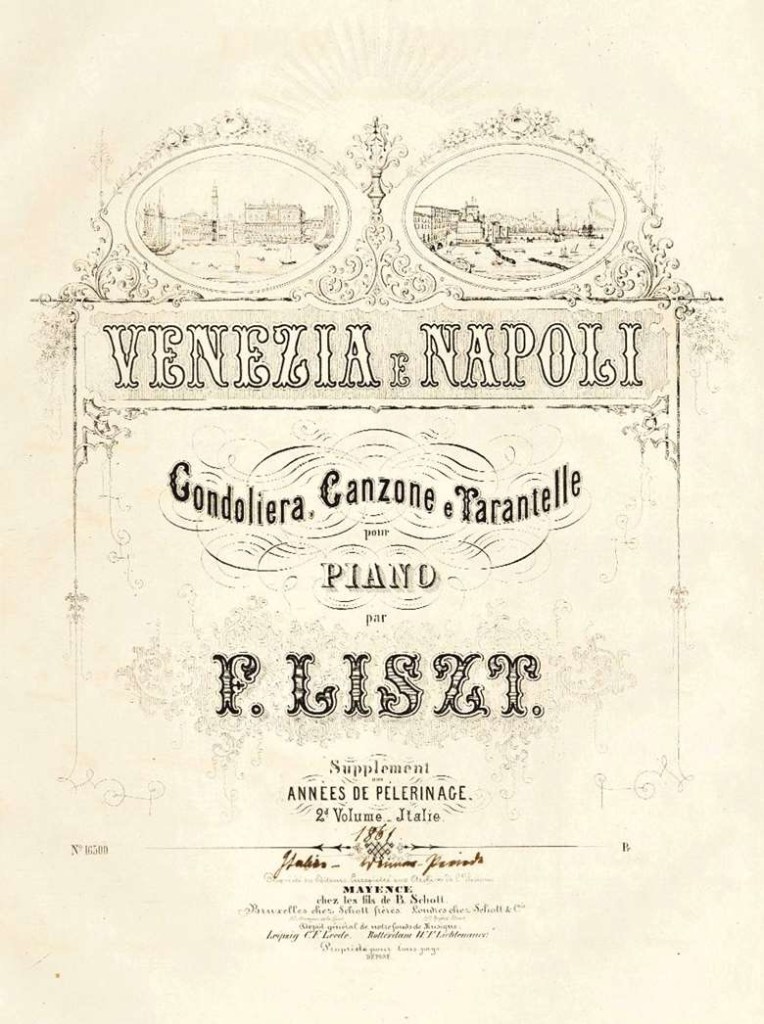
Giovanni Bertolazzi at the Quirinale A kaleidoscope of ravishing sounds that astonish and seduce for the Genius of Liszt

Giovanni Bertolazzi – “A Giant amongst the Giants”

Dominika Mak at the Matthiesen Gallery – Young Artists Concert Series ‘Dreaming of Utopia with playing of refined finesse’

Patrick Matthiesen presenting Dominika Mak in his gallery in Mayfair. He had heard her practicing and was so overwhelmed he invited her to give a public recital.

Dominika Mak playing in the beautiful Matthiesen Gallery in an evening of refined elegance with playing of ethereal beauty surrounded by wonderful paintings in a room that one would be more lightly to find in a castle in the Loire than in the centre of London.


Playing of exquisite good taste and beauty allowed us to close a door for a moment on this upside down world where a power game of quantity over quality is fast arriving at an autodestruct stage of no return!
Haydn B minor Sonata brought to life with sounds that rarely are heard these days from pianos that are geared up to project to the masses.
As Paul Lewis exhorted a young pianist in his masterclass yesterday :’ draw the public in to you there is no need to project …….Schubert is a Genius …..trust him!’

Paul Lewis at the Guildhall on a wondrous voyage of discovery to find the heart and soul of Schubert


Not Schubert for Dominika Mak but Haydn of exquisite refined beauty but also dynamic drive and passion .Chopin the third and fourth Ballades where she had a wondrous story to share with streams of golden sounds that just flowed from her elegant fingers with a simplicity and aristocratic nobility that is hidden within the soul of the Polish people.


A genial idea to link the sound world of mazurkas by Chopin and Szymanowski with the ethereal water nymph Ondine creating an atmosphere of magic and ravishing beauty.
This had now created the atmosphere for Chopin’s Nocturne in D flat that floated on an ethereal wave of whispered sounds .Playing as if in a trance with an improvised beauty sharing Chopin’s deepest thoughts with us as we listened with baited breath transported to a far better world than we could ever envisage. A power game playing outside these exquisite confines, where the autodestruct button gets ever nearer in a world where greedy quantity takes precedence over refined quality.

Haydn’s B minor sonata n 47 was played as if the ink were still fresh on the page! A sense of discovery with a kaleidoscope of colours where every note had a meaning and an important place in a chain of ravishing sounds.There was a crystalline clarity of velvet beauty from an artist who listens to herself and loves the sounds that pour with such ease from her well oiled fingers.A minuet and trio of poignant beauty and extraordinary eloquence with playing of exquisite delicacy.This was not porcelain doll beauty but playing that had drive and contrast too as was shown in the Finale. A Presto of extraordinary ‘jeux perlé’ brilliance with a refined palette of sounds and breathtaking fearless energy. A performance of a work I have heard many times but today it was as though I was hearing it for the first time such was her power of communication allowing Haydn’s genial invention to speak for itself with simplicity, fantasy and mastery.
I had heard Dominika just a few weeks ago at a celebration of Chopin at the POSK in London. It does not necessarily follow that because Chopin is a much loved National Hero that he is revealed only to Polish pianists.Fou Ts’ong was awarded the mazurka prize at one of the first Chopin Competitions after the war much to everyone’s suprise. As he explained the soul to be found in Chopin is the same that is in Chinese poetry – you see the soul has no boundaries!
https://christopheraxworthymusiccommentary.com/2024/10/20/posk-chopin-festival-2004-mak-dubiel-pawlak-swigut-a-feast-of-music-and-full-immersion-with-lady-rose-cholmondeley-and-prof-john-rink/
Some Polish pianists can love Chopin too much and exaggerate the deep rooted nostalgia that Chopin nurtured always for his homeland. Chopin at 18 left his homeland never to return again and became the refined aristocratic composer who spent most of his life in the privileged circles of Paris high society. Dominika is Polish but she also understands the refined aristocratic composer where sentiment is hidden deep within the notes and not just superficially on the surface.It was Artur Rubinstein ( he too an exile from an early age) who broke away from a tradition where sentiment had become sentimentality and deeply rooted nostalgia became heart on sleeve showmanship for pianists who would also talk to the public whilst they played to let them know how clever they were! Dominika’s playing that I heard at POSK revealed an artist not only of refined sensibility but a musician of aristocratic authority with playing that was flexible but always as Chopin said with roots firmly planted in the ground but with the branches free to sway in the wind.
Six Preludes from his set of 24 ( Chopin never played them as a set or intended them to be played together ) immediately showed Dominika’s remarkable sense of balance, where in the 13th the melody was allowed to sing sustained by a continuous flow of harmonic beauty that was allowed to emerge at poignant moments.The 14th ,just one page, usually played like a battle cry was here the same wind over the graves of his later Funeral March Sonata where Chopin’s originality had Schumann declaring that it was more ‘like a mockery than any music’. Dominika played it like a living amalgam of sounds rising and falling with unusual poetic beauty. She brought a radiance to the ‘Raindrop’ prelude that was of great beauty but also strength with the sombre whispered left hand of the central episode creating the terrible weather in Valdemossa where Chopin had eloped with George Sand, taking refuge from the vulgar peasants and dreadful weather in the cell of a Monastery high in the hills on Majorca.The 16th is a ‘tour de force’ for any pianist but in Dominika’s hands became a frantic swirl of sounds played fearlessly and almost spotlessly! There was deep rooted nostalgia to the 17th with a timeless outpouring of melody of searing beauty.The deep A flats at the end creating a magic carpet on which the melody was heard more and more in the distance.The cadenza prelude of the 18th was played with extraordinary musicianship where the melody and accompaniment were played with unexpected and refreshing originality.
The 3rd and Fourth Ballades were played as tone poems of extraordinary originality.The pastoral beauty of the third contrasting with the poignant beauty and majesty of the fourth , long considered the pinnacle of the Romantic piano repertoire together with the Liszt Sonata and the Schumann Fantasy .If the climax of both could have had more incisive bite and weight Dominika convinced us that first and foremost these were two visions of beauty where even the extraordinary technical demands made especially in the codas was only a poetic means of expression that grew out of the story that was being told.

The Mazurkas op 59 I had heard from Dominika’s hands a few week ago and was overwhelmed by her understanding and recreation of miniature tone poems that Schumann described as ‘canons covered in flowers’. Today she repeated that miracle and added another that were three of the four Mazurkas written for Artur Rubinstein by his friend Szymanowski.
Written in 1925 they have the same dance rhythm as Chopin but a musical language that owes more to Stravinsky with its strange intoxicating harmonies. Rubinstein used to play them as a brief window opener in his all Chopin recitals.It was this refreshing purity and clarity that added another dimension to Ravel’s water nymph,Ondine,who flutters in and out of the ravishing waves of the first of the suite ‘Gaspard de la Nuit’.It was in the climax of ‘Ondine’ that suddenly Dominika showed us her technical mastery as she threw herself with fearless abandon in a work that Ravel wanted to put virtuosi pianists to the test as Balakirev had done with his Islamey.
It was after this final ‘tour de force’ that Dominika chose to play one of Chopin’s most beautiful bel canto creations.The Nocturne in D flat was played with barely whispered sounds of great daring and freedom.Her innate musicianship allowed her to steer her way through this sublime music with unusual freedom but also with an architectural vision that was totally convincing.
L’aula Gaber and Mary Orr with Dominika Mak and Patrick Matthiesen.
Christopher Elton always present to hear his students in public together with Tom Zalmanov and Dominika both students at the Royal Academy of Music https://christopheraxworthymusiccommentary.com/2024/05/16/tom-zalmanov-at-steinway-hall-for-the-keyboard-trust/
Tom will be playing at the Wigmore Hall on Wednesday at 1.00pm in the RAM Piano Series which recently saw Emanuil Ivanov give an incredible performance of Rzewski .Prof Elton of course was there too !
https://christopheraxworthymusiccommentary.com/2024/10/09/emanuil-ivanov-sensational-performance-at-the-wigmore-hall-of-rzewski-the-people-united-will-never-be-defeated-a-staggering-performance-of-total-mastery-and-musical-communication/
Sir Norman Rosenthal who will be hosting his 80th birthday concert for friends in the Gallery on Friday thanks to the generosity of Patrick Matthiesen His protégé Samson Tsoy will play late Beethoven and Aksel Rykkvin with Zany Denver will perform lieder by Beethoven and Schubert including Normans Gesang of 1825
https://christopheraxworthymusiccommentary.com/2024/07/19/review-of-samson-tsoy-the-trilogy-at-fidelio/
Victor Braojos and Paul Mnatsakanov two extraordinary young artists playing regularly in London. Victor a fellow of the Guildhall and Paul in his final year as post graduate at the RCM.
https://christopheraxworthymusiccommentary.com/2024/05/24/paul-mnatsakanov-graduation-recitals-at-the-royal-college-music/
Victor Braojos a protégée of the indomitable Mary Orr of the Young Artists Concert Series
https://christopheraxworthymusiccommentary.com/2024/10/17/victor-braojos-at-imperial-college-the-voice-of-spain-with-loveauthority-and-passion/
Superb aspiring young musicians all supporting each others recitals as did Barenboim,Du Pre,Fou Ts’ong,Andre Tchaikowsky,Nelson Freire,Martha Argerich ,Perleman, Zuckerman in the 60’s when life was slower and jet setting careers were not yet the norm.
The extraordinary Christopher Elton a fellow student of Gordon Green and now in his 80’s but still with an undiminished passion for music that takes him to International Piano Juries as well as helping the students that flock to his studio at the RAM

Dominika Mak Refined music making of intelligence and clarity

POSK Chopin Festival 2004 Mak – Dubiel-Pawlak- Swigut A feast of music and full immersion with Lady Rose Cholmondeley and Prof John Rink