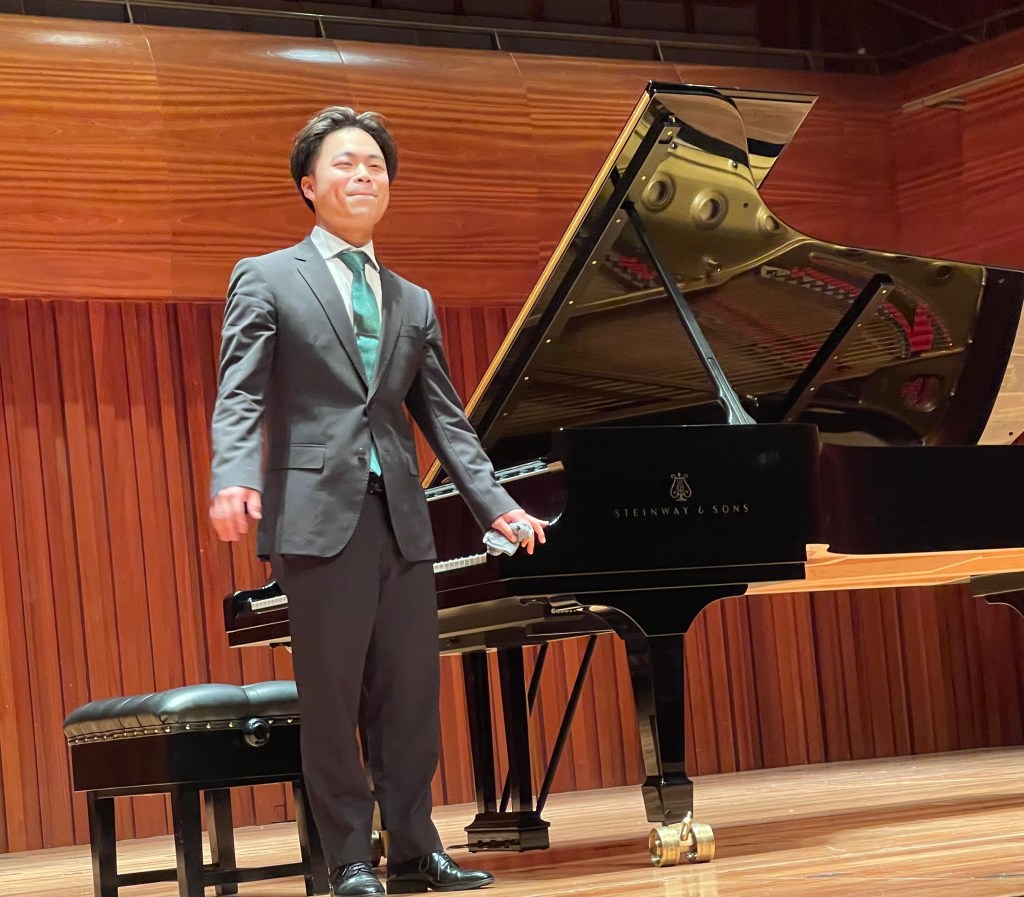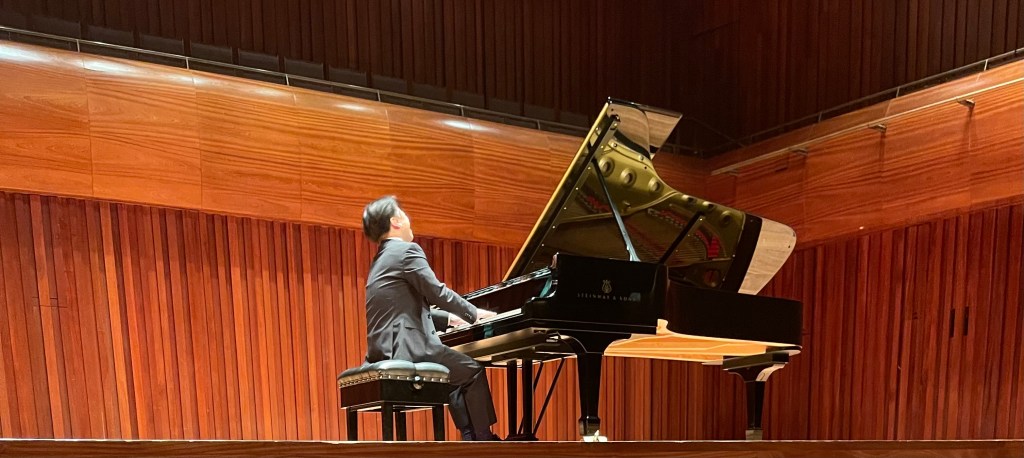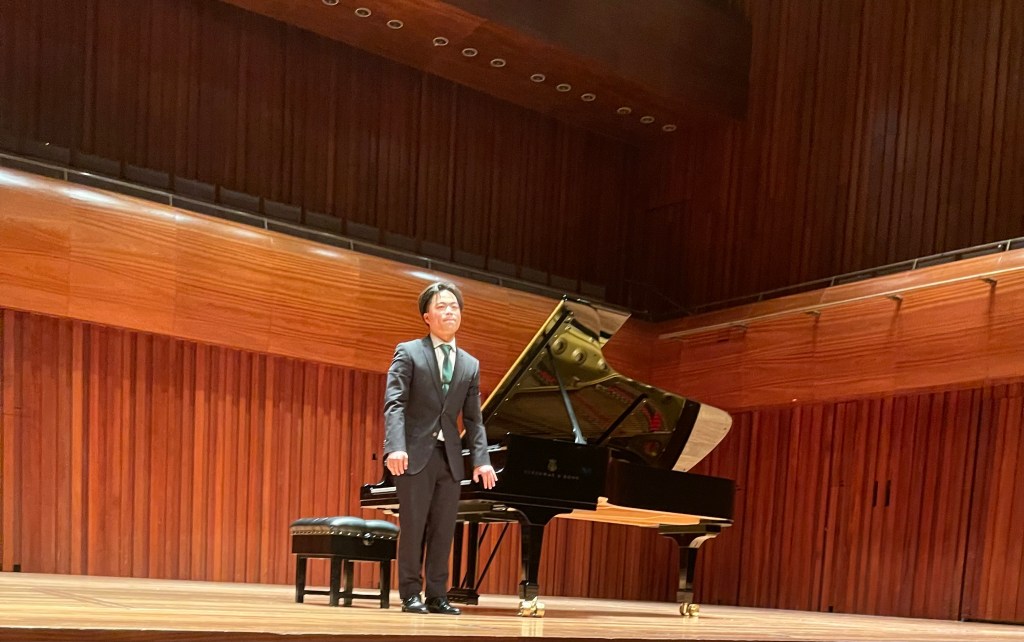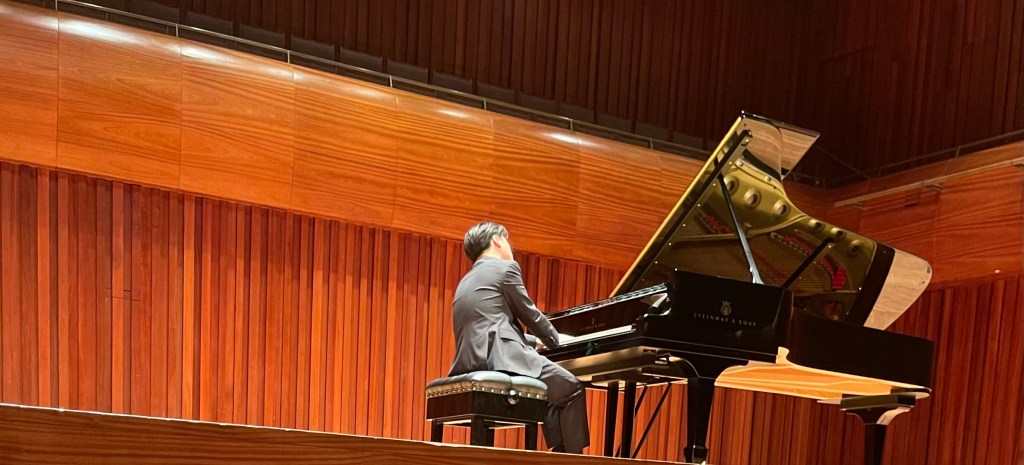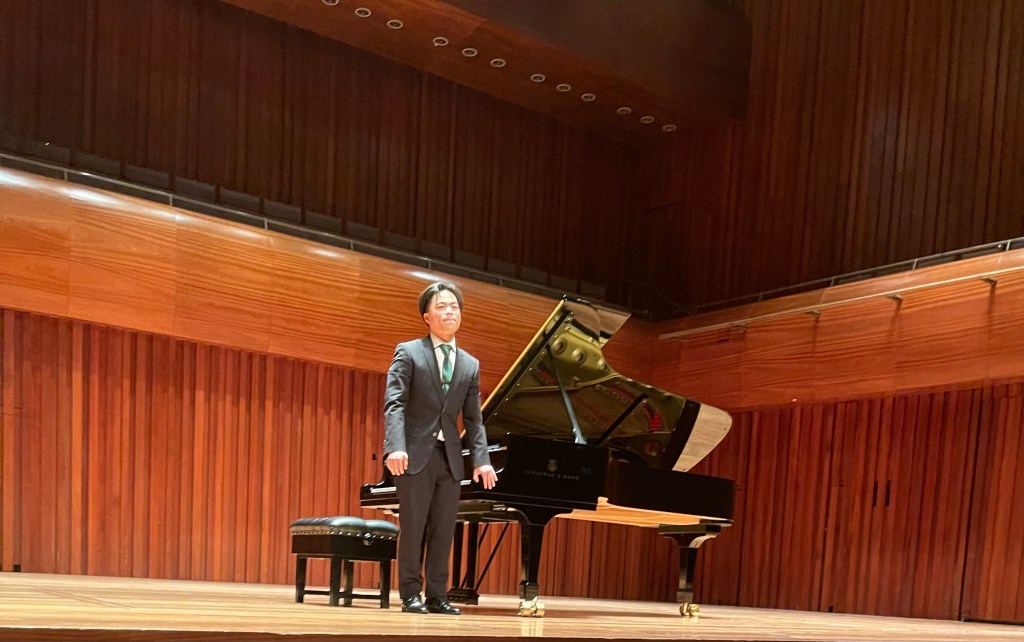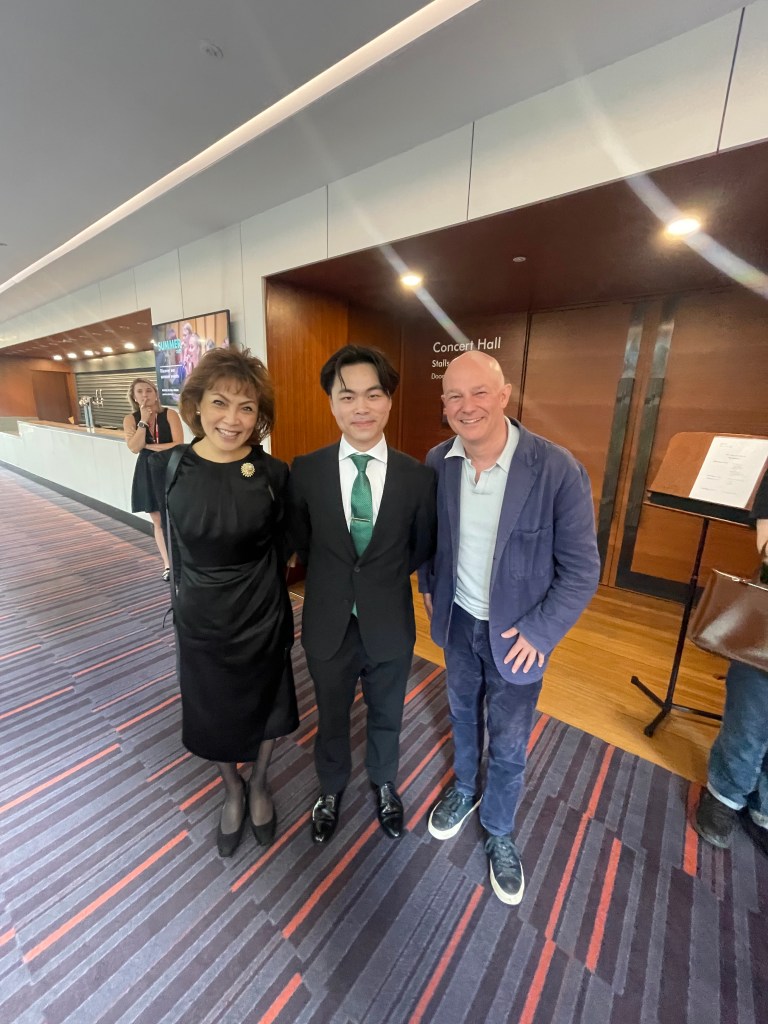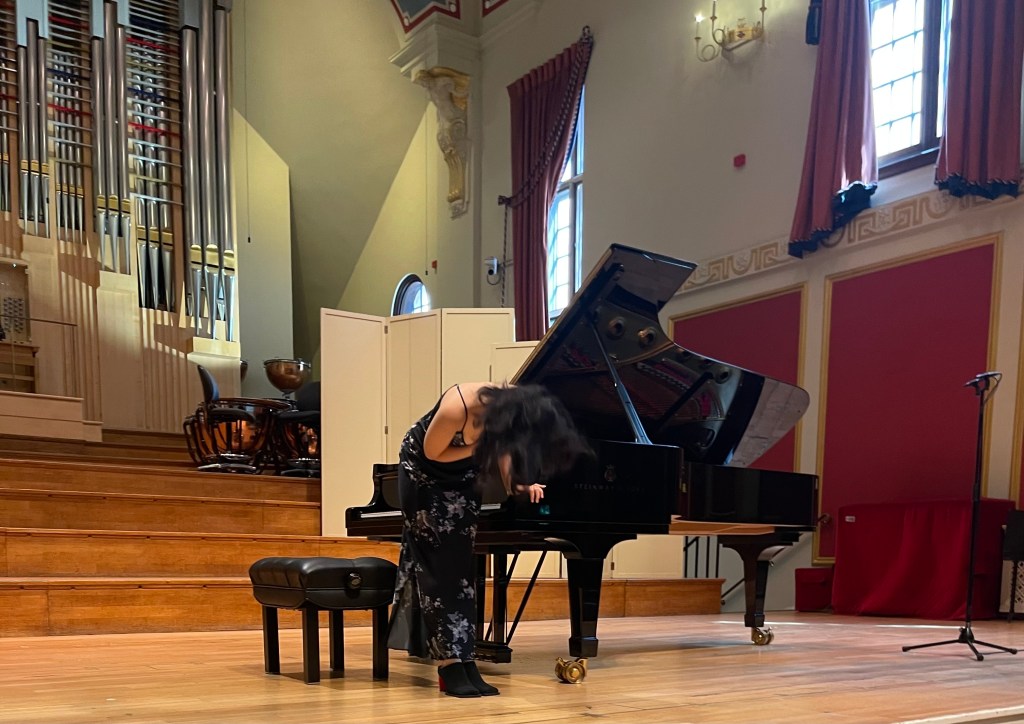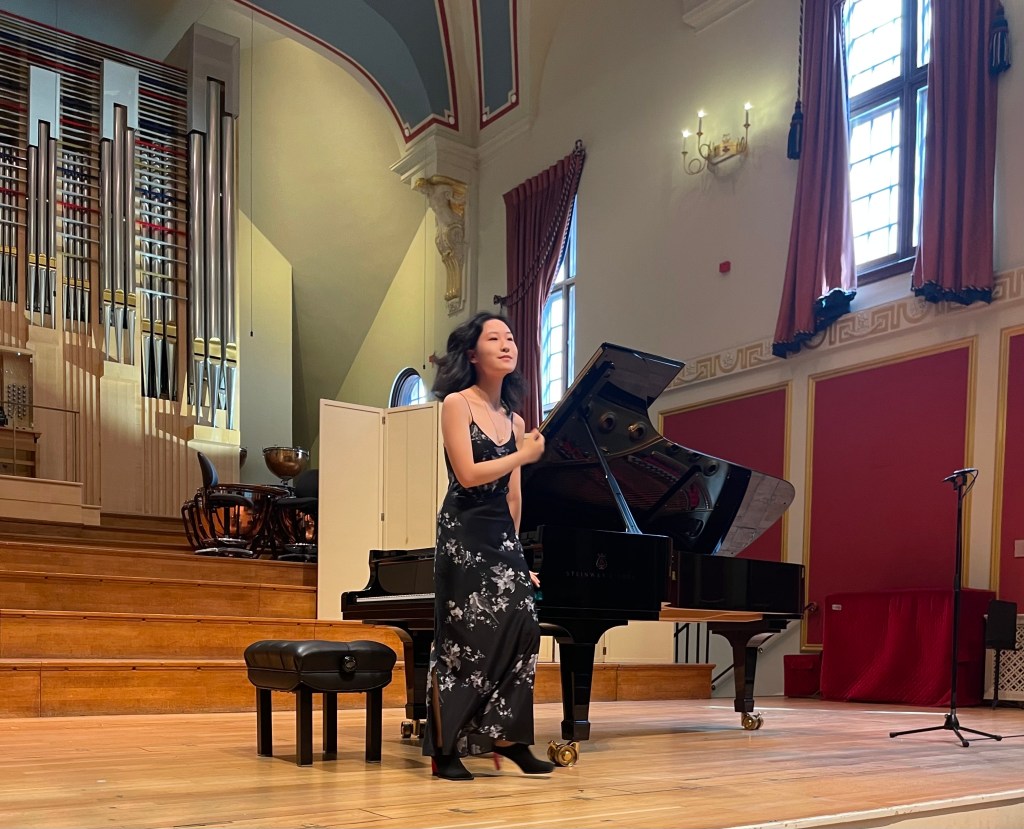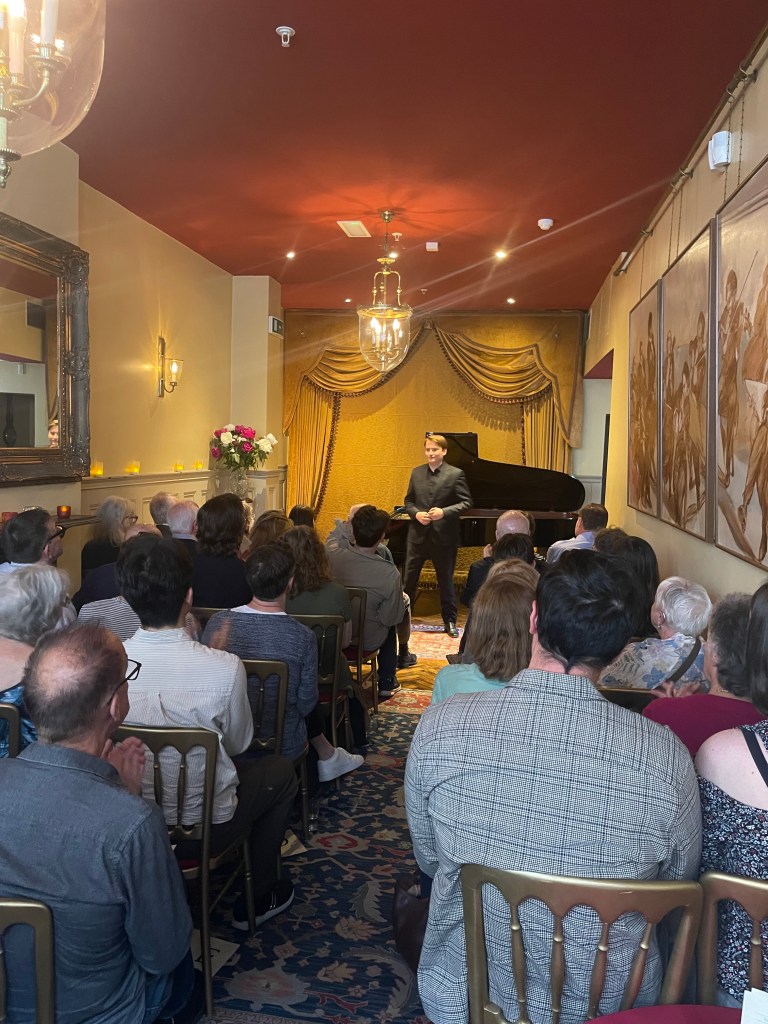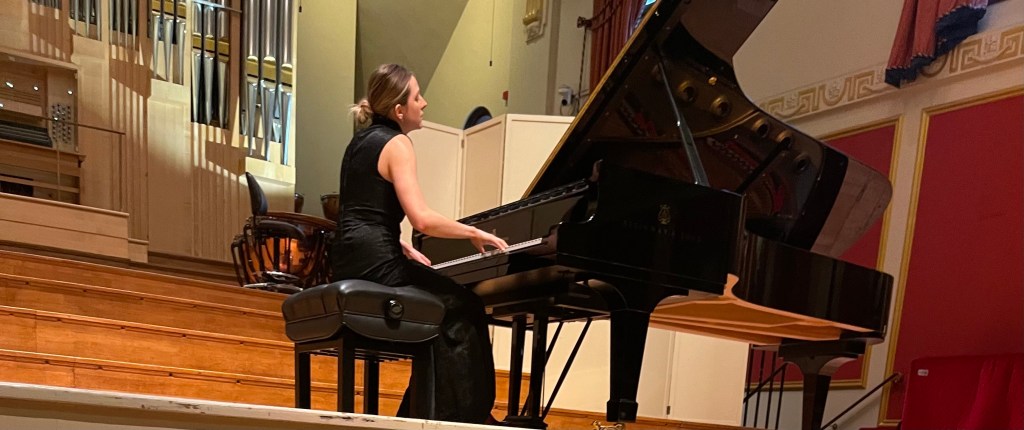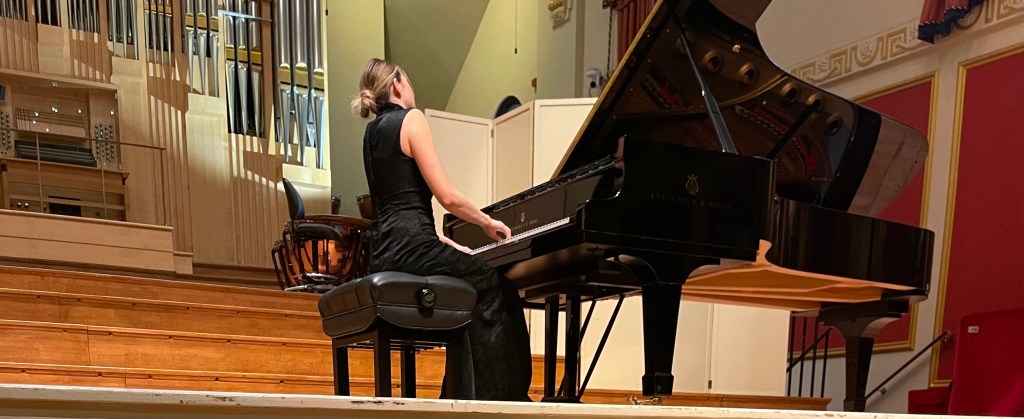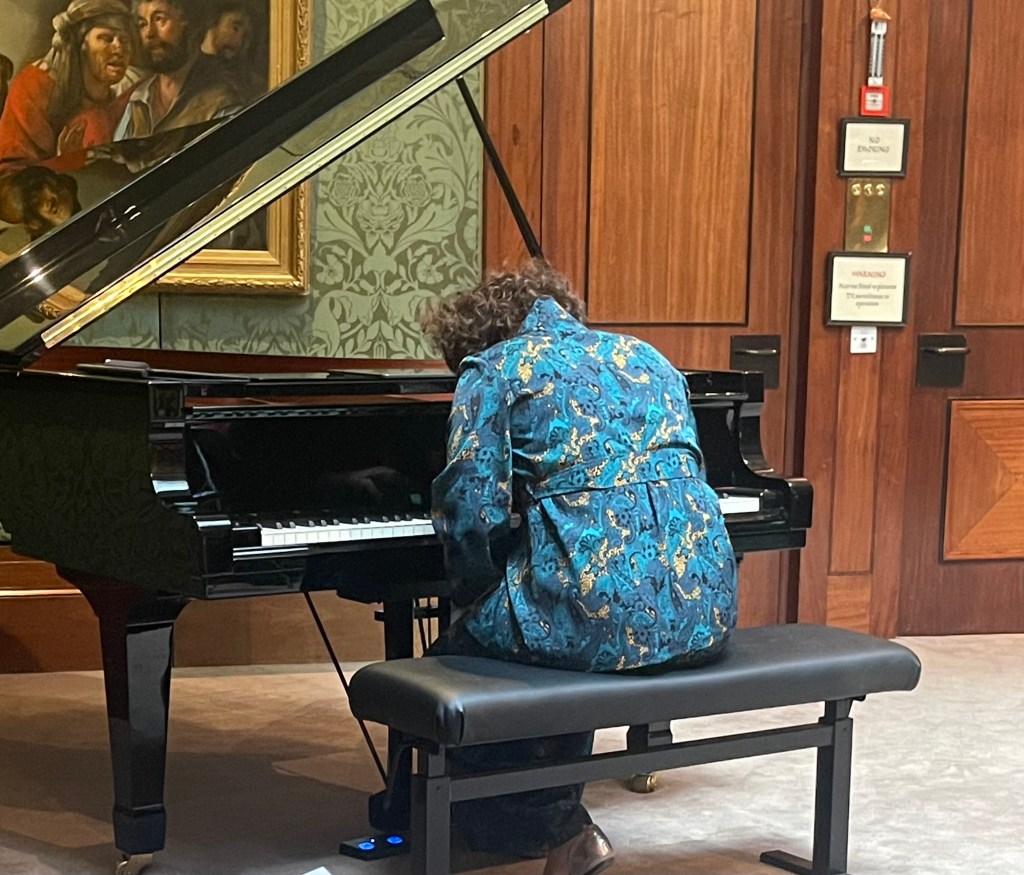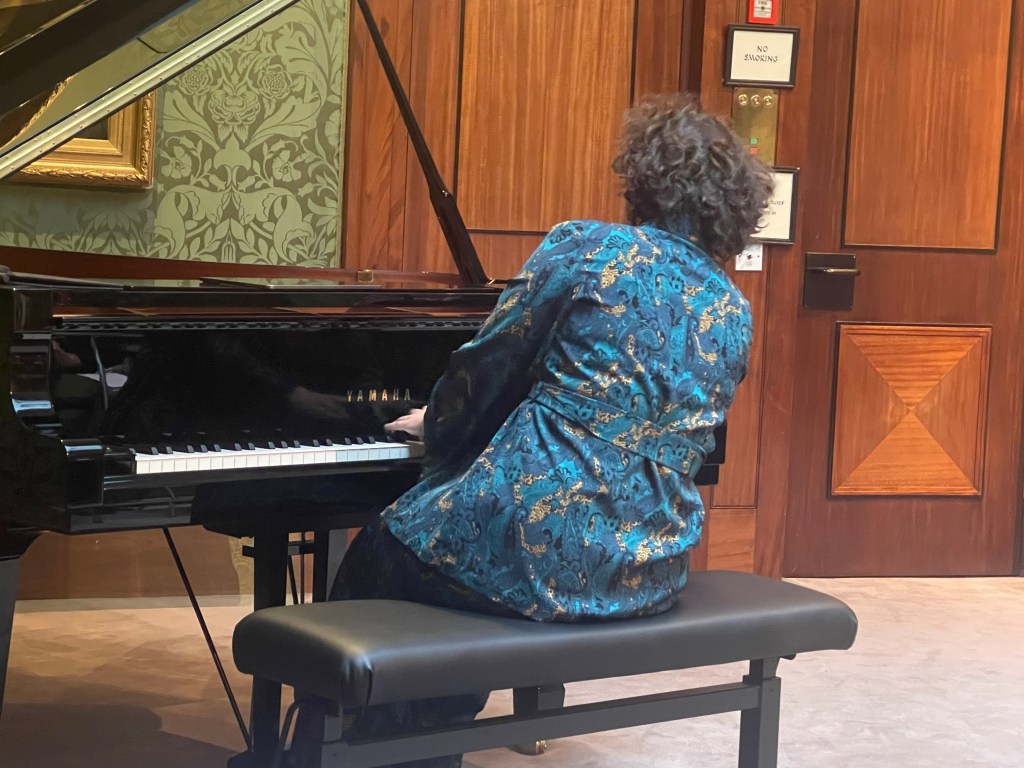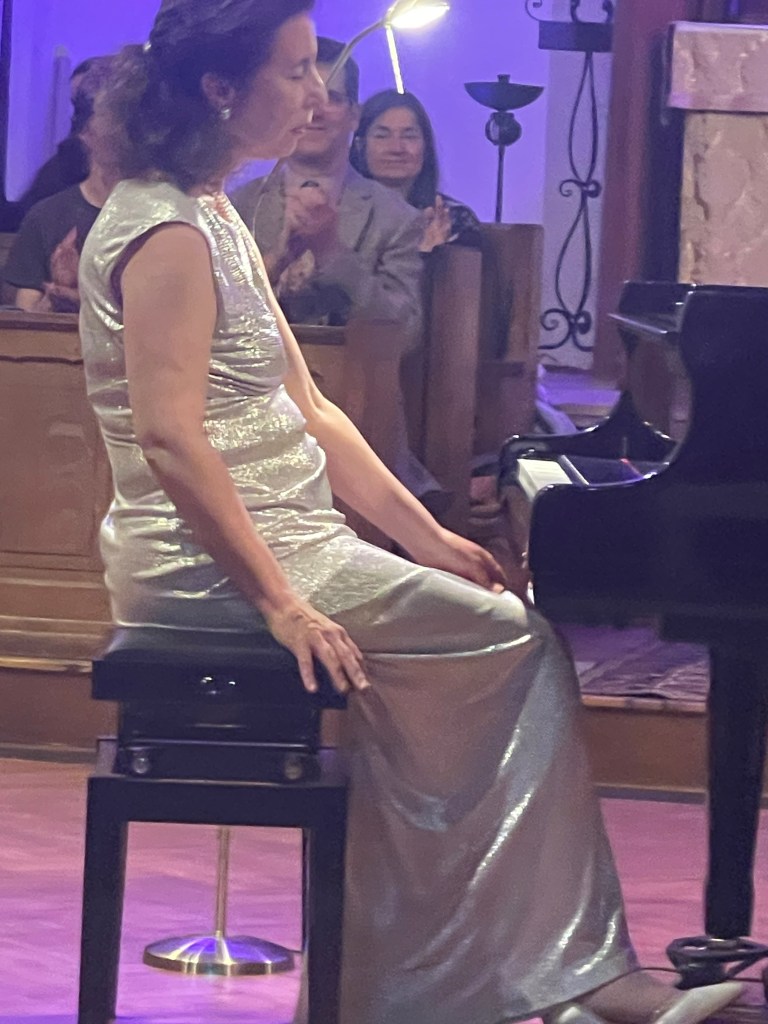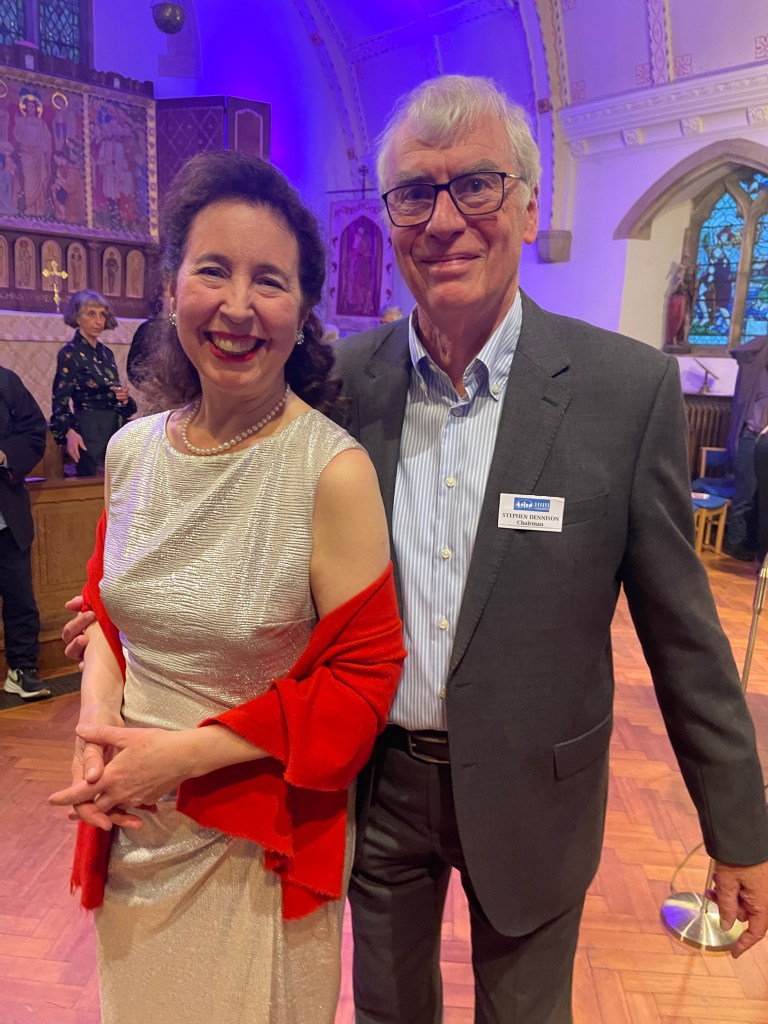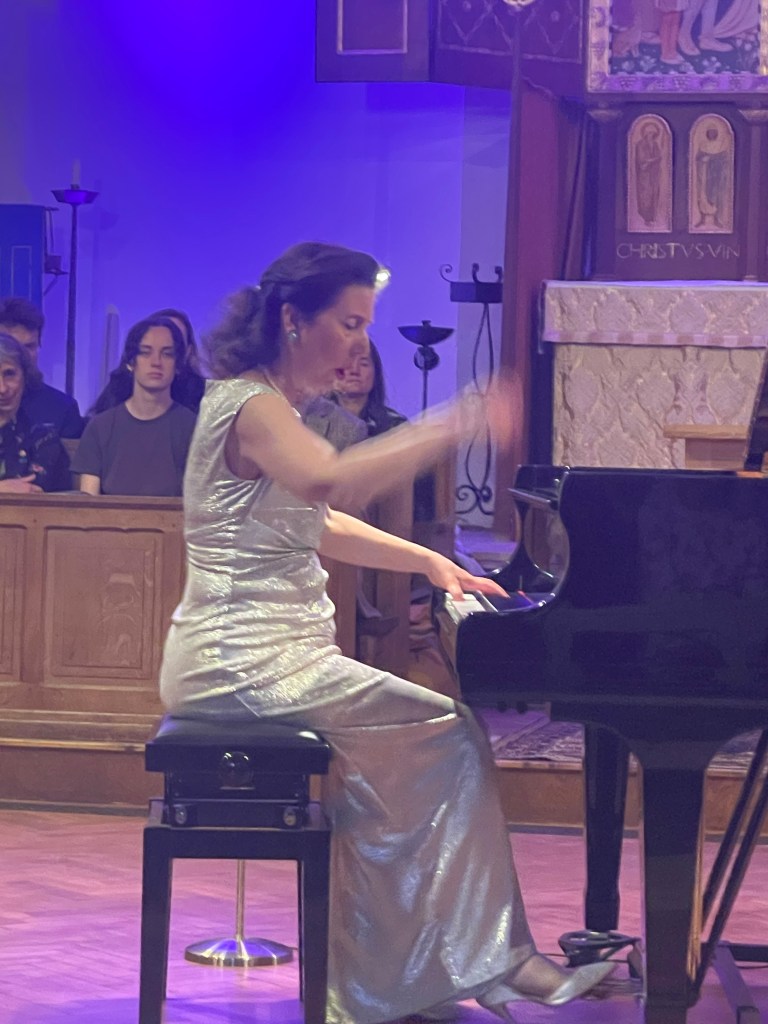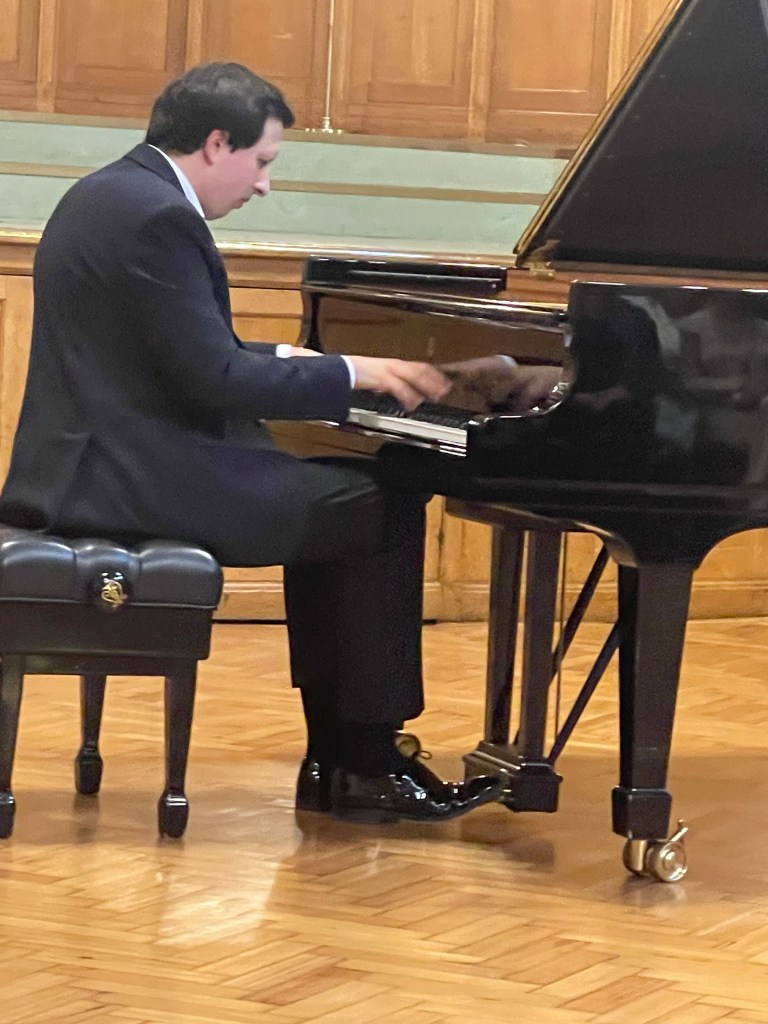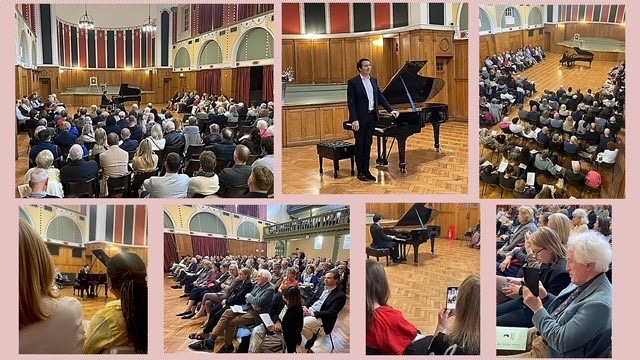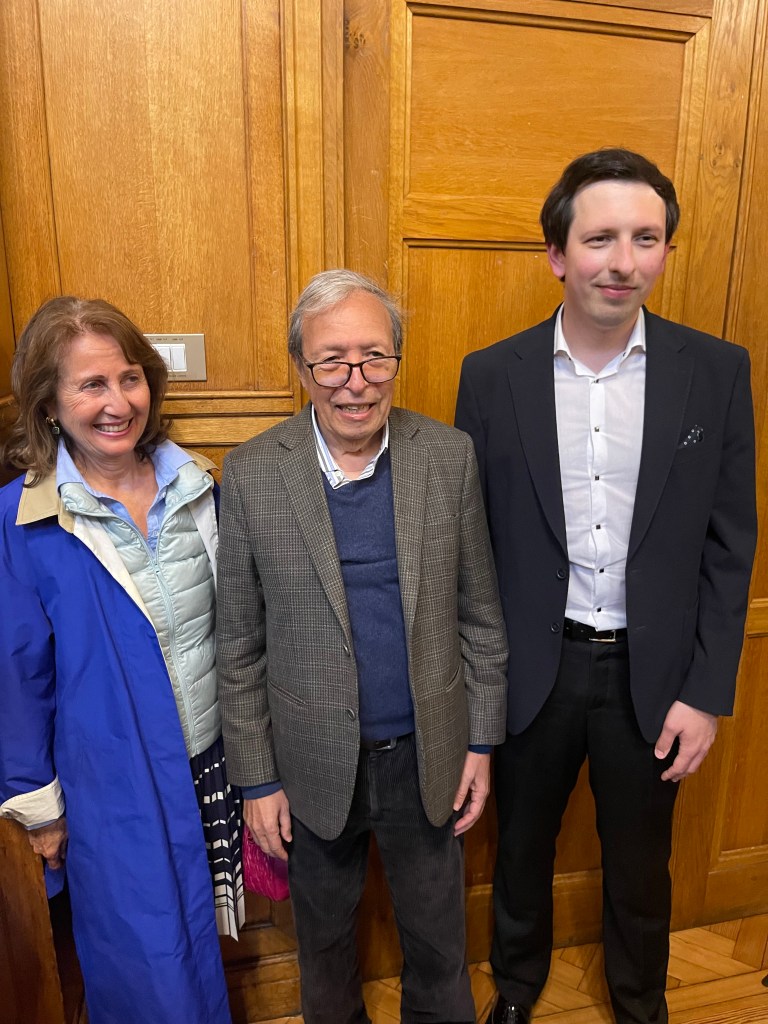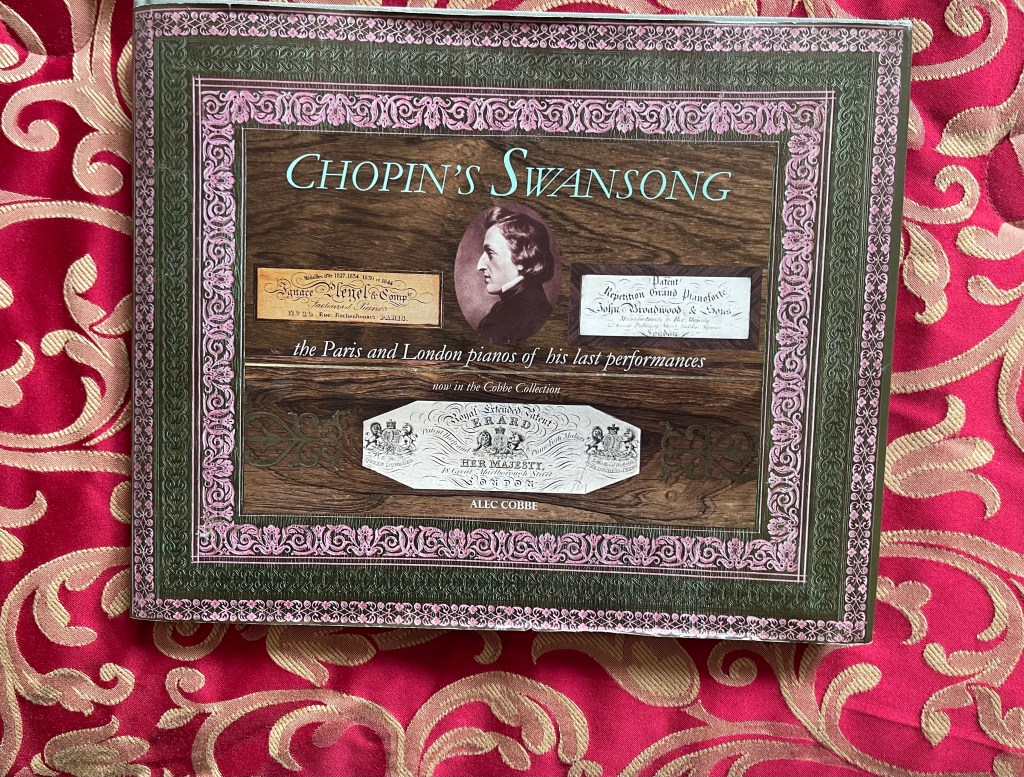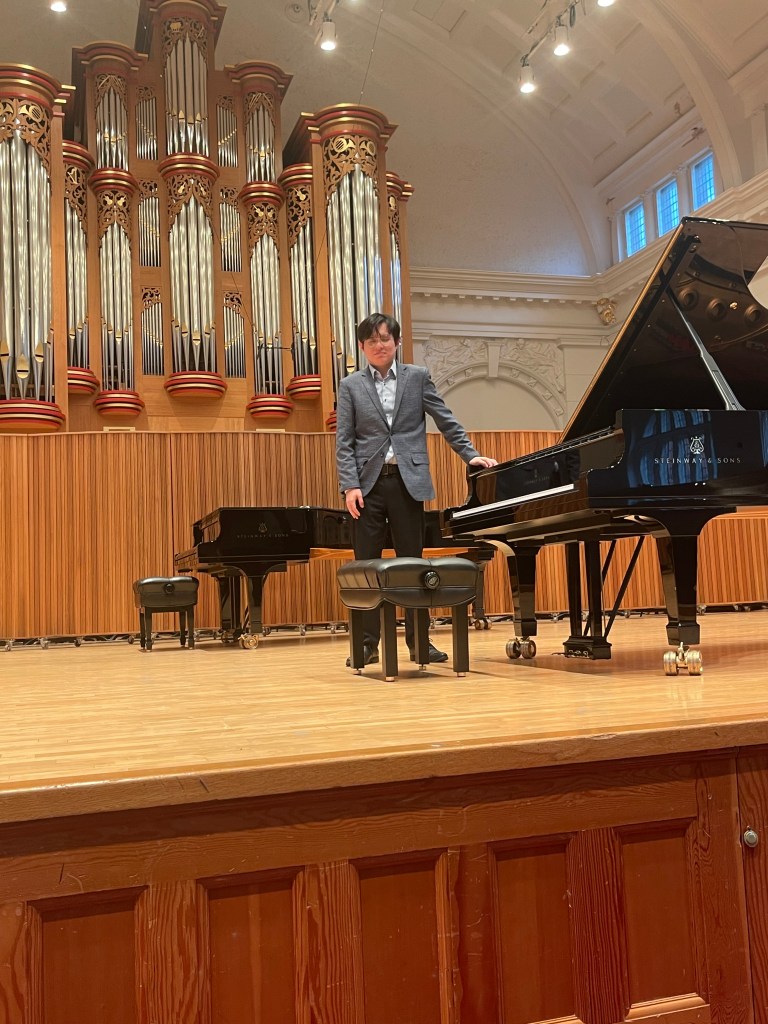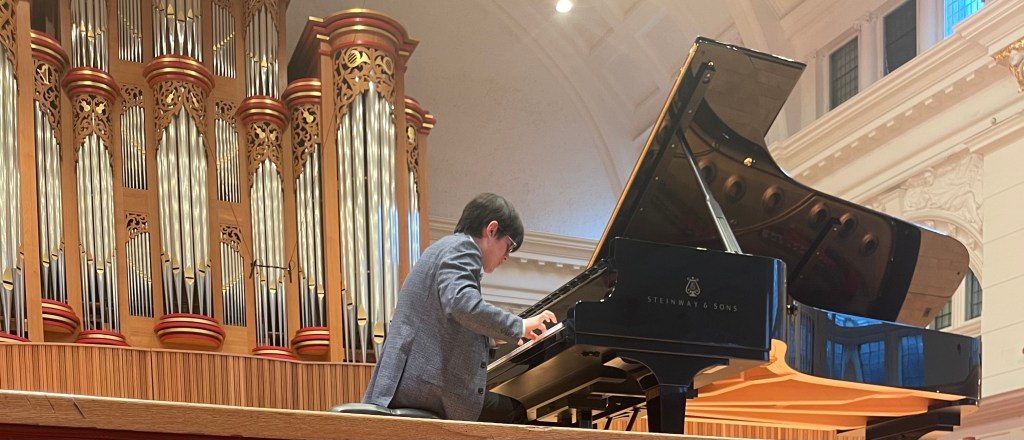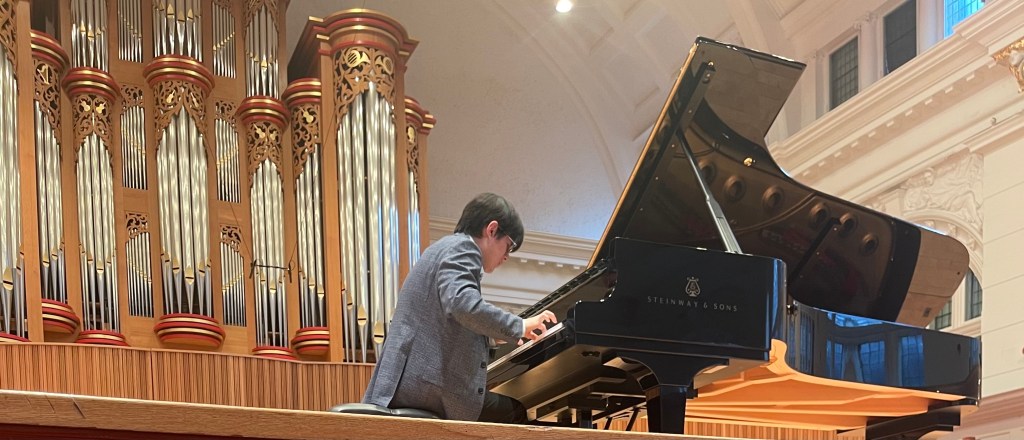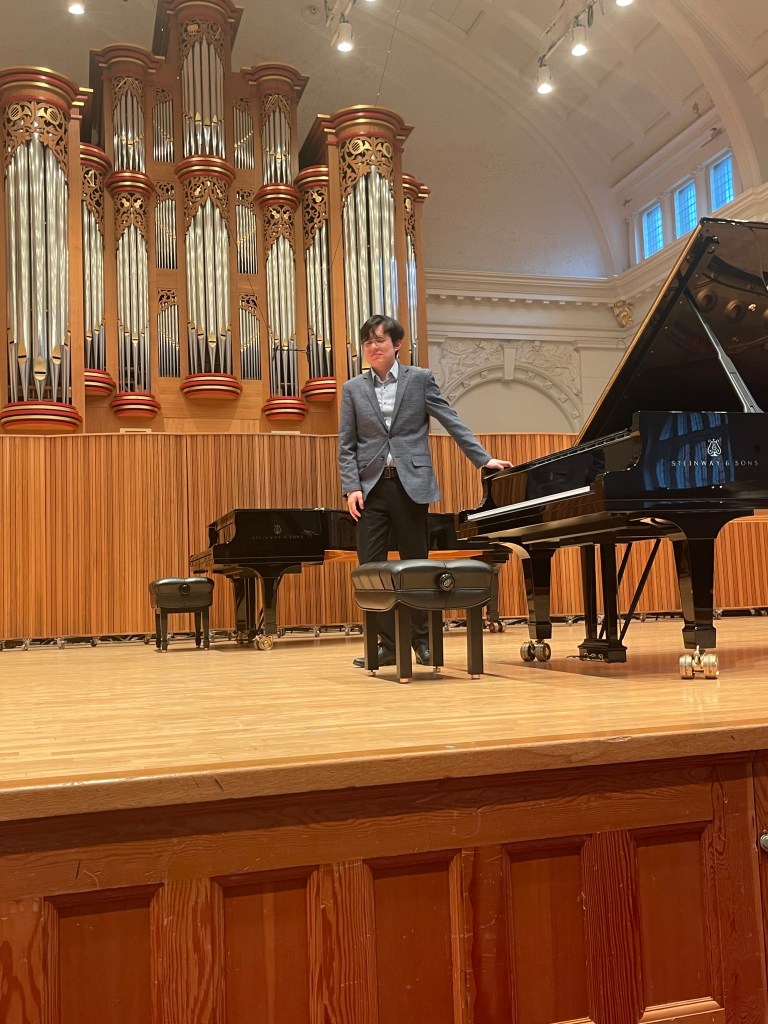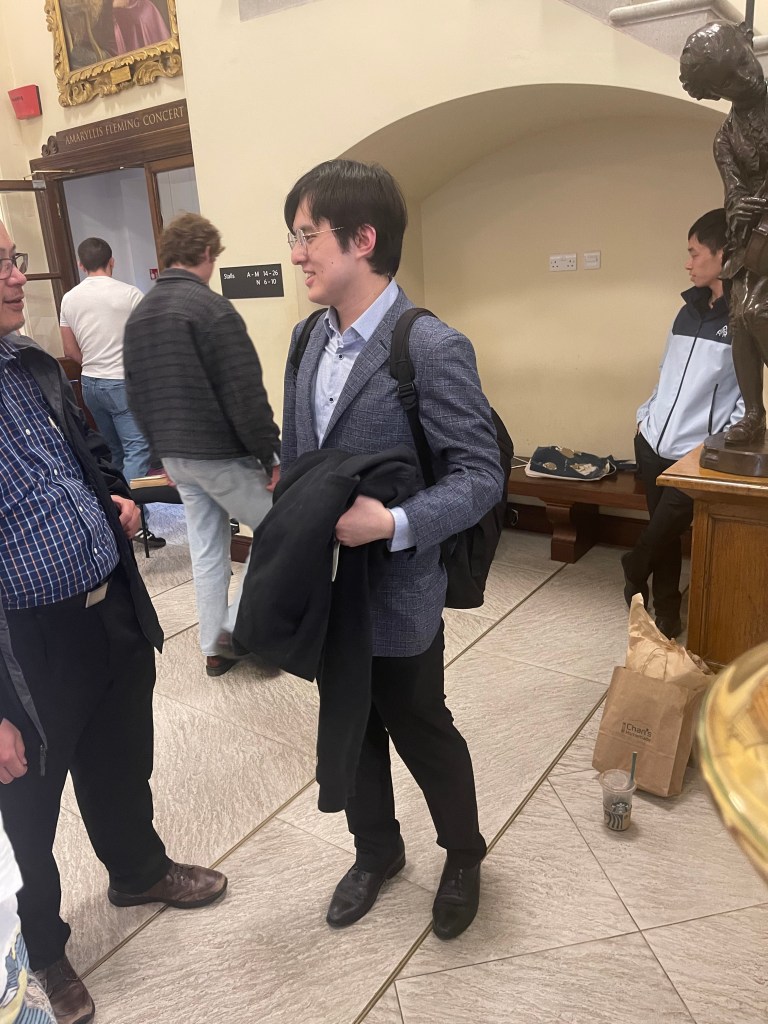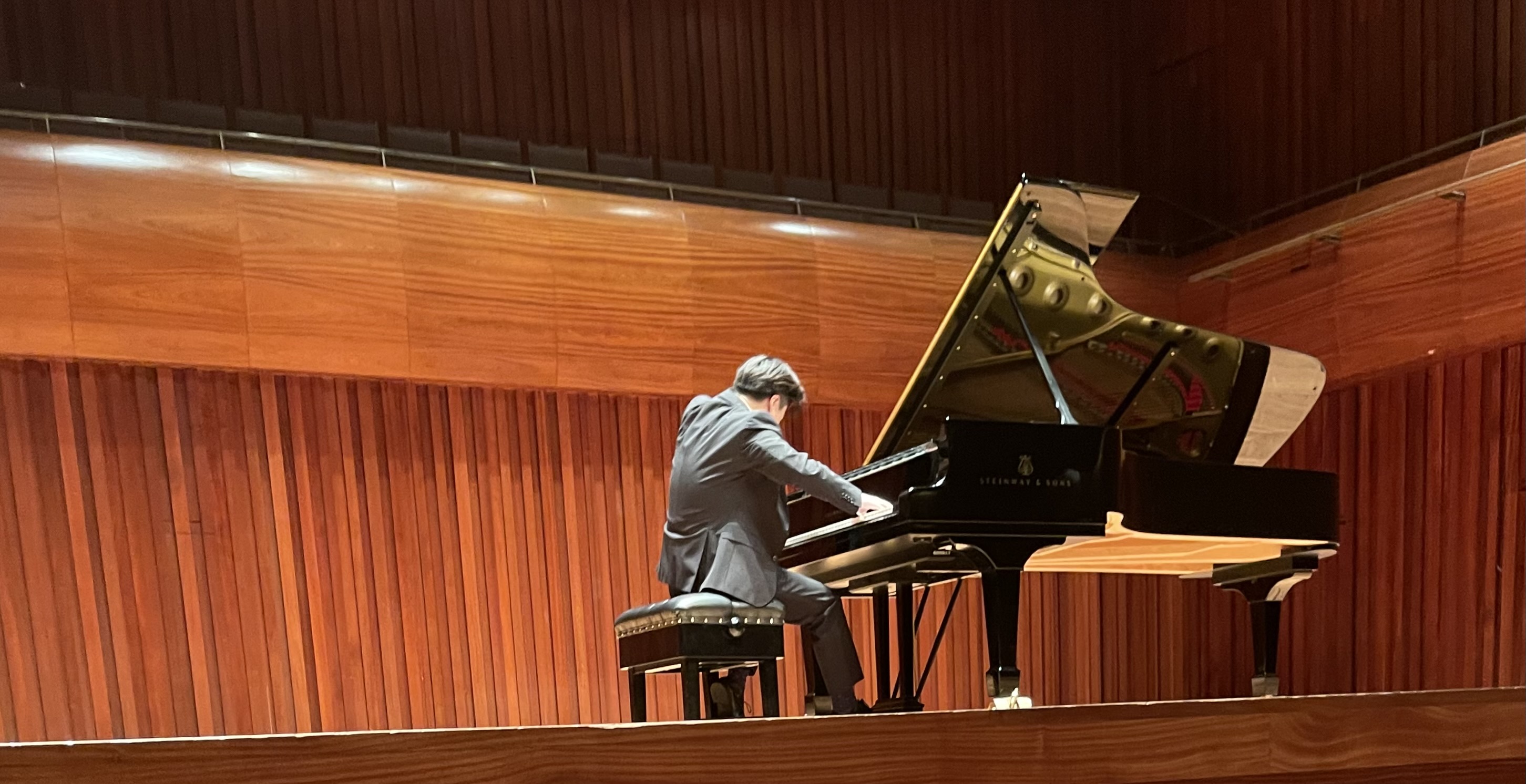
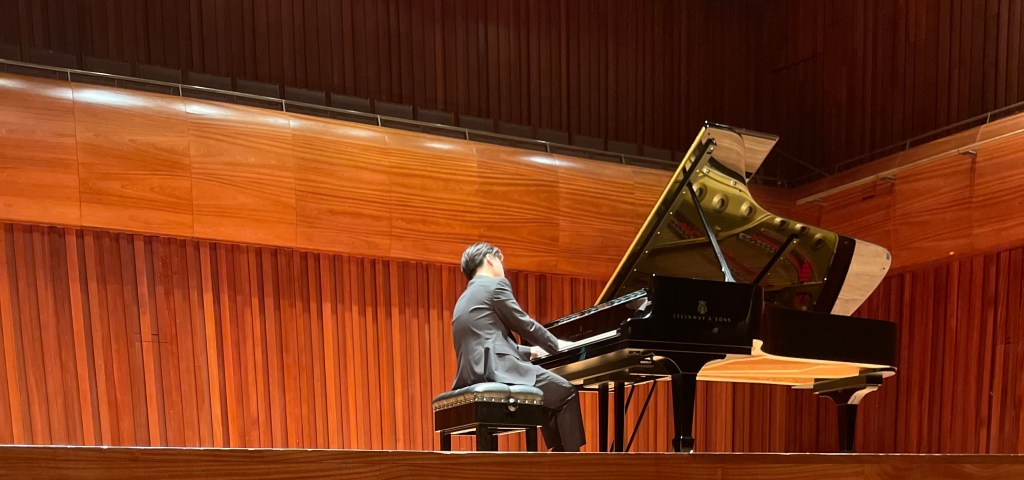
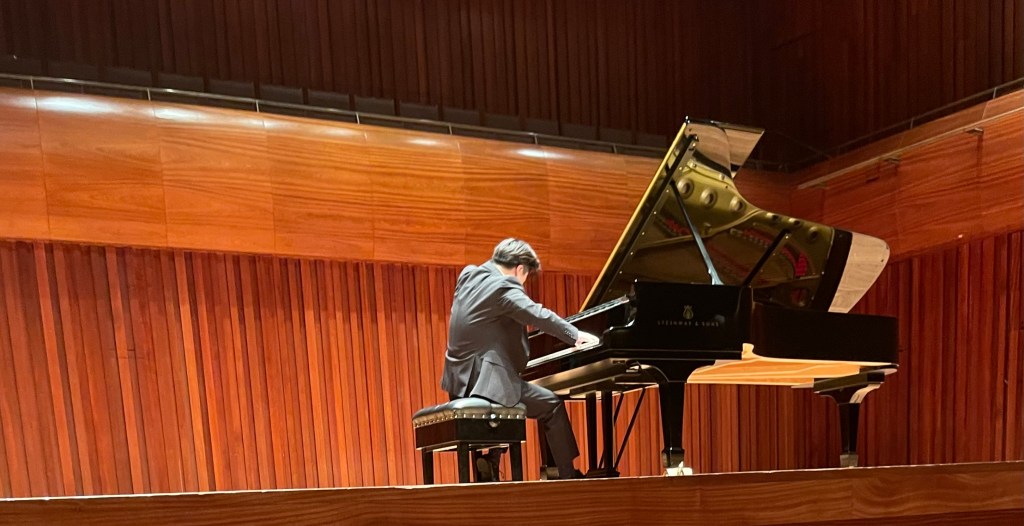
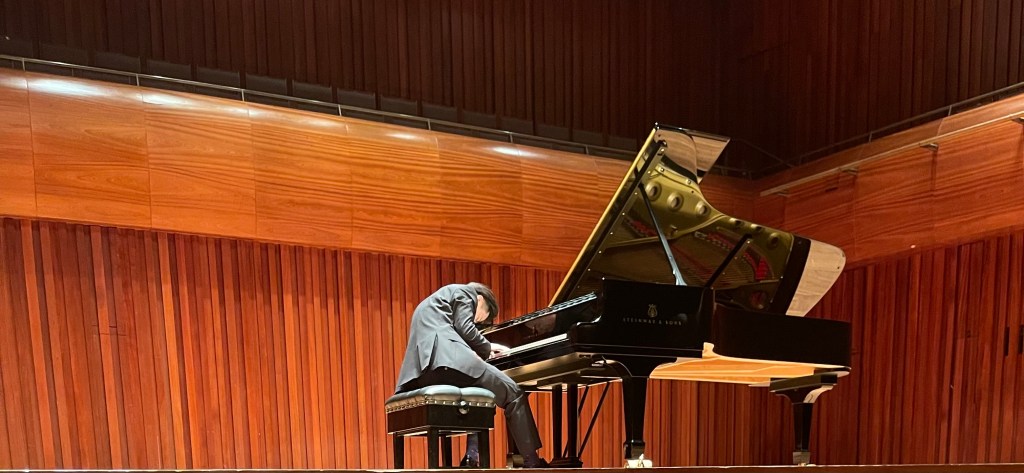
Nelson Goerner at the Wigmore Hall Supreme mastery of a Golden Age reborn

Nelson Goerner at the Wigmore Hall and the magic of Cherkassky returns with a refined multi coloured mastery of another age .

A seemless jeux perlé of silken whispered beauty and a reminder of a time when pianists were magicians who could turn baubles into gems and gems into sounds of breathtaking beauty .A time when the piano was an orchestra that could roar like a Lion or seduce with whispered secrets of intimate confessions .

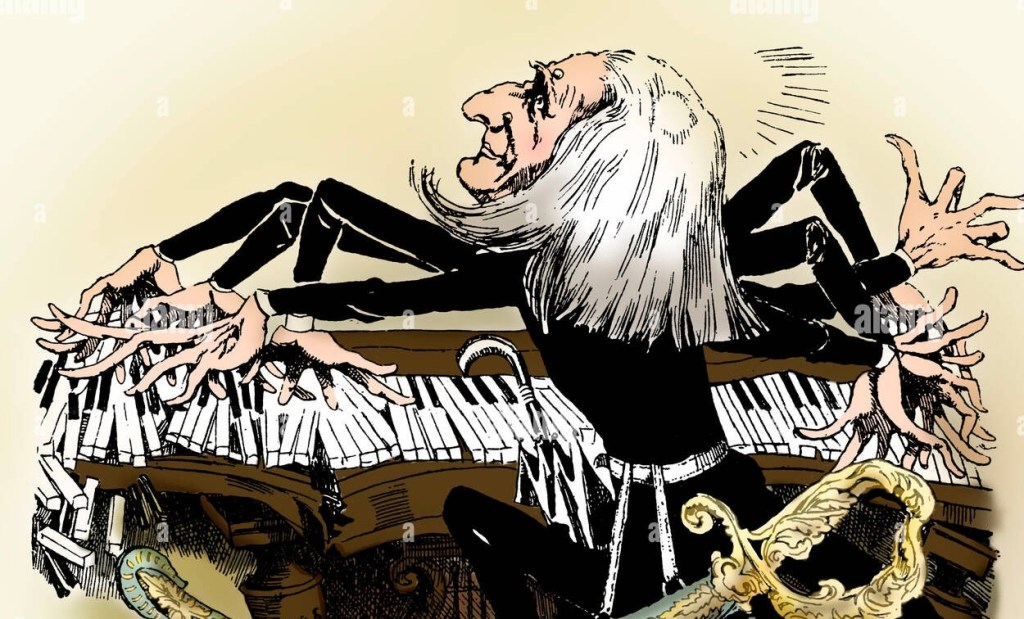
The piano that we read about in books of the power that Liszt and Thalberg had over a high society audience turning them into a screaming mob trying to grab a souvenir of the wizard with such bewitching powers .

It was of course Horowitz in our day who was described on his arrival in Paris as the greatest pianist alive or dead .I remember Cherkassky telling me that on the death of Bolet, Horowitz declared that they were the only two left .

It was Nelson who many years ago had the same agent as Shura Cherkassky , Christa Phelps, who persuaded me to engage a very young Goerner because Cherkassky ( our hero of many recitals in Rome ) admired him so much .

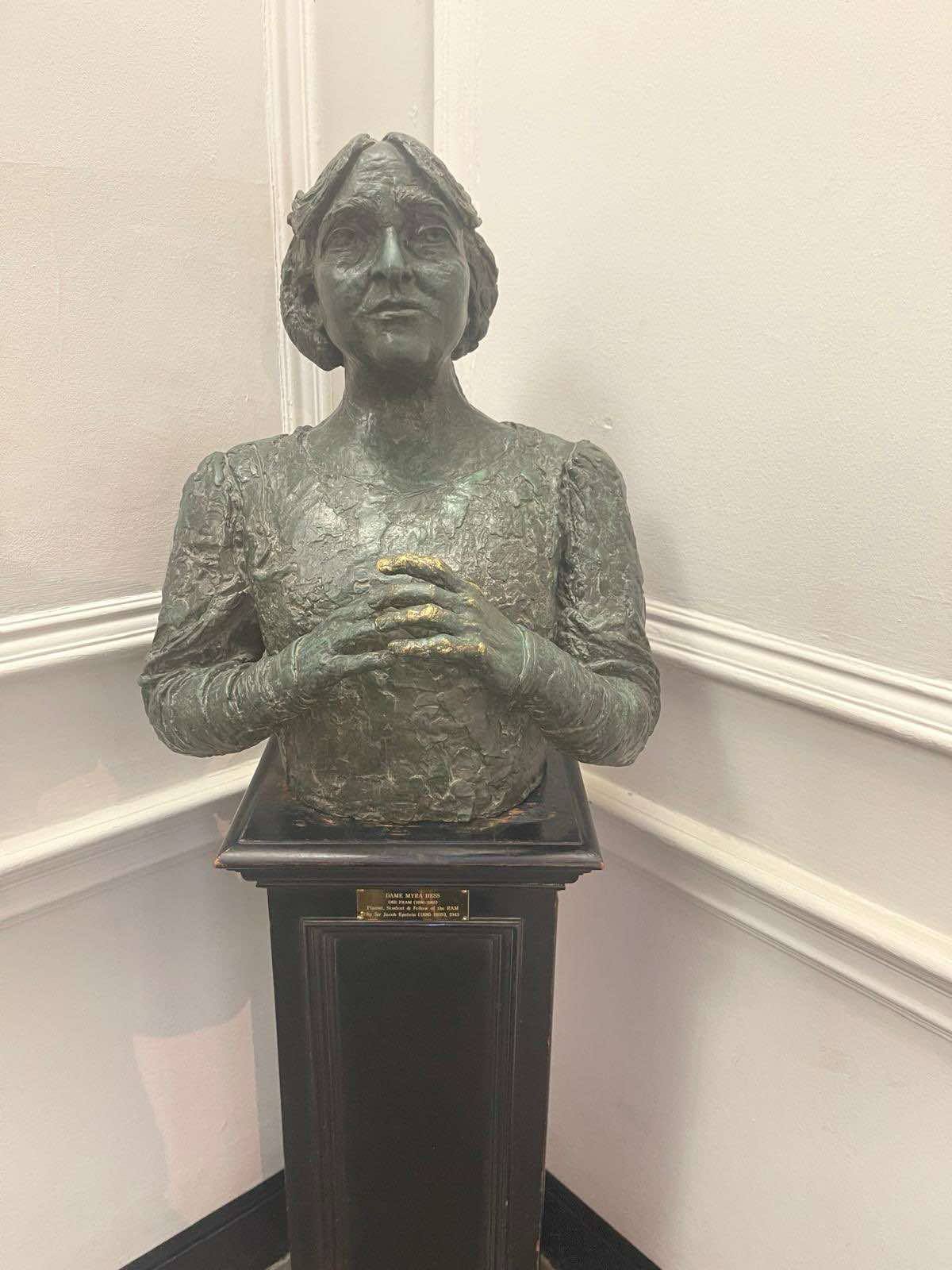
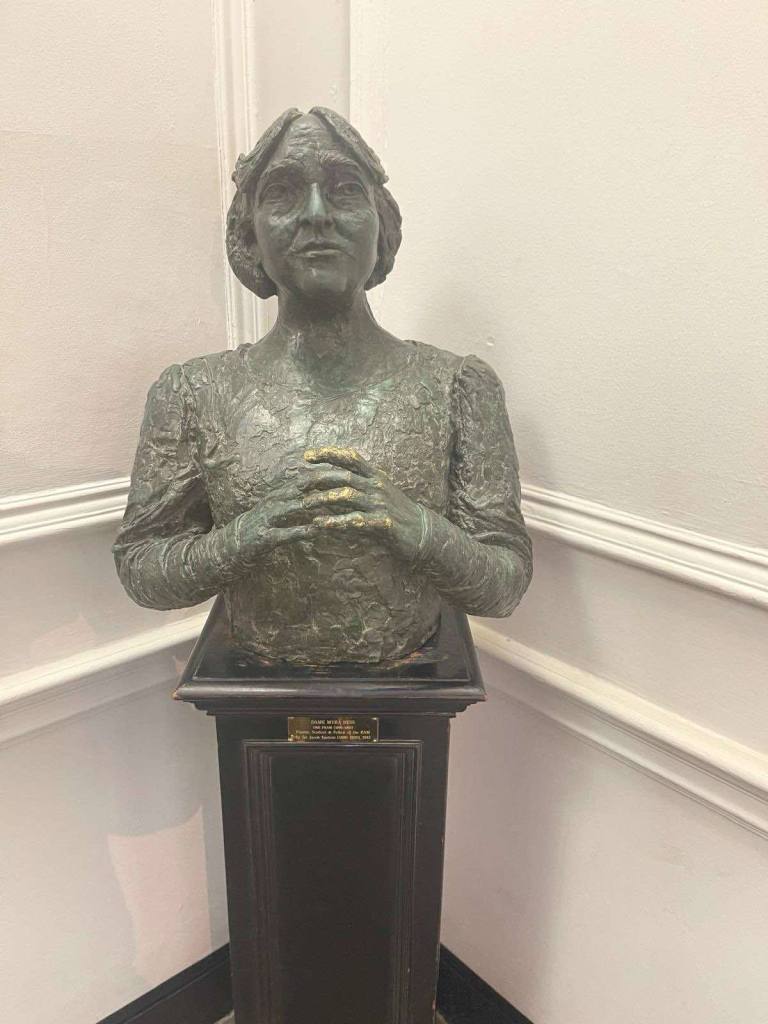
Shura and Horowitz are long gone and I can now say that there is only one left to show us what it means to make the piano sing . Nelson Goerner ,a master pianist, who is a magician from the Golden age and many of those pianists adorn the walls of this much loved hall: De Pachman,Moiseiwich, Rubinstein ,Myra Hess etc. A programme of Ravel ,Debussy and Liszt ideal for a supreme colourist. I well remember a 45rpm recording of Cherkassky playing the Ravel Pavane coupled with the Chopin Study op 10 n. 6 in E flat minor in the magical left hand transcription by Godowsky. I have searched high an low for a recording that completely bewitched me as a teenager asI fell in love with that kaleidoscopic sound world.

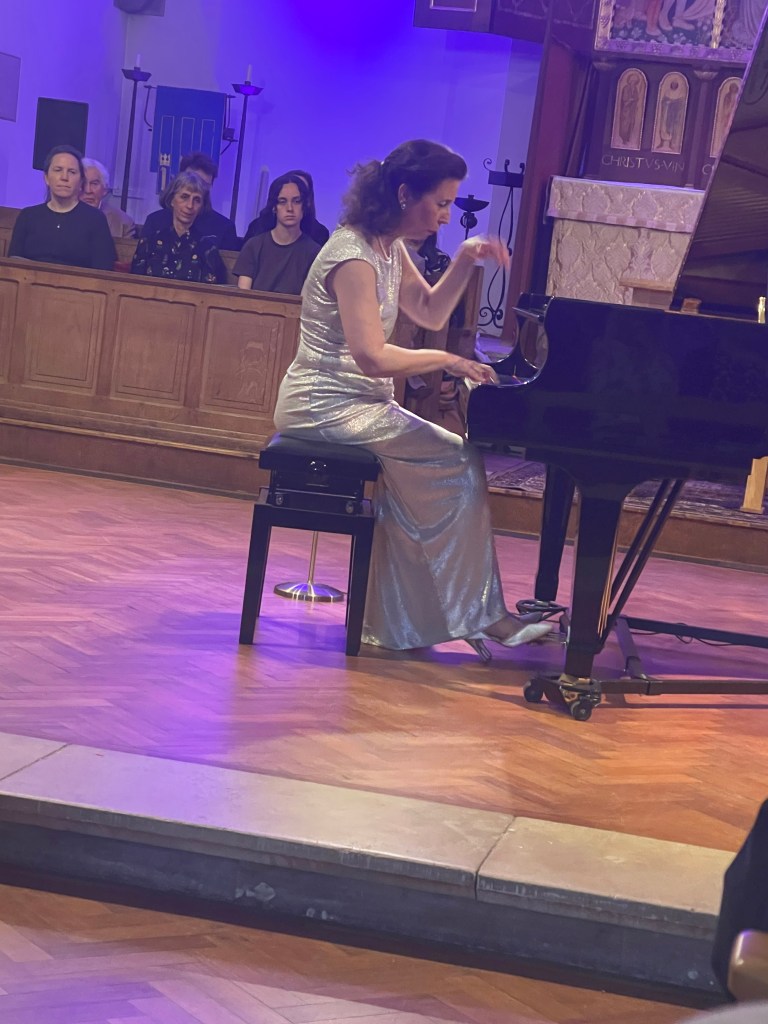
Nelson played the Pavane as an opening piece with refined good taste and drew us in to his world of colour but also of a musician who allows the music to speak for itself with simplicity and beauty. It did not quite have the weight of Perlemuter and it is good to remember that this was the last piece he played in public in this hall suffering the ‘guillotine’ just one more time in remembrance of his agent Basil Douglas. It was the Valses Nobles that followed that immediately showed the world of Nelson Goerner inspired by the magic of the Golden age pianism.But Nelson also has the modern day approach, inspired by his mentor the late Maria Tipo, that the composers indications in the score are to be pondered over searching for the real meaning that inspired the composer to put the notes on the page. A ‘modéré’ that was a little too ‘franc’ but had a great orchestral sense to it and one can quite understand how Rubinstein was booed off the stage when he gave the first performance in Spain. He famously got his own back, though, by playing them again as an encore !.Even now it comes as a shock but the ravishing beauty and crystalline purity of the ‘assez lent’ really does have ‘une espressione intense’ just as there was simple playful clarity to the ‘modéré’ that follows,and a chiselled questioning beauty to the ‘assez animé’.An almost lumbering capriciousness to the ‘presque lent’ leading to the gradual build up of grandiose nobility of the ‘vif’ immediately dispelled in a wash of sumptuous sounds. It was in the ‘Epilogue’ where Nelson showed his true musicianship, holding together strands of the previous waltzes as the composer looks back placing them in magical cloud of sound but never loosing the masterly architectural shape of a genius . A masterly performance that was followed by a Debussy of great fluidity but always with a sense of line. Allied to a kaleidoscope of sounds and mastery of the keyboard that gave great strength to these ‘Reflets dans l’eau’ but also lent an aristocratic nobility to ‘Hommage à Rameau’.’Mouvement’had an improvised freedom of whispered beauty as notes became mere washes of sound of an orchestral richness and colouring.’L’isle joyeuse’ was played with extraordinary mastery as he created the atmosphere with chameleonic changes of character leading to a climax that was breathtaking for it’s passionate grandiloquence and insistence.It is hard to believe that Debussy could conceive such magic looking across at Jersey whilst holidaying in Eastbourne but then genius is only for the chosen few. I have rarely heard this work played with such a kaleidoscope of colour and burning intensity allied to sonorities of bewitching enticement.

The second half was dedicated to just four works of Liszt but that was a feast fit for a king and could well have been a typical Cherkassky second half. The ‘second ballade’ played with heroism and beauty as this great tone poem recounts the tragedy of Hero and Leander with the menacing waves embracing us from the very first notes. Sumptuous rich sounds and fearless technical mastery were at the service of this remarkable work where the genius of Liszt was becoming ever more divorced from Liszt the greatest virtuoso that has ever lived. Here the two worlds combine as they were to do in his B minor sonata and it is interesting to note that not only is it in the same key but also written in the same year. There are also two conflicting endings for both, and that Liszt chose the quiet more introspective one as opposed to and ending of blazing transcendental glory.The B minor Sonata is at the pinnacle of the Romantic piano repertoire.It was followed by a beguiling account of ‘La Leggierezza’ concert study that was every bit as wonderful as the piano roll recording of Godowsky that astonished me so much as a teenage student. Sidney Harrison,my mentor, was president of the piano museum in Brentford where the BBC discovered these gems in Frank Holland’s leaky old church ! Chromatic scales that are washes of golden sounds becoming ever more whispered as they are played with astonishing technical perfection. But there was also the elegant beguiling charm of all that surrounds these streams of gold and silver and an ending that was thrown off with the mastery of a lost age.

Nelson relished the impish humour of the Valse oubliée n.2 .I don’t ever remember Shura playing it but looking at Nelson and how he relished the dissonant impish capriciousness, I could envisage Shura on stage taking delight in sharing in such a musical joke and feeling the audience reaction to such audacious behaviour. The 6th Hungarian Rhapsody has long been a showpiece for virtuosi with is amazing display of octaves, but there is much more too it that, just as Nelson showed us today with the real Hungarian dance steps and enormous orchestral sonorities. A tour de force of fearless mastery but above all of musical understanding.

Nowhere was that more evident than in the two encores that were a ravishing outpouring of song. Rachmaniniov’s ‘Lilacs’ where the melodic line emerges from clouds of glowing sounds was followed by Brahms Intermezzo in A op 118 n.2. It was here that time stood still as we listened in breathless wonder to the colours and sounds that Nelson could find without ever loosing sight of the overall architectural shape. This stage has heard some of the finest musicians performing but doubt it has rarely, if ever, experienced such magic as flowed from Nelson’s whole being in this farewell encore today.

It was enough to hear Nelson’s final ‘words’ today with a glowing whispered Brahms A major intermezzo. The moments of aching silence after the final carefully placed note just confirmed what we had witnessed all evening that we were in the presence of a pianist who listens to himself and who truly loves the piano and is the last true heir to the tradition of Liszt.

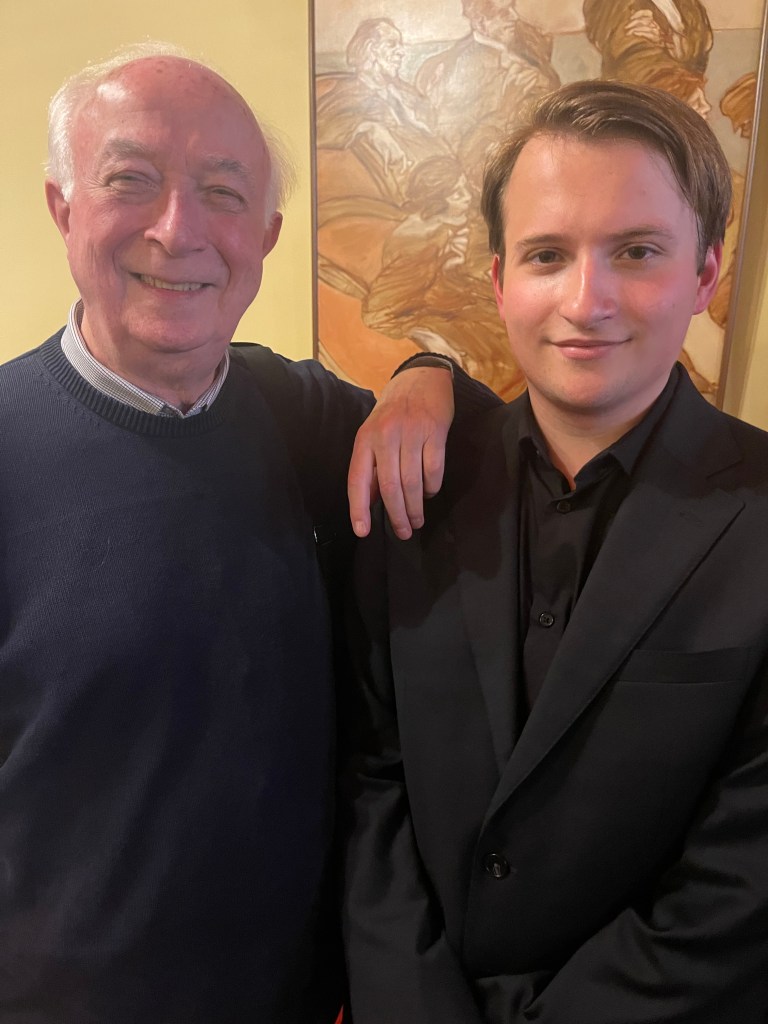
The amazing thing is that he even resembles Cherkassky! …….could it be reincarnation? ……welcome back Shura we have missed you so much and the piano gave a great sigh of relief tonight treated with velvet gloves and a warm heart again.

Wonders in Gstaad Sommets musicaux Martha Argerich,Renaud Capucon,Nelson Goerner,Michel Dalberto, Victor JulienLaferrière Alexandre Kantorow
https://christopheraxworthymusiccommentary.com/2021/02/07/wonders-in-gstaad-sommets-musicaux-martha-argerichrenaud-capuconnelson-goernermichel-dalberto-victor-julienlaferriere-alexandre-kantorow/

Mihai Ritivoiu at Bechstein Hall with Mastery and Musicianship

The New Bechstein Hall after its initial launching is now accessible to all with a Sunday morning Young Artists Series at only five pounds, with as much coffee as you need at 10.30am!
Thomas Masciaga opened the Bechstein Young Artists Series with canons covered in flowers
https://christopheraxworthymusiccommentary.com/2025/02/02/thomas-masciaga-opens-the-bechstein-young-artists-series-with-canons-covered-in-flowers/
Evening concerts starting from 18 pounds and a sumptuous restaurant that is also opening for luncheon.
A beautiful new hall that is just complimenting the magnificence of the Wigmore Hall and the sumptuous salon of Bob Boas.Providing a much need space for the enormous amount of talent that London,the undisputed capital of classical music,must surely try to accommodate
Here are some of the recent performances :

https://christopheraxworthymusiccommentary.com/2024/12/02/vedran-janjanin-at-bechstein-hall-playing-of-scintillating-sumptuous-beauty/ of a remarkable artist’

https://christopheraxworthymusiccommentary.com/2024/11/27/axel-trolese-at-bechstein-hall-mastery-and-intelligence-of-a-remarkable-artist/

https://christopheraxworthymusiccommentary.com/2025/03/25/diana-cooper-miracles-at-bechstein-hall/

https://christopheraxworthymusiccommentary.com/2025/02/05/yukine-kuroki-at-bechstein-hall-a-star-shining-brightly-with-genial-poetic-mastery/

https://christopheraxworthymusiccommentary.com/2025/02/16/federico-colli-triumphs-at-the-new-bechstein-hall-as-it-comes-of-age/

https://christopheraxworthymusiccommentary.com/2025/02/24/nikita-lukinov-conquers-the-bechstein-hall-with-masterly-music-making/

https://christopheraxworthymusiccommentary.com/2025/02/02/guy-johnston-and-mishka-momen-rushdie-conquer-bechstein-hall-in-the-name-of-beethoven/

https://christopheraxworthymusiccommentary.com/2025/02/09/donglai-shi-at-bechstein-hall-young-artists-series-with-playing-of-clarity-and-purity-of-a-true-musician/

https://christopheraxworthymusiccommentary.com/2025/01/19/phillip-james-leslie-debut-recital-at-the-long-awaited-rebirth-of-bechstein-hall/

https://christopheraxworthymusiccommentary.com/2025/02/16/dmitri-kalashnikov-at-bechstein-hall-canons-covered-in-flowers-of-poetic-mastery/

https://christopheraxworthymusiccommentary.com/2025/02/21/andrey-gugnin-at-bechstein-hall-the-pianistic-perfection-of-a-supreme-stylist/

https://christopheraxworthymusiccommentary.com/2025/02/23/jeremy-chan-young-artists-recital-at-bechstein-hall-intelligence-and-artistry-combine-with-words-in-music/

https://christopheraxworthymusiccommentary.com/2025/03/23/william-bracken-at-bechstein-hall-mastery-and-mystery-of-a-great-musician/

Mihai Ritivoiu at Bechstein Hall ,an artist renowned in his homeland but has chosen to live in London where we hardly ever have a chance to hear him play.

A great artist who thanks to Terry Lewis has been given the chance finally to play in an important hall in London.

Two fantasy sonatas by Beethoven with his so called ‘Moonlight’ and Schubert’s G major showed us just what London had been missing. A graduate some years ago from the Guildhall where he studied with that great teacher Joan Havill. He has decided to make his home in London and recently got married too, but travels abroad for his concert tours. A real musician as you would expect from the teacher of Paul Lewis and Jonathan Ferrucci and many others of impeccable musical credentials. Beethoven’s Sonata quasi una fantasia was played from the bass upwards where the undulating accompaniments in the infamous first movement were merely shifting harmonies out of which emerged the melodic line. I found it a little fast but Beethoven does mark it in two not four but he also marks it ‘Adagio sostenuto’ .However Mihai brought a great sense of orchestral colouring to a movement that is so often played as a melody and accompaniment but is much more intense than that. Even the bass melody in the coda just emerged out of a haze of sounds. Played with aristocratic poise and seriousness like a slowly moving quasi religious procession. A minuet of refreshing grace and charm with its simple questioning and answer that Mihai played with disarming simplicity. The organ like interruption of lumbering capriciousness of the trio was answered but a tender pianissimo reply . A tempestuous final movement was played with searing passion and dynamic drive, but also a refined tonal palette that gave such shape and inner meaning to a movement that certainly was never moonlit! An extraordinary clarity at the opening contrasted with the pedalled answering phrases. Perfectly shaped streams of notes led to the excitement of repeated chords played with a driving rhythm of exhilaration and mounting excitement.There was beauty too as Mihai shaped the outbursts of mellifluous phrases first in the right hand and later in the left with extraordinary flowing beauty. A forward movement that finally exploded with cascades of notes over the entire keyboard, and its was interesting that the final burst was played quieter as he always had in mind the architectural shape of the music that gave such meaning to all he played. The whispered beauty of the final bars after the cadenza was immediately dispelled with the tumultuous final weight of two imperious chords played with burning authority.

There was magic in the air as Mihai intoned the miraculous opening of Schubert’s Fantasy Sonata. Sublime delicacy was contrasted with passionate Beethovenian outbursts, but it was the disarming simplicity of the dance that gave such a pastoral atmosphere to this master work.Suddenly we were thrown into the depths with the development that took us by surprise such was the sense of discovery that Mihai shared with us today. A tumultuous climax and one of the rare times that Schubert indicates fortissimo in the score but it was short lived as the intricate beauty returned taking us to a coda of sublime beauty and intense emotional impact. It was played with a mastery of control of sound as the opening gasps got ever more faint until we could barely hear the final breath.There was a simple beauty to the ‘Andante’ that again was played with a rich harmonic palette where violent outbursts were followed by beseeching asides. A ‘Minuetto’ of Beethovenian proportions was answered by the delicate ländler of the ‘Trio’ that Mihai played with a whispered luminosity of the beguiling insinuation of a music box. The sublime mellifluous outpouring in the final joyous dance was played with delicacy and richness and was a true celebration of intricate weaving between the hands played with a teasing forward movement before bursting into Schubert’s unstoppable and seemingly endless melodic invention. Ravishing beauty as Mihai allowed this miraculous vision of beauty to unfold with whispered luminosity contrasting with passionate outbursts .Our journey had only momentarily been interrupted as Mihai picked up the threads of the capricious infectious dance that took us to the totally unexpected questioning of the opening of this joyous pastoral ride.The genius of Schubert concluding his genial fantasy with five gently vibrating chords as if his heart had simply lay to rest with a gentle smile of satisfaction and thanksgiving for this wondrous journey .

Chopin’s waltz op 42 was played as an encore with the style and mastery of the great Chopin players of the past and just confirmed that we are in the presence of an important artist that I hope we in London will be able to enjoy more often. 

BEETHOVEN: Sonata in C sharp minor, Op. 27 No 2, “Quasi una fantasia” 

I. Adagio sostenuto 

II. Allegretto 

III. Presto agitato 

SCHUBERT: Sonata in G major, D 894 “Fantasie” 

I. Molto moderato e cantabile 

II. Andante 

III. Menuetto: Allegro moderato 

IV. Allegretto

London-based Romanian pianist Mihai Ritivoiu, first came to the attention of our director, Terence Lewis, when Mihai was still a student.Mihai is now a top prize-winner of several international competitions, including the George Enescu International Competition and leads an international career performing solo and chamber music recitals in Europe and Asia.Notable London performances include the Barbican Centre, the Wigmore Hall and Cadogan Hall. Mihai has also appeared live multiple times on BBC Radio 3’s ‘In Tune’.

 Mihai Ritivoiu started playing piano at the age of 6, and won his first competition at the age of 7, subsequently performing across Romania. He studied piano at the National University of Music in Bucharest and Guildhall School of Music and Drama, winning the Beethoven Society of Europe Intercollegiate Piano Competition while representing Guildhall. He has been taught by Joan Havill and mentored by Valentin Gheorghiu and Christopher Elton

In 2011, at the age of 21, Mihai was a top laureate of the George Enescu International Competition, and won a number of special prizes including best interpretation of a piano sonata by George Enescu and the best Romanian competitor.

Career: Mihai has performed at venues including the Konzerthaus Berlin, Barbican Centre, Wigmore Hall, Cadogan Hall, St John’s Smith Square, St Martin in the Fields and the Romanian Athenaeum, and played with orchestras such as George Enescu Philharmonic Orchestra, Lausanne Chamber Orchestra, the English Chamber Orchestra and the MDR Leipzig Radio Orchestra.

In addition to his solo recitals and concerto appearances, Ritivoiu has a rich chamber music activity, playing with Corina Belcea, Antoine Lederlin, Roland Pidoux and Alexander Sitkovetsky. He has also worked closely with the contemporary French composer, Stéphane Delplace, performing the world premiere of one of his pieces.

https://christopheraxworthymusiccommentary.com/2024/09/17/mihai-ritivoiu-at-fidelio-the-poet-speaks-in-an-oasis-of-elegance-and-eloquence/

https://christopheraxworthymusiccommentary.com/2024/03/13/__trashed-6/

https://christopheraxworthymusiccommentary.com/2023/09/16/mihai-ritivoiu-at-st-martin-in-the-fields-simple-great-beethoven-from-a-musician-who-thinks-more-of-the-music-than-himself/

https://christopheraxworthymusiccommentary.com/2023/01/17/mihai-ritivoius-triumphant-recital-signals-a-musical-renaissance-at-the-national-liberal-club/

Bobby Chen at the Chopin Society UK ‘Masterly musicianship of humility and poetic sensibility’

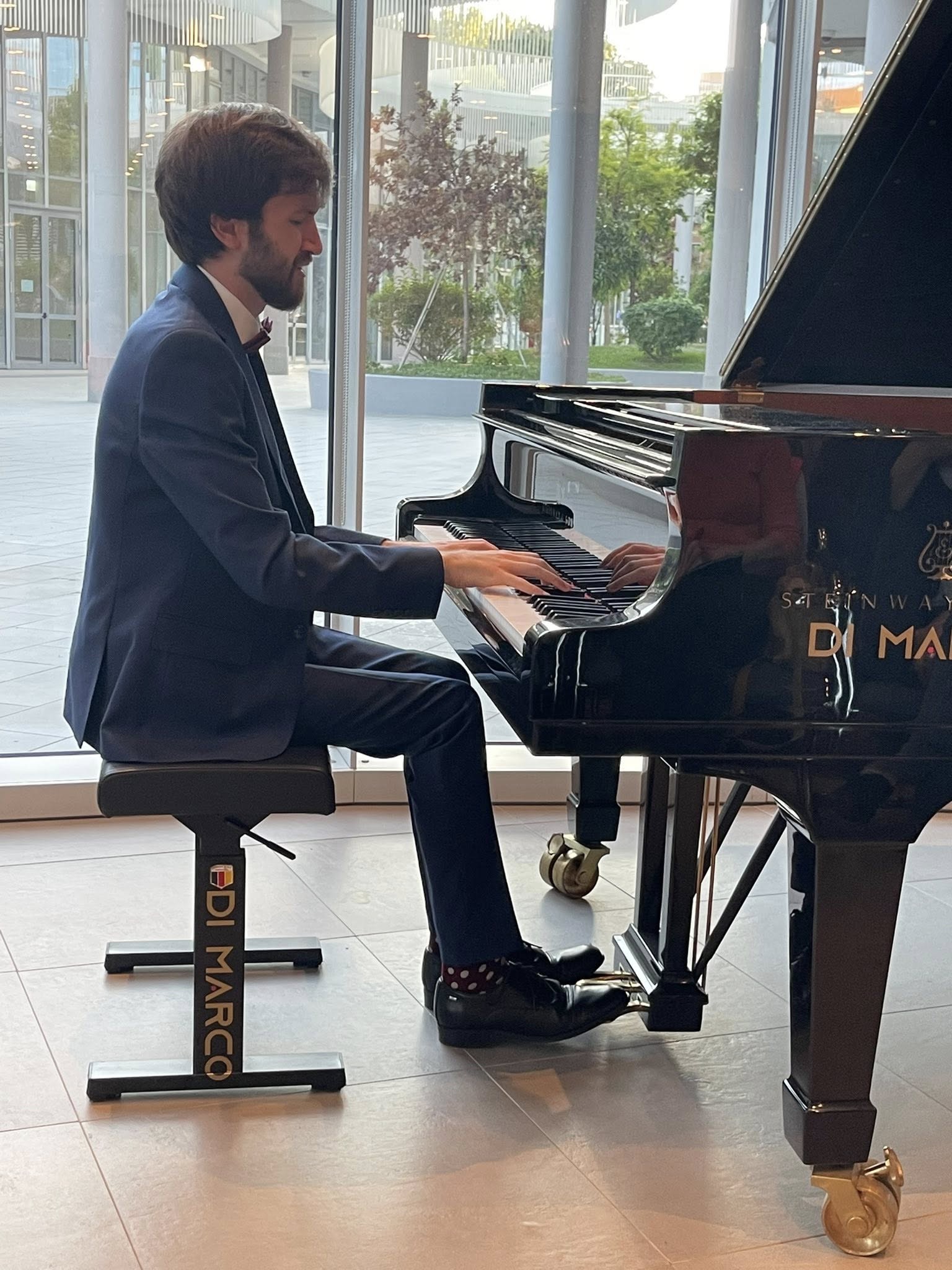
Bobby Chen at the Chopin Society UK was the third of four concerts that I was thrilled to attend after flying in from the Steinway young artist piano competition in Milan .

Steinway & Sons Young Musicians Competition Final Milan and Portrait’s Earth Hour with Elena Chiavegato
https://christopheraxworthymusiccommentary.com/2025/03/23/steinway-sons-young-musicians-competition-final-milan-and-portraits-earth-hour-with-elena-chiavegato/

The rain in Milan is very similar to that of London there are no boundaries as with the ‘soul’.

And it was this soul that our dear friend and colleague of many a years revealed to us having been invited by Lady Rose Cholmondeley and Gillian Newman to perform in a series of recitals dedicated to renowned pianists living in London but that rarely are given the opportunity to play in the city they live in !

Bobby Chen a renowned supporter of young musicians who even holds a ‘Summer school’ ( late December!!) in the Menuhin School for aspiring young musicians from his homeland .Bobby has long been linked with Yehudi Menuhin with whom he performed Beethoven Triple Concerto during the Indian Summer of one of the greatest musicians of our time.

A spring season that has included Rose McLachlan ( of the MacLachlan clan who are gradually all performing for Lady Rose ) and recently a pianist I have admired in recording but never heard live : Danny Driver with the Midas Touch of a great artist at the Chopin Society UK

https://christopheraxworthymusiccommentary.com/…/danny…/

The next concert will be the 2005 winner of the Chopin Competition in Warsaw on the 27th April with Rafal Blechacz.It will signal the opening concert of the Chopin Society Year of Polish Pianists in collaboration with the Polish Cultural Institute ( see below).

All this to say what a revelation the concert by Bobby was today.

A musicianship that is so rare these days and where the music is allowed to speak with simplicity and Matthayan beauty. With humility and intelligence delving deeply to find the meaning behind the notes. No circus tricks or showmanship but a servant – je sens , je joue , je transmets applies, and it is only the Menuhin school that gives a complete musical education to talented young students allowing them to become true kapellmeisters.

Schubert’s Four Impromptus op 90 D 899 opened the programme with beauty of phrasing,delicacy and refined musicianship.The opening mighty tone poem was revealed with infinite gradations of sound from each key allowing the music to speak in a musical conversation of rare mutual anticipation ( to quote Menuhin ). It was Matthay who wrote ‘tomes’ about the sounds that could be found in every key through a refined sensibility of touch,exemplified by his two legendary Dames : Myra Hess and Moura Lympany.

Bobby listening so attentively to the sounds and the architectural shape that he was sculpting from his well oiled fingers. Arms outstretched and listening with such concentration, always looking upwards and never down just as he was always playing horizontally and never vertically!

It is nice to be reminded that this box of hammers and strings can be made to sing as well as any singer and sometimes even better because therein lies a whole orchestra too. The second impromptu was noticeable for Bobby’s orchestral conception of the central episode and coda, embraced by a silver lined jeux perlé that was so beautifully shaped that Bobby almost forgot to keep it rhythmically in order!

The famous G flat outpouring of Schubert’s Bel Canto was played with a whispered luminosity, and a yearning to the phrasing that was particularly touching. Never forgetting the overall architectural shape and the flow like a refreshing mountain stream of luxuriant beauty. The fourth with its scintillating opening and the central episode, insinuating and passionate, but a refined passion of its age that was so moving. There were in all four impromptus a great sense of measure within a sound world of refined perfectly balanced elegance.

The Haydn Sonata in C was a lesson in the simplicity and sense of character that Bobby transmitted. A crystalline clarity and a completely different sound world from Schubert with the refined charm and grace of another age. Delicacy and brilliance went hand in hand in a masterly performance where I have rarely been aware of Haydn’s mischievous sense of humour. The long pedal that Haydn asks for in the first movement ,was played with whispered music box sounds of a composer who was a revolutionary genius just as his pupil Beethoven was to be proven,as he took over the reigns from his master. An ‘Adagio’ that unfolded with glowing luminosity and an etched poignancy of timeless beauty of a great operatic statement of weight and depth. Contrasting with the impish questioning humour of the ‘Allegro molto’ that just exploded from Bobby’s well oiled fingers with a ‘joie de vivre’ of operatic high jinx!

Bobby’s performance of Liszt’s ‘Ricordanza’ will long remain with me out of all of the wondrous performances I had heard over the past twenty four hours in London and in Milan.

A mastery not only of the technical difficulty of the mass of notes that Liszt writes for his ninth transcendental study, but for the quality of the sound and the overall vision of ravishing beauty that he could convey. Washes of sound on which such subtle tenor melodies could be shaped just as well as the greatest of singers who did not though have to give a hoot about the orchestra. Bobby was the singer and the orchestra in an extraordinary poetic control of balance and refined kaleidoscopic range of colour. It reminded me of the legendary recording of Egon Petri, a prize student of Busoni, who was in turn of Liszt .

The master speaks and Bobby revealed his true mastery of style and control at the service of this ravishing tone poem which was like looking at a faded love letter with nostalgia and not a little regret.

Quite memorable !

Stephanie Cant

After the interval Bobby played seven fantasies based on ‘Turning the Tide’ that was introduced by the composer Stephanie Cant. Seven very short bagatelles of luminosity and whispered beauty – ‘visions fugitives’ indeed, each one lasting barely a minute but describing in music Waves,Birds,Calm,Machines and an agitated Machine dance of vibrations high on the keyboard. Followed by the grandiose ‘celebration’ and delicate tiptoe to ‘reflections’ of radiance and delicacy. Played with the dedicated conviction of a true noble musician turning these baubles, written by a dear esteemed colleague, into glowing gems.

Seven Chopin Mazurkas followed and once again demonstrated the poetic beauty of Bobby’s playing .Bringing such poignant character to the three late Mazurkas op 59 and brilliance and scintillating beauty to the four early op 17. The final A minor mazurka from op 17 was played with the whispered beauty of someone sharing intimate emotions where words are just not enough and only music can reveal that elusive thing called ‘anima’.

A glorious outpouring of ever more luxuriant radiance brought a halo hovering over this magnificent Steinway as ‘Ave Maria’ resounded with heartfelt emotion and extraordinary technical finesse.

Ravel’s ‘Pavane’ of refined beauty was offered as an encore to this very warm and appreciative audience that gathers around Lady Rose and Gillian.The can still offer an intimate atmosphere able to appreciate forgotten masters in a metropolis where all too often it is quantity and not quality that prevails, and that can leave us feeling abandoned and isolated in what is the capital of music in the world .

Lady Rose delighted and moved by her friendly audience

What better way to thank Lady Rose than the whole audience united with genuine warmth and affection to wish her a Happy Birthday in song both in English and some even in Polish !

Viva Europa – Viva La Musica that does not have ridiculous barriers by International Piano Magazine as: “…an armour-clad player of complete technique, a thinking musician, a natural Romantic.”, Bobby Chen was a pupil of Ruth Nye MBE and Hamish Milne at the Yehudi Menuhin School and the Royal Academy of Music, and burst on the scene in playing Beethoven’s Triple Concerto in a British tour with Lord Yehudi Menuhin and the Warsaw Sinfonia, and a recital at the Royal Festival Hall as part of the South Bank Prokofiev Festival.

Since then, he has performed as concerto soloist with many orchestras and given recitals all over the world.

Highlights in 2024 included the world premiere performance with Douglas Finch of ‘Songs of the Chenfinch’ for two pianos composed by  Arnold Griller, a solo recital towards the Humanitarian Relief Fund of the Latin Patriarch of Jerusalem through the Equestrian Order of the Holy Sepulchre of Jerusalem, a solo recital towards the ‘Jubilee 175 Fundraising Campaign’ of Farm Street Church, a 2-piano performance with Simone Tavoni and four singers of the complete Symphony No,9 by Beethoven at the Reform Club in support of The David Nott Foundation as well as a duo recital with violist Sarah-Jane Bradley at the Old Divinity School St John’s College Cambridge.

Our piano, a fine 2015 Hamburg Steinway Model B Grand, chosen for us by Ulrich Gerhartz, Steinway’s Head of Artist & Concert Services, is maintained by Steinways and tuned by them immediately before each performance.

  • Schubert –  Four Impromptus D.899 Op.90
  • Haydn – Sonata in C major Hob XVI:50
  • Liszt – Transcendental Étude No. 9 in A major, “Ricordanza”
  • Stephanie Cant – Seven Fantasies based on Turning the Tide
  • Chopin—Three Mazurkas Op.59
  • Chopin—Four Mazurkas Op.17
  • Schubert-Liszt— Ave Maria S.558 No.12

Rafał Blechacz

Sunday 27 April at 4.30 pm

The programme:

Schubert – 4 Impromptus, Op.90 D899

Beethoven – Sonata No.14 in C# minor, Op.27 No.2 “Moonlight”

Chopin – Barcarolle in F#, Op.60

Chopin – 3 Mazurkas, Op.50

Chopin – Ballade in Ab, Op.47

Chopin – Scherzo in C# minor, Op.39

TICKETS are £20 or £10 for students with ID

Booking through wegottickets.com via this link: wegottickets.com/event/654848/ or search “Blechacz”

There will be a Champagne Reception after the concert for a limited number of people.  Reception tickets are sold on the door for £20 (cash or cheque only).

The concert will be supported by the Polish Cultural Institute. 

Polish pianist Rafał Blechacz’s artistry is recognised as rare by any measure – his many plaudits include being dubbed “a musician in service to the music, searching its depths, exploring its meaning and probing its possibilities” (Washington Post) – and arises from his total command of the keyboard and ability to unlock his instrument’s full expressive range. Those qualities have supported his artistic and professional development in the years since he took first prize at the 2005 International Chopin Piano Competition. He stands today among the world’s finest pianists, in high demand for the honesty and vision he brings to performances of everything from Bach and Beethoven to Chopin and Szymanowski.

The eloquence and intensity of Blechacz’s Chopin Competition performances, delivered within months of his twentieth birthday, were rewarded not only with the winner’s medal but also with a clean sweep of the event’s four special prizes and the Audience Award. He signed an exclusive contract with Deutsche Grammophon in May 2006, following Krystian Zimerman to become the second Polish pianist to join the yellow label’s international roster of artists. The new relationship was launched in October 2007 with Blechacz’s debut solo album, a coupling of Chopin’s completePreludes and theTwoNocturnes op. 62. His second release – a recital of piano sonatas by Haydn, Mozart and Beethoven – was issued in 2008, after which he returned to Chopin, recording the two piano concertos with the Royal Concertgebouw Orchestra and Jerzy Semkow for an album released in 2009 to herald the upcoming bicentenary of Chopin’s birth.

2012 saw the release of an album of solo works by Debussy and Szymanowski. This was followed in 2013 by another acclaimed Chopin recording, this one featuring the composer’s mature Polonaises. Blechacz’s sixth DG album, released in 2017, was devoted to works by Bach, the Partitas Nos.1 & 3 andItalian Concerto among them. He then joined forces with Korean violinist Bomsori Kim to record a selection of works by Fauré, Debussy, Szymanowski and Chopin. Released in 2019, this was his debut chamber music album for DG

Devoted entirely to Chopin, Blechacz’s latest release presents his insightful interpretations of the Second and Third Piano Sonatas, Nocturne Op. 48 No. 2 and Barcarolle Op. 60. “I’ve had many experiences with this programme, playing it all over the world, in different concert halls and on different pianos,” says the artist. “I really wanted to share the beauty of these compositions with the audience.”Chopin was released, digitally, on CD and on vinyl (2 LPs) in March 2023.

Rafał Blechacz was born in the small town of Nakło nad Notecią in northern Poland in June 1985. He showed early signs of musical talent and began piano lessons at the age of five. Having first enrolled at the Arthur Rubinstein State Music School in Bydgoszcz, he progressed to study at the city’s Feliks Nowowiejski Academy of Music, graduating in May 2007 from Katarzyna Popowa-Zydroń’s piano class. Blechacz’s outstanding technical and artistic attributes secured a sequence of competition successes, beginning in 2002 with second prize at the Arthur Rubinstein International Competition for Young Pianists in Bydgoszcz, continuing the following year with joint first prize at the Hamamatsu International Piano Competition, and culminating in outright victory at the 2005 International Chopin Piano Competition in Warsaw, where he became the first Polish musician to receive the top prize since Krystian Zimerman thirty years earlier.

He went on to win the 2010 Premio Internazionale Accademia Chigiana, awarded annually by the Accademia Musicale Chigiana in Siena to an outstanding pianist or violinist. In 2014 Blechacz received the Gilmore Artist Award, a prestigious prize conferred every four years in recognition of “extraordinary piano artistry”. In addition to formal prizes and awards, he has also garnered ringing endorsements from senior colleagues, with Martha Argerich, winner of the Chopin Competition in 1965, describing him as “a very honest, extraordinary and sensitive artist” and the Irish pianist and pedagogue John O’Conor as “one of the greatest artists I have ever heard in my life”.

Diana Cooper ‘Miracles at Bechstein Hall’

Diana Cooper at Bechstein Hall – ‘freedom and flexibility of rare artistry’ – ‘ravishing sounds of refined delicacy mingled with robust declamations’. This is what I jotted down as she recreated the Mazurka op 30 n. 3 that opened this extraordinary Chopin Recital.She shared with us in just a few minutes a tone poem with a kaleidoscope of colours and emotions.

‘Canons covered in flowers’, never have Schumann’s words come so vividly to life. A piano that I have heard played by many very fine artists, but today the sounds she found with a miraculous sense of balance and sensitivity , a subtle palette of colours, I would never have thought possible. A bass that resounded with the deep velvety resonance reminiscent of a Bosendorfer or Shegeru Kwai – a middle register of Bluthner or Fazioli richness – an upper register that of the Hamburg Steinway of yore . No this was a Bechstein ,the preferred piano of so many legendary artists and here was an artist who could allow this instrument to glow and seduce as it used to do for so many of the greatest pianists of their day.

I was completely seduced today, in the same way that I was every time I heard Rubinstein. A sound that this young lady found today, even more in the Nocturne op 27 n. 2, that was truly Rubinstein’s. Today there was that same magic in the air as she allowed the music to unfold with timeless beauty and aristocratic poise. There was drama too as this was not the physically feeble Chopin but the Prince of the Keyboard with his native land always in his soul but tempered by the refined elegance of the Parisian high society. Diana has a quite extraordinary sense of balance that allows the melodic line to sing like Caballé, with that same velvety rich sound that she would modulate with deep rich notes. Just as Diana would touch a golden bass note with her magic wand that would illuminate the ravishingly expressive bel canto that was flowering and floating on high.

A miracle of beauty and even at times an intensity, as the searing passion would allow her to wallow in the ecstatic world that she was recreating before our incredulous eyes. Bechstein too played its part ,not only with a magnificent instrument but also the intimacy that the lighting in this rather unique space could afford. The study op 10 n. 8 just flew from her hands with washes of colour as the bass melody was shaped as only a true artist could do. It was Agosti, who I and many others have never forgotten, as he intoned the bass melody of this study with a refined intensity that has remained with me all these years ( and with many others too including Christopher Elton ).An ending as Chopin had indicated and not falling into the trap of ‘milking’ the final chords to rouse the public into delirium.( Only Horowitz could do that because he was a unique genius who was also a showman of the Golden age who could weald his power over an audience).Op 25 n. 5 was a little fast but when she made a long pause before the ravishing central mellifluous outpouring everything fell into place and she convinced me that this was the only way to ever play it. Chopin does after all mark it ‘vivace’ and ‘scherzando’ and asks specifically for a silence ( even the pedal mark confirms that ) before the ‘più lento’ central episode. In fact all through the recital it was not only her kaleidoscopic range of colours and sounds ( could one ever forget the deadened sound of the timpani before the return of the ‘risoluto’,in the opening Mazurka), but it was the silences ,that are all marked by Chopin in the score, but rarely ‘played’ with such artistic poignancy! If ever at all !

The Fourth Scherzo, an elusive work of extraordinary fantasy and chameleonic changes of character that have made it less accessible to all but the greatest of interpreters. Diana played it today with a kaleidoscope of sounds as she took us into a fantasy world of fleeting quixotic fancy and ravishing washes of sumptuous melody. In Diana’s masterly hands even the glistening jeux perlé that abounds was played with a clarity starting with the pedal but then continuing without, that was quite breathtaking in it’s audacity.The bare notes of the introduction to the ‘più lento’ central episode I have rarely heard played with such poignancy, where one could feel the collegiate atmosphere created and of her leading us by the hand into a wondrous land of beauty .The radiance and sumptuous beauty of the imperious final few bars gave us that rich sound of a truly ‘Grand Piano’ with a depth and richness of magisterial authority.

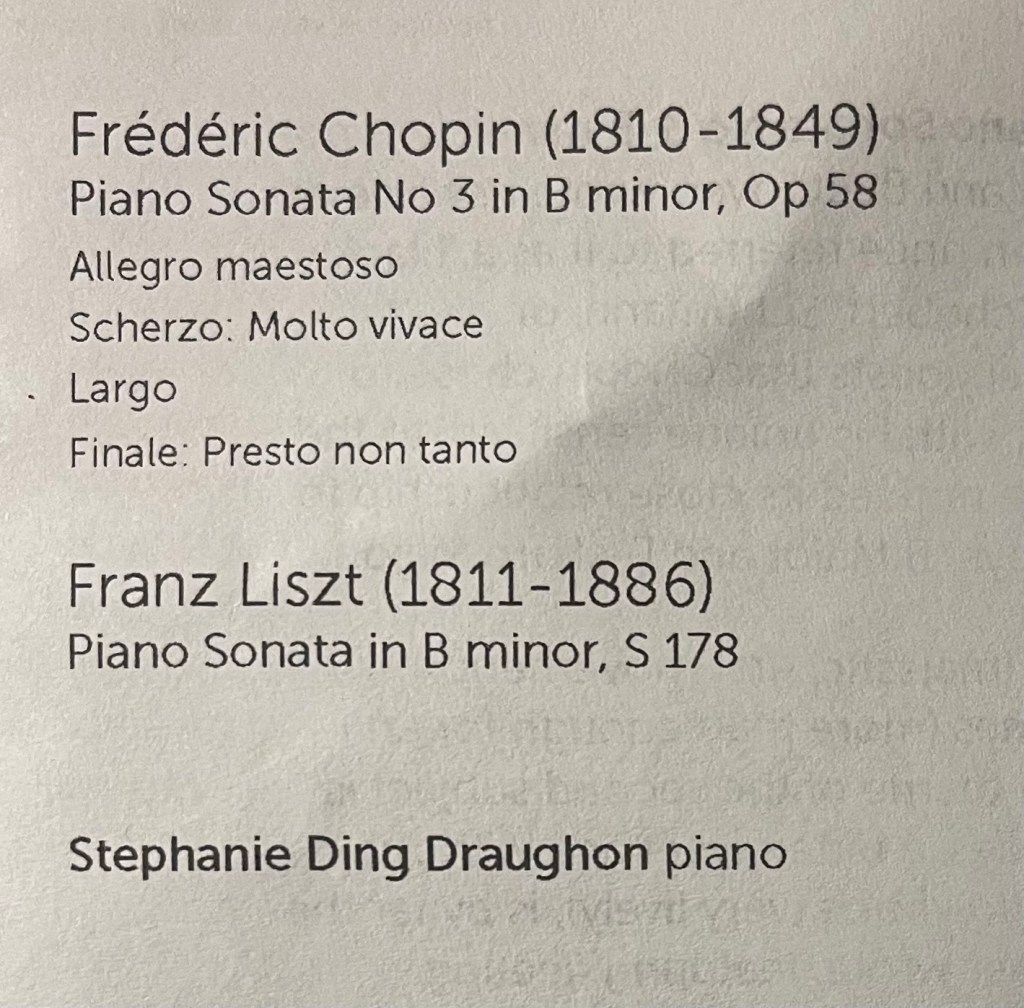
It was this same authority that opened the B minor Sonata,with the power of a drama that was about to unfold. Searing passion and breathless declamations gave way to a bel canto with an inner energy, as Diana had conceived the whole movement in one glorious architectural whole. Moments of extraordinary beauty as counterpoints just shone like jewels catching the light.There was no repeat but straight into the development with overwhelming drive and authority. The Trio of the Scherzo was given unusual importance with contrapuntal strands that all made such sense and were the guiding light for this movement that can sound, in lesser hands, so disjointed. An imperious opening to the Largo played with extraordinary intelligence and sensitive musicality as she gave a monumental shape to passages that can seem like senseless beautiful meanderings. She brought a breathtaking climax played with her extraordinary ability to feel and search for a balance that would allow beauty, passion and delicacy to live under the same roof. The ‘Presto non tanto’ was played with beguiling menace as it became ever more excited and exhilarating, all leading to the final tumultuous explosion and the triumphant left hand fanfare taking us to the final chords of breathless inevitability.

with Sonya Pigot – both from the class of Prof. Norma Fisher at the RCM

Sonya Pigot a magic wonderland of sounds at St James’s Piccadilly
https://christopheraxworthymusiccommentary.com/2024/01/02/sonya-pigot-a-magic-wonderland-of-sounds-at-st-jamess-piccadilly/

Diana was sorry not to play an encore ,but why would she have wanted to ,when she had just served a dish fit for a King?!

What to do to unwind after such an unexpected miracle – the Roast Sunday Lunch and a glass of Nero Davola was the answer and was served downstairs with the same refined good taste and exquisite delicacy that we had just experienced in this true oasis of culture.

Outside, the worldly confusion of protesters surrounded us and Oxford Circus station closed for fear of being taken by siege!

next Sunday morning concert another great lady pianist ……….birds of a feather ………and all that !

Nocturne op, 27 no.2 

Etude op. 25 no.5 

Etude op.10 no.8 

Mazurka op. 30 no.3 

Scherzo no.4 op. 54 

Sonata no. 3 op. 58 

I. Allegro maestoso 

II. Scherzo: Molto vivace 

III. Largo 

IV. Finale: Presto non tanto

One to watch, you may have seen Diana in the BBC’s Arts in Motion Series, partaking in a masterclass with Yuja Wang.

Admitted at the age of 16 to the Paris Conservatoire Diana graduated with a master’s degree five years later.

Diana is currently settled in London and has just graduated from the Royal College of Music. To add weight to that, Diana has been taken on by the Talent Unlimited charity as well as the Kirckman Concert Society.

Passionate about classical music from her earliest age, it is on stage that Diana Cooper attains artistic fulfilment.

Winner of numerous awards including 1st Prize at the Brest Chopin Competition, 1st Prize at the Halina Czerny-Stefanská International Competition in Poznan (Poland), 1st Prize at the Concurso Internacional de Piano de Vigo (Spain), and laureate of the Fondation de la Banque Populaire, Diana Cooper has been invited to perform in various venues and festivals in France and abroad, including the Nohant Chopin Festival, the Festival Chopin à Paris, the Salle Cortot, the Polish Embassy in Paris, the Ysaye Festival in Belgium, the Palacio de Congresos in Huesca, Spain, the Hrvatski dom Split in Croatia, the Kielce Filharmonia in Poland…

In 2023, she was selected to take part in the project Un été en France avec Gautier Capuçon, for which she perfomed as a soloist and in chamber music.

She was invited in 2018 to take part in the radio program Générations Jeunes Interprètes on France Musique and, in 2023, performed as a trio in the television programme Fauteuils d’orchestre, broadcast on France 5.

Her activity has been enriched by solo appearances with the Orchestre Symphonique du Sud Ouest in Chopin’s 1st Concerto, the Orchestre Appassionatoin Mozart’s 20th concerto, and the Orchestre des Lauréats du Conservatoire de Paris in Schumann’s concerto, performed in 2023 at the Cité de la Musique in Paris.

Born in France, she began studying piano at the Tarbes Conservatoire with Jean-Paul Cristille, gave her first solo recital at 9 and performed at 14 with orchestra Mozart’s Concerto n°21 in France and Spain. She was unanimously admitted at the age of 16 to the Paris Conservatoire to study with Jean-François Heisser and Marie-Josèphe Jude and graduated with a master’s degree five years later. She continued her studies at the Ecole Normale de Musique where she was taught by the renowned professor Rena Schereshevskaya for three years. In 2022, she was selected to join the new season of the Académie Musicale Philippe Jaroussky, and perfected her skills there with Cédric Thiberghien. In parralel, she was admitted the same year to the Paris Conservatoire in an Artist Diploma course. She is currently studying at the Royal College of Music in London where she has been admitted to pursue a second Artist Diploma course, in Norma Fisher’s class. She is a laureate of the Kathleen Trust and has recently joined the Talent Unlimited charity offering concerts in London for young talented musicians.

Following her pre-selection in 2021 for the prestigious Chopin Competition in Warsaw, she was invited the following summers by Philippe Giusiano to take part in masterclasses in Katowice as well as concerts at the Chopin Manor in Duszniki, organized by the Chopin Foundation.

Diana has recently recorded her first CD, featuring works by Haydn, Chopin and Ravel, after winning in 2022 the 1st Prize in the Concours d’aide aux Jeunes Artistes organized by the Festival du Vexin.

William Bracken at Bechstein Hall Mastery and Mystery of a great musician

William Bracken at the Bechstein Hall armed with our early morning coffee we entered the starlit wonder that is this new Bechstein Hall.

What a marvel that Terry Lewis together with Bechstein dedicate much time to giving an important space for young musicians to play in,the greatest musical metropolis in the world.

I have followed this young man’s student career and it is good to see a prize student becoming an authoritative artist gaining accolades with each performance .

A forty minute programme played almost without a break as he united Clara and Robert with an umbilical of improvised transitions from one piece to another. This was quite the norm in the hall just next door in the early 1900 ‘s when artists such as De Pachman would join the pieces together and also give a running commentary as to how they were progressing .Will did not go that far but it shows off the skill of a real musician who is not only an interpreter but also a transmitter of emotions and atmosphere’s .

Will did say a word or two after the Scriabin 9th Sonata, known as the Black Mass, where tumultuous tortured sounds were floated on a cauldron of red hot vibrations with a mastery and authoritative conviction that was astonishing. As he said we had had our dose of caffein and he had had his dose of Scriabin.

It was in the Scriabin ,Unsuk Chin and Debussy Arpeggio study that the mastery of this young artist was revealed to the full. The ravishing floating sounds of Debussy and scintillating outbursts of astonishing dynamic drive, where Debussy can turn dry arpeggios ,in his last years, into vibrant living strands of sound of unbelievable poignancy and power.The same sounds as Scriabin, a true kaleidoscope of hypnotic decadence as Scriabin reaches the star of his mystic belief. Will attacked the piano like a man possessed and it was breathtaking and overwhelming for the transcendental mastery and the authority and conviction of his playing . I well remember Will’s ‘Esprit de joie’ by Messian in previous recitals and it was the same pungent sounds of broken glass that reached deep inside us all as he punched out the sounds with the same mystic belief of it’s creator .’Traumes Wirren’ by Schumann that had appeared on the programme as ‘Traumerei’, came as a pleasant surprise as the refreshing jeux perlé and charm of Will’s playing brought us full circle, as had intimated in his warmly friendly introduction

If Chopin fared less well it was a small price to pay for such masterly playing of composers a century later. A Chopin Nocturne dissected with Will’s extraordinary intellect but which seemed to be sliced into two with episodes not related with his explosive playing of the central episode.It is curious that such a master could not contemplate the architectural shape and texture of one of Chopin’s most touching tone poems. I think that like Aimard, his love for certain pungent sounds will come full circle as his great artistry matures and grows .The Nocturne by Clara Schumann fared much better and this great love letter from Clara to Robert (she uses the same theme as his Fantasy op 17 and it was published at the same time and with Robert’s Fantasy written as an outpouring of the love of his life and eventual mother of their eight children ). Here Will managed to conceive this miniature jewel as one glorious whole and improvised , without a break, into the searing romantic waves of sound of Robert’s ‘In der Nacht’. Played with a passionate drive and sumptuous romantic sounds as Schumann floats one of his most beautiful melodies on a cauldron of windy sounds just as Will had done in Scriabin.The difference of course is that one is of a satanic ritual and the other of romantic effusions . A wonderful improvisation to Warum just confirmed the musicianship and courage of this true thinking musician.

William Bracken is in demand as a recitalist, concerto soloist, chamber musician and teacher. The Wirral-born pianist has won numerous awards including 1st prize at the 2022 Liszt Society International Piano Competition, 1st prize, press prize and audience prize at the 2023 Euregio Piano Award international piano competition and 3rd prize at the 2024 UniSA international piano competition in South Africa. He is currently continuing studies at the Guildhall School of Music and Drama in London where he also holds a position as teaching assistant in the Centre for Creative Performance and Classical Improvisation. 
Concert highlights include several concerto performances at The Barbican, Liverpool Philharmonic Hall, St. John’s Smith Square and recitals at Chipping Campden Festival, LSO St. Luke’s and most recently Wigmore Hall, where he was praised by the Telegraph for his “courage and stamina and musicality in abundance” and “an ability to hold an audience in the palm of his hand”. He also made his New York debut at Carnegie’s Weill recital hall in January 2024.
 William performs a large and diverse range of repertoire and also has a keen interest in jazz and improvisational elements of performing classical music. He is a founding member of Ensemble+, a chamber collective focused primarily on challenging preconceptions about live music through the medium of improvisation and is a current artist diploma student at the Guildhall School of Music and Drama studying with profs. Martin Roscoe and Ronan O’Hora.

Steinway & Sons Young Musicians Competition Final Milan and Portrait’s Earth Hour with Elena Chiavegato

Sabato 22 marzo, all’Auditorium di Largo Mahler, la Finale del Concorso Pianistico Steinway per Giovani Talenti porterà sul palco i migliori giovani pianisti: un evento imperdibile per gli amanti della grande musica che inizierà alle ore 10.00.
Alle 17:30 verrà proclamato il vincitore, che rappresenterà l’Italia al Festival Internazionale Steinway ad Amburgo.
L’evento è gratuito e i posti sono limitati e non numerati: è possibile accedere e assistere alle esibizioni in qualsiasi momento.
The 27 contestants playing from 10 am to 17 pm with a indestructible jury made uo of Franceso Libetta,Gile Bae,Bertrand Giraud,Costanza Principe and Christopher Axworthy of the Keyboard Trust alias the indisposed Alexander Krichel
Alberto Cartuccia Cingolani winner of A category and the prestigious radio prize
A star and a youthful master
The extraordinary Julia Rebez winner of C category and special 200 euro scholarship An extraordinary Rameau and quite astonishing Chopin op 25 n. 6 (double thirds study )
Emanuele Cuzzovaglia winner of B category Some beautifully poised playing of Debussy and refined beauty of Chopin’s posthumous Nocturne in C sharp minor
The prize winners and jury complete! photo courtesy of Maura Romano
The indomitable Luarda directing young and old with charm and sensibility on this very special occasion
The honour to be Alexander Krichel for the day so I get to embrace this magnificent pianist after her ravishing candlelit performances .
The moment Elena Chiavegato touched the piano I recognised her immediately for the concert I had reviewed in Cremona with her superb ‘Donne Romantiche ‘ programme
A letter from Cremona ,the eternal city of music where dreams become reality.
https://christopheraxworthymusiccommentary.com/2024/09/30/a-letter-from-cremona-the-eternal-city-of-music-where-dreams-become-reality/
Maura Romano seated at the magnificent Steinway D piano that Elena played with exquisite sounds of ravishing beauty ………Nocturnes by Chopin, Mendelssohn/Moszkowski,Amy Beach and many many others ,played by candlelight on this special Earth Hour in collaboration with the remarkable Portrait Hotel in the centre of Milan where once stood a monastery
Far left Costanza Principe with Francesco Libetta – far right Maura Romano with Bertrand Giraud – Luarda Nezha and our hostess , Cristina Fogliatto, at the Portrait Hotel

Sherri Lun in Florence Harold Acton Library Music al British ‘Refined musicianship and mastery of a young star’

The Keyboard Trust and the Robert Turnbull Piano Foundation together with Music al British in Florence presented Sherri Lun with a fascinating programme that started and finished with two of the most important works in the Romantic piano repertoire. Chopin’s last great masterpiece the Polonaise- Fantasie where Chopin had created a completely new form that was so revolutionary for it’s time that it was only many years after his death that it was finally recognised for it’s genial invention and poetic beauty. Beethoven’s shortest Sonata,but one of the composers favourite for it’s beauty and simplicity, opening the gate to the composers last period of his thirty two sonatas that spanned his entire life story.

’Widmung’ and the Fantasie were outpourings of love by Robert Schumann for his future wife Clara .It is fitting that Sherri should include a composition by Clara Schumann too, who apart from being the mother of Robert’s eight children was the first woman virtuoso of the piano and a quite considerable composer in her own right.This nocturne published at the same time as Robert’s Fantasie uses Robert’s theme from the Fantasie and is a secret love trist between them. ‘Widmung’ was Robert’s wedding present to Clara and was a fitting close to this concert dedicated to one of the greatest love stories ever told. Sherri had played the Chopin and Schumann Fantasies just two days before this Italian tour , in London, and I reviewed them here :

.Sherri Lun in Perivale ‘Maturity and mastery of intelligence and refined poetry’
https://christopheraxworthymusiccommentary.com/2025/03/12/sherri-lun-in-perivale-maturity-and-mastery-of-intelligence-and-refined-poetry/

What I did not know until Christopher Elton,her teacher, told me, was that the Schumann op 17 was a new work in her repertoire and so Vicenza was only the second time she had played it in public! She has since played it in Venice, Padua and Abano.

Florence, the last date of this tour, marks Sherri’s sixth performance! It was remarkable in Perivale and as Christopher had so rightly said it is getting even better with every performance! ‘Widmung’ has long been in her repertoire and she played it with phrasing of breathtaking beauty. The exhilaration of Liszt’s embellishments brought the greatest love story ever told onto the concert platform with heartrending sensibility and passionate involvement.

Beethoven’s favourite sonata was played with a crystalline clarity and refined musicianship that just illuminated the grace and charm that Beethoven could express for ‘Thérèse’ who may very well have been the ‘Immortal beloved’ of much speculation. After the glorious opening ‘Adagio cantabile’ of simple unadorned beauty, there was refined phrasing and a constant flowing tempo in the ‘Allegro ma non troppo’ that follows.The ‘Allegro vivace’ was played with a jeux perlé jewel like precision which just flowed from Sherri’s fingers with simple mastery. After another wonderful performance of the Schumann Fantasy where the coda of the first movement was always ever more touching, and where the whispered beauty of the ending led to minutes of aching silence when the audience and the performer could savour together the magic that had been recreated.The concert had also included a memorable performance of Chopin’s Polonaise – Fantaise that was played with poetic beauty and dynamic heroism.The streams of sounds that poured out of the first imperious chords were merely vibrations of sound on which was born the gently militaristic Polonaise. A central episode played with poetic beauty and a ravishing sense of balance gradually led to the glorious final outpouring of magnificence and not a little nostalgia for the homeland that Chopin had left at eighteen and was destined never to see again. After his death in his adopted city of Paris his bodily remains were buried in Père Lachaise cemetery but his heart was brought back to Poland where it had always belonged. An extraordinarily robust ending from a delicate looking young musician who evidently has a tiger hidden within.

Beethoven Sonata No.24 in F-sharp major, Op.78

Chopin Polonaise Fantasie in A-flat major, Op.61

Clara Schumann Nocturne Op.6 No.2

Schumann Fantasie in C major, Op.17

Schumann/Liszt Widmung

Ruben Micieli triumphs with Chopin in Florence with Music al British in the Harold Acton Library
https://christopheraxworthymusiccommentary.com/2025/03/05/ruben-micieli-triumphs-with-chopin-in-florence-with-music-al-british-in-the-harold-acton-library/

Fryderyk Franciszek Chopin

1 March 1810 Zelazowa Wola Poland17 October 1849 (aged 39) Paris

The Polonaise-Fantaisie in A-flat major, Op. 61 was dedicated to Mme A. Veyret, and written and published in 1846. It was slow to gain favour with musicians, due to its harmonic complexity and intricate form.Its shape and its style caused much consternation and it was quite some time before listeners could come to terms with it as ‘the piano speaks here in a language not previously known’.The “Polonaise-Fantaisie” is among Chopin’s last great piano works, and is a testament to his mastery and maturity. The unusual title betrays the fact that Chopin was uncertain about which genre to assign it to. While the typical rhythm and noble character of the Polonaise repeatedly shine through the notes, the Polonaise-Fantaisie is characterized above all by a great freedom in its thematic and formal aspects. The work brushes through a great variety of keys, moods and motifs, and leads into a grandiose closing apotheosis as if at the end of a long journey.One of the first critics to speak positively of the work was Arthur Hedley,writing in 1947 said that it “works on the hearer’s imagination with a power of suggestion equaled only by the F minor Fantasy  or the Fourth Ballade .He suggested that the Polonaise-Fantaisie represents a change in Chopin’s style from ‘late’ to ‘last’.It is suggested that the formal ambiguities of the piece (particularly the unconventional and musically misleading transitions into and out of the lyrical inner section) are the most significant defining qualities of this ‘last style’, which only includes this and one other piece—the F minor Mazurka op 68 n. 4 Chopin’s last composition.”,

Ludwig van Beethoven 17 December 1770 Bonn – 26 March1827 (aged 56)
Vienna

The Piano Sonata No. 24 in F sharp major , Op. 78, nicknamed “à Thérèse” (because it was written for Countess Thérèse von Brunswick in 1809).


One of Beethoven’s students and some writers speculated that she—not her sister Josephine  who is generally accepted as the addressee—may have been the intended recipient of Beethoven’s letter to the “Immortal Beloved”. Her memoirs were first published by La Mara, who subscribed to this theory and her diaries and notes (up to 1813) by Marianne Czeke,both claiming to reveal much about the relations between Beethoven and the Brunsvik family, in particular her sister Josephine.

It consists of two movements:

  1. Adagio cantabile — Allegro ma non troppo
  2. Allegro vivace

According to Carl Czerny , Beethoven himself singled out this sonata and the “Appassionata ” Sonata as favourites (once written, the “Hammerklavier “ Sonata” would also become one of Beethoven’s favourites


Robert Schumann. 8 June 1810 Zwickau Saxony
29 July 1856 (aged 46) Bonn Germany

The Fantasie in C, Op. 17, was written by Robert Schumann in 1836 and revised prior to publication in 1839, when it was dedicated to Franz Liszt. It is generally described as one of Schumann’s greatest works for solo piano, and is one of the central works of the early Romantic period.

Its three movements are headed:

  1. Durchaus fantastisch und leidenschaftlich vorzutragen; Im Legenden-Ton 
  2. Mäßig. Durchaus energisch –
  3. Langsam getragen. Durchweg leise zu halten.
    The piece has its origin in early 1836, when Schumann composed a piece entitled Ruines expressing his distress at being parted from his beloved Clara Wieck (later to become his wife). This later became the first movement of the Fantasy.Later that year, he wrote two more movements to create a work intended as a contribution to the appeal for funds to erect a monument  to Beethoven  in his birthplace, Bonn . Schumann offered the work to the publisher Kirstner, suggesting that 100 presentation copies could be sold to raise money for the monument. Other contributions to the Beethoven monument fund included Mendelssohn’s Variations sérieuses
    The original title of Schumann’s work was “Obolen auf Beethovens Monument: Ruinen, Trophaen, Palmen, Grosse Sonate f.d. Piano f. Für Beethovens Denkmal”. Kirstner refused, and Schumann tried offering the piece to Haslinger in January 1837. When Haslinger also refused, he offered it to Breitkopf & Hartel in May 1837. The movements’ subtitles (Ruins, Trophies, Palms) became Ruins, Triumphal Arch, and Constellation, and were then removed altogether before Breitkopf & Härtel eventually issued the Fantasie in May 1839.
    The work was dedicated to Franz Liszt , who replied in a letter dated June 5, 1839: “The Fantaisie dedicated to me is a work of the highest kind – and I am really proud of the honour you have done me in dedicating to me so grand a composition. I mean, therefore, to work at it and penetrate it through and through, so as to make the utmost possible effect with it.”
    The Beethoven Monument was eventually completed, due mainly to the efforts of Liszt, who paid 2,666 thaler,the largest single contribution. It was unveiled in grand style in 1845, the attendees including Queem Victoria  and Prince Albert, and many other dignitaries and composers, but not Schumann, who was ill.
    Schumann prefaced the work with a quote from Friedich Schlegel :
    Durch alle Töne tönet
    Im bunten Erdentraum
    Ein leiser Ton gezogen
    Für den, der heimlich lauschet.
    (“Resounding through all the notes
    In the earth’s colorful dream
    There sounds a faint long-drawn note
    For the one who listens in secret.”)
    The musical quotation  of a phrase from Beethoven’s song cycle An die ferne Geliebte  in the coda of the first movement was not acknowledged by Schumann, and apparently was not spotted until 1910.The text of the passage quoted is: Accept then these songs [beloved, which I sang for you alone]. Both the Schlegel stanza and the Beethoven quotation are appropriate to Schumann’s current situation of separation from Clara Wieck. Schumann wrote to Clara: The first movement may well be the most passionate I have ever composed – a deep lament for you. They still had many tribulations to suffer before they finally married four years later.

Clara Josephine Wieck

13 September 1819 Leipzig 20 May 1896 (aged 76) Frankfurt

The six Soirees musicales, Op. 6. Robert Schumann himself was appreciative enough of Clara’s romantic ”Notturno”, Op. 6 No. 2, (growing from the five falling-note motif so symbolic for both of them while forbidden all communication by Clara’s father) to quote it as the ”Stimme aus der Ferne” in his last Novellette.

Widmung is much more than a mere showpiece – containing probably the most passionate music writing and most heartfelt feelings. Written in 1840 (this piece was from a set of Lieder called Myrthen, Op.25), this piece was later arranged for piano solo by Liszt . Myrthen was dedicated to Clara Wieck  as a wedding gift, as he finally married Clara in September, despite the opposition from Clara’s father (who was also Robert’s piano teacher).

Below is the text of Widmung, with English translation:

Original Text by Friedrich Rückert

Du meine Seele, du mein Herz,

Du meine Wonn’, o du mein Schmerz,

Du meine Welt, in der ich lebe,

Mein Himmel du, darein ich schwebe,

O du mein Grab, in das hinab

Ich ewig meinen Kummer gab!

Du bist die Ruh, du bist der Frieden,

Du bist vom Himmel mir beschieden.

Dass du mich liebst, macht mich mir wert,

Dein Blick hat mich vor mir verklärt,

Du hebst mich liebend über mich,

Mein guter Geist, mein bess’res Ich!

You my soul, you my heart,

You my rapture, O you my pain,

You my world in which I live,

My heaven you, to which I aspire,

O you my grave, into which

My grief forever I’ve consigned!

You are repose, you are peace,

You are bestowed on me from heaven.

Your love for me gives me my worth,

Your eyes transfigure me in mine,

You raise me lovingly above myself,

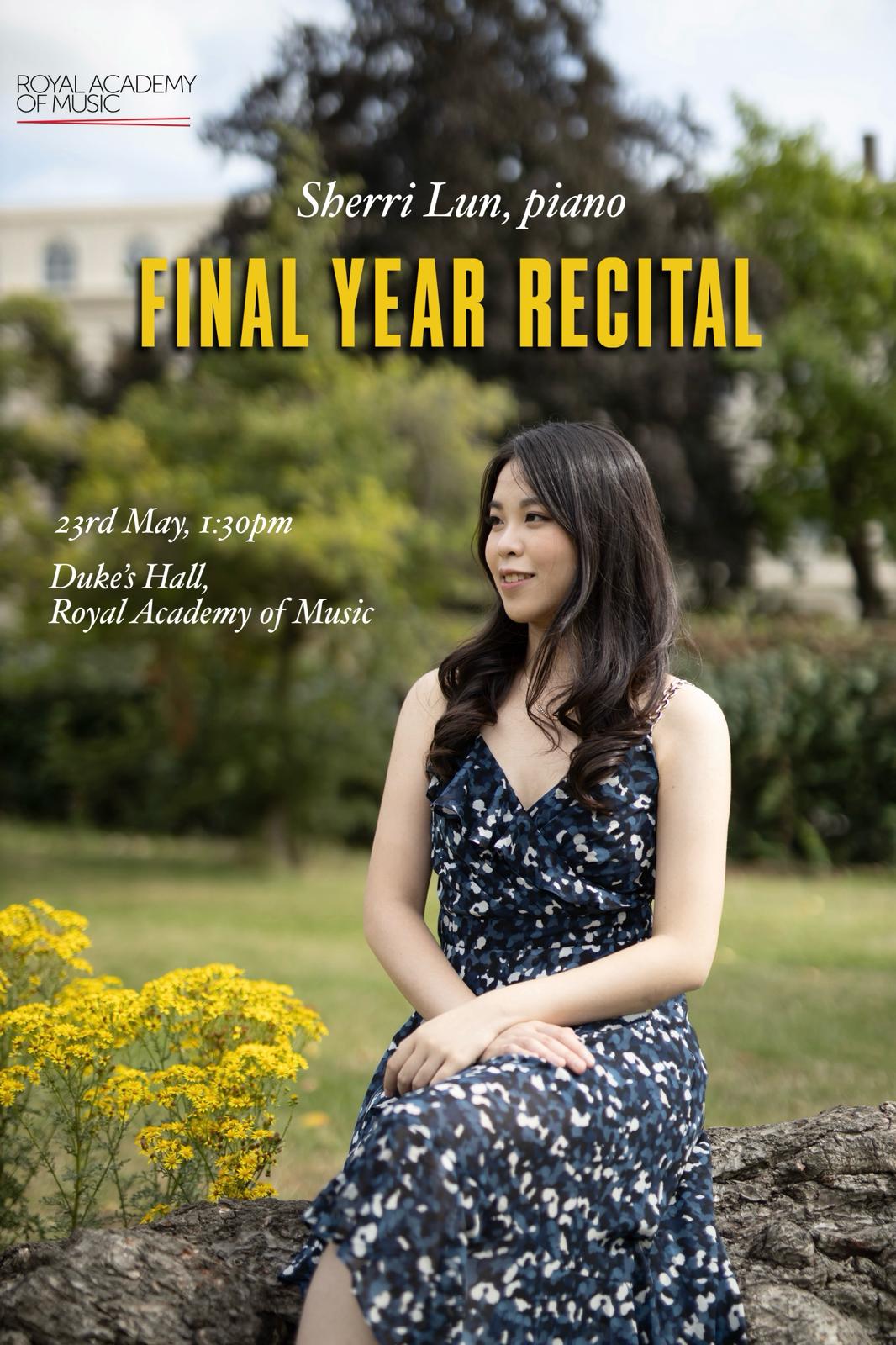
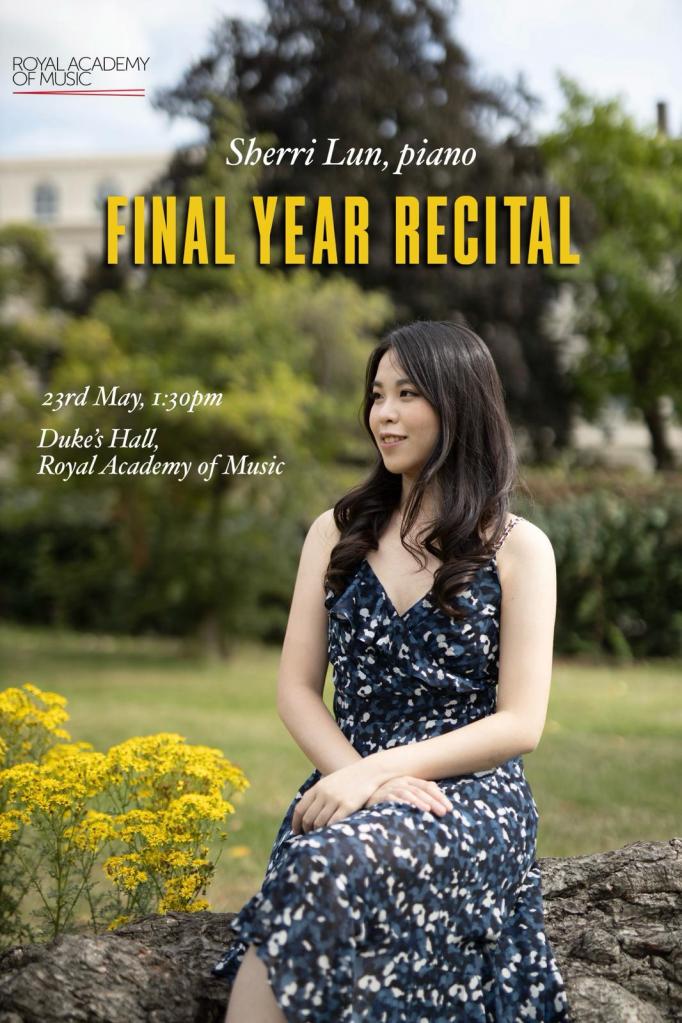
Sherri Lun, named ‘2020 Performing Artist of the Year’ by the South China Morning Post, has garnered acclaim for her “pinpoint clarity and convincing bravura” (Chicago Tribune). Born in Hong Kong and currently based in London, Sherri has swiftly established herself as a rising soloist on the international stage. A Young Scholar of the Lang Lang International Music Foundation, Sherri made her concerto debut at the Ravinia Festival with the Midwest Young Artists at just 10 years old. Since then, she has performed in prestigious venues including Wigmore Hall in London, Fondation Louis Vuitton in Paris, and Millennium Park in Chicago. Her international appearances span the UK, US, France, Germany, Austria, Italy, Spain, Malaysia, and China. Sherri has also collaborated with esteemed ensembles such as the Salzburg Chamber Soloists, Hong Kong Youth Orchestra, and Kölner Kammerorchester. Recent performances include the Hammerklavier International Piano Series in Girona, the Festival Musicale delle Nazioni in Rome, a 4-concert Malaysian tour, recitals in Steinway Hall London and Drapers’ Hall. In December 2023, she released her debut album with KNS Classical, featuring works by Robert Schumann and César Franck. Sherri’s artistry has been recognized with top prizes in numerous national and international competitions. Most recently, she won First Prize and Audience Prize in the 2024 Birmingham International Piano Competition, following her First Prize win at the 2023 Hong Kong Generation Next Arts Competition. Sherri also won top prizes in the Robert Schumann Competition (Du¨sseldorf), Zhuhai International Mozart Competition for Young Musicians, ASEAN International Chopin Piano Competition, Singapore International Piano Competition, and Steinway & Sons Youth Piano Competition, to name a few, and is a quarter-finalist of the 2024 Hamamatsu International Piano Competition. At the Royal Academy, she won consecutively the 2022 Sterndale Bennett Prize, 2023 Chung Nung Lee Prize, and 2024 Harold Craxton Prize. She was also invited to perform in RAM’s 2022 Bicentenary celebration concert in Wigmore Hall. In Hong Kong, she is a frequent winner of local competitions, and her performance has been broadcasted by the Radio Television Hong Kong. Born in 2003, Sherri majored in piano and viola as a junior student of the Hong Kong Academy for Performing Arts. She is currently studying under Prof. Christopher Elton at the Royal Academy of Music on a full scholarship, supported by both the Academy and the Hong Kong Scholarship for Excellence Scheme. She is also an artist with KNS Classical and the Keyboard Charitable Trust. For more information, visit http://www.sherrilun.com.
Screenshot
https://christopheraxworthymusiccommentary.com/2023/06/02/the-gift-of-music-the-keyboard-trust-at-30/
https://christopheraxworthymusiccommentary.com/2024/12/25/point-and-counterpoint-2024-a-personal-view-by-christopher-axworthy/

Sherri Lun Keyboard Trust Italian Tour 2025 Part 1 and Part 2
https://christopheraxworthymusiccommentary.com/2025/03/15/sherri-lun-keyboard-trust-italian-tour-2025-part-1/

Carlo Solinas a Giant amongst the Giants with musicianship and mastery against the philistines

Padua looking so regal and resplendent in the blazing sunshine today after the downfall yesterday in Padua and Venice – water water everywhere !!!!!

Today not only ablaze with ravishing noble beauty but resounding to the sound of music at the Sala dei Giganti this morning, and the Palazzo Zacco Armeni this afternoon.

Carlo Solinas for the Amici della Musica and Sherri Lun for the Keyboard Trust -Agimus

A Sunday Craft Market outside the hall this morning could have created problems with its street music blaring away at full blast. But inside this historic hall, on Richter’s favourite Steinway piano, there was a pianist of such professional calibre that it would have taken much more than that to disturb his superb music making. Myra Hess springs to mind, with her famous lunchtime concerts in a London under siege from the German bombs overhead, nothing could stop her from sharing her much needed music with others suffering such barbaric onslaughts!

Perfecting his studies with that great trainer of pianists Leonid Magarius ,Carlo Solinas has also been trained in the class of Roberto Cappello and Francesca Costa. All contributing at the age of 25 to a pianist of great stature, a multi prize winner just ready to start a career that will take his music far and wide.

Today the eclectic choice of a real thinking musician . A rarely heard prélude by Lili Boulanger with its delicate kaleidoscope of sounds which were welded together with the XIV contrapunctus from Bach’s Art of Fugue.

An extraordinary fluidity and sense of colour, where every part of this knotty twine was given a voice of its own with a masterly control of sound and aristocratic sense of architectural line.

A change of programme from Mozart’s A minor Sonata to Beethoven’s last sonata that was played with fearless abandon and intelligence. A scrupulous attention to Beethoven’s very meticulous indications but allied to a dynamic energy and fearless drive that brought to mind Perlemuter telling me that it should be like water boiling over at 100 degrees.

It was Perlemuter in 1985 who I brought to this hall, in his 83rd year, to play all the works of Ravel on the this very instrument. Small world!

Filippo Juvarra had dedicated to him and his lifelong companion Joan Flockhart Booth the anniversary concert, last month,of the complete Ravel piano works ,with Jean – Efflam Bavouzet.

Carlo played the opening of op.111 with imperious authority and trills that sparkled like diamonds as the music moved inevitably forward in massive blocks to the final arrival home to C.

It was here that the ‘Allegro con brio’ was tinged with something of the monumental as the blistering drive was conducted with burning intensity and aristocratic authority. Oases of yearning beauty as Beethoven left his energy momentarily spent recuperating his force for the next onslaught of irascible temperament. Carlo played with exactly the fearless recklessness of the final great struggle of a universal genius.

No rallentando at the end as this was an orchestrally conceived arrival where the whole orchestra, completely spent, waited for the glorious final vision of the paradise that Beethoven could see on the horizon . The depth of sound of this piano played its part with a richness in the middle register that just illuminated all that Carlo did with glowing beauty and fluidity .Floating the ‘Arietta’ on this final wave of sounds Carlo played with ravishing beauty and refined delicacy this one of the most beautiful melodies that were to flow from Beethoven’s pen in the last period of his turbulent life.

It is in the late quartets that Beethoven’s soul is laid bare with an inner intensity that is one of the glories of all music.

Carlo conceived this ‘Arietta’ more as song and accompaniment whereas I feel that every note of each chord has a vital and equal importance that can add even more poignancy to this opening. The variations flowed beautifully and it was here that Carlo allowed every note to sing with deeply felt intensity and heartrending authority . The explosive third variations was again played with fearless mastery as it too gradually lay spent. Whispered gasps over a bass that in Carlos masterly hands sounded like the undefined mist that Beethoven obviously intended .A masterly control of pedal and superb technical command allowed this passage to move forward with deathly searing intensity. Leading with gradual insistence to the glorious outpouring of a master who could rejoice in finding his goal.

The magic streams of sound wrapped up in trills that was so much part of this last lost world of Beethoven were played with a mastery as the ‘Arietta’ now appeared on this mystic cloud much as Scriabin a century later was to describe the star that could shine so brightly taking him to a place that only music could describe.

Carlo walked off stage after op. 111 and I was reminded for a moment of Arturo Benedetti Michelangeli who playing a benefit concert in the Vatican ( that he did not consider Italy where he vowed never to return after being hounded by the press for presumed and as it turned out false accusation’s of tax evasion ). A rather cold Sala Nervi beautified with greenery in which were hidden crickets who enjoyed rather too much the masters magnificent performance of Beethoven. In the interval the piano was wheeled off stage and we thought, like Carlo today, that music making with such acoustical interference was just not possible. Fabbrini had another piano in the wings for the masters’ ‘Gaspard de La Nuit’ and like Carlo today we were treated to a magnificent second half !

Carlo reappeared and with great sonorous sounds declared battle with the ‘Philistines’ just the other side of the great glass windows that had been taken away to be restored and that allowed such an acoustical intrusion on to the battle field of Giants!

Soon dissolving into the charm and delicacy of Schubert’s ‘ländler’ that Liszt embellishes with a jeux perlé of ravishing seduction and tittivating charm .

Carlo, via his mentor Magarius, is a master of this ‘old style’ pianism of the giants of the Golden age of piano playing of Rosenthal ,Godowsky and of course Horowitz and Cherkassky.

The performances just flowed from Carlo’s well oiled fingers with a mastery that allowed one of Chopin’s greatest masterpieces, the fourth ballade, to continually move forward without any fear that Carlo’s youthful passion and heartrending sentiments could ever meet their match . On occasion Carlo’s passionate intensity and mastery could lead him into hasty moments where maturity will allow the aristocratic control that Rubinstein was to bring in his Indian summer that allowed youthful passion to be tempered with reasoned maturity.

Scriabin’s 5th sonata entered on a whirlwind of demonic sounds immediately diffused by the glowing fragments that were wafted over a cauldron of ever present burning intensity. Fragments that Carlo gradually brought together with masterly musicianship and sense of architectural shape until Scriabin’s star filled this magnificent piano and the ‘Giant’s ‘ hearts with the sounds that only he could possess and the street musicians were left like the poor morsels they obviously were behind the missing glass panes.A hall of such beauty and with perfect acoustic that has seen some of the greatest musicians of our time in the glorious activity directed by Filippo Juvarra and the Amici della Musica, with passion and the discerning taste of a real musicians.

Francesco Dalla Libera with Filippo Juvarra for over fifty years directing great music in Padua

Carlo was now in vein to offer the beautiful Clara Wieck variations that her future husband penned in his Sonata ‘sans orchestre’ op 14

It has long been a specialty of Horowitz and Carlo played it with the same Brahmsian intensity that was part of this trio of Clara ,Robert and Brahms ,musicians united in their love and passion not only for music !

Coming full circle like the great thinking musician that was revealed to us today, Carlo played Bach’s Prelude and Fugue in F minor book one ,with the same same kaleidoscope of colours and intense musicianship with which this voyage of discovery had been shared with a large audience on this Sunday morning in a truly radiant and resplendent Padua .

Jack Buckley RIP an appreciation

https://seenandheard-international.com/2020/02/multicultural-pianism-from-beatrice-rana-at-wigmore-hall/

From the earliest age Jack wished to be a music teacher. He had a passion for opera, chamber music and the avantgarde, but also the entrepreneurial spirit required to make things happen. His left of centre politics and the interest in spiritual growth and religion supported this calling. By 1954, at the age of sixteen, Jack had already formed a committee with a view to drawing together as many young musical talents in the area as possible to put on chamber music concerts in still-to-be explored venues. This led to the formation of the Accrington and District Young People’s Music Society, which was Jack’s legacy to his town. They performed in various church halls in the district. He contacted the music critic of the Accrington Observer to cover these concerts and achieve publicity. The calling to work creatively with youth was already evident.

Following his A Levels, Jack was admitted to the Northern School of Music in Manchester where he studied for one year before moving to Trinity College in London in 1958. His first position after leaving Trinity was as music master at a school in Rugeley, Staffs. He stayed there two years before moving to Wennington School in Wetherby, Yorkshire, a privately run Quaker school, where he stayed until his move to Rome, in 1967. It was in Wennington School that he met Jane and Gareth both of whom are here with us today. He would remain in Rome until 2018 or approximately 50 years. 

Travel 

One of the few members of the extended family he was close to, his aunt Anne Hindle, shared his entrepreneurial spirit. She was the first person to recruit secretarial assistants for Members of Parliament. On the strength of these contacts  she opened what went on to become a highly successful travel company, Fairways and Swinford, specialising in Hellenic cruises and tours. It was Anne who paid for his needsthroughout his time at Trinity College. Jack benefited from her generosity all his life gaining a detailed knowledge of the Mediterranean cultures during his many free cruises.

Opera and the Avantgarde

As a teacher, Jack never tired of treating his friends and his pupils to accounts of his meetings with the famous. 

One year, while in Bayreuth at the annual Wagner festival, he was honoured to meet Winifred Wagner, the daughter-in-law of the composer. She had married Siegfried, one of the composer’s sons. Although not a party member, she was a fervent admirer of Hitler. She regaled Jack with stories of how Onkel Hitler, as he was known, moved in and out of the family home. 

Later, and by now in Italy, he had the pleasure of interviewing both Maria Callas  and  Montserrat Caballe whose sense of humour he enjoyed.

Fired by his interest in avantgarde music, a largely left wing concern in 60’s and 70’s Italy, he collaborated with Sylvano Bussotti, Luigi Nono and Luciano Berio and ran workshops with some of its principal exponents, while the friendship with the British composer Peter Maxwell-Davies endured until his death from leukaemia.

Career

While in Rome he taught music and English at  St George’s English School putting on a number of memorable productions which he co-wrote and co-produced with the school pupils and which broadened their understanding of theatre and music in a manner well beyond the expectations of the rather conservative curriculum. Again, youth and creativity to the fore.

He finally gave up teaching to take up the post of Arts Officer at the British Council. It was here that his entrepreneurial spirit and imagination found their fullest expression. He argued that the Council should not concern itself with promoting the work of established UK artists or organisations nor with the careers of up-in-comingperformers. Rather, he would focus on promoting the work of established artists as yet relatively unknown in Italy. Amongst these were Sir William Walton (a resident ofIschia) and Lindsay Kemp. Sir William’s opera The Bear was performed at the Teatro San Carlo, Naples, in 1983. Jack himself would  perform another of Sir William’s works, the witty Facade, in a number of European cities often together with Cathy Berberian and with Jan Lathan-Koenig conducting. Sir William was immensely grateful to Jack for this late revival of interest in his work. Jack would play a similar role in bringing the stagecraft of Lindsey Kemp to the attention of Italian theatre promoters. Lindsay enjoyed immense success in Italy and then Spain before eventually retiring in Italy. Jack was a close friend of both.

In the 80’s, alongside his work at the Council, Jack helped Lionel and Joy Bryer, manage the European Community Youth Orchestra which they founded.

He would remain at the Council until the early 90’s when the Thatcherite economies resulted in his post being cut. From now on he would hold only part-time jobs. Amongst these was the post of English Language lecturer in the Faculty of Letters and Philosophy of the University of Rome. Prof. Hilary Gatti, whose teaching Jack supported, was of the opinion that Jack’s wit and impressive cultural knowledge, which went well beyond the field of literature, were in excess of the rather modest position he occupied in the university hierarchy. He had a wide knowledge of contemporary authors, many of whom he had met personally. In the new millennium, he was invited by the then Dean of the Philosophy Faculty, Professor Marta Fattori, to stay on with them, which he did until he finally made his decision to retire and return to the UK in 2017.

By then he was also a regular contributor Seen and Heard International, the‘live review’ section of MusicWeb International, from both Italy and England.

Food

Throughout his life Jack’s friends would enjoy his legendary hospitality. An accomplished cook, he would source the right wines for each course and finish with typically British puddings little known to his foreign friends, all of these prepared in a kitchen of barely 8 square metres. Guests were forbidden from entering the kitchen as he entertained them with his usual brilliant conversation while preparing the offer. But he could also be your simple companion – that is, someone he broke his bread with. On such occasions he demonstrated that rare skill of making the guest feel the centre of attention.

Amongst the many legendary food stories we will mention two. John Cage was in Rome for a concert series. Jack lured him to lunch with the promise of a selection of Italy’s little known bitter greens. It was Cage, however, who stole the show by arriving with a basketful of still lesser known herbs and leaves foraged, unlikely though it may seem, while finding his way to Jack’s apartment. On another occasion at the Hilton in Rome Jack, who had reserved the best table for himself and his guests, Theo and Emma, came in for unexpectedly detailed and obsessive attention including complementary drinks. Jack was amused to be addressed as Mr. Blair throughout the evening. It was only later that they noticed Tony and Cherie sitting quietly in the corner (with security, of course) perhaps grateful for a relatively anonymous evening. The staff error may have been comic but it was also down to Jack’s presence or charisma. Not everyone could have or would have wanted to carry it off.

Spiritual Life

After Wennington, Jack retained a deep respect for Quaker practice. But he had an energetic and restless intellect. During the 70’s and 80’s he turned to Buddhism partly on account of a meeting with HH The Dalai Lama in ‘73 and perhaps as a reaction toChristianity’s demand that its moral codes be followed unquestioningly by all. Morality, for Jack, was contingent, the distinction between Good and Evil not as simple as the monotheistic religions would have us believe. Rather, he aligned himself with what Buddhism and Tao teach, and what George Harrison famously sang: ‘And to see you’re really only very small and life flows on within you and without you’. Birth is random. Life on earth is brief. Live it to the full without regrets.

Jack’s childhood friend, Leslie Walsh, reflects that Jack had his ups and downs but that he circumnavigated these by creating and living in his own world. If this reflected the reality of a situation, then fine, but if not, trouble brewed. He and Leslie used to talk about politics after his move to Croydon, but Leslie regarded politics as one of the areas where Jack’s world collided with reality. This did not prevent him becoming active in Labour Party with Rowenna Davis commenting Jack was a leading light for the local Labour Party.

***

A final reflection. When in the company of Jack at his most unfailingly polite you knew he had little interest in the person; when in the company of Jack the raconteur you knew he had found a listener and Jack enjoyed lapping up the attention; but it was only when someone was subjected to what we might call a Jack Attack that you understood this was a close friend. As he was careful to explain, if you challengesomeone you don’t know, you risk losing them. You can only afford to be short with friends because you know they will remain so.

So there you have him. A working class Lancastrian who had the privilege most of his adult life of living in the Doria palace, Rome, whose private gallery hangs works by Velasquez, Rembrandt and Caravaggio and whose Baroque staircase was adjudged by Anthony Blunt no less to be the most beautiful of its kind in Rome; a man with deeply Christian roots but with no need for a creator God; someone rich in spirit but with no belief in the soul or the afterlife, no belief in heaven or hell; one whose politics was well left of centre and who demonstrated this through his generosity and his consideration of others’ needs including the spiritual; a convivial but also intensely private person; one whose poetics enabled him to transcend all these distinctions and weave these into the rich tapestry of a fully lived life. He died intestate and penniless but not friendless and was immensely grateful to all those who supported him in his latter years. And he was immensely grateful to the staff at Whitgift for their support and care, their generosity and their willingness to meet his needs until the end.

https://seenandheard-international.com/2014/07/the-power-of-alexander-ullmans-pianism/

https://seenandheard-international.com/2022/03/the-love-which-dare-not-speak-its-name-beams-brightly-at-wiltons-music-

hall/https://seenandheard-international.com/2021/03/jonathan-ferrucci-brings-new-life-to-the-goldberg-variations-at-st-marys-

perivale/https://seenandheard-international.com/2021/03/the-wit-and-wisdom-of-hao-zi-yohs-pianism-for-music-at-st-marys-

perivale/https://seenandheard-international.com/2021/04/mozart-the-thick-and-thin-of-it/

https://seenandheard-international.com/2020/12/the-latest-opus-of-graham-johnson-francis-poulenc-the-life-in-the-songs/

https://seenandheard-international.com/2020/10/bombast-lyricism-and-harmonic-inventiveness-of-liszt-by-leslie-howard-at-st-marys-perivale/

https://seenandheard-international.com/2020/09/norma-fisher-recalls-my-life-and-music-at-st-marys-perivale/

https://seenandheard-international.com/2020/07/it-aint-a-gonna-rain-no-mo-more-music-hall-memories/

https://seenandheard-international.com/2020/07/jonathan-ferrucci-is-a-wunderkind-pianist-with-noble-soul/

https://seenandheard-international.com/2020/06/new-did-we-really-need-vera-lynn-during-the-war-and-when-will-we-all-meet-again/

https://seenandheard-international.com/2020/05/new-perfect-pianists-at-the-bbc-education-and-entertainment/

https://seenandheard-international.com/2022/01/christian-blackshaw-alla-mozart-for-the-composers-birthday-at-wigmore-hall/

https://seenandheard-international.com/2020/04/new-remembering-margaret-rutherford-murder-on-and-off-screen/

Celebrating

THE LIFE OF

Screenshot

Jack Buckley 

15.03.38 – 26.09.22

Tuesday February 28th 2023 09:45

Croydon Crematorium East Chapel

Mitcham Rd (A236), London CR03AA

Thornton Rd (A23) London CR7 6BB

UK

Order of Service

Procession​………………..……… .Conchita Supervia

Introduction and Welcome……………Bishop Peter Price

Poem……….……….………….……………..William Blake

Eulogy 1…………………………………Stefano Pascalino

Poems…………………………………………Jack Buckley

Eulogy 2……………………………..Antony Warde-Jones

Revelation 21.1-5a…………………….Bishop Peter Price

Obituary ………………………………..Bishop Peter Price

Committal…………………………………..Verdi:Trovatore“D’amor sull’ali rosee” Monserrat Caballe

Departure

Eternity

He who binds to himself a joy

Does the winged life destroy 

He who kisses the joy as it flies 

Lives in eternity’s sun rise.

William Blake 1757-1827

Life follows death

Life follows death and back again,

A hundred or so times a day.

Eat, drink, live, die, cry, love, hope, pray.

Sometimes a child shows us the way.

Life follows death and back again.

No fears please, least, not for today.

Happy Christmas is what we say.

Life follows death and back again.

Eat, drink, live, die, cry, love, hope, pray.

With live for the day your refrain,

Life follows death and back again,

A hundred or so times a day.  

A close friend died and left some pain.

Eat, drink, live, die, cry, love, hope, pray.

Most things absent often remain.

I try to live life without gain:

Its own reward.  Say that again.

Eat, drink, live, die cry, love, hope, pray:

A checklist for your mainstay. 

A thousand or so times a day.

Jack Buckley

Grace

When it comes to grace
Eternity’s your space.
Only feel it.
Don’t need it.
Bigger than you.
The joy you never knew.
A smile on your face
when it comes to grace,
when grace should find you,
it’s courtesy to remind you
that grace found you,
but ne’er on a working day:
Breath deeply. Breath calmly.
Then! Then! Quietly pray.
Should you need help
remember yourself.
But quietly: no haste.
‘t is wondrous space

-that gifts us grace.

JB 08/11/2019

Yet

When I was dying,

Thought I was ready,

                              Yet,

Something was missing.

Don’t know what it was

                                  Yet

It felt so familiar

                   Yet

So far away and

Still no conditioner,

No asphyxiating indicator.

No liberating force

                        Yet

You couldn’t help thinking

How kindly is death.

Still,

Death won’t keep quiet,

Quite yet.  

31/10/2019  JB

The link for the funeral of Jack Buckley to be held on 

Tuesday Feb 28th 2023 at 09:45

Website​​https://watch.obitus.com

Username​​sane2834

Password​​264437

Sherri Lun Keyboard Trust Italian Tour 2025 Part 1 and Part 2

Sherri just two days after playing in London began her Keyboard Trust Italian tour in collaboration with the Robert Turnbull Piano Foundation, with a triumphant appearance in Vicenza.
https://christopheraxworthymusiccommentary.com/2025/03/12/sherri-lun-in-perivale-maturity-and-mastery-of-intelligence-and-refined-poetry/

Incontro Sulla Tastiera for young musicians is the series that the tireless Mariantonietta Righetto Sgueglia has been organising for almost fifty years. Now in the magnificent Teatro Comunale this was just the start of a tour that will finish next week in Florence taking in Venice,Padua and The Ritz at Abano Terme

.https://christopheraxworthymusiccommentary.com/2025/03/19/sherri-lun-in-florence-harold-acton-library-music-al-british-refined-musicianship-and-mastery-of-a-young-star/

A fascinating programme that starts and finishes with two of the most important works in the Romantic piano repertoire. Chopin’s last great masterpiece the Polonaise- Fantasie where Chopin had created a completely new form that was so revolutionary for it’s time that it was only many years after his death that it was finally recognised for it’s genial invention and poetic beauty. Beethoven’s shortest Sonata but one of the composers favourite for its beauty and simplicity, opening the gate to the composers last period of his thirty two sonatas that spanned his entire life story.

Bach’s mighty Chaconne presented in the famous reworking by Busoni in his centenary year and the rebirth for the piano of one of the greatest of Bach’s works originally written for solo violin. ’Widmung’ and the Fantasie were outpourings of love by Robert Schumann for his future wife Clara .It is fitting that Sherri should include a composition by Clara Schumann too, who apart from being the mother of Robert’s eight children was the first woman virtuoso of the piano and a quite considerable composer in her own right.The Nocturne uses Robert’s theme from the Fantasie and was published in the same year.A secret message between Clara and Robert of one of the greatest love stories of all time.

Chopin Polonaise Fantasie in A-flat major, Op.61

Beethoven Sonata No.24 in F-sharp major, Op.78

Bach/Busoni Chaconne in D minor, BWV 1004

—Intermission— 

Schumann/Liszt Widmung

Clara Schumann Nocturne Op.6 No.2

Schumann Fantasy in C major, Op.17

after concert celebration
Red always the best colour

Schumann ,Wieck and Chopin
Good performances of Sherri Lun
Il Giornale di Vicenza 19 March 2025
Eva Purelli
‘Difficult programme played with great ability by the young refined pianist from Hong Kong .With the only exception of Bach.’

‘In partnership with the Keyboard Trust of London and the Robert Turnbull Piano Foundation, the 21 year old pianist from Hong Kong , Sherri Lun, played for the ‘Incontri sulla Tastiera.
This time for the appearance in Vicenza in the historic collaboration with the English Trust,created by Noretta Conci with her husband John Leech, (Noretta had been a student and assistant of Arturo Benedetto Michelangeli) , there appeared another association that sponsors young concert artists on their International tours : The Robert Turnbull Piano Foundation giving scholarships to young pianists from all parts of the world in memory of the young pianist who died of linfoma in 2018.
These realities do not exist in Italy as they do in England where this same pianist, Lun, is perfecting her studies under Christopher Elton at the Royal Academy of Music.
Her visiting card in Vicenza was with a refined programme of above all the music of Robert Schumann. The Fantasie in C op 17 was written in 1836 and revised in 1838 to raise funds for a monument in honour of Beethoven in Bonn, that Robert Schumann dedicated to Liszt, with it’s outpouring of love for Clara Wieck. It is a work of great originality, strong passions and intimate nostalgia of such importance that it became the inspiration for Liszt’s B minor Sonata that he dedicated to Robert Schumann.
A pianistic masterpiece that found in Lun an interpreter of precision with great attention to the dynamics and an authoritative technical command of expressive sensibility .
There can be no doubt that Schumann is the composer that she has most feeling for, with a ravishing tenderness that was revealed also in her performance of his song ( in reality a Lied).
‘Widmung’ op 25 n 1 was composed by Schumann and trascribed for piano by Liszt. It means ‘Dedication’ and is a profound declaration of love and admiration for Clara Wieck. It was her Nocturne op 6 n 2 that Sherri also played. For some years this composer has been rediscovered and admired for herself and not just as the partner of a Romantic German genius. In fact her nocturne was a surprise for its exquisite fullness and creative style.
Well etched also was Chopin’s Polonaise-Fantasie op 61 .
This important and robust programme also included Beethoven’s F sharp Sonata op 78 in which she revealed a kaleidoscope of colour and sensitive phrasing.
The programme could have finished there with the beautiful romanticism of Schumann without bothering to play the Bach Chaconne in D minor BWV 1004 in the famous reworking of Ferruccio Busoni : where Lun’s interpretation was too romantic, lacking in profundity and contrapuntal shape.
On the other hand she played a glowing encore ‘In des Abends ‘ from the ‘Fantasiestücke’ ………by Schumann of course .

PART 2 Venice – Padua – Abano Terme for Agimus Padua

Beauty everywhere and nowhere more than in Palazzo Albrizzi with an inspired Sherri Lun.

An encore of Scarlatti today to honour the fact that he had been to Venice too
The magic of Venice as evening comes and Sherri says goodbye
Schumann Fantasy n 4
A standing ovation in Padua.
A full hall and as always impeccably introduced by Elisabetta Gesuato . An encore of Schumann’s Widmung played with fire and imagination.
An enthusiastic audience that included our old friend Avv Malipiero a cousin of the renowned composer.
The hall of mirrors resounded to the sounds of music and all on their feet after Sherri Lun’s fifth performance this tour of the Schumann Fantasy.
Her own transcription of Shostakovich completed the concert with radiance and charm . Nice to see Massimiliano Grotto who had made the trip especially from Castelfranco Veneto to applaud Sherri in a hall where he has played many times https://christopheraxworthymusiccommentary.com/2025/01/11/massimiliano-grotto-at-roma-3-schubert-of-searing-intensity-and-commanding-authority/
Fryderyk Franciszek Chopin 1 March 1810 Żelazowa Wola
17 October 1849 (aged 39). Paris, France

The Polonaise-Fantaisie in A-flat major, Op. 61 was dedicated to Mme A. Veyret, and written and published in 1846. It was slow to gain favour with musicians, due to its harmonic complexity and intricate form.Its shape and its style caused much consternation and it was quite some time before listeners could come to terms with it as ‘the piano speaks here in a language not previously known’.The “Polonaise-Fantaisie” is among Chopin’s last great piano works, and is a testament to his mastery and maturity. The unusual title betrays the fact that Chopin was uncertain about which genre to assign it to. While the typical rhythm and noble character of the Polonaise repeatedly shine through the notes, the Polonaise-Fantaisie is characterized above all by a great freedom in its thematic and formal aspects. The work brushes through a great variety of keys, moods and motifs, and leads into a grandiose closing apotheosis as if at the end of a long journey.One of the first critics to speak positively of the work was Arthur Hedley,writing in 1947 said that it “works on the hearer’s imagination with a power of suggestion equaled only by the F minor Fantasy  or the Fourth Ballade .He suggested that the Polonaise-Fantaisie represents a change in Chopin’s style from ‘late’ to ‘last’.It is suggested that the formal ambiguities of the piece (particularly the unconventional and musically misleading transitions into and out of the lyrical inner section) are the most significant defining qualities of this ‘last style’, which only includes this and one other piece—the F minor Mazurka op 68 n. 4 Chopin’s last composition.”,

Ludwig van Beethoven 17 December 1770 Bonn – 26 March1827 (aged 56)
Vienna

The Piano Sonata No. 24 in F sharp major , Op. 78, nicknamed “à Thérèse” (because it was written for Countess Thérèse von Brunswick in 1809.


One of Beethoven’s students and some writers speculated that she—not her sister Josephine  who is generally accepted as the addressee—may have been the intended recipient of Beethoven’s letter to the “Immortal Beloved”. Her memoirs were first published by La Mara, who subscribed to this theory and her diaries and notes (up to 1813) by Marianne Czeke,both claiming to reveal much about the relations between Beethoven and the Brunsvik family, in particular her sister Josephine.

It consists of two movements:

  1. Adagio cantabile — Allegro ma non troppo
  2. Allegro vivace

According to Carl Czerny , Beethoven himself singled out this sonata and the “Appassionata ” Sonata as favourites (once written, the “Hammerklavier “ Sonata” would also become one of Beethoven’s favourites


Johann Sebastian Bach. 21 March 1685 Eisenach – 28 July 1750 (aged 65) Leipzig

Who isn’t familiar with Johann Sebastian Bach’s Chaconne, the final movement in his Partita in D minor for Violin solo? Time and again composers have been inspired to make this exceptional piece accessible for other instruments. Perhaps the best-known arrangement is by Ferruccio Busoni. 
Without distancing himself too greatly from Bach’s original, he endeavours to transpose the virtuosity of the string writing onto the piano. Thus Busoni wrote for the piano in a way that congenially makes the most of the capabilities of the modern piano.


Ferrucio Busoni 1 April 1866, Empoli ,Italy 27 July 1924 (age 58 years), Berlin

Ferrucio Busoni, born in Italy of an Italian father and a German mother, displayed a passion for Bach at an early age. A prodigy who played some of his own compositions in a piano recital in Vienna when he was 10 years old, Busoni made an exhaustive study of Bach’s music and throughout his adult life worked tirelessly at editing and making transcriptions of works by the Baroque master. His philosophical notions of music and the advanced practices of composition that he applied to his own pieces seem now to be at odds with such a bravura, flamboyant piece of work as his transcription for piano of the Chaconne from Bach’s Partita No. 2 for solo violin. The transcription was made sometime in the late 1890s and was dedicated to the pianist Eugene d’Albert; Busoni himself played it frequently in his own blazingly brilliant recitals.

Lest it be thought that Busoni was being irreverent in appropriating the lofty Chaconne for showpiece purposes, one must remember that Brahms made a piano transcription of the selfsame piece, for left hand alone. Wheras Brahms imitates the original as closely as possible, Busoni ventures an arrangement that seems to be a piano realization of a grand orchestral or organ work rather than one for a single violin.In fact, the Chaconne, the final movement of the Partita, is monumental in its original version—a set of more than 60 variations on a simple bass theme. The great Bach scholar Philipp Spitta (1841-1894) gave a description of the Chaconne that might have quickened Busoni’s fascination with it. Wrote Spitta:

“The overpowering wealth of forms displays not only the most perfect knowledge of the technique of the violin, but also the most absolute mastery over an imagination the life of which no composer was ever endowed with… What scenes the small instrument opens to our view!… From the grave majesty of the beginning to the 32nd notes which rush up and down like very demons; from the tremulous arpeggios that hang almost motionless, like veiling clouds above a gloomy ravine, till a strong wind drives them to the tree tops, which groan and toss as they whirl their leaves into the air; to the devotional beauty of the movement in D major, where the evening sun sets in the peaceful valley. The spirit of the master urges the instrument to incredible utterances; at the end of the major section, it sounds like an organ, and sometimes a whole band of violins seems to be playing. [Busoni took this reference seriously.] The Chaconne is a triumph of spirit over matter such as even Bach never repeated in a more brilliant manner.”


Robert Schumann. 8 June 1810 Zwickau Saxony
29 July 1856 (aged 46) Bonn Germany

The Fantasie in C, Op. 17, was written by Robert Schumann in 1836 and revised prior to publication in 1839, when it was dedicated to Franz Liszt. It is generally described as one of Schumann’s greatest works for solo piano, and is one of the central works of the early Romantic period.

Its three movements are headed:

  1. Durchaus fantastisch und leidenschaftlich vorzutragen; Im Legenden-Ton 
  2. Mäßig. Durchaus energisch –
  3. Langsam getragen. Durchweg leise zu halten.
    The piece has its origin in early 1836, when Schumann composed a piece entitled Ruines expressing his distress at being parted from his beloved Clara Wieck (later to become his wife). This later became the first movement of the Fantasy.Later that year, he wrote two more movements to create a work intended as a contribution to the appeal for funds to erect a monument  to Beethoven  in his birthplace, Bonn . Schumann offered the work to the publisher Kirstner, suggesting that 100 presentation copies could be sold to raise money for the monument. Other contributions to the Beethoven monument fund included Mendelssohn’s Variations sérieuses
    The original title of Schumann’s work was “Obolen auf Beethovens Monument: Ruinen, Trophaen, Palmen, Grosse Sonate f.d. Piano f. Für Beethovens Denkmal”. Kirstner refused, and Schumann tried offering the piece to Haslinger in January 1837. When Haslinger also refused, he offered it to Breitkopf & Hartel in May 1837. The movements’ subtitles (Ruins, Trophies, Palms) became Ruins, Triumphal Arch, and Constellation, and were then removed altogether before Breitkopf & Härtel eventually issued the Fantasie in May 1839.
    The work was dedicated to Franz Liszt , who replied in a letter dated June 5, 1839: “The Fantaisie dedicated to me is a work of the highest kind – and I am really proud of the honour you have done me in dedicating to me so grand a composition. I mean, therefore, to work at it and penetrate it through and through, so as to make the utmost possible effect with it.”
    The Beethoven Monument was eventually completed, due mainly to the efforts of Liszt, who paid 2,666 thaler,the largest single contribution. It was unveiled in grand style in 1845, the attendees including Queem Victoria  and Prince Albert, and many other dignitaries and composers, but not Schumann, who was ill.
    Schumann prefaced the work with a quote from Friedich Schlegel :
    Durch alle Töne tönet
    Im bunten Erdentraum
    Ein leiser Ton gezogen
    Für den, der heimlich lauschet.
    (“Resounding through all the notes
    In the earth’s colorful dream
    There sounds a faint long-drawn note
    For the one who listens in secret.”)
    The musical quotation  of a phrase from Beethoven’s song cycle An die ferne Geliebte  in the coda of the first movement was not acknowledged by Schumann, and apparently was not spotted until 1910.The text of the passage quoted is: Accept then these songs [beloved, which I sang for you alone]. Both the Schlegel stanza and the Beethoven quotation are appropriate to Schumann’s current situation of separation from Clara Wieck. Schumann wrote to Clara: The first movement may well be the most passionate I have ever composed – a deep lament for you. They still had many tribulations to suffer before they finally married four years later.

Clara Josephine Wieck

13 September 1819 Leipzig 20 May 1896 (aged 76) Frankfurt

The six Soirees musicales, Op. 6. Robert Schumann himself was appreciative enough of Clara’s romantic ”Notturno”, Op. 6 No. 2, (growing from the five falling-note motif so symbolic for both of them while forbidden all communication by Clara’s father) to quote it as the ”Stimme aus der Ferne” in his last Novellette.

Widmung is much more than a mere showpiece – containing probably the most passionate music writing and most heartfelt feelings. Written in 1840 (this piece was from a set of Lieder called Myrthen, Op.25), this piece was later arranged for piano solo by Liszt . Myrthen was dedicated to Clara Wieck  as a wedding gift, as he finally married Clara in September, despite the opposition from Clara’s father (who was also Robert’s piano teacher).

Below is the text of Widmung, with English translation:

Original Text by Friedrich Rückert

Du meine Seele, du mein Herz,

Du meine Wonn’, o du mein Schmerz,

Du meine Welt, in der ich lebe,

Mein Himmel du, darein ich schwebe,

O du mein Grab, in das hinab

Ich ewig meinen Kummer gab!

Du bist die Ruh, du bist der Frieden,

Du bist vom Himmel mir beschieden.

Dass du mich liebst, macht mich mir wert,

Dein Blick hat mich vor mir verklärt,

Du hebst mich liebend über mich,

Mein guter Geist, mein bess’res Ich!

You my soul, you my heart,

You my rapture, O you my pain,

You my world in which I live,

My heaven you, to which I aspire,

O you my grave, into which

My grief forever I’ve consigned!

You are repose, you are peace,

You are bestowed on me from heaven.

Your love for me gives me my worth,

Your eyes transfigure me in mine,

You raise me lovingly above myself,

Sherri Lun, named ‘2020 Performing Artist of the Year’ by the South China Morning Post, has garnered acclaim for her “pinpoint clarity and convincing bravura” (Chicago Tribune). Born in Hong Kong and currently based in London, Sherri has swiftly established herself as a rising soloist on the international stage. A Young Scholar of the Lang Lang International Music Foundation, Sherri made her concerto debut at the Ravinia Festival with the Midwest Young Artists at just 10 years old. Since then, she has performed in prestigious venues including Wigmore Hall in London, Fondation Louis Vuitton in Paris, and Millennium Park in Chicago. Her international appearances span the UK, US, France, Germany, Austria, Italy, Spain, Malaysia, and China. Sherri has also collaborated with esteemed ensembles such as the Salzburg Chamber Soloists, Hong Kong Youth Orchestra, and Kölner Kammerorchester. Recent performances include the Hammerklavier International Piano Series in Girona, the Festival Musicale delle Nazioni in Rome, a 4-concert Malaysian tour, recitals in Steinway Hall London and Drapers’ Hall. In December 2023, she released her debut album with KNS Classical, featuring works by Robert Schumann and César Franck. Sherri’s artistry has been recognized with top prizes in numerous national and international competitions. Most recently, she won First Prize and Audience Prize in the 2024 Birmingham International Piano Competition, following her First Prize win at the 2023 Hong Kong Generation Next Arts Competition. Sherri also won top prizes in the Robert Schumann Competition (Du¨sseldorf), Zhuhai International Mozart Competition for Young Musicians, ASEAN International Chopin Piano Competition, Singapore International Piano Competition, and Steinway & Sons Youth Piano Competition, to name a few, and is a quarter-finalist of the 2024 Hamamatsu International Piano Competition. At the Royal Academy, she won consecutively the 2022 Sterndale Bennett Prize, 2023 Chung Nung Lee Prize, and 2024 Harold Craxton Prize. She was also invited to perform in RAM’s 2022 Bicentenary celebration concert in Wigmore Hall. In Hong Kong, she is a frequent winner of local competitions, and her performance has been broadcasted by the Radio Television Hong Kong. Born in 2003, Sherri majored in piano and viola as a junior student of the Hong Kong Academy for Performing Arts. She is currently studying under Prof. Christopher Elton at the Royal Academy of Music on a full scholarship, supported by both the Academy and the Hong Kong Scholarship for Excellence Scheme. She is also an artist with KNS Classical and the Keyboard Charitable Trust. For more information, visit http://www.sherrilun.com.
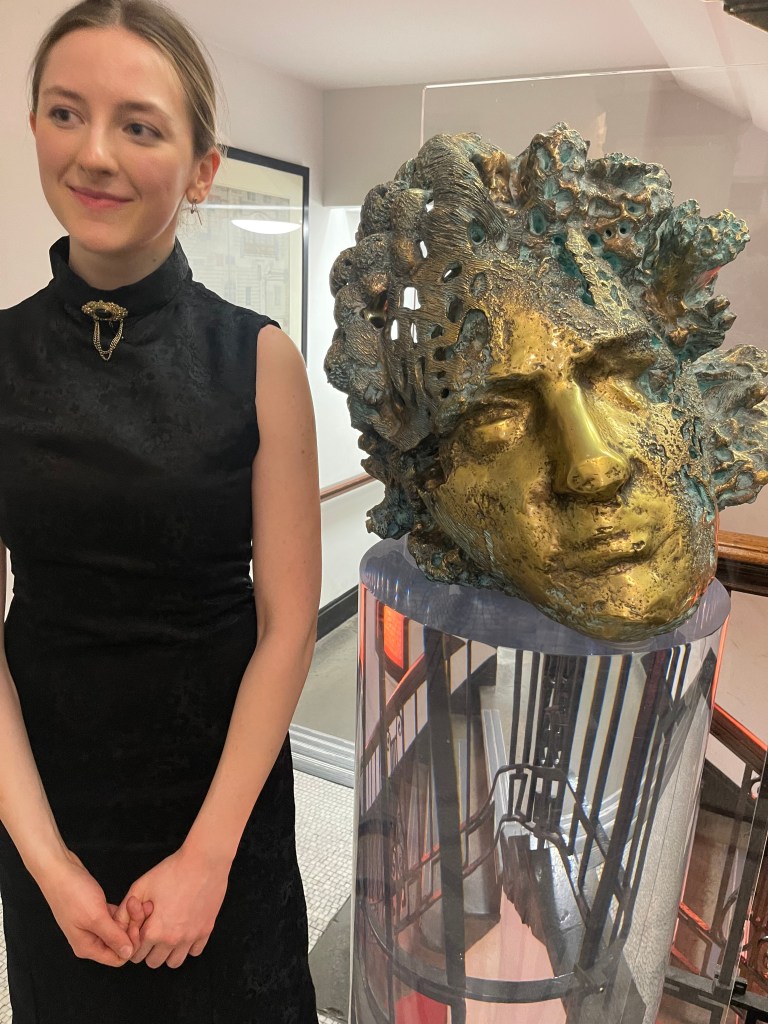
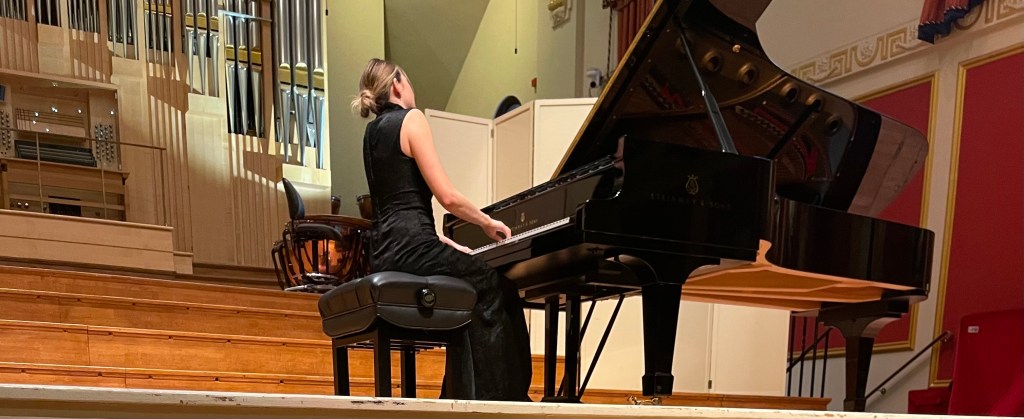
Screenshot
https://christopheraxworthymusiccommentary.com/2023/06/02/the-gift-of-music-the-keyboard-trust-at-30/
https://christopheraxworthymusiccommentary.com/2024/12/25/point-and-counterpoint-2024-a-personal-view-by-christopher-axworthy/