Julien Brocal at Westminster Hall at 16.30 on Sunday afternoon for the The Chopin Society UK
I first heard Julien Brocal in Monza when I was on the jury of the Rina Sala Gallo International Piano Competition-I do not accept invitations to judge my betters but on this occasion my dearest friend Constance Channon-Douglass was too ill to be present and asked me to step in for her.
Connie with Shura after one of his many recitals at the Ghione theatre and the bedspread from Monza
She has since passed on to a better life with her beloved husband Cesare and her adored Shura and many many other friends who loved her joie de vivre,intelligence and warmth.
A young french pianist played an extraordinary Schumann Carnaval in one of the rounds and although he did not make the final I had noted his quite exceptional artistry.
He asked me what advice I could give him but it was Maria Jose Pires who answered that by taking him under her wing and sharing the concert platform with him in her ever generous way.
I heard them play Mozart Double together in Oxford and I went back to thank her for all that she was doing to help these remarkably talented young pianists reach a public and start a career.
She said that it was she that should thank them for all that they gave her with their youthful enthusiasm and dedication!
Julien at the Chopin Society
I bought his first CD on line and when he found out that it was me he wrote this beautiful inscription.
So pleased he is doing well….but I did tell you so!!!!!
The beautiful red and gold background here is the bedspread that I bought with the fee they very generously gave me in Monza for having such a wonderful time…….so all is well that ends well ……..sweet dreams indeed!
Wonderful cantabile sound from Julien and very beautiful Mompou Variations on Chopin op 28 n.7.
Superb Chopin Nocturnes op 15 too, even if rather fast the G minor n.3 .
His wonderful Miroirs have been encapsulated for posterity on his new CD (see below.)
Raindrop as an encore where you could have heard a pin drop.
The moments of silence at the end spoke much louder than any applause.
Jean- Efflam’s amusing and informed introduction to Boulez Notations was a revelation.I will Always remind myself of the signposts when taking up the driving seat in foreign parts!
Magical Jeux d’eau.
The same clarity of Julien in the two Miroirs offered – Une Barque sur l’ocean and Alborada del gracioso.
An astonishing op 14 Schumann …..which is on on his new CD in the Horowitz edition to whom he played it.
A quite extraordinarily rhythmic performance of Prokofiev’s 3rd Sonata .
With a clockwork precision that Ravel would have much admired.Allied to a great sense of colour and above all a clarity and sense of direction.
I wrote this about his last appearance playing Beethoven 4 at the Royal Festival Hall in London and am happy to remember him now on the 17th April 2022 as he is on his way to join that celestial world that was always his.
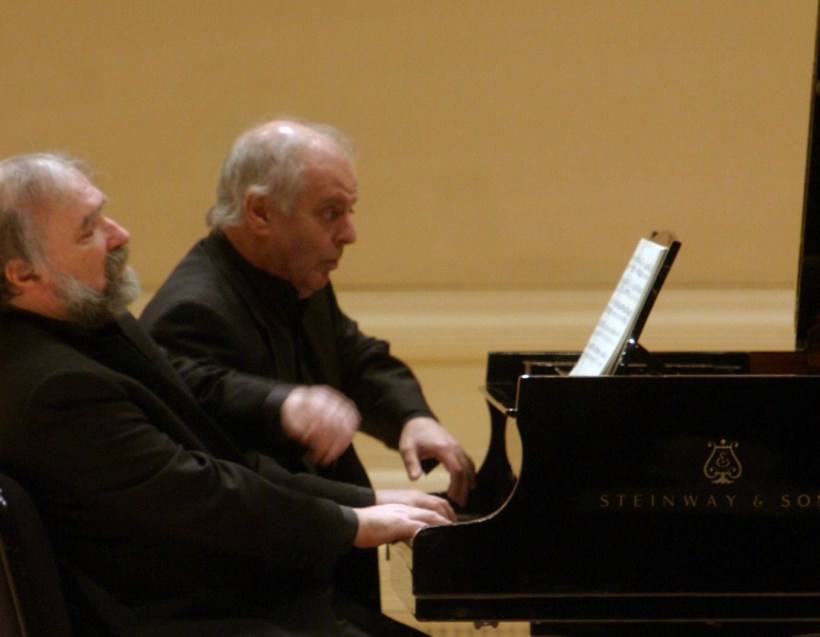
I first heard Radu Lupu in Leeds at the first round when he played the little Schubert A minor sonata that was a revelation.
We had never heard such beauty.
It was of course the very Russian school of absolute control of pianissimo to mezzo forte.
He had all the passion in the forte too but never a hard sound.
It was like Richter …..slightly missing that sense of line of the great cantabile that was so much part of the Rubinstein school (that Gilels of all the Russian school was also absolute master of.)
It was an extreme exploration of the whispered tones that the piano is capable of.
Curzon of course was not convinced and did not vote him into the final.
Well he made it and Curzon eating his own words exclaimed :”Thank God I lived to hear that”.
It was Beethoven n.3.
Radu was then helped in London by Maria Curcio and found friends that helped him overcome his stage fright and extreme introspection.
Fou Ts’ong and he used to share their nervous pills.
They were once stolen with Ts’ongs bag at Rome station.
He did not care about the clothes but the pills what was he to do?
Kabos was at his London debut at the Proms where he not only played a superb Emperor but also the Choral Fantasia.
The horn players did not come in so he played their parts for them.
It was a gigantic performance.
A true Emperor had arrived.
Andre Tchaikowsky persuaded him to practice more and learn the Liszt Sonata which is a truly legendary performance.
A great friendship of playing chess together and he even learnt the Andre Tchaikowsky piano concerto that he gave a one off performance at the RFH for his friend.
He had won Van Cliburn before Leeds but could not cope with the success and had a nervous breakdown.
Always there was this Schumannesque personality between Florestan and Eusebius.
He lived in Chiswick and managed to have a life with other musicians that gave him courage to continue.
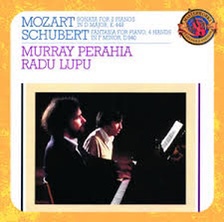
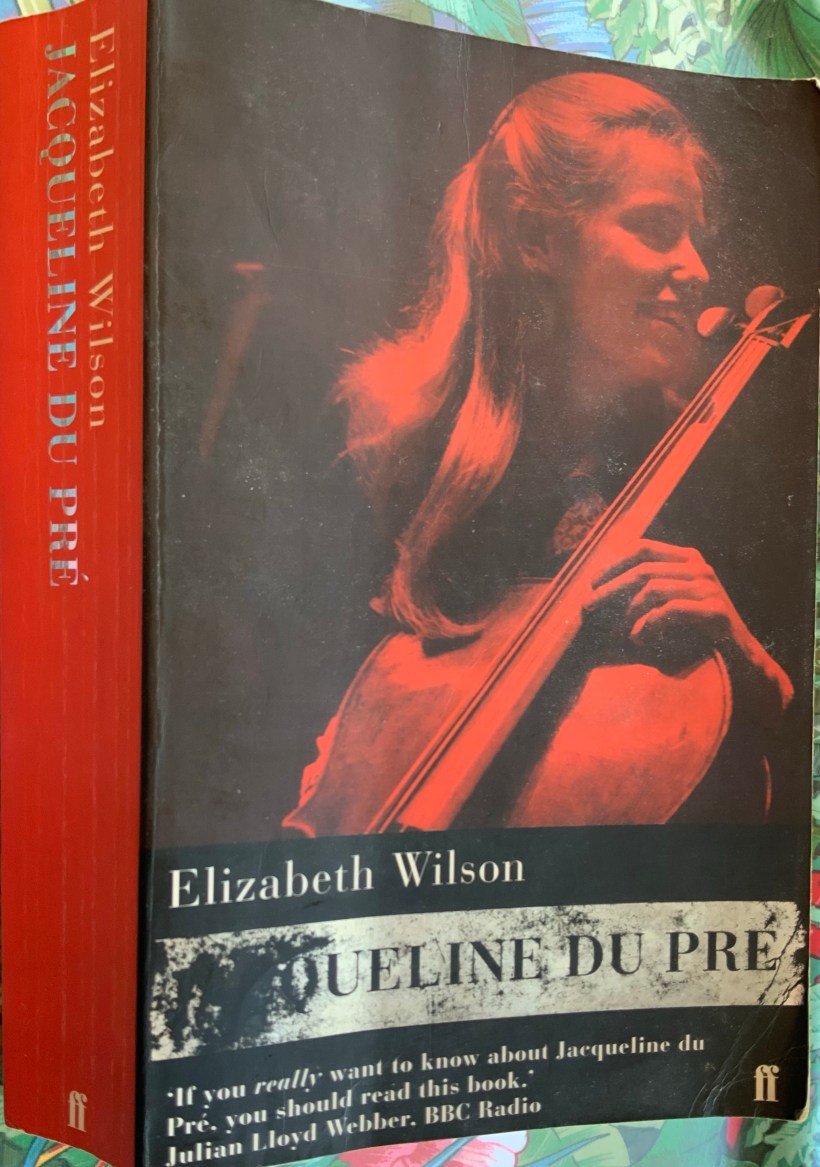
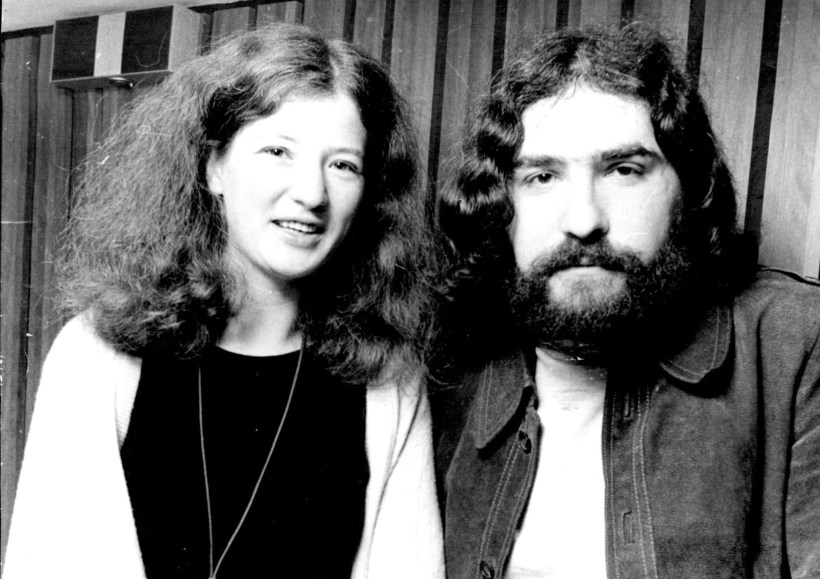
His ex wife,the daughter of the British Ambassador to Moscow, wrote a magnificent book about their friend Jaqueline Du Pre.
Recently he looked like Brahms at the piano but played like Eusebius ….Florestan was now a mere onlooker.
He was never my favourite performer but I was never indifferent to his performances or his total dedication to his art.
His last performance in London in February 2019 Royal Festival Hall
I think we should always remember that and thank him for all that he has given us and if there are only glimpses of that now at least it gives us lesser mortals a chance to thank him for all that his art has meant for us over the years.
“Wonderful ………..one of the most beautiful performances of things we have heard so often but tonight they glittered like the jewels that Chopin must have imagined”
That I wrote in the interval ..”.lovely.suprise to be in London again to hear you……”
I have heard Beatrice Rana play many times in Italy also at the Wigmore Hall in London.
I remember her Goldberg Variations in London broadcast live from the Wigmore Hall but also in Rome a year later which was televised.
A remarkable enough performance in London that Stephen Kovacevich particularly admired.
The later performance in Rome was even more extraordinary for its maturity and rock like sense of direction.
I was told by Prof.Pieralbero Biondi that her final exam performance at S.Cecilia had the jury members cheering at the end.
After all her successes worldwide she had returned home to her original teacher Benedetto Lupo with whom she had studied as a child at the Monopoli Conservatory in Puglia.
She returned to his class at the Academy of S. Cecilia inspite of his insistence that she should branch out on her own now.
But between Benedetto Lupo,Sir Antonio Pappano and the Academy of S. Cecilia she had returned home to work on her scores in peace and serenity and delve ever more deeply in the music to which she was destined since her birth in Puglia of a family of musicians.
Facsimile of Chopin manuscript
And so it was today that we heard the Chopin Studies op 25 played as the composer had indicated.
Each of the 12 studies was a miniature tone poem.
Bathed in the sunlight that Chopin’s own pedal indications had asked for she shaped each one with a luminosity and poetry that I have only heard similar on the old recording of Cortot.
Completely different of course but the one thing- the most important thing in common was the poetry that is concealed in what are conceived also as studies.
The Aolian Harp of the first study showing exactly what Sir Charles Halle had described on hearing Chopin on his last tour in Manchester.
”Il faut graver bien distintemente les grandes e les petites notes” writes Chopin at the bottom of the first page.
Long pedal markings overlapping the bar lines and the pianissimo asked for by Chopin so perfectly played by Beatrice. The long held pedal at the end gave such an etherial magical sound.
Study n.2
The second study too like silk.
Not the usual note for note performances we are used to but washes of sound perfectly articulated of course but with the poetry and music utmost in mind.
The final three long “C’s” which can sound out of place were here of a magic that one never wanted them to stop.
The third and fourth to contrast were played with great clarity with some surprising inner notes that gave such substance and depth to the sound.
Here was not only a supreme interpreter but also a great personality.
The end of the fifth that linked up to the 6th.It grew out of the final crescendo flourish that always had seemed out of place.
Here in Beatrice’s hands it is exactly as Chopin in his own hand has indicated.
Study 5 to 6 link that Chopin indicates in his own hand
Here too one must mention the sumptuous middle melody of the fifth played with wonderful sense of balance and also a flexibility of pulse that again showed the hands of a great musical personality.
I have only heard similar sense of “rubato” live from Rubinstein although Murray Perahia on CD is pure magic too.
The technically difficult double thirds accompanied the left hand melodic line with a subtle sense of sound like a wind passing over the grave indeed !
The absolute clarity and jeux perle of the “double” double thirds was just the relief and contrast that was needed.
Beautiful sense of colour in the Lento that is the 7th study where Chopin marks so clearly that the melody is in the left hand with only counterpoint comments from the right( Cortot and Perlemuter are the only others that I have heard make this distinction so clearly)
The 8th played very much molto legato and sotto voce to contrast with the absolute clarity of the “ Butterfly” study that is n.9.
The ending that can sound so abrupt in some hands here was perfectly and so naturally shaped
The “Winter Wind” study n.11
The great octave study entered like a mist as Chopin indicates poco a poco crescendo .Bathed in pedal too even though not indicated so precisely by Chopin.
Such was her identification with this sound world she had seen this study as great wedges of sound interrupted only by the extreme legato cantabile of the middle Lento section.
Chopin marks very precisely here the fingering he wants to obtain this effect.
The great “Winter Wind” study n. 11 where there were great washes of sound ,again as Chopin so clearly indicates .The final great scale played unusually cleanly with a very precise final note.
Of course all clearly indicated in Chopin’s own hand .
Study n. 12.
The final 12th study was played with enormous sonority and very clear melodic line as Chopin indicates very clearly. The ending marked “ il piu forte possibile” and a final crescendo to “fff”.
It brought this revelatory performance to a breathtaking ending.
We had been taken on such an unexpected journey that my original thought was a first half of only 30 minutes?
But such a performance and vision could not have been shared with anything else and quite rightly was presented by a master as the absolute masterpiece it is.
After the interval Miroirs played with all the magical sounds and complete mastery that is rarely heard from others.
The beauty and variation of colour was again a revelation.
But coming after the Chopin I could not appreciate fully all the detail that she was outlining as she spun her delicate web of sound.
Maybe here a more classical approach less fussy might have led to more clarity?Too many hairpins that the long line was not what I was used to hearing from the aristocratic french school.
But hearing my colleagues who had come to hear a Master I realise that the unease was with me not with her!
We were soon woken out of the cocoon of sound by Agosti’s extraordinary transcription of Stravinsky Firebird.
It was written in 1928 and a fellow student of Agosti,Peter Bithell, told me that it was Stravinsky himself that had had it published.
Agosti and his wife were great friends of my wife and I , and the sounds that he could conjure from the piano in private I have never forgotten.
His crippling stage fright meant that the vast public were robbed of hearing one of the greatest musicians – a disciple of Busoni.
We managed to bully him into playing Beethoven op 111 and op 110 in public in our theatre but he always had to precede it with a spoken introduction.
It is one of the few recordings of this genius that we have.
I never heard him play the Firebird although I suspect he taught it in Siena where the world used to flock to his studio in the summer months to hear sounds that will never be forgotten.
I am sure that had he heard Beatrice play today he would have been filled with pride as to how she could realise the sounds that are transformed from the orchestra to the piano so magically.
A standing ovation and two encores from the Preludes by Chopin op 28.
Again even more of a revelation with the F sharp major prelude n.13 that can sound so disjointed in lesser hands. Here it was allowed to sing with a simplicity and a sense of the big line that so often is disrupted by a less than flowing left hand.
Here is the true rubato that Chopin described to his aristocratic pupils.The trees with the roots firmly in the ground and the branches free to sway simply and naturally above.
The piu lento middle section was played as from afar but with such a magical sound projected as only a true master could judge.
The final few notes were played so naturally and with such gradations of sound that allowed the prelude to disappear to nothing as it had appeared.
It led to one of those rare moments of silence where no one dared even breath.
A magisterial account of the Prelude in B flat minor broke the spell and showed us just what a virtuoso we had in our midst.
Digging deep into the bass to give depth to the swirling sounds that she was spinning with such passion in the right hand.
Of course many of the finest pianist were present and above all her greatest admirer Stephen Kovacevich.
She greeted us all with a simplicity gladly signing her CD’s and talking to her friends and admirers.
At 26 we have a great master in our midst and it is lovely to know that she is from Puglia.
That part of Italy blessed indeed for so many magnificent things.
The land of Riccardo Muti, Benedetto Lupu,Nino Rota,Gioconda de Vito,Paolo Grassi , Tito Schipa,burrata,focaccia,vino di Locorotondo and the Spanish baroque of the Vallee D’Itria- Martina Franca and Lecce,of course at the very heel -the Florence of the south.
It can now be proud to boast Beatrice Rana.
Greeting her public and signing CD’s after the recital
Conrad Tao takes Rome by storm aided and abetted by Sir Tony and his merry band.
Very interesting juxtaposition of Schonberg with Gershwin at S.Cecilia last night.
They were great friends “Gershowitz” having helped Schonberg settle in the USA when he fled the nazi persecution in Europe in 1933.
They often used to play tennis together, the 61 year old Schonberg with the 38 year old Gershwin in Beverley Hills in California where Gershwin had moved to work in Hollywood.
Keeping in contact via their mutual friend Oscar Levant,the pianist.
They even painted each others portrait and when Gershwin died tragically young in 1937 Schonberg was the first to celebrate his friend on the American radio.
”What he has reached is not only of benefit to America but is a great contribution to music worldwide.”
Gershwin portrait of Schonberg
It was Nadia Boulanger,the great French pedagoge,advisor to so many composers from Copland to Boulez, that when approached by Gershwin for lessons she turned him away saying she did not want to ruin his great natural talent.
And so it was that after a sumptuous performance by the strings of Sir Antonio Pappano’s magnificent orchestra we were treated to the big band.
These magnificently versatile musicians were led on by Conrad Tao who let us have the full works with no holes barred.
The scene was set by a superlative Alessandro Carbonare,whose cat like wail on the clarinet that opens the Rhapsody in Blue far outshone the legendary Benny Goodman.
Aided and abetted of course by Sir “Tony” who after his superb West Side Story that opened the season could not wait to show us what his “band” could do when they were allowed to let their hair down.
Rockin’ in the aisles indeed!
This magnificent orchestra one of the few where all the players listen to each other and are only guided by the conductor who allows them all the freedom that great artists need.
Sir Antonio overseeing the whole picture with his superbly expressive gestures.
This early work Verklarte Nacht by Schonberg was written at the age of 25 and later revised in 1917 and 1942.The first performance was in 1902 and its 30 minutes of sumptuous music in five parts is based on the poem by Richard Dehmal.
A real showpiece for string orchestra and in this orchestra’s hands it was a real show of chamber music on a grand scale.
The extraordinary performance by Simone Briatore on the viola cannot go unnoticed even though Carlo Maria Pezzoli and Luigi Piovano were superb too.
Thirty minutes of music wonderfully shaped into an expressive whole by Sir Antonio Pappano.
And so after the interval we are transported to the world of Hollywood.
A young american came flying on stage looking like one of the characters out of the Bronx in West Side Story.
I do not know this pianist but after hearing him tear through Rhapsody in Blue with such electricity and dynamic participation I was eager to go on his web site to see who this slender young man is who can send such shock waves through the hall.
“Ferociously talented”……. “probing intellect and open hearted vision” is how he is rightly described by the American press.
The former was evident from tonight’s “tiger on the keys”performance.The sublime encore of the Largo from the 3rd suite for solo violin by J.S, Bach showed the latter ,I can only imagine in his own transcription?
He was awarded the prestigious Gilmore Young Artists prize in 2011 ( a prize that is given by a board that listen unknown to artists over a season and give a large sum to further a career to the chosen one that they consider exceptional)
He was born in Urbana Illinois in 1994 and studied piano in Chicago with Emilio de Rosario and in New York with Yoleved Kaplinsky and composition with Christropher Teofanidis.
Leonard Bernstein an exhibition of photos taken in Rome where he was a favourite for many years via his lifelong friendship with Francesco Siciliani who launched him with Callas in the 50’s and after directing the Maggio Musicale for so many years returned home to Rome to be artistic director of S.Cecilia.
It was obvious that piano was a means to express his very individual musicianship that was bubbling inside him and that he just could not wait to share the excitement of discovery with us.
He threw himself into the music just as Bernstein used to.
With a total involvement and showmanship that is unique ………….it maybe too much for some but the electricity that is generated in the hall is very invigorating and a change from the more sedate performances that we are too often used to.
Of course the piano was in shreds at the end but the Gladiator had won.
His beautiful Bach encore brought us down to earth and a wish to hear more of this young man.
The piano was already out of tune,of course from his superb onslaught in Rhapsody in Blue.
Genius is hard to define but when it strikes it hits hard.
Not always convenient or under control it is a vital flame of total dedication that is eating inside the chosen few .Of course with the right training it can be channeled and kept under control but it is not easy to live with!
Tao introducing his encore
Mustonen,Cascioli,Trifonov all have this “nasty illness”in Carmassi’s wise words.
Trifonov has managed to keep his under control in public performance and is a great pianist as well as being a composer .If you talk to him about music his mind goes faster than his words though.
Richter of course had that sacred flame as did Bernstein , Rostpropovich or Callas.
Technically Conrad Tao does not have the mastery of Richter or Trifonov.He lacks that weight or real depth of sound that he substitutes with his cat like energy and total conviction.
I fear hours at the piano are not for the likes of him where total absorbtion with all forms of music are evidently what interest him as you can see below.
But when you let the cat out of the bag in the right repertoire as tonight he is ready to pounce and it is enthralling.
Conrad Tao begins his 2018-19 season on September 27 & 28 with the World Premiere of Everything Must Go, commissioned and performed by the New York Philharmonic. Written as a “curtain raiser” before Bruckner’s Symphony No. 8, the commission is a continuation of years of collaboration between Conrad and the Phil’s new music director, Jaap van Zweden.
Conrad also inaugurates Nightcap, a new series at the Philharmonic where performers curate a late-night concert in the Kaplan Penthouse. He’ll be joined by dancer-choreographer Caleb Teicher and Charmaine Lee for an evening of multidisciplinary performances.
Conrad makes his LA Opera debut in the West Coast premiere of David Lang’s new work, the loser, where he plays the onstage role of the apparition and memory of Glenn Gould. Continuing to expand his multidisciplinary projects, Conrad and dancer-choreographer Caleb Teicher will continue to develop More Forever, their evening-length work, for a premiere in January 2019, exploring American vernacular dance traditions with Conrad performing his new score for piano and electronics. The work will be previewed this fall as part of Guggenheim’s Works & Process series.
Throughout the season, Conrad continues to perform concertos with orchestras around the world, including returns to the Swedish Radio Symphony, the San Diego Symphony, the Baltimore Symphony, the Pacific Symphony, the Colorado Symphony, and Orchestra dell’Accademia Nazionale di Santa Cecilia with Antonio Pappano. Conrad also performs duo chamber music concerts with violinist Stefan Jackiw, including a debut performance at 92Y, ensemble engagements with the JCT Trio in Seoul, South Korea, Lincoln, Nebraska, and Interlochen, Michigan, as well as solo recital programs.
A magnificent performance of An American in Paris from this superb orchestra played with such energy and real sense of swing.An orchestra that with Sir Antonio at the helm for years has become one of the finest orchestras on the world stage.
Not only conducting but also playing chamber music with them has created a bond between them of friends making music together.
Quite unique in this age where orchestras are used to playing with so many different conductors with allarming regularity .
Sir Antonio ever generous with his friends and colleagues.
Filippo Juvarra with Vlado Perlemuter Joan Booth,Ileana Ghione in 1985 Piazza S Marco Venice …foto taken by Christopher Axworthy
The Amici della Musica hold concerts in the Pollini Conservatory Hall and in the historic Sala dei Giganti where I brought Vlado Perlemuter and Annie Fischer in the ‘80’s.
Filippo Juvarra is still at the helm of the Amici della Musica di Padova after 50 years of inviting the finest musicians to his adored Padua.
Filippo Juvarra with the piano tuner Silvano Zanta who has tuned the piano for all the great pianists over the years in this area.
In fact Christian Zacharias had just played a few days before in his annual recital and one of his rare appearances these days as a solo pianist.
He was a student of Perlemuter who thought the world of him.
But for three seasons now the Amici della Musica have also dedicated a special sunday morning series to talented young Italian musicians.
Giganti is exactly the right word for what we heard today in a hall where all the greatest pianists have left their indelible shadow.
Richter loved to prepare his programmes here before recording them in nearby Mantua.
Today it was the turn of a young man of slight build who gave one of the finest performances I have ever heard in public of the 24 Preludes op 28 by Chopin,or in Fou Ts’ongs words the 24 problems!
The Ghione Theatre that shared Perlemuter and Annie Fischer with Padua
Preceded by the Bach 4th Partita so full of colour and imagination one just wished he could have taken more time on his miraculous voyage for us mortals to savour all the refined nuances and his supremely intelligent musicianship,as one would expect from a student of Joan Havill who can boast also Paul Lewis from her unique studio at the Guildhall in London.
I had heard Jonathan Ferrucci a few times at the Guildhall in a masterclass with Murray Perahia and at his Wigmore debut as winner of the Jaques Samuel Intercollegiate Competition.
I had missed him at the actual competition as he was the first to perform at 10 am and I was late!
But a great friend and much missed colleague Peter Uppard told me I had missed a superb performance and the actual final winner.
Joan Havill was pleasantly surprised by my enthusiasm as was Martin Roscoe and Ronan O’Hora who were adjudicating.
He was of course awarded his Artists Diploma and tells me that now he has a special fellowship to come to the Guildhall whenever his calendar will permit.
He recently took part in Richard Goode’s masterclass playing the 4th Partita that we were to hear in Padua.
It was interesting to learn from his psychotherapist, philosopher father that he was born in Florence and had studied for ten years with a remarkable teacher Giovanni Carmassi before coming to London to complete his studies with Joan Havill .
I remember when I too was studying in Italy with Agosti and spending much time with another remarkable but almost unknown Florentine musician :Giorgio Sacchetti.
World fame is not for the true Florentine and I can quite understand after living in Florence that the outside world is of little importance compared to what this city has to offer true artists both past and present.
Hardly suprising that Andras Schiff and Zubin Mehta have made their homes here for years!
Sting is often seen on visits from his nearby estate.
The extraordinary end of the last of Chopin’s 24 Preludes
Jonathan’s father ,having just arrived from Australia for this recital , made a present of the book “A pianist prepares” which after the performances in Padua I was very keen to read.(Jonathan’s father is Torinese living in Florence and his mother Vivien Reid is Australian both of whom have been fundamental in preparing this book “Conversations with Giovanni Carmassi”)
Just opening the first pages was enough to see where the extraordinary talent of this young man was born and nurtured
A bag of “gems” indeed
“Don’t waste notes “immediately sprang into view and it was this that was so evident in the recital today.”Passion for music is a nasty illness”……….”Each note counts because the tiniest part of a musical piece holds a gem. “
A true bible for real musicians.
Jonathan Ferrucci is now being helped by some of the finest musicians of our day and regularly plays to Angela Hewitt and Richard Goode having first been drawn into the fray by the indomitable Joan Havill.
“You will have to eat a lot of steaks “ said Joan on hearing that he wanted to prepare Brahms 2.He has since been coached on it by Richard Goode in New York who generously gave of his time to someone so talented.
Jonathan tells me he does yoga six times a week and travels with his special rug.
Also it is evident from the way that he uses his whole body that he has the same energy of tension in relaxation that kept Rubinstein and Perlemuter on the stage until their 90’s.
The magnificent 60 year old Steinway in Padua and Sylvano Zanta’s magic Steinway table
His father tells me he has no alternative plan for his life …it is this all or nothing passion that kept the audience riveted to their seats for much more than the expected hour of music.
In fact the chimes of the great bells in Padua started to peal as he threw himself into the 16th Prelude in B flat minor.No one in the hall was aware of any distraction other than the music that was unfolding before us in this magnificent hall of Giants.
It reminds me of Perlemuter giving a masterclass at the RAM in the Heath period of strikes (novita!).I had just played op 111 and he was demonstrating to a rather over careful student this very prelude.
Whilst playing the lights went out but this great pianist already in his late 70’s carried on in darkness to the end.It has gone down in history and his companion Joan Booth loved to remind me of this unforgettable occasion.
It seems above all irrelevant but also irreverent to talk about the performances that we heard today.
As Carmassi says………”The bewitching power of music may be partly lost in an age when works of art can be technically reproduced ….but though it may be useful and instructive to listen to a recording,it will be a pale copy.It is the difference between a living person and his photograph”
It was refreshing to see a pianist so much part of the music he was playing.
Almost sculpting in the supple body movements that followed so naturally the shape of the music that was unfolding.
Even standing to give more impetus and energy and the final three notes of Chopin’s last Prelude were hurled at us like stones into the fray.
The first notes of the Bach Partita immediately commanded our attention and the rhythmic impetus was set with a beautiful change of register or tone colour in the 9/8 section that follows.
The Allemande was shaped so beautifully and the heartrending ornaments that Bach himself notates reminded me of a phrase of Cortot that Perlemuter wrote in my score of the 4th Ballade of Chopin all those years ago:” avec un sentiment de regret”.
Such was his identification with this sound world there were “no wasted notes here”.
In fact he has that God given gift to make each note speak as I have experienced only in the same measure with Menahem Pressler and Graham Johnson recently.
The Courante I found a shade too fast even though written in 3/2 .It lacked that insistant pulse that Rosalyn Tureck was a true master of.
Jonathan tells me that Richard Goode suggested an even faster tempo than todays.Maybe in a less resonant hall he is right but the pulse must always be unrelenting.(The many times that Rosalyn came to Rome I always had to provide a metronome for her to keep her enormous temperament under control!)
Angela Hewitt an Richard Goode I know think of the song and the dance element in Bach but anyone who had heard Tureck would realise why Harold Shonberg called her the High Priestess of Bach and why Rubinstein quipped that Tureck made Bach box office!
The wonderful thing with truly great compositions is that there is room for so many possibilities -no photographs here- to quote Carmassi.
Rosalyn put Bach on a pedestal and Angela and Richard brought him down to earth.
A very nice contrast was found with a perfect tempo for the Aria played in true spirit “giocoso”.
Beautiful tone and great sense of balance in the Sarabande that follows.
A crystal clear Menuet that led straight into the Gigue.
Played with great rhythmic impetus but again for this hall I found it a little too fast.
Wonderfully played of course, it’s transcendental difficulties completely mastered – for me it just needed a little more weight to end such an imposing work.
The Chopin Preludes op 28 was one of the finest most convincing performances that I have heard in the concert hall.
From the flexibility of the opening to digging deep into the bass of the second and the washes of sound in the third Prelude over which the melodic line could ride so undisturbed.
A series of tone poems but each with the great overall shape in mind.
The aristocratic sounds from the bass in the well known fourth and the fifth that seemed to slip in almost unnoticed.
Great sense of balance in the Lento assai of number six where the balance between the left hand melodic line and the almost yearning right was absolutely perfect.
The little Andantino that follows could have been played more simply before the superb outburst of the Molto agitato that is the eighth.
This and the twelfth in G sharp minor showed a total command of the keyboard that allowed him to plunge the very depths of these trascendentally difficult preludes.
The tenth and eleventh were thrown off with all the ease of someone who knew that this was a light contrast between Chopin’s most passionate outpourings.
The thirteenth in F sharp I found the left hand a little too unsettled to allow the melodic line to be shaped undisturbed.Similar to the C sharp minor nocturne op 27 this I am sure is what Chopin meant when he said rubato was like a tree with well planted roots but branches that could sway in the wind
The fourteenth like the end of the B flat minor sonata was like a rush of wind before the sublime “raindrop” Prelude.
Beautiful cantabile and wonderful shape to the embellishments .The question and answer in the central section was quite overpowering .Not quite as much as Sokolov but much more integrated into Jonathan’s vision of the complete work.
The Presto con fuoco was thrown off as a true virtuoso.
With the bells of Padua chiming nothing could stop this young man having entered so completely into this magic world and taking us with him.
The great bass notes in the A flat Prelude that follows was played like Debussy creating a most telling haze from which we could hear the melody from afar.Not the usual sforzando that lesser artists are apt to offer.
Showing some signs of the fatigue that he was beginning to feel having given such extraordinarily involved performances at eleven in the morning.
The great drama of number eighteen awakened his spirit with the end in sight.
Not before plunging into the twentieth in C minor the first chord taken almost standing to get deeper into the very soul of the notes that disappeared so magically to a whisper.
The great drama of the octaves in the molto agitato after the delicate cantabile of the twenty first.
The liquid trickle of water leading into the most tumultuous final Prelude .Hurling himself into this final fray.Hurling the final three great notes at the piano like rocks to the wind.
A quite remarkable performance that showed off not only his transcendental technique which we were not even made aware of such was his poetic and musical involvement.And above all a musical intelligence that had us following every note in hushed silence.
Scriabin’s little prelude op 9 for the left hand alone was his way of thanking us for the total concentration that we had all shared with him.
Jury :Lucia Visentin Enzo Caroli Roberto Scalabrin Zoltan Szabo
16th Annual International Competition “Premio Citta di Padova” for soloists and orchestra.
With the orchestra di Padova e del Veneto directed by Giancarlo Rizzi.
Outright winner was the 15 year old Rino Yoshimoto from Japan,with an extraordinary Tchaikowsky Concerto played on a magnificent recently made Neapolitan violin.
Joint second was Catherina Lee,from Australia, with Sibelius on a Guadanini violin in a very mature performance of great weight.
Dalina Ugarte from Venezuela, also gave a fine if rather over serious account of Mozart 3rd Concerto K 216 on the eve of Mozart`s birthday .
Dalina Ugarte
All beautifully organised by Elia Modenese and Elisabetta Gesuato in the name of AGIMUS Padua an organisation that the Keyboard Charitable Trust has long been associated with.
Great celebrations at the wonderful Eremitani restaurant, a stone`s throw from the Pollini Conservatory Hall which is the main venue for concerts in Padua together with the Sala dei Giganti where Jonathan Ferrucci performs this morning for the Amici della Musica in collaboration with the Keyboard Charitable Trust.
Tonight for the Day of The Memory«Holocaust Day» Petrushansky will give a recital for the people of the city at the Pollini.
After competition party for the organisers and friends
Dalina Ugarte receiving her second prize with Catherina Lee and Rino Yoshimoto applauding
The prizewinning performance of Tchaikowsky
Rino Yoshimoto’s very fine modern Neapolitan violin
Giancarlo Rizzi with 15 year old winner Rino Yoshimoto
A true master…….a line stretched and shaped as only a true master who dares to mount the tightrope can do.
A Haydn where every note spoke so eloquently.
But I was not prepared for a Schubert played with such true understanding and masterly control of line and colour.
He risked everything to transport us into the sublime world of the true Schubert of the lieder with a voice that was every bit as eloquent and moving as Fischer Dieskau.
Lucky people of Padua and what better way to share the terrible memory of this day in 1944.Five years before Petrushansky was born.
Greeted by an equally ecstatic Federico Colli and Leonora Armellini both distinguished disciples of this true Master as I ran with heavy heart for the train Just sorry that the last train out of Padua for Rome is at 20.10 and robbed me of the Prokofiev War Sonata n.6 which I heard him passing over just before the concert.
A standing ovation I am told by Lorella Armellini (the driving force behind so much music in Padua, with her husband ,director of the Conservatory and their daughter Leonora Armellini ,a true star amongst young pianists) with three encores including La Campanella and one of Tchaikowsky’s Stagioni
Better than nothing but I shall be first in the queue for any future performances.
He and Virsaladze are all that remains of the wonderful world that Neuhaus created.
Petrushansky was the last pupil of Neuhaus and although Virsladze did not study with him she was highly admired by his greatest disciple Sviatoslav Richter.
“Ilya is a gem….No matter how many years go by I will always remember his performance .He is a natural beast..” Yvonne Georgiadou Artistic director of the Pharos Arts Foundation in Cyprus.
The start of the Keyboard Charitable Trust 2019 annual tour of Italy.
The tour started in Venice at the Goethe Institute for the three concerts that make up part of AGIMUS Padova organised for many a year by Elia Modenese and his wife Elisabetta Gesuato.Concerts that include Palazzo Albrizzi in Venice,Palazzo Zacco-Armeni in Padua and the Sala dei Specchi of the Ritz Hotel in Abano Terme.
Mariantonietta Righetto Squeglia
Moving on to the magnificent Teatro Comunale di Vicenza for the Incontro con la tastiera organised by Mariantonietta Righetto Squeglia and her daughter Raffaella.
It then moved on to Rome for a concert in the beautiful 300 year old Oratorio dell ‘Angelo Custode ,just a stones’ throw from the Trevi Fountains .
After concert celebrations with Dr Mallamaci and colleagues
A benefit concert for the hospitals in Benin and the Ivory Coast opened by the missionary cardiologist Dr Vicenzo Mallamaci “Ti porto in Africa”-Onlus.
A very fine new Yamaha piano donated for the occasion by Alfonsi who I have known for the past 40 years …his daughter,who was present, now runs the well known business for her 92 year old father.
A live radio broadcast the next day for Radio 3 Suite directed by Stefano Roffi who wrote after the broadcast:”Many ,many thanks to you and Ilya.A great performance ,a chance for me to do a good job and do something good for the sake of music”
Prof Ricci in Viterbo
A final concert in Viterbo for the season of the Tuscia University directed by Prof. Franco Carlo Ricci in the Auditorium di S.Maria Gradi .
Giornale di Vicenza
A programme dedicated to two of the greatest figures of the Romantic period both of whom were fundamental in establishing the solo piano as the supreme medium in the concert hall.Advancing the technical demands of the player with music that combined both poetry and virtuosity and advanced the possibility of the piano to express the utmost varieties of atmosphere and feelings via a wooden box of hammers and strings.To which, in Anton Rubinstein’s own words,the pedals became the very soul of the piano.
It was this world that Ilya Kondratiev shared with us on his Italian tour.
Starting his programme quite unusually but to great effect with the Polonaise “Heroique” op 53 by Chopin.It opened a first half of all Chopin continuing with the early four mazukas op 24 and the First and Third Scherzi.
Ilya Kondratiev in Rome
The second half was dedicated to a single work of Liszt the 2nd Book of his Years of Pilgrimage.A year spent in Italy with Marie D’Agoult with whom the young romantic virtuoso had eloped fleeing Paris and scandal to be with the eventual mother of his two children.They were joined by Georges Sand who became the great love of Frederic Chopin.
“Following the tragic death of her daughter Louise, Marie d’Agoult found herself pregnant with Franz Liszt’s child. Since she was still married to Charles d’Agoult, it was impossible to stay in Paris. She wrote her husband in May 1835, telling him that their marriage was over. “When fate has joined two people as different as we are in mind and temperament, the constant effort and sacrifices made on both sides only serve to deepen the abyss between. I ask for your forgiveness on Luise’s grave. Your name will never leave my lips except when uttered with the respect and esteem which your character deserves. As for me, I ask only for your silence in the face of the world which is going to overwhelm me with insults.”
The historic Teatro Olimpico in Vicenza
In order to avoid the scandal, which was hardly possible, the lovers made secret arrangements to elope to Switzerland. Parisian society was dumbfounded that a very prominent and beautiful Comtesse should leave her husband for a traveling pianist, and in the public eye the whole affair was branded a flagrant case of abduction.”
Sala dei Specchi Abano Ritz
In 1836, George Sand arrived with her traveling companion Major Adolphe Pictet, and the couples toured Switzerland on mules. When they arrived in Chamonix, Liszt filled in the hotel registry as such: “Place of birth-Parnassus; Profession-Musician/Philosopher; Coming from-Doubt; Journeying towards-Truth.” Sand in turn wrote: Occupation-Loafer, Date of Passport-Eternity; Issued by-Public Opinion. Sand had always had amorous intentions towards Franz, and apparently towards Marie as well. All we know for sure is that Sand described themselves as “galley-slaves of love who don’t know the value of any chain.” Shortly thereafter, Liszt performed in Paris, and the friendship/affair between Marie and George rapidly turned to hate.”
Ilya Kondratiev’s tour programme consisted of Chopin :Polonaise op 53,4 Mazurkas op 24,Scherzo n.3 op 39 and n.1 op 20. – Deuxieme annee de pelerinage :Sposalizio,Il penseroso,Canzonetta del Salvator Rosa,Sonetti del Petrarca 47,104,123 and Apres une lecture de Dante – Fantasia quasi Sonata.
A strange choice to start with the Chopin A flat Polonaise but in Ilya’s hands it worked perfectly as an opening piece for his all Chopin first half.
It was played with the same simplicity that Rubinstein used to bring to this much played work that in the wrong hands can become a bed of rhetoric and bad taste.
Here there was a complete adherance to the composers indications with a sense of rhythm and line that left no room for the usual empty showmanship that this work can suffer from .
Ilya in Rome
The left hand octaves were played like wind passing over the plain with just a slight crescendo that gave it such a telling shape and the right hand melodic line shaped with a true legato that did not have to do battle with the left hand as is so often the case.
The beautiful final melodic section before the coda reminded me of the Polonaise Fantasie where Chopin almost brings the music to a sublime halt with such subtle telling rubato before reigniting the forces and bringing the work to an ever more exciting conclusion.
The four early mazukas were played with a very telling rubato and sense of colour that was quite mesmerising.I begin to understand that the mazurka cannot be taught but has to be in your blood as it obviously was with Chopin with his nostalgic yearning for his homeland.
The clarity and sheer virtuosity that Ilya brought to the Scherzi has been mentioned in the review from Vicenza and it was also remarked on with great admiration by the director of the Rai 3 Programme.
The third scherzo was not only played with great rhythmic impetus but the filigree comments to the great chorale like melody were quite ravishing and even more so for maintaining the same tempo which gave a great sense of line to the interruptions or rather comments of the melodic line that Chopin is asking for.
Such delicacy and precision were indeed like jewels gleeming in Ilya’s hands.
Rehearsal in Vicenza on a beautiful new Bosendorfer piano
I have never heard the first Scherzo played with such precision but also with such harmonic shape and the beautiful Polish folk song in the central section was most beautifully shaped with a sumptuously rich sound which was especially beautiful on the Bosendorfer in Vicenza.
The coda was indeed exciting and the weight,precision and shaping was of a true virtuoso but above all musician.
It brought the first half of the programme to a truly exhilarating end.
It was refreshing to hear the 2nd Book of Annee de Pelerinage complete.
The Dante Sonata is a regular visitor to concert programmes as is the Sonetto del Petrarca 104 but the other pieces are quite rare additions to programmes.
“Sposalizio” , inspired by the painting in Milan of Raffaello Sanzio ,is a very fine work on a par with Liszt’s better known “Benediction de Dieu dans la Solitude.”
In Ilya’s hands it was played with a very delicate and ravishing sense of colour leading to an overwhelming climax of transcendental difficulty with double octaves in the left hand as an accompaniment to the melodic line in the right.
Stefano Roffi with Raffaello on his computer
An extraordinary performance with the delicate shimmering ending closing so beautifully this perfect gem of the miniature tone poem that it so obviously is.
It had Stefano Roffi of the Rai searching for more information on his computer.
“The penseroso” was played with all the weight and seriousness that it demands .”The Canzonetta del Salvator Rosa” was played with the same wit that we normally associate with Percy Grainger.
A very strict rhythmic pulse kept the work joyfully alive to the last note.
Sala dei Specchi in Abanoù
The three Sonetti di Petrarca were played with an exquisite range of colour that sustained and allowed the melodic line to be shaped so expressively.A wonderful sense of balance between the hands and embelishments that were incorporated into the melodic line as only a true musician knows how.
This led into a magnificent performance of the Dante Sonata.
It was refreshing to note that with each performance it grew in stature until the final performance in Viterbo was quite overwhelming.
A wonderful theatricality just as Liszt himself might have performed it.
A great sense of drama and of course quite extraordinary technical control.
The Andante” quasi improvisato dolcissimo con intimo sentimento” was just that and the audience had to almost strain to overhear the secret confessions that Liszt confides.
The end of this passage after the recitativo where the keyboard seems to suddenly come alive, always in pianissimo, was pure magic with sounds in the middle register of the piano with the shimmering awakening of the right hand that I have never heard played so beautifully.
This combined with pyrotechnic feats of piano playing brought a standing ovation from a public totally captivated by this extraordinary work in the hands of a true artist.
Unfortunately no heating was allowed in the historic church in Rome
Ilya maintained this magic with the etherial web of Gretchen Am Spinnrade in a quite extraordinary performance with the same the subtelty of the pianists of the past “Golden Era” of piano playing.
This transcription by Liszt of Schubert was Ilya’s way of thanking his public on this tour where he seminated such sparkling jewels from his magic carpet that swept him from Venice to Rome in the space of only one week.
Teatro Comunale in Vicenza
Superb review from Vicenza in english translation
The young russian pianist opened the 2019 season of “Incontro sulla tastiera” Kondratiev technically perfect in Chopin but more convincing when playing Liszt The musician reveals great technical ease with his pyrotecnic showmanship. Eva Purell VICENZA Sometimes a detail can make all the difference.Like the two red socks of Soviet effect that were worn with graceful ease by a virtuoso of the keyboard who had demonstrated not only a tendency for theatricality but also remarkable interpretative insights. On the other hand the concert for the “Incontro sulla Tastiera”that opened the new season of 2019 was organised in partnership with “The Keyboard Charitable Trust of London”,an established preparation on the International music scene that is recognised as one of the finest.Founded and directed by the pianist Noretta Conci, formerly Arturo Benedetti Michelangeli’s assistant,and her husband John Leech.The Trust has as its main aim to help greatly talented young pianists by giving them important platforms and opportunities world wide. Thanks to this partnership in Vicenza with the “Incontro” presided over by Enrico Hullweck and directed by Mariantonietta Righetto Squeglia we have been able to appreciate many highly talented pianists. This year on Tuesday evening in the “Ridotto” of the Teatro Comunale it was the turn of the 31 year old Russian pianist Ilya Kondratiev.The biography of this young “dandyish” pianist showed his predilection ,which was well demonstrated, for Franz Liszt, the inventor of the piano as we know it today. The recital of Kondratiev opened with the Chopin Polonaise known as the “Heroique”,that for many is “THE” polonaise of Chopin as if he had not written any others.It is a work that suffers from its own popularity,that in every interpretation it can seem to be a rather overplayed showpiece and the Russian pianist did not shy away from the technical demands either. It is probably the Mazukas,more than the Polonaises ,in Chopin that express his love and longing for his homeland and are his most authentic testimony. The Russian in the first half of his programme dedicated to Chopin the four Mazukas op 24 amongst the least dense of the complete set.Adding to this hommage the Scherzo n.1 op 20 in B minor and n.3 op 39 in C sharp minor showing off all his technical baggage,in parts with a crystal clear clarity almost like in Scarlatti His touch was both refined and varied helped by the warm sound of a dear old friend that is Bosendorfer of which the listeners ears are not as accustomed as they are to the full and brilliant sound of a Steinway.A particular choice that was made by the interpreter which showed remarkable originality. From the expressive confessions of Chopin in the first part,Kondratiev passes to the virtuosistic showmanship and the full ,rhythmic sounds of Liszt.”Years of Pilgrimage Book 2” with his impressions after his travels in Italy.And with this interpretation our Russian is really convincing showing off his technical ease with a kaleidoscopic palate of sounds and loving contrasts especially in the Petrarc Sonnets . A brilliant performance greeted by an ovation from the numerous public present. As a thank you for a beautiful concert dedicated by the Incontro to the memory of the business woman Fernanda Muraro Detto,Ilya offered the Liszt transcription of a Lied by Schubert”Gretchen am Spinnrade.”
It was only a few months ago that Janina made her miraculous come back to the concert stage in London and here she is back again to open the Master Series in Kings Place.
Having repeated a few days earlier her performance of the Paderewski Piano Concerto with the BBC Philharmonic this time in Poland.
A performance we had heard at the Barbican last November when it was also broadcast live on the BBC.
Peter Frankl had been present at the Barbican and exclaimed in a simple late night E mail after the concert : “Wonderful playing by Janina. Such a natural musician, a real artist! Good night.”
Menahem Pressler had heard it on the radio from Bloomington in Indiana.
Lady Weidenfeld with Menahem Pressler
In fact Menahem Pressler at the age of 95 had come in person to Kings Place to witness this miracle for himself.
And he was not disappointed exclaiming about the same simplicity that reminded him of Artur Rubinstein.
A French programme that had that same simplicity of the famous recording of Artur Rubinstein that she had played over the hospital speakers whilst they were operating on her for the cancer that had struck her down twice.
And now she has fully recovered and plays with the same immediacy and simplicity that were the very hallmark of her mentor in his later years.
Noretta and John Leech applauding Janina together with Lady Weidenfeld
Janina tells me that she had once played the Tchaikowsky Concerto to Rubinstein and he had complained about her moving too much.
She was determined to prove to him that she could play it without the movements too and immediately got his point.
A simplicity in which all the feeling and colour are within the notes themselves without the need to bend or distort the rhythmic impulse on which the music relies.
Rubato of course but within the the tight limits that the composer implies.
A beautiful Impromptu by Germaine Tailleferre opened the truly French half of the concert and was the ideal introduction to the Fourth Nocturne in E flat by Faure.
It was this nocturne that Janina had played so beautifully on the In Tune presentation the day before on the radio.
The subtlety and delicacy of her sound world was even more magical in this performance.
The extreme aristocratic elegance was exactly what Vlado Perlemuter had asked me to tell his audience in Rome when he played some nocturnes, the very ones that Faure had sent down to him to try out in the house they shared together when Perlemuter was still a student.
The sheer washes of sound and forward movement in the Debussy Reflets dans l’Eau was played with an extraordinary sense of colour and the final two split chords were quite magically played.
The sounds from the bass in “Les sons et les parfums tournent dans l’air du soir“ opened the piano up to give a palate of quite ravishing colours.
The architectural shape combined with a subtle sense of timing in which the rests became of such impassioned importance to the forward movement of the first movement of Ravel’s Sonatine.
The refined sense of line in the menuet built up to a fullness of sound that found its outlet in the Anime of inexorable urgency that followed.
Janina with two of her masterclass students Amit Yahav and Tolga Atalay Un
The second half was dedicated to the “French” Chopin and included the first Scherzo op 20 (not the 3rd as advertised ) and the fourth Ballade framing the Nocturne in E flat op 55 and three mazukas from op 33 and op 67.
Great virtuosity and sense of dramatic urgency in the Scherzo gave way to a subtle and gentle middle section which had been prepared with such a delicate stretching of time and gradual preparation for this most touching of Polish folk songs.
The coda was thrown off as only a true virtuoso can who knows how to pace and shape the melodic line with great control.
The fourth Ballade began with barely a whisper leading to a tumultuous coda after spanning a whole gamut of emotions.
The opening melody shaped with great sense of colour that was then taken up by the variations and a subtle build up to the great final explosion before the coda.
A truly virtuoso performance in which the overall shape was foremost in her mind and there was an overall sense of colour that gave such untiy to one of the pinnacles of the romantic repertoire.
The nocturne in E flat was played with that aristocratic sense of rubato that is almost unnoticeable but can make the music speak in such a unique way.It was the same shape and colour that she brought to the three Mazukas that are the very soul of Chopin’s world.A world that Rubinstein shared with us and that now his disciple is once again sharing with us in her own inimitable way.




 ChristopherAxworthy-MusicCommentary