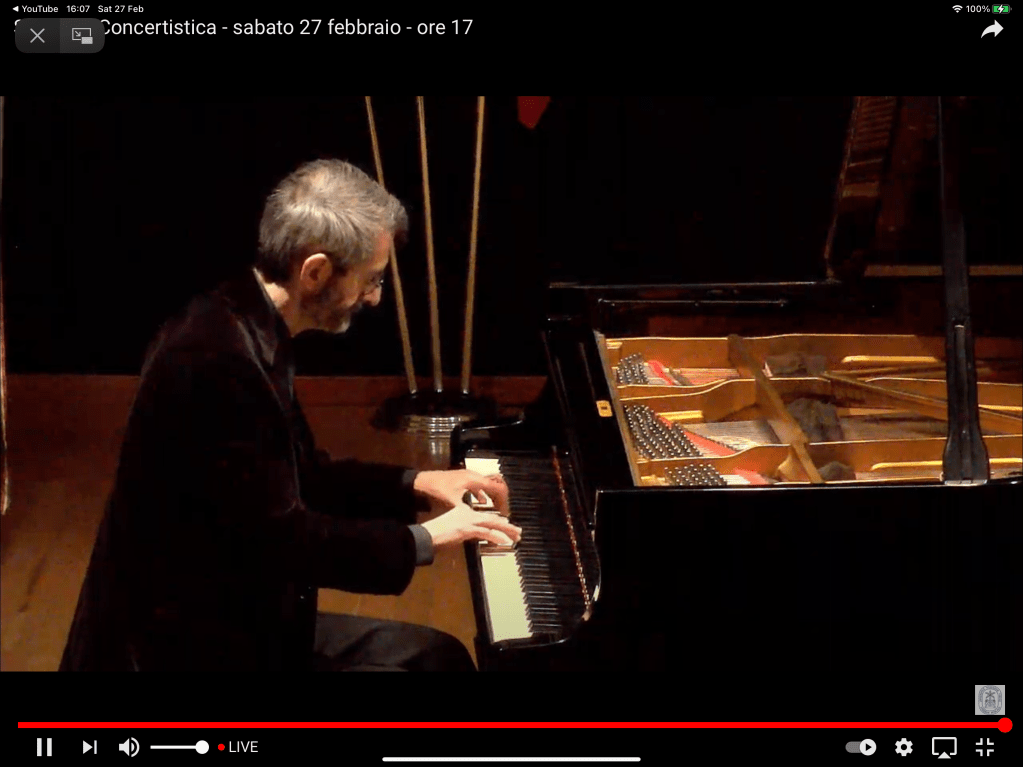
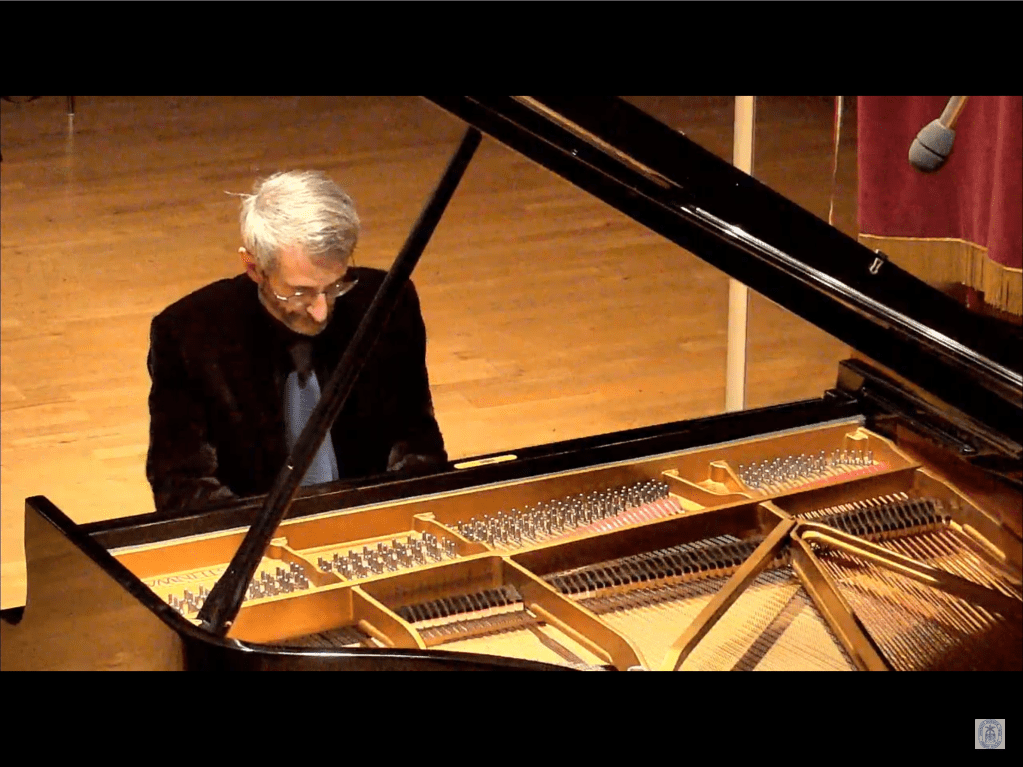
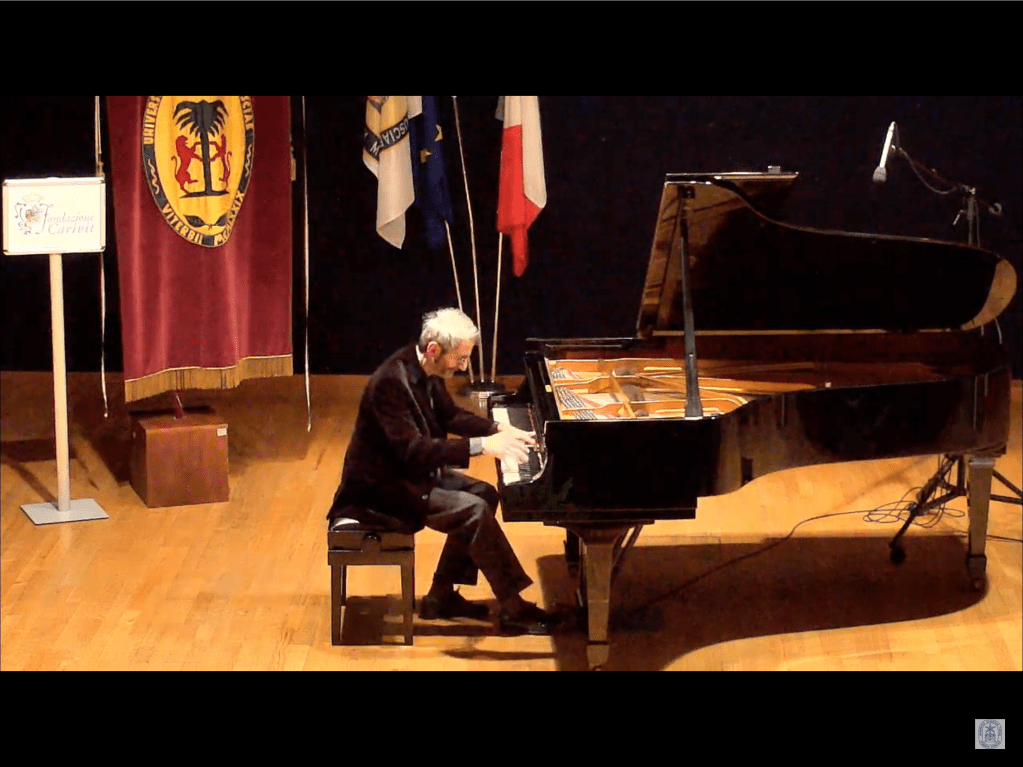
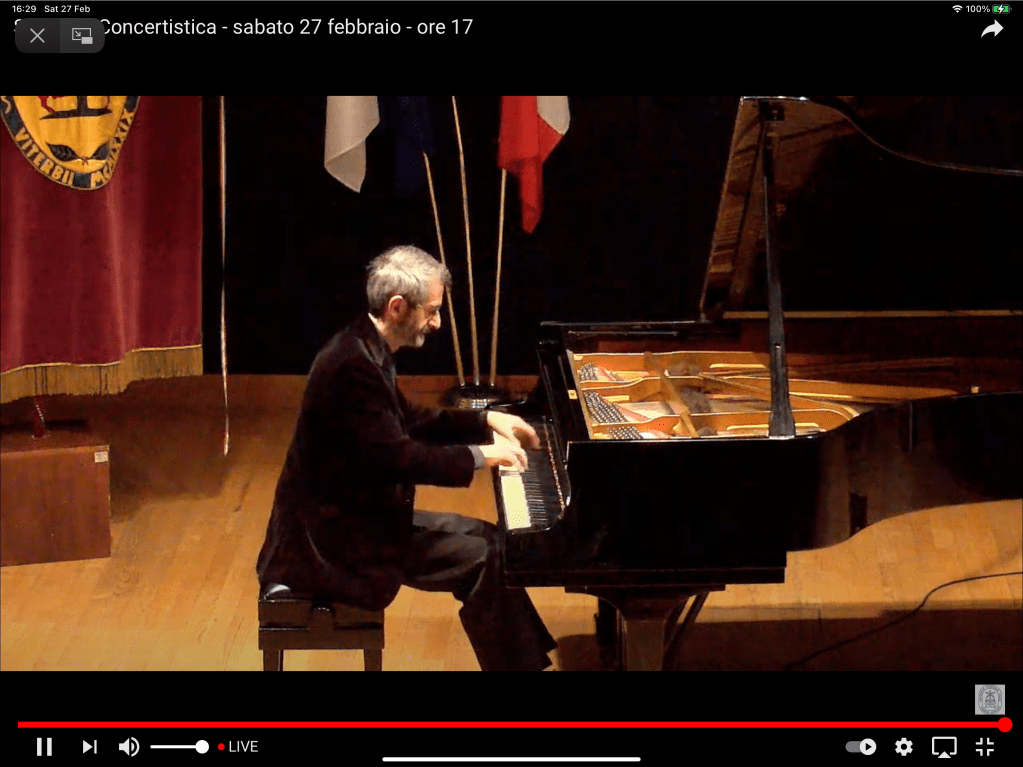
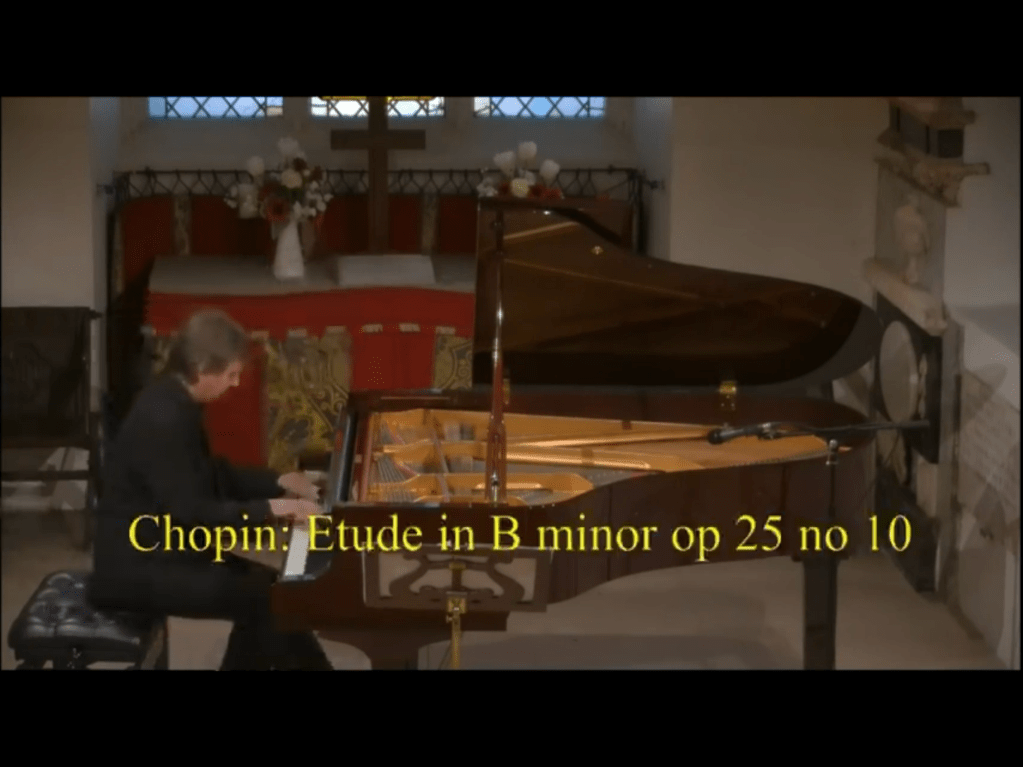
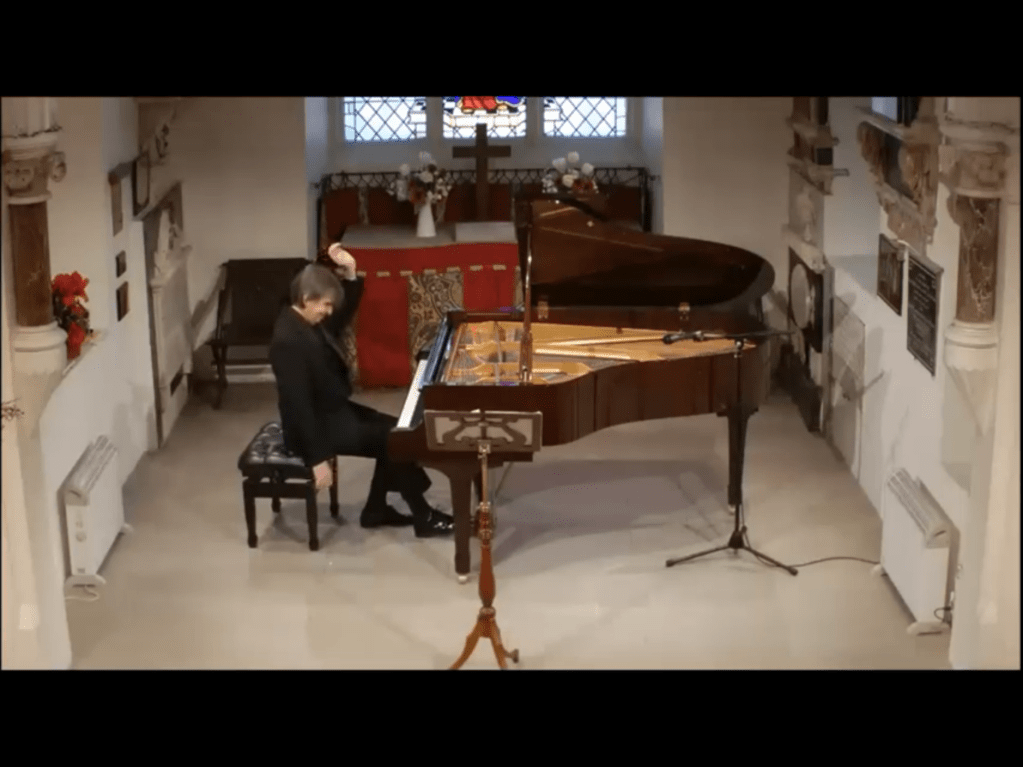
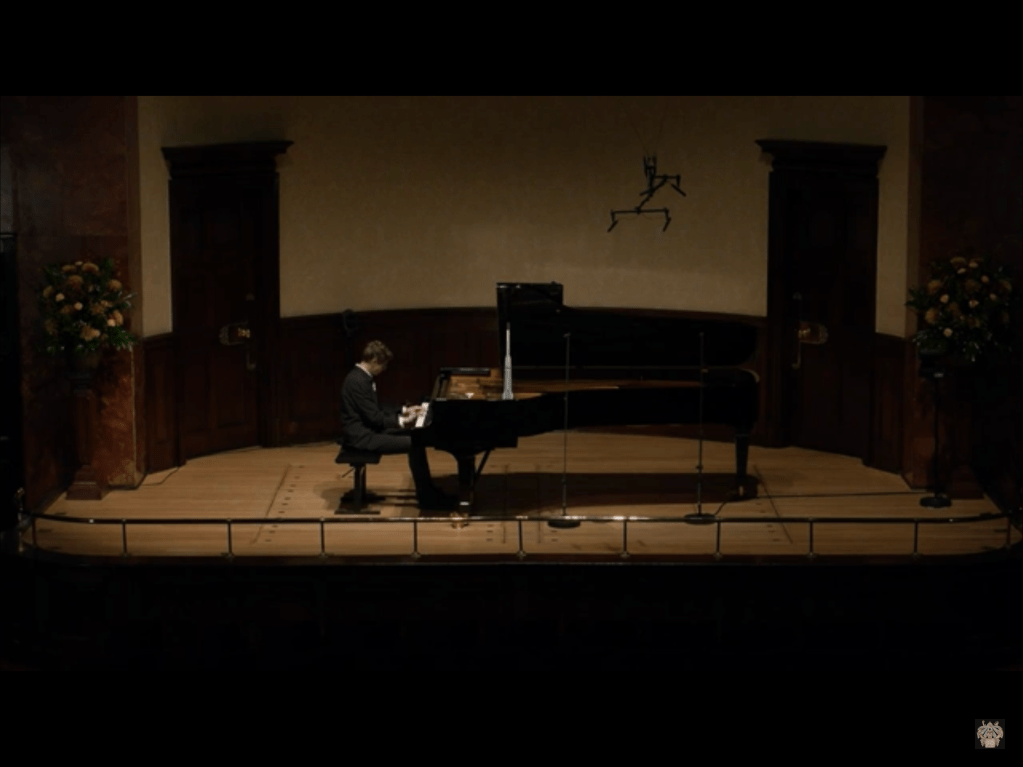
Beethoven: Piano sonata in C Op 2 no 3 Allegro con brio-Adagio-Scherzo:Allegro-Allegro assai
Chopin: Scherzo no 1 in B minor op 20
Liszt: Dante sonata
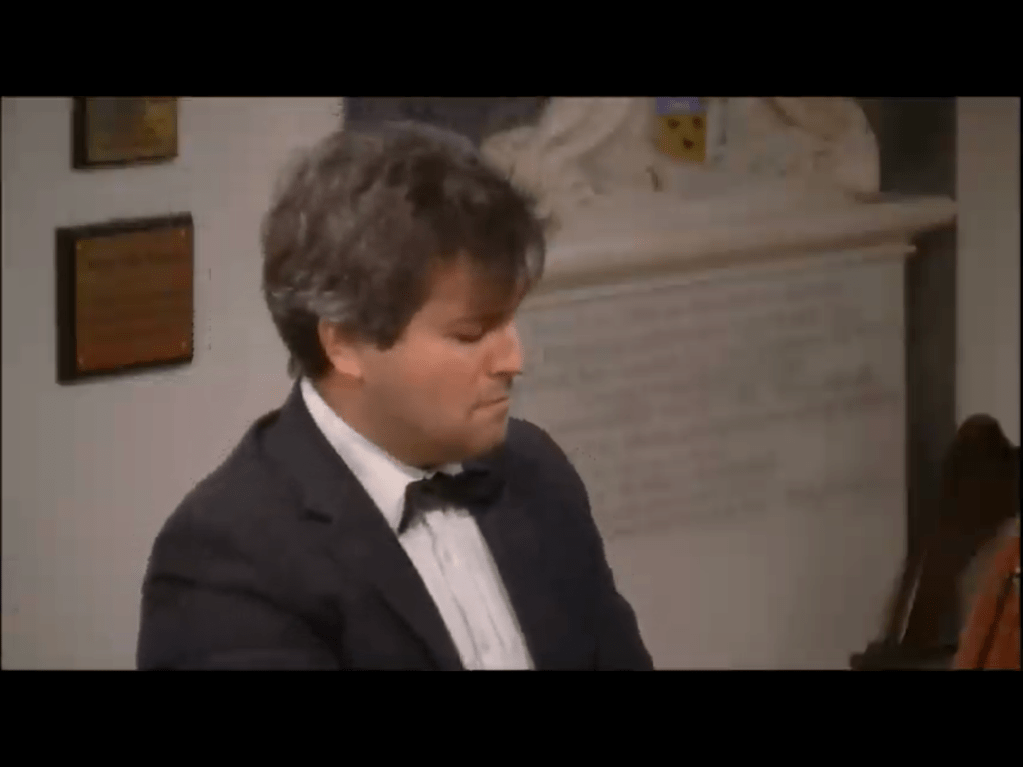
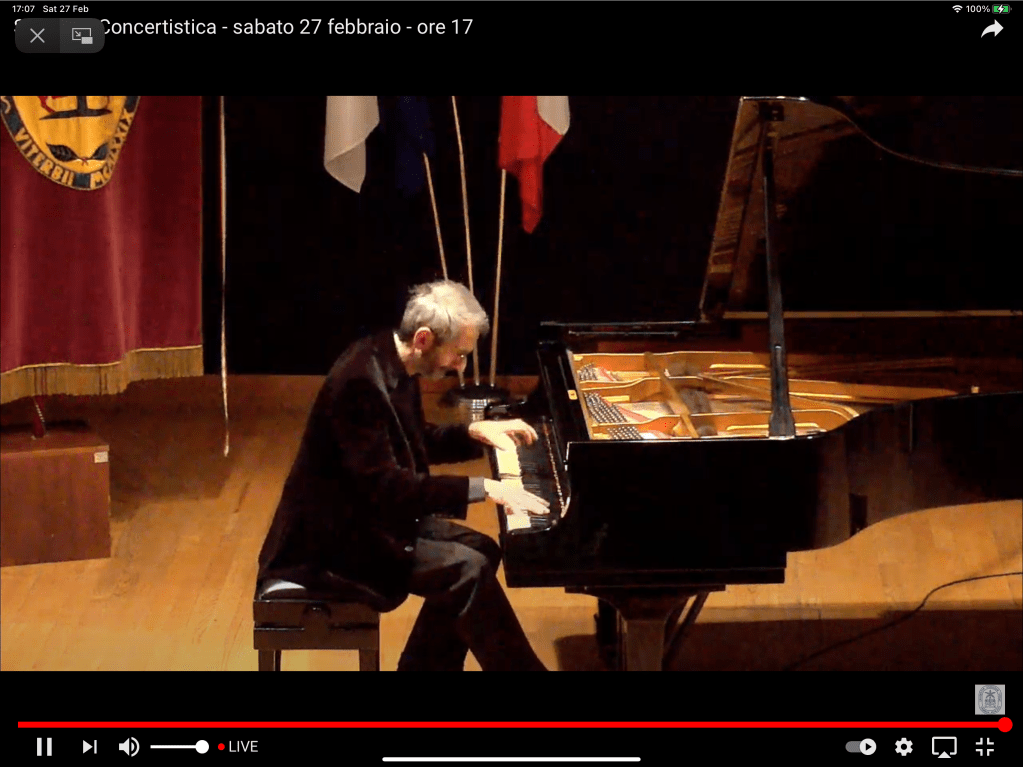
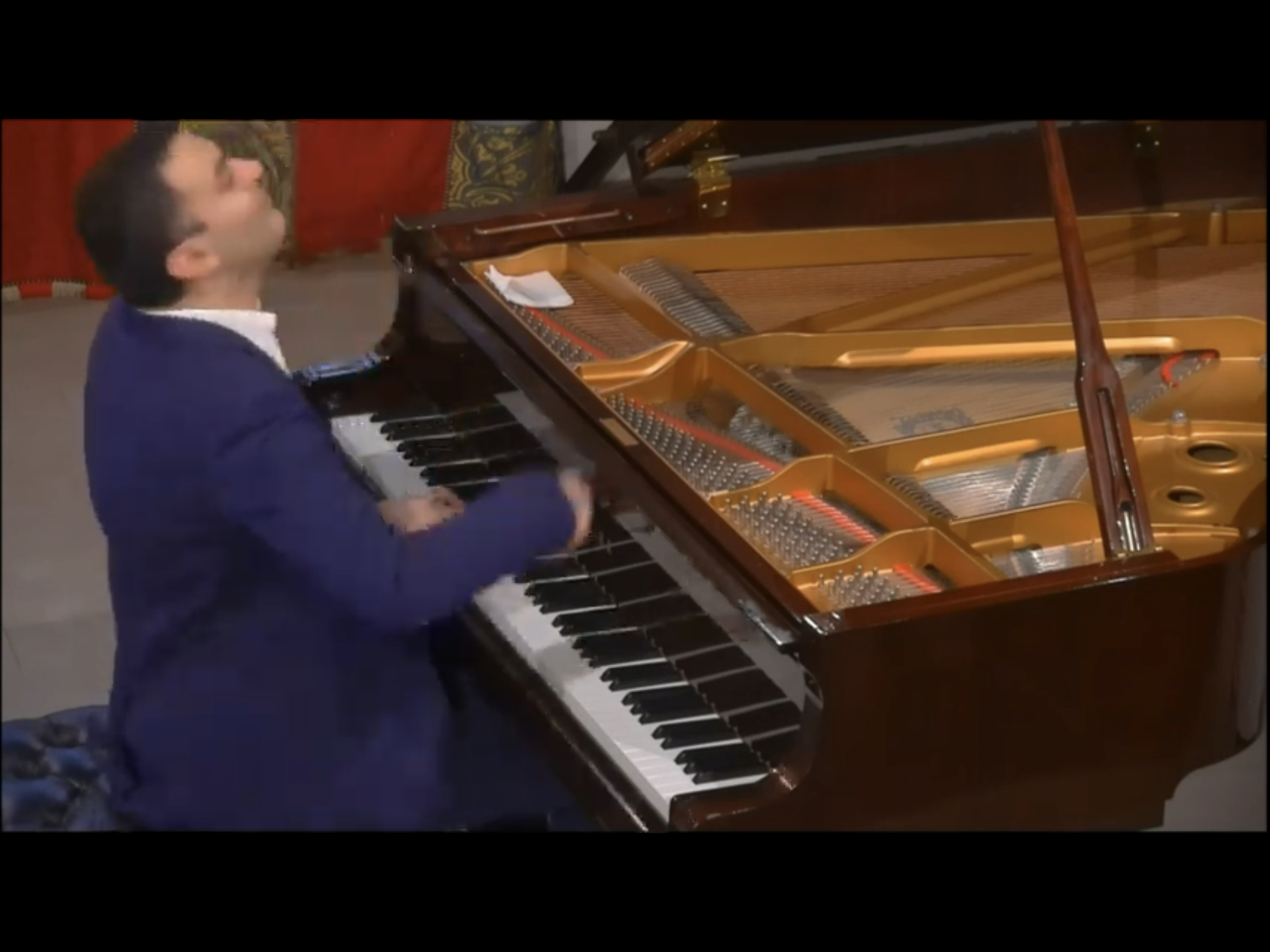
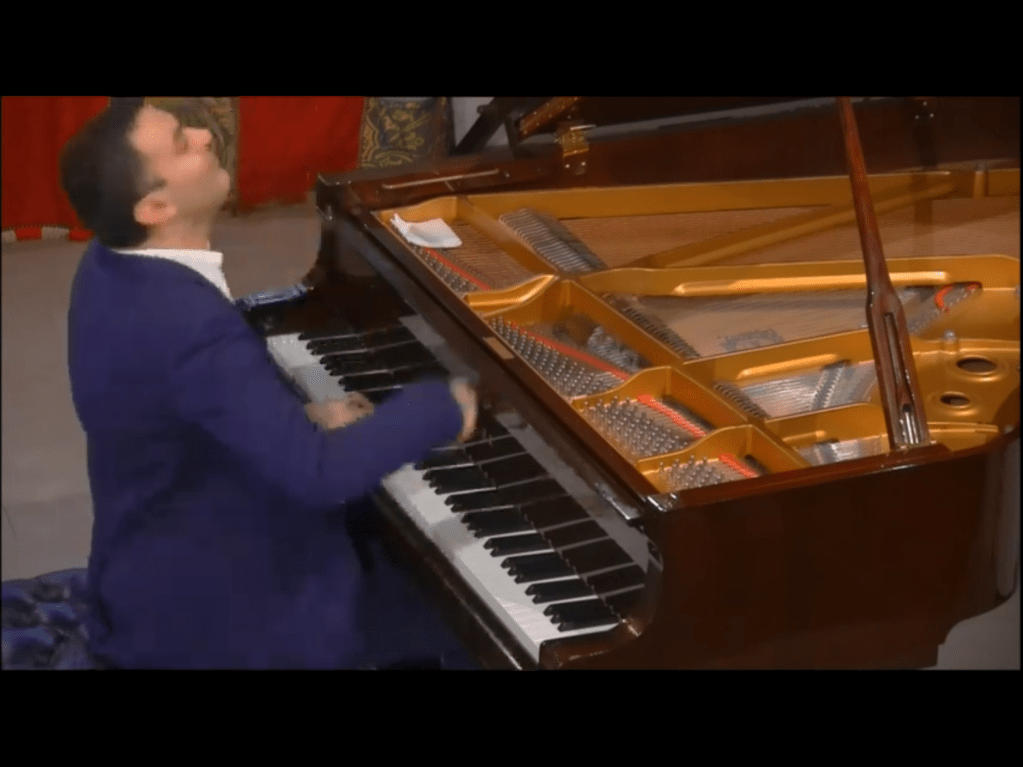
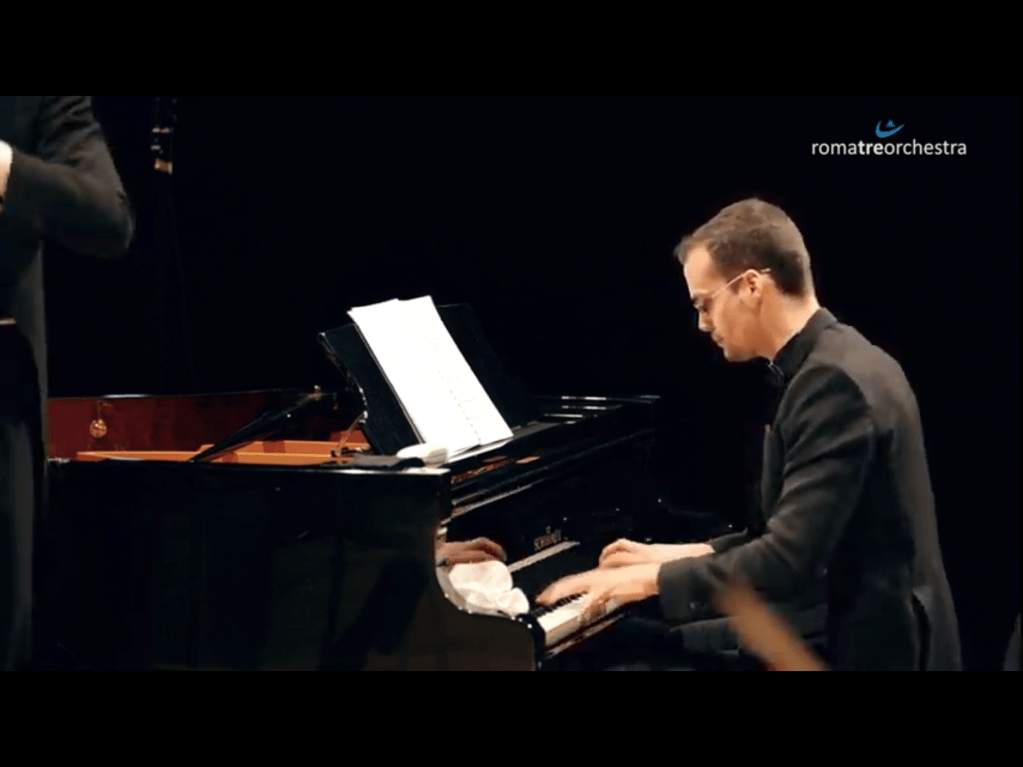
Some extraordinary playing of Beethoven,Chopin and Liszt from Florian Mitrea Playing of a directness and sincerity but together with a personality that shines through all he does. A sound that reminds me of the limpet type fingers of Gelber.A sense of legato that is so natural as it is extraordinary ,every note that he plays seems to hit centre just as Gilels too could provide that creamy rich cantabile sound or the most sumptuously rich sonorities with an aristocratic nobility that seemed so right. The piano and the artist are at one as the music is allowed to unfold without any rhetoric or whispered asides.
The Sonata op 2 n.3 used to be heard much more often in the concert hall and so it was refreshing to hear it opening Florian’s afternoon recital today.It is the last of the three early Sonatas op 2 dedicated to his teacher Joseph Haydn all with four movements .This last of the set written in 1795 is the longest of the early Sonatas together with op 7 written a year later.As Florian said in his very interesting introduction it has many of the qualities that would be found later in his last Sonatas in particular the almost string quartet quality of the Adagio with its dynamic contrasts and sudden exclamatory outbursts.
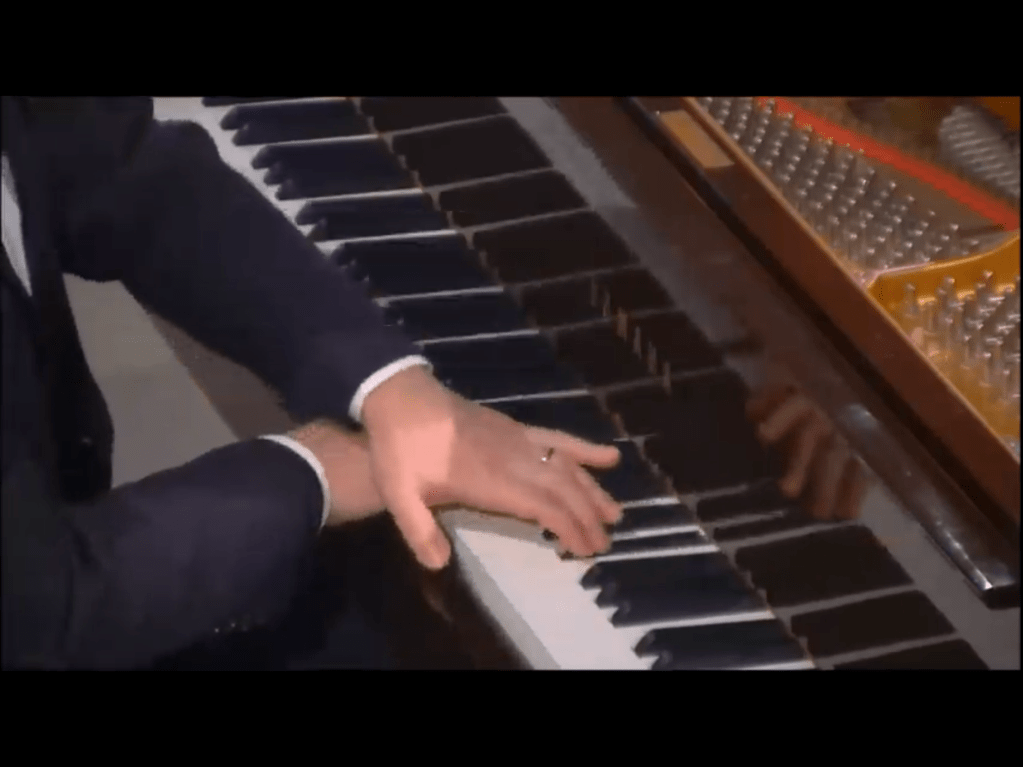
The Allegro con brio was played with great energy but also a second subject with a very personal lyricism.His limpet touch gave great inner power to the tempestuous arpeggios of the development after an opening that had the charm and character of Haydn,dispelled immediately with a burst of full powered broken octaves.Already Beethoven’s unmistakable character is breaking away from the model of Mozart and Haydn and is the start of a long journey of evolution that for 25 years can be traced so clearly in his 32 sonatas that spanned his whole life from the age if 25 to 56.There was beauty too in the cadenza like transition to the coda.The moving harmonies shaped so mellifluously leading to the actual cadenza ,played with perfect clarity that led so unexpectedly to the opening theme before Beethoven’s very decided slamming of the door.There was great sensitivity in the Adagio with a sense of architectural line.The long bass melody answered so clearly by the treble with beautiful arch movements of Florian’s hands that seemed to be painting the sounds so naturally.The ending was played simply and naturally Florian’s great respect for every detail that Beethoven suggests shining through everything he did.The Scherzo was clearly and almost delicately played as one hand seemed to chase the other until Beethoven impatiently draws it to a violent end.The Trio giving great contrast as the arpeggios swept over the entire keyboard with such ease and rhythmic energy ,the final cascade in bass signalling the impish reappearance of the Scherzo.Playing the Allegro assai with great clarity I have never seen a pianist play the opening flourish with just one hand before,a novelty of no great importance,but one that took me by surprise by a pianist who up until then had been playing exactly as Beethoven had indicated on the printed page.It had a featherlight quality to it and even the left hand octaves were never allowed to darken the good humour of this youthful energy.It contrasted so well with the chorale episode where the piercingly pointed sforzandi added even more good humour to this movement with its uninhibited joie de vivre.
The Chopin first Scherzo received a dazzling performance but played by a true musician where every strand had a meaning .The opening chords being played perfectly in line with what followed not the usual dramatic two chords unrelated to the fast passage work that follows.I would not have slowed down so much in some of the passages but kept the line going .In the central section too the beautiful Polish Carol I would have kept more of a childlike simplicity rather than the passionate involvement that Florian wanted to give it.However it was his own personal view and was played with such sumptuous sounds that he almost convinced me too.
The Dante Sonata was given a grandiose performance full of orchestral colours and passionate involvement.The left hand played non legato contrasted so well with the almost mystical legato of the right.There was an extreme stillness to the central slow section of sublime beauty in his ultra sensitive hands .Unwinding into the dramatic recitativi and a whispered ending to this central episode.There was true magic in the tremolandi on high that followed leading to the passionate finale full of transcendental octaves of great rhetoric.Spurred on by his great temperament he threw caution to the wind as he entered the final bars with a passionate involvement that was absolutely compelling.
A remarkable concert by a charismatic artist just born to play the piano
Described by Martha Argerich as ‘an outstanding young pianist’, British-Romanian pianist Florian Mitrea is an award-winning soloist, having been a double-laureate at many of the most prestigious international competitions, including at the 2017 Glasgow, 2015 Hamamatsu, and 2014 ARD Munich Competitions. Florian has performed at venues including the Carnegie Hall, the Bozar Centre in Brussels, the Usher Hall in Edinburgh, the Royal Concert Hall in Glasgow, the Bridgewater Hall in Manchester, the Bunka Kaikan Hall in Tokyo, the Seoul Arts Centre, the Bavarian Radio Studios, and across Romania. He was an invited soloist with the Philharmonia in London, the Royal Scottish National Orchestra, the Collegium Musicum in Basel, and the Romanian National Radio Orchestras and the Bucharest Philharmonic. He has impressed critics with ‘absorbing and masterly’ performances (The Edinburgh Guide 2019), ‘stupendous virtuosity’ (Suddeutsche Zeitung, 2017), ‘phenomenal precision throughout’ (The Herald, 2017), and ‘a mixture of phenomenal technique and ravishing musical intelligence’ (The Cambridge Independent, 2018). He won the Radio Romania Muzical Most Popular CD of 2018 award for his solo debut CD. An alumni and appointed Associate of the RAM in London, Florian is now a teacher within the Piano Department, while also finishing his studies at the Imola Piano Academy, under Boris Petrushansky.
In May 1909, a few months before the death of his mother, Busoni had lost his father. In his memory the son created an original work, poised and noble in tone, out of three organ pieces by Bach: Busoni’s way of thanking his father for an early introduction to the music of a composer he had been championing for years. The Fantasia after J S Bach is the first of his works that can be called a Nachdichtung—a work resulting from such a free transcription or adaptation of a model that it becomes original and independent in its own right. Following an improvisatory-like introduction in the low register leading to a more chromatic theme, Busoni offers his piano versions of the first, second and seventh sections from the chorale partita Christ, der du bist der helle Tag, BWV766. He also amplifies the fughetta on Gottes Sohn ist kommen, BWV703 (from the Kirnberger chorale settings), as well as the chorale prelude Lob sei dem allmächtigen Gott, BWV602 (from the Orgelbüchlein).
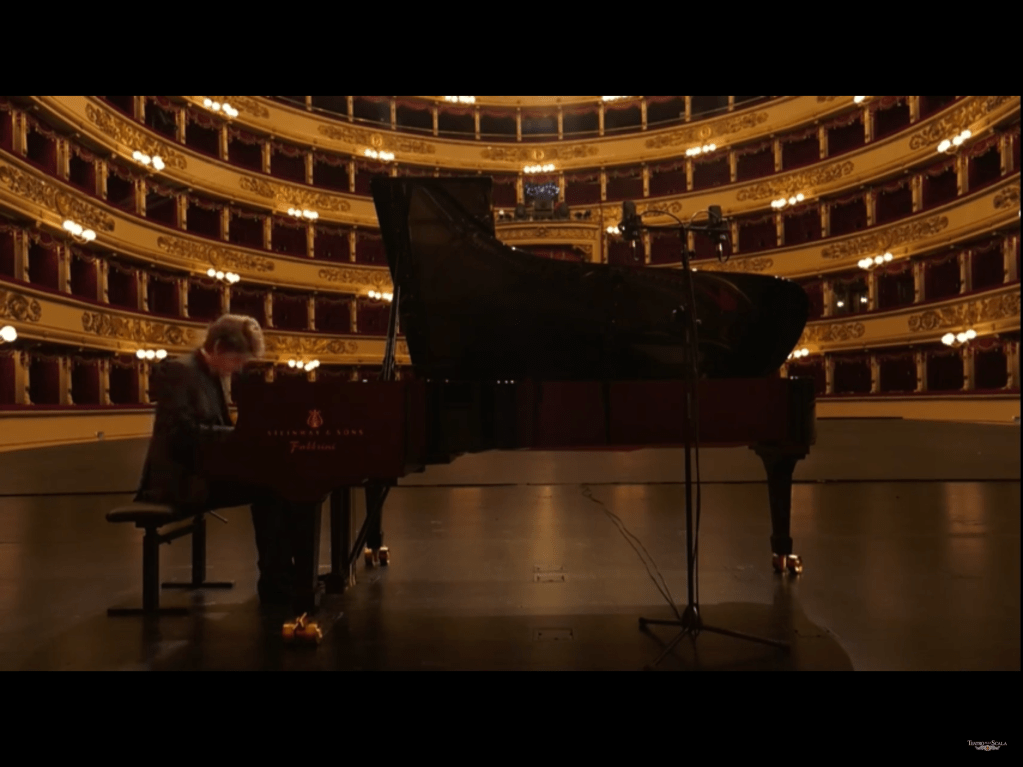
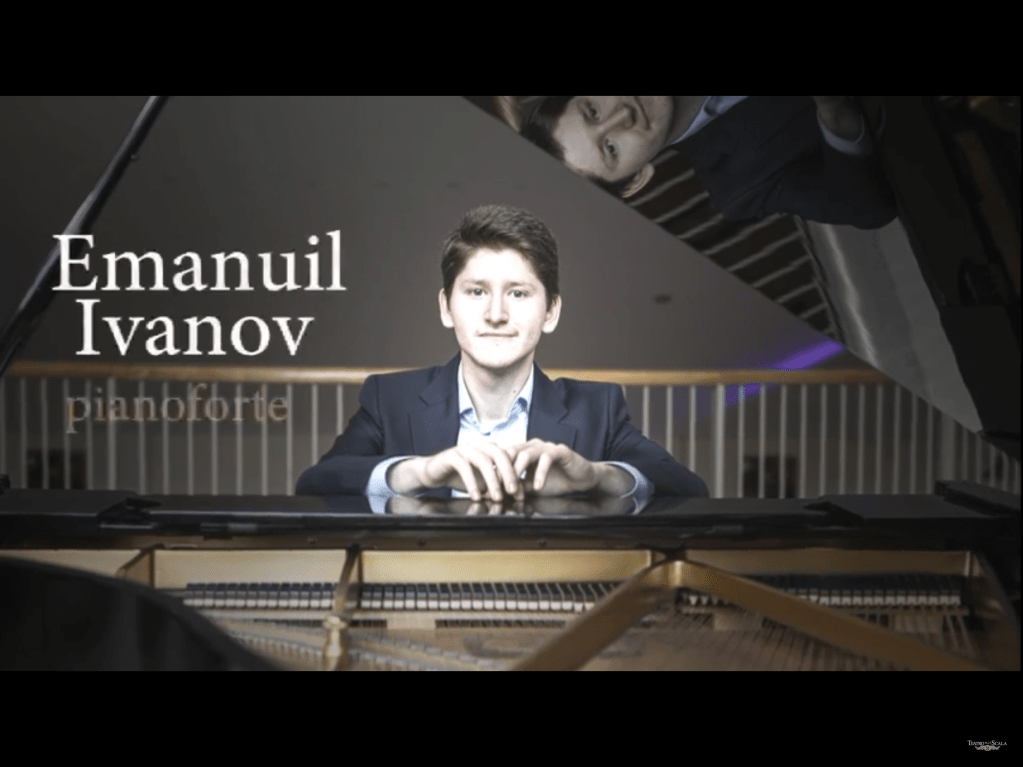
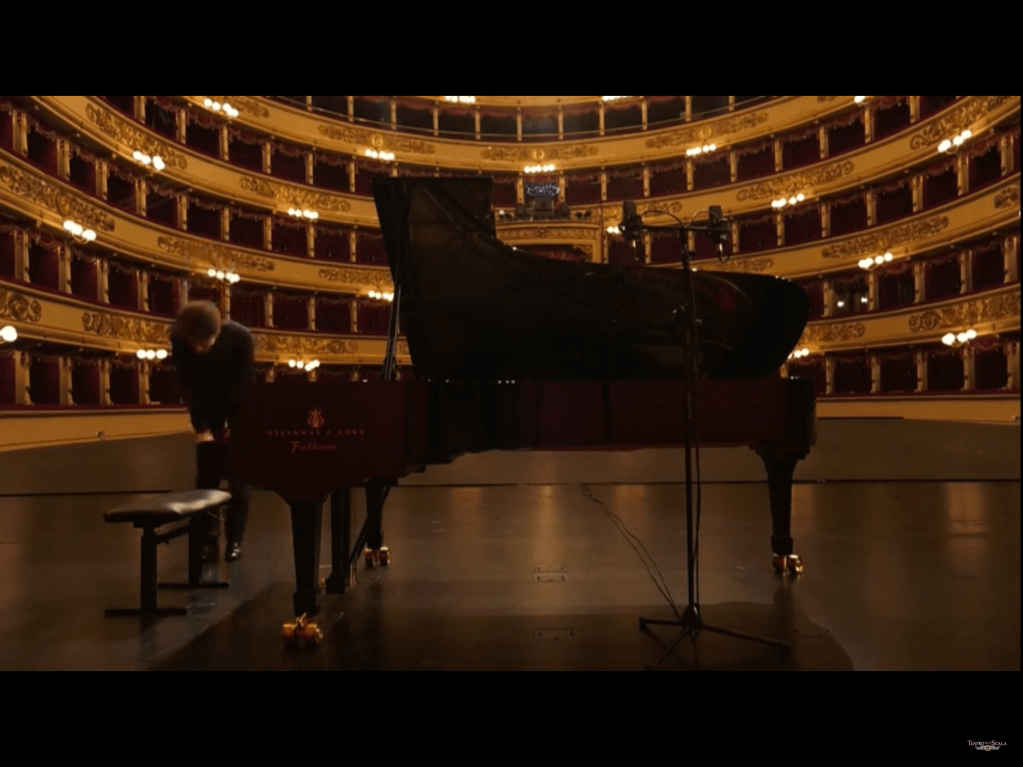
It is indeed an amazing work that in the span of only 15 minutes there is sublime inspiration and ecstasy,deep meditation and exultation.A performance from this young musician that belied his years.Of such overwhelming maturity where nothing was overstated but played in this vast empty Mecca as though there was a golden sheen around this magnificent Fabbrini Steinway.A protection that would not allow him to make anything but sublime sounds to the glory of a believer as thanks to his parents who had gone to a world of Glory and Hope.It was indeed a very moving experience and one that quite frankly I was not expecting.I had heard Emanuil in Bolzano playing Brahms Handel variations and Saint Saens noble but rather sugary Second Piano Concerto.Nothing had prepared me for the depth of feeling and range of sounds but above all control and intelligence.Beautifully atmospheric opening with the bass notes on this magnificent instrument barely audible but because of his extraordinary sense of balance they emerged from the magic that he had created from the very first murmur.Yearning harmonies followed on a continuous flow of sounds.The richness of the chorale commented on by whispered sounds on high that in lesser hands could have had quite a different effect than that of finding true gold.It built up to an ecstatic climax on a frenzied wave of full sumptuous sounds before subsiding again to deep meditation and a final barely audible contemplation that was very moving.
In the hands of this young artist he convinced me of what a great work I was hearing as if for the first time.I can now understand Alfred Brendel’s complete devotion to Busoni .
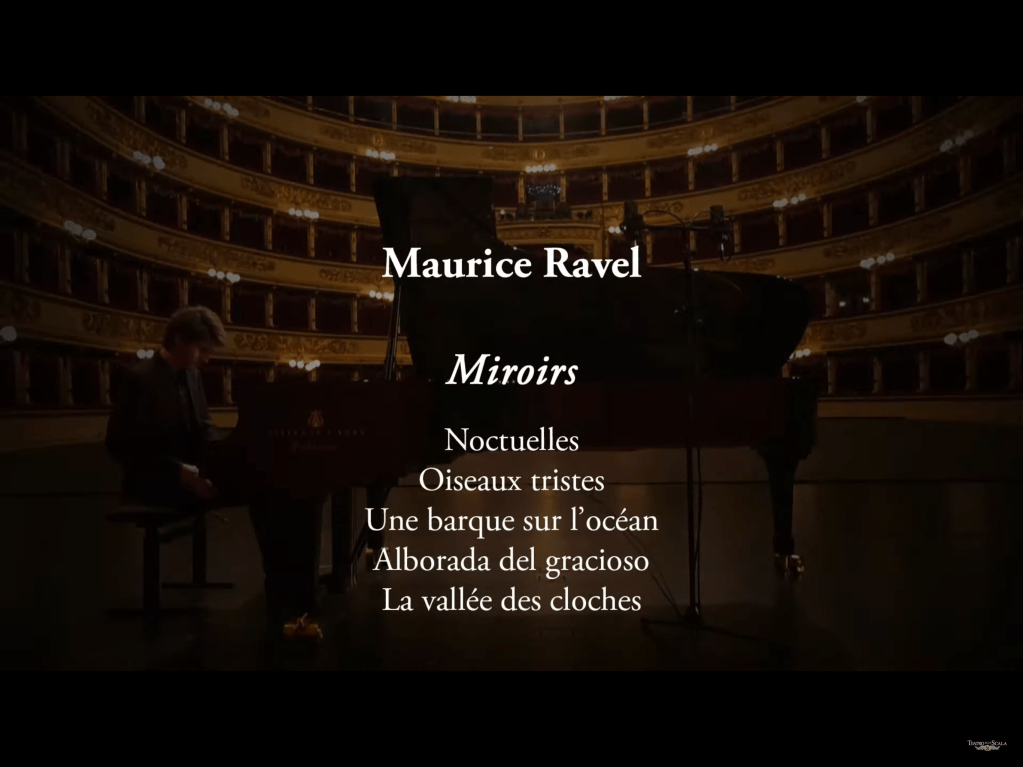
An ultra sensitive performance of Ravel’s extraordinary Miroirs.Noctuelles could not have been in better hands than today with a crystal clear clarity even at such speed as his sensitive fingers allowed these moths full range in this hallowed cavern. I imagine the moths at La Scala have been undisturbed for quite some time.A magical mist to end from which the moth escaped to join his fellows so promptly.
It was just this agility and lightness that I had so admired in Bolzano but in another way missed the weight and depth of sound especially in his ‘short back and sides’Brahms Handel – magnificent though it was.It missed the orchestral colours that are so much part of that world.The nobility of the opening of the Saint Saens that Rubinstein used to astonish us with was missing but the captivating brilliance of the Scherzo took our breath away.Rubinstein was from the old school and knew how to turn baubles into gems with not only his astonishing vitality but also the depth of sound that he could by contrast produce.I remember my old teacher Perlemuter,who had played Ravel’s works to the composer ,filling my scores with his fingerings that were those of an organist that would never leave the keys,as he would find and perfect ,over and over again,the fingering that would shape the contour of the music without relying on the sustaining pedal.Perlemuter like Arrau would often play loudly with the soft pedal that would give a new colour to their already extraordinary palette of sound .Schwarzkopf had the most extraordinary range of sounds too not only that of the beautiful sound that she was famed for.Oiseaux tristes was played with some sublimely sensitive sounds but even here in the very atmospheric languishing harmonies of the middle episode there was missing the almost 3D quality as we remained in the sullen world of Le Gibet.
’Une barque sur l’océan’was a truly remarkable performance where the difficult cross rhythms were thrown of with a subtle ease and the sudden storms that cross the path were allowed to interrupt the flow with great technical brilliance.Here his crystalline sounds really added to the extraordinary sound picture that Ravel describes.The almost religious appearance of the left hand chorale over shimmering right hand sounds would have been even more sublime if he had allowed Ravel to speak without any rallentando,however discreet.Ravel was a master of clarity – the precision of a clock indeed-that no underlining is necessary.But it was nevertheless an almost perfect performance and I do not remember ever hearing an ending so clear and yet so magical and doubt I will again.
A truly amazing performance of ‘Alborada del gracioso’ where suddenly Emanuil let his temperament take over knowing that his technical command was complete.Exhilarating ,relentless Spanish rhythms were played with astonishing clarity.An extraordinary ‘tour de force’ with repeated notes thrown off with ease as were the treacherous double glissandi.The orchestral colours though were missing as comments to a heartbreaking recitativo and later the sudden interruption of full orchestra in the animal like frenzy that was taking us to the final overwhelming bacchanal .But is was a quite extraordinary performance and of course the weight and strength will come as he matures with these works.I remember Moiseiwitch when he was dying in hospital and he asked to hear an old piano roll recording of ‘Jeux d’eau’.With a twinkle in his eye he said :’Yes ,I could play like that in my youth.’’La vallée des cloches’ was wonderfully atmospheric and I loved the final bass bells that were allowed to reverberate.I was missing here more than elsewhere the ‘weight’ that gives an inner propulsion to the sounds.Rubinstein in his recording of French music is the supreme example and although I doubt that Rubinstein could have played as well as Emanuil at his age ,the maturity that will come from living with the music much longer will obviously come to this superb young artist in what no doubt will be a long and celebrated career.
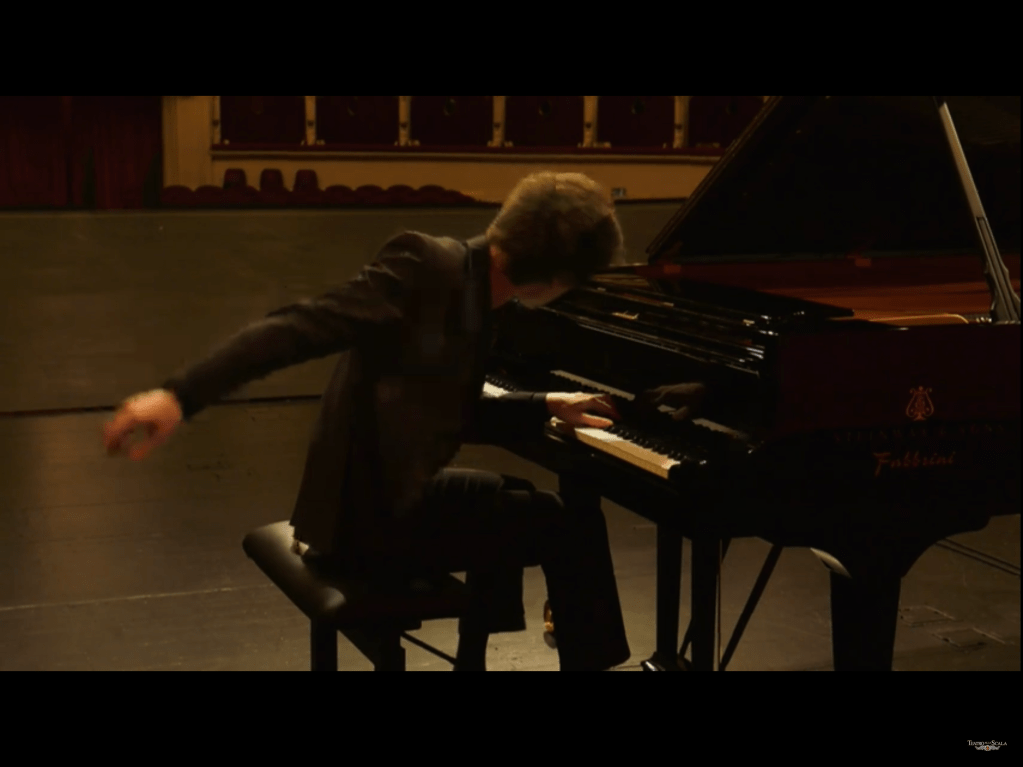
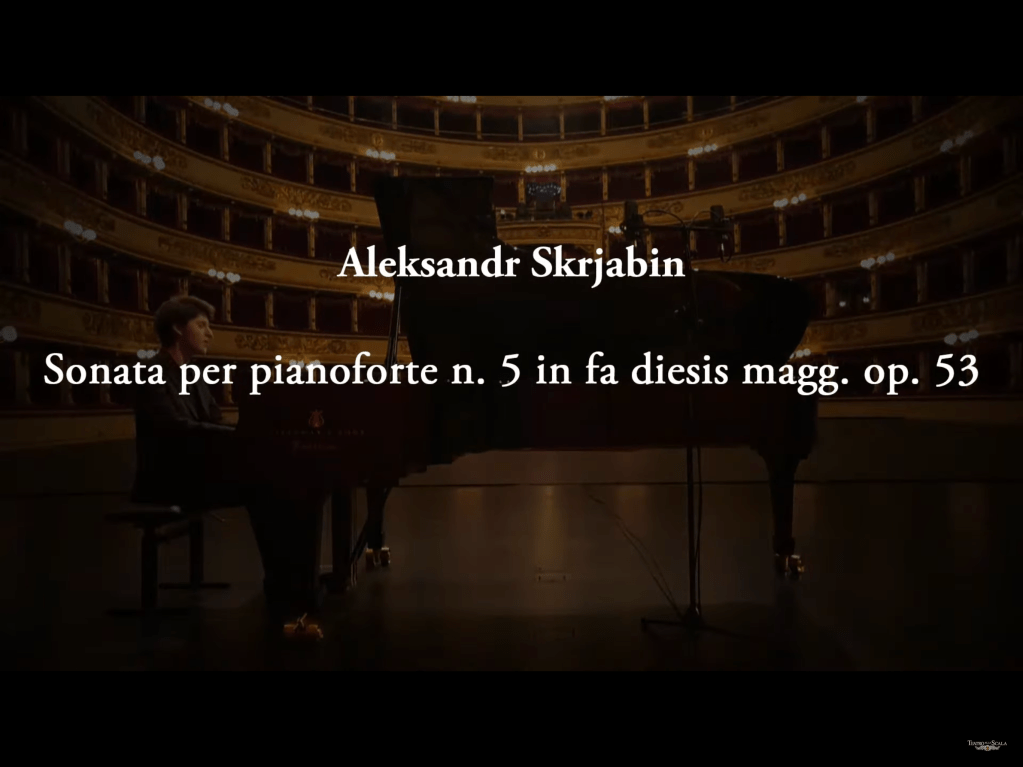
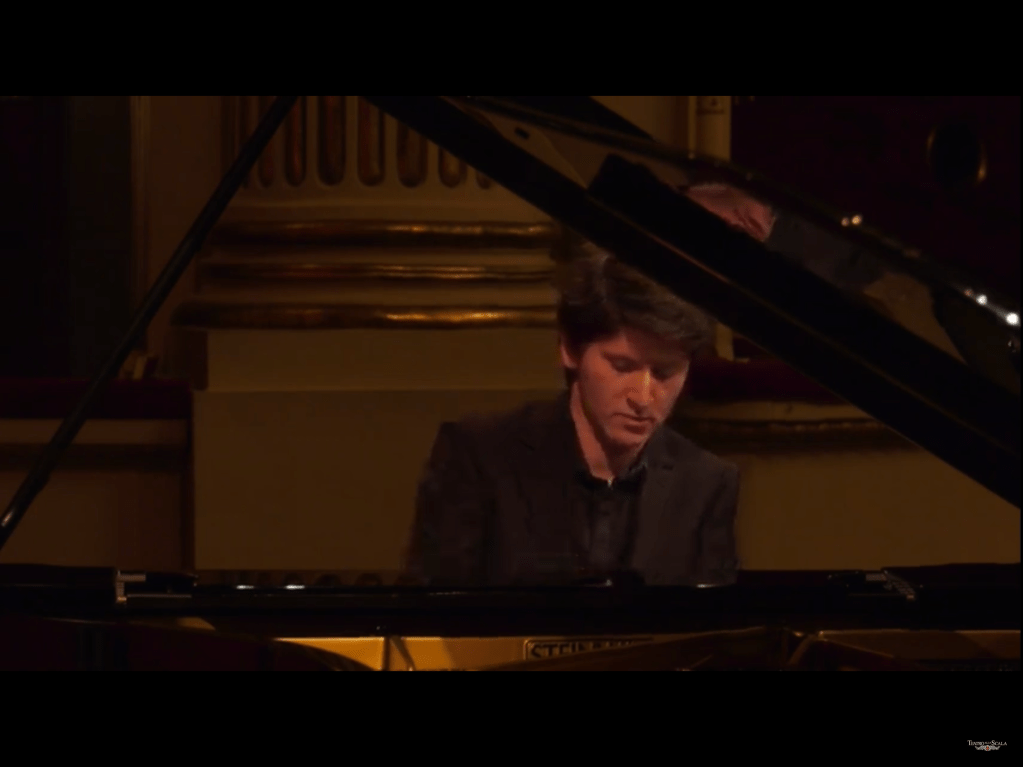
A truly remarkable performance of Scriabin’s 5th Sonata that showed off all Emanuil’s temperament ,colour and quite transcendental technical command.A world that took us by surprise when Richter came to the west to show us just what it meant to give yourself up so totally and be literally devoured by the keys.Scriabin just enticing us into an almost obscene world of Impetuoso,Languido,Fantastico.Luckily Emanuil’s tendency towards Eusebius was not allowed much thrift here as he entered this fantastic world of frenzied almost psychedelic emotions.A wonderful end to this short recital celebrating his victory in Bolzano.
Another extraordinary performance was heard by a young Korean boy,Eunseong Kim,in the previous competition a rare talent cut short by an unimagined accidental death .But as a tribute to him I include that performance as a celebration to him and his family
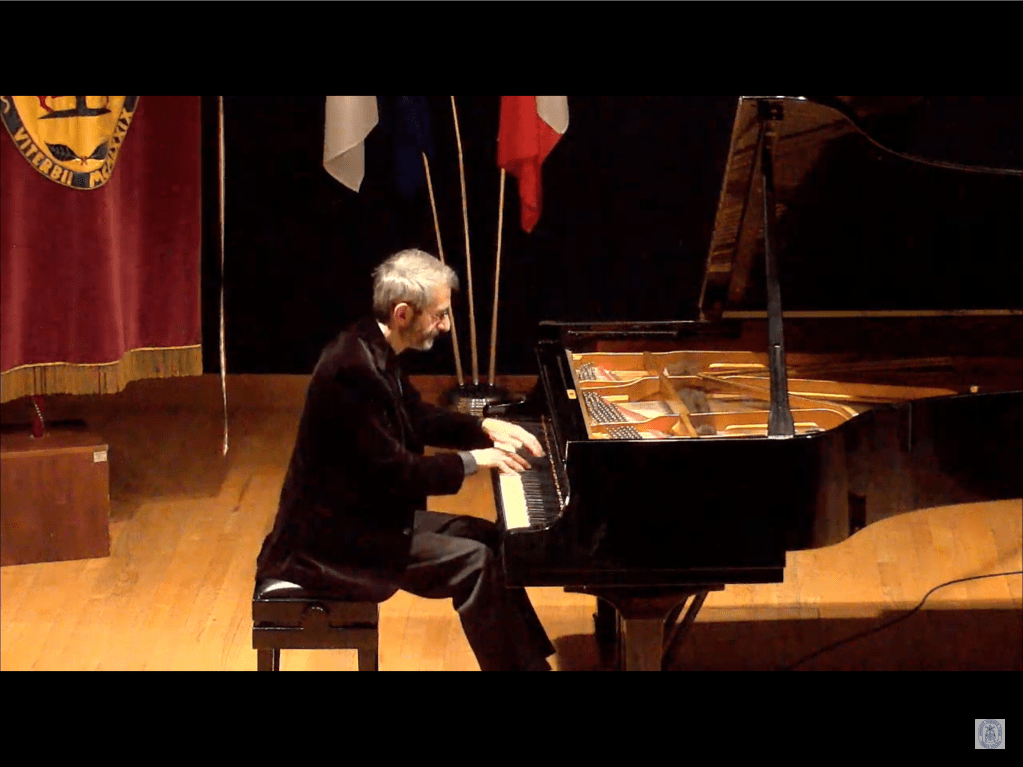
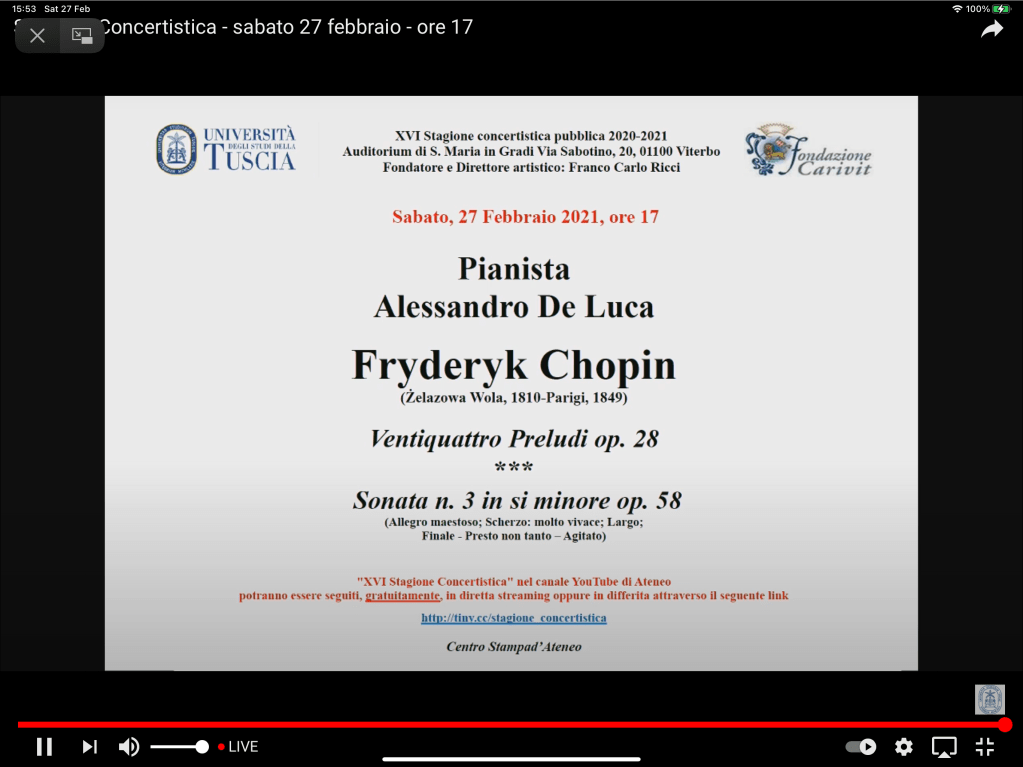
Wonderful to see a programme of two of Chopin’s masterpieces together in the hands of such a fine musician as Alessandro De Luca. He reminds me of that other great musician Sergio Cafaro who played many times in the Ghione theatre as did many of his prize students from his studio that he shared with his wife Mimi Martinelli. There is something about a true musician that transcends any little mishaps that may momentarily occur in a live performance.
I was reminded today looking at Alessandro De Luca’s large hands and listening to the clear resonant sounds that created such a solid bass on which these masterpieces could play out their drama. Fou Ts’ong who also had played and given Masterclasses many times in the Ghione Theatre confided once when he was about to play all the Chopin studies together with the Preludes:’It is the 24 Preludes above all that are 24 problems.’How right he was! The Preludes opened with a flourish that paved the way for the dramas that were to be enacted after.There was a sumptuous sound to the bass in the 2nd that almost engulfed the treble as it made its way to the ease with which the third just flowed from the pianists fingers.There was a touching simplicity to the fourth as there was to the beautiful bass melody of the sixth and the gentle lilt of the Coppelia waltz of the 7th. The 9th too was played with great nobility the crystal clear sounds beautifully shaped.I found the left hand though rather too prominent in the most beautiful 13th.The stormy 14th was beautifully resolved by the great sense of balance that he brought to the ‘Raindrop’Prelude.Balance too with the brooding left hand melody in the central section.The recitativo of the 18th was played with dramatic abandon and the great C minor 20th was given all the nobility that has made it the theme of variations for many composers that were to follow Chopin’s footsteps.The beautiful cantabile of the 21st opened the way for the thunderous octaves of the 22nd and cascading sounds of the 23rd.
I have never seen the first bass note of the great D minor prelude played by the right hand before (I was taken by surprise by a pianist the other day who opened the Barcarolle with two hands and then proceeded to play the opening note of the Schumann Fantasie with the right hand! Arrau would have passed out at the thought). A performance of the 24 Preludes by an artist who has obviously lived with them for a lifetime and if there were momentary lapses in some of the more treacherous preludes they did not subtract from the pianists over all vision of one of Chopin’s greatest works.
The B minor Sonata too was played at the opening with two hands but that did not take away from a fine architectural vision of the Allegro maestoso.It was played with a great sense of forward movement and although he chose a slower tempo for the second subject he never allowed it to become sentimental or loose it’s great nobility .Sentiment but without sentimentality.The second movement flew from his large hands and the middle section flowed admirable with a great sense of line.The slow movement had a great nobility and sense of overall shape and direction with his crystal clear sounds allowing the melodic line to sing with such a sense of line.The last movement was played with admirable rhythmic impetus.The final appearance of the rondo punched out over an ever more excited left hand. It was not without a few blemishes but they were both readings of a musician of great experience who has lived and played these works for a lifetime
A very interesting article from Alessandro De Luca’s web site that I am happy to add to his performances today
He’ll get over this one, too”.This is how my relatives commented when I announced that I wanted to be a musician, instead of a sheriff or a magician as I had declared in my early childhood. Now I was nine; I was familiar with toy pianos, junior zithers, mouth-organs, and I had a mature keenness in listening, developed with Modugno, The Beatles and Dave Brubeck first, and Beethoven, at last. I wanted to play the piano, like Schroeder, the Peanuts character, who was able to conjure the notes of the HammerklavierSonata, or even better, I wanted a real piano like Kempff’s in his Moonlight forty-five record.After waiting aimlessly that my desire would be reduced to a childhood craze, my parents bought me a period upright piano, a fine XIX-century Dutch inlaid piece of furniture that would look great in our house, in case I gave up. “Pianists must practice eight hours a day! What a life of hell!”, said my elder sister. “You could be a composer, so you’ll only have to write. You can make the others play, and you don’t have to learn your music!”.I had never given a thought to the fact that composers and interpreters were different people. Actually, I wanted to make my own music, but since I had to learn to play first, I started taking piano lessons, realizing only later that all the music I liked had already been written by Beethoven, Chopin, Tchaikovsky, who had “stolen” my ideas. I might as well be a pianist, a musician who plays others’ works, that after all belong to him, too. And this has always been a mania for me, not only as a child, but in my entire life.My mother had a brilliant idea; a IUC (Istituzione Universitaria dei concerti, University Concert Institution) season ticket, which took place on Saturday afternoon, so we’d never stay out until late. We went together, and within a year we listened to Kempff, Rubinstein, Richter, Magaloff, Menuhin, Oistrakh, the Végh Quartet, harpsichordist George Malcolm, and once, exceptionally, the Leningrad Philharmonic Orchestra conducted by Yevgeny Mravinsky. That year left a mark on me.My piano teacher’s name was Lydia, a fiftyish Tuscan lady, demanding and nice, who had studied with Casella. I don’t know how she made me play straightaway, without solmisation, drops or hammers, or anything of the sort. It was called “Global Method”. It worked, because within a few months I was smoothly playing my first Beethoven. She taught me four more years, then she entrusted me to an important teacher, Rodolfo Caporali, who guided me with his invaluable teachings to graduation and, later, to my first competitions and my first concerts. I will always be grateful to this teachers, real artists.In the meanwhile, I had not given up improving composition, at the beginning with Attilio Poleggi, and then with Giuseppe Savagnone, who gave me counterpoint exercises and in the meantime made me study dodecaphony on Krenek’s coursebook. An utter nonconformist. Our lessons never ended, they were meetings in the studio of an artist, who after revising my homework showed me what he was working at. All this caught me insomuch that for a few hours I forgot being a pianist, a man who plays others’ works. I wanted to compose my own pieces, and I was able to do it. But when I came back to my instrument with Brahms’ Variations on a Theme of Paganini, I felt that this company was irresistible and much more interesting than my own. I’ve never found a solution to this dilemma, not even when, much later, I resumed my study with Aldo Clementi, whom I invited to my second concert at S. Cecilia with the Academy Orchestra, in Prokofiev’s Piano Concerto No. 5. Then I realized I had incurably become a pianist, and that the stage, with all the anxieties that it fostered more or less secretly, was my life. On my way, I had the privilege of meeting and seeing extraordinary people. Franco Ferrara, maybe the greatest conductor that has ever existed, as someone said. I visited him at his house in Piazza Cavour between concerts, and I asked him to listen to me. His advice was simple, forthright, and deep. For example, when you perform a Bach’s fugue you mustn’t exalt the theme voice above the others, but play all of them with different timbres. And one night, when I was preparing Schumann’s Piano Concerto for my graduation, he suggested me to read it together on two pianos. After playing with so many conductors, great and famous as well, that experience remains the most unforgettable one of my life.Francesco Siciliani, without whom, as Lorin Maazel put it: “European music in the last fifty years would have been unthinkable”. A genius behind the scenes. I used to visit him at his house by the Tiber embankment late in the evening, and I played for him. Sometimes he came over to my place, and I offered him his favourite appetizer: peanuts and tomato juice. Each of his comments, loud or unspoken, opened up a world to me. He was the man who had discovered Callas, Maazel, Prêtre, and many other artist, not only engaging them when he was the artistic director at La Scala or S. Cecilia, but intervening in their growth, not remotely inhibited by their fame. Once I played Brahms’ Piano Concerto No. 1 and he said: “Never forget that this work always has a slimy depth”. Since then I’ve never forgotten to pay attention to low-pitched notes, so that they remain present and incisive, also in more delicate works like Brahms’ latest Intermezzi. And when I got my first post at the academy: “Bear in mind that a real teacher never lectures, but sits next to his students and learns with them”.One night he introduced me to Alexis Weissenberg, who had just performed Rachmaninoff’s Piano Concerto No. 3 with Prêtre at S. Cecilia. A few months later I was in Paris, where he devoted three entire afternoons to listen to my whole repertoire. I was 33 and very insecure, and he told me: “You were born to be a soloist. And you should also play chamber music, obviously”.It was a shock, my professional life had changed for good.We’d often seen each other since then, between engagements. He was a teacher and a friend, he listened to me whenever I had a new piece to perform in a concert, basically all my repertoire. We met at his house, in Paris or Lucerne or later Lugano, or at La Scala or any hall where he was rehearsing, and he devoted me all the time he could subtract to his pauses. He was a great concert artist and his advice was instantly enlightening, as if he had the magical power to remove, instead of solving, any problem. We got on first-name terms after ten years, and on that occasion he gave me his Sonate en état de jazz score, and since then I’ve dedicated myself to his light, deep and brilliant music.In the meantime, I gave concerts, almost everywhere in Italy and Europe, recitals or with orchestra, sometimes at a fast pace, even fourteen in nine days, other times with long idle periods that made me impatient. My favourite performances were those with conductors, in most cases ever changing, who made the same piece always new. The first one I played with was Gavazzeni, who loved working with young musicians and who engaged me when I was 24, allowing me to open the S. Carlo season. His esteem and friendship made me feel privileged, and much envied, as I discovered much later. I learnt a lot from him. We were playing Mendelssohn’s Piano Concerto No. 1 and he cried to a too loud orchestra: “Air beneath the notes!”. Yes, air beneath the notes, and this doesn’t just go for Mendelssohn. I kept that in mind when I tackled Gershwin’s Rhapsody in Blue.I played it for the first time in the bullring of an Andalusian city. It was a rather surreal and unsettling experience, because the backstage was the green room where bullfighters got ready, with amulets, ex voto and anything useful to men facing a dangerous, maybe deadly, situation.This experience reduced my nervousness before a concert. At worst, my life is never at stake.I’ve been many other times to Spain, in about forty different cities, living now funny now unforeseen situations, in so far as I could draw a picaresque novel. It’s not worth it, but I can’t forget the night of Rachmaninoff’s Piano Concerto No. 2, and the jug of sangria that my wife and I drank because of the summer heat, making our presence at the second part of the concert awkward for the conductor. We even had troubles to walk to our hotel. Or when my agent phoned me asking me to rush to Madrid to replace a totally unfit pianist at a concert in the presence of King Juan Carlos and Queen Sofia, who had listened to me a few months earlier. I went there, even though I hadn’t touched my piano for almost a week, and my performance was successful, maybe to compensate for another time in Galicia, when I was ready to play Chopin’s Piano Concerto No. 2 and the conductor had the score of No. 1, for a misunderstanding in the contract. He asked me if I could change the programme, as if it was a garment, I said no, and the concert was cancelled. The next week, when I was back to Italy, they asked me to make up for the lost concert three days later in Zaragoza, with the same conductor. I accepted, and that was one of those wonderful nights when everything works, one feels in shape, there’s an excellent acoustics in the hall, the piano is amazing, and success is full. I remember all of them, because I’m persuaded that any artist could count them on his fingers.Anyway, travelling for a concert or a tour is the most amusing thing that I’ve ever lived. Any circumstance, even the most stressful one, left a memory and a teaching. Visiting magnificent capital cities without the constraints of being a tourist, free to spend an afternoon in a museum or oversleeping, without being forced to make use of the money you paid for the holiday, is one of the pleasures of life. You can bump into unpleasant places and people, but a new contact is always enriching, with a conductor or a tuner, or the audience, that sometimes behaves like a lazy kid or a passionate lover, and you cannot predict it.And then there’s study, everyday’s secret and patient work, my sister’s dreaded eight hours, that actually dwindle but remain a constant engagement without pauses or holidays. And the growing need to play and play again, more than breathing, because you can hold your breath, but you can’t prevent your heart from beating. Teaching is, of course, important because we players have got much to hand down and to tell, and we can be links of a precious chain. As Alexis Weissenberg said in “I Like Music”: you don’t live for music, you live in music. And I keep telling my students, as they feel inadequate when they tackle the great repertoire after listening to great interpreter’s renditions, there are big and small stars, but all of them shine the same joyful light. The main thing is the right light. Alessandro
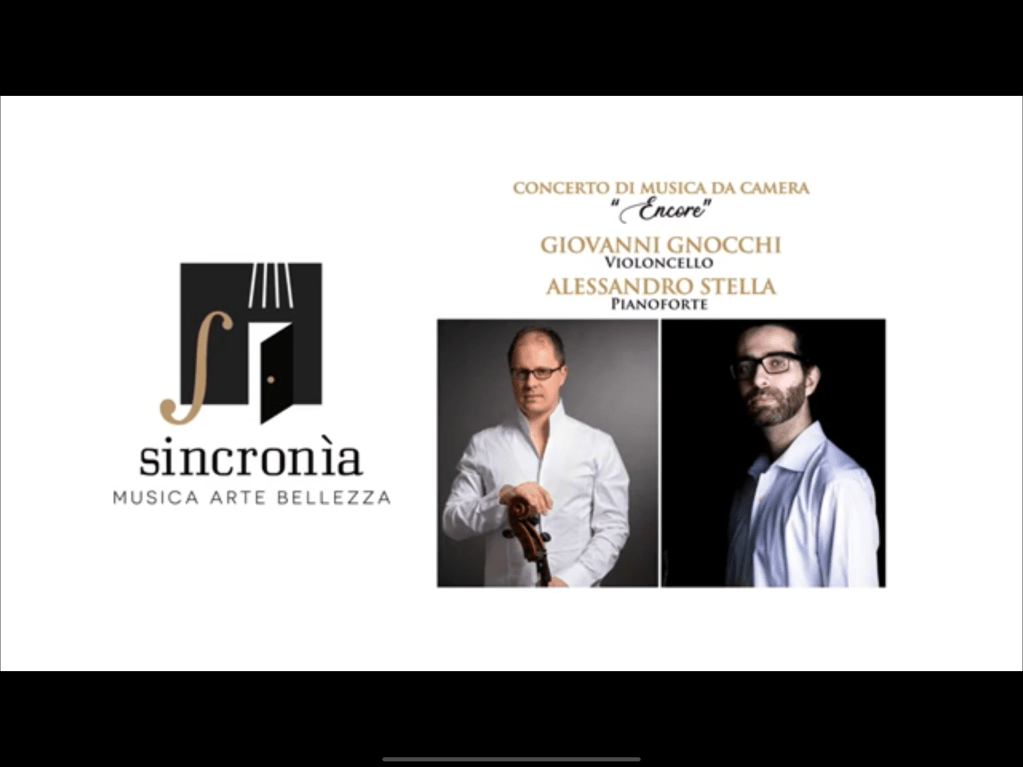
Giovanni Gnocchi ed Alessandro Stella vogliono esprimere la propria gratitudine all’Associazione Sincronìa e alla direzione artistica di Barbara Agostinelli. Siamo grati a Sincronìa per aver organizzato anche questo evento culturale in epoca di pandemia con serietá e dedizione, importantissimo in questi tempi di crisi e di chiusura, messaggio fondamentale e bellissimo per tutti. Eseguiranno musiche di: F. SCHUBERT – Litanei auf das Fest Allerseelen D. 343 (1816) D. POPPER – Spanish Dance op. 54 n° 2 “Serenade” (1884) S. RACHMANINOV – “Romance”, Lied in fa minore per violoncello e pianoforte (1890) A. DVOŘÁK – Waldesruhe op. 68 n° 5 (1883) G. FAURÉ – Romance op. 69 (1894) G. FAURÉ – Papillon op. 77 (1884) F. MENDELSSOHN – Lied ohne Worte op. 109 (1845) P. I. TCHAIKOVSKY – Nocturne op. 19 n° 4 (1873-1888) P. I. TCHAIKOVSKY – Andante Cantabile op. 11 (1871-1888) E. ELGAR – Salut d’amour op. 12 (1888) G. ROSSINI – “Une Larme”, thème et variations (dai Péchés de vieillesse, ca. 1860)
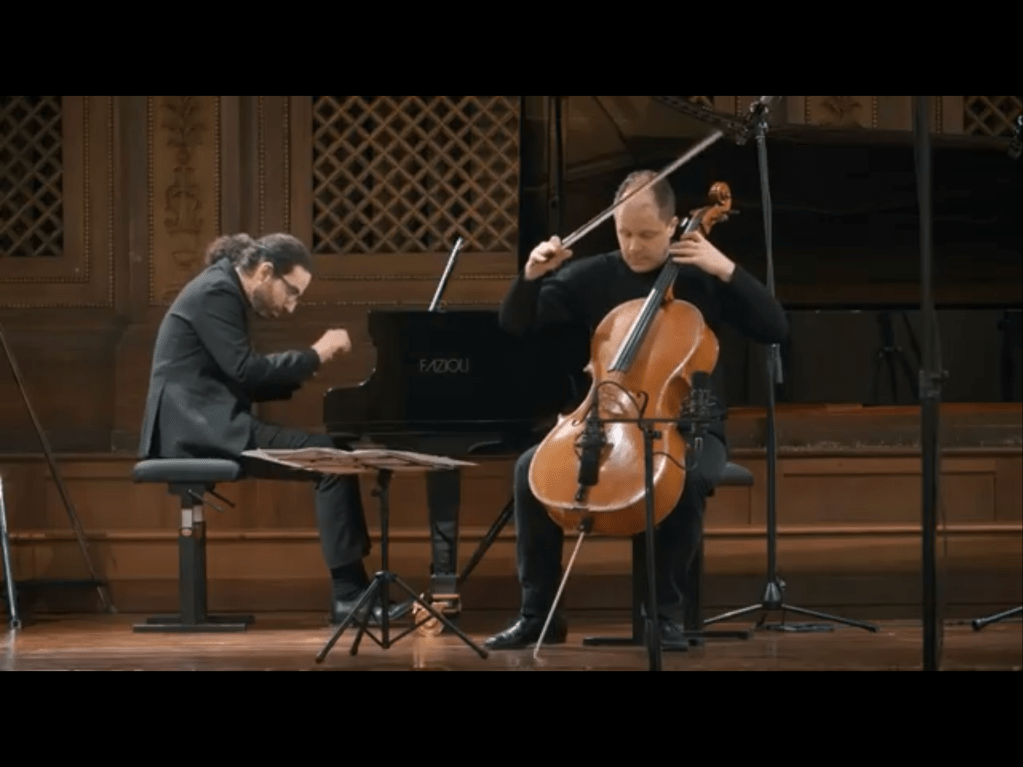
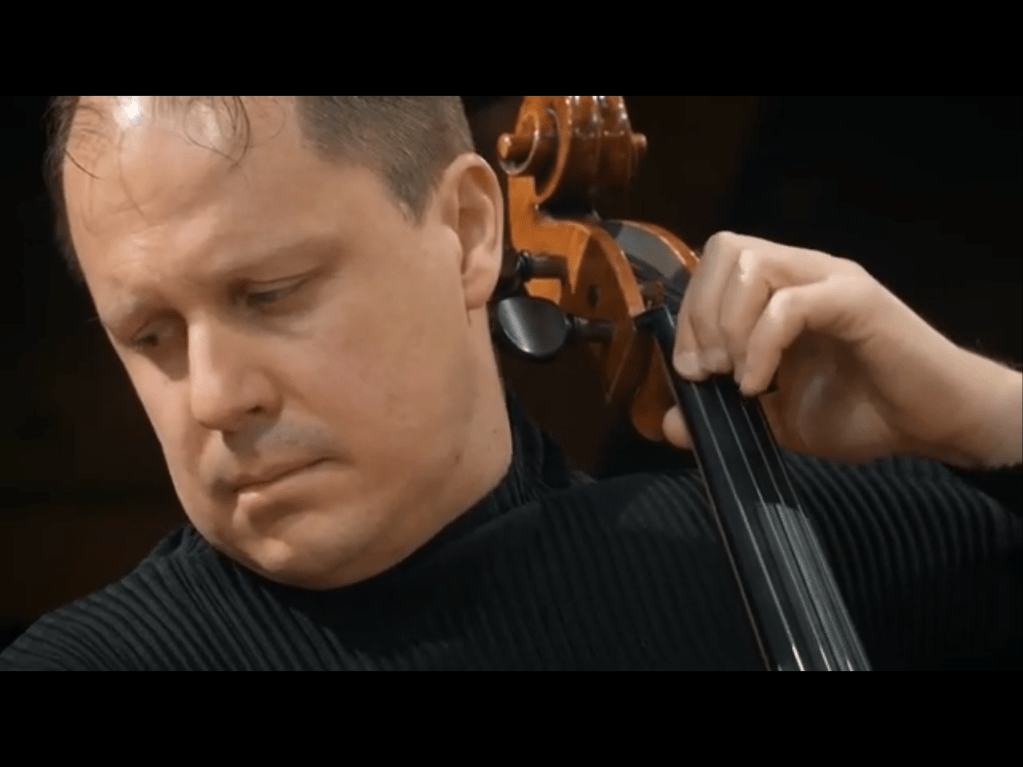
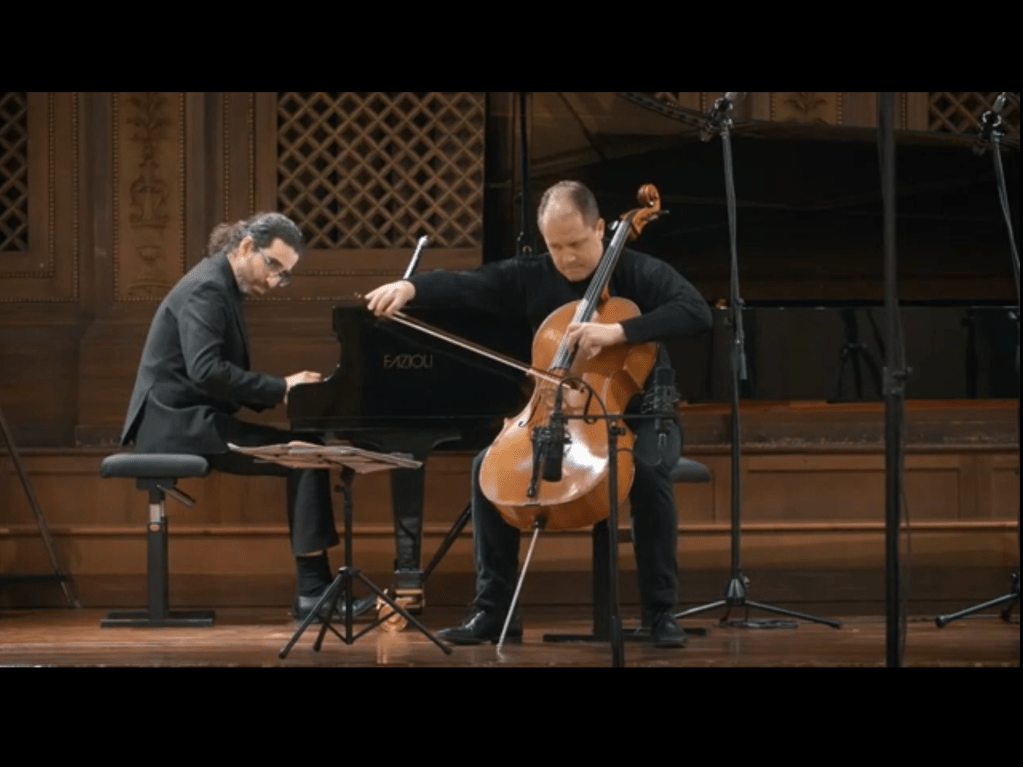
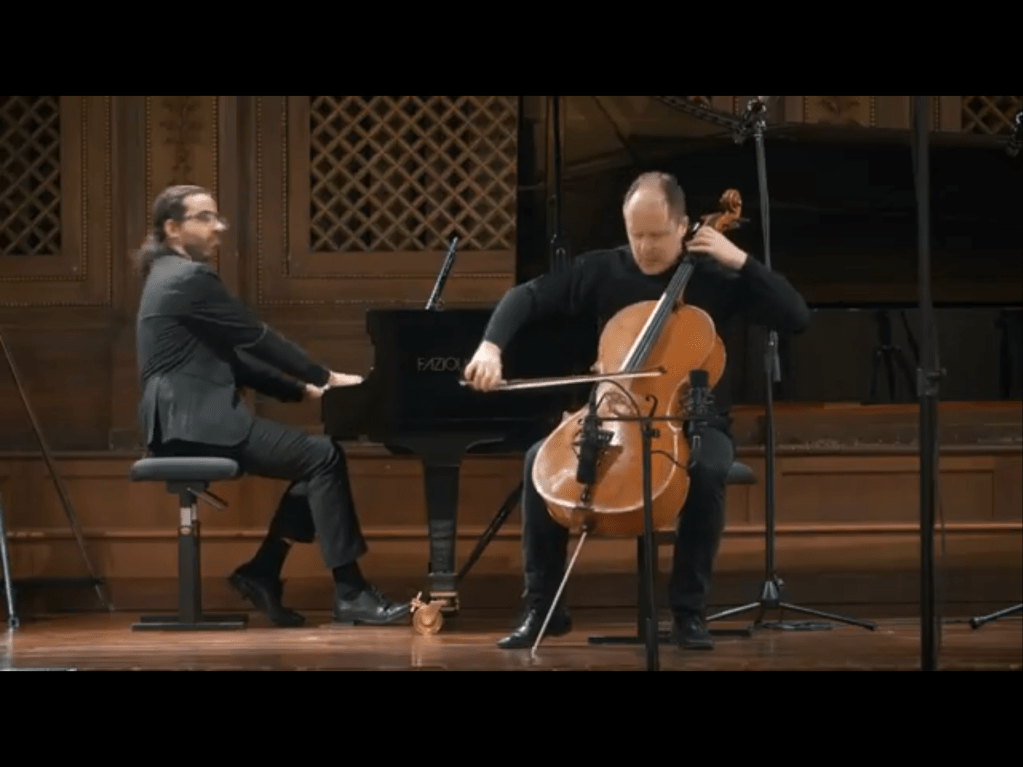
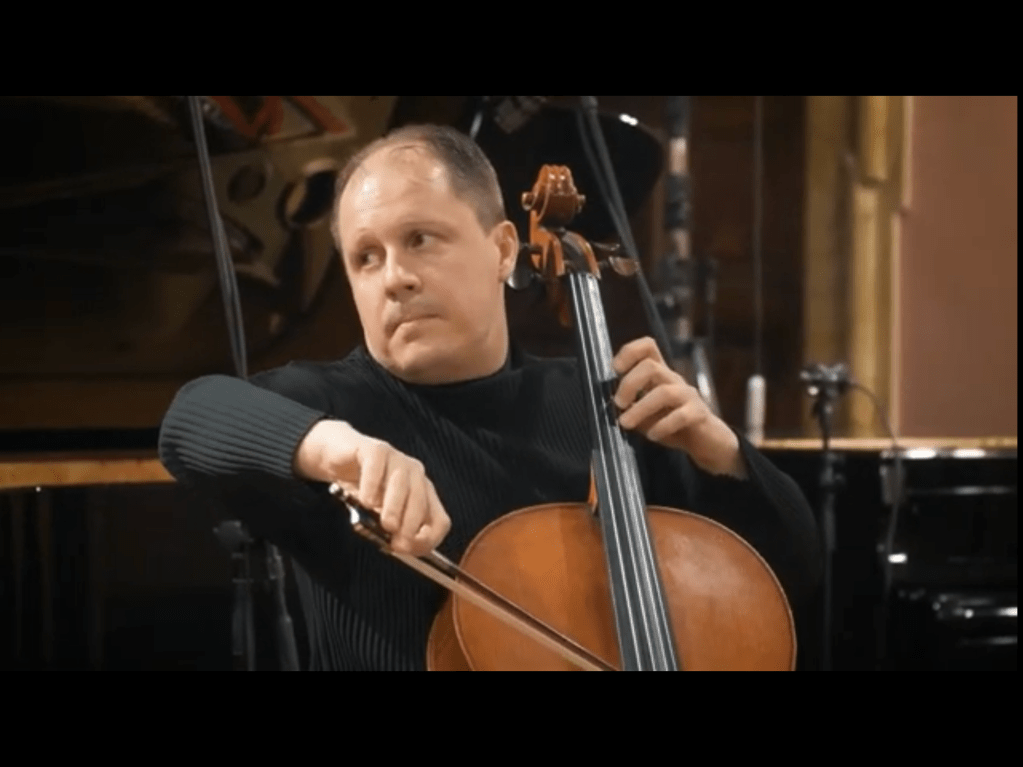
There could be no better title than : Music- Art -Beauty for the recital by Giovanni Gnocchi with Alessandro Stella streamed live from Rome. A series of short encore pieces played with a subtle sense of style and mastery.
It revealed to the full the artistry of these two artists as the sounds entwined to make a sumptuous bouquet of delicacies that were so enticing that after almost an hour one was longing to hear even more.A fascinating dialogue between these two artists that have been playing together for many years.The cellist even sharing the open lid of the beautiful Fazioli piano allowing the sounds to mingle and be projected together in a unified whole.
The very subtle rubato of Schubert’s Litanei where Giovanni’s ornaments were so miraculously woven into the melodic line of one of Schubert’s most profound utterings.The Spanish Dance by Popper broke the spell with an abandon full of fantasy and passion ,the very subtle ornamentation played with a fleeting lightness.The sotto voce Rachmaninov Lied was played with an intense deeply felt yearning for his beloved homeland.The Dvorak Waldesruhe where the dialogue between the piano and cello was of a searing intensity.
The Romance by Fauré immediately opened up the unique world of long drawn out seamless lines played with great strength and eloquence.Breathtaking dexterity of the Papillon as it spun its way with fleeting lightness with subtle beauty in the mellifluous central section.Mendelssohn’s song with out words took us to a Victorian world with irresistible nostalgia.The beautifully poised melodic line and passionate climax just reaching back to the memory of things passed.Tchaikowsky’s Nocturne and Andante cantabile were played with heartfelt eloquence of such nobility.The beautiful ending of the Andante where the strident piano chords were the base on which floated the magic melody of the cello.
Salut d’Amour by Elgar took us once again into the salons of another era with an aching nostalgia for what was at the time Elgar’s most popular piece.Played with consummate artistry and beauty by these two superb musicians .What better way to finish than with a rousing piece by Rossini .The beautiful bel canto melody of ‘Une Larme’ transformed in a series of astonishing variations designed to captivate the attention with excitement,virtuosity and ravishing beauty.
What is a piano study? It can be the mastery of an action through repetition; it can be a thorough investigation of a musical object; it can be a musical sketch centered around one central idea. Études are an endless source of fascination, inviting composers and pianists alike to push both physical and musical possibilities, while offering a listening experience that ranges from the ethereal to the virtuosic. Debussy’s and Rachmaninoff’s Études explore the vast range of color and expression a piano has to offer, while two pianist-composers (Rachmaninoff and myself) discover new possibilities through piano transcriptions on solo violin works by J. S. Bach.’
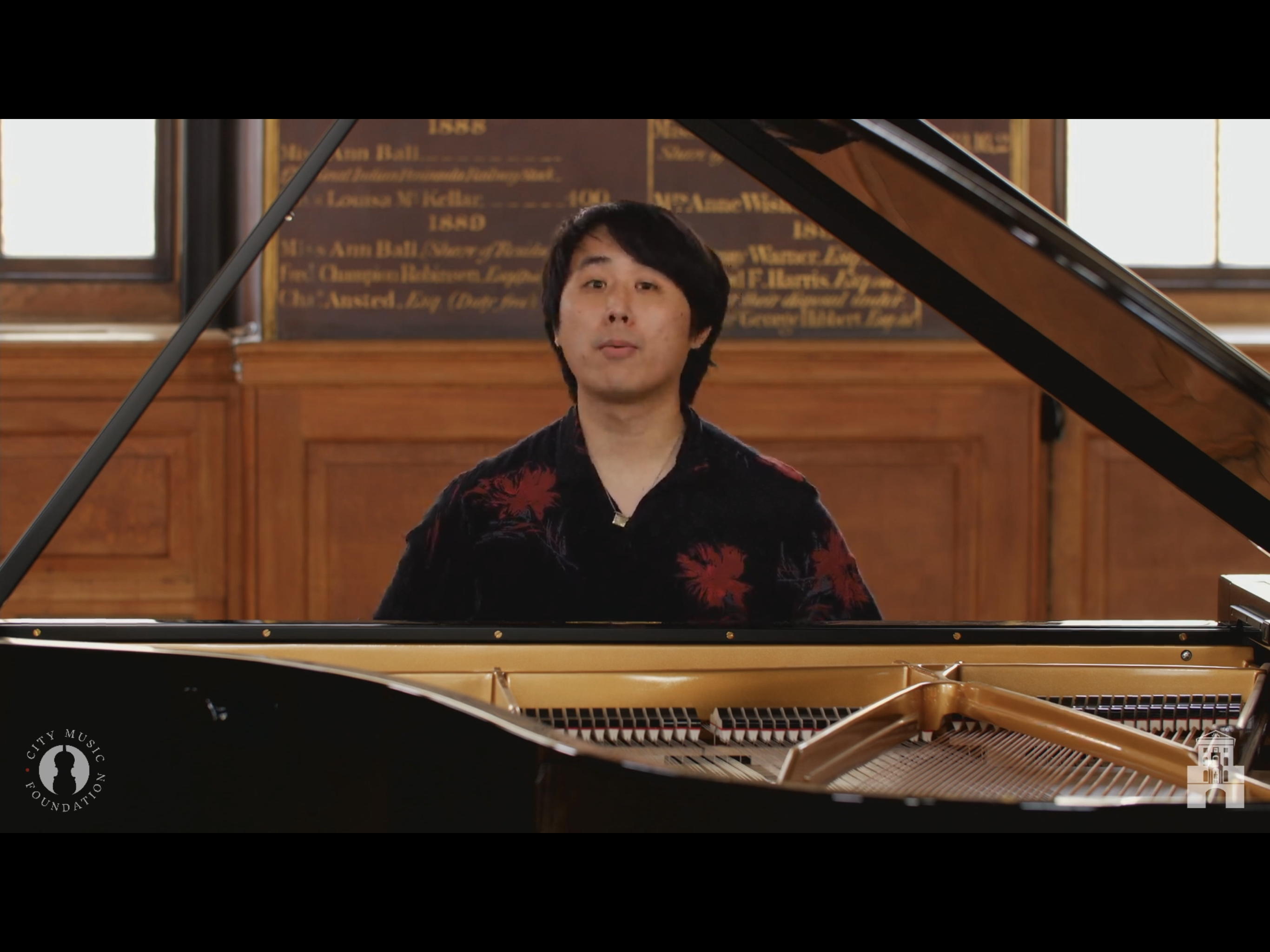
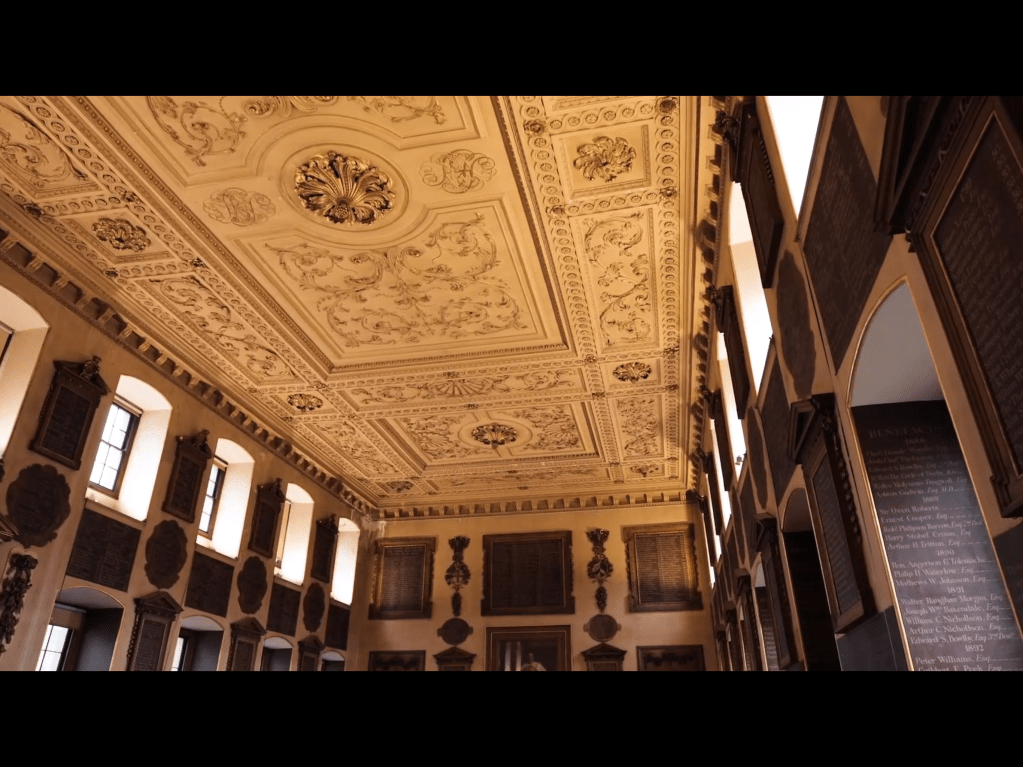
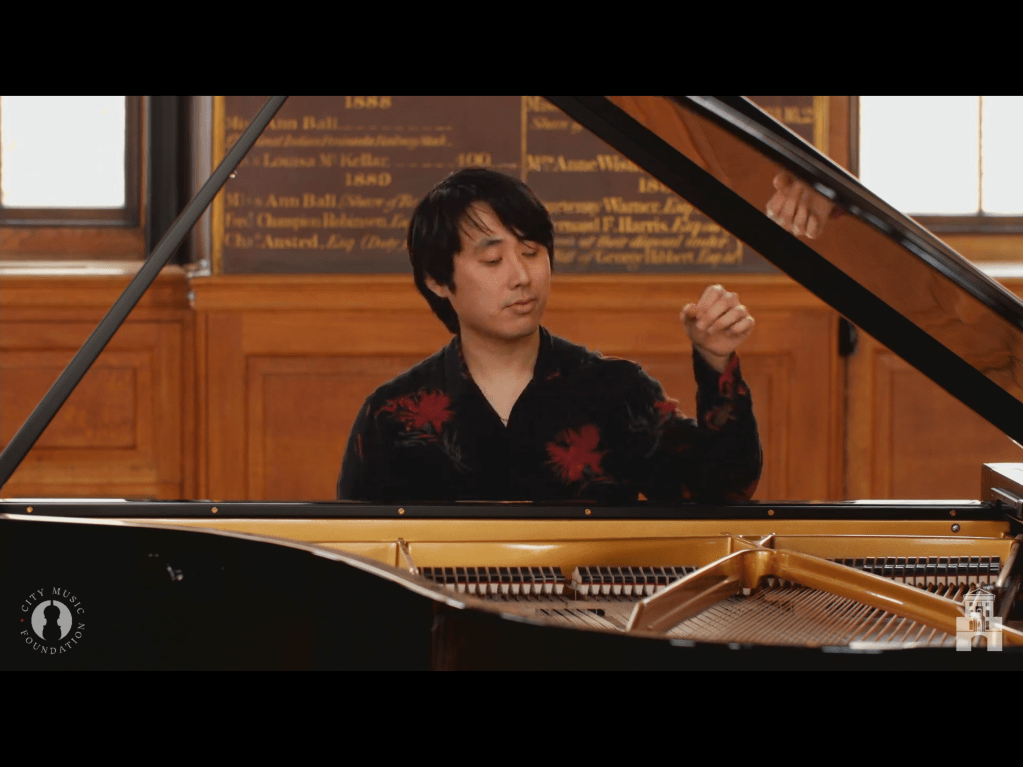
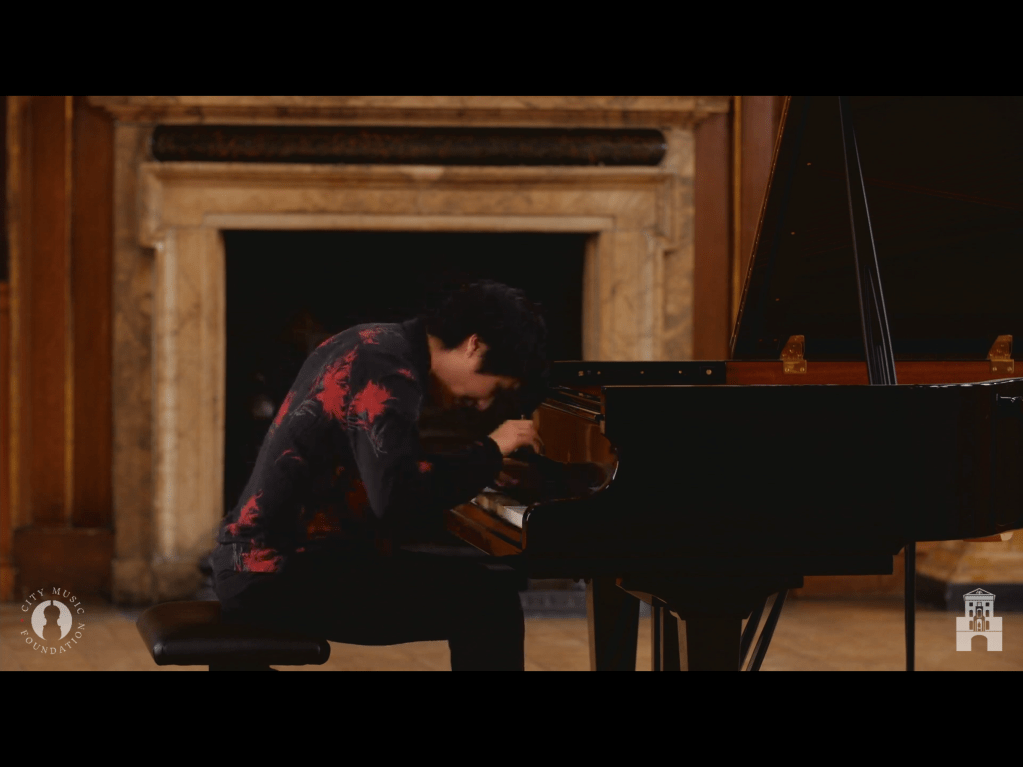
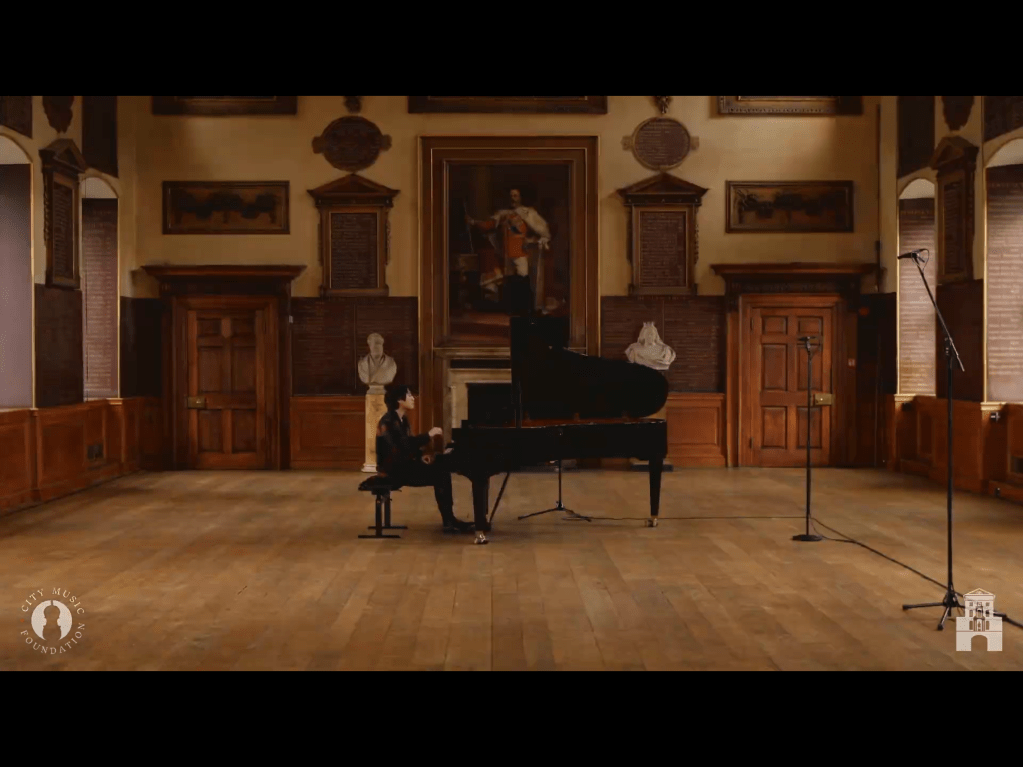
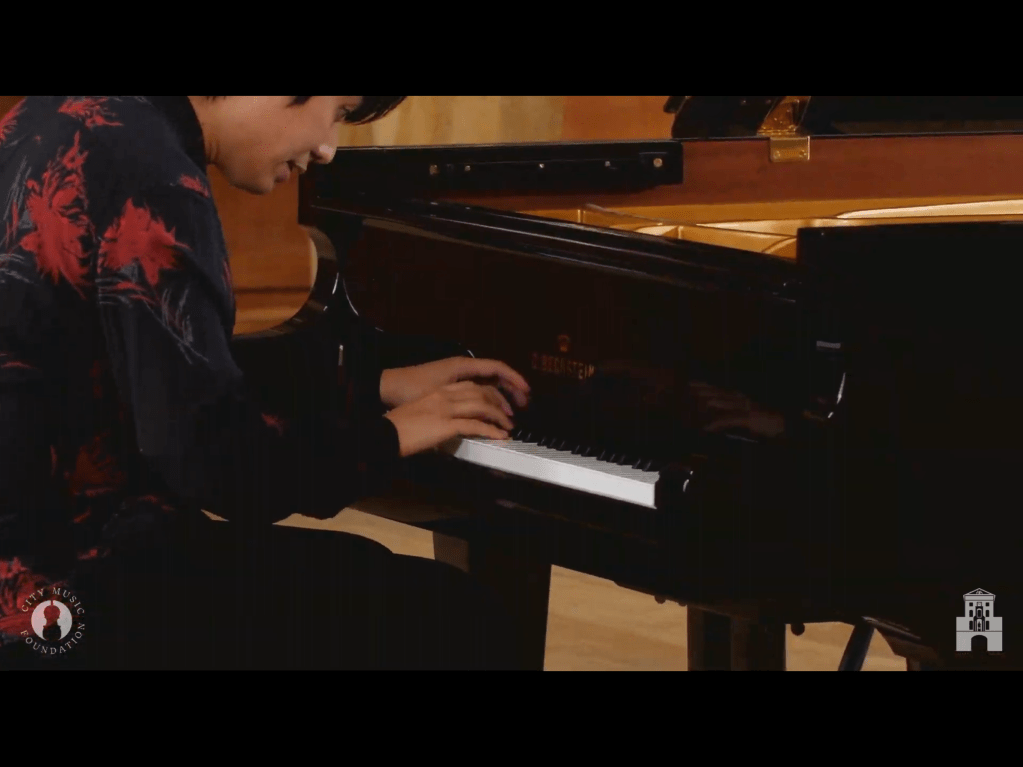
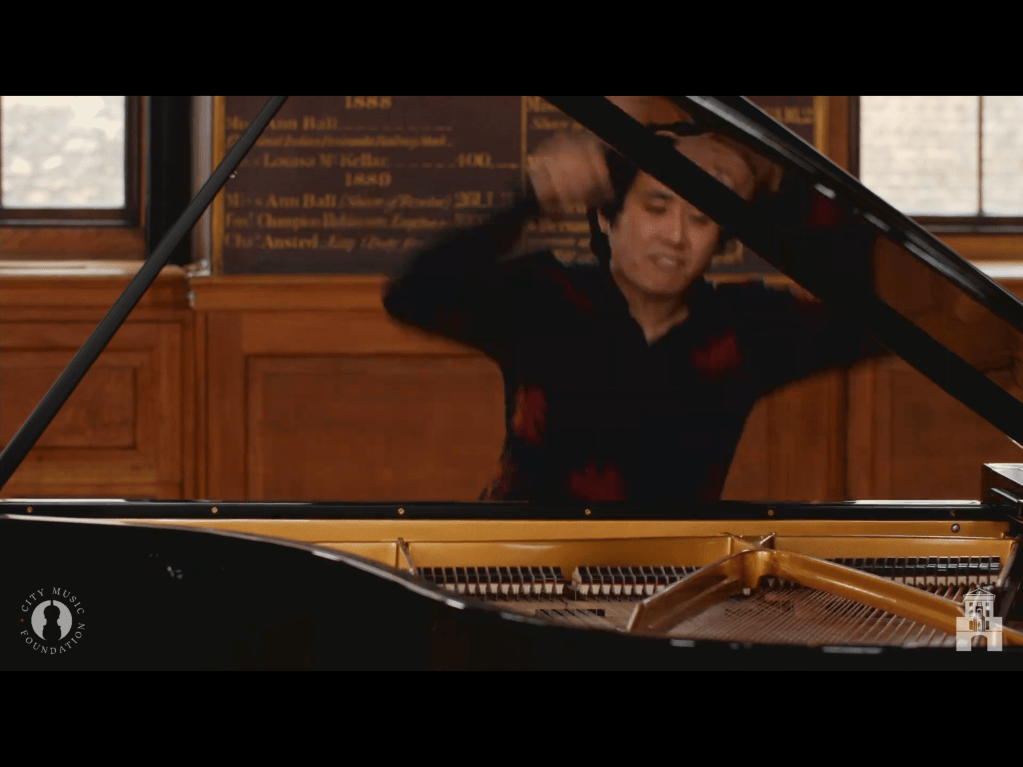
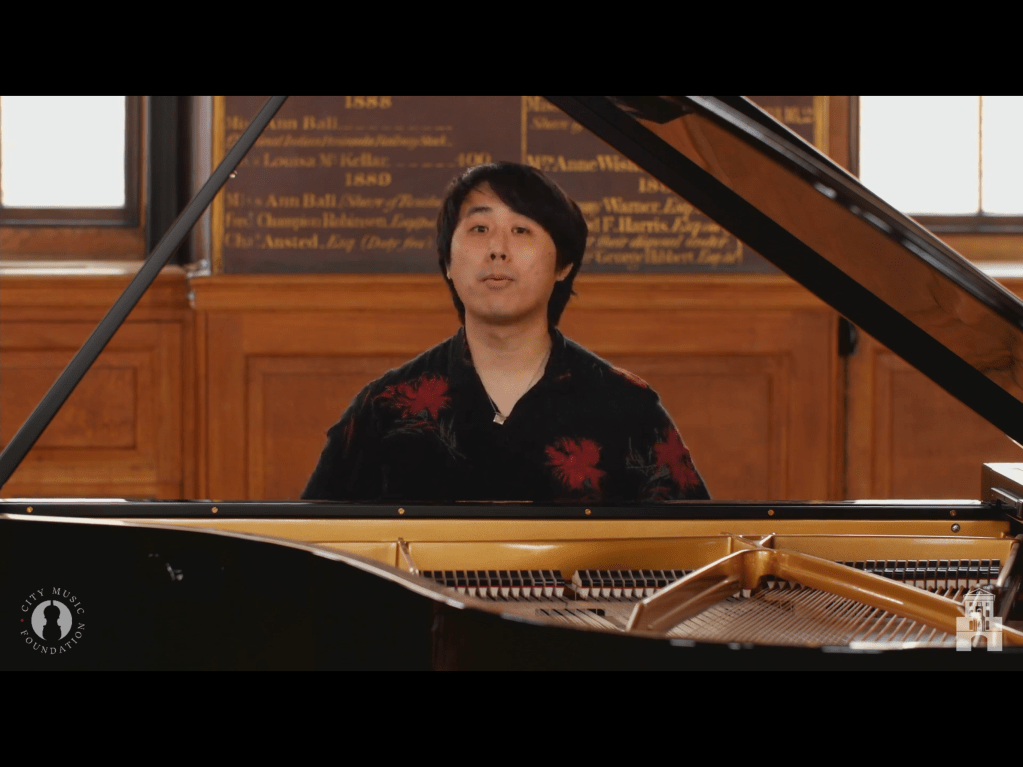
In the beauty of the historic great hall of St Bart’s a young Harvard economics graduate appeared from a small door dressed in a multi coloured shirt and sat at the Bechstein grand where from the very first notes he showed us just what it means to have been chosen to be promoted by the City Music Foundation.A five finger exercise that we have all had to suffer in our early piano lessons from the endless books of Czerny studies.But then the music seemed to break up and was not familiar at all.Notes flying by with busy but fascinating shapes that somehow the rather stale boring studies of Czerny were given a new life.A fantasy of sounds and colours building to a great climax and the final scales over the whole span of the keyboard brought to a conclusion with three final chords.
In a charmingly relaxed way this Chinese American pianist a graduate also of Curtis in Philadelphia and the RAM in London explained that this had been the first of Debussy’s studies and that he was going to play another six dedicated to thirds,sixths,octaves ,arpeggios,chords and differing harmonies.The 12 Etudes by Debussy were written just three years before his death and Debussy described them as “a warning to pianists not to take up the musical profession unless they have remarkable hands”.They are considered his late masterpieces and are in many ways more obscure than his earlier more mellifluous works because they look always to the future.
They may be studies in thirds,fourths,sixths octaves etc but they also explore the sounds and colours of the piano too.Debussy was at the time editing the works of Chopin for Durand as the German editions were no longer available in France and he was evidently inspired by the studies that Chopin had written almost a century earlier.The studies are dedicated to the memory of Chopin.In the preface Debussy states that he has purposefully not added any fingerings :’It an an excellent exercise and there will be no disagreement as one can never be better served than by oneself.’Find your own fingering are his final words.
We need not have worried with George Fu who showed a total mastery not only of the extraordinary technical challenges but also the intellectual one’s of joining all the pieces of this great jigsaw together into a coherent whole .The hidden difficulties of ‘Pour Les tierces’ were beautifully disguised and led to the simplicity of the opening of the sixths with its subtle modulations before dissolving to the final almost inaudible bass note.’Pour Les octaves’was played with astonishing bravura with the robust opening giving way to insistent murmurings before the Lisztian explosion of virtuosity with which it triumphs.’Pour Les sonorities opposées’was hauntingly beautiful as George delved into this magic world with the final whispered notes allowed to reverberate in this beautifully resonant Great Hall.’Pour Les arpèges composés’had a beautiful fluidity to it contrasting with the dry almost tongue in cheek central section and leading to the absolute calm sonorities of the ending.’Pour Les accords’ was played with remarkable brilliance which melted into the deeply atmospheric central section before taking up arms again and bringing this first part of his recital to a tumultuous end.
Explaining how greedy pianist were ,wanting to loot pieces from other instrumental repertoire and adding to an original work creating a new work for their own instrument.To demonstrate this he played Rachmaninoff’s own transcription of the Gavotte from the violin partita in E.Playing it with great charm and clarity and with a glint in his eye as he revelled in the pure Rachmaninoff harmonies that accompany Bach’s original melody.It was the same fun that he had with his own ‘transformation’ of the Gigue from the 2nd Violin Partita.It revealed a completely different sound world with its opening left hand octaves and some startling virtuosity every so often allowing Bach a peek into the fun that he was having throwing the end off with the ease of the great pianists of a past era.
Three Etudes Tableaux by Rachmaninoff were played with sumptuous sounds with the passionate outpourings of the fifth and the haunting beauty of the eighth before the grandiose driving rhythms of the ninth.Played with astonishing virtuosity and total command it brought this short streamed recital to a trumphant conclusion.
Passionate about the creation of new work, George is an active composer and performer of both traditional and contemporary music, having collaborated with eminent composers such as Krzysztof Penderecki, Harrison Birtwistle, Tansy Davies, Philip Cashian, George Lewis, Unsuk Chin, Matthew Aucoin, and Freya Waley-Cohen.
Described by the Boston Music Intelligencer as a “heroic piano soloist” with “stunning virtuosity”, Chinese-American pianist George Xiaoyuan Fu is establishing a reputation as a captivating, versatile performer with distinctive intelligence and sensitivity. George has performed as a piano soloist with orchestras such as the National Symphony Orchestra, Baltimore Symphony Orchestra, North Carolina Symphony, Tanglewood Music Center Orchestra, and the Curtis Symphony Orchestra, and collaborated with conductors such as Michael Tilson Thomas, Stefan Asbury, Kensho Watanabe, Vinay Parameswaran, and Jonathan Berman. He has appeared at international venues such as the Kennedy Center, Carnegie Hall, Wigmore Hall, and Seiji Ozawa Hall at Tanglewood, while his live performances and interviews have been featured on several public television and radio broadcasts around the world, such as In Tune on BBC Radio 3, Performance Today on National Public Radio, and On Stage At Curtis in Philadelphia. George continues a busy performance schedule in 2021. After being selected as a Kirckman Music Society Artist, George makes an important solo recital appearance at Kings Place in London and a debut at the Presteigne Festival in Wales. After a successful tour of Latin America with violist Roberto Díaz, George will perform in two tours of Europe led by Curtis On Tour in a trio with violinist Andrea Obiso and cellist Timotheos Petrin. Interested in collaborative work, George is a conductor, an active chamber musician with duo partners and ensembles around the world, and collaborator with artists of many disciplines. After receiving a bachelors in economics from Harvard University, George studied at the Curtis Institute of Music under Jonathan Biss and Meng-Chieh Liu, and then at the Royal Academy of Music under Christopher Elton and Joanna MacGregor. He has also worked intensively with Pierre-Laurent Aimard, specifically on the music of Messiaen and Debussy. George is currently the Hodgson Piano Fellow of the Royal Academy of Music.
Schubert/Liszt: 2 Song transcriptions -Auf dem Wasser zu singen -Gretchen am Spinnrade
Scriabin: Etude Op 8 no 9
Some beautifully controlled playing of Schubert from the stylish Valses nobles to the simplicity and innocence of the ‘little ‘ Sonata in A .The brooding mystery of the late Impromptu was answered by Liszt’s magical transcriptions of two of his most mellifluous songs.A virtuoso performance of Scriabin brought the recital by a true musician to a sumptuous conclusion. Such delicacy and beauty only underlined the tragedy that his home city of Aleppo has endured for too long.
There was a great sense of style to the beautifully shaped Schubert waltzes.A perfect balance between the hands that allowed the melodic line to be so sensitively shaped with colours that really brought these charming pieces vividly to life.Some very rhythmic contrasts too but always in perfect style with the irresistible lilt that is so much part of the Viennese charm.There was a very refined sense of phrasing in the Sonata in A that allowed the music to sing so naturally with a controlled eloquence that was so compelling.The Andante flowed so mellifluously and must be one of Schubert’s most touchingly beautiful creations.The duet between the voices was full of magical colours but always with a rich sound that was never sentimental.The Allegro had a playful innocence that brought this most sunny of Schubert’s sonatas to a charming end.
The imperious opening of the late F minor Impromptu broke the spell as the simple innocence of the Sonata takes on the profound significance of the last works of Schubert’s all too short life.The transition to the beautiful middle section was very moving as the dialogue between the bass and treble became ever more entwined.The flowing accompaniment was the same on which Gretchen was to spin her magic wheel and the water to flow so gently in Liszt’s transcriptions.There was passion too but always within this sound world of pure luxurious velvet that seemed to flow so naturally from Riyad’s hands.The passionate outpouring of sounds in the Scriabin study just showed the true mastery that we had witnessed all afternoon.It is very refreshing to know that Riyad is using his great artistry to help promote peace and awareness of the tragedy that has befallen the Syrian people for too long.
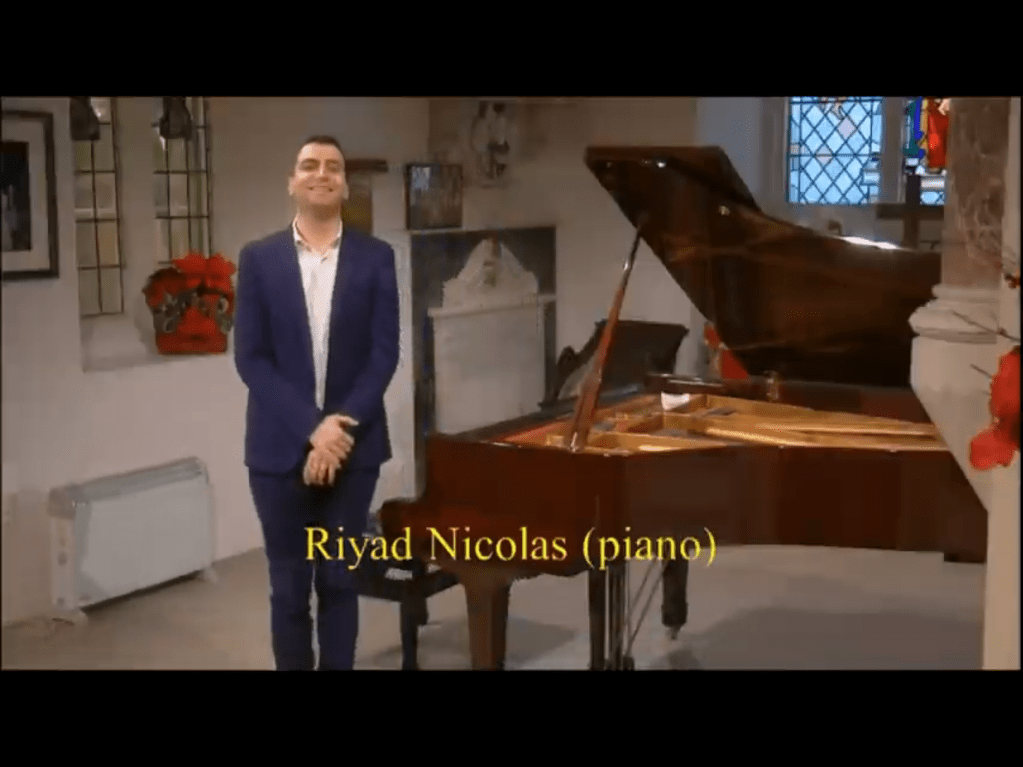
Riyad Nicolas Syrian British Pianist, was born in Aleppo, Syria, in 1989, and has already established himself as a leading figure of his generation on the international performing circuit. He has given solo recitals in many prestigious venues at the UK, including Royal Albert Hall, Cadogan Hall, Wigmore Hall, Barbican, St. Martin-in-the-Fields, St. James’s Piccadilly, and Leighton House in London, and Bridgwater Hall and Staller Hall in Manchester. Concert performances have also taken him to USA including a debut at the Kennedy Center in Washington and Chicago Cultural Center(Dame Myra Hess series), Yehudi Menuhin Forum in Switzerland and other performing venues in France, Spain, Germany, Holland, Malta, the Gulf, Lebanon and Syria. In the UK, Riyad is regularly invited to give recitals hosted by the Beethoven Piano Society of Europe and the Chopin Society UK, and performed extensively a solo pianist for over 80 music societies in the UK. He has also been invited to performing numerous UK musical festivals such as Harrogate, Norfolk-Norwich, King’s Lynn, Brighton, Devon, Darlington, Stratford-upon-Avon, Lincoln, Crediton, and Eastbourne. Riyad has been selected to be a Tillett Trust Young Artist and an artist at the Countess of Munster Trust Concert Scheme in the UK. He has also won numerous international prizes and awards including First Prize with a recording contract at the Francaix International Piano Competition in Paris, the first Prize at the Ference Liszt International Piano Competition, and the first prize at the Norah Sande Award and the Christopher Duke Recital Prize in the UK. He also won Second Prize at the Seiler International Piano Competition in Greece and the Ciutat de Carlet International Piano Competition in Spain, Educational Award Prize at The London International Piano competition and was a finalist at the Busoni International Piano Competition in Italy. Riyad first came to London in 2005 when he was awarded a two-year scholarship to study at the Purcell School of Music with Sulamita Aronovsky, continuing to work with her at the Royal Academy of Music, where he graduated in 2011. In June 2015, Riyad graduated with a distinction in a Master of Performance course at the Royal College of Music, studying with Dmitri Alexeev and Vanessa Latarche, when he won the Gold Medal at the prestigious Chappell Piano Competition.Riyad also teaches piano at the Junior Department of Guildhall School of Music, Dartford Grammar School and Woodford Green School. Through music Riyad has been promoting peace and raising awareness for the plights of the Syrian people and performing for many organizations such as UNHCR, the International Rescue Committee, the Arab British Centre, Said and Asfari Foundation.
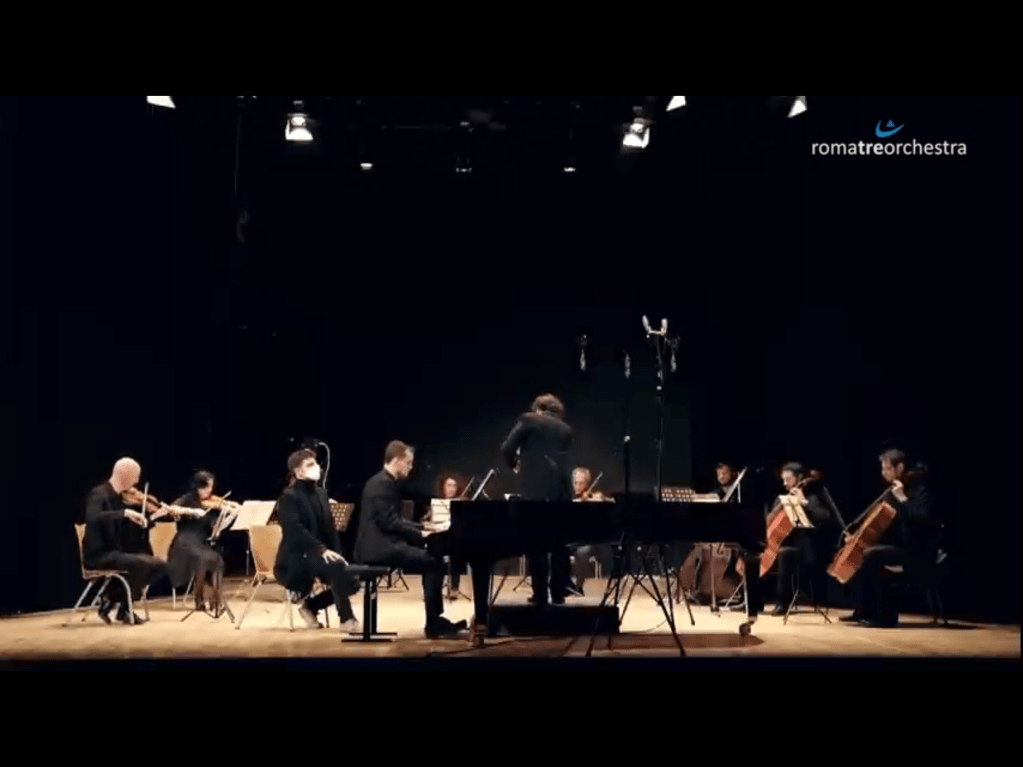
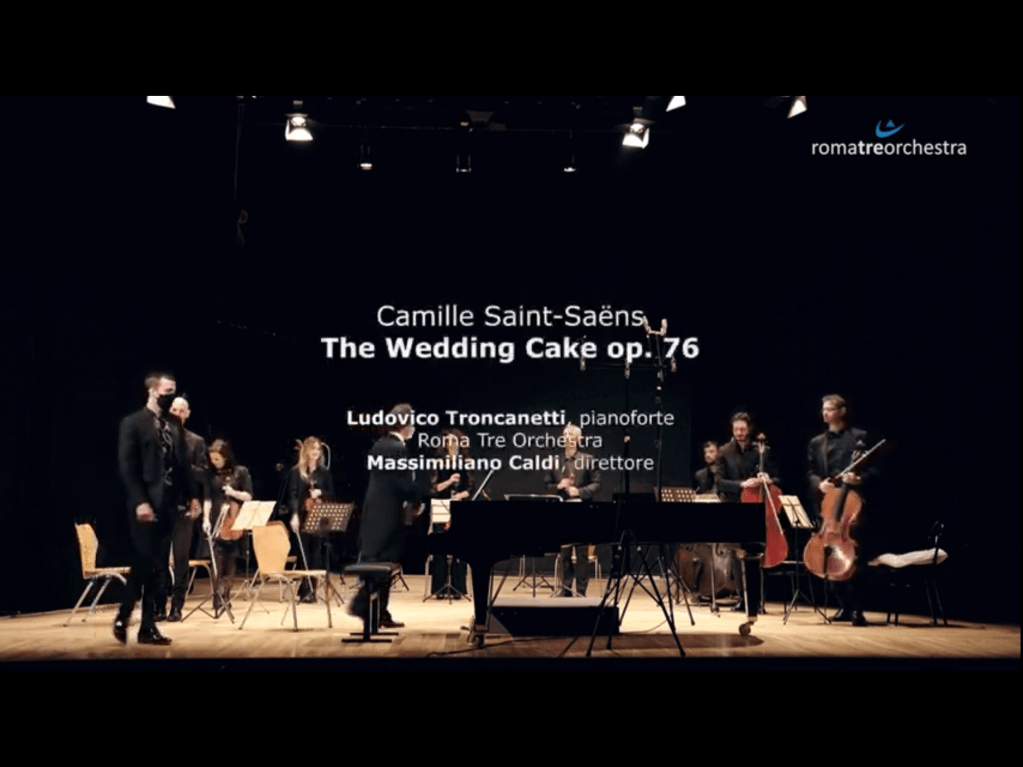
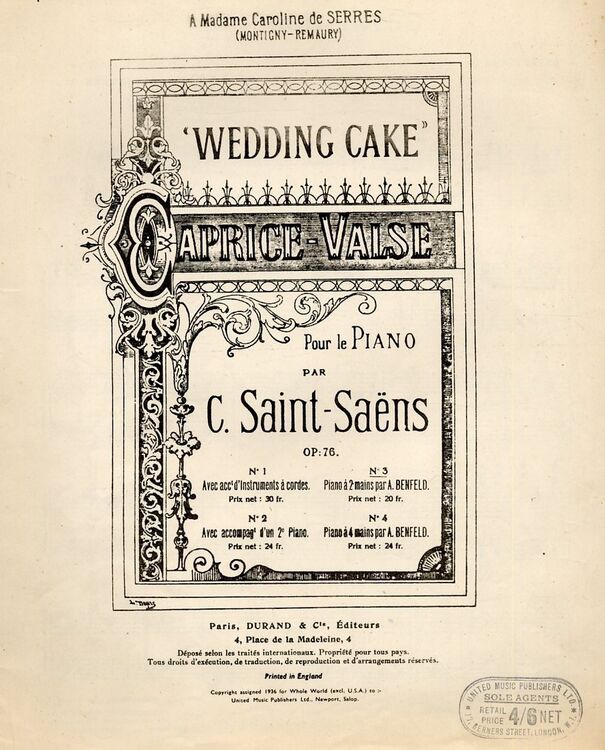
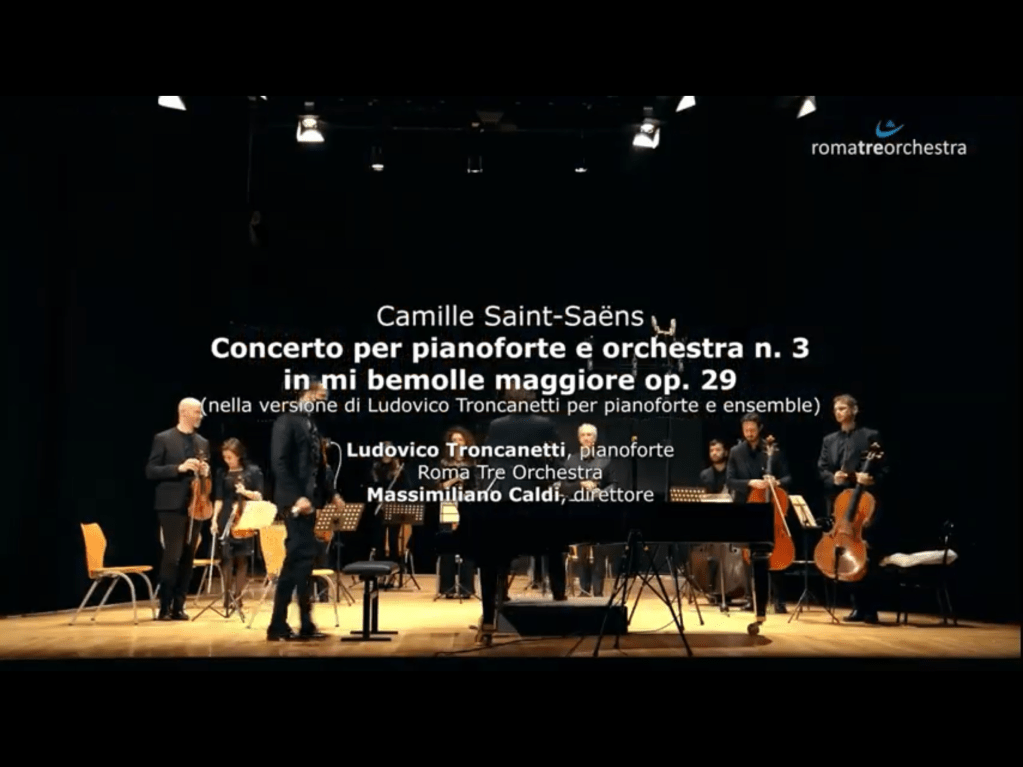
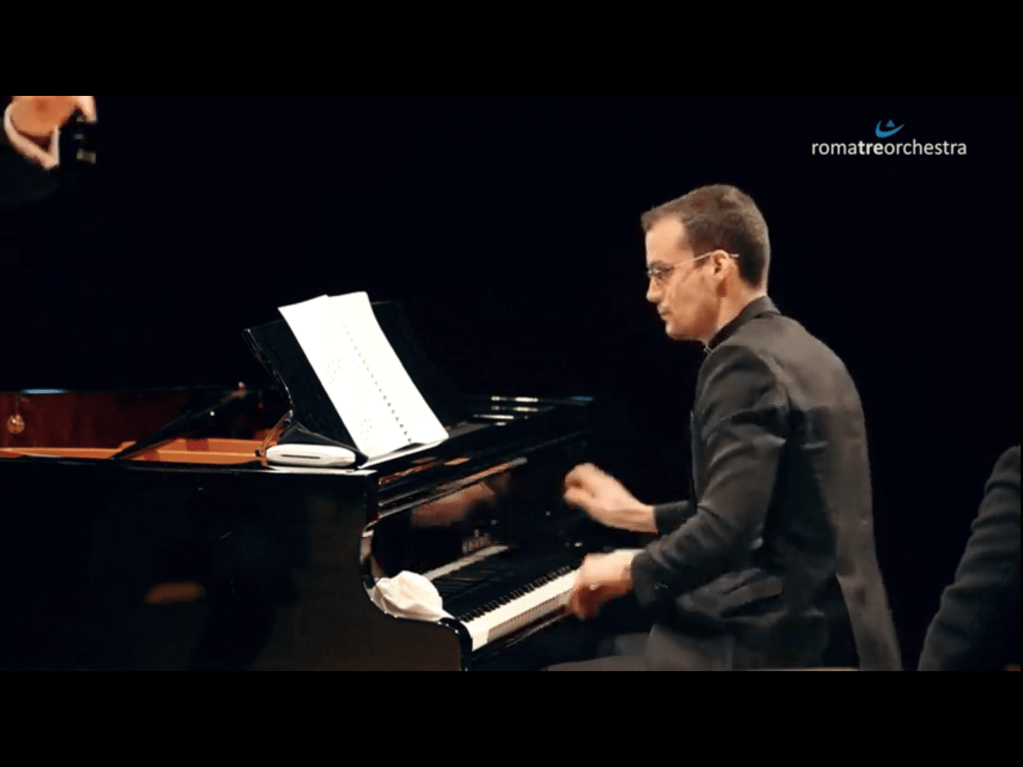
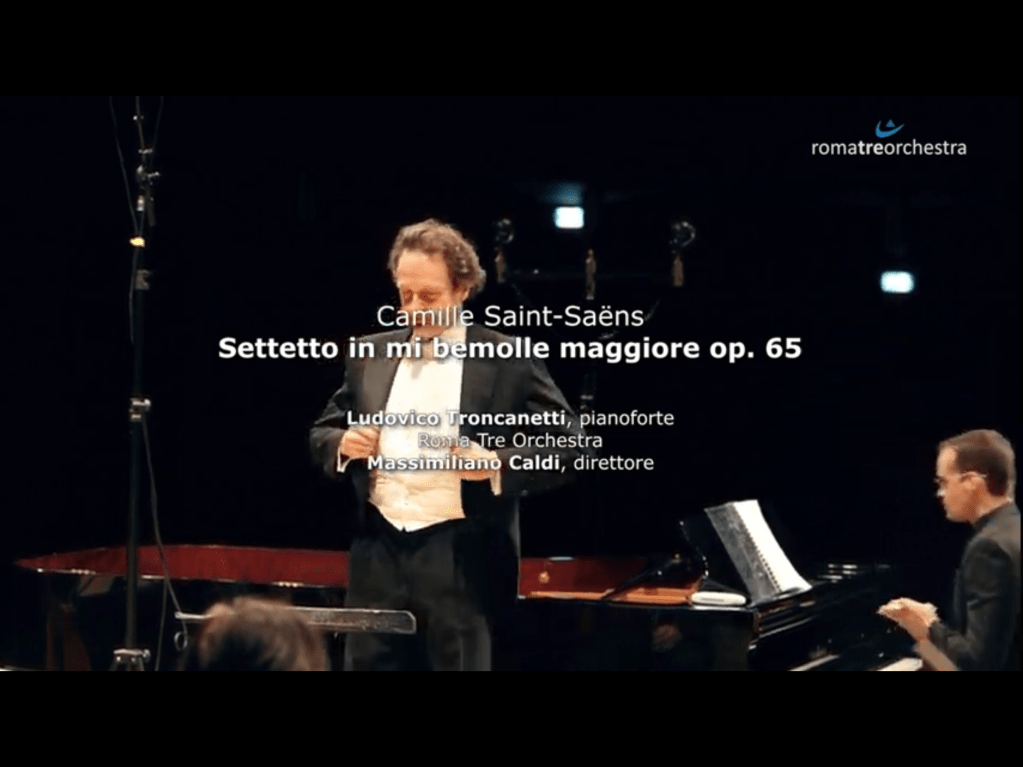
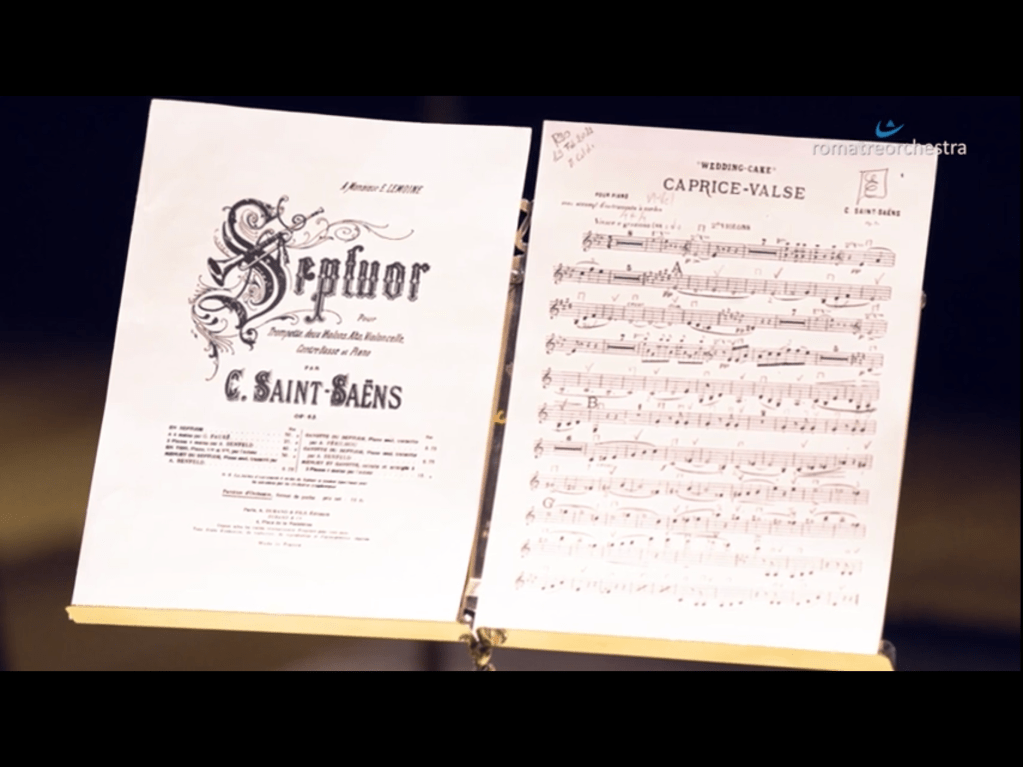
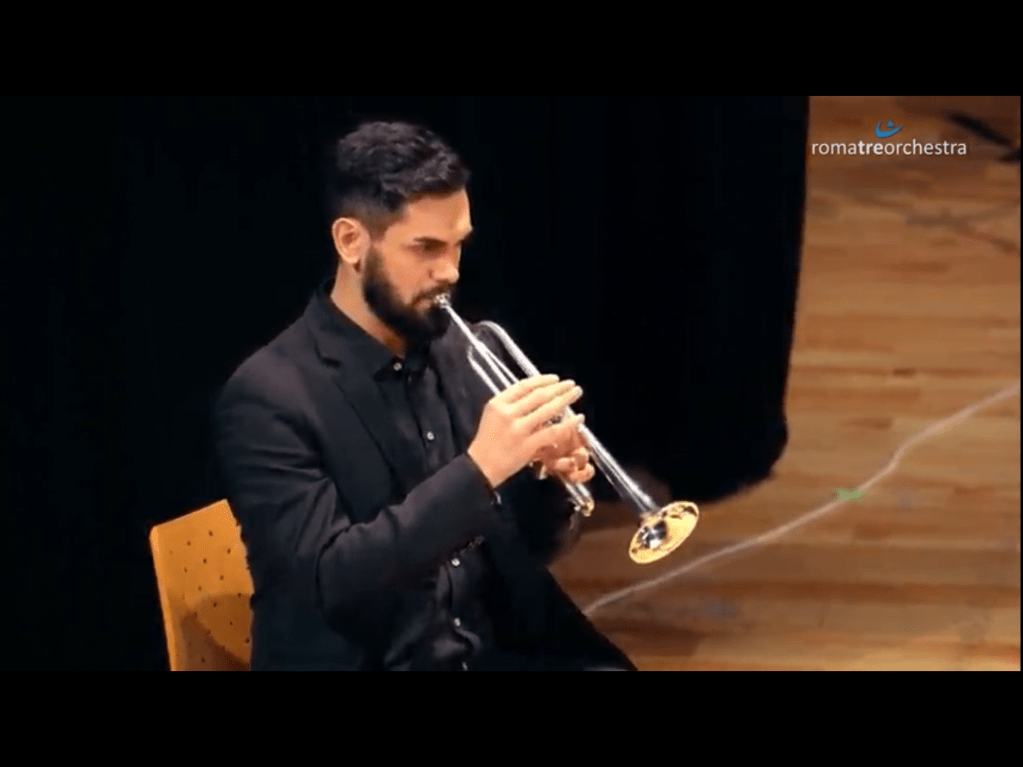
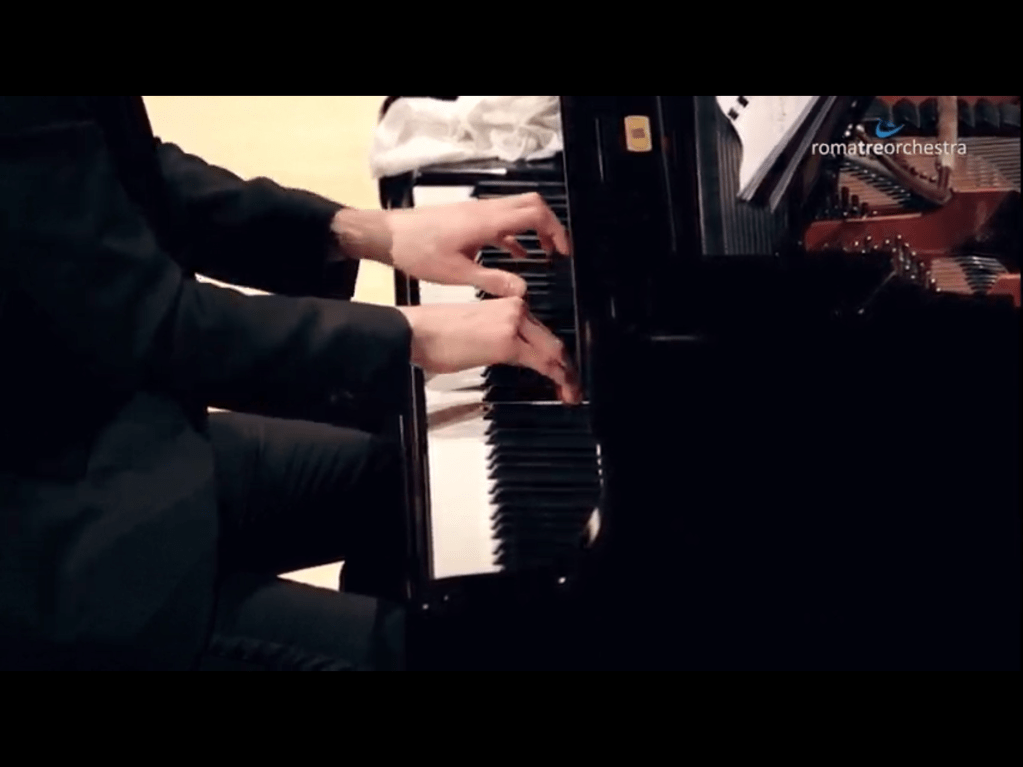
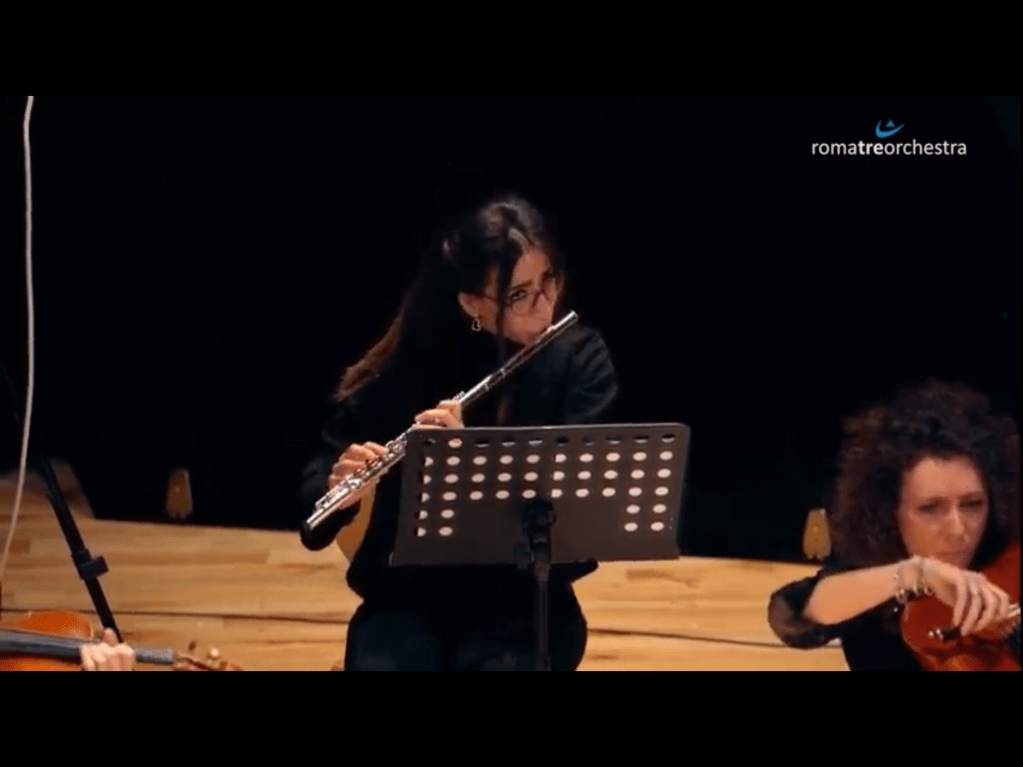
An unusual all Saint Saens programme for the very enterprising Roma 3 Orchestra.The eclectic Sienese pianist Ludovico Troncanetti from the school of Leslie Howard played his own arrangement for chamber orchestra of the 3rd piano concerto dedicated to the illegitimate son of Alkan. The Septet op 65 for an unusual combination of instruments that include a trumpet as it was commissioned by La Trompette music society. The delightful Caprice Waltz op 76 -written for the wedding of a friend of Saint Saens Caroline de Serres and thus known as the Wedding Cake Caprice. All played with the bright clear tones that Saint Saens demands and a serious intent for this very interesting rarely heard repertoire.Lacking maybe the charm ,jeux perlé and nonchalance of the period for which Saint Saens was undisputed master.
The Valse-Caprice, Opus 76, for piano and strings dates from 1886. Its ‘Wedding Cake’ nickname was because it was a wedding present for the composer’s pianist friend Caroline de Serres and is a captivating gem, beautifully written and wholly characteristic of the composer’s art.
The Piano Concerto No. 3 in E-flat major, Op 29 by was composed in 1869 and is in 3 movements. When the concerto was first performed by Saint-Saëns himself at the Leipzig Gewandhaus it was not well received, possibly because of its harmonic experimentation. It was dedicated to Elié -Miriam Delaborde,a pianist who is believed to have been the natural son of Charles – Valentin Alkan.
It is interesting to delve into the life of Delaborde who was generally believed to be the illegitimate son of the composer and pianist Alkan and one of his high-class married pupils.Delaborde was the maiden name of Antoinette, mother of George Sand the author and sometime lover of Alkan’s friend Chopin Some writers have seen some significance in this. Alkan’s withdrawal from public life had also coincided with the birth and upbringing of Delaborde. Alkan and Delaborde also shared several similarities such as their similar skill in playing the pedal piano and both of them being parrot enthusiasts.He was a pupil of Alkan, Liszt,Moschelese, and Henselt.He made successful tours of England, Germany and Russia, and travelled with Vieuxtemps and Wieniawski.During the Franco-Prussian War of 1870, he escaped from France to London with his 121 parrots and cockatoos.He also shared his rooms with two apes, one of which he named Isadora, in honor of his pupil Isidor Philipp.In 1873 he was appointed professor at the Paris Conservatoire, where his pupils included Olga Samaroff (Hilda Hickenluper)one-time wife of Leopold Stokowski (Leonard Stokes)Delaborde was a fencer, a passionate athlete, a bon vivant and a ladies’ man. He also painted under the pseudonym “Miriam”, and was a close friend of Manet and Bizet and his wife and may have been indirectly responsible for Bizet’s death, which followed a swimming competition between the two, as a result of which Bizet caught a chill.After Bizet’s death, Delaborde formed an alliance with Bizet’s wife Geneviève and it is thought that Delaborde and Geneviève were having an affair even before Bizet’s death.The two had signed a marriage contract in August of 1876, but they never actually got married.
The septet is dedicated to Emile Lemoine, a mathematician and amateur trumpet player who in 1867 founded a chamber music society called La Trompette. Saint-Saëns and other well known musicians would often perform at the concerts of the society.For many years, Lemoine had asked Saint-Saëns to compose a special piece with the trumpet to justify the name of the society, and in 1879 presented to Lemoine a piece titled Préambule as a Christmas present, later promising to complete the work with the Préambule as the first movement.The complete septet was successfully premiered on 28 December 1880. The string quartet was doubled at the premiere – in Saint-Saëns’ opinion, it made a stronger impact that way. The work was first published in March 1881
In its obituary notice, The Times commented:
The death of M. Saint-Saëns not only deprives France of one of her most distinguished composers; it removes from the world the last representative of the great movements in music which were typical of the 19th century. He had maintained so vigorous a vitality and kept in such close touch with present-day activities that, though it had become customary to speak of him as the doyen of French composers, it was easy to forget the place he actually took in musical chronology. He was only two years younger than Brahms, was five years older than Tchaikovsky, six years older than Dvorak and seven years older than Sullivan. He held a position in his own country’s music certain aspects of which may be fitly compared with each of those masters in their own spheres.
In a short poem, “Mea culpa”, published in 1890 Saint-Saëns accused himself of lack of decadence, “His sympathies are with the young in their desire to push forward, because he has not forgotten his own youth when he championed the progressive ideals of the day.”The composer sought a balance between innovation and traditional form. The critic Henry Colles, wrote, a few days after the composer’s death:In his desire to maintain “the perfect equilibrium” we find the limitation of Saint-Saëns’s appeal to the ordinary musical mind. Saint-Saëns rarely, if ever, takes any risks; he never, to use the slang of the moment, “goes off the deep end”. All his greatest contemporaries did. Brahms, Tchaikovsky, and even Franck, were ready to sacrifice everything for the end each wanted to reach, to drown in the attempt to get there if necessary. Saint-Saëns, in preserving his equilibrium, allows his hearers to preserve theirs.
Berlioz made his well-known bon mot about Saint-Saëns, “He knows everything, but lacks inexperience” (“Il sait tout, mais il manque d’inexpérience”)
Lecture: ‘Character is Destiny’ Talent, diversity and hard work in young pianists.
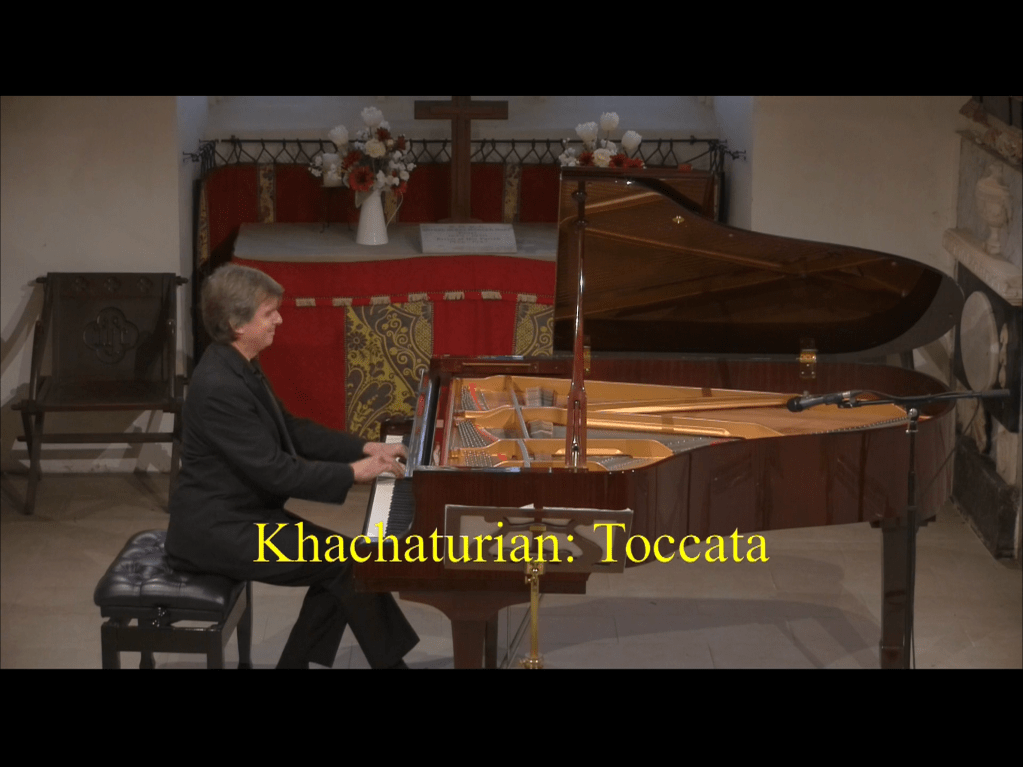
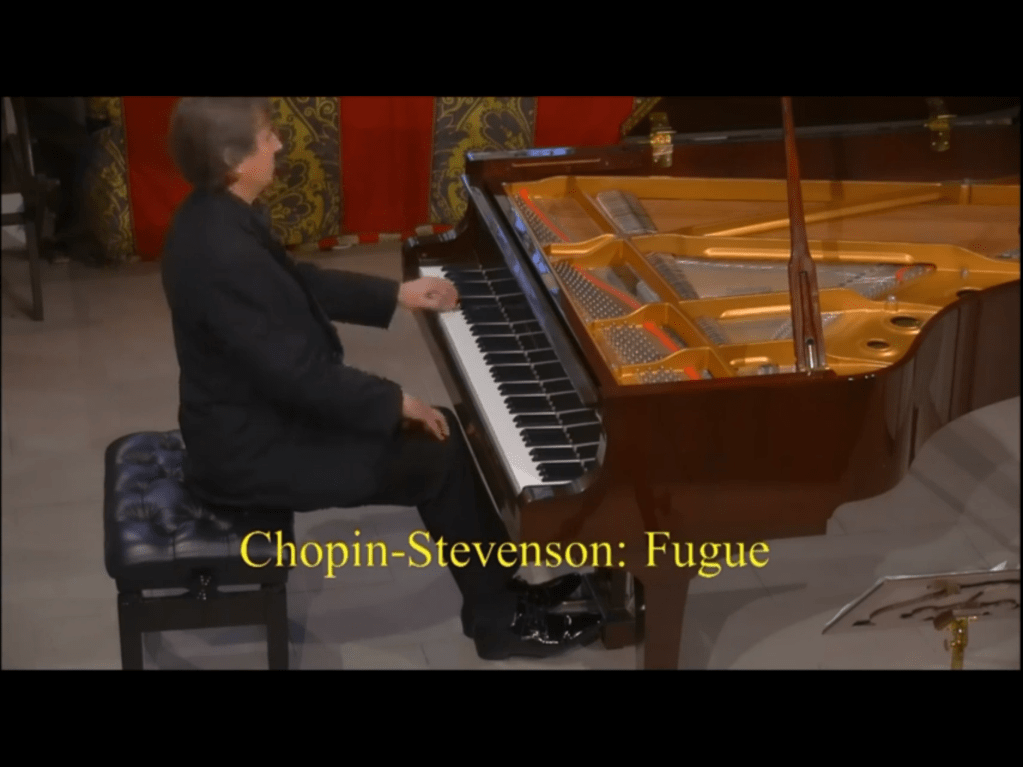
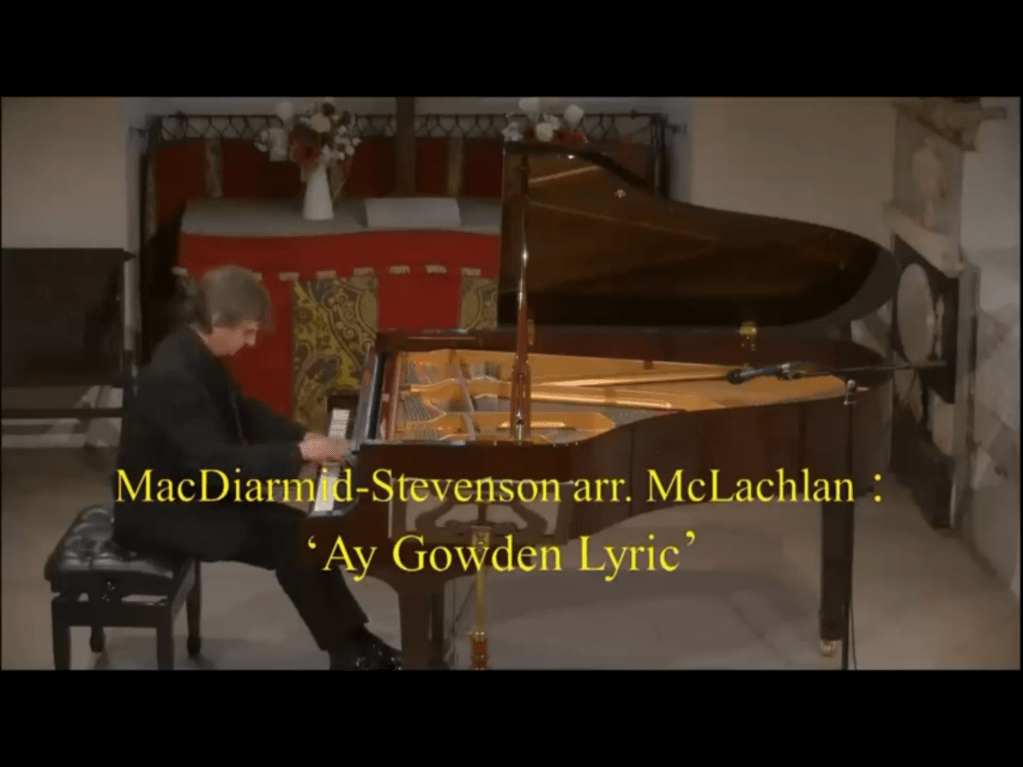
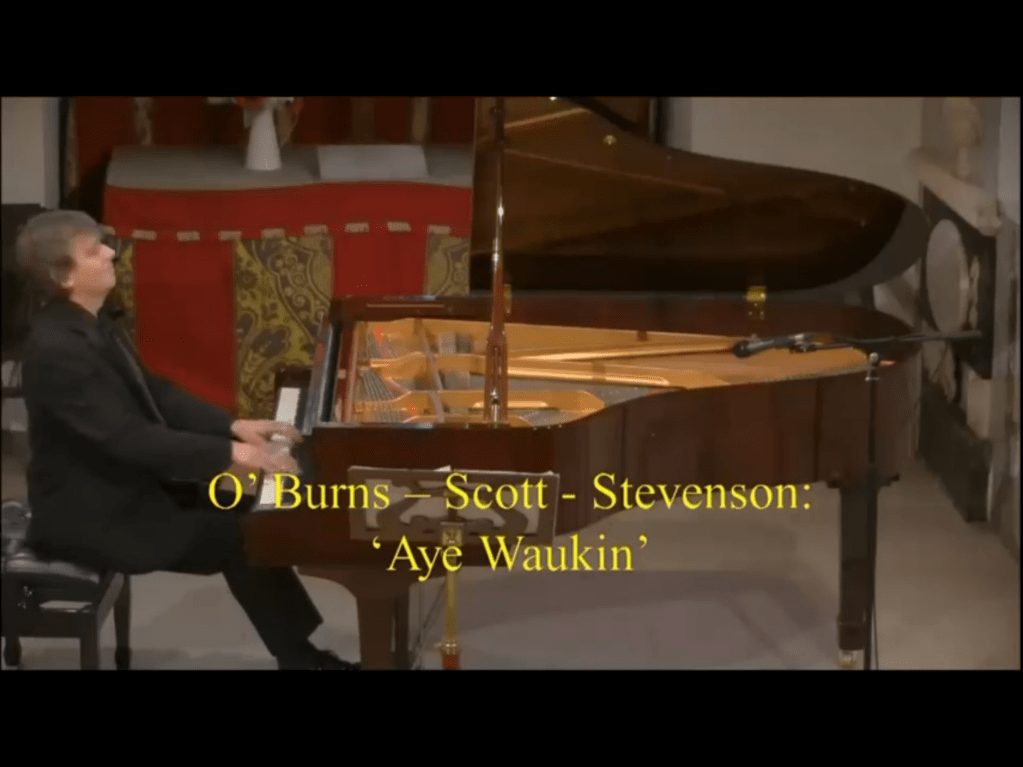
Not only a fascinating talk by Murray McLachlan but some wonderful playing of rarely heard repertoire,much of it Scottish by his mentor Ronald Stevenson ‘ Art is not competitive’Peter Katin told Murray at his first lesson. Think positively – connect with music in a lifetime journey with the joy of discovering and rediscovering over and over again the great message of music. These were some of the gems that Murray shared with us today with his great charm and a genuine warmth and an experience that comes from a lifetime helping some of the most gifted young musicians at Chethams and indeed worldwide .
Since making his professional debut in 1986 at the age of 21 under the baton of Sir Alexander Gibson, Murray McLachlan has consistently received outstanding critical acclaim. Educated at Chetham’s School of Music and Cambridge University, his mentors included Ronald Stevenson, David Hartigan, Ryszard Bakst, Peter Katin and Norma Fisher. His recording career began in 1988 and immediately attracted international attention. Recordings of contemporary music have won numerous accolades, including full star ratings, as well as ‘rosette’ and ‘key recording’ status in the Penguin Guide to CDs, and ‘Disc of the month’ and ‘Record of the month ‘in ‘Music on the Web’ and ‘The Herald’. McLachlan’s discography now includes over forty commercial recordings, including the complete sonatas of Beethoven, Myaskovsky and Prokofiev, the six concertos of Alexander Tcherepnin, the 24 Preludes and Fugues of Rodion Shchedrin, Ronald Stevenson’s ‘Passacaglia on DSCH’ the major works of Kabalevsky, Khatchaturian and the complete solo piano music of Erik Chisholm. Murray McLachlan’s repertoire includes over 40 concertos and 25 recital programmes. He has performed the complete Beethoven piano sonata cycle four times, as well as the complete piano music of Brahms. He has given first performances of works by many composers, including Martin Butler, Ronald Stevenson, Charles Camilleri, Michael Parkin and even Beethoven! He has appeared as soloist with most of the leading UK orchestras. His recognition has been far-reaching, bringing invitations to perform on all five continents. At the same time he continues to give numerous concerts and master classes in the UK. Murray McLachlan teaches at the Royal Northern College of Music and at Chetham’s School of Music in Manchester where he has been Head of Keyboard since 1997. He is the founder of the Manchester International Concerto competition for young pianists as well as the Founder/Artistic Director of the world famous Chetham’s International Summer school and festival for Pianists, Europe’s largest summer school devoted exclusively to the piano. As a teacher McLachlan continues to be very busy and in demand. Many of his students have won prizes in competitions and continued with their own successful careers as performers. Murray McLachlan is editor of ‘Piano Professional’ Magazine, as well as Chair of the UK section of the European Piano Teachers’ Association (EPTA UK). As well as performing and teaching, he is well known internationally for his numerous articles on Piano technique and repertoire. This includes extended columns which have appeared in ‘International Piano’ ‘Pianist’ and ‘Piano’ Magazines. In 2012 he was awarded an honorary doctorate by the University of Dundee for outstanding services to music and education. This follows on from a knighthood awarded in 1997 by the Order of St John of Jerusalem in recognition of his services to music in Malta.
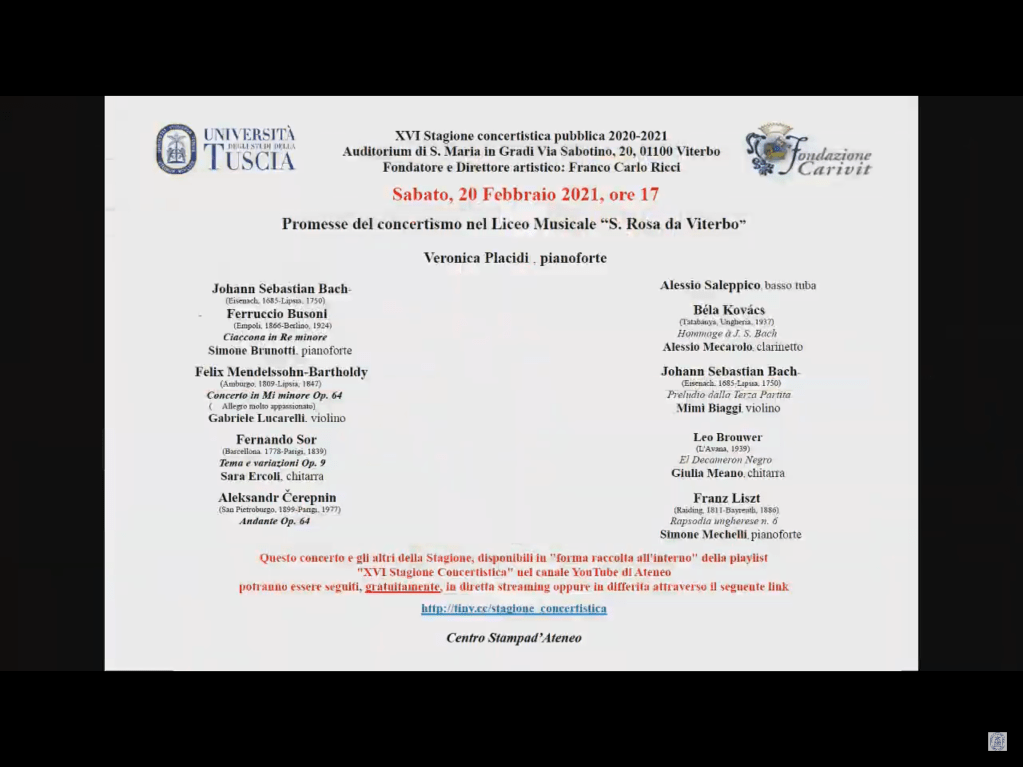
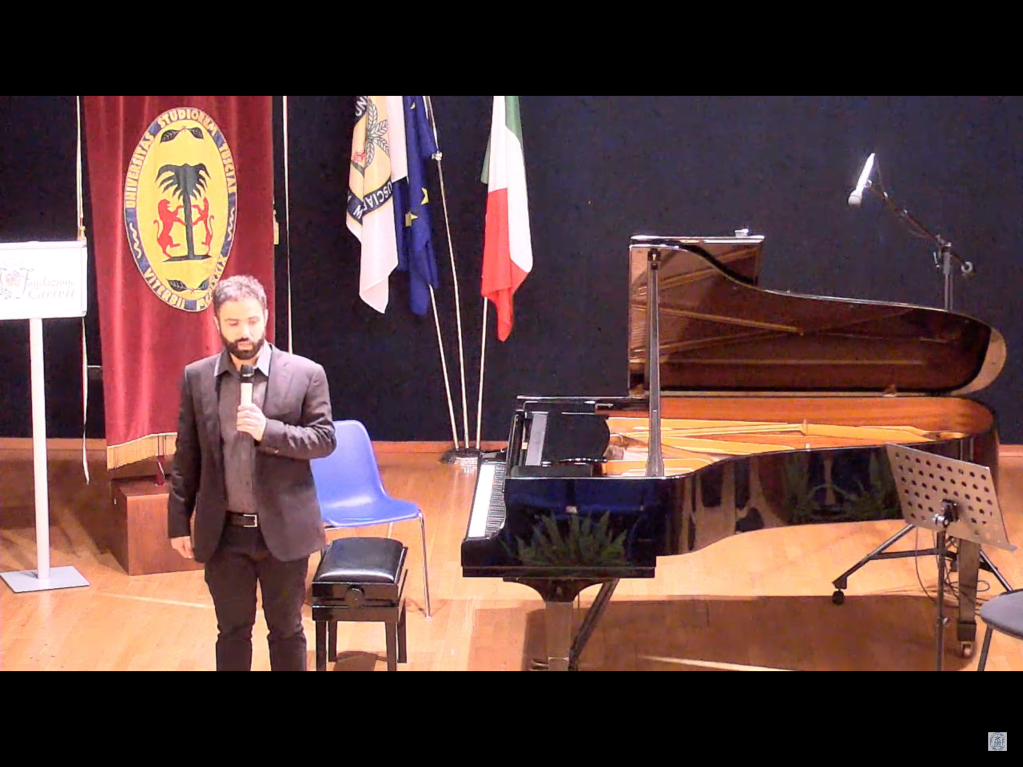
Very interesting concert in the Saturday afternoon series organised by Professor Franco Ricci for the 16th season of concerts at the Tuscia University of Viterbo .
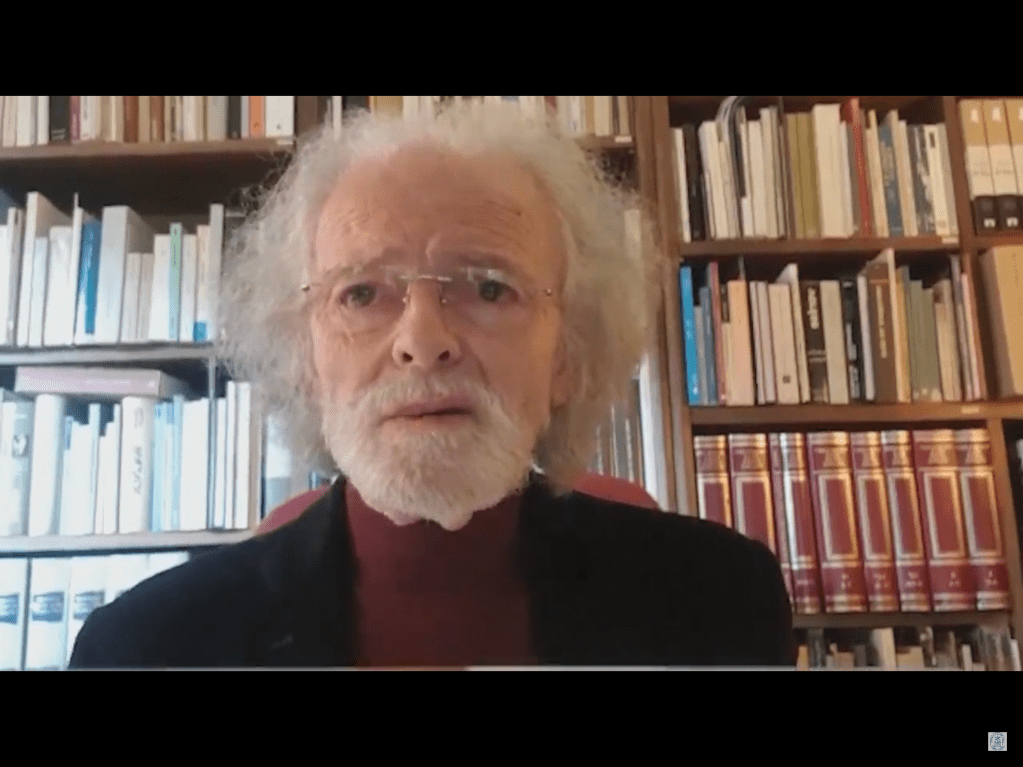
Professor Franco Ricci -Artistic Director
Today it was a concert by the young students of the Music High School S.Rosa di Viterbo. Refreshing to see space given to these young musicians and to be reminded of how important music is in the education of young people. To ignite passion for culture in young people and unite them rather than all too often looking in vain for something more in life than the empty consumerism that the mass media continually bombards them with on their mobile phones. I am reminded of ‘El sistema ‘ of Abreu who united kids from underprivileged homes to take up an instrument and join together in bands and orchestras rather than the empty pursuit of poverty on the streets in Venezuela.The whole world has seen the results of Gustavo Dudamel and his Orchestra that has taken the world by storm. Or Daniel Barenboim and Edward Said creating the West Divan Orchestra that only music making together could break the deadlock of words in the Israeli Palestine conflict. Other initiatives each one important in it’s own right. I was told by my esteemed friend Maricla Boggio of the orchestra in Palermo ‘QuattroCanti’ created by Padre Giuseppe Bucaro based on El Sistema that has united families who had never imagined to play an instrument together with others. Some years ago I was sent as an examiner for the Royal Schools of Music to Alcamo in Sicily.Anyone that follows Camilleri’s Montalbano will know what I mean by a really poor part of Italy.A music teacher originally from Malta had brought the English exam system with her as she taught teenagers the passion and discipline of music to lives that would otherwise have seemed without any hope for a better future.
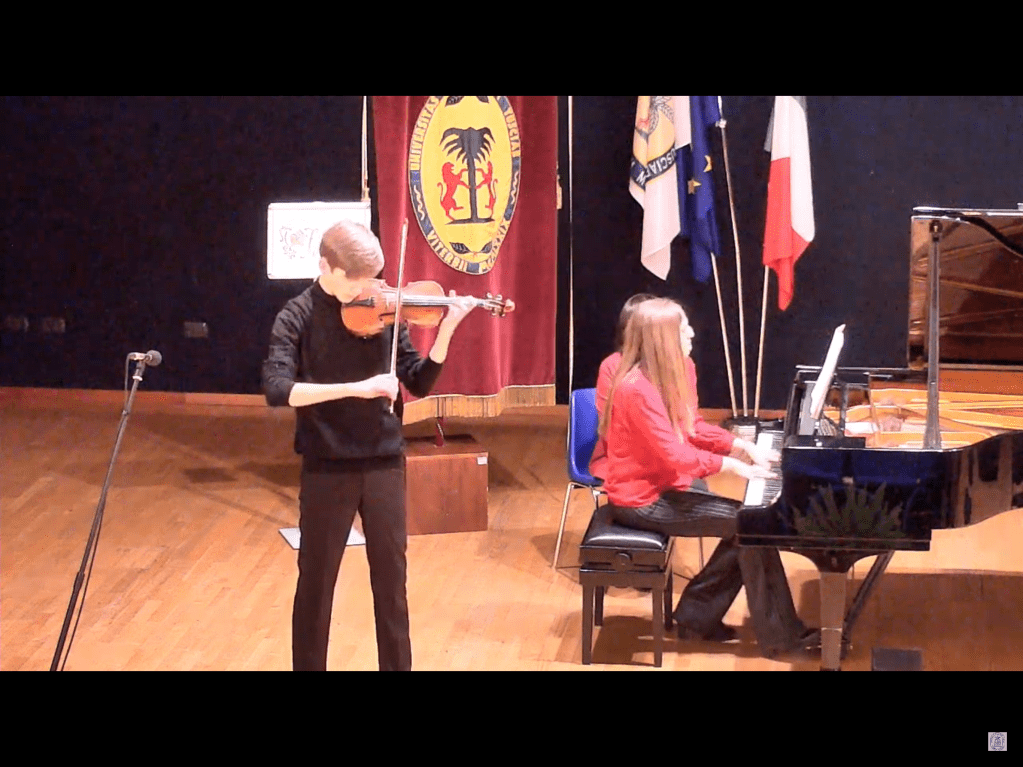
Gabriele Lucarelli
So hats off to Gabriele Lucarelli for a very assured performance of the first movement of the Mendelssohn violin concerto.
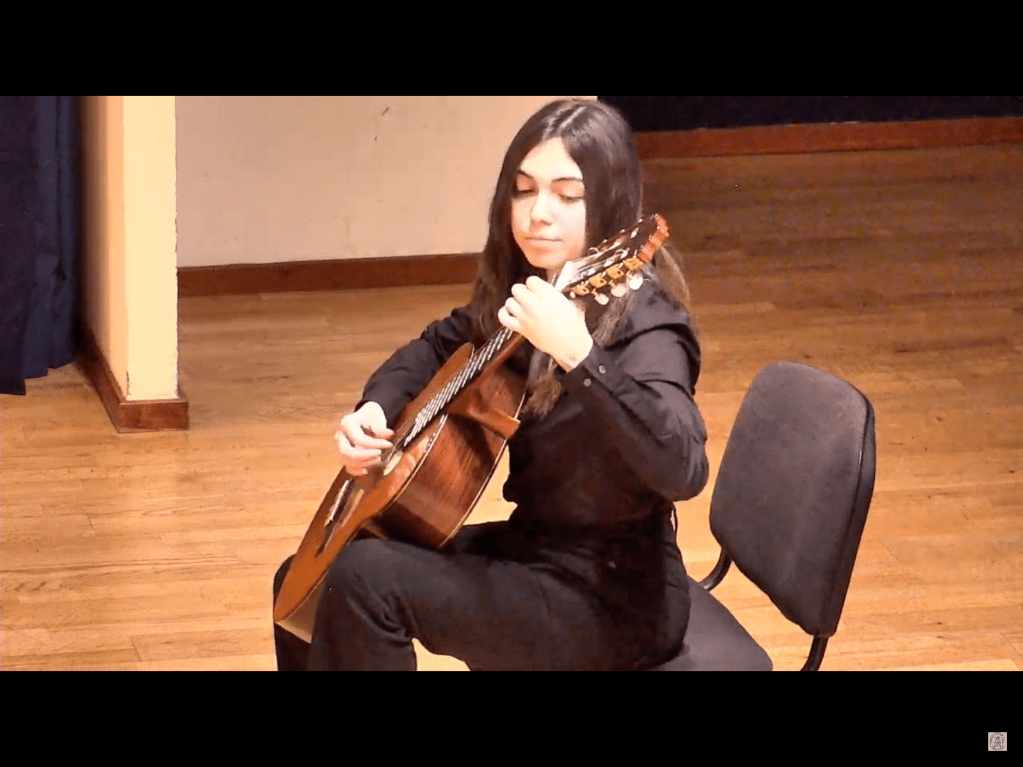
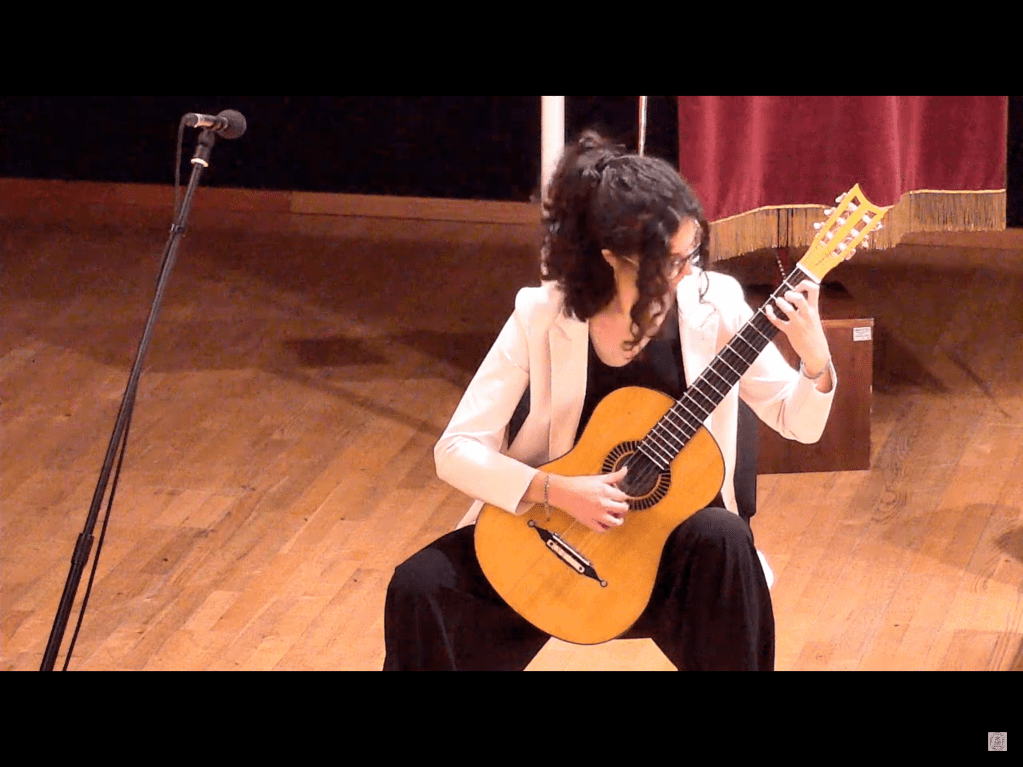
Sara ErcoliGiulia Meano
Some fine guitar playing from Sara Ercoli with Sor Variations and Giulia Meano with Leo Brouwer’s El Decameron Negro.
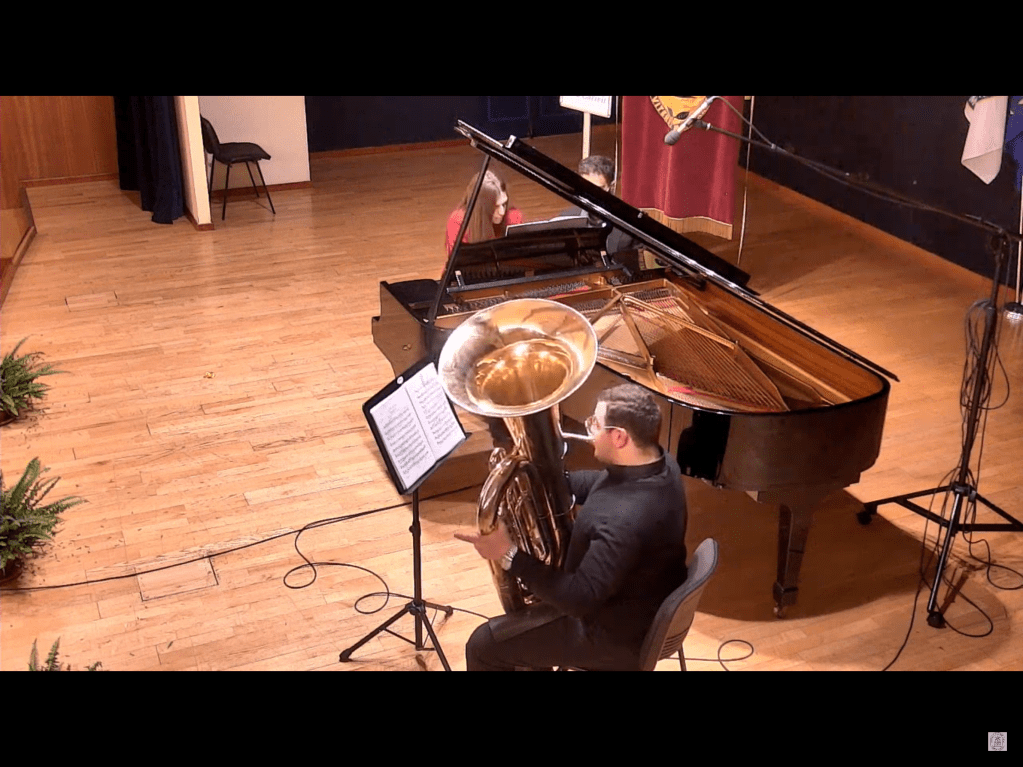
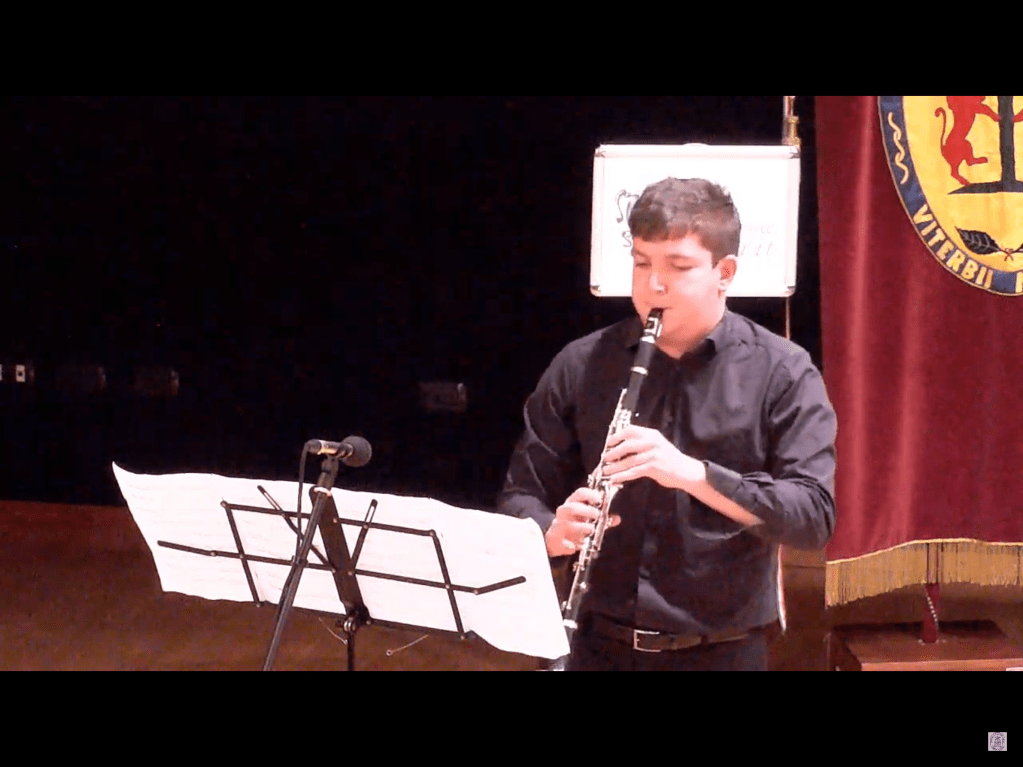
Alessio SaleppicoAlessio Mecarolo
Luckily Alessio Saleppico was master of the bass tuba with Tcherpnin’s Andante as was Alessio Mecarolo on the clarinet with Kovacs Hommage à J.S.Bach.
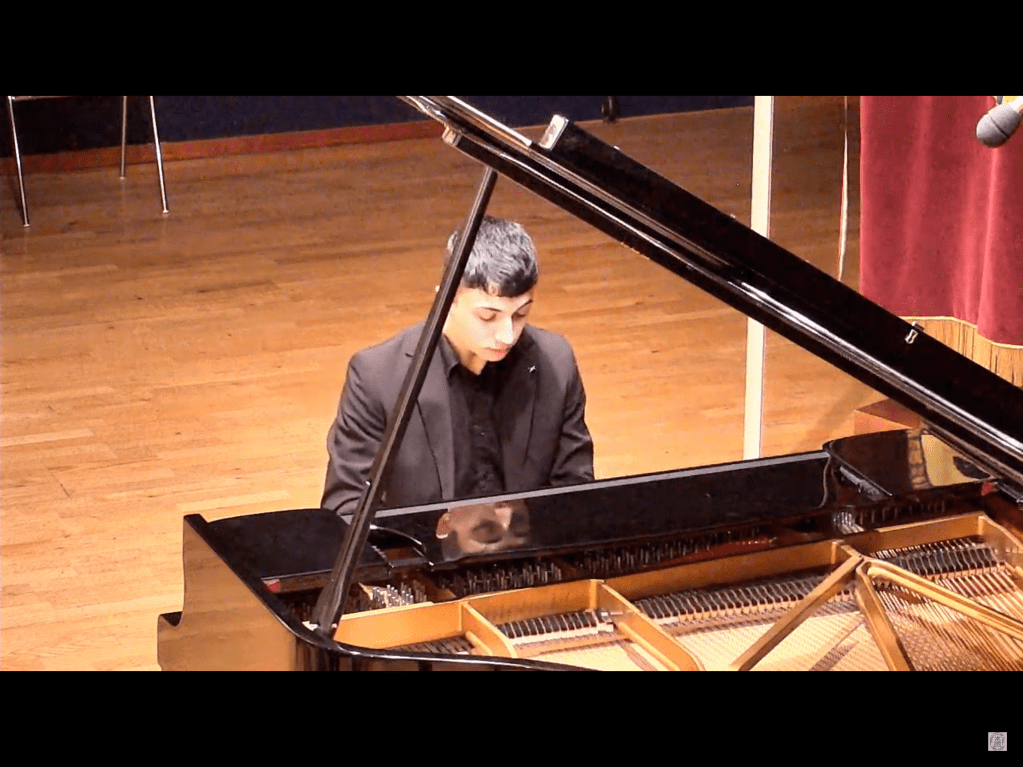
Simone Mechelli
Last but certainly not least was Simone Mechelli with a finely spun performance of Liszt’s 6th Hungarian Rhapsody. What passion ,serious work and obvious enjoyment they shared with us today. Hope for future generations lives in culture.My wife Ileana Ghione dedicated her life to creating a theatre in Rome -Non è solo teatro ma un servizio sociale -was and still is our motto that drives us on.
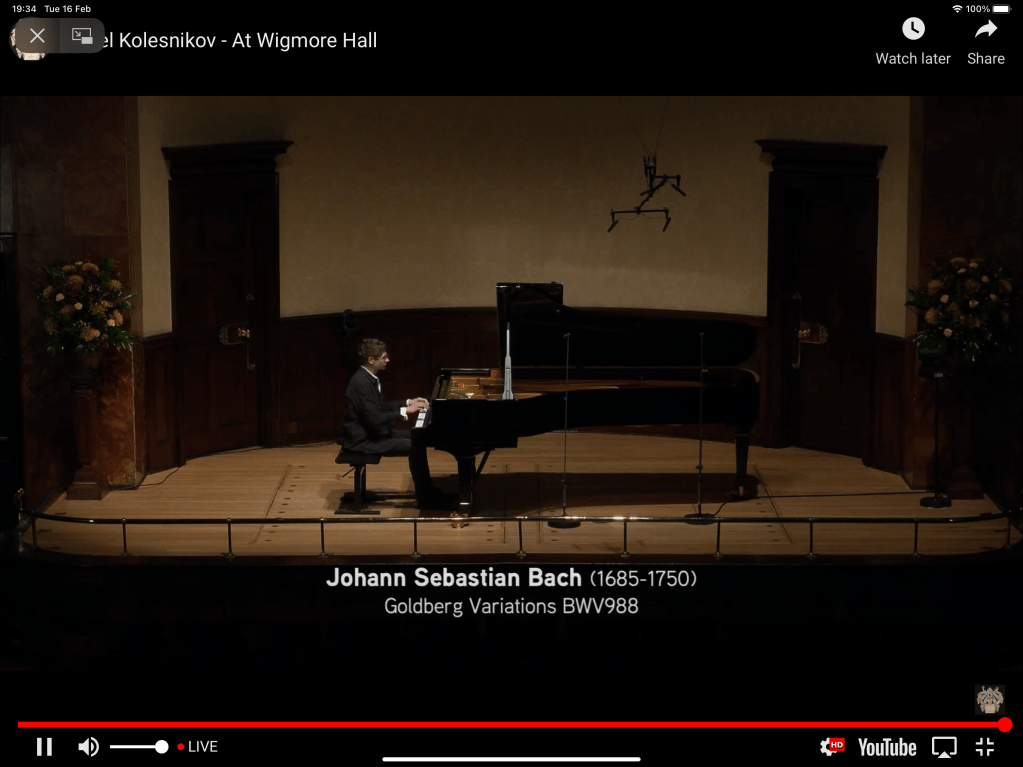
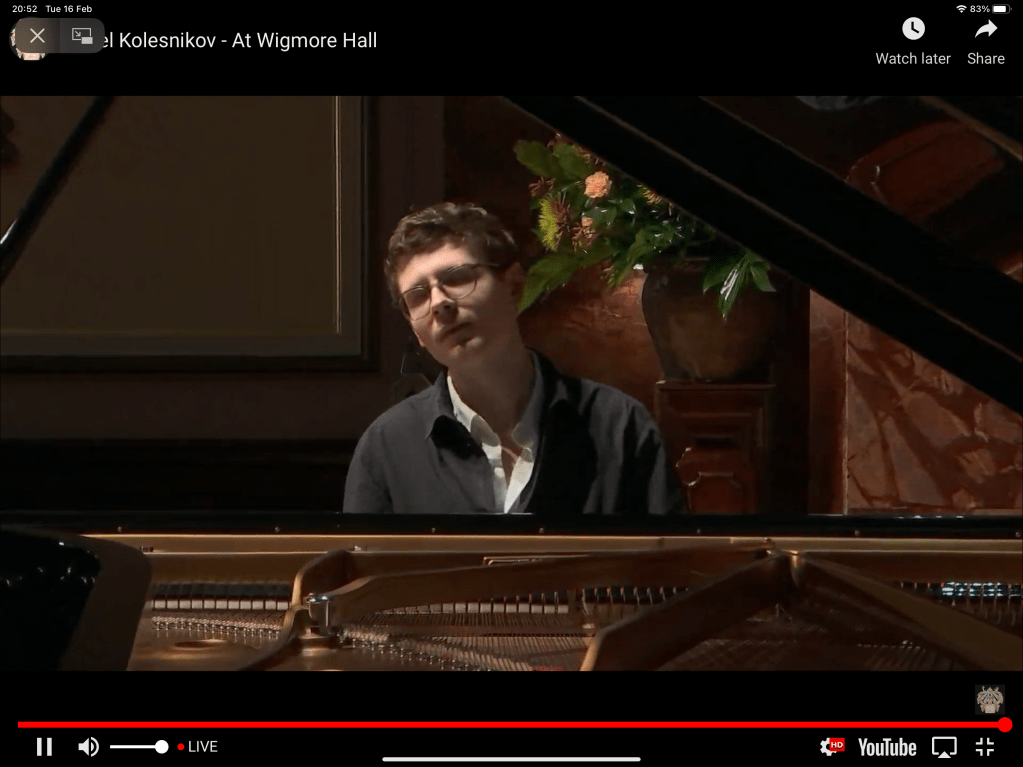
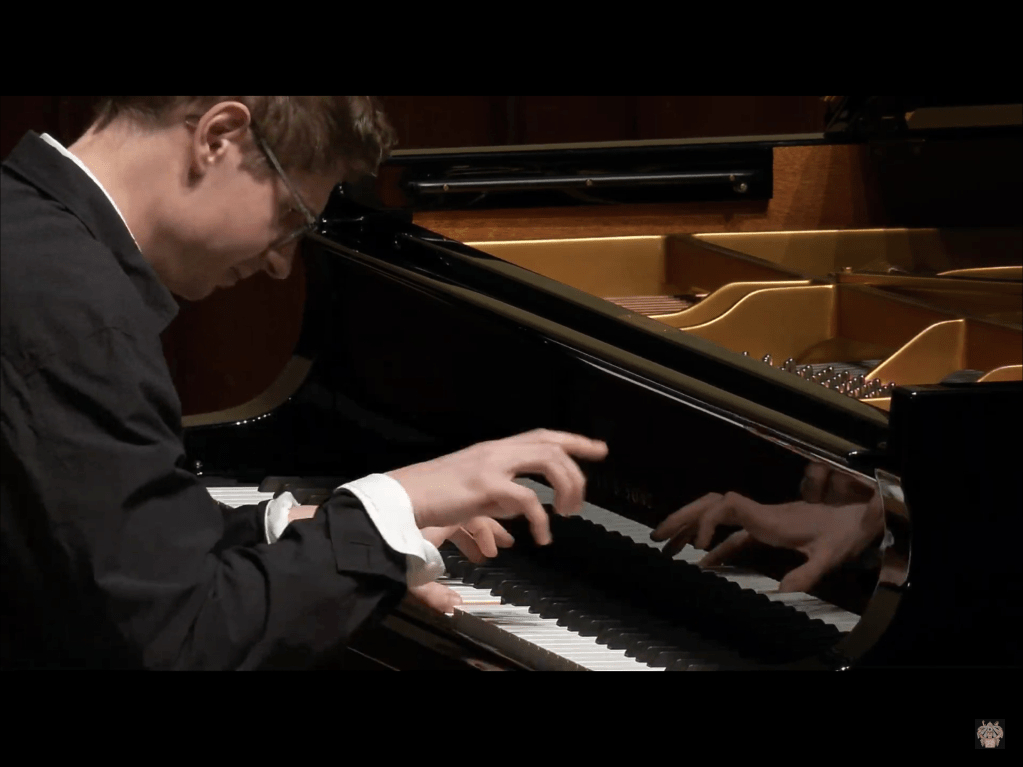
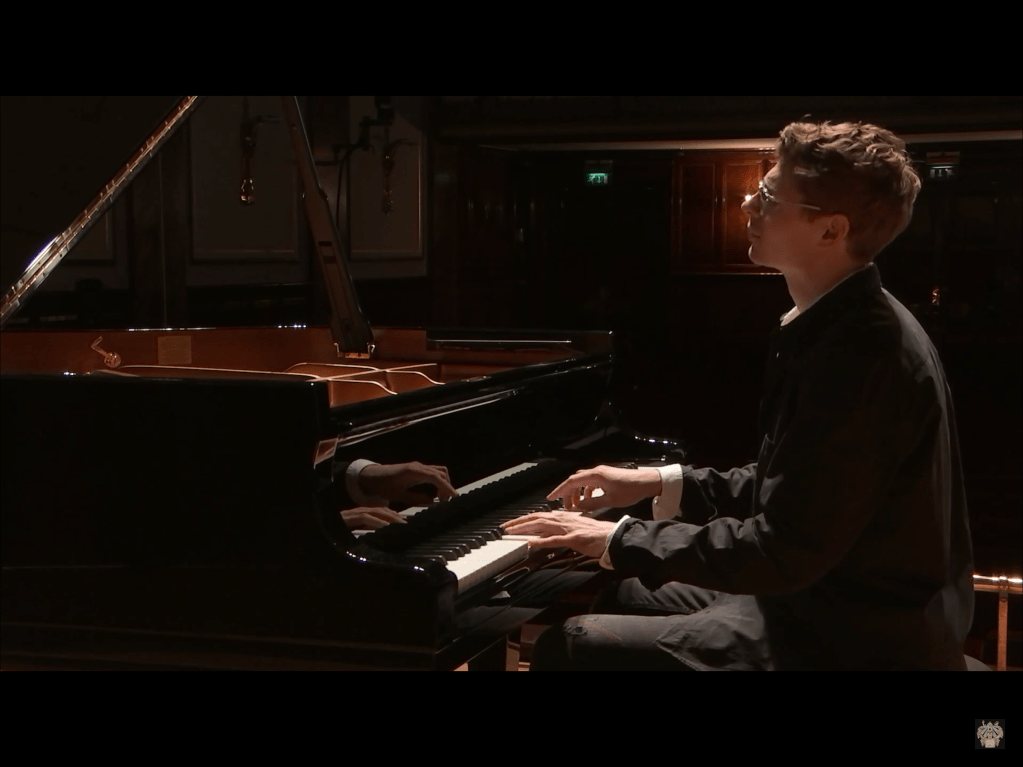
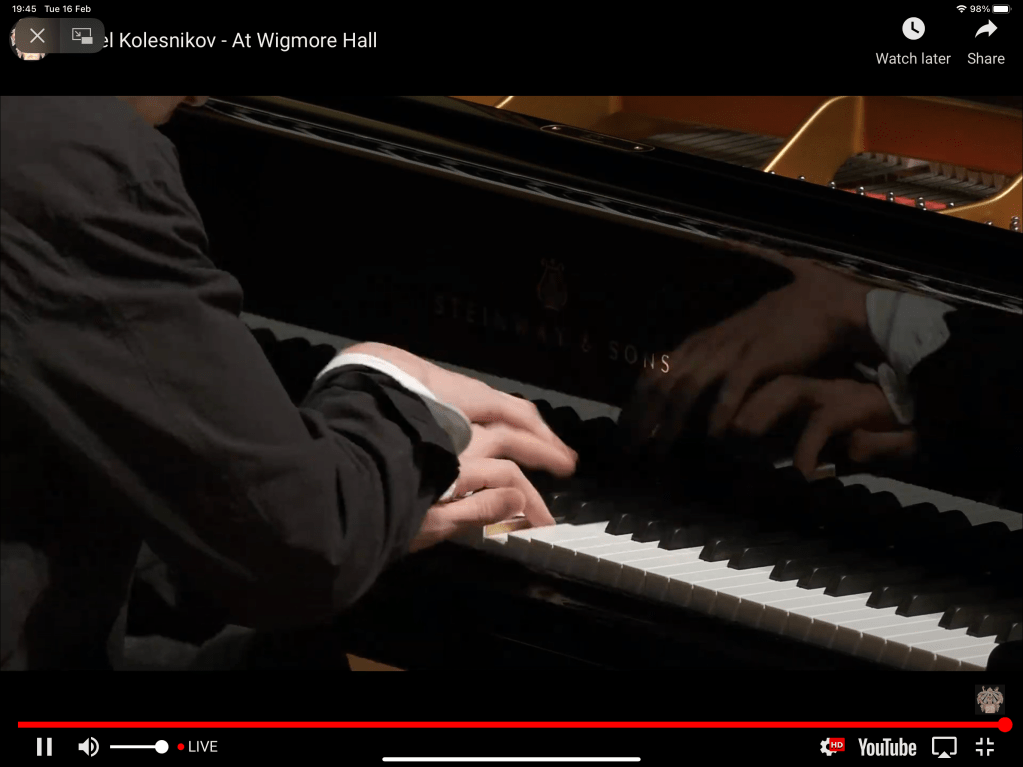
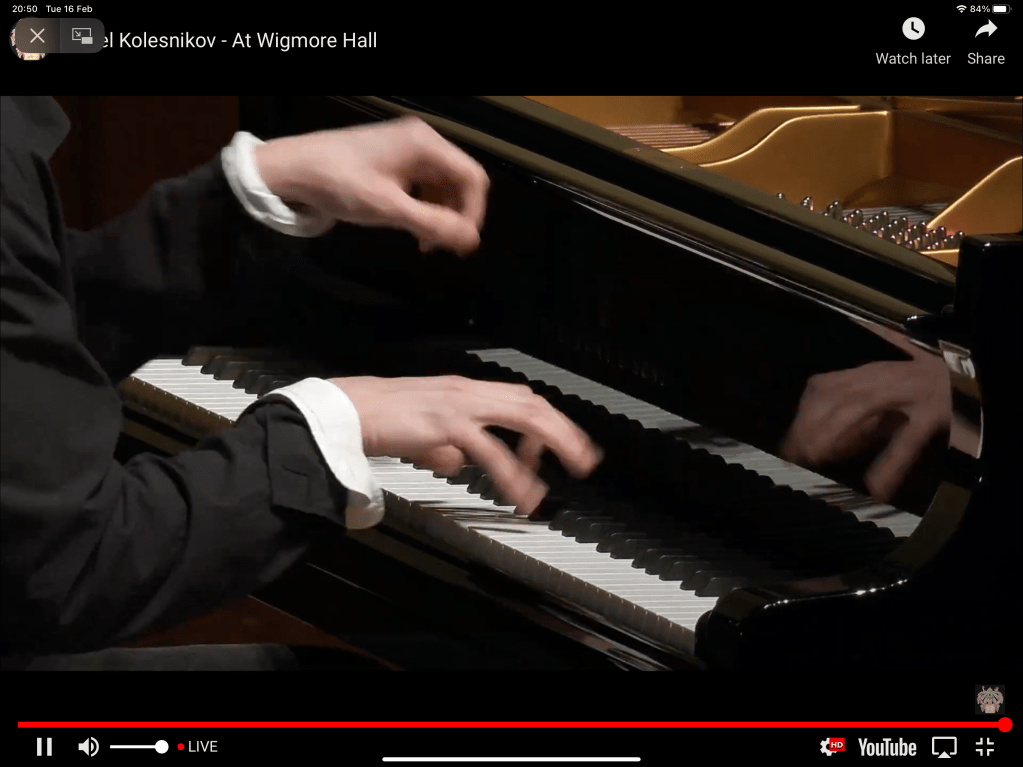
Pavel Kolesnikov at the Wigmore Hall with a transcendental account of the Goldberg Variations. A fascinating and uncontaminated interpretation where he looked at each one as though ‘fresh off the page’ indeed. Of course all the repeats ,as Andras Schiff says :’who are we mere performers to know better than the composer?’ But there was much originality in the ornamentation that he added. Each variation a cameo,some more beautiful and less capricious than others but each one had a life of its own This was in the end the reason why I say this was a young man’s Goldberg because it lacked the continuous rhythmic pulse that must bind them together.An undercurrent like a great torrent on which these marvels must float.
There were some truly amazing feats of transcendental playing but as he struck up the great opening flourish of the 16th French overture his playing seemed to become ever more eccentric with playing of outward virtuosity.The glorious 25th variation was so slow that it lost its inner propulsion and profound meaning.The Quodlibet was suddenly bathed in pedal as it rose from the deep to disappear like the Cathédrale engloutie. Where the pedal could have been left on for the reappearance of the theme there was infinite silence. An amazing tour de force by a musician of rare sensibility that could indeed risk the path that we followed in Bari last night. https://christopheraxworthymusiccommentary.wordpress.com/2021/02/16/pletnev-in-bari-streaming-of-ravishing-beauty-and-seduction/ I hope not because originality and freshness of vision is an artists goal but originality without humility is a gigantic risk and a path of great suffering for the true artist.