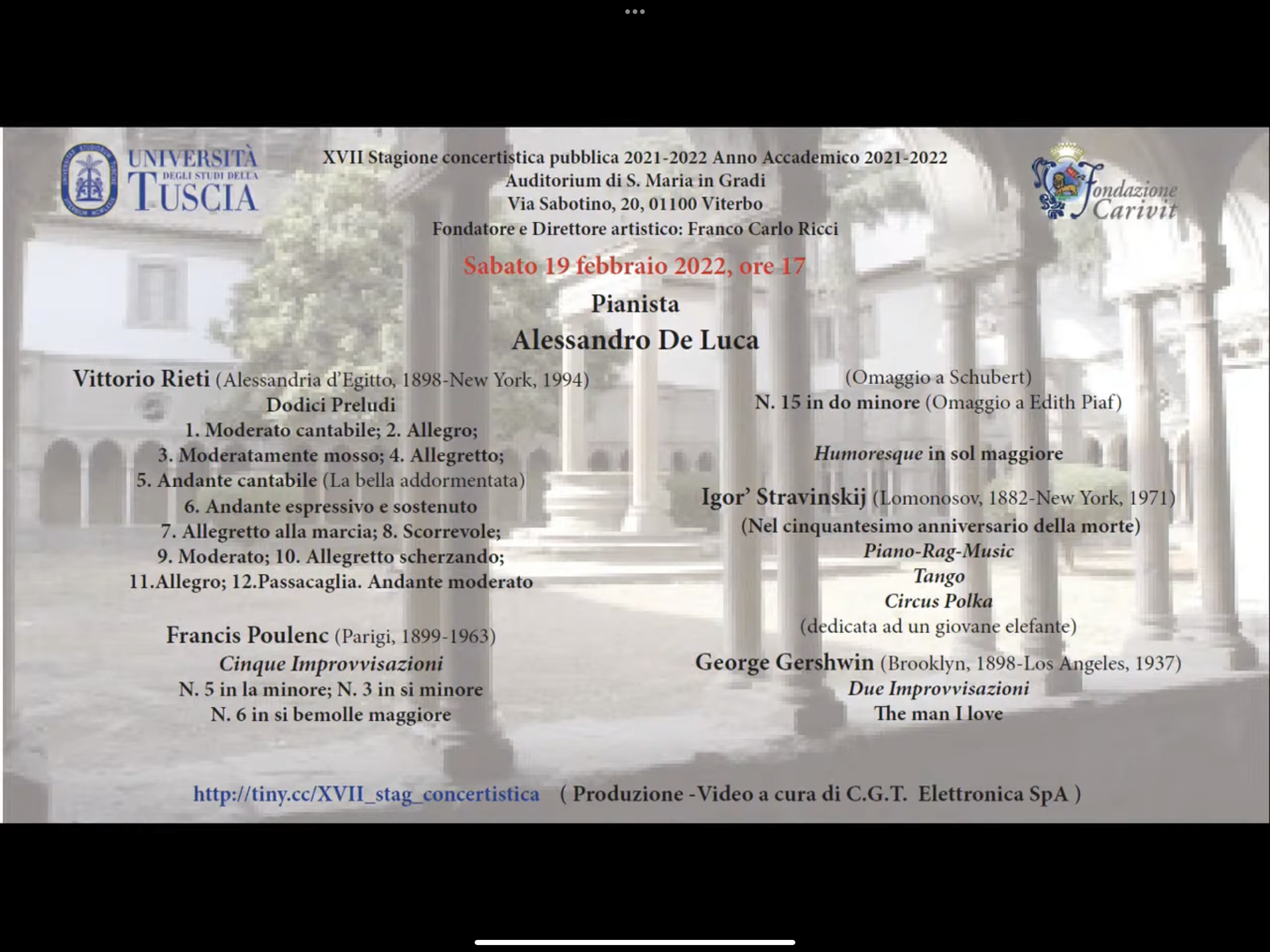
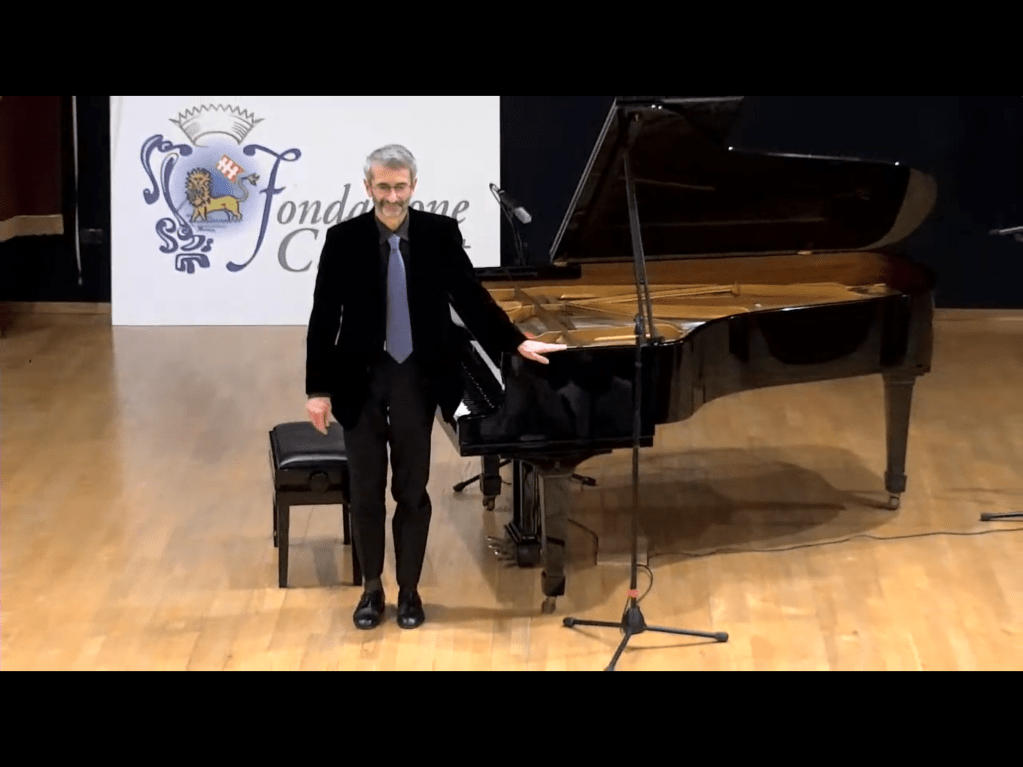
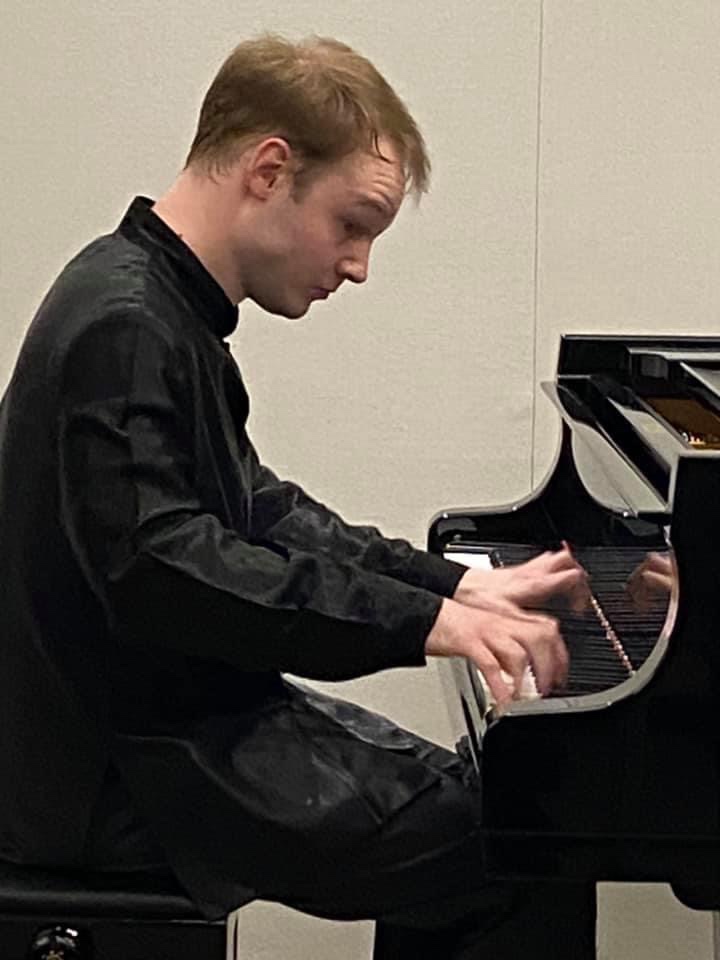
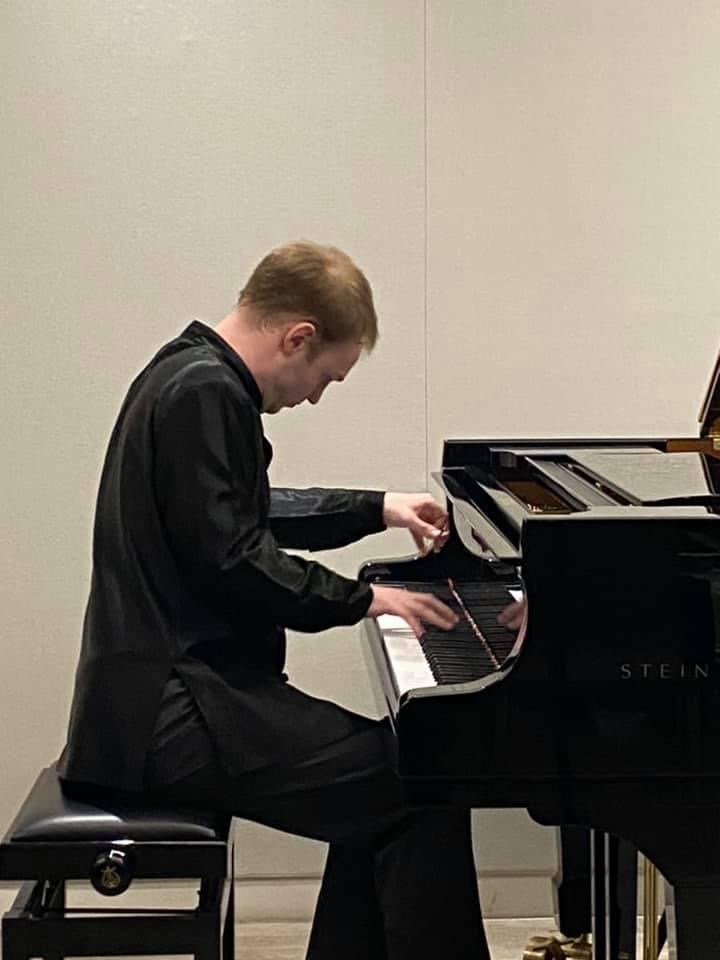
Fascinating programme in Viterbo for the series of Prof Franco Carlo Ricci .
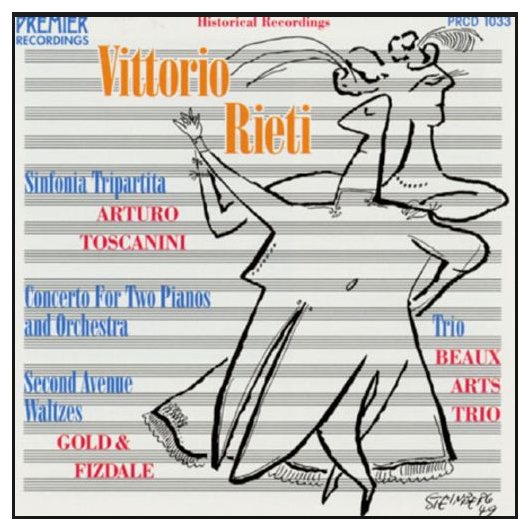
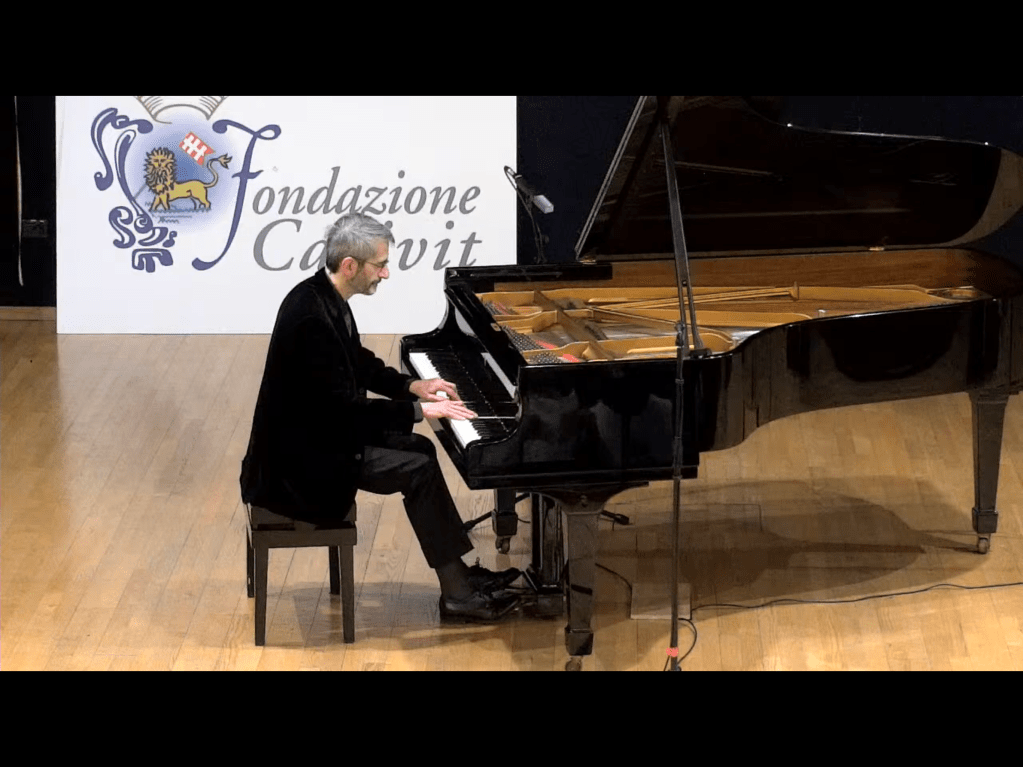
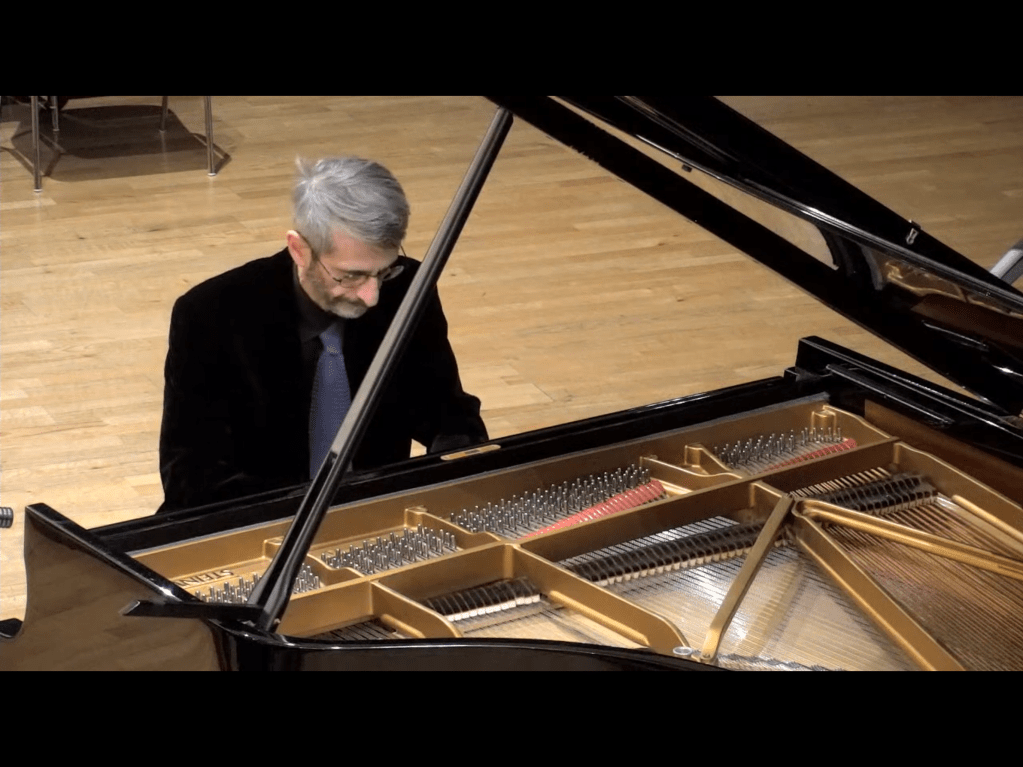
The distinguished pianist Alessandro De Luca with an eclectic programme of music from the first half of the 20th century .Twelve Preludes by the almost unknown Vittorio Rieti ( a vast volume written by Prof Ricci outlines his extraordinary life – his works were often commissioned and played by the duo Gold and Fitzdale) through Poulenc Five improvisations and Humoresque and Stravinsky Tango,Circus Polka and the Piano rag music (commissioned by Artur Rubinstein who then refused to play it as he refused to accept Stravinsky’s insistence that the piano was only a percussion instrument.Later though Stravinsky dedicated to him the piano version of Petrushka).
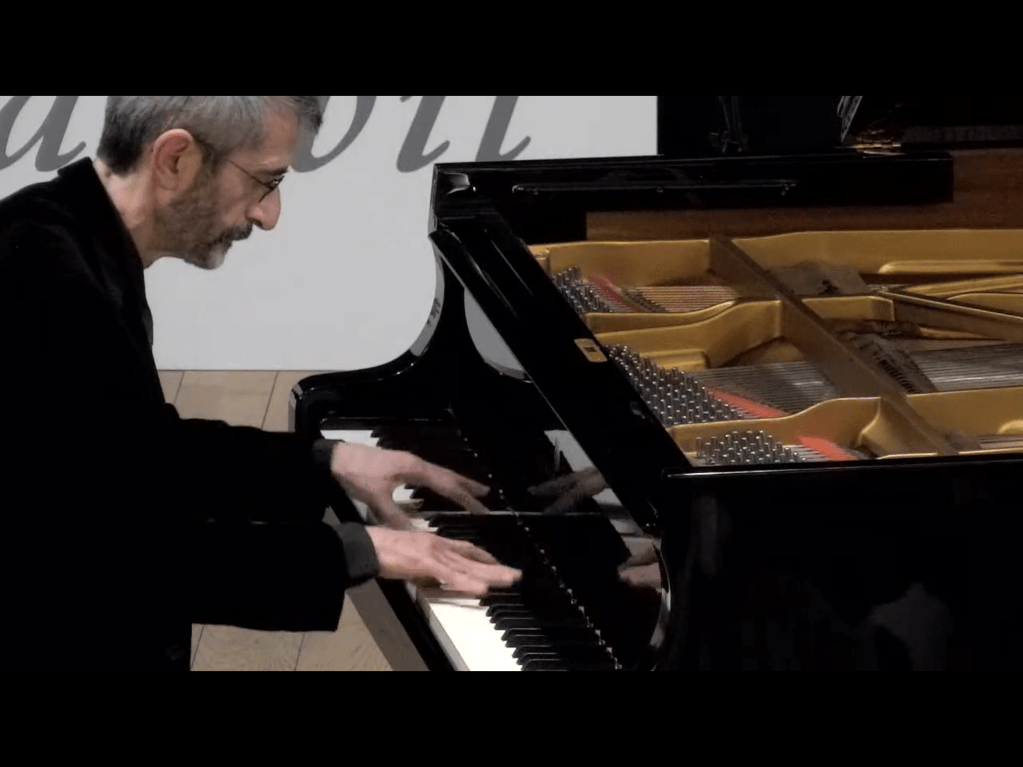
Gershwin’s own arrangements of two of his most popular songs: ‘The Man I love’ and ‘I got rhythm’ brought this extraordinarily interesting programme to a scintillating conclusion. No score or I pad to be seen from a master pianist who has obviously lived with and loved these very rarely heard works for a lifetime.
Vittorio Rieti (January 28, 1898 – February 19, 1994) was born in Alexandria in Egypt but moved to Milan to study economics. He subsequently studied in Rome under Respighi and Casella, and lived there until 1940.In 1925, he temporarily moved to Paris and composed music for Balanchine’s ballet for Diaghilev’s Ballets Russes : Barabau.He emigrated to the United States in 1940, becoming a naturalized American citizen on the 1st of June 1944. He taught at the Peabody Conservatory 1948–49), Chicago Musical College (1950–54), Queens College, New York (1958–60), and New York College ofMusic (1960–64). He died in New York on 19 February 1994.
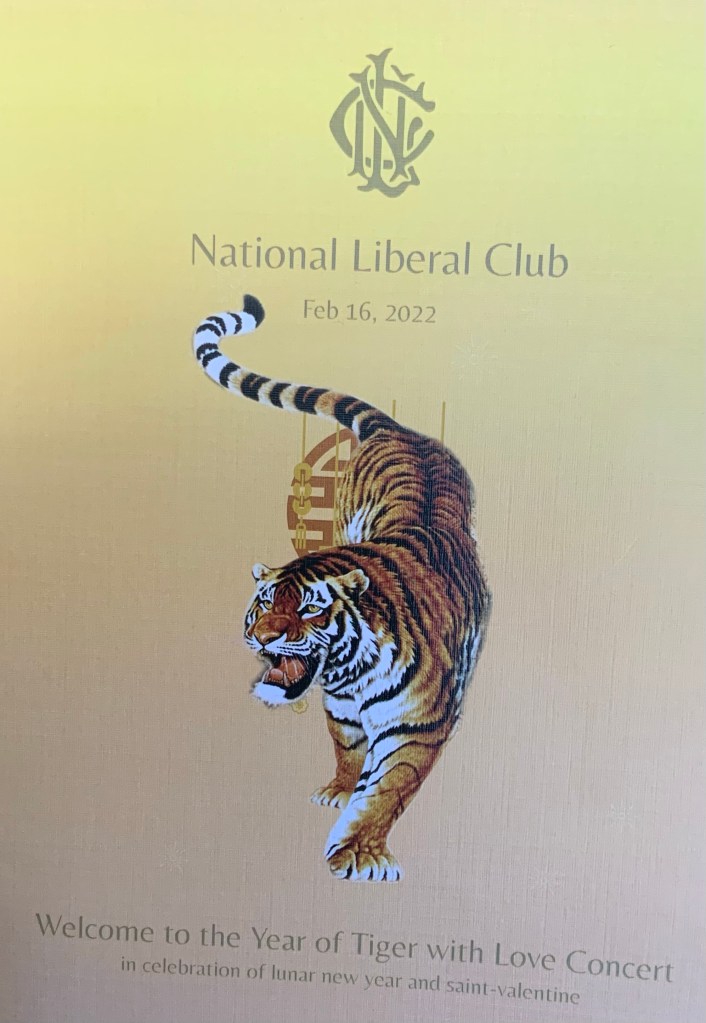
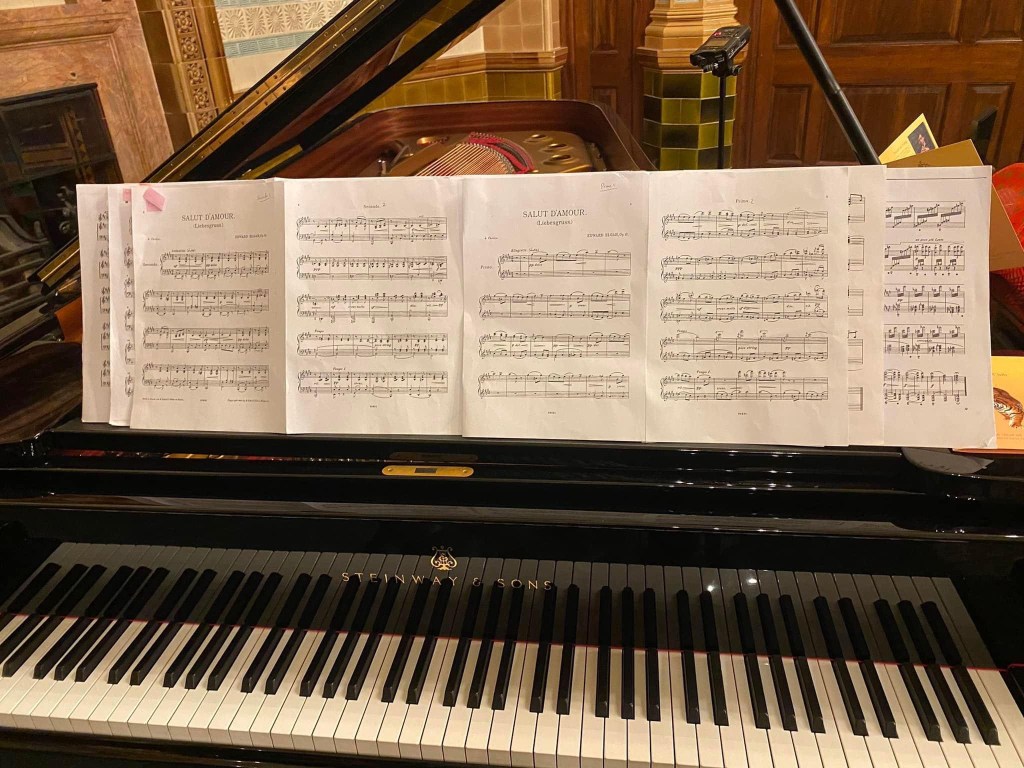
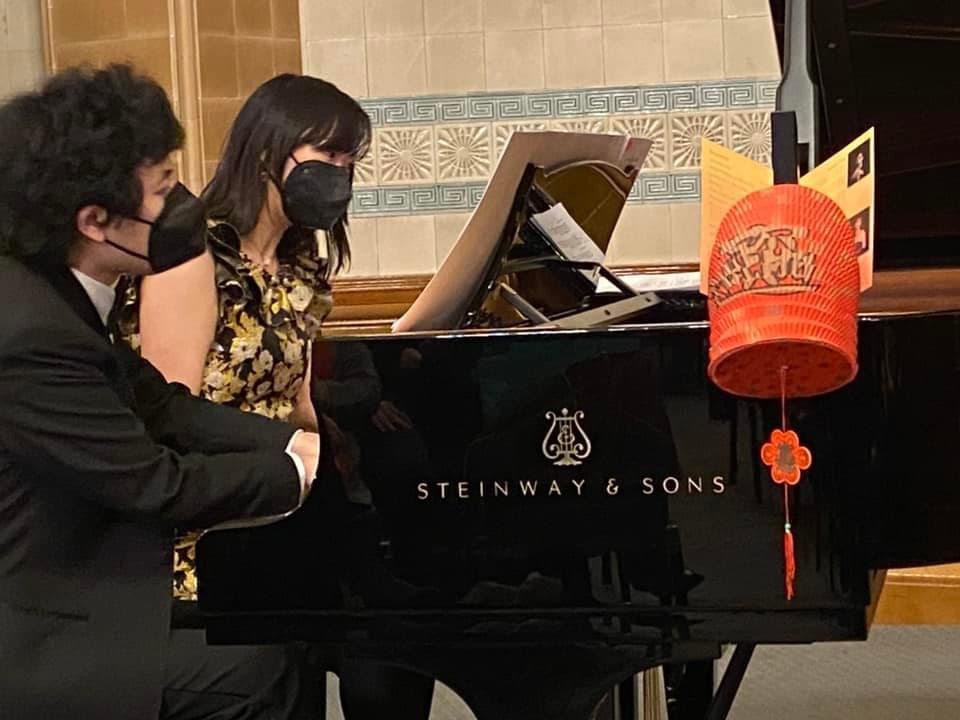
An evening of music and poetry to celebrate not only the last day of the New Year Festivities but also the Lantern Festival and above all Valentine’s Day.What better way to begin than with two very fine pianists opening the evening with Elgar’s Salut d’Amour particularly suited to the noble surroundings of the National Liberal Club –
Salut d’Amour open on the NLC ‘s magnificent Steinway concert grand
Shirley Wu went on to play Liszt’s famous Liebestraum and the Sonata in D minor K 213 by Scarlatti known as ‘The Lover’.Beautifully played and presented by this young Canadian pianist about to travel back to Canada taking with her a Master degree from the Royal College of Music.
Shirley Wu
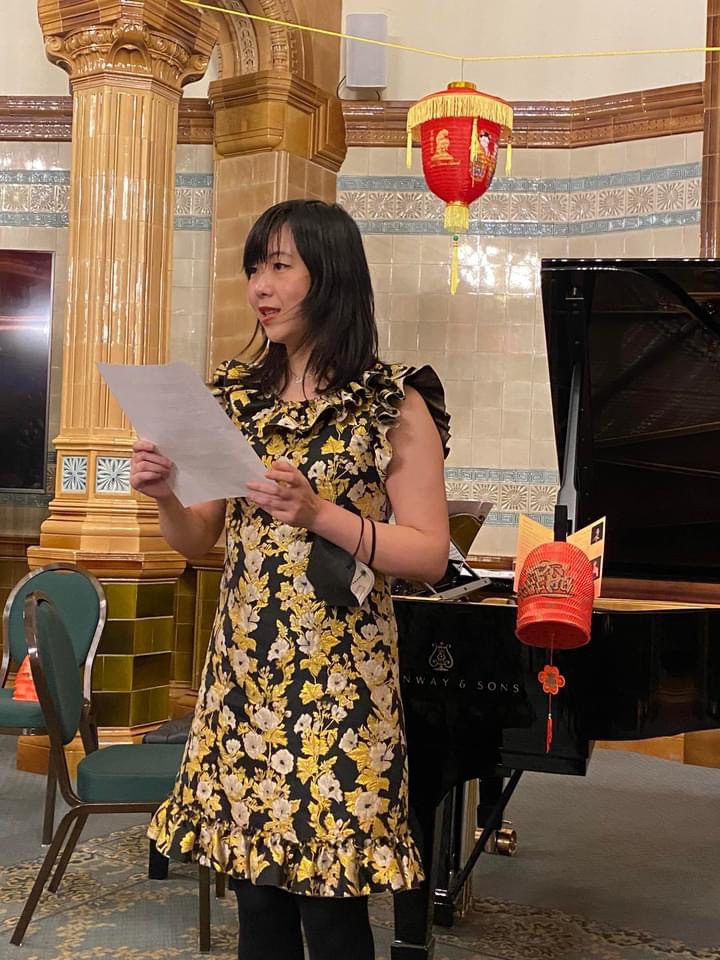
A beautifully atmospheric work ‘Dui Hua’ by An -Lun Huang was played with a wonderful sense of style and colour and her charming introduction to this evening dedicated to love was very touching.
Yuanfan Yang
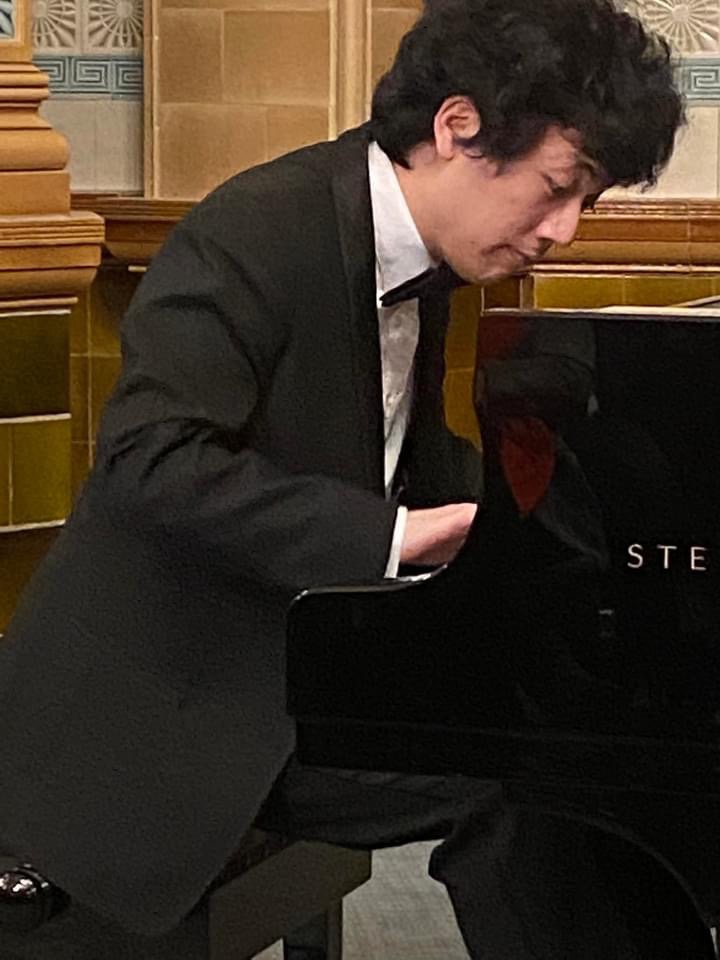
Yuanfan Yang played the opening movement of Mozart Sonata in C K 330 with remarkable clarity and superb sense of style.The four preludes op 28 by Chopin were played with the same beauty and technical mastery that was so memorable recently from a performance he gave on his Italian tour on Ischia. https://christopheraxworthymusiccommentary.wordpress.com/2021/09/06/yuanfan-yang-in-paradise/.
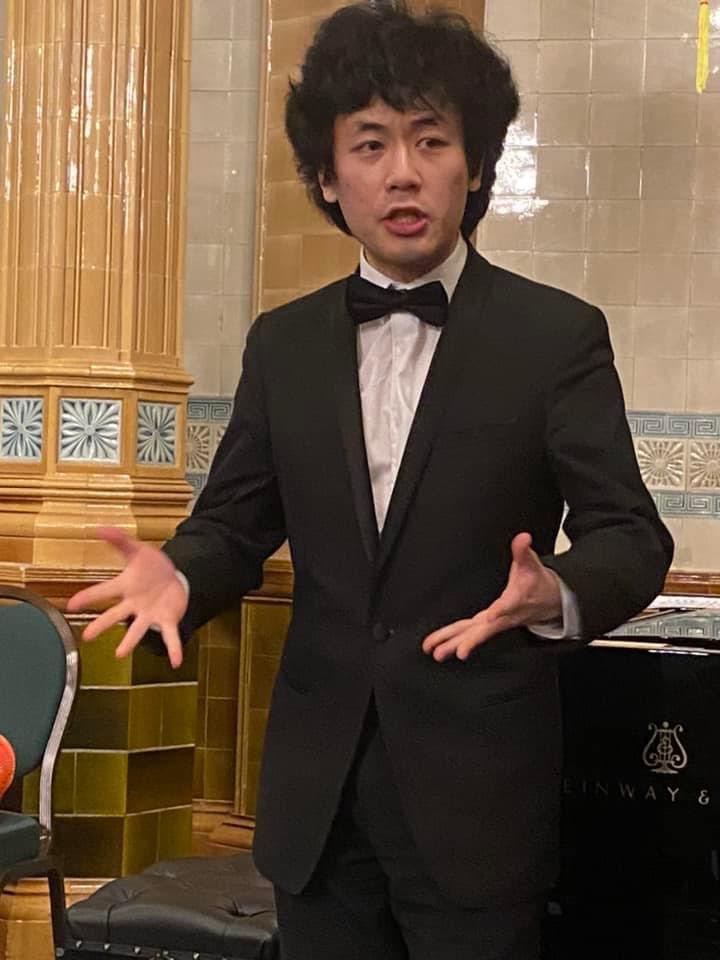
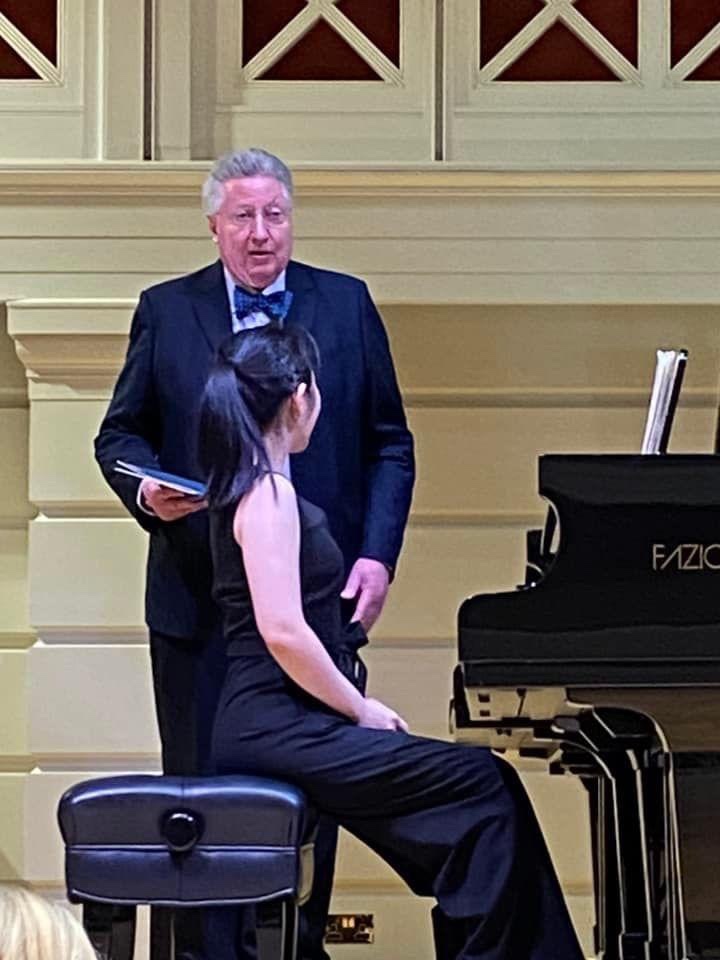
Yuanfan asking for any suggestions for his improvisations
Of course Yuanfan then astounded everyone with his improvisations.Asking the audience for a melody they would like him to elaborate on and to also tell him what style they would like him to play in! ‘The man I love’ was heard to come from the back in the style of Beethoven.Followed by a rather eclectic request of ‘Air on a G string’ in the style of John Rutter.But it was ‘Three blind mice’ combined with ‘Danny Boy’ in the style of Strauss and Tchaikowsky that brought the house down and an ovation for this remarkably talented young man.
Seated at the piano again with Shirley Wu they played together a beautiful rendition of Jasmine Flower/Mo Li Hua arranged by Xiaoping Luo that for us from the west is the tune that Puccini uses in his opera Turandot.Yuanfan Yang was then asked to improvise on Jasmine Flower and play it in a rousing ending that included Swan Lake by Tchaikowsky too!
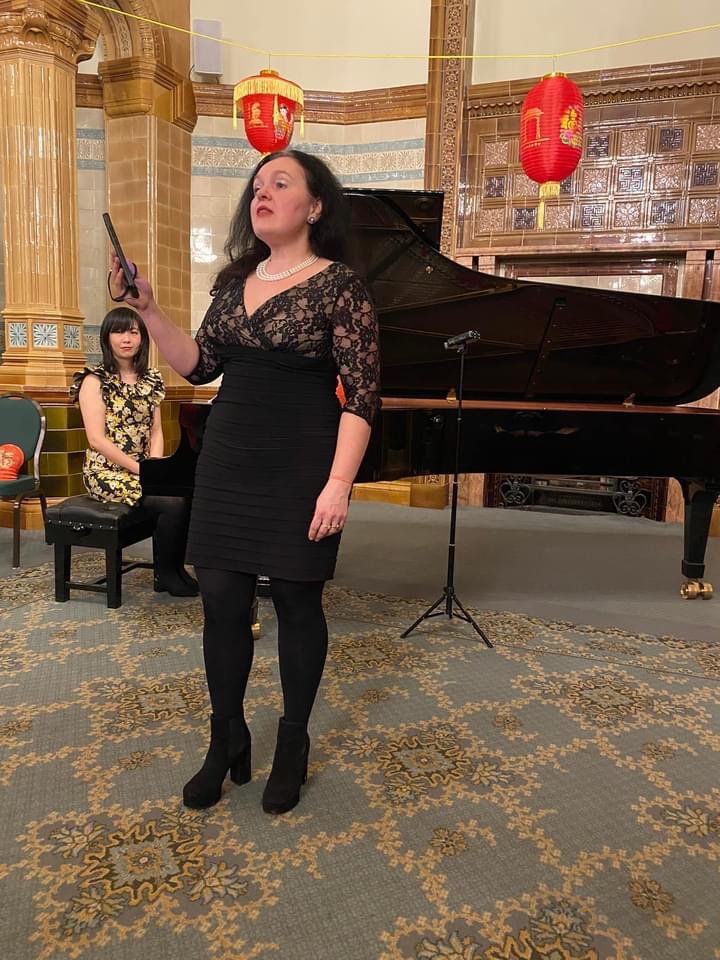
A beautiful poem about love read by Marianna Cherry
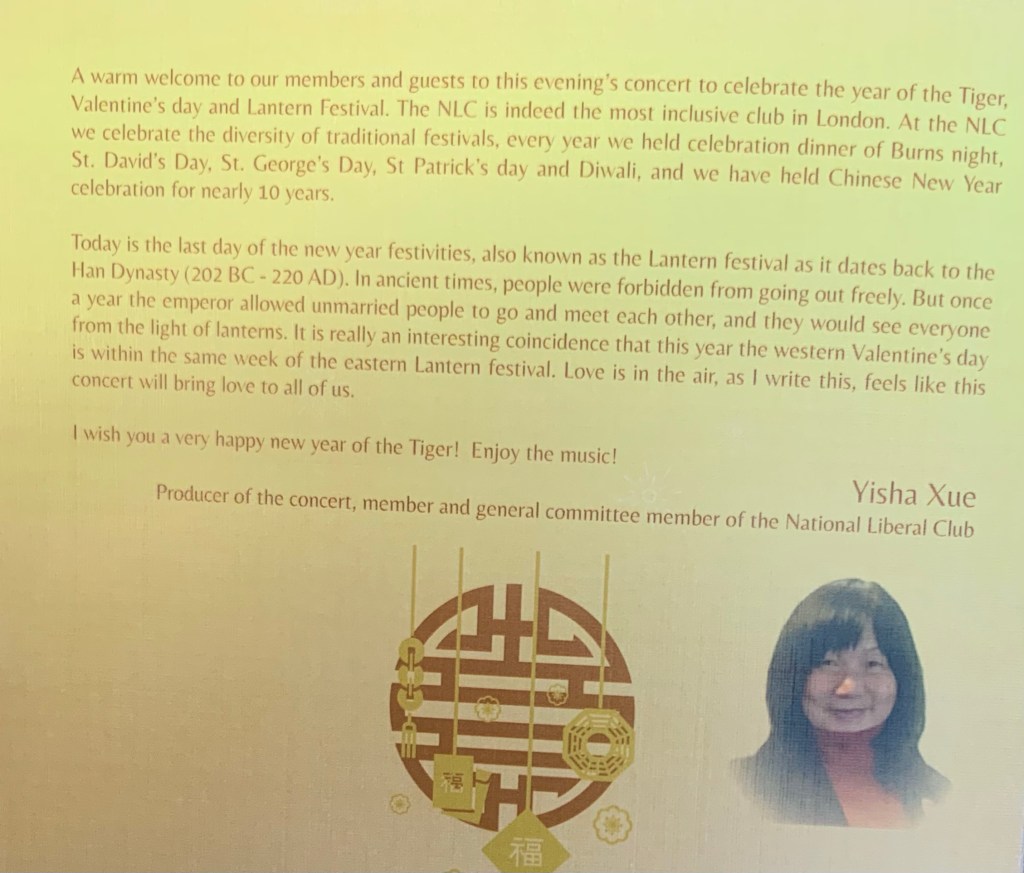
Two beautiful love poems too read by friends of our indomitable hostess Yisha Xue added a magic touch to a memorable evening.
James Brown
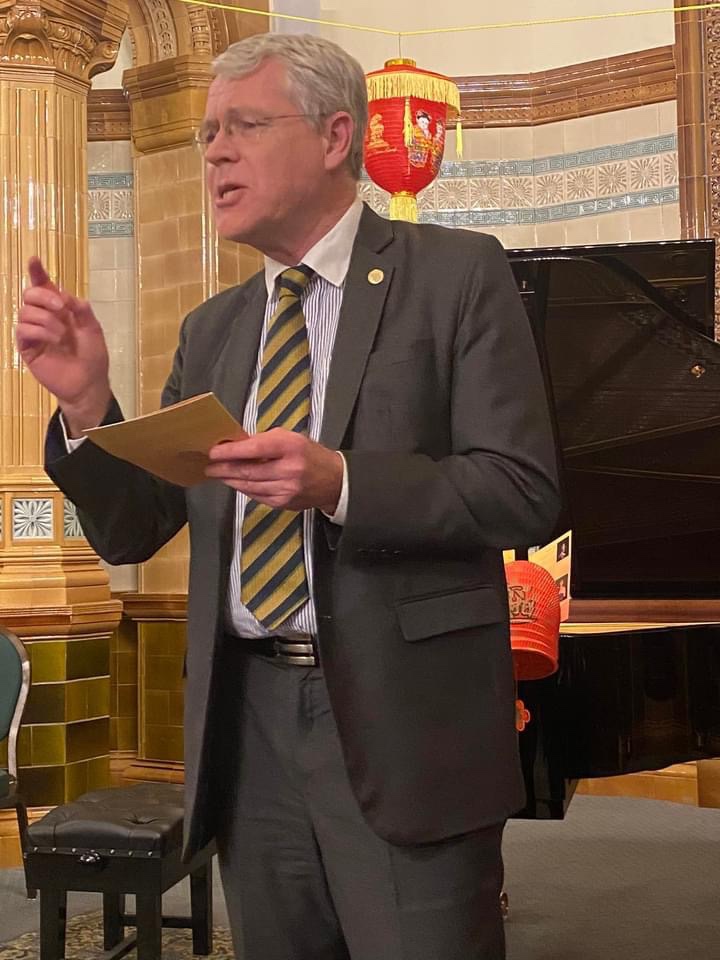
What more beautiful words could there be than these.Beautifully read by James Brown the distinguished friend of Yisha Xue:
For oft, when on my couch I lie In vacant or in pensive mood, They flash upon that inward eye Which is the bliss of solitude; And then my heart with pleasure fills, And dances with the daffodils.’ from I wandered lonely as a cloud ‘ by William Wordsworth
‘
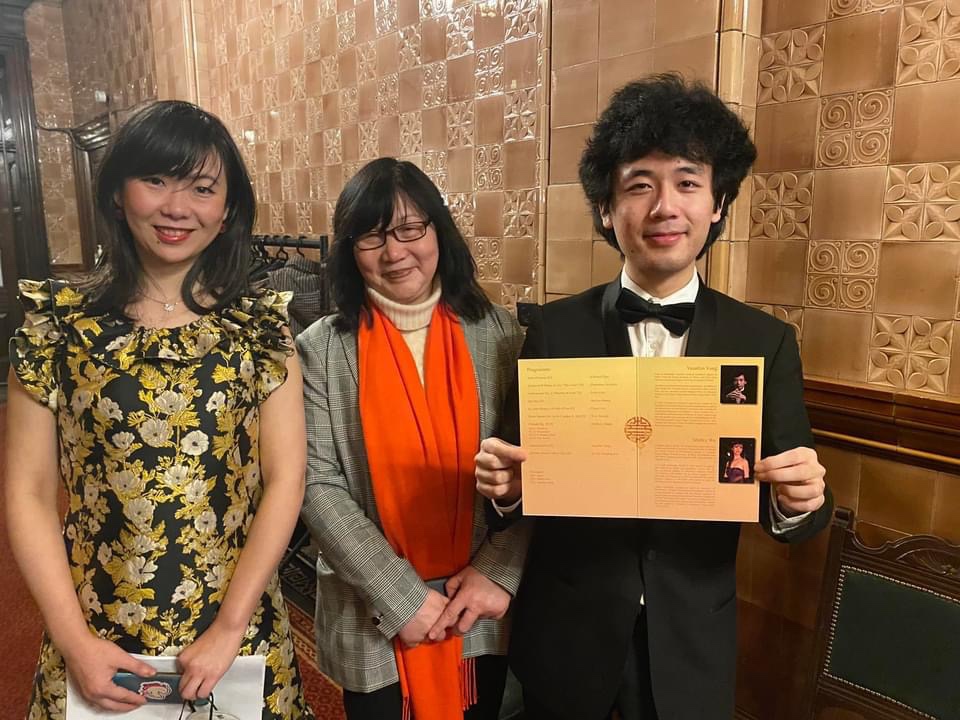
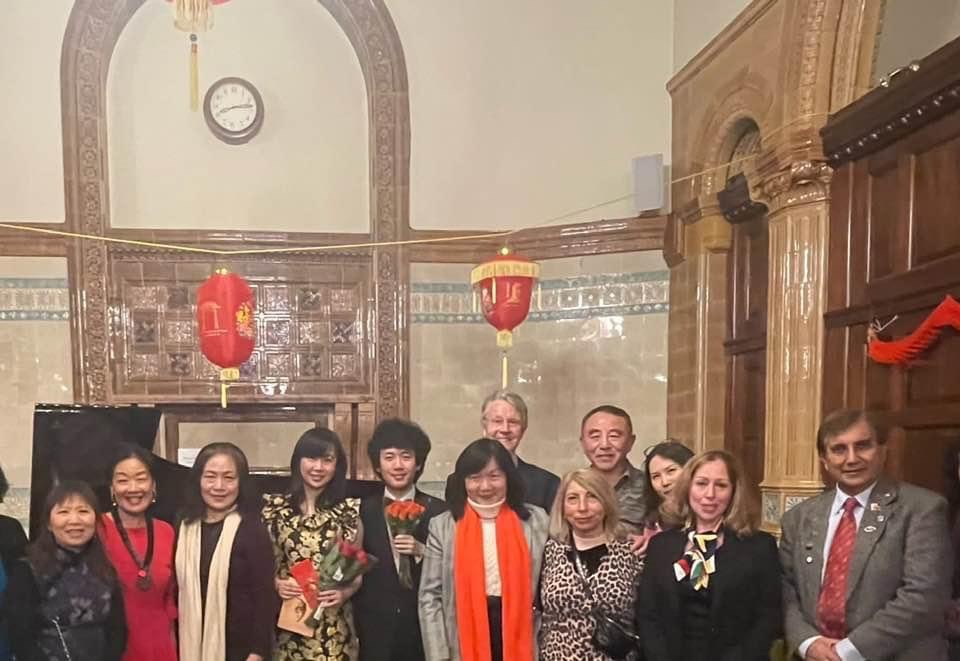
Shirley Wu – Yisha Xue – Yuanfan Yang Friends of Yisha Xue celebrating the Year of the Tiger
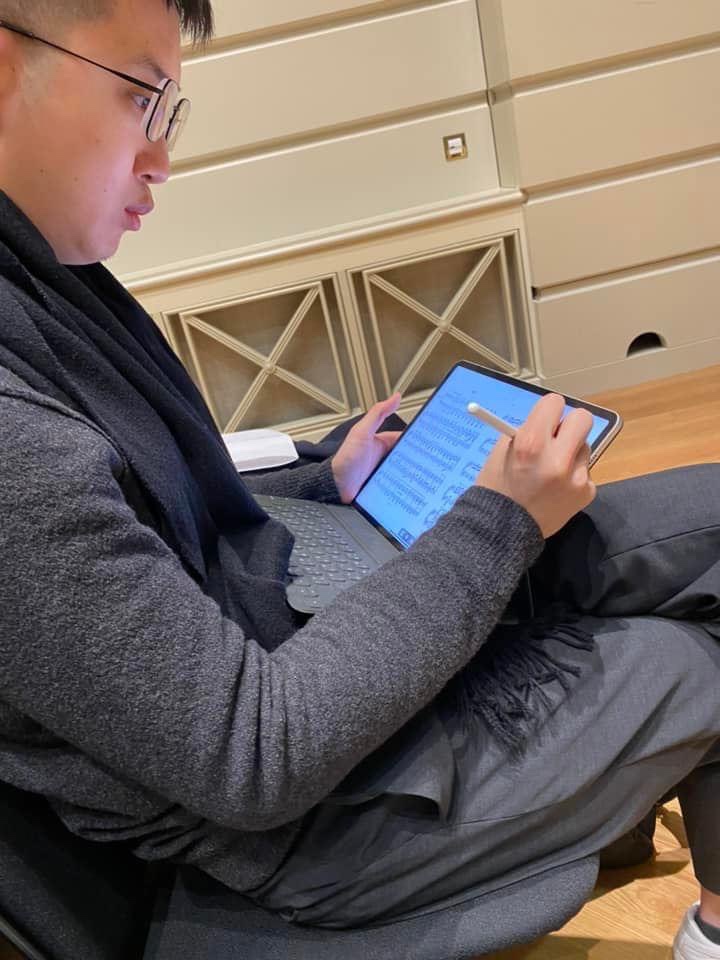
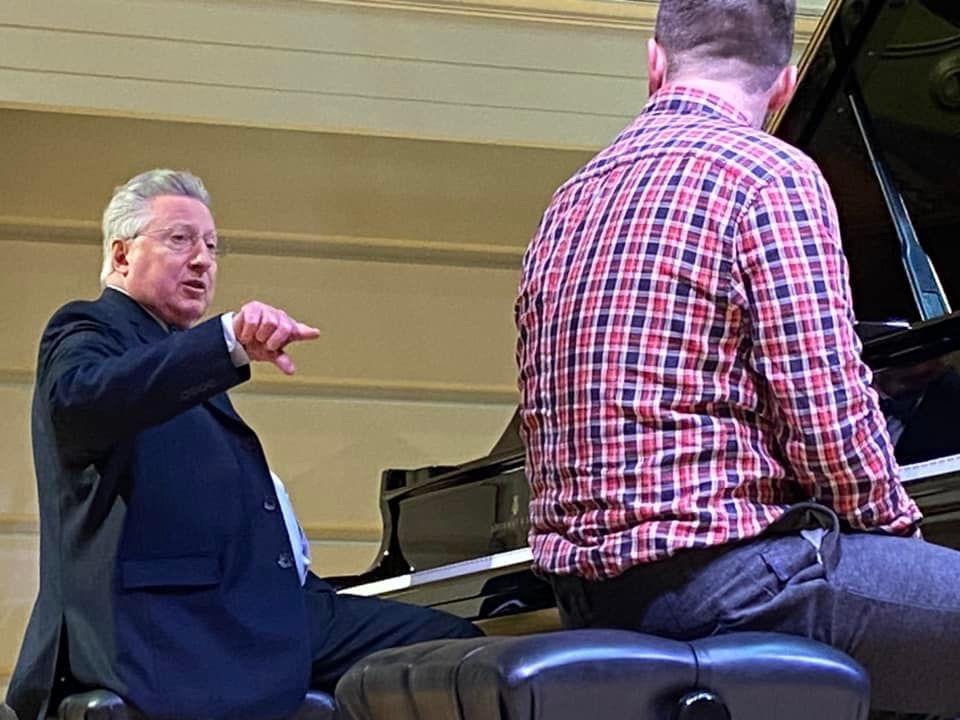
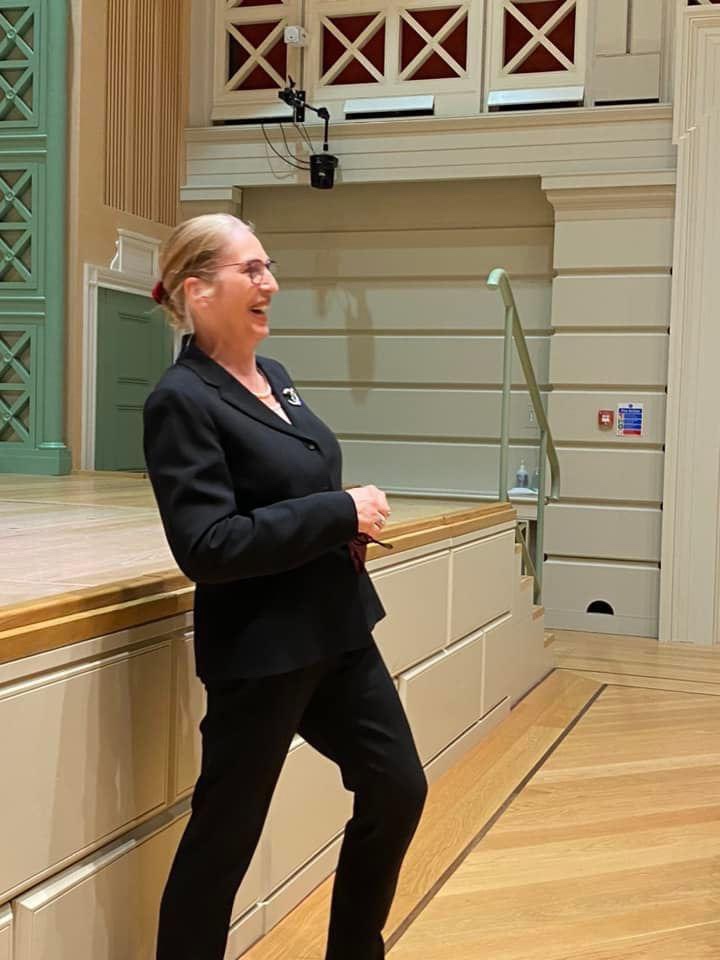
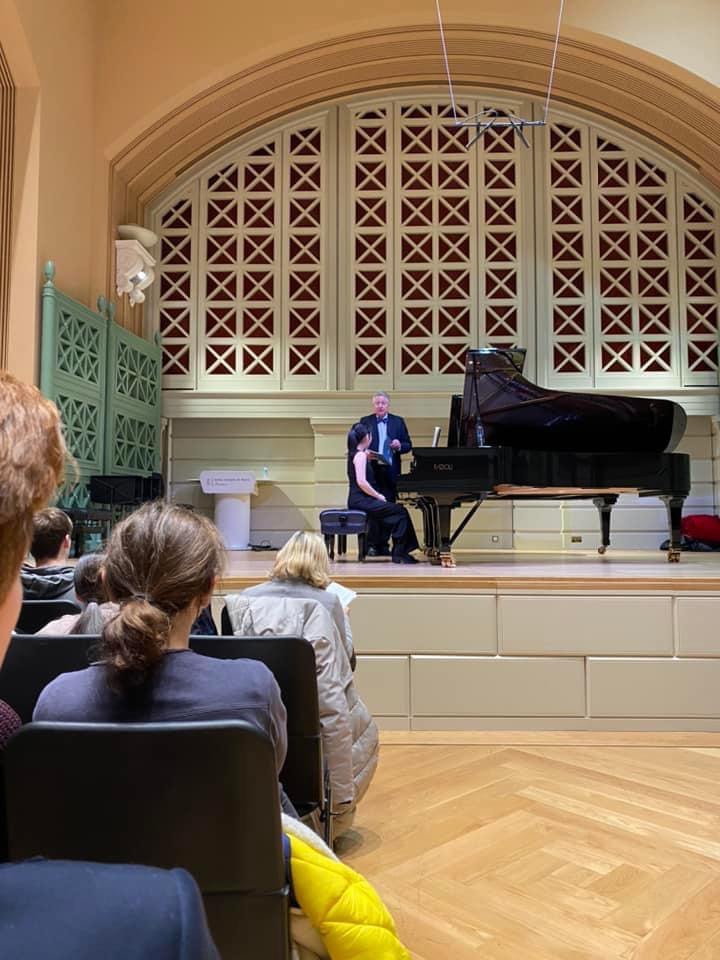
Very distinguished audience for Leslie Howard’s stimulating Masterclass at the RCM. Many students of Ilya Kondratiev present and making copious notes with their ‘Apple’pencils.
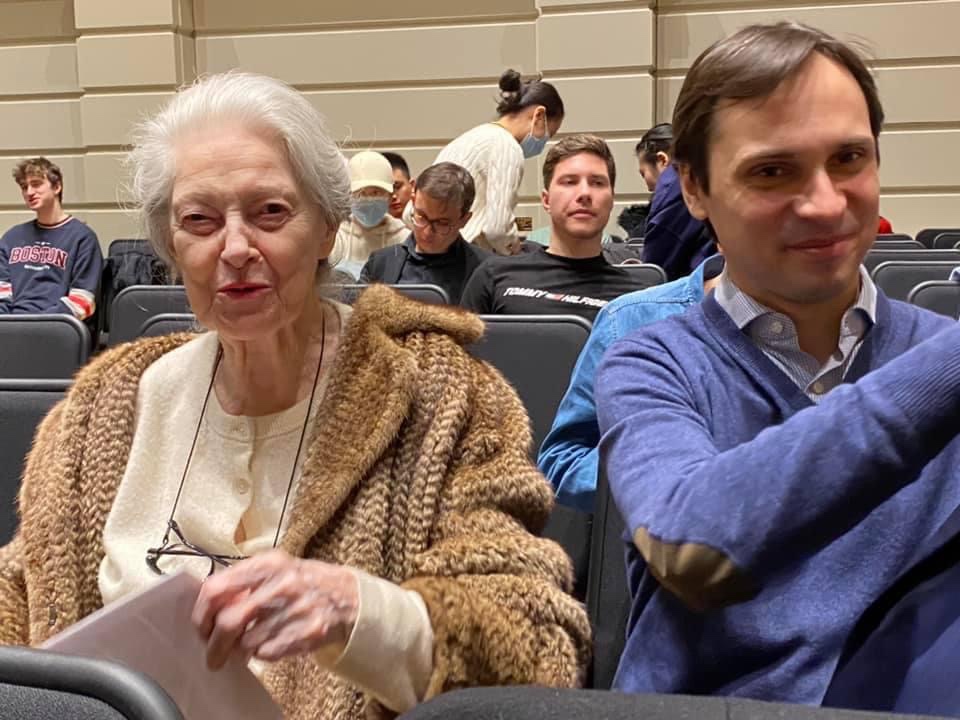
Vitaly Pisarenko,Sasha Grynyuk,Ilya Kondratiev and Leslie Howard himself all happy to see their ninety year old ‘piano mummy ‘ listening carefully to everything that was said and played.
Noretta Conci-Leech founder of the Keyboard Charitable Trust of which Leslie is one of the founding trustees and artistic director,she has a lot to answer for!
Noretta Conci-Leech with Sasha Grynyuk
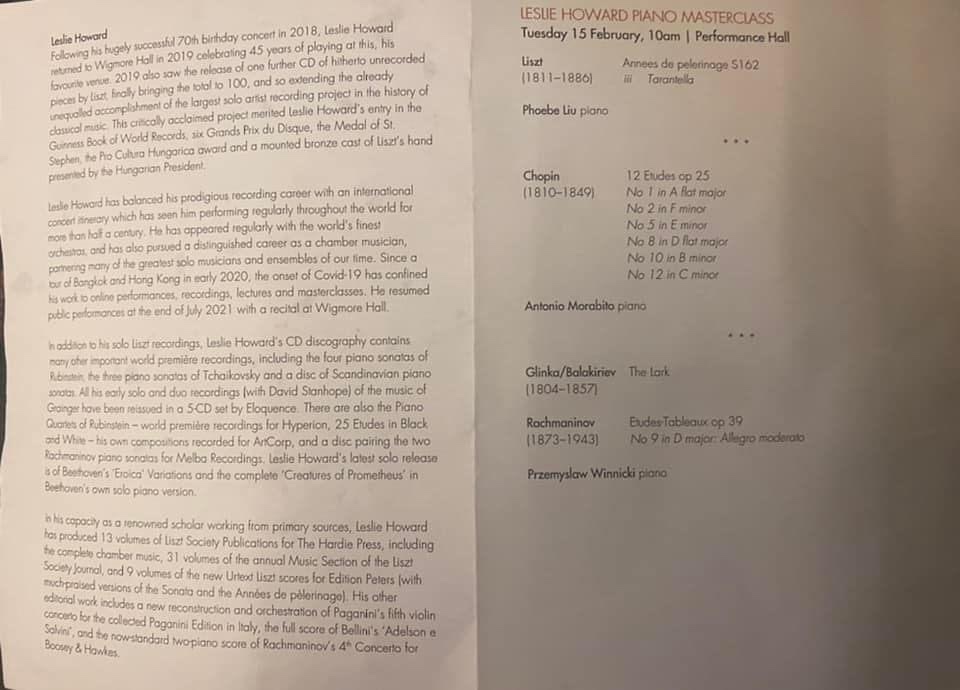
Leslie beguiling his predominantly Chinese audience with his down to earth way of expressing his extraordinary scholarship and mastery of the piano.To hear him describe Glinka’s magical ‘The lark’ as a tree with tinsel but a tree with solid roots was so refreshingly simple and surely recalls Chopin’s own description of that elusive much abused word ‘rubato’. Anton Rubinstein described the pedal as the soul of the piano as Leslie knows well having made a premiere recording of his four sonatas adding even more neglected masterpieces to the catalogue together of course with his 100 cd set of the works of Liszt. And it was the pedal and scrupulous attention to the original intentions of the composer that was the valuable message we were reminded of today.
Phoebe Liu played a scintillating Liszt Tarantella -no mean feat at 10 am!
And Antonio Morabito played six studies op 25 by Chopin with the others tucked up his sleeve for another occasion.As Leslie said you need courage to play this pivotal work in front of your colleagues.Rising to the occasion this young man with a degree in philosophy showed just what it means to dedicate yourself not only to art.
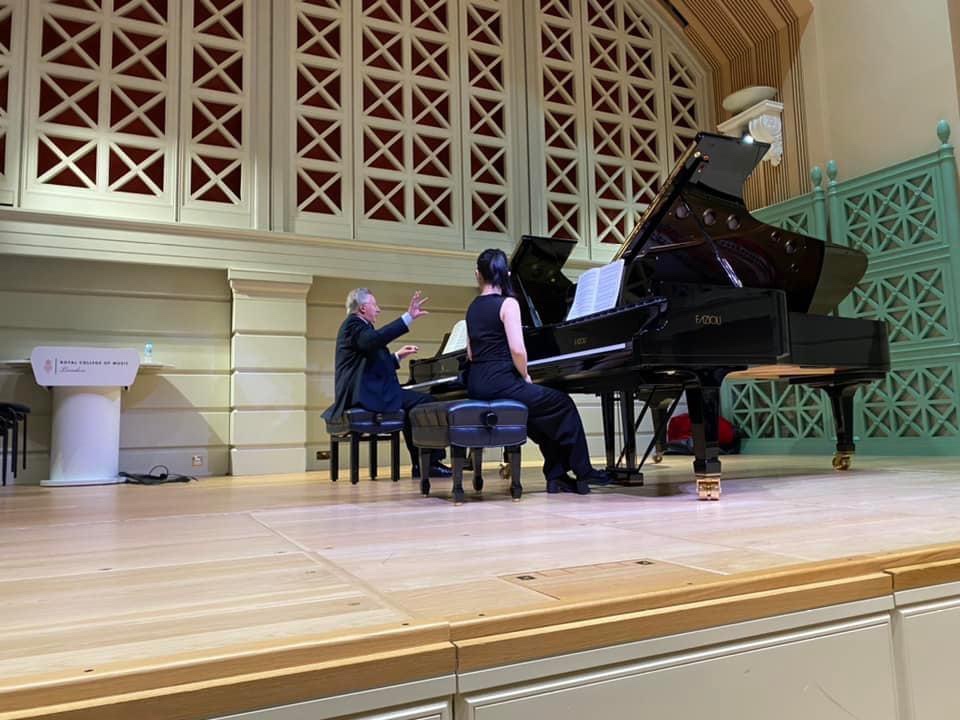
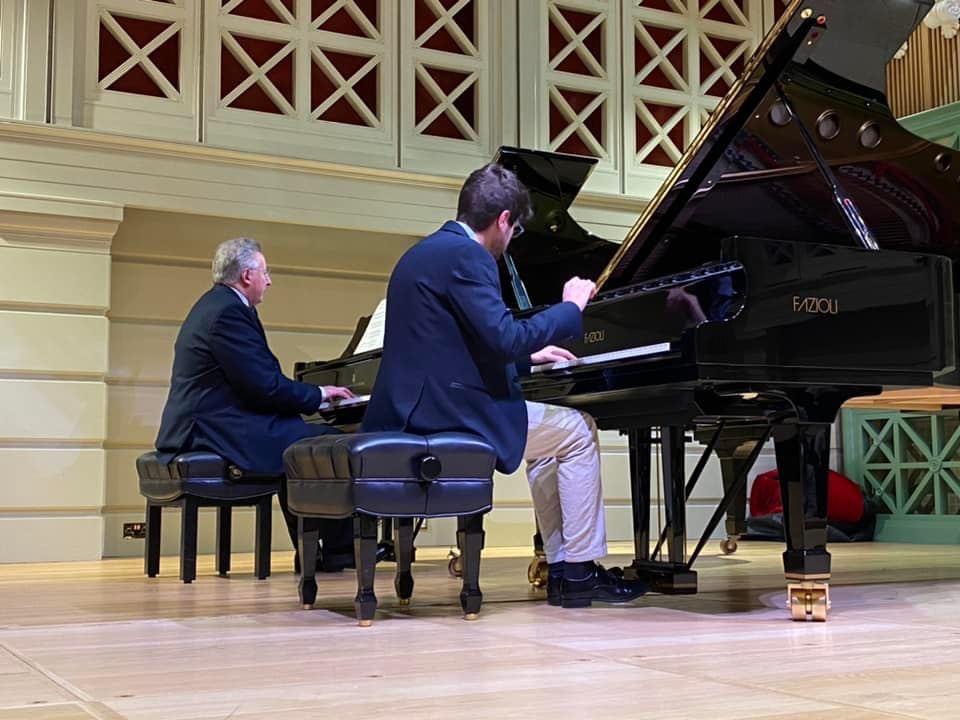
Maestro Winnicki played The Lark by Glinka and Rachmaninov’s rousing Etude Tableau op 39 n 9. And rousing it was too on this very bright Fazioli in one of the nicest halls in London with our wonderful hostess Vanessa Latarche.
Ever vigilant as she brings students worldwide to the Royal College to be filled with the scholarly musicianship and technical expertise of which we had a glowing example this morning
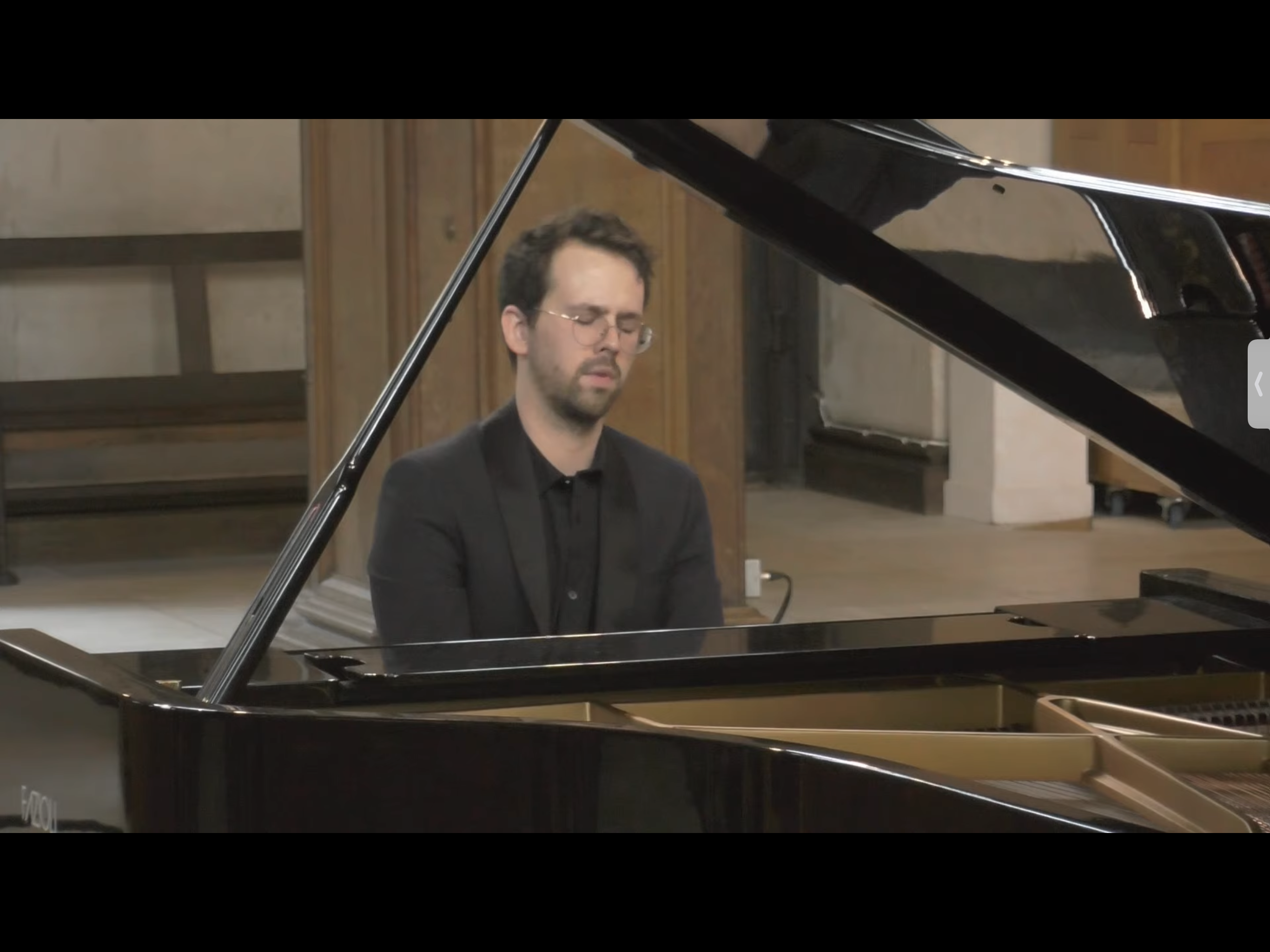
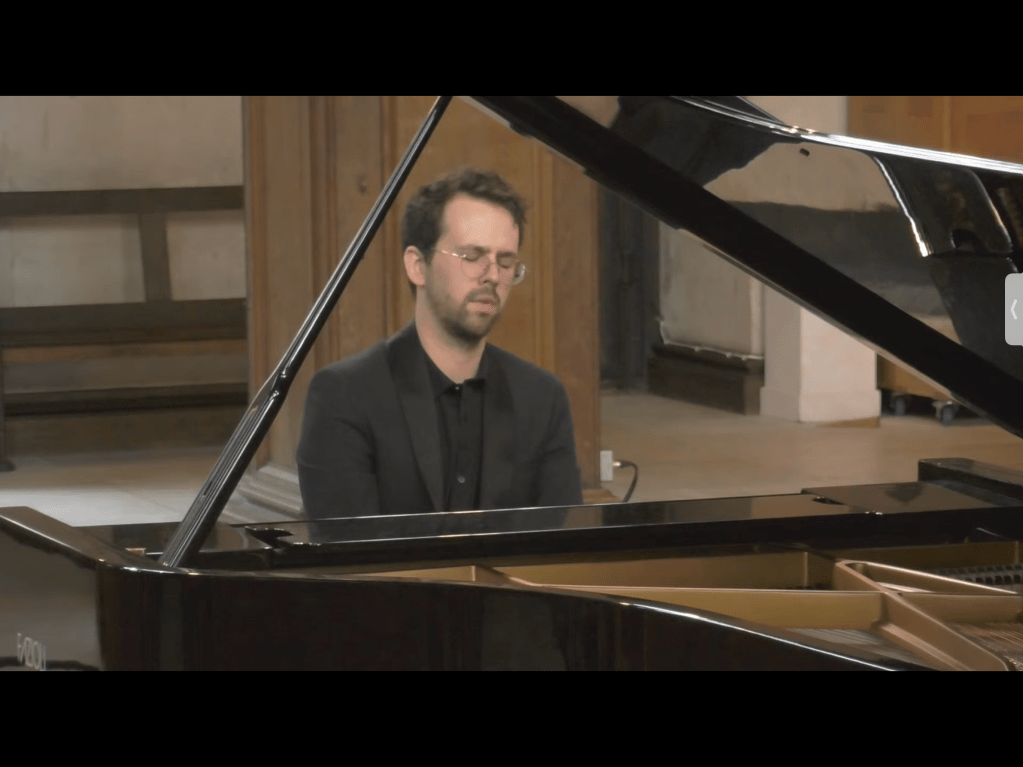
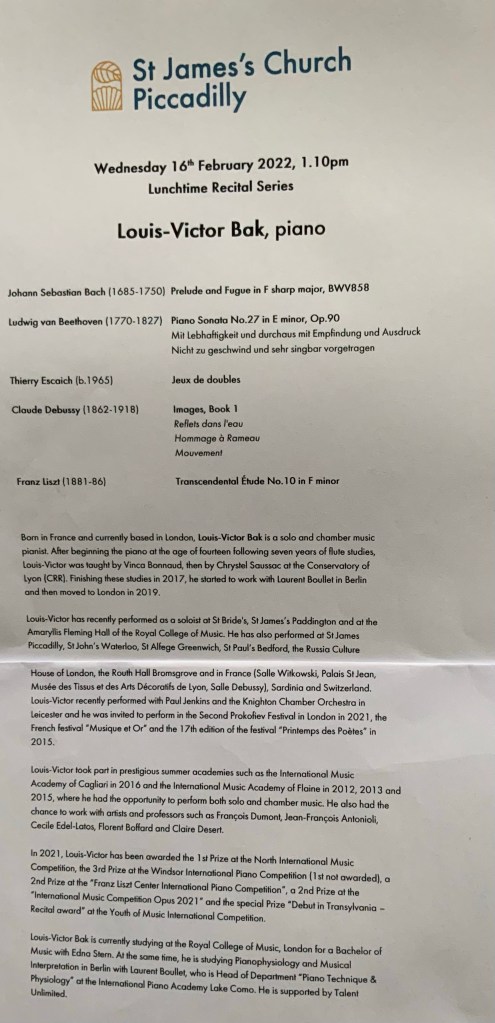
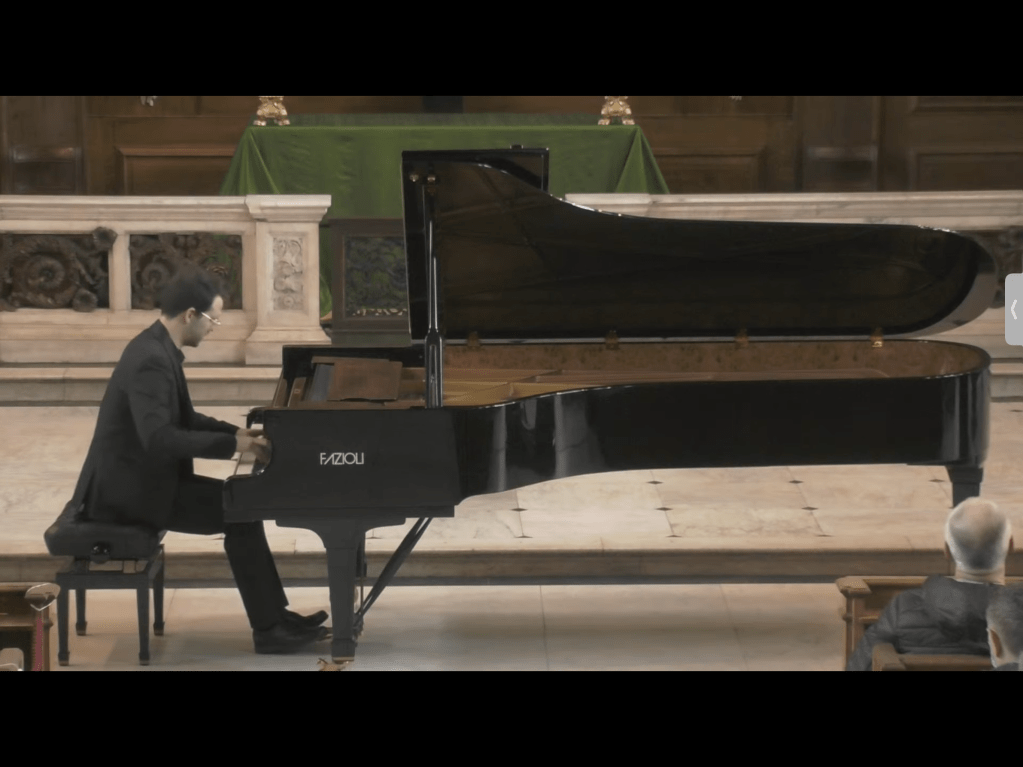
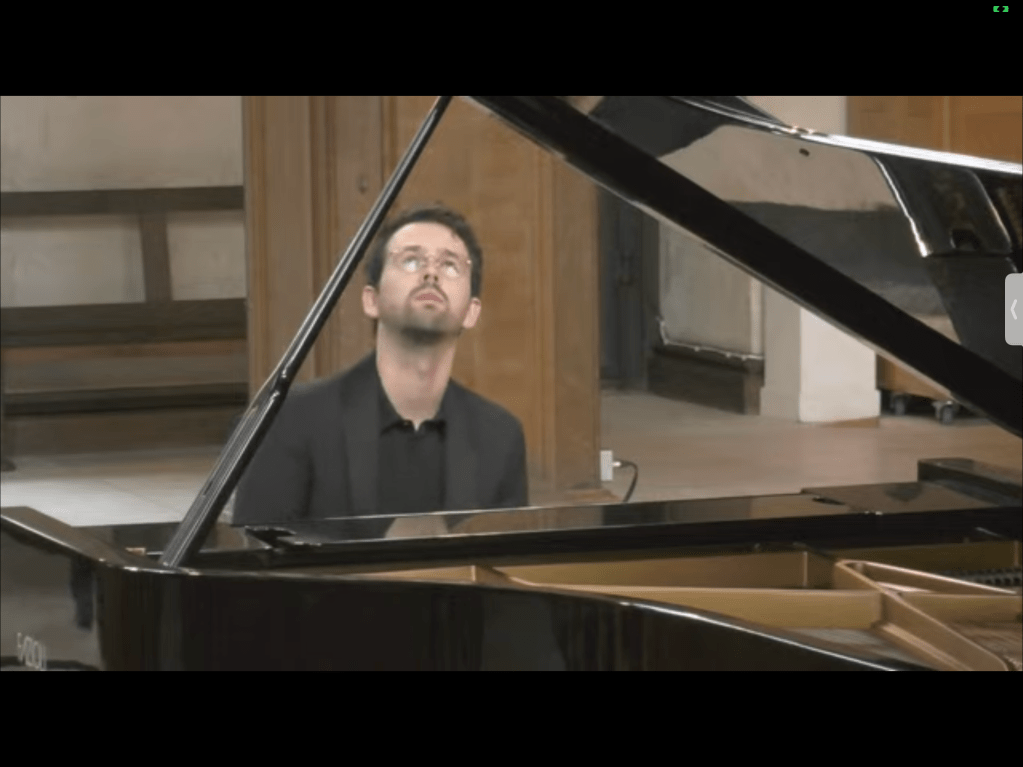
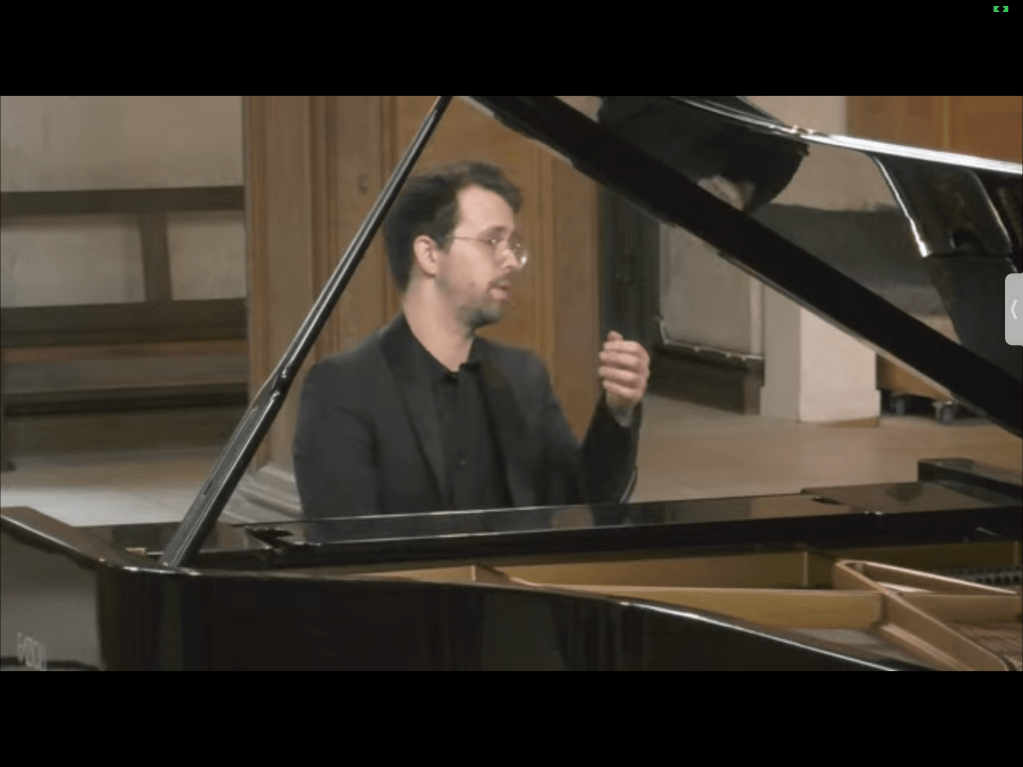
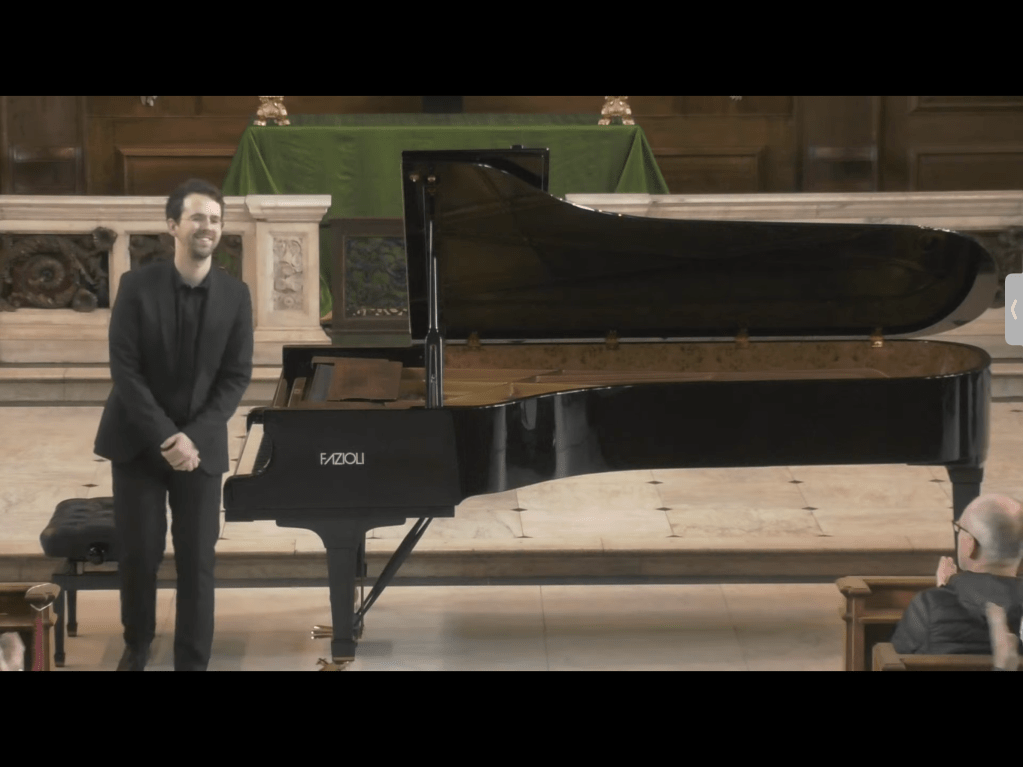
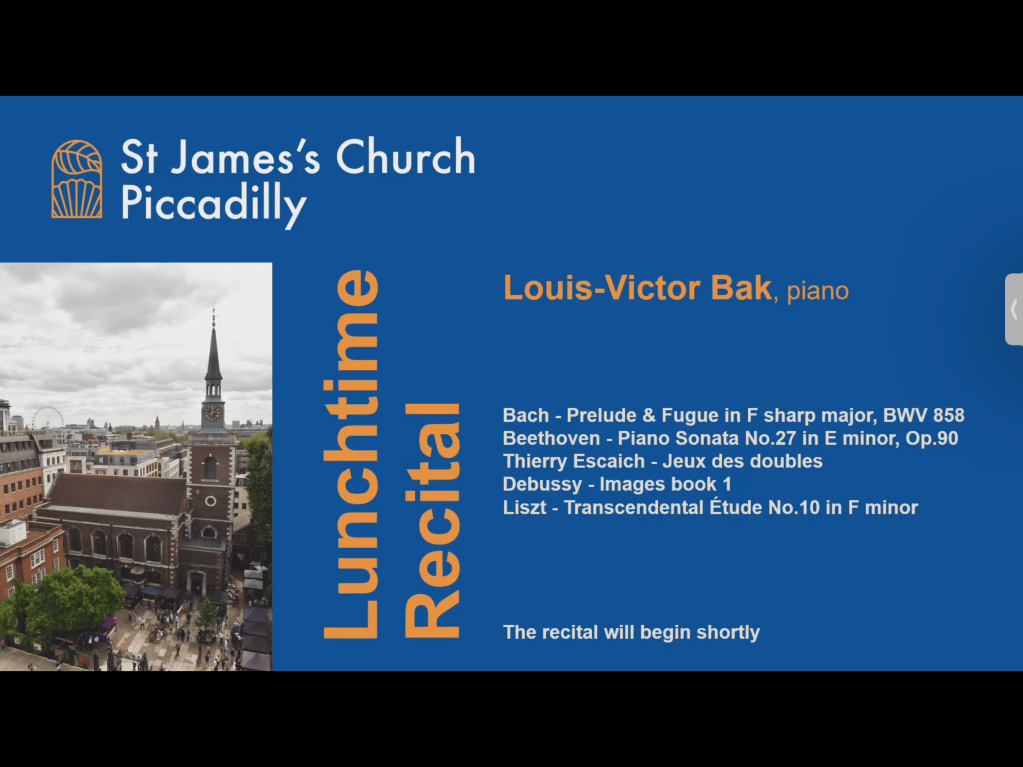
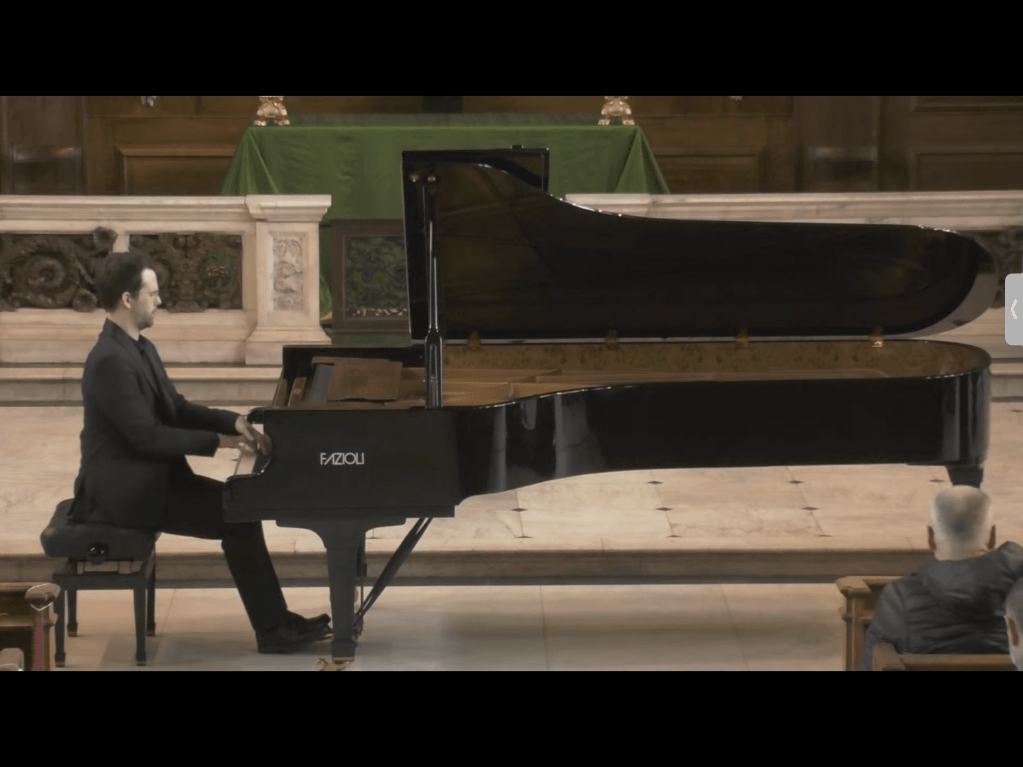
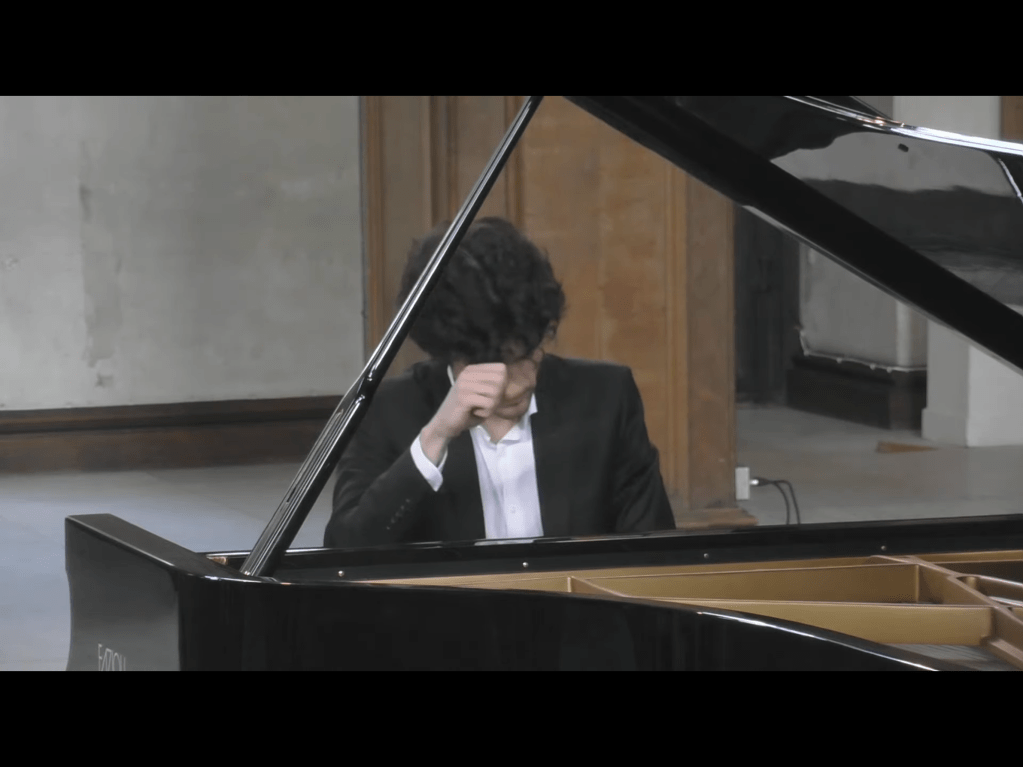
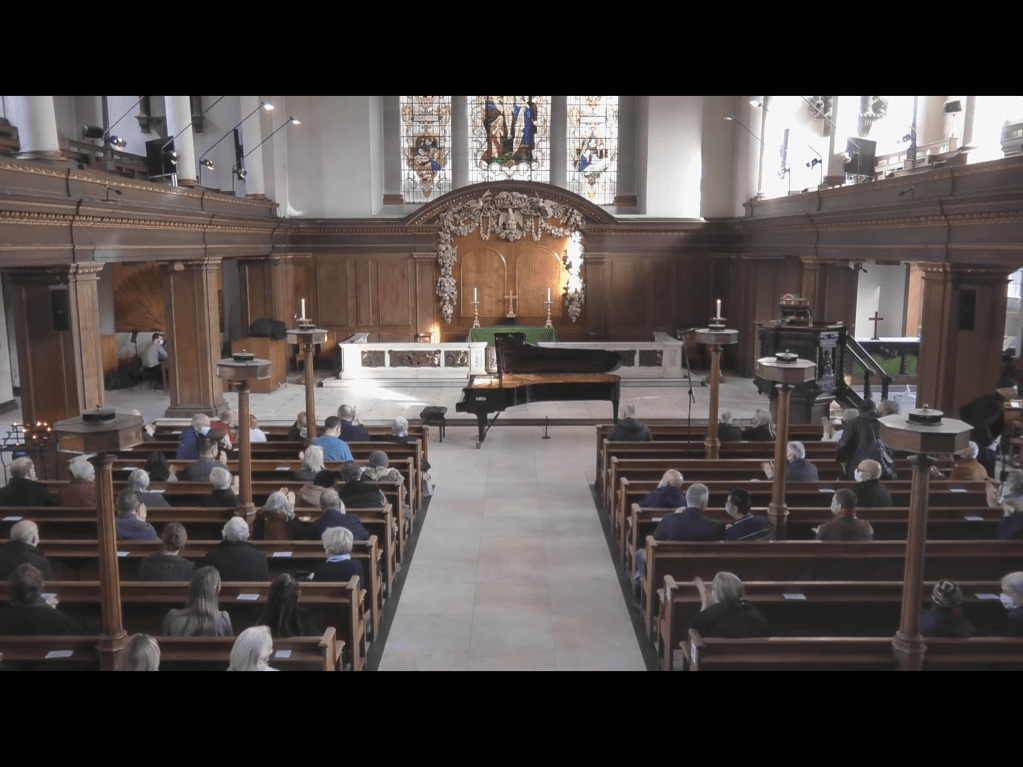
Some very musicianly playing from this young French pianist that I was able to listen to thanks again to the very fine streaming from St James’s Piccadilly.Bach’s Prelude and Fugue in F sharp book 1 was played with such flowing mellifluous sounds of an almost pastoral nature.Delicate ornamentation just added to the beauty and overall shape.The same atmosphere carried over into the three part fugue that was played with a clarity but also a sense of continuous flowing movement where even the entry of the voices did not disturb the gentle nature of this beautiful fugue.
It was the same atmosphere that he brought to the Sonata op 90 by Beethoven but of course interrupted by Beethoven’s rumbustuous character in the first movement.Great contrasts and scrupulous attention to detail but even here there was a sense of of overall architectural shape and forward movement.This the most Schubertian of Beethoven’s sonatas where the last movement is a continuous outpouring of melodic invention that Louis- Victor Bak played with great sensitivity never allowing the rhythmic pulse to vary. The melodic line always allowed to breathe though in such a refreshing natural way.I am not sure I would have changed the tempo just before the final return of the main theme but it led to a coda of disarming simplicity and beauty.
Thierry Escaich is a composer organist and improviser born in 1965 and is a unique figure in contemporary music and one of the most important French composers of his generation. The three elements of Escaich’s artistry are inseparable, allowing him to express himself as a performer, creator and collaborator in a wide range of settings.Jeux de doubles was written in 2001 and is a virtuoso piece in various episodes from the magical sounds and long held pedals of the opening to the ostinato bass over which toccata like chords are played with great virtuosity over the entire keyboard leading to ever more exciting and exacting figurations.It was a piece that showed off all the extraordinary facets of this young pianists technical and musical mastery.
The three pieces that make up Debussy’s first book of Images were played with a kaleidoscopic sense of colour but also great romantic fervour in Reflets dans l’eau dissolving into a mere murmur of such magical sounds.Hommage à Rameau was played in an almost improvised way such was the freedom and magic that he managed to convey in this most aristocratic of the six images.Movements was played with startling changes of colour in which the continual forward movement was never interrupted but sumptuous colours appeared like magic out of the mist that he had created with great technical skill of precision and delicacy.The ending was just allowed to diminish to a mere distant cloud but never for one moment disturbing the continual urgency and all embracing mist that he had created.
Liszt’s transcendental study in F minor was played with great sensitivity and passion.One of the most subtle of the 12 Transcendental studies for its gentle opening working itself up into passionate outbursts of romantic fervour.A coda of such excitement too was played with great technical assurance and like all the works he played a musical intelligence and sensitivity allied to a technical command that brought everything he played vividly to life.
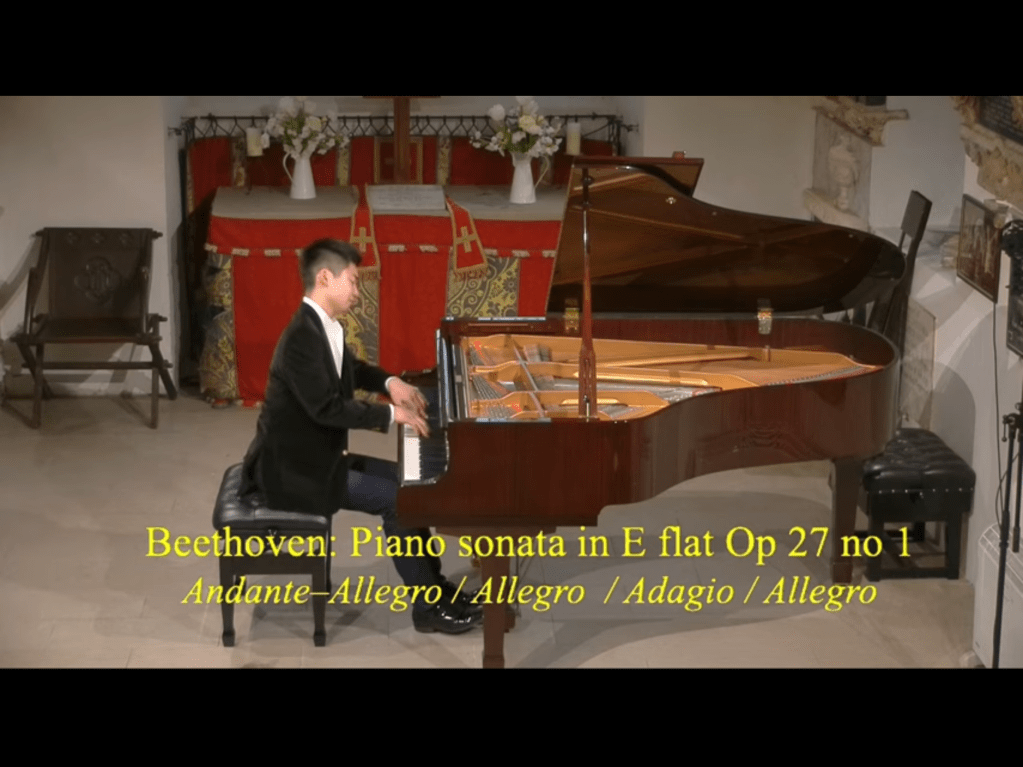
Beethoven: Piano sonata in E flat Op 27 no 1 Andante- Allegro / Allegro / Adagio / Allegro
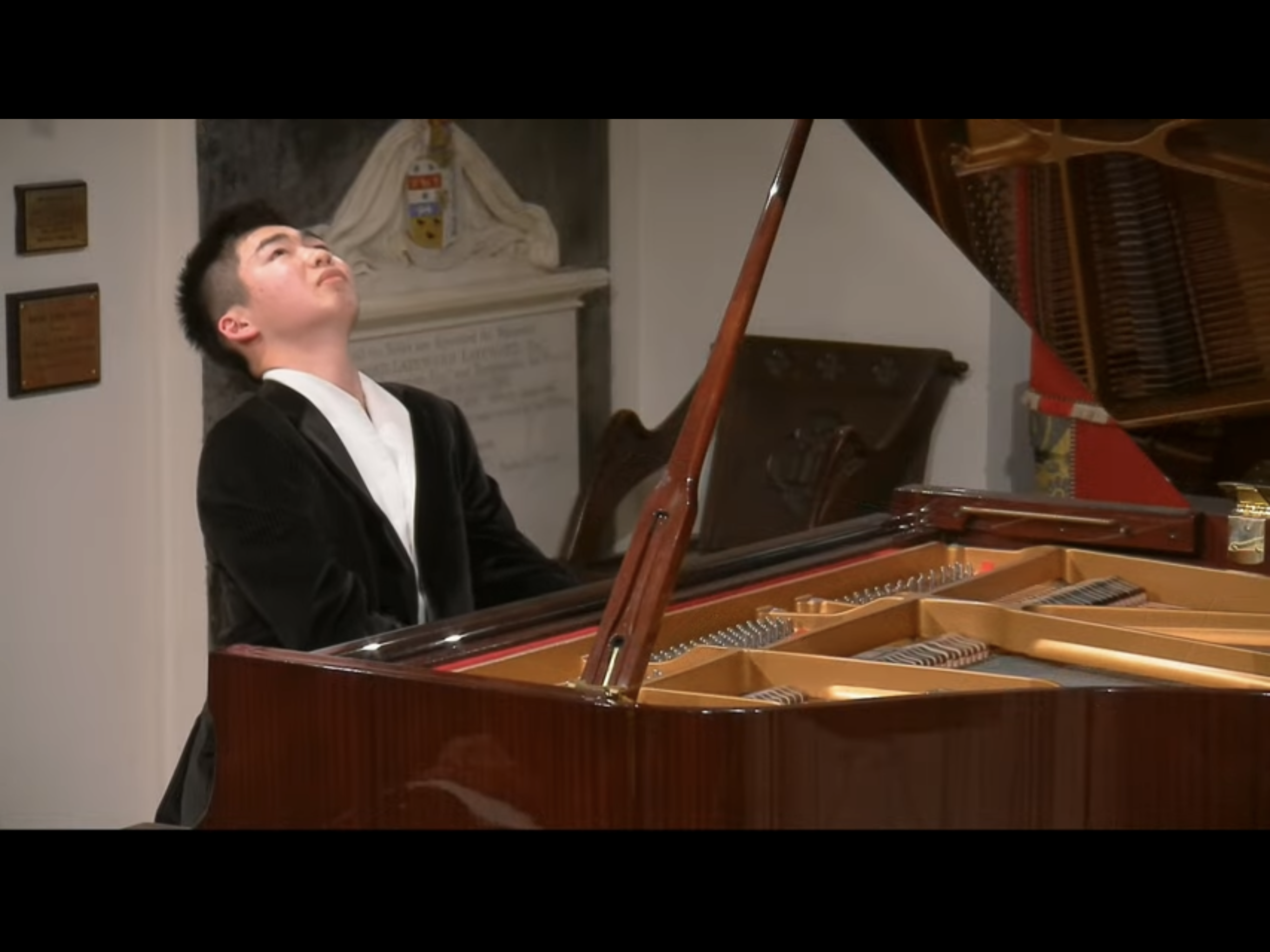
Some quite extraordinary playing from a young master. From the whispered opening of Beethoven’s op.27 n.1 ,the much neglected twin of the so called ‘Moonlight’Sonata,that was transformed into astonishing sudden changes of character from the rumbustuous to the soul searching with a microscopic attention to the composers indications.A rhythmic drive that swept all before it.Here was the real blue print of Beethovens rapid changes of mood and impatient soul searching. The Adagio had such stillness and subtle colouring dissolving in a cadenza of pure magic and an Allegro vivace of the same quite extraordinary drive that I have only known from Serkin’s searing performance many years ago in London.Such energy combined with control and attention to detail that would seem impossible to maintain in lesser hands.The magical return of the Adagio ,a stroke of true genius,but then the mad impatient drive to the final slam of the door.A tour de force of transcendental playing and a true understanding of the character of Beethoven as indicated in minute detail in the score.
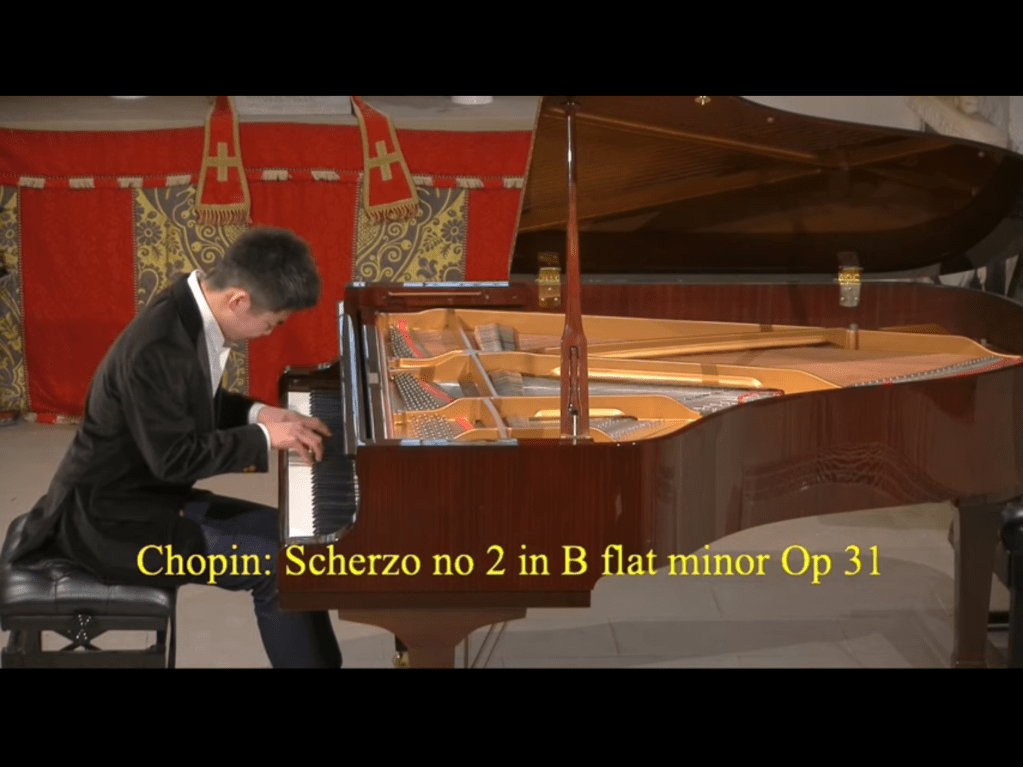
Chopin: Scherzo no 2 in B flat minor Op 31
Even more astonishing was to listen to Chopin’s much abused second scherzo as if listening to a completely new work.Of course ‘ sotto voce’ is much more than just ‘ piano’ and what a contrast it created with the heroic chordal interruptions.A true Orpheus in Hades so often smoothed over with too much pedal and lack of attention to Chopin’s scrupulous pedal indications.Anton Rubinstein said that the pedal was the soul of the piano but I think soul in this context means the composer indicating to us via the pedal indications the true architectural contour of colour and shape.There were so many things revealed in this performance that it was as though I had never heard it before with every phrase revealed in its naked simplicity and sheer beauty.Sumptuous sound and astonishing technical mastery .The subdued beauty of the sostenuto transformed into a golden web of magical sounds from which Shuntas magic eye could point to a subtle bass counterpoint with such good taste.The gradual build up to the climax was quite breathtaking,the astonishing downward scale leading into the aristocratic explosion and inevitable heroic climax and the gradual dissolving to the return of the ever mysterious ‘ sotto voce’.This time with the long held second note becoming ever more menacing.The excitement of the coda was all the more astonishing for its controlled frenzy with such subtle colouring that never allowed the texture to harden or be muddied.
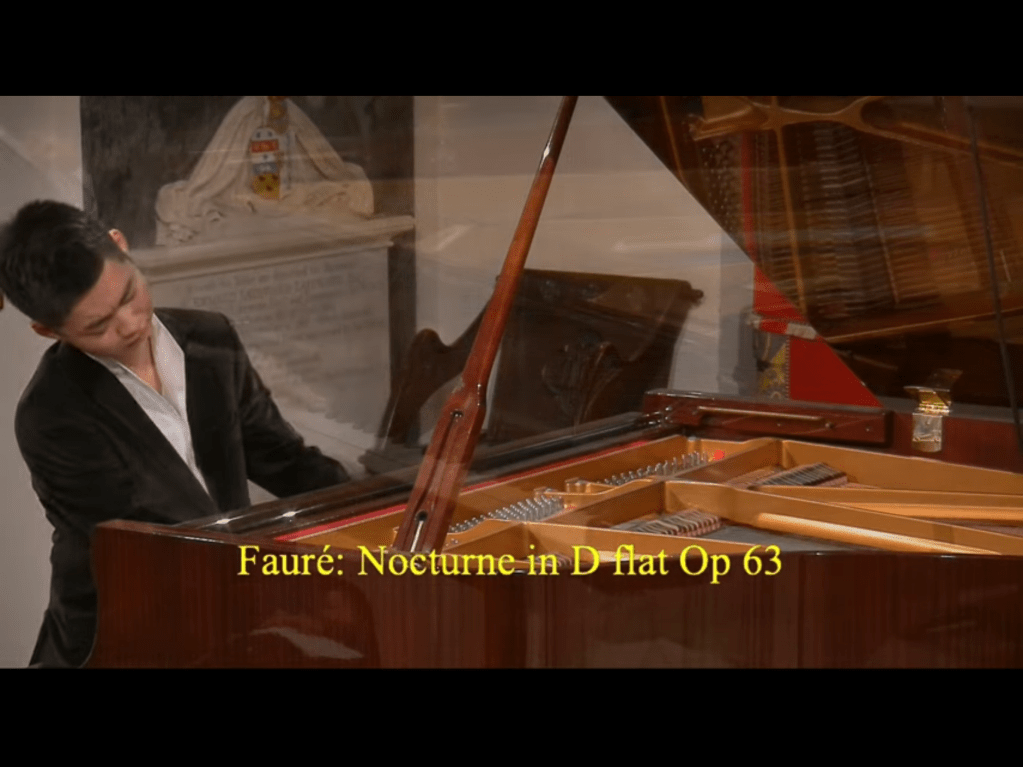
Faure: Nocturne in D flat Op 63
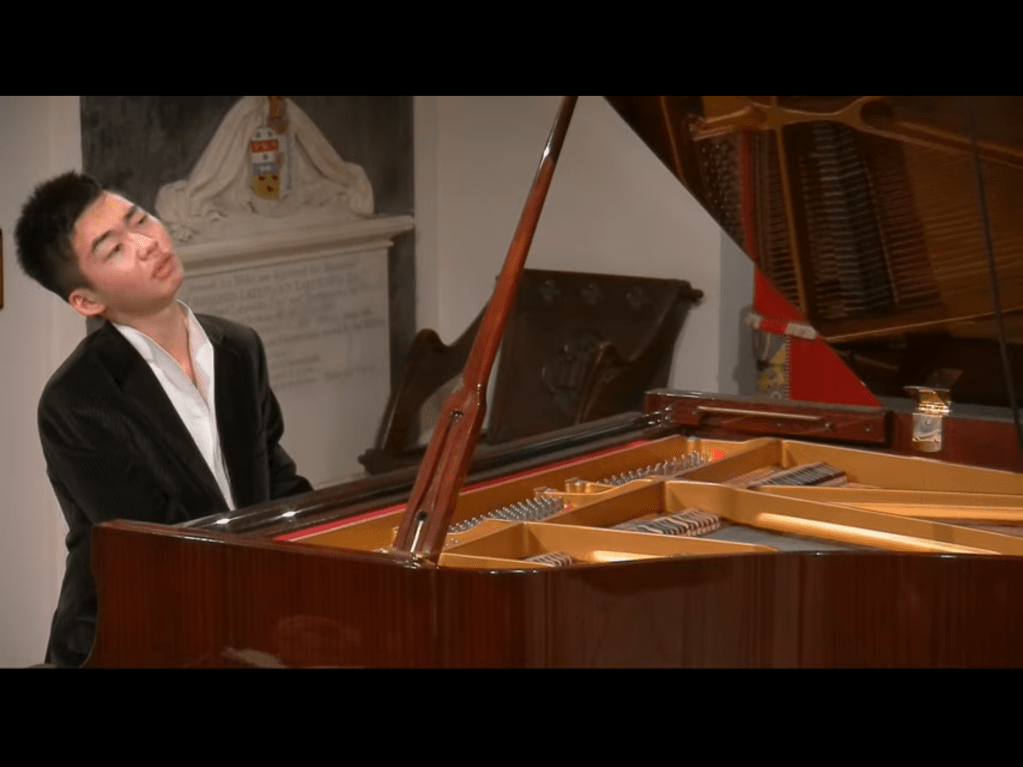
Faure 6th nocturne was played with a maturity way beyond his barely seventeen years.Such subtle sounds and refined rubato where the deeply moving melodic line had an inner meaning,each note shaped and caressed with loving care without any external distortion or rhetoric.Technical feats of fleeting jeux perle sounds in diminuendo or the crystal clear unpedalled flight of imaginary birds on which floated a radiant melodic line passed to the listener unnoticed .Art that conceals art indeed from an artist dedicating his superlative technical command not to self exultation which would be understandable for such a talented teenager.Here was an artist ready to sacrifice his own applause in a demonstration of modesty and humility as he searches for the true meaning that lies hidden in the score.Hats off to William Nabore who insists that after Rachmaninov 3 and a great following in Japan since his first public performances from the age of ten he must now concentrate on delving deep in the scores of great masterworks rather than seeking out short lasting adulation as a child prodigy. The fluidity of Shuntas movements too were so natural and just outlined the sounds that he could conjure from an instrument that we have heard many pianist play.Today this good well used Yamaha was made to sound like the most magnificent concert piano that one could imagine.
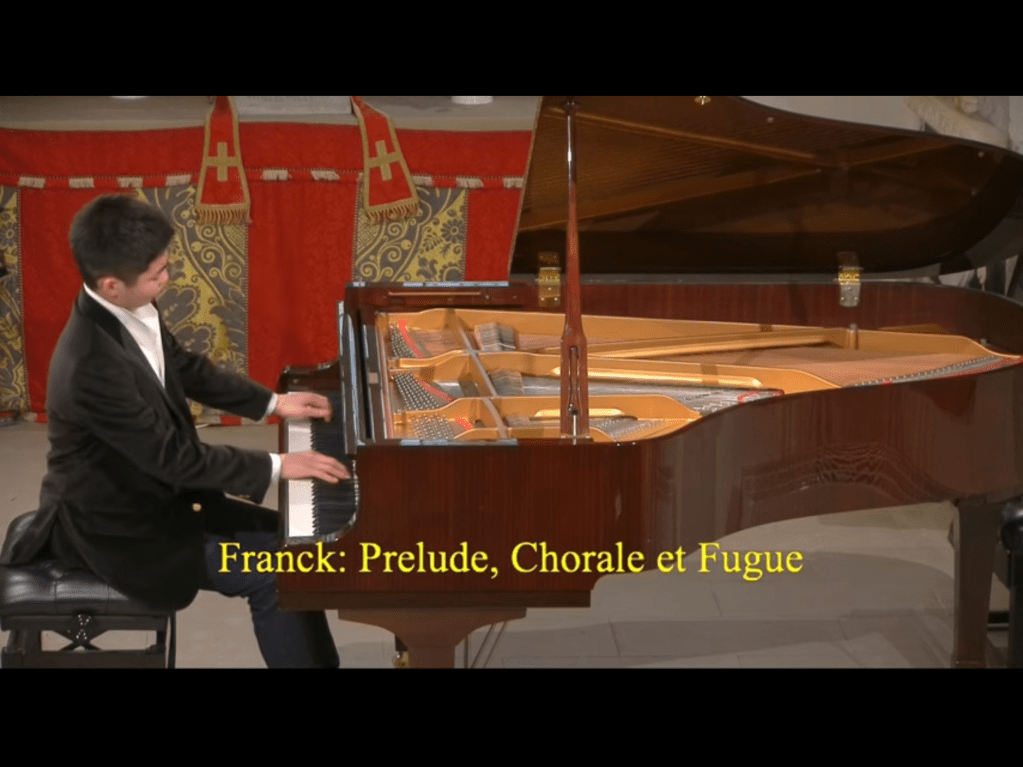
Franck: Prelude, Chorale et Fugue
Cesar Franck showed off every facet of his quite considerable artistry.A very difficult work that can so easily become episodic instead of a unified whole leading like Beethoven’s op 110 to the final exultation in the final fugue. From the ethereal opening and it’s dramatic declarations to the extraordinary chorale spread over the entire keyboard where every chord had not only an outer shape but an inner radiance that finally becomes of an unbearable intensity before the simple statement of the fugue.The reappearance of the opening motif in the middle of the fugue is a master stroke and one of those magic velvet moments that can take ones breath away as it did in Shunta’s sensitive hands. The build up of the fugue and combination of all the melodic strands was masterly with Shunta’s sense of passionate control and sense of ecstasy ( the same ‘star’as in much of Scriabin).The animal energy and sumptuous full sound in the final coda was as overwhelming for us as it was for him.Je joue,je sens,je transmet, indeed.
It was in the encore that Shunta showed his aristocratic sense of style and sensitivity to sound as he translated Chopin’s pedal indications into magical sounds of ravishing beauty. Like Pollini looking carefully into the score and the composers indications rather than relying on tradition and it gave a refreshing radiance and new life to a much loved classic of the romantic repertoire.Welcome to the UK at the start of a glorious career for many years to come.
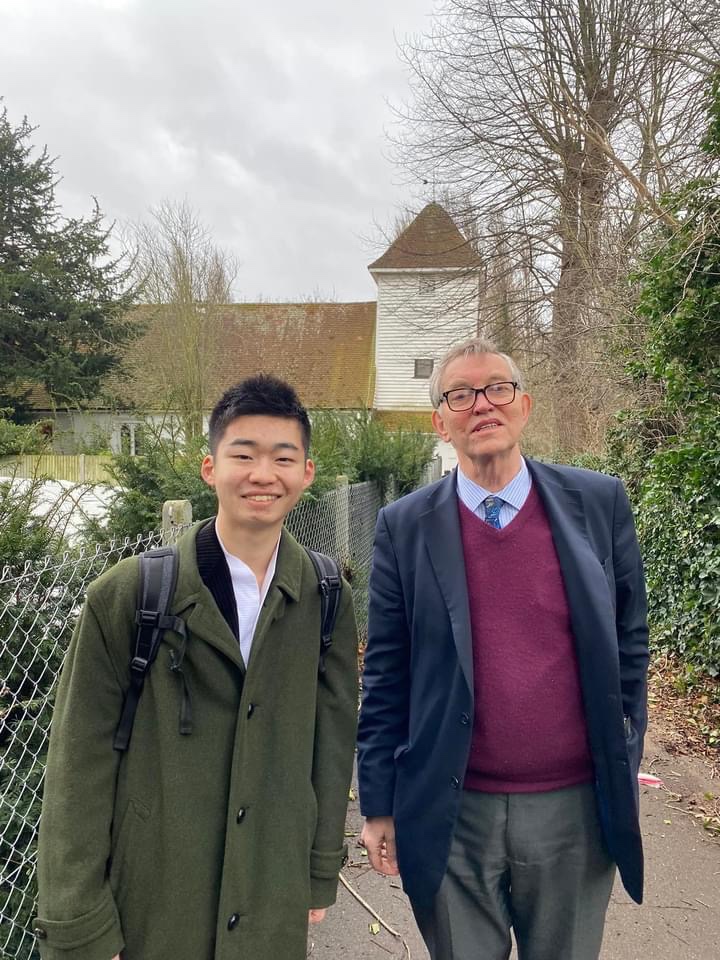
Shunta with Dr Mather the deus ex machina of St Mary’s the Mecca for young pianists where he was invited to make his UK debut.
Shunta Morimoto was born in Kyoto, Japan in December 2004. From an early age he showed great talent for the piano. At the age of 12, in 2017, he won the prestigious First Prize and the “Fukuda Scholarship Award” by the Piano Teachers Association of Japan, one of the most important prizes for a young musician. This allowed him to study with some of the most important teaching pianists in the world. He took part in the Van Cliburn Junior competition in Dallas, Texas at age 14 in May 2019 with exceptional public success. His performances have gone viral on the Internet and have earned him a large following of fans, critics, musicians all over the world. Since then he has performed in concert with leading musicians and symphony orchestra in Japan and abroad. In September 2020, he won the Second Prize in the “Piano Teachers Association of Japan” competition, one of the most important competitions in Japan. Following this victory he played Rachmaninov’s Third Piano Concerto in with the Tokyo Symphony Orchestra.In the same year he was invited to the International music festival ARSONORE in Graz to perform the sextet for piano and strings by Mendelssohn Bartholdy with members of the Hagen quartet.In 2021 he played several concerts in Tokyo playing Schumann’s concerto for piano and orchestra in A minor with Tacticart orchestra and Franck’s piano quintet and the second sonata for violin and piano by Brahms. In November 2021, he had recital in the historic hall of the Santa Cecilia Conservatory in Rome. He currently studies with Maestro William Grant Naboré as a special student of the International Piano Academy Lake Como and studies piano accompaniment in the class of Maestro Giovanni Velluti at the Santa Cecilia Conservatory in Rome.
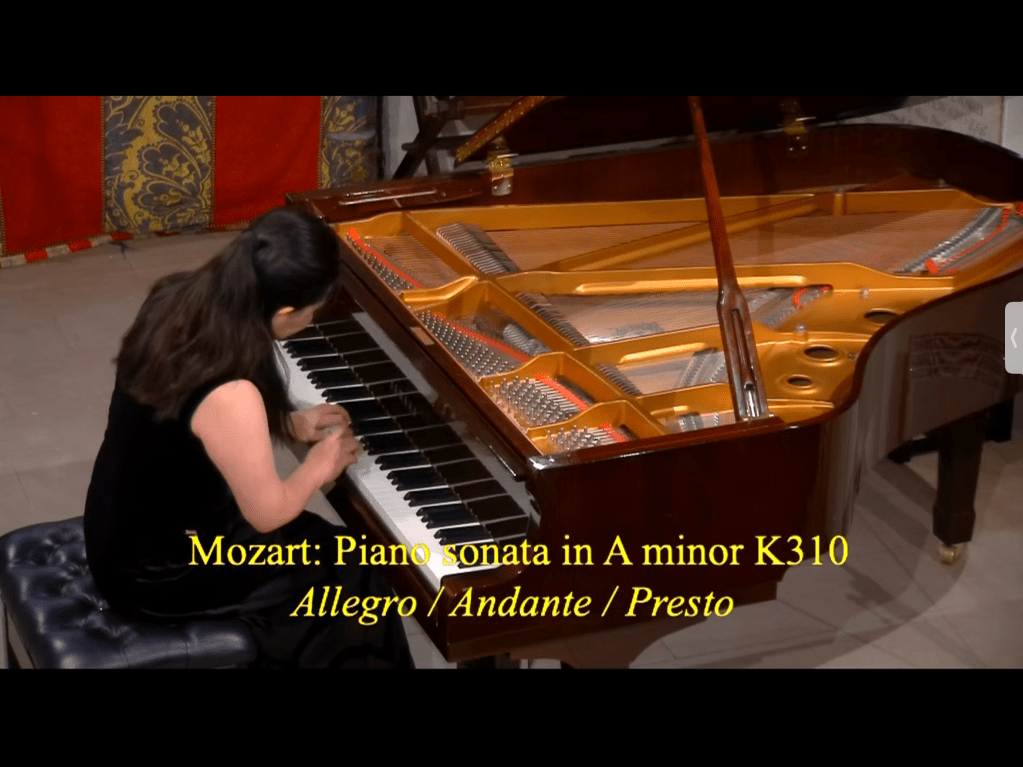
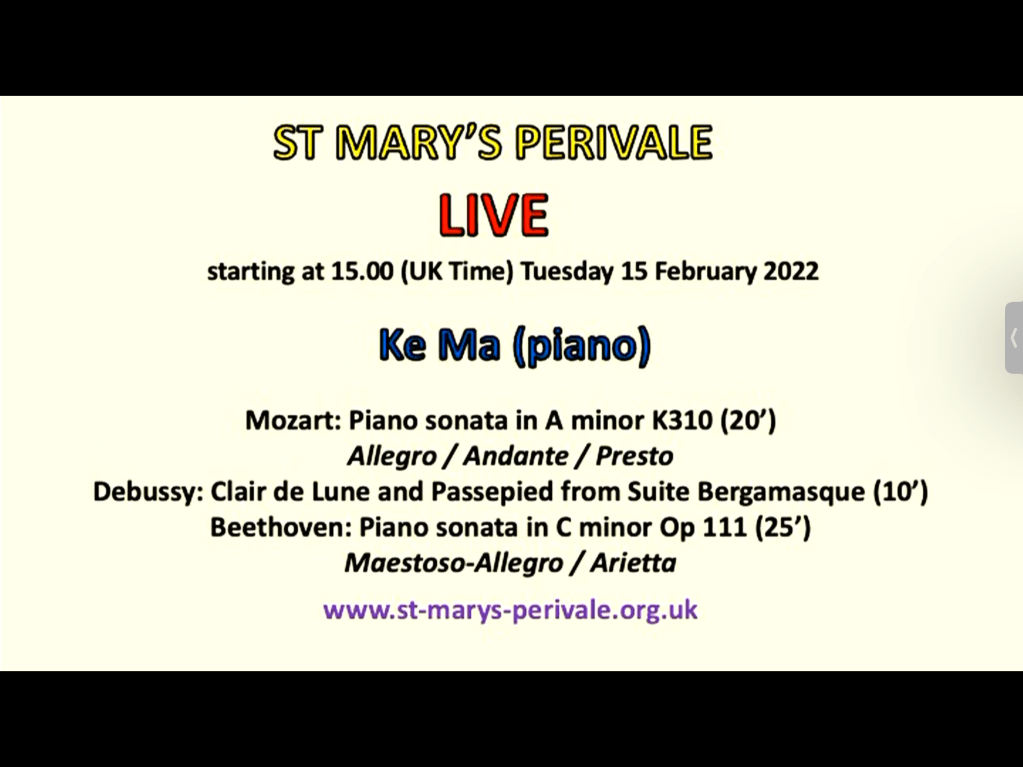
Mozart: Piano sonata in A minor K310 Allegro / Andante / Presto
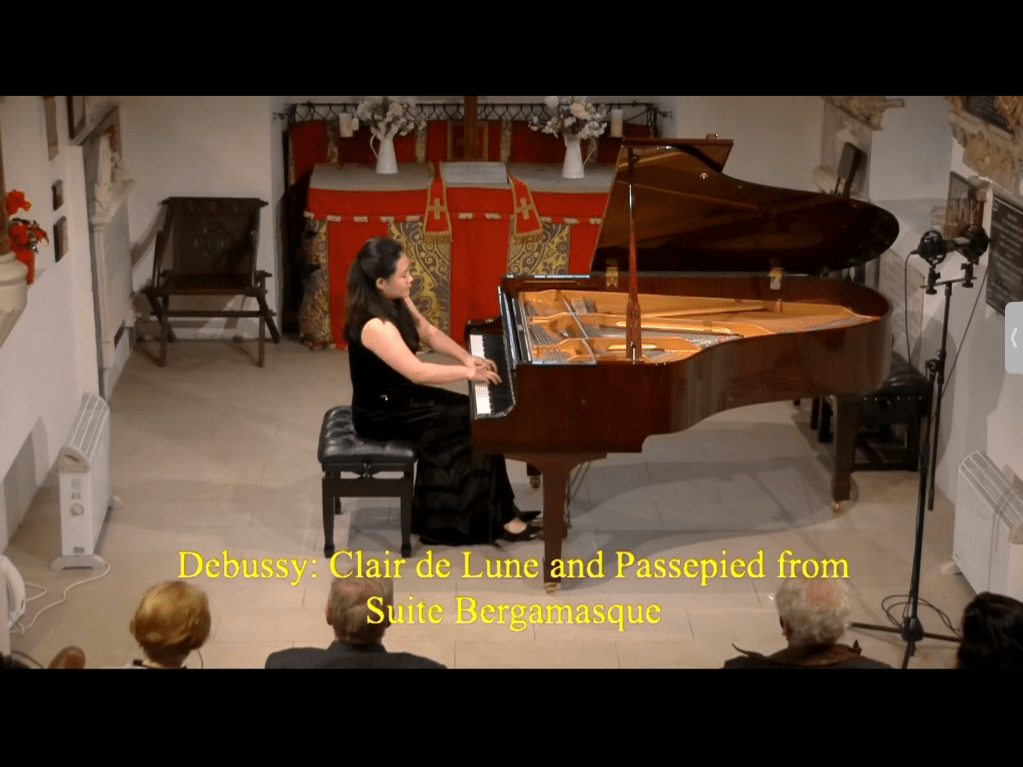
Debussy: Clair de Lune and Passepied from Suite Bergamasque
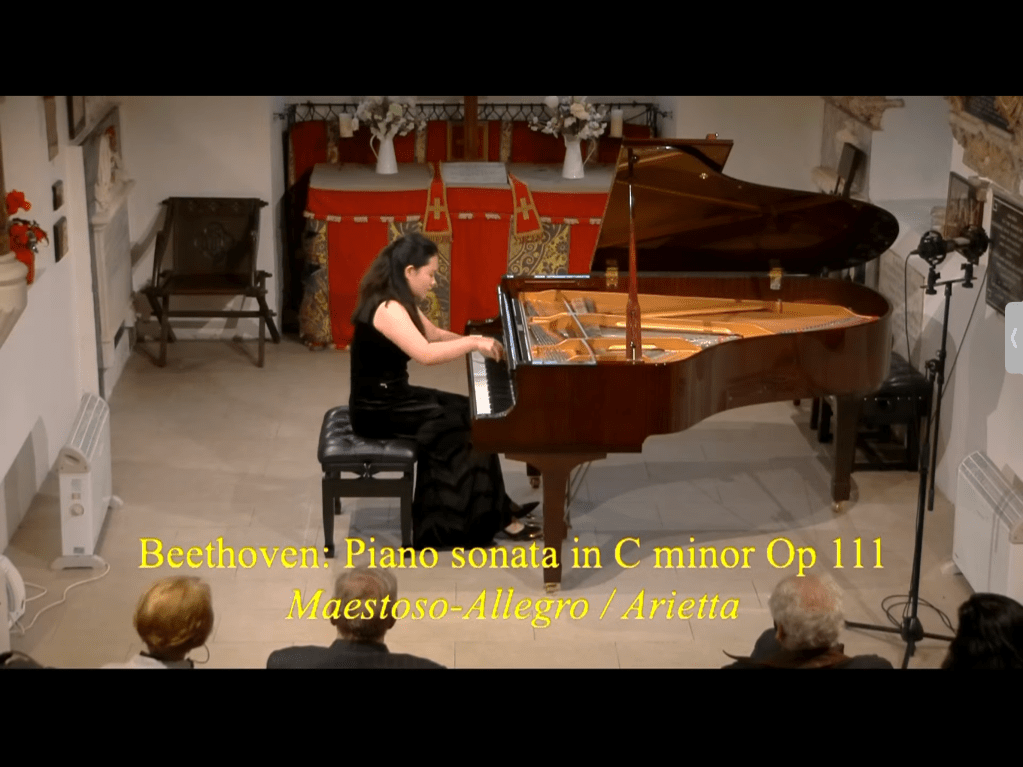
Beethoven: Piano sonata in C minor Op 111 Maestoso-Allegro / Arietta
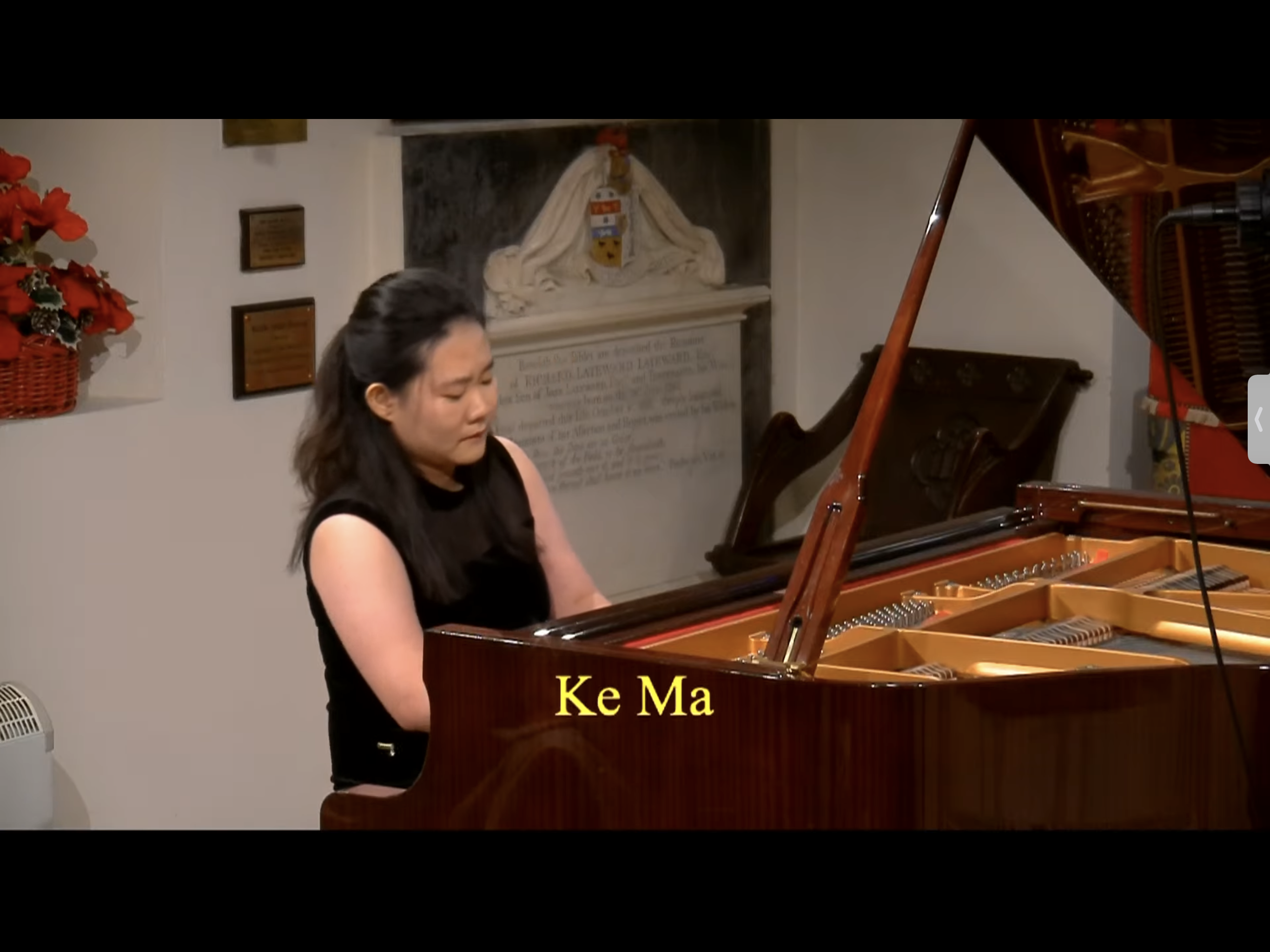
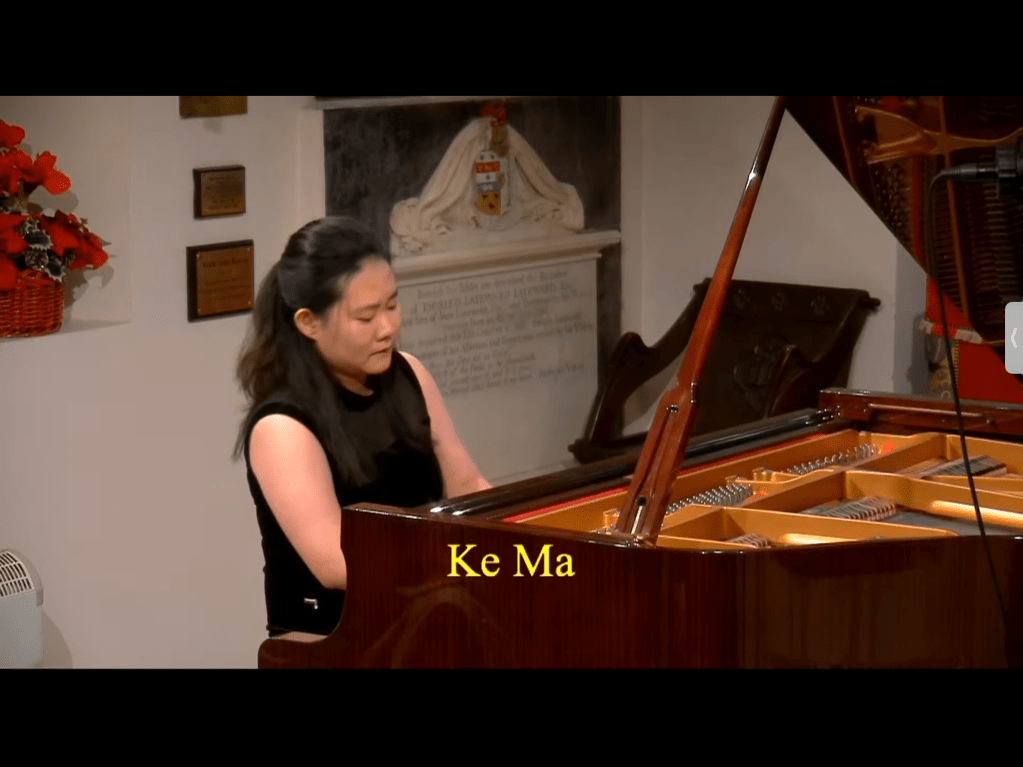
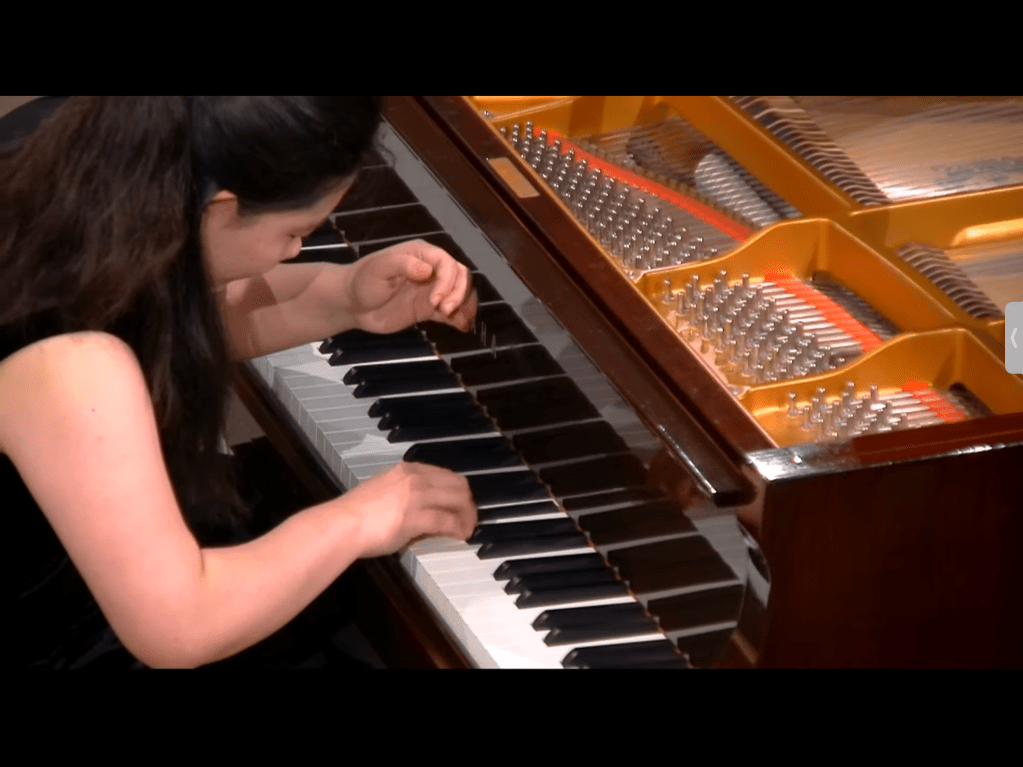
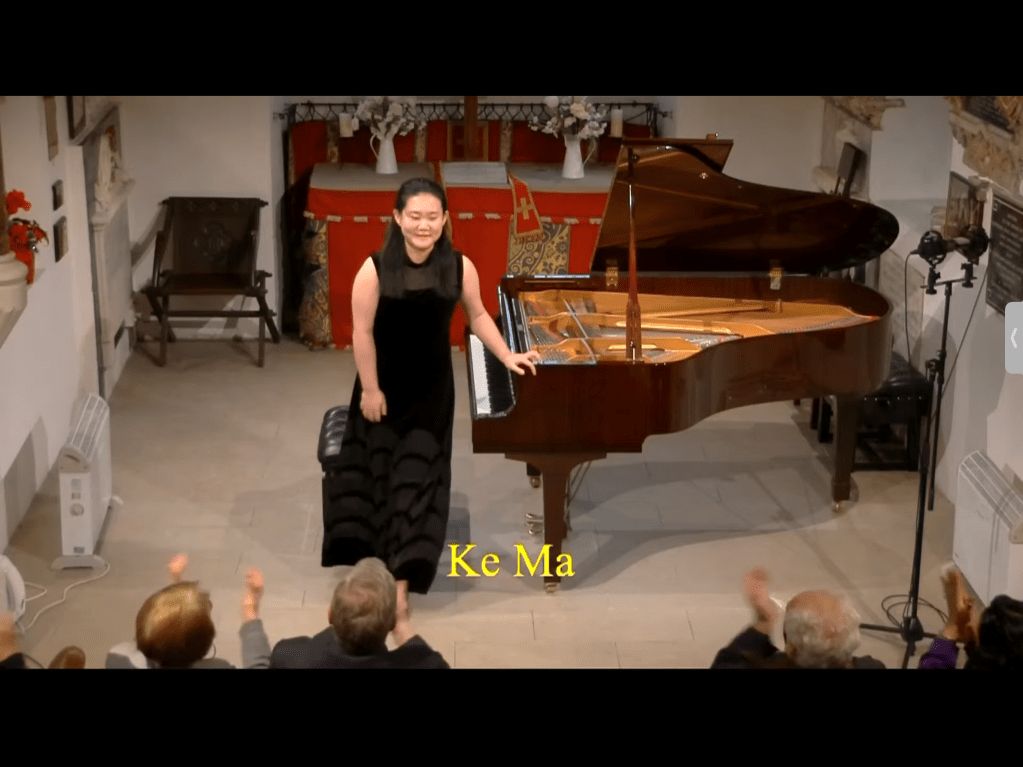
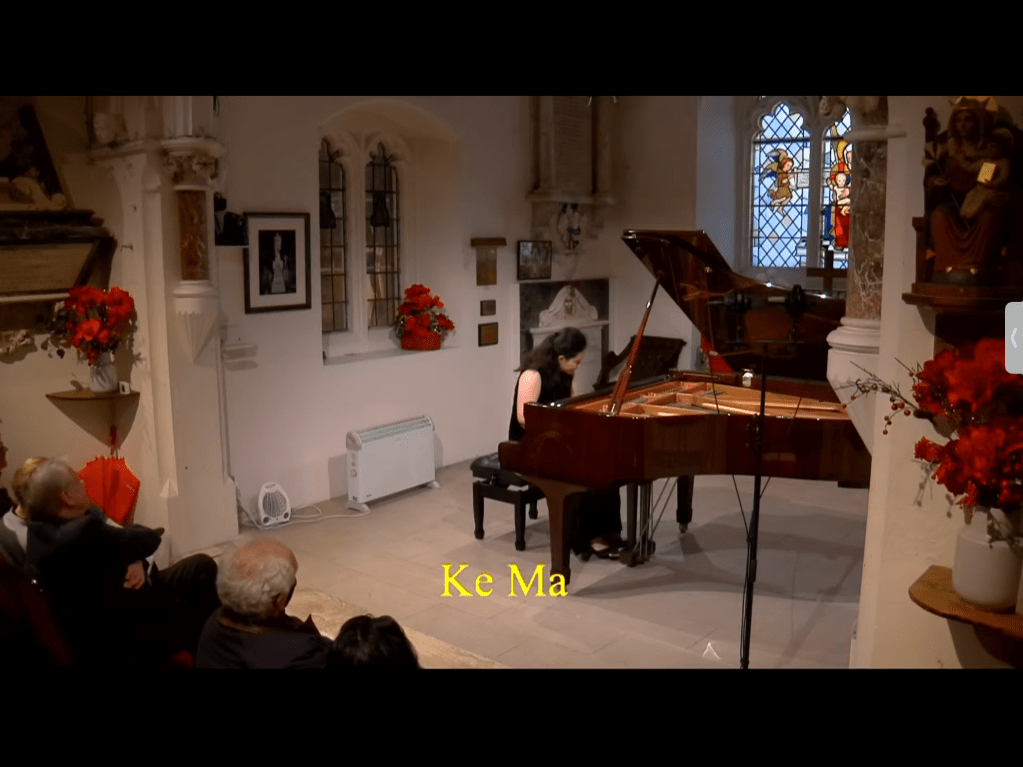
Luminosity and musicianship went hand in hand today as Ke Ma’s limpet like fingers delved deeply into each key extracting sounds of gold on her musicianly journey with Mozart,Debussy and Beethoven. Reminiscent of the all too often overlooked Gina Bachauer who could center each note with compelling authority and beauty as her superb sense of style and musicianship allowed a journey of indisputable nobility and directness. A Mozart one of only two sonata in the minor key.The A minor K 310 written at the time of his mothers death was given a performance of a richness of sound of flowing beauty of almost operatic proportions.The development could have been almost improvised in its controlled freedom of expression.The Andante was indeed ‘cantabile con espressione’ beautifully phrased.The dark waters of the middle episode were played with controlled drama before the return to the beautiful opening.One of Mozart’s most poignant utterings and a wonderful tribute to his mother The whispered gasps of the Presto were played with absolute clarity and rhythmic energy.The magic change to the major key never upset the unrelenting forward movement but just covered it in gold dust as only Mozart or indeed Schubert could do.
Claire de lune was very slow but with such a subtle sense of balance and clarity that there was magic in the air as she just touched the bass notes which allowed the chords to vibrate on high before the etherial final glimpse of this beautiful landscape. Passapied was played with driving energy of jeux perlé reams of notes that gave such sofistication to such a simple popular melodic line.
Beethoven’s last Sonata op 111 the second time we have heard this in Perivale this week (Cristian Sandrin played the trilogy last week https://christopheraxworthymusiccommentary.wordpress.com/2022/02/03/cristian-sandrin-the-beethoven-trilogy-birth-of-a-great-artist/.It) was given by Ke Ma today a performance of aristocratic nobility and simplicity. The velvet radiance of her sound allowed us to follow the great architectural lines with directness and simplicity.Her intellectual understanding and superb musicianship took us on a journey from the nobility of the opening to the turbulence and anguished radiance of the recitativi on to the sublime beauty at the end of the Arietta. Rarely have I heard the wonderland of sounds that Beethoven creates played with such beauty and simplicity.Trills and shared melodic notes combined in a knotty twine of transcendental difficulty but in Ke Ma’s hands shone through with a simplicity and radiance that was obviously the magic world that only Beethoven could contemplate in his private world and miraculously bequeathed to us few mortals that can find the key to his private paradise.
As it was afternoon and a pretty dismal one at that Ke Ma decided she would let her hair down and treat us to her own arrangement of a pop song.Scintillating jazz sounds rocketed around the little church in an extraordinary change of key for such a serious young artist. From the sublime to the ridiculous as she brought the house down receiving a well deserved ovation for her brilliant audacity and astonishing virtuosity
Born in 1994 in China, Ke studied at the Royal Academy of Music in London, graduating with a Masters with distinction (DipRAM) in 2017. She is currently pursuing her Doctoral study at Guildhall School of Music and Drama. She has won top prizes at international competitions including 1st Prize at the 2016 Concours International de la vie de Maisons-Laffitte and Karoly Mocsari Special Prize (France), 1st Prize at the 2014 Shenzhen Competition (China) and 3rd Prize at the 2012 Ettlingen Competition (Germany. In 2017 Ke made her debut at Wigmore Hall under the auspices of the Kirckman Concert Society. She has given concerts across the UK, in France, Germany, Poland, the US and Canada. Recent engagements include recitals at the Purcell Room, Kings Place, the Saintonge Festival, Maison Laffitte and Salle Molière Lyon in France and the Chopin Festival at the Fisher Center in Bard College, New York.A committed chamber musician, Ke has undertaken a Tunnell Trust Award tour of Scotland, given a recital at Wigmore Hall and recorded music by Vieuxtemps for Champs Hill Records with violist Timothy Ridout. She has collaborated with the Cuarteto Casals at Santander International Piano Competition. Last summer Ke made her first appearance in Winchester Festival this summer. Ke is grateful for support from the Ian Fleming Award from Help Musicians UK; prizes from the Worshipful Company of Musicians, the Maisie Lewis Young Artist Fund and the Prince’s Award. She recently performed the Tchaikovsky Piano Concerto No.1 under the baton of Adrian Leaper at the Barbican Hall, as one of the finalists at the Gold Medal competition at Guildhall School of Music and Drama.
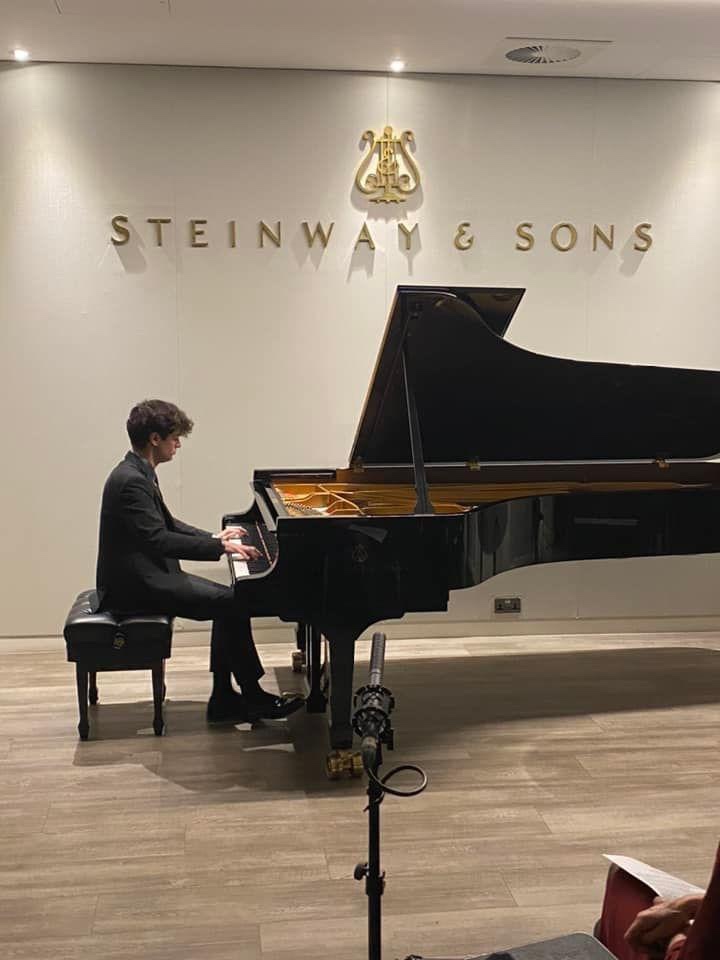
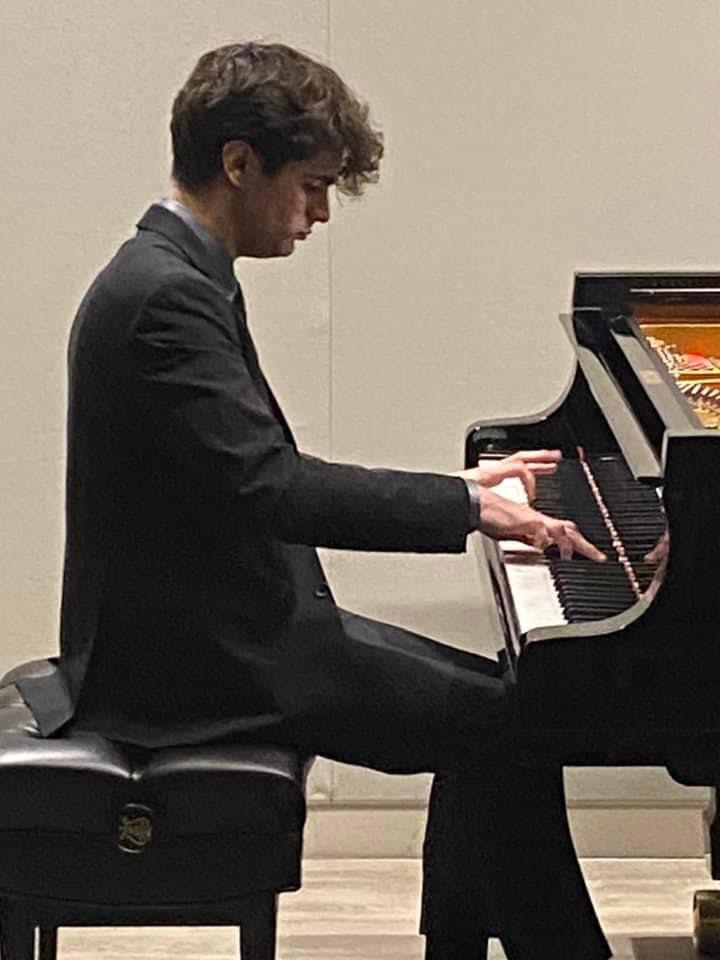
Elia Cecino at Steinway Hall for The Keyboard Charitable Trust playing Beethoven,Debussy and Scriabin. A twenty year old pianist who plays with the maturity of someone twice his age.Winner of so many prestigious prizes including the Premio Venezia and recently the Mottram International Concerto Competition in Manchester.The irascible impatient Beethoven of the first movement of the Sonata op 31 n.1 was played with a rhythmic rigour and extraordinary contrasts.Immediately calmed by the unexpected beauty of the bel canto of the Adagio grazioso that was only to be attempted by Beethoven again in the much later Hammerklavier.Beethoven’s simple final pastoral jaunt in the Viennese countryside was played with an eloquence and scrupulous attention to detail. Elia found just the right balance too in Debussy’s remarkable early Estampes where Pagodes may have been played ‘sans nuances’ as Debussy implored but was full of scintillating flights of fantasy.La soirée dans Grenade was played with the same insinuation and subtle colours of Spain that had De Falla on his knees with admiration for Debussy’s complete understanding of the Spain that he had only visited very briefly once. There was technical brilliance and subtle lights in the final Jardins sous la pluie. It was though the mature understanding and youthful passion that he brought to Scriabin’s 3rd Sonata that was so remarkable.Bringing the menace and ecstasy of Scriabin to life with a kaleidoscopic sense of colour and architectural understanding that kept us all enthralled to the final breathtaking vision of the star shining brightly. A mazurka by Chopin in which a whole world was expressed so beautifully with so little was Elias way of thanking the small audience that Steinways had allowed to be present for this recording that will be streamed by the Keyboard Trust at a later date.
It was a privilege to be there! Hai suonato veramente da Maestro! Massimi complimenti! ❤Leslie Howard
With Peter FranklAt home with Noretta Conci LeechJohn and Noretta at home Peter and Annie FranklAlberto PortugheisChester Square Mews Leslie Howard Jean Efflem Bavouzet
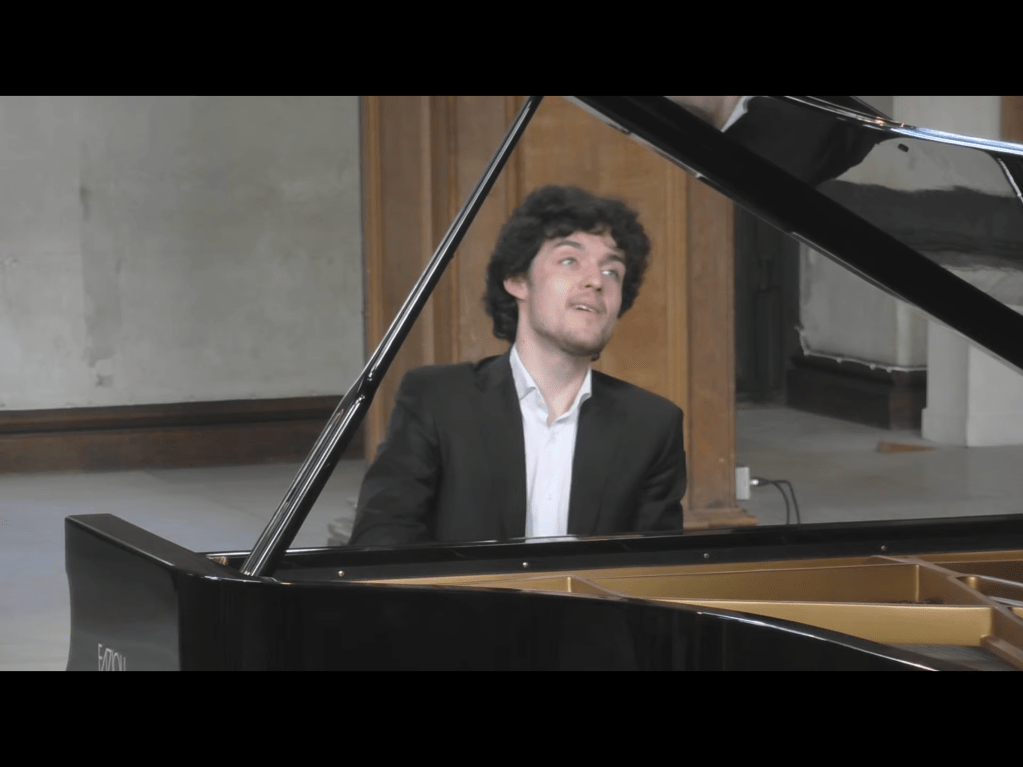
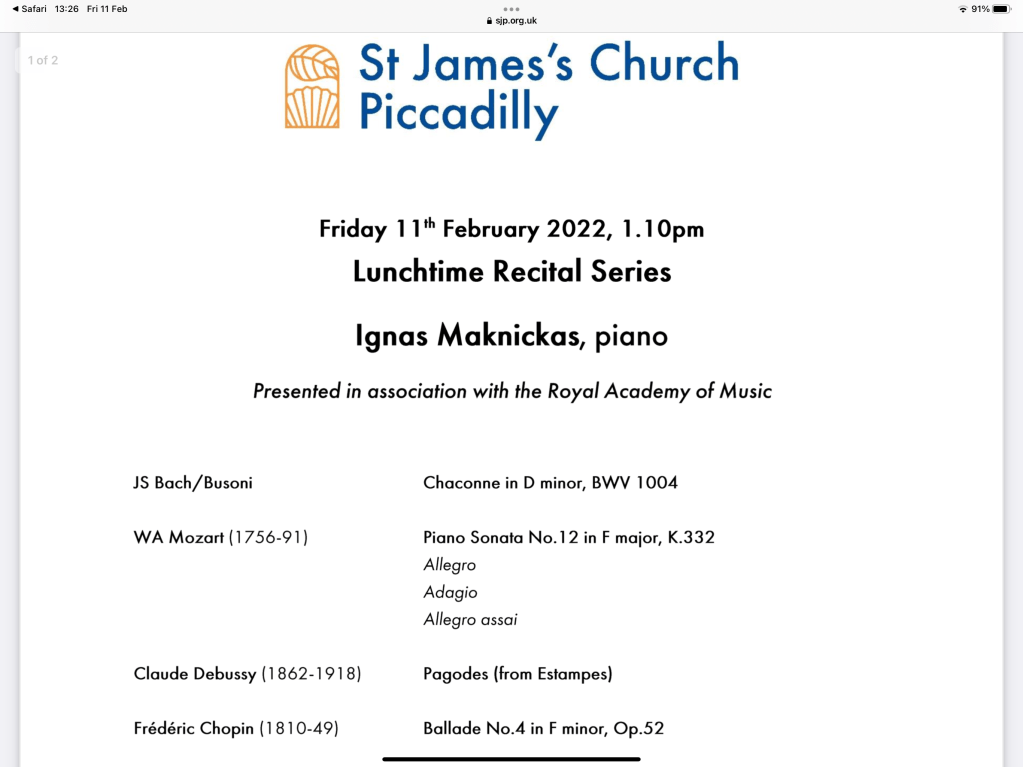
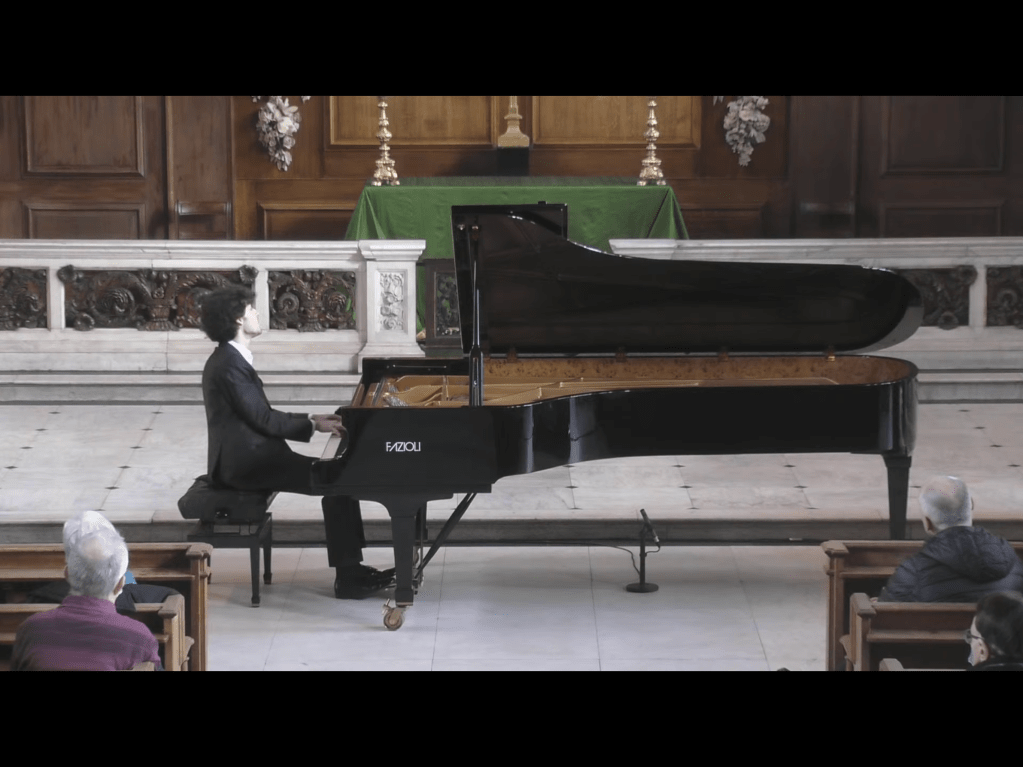
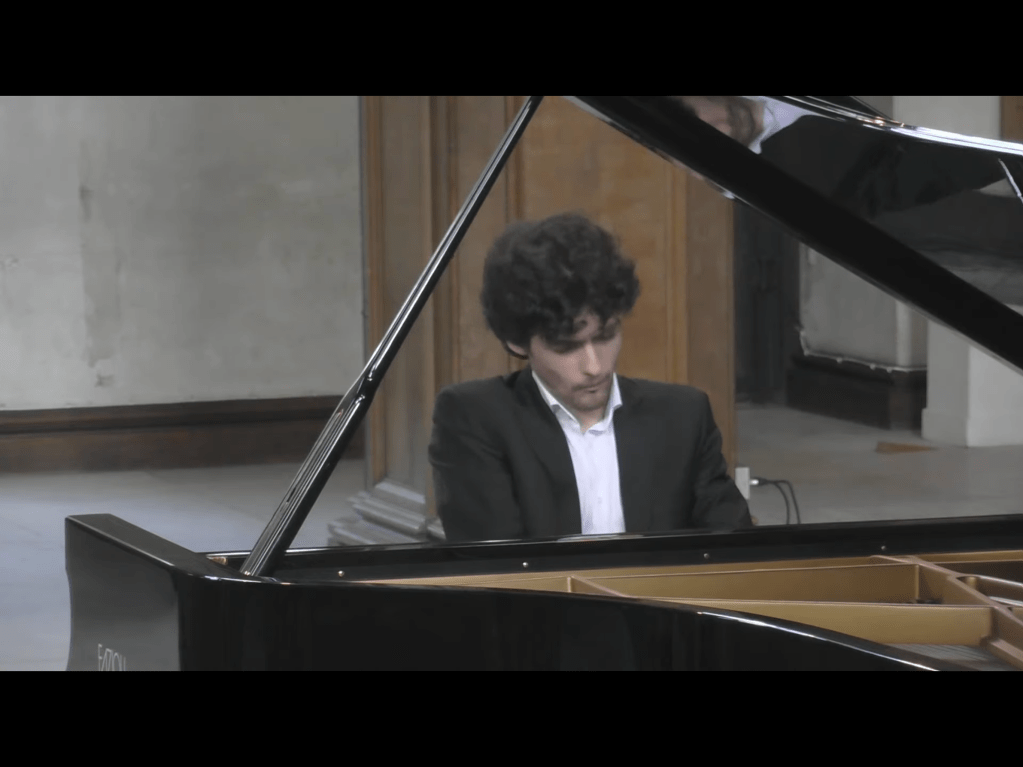
Some remarkable playing from Ignas Maknickas at St James’s Piccadilly that thanks to their superb streaming and still very fine Fazioli piano I was able to admire every facets of his great natural talent . A grandiose Bach Chaconne with such sumptuous sounds not only of richness but also of golden sweetness never forsaking the monumental architectural shape that Bach had so miraculously woven on a single violin. Here in Busoni’s extraordinary reworking it is reborn for the solo piano with the same grandeur as the original. Brahms too made a magnificent transcription for the left hand alone giving it the same transcendental difficulty as the original conception.But when played with the virtuosity and richness of sound as today it becomes more than a transcription but a highly original work as if born for the solo piano. I remember as a student being bowled over by the recording of Michelangeli and locking myself away for a week to learn it before playing it to my teacher Sidney Harrison.He could not believe what progress this schoolboy had made over night. It was the piece that earnt me a scholarship to study with him at the Royal Academy. Can it just be coincidence that this concert is promoted by my old Alma Mater where Ignas is a master student?!
His Mozart too showed off his natural musicality and beautiful relaxed flexibility never taking away the driving rhythmic energy but allowing the characters in this piece of pure operatic inspiration to enter and exit with the same beauty and exhilaration as any opera singer. There was subtle beauty in the slow movement with a ravishingly beautiful sound and such subtle embellishments that made these jewels sparkle even more brightly.The last movement sprang out of his fingers like a ‘jack in the box’ and Mozarts genial surprise ending caught even his audience unawares. Pagodes from Debussy’s Estampes was played with a kaleidoscopic sense of sound,like a prism that on every turn shone rays of magic. There was such delicacy in the gentle childrens song that Debussy quotes with swirling spirals of golden sounds that drifted into a visionary cloud that took us to the sublime opening of Chopin’s great masterpiece.
The fourth ballade one of the most miraculous creations even for Chopin was played with an aristocratic sense of style.Beauty and passion combined together with moments of ravishing beauty like the little cadenza before the final great build up.A sound that was always of a fluidity and never allowed to harden no matter the technical difficulty. If the coda was a little laboured it is because this young man must spend more time at the keyboard to eliminate also small blemishes that did occur during the recital.His extraordinary talent demands more hours to turn a wonderful picture into a masterpiece.He is a great artist in the making and must suffer more for his quite considerable artistry.
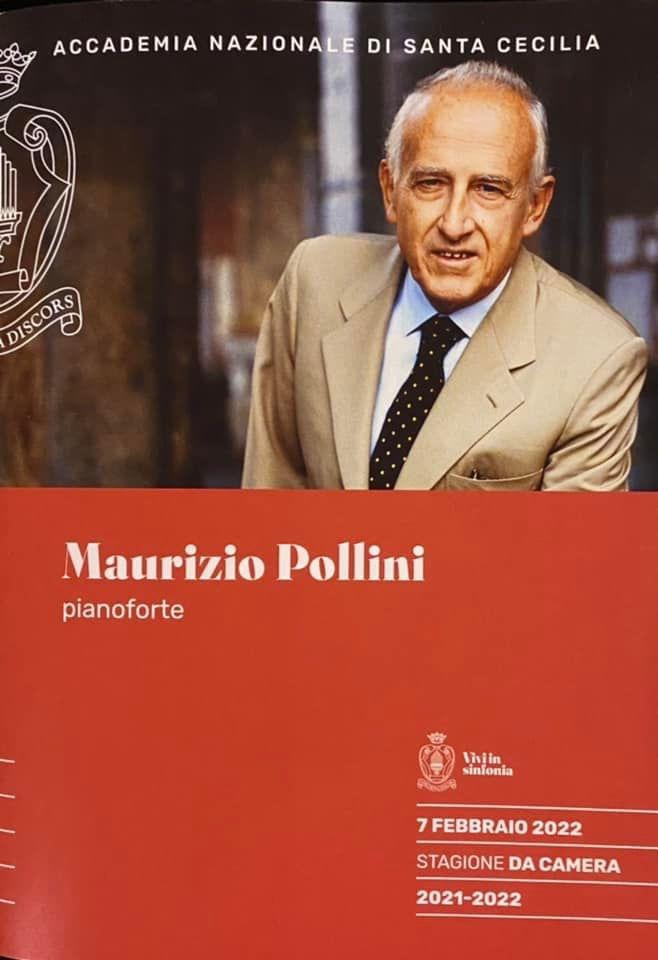
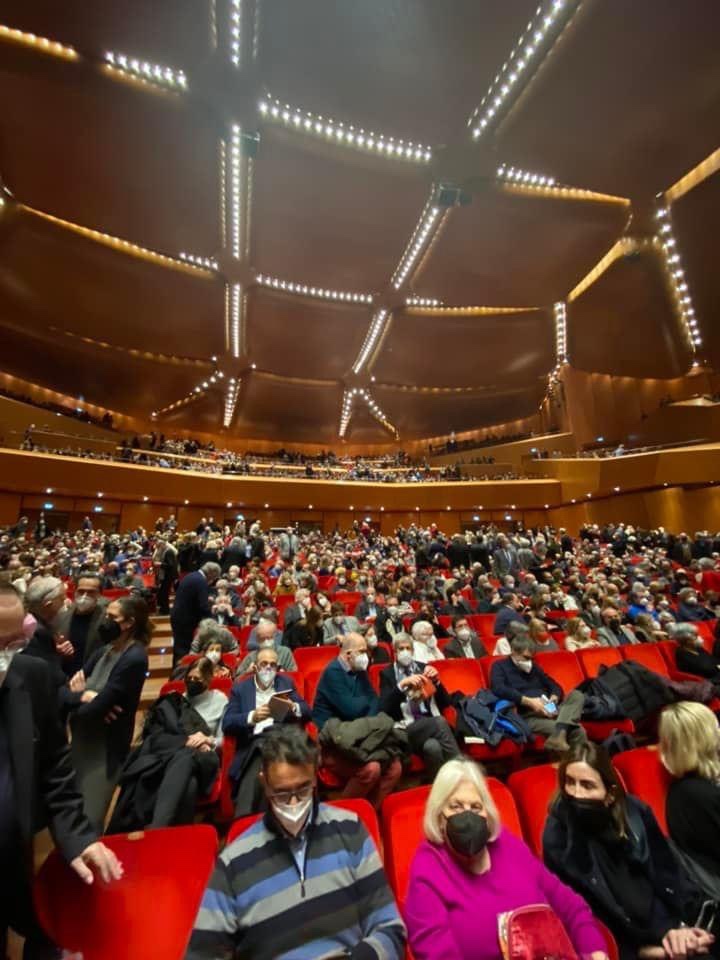
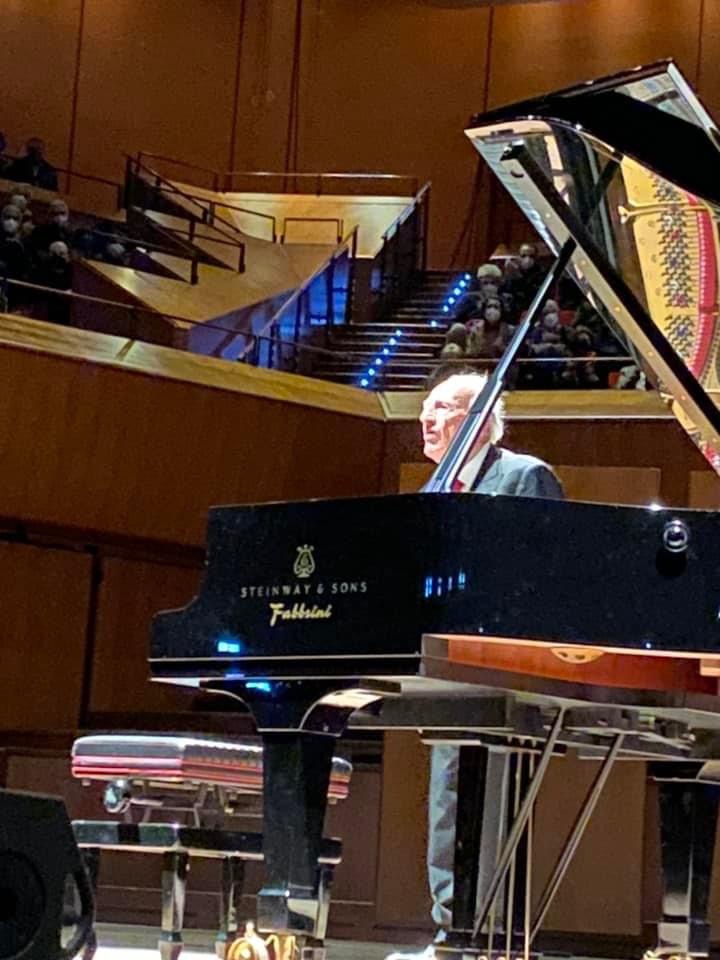
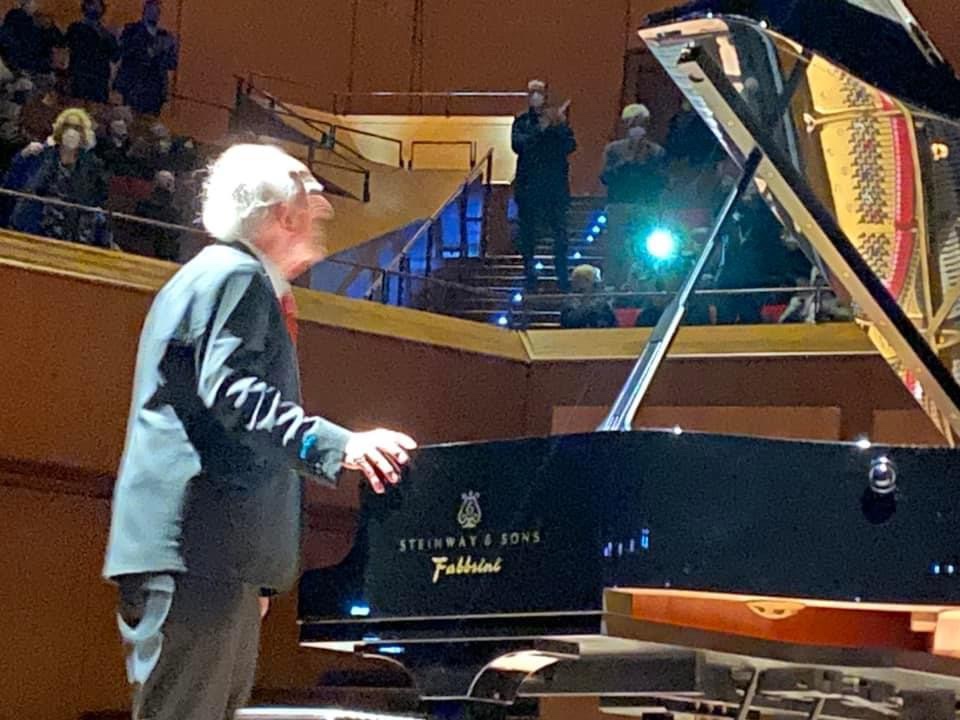
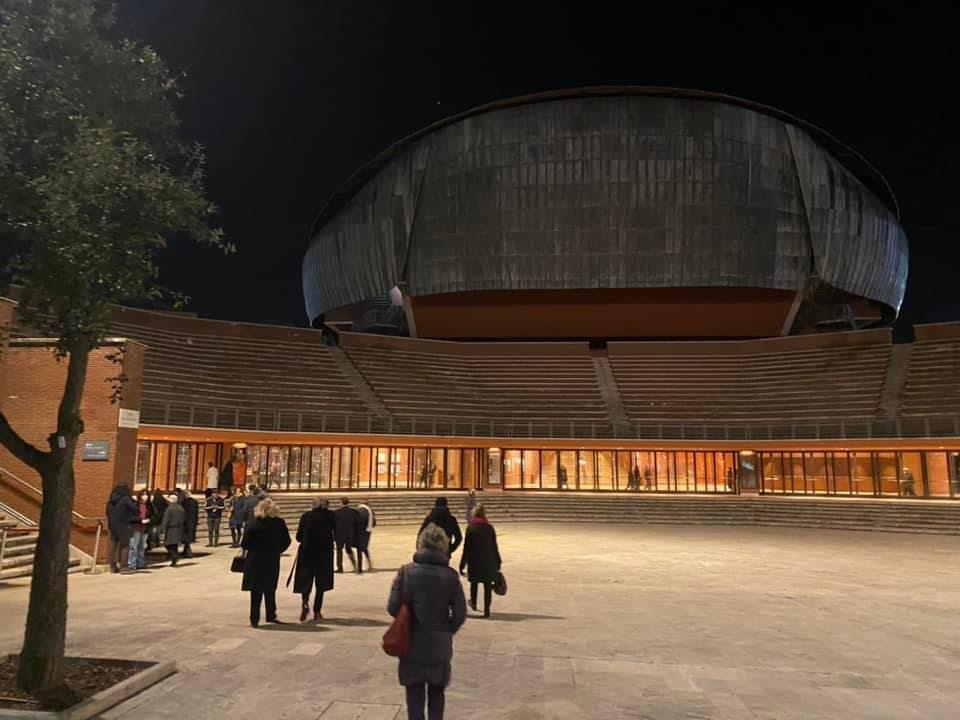
A monument speaks in Rome today ………….to almost three thousand people in the Sala S.Cecilia that has not seen so many people for a long time.
It was a sign of the love and esteem he commands even now in his eightieth year. He has given us 60 or more years of performances of integrity,simplicity and honesty as he has put his phenomenal technical gifts at the service of the composer. It was Rubinstein on the jury of the Chopin competition who declared that this eighteen year old boy played better than any of us. He is the monumental figure that we music students would refer to in order to hear the printed page come to life with an intellectual rigour that excluded any demonstrative personal distortions. He together with Brendel were the icons that shone brightly over the more individual stylists whose personal interpretations whilst adding a different more personal point of view took us into an outward rather than inward approach to the greatest works of the piano literature. Monuments cast shadows and the greater the monument the greater the shadow.
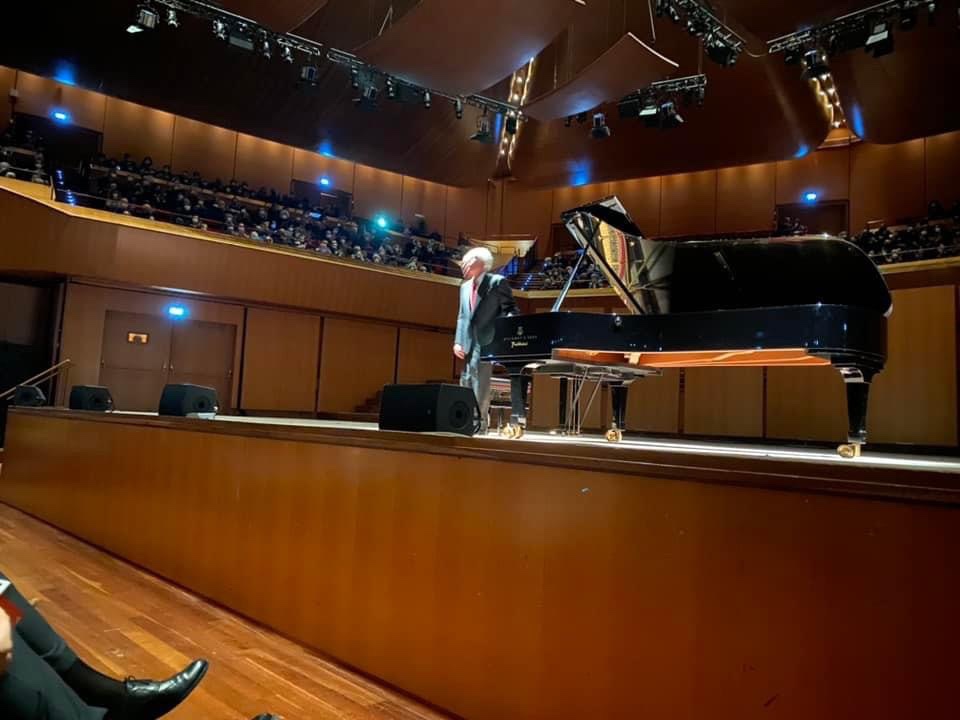
Roma in festa to,celebrate a legend
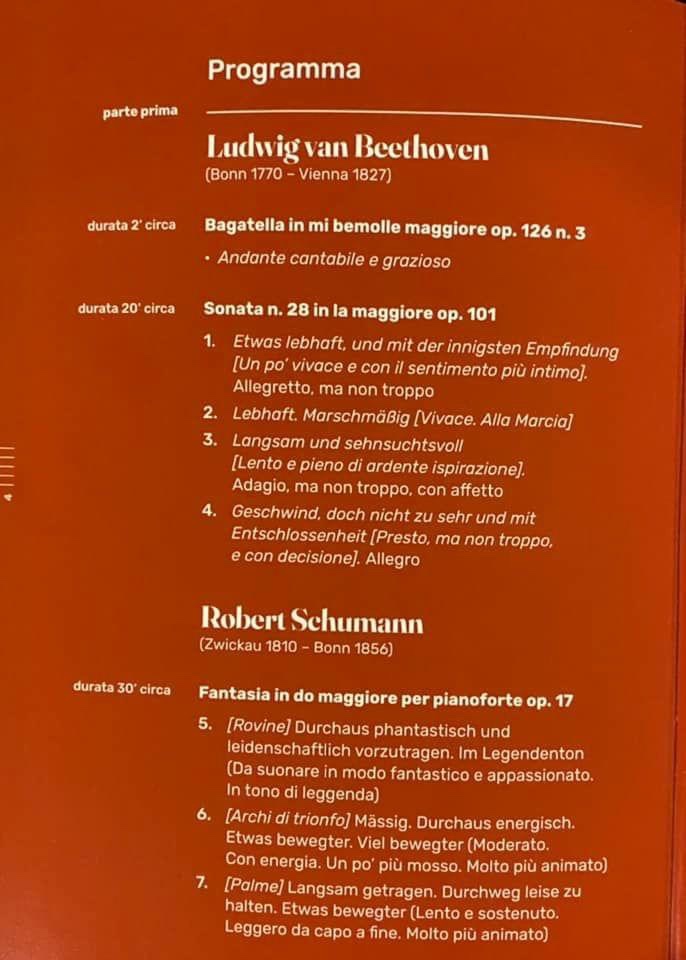
It was the shadow that we celebrated tonight ……but what a shadow! Having changed his programme from the Schumann Fantasie and the Hammerklavier sonata for intellectual or physical reasons was of absolutely no importance for us mortals.
We that sat at his feet today in awe of pianist who could command our total attention for an hour long first half with Beethoven’s most problematic sonata op 101 followed by one of the pinnacles of the romantic piano repertoire the Fantasie in C op 17 by Schumann.Preceeding the Beethoven with a Bagatelle,one of his last works for piano op 126 n.3 in which so little could say so much and prepare us for the mellifluous outpouring of the Sonata that followed. This was monumental playing of great masculinity and warmth with a symphonic sound that any minor blemishes were of no importance as the great architectural shape was unravelled before us.
But even more importantly the revolutionary character of Beethoven was revealed with warts and all. Has the Langsam und sehnsuchtsvoll ever sounded so profound and involved or the Lehaft second movement suddenly becoming so similar to Schumann’s Massig second movement of the Fantasie? Whereas Kempff and Lupu got more introspective as they searched for the perfect legato in their Indian summer,Pollini has taken the opposite approach as he completely takes on Beethovens rough exterior. But of course there is a soulful interior to Beethoven too that we begin to become aware of from op 90 to op 111. Op.101 is on the tip of the balance and it enough to think that the next sonata is the mighty Hammerklavier op 106 where Beethoven takes the sonata to the limit of one human’s capacity on the piano. There will be those tonight who will comment that it was massively over pedalled and there were many smudged details but I would suggest that tonight we were in the presence of Beethoven himself who was far from a perfectionist in his lifelong struggle with himself and his physical ailments.
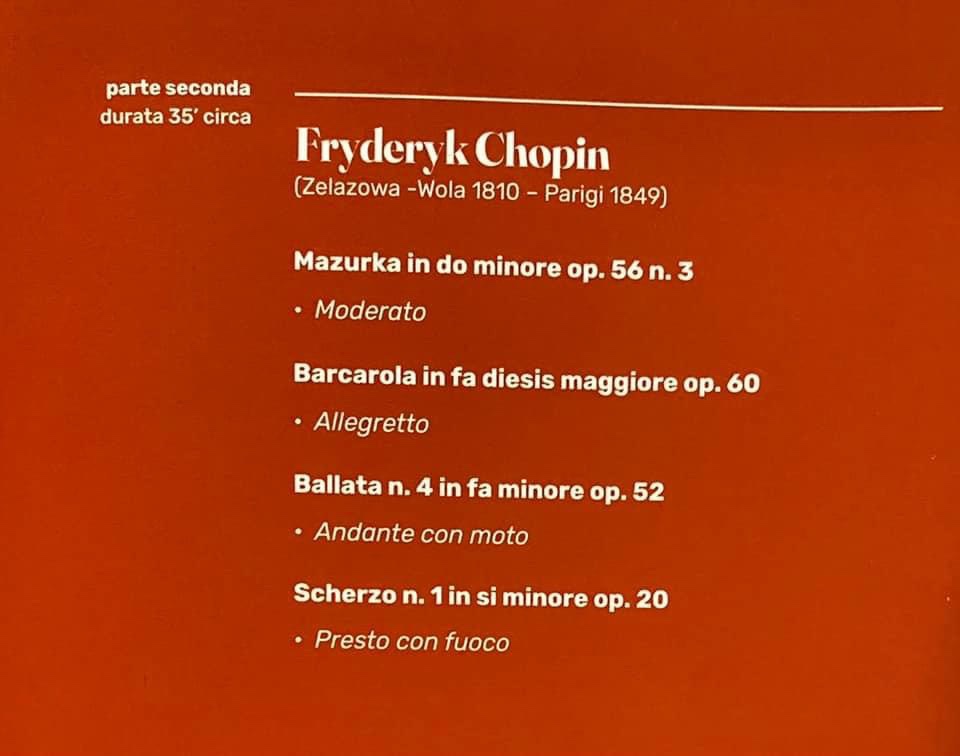
The Chopin Mazurka op 56 n.3 was a whole world in Pollini’s hands from ravishing beauty to intense introspection and stamping of feet. Ending with two mere gasps of astonishment.Three thousand people were holding their breath indeed. The Barcarolle – surely Chopin’s most perfect work was played together with the Fourth Ballade and the First Scherzo and were given very masculine no nonsense performances of great power and intellectual prowess. That an eighty year old man after almost two hours onstage could thank his audience by playing the First Ballade of Chopin was nothing short of a miracle. It was this conjuror of miracles that the Roman public had bade farewell to COVID worries as they came in their droves to pay homage to a living legend. It was nice to see the magnificent Fabbrini Steinway on stage and to know that Angelo Fabbrini was with us in the audience having given his priceless contribution to the recital by preparing an instrument fit for a King.
Parco della Musica ~ Piazza Luciano Berio
‘To hear the printed score come alive with intellectual rigour’, that phrase conveys so well why I attended Pollini’s recitals. As do your phrases ‘an outward approach’ and ‘taking on Beethoven’s rough exterior’. Thanks Christopher, your writing conveys exactly why Pollini’s many recitals at the RDH so excited me as a young lad learning the repertoire for the first time. And Pollini had to be heard live to witness the long-term build and sheer excitement of his playing, the sometimes hard-edged chords gleaming like copper building blocks as if the composer was with us on the piano stool. Pollini broke through the niceties of remembered music. His recordings often sound two-dimensional stripped of their molten energy. Heard live, Pollini was exciting. I really enjoyed your writing that conveys why, so thanks!’Bob Goldsmith
Many thanks I am glad I could share such sentiments and be understood for what Pollini has meant for us!You write so poetically ‘hard edged chords gleaming like copper building blocks as if the composer was with us on the piano stool’is exactly what he was and a glimpse of a paradise lost is worth its weight in gold not copper!
‘Lovely review of one of the all-time greats.’Hugh Mather ………it was a wonderful occasion even if the twilight of a God








 ChristopherAxworthy-MusicCommentary