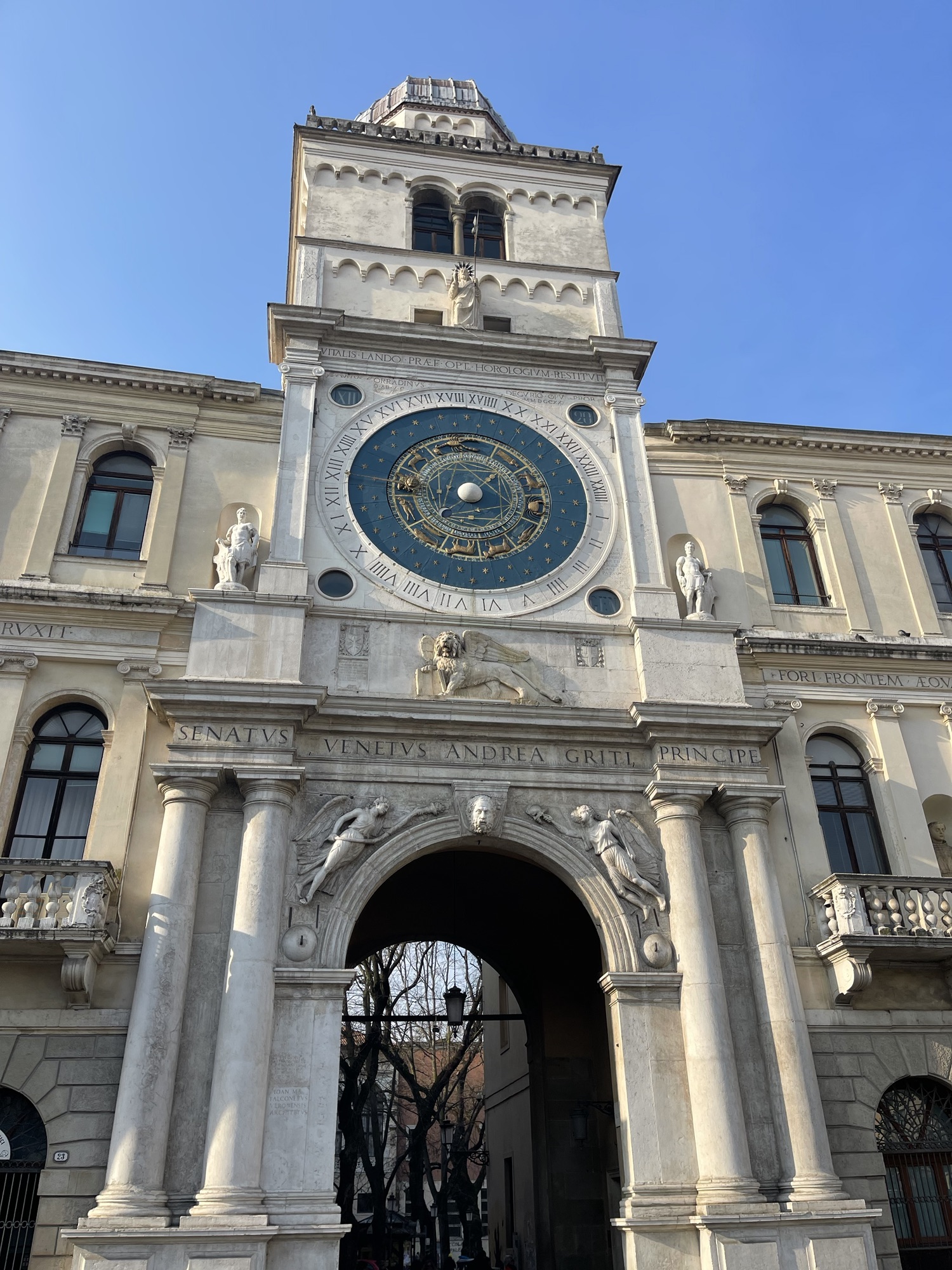
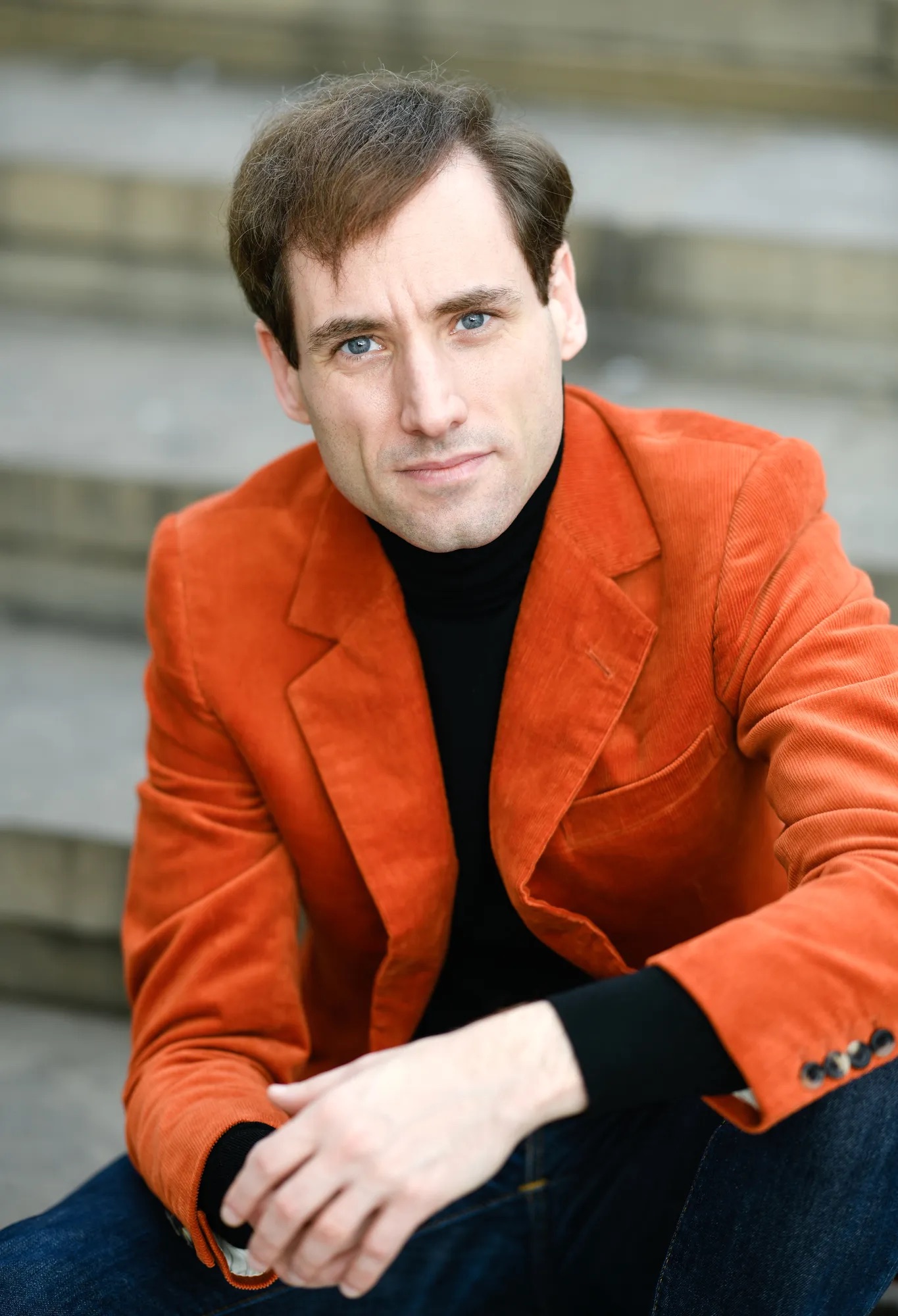
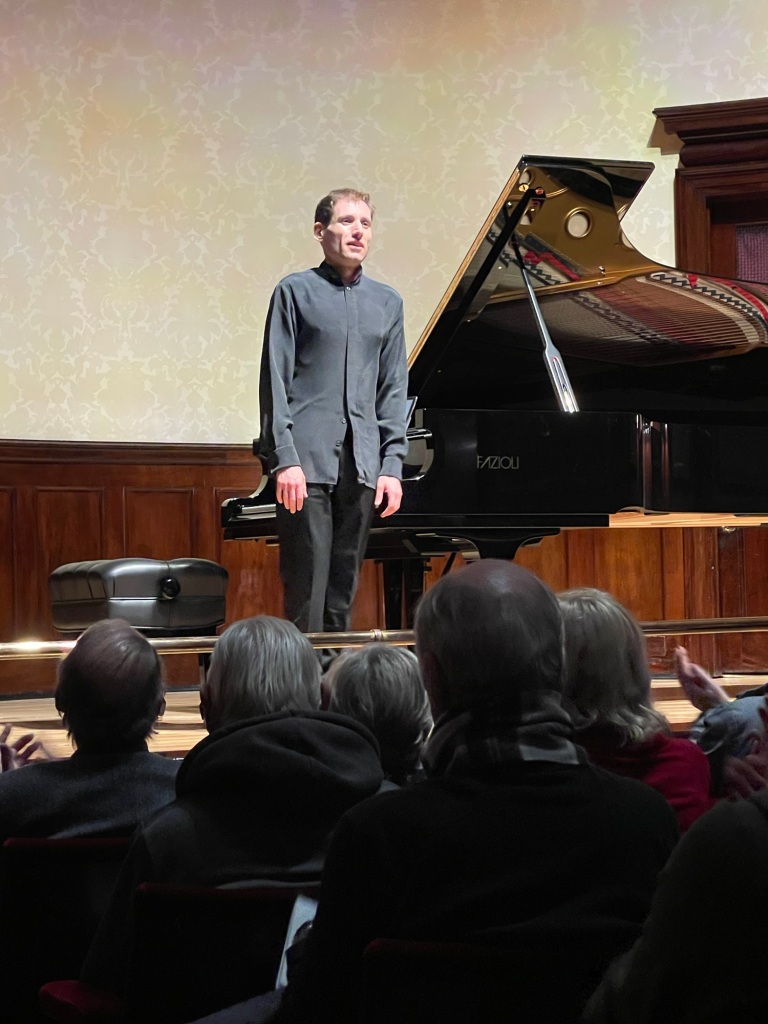
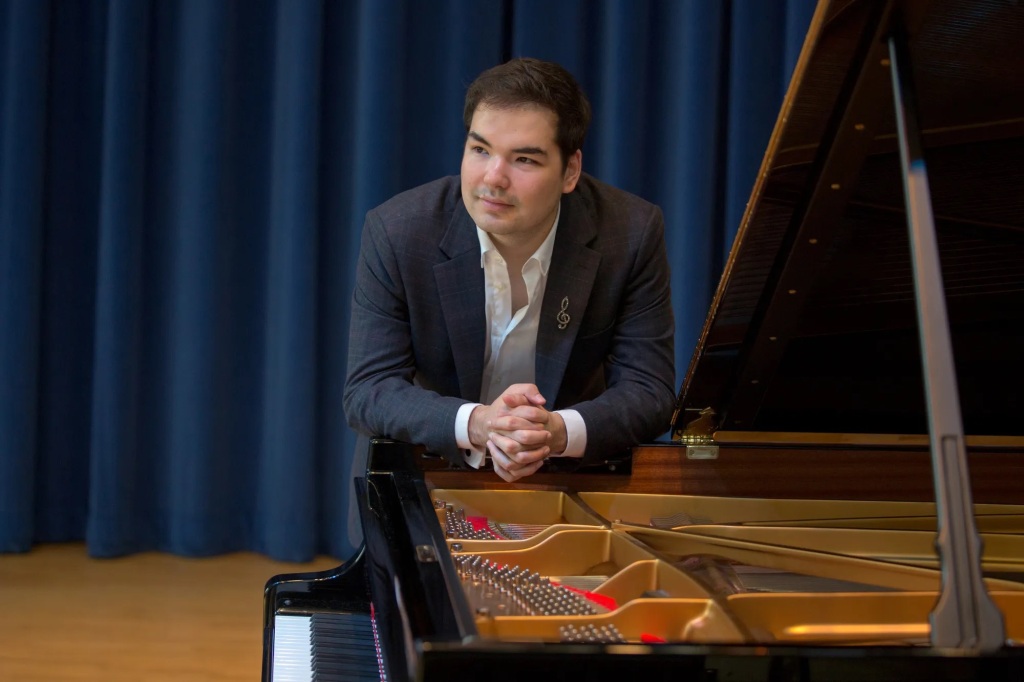
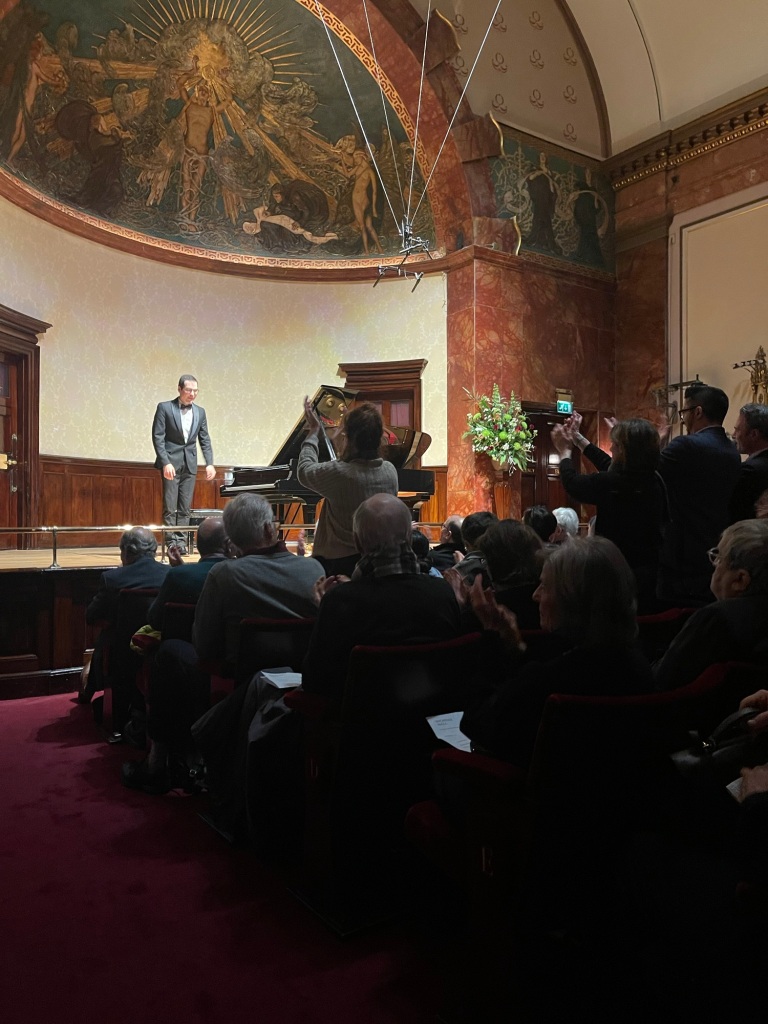
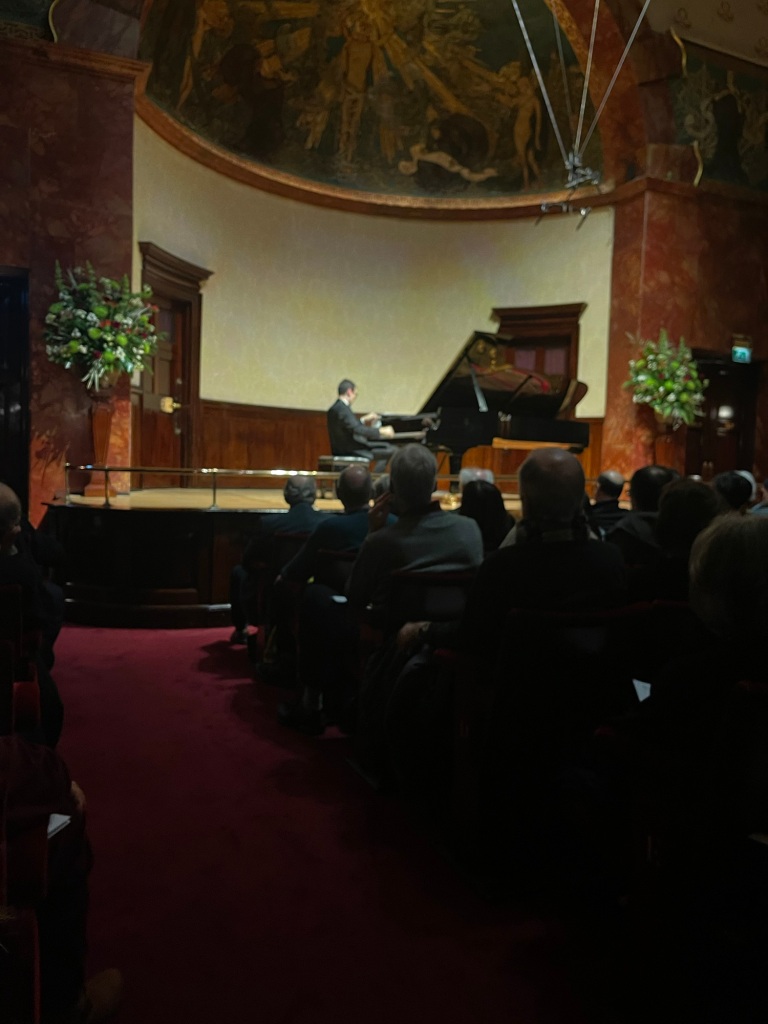
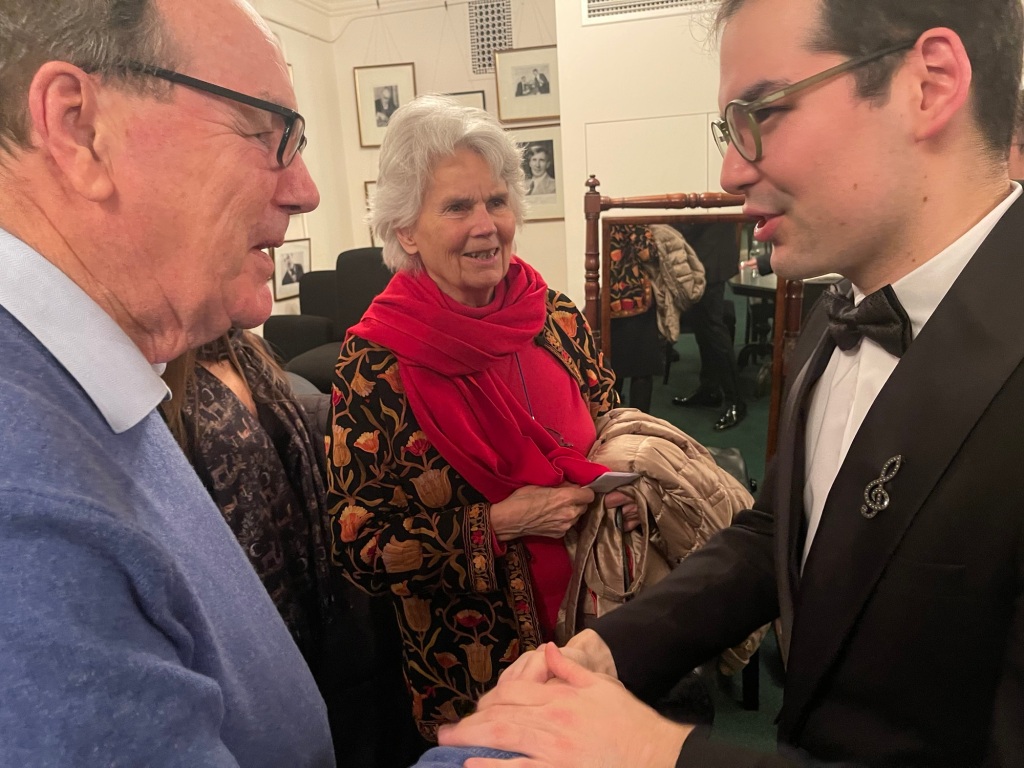
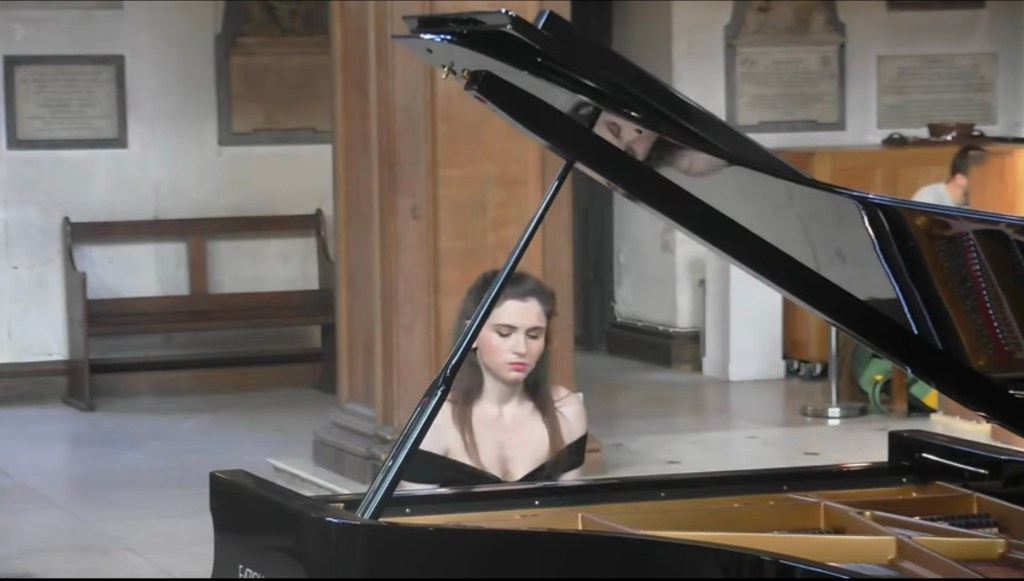
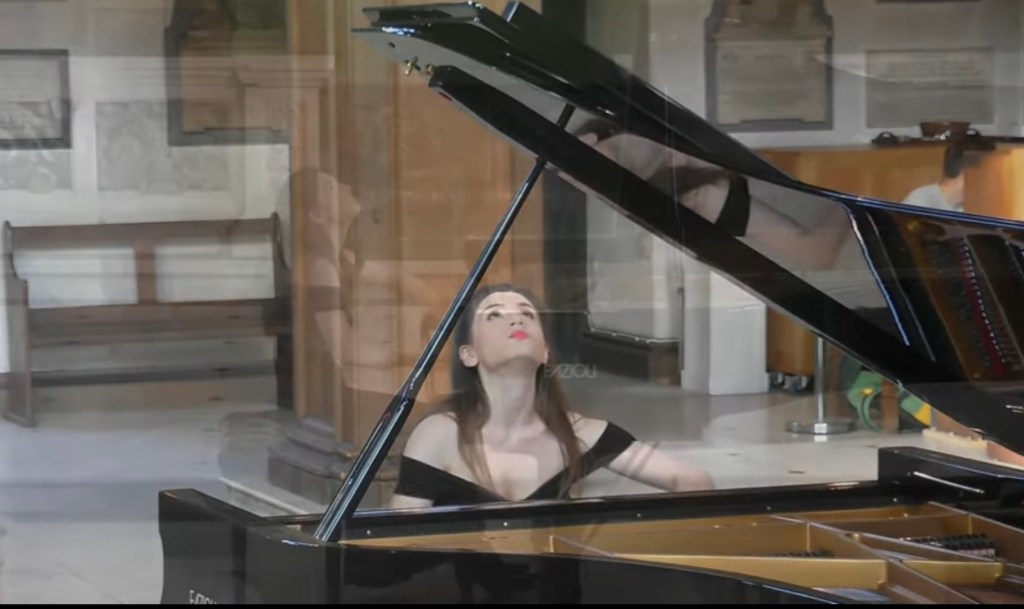
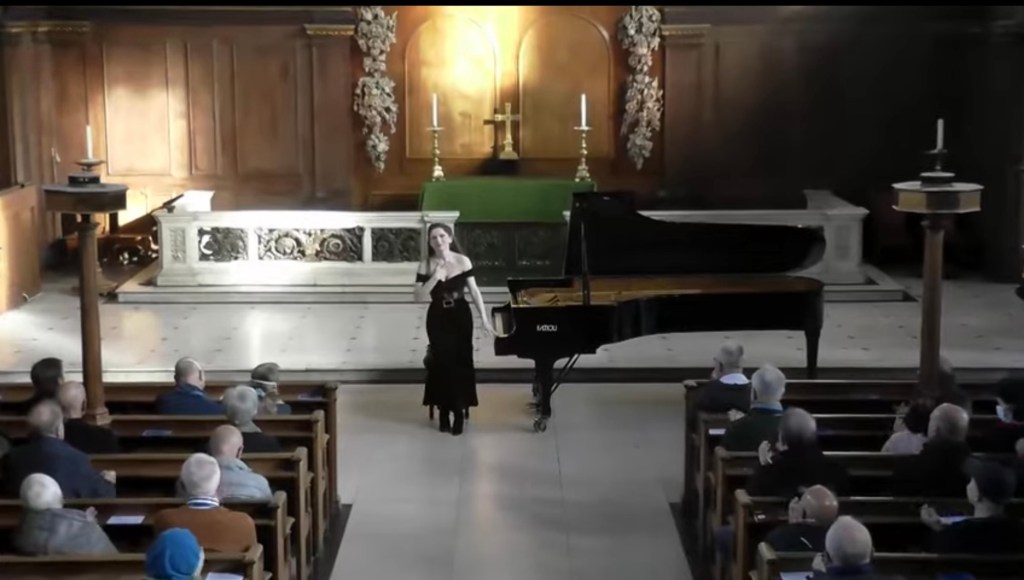
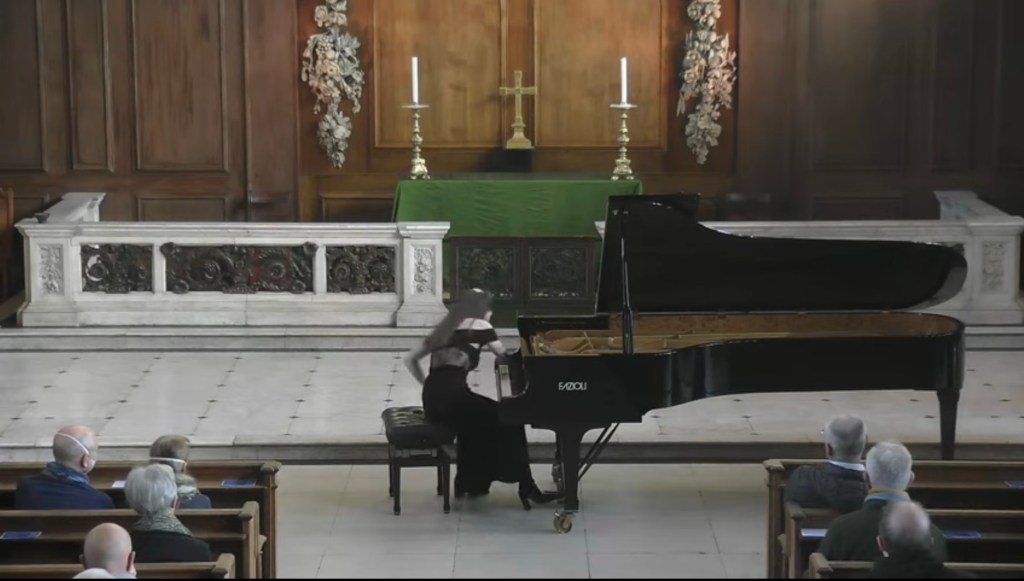
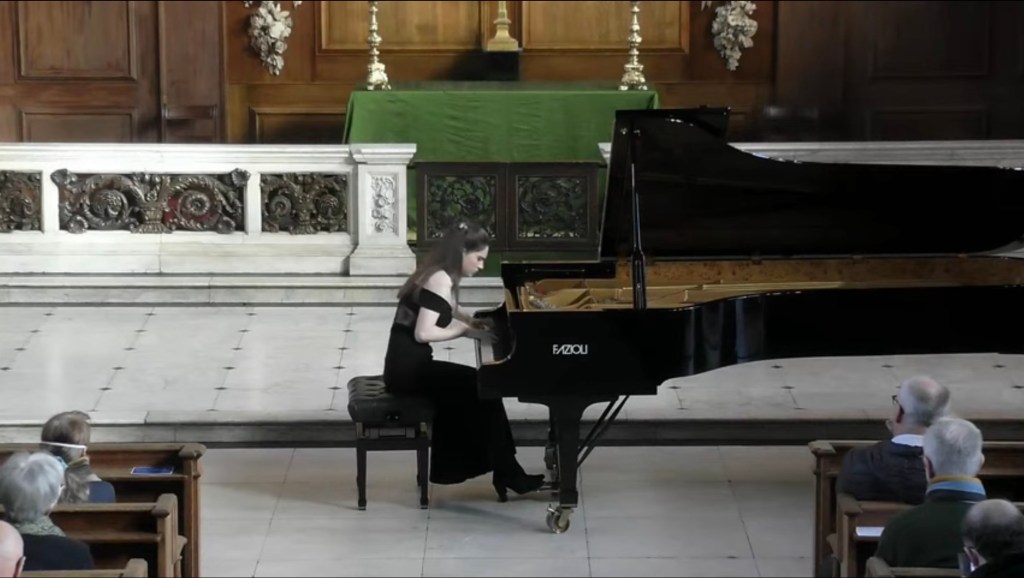
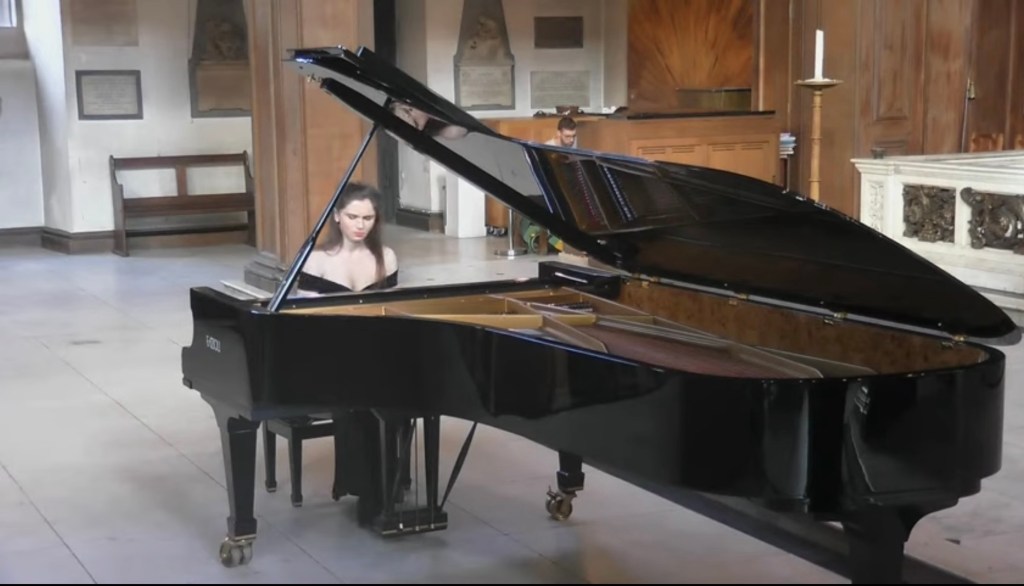
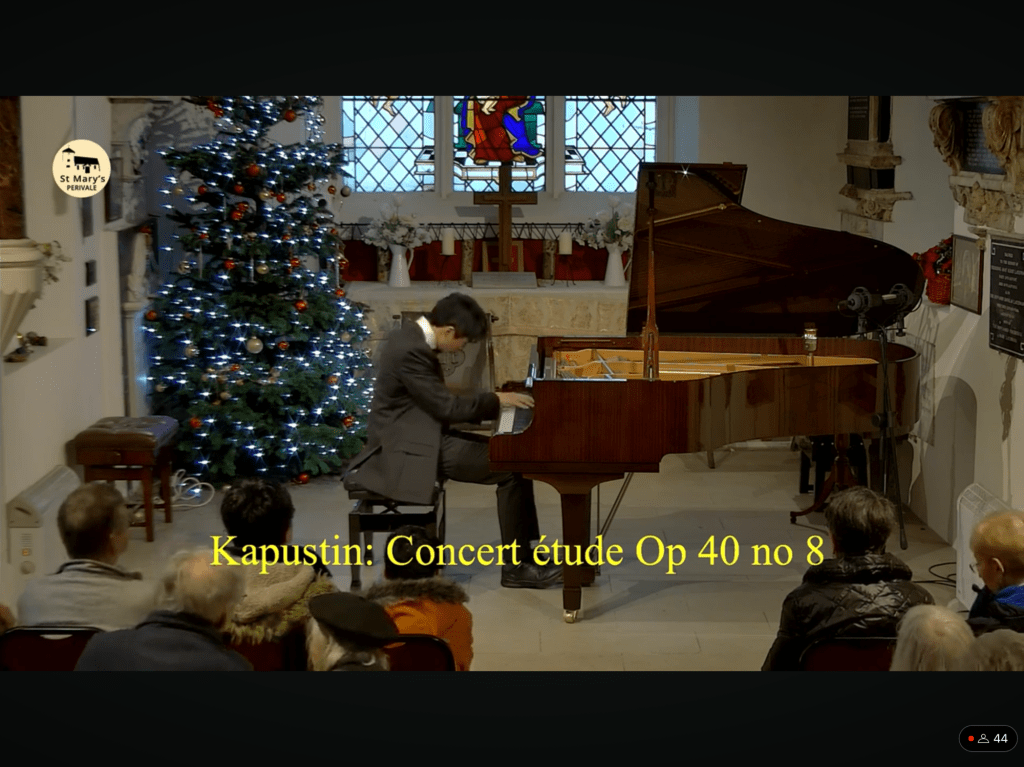
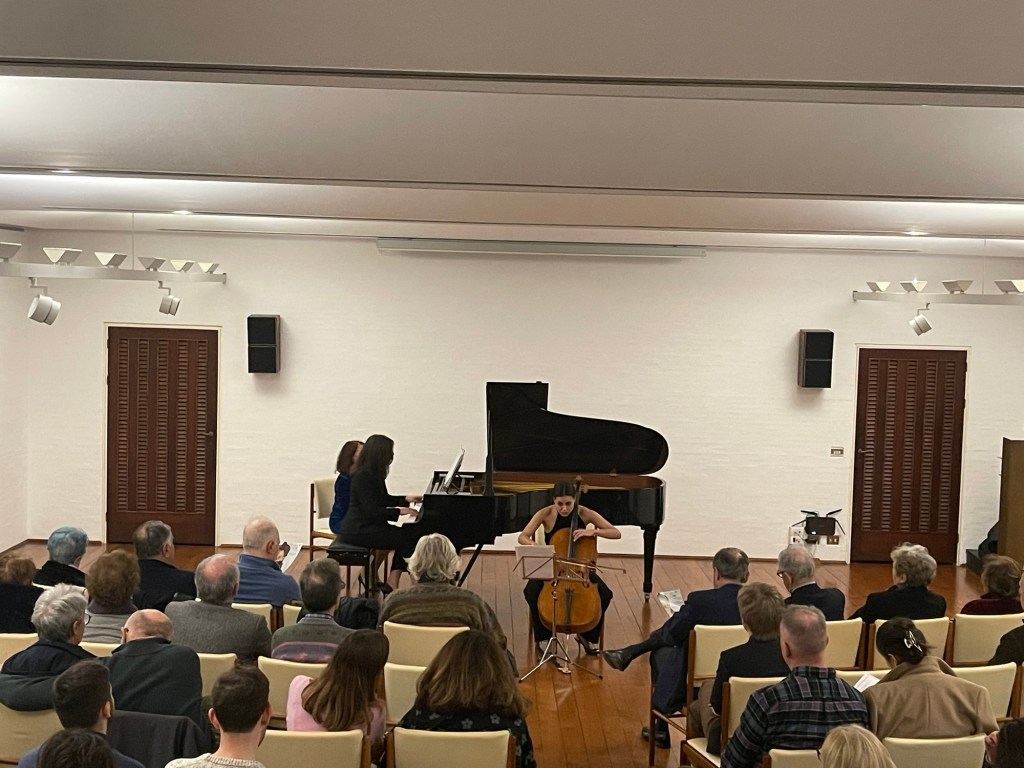
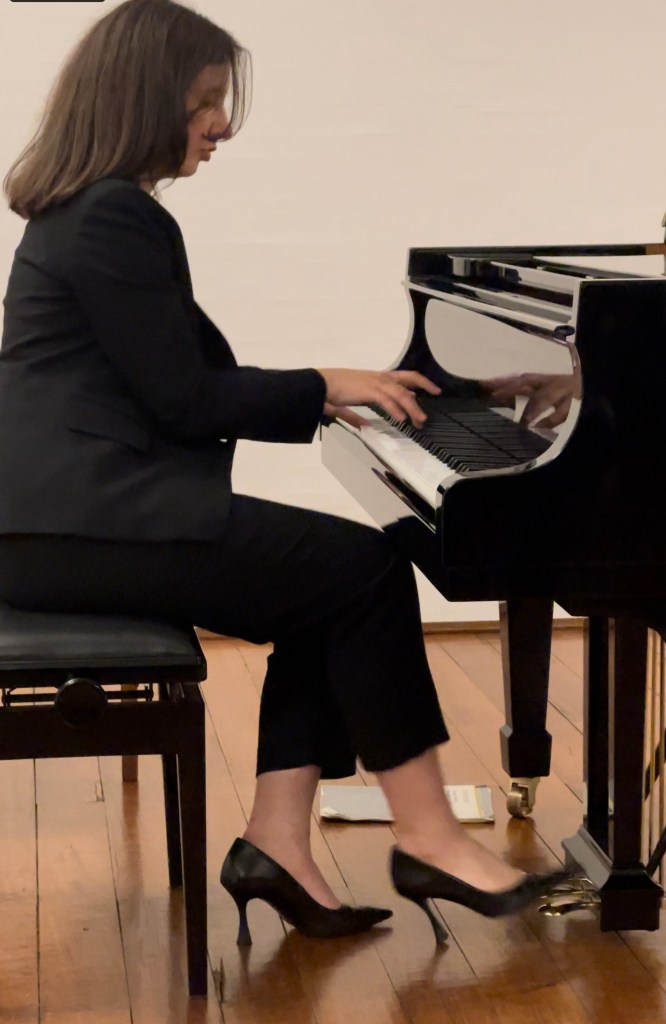
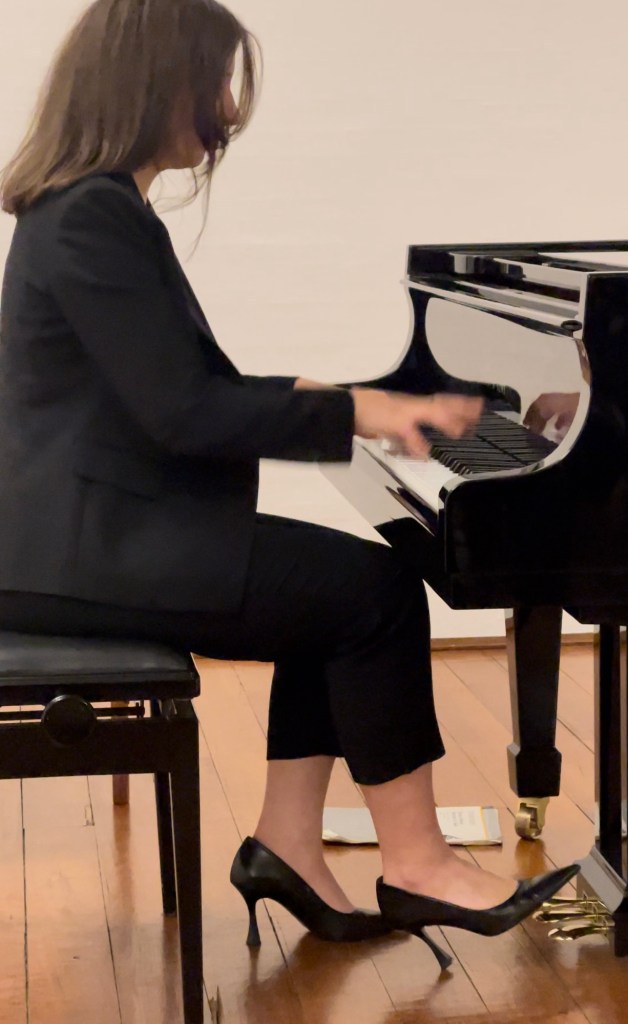
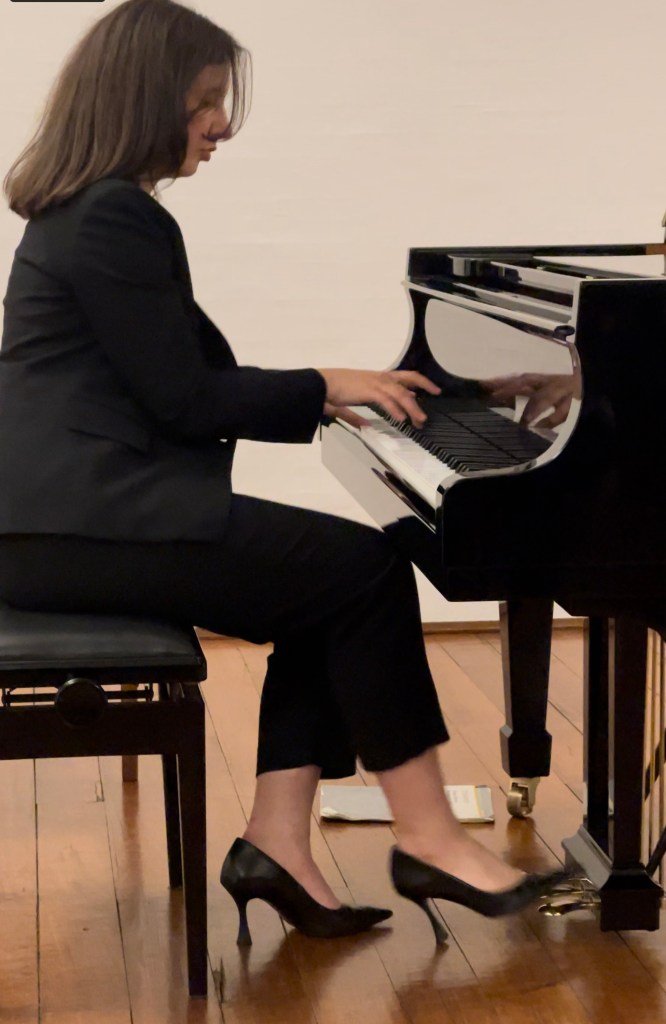
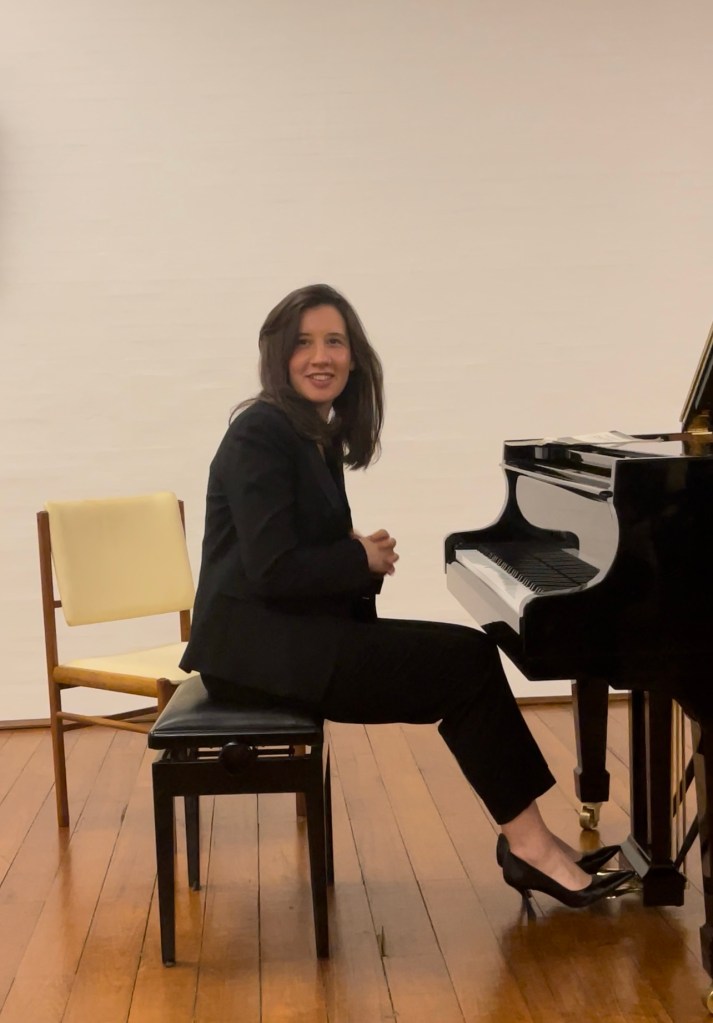
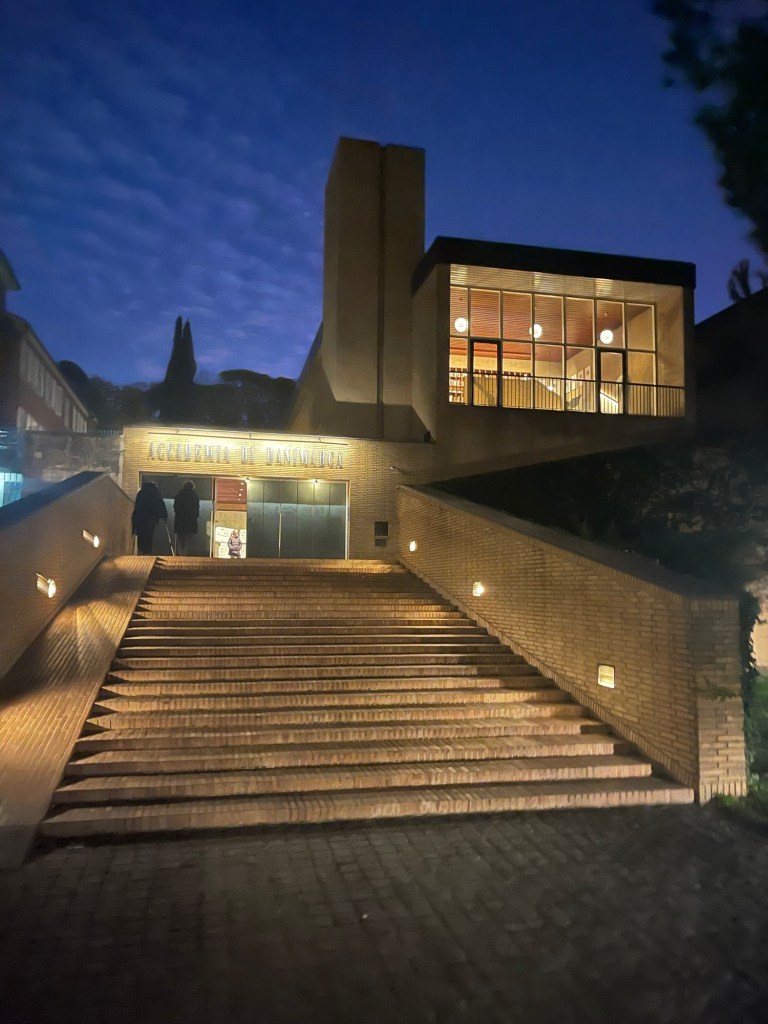
Padua today is resounding with music played by young musicians at the start of their careers. The opening season of the Pomeriggi Musicali series for Agimus at four and the eleven o’clock opening season of the Domenica in Musica Series that the genial Artistic director Filippo Juvarra has envisioned over the past 33 years to give a platform to young winners of major Italian competitions.
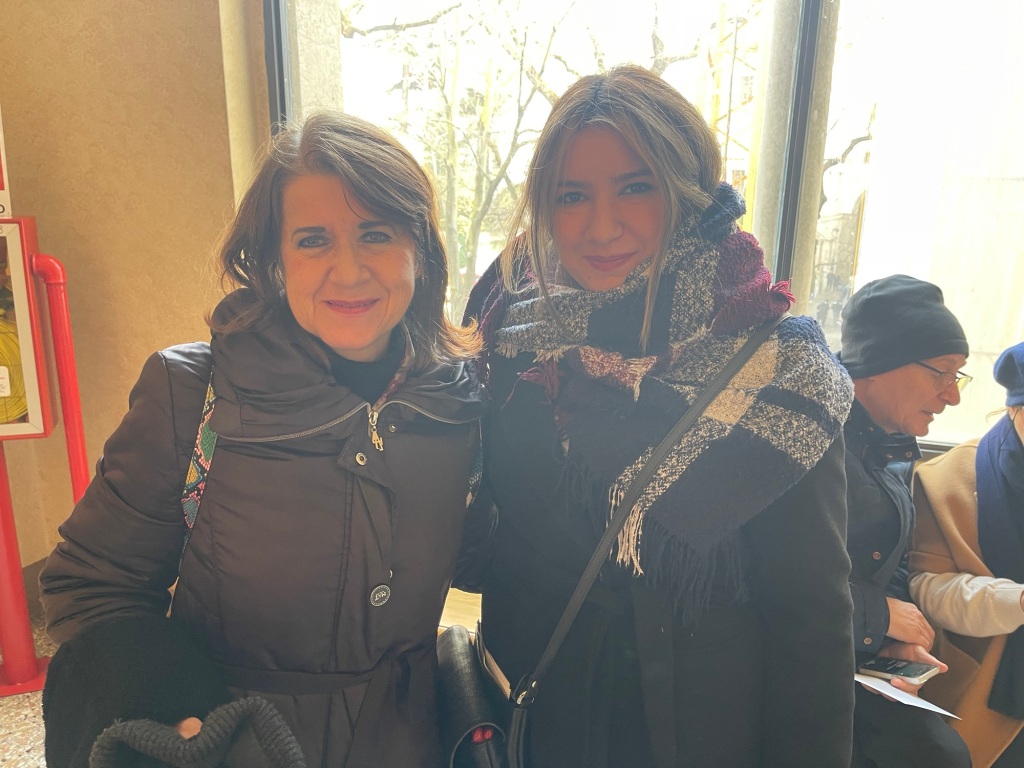
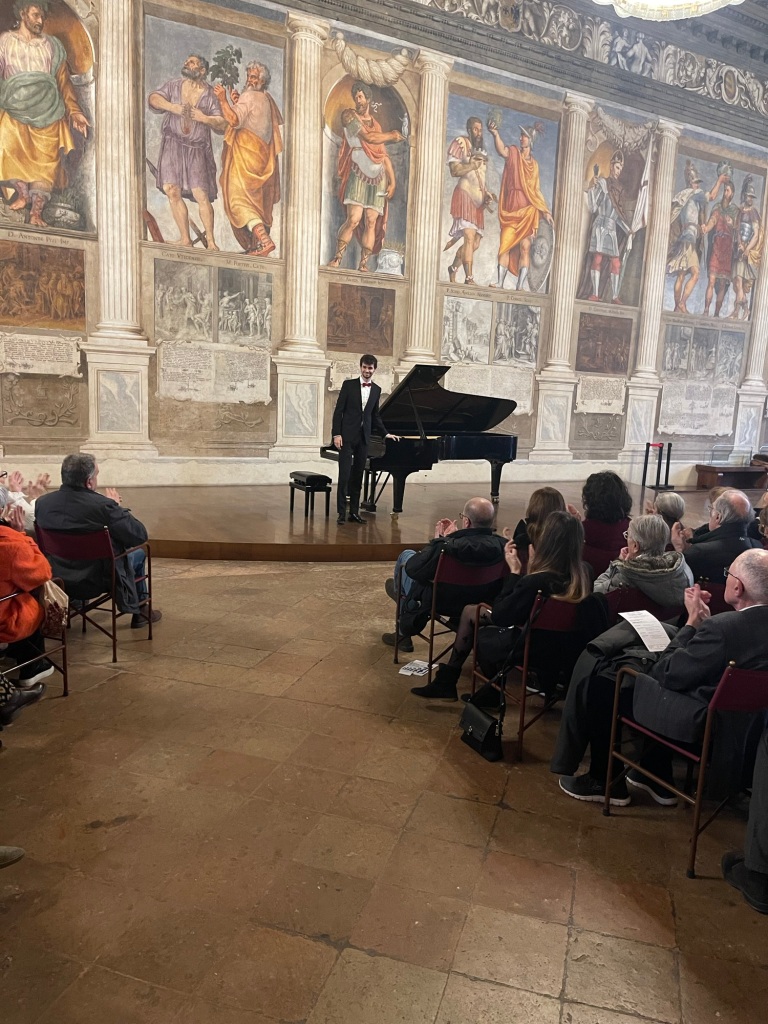
The distinguished professor of piano at the Padua Conservatory Lorella Ruffin (the mother of Leonora Armellini) was also with us today to applaud this young musician. An almost full hall in this historic Sala dei Giganti where the true star is a piano the like of which I have never heard before.Kept in trim by that magician Zanta it was the preferred piano of Richter on which he would often prepare his programmes for his recordings in the historic Teatro Bibiena in Mantova where he was obliged to play the Yamaha that was to follow him wherever he went in the last years of his life.
Perlemuter had played here too in 1983 when Filippo rang me up to ask if this great pianist of whom Italy had only read about in books would play in Padua in his season.
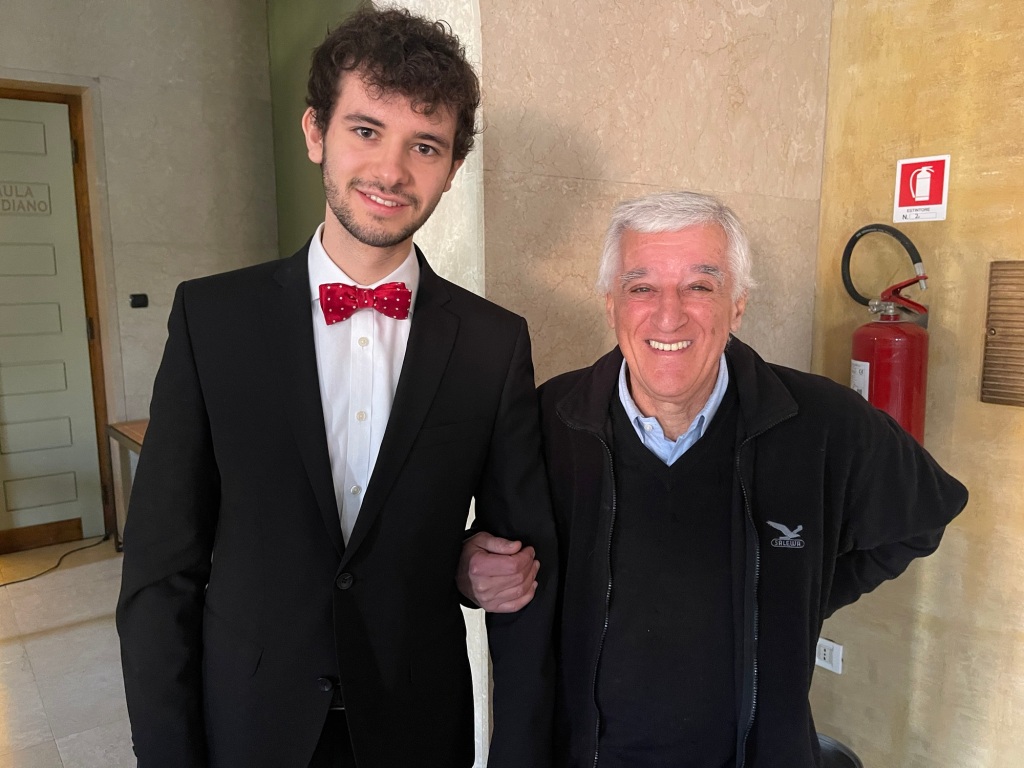
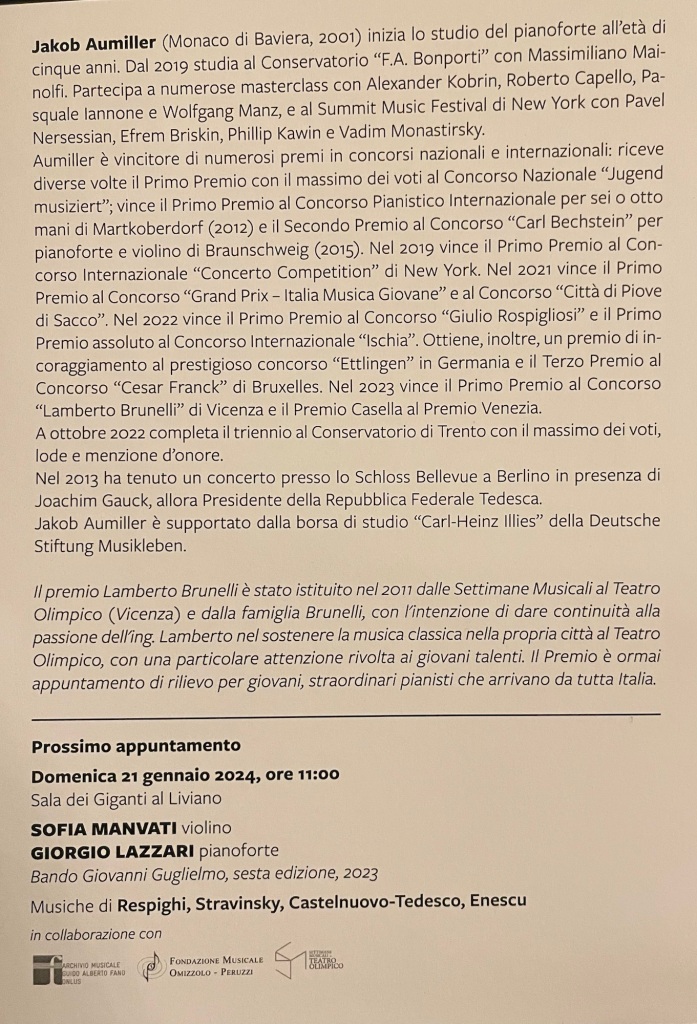
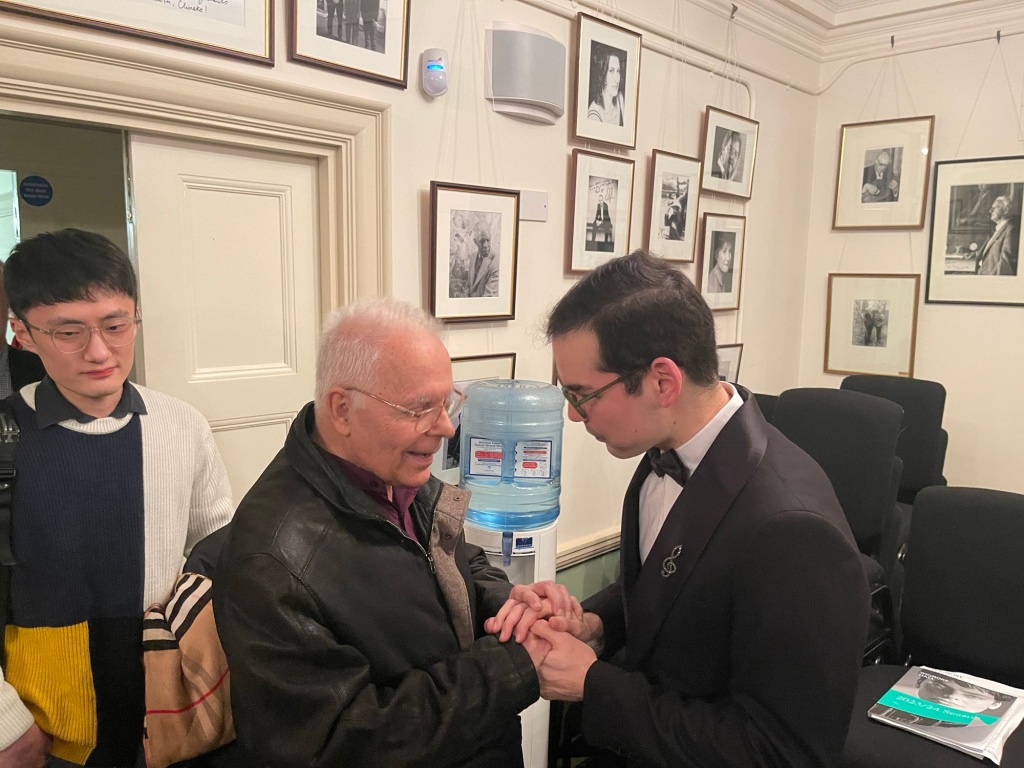
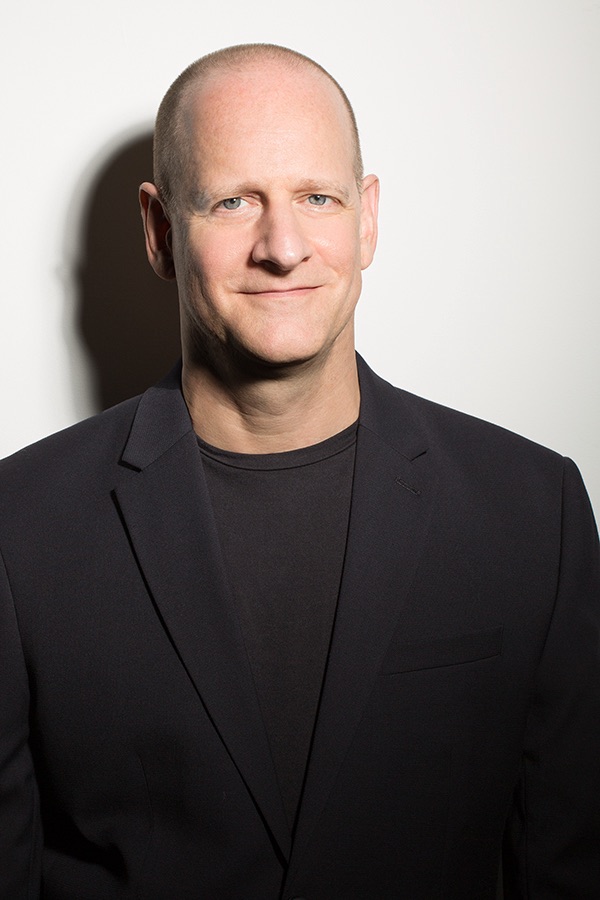
Filippo Juvarra with Jakob
Vlado Perlemuter and the inseparable Joan became friends after his debut in the Ghione theatre and then in Padua and Filippo or I would accompany them around Italy to play until his 90th year! https://christopheraxworthymusiccommentary.com/2017/12/19/in-praise-of-joan-2/ I was backstage in the Wigmore Hall at the last concert he gave in a long and difficult career .Joan was with me and I was left holding Vlado’s stick as he raced onto the platform (thus allieviating his ‘guillotine syndrome’ from which he had suffered all his long life) to play the Chopin Four Ballades for the last time.
Jakob from the very first notes of Scriabin’s Fifth Sonata revealed his artistry and mastery in a performance of dynamic drive and subtle sense of colour.A fluidity of whispered beauty contrasting with a dynamic almost diabolical rhythmic energy with his fiery temperament allowed full reign.A youthful passion where on occasion his heart took over from his head and we momentarily lost the sense of line that pervades all of Scriabin’s subtly perfumed sound world.The deep bass notes of this magnificent instrument were merely touched by Jakob’s sensitive hands and just opened up the sonorities adding ever more luminosity to this magic world of colour.
Let me just say that Jakob is more a Brahms man than Beethoven and it was the youthful Brahms Scherzo op 4 that gave us today one of the finest performances I have ever heard of a work unjustly neglected in the concert hall (It was the work that preceded the oft over played F minor Sonata op 5!).Jakob gave a performance of style and colour but also of precision and dynamic drive.There was a great sense of character that he brought to each of the contrasting episodes with orchestral colour and an architectural line that gave an orchestral strength to this youthful work.There was a rhythmic drive that did not exclude moments of repose before bursts of dynamic energy.The opening motif was played with a precision and weight that was to be the hallmark of this remarkable performance.
Beethoven’s Waldstein Sonata almost justifies Delius’s rather clever dismissal of Beethoven as being all scales and arpeggios! It is of all the middle sonatas the one that requires an unrelenting sense of drive with a rhythmic precision of Swiss manufacture.Jakob gave a fine performance but his sense of style and musicality was added to a performance where weight and Toscanini style precision should have been the sine qua non of this extraordinarily energetic and virtuosistic work.The slow movement – the introduction to the Rondo – was played too delicately and beautifully as was the Rondo theme that is transformed so magically from the last note of the introduction.It was played with a beauty that was on the surface and not deep down in the very roots of these miraculous almost orchestral outpourings of Schubertian mellifluous beauty.The tempestuous episodes were played with the precision and drive that the Rondo theme lacked.The coda was played at a very fast pace but there were moments when the energy sagged as he tried to make Beethoven’s arpeggios too beautiful instead of bursting with energy.The first movement Allegro con brio was played at a speed that he managed to maintain without having to slow down for the second subject but was just too fast for the intricate weaving around the second subject to be anything but atmospheric.
Anyone who had heard Serkin play this work will never forget his burning energy and drive and a coda played at the same breakneck speed of Jakob but without conceding any stylistic smoothing out of Beethoven’s rough edges.Not only Serkin was exhausted after such a performance but we,the audience,were too! The silences in Beethoven are so important and full of energy as Alim Beisembayev showed us the other day in London with an Appassionata ( the twin of the Waldstein ) in which the silences created the energy for what came immediately afterwards.( https://christopheraxworthymusiccommentary.com/2024/01/06/alim-beisembayev-at-the-wigmore-hall-bewitched-and-enriched-by-the-man-on-the-high-wire/). However it was a fine if rather immature performance that with his exciting studies that he said were in view in America will add weight and depth to his already quite considerable talent. Three Etudes Tableaux op 39 by Rachmaninov closed the programme and showed to the full Jakob’s kaleidoscopic sense of colour and passionate commitment together with a technical mastery that brought these miniature tone poems vividly to life.
The first in E flat minor was played with searing intensity and a dynamic range that was remarkable.Helped by this magnificent instrument the return of the theme in the tenor register with tumultuous accompaniments above and below was breathtaking in it’s youthful passionate commitment.The whispered ending just prepared us for the beauty of the study in C minor where the melodic line was allowed to float with such ravishing beauty on a wave of mellifluous changing harmonies.Even an unexpected tumultuous interruption was incorporated into a picture that Jakob knew how to share with us.The final call to arms of the D major etude showed off the technical mastery and passion that this young man was able to convey as the chimes of the great bell tower nearby began striking the hour.(Filippo always advises the artists to finish just before midday to their peril ). A mystery encore had us all trying to guess who the composer could be of this beautiful harp like salon piece .Was in Sinding,Grieg,Chaminade or even early Debussy? The riddle was solved in the Green Room afterwards and it turned out to be an early Prelude from the pieces op 12 by Prokofiev! It was played with the charm,colour and natural musicianship that had been the hallmark of this very talented young artist.
Filippo Juvarra listening very intently to this talented young musician The historic Sala dei Giganti
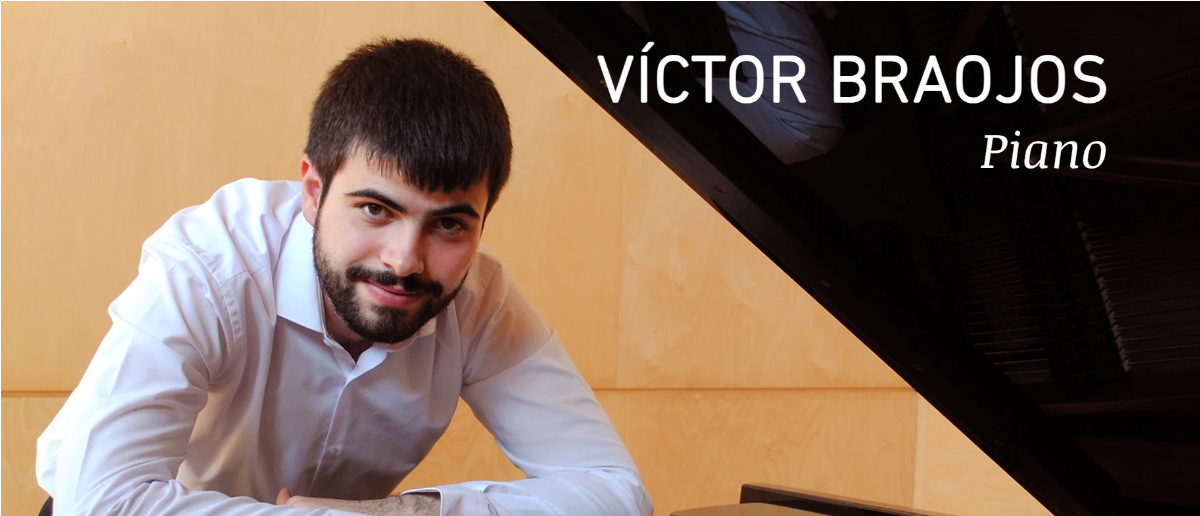
Some very musicianly and intelligent playing from Víctor Braojos as you would expect from the class of Martin Roscoe at the Guildhall where Victor now holds a junior fellowship.A fascinating programme that as he so eloquently told us was based of improvisation and free form.
Opening with the beautiful belcanto of Schubert’s G flat impromptu his credentials were immediately revealed in a performance of simplicity and beauty.A sense of balance that allowed the melodic line to sing so eloquently over the crystal clear flowing accompaniment.There was subdued passion and ravishing moments but above all an aristocratic sense style keeping the tempo until the final poignant notes with masterly control and intelligence.
Three preludes by Cortes were a UK premiere and only the second public performance,the first having taken place in the USA.Three beautifully crafted pieces of sadness and melancholy played with the same simplicity as Schubert .An outpouring of fantasy and beauty, played without the score,these three works by his compatriot obviously had a deep significance for Victor.
All these short pieces were but a’ prelude’ to the two major works on the programme:Cesar Franck’s Prelude,Choral and Fugue and Beethoven’s last of his 32 Sonatas ,op 111.Both were played with remarkable control and architectural shape. The Cesar Franck was played with fluidity and flowing tempo as one complete whole with a great sense of line and drive .Silences that were so poignant in meaning as they punctuated the fragments that Franck so masterly combines into one tumultuous climax of exultation and burning excitement.The superbly played knotty twine of the fugue lead to an exhilarating climax and the explosion of a cadenza that gradually dissolves into the wafts of lapping sounds of the opening Prelude. It was on these wonderfully fluid sounds that the magical reappearance of the opening theme is allowed to float.It was all played with superb control and beautiful articulation but also with artistry and poetic significance.It was the same beauty that he had brought to the choral with its regal outpouring of chiselled sounds before the celestial spread chords on which floats the melodic line.It was played with great authority and purity of sound the same that he was to find for Beethoven’s great Arietta and variations that close the Sonata op.111.
I was surprised that he split the hands in the opening three declarations of op 111 but it in no way diminished the grandeur of this opening before the burning cauldron of the ‘Allegro con brio ed appassionato’.Both the introduction and the Allegro were played with solidity and rhythmic control and a clarity that gave great authority to all that he did.Even slight blemishes were absorbed into the burning driving energy that Victor was able to produce.The Arietta was played with a flowing tempo that never seemed to fluctuate as each of the variations grew so naturally out of the previous one.There was a driving energy and aristocratic control in the mighty third variation before the final whispered meanderings of Beethoven’s world that he could see so clearly spread out before him.Even the triumphant final outpouring of the theme was soon forgotten as Beethoven reaches for the celestial heights that like Scriabin would find solace in vibrations of sound on which fragments of melody could be floated as if on a celestial cloud.This was a performance of a great authority and aristocratic control with the final chord in C major placed with poetically sensitive care. What can one play after that?Victor had the solution with a beautiful beguiling Epilogue by Granados from his Romantic Scenes
Víctor Braojos obtained his BMus (Hons) at Escola Superior de Música de Catalunya (Barcelona)m Later, he moved to London, where he pursued his Master in Piano Performance (Distinction and Concert Recital Diploma) and Artist Diploma at the Guildhall School of Music and Drama, working with Martin Roscoe and thanks to an Excellence Scholarship Award given by this institution. He has won several prizes and awards in National and International Piano Competitions, among which we could highlight the awards in the Maria Canals Int. Piano Competition, the Catalunya Piano Competition (youngest winner ever in the 50 years of history of this competition), the Barcelona Piano Competition, the Girona Musical Competition or the prize at the prestigious “El Primer Palau Music Competition”. Along his career he has performed in several venues across Spain, France, Italy, Poland, Russia or the UK, among which we could remark concerts at emblematic venues such as the Palau de la Música Catalana, Palau Maricel de Sitges, the National Auditorium of Barcelona, London Steinway Hall or the Frédéric Chopin Museum in Warsaw. His most recent and future engagements include internationally acclaimed concert halls and festivals, such as the Conservatoire International Concert Series at South Hill Park, the Bloomsbury Festival, National Liberal Club, the International Masters Series of Leon City Auditorium or North Fylde Music Circle. In September 2022, Víctor was appointed Junior Fellow at the Guildhall School of Music and Drama.
After receiving a Deutsche Grammophon CD collection from his grandfather for his 16th birthday, Marc Migó (1993, Barcelona) became unexpectedly and passionately drawn to its contents. This discovery led him to seek out guidance from pianist Liliana Sainz and composer Xavier Boliart. Three years later, he enrolled at ESMUC (Superior Music School of Catalonia).
In 2017, thanks to a scholarship issued by Fundación SGAE, Marc moved to New York in order to continue his musical studies. He pursued his Masters at The Juilliard School, where he was awarded the 2018 Orchestral Composition Prize. In 2019 he received The Pablo Casals Festival Award for his Cello Sonata “Cerdanyenca”, two Morton Gould Young Composers award by ASCAP and the New Juilliard annual commissioning competition award. He also has been a fellow at the 2020 Minnesota Orchestra Composer’s Institute, a winner of the George Enescu Prize 2020, the recipient of the first ever Dominick Argento Fellowship for Opera Composition (2022), and the 2023 Leo Kaplan Award by Ascap, among other international recognitions.
Marc Migó is currently a C.V. Starr fellow at Juilliard. He has received commissions from leading institutions, ensembles and performers, such as UrbanArias, the Dutch National Opera, Verità Ensemble, Liceu Opera House, the New Juilliard Ensemble, Festival Pablo Casals in Prades, The Cabrillo Festival, l’Associació Joan Manén, La Fura dels Baus, and CUNY University, among others.
Franck’s original plan, according to his pupil Vincent d’Indy, was to write a plain Prelude and Fugue ,
César Franck, photographed by Pierre Petit César-Auguste-Jean-Guillaume-Hubert Franck (French pronunciation: 10 December 1822 – 8 November 1890) was a French composer, pianist,organist and music teacher born in present-day Belgium. He was born in Liege (which at the time of his birth was part of the United Kingdom of the Netherlands). He gave his first concerts there in 1834 and studied privately in Paris from 1835, where his teachers included Anton Reicha .After a brief return to Belgium, and a disastrous reception of an early oratorio Ruth, he moved to Paris, where he married and embarked on a career as teacher and organist. He gained a reputation as a formidable musical improviser, and travelled widely within France to demonstrate new instruments built by Aristide Cavaillé-Coll
The decision to include a central section, separate from, yet linking, the Prelude and Fugue, came later (again according to d’Indy).However this central section became the emotional core of the work, its ‘motto’ theme used as a symbol of redemption and as a unifying principle at the climax of the Fugue.
Saint-Saëns made his tart observation about the piece that the ‘chorale is not a chorale and the fugue is not a fugue’ (in his pamphlet ‘Les Idées de M. Vincent d’Indy’).Alfred Cortot described the Fugue in the context of the whole work as ‘emanating from a psychological necessity rather than from a principle of musical composition’ (La musique française de piano; PUF, 1930). It is as if a ‘fugue’, as a symbol of intellectual rigour, was the only way Franck could find a voice to express fully the hesitant, truncated sobs of the Prelude and the anguished, syncopated lament of the Chorale. Not that the Fugue solves the problem—this is the function of the ‘motto’ theme; but the rules of counterpoint have given the speaker a format in which the unspeakable can be spoken.
There are two motivic ideas on which the whole work is based: one, a falling, appoggiatura motif used in all three sections and generally chromatic in tonality ; the other a criss-crossing motif in fourths (the ‘motto’ theme, which appears first in the Chorale section and then again as a balm at the point where the Fugue reaches its emotional crisis. The first motivic idea is clearly related to the Bach Cantata ‘Weinen, Klagen, Sorgen, Zagen’, and also to the ‘Crucifixus’ from the B minor Mass; the other idea appears as the ‘bell motif’ in Wagner’s Parsifal.
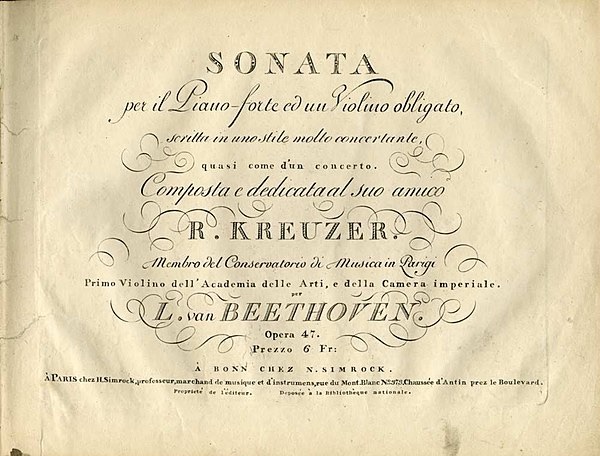
Beethoven’s last sonata op 111 was written between 1821 and 1822.
It was dedicated to his friend, pupil, and patron, Archduke Rudolf and consists of only two contrasting movements . The second movement is marked as an arietta with variations that Thomas Mann called “farewell to the sonata form”.Together with Beethoven’s The Diabelli Variations op.120 (1823) and his two collections of bagatelles op 119 (1822) and op 126 (1823) the sonata was one of Beethoven’s last compositions for piano. Nearly ignored by contemporaries, it was not until the second half of the 19th century that it found its way into the repertoire of most leading pianists..Beethoven conceived of the plan for his final three piano sonatas (op 109.110 and 111 )during the summer of 1820, while he worked on his Missa solemnis. Although the work was only seriously outlined by 1819, the famous first theme of the allegro ed appassionato was found in a draft book dating from 1801 to 1802, contemporary to his Second Symphony .Moreover, the study of these draft books implies that Beethoven initially had plans for a sonata in three movements, quite different from that which we know: it is only thereafter that the initial theme of the first movement became that of the string Quartet n.13 , and that what should have been used as the theme with the adagio—a slow melody in A flat – was abandoned. Only the motif planned for the third movement, the famous theme mentioned above, was preserved to become that of the first movement. The Arietta, too, offers a considerable amount of research on its themes; the drafts found for this movement seem to indicate that as the second movement took form, Beethoven gave up the idea of a third movement, the sonata finally appearing to him as ideal.
Piano Sonata No. 2 in G sharp minor Op. 19 ‘Sonata Fantasy’ (1892-7) I. Andante • II. Presto
Robert Schumann (1810-1856)
Kreisleriana Op. 16 (1838) Äusserst bewegt • Sehr innig und nicht zu rasch • Sehr aufgeregt • Sehr langsam • Sehr lebhaft • Sehr langsam • Sehr rasch • Schnell und spielend
Fryderyk Chopin (1810-1849)
Scherzo No. 1 in B minor Op. 20 (c.1833) Scherzo No. 2 in B flat minor Op. 31 (1837) Scherzo No. 3 in C sharp minor Op. 39 (1839) Scherzo No. 4 in E Op. 54 (1842-3)
Boris Giltburg at the Wigmore Hall with a first half of all fantasies :Scriabin Second (Fantasy) Sonata and Schumann’s Kreisleriana.Some beautifully sensitive playing of the first movement of Scriabin with ravishing colours and a sense of balance that allowed the melodic line always to be revealed wrapped as it was in sumptuous golden streams of sound.The second movement was played with dynamic drive and throbbing passion with a kaleidoscope of sounds that allowed for a dynamic range of searing passion mixed with subtle delicacy . Playing with an I pad heroically in view he gave an exemplary performance of one of Scriabin’s most loved Sonatas. I had heard recently a recording from the Wigmore Hall of Boris Giltburg giving a magnificent performance of Chopin’s 24 Preludes.Although he had the I pad as an aide memoire he never seemed to need it as the 24 problems,as Fou Ts’ong used to call them ,were 24 jewels in a sumptuous crown of nobility,elegance and grandeur. So it was with great expectancy that I awaited a similar performance of Chopin’s Four Scherzi preceded by Schumann’s eight fantasies that make up Kreisleriana.
Not helped by a rather metallic sounding Fazioli piano Kreisleriana sounded rushed and rather erratic with exaggerated contrasts not only of sound but also tempo.There were of course many beautiful moments such as the central episode of the first fantasy or the beautiful simplicity of the first part of the fourth ( where surely ‘bewegter ’ means moving not actually slower?)The third sound strangely disjointed and although the central episode was played with great beauty it seemed strangely divorced from its surroundings.The fifth whilst being rhythmically very clear seemed to lack any real substance to the sound in the more lyrical passages that follow.The sixth was so whispered as to be almost inexistant before the rather unhinged attack of the seventh that like the first had seemed strangely out of control.The central episode was played by the left hand alone and revealed an absolute technical mastery that made its surroundings even more incomprehensible.Surely the final chords are part of what precedes them and is just a way of slowing down the tension?The eighth was the most successful where the absolute clarity of the right hand was beautifully judged contrasting with the long bass held notes.The first contrasting episode though was strangely sotto voce whereas the second was anything but sotto voce and made one wonder whether Floristan had suddenly woken from a deep sleep with a start.
Unfortunately the Chopin Scherzi fared no better with hurried frantic passage work in the first that although played with great drive and accuracy seemed strangely out of control.The beautiful Polish carol of the central episode was almost inaudible as more attention was shown to the top notes of the accompaniment than to the beautiful melody in the tenor or alto register.The second was played with great rhythmic energy and contrast but the central episode so divorced from its surrounding as to make any architectural sense of this well known masterpiece impossible.A very exciting ending and as at the end of the first had Giltburg happy to interrupt the continuity of this quartet of Scherzi with applause.The opening of the third I have never heard played so well but then the octaves that followed were like guns going off and totally divorced from the magnificent introduction that had preceded them.The chorale was played so sotto voce that even for Giltburg made it difficult to control the cascades of notes that illuminate this glorious almost religious outpouring.The fourth scherzo in a way suited Giltburg with its fleeting silf like changes of character but again the glorious cantabile of the central episode was barely whispered and the octaves at the end were more worthy of Tchaikowsky than poor old Chopin! An almost inaudible and mannered performance of Clare de lune was cheered to the rafters by the ever generous Wigmore Hall audience and I was just sorry to have eavesdropped on an occasion that was so very different from the one I had been expecting.Chopin plus it was billed as from an illustrious artist in residence which was obviously not the case tonight.
Kreisleriana, op 16, is a in eight movements and subtitled Phantasien für das Pianoforte. Schumann claimed to have written it in only four days in April 1838[and a revised version appeared in 1850.It is dedicated to Chopin , but when a copy was sent to the Polish composer, “he commented favorably only on the design of the title page”.
Äußerst bewegt (Extremely animated),
Sehr innig und nicht zu rasch (Very inwardly and not too quickly). This movement in ABACA form, with its lyrical main , includes two contrasting intermezzi.In his 1850 edition, Schumann extended the first reprise of the theme by twenty measures in order to repeat it in full.
Sehr aufgeregt (Very agitated),
Sehr langsam (Very slowly), B♭ major/G minor
Sehr lebhaft (Very lively), G minor
Sehr langsam (Very slowly), B♭ major
Sehr rasch (Very fast),
Schnell und spielend (Fast and playful), G minor. Schumann used material from this movement in the fourth movement of his first symphony
Kreisleriana is a very dramatic work and is viewed by some critics as one of Schumann’s finest compositions.In 1839, soon after publishing it, Schumann called it in a letter “my favourite work,” remarking that “The title conveys nothing to any but Germans. Kreisler is one of E.T.A. Hoffmann’s creations, an eccentric, wild, and witty conductor.”
Like the kaleidoscopic Kreisler, each movement has multiple contrasting sections, resembling the imaginary musician’s manic depression , and recalling Schumann’s own “Florestan” and “Eusebius,” the two characters Schumann used to indicate his own contrasting impulsive and dreamy sides.
In a letter to his wife Clara , Schumann reveals that she has figured largely in the composition of Kreisleriana:
‘I’m overflowing with music and beautiful melodies now – imagine, since my last letter I’ve finished another whole notebook of new pieces. I intend to call it Kreisleriana. You and one of your ideas play the main role in it, and I want to dedicate it to you – yes, to you and nobody else – and then you will smile so sweetly when you discover yourself in it.’
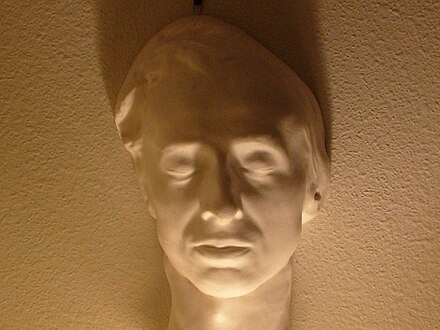
Chopin’s death mask, by Clesinger Fryderyk Franciszek Chopin
1 March 1810 Zelazowa Wola ,Poland 17 October 1849 (aged 39) Paris, France
Chopin’s four scherzos were composed between 1833 and 1843. They are often linked to his four ballades , composed in roughly the same period; these works are examples of large scale autonomous musical pieces, composed within the classical framework, but surpassing previous expressive and technical limitations. Unlike the classical model, the musical form adopted by Chopin is not characterised by humour or elements of surprise, but by highly charged “gestures of despair and demonic energy”.Schumann wrote of the first scherzo : “How is ‘gravity’ to clothe itself if ‘jest’ goes about in dark veils?”Starting in the early 1830s, after his departure from Poland, Chopin’s musical style changed significantly, entering a mature period with compositions of exceptional single-movement pieces on a monumental scale, stamped with his unmistakable signature. There were ten of these extended works—the four ballades, the four scherzos and the two fantaisies (op 49 and 61) This musical transformation was preceded by Chopin’s new attitude to life: after adulation in Warsaw, he felt disillusioned by lukewarm audiences in Vienna; then his prospects as a pianist-composer seemed less inviting; and lastly nostalgia and the recent 1830 Polish uprising drew him back spiritually to Poland. The musical form “scherzo” comes from the Italian word ‘joke’. In its classical form, it is usually part of a multi-movement work, in triple time with a lively tempo and light-hearted mood. Beethoven’s scherzos perfectly exemplify this type of movement, with characteristic sforzandi off the beat, clearly articulated rhythms and rising or falling patterns.Chopin’s four scherzos enter into a different and grander realm. They are all marked presto or presto con fuoco and “expand immeasurably both the scale of the genre and its expressive range”. In these piano pieces, particular the first three, any initial feeling of levity or jocularity is replaced by “an almost demonic power and energy”.
Autograph manuscript of Scherzo No. 4, Op. 54 in E major, 1842–1843, Kraków
Each of the four scherzos starts with abrupt or fragmentary motifs, which create a sense of tension or unease. The opening gestures of Scherzo No. 1 involve texture, dynamics and range: strident chords are followed by rapid will-o-the-wisp passagework, rising with crescendos—motifs that recur during the movement. In Scherzo No. 2, the initial fragmentary sotto voce rumblings are followed by a dramatic forceful response, all of which are repeated. The gesture that begins Scherzo No. 3 is similar to that of Scherzo No. 2, but less pronounced. The beginning of Scherzo No. 4 alternates two contrasting textures and harmonies—first subdued chords and then faster arched figures that rise and fall with the dynamics. In summary, Chopin established the one-movement scherzos as a genre in which the piece grew out of the opening fragmentary gestures, heard at the outset in the initial short and contrasting musical ideas.
Alexander Nikolayevich Scriabin
6 January 1872 Moscow 27 April 1915 Moscow
Scriabin’s Piano Sonata No. 2 in G-sharp minor, (op. 19, also titled Sonata-Fantasy) took five years for him to write. It was finally published in 1898, at the urging of his publisher. ‘You’ve had that piece long enough! Send it to me right away.’ Skryabin’s publisher and friend, Mitrofan Belyayev, was referring Sonata No. 2 in G sharp minor Op. 19, a work that,despite its modest length, was almost six years in the making. ‘It has been revised seven times’, the composer remarked, before finally submitting it to Belyayev in 1898.
In 1894 he had agreed to pay Scriabin to compose for his publishing company (he published works by notable composers such as Rimsky-Korsakov- Korsakov and Glazunov). In August 1897, Scriabin married the pianist Vera Ivanovna Isakovich, and then toured in Russia and abroad, culminating in a successful 1898 concert in Paris. That year he became a teacher at the Moscow Conservatory and began to establish his reputation as a composer. During this period he composed his cycle of etudes , Op. 8, several sets of preludes , his first three piano sonatas, and his only piano concerto , among other works, mostly for piano.
For five years, Scriabin was based in Moscow, during which time his old teacher Safonov conducted the first two of Scriabin’s symphonies.
P.S.
Christopher, your review of the Giltburg recital was one of the most honest and accurate that I have ever read. Last evening, I began to worry that my hearing was defective, but your review this morning has encouraged me to believe that I am retaining my faculties. I was tempted to leave at the interval after the divine Schumann was so badly mangled.
David Carhart thank you dear friend he is only the second person that I have allowed my feelings to take over but I had heard his Chopin Preludes on the Wigmore Website and thought that after the awful mangled Schumann he would give us some insights …but alas this was not the case and the encore summed up his musicianship that is on a par with Babayan …..the only other person I have allowed myself to describe what horrors were being enacted on such a hallowed stage …….I was incensed of the ignorance of taste of a public who could give him an ovation after such a feast ….it gave me indigestion and I hurried home as fast as I could thanking God that I had heard Alim the other day with hard work and humility transmitting the composers wishes to us …I just hope he survives the sharks that are out to cash in on artists who are ready to sacrifice their artistic integrity pushed by the machinery that can offer them concerts ………..quantity rather than quality …..the pressure and temptation is great.But of course I remember Brendel playing K271 and with that saying farewell to the concert platform before his powers diminished ………….what is this I pad thing that is so readily accepted in solo concerts …….even concertos now and no one remarks on it ………….
Piano Sonata No. 23 in F minor Op. 57 ‘Appassionata’ (1804-5) I. Allegro assai • II. Andante con moto • III. Allegro ma non troppo – Presto
Piano Sonata No. 31 in A flat Op. 110 (1821-2) I. Moderato cantabile molto espressivo • II. Allegro molto • III. Adagio ma non troppo – Fuga. Allegro ma non troppo
Interval Aleksandr Skryabin (1872-1915)
4 Preludes Op. 22 (1897) Prelude in G sharp minor • Prelude in C sharp minor • Prelude in B • Prelude in B minor
Sergey Rachmaninov (1873-1943) Prelude in B minor Op. 32 No. 10 (1910) Etude-tableau in D Op. 39 No. 9 (1916-7)
Maurice Ravel (1875-1937)
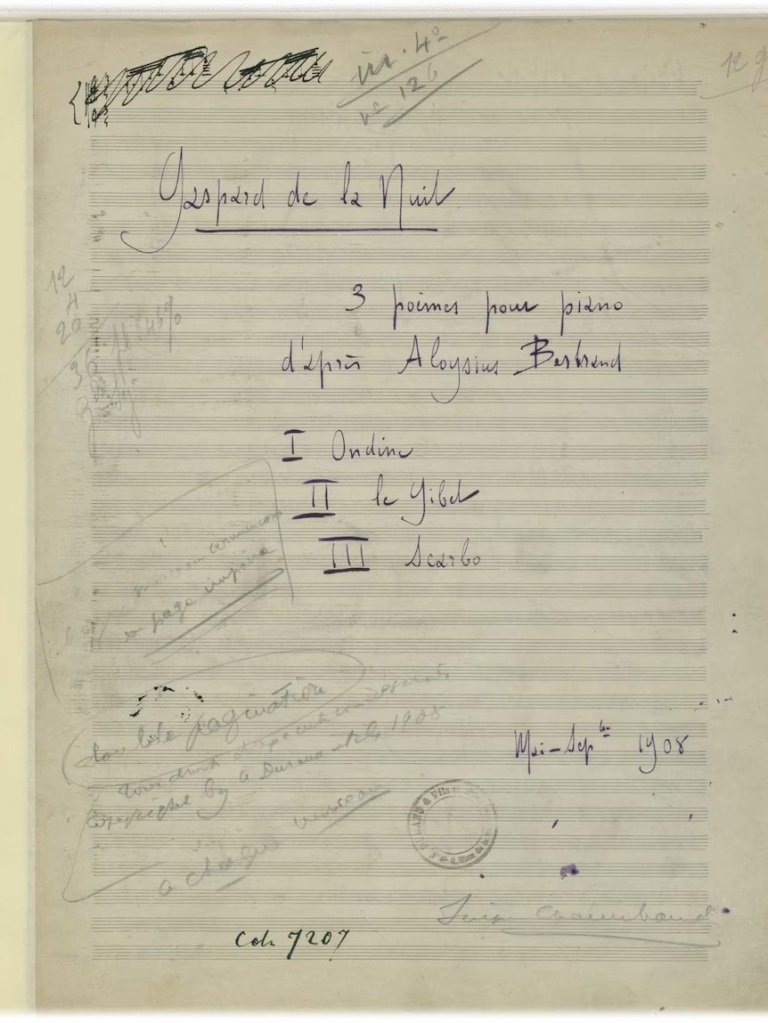
Gaspard de la nuit (1908) I. Ondine • II. Le gibet • III. Scarbo
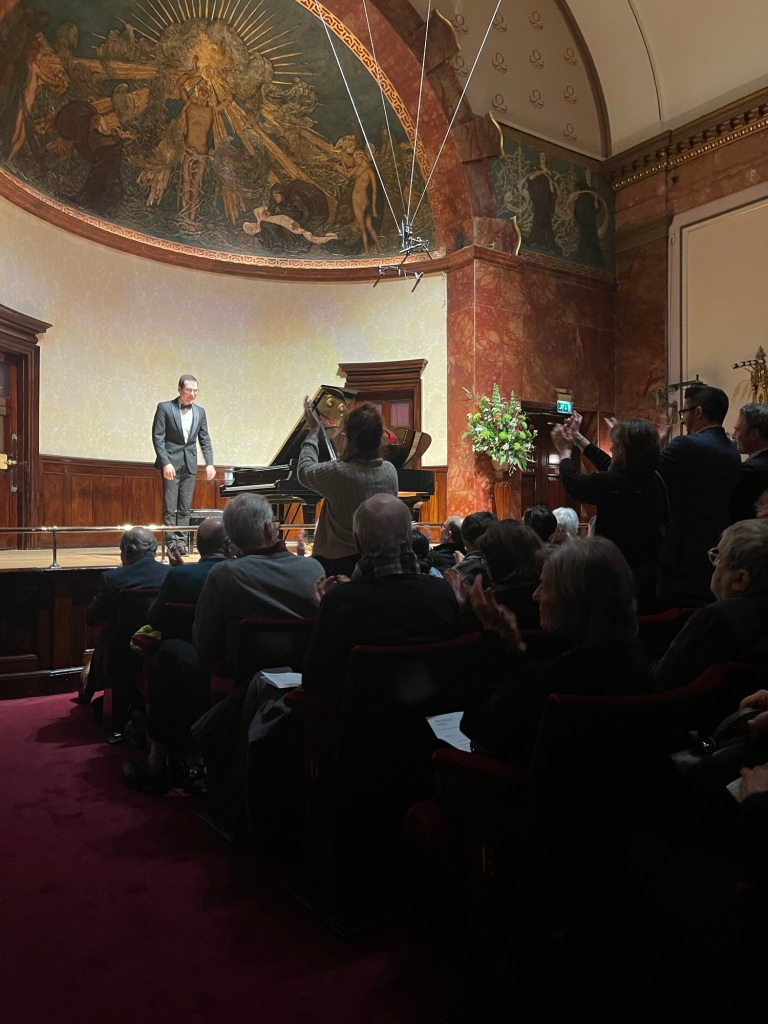
Alim Beisembayev in a major London recital at the Wigmore Hall . A programme that already showed the credentials of great artistic integrity. When these days do young musicians play two Beethoven Sonatas as an opener to an important London recital? Only a fool or a great artist would dare open with the ‘Appassionata’ followed by Beethoven’s antidote to a turbulent life with the mellifluous, sublime outpouring of his penultimate sonata op 110.
Alim is certainly no fool and is quite simply one of the finest musicians I have heard since Serkin.A rhythmic precision and attention to the minutest details in the score of Boulezian clarity. Silences that were truly golden and were the anchors that we could hold on to inbetween the marvels that were being recreated before our very eyes . An ‘Appassionata’ of startling contrasts that had us on the edge of our seats as if newly minted. The opening of op 110 after the extraordinarily relentless onslaught of the Presto ending of the ‘Appassionata’ was of such sublime beauty as Alim waited until he could feel we were all with him before gently caressing notes that like the fourth Concerto are of celestial genius. There was magic in the air indeed and a great artist treating us with humility and mastery to performances the like of which has been missing too long from the concert hall . We are getting too used to artists appearing before the public with the I pad in a desperate attempt to keep up with the speed with which concert artists are obliged to be entreated by people who are more interested in quantity than quality. But it is the tension that is missing as was so evident today as this young man played with simplicity and humility what the composer had actually written .He had digested the score but more than that because it was the very meaning behind the notes that was both enthralling and enlightening . There were no nice conveniently turned corners to this young man’s Beethoven but the sinuous tempestuous impatience that we know was the man Beethoven. A live performance should be like the man on the high wire holding us in his hands with electrifying suspence as was the wont of a Serkin or a Brendel.The surprise element ,the voyage of discovery that can unite strangers gathered to share in such experience is what we were treated to today.
From the very opening the ‘Appassionata’ was a riveting experience .It was the rest at the end of the second half of the opening phrase that was immediately arresting as the trill unwound with spring like insistence.And the menace that the four note motif took on when played pianissimo and then dying away to a whisper only to be awoken by the cascading scale played exactly as Beethoven had written it – no pianistic jiggery pokery for this young man but hard work to be able to follow Beethoven’s indications so faithfully.The shape of the downward scale is the arch that your arm should make like a great artist with one stroke of the brush.The chords that follow are all fortissimo no crescendo but scrupulously in time as Serkin used to do.It was these thunderbolts of energy that gave back such dynamic energy to what can so often be a well worn rather tired old war horse .The second subject unfolded from pianissimo with an almost imperceptible crescendo within the melody itself leading to piano only to be smartly rapped over the knuckles by Beethoven.The tumultuous forte and fortissimo that followed was unrelenting in its driving force.After this it was the rest after the trill strictly in time that again gave such energy to these seemingly innocent cell like fragments.There was a remarkable weight that he gave to the second subject with an extraordinary legato in which the crescendo and ‘sempre piu forte’ could live as though played by a bow not a mere hammer!The question and answer of the four note motif after cascades of notes was quite breathtaking in its sudden injection of unrelenting power.The cascades of notes before the coda so often rearranged by ‘pianists’ were here played as they appeared on the page – no facilitating these waves of energy that Beethoven spreads over the keys .Who wants to play safe keep away from Beethoven say I!There was such beauty as the four note motive came to its Adagio rest with Beethoven’s almost imperceptible crescendo to a fermata in piano.Barely touching the keys as he was also following the composers long pedal markings ( as he was to do so wonderfully later in Ondine).Pedal held down requires a very special delicate touch as the strings are already vibrating when you just barely stroke them again .Beethoven’s impatient irascible ‘piu allegro’ was taken by stealth by Alim as he caught himself and us all by surprise.No rallentando to the end but a superb control of sound where the diminuendo was in the notes themselves without upsetting or smoothing over the driving urgent tempo that Beethovens had set himself.The whispered Andante was allowed to flow gently and so inevitably and again the clockwork precision of the rhythm was remarkable as it was played in piano and dolce and requires a mastery with fingers of both steel and delicacy.The music just flowed without any slowing or stylistic shaping that was all done within the notes themselves a bit like the Berlin Philharmonic under a Karajan or Boulez.The final arpeggiando chord was placed with such delicacy in pianissimo as it unfolded like a glowing flower.The fortissimo chord played secco with the arpeggiando only in the left hand was timed so masterly that it still had the power to shock with its call to arms.An Allegro – that was ‘non troppo’ because we have the tsunami and the end that is to to overwhelm and astonish.Again it was the rests that were so important in keeping the unrelenting rhythm.There was beauty and shaping of course because Alim has a soul and a heart but there was no conceding of the rhythmic tension as Serkin had shown us.It can be done only with hours of practicing to reset the fingers.The sforzando/piano I have never heard sound so absolutely natural because the tempo was kept so tightly knit as he built up the tension by never conceding and stylistic niceties.Of course he played the repeat as all great musician do leading into the coda where the opening two long chords were fortissimo and then sforzando and LEGATO …….So the contrasting staccato chords in piano came as such an electric current of energy.The drive to the end and the final chord spread over nine bars thanks to Beethoven’s pedal was an overwhelming ending to a masterpiece restored to the same shock tactic that it would have had in the early eighteen hundreds when the ink was still wet on the page.
As Gilels used to declare the difference between live music and recorded is that between fresh or canned food .I will never forget Serkin at the end of the ‘Hammerklavier’ in London holding onto the last chord as though his life depended on it,shaken as we all were after a tumultuous and even tortuous voyage of discovery together.Or Arrau at the end of the Beethoven Trilogy so overwhelmed as we all were he could never have had a quick cup of tea and repeated such a miracle to appease the crowds who demanded a return fight!
Beethovens op 110 I have recently written about Alim’s extraordinary performance in Richmond last year together with op 111. There were many things to appreciate again and so will just jot down some thoughts of a continual voyage of discovery.This too I have heard Serkin play in London and have never forgotten the passion and frenzy he brought to the final pages where the final A flat chord spread up and down the keyboard over five bars was an explosion of atomic energy the like of which I thought could never be matched and will certainly never be forgotten.As Mitsuko Uchida so rightly said when asked if her recital could be recorded or photographs taken:’A recital should remain and grow in one’s memory and not be a copy on the printed page that fades with time!’ Alim waited after the tumultuous Appassionata for just the right moment to caress the keys that took us to the sublime belcanto melody that opens this most beautiful of all Sonatas.Scales that just wafted up and down the keyboard ‘leggiermente’ that were merely clouds of shifting harmonies leading to the purity of the melodic line etched on high before leading in turn to the agitated left hand chords with the right hand moving in contrary motion so beautifully phrased without ever altering the tempo.There was magic in the air when with all simplicity E flat suddenly became D flat and we were involved in the miraculous meanderings of the left hand with the melodic line played so simply above it.The coda was played with disarming simplicity again scrupulously in time but with extraordinary clarity of phrasing.The contrast between ‘piano’ and ‘forte’ in the scherzo was quite overwhelming and the ease with which he plunged into the notoriously tricky trio made the syncopated rhythms even more poignant.Waiting for the exact moment to allow the Adagio to emerge from the whispered long held final chord of the scherzo.The control of sound whilst scrupulously observing Beethoven’s very precise pedal markings was quite remarkable as he was able to phrase with such sensibility every minute detail.The pulsating chords were indeed Beethoven’s heart beating where the keys were never allowed to be struck but here was the real ‘bebung’ ( mere vibrations of sound) brought to life on a very different instrument than Beethoven’s.The inner counterpoints of yearning I have never heard played with such poignant delicacy or meaning.The four notes C,B flat,E flat and A flat were followed by a rest that I had never realised was so emotionally important until listening to Alim today.Of course they were to be repeated on the return of the Aria with devastating effect.The fortissimo entry of the fugue subject amid such chattering knotty twine was quite breathtaking as was the sudden change from E flat to D just before the return of the Aria.Timed so perfectly we have heard it hundreds of times but never like this ….it was truly a moment that will remain in my memory as a moment to cherish.The gradual build up to the tumultuous triumphant exhultation was masterly for Alim’s aristocratic control that allowed him to unleash the final A flat chord on us unsuspecting mortals who were left breathless and truly uplifted.Who could ever forget Serkin shaking at the end with hands thrown high as if being struck by lightening.
What a lesson we were treated to tonight by this young man who was trained in British Institutions that have nurtured his great natural talent and imbued him with a technical mastery that allows him to delve deep into the very heart of the creative genius of the composers he is serving .Je sens,je joue je trasmets has never found a greater advocate……..
What a superb start to the second half of the concert with a very short survey of Russian music with ravishing beauty of nobility,sensuality and nostalgia.Four preludes op 22 by Scriabin that with Alim’s chameleonic sense of colour and mood was a multicoloured feast of fluidity and luminosity.The sumptuous hidden passion of the first was followed by a mere page of sublime simplicity and the capricious play with sounds of the third.They lead so naturally to the Romantic effusions of the last in B minor and behold a miracle that this was transformed as if by magic into the ‘Return’ by Rachmaninov in the same key.The Prelude in B minor with its improvised searching character was a favourite of the composer and his great friend Moiseiwitch who had delved deep into this miniature tone poem and found the same poetic meaning as the composer intended.The gentle opening lead to an overpowering climax that was so gradual and well balanced that we were not aware of how overwhelming it would be .Immediately there was a desolate nostalgic calm like a light being turned off . Such was Alim’s mastery of sound he could lead us where he wanted to as he had a story to tell with his sensitive fingers and kaleidoscopic sense of colour.Of course the final word was from Rachmaninov with the extraordinary sumptuous outpouring of the Etude – tableau op 39 n. 9 .Even here though there was a story to tell as the dynamic opening energy subsided and there was the contrasting episode of crystal like clarity where all the strands of counterpoint could be heard chattering amongst themselves as the excitement grew to fever pitch and the final gloriously sumptuous outpouring of grandeur and nobility allied to an almost animal pitch of excitement.
Gaspard de la nuit was the closing work of the recital and it held no terror for Alim .His only concern was to transmit Ravel’s extraordinary recreation of the poems by Bertrand even though Ravel had set out to test the technical prowess of pianists by writing a piece of equal if not more difficulty that Balakirev ‘s notorious Islamey.Technical considerations just disappeared as we were taken into a magic world of sounds with the delicacy and fluidity of Ondine.There were ‘puffs’ of colour that appeared as if by alchemy when least expected.An extraordinary sense of line that no matter how complex the texture Ondine shone through as she darted from one end of the keyboard to the other with silf like precision.After the tumultuous climax Ondine was left on her own barely a whisper bathed in pedal .In Alim’s hands ,like his long pedals that Beethoven demands,suddenly made sense and added some quite extraordinary colours to an instrument that is after all a box of hammers and strings.How can one possibly persuade us that it can sing as beautifully as the human voice ?By artistry,technical mastery but above all a supreme sense of balance .Alim is not only a courageous high flyer but a supreme illusionist as were the pianists in the so called Golden Age of piano playing .Was it not Matthay who said that in each note on the piano there are a hundred different gradations of sound depending on how the keys are touched.
With Stephen Kovacevich after the recital
Seeing Stephen Kovacevich in the audience applauding his younger colleague I am reminded of his great mentor Myra Hess – the star student of Uncle Tobbs at the Royal Academy.The desolate sounds of Le Gibet were of such insistence and the bass notes gave the needed anchor on which the gallows could swing with such frightening isolation.Scarbo entered in this desolate atmosphere with a remarkable clarity.The deep bass notes I have never heard so clearly defined as the vibrating chords – like in Beethoven’s aria of op 110 – unbelievably were like blowing on the keys such was their extraordinary unpercussivness.I remember Agosti pushing my fingers nearer the keys never to hit but caress and pull sounds that are hidden deep within the black and white keys of this great black beast.Perlemuter too changing fingers many times on one note like an organist to feel the weight within the keys as you slid from one to the other never letting go.
Alim with his long time mentor Tessa Nicholson at the Purcell School and RAM
Here again it was the silences that were so overwhelming in their impact not only of the silence but what came immediately afterwards.In the central episode I have never been aware of the fact that this is Ondine again raising her head before being dragged into the infernal furness of the triumphant Scarbo.Extraordinary technical mastery and passionate involvement from Alim who like the great masters of the past would show and guide us to the one and only climax in a piece and it was this that gave such architectural authority to his performances.Rubinstein of course was the prime example who even in his late 80’s would suddenly inject a work with electric energy sometimes even rising from the seat to do so.
Stephen Kovacevich with Yisha Xue of the Asia Circle at the National Liberal Club
The tricks of the trade my old teacher Sidney Harrison used to call them.But what trade ?That of master musicians who are totally dedicated to their art.That is what I was reminded of today as Alim was cheered to the rafters by the discerning Wigmore Hall public and persuaded to play two encores that were indeed the cherry on a sumptuous cake.
Chopin Prelude op 28 n.17 .The deep A flat in the bass created a sound where the melodic line could appear as an apparition from afar a ‘Cathédrale engloutie’ indeed .And finally a ‘Chasse Neige’ by Liszt that made one realise what a true genius Liszt was when his works are played with the intelligence and fantasy that we heard today.Every bit as frightening as Scarbo as the whispered chromatic scales built to a terrifying climax – never hard or ungrateful but the sumptuous and ravishingly beauty of a truly ‘Grand’ piano.
Mr and Mrs Davide Sagliocca just returned from Prague for Alim’s recital and the most discerning of music lovers
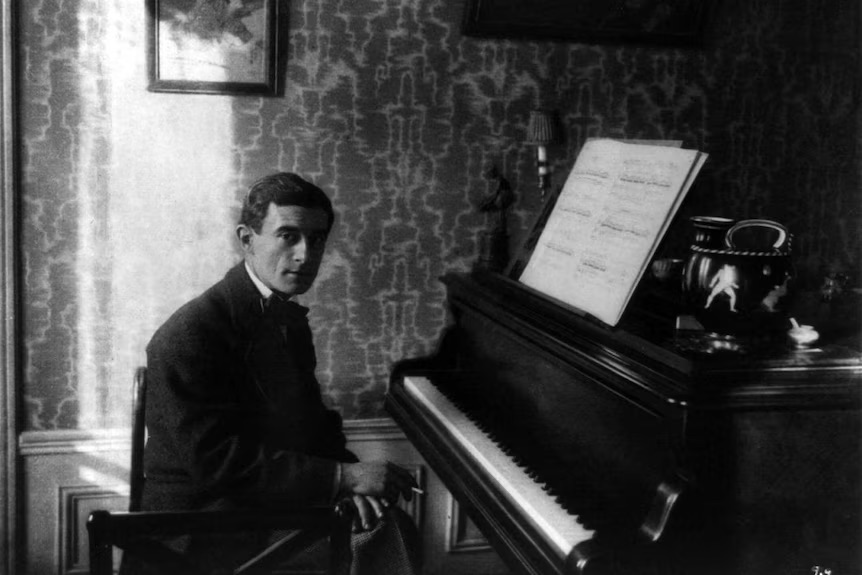
Gaspard de la nuit (subtitled Trois poèmes pour piano d’après Aloysius Bertrand), M.55 was written in 1908. It has three movements , each based on a poem or fantaisie from the collection Gaspard de la Nuit – Fantasies à la manière de Rembrandt e de Callot completed in 1836 by Aloysius Bertrand . The work was premiered in Paris, on January 9, 1909, by Ricardo Vines.
The piece is famous for its difficulty, partly because Ravel intended the Scarbo movement to be more difficult than Balakirev’s Islamey . Because of its technical challenges and profound musical structure, Scarbo is considered one of the most difficult solo piano pieces in the standard repertoire.
In 1842, a strange collection of poems by French writer Aloysius Bertrand was posthumously published with the title Gaspard de la Nuit. The publication is widely thought to mark the beginning of prose poetry in French literature, but the collection remained largely unknown until it was rediscovered by two of the most significant French literary figures of the 19th century, Charles Baudelaire and Stéphane Mallarmé. When Ravel was shown the work, some 50 years later, something in Bertrand’s vivid depictions, full of fantastical creatures, spectral netherworlds and gothic darkness, connected with the composer’s own fascination with mysteries of the unknown. But there was something else about the rhythm and syntax of Bertrand’s writing that Ravel found intriguing, and which seemed to provide a perfect vehicle for the ideas that had been swirling in his imagination and had been briefly glimpsed in other works of the period.
The name “Gaspard ” is derived from its original Persian form, denoting “the man in charge of the royal treasures”: “Gaspard of the Night” or the treasurer of the night thus creates allusions to someone in charge of all that is jewel-like, dark, mysterious, perhaps even morose.
Of the work, Ravel himself said: “Gaspard has been a devil in coming, but that is only logical since it was he who is the author of the poems. My ambition is to say with notes what a poet expresses with words.”
Aloysius Bertrand , author of Gaspard de la Nuit (1842), introduces his collection by attributing them to a mysterious old man met in a park in Dijon , who lent him the book. When he goes in search of M. Gaspard to return the volume, he asks, “ ’Tell me where M. Gaspard de la Nuit may be found.’ ‘He is in hell, provided that he isn’t somewhere else’, comes the reply. ‘Ah! I am beginning to understand! What! Gaspard de la Nuit must be…?’ the poet continues. ‘Ah! Yes… the devil!’ his informant responds. ‘Thank you, mon brave!… If Gaspard de la Nuit is in hell, may he roast there. I shall publish his book.’ ”
Beethoven’s A flat major Sonata, Op 110, was his penultimate sonata, written in 1821,
The outward gentleness of the opening movement belies its tautness of form, and the contrast with the brief second, a scherzo marked Allegro molto – capricious, gruffly humorous, even violent – is extreme. Beethoven subversively sneaks in references to two street songs popular at the time: Unsa Kätz häd Katzln ghabt (‘Our cat has had kittens’) and Ich bin lüderlich, du bist lüderlich (‘I’m dissolute, you’re dissolute’)!
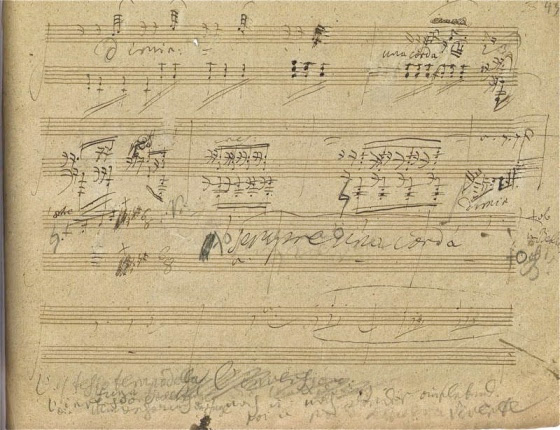
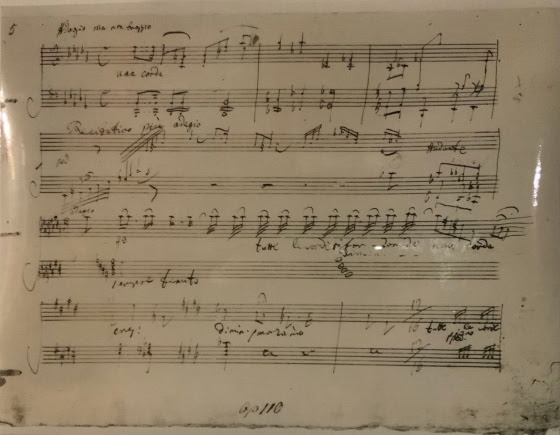
Facsimile of last movement p.43
But it’s in the finale that the weight of the sonata lies, and it begins with a declamatory, recitative-like passage that starts in the minor, moving to an emotionally pained aria-like section.Beethoven introduces a quietly authoritative fugue, based on a theme reminiscent of the one that opened the sonata. Its progress interrupted by the aria once more, its line now disjunct and almost sobbing for breath. The way in which the composer moves into the major via a sequence of G major chords is a passage of pure radiance, that Edwin Fischer described as ‘like a reawakening heartbeat’. This leads to a second appearance of the fugue in inversion culminating in a magnificently triumphant conclusion.
The legendary Guido Agosti held summer masterclasses in Siena for over thirty years.All the major pianists and musicians of the time would flock to learn from a master,a student of Busoni,where sounds heard in that studio have never been forgotten.He was persuaded by us in 1983 to give a public performance of the last two Beethoven Sonatas.The recording of op 110 from this concert is a testament,and one of the very few CD’s ever made,of this great master. This is a recently made master of op 111 https://drive.google.com/file/d/1zdb2qjgWnA3HyPph_6FxnxjLHy7APc_f/view?usp=drive_web
In the summer of 1819, Adolf Martin Schlesinger from the Schlesinger firm of music publishers based in Berlin sent his son Maurice to meet Beethoven to form business relations with the composer.The two met in Modling,where Maurice left a favourable impression on the composer.After some negotiation by letter, the elder Schlesinger offered to purchase three piano sonatas for 90 ducats in April 1820, though Beethoven had originally asked for 120 ducats. In May 1820, Beethoven agreed, and he undertook to deliver the sonatas within three months. These three sonatas are the ones now known as Op. 109,110, and 111 the last of Beethoven’s piano
Beethoven’s own markings with the ‘bebung‘ or vibrated notes in the Adagio of op.110
The composer was prevented from completing the promised sonatas on schedule by several factors, including his work on the Missa solemnis (Op. 123),rheumatic attacks in the winter of 1820, and a bout of jaundice in the summer of 1821.Op. 110 “did not begin to take shape” until the latter half of 1821.Although Op. 109 was published by Schlesinger in November 1821, correspondence shows that Op. 110 was still not ready by the middle of December 1821. The sonata’s completed autograph score bears the date 25 December 1821, but Beethoven continued to revise the last movement and did not finish until early 1822.The copyist’s score was presumably delivered to Schlesinger around this time, since Beethoven received a payment of 30 ducats for the sonata in January 1822.
Beethoven’s Piano Sonata No. 23 in F minor, op 57 , known as the Appassionata, was composed during 1804 and 1805, and perhaps 1806, and was dedicated to Count Franz von Brunswick. The first edition was published in February 1807 in Vienna
Beethoven gave the autograph to the pianist Marie Bigot [1786-1820], who impressed him by playing it at sight .From her it went in 1852 to the pianist René Paul Baillot [1813-1889], and after his death to the library of the Paris Conservatoire; it is now in the collection of the Bibliothèque Nationale de France, preserved under call number mus. ms. 25529.
The ‘Appassionata’ was not named during the composer’s lifetime, but was so labelled in 1838 by the publisher of a four-hand arrangement of the work. Instead, Beethoven’s autograph manuscript of the sonata has “La Passionata” written on the cover, in Beethoven’s hand.
Alim Beisembayev won First Prize at The Leeds International Piano Competition in September 2021, performing Rachmaninov’s Rhapsody on a Theme of Paganini with the Royal Liverpool Philharmonic Orchestra and Andrew Manze. He also took home the medici.tv Audience Prize and the Royal Liverpool Philharmonic Society Prize for contemporary performance, with The Guardian praising him as a “worthy winner” with a “real musical personality”.Announced as a BBC New Generation Artist 2023-25, in summer 2023 Alim made his Royal Albert Hall BBC Proms debut performing Rachmaninov’s Piano Concerto No. 2 with the Sinfonia of London conducted by John Wilson broadcast live on BBC Radio 3 and recorded for BBC Television.Further highlights in the 2023/24 season include debuts with the BBC Symphony (Jonathan Bloxham), BBC Philharmonic (Joshua Weilerstein), Bournemouth Symphony (Tom Fetherstonhaugh) and Enescu Philharmonic as well as returning to the Royal Liverpool Philharmonic (Domingo Hindoyan) to perform the World Premiere of a new piano concerto by Eleanor Alberga.Recent concerto highlights include with the Barcelona Symphony Orchestra (Pablo Rus Broseta), Royal Liverpool Philharmonic (Case Scaglione), BBC Symphony Orchestra (Clemens Schuldt), Oxford Philharmonic, SWR Symphonieorchester Stuttgart (Yi-Chen Lin), RCM Symphony Orchestra (Sir Antonio Pappano), National Symphony Orchestra of India, State Academic Symphony Orchestra of Russia “Evgeny Svetlanov” and Fort-Worth Symphony.As a recitalist, Alim has made notable debuts at the BBC Proms at Truro, the Chopin Institute in Warsaw, Oxford Piano Festival, Wigmore Hall, Fondation Louis Vuitton (Paris) and Cliburn Concerts in addition to a tour of Europe in association with the Steinway Prizewinner Concerts Network, and Korea, with the World Culture Network. Upcoming recitals include his debut at the Concertgebouw in Amsterdam, Birmingham Town Hall and return visits to the Seoul Arts Centre and Wigmore Hall among others.In December 2022, Warner Classics released Alim’s debut album: Liszt Transcendental Études, featuring all twelve of the composer’s etudes which was met with critical acclaim.Born in Kazakhstan in 1998, Alim’s early studies were at the Purcell School where he won several awards, including First Prize at the Junior Cliburn International Competition. Alim was taught by Tessa Nicholson at school and continued his studies with her at the Royal Academy of Music. In 2023, Alim completed his Masters’ and Artist Diploma in Performance at the Royal College of Music where he studied with Professor Vanessa Latarche. He is generously supported by numerous scholarships such as the Imogen Cooper Music Trust, ABRSM, the Countess of Munster, Hattori Foundation, the Drake Calleja Fund trusts, and belongs to the Talent Unlimited charity scheme.
A homage to one of Forli’s most illustrious citizen’s ,Guido Agosti,with a series of recitals organised by a fellow citizen and pianist Giuliano Tuccia.
Giuliano Tuccia presenting the programme
I could not imagine a better way to celebrate one of the greatest musicians of his age than with the concert I heard last night by Serena Valluzzi. A eclectic programme of Debussy,De Severac and Albeniz that created a magic atmosphere of foreign lands joined by a poetic link of subtle ravishing sounds.It was though the musicianship of Serena that allowed her to delve deep into the heart of these atmospheric works and get to the very core of the creation with the respect and musicianship that were the fundamental principles of Guido Agosti. Serena I had noted at the Busoni Competition and had been impressed by the simplicity and beauty of her playing of ‘Gaspard de la Nuit’.It was later that Louis Lortie,who had been the chairman of the jury,who confided how impressed he too had been by her extraordinary musicianship and sensitivity to sound.She was infact awarded a top prize in Bolzano.
‘Gaspard’ has long been a war horse for virtuosi to show off their wares at the expense of the poetic content that Ravel had depicted. Agosti in Siena in exasperation would exhort the pianists who flocked to his studio every year from all over the globe not to play too loudly and to follow exactly what the composer had written. The rock on which an interpretation is founded are the indications left by the composer in the score.It is only when that is understood and mastered that a performer can add his own colours and personality like a painter to his canvas.
Agosti was a great admirer of Debussy and he chose the Preludes book 2 as the programme he gave at the Chigiana in Siena for his 80th birthday.It is one of the few recordings of this great pianist whose humility and dedication to music made public performances a torment for him.
Op 110 recorded from the concert at the Ghione theatre in 1983
The world would flock to his studio in Siena for thirty years where he was in total command and at ease and it was there that we would hear sounds we would never forget. A legend was truly born. And it is this legend that the young pianist Giuliano Tuccia wants his fellow citizens to remember and recognise.
What better way than with Serena ,a complete musician,playing Debussy’s magical ‘Estampes’.The subtle sounds of ‘Pagodes’,the beguiling insinuating ‘Soirées dans Grenade’ and the delicate patter of ‘Jardins sous la Pluie’ was turned into a magic land of subtle sounds and ravishing technical mastery.
A very interesting choice was of a fascinating work by Deodat De Severac :Cerdana ,Cinq etudes pittoresques.What a kaleidoscope of colours and sensitive virtuosity she showed us with a transcendental control of sound that was indeed the principle hallmark of Agosti. I remember hearing Richter for the first time in London and being astonished at how quietly he could play and with what control between pianissimo and mezzo forte .Of course there were the passionate animal like explosion too but it was here that I began to truly understand Agosti when he would exhort the pianists with ‘troppo forte ….no…..no….piano …piano ‘ as he would push the students hand nearer to the keys so they could feel the sound in their fingertips rather than falling from on high like a sledge hammer.
Serena told me afterwards that it has been Aldo Ciccolini who had discovered the music of De Severac and had recorded the entire piano works too.It is good to see another great musician like Serena continuing this campaign for music that is inexplicably rarely heard in the concert hall. The beguiling constant pitter patter of El Albaicin by Albeniz was exactly the right work to finish this short homage to the genius of Agosti. I have heard him teach and explain this work many times and can hear him now as he intoned the music with his passionate hypnotic humming as he demonstrated and ignited the passion in the students before him.And how he would suddenly inflame the piano with passionate abandon as Serena did today too with flames of the same searing intensity.
Another miniature by De Severac was the enchanting encore that Serena offered today and will have me rushing back home to find out more of this greatly neglected composer.
Daniele Ceraolo
Giuliano writes :’Non posso fare altro che dire grazie a Daniele Ceraolo per la bellissima performance di ieri sera. Un recital focalizzato su Beethoven e Debussy con una padronanza e ricchezza di suono ineguagliabili. Pubblico molto attento alle atmosfere sonore create all’interno della Fabbrica delle Candele. Felice di confermare Daniele per il prossimo anno!’
The third recital in this festival dedicated to Guido Agosti was given by the Russian pianist Roman Salyutov.A pianist who received his early training at the St Petersburg Conservatory where he graduated in 2008 .He continued his studies in Cologne at the Hochschule where he obtained his Masters in 2010 and in 2011 a doctorate from Paderborn University with his thesis on the pianistic works of Cesar Franck.
Since then he has pursued a career not only as solo pianist and chamber musician but also as conductor of various orchestras that he has founded. In 2018 he was decorated with a distinction for his cultural activities from the city of Bergisch Gladbach where since 2013 he has been principal conductor of the Symphony Orchestra in that city near Cologne.He has also founded the first German – Israeli Orchestra -the Yachad Chamber Orchestra that performs not only in Germany but also in Israel,Lithuania,Poland and France.As a musicologist and pianist he also is regularly invited to give masterclasses.An eclectic musician who on this occasion had driven from Zurich to take part in this new festival in Forlì organised by fellow pianist Giuliano Tuccia.
Giuliano presenti Roman Salyutov
A programme that demonstrated to the full his extraordinary qualities as virtuoso and musician.
The concert opened with the poignant virtuosity of Liszt’s variations on Bach’s ‘Weinen,Klagen,Sorgen,Zagen’.A work written by Liszt in a very difficult time of his life with the death of his two children.It is an outpouring of grandiose moments of great exuberance contrasting with moments of intimate reflection and beauty .This massive set of variations was written by Franz Liszt when two of his three children had died within three years of each other; he had resigned his position of Kapellmeister to the court of Weimar due to continued opposition to his music, and finally his long sought marriage to Princess Caroline Wittgenstein had been thwarted by political intrigue. Written after Liszt joined the Third Order of Saint Francis and during a time of deep personal tragedy, it reflects both Liszt’s religious journey and his coping with suffering and shows daring explorations of chromaticism that pushed the limits of tonality. It was arranged for organ one year after the piano version was composed and became one of his best-known compositions for organ.The work dates from 1862 and was motivated by the death of Liszt’s elder daughter, Blandine and is dedicated to Anton Rubinstein.
Roman gave a truly virtuoso performance with his long relaxed arms hovering above the keys like eagles swooping in on their prey.A totally committed performance of great technical command and of course being also a noted conductor he could see the whole architectural shape of this heart rending masterpiece by Liszt.His technical mastery and facility together with a great sense of style was to bring the concert later to an exciting conclusion with the 12th Hungarian Rhapsody that Liszt had penned for himself to play when he and Paganini were the considered to be the greatest showmen on earth.Roman in almost improvisatory mood could shift from the seductive zigane melodies to the wild traditional dance to the complete brass band .There were moments in which he created the delicate atmosphere of seduction with searing melodies of sumptuous colours and with his chameleonic sense of style could switch to the breathtaking rhythmic excitement that had the refined ladies of the salons of the day reduced to screaming wild animals trying to get a snatch of this Devil’s hair perchance to dream of their idol.
It was after such a scintillating ending to a long concert that Roman played as an encore Chopin’s Nocturne in C sharp minor op posth and the heavens opened to show us a world of refined elegance and bel canto playing of quite exquisite beauty.Roman had laid aside his indefatigable technical resources to show the pure simple beauty that were also in his long delicate fingers.
The main work in this excellently presented programme was the last of Beethoven’s 32 Sonatas: op 111.Part of the final trilogy of Sonatas that had followed Beethoven’s career from the first Sonatas op 2 dedicated to his teacher Haydn through the tumultuous ‘Appassionata’ op 57 and ‘Hammerklavier’ op 106 to the sublime climax after a tumultuous and difficult life .This final trilogy op 109,op.110 and op 111 were written when Beethoven was completely deaf and he could only hear the music in his inner ear .The marvel of such genius is that he could still write down in the score such minute indications of his intentions for posterity.Roman played the opening ‘Maestoso’ with grandeur and intelligence playing the mighty opening leaps with one hand and throwing down the gauntlet that was to allow him to risk and push to the limits Beethoven’s Allegro con brio .Music boiling at 100 degrees (as Perlemuter described it to me) with only momentary gasps coming up for air with simple ravishing moments of peace.Roman threw himself into the fray with heroic abandon maybe just a little too fast for comfort but it had us sitting on the edge of our seats as he brought this first movement to a close without ever conceding the tempo .The Sonata in C minor ending in C major the key for the celestial heights that Beethoven was to reveal in his final ‘Arietta’ and variations.’Adagio molto,semplice e cantabile’ was played with beauty and simplicity the variations allowed to flow so naturally .There was a continuous hidden undercurrent that was to take us to the tumultuous third variation before the fragmented disintegration of the Arietta only to return triumphantly before ascending into celestial heights .Celestial heights where trills were mere vibrations on which Beethoven could float the beautiful arietta having arrived at a vision of sublime beauty that only Beethoven could foresee.Roman managed to see the entire movement as one and showed us with his superb musicianship the architectural shape of this revolutionary sonata.
Roman took Chopin at his word with a Polonaise that was made of pure fantasy.Deeply felt,there were moments of great beauty and passionate abandon but the title Polonaise – Fantasie had signified for Roman a freedom and liberty with the score that slightly dissected a revolutionary new form into a series of beautiful episodes rather than a complete whole. Many of Chopin’s indications were played in the ‘traditional’ way of a different era.
It was to the Etudes- Tableaux that Roman came into his own with his superb technical command and ravishing sense of colour.They were six miniature tone poems with the call to arms of the E flat op 33 followed by the glorious simplicity of the G minor op 33.The A minor op 39 was bathed in pedal with it’s beautiful nostalgic melody leading to an overpowering climax of passion and excitement.There was something of monumental grandeur to the final C sharp minor Etude – Tableaux op 33 that was breathtaking with it’s tumultuous orchestral sounds.
An enthusiastic audience thanking the pianist after the concert Giuliano with mother brother and delightful fiancé Chiara
Tonight our host plays a duo recital with the violinist Emiliano Gennari that I am sorry to miss.But Giuliano will make his solo recital debut at Steinway Hall in London on the 7th February for the Keyboard Trust that I will certainly not miss.I will shake the hand of a talented young musician who has been the first to have the courage and skill to organise concerts in their home town of Forlì dedicated to Guido Agosti one of the greatest and most influential musicians of his age .
Giuliano Tuccia writes : ‘Bravissimo Emiliano Gennari, è riuscito a distinguersi in un recital per pianoforte e violino con grande entusiasmo. La Rassegna Guido Agosti si conclude in bellezza, con musiche di W.A.Mozart e L.V.Beethoven. Ringrazio amici, parenti e le poche persone che hanno preso parte a questa splendida rassegna di altissimo livello. Ringrazio anche Christopher Axworthy, che ho avuto modo di conoscere dal vivo ed ospitare a casa mia. Abbiamo fatto visita a Guido Agosti al cimitero monumentale di Forlì ed è stato veramente toccante; un evento che non dimenticherò mai. Ringrazio il mio consiglio direttivo formato da Chiara Bolognesi e Arcangelo Pinto. Ringrazio Marco Viroli perché forse è stato l’unico ad appoggiare questa iniziativa, e senza il quale, questo non sarebbe potuto accadere. Non vedo l’ora di organizzare la seconda edizione ad aprile/maggio 2024. Grazie!! A presto.’
Guido Agosti (11 August 1901 – 2 June 1989) was an Italian pianist and renowned for his yearly summer course in Siena frequented by all the major musicians of the age.It was on the express wish of Alfredo Casella that Agosti took over his class which he did for the next thirty years.Sounds heard in his studio have never been forgotten.
Agosti was born in Forli 1901. He studied piano with Ferruccio Busoni Bruno Mugellini and Filippo Ivaldiand earning his diploma at age 13. He studied counterpoint under Benvenuti and literature at Bologna University. He commenced his professional career as a pianist in 1921. Although he never entirely abandoned concert-giving, nerves made it difficult for him to appear on stage,and he concentrated on teaching. He taught piano at the Venice Conservatoire and at the Santa Cecilia Academy in Rome.In 1947 he was appointed Professor of piano at the Accademia Chigiana Siena .He also taught at Weimar and the Sibelius Academy in Helsinki.
In the Ghione Theatre in the early 80’s with Ileana Ghione,’Connie’Channon Douglass Marinsanti ,Lydia Agosti ,Cesare Marinsanti,Guido Agosti.A closely knit family .
His notable students include Maria Tipo,Yonty Solomon Leslie Howard,Hamish Milne,Martin Jones,Ian Munro,Dag Achat,Raymond Lewenthal,Ursula Oppens,Kun- Woo Paik,Peter Bithell.He made very few recordings; there is a recording of op 110 from the Ghione theatre in Rome together with his recording on his 80th birthday concert in Siena of Debussy preludes .
Alfred Cortot page turner reminds me of a joke that Tortelier used to tell………Guido Agosti with Vlado Perlemuter -my two teachers together who both performed in the Ghione theatre when they were well into their 80’s Lesson with Jack Krichaf in the front row Leslie Howard (long hair and glasses) looking on Brahms 2 with Eduard van Kempen 1954From the archives of the Amici della Musical di Padua Franz von Vecsey was a Hungarian violinist and composer, who became a well-known virtuoso in Europe through the early 20th century. Born: March 23, 1893, Budapest ,Hungary Died: April 5, 1935, Rome his Full name: Ferenc VecseyLovely to know they are together forever Marie-Joseph-Alexandre Déodat de Séverac è stato un compositore e organista francese. 20 luglio 1872, Saint – Felix -Lauragais ,France – 24 marzo 1921, Céret,France
He first studied in Toulouse, then later moved to Paris to study under Vincent d’Indy and Albéric Magnard at the Scuola Cantorum , an alternative to the training offered by the Paris Conservatoire . There he took organ lessons from Alexandre Guilmant and worked as an assistant to Isaac Albéniz. He returned to the southern part of France, where he spent much of the rest of his rather short life. His native south was a region that attracted a number of his contemporaries—artists and poets he had met in Paris.His opera Héliogabale was produced at Bézier in 1910.Séverac is noted for his vocal and choral music, which includes settings of verse in Occitan (the historic language of Languedoc) and Catalan (the historic language of Roussillon)as well as French poems by Verlaine and Baudelaire .His compositions for solo piano have also won critical acclaim, and many of them were titled as pictorial evocations and published in the collections Chant de la terre, En Languedoc, and En vacances.
A popular example of his work is The Old Musical Box (“Où l’on entend une vieille boîte à musique”, from En vacances). His masterpiece, however, is the piano suite Cerdaña (written 1904–1911), filled with the local color of Languedoc.His motet Tantum ergo is also still in current use in church settings.
Costume for Ida Rubinstein in Séverac’s ballet Helene de Troy, sketch by Léon Bakst (1912)
Selected compositions
Operas
Les Antibels (1907, lost) based on a novel by Émile Pouvillon
Le Cœur du moulin, poème lyrique in two acts (1908)
Héliogabale, tragédie lyrique in three acts (1910)
Le Roi Pinard, opérette (1919)
Works for Piano
Le Chant de la terre (1900)
En Languedoc (1904)
Le Soldat de plombe (1904), for piano duet
Baigneuses au soleil (1908)
Cerdaña. 5 Études pittoresques (1904–1911)
En vacances. Petites pièces romantiques (1912)
Sous les lauriers roses (1919)
Où l’on entend une vieille boîte à musique (An Old Music Box)
Chamber music
Barcarolle (1898), flute and piano
Élégie héroique (1918), violin/cello and piano/organ
Trois Recuerdos & Cortège nuptial catalan (1919), string quintet and brass
Minyoneta (1919), violin and piano
Souvenirs de Céret (1919), violin and piano
Choral music
Sant Félix (1900)
Mignonne allons voir si la rose (1901)
La Cité (1909)
Sorèze et Lacordaire (1911)
Sainte Jeanne de Lorraine (1913)
Songs
numerous art songs, including À l’aube dans la montagne (1906) and Flors d’Occitania
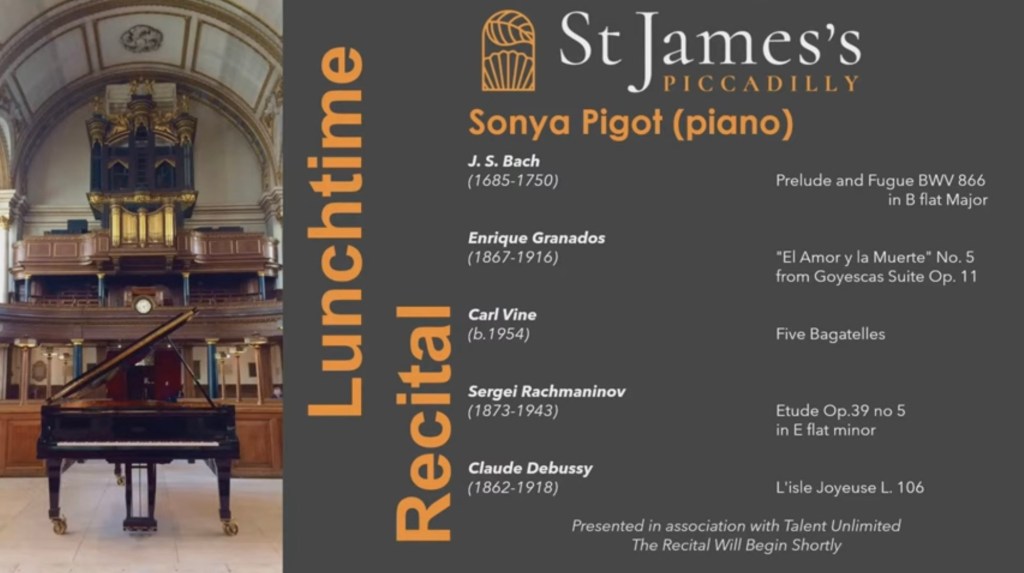
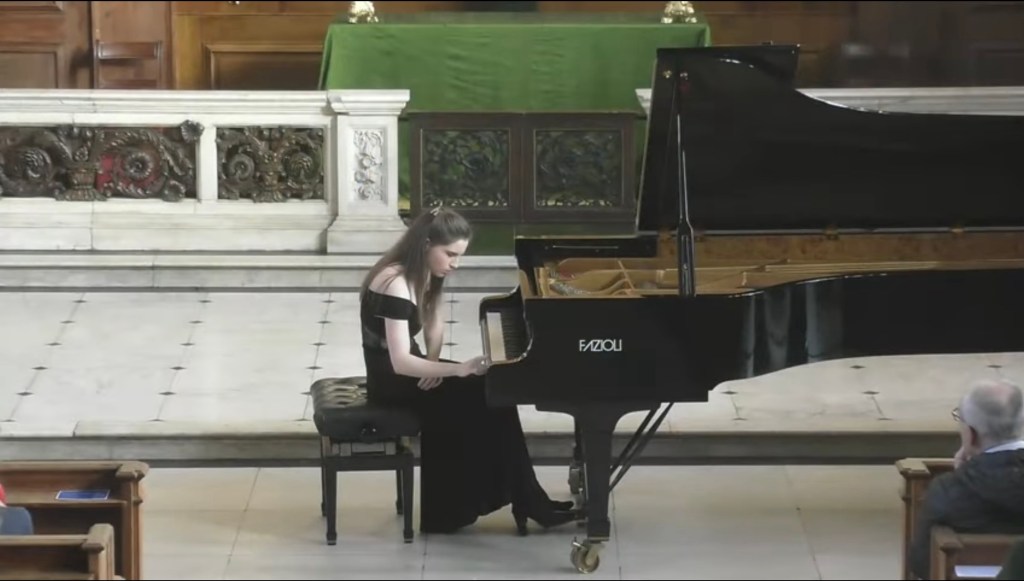
Sonya Pigot may have given a concert of miniatures, in that each work was barely five minutes long ,but she was able to take us to a magic world of dreams. She showed us a multifaceted world with her exquisite playing,kaleidoscopic palette of colour ,chameleonic sense of character and theatricality, as she lived every moment of her recreation ……..perchance to dream as the poetic ‘Bard’ admonishes.
Bach that was played with aristocratic authority and clarity.A monumental opening gesture followed by a clarity that brought Bach’s knotty twine vividly to life with remarkable shape and vitality. The magic languishing atmosphere of hidden emotions in Granados ‘s op 11 n.5 was played with eruptions of subdued passion as she painted a world that was to be so cruelly denied us by a torpedo off the same coast where Debussy had spied his his Joyous Island.
The Vine Bagatelles were landscapes of desolate beauty,spiky brilliance but above sumptuous subtle colours from a supreme stylist.Five contrasting worlds played with a mastery and understanding through her extraordinary sensitivity and theatrical self identification.Above all a superb use of the pedal that just underlined Anton Rubinstein’s dictum that this was where the real soul of the piano was laying in wait to be awoken with a kiss only by true poets with the key.
What she missed in the great virtuosistic sweep to one of Rachmaninov’s most passionate opening statements she made up for with her superb musicianship and self identification with a romantic world of searing passions and secret whispers.
Debussy’s depiction of Jersey as seen from Eastbourne was evidently with the same fantasmagoric eye as the composer.A cauldron of sounds waiting to erupt with ravishing melodic outpourings and savage dance rhythms just riding on waves that were leading to the final passionate outpouring and helter skelter finish.I remember Annie Fischer playing this as an encore in Rome with such naked passion as in this final outpouring she allowed the thumb in the left hand to pulsate with fiery passion that was X certificate indeed.
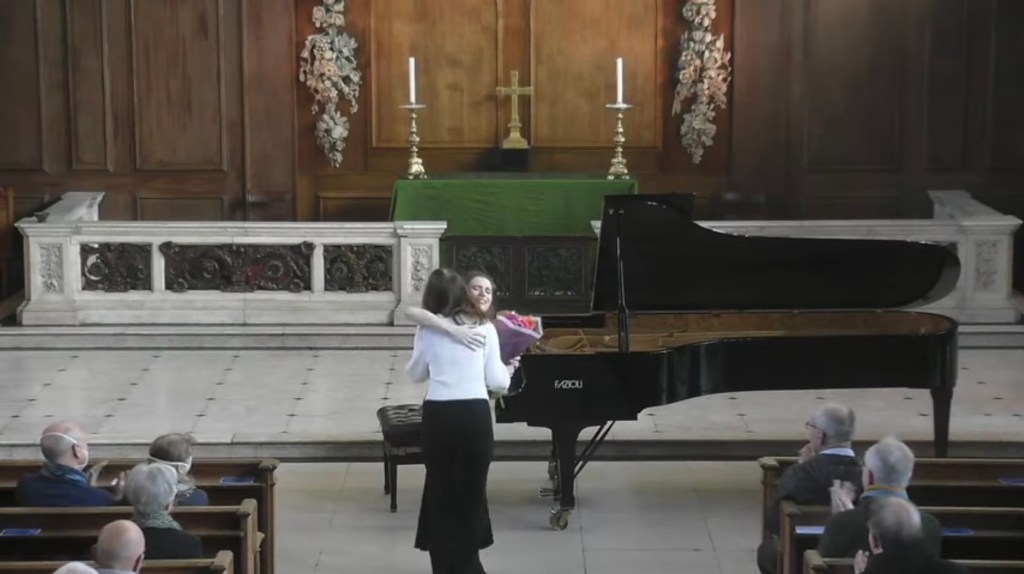
Sonya played it with the same animal passion and drive and her final theatrical flourishes just ignited a rather staid audience into awarding her an ovation and even a bunch of red roses from an ardent admirer.
No encores were possible after such an exhilarating and exciting journey into a wonderland of magic atmospheres and ravishing beauty.
In London, Sonya has performed in venues such as the Wigmore Hall, Steinway Hall, the Royal Albert Hall (Elgar Room) and in concert halls throughout Germany, France, Italy, Spain, Hong Kong, Romania and Australia. She now studies with Professor Norma Fisher and is a holder of the Nosward Charity Award scholarship while studying a Masters of Performance at the Royal College of Music. As well as having performed for members of the British Royal Family, Sonya has won many prizes in international music competitions across Australia and Europe; most notably the first prize in the Grand Prize Virtuoso International music competition, Gold Medal in the Berliner International Music competition, first prize in the Hephzibah Menuhin Memorial Award piano competition and first prize in the Tasmanian Symphony Orchestra Rising Star competition.
Sonya has had concert engagements with orchestras since she was 15, most notably the Saint-Saens Piano Concerto No. 2 with conductor Richard Gill AO. She has been a finalist in the 3mbs Young Performer’s Award which was broadcast on 3mbsFM, Australia and a semi-finalist in the Pianale International music competition, Stockport International music competition and in the ROSL music competition. Sonya has participated in many International music festivals, such as the London Masterclasses, the AMALFI Coast Music Festival and the Virtuoso and Bel Canto music festival. She has worked with distinguished Professors including Boris Berman, John Perry, Jerome Lowenthal, Dimitri Alexeev, Ewa Pablocka, Ian Jones, Pavel Gililov, Grigory Gruzman, Ashley Wass and Gordon Fergus-Thompson.Alongside her piano performance, Sonya has recorded at the Abbey Road Studios as a violinist in the Royal College of Music Symphony Orchestra and has had concerto engagements with orchestras, recitals and competition success as a solo violinist.
An opening concert for 2024 with a young maths and statistics undergraduate from Harvard University ready to give exemplary performances of major works from the piano repertoire. St Mary’s never fails to surprise,delight and astonish as they offer a platform to a category that is never mentioned in the mass media. Young musicians ready to dedicate their youth to the pursuit of sharing beauty and the discovery of a better world after years of single minded dedication. Harvey Lin was just such a case as he demonstrated with superbly crafted music making of intelligence and love.
A Bach Italian concerto that was played with aristocratic authority as his sparkling non legato touch illuminated the Allegro with a rhythmic drive and delicately contrasted passages that passed from the tutti to the solo – as in his introduction where he had so eloquently described it from one manual to another.There was a languid beauty to the Andante – quasi religious as he said – with the sudden stillness of the coda that was indeed of another world.Even the presto finale was of a grandeur and joie de vivre that was played with exhilaration and exultation.
The Chopin B flat minor Sonata was also played with intelligence and beauty where even the return to the introduction – much debated by some – made such sense in his hands.An occasional added bass note just gave depth to the sound which was full but never hard and the beautiful second subject was played with real weight digging deep into the keys to extract the beauty that lay within.The opening treacherous left hand was just a wash of sound on which the wafts of melody were floated and that with the majestic opening would be transformed into a development section of nobility and grandeur. The Scherzo was played with great authority and simplicity with the trio that could have been played with less searching for hidden counterpoints but with the same direct simplicity.There was a relentless sense of pulse in the Funeral March and a trio that this time was played with simple beautiful eloquence.The ‘wind blowing over the graves’ in the last movement was played with transcendental control and a sense of line that also gave it great shape as it weaved it’s way to the final majestic chords.
Mozart’s last Sonata was played with eloquence,clarity and charm.I would not have tried to vary the repeated passages but would have let them speak with the same eloquence with which Harvey’s superb natural musicianship had imbued all that he touched.I think he may have been just obediently following advice from lesser mortals! There was a chiselled beauty to the Adagio where the echo effect he strived for in my opinion was not part of the musical conversation that in his sensitive hands could be so eloquent.The Allegretto was delicately graceful and brilliantly played ,full of sparkling wit.
The Kapustin Jazz Etude was played with astonishing brilliance and drive.A superb lesson of a perpetuum mobile in jazz style played with technical brilliance and style.
The Liebermann Gargoyles I have only heard once before and it is a collection of four contrasting pieces of great effect.There was the dynamic drive in continual movement of the first.The luminosity and atmospheric slowly moving melodic line of the second followed by wondrous aeolian harp like sounds of the third on which was floated a melody of radiance and beauty.But it was the final savagely driven toccata that Harvey played with superb technical control and conviction that brought this opening concert of 2024 to a scintillating end.
Harvey Lin is a pianist based in London and a second-year undergraduate at Harvard University studying maths and statistics. Making his concerto debut aged 12, he is a two-time finalist of the BBC Young Musician of the Year Competition, and a prize-winner at the Enschede (2022), Euregio (2022), and Neapolitan Masters (2020) International Piano Competitions. He was also the winner of the Windsor and Maidenhead Symphony Orchestra Concerto Competition (2018) and a semi-finalist in the ‘Nutcracker’ International Competition, Russia (2015), which was broadcast on the ‘Russia-Kultura’ channel on Russian national TV.
Harvey has collaborated with the East Netherlands, Reading, and Harvard-Radcliffe Symphony Orchestras and has performed at the Royal Albert Hall (Elgar Room), Steinway Hall (London), St John’s College (Cambridge), Queen’s College (Oxford), and the Golden Hall of the Vienna Musikverein. Harvey has also participated in Music@Menlo, Oxford Piano Festival, and Northern Chords Festival, and was selected as a Tabor Piano Ambassador for the Leeds International Piano Competition in 2021. This summer, he was awarded a fellowship to Aspen Music Festival, where he studied with Professor Arie Vardi and Professor Hung-Kuan Chen, of the Hochschule für Musik Hannover and the Juilliard School respectively. His principal mentor is Boris Petrushansky of the Imola Music Academy, Italy.
Lowell Liebermann born February 22, 1961, in New York City
At the age of sixteen, Liebermann performed at Carnegie Hall playing his Piano Sonata, op. 1. He studied at the Juilliard School of Music with David Diamond and Vincent Persichetti earning bachelor’s, master’s and doctoral degrees. The English composer-pianist Kaikhosru Shapurji Sorabjialso expressed interest in Liebermann’s early work, having critiqued the young composer’s Piano Sonata in a private exchange between the two; Liebermann’s Concerto for Piano, op. 12 would be dedicated to Sorabji.His most recorded works are his Sonata for Flute and Piano (1987), Gargoyles for piano (1989), and his Concerto for Flute and Orchestra (1992). Liebermann resides in New York City. He presently serves on the composition faculty at Mannes College The New School for Music and is the director of the Mannes American Composers Ensemble.
Gargoyles, Op. 29, a four-movement suite for solo piano written in 1989.
The suite was commissioned by the Tcherepnin Society for the pianist Eric Himy , who played its world premiere that October 14 at Alice Tully Hall in New York City.
The score exemplifies Liebermann’s modernist style, in which tonal harmony and expressive gestures grounded in tradition coexist with avant-garde procedures. The piece has become one of Liebermann’s most popular efforts, receiving more than ten recordings.
Many cathedral gargoyles portray grotesque faces with great humor, and Liebermann intends precisely that in his pieces, which have the mordant wit of Prokofiev’s “bad boy” style in their ancestry. The brief opening movement commences with an arresting three-note “signal” and move forward with perpetual motion rhythms , the narrative studded with shock-effects. The following Adagio semplice, by contrast, is deeply introverted, presenting melancholy melodizing over patterns based on two alternating chords. Later, a still slower melody unfolds against repetitions of a single note. Crystalline sonorities mark the third Gargoyle which floats a songful theme over luminous liquid swirls, and ultimately develops into a duet. Mordancy and menace return in the finale, which is dominated by demonic galloping rhythms, as textures grow steadily more dense and virtuoso gestures steadily more flamboyant.
Nikolai Kapustin Born Николай Гиршевич Капустин Nikolai Girshevich Kapustin 22 November 1937 Horlivka,Ukraine Died 2 July 2020 (aged 82) Moscow
Although born in the Ukraine when he was age four, with his father fighting in World War II, his mother and grandmother moved with him and his sister to the Kyrgyz city of Tokmak.He composed his first piano sonata at age 13.From age 14, Kapustin studied piano with Avrelian Rubakh ( a pupil of Felix Blumenfeld , who also taught Simon Barere and Horowitz ). Beginning in 1954, he discovered jazz , an interest which his teacher supported.Kapustin studied from 1956 with Alexander Goldenweiser at the Moscow Conservatory , graduating ,playing amongst other things Prokofiev’s 2nd Concerto in 1961.During the 1950’s , Kapustin acquired a reputation as a jazz pianist, arranger and composer. He had his own quintet, which performed at an “upscale restaurant” monthly.Kapustin regarded himself though as a composer rather than a jazz musician: “I was never a jazz musician. I never tried to be a real jazz pianist, but I had to do it because of the composing. I’m not interested in improvisation – and what is a jazz musician without improvisation? All my improvisations are written, of course, and they became much better; it improved them.”
Among his works are 20 piano sonatas , six piano concertos other instrumental concertos, sets of piano variations ,etudes and concert studies.
In 2023 Rai Cultura and Rai5 produce for the In Scena series a documentary dedicated to one of the most eclectic characters of Italian entertainment who made the history of theater and television such as Elio Pandolfi. Written and produced by Rai journalist Rita Rocca, the special dedicated to Pandolfi collects for the first time and in an almost anthological way, the historical repertoire of Rai’s audiovideo archives, from the 1950s to the 2000s. Films coming not only from the Rai archives but also from the private archive of the artist who has always loved filming the salient moments of his career and life with a Super8. And here the memories of a now vanished Rome reappear on the screen, the family, the dearest loved ones, the first short films written and self-produced, the companions the Silvio D’Amico Academy, the love and friendship towards Bice Valori, in a kaleidoscope of memories that fascinates and moves. The documentary is enriched with beautiful stage photos, backstage photos and private shots kindly provided by the artist’s family who, for the first time, opened the doors of their home and her personal archive to the author. Pandolfi tells his story in the first person with a light, ironic, enthralling narration that has always characterized his character since the very popular duets alongside Antonella Steni on Rai television in the Sixties. Elio Pandolfi loved entertainment in all its forms: mime, dancer, theater actor, television and radio comedian, operetta singer and film dubber. Seventy years of career during which he met all the artists of his era, worked with everyone, experienced firsthand unforgettable moments of Italian entertainment: from magazines to variety shows, from radio to television, from cinema to operetta. In the documentary the artist recounts his life and his very long career, alongside the memories of artists and friends who were close to him. The author Rita Rocca reconstructs an unpublished artistic and private cross-section of Elio Pandolfi thanks to the testimonies of great artists including: Rita Pavone, Peppe Barra, Leopoldo Mastelloni, Anna Mazzamauro and Arturo Brachetti. And so, alongside the memories and affection of friends, unreleased films are shown in a series that tell of the first shows with Vanda Osiris, the Sundays on the beach of Ostia with Pampanini, the village festivals and the memories of the director Luchino Visconti who most he enhanced it on stage
Tamsin Waley-Cohen violin George Xiaoyuan Fu piano
A duo recital in the true sense of the word with a musical conversation between equals. A Mozart Sonata of refined elegance and operatic energy.The opening Largo was played with coquettish simplicity before bursting into an Allegro of scintillating playful energy. There was great delicacy from the piano in the Andante as the violin played with ever more intensity.The elegance and mellifluous sounds were mirrored in a performance where they played as one.It was a tribute to the pianist’s musicianship and technical prowess that with the piano lid fully open there was never a moment when the sound of this great black beast could have overpowered the beauty,musical line and sweetness of tone of Tamsin’s Stradivarius.
The revelation of the evening though was the UK premiere of ‘Swan Song’ by Serkin’s grandson David Ludwig.The charm and persuasion of George Fu are such as to persuade Tamsin to include a long contemporary work in an important London concert.David Ludwig had been George’s composition teacher at Curtis and obviously it was he who had persuaded her of the importance of the work.A work of startling technical and musical complexity with cruel demands on both players who managed to play with a clarity and sense of architectural shape that revealed a work of great effect and beauty.The magic luminosity from the piano at the opening allowed the violin to soar above such gossamer sounds with long drawn out musical lines.There were dramatic contrasts with the piano creating clouds of sound even with a little help from inside its own body.An elaborate cadenza for solo violin lead to the appearance from afar of the Schubert Fantasy that had been the composers inspiration.Tamsin rose magnificently to the gauntlet that George had lain before her and with superb control and revelatory imagination placed an important work in the midst of the other two recognised masterpieces in her recital.
Beethoven’s ‘Bridgetower’ Sonata …better known by it’s final dedicatee’s name ‘Kreutzer’ filled the second half of the concert with magnificence of grandeur and dynamic rhythmic energy .There were moments of sublime beauty but these were but the calm before the storm.An aristocratic control over this cauldron of boiling energy as they played with perfect ensemble each artist listening to the other creating an architectural whole united as they both were for the glory of the music that had been entrusted to them.There was a simple beauty to the Andante and variations that was allowed to flow so naturally giving them the freedom to shape and mould each variation with a flexibility of pulse and beguiling sense of style.The delicacy of the first variation with the violin just commenting of the marvels that were being revealed from the piano.Followed by the delicately shaped ‘leggermente’ filigree jeux perlé from the violin.The almost too pompous minor variation was contrasted with the luminous fluidity of the major IV variation.There was finally a glimpse of the sublime beauty that had been hinted at as they were united in the magical final bars that gradually finished with whispered intent at the extremes of both instruments.Suddenly the call to arms and the chase was on as the Finale ,Presto burst upon the scene with dynamic driving energy.This was a performance of technical and musical mastery from both players and gave a monumental finish to an evening of remarkable music making of humility ,intelligence and mastery.
Tamsin with Stephen Kovacevich after the concert
‘Après une rève ‘ was offered as an encore and as Tamsin said :’a much needed balm after such dynamism‘.It was played with ravishing sounds of quiet intensity where Mr Stradivarius was allowed the wings to soar into places where only music can reach.George at the piano with fearless backing that gave great depth and spiritual meaning to the wings with which Tamsin had now been bestowed.
Stephen with George two extraordinary Americans in London
Wolfgang Amadeus Mozart (1756-1791)
The Wigmore in Christmas mood
Violin Sonata in B flat K454 (1784) I. Largo – Allegro I I. Andante III. Allegretto
David Ludwig (b.1974)
Swan Song (2013) UK première
Interval
Ludwig van Beethoven (1770-1827)
Violin Sonata No. 9 in A Op. 47 ‘Kreutzer’ (1802-3) I. Adagio sostenuto – Presto I I. Andante con variazioni III. Finale. Presto
Violin Sonata No. 32 in B flat K .454 was composed in Vienna on April 21, 1784. It was published by Christoph Torricella in a group of three sonatas (together with the piano sonatas K.284 and K.333 )
The sonata was written for a violin virtuoso Regina Strinasacchi of Mantua to be performed by them together at a concert in the Karntnerthor Theatre in Vienna on April 29, 1784.
‘We now have here the famous Strinasacchi from Mantua,’ Mozart wrote to his father on 24 April 1784, ‘a very good violinist. She has a great deal of taste and feeling in her playing. I am this moment composing a sonata which we are going to play together on Thursday at her concert in the theatre.’
Although Mozart had the piano part securely in his head, he did not give himself enough time to write it out, and thus it was performed with a sheet of blank music paper in front of him in order to fool the audience. According to a story told by his widow Constanze Mozart , the Emperor Joseph II saw the empty sheet music through his opera glasses and sent for the composer with his manuscript, at which time Mozart had to confess the truth, although that is likely to have amazed the monarch rather than cause his irritation.
David Serkin Ludwig (born 1974, Bucks County,Pennsylvania ) is an American composer, teacher, and Dean of Music at The Juilliard School . His uncle was pianist Peter Serkin , his grandfather was the pianist Rudolf Serkin , and his great-grandfather was the violinist Adolf Busch .He holds positions and residencies with nearly two dozen orchestras and music festivals in the US and abroad. His choral work, The New Colossus, was performed at the 2013 presidential inauguration of Barack Obama .
Of this piece, dating from 2013, he has written as follows: ‘Swan Song is one of three pieces of mine that draw directly from the materials of a past musical work, in this case Schubert’s Fantasy for Violin and Piano in C major, D. 934. I felt like I was writing a play with many characters who are having separate conversations about the same piece of music. ‘The work models Schubert in weaving in and out of a chain of related passages that linked together form a fantasy, playing for a little over 15 minutes. The opening passage appears several times throughout the piece, each time a little different (but always sparkling!), as if transformed by all of the music preceding it. In between are fast passages with quick exchanges between violinist and pianist, music in the extremes of volume and register, and many little games and conversations with Schubert. ‘There are many characters, with their exits and their entrances, each making a statement and then stepping back for the next to take centre stage. At one point, Schubert himself makes a brief appearance, but he is a phantom who emerges into the light and returns to the background as quickly as he appeared. Finally, after increasingly fast music that seems to plough headlong into a brusque ending, hope appears, rising toward a resolution of the quiet questions asked in the first twinkling sonorities of the piece.’
The sonata was originally dedicated to the violinist George Bridgetower m (1778–1860) as “Sonata mulattica composta per il mulatto Brischdauer [Bridgetower], gran pazzo e compositore mulattico” (Mulatto Sonata composed for the mulatto Brischdauer, great madman mulatto composer). Shortly after completion the work was premiered by Bridgetower and Beethoven on 24 May 1803 at the Augarten Theatre at a concert that started at the unusually early hour of 8:00 am. Bridgetower sight-read the sonata; he had never seen the work before, and there had been no time for any rehearsal.
After the premiere performance, Beethoven and Bridgetower fell out: while the two were drinking, Bridgetower apparently insulted the morals of a woman whom Beethoven cherished. Enraged, Beethoven removed the dedication of the piece, dedicating it instead to Rodolphe Kreutzer , who was considered the finest violinist of the day.
After its successful premiere in 1803, the work was published in 1805 as Beethoven’s Op. 47, with its re-dedication to Rudolphe kreitzer , which gave the composition its nickname. Kreutzer never performed the work, considering it “outrageously unintelligible”. He did not particularly care for any of Beethoven’s music, and they only ever met once, briefly.
George Augustus Polgreen Bridgetower was born on 11 October 1778, in Biala Podlaska Poland,where his father worked for Prince H.W.Raziwill. He was baptised Hieronimo Hyppolito de Augusto on 11 October 1778. His father, John Frederick Bridgetower (né Joannis Friderici de Augusto Æthypois), was probably a West Indian (possibly from Barbados ), although he also claimed to be an African prince, as stated in George’s baptismal record. From 1779 John Frederick was a servant of the Hungarian Prince Esterhazy , the patron of Joseph Haydn . George’s mother, Maria Anna Ursula Schmidt, was from Swabia , now in Germany , described as a “Polish lady of quality”,[from the “noble Polish House of Schmidt”.She was later possibly a domestic worker in the household of Sophie von Thurn und Taxis, who married Prince Raziwill in 1775. George moved to London at an early age and was performing as a violin soloist at the Drury Lane Theatre by the age of 10. He exhibited considerable talent while still a child and gave successful violin concerts in Paris,London,Bath and Bristol in 1789. In 1791, the British Prince Regent , the future King George IV ,took an interest in him and oversaw his musical education.
Their biographies are included in these previous articles .Tamsin plays the ex Laurand Feneves Strad
Legions of violinists and musicians worldwide have studied with or have crossed paths with the legendary Hungarian-Israeli-Canadian violin pedagogue Lorand Fenyves (1918-2004).He taught at the University of Toronto as well as during summers at the Banff Centre for the Arts and the Orford Arts Centre in Canada. Although Mr. Fenyves never published any books (he revealed to me that he didn’t have interest in writing or publishing), he did leave behind several recordings documenting his interpretive intelligence, as related to various works of Hungarian composer Béla Bartók, in addition to his concertmaster work with Orchestre de la Suisse romande under Ernest Ansermet (among them, Rimsky Korsavakov’s Scheherezade). At his 80th birthday concert, Mr. Fenyves performed the Beethoven Violin Concerto at the Royal Conservatory of Music in Toronto and that night, was awarded Hungary’s Cross of the Order of Merit. Marking his 80th birthday, on February 20, 1998, the Globe and Mail dubbed Mr. Fenyves as “one of the greatest violin teachers in the world” . At his memorial concert held in Toronto in 2004, musicians flew in from around the world to honour him and his contribution to Classical music. In 2012, the documentary film, Orchestra of Exiles, featured Mr. Fenyves’ story detailing his participation in Bronislaw Huberman’s orchestra of Jewish musicians, which later became the Israel Philharmonic. Despite the accolades, Mr. Fenyves, a man of utmost integrity, never allowed ego to pollute his art nor stand in the way of the growth of his many students worldwide. For this, Mr. Fenyves cultivated many loving disciples on multiple continents.
Evelyne Beresovsky after the success of her concert last year, having stood in for her colleague and childhood friend Alexander Ullman ,was invited back to given a special concert dedicated to Rachmaninov and Stravinsky .Not only playing solo works but also two chamber music works with two superb musicians from the Roma 3 Orchestra .
Daniele Sabatini ,the Roman violinist ,winner of many prestigious prizes together with his duo partner the pianist Simone Rugani .
Martina Biondi is one of the finest Italian cellists of her generation who lives and works in Berlin .
We know and have heard on many occasions the solo playing of Evelyne Beresovsky and today she was to shine in works by Rachmaninov and the ‘Firebird’ by Stravinsky in the famous transcription by Agosti (1928)
The surprise was her total commitment to chamber music and how she could blend in and shape the music with her colleagues .The gently throbbing chords of the violin and cello at the opening of the early Rachmaninov ‘Elegiac’ Trio was the stage set for the Eagle that was to swoop onto the scene with chiselled sounds of nostalgic beauty from the hands of Evelyne .Cascades of notes too that were like streams of gold creating sounds that accompanied the passionate outpourings from the two string players.
Playing in unison or solo Evelyne was always there listening and supporting with rich romantic sounds that never overpowered her fellow companions united in the turbulent youthful outpouring of romantic effusions.Deeply moving was the desolate atmosphere created at the end by the ‘cello and violin with the piano recalling what had passed with such poignant beauty and nostalgia.
Martina and Evelyne returned to play together Stravinsky’s ‘Suite Italienne’where the beauty of Piatigorsky’s arrangement was played by Martina with ravishing playing of restrained passion.Evelyne too played not only with spiky rhythmic spirit but also with extraordinary ease and perfect ensemble.After only a day to work together it was a ‘tour de force ‘ of musicianship from two artists who were listening with chameleonic care to each other.
Valerio Vicari,artistic director of Roma Tre Orchestra
Of course this is the intent of Valerio Vicari,artistic director of Roma Tre Orchestra.To allow his superb players not only to play in the orchestra together but also to play in chamber ensembles where the same participation will continue into the larger orchestra ensemble.This had been amply demonstrated to us in Rome by Sir Antony Pappano when he took over command of the renowned S.Cecilia Orchestra .Creating chamber music ensembles with the very fine components of the orchestra ,playing the piano with them too,creating an orchestra that listens to itself.Sir Antony now bequeathes to Rome one of the great orchestra of the world after almost twenty years at their helm.
Evelyne brought ravishing sounds and a superb sense of style to the Preludes and Etudes – Tableaux that she had chosen to play. Some things cannot be taught and are part of the genes of pianists like Evelyne or dare I say Martha Argerich.A freedom where everything they play is fresh and newly minted as though discovered in that very moment .Both are well known for their human qualities where life,friendships and caring human relationships take precedence over hours spent locked away at the keyboard .It is a God given gift that Evelyne like her famous colleague has been endowed with from early training.Endowed with a technique that encourages a kaleidoscopic sense of colour from fingers of steel but wrists of rubber ( as Agosti used to say) ,A sense of touch that was encouraged and nurtured from a very early age added of course to a natural talent that is of the blessed few.
The Andante Cantabile of op 23 n.4 was played with the freedom of Belcanto as the balance between her hands was so delicate and sensitive . A beguiling seductive rubato to op 23 n.6 in E flat with its insinuating subtle colouring was followed by the dynamic drive to the G minor op 23 n.5. Alla Marcia indeed it was with overpowering sonorities never hard or ungrateful but the full sounds of Philadelphia proportions.Op 23 n.8 was a whirlwind of moving harmonies as the spider web of gossamer notes spun from Evelyne’s ever flexible fingers.
It was to the second set of Preludes that Evelyne chose the ravishing beauty of n. 5 in G major to close this selection .It was played with a fluidity and luminosity the same that I remember from the hands of Dame Moura Lympany who had played it for us in Rome at the end of a long and illustrious career before the Russians were allowed to travel to the west and astonish us even more.
Two Etude – Tableaux ignited the piano with the call to arms of truly orchestral proportions of op 33 n.6 in E flat .Allegro con fuoco indeed it was today and was a preparation for the fireworks that were to come with Stravinsky’s ‘Firebird’.This was followed by the most Romantic of all these miniature tone poems op 39 n. 5 in E flat minor with it’s sumptuous melodic outpouring and tumultuous climax only to withdraw into the desolate intimacy that was Rachmaninov’s heritage.
There was some confusion over the programme that announced ‘Love’s Sorrow’ which is more often referred to as ‘Liebesleid’ by Kreisler in the arrangement of his friend and duo partner Rachmaninov.There is the famous story of the Kreisler/Rachmaninov duo playing in Carnegie Hall.Kreisler momentarily lost his place and whispered to his partner:’Where are we?’…..‘Carnegie Hall’ growled Rachmaninov without battling an eyelid!
Alt-Wiener Tanzweisen (Old Viennese Melodies ) is a set of three short pieces for violin and piano composed by Austrian-American violinist Fritz Kreisler . The three pieces are titled Liebesfreud (Love’s Joy), Liebesleid (Love’s Sorrow), and Schön Rosmarin (Lovely Rosemary).Liebesfreud and Liebesleid, were the subject of virtuoso transcriptions for solo piano by Kreisler’s friend Rachmaninov in 1931 who also recorded them.Here is the master Kreisler himself playing with the same charm as we heard today from Evelyne Beresovsky (https://youtube.com/watch?v=AqQ2_2qd-5Y&feature=shared)
An astonishing opening to Agosti’s ‘Firebird’ transcription had us sitting on the edge of our seats before the gentle sounds bathed in pedal of the Berceuse.The appearance of the Firebird is always a magic moment whether in the original orchestral version or from the magical hands of Evelyne in Agosti’s quite remarkable transcription for solo piano.Solo piano it might be but like the feats of Liszt and Thalberg they defy one to believe that only two hands and two feet could multiply as if by magic.It is of course the pedal and a sense of illusion that can be created by those with the technique and imagination to turn a box of hammers and strings into a full orchestra.Evelyne demonstrated today that she is just such a magician at the keyboard.
Two encores for an enthusiastic audience who wanted even more music.With Evelyne’s disarming humility and charm she announced she would play again the beautiful prelude op 32 n.5 and this was followed by Grieg’s Butterfly that she allowed to hover above the keyboard with the jeux perle charm and style of pianists of another age.
Evie having a quick cigarette with Flavio Mariana of Roma 3 after the concert Evie insisted that the man with the red scarf should be present too.Noblesse oblige.On the door Alessandro Guaitolini,violoncellista solista nonché segretario artistico and Flavio Muriana coordinatore multimediale
Trio élégiaque No. 1 in G minor was written on January 18–21, 1892 in Moscow, when the composer was 18 years old. The work was first performed on January 30 of the same year with the composer at the piano, David Kreyn at the violin and Anatoliy Brandukov at the cello.[1] It waited until 1947 for the first edition to appear, and the trio has no designated opus number. Rachmaninoff wrote a second Elegiac piano trio in 1893 after the death of Tchaikovsky. This work is cast in only one movement, in contrast to most piano trios, which have three or four. This movement is in the classical form of a sonata,[2] but the exposition is built on twelve episodes that are symmetrically represented in the recapitulation. The elegiac theme is presented in the first part Lento lugubre by the piano. In the following parts, the elegy is presented by the cello and violin, while the spirit is constantly evolving (più vivo – con anima – appassionato – tempo rubato – risoluto). The theme is ultimately recast as a funeral march.
Despite his youth, Rachmaninoff shows in the virtuoso piano part his ability to cover a wide spectrum of sound colors. This trio has a distinctive connection to Tchaikovsky’s Trio in A minor, both in the unusual, expanded first movement, and in the funeral march as a conclusion.
The suggestion often heard – that the first trio is an early elegy for Tchaikovsky – is doubtful: in 1892 the elder composer was in good health, and there was no premonition of the sudden illness that would kill him nearly two years later. Rather, the key to the connection with Tchaikovsky of this first trio is its repetitive opening theme, a four-note rising motif, that dominates the 15-minute work. Played backwards in the same rhythm it is exactly the opening descending motif of Tchaikovsky’s first piano concerto (written 1874-75), and the allusion would have been apparent to listeners and teachers at the university, as would the closing funeral march imitative of Tchaikovsky’s elegy to Nikolai Rubinstein. Rachmaninoff wrote this first trio while still a student and may well have intended it as an homage to his elder friend and mentor. The second trio, written two years later, was the true “elegiac” work mourning Tchaikovsky’s death.
Stravinsky’s score for The Firebird was written for Sergei Diaghilev’s Ballets Russes dance company, which premiered the work in Paris in 1910. Based on ancient Russian folk tales, it tells the story of the young Prince Ivan’s quest to find a legendary magic bird with fiery multi-coloured plumage. In the course of his adventures, he falls in love with a beautiful princess but has to fight off the evil sorcerer Katschei to eventually marry her. The suite presents the culminating scenes of the ballet in a piano transcription by the Italian pianist and pedagogue Guido Agosti (1901-1989), who studied with Ferruccio Busoni.
The Danse infernale depicts the brutal swarming and capture of Prince Ivan by Katschei’s monstrous underlings until Prince Ivan uses the magic feather given to him by the Firebird to cast a spell on his captors, making them dance until they drop from exhaustion. The Berceuse is a lullaby depicting the eerie scene of the slumbering assailants, leading to the Finale, a wedding celebration for Prince Ivan and his princess bride.Agosti’s piano transcription, completed in 1928, is a daunting technical challenge for the pianist. Most of the piano writing is laid out on on three staves in order to cover the multi-octave range of the keyboard that the pianist must patrol. The piano comes into its own in this transcription as a percussion instrument, to be played with the wild abandon with which a betrayed lover throws her ex-partner’s possessions off the balcony onto the street below.Judging from the shocking 7-octave-wide chord crash that opens the Dance infernale, Agosti captures well the bruising pace of the action, with off-beat rhythmic jabs standing out from a succession of punchy left-hand ostinati constantly nipping at the heels of the melody line. The accelerating pace as the sorcerer’s ghouls are made to dance ever more frantically is a major aerobic test for the pianist.
Relief comes in the Berceuse, which presents its own pianistic challenges, mainly those of finely sifting the overtones of vast chord structures surrounding the lonely tune singing out from the middle of the keyboard.The wedding celebration depicted in the Finale presents Stravinsky’s trademark habit of cycling hypnotically round the pitches enclosed within the interval of a perfect 5th. Just such a melody, swaddled in hushed tremolos, opens this final movement. It is a major challenge for the pianist to imitate the shimmering timbre of the orchestra’s brightest instruments as this theme is given its apotheosis to end the suite in a blaze of sonority that extends across the entire range of the keyboard.
Igor Stravinsky
The Suite italienne is one of several spin-offs from Pulcinella, the “ballet with song” that Igor Stravinsky (1882-1971) composed for the Ballets Russes impresario Serge Diaghilev in 1920. “Composed” in this case being a somewhat misleading verb, as Diaghilev had found tunes he wanted to use by Giovanni Battista Pergolesi (1710-1736), which he gave to Stravinsky to arrange. (Massine also based his choreography on 18th-century Neapolitan steps.) This borrowing was controversial at the time, as was the “neo-Classical” direction Stravinsky’s music suddenly took, spiking the Baroque harmonies with dissonances, goosing the regular meters, and generally creating witty, ironic musical mayhem.
The brio and charm of the music was undeniable, however, and Stravinsky capitalized on it with various arrangements, including several suites of excerpts from the ballet’s 18 numbers for violin and/or cello and piano. Neither Stravinsky nor Diaghilev were aware at the time that Pergolesi was a popular name that 18th-century publishers slapped on just about any piece by a lesser-known contemporary that needed a sales boost. Of this Suite, only the Serenata and Menuetto are based on actual Pergolesi melodies. The Introduzione, Tarantella, Scherzino, and Finale are based on music by Domenico Gallo, and the Gavotta con due variazioni came originally from Carlo Monza.
Pulcinella is a 21-section ballet by Stravinsky with arias for soprano, tenor and bass vocal soloists, and two sung trios. It is based on the 18th-century play Quatre Polichinelles semblables, or Four similar Pulcinellas, revolving around a characters from the commedia dell’arte . The work premiered at the Paris Opera on 15 May 1920 under the baton of Ernest Ansermet . The central dancer, Leonid Massine, created both the libretto and the choreography, while Picasso designed the costumes and sets. The ballet was commissioned by Diaghilev , impresario of the Ballets Russes. A complete performance takes 35–40 minutes. Stravinsky revised the score in 1965 .
Ernest Ansermet wrote to Stravinsky in 1919 about the project. The composer initially did not like the idea of music by Pergolesi, but once he studied the scores, which Diaghilev had found in libraries in Naples and London , he changed his mind. Stravinsky adapted the older music to a more modern style by borrowing specific themes and textures, but interjecting his modern rhythms, cadences, and harmonies.
Pulcinella marked the beginning of Stravinsky’s second phase as a composer, his neoclassical period. He wrote:
‘Pulcinella was my discovery of the past, the epiphany through which the whole of my late work became possible. It was a backward look, of course—the first of many love affairs in that direction—but it was a look in the mirror, too.’
Suite italienne
Stravinsky based the following works on the ballet:
1925: Suite d’après des thèmes, fragments et morceaux de Giambattista Pergolesi, for violin and piano (in collaboration with Paul Kochanski).
1932/33: Suite italienne, for cello and piano (in collaboration with Gregor Piatigorsky ).
1933: Suite italienne, for violin and piano (in collaboration with Samuel Dushkin ).
Violinist Jasha Heifetz and Piatigorsky later made an arrangement for violin and cello, which they also called Suite italienne.
Guido Agosti (11 August 1901 – 2 June 1989) was an Italian pianist and renowned for his yearly summer course in Siena frequented by all the major musicians of the age.It was on the express wish of Alfredo Casella that Agosti took over his class which he did for the next thirty years.Sounds heard in his studio have never been forgotten.
Guido Agosti being thanked by Ileana Ghione after a memorable concert and masterclasses in the theatre my wife and I had created together in Rome.
Agosti was born in Forli 1901. He studied piano with Ferruccio Busoni Bruno Mugellini and Filippo Ivaldiand earning his diploma at age 13. He studied counterpoint under Benvenuti and literature at Bologna University. He commenced his professional career as a pianist in 1921. Although he never entirely abandoned concert-giving, nerves made it difficult for him to appear on stage,and he concentrated on teaching. He taught piano at the Venice Conservatoire and at the Santa Cecilia Academy in Rome.In 1947 he was appointed Professor of piano at the Accademia Chigiana Siena .He also taught at Weimar and the Sibelius Academy in Helsinki.
In the Ghione Theatre in the early 80’s with Ileana Ghione,’Connie’Channon Douglass Marinsanti ,Lydia Agosti ,Cesare Marinsanti,Guido Agosti.A closely knit family .
His notable students include Maria Tipo,Yonty Solomon Leslie Howard,Hamish Milne,Martin Jones,Ian Munro,Dag Achat,Raymond Lewenthal,Ursula Oppens,Kun- Woo Paik,Peter Bithell.He made very few recordings; there is a recording of op 110 from the Ghione theatre in Rome together with his recording on his 80th birthday concert in Siena of Debussy preludes .
La scuola musicale russa tra Ottocento e Novecento rappresenta una fase cruciale nell’evoluzione del pensiero occidentale. In questo arco di tempo, la Russia, che in precedenza era stata in gran parte isolata dalle principali correnti musicali europee, iniziò a emergere come una potenza culturale significativa.Il cambiamento iniziò con Michail Glinka, spesso considerato il padre della musica classica russa. Glinka aprì la strada ad un nuovo stile musicale che attingeva profondamente dalla ricca tradizione folcloristica e dalle melodie popolari russe. Il suo approccio non era semplicemente quello di utilizzare melodie popolari, ma piuttosto di integrarle in una struttura classica sofisticata, creando così un ponte tra l’eredità culturale russa e le forme musicali occidentali.
Seguendo le orme di Glinka, il cosiddetto “Gruppo dei Cinque”, composto da Mily Balakirev, Aleksandr Borodin, César Cui, Modest Mussorgsky e Nikolaj Rimskij-Korsakov, portò avanti questa visione. Si trattava di artisti determinati a produrre una musica che fosse distintamente russa, non solo nella melodia, ma anche nell’armonia, nel ritmo e nella struttura. Nel corso del Novecento, compositori come Sergej Rachmaninoff e Igor Stravinskij continuarono a sviluppare questo stile. Rachmaninoff, con la sua profonda sensibilità e la sua abilità al pianoforte, portò la tradizione romantica russa fino agli inizi del XX secolo.
Stravinskij, d’altra parte, fu un innovatore, spingendo in avanti i confini stessi della musica con opere come “La Sagra della Primavera”, che provocarono sia scandalo che ammirazione per la loro audacia ritmica e armonica.
Il programma della serata si apre con una selezione di Preludi di Sergei Rachmaninov, alcune delle pagine più famose del compositore russo. I brani proposti spaziano da composizioni romantiche e appassionate a brani più drammatici e tormentati.
A seguire, il Trio élégiaque n. 1, in sol minore, di Rachmaninov, opera composta nel 1892. Il brano è un’opera intensa e drammatica, che potrebbe essere stata ispirata dalla morte di una persona cara.Nella seconda parte, il concerto propone la Suite Italienne, per violoncello e pianoforte, di Igor Stravinsky. Il brano è una sintesi del balletto “Pulcinella”, composto nel 1920 ed ispirato alla musica popolare italiana del XVII e XVIII secolo.
Da sottolineare, infine, il prestigio degli artisti coinvolti: Daniele Sabatini è un violinista romano, già vincitore di numerosi premi nel repertorio cameristico insieme al pianista Simone Rugani; Evelyne Berezovsky è una pianista russa che vive a Londra, già ospite di Roma Tre Orchestra, che partecipa grazie al generoso contributo del Keyboard Charitable Trust; Martina Biondi è una delle migliori violoncelliste italiane della nuova generazione, attualmente residente a Berlino.
A thank you from The Danish Academy before closing up shop.