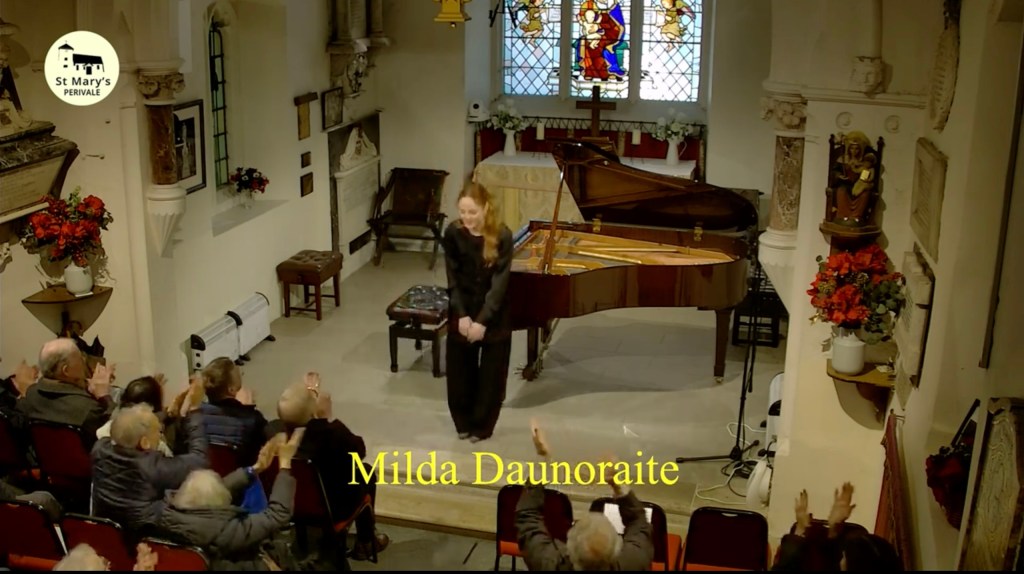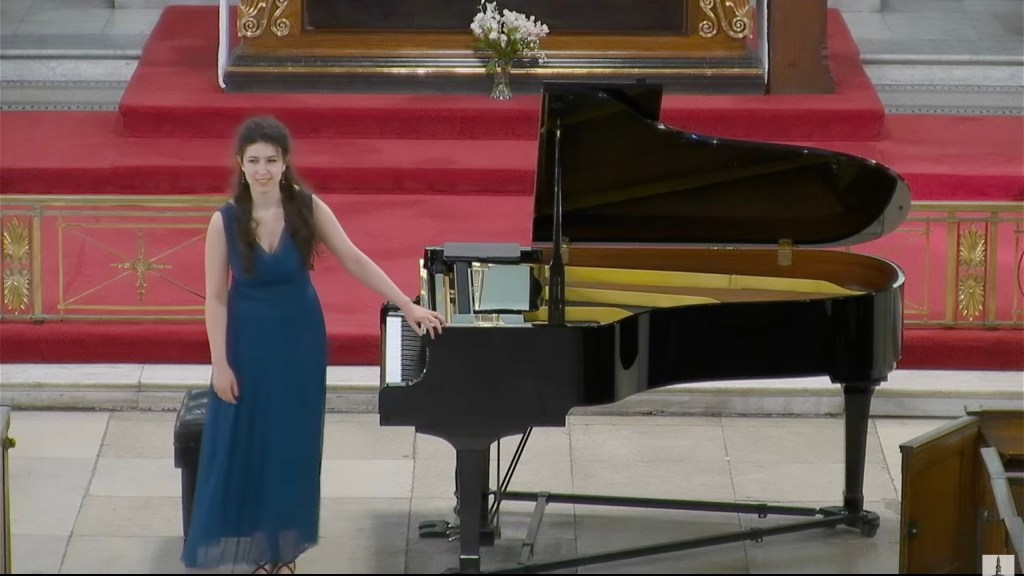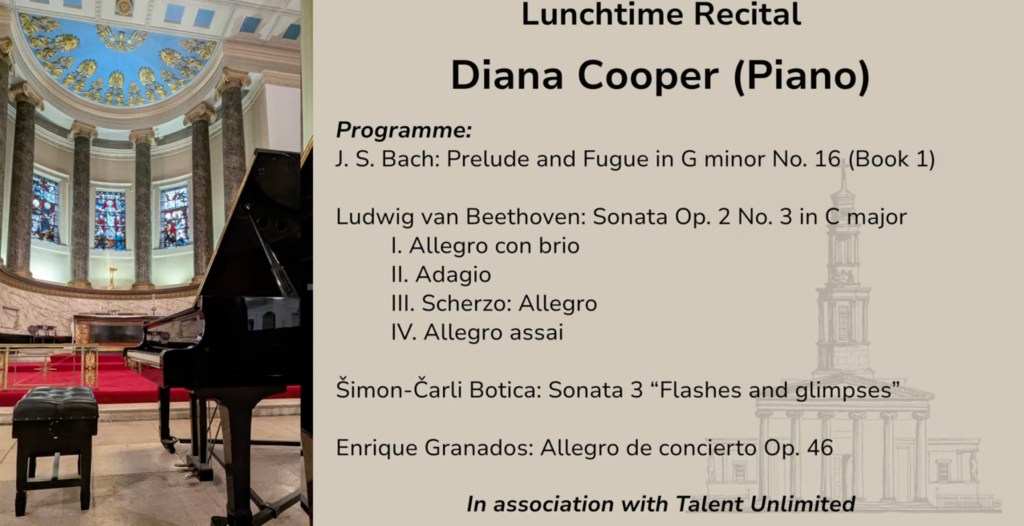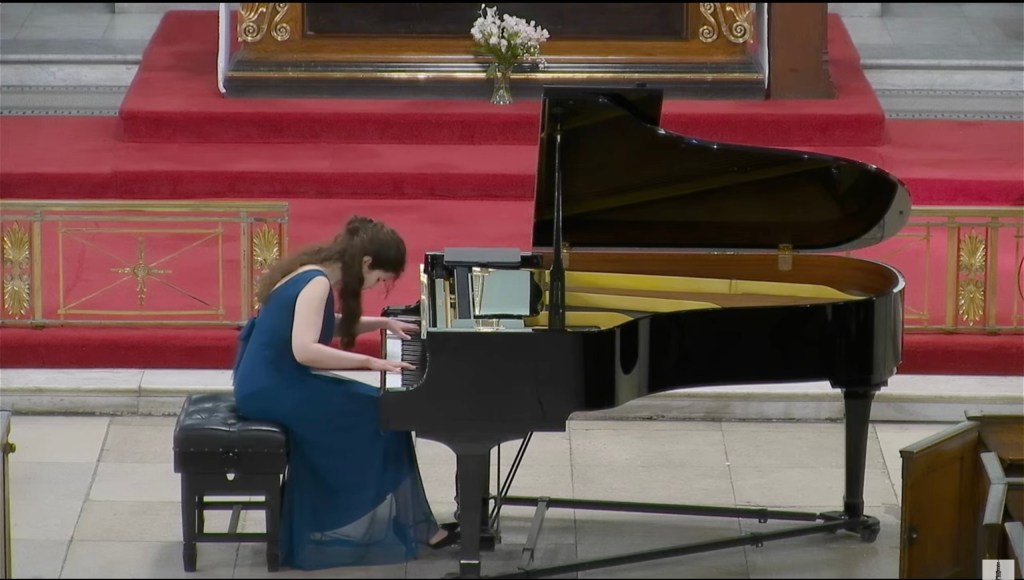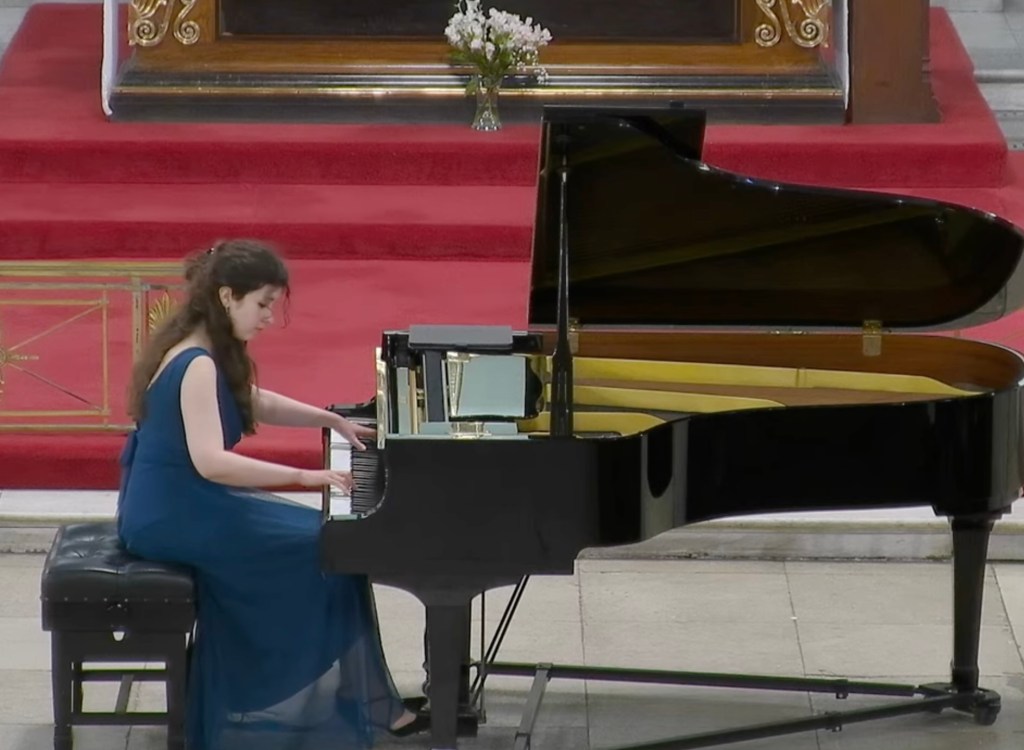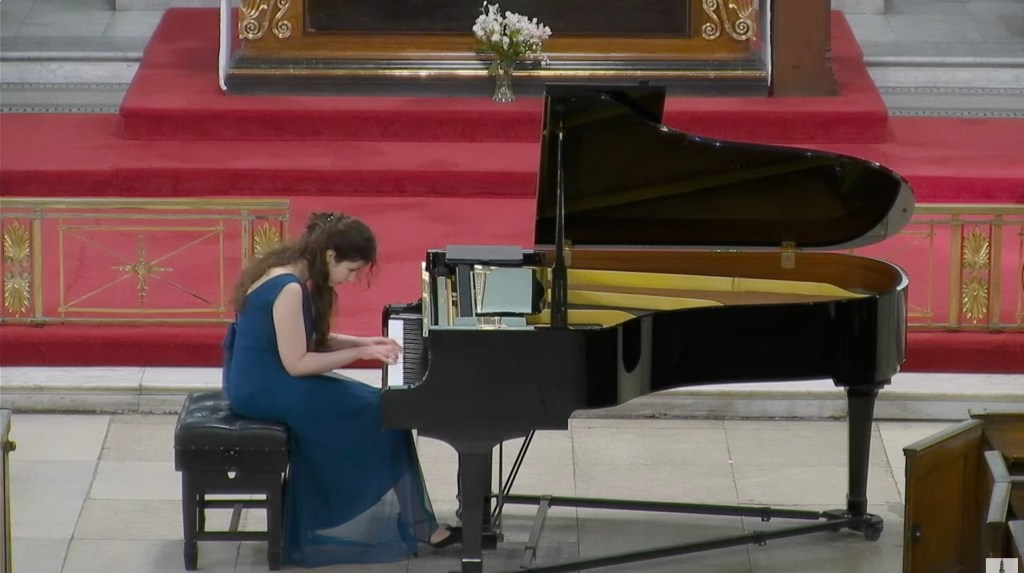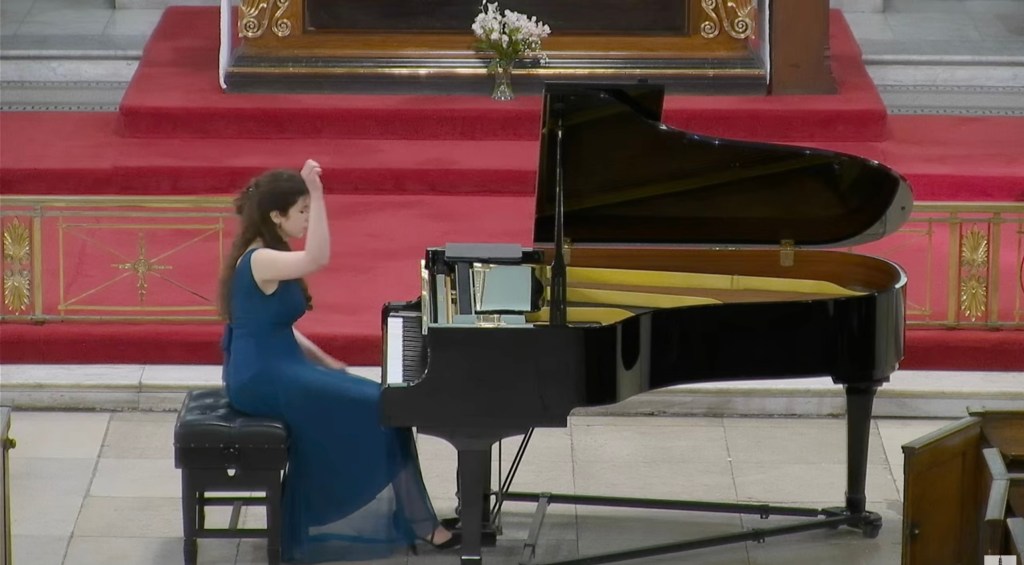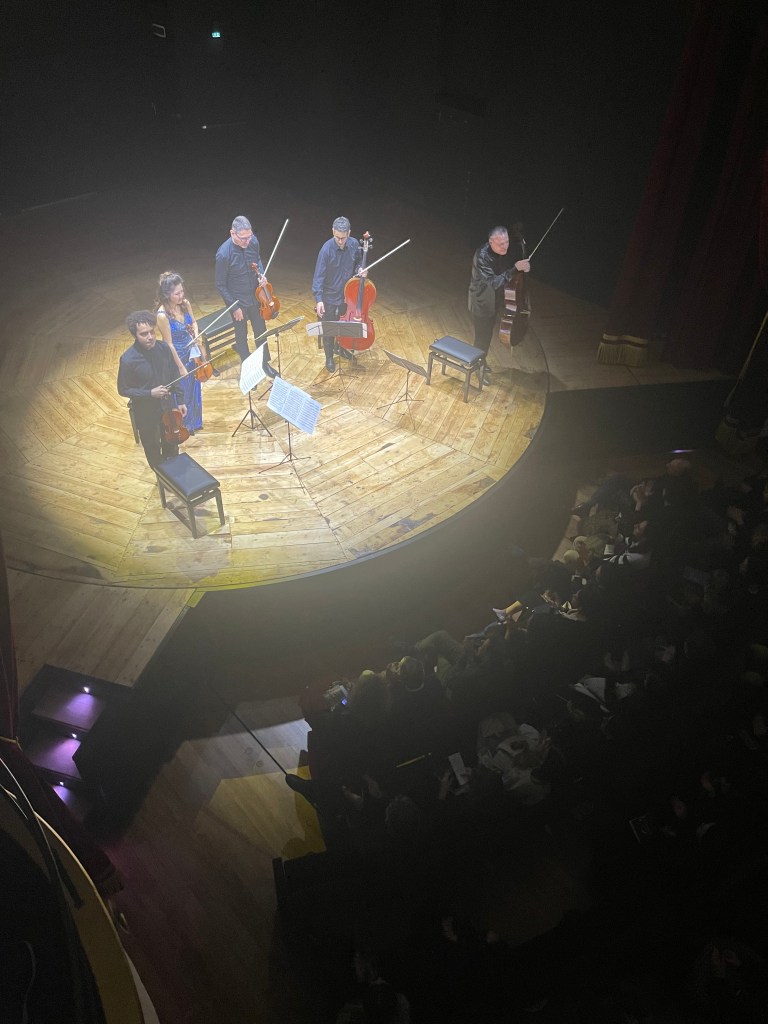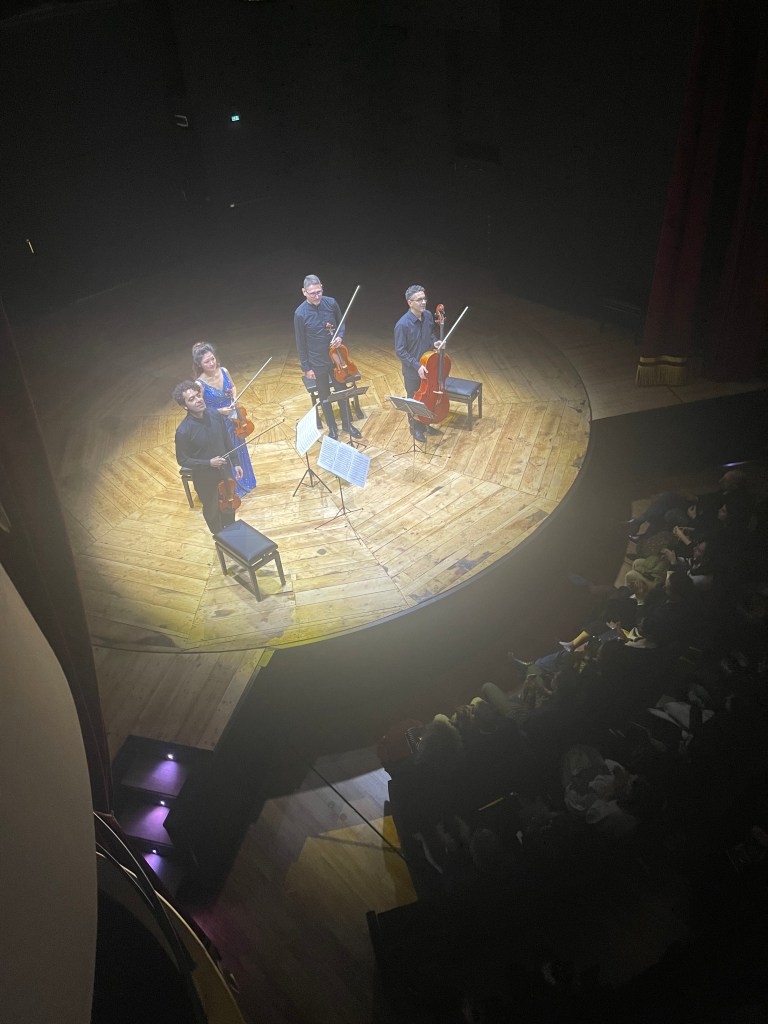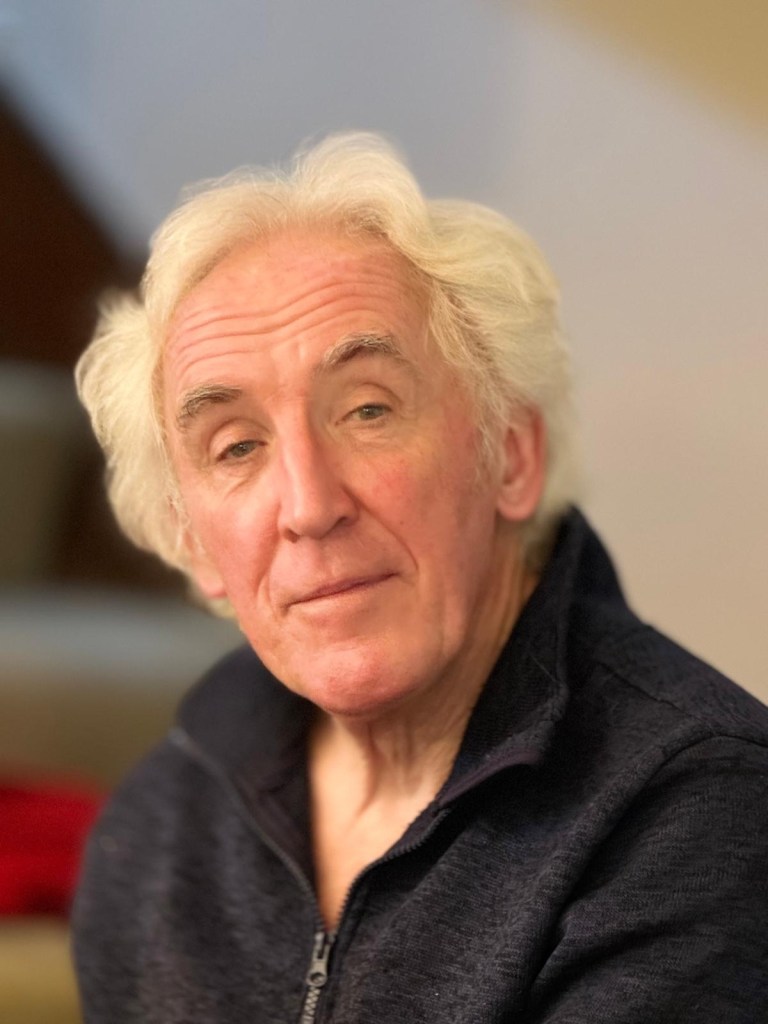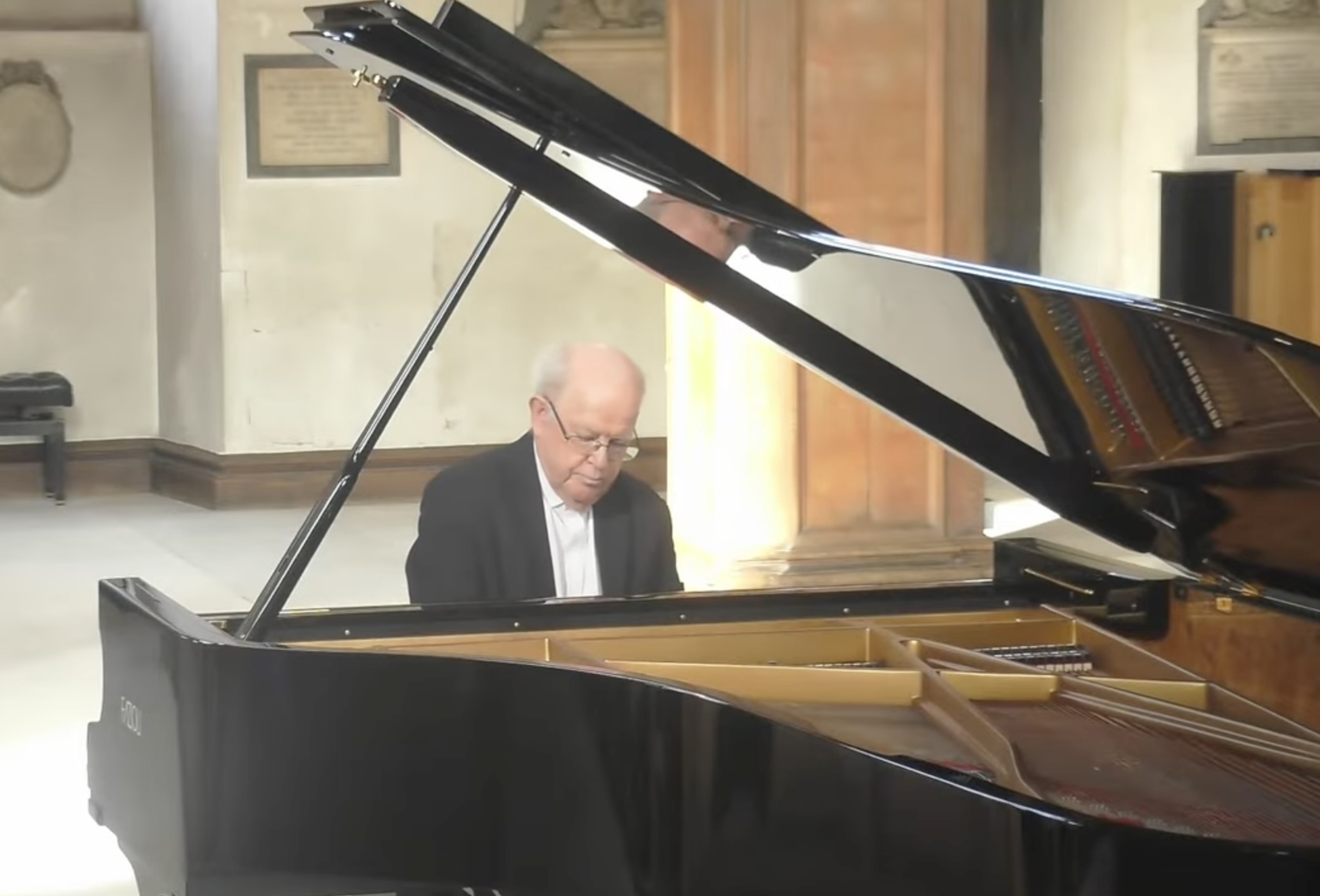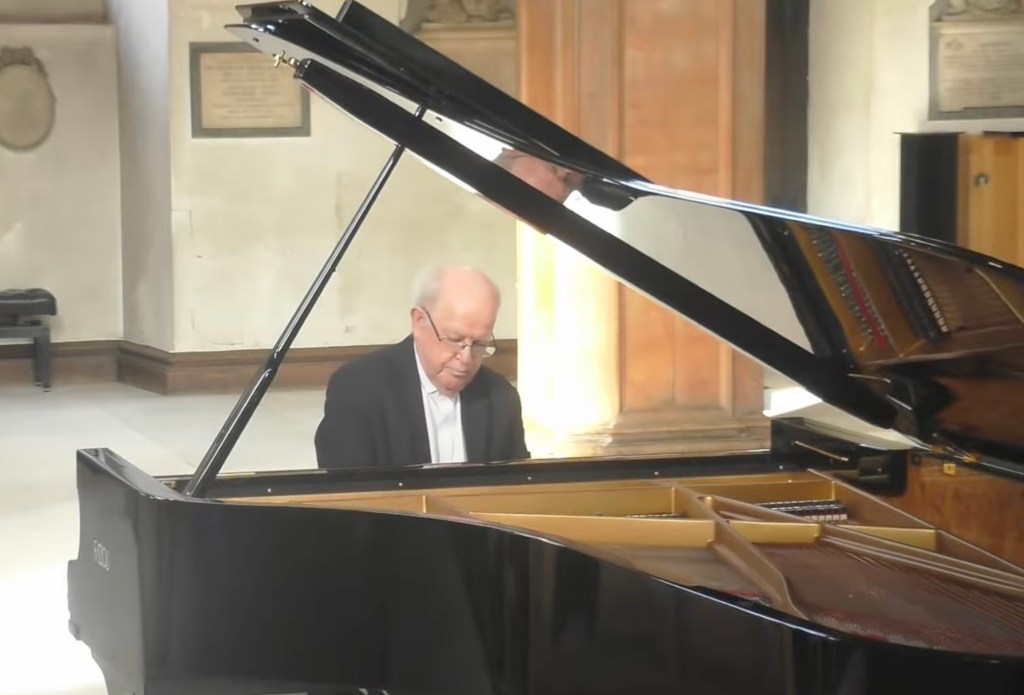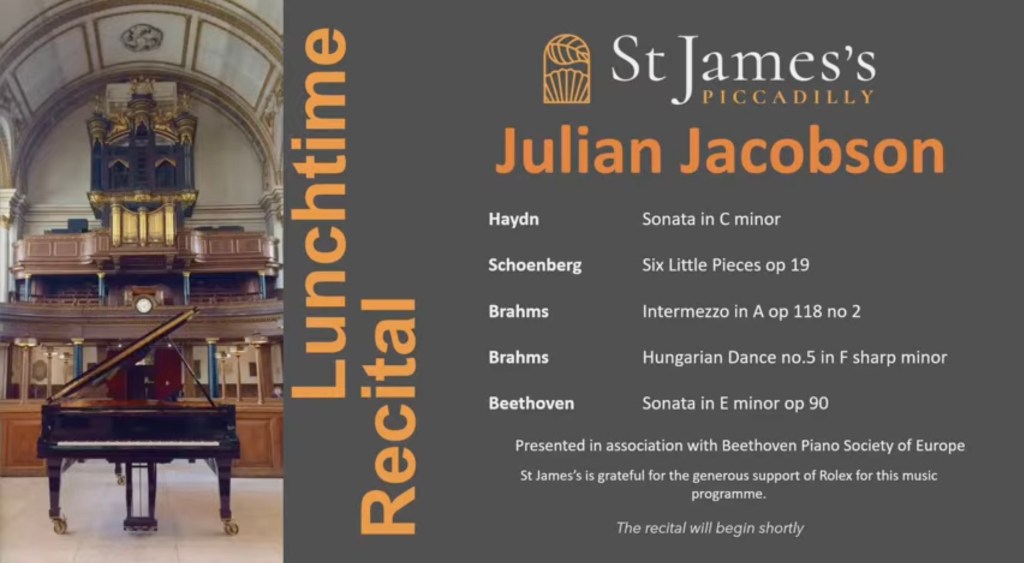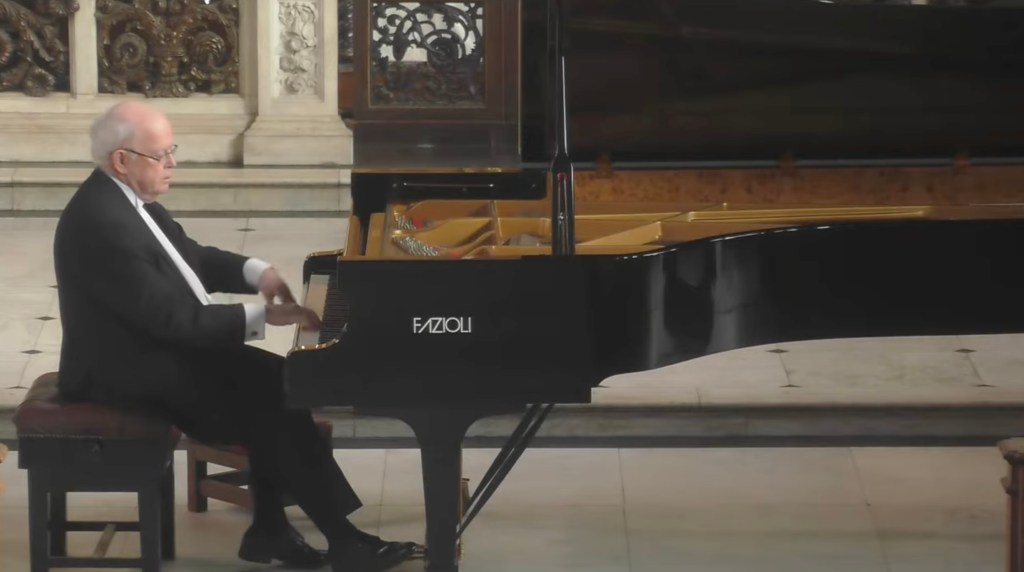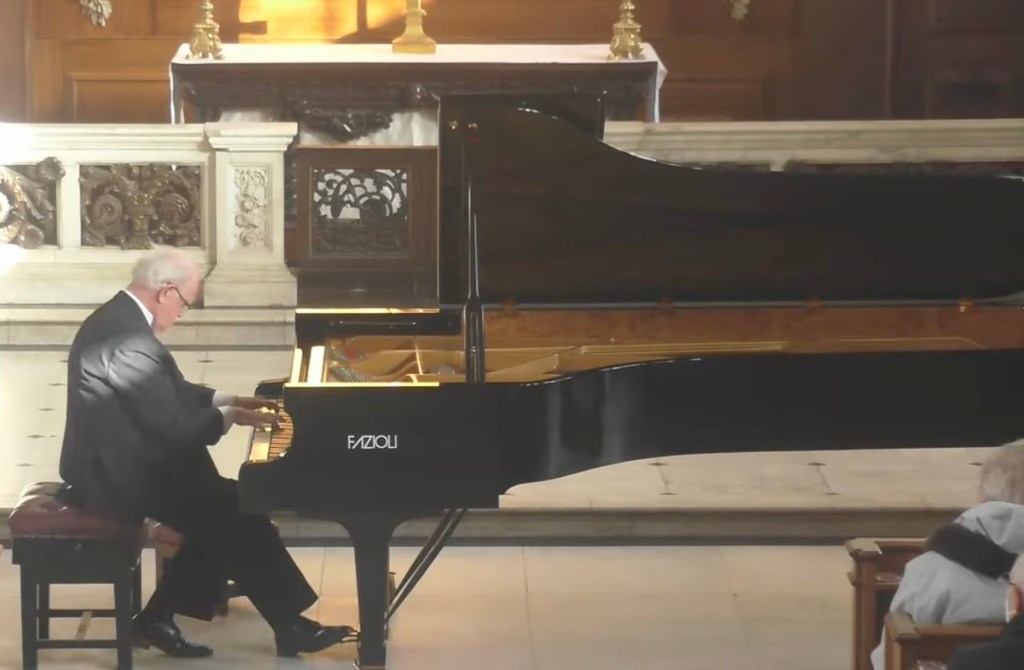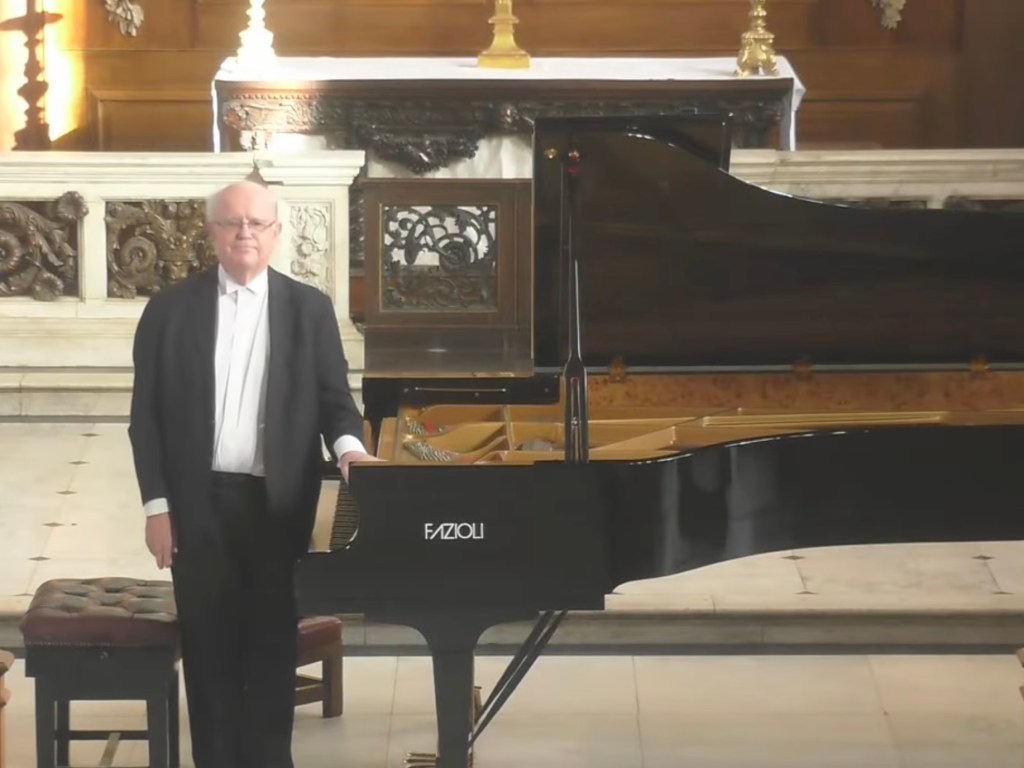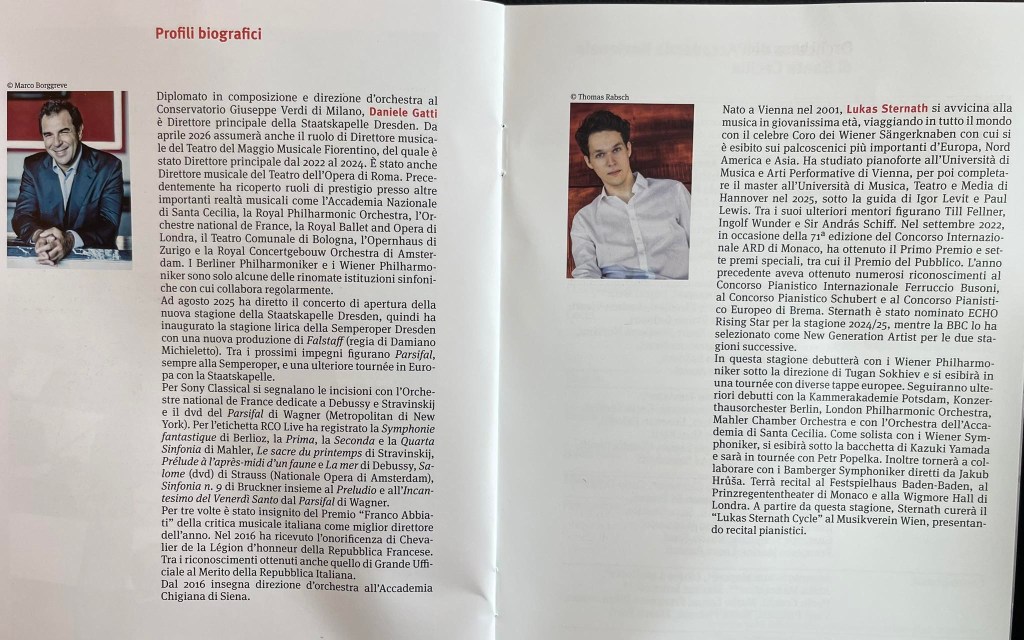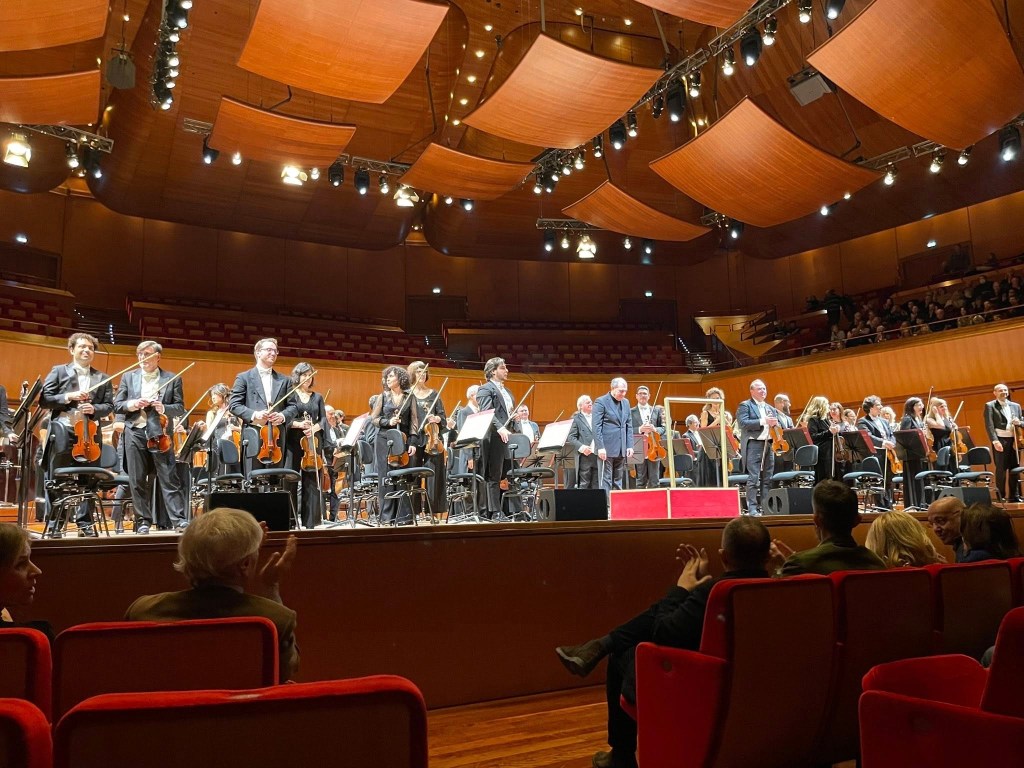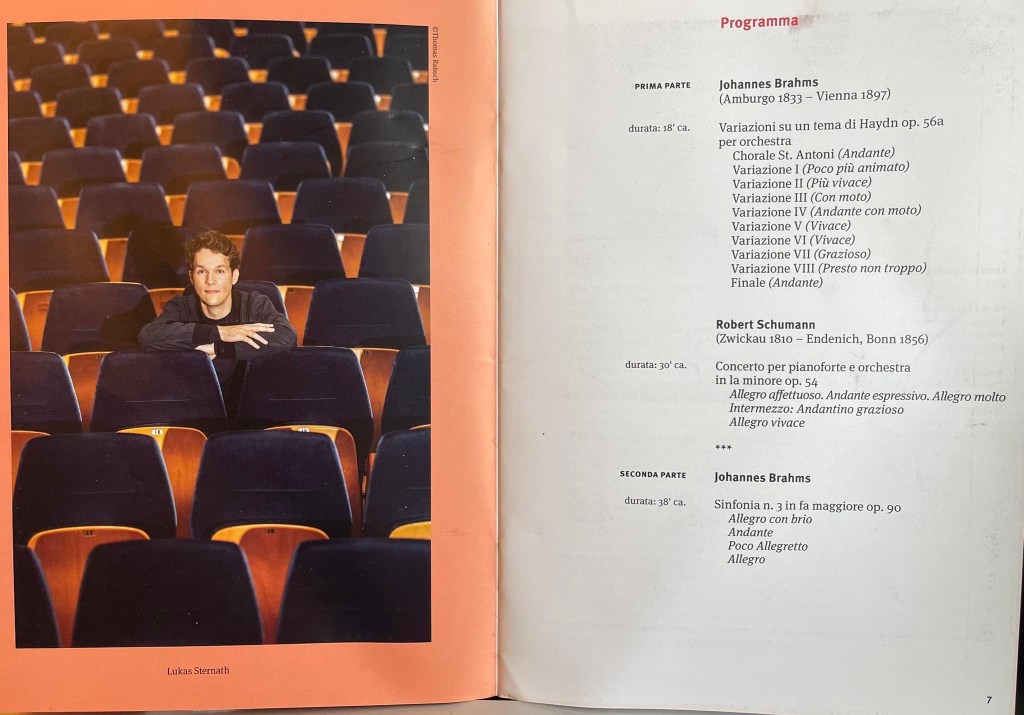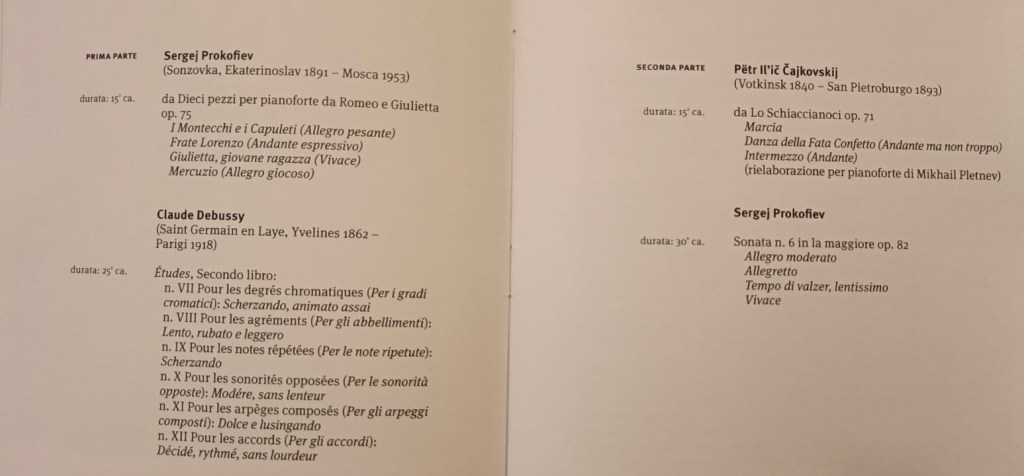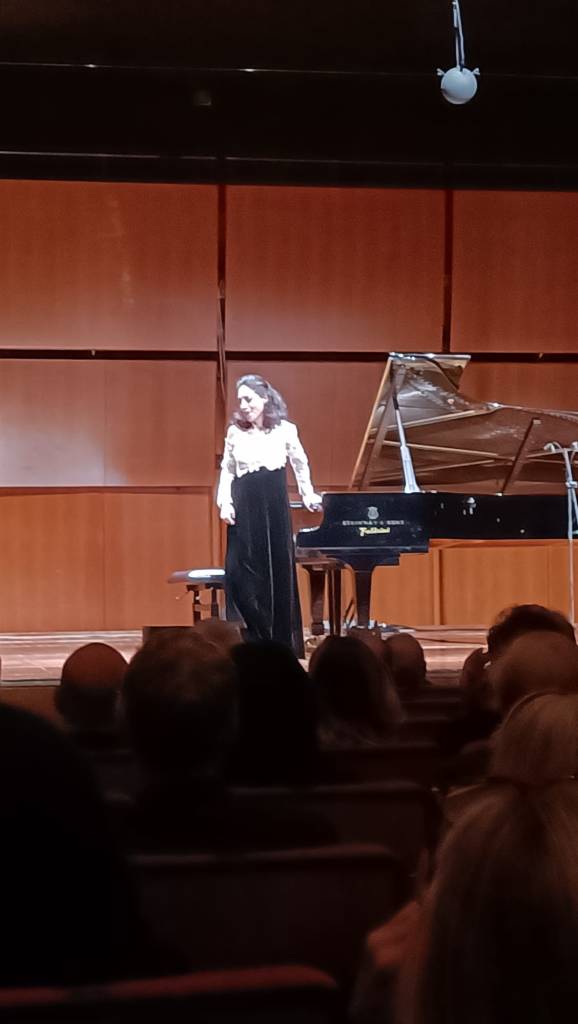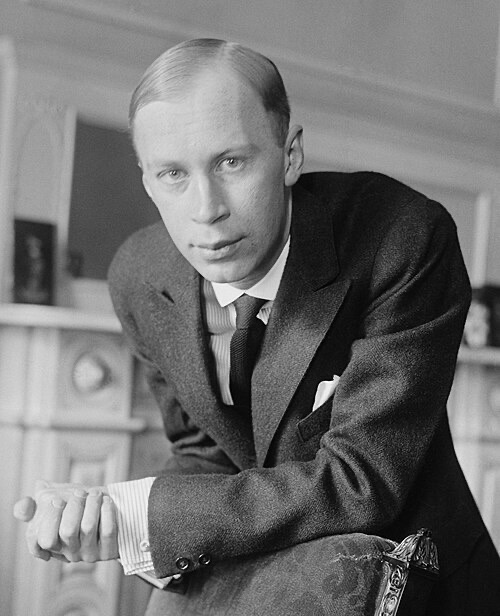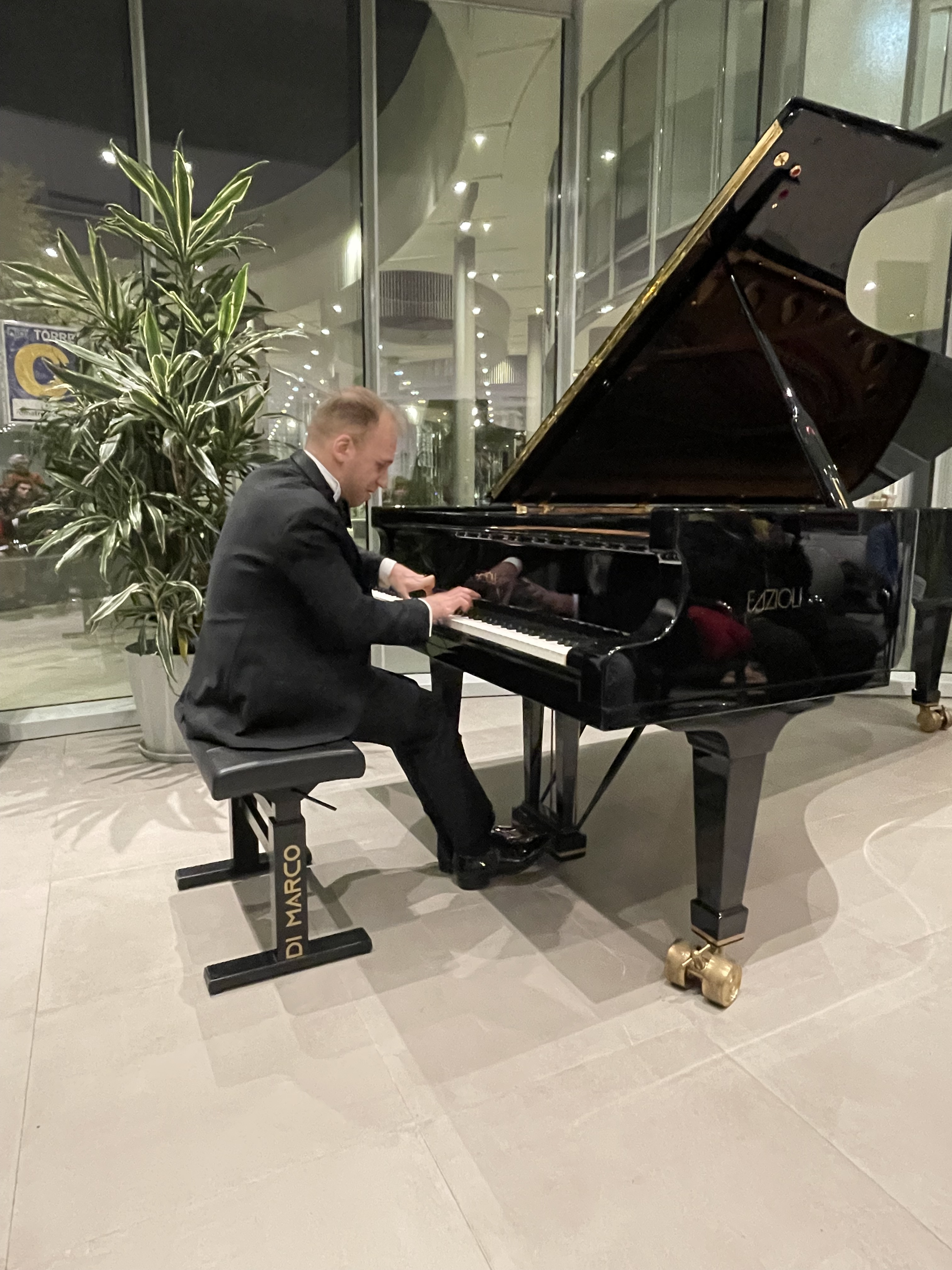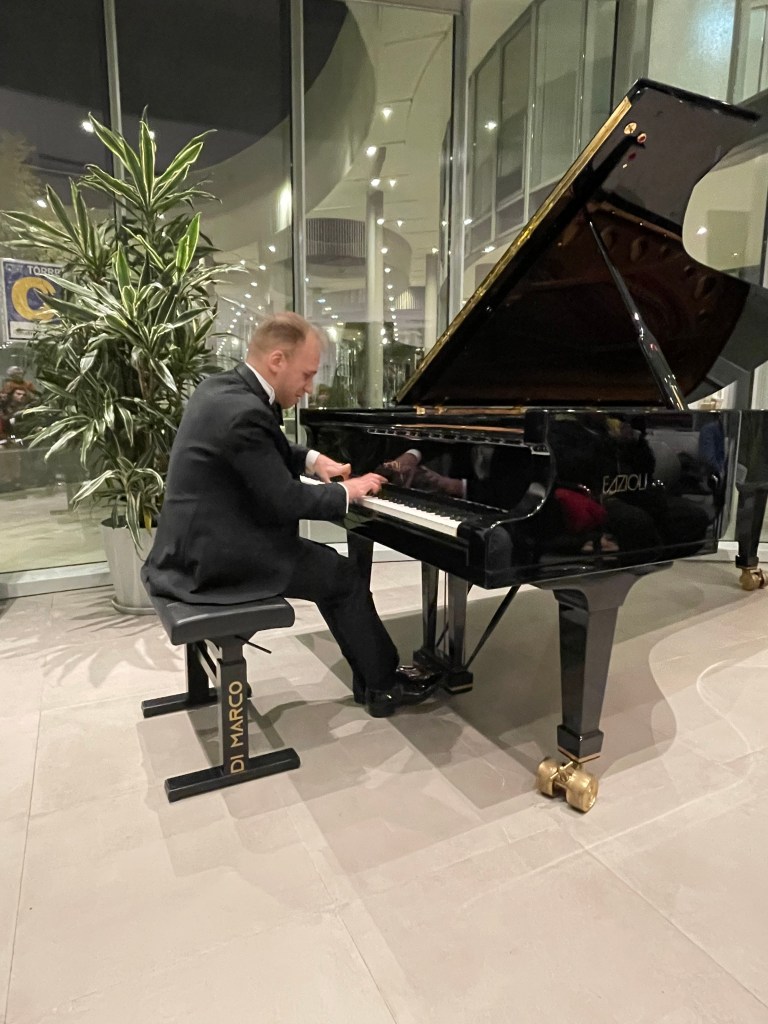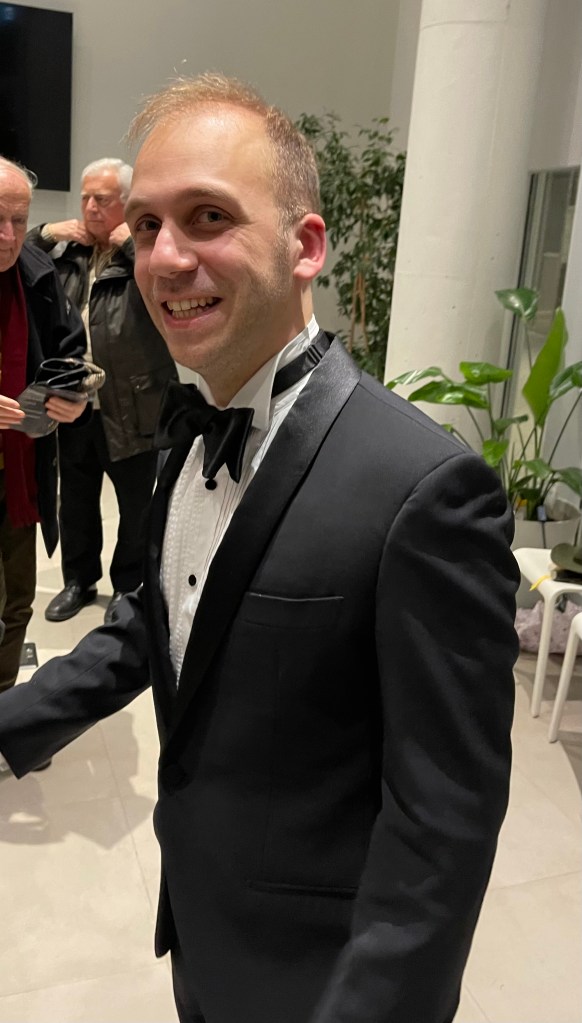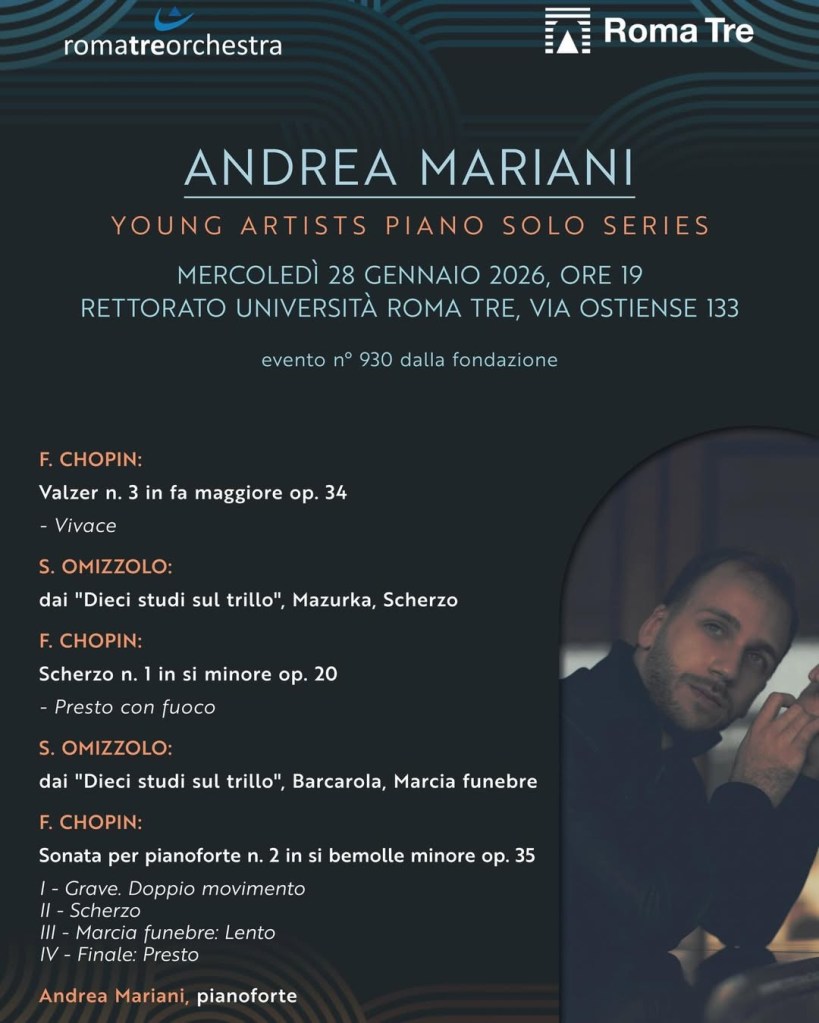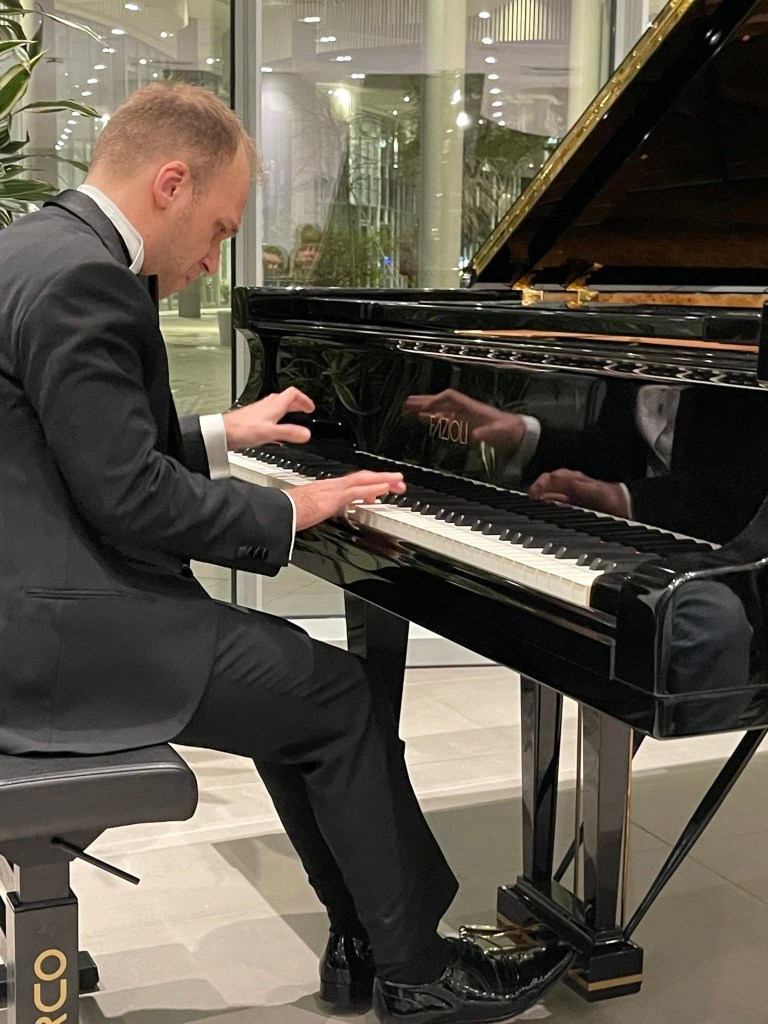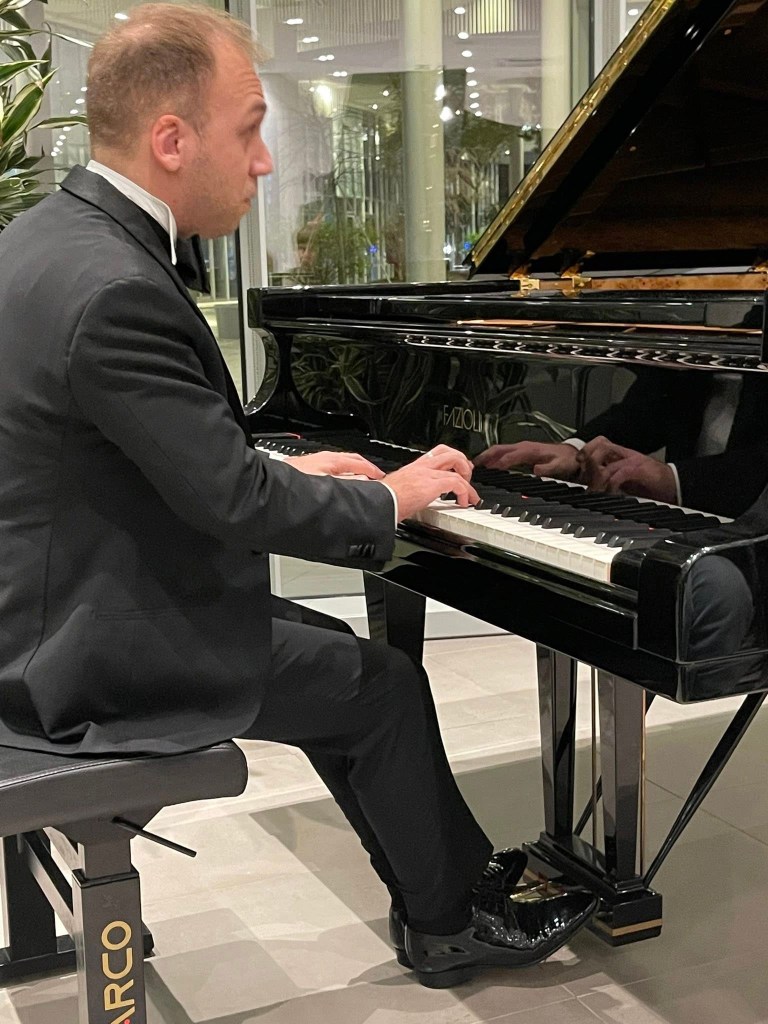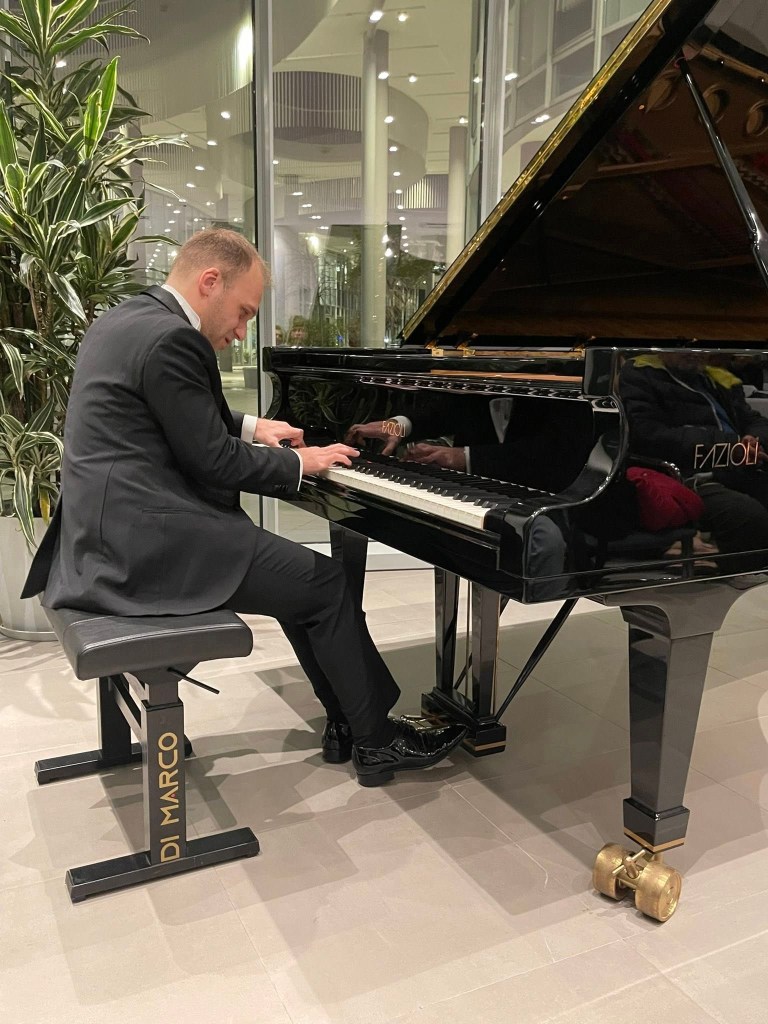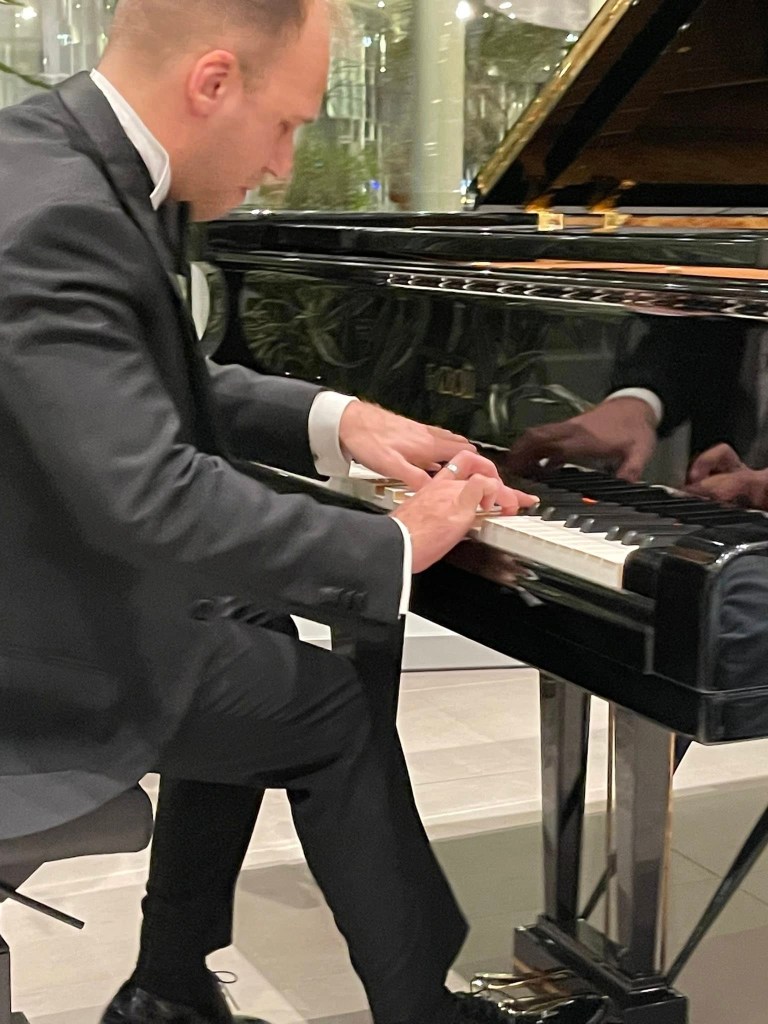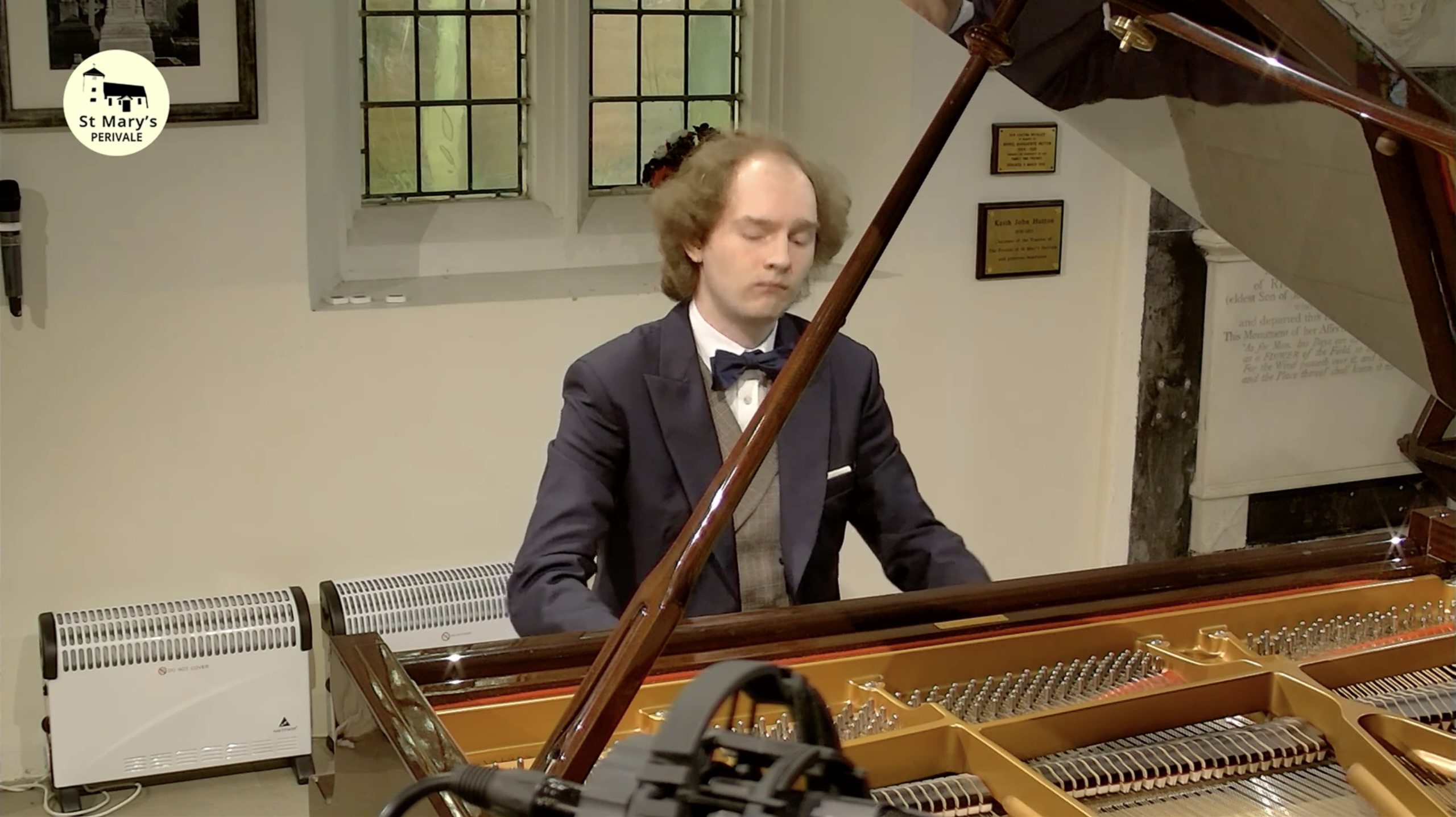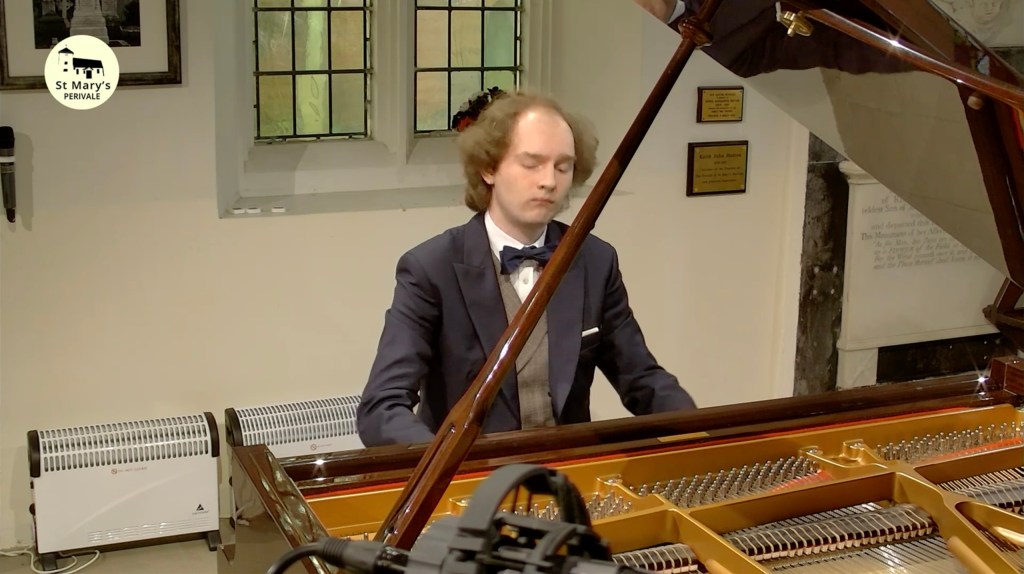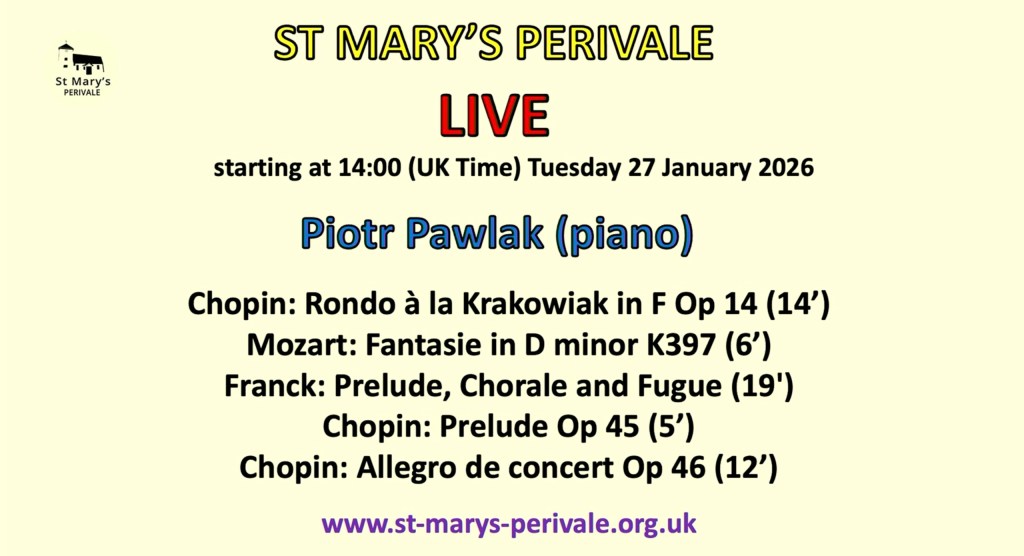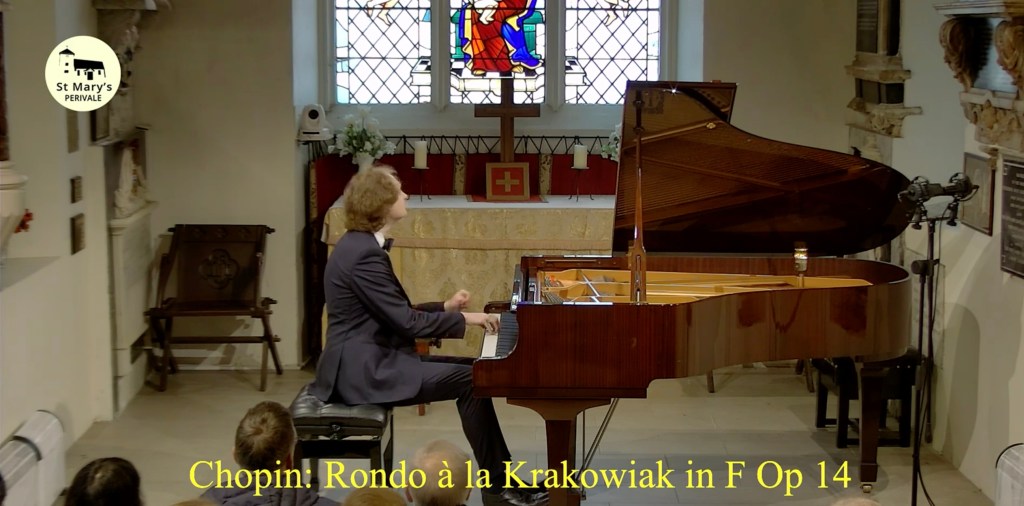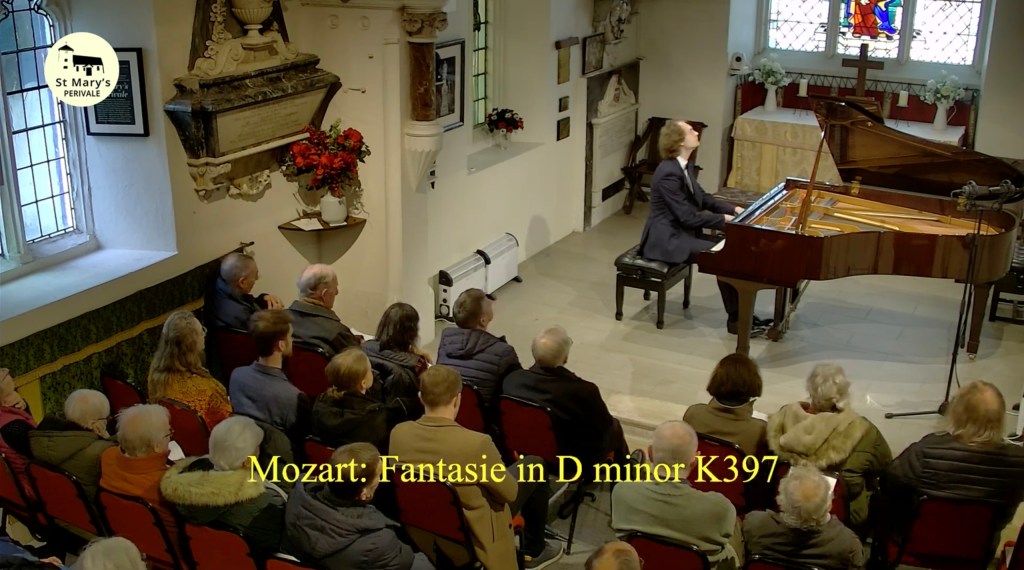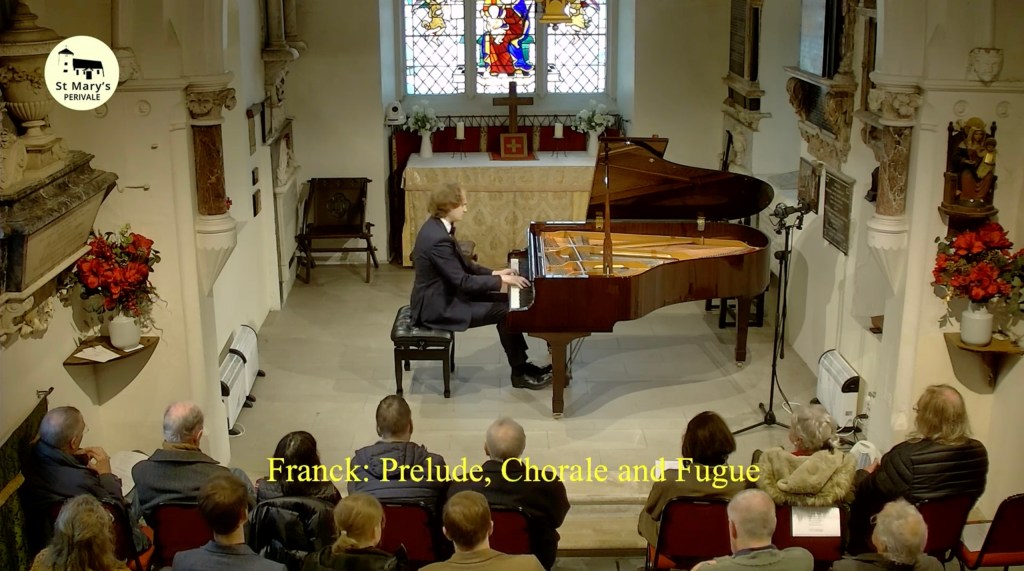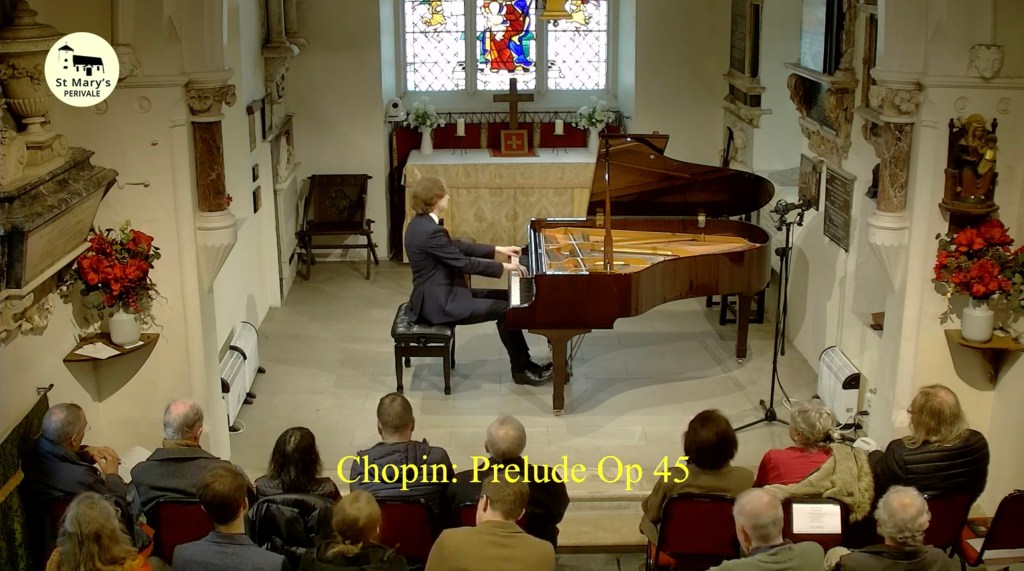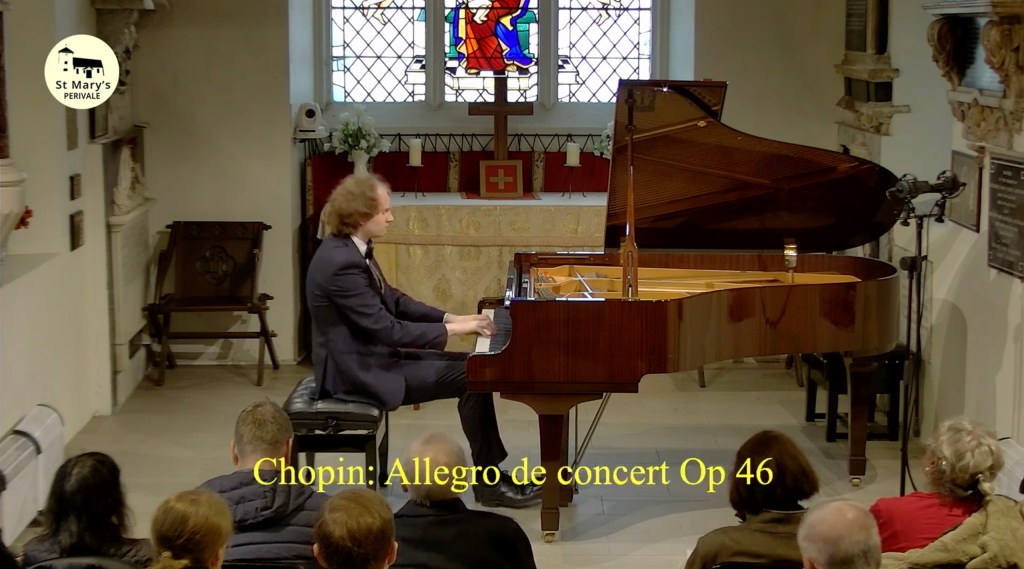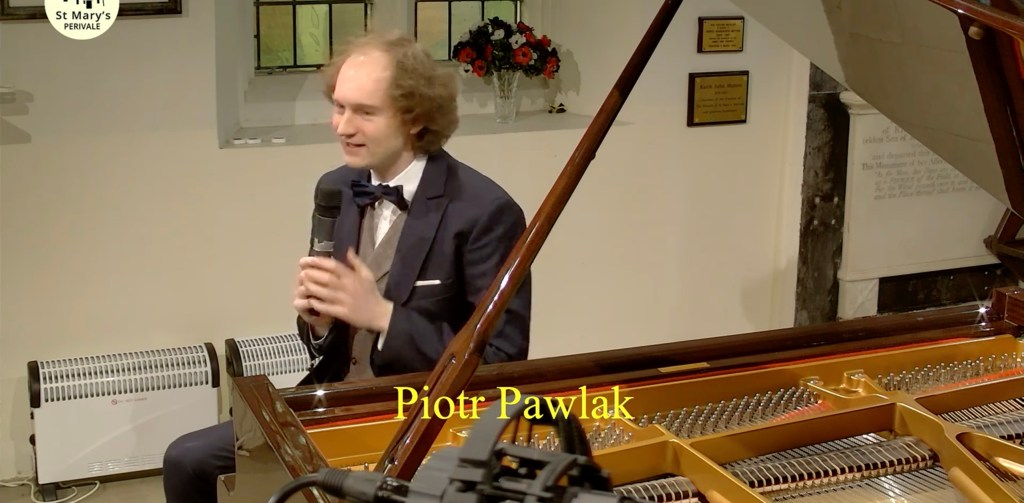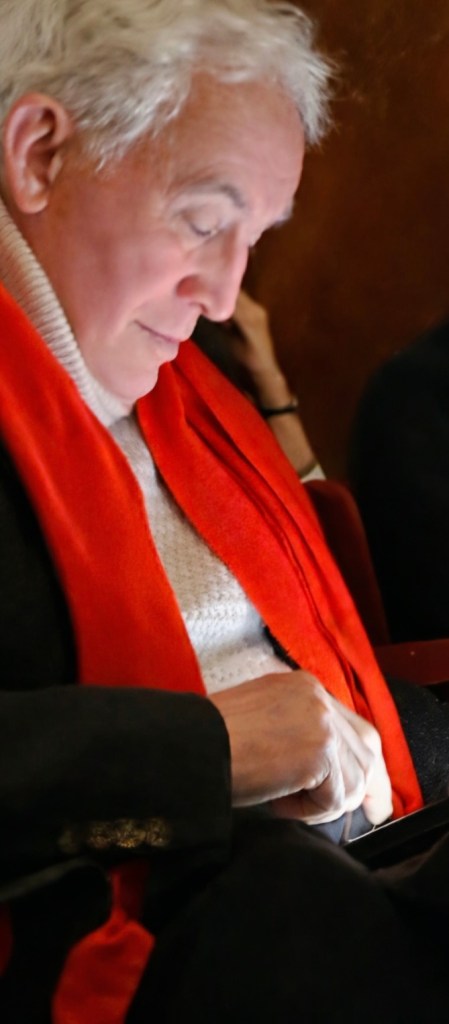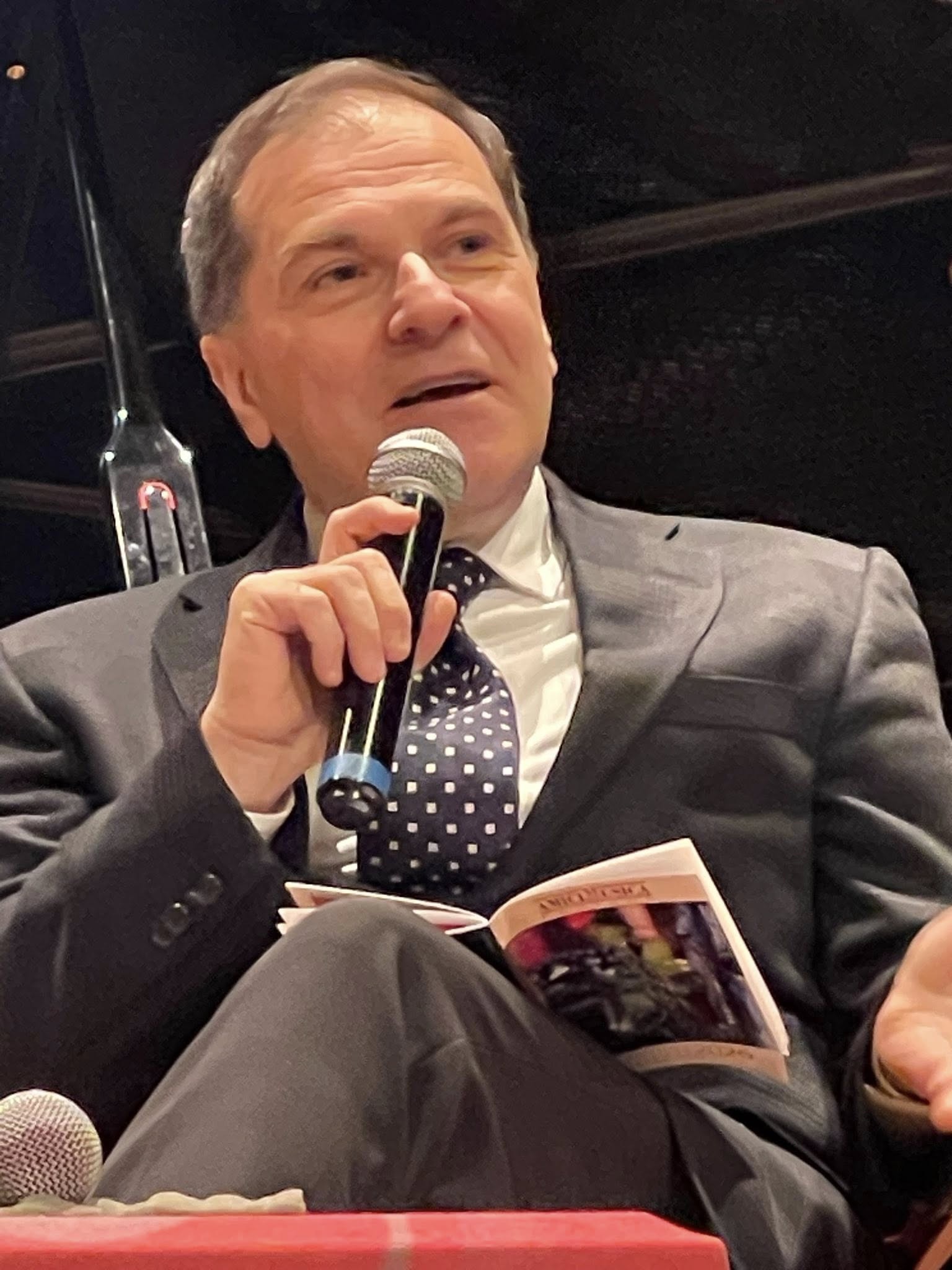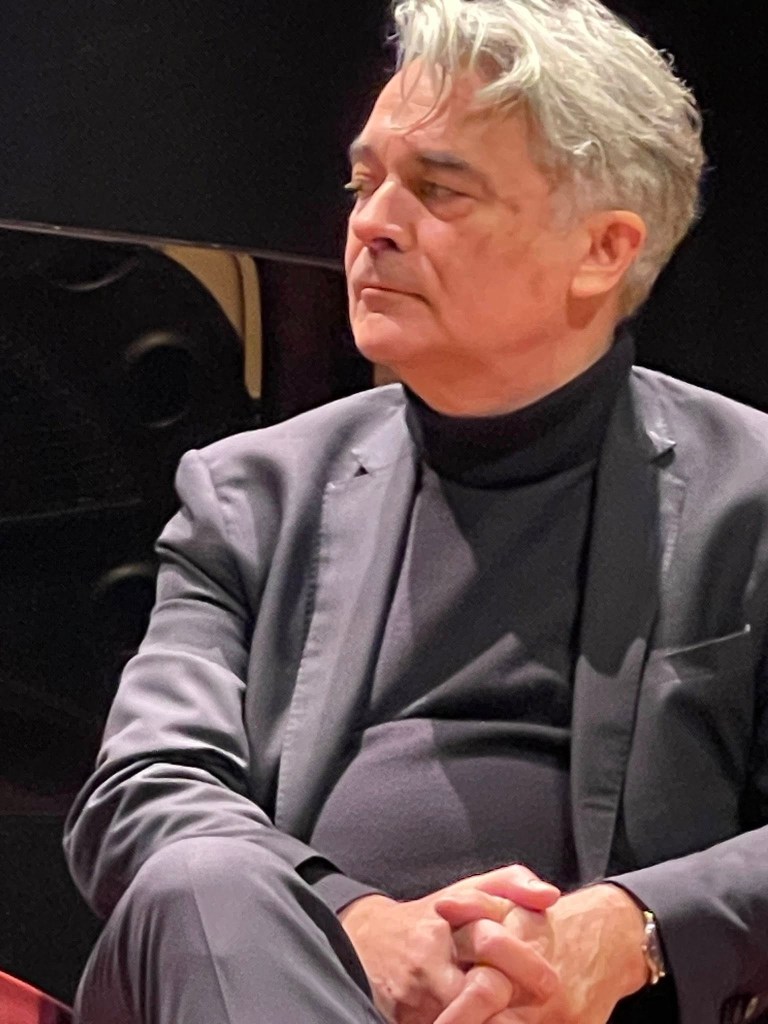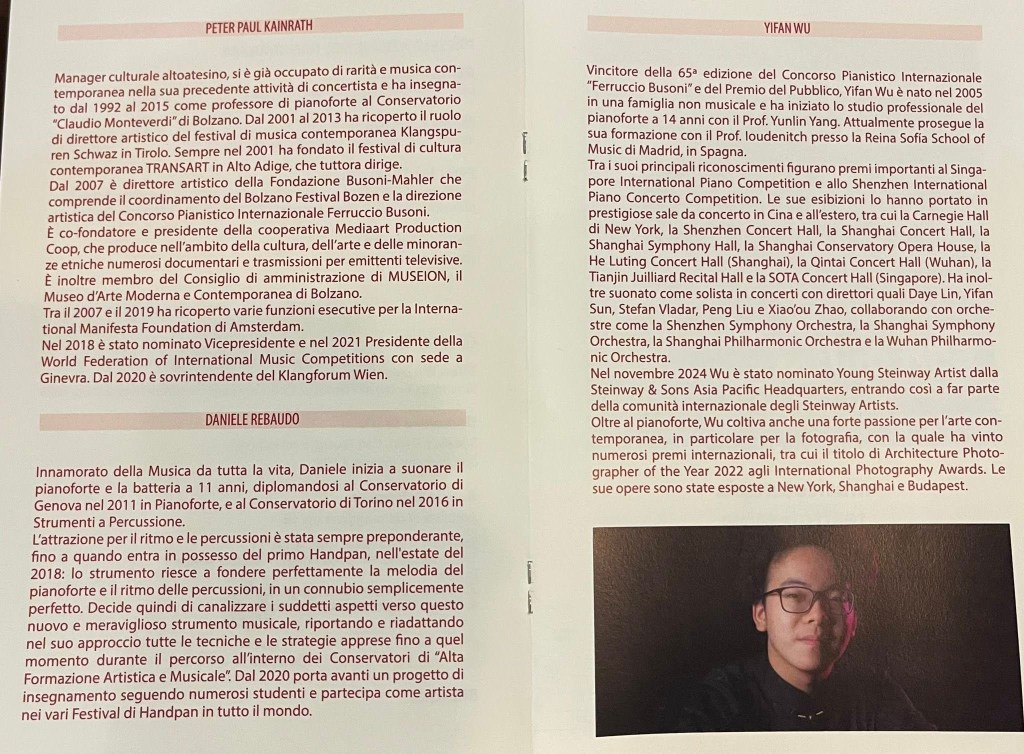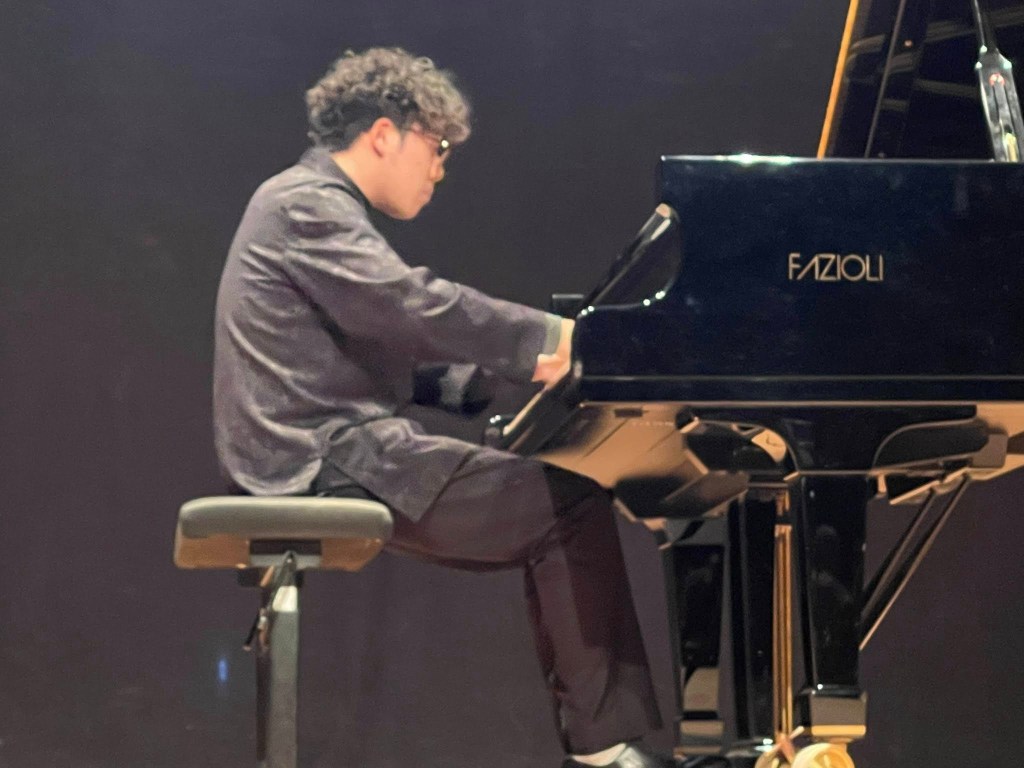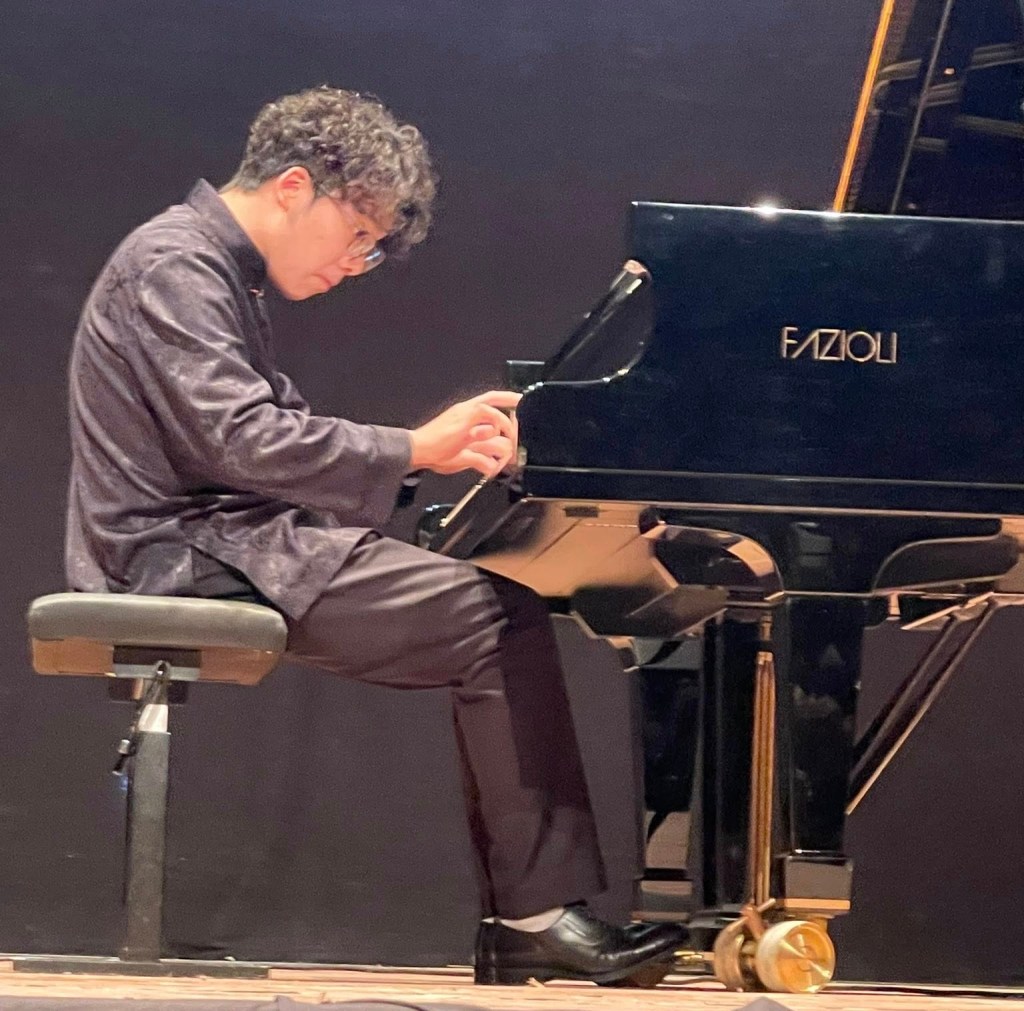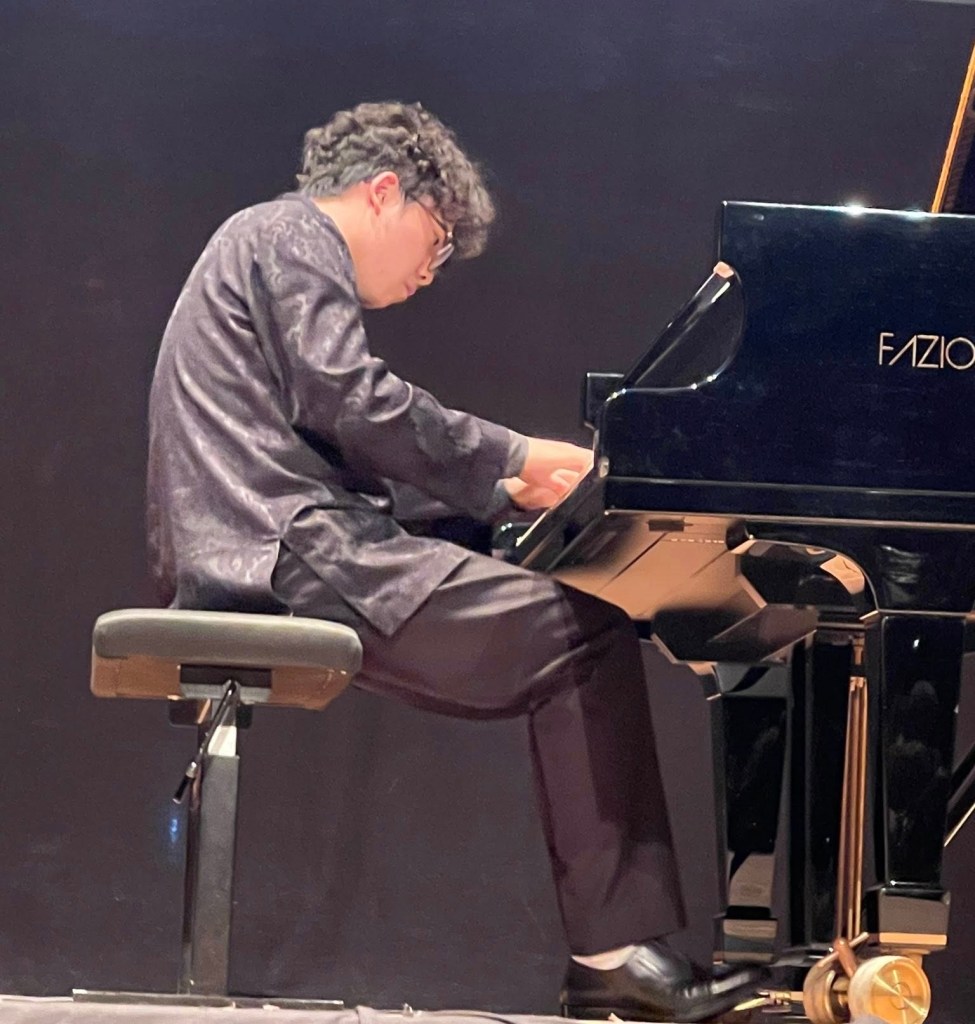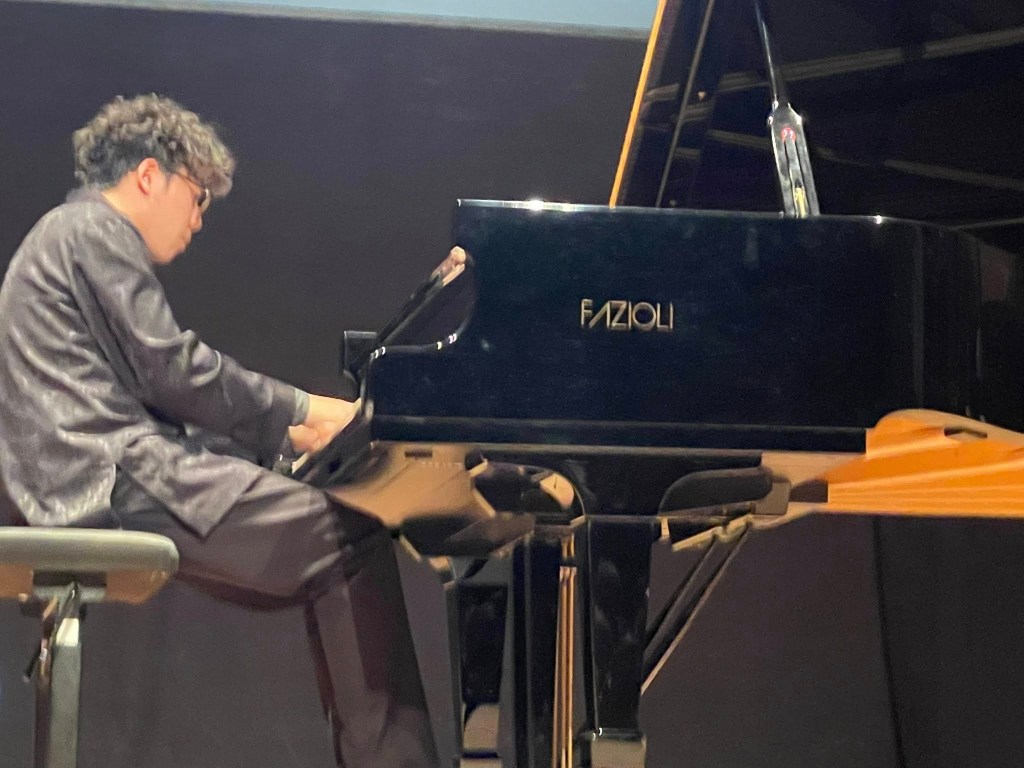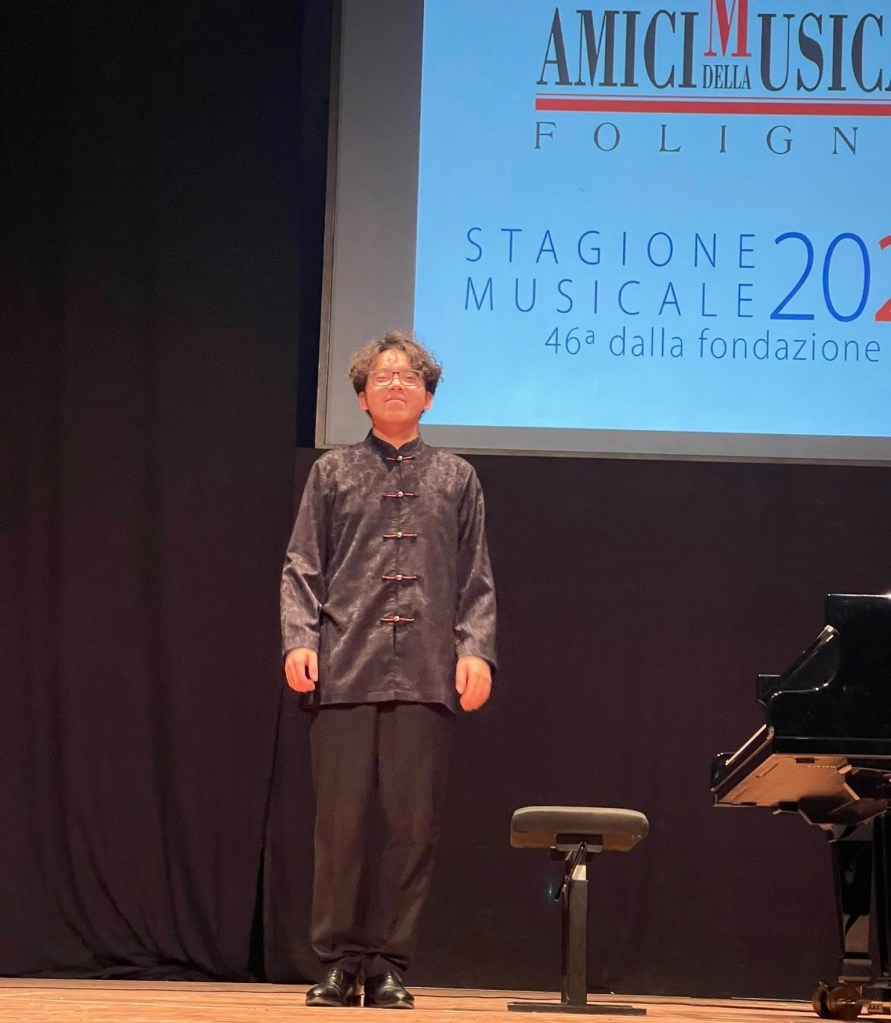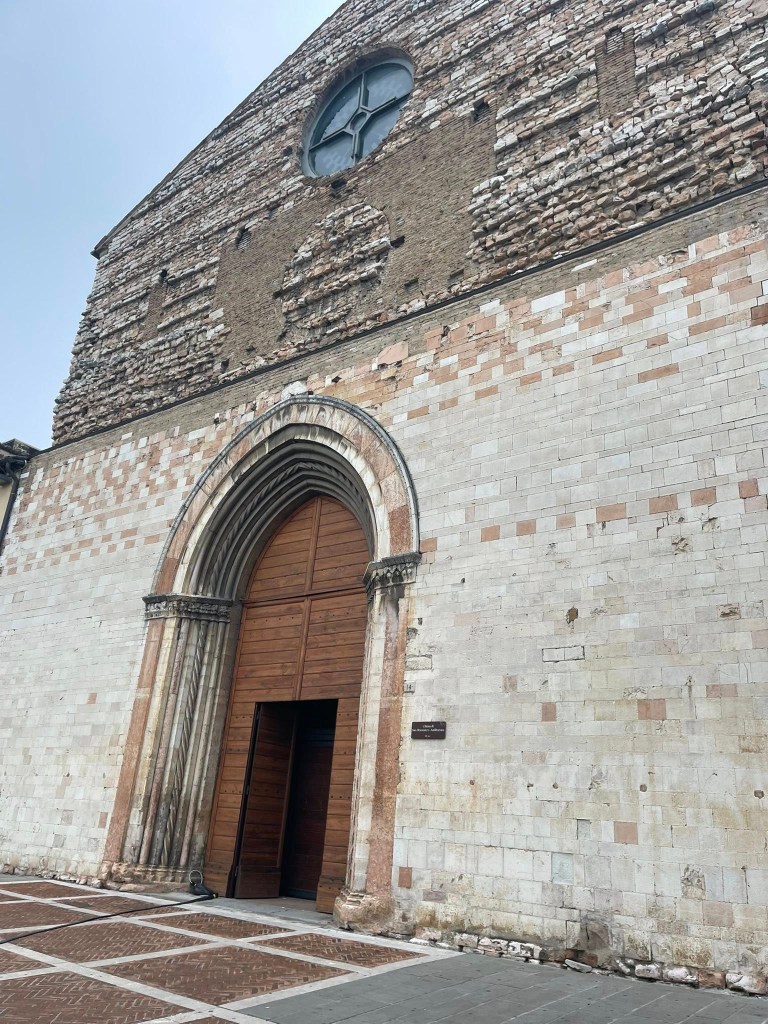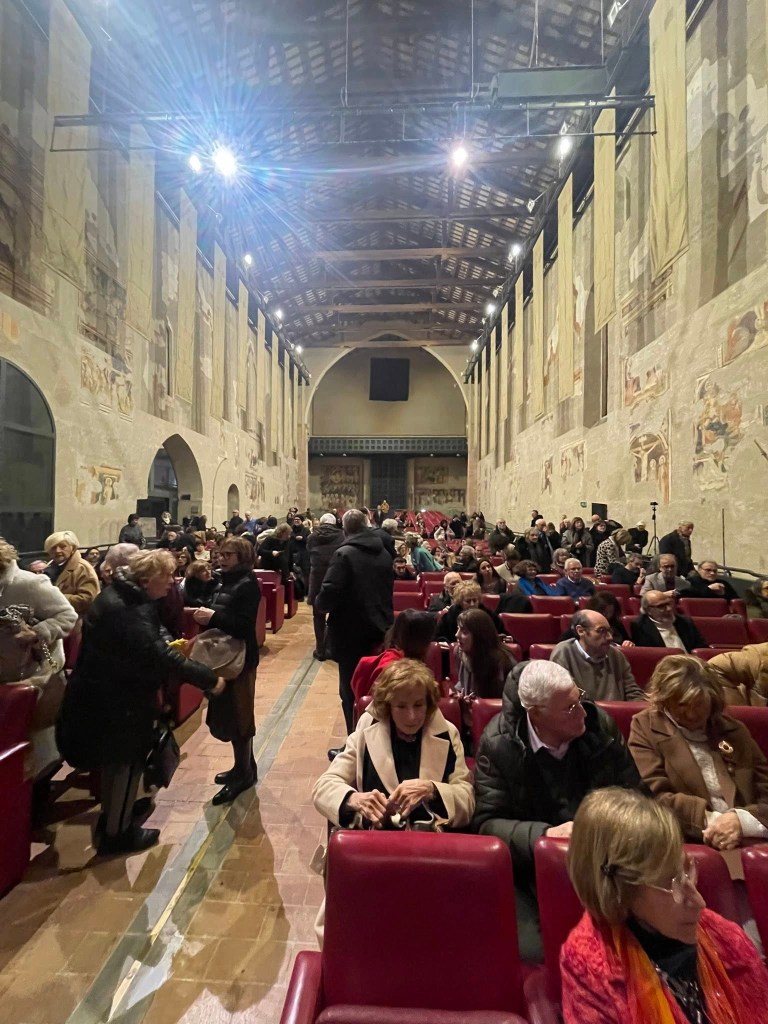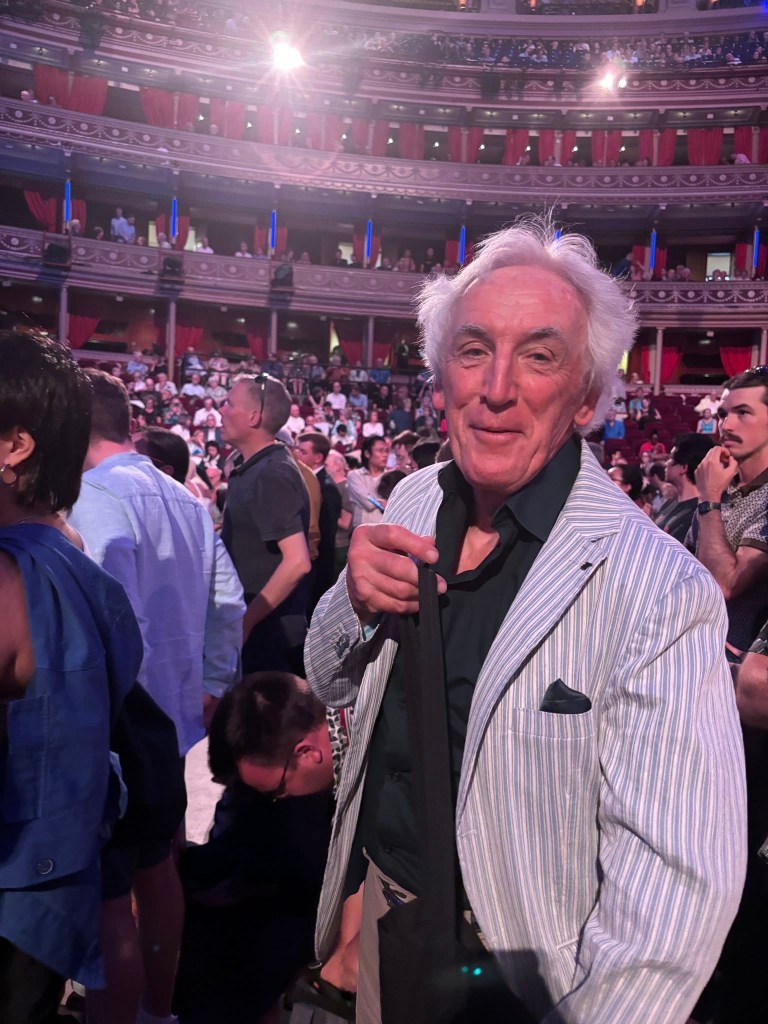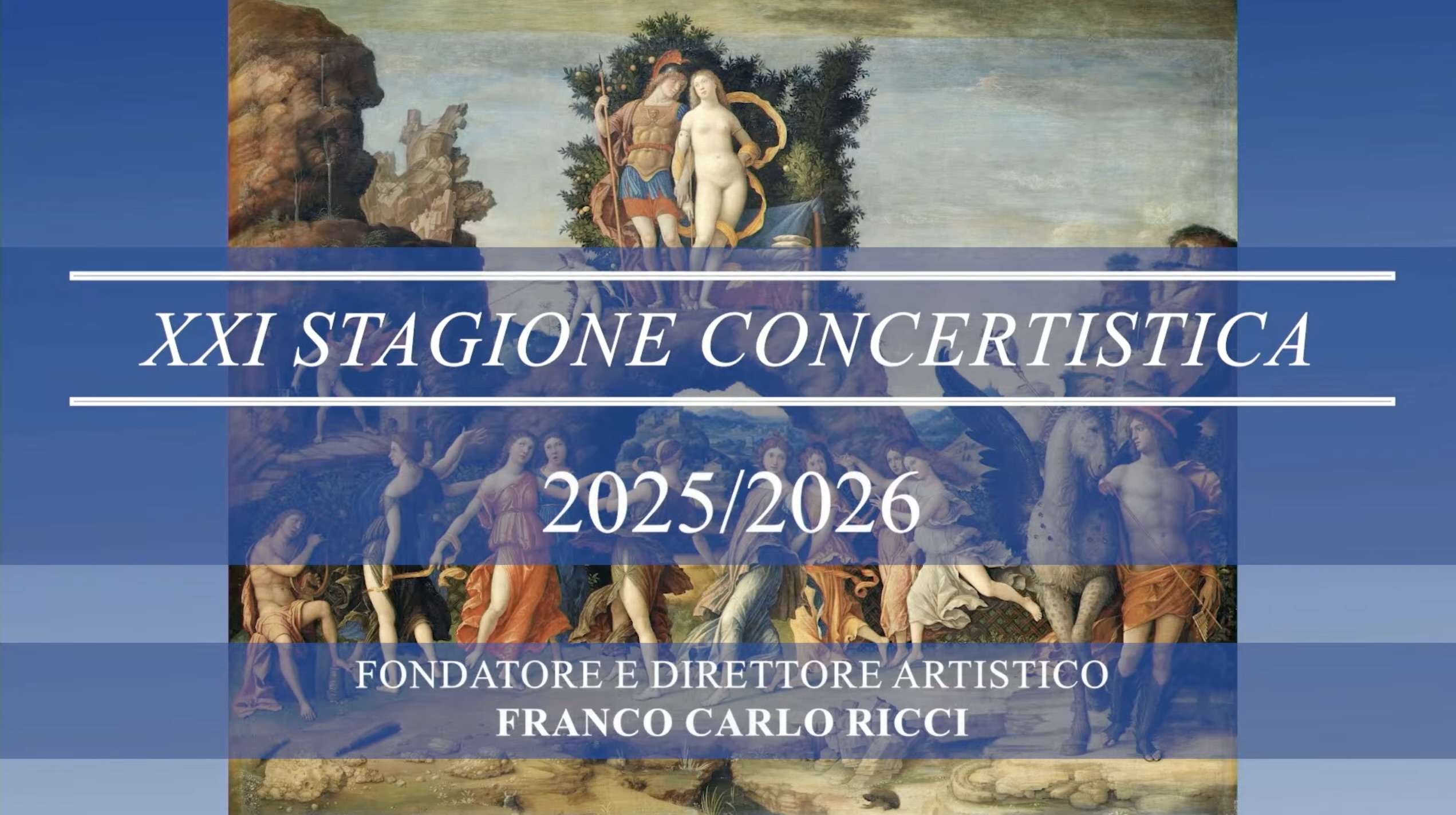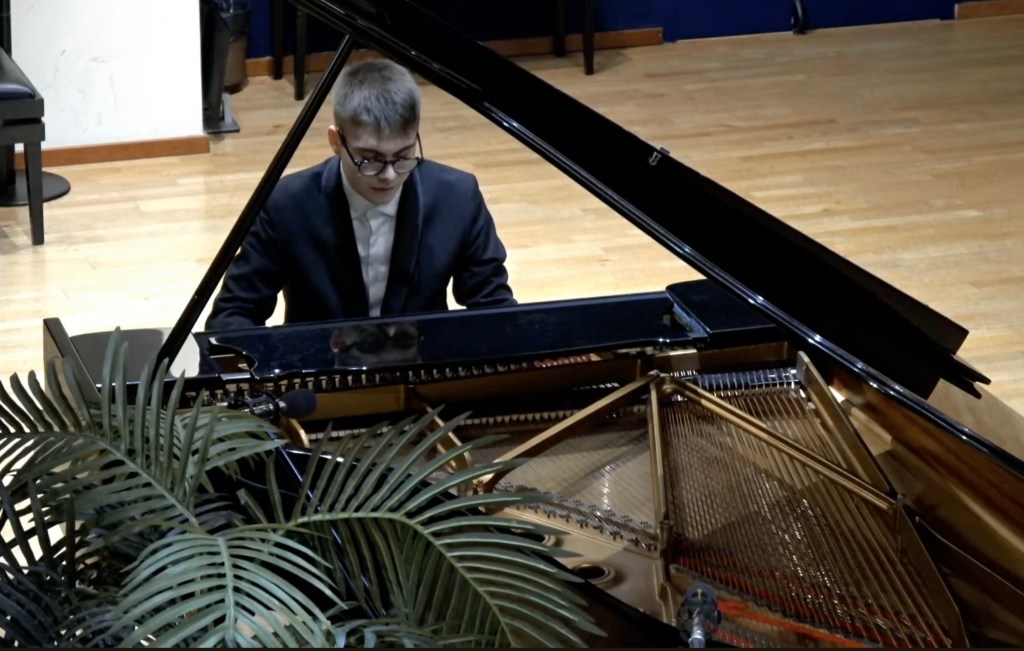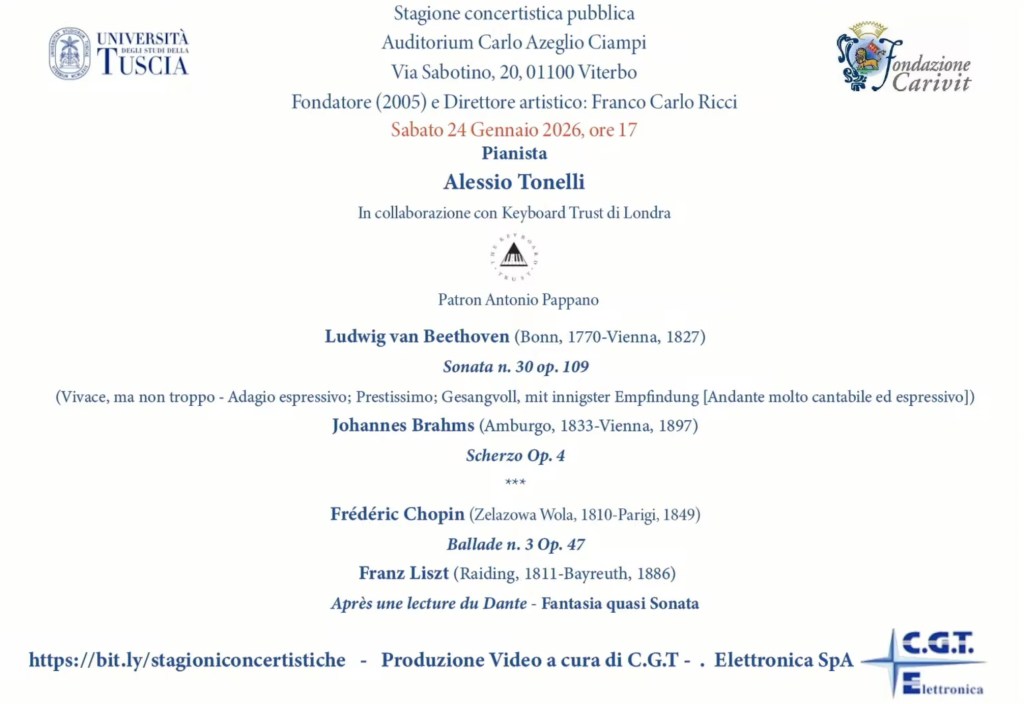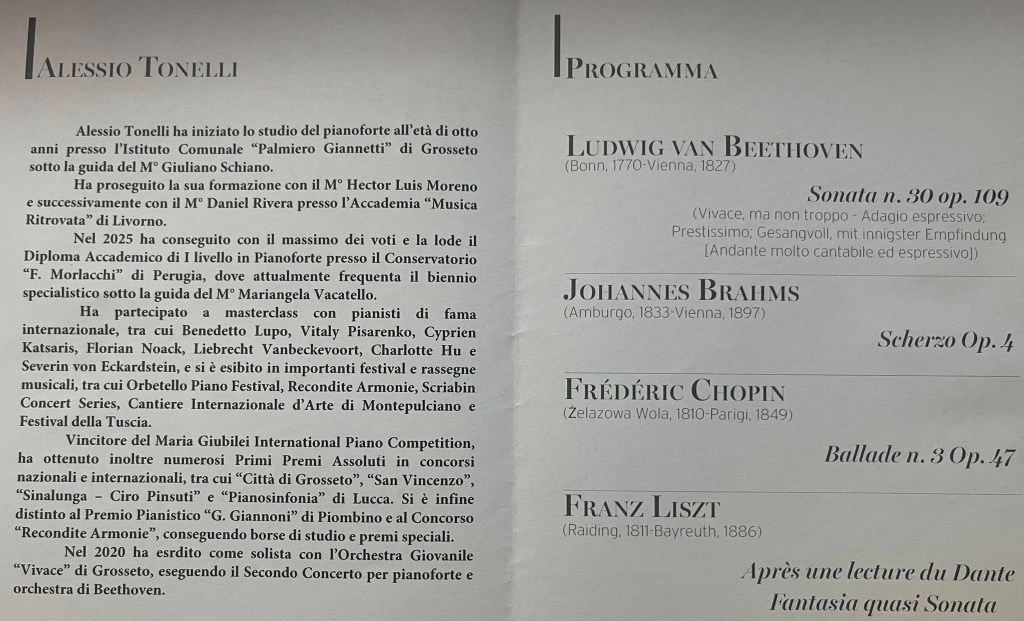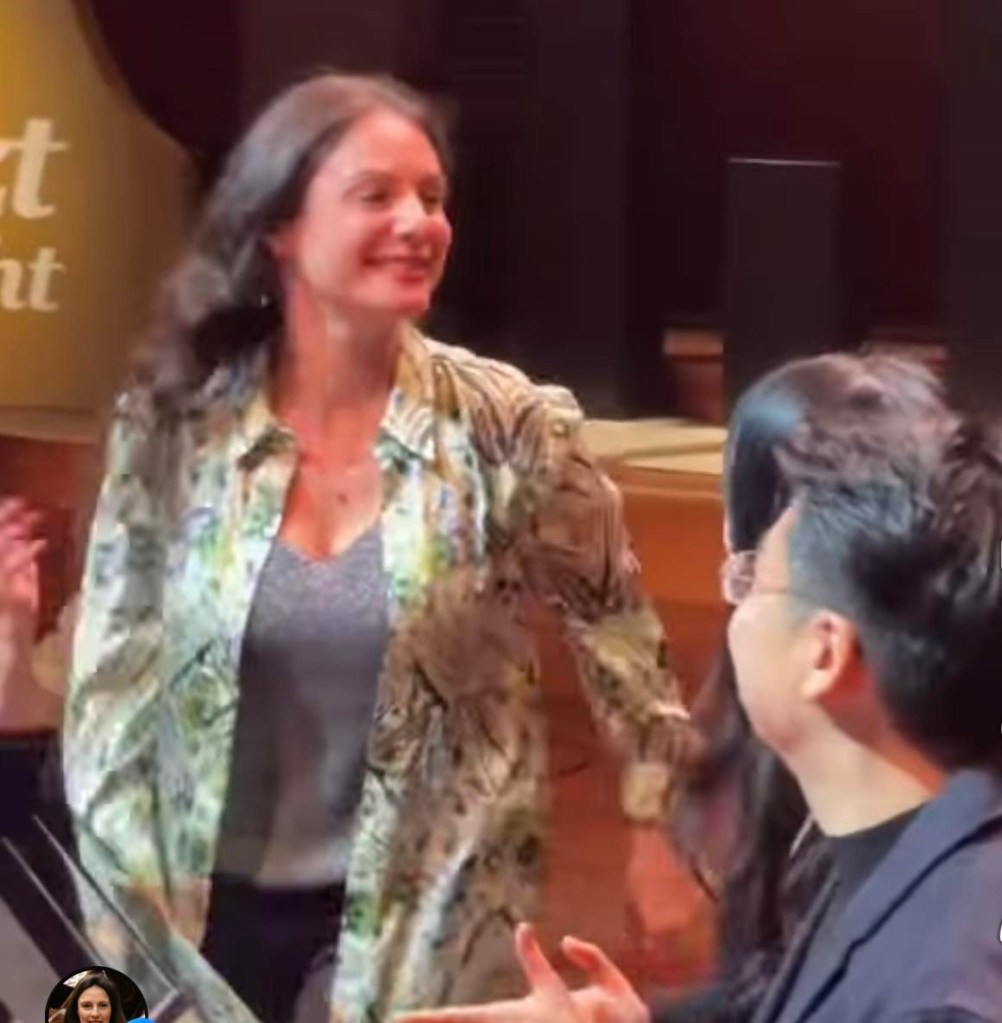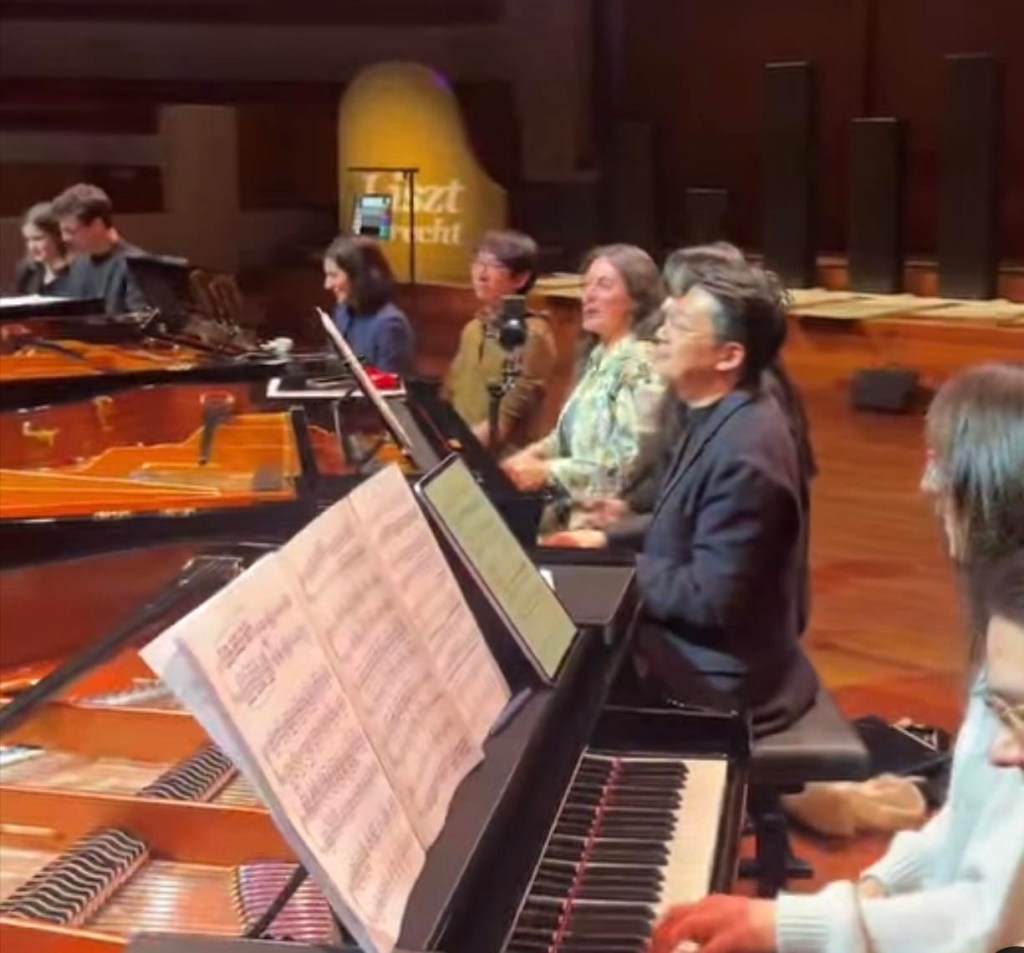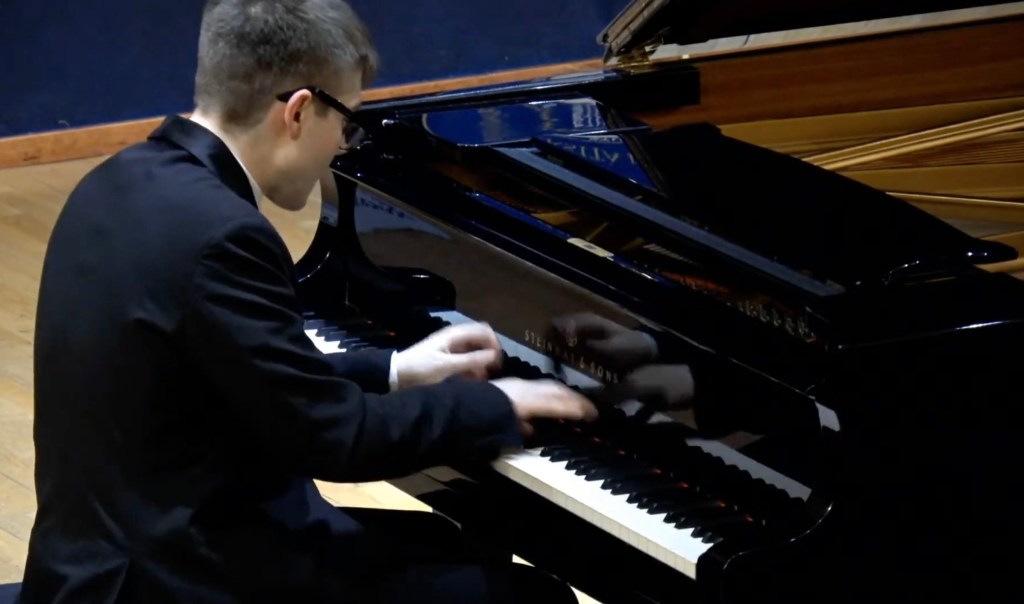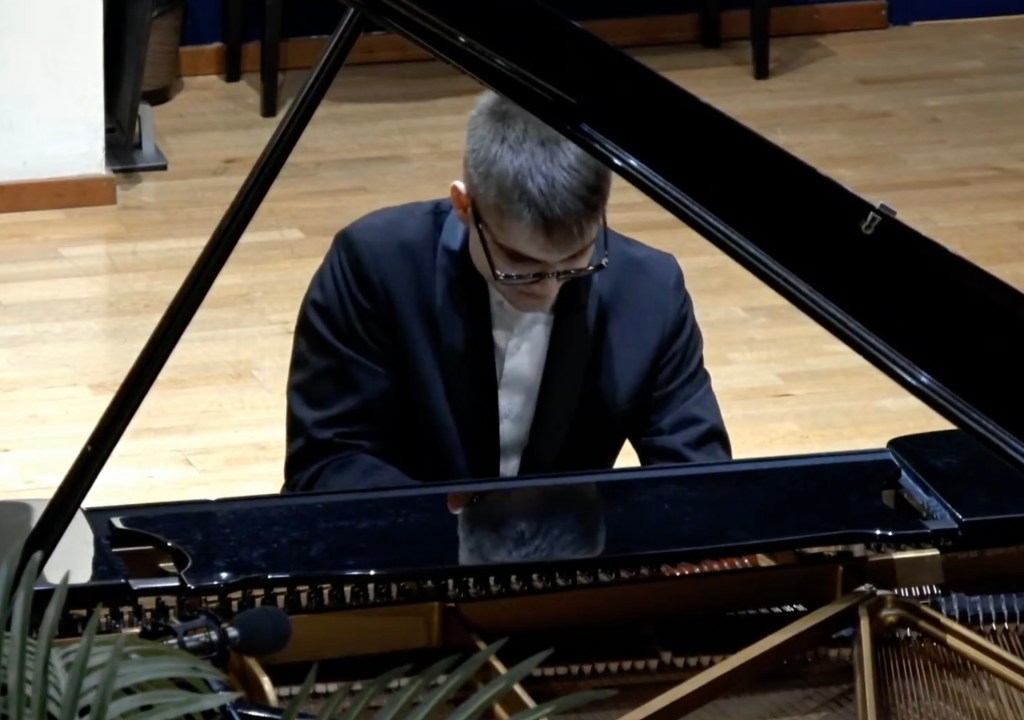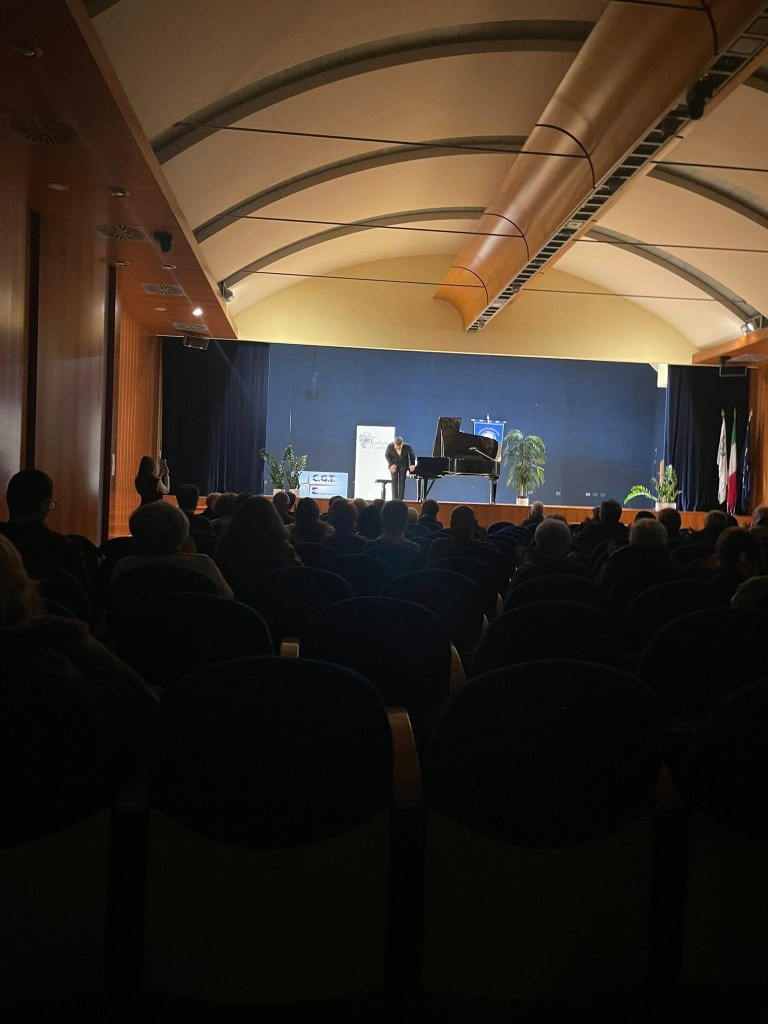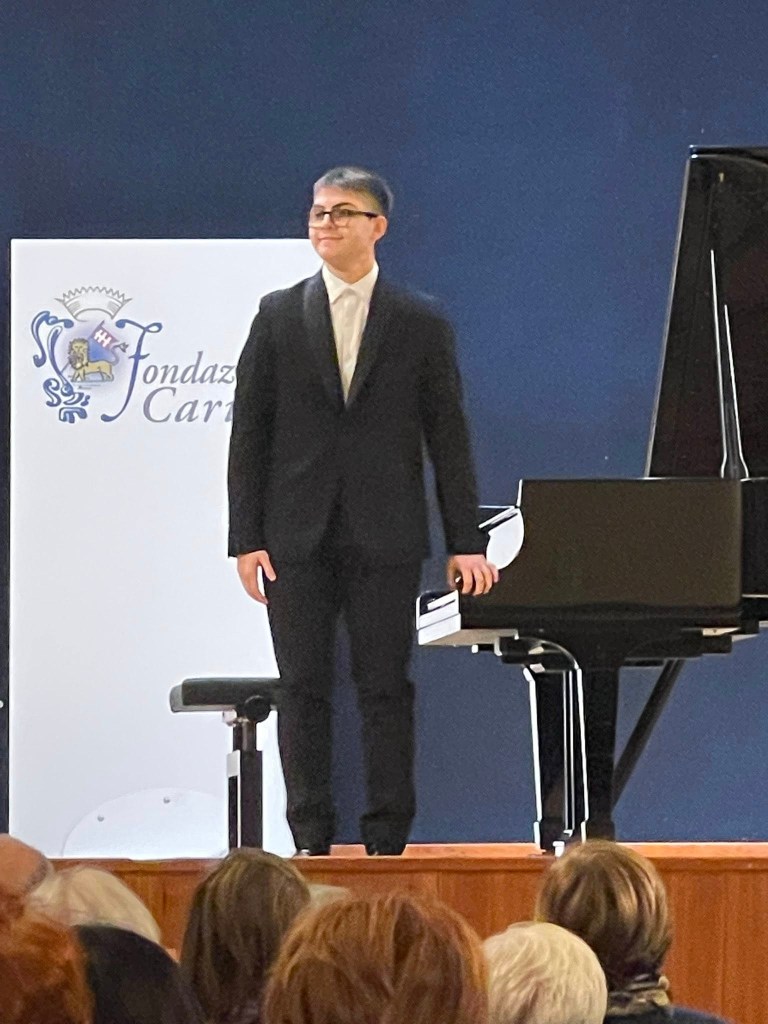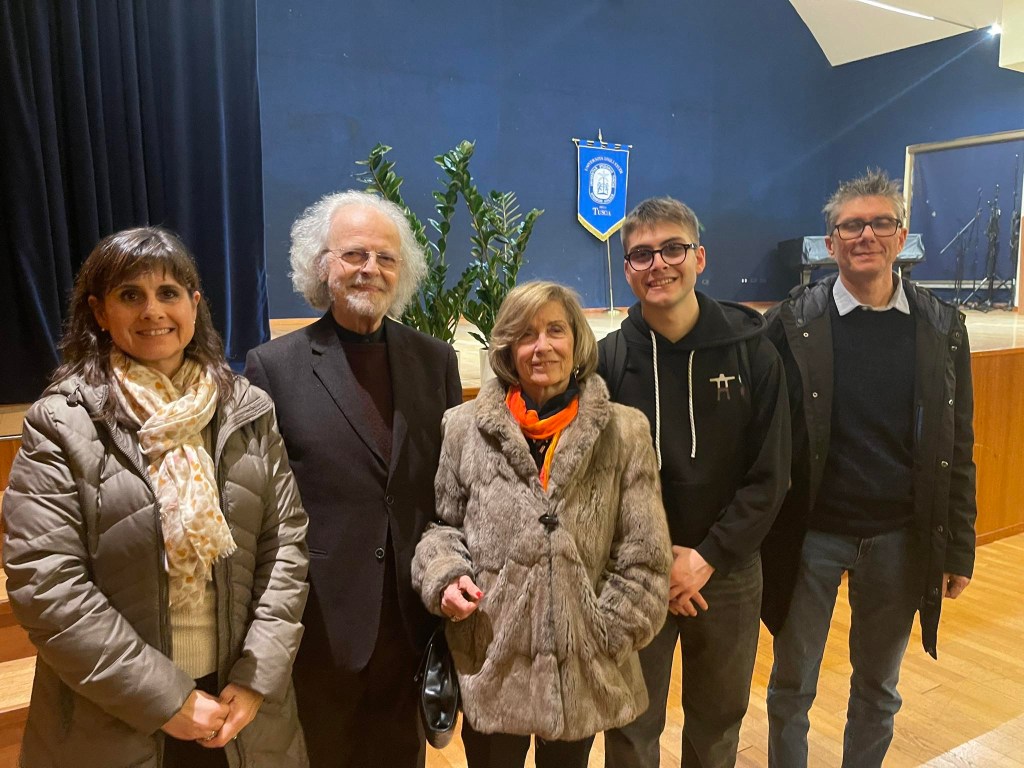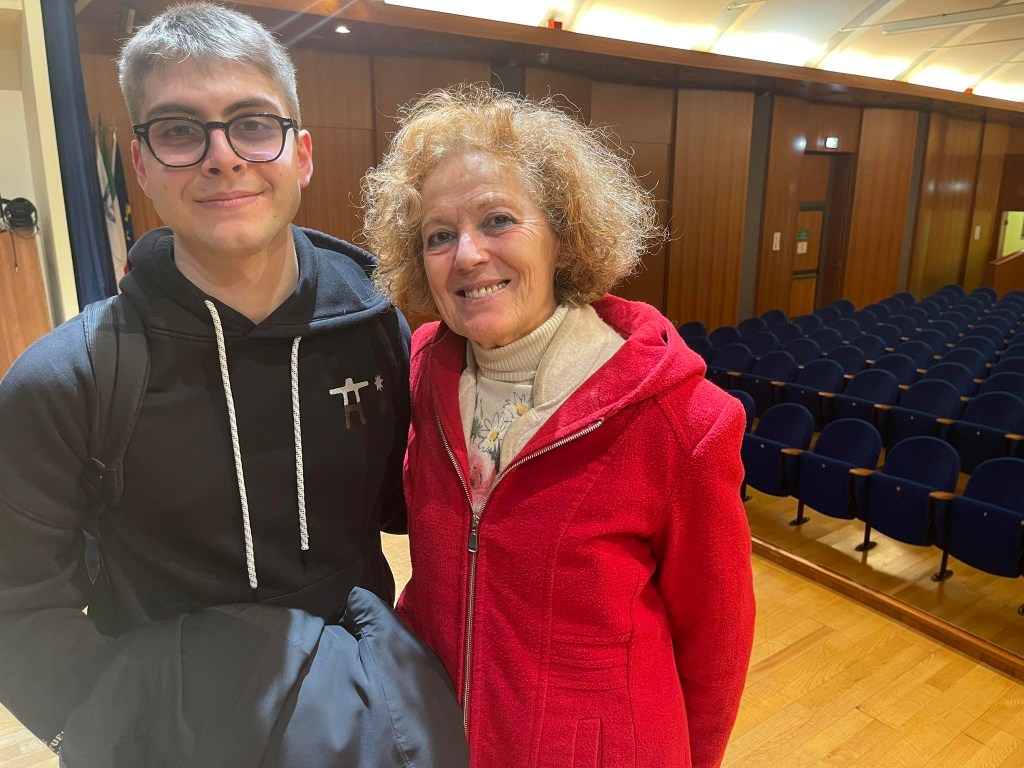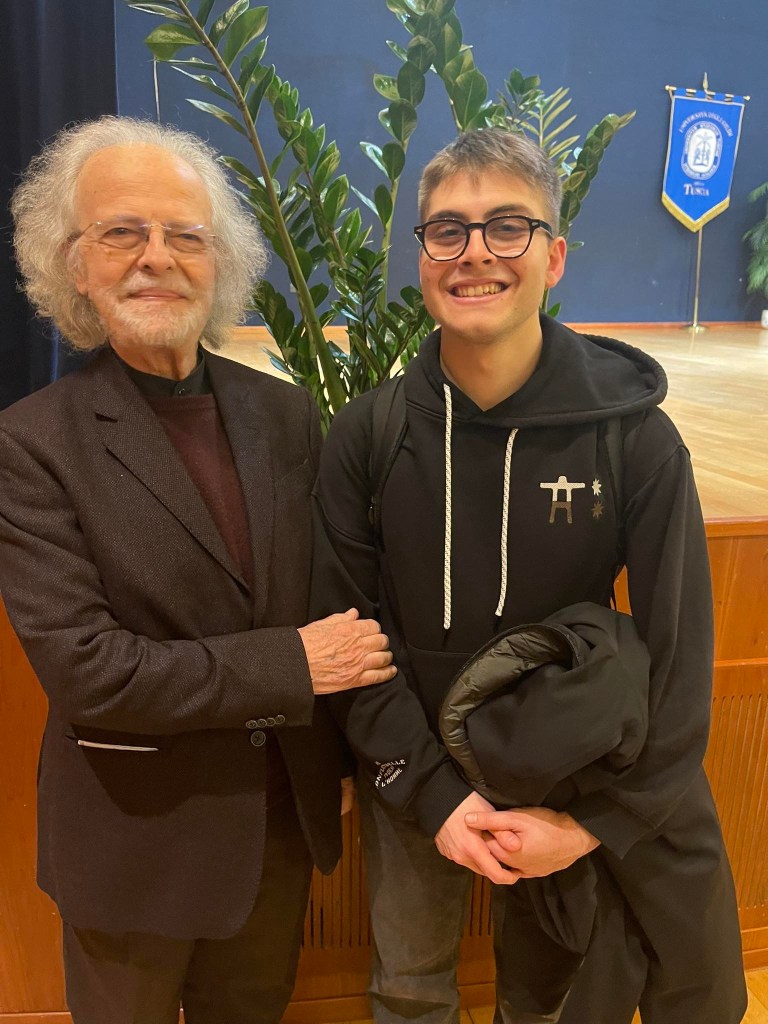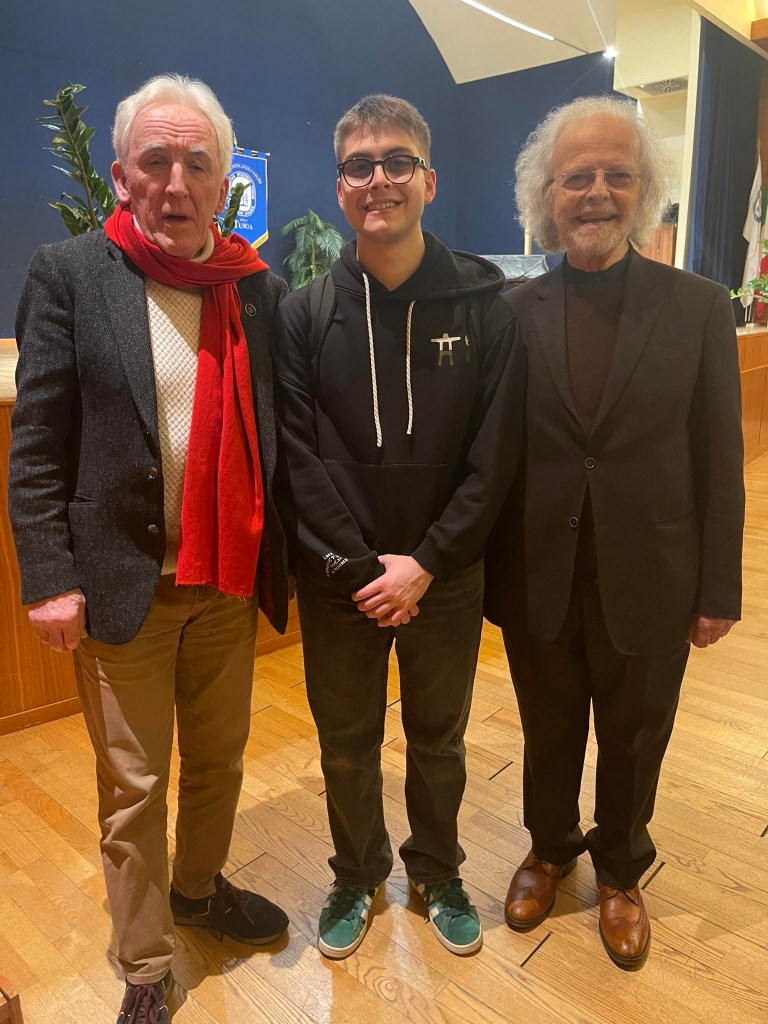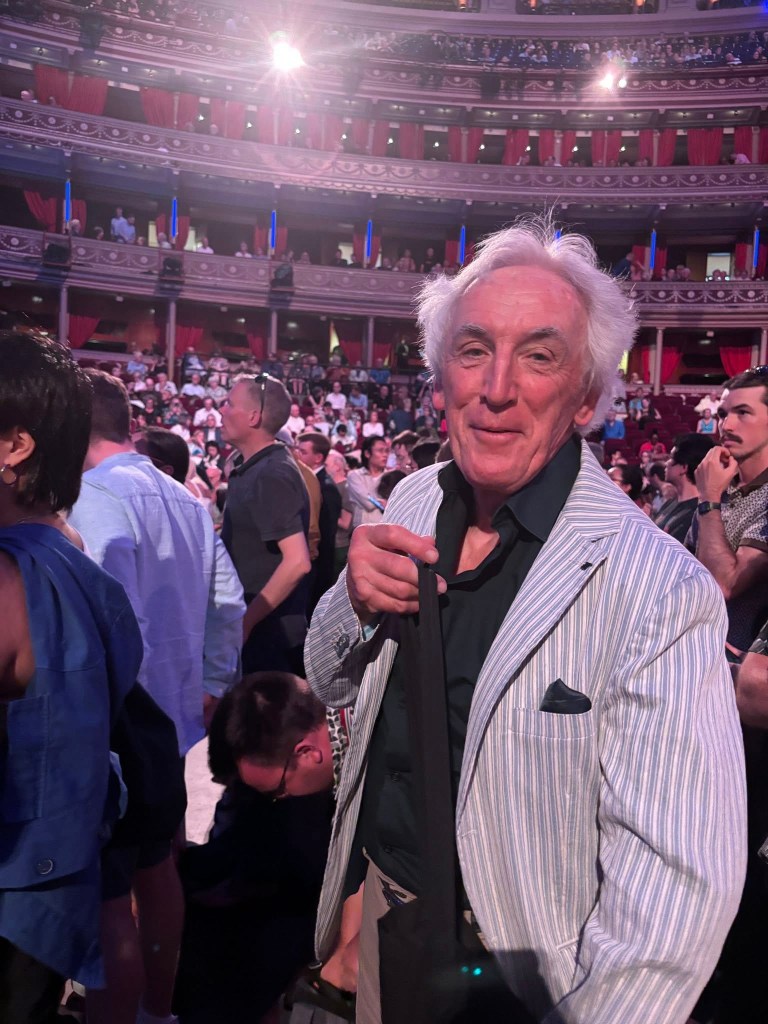
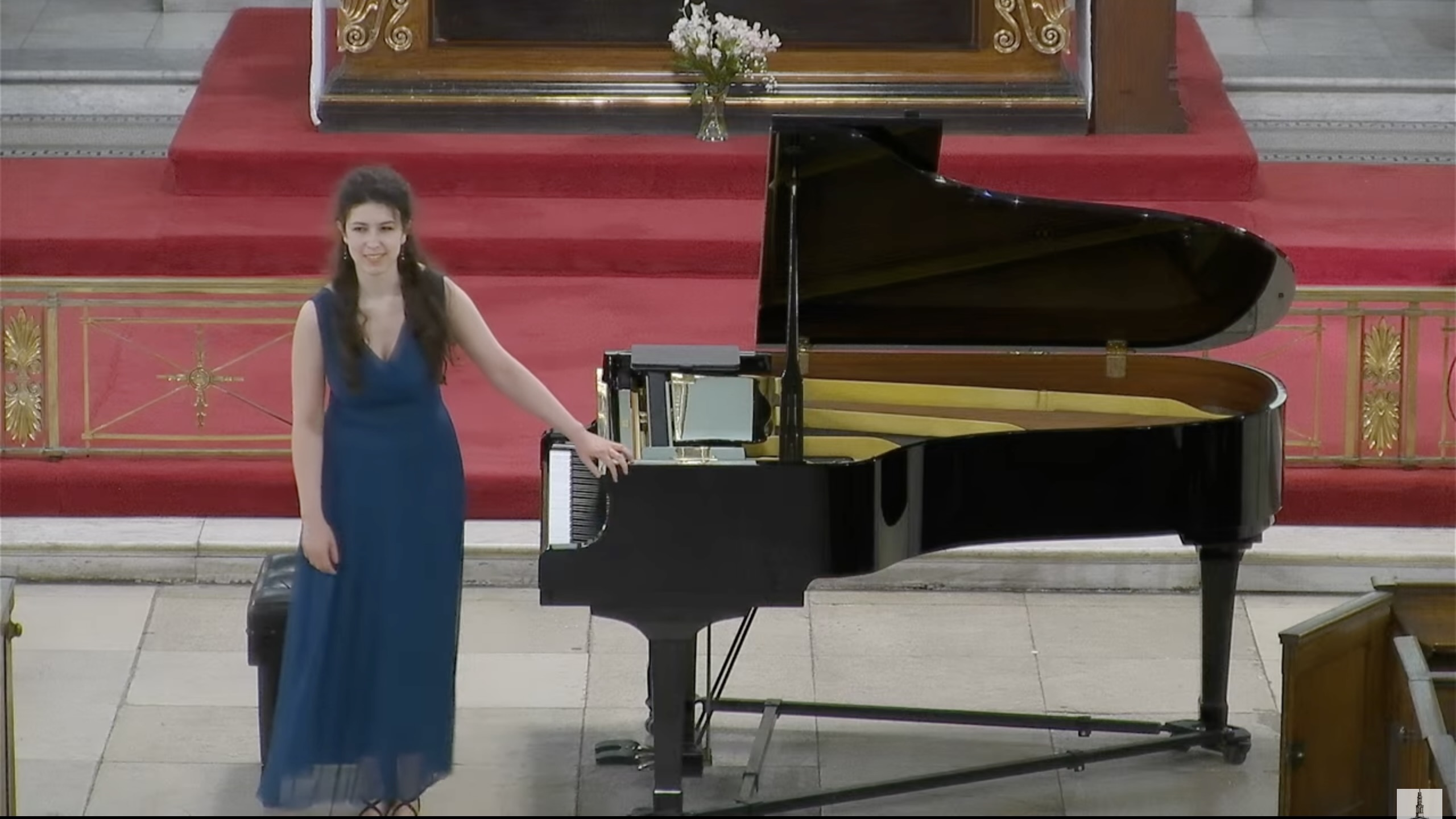
Talent Unlimited Lunchtime recital with Nikita Burzanitsa, piano Thursday 13 November 2025, 1 pm Programme: Ravel – Gaspard de la nuit Prokofiev – Sonata No.7 Lunchtime concerts are free at St Pancras Church, Euston Road, #London
Astonished and amazed by the mastery of Nikita Burzantisa who I had heard two years ago.The transformation from a rebellious student in the class of Dmitri Alexeev to a pianist with not only a technical mastery but where this is placed at the service of a poetic fantasy of ravishing stylish beauty. It is combined with a devilish, menacing drive with a palette of colours and character that is exhilarating and inspirational .
‘Ondine’ wafted around this noble edifice, a stones throw from the hustle and bustle of Euston station. Transformed by this young artist into pastures with waters of crystal clarity where Ravel’s naughty water nymph could wallow with serenity and capricious wistfulness. We could almost see the gallows in ‘Le Gibet’ with the noose swinging in this desolate atmosphere where Nikita found the most spine chilling colours of counterpoints I had never been aware of before . The bell tolling in the distance with an insistence of masterly control . ‘Scarbo’ unleashed the devilish menace that was exhilarating as it was frightening . A mastery that was of fearless abandon but with impish gasps taking us by surprise at every corner . A masterly performance that left me overwhelmed and excited that this young man could have had so much talent concealed within him whilst he came to terms with life in a foreign city.
Prokofiev’s second of his war sonatas was like a red rag to a bull in this young artists hands . There was menace and driving insistence with Prokofiev ‘s spiky rhythmic notes thrown at us with unpardonable relentlessness. Suddenly there was a momentary truce as an uneasy outpouring of poignant mellifluous sounds were wafted around the piano only to be ignited by the end of this momentary cease fire. An Andante that flowed more than I am used to, but with a freedom of improvised astonishment that such beauty could still exist .Cascades of notes were but streams of beautiful sounds that were suddenly interrupted by violent interjections that seemed to have no place in such a visionary landscape.
The whispered insistence be brought to the driving rhythm of this famous moto perpetuo was astonishing because it was ‘sotto voce’ with violent interjections like missiles hitting their target . But as the movement became ever more anguished and angry Nikita threw himself into the fray with masterly, fearless abandon that was breathtaking for its audacity .
Two masterly performances by an artist who has come to terms with his new life and is ready to reveal the wonders that have been hidden within him for too long . Hats off and welcome to a great artist on the horizon.
2025 Winner of the Newbury Spring Festival Sheepdrove piano Competition
Nikita Burzanitsa was born into a family of musicians in Donetsk, Ukraine. He started playing piano at the age of 7 with Professor Nataliya Chesnokova. Since 2008 he has studied in Special Music for Gifted Children in Donetsk, Ukraine. In 2015 he acquired complete general secondary education at Comprehensive School of I-III stages No.9 of Toretsk Town Council of Donetsk Region and was awarded with the golden medal “For High Academic Success”(Toretsk, Ukraine). In 2015 he received Full Scholarship at Wells Cathedral School and studied with John Byrne (UK, Somerset).
In 2017 Nikita received Full Scholarship in Donetsk State Conservatory (Donetsk, Ukraine) and a Double Scholarship which includes the Milstein Medal Award Holder supported by International Students House at the Royal College of Music (London, UK).
In 2020 Nikita became a student of Dmitrii Alexeev at the Royal College of Music. In October 2021 he became a Talent Unlimited scholar (London,UK), and in November 2021 he became a scholar of the Piano Charitable Trust, which supports young pianist around the world. In December 2021 received the Associated Board of the Royal Schools of Music Overseas Postgraduate Scholarship, which covers full tuition fees for each year of the Masters course at Royal College of Music (London, UK).
In 2022 and 2023 he became a scholar of Drake Calleja Trust (London,UK), and in 2023 he received a full scholarship at the Royal College of Music to study the Artist Diploma with Dmitri Alexeev. Throughout his time in education he has participated in international festivals and competitions.
Nikita has also performed solo recitals in Ukraine, Russia, Poland, Kazakhstan, France, Belgium, Italy, Great Britain; also he played with symphonic orchestras under the batons of conductors: Nikolay Dyadura, Vladimir Sirenko, Vyacheslav Redya, Natalia Ponomarchuk, Sergey Lihomanenko, Anatoliy Rybalko, Vadim Vilinov, Erzhan Dautov, Oleg Bahtiozin, Alexander Dolinskiy, Vladimir Zavodilenko, Roman Moiseev.
The Sheepdrove Piano Competition is now firmly established as one of the important piano competitions in the UK.
Established by the Sheepdrove Trust in 2009, the competition is open to candidates aged 26 and under from the eight major UK music colleges. Heads of department are invited to submit suitable candidates for the competition.
The competition is remarkable in many ways, one of which is the fact that there is no cost to entrants, with the Sheepdrove Trust covering all candidates’ travel, subsistence and accommodation expenses for the weekend competition.
The students are invited to the Sheepdrove Eco Centre for the competition weekend in the rolling Lambourn hills. The first rounds are judged in private during Saturday. The shortlisted finalists are then invited to stay overnight, and decide on a final recital programme in consultation with the judges.
On the second day of the competition the four finalists perform in the public final, which is encompassed within the Newbury Spring Festival. Five prizes are awarded at the end of the public final, including an audience prize.
The overall winner stays overnight again, and is invited to give a public recital on the following day as part of the Festival’s Young Artists Lunchtime Recital Series at the Corn Exchange, Newbury, for which they receive an additional fee.
The judges for 2025 are:
Rupert Christiansen Music critic and writer, and Director, Robert Turnbull Piano Foundation
Mark Eynon Director, Newbury Spring Festival
Mikhail Kazakevich Russian pianist and Professor of Piano, Trinity Laban Conservatoire of Music & Dance
Lucy Parham Pianist
Elena Vorotko Artistic Director, The Keyboard Charitable Trust
David Whelton Former Managing Director, Philharmonia Orchestra
1- Since 2008 you have studied in Special Music for Gifted Children in Donetsk in the class of the prof. N. Chesnokova (Donetsk, Ukraine). How do you remember this period and master?
I am very happy with the role Professor Chesnokova played in my development which is seen as I still continue my studies with her alongside Professor Alexeev at the Royal College. Particular repertoire that she helped me with the most include Rachmaninoff Corelli Variations and Tchaikovsky Concerto No.1.
2- Is your family musical?
Yes, my mother was a concert pianist and is now a professor at Donetsk State Conservatory and the Special Music School for Gifted Children, Donetsk. My father is a prominent trumpeter in Ukraine, working for the Orchestra of the Philharmonic Hall Donetsk.
3- In 2015 you were awarded with the golden medal “For High Academic Success” (Toretsk, Ukraine). How did this honour feel like?
It was a great achievement for me, although unfortunately it did not have much bearing on my musical career.
4- In 2015 you received a Full Scholarship in Wells Cathedral School and studied with prof. John Byrne (Somerset, UK). How do you remember this period and master?
This was a great experience for me, especially as it was my first time in the UK. I am very grateful to professor Byrne who helped me a lot in Wells Cathedral School and supported my studies culminating in my move to London Royal College.
5- You are currently studying with prof. Nataliya Chesnokova Donetsk State Conservatory. How is this progressing?
My studies with Professor Chesnokova are progressing well, she has been very helpful preparing me for competitions and concerts, especially in Romantic repertoire.
6- In 2020 you started to be a student of Dmitrii Alexeev at the Royal College of Music. How is this prgressing?
It was my dream to study with professor Alexeev when I arrived in London, and I have inspired a lot grow as a musician since joining his class.
7- What are your fondest musical memories, privately or performing?
One of my fondest memories is of performing Saint-Saens Piano Concerto No.2 in Kyiv Philharmonic Hall as a part of the winners concert of Sberbank debut competition chaired by Denis Matsuev. A recent performance I can mention is this September in the Vienna Musikverein
8- How often do your practice?
I am trying to practice every day between 4 and 6 hours when it is possible.
9- Would you consider teaching music in the future?
Yes I would like to teach in the future if I have the opportunity. It is really nice for me to share my knowledge of piano playing with students, and to pass on the teaching I have received from my professors; Byrne, Chesnokova and Alexeev.
10- How do you balance your time commitments in terms of study and performance? What are the biggest sacrifices?
I usually focus on my piano practice above other commitments such as academics. Especially when preparing for important concerts or competitions it is vital to be single-minded about practice hours. To this end I must often sacrifice social time and leisure activities, while I strive to maintain my academic standards.
11- What advice would you give music students at the beginning of their journey?
Put practice at the centre of your life, pay attention to everything your professor says, and push yourself to the maximum.
‘Introducing our 2025/26 Bicentenary Scholars Significant funding as well as artistic development opportunities which are designed to meet their individual needs and ambitions as they prepare for professional careers.’
Tomos with already a first at Oxford is now perfecting his quite considerable pianistic skills at the RAM having been a student of Rustem Hayroudinoff (an emeritus KT ) for the past six years. He is now with the Head of Keyboard ,Joanna MacGregor, as he prepares for his Advanced Artist Diploma.
A distinguished pedigree for a twenty four year old before he even began to tickle the keys.
Caress would be more to the point as he played three of Liszt’s recreations of Schubert songs with a warmth and ravishing sense of balance that allowed these wondrous songs to hypnotise a very full Steinway Hall before embarking on the greatest song ever written for the piano .
An outpouring of love by Robert Schumann for his future wife and mother of his eight children, Clara Wieck whose wicked piano teacher father almost crippled Robert with ‘ingenuous’ finger strengthening exercises before forbidding him to see his piano prodigy daughter.
The C major Fantaisie is dedicated to Liszt ( because it was Schumann’s contribution to the raising of a statue in Bonn of Beethoven , who had famously kissed the child prodigy Liszt when still a pupil of Czerny, a pupil of Beethoven)
There are lots of secret messages that Schumann hides in this outpouring of love for his beloved Clara, not least the quote at the end of the first movement ( repeated at the end too in the first edition ) from Beethoven’s song ‘An der Ferne geliebte’ ,‘To the distant beloved ‘. It was here in this pinnacle of the romantic piano repertoire that Tomos’s intelligent musicianship was allied to his refined palette of colour with the same sensibility of balance that he had brought to the Schubert songs.The treacherous coda to the second movement ( which reminds me of Brahms’ understatement, describing his second concerto as a little piece with a tiny scherzo!) .Tomos played it with fearless abandon and extraordinary accuracy .
But it was the more intimate moments that Tomos was able to illuminate with ravishing sounds and the final page in Tomos’s sensitive hands made one realise that this must be the greatest love song ever written for the piano.
Tomos had opened this hour long concert in Steinway Hall, that celebrates this week its 150 Anniversary, with Busoni’s recreation of Bach ‘s ‘ Nun Komm der Heiden Heiland’. It was played with the profound poignant significance that a pupil of Liszt had inherited from his master .
Busoni’s wife was often introduced as Mrs Bach Busoni such was her husband’s self identification with the bard of Köthen .
The concert finished with something completely different as the Sonata by Bartők is an onslaught of the dynamic drive and native exhilaration of his Hungarian /Rumanian heritage .A three movement work lasting only ten minutes but is a ‘tour de force’ of octaves and scintillating rhythmic conundrum’s only relieved by the austere second movement that reaches into the extremes of the piano and beyond ( Bösendorfer had added a few extra notes to their pianos 92 instead of the usual 87 to accommodate Bartők innovative fantasy).
Tomos gave a masterly performance of extraordinary dynamic drive and commitment .
I think we alll deserved another Schubert song as an encore to cleanse the air after such physical exertions .
It was with the most beautiful of all Liszt’s Schubert transcriptions that Tomos’s magical hands could purify the air with the ravishing beauty of a composer who was destined to join the angels , where he truly belonged, at the age of 31.
A brief conversation with Leslie Howard in which the greatest Liszt expert of our age could share his enlighten thoughts with this remarkable young musician.
Wiebke Greinus with Richard Thomas
And of course afterwards getting to know the artist with a glass of Champagne in hand is always the great treat that Wiebke Greinus,concert manager of Steinways hosts together with Sarah Biggs and Richard Thomas of the KT.
Milda Daunoraite with Deniz Arman Gelenbe Sarah Biggs CEO with Ian Williams Deniz with Leslie long time colleagues and supporters of young musicians https://christopheraxworthymusiccommentary.com/2025/04/14/homage-to-guido-agosti-gala-piano-series-in-forli-2025/Sir Geoffrey and Lady Nice founder trustee of the KT Rufus Stilgoe with Artistic directors antristees of the KT Leslie Howard and Elena Vorotokoafter concert supper Chez Olivelli Milda and Joseph college friends from Oxford and RAM supporting Tomos’s trial by fire
Lisa Peacock presenting the last in her Winter series of ‘Discoveries’
A pianist with a pedigree how could it be otherwise, as Tony remembered that we had met some years ago in Fiesole, the town overlooking Florence, where the legendary Eliso Virsaladze holds court, sharing her wisdom and musicianship with a select few of masterly students. It was this superb musicianship that shone through all we heard tonight culminating in a masterly performance of Chopin’s B minor Sonata. A technical perfection that is not underlined and never draws attention to itself as his enviable limpet fingers are at the service of the composer he is transmitting.
And transmitting is the word because he brought the group of early Scriabin pieces vividly to life with their quicksilver insinuating harmonies and ravishing sounds of subtle changing colours. But within all this beauty there shines a magic sound which guides us through this maze, giving an architectural shape and strength to this glowing mass of golden shreds. The five preludes op 16 were written between 1894 and 1895 and link up perfectly with the B minor Fantaisie op 28 written in 1900. Infact the final prelude in F sharp major was linked without a break to the Fantaisie in B minor. These are five preludes that at most are two pages long and are but gasps of ravishing beauty and intimate confessions. Infact the final prelude was played with a simplicity and a nostalgic beauty like a picture postcard tinged with brown at the edges opening up to gasps of radiant beauty that became the haunting opening of the Fantaisie. The Preludes had immediately established that this is an artist with a searching soul of deep intimate communication. A superb sense of balance where Scriabin’s magic world could unfold with decadent beauty and exquisite style.There were sudden impulsive outpourings of improvised freedom and presumptuous insistence. But it was always the subtle glowing beauty of pastoral simplicity as in the fourth in E flat minor that allowed this refined young artist to bewitch us with the serenity of plaintive poignancy.
But not for long because Scriabin’s demonic character was about to erupt in the Fantaisie. ‘Vers la flamme’ just fourteen years later was to bring this youthful yearning to its ultimate conclusion as Scriabin searched for, but never truly found, his ‘Star’ .The Fantaisie could be seen or felt on the horizon in this sumptuous atmosphere that Tony had been able to create from so little. Opening like a flower to reveal such soporific radiance and decadent romantic indulgence. Tony was able to follow these chameleonic changes with a masterly sense of colour with sounds that ranged from the sumptuously Philadelphian to the glistening whispers of intimacy. Tony’s mastery of the pedal allowed him to guide us through this cauldron of devilish sounds of extraordinary effusions giving them a masterly architectural shape of intelligence and burning communication.
It was the same intelligence that allowed him to shape Chopin’s Polonaise – Fantasy, with its innovative form that the composer at the end of his life had created combining improvised fantasy with the rhythmic precision of the polonaise. There was magic in the air as the opening commanding chords were left to reverberate over the entire keyboard. It was here too the knowing artistry of this young musician as he held down silently the bass C flat and B double flat so that Chopin’s indication with pedal could be followed but without too much cloudiness. All through his performances there were knowing ‘tricks of the trade’ where Chopin’s very precise instructions could be adhered too without any distortion but simply conveying the innovative meaning that all interpreters should search for in the score. The cry of the Polonaise was soon absorbed by a wind of sounds passing over the landscape with Tony’s penetrating playing of intensity and singing bel canto. A weight to the sound that his limpet fingers could suck from the keys without any ungrateful hardness or showmanship. Added bass notes in the central ‘poco più lento’ were a knowing way of opening up the sonorities in a piano where beauty had to be sought out by a magician who can create miracles, turning a bauble into a gem. The return of the opening flourishes after the glistening vibrancy of etherial sounds was ‘pianissimo’ as Chopin marks and is rarely noted by lesser interpreters.The build up to the final mighty climax was played with masterly control allied to a passionate commitment leading to five whispered bars interrupted only by a single piercing A flat judged to perfection by this inspired young artist. Not waiting for the applause to die down he burst into the Allegro maestoso of the Sonata in B minor!
It was here in particular that Tony’s intelligent musicianship combined with his hypnotic poetic commitment was always of good taste and with the overall shape of the work in mind.A beautiful outpouring of bel canto for the second subject that continued with streams of sounds, always singing with flowing beauty. Leading straight into the development of burning intensity without the formal repeat. An added B in the bass just opened up the glorious sound of the invigorated second subject where Chopin had never indicated a diminuendo or implied rallentando . Here Chopin had simply indicated a cascade of notes arriving at the sostenuto and a more intense outpouring of the second subject after such a troubled voyage.
The ‘Scherzo’ just flew from his fingers with limpet like mastery but it was the ‘Trio’ that revealed a true master of line and colour and added nobility to a movement often used as a scintillating respite between two movements of searing intensity. A ‘Largo’ that was born out of the final flourish of the scherzo as it dissolved into a cantabile of poignant simplicity .Streams of arpeggios were supported by the occasional added bass note to open up the piano and make it surrender the beauty that can only be found hidden deep within such an instrument. The whispered opening of the Finale gave Tony space to build up the tension before the first appearance of the rondò theme that was to reappear each time with more and more impetuosity and burning intensity. Cascades of notes spilt over the entire keyboard with the mastery of a musician and seasoned master who knows when he can allow his fingers free reign .The final appearance of the rondò theme was breathtaking for its audacity and fearless abandon and the treacherously tricky coda was played with mastery and technical brilliance.
After such a performance I was not expecting any more, as this young artist had already given us an hour of intense music making of total commitment .But out of the ovation that greeted him , in this sumptuous Art Nouveau Music Room, Tony sat once more time at the piano and like Rubinstein during his Indian Summer we could hear the opening notes of the Polonaise Héroique op 53.
A performance of breathtaking audacity and Aristocratic nobility. A cavalry that was of noble breed as it sped across the keyboard like a wind passing, with the cavalry bugles ablaze. A beautiful quasi improvised respite just made the final glorious outpouring even more exhilarating .
Peacocks abound in the sumptuous Art Nouveau surrounds of Leighton House L.P. with Terry Lewis two giants dedicated to helping young musicians L.P. with Simonetta Allder Italian Ballet critic and PR of the Spoleto Festival L.P. with pianist Ivan MoshchukArt Nouveau beauty of Leighton House after concert reception to meet the artist Tony Yike Yang with his hostess Yisha Xue
Hailed by CBC Music as one of Canada’s finest young musicians, pianist Tony Yike Yang first rose to international acclaim at the age of 16 after becoming the youngest-ever laureate in the history of the International Chopin Piano Competition in Warsaw, winning the 5th prize in 2015. Additionally, Yang has also won prizes at the Van Cliburn, Gina Bachauer, Hilton Head, Cooper, and the Bosendorfer & Yamaha USASU International Piano Competitions.
As a soloist, Tony has performed internationally in venues such as the Tokyo Metropolitan Theatre, Carnegie Hall in New York, the National Philharmonic in Warsaw, Seoul Arts Center, the National Arts Centre in Ottawa, Osaka Symphony Hall, Koerner Hall in Toronto, Great Hall of the Moscow Conservatory, Severance Hall in Cleveland, Esplanade Singapore, Teatro Municipal in São Paulo, Stadtcasino Basel, Milan Conservatory, Aula Simfonia Jakarta, and the Millennium Amphitheatre in Dubai.
Concerto highlights include appearances with the Cleveland Orchestra, Warsaw Philharmonic, Orchestre Métropolitain, Fort Worth Symphony, Basel Proms Orchestra, Ontario Philharmonic, Jakarta Sinfonietta, Toronto Sinfonietta, Edmonton Symphony, Changsha Symphony, Chongqing Symphony, Hilton Head Symphony Orchestra, Symphony Nova Scotia, and the Hohhot Philharmonic.
Tony is also passionate about the role of music in the greater community. Among his most devoted projects include a comprehensive collaboration with Looking at the Stars, a charity that brings classical music to prisons and correctional facilities across Canada, Lithuania, and the United States. Tony also works closely with Chamber Music Kenya as an ambassador of piano performance and education to eastern Africa, as well as the Guangdong Disabled Persons’ Federation to bring live music to visually-impaired youth in the Guangdong province. Since 2018, Tony has been appointed a Youth Cultural Ambassador for the City of Guangzhou.
Tony has also performed for dozens of royalty, dignitaries, and ambassadors such as HRH Camilla, the Queen of the United Kingdom, HRH Queen Mathilde of Belgium, former Canadian Prime Minister Stephen Harper, former Kuwaiti Prime Minister Sheikh Nasser Al-Sabah, and Polish President Andrzej Duda, among others.
Born in Chongqing and raised in Toronto, Tony is a recent graduate of Harvard University where he obtained a Bachelor of Arts in Economics. He is Artist-in-Residence at the Ingesund Piano Center in Sweden and at the Chinese University of Hong Kong-Shenzhen, and in the past, was a fellow at the Oberlin-Lake Como International Piano Academy. Studying under such illustrious musicians that include Dang Thai Son,Julia Mustonen Dahlkvist,Eliso Virsaladze and William Grant Naboré .Currently pursuing his Master of Music at the Hochschule für Musik, Theater und Medien Hannover under Prof. Arie Vardi, Tony is a recent recipient of the Harvard University Robert Levin Prize in Musical Performance, and is named as “One To Watch” by Scala Radio UK.
Some superb playing from a brother and sister team which was a real duo in the sense that they played as one. Playing from memory means that they are free to move and above all listen to each other and the overall sound that they are creating together. Superb pedalling whether from brother or sister ( because they swopped over for the piece by Choveaux) which was never smudged as their finger legato was so refined that the pedal was just used to add colour to their playing. It is a strange phenomenon how in this period, brother and sister teams have brought the piano duo back into the concert hall with nobility and pride, playing without the score, free to move together with the music ,as do the Jussen brothers in Holland or the Dallagnese sisters in Italy.
Mozart that was of crystal clarity with a rhythmic drive full of operatic character and a sense of freedom and joyous improvisation. Their mutual anticipation in the Andante brought a subtle shape to the ravishing beauty of a Bel Canto of simplicity and poignancy.The Allegretto was played with a ‘joie de vivre’ of radiance and brilliance even if the Rondo theme seemed a little hurried on its frequent return.
Val taking the top part in the Poème by Choveaux, written especially for them, but it was Zala that began with pungent bass chords before Val added cascades of notes where they both filled the piano with bell like sounds of Messiaenic pungency. Exploring the sonorities of the entire keyboard with great brilliance and nobility dying to a whisper of atmospheric beauty. Playing of masterly conviction and exhilarating urgency and radiance.
Schubert’s Fantasy in F minor was given a masterly performance of control and architectural understanding. Their superb sense of balance allowed the melodic line to be revealed with all its subtlety as they listened to each other whilst creating a unified whole. The Largo was played with a rhythmic precision that is rare but that never lost the sense of shape as it burst into spontaneous outpourings of beauty. The Scherzo was played as the dance it truly is, with a subtle give and take of grace and charm. The Trio could have been freer and more etherial but their sense of united rhythmic propulsion was quite remarkable. The mighty fugue was played with extraordinary clarity and rhythmic precision with their superb sense of balance that allowed the fugato theme to be revealed, covered in streams of notes of blistering energy. The return of the opening theme after such an overwhelming journey was one of those magic moments of perfectly coordinated hands and whispered beauty that were greeted by moments of silence as the audience were hypnotised by such an extraordinary performance .
The Peer Gynt Suite was played with extraordinary characterisation and sense of atmosphere . Morning Mood were waves of beautiful sounds as the solemn beauty of perfectly coordinated hands in The Death of Ase created a spell that was only broken by the capricious antics of Anitra’s Dance . What fun Val had leading the Mountain King with insinuating whispered antics that were gradually augmented by Zala’s authoritative entry building to a tumultuous climax only diffused by the false ending that Grieg writes into one of his best loved works
Originally from Slovenia but raised and educated in Luxembourg, Zala and her younger brother Val have performed since early childhood across Europe, as well as in China and the United States. They have excelled as soloists, including in performances with orchestras, as chamber musicians, and in piano four-hands and two-piano configurations.
Their musical journey began at the Conservatory of the City of Luxembourg, where they earned multiple diplomas in piano performance, music theory, and piano four hands. They have won several national and international competitions for young musicians, but for several years, they have preferred focusing on public performances and recordings. As outstanding talents, they attracted the attention of distinguished mentors early in their careers. Zala studied under Maria João Pires and Louis Lortie at the Queen Elisabeth Music Chapel in Belgium, while Val trained with Jacques Rouvier at the Musica Mundi School in Belgium and Sylvia Thereza, former assistant to Pires.
From 2019 to July 2025, Zala pursued her studies at the Royal College of Music in London, graduating in 2023 with a First-Class Bachelor’s degree and completing a two-year Master of Music in Performance (Keyboard) under Norma Fisher, with Distinction. Val earned a Bachelor’s degree in piano performance from the LUCA School of Arts in Belgium. Both are currently in their first year of a Master’s programme at the École Normale de Musique de Paris ‘Alfred Cortot’, specialising in piano four-hands and two-piano repertoire.
In 2021, they recorded an album of piano four-hands music in Germany, following Zala’s debut solo album in 2017 at age fourteen. Both recordings feature iconic repertoire from various periods alongside original compositions written for them by contemporary Luxembourgish and French composers. These albums have garnered critical acclaim and media attention across multiple countries.
Wolfgang Amadeus Mozart 27 January 1756 Salzburg. 5 December 1791 (aged 35). Vienna
The Sonata in C major for piano four-hands, K.521 was composed by Mozart in 1787 and was his last complete piano duet sonata It is in three movements:
Allegro, Andante and Allegretto.The autograph manuscript of the sonata is preserved in the Fitzwilliam Museum,Cambridge.
In Mozart’s thematic catalog, (Köchel) the piece was dated May 29, 1787. On that same day, he also received word of his father’s death. Mozart then shared the sad news with his close friend Gottfried von Jacquin, a Viennese court official and amateur musician, and subsequently dedicated the piece to Gottfried’s sister, Franziska von Jacquin. In Mozart’s letter to Gottfried, he noted that the piece is “rather difficult” and therefore instructed Franziska to “tackle it at once”.It was published at the turn of the year 1787/1788 by music publisher Franz Anton Hoffmeister . Instead of Mozart’s original intention to dedicate it to Franziska von Jacquin, one of his most talented pupils, it was dedicated to Nanette and Barbette Natrop, daughters of Viennese businessman Franz Wilhelm Natorp, also in the Jacquin circle.
Four-hand piano music—two players at one keyboard—first surfaced in England in the early seventeenth century and became immensely popular in the mid-eighteenth century. As children/teenagers in the 1760s, Mozart and his gifted older sister Maria Anna (Nannerl) greatly popularized four-hand playing all over Europe through the tours they were taken on by their father Leopold. A famous painting of the Mozart family from about 1780 depicts the two showing crosse-hand technique at the keyboard, their father standing by with violin, and a portrait of their recently deceased mother on the wall.
Wolfgang apparently wrote his first four-hand sonata, K. 19d, in London in 1765 when he was nine years old. Nannerl also mentioned in a letter of 1800 that she had other similar four-hand works in her possession, some of which may have been even earlier works, but all of which regrettably are lost. Wolfgang returned to the genre in 1772 with the D major Sonata, K. 123a (K. 381), probably influenced by seeing circulating manuscripts of Charles Burney’s four-hand sonatas even before they were printed in 1777 as the first published set of piano duets. Mozart went on to complete three more, of which the present C major Sonata of 1787 was the last.
Mozart with his sister Nannerl
In Mozart’s day it was customary for the woman to play primo (the higher part, often with the melody) and the man secondo (the lower part, often with the bass support)—Wolfgang and his sister always played thus and perhaps instigated the custom. (From 1769 onward, having reached marriageable age, Nannerl was no longer permitted to perform in public.) Charles Burney, famous for his observations on musical life in many European countries, requested that a lady who wished to play piano duets should remove the hoops from her skirt, and not be embarrassed if her left hand occasionally grazed the gentleman’s right !
Françoise Choveaux
“Her musical universe is strong and colored ” Marc Vignal, musicologist and critic in Le monde de la Musique. Photo by Bernard Dauphiné
Francoise Choveaux was trained in the Lille Conservatory of Music CRD, Ecole Normale Supérieure de Musique de Paris, the Institute Peabody of Baltimore and in Juilliard School of New York. She performed in prestigious festivals in France, in Europe, in Asia, in the United States and in Brazil.
Françoise Choveaux takes up with a musical tradition anchored in the 19th Century. She is a composer but also a pianist. As of today, she has already written more than 280 opus for all instruments and all formations, from solos to symphony orchestras. And her works are performed in Europe (France, Italy, Germany, Russia, Belgium, Baltic States), in Asia and in America. Numerous live recordings and in studio were made of her music, among which the integral works of her quartets recorded by the famous Vilnius Strings Quartet. As pianist, she stood out as an privileged interpreter of French music: the international and specialized press approved by a large majority her recordings (10 Repertoire, 5 Diapasons) of the complete works for Darius Milhaud’s piano in world premiere.
Françoise Choveaux has written over 280 opus : orchestral works, solo pieces, music chamber… She likes to write for all instruments. Each of her works is inspired, either by journeys, emotions, or connected directly with a literary or pictorial work.She likes to work directly with orchestras and musicians. For her, music is sharing.In 2002, she began an important orchestra cycle. First of all, by pursuing my series of three symphonies for strings today known and interpreted by several orchestras (Saint-Petersburg, Marseille Symphonic Orchestra…). Then, by writing a series of concerti. Her concerto n°2 for violin have been played during a series of concerts in the main cities of Lithuania (September 2002) by the Lithuanian National Philharmonic Orchestra. Her chamber music has always played an important role with works written for soloists and also established formations: her strings quartets were created and interpreted by the quartet of Vilnius, the Russian quartet Rimsky-Korsakov, the quartet Debussy, the quartet Ravel, the quartet Danel and the Quartet Stanislas
Franz Peter Schubert 31 January 1797 Vienna. 19 November 1828 (aged 31)Vienna
The Fantasia in F minor by Franz Schubert , D.940 (op. posth. 103), for piano four hands , is one of Schubert’s most important works for more than one pianist and one of his most important piano works altogether. He composed it in 1828, the last year of his life. A Dedicated to his former pupil Caroline Esterházy It has been described as “among not only his greatest but his most original” compositions for piano duet. Schubert began writing the Fantasia in January 1828 in Vienna and was completed in March of that year, and first performed in May. Schubert’s friend Eduard von Bauernfeld recorded in his diary on May 9 that a memorable duet was played, by Schubert and Franz Lachner The work was dedicated to Caroline Esterházy, with whom Schubert was in (unrequited) love.
Caroline Esterházy
Schubert died in November 1828 and after his death, his friends and family undertook to have a number of his works published. This work is one of those pieces; it was published by Anton Diabelli in March 1829. The original manuscript resides at the Austrian National Library
Facsimile of the Fantasy in F minor
The Fantasia is divided into four movements, which are interconnected and played without pause. A typical performance lasts about 20 minutes.
Allegro molto moderato
Largo
Scherzo. Allegro vivace
Finale. Allegro molto moderato
The basic idea of a fantasia with four connected movements also appears in Schubert’s Wanderer Fantasy, and represents a stylistic bridge between the traditional sonata form and the essentially free-form tone poem. It was the forerunner of the leit motif where themes become characters in a developing drama creating a new less formal art form that was to open the way for Liszt’s father in law Richard Wagner with his ‘Ring’ cycle of operas. The basic structure of the two fantasies is essentially the same: allegro, slow movement, scherzo, allegro with fugue. The form of this work, with its relatively tight structure (more so than the fantasias of Beethoven or Mozart ), was influential on the work of Franz Liszt , who arranged the Wanderer Fantasy as a piano concerto, among other transcriptions he made of Schubert’s music.
Edvard Grieg in 1888. 15 June 1843 Bergen , Norway. 4 September 1907 Bergen, Norway
Peer Gynt, op 23, is the incidental music to Henrik Ibsen’s 1867 play Peer Gynt, written by Grieg in 1875. It premiered along with the play on 24 February 1876 in Christiania (now Oslo).Over a decade after composing the full incidental music for Peer Gynt, Grieg extracted eight movements to make two four-movement suites. The Peer Gynt suites are among his best-known works, although they began as incidental compositions. Suite No. 1, Op. 46 was published in 1888, and Suite No. 2, Op. 55 was published in 1893.
Edvard Grieg was one of the definitive leaders of Scandinavian music. Although he composed many short piano pieces and chamber works, the work Grieg did for this play by Ibsen stood out. Originally composing 90 minutes of orchestral music for the play, he later went back and extracted certain sections for the suites. Peer Gynt’s travels around the world and distant lands are represented by the instruments Grieg chooses to use.
When Ibsen asked Grieg to write music for the play in 1874, he reluctantly agreed. However, it was much more difficult for Grieg than he imagined, as he wrote to a friend:
“Peer Gynt” progresses slowly, and there is no possibility of having it finished by autumn. It is a terribly unmanageable subject ” Edvard Grieg (August 1874)
Letter from Henrik Ibsen to Grieg, January 23, 1874.
Even though the premiere was a “triumphant success”, it prompted Grieg to complain bitterly that the Swedish management of the theatre had given him specifications as to the duration of each number and its order:
I was thus compelled to do patchwork… In no case had I opportunity to write as I wanted… Hence the brevity of the pieces.
For many years, the suites were the only parts of the music that were available, as the original score was not published until 1908, one year after Grieg’s death, by Jonab Halvorsen
Grieg was simultaneously nationalistic and cosmopolitan in his approach to composition and that was due to his extensive travelling around Europe throughout his lifetime (1843-1907). Grieg believed that his music represented the beauty and rural truths of the Norwegian landscape, but at the same time still represented Europe as an incredibly inclusive, cultural hub for the arts. Grieg was a true musical painter and his roots were so firmly tied within Norwegian folk music that the evocations of nature that can be heard in certain compositions is overwhelming. The first suite from Henrik Ibsen’s drama Peer Gynt, was first and foremost written as incidental music, and the order that they movements appear within the suite differ from that as they appear within the drama.
Henrik Ibsen with Edvard Grieg
Grieg and Ibsen first met in Italy in 1866 and after Grieg was commissioned to do Peer Gynt, it premiered in Oslo in February 1876, with the orchestra being conducted by Grieg. Therefore, Ibsen asked Grieg to write the incidental music for his drama, Grieg was very keen, but soon the doubt as to whether he could actually complete this tricky task set in. The show is packed full of intense drama, comedy and tragedy, and with all of these themes buzzing around, Grieg found it notoriously difficult to compose on the short time scale that Ibsen had set and because of this Grieg lost some enthusiasm due to the high level of complexity.
Grieg commented in a letter to a friend in 1874 that, “Peer Gynt progresses slowly and there is no possibility of having it finished by autumn. It is a terribly unmanageable subject.” Within the whole play, Grieg wrote 33 separate pieces of incidental music, however the two famous suites were hand-picked by Grieg himself, and show off the highlights of the show. The outline of the story is fairly simple – Peer Gynt is the protagonist of the story and the drama is set around his travels, dreams and crimes. Thus, each act is accompanied but incidental music which compliments the theme.
At first, all of the incidental music was published as a piano duet, and after Grieg’s death in 1907, the suites were orchestrated for a full orchestra, and subsequently published. The suite n. 1 op 46 is the one played today to end the concert
Movement I: Morning Mood
The first movement within the suite is entitled Morning Mood, and it is one of Grieg’s most well-known compositions.Even without its title, this piece paints a strong sound of nature and the natural landscape, and you can really hear Grieg’s roots within the rural land. This piece captures the beginning of the day in the mountains and forests of Norway and everything is peaceful and positive within the drama and Peer Gynt’s dreams.
Movement II: Aase’s Death
The second movement within this suite is entitled Aaes’s Death and it is a very big shift in tone from the previous movement. As shown in the title, this movement is about the death of Aase, who is Peer Gynt’s mother. The scene behind this piece is awfully tragic – Aase is dying alone on one of the mountains in the Norwegian wilderness and nobody is there to help her. This movement is haunting and dark, which emphasises Grieg’s more emotional hand and masterful grip on powerful music.
Movement III: Anitra’s Dance
The third movement is depicting a seductive dance which emphasises the grace and beauty of Anitra, who is a daughter of a chieftain, and Peer Gynt is infatuated with her. This movement acts as the fun and playful scherzo of the suite. Its in 3/4 time and has a waltz feel to it.
Movement IV: In the Hall of the Mountain King
The final movement of the suite is the ever-loved In the Hall of the Mountain King, which is another of Grieg’s instantly recognisable works. This movement depicts an unusual dance of gnomes, that in the story are actually chasing Peer Gynt, which is why when the recognisable melody is played repeatedly, it gets more and more aggressive. The melody is passed around the whole orchestra and there is barely a moment where not one instrument is playing this theme. Each time it comes back it gets more savage, which is representing the gnomes chasing Peer Gynt around the mountains.
At Leighton House when the KCMS join forces with the Keyboard Trust even the Peacocks have a smile on their face as Zala and Val Kravos led us up the ‘garden path’ with music making of masterly Hausmusik that Frederic Leighton’s music room has not seen for many moons .
Brother and sister in their early twenties, both master musicians perfecting their skills as a duo in Paris at the École Normale, having gained their Bachelors with honours as soloists from the RCM in London and LUCA in Brussels.
Filling this warmly rich salon with music making of rare beauty and mastery. From the last work for piano duet by Mozart played with impish intent by a duo who have the music in the hearts and soul and have no need of a printed aide memoire to invade their intimate musings.
Beethoven’s penultimate sonata played with intelligence and aristocratic poise before letting rip with the atomic explosions of Prokofiev’s third Sonata.
The second half with everyone in much better spirits having been summons from the bar by the KCMS’s delightful cryer, we were ready to be seduced by Debussy’s Petite Suite. With Val seated in the front seat but with the sumptuous back seat driving of Zala, the piano radiated sounds of whispered secrets and scintillating charm. This was surely the highlight of an extraordinarily enjoyable evening where knowing glances between brother and sister created a voyage of discovery that we were all enticed to follow.
Of course the Fantasy in F minor had Zala in the front seat and she even took control of the pedals as this wondrous work unfolded with masterly musicianship and playing of four hands but united as two.
Griegs op 46 suite was a kaleidoscope of emotions from the atmospheric Morning and serious intent of the Death of Ase, to the impish caprice of Anitra’s Dance and the wild tarantula like abandonment ‘In the Hall of the Mountain King’.
Simone Tavoni ,KCMS trustee presenting the programme in the absence of William Vann ,chairanother KCMS trustee and our delightful hostess
One of Brahms most loved Hungarian dances was the Kravos family way of thanking us for offering such a sumptuous occasion for them to share their music with.
Dr Hugh Mather of the historic young musicians series in Perivale where Zala and Val had recently given a duo recital which was recorded and is in the article below
Originally from Slovenia but raised and educated in Luxembourg, Zala and her younger brother Val have performed since early childhood across Europe, as well as in China and the United States. They have excelled as soloists, including in performances with orchestras, as chamber musicians, and in piano four-hands and two-piano configurations. Their musical journey began at the Conservatory of the City of Luxembourg, where they earned multiple diplomas in piano performance, music theory, and piano four hands. They have won several national and international competitions for young musicians, but for several years, they have preferred focusing on public performances and recordings. As outstanding talents, they attracted the attention of distinguished mentors early in their careers. Zala studied under Maria João Pires and Louis Lortie at the Queen Elisabeth Music Chapel in Belgium, while Val trained with Jacques Rouvier at the Musica Mundi School in Belgium and Sylvia Thereza, former assistant to Pires. From 2019 to July 2025, Zala pursued her studies at the Royal College of Music in London, graduating in 2023 with a First-Class Bachelor’s degree and completing a two-year Master of Music in Performance (Keyboard) with Distinction under Norma Fisher . Val earned a Bachelor’s degree in piano performance from the LUCA School of Arts in Belgium. Both are currently in their first year of a Master’s programme at the École Normale de Musique de Paris ‘Alfred Cortot’, specialising in piano four-hands and two-piano repertoire. In 2021, they recorded an album of piano four-hands music in Germany, following Zala’s debut solo album in 2017 at age fourteen. Both recordings feature iconic repertoire from various periods alongside original compositions written for them by contemporary Luxembourgish and French composers. These albums have garnered critical acclaim and media attention across multiple countries.
Wolfgang Amadeus Mozart 27 January 1756 Salzburg. 5 December 1791 (aged 35). Vienna
The Sonata in C major for piano four-hands, K.521 was composed by Mozart in 1787 and was his last complete piano duet sonata It is in three movements:
Allegro, Andante and Allegretto.The autograph manuscript of the sonata is preserved in the Fitzwilliam Museum,Cambridge.
In Mozart’s thematic catalog, (Köchel) the piece was dated May 29, 1787. On that same day, he also received word of his father’s death. Mozart then shared the sad news with his close friend Gottfried von Jacquin, a Viennese court official and amateur musician, and subsequently dedicated the piece to Gottfried’s sister, Franziska von Jacquin. In Mozart’s letter to Gottfried, he noted that the piece is “rather difficult” and therefore instructed Franziska to “tackle it at once”.It was published at the turn of the year 1787/1788 by music publisher Franz Anton Hoffmeister . Instead of Mozart’s original intention to dedicate it to Franziska von Jacquin, one of his most talented pupils, it was dedicated to Nanette and Barbette Natrop, daughters of Viennese businessman Franz Wilhelm Natorp, also in the Jacquin circle.
Four-hand piano music—two players at one keyboard—first surfaced in England in the early seventeenth century and became immensely popular in the mid-eighteenth century. As children/teenagers in the 1760s, Mozart and his gifted older sister Maria Anna (Nannerl) greatly popularized four-hand playing all over Europe through the tours they were taken on by their father Leopold. A famous painting of the Mozart family from about 1780 depicts the two showing crosse-hand technique at the keyboard, their father standing by with violin, and a portrait of their recently deceased mother on the wall.
Wolfgang apparently wrote his first four-hand sonata, K. 19d, in London in 1765 when he was nine years old. Nannerl also mentioned in a letter of 1800 that she had other similar four-hand works in her possession, some of which may have been even earlier works, but all of which regrettably are lost. Wolfgang returned to the genre in 1772 with the D major Sonata, K. 123a (K. 381), probably influenced by seeing circulating manuscripts of Charles Burney’s four-hand sonatas even before they were printed in 1777 as the first published set of piano duets. Mozart went on to complete three more, of which the present C major Sonata of 1787 was the last.
Mozart with his sister Nannerl
In Mozart’s day it was customary for the woman to play primo (the higher part, often with the melody) and the man secondo (the lower part, often with the bass support)—Wolfgang and his sister always played thus and perhaps instigated the custom. (From 1769 onward, having reached marriageable age, Nannerl was no longer permitted to perform in public.) Charles Burney, famous for his observations on musical life in many European countries, requested that a lady who wished to play piano duets should remove the hoops from her skirt, and not be embarrassed if her left hand occasionally grazed the gentleman’s right !
Ludwig van Beethoven baptised 17 December 1770 Bonn – 26 March 1827 Vienna Vienna
The Piano Sonata No. 31 in A♭ major, op 110, by Beethoven was composed in 1821 and published in 1822 and is the middle sonata in the trilogy ( op.109, 110, and 111) that he wrote between 1820 and 1822, and is the penultimate of his thirty two Sonatas for piano . Though the sonata was commissioned in 1820, Beethoven did not begin work on Op. 110 until the latter half of 1821, and final revisions were completed in early 1822. The delay was due to factors such as Beethoven’s work on the Missa solemnis and his deteriorating health. The original edition was published by Schlesinger in Paris and Berlin in 1822 without dedication, and an English edition was published by Muzio Clementi in 1823.
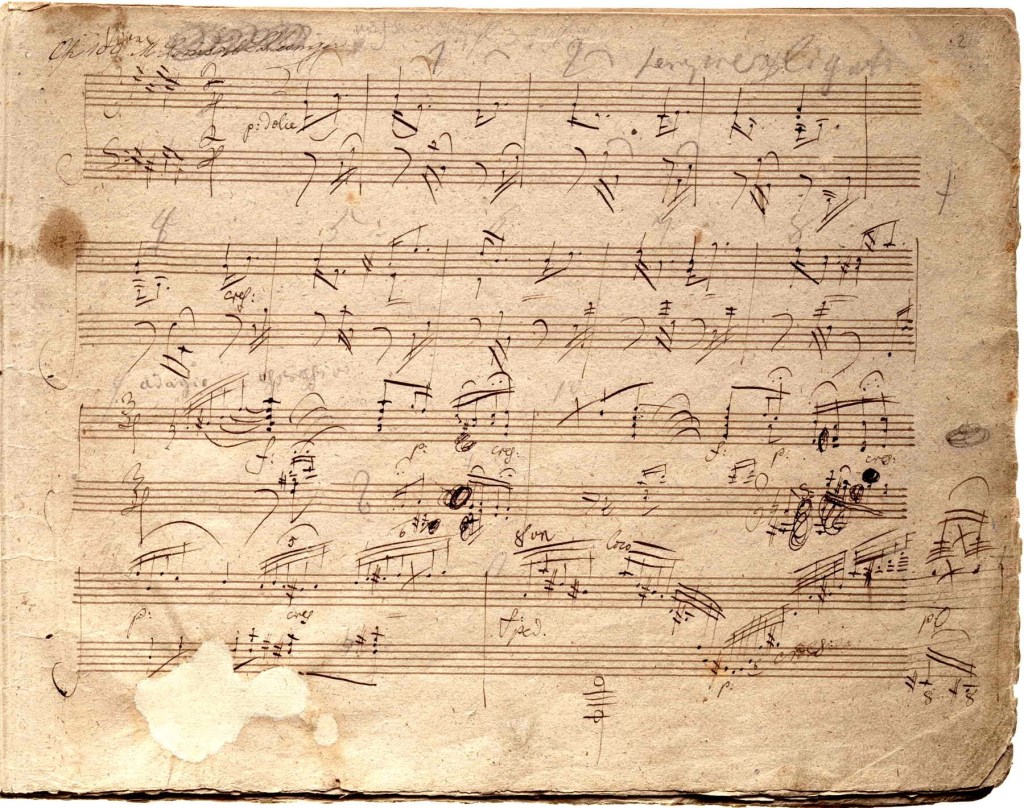
The work is in three movements ( above are some pages from the original manuscript housed in Bonn ) : The Moderato first movement follows a typical sonata form with an expressive and cantabile opening theme. The Allegro second movement begins with a terse but humorous scherzo, which is probably based on two folk songs, and is followed by a rather technically treacherous Trio . The last movement comprises multiple contrasting sections: a slow introductory recitativo , an arisoso dolente, a fugue , a return of the arioso, and a second fugue in inversion that builds to a passionate and heroic conclusion.Critics have noted :”Not a single note is superfluous” Hermann Wetzel; “In none of the other 31 piano sonatas does Beethoven cover as much emotional territory: it goes from the absolute depths of despair to utter euphoria … it is unbelievably compact given its emotional richness, and its philosophical opening idea acts as the work’s thesis statement, permeating the work, and reaching its apotheosis in its final moments.Opus 110 is a journey into the infinite”Jonathan Biss The first known recording of the Op. 110 sonata was made on 14 December 1927 and 8 March 1928 by Frederic Lamond and was subsequently recorded on 21 January 1932 by Artur Schnabel in Abbey Road Studios, London, for the first complete recording of the Beethoven piano sonatas and was the first to be recorded in the set. Myra Hess’ recording of the work in 1953 was described as among her “greatest successes in the recording studio” “In a last euphoric effort, its conclusion reaches out beyond homophonic emancipation, throwing off the chains of music itself.” – Alfred Brendel
Sergei Prokofiev 27 April 1891 Sontsovka, Russian Empire. 5 March 1953 Moscow, Soviet Union
Piano Sonata No. 3 in A minor, Op. 28 (1917) by Sergei Prokofiev was composed using sketches dating from 1907. Prokofiev gave the première of this in Saint Petersburg on 15 April 1918, during a week-long festival of his music sponsored by the Conservatory. Early in his creative life, Prokofiev developed a highly individual way of writing for the piano. Though the differences between the piano textures of his early and late works are palpable, the main qualities of his piano writing are recognizable throughout.Prokofiev composed this piece in 1917, the same year as his fourth sonata . Both of these sonatas bear the subtitle “From the Old Notebooks”. This sonata derives from works that he composed as a teenager. In a letter to Miaskovsky on 26 June 1907, Prokofiev wrote about Piano Sonata no. 3: “It will remain…in one movement: pretty, interesting, and practical”. This sonata reveals most of the traditional sections in a sonata-form, within which Prokofiev employs his own blend of nineteenth- century Russian and twentieth-century characteristics.
This third sonata of his nine sonatas was a clear departure from his previous humorous style with his second sonata from 1912. After the energetic and virtuoso third sonata, his fourth sonata and pieces that followed it were a clear departure from the style of his third sonata. He would compose extremely lyrical and introverted pieces after this.
Allegro tempestoso – Moderato – Allegro tempestoso – Moderato – Più lento – Più animato – Allegro I – Poco più mosso
The sonata is the shortest of his piano sonatas, being in a single movement in sonata form and lasting approximately 7–8 minutes, but it is one of the most technically demanding pieces Prokofiev ever wrote for the piano.
Achille Claude Debussy 22 August 1862 – 25 March He is sometimes seen as the first Impressionist composer, although he vigorously rejected the term. He was among the most influential composers of the late 19th and early 20th centuries. Debussy died of colon cancer on 25 March 1918 at his home, aged 55. The First World War was still raging and Paris was under German aerial and artillery bombardment. The military situation did not permit the honour of a public funeral with ceremonious graveside orations. The funeral procession made its way through deserted streets to a temporary grave at Père- Lachaise Cemetery as the German guns bombarded the city. Debussy’s body was reinterred the following year in the small Passy Cemetery sequestered behind the Trocadéro, fulfilling his wish to rest “among the trees and the birds”; his wife and daughter are buried with him.
The Petite Suite, L.( Lesure) 65, is a suite for piano four hands by Claude Debussy . It has been transcribed many times, most notably in an orchestral version by Debussy’s colleague Henri Büsser.
The suite, which was composed from 1886 to 1889, was first performed on 2 February 1889 by Debussy and pianist-publisher Jacques Durand at a salon in Paris. It may have been written due to a request (possibly from Durand) for a piece that would be accessible to skilled amateurs, as its simplicity is in stark contrast with the modernist works that Debussy was writing at the time.
The work, which lasts about 13 minutes ,has four movements :
En bateau (Sailing): Andantino
Cortège (Retinue): Moderato
Menuet: Moderato
Ballet: Allegro giusto
The first two movements are inspired by poems from the volume ‘Fêtes galantes’ by Paul Verlaine(1844–1896).
Franz Peter Schubert 31 January 1797 Vienna. 19 November 1828 (aged 31)Vienna
The Fantasia in F minor by Franz Schubert , D.940 (op. posth. 103), for piano four hands , is one of Schubert’s most important works for more than one pianist and one of his most important piano works altogether. He composed it in 1828, the last year of his life. A Dedicated to his former pupil Caroline Esterházy It has been described as “among not only his greatest but his most original” compositions for piano duet. Schubert began writing the Fantasia in January 1828 in Vienna and was completed in March of that year, and first performed in May. Schubert’s friend Eduard von Bauernfeld recorded in his diary on May 9 that a memorable duet was played, by Schubert and Franz Lachner The work was dedicated to Caroline Esterházy, with whom Schubert was in (unrequited) love.
Caroline Esterházy
Schubert died in November 1828 and after his death, his friends and family undertook to have a number of his works published. This work is one of those pieces; it was published by Anton Diabelli in March 1829. The original manuscript resides at the Austrian National Library
Facsimile of the Fantasy in F minor
The Fantasia is divided into four movements, which are interconnected and played without pause. A typical performance lasts about 20 minutes.
Allegro molto moderato
Largo
Scherzo. Allegro vivace
Finale. Allegro molto moderato
The basic idea of a fantasia with four connected movements also appears in Schubert’s Wanderer Fantasy, and represents a stylistic bridge between the traditional sonata form and the essentially free-form tone poem. It was the forerunner of the leit motif where themes become characters in a developing drama creating a new less formal art form that was to open the way for Liszt’s father in law Richard Wagner with his ‘Ring’ cycle of operas. The basic structure of the two fantasies is essentially the same: allegro, slow movement, scherzo, allegro with fugue. The form of this work, with its relatively tight structure (more so than the fantasias of Beethoven or Mozart ), was influential on the work of Franz Liszt , who arranged the Wanderer Fantasy as a piano concerto, among other transcriptions he made of Schubert’s music.
Edvard Grieg in 1888. 15 June 1843 Bergen , Norway. 4 September 1907 Bergen, Norway
Peer Gynt, op 23, is the incidental music to Henrik Ibsen’s 1867 play Peer Gynt, written by Grieg in 1875. It premiered along with the play on 24 February 1876 in Christiania (now Oslo).Over a decade after composing the full incidental music for Peer Gynt, Grieg extracted eight movements to make two four-movement suites. The Peer Gynt suites are among his best-known works, although they began as incidental compositions. Suite No. 1, Op. 46 was published in 1888, and Suite No. 2, Op. 55 was published in 1893.
Edvard Grieg was one of the definitive leaders of Scandinavian music. Although he composed many short piano pieces and chamber works, the work Grieg did for this play by Ibsen stood out. Originally composing 90 minutes of orchestral music for the play, he later went back and extracted certain sections for the suites. Peer Gynt’s travels around the world and distant lands are represented by the instruments Grieg chooses to use.
When Ibsen asked Grieg to write music for the play in 1874, he reluctantly agreed. However, it was much more difficult for Grieg than he imagined, as he wrote to a friend:
“Peer Gynt” progresses slowly, and there is no possibility of having it finished by autumn. It is a terribly unmanageable subject ” Edvard Grieg (August 1874)
Letter from Henrik Ibsen to Grieg, January 23, 1874.
Even though the premiere was a “triumphant success”, it prompted Grieg to complain bitterly that the Swedish management of the theatre had given him specifications as to the duration of each number and its order:
I was thus compelled to do patchwork… In no case had I opportunity to write as I wanted… Hence the brevity of the pieces.
For many years, the suites were the only parts of the music that were available, as the original score was not published until 1908, one year after Grieg’s death, by Jonab Halvorsen
Grieg was simultaneously nationalistic and cosmopolitan in his approach to composition and that was due to his extensive travelling around Europe throughout his lifetime (1843-1907). Grieg believed that his music represented the beauty and rural truths of the Norwegian landscape, but at the same time still represented Europe as an incredibly inclusive, cultural hub for the arts. Grieg was a true musical painter and his roots were so firmly tied within Norwegian folk music that the evocations of nature that can be heard in certain compositions is overwhelming. The first suite from Henrik Ibsen’s drama Peer Gynt, was first and foremost written as incidental music, and the order that they movements appear within the suite differ from that as they appear within the drama.
Henrik Ibsen with Edvard Grieg
Grieg and Ibsen first met in Italy in 1866 and after Grieg was commissioned to do Peer Gynt, it premiered in Oslo in February 1876, with the orchestra being conducted by Grieg. Therefore, Ibsen asked Grieg to write the incidental music for his drama, Grieg was very keen, but soon the doubt as to whether he could actually complete this tricky task set in. The show is packed full of intense drama, comedy and tragedy, and with all of these themes buzzing around, Grieg found it notoriously difficult to compose on the short time scale that Ibsen had set and because of this Grieg lost some enthusiasm due to the high level of complexity.
Grieg commented in a letter to a friend in 1874 that, “Peer Gynt progresses slowly and there is no possibility of having it finished by autumn. It is a terribly unmanageable subject.” Within the whole play, Grieg wrote 33 separate pieces of incidental music, however the two famous suites were hand-picked by Grieg himself, and show off the highlights of the show. The outline of the story is fairly simple – Peer Gynt is the protagonist of the story and the drama is set around his travels, dreams and crimes. Thus, each act is accompanied but incidental music which compliments the theme.
At first, all of the incidental music was published as a piano duet, and after Grieg’s death in 1907, the suites were orchestrated for a full orchestra, and subsequently published. The suite n. 1 op 46 is the one played today to end the concert
Movement I: Morning Mood
The first movement within the suite is entitled Morning Mood, and it is one of Grieg’s most well-known compositions.Even without its title, this piece paints a strong sound of nature and the natural landscape, and you can really hear Grieg’s roots within the rural land. This piece captures the beginning of the day in the mountains and forests of Norway and everything is peaceful and positive within the drama and Peer Gynt’s dreams.
Movement II: Aase’s Death
The second movement within this suite is entitled Aaes’s Death and it is a very big shift in tone from the previous movement. As shown in the title, this movement is about the death of Aase, who is Peer Gynt’s mother. The scene behind this piece is awfully tragic – Aase is dying alone on one of the mountains in the Norwegian wilderness and nobody is there to help her. This movement is haunting and dark, which emphasises Grieg’s more emotional hand and masterful grip on powerful music.
Movement III: Anitra’s Dance
The third movement is depicting a seductive dance which emphasises the grace and beauty of Anitra, who is a daughter of a chieftain, and Peer Gynt is infatuated with her. This movement acts as the fun and playful scherzo of the suite. Its in 3/4 time and has a waltz feel to it.
Movement IV: In the Hall of the Mountain King
The final movement of the suite is the ever-loved In the Hall of the Mountain King, which is another of Grieg’s instantly recognisable works. This movement depicts an unusual dance of gnomes, that in the story are actually chasing Peer Gynt, which is why when the recognisable melody is played repeatedly, it gets more and more aggressive. The melody is passed around the whole orchestra and there is barely a moment where not one instrument is playing this theme. Each time it comes back it gets more savage, which is representing the gnomes chasing Peer Gynt around the mountains.
Programme notes compiled by Christopher Axworthy co artistic director and trustee of the Keyboard Trust
I have heard this piano duo now over the past five years and from their first streamed performance during the pandemic in 2020 they have grown in stature and experience and play truly as one. Two players that listen to each other and above all find the musical line and the architectural shape of what they are creating together. I have heard them play Stravinsky on many occasions and their dynamic drive and characterisation of The Rite of Spring and Petrushka is remarkable not only for their logistical mastery together but above all because these works were conceived not as virtuoso show pieces but as dance. Petrushka we are used to hearing the solo piano suite played with transcendental virtuosity ( the piano transcription was written for Artur Rubinstein with that very idea in mind!). Menahem Pressler on hearing a top prize winning pianist play it at his London debut, astonishing as his octaves were , exclaimed ‘ But I could never dance to that !’
Bravi and Scapicchi made everything they played speak as the extraordinarily complex score was transformed into a tone poem with a kaleidoscope of colour and chameleonic character.
The encore I had not heard them play before, written by Fazil Say for another piano duo The Jussen brothers. Similar to his piano work ‘Black Earth’, that is quite often played these days, it relies on atmospheric effects with strange etherial sounds created by dampening the strings with the hand inside the piano.They are works that are usually played without the score simply because logistics cannot cope with so much movement on and around the keys and turning pages as well might be too much to ask. Such was the mastery of our duo today that even the page turn was incorporated into a performance that took the audience by surprise! Demanding another encore our formidable duo offered ‘La Canzonetta’,a simple one page jewel to commemorate the 100 anniversary of Luciano Berio
Respighi too is a new work to their repertoire and each of the four episodes of the Fountains of Rome were played with an outpouring of radiance and languid flowing beauty. Streams of notes were played with a dynamic drive and kaleidoscope of colour and no matter how many notes the sense of line and architectural shape was always beautifully outlined with clarity and sumptuous beauty. What a beautifully suggestive ending they brought to Villa Medici at sunset with its whispered vibrancy that I know so well.
Fazil Say requires many special effects by dampening the strings to give a dull rhythmic sound like that of the Oud The Oud is similar to other types of lute, and to Western lutes which developed out of the Medieval Islamic oud.Similar instruments have been used in the Middle East , some predating Islam, such as the barbatfrom Persia. Different versions of the oud are used in Arabia ,Turkey, and other Middle Eastern and Balkan regions The oud, as a fundamental difference with the western lute, has no frets and a smaller neck. It is the direct successor of the Persian barber lute. Screenshot Fazil Say born 14 January 1970 (age 55) Ankara, Turkey Composer and pianist who attracted international attention with the piano piece Black Earth, Op. 8 (1997), in which he employs techniques made popular by John Cage’s works for prepared piano.In April 2012, Say came under investigation by the Istanbul Prosecutor’s Office over statements made on Twitter, after declaring himself an atheist and retweeting a famous poem of 11th century muslim polymath Omar Khayyam which criticises twisted conception of paradise of some fundamentalist schools and movements .Say then announced that he was considering leaving Turkey to live in Japan because of the rise of conservative Islam and growing intolerance in his home country. On 1 June 2012, an Istanbul court indicted Say with the crime of “publicly insulting religious values that are adopted by a part of the nation”, a crime that carries a penalty of up to 18 months in prison. Say told the Istanbul court he did not seek to insult anybody, but was merely expressing his uneasiness. On appeal, Turkey’s Supreme Court of Appeals reversed the conviction on 26 October 2015, ruling that Say’s Twitter posts fell within the bounds of freedom of thought and freedom of expression. Ottorino Respighi 9 July 1879. Bologna, Italy. 18 April 1936 (aged 56). Rome, Italy
The symphonic poems ‘Fountains of Rome’ (performed for the first time 100 years ago) by the Italian composer Ottorino Respighi, whisk us to the Eternal City for a unique journey between the flowing water of its famous fountains and some of its most legendary sites. Thanks to the Suites n°1 and n°2 of’ Ancient Airs and Dances for Lute’ we can travel back in time to discover once again Italian and French music of the 16th and 17th centuries reinterpreted by Respighi.
Fountains of Rome is a tone poem in four movements completed in 1916 by the Italian composer Ottorino Respighi . It is the first of his three tone poems about Rome, preceding Pines of Rome (1924) and Roman Festivals (1928). Each movement depicts a setting at one of Rome’s fountains at a different time of the day, specifically the Valle Giulia, Triton, Trevi, and Villa Medici. The premiere was held at the Teatro Augusteo on 11 March 1917, with Antonio Guarnierii conducting the Augusteo Orchestra. Respighi was disheartened at its initial mild reception and put away the score, until the piece was re-evaluated by the public following a February 1918 performance by conductor Arturo Toscanini which brought the composer international fame] The piece was published by Casa Ricordi in 1918.Fountains of Rome calls for the following large orchestra, including piano, celesta , harps, chimes, and organ ad lib.It was also transcribed for piano four hands by the composer.
“The Fountain of Valle Giulia at Dawn” (La fontana di Valle Giulia all’alba)The first section shows this fountain at daybreak in “a pastoral scene, with sheep passing and disappearing in the fresh and humid mist of a Roman dawn”.“The Triton Fountain in the Morning” (La fontana del Tritone al mattino)In the second section “it is like some joyous appeal at whose sound naiads and Tritons come trooping up, pursuing each other and mingling in a wild dance beneath the falling spray.” Figures of the Bernini fountain are seen nearby. The Tritons blow on conch shells, portrayed by the French horns.“The Trevi Fountain at Noon” (La fontana di Trevi al meriggio)The theme of third section “takes on a triumphal character. Fanfares sound. It is as if Neptune’s chariot, drawn by river-horses and followed by a cortege of sirens and tritons, were passing on the radiant surface of the water, only to vanish while muted chimes sound in the distance.”“The Villa Medici Fountain at Sunset” (La fontana di Villa Medici al tramonto)The final section portrays a much more melancholic atmosphere. “It is sad in intent, delicate, restful. Bells toll for the Angelus. Birds twitter and there is a rustling and fluttering of leaves. Then follows the silence of night.”photo credit Dinara Klinton https://christopheraxworthymusiccommentary.com/2024/03/20/christopher-axworthy-dip-ram-aram/
John Wilson, Henry Wood Chair of Conducting, leads the Academy Symphony Orchestra in a performance of Rachmaninov’s exuberant First Piano Concerto featuring the Academy’s first Piano Laureate, Emanuil Ivanov.
The evening concludes with Stravinsky’s The Rite of Spring, which shook the musical world at its 1913 premiere, and went on to become one of the most influential works in music history.
Emanuil Ivanov with John Wilson, what a team when combined with the mastery and youthful passion of the Academy Symphony Orchestra.
Rach 1 has never sounded like this since Byron Janis became arthritic.I am of course talking of live performance because that of Rachmaninov and Richter have always been historic recordings that are cherished by all . As Emanuil rightly says this must be one of the greatest cadenzas together with Prokofiev 2 where the piano is given a chance to almost outdo the orchestra. Emanuil came close but he did not count of John Wilson with his sumptuous Stokowskian string playing of subtle phrasing and colouring or the intricate weaving of the orchestra around the piano or the piano wrapped up around the orchestra. A true chamber performance where the piano and orchestra were united in music making of refined musicianship and a style where balance not force was the name of the game. A piano that could just add gleaming comments to the ravishing string playing in a conversation of intimacy that is all too rare these days.
The Rite of Spring was a wondrous tone poem of desolation and searing intensity. To see these young players lead by Emil Hartikainen with the passionate commitment that he transmitted to his colleagues as did Daniel Schultz leading the cello’s . Guzhi Long was the remarkable timpanist who could strike fear and menace amongst his colleagues. As the barbaric fearless playing of the wind and brass blared out with youthful glee the pungent dissonant sounds that probably so upset Monteux’s audience over a century ago. John Wilson conducting with a mastery where the sense of balance and line were so clear as to make this performance almost of chamber music proportions, such was the intensity but also the generosity of the players in a give and take of searing brutality. The Dukes Hall may have seemed too small for ‘The Rite’ but that was without taking into account the musicianship and real sense of balance of the Golden Era when beauty and not brutality reigned with the wind and brass listening to their colleagues in the string section and making wondrous meaningful music together of united architectural sense.
An offer of earplugs written on the ticket was certainly not needed with John Wilson who could mould all he touched with a wondrous sense of balance and style. I doubt that this Rite would ever have created the furor it did under Monteux. Richter’s preferred Rachmaninov Concerto could never have been played with more Philadelphian sumptuous sounds than these passionate young players . I hear there is a commercial RAM recording of Emanuil’s Rzewski variations described below …..no wonder he has been made the first RAM Piano Laureate.
I am very sorry to hear of the death of Maura Pausini after a long illness . The widow of the renowned pianist Franco Medori of the Neapolitan school of which Maura Pansini was a proud advocate sharing her knowledge and that of her ex husband with her many students at the S. Cecilia Conservatory .
Addio al maestro Maura Pansini, pianista e soprattutto Maestra dal cuore infinito
Maura Pansini, pianista di straordinaria sensibilità e docente amatissima del Conservatorio “Santa Cecilia” di Roma, è volata in cielo dopo una lunga malattia. La sua scomparsa lascia un vuoto profondo e difficilmente colmabile nel mondo della musica e in tutti coloro che hanno avuto la fortuna di conoscerla, di ascoltarla e soprattutto di studiare con lei.
A celebration with Alfredo Conte
Diplomata in pianoforte al Conservatorio “E.R. Duni” di Matera e in Didattica della Musica al Conservatorio “Santa Cecilia” di Roma, entrambe le volte con il massimo dei voti, Maura Pansini aveva mostrato sin da giovanissima un talento limpido e disciplinato. Vincitrice di numerosi concorsi nazionali e internazionali, si era perfezionata sotto la guida del Maestro Franco Medori — suo compagno di vita e di arte — con il quale condivideva la profonda appartenenza alla grande scuola pianistica napoletana.
with her student Livia Gatto
La sua carriera l’ha portata a esibirsi nelle più prestigiose sale italiane e internazionali — dalla Società dei Concerti di Milano all’Accademia Filarmonica di Bologna, da Firenze a Napoli, da Bruxelles a Buenos Aires, a Londra e fino agli Stati Uniti e al Libano — sempre con uno stile interpretativo elegante, rigoroso e insieme intensamente poetico.
with her class at the Conservatory of S. Cecilia
Maura Pansini è stata una delle voci più autentiche della scuola pianistica di Vincenzo Vitale, di cui ha saputo custodire e trasmettere lo spirito: la purezza del suono, la fedeltà al testo e quella rara capacità di unire intelletto e cuore.
with her prize student Alfredo Conte
Ma più di ogni successo concertistico, Maura Pansini amava insegnare. Ai suoi allievi ha dedicato tutto il suo tempo, la sua energia e il suo affetto, fino agli ultimi giorni. Per lei la musica era prima di tutto un atto d’amore, e l’insegnamento un modo per trasmettere quella fiamma che ha acceso in tanti giovani pianisti oggi attivi in Italia e all’estero. Chi l’ha conosciuta la ricorda come una Maestra attenta, generosa e severa, capace di ascoltare e di guidare, con dolcezza e fermezza, con passione e competenza. I suoi allievi erano la sua vita e a loro si è dedicata con una passione infinita.
One of her last students on his graduation day Alfredo Conte with his parents
Con la sua scomparsa se ne va una protagonista autentica della scena musicale italiana, ma resta viva la sua eredità artistica e umana, custodita nel ricordo dei suoi allievi e nel suono limpido e sincero del suo pianoforte che ora continuerà a suonare attraverso le mani dei suoi studenti.
Un piccolo omaggio alla cara Maura, quando il 28 novembre 1997 la coinvolsi in uno spettacolare Bolero di Ravel per sei pianoforti (trascrizione di Sergio Cafaro) qui nella foto al Conservatorio di Napoli con (da sinistra) Sergio Fiorentino, Carlo Bruno, Sergio Perticaroli, Giueseppe Scotese (di spalle) e Franco Medori.
Maura Pansini – Pianista. Si è diplomata in pianoforte presso il Conservatorio di Musica “E.R. DUNI “ di Matera e in Didattica della Musica presso il Conservatorio S. Cecilia di Roma, in entrambi conseguendo il massimo dei voti.
Durante il corso di studi è stata sempre prescelta per rappresentare il Conservatorio nelle manifestazioni artistiche più importanti (Rassegna di musica contemporanea dedicata a G.Petrassi; Rassegna nazionale sarda di Oristano, dove ha conseguito il primo premio assoluto come solista, “Tutti a S. Cecilia” presso il Parco della Musica di Roma come pianista solista).
Vincitrice di numerosi concorsi nazionali ed internazionali , ha seguito un corso triennale di perfezionamento a Roma presso la scuola Tomàs Ludovico da Victoria, sotto la guida del M° F.Medori diplomandosi con il massimo dei voti e lode. Ha inoltre seguito corsi tenuti dai maestri V.Vitale, A.Bacchelli, B.Bloch, M.Perahia.
Intensa la sua attività concertistica, spesso ospite di importanti associazioni musicali:
Società dei concerti di Milano, Accademia Filarmonica di Bologna, AGIMus di Firenze, Art’s Academy di Roma, Thalberg di Napoli, Istituzione orchestrale di Bari, Amici della Musica di Lecce, Orchestra Sinfonica della Provincia di Matera etc.
Pur svolgendo attività prevalentemente solistica, ha collaborato in esecuzioni cameristiche e con numerosi pianisti: C.Bruno, S.Fiorentino, F.Medori, S.Perticaroli, G.Scotese E. Valentini.
Ha svolto tourneé in Brasile, Argentina, Spagna, Libano, Belgio, U.s.a, Venezuela.,Danimarca.
Da alcuni anni si occupa delle nuove metodologie per l’insegnamento della musica per l’infanzia.
Su invito del M° M. Campanella, ha partecipato nel 2011 alla maratona Liszt, omaggio che l’ Accademia Nazionale di Santa Cecilia ha promosso per celebrare il bicentenario della nascita del compositore ungherese.
È titolare della cattedra di Pianoforte presso il Conservatorio Santa Cecilia di Roma.
Some very fine musicianly playing of simplicity and intelligence which was reflected in Anastasia’s finely chosen programme that spanned the Romanticism of early Scriabin through the age of enlightenment of Mozart . The innovative pianistic world of Chopin and the baroque discipline of Bach to end with the extraordinary present day sound world of the Chaconne by Gubaidulina.
Scriabin’s early Fantasy Sonata in two movements showed off Anastasia’s refined palette of colour opening with a beautiful tempo of radiance and natural fluidity. As the rays of sunlight shone down on the piano they seemed to ignite the prism of sounds that were in Anastasia’s hands too, caressing the keys with delicacy and sensibility. There was passion and dynamic drive concealed within these sensitive hands as the cauldron reached boiling point . A beautiful sense of balance allowed the melodic line to glow so beautifully surrounded by a golden web of intricate sounds. The ‘Presto’ was played with great technical control and well oiled fingers, as the clouds passed and radiant sumptuous beauty could be heard with the passionate outpourings of the romantic exuberance of youthful Scriabin.
Mozart’s Sonata in F, the one on most piano stands in the living room of many families before the advent of television! It was played with clarity and simplicity as the operatic characters secretly hidden within the notes were revealed with subtlety and refined good taste. Schnabel is often quoted as saying that Mozart is too easy for children but too difficult for adults, because with so few notes Mozart could describe a whole world. With poignant meaning and character Anastasia gave us today a superb example of the ‘classical style’ so often overlooked by young pianists just raring to bite the bit! There was a crystalline beauty that she brought to the ‘Adagio’ where the trills and ornaments were played with a refined mastery and simplicity as she allowed the movement to speak with poignant meaning. The Assai Allegro just shot from her fingers as the movement sprang to operatic life with charm, wit and above all character.
The Chopin study op 10 n. 7, although not the so called ‘Butterfly’ study ( op 25 n. 9) is just the same a continual outpouring of repeated notes and a true feux follets. Whilst Anastasia had studied it well, I felt it was too earthbound and just needed wings to allow it to buzz around the keys with more gossamer lightness.
Her Bach Prelude and Fugue, however, was a true lesson in measure and clarity. Beautiful sounds where the voices were allowed to converse with simplicity as they were given the overall architectural shape of a true musician.
The Chaconne by Gubaidulina seems to be having something of discovery these days. In fact there were three performances last year in concerts I heard in the same week and by coincidence it was between the second and third that the sudden death of the composer was announced from Germany where she had lived in exile. It is a very complex piece full of pungent dissonances with a kaleidoscope of colours and moods . Deep bass notes out of which emerges a spiky marcato fugato before a hypnotic outpouring of repeated arpeggiandi are spread over the keyboard with ever more insistence and dissonance. This remarkable work finishes lying exhausted at the bottom of the keyboard with a whispered gasp of quite extraordinary effect. Anastasia revealed this wondrous world with masterly conviction and clarity but above all a fearless technical assurance that was breathtaking in its audacity.
Anastasia Barabanova, prize winner of numerous international competitions, made her debut as a soloist performing with an orchestra at the age of nine. Since then she has been performing internationally both solo and with various orchestras, such as Moscow State Symphony Orchestra, Lerman Chamber Orchestra, Kostroma Gubern Symphony Orchestra and others.
Her performance venues include Carnegie Hall (New York), St. George’s Church Hanover Square, St. Stephens Church, St. Mary Abbots Church (UK), Rachmaninov Hall and Small Hall of the Moscow Conservatory, Ehrbar Hall (Vienna). During season 24/25 she played recitals in such venues as Bechstein Hall, Burgh House, St Botolph without Aldgate, Holy Sepulchre (UK). Anastasia has performed actively in many festivals in Estonia, Germany, Israel, Russia, Spain and took part in master classes with Stanislav Ioudenitch, Vladimir Ovchinnikov, Oxana Yablonskaya, Leonel Morales Alonso, Dinara Klinton and others. She is a regular participant of concerts held by the Vladimir Spivakov International Charity Foundation. Anastasia was also a fellow of «New Names» Charity Foundation.
She is currently studying at the Royal College of Music, London for a Bachelor of Music degree with professor Ilya Kondratiev, where she is a Milstein Medal Award Holder, supported by the Kenneth and Violet Scott Scholarship. In 2022 Anastasia graduated with an honours diploma from Central Music School (Moscow).
She is a laureate of such competitions as Virtuoso International Music Awards Competition (UK), Gold Prize; American Protege International Concerto Competition, 1st prize; Clara Schumann International Competition, 1st prize; IV Future Stars International Piano Competition, Grand Prix and many others.
Anastasia’s repertoire ranges from Baroque era to Contemporary composers. She is also a very collaborative musician, performing a wide range of piano trios and duos, vocal repertoire with vocalists
Presented in association with Royal College of Music
Martyn Brabbins conductor Misha Kaploukhii piano RCM Philharmonic
Tom Bradbury Treacle (world premiere) Brahms Piano Concerto no 2 in B flat major op 83
Visiting Professor of Conducting Martyn Brabbins returns to direct the RCM Philharmonic in a programme of Orchestral Masterworks, with RCM composer Tom Bradbury offering a sweet treat in the form of Treacle, performed publicly for the first time.
Martyn Brabbins encouraging Tom to divulge the secrets of ‘Treacle’ Tom Bradbury introducing the world première of his work
RCM Concerto Competition Winner Misha Kaploukhii takes centre stage in the stunning Second Piano Concerto by Brahms. This expansive work unfolds with a sumptuous first movement, powerful second, exquisite slow movement – including a beautiful cello solo – and richly inventive finale.
Lisa Dolgouchine’s sumptuous cello solo in the Andante
Misha Kaploukhii on his fourth outing with Brahms 2 tonight as prize winner at the Royal College of Music under the superb baton of Martyn Brabbins who also presented another prize winner Tom Bradbury with his composition ‘Treacle ‘
Misha having played the Brahms at the beginning of the year on Myra Hess’s own Steinway concert grand now housed in Bishopsgate Institute. Performances followed at St James’s Piccadilly and with the YMSO at Cadogan hall that are now crowned by a performance of aristocratic nobility and timeless beauty.
Like Arrau always thinking from the bass upwards that gives such weight and architectural shape to the longest and largest of chamber music concertos with the tiniest of Scherzos added for good measure. A rhythmic precision that is rare in this concerto but did not preclude passionate sumptuous richness of aristocratic nobility. A timeless sense of control that allowed the music to unfold in all is grandeur and at times spellbinding beauty. A wonderful duet between Lisa Dolgouchine’s cello, accompanied by the delicacy and generosity of Misha’s deeply felt musicianship, inbetween dramatic outbursts of remarkable rhythmic precision. The subtle string playing of Philadelphian beauty allowed one of those ‘velvet’ moments where the piano could project on this cushion of sumptuous whispered sounds the single unembellished notes with Mozartian purity and intensity where so few notes can mean so much. The Scherzo started a bit solidly where bar lines suddenly appeared but this was soon discarded for the simple almost improvised beauty that Misha brought even to the treacherous whispered cadenza that Brahms added to this ‘wisp’ of a Scherzo . If the last movement lacked some of the grazioso at the beginning, the orchestra and piano soon found common ground with the overall grandeur and nobility that they brought together with their youthful passion and energy of overwhelming impact and exhilarating effect.
A spontaneous ovation and even flowers were truly deserved for a performance that easily stands comparison with the other great performances of this work that have resounded in the past around these august surroundings.
By God he’s got it right judging from the ovation he got from friends and foes alike in the Amaryllis Fleming Concert Hall where I remember John Lill, Dennis Lee and George Barbour performing it many moons ago under Sir Adrian Boult.