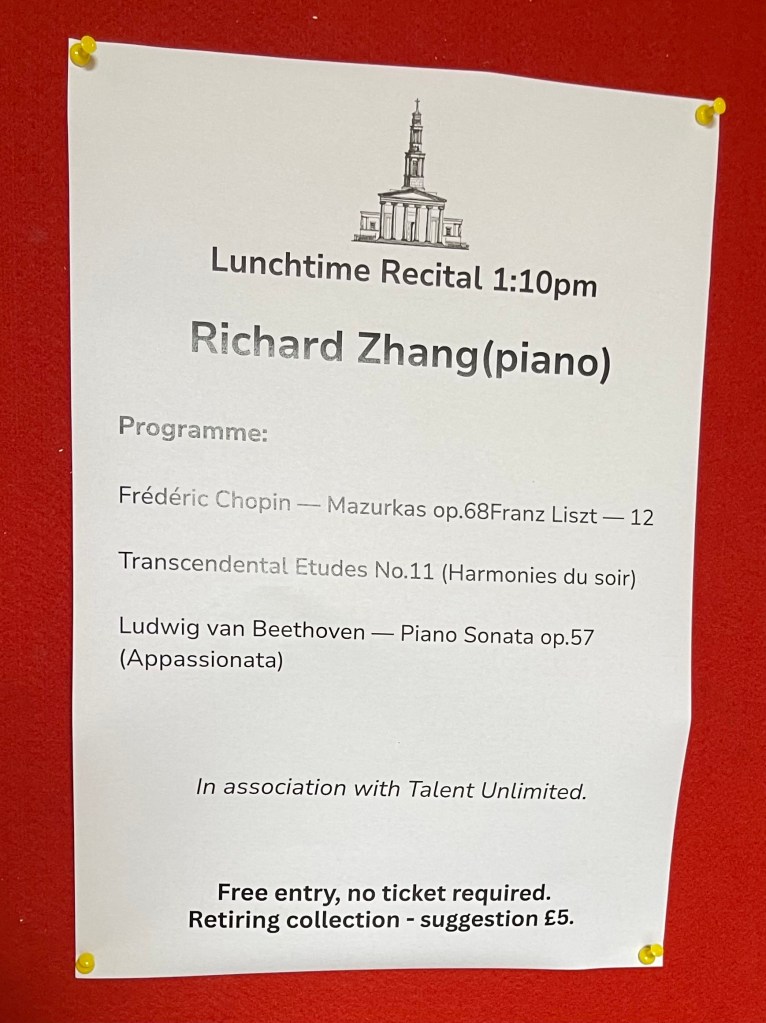
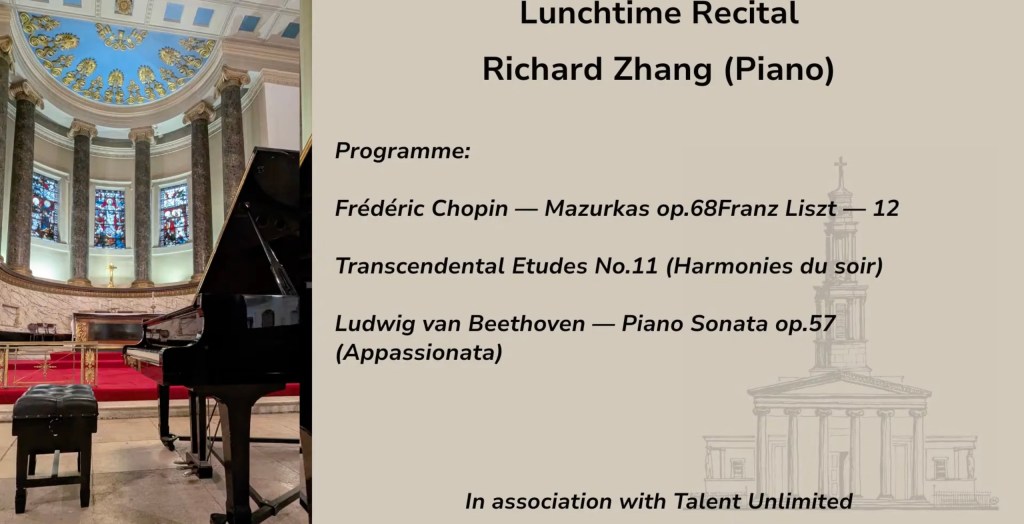
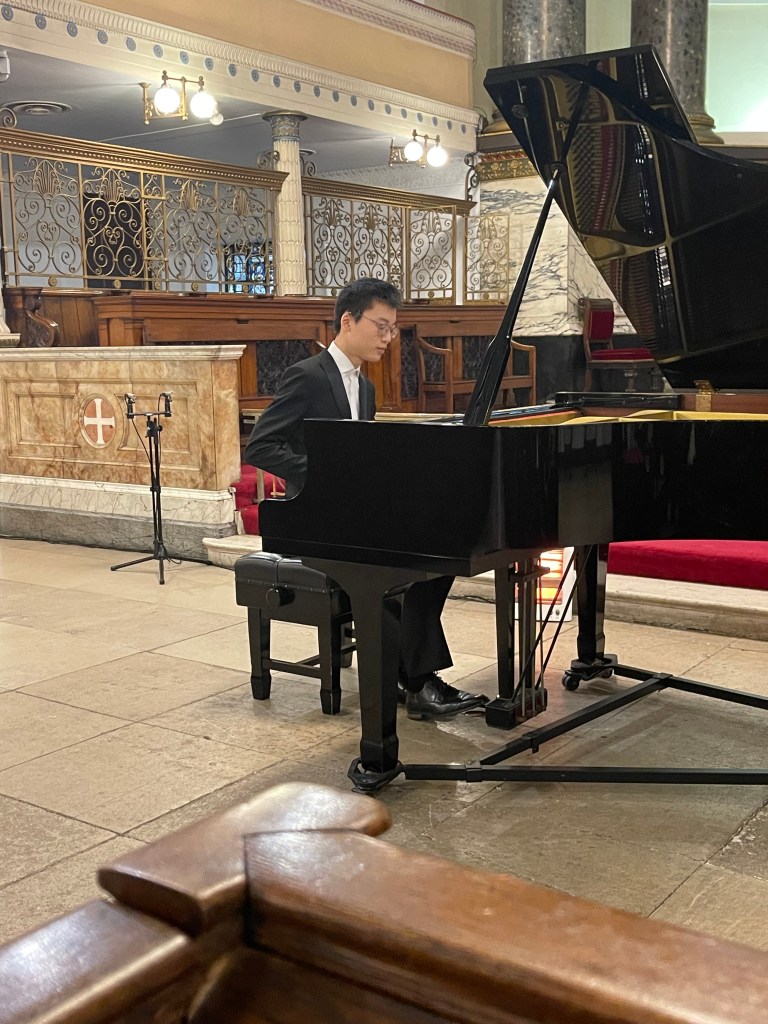
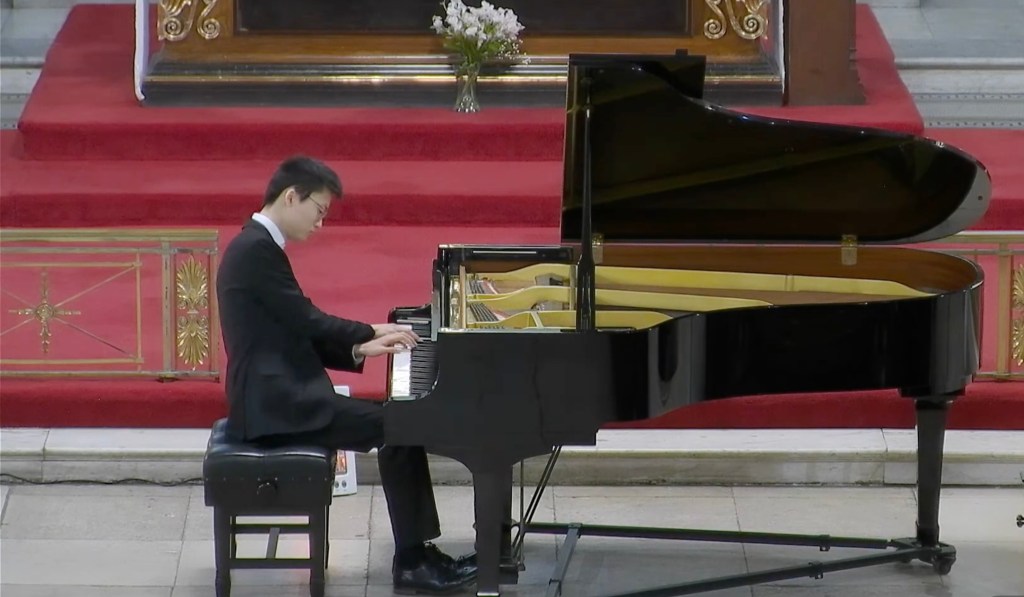
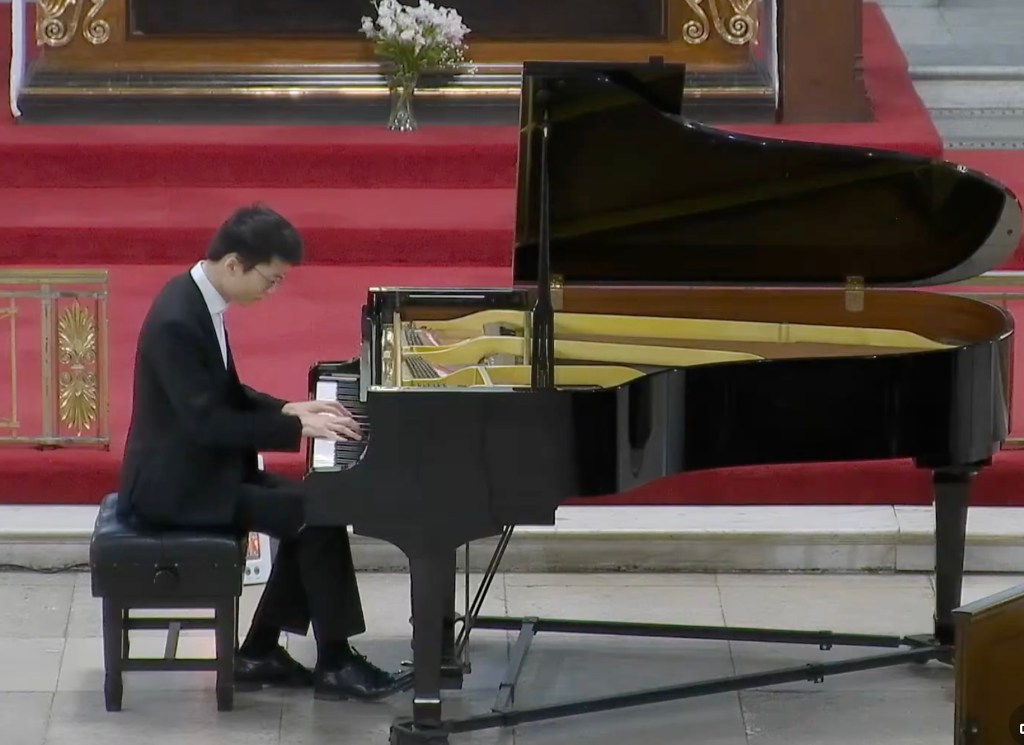
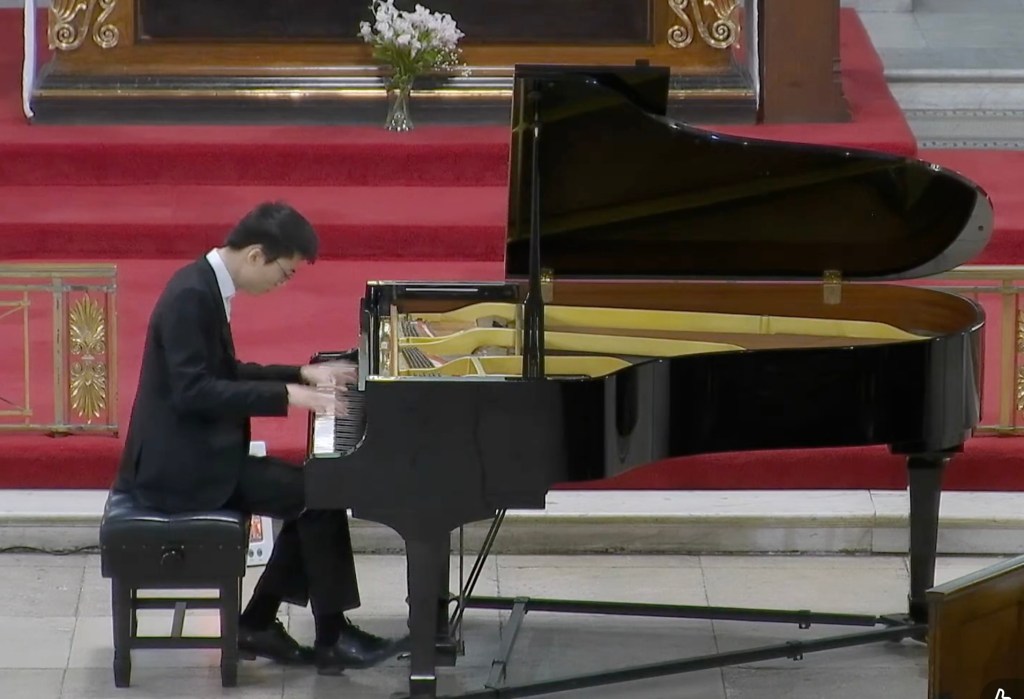
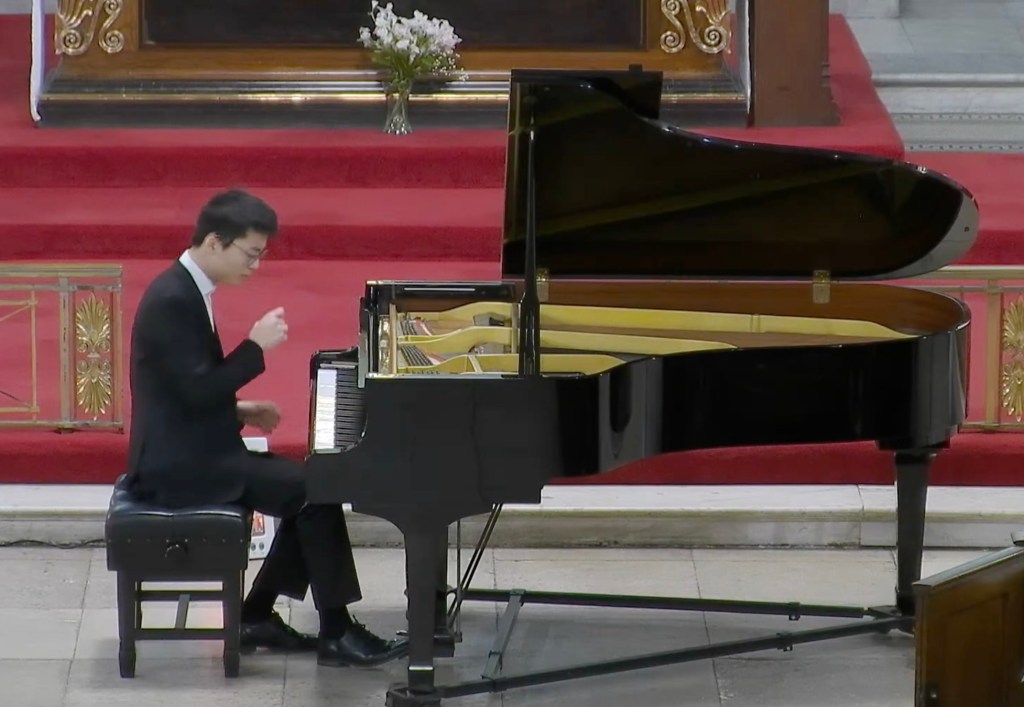
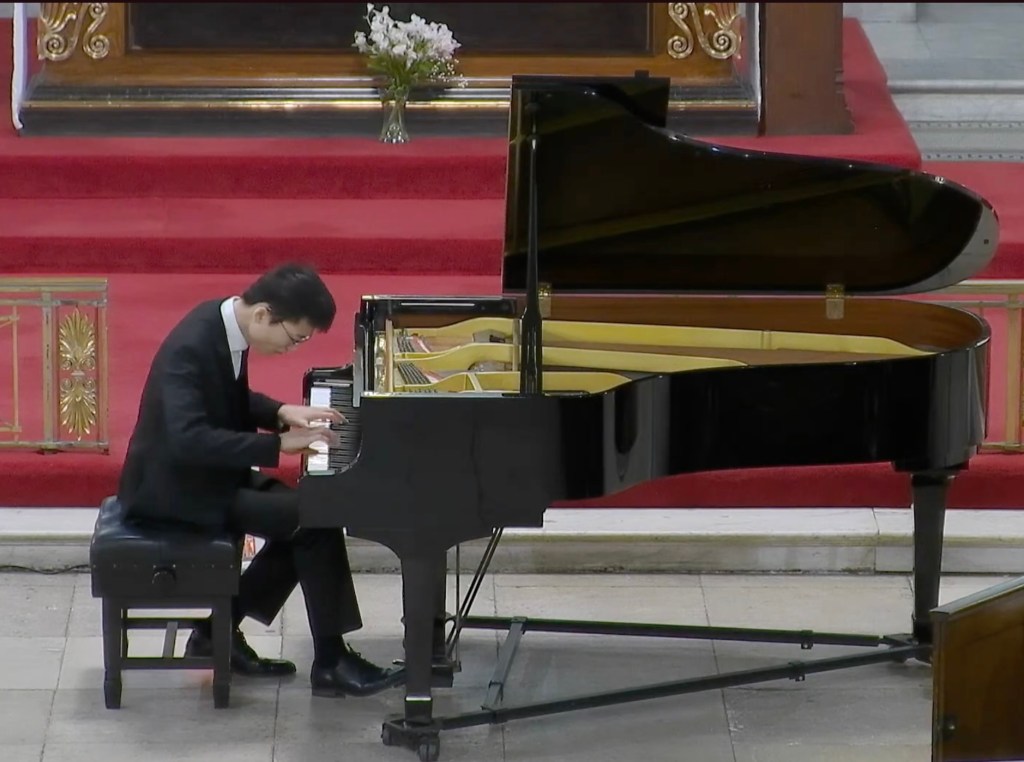
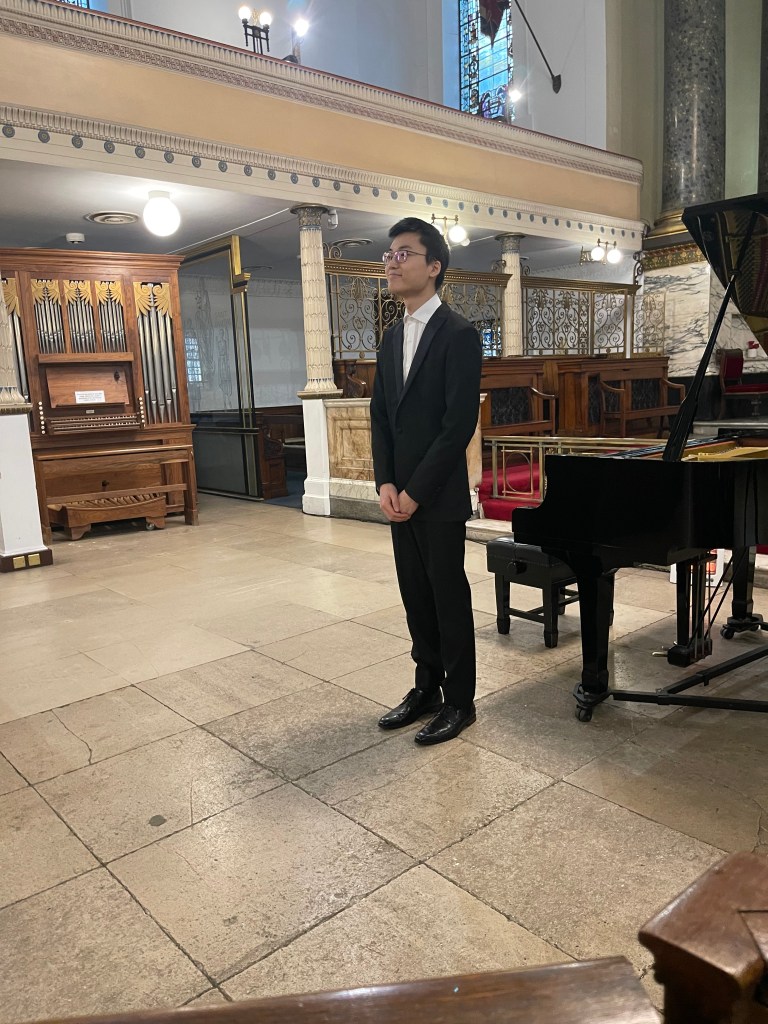
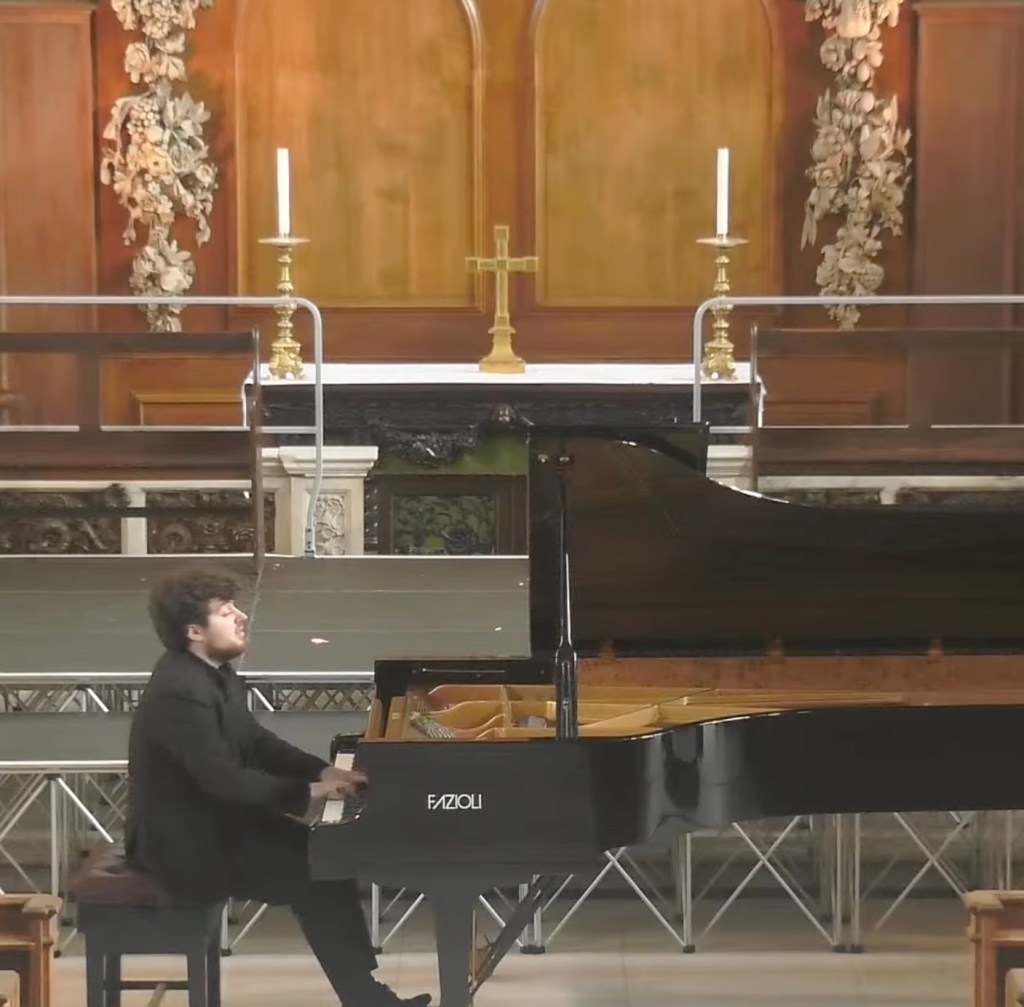
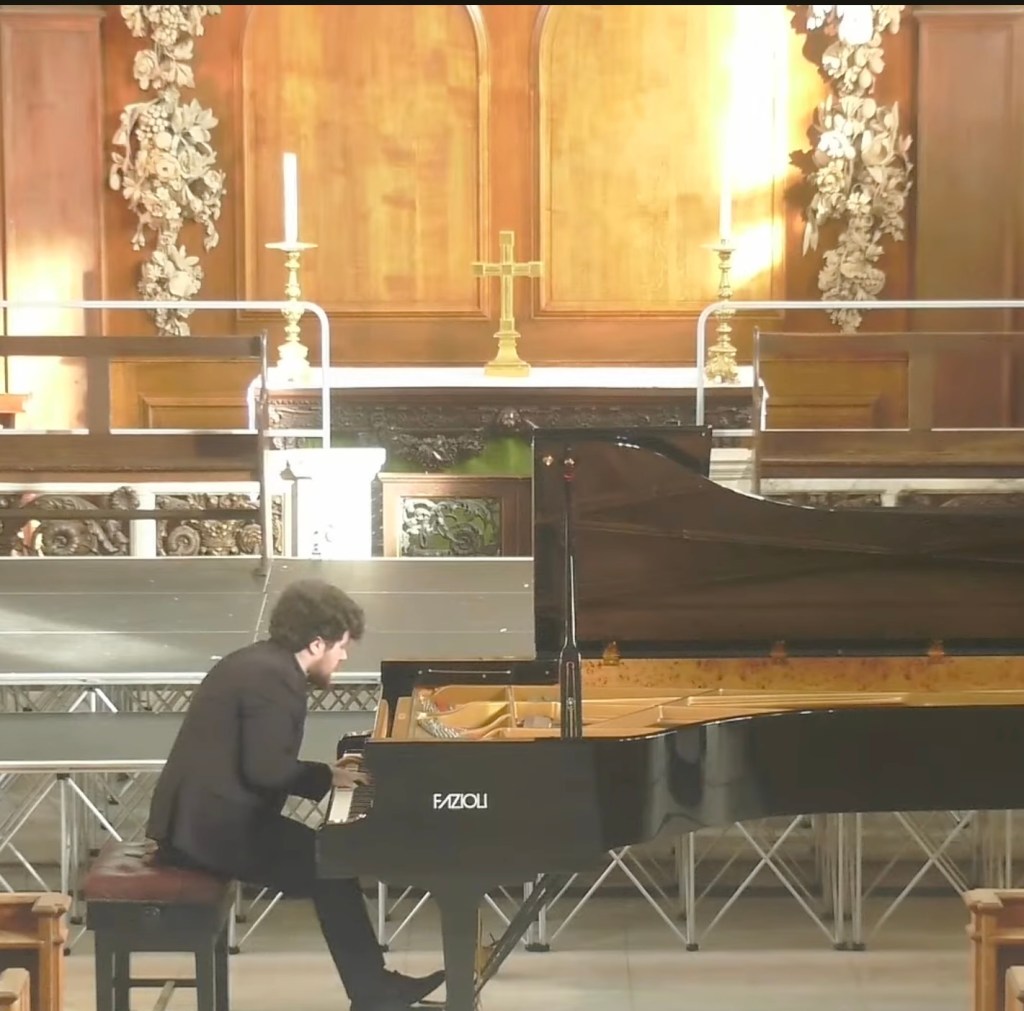
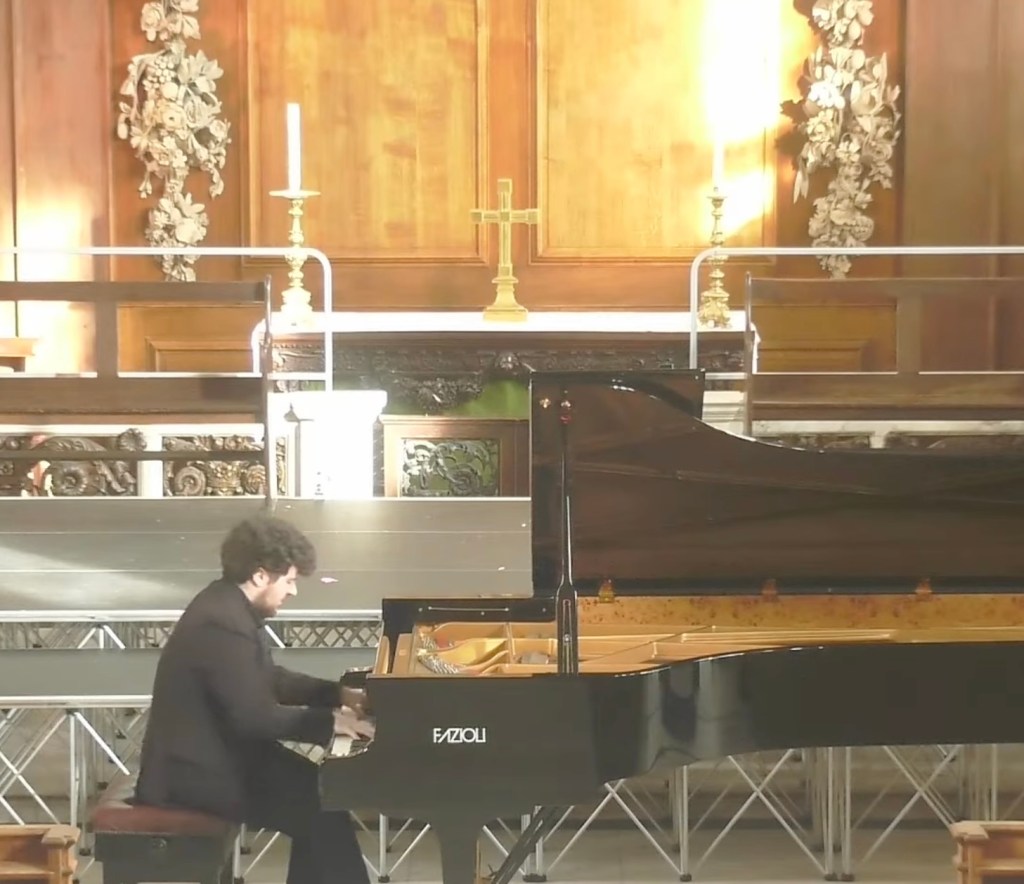
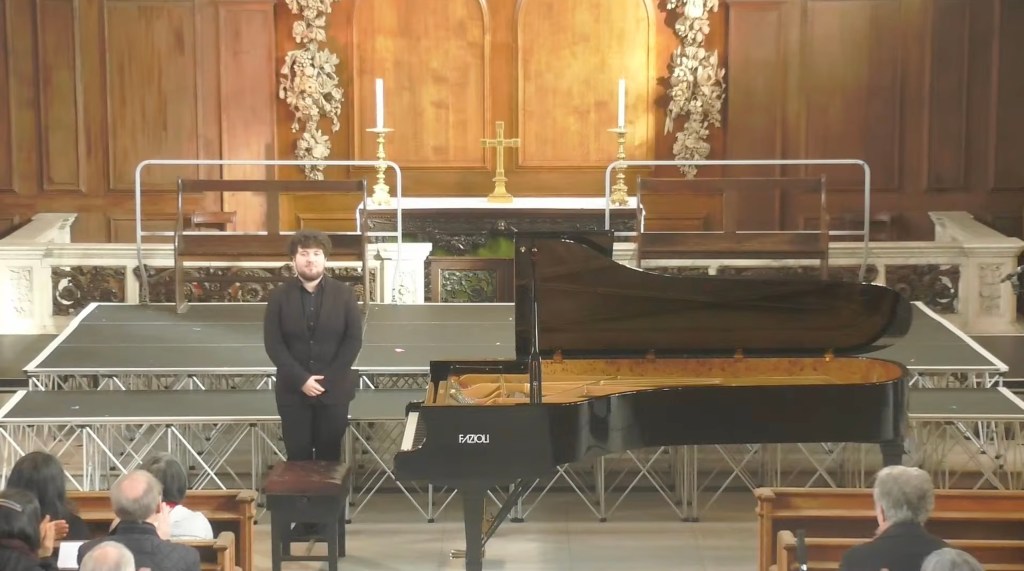
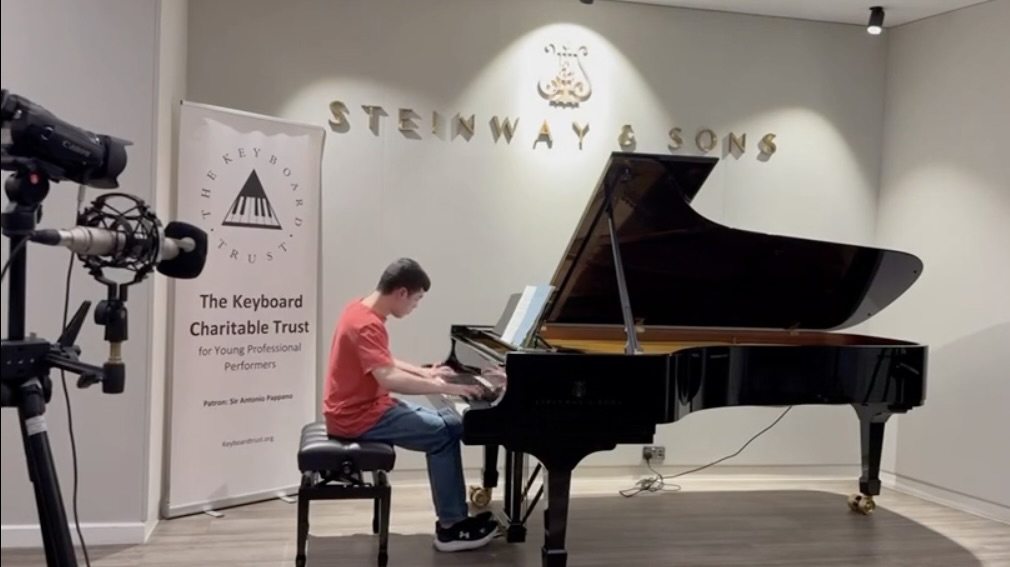
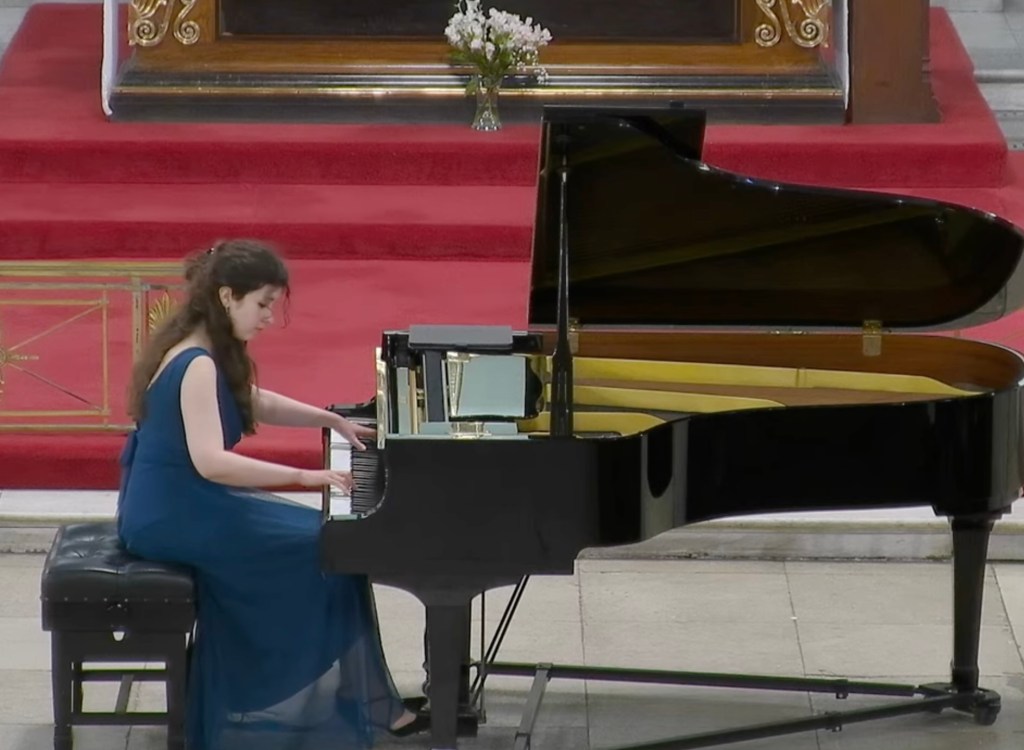
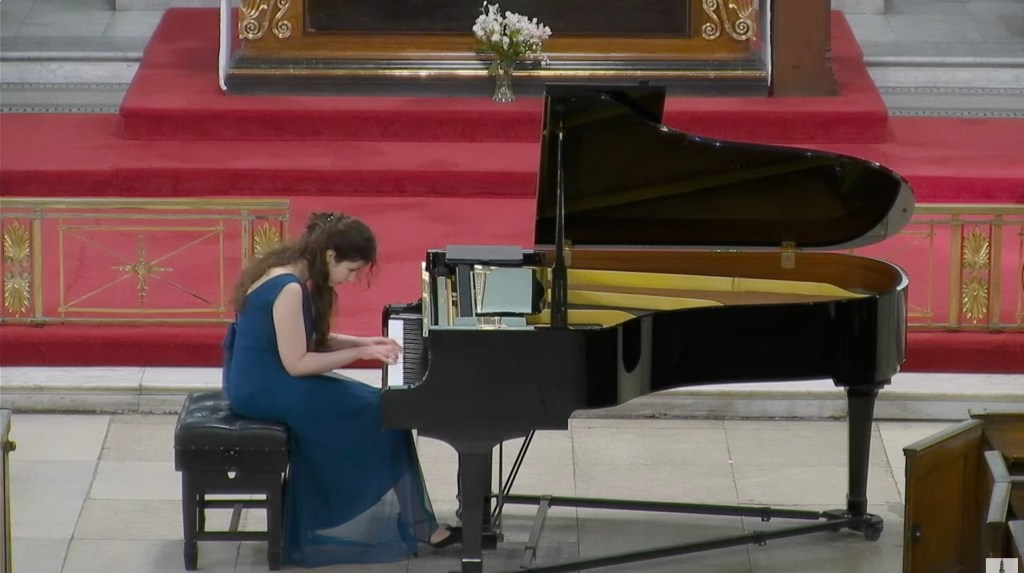
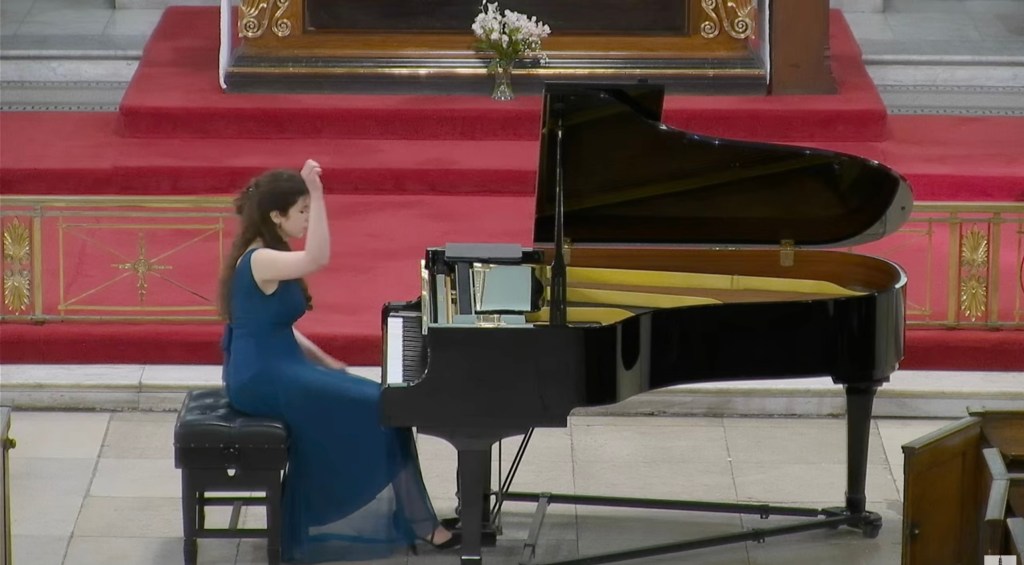
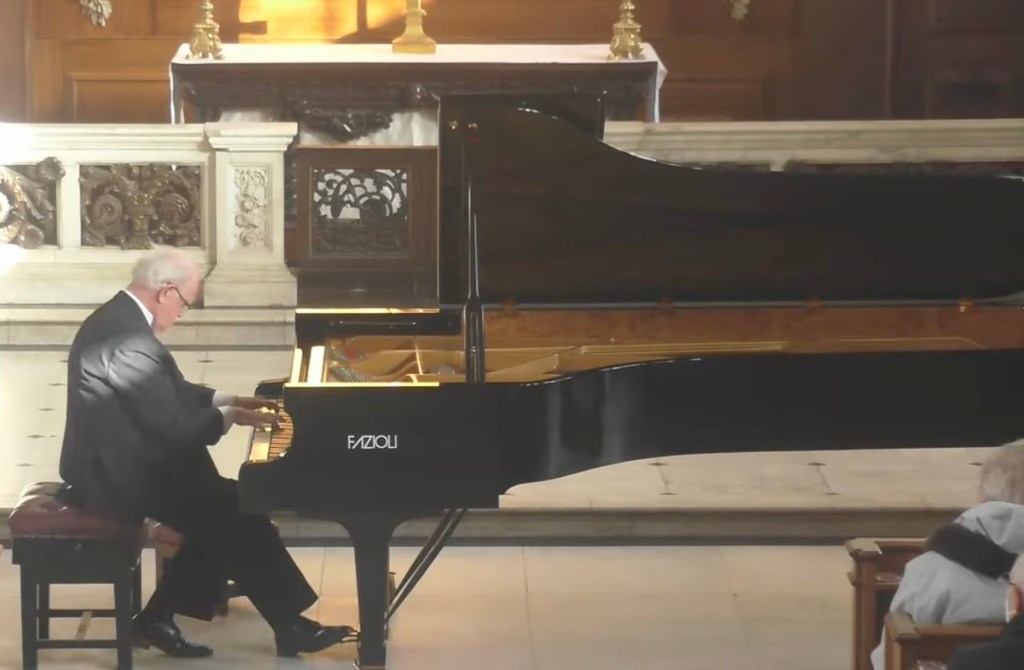
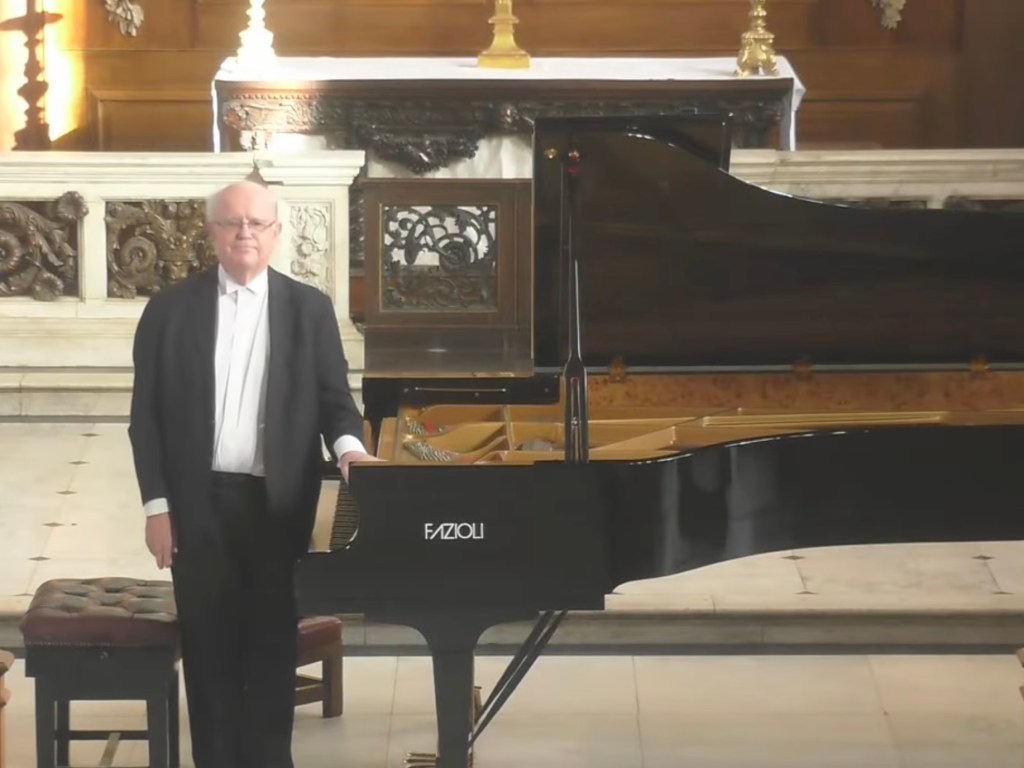
Richard Zhang at St Pancras Euston with playing of rare sensibility and intelligence . Chopin Mazukas played with a glowing beauty and subtle palette of colour where these ‘canons covered in flowers’ immediately revealed Richard’s power to combine intellect and soul. A crystalline clarity and beauty to the first and a delicacy to the second where trills were mere vibrations of glowing beauty with a wide palette of sounds etched out with rare sensibility. The third had a rhythmic drive but still with a luminosity and refined beauty of sound. Even the central episode of bagpipes were merely delicately placed left hand chords. The last Mazurka had a beguiling melodic line played with great freedom and a disarming beauty full of nostalgia and innermost intensity.
Liszt’s ‘Harmonies du soir’ was where Richard could carve out a tone poem of extraordinary power and beauty . From the whispered opening through glowing mellifluous outpourings that gradually built to a searing intensity of emotions. Richard’s mastery and control ignited the piano with sumptuous richness before returning to the whispered secrets of the opening which had now been revealed to us with poetic mastery.
Liszt’s ‘Harmonies du Soir’ the penultimate and one of the most poetic of his twelve transcendental studies. There was a whispered opening as this great tone poem was about to be revealed with poetic vibrancy. A tonal palette of extraordinary sensitivity that drew us in to Richard as he created a glowing radiance with a masterly use of the pedals. The whispered ‘pianississimo’ that Liszt indicates was a wash of sounds on which the delicately placed chords could grow imperceptibly in intensity. Bursting into an ‘appassionato’ outpouring but never with harsh or ungrateful sounds but a sumptuous fullness. Allowing the melodic line to shine with ‘intimo sentimento’ , subtle wisps of chords magically sustaining this ‘recitativo’ which was to lead to a triumphal climax of vibrancy and quite considerable technical mastery. Always with the melodic line glowing with passionate intensity no matter the hurdles that Liszt puts in it’s way in what is a transcendental study covered in velvet. Dying away to a mere whisper as Richard shaped the arpeggios like aeolian harps ascending into the heavenly beauty of serenity after such passionate turbulence. A remarkable recreation of this glistening jewel hidden amongst all the thorns of transcendental pianism that Liszt actually simplified before the final publication!
Beethoven’s ‘Appassionata’ received a remarkable, newly minted, performance where Beethoven’s precise indications were scrupulously interpreted with mastery and sensitivity.
A dynamic rhythmic drive from the first to the last notes where Richard could delve deeply into the score and reveal a sonata that was of a revolutionary genius but has been tainted by tradition for too long .
Richard brought a freshness as he shone light on the score which he brought to life with mastery and the relentless struggle with which this masterpiece was penned. Playing of power and beauty with real Beethovenian energy coming from the bass and driving the music forward without any noticeable fluctuations of tempo. Richard was able to shape the music with a kaleidoscope of colour without allowing the pace to slacken. Silences were menacing too as they became such an important voice especially after the opening menacing trills. A beautifully sung second subject of great nobility as a pianissimo scale played so perfectly that the explosion on its arrival over four bars was quite overwhelming. The opening motif passing from the bass to the top of the piano with a clarity and dynamic drive that was of burning intensity. After the cadenza of notes spread over the entire keyboard, that Richard played as a musician not as a pianist, following Beethoven’s own indication of the struggle he intended. The long held pedal after the exciting coda was judged to absolute perfection leading us so naturally into the opening of the ‘Andante con moto’ as the composer obviously intended.
An ‘Andante’ that was truly ‘con moto’ as the cortège moved forward with the sublime unwinding of streams of glistening notes only to be interrupted by the extraordinarily shocking intrusion of the last movement .
An ‘Allegro’ that was also ‘non troppo’ as the relentless forward movement carried a momentum that was not of speed but of searing inner intensity. The explosion of the coda now marked ‘Presto’ was all the more breathtaking for its audacity and fearless brilliance. I wonder why Richard did not leave the pedal on in the final nine bars as Beethoven indicates, and can only surmise that the excitement and exhilaration at the end of such a performance required a cleaner more crystalline brilliance in this acoustic.
Biographies:
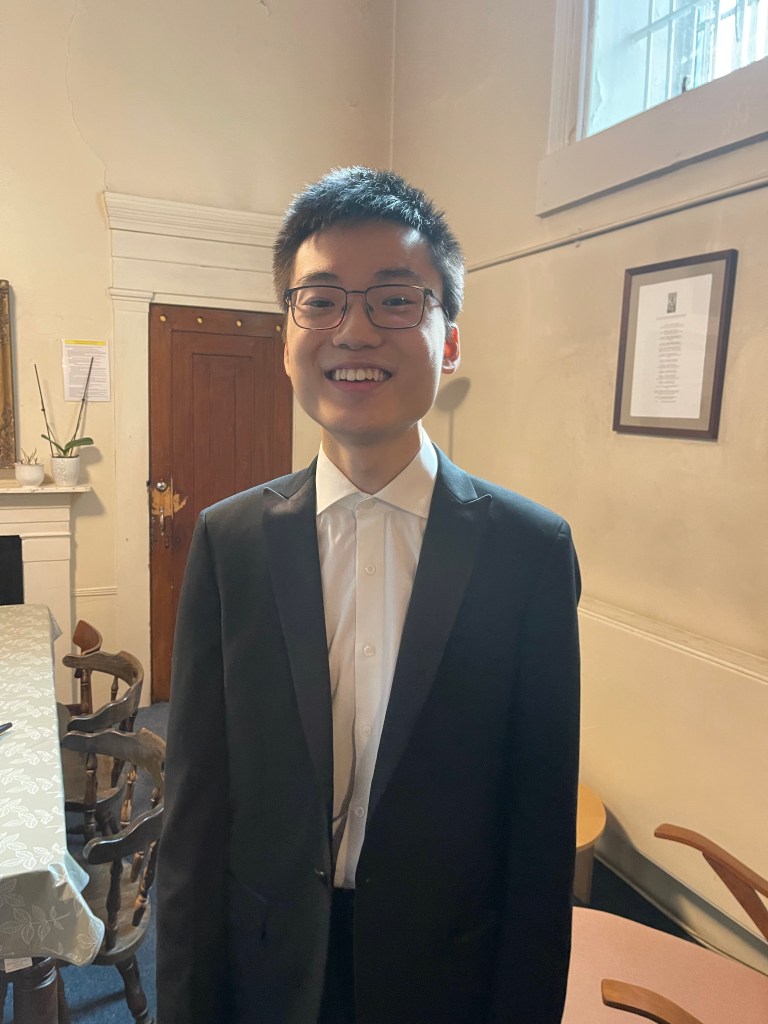
Richard Zhang was born in Jiashan, China in 2005 and showed a great interest in music at a very early age. He began playing the piano when he was six, studying with William Zhou. In October 2015 he met the harpsichord maker Ferguson Hoey at the China Music Exhibition, and tried a harpsichord for the first time. Immediately realising his exceptional talent, Mr. Hoey arranged for him to come to the UK and audition at the Yehudi Menuhin School. Here he continued his piano studies with Marcel Baudet.
Richard has given various solo performances in China and Europe, taking part in a number of concerts in the Menuhin Hall and other venues since joining the school. In December 2017 he was the soloist for a performance of Finzi’s Eclogue with the school’s Junior Orchestra, a mature performance much praised for its meditative qualities. In February 2018 he performed Liszt Transcendental Studies in Amsterdam to considerable acclaim.
His love of chamber music came to the fore in the Menuhin School’s Summer Festival 2018, when he performed Schumann’s Piano Quintet with other pupils. In March 2019 he progressed to the finals of the Aarhus International Piano Competition in Denmark and in June performed with other students at London’s Wigmore Hall. In the Summer Festival he joined string players at the school in a dazzling performance of the Dvorak Piano Quintet. Then in October he partnered Alina Ibragimova in the Violin Sonata by Debussy at Zamira Menuhin Benthall’s 80th Birthday Concert in the Menuhin Hall. In 2021 Richard was awarded Distinction in the Tunbridge Wells International Music Competition.
Richard has taken part in master classes with many distinguished teachers including Cristina Ortiz, Angela Hewitt, Klaus Hellwig and Jacques Rouvier. His musical interests and repertoire are wide-ranging, from early C17th keyboard masters up to contemporary composers. He also composes and has been a contributor to the “250 Piano Pieces for Beethoven” international composition project.
He has been awarded a scholarship to study at the Guildhall School of Music and Drama and in addition to this generous bursary, he has been selected by the Keyboard Trust to receive the 2024 Dr. Weir Legacy Award to help support his further studies.
He will also be joining Talent Unlimited since his study at the Guildhall School of Music and Drama.
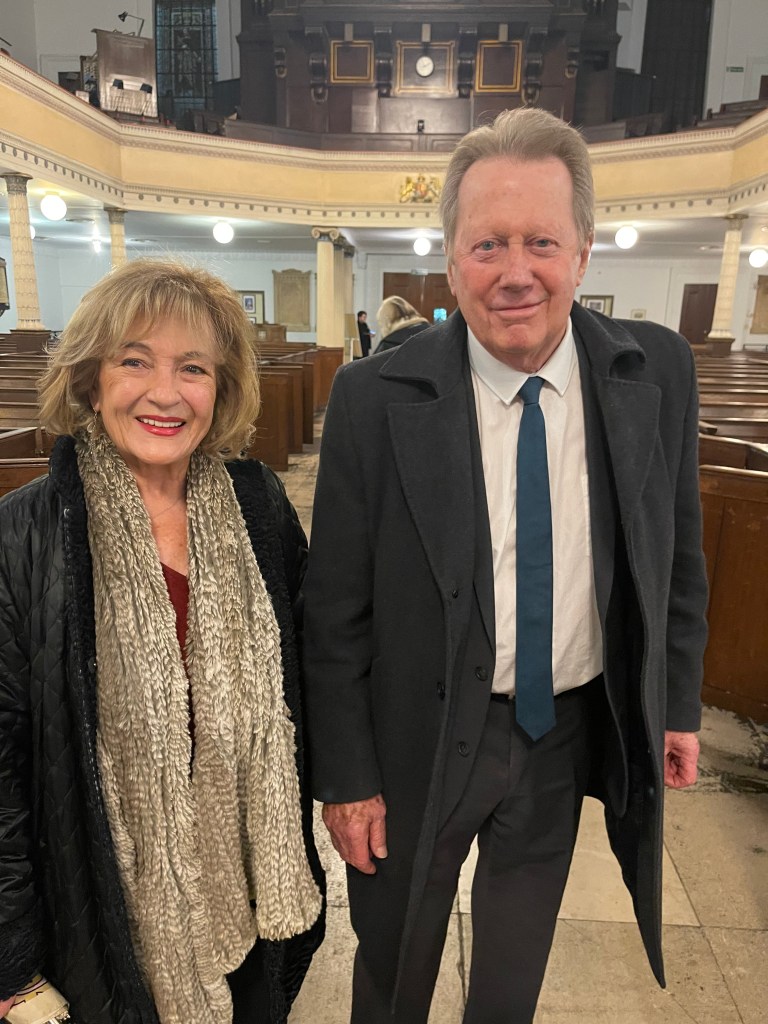
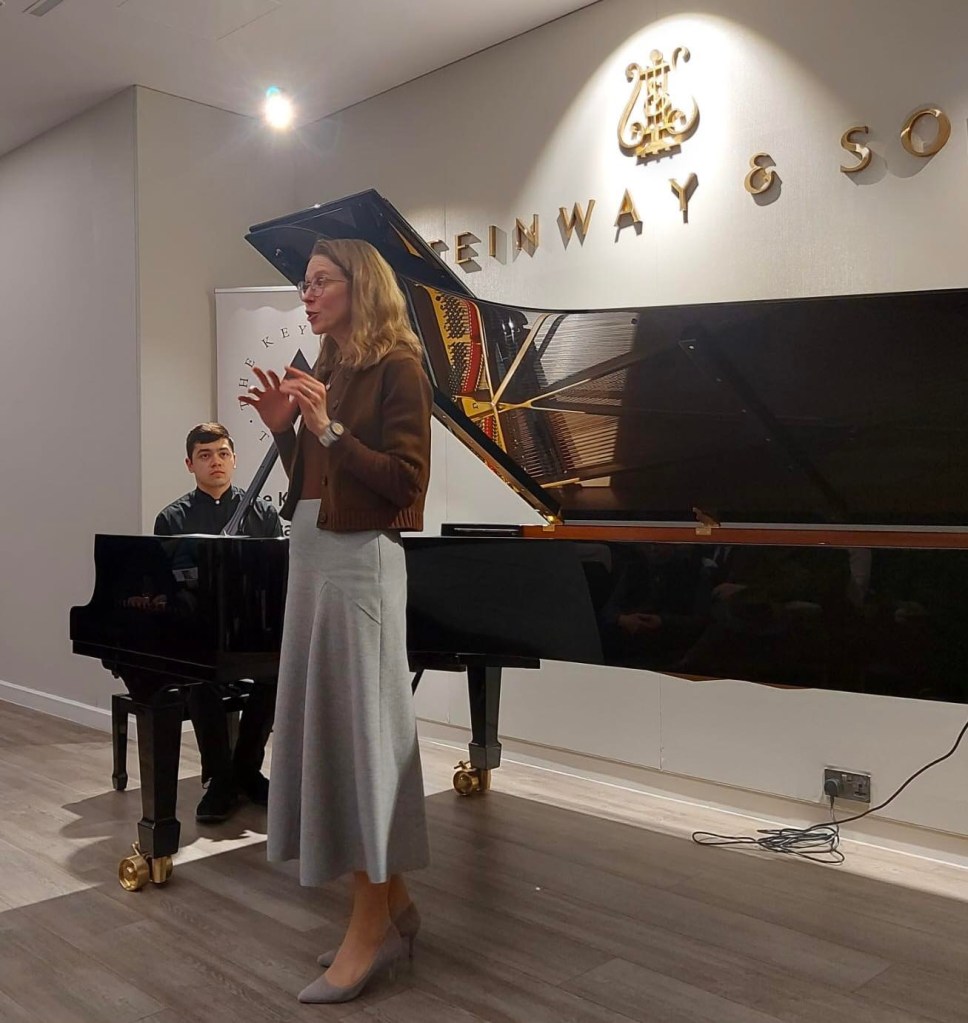
Canan Maxton of Talent Unlimited with Fergus Hoey
Presented in association with Talent Unlimited.
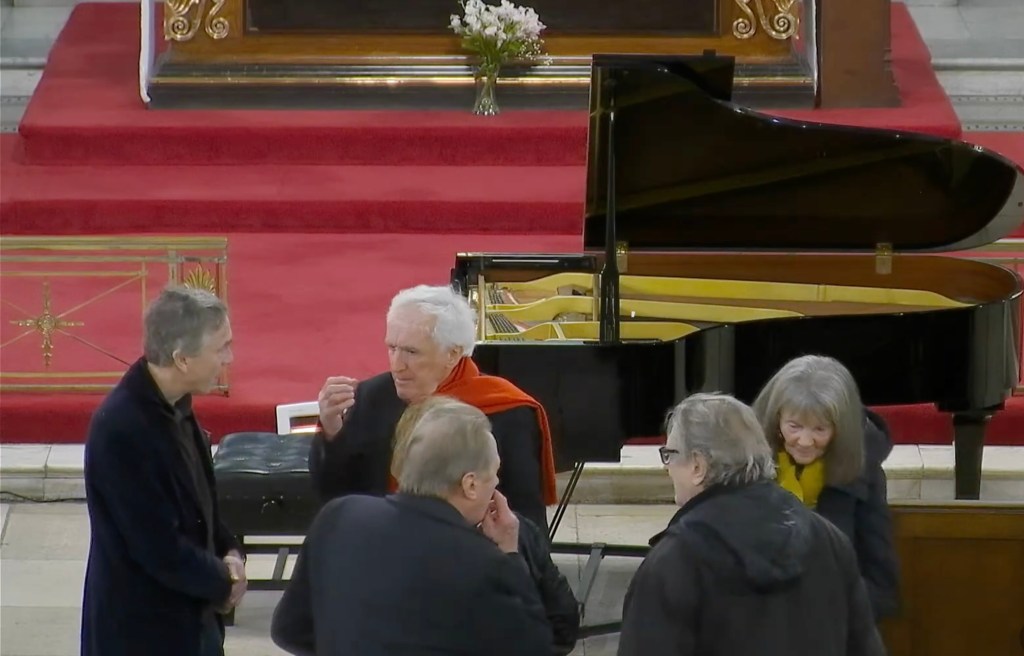
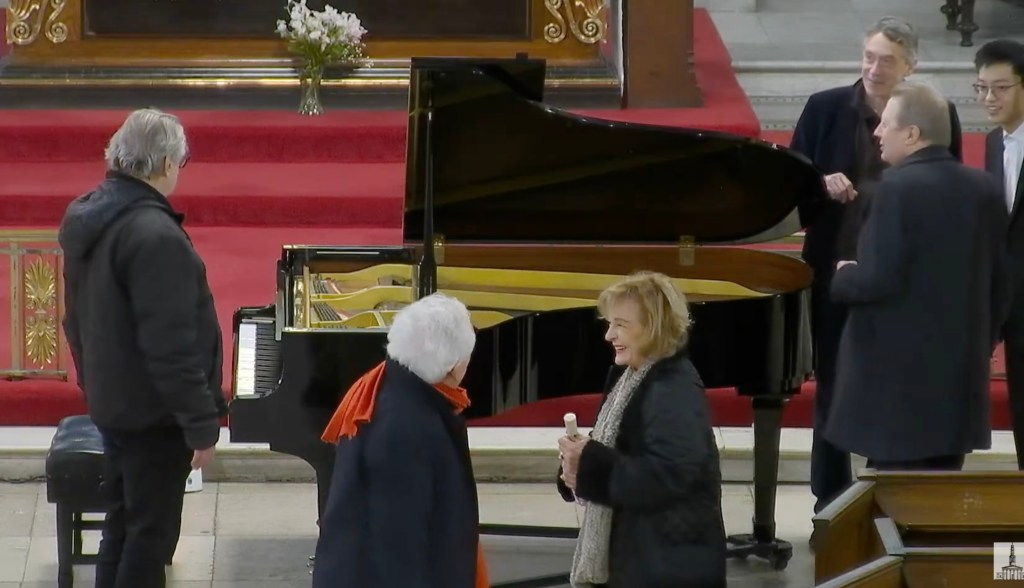
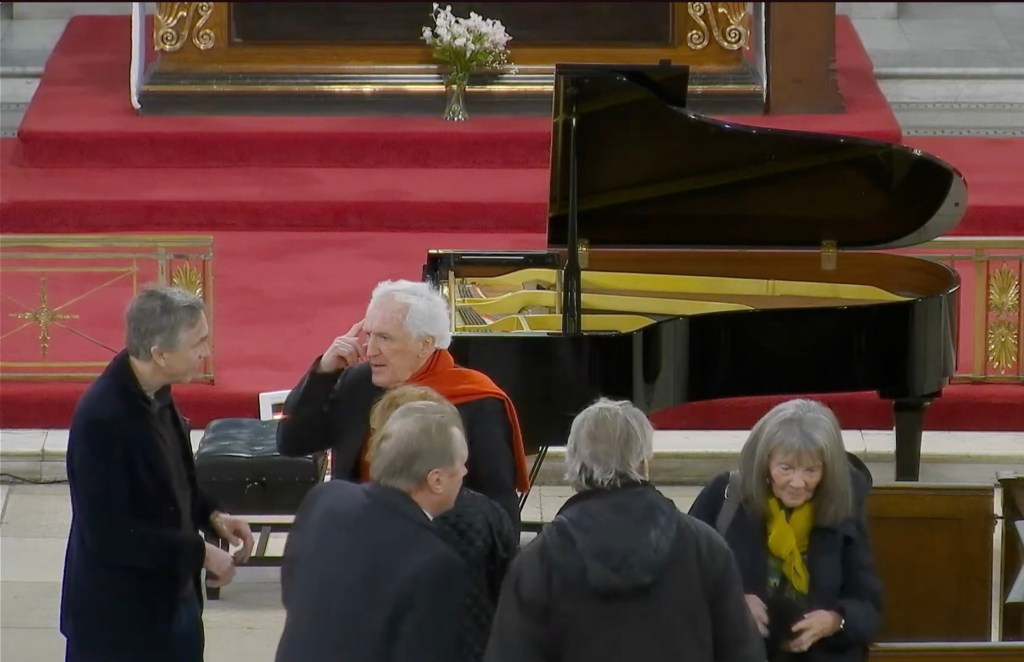
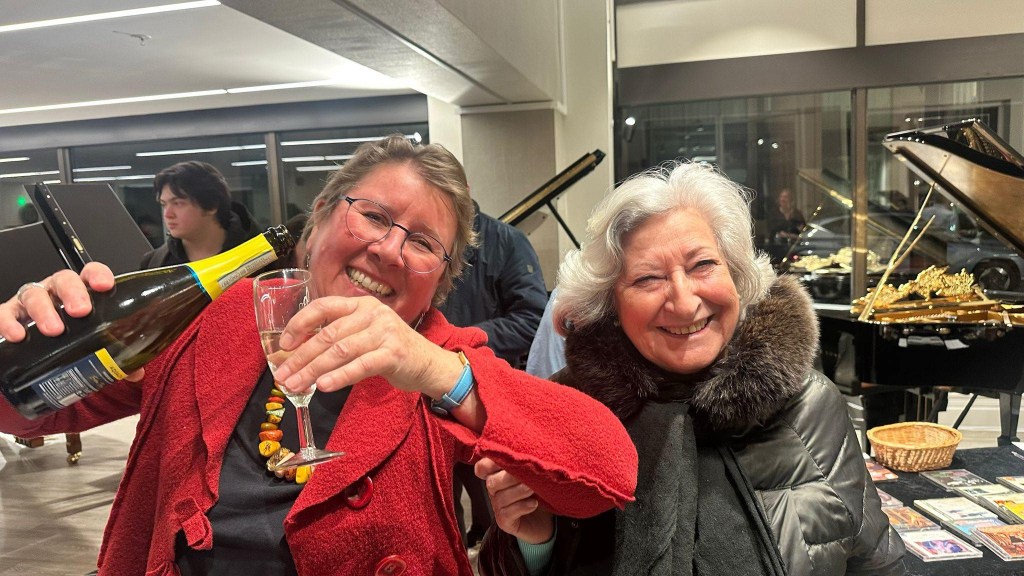
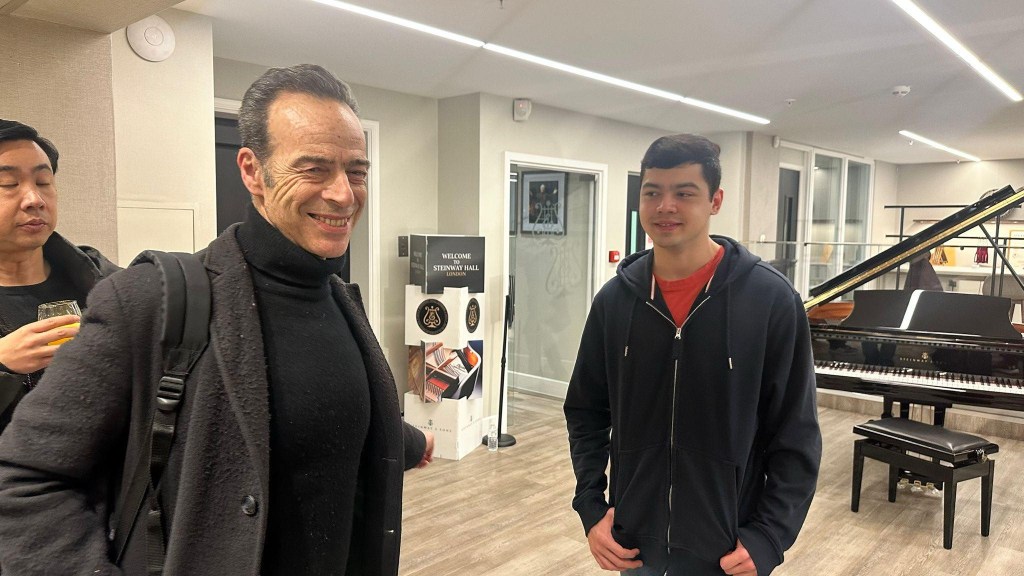
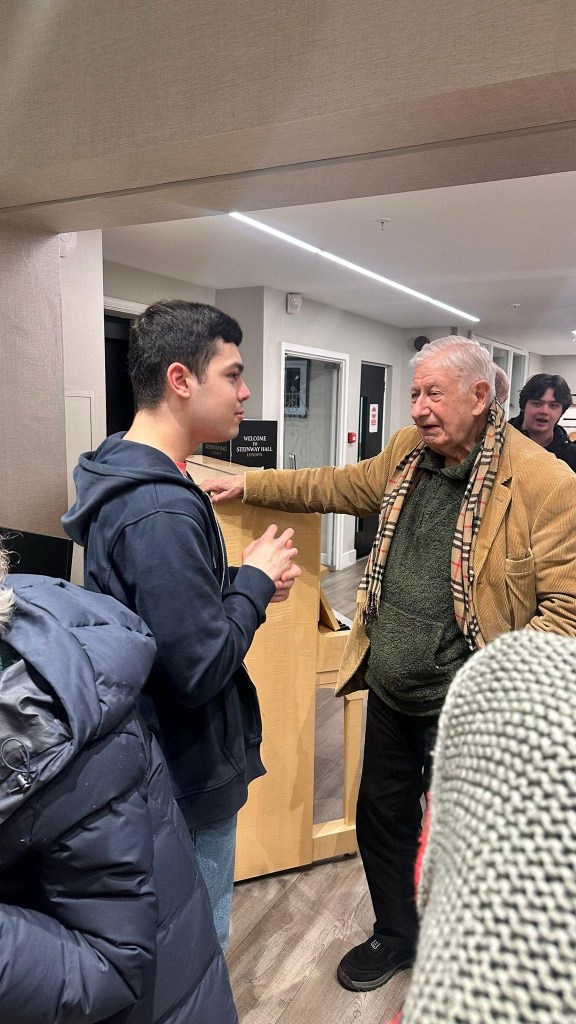
And below discussions about Richard’s playing by people who are following and helping Richard in his pursuit for Parnassus . Fergus Hoey, Canan Maxton, Lord David Cholmondeley ,Barry Wordsworth and Christopher Axworthy of the Keyboard Trust Weir Foundation.
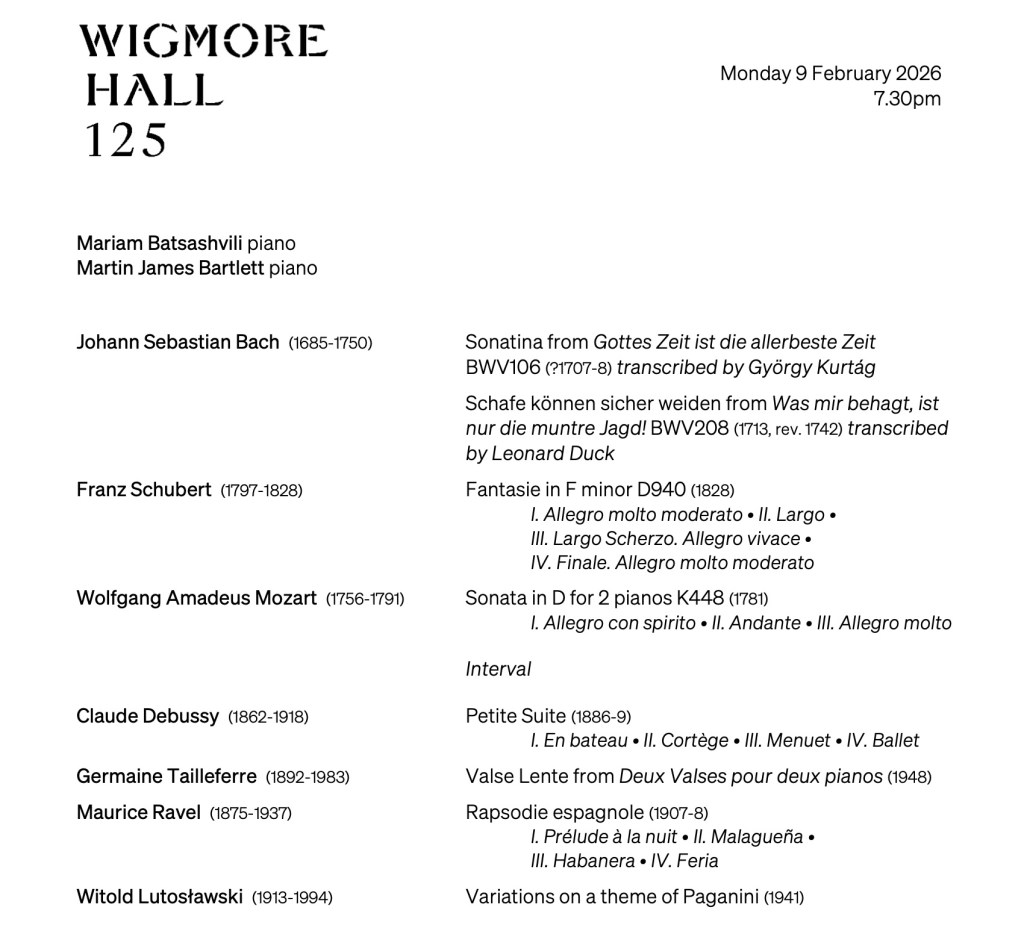
Mariam Batsashvili and Martin James Bartlett from the very first notes of Bach one could see that this was a dream team.
Sublime music making and a continuous stream of radiance and glowing beauty as they conversed together recreating before our very eyes works that we thought we knew intimately.
A sense of balance that already in ‘Sheep May Safely Graze’ was of such refined sounds as they played as one with a remarkable palette of colours and an architectural understanding that gave such strength to all they did. Kurtag has said that ‘Bach never stops praying’ and his transcription of ‘Gottes Zeit’ that opened the programme just demonstrated that. Martin’s beautifully reverent bass chords were the poignant background for Mariam’s etherial outpouring of ‘twenty of the most heartrending bars in all Bach’s music.’
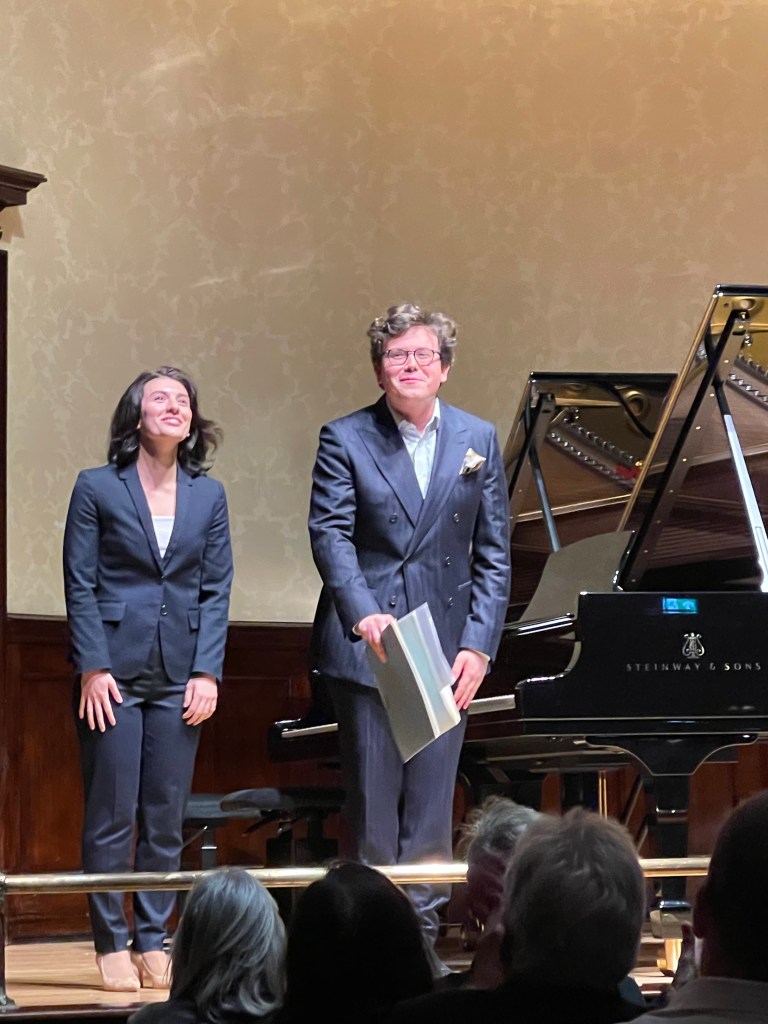
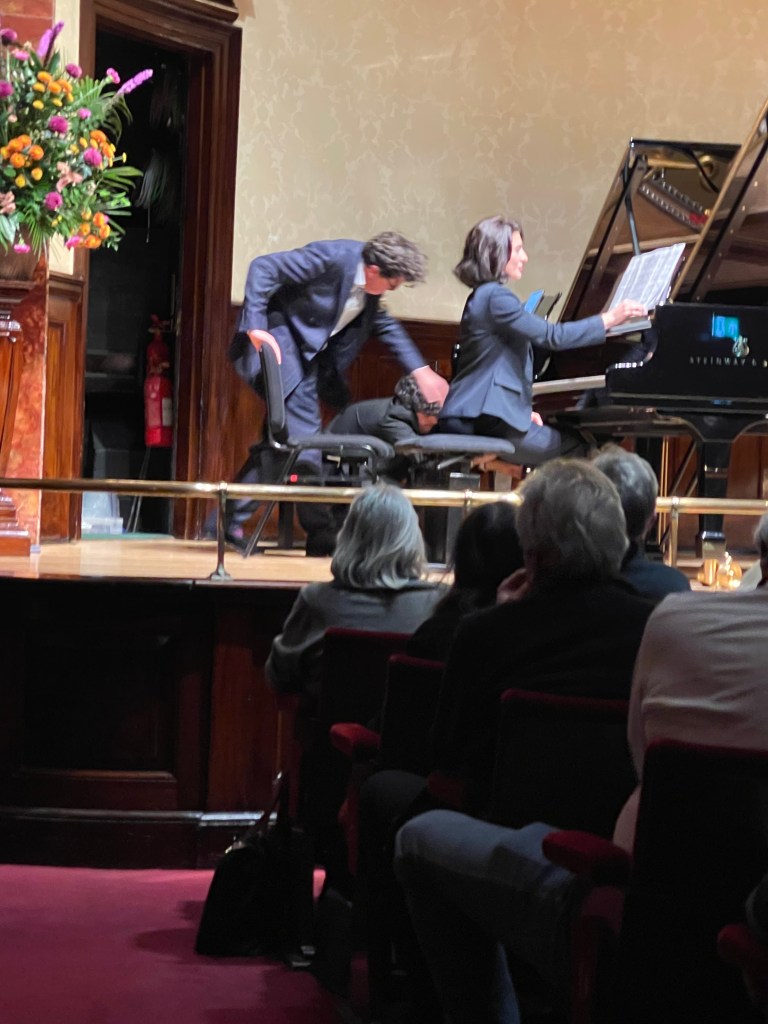
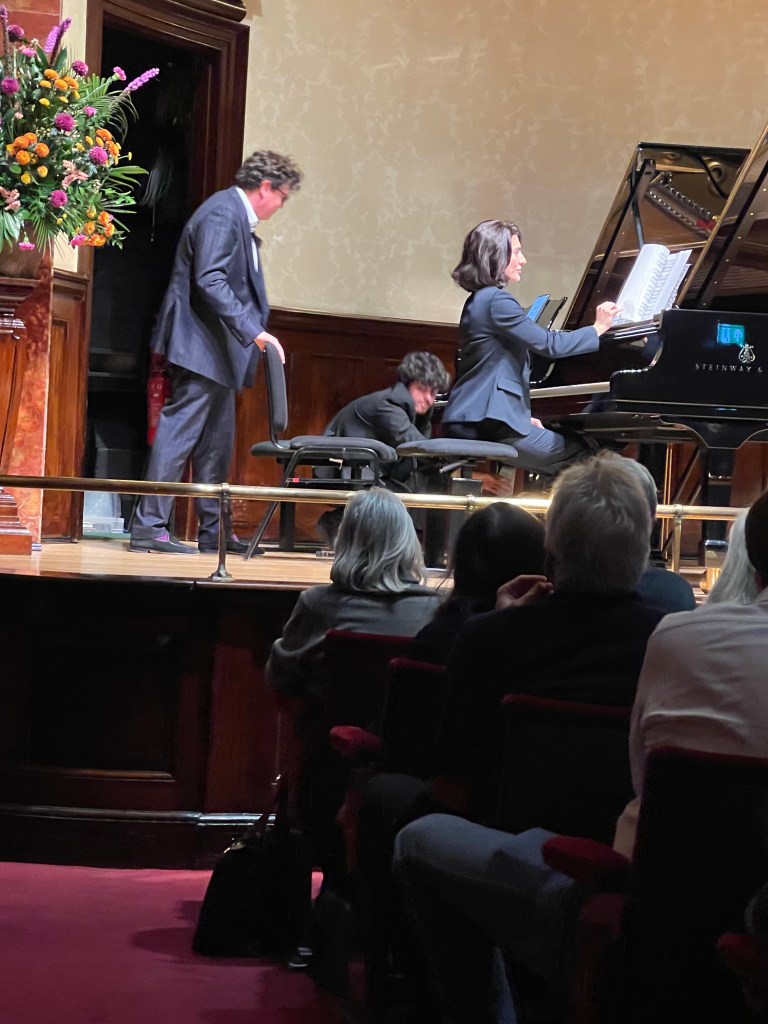
Martin looking at Mariam with a twinkle in his eye as they inspired each other to delve ever deeper into the music of Bach, Schubert and Mozart. Even a problem with the pedal was soon sorted by the two gentlemen on stage (Martin and the page turner) whilst Mariam ordered her score.
Mariam at the top for Bach and Martin at the top for Schubert and after such democratic beauty they each had their own instrument for Mozart.
Wondrous sounds in Schubert’s F minor fantasy from the very delicate chords that just seemed to be a vibration of sounds from Mariam’s hands, on which Martin could float one of Schubert’s most magical creations. A ‘Largo’ played with an aristocratic rhythmic intent before bursting into song with glowing delicacy and refined phrasing from Martin’s hands. A ‘Scherzo’ rather on the fast side, but this duos wondrous palette of colour and shading shaped the music with the sense of dance that was to contrast with the serious forward surge of the Fugato finale. Voices that were allowed to emerge from the mass of notes that Schubert adds to his last movement as the tension built with masterly control and sense of exhilaration. The beseeching return of the opening melody came as soothing balm after such seriously knotty twine.The final chords played by Martin were of such aristocratic poignancy that the final whispered ending came as a truly blessed relief after such searing emotions.
Mozart just poured from their hands with elegance, grace and dynamic rhythmic drive. Martin looking at Mariam with joyous glee as the music just flowed so naturally from their hands in a musical conversation between two master musicians. The ‘Andante’ just glowed as it flowed from Mariam’s magical hands with Martin following her every move with cat like attention. The ‘Allegro molto’ was played with a nonchalant whispered ease by Mariam, until Martin joined in the fun adding scintillating playing where sparks were flying from one piano to the other. Mariam calming such effervescence with the return of the rondo theme unscathed by such frivolity.
Wherever they sat the music was of the same sublime beauty because here were two musicians, maybe even magicians, who were listening to each other and with chameleonic mastery able to create an amalgam of sounds that is rare indeed for two such renowned soloists .
Mariam taking the bottom for Debussy but piano one for Tailleferre and Ravel, bequeathing her place to Martin for Lutoslawski.
Debussy taken at quite a pace but with such refined phrasing of delicacy and buoyancy. ‘En bateau ‘ just flowed with wistful radiance as Mariam’s magical glowing sounds were matched by Martin’s lapping accompaniment. A ‘Cortège’ played with whispered brilliance contrasted with the wistful comments that announced the elegance of the ‘Menuet’. They both let their hair down with Debussy’s ‘Ballet’ where they played with brilliance and excitement.
Amazing pyrotechnics from two extraordinary musicians who could bring such colour and exhilarating excitement to this showpiece written for Lutoslawski and Andrzej Panufnik to play in cafés in order to survive, having escaped from a German prison of war camp in Poland.It was indeed played with fearless mastery by Mariam and Martin. An extraordinary technical brilliance but with a sense of line and architectural shape, even at breakneck speed, that was truly overwhelming.
Calm after such a storm and torrent of notes with the ‘Berceuse’ from Fauré’s Dolly Suite. Mariam at the top with beauty and seamless delicacy restored by two pianists who could play with the whispered beauty of glowing radiance that had held a full Wigmore Hall enchanted and enthralled, happy to be present at the birth of such a distinguished duo.
We certainly look forward to a return match from this remarkably well matched team!
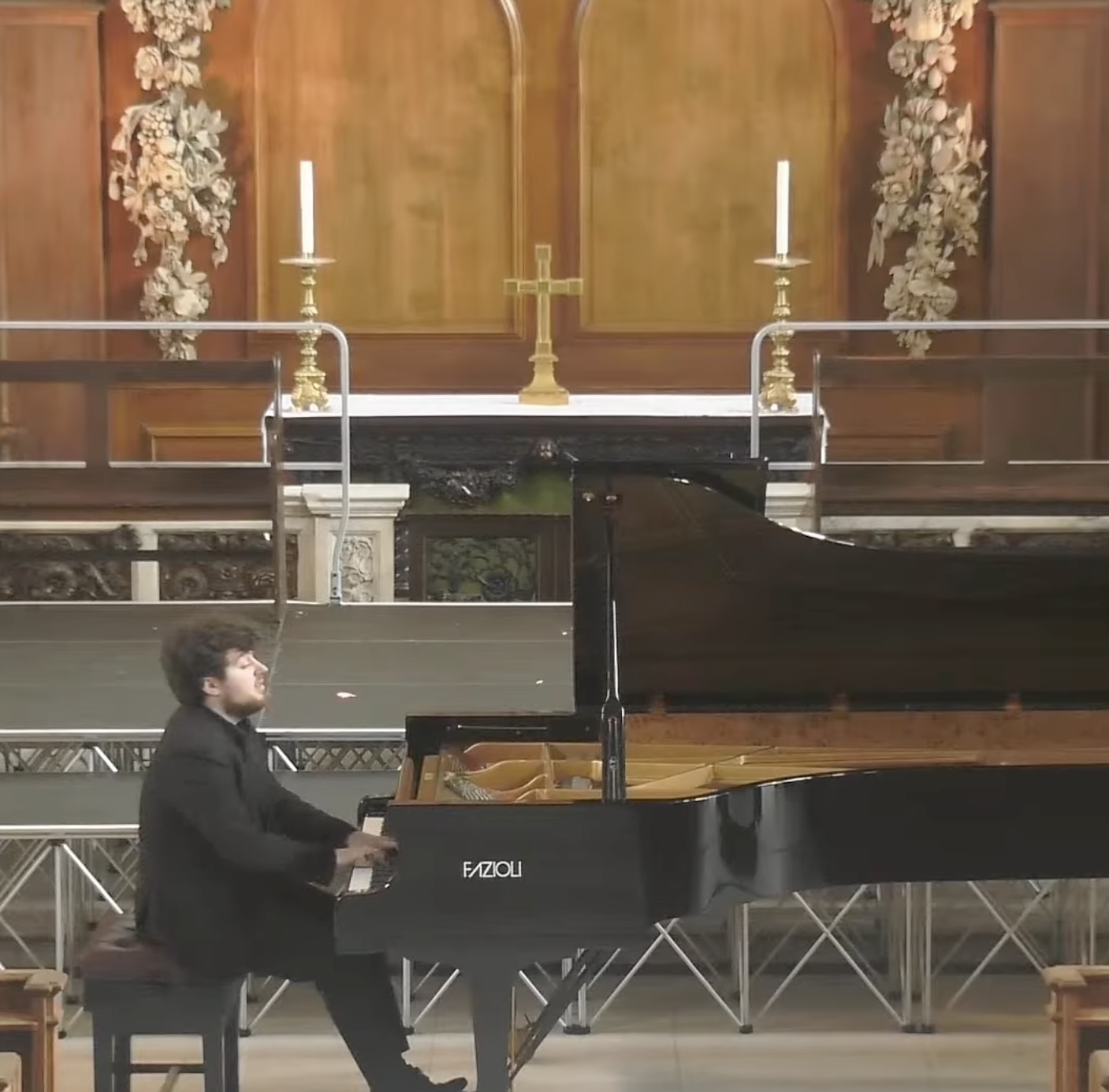
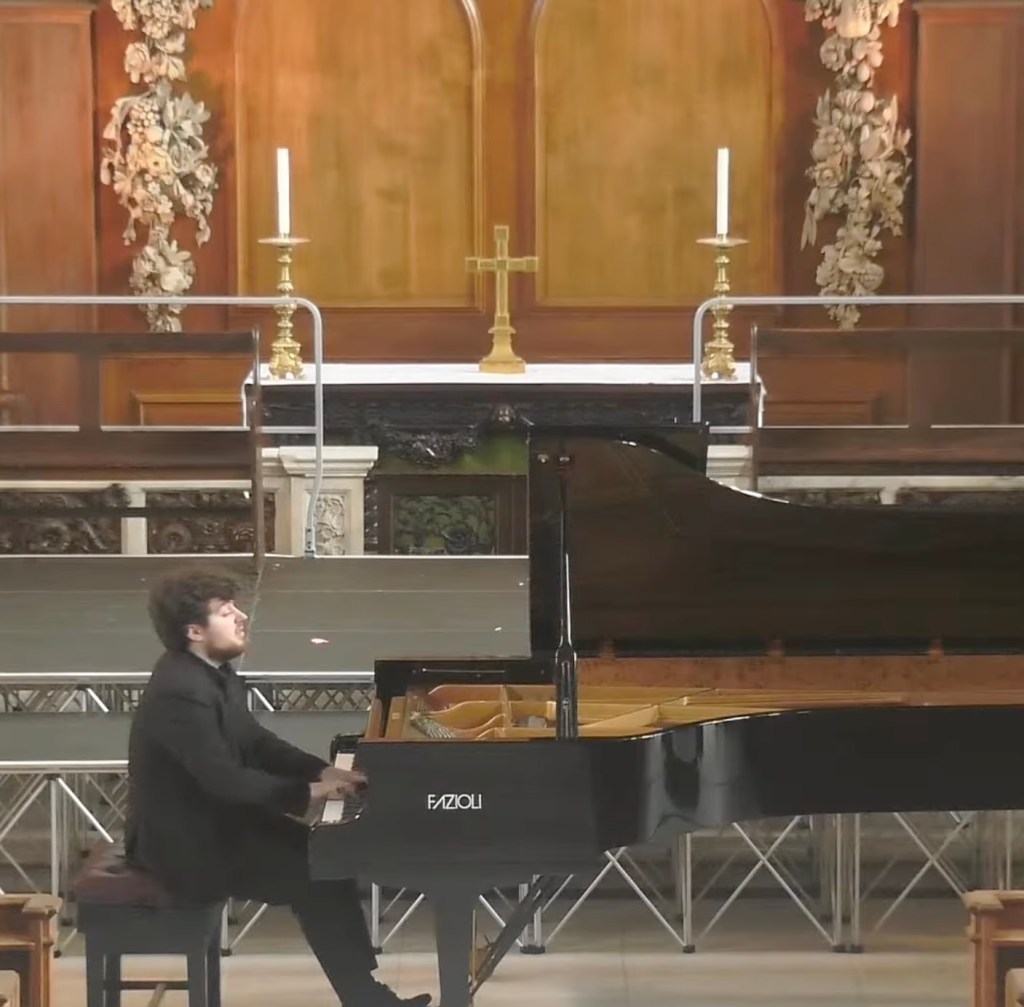
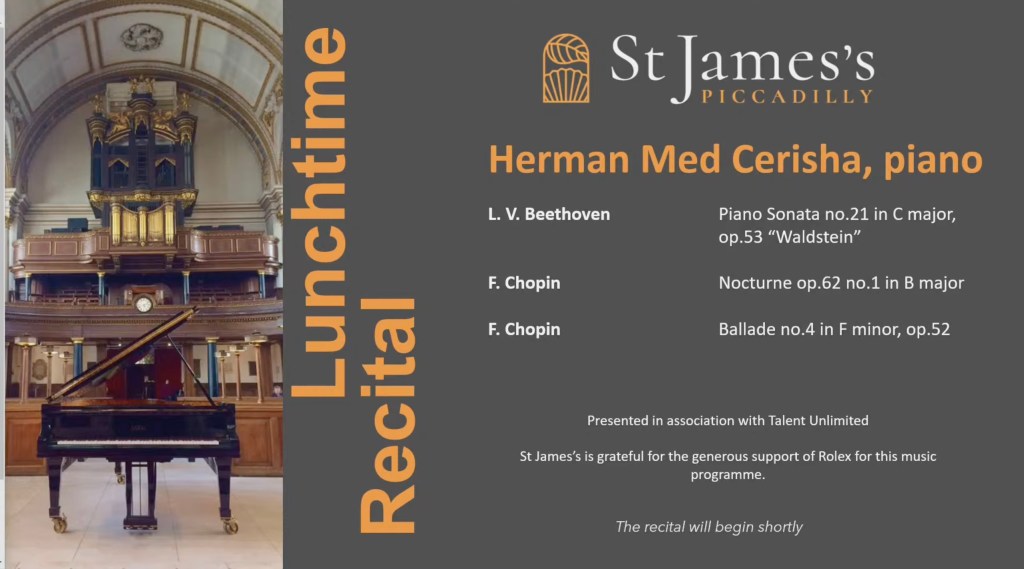
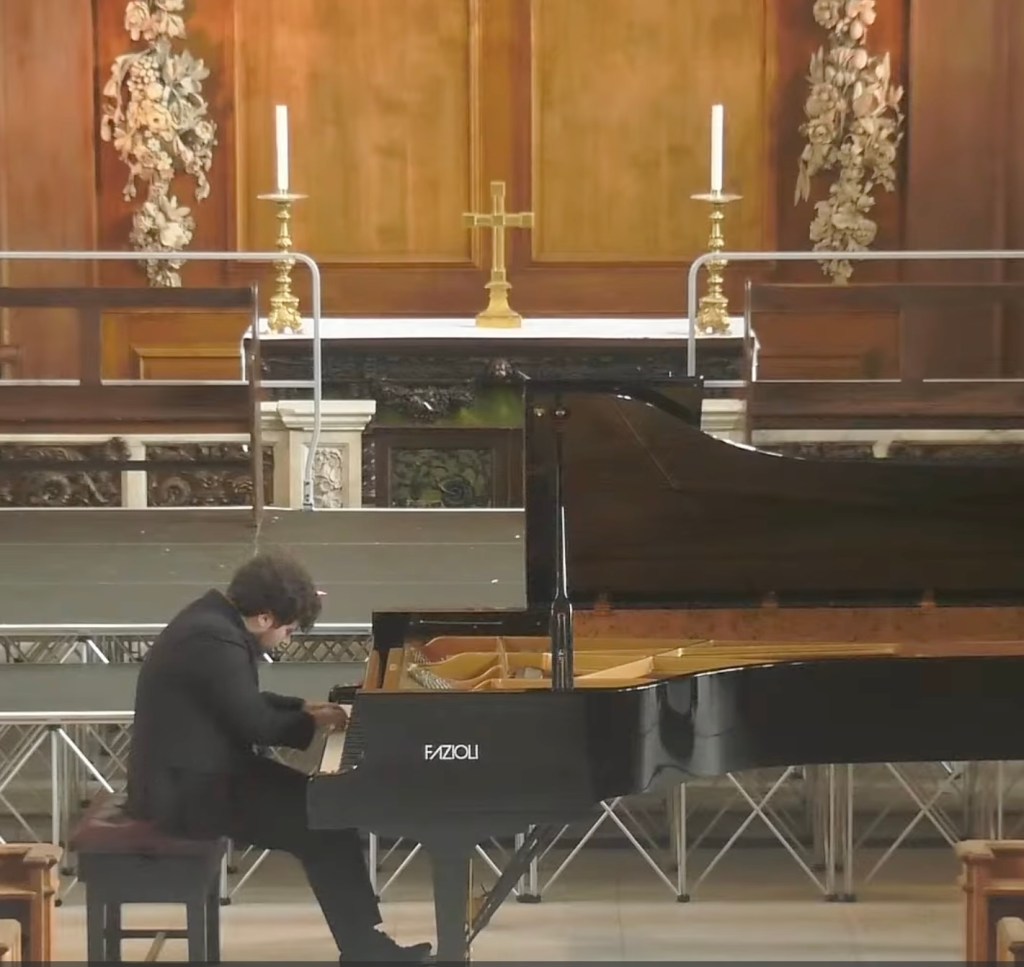
I was told by Deniz Gelenbe about a remarkable young pianist she had heard recently in the Beethoven competition that she was judging at the Royal Academy. A name new to us and I was glad to hear him for myself just a month ago thanks to Canan Maxton and her Talent unlimited . I had spoken to Herman on that occasion with great enthusiasm and I was struck by his disarming humility and genuine surprise at my comments. We have been in touch since that first encounter and on Thursday he sent me a message saying he had been asked, by the indomitable Canan Maxton, if he could substitute an indisposed pianist the next day. I was in Italy at that time but have since had a chance to listen to the concert that was streamed from St James’s Piccadilly. A chance to hear him play Beethoven at last and to confirm all that I had heard about him from Prof.Deniz Gelenbe.
There is a young master on the horizon in London and it is just a question of time before the light that he exudes will shine even brighter not only in London but wherever his rays may be allowed to fall.
The ‘Waldstein’ Sonata together with the ‘Appassionata’ and the ‘Emperor’ Concerto are all from Beethoven’s ‘middle ‘ period when the composer, who was a master pianist, could create works of a technical difficulty that could contain the genius of his irascible temperament. Delius described Beethoven disparagingly as all scales and arpeggios, describing Bach, in the same breath, as knotty twine!
Herman chose the ‘Waldstein’ to open his programme and apart from the remarkable technical perfection at only twenty four hours notice, there was playing of intelligence with a driving rhythmic energy to which Herman added his youthful passion and feeling for poetic beauty. A scrupulous attention to Beethoven’s indications where even the pedal markings were incorporated with mastery on this modern day instrument. Beethoven looking back to his mentor, Haydn, who could also create special effects with long sustained pedals as in his Sonata Hob XVI 50. An effect that Herman maintained with a masterly use of the pedals and touch in the Rondo last movement, creating the pure magic of genial invention that is often over simplified with the excuse that the pianos of today are completely different from those of Beethoven’s time. Herman had understood the intention of the composer and searched for the effect with poetic mastery. In fact all through this recital Herman’s scrupulous attention to the composers wishes whether Beethoven or Chopin were interpreted with technical perfection and poetic understanding. ‘Je sens, je joue, je transmet’, has never been more clearly expressed . Herman brought a masterly control to the opening ‘Allegro con brio’ where he was careful to choose a tempo that could accommodate the second subject without changing tempo. In fact Herman maintained an undercurrent of rhythmic tension which gave him great freedom within the limits that the composer imposes, with a sensitivity to sound of extraordinary maturity and poignancy. A kaleidoscope of colours that can shape each phrase so beautifully even adding some very delicate colours to Beethoven’s counterpoints without ever interrupting the overall architectural shape or flow. Never has Beethoven’s decision to abandon his original slow movement ( later publishing it as a separate piece with the title ‘Andante favori’) seemed so right as today. An introduction to the Rondo that was played with whispered searing intensity with an extraordinary palette of sounds of refined beauty. The voicing of the counterpoints I have never heard played so clearly, as one dovetailed into the other after a deep intonation of the tenor melody ‘rinforzando’. Written indications that in a poet’s hands become precious messages from the composer to the interpreter. A glowing top ‘G’ suddenly becomes the first note of the Rondo as it is reborn on a magic pedal effect with whispered simplicity and wonderment. A mirage of sounds out of which emerges a crystalline clarity as the contrasting episodes become ever more exhilarating and full of virtuosistic excitement. No splitting of the hands for Herman as Beethoven asks for whispered octave glissandi in the coda that on the modern day piano with it’s heavier touch are often played as scales. Serkin used to surreptitiously lick his fingers before attempting them. Kissin slows down the tempo and plays them with two hands. Herman has such a natural mastery dedicated to the composers wishes that the glissandi just flowed from his hands as did everything he played.
A remarkable performance and Hats off to Herman’s genial mentor Florian Mitrea for pointing him in the direction of a true interpreter of the composer wishes.
The Chopin Nocturnes op 62 are works written towards the end of the composers thirty-nine years, and are poignant tone poems of ravishing beauty and noble sentiment. Herman chose the first in B major bringing to it a wondrous sense of balance where the melodic line was allowed to emerge out of a complex harmonic accompaniment. It was played with a disarming simplicity and glowing beauty where the bass became the anchor on which such noble sentiments could be celebrated. Etherial embellishments were thrown off with jeux perlé ease but also unclouded and as clear as the bel canto of Monserrat Caballé.The central episode in E flat was played with even more simplicity where the deep chiming bass again gave great strength to the noble melodic line unfolding above.The whispered ‘pianissimo’ meanderings were allowed the free reign of a true poet of the piano. Herman had taken us on a journey of heartrending aristocratic beauty where Chopin’s poetic genius was allowed to glisten and glow with simplicity and deep understanding.
The Fourth Ballade is one of the pinnacles of the romantic pianistic repertoire and Herman played it without the rhetoric of traditional distortions, but with a disarming simplicity where the music was allowed to unfold so naturally. Deep bass notes were the anchor on which the theme could float and they became in turn whispered octaves of etherial beauty as the music moved towards the first variation. Played with an unusually rich harmonic background that built in richness with the addition of octaves that were but streams of luxuriant sounds. A flowing stream of golden notes took us to the second subject. Again not just melody and accompaniment but a rich quartet texture that was the very life blood of the beautiful melodic line that emerged. The return of the opening introduction was where Perlemuter had written Cortot’s poetic indication in my score: ‘avec un sentiment de regret’. Followed by a cadenza of gossamer lightness, strangely distorted(?!) and which lead to the build up of the sumptuous climax of this work of pure genius by a composer who was the genial poet of the piano. Usually thundered out Herman allowed the music to unfold with simplicity and mastery where every indication of the composer was incorporated into a communal poetic understanding.
The sun magically shone onto the keyboard at this very moment of enlightenment. Even the sforzando at the beginning of the coda was played only by the bass and not the usual thumb of the right hand and lead to an outpouring a phenomenal playing where poetry and technical mastery were combined to the glory of the genius of Chopin.
This is pianist to watch as he matures and becomes one of the great interpreters of the future.
Herman Med Cerisha, a 20-year-old pianist from Putignano, Italy, began studying piano at age 6. At 8, he was accepted into the top piano class at the George Enescu National College of Music in Bucharest after achieving full marks in the entrance exam. There, he trained under Elisa Barzescu, receiving a strong foundation rooted in the Eastern European musical tradition. In 2020, Herman won a scholarship to study at The Purcell School and, in 2021, was named Bechstein Scholar Student of the Year. In 2024 he received multiple offers from leading UK conservatories and accepted a full scholarship to study at the Royal Academy of Music under Professor Florian Mitrea. Herman has claimed over 40 international competition titles, including distinctions in the Chopin Junior Competition, Berman Competition, and Orbetello Competition. His 2019 win at the Pianisti i Ri competition in Kosovo led to a solo performance with the Philharmonic of Priština, where he performed Grieg’s piano concerto. He has participated in masterclasses with renowned pianists such as Boris Petrushansky, Dmitri Alexeev, and Noriko Ogawa. He has also worked with Leonid Margarius and Franco Scala at the Imola Piano Academy. He has performed in prestigious venues such as Wigmore Hall, Cadogan Hall playing Beethoven’s 3rd piano concerto, the Romanian Athenaeum, and Moscow’s Svetlanov Concert Hall. Between 2018 and 2022, he collaborated annually with the Arad Philharmonic Orchestra in Romania as a soloist. In 2025, Herman became a Talent Unlimited Artist, where they kindly support his musical journey.
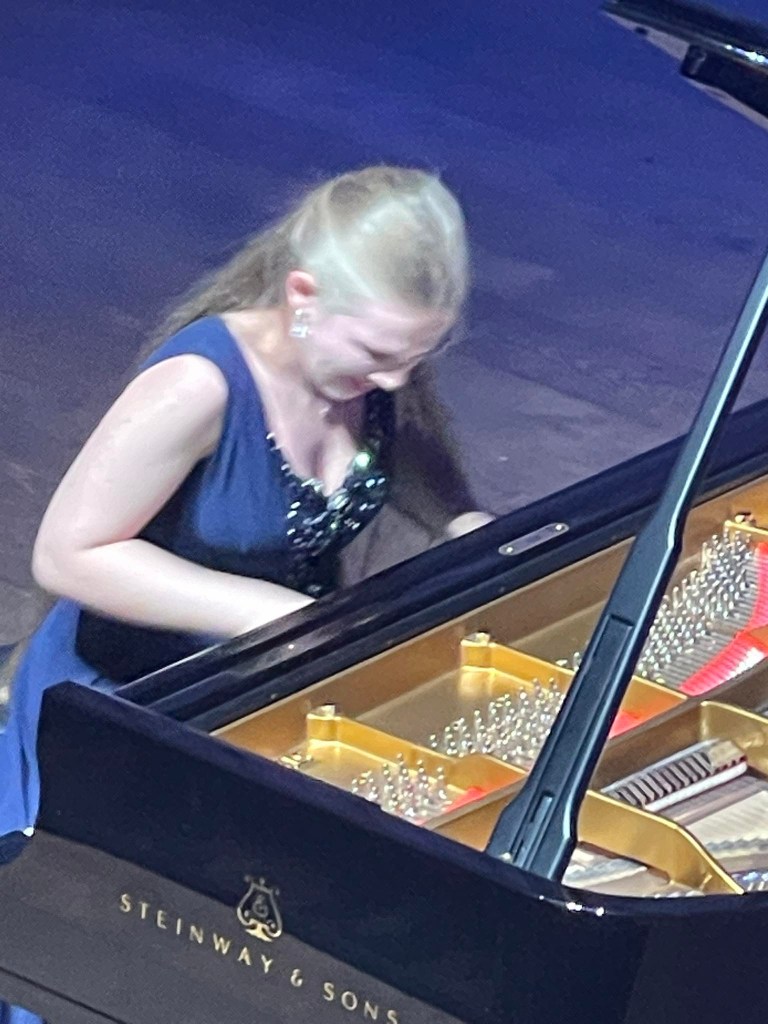
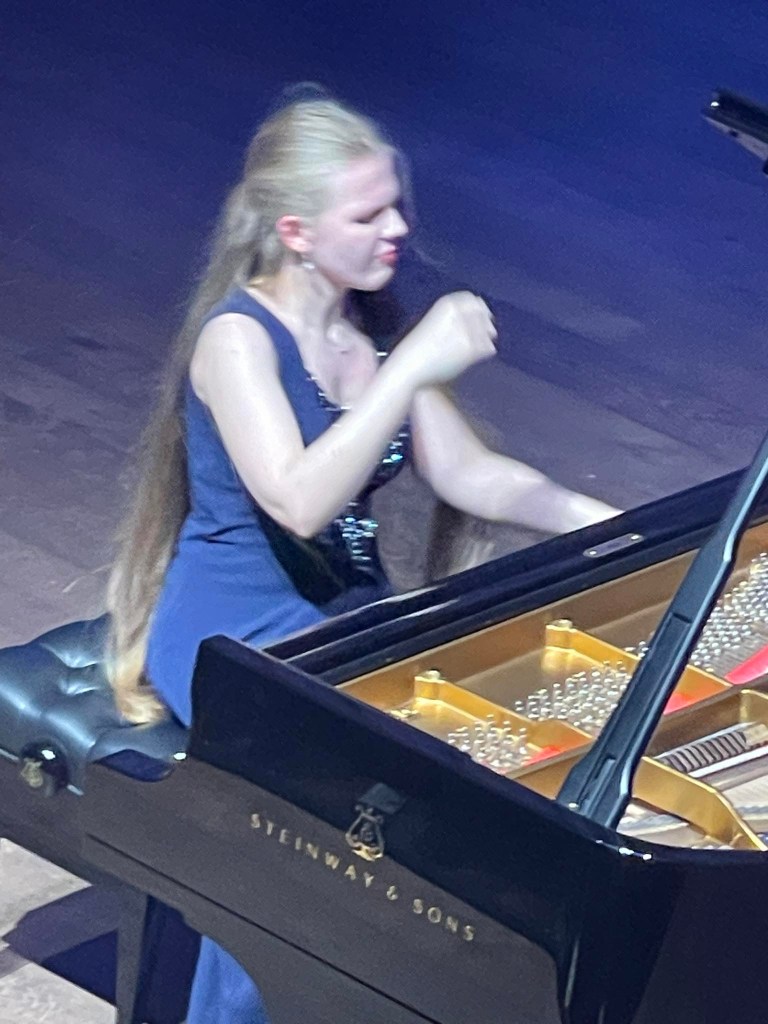
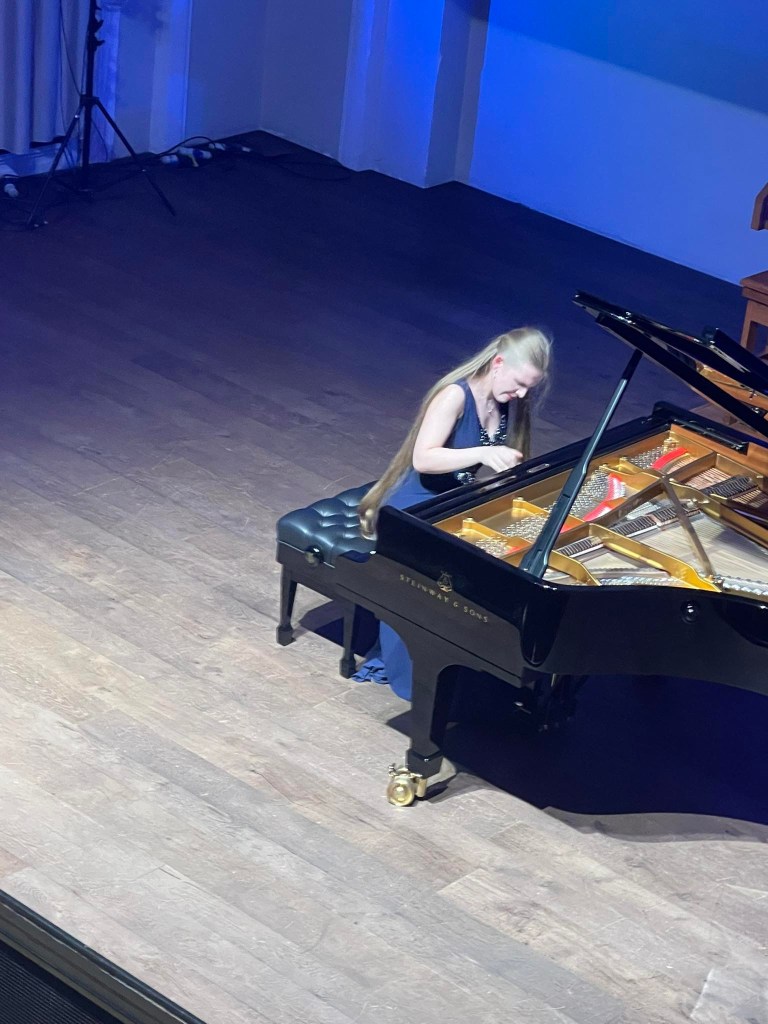
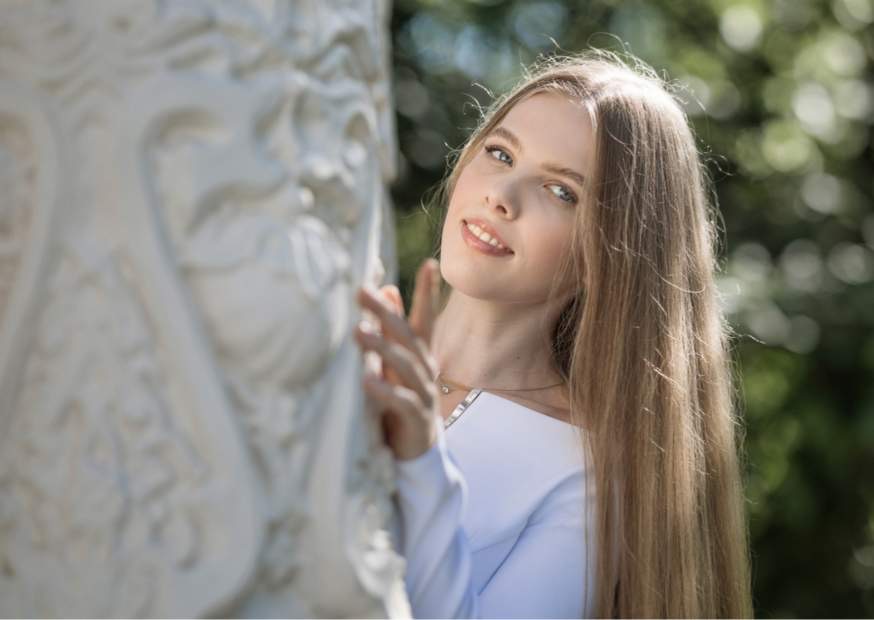
Astonishing playing from this beautiful ‘Mélisande’ of the piano with her complete abandon to her senses that was hypnotic and quite overwhelming.
A master pianist and very fine musician who could spontaneously recreate all she played with such searing intensity that I could swear that her waist length hair seemed to reach her toes by the end of a phenomenal recital.
A Liszt ‘Dante’ Sonata that I have never heard with such passion and ravishing delicacy as she depicted Liszt’s vision of Heaven and Hell with vibrant intensity and a palette of sounds and emotions that was astonishing .
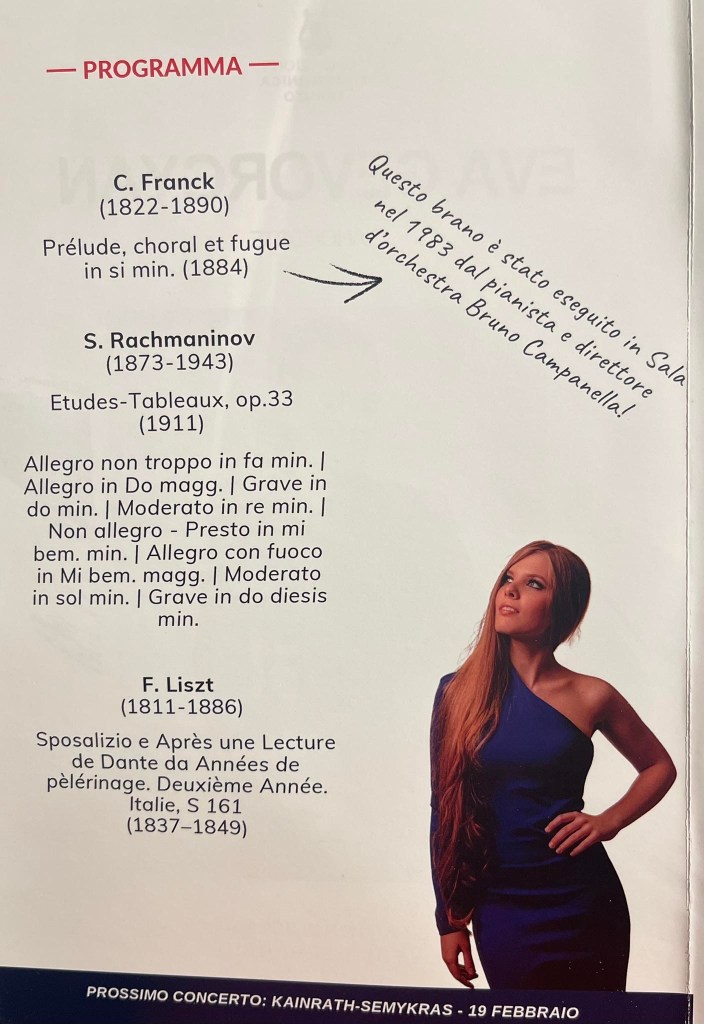
If Franck’s ‘Prélude, Chorale and Fugue’ was given an unusual improvisatory freedom she managed to give an architectural shape to it as she had with Liszt. A pianist who has a vision that brings vividly to life all she does with a technical mastery that passes unnoticed, such is the beauty of sound and prismatic sense of colour that she spontaneously creates.The César Franck was very intense and free with continual fluctuations of tempo as her temperament took wing. A kaleidoscopic palette of colour that were washes of sound. Adding a bass note to the transition to the chorale, giving more depth and beauty to all that she was carving out of the keys with the sensibility of a pointillist painter. A very dramatic entry of the fugue that was then allowed to flow very freely and rather quickly with some rather excessive rubati and clouding of the pedal, as her passionate involvement came to the boil with almost uncontrolled passion. A remarkable performance of Gould like freedom of someone who had a personal vision of a work that is usually heard with the restraint of a more respectful believer
But the real highlight of an extraordinary recital was Rachmaninov’s 8 Études Tableaux op 33, where she turned each study into a miniature tone poem of glowing radiance with fearless abandon, as she allowed her poetic vision to command her fingers and shape each miniature study, transforming them into a Pandora’s box of gleaming jewels. A remarkable fantasy and mastery with chameleonic changes of character and colour. A ravishing sumptuous outpouring of melody in the second that gradually increased in intensity leading to the third, that was of mystery and menace. There was a subtle shading to the sounds as the music spoke with immediacy and even tenderness. A melodic line chiselled over a sumptuous accompaniment created by deep chiming bass notes. A capricious playful opening to the fourth that was played with great character building to a climax of passionate frenzy where Eva’s sense of balance never lost sight of the story line of this master story teller. Streams of notes to the fifth played with true wizardry of astonishing freedom, like a spring suddenly liberated. An aristocratic nobility to the sixth in E flat before the magical radiance and glowing beauty of the seventh. The final Grave in C sharp minor was a true cauldron of a Scriabinesque nightmarish vision and prepared us for Liszt and Dante, after a brief pause, for us all to catch our breath after such an overwhelming performance.
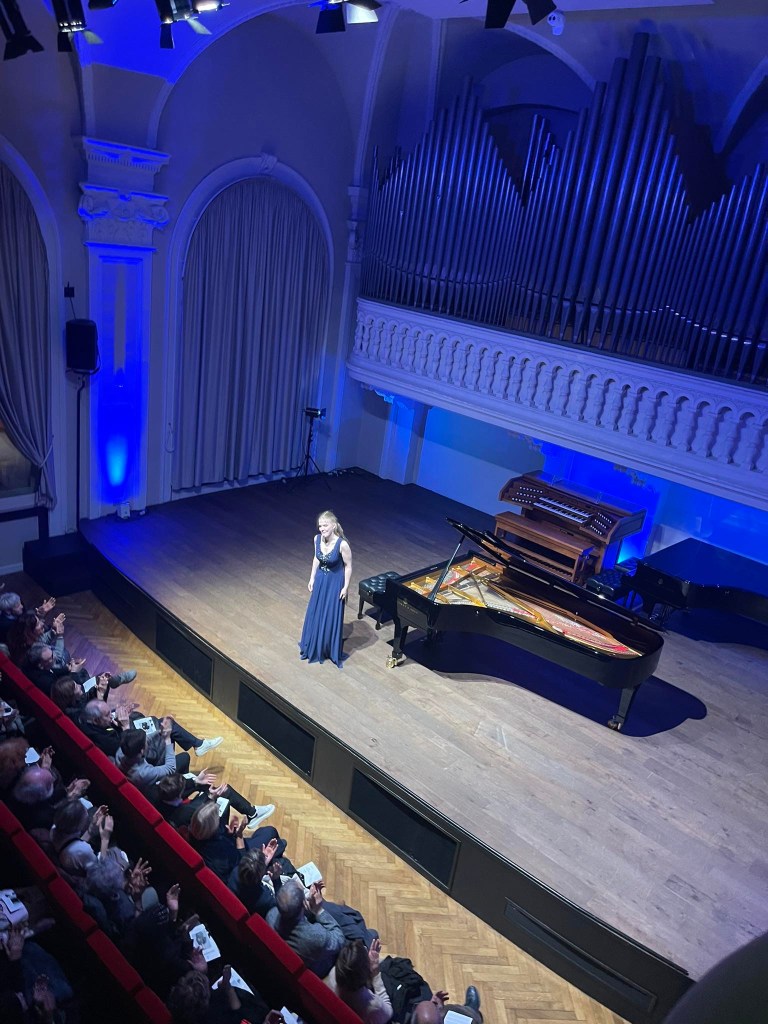
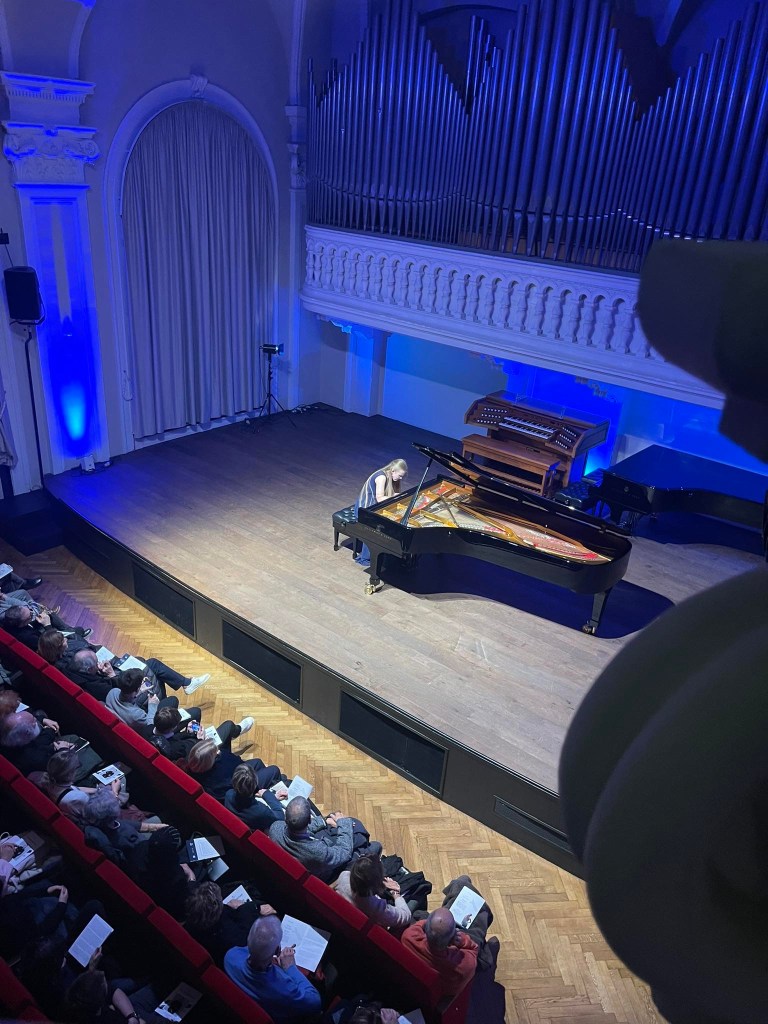
A programme played without an interval left us all astonished exhilarated and not a little exhausted by the intense atmosphere that had invaded this beautiful hall .
Even Liszt ‘s depiction of Raphael’s ‘Sposalizio’ was brought to a climax with burning conviction where the composer’s poetic reaction to such purity was overturned by an accompaniment of transcendental octaves that almost tipped the balance between war and peace! It was Eva’s innate sense of balance throughout the recital, though, that even here she never lost sight of the overall line which was always revealed with sumptuous beauty. Living every moment of the ‘Dante ‘Sonata with an evil glint in her eye as she declared her intent at the opening. The sudden vision of heaven was indeed heavenly and of whispered glowing beauty. Inner counterpoints glowing as Eva allowed them to appear like jewels sparkling in the depths. Liszt’s vision gradually growing in intensity and desperation with playing of transcendental mastery of a performance that was the most convincing that I have ever witnessed in the concert hall.
But this was just a foretaste of what was to come with three encores, one more astonishing than the other.
Liszt’s ‘Campanella’ played with a pianistic perfection and the finesse of the pianists of the Golden age of piano playing when pianist were magicians of sound and not merely jugglers of the notes.
Our Mélisande then seduced us with an Armenian cabaret song: Babajanian ‘s ‘Sayat Novu’, played with beguiling insinuating rubato and such subtle whispers that we could happily have danced with her all night .
But ‘our’ Eva soon brought us back to earth with a hair raising account of Bizet’s ‘Habañera’ alla Volodos . A case where the disciple has overtaken her master, as streams of notes were ‘merely’ gold and silver sounds that she spread over the keyboard with the ease and perfection of the legendary pianists of the past age of Lhevine Godowsky and Rosenthal . Horowitzian streaks of lightening ,there were too, igniting this cauldron of notes as we listened with disbelief to such an overwhelming display of mastery.
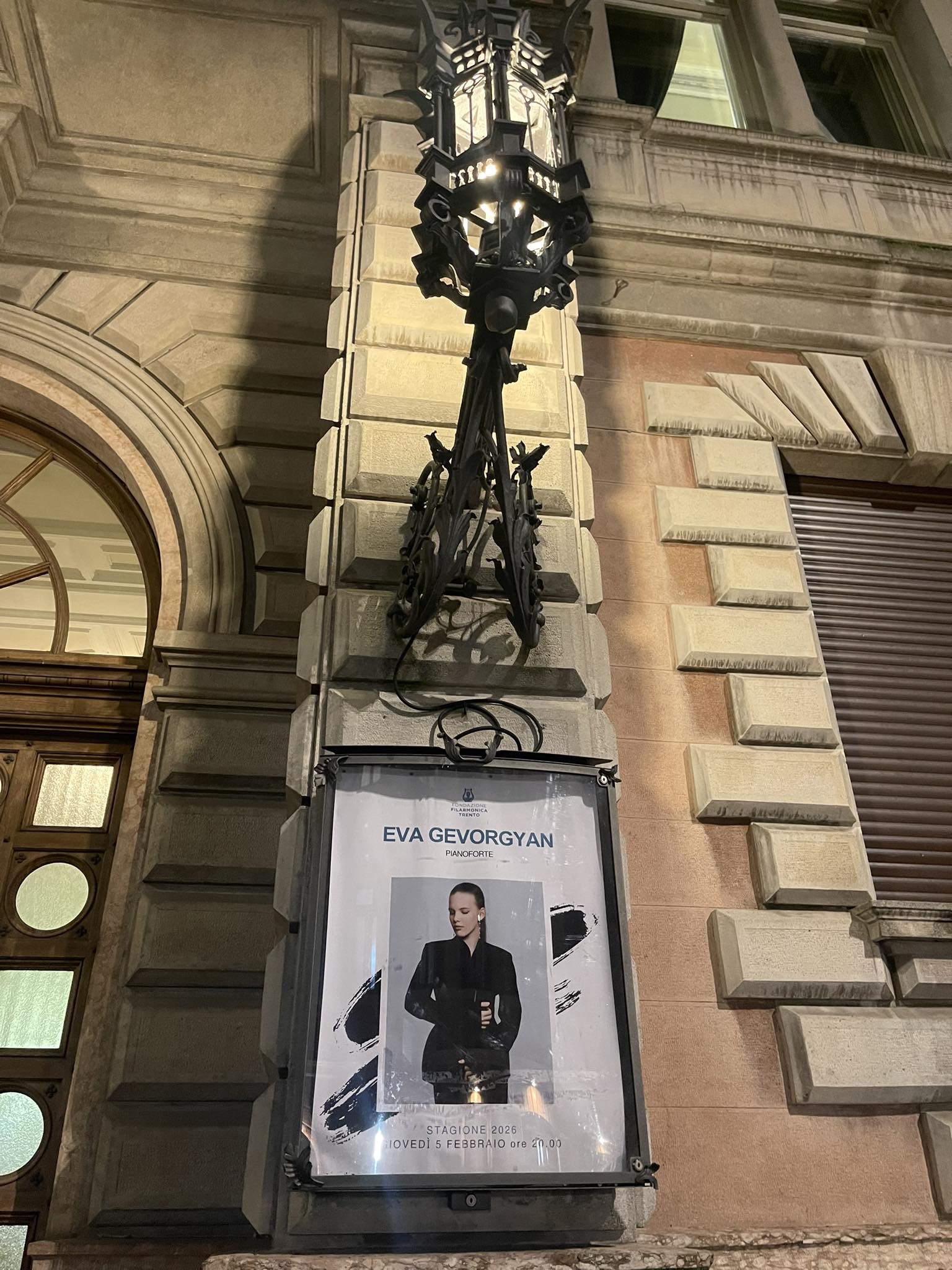
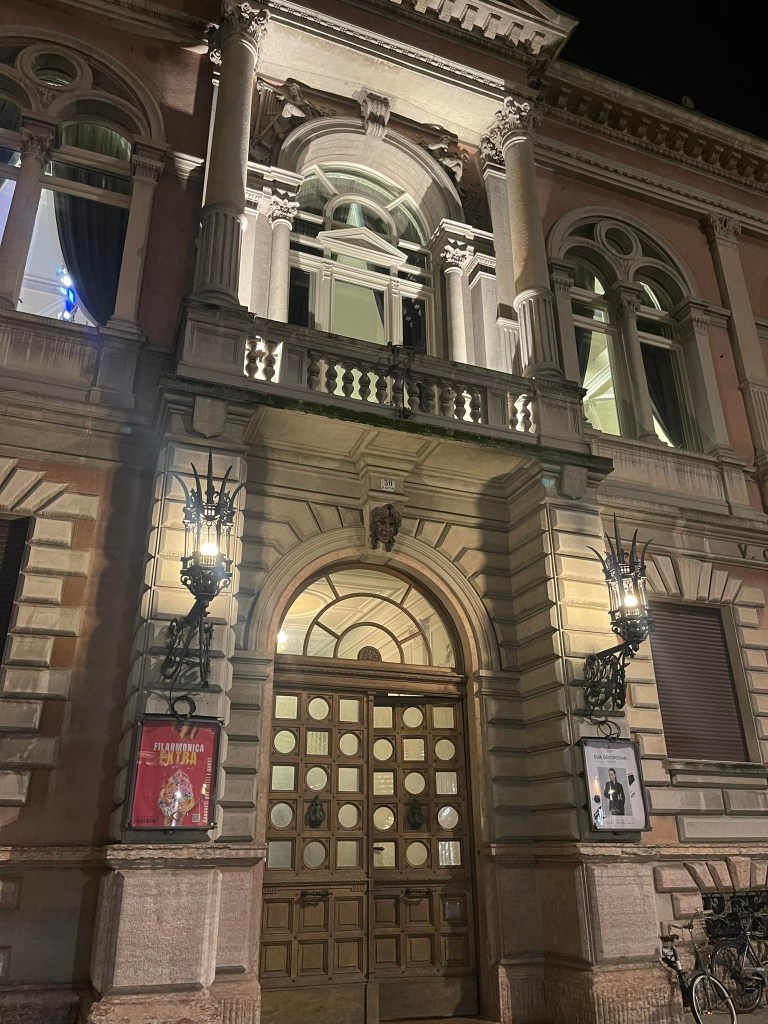
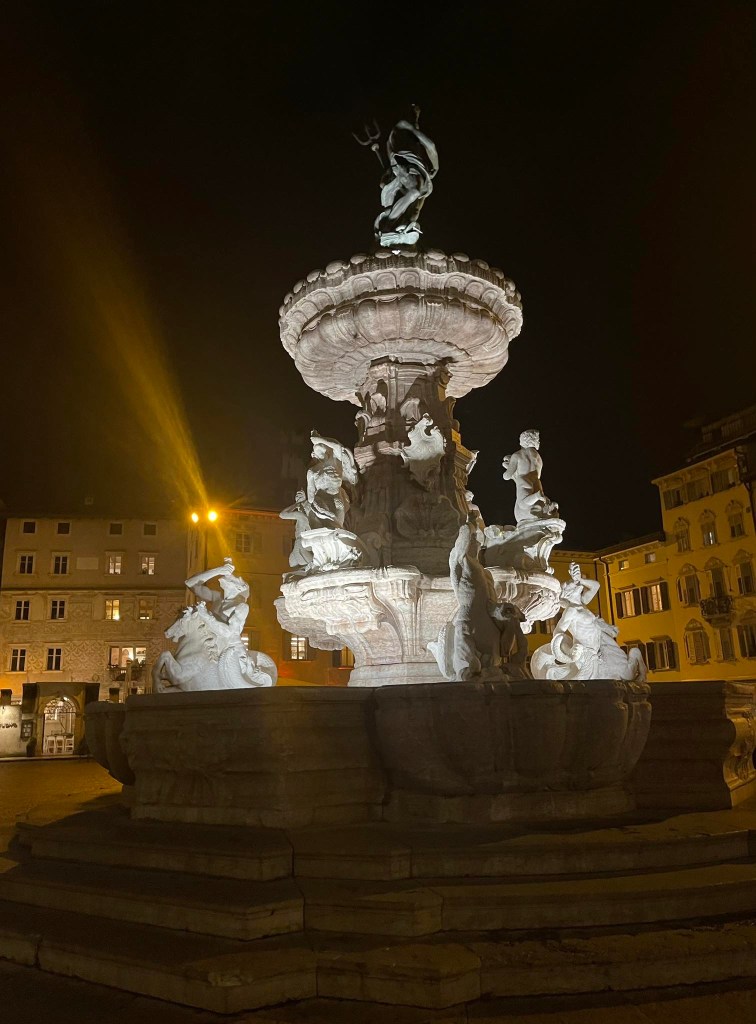
Beautiful Trento awaited us and calmed the air after the wonderful torrid atmosphere that this young master had created at the Filarmonica this evening.
Pianista russa-armena, Eva Gevorgyan è una delle voci più promettenti della scena musicale internazionale. La sua tecnica impeccabile e la straordinaria sensibilità musicale le hanno valso numerosi premi, tra cui il Primo Premio al Concorso Robert Schumann di Düsseldorf. A soli 21 anni, ha già calcato i palcoscenici più prestigiosi, come la Royal Albert Hall di Londra e la Mariinsky Concert Hall di San Pietroburgo, collaborando con orchestre di fama mondiale. Tra le sue numerose vittorie, spicca la sua performance al Concorso Chopin di Varsavia, tra le finaliste più giovani di sempre. Eva è una vera e propria ambasciatrice della musica classica, portando la sua arte in luoghi e occasioni sempre nuove, dalle grandi sale da concerto alle corsie di ospedali fino alle scuole, dove la musica diventa un ponte di comunicazione e speranza. Con una personalità magnetica e un’espressività fuori dal comune, Eva è riuscita a conquistare anche il pubblico più giovane, che trova nelle sue interpretazioni una passione autentica e travolgente.
Eva Gevorgyan (born 15 April 2004) is a Russian-Armenian pianist and composer renowned for her exceptional talent and numerous accolades in international competitions, including first prize at the 2018 Cleveland International Piano Competition for Young Artists and second prize at the 2019 Van Cliburn International Piano Competition for Outstanding Juniors. Born in Moscow, she has performed as a soloist with prestigious orchestras such as the Mariinsky Orchestra,Dallas Symphony Orchestra, and Warsaw Philharmonic, and released her debut album featuring works by Chopin and Scriabin in 2022 on the Melodiya label. As a Yamaha Young Artist, Gevorgyan has garnered recognition for her precise articulation and sonorous touch, drawing comparisons to Russian piano luminaries like Emil Gilels and Bella Davidovich Gevorgyan began her musical studies in Moscow and has since trained with distinguished pedagogues, including Natalia Trull at the Central Music School of the Moscow Tchaikovsky Conservatory, from which she graduated in 2022, and Stanislav Ioudenitch at the Escuela Superior de Música Reina Sofía in Madrid. Her early exposure came through competitions and appearances, such as her debut at the Royal Albert Hall. By age 15, she had already secured prizes in over 40 international piano and composition contests across countries including the United States,Germany,Italy and Spain , establishing her as one of the leading young virtuosos of her generation. Among her most notable achievements is her participation in the 2021 International Chopin Competition where she reached the finals and received a special prize, as well as the 2023 Prix du Bern in Switzerland and the 2019 Discovery Award from the International Classical Music Awards.Gevorgyan has appeared at renowned festivals like Verbier, La Roque d’Anthéron, and the Klavier-Festival Ruhr—where she received a scholarship from Evgeny Kissin in 2020. Recent engagements include her 2024 recital debut at the Amsterdam Concertgebouw, with upcoming debuts such as with the Brussels Philharmonic in 2025; in 2025, she also performed with the Sydney Symphony Orchestra and made her debut at Berlin’s Konzerthaus.
Interview With Eva Gevorgyan- an Inspiring Young Pianist
by Fanny Po Sim Head November 7th, 2023
Eva Gevorgyan, a young and exceptionally talented pianist, has taken the music world by storm with her remarkable achievements. At the tender age of 19, she won the 2018 Cleveland International Piano Competition for Young Artists and the second prize winner of the 2019 Van Cliburn Young Artist Competition. Her passion for music and dedication to her craft have been the driving force behind her success. In this interview, Eva shares her journey and insights on what it takes to succeed as a pianist. Get ready to be captivated by her story.
When did you start playing the piano? How did you discover your love of piano?
I started playing piano at the age of 5. My mother studied viola at Moscow State Conservatory, and there was always music playing throughout my childhood. I visited concerts from the age of 2.5 and could listen to the whole Mozart symphony. At the age of 3, I asked my mother to present me a violin, but I couldn’t get the sound I like, so I took it apart very promptly. And after this, my mother said – now only piano, it will be quite difficult to break. It’s a funny story, but from an early age, I was captured by music. So I started my piano lessons, and when I was 7, I entered Central Music School, where I studied for 11 years.
Does practicing the piano take up most of your day?
Yes, it does! Playing piano inspires me, and this is what I really love. Also, I study chamber music, collaborative piano, piano accompaniment, music literature, and theory, so most of my day I spend with piano. It’s an amazing feeling when you can share your love for music with the audience.
Do you enjoy playing solo or chamber more?
I enjoy both – actually, I like music itself and feel great when I play solo or chamber or with orchestras. I have a wonderful trio team at Reina Sofia School of Music – we will play a chamber music concert consisting of trios by Haydn,Dvorák and Shostakovich at the end of January.
You are only 19 years old, but you have been traveling the world doing performances and competitions. What is your goal? If you don’t mind sharing.
Rachmaninov said: “Music must be loved. Music should come straight from the heart and talk only to the heart”. My goal is to reach everyone’s heart with my music, no one should stay indifferent. I believe that art is the best and the most natural way to unite people.Is there any specific repertoire that you want to learn?
It was my dream to learn and perform all concertos by Rachmaninoff this season. Until now I played concertos no 1, 2 and 4 and Rhapsody on a Theme by Paganini (yesterday was the first time I performed Concerto No. 4 at the Cervantino Festival in Guanajuato, Mexico), next month I will play Concerto No. 3 with Ontario Philharmonic Orchestra in Canada, and in April I will play all of them in two evenings.
I would like to learn Gershwin’s Rhapsody in Blue and all of Beethoven’s concertos. Also, I would love to play pieces written by Armenian composers.
Would you like to share some of your upcoming performances or CD releases with us?
In November, I will fly to Canada to play at the Bach Festival in Montreal – I am preparing a special program for this festival with Bach pieces in the first part. Afterward, I am going to Oshawa to play Rachmaninoff’s Concerto No. 3 with the Ontario Philharmonic and Maestro Marco Parisotto. In December, I will perform at Palermo Festival in Italy, then will perform Rachmaninoff’s Concerto No.1 with Belgrade Philharmonic Orchestra and Maestro Gabriel Feltz, and at the end of December, I will perform Beethoven’s Concerto No. 3 with young and talented conductor Maximilian Haberstock in Germany at Gewandhaus.
What do you like to do when you are not playing the piano?
When I have free time I meet with my friends, sometimes we go to the cinema or to the pool. I adore traveling, discovering new interesting places on our earth, and trying new unusual food. I love playing with my dog, my tiny chihuahua Busya. Also, I like playing table tennis.
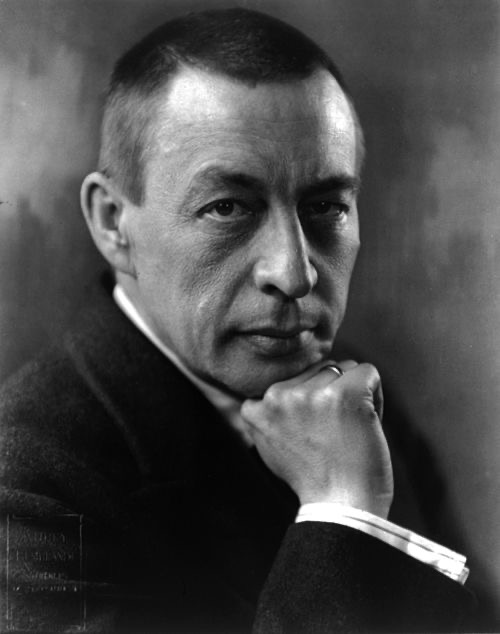
Sergei Rachmaninov in 1921. 1 April 1873. Semyonovo, Starava Russa, Russian Empire. 28 March 1943 Beverly Hills California
The Études-Tableaux (“study pictures”), Op. 33, is the first of two sets of piano études composed by Sergei Rachmaninov (the other being his opus 39 ). They were intended to be “picture pieces”, essentially “musical evocations of external visual stimuli”. But Rachmaninoff did not disclose what inspired each one, stating: “I do not believe in the artist that discloses too much of his images. Let [the listener] paint for themselves what it most suggests.”However, he willingly shared sources for a few of these études with the Italian composer Ottorino Respighi when Respighi orchestrated them in 1930 Rachmaninov composed his Opus 33 Études-Tableaux between August and September of 1911, the year after he completed his Opus 32 Preludes, and while the Opus 33 shares some stylistic points with the Preludes, the pieces are very unlike them. Rachmaninoff composed his Opus 33 at his country estate, Ivanovka, a place whose rural setting offered the peace and tranquillity necessary to stimulate his creativity.
8 studies:
Grave (C♯ minor)
Allegro non troppo (F minor)
Allegro (C major)
Grave (C minor)
Moderato (D minor)
Non Allegro—Presto (E♭ minor)
Allegro con fuoco (E♭ major)
Moderato (G minor)
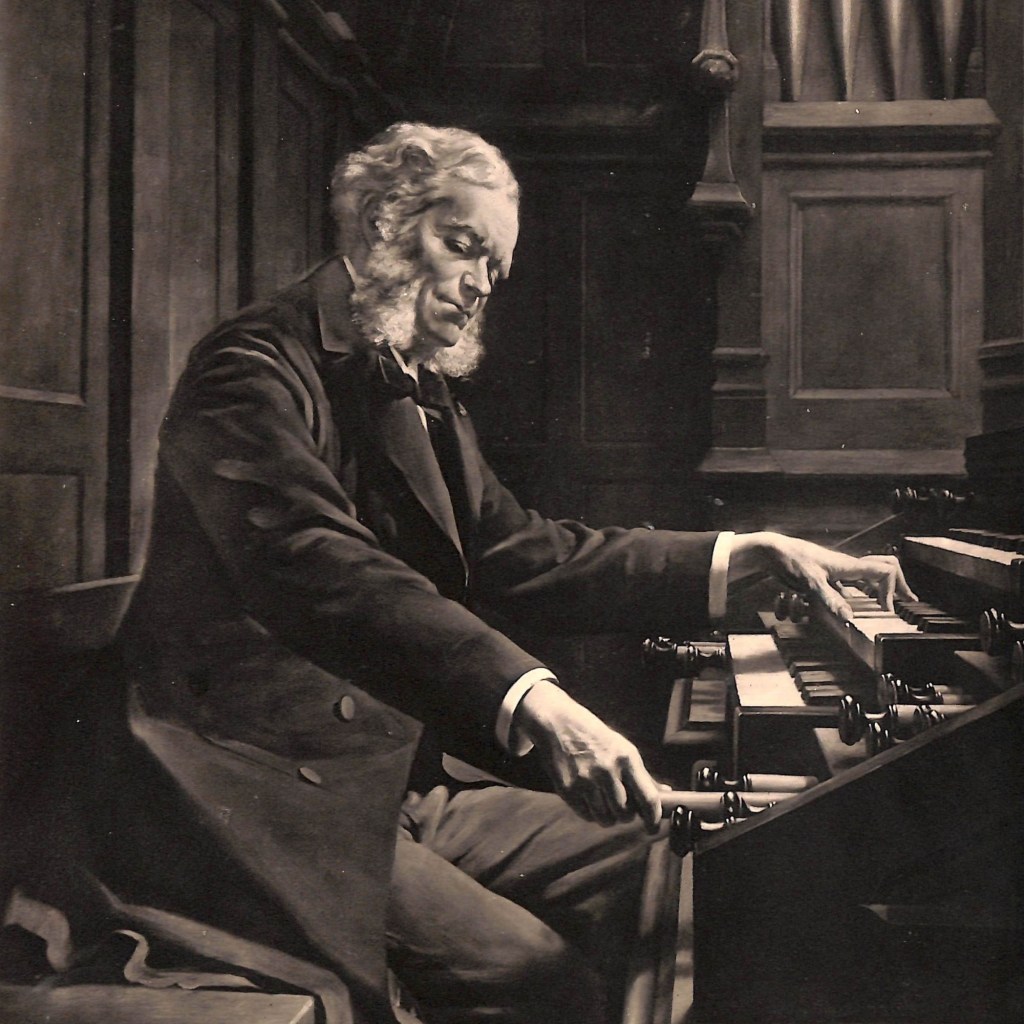
César Franck, photographed by Pierre Petit César-Auguste-Jean-Guillaume-Hubert Franck (French pronunciation: 10 December 1822 – 8 November 1890) was a French composer, pianist,organist and music teacher born in present-day Belgium. He was born in Liege (which at the time of his birth was part of the United Kingdom of the Netherlands). He gave his first concerts there in 1834 and studied privately in Paris from 1835, where his teachers included Anton Reicha .After a brief return to Belgium, and a disastrous reception of an early oratorio Ruth, he moved to Paris, where he married and embarked on a career as teacher and organist. He gained a reputation as a formidable musical improviser, and travelled widely within France to demonstrate new instruments built by Aristide Cavaillé-Coll
Prélude, Choral et Fugue, FWV 21 was written in 1884 by César Franck with his distinctive use of cyclic form.Franck had huge hands ,wide like the span of emotions he conveys,capable of spanning the interval of a 12th on the keyboard.This allowed him unusual flexibility in voice-leading between internal parts in fugal composition, and in the wide chords and stretches featured in much of his keyboard music.Of the famous Violin Sonata’s writing it has been said: “Franck, blissfully apt to forget that not every musician’s hands were as enormous as his own, littered the piano part (the last movement in particular) with major-tenth chords… most pianistic mortals ever since have been obliged to spread them in order to play them at all.”The key to his music may be found in his personality. His friends record that he was “a man of utmost humility, simplicity, reverence and industry.” Louis Vierne a pupil and later organist titulaire of Notre-Dame, wrote in his memoirs that Franck showed a “constant concern for the dignity of his art, for the nobility of his mission, and for the fervent sincerity of his sermon in sound… Joyous or melancholy, solemn or mystic, powerful or ethereal: Franck was all those at Sainte-Clotilde.”In his search to master new organ-playing techniques he was both challenged and stimulated by his third and last change in organ posts. On 22 January 1858, he became organist and maître de chapelle at the newly consecrated Sainte Clotilde (from 1896 the Basilique-Sainte-Clotilde), where he remained until his death. Eleven months later, the parish installed a new three-manual Cavaillé-Coll instrument,whereupon he was made titulaire.The impact of this organ on Franck’s performance and composition cannot be overestimated; together with his early pianistic experience it shaped his music-making for the remainder of his life.
Franck’s original plan, according to his pupil Vincent d’Indy, was to write a plain Prelude and Fugue ,the decision to include a central section, separate from, yet linking, the Prelude and Fugue, came later (again according to d’Indy).However this central section became the emotional core of the work, its ‘motto’ theme used as a symbol of redemption and as a unifying principle at the climax of the Fugue.
Saint-Saëns made his tart observation about the piece that the ‘chorale is not a chorale and the fugue is not a fugue’ (in his pamphlet ‘Les Idées de M. Vincent d’Indy’).Alfred Cortot described the Fugue in the context of the whole work as ‘emanating from a psychological necessity rather than from a principle of musical composition’ (La musique française de piano; PUF, 1930). It is as if a ‘fugue’, as a symbol of intellectual rigour, was the only way Franck could find a voice to express fully the hesitant, truncated sobs of the Prelude and the anguished, syncopated lament of the Chorale. Not that the Fugue solves the problem—this is the function of the ‘motto’ theme; but the rules of counterpoint have given the speaker a format in which the unspeakable can be spoken.
There are two motivic ideas on which the whole work is based: one, a falling, appoggiatura motif used in all three sections and generally chromatic in tonality ; the other a criss-crossing motif in fourths (the ‘motto’ theme, which appears first in the Chorale section and then again as a balm at the point where the Fugue reaches its emotional crisis. The first motivic idea is clearly related to the Bach Cantata ‘Weinen, Klagen, Sorgen, Zagen’, and also to the ‘Crucifixus’ from the B minor Mass; the other idea appears as the ‘bell motif’ in Wagner’s Parsifal.
Marie Blanche Selva (Catalan Blanca Selva i Henry, 29 January 1884 – 3 December 1942) was a French pianist, music educator, writer and composer of Spanish origin.Blanche Selva was the only French pianist of her time to specialise in Czech music, and she was consequently very popular in Czechoslovakia. She continued to tour and work as a concert pianist in Europe By the age of 20 she had performed all of J.S. Bach’s keyboard works in 17 recitals.Between 1906 and 1909 she premiered all four books of Albéniz’s Iberia .In January 1925 Selva moved to Barcelona from Paris where she founded her own music school and performed in a duo with violinist Joan Massià. In 1930 she developed a paralysis that ended her performing career, but she continued teaching, writing and composing.Blanche Selva was active as a translator and transcriber. But her main work is a monumental 7-volumes work on piano technique:L’Enseignement musical de la Technique du Piano, Paris from 1916 to 1925 This book propose a radically new approach to piano playing. Her predilection for big arm gestures and her detailed descriptions of the most unusual types of attack, combined with the constant attention to the resulting tone-colour, make his book a unique contribution to the history of the piano and its literature.
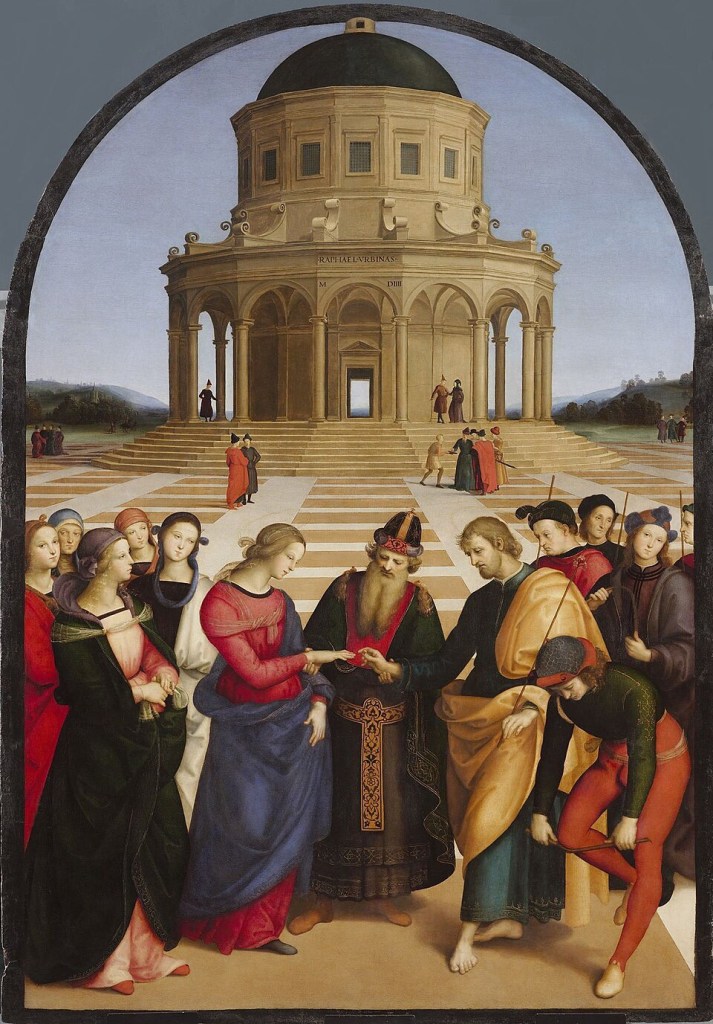
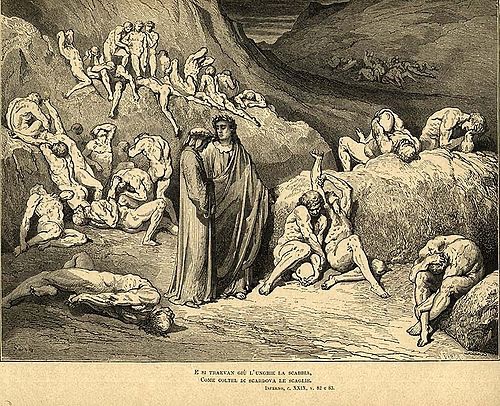
The Marriage of the Virgin, also known as Lo Sposalizio, by Raphael Completed in 1504 for the church of San Francesco ,Città di Castello , the painting depicts a marriage ceremony between Mary and Joseph J. It changed hands several times before settling in 1806 at the Pinacoteca di Brera .The painting which inspired Liszt whose work was published in 1858The Dante Sonata was originally a small piece entitled Fragment after Dante, consisting of two thematically related movements , which Liszt composed in the late 1830s. He gave the first public performance in Vienna in November 1839. When he settled in Weimar in 1849, he revised the work along with others in the volume, and gave it its present title derived from Victor Hugo’s own work of the same name. It was published in 1858 .The highly programmatic themes depict the souls of Hell wailing in anguish.
Années de pèlerinage S.160.S 161 S 162 S 163 is a set of three suites . Much of it (the first suite in particular) derives from an earlier work, Album d’un voyageur, his first major published piano cycle, which was composed between 1835 and 1838 and published in 1842. Années de pèlerinage is widely considered as the masterwork and summation of Liszt’s musical style. While the first two offerings are often considered music of a young man, the third volume is notable as an example of his later stylel. Composed well after the first two volumes, it displays less virtuosity and more harmonic experimentation.
“Deuxième année: Italie” (“Second Year: Italy”), S.161, was composed between 1837 and 1849 and published in 1858 by Schott. Nos. 4 to 6 are revisions of Tre sonetti del Petrarca (Three sonnets of Petrarch ), which was composed around 1839–1846 and published in 1846.
Sposalizio (Marriage of the Virgin ) a painting by Raphael
Il penseroso (The Thinker), a statue by Michelangelo
Canzonetta del Salvator Rosa (Note: this song “Vado ben spesso cangiando loco” was in fact written by Giovanni Bononcini
Sonetto 47 del Petrarca
Sonetto 104 del Petrarca
Sonetto 123 del Petrarca
Après une lecture du Dante :Fantasia quasi Sonata
The title Années de pèlerinage refers to Goethe’s famous novel of self-realization, Wilhelm Meister’s Apprenticeship , and especially its sequel Journeyman Years (whose original title Wilhelm Meisters Wanderjahre meant Years of Wandering or Years of Pilgrimage, the latter being used for its first French translation). Liszt clearly places these compositions in line with the Romantic literature of his time, prefacing most pieces with a literary passage from writers such as Schiller,Byron or Senancour, and, in an introduction to the entire work, writing:
Having recently travelled to many new countries, through different settings and places consecrated by history and poetry; having felt that the phenomena of nature and their attendant sights did not pass before my eyes as pointless images but stirred deep emotions in my soul, and that between us a vague but immediate relationship had established itself, an undefined but real rapport, an inexplicable but undeniable communication, I have tried to portray in music a few of my strongest sensations and most lively impressions
An appreciation by Elena Vorotoko , co Artistic director of the Keyboard Trust
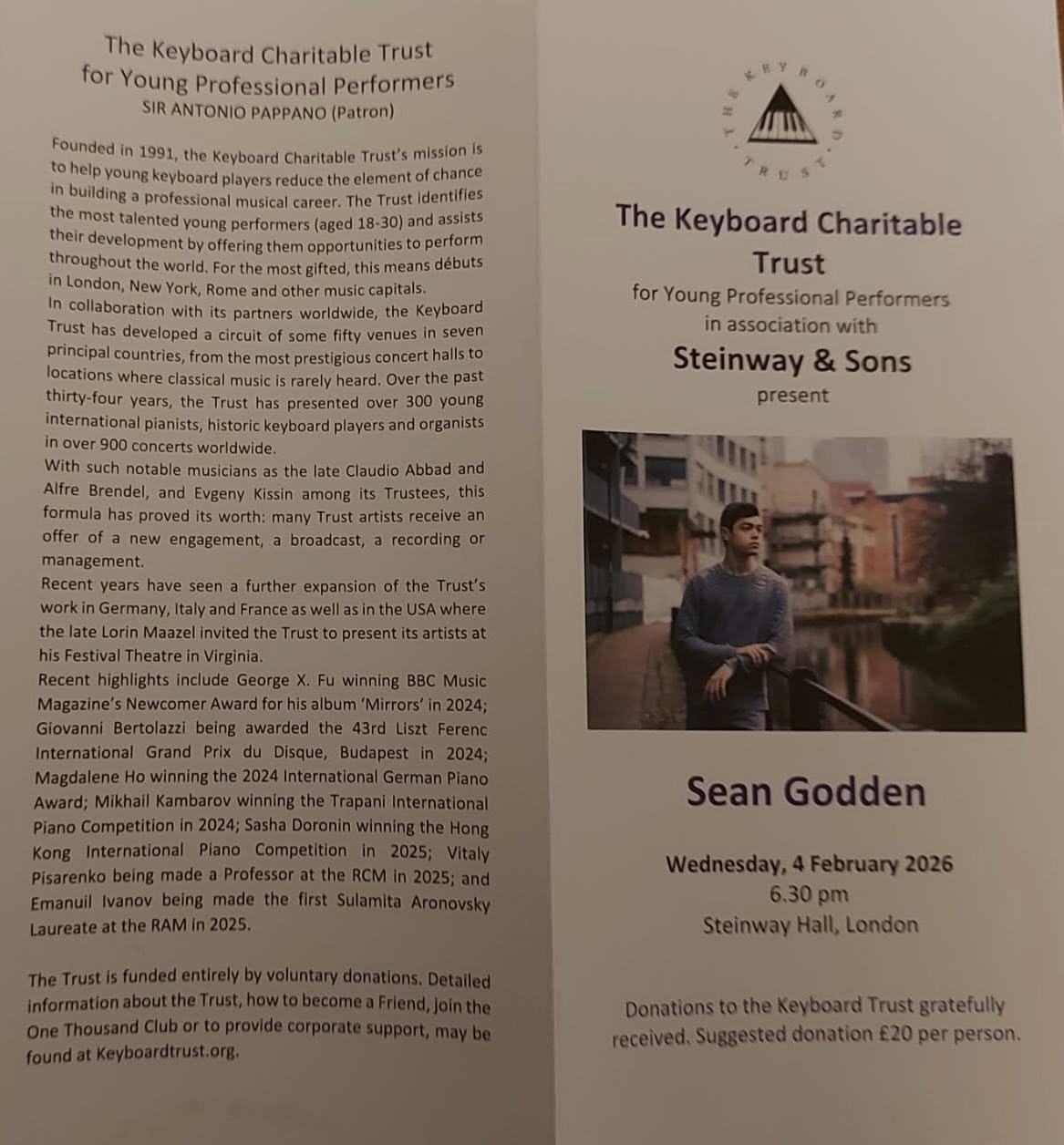
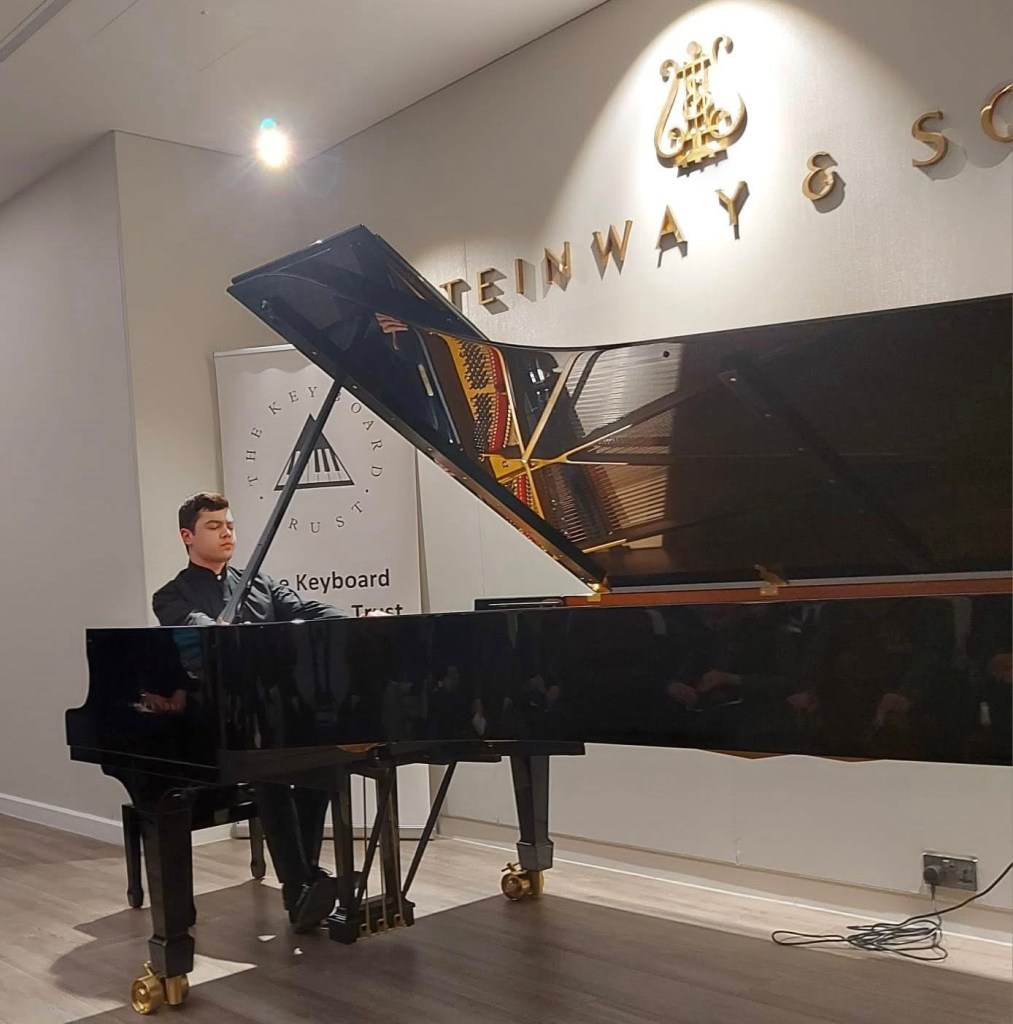
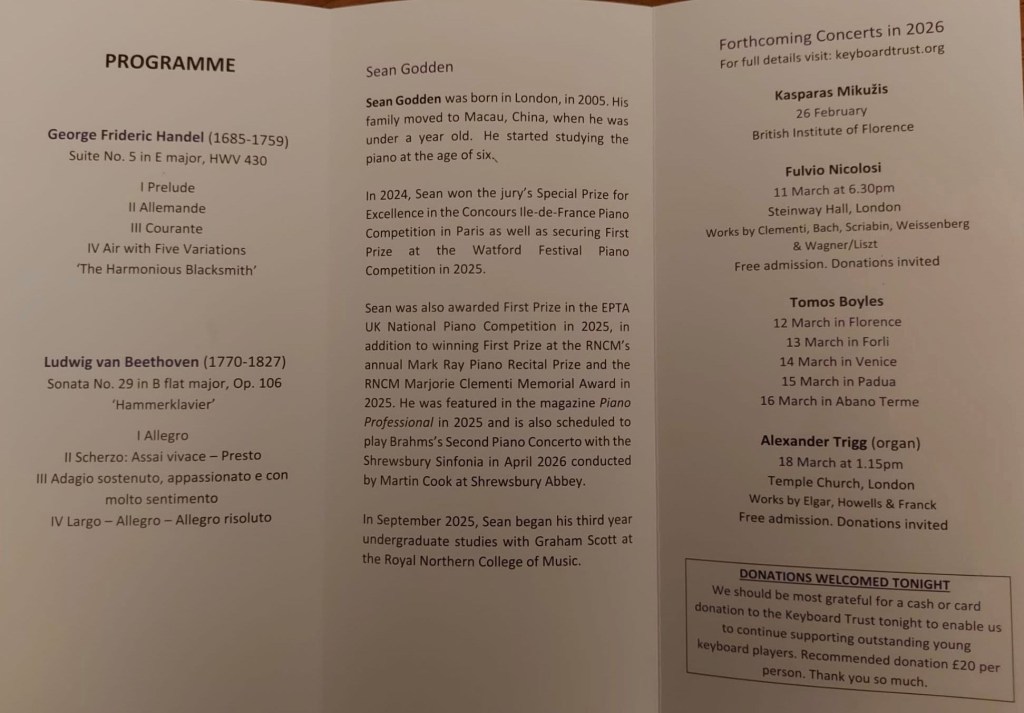
Steinway Hall in London opened its doors and piano lid for the Keyboard Trust New Artist recital once again. It was a newly fledged model D, plastic films still protecting the pedals, its grandeur ready to be discovered. Discovered it was, by a 20-year-old Sean Godden, 3rd year student at the Royal Northern College of Music studying with Graham Scott. The opening chords of Handel’s 5th Suite transported the audience into a large cathedral, filled with glorious lines, whispering and grand columns of harmony in the improvisatory Prelude. Creating a rich ambience with his pedalling, Sean flowed smoothly through the conversations between the voices in the Allemande, timing the pace with flexibility and poise. The sharply articulated Courante was full of surprises, creating a boisterous contrast. The famous ‘Harmonious Blacksmith’ followed as the final movement of the Suite. Best known as a separately performed piece that is rumoured to have been inspired by a blacksmith’s hammer striking the anvil with a repeated note – B, as was witnessed by Handel who had sheltered in a smithy from rain. Whatever the origin, this famous piece does not fail to excite with its progressively faster notes, starting with crotchets and quavers, then semi-quavers, then triplets and semi-demi-quavers. Sean took a brisk tempo at the start and did not budge when it came to the pages blackened with notes – it was an exciting rendition! A little less pedal and more finger articulation to accentuate the start of each note, a little like the harpsichord, would add extra fire to the otherwise stellar performance.
Elena Vorotko in conversation with Sean Godden
Beethoven’s ‘Hammerklavier’ Sonata followed .Sean only 20 years old chose to pair the two masterpieces because Beethoven admired Handel deeply and thought him to be the greatest composer, even above J.S. Bach. The grand canvas of the Sonata invited large strokes from the pianist and, paired with the vibrant powers of the piano, this performance will resonate in our minds and hearts for a while still. Solid in his grasp of the material, Sean was clearly constructing a narrative, something he is interested in discovering in movies, as he mentioned later in the interview. Moments of serenity and beauty were swept away with youthful enthusiasm. Sean admitted to have been rather inspired by the instrument and its capabilities and made the most of this opportunity to play one of the top pianos at this famous venue. The fireworks of the dramatically contrasting Scherzo gave way to the grey skies of the Adagio Sostenuto with a rare ray of sunshine interrupting the gloomy chordal texture. The middle section of the movement revealed the most sincere, yet emotional, rendition from Sean, singing the theme from his heart which soared with desperate sorrow. The last movement with its challenging fugue revealed Sean’s grasp of the structure and role of every note. Wildly contrasting in both tempo changes and dynamics, this movement had a spine-chilling drive to the very end, impressively articulated and performed with full commitment, though seemingly rather at ease. A very impressive young man, whose passion for sharing his stories through music will take him far.
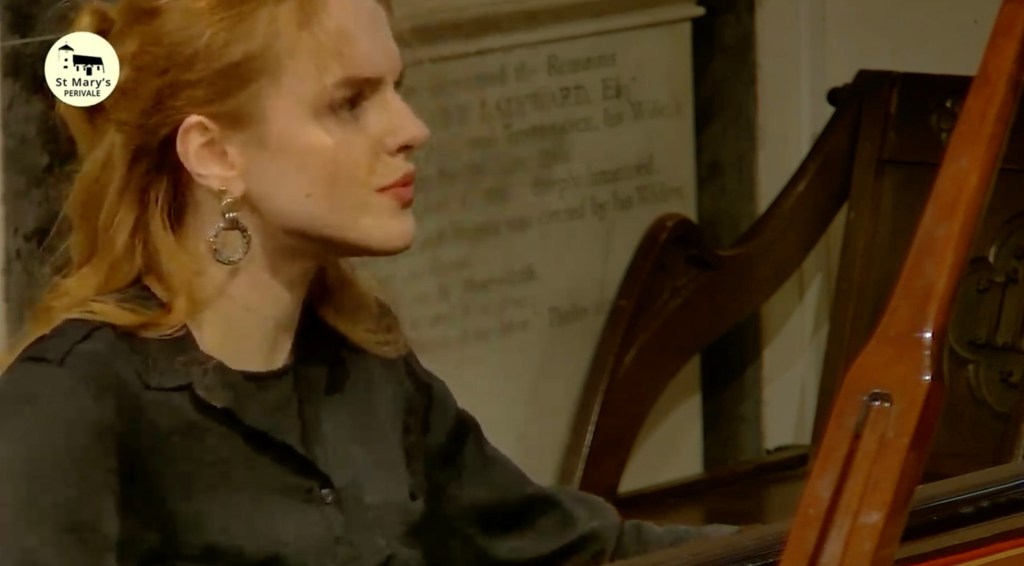
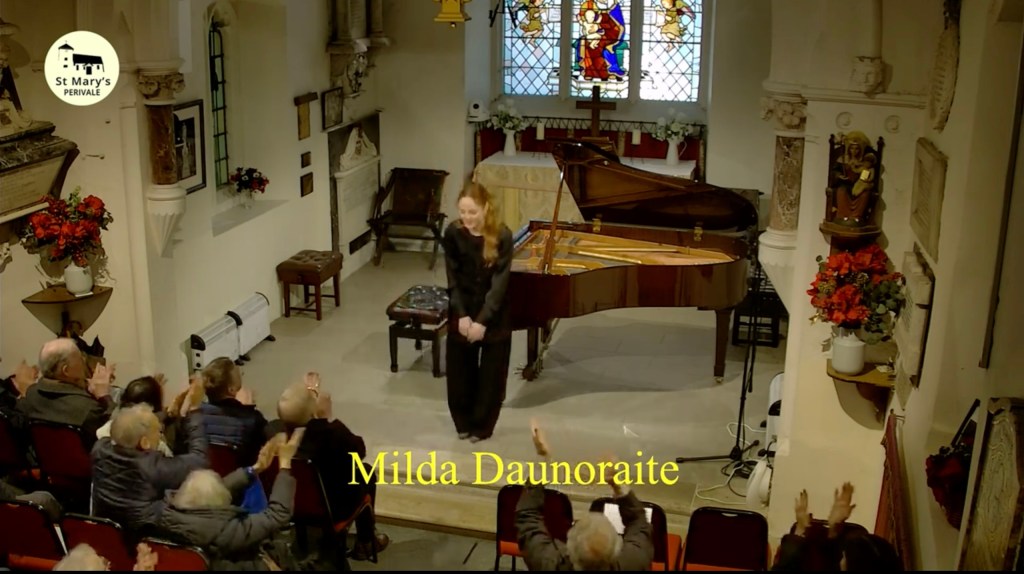
I have heard Milda over the past few years and her musical progress has been remarkable. The very first time I heard her was at her audition for the Keyboard Trust where Leslie Howard was completely won over by her personality both at the keyboard and in the short interview afterwards.
I have since heard her at the National Liberal Club series for the KT and even went on tour with her to Italy. In Florence she not only captivated the elite audience in the Harold Acton Library but she even captivated some Lithuanian waiters in a restaurant the next day with whom she was happy to share her music in return for a free lunch, a red rose……..and a glass of Limoncello she mischievously added later! With Milda you get what you see! Music is so much part of her that her music making takes on a radiant sense of discovery and ebullient joy with the beauty and eloquence that pours from her fingers with music speaking even louder than words. It is thanks to her teacher Tessa Nicholson who over the past years has given her a technical mastery which you could well describe as ‘canons covered in flowers’.
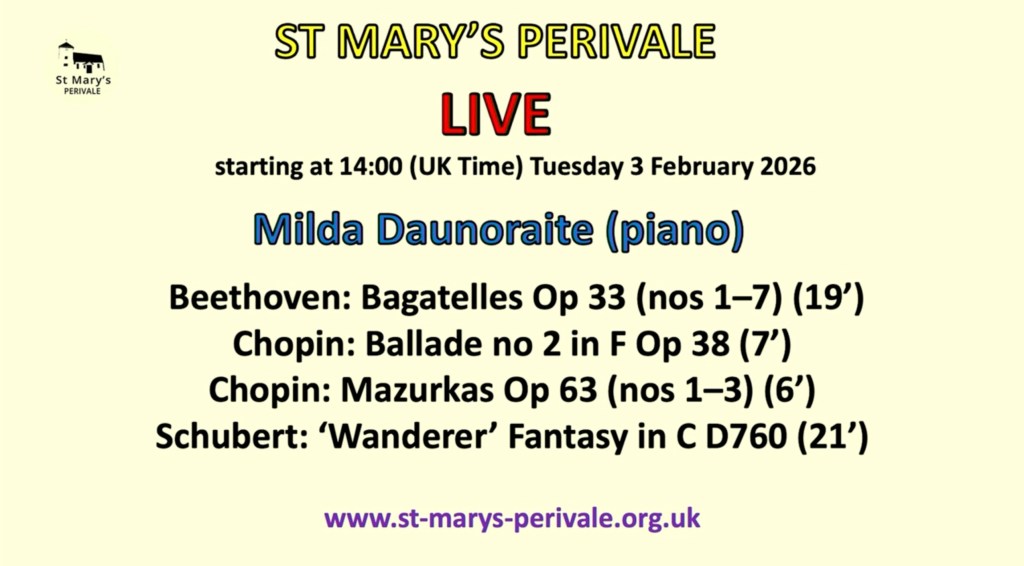
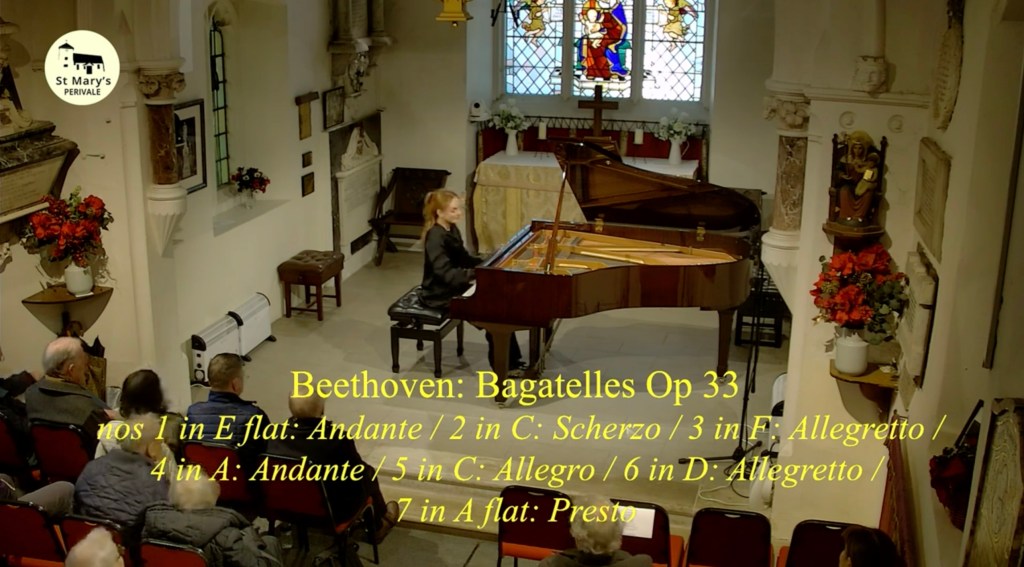
Milda has acquired an authority and burning conviction that makes all she plays come to life with the hypnotic intensity of an artist who thinks more of the music than herself. What better way to start a recital than with Beethoven’s early Bagatelles or trifles with the simplicity of almost childlike story telling. This is Beethoven with the refined sensibility that is not usually associated with his irascible turbulent genius. Milda living every moment as she recounted Beethoven’s ‘fairy tales’ where every note spoke with an eloquence of charm, grace and an unusual finesse for the gruff assertions that we usually associate with Beethoven. What fun she had with Beethoven’s playful ‘Scherzo’. An almost too serious ‘Trio’ was played with a burning intensity and richly melodic octaves where she slightly lent on the lower note giving great depth to her playing. The ‘Allegretto’ was of Schubertian eloquence, played with a refined tonal palette of radiance and beauty. The ‘Andante’, a pastoral outpouring of disarming simplicity, becoming Beethoven’s ‘Au bord d’une source’ in Milda’s magical hands. Skittish arpeggios were just thrown into the air in the ‘Allegro’,an ease as the hands squabbled with each other until their final impish farewell. It contrasted with the rich quartet quality that she brought to the melodic outpouring of hymn like depth of the penultimate bagatelle. The final ‘Presto’ was a whirlwind of vibrant vitality with Beethoven’s long held pedals merely passing clouds in this effervescent crescendo of frenzy.
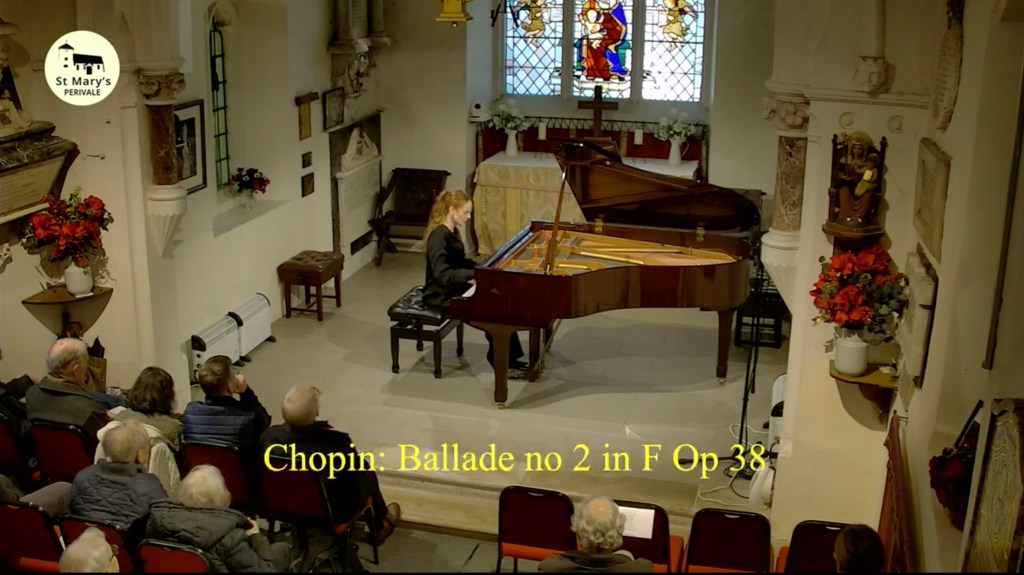
The Chopin Ballade with its opening tolling bell was embraced by a deeply felt melancholy with a forward movement of uplifting vibrancy. Carrying us forward like a barcarolle, before the turbulent interruptions of passionate intensity. Milda’s playing has a way of opening a window on a fantasy world that is created by the immediacy and conviction of her artistic vision. Swirling sounds wafted over the keyboard with a technical mastery that was never ostentatious but became part of the story that she was sharing with us. Outbursts that were short lived as Chopin seems lost and searching for a way forward before arriving at the tolling bells, this time of trills announcing the agitation of the coda. Fearlessly played by Milda throwing caution to the wind as her driving conviction swept away all before her. The opening ‘berceuse’ now timidly showing its face growing out of the vibrations left from such turbulence. It was played or rather whispered, showing a masterly control of the pedal as she brought this story to the end that was in the gasping silence that followed the final short chord.
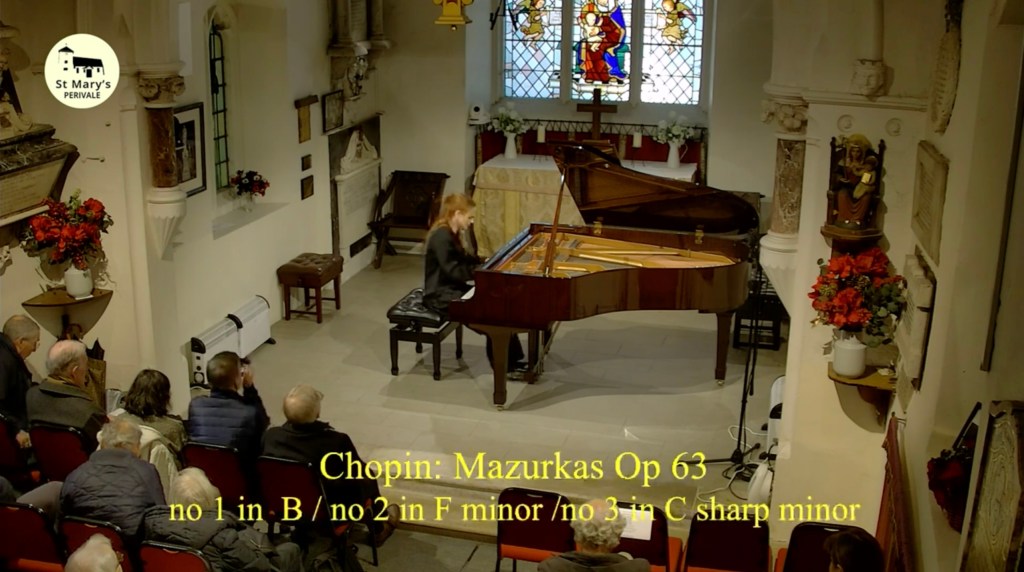
It was Schumann who described Chopin’s Mazurkas as ‘canons covered in flowers’ and that I had quoted earlier to describe Milda’s artistry. The last published Mazurkas in Chopin’s lifetime and as Milda said in her introduction, in each of these three Mazurkas op 63 there is an overwhelming abundance of invention. Was this a composer who could see death all around him and needed to give space to the wonders that were still in his soul. Certainly Milda believed this to be true as she played with an improvised freedom of radiance and glowing beauty. In this first Mazurka there was the same feeling of dance of the ‘ecossaise’ with a ‘joie de vivre’ of infectious vitality.The F minor Mazurka was of heartrending beauty of beseeching radiance which Milda imbued with a kaleidoscopic palette of emotions of refined sounds.Milda brought a beguiling insinuation to the C sharp minor Mazurka so similar to the poignant nostalgia of Chopin’s later waltzes.
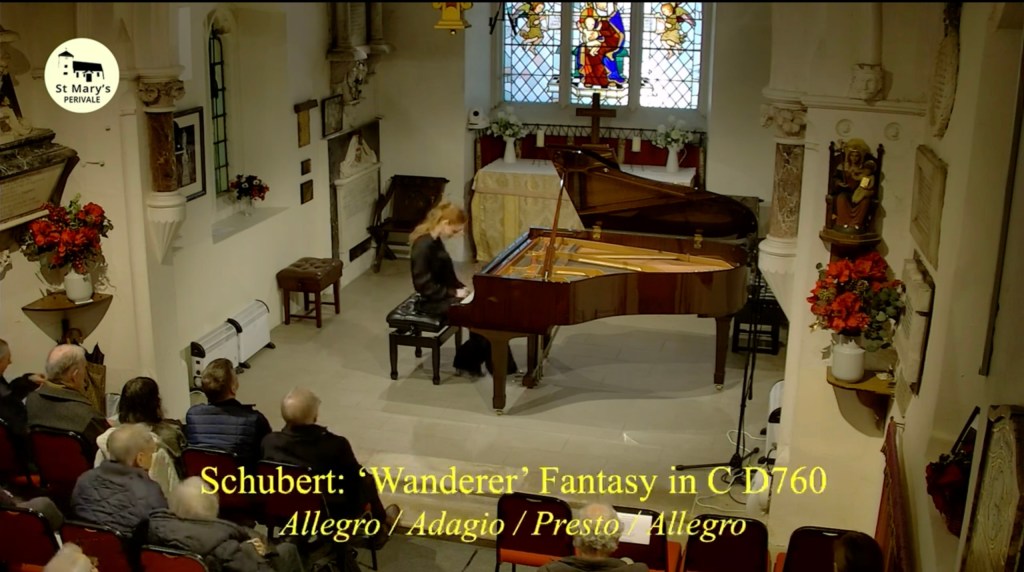
It was the Fantasy of Schubert in the ‘Wanderer’ that matched so perfectly Milda’s temperament and fearless search for the meaning behind the notes. Schubert always with a ‘song in his heart’, even in the most outrageously virtuosistic passages of a work that was to lead the way and create a new form for future composers. It was so admired by Liszt that he even transcribed a version for piano and orchestra and Schubert’s ‘leitmotif’ in the Wanderer, via Liszt, was to inspire his son in law Richard Wagner. Milda played with brilliance and nobility, her natural technical mastery at the service of the music with burning intensity, delicacy and radiant beauty. There was a deep brooding as the intensity abated and the ‘Wanderer’ appeared on the scene. Milda brought a depth of sound to this song where every note of the chords spoke so eloquently of profound aristocratic emotions. Allowing the variations to unfold like characters appearing on stage in a quasi operatic panorama of human emotions.There was the radiant beauty of a true bel canto answered by the poignant supplication of the tenor. Unfolding with the washes of sound of a perfectly shaped jeux perlé as drama suddenly took centre stage. A remarkable technical control as Milda lived every moment with vibrant conviction. Bursting into the dynamic drive of the ‘Scherzo’, a lilting unstoppable Schubertian outpouring with streams of notes, mere frissons of exhilarating embellishments. The ‘Fugato’ entered with a driving mastery and nobility. A ‘tour de force’ of transcendental piano playing but such was her mastery she could even snatch a breath ,as Arrau was wont to do, before the final few bars of a continuous crescendo to the conclusion of yet another story told by a master storyteller.
Lithuanian pianist, Milda Daunoraite, began her piano studies at the age of six. She received her formative education at The Purcell School of Music and is currently studying with Tessa Nicholson at the Royal Academy of Music, on a full fees scholarship, where she is a recipient of the ABRSM Scholarship Award. She is supported by The Keyboard Charitable Trust, ‘SOS Talents Foundation – Michel Sogny’ and the Mstislav Rostropovich Foundation. Her performances have been featured live in forty countries through Mezzo TV, Radio Classique, TV5 Monde and Lithuanian National Television and Radio. In 2018, Milda performed the Fourth Piano Concerto by V. Bacevicius for the Lithuanian National Philharmonic Society with the Latvian National Symphony Orchestra. This concert was broadcast across Europe by Euroradio (EBU). She has performed at venues such as Wigmore Hall, the Amsterdam Concertgebouw, Musikhuset Aarhus, the United Nations headquarters in Geneva, at the EMMA World Summit of Nobel Prize Peace Laureates in Warsaw and many others. Milda’s recent performances include a recital in the Laeiszhalle Recital Hall in Hamburg, at the Deal Music & Arts Festival, at the Petworth Festival, Biarritz Piano Festival and at the Palermo Classica Festival. Milda won the Purcell School’s Concerto Competition which gave her the opportunity to perform Ravel’s Piano Concerto in G major at the Queen Elizabeth Hall in London. She also won First Prize in the international V. Krainev Piano Competition in Kharkov, Ukraine; the ‘Jury‘ Prize in the Pianale International Academy & Competition in Germany; and First Prize in the fourth International Piano Competition in Stockholm.
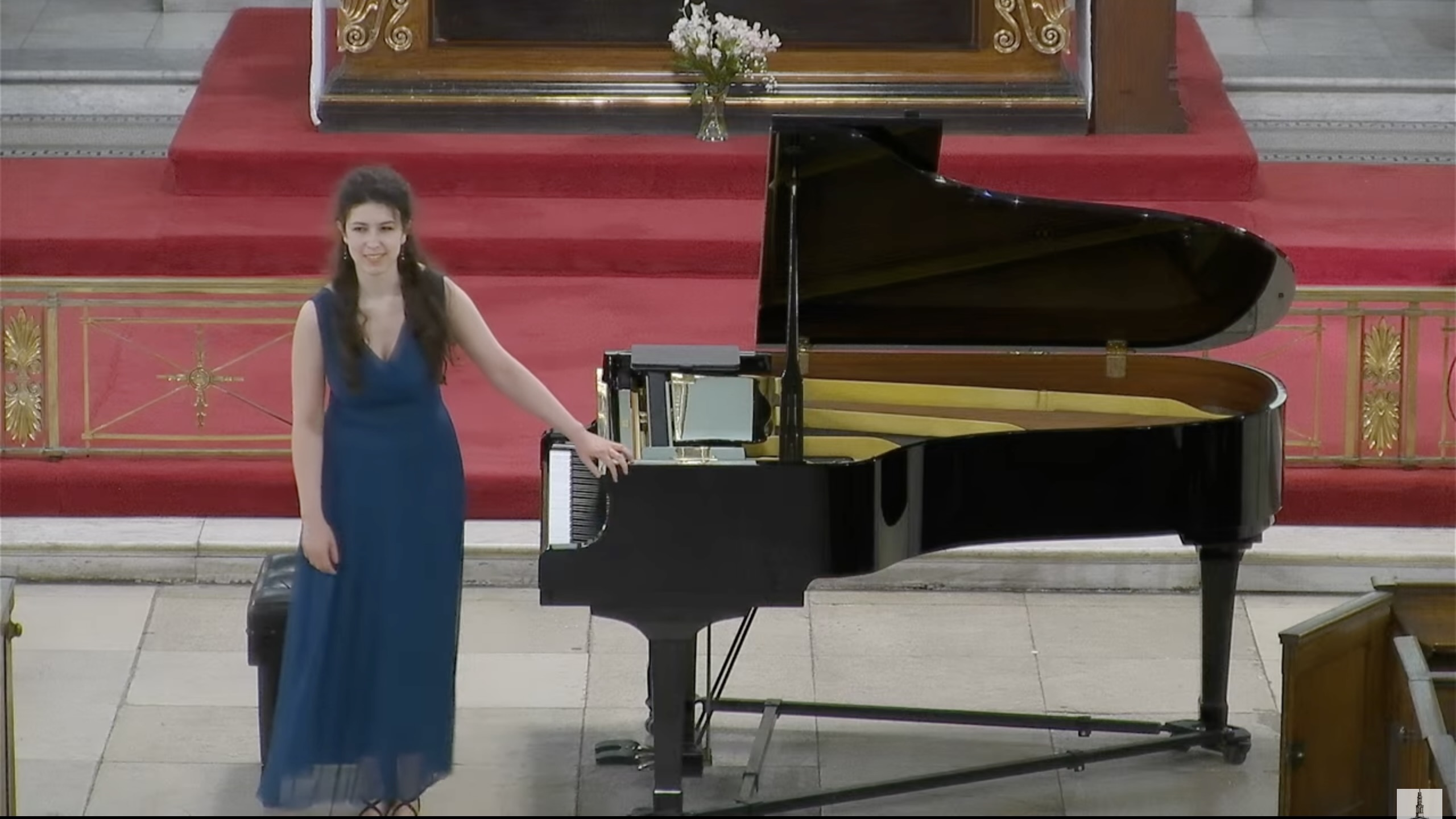
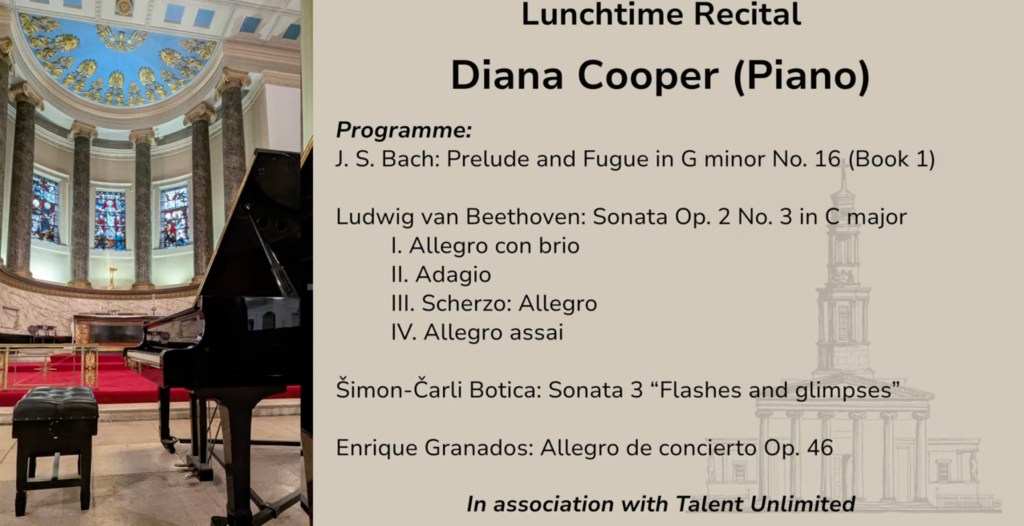
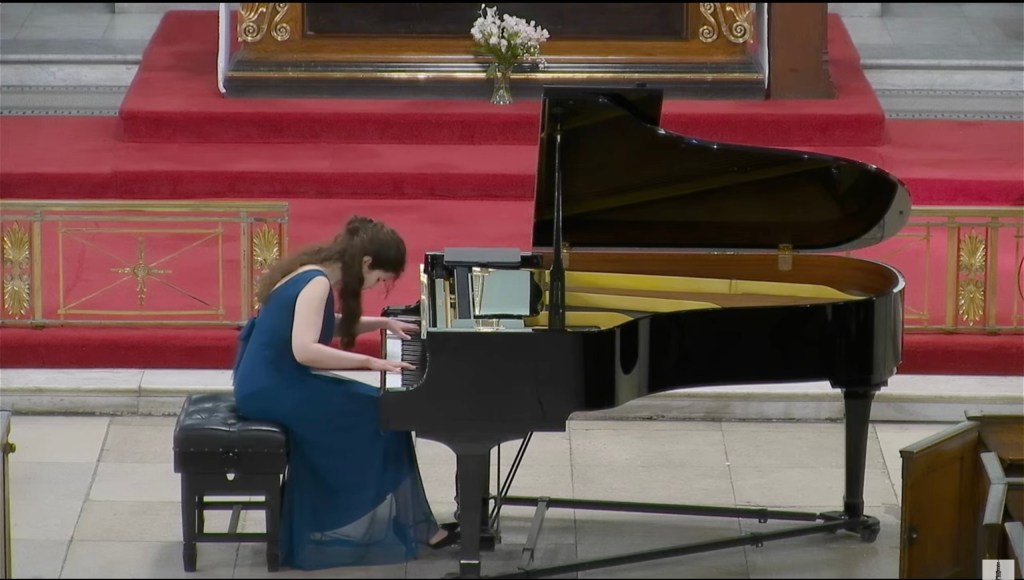
I have heard Diana many times over the past year as she prepared for the Chopin Competition, having been selected from hundreds of applicants to play in Warsaw. Her performances of Chopin were much admired and noticed worldwide, but today she chose a more classical repertoire with Bach and Beethoven accompanied by a contemporary work and a rare concert piece by Granados. It is rare these days to hear just one Prelude and Fugue in concert and it was refreshing to hear her play the G minor Book 1 with beauty and luminosity. Her natural musicianship allowing the music to unfold with clarity and the poignant weight of refined and respectful authority. What wonders these Preludes and Fugues are when played as Diana did today with the contrast of the fugue springing to life with rhythmic energy outlining it’s well defined architectural shape.
Beethoven’s Sonata op 2 n. 3 is the first of the Sonatas that show how the pupil can learn from his mentor and allow a seed to grow and find a new and adventurous course. In this sonata there are still the four movements of the model Sonata form but they are transformed into something much larger and bolder. The slow movement of this op 2 n. 3 and op 7 and op 10 n. 3 point in the direction that Haydn might well have followed but that his pupil was able to do with his genius of rebellious originality. Diana played the opening with delicacy and crystal clarity where the very exposed double thirds were played with grace and charm. Her awareness of the harmonic progressions gave great strength and depth to her playing. Beethoven’s ferocious outbursts tempered with the mellifluous beauty of his melodic line but always with the harmonic undercurrent moving the music inexorably forward. The ‘Adagio’ was where the rests became so poignant as a bridge between whispered gasps of a mature beauty way beyond Beethoven’s twenty-five years of age. A depth and profundity that mark out his genius already and which Diana played with aristocratic nobility and restraint. Deep bass notes were played with a depth of full rich sound, never hard or ungrateful, but a continuation of the ravishing beauty that she allowed to unfold with refreshing simplicity. She brought a remarkable lightness and clarity to the ‘Scherzo’ with washes of sound in the Trio played with masterly musicianship and technical ease. The ‘Allegro assai’ was where Diana combined mastery and style with lightness and shape. A palette of sounds where difficulties were thrown off with ease as she delved deeply into the musical content giving a ‘joie de vivre’ that Papà Haydn would certainly have approved of.
The Sonata n. 3 by Šimon-Čarli Botica was given a courageous performance by Diana especially as the composer was actually present in the church. She brought the same luminosity and clarity to the score as she had for the two B’s. It was refreshing to hear a new work played with such obvious authority and she even gave a brief spoken introduction to a work of ‘Flashes and Glimpses’ that may still have been wet on the page. It was like a refreshing ‘sorbet’ changing the classical atmosphere of the main course before the appetising and succulent sweet.
And what a joy it was to listen to the Granados : ‘Allegro de Concierto’ that is a rare delight in the concert hall, just as is Chopin’s ‘Allegro de concert’.Is it just a coincidence that they share the same opus number I wonder ? Diana enjoying every minute of her seemingly improvised freedom. A work of unashamed virtuosity with a sumptuous sense of style with its almost Hollywoodian outpouring of luscious melodic effusions. I have heard this work on a few rare occasions but I never remember it as being so effective as today, where Diana’s sense of balance and innate musicianship allowed her to shape even this showpiece with intelligence, beauty and style.
Passionate about classical music from her earliest age, it is on stage that Diana Cooper attains artistic fulfilment.
Winner of numerous awards including 1st Prize at the Brest Chopin Competition, 1st Prize at the Halina Czerny-Stefanská International Competition in Poznan (Poland), 1st Prize at the Concurso Internacional de Piano de Vigo (Spain), and laureate of the Fondation de la Banque Populaire, Diana Cooper has been invited to perform in various venues and festivals in France and abroad, including the Nohant Chopin Festival, the Festival Chopin à Paris, the Salle Cortot, the Polish Embassy in Paris, the Ysaye Festival in Belgium, the Palacio de Congresos in Huesca, Spain, the Hrvatski dom Split in Croatia, the Kielce Filharmonia in Poland…
In 2023, she was selected to take part in the project Un été en France avec Gautier Capuçon, for which she perfomed as a soloist and in chamber music.
She was invited in 2018 to take part in the radio program Générations Jeunes Interprètes on France Musique and, in 2023, performed as a trio in the television programme Fauteuils d’orchestre, broadcast on France 5.
Her activity has been enriched by solo appearances with the Orchestre Symphonique du Sud Ouest in Chopin’s 1st Concerto, the Orchestre Appassionatoin Mozart’s 20th concerto, and the Orchestre des Lauréats du Conservatoire de Paris in Schumann’s concerto, performed in 2023 at the Cité de la Musique in Paris.
Born in France, she began studying piano at the Tarbes Conservatoire with Jean-Paul Cristille, gave her first solo recital at 9 and performed at 14 with orchestra Mozart’s Concerto n°21 in France and Spain. She was unanimously admitted at the age of 16 to the Paris Conservatoire to study with Jean-François Heisser and Marie-Josèphe Jude and graduated with a master’s degree five years later. She continued her studies at the Ecole Normale de Musique where she was taught by the renowned professor Rena Schereshevskaya for three years. In 2022, she was selected to join the new season of the Académie Musicale Philippe Jaroussky, and perfected her skills there with Cédric Thiberghien. In parralel, she was admitted the same year to the Paris Conservatoire in an Artist Diploma course. She is currently studying at the Royal College of Music in London where she has been admitted to pursue a second Artist Diploma course, in Norma Fisher’s class. She is a laureate of the Kathleen Trust and has recently joined the Talent Unlimited charity offering concerts in London for young talented musicians.
Following her pre-selection in 2021 for the prestigious Chopin Competition in Warsaw, she was invited the following summers by Philippe Giusiano to take part in masterclasses in Katowice as well as concerts at the Chopin Manor in Duszniki, organized by the Chopin Foundation.
Diana has recently recorded her first CD, featuring works by Haydn, Chopin and Ravel, after winning in 2022 the 1st Prize in the Concours d’aide aux Jeunes Artistes organized by the Festival du Vexin.
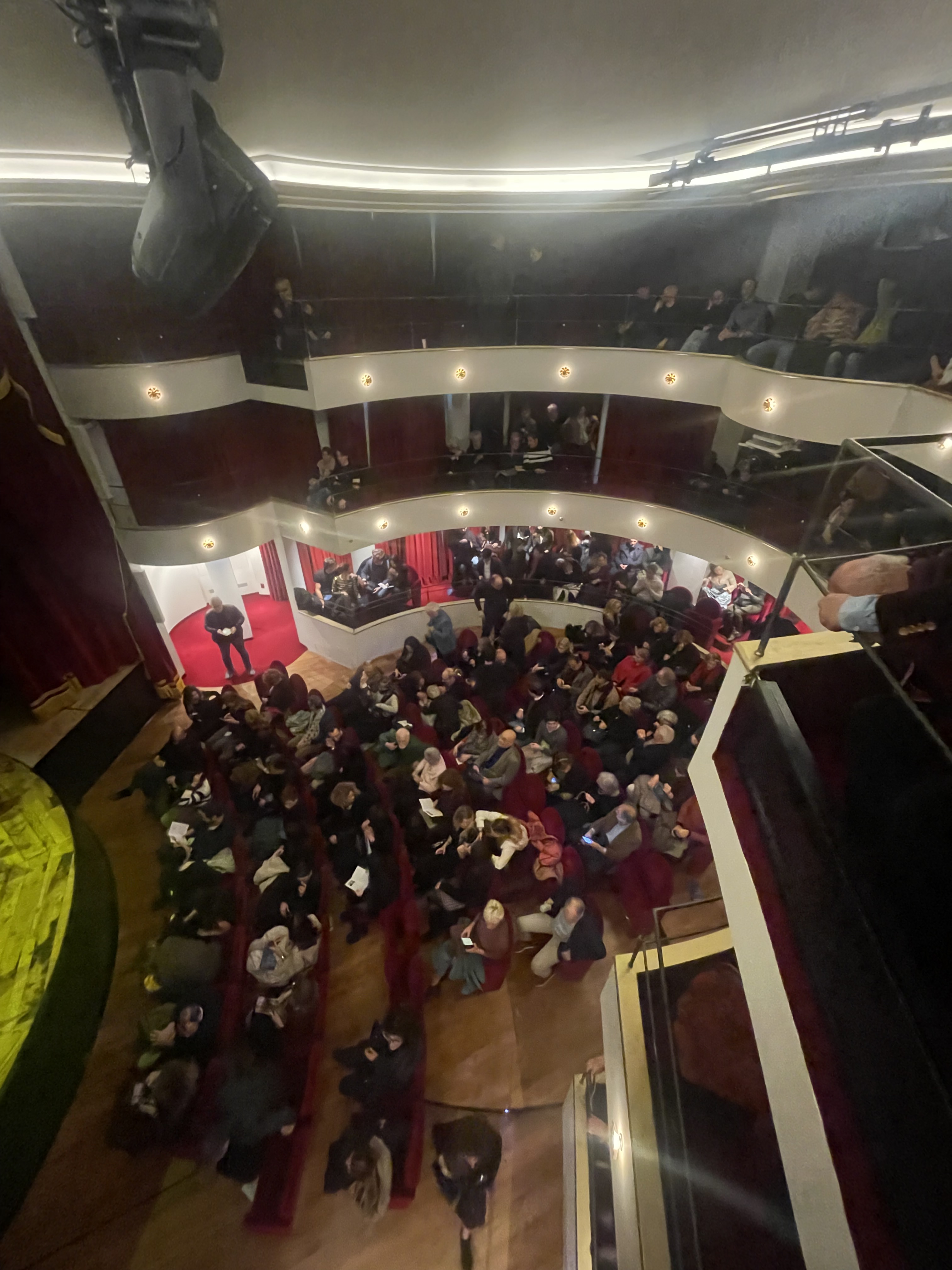
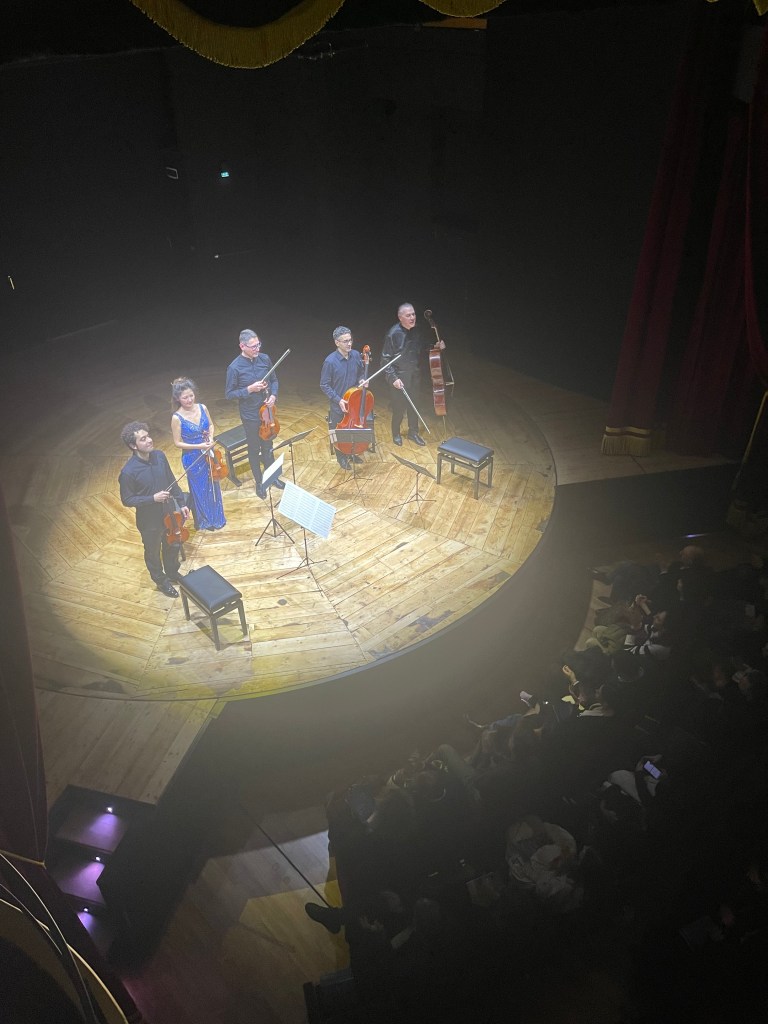
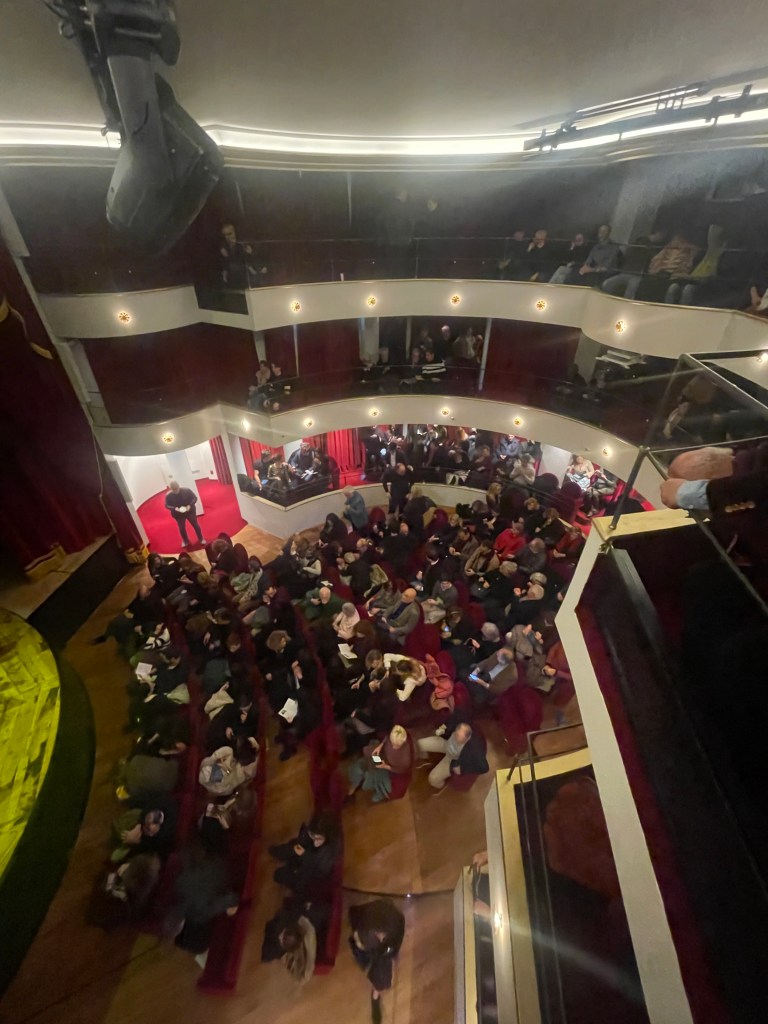
Miracles in Rome with the sublime sounds of Schubert brought to us by ‘Comet’ to the barren land of Rome.
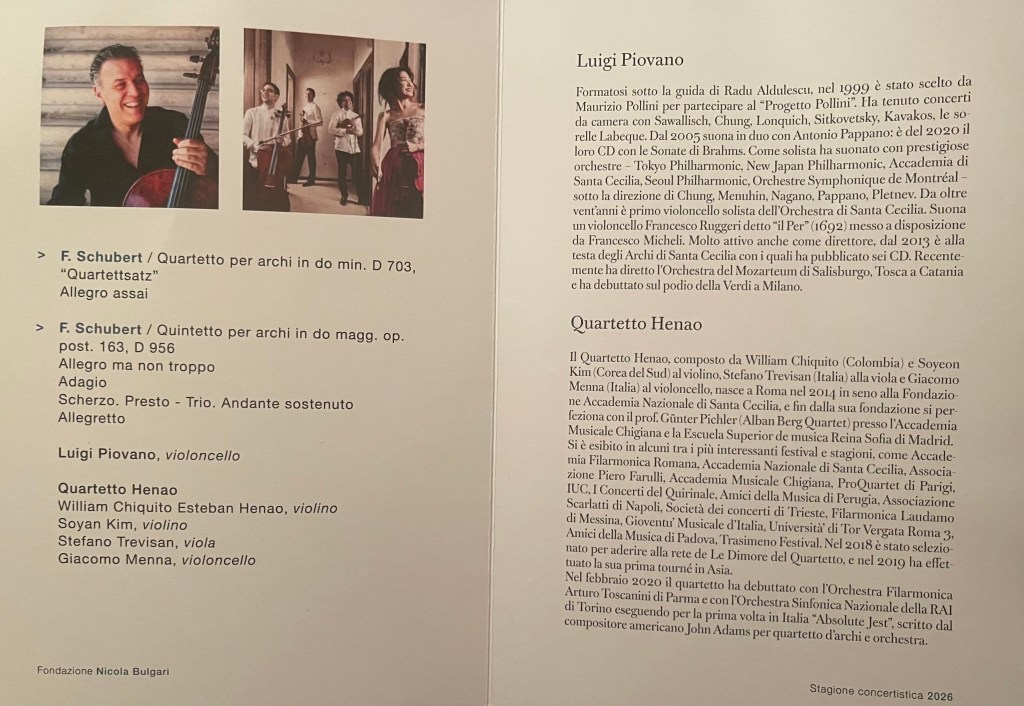
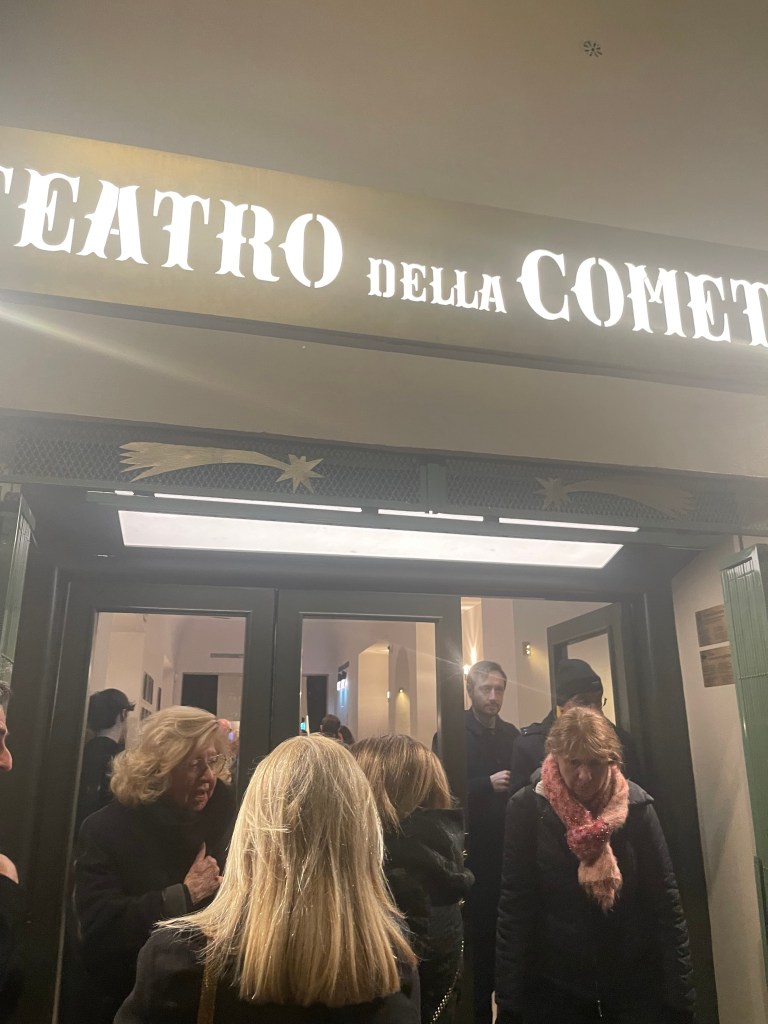
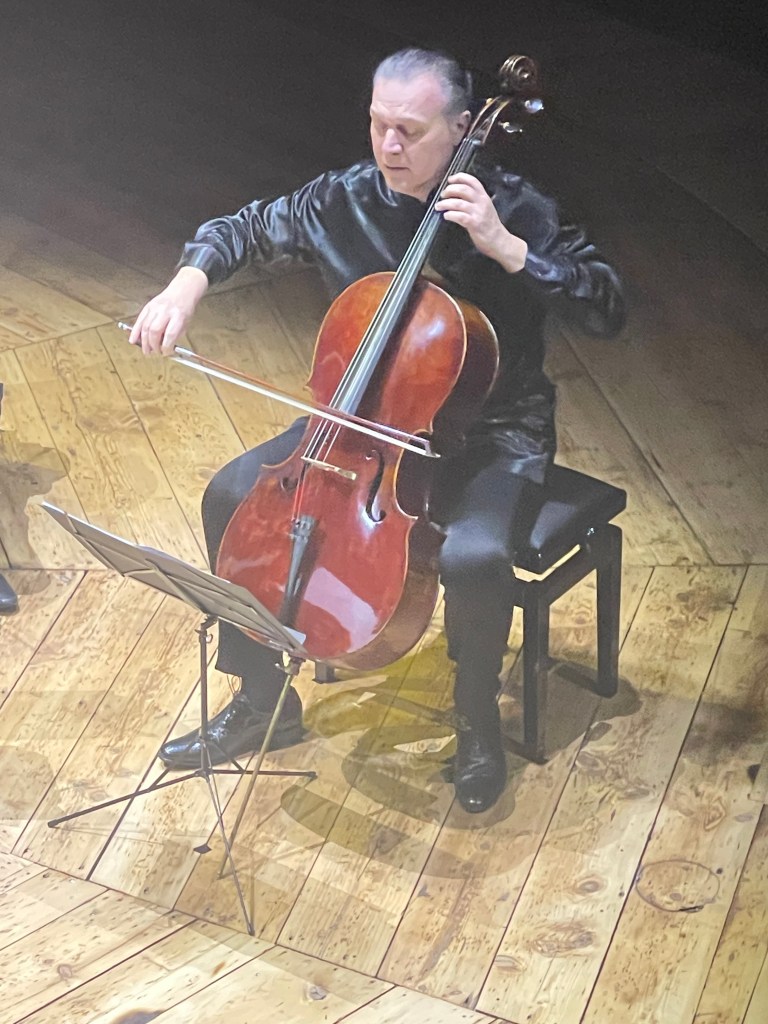
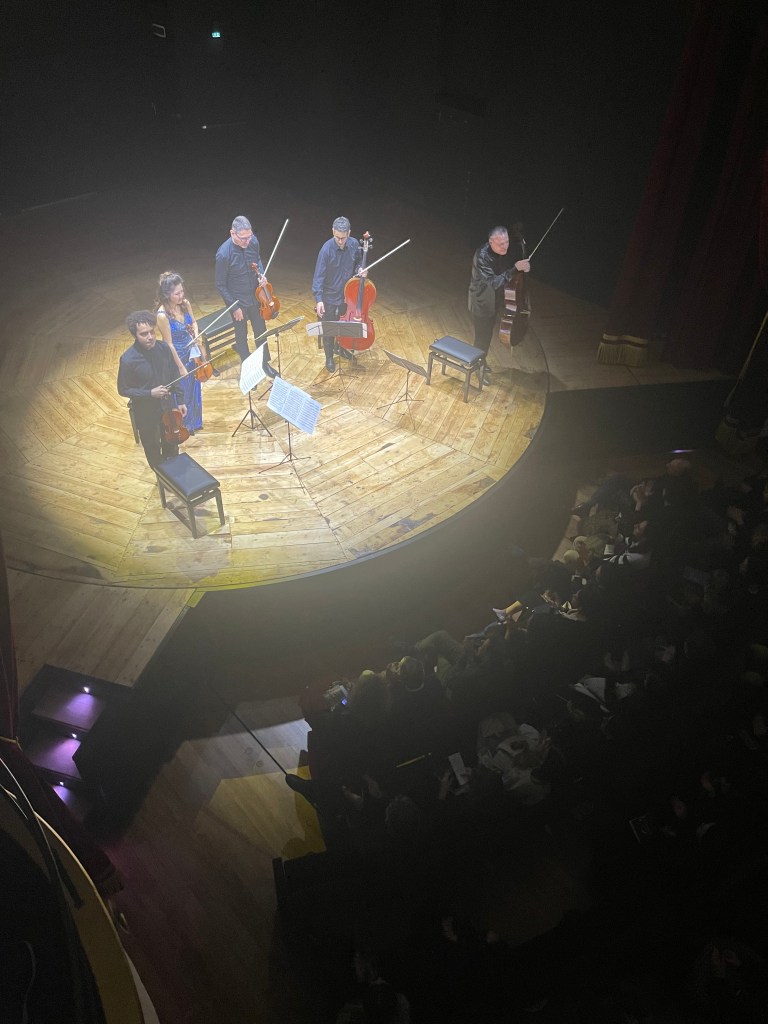
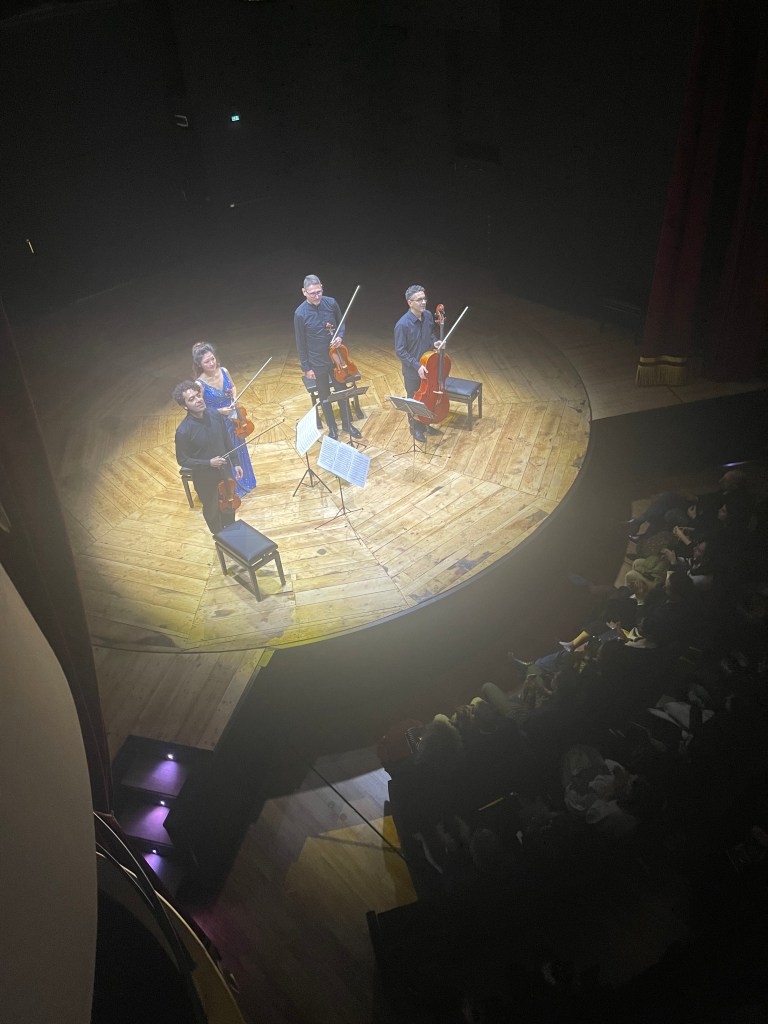
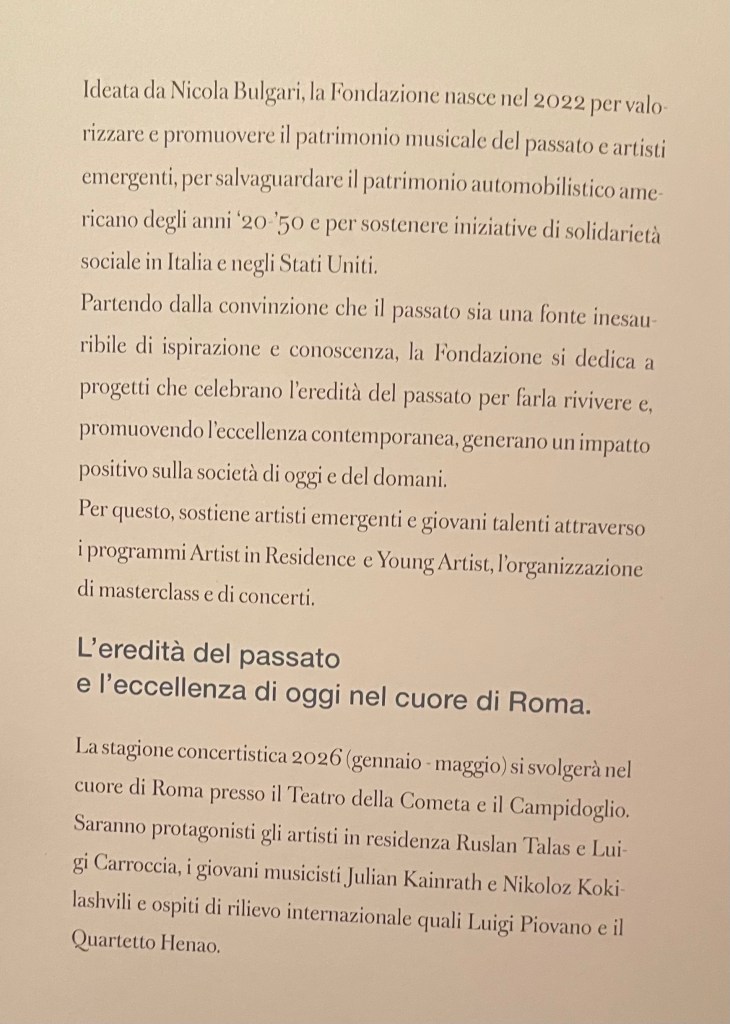
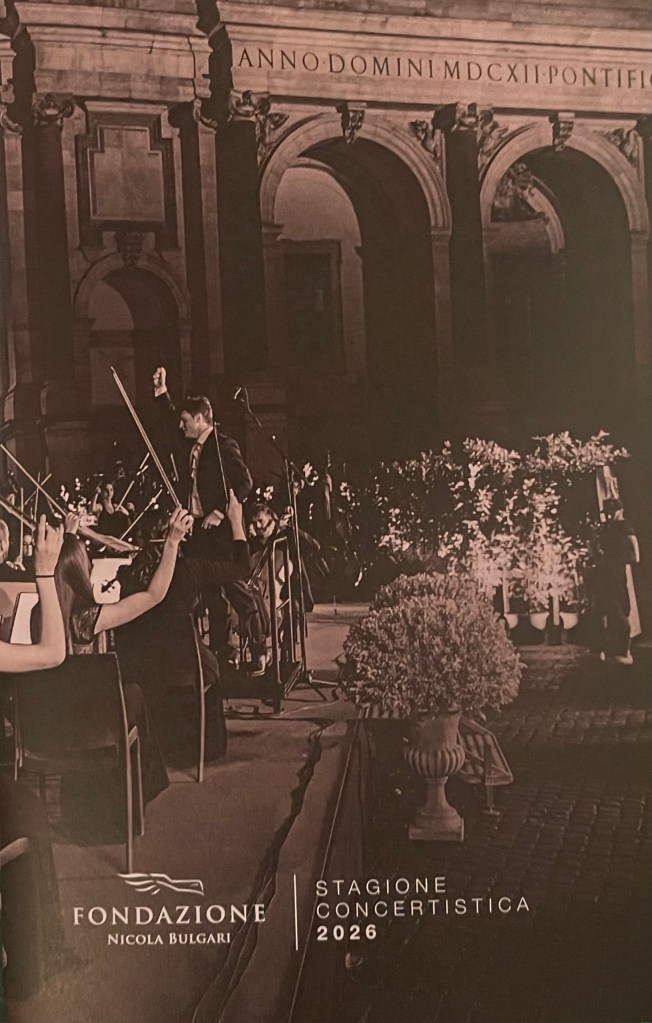
String Quartets could very rarely be heard south of Florence, but thanks to the Nicola Bulgari Foundation they are alive and well and playing to full houses in the newly refurbished Teatro Cometa. Reborn on wings of song with Luigi Piovano adding his golden sounds to the Henao Quartet in a sublime performance of Schubert’s Quintet.
We can never tire of experiencing the miracle of intense feelings that Schubert could share in his last year on earth.
Prefaced by an equally superb performance of the one movement Quartettsatz with the Henao Quartet
After the radiance and poignant beauty of the quintet what better way to end such a sumptuous feast of music than to be reminded again of the joie de vivre that Schubert also possessed with the Presto / Scherzo from the quintet.
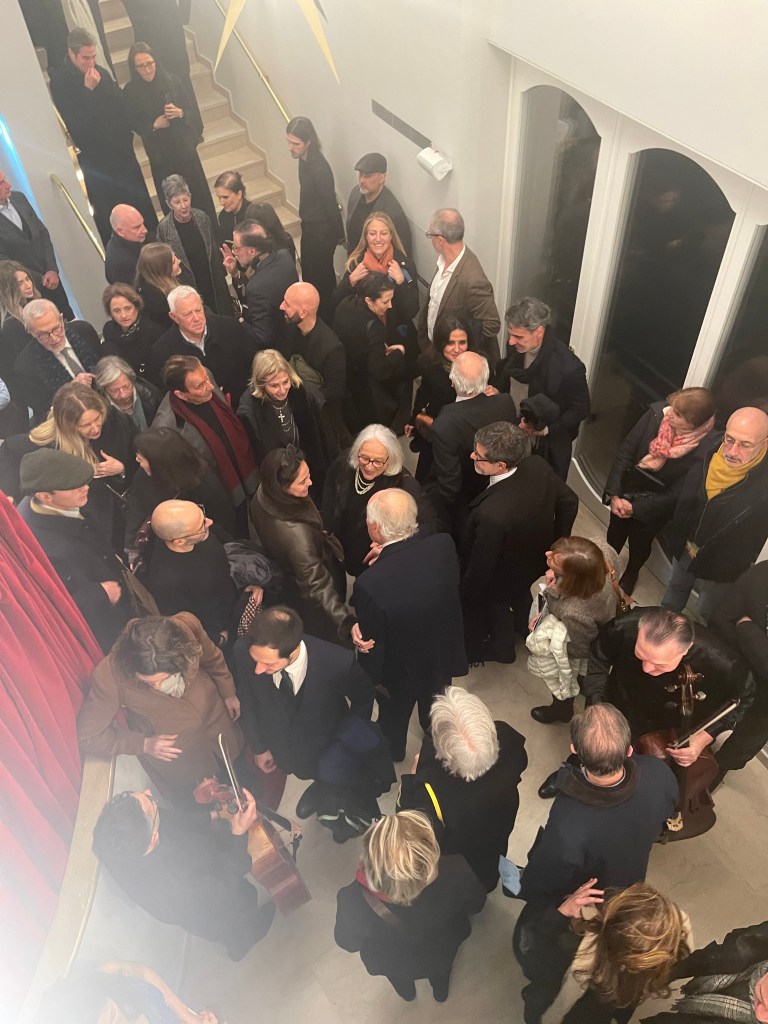
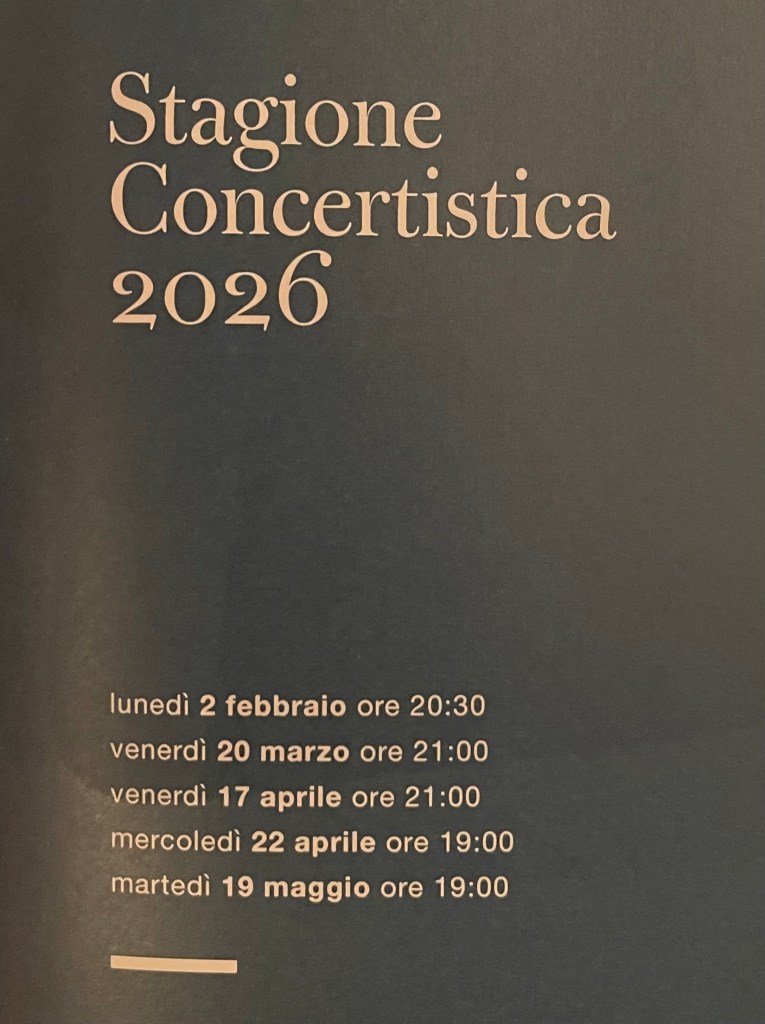
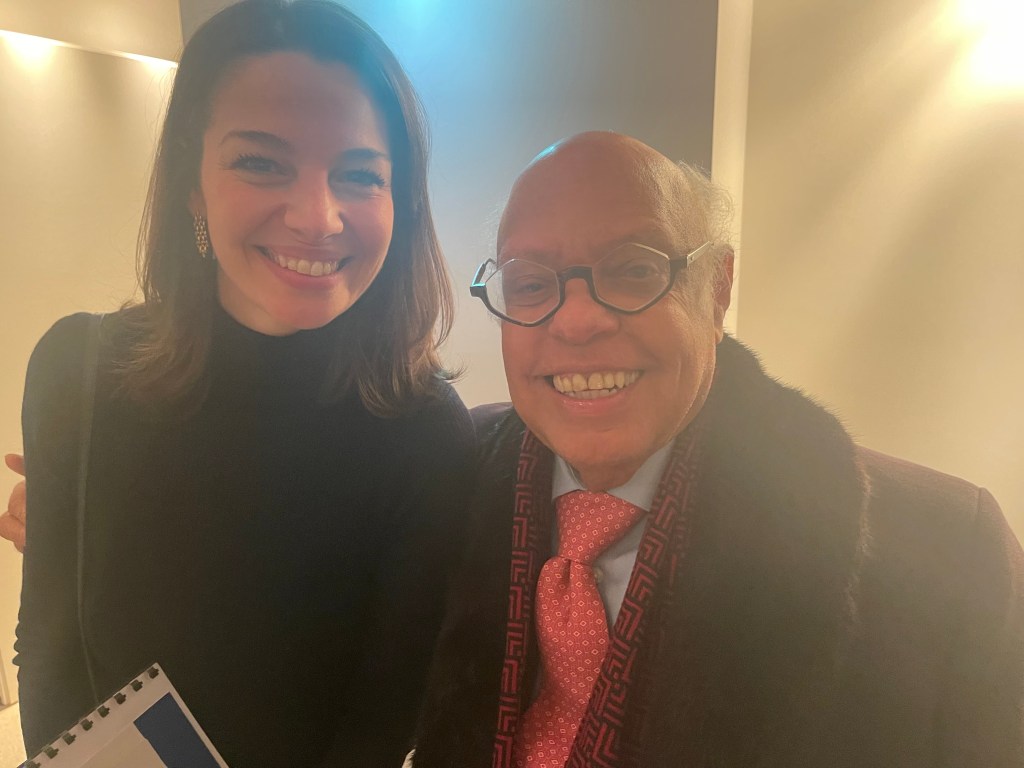
An elite audience were in euphoric mood after such miracles in the Eternal City. Awaiting another four concerts in this series organised by Natalie Gabrielli , the artistic coordinator.
Natalie Gabrielli, artistic coordinator with William Grant Naboré
The artists in residence Luigi Carroccia and Ruslan Talas will perform together in the next concert in the series on the 20th March . This will be followed by the first of Luigi Carrocchia’s complete cycle of Schubert Piano Sonatas on the 17th April. fondazionenb.com
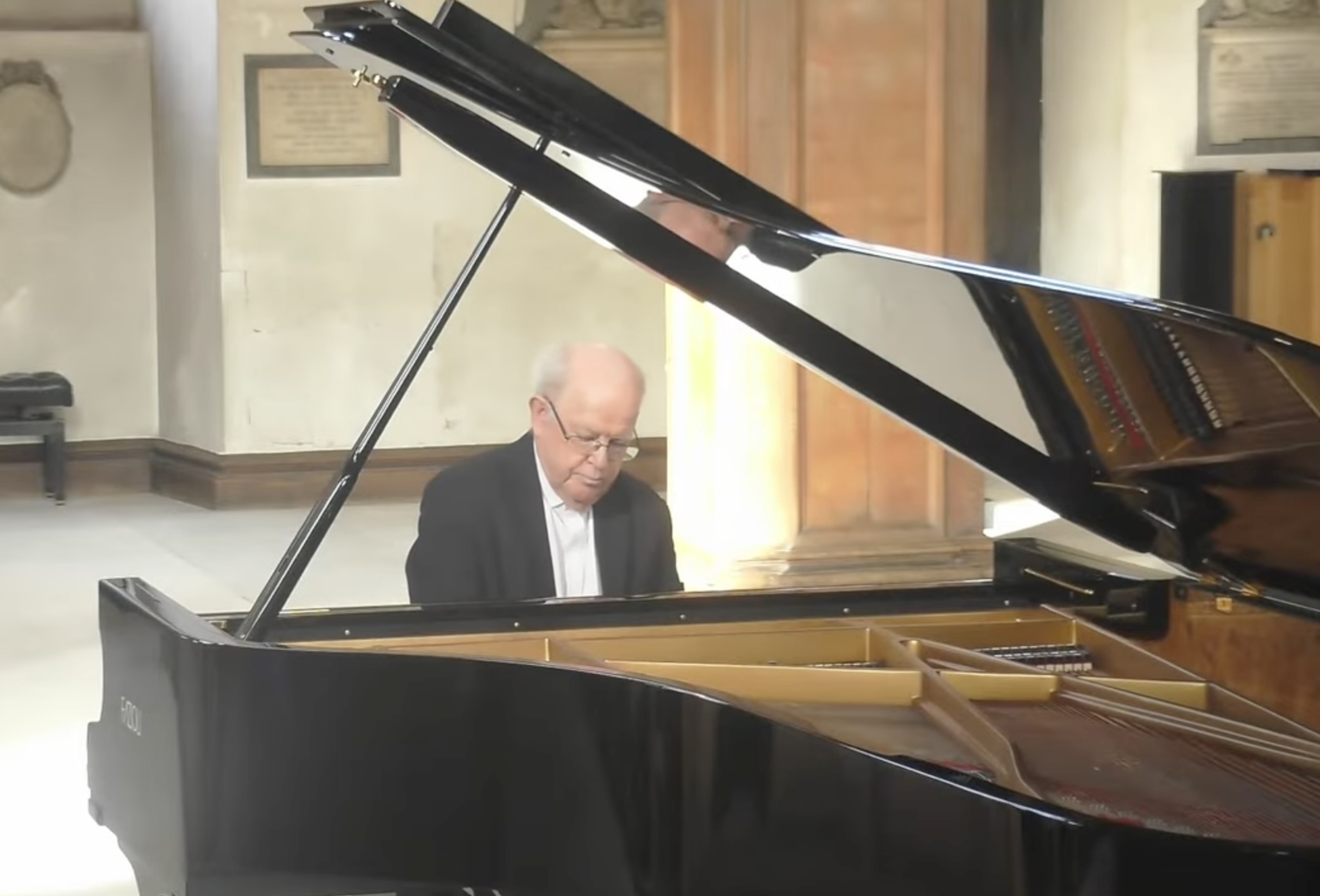
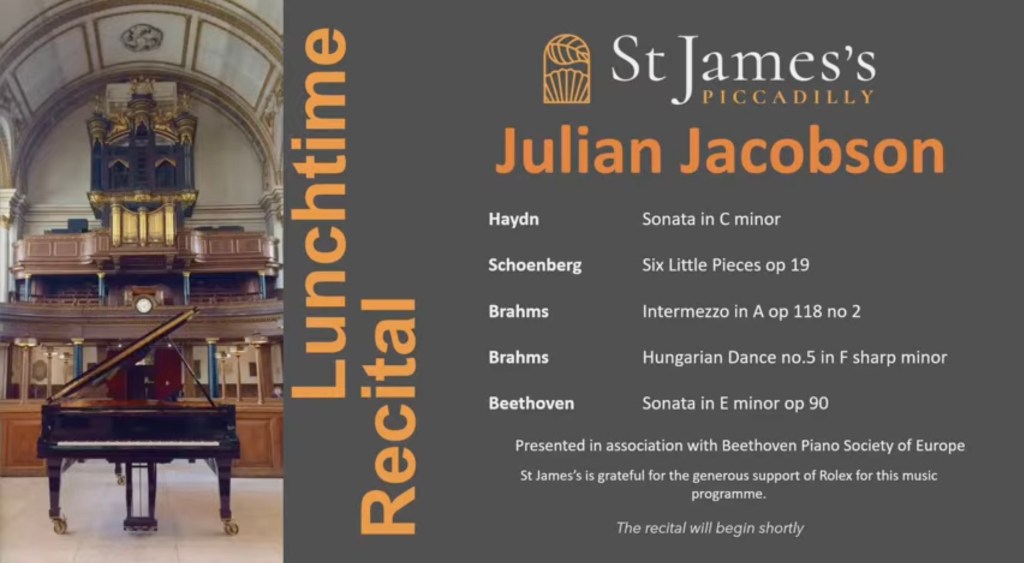
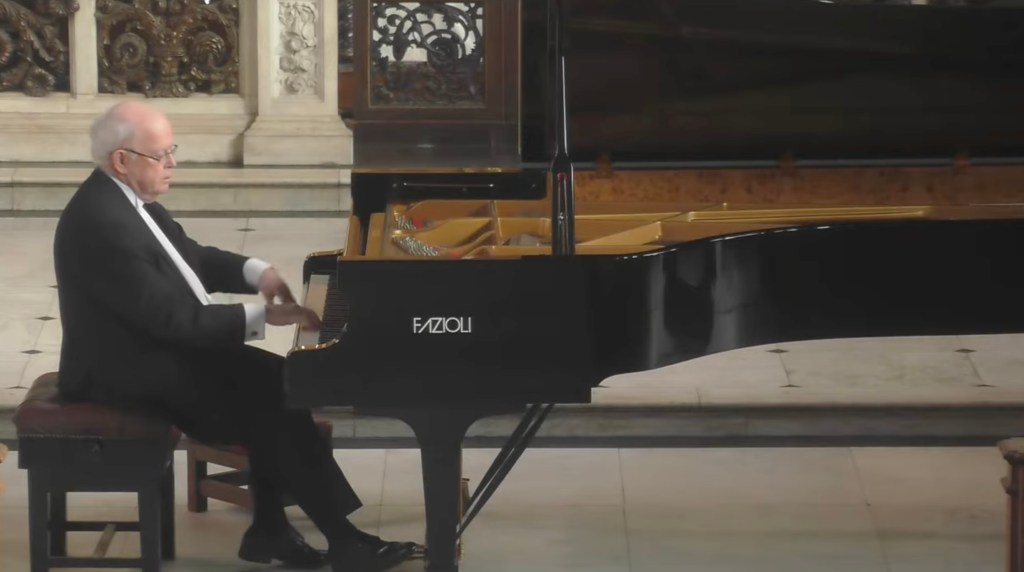
As always a very interesting programme from an eclectic kapellmeister, beginning with one of Haydn’s most beautiful Sonatas Hob XVI /20. It was played with great clarity and noble beauty with Julian’s impeccable musicianship allowing the music to unfold with simplicity and knowing scholarship.Very delicate embellishments, in particular the beautiful unfolding of an elaborated cadenza in the first movement, in no way impeded the natural architectural flow and shape but added a radiance of refreshing spontaneity. It has been suggested that this is “Haydn’s Appassionata”, and is ” the first great sonata for the piano by anybody”. Beethoven who was to inherit from his mentor Haydn the Sonata form was to take this as a starting point and transform it in thirty two steps as he battled and eventually came to terms with his genius during a tormented and struggled life.
Julian had begun with this sonata and had chosen to end the recital with Beethoven’s Sonata op 90 which in a way is so similar in spirit and is a transition from the great Sonatas of Beethoven’s middle period, looking back to the simple mellifluous beauty of his master, with Schubertian radiance, before his final great burst of energy with the last five Sonatas from op 101 to op 111.
The beautiful flowing ‘Andante’ second movement was played with poise and a poignant beauty of disarming simplicity. The Allegro final movement Julian was anticipating Beethoven where his dynamic drive was not of the more restrained fury of Haydn’s time but revealed the less gentile energy of the next century.
It was the contrast that Julian wanted to underline between Haydn and Beethoven.The Sonata op 90 is one of Beethoven’s most poetic Sonatas with the struggle between heart and head of the first movement and the mellifluous conversation with his beloved of the second. An oasis of calm before opening the flood gates to Beethoven’s final great statement through struggle to a vision of the paradise that awaited him.
The Beethoven op 90 that closed the programme began with a more gentle dynamic drive than the earlier middle sonatas and was played with the knowing mastery of a pianist who knows intimately all thirty-two sonatas, and that at the drop of a hat could play them all at one sitting. Beethoven prefaces the two movements in an unusually descriptive way with the first movement : Mit Lebhaftigkeit und durchaus mit Empfindung und Ausdruck “With liveliness and with feeling and expression throughout” and the second Nicht zu geschwind und sehr singbar vorgetragen ” Not too swiftly and conveyed in a singing manner” .And indeed it was exactly these indications that illuminated Julian’s playing today with an especially beautiful unfolding of the first movement , The Schubertian beauty of the second revealed an unusual feeling of contentment and well being.
The Six Little Pieces by Schoenberg were like a breath of fresh air inbetween Haydn and the two B’s. These are six little gems of barely a minute each, but with a kaleidoscope of colour and sentiments that are contained in such a small space. One can only marvel at how so little can mean so much, especially as Julian played each one with such concentrated mastery. A clarity and great sense of character as wisps of sound revealed a completely new sound world.The clockwork precision of the second was contrasted with the sumptuous outpouring of the third with its chordal mystery of desolation and wonder. The playful wistfulness of the fourth and the unresolved question and answer of the fifth lead into the sixth, that was written on the day that Mahler died, and was a whispered yearning and respectful lament.
Returning to the sumptuous sound world of Brahms, Julian allowed the Intermezzo in A op 118 n. 2 to unfold with simplicity and an embracing beauty. It brought an unexpected ray of sunlight to shine onto the keys from the altar window that momentarily surprised Julian as he was about to play Brahms Hungarian Dance n. 5, which luckily he could still play with his eyes closed !
Julian Jacobson was born in Peebles, Scotland to parents who were both distinguished musicians: his father Maurice Jacobson had some piano lessons with Busoni while his mother, pianist and composer Margaret Lyell, studied in Berlin with Else Krause, daughter of Liszt’s pupil Martin Krause. Julian studied in London from the age of seven with Lamar Crowson (piano) and Arthur Benjamin (composition), and had four songs published by the age of nine. Further studies at the Royal College of Music and Queen’s College Oxford were supplemented by a period as the inaugural pianist in the National Youth Jazz Orchestra, as well as lessons from the great Hungarian pianist Louis Kentner. He made his London debut at the Purcell Room in 1974, followed immediately by the first of five appearances in the Park Lane Group’s annual Young Artists series and his Wigmore Hall debut as both solo recitalist and chamber musician. During the 1980s he established himself as a fine duo and ensemble pianist, partnering artists such as Zara Nelsova, Sandor Vegh, Ivry Gitlis, Lydia Mordkovitch, David Geringas, Christian Lindberg and Manuela Wiesler as well as many leading UK instrumentalists including Nigel Kennedy, Steven Isserlis, Moray Welsh, Colin Carr, Alexander Baillie and Philippa Davies. Jacobson’s appointment in 1992 as Head of Keyboard Studies at the Royal Welsh College of Music and Drama led to an increasing concentration on solo work. In 1994 he embarked on his first cycle of the complete 32 Beethoven sonatas; he has now presented the cycle eleven times. Five of these were “marathon” performances where he performed the entire cycle from memory in a single day – only the second pianist to attempt this. His 2003 marathon at St James’s Church Piccadilly, London, raised over £6000 for WaterAid while his 2013 marathon at the celebrated St Martin-in-the-Fields was streamed worldwide and attracted huge media coverage and rave reviews. In November 2022 he marked his 75th birthday by performing the marathon in London and at the Festival of Colonia del Sacramento, Uruguay. Since 2014 he is Chairman of the Beethoven Piano Society of Europe where he is responsible for organising many concerts, competitions and other events for young players. Presented in association with Beethoven Piano Society of Europe
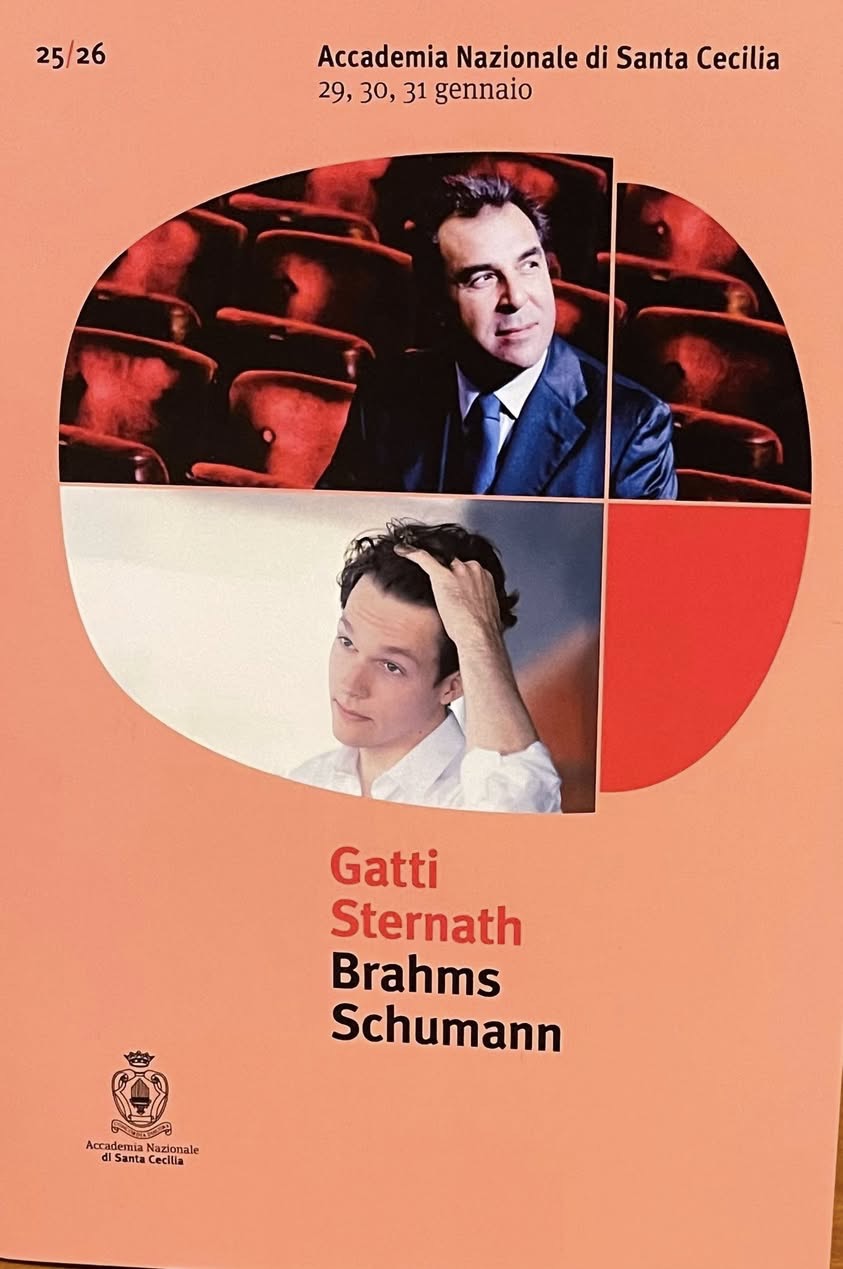
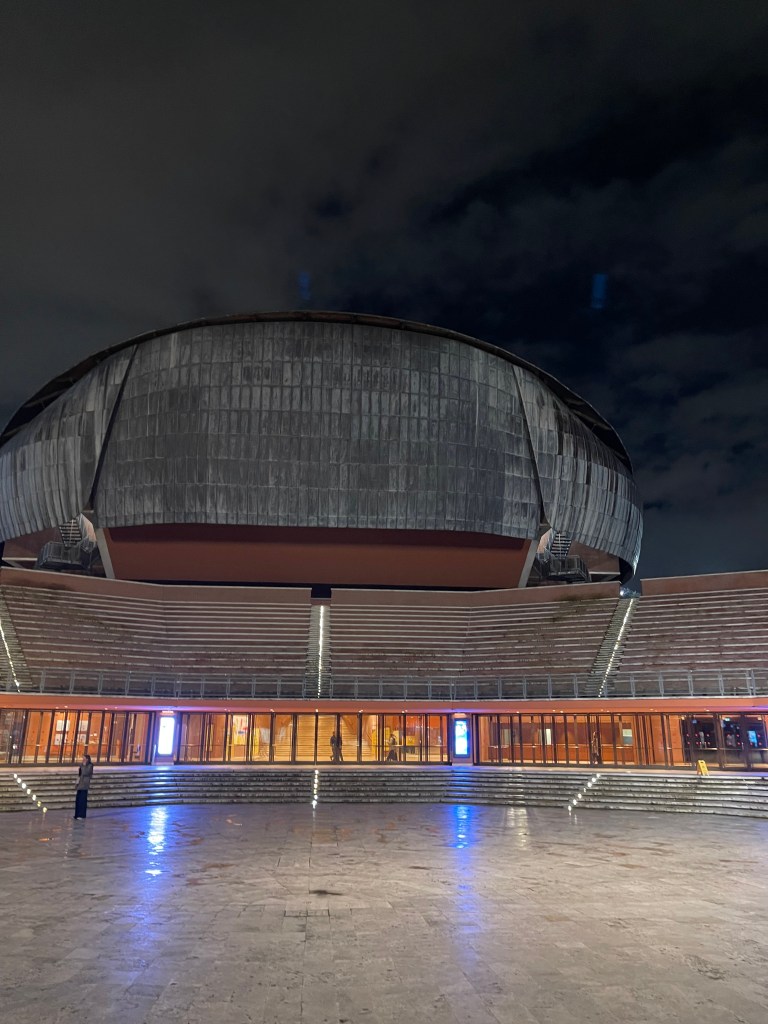
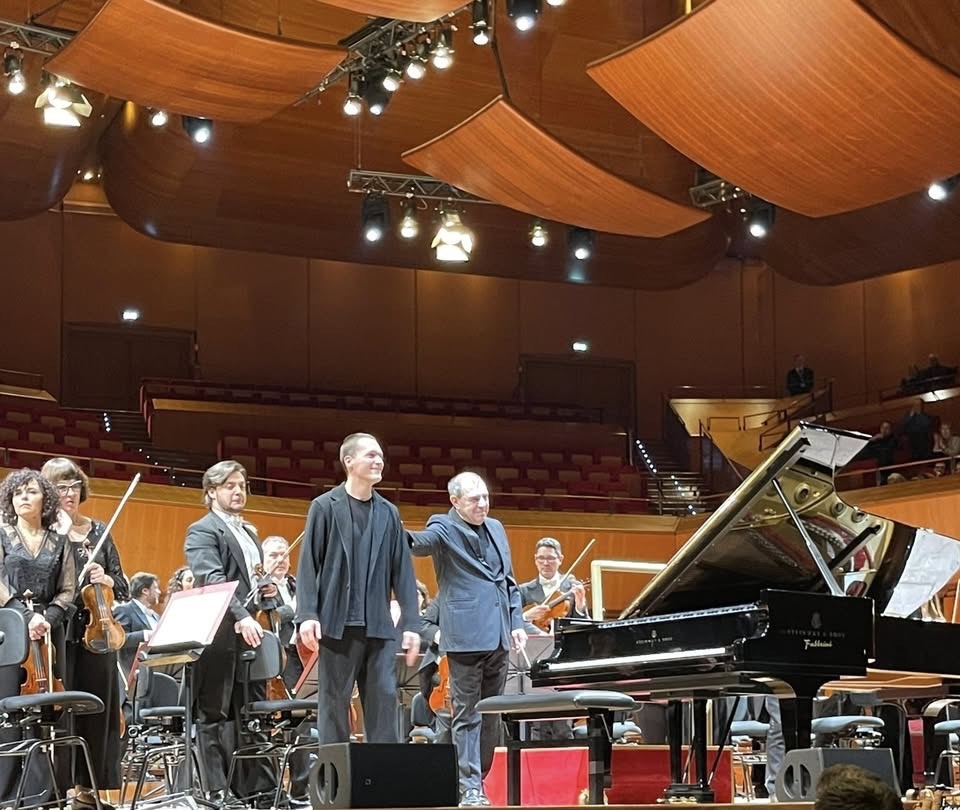
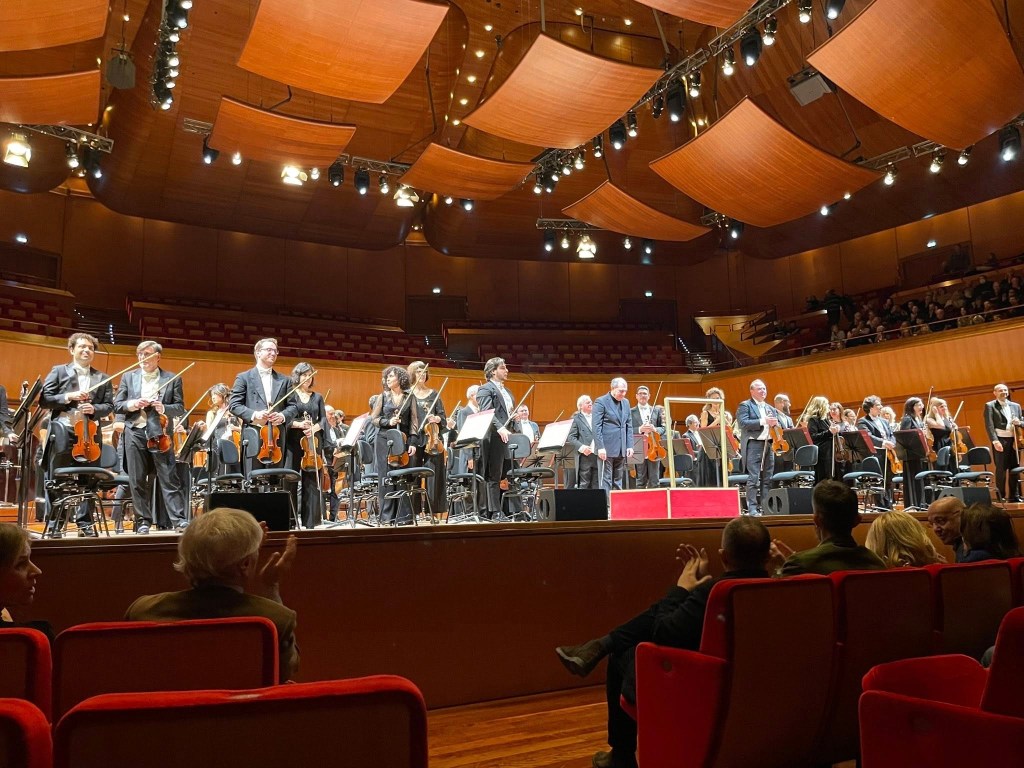
Gatti and Sternath recreating music before our very eyes .
Music making that is a voyage of discovery as rarely experienced in the concert hall.
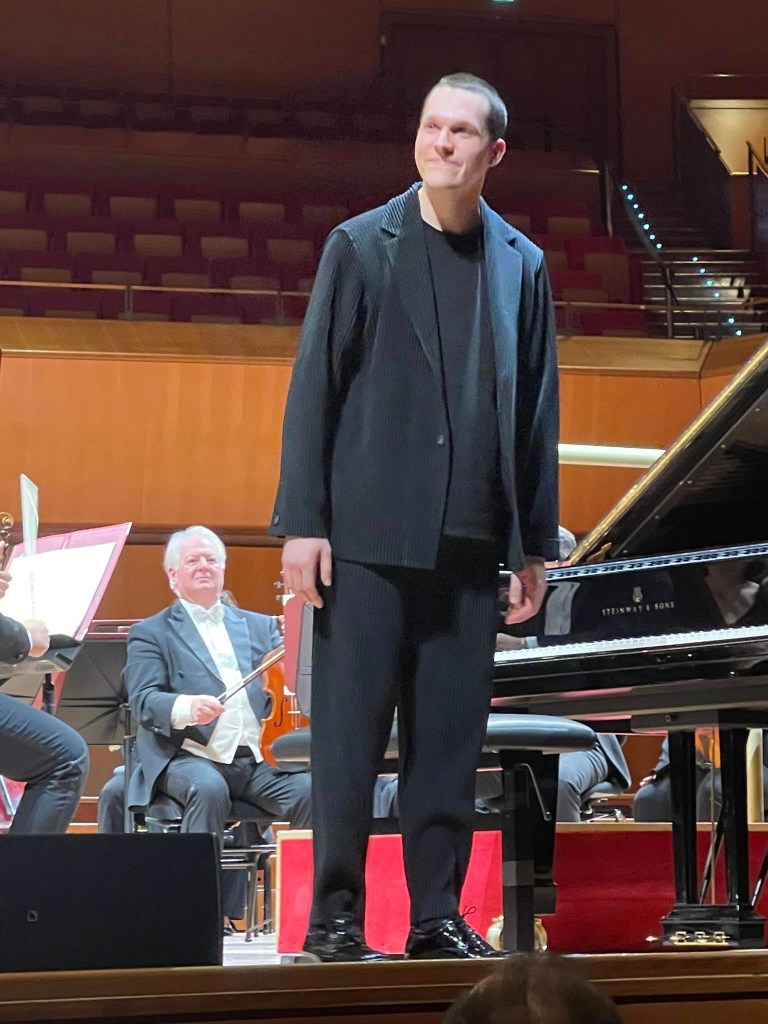
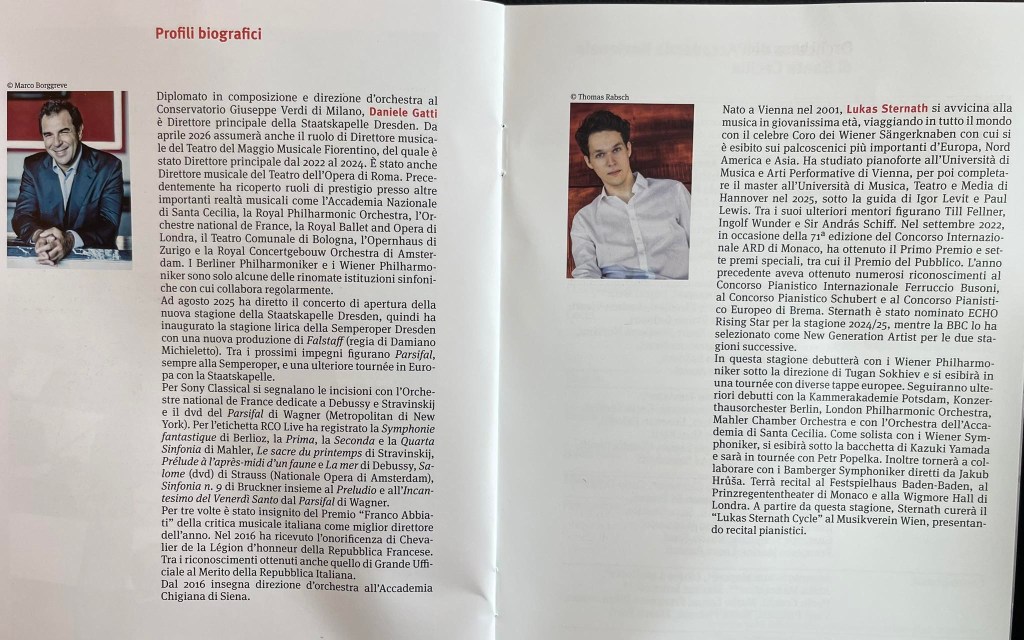
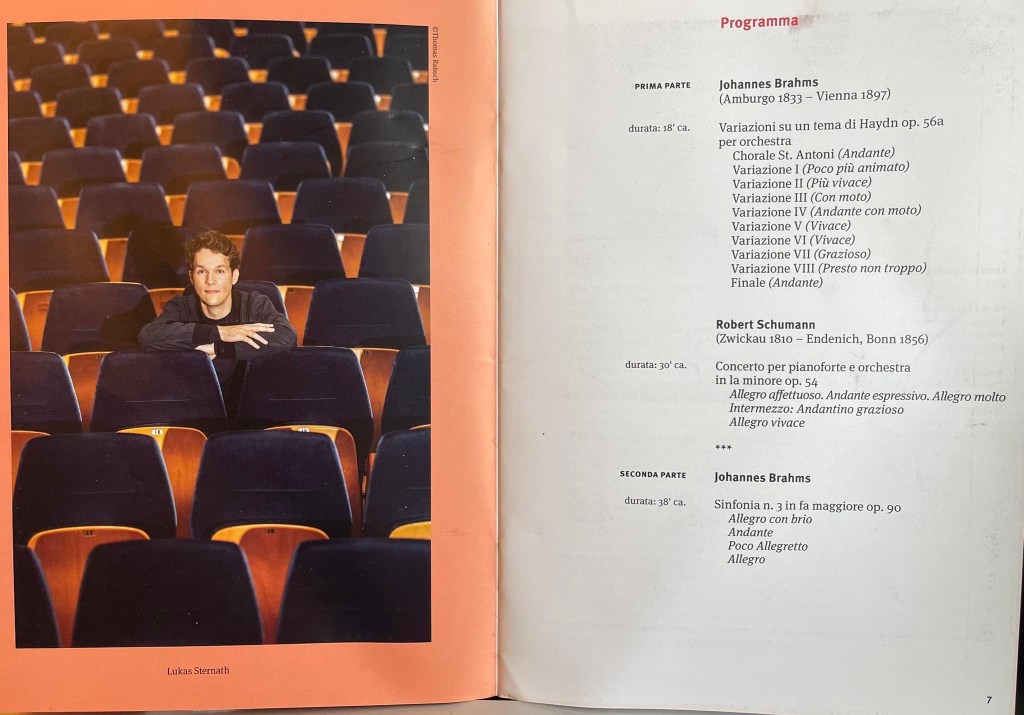
Twenty five year old Lukas Sternath mentored by Andras Schiff and Paul Lewis is a pianist who listens to himself but also to the others as he and Daniele Gatti showed us what secrets are just waiting to be awakened by musicians who have the humility and dedication to respect the composer they are serving.
Schubert Liszt Litanie brought even more magic into the hall as this young man played with heart rending simplicity one of Schubert most beautiful lieder that he offered as an encore to an audience that have rarely been so moved by so little!
The concert had begun with a rather opaque performance of Brahms Haydn Variations and in fact I thought I would just stay to hear the young Sternath who I had heard in Bolzano five years ago .
But during the Schumann this young man ignited the passion and wish to make and shape music together that I decided to listen to Brahms Third Symphony that was the favourite of my mentor Guido Agosti . I can see and hear him still intoning with passionate intensity the opening as he played it on the piano .
This young man had ignited such a musical torch that the Brahms from the first note to the last was now played with the burning urgency and voluptuous passion of a mature master who could with the minimum of movements allow these magnificent players their freedom. Simply guiding them and keeping them within a united architectural framework . It was a demonstration again of where so little can mean so much. It is called mastery ! ………and it is a mystery but the raison d’etre of live music making.


 ChristopherAxworthy-MusicCommentary