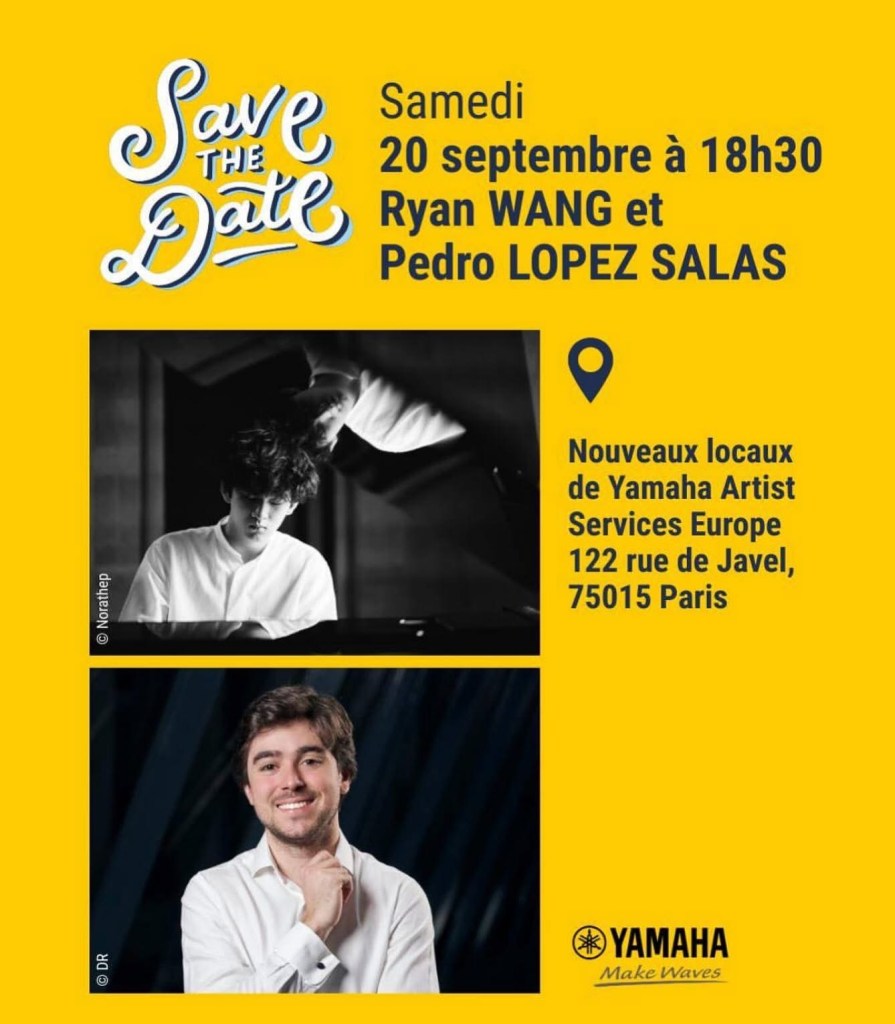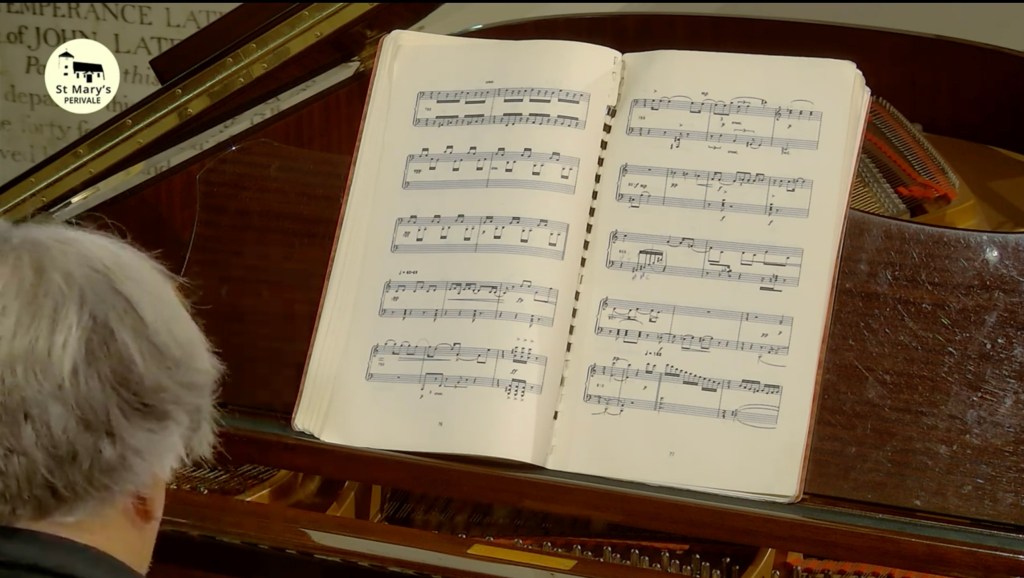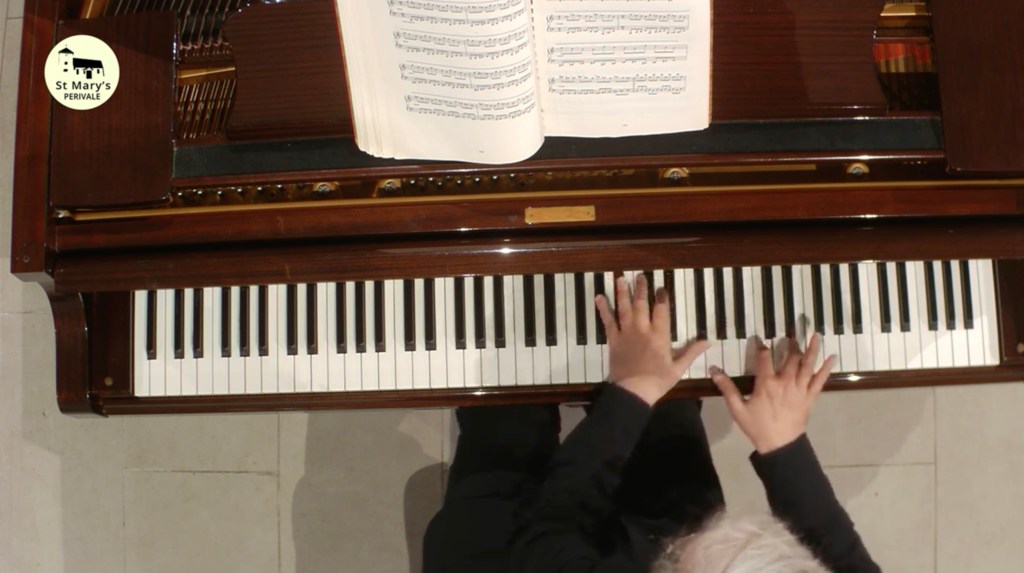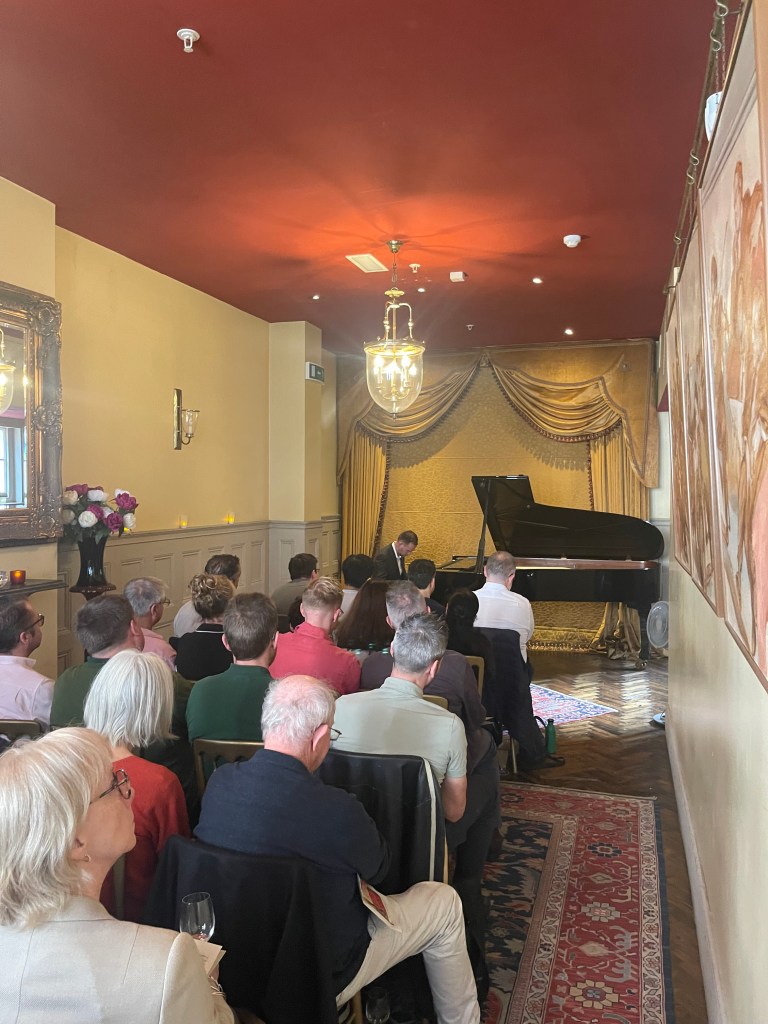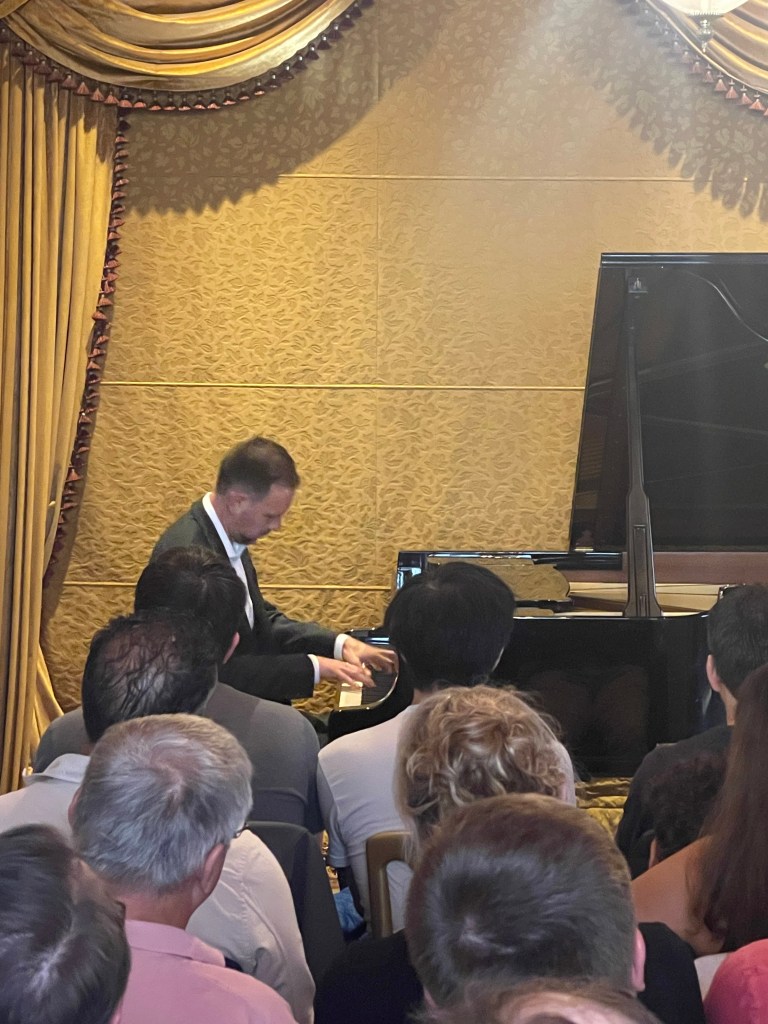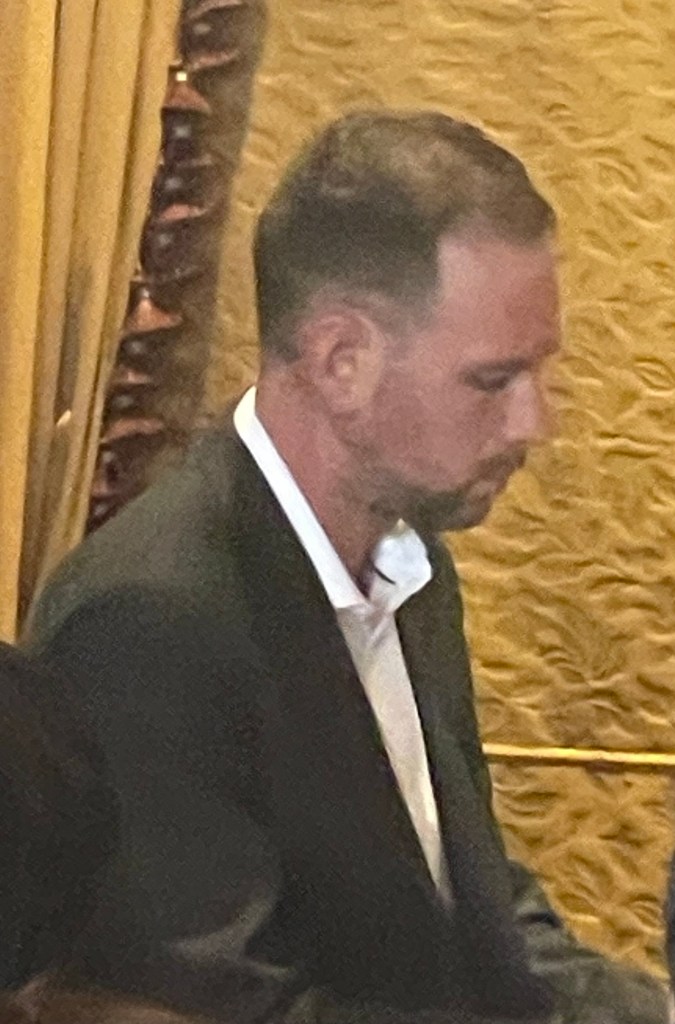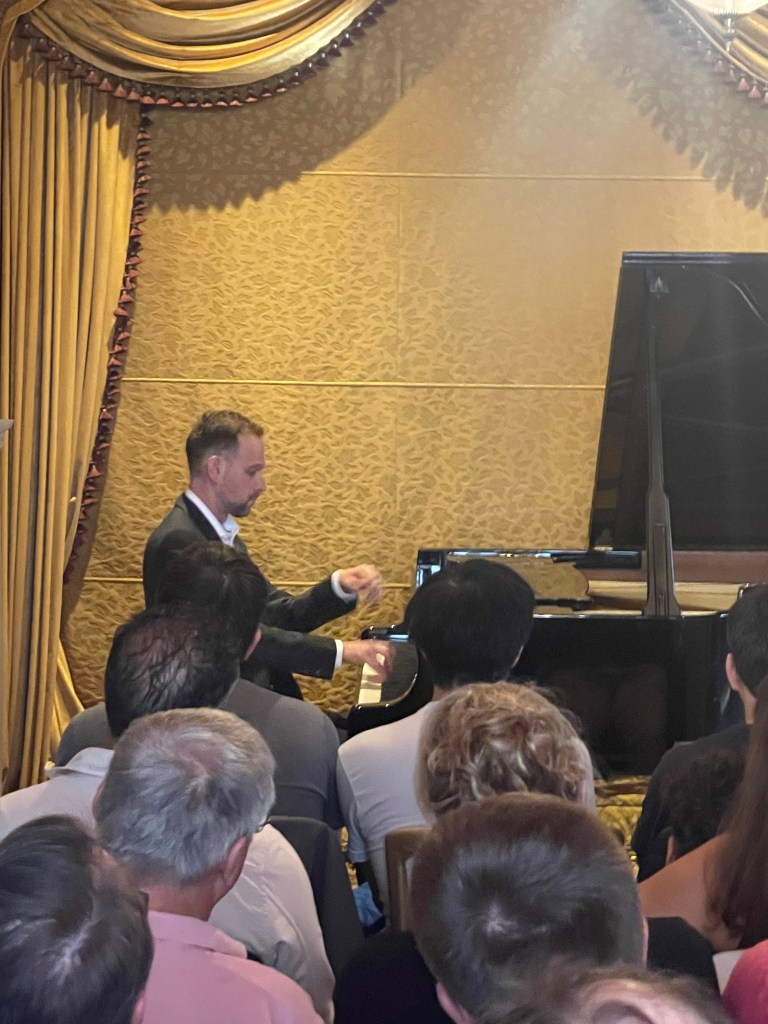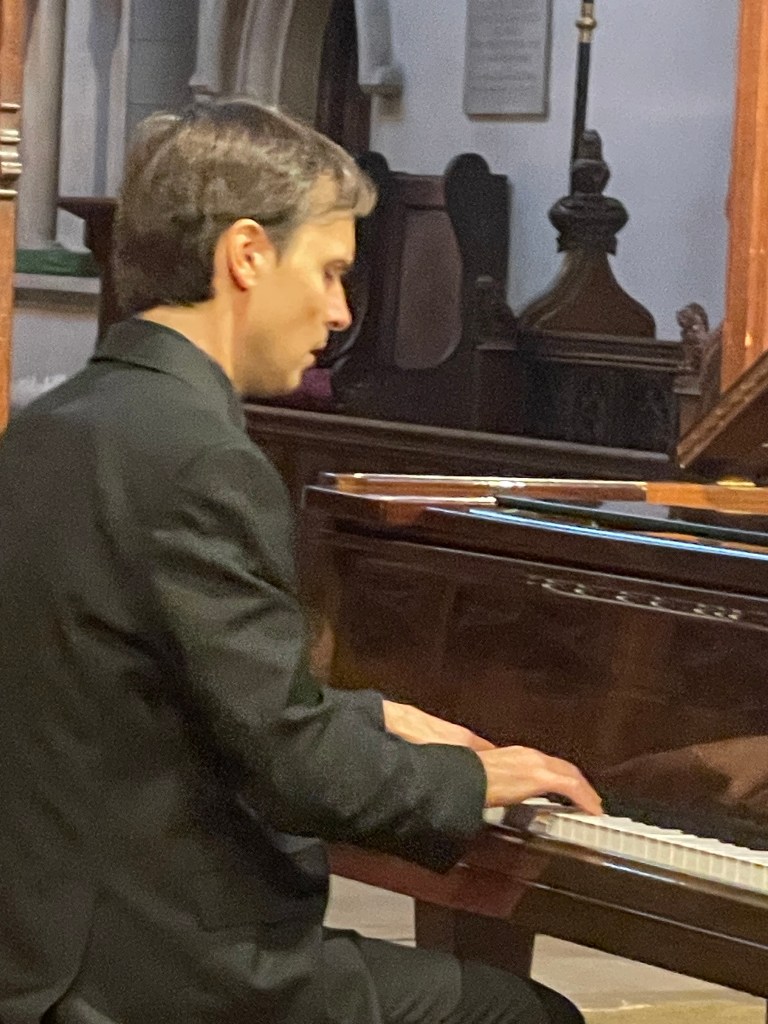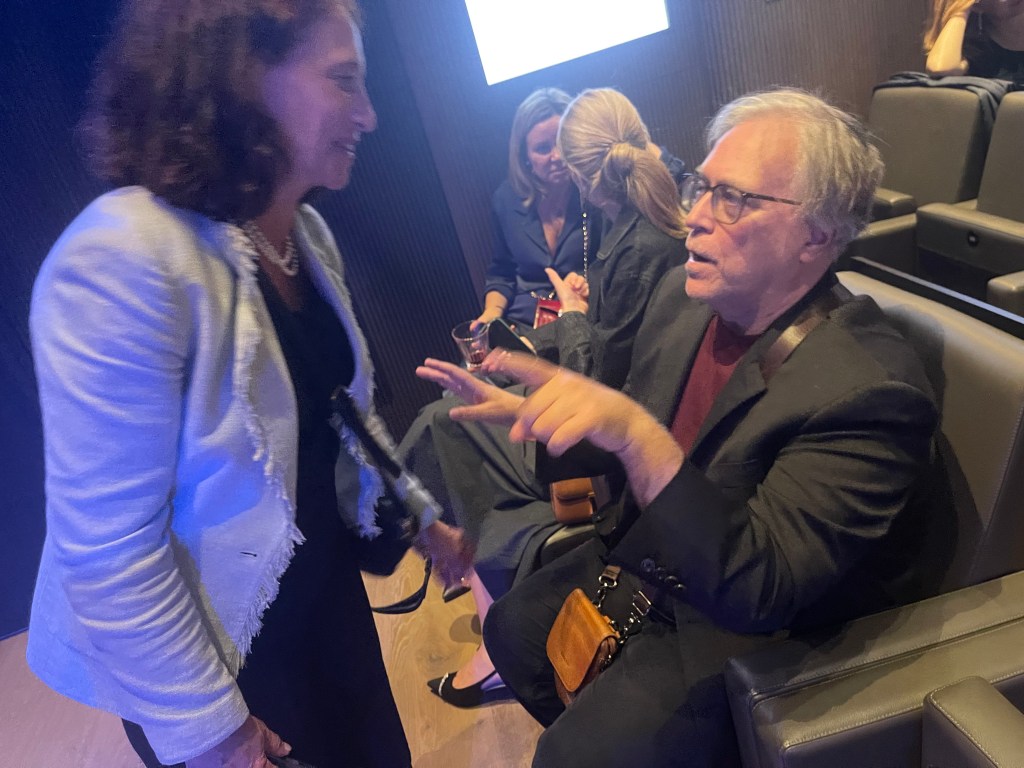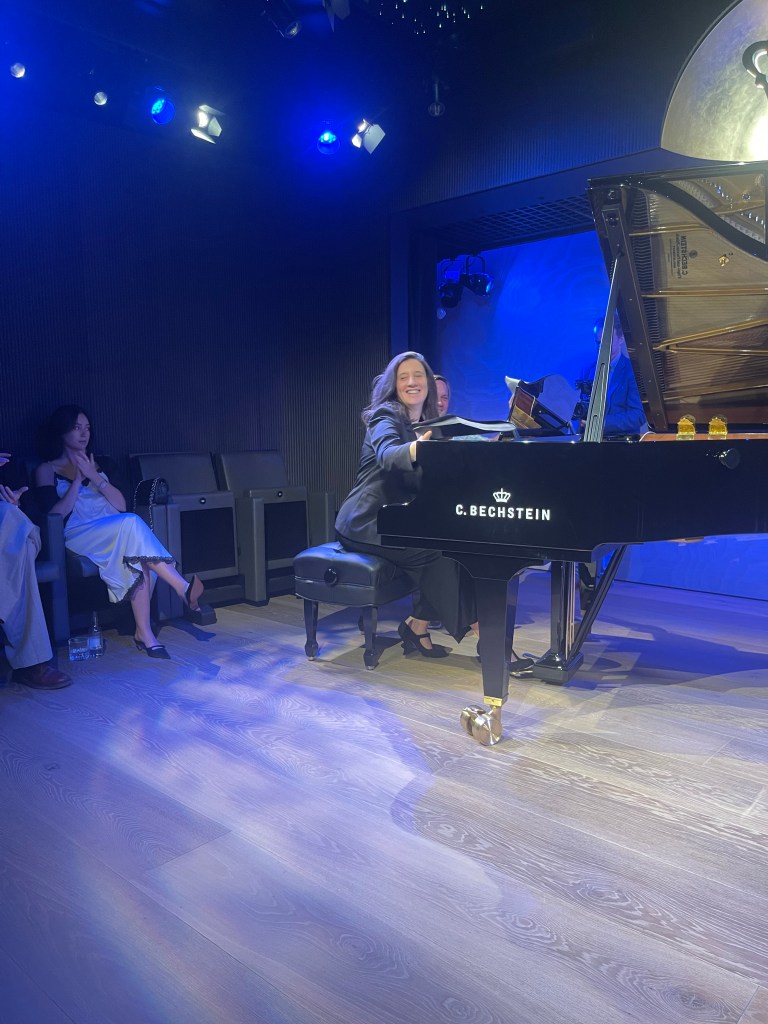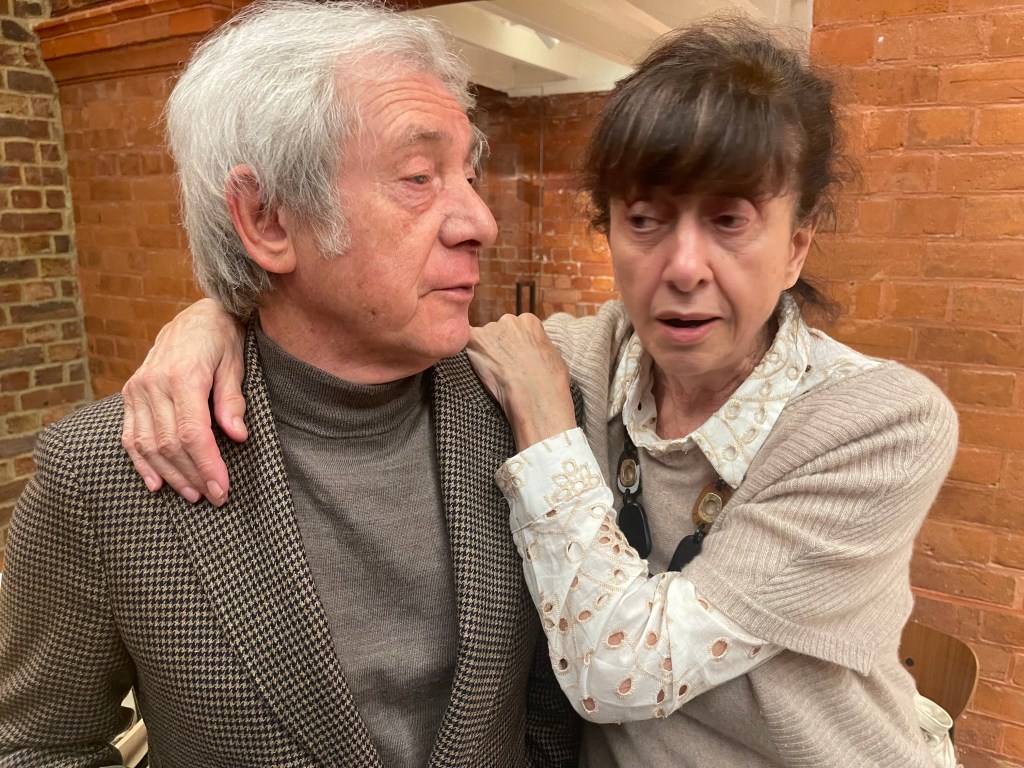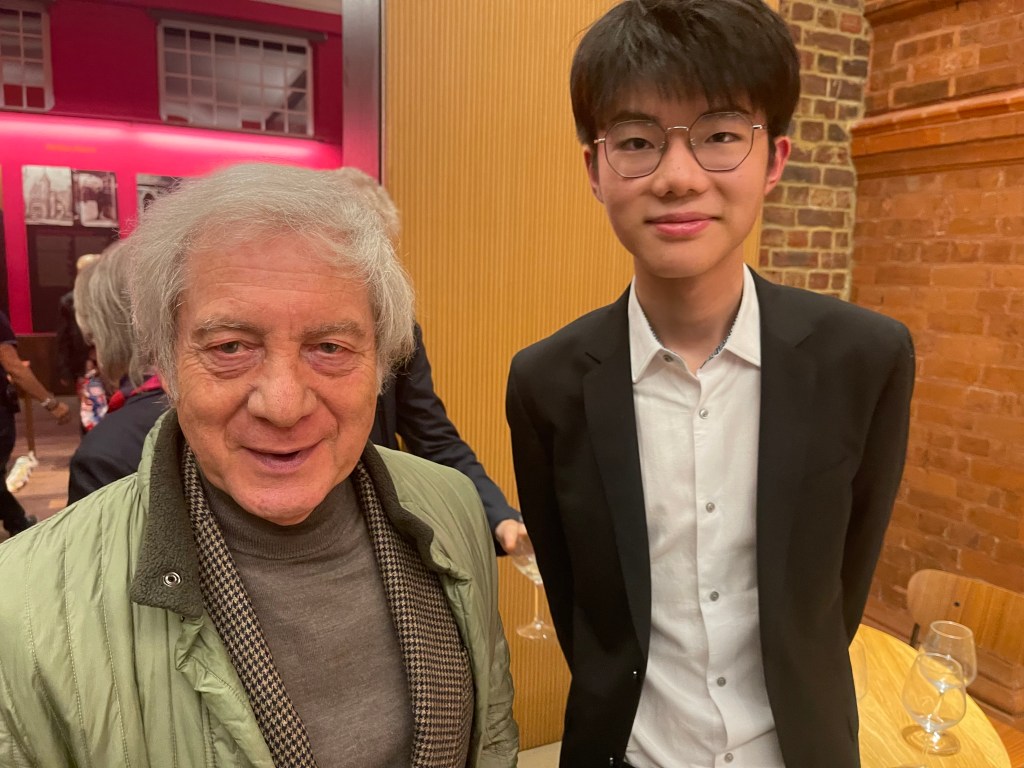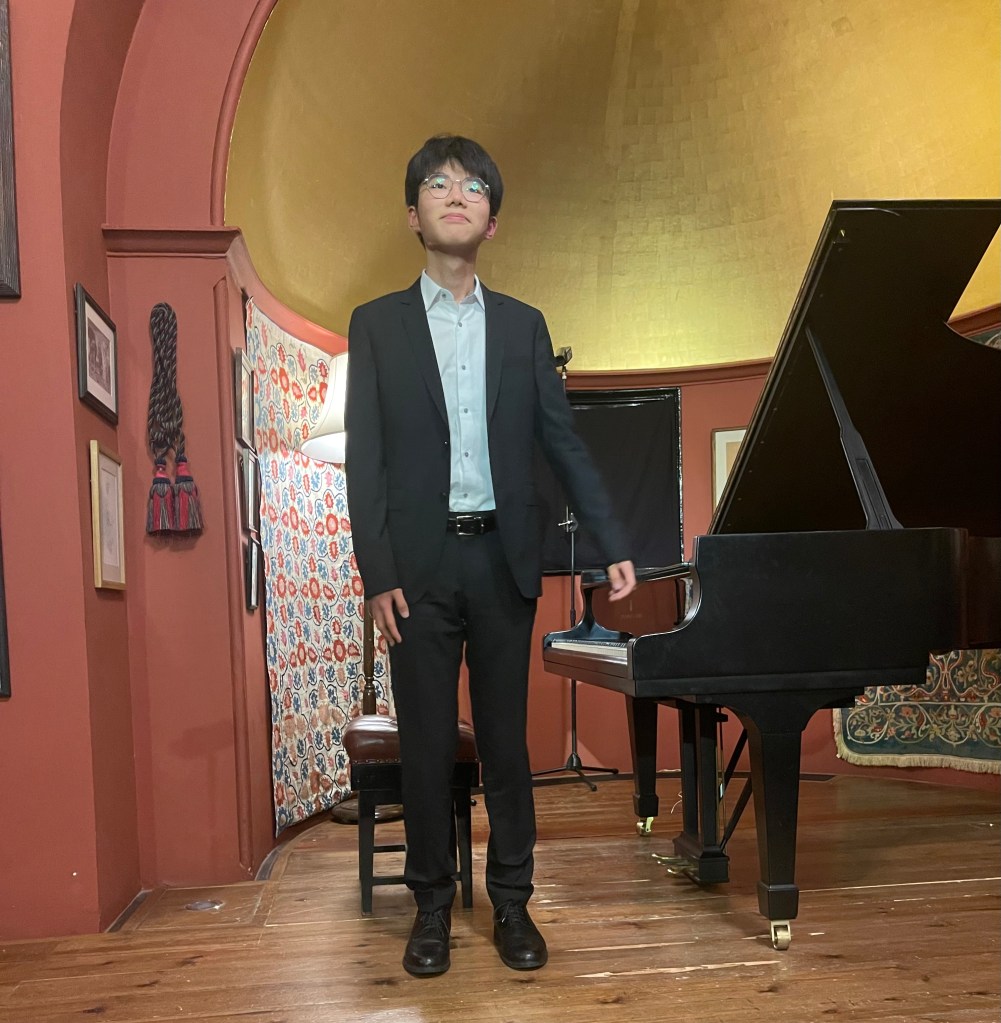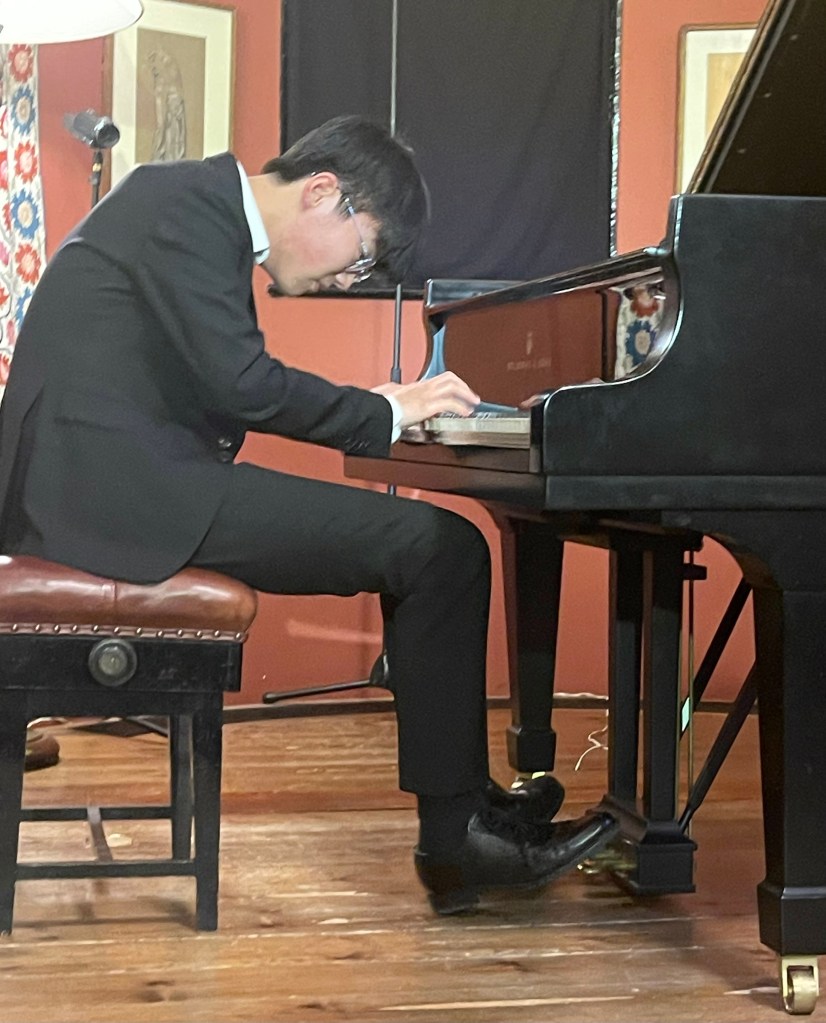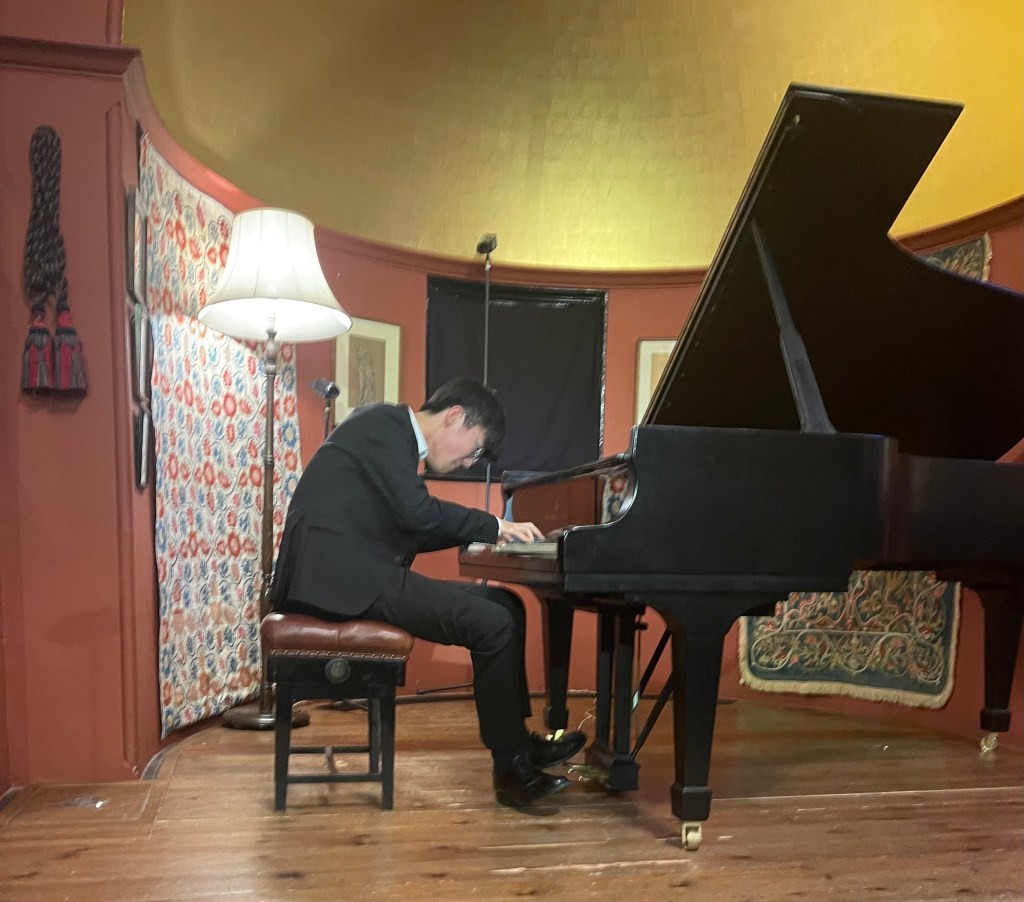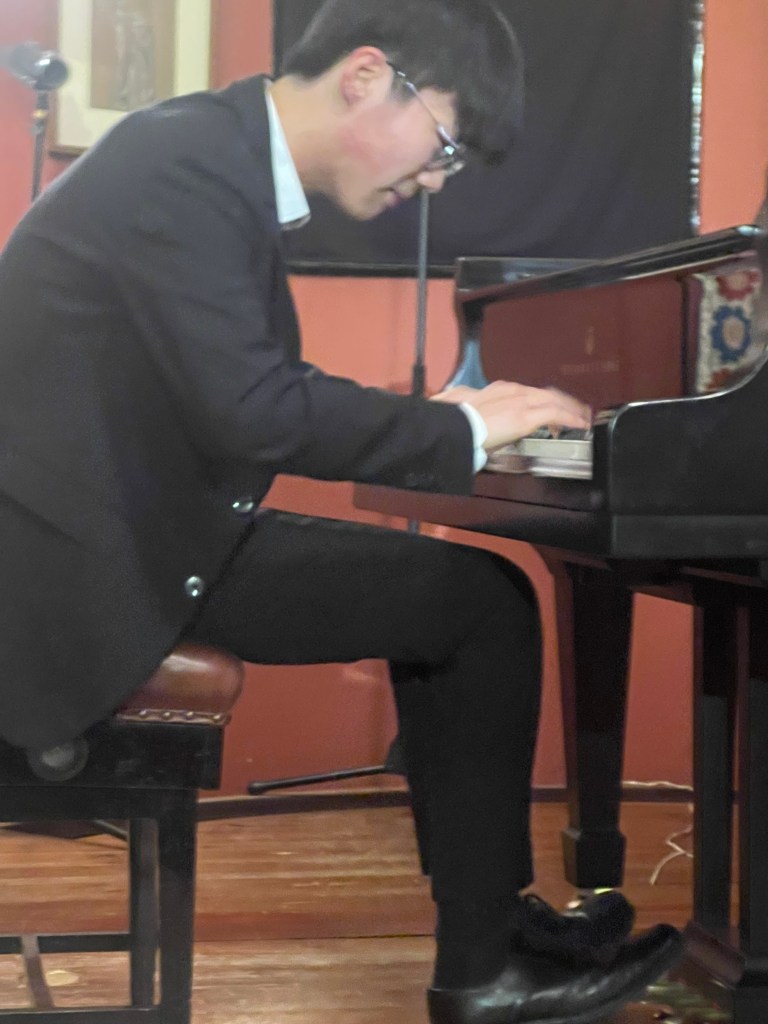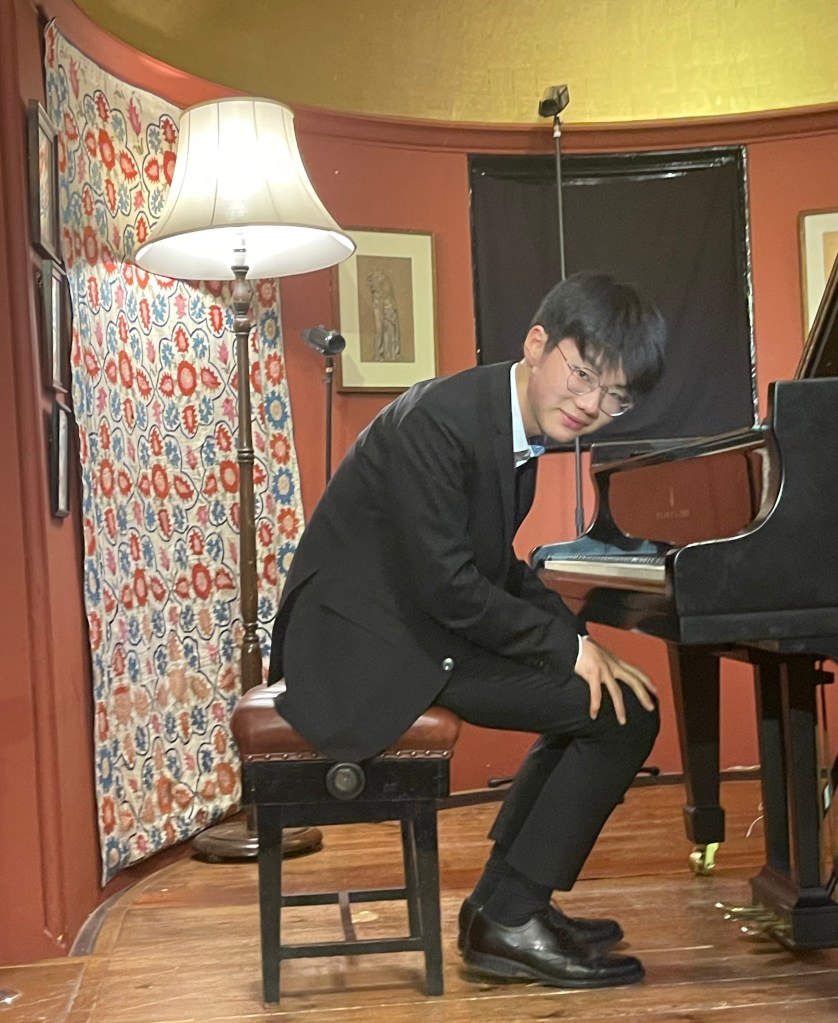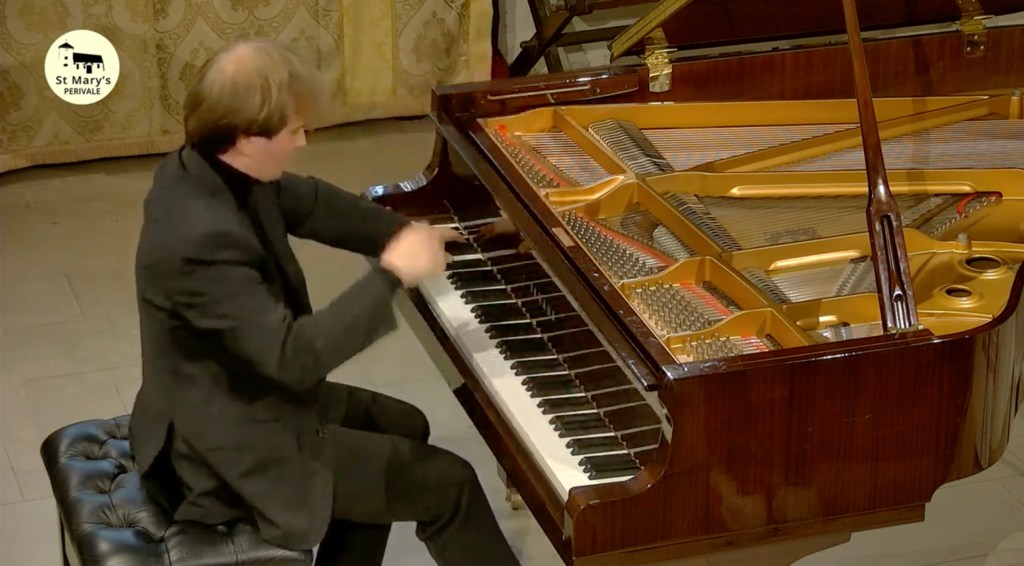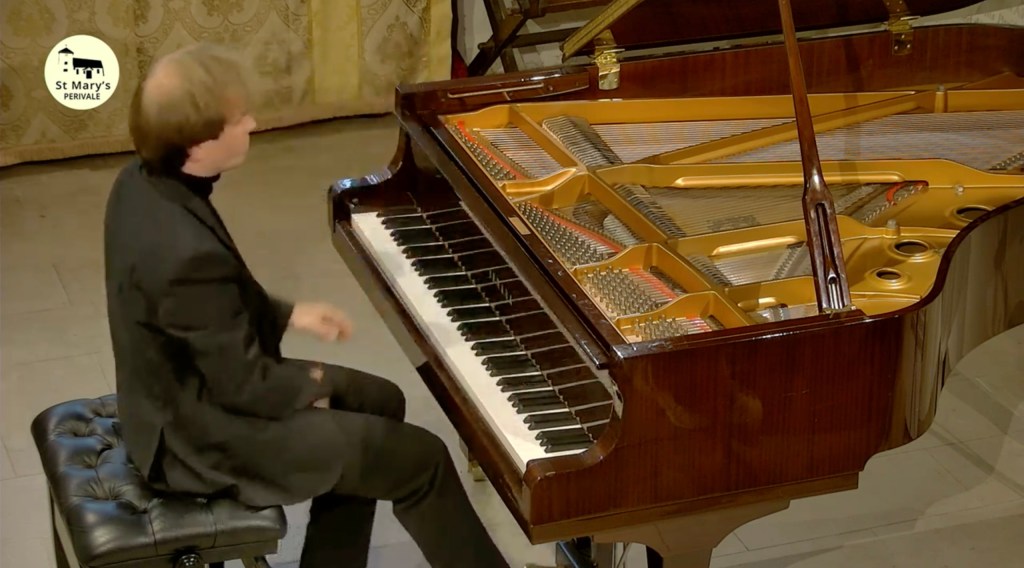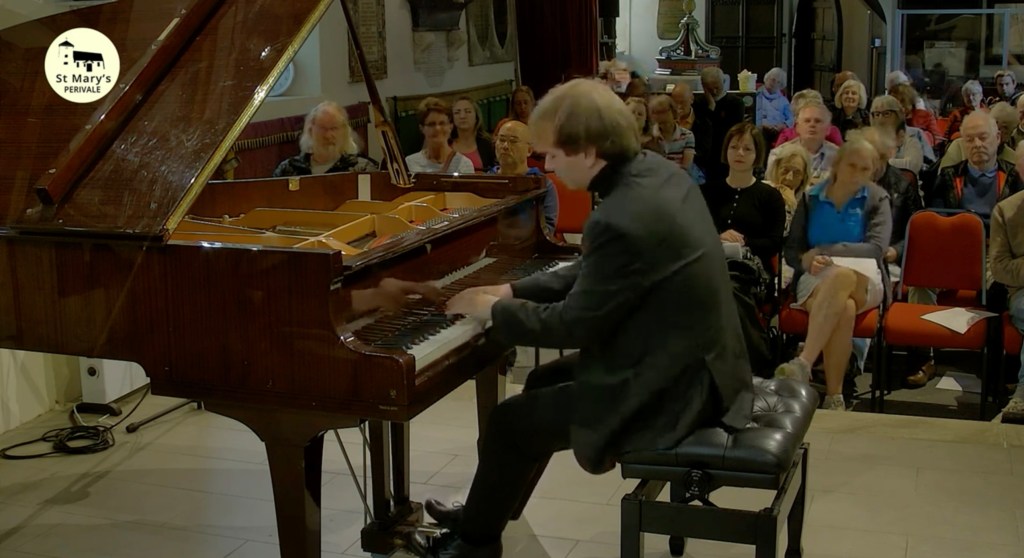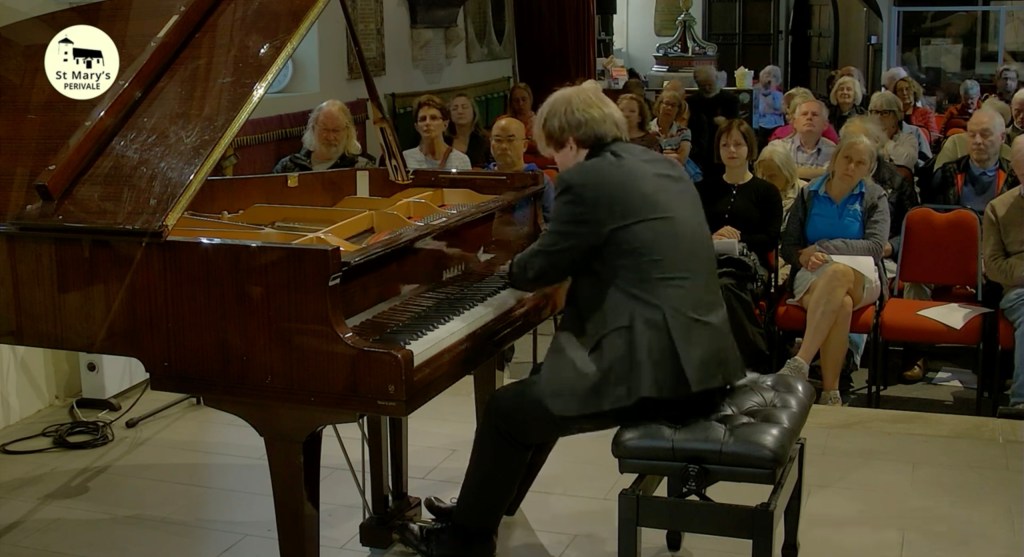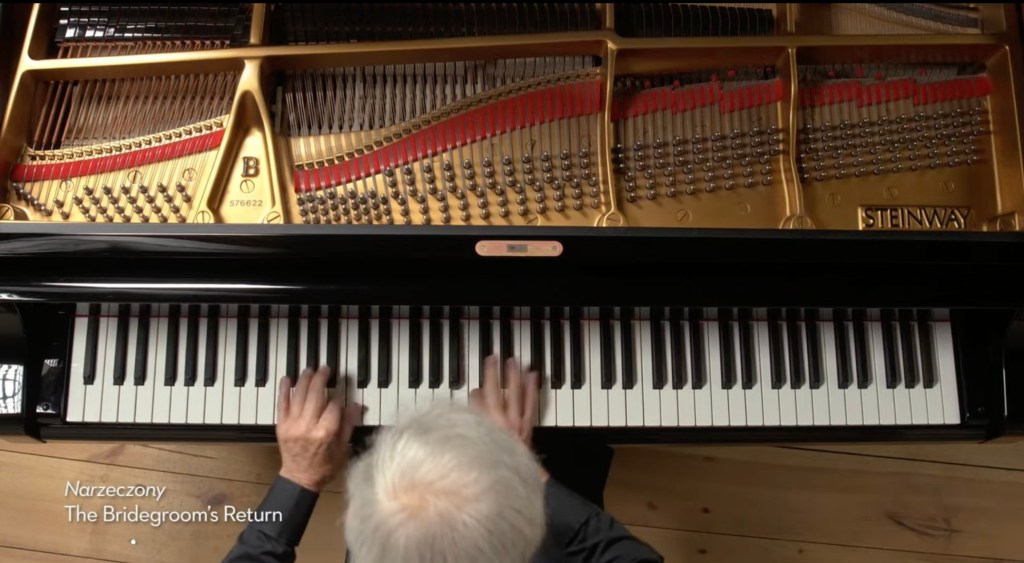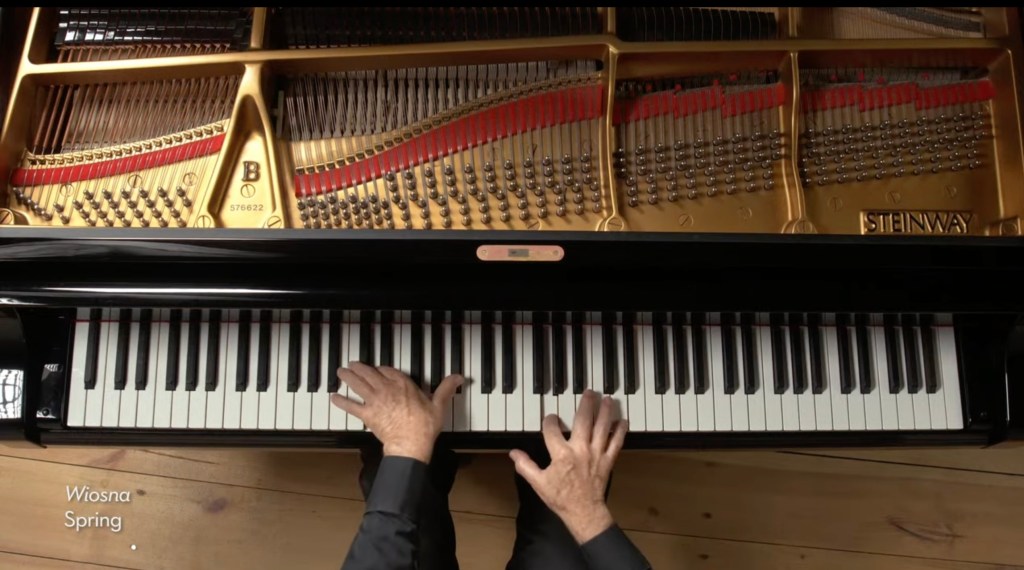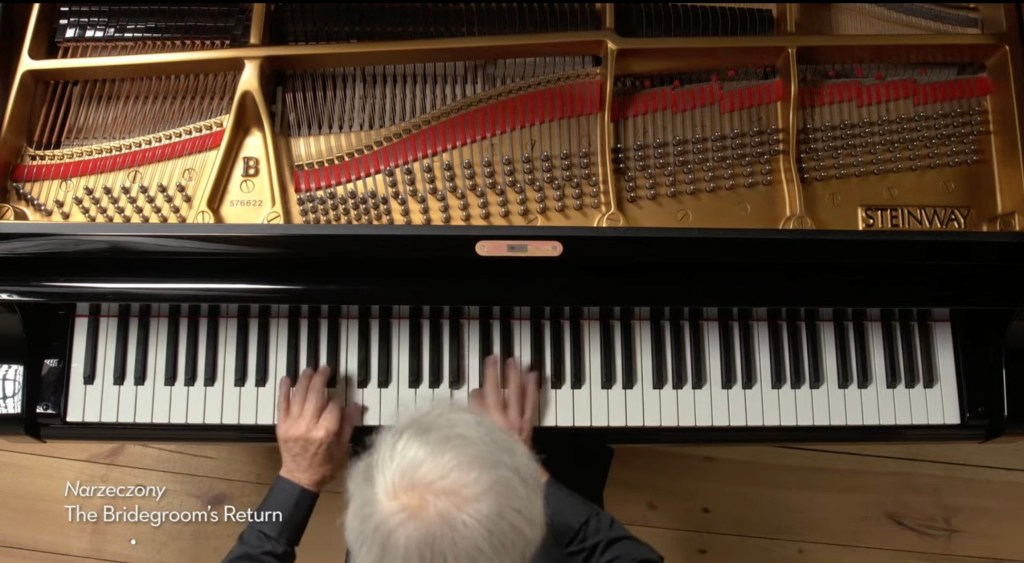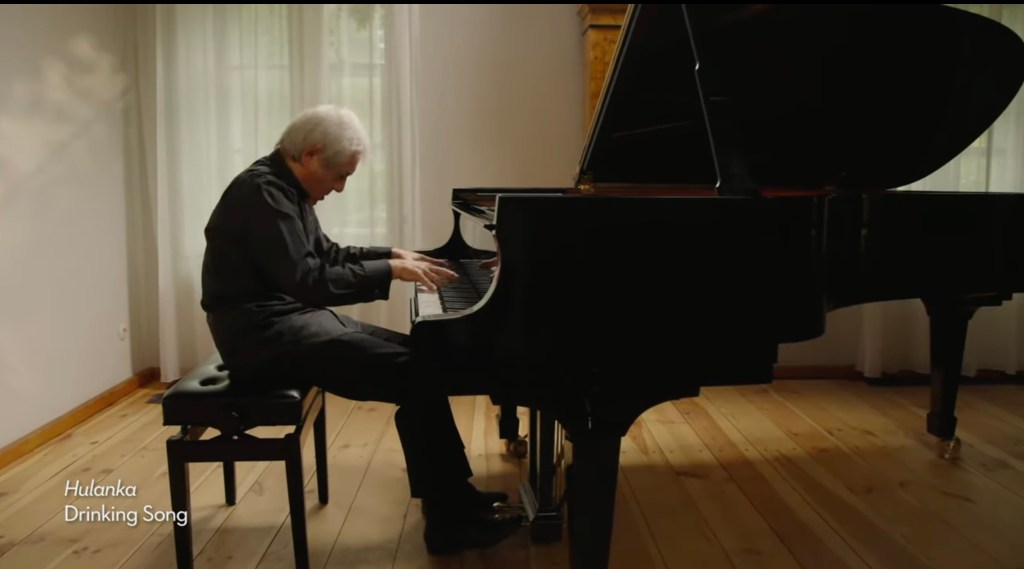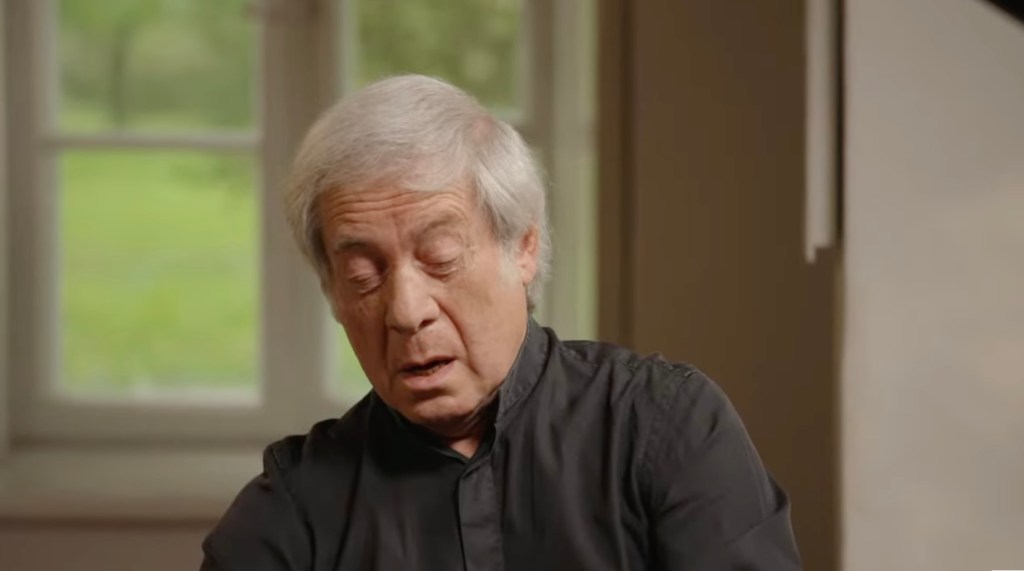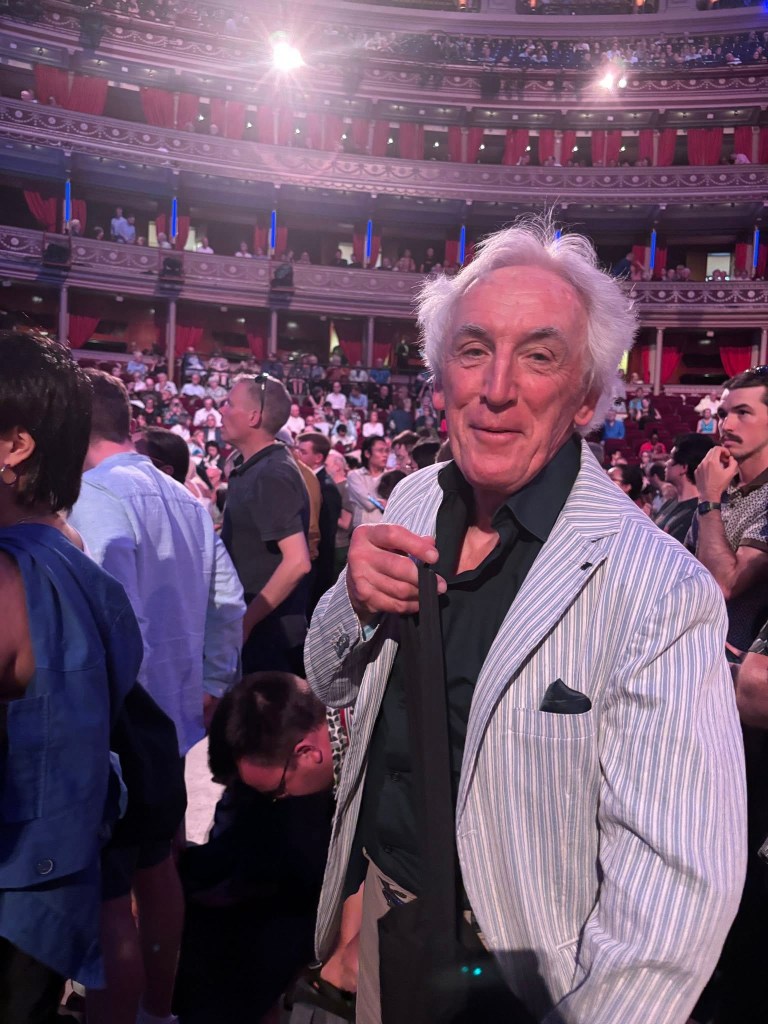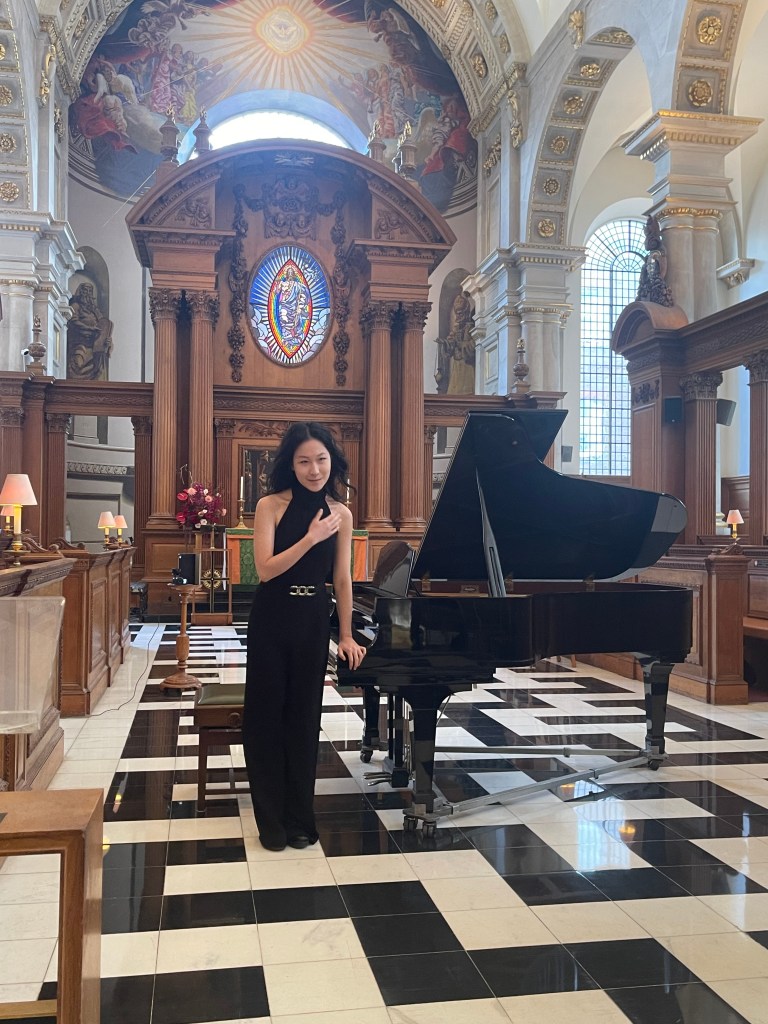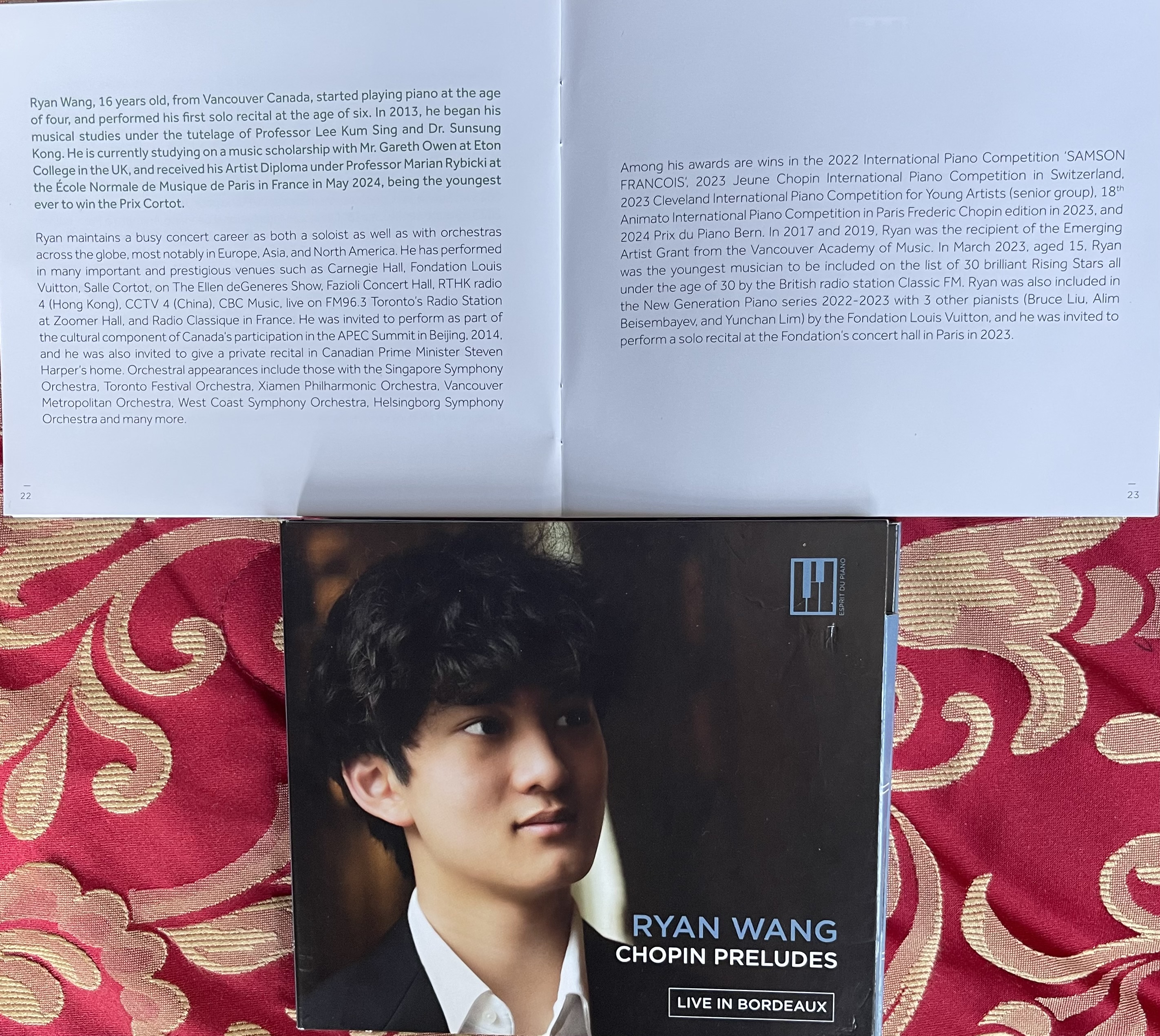
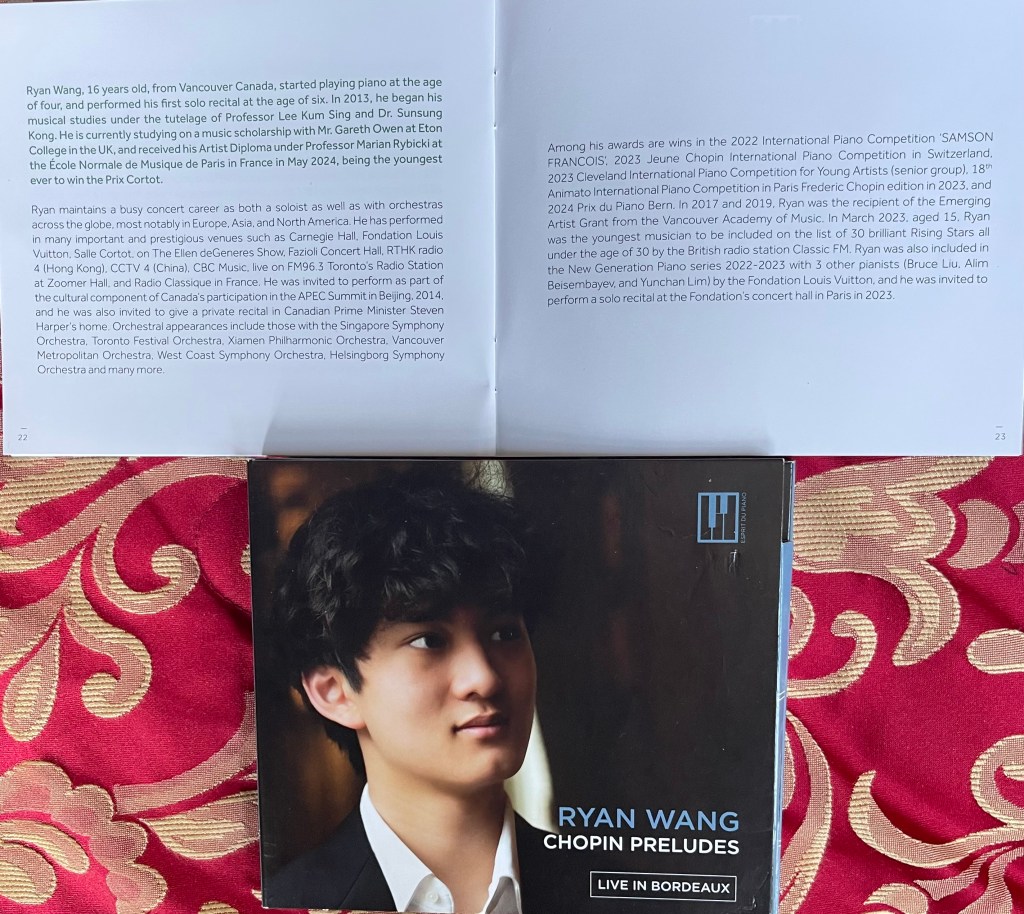
Ryan Wang plays Chopin with the Fire and Passion of a young God

I first heard Ryan Wang four years ago in Florence when as a fourteen year old boy he played Chopin Preludes with such artistry that he won first prize at the final of the Montecatini Competition.

https://christopheraxworthymusiccommentary.com/2023/10/21/montecatini-international-piano-competition-final-in-the-historic-teatro-niccolini-in-florence/

I later heard him several times at Eton where he held a music scholarship . Recently he also won the BBC young musician of the year award with a prize winning performance of the Rachmaninov Second Concerto broadcast on television.

Last summer I heard his farewell performance of Tchaikovsky as his schooldays came to an illustrious end .
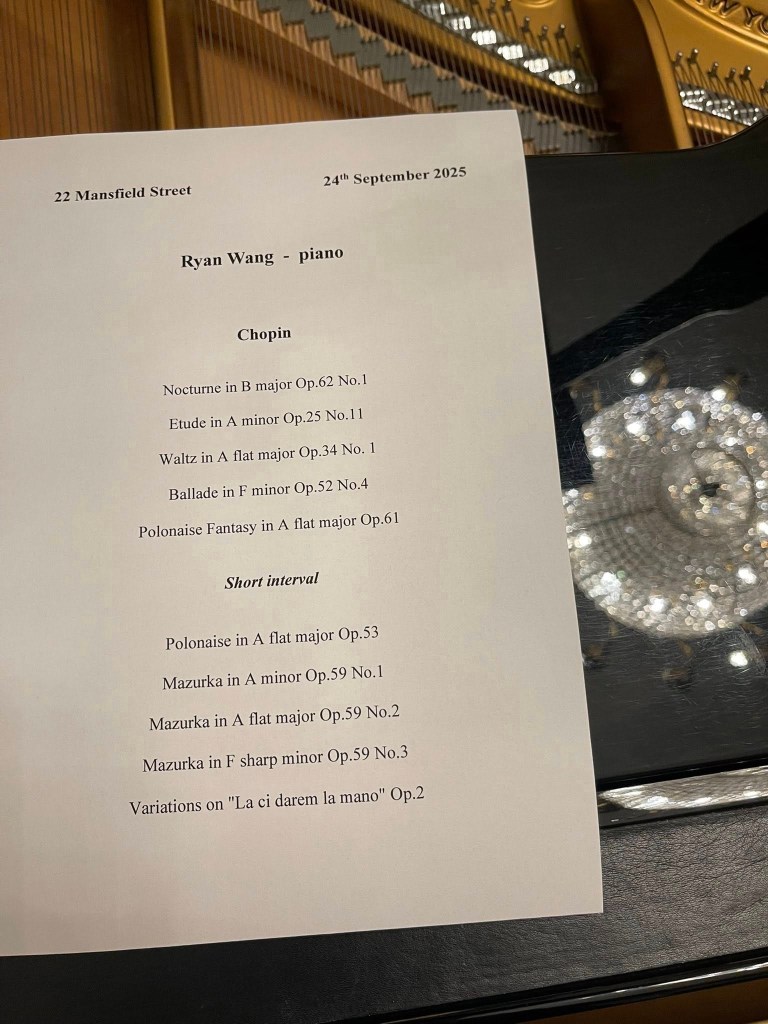
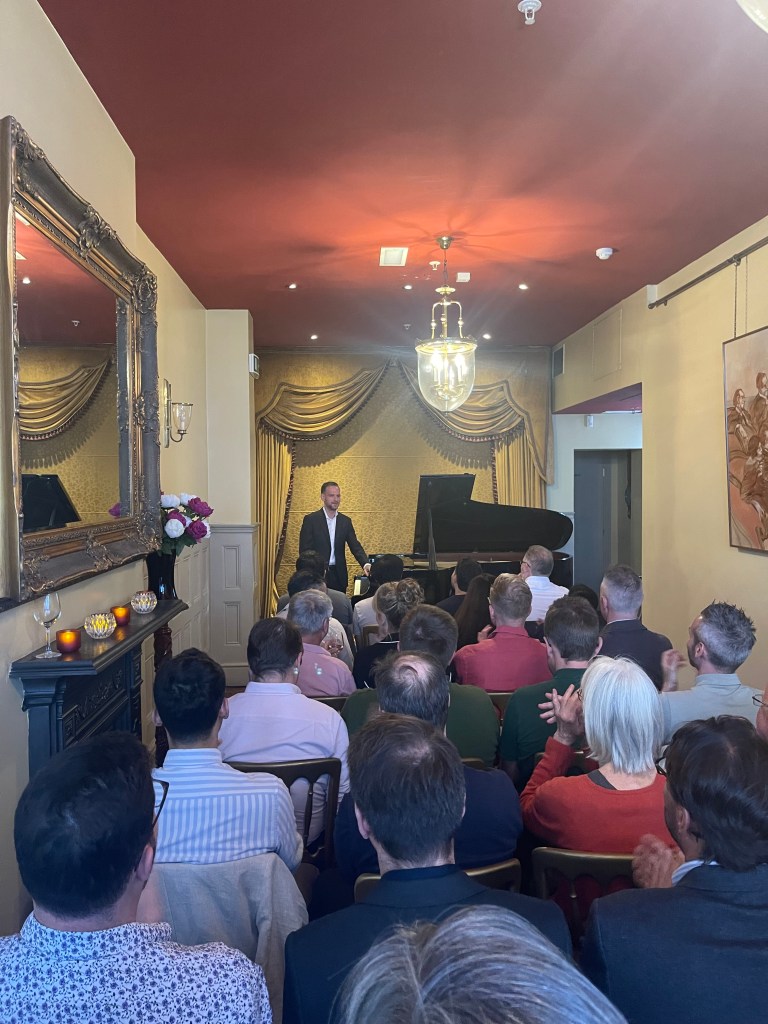
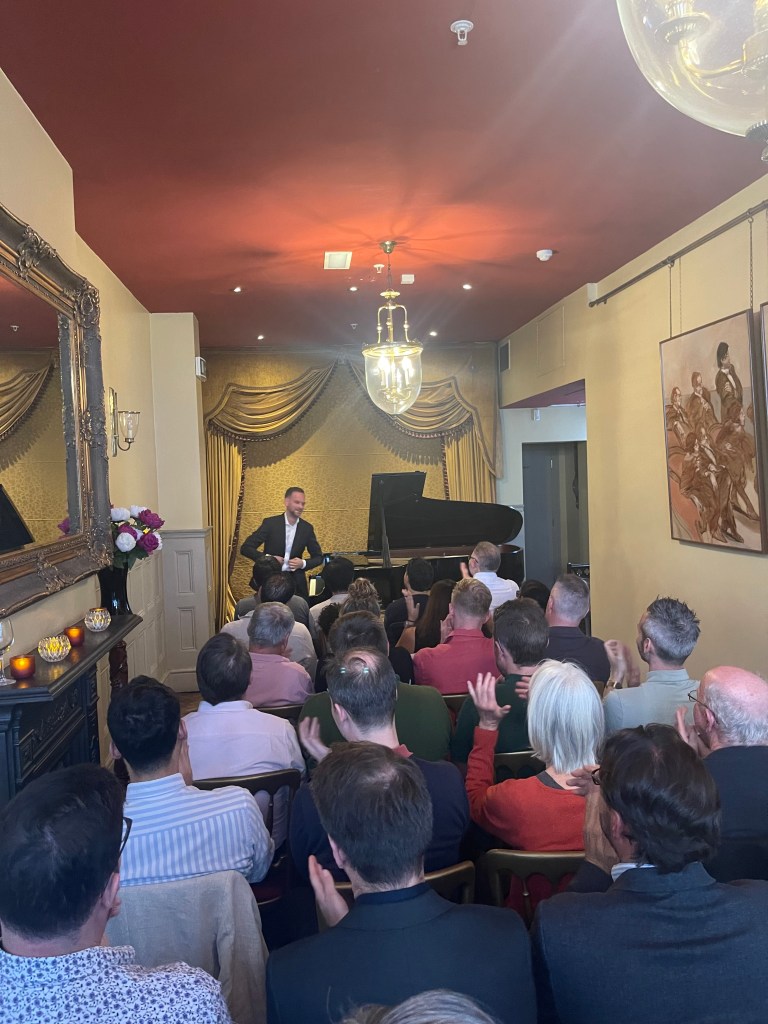
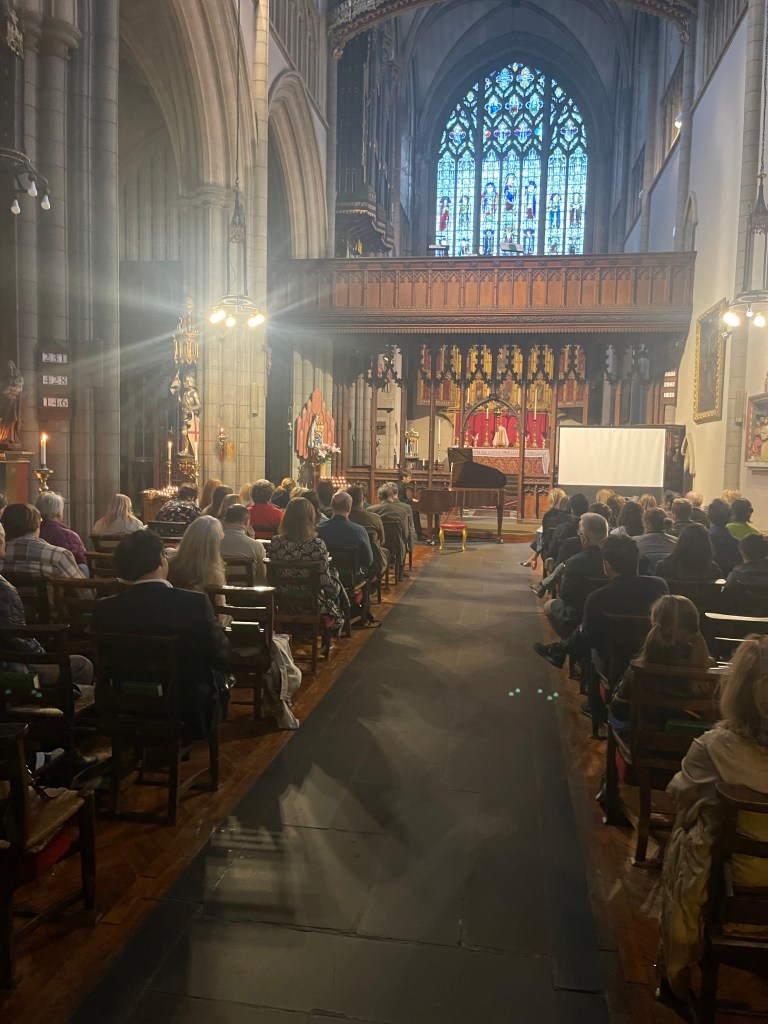
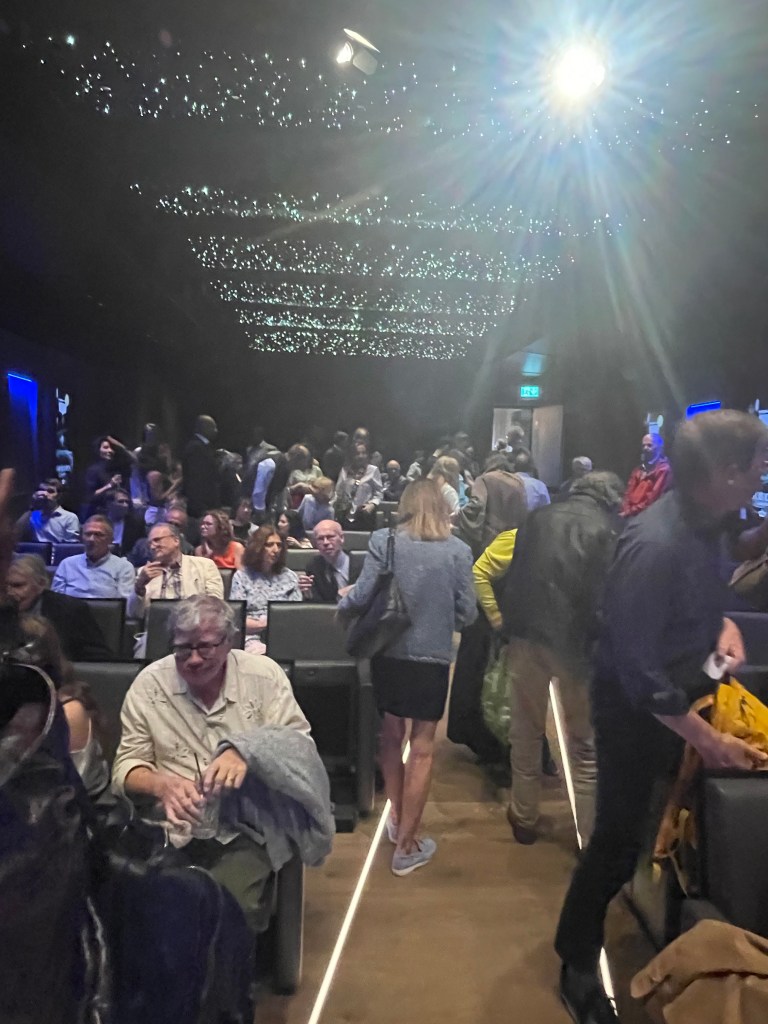
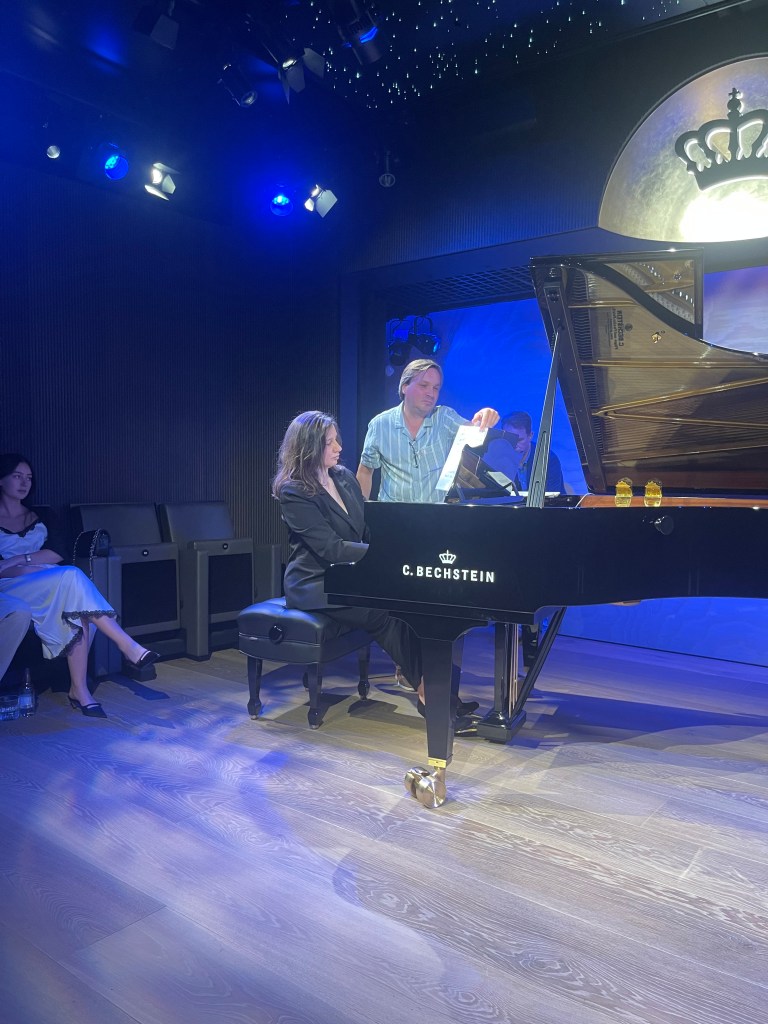
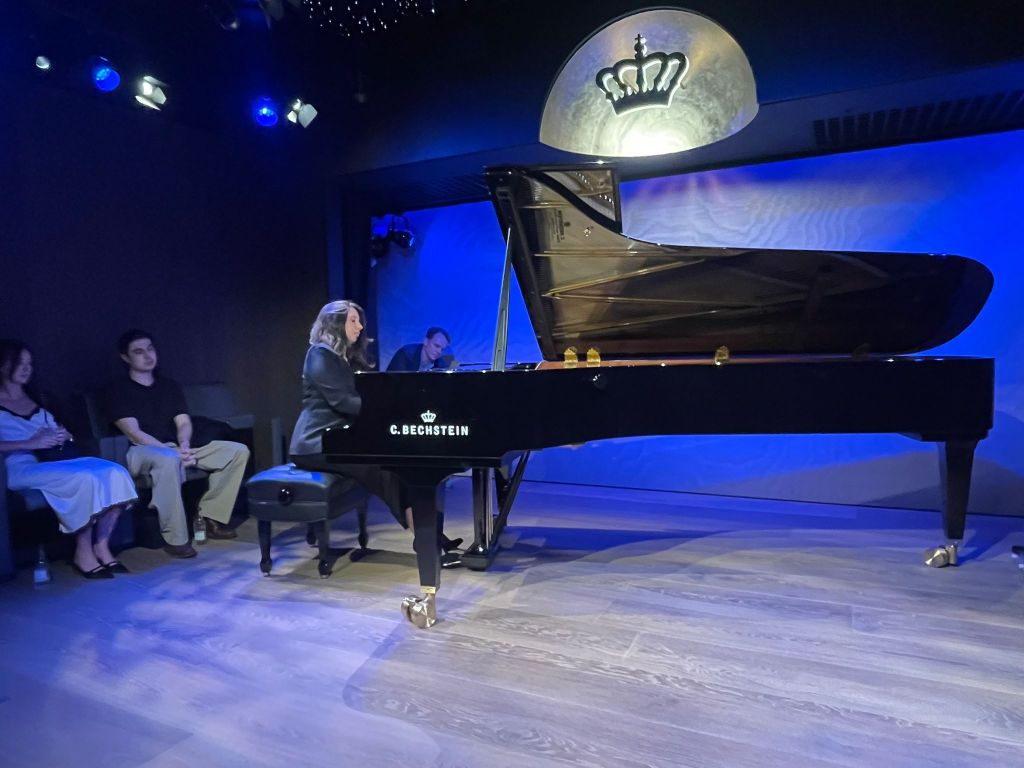
Now as an eighteen year old artist he was playing a Chopin recital in the sumptuous salon of the Boas . Little were we aware that Ryan had played Chopin’s First Concerto in Paris last night.
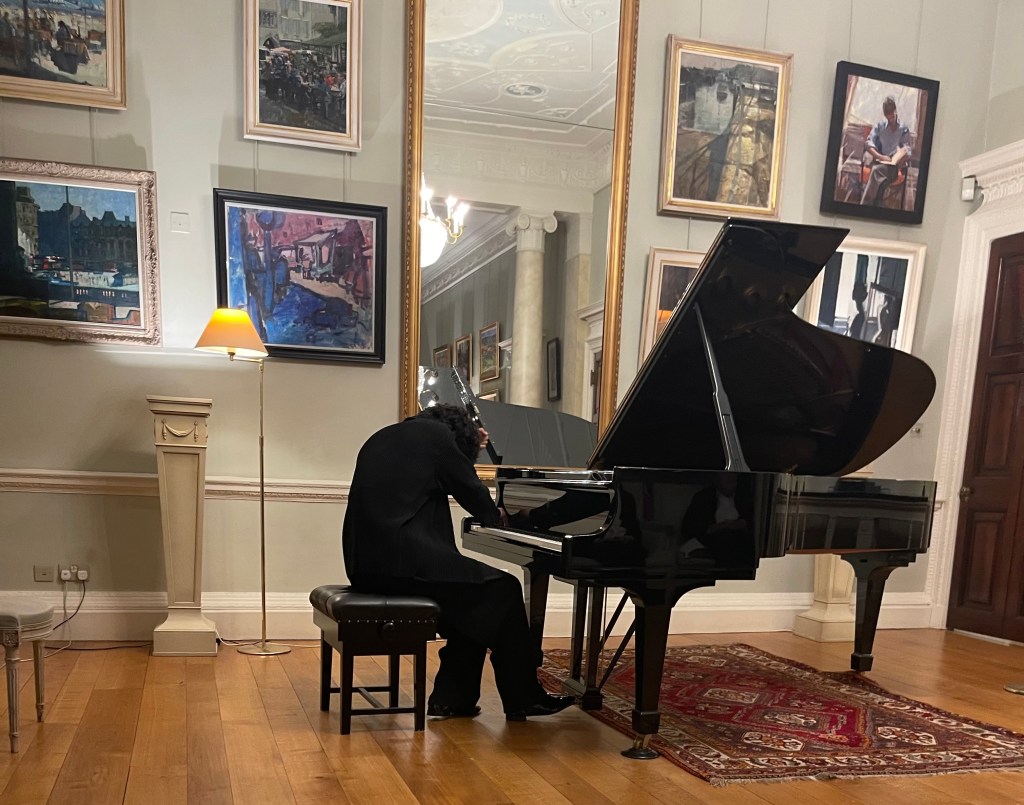
So at 18 he is already a consummate artist on his way to Harvard to complete a NEC Dual Degree Programme under Wha Kyung Byun.

Before crossing the Atlantic there is a small matter of having been selected to take part in the International Chopin Competition in Warsaw. Hence today’s concert with the ever generous Boas promoting a try out recital for Ryan before he steps into the Circus arena where many of the finest young pianists of their generation are preparing to fight it out like Gladiators in Roman times .
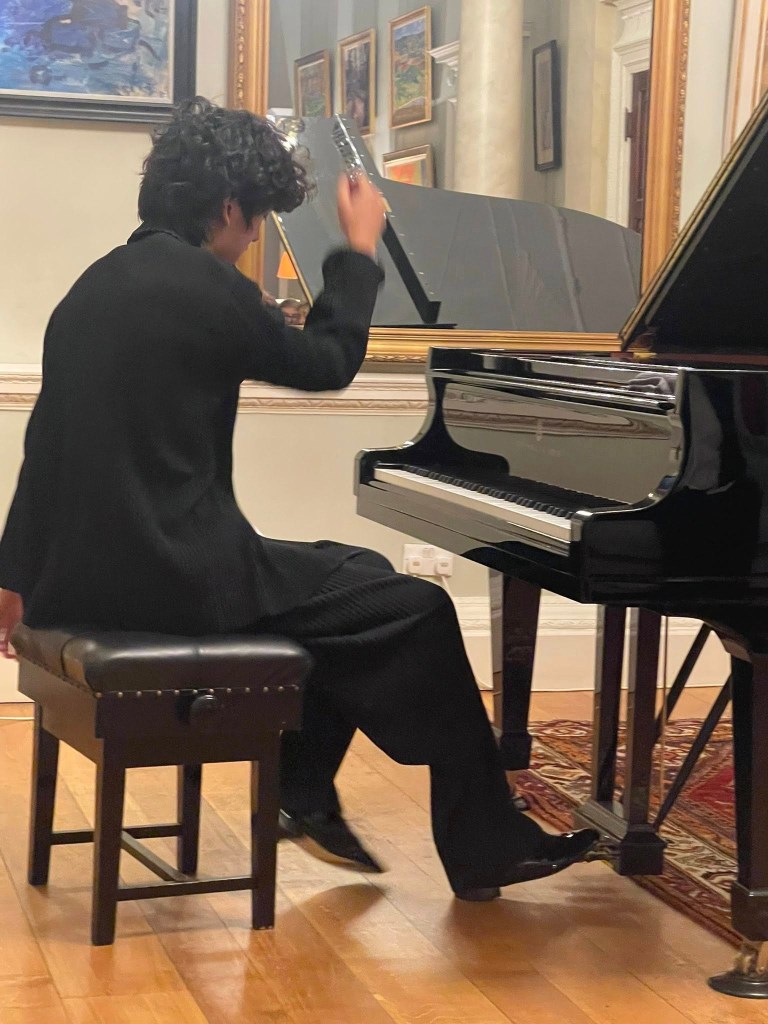
Ryan playing a long programme including such masterpieces as the Fourth Ballade op 52, the Polonaise – Fantaisie op 61, together with the Waltz op 34 n 1 , the Nocturne op 62 n.1, the Winter Wind Étude and the Mazukas op 59 . Not forgetting the Polonaise Héroique op 53 . But it was the Variations on ‘La ci darem la mano’ that Chopin had played at the same age as Ryan today, on his arrival in exile, that brought forth the finest playing of the evening. Schumann had written ‘Hats of Gentleman , a Genius’ and it was exactly the same words that could follow Ryan’s inspired performance. A performance that showed all Ryan’s youthful exuberance but allied to a masterly control and breathtaking technical mastery. A scintillating jeux perlé played with teasing brilliance and even a glimpse of the Bel Canto that already gave a taste of the genius who was to create new art forms on a piano that now had a ‘soul’.
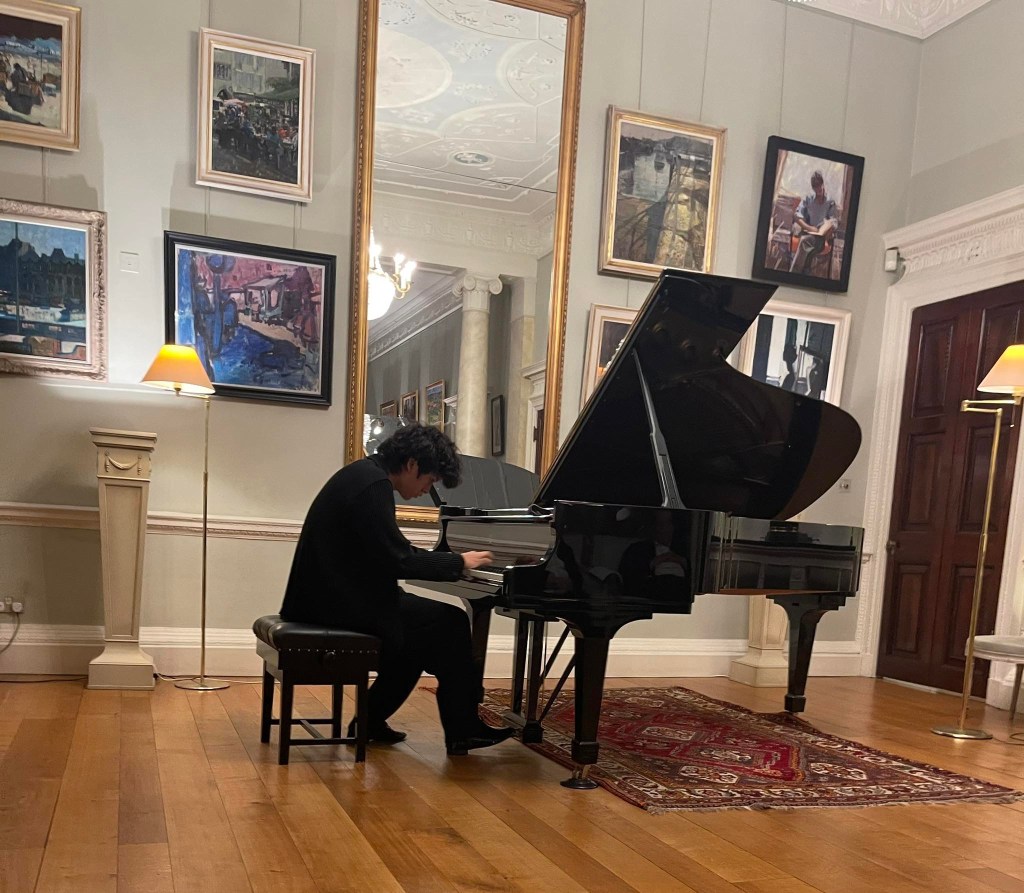
The concert had begun with Chopin’s late Nocturne in B that was played with nobility and delicacy giving an architectural shape to this most eloquent of tone poems. There was magic in the air as trills unfolded with vibrations of extraordinary poignancy.
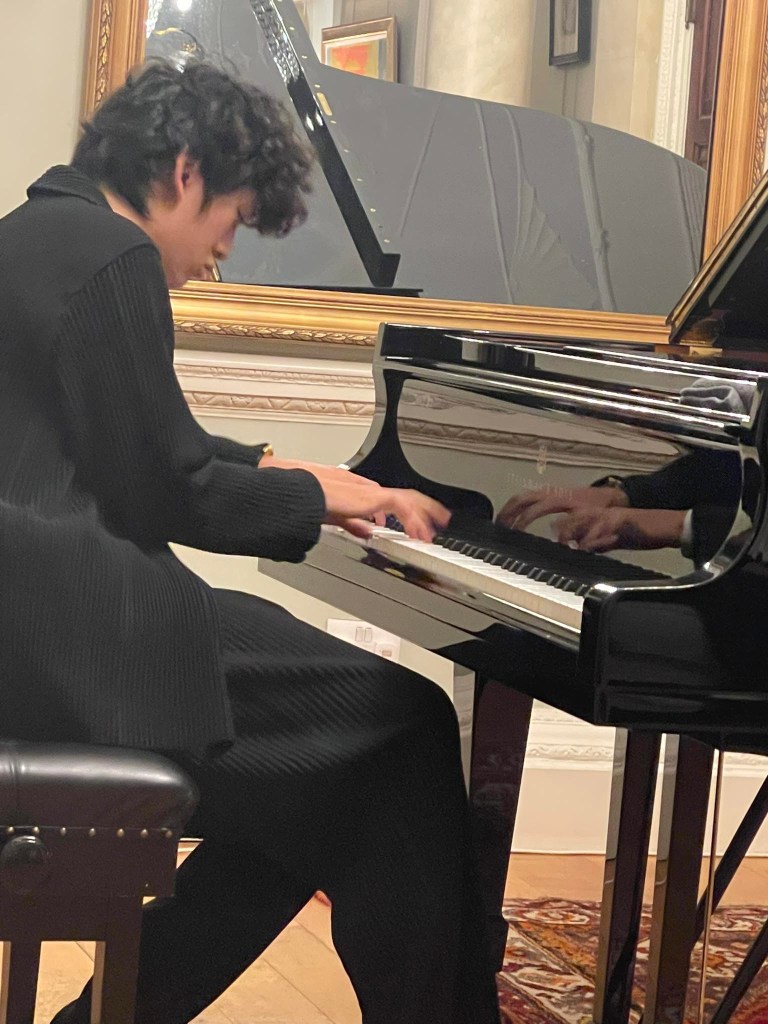
A passionate fearless ‘Winter Wind’ from a young man with fire in his veins. If it had moments when the strain of this ‘tour de force’ that Ryan is attempting in these days leading up to Warsaw, it has the making of something very special full of breathtaking exhilaration and excitement .

The Waltz op 34 n 1 lept from Ryan’s fingers with youthful brilliance but he could now have more fun and playful delight. Aristocratic charm and beguiling subtlety mark Chopin’s waltzes as jewels that can be made to sparkle with refined brilliance.
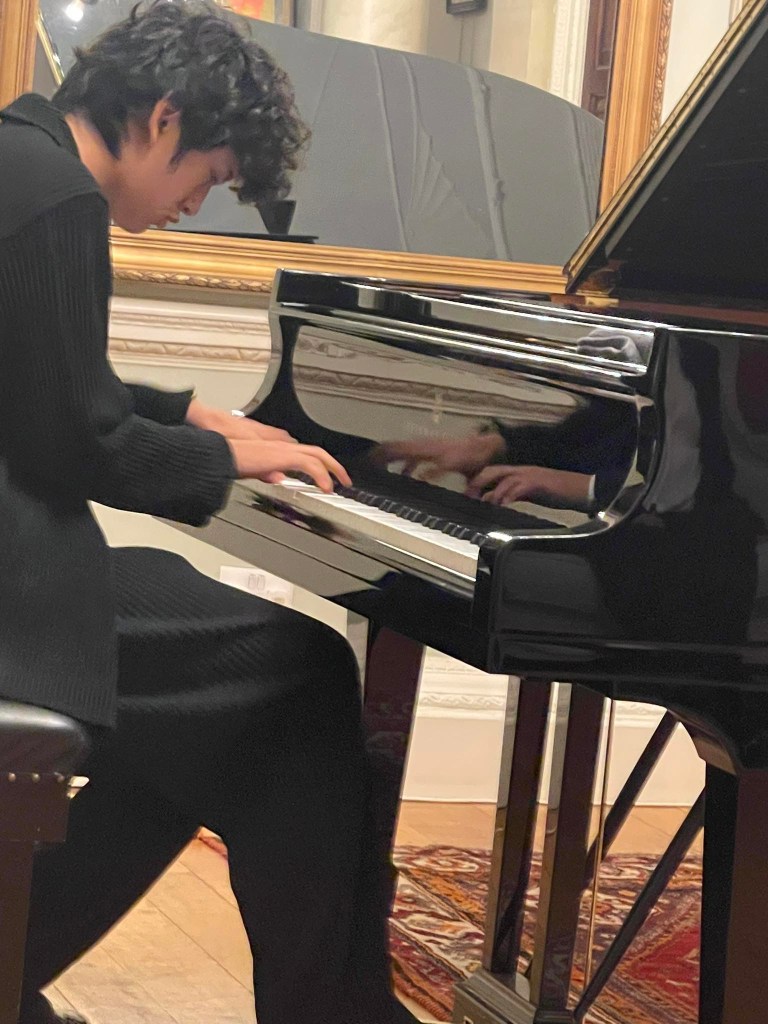
The Ballade op 52 is one of the pinnacles of the romantic piano repertoire and Ryan played it with masterly control and understanding . Allowing the variations to unfold with ever more intricacy until the final passionate outpouring and dramatic chords . Five gentle chords followed after such a tempestuous full stop, and they were played with beautiful shape until the explosion of technical bravura of the coda.

If sometimes Ryan played with too much vehemence and his forte was too uniformly passionate it is because this young man has a God given talent and an urgency to express what is in his fiery heart.
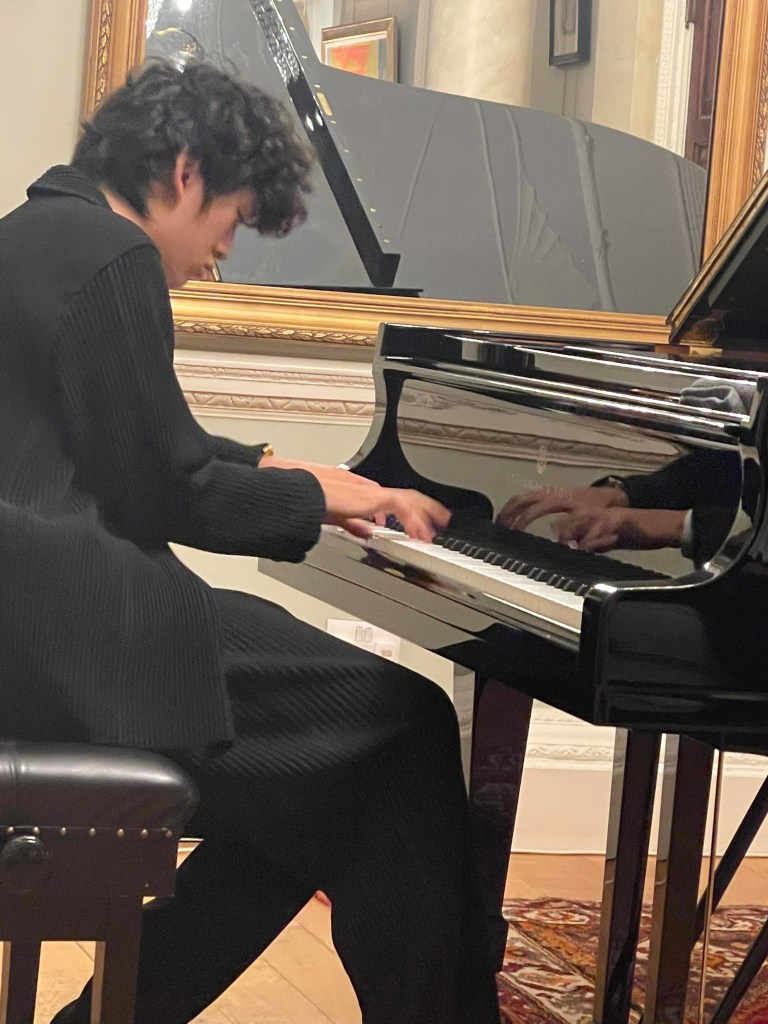
The opening of the Polonaise- Fantaisie was played with masterly control and a palette of sounds that until now he had not fully revealed. An architectural shape to this masterpiece where Chopin combines a fantasy world with the dance of his homeland that was always in his heart.

It was in the Mazurkas that the poetic mastery of this young man was revealed and where these ‘canons covered in flowers ‘ to quote Schumann again, were given a palette of colour allied to a beguiling freedom that was really the highlight of the recital. Gone was the temptation to throw himself into the fray, as here was a young artist listening to every note that he was conjuring from his poetic fingers . This was an oasis of beauty and calm after a truly tempestuous Polonaise Héroique, where the military in the central episode have rarely been heard to March with such speedy perfection .
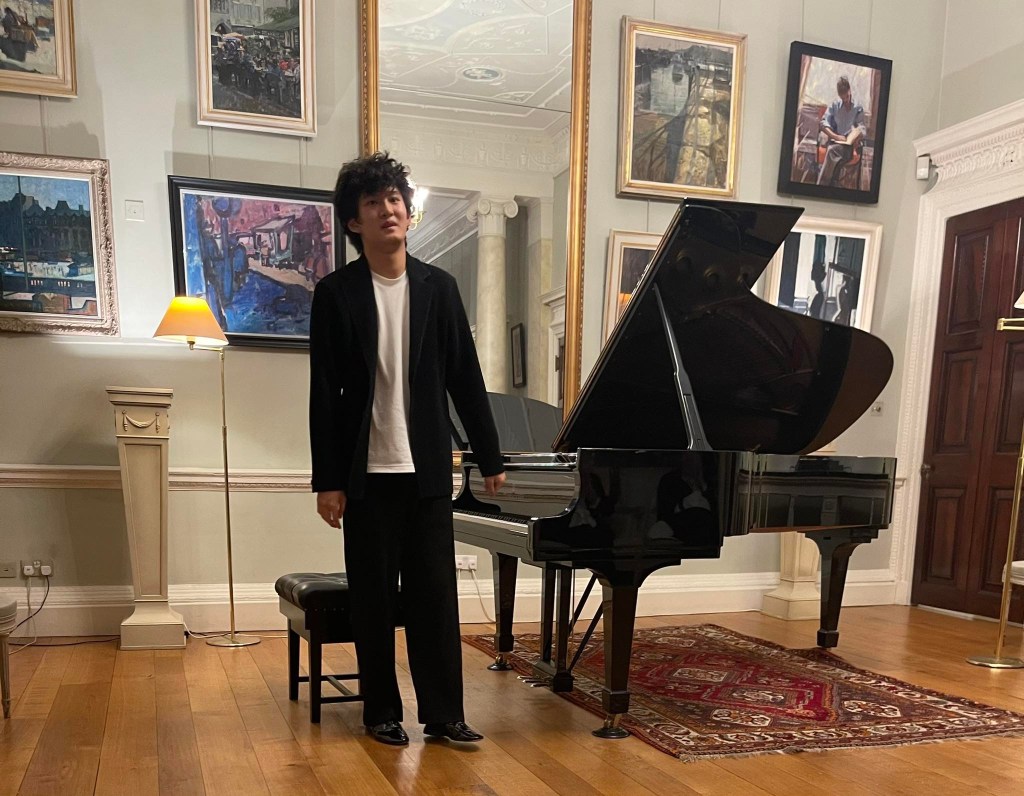
Ryan may have been exhausted after the strain of concerts in these past days but after such an exhilarating performance of Chopin’s youthful variations he could now let his hair down and treat us to a ‘Für Elise’ that became a true jam session of scintillating jazz . Ryan said he had picked it up off a performance he had heard on YouTube and obviously he relished every minute of it as we certainly did .
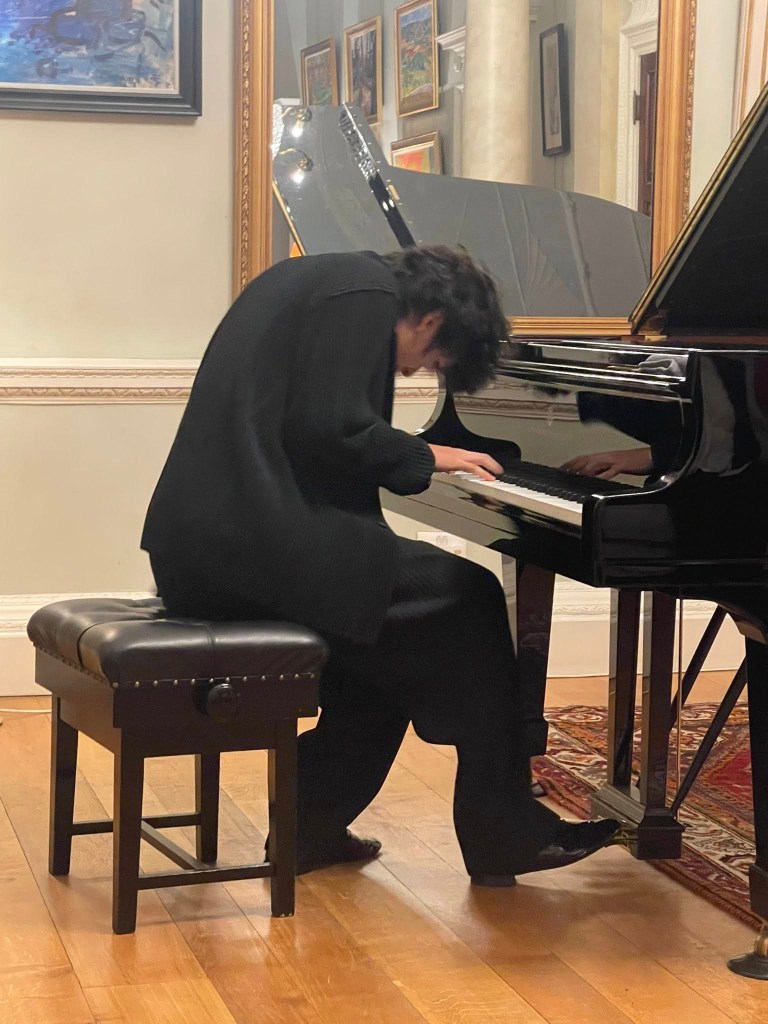
Surpringly a second encore was offered with the last of Chopin’s Preludes played with the breathtaking exhilaration and passion that this young man had demonstrated all evening .

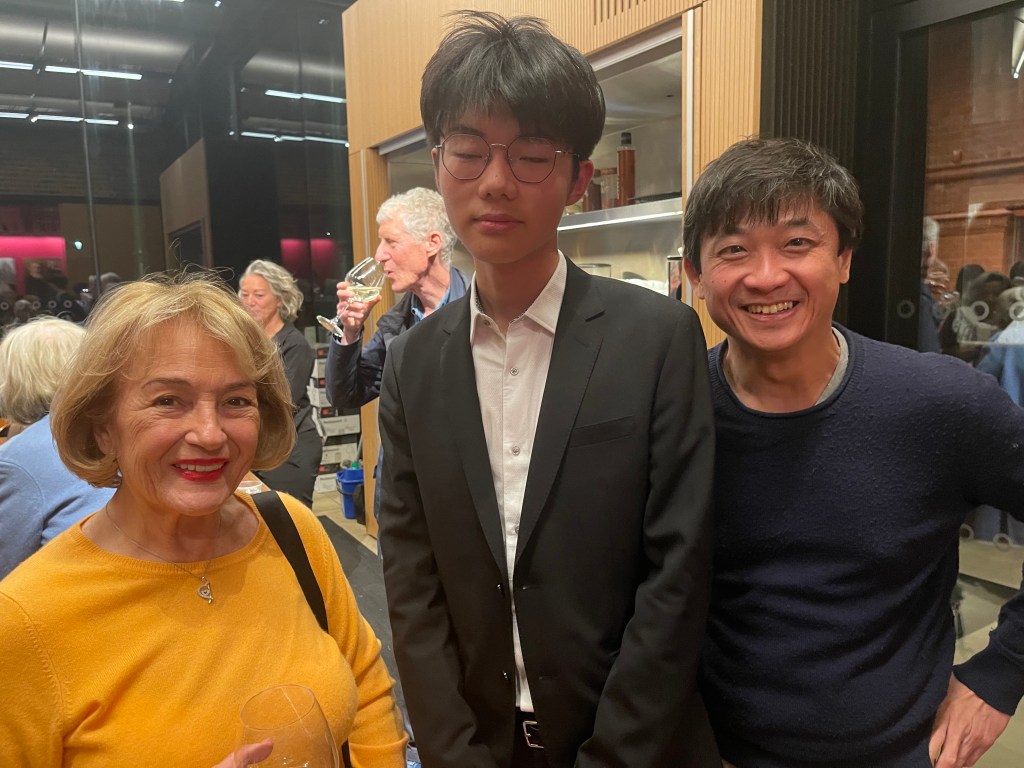
A remarkable evening from a young man on the crest of a wave and the admiration and good wishes of every one present tonight will follow him to Warsaw next month.
photo credit Dinara Klinton https://christopheraxworthymusiccommentary.com/2024/03/20/christopher-axworthy-dip-ram-aram/
https://christopheraxworthymusiccommentary.com/2023/09/05/pedro-lopez-salas-in-paradise-a-standing-ovation-at-la-mortella-the-walton-foundation/

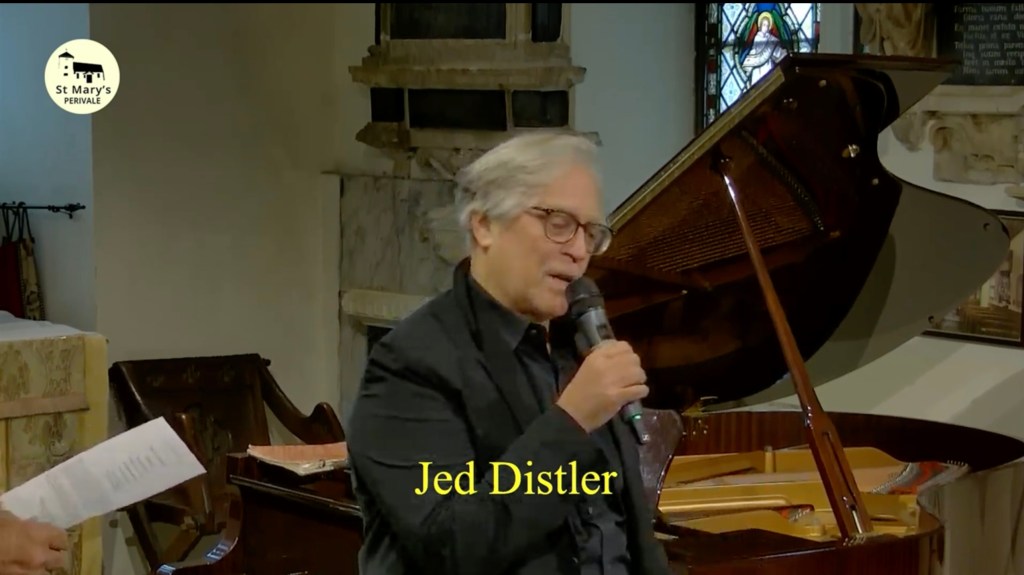
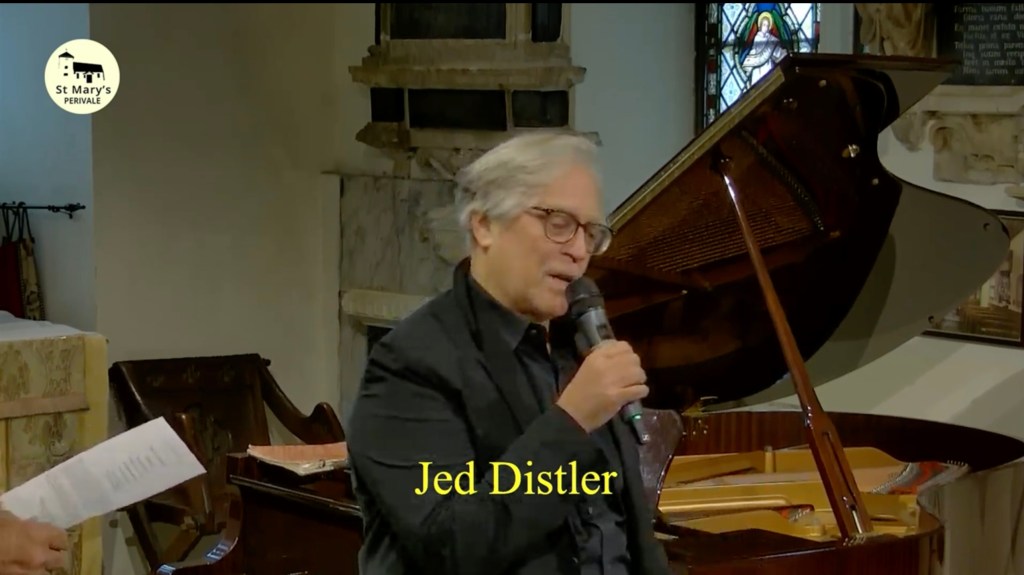
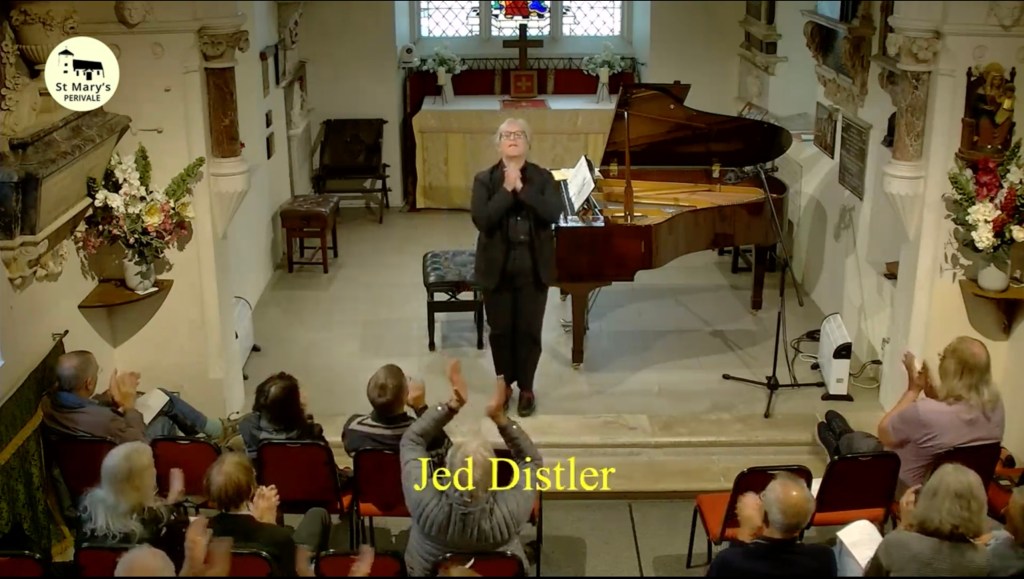
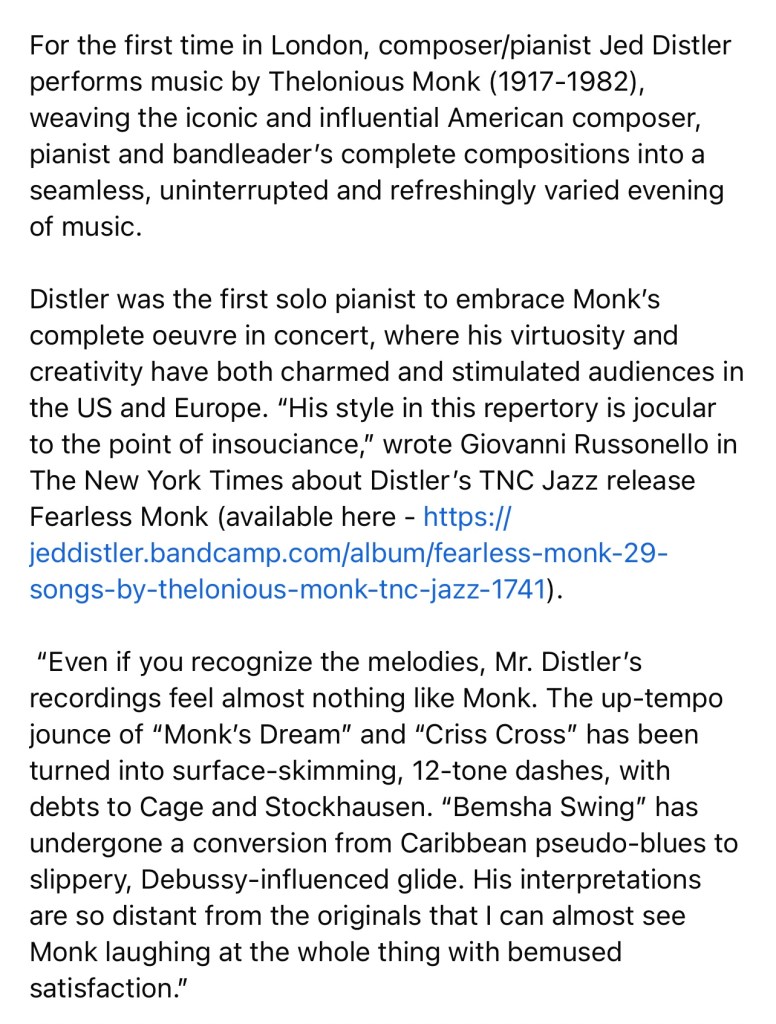
Kapellmeister Jed Distler ……encore ! Perivale calls

The American musician, Jed Distler is one of the most influential figures in the piano world.   He is a very well-known as an authoritative pianist, critic, composer, reviewer and broadcaster.  He is a Steinway artist, and contributes reviews and articles to Gramophone and Classicstoday.com, has written numerous CD booklet notes for Sony/BMG and Universal Classics. and will be a television commentator during the 19th International Chopin Competition in October 2025.   This will be a fascinating and different afternoon.   
https://www.youtube.com/live/6-1F6DjlXRA?si=QQksxt7f_ga5EL3c
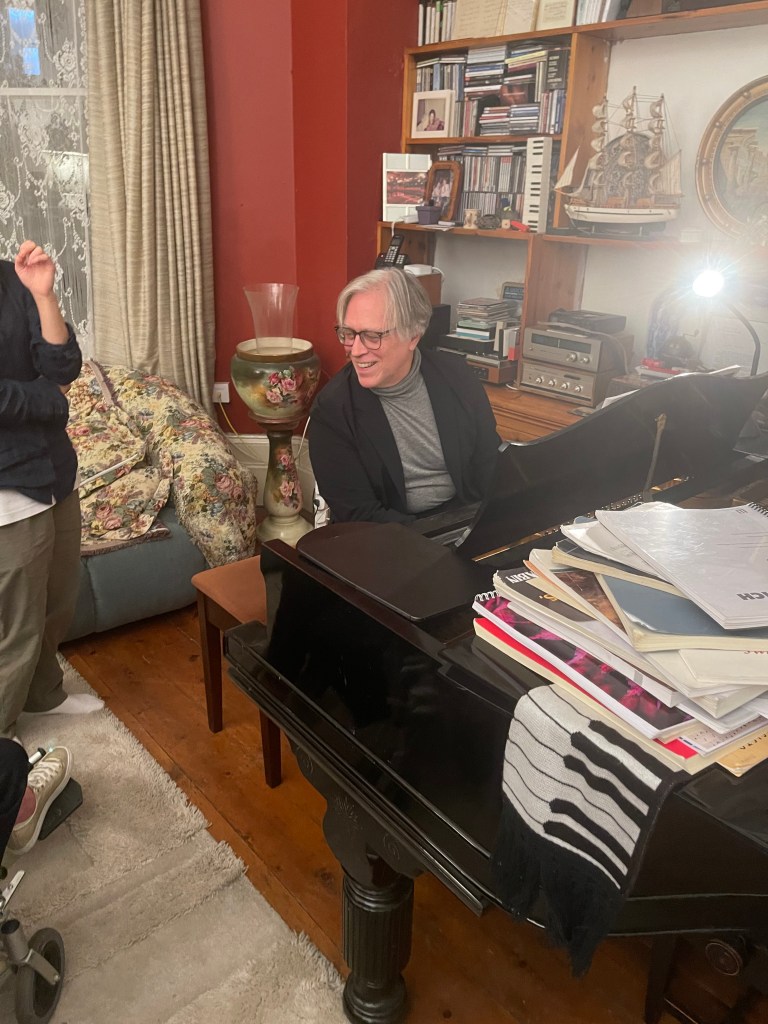
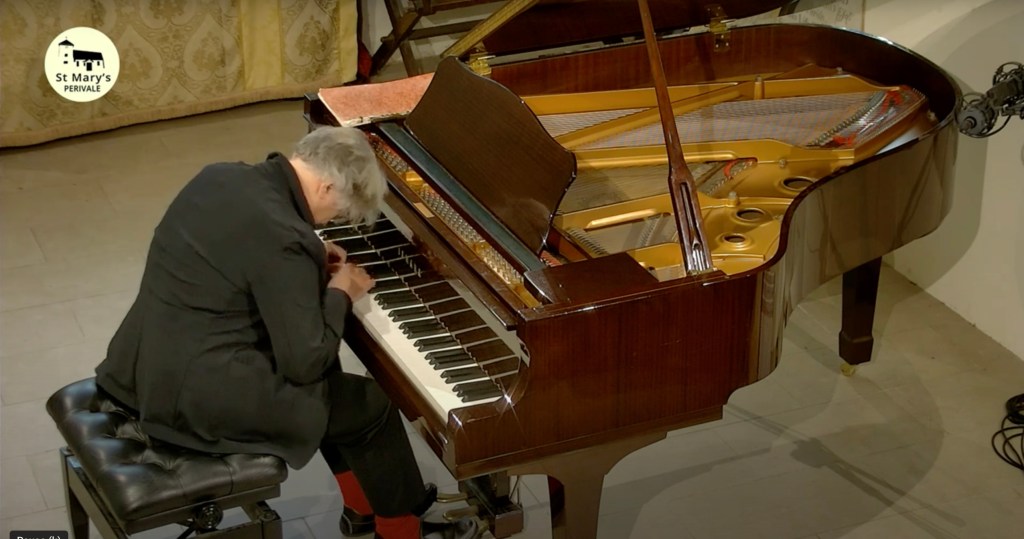
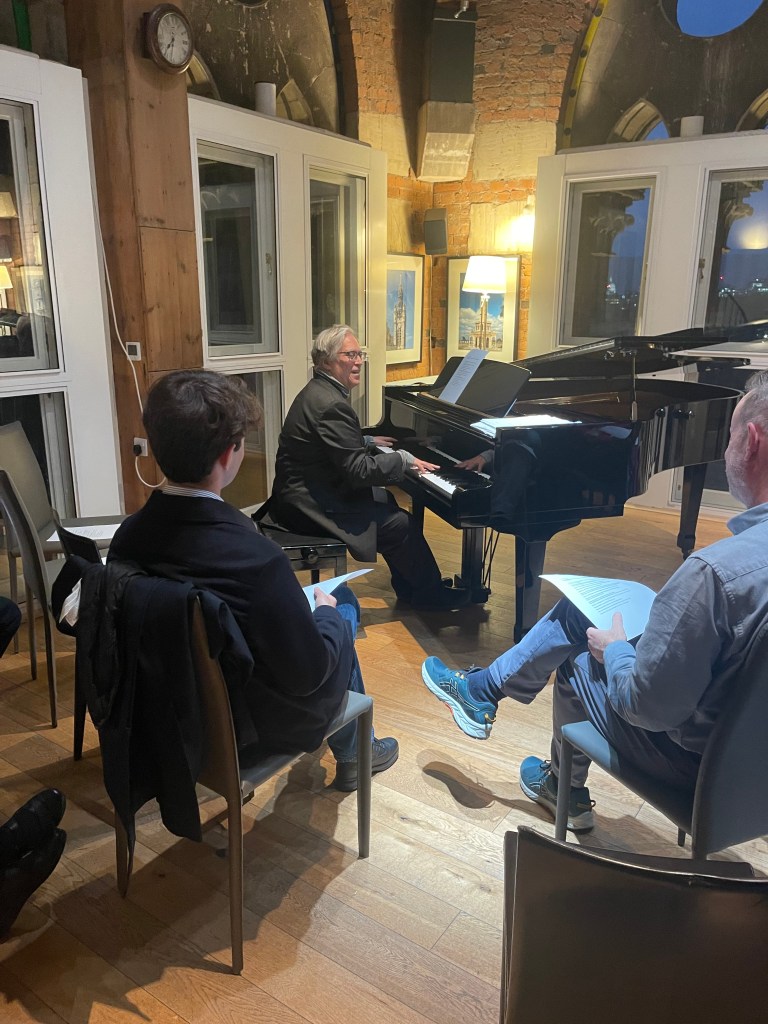
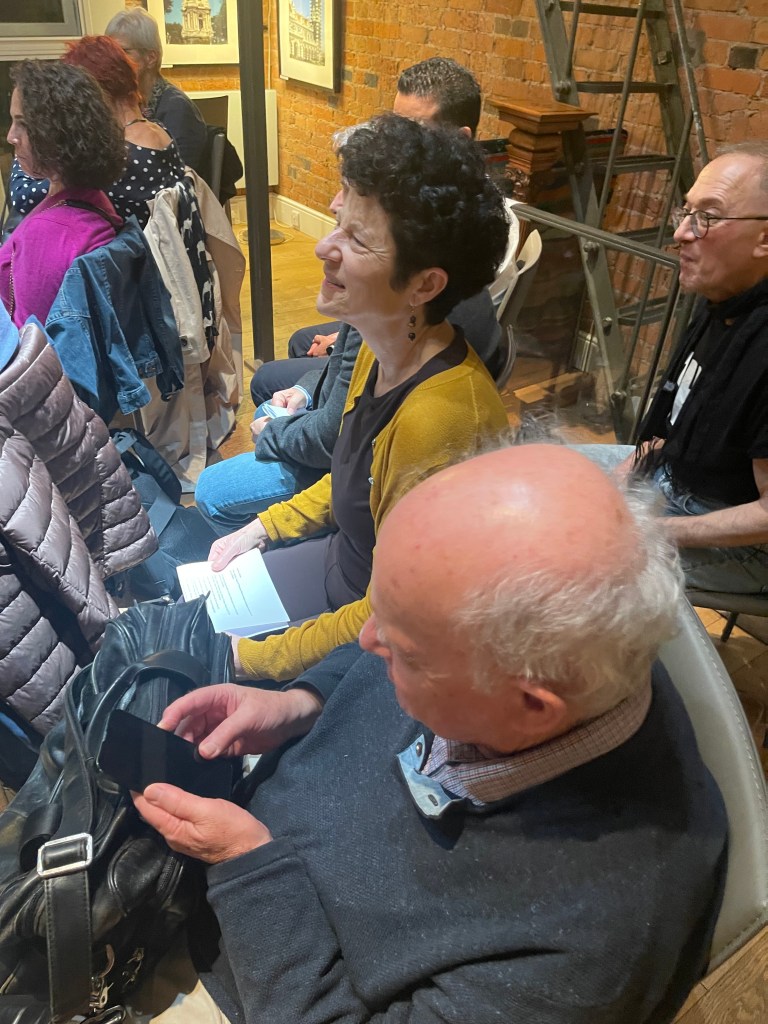
A concert with a difference as Hugh Mather announced it . The eclectic Jed Distler ,composer, writer,critic ,jazz and classical pianist ,improviser and compère .

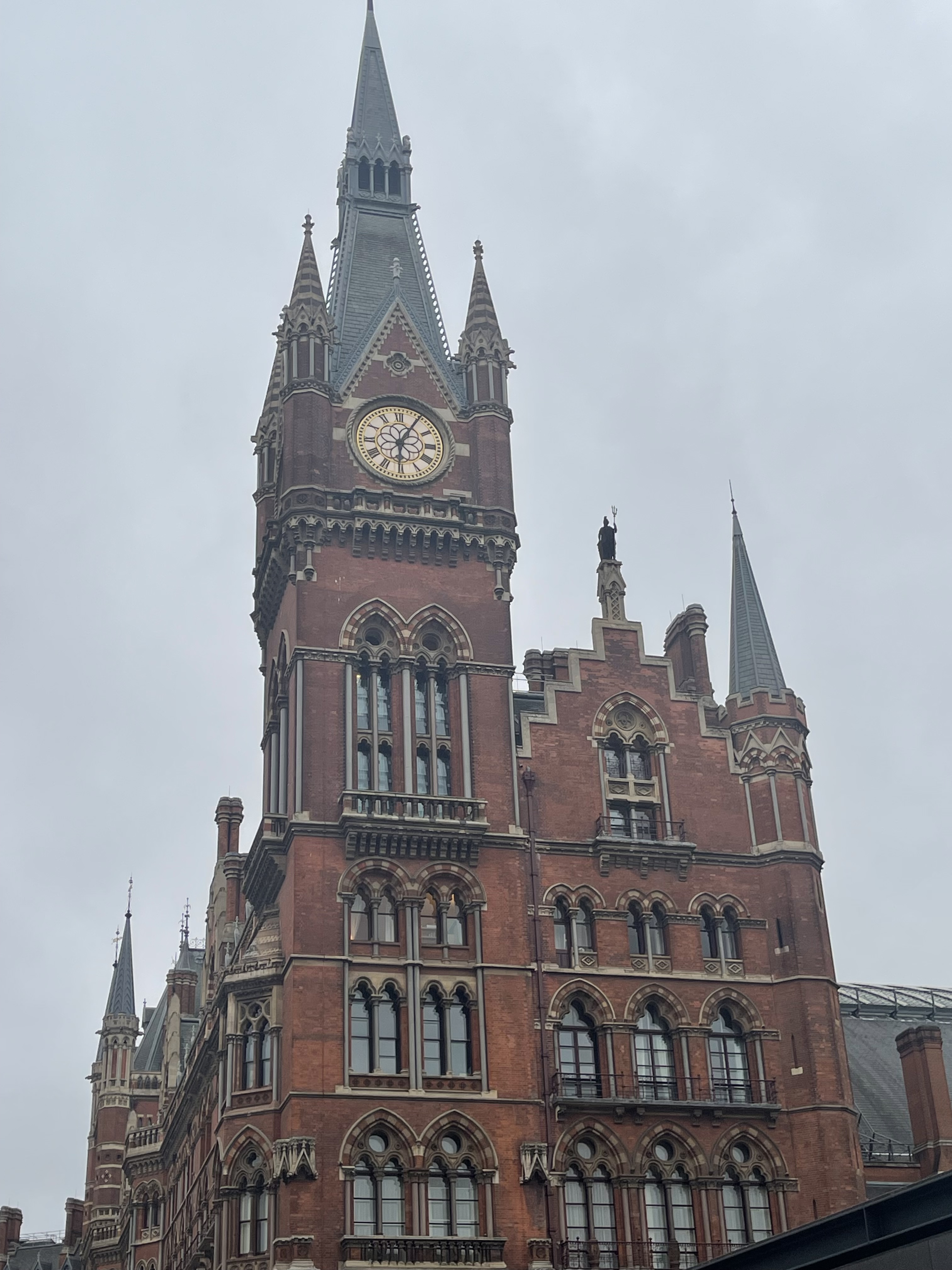
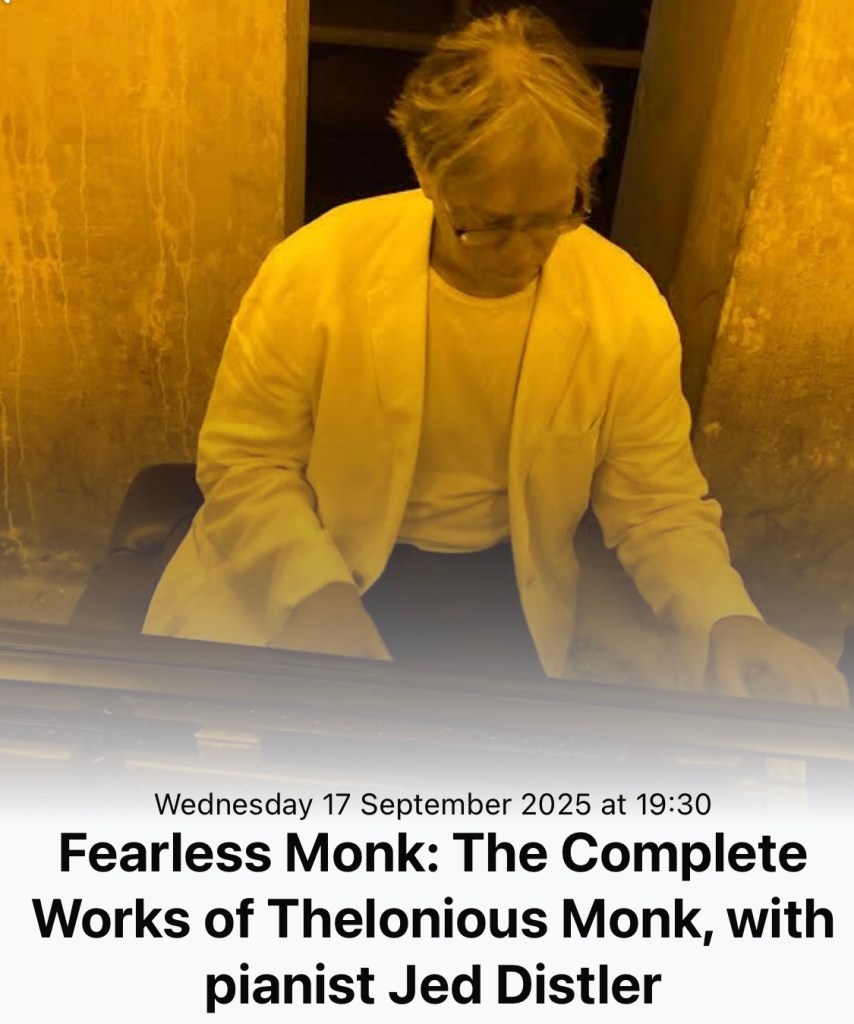
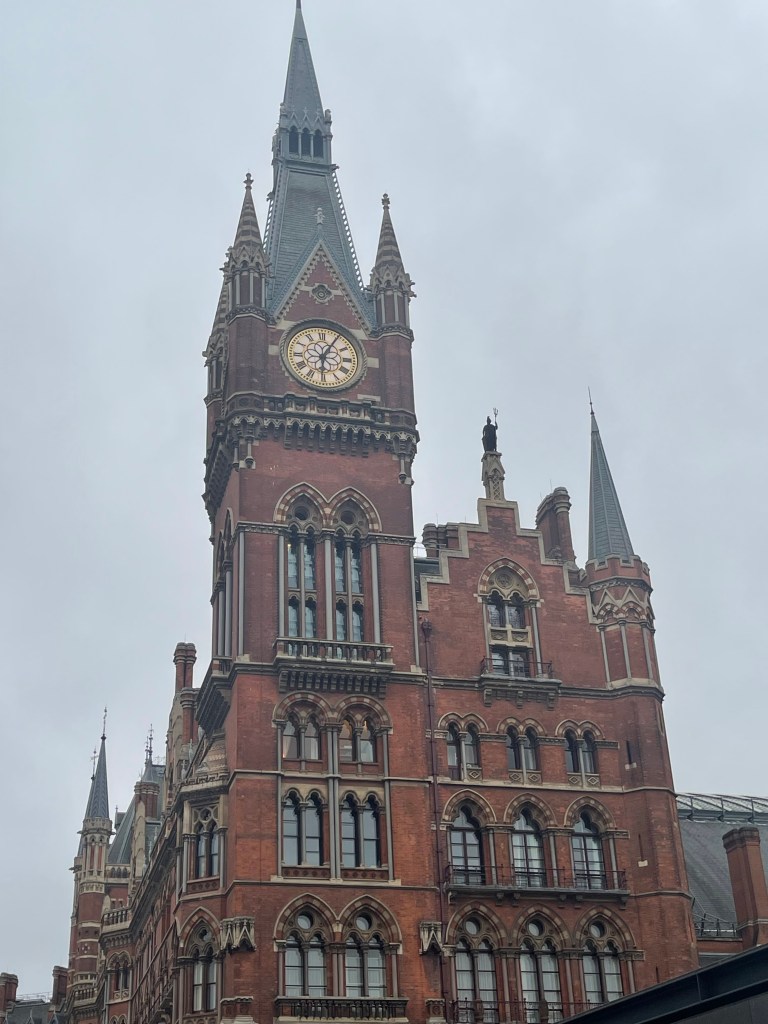
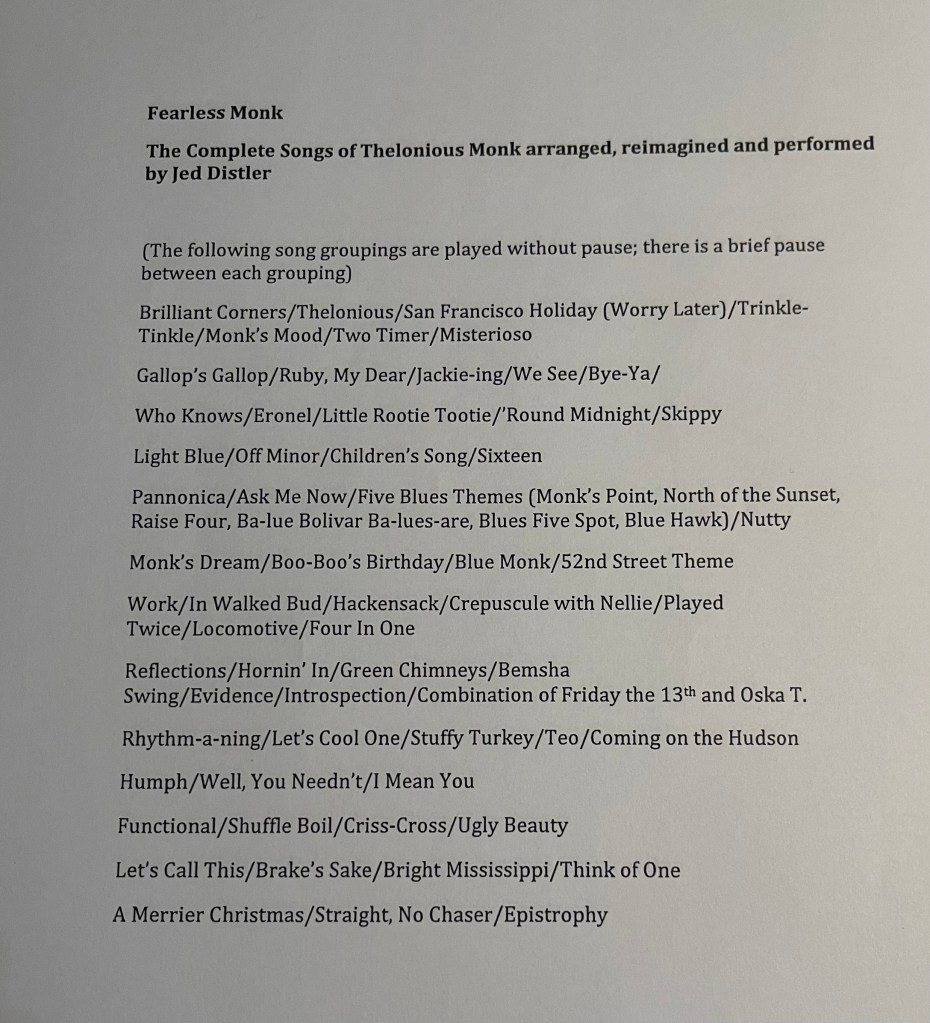
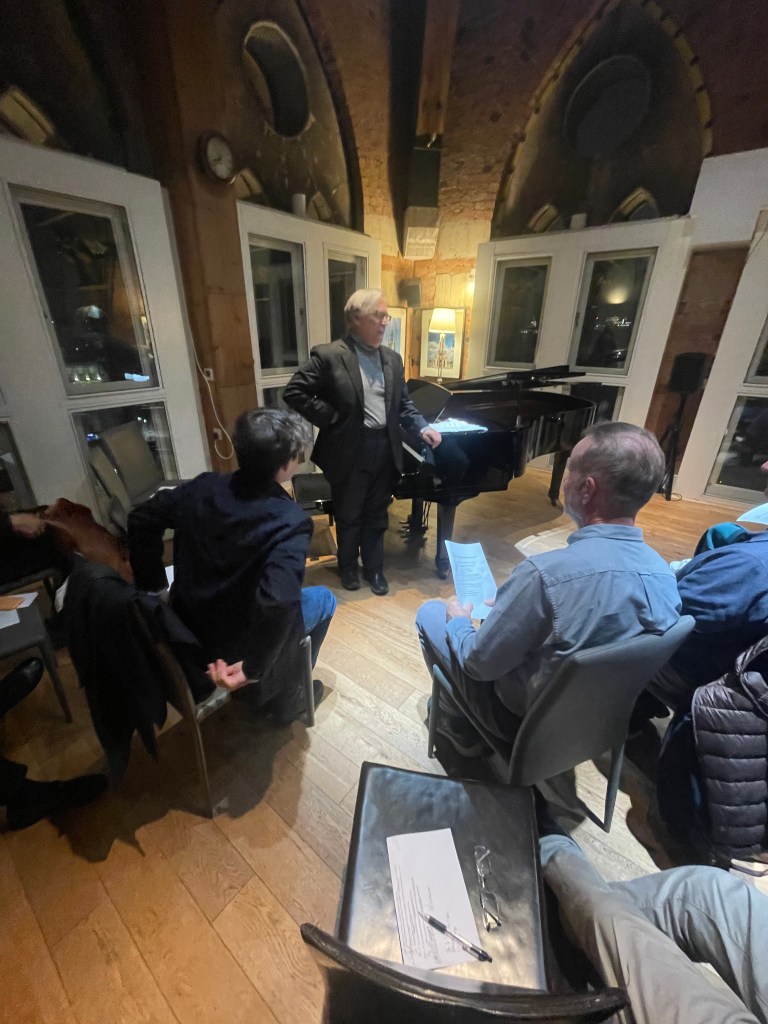
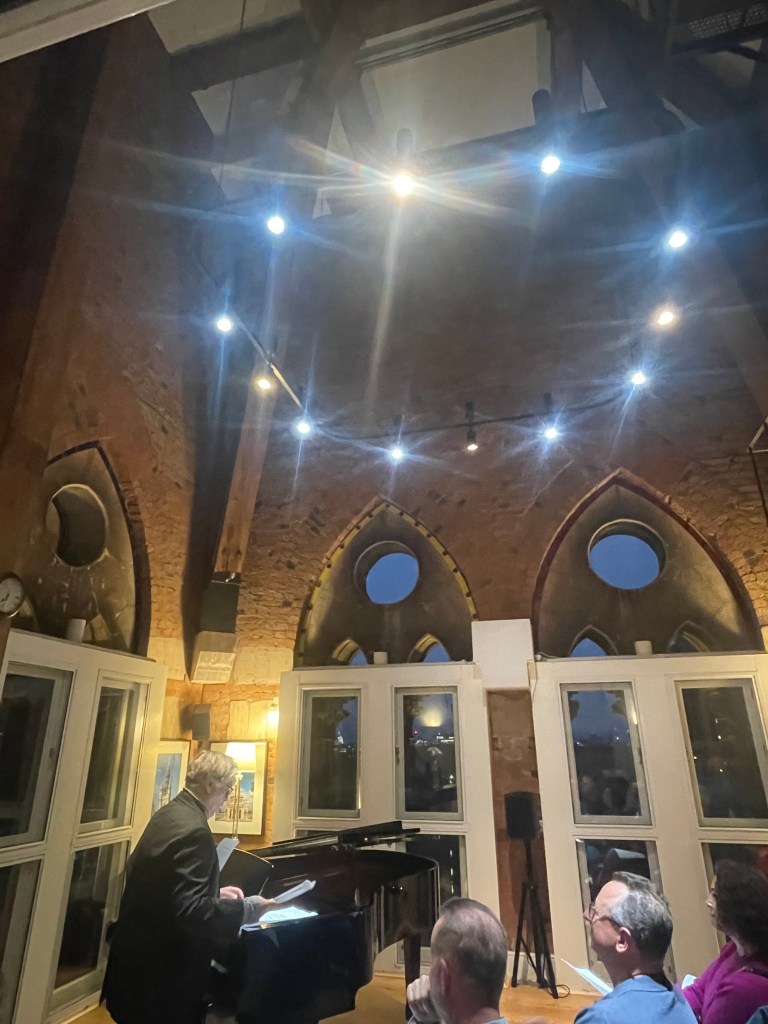
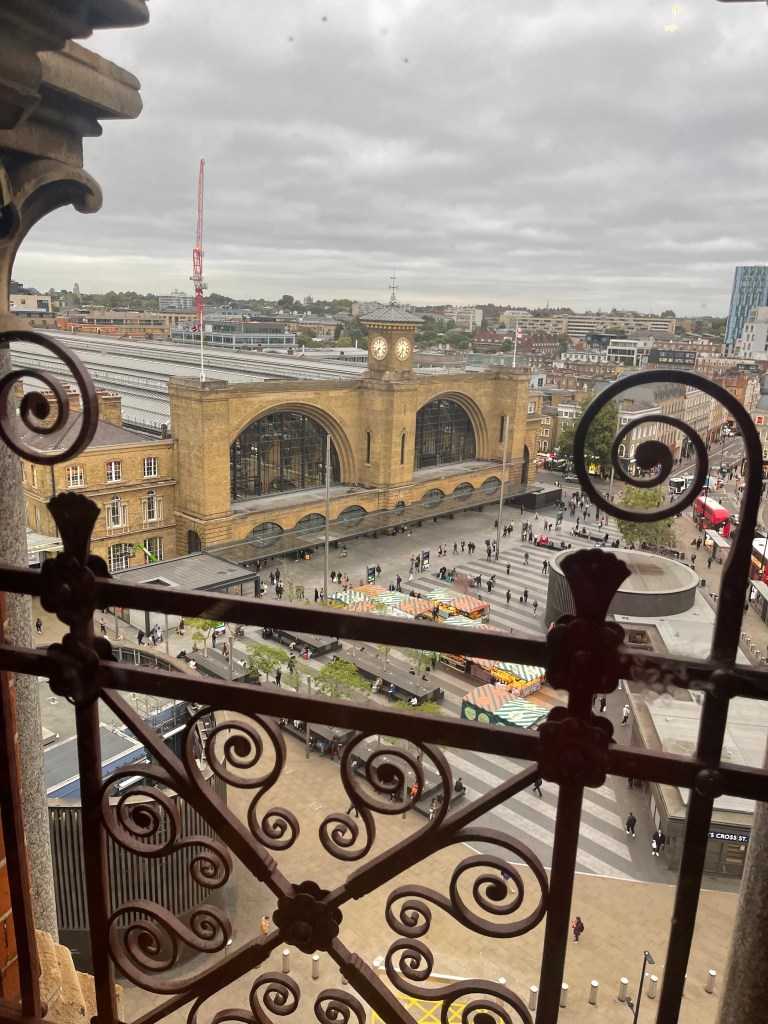
In London these past weeks playing Mahler Leningrad Symphony with Cristian Sandrin at the Liberal and Reform Clubs. Flying high, fearlessly with Thelonius Monk in St Pancras clock tower before flying to Finland to play Mahler 9th and give masterclasses.

https://christopheraxworthymusiccommentary.com/2025/09/09/jed-distler-and-cristian-sandrin-beyond-the-siege-at-the-nlc-a-with-a-searing-tale-of-courage-and-resistence-that-we-must-never-forget/

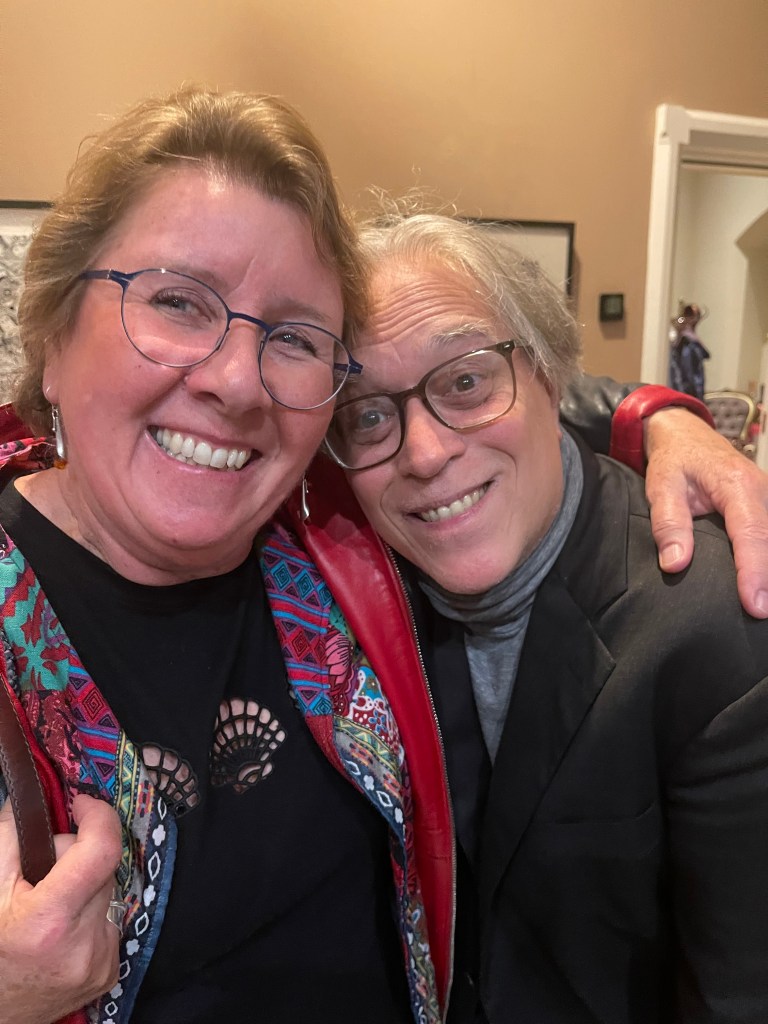
Next month sees him compèring with Ben Laude of Tonebase fame , the television coverage of the Chopin International Piano Competition in Warsaw. In his spare time – in my guest room – he has been writing reviews for Gramophone and International Piano Magazines as well as recording his programmes for his radio broadcasts in New York entitled : ‘Between the Keys’ .Apart from this he has been supporting young musicians in London listening to their concerts and offering to share views with them. Humility and generosity is the name of the game for Jed and a vitality that he injects into all he does.

https://christopheraxworthymusiccommentary.com/2025/09/20/evelyne-berezovsky-at-bechstein-hall-irresistible-you/

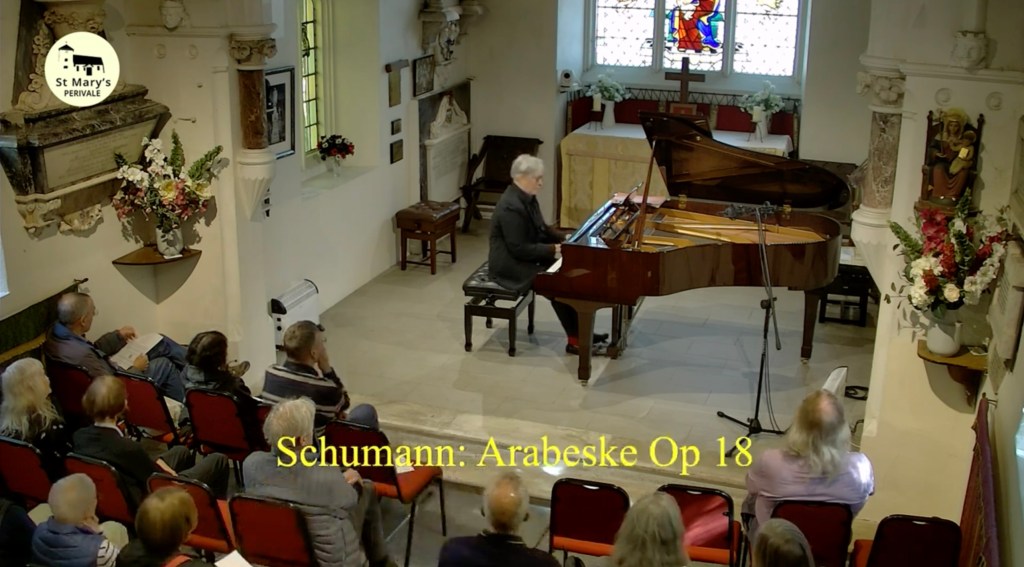
Today in Perivale he sat at the piano and played Schumann Arabesque with a freshness and the same sense of discovery that he was to share in the more complex works that followed. Just last night Jed and Damir Duramovic had been sharing views on the Arabesque and today I could see that the ideas they shared were being added to his Schumann in a voyage of discovery that illuminates all he does.

https://christopheraxworthymusiccommentary.com/2023/04/03/damir-durmanovic-in-cyprus/

In fact we heard a concert by a Evelyne Beresovsky , who often plays in Perivale ,and plays with a freedom and emotional generosity ,with a daring that can be stimulating as it can be dangerous.Live dangerously and you will never be bored ….you might even be inspired !!!! Leaving the concert he declared that she had inspired him to be free and easy and constantly search deeply into the world of sound.

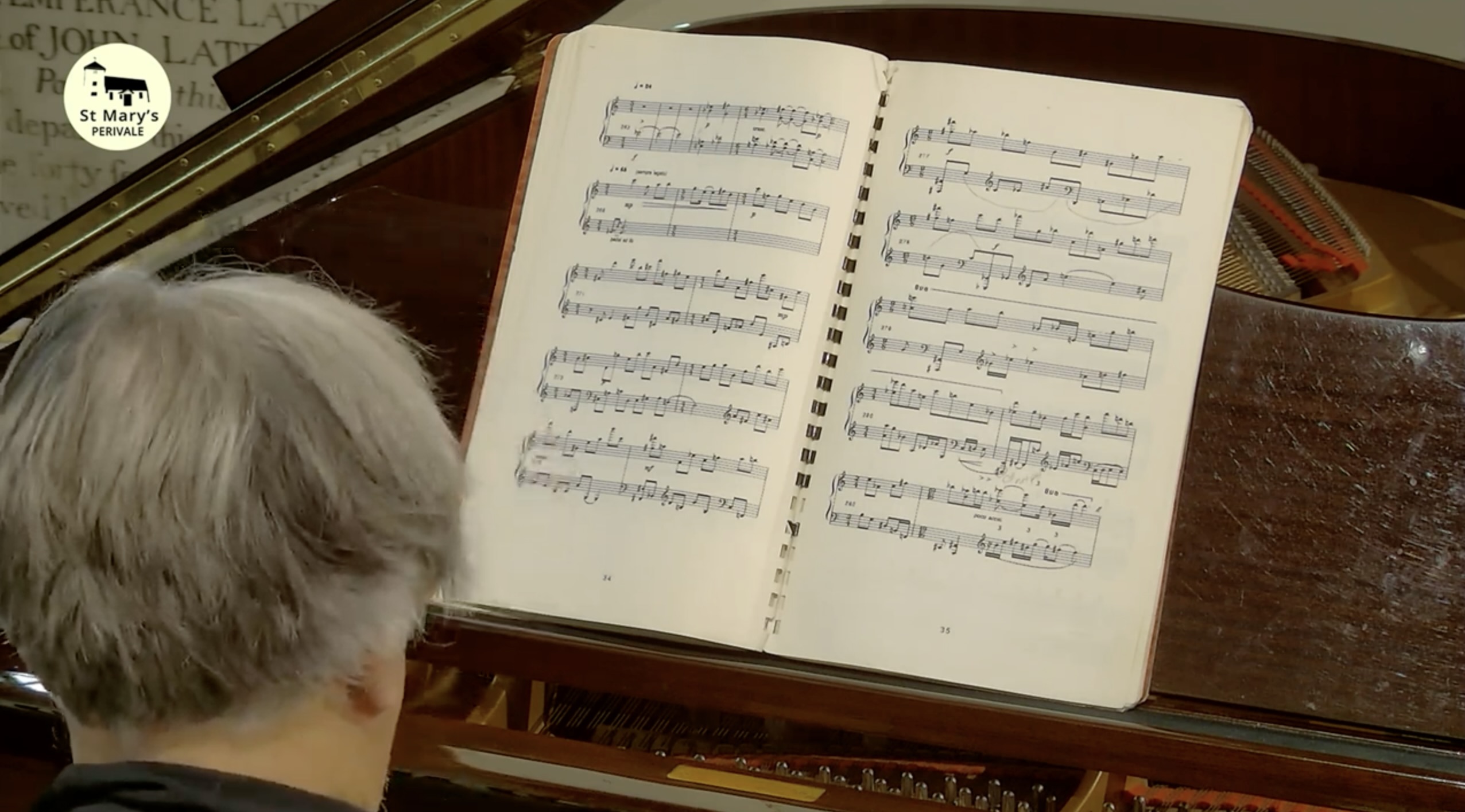
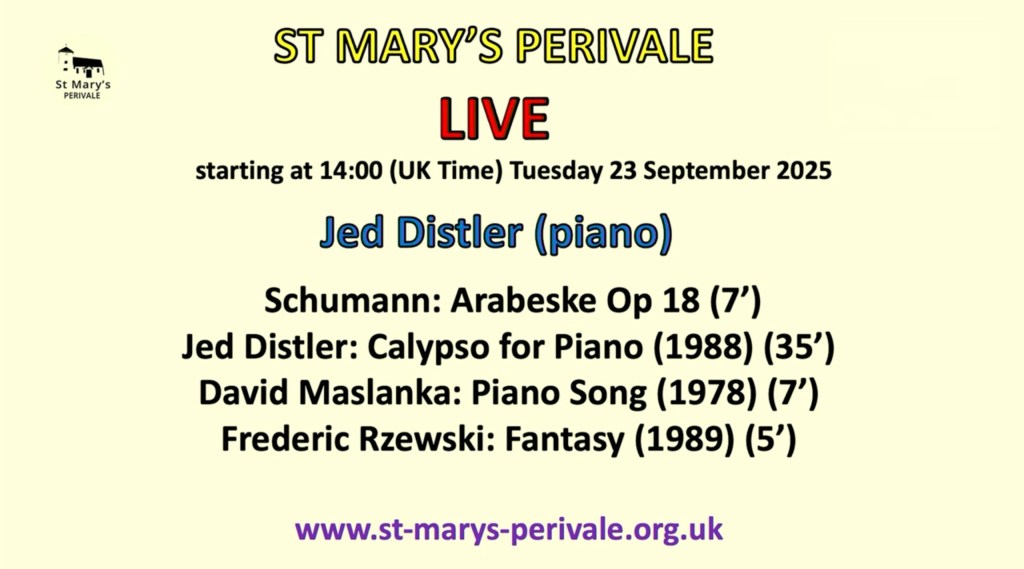
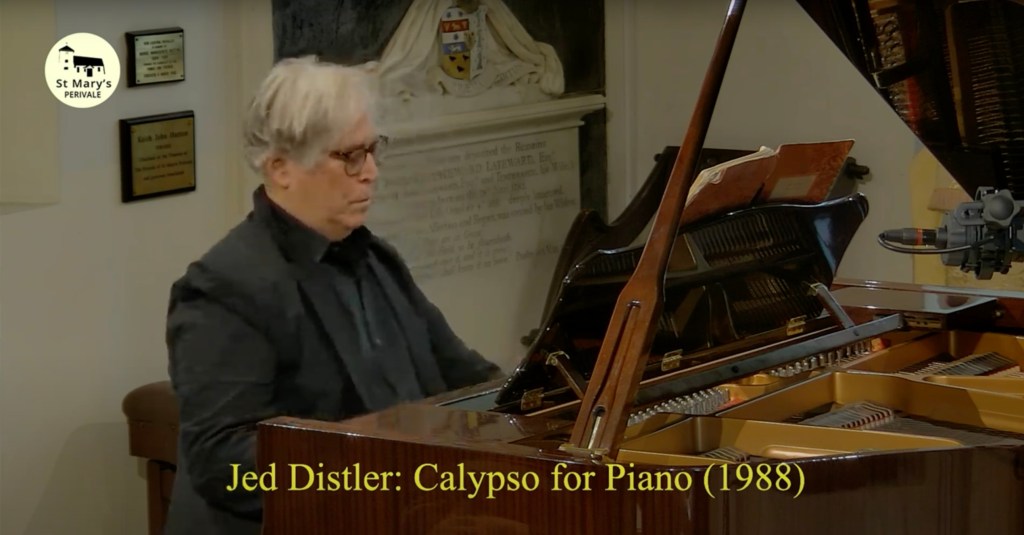
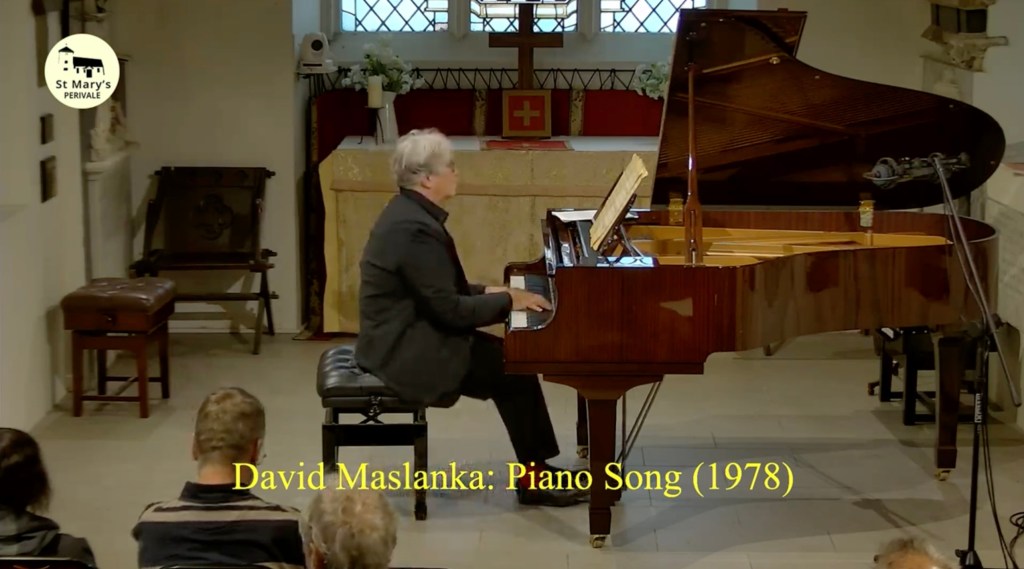
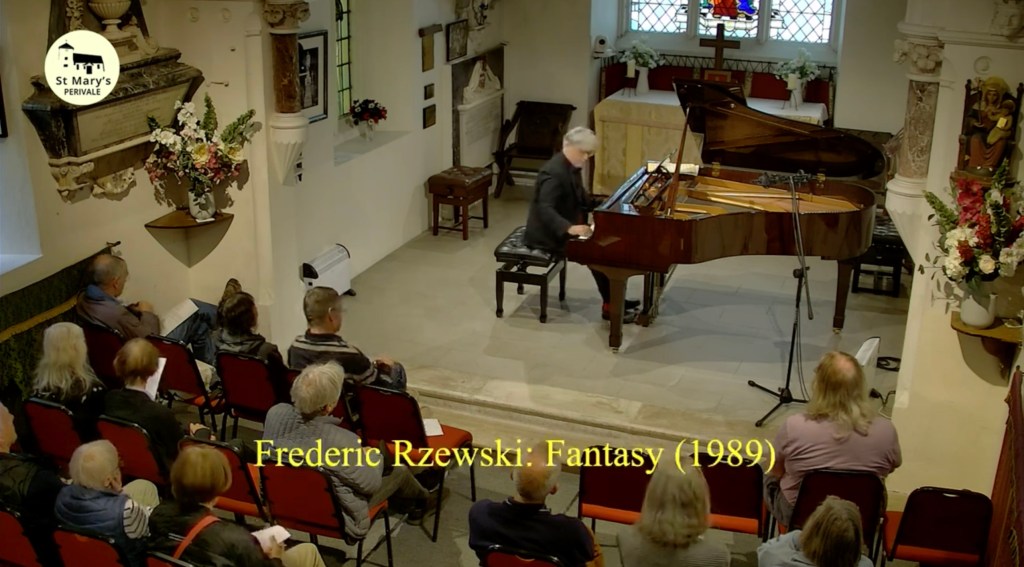
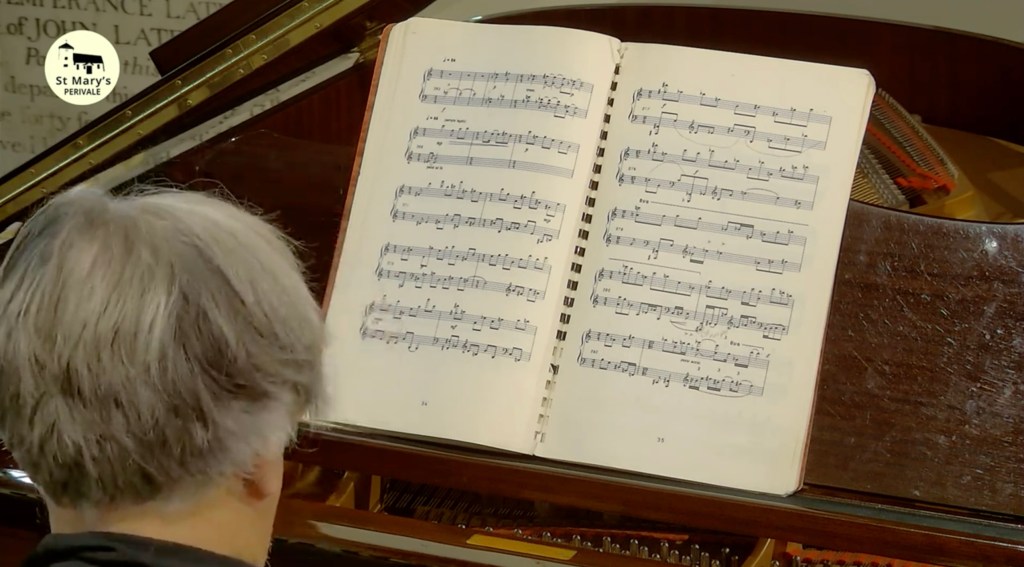
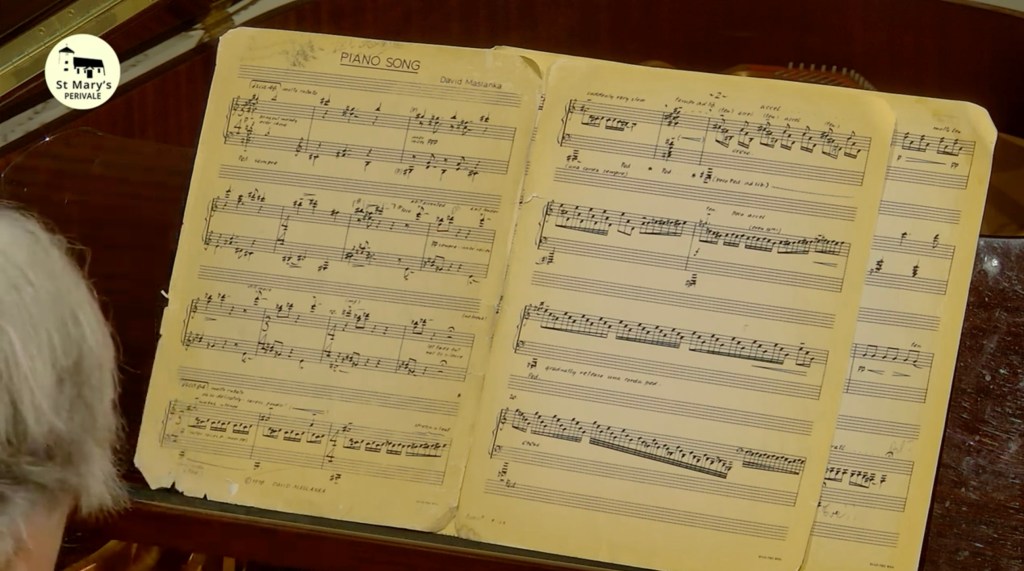
In fact we heard today a multi coloured Schumann played with the improvised freedom of a true musician, with subtle inner colours and tenor doublings. Bass notes that seemed to appear spontaneously as they illuminated a work that can sound so repetitive in less inquisitive hands. His own work taking up half of the recital was a work written thirty years ago when Jed was much influenced by Tippett’s fourth Piano Sonata. Very amusingly he described the piece as being like the offspring of Michael Tippett and Keith Jarrett ! One of the rare pieces by Jed’s teacher who mainly wrote for wind bands was a Piano Song by David Maslanka, that he followed with a Fantasy on John Lennon’s ‘ Give peace a Chance ‘ by his friend Frederic Rzewski .

‘In an interview Rzewski mentioned that he was commisioned to write a piece based on a song from The Beatles and then Rzewski did pick this song but it got several problems on publication sadly, mostly due of copyright issues but he was aware that Lennon actually took a theme from the finale of Brahms Symphony No.1 to make his song which he found kinda unfair (anyway Brahms is on public domain so it is not a big deal for that Lennon’s composition)… but anyway as you may notice the structure is quite reminiscent like as a North American Ballad from himself also, only with a different tune and not American also, such a nice piece, and have in mind that this performance contains several Improvisation by the composer himself, you can feel free to include these improvisations on the same passages or decide to not.’

Jed’s own transcription of a piece by Bill Evans concluded this fascinating unique afternoon. A sound world that is in continuous evolution, the same improvised freedom that a jazz player can have and that could inspire classical interpreters to recreate rather than reproduce. In fact to become a true kapellmeister as Karajan insisted on being described.
As Dr Mather said what an honour to have Jed in our midst and not a note of Chopin in the air !

Composer/pianist and Steinway Artist Jed Distler gained acclaim early in his career for transcribing jazz piano solos by Art Tatum and Bill Evans. As a pianist championing new music, his recitals have offered premiers of works by Virgil Thomson, Richard Rodney Bennett, Frederic Rzewski, Alvin Curran, Lois V Vierk and many more. His master classes, lecture/demonstrations and work as a sought-after adjudicator have taken him across the United States and throughout Europe. Distler’s presenting organization ComposersCollaborative, Inc earned a Guinness Record for world’s largest keyboard ensemble, featuring his works for 175 electronic keyboards. In 2021 Distler embarked on a multi-year project performing all of Mahler’s Symphonies in four-hand arrangements with pianists around the globe. He currently is composing 1, 827 Bagatelles for the 2027 Beethoven anniversary year. Distler has recorded prolifically for the highresolution Steinway Spirio player piano, while TNC Music released Distler’s solo piano CD “Fearless Monk.” (available from Bandcamp). His 2025 fall tour includes recitals and master classes in the UK, Finland, Poland and Italy. 

As Artist-in-Residence for WWFM.Org the Classical Network, Distler is the creator, host and producer of the 2017 ASCAP Deems Taylor Virgil Thomson Award radio program Between the Keys. He also hosts The Piano Maven, a friendly podcast guide to piano recordings, and will be a television commentator during the 19th International Chopin Competition in October 2025. Distler contributes reviews and articles to Gramophone and Classicstoday.com and has written numerous CD booklet notes for Sony/BMG and Universal Classics. 

photo credit Dinara Klinton
https://christopheraxworthymusiccommentary.com/2024/03/20/christopher-axworthy-dip-ram-aram/

Amit Yahav at the 1901 Club ‘A lark ascending with poetic mastery’

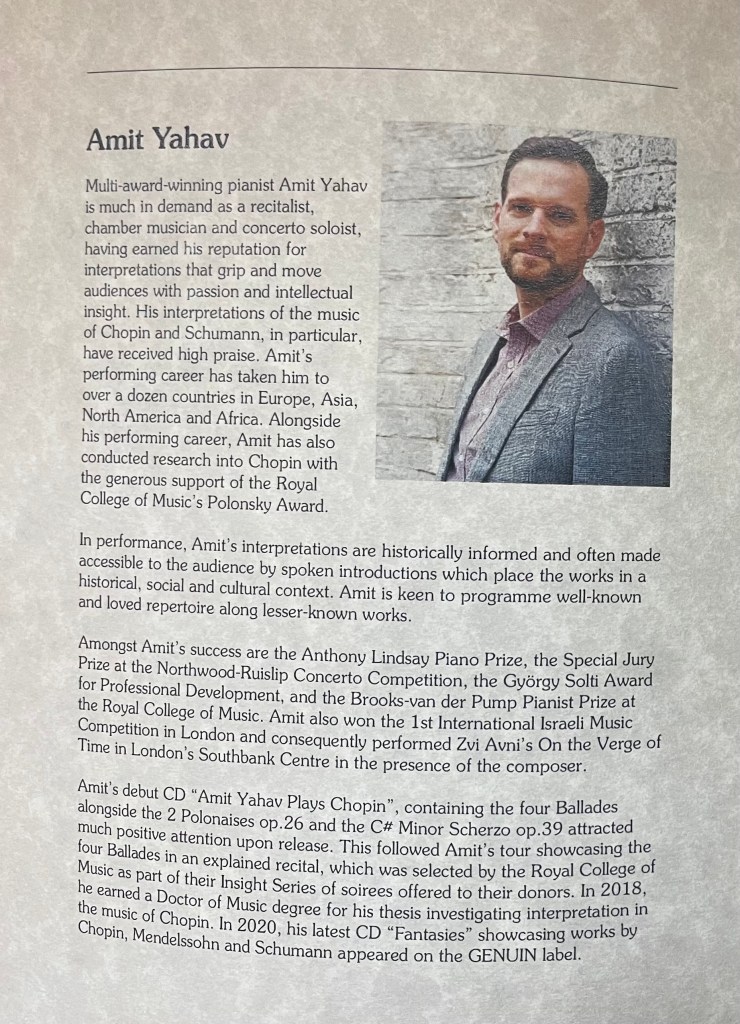
“A musician’s musician of considerable charm…” – Janina Fialkowska

https://christopheraxworthymusiccommentary.com/2018/10/26/miracles-in-eaton-square-janina-fialkowska-at-st-peters/

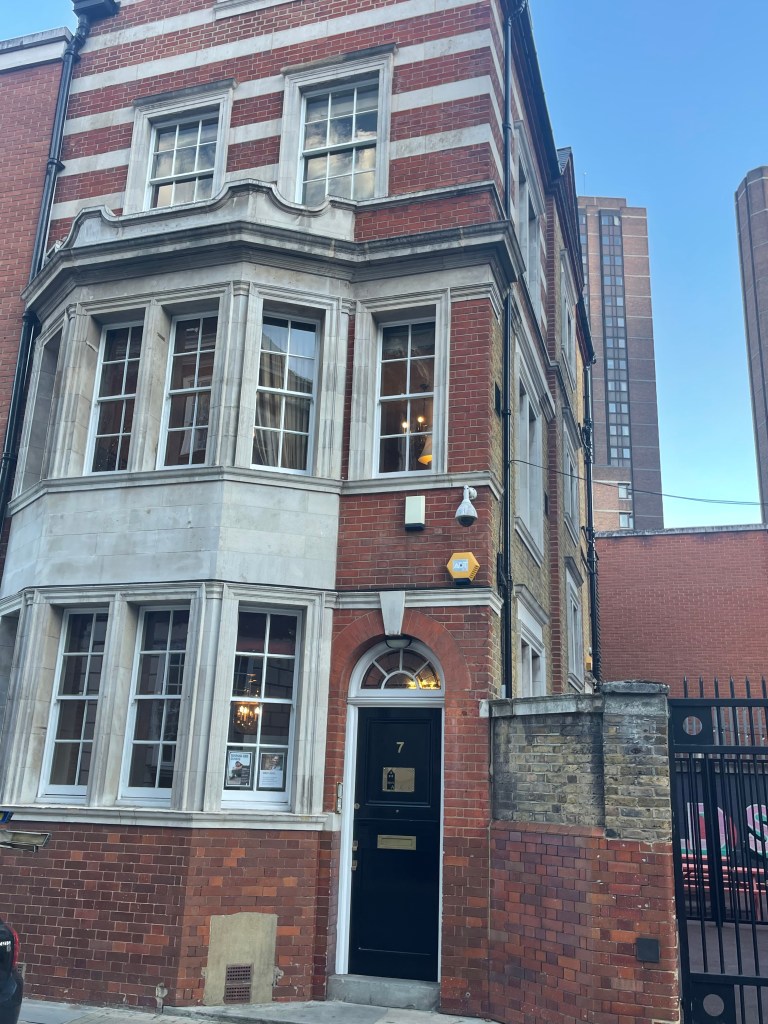
Amit Yahav at the 1901 Arts Club with three works by Medtner, Mozart and Chopin . They may all be of the same duration but of such differing content that Amit played with masterly control and commanding authority

A rarely played Sonata by Medtner quite rightly named ‘Minacciosa’ with a tumultuous outpouring of notes played with remarkable technical mastery but also with a musicianship that could carve it’s way through a maze of notes, playing with an architectural understanding of what many would describe as Rachmaninov without the tunes! Amit carved out the opening motif, that like Rachmaninov’s First Sonata is the leit motif that binds this continuous stream of notes together.A whirlwind of notes played with remarkable conviction and dynamic drive. Even Liszt’s fugato seemed to put in an appearance . Great drama and streams of notes brought this great virtuoso piece to a breathtaking finish. I doubt I could hum or sing anything from the sonata but it was mightily impressive in an empty sort of way .Musical sludge? Some had suggested, but that would not be fair. I think it is us that have to get attuned to a very unique sound world and wade through the massive amount of notes to find the very backbone of a composer who chose to finish his days in Hendon !
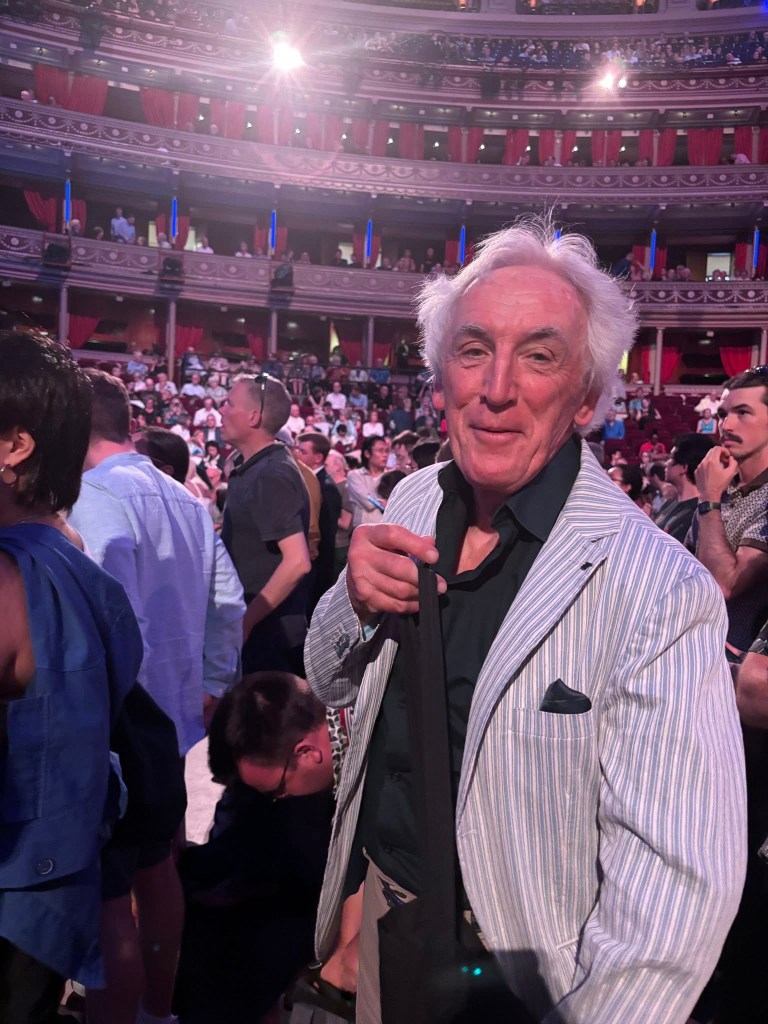
An enormous outpouring of notes too in Chopin’s ‘La ci darem ‘ variations that was heralded by Schumann with the arrival of a genius in their midst . Chopin, though, had Mozart to guide his virtuosity and of course his Bel Canto is already glimpsed in the distance too.Originally written for piano and orchestra ,it is more often played as a solo piece which brought luck to Bruce Liu in the last Chopin competition but which was really the reign of Magaloff or Cherkassky. Amit tells me he is making an arrangement for string quartet/quintet that like the concertos can be played in a Chamber music context. A very long introduction where Chopin’s beautiful Bel Canto is glimpsed inbetween a sparkling jeux perlé all played with scintillating bravura by Amit, where his solid musicianship could be tainted with more moments of magic lightness and subtlety. In this piece there is an element of showmanship and teasing almost improvised fantasy where the old world sense of style ( the so called Chopin tradition) was born. Amit’s masterly control was never more evident than in the treacherous leaps of the fourth variation. ‘Con bravura’ Chopin writes and Amit certainly played with that, in a breathtaking exhibition of precision and control. The second variation too had been one long stream of perfectly played notes that Amit shaped with sterling musicianship but he did not show us what fun he should have been having too .Drama and beauty of the fifth showed Amit’s aristocratic nobility and it lead into the final polonaise that was a non stop outpouring of exhilaration and brilliance. A remarkable performance greeted by an ovation where Amit’s brilliance and musical integrity won the day. I could not help thinking, though, that this was modern day playing whereas this early showpiece belongs to the Golden Age of a Rosenthal or Lhevine with a palette of sounds that glistened like jewels that would titivated and energise the senses.

Amit played this show piece with extraordinary dexterity and mastery and the final Polonaise reached dizzying heights of scintillating brilliance. Leaps played with fearless abandon and precision and bubbling elaborations passing with ease from one hand to the other with astonishing brilliance.

But it was the genius of Mozart where many less notes could say so much more . The A minor Sonata written shortly after the death of his mother and together with the C minor Sonata are the only two of his eighteen sonatas that are in the minor key.

Amit played with a poignant simplicity and extraordinary clarity with a driving rhythmic urgency to the outer movements. But it was the Andante that Amit played with a burning intensity and beauty that revealed the genius of Mozart. Amir chose a classical palette of sounds that gave great weight and importance to this masterpiece

It was though the final piece in the recital played as an encore that ignited Amit’s imagination as he discovered magical sounds out of which Glinka’s ‘Lark’ was given golden wings by Balakirev . Magic was in the air as Amit allowed the music to take flight with ravishing beauty and sounds of another age, that his masterly musicianship had chosen not to use until this glorious farewell.

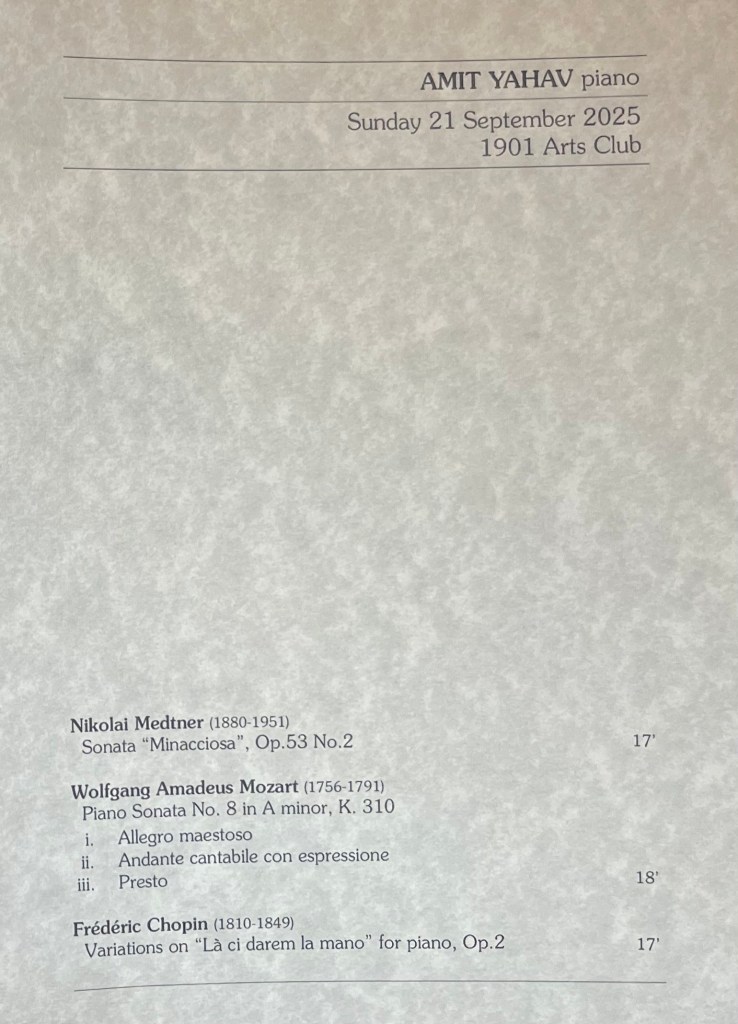
Amit Yahav returns to the 1901 Arts Club with a recital of music by Medtner, Mozart and Chopin. Turmoil and tension are at the heart of this music.  Medtner’s Sonata Minacciosa – the menacing sonata – was composed in 1930, and is very much inspired by the political turbulence of the time.  This rarely performed work is one of the finest examples of the capabilities of this slightly less known composer. Mozart’s Sonata in A minor occupies a special place in his oeuvre, written around the time of his mother’s sudden illness and death in Paris.  Its themes presage the music he will go on to write at some of the most difficult moments in his life. Finally, the work that brought Chopin to fame and inspired Schumann to exclaim: “Hats off, gentlemen, a genius!”.  Chopin took one of the best music from Mozart’s Don Giovanni, and turned it into a virtuosic feast of variations, imbuing it with emotions ranging from utter despair, to boundless joy. ​Come and experience this special programme under the hands of a Chopin specialist.​​Programme
N. Medtner
  
Sonata “Minacciosa,” Op.53 No.2
W. A. Mozart
  Piano Sonata in A minor, K.310
F. Chopin
  Variations on “Là ci darem la mano,” Op.2​

“A musician’s musician of considerable charm…” – Janina Fialkowska
photo credit Dinara Klinton https://christopheraxworthymusiccommentary.com/2024/03/20/christopher-axworthy-dip-ram-aram/

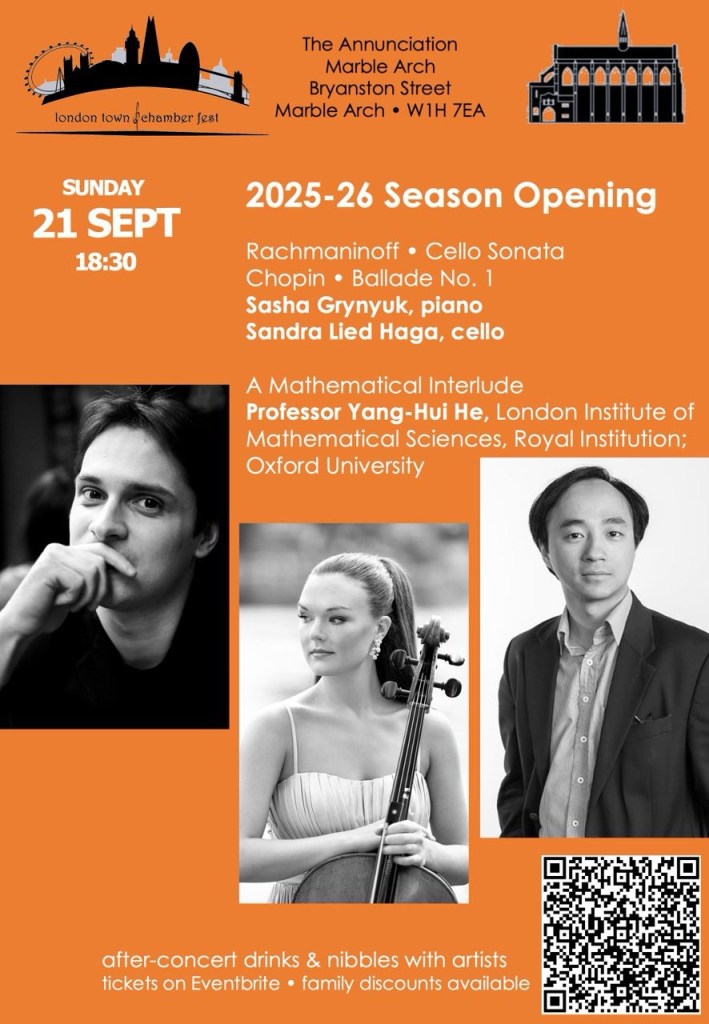
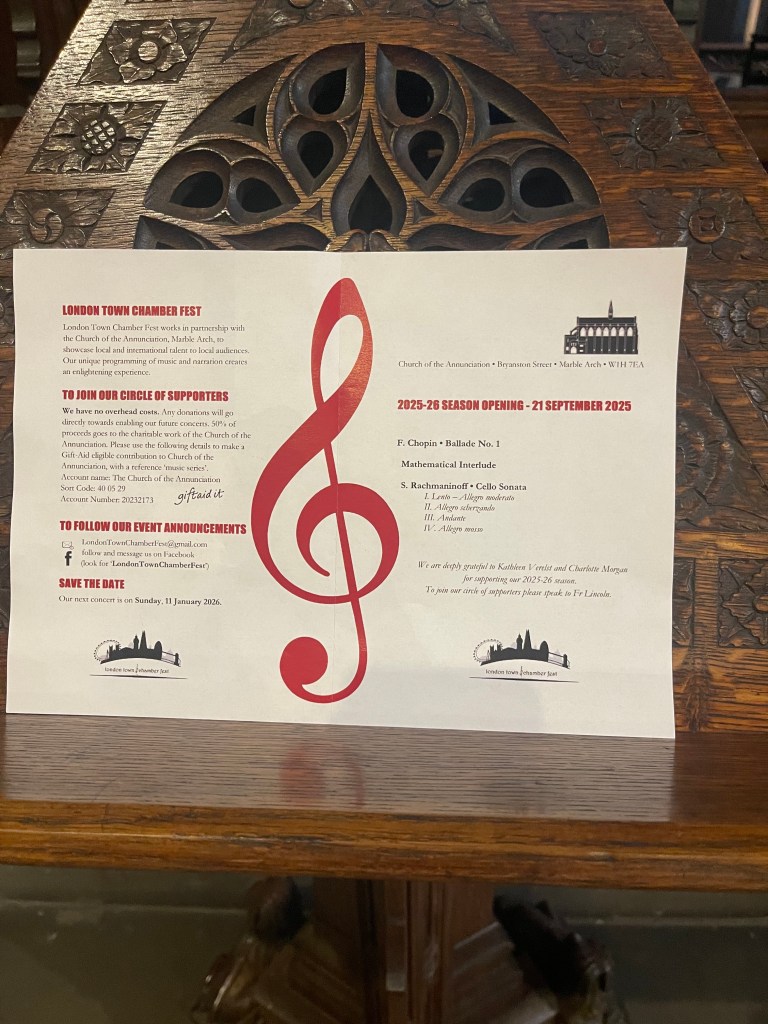
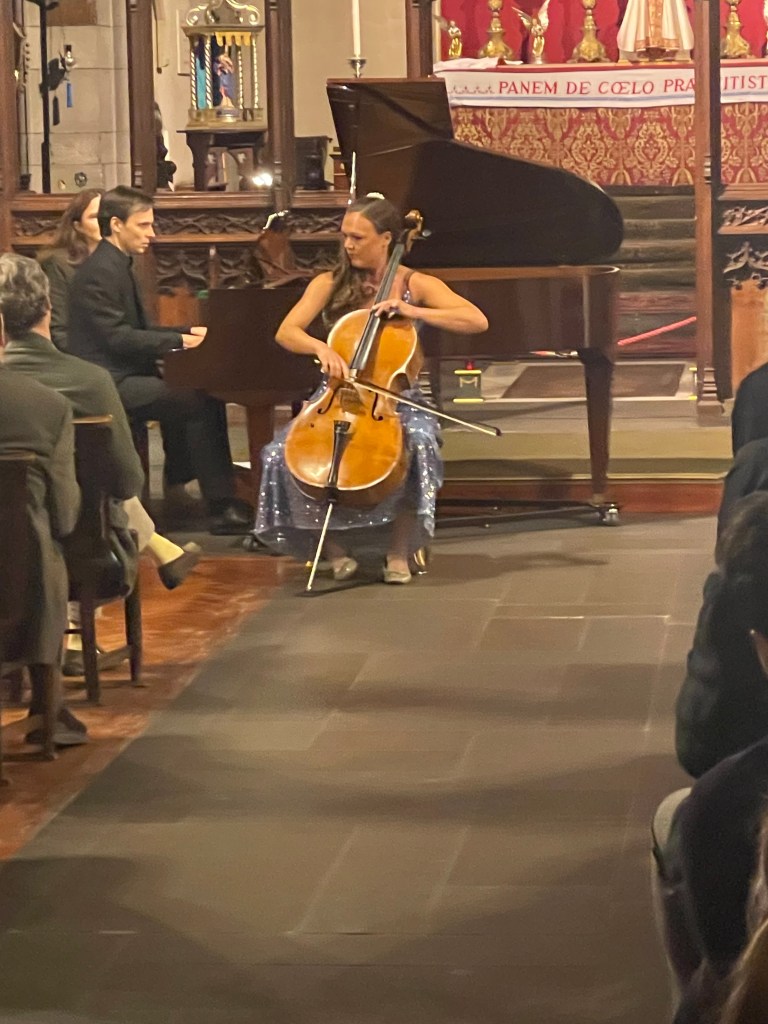
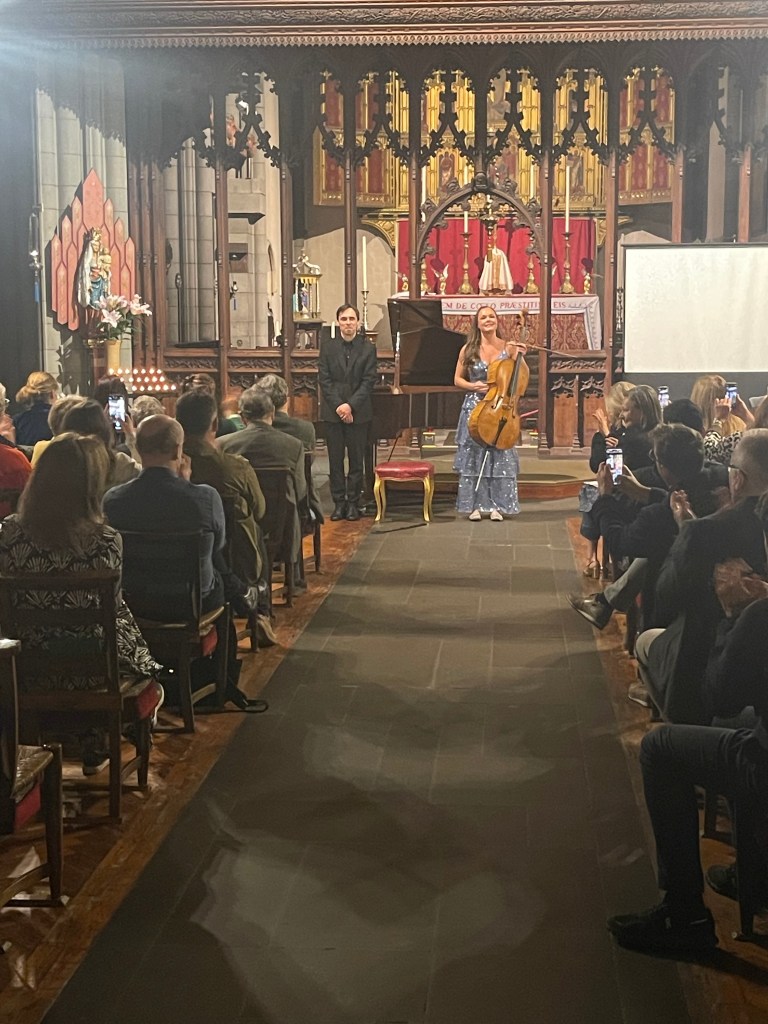
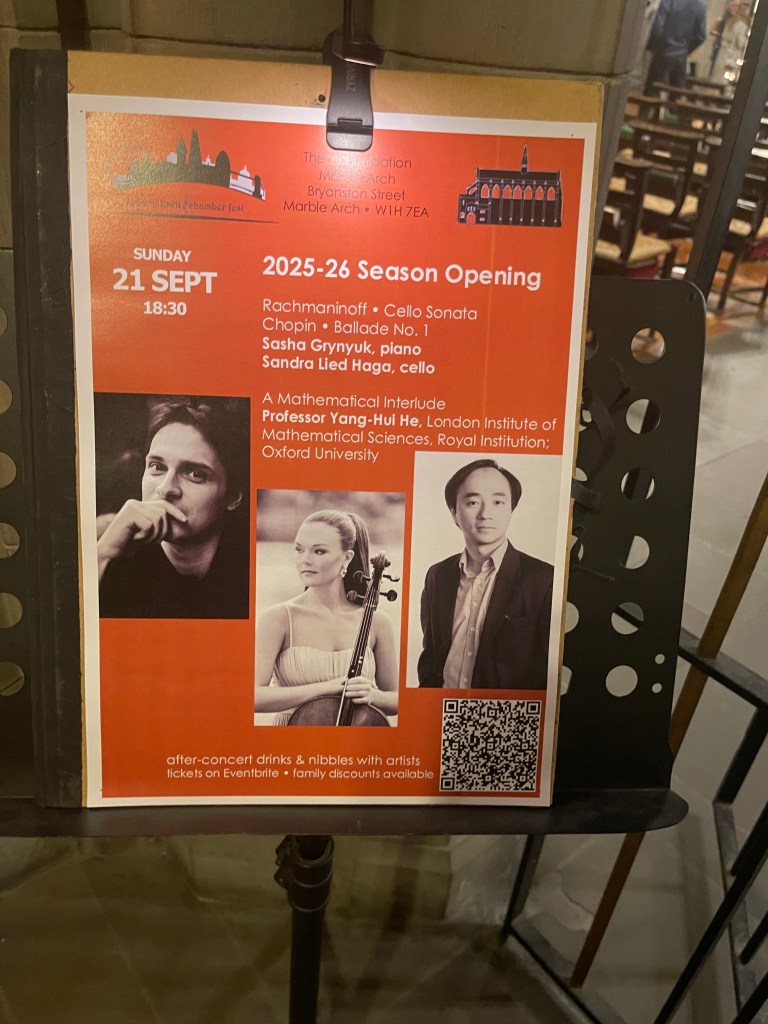
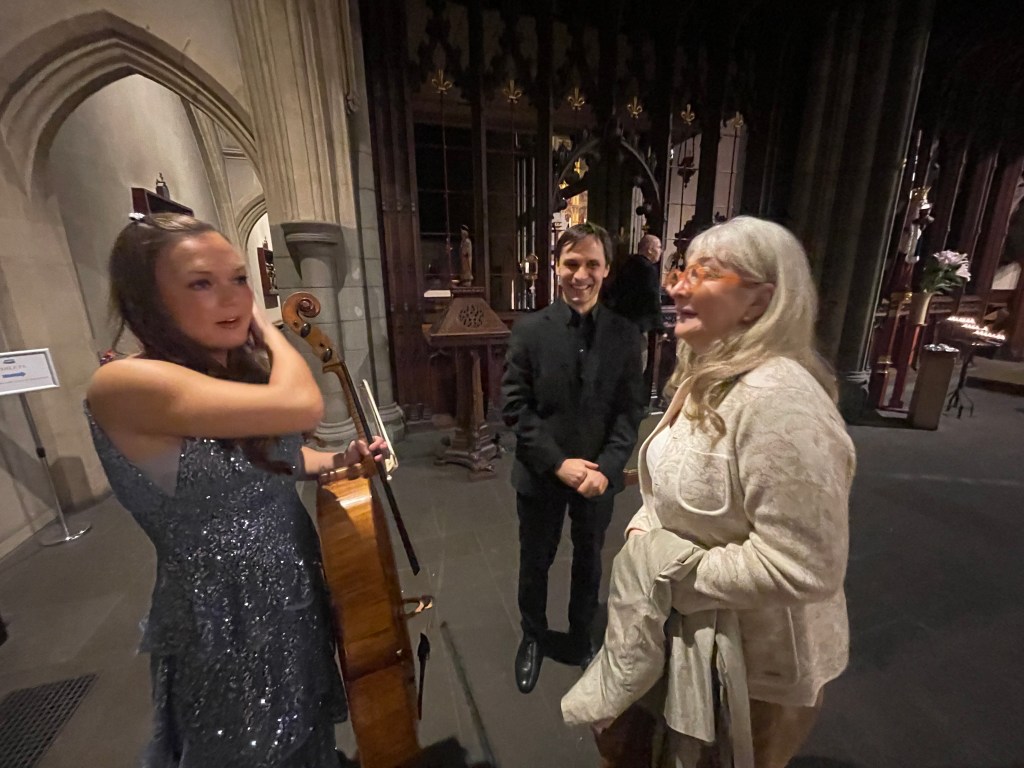
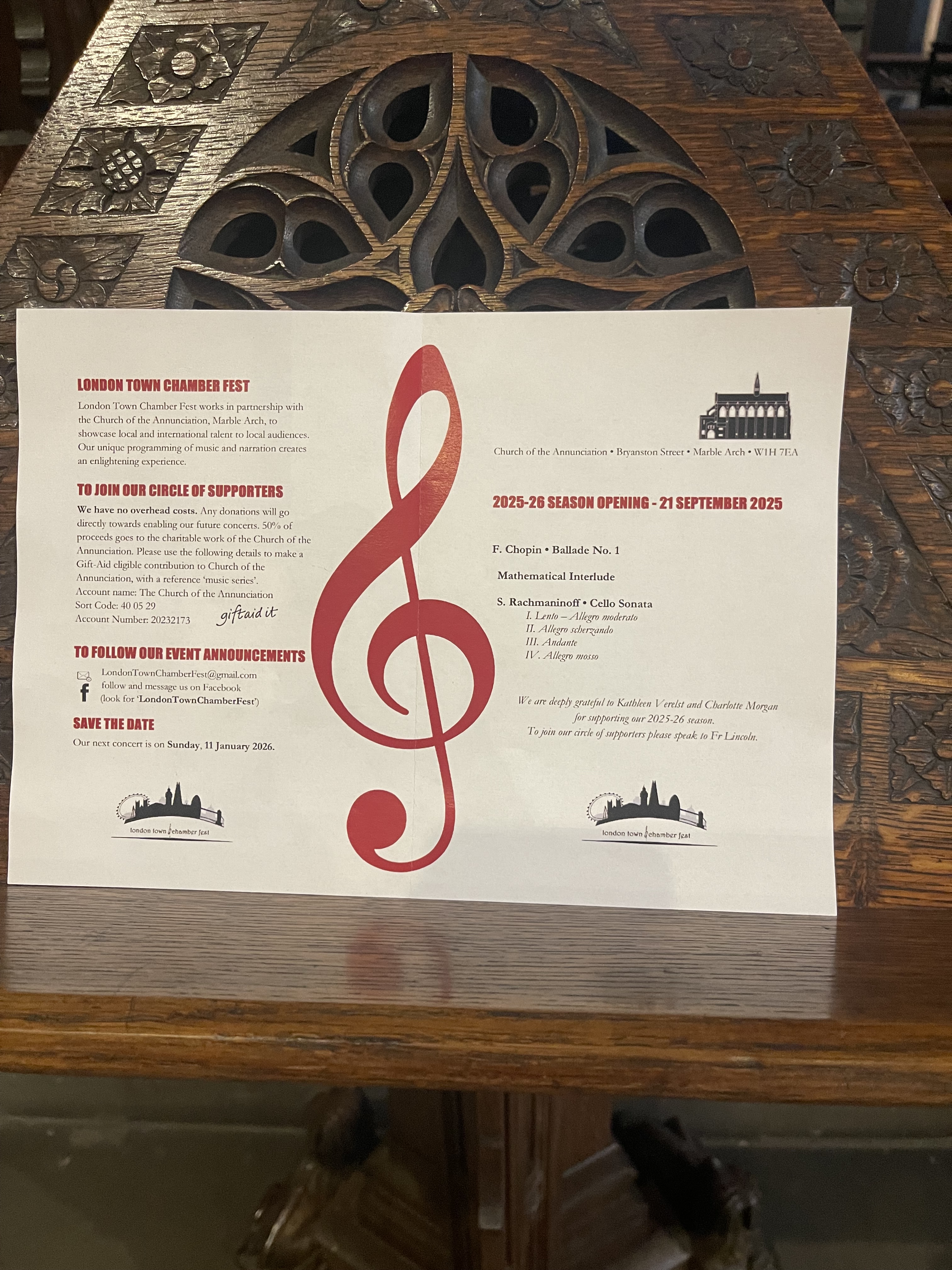
Grynyuk- Haga duo Rachmaninov reigns supreme in Marble Arch

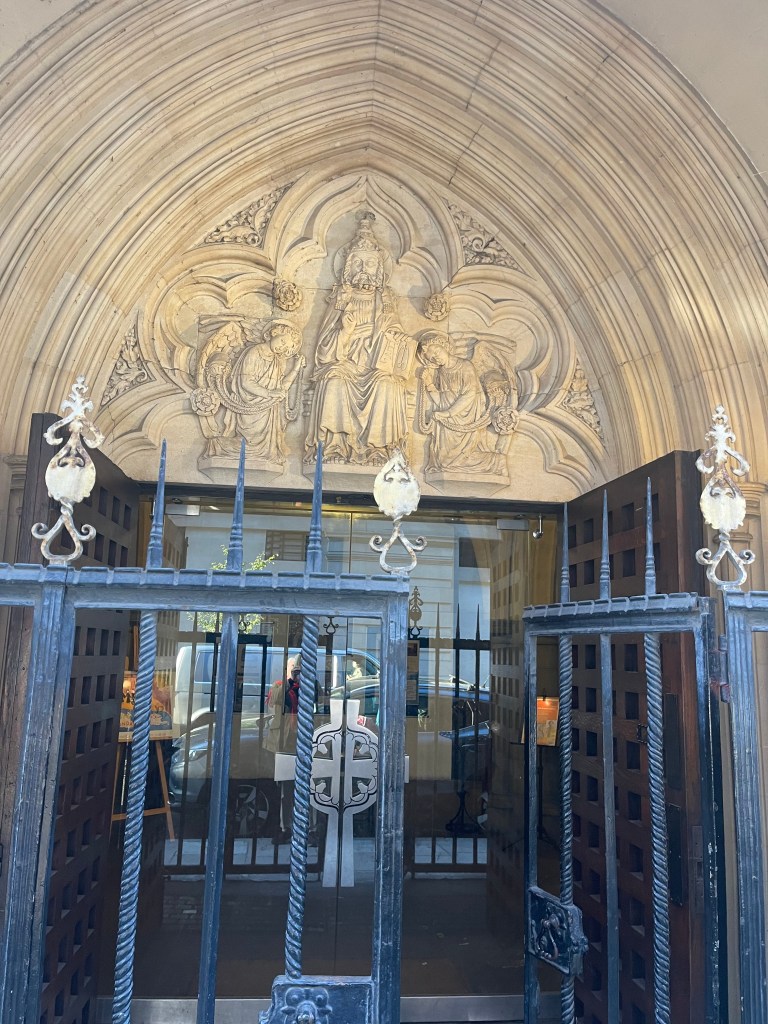
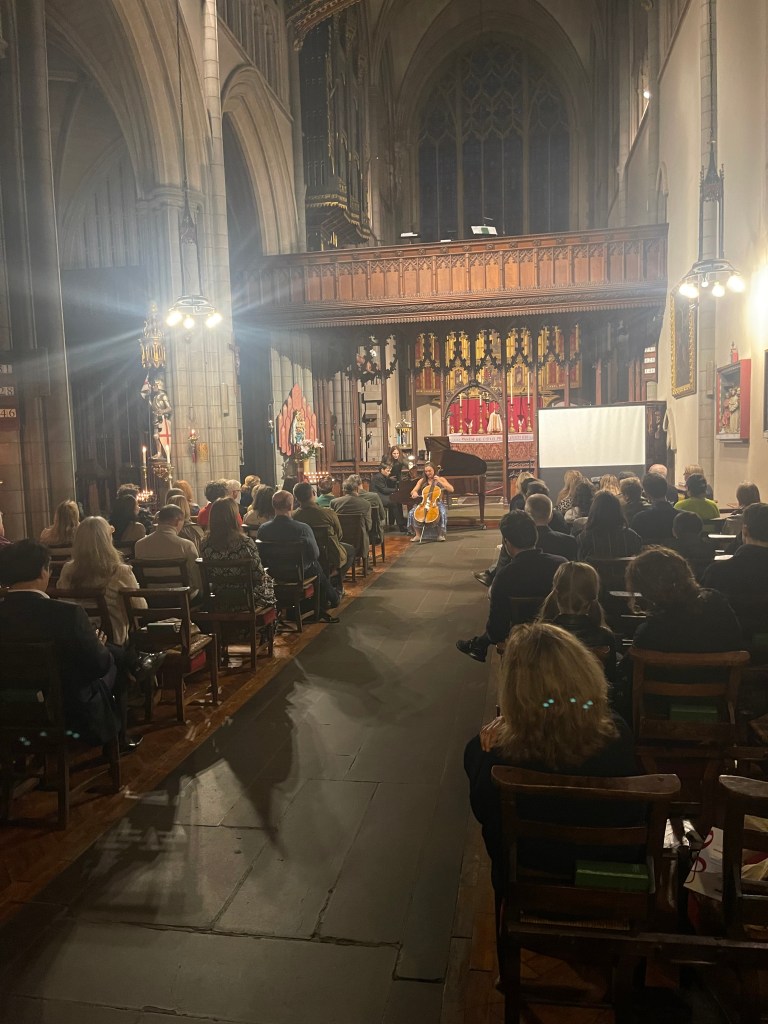
A refreshingly varied programme in this beautiful church just a stone’s throw from Marble Arch . A cavernous edifice with a remarkable acoustic that is particularly suited to chamber music ensembles. It is this that Sasha Grynyuk and his wife Katya Gorbatiouk have dedicated their concert series, elaborating the evening with distinguished speakers linking music to a much bigger world .

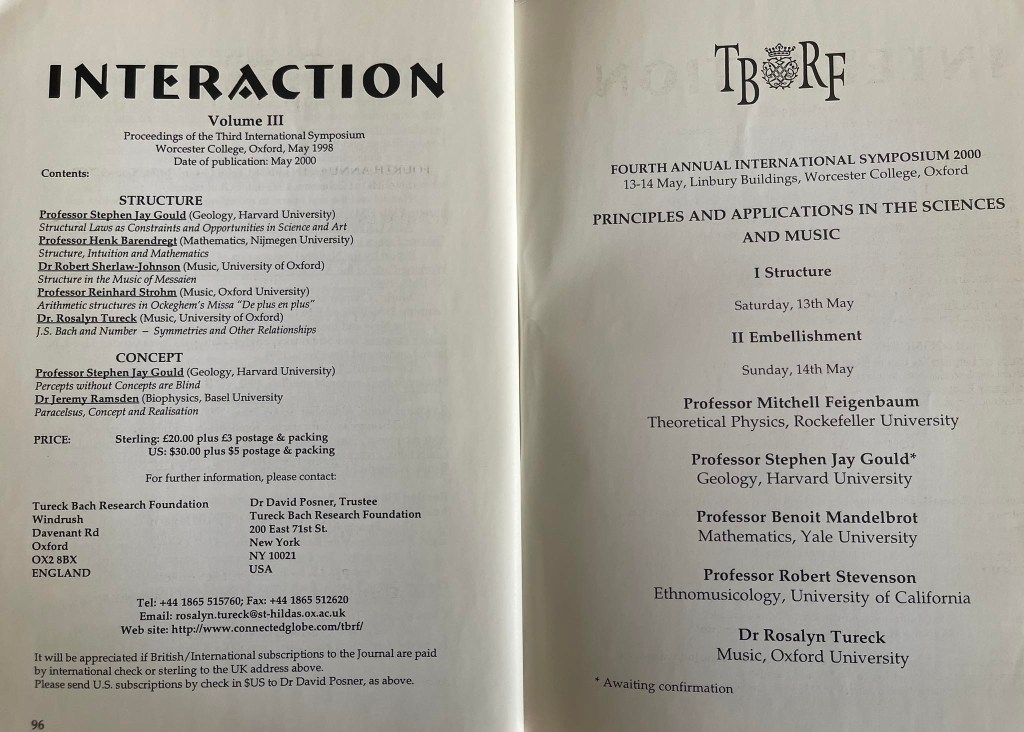
Just as Rosalyn Tureck used to do with her Bach Institute ‘Symposiums’ in Oxford, where scientists and mathematicians would share their knowledge with musicologists and instrumentalists with many sides to a prism that shone rays in so many different directions.

Today the star of the concert was Rachmaninov. Following a performance of Chopin’s First Ballade that Sasha Grynyuk recreated with delicacy and poetic understanding .

Chopin’s often much abused score, where the composers very precise instructions were interpreted by a real musician today and not just turned into a showpiece for traditional virtuosi for self gratification .

Sasha managed to play with a disarming simplicity keeping the music always moving forward on an architectural wave of undulating beauty . There were of course explosions of passion and brilliance but always under the roof of a vigilant musician.

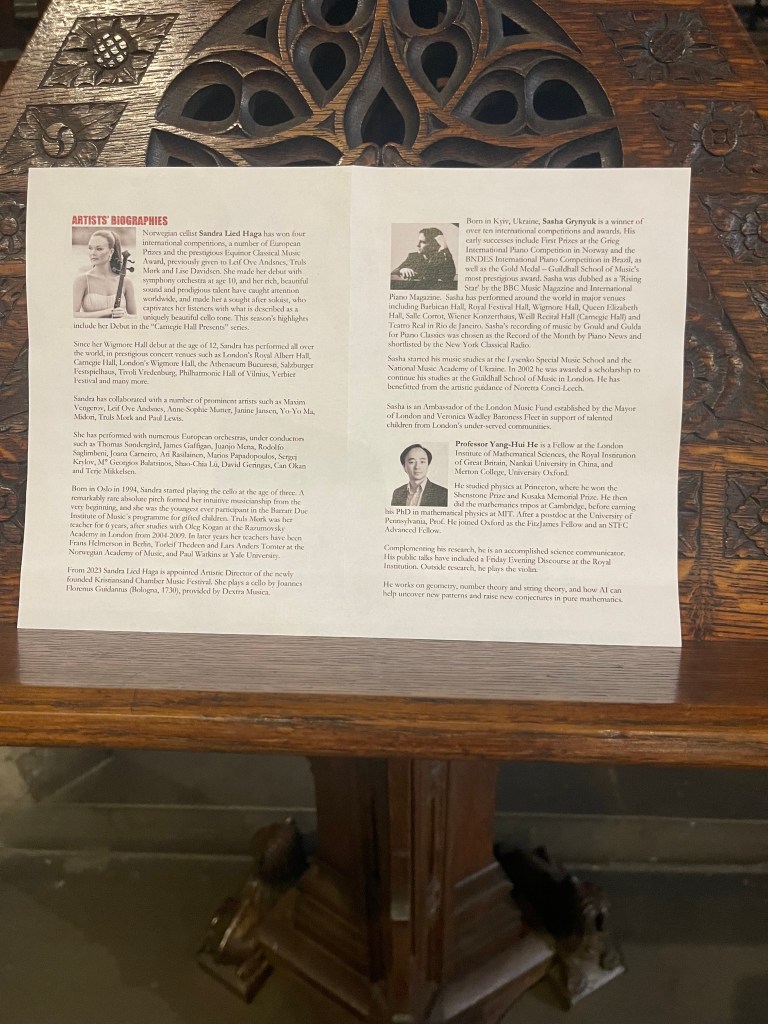
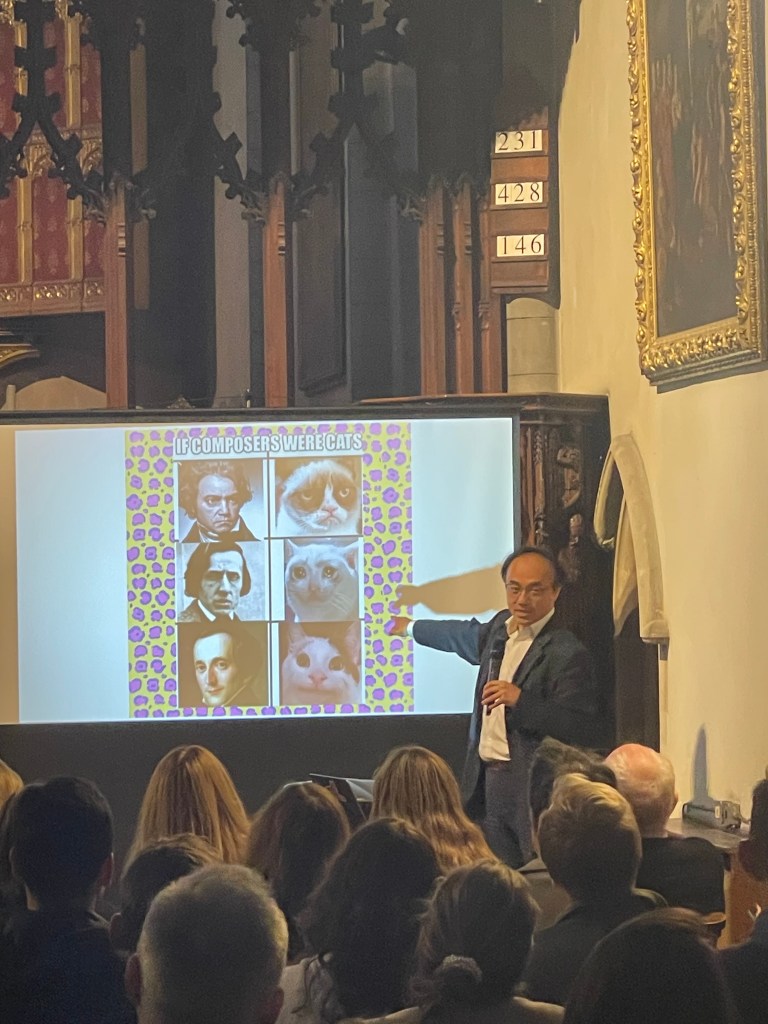
A short provocative and highly amusing talk by Professor Yang-Hui He, a distinguished mathematician from Princeton and Cambridge and now a fellow at Oxford .

He often gives talks at the Royal Institution where Rosalyn had been very happy to talk about Bach and Mathematics and to enjoy the stimulus of an exchange of views amongst intelligent experts of their various fields.

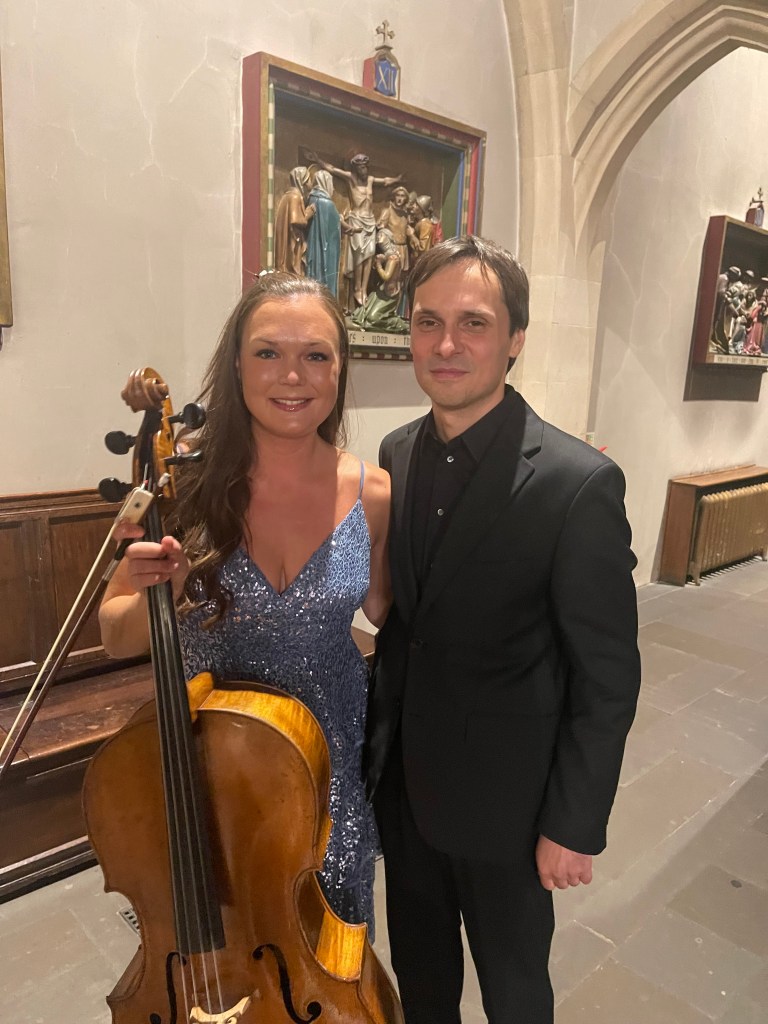
The main part of the evening was dedicated to the cello of Sandra Lied Haga and her wonderful 1730 Guidantus instrument ( Italian- Bologna) There is a growing tradition of wonderful Norwegian cellists appearing ever more regularly in concerts around the globe .

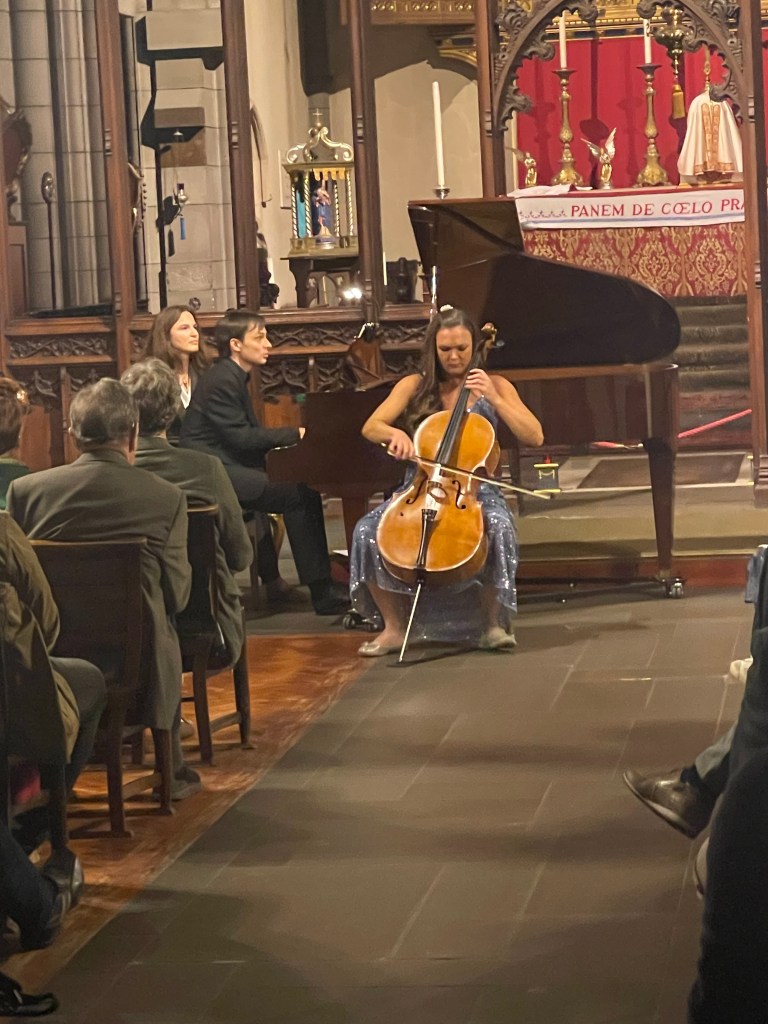
Sandra allowed this ravishing score to unite as one with Sasha, in a performance of beauty and passionate involvement . Listening to Sandra playing by heart, but also with heart, with an intelligence that could unite with Sasha’s committed playing . What a wonderful acoustic that belies the cavernous enormity of this church , as the sounds mingled together with sumptuous beauty and intimate vibrancy. It was Fou Ts’ong who told me he found it easier to play intimately in a big space than a smaller one . This was indeed a performance of intimacy and it made me think that this must surely be Rachmaninov’s finest work. It reminded me of Schubert in the way that intricate webs of sound would suddenly reveal so unexpectedly a mellifluous outpouring of beauty . Like a cloud suddenly passing and the radiance of the sun suddenly revealed . There was a burning intensity to their playing where the luminosity of the piano was matched by the sumptuous beauty of the cello . A duo of miraculous ‘mutual anticipation’, where we were on a wondrous voyage of discovery together and we,the public, were just as responsible for the destination as the musicians.

A Scherzo of menacing rhythmic drive where even here, like in Schubert, the composer has a song in his heart bursting to share.

And of course the most wondrous song was to be revealed in the aching beauty of the ‘Andante’, as the cello and piano vibrated together with Rachmaninov’s heart full of wondrous beauty. After this the brilliance and excitement of the ‘Allegro mosso’ was a glorious release to such poignant emotions .

The ‘Vocalise’ op 34 , a wondrous song without words, was the only way that such emotions could be reconciled after their masterly performance by the same composer of the Sonata op 19 .

For those looking on from afar https://christopheraxworthymusiccommentary.com/2023/12/05/ileana-and-joan-3rd-december-2023/
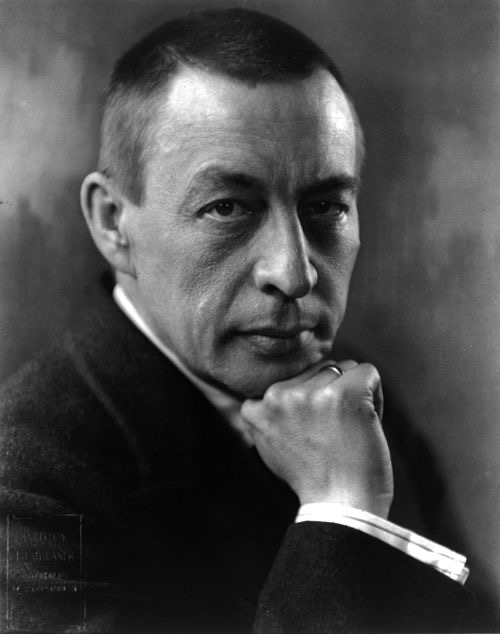
Rachmaninoff in 1921.
Born. 1 April  1873 Semyonovo, Staraya Russia Died 28 March 1943 (aged 69)
Beverley Hills California .U.S.

Sonata in G minor for Cello and Piano, op. 19 was completed in November 1901 and published a year later.

Rachmaninoff regarded the role of the piano as not just an accompaniment but equal to the cello. Most of the themes are introduced by the piano, while they are embellished and expanded in the cello’s part.

Rachmaninoff dedicated the work to Anatoliy Brandukov, who gave the first performance in Moscow  with the composer at the piano, on 2 December 1901. Rachmaninoff seems to have made some last-minute alterations after the premiere, as he wrote the date “12 December 1901” on the score.

Vocalise” is a song by Rachmaninov , composed and published in 1915 as the last of his 14 Songs or 14 Romances,  op. 34.] Written for high voice (soprano or tenor ) with piano accompaniment, it contains no words, but is sung using only one vowel of the singer’s choosing . It was dedicated to soprano singer Antonina Nexhdanova and is performed in various instrumental arrangements more frequently than in the original vocal version.

Although the original publication stipulates that the song may be sung by either soprano or tenor voice, it is usually performed by a soprano. Though the original composition is in the key signature of C-sharp minor, it is sometimes transposed into a variety of keys, allowing a performer to choose a vocal range more suitable to the natural voice, so that artists who may not have the higher vocal range of a soprano can perform the song.For solo instrument and piano.

Transcriptions abound but of course the ‘cello is the nearest to the heart strings ………

For solo instrument

for trumpet, arranged by Rolf Smedvig

for solo piano, many arrangements, including by Alexander SilotiAlan Richardson (1951), Zoltán KocsisEarl WildSergio Fiorentino

for organ, arranged by Cameron Carpenter

for double bass, arranged by Gary Karr

for guitar, arranged by Slash

for saxophone, arranged by Larry Teal

for theremin, arranged by Thorwald Jørgensen[2]

Photo credit Dinara Klinton
https://christopheraxworthymusiccommentary.com/2024/03/20/christopher-axworthy-dip-ram-aram/

Evelyne Berezovsky at Bechstein Hall ‘Irresistible you’

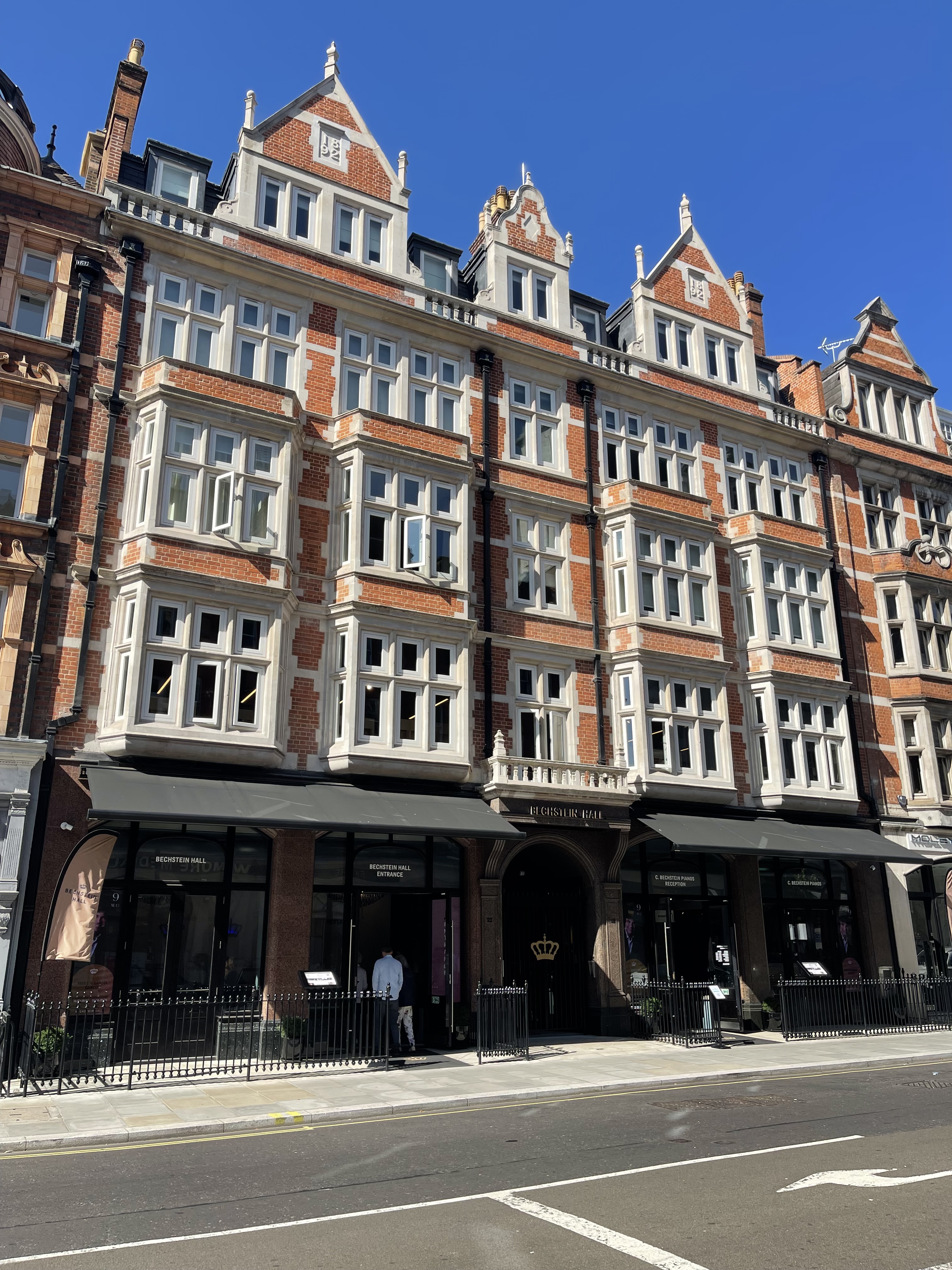
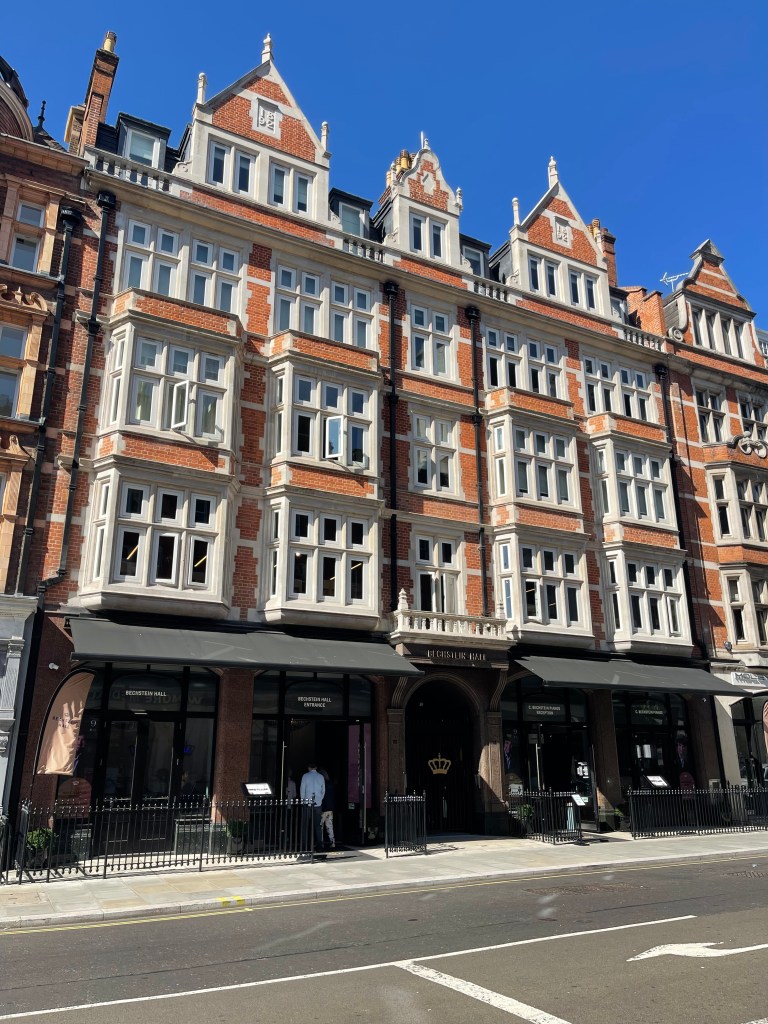
It’s not every day that Jed Distler is inspired by such piano playing as he was at the reborn Bechstein Hall yesterday for Evelyne Berezovsky’s recital


Riding high on wings of song as Jed said ‘ an emotional generosity playing dangerously and always in the present’. Quite simply the best young pianist he has heard since arriving in London almost a month ago .


With Evie’s mentor Leonskaya playing next door in the ‘old’ Bechstein Hall a programme of Mozart, Shostakovich and Schubert, here was our Evie persuaded by Jed to play as an encore his arrangement of Art Tatum’s ‘Tea for Two’ which he exclaimed, much to Evie’s delight and astonishment , that she plays even faster than Tatum!
But not before a scintillating dose of Rachmaninov and Debussy all wrapped up in ‘X’ certificate Ravel. La Valse ‘ The most decadent I have ever heard and I loved e very minute of it ‘ exclaimed Jed and some remarkable new works by Tatiana Svetlova that he just adored as Evie brought them to life with exquisite commanding authority.
Evie cast a magic spell over us all as her almost improvised freedom and mastery reminded me of another great ‘natural’ Martha Argerich. Earl Wild’s ‘The man I love ‘ was Evie’s parting shot looking us straight in the eyes alla Gulda ( whose only pupil was Argerich ).
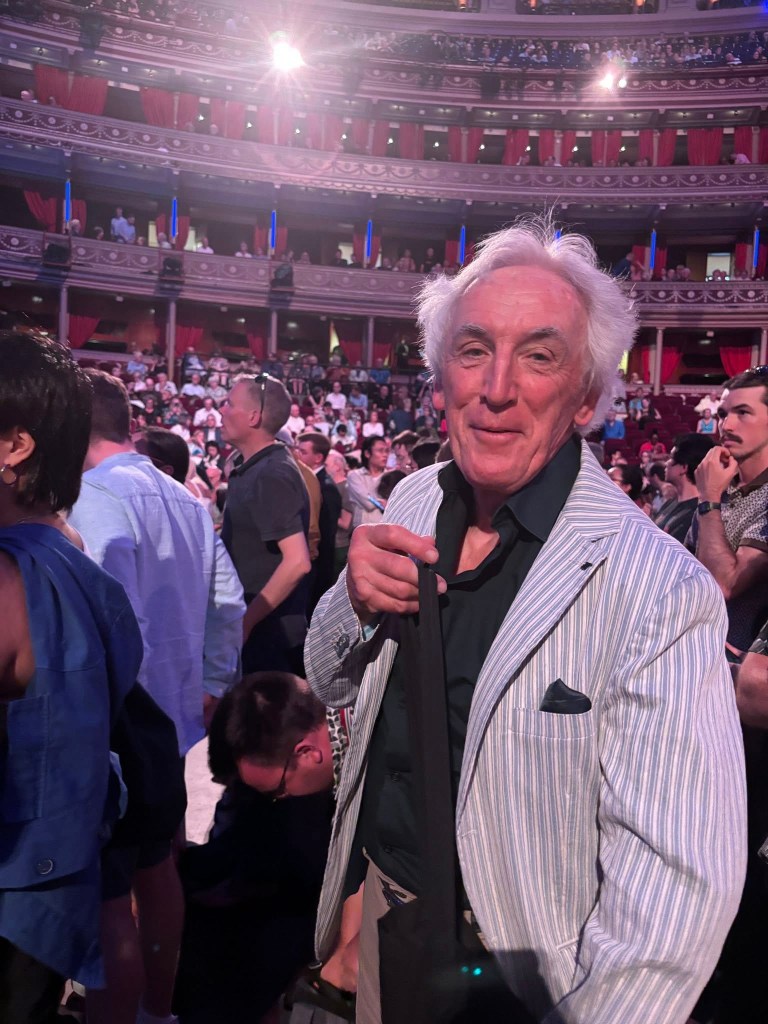
Love at first sight directed at each one of us …….irresistible you !

Rachmaninov opened the concert with ‘Lilacs’ and ‘Daisies’ covered in insinuating rubato of another age .Wisps of sound that were miraculously made of streams of gold and silver. Four preludes followed,opening with the most beguiling op 23 n. 4 and n. 6. The fourth in D major was played with robust sound and a sense of balance that allowed the melodic line to shine through all the accompaniment that Evelyne imbued with luxuriant sumptuous sound. Not the usual whispered sound world of Richter but her own overpowering emotionally seductive Philadelphian world of golden velvet. The E flat prelude followed with an emotional drive that was to be mirrored only in La Valse that was still on the horizon. The G major op 32 n. 5 had a liquid fluidity of fragile beauty suddenly caught in a breeze as free as the wind that was blowing by now in these parts , before the insinuating chattering of the ending. Op 23 n. 8 was a mellifluous outpouring just unfolding with notes that were but moving sounds of shifting harmonies of heartrending nostalgia.

What better way to finish this Rachmaninov opener than with the transcriptions of Rachmaninov’s violin partner Fritz Kreisler. Beguiling charm and insinuating beauty thrown off in such style and with consummate ease and an extraordinary sense of improvised freedom – Love was in the air indeed. Interrupted only by the imperious opening of Liebesfreud dissolving into intricate teasing jeux perlé. What beauty Evie brought to the central outburst of melody before setting off again adding her own improvised cut at the end. Jed told me Rachmaninov had made some cuts in his second historic recording where this rather overlong transcription had to fit on one side of a 78 rpm disc.

Alexei Grynuk adding a helping hand with Tatiana Svetlova’ s beautiful music still wet on the page

A youthful romantic outpouring of Debussy that Jed found a little too similar to the sound world of Rachmaninov, but this was Evie’s warm generous heart sharing her love for music with us . As Barbirolli famously said of a rather over efusive Jaqueline Du Pré ‘If you don’t play with passion when you are young ,what do you pare off in old age?’ Luckily Jaqueline had Barenboim at her side who could help channel her temperament. The old age she was destined never to know but maturity she certainly reached before the age of 28 when her career was so cruelly curtailed. ‘L’Isle Joyeuse’ of course suited Evie’s mood with the improvised freedom of nobility and passion, virtuosity and subtlety combining to exhilarating effect. I must take a closer look at Jersey when I am next in Eastbourne !

Two works by Tatiana Svetlova were a real revelation for Jed and myself. I could hear distant references to the Bach Chaconne in a traditional but original sound world of great beauty. Evie playing with the same total conviction of someone who truly loves this music. https://youtu.be/gex0sOR7XZ0?si=rE3RdFq5ANeynE_O

It was Rubinstein who said you should only play music that you truly love and that speaks to you . He went on to say that you must be born with talent, you cannot teach it ! Evie is a living example of that!

This went through my mind as I listened to Evie in the same way I listen to Martha or Maria João .With a sense of discovery where anything could happen and is the very reason why live music making is so essential in this A.I. world that sits gloating in the distance.

Ravel ‘Valses’ just poured from Evie’s hand and heart . ‘Nobles’ played with a freedom that would have had Perlemuter turning in his grave but that Evie played with such originality and a freedom that she saw from the very first Modéré played with heroic nobility. The same she was to find in the 7th and after the bubbling fun of the 6th leading eventually to the whispered magic of the ‘Epilogue’. It was here that Evie imbued the air with magic. Ravel remembering ,’avec un sentiment de regret’ a story that never ends but just drifts into oblivion. It was in this atmosphere that the bubbling cauldron of red-hot passion was allowed to explode with breathtaking decadence. This was a world in which Evie entered with fearless abandon of double glissandi and much else, filling this magnificent Bechstein with sounds it has never known before. The sumptuous night club atmosphere of this very intimate hall just added to the overwhelming emotions that were being banded about before our very eyes.

No escape for Jed ……….

I had told Jed that Evie was playing ‘Tea for Two’ in the original programme that had been modified. But Jed wanted his tea and certainly only for two! Evie thought for a second before throwing herself into a teatime where cups were being thrown about with masterly indifference.

What a night …..it took a whole chicken and lashes of wine to calm us down after that and allow us to sleep …….perchance to dream ! 

Described by the French press as a pianist with “a huge temperament, dazzling technique and a heart to match”, Evelyne Berezovsky is one of the most sought-after young musicians of today. She has performed concertos with the Tokyo Mozart Players under Xavier Roth, Musica Viva under Alexander Rudin, Latvian National Symphony Orchestra under Andris Poga, Thailand Symphony Orchestra and North Czech Philharmonic under Gudni Emilsson, Hulencourt Soloists Chamber Orchestra under Giuseppe Montesano and Ben Ellin and the Enschede Symphony Orchestra under Jaap wan Zweden amongst others.

Presenting a unique pianistic style, she has been invited to perform at major venues such as the Wigmore Hall and Southbank Centre (London), Moscow Philharmonic Hall, Elbphilharmonie (Hamburg) and festivals like La Roque D’antheron (France), Les folles journées du Japon (Japan), Fêtes d’Olympia (France), Lorin Maazel’s Festival (UK) as well as being a regular guest at Pianos Folies de Touquet (France).

Born in Moscow in 1991 Evelyne started playing the piano at the age of 5 and appeared with an orchestra for the first time at the age of 11 playing Mozart’s Concerto K415. She has studied with the renowned professors Hamish Milne (London), Elisso Virssaladze (Italy), Rena Shereshevskaya (Paris) and recently has been working with Maria João Pires in Portugal. Evelyne is a Grand Prix winner at the Goergy Cziffra International Competition (2019) in Paris, France.

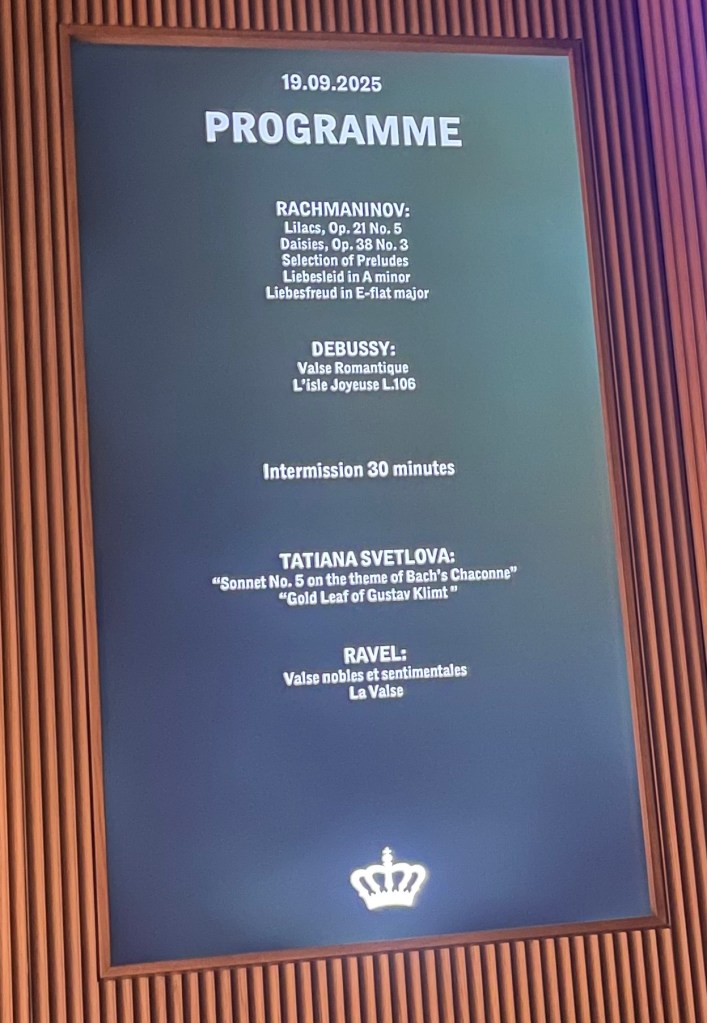
Programme 

RACHMANINOV: Lilacs, Op. 21 No. 5 

RACHMANINOV: Daisies, Op. 38 No. 3 

RACHMANINOV: Selection of Preludes 

RACHMANINOV: Liebesleid in A minor 

RACHMANINOV: Liebesfreud in E-flat major 

DEBUSSY: Valse Romantique 

DEBUSSY: L’isle joyeuse, L.106 

Intermission 30 minutes 

TATIANA SVETLOVA: “Sonnet No. 5 on the theme of Bach’s Chaconne” 

TATIANA SVETLOVA: “Gold Leaf of Gustav Klimt ” 

RAVEL: Valse nobles et sentimentales 

RAVEL: La Valse 

ART TATUM/ JED DISTLER : Tea for Two 

(transcription) 

EARL WILD: Virtuoso Etudes based on Gershwin’s songs: 

The Man I Love 

(Embraceable You ) next time ?

https://christopheraxworthymusiccommentary.com/2024/03/20/christopher-axworthy-dip-ram-aram/

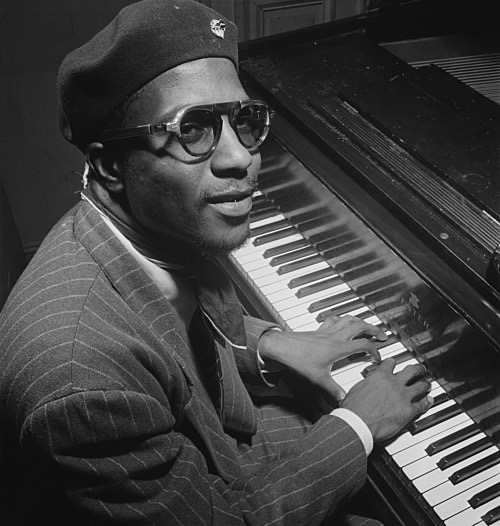
Jed Distler fearlessly on top of the world with Thelonious Monk


Monk at Minton’s Playhouse , New York, 1947
Thelonious Monk Jr. October 10, 1917 Rocky Mount North Carolina,U.S
February 17, 1982 (aged 64) Englewood ,New Jersey,U.S.


Thelonious Sphere Monk was an American jazz pianist  and composer. He had a unique improvisational  style and made numerous contributions to the standard jazz repertoire, including ‘Round Midnight ‘,’Blue Monk’,’Straight,No Chaser’,’Ruby,My Dear’,’In Walked Bud’, and ‘Well .You Needn’t’. Monk is the second-most-recorded jazz composer after Duke Ellington
Monk’s compositions and improvisations feature dissonances  and angular melodic twists, often using flat ninths, flat fifths, unexpected chromatic notes together, low bass notes and stride, and fast whole tones ,  runs, combining a highly percussive attack with abrupt, dramatic use of switched key releases, silences, and hesitations.
Monk’s distinct look included suits, hats, and sunglasses. He also had an idiosyncratic habit during performances: while other musicians continued playing, Monk would stop, stand up, and dance for a few moments before returning to the piano.
Monk is one of five jazz musicians to have been featured on the cover of Time  (the others being Louis Armstrong ,Dave Brubeck,Duke Ellington and Wynton Marsalis.

Monk once said, “The piano ain’t got no wrong notes.”[
According to Bebop: The Music and Its Players author Thomas Owens:
Monk’s usual piano touch was harsh and percussive, even in ballads. He often attacked the keyboard anew for each note, rather than striving for any semblance of legato. Often seemingly unintentional seconds embellish his melodic lines, giving the effect of someone playing while wearing work gloves. … He hit the keys with fingers held flat rather than in a natural curve, and held his free fingers high above the keys. … Sometimes he hit a single key with more than one finger, and divided single-line melodies between the two hands.
In contrast with this unorthodox approach to playing, he could play runs and arpeggios with great speed and accuracy. He also had good finger independence, allowing him to play a melodic line and a trill simultaneously in his right hand. According to jazz pianist, educator and broadcaster Billy Taylor , “Monk could really play like Tatum. He really had all the technique and he could really play like Art.”
Monk’s style was not universally appreciated: for example, the poet and jazz critic Philip Larkin described him as “the elephant on the keyboard”.Steve Lacy ,jazz saxophonist, said ‘Monk’s music has profound humanity, disciplined economy, balanced virility, dramatic nobility, and innocently exuberant wit.’
Monk had a particular proclivity for the key of B flat. All of his many blues  compositions, including “Blue Monk”, “Misterioso”, “Blues Five Spot”, and “Functional”, were composed in B flat; in addition, his signature theme, “Thelonious”, largely consists of an incessantly repeated B-flat tone.
photo credit Dinara Klinton https://christopheraxworthymusiccommentary.com/2024/03/20/christopher-axworthy-dip-ram-aram/

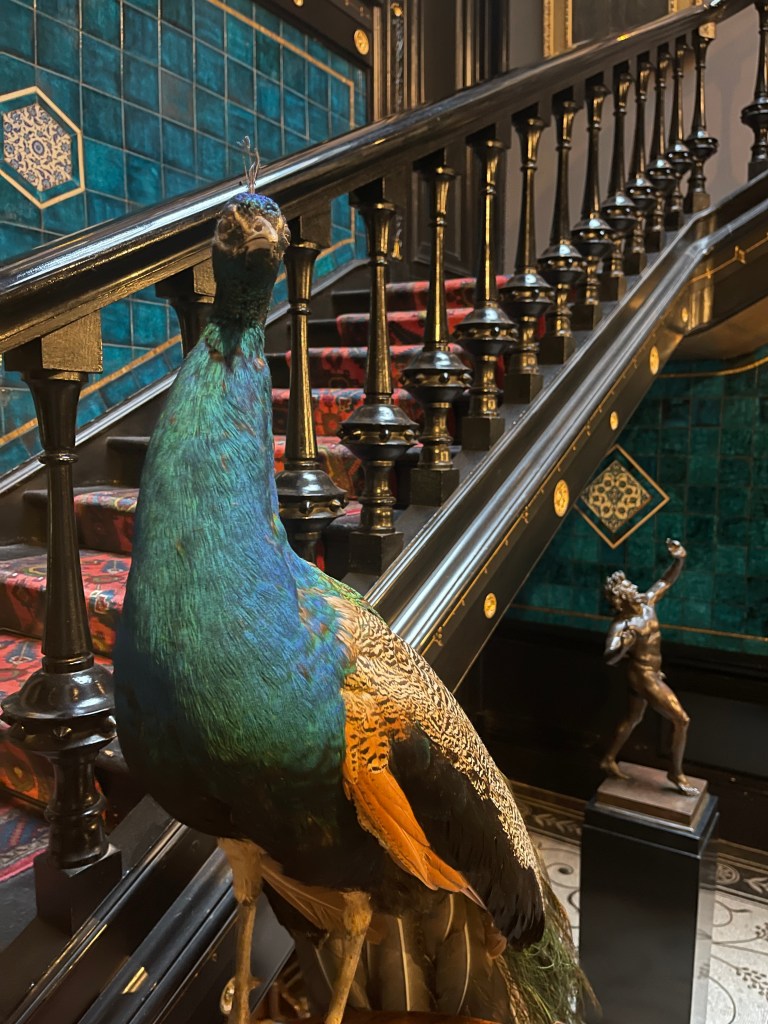
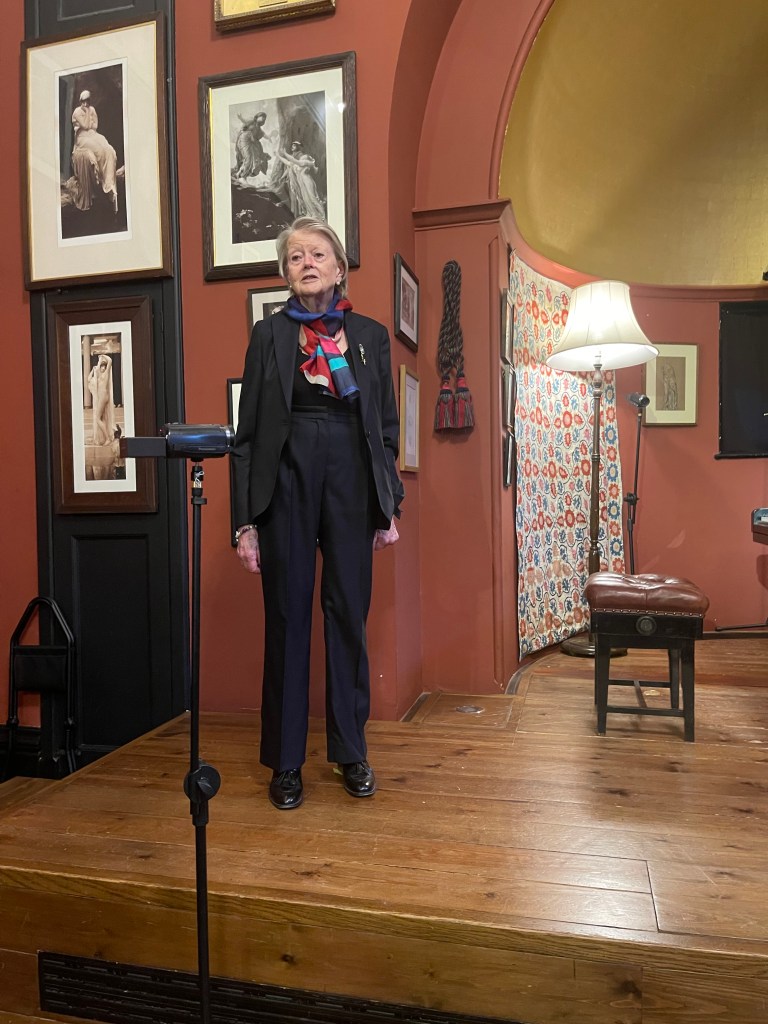
Jacky Zhang’s masterly plumage of Peacock feathers

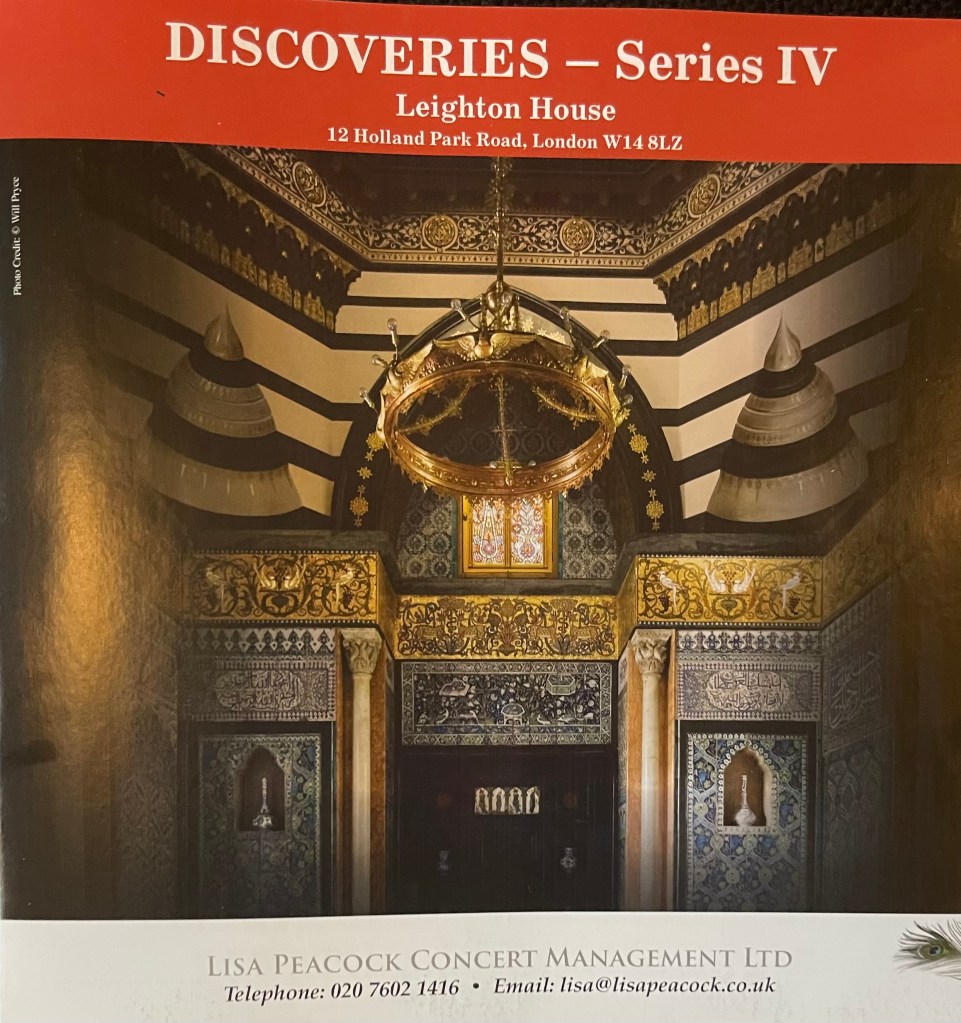
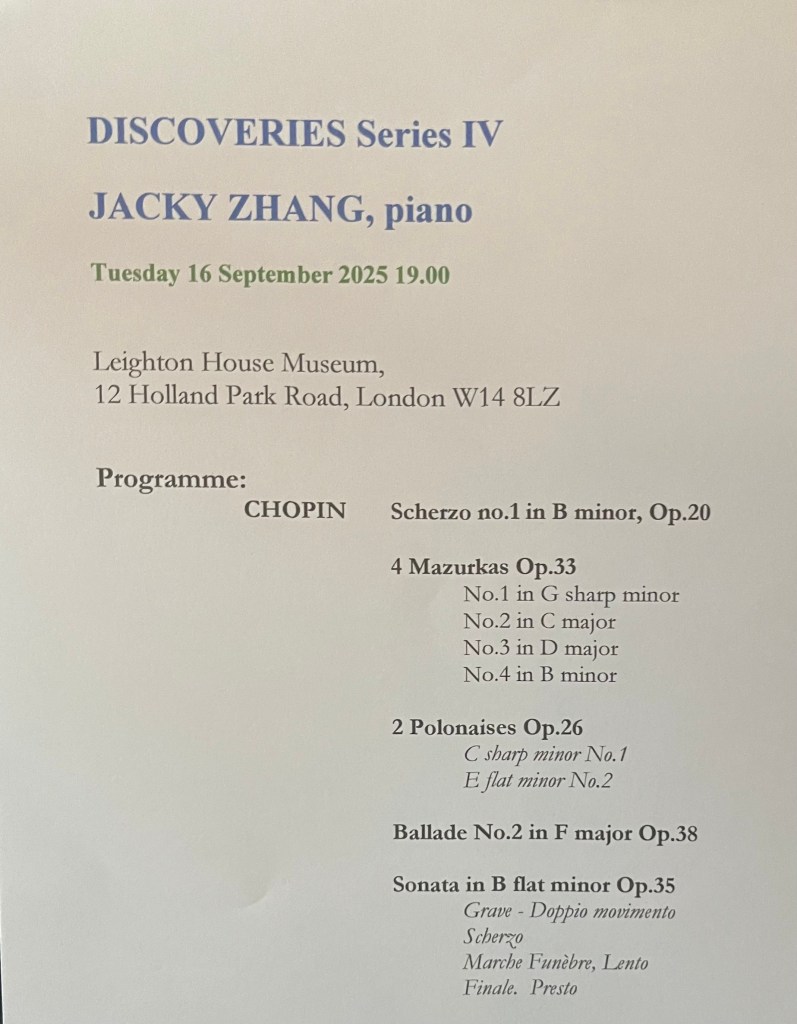
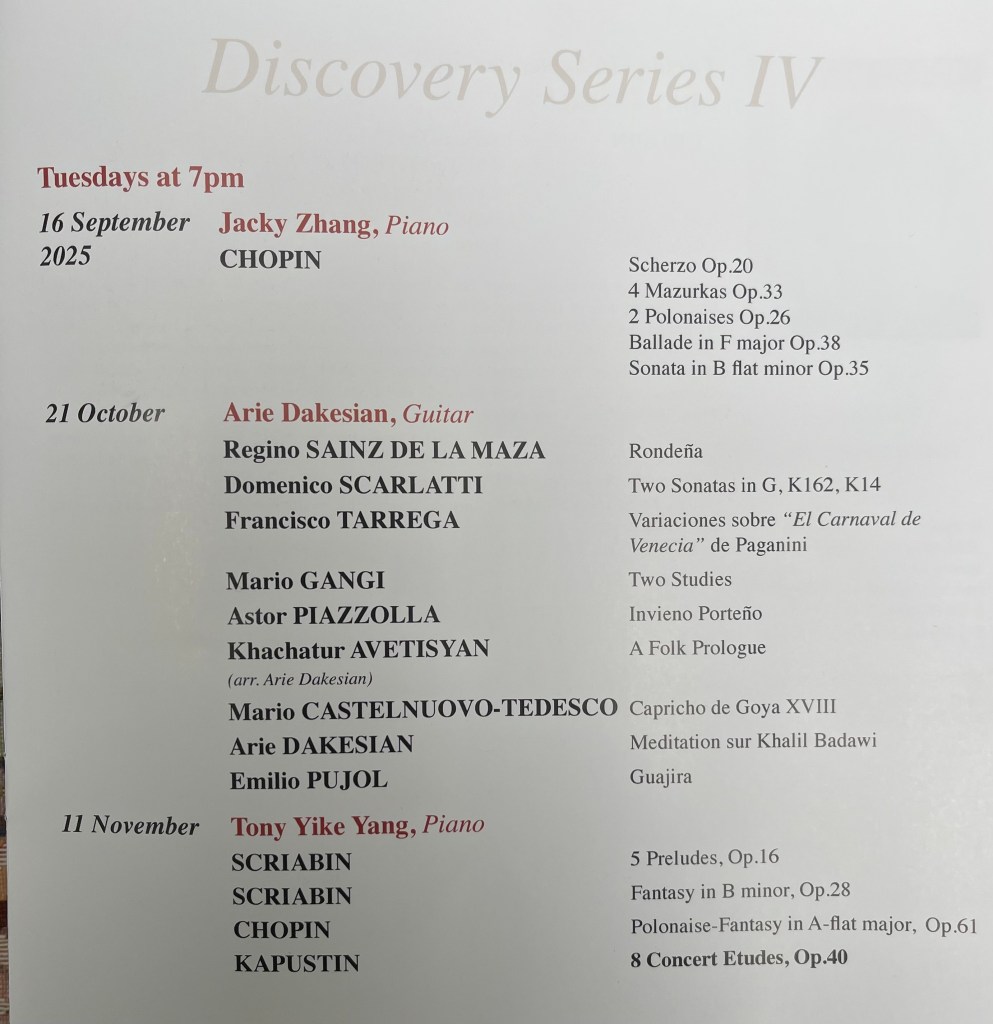
Jacky Zhang at Leighton House and Chopin fever is upon us.

Just this week four other competitors for the circus arena next month in Warsaw .

Andrzej Wierciński, Diana Cooper, Pedro Salas and Ryan Wang all playing superbly as they prepare for the gladiatorial contest.

A fight between giants, but who is already the winner is us the public with young musicians being pushed to superhuman flights where Chopin’s glorious music is being rediscovered,as these young musicians delve deeply into well worn scores and ignite them with their youthful mastery and innocence.

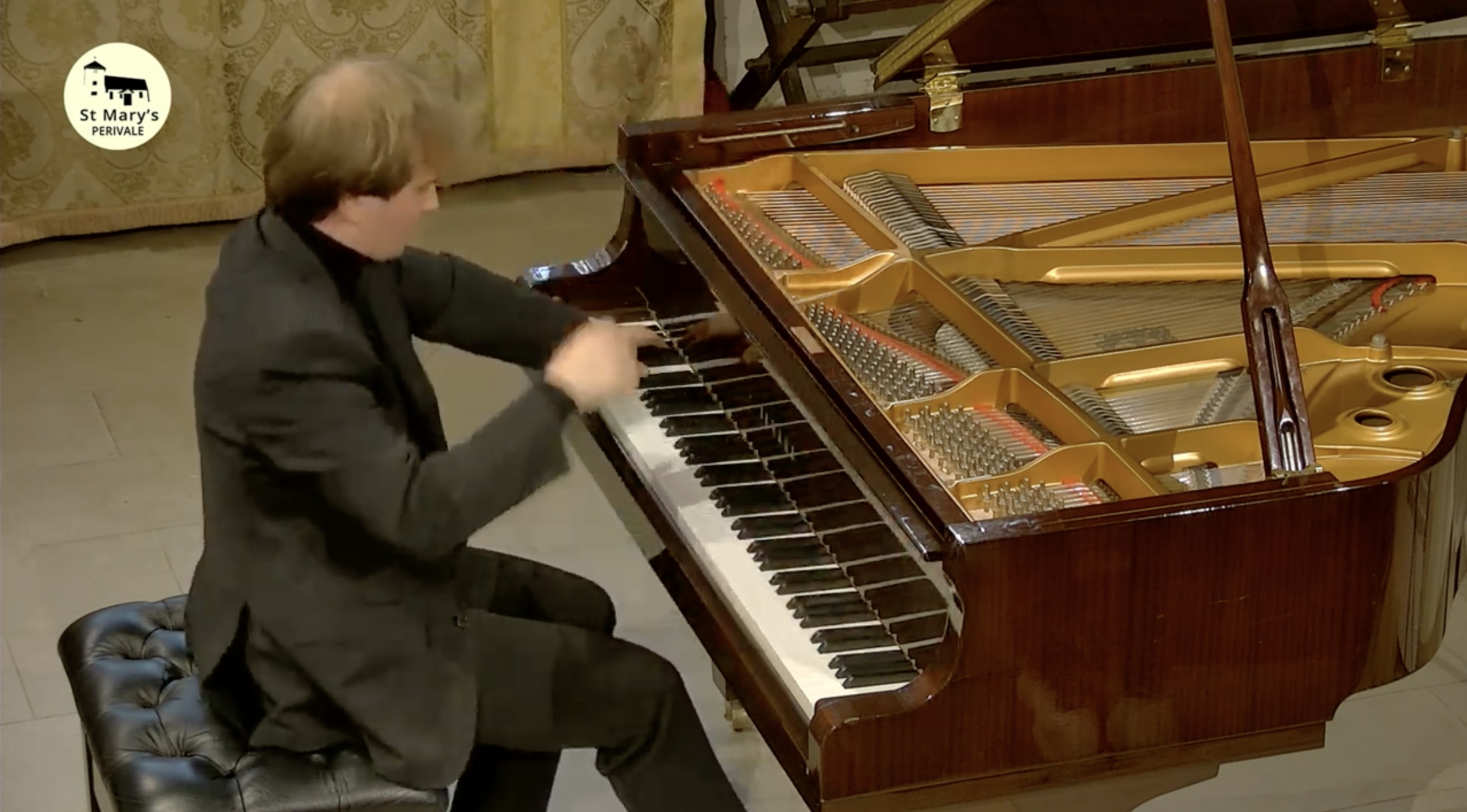
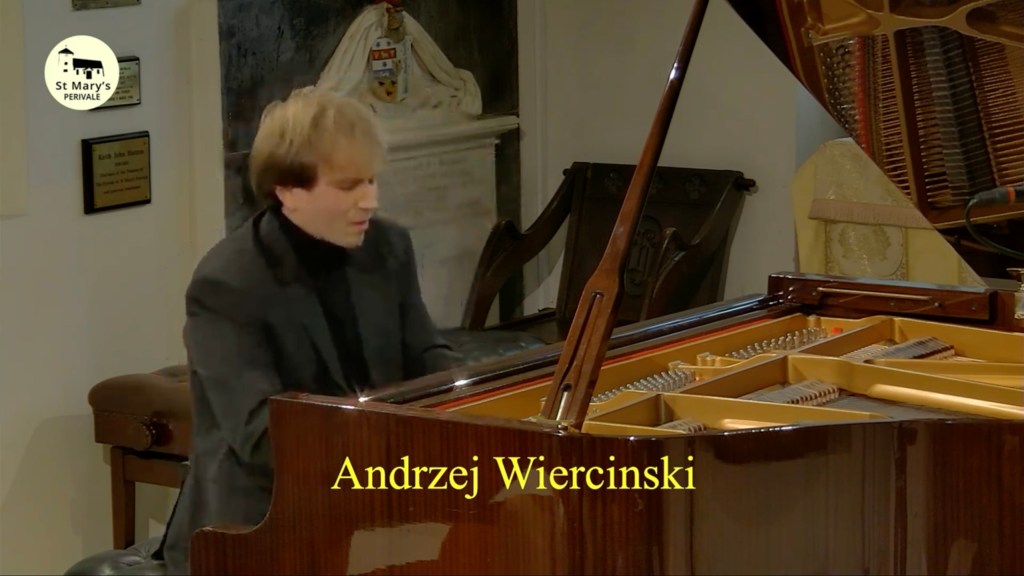
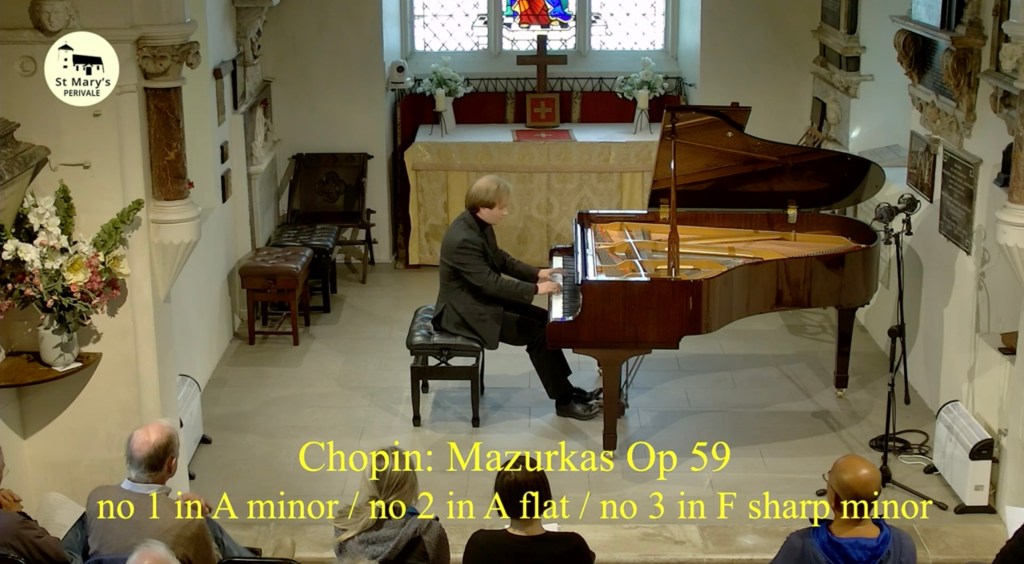
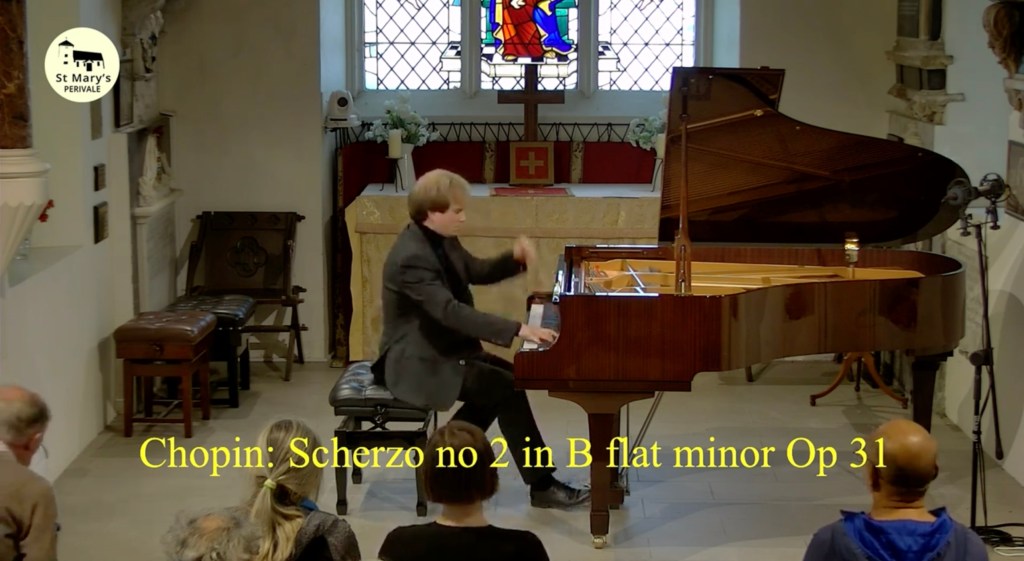
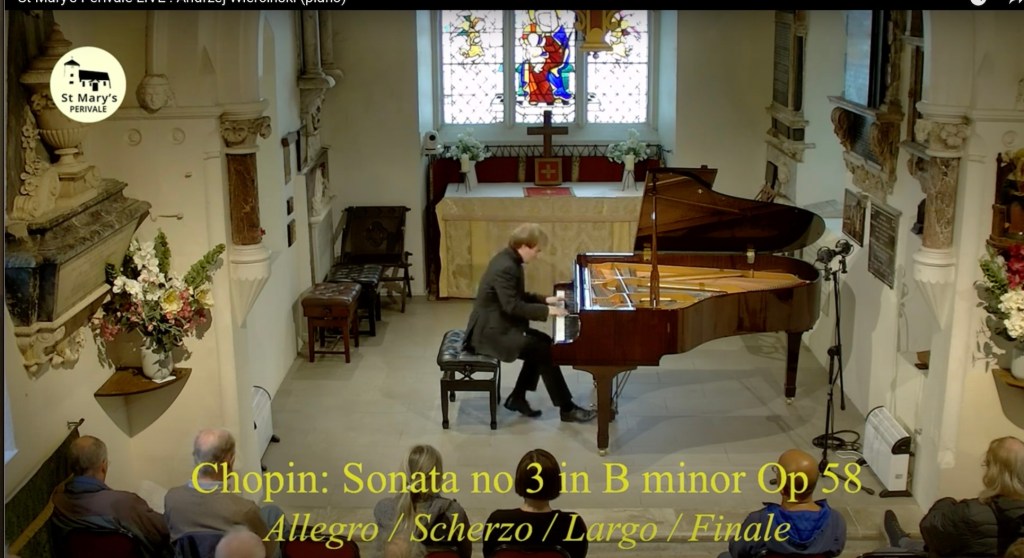
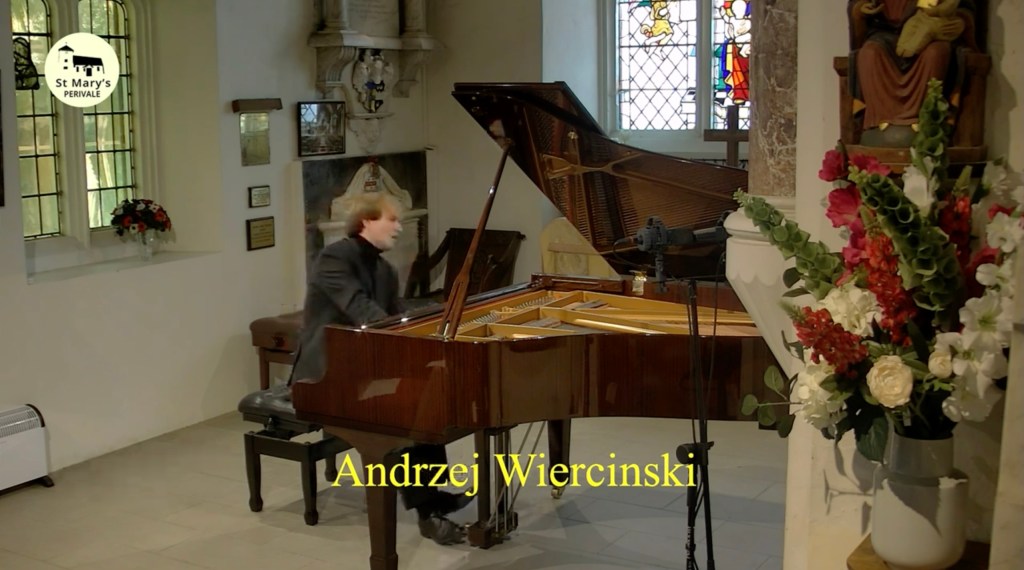
Today Chopin B minor from Wierciński was masterly with many discoveries without any so called traditional distortions https://christopheraxworthymusiccommentary.com/2025/09/16/andrzej-wiercinski-in-perivale-true-heir-to-the-golden-age-of-piano-playing/

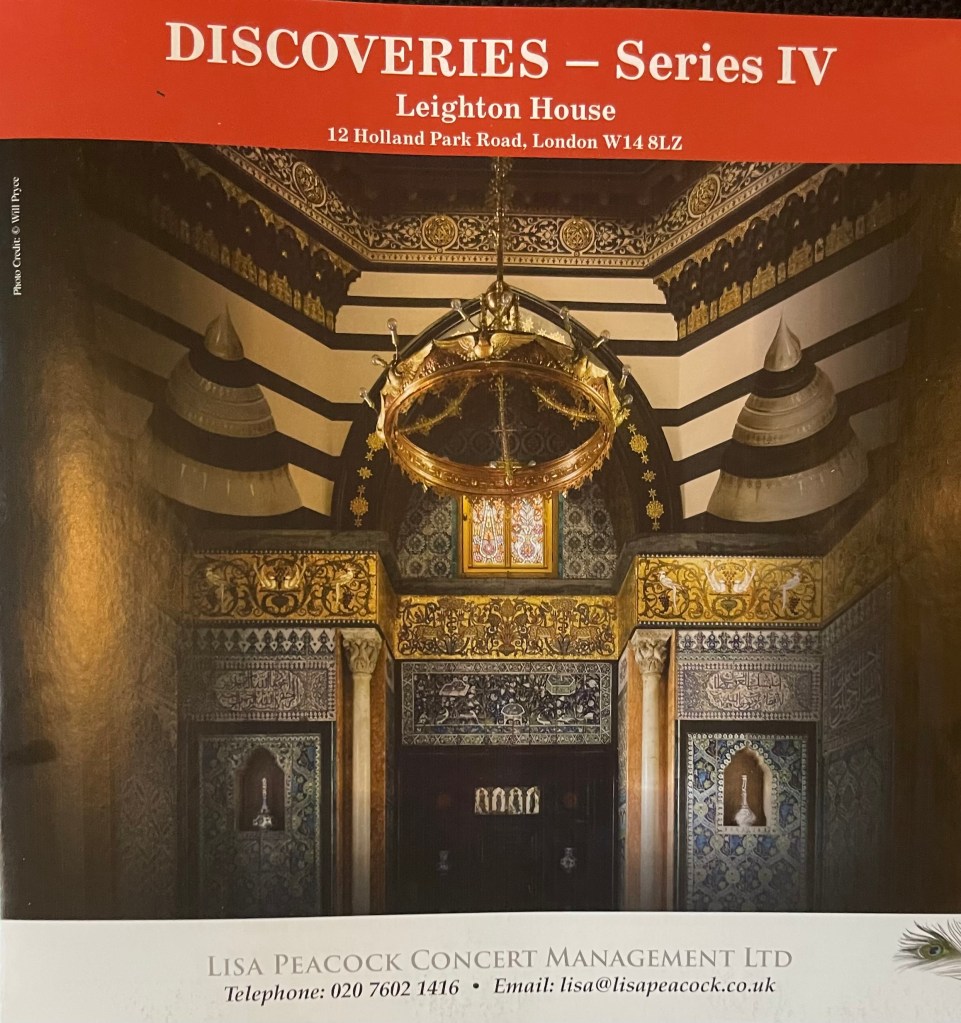
The biggest surprise for me was in the evening under the eagle eye of the ‘Peacocks’ that abound in these parts , with five superb performances of Chopin from the seventeen year old Jacky Zhang .

https://christopheraxworthymusiccommentary.com/2025/09/15/dmitri-alexeev-the-art-of-bel-canto-from-the-hands-of-a-master/

Could it have been the presence of his mentors, the Alexeev’s ( just returned from a recital in Chopin’s house that was such a marvel that as I listened on Maidenhead Station I was so inspired that I missed my train connection ! The Alexeevs have a lot to answer for ! )

Jacky with his mentor and teacher for the past years Dmitri Alexeev

Here today there was a young man who I had heard play the Goldberg at 14 , Diabelli at 15 and a gladiatorial BBC contest with Etonian, Ryan Wang both playing Rachmaninov’s second concerto televised live )

Jack in the box indeed as our Jacky having given a good Chopin recital in Perivale just ten days ago now produced performances of other works of Chopin that were blessed by the Gods.

https://christopheraxworthymusiccommentary.com/2025/09/04/jacky-zhang-in-perivale-the-genial-voyage-of-discovery-of-a-true-artist/

A transformation that from the very first notes of the B minor Scherzo held me mesmerised as I had been with his mentor on Maidenhead station just three days ago.

Power and technical mastery went hand in hand in a passionate outpouring of poetic drive. Simple beauty of the Christmas song that Chopin incorporates in his inimitable way, playing with whispered confessions of the deep nostalgia for his homeland that is born into the very fabric of the refined Parisian suit that the impeccable Chopin chose to wear.

An explosion of playing as Jacky let rip with exhilaration and brilliance and a breathtaking coda where he had no need to add the double octaves of lesser showmen !

Four early Mazurkas where Jacky brought his youthful mastery to bear with beguiling beauty and subtle colouring . A luminosity and teasing sense of rhythmic flexibility bursting into a dance of nostalgia and captivating beauty . The B minor played as a true tone poem with a sense of haunting nostalgia leading to such a refined final farewell .

No wonder Schumann described these jewels as ‘canons covered in flowers ‘.

But if these are the canons how are we to describe the Polonaises? Full of brilliance, contrasting with Chopin’s inimitable bel canto just waiting to take over from the dynamic drive and breathtaking exuberance. The very first of Chopin’s published Polonaises was probably written at the age that Jacky is now. It was this self identification with Chopin’s world that was so captivating,with the bursts of ravishing bel canto of great improvised freedom and beauty . Jacky has an enormous palette of sounds as he could pass from whispered asides to great sumptuous outbursts.

The mystery he brought to the E flat minor Polonaise showed the Genius of Chopin who could take this traditional form and imbue it with poetic poignancy and significance . It was remarkable too how Jacky played this mysterious element without pedal revealing a stark skeleton deep in Chopin’s heart uncovering wonderful mysteries igniting the imagination of this young artist .

Chopin’s Second Ballade was played with remarkable contrasts as this young man could pass from poetic lilting beauty to the dynamic chiselled precision of virtuosistic mastery .Throwing himself into the coda with controlled mastery but with uncontrolled passion where we could all feel with him the burning intensity of the final flourish. But even with burnt fingers finding solace in gently looking back without anger or rancour .

Having heard in the afternoon a great performance of the B minor Sonata I was not expecting to be swept off my feet by Jacky’s B flat minor Sonata in the evening .

Eric Lu , another in this gladiatorial contest, played both together in the same programme in the great theatre in Warsaw as part of their Chopin and Europe Festival . Not being streamed I was unable to comment but I feel that although it may not be too much for a fine musician, it may certainly be too much for the public. I remember a very fine pianist having to give two performances of the final concert in his Beethoven Series, such was the public demand . A monumental Trilogy that would be impossible for an Arrau or Serkin to repeat. As a renowned critic confided, not only were they totally spent after such an experience but the audience was too , and an immediate repeat after a quick cup of tea would have been unthinkable !

Jacky like Wierciński gave these two masterworks the space they need at the end of a programme, because after this , silence is needed in order to be able to digest such genial mastery.

Jacky with Bobby Chen and Canan Maxton. https://christopheraxworthymusiccommentary.com/2025/03/25/bobby-chen-at-the-chopin-society-uk-masterly-musicianship-of-humility-and-poetic-sensibility/

Both Jacky and Wierciński chose to play the same encore of the Waltz op 18

Coincidence? Or are they truly so immersed in Chopin’s world that it was not their decision but decided by that mysterious aura that can sometimes pervade the altar that the hallowed concert hall can become?

Jacky gave a masterly performance of the B flat minor sonata ( neither artist risking pointless discussions about first movement repeats)

Jacky opening with explosive authority as the incessant pulsating of the ‘doppio movimento’ brought us to the aristocratic nobility of the development ( something of the same unsettling menace of the E flat minor Polonaise revealed here too ) And if he slightly overplayed the final few bars it was because he is a young man passionately committed, and as Barbirolli said of Jaqueline Dupré : ” If you don’t play with passion at that age what do you pare off later?”

A scherzo played with fearless mastery and a sweeping beauty to the central episode played with great lines of architectural authority usually associated with the vintage of a Perlemuter or Tagliaferro.

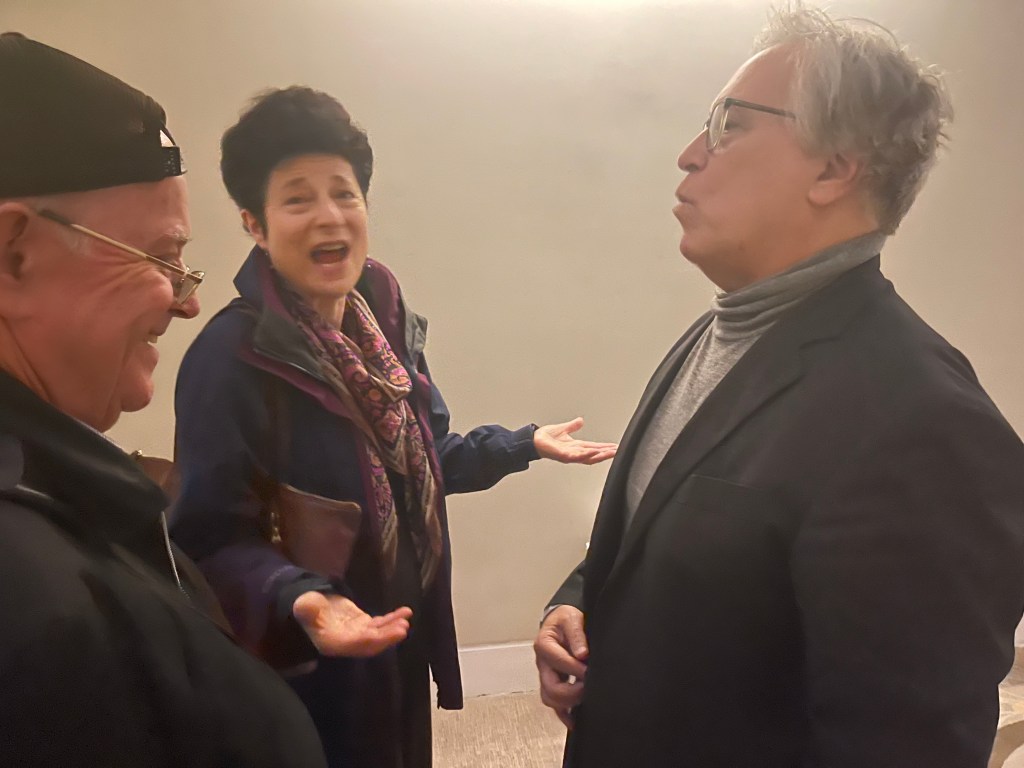
Dmitri Alexeev deep in conversation with Jed Distler ………’Do you want me to be polite or would you like my real opinion?’ Discussions between serious dedicated musicians.

A Funeral March played with simple mastery and unbending rhythmic precision imbued with intense significance . Jed Distler, the renowned NY critic and competition commentator , whispered his admiration to me as the music was allowed to unfold with unusual controlled musicianship .

‘The wind over the graves’ may be as Cortot described the last movement of ‘ Chopin’s craziest children’ but Jacky played it with subtle colouring and a shape that made the final monumental cadence so inevitably right.

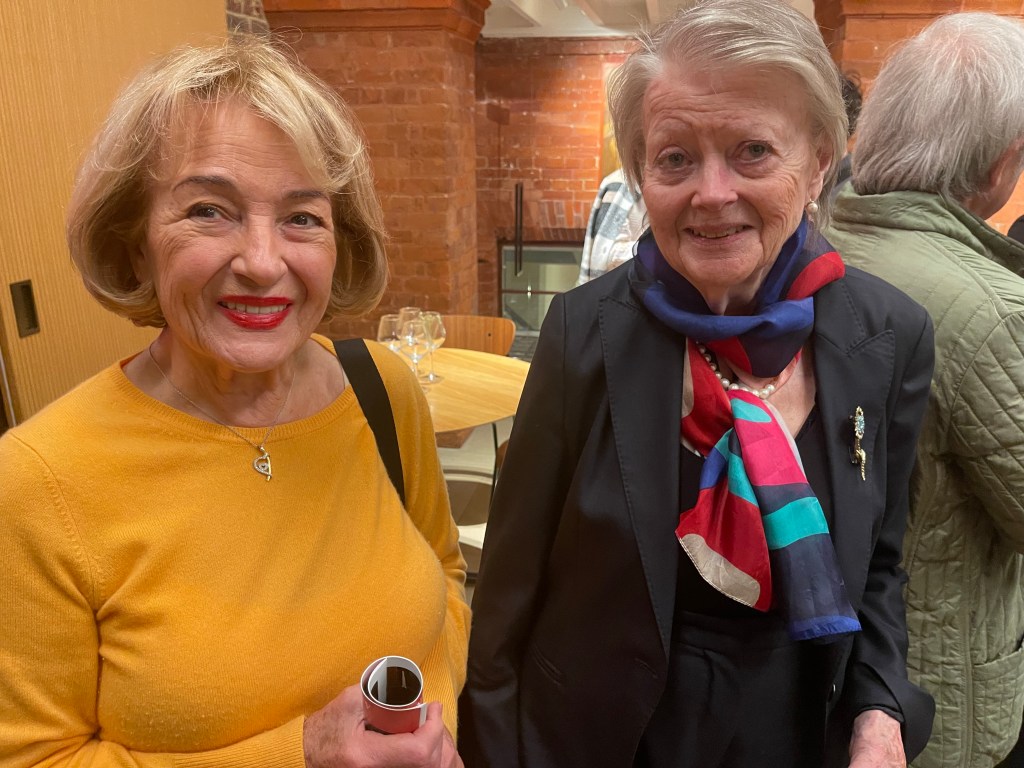
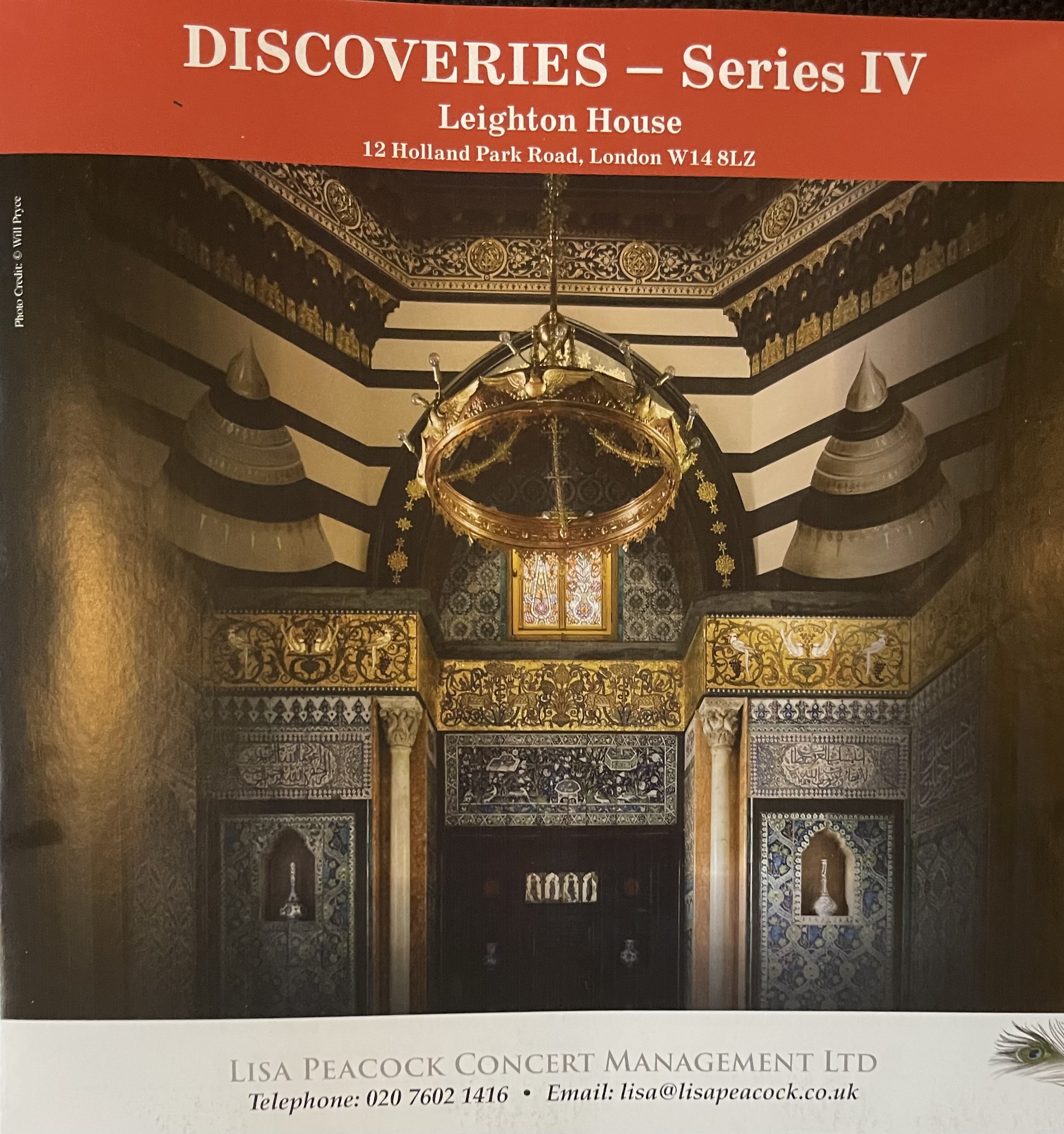
A party afterwards hosted by the most beautiful of Peacocks in the sumptuous surrounds of a reborn Leighton House just waiting for more of Lisa’s youthful discoveries .

https://christopheraxworthymusiccommentary.com/2021/11/22/the-back-of-beyond-bright-future-for-the-class-of-dmitri-alexeev-jacky-zhang-alexander-doronin-nikita-burzanitsa-thomas-kelly-junlin-wu/

photo credit Dinara Klinton https://christopheraxworthymusiccommentary.com/2024/03/20/christopher-axworthy-dip-ram-aram/

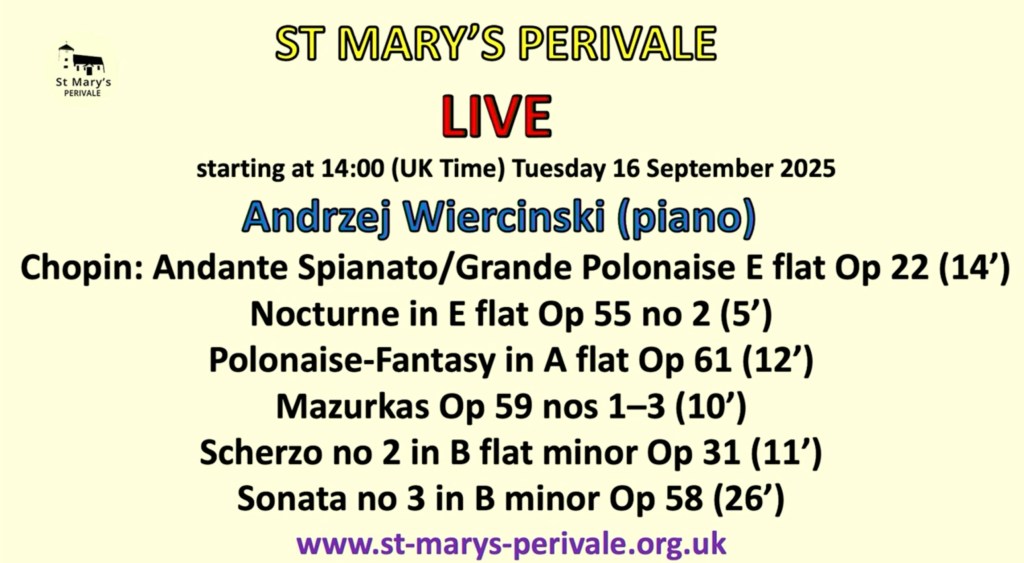
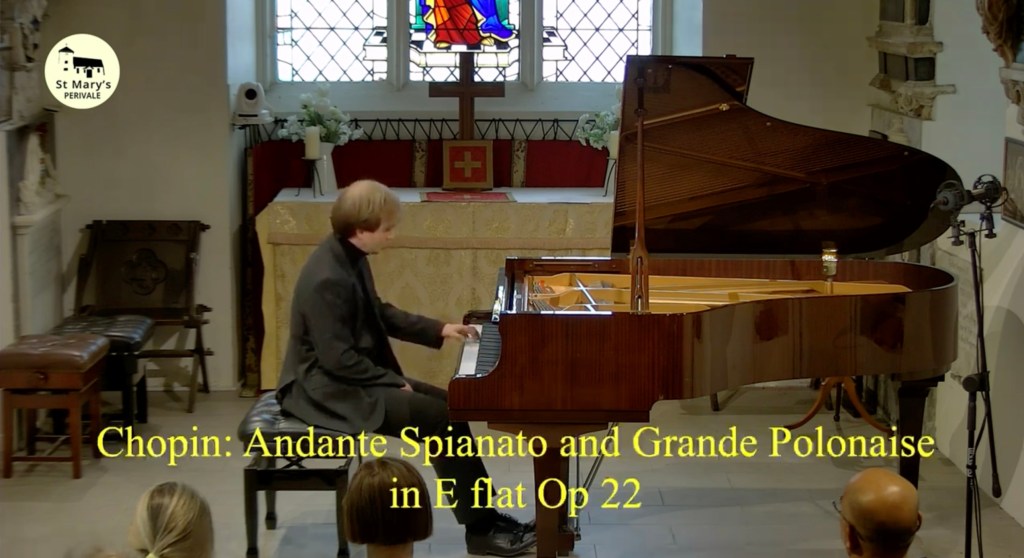
Andrzej Wierciński in Perivale True heir to the Golden Age of piano playing

https://www.youtube.com/live/08Aml3CUP-8?si=NxuXxu2tSJqRrnsi

It is great to be able to hear Andrzej just a month before he will compete in the Chopin Olympics in Warsaw. I have heard him play many times over the past few years and have heard all of these pieces from his hands too. It was just last summer that I heard an Andrzej reborn as all the anxiety of having to prove himself on the competition circuit had left him and a new maturity had allowed his unique talent to flower and flourish as the joy of recreation had overcome any idea of having to prove himself. 


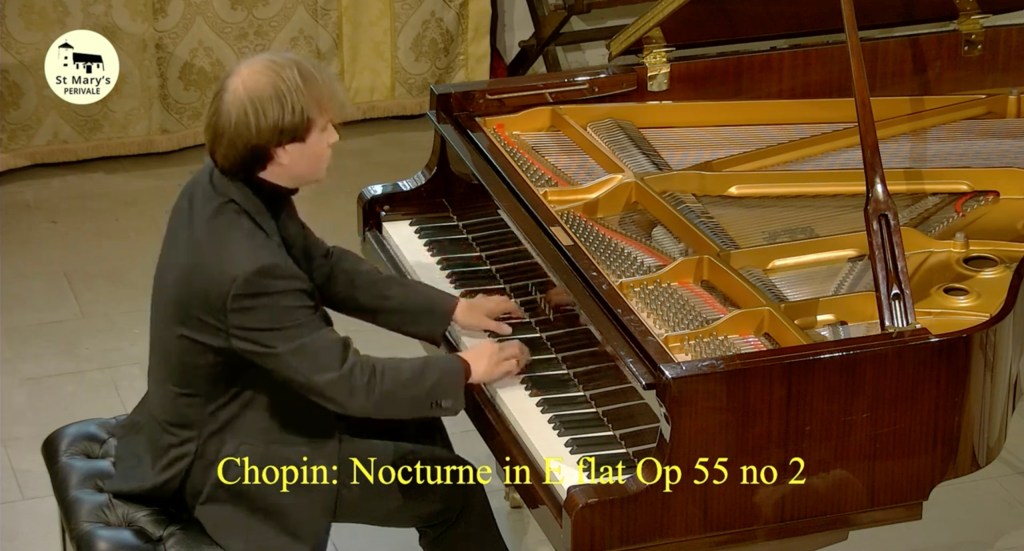
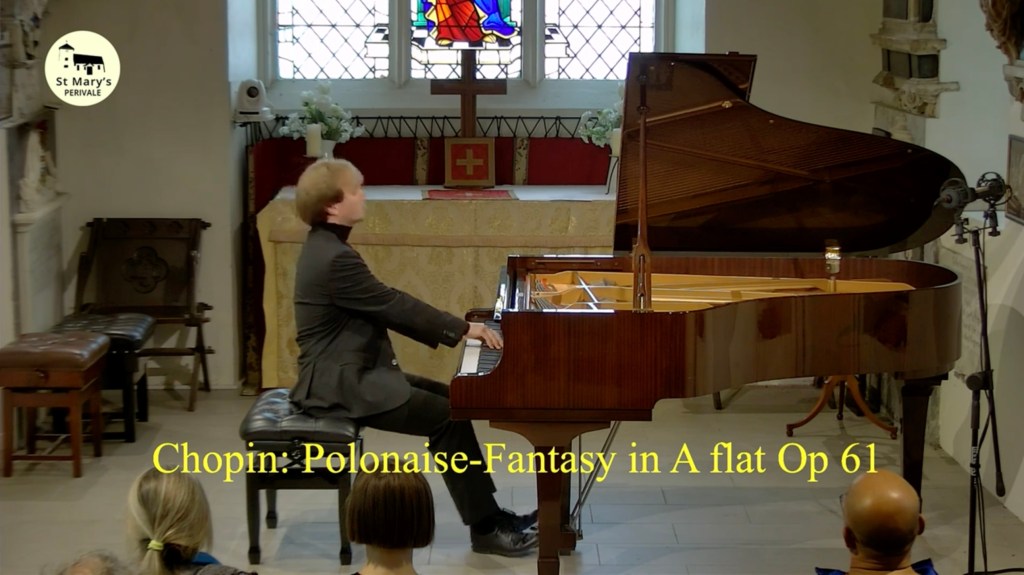
I have heard all of these works over the years from Andrzej, from the ecstatic outpouring of the Nocturne op 55 to the mellow imposing beauty of the Polonaise Fantaisie op 61 with Andrzej’s wonderful way of painting the sounds at the beginning like an artist before his canvas, where sounds and visual beauty live in close harmony. The radiance and luminosity of the Mazurkas op 59 and the imposing energy of the Scherzo in B flat minor with the poignant beauty of the central episode that gradually bursts into scintillating brilliance .Exceptionally today there was a short interval before Andrzej played the B minor Sonata . When Andrzej returned he was like a man possessed. One of the miracles of live performance is as Gilels said, like fresh food as opposed to the processed food of recordings . An audience can stimulate a real artist into embarking on a voyage of discovery where even he is taken to places he had never imagined before . Today was just such a case with the opening of the Sonata played with searing authority and dynamic drive . An architectural shape and a timelessness where even the second subject was sung with strength and delicacy. A development episode that was of imposing aristocratic authority . A scherzo of such perfect legato that was like streams of undulating sounds reaching a central episode that was played with deeply felt poignancy . The imposing introduction to the slow movement was even linked to the final chords of the scherzo as the ravishing bel canto was allowed to breathe with delicacy and ravishing beauty, but also a sense of direction and shape that was quite extraordinary . A final movement played with authority and breathtaking mastery as it built with aristocratic control to the final explosion of scintillating brilliance .Even the encore of the waltz in E flat was played with the charm and ‘joie de vivre’ of a pianist from another age . The Golden Age to which Andrzej on this showing today is a true heir.

Andrzej Wiercinski was born in Warsaw in 1995 and graduated with Distinction from Karol Szymanowski Academy of Music in Katowice and in 2020 received a post graduate diploma in piano at the Mozarteum University in Salzburg under the supervision of Professor Pavel Gililov. In June 2024 he graduated from the Royal College of Music in London where he studied with Professor Norma Fisher for the Artist Diploma. In earlier years he was a recipient of the Krystian Zimerman, Yamaha Foundation Scholarships and the F. Wybranczyk Artistic Scholarship of the Sinfonia Varsovia Foundation. He has collaborated with KAWAI and Japan Arts, which invited him to Asia on several tours. Andrzej has won first prize in numerous national and international piano competitions including at the Saint-Priest International Competition in France (2019), First International Music Competition in Vienna (2019), Masters’ Neapolitan Piano Competition (Naples 2018), International Chopin Competition “Golden Ring” in Slovenia (2014), International Chopin Competition in Budapest (2014), and the Polish International Chopin Competition (2015).  He has also been a significant prize winner at other prestigious piano competitions, such as the American Ignacy Jan Paderewski International Piano Competition (Los Angeles 2022); Hong Kong International Piano Competition (2019); International Piano Competition in Tbilisi (2017); International Competition “Halina Czerny-Stefanska” in Memoriam (Poznan 2014). Andrzej was a semi-finalist in the International Fryderyk Chopin Competition in Warsaw (2021). 

In recent years Andrzej has given recitals in most European countries as well as in Brazil, Canada, China, Indonesia, Japan, Singapore, and the USA. In January 2022 he performed in Dubai, where he gave 23 Chopin piano recitals during the EXPO. In 2015 Andrzej accompanied the President of Poland, Bronislaw Komorowski, on his visit to Japan and performed a Chopin recital in Tokyo in the presence of Princess Masako Owada.

https://christopheraxworthymusiccommentary.com/2023/09/20/andrzej-wiercinski-at-hatchlands-the-cobbe-collection-trust-a-great-pianist-on-a-wondrous-voyage-of-discovery/

In the United Kingdom Andrzej has played in Hatchlands Park in the Cobbe Collection Series of piano recitals on historic pianos, for the Chopin Society on the UK and at the Polish Cultural Centre (POSK), as well as in many live streamed recitals at St. Mary’s Perivale. 

Andrzej has performed piano concertos with several major orchestras. They include Beethoven’s 3rd Piano Concerto in the National Philharmonic Hall in Warsaw with the Sinfonia Iuventus in 2022, and Chopin’s F minor Piano Concerto in Darmstadt with the Deutsche Philharmonie Merck Orchestra in 2023.In 2016 the Fryderyk Chopin National Institute released Andrzej’s first CD of solo works by Chopin, Schumann, and Scarlatti. In 2025 he will be recording a further solo CD. 

photo credit Dinara Klinton https://christopheraxworthymusiccommentary.com/2024/03/20/christopher-axworthy-dip-ram-aram/

Dmitri Alexeev The art of Bel Canto from the hands of a master

https://www.youtube.com/live/N2XkdoA_M8E?si=5eRYxNw0eeKROYc0
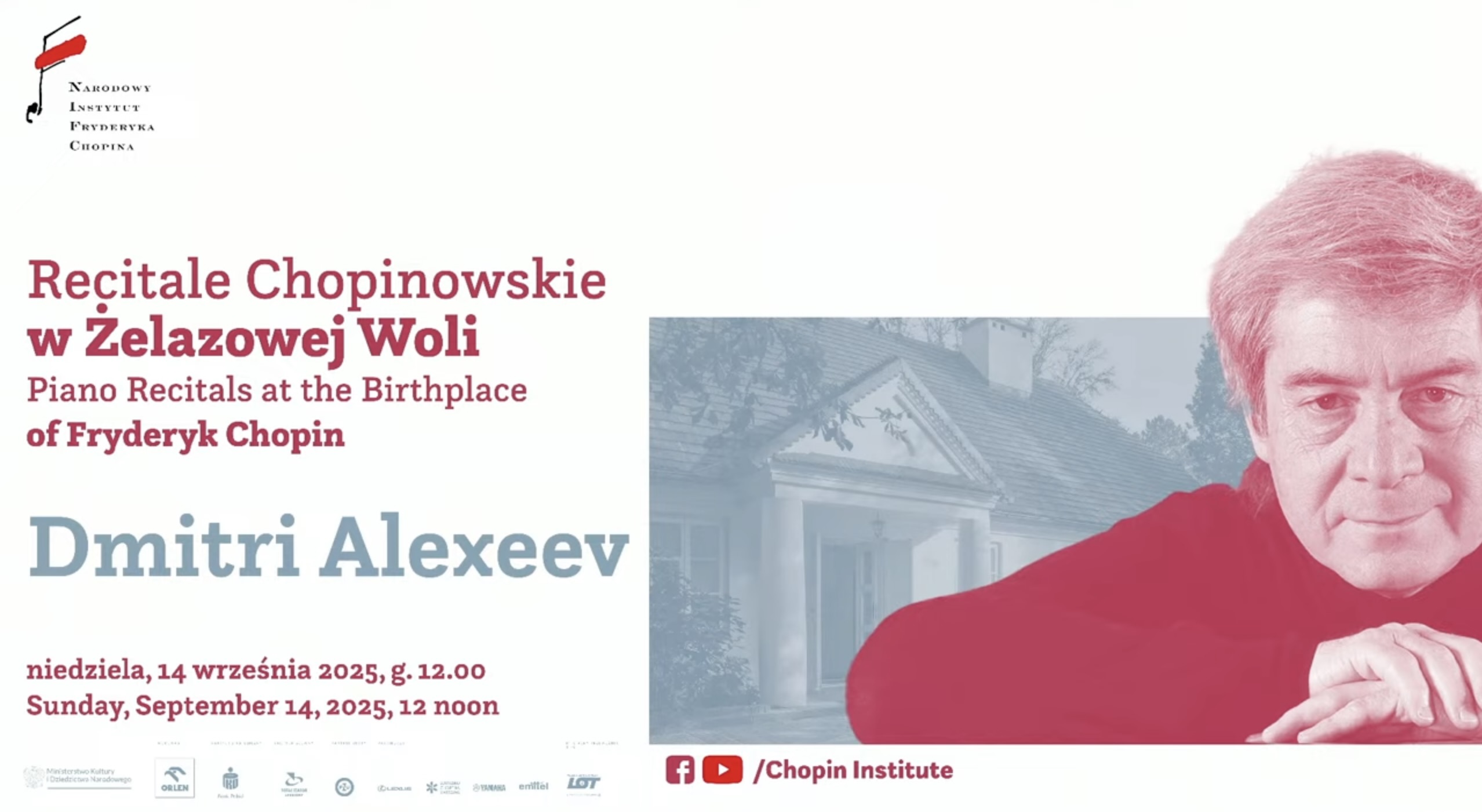
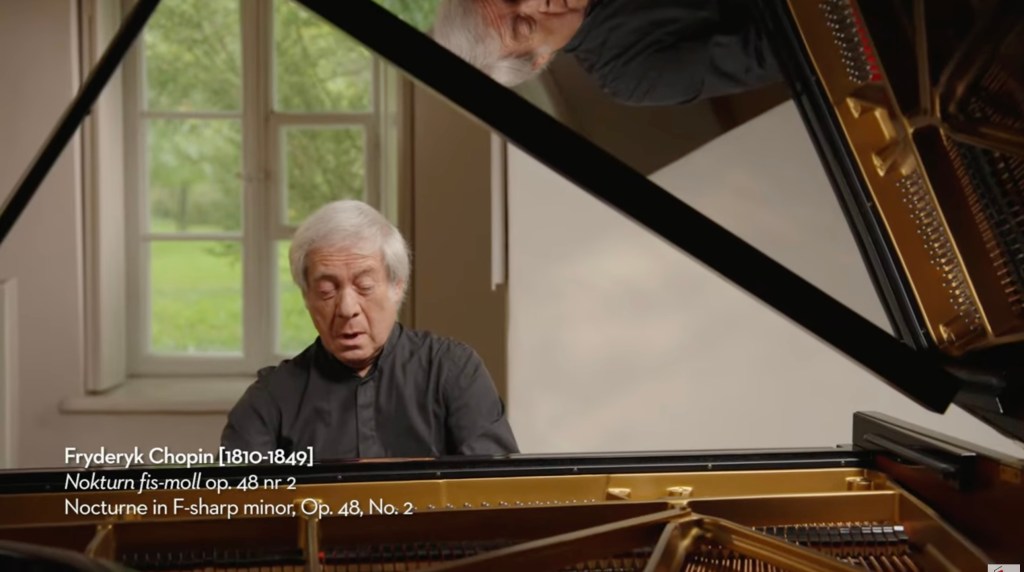
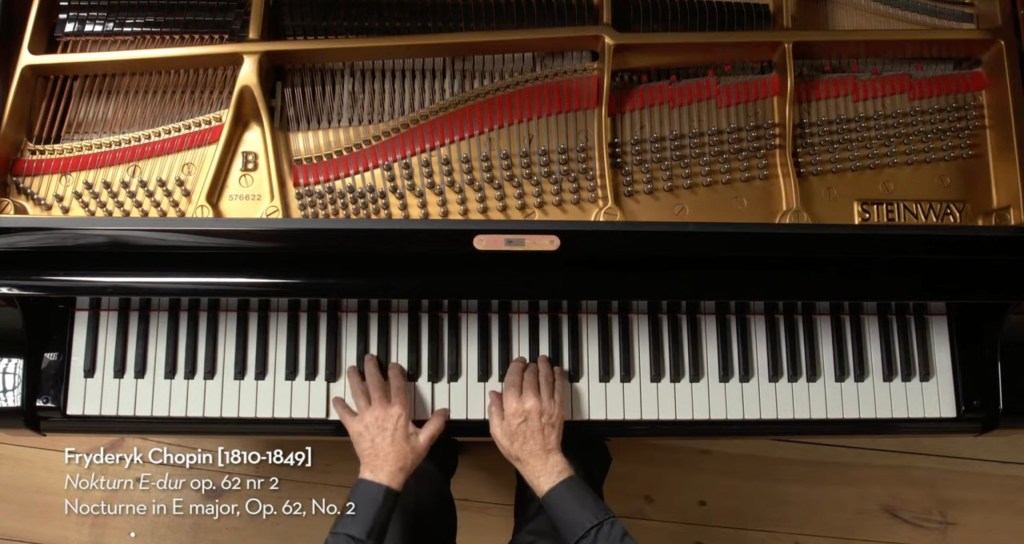
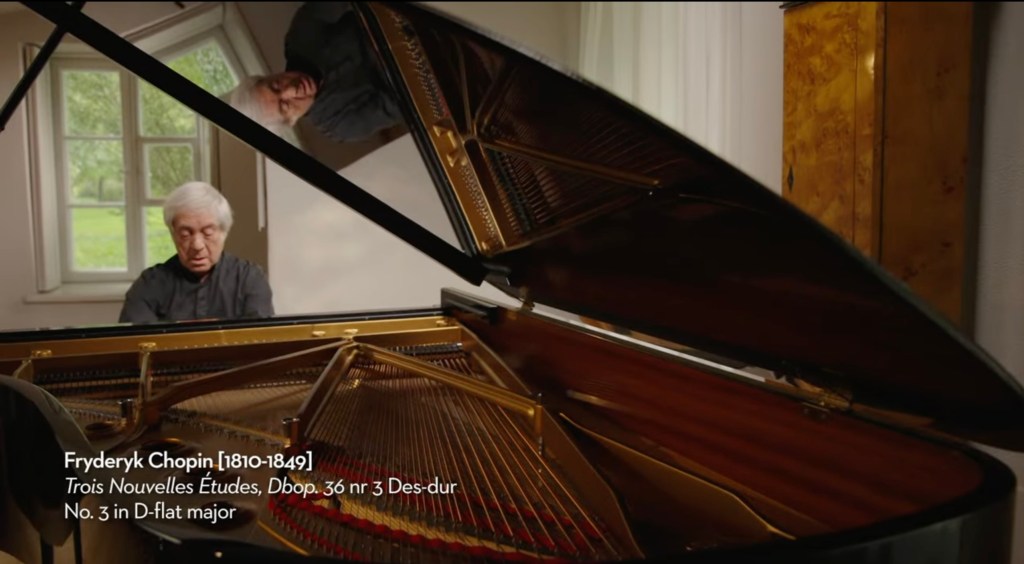
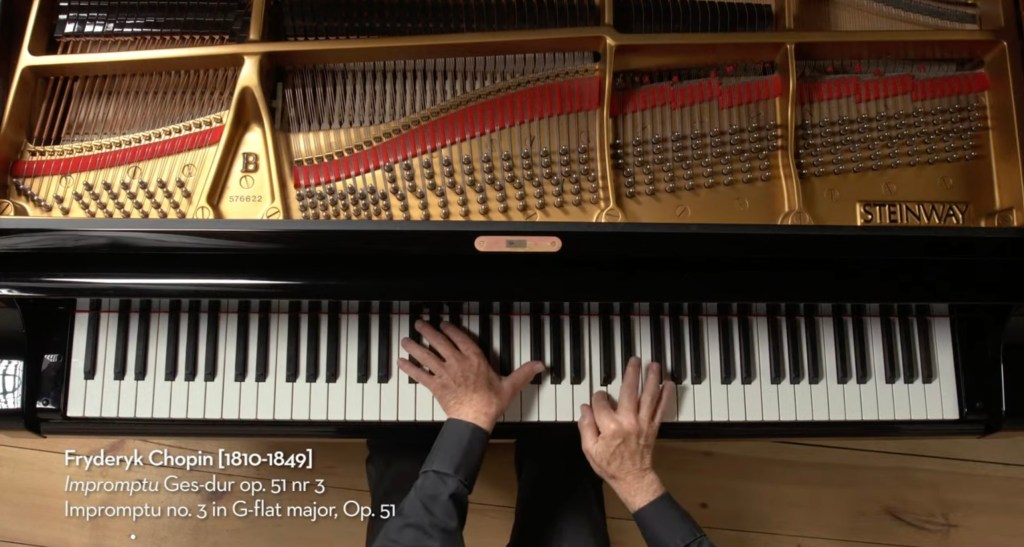
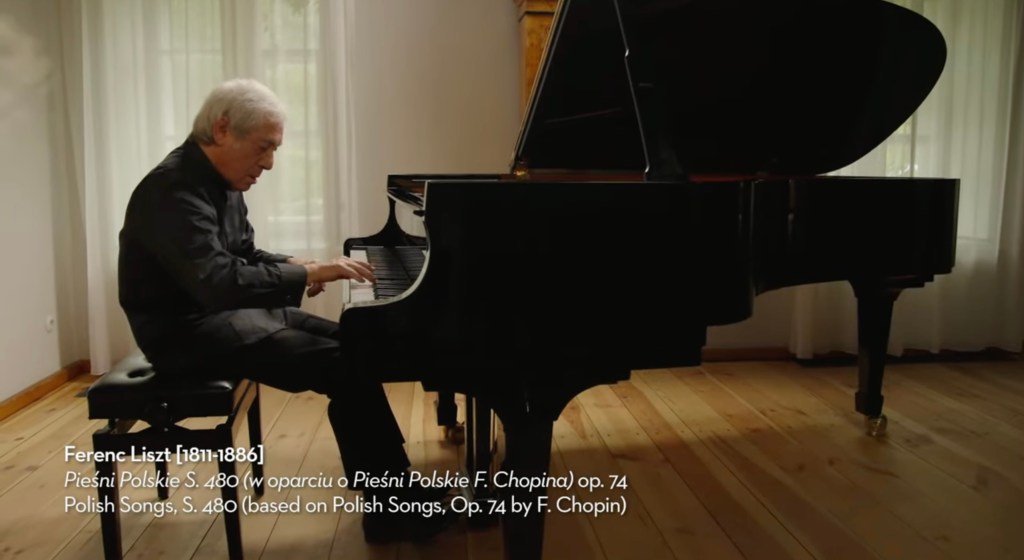
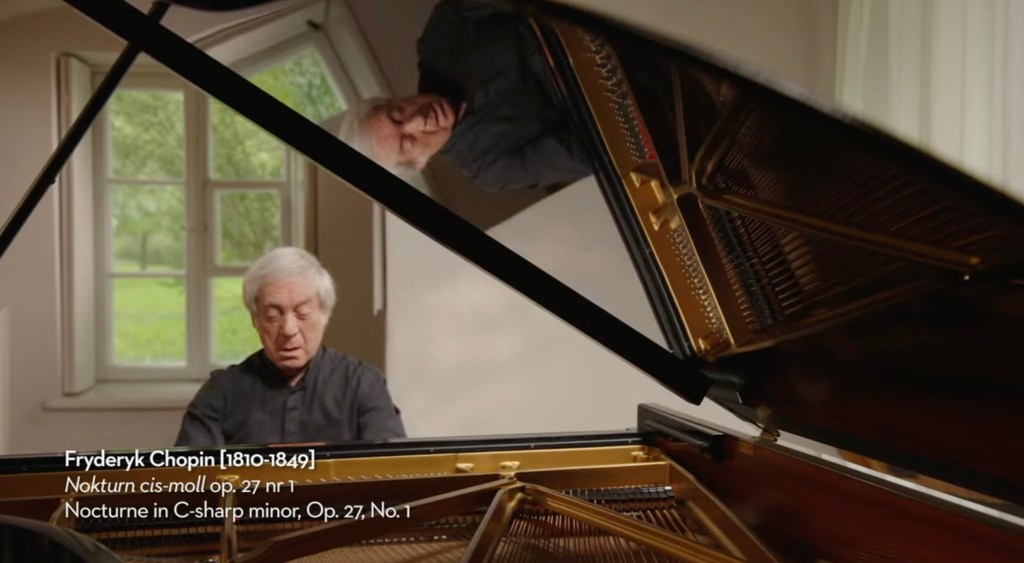
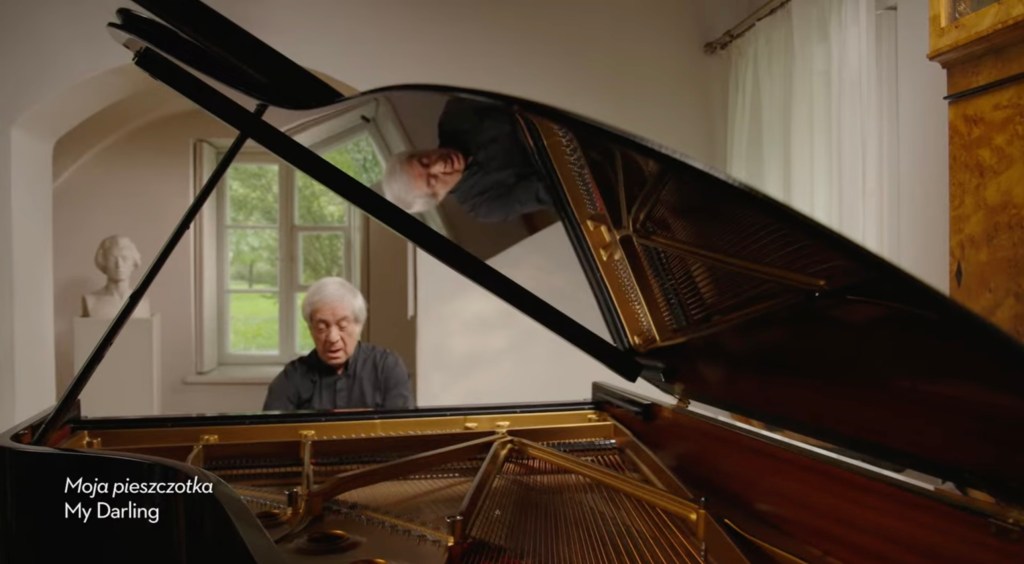
Sunday Chopin Recitals in Żelazowa Wola are a series of open-air concerts held at the Birthplace of Fryderyk Chopin from May to September. They continue the long-term tradition initiated by Professor Zbigniew Drzewiecki, an eminent Polish pianist and teacher, in 1954. The recitals are an extraordinary opportunity to listen to performances by outstanding Polish and foreign pianists, professors of world renown, and winners of the International Chopin Competitions. September 14 2025 Dmitri Alexeev Programme: Fryderyk Chopin Nocturnes in F-sharp minor, Op. 48, No. 2 in E major, Op. 62, No. 2 in C-sharp minor, Op. 27, No. 1 Impromptu no. 3 in G-flat major, Op. 51 Trois Nouvelles Études, Dbop. 36 No. 1 in F minor No. 2 in A-flat major No. 3 in D-flat major Ferenc Liszt Polish Songs, S. 480 (based on Polish Songs, Op. 74 by F. Chopin) A Maiden’s Wish My Darling The Bridegroom’s Return

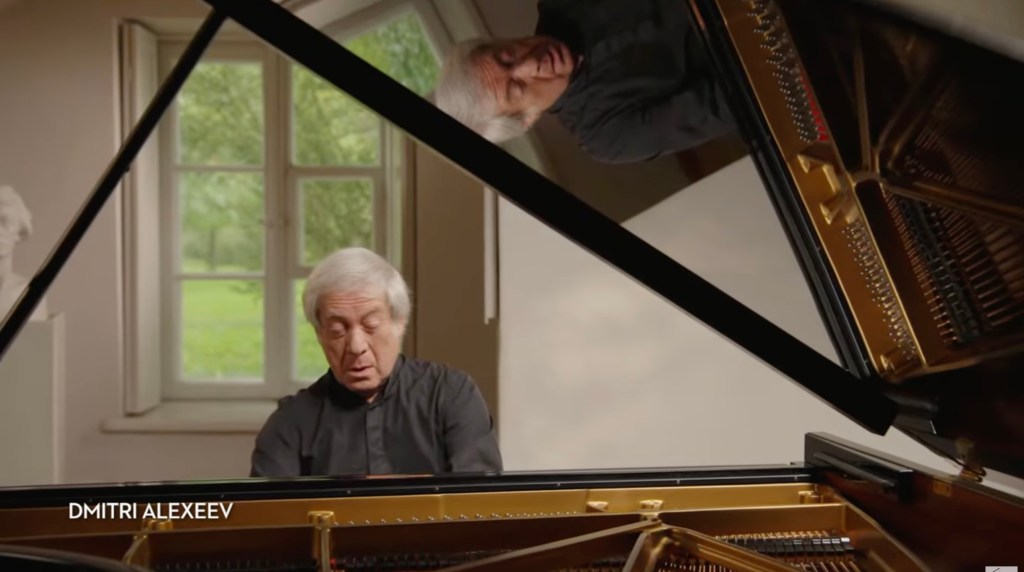
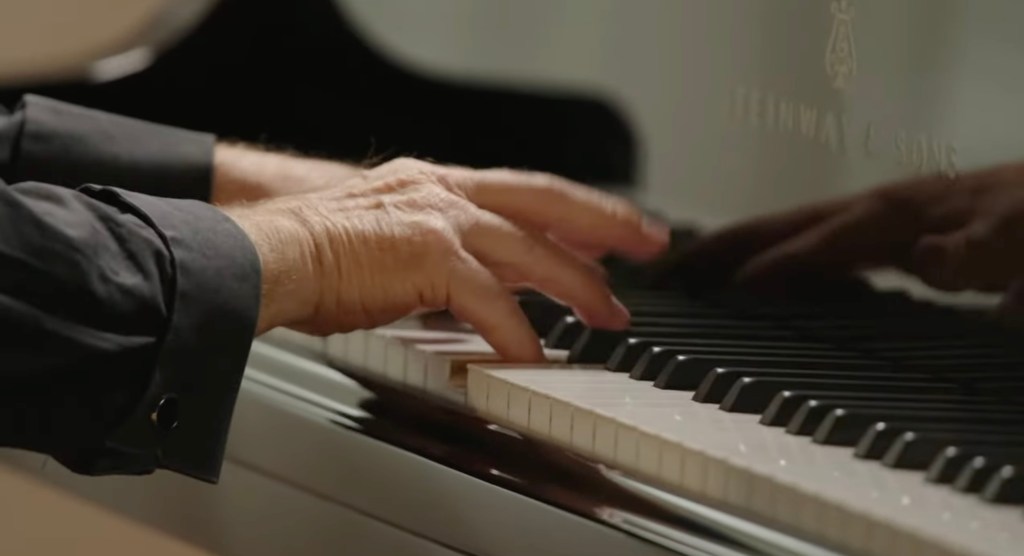
Watching Dmitri Alexeev playing in Chopin’s birthplace of Źelazowa Wola it is interesting to reflect on the lost art of Bel Canto. In these days leading up to the Chopin Competition in Warsaw next month, there is a line up of many of the finest young players trying out their programmes and refining their playing ready to go into the arena and fight it out like the gladiators in the Colosseum in Roman times. We bystanders are able to take advantage of this feast of music created by a young emigré who was forced to leave his homeland at the same age as many of these competitors. Chopin was to die at the age of 39,though, and was destined never to see his homeland again but his genius was able to create a new art form for a piano that now had a ‘soul’. It was Chopin with his innovative genius that could create an enormous number of masterpieces that just seemed to pour from his pen with such ease. It is significant that the last work from his pen was a Mazurka showing his deep Polish inheritance that was to fill everything he touched. Chopin was able to bring the art of Bel canto to the piano as no one before or since has been able to do with the same aristocratic beauty.

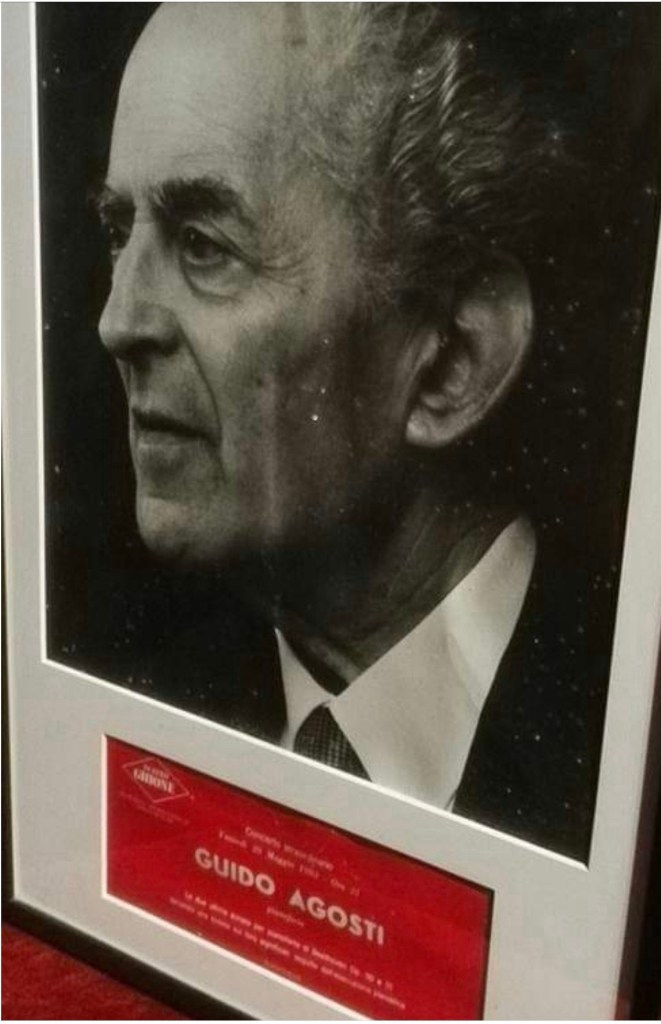
It is an art that can only be created by listening and creating a balance between the hands that can allow the melody to sing as Chopin himself described to his aristocratic lady pupils in Paris. His music is like a tree firmly planted in the ground but with branches free to move as nature would take them. Watching Alexeev and Argerich there is a very noticeable arch to their hand that is able to delve deeply into each key with a weight that can extract the sound without any hardness.Fingers like limpets that seem to be sucked into each key and as Agosti used to say with fingers of steel but with a wrist of rubber.

https://christopheraxworthymusiccommentary.com/2025/04/14/homage-to-guido-agosti-gala-piano-series-in-forli-2025/

Both Alexeev and Argerich in their Indian summers have reached twice the age of Chopin and have discovered the secret of the true art of Bel Canto. A programme today of short pieces by Chopin, never rising above mezzo forte, but Alexeev extracting more meaning from every note than all the enormous forces together of the Berlin Philharmonic with Bruckner! Every note had a life of its own as like a singer there were inflections of poignant meaning that made the music talk – a true song without words. But music can speak louder than words because it is a language that is universal and goes straight from the heart to the heart. I remember Fou Ts’ong telling me of the surprise in Warsaw when he won the much coveted Mazurka prize in one of the first editions of the Chopin competition after the war.A Chinese pianist !! https://christopheraxworthymusiccommentary.com/2021/01/13/roberto-prosseda-pays-tribute-to-the-genius-of-chopin-and-the-inspirational-figure-of-fou-tsong/

As he explained the ‘soul’ knows no frontiers or confines and the sentiment in Chinese poetry is the same that is found in the works of Chopin. Ts’ong’s father was an expert in Chinese literature and paid dearly for his intellect in Mao’s Cultural Revolution.

Alexeev chose a very special programme today ( luckily leaving out the Polonaise Fantaisie which must be the most played piece of Chopin these day ). We were able to be deeply touched by three of Chopin’s most beautiful Nocturnes .

The three posthumous studies that show the art of playing with the juxtaposition of rhythm and touch not speed and force. Chopin wrote these three extra studies, after his 24 op 10 and 25, for a proposed treatise on piano technique by Fétis that Chopin bequeathed to Alkan, a pianist he admired above all others, to finish for him.

Alexeev even included the most beautiful of the four Impromptus – an outpouring of bel canto of aristocratic insinuating beauty.

And I am sure it was not by coincidence that he included Chopin songs in the masterly arrangement of Liszt .Not Liszt the showman but Liszt the innovative poet who could extract the subtle beauty from these much neglected songs and bring them back to the piano which was were the soul of Chopin had always lain.

photo credit Dinara Klinton https://christopheraxworthymusiccommentary.com/2024/03/20/christopher-axworthy-dip-ram-aram/

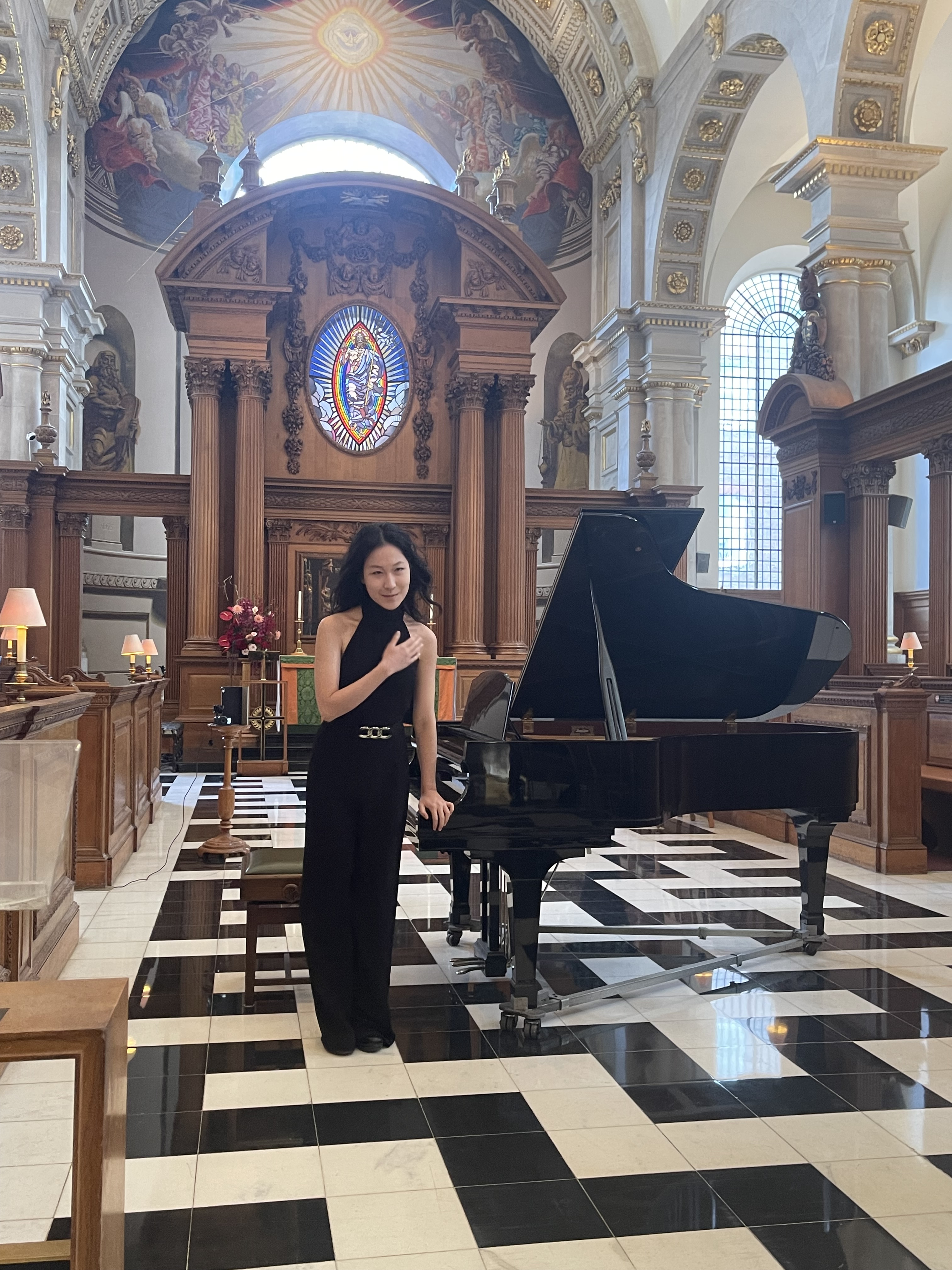
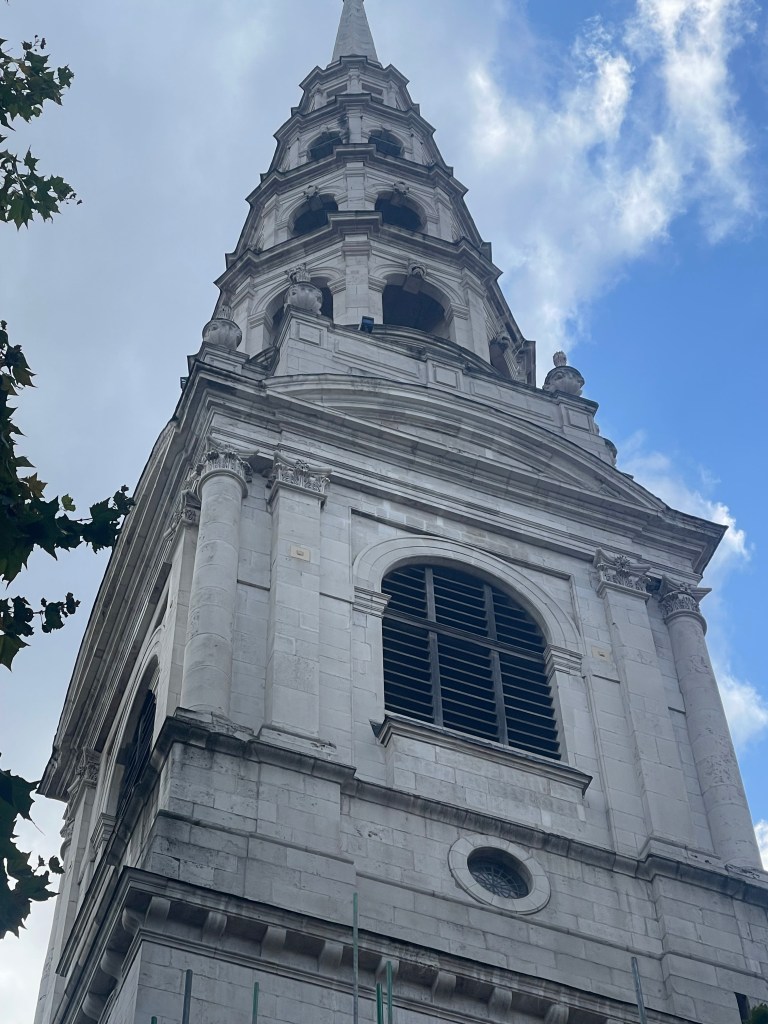
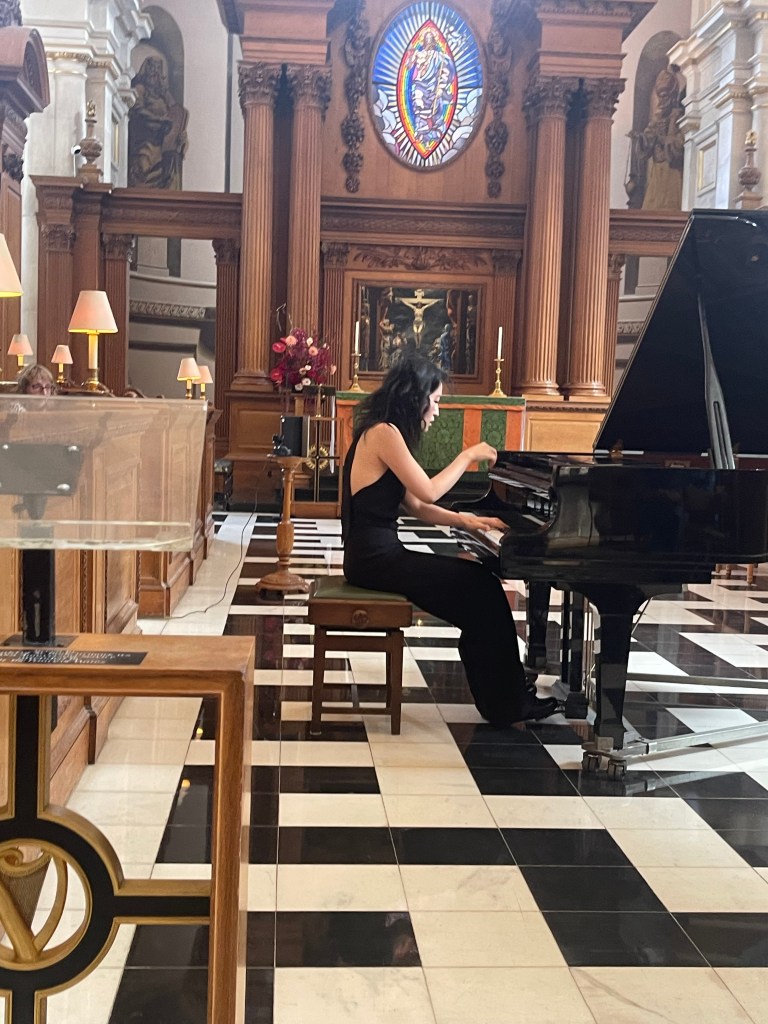
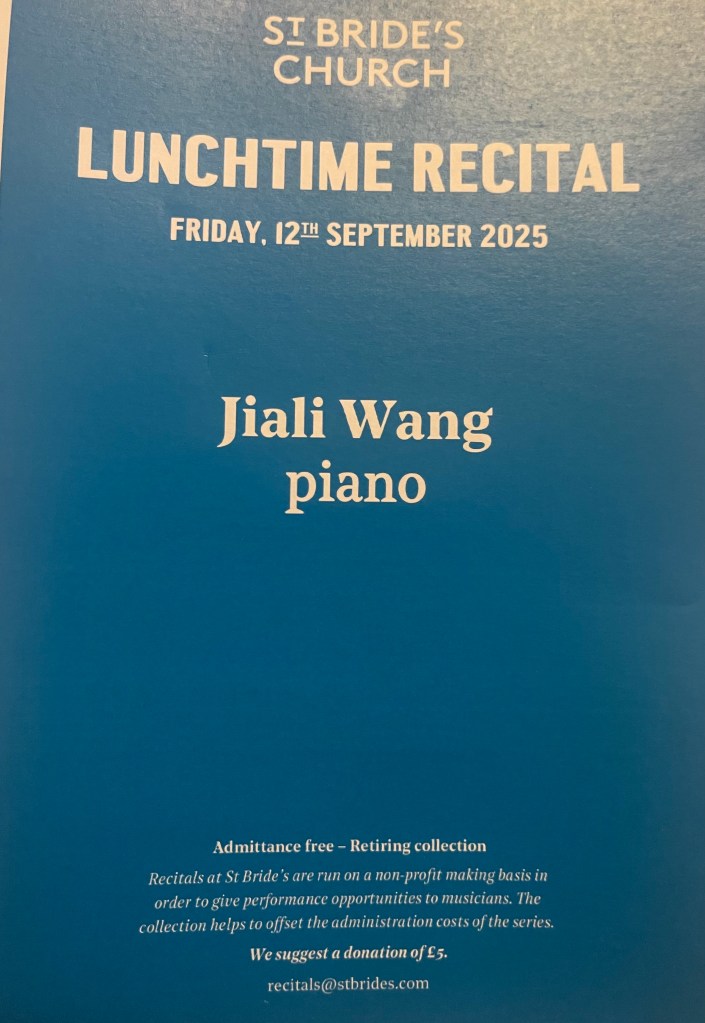
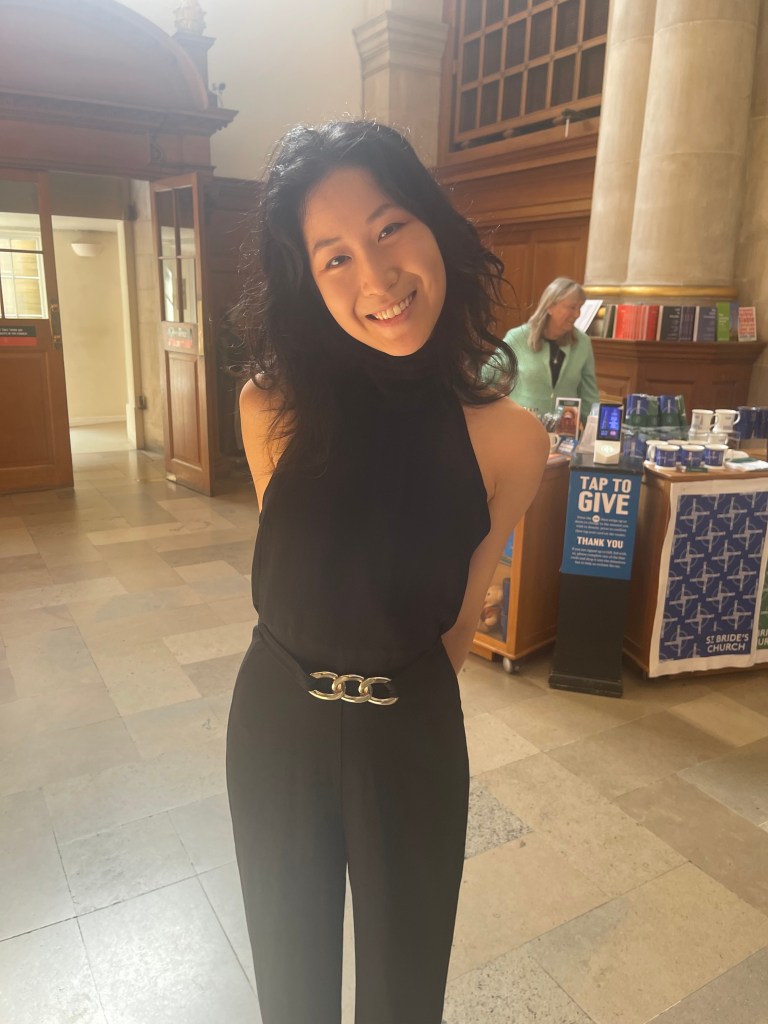
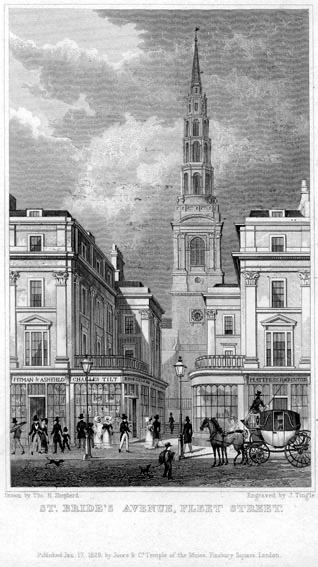
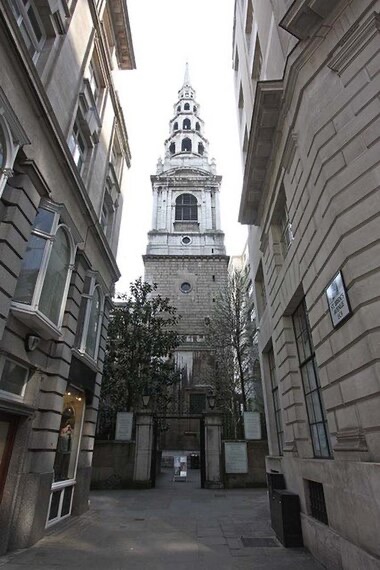
Jiali Wang at St Bride’s with visionary poetic mastery

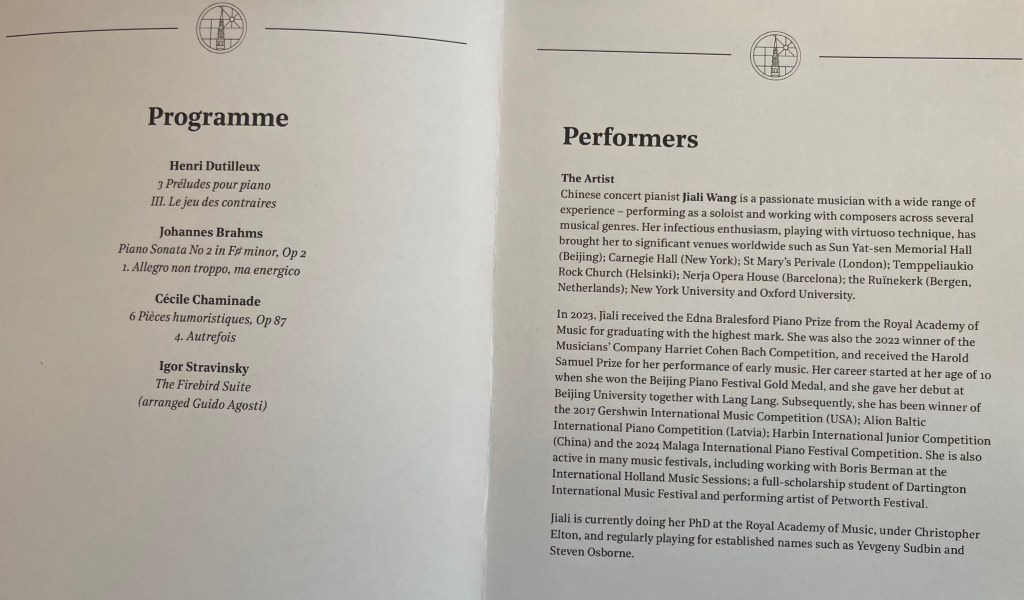
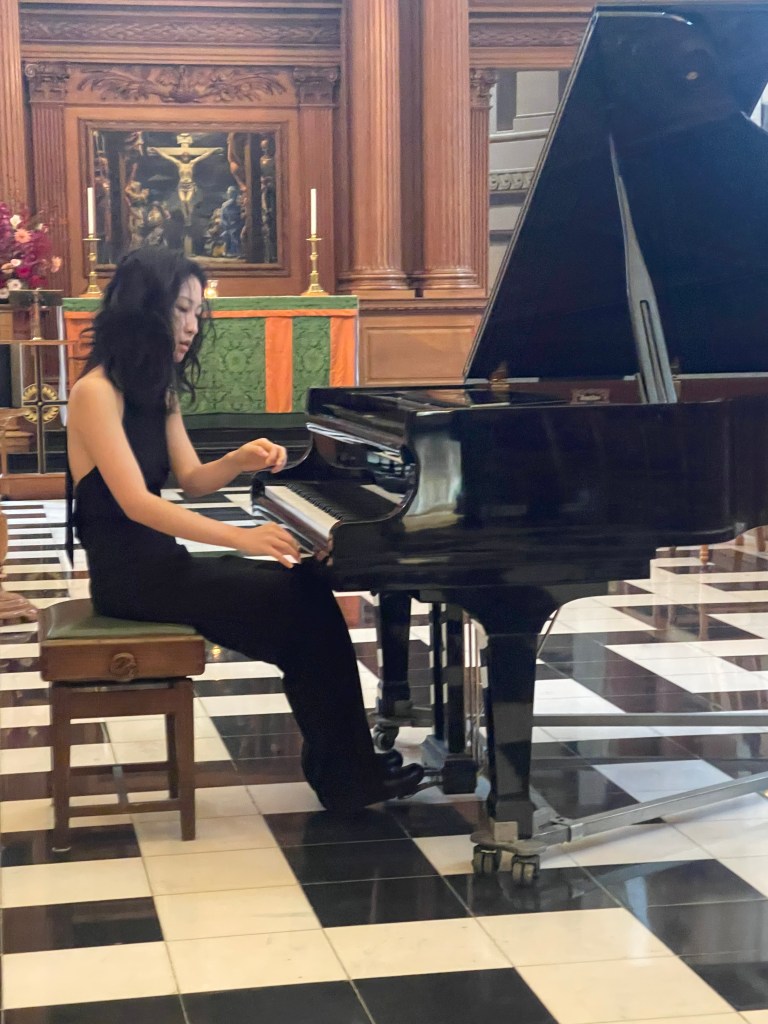
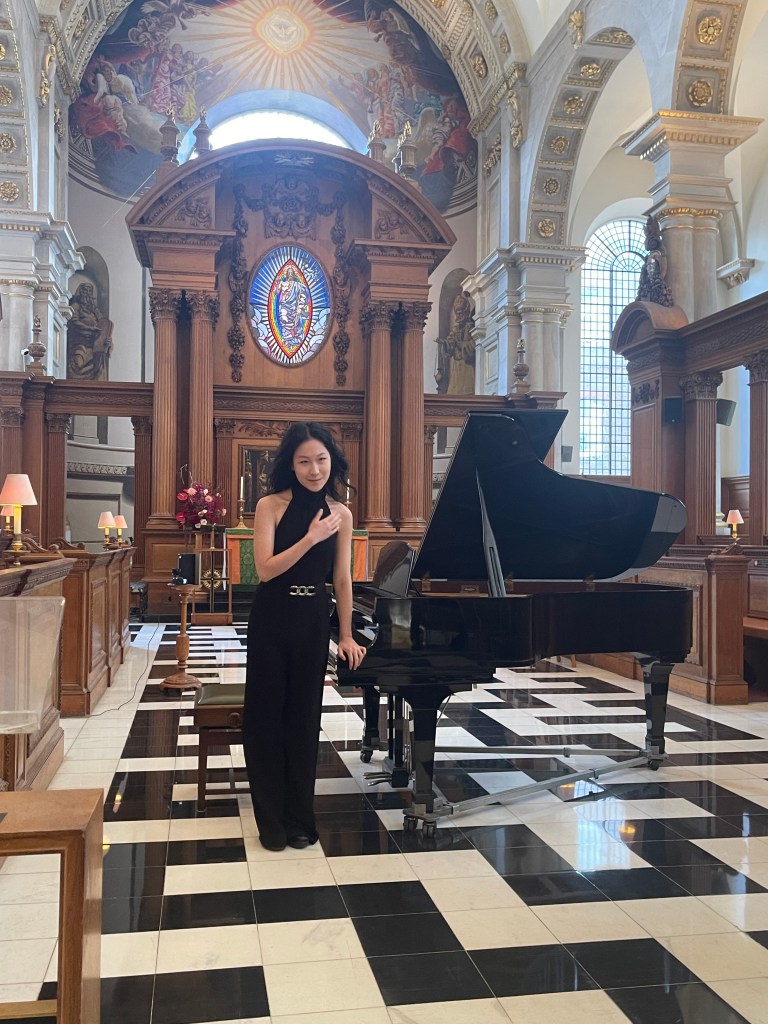
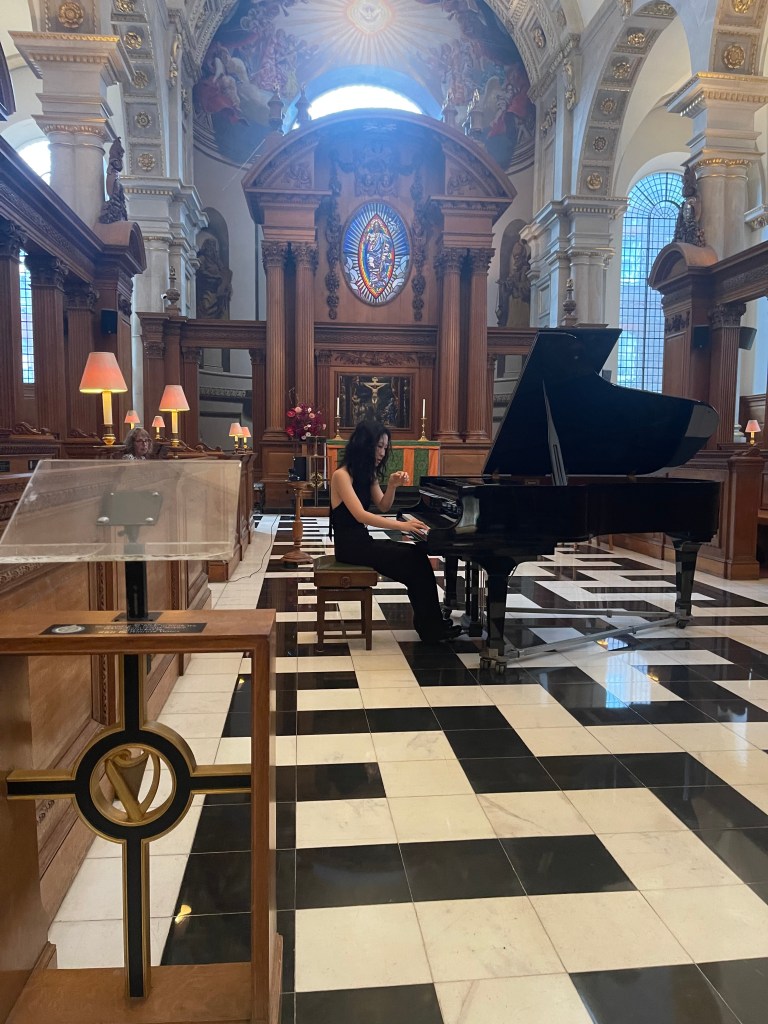
Playing of great authority and mastery at St Brides today. Brahms that filled this beautiful church with sumptuous orchestral sounds as Jiali threw herself into this challenging opening movement of the Second Sonata with fearless abandon . A nobility of Lisztian bravura dissolving into intimate deeply felt poignant beauty before exploding again with breathtaking authority and dynamic drive . It was a pity to be robbed of the other movements but with limited time Jiali wanted to treat us also to the extraordinary sound world of Dutilleux and Stravinsky.

Playing both with a kaleidoscope of sounds and masterly authority with the contrasting episodes of ‘Le jeu des contraires’ played with extraordinary conviction as the chameleonic changes of character were truly enacted with breathtaking mastery.A dynamic drive and technical mastery with its complex sound structure of reverberations of subtle beauty.

Agosti’s ‘Firebird’ sanctioned by the composer ,Stravinsky, in 1928 has long been a war horse of the greatest virtuosi .

Jiali not only conquered the extraordinary technical problems that abound but she imbued it with a range of colours that was truly seductive with a remarkable luminosity created by shadowing of the melodic line with remarkable sensitivity.

The entry of the ‘Firebird’ was indeed magical as it gradually built up to the breathtaking climax that was of searing exhilaration and excitement. Chaminade’s charming ‘Autrefois’ I have not heard since Cherkassky’s inimitable performances .

Jiali played it with the beguiling charm of a world when pianists would play Scarlatti sonatas dressed up by Tausig as a ‘ Pastorale and Capriccio.’ The beauty of the outer frame work was contrasted with the ‘fingerfertigkeit’ of the central episode and it made a refreshing contrasting interlude to the masterworks that it accompanied.

I look forward to hearing the whole Brahms Sonata on the 19th at Regents Hall in Oxford Street .

Brahms in instalments is a very exciting prospect when it is from the hands of a masterly musician

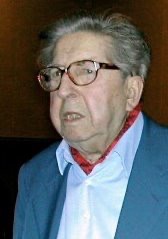
Dutilleux in 2004. Henri Paul Julien Dutilleux
22 January 1916 Angers Maine et Loire 22 May 2013 (aged 97)Paris
He was a French composer of late 20th century classical music . Among the leading French composers of his time, his work was rooted in the Impressionistic  style of Debussy  and Ravel but in an idiosyncratic, individual style. Among his best known works are his early Flute Sonatina and Piano Sonata ; concertos for cello Tout un Monde lointain  (“A whole distant world”) and violin L’arbre des songesv(“The tree of dreams”); a string quartet known as Ainsi la Nuit  (“Thus the night”); and two symphonies: N. 1 ( 1951) and N 2 Le Double (1959)

Henri Dutilleux (1916–2013) was among the leading French composers of his time. His output was particularly small and he disowned many of the compositions he wrote before his Piano Sonata (1948).

Tous les chemins… mènent à Rome [All roads lead to Rome] (1947)

Bergerie (1947)

Piano Sonata  (1947–48):

  1. Allegro con moto
  2. Lied
  3. III Choral et variations

Petit air à dormir debout [Little nonsensical air] (1981)

Blackbird (1950)

Résonances (1965)

Figures de résonances (1970) for two pianos

Trois Préludes (1973–1988):

D’ombre et de silence [In shadow and silence] (1973)

Sur un même accord [On one chord] (1977)

Le jeu des contraires [The game of opposites] (1988)

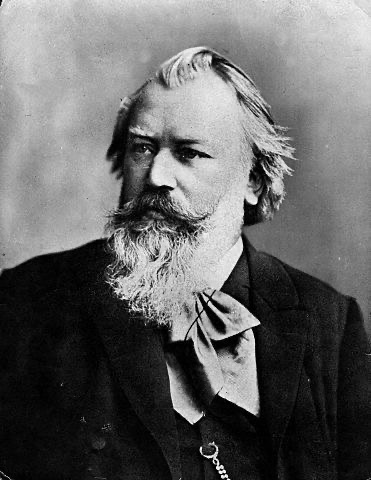
Brahms in 1889. Hamburg 7 May 1833. Vienna 3 April 1897 (aged 63)

The  Piano Sonata No. 2 in F sharp minor op 2, was written in 1852 in Hamburg, Germany, and it was published the year after.Despite being his second published work, it was actually composed before his Sonata n. 1 in C major , but was published later because Brahms recognized the importance of an inaugural publication and felt that the C major sonata was of higher quality. It was sent along with his first sonata to Breitkopf und Härtel with a letter of recommendation from Robert Schumann . Schumann had already praised Brahms enthusiastically, and the sonata shows signs of an effort to impress, with its technical demands and highly dramatic nature. It was dedicated to Clara Schumann .

The sonata is in four movements :

  1. Allegro non troppo, ma energico 
  2. Andante con espressione 
  3. Scherzo: Allegro – Poco più moderato 
  4. Finale: Sostenuto – Allegro non troppo e rubato – Molto sostenuto

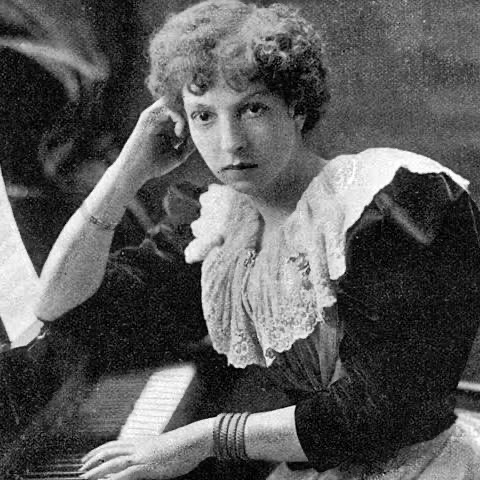
Chaminade experimented in composition as a young child, composing pieces for her cats, dogs and dolls. In 1869, she performed some of her music for Georges Bizet , who was impressed with her talents. In 1878, Chaminade gave a salon performance under the auspices of her professor, Le Couppey, consisting entirely of her compositions. This performance marked the beginning of her emergence as a composer and became the archetype for the concerts she gave for the rest of her career in which she only performed her own works.

Op. 87 Six Pièces Humoristiques (Enoch) 1897

Réveil. Sous Bois. Inquiétude. Autrefois. Consolation. Norvégienne.

Cécile Chaminade’s (1857-1944) ‘Autrefois’ is the fourth piece in the composer’s collection, 6 Pièces humoristiques Op.87 (Six humorous pieces). Translated as ‘in the past’ or ‘formerly’, ‘Autrefois’ is nostalgic and bittersweet in character. Composed in 1897, the compisition begins with a gentle, ornamented theme, marked by subtle shifts in harmony. This music is then contrasted with a middle section comprised of cascading figures and rich chromatic textures, before the piece then returns to the tranquillity of its opening musical idea. Appoggiaturas (short notes that ‘decorate’ the melody), dynamic contrasts, and chromatic voice-leading – within the work’s formal structure – make this a piece rich with expressive and interpretive potential, typifying Chaminade’s talents with deeply characterful and pianistic writing.

Cherkassky plays Chaminade

https://youtu.be/O36vZzIum5g?si=hIuLTQRLonWFkzI9

Three numbers from the end of Stravinsky’s ballet The Firebird create a convincing sequence on their own. The raucous ‘Infernal dance’ is set in the kingdom of the evil Kashchei, a frantic melée full of wild leaps and syncopations. The monsters that populate the kingdom are forced by the Firebird’s spell to dance until they drop dead. The Firebird, triumphant, dances a lullaby (‘Berceuse’), which serves as her touching farewell to Prince Ivan whom she has aided in his struggles with Kashchei. In the glorious ‘Finale’, Prince Ivan and his consort establish their reign over the now liberated kingdom, in the kind of celebratory chorus we might expect at the close of an operatic epic, but there is a Stravinskian twist: there are seven beats to the bar. The Italian pianist Guido Agosti made this virtuosic transcription in 1928 (eighteen years after the ballet’s premiere), and dedicated the work to the memory of his teacher, Ferruccio Busoni—the latter was one of the great masters of transcription, well known for his imposing piano versions of Bach’s organ works. Agosti learned much from his teacher, but had to apply his skills to the very different music of Stravinsky, in passages that rapidly traverse the whole length of the keyboard, recreating much of the excitement of the original in pianistic terms.

photo credit Dinara Klinton https://christopheraxworthymusiccommentary.com/2024/03/20/christopher-axworthy-dip-ram-aram/