How wonderful to hear many of the most important churches in London ringing with the sound of music.
Many of the more discerning city workers can take refuge at lunchtime and have their souls replenished by the magnificent music that young musicians are only to happy to share with them.
With the historic pubs overflowing at lunchtime too,others might find different, but in my opinion, much less satisfying ways of replenishing themselves!
I did not know this church which is just a stone’s throw from the Monument.
The Monument
I remember visiting The Monument with my mother and sister as a child in the interminably long summer holidays from school.
St Mary at Hill in Lovat Lane is an expansive 14th century Episcopal church that hosts weekly discussions and musical recitals.
A real welcoming oasis where coffee and sandwiches are offered together with music on their very fine baby grand Bluthner piano.
I was very happy to discover this new venue and be able to hear at last the young Adam Heron about whom I had heard many good things.
He is still ony 20 and in his second year at the Royal Academy in London where he is studying with Christopher Elton a fellow student in my youth when we both were disciples of Gordon Green.
He is now a renowned musician and teacher of some of the finest pianists in the land.
And it was a true musician that we heard today.
The Bach French Suite n.3 in B minor and the very complex A minor Sonata by Schubert written when he was close to death and just before the final trilogy that he penned before dying at the age of only 31.
A great sense of directness and simplicity were the hallmarks of the fine musicianship that he allowed to transmit in such a natural way.
He looks so right at the piano.No excesses or exhibitionism but sitting back with his arms outstretched letting the fingers find their way through the maze of notes that he played impeccably.
The Bach Suite was played with a great sense style the different dance movements beautifully judged.
It was, though, in the A minor Sonata by Schubert that his sense of architecture and overall understanding allowed him to hold the attention of the audience for the forty minute journey that Schubert takes us on.
A bigger piano would ,of course, have allowed him more range of colour to delve into the magic sounds of this very elusive sonata.
Next week this remarkable young musician returns as conductor with his Royal Academy of Music Camerata renamed the Boyce Camerata as they embark on a series of all eight Symphonies of the much neglected English composer William Boyce (1711-1779) who lived and is buried nearby.
Haessler made by Bluthner I suppose like Essex or Boston made by Steinway
Two recitals by Bobby Chen on the 9th and 23rd March in Farm Street Church Mayfair.
It was great news to see that the superb recital by Bobby Chen of the 9th March was repeated on the 23rd with yet another programme .With short Lenten Reflections in both that just added to the beauty of what we were about to hear.
I have never seen a church so well kept and it is an absolute oasis of peace especially on Saturday the 23rd that was dedicated to the big BrExit !
A programme that included a Bach- Busoni transcription but also the famous transcription of Myra Hess “ Jesu Joy of man’s desiring.”
Liszt of course was present again with the great B minor Ballade.
But it was the opening work that took us by surprise with such a fresh and intelligently simple vision of the Beethoven Pathetique Sonata.
Simplicity is the hardest state to reach in Art especially in an area where all too many people have “trampled” before.
From the arresting opening where the rests play such an important part there was the freedom with which he descended to a completely new orchestral colour ,so rudely interrupted by Beethoven only to continue unperturbed on it’s journey.
There was all this and it was only the beginning of the moving story that Bobby was to recount.
A crystal clear Allegro molto in which the ornaments were so crisply played in answer to the questioning bass.In a true musicians hands even the most well known of pieces can be brought to life and made to speak anew.
The slow movement was allowed to sing thanks to his great sense of balance and the fact that it flowed in two even though Adagio.
The clarity and differentiation between the voices was remarkable and there was just enough give and take to make us feel that he was accompanying a singer and not just playing rather lazily a piano sonata.The Rondo showed off all his great attention to detail without loosing sight of the rhythmic energy that fills Beethoven’s early works.
A beautiful liquid sound was the hallmark of Myra Hess’s famous Bach transcription.Never forcing the tone but allowing this sublime melody to emerge so naturally.
Busoni’s sombre transcription of Nun Komm der Heiden Heiland BWV 659 was played with the true devotion of a believer.
In fact this is Bobby Chen’s church where he comes to worship every week.He is in good company as the founders of the Keyboard Charitable Trust have chosen this oasis too as their weekly shrine.
The Ballade in B minor by Liszt closed this short teatime concert and brought some sumptuous sounds from the piano with great feats of virtuosity.But always that of a musician totally in control as he recounted the great story of Hero and Leander that Liszt penned so magnificently in this miniature tone poem.
From the almost La Valse like rumble of the beginning with the beautiful liquidity of the alternating quiet episodes.The sublime melody in the middle register of the piano and the rumbustuous scales and chordal declamations were all perfectly judged and only made one wonder why this work is not more frequently heard in the concert hall.
Some superb playing on the 9th March from Bobby Chen in this wonderful church in the heart of Mayfair.Church of the Immaculate Conception known simply as Farm Street Church.
Surrounded by beautiful gardens, with the Connaught Hotel on its doorstep.And today a Maclaren casually parked outside
Inside a sumptuous feast of music for tea.
The two legends by Liszt so clearly played with a real sense of line and total commitment.You could almost see the birds of St Francis of Assisi and the total belief of St Francis of Paola traversing the waves.
It reminded me of Robert Levin in his residency at the Guildhall this week explaining that to play what the composer actually wrote really is the best option!
I have rarely heard these very beautiful pieces in the concert hall but a magical recording of Wilhelm Kempff has always remained in my heart.
A very fine new Yamaha allowed him to play the Petrarca sonnet 104 with such clarity and little pedal that allowed this most beautiful of sonnets to resound so impressively in this sumptuous haven that is Farm Street Church.
Busoni’s transcription of the organ prelude “Ich ruf’ zu dir,Herr Jesu Christ” was a wonderfully moving transition into the more bombastic world of the Bach Chaconne.
I have heard Bobby play this before in Perivale and it is a very musicianly reading.
Starting piano and finishing fortissimo but with the great organ bass notes that Agosti,a disciple of Busoni,was aghast at the bomb like treatment they are usually treated to by great “virtuosi”.
Here Agosti would have cheered the superb musicianship of Bobby.
He might not have been persuaded though by his romantic fluctuations in tempo as this was for him a true rock on which all music was constructed.
Infact he likened the penultimate of Schumann’s Etudes Symphoniques to a Gothic Cathedral.
But Agosti was not a true believer as Bobby obviously is.
For Agosti music was his God.
For Bobby music and God go together as they were today. Prefaced with short Lenten reflections that only added to the music that could continue where words are just not enough. The next tea-time concert is on Saturday 23rd March at 4.40.I for one will not miss it.
The Maclaren casually parked outside the Connaught
Teresa de la Escalera and Melina Karagianni at St James’s Piccadilly
“Birds of a Feather” with two highly talented pianists from the school of Tessa Nicholson all gathered together today at St James`s under the affectionate eagle eye of Canan Maxton for Talent Unlimited.
” A thing of beauty is a joy for ever” and so it was today with four beautiful women in search of beauty.
At St James’s Piccadilly this true oasis of peace and beauty with the struggle and turmoil of the great city on its doorstep.
The two performers Teresa Escalera Calderón and Melina Karagianni both included a major work of Chopin in their shared recital.
with Tessa Nicholson and Canan Maxton
But there were also two very important ladies in the audience who were also responsible for the wonderful music that we were treated to.
Tessa Nicholson the renowned pianist and teacher who was following her two students and enjoying the fruits of their labour together.
Canan Maxton,the indefatigable promoter of young musicians via her Talent Unlimited.
Teresa de la Escalera
Immediately in the Scarlatti Sonatas Teresa showed her great temperament and sense of rhythmic drive that was to be such a hallmark in her performances.
Her beautiful sense of phrasing and cantabile in the sonata K.213 was even more apparent in the Chopin nocturne op.9 n.3.Here in Chopin was a beautiful flexibility, a true rubato always with the bass firmly rooted that gave great sonority to the cantabile melodic line above.
It was only disturbed as in the mazuka by a rather too literal staccato that broke this wonderful arch that she had created.
The Scherzo n.3 was given a very fine performance. The opening octaves played with great assurance and technical command.A slightly slower tempo might have given her more chance in this resonant church to allow her amazing technical ability more space to breathe with more nobility.
The chorale and cascading comments were superb even more so for maintaing the same tempo that allowed her to shape the melodic line with such finesse.
The deep bass notes were beautifully judged and gave a sumptuous sound to the notes that evolved from them. The final appearance of the chorale in the minor was pure magic and the coda showed off all her remarkable command of the keyboard and extraordinary temperament.
Melina Karagianni
Melina Karagianni a student from an early age with Tessa Nicholson.First at the Purcell School and now continuing her studies with her for a B mus degree at the Royal Academy.
Immediately apparent was the same authority that Teresa too had shown from the very first notes. Here in the Mozart Fantasia in C minor K.396 the beauty and naturalness of her movements in the opening flourish was mirrored by the beauty of sound that she produced.
Great authority and wonderful contrasts in sound were the hallmark of this very fine performance.
The sublime Mazuka op 63. n.2 by Chopin was played with a sumptuous sound helped too by the deep bass note that she so delicately added .A wonderful sense of rubato allied to a sense of colour that after the final notes no one dared move in the hall such was the spell cast.
It was fitting too that applause did not break the spell for one of Chopin’s greatest works,the Fantasie op 49 that was to close her recital.
A beautiful very assured performance notable for the beauty of sound.
A great sense of weight in the bass allowed the piano to sing without any hardness in a passionately committed performance.
The tumultuous finale was only slightly marred by slightly clipped phrasing but it led with such impetus to the end that was allowed to dissolve to a mere murmur.The finale magical strands of melody so movingly isolated before the liquid almost ravelian arpeggios transported us to the final two chords played with such weight and nobility.
Hats off indeed to these two fine beautiful young artists surrounded by admirers at the end of a magical lunchtime experience.
Nice to see both Tessa and Canan letting their hair down too and enjoying in the success and enjoyment of such serious musicians who are now only in need of an audience such as Talent Unlimited provided at St James’s today.
Melina Karagianni Tessa Nicholson Teresa de la Escalera
Another very fine pianist presented to the world via the streaming that is now in place in Dr Mather`s St Mary`s in Perivale.
Winner of the 7th International Piano Competition in San Marino in 2016 and finalist in the 2017 Busoni Competition in Bolzano.
He graduated from the Frederic Chopin University of Warsaw and from 2016/18 he was a student of Arie Vardi in Hannover University.
He is now at the RCM in London studying for his Artist`s Diploma with Dmitri Alexeev.
Finishing this hour long recital with a sumptuous performance of La Valse by Ravel, full of the lanquid colours of this sultry waltz.Some astonishing feats of virtuosity all played with the element of the waltz in its evolution from a mere murmur to an explosion of kaleidoscopic sounds combined with the most funabulistic pianistic acrobatics.
This was undoubtedly the highlight of the recital which had started with a very beguiling opening to the Bach Prelude andFugue in C sharp BWV 872 .His long arms stretched out as though floating on water gave a very alluring opening that then became rather less interesting , played as the fine musician he is but with that opening promise of fantasy forsaken for a respectfulness that is too often the norm.
The complete programme at St Mary’s streamed live worldwide
Beethoven’s Pathetique Sonata was given a refreshingly clean and clear interpretation where all Beethoven’s indications were scrupulously observed.
The last movement was a shade too fast and became rather too pianistic to allow any real shaping of the fast triplets that abound.
There were some beautiful things though in the first movement the staccato and legato question and answer was perfectly judged and the ornaments played with extraodinary clarity.
A beautiful legato and great sense of balance in the Adagio cantabile and a very clear sense of phrasing brought this movement to life as rarely heard.
The overall impression though was of a work beautifully prepared and played that needed now to be lived with and in a certain sense given a free reign.
Of course the Chopin Nocturne op 48 n.1 and the two Waltzes op.18 and op 64 n.2 were played as only a true native could .
A subtle sense of rubato allied to a beautiful sense of line and balance were greatly appreciated by the large audience who knew this very fine pianist from his previous two appearances.
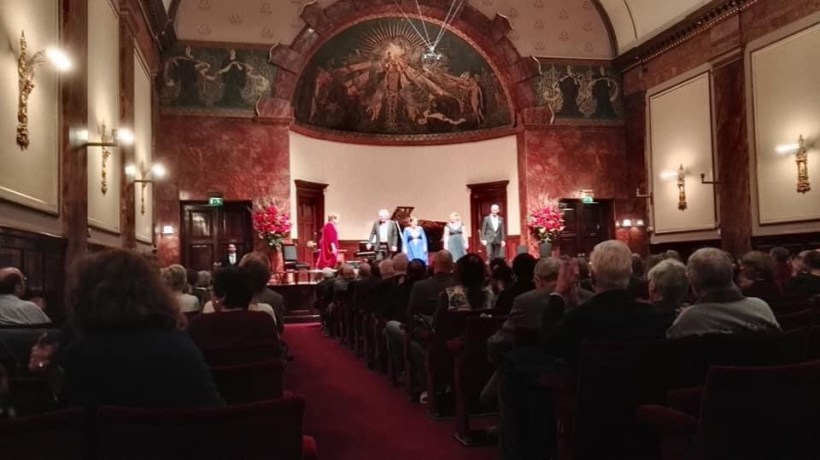
The Pied Piper calls the tune Hamelin at the Wigmore Hall
Marc-Andre Hamelin at the Wigmore Hall.
An amazing coincidence to find the two major advocates of Alkan playing in London on the same day.
Mark Viner in Perivale and Hamelin at the Wigmore.
Even more of a coincidence was that both had programmed the Schumann Fantasy.
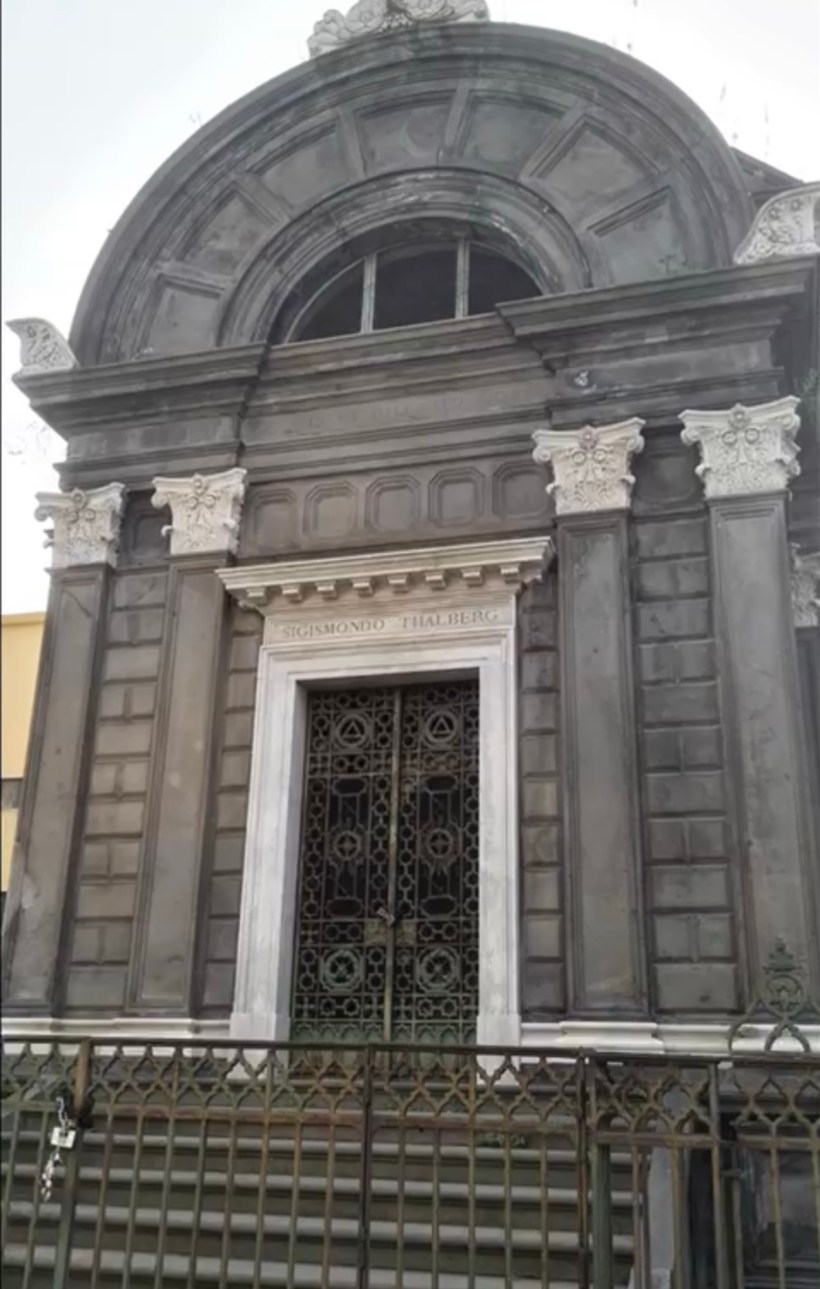
Mark had infact substituted his Schumann with the much rarer Fantasy of Thalberg on themes from Lucrezia Borgia.
Hamelin is from the amazing Canadian school of pianists born on the wave of that other eclectic and reclusive figure of genius that was Glenn Gould.
I remember my old “piano daddy” Sidney Harrison telling me, after adjudicating festivals in Canada, about this young boy whose teacher had told him had spent hours just playing the first chord of Beethoven 4.
And subsequently in later years Glenn Gould even on the hottest day of the year would be clad in a thick overcoat and gloves.
Something that was later copied by pianists thinking that this is what made a genius!
Well Oscar Peterson was a piano genius in the style of Art Tatum that even Horowitz used to admire for his astounding natural gifts.
Louis Lortie,Janina Fialkowska,Angela Hewitt ,John Kimura Parker are all astounding the public worldwide with their natural musicianship.
But the most enigmatic of them all is Marc-Andre Hamelin for his searching mind and extraordinary technique like the past giants of the Golden Age of piano playing.
His only serious rival being Arcadi Volodos but who does not have the same seaching mind or the wish to delve deep into the archives to discover music that has been inexplicably neglected.
Hamlin and Mark Vinerare indeed the only serious advocates today for Alkan and his times.
Although Hamelin on this occasion presented a more conventional programme it was certainly played with a refreshingly intelligent and enquiring mind that shed much new light on works from the more standard repertoire.
A great clarity of intent made one aware of the Floristan and Eusebius elements in the Schumann Fantasy.A passionate performance.
Indeed an outpouring of love for his Clara (who has had quite an outing here in London this week.Her piano concerto with Mariam Batsashvili on the BBC and a full immersion day at the RCM).
The quote from “An die Ferne Geliebte” was quite exquisitely played and the arpeggio at the end thrown off without the usual long drawn out traditional way of ending this desperate declaration of love.
Always a great sense of architecture and line of which details are details and can be exquisite but never at the expense of the overall sense of shape of the work.
The second movement played with a real sense of almost symphonic texture that turned what can seem rather tiresome dotted rhythms into a relentless driving force that leads to the infamous final leaps before dissolving into one of the most beautiful of all Schumann’s creations.
Slightly misjudging the “Massig” and gradual crescendo of the main theme in the second movement he found the only solution possible was to add great bass notes on its final appearance.His sense of architecture had demanded a solution that corrected his initial too passionate temperament!
The sumptuous shading and delicacy in the last movement held us spellbound and the final appearance of the theme was allowed to rise to a climax so naturally before dying away to a whisper on the final three chords.This was made even more effective by his almost drawing to a halt on the theme before the reawakening of the coda.
A remarkably fine performance from a master musician.
It just had me wishing for a more generously warm cantabile sound such has remained with me all these years of Rubinstein’s memorable account on the very first occasion that I heard him in the Festival Hall in the 60`s
Starting the recital with the rarely heard Cipressi op 17 of Castelnuovo-Tedesco.
A work written in 1920 long before he fled the fascist persecution and found a refuge in Hollywood alongside Korngold,Waxman,Schoenberg .
Heifetz introduced him to MGM studios and he became a prolific composer of film scores.He also taught at Los Angeles Conservatory and could boast the late Andre Previn as one of his students.
This early piece was full of impressionist colours and showed off Hamelins vast palete of colours.Some exquisite sounds but always with the utmost clarity and rhythmic precision.
Letting his hair down after the interval with 6 song arrangements of Charles Trenet songs. They were thrown off with an infectuous nonchalance and ease with a kaleidoscope of sounds appearing from every angle.
Weissenberg was a great Bulgarian virtuoso a favourite of Karajan.
His recording of Petroushka is listened to in awe by his peers.
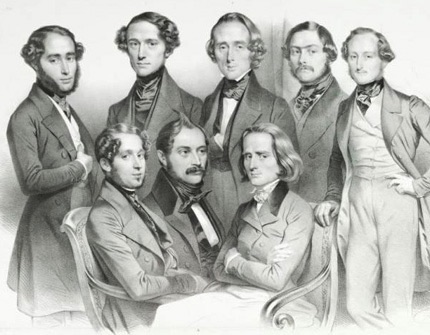
I heard one of his last recitals when we all travelled out to Croydon with Maria Curcio to hear his Bach Fourth Partita,Schumann Fantasie and Chopin B minor sonata.
He was already having difficulty and showed signs of fatigue at the end of the Chopin.
I will never forget though the beauty of his encore Lilacs by Rachmaninov , whom he much resembled.
Hamelin had heard his “Mr Nobody” and spent a month transcribing these unpublished arrangements from Weissenberg’s own recording.
It is worth quoting Hamelin`s own words in order to understand the uncontaminated curiosity of this extraordinary artist:
“Anyone who is familiar with Trenet`s songs in their original form is bound to be delightfully surprised by what Weissenberg has done with them.Unusual touches abound:in “Coin de rue”,an evocation of the narrator’s childhood,the listener is treated to the sounds of a barrel organ.The `oom-pah` rhythm of “Boum!”becomes a foxtrot;”Vous oubliez votre cheval” acquires elements of the Charleston;the opening of “En Avril a Paris” evokes a carousel,while the leisurely-paced “Menilmontant” is transformed into a headlong moto perpetuo.”
All this before entering into the refined world of Faure.The beautiful stillness of the Nocturne n.6 was played with unusual freedom and great sense of direction and it was eactly the link that was needed between the Paris of the early 20th century and that of the aristocratic Paris of the 19th century.
Chopin in Paris, the exile from his homeland of Poland that was in his blood but denied him since his youth.
Two works from the last years ended this fascinating recital.
The Polonaise -Fantasie op.61 and the Fourth Scherzo op.54.
The opening of the Polonaise in which the long string of notes after the arresting.chords seemed to grow out of them like a long reverberation.The long middle section was played with an unusual sense of direction and the big double trill was played so clearly but totally in the context of the long lines that were held together in such a masterly fashion. The middle section of the Scherzo was played without a hint of sentimentality and the long lines were allowed to ring out as Chopin had obviously intended.The final outburst was played with great grandeur and brought this recital to its official close.
The Schubert Moment Musicaux in A flat and Schumann`s Prophet bird from Waldscenen were played with exquisite delicacy only broken by Hamelin’s own piece commisioned by the Van Cliburn Competition to put young aspiring virtuosi through their paces.
Extraodinary feats of virtuosity abounded all played with that ease of a great master.
Maurizio Pollini at the Festival Hall in London All on their feet at the end to salute a great master.
He may not get around the piano with quite the energy and amazing technical command of yore,but I for one,and I was obviously not alone last night, was able to experience his almost symphonic approach to Chopin.
Only with the Berceuse were we made aware of the bel canto in Chopin but in the Nocturnes we were immediately more in the world of Schubert and the solid harmonic structure on which these masterpieces are founded.
Amazing and startling similarity ,that I have never been aware of before today, between the Nocturne op 62 n.2 and the Polonaise in F sharp minor that was programmed side by side.
I do not think this was just a casual choice.
This great master who has lived with these scores for a lifetime was even now 60 or so years on more involved with his probing mind to delve into the hidden meaning of the structure of these works.
In the same way he has delved into the most modern works of Nono,Boulez or Stockhausen in a worldwide career that was launched at 18 with his winning of the Chopin Competition in Warsaw and the accolades that he received from the greatest of all Chopin players Artur Rubinstein.
The Debussy Preludes Book 1 ‘ like Book 2 last year were in a completely different sound world but still with the harmonic structure upper most in his mind.
Even the Feux D’Artifice,offered as an encore, was shrouded in a clouded sound where the line became so much part of the atmosphere.
Chopin’s First Ballade of course a most generous second encore brought the entire audience to their feet to salute this great master that despite obvious physical difficulties still has so much to share with us.
Long may it last!
Angelo Fabbrini with his piano especially prepared for Maurizio Pollini
His faithful piano technician Angelo Fabbrini who provides a Rolls Royce of piano to so many great musicians exclaimed to Noretta Conci-Leech an assistant for many years to Michelangeli and a lifelong friend of Maurizio Pollini: “I think even M°Michelangeli would have been pleased tonight.”
As the noted pianist Julian Jacobson told me today:” The first time I played a Fabbrini Steinway it was as if I was driving a Rolls Royce having never driven anything grander than a Mini before!”
This is what I wrote last year as Pollini celebrated his 75th birthday with us in London where his concerts over the past half century have been highlights of every season.
Noretta Conci Leech and husband John founders of the Keyboard CharitableTrust with Sasha Grynyuk and Katya Gorbatiouk
“A revelation!Ilya is the most exceptional of all….Never before did a pianist keep me locked on my seat,full of excitement from beginning to end.He is a fascinating artist.He makes the piano sound like a full orchestra”Yvonne Georgiadou Pharos Cultural Centre Cyprus.
Such an accolade from the Artistic Director of the Pharos Cultural Centre in Cyprus and fresh from his triumphant tour of Italy (see above) Ilya Kondratiev was invited to play for the Keyboard Charitable Trust in their annual collaboration with Temple Music in the beautiful Parliament Chamber in the Inner Temple.
This was to be the last concert in this hall for the time being due to the renovation that is planned for the next two years.
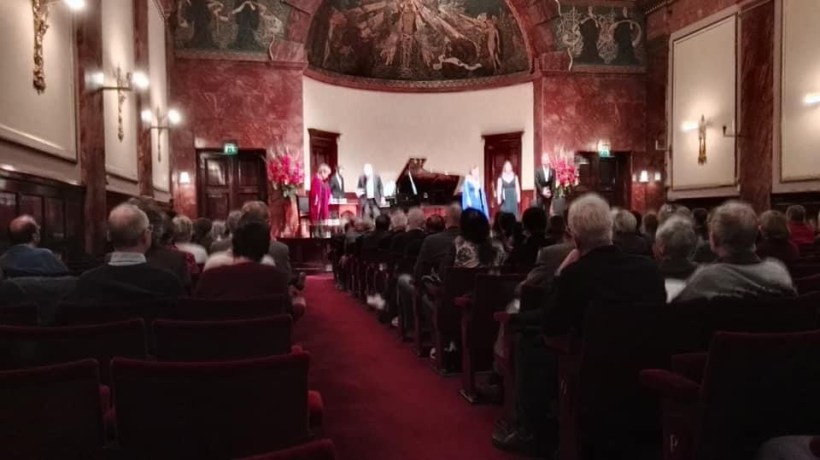
The very warm atmosphere created by illustrious judges and barristers will be transferred to the Temple Church just opposite.
Surprisingly I was told this hall dated only from 1950 ,the original building having been struck by an incendiary bomb during the blitz on London in the 1940s.
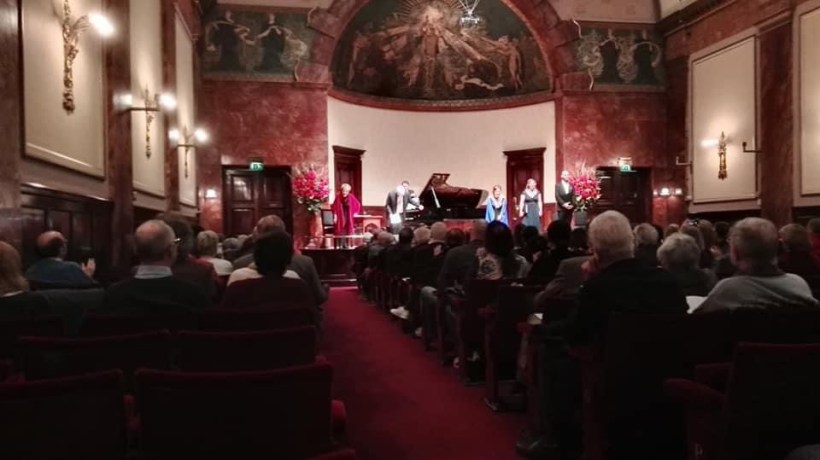
The Hon Philip Havers,QC, trustee of the Temple Music Foundation, tells me that in the original plans there was a third floor that was never constructed and it will now be added to create the much needed extra space for educational purposes.
I am sure though, that the same atmosphere will be ever present in this quite unique oasis in the centre of London.
Ilya in the Parliament Chamber,Inner Temple
These very prestigious concerts were the result of an invitation from Sir Geoffrey Nice QC, a founder trustee of the Keyboard Trust, that was created by his long term friend John Leech MBE as a 60th birthday present for his wife Noretta Conci-Leech the renowned concert pianist and assistant for many years to Arturo Benedetti Michelangeli.
It was a present to consolidate the work that she had tirelessly dedicated herself to for a lifetime.
Also pleased to welcome again Bryce Morrison, a long term friend of the KCT and one of the most revered (and sometimes feared) critics and experts of the piano of our day.
The distinguished audience in this beautiful warm atmosphere and a welcome from The Chairman of Temple Music Foundation Guy Beringer CBE,QC
The programme was very similar to those that Ilya had played on tour in Italy that included a live radio broadcast on the RAI Italian Radio 3 listened to worldwide.
Today though Ilya had included two Schubert Impromptus op.90 n.1 and 4 as well as two transcriptions by Liszt of Schubert’s Lieder :Gretchen am Spinnrade and Standchen.
An addition too of Liszt’s 2nd Hungarian Rhapsody brought this short recital to a tumultuous close.
Ilya being congratulated by Noretta Conci-Leech
It was above all the encore of the Petrarch Sonnet 104 by Liszt that will long remain in our memory for its impassioned delicacy and sumptuous palette of sounds in which the minutes of silence at the end were a true sign that his extraordinary artistry had touched us all.
It was also a very poignant way to draw a curtain for the time being over the music that will be missing from this hall in the next few years.
A relation of Prof Deutsch,had noted that the Impromptus by Schubert did not contain the Deutsch number that her grandfather Otto Erich Deutsch had catalogued in 1951 and like Koechel for Mozart has become the norm in recognising their immense output in all too short lives. Small world!
The Impromptus op 90 D.899 were exquisitely played- and especially the fourth impromptu where the shimmering sounds cascaded like water and the melodic line played with an impassioned rich sound that complemented so well with the extreme delicacy of the opening.
The opening arresting octave in the first Impromptu like in the last movement of the great B flat sonata was given just the right time to dissolve before allowing the melody to appear as if out of the final reverberations.
The Gretchen am Spinnrade I have written about on his Italian tour as with the Dante Sonata.
Spinnrade starting and ending so delicately before building to a sumptuous impassioned climax.
The Dante Sonata too was give a very dramatic performance at once of great delicacy alternating with great feats of virtuosity.
One could see on his face his total identification with this romantic world of “sturm und drang.”
Noretta and John Leech with Mr and Mrs Rabut arrived from Frankfurt especially for the concert of an artist that they have hosted and admired in their concert series in Germany
It was in fact after the interval that Ilya produced his finest playing.
Opening with an exquisite performance of Standchen by Schubert in the transcription by Liszt.
From the first notes the magic was set with Schubert’s sublime melody so beautifully and simply transcribed for piano by Liszt.Gone were the funambulistics of Liszt the greatest showman on earth and here replaced by the poet who was to become an absolute visionary in later life.
The accompaniment so simply played and on which was balanced the very delicate question and answer that Schubert poses between singer and partner.
The transcription into the bass “espressivo il canto quasi violoncello” in Ilya’s hands today, as it had been in Rachmaninov’s famous recording,was one of the highlights of today’s recital.
The Hungarian Rhapsody n.2 was a way of bringing us back to the world of the pop star “idol” that Liszt was in his youth.
Thrown off with great panache and participation Ilya also had a control that allowed him to shape this famous work as only a true artist can.
The final cadenza that is sometimes too drawn out was only hinted at as the last word was with the Master Liszt himself as this highly gifted young artist knew only too well.
Celebrations in the Bank of England afterwards …next to the Old Bailey
The Bank of England celebrations in the foreground Roy Emerson the eminent sound engineer who so generously records the concerts for the Keyboard Trust and Jessie Harrington the renowned chronicler of the most important events in London
An astonishing display of virtuosity,scholarship and musicianship by Mark Viner in the musical mecca of Dr Hugh Mather who has long been a promoter of this quite unique figure that has appeared on the musical horizon.
Since his debut at the Wigmore Hall promoted by the Keyboard Trust his numerous CD’s
of a repertoire that was long forgotten except for a few passionately courageous advocates has been acclaimed by the most discerning of critics.
With so many successful performances to his name it was typical of his probing mind to present a completely new programme of his extraordinary discoveries in Perivale.
Presenting his programme with Dr Mather
Of course the first piece hardly needed any introduction as it was the so called “Moonlight” Sonata op 27 n.2 by Beethoven.
A scrupulously refreshing look at a score so well known to so many.
Even the Allegretto had me re-looking at the phrasing which was adhered to with such care and attention.
The Adagio played at just the right tempo that allowed the melodic line to flow without any exaggerations.
”Moonlight” was certainly not Beethoven’s idea and the idea of a slow dreamy piece was far from Beethoven’s most revolutionary mind.
A great sense of forward propulsion in the Presto was helped by his attention to the bass.
A change of programme had brought in place of the Schumann Fantasy the Fantasy by Thalberg on themes from Lucrezia Borgia.
This almost unknown fantasy was by far the happier choice and gave us a chance for this most eclectic of pianists to show us one of his most recent additions to his repertoire.
Amazingly learnt for this occasion in only three weeks it showed off all his extraordinary virtuosity and subtle sense of colour.
He made the piano sound like the truly”Grand”piano that it was in the hands of Liszt`s greatest rival.
A quite astonishing display of virtuosity thrown off with all the ease of the great pianists of a bygone age.
But this was just the prelude to the Grande Sonata op.33 “Les quatre ages” by the elusive figure that is Charles-Valentin Alkan.
A remarkable work lasting forty minutes and divided into four movements depicting 20/30/40/50 years.
Introduced so eloquently by this young man who is a passionate advocate of this legendary figure.
Alkan first appeared on the programmes of Raymond Lewenthal who took London by storm with his programmes of Liszt and Alkan.
It was then taken up by Ronald Smith who made many recordings and wrote books about Alkan.
In recent times it has been Marc-Andre Hamelin who has kept the flame going but it has fallen very much on Mark Viner’s shoulders to delve even deeper into this fascinating character and his times.
Preface by Alkan to the first edition
Winner of the International Alkan -Zimmerman Competition in Athens , chairman of the Alkan Society in the UK and with a superb CD of Alkan’s studies op.35 enthusiastically reviewed who better to lead us into the fray!
Looking at the score after the concert one can see why it has not been a regular part of the repertoire.
It is of extraordinary difficulty and ungrateful looking on the page.
But translated into sound by this passionate and highly gifted young musician one wonders why and how it could have been ignored for so long.
“Everything about Alkan is strange;his life,his death,his music and its fate during his life and after his death”thus writes Raymond Lewenthal who took London by storm in the 60`s but like Busoni or Petri before him it was a momentary not permanent thing.
Chopin and Liszt both frequented Alkan`s concerts.When Chopin died most of his pupils went over to Alkan.His son Elie Miriam Delaborde taught at the Paris Conservatoire.
A complete excentric like his father but he could count Olga Samaroff Stokowski as one of his pupils, but for some inexplicable reason he never played his father`s large works in public.
extraordinary fingering on every single note
The Sonata op 33 is a very long work that hopefully Mark Viner will add to his CD repertoire before long.
Delving into the score afterwards one could appreciate the amount of work that has gone into preparing it for public performance.Fingerings scrupulously added with a scientific like eye.But also the ingenious construction of the piece allied to the over all picture- leit motif- of “Le quatre ages”
The tolling bell of 10 had a great significance for Alkan .Even in mid speech he would stop and leave at ten o’clock.
After the complete concentration of Mark who played this mammoth piece without the score the numerous public who listened in fascinated silence were rewarded with a delicate salon piece lasting barely three minutes by the elusive Monsieur Alkan
It is many years ago that I was in Perugia for the course of Lydia Agosti .
Invited by Eugenio De Rosa director of the Conservatory in Perugia and like me an ex- disciple of Guido Agosti.
I was invited to help Lydia train her young actors and direct from the keyboard in a semi staged performance,the first in Italy, of Bernstein’s Trouble in Tahiti.
It was the year of the Royal Wedding between Charles and Diana.
All scandal broke out when the stage director Alvisi decided to dress the actors as Nazi’s!
Luckily he was persuaded to change his mind and the performances went ahead successfully with our revered Maestro Agosti obliged by his wife to attend!
I came back a year later to accompany a brilliant young schoolboy ‘cellist in an audition with Alba Buitoni.
Tonino Lysy was the son of Alberto Lysy assistant to Menuhin in Gstadt.
We had played together in the theatre in Rome and also for the married couple at Villa Volkonsky,the British Ambassadors residence in Rome, on their honeymoon in Italy.
Teatro Morlacchi
Tonino was also grandson of Dame Iris Origo a great heroin for her work during the war of helping people flee the fascist tyrany that had been inflicted on them especially around her estate of” La Foce” in Tuscany.
Her book: “The War in Val D’Orcia” is a monument to her courage and endurance.
I remember the house of Alba Buitoni and her piano with fotos of Serkin and Rubinstein and many other illustrious musicians all with dedications and thanks to her for inviting them to play in Perugia.
Perugia central fountain
Antonio Lysy has since become a renowned cellist and although living and working in America comes back to “La Foce” during the summer months for a festival of chamber music with his friends and colleagues that include the Ashkenazy’s,Pascal Roge,Alessio Bax,Joshua Bell.
“Incontro In Terra di Siena “ is the name of the festival that has become a much awaited annual event in one of the most beautiful parts of Tuscany.
(I used to take Rosalyn Tureck to the hot springs in Bagno Vignoni overlooking the Val D‘Orcia during her winter tours of Italy and she would regularly give a little after dinner concert for the astonished guests!)
Having heard the same Schubert recital in the Festival Hall in London I was delighted to have an excuse to return to Perugia to visit dear friends and to be able to hear again the sublime performance of the Schubert B flat and share with them what in Mitsuko Uchida’s own words had become but a “beautiful memory.”
In fact talking afterwards in the green room she exclaimed that she was a twentieth century lady , the social media or instant communication has no place in her life.
A concert should remain in the memory as a beautiful experience forever.
The historic curtain of Mariano Piervittori(1818-1888 )
It was certainly that today and as she said dedicated to friend who was no longer with us.
Dame Mitsuko has reserved space in her worldwide travels to play every season for her friends Ilaria Borlotti and her husband the late Franco Buitoni.She has been a trustee since the founding of the Borlotti- Buitoni Trust in 2003.It was created to help and promote young musical talent.
But today with the Schubert B flat sonata written only a few months before his own death she and we could all feel a special presence that only music on special occasions can provide.
The simplicity and perfection of the slow movement of Mozart’s Sonata in C K.330 offered as a thank you to her adoring public spoke much more eloquently than words.
In fact it left us all speechless as this miracle bore wings and filled every crevace of this magnificent theatre.
This is the third time I have listened to a concert by this”youthful” looking pianist whose looks belie his anagraphical age (1968).
Having heard him the first time a few years ago with a very small audience in the very big church that is St Johns Smith Square in London.
The Goldberg Variations were announced promoted by Steinway & Sons.
So it was curious to see a Yamaha on stage and even more worrying to see the score on the piano stand!
Something made me stay to listen and Thank God I did because it was one of the finest performances that I had heard for a long long time.
I even ended up buying his video of the preparation and performance of the Bach that I gave to a well known critic in London to demonstrate the foundation for my enthusiasm .
Programme of todays performance February 2019
I saw a recital announced a year or so later in Rome with the “Appassionata” on the programme and thought I would like to see if on this occasion he played with the score which these days is becoming almost the norm.
Zimerman in Beethoven 4 with Rattle,Richard Goode with a Schubert recital in the RFH are accepted and not even commented on by the critics!
Ogdon too in his last years use the score when he was severely disturbed .It is rumoured that a mistake by his page turner cost him a black eye!
Pogorelich recently too in a long awaited return to London arrived with a page turner who was allowed to sit only three or four paces behind him!
It is true that Curzon and Richter both played with the score in their later years.
It was better than not hearing them at all but they were certainly not the performances of yore
Could one imagine Serkin,Rubinstein or Horowitz with a page turner in tow!
Perlemuter up until his last performance at the age of 90 used to say walking on to the platform was like going to the guillotine!
Myra Hess too in her later years used to play Brahms 2 with the score and get completely lost.
Cortot was advised to leave the score of the Liszt Sonata open at the page where he always lost his way but to no avail – memory was not the problem!
That lonely walk on stage to face an admiring and expectant audience is not for the faint hearted and is only for the chosen few.
The solution of course as Glenn Gould found is in the recording studio where it is quite the norm to have the score open.
My wife Ileana Ghione,the renowned actress, when she was studying at the Academy of Dramatic Art in Rome did something different from what her famous actor teacher had told her.Exclaiming how sorry she was, Tofono told her there is no such thing as right or wrong in Art …….convince me!
I too waited to be convinced by Tharaud
Ileana Ghione at home with Rosalyn Tureck whose return to the platform in 1991 with the Goldberg Variations in the Ghione Theatre in Rome created a sensation throughout the concert world.
……and in fact as you can see he certainly did that and gave one of the finest performances of Beethoven that I have heard ……….that is until this evening.
Such is the PR way of providing very little information about the artists before our eyes that I was forced to consult yet again my dear friend Mr Google to find out more of the elusive Monsieur Tharaud.
I am glad to share with all those like me that might be wondering about his formation:
“Tharaud refuses to keep a piano in his residence because of his belief that he will begin to prefer the pleasure of improvisation to the necessity of rigorous work. He prefers to practice on different instruments at friends’ residences. He composes, but is usually discreet regarding this activity. Before each recording he goes and lays flowers at the tomb of Chabrier in the Montparnasse Cemetery. When asked what a camera would record if it were present at his recording sessions, he replied that he sings, shouts, dances, and argues with the piano (“absurd behaviour – comportements ridicules”).
Tharaud in the Sala Sinopoli Parco della Musica Rome
Born in Paris, Tharaud discovered the music scene through his mother who was a dance teacher at the Opéra de Paris, and his father, an amateur director and singer of operettas. Tharaud thus appeared as a child in theatres around northern France, where the family spent many weekends. His grandfather was a violinist in Paris in the 1920s and 1930s. At the initiative of his parents, Alexandre started his piano studies at the age of five, and he entered Conservatory of the 14th Arrondissement, where his teacher was Carmen Taccon-Devenat, a student of Marguerite Long.
In 2009, he took part in a show devoted to Erik Satie with actor François Morel. Alongside the singer Juliette, he organised a Satie Day at the Cité de la musique, recorded for France Télévisions. He has also worked with the French composer Thierry Pécou, performing the première of his first piano concerto in October 2006 at the Théâtre des Champs-Élysées and later recording it.”
And so to today ……..third time was indeed an even happier experience with Scarlatti/ Beethoven op 109- Rameau /Beethoven op 110.
Exemplary programme notes by Lorenzo Tozzi,critic of Il Tempo who wrote this about the Ghione Theatre in the 1990’s
The Scarlatti sonatas as rarely heard with such style these days – the nearest was Horowitz on his famous recordings in the ‘60’s.
Here was such a startling sense colour and variety of register.The sudden rhythmic impulses reminded me of the legendary recordings of Landowska.
A very interesting choice from the 550 sonatas and introduced so well by Lorenzo Tozzi’s exemplary programme notes.
Opening with two sonatas in D minor.
K 64 that showed immediately his startling sense of colour and purity of sound.
The well known K 9 was played with such enchanting magical trills with slight hesitations followed by sudden rhythmic impulses like electric shocks.
The magic box sounds in the C major K 132 held the audience’s attention with bated breath.
The famous E major K 380 had a telling echo effect with such pauses that gave this piece real space and allowed it to speak at last so eloquently.
K 3 ,the very first of Scarlatti’s sonatas, and the one in which Tharaud delighted in the cat like leaps up and down the keyboard.
Leading to the startling contrasts of K 514 with its virtuosistic figurations and very telling flexibility.
His final choice K.481 in F minor fell to an Andante Cantabile in which his sublime singing touch and extraordinary sense of balance was allowed full reign to seduce us all.
The Rameau too that was a prelude to late Beethoven was played with such fantasy and such liquid pure sound.The “Rappel des Oiseaux”from the Suite in E minor that we are used to hearing in the perfection of Sokolov was here given with such a sense of colour.
The same precision (or almost) of Sokolov but here we could almost see the birds fluttering around the piano.
Four pieces from the Suite in A minor finishing with the well known Gavotte et Doubles where the startling difference between Scarlatti and Rameau ,so eloquently described by Lorenzo Tozzi, were brought vividly to life by this great artist.
Piero Rattalino’s four star review for Tharaud’s new CD.
We were invited after the concert to a CD signing with Tharaud for his new recording of Beethoven’s last great trilogy. They crown his 32 Sonatas that span his life from the youthful innocence op 1 to the profound simplicity of op 111.
Today we were treated to op 109 and op 110 .
Op 111 hopefully next time.
I was interested to hear in the extraodinary music shop before the concert a performance of op 110 that I assumed must be Tharaud.
On asking I was told by the very informed record salesman that it was Gilels!
I had heard Gilels many times in London and will never forget his Beethoven Concerto Series.His Brahms 2 coupled with Tchaikowsky 3 had Gilels and Sir Adrian Boult at logger heads in the rehearsal during the cold war period.
A recital of Schubert Moment Musicaux and little A minor Sonata followed by Shostakovich 2nd Sonata was a deadly combination for drawing an audience which missed one of the most beautiful recitals I have ever heard.
Of all the Russian school Gilels was the one with his Princely feet firmly placed on the ground and it was very interesting to hear Tharaud just an hour later.
Tharaud’s Beethoven was full of fantasy allied to an intelligence that led to exemplary performances.
Op.109 in particular was full of fantasy whereas like Gilels in op 110 he had his feet much more firmly on the ground.
I found the first movement of 109 a shade too fast but on consulting the score it does in fact say “Vivace” in the original score…..”ma non troppo” was added only to the original edition as though Beethoven too wanted a fluid but calm flow.
The end of the Prestissimo was played with a Serkin like urgency.
It led to the sublime Andante molto cantabile ed espressivo where Tharaud’s magical touch allowed one of Beethoven’s most profound utterings to sing with tenderness and feeling but without a trace of sentimentality.A performance of great serenity even though never missing the urgency in the Allegro vivace or Allegro ma non troppo variations.
Op 110 on the other hand was played with much more passion and I found some of the chordal outburts a little too overpowering for the great melodic line that Beethoven shares with us from beginning to the end.
It was interesting to note that Gilels too had given me the same impression but playing at a much more sedate tempo it seemed to work so well.
A little waltz by Schubert played with the same colour and subtle rubato that allowed us to eavesdrop on this most intimate of performances.
The spell was broken by the drums and wild dance in the Scarlatti Sonata in D K 141.
The famous “Argerich” repeated notes were given a shape and colour as with “Sokolov’s” Rameau that brought this remarkable recital to a breathtaking close.
I just hope that he will now put away his scores until old age and take that ultimate plunge into a world that is already very much his own.