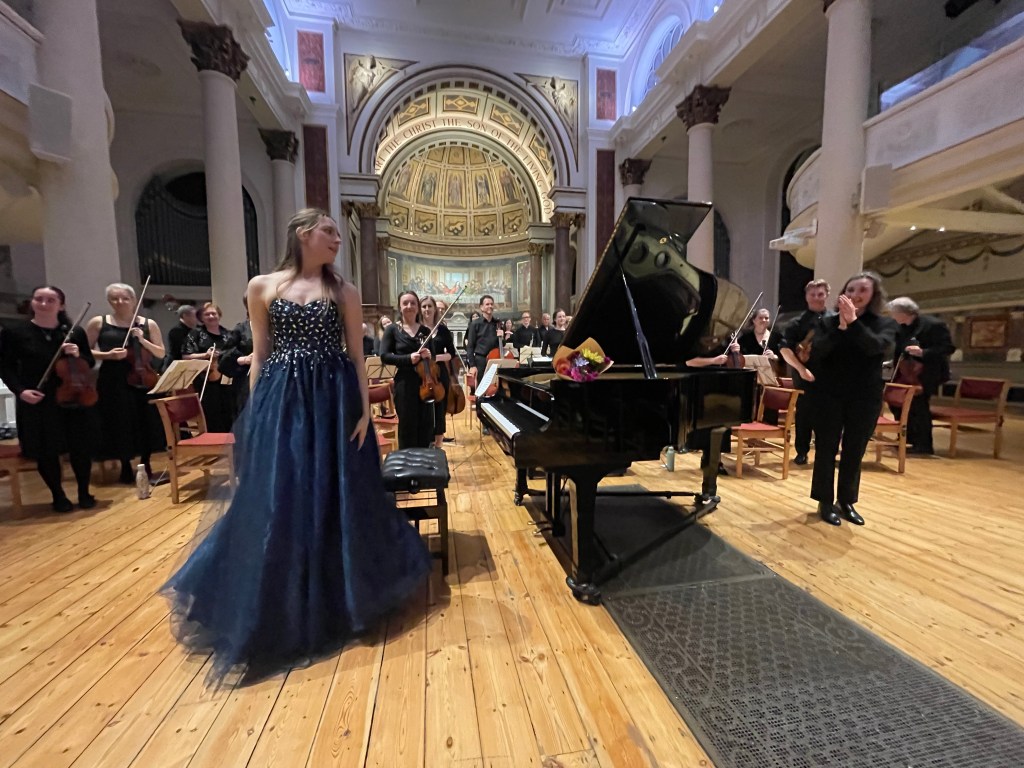
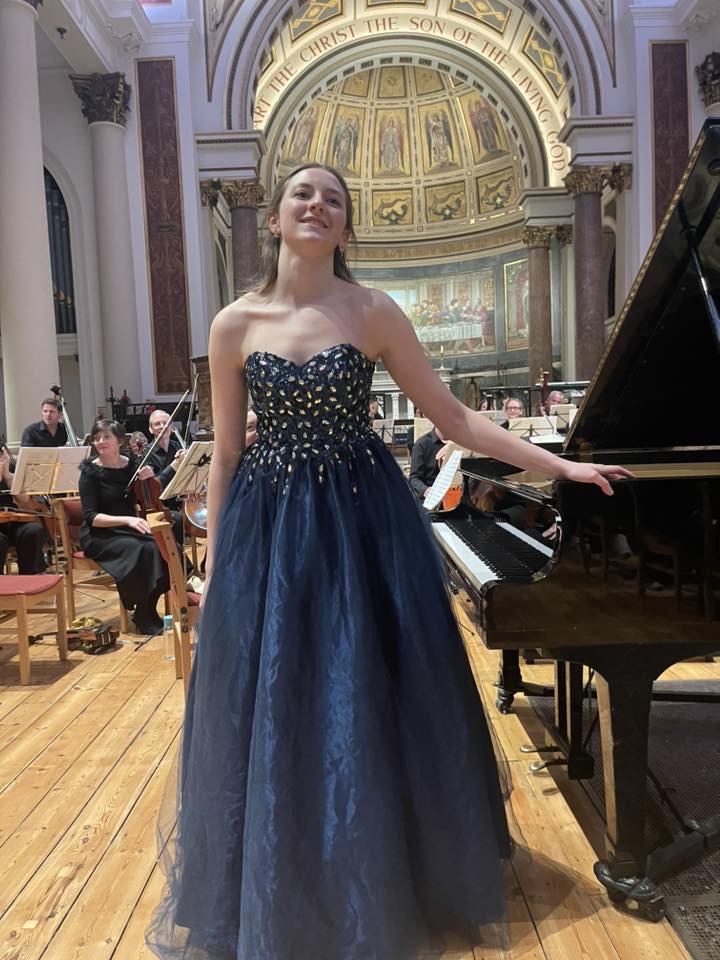
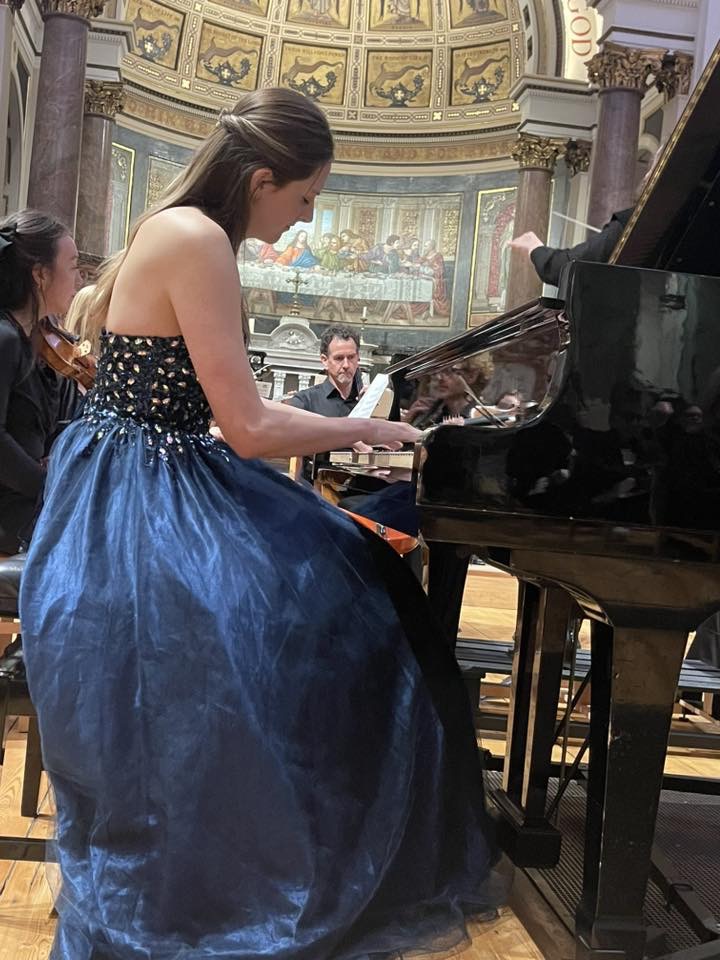
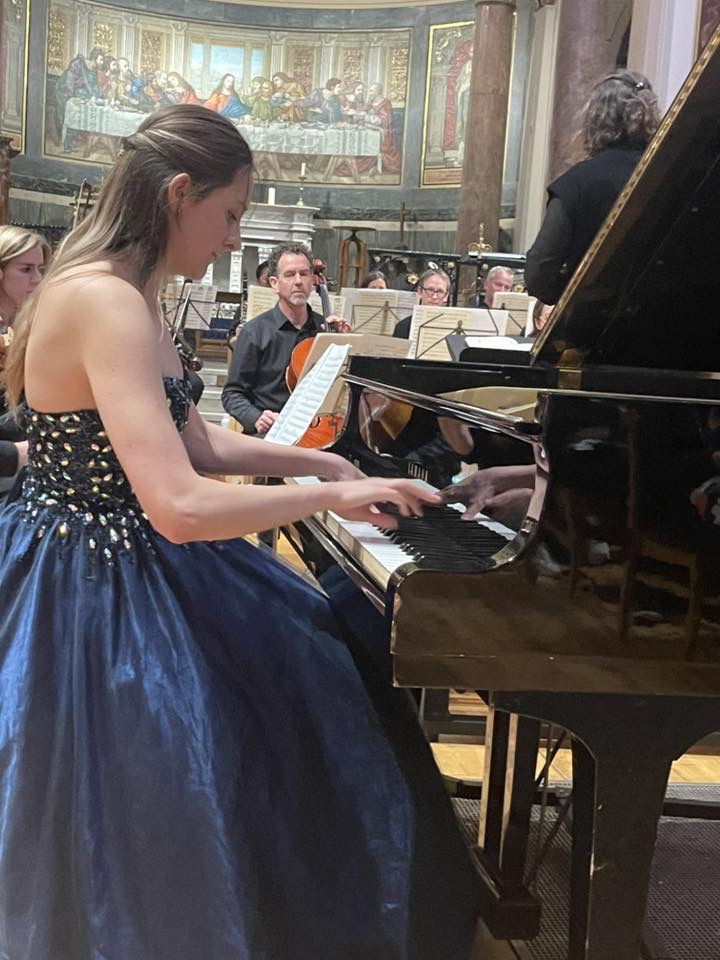
The Schumann Piano Concerto, one of the most beautiful of all Romantic concerti for its chamber music quality where the piano is part of a whole and not just the virtuoso pianist battling with the orchestra. A concerto that requires more musicianship than muscle, as the pianist must dialogue with the orchestra with a question and answer and give and take that requires the orchestra to listen as attentively as the pianist. It was just this dialogue that immediately captured the attention with the poetic almost improvised freedom of the central rhapsodic episode of the first movement.
Dominika’s refined arpeggios like an Aeolian harp on which she floated one of Schumann’s most poetic of melodies that was answered by the beauty of Massimo Roman’s clarinet . A duet where each player was listening to the other whilst the excellent Michal Oren was ever vigilant to keep the orchestra on their toes also listening and ready to follow with unusual flexibility this poetic outpouring between two voices.
It was the same chamber music quality in the ‘Andantino grazioso’ where Dominika’s refined playing was answered by the orchestra in a dialogue of poetic poignancy. The perfect tempo, set by Dominika, allowed this movement to flow with natural freedom where the ‘cello’s too could have an important voice in this continual dialogue between the piano and orchestra. Some whispered playing of glowing beauty at the end of this second movement when Schumann allows the melodic line to disintegrate before linking it to the dynamic drive of the ‘Allegro vivace’ last movement. Dominika here as in the first movement playing with masterly control but always where the architectural shape was formost in her mind. Her heart, of course, was always ready to shape Schumann’s ebb and flow of jeux perlé in the last movement with beguiling charm and poetic rhythmic drive.
The cadenza in the first movement showed even more Dominika’s refined musicianship. Shaping the phrases with beauty and elegance where even the tempestuous chordal climax was merely a series of moving harmonies reaching out to the long trills that would take her back to continue the poetic dialogue with her colleagues.
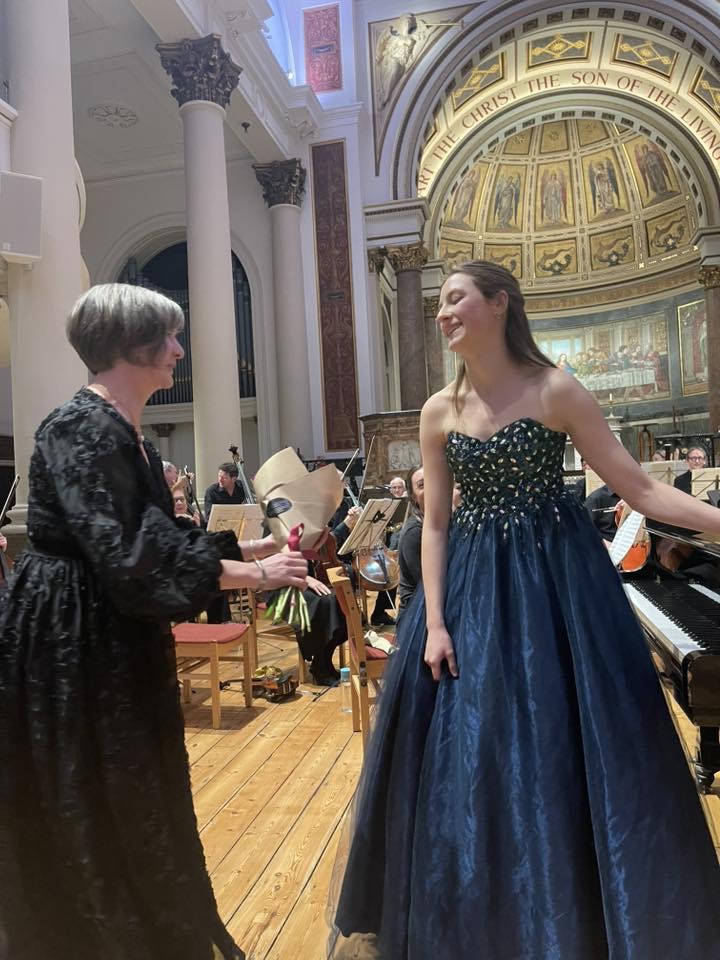
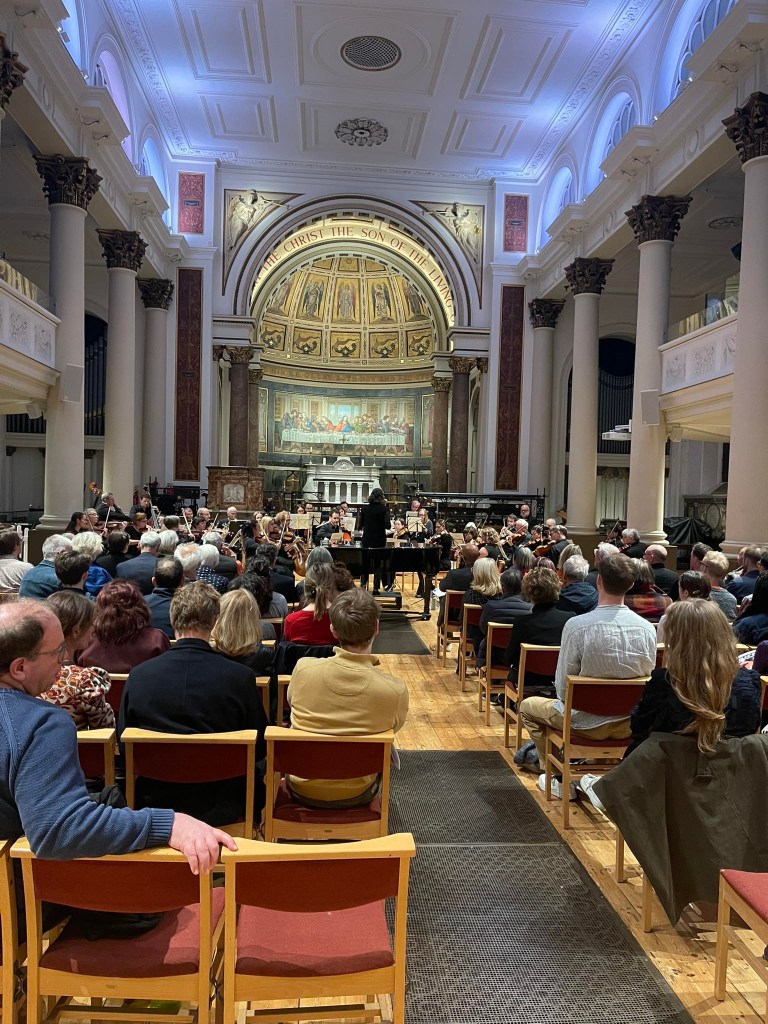
An unexpectedly refined performance with a non professional group of players was greeted by an ovation and Dominika, the guest soloist, was invited to play some more.
Chopin’s Berceuse was the ideal choice as Dominika’s glowing sounds wafted around this beautiful church with radiance and refined beauty as her aristocratic music making held the audience ,which included the orchestra at this point , spellbound.
An orchestra that Michal Oren enticed to listen to themselves as she at the helm directed them with musicianship and style,as we were immediately aware of from the very opening Overture in Italian Style.
The Schumann Piano Concerto, one of the most beautiful of all Romantic concerti for its chamber music quality where the piano is part of a whole and not just the virtuoso pianist battling with the orchestra. A concerto that requires more musicianship than muscle, as the pianist must dialogue with the orchestra with a question and answer and give and take that requires the orchestra to listen as attentively as the pianist. It was just this dialogue that immediately captured the attention with the poetic almost improvised freedom of the central rhapsodic episode of the first movement.
Dominika’s refined arpeggios like an Aeolian harp on which she floated one of Schumann’s most poetic of melodies that was answered by the beauty of Massimo Roman’s clarinet . A duet where each player was listening to the other whilst the excellent Michal Oren was ever vigilant to keep the orchestra on their toes also listening and ready to follow with unusual flexibility this poetic outpouring between two voices.
It was the same chamber music quality in the ‘Andantino grazioso’ where Dominika’s refined playing was answered by the orchestra in a dialogue of poetic poignancy. The perfect tempo, set by Dominika, allowed this movement to flow with natural freedom where the ‘cello’s too could have an important voice in this continual dialogue between the piano and orchestra. Some whispered playing of glowing beauty at the end of this second movement when Schumann allows the melodic line to disintegrate before linking it to the dynamic drive of the ‘Allegro vivace’ last movement. Dominika here as in the first movement playing with masterly control but always where the architectural shape was formost in her mind. Her heart, of course, was always ready to shape Schumann’s ebb and flow of jeux perlé in the last movement with beguiling charm and poetic rhythmic drive.
The cadenza in the first movement showed even more Dominika’s refined musicianship. Shaping the phrases with beauty and elegance where even the tempestuous chordal climax was merely a series of moving harmonies reaching out to the long trills that would take her back to continue the poetic dialogue with her colleagues.
An unexpectedly refined performance with a non professional group of players was greeted by an ovation and Dominika, the guest soloist, was invited to play some more.
Chopin’s Berceuse was the ideal choice as Dominika’s glowing sounds wafted around this beautiful church with radiance and refined beauty as her aristocratic music making held the audience ,which included the orchestra at this point , spellbound.
An orchestra that Michal Oren enticed to listen to themselves as she at the helm directed them with musicianship and style,as we were immediately aware of from the very opening Overture in Italian Style.
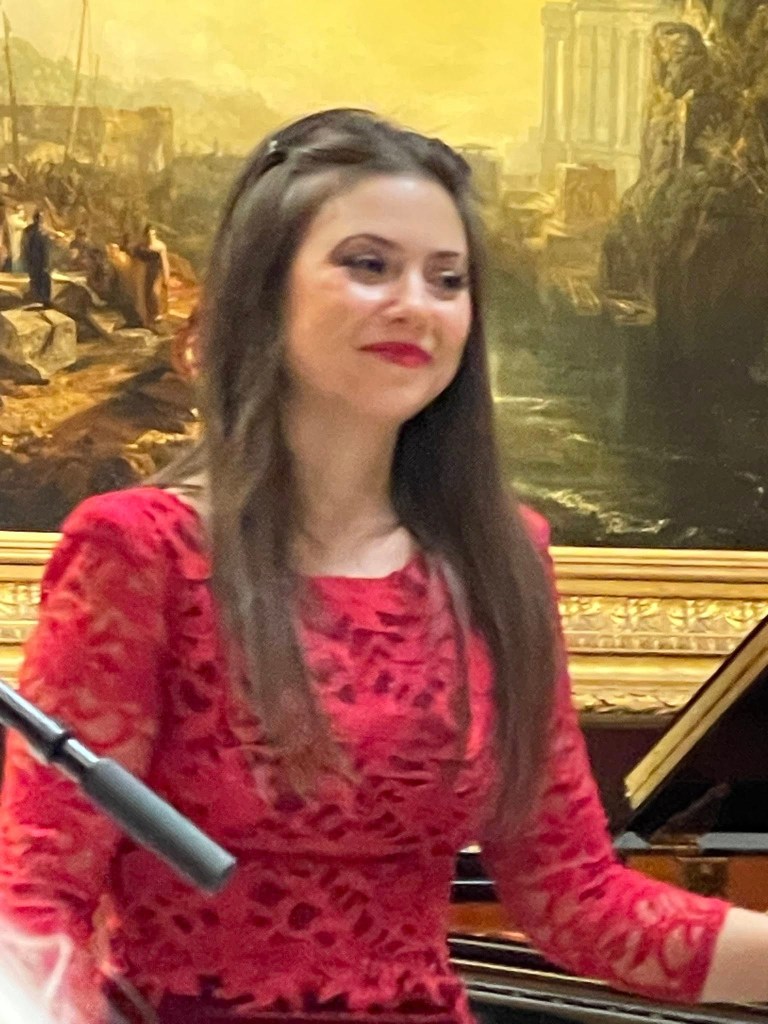
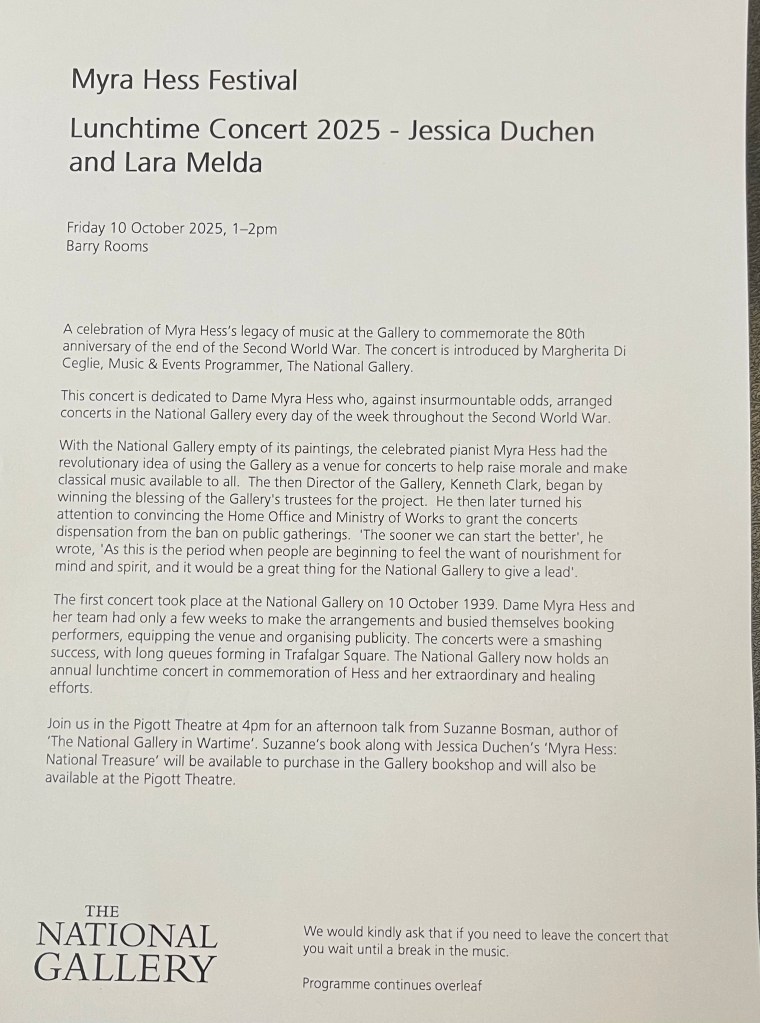
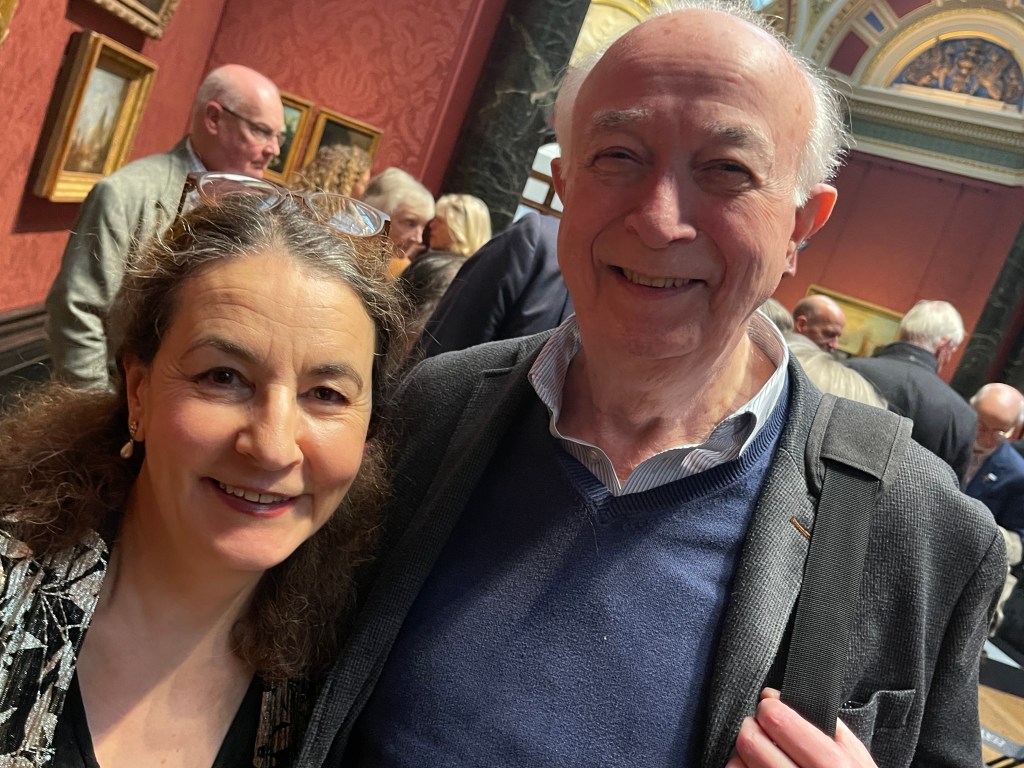
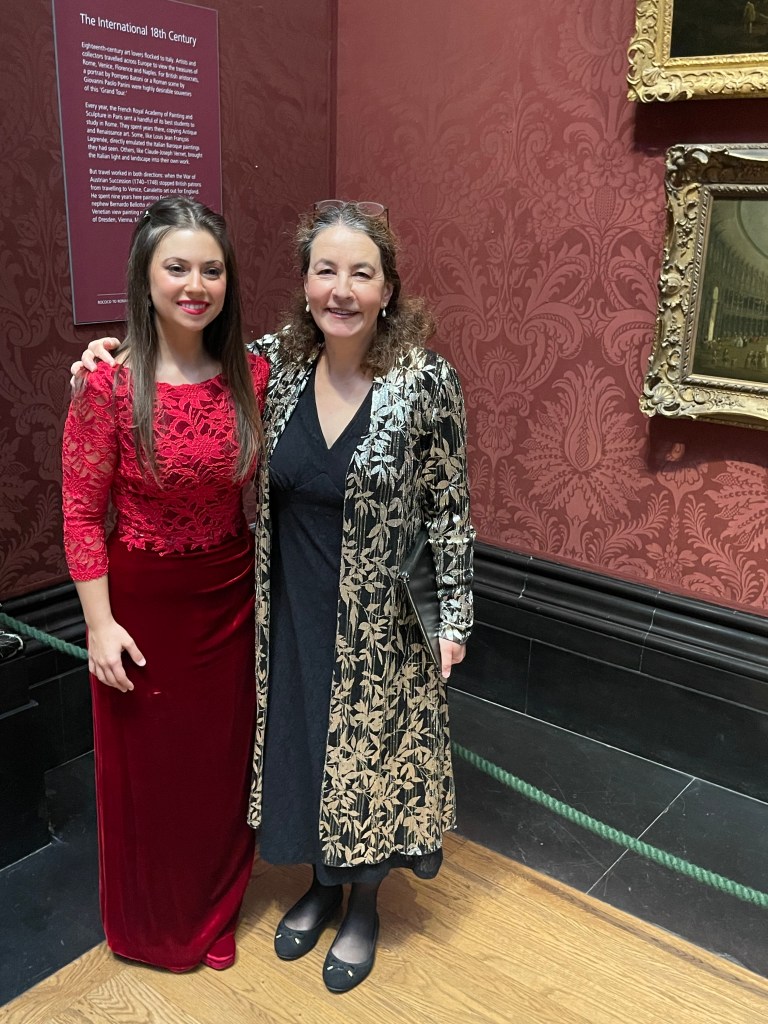
Magic in the air at the National Gallery as Jessica Duchen and Lara Melda told the moving story of resilience and courage as Myra Hess became a National Treasure with the concerts that helped save people’s soul during the Second World War.
10th October 1939 was celebrated today in 2025 with the piano in the same spot and in the same gallery.
A story told in words and music. The words spoken with remarkable intensity and the presence of an actress who has lived with and digested these words.
She knows the poignant significance of what made Dame Myra every bit a hero as Churchill when our country was under siege. The people needed Hope,Courage and Solace and Myra showed them that music could be a soothing balm for such terrifying experiences.
Lara playing with the same authority and superb musicianship that Uncle Tobbs had bequeathed to his star student. A sense of colour and beauty where every note spoke so eloquently. Nowhere more was this evident than in the fleeting beauty of Schumann’s ‘Prophet Bird’. The sublime understatement of the chorale interruption was played with ravishing whispered beauty .The Prophet Bird was obviously enchanted because she took wing again with a nostalgic smile on her face, disappearing into the far distance. Lara could make the music come vividly to life, just as Myra Hess could do. Myra took America by storm filling the major halls to capacity wherever she went. In fact she could have stayed in America during the war, as many of her colleagues did ,but she like the Queen Mother wanted to be with her people in their hour of need. Myra was not a Chopin player in the traditional sense but would bring a classical understanding and beauty to a composer that had been distorted beyond belief in the name of tradition. Lara too brought an aristocratic beauty and architectural understanding to the first Ballade where even the jeux perlé cascades of notes were given a shape and meaning and not used as an egoistic showpiece of note spinning self gratification. Lara gave back to Chopin what his genius rightly deserves and she received an ovation from a distinguished audience, one or two even remember hearing Dame Myra too. The seriousness and musicianship she brought to Beethoven was indeed worthy of Dame Myra. A’Tempest’ Sonata we have heard many times but rarely as today. A sense of line and forward drive like riding on a great wave of hidden energy. A beautifully controlled ‘Adagio’ was followed by an ‘Allegretto’ that just took wing with a continual lift and rhythmic energy that was remarkable. Even the final note was placed with perfection instead of the more usual nonchalant indifference of lesser musicians.
Last but not least were Jessica’s poignant words describing Dame Myra’s wish to make music in the National Gallery just one last time, after the end of the war time concerts. A wish which was fulfilled only today with the piece that became synonymous with Dame Myra for a nation that she had given such comfort to in their hour of need . Lara visibly moved played ‘Jesu Joy of Man’s Desiring’ with a whispered simplicity of ravishing playing of searing beauty.
What a tribute to our National Treasure and we could enjoy such mastery without even paying a shilling !
Jessica with an extraordinary presence after years of researching her National Treasure and Lara with music making of the same aristocratic beauty as Myra Hess .
The only way to end such a story of selfless humility and courage was as Myra herself would have done with ‘Jesu joy of man’s desiring ‘ …………Lara playing a Shegeru Kwai and filling Room 36 with the same magnificence as Dame Myra Hess all those years ago
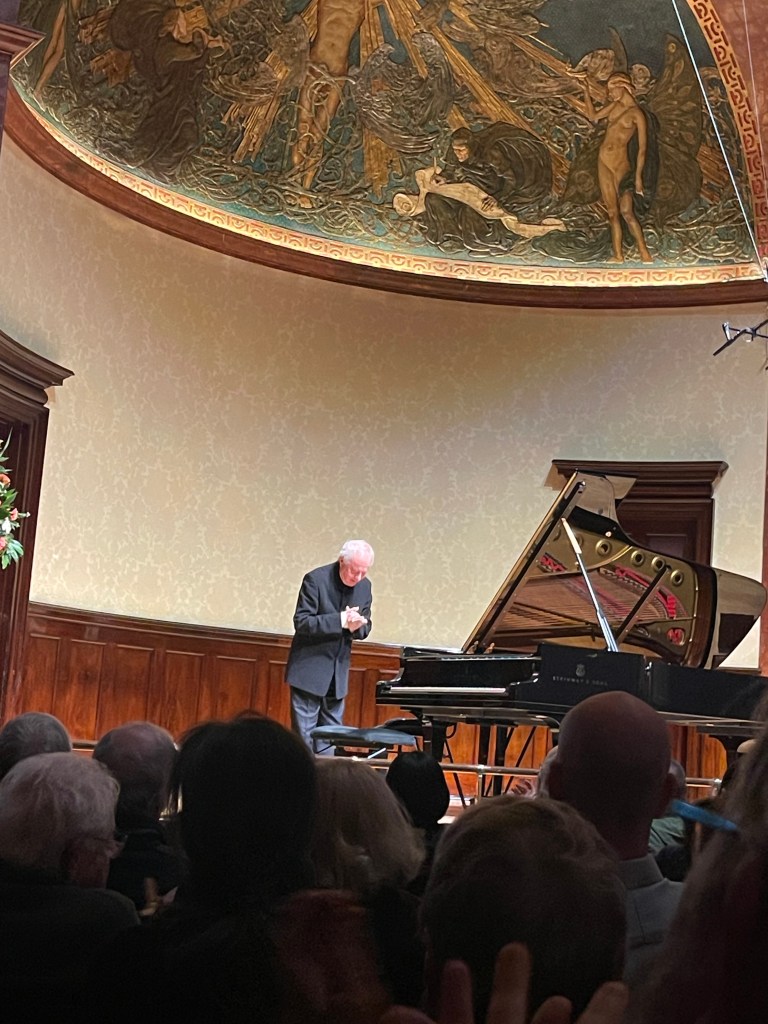
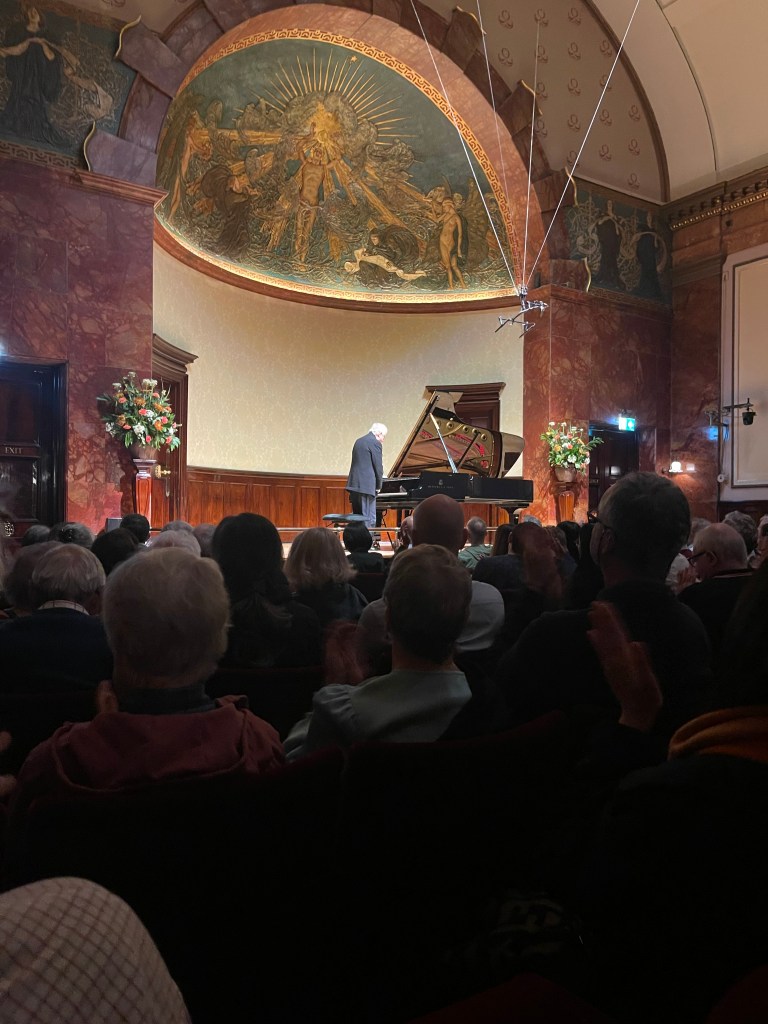
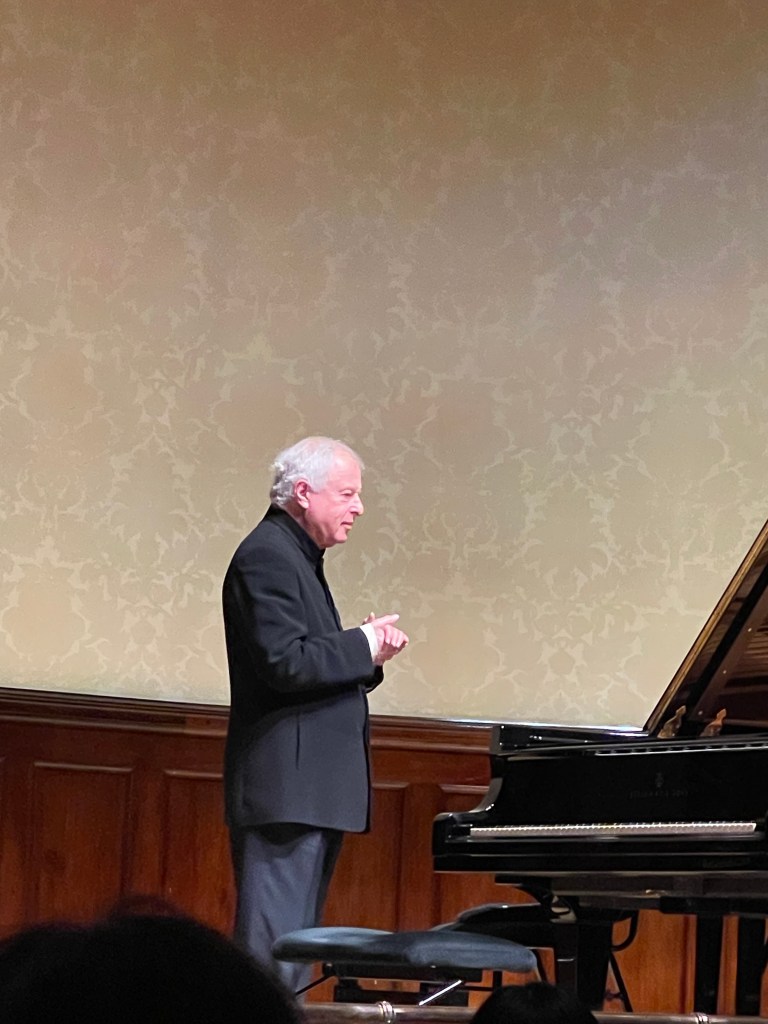
Fantasy on the menu tonight for Andras Schiff in a unique musical ritual, worshipping together the genius of Bach Haydn Mozart Beethoven Mendelssohn and Schumann.Chopin was never far away either!
Reminding me ever more of Kempff where music just poured from his hands that were forever searching for the perfect legato and orchestral sounds.
A world in which a musical language speaks louder than words as they delve into the very core of creation searching ever more for the life blood contained within.
Technical and pianistic problems are not even contemplated as such, but are the means to communicate the real message that is there to those who dedicate their life to a never ending journey of discovery.
It was fascinating to see his use of the pedals both romantic and baroque that gave an enormous sense of freedom to all that was floated above it . Anton Rubinstein called the pedal the soul of the piano’ and was obviously referring to the gradual addition of the sustaining pedal to the keyboard instruments of the day. It was noticeable that Andras held with his hand the bass notes at the opening of the chromatic fantasy creating a pedal note for the improvised freedom that Bach allows. As quoting Casals ‘ there is no freedom without order.’ Chopin of course described to his students that music should be like a tree with the roots firmly planted in the ground that allowed the branches to flow feely above. It was this sense of ordered freedom that pervaded his Bach and meant that nothing was hurried of exaggerated but the music was allowed to unfold with a natural simplicity and logic. The opening of the Mozart fantasy too was played with very strident opening chords that were gently and silently echoed by putting his hand down silently on the note again . It reminded me of Arrau and Perlemuter playing loudly with the soft pedal down in order to get that very French sounding nasal effect. The search for sound is so rare these days in the quest for volume and speed!
Mendelssohn actually writes in the score in the first movement very long pedals that give you an idea of how the notes above are just wafts of changing harmony. The ending in particular ( like in Beethoven’s op 126 that Andras played on Tuesday here, together with Schubert Drei Klavierstücke and the Fantasy Sonata ) a very long pedal created a very etherial ghostly effect of unearthly sounds that we rarely hear in the concert hall where clarity and precision is usually the norm!. Andras took it to the limit with a last movement that had some wondrous moments, where lightweight chords just seemed to bounce in mid air, but maybe the streams of notes are more brilliant jeux perlé than the actual changing harmonies that Mendelssohn so clearly marked in the first movement.
The Schumann Fantasy was a fascinating voyage of discovery.
Schumann prefaced it with a quote from Friedrich Schlegel :Durch alle Töne tönetIm bunten Erdentraum Ein leiser Ton gezogen Für den, der heimlich lauschet. “Resounding through all the notes in the earth’s colourful dream There sounds a faint long-drawn note For the one who listens in secret.”
And this explains the great pedal note of G that Andras began with his right hand leaning over his left deep into the bass . It was this insistence of G that was to pervade the whole movement with the sometimes over zealous insistence of discovery. It meant that everything else was floated on this sound which gave a strange impression of improvisation and freedom. Maybe exaggerated but stimulating indeed!
Andras had explained though about the musical quotation of a phrase from Beethoven’s song cycle An die ferne Geliebte ( To the distant beloved ) in the coda of the first movement . The text of the passage quoted is: Accept then these songs beloved, which I sang for you alone]. Both the Schlegel lines and the Beethoven described Schumann’s situation of being separated from Clara Wieck by her severe father. Schumann wrote to Clara: The first movement may well be the most passionate I have ever composed – a deep lament for you. They still had many tribulations to suffer before they finally married four years later.
Andras too pointed out that Charles Rosen had found in the original version in the library in Budapest that the ending of the first movement was repeated at the end of the last movement. Schumann later cancelled this idea, and I personally think he did it because to say I love you too many times looses it’s effect. Andras ,though, decided to play it giving a certain unity to this great love poem. He asked our forgiveness and that of Schumann, but it made for a stimulating rethinking of a masterwork that we can sometimes take for granted in lesser hands.
It was all through this recital a feeling of discovery and recreating the works as though the ink were still wet on the page.The plastic precision that CD’s have accustomed us to in the concert platform was substituted for a living,vibrant ,exciting journey of discovery together with a musician who delves deeper than most into the mystery of recreation.
The programme tonight was begun with the Aria of the Goldberg Variations which was a refined hors d’oeuvre to a sumptuous feast which consisted of the Chromatic Fantasy and Fugue , Mozart Fantasy in C minor and Haydn’s in C major . Ending the first half with Beethoven’s Sonata quasi una fantasia op 27 n 1
After the interval Mendelssohn Fantasy in F sharp minor op 28 and Schumann ‘s monument to Beethoven but dedicated to Liszt , who actually erected the monument in Bonn, the Fantasy op 17 .
Chopin’s pulsating Waltz in A minor op 34 n. 2 was a thank you to his faithful public who he could not greet afterwards for fear he would miss his last bus home!
A hectic few days for this genial and ever generous kapellmeister. Playing Schubert and Beethoven here just two days ago, but also celebrating his great friend Peter Frankl’s 90th birthday as well as a lecture and concert for the Oxford Union.
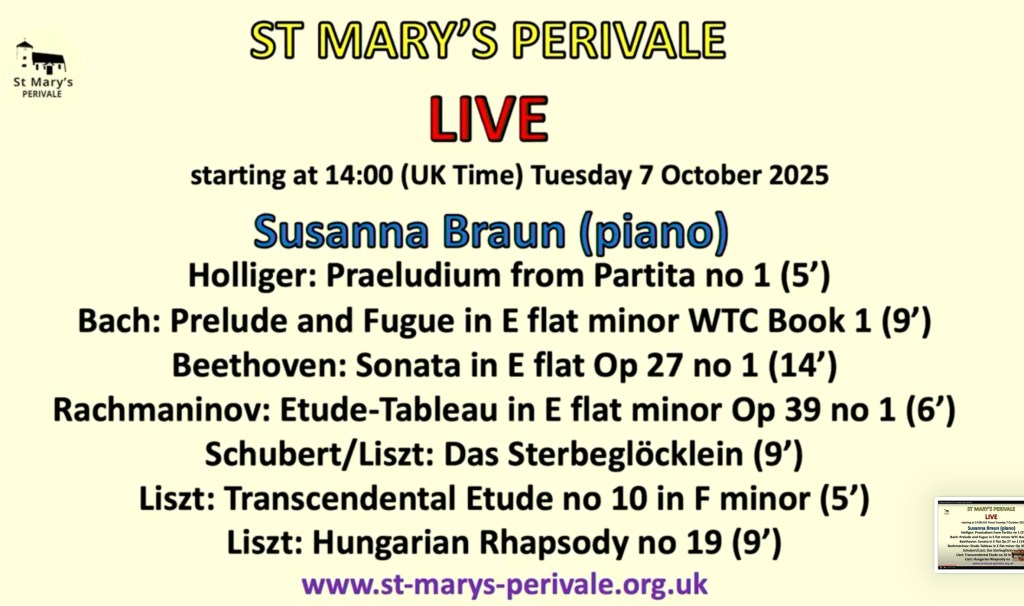
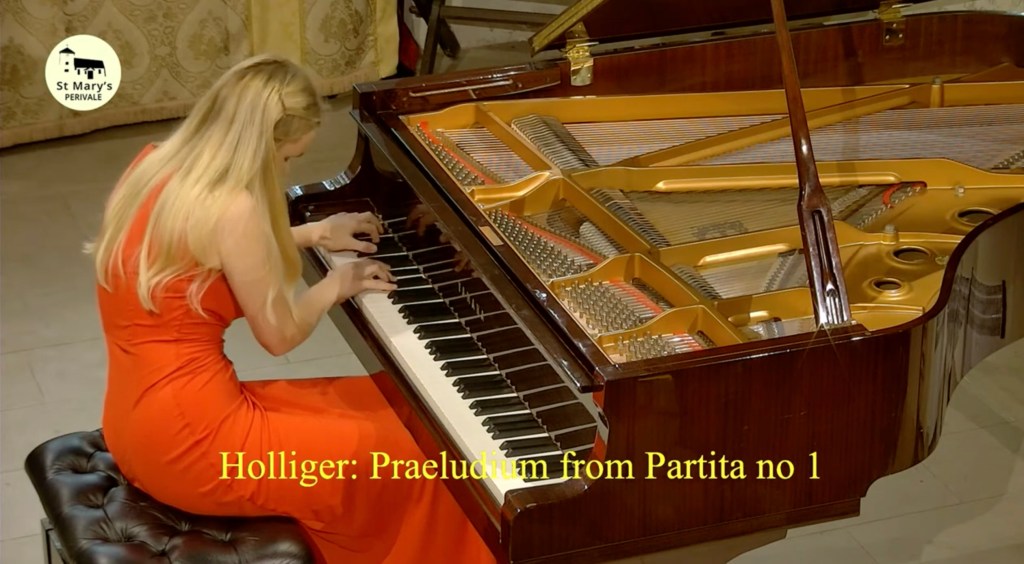
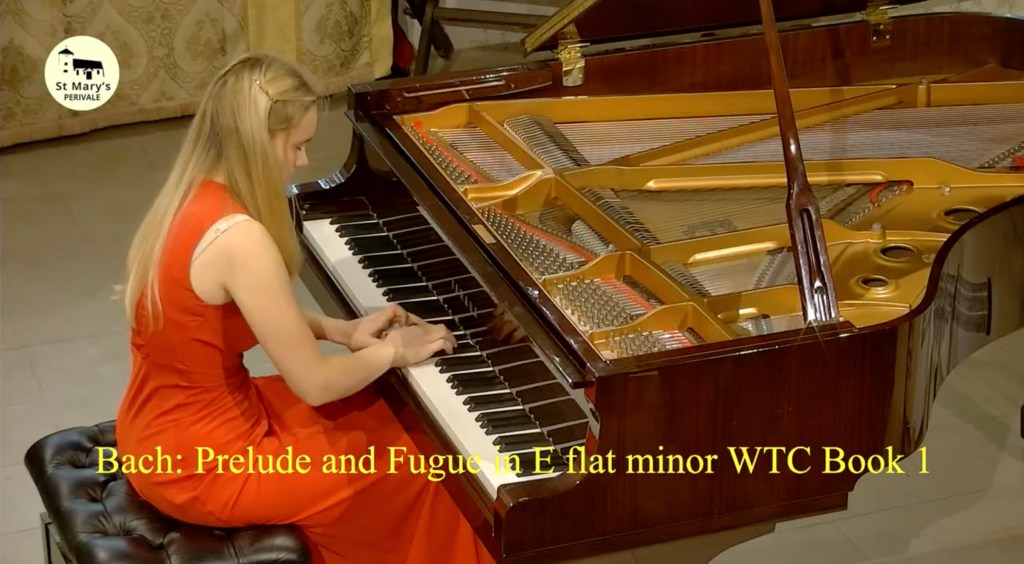
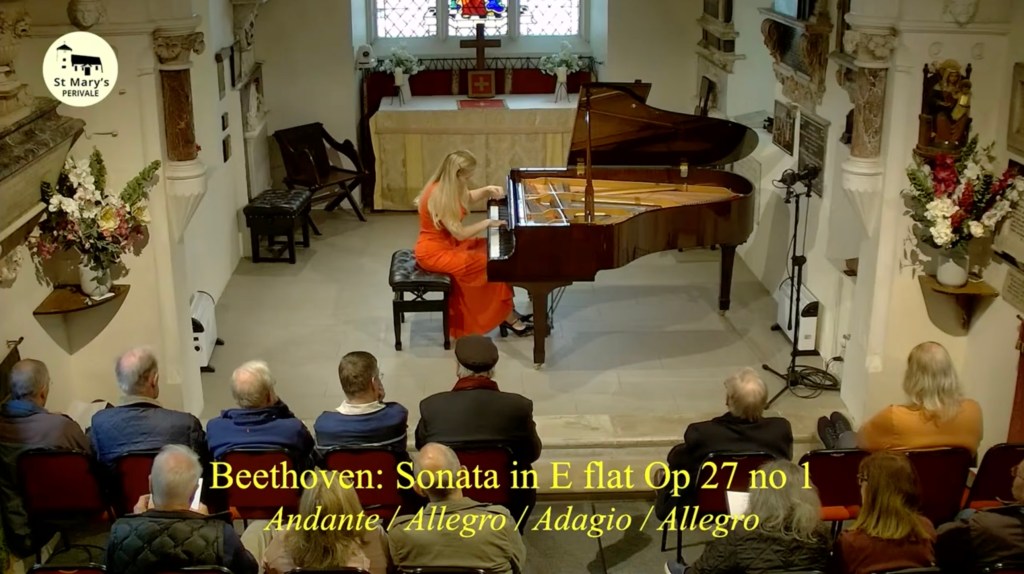
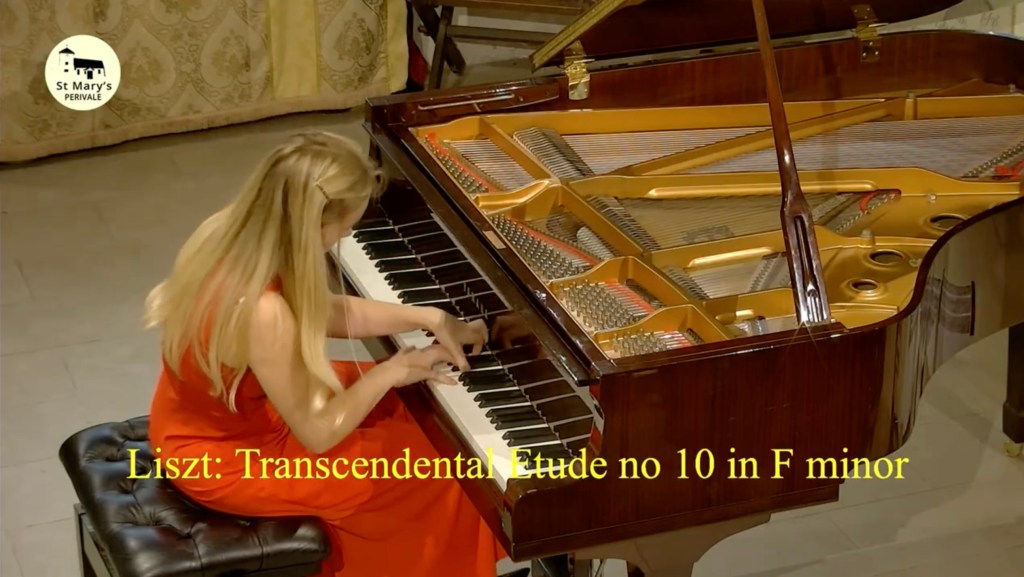
Many are tuned in to the Chopin Competition live stream in Warsaw where many pianists are in the running who have been promoted by Dr Mather. We should not forget that the indomitable St Mary’s are continuing, non stop, to give a platform to young artists with three concerts or more every week, also live streamed to an audience worldwide. I managed to hear this brilliant young Swiss pianist on play back and thank God I did ! Superb playing of the clarity and precision of a baroque keyboard player but with the colour and sumptuous sounds of a superb pianist too. Strange curled fingers like ten little hammers, necessary for playing antique instruments, but rather unnatural for the piano with pedals . Chopin was the first to show us that the scale of D flat was for starters not C major, with a hand that caressed the keys and extracted the sound like limpets sucking the lifeblood from each note. But this young Swiss pianist is also a formidable musician with a passionate heart. She is also very knowledgable and able to choose a stimulating programme where the final cluster of Holliger on E flat was the sound out of which emerged the Bach prelude from book one. A Beethoven sonata op 27 but not the ‘Moonlight’ but its sister less often played but still a Sonata ‘quasi Fantasia’ as Beethoven announced. A transcription of a Schubert song that was new to me but was transformed into a magical tone poem by Franz Liszt. The Nineteenth Hungarian Rhapsody was also new to me and what a discovery with the same Hungarian inspired virtuosity and sense of beguiling dance but with that strange late world that was beginning to open up a whole new vision for the future by the genial Abbé Liszt . It was the encore of Scarlatti that gave the game away with Susanna’s obvious baroque training such was the clarity and drive but also the ornamentation that she discreetly added to such a scintillating sonata.
Holliger Praeludium from partita n. 1 is dedicated to Andras Schiff . Here are Susanna’s own words: My E-flat pairing of Holliger and Bach where his admiration for Bach resonates in his own Partita for Piano (completed on Dec 31, 1999). The title itself recalls the Baroque form, and its seven movements combine references to tradition with avant-garde elements. Notably, Holliger employs soggetti cavati, a Renaissance technique deriving melody from vowels, echoing Bach’s own cryptographic motifs such as B-A-C-H. The opening Praeludium recalls Bach’s improvisatory preludes. It erupts in thunderous clusters, followed by resonant triads Holliger calls the inner voice: “music as from inside your body… like a backstage chorus singing”. He himself described it as “like a Couperin or Rameau harpsichordist warming up with big arpeggios.” When its final cluster fades, only a single E-flat remains. That very note becomes the opening of Bach’s Prelude and Fugue in E-flat minor, BWV 853. A difficult work played with clarity and technical brilliance with extravagant sounds of reverberations.
A final cluster played with the arm as the glory of Bach shone through this extraordinary modern sound world. It was like a celestial cloud opening with beautiful radiance and fluidity with the simplicity of the fugue gradually unfolding.
Playing in two as Beethoven indicates allowed the Andante of the Sonata to flow naturally with beauty and deep feeling but without any sentimentality.The ‘Moonlight’ Sonata was written in two as well and is too often played in four which takes away the extraordinary architectural shape of these highly original opening movements of a classical sonata. The ‘Allegro’ central interruption was played with dynamic brilliance and extraordinary clarity. Driving Beethovenian impatience was quelled with the exquisite beauty of the return of the ‘Andante’ that just dissolved to a whisper without any rallentando! Susanna’s extraordinary intelligence and musicianship allowed each movement to flow into the next in a work of unique originality for it’s time. A true ‘Allegro molto e vivace’ second movement, was played with the irascible youthful Beethovenian drive and impatience, with the central driving bass rhythms giving extra energy always especially when played with the dynamism of this young Swiss pianist. The ‘Adagio’ she so rightly said was similar to the second movement of the C minor concerto and she played it with the same poignant nobility and extraordinary beauty that Beethoven could conjure out of his genius that had nothing to do with Bel Canto but was more of orchestral origin. It was Susanna’s thinking up from the bass always that gave strength to Beethoven’s deeply felt mellifluous outpouring. After a beautiful whispered cadenza Susanna held us in suspense on a single A flat before allowing the ‘Allegro vivace’ finale to take us by storm. A rhythmic energy with dynamic contrasts all played at red hot temperature. Extraordinary clarity and precision but also passionate drive and understanding, of overwhelming energy that made the short return of the ‘Adagio’ so moving as it was unexpected.
Rachmaninov’s well known Etude Tableau was with the Liszt F minor Study the only two pieces from the standard piano repertoire today. The Rachmaninov was played with fearless passion and a kaleidoscope of colour that brought this miniature tone poem vividly to life.
There was a chiselled beauty to the Schubert song transcription by Liszt which I have to admit I did not know. Her ravishing sense of balance with playing of ease and natural beauty as the bells were allowed to sound all around this glorious melodic outpouring. Sustained by the bass as the melody was played with ever more passionate conviction and mastery . A trilled pedal note that was a mere vibration on which the bells were allowed to glisten with wondrous beauty.
The Liszt F minor transcendental study was played with quite extraordinary mastery but also with colour and a passionate temperament that was quite breathtaking in its audacity .
She brought a great sense of style and authority to Liszt’s 19th Hungarian Rhapsody which was his last . A true sense of the Hungarian idiom almost savage in it’s Gypsy drive with technical difficulties thrown off with the ease of native players with their extraordinary natural technical mastery.
Swiss pianist Susanna Braun debuted at the Tonhalle Zürich in 2024, performing Mozart’s Piano Concerto KV 466, where her delicate touch, virtuosity, and musical sensitivity captivated audiences. Her interpretation was praised for its freshness and maturity, offering a refreshing contrast to routine performances. In June 2025, she made her debut with the BBC Philharmonic, performing Grazyna Bacewicz’s Piano Concerto for a BBC Radio 3 recording. Highlights of the second part of the 2025 season will include a performance with the Youth Symphony Orchestra of Ukraine of Ludwig van Beethoven’s Piano Concerto No. 4, with the Camerata Manchester, performing Ludwig van Beethoven’s Triple Concerto, and the release of her first CD for the Valaris Music label dedicated to the music of Liszt.
She holds an “International Artist Diploma” from the Royal Northern College of Music, a Master’s from the Hochschule für Musik FRANZ LISZT in Weimar, a diploma ( corso triennale di alta perfezionamento ) from the Imola International Academy “Incontri con il Maestro”, a B.Mus with honours from RNCM and a Diplôme Supérieur from the Schola Cantorum in Paris. She is currently pursuing the “Post-Diploma Course” at the Imola International Academy “Incontri con il Maestro”, and a Master’s in Specialized Music Performance – Soloist at the ZHdK (Zurich University of the Arts). Her main teachers are and were Boris Petrushansky, Grigory Gruzman, Till Fellner, Helen Krizos and Danilo Manto.
She has performed at prestigious venues, including the TivoliVredenburg in Utrecht, Concertgebouw in Amsterdam and Bridgewater Hall in Manchester, and has collaborated o.a. with Sinfonietta Schaffhausen and Jena Philharmonie. Susanna has won multiple awards, including first prizes at the 10th International Piano Competition in Enschede. She is also the artistic director of “BlenioMusica,” an annual chamber music festival in Switzerland . Susanna Braun is part of the Valaris Music family. Susanna is grateful for the Excellence Scholarship from the ZHdK Foundation.
photo credit Dinara Klinton https://christopheraxworthymusiccommentary.com/2024/03/20/christopher-axworthy-dip-ram-aram/Miracles in Warsaw this morning as Jackie Zhang reaches for the heights …………………that a competition can create a situation where a young man can reach Olympian heights where only the Gods dare to tread is justification for the sweat tears and torment that these young artists are prepared to go through …….to reach such heights is indeed a marvel .
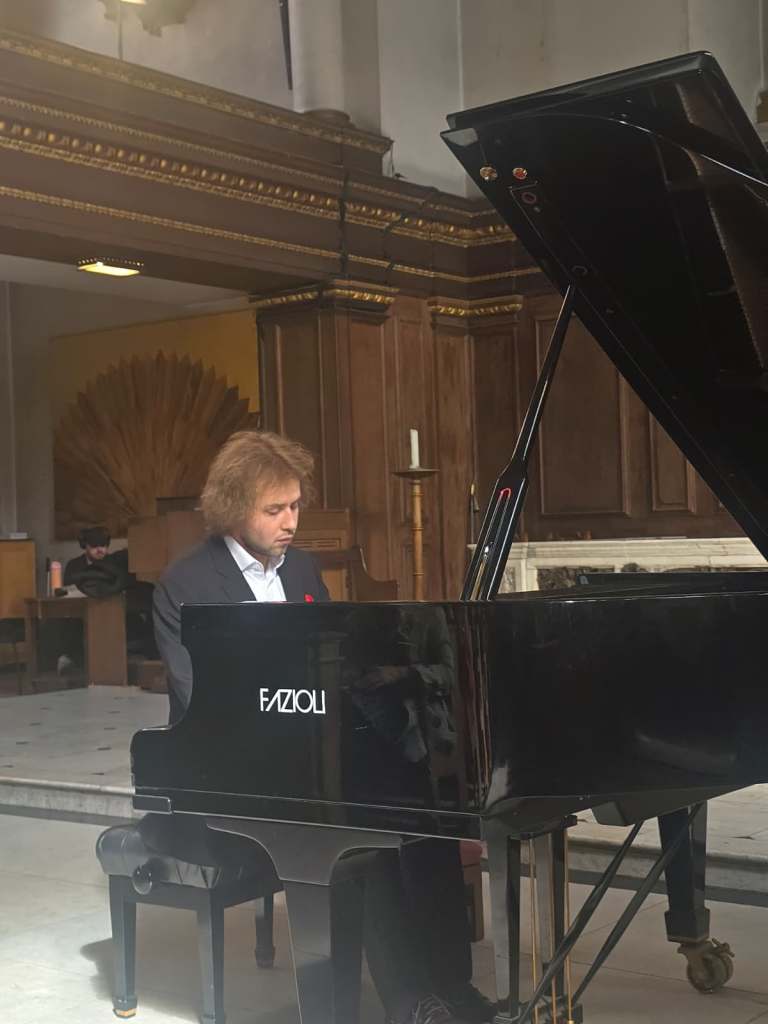
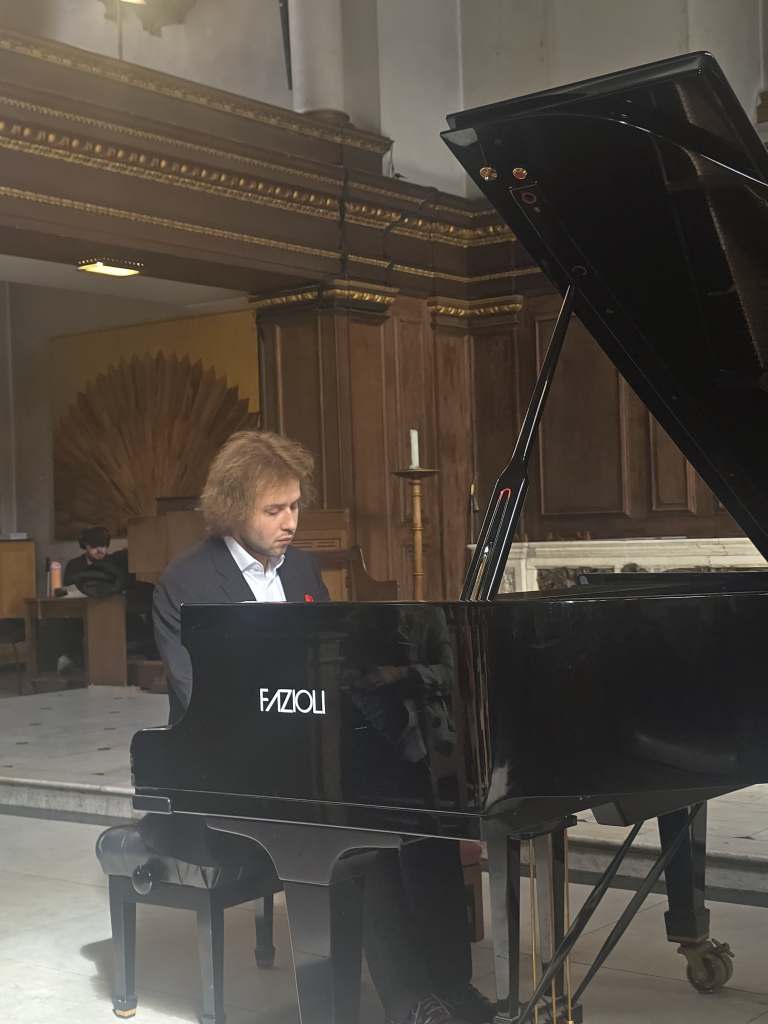
And we could have danced all night judging from the enthusiastic audience and the friends that came back stage after a concert of such scintillating playing . Sumptuous sounds and a characterisation that he gave to each of these well known pieces. There was also a sense of occasion like entering a great opera house where the curtain would rise and magic would exude from the stage .
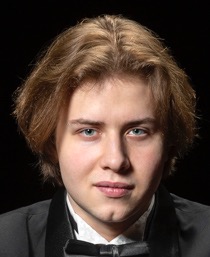
It was the same magic that this dashing young prince with a golden mane could extract from this great black beast seated in front of the altar in this most beautiful of London churches.
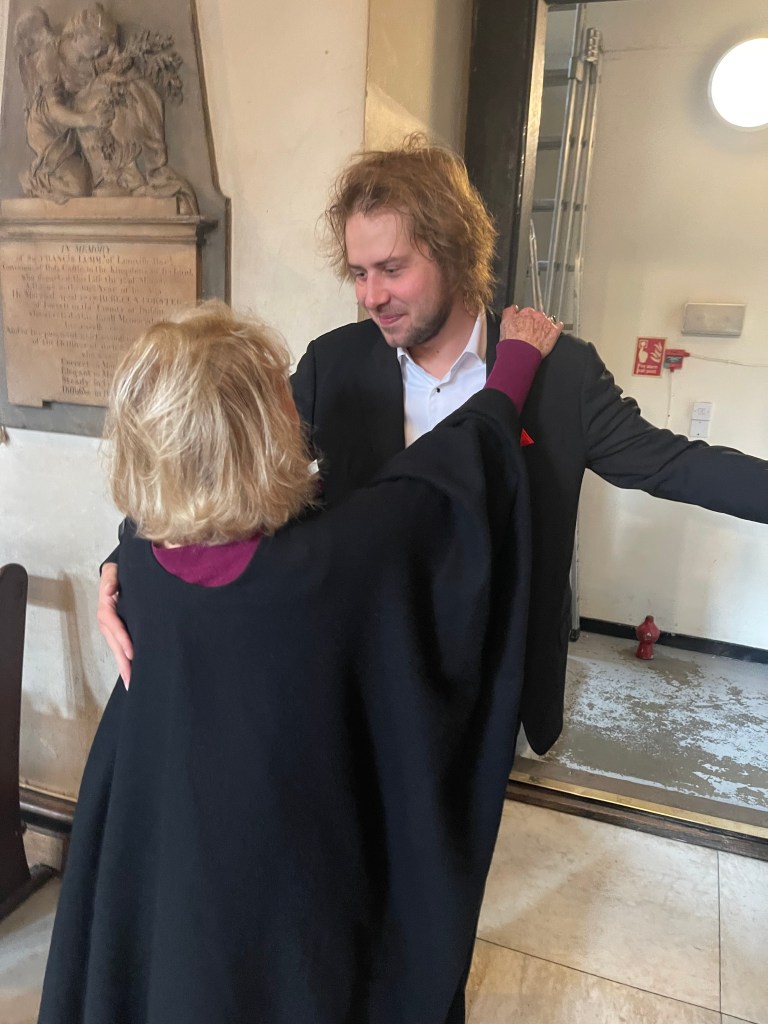
A candle lit for our loved ones is always a must in this church
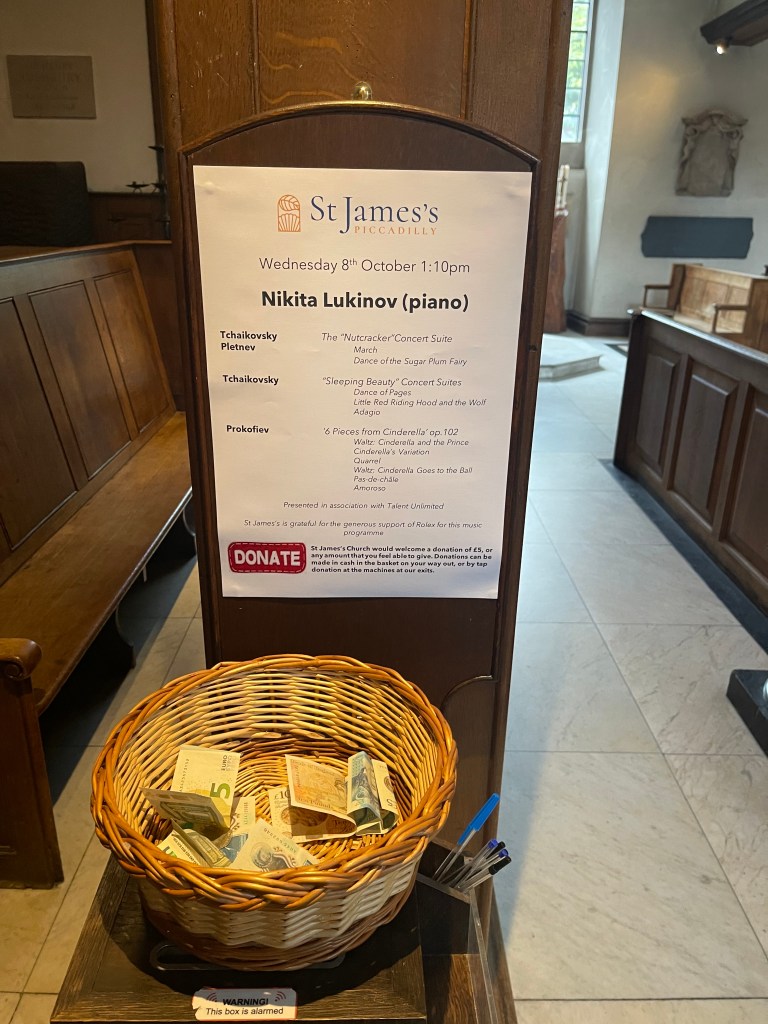
And it was fitting that it should be in front of the altar because the theatre is, too, a sacred place where dreams can become reality. An imposing beginning with the March from the ‘Nutcracker’ in Pletnev’s wonderful transcription for solo piano written by a great pianist who knows how to extract the secrets from the piano with breathtaking daring and heartrending beauty. Has the ‘Sugar Plum Fairy’ ever sounded so glowingly luminous just like a porcelain doll of perfect proportions! Nikita’s knowing chiselled playing of great delicacy was a wonder to behold. The ending of Tchaikowsky’s own ‘Sleeping Beauty’ was quite overwhelming for the sweep and sumptuous sounds that wafter around this very resonant edifice from fingers that flew up and down the keys with such aristocratic mastery.
The six character pieces from Prokofiev’s Cinderella were played with pungent humour and insinuating pulsation. The voice of Prokofiev every bit as overwhelming and exciting as Tchaikowsky. Masterly performances from a pianist who has recently completed a 30 concert tour in Scotland bringing music to places where it has never been before. In November he will go on a similar tour of China with concerts and masterclasses where this Prince in Shining Armour will seduce and excite his audiences with his music making as he has today.
Tchaikovsky-Pletnev – excerpts from the “Nutcracker” Concert Suite March Dance of the Sugar Plum Fairy
Tchaikovsky and “Sleeping Beauty” Concert Suites Dance of Pages Puss in Boots and the White Cat Little Red Riding Hood and the Wolf Adagio
Prokofiev – ‘6 Pieces from Cinderella’ op.102 Waltz: Cinderella and the Prince Cinderella’s Variation Quarrel Waltz: Cinderella Goes to the Ball Pas-de-châle Amoros
The indomitable Canan Maxton of Talent Unlimited Julian Jacobson Canan Maxton. Nikita Yisha Xue
Nikita has been a Talent Unlimited musician since 2019z In October 2022, Nikita became the youngest senior staff member at the Royal Conservatoire of Scotland and across all UK conservatoires. Nikita is a dedicated member of the Live Music Now Scotland scheme, passionately committed to providing live music of an international standard to socially disadvantaged communities. For the 2024/25 season, Nikita embarks on a tour of 35 recitals and outreach events in Scotland, spanning from the Scottish Borders to Orkney Islands and from Aberdeen to the Isle of Skye. This tour is in close collaboration with the Live Music Now Scotland, and alongside piano recitals in concert halls and music clubs, Nikita will deliver outreach events in local care homes and schools in the area of his recitals. He says: “It is an unbelievable feeling when people’s eyes sparkle so joyfully and sincerely after the performances, and I know I contributed something truly valuable.”
Other 2024/25 season highlights include recitals at the London Armourers’ Hall, London Bechstein Hall, Perth Concert Hall and St Magnus Festival. A disciple of the Russian Piano School, Nikita Lukinov started his musical education at the age of six in Voronezh, Russia. At the age of 10, he gave his debut performance as a soloist with a symphonic orchestra and at 14, he won a full scholarship to study at the Purcell School in London. Nikita was awarded full scholarships to pursue a Bachelor’s Degree in 2017, a Master’s Degree in 2021, and an Artist Diploma Degree in 2023 at the Royal Conservatoire of Scotland (RCS) at the class of Prof. Petras Geniušas.
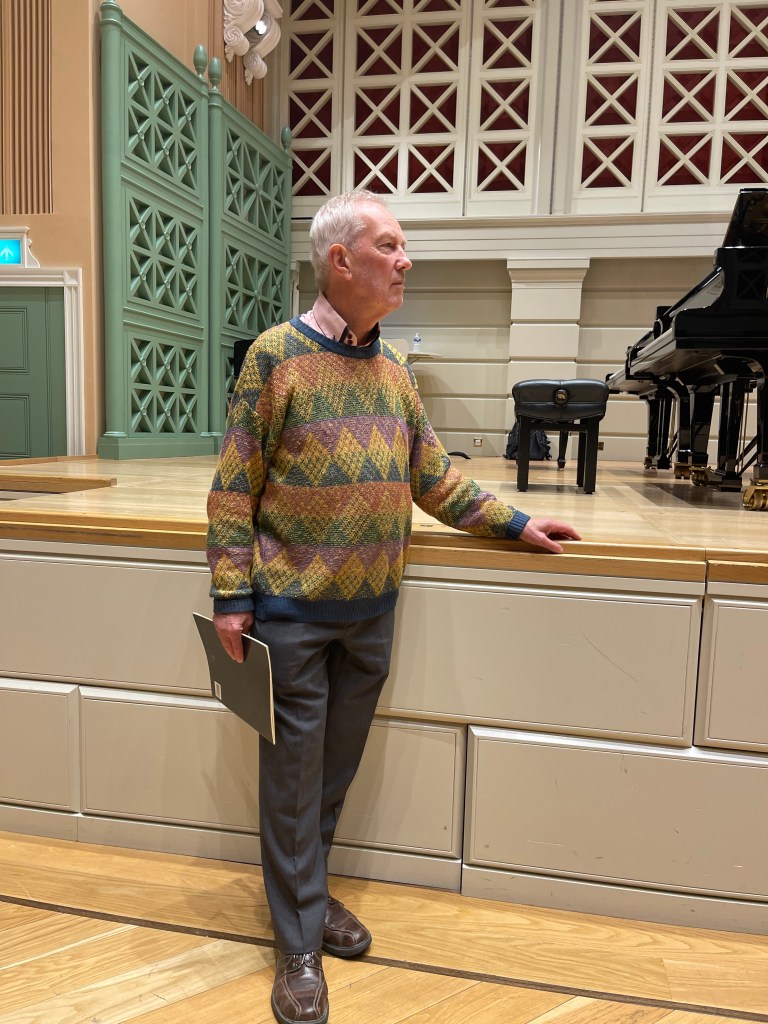
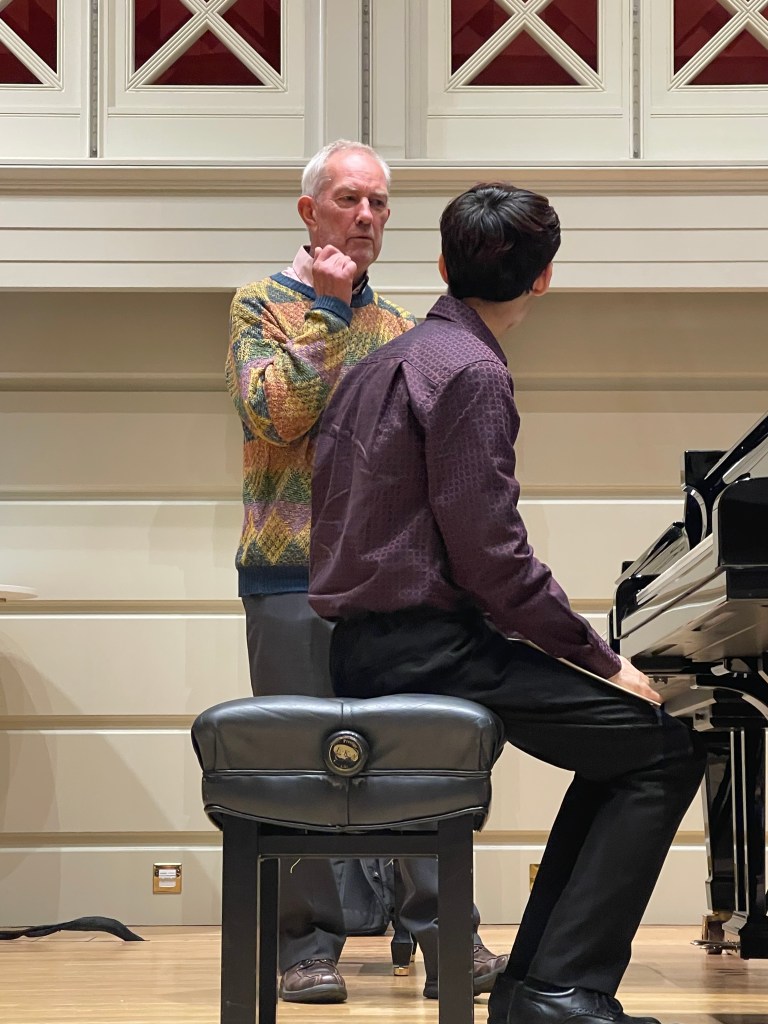
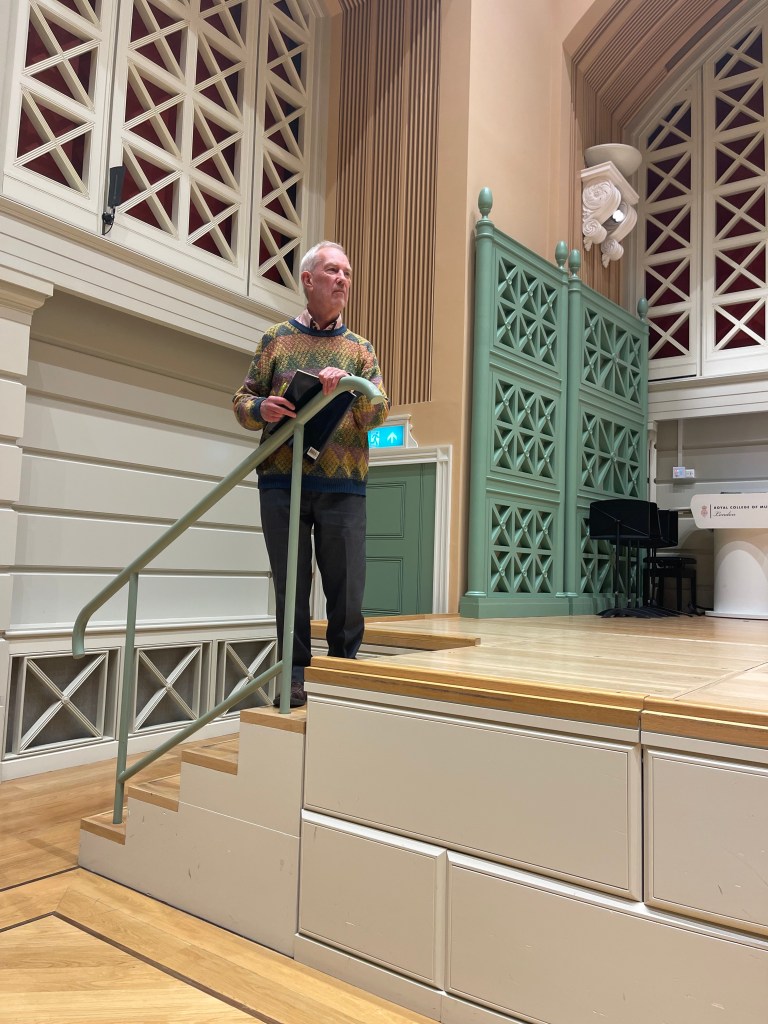
Roy Howat sharing his intimate knowledge of French music bequeathed to him by Jacques Février and Vlado Perlemuter . He is one of the founding editors, with Pierre Boulez, François Lesure and others, of the Paris-based Complete Debussy Edition (Œuvres Complètes de Claude Debussy), for which he has edited much of the piano music. His other publications include the books, Debussy in Proportion and The Art of French piano music, Author of many important books on French Music for which he was recently made Chevalier de l’Ordre des Arts et Lettres by the French government.
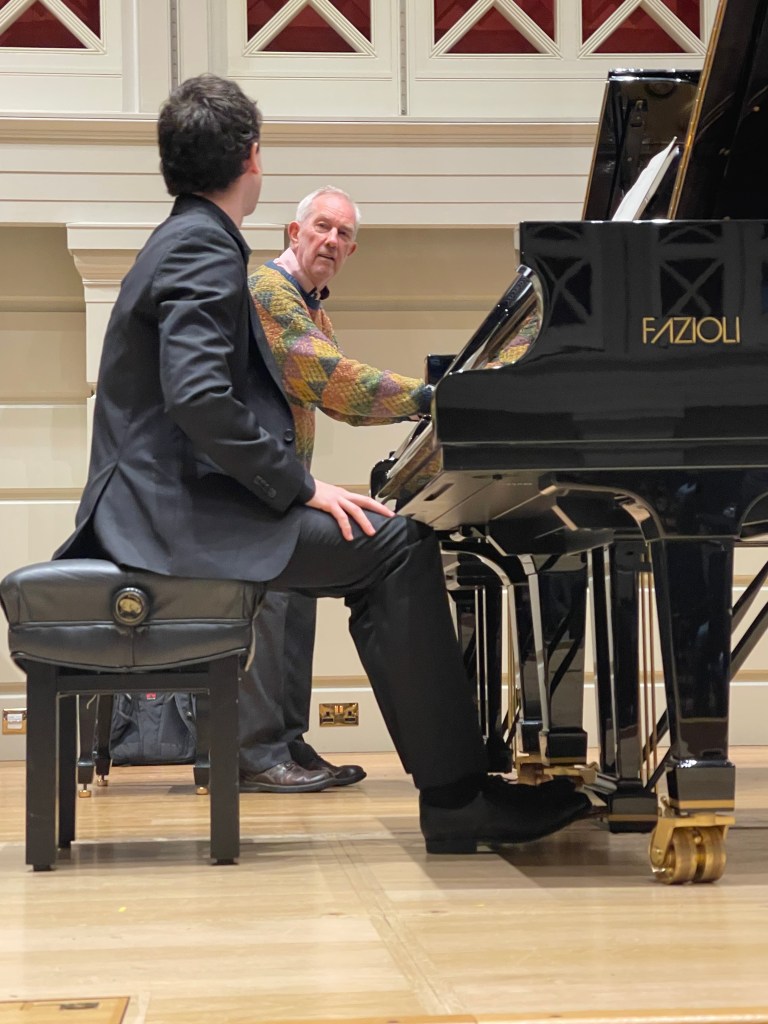
He was able to give inspiration and practical help to four very fine students.
Debussy Images is standard repertoire and Book two was sensitively played by Rebekah Yinou Tan but the Fantaisie for piano and orchestra and the Ballade are rarities in the concert hall.
Howat was able to explain the origin, varying editions and the evolution of the works .
The early Fantaisie brilliantly played by Imogen Edwards was abandoned by Debussy and only published long after his death .
It was composed between October 1889 and April 1890, but only received its first public performance in 1919, a year after Debussy’s death. The work is dedicated to the pianist René Chansarel, who had been scheduled to play the solo part for the cancelled premiere in 1890 . The first public performance of the work, scheduled in 1890, was cancelled when Vincent d’Indy, who was chosen as conductor, claimed that he did not have enough time for rehearsals and proposed to perform only the first movement, which Debussy declined.Over the next few years the very self-critical Debussy made numerous revisions, but eventually gave up on the work and declared that the Fantaisie would never be published or performed during his lifetime.It received its first public performance posthumously on November 20, 1919,in London by the Royal Philharmonic Orchestra with Alfred Cortot as soloist.It was published first in a two-piano version (2nd piano is a reduction of the orchestra score) made by Gustave Samazeuilh in 1919, with the full score in 1920, both by Eugène Fromont, one of Debussy’s early publishers.
I only ever remember that eclectic young prize winner of the first Leeds Jean Rodolphe Kars play it in public and he has since become a Catholic priest in the Emmanuel Community ! Martha Argerich subsequently made a recording of it with Daniel Barenboim conducting .
The Ballade is an early work and a true rarity and was played with ravishing sounds by a young Italian student Franco Barzelatto who managed to tame a not easy Fazioli piano .
The first thing Howat asked was if he knew the origin of the piece . Which he certainly did !
Debussy composed a “Ballade slave” in 1890, and in 1903 he revised and republished it simply as Ballade. Coloured both with exuberance and melancholy, it shares kinship with the far more popular Arabesques written shortly thereafter.
In a letter to his publisher, Debussy wrote of “the art of turning the pedal into a kind of breathing which I observed in Liszt when I had the fortune to hear him in Rome.” That he was referring to an event which had taken place decades earlier confirms the lasting impression the master made on the younger composer. Debussy was 21 when he won the prestigious Prix de Rome in 1884. The scholarship granted a three-year stay at the French Academy in Rome, where on three occasions in January of 1886, Liszt and Debussy met.
Upon returning to Paris, Debussy began to achieve a broader recognition and the publication of solo piano pieces soon followed, among them a “Ballade slave” in 1890. Though Debussy had indeed spent three months in Russia during his late teens, there is little about this enchanting piece that sounds remotely Russian or Slavic, and in 1903 he would revise and republish it simply as Ballade. Coloured both with exuberance and melancholy, it shares kinship with the far more popular Arabesques written shortly thereafter. Its neglect is inexplicable and it is a concert rarity.
I did not know that a Roy Howat had also studied with Jacques Février, the companion of Poulenc whose rarely heard Trois Pièces were given a scintillating performance by Leo Little . He was able to pass on inside information about Poulenc’s pedalling and to recommend listening to the historic performance of Poulenc and Février playing the two piano concerto.
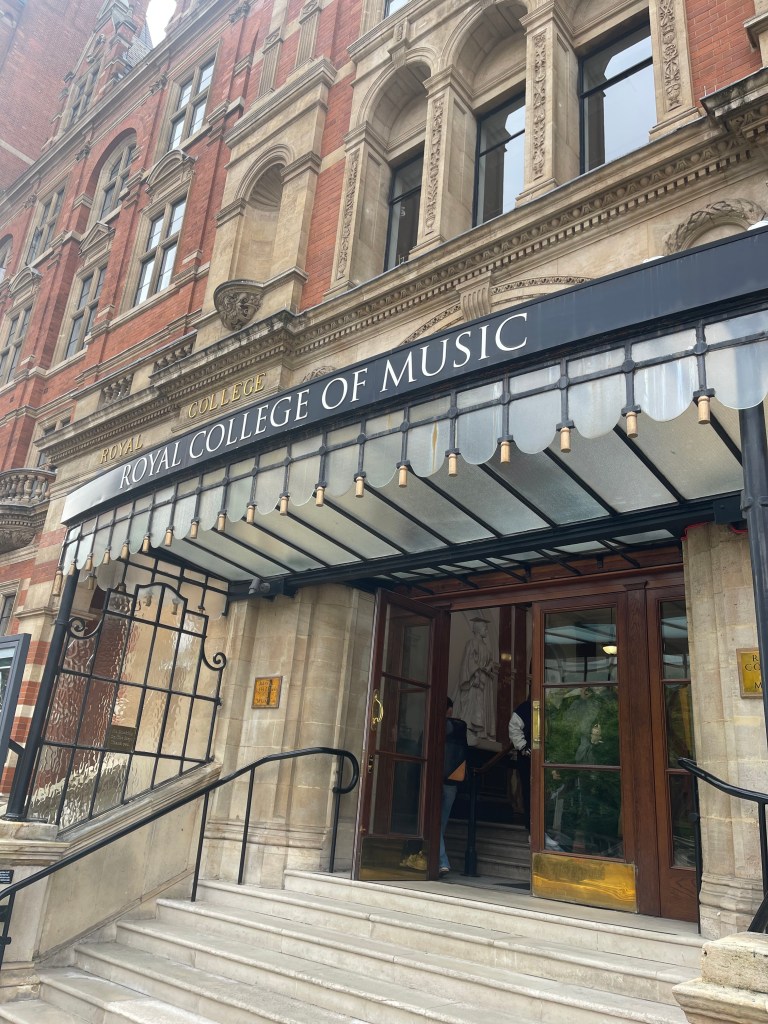
In thanking Roy Howat Ian Jones mentioned the most complete edition for Peters of Chopin’s Studies that are in the process of being published. Roy Howat was a disciple of Vlado Perlemuter who was a protégé of Cortot and together with his authoritative scholarship it should make for an exciting return to the RCM in the future.
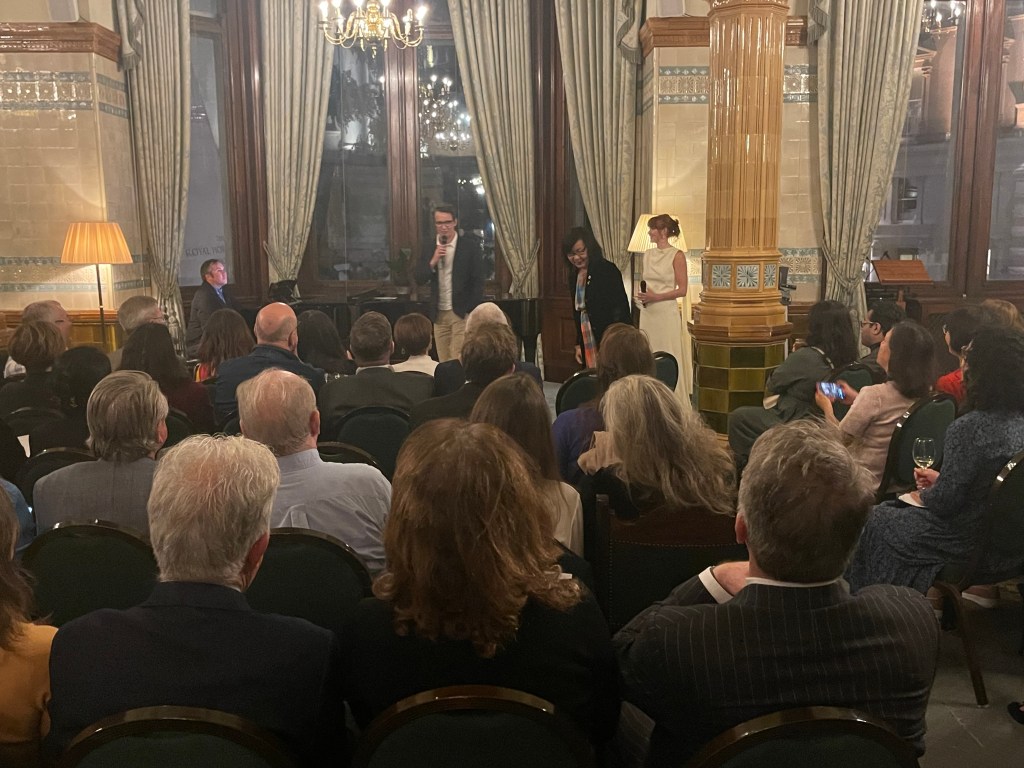
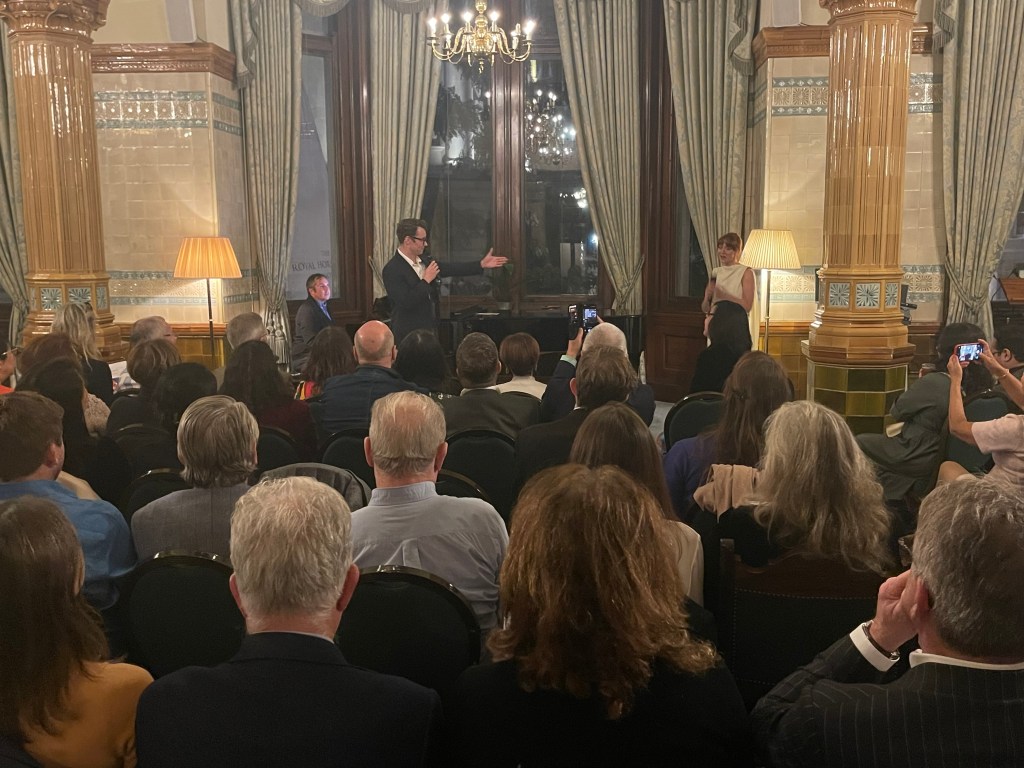
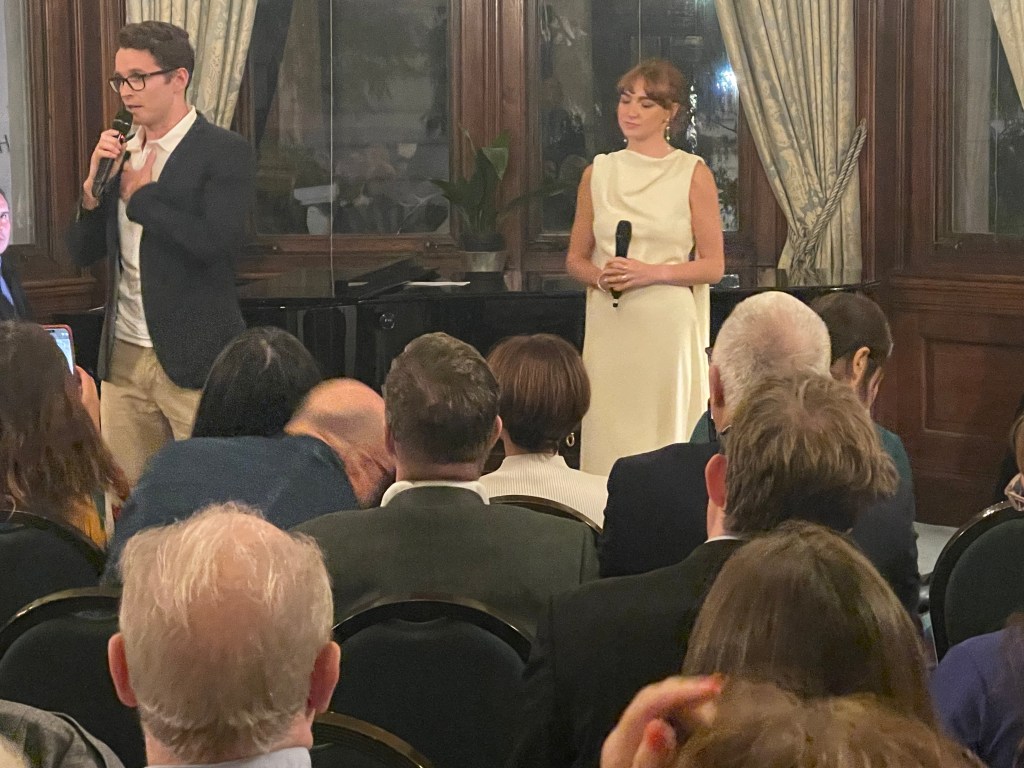
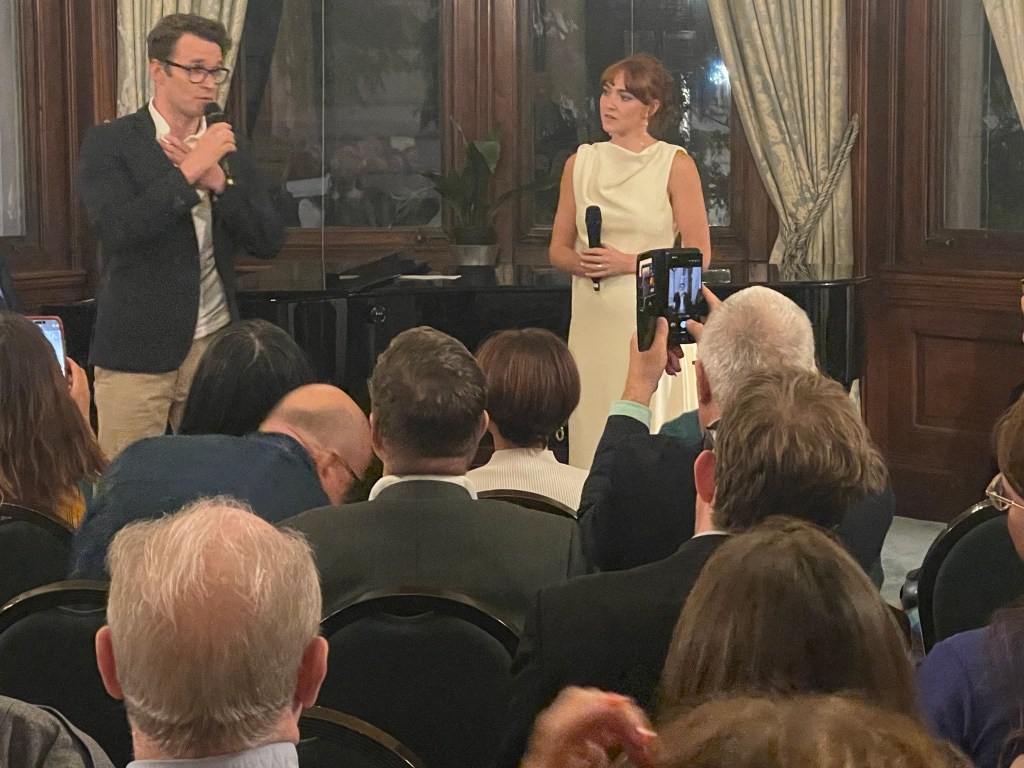
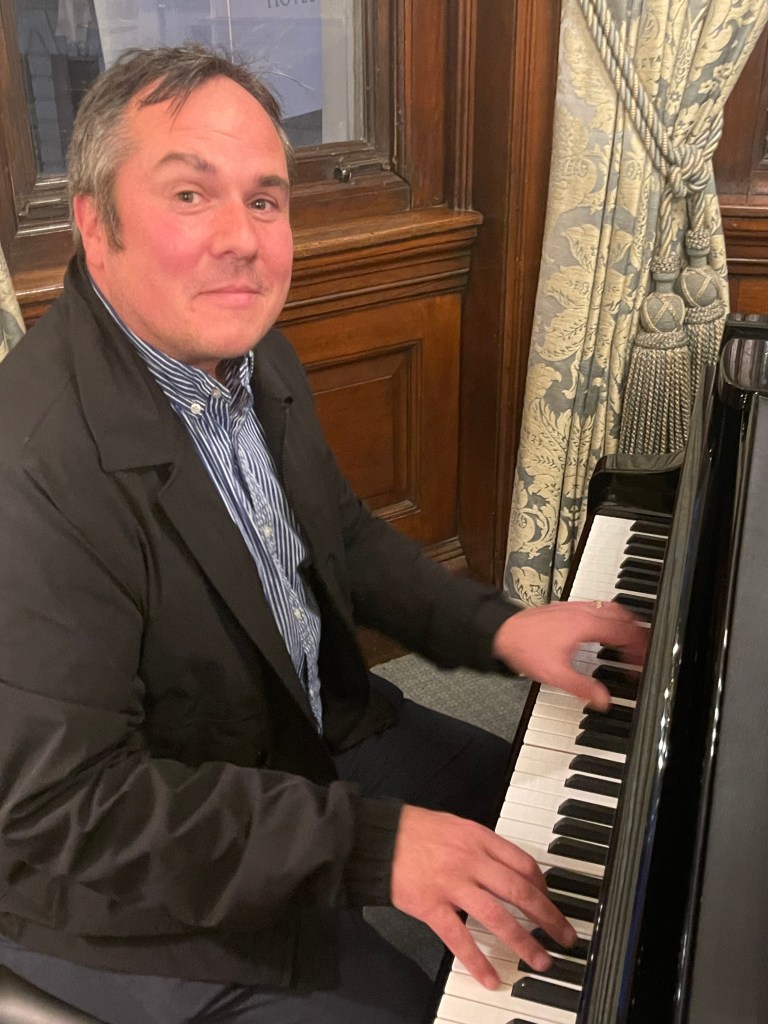
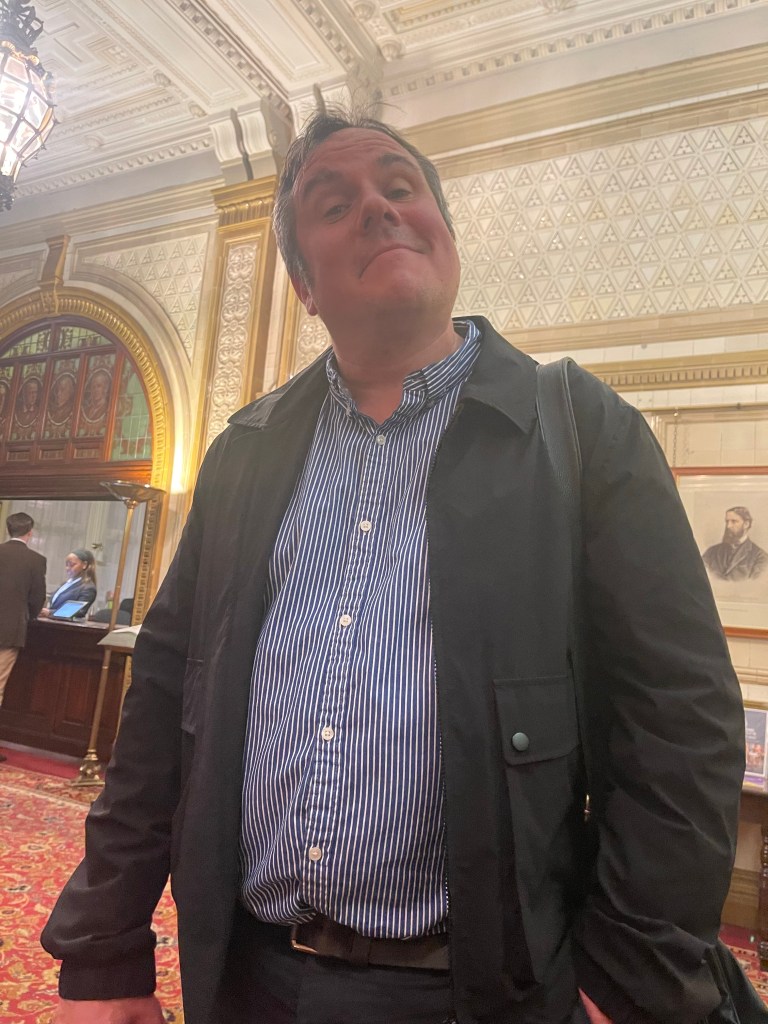
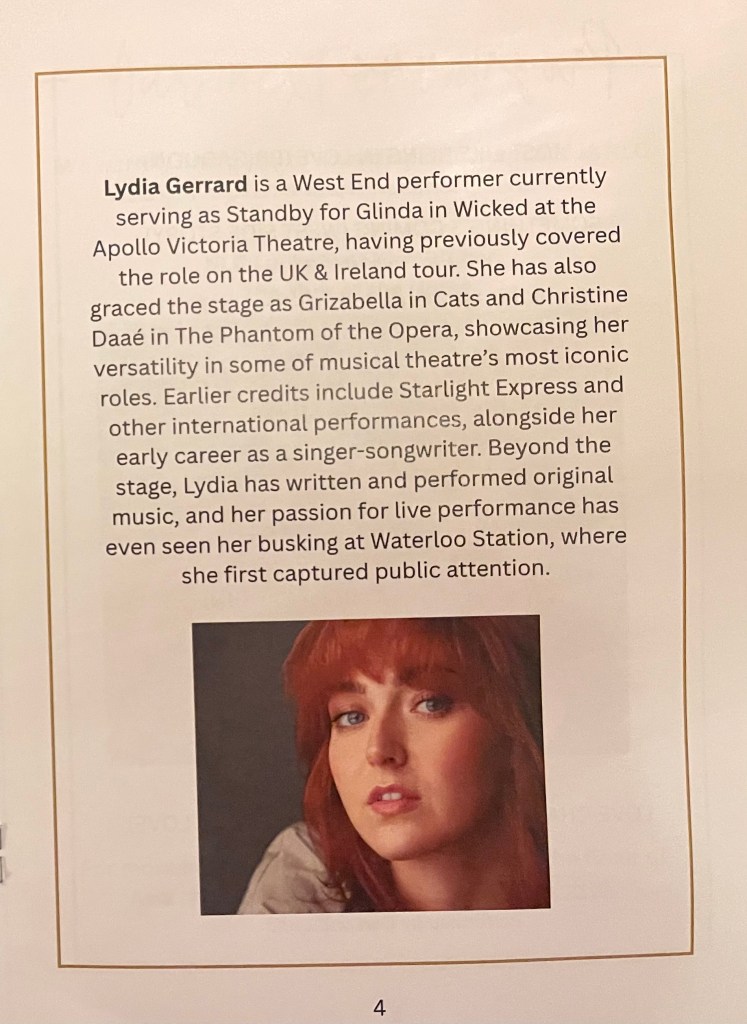
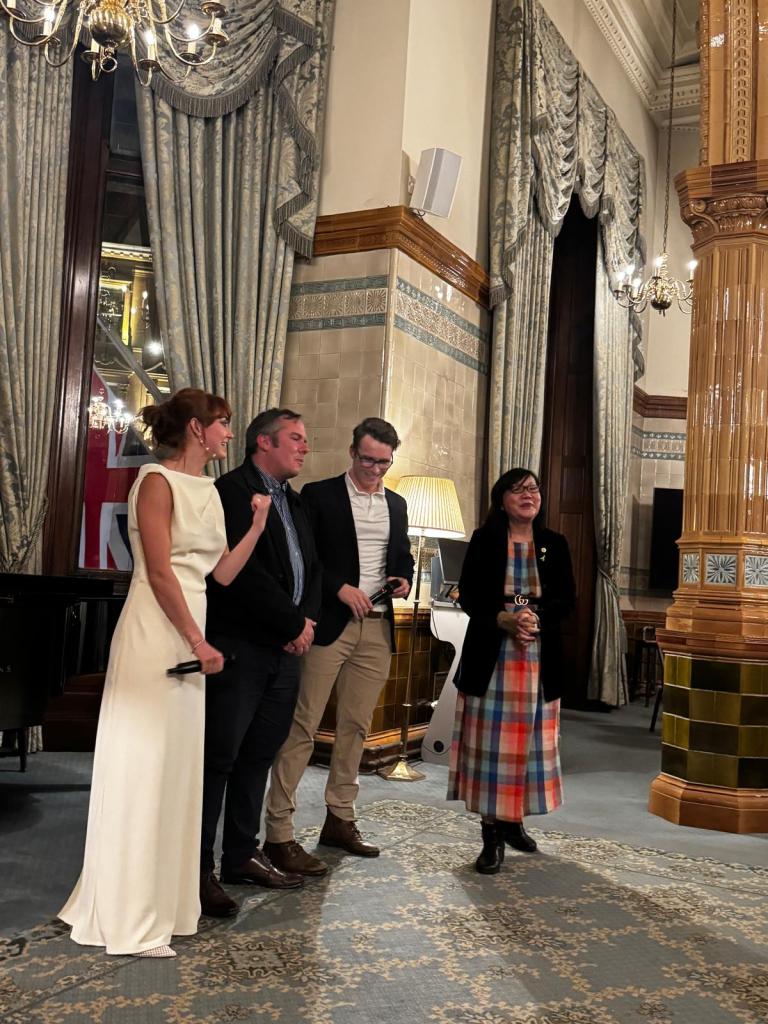
Michael Colbourne and Lydia Gerrard with a West End Musical Evening at the National Liberal Club…….
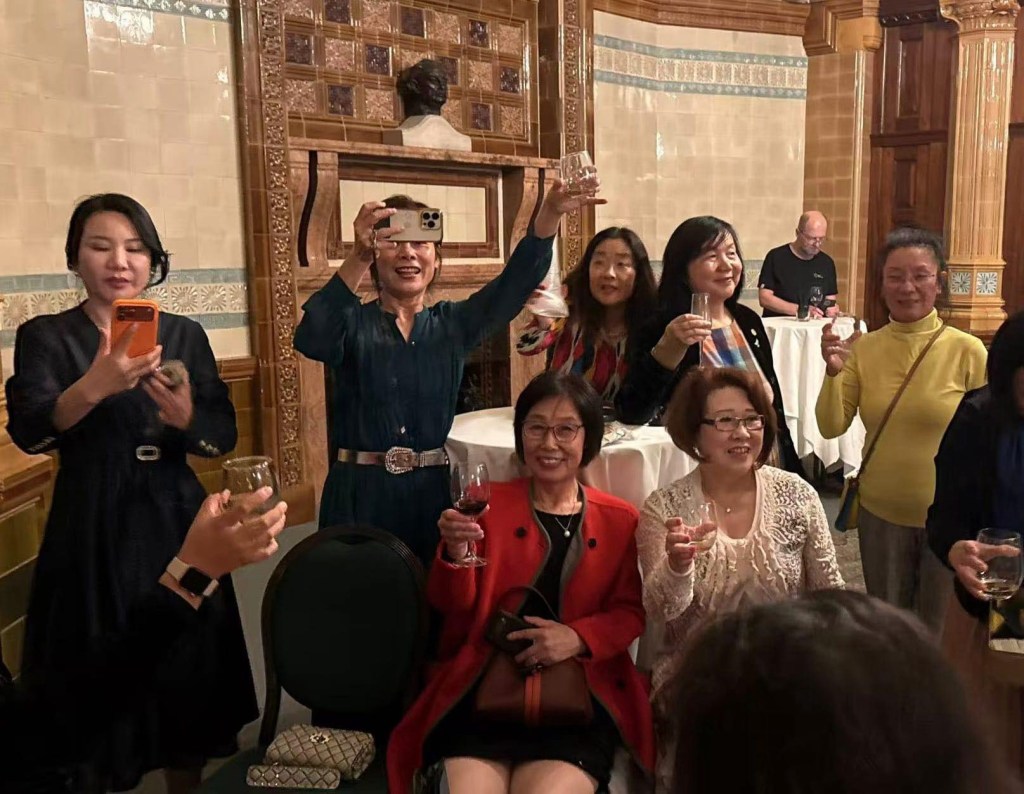
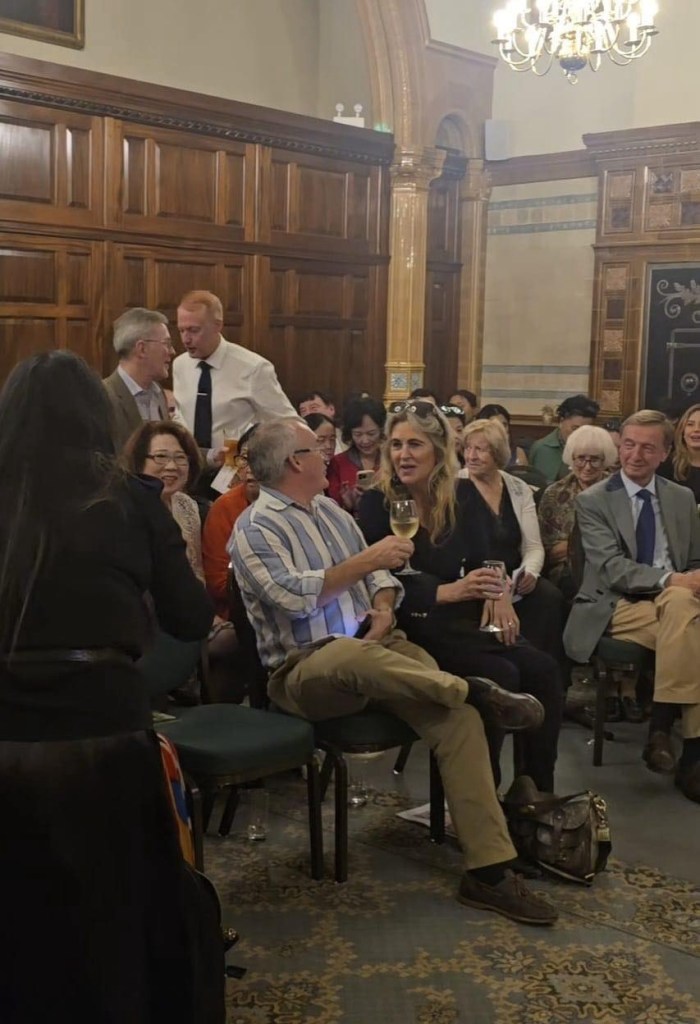
Yisha Xue has come up trumps again with her Asia Circle with a sold out house for an exhilarating evening of songs from the shows . Michael standing in at the last minute for an indisposed Carl Man
…..but you never would have known it because he took over with dynamic drive and hypnotic personality as he joined a superb Lydia Gerrard in solos and duets . Performances that brought them a standing ovation with calls for more after their sensational rendering of ‘Tonight’
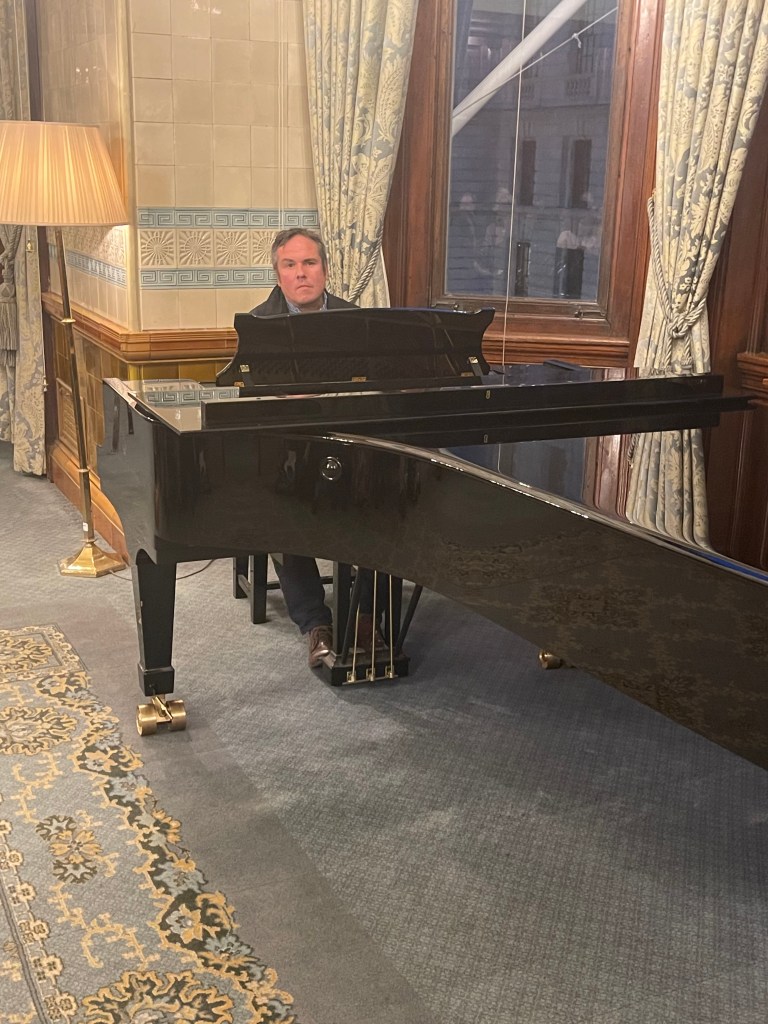
The hero of the evening was the superb orchestra that Peter Woollard ( ex RAM ,my Alma Mater) provided on the magnificent Steinway that stands in this hall, where Rachmaninov gave his last performance in 1938 before being forced to flee to America where he died five years later.
A scrap of paper with names of songs scribbled on it was all that was needed to ignite this extraordinary evening of Broadway that now comes to the Liberal Club.
Mikey Colbourne – Mikey is no stranger to the West End and the musical theatre industry. With over 10 years in the business he’s performed in shows such as Les Miserables, Wicked, Company, Joseph and has recently finished playing Roaul and understudying The Phantom in The Phantom Of The Opera. He is thrilled to singing this evening.Peter Woollard currently the Assistant Musical Director of Wicked. He has been lucky enough to conduct a variety of shows including: Miss Saigon, Cats, We Will Rock You, Annie Get Your Gun and Acorn Antiques. Pete is also a composer and is proudly supportive of new work.Yisha Xue with CEO Paul Vesperphoto credit Dinara Klinton https://christopheraxworthymusiccommentary.com/2024/03/20/christopher-axworthy-dip-ram-aram/
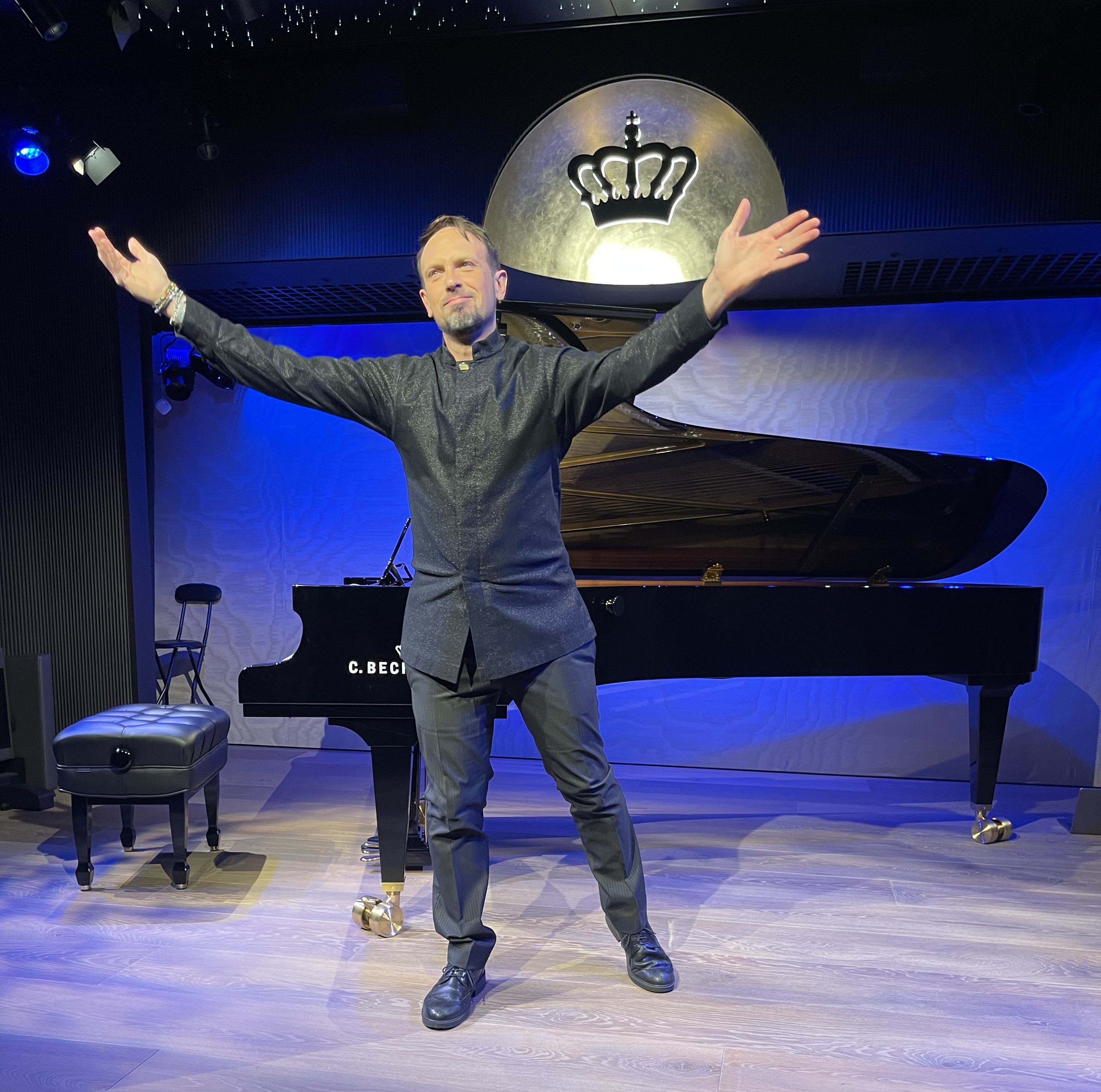
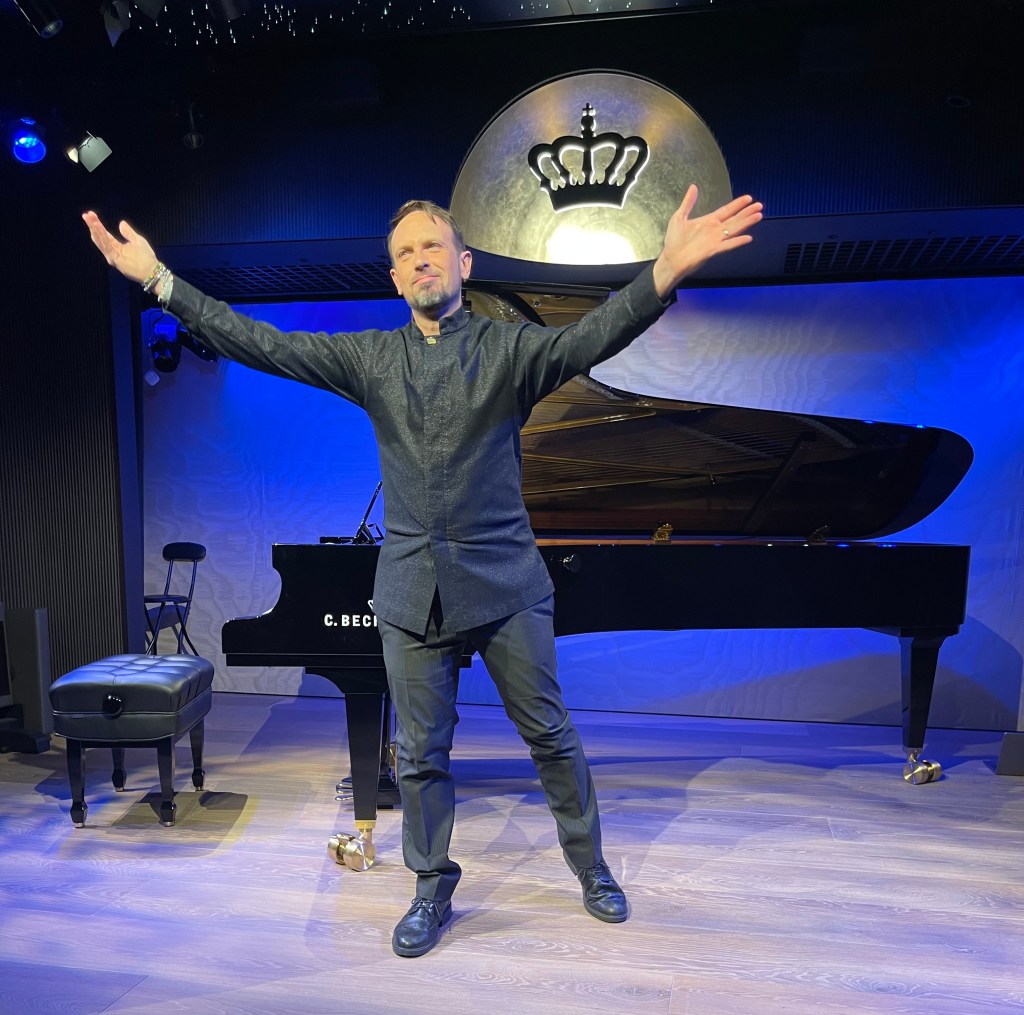
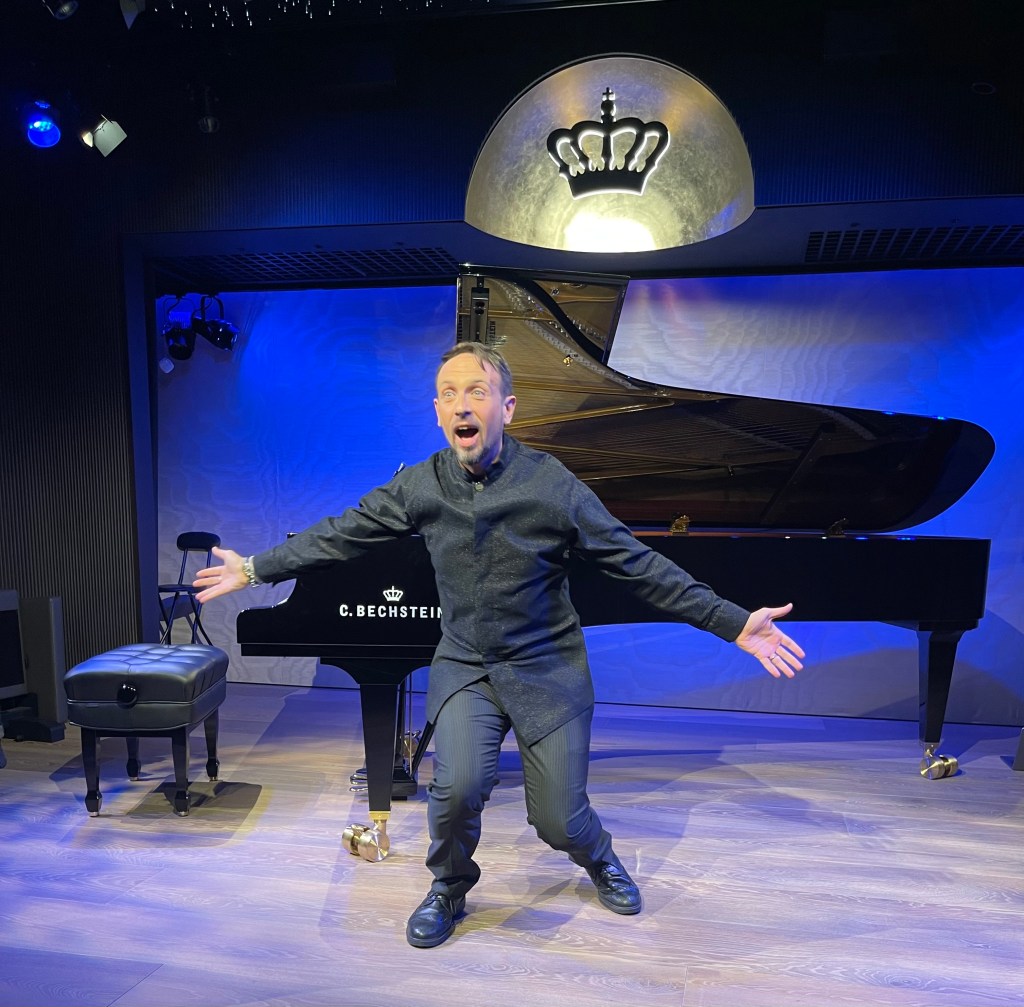
We could have danced all night with Gabriele Baldocci .
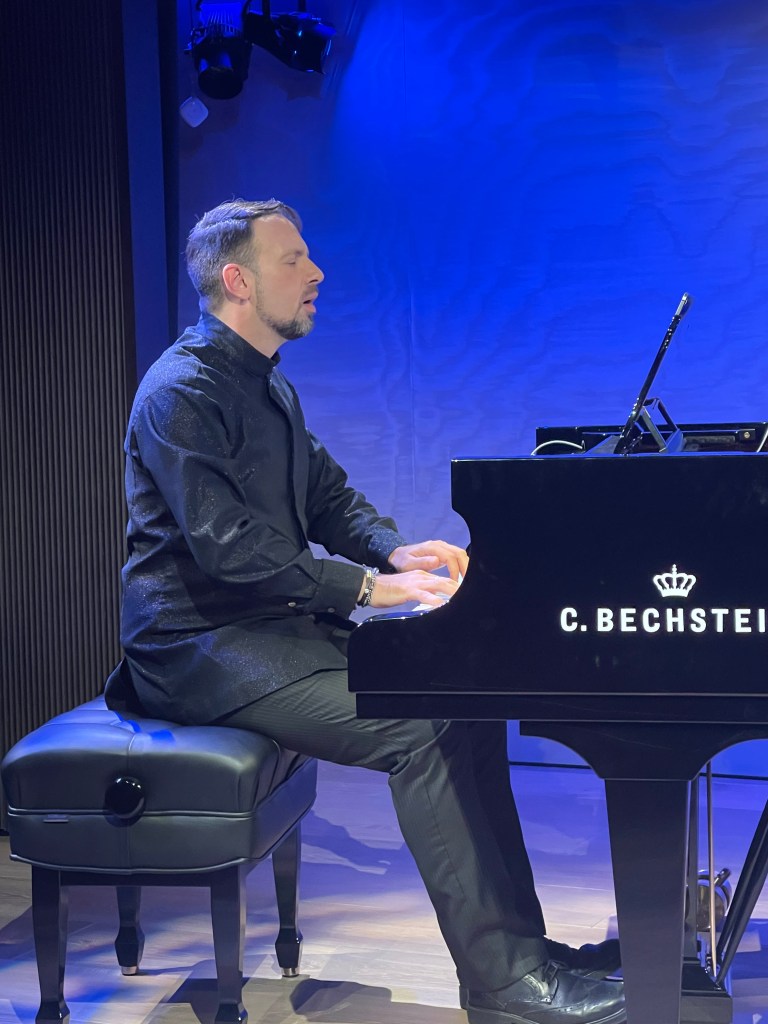
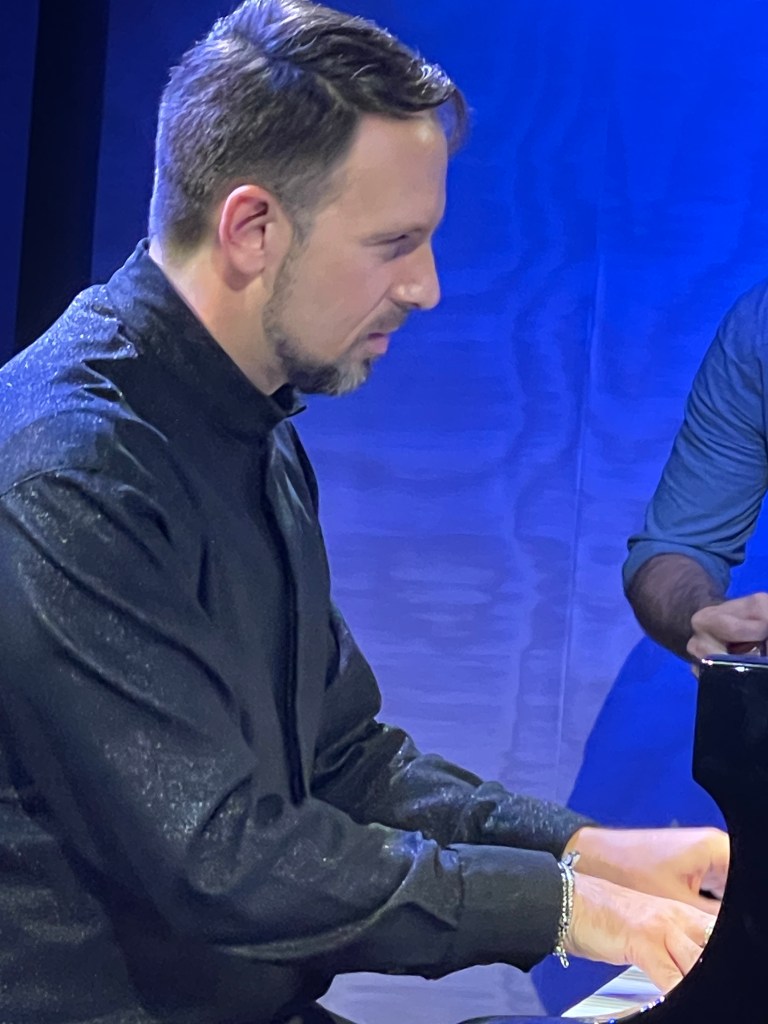
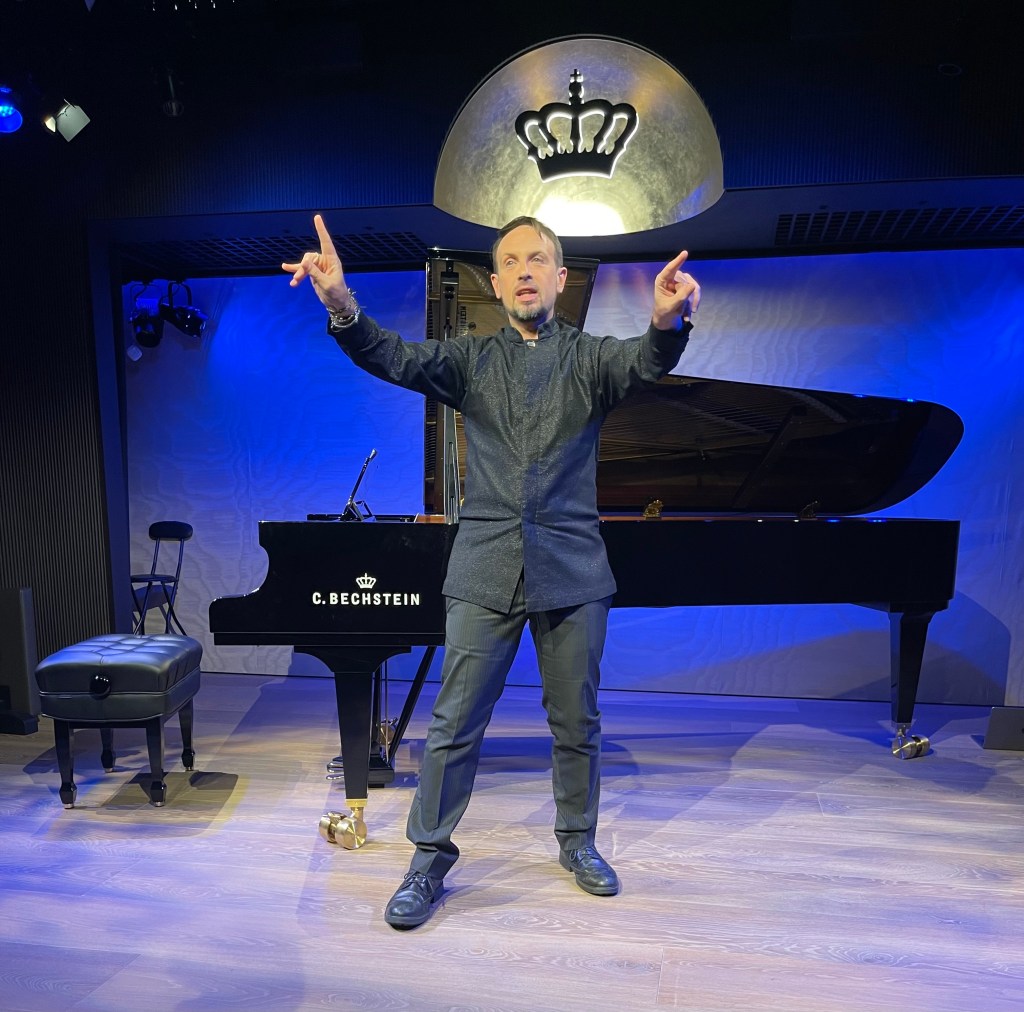
A kaleidoscope of emotions in words but above all in music in one of those unforgettable evenings that make one happy to know there are still people around who can touch us so profoundly with such simplicity, humour and extraordinary mastery. A love song dedicated to his wife Nagore opened the concert after a brief introductory improvisation. Immediately we were immersed into this magic world where Gabriele could transform his childhood experiences into music. And what music ! Playing of the beauty and mastery that I remember when he came to play at the Teatro Ghione in Rome as part of a series of the star students of the International Piano Academy in Lake Como founded by William Naboré. A rave review from Dino Villatico of La Repubblica for a twenty year old pianist, established this young man as one of the most versatile and eclectic musicians of his generation . A sensitivity that belies appearances ( forgive me Gabriele) with a series of beautiful youthful experiences told in words but even more vividly in music. The President of the Academy is Martha Argerich who has become a friend and mentor to Gabriele and his family and it was fitting that the final piece in the programme should be inspired and dedicated to her.
Every piece had a story and was evoked with playing of intensity and beauty. An improvised freedom that brought his music alive with fervent conviction and heartrending sensitivity. A series of emotions that rarely one experiences in concert . Told by this young man, we became part of this world and were embraced by the same experiences of his upbringing as a child in Livorno. ‘In their arms’ dedicated to the childhood love of his grandparents and remembering the feeling of warmth and love that a child could feel . It was moving to hear such radiant beauty but also at the end to see Gabriele with a gesture of embracing his loved ones.
‘Ashen firefly ‘ was a memory of his father coming to say good night and as he turned the light off he could see the glow of his cigarette like a firefly. ‘Valldemossa’ was a harrowing picture in sound of the impression of the damp cell where Chopin spent a fateful winter on Majorca .’Origami’ was the impression as a child who loved turning a blank piece of paper into many shapes ,but then discovering that it was always only a blank piece of paper.
Gabriele even asked one of the audience to join him so he could paint an improvised portrait of him in sound.
‘Verde Luce’ was the green light that shone in the dark of a hospital room as he spent months in hospital with an illness that had been hard to diagnose. ‘Silent watch’ was a portrait of his mother who would stay with him and reassure a frightened young child during the night.
Here are Gabriele’s own words that are much more poignant than any I could add:
‘I was seven, I fought sleep every night, afraid I might never wake up.
I was in the hospital with an auto immune condition, too young to fully understand my illness, but old enough to feel the weight of mortality. Sleep felt dangerous, so I resisted it the only way I could, by staring at the small green light above the door. That glow became my companion, my anchor, my way of holding on.
Verde Luce is the music of those nights. It is also the first piece in my Trilogy of ‘Becoming’, which I will unveil step by step in the coming weeks.
I hope it brings you the same fragile beauty it once brought me
Do you remember the little things you whispered to your parents before falling asleep? Your fears, your secrets, your dreams. Those fragile words inspired my new piece, Night Whispers, dedicated to my son Alessandro.
Alessandro and Nagore
It is music about vulnerability and comfort, the quiet dialogue between child and parent that only happens when the world finally slows down.
Some have described it as “the lost Kinderszenen”, as if Schumann had written one more miniature, hidden away for a night like this. That thought makes me smile, and it captures perfectly the spirit of this piece.
I hope it brings you a moment of stillness and tenderness…”
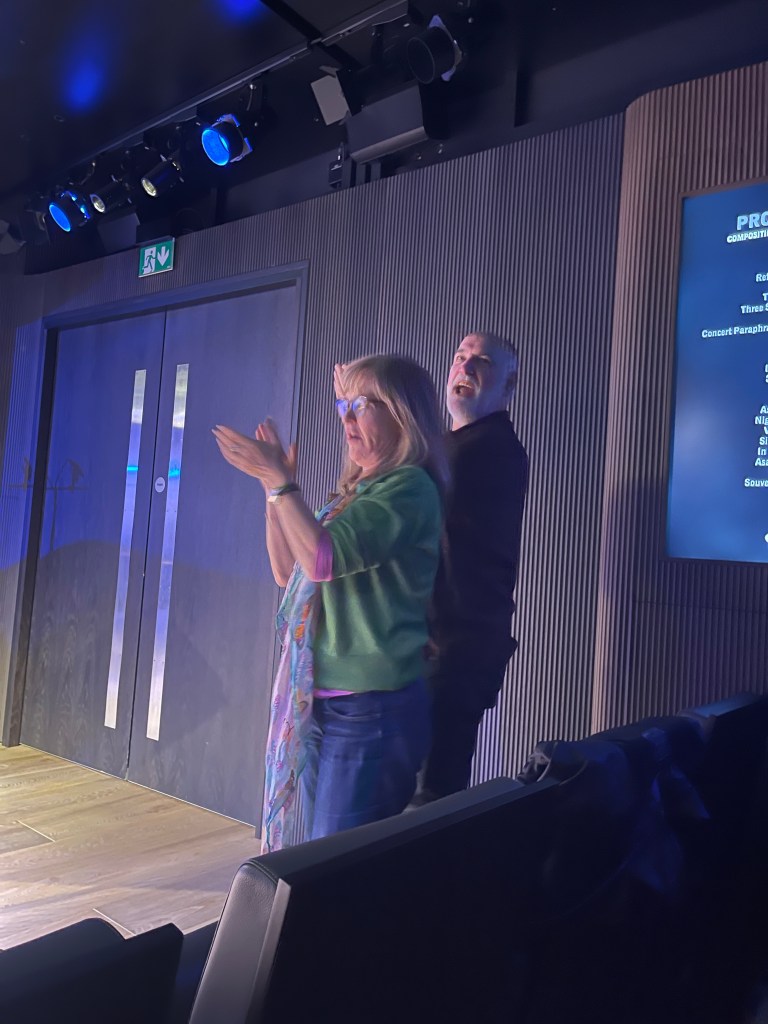
A standing ovation greeted this evening of such emotions and masterly music making.
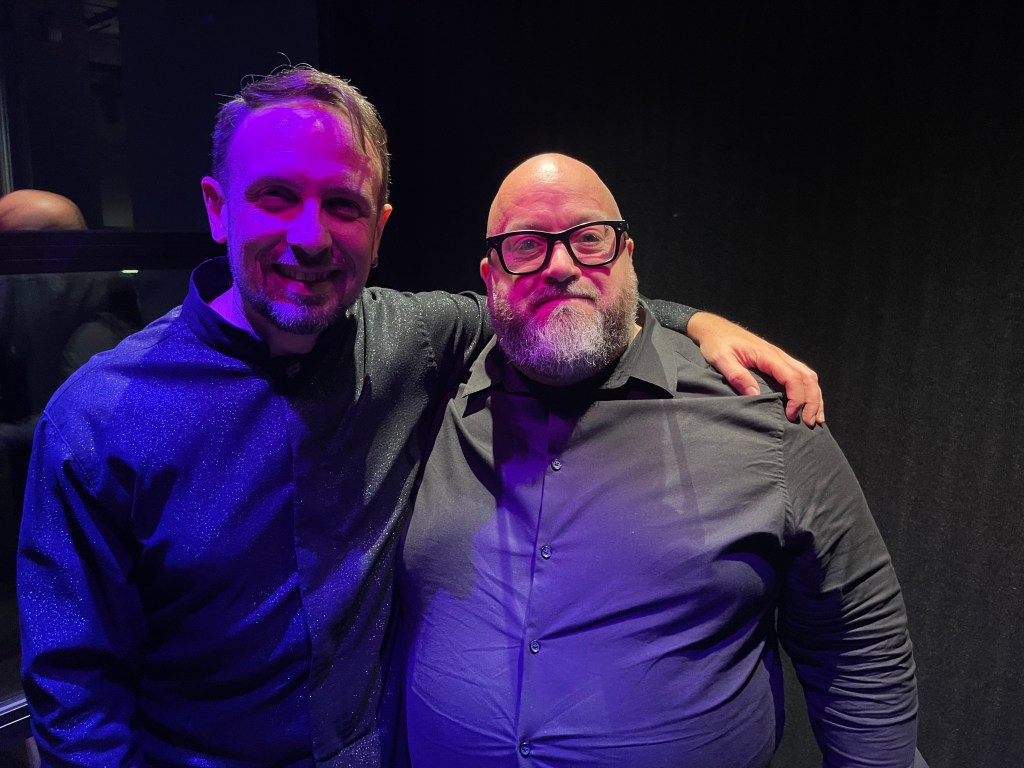
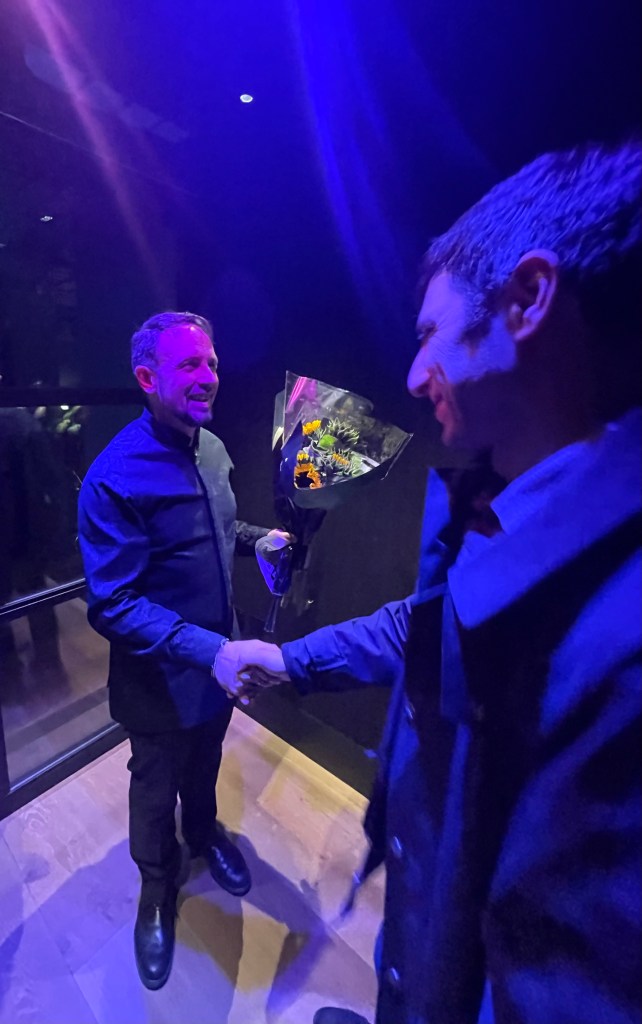
In the green room afterwards many friends and admirers came back stage , some had even travelled from Livorno to be present on such a poignant occasion.
Gabriele Baldocci (born May 10, 1980 in Livorno ,Italy) is an Italian pianist and composer naturalised British .
Baldocci is known worldwide for performing with the legendary Argentinean pianist Martha Argerich
After studying with Ilio Barontini, Franco Scala ,William Grant Naboré and Sergio Perticaroli and having studied with or having been coached by Alicia De Larrocha,Leon Fleisher and Dmitri Bashkirov at the International Piano Foundation “Theo and Petra Lieven ” in Cadenabbia, Baldocci began an intense solo career performing in important venues worldwide (Tonhalle in Zurich , Teatro Colón in Buenos Aires , Sala Verdi in Milan ). His large repertoire ranges from Bach to contemporary music and is especially focused on the composers of the Romantic Period such as Fryderyk Chopin (of whom he has recorded the complete Ballades and Impromptus),Franz Liszt , and Robert Schumann. In 2012 he began recording and performing the complete Beethoven Symphonies transcribed by Liszt for piano solo
Very active as a chamber musician, he has performed with Ivry gitlis,Marco Fornaciari,Mark Drobinsky, and other great names of the international music scene. Baldocci has toured extensively in duo with Martha Argerich , his good friend and mentor.
Since 2008, he has formed a stable piano duo with the Argentinean pianist Daniel Rivera; they have performed at important music Festivals around the world.
Since 2010, he has been artistic director and Ambassador of the Martha Argerich Presents Project (MAPp), an ambitious project launched by Argerich to encourage cooperation between famous artists and young talented musicians in order to create a worldwide circuit of performances and pedagogy.
More recently, Gabriele Baldocci has advanced his career as a conductor, collaborating with important orchestras in Europe and America, and he cultivates his interest for cinema producing and directing short and feature movies.
In 2016, he played keyboard in the Progressive Rock band The Gift, publishing the album “Why the Sea Is Salt” for Bad Elephant Music.
Baldocci is a Piano Professor at Trinity Laban Conservatoire of Music and Dance after spending six years at the Potenza Conservatory of Music and he is the Director of the London Piano Centre and of the Milton Keynes Music Academy.
We could have danced all night with Gabriele Baldocci .
A kaleidoscope of emotions in words but above all in music in one of those unforgettable evenings that make one happy to know there are still people around who can touch us so profoundly with such simplicity, humour and extraordinary mastery. A love song dedicated to his wife Nagore opened the concert after a brief introductory improvisation. Immediately we were immersed into this magic world where Gabriele could transform his childhood experiences into music. And what music ! Playing of the beauty and mastery that I remember when he came to play at the Teatro Ghione in Rome as part of a series of the star students of the International Piano Academy in Lake Como founded by William Naboré. A rave review from Dino Villatico of La Repubblica for a twenty year old pianist, established this young man as one of the most versatile and eclectic musicians of his generation . A sensitivity that belies appearances ( forgive me Gabriele) with a series of beautiful youthful experiences told in words but even more vividly in music. The President of the Academy is Martha Argerich who has become a friend and mentor to Gabriele and his family and it was fitting that the final piece in the programme should be inspired and dedicated to her.
Every piece had a story and was evoked with playing of intensity and beauty. An improvised freedom that brought his music alive with fervent conviction and heartrending sensitivity. A series of emotions that rarely one experiences in concert . Told by this young man, we became part of this world and were embraced by the same experiences of his upbringing as a child in Livorno. ‘In their arms’ dedicated to the childhood love of his grandparents and remembering the feeling of warmth and love that a child could feel . It was moving to hear such radiant beauty but also at the end to see Gabriele with a gesture of embracing his loved ones.
‘Ashen firefly ‘ was a memory of his father coming to say good night and as he turned the light off he could see the glow of his cigarette like a firefly. ‘Valldemossa’ was a harrowing picture in sound of the impression of the damp cell where Chopin spent a fateful winter on Majorca .’Origami’ was the impression as a child who loved turning a blank piece of paper into many shapes ,but then discovering that it was always only a blank piece of paper.
Gabriele even asked one of the audience to join him so he could paint an improvised portrait of him in sound.
‘Verde Luce’ was the green light that shone in the dark of a hospital room as he spent months in hospital with an illness that had been hard to diagnose. ‘Silent watch’ was a portrait of his mother who would stay with him and reassure a frightened young child during the night.
Here are Gabriele’s own words that are much more poignant than any I could add:
‘I was seven, I fought sleep every night, afraid I might never wake up.
I was in the hospital with an auto immune condition, too young to fully understand my illness, but old enough to feel the weight of mortality. Sleep felt dangerous, so I resisted it the only way I could, by staring at the small green light above the door. That glow became my companion, my anchor, my way of holding on.
Verde Luce is the music of those nights. It is also the first piece in my Trilogy of ‘Becoming’, which I will unveil step by step in the coming weeks.
I hope it brings you the same fragile beauty it once brought me
Do you remember the little things you whispered to your parents before falling asleep? Your fears, your secrets, your dreams. Those fragile words inspired my new piece, Night Whispers, dedicated to my son Alessandro.
Alessandro and Nagore
It is music about vulnerability and comfort, the quiet dialogue between child and parent that only happens when the world finally slows down.
Some have described it as “the lost Kinderszenen”, as if Schumann had written one more miniature, hidden away for a night like this. That thought makes me smile, and it captures perfectly the spirit of this piece.
I hope it brings you a moment of stillness and tenderness…”
A standing ovation greeted this evening of such emotions and masterly music making.
In the green room afterwards many friends and admirers came back stage , some had even travelled from Livorno to be present on such a poignant occasion.
Gabriele Baldocci (born May 10, 1980 in Livorno ,Italy) is an Italian pianist and composer naturalised British .
Baldocci is known worldwide for performing with the legendary Argentinean pianist Martha Argerich
After studying with Ilio Barontini, Franco Scala ,William Grant Naboré and Sergio Perticaroli and having studied with or having been coached by Alicia De Larrocha,Leon Fleisher and Dmitri Bashkirov at the International Piano Foundation “Theo and Petra Lieven ” in Cadenabbia, Baldocci began an intense solo career performing in important venues worldwide (Tonhalle in Zurich , Teatro Colón in Buenos Aires , Sala Verdi in Milan ). His large repertoire ranges from Bach to contemporary music and is especially focused on the composers of the Romantic Period such as Fryderyk Chopin (of whom he has recorded the complete Ballades and Impromptus),Franz Liszt , and Robert Schumann. In 2012 he began recording and performing the complete Beethoven Symphonies transcribed by Liszt for piano solo
Very active as a chamber musician, he has performed with Ivry gitlis,Marco Fornaciari,Mark Drobinsky, and other great names of the international music scene. Baldocci has toured extensively in duo with Martha Argerich , his good friend and mentor.
Since 2008, he has formed a stable piano duo with the Argentinean pianist Daniel Rivera; they have performed at important music Festivals around the world.
Since 2010, he has been artistic director and Ambassador of the Martha Argerich Presents Project (MAPp), an ambitious project launched by Argerich to encourage cooperation between famous artists and young talented musicians in order to create a worldwide circuit of performances and pedagogy.
More recently, Gabriele Baldocci has advanced his career as a conductor, collaborating with important orchestras in Europe and America, and he cultivates his interest for cinema producing and directing short and feature movies.
In 2016, he played keyboard in the Progressive Rock band The Gift, publishing the album “Why the Sea Is Salt” for Bad Elephant Music.
Baldocci is a Piano Professor at Trinity Laban Conservatoire of Music and Dance after spending six years at the Potenza Conservatory of Music and he is the Director of the London Piano Centre and of the Milton Keynes Music Academy.

























































 ChristopherAxworthy-MusicCommentary