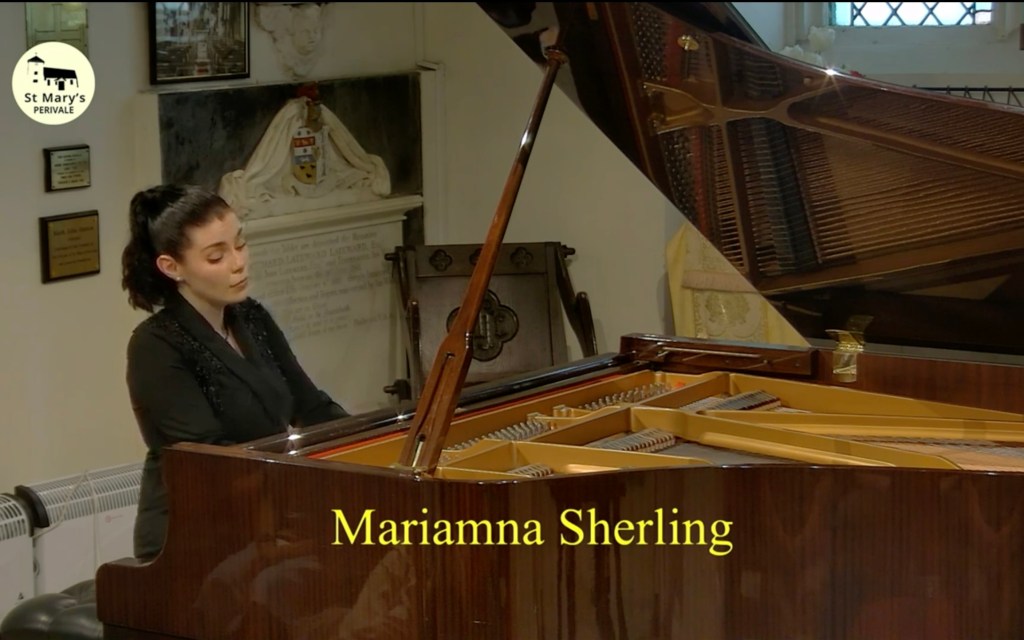
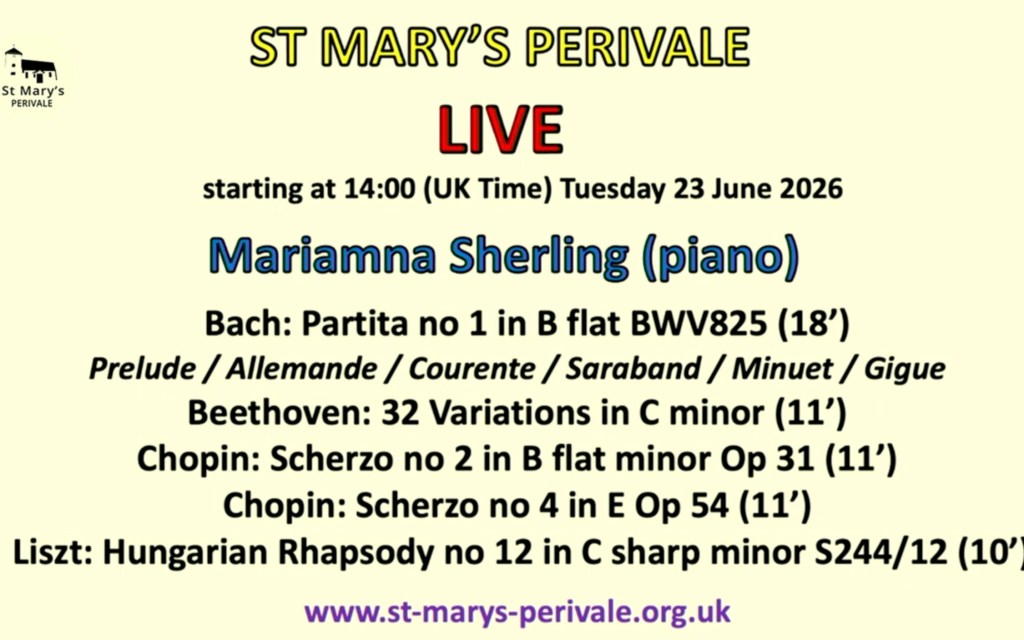
I have heard Mariamna play many times over the past year as she prepared for her Master’s Degree at the Royal College of Music under its Head of Keyboard director, Vanessa Latarche. I have heard her play many works including those that she played today which you can read more fully about in the links below. But amazingly in record temperatures she rose to new heights with a recital of pianistic and stylistic perfection.
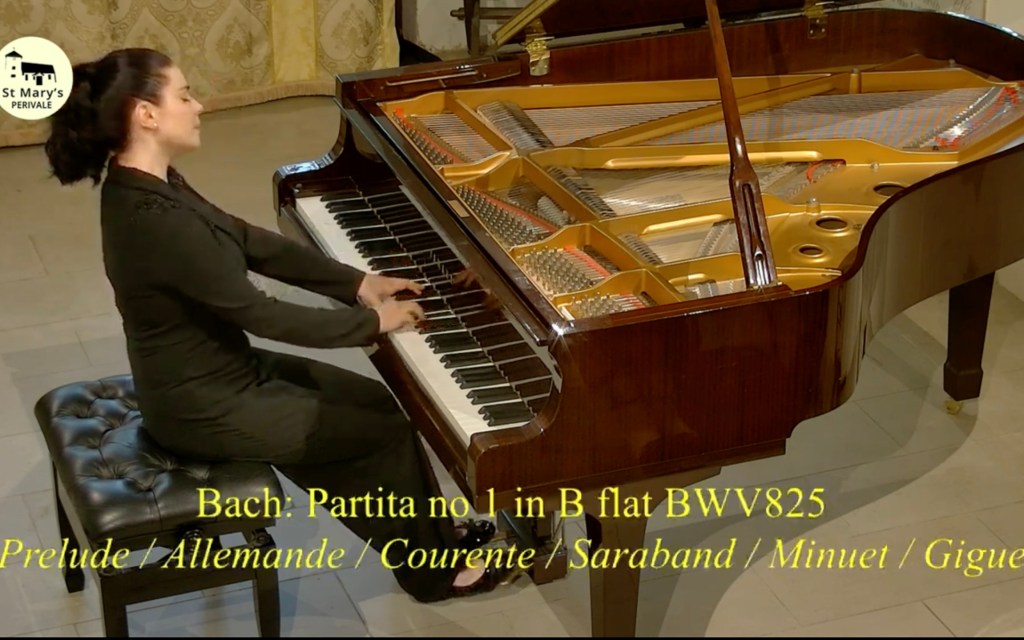
I remember her playing the Bach in a masterclass at the RCM and she asked me my opinion of her playing as she had been confused by conflicting influences. I told her that there was no right or wrong way to play Bach but it must convince and convey the message within the notes. Should one play authentcally on an instrument that Bach would not have known in his time or should one take advantage of all the possibilities of colour and power that a modern instrument could provide? There is a way to decide and that is with a knowledge of style which allows natural musicianship and individuality, space to bring the notes to life.
Bach’s music is based on the song and the dance which is the way of Angela Hewitt ,Tatyana Nikolaeva or Andras Schiff . But there is also the school of Rosalyn Tureck , known as the High Priestess of Bach because of the monumental rock like solidity of her playing. But at the base of all interpretations is faithfulness to the composers markings and above all a sense of communication of total conviction. Anyone who saw Rosalyn Tureck bouncing on the seat in the Gigue from the First Partita as I did on the stage of the RCM when she gave a memorable lecture on the interpretation of Bach would question the so called ‘etiquette’ that is added to performers of note.
And so it was today that Mariamna played Bach’s beautiful First Partita with a radiance and beauty as she allowed the Prelude to unfold with pastoral ease. A beautiful fluidity to the ‘Allemande’ which she also brought to the ‘Courante’ where her lightweight non legato was shared with legato counterpoints of jewel like brilliance. The ‘Sarabande’ was played with timeless wonder and poignant beauty leading to the Minuet 1 of graceful delicacy with teasing ornaments added with great taste. The Minuet 2 was played with subdued colour but with ornaments of crystalline clarity with a joyous sweep into the return of the first Minuet. She brought a refined brilliance to the Gigue which she played with exhilaration and refined exuberance. This is one of Bach’s most perfect works and was played with elegance, intelligence and beauty.
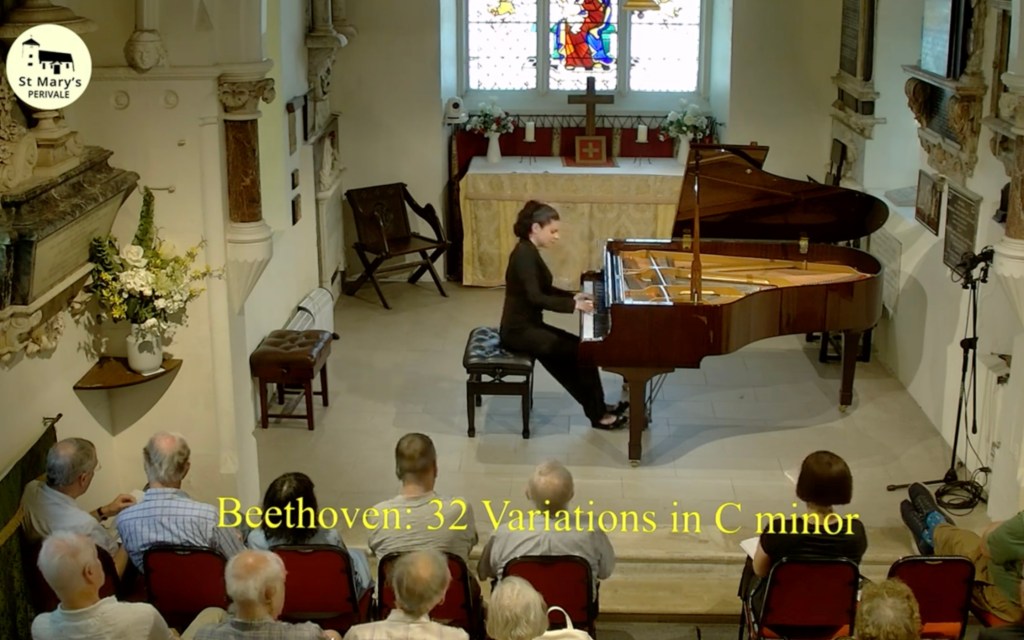
A rarity in the concert hall these days are the 32 Variations in C minor where one is more likely to hear the 33 Diabelli Variations, one of Beethoven’s last works for the piano. Beethoven was not happy with the C minor variations and it was not published in his lifetime, but there are some remarkable performances by Emil Gilels, Annie Fischer and Murray Perahia that can testify to the validity of this underrated work. It is made up of 32 mostly technically based variations that if played as exercises can become rather obvious and boring. But if played with poetic fantasy and a sense of architectural shape it can become a miniature tone poem of remarkable beauty. From the very first imperious opening Mariamna played with authority but also a very sensitive sense of balance bringing a beauty and shape to this dramatic C minor theme . The variations unfolded with great contrasts between the lyrical and rhythmic, a remarkable sensitivity and masterly use of the pedals allowed the work to reach the swirling mysterious brilliance of the final variation.
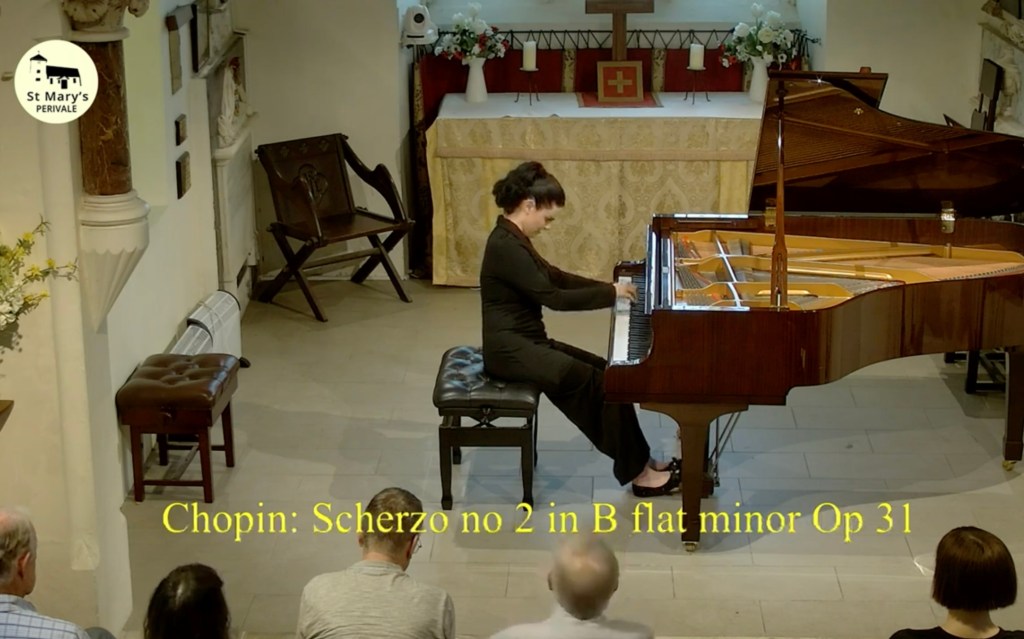
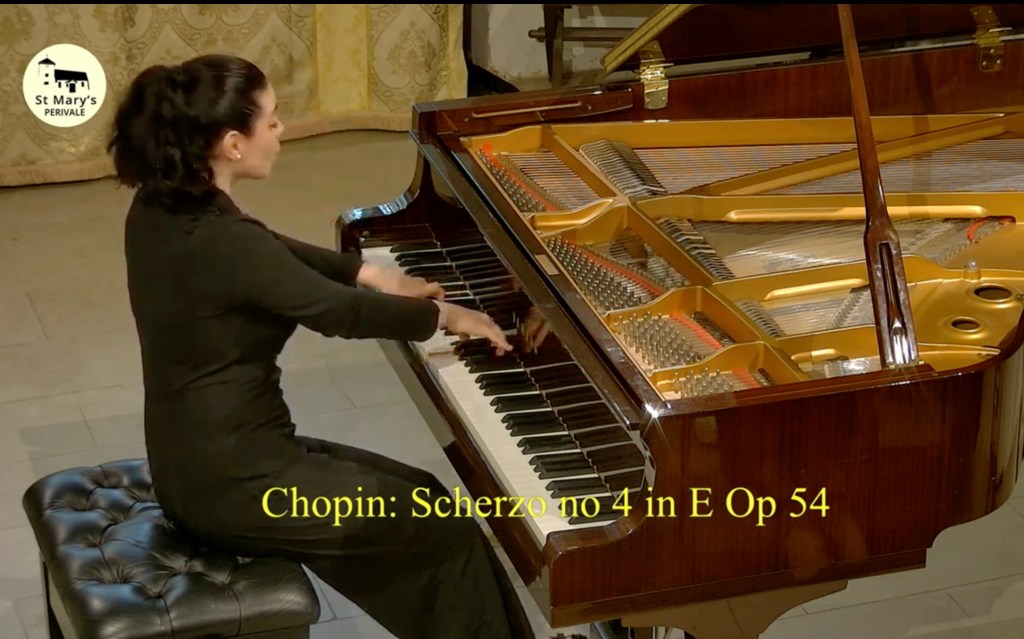
The two Scherzi I have heard Mariamna play recently but today I heard the culmination of a work in progress . She brought an aristocratic brilliance to these two works but at the same time a poetic timeless beauty that allowed Chopin’s Bel Canto to soar and breathe with poetic mastery . A lightweight ‘jeu perlé’ to the Fourth with flights of fantasy of glowing brilliance with refined playing allied to moments of breathtaking lyricism. She brought a languid beauty to the central episode of both Scherzi where her sense of rubato and architectural shaping brought a noble strength to some of Chopin’s most beautiful melodies. A breathtaking brilliance to end both of the Scherzi but always with masterly control and a magisterial sense of balance which meant the sound never became hard or percussive but full of sumptuous rich Philadelphian sounds.
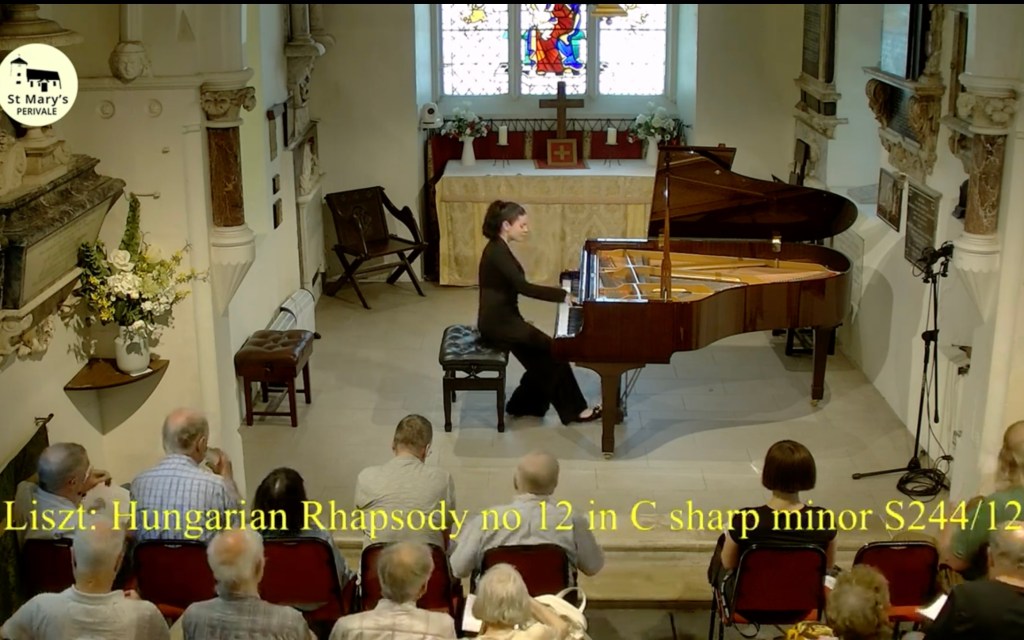
Opening Liszt’s 12th Rhapsody with two hands as she gave an imperious opening to one of Liszt’s most popular works. Dissolving into a tenor melody of stylistic beauty as she began to produce a subtle virtuosity of beguiling mastery with a palette of colour and sounds that were of another age. A final outpouring of grandeur and masterly authority brought this recital to an exhilarating end.
On the hottest day of the year and in a beautiful floor length gown one might have been forgiven if she did not feel able to offer more. But Mariamna is a real professional and was delighted to be able to share her discoveries just a little longer with a church full of people who preferred to sit indoors listening to music rather than outdoors listening to the traffic! The slow movement from Schumann’s G minor Sonata op 22 was played with whispered radiance and beauty and was a wonderful way to end an hour of magical music making from an artist to watch out for.
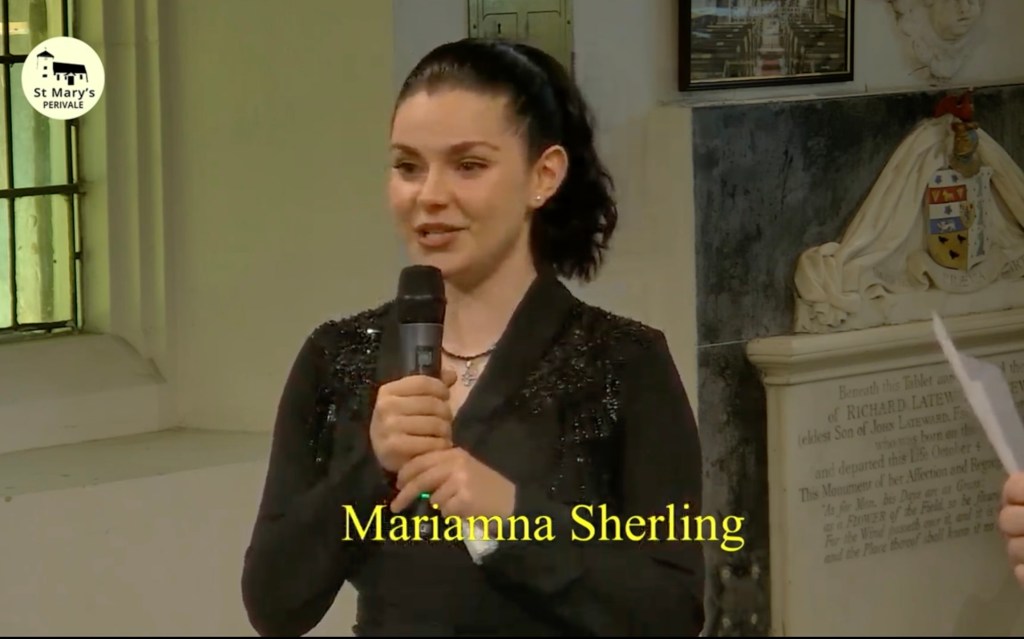
Born in 2001 into a musical family, Mariamna Sherling has emerged as one of the most compelling young pianists of her generation. Her musical formation began in Moscow, where she studied at the Gnessin School of Music, before continuing her education at the Moscow Conservatory, graduating under the guidance of the renowned pianist and pedagogue Natalia Trull. She is currently based in London, where she is completing a Master of Performance at the Royal College of Music, studying with Vanessa Latarche, one of the UK’s most respected piano professors.
Sherling’s international career took shape at an early age. In 2014, she attracted attention with her victory at the Young Virtuosos Competition in Sofia, marking the beginning of a series of major international successes. These included first prizes at the George Gershwin International Piano Competition in New York in 2015, followed by further top awards at the Carl Maria von Weber International Piano Competition in Dresden and the Lyon International Piano Competition in 2021. Her artistic profile has continued to deepen through prizes and distinctions at the Hastings International Piano Concerto Competition, the Santa Cecilia International Piano Competition in Porto, and the Piano Competition for Composers of Jewish Heritage in Hannover. Most recently, she has been recognised at the Bach Competition in Leipzig and the Campillos International Piano Competition in 2025.
Alongside her competition successes, Sherling maintains an active and expanding performance career. She has appeared as a soloist with a wide range of orchestras and has collaborated with distinguished conductors including Vladimir Spivakov, Yuri Bashmet, Rory Macdonald, Natalia Stets, Sergei Stadler, Osvaldo Ferreira and Nayden Todorov. Her orchestral engagements have included performances with the Royal Philharmonic Orchestra, the Elbland Philharmonie Sachsen, the Orquestra Filarmónica Portuguesa and the Orchestra Sinfonica Città di Grosseto.
Her artistic development is supported by a number of prestigious awards and scholarships, including the Christopher Hogwood Scholarship, the Steinway Scholarship, support from the Drake Calleja Trust and the Robert Turnbull Piano Foundation. Together, these honours affirm her position as an emerging artist of distinction on the international concert stage.