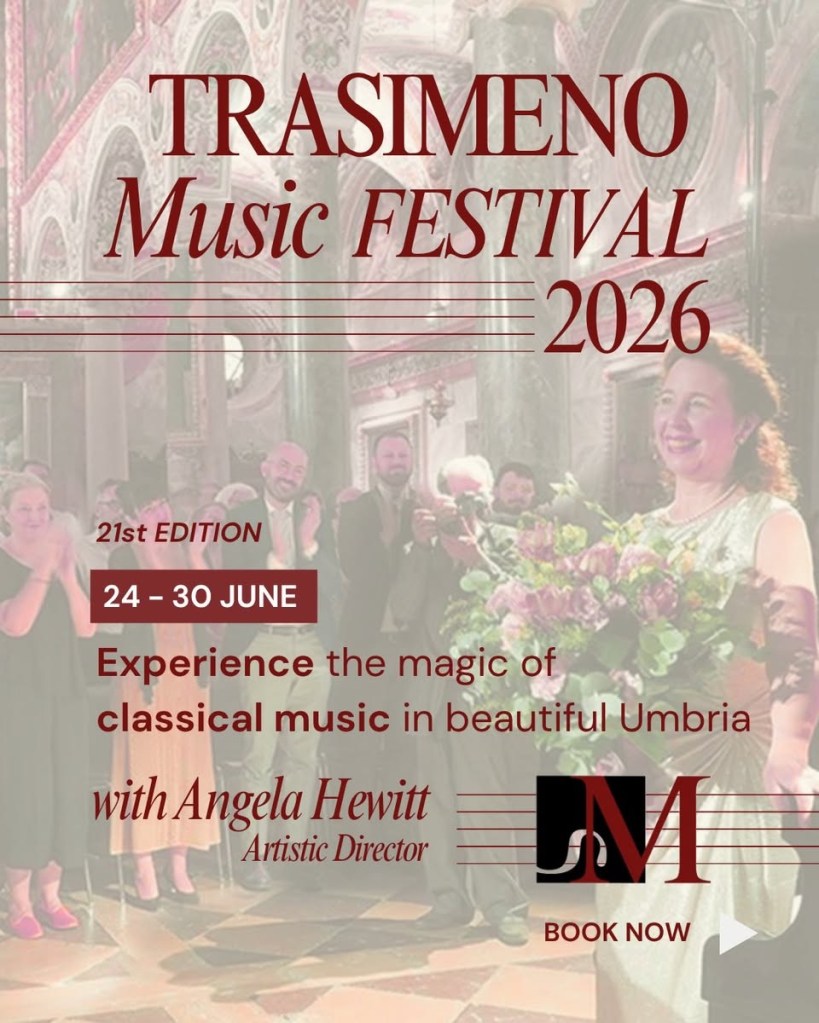
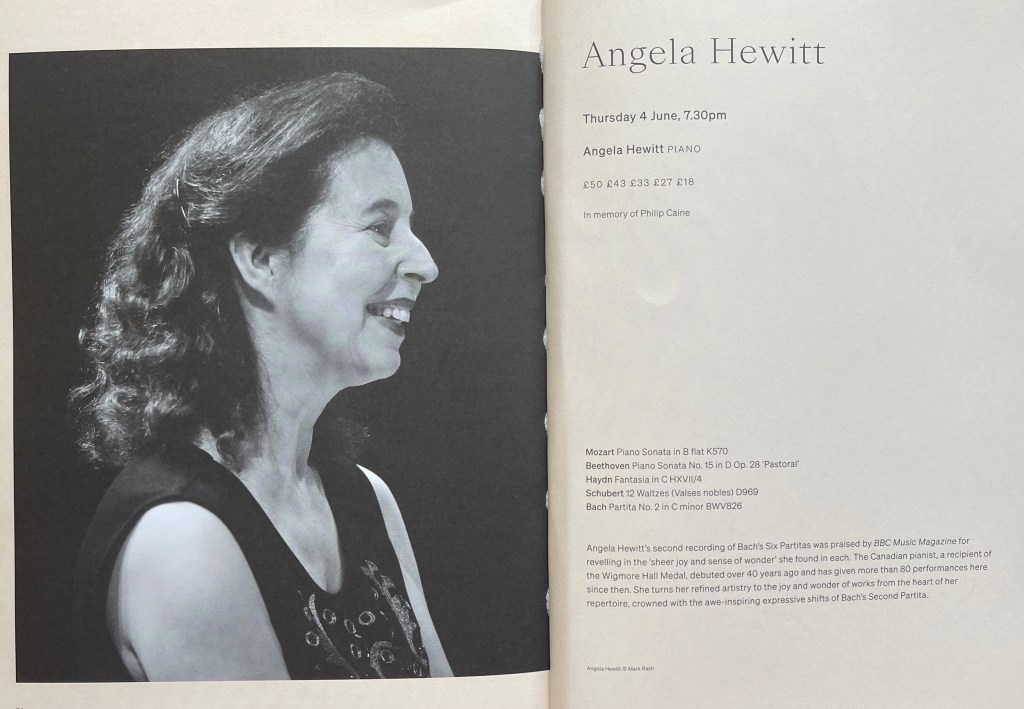
More masterly playing from Angela Hewitt on the eve her Trasimeno Music Festival amazingly in it’s twenty first year. Angela who was awarded the Wigmore Hall Medal in 2020 considers the Wigmore as her second home playing many time each year to her adoring public, having made her debut at the Hall over 40 years ago and has given well over 80 performances since. She turns her refined artistry to the joy and wonder of works from the heart of her repertoire, crowned with the awe-inspiring expressive shifts of Bach’s Second Partita.
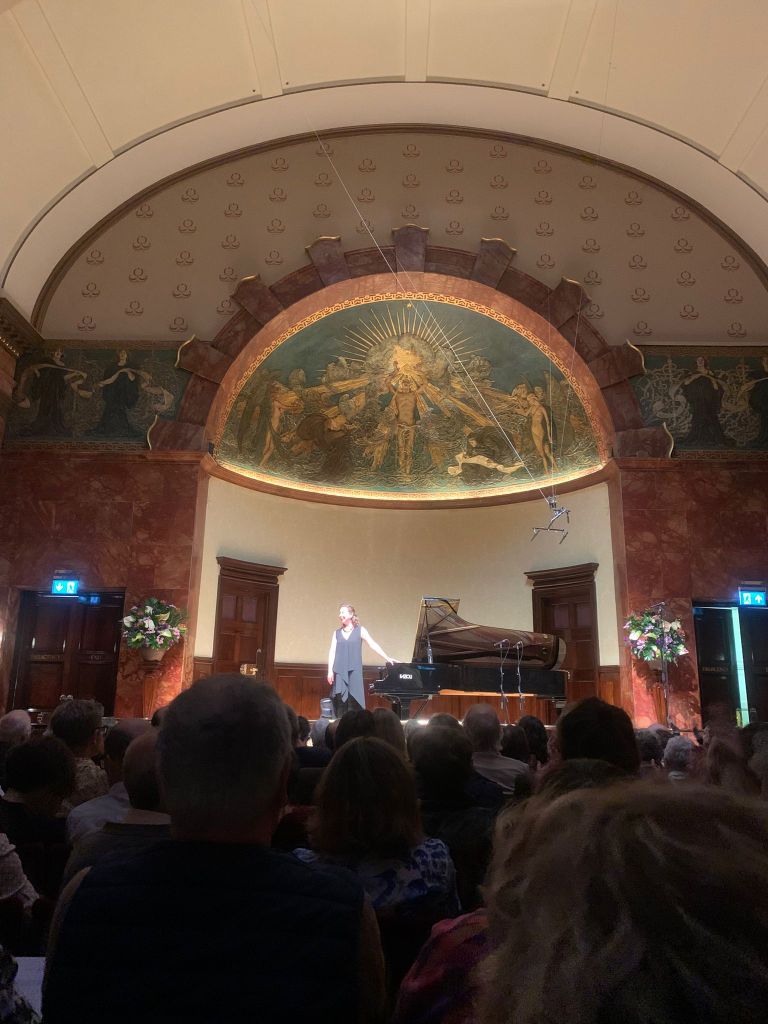
Beginning with Mozart Sonata in B flat K 570 that she played with crystalline clarity and refined phrasing of radiant simplicity and ‘joie de vivre’. Playing of great weight with leisurely discreet ornamentation on the repeat. An authoritative full stop as the operatic second subject took centre stage with radiant beauty. There was a playful question and answer of the opening theme before the whispered measure elegance of the recapitulation. The Adagio was played with a string quartet richness of sound of poignant beauty with the mellifluous central episode played with disarming simplicity and radiance. If the Allegretto seemed a little slow it was because it was with such infectious buoyancy where everything was played with measured elegance and extraordinary clarity. A scrupulous attention to Mozart’s few markings led to a very bold ending of great effect.
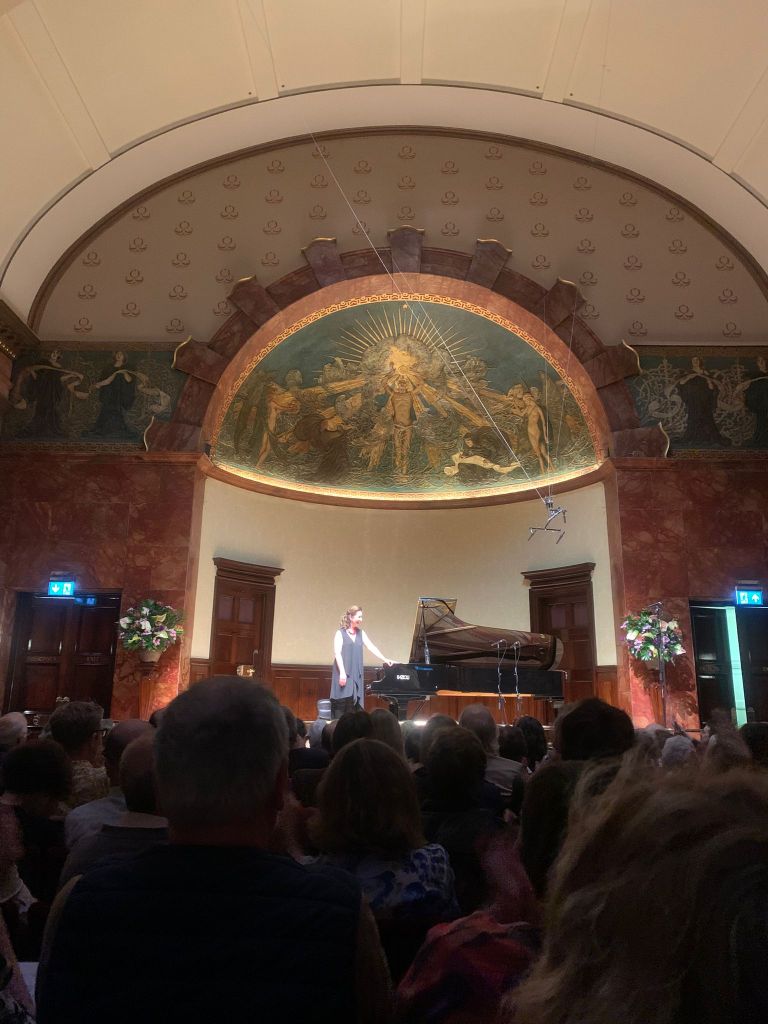
A rich palette of sounds with a sense of timeless wonder as the ‘Pastoral Sonata’ was allowed to unwind with simplicity and luxuriant beauty. Building to a climax of Beethovenian outbursts that Angela played with dynamic drive and imperious authority dissolving always into this scenario of peace and pastoral simplicity. An ‘Andante’ that was a lyrical outpouring with its question and answer central episode played so eloquently, maintaining the same tempo as the Andante opening, which gave great strength to the architectural shape of a movement that Beethoven was particularly fond of. A beautiful meandering variant of the opening was allowed to flow across the keys with undulating insinuation where Angela’s scrupulous attention to Beethoven’s indications dissolved into a coda of remarkable originality and exquisite beauty. A whispered opening to the ‘Scherzo’ contrasted with Beethoven’s sudden unexpected outbursts and gave great energy to this extraordinarily capricious movement . Angela brought a grace and lilting beauty to the Rondo. Played with extraordinary clarity building in intensity with knotty counterpoints before returning to the gently ornamented rondo theme. The coda was played with extraordinary energy and a remarkable ‘fingerfertigkeit’ of brilliance and exhilaration.
Angela even chose another early Beethoven Sonata as an encore, playing the slow movement of the ‘Pathétique’ op 13 with the same song and dance elements that illuminated her masterly playing with remarkable freshness and originality. It is the same song and dance elements that Angela is renowned for with her Bach performances which are played with a touching simplicity and natural rhythmic impulse. This Agagio cantabile was not only remarkable for the beauty and simplicity of her phrasing but also the contrast she brought to the central episode that was of orchestral conception as the cellos conversed with the violins before the return of the Adagio with the undulating violas carrying us forward on wings of song.
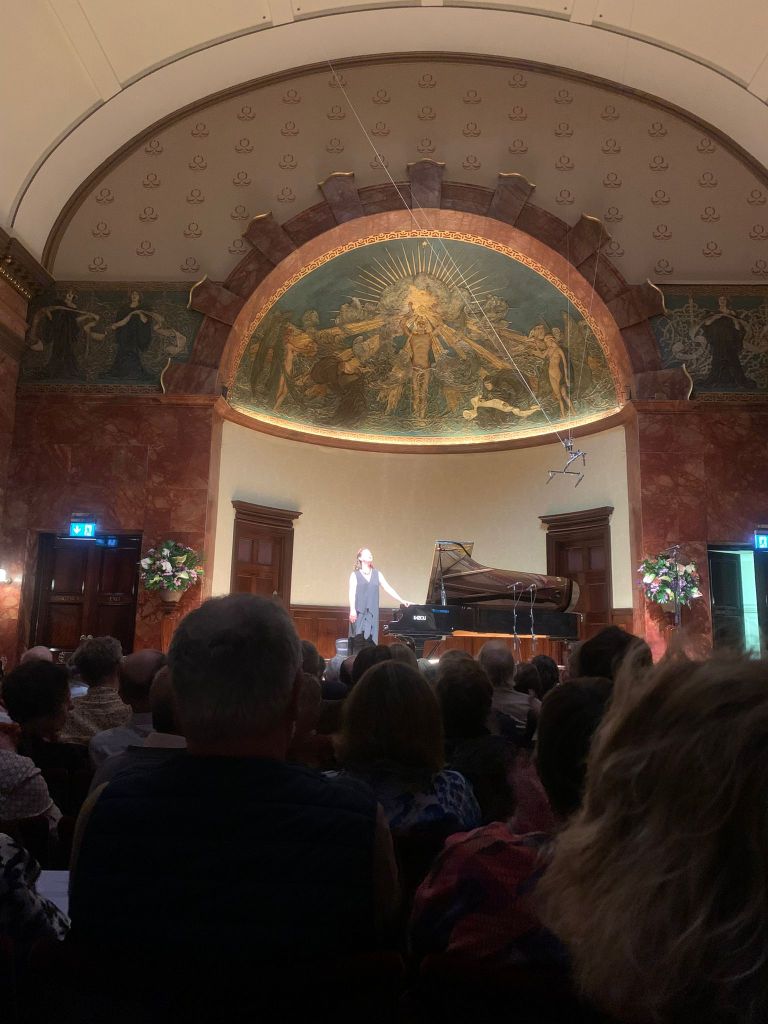
As Angela had said in her brief Green Room interview she had listened to her recording of the Schubert Waltzes just to make sure that they were in fact danceable, as Angela as a child had also been trained as a dancer. And in fact they were twelve miniatures of contrasting images of insinuation, nobility, nostalgia and exuberance played with a palette of colours that brought each one exquisitely to life.
In Haydn’s own words he had written the Fantasia or Capriccio in C :’ In a moment of great good humour I have completed a new Capriccio for fortepiano, whose taste, singularity and special construction cannot fail to receive approval from connoisseurs and amateurs alike. In a single movement, rather long, but not particularly difficult.” It is based on the Austrian folk song D’ Bäurin hat d’Katz verlor’n (“The farmer’s wife has lost her cat”) and Angela imbued it with spontaneity and hi jinx of refined exuberance where her self identification brought it vividly to life with an infectious ‘joie de vivre’.
Ending with Bach’s Partita n. 2 in C minor BWV 826 as she said it finishes with such a sense of exhilaration that rather than opening the recital she had decided to close her recital with a work that she has played many times in this very hall . The six movements Sinfonia Grave adagio – Andante, Allemande ,Courante, Sarabande ,Rondeaux and Capriccio were all imbued with the song and the dance . These were not monuments to be admired from a distance but works of compelling rhythmic energy with moments of poignant beauty all played with a clarity and mastery that Angela is renowned for. She had in fact taken her Bach Oddyssey, born at the Wigmore Hall, on a highly acclaimed world tour that has consolidated her position as one of the finest Bach players of her time.