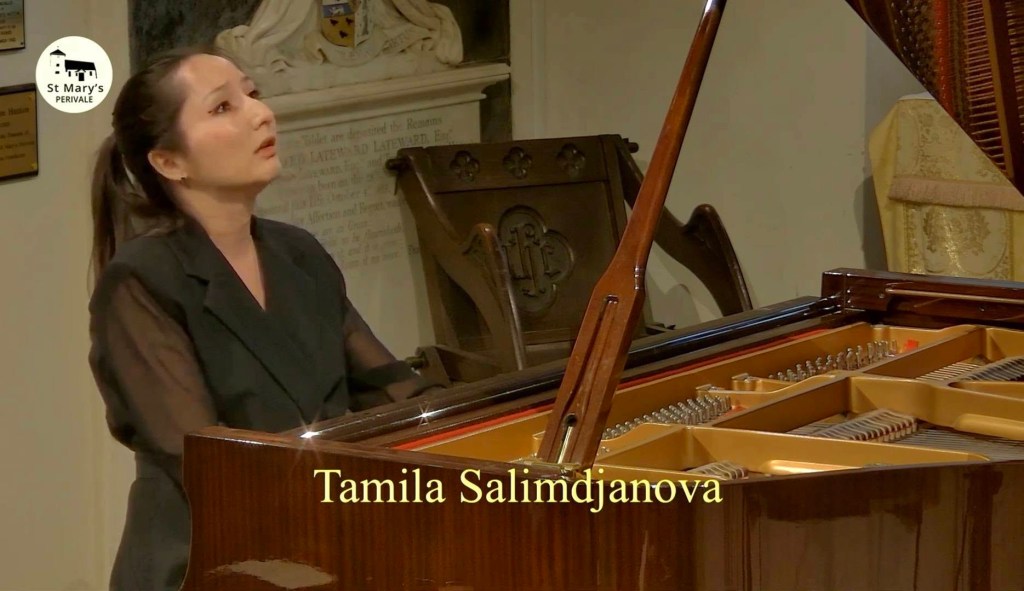
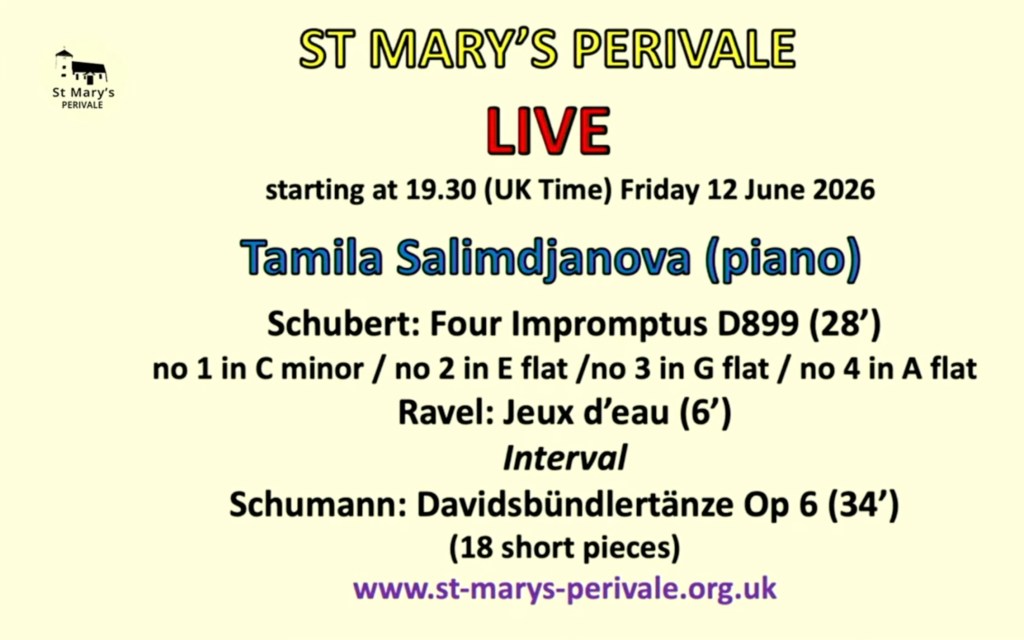
Tamila I remember playing Prokofiev second concerto with the local orchestra in Ealing when she was studying in the UK. Playing of technical mastery that could only have been acquired from her very early training at the Moscow Conservatory. Now with many qualifications to her name from illustrious institutions including the Royal College in London and Bern University she has completed her studies with a Doctorate from the Northwestern University in America. She is based now in Chicago and St Mary’s Perivale were happy to create a special date for her on this flying visit.
Today she was playing just two masterworks by Schubert and Schumann with Ravel’s ravishing Jeux d’eau offered as an encore. Playing of simplicity and beauty where Tamila allowed the music to unfold with the natural radiance and beauty of a true musician.
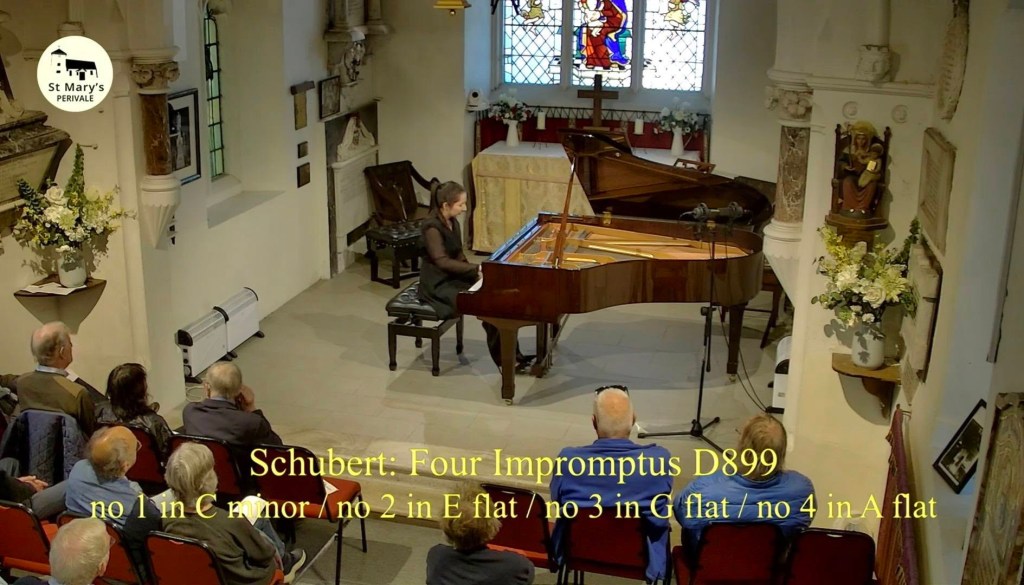
The first of Schubert’s early Impromptus opened with an imperious chord that immediately dissolved into a melody of simple purity and innocence. A question and answer as demanding chords replied to the beseeching innocence of this simple voice. Bursting into one of Schubert’s mellifluous melodic outpourings of a simple melody accompanied by a flowing left hand figure, with a glistening duet between two voices of Viennese charm. Building to a tumultuous climax that Tamila played with controlled passion and searing intensity. A short lived storm as the lone voice of the opening returned with the simple chime of a bell, as this miniature tone poem dissolved into the distance. The second Impromptu opened with streams of undulating notes that Tamila played with a jeu perlé of brilliance and beauty. Washes of sound that gradually built to a savage dance of swirling brilliance before returning to the opening of serenity and undulating beauty. The dance erupting once more at the end with even more intensity and fury bringing this seemingly innocent stream of sounds to a dramatic ending of great exhilaration. The G flat Impromptu is a melody of great beauty that Schubert floats on a florid accompaniment and that Tamila played with simple radiance and beauty. Shaping the melodic line with great intensity and at times disarming simplicity allowing the music to float on wings of song with aristocratic persuasion . The final Impromptu was where the melodic line was played surrounded by embellishments of glistening beauty. A central episode played with great intensity on a pulsating bed of passionately vibrating chords before returning to the opening of disarming simplicity with the embellishments becoming ever more present.
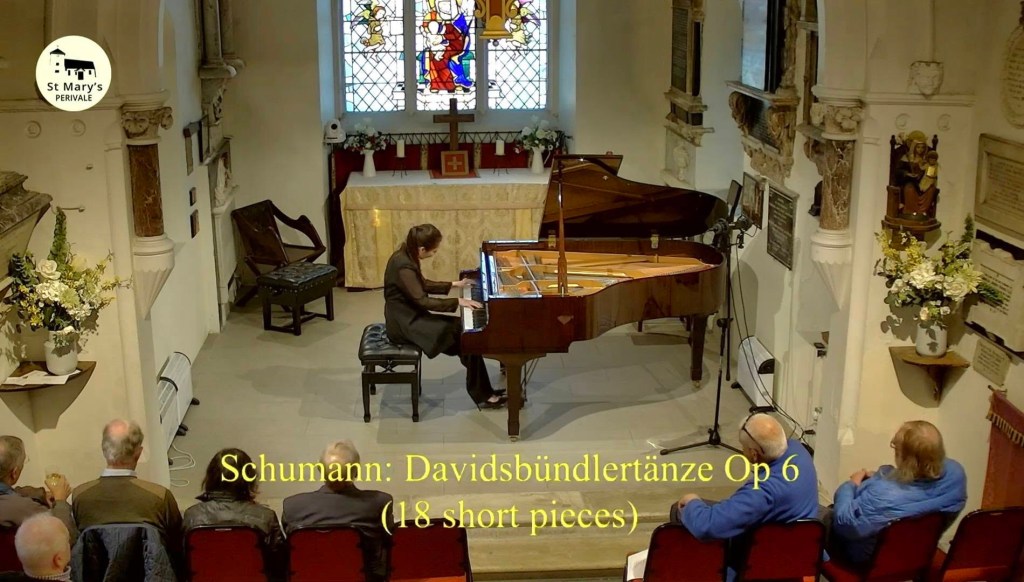
The second work was the series of 18 dances that Schumann penned in a moment of masterly inspiration . They are amongst the most beautiful things that he was to write in this period of a continual outpouring of pianistic masterpieces from op 1 to op 26. Tamila played them with the same simplicity and poetic beauty that she had brought to Schubert. There was a clarity to the opening where her mastery of the pedal allowed for a range of sounds from a lightweight jeu perlé to the glistening flowering of the melodic line. A sense of improvisation of flowing beauty and simplicity that was capricious and seductive – a potent combination indeed! A glowing beauty to the melodic line as Eusebius was left to dream with timeless wonder. Florestan at this point bouncing onto the scene with impish good humour looking back to certain ‘butterflies’ of yore as they were allowed to invade this capricious parade. A passionate outpouring followed, played with dynamic drive before Eusebius entered with an ever more beguiling curiosity that Tamila played with teasing ambiguity. Tamila showed all her technical mastery with a brilliantly light left hand of driving rhythmic persuasion as syncopations almost managed to slow down this continual chattering of knotty twine adding a coda of brilliant etherial energy. Eusebius entered again with playing of glowing mellifluous beauty where Tamila allowed the music to unfold with timeless beauty. A cat and mouse game that Tamila played with lightweight brilliance and great rhythmic intensity. A swirling energy of Circus fun unwound with impertinent insistence before its capricious curtailing. An almost Brahmsian outpouring to the ‘Ballade’ of the tenth dance was played with sumptuous rich sounds and an extraordinary sense of architectural shape. Eusebius again with Tamila’s wise words of disarming simplicity where capricious leaps were played with mastery and infectious charm. A romantic outpouring of chordal declamations was played with passionate intensity with a beautiful central chorale that Tamila filled with glorious rich sounds. The fourteenth dance is one of Schumann’s most beautiful creations and Tamila played it with a crystalline purity of seamless ravishment. Interrupted by deliberately placed chords bursting into a glorious passionate wave of sounds on which was floated a melodic line of growing intensity. A hesitant capricious outpouring of lightweight chords that Tamila played with clumsy and lightweight brilliance as they were allowed to sink into the epilogue of magical etherial sounds. Schumann looking back with nostalgia remembering the moments we had shared together of past beauty. Soon shaken out of this indolence by a passionate outpouring of ever more intensity that was short lived as it dissolved into a whisper leaving the final delicate waltz played with extraordinary subtlety by Tamila as the bass struck midnight and it was time to pull a curtain over such heartrending beauty.
A remarkable performance by Tamila where musical intelligence and technical mastery were combined with poetic fantasy with an extraordinary kaleidoscope of sounds.
Ravel’s Jeux d’eau was a wonderful way to finish this hour of magic that Tamila had brought to Perivale from Chicago . Streams of beautiful sounds were allowed to flow from Tamila’s masterly fingers with glowing luminosity and ravishing poetic beauty.
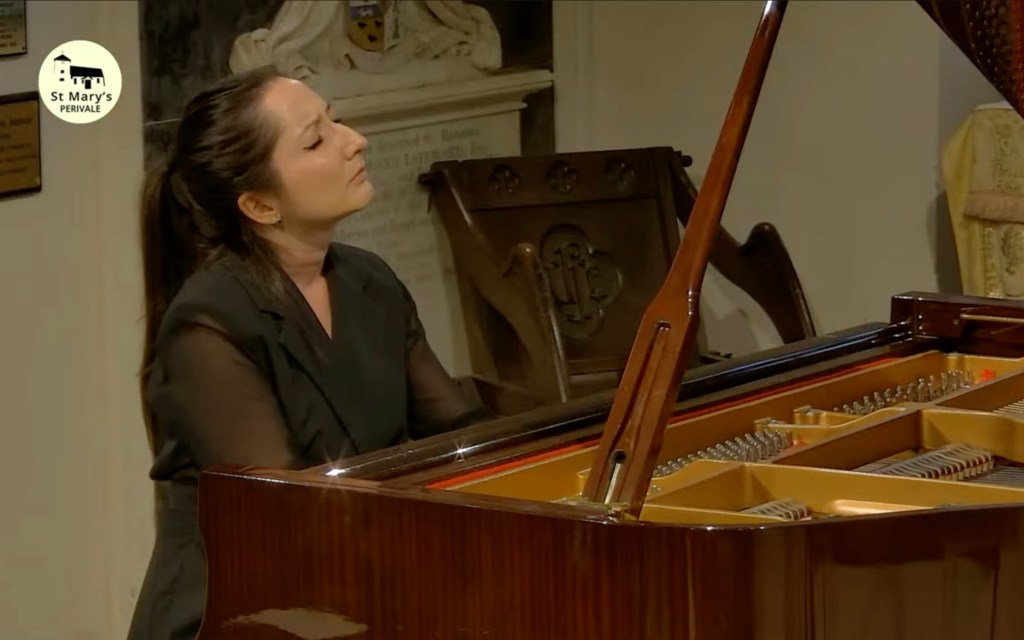
Award-winning pianist Tamila Salimdjanova has been described as “a veritable tour de force” by Serenade Magazine. She gained international recognition after winning both First Prize and the Audience Award at the BNDES International Piano Competition in Rio de Janeiro. Her additional honors include top prizes at the Birmingham International Piano Competition, Massarosa International Piano Competition, Lagny-sur-Marne International Piano Competition, Animato International Piano Competition, Campillos International Piano Competition, and Virtualoso Piano Cleveland. She was also a semifinalist at the Arthur Rubinstein, Leeds, and Montreal International Piano Competitions.
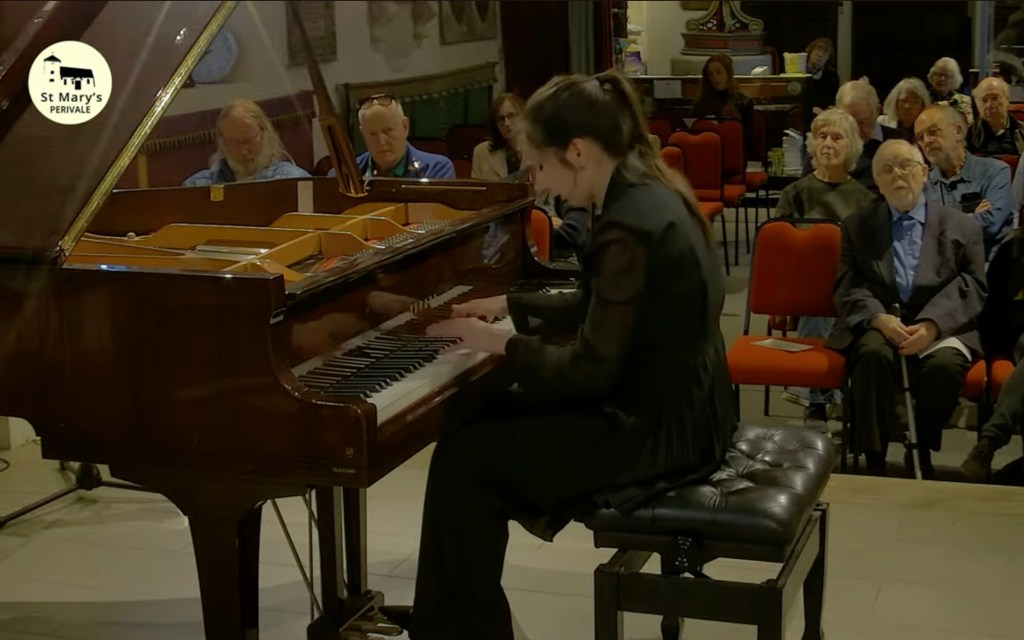
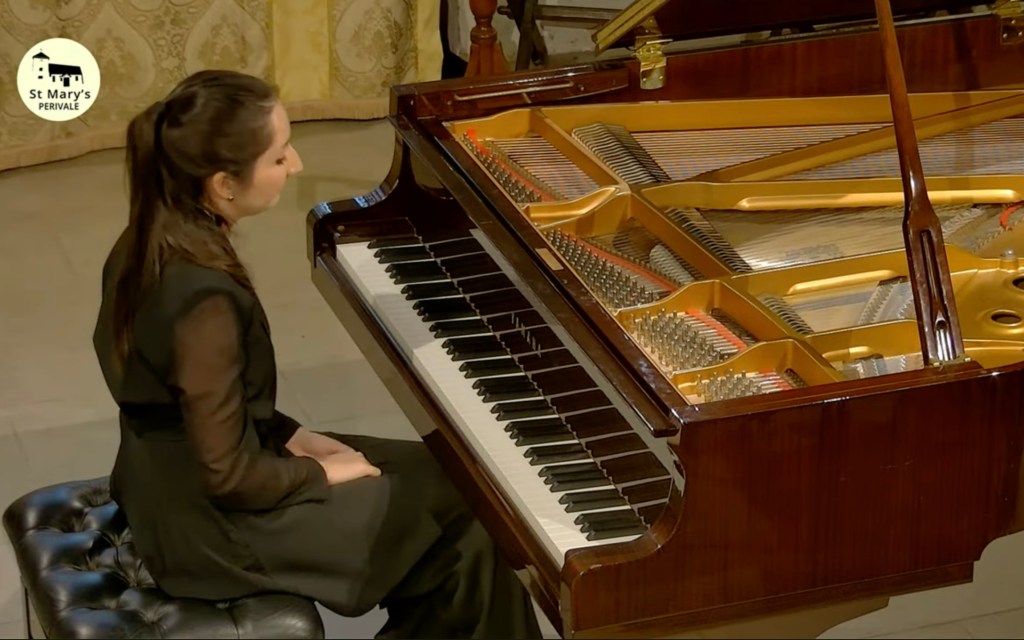
Her solo engagements have taken her to major international festivals and venues including the Radio France Festival in Montpellier, Pianos-Folies du Touquet, and Festival de Inverno Campos do Jordão, with performances at Salle Cortot, St. Martin-in-the-Fields, Sala São Paulo, Bern Casino, Basel Casino, San Francisco Symphony Davies Hall, and Theatro Municipal do Rio de Janeiro, among others.
Ms. Salimdjanova made her orchestral debut at age nine with the National Symphony Orchestra of Uzbekistan, performing Mozart’s Piano Concerto K.450. Since then, she has appeared with orchestras including the Brazilian Symphony Orchestra, Orquestra Sinfônica da Bahia, Morocco Philharmonic Orchestra, Thames Chamber Orchestra, and Biel Solothurn Symphony Orchestra.
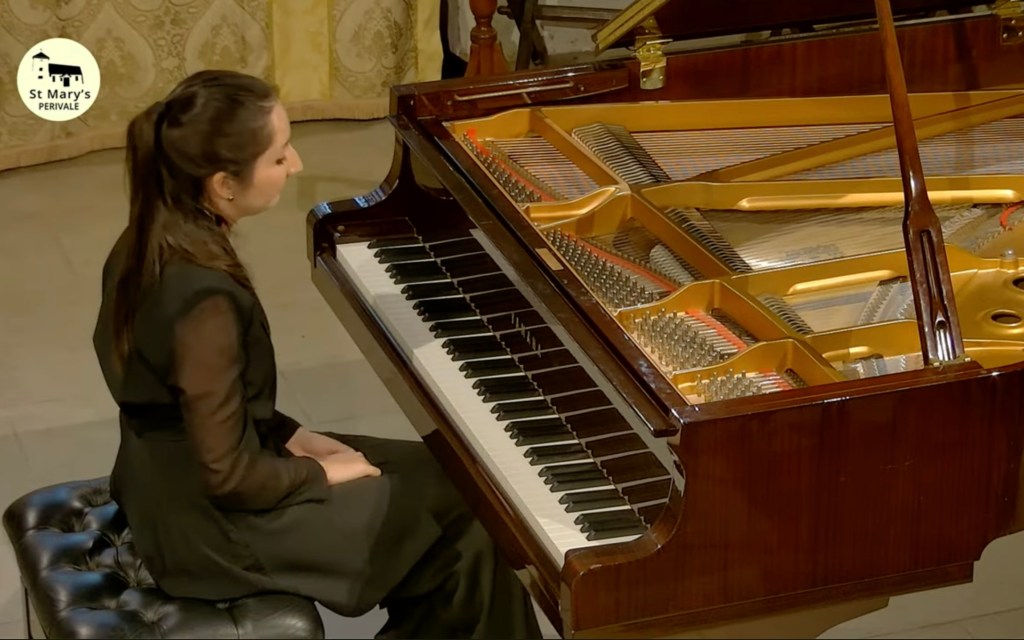
A passionate chamber musician, she frequently collaborates with distinguished artists and regularly performs with her violinist brother, Askar Salimdjanov. She is currently Artist in Residence of the Nova Linea Musica concert series in Chicago.
Born in Tashkent, Uzbekistan, into a distinguished musical family, Ms. Salimdjanova began her studies at the Uspensky Lyceum and continued her education at the Moscow State Tchaikovsky Conservatory, Royal College of Music, Bern University of the Arts, and Northwestern University, where she earned her Doctor of Musical Arts degree.