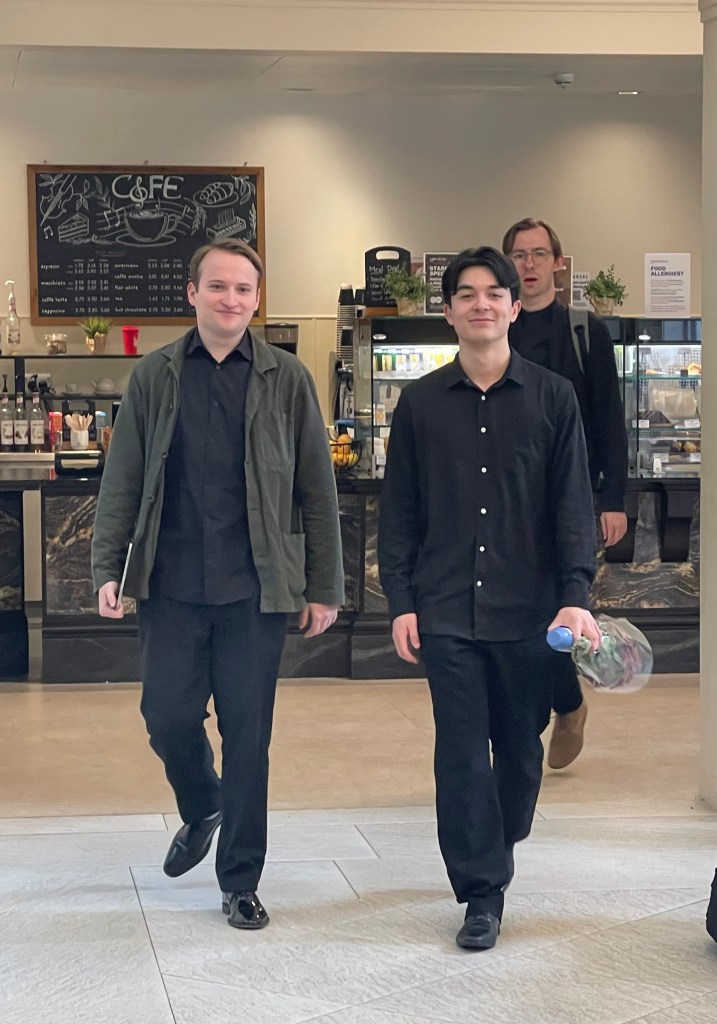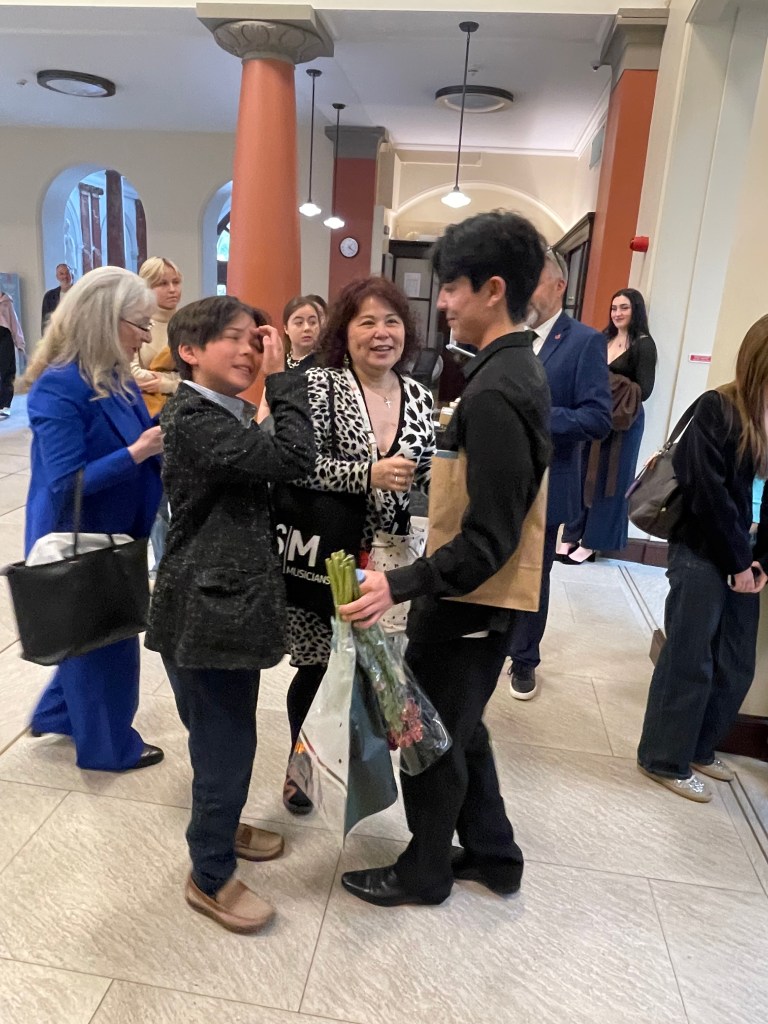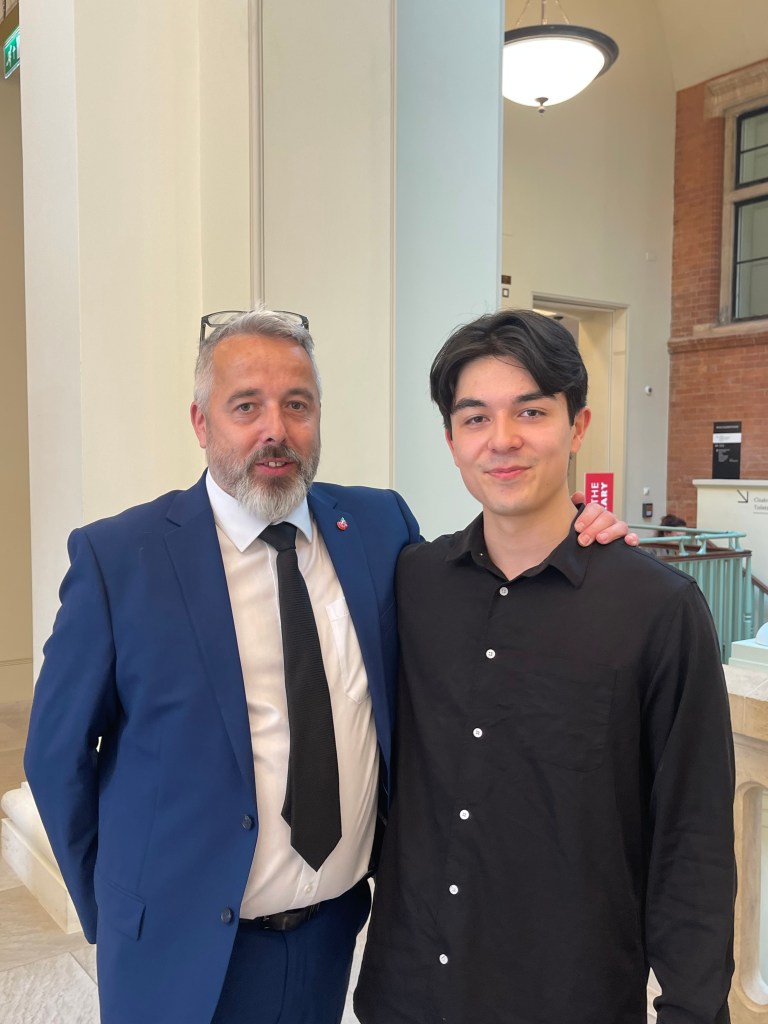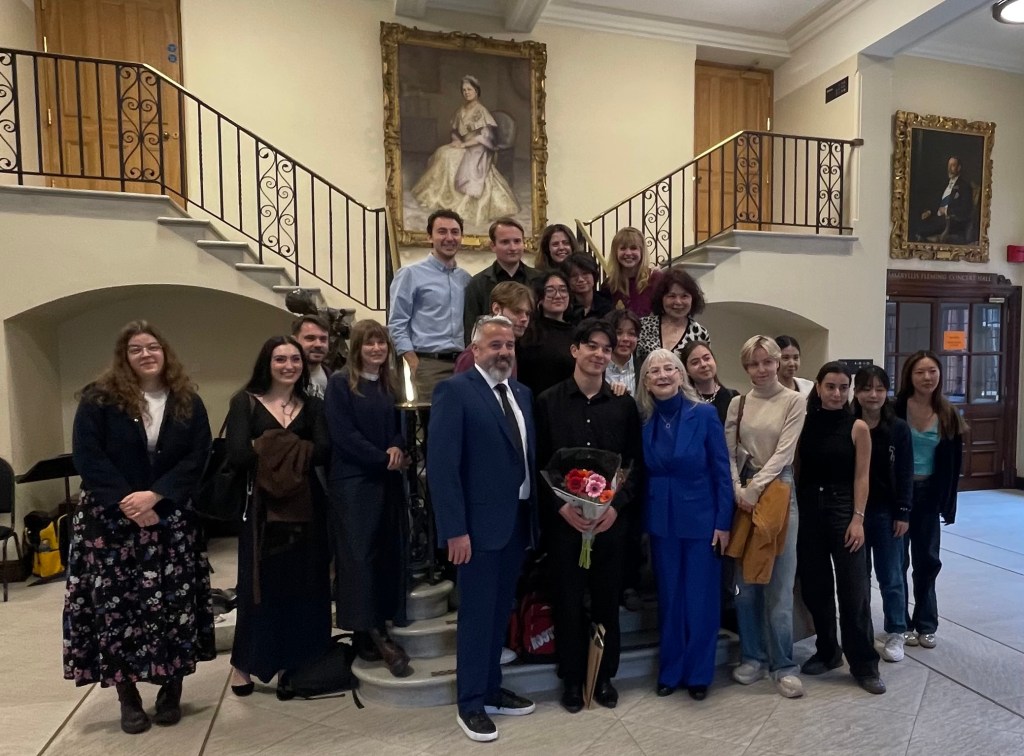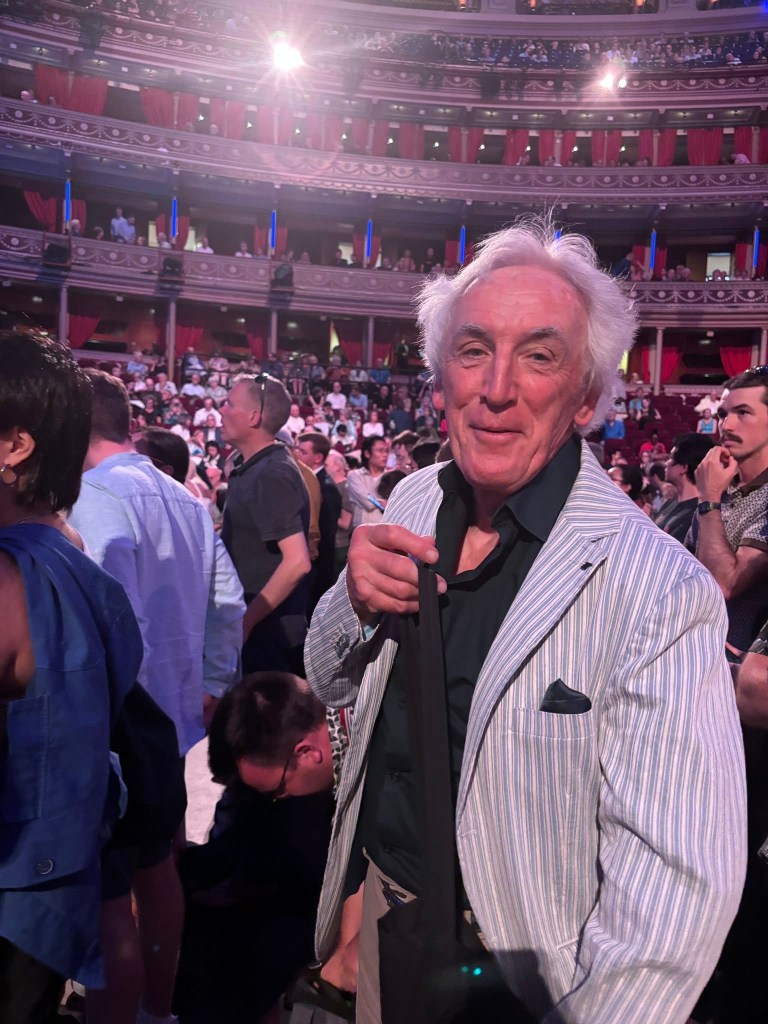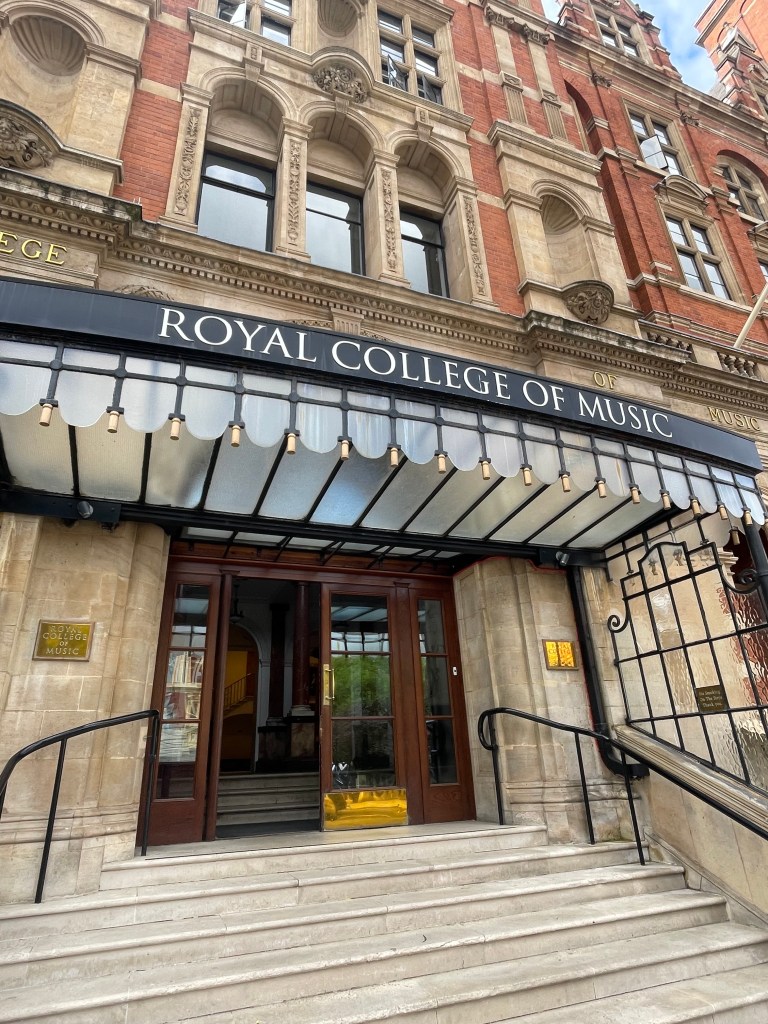
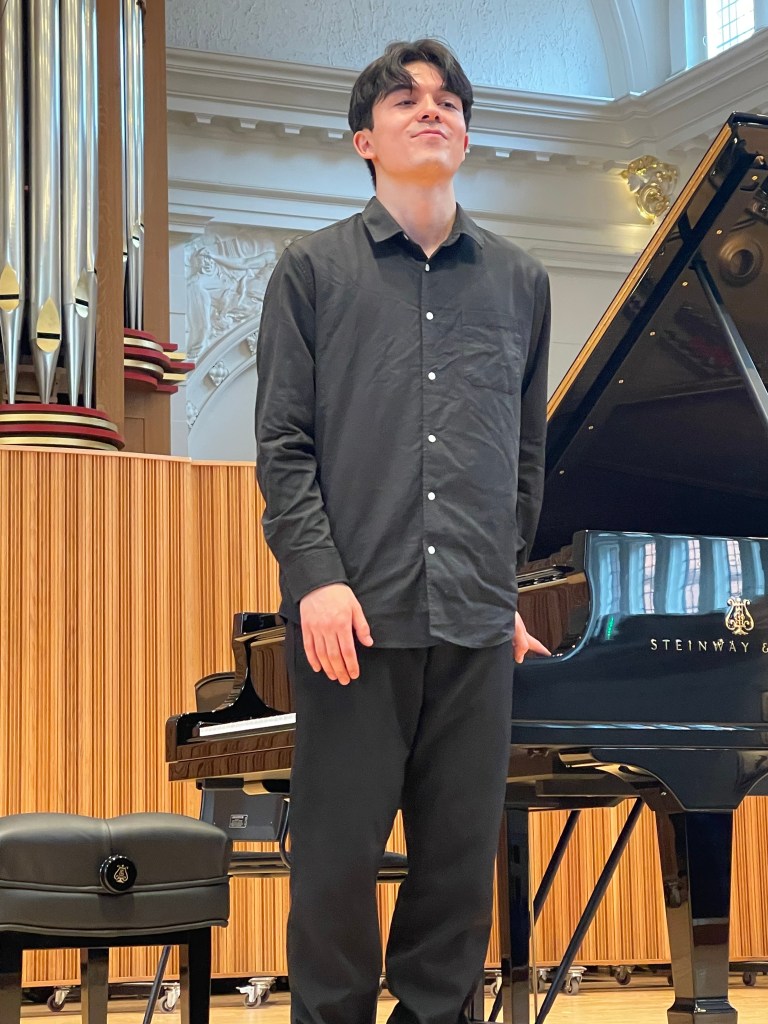
Wonderful to see Tristan Vermeulen surrounded by so many friends and family at his Graduation Recital today. I have known Tristan and his friends for sometime but had no idea he could play so beautifully until today. Bach’s mighty Fantasia and Fugue in A minor was played with authority and flowing beauty. There were magical sounds in the Mazurka by Ades and astonishing mastery in Unsuk Chin’s squabbling Toccata. Debussy’s West Wind was allowed to blow across the keys with terrifying brilliance. And if Tristan chose to bathe Kreisleriana in sumptuous sounds it was because his natural musicianship could see more the architectural shape than the intricacy of Schumann’s extraordinary fantasy world.
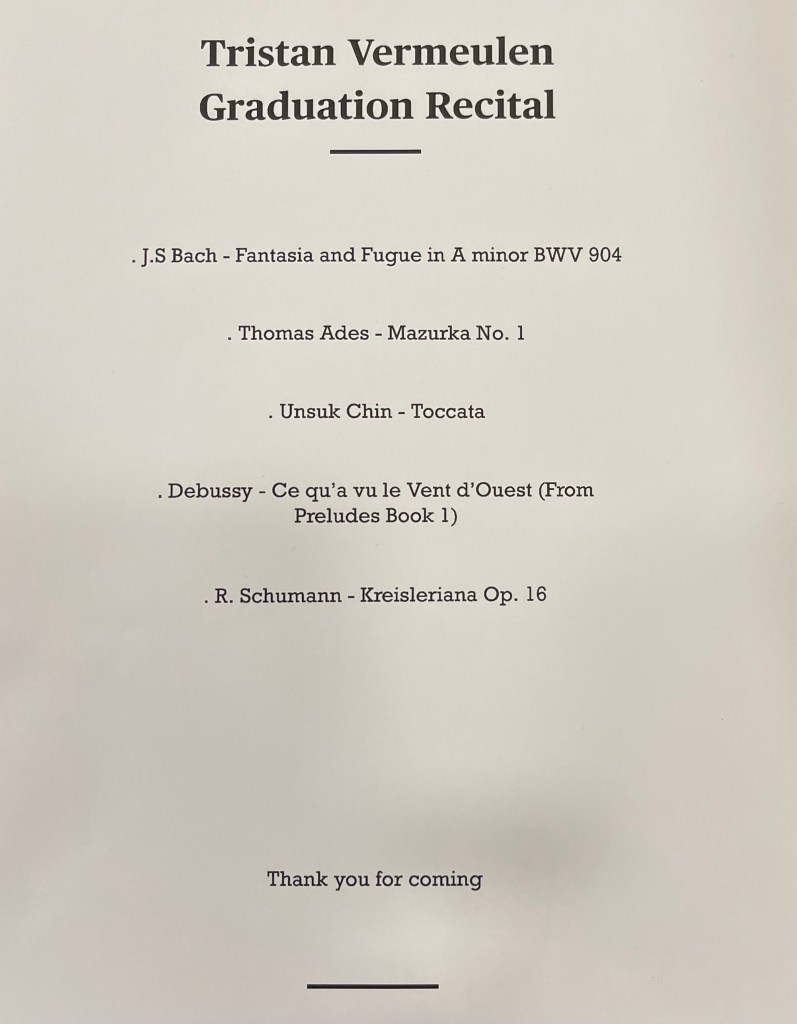
Opening with the Bach Fantasia with its series of descending notes in the bass, dominating the entire Fantasia that Tristan played with fluidity and an architectural shape of great authority . The Fugue building up with a four-part web of harmonies and a chromatically descending line with a second theme, which takes the idea of the descending bass of the Fantasia one step further. Tristan wove a continuous outpouring from which the voices emerged in a context of a great architectural shape of nobility and authority with Bach weaving both themes together to form a rich harmonic whole. A glowing beauty to the sound as Tristan was not afraid to use the pedal without blurring the lines but adding extra colour and shape to this extraordinary work.
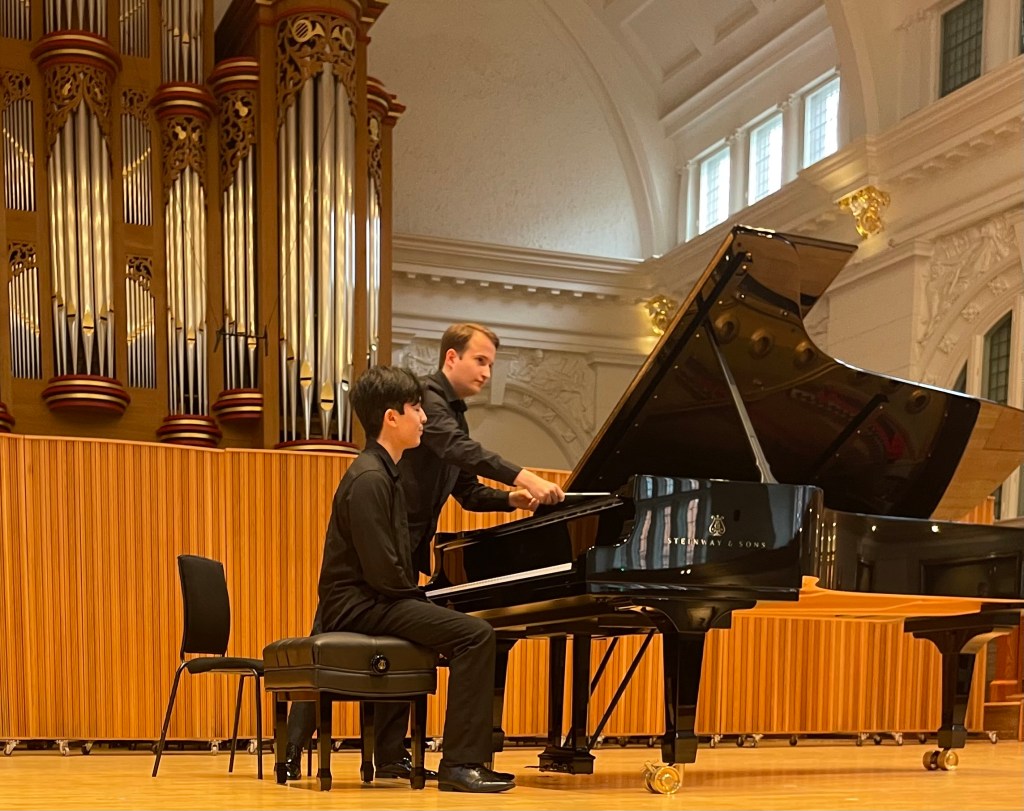
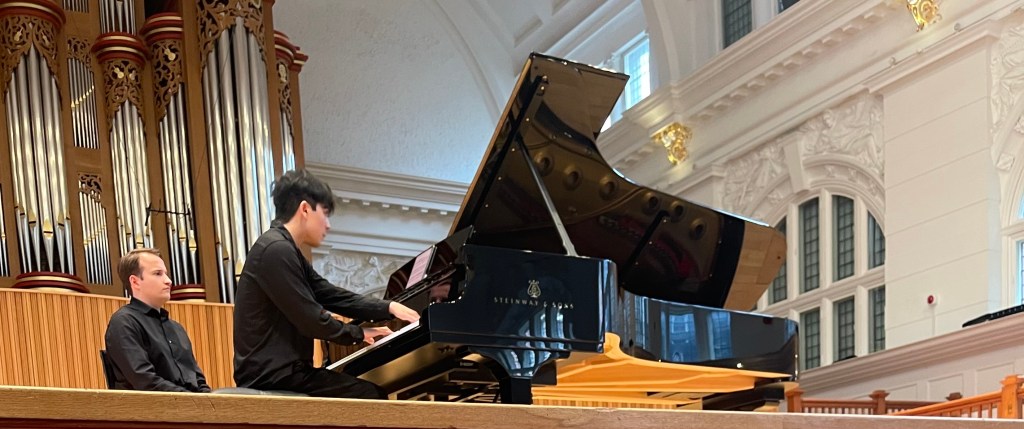
There were magical sounds to the Ades Mazurka n. 1 in which Tristan found a kaleidoscope of sounds out of which emerged the unmistakeable Mazurka rhythm. It was indeed a canon covered in multicoloured blossoms played with a dynamic drive and searing conviction. The second contemporary work, also played with the score, was a Toccata by Unsuk Chin with its hesitant opening played with simple radiance. Bursting into a squabbling chatter of extraordinary technical complexity that Tristan played with remarkable clarity allowing this perpetuum mobile to be anchored by a lower line of pivotal importance.
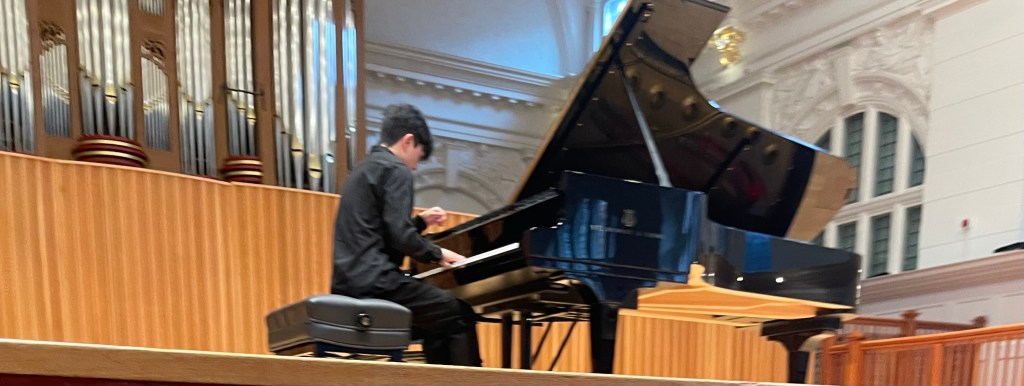
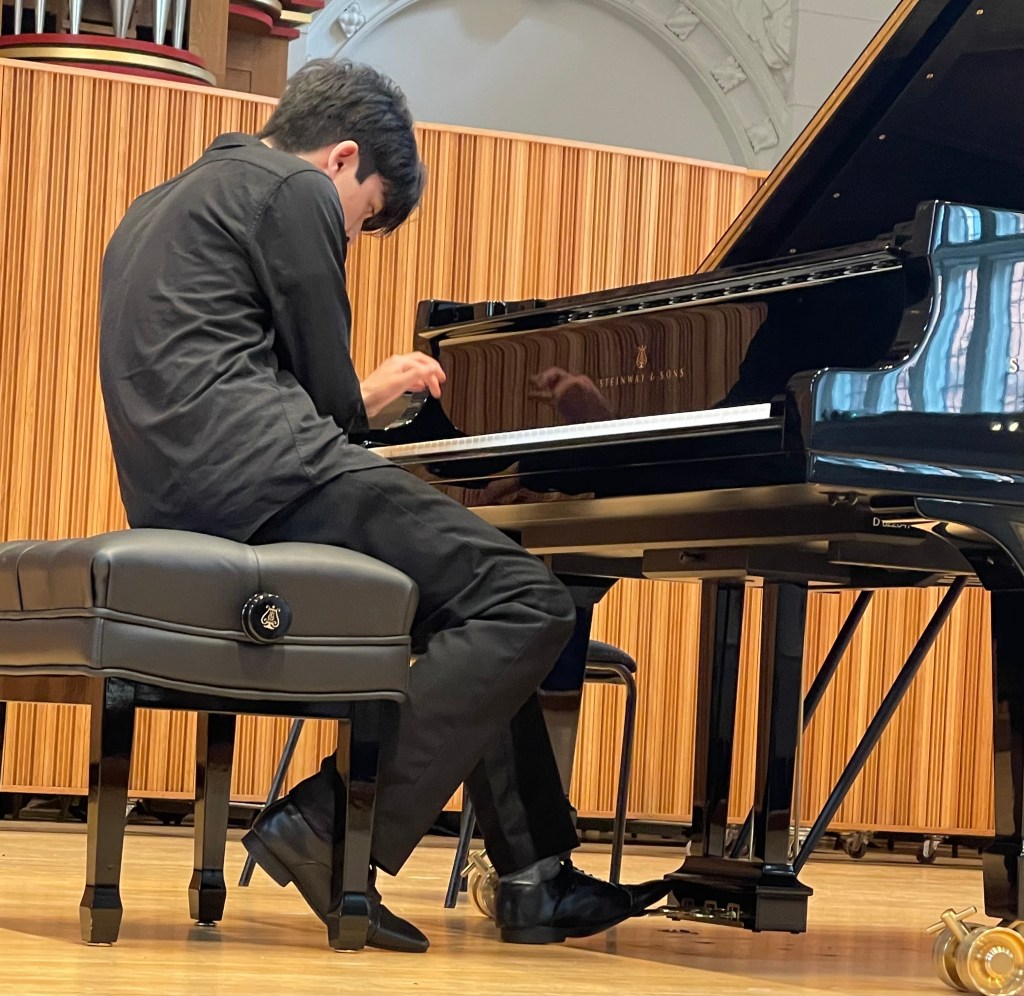
Debussy’s ‘Ce qu’a vu le Vent d’Ouest’ was the link between the two contemporary works and the return to the main line repertoire. Tristan had a kaleidoscope of colour as he swept fearlessly across the keys creating sounds of extraordinary fantasy as thunder and lightening struck with such startling clarity above this haze of swirling sounds.
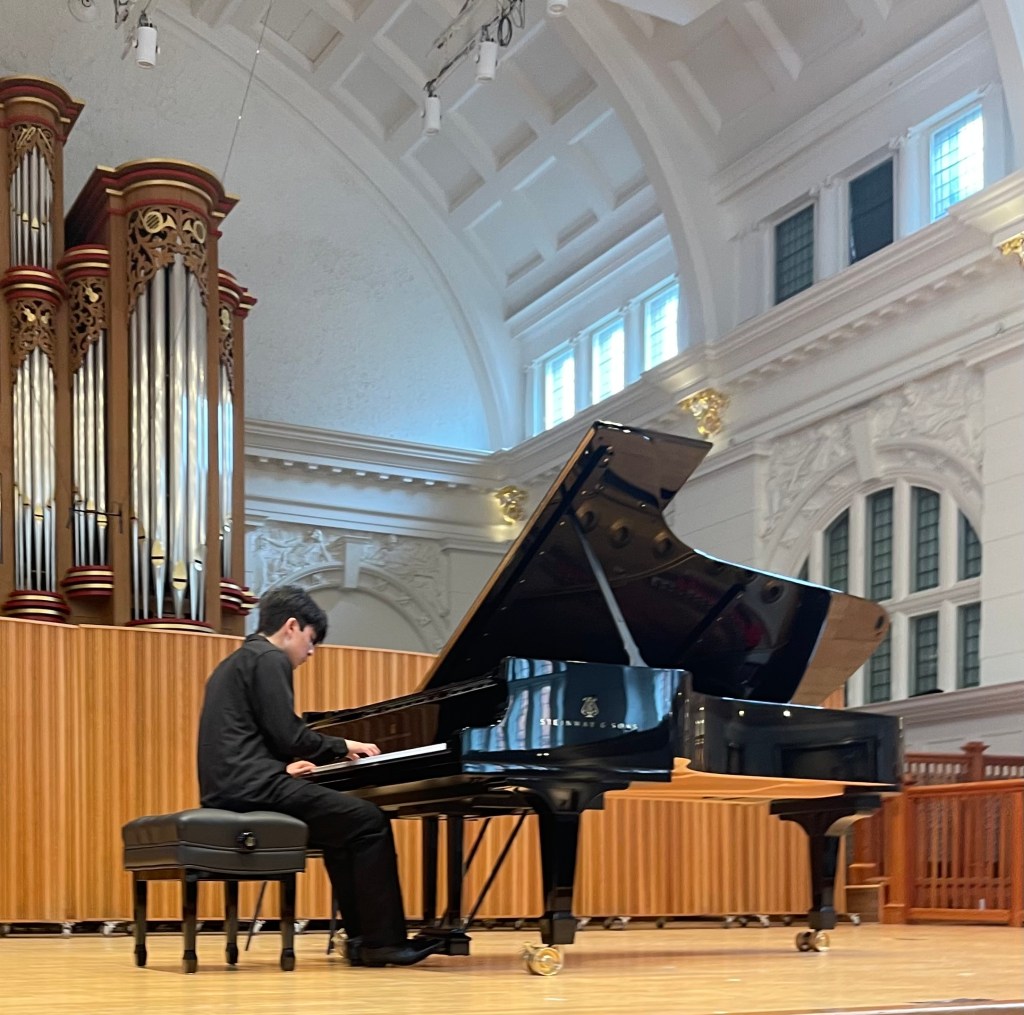
The main work on the programme was Schumann’s ‘Kreisleriana’ where he held the eight fantasy pieces together with a remarkable architectural shape but where an excessive use of the pedal did not always allow Schumann’s subtle poetic fantasy to be revealed with clarity and refined beauty. He maintained the tempo of the first fantasy not allowing the tempo to change for the beautiful central episode that he played with undulating beauty, but outer episodes could have been more clearly played as contrast. The second fantasy, the longest, was played with real poetic feeling ,with long bass notes helping the etherial beauty of the melodic line to float on this wave of sound. The first Intermezzo was played very beautifully but lacked the contrast that Schumann indicates with its spiky left hand intrusion.He brought clarity to the third fantasy and the ‘etwas langsamer’ floated on a cloud of pedal making a beautiful romantic contrast.The fourth was played with beauty and simplicity with its poignant outpouring of great poise and flowing beauty. He brought an impish whispered urgency to the fifth with great sweep to the central episode of romantic fervour.A beautiful sense of improvisation to sixth taking wing like a subtle reawakening with the ‘etwas bewegter’.The seventh was fearlessly played with no rearranging of the hands and if there was too much pedal for the ‘noch schneller’ it was played with a burning intensity before the beautiful coda of nostalgic reflection. The final fantasy was where he managed to maintain the same tempo throughout as the impish almost clumsy roaming around the keyboard was interrupted by two Intermezzi .Although he maintained the same tempo they lacked the contrast and intensity especially as Schumann writes specifically ‘Mit aller Kraft’ on the second. However hats off to a young man of only 21 who can shape these eight contrasting fantasies into one coherent whole with such maturity and artistry.
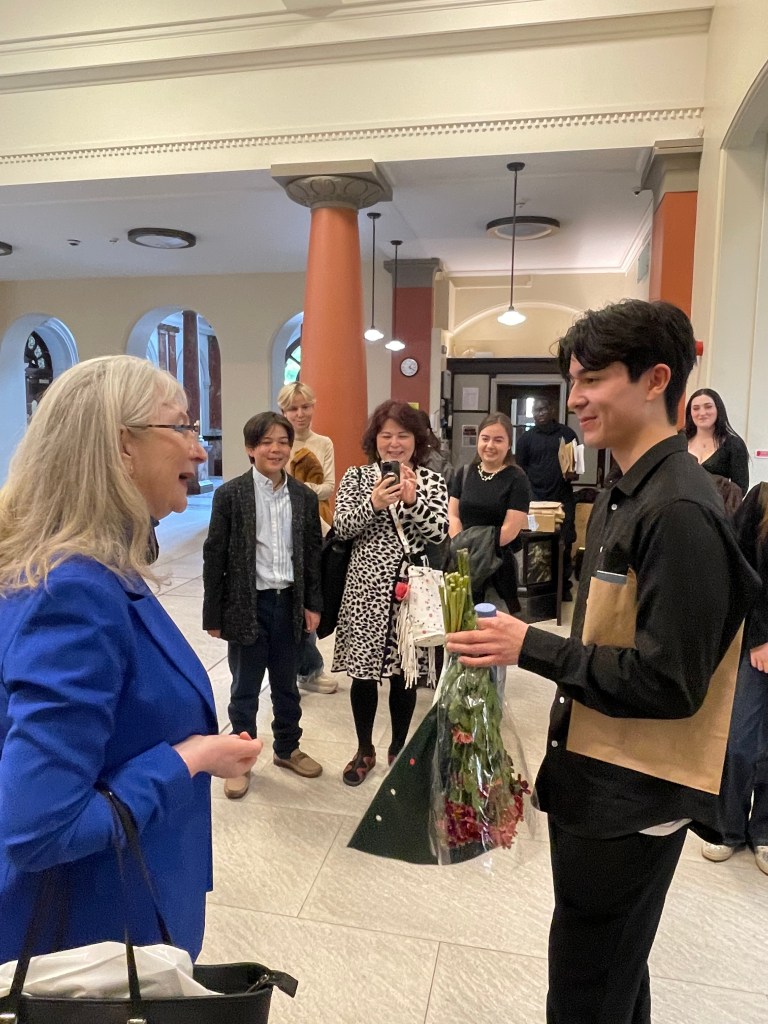
Flowers and cat calls from Tristan’s many friends and family gathered to celebrate this final concert of four long years of serious work with his dedicated teacher Dina Parakhina present in the hall to celebrate Tristan’s coming of age.