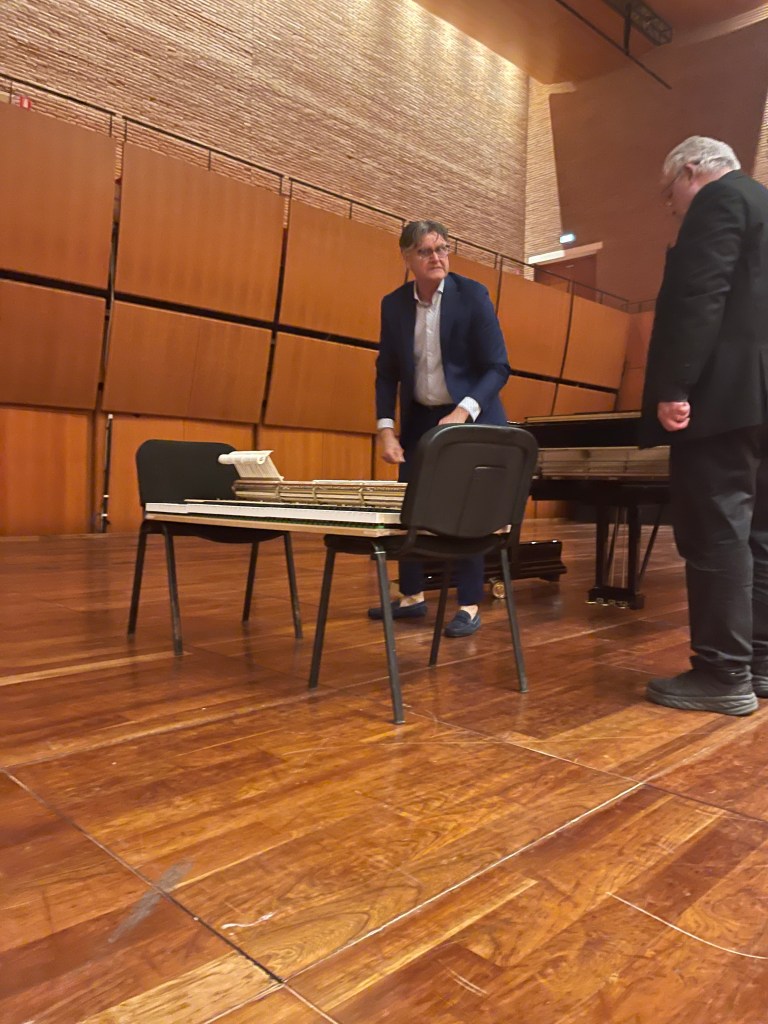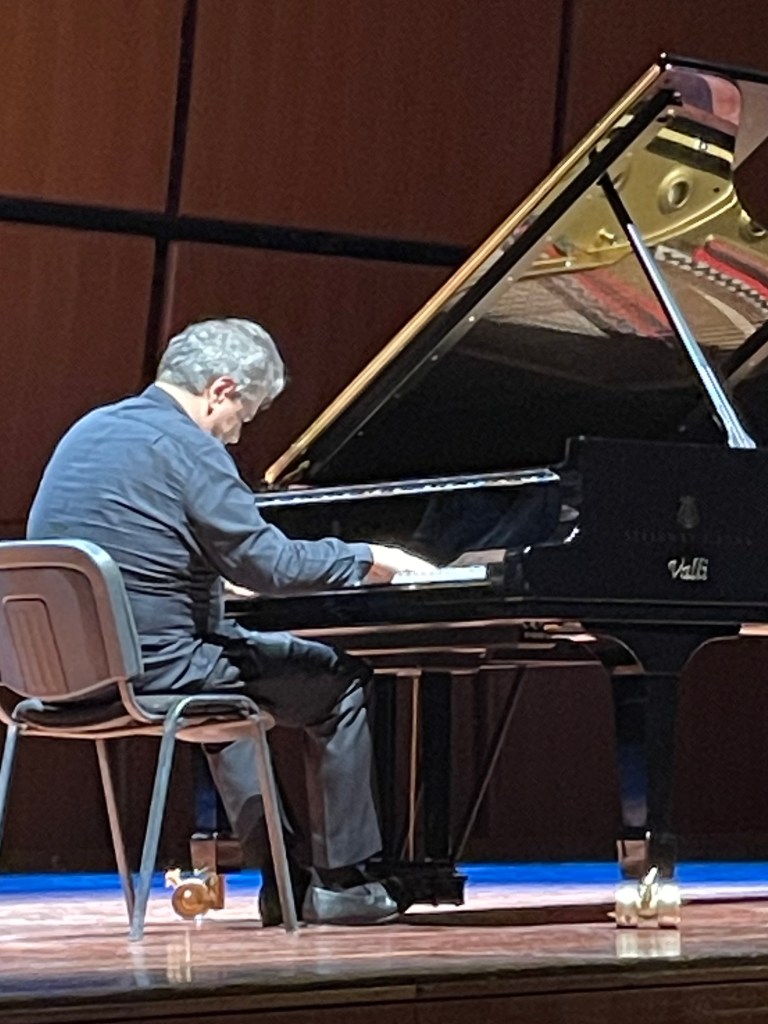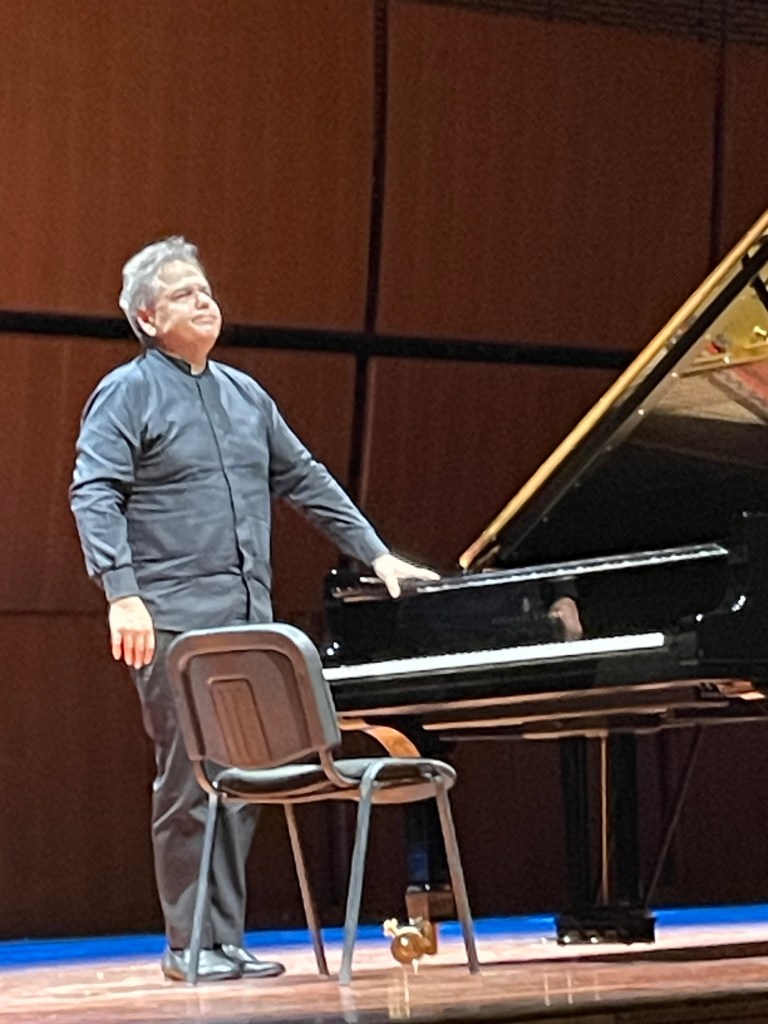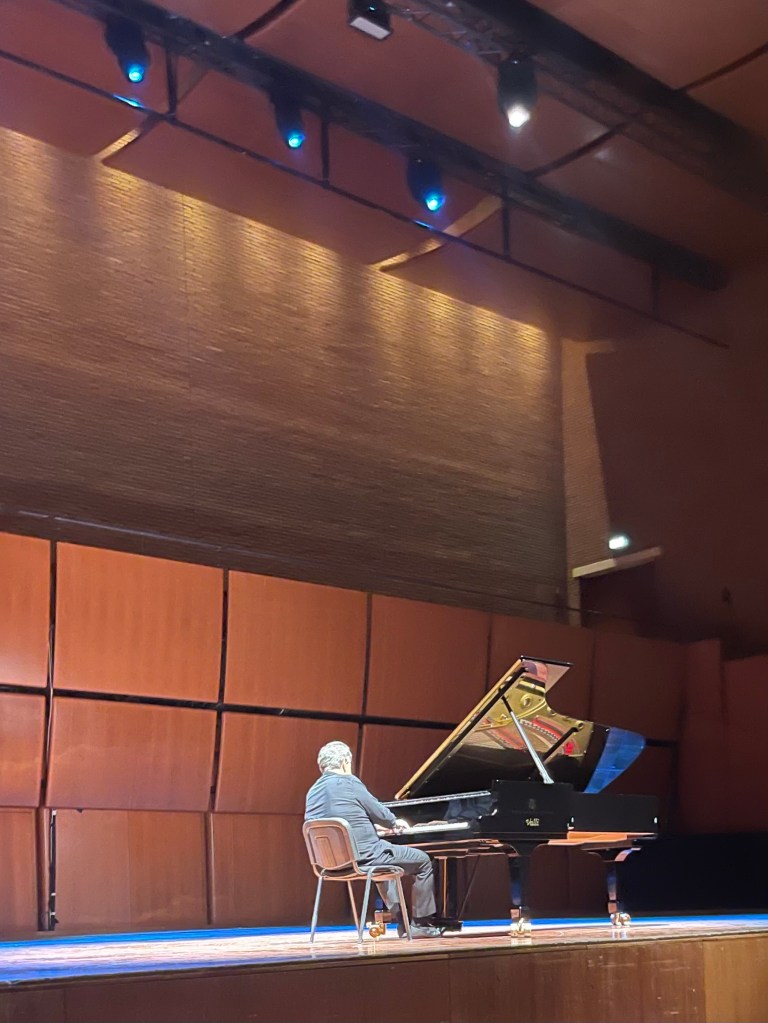
Lupo reigns at the Accademia di Santa Cecilia – If music be the food of love ……..this is the place for me

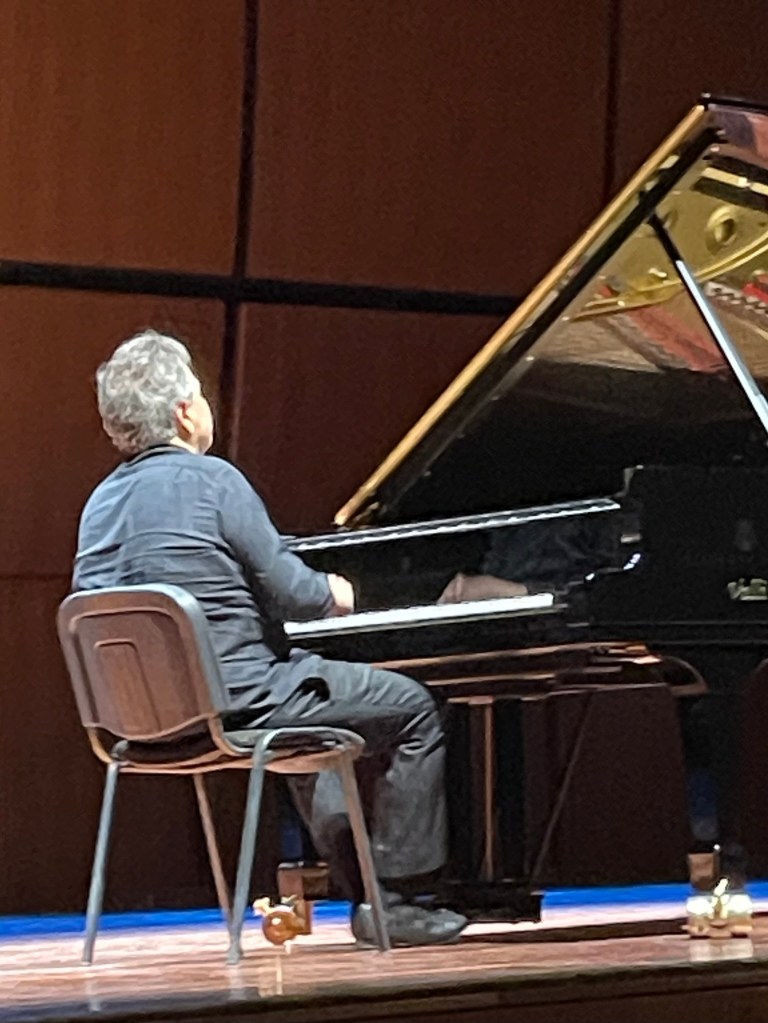
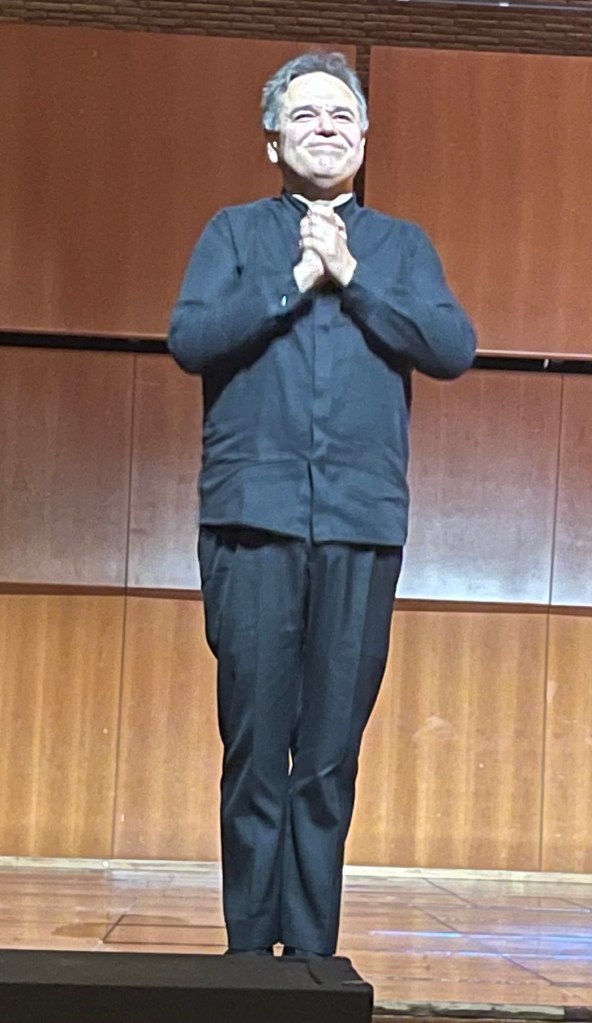
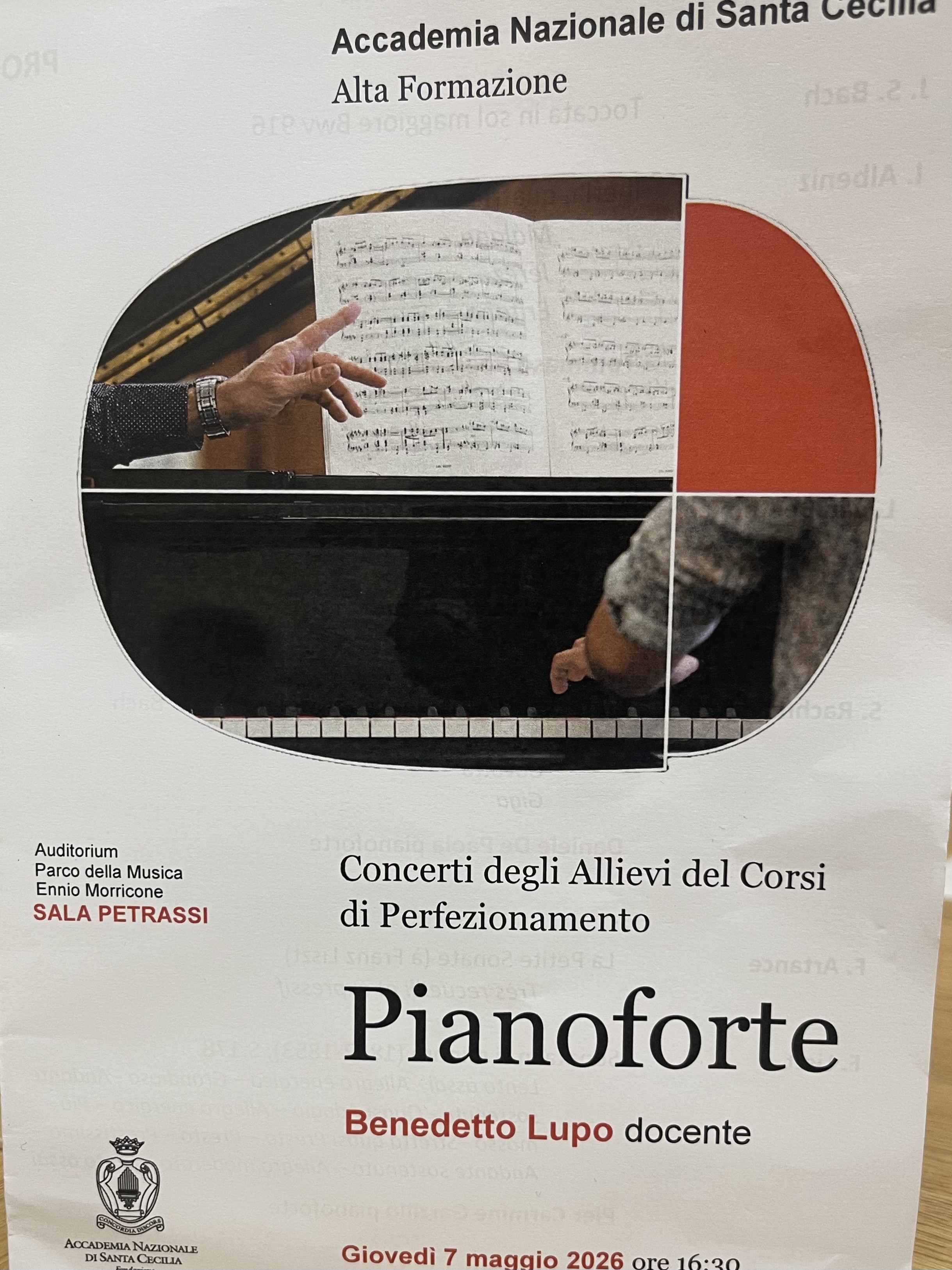
After Volodos what better than to hear young musicians guided by Benedetto Lupo as they delve deeply into the scores and make their first discoveries on what will be a lifetime search for that unreachable perfection that is the aspiration of all true interpreters. https://christopheraxworthymusiccommentary.com/2026/05/07/arcadi-volodos-in-the-eternal-city-reveals-with-mastery-the-soul-searching-of-a-unique-giant-of-our-times/
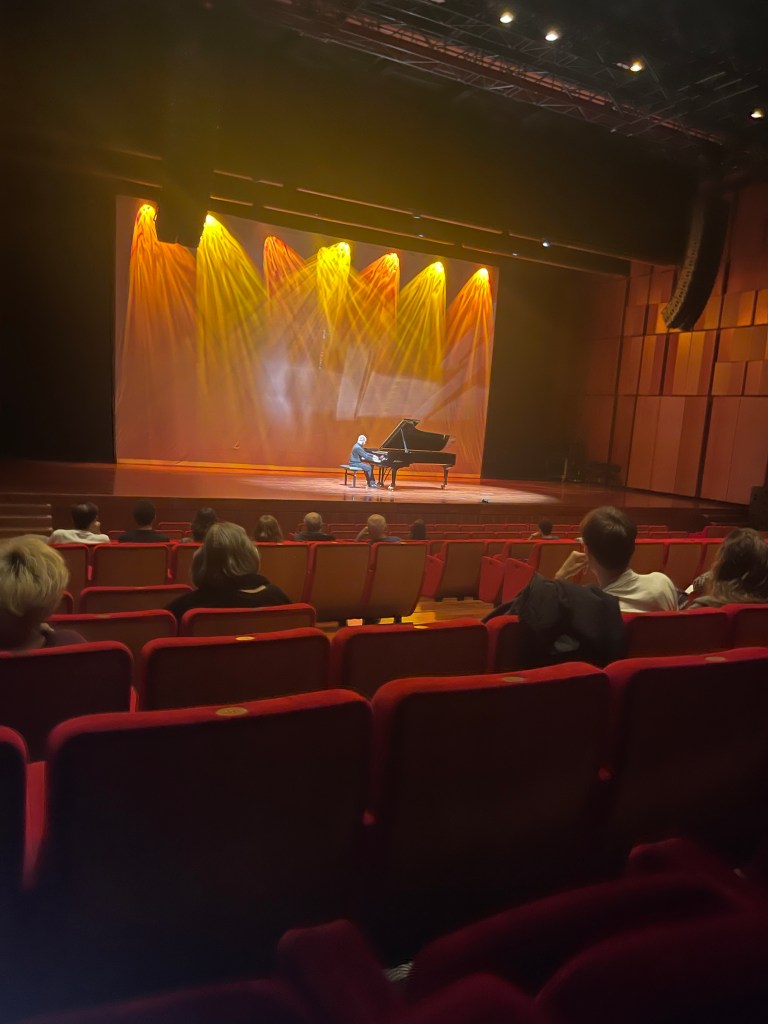
With a technical mastery they have been guided to approach the scores of others with intelligence, scholarship and humility. Talent of course is something that cannot be taught you are born with it and it can only be nurtured and helped to grow. https://youtu.be/gex0sOR7XZ0?si=th7ecNiPOyOzp0GX

It is a delicate thing that can also be killed if not cared for with attention and sensibility like any growing plant. Chopin had likened the freedom or flexibility of playing like a tree with the roots firmly planted in the ground with the branches above allowed to sway in the breeze. In fact nature and music go hand in hand and to watch the beautiful natural movements of Volodos is to see a painter before his canvas with generous natural strokes applying colours to his canvas.

Horizontal strokes, rarely vertical that are only for special effects required by the composer often from the Russian school !

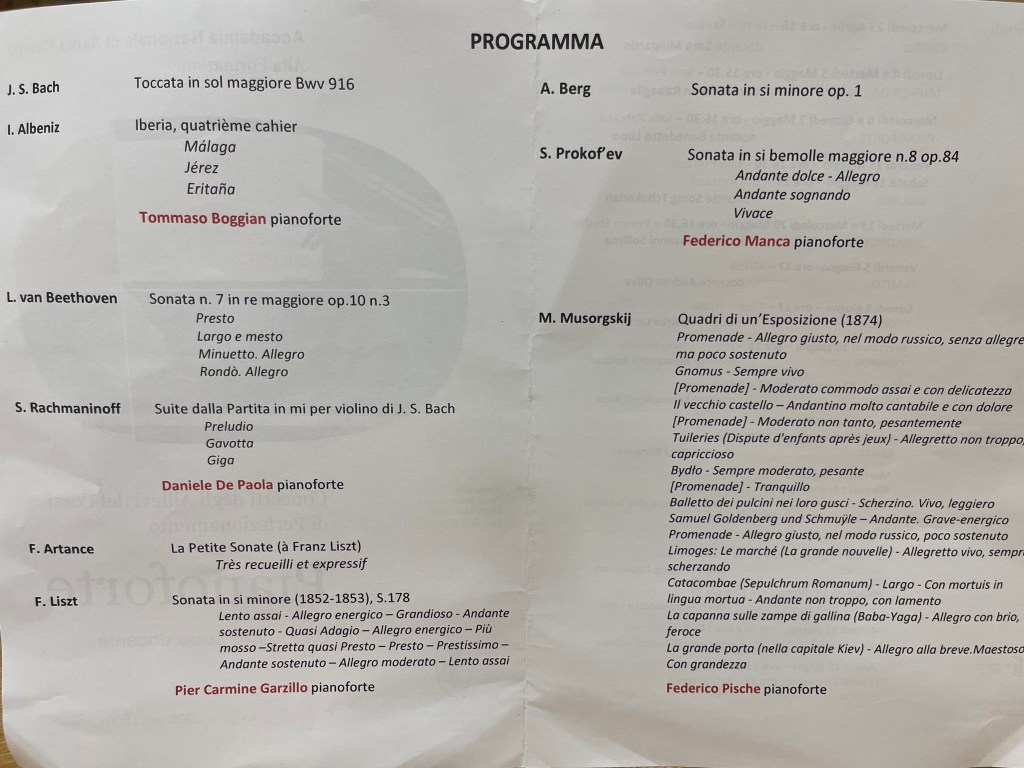
This is just a preamble to present the five pianists I heard today where each one had his own personality and as Rubinstein says have taken what their taste dictates, with the right guidance, and like bees have created their own honey each different from any other.

Five pianists that had one fundamental thing in common: a deep respect for the indications of the composer they are serving as interpreters not merely piano players

‘ Je sens, je joue je trasmet’ is the cry of a true interpreter and was the title of an interview with Shura Cherkassky many years ago in ‘ Le Monde de la Musique’.
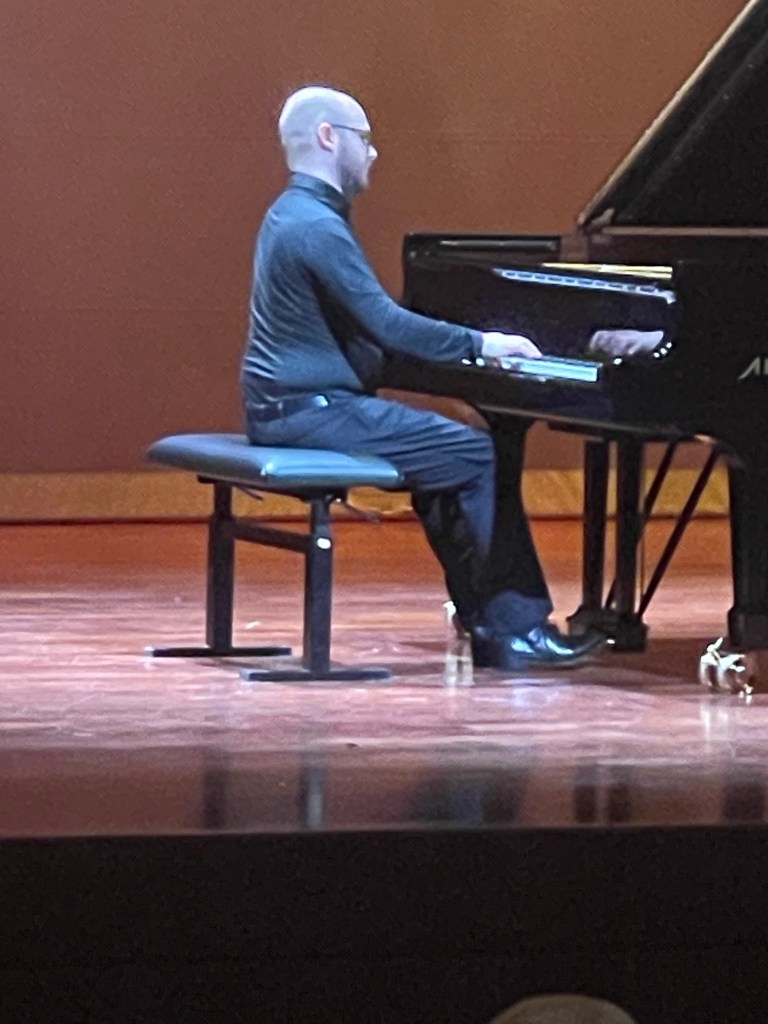
Tommaso Boggian playing the G major Toccata by Bach, one of seven early works of improvised style where the performer has to make choices of ornamentation and colour bearing in mind the limited capacity of the instruments of the day but that Bach always had in mind the song and the dance.

So style, scholarship and imagination join technical mastery. It was just this that illuminated Tommaso’s playing and transformed a showpiece into a tone poem of nobility and grandeur.

Albeniz’s rarely heard fourth book of Iberia was full of sumptuous colour and ravishing sounds of naked emotions in a land of sunbaked passions. Both based on the song and the dance but one created in the formal atmosphere of the majesty and respect of a true believer and the other born on the wings of more earthbound sentiments .
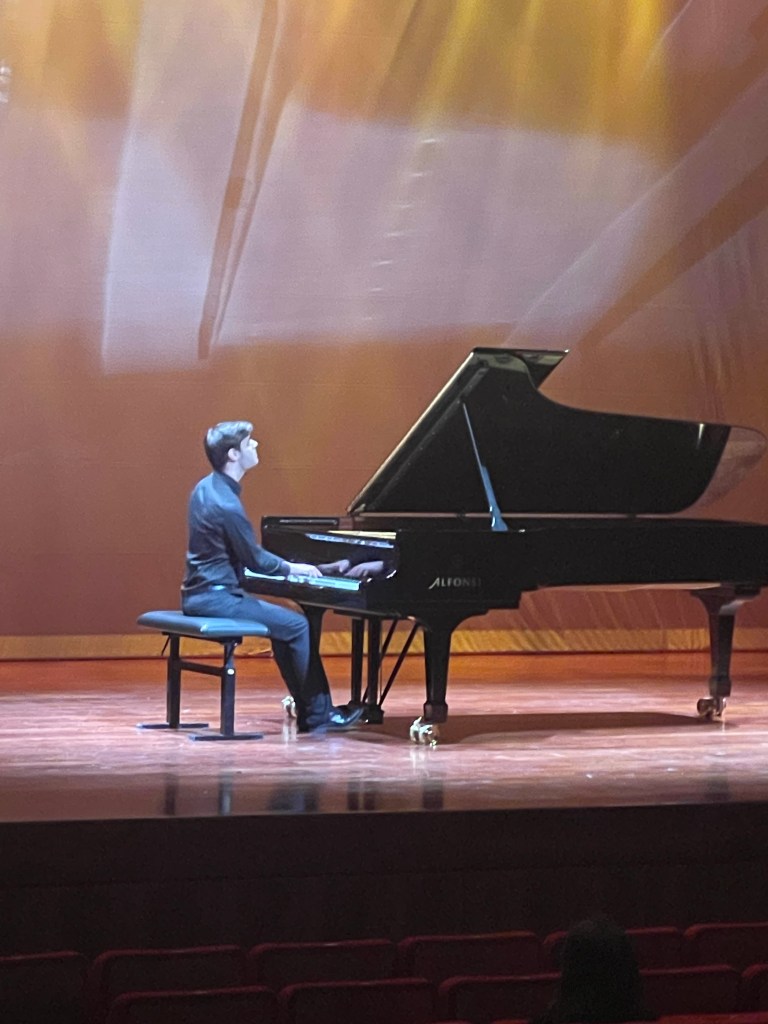
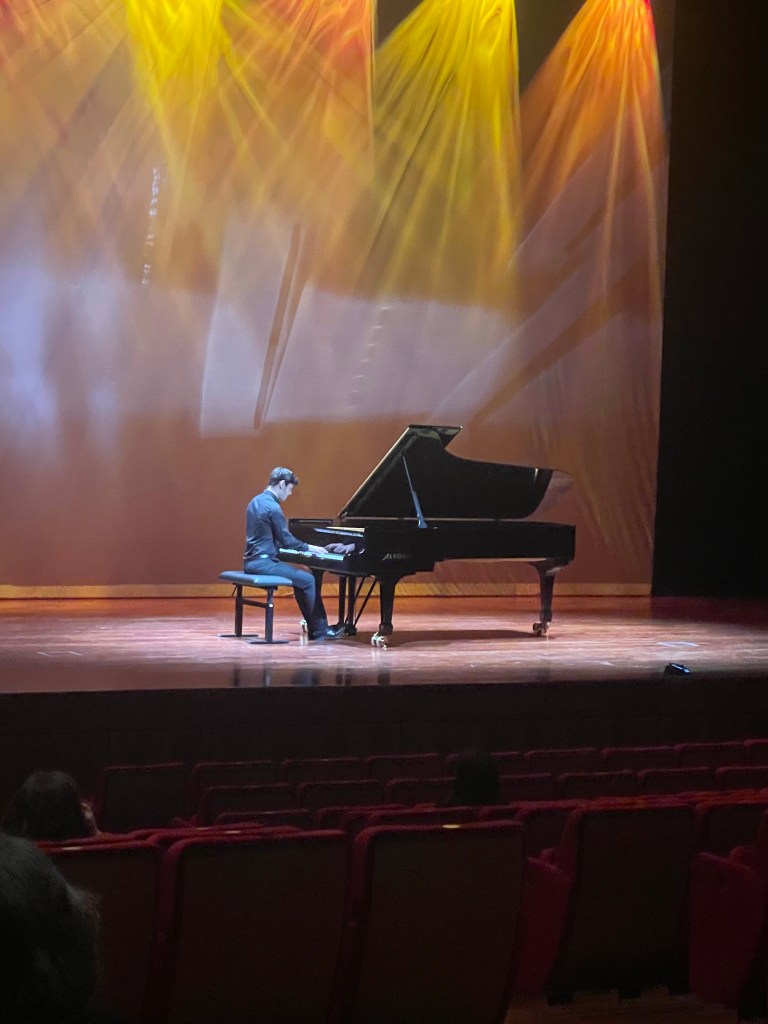
Danielle De Paola played Beethoven’s early op 10 n.3 sonata with scrupulous attention to the composers indications. The astonishing ‘Largo e mesto’ played with aristocratic authority but also imbued with beauty and colour. A flowing natural glow to the ‘Menuetto’ was followed by the subtle technical command of the elusive ‘ Rondò ‘ where the final chromatic meanderings were played with mastery as they disappeared in the depths with whispered insistence.

It was in Rachmaninov’s transcription of Bach that sumptuous sounds and burning authority suddenly ignited a door to the talent that Daniele had concealed with respect for Beethoven whose sonatas are more orchestral than pianistic. Rachmaninov is more pianistic even when respectful to the genius of Bach.
Pier Carmine Garzillo had intelligently chosen a Little sonata dedicated to Liszt to preface the monumental pinnacle of the romantic piano repertoire of Liszt’s own B minor . Garzillo played the sonata by Artance with glowing fluidity but it was his intelligent musicianship that showed us the masterpiece that the Liszt Sonata truly is. Following Liszt’s very precise indications, the opening was merely the presentation of the three motives on which the Sonata is contructed. With a control of sound saving the final explosion and true beginning of the Sonata for the fortissimo on the second page.

A performance of intelligence but also of passion and technical mastery with a palette of sounds that created an architectural whole of mature musicianship rather than flashy showmanship. I am glad to see he will be taking his final diploma in June when I can listen again to this performance that I am sure will have grown even more in stature from the hands of this real thinking musician.
Federico Manca offered an eclectic programme of Berg’s masterly op 1 Sonata , together with Prokofiev’s elusive fourth sonata. The Berg I have rarely heard played with such clarity where the line was always so clearly defined with Berg’s knotty but knowing twine ( like Medtner) where you often can not see the wood for the trees. Crystalline playing of both Berg and Prokofiev where his palette of colour illuminated his masterly musicianship as he led us on a voyage of discovery of remarkable lucidity and intelligence.
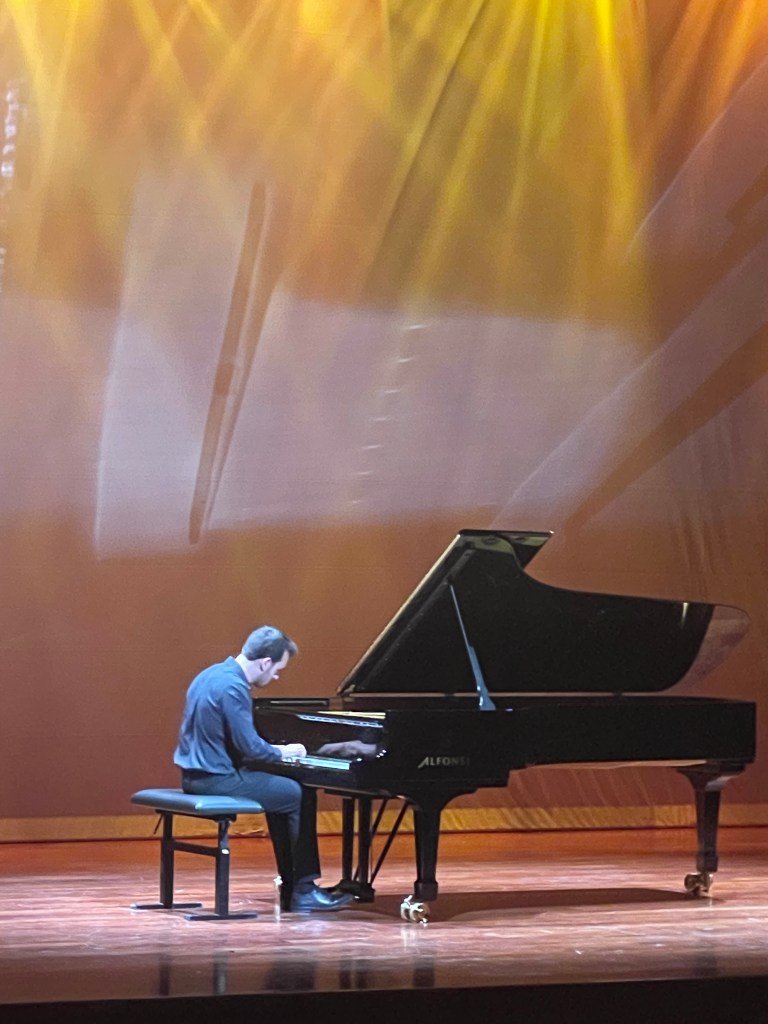
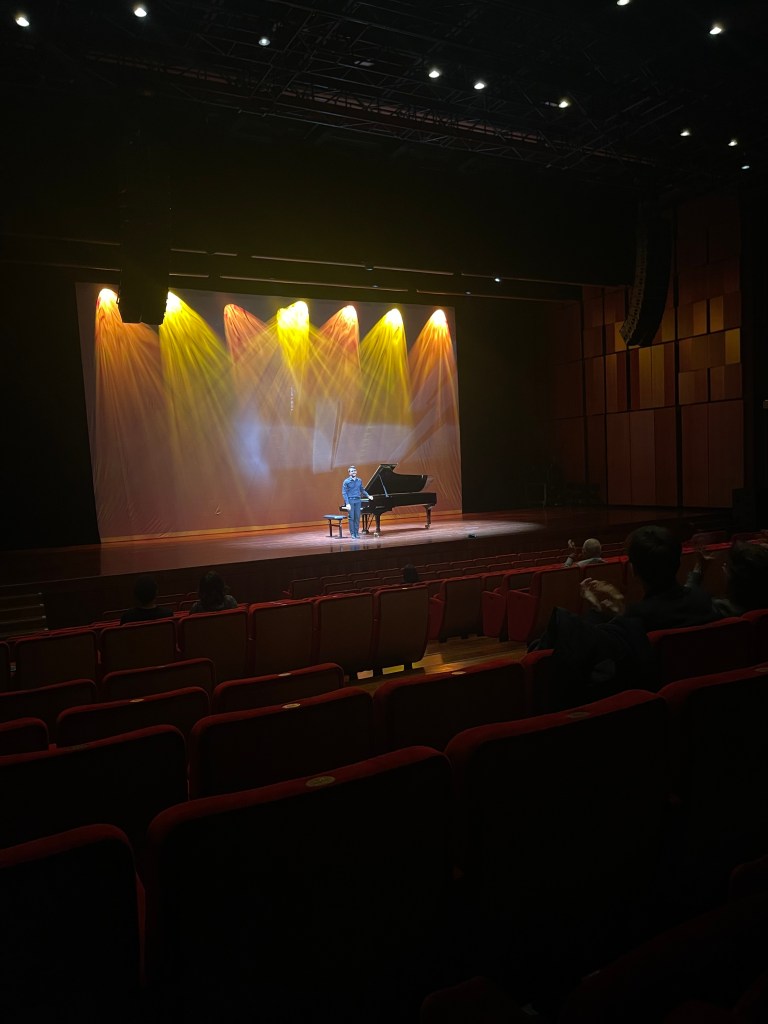
Federico Pische I have heard before he completed his studies at the Academy with Benedetto Lupo. The transformation is remarkable and as I told him afterwards a door has been opened and revealed a world of fantasy and colour that was hidden behind a shield of technical precision.

https://christopheraxworthymusiccommentary.com/2025/03/06/federico-pische-the-authority-and-integrity-of-a-young-artist/

Hats off to Benedetto who can find the key for his students that can fit each one and reveal what is behind the notes with their own authority and mastery. Federico played the Mussorgsky as written on the page adding a sense of colour and imagination to each of Hartman’s pictures that keep us on the edge of our seats. A scintillating emotional journey as we were taken around to see the pictures of a friend who was to die so suddenly and unexpectedly. Above all here was a chameleonic sense of balance where lesser hands play with a black and white technical proficiency. An artist who has become a supreme colourist recreating a work that held me riveted rather than revolted as he uncovered a masterpiece that was written expressly for the piano and was not contemplated as an orchestral piece. That was to come much later, so let’s put the horse before the cart and allow Bydlo to go on his miraculous lumbering way.
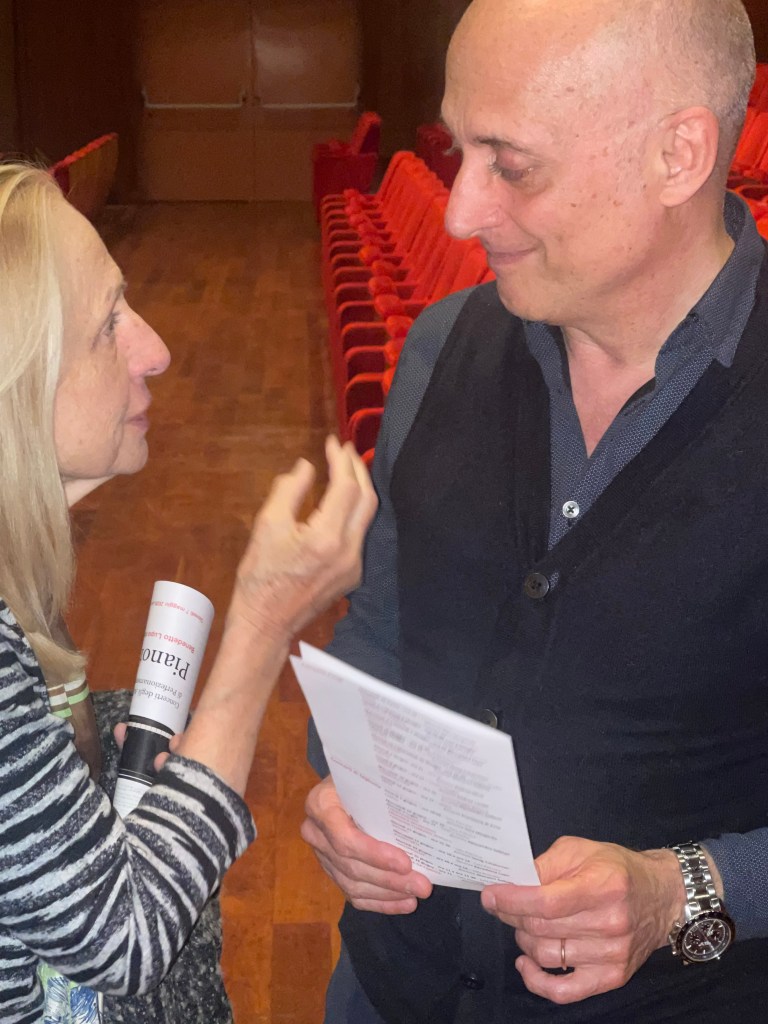
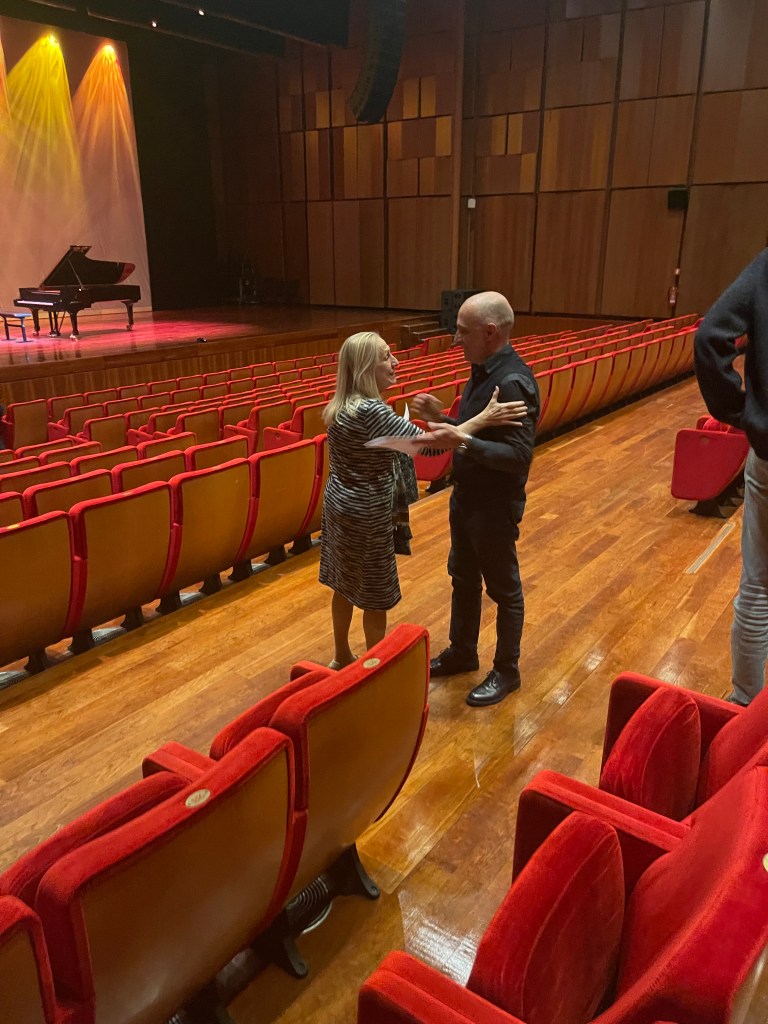
https://christopheraxworthymusiccommentary.com/2024/06/21/martha-noguera-in-rome-and-sorrento-the-authority-and-passionate-conviction-of-a-great-artist/

Garzillo, Manca and Pische will be joined by Jaeden Izik Dzurko , Gold medal winner of Leeds and Montreal, for their final graduation performances at the Sala Petrassi on Wednesday 17 June at 10 and at 14 h https://christopheraxworthymusiccommentary.com/2025/12/16/jaeden-izik-dzurko-at-the-wigmore-hall-with-mastery-and-poetic-fantasy/
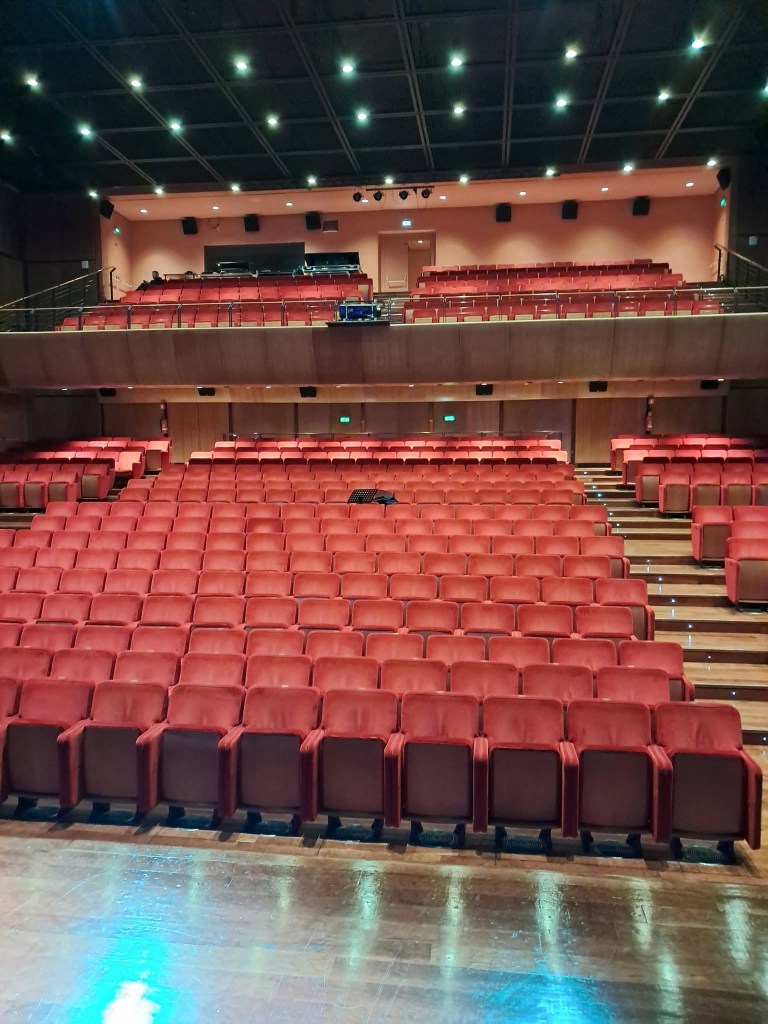
Free entry and finer more committed performances than you will ever hear in many concert halls.
photo credit Oxana Yablonskaja https://christopheraxworthymusiccommentary.com/2024/03/20/christopher-axworthy-dip-ram-aram/

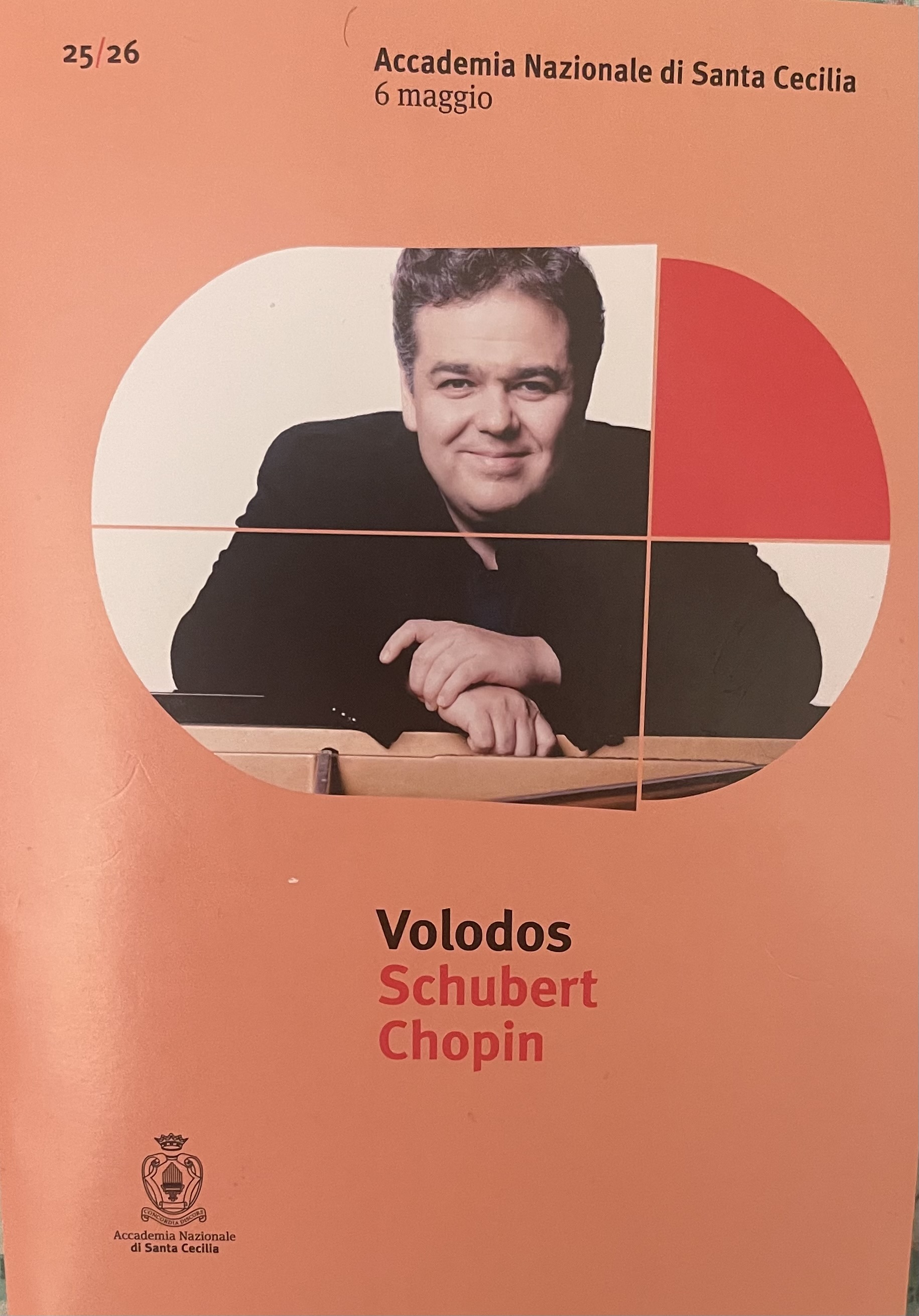
Arcadi Volodos in the Eternal City reveals with mastery, the soul searching of a unique giant of our times

Arcadi Volodos searching for the beauty of recreation, preferring Schubert’s Fantasy Sonata to his last, and adding his own thoughts to Chopin’s Funeral March. Chopin’s four mad children found a place in the eternal city with the searching recital that Volodos offered to an audience held spellbound with the intimate whispered thoughts of Schubert and in delerium as the greatest pianist alive or dead seduced us with a Carmen revealed as never before .

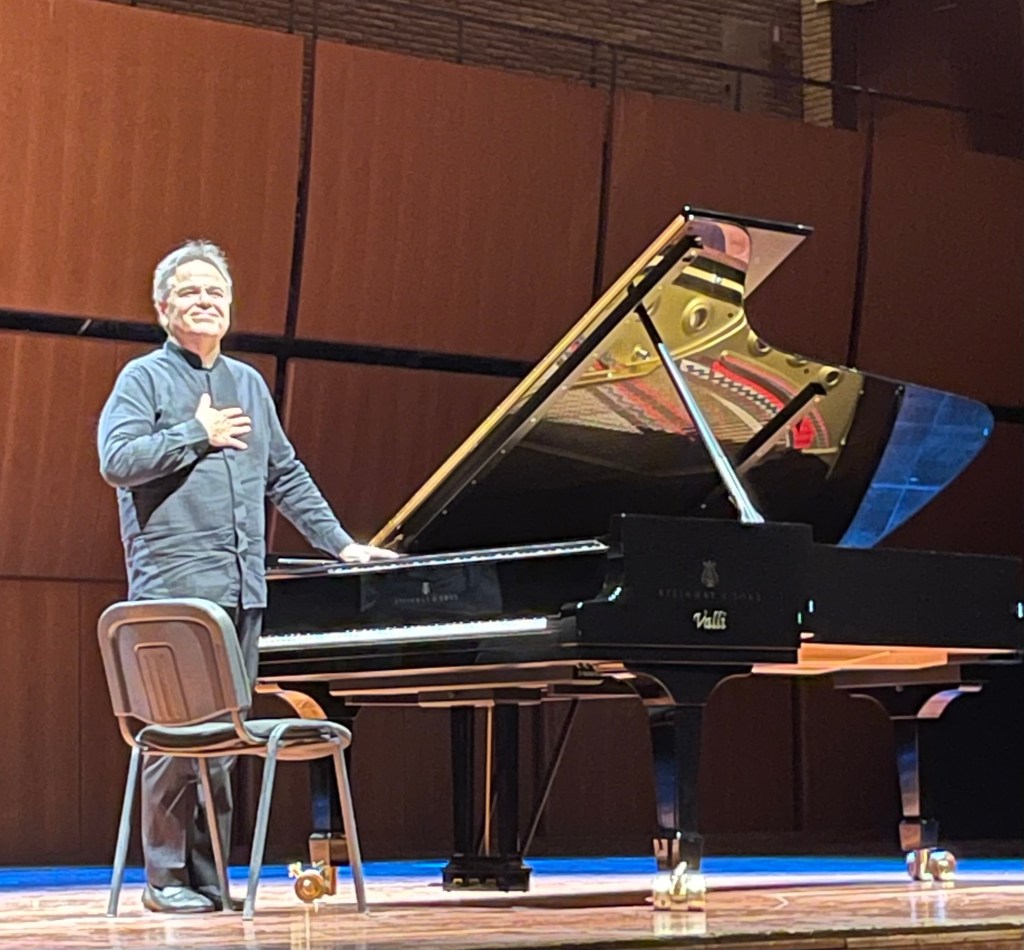
Ravishing sounds bathed in an aura of misty beauty as a master searched for the perfect legato and allowed Roberto Valli ’s superb Steinway to sing as never before . Volodos in pensive mood last night with the thoughts and searching soul of a unique giant of our times.
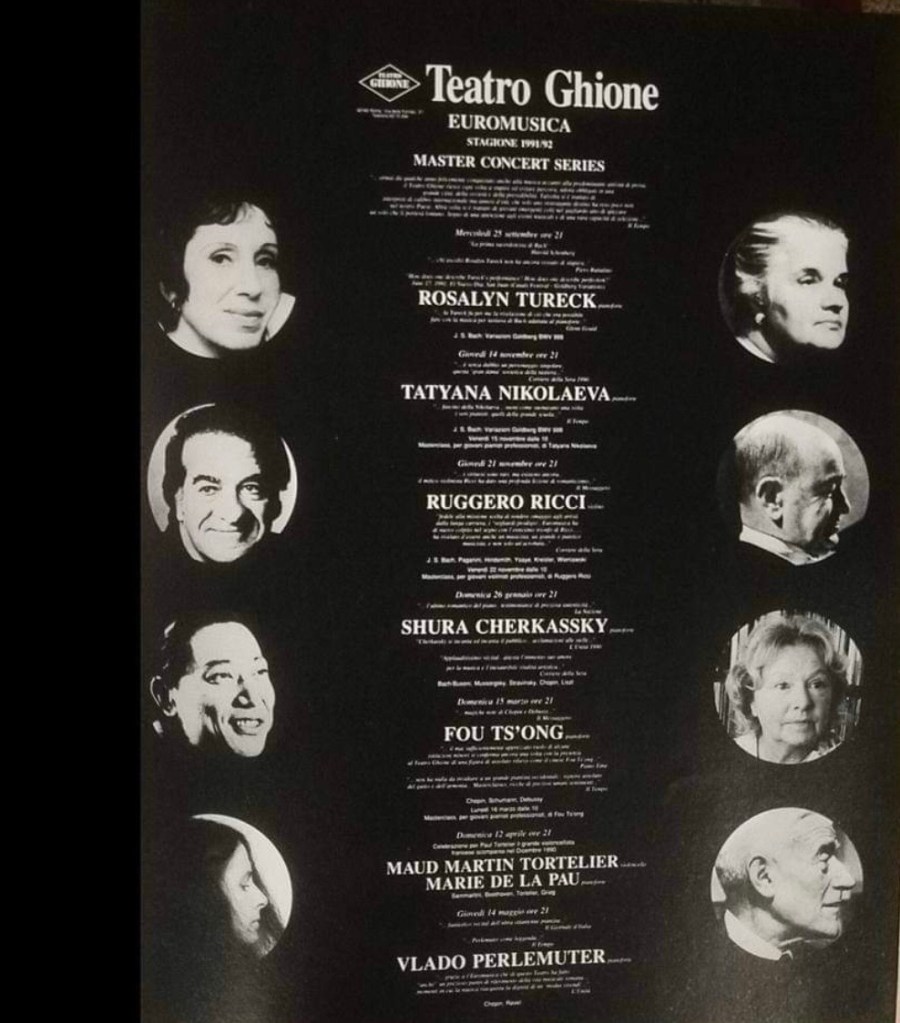
I remember some years ago when I had invited both Rosalyn Tureck and Tatyana Nikolaeva to play the Goldberg Variations in the Ghione theatre at a month’s distance from each other. There is so much to be found in such masterworks that a lifetime is not enough as every artist digs deeply into the very veins of these works and finds hidden seams of gold often missed by others. I was criticised by many who could not understand why there were not more varied programmes at the Ghione !
I was flying to Rome to hear Volodos play Schubert’s last Sonata as advertised, and to add his revelations to those of Sokolov last month. Unfortunately this was not seen as a commercial proposition and on arrival found that Volodos was now playing Schubert’s Fantasy Sonata in G. https://christopheraxworthymusiccommentary.com/2026/03/31/sokolov-in-rome-the-pinnacle-of-pianistic-perfection/

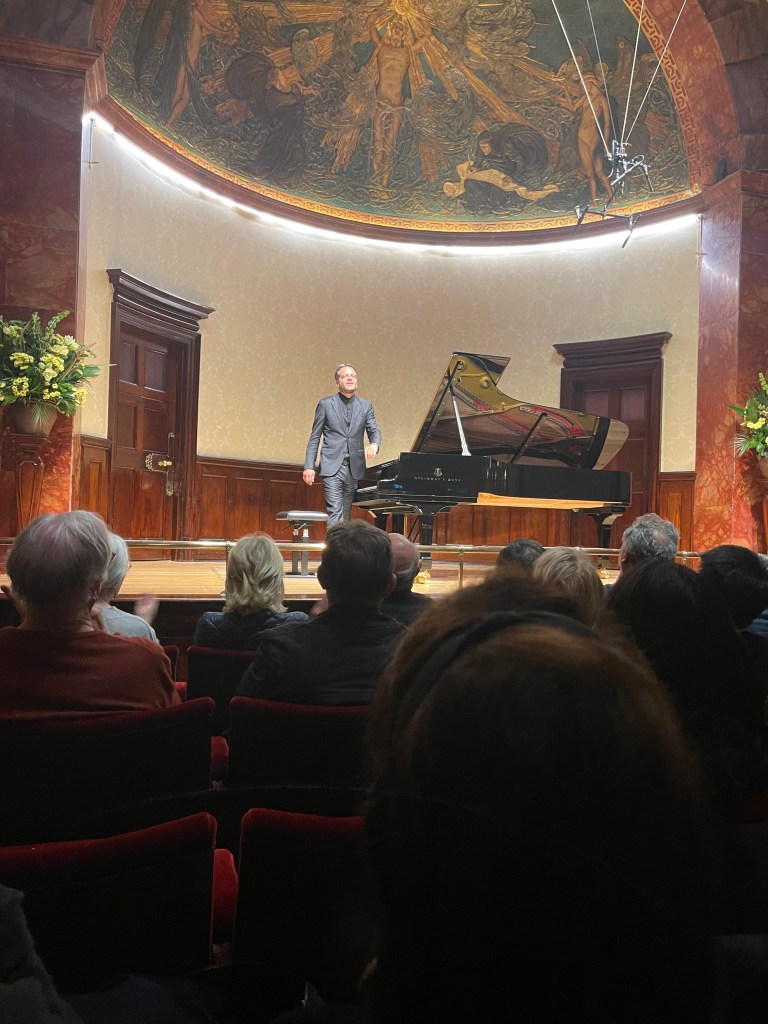
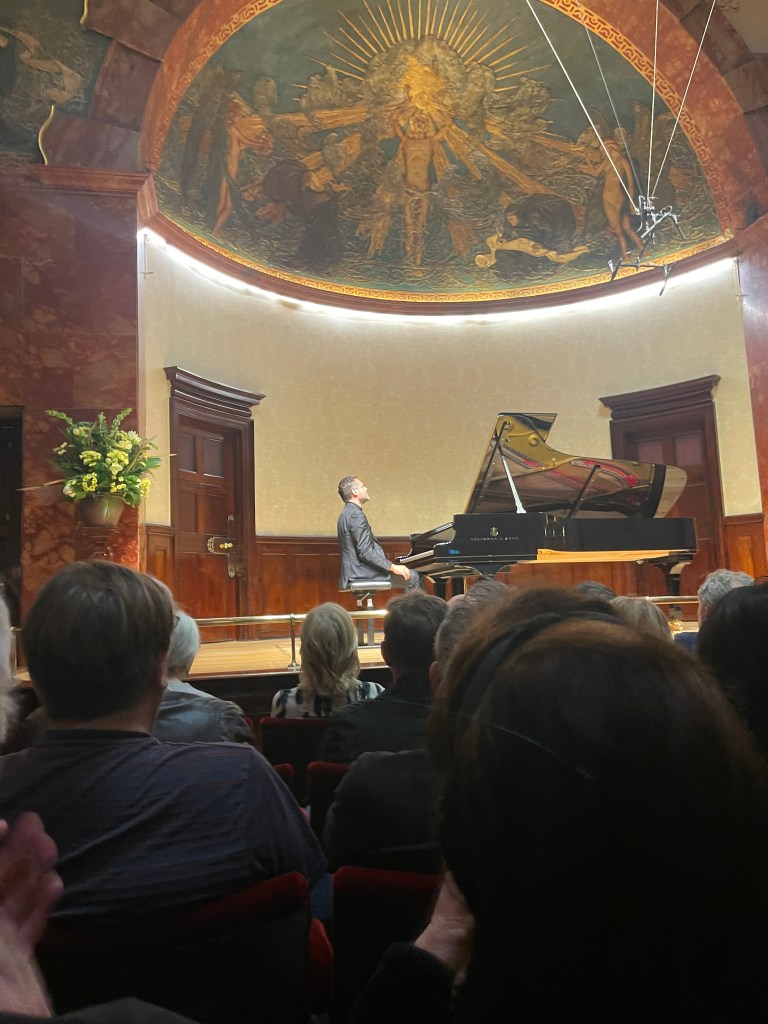
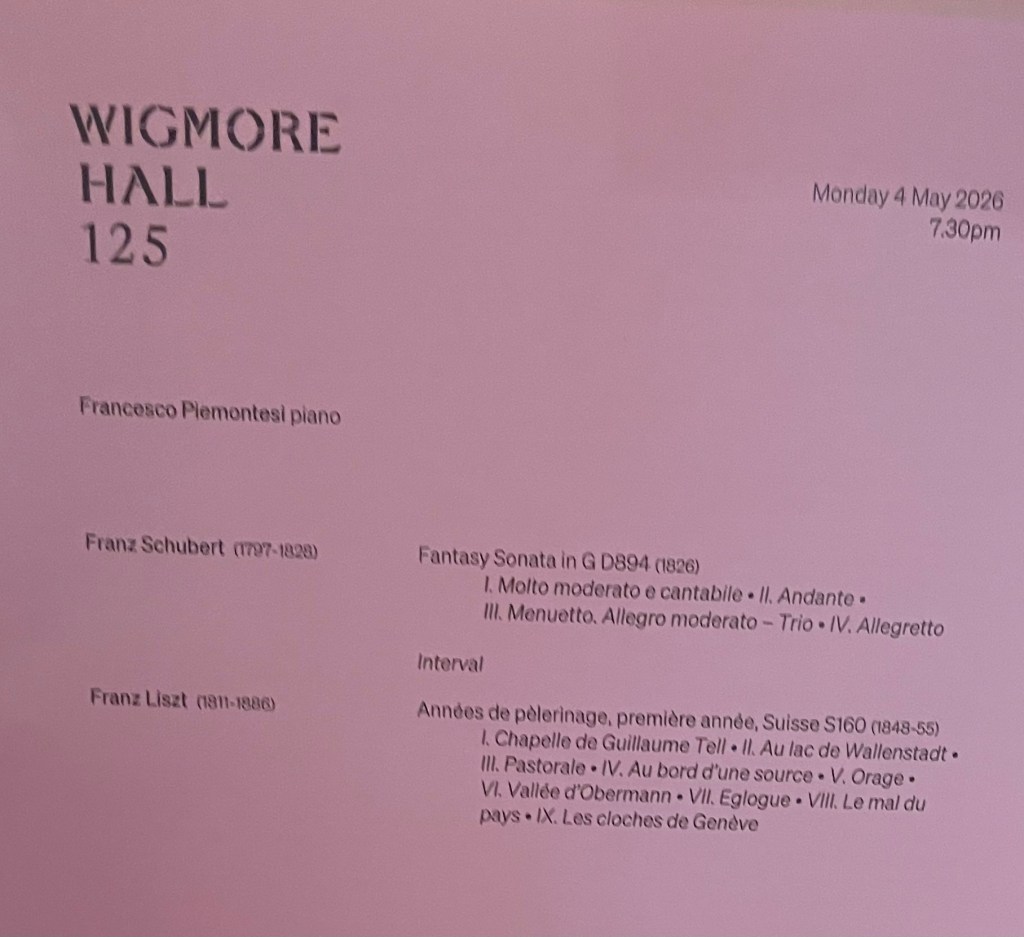
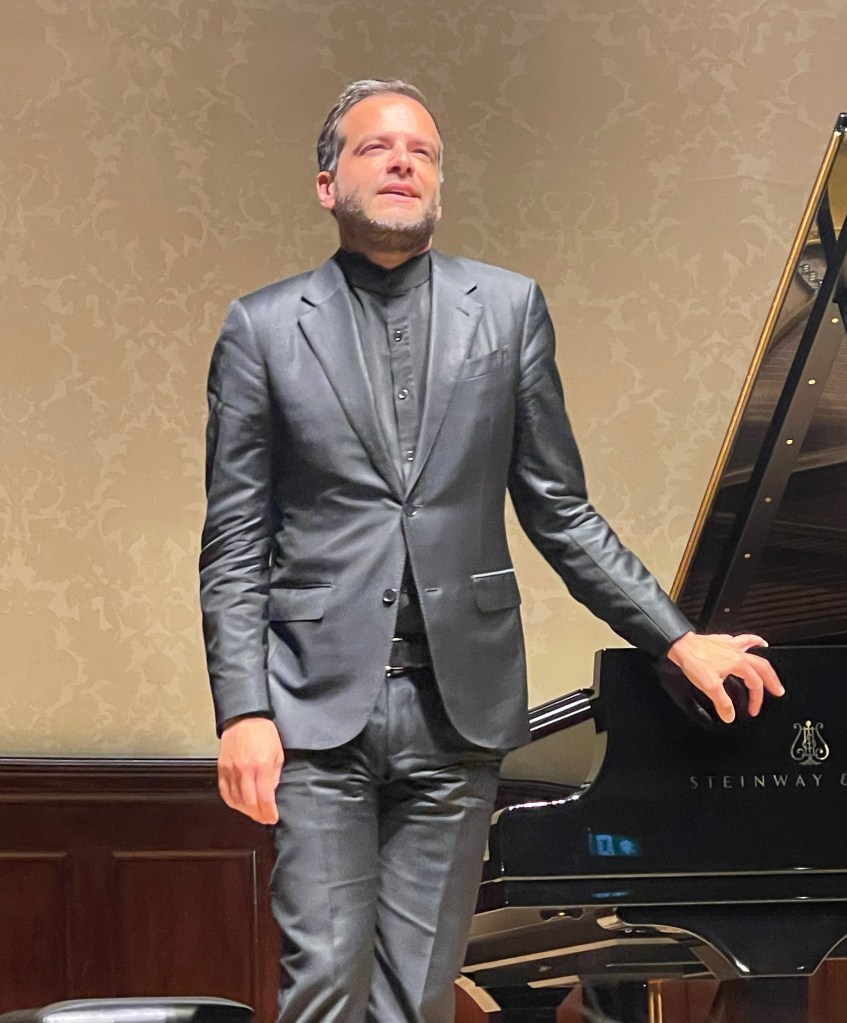
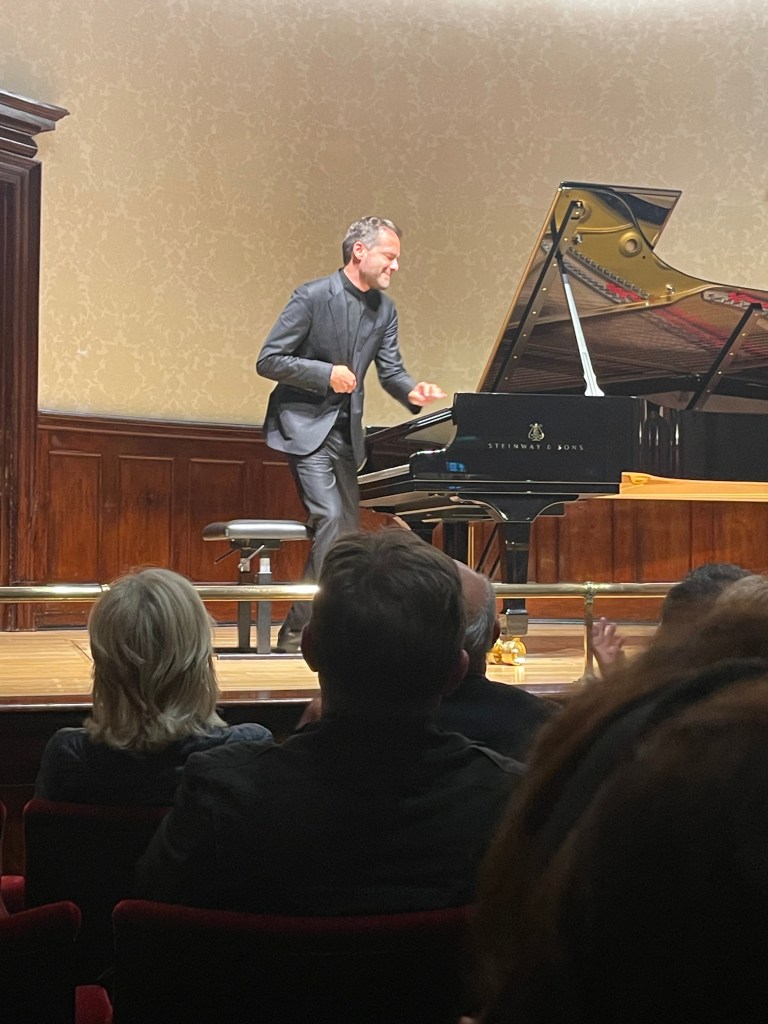
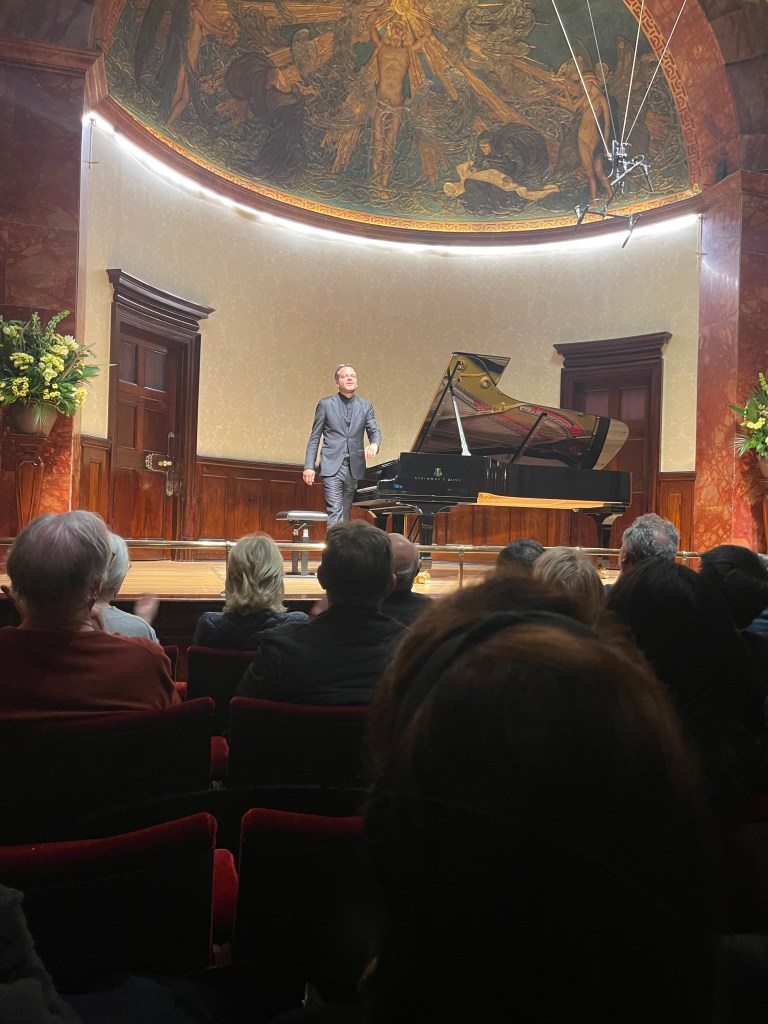
By coincidence I had just heard Francesco Piemontesi play it two days before in London and disappointment changed to revelation as I was able to discover so many marvels with this full immersion from the hands of two masters, all within days of each other https://christopheraxworthymusiccommentary.com/2026/05/05/francesco-piemontesi-beauty-and-imagination-with-humility-and-dedication/.

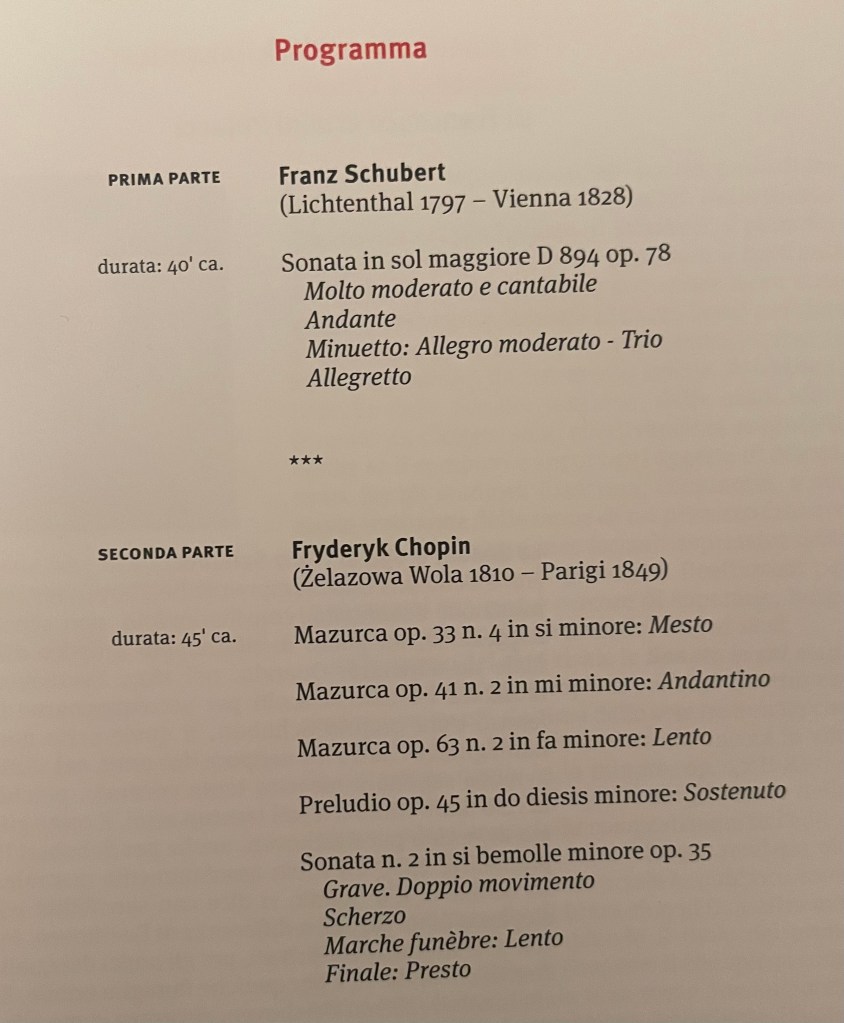
Of course the etherial sounds of Schubert’s most elusive sonata found in Volodos an ideal interpreter . But there were surprises as the the drama of the development reached almost Lisztian proportions of sumptuous rich sound. Teasingly whispered streams of sound were allowed to flow from Volodos’s fingers, bathed in pedal offering other worldly sounds far off in the distance. Explosive moments of daring were diffused with whispered dance of beauty bathed in clouds created by the pedal. The ‘Andante’ was played with simplicity, and with almost Kempff like majesty the contrasting explosions of emotional turmoil. A generously rich ‘Minuet’ was followed by a ‘Trio’ allowed to unwind with disarming simplicity. The ‘Allegretto’ unfolded with a much more positive sound, contrasting with the ‘Fantasy’ of the opening. This was the homecoming as Volodos teasingly played with the whispered dancing figures that interrupt the familiar voice of recognition. A performance with so many marvels but that held us at bay, and somehow we were not given the magic key yet, to the voyage of discovery that Volodos had decided on this evening .

It was in the second half that the magic sounds and timeless beauty of Volodos’s playing came together in Chopin’s elusive Prelude in C sharp minor. But even here Volodos was searching for sonorous effects, as the cadenza was just a moving amalgam of sounds where notes were clouded in the pedal as though Volodos was trying to hide any trace of hammers hitting strings in a dream world of poetic beauty.

The chiselled beauty of the Mazurka in F minor was a reminder of Volodos’s bel canto mastery of balance and weight.The two Mazurkas in B minor and E minor were a lesson in style where the delicate effemeral composer was revealed as a full blooded artist with a longing for his homeland locked deep within his soul.

Drama and passion were how Volodos saw the B flat minor Sonata tonight. An arresting opening with added bass notes followed by a ‘doppio movimento’ washed in pedal. Dramatic fervour to the alternating chords were of Beethovenian intensity and led to the ritornello, announced by a gigantic bass pedal note. The development section has never sounded so fierce or dramatic with added octaves to the left hand motif making such a drastic contrast with the beseeching answer from afar. The bass becoming ever more important as the development took wing on clouds of misty sounds of imperious authority. The ‘Scherzo’ began on the reverberations of the first movement. Volodos had obviously seen this sonata as a single movement , with Chopin’s maddest children all under the same roof, as Schumann was to exclaim when listening for the first time to this masterpiece of genial originality. A ‘Trio’ perhaps too free but also bathed in pedal, with whispered asides and strange visions, rather than statements, of beauty. A monumental ‘Funeral March’ where Volodos in his attempt to create a mysterious and even imperious atmosphere really overstepped the mark of tradition and respect. Enormous bass sonorities clouded the whole of the recapitulation and created a fearful atmosphere that was more of Volodos than Chopin. The ‘ wind over the graves’ in Volodos’s hands has rarely been heard as tonight. Notes just disappeared as the pedal clouded the undulating sounds that created such a fearful windswept atmosphere. He even added extra notes at the end waiting for the moment when he could pounce on the final chords that were actually Chopin’s !

A highly original and even controversial performance that was born of an idea, more of Volodos than Chopin, from a spirit in search of the original creative spark of a genius.

Five encores from an artist where the genial spark had been ignited after an opening that had something of tiredness about it . Artists are human and have days when they are more inspired than others. The excitement and attention of the audience obviously ignited the genial spark of this giant of the keyboard revealing the secrets of Scriabin and Brahms, as lullabies of grief and longing expressed with the luminosity and beauty that is part of Volodos’s being. His Carmen Fantasy was a glimpse of the world that had brought Volodos to fame and was offered with remarkable generosity and pyrotechnics to an audience that had been treated to a unique voyage of discovery by one of the giants of our time.

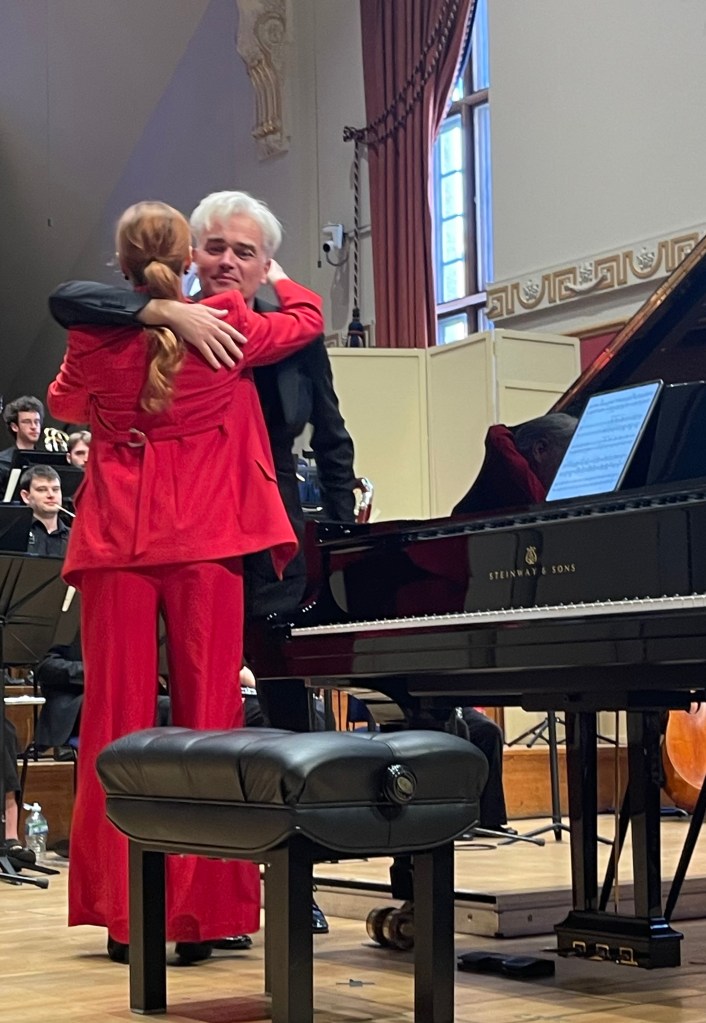
photo credit Oxana Yablonskaya https://christopheraxworthymusiccommentary.com/2024/03/20/christopher-axworthy-dip-ram-aram/

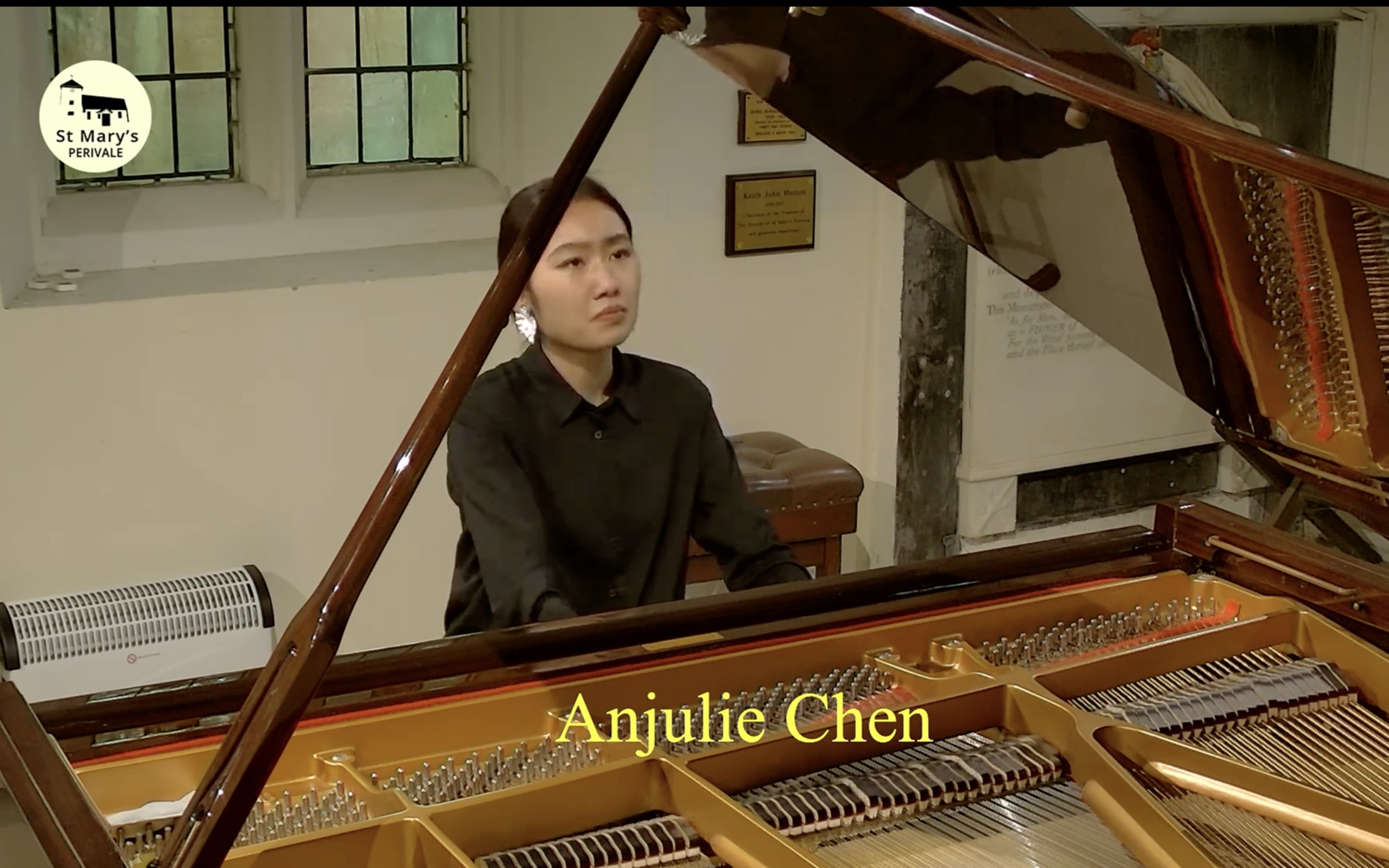
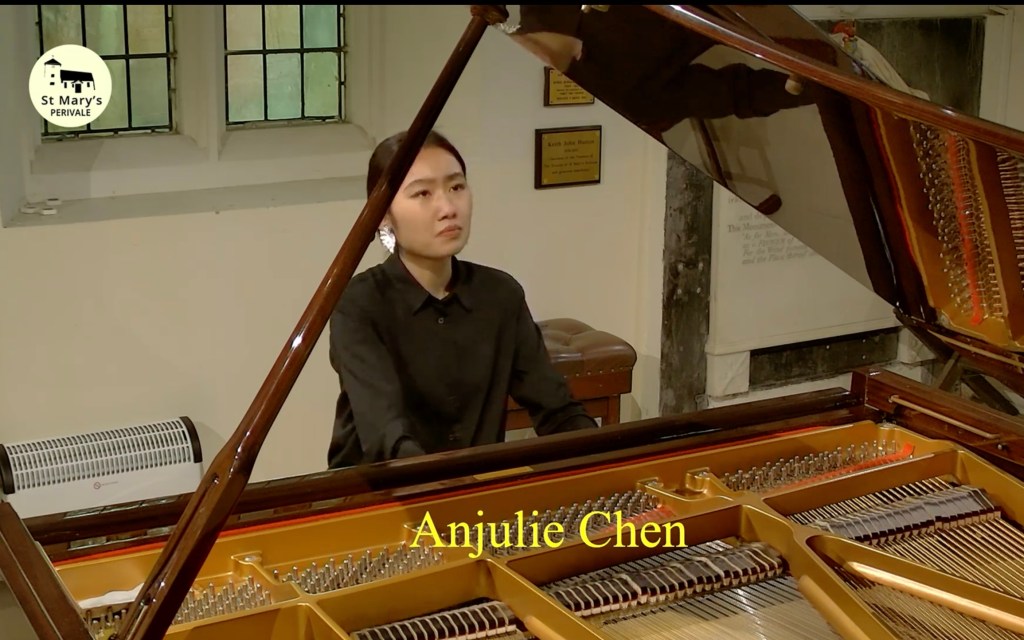
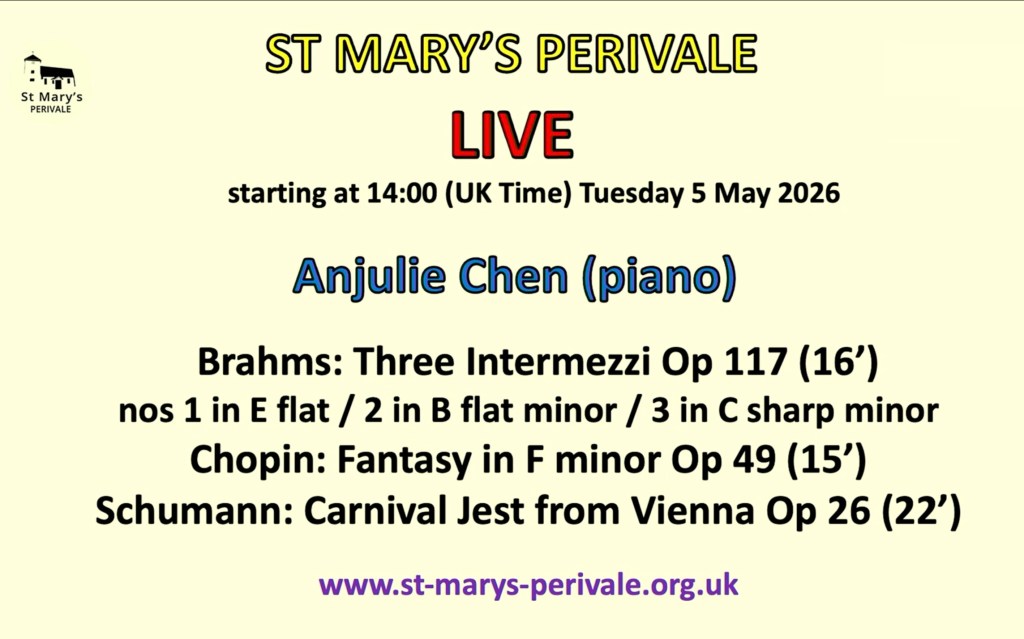
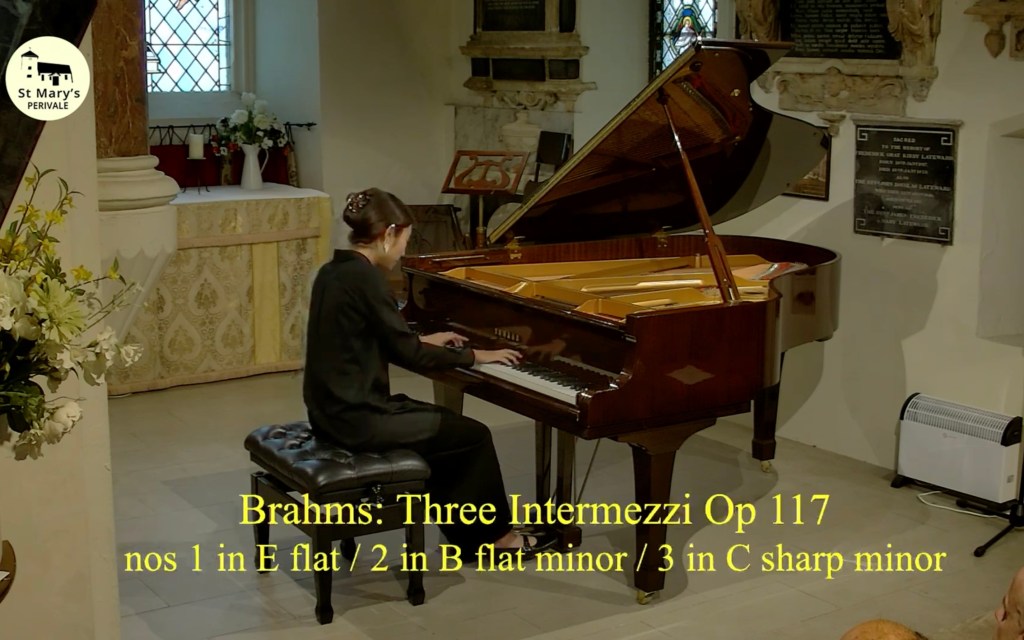
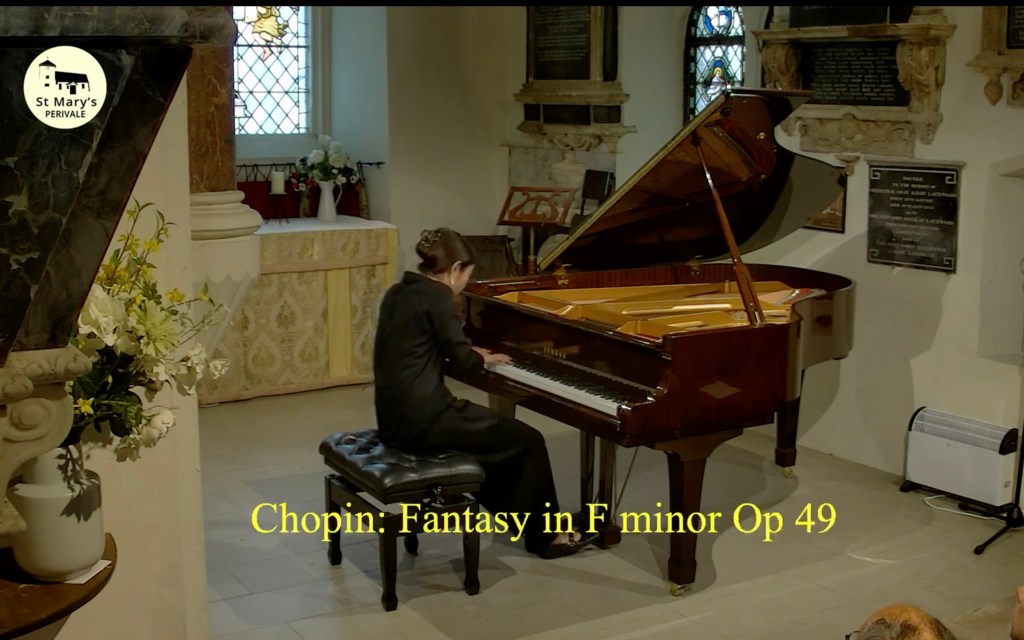
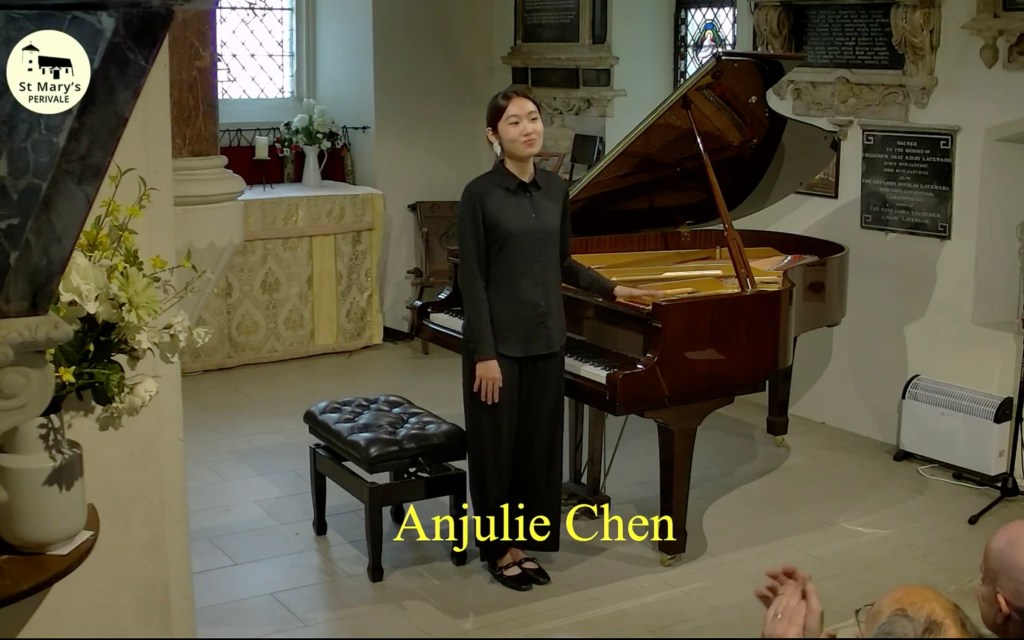
Anjulie Chen at St Mary’s Perivale. A musician of poise and intelligence

https://www.youtube.com/live/ikUwYcPv7x0?si=vfSRfzd8pAJM8Wzk

Playing of luminosity and poise as you might expect from the musicians she has been privileged to work with. A musical pedigree that shone through all she played.But it was also the programme of three great composers that showed her integrity and refined musical taste before she even caressed the keys.

The Intermezzi op 117 are three of the most beautiful creations of Brahms that he himself described as ‘ three lullabies of my grief.’ The first ‘Andante moderato’ , whilst being played with great sensitivity seemed strangely too earthbound and not etherial enough due to the rather slow tempo, with playing in six instead of two.The second in B flat minor, on the other hand , was allowed to flow with refined beauty and delicacy unfolding with almost improvised fantasy. The last with its almost oriental feel to the opening motif was allowed to unwind with poignant beauty and subtle colouring transforming an intermezzo into a tone poem of ravishing beauty.

Anjulie brought a great architectural understanding to Chopin’s Fantasy In F minor, one of the longest and most important of his compositions. A continuous flow of playing of dynamic rhythmic drive and poetic intensity. There was a great clarity to her playing held tightly in reign but with just the right amount of freedom as she shaped the phrases with loving beauty. A technical mastery that passed almost unnoticed as the passionate intensity of her playing ignited the keyboard with sumptuous rich sounds.The central chorale was played with whispered beauty and poignancy before exploding into the passion and searing intensity of one of Chopin’s most beautiful outpourings.

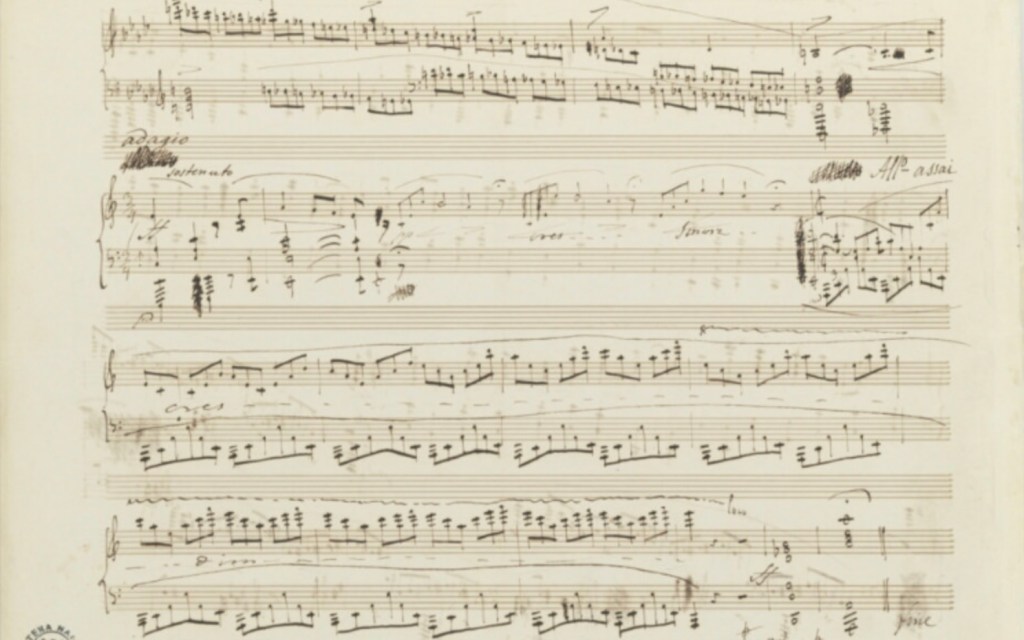
original manuscript showing Chopin’s very precise pedal indications.

An unusual clarity to the cadenza was played almost without pedal! Followed by vibrations of sound filling the keyboard with magic and taking us to the final imperious chords.

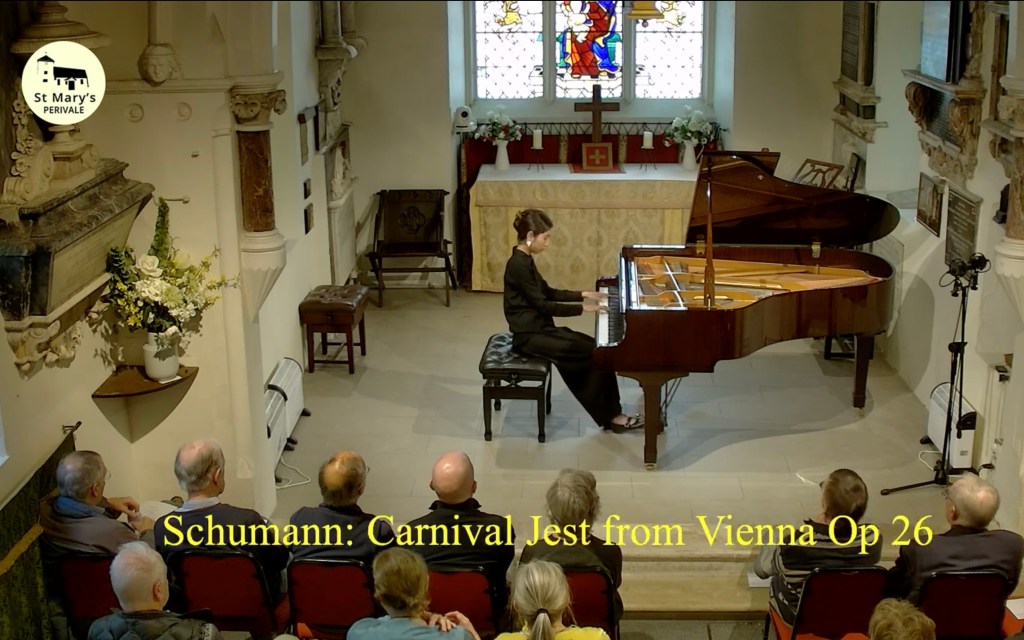
There was a dynamic drive to Schumann’s Carnaval Jest in a performance that was played with a classical simplicity with playing of great clarity and burning intensity. Lyrical passages were allowed to ride on this wave of sound without disturbing the continual forward movement . Even the Marseillaise was incorporated into this classical framework of poetic intelligence. A ‘Romanze’ of beauty and simplicity was followed by the impish good humour of the ‘Scherzo’.The ‘Intermezzo’ was played with passionate warmth and poetic intensity , streams of sound flowing from Anjulie’s hands with mastery and beauty. The ‘Finale’ again owed much to Anjulie classical approach which gave great strength to all she did. A great sense of freedom too as the melodic episodes were allowed to ride on this ever flowing wave of sound until the whispered intensity of a coda of exhilaration and excitement bursting into flames with the final majestic chords.

German pianist Anjulie Chen is regarded as one of the most promising young artists of her generation, praised for her “admirable musical sensitivity” and for playing of “subtlety, stylishness and warmth,” marked by “poise, elegance and expressive depth”. Highlights of her 2026 season include appearances at the Chiltern Arts Festival and the Schiermonnikoog Chamber Music Festival, alongside concerto performances with the Blaze Ensemble and the Bushey Symphony Orchestra. She also makes her Munich debut at the Irenensaal and collaborates with principal players of the Munich Radio Orchestra.

Recent achievements include representing the Royal Academy of Music at the Sheepdrove Music Competition and releasing her debut chamber album of works by Igor Stravinsky on Linn Records, in collaboration with Barbara Hannigan and the Juilliard School. She made her critically acclaimed debut at the Tokyo Bunka Kaikan during the Beethoven Festival 2021, was a semi-finalist at the Birmingham International Piano Competition (2022), and won Third Prize at the Lagny-sur-Marne International Piano Competition (2019).

Especially drawn to Schubert and French repertoire, she has worked with artists including Anne Queffélec, Thomas Adès and Kirill Gerstein, and has been invited to festivals such as the International Musicians Seminar Prussia Cove and the ArtenetrA Festival. A dedicated chamber musician, she is a member of the CHESA Duo with violist Xin He and member of the Polymnia Piano Quartet. A two-time DAAD scholar and 2024 Help Musicians Postgraduate Award holder, Anjulie studied in Munich with Prof. Thomas Böckheler before completing her degrees with first-class honours at the Royal Academy of Music under Prof. Colin Stone. 

photo credit Dinara Klinton https://christopheraxworthymusiccommentary.com/2024/03/20/christopher-axworthy-dip-ram-aram/

Francesco Piemontesi ‘Beauty and Imagination with Humility and Dedication’

Francesco Piemontesi sharing with us his unique sense of recreation where beauty and imagination take the place of muscle and brawn. Where intelligence and a kaleidoscopic palette of colours are placed at the service of the composer with humility and total dedication. As Bryce Morrison confided you need to have worked so hard to arrive at such pianistic perfection .

But above all you have to listen to yourself and be passionately and blindly in love with music.

Schubert’s Fantasy Sonata was indeed a fantasy with a kaleidoscope of colours from the very first note. Like the opening of Beethoven 4th concerto the first chord of this sonata sets the scene for all that is to follow. Scrupulous attention to Schubert’s indications that in just the first page range from ‘pp’ to ‘mf’ before moving to ‘ppp’ and ‘pp’ again. An extraordinary palette of colours allowed Piemontesi to illuminate this opening with a luminosity that was to pervade everything he did. A wonderful liquid sound that was never hard, even in the passionate cry of the development. When Schubert was not singing he would burst into dance. After the whispered opening of poignant beauty, Schubert allowed octaves to wear dancing shoes as they became in Piemontesi’s hands a magical voice of elegance tinged with nostalgia. Bursting into streams of notes that were golden sounds that glistened and glowed with refined beauty. Shaped with a delicate lyricism leading so surreptitiously to a dominant voice of authority only to be diffused with gently rocking lyricism and the final whispered farewell of this opening. A development that created a shock wave as the minor key battled with the major in a contest where every note had a reverberating voice of vibrant intensity without any aggressive hardness. The final few bars of this movement were a miracle of tonal control as staccato and legato could live together in whispered harmony disappearing into the distance with poetic abandonment. Piemontesi sitting absolutely motionless hovering over the keys as we all savoured the marvels that had been shared with us. Timing the opening of the ‘Andante’ to perfection as it was played with exquisite beauty. Even the final four chords ‘pp’ and detached were timed and shaped with extraordinary poetic significance. A great change in character that contrasted with the beseeching beauty and fluidity of the answering phrases. Suddenly a left hand accompaniment played without any pedal but with a melody floated above with radiance and was a moment of breathtaking beauty and masterly control. The opening melody returning, ornamented by Schubert, and exquisitely shaped by Piemontesi. There was an aching simplicity to the coda with unbelievably whispered sounds that Schubert marks ‘ppp’ and that Piemontesi played with sublime simplicity. A resonance to the ‘Menuetto’ always with this magical luminosity that could give such shape and colour to all he did. Nothing was ever black and white but full of subtle meaning. The ‘Trio’ was barely whispered as we were to be reminded of in Liszt’s ‘Les cloches de Genève’ that closed the recital. Whispered sounds from afar suddenly taking wing with a chiselled beauty of whispered nostalgia before returning to the ‘Menuetto’ but always on the same wing of resonant song. Contrasts there certainly were but never aggressive or dare I say Beethovenian. Not to shock but to stimulate the senses. Even more miracles were to follow with the ‘Allegretto’, like the return of an old friend. Bursting into dance with whispered glowing steps with a mischievous left hand growing in intensity. Our old friend returning with a tenor voice as the music chatted with beguiling lyricism and charm before taking a turn that turned out to be a dead end. The clouds opened instead, and a glorious ray of light shone upon us with one of those miraculous moments that poured from Schubert’s mellifluous soul. There was magic in the air as radiance and breathtaking beauty poured from Piemontesi’s hands that were to take us to the whispered meanderings of ravishing beauty that lead to the final farewell of our old friend. Miracles indeed as Piemontesi held us in his hands with the final five chords that were truly the vibrations of Schubert’s soul.

A completely different sound world opened up for the second part of the recital dedicated to Liszt. The Swiss book from his years of Pilgrimage. Who better than a Swiss pianist to recreate these miniature tone poems overlooked by musicians as they are more often brutally abused by showmen. Piemontesi showed us that there may be many octaves and rhetorical cadenzas but they are really expressions of a poetic soul of genial invention. I remember the revelation on hearing Wilhelm Kempff playing Liszt with his recording of the two legends that had something of the miraculous about them. It was the same today with the nobility and aristocratic authority that opened the ‘Chapelle de Guillaume Tell’. A magic mist of sounds with echoing bells resonating, leading to a passionate climax that dissolved to desolate cries on the horizon. The sound of the ‘Lake Wallenstadt’ as the water lapped almost inaudibly as all we could hear was the water as it passed over a stone with bubbling constancy. A melodic line of childlike innocence that was floated on these gently lapping waves with simplicity and radiant beauty. A glowing beauty to the simple dance of the ‘Pastorale’ as it lead straight into the silky featherlight brilliance of ‘Au bord d’une source’. An incredible fluidity and jeu perlé that was less present than Horowitz’s bewitching account, but that had the overall atmosphere of the scintillating clarity of a Swiss alpine stream.’Orage’ of course was played with passionate drive full of octaves and rhetorical outbursts but in Piemontesi’s hands octaves disappeared, as they were vibrations of sound that led to passionate outpourings that were shaped so beautifully and with such an extraordinary sense of line. Piemontesi gave a shape and meaning to this work where his mastery and sense of balance could even make the left hand melody sing so eloquently, as streams of notes flowed over the entire keyboard.’Vallée d’Obermann’ was given an extraordinarily poetic performance. The long opening tenor melody played with poignant meaning as it is replied to by the whispered soprano melody. A blood curdling tremolando in the left hand brought us the dramatic contrasting central episode played with mastery and fearless brilliance, more operatic than orchestral, but overpowering in its impact. The vibrations of sound on which the opening melody returns was quite remarkable as the melodic line was allowed to float with ever more intensity on this wave of sounds. Bursting into a climax again where octaves were streams of notes shaped with passionate intensity leading to a final flourish and the poignant last statement with which it draws to an end. The simple luminosity of ‘Eglogue’ led to the deeply disturbing ‘Le Mal du Pays’ with strange sounds of prophetic searching. Distant sounds of bells heralded the beautiful outpouring of ‘Le cloches de Genève’ with which this suite was drawn to a poetic close.

Bach’s ‘Wachet Auf ‘ in the glorious transcription of Wilhelm Kempff was Piemontesi’s brilliant choice as an encore. Finishing with the radiant exhilaration of a true believer. A second encore was the beautifully elusive sound world of Godowsky with a movement from his Java Suite played with the same chameleonic sense of colour as the legendary master himself.

photo credit Oxana Yablonskaya https://christopheraxworthymusiccommentary.com/2024/03/20/christopher-axworthy-dip-ram-aram/

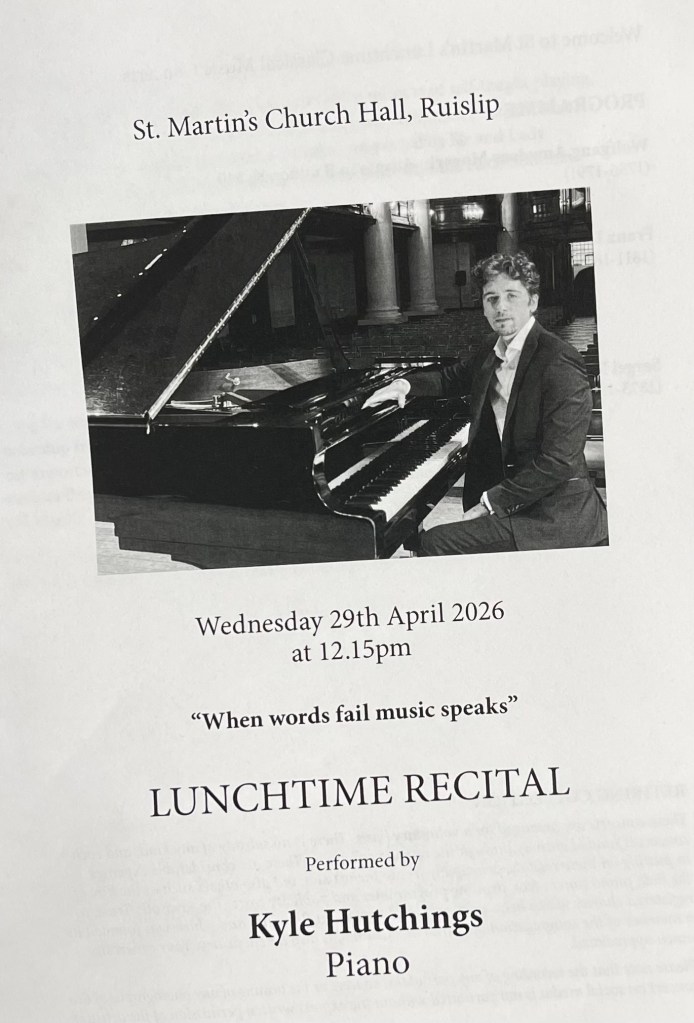
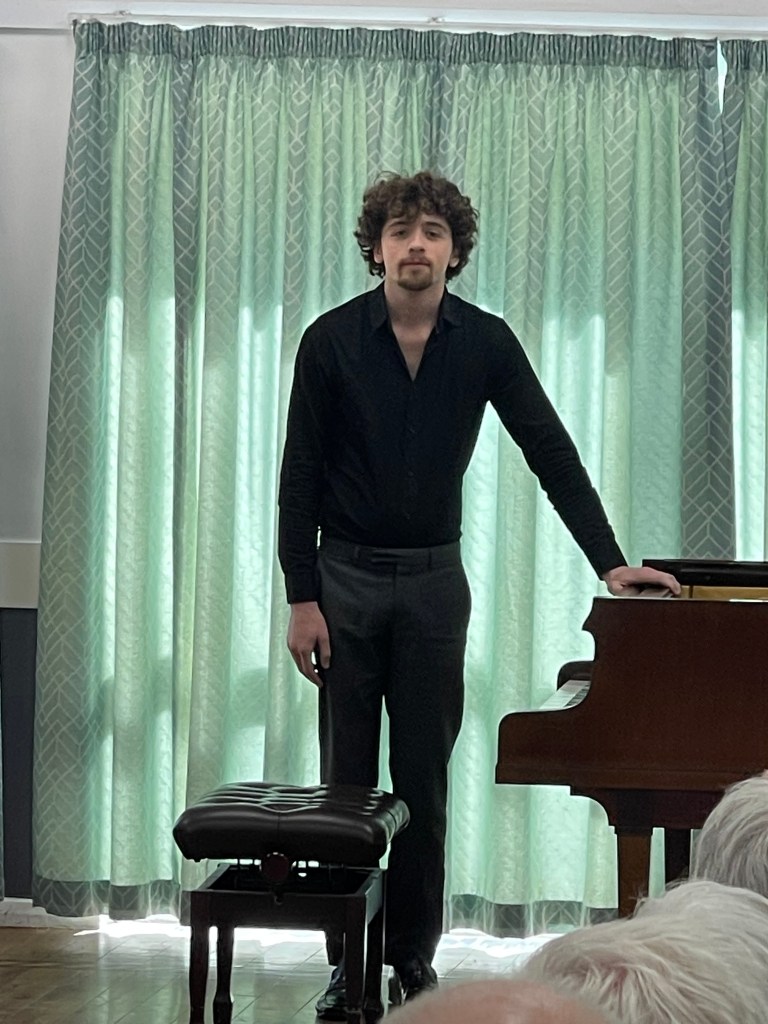
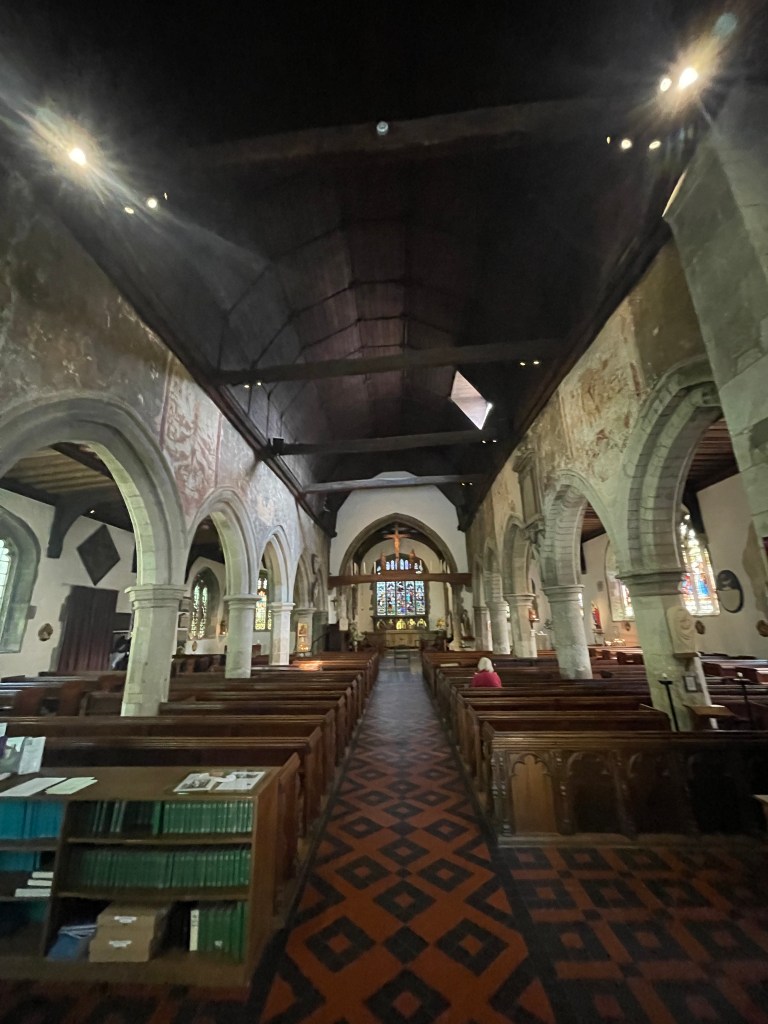
Kyle the troubadour brings moments of timeless wonder to St Martin’s Ruislip

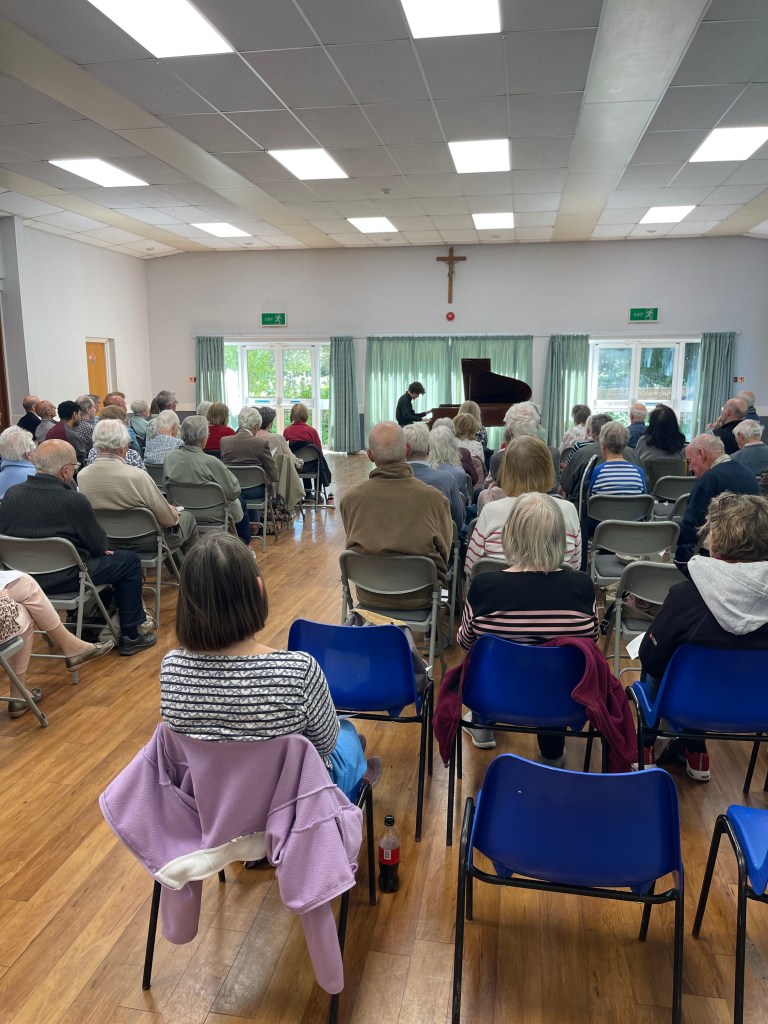
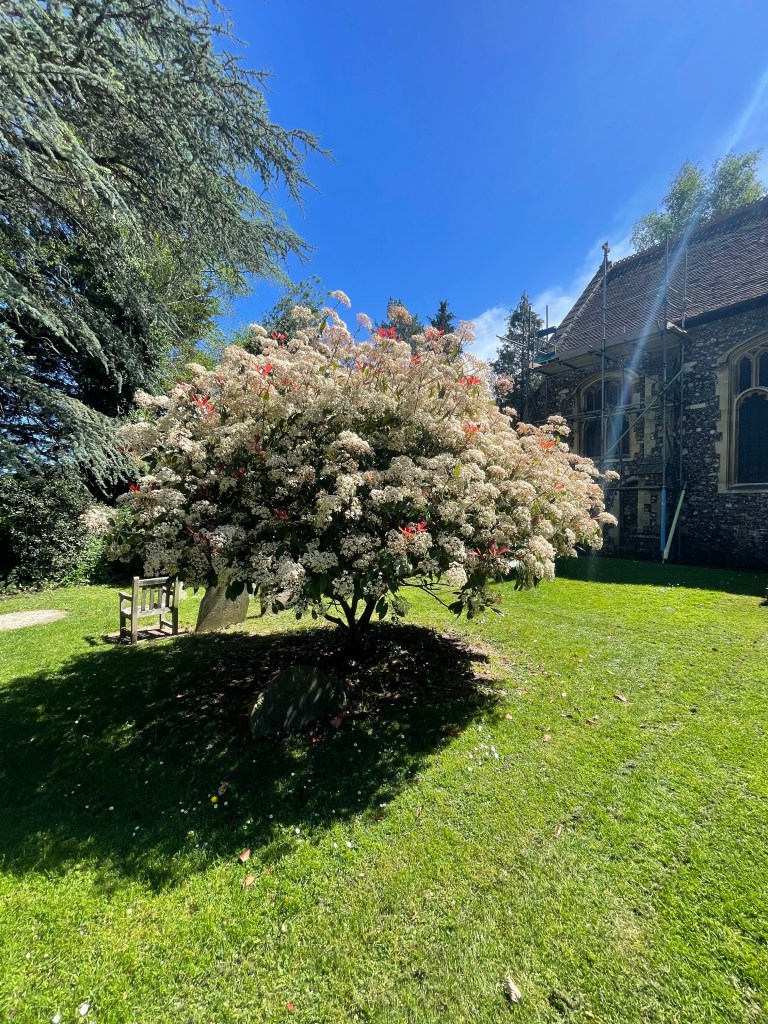
A last minute substitution found Kyle free to play in this idyllic spot in Ruislip today.

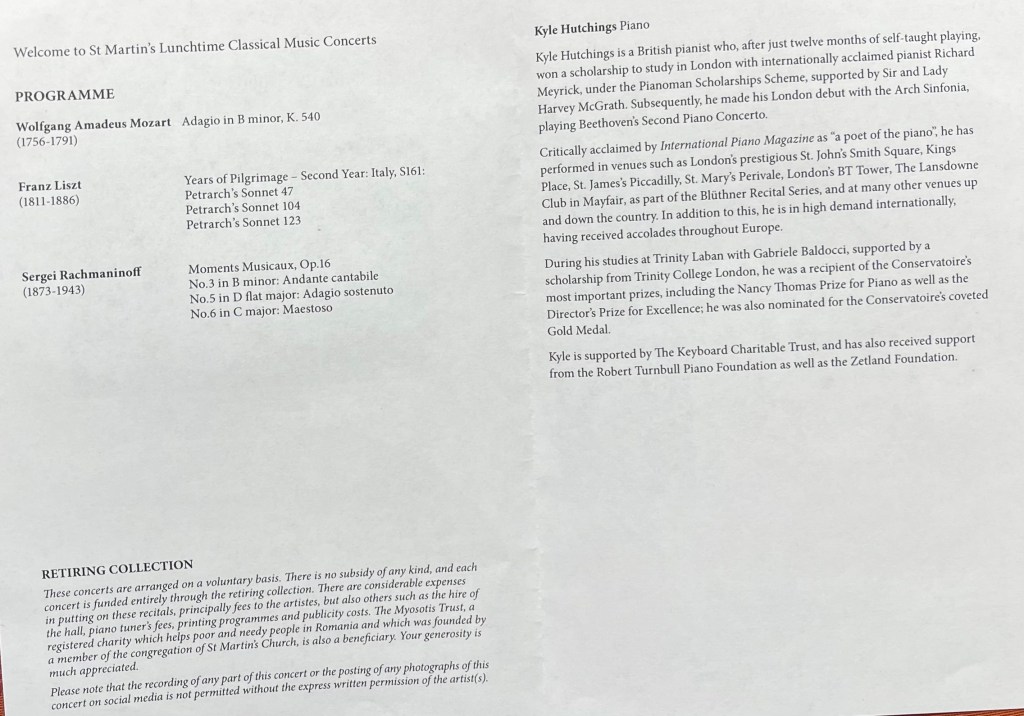
The same programme as in Perivale last month but revisited with the ears of an artist always on a new voyage of discovery. See below for a

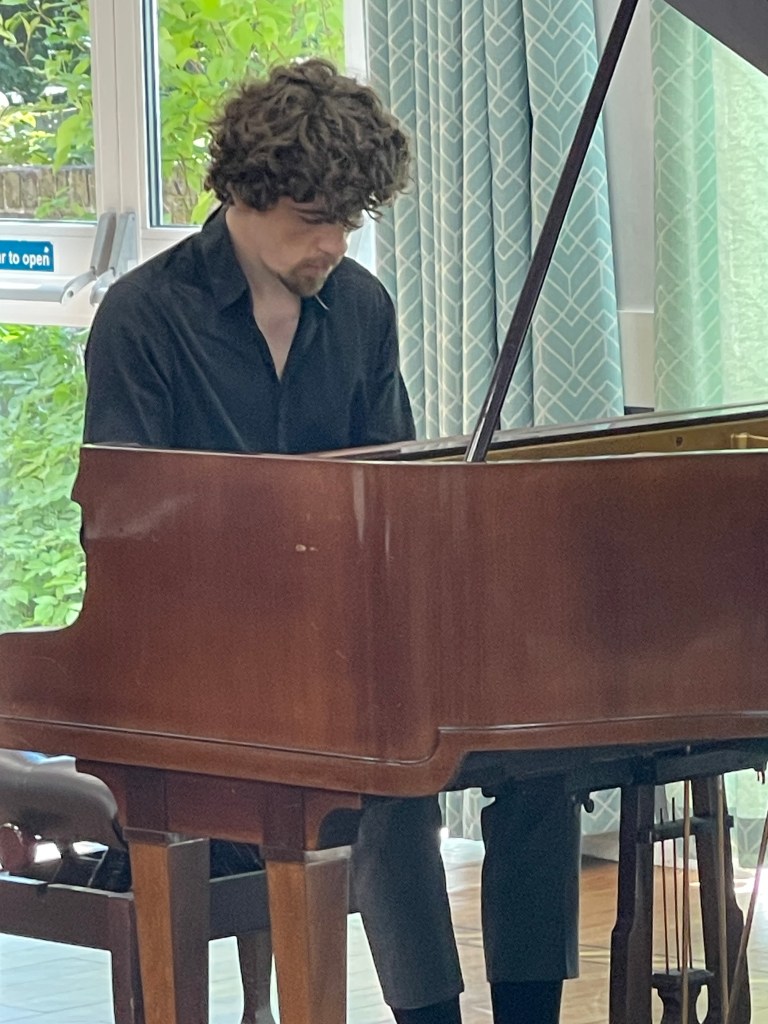
A beautiful sunny day and with poetry in his heart Kyle,the troubadour of the piano, brought us moments of contemplation and ravishing beauty .

A extraordinarily mature musician where his timeless wonder creates music of intense poetic significance.

Mozart’s miraculous Adagio was an outpouring of poignant weight before liberating the poetic soul that Liszt could portray of Petrarch’s sonnets .

Three of the most nostalgic of Rachmaninov’s six Moments Musicaux were played with brooding intensity and poignant longing. The final one in C major was played with nobility and grandeur, full of sumptuous sounds and the miraculous control of colours that this poet of the keyboard had shared with us today .

photo. credit Dinara Klinton https://christopheraxworthymusiccommentary.com/2024/03/20/christopher-axworthy-dip-ram-aram/