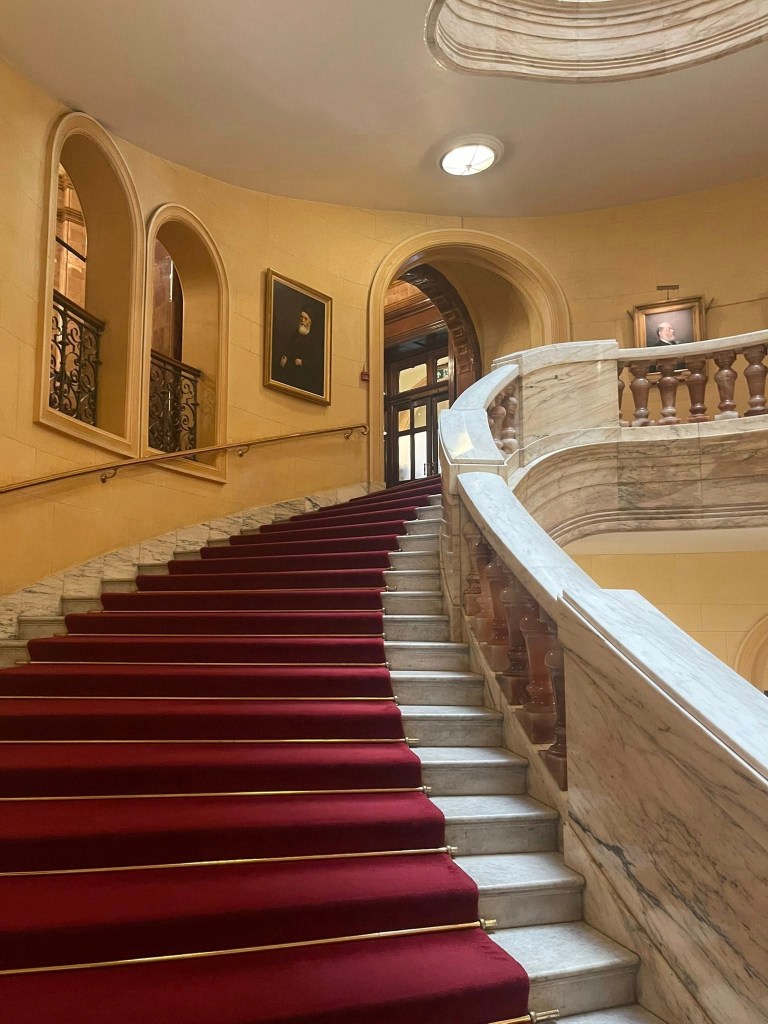
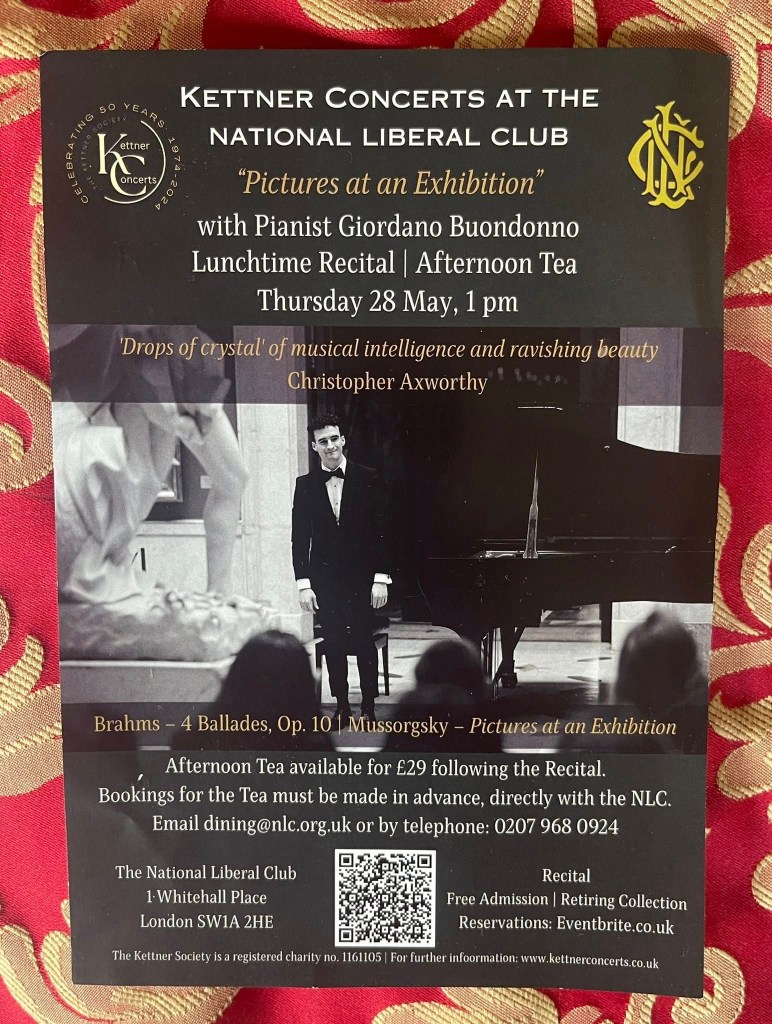
The return of the young Tuscan pianist to the National Liberal Club
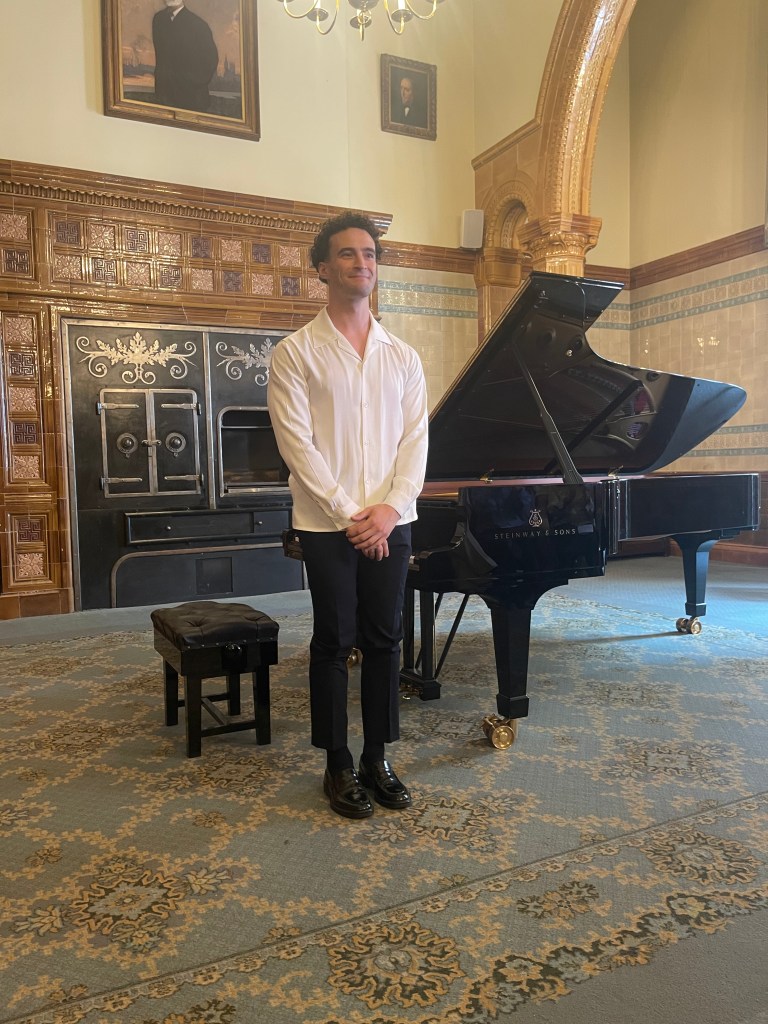
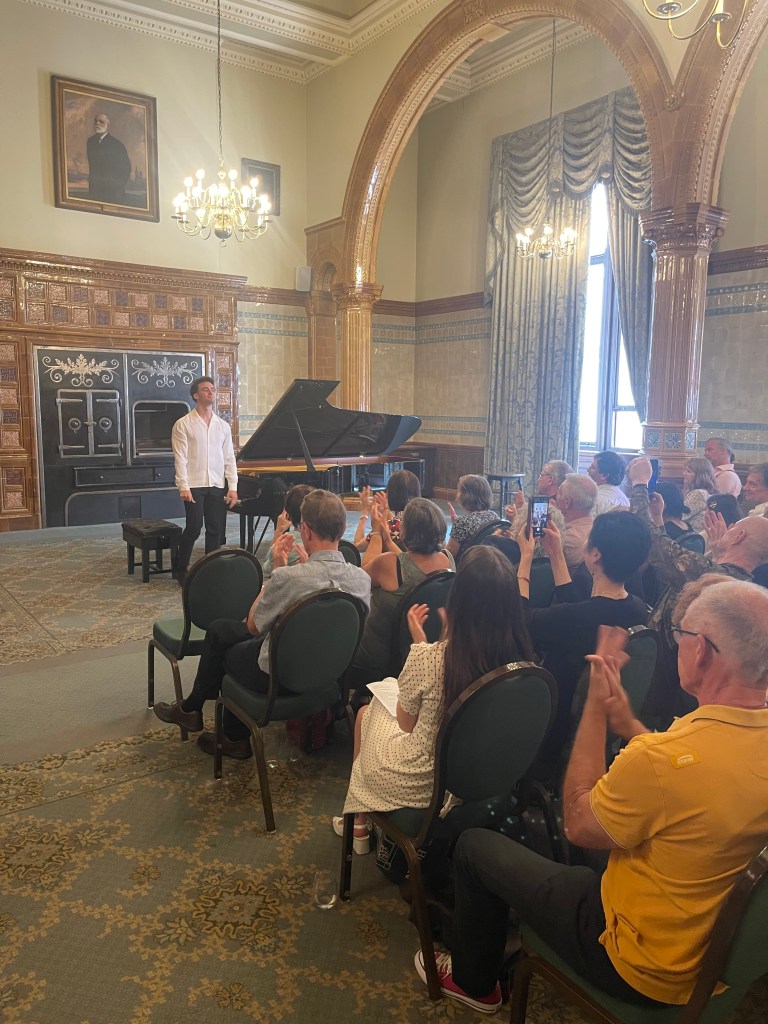
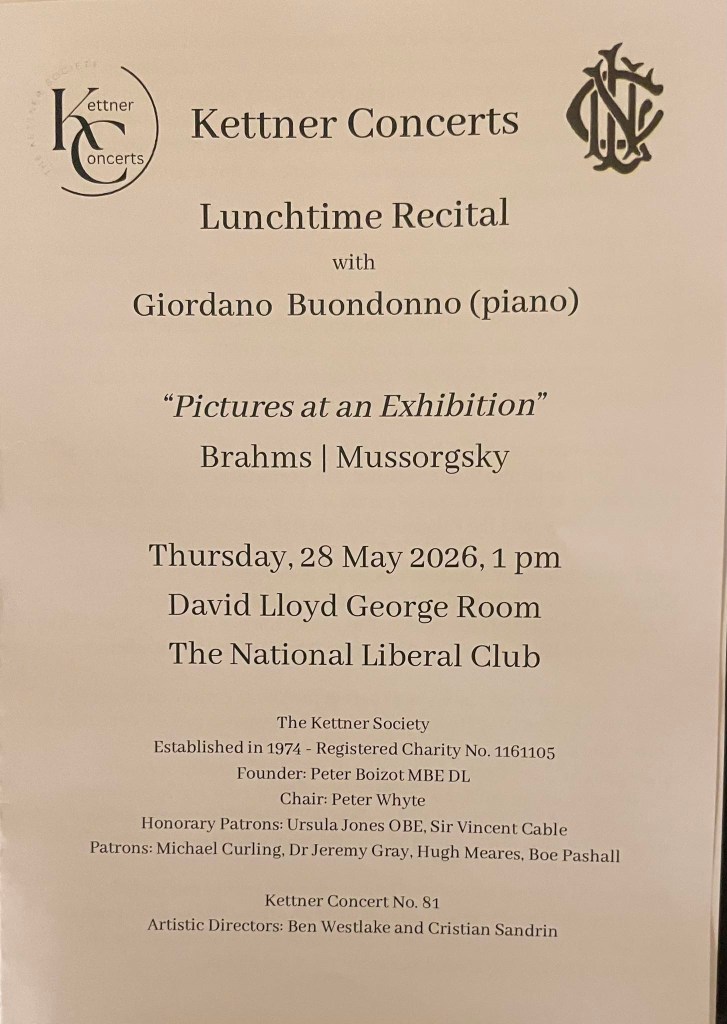
Giordano Buondonno from the coast of La Spezia I have heard many times over the past few years whilst he was perfecting his playing at Trinity Laban and the Guildhall . It was Deniz Gelenbe , head of piano at Trinity, who first invited me to the Solti Studio in London to hear Giordano. I remember vividly his performance of the Four Brahms Ballades and as I learnt afterwards he was performing on Michelangeli’s Fabbrini Steinway.
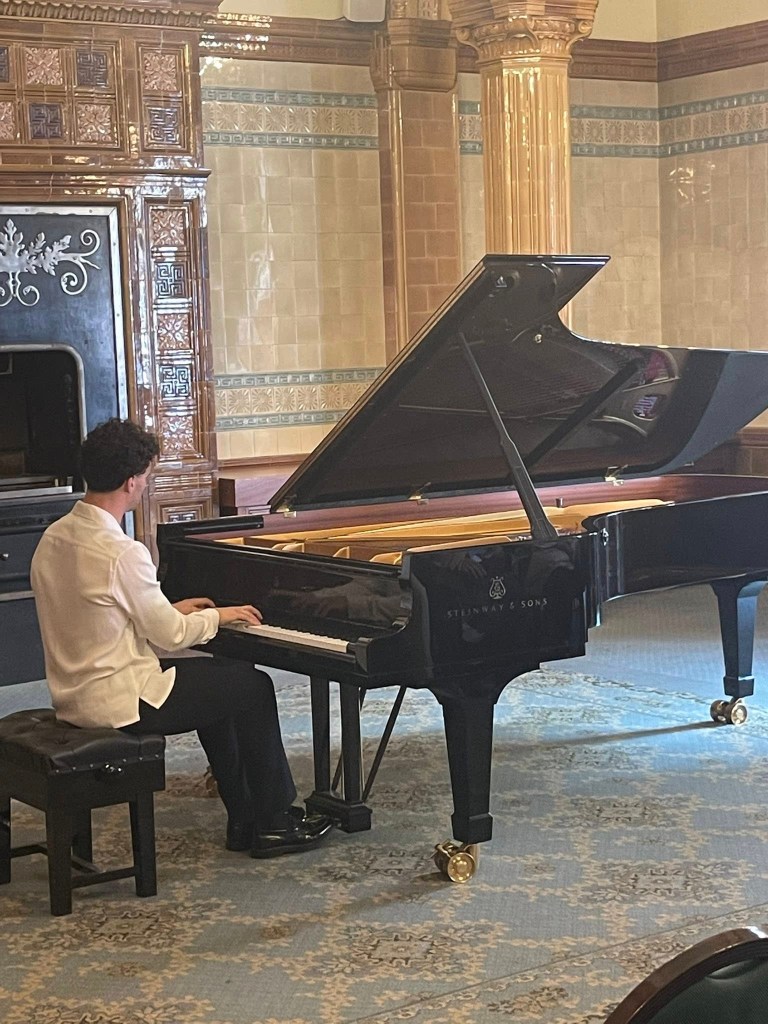
It was a quite remarkable performance that I was reminded of today as Giordano opened his lunchtime concert playing on a recently acquired Steinway Concert Grand. It replaced the one that Rachmaninov had played on before fleeing to America in 1939 where he would die in Hollywood in 1943. There is something about the richness of the Steinway ‘D’ that enhances the sumptuous orchestral beauty of Brahms’s Ballades . It is a work that Michelangeli made very much his own and his performance on one of his rare visits to London is still talked about in revered tones. Giordano has that same crystalline touch as Michelangeli and his performance today revealed a clarity allied to a sumptuous warmth that allowed the music to speak with heart-rending simplicity. A ravishing mellifluous outpouring to the second Ballade with its remarkable sense of orchestral sounds. The third is full of angular sounds contrasting with its companions especially the last one which is of a throbbing intensity and ethereal beauty that Giordano played with aristocratic refined beauty.
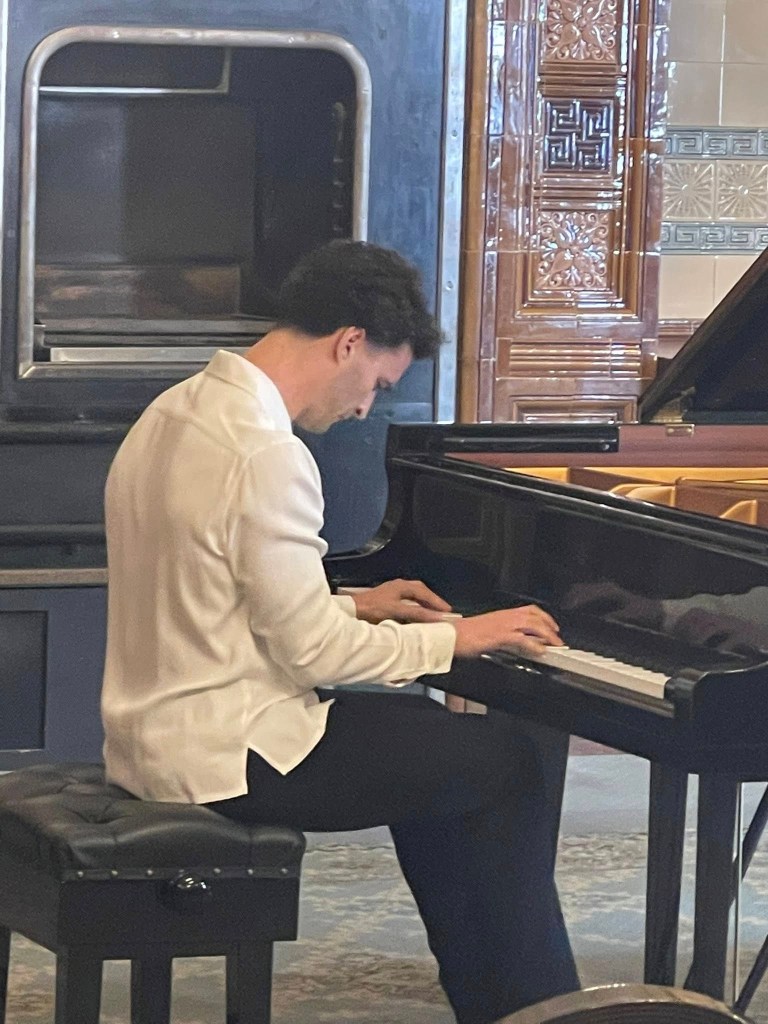
This is what I had written of his performance in the Solti Studio :
‘ A pianist who listens to himself is a rarity indeed but when one enters their magic world it reveals a land of magic colours and passionate emotions.
The intensity which this young man brought to the final pages of the last Ballade were of unbearable emotions with the clashing harmonies that reminded me of the scorching intensity of the supreme believer Messiaen.There was delicacy in the first Ballade and an outpouring of song in the second with great clarity in the contrasting middle episode.A startling rhythmic urgency in the third but with an architectural sense of line – the glowing prayer of the middle episode was pure magic with the delicately embroidered comments played with such refined delicacy.
Kantarow recently touched the same heights in an empty Philharmonie de Paris during the pandemic.Heights that I remember from the atmosphere that Michelangeli could create in the vast space of the Festival Hall.Fou Ts’ong would often say that it is easier to be intimate in a large space rather than a small one! ‘
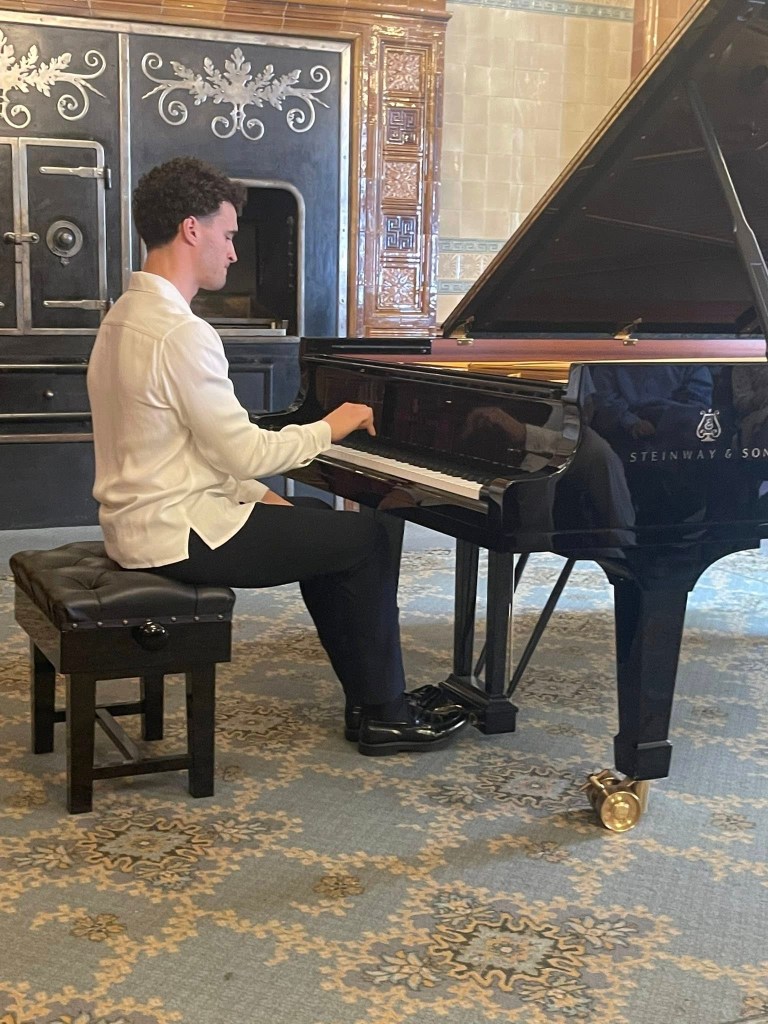
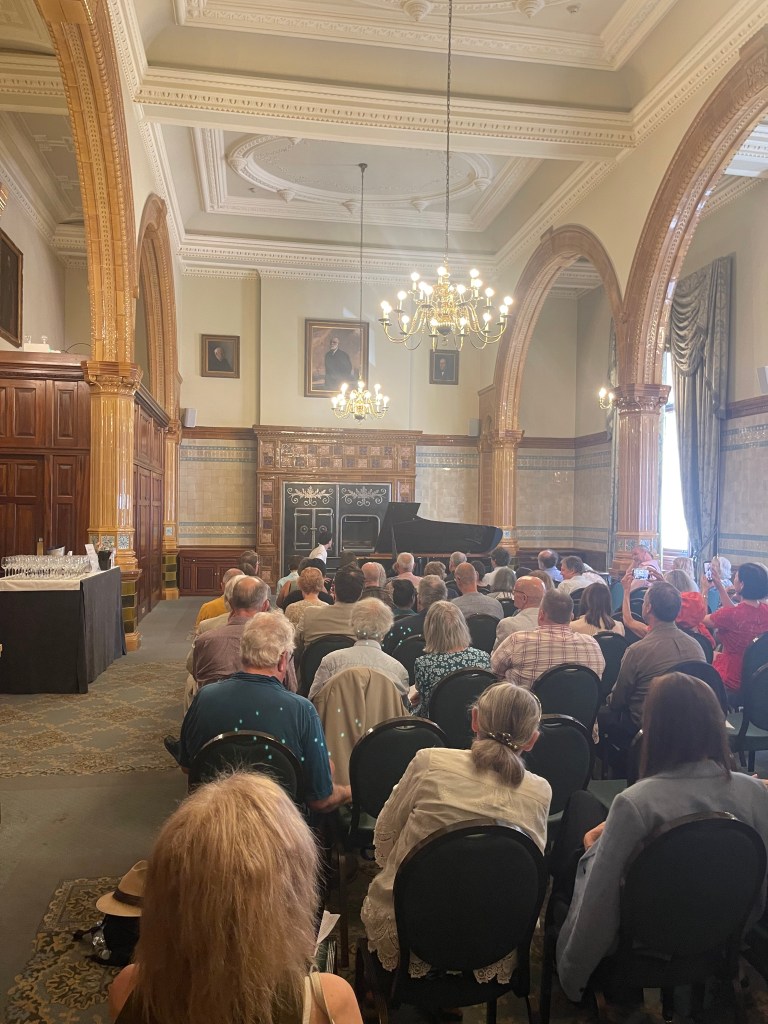
The second work in today’s programme was Mussorgsky’s monumental ‘Pictures at an Exhibition’
I had heard Giordano play this in the Milton Court Hall as his graduation recital at the Guildhall . Giordano is a ‘big’ pianist and although this work was originally conceived and written especially for the piano it has been taken over by many conductors as being a show piece for orchestras .
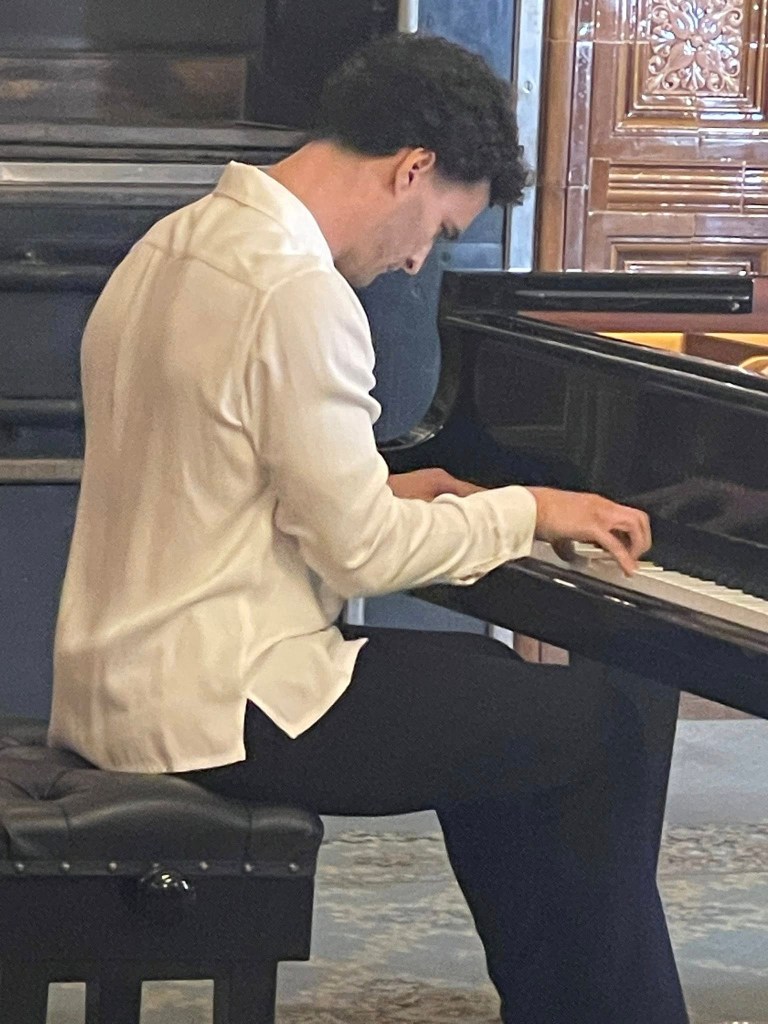
Giordano’s was truly an orchestral interpretation where statements were always grandiose and monumental . Moments of reflection, not of intimacy, but of contrast in a performance of grandeur . Nowhere more than in the final ‘Baba Yagá’ leading into the mythical ‘Great Gate of Kiev’. Even ‘The Old Castle’, whilst played with great atmosphere there was always the pulsating heart beating within its depths. Children quarrelling not discretely but as noisily as the Chicks hatching.
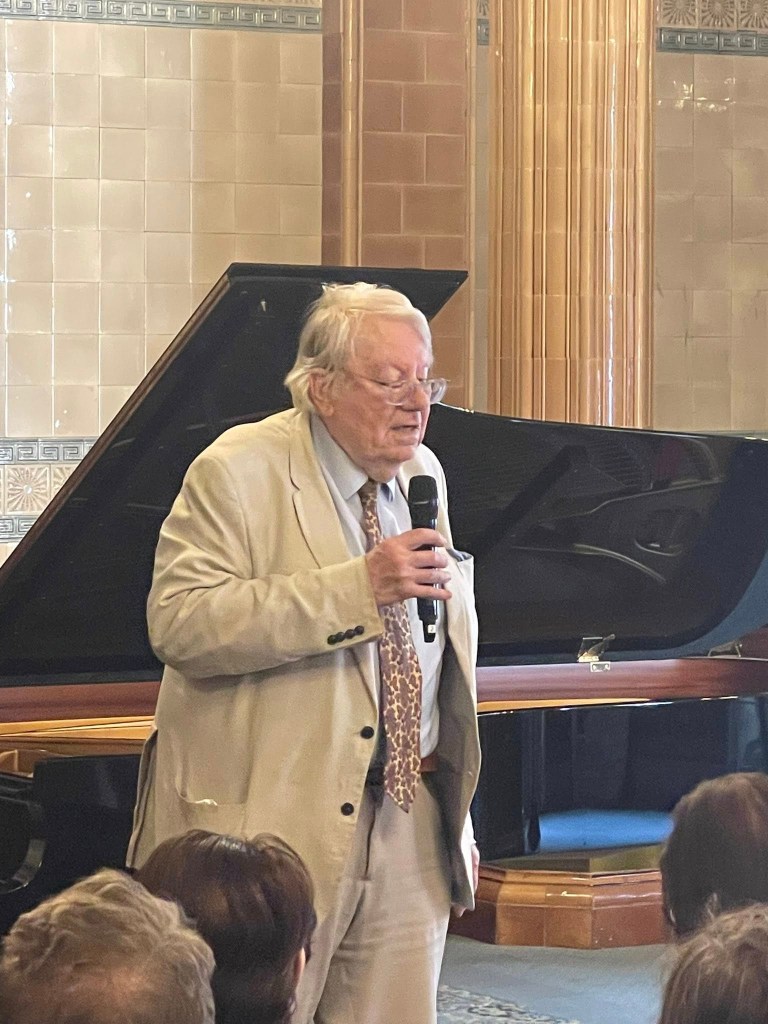
This is what I wrote just a year ago :’ An imperious opening to Mussorgsky’s monumental Pictures at an Exhibition was played with a one finger technique that gave a glowing brilliance to this call to attention. He was to use the same technique again with astonishing accomplishment in the diabolical goings on of ‘Baba Yaga’.( A technique that is very noticeable with Romanovsky, another Italian trained pianist, and can lead to a greater clarity if used with knowing sensibility ). Startling characterisation of ‘Gnomus’ was followed by the etherial beauty of the ‘Old Castle’ disappearing into oblivion with whispered beauty. The teasing insistence of children in the ‘Tuileries’ was played with remarkable clarity with its improvised interruptions .’Bydlo’s’ unusually discreet appearance was built into an overpowering climax of lumbering insistence and the ‘unhatched chicks’ that followed were played with a remarkable coaxing of the keys with a continual opening and shutting movement that suited the delicate clucking of the chicks. Imperious nobility of ‘Goldenberg’ was played with steely brilliance replied by Schmuÿle’s whimpering with playing of glowing fluidity. ‘Limoges’ was a tour de force of dynamic fingerfertigkeit, from Giordano’s crystalline streamlined technique ,halted only but the imperiously frightening vision of the ‘Catacombs’. Massive sounds resounded of great resonance but never brittle or hard edged as they dissolved into the whispered glow of a vision of what lay within. The final two pictures were played with remarkable dynamic drive and masterly control of sound with the vision of the Great Gate revealed with astonishing nobility. A kaleidoscope of sounds and colours illuminated this Great symbolic vision, ever more actual in these days of misguided conflic! Played with fervent conviction and remarkable mastery it brought this recital to an extraordinarily brilliant conclusion.’
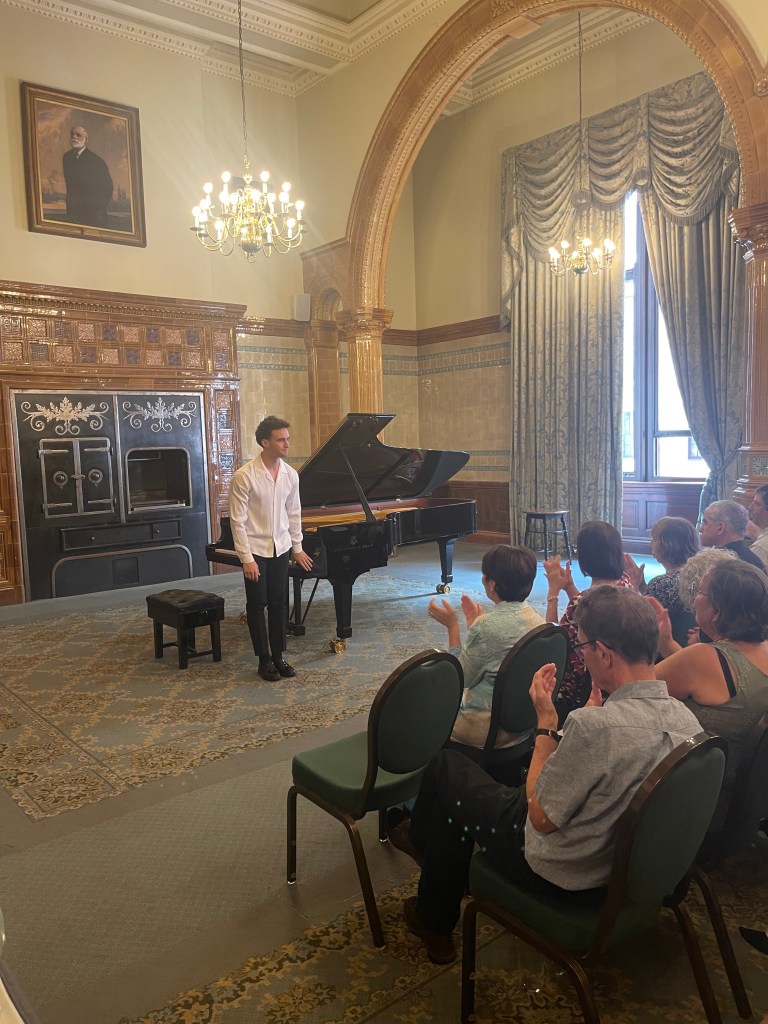
A great success was crowned with a stunning performance of Kapustin’s Jazz Etude. An audience that had forgotten all thoughts of refreshments . This was refreshment indeed ‘If music be the good of love …..play on ‘ . An audience was now totally seduced by Giordano and ready for his masterly final encore of Debussy Mouvements from Images book 1 .