
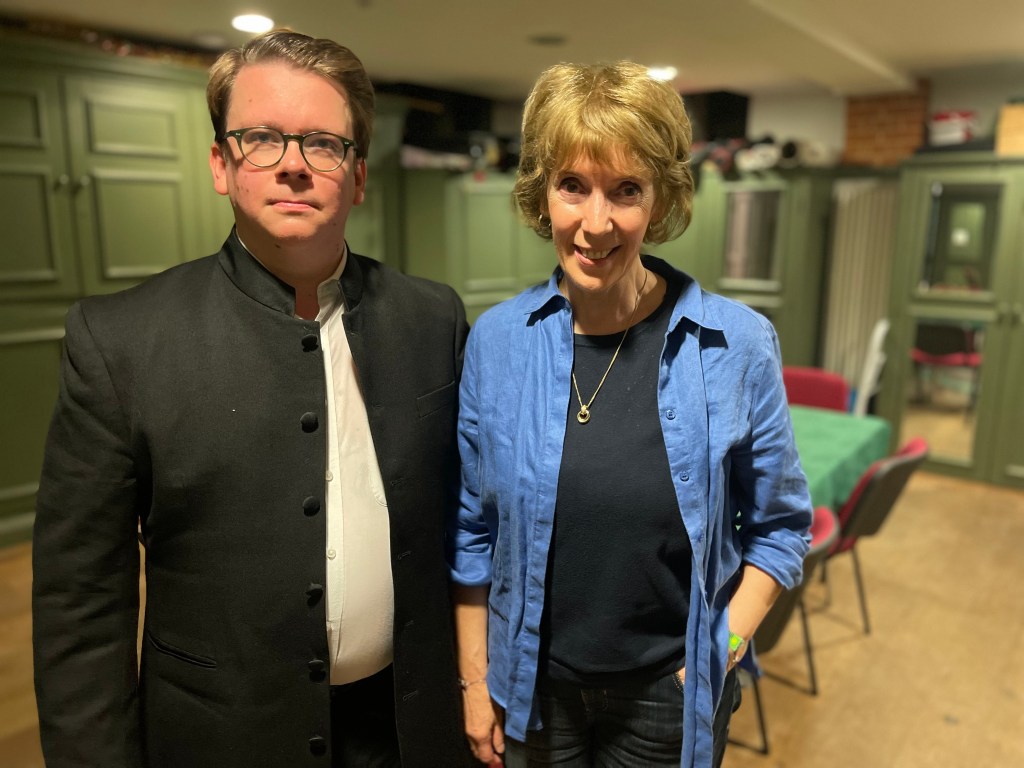
The extraordinary thing about Mark’s concerts is the fact that there are invariable works which are rarely heard in concert as he takes us on a voyage of discovery together. Mark too is very eloquent and in so few words he can open up a whole new world. A world that he has inhabited since as a teenage pianist at the Purcell School in the class of Tessa Nicholson, when Ronald Smith came to give a recital of Alkan which changed Mark’s life. It pointed him in the direction which he is sharing with a world hungry to know more about the mysterious world of Alkan, the salon music of Chaminade and even unknown gems from the vast output of Liszt.

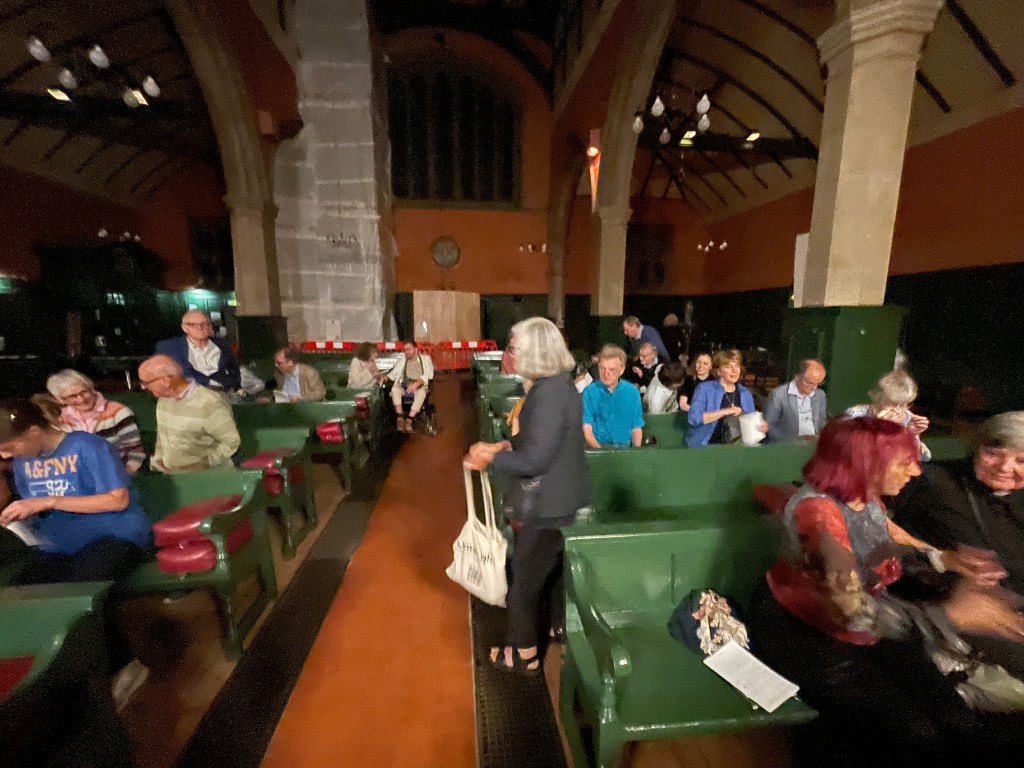
Its was this that we were treated to last night in Bedford Park.

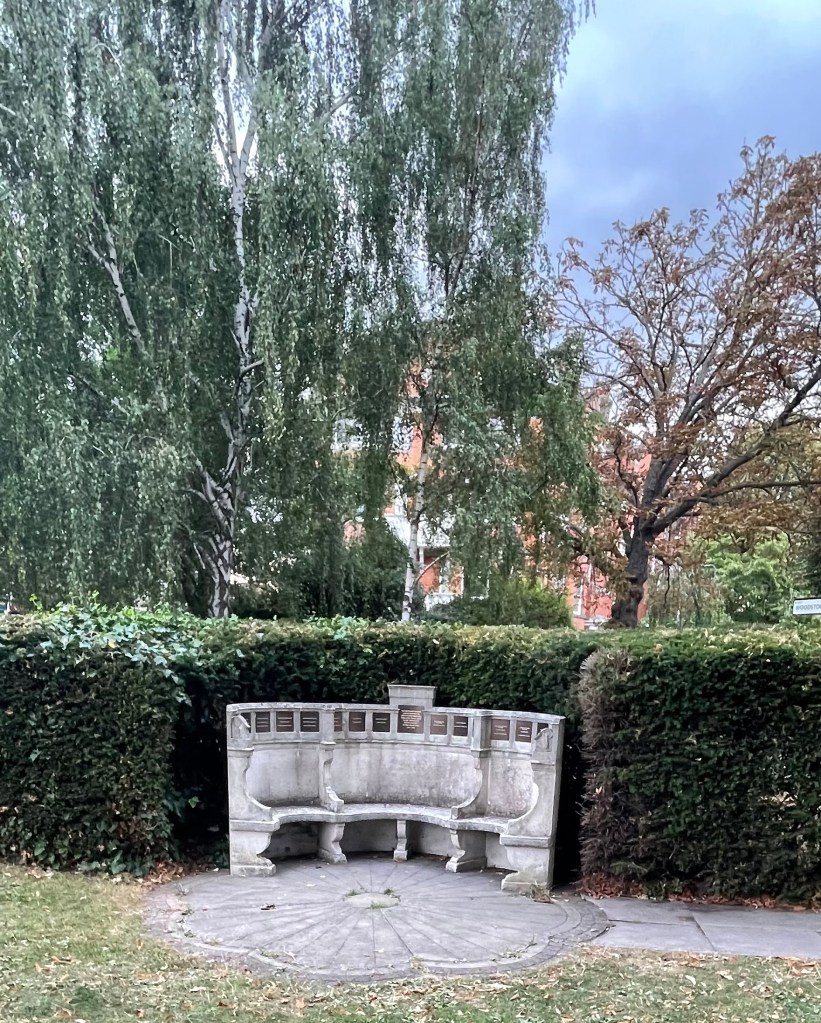
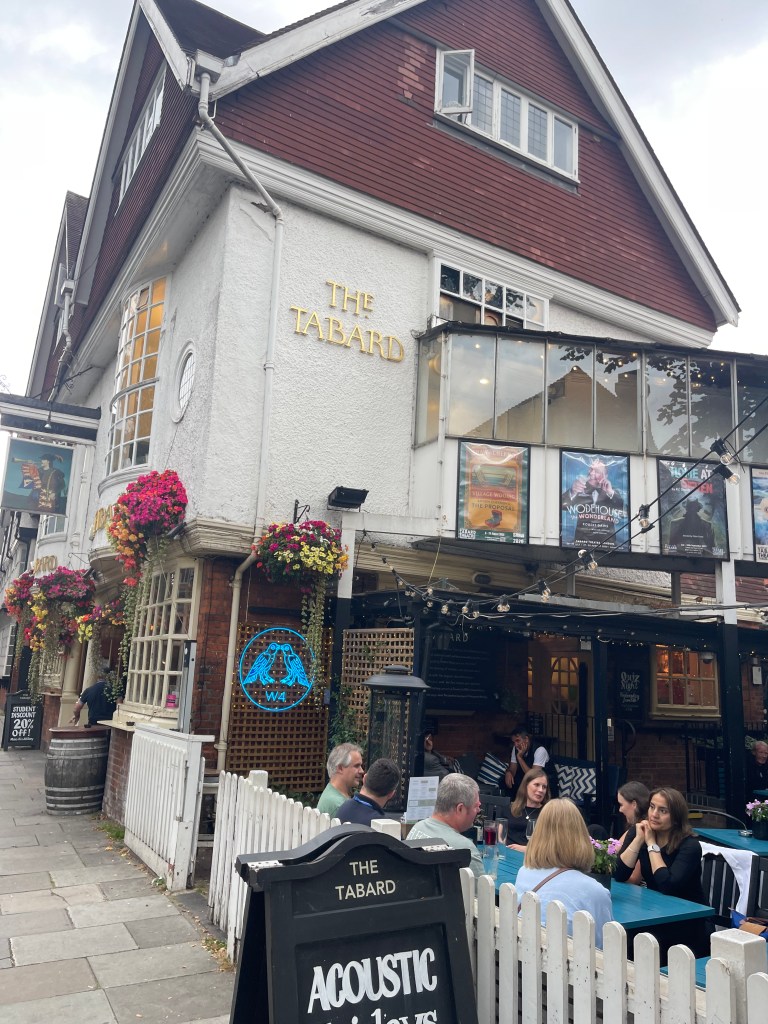
I was born and spent my first 25 years almost opposite this church that I had never visited until Mark moved in next door and was discovered by the inhabitants of Bedford Park – lucky them ! I frequented the Chiswick Polytechnic that is now an Arts School and in the street where we lived. It was then the Chiswick Music Centre and the hall of the Fairfax Music society of which my teacher Sidney Harrison was president. We had concerts by Moura Lympany,Peter Katin, Gerald Moore ,Iso Elinson,Louis Kentner, Fou Ts’ong and many more. David Carhart would play concertos by Rimsky Korsakov or Scriabin with his teacher Harry Isaacs in the audience and his pupils that included Graham Johnson!
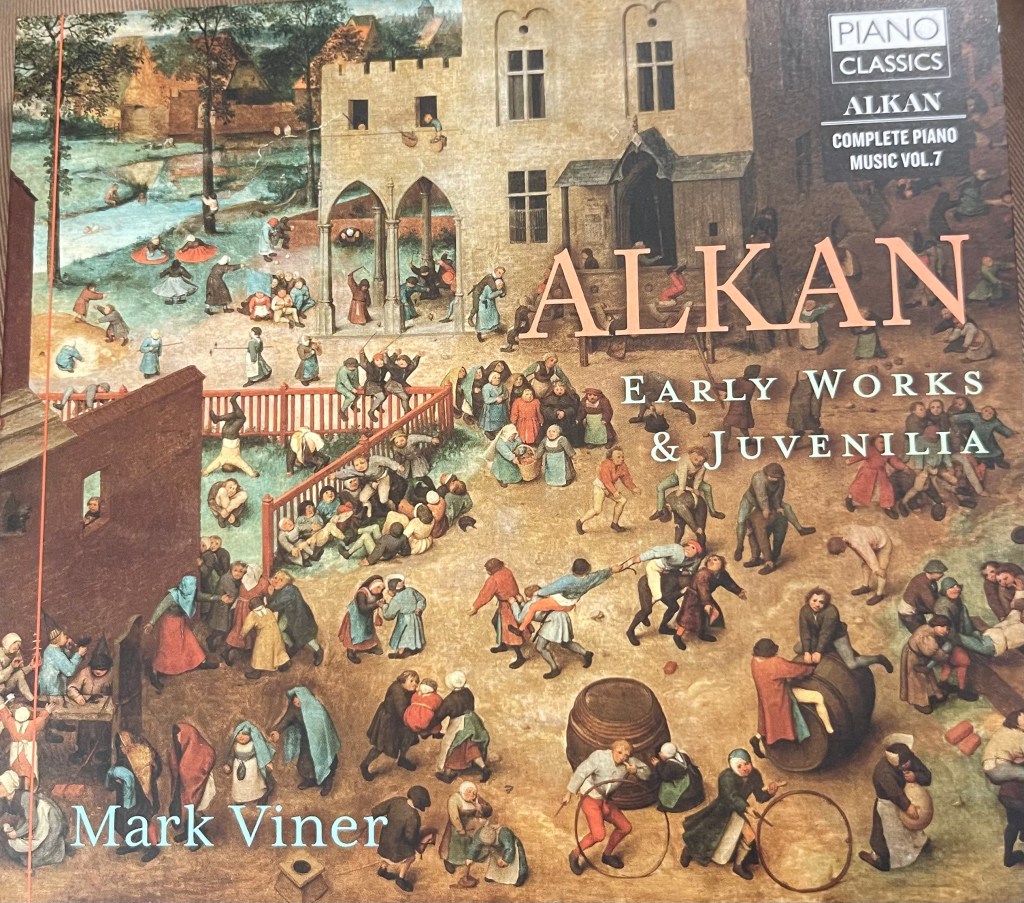
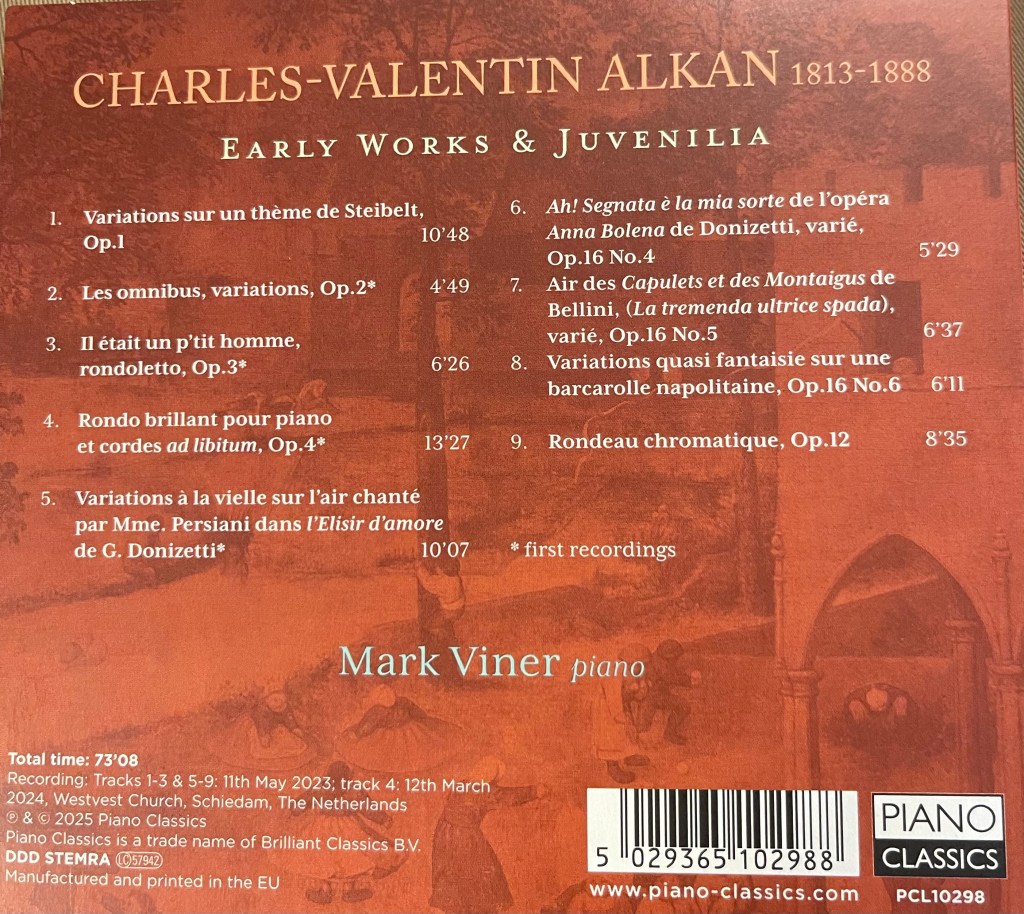
Mark in these days is touring the UK ,Germany and Scotland in-between a recording career that does not have equal. We are at volume 7 of his complete Alkan recordings with many more already available of Thalberg, Chaminade ,Blumenthal etc that have been rapturously received by the critics with five star accolades.
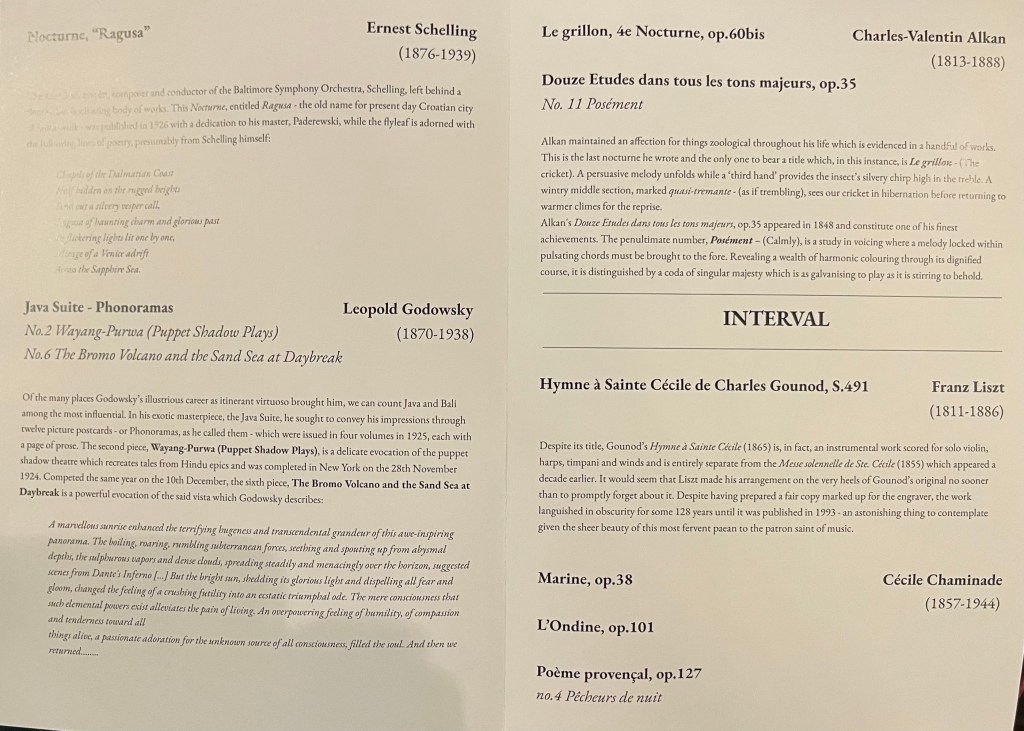
The highlight of the evening was Liszt’s ‘Hymne à Sainte Cécile de Charles Gounod’ S.491 a most beautiful paraphrase with an outpouring of melody of whispered beauty. Arabesques of radiant glowing lightness just accompanied a work that Liszt had forgotten about. As Mark tells us he had prepared the score for the printer but it was not published until 128 years later in 1993. In Mark’s words :’ an astonishing thing to contemplate given the sheer beauty of this most fervent paean to the patron saint of music’. It was played with mastery and superb musicianship and on this 1920 Bluthner with the dagherreotype sheen creating all the atmosphere necessary for the salons of the period.One was only surprised not to see Alkan or Liszt seated in the pews next to us.

Chaminade of course was a must with her only three pieces dedicated to the sea. Chaminade was a serious composer and I have been very impressed recently listening to her Sonata, but as Mark said she obviously felt most comfortable playing her own salon music of great charm. https://christopheraxworthymusiccommentary.com/2023/10/23/louis-victor-bak-at-steinway-hall-for-the-keyboard-trust-a-review-by-angela-ransley-the-french-connection/
Like Mendelssohn she created works that seem more difficult than they actually are, so the perfect fodder for amateur pianists. Mark played these three pieces with charm and glowing beauty and the fingerfertigkeit in Ondine would certainly have got any amateur into a terrible twist. Paderewski of course was the greatest pianist the world has ever known ( after Liszt) and he and Thalberg were the Lang Lang’s of America. https://christopheraxworthymusiccommentary.com/2020/01/04/a-la-recherche-de-thalberg/
Paderewski was not only pianist and composer but also became Prime Minister of Poland in 1919 and it was he that signed the Treaty of Versailles that ended World War I. Mark played his charming ‘Nocturne’ which like the ‘Minuet in G’ or Liebestraum used to be on every piano stand in the front living room of every decent middle class family, with their upright piano with candles and lace and the aspidistra in the corner. A beautiful little cameo ( actually similar to the Respighi Nocturne) from Paderewski’s collection of pieces op.16 which he would have played on his concert tours in the Wild West ! Mark played it with aristocratic charm and the respectful love that it has always known. This was paired with ‘Ragusa’ or Dubrovnik by a pupil of Paderewski ,Ernest Schelling, who was an American composer and pianist, conductor of the Baltimore Symphony. Dedicated to his teacher and played with ravishing sounds of great effect. A tenor melody of beauty accompanied by gossamer glissandi on the black and white notes which may be why it is not heard today with the weightier touch of modern day pianos . A blood stained nocturne is always good to avoid in the concert hall! It is where Beethoven sorted the men from the boys with his Waldstein Sonata. Serkin would wet his fingers before attempting them and others slow down and play scales rather than risking the fire brigade!

It was interesting to hear two original pieces by the pianist’s pianist, Leopold Godowsky. It was Rubinstein who said that even if he practiced for 500 years he would never be able to play like him ! Famous for his 53 Studies on Chopin’s Studies, his Java Suite is gradually making it’s way into the concert hall. Two pieces n. 2 and n. 6 were on the menu today , and it was good to hear the passionate outpouring of The Bromo Volcano played with mastery and searing conviction.
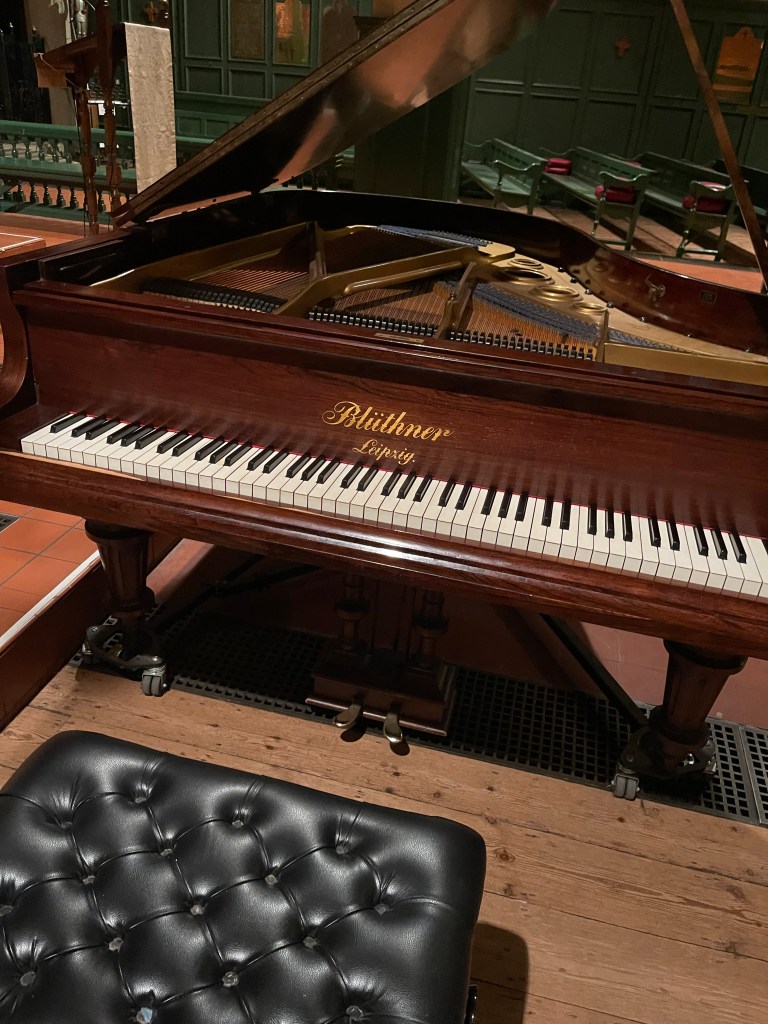
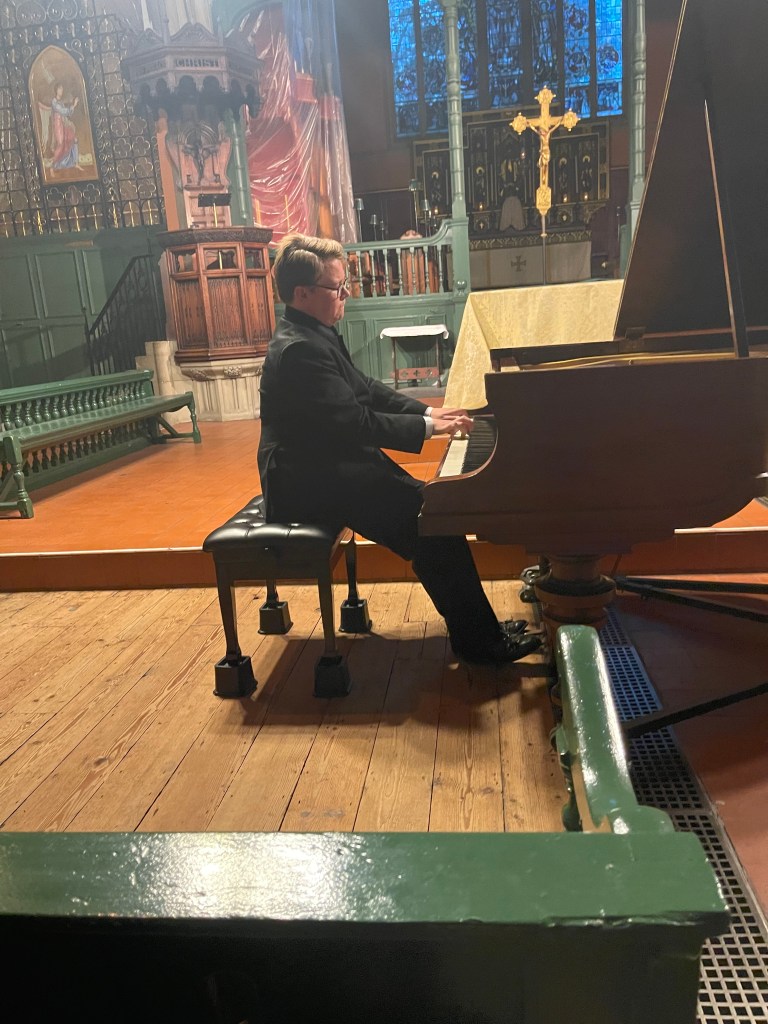
Of course Alkan is a must on Mark’s programmes and he chose to end the first and second half with this mysterious composer, a much esteemed friend of Chopin and Liszt. It was to Alkan that Chopin bequeathed to complete his unfinished treatis on piano technique that Fétis had commissioned.
‘Le griffon’ is the fourth and last of his Nocturnes and the gentle lyrical outpouring was only disturbed by the insistent crickets at the top of the keyboard which were played with pan faced seriousness by Mark – Victor Borge eat your heart out ! ‘Posément’ ,the 11th of the 12 studies in the major keys is a hypnotic series of chords in which the different voices are brought out as part of the exercise. It is a remarkable tone poem that Mark played with control and the ease with which someone who actually listens to himself can shape and control a kaleidoscope of sounds with seeming ease,building up to a remarkable climax of relentless repeated chords.

The Trois petites fantaisies op 41 by Alkan closed the concert with its seeming Schumannesque opening and astonishing gymnastics of the Presto that was a very fitting way to close this extraordinary voyage that we had experienced together.
Mastery,mystery and discovery are the ingredients that make for another dish fit for the natives of the first garden suburb of Bedford Park!


 ChristopherAxworthy-MusicCommentary