It was last spring that there was the launch of the Chopin Competition 2025 with top prize winner in the previous 2021 edition , Martin Garcia Garcia . https://christopheraxworthymusiccommentary.com/2024/11/27/chopin-reigns-in-london-the-supreme-artistry-of-martin-garcia-garcia/
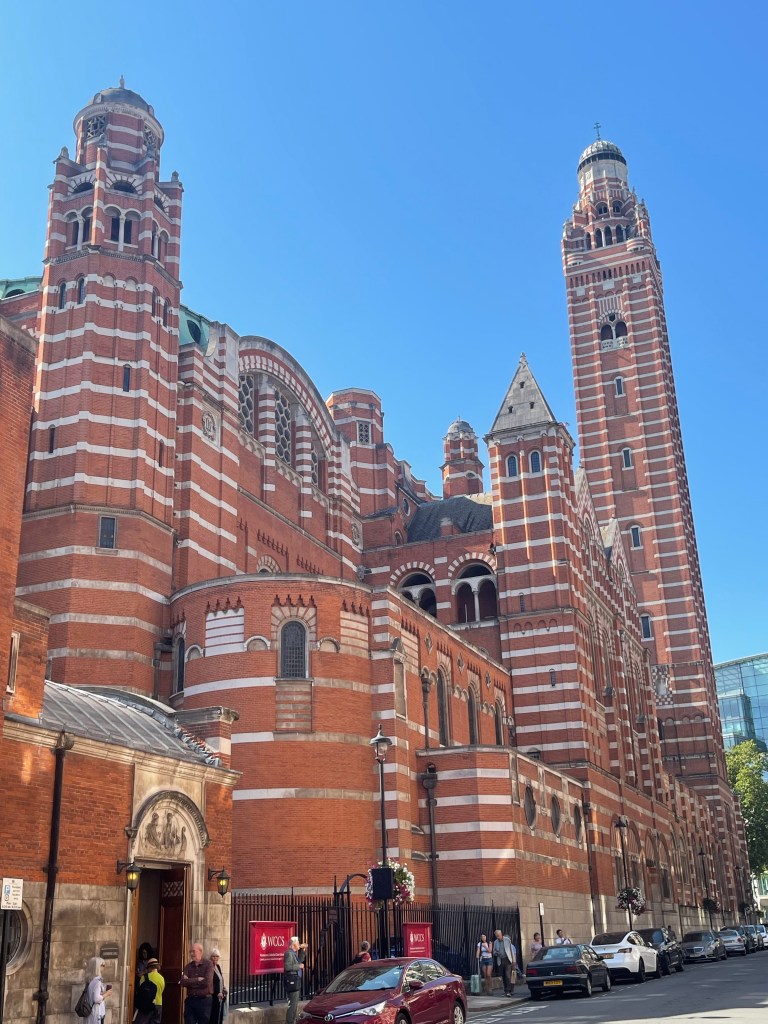
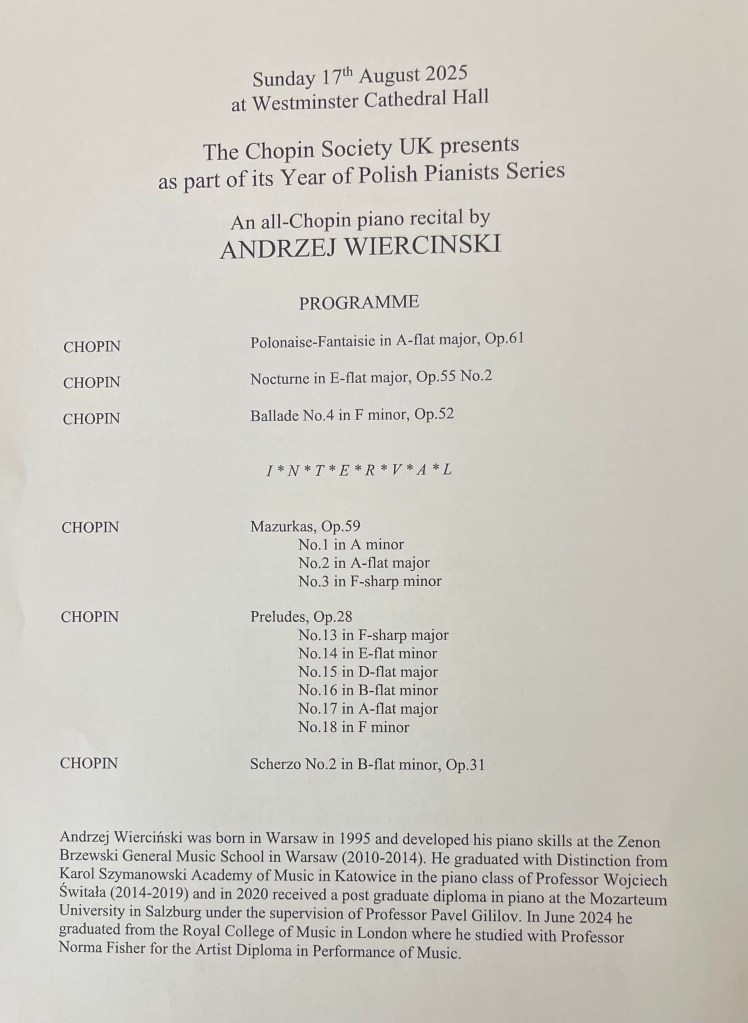
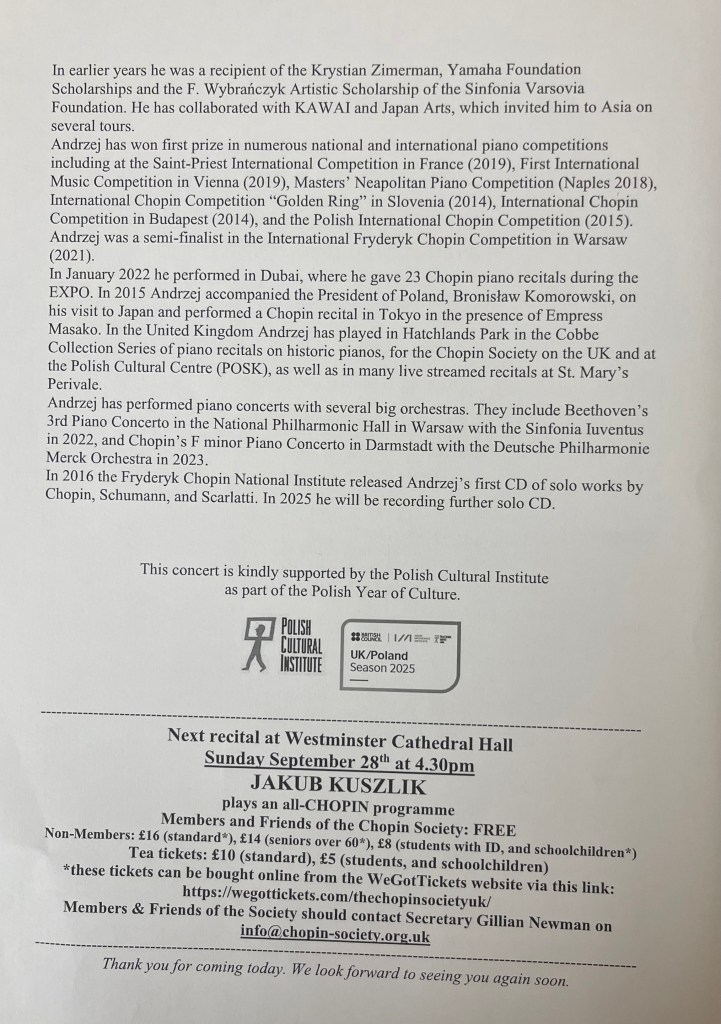
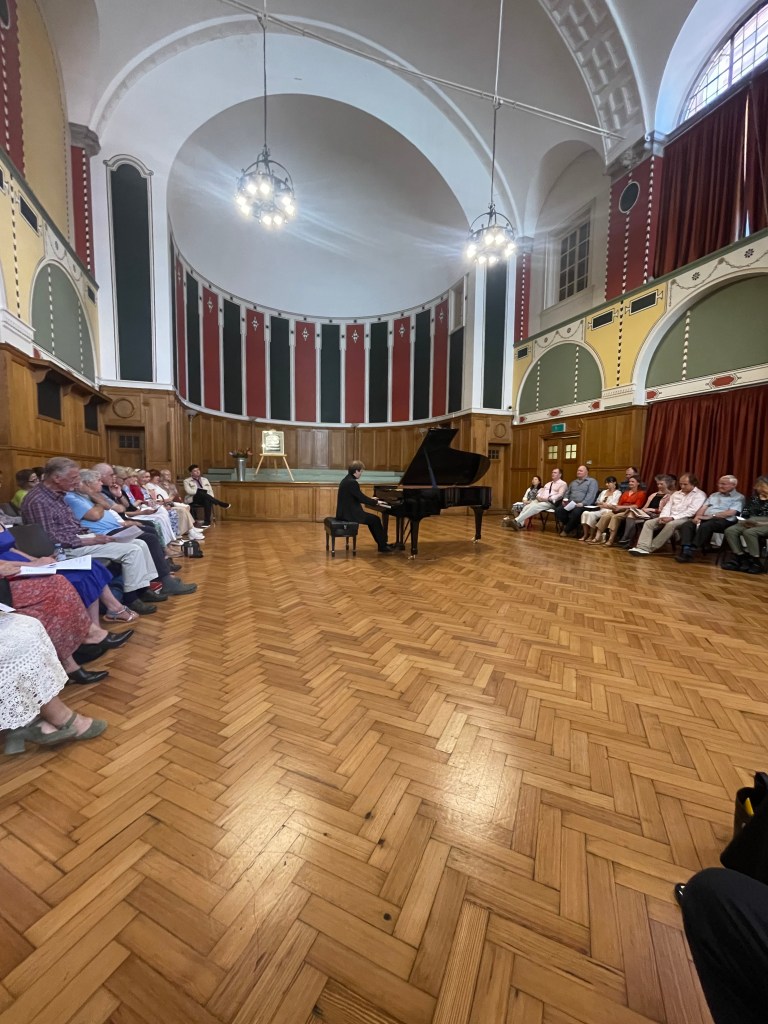
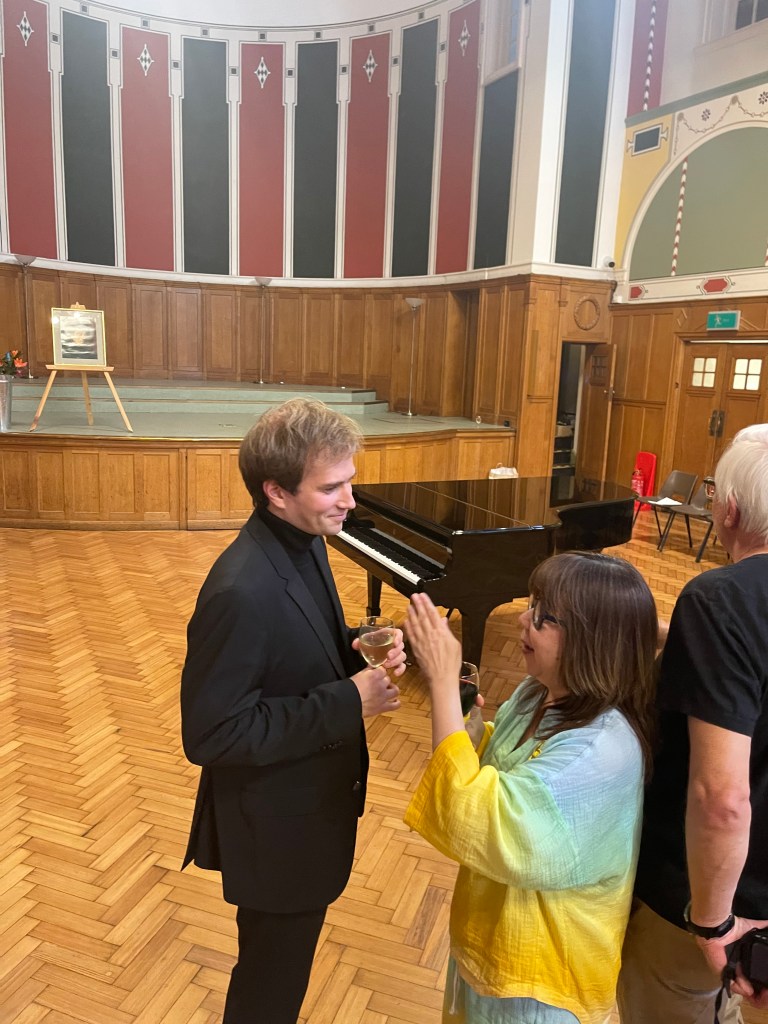
Today a special mid August concert for Andrzej Wierciński who will be participating at the competition in Warsaw in October. A surprisingly full hall in this holiday period as word must have spread that something special was to be heard in Westminster Hall .
Andrzej, together with our friends in Perivale, I have known and admired for quite some years. A somewhat turbulent past, as musical genius is not easy to live with , especially when one has to come to terms with the joys and sorrows of youth.

I even accompanied Andrzej to Ischia where the Walton Foundation, under the inspired artistic direction of Lina Tufano, were honoured to invite Andrzej to play in their beautiful concert hall next to the room where Sir William would compose . It was the Walton’s express wish that young musicians should be encouraged and helped in the early stages of their career and a Foundation was officially created, and celebrated with Prince Charles who flew in especially by helicopter some years ago.

Two afternoon recitals to a full hall of visitors in the botanical garden that Lady Walton had created. When she was still present the visitors would be invited to tea together afterwards . Alas Susana joined her husband in 2010 and both survey the scene from a rock that overlooks the garden. It is Alessandra Vinciguerra who greets the public now with the same warmth as her great friend Susana Walton.
Andrzej gave a very fine recital the first day but he was not happy with his performance and we had time in this paradise to talk about his artistic doubts and uncertainties . The concert the next day was truly memorable such is the magic that pervades this paradise, and the help it can offer young musicians searching for musical perfection and in many ways sacrificing their youth to their art.
A wonderful Chopin programme today in London of works that will be heard next October in Warsaw . They were presented with such extraordinary mastery today that I was pleased to see this young talented musician transformed into a great artist.
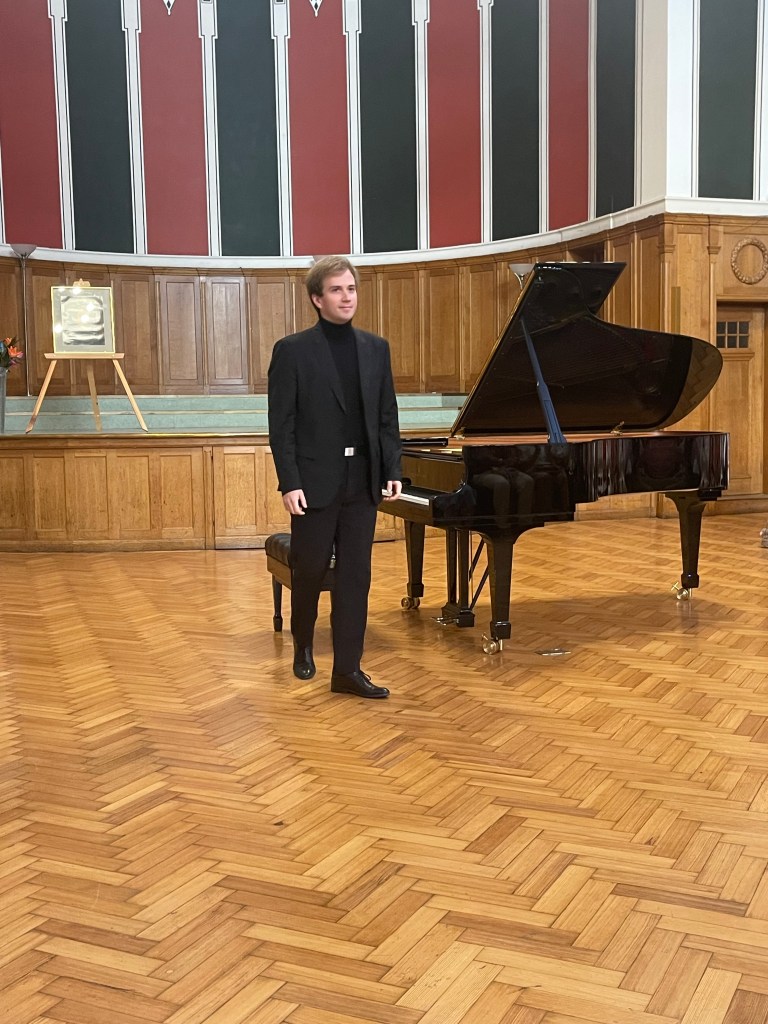
I have heard these works from many great hands over the past sixty years of concert going but what I heard today will long remain with me as one of the most beautiful recitals I have ever heard.
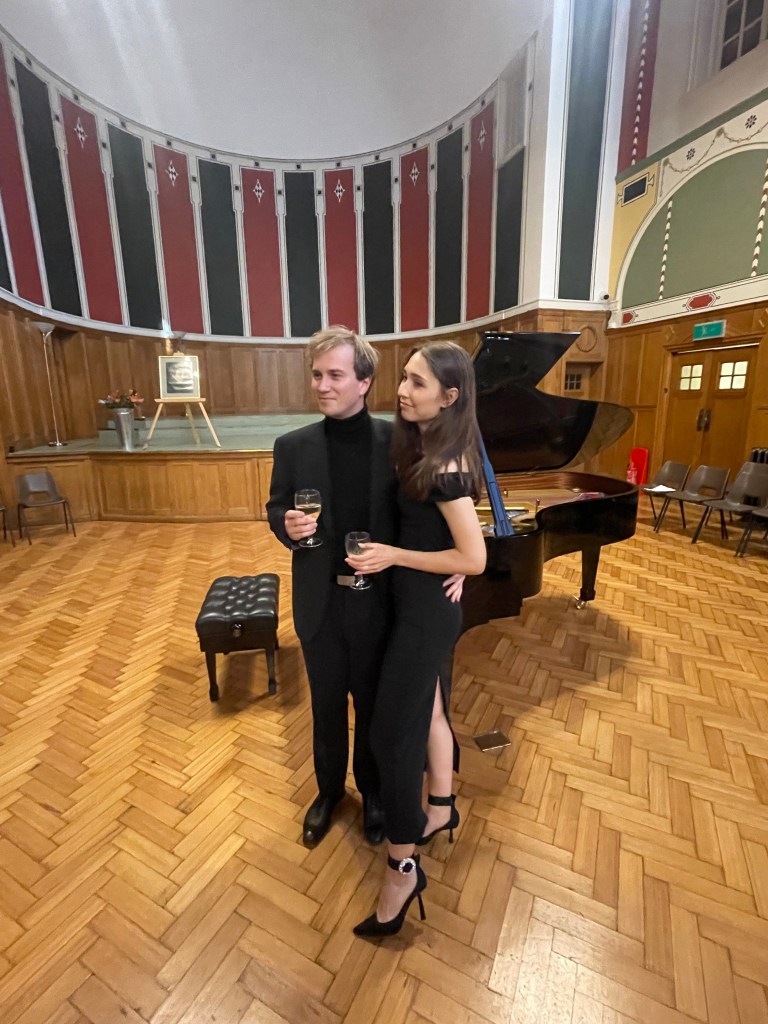
A relaxed Andrzej with Dominika by his side had come to terms with his doubts and uncertainties as he allowed the music to pour from his fingers with a natural radiance and beauty and above all an authority which was mesmerising.
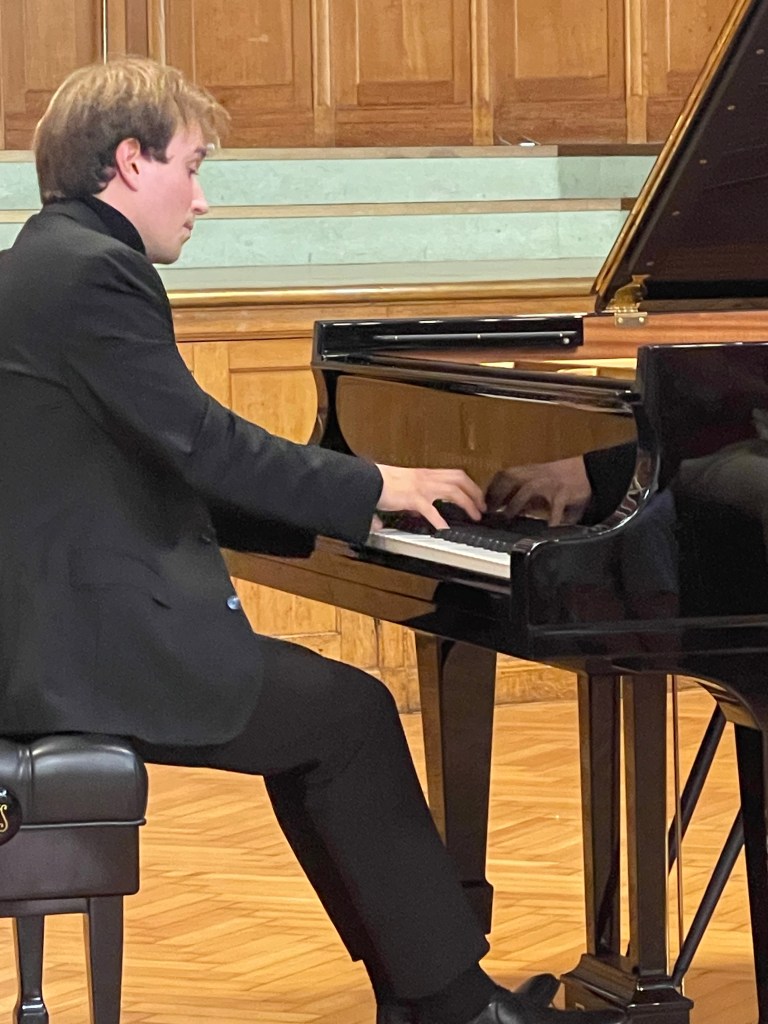
A Polonaise- Fantasy that was truly a fantasy, with the opening call to arms dissolving into a stream of notes just continuing the vibrations of the arresting opening. Notes that were a stream of gold painted with one stroke like a painter before his canvas.The left hand hovering above, waiting to land with breathtaking beauty at the top of this stream of sounds. They say silence is golden but in this case the rests took on a poignant meaning adding moments of contemplation and extraordinary changes of colour. There was a mellifluous outpouring of ravishing counterpoints as the playing became increasingly passionately involved. The long descent into the ‘Poco più lento’ I have never heard played with such meaning like a swooping bird hesitantly perching on the earth. Such beauty to this central episode before the return of the opening theme, but this time played ‘avec un sentiment de regret’ with its tenderness and heartrending longing for things past. Andrzej has the ability to create moments of stillness and glowing radiance as he built up the tension to the glorious explosion of aristocratic grandeur and astonishing sumptuous excitement. Dying away to a whisper as the final few bars unraveled with a magical sense of line before the final simple A flat . Like the Barcarolle op. 60,the late works of Chopin rarely finish with a crowd pleasing flourish, but with a gentle full stop of a Genius who has quite simply shared a story and lays exhausted as he has said all he has to say.
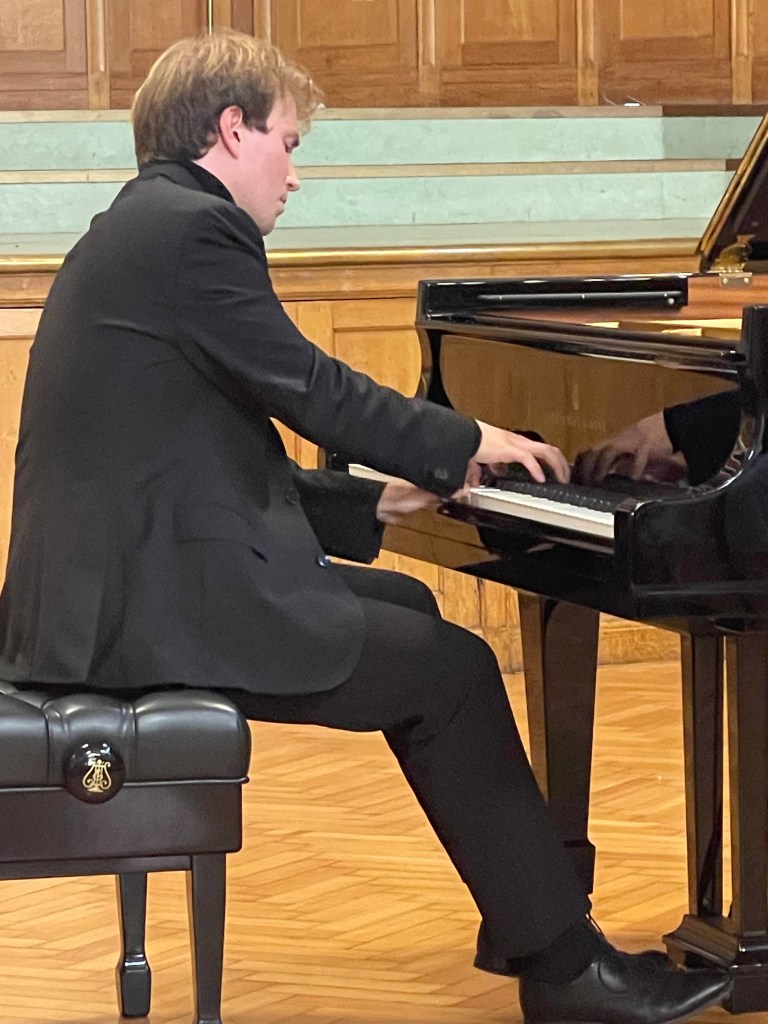
The Chopin Nocturne op 55 n. 1 was Cherkassky’s favourite nocturne and it showed with performances of poetic fantasy and extraordinary beauty. https://youtu.be/ZFumJqMprEA?si=GFC44G9N1ZOiRrnd
But it is it’s twin that is even more extraordinary for it’s passionate outpouring of explosive emotions with a moving web of harmonic weaving on which Chopin could allow his yearning passion to express itself with extraordinarily expressive counterpoints and asides, with a coda that unwinds with magical sounds of a heart unwinding and finding rest after such X certificate passion. Andrzej played it with unrestrained passion but also a kaleidoscope of colour that one never wanted to end. But end it did as his hands like a graceful bird or ballet dancer reached the extremities of the keyboard with a whispered farewell – parting indeed is such sweet sorrow. Our poet of the piano with five strokes just turned the page. There followed a silence that spoke as eloquently as the sounds and it was out of this silence that the ‘G’ could be heard vibrating with bell like beauty as the Fourth Ballade was born on a wave of song. A flowing forward movement as Andrzej allowed the variations to unfold with poetic sensibility with the music taking hold of him as the second variation became more agitated.The technical command and control passed unnoticed as the music was allowed to flow like water with a natural forward movement where technical problems were of no importance, as it was the meaning behind the notes that was paramount .A brief respite before taking flight again with a mazurka type episode of such control and originality that I went to look at the score afterwards to see where these poetic marvels had lain in a score that I have known for a lifetime. There was quite extraordinary colouring just before the doliccissima cadenza with counterpoints that gleamed like jewels and that I had never been aware of before.This was the originality of an artist who could look deeply into the score with a poetic sensibility and still find things that others have never noticed . The independence of the counterpoints that followed were of quite extraordinary control of colour and an episode that can in lesser hands sound like the calm before the storm was a marvellous platform from which to sail off on the wondrous outpouring of notes that is to take us to the passionate climax of this masterpiece.
It is also a work that Andrzej recently presented with the Polish Chopin Society and the Chopin Museum who have acquired one of the original manuscripts obviously with many secrets hidden within, in Chopin’s own hand written manuscript. https://www.youtube.com/live/QHk1LbWTYWE?si=vnVrqKX-YuLZ7Ru-
An interval was awaited but Andrzej obviously did not want to interrupt this magic that had been created between artist and listener, and immediately intoned the three Mazurkas the make up op. 59. These three are amongst the last works that Chopin wrote, with the unfinished Mazurka op 68 n 4 being the very last of his 59 miniature tone poems that Schumann was to describe as ‘canons covered in flowers’. The whispered opening of a lone voice of op 59 n. 1 spoke so eloquently of mystery and nostalgia on a true voyage of discovery in a wondrous fantasy world of colour.The ending just thrown off with glistening simplicity as the A flat Mazurka op 59 n,2 crept in with insinuating beauty.There were never any hard sounds or accents but the sumptuous joyous sound of a truly ‘Grand’ piano. Robust sounds with the strength of real sentiment dissolving into ravishing radiance after such emotional turbulence, with just two whispered stomps of the feet to finish. There followed the ‘joie de vivre ‘ of the Mazurka in F sharp minor with playing of great authority and poetic understanding. A real country dance of passion and joy always tinged with sadness and nostalgia.
The Mazurka has long been thought of as the domain of only Polish born pianists, so it came as a surprise when a Chinese pianist, Fou Ts’ong, was awarded the Mazurka prize in one of the very first competitions after the war. As Ts’ong so eloquently would explain the ‘soul’ knows no frontiers and it is the same ‘soul’ that inspires Chinese poetry of which Ts’ong’s father was a recognised authority. https://christopheraxworthymusiccommentary.com/2021/01/13/roberto-prosseda-pays-tribute-to-the-genius-of-chopin-and-the-inspirational-figure-of-fou-tsong/
However the performances we heard today from this young Polish musician were a potent mix of emotions that I have rarely heard before, played with such poetic imagination.
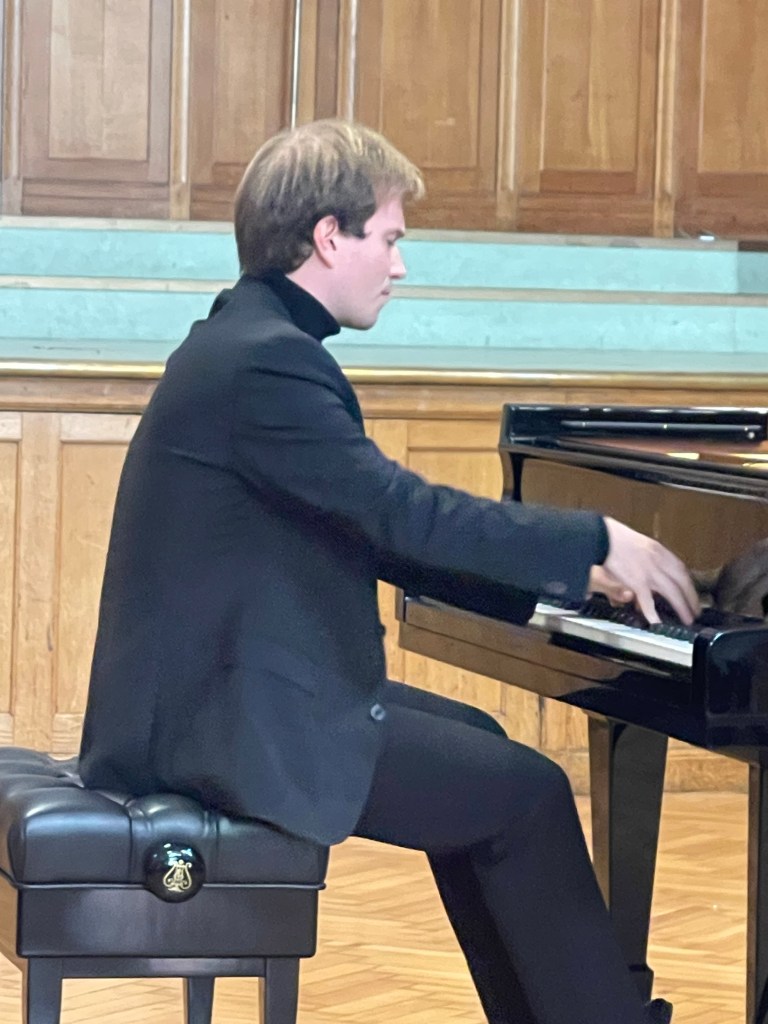
Six preludes from Chopin’s Twenty Four op 28 . Chopin himself never played the complete set in concert but always a selection ( as Sviatoslav Richter would also do ) The six that Andrzej had chosen n. 13 – 18 are a marvellous group that include two of the longest preludes together with certainly the most treacherously difficult one. The thirteenth is one of the most beautiful with a bel canto floated on a continuous wave of gentle undulating sounds. A beautiful cantabile produced by a wondrous sense of balance that could allow the melody to be revealed rather than projected. The radiance of the F sharp in the ‘più lento’ is one of those magic moments that will remain with me for a long time. Andrzej bringing this Prelude to an end with simplicity and whispered beauty out of which entered the ominous wind over the graves of the fourteenth. Building to a passionate tempest of sounds with strange inner counterpoints, ending so abruptly that the glowing radiance of the ‘Raindrop’ Prelude had something of pure magic about it. It was played with aristocratic refinement with a subtle underlining of the tenor register adding an extra dimension to this tone poem. The return of the melody after a restrained turbulence was truly exquisite with a beguiling freedom within the architectural shape that Andrzej shared with us. I loved the way Andrzej split the opening chord of the sixteenth like someone about to plunge with courage into the unknown. A technical command that was breathtaking in its audacity and daring adding a musical intensity that was quite overwhelming. Leaving the pulsating heart of Chopin beating with radiance and beauty as the seventeenth was allowed to flow in long lines of mellifluous song. A sense of balance that was of extraordinary sensitivity with the gentle bass gong of A flat creating a cloud on which the melodic line could float with heartrending beauty. The eighteenth is a cadenza entering so surreptitiously, that the climax and transcendental outpouring came as an astonishing surprise.
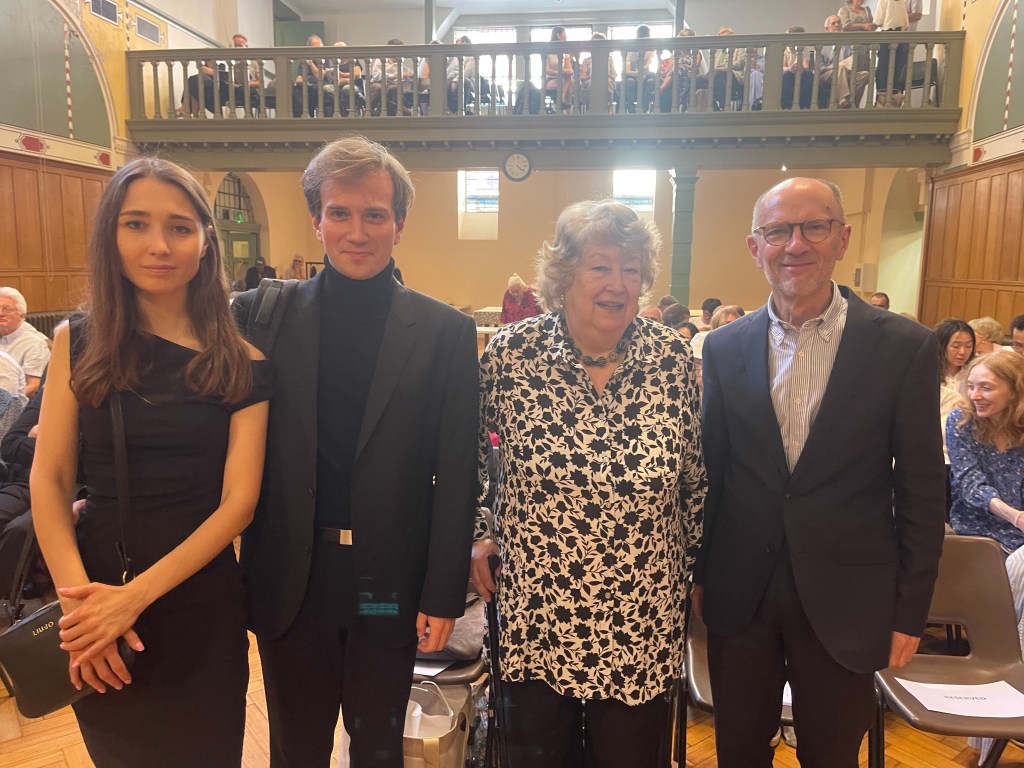
The concert ended with the Second Scherzo in B flat minor op 31 and as Professor Rink ( the renowned Chopin expert) confided he had rarely heard such a magnificent performance. A work that we have heard, of course, above all from Rubinstein, but from a thousand pianist downwards ever since. Andrzej, through his scrupulous attention to Chopin’s indications, managed to create a work as it must have seemed to the public when the ink was still wet on the page. Above all the rests were of such importance and created an energy that usually only Beethoven can create – before and after the rest becomes of fundamental importance. There was a subdued beauty to the trio with chords of poignant whispered meaning as the luminosity of the melodic line emerged. Playing of gigantic proportions too but always as a musician with the sense of architectural line and overall sense of colour paramount, recreating this musical masterpiece.
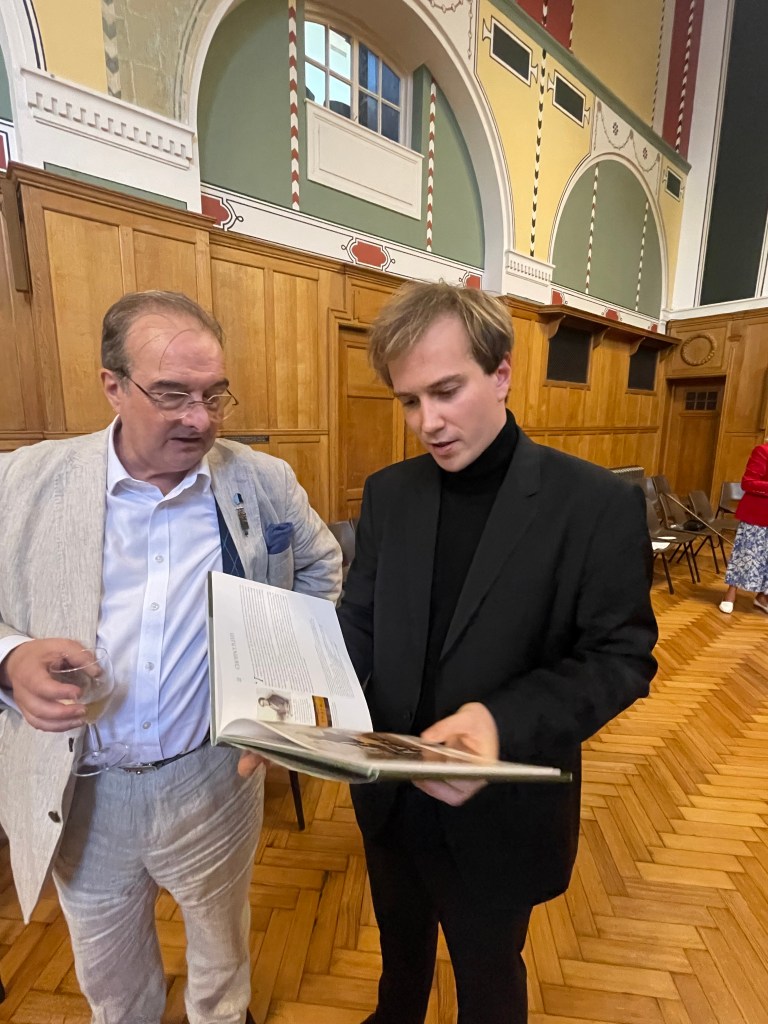
We had discussed whether he would play an encore and so he was surprised when the applause was curtailed as our mastery of ceremonies stood up to make the announcement that he probably would have made had there been an interval.
As I told Andrzej, tongue in cheek , No interval – No encore !!!


 ChristopherAxworthy-MusicCommentary