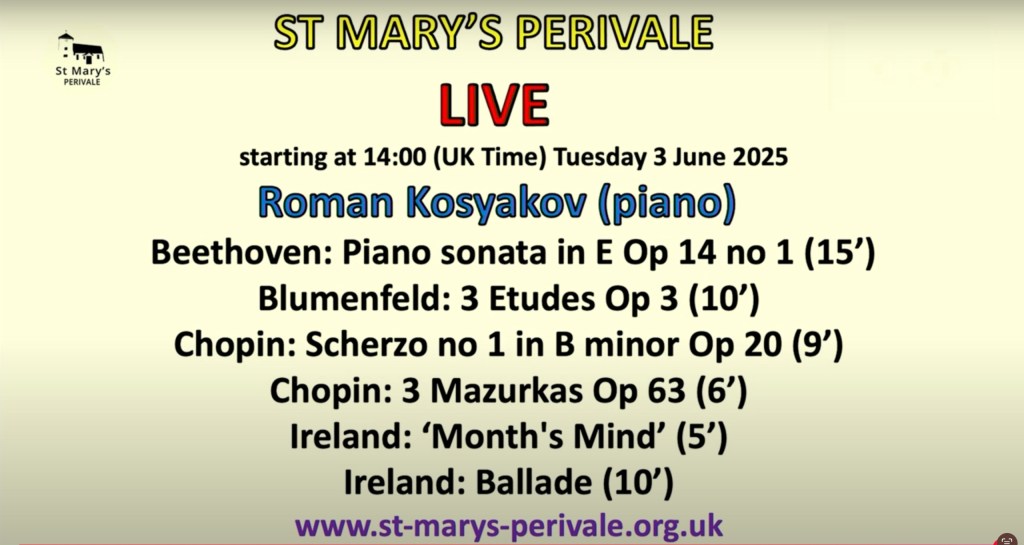
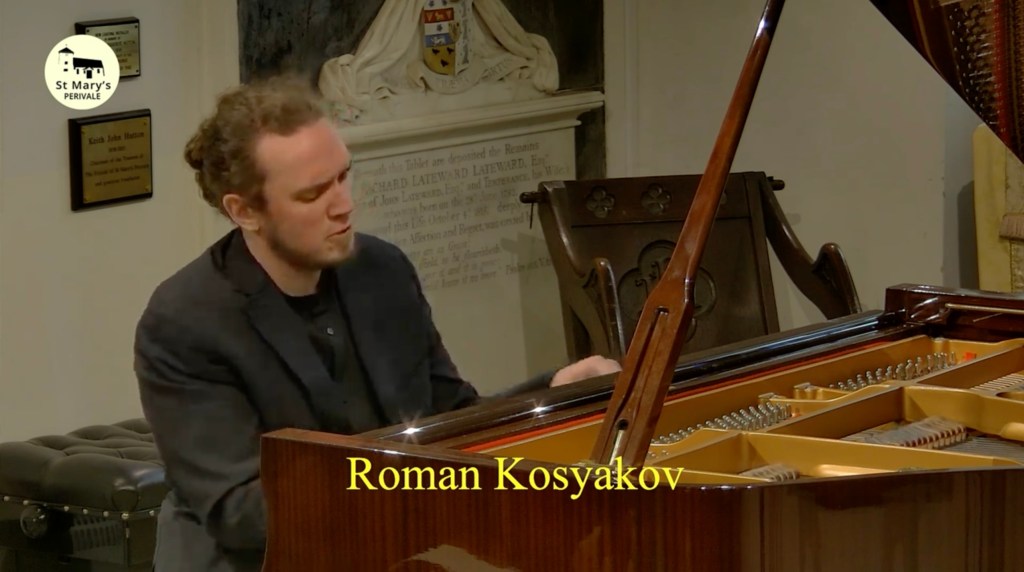
It was Richter on one of his first visits to London who played the two early Beethoven Sonatas op 14 – the ‘Hammerklavier’ was to come much later .Annie Fischer used to regularly play the G major op 14 n. 2. They are works with the simplicity of an earlier age but already with the eyes to the future. Serkin used to play op 2 n. 1 with his nervous energy and dynamic drive but above all respect for the score and with masterly musicianship.
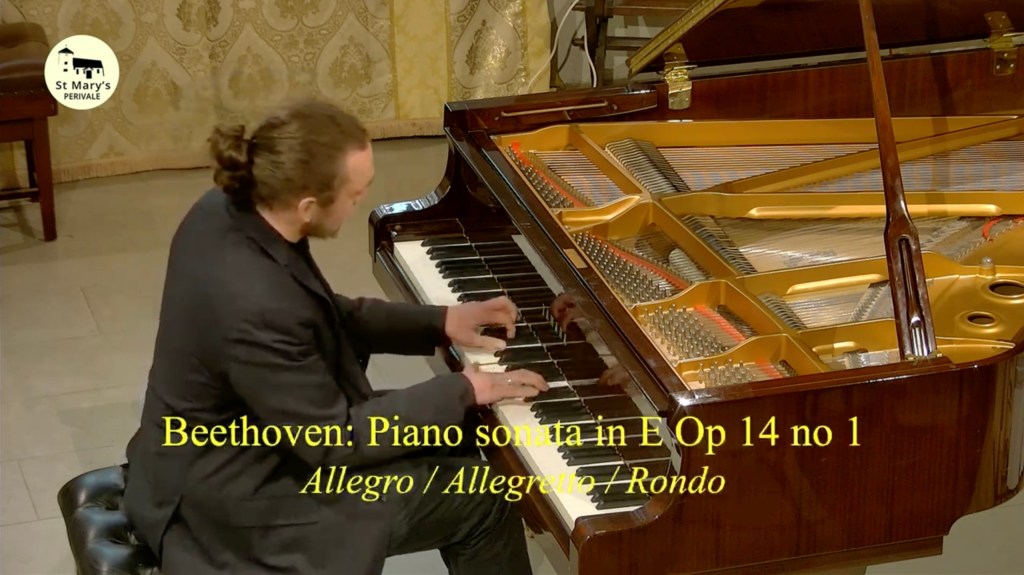
Roman joins this illustrious company today with a performance of a radiance and simplicity that belie the transcendental mastery that allows the music to flow with such seeming ease. Roman has hands that belong to the keys and with an elasticity formed at an early age can shape and colour the notes with such natural legato. His remarkable musicianship too means he can delve deeply into the score and inspire his imagination with the indications of the composer. There was a beautiful fluidity as the opening melody and accompaniment were interrupted by an impish germ or twitch that Beethoven’s genius transforms in so many extraordinary ways .The wonderful sense of balance where accompaniments became waves of moving harmonies never interfering but enhancing the glowing luminosity of the melodic line. A beautifully mellifluous ‘Allegretto’ played with glorious luxuriance, answered by what would have been called a Trio, of whispered beauty.The ‘Allegro comodo’ of the rondò was played with they hypnotic rhythmic drive as in the very first sonata op 2 n. 1. Here imbued with a melodious outpouring from the very first notes that gives such architectural shape recalling as it does the first movement. These are sonatas where the genius of Beethoven is already taking the Sonata from his teacher Haydn and pointing the way and transforming it as Schubert and Liszt were to do in the future.
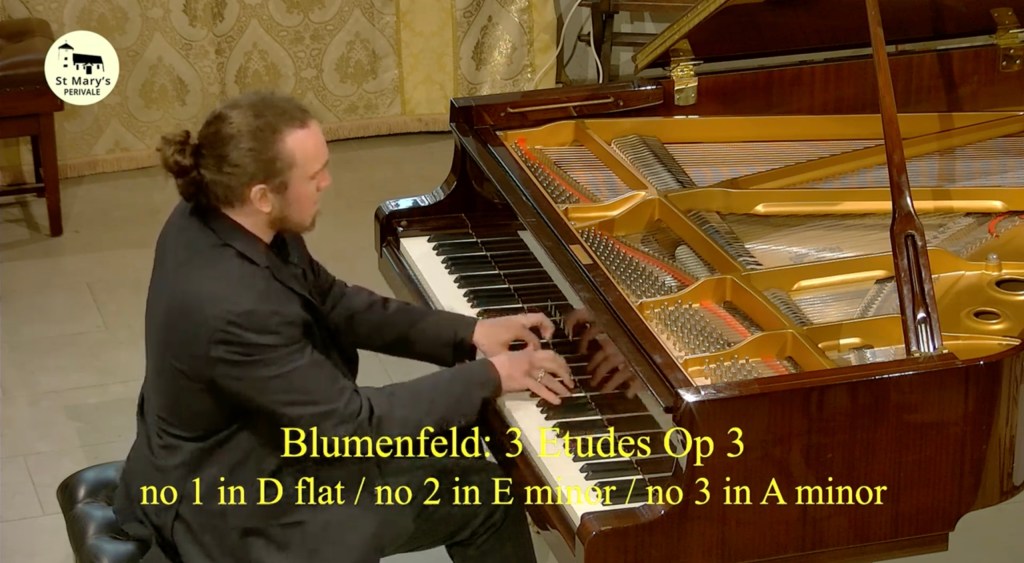
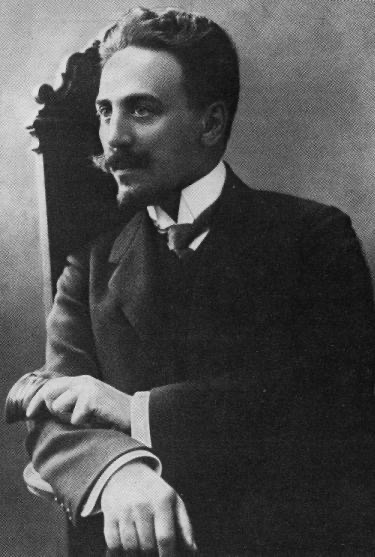
Felix Blumenfeld was the early teacher of Horowitz before he, like Chopin, took Paris by storm .Chopin was greeted by Schumann with ‘Hats off a genius!’ .Horowitz greeted by a major critic with ‘The greatest pianist alive or dead!’. Rubinstein was not too happy with that and a duel similar to Liszt and Thalberg seemed to be in the air!
Dr Mather had forgotten that Mark Viner has long been championing these great pianist /composers of the past, such as Alkan,Kalkbrenner,Thalberg,Chaminade and Blumenfeld.And his colleague Tyler Hay ,also from the class of Tessa Nicholson at the Purcell School ,has long been scouring the archives too.His latest foray into the 500 odd works laying on dusty shelves by Czerny, a pupil of Beethoven and teacher of Liszt, have come up trumps.
Sorry Roman but it is wonderful that you too will look for works that merit to be heard in public and not just studied in history books.That of course includes John Ireland whose piano concerto before or just after the war was championed by Moiseiwitch and Curzon.
Roman played these three studies with a beautiful fluidity and a delicate melodic line with a truly silver lining. A romantic outpouring of sounds in a period when pianist were not afraid of their emotions as in fact Horowitz would cry. I remember Cherkassky recounting that on a visit to his friend in New York ,Horowitz on hearing of the death of Jorge Bolet exclaimed : ‘Shura ,we are the only two left !’. Well there are still some up and coming disciples and it is nice to note that their home is in the Mecca of pianists that Dr Mather and his team have create in the no longer redundant church of St Mary’s.
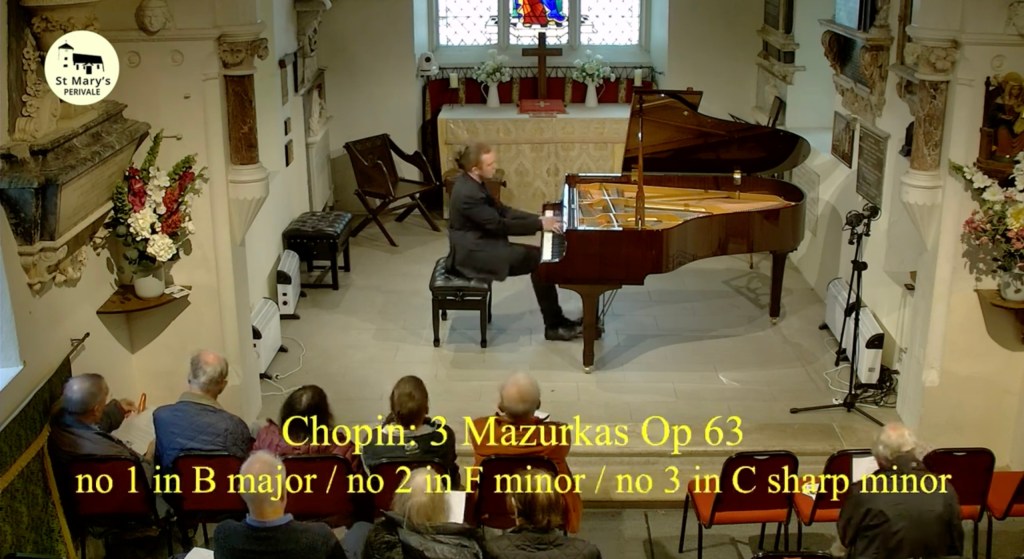
Three mazurkas, the last works that Chopin penned ,were played with extraordinary delicacy and beauty.The duet between the voices of the first and the most poignant of all Chopin’s melodies bewitching the senses in the second, and the strangely delicately whispered dance full of nostalgia of the third. Chopin had not indicated any dynamics in this last Mazurka but Roman has a soul that can dig deep into Chopin’s notes and find hidden secrets revealed to very few.
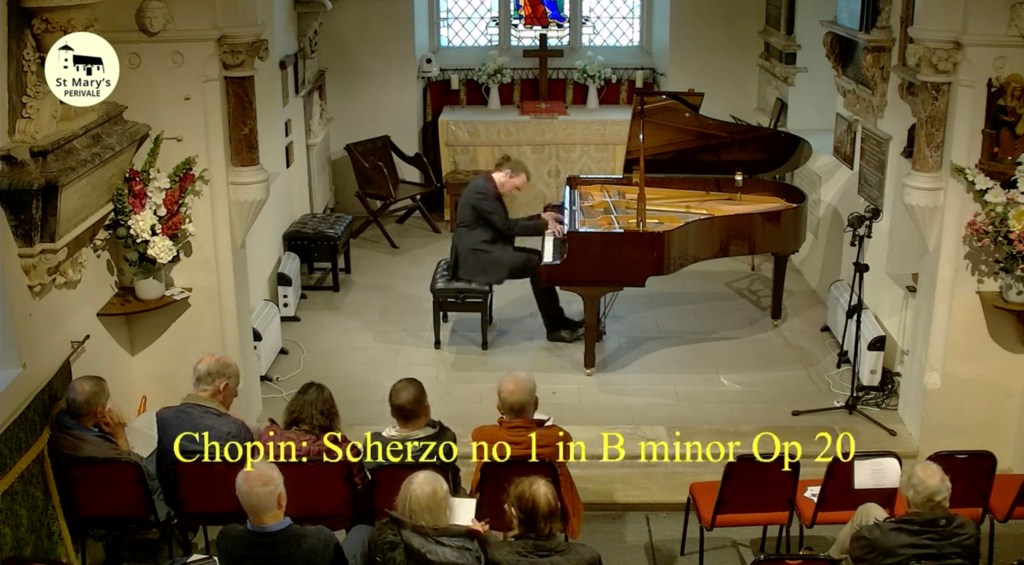
The first Scherzo usually played with a war cry where the two opening chords in Roman’s sensitive hands were an arresting opening to a romantic outpouring of dynamic drive and passionate beauty.The beautiful Christmas song that Chopin uses for the central episode was sung like a poet of the keyboard with the simple beauty and radiance of a traditional song. Too easy for children and too difficult for adults unless you are a poet!
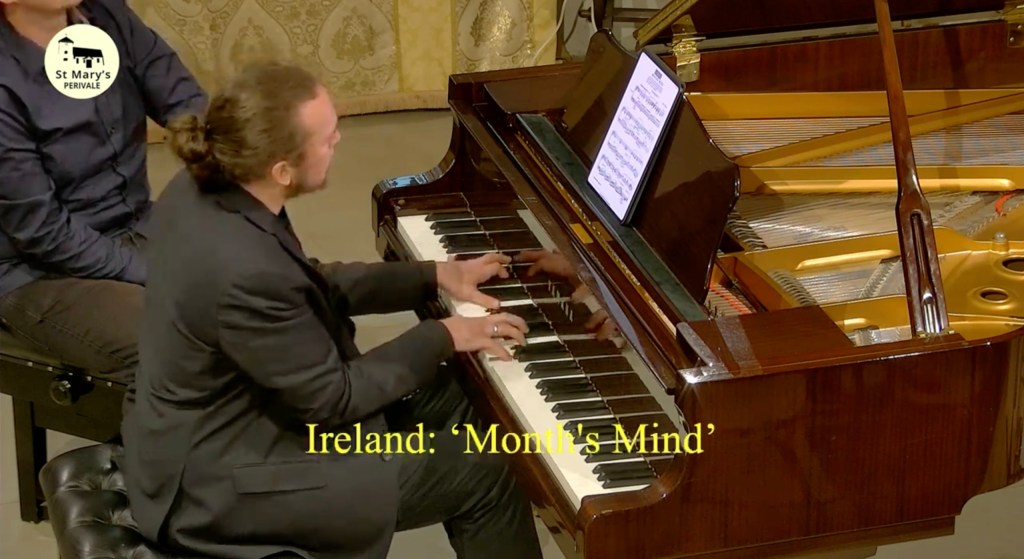
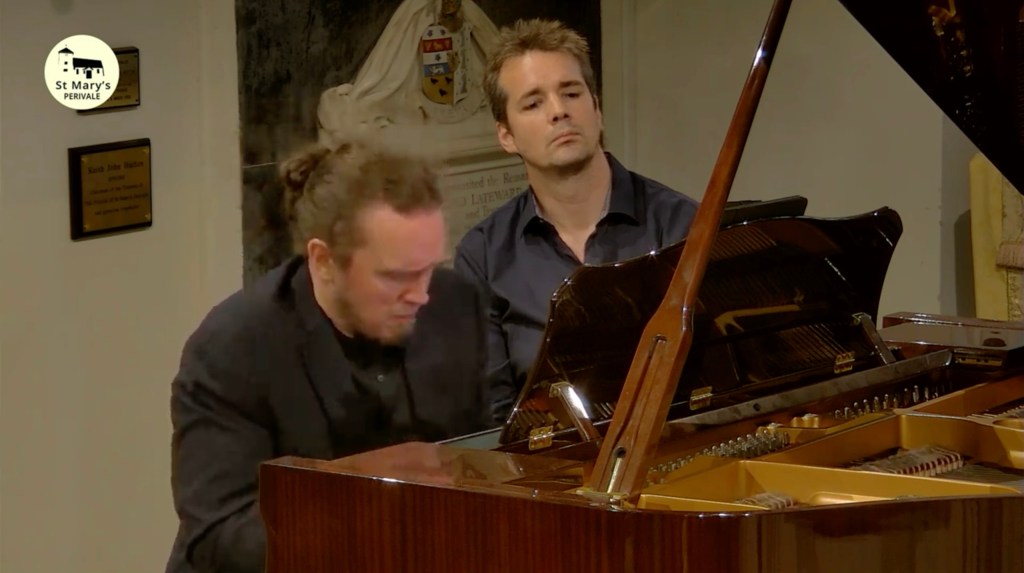
It was very interesting to hear two works by Ireland that I had not heard before. The rhapsodic beguiling unmistakable Englishness of ‘ Month’s Mind’,played with mastery, beauty and conviction.Maybe it was because another great pianist was looking over his shoulder.
Daniel Lebhardt from the class of Nemirovski , where they were both in his class in The Royal Birmingham Conservatoire ,is also part of the extraordinary pianists that abound under the roof of St Mary’s https://christopheraxworthymusiccommentary.com/2021/12/29/daniel-lebhardt-emperor-for-the-night/.
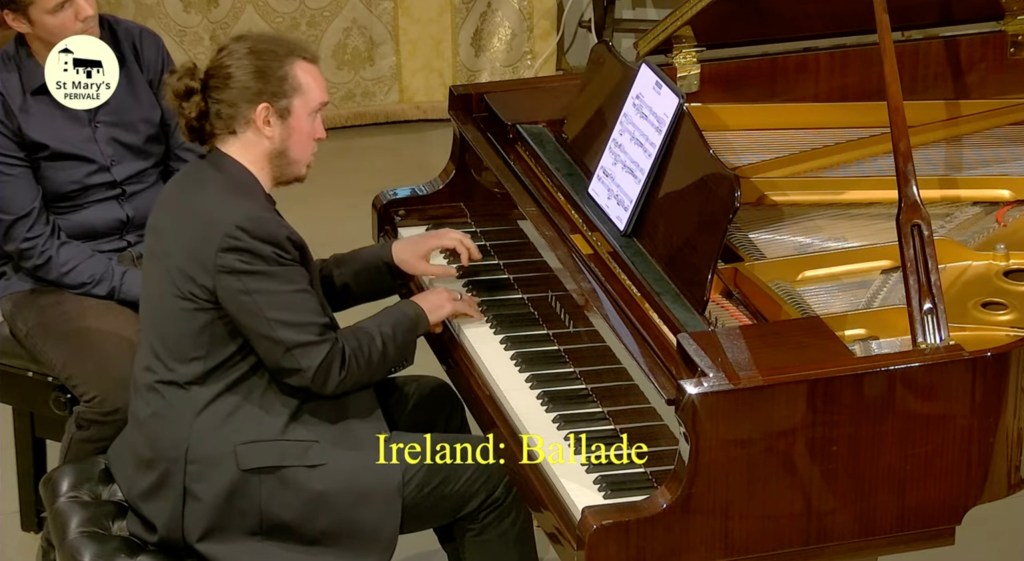
The Ballade (1929) strangely written before the ‘Month’s Mind’ ( 1935) is a much longer, troubled and turbulent work that Roman played with burning conviction and masterly authority
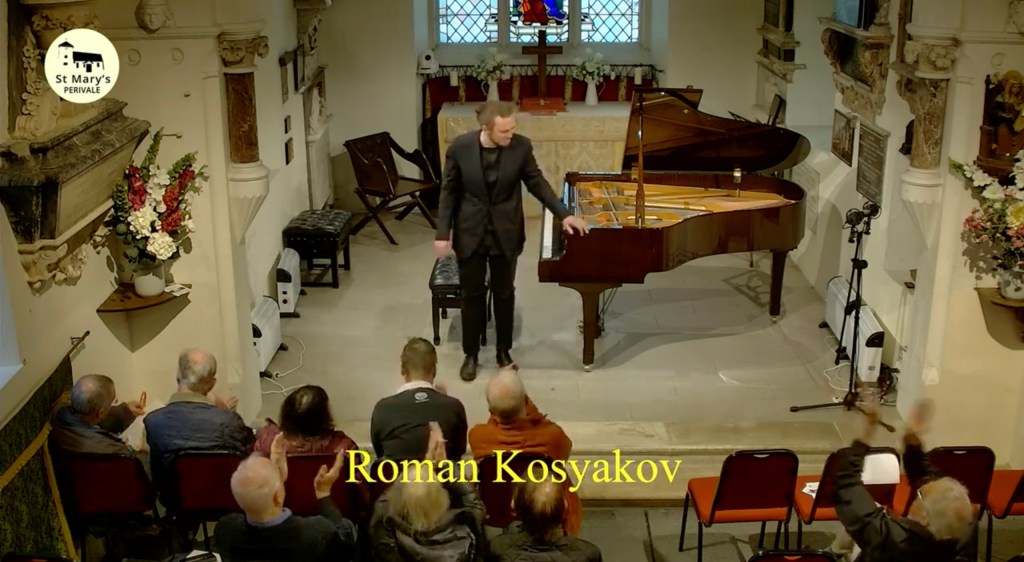
Roman Kosyakov is a winner and a laureate of many international piano competitions: most recently he won the Third Prize and The Bridget Doolan Prize for the best performance of a piece by Mozart of The 12th Dublin International Piano Competition (Ireland, 2022); First Prize, Orchestra Prize and an Audience Prize of the XV Campillos International Piano Competition (Spain, 2021); Second Prize of the UK Piano Open International Piano Competition (UK, 2020); First Prize and the Orchestra Prize of the 14th Hastings International Piano Concerto Competition (UK, 2018), Gold Prize of the 3 rd Manhattan International Music Competition (USA, 2018); First Prize and the audience prize of the 10th Sheepdrove Piano Competition (UK, 2018). Roman was born into a musical family and made his debut with orchestra at the age of 12 with Mozart Concerto No.23 in A Major. In 2012, he graduated from the Central Music School in Moscow where he studied with Farida Nurizade and then in 2017 from the Tchaikovsky Moscow Conservatoire with Vladimir Ovchinnikov. From 2017-2021, he studied at the Royal Birmingham Conservatoire on a full scholarship with Pascal Nemirovski.
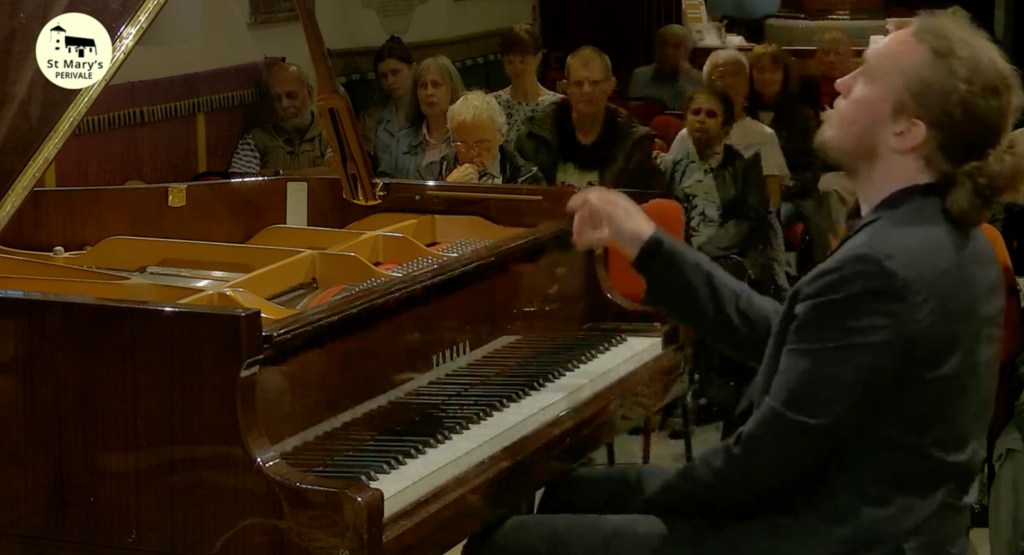
Roman’s performance career includes engagements in the most important venues and festivals across the UK, USA, and Europe such as Kings Place, St James Piccadilly, St Mary’s Perivale and Cadogan Hall in London, Bridgewater Hall in Manchester, Sursa Performance Hall in Ball State University (Muncie, IN, USA), Teatro Juan Bravo (Segovia, Spain), Festivals in Leamington, Battle, Barrow, Furness Classical, North Norfolk, West Meon and European Chamber Academy in Leipzig. He has worked with The Royal Philharmonic, Hastings Philharmonic, English Symphony, Bangor University, and Basingstoke orchestras.
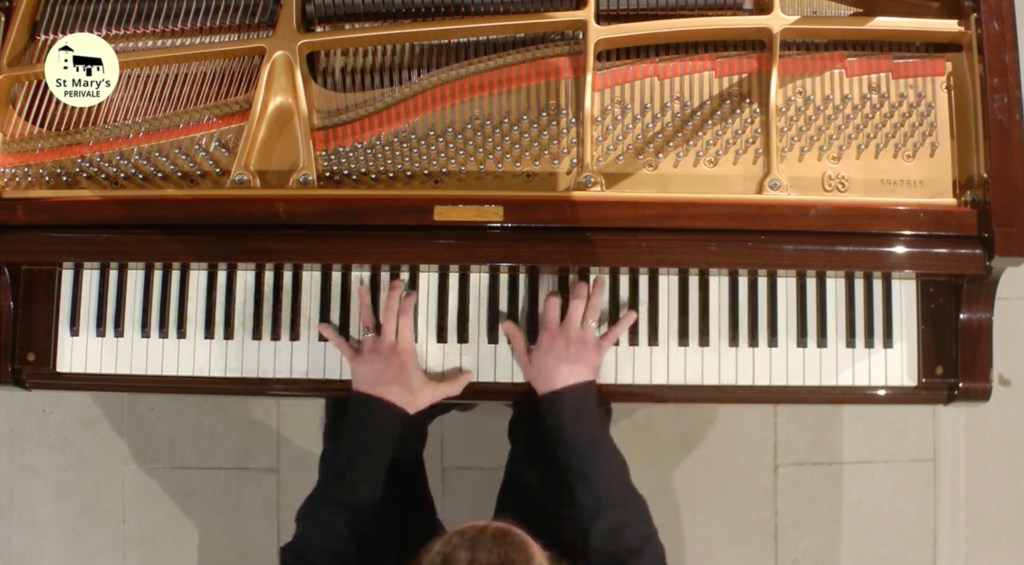
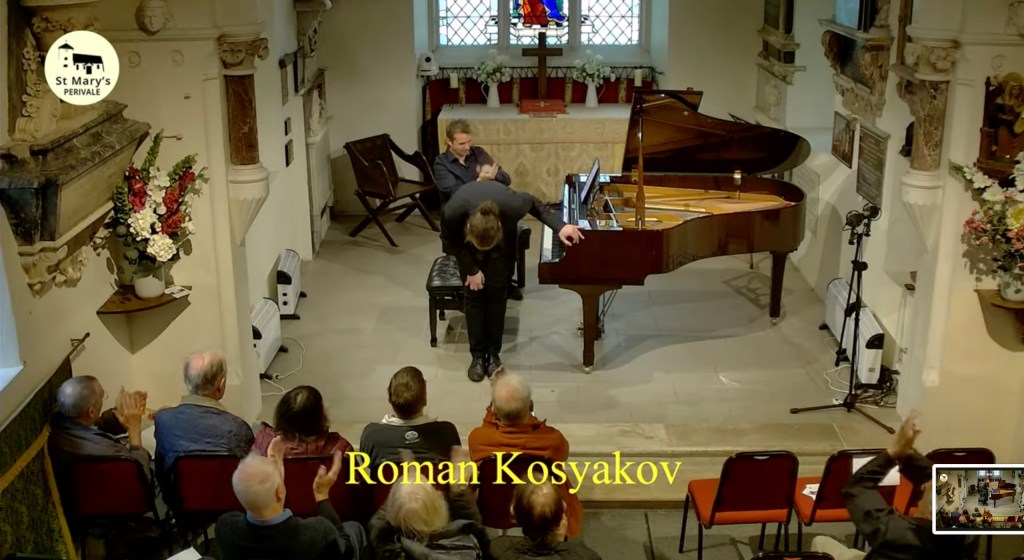
In January 2019 Roman received “The Royal Birmingham Conservatoire- Silver Medal” by the Musician’s Company in the UK, became a member of Musician’s Company Yeomen Young Artists’ Programme and has been invited to represent and launch the 2019 Hastings International Piano Concerto Competition at House of Commons in London. Roman is a winner of Denis Matthews Memorial Trust award, Kirckman Concert Society Artist and a scholar of the Drake Calleja Trust. In Summer 2019 Roman recorded a debut CD for “Naxos” with works by Liszt which was released in late 2020.
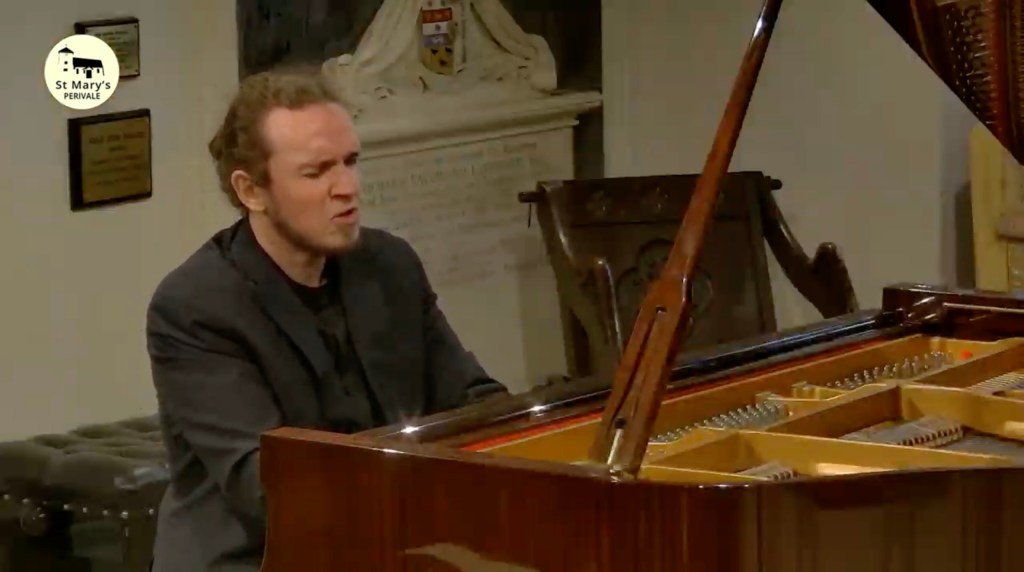
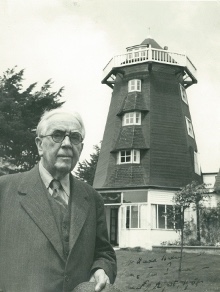
John Ireland (1879 – 1962 )at Rock Mill
Born near Manchester, studied and taught at the Royal College of Music, lived in Chelsea, London for over 50 years and died in a converted windmill in Sussex. Ireland’s foremost inspirations were the ancient landscapes of the Channel Islands, Dorset and Sussex and the writings of pagan mystic Arthur Machen; the composer recounting that he himself had experienced a ‘vision’ on the South Downs.
John Ireland was born in Bowdon, near Manchester, England on 13th August 1879. His parents were literary people and knew many writers of the day, including Emerson. Ireland entered the newly-established Royal College of Music in London at the age of fourteen, lost both his parents shortly after, and had to make his own way as an orphaned teenager, studying piano, organ and composition. The last was under Sir Charles Stanford, who taught many of the English composers who emerged at the end of the 19th century: Ralph Vaughan Williams, Gustav Holst, Frank Bridge (born in the same year as Ireland), Eugene Goossens, Arthur Bliss, Herbert Howells, George Butterworth, and many others.
Ireland destroyed almost all his student works and juvenilia (the beautiful Sextet for clarinet, horn and string quartet being one of the few works which he permitted to be published, and then only towards the end of his life) and emerged as a celebrated composer towards the end of World War I when his Violin Sonata No.2 in A minor brought him overnight fame. From then until his death in 1962 he led an outwardly uneventful life combining composition, composition teaching at the Royal College (where his pupils included Benjamin Britten and E. J. Moeran), and his position as organist and choirmaster at St. Luke’s Church, Chelsea, in London.
Ireland’s music belongs to the school of ‘English Impressionism’. Having been brought up on the German classics, notably Beethoven and Brahms, he was strongly influenced in his twenties and thirties by the music of Debussy, Ravel, and the early works of Stravinsky and Bartók. While many of his contemporaries, such as Vaughan Williams and Holst, developed a language strongly characterised by English folk song, Ireland evolved a more complex harmonic style closer to the French and Russian models. Like Fauré, he preferred the intimate forms of chamber music, song, and piano music to the larger orchestral and choral canvases, He wrote neither symphony (unlike his friend Arnold Bax who wrote seven) nor opera and only one cantata, These Things Shall Be, but his Piano Concerto is arguably the best to have been written by an Englishman, and is a work of intense emotion and nostalgic feeling.
Ireland was strongly influenced by English poetry. His settings of A. E. Housman, Thomas Hardy, Christina Rossetti, John Masefield and Rupert Brooke are among the best known of his works. He was also highly susceptible to the spirit of place. He lived for many years in London’s Chelsea (Chelsea Reach is a depiction in the form of a barcarole of that great sweep of the Thames as it passes along the Embankment to the west of the Houses of Parliament). He was also devoted to the Channel Islands of Guernsey and Jersey. Their location between England and France must have seemed appropriate to his musical orientation, but more importantly he found there traces of prehistoric pagan ritual to which he had originally been drawn through the writings of the Welsh writer Arthur Machen.
But perhaps his greatest love was for the English county of Sussex, a landscape of rolling downs and (in Ireland’s day) isolated villages, including Amberley whose ‘Wild Brooks’ – streams coursing through fields – gave him the inspiration for one of the most brilliant of his piano pieces. Ireland eventually retired to Sussex in 1953 when he bought a converted windmill, Rock Mill, underneath the Downs. He died there on 12th June 1962.
Ireland’s music is intensely personal in style and has always attracted a devoted following among discerning music lovers. As well as his Piano Concerto, previously mentioned, works that continue to be frequently performed and recorded are:
A Downland Suite and Concertino Pastorale for strings, The Overlanders, A London Overture, Mai-Dun, and TheForgotten Rite for orchestra, sonatas for cello and piano, violin and piano, and clarinet and piano, The Holy Boy, Sea Fever and his beautiful motet Greater Love (to name but a few). His hymn tune My Song is Love Unknown is sung in churches throughout the English speaking world.
From Stanford, Ireland inherited a thorough knowledge of the music of Beethoven ,Brahms and other German classical composers, but as a young man he was also strongly influenced by Debussy and Ravel as well as by the earlier works of Stravinsky and Bartók. From these influences, he developed his own brand of “English Impressionism “, related more closely to French and Russian models than to the folk-song style then prevailing in English music.
Like most other Impressionist composers, Ireland favoured small forms and wrote neither symphonies nor operas, although his Piano Concerto is considered among the best works composed by an Englishman. Piano music :
| A to LThe Almond Tree (1913)Ballad (1929)Ballade of London Nights(1930)Columbine (1949)The Darkened Valley (1920)Decorations (1912–13)The Island SpellMoongladeThe Scarlet CeremoniesEquinox (1922)First Rhapsody (1906)Green Ways – Three Lyric Pieces (1937)The Cherry TreeCypressThe Palm and MayIn Those Days (1895)DaydreamMeridianIndian Summer (1932)Leaves from a Child’s Sketchbook (1918)By the MereIn the MeadowThe Hunt’s UpLondon Pieces (1917–20)Chelsea ReachRagamuffinSoho Forenoons | M to SMai-Dun, A Symphonic Rhapsody, arranged for piano four hands (1931)Merry Andrew (1919)Month’s Mind (1935)On a Birthday Morning (1922)Prelude in E-flat major (1924)Preludes for Piano (1913–15)The UndertoneObsessionThe Holy BoyFire of SpringRhapsody (1915)Sarnia: An Island Sequence(1940–41)Le CatiorocIn a May MorningSong of the SpringtidesA Sea Idyll (1960)Soliloquy (1922)Sonata in E minor (1920; premiered by Frederic Lamondon 12 June 1920, the only time he ever played it)[42][43]Sonatina (1926–27)Spring Will Not Wait (1928)Summer Evening (1920) | T to ZThe Towing Path (1918)Two Pieces for Piano (1921)For RemembranceAmberley Wild BrooksTwo Pieces for Piano (1925)AprilBergomaskTwo Pieces for Piano (1929–30)February’s ChildAubadeThree Dances (1913)[44]Gypsy DanceCountry DanceReaper’s DanceThree Pastels (1941)A Grecian LadThe Boy BishopPuck’s Birthday |
Piano and orchestra
Piano Concerto in E-flat major (1930)
Legend (1933)