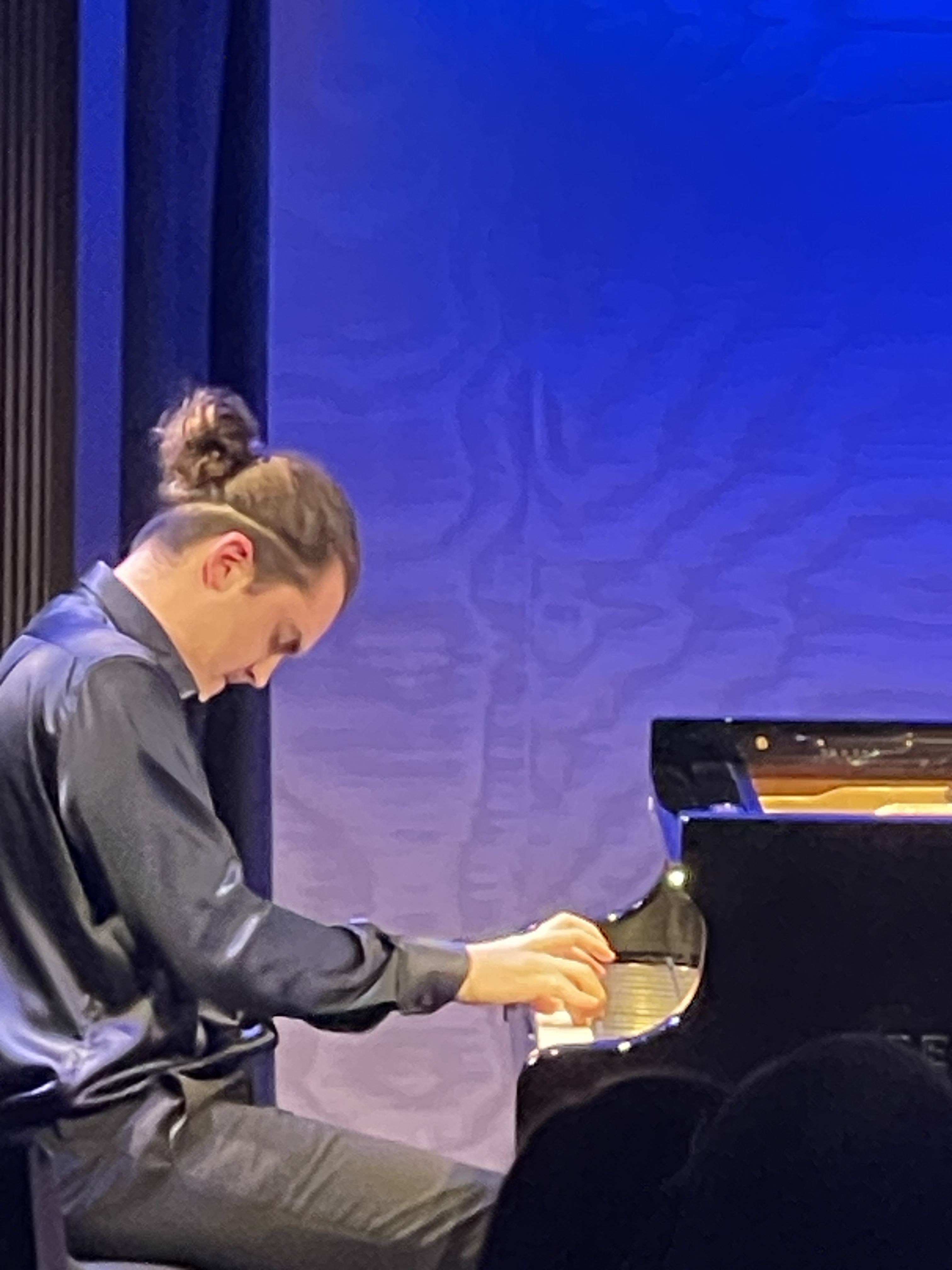
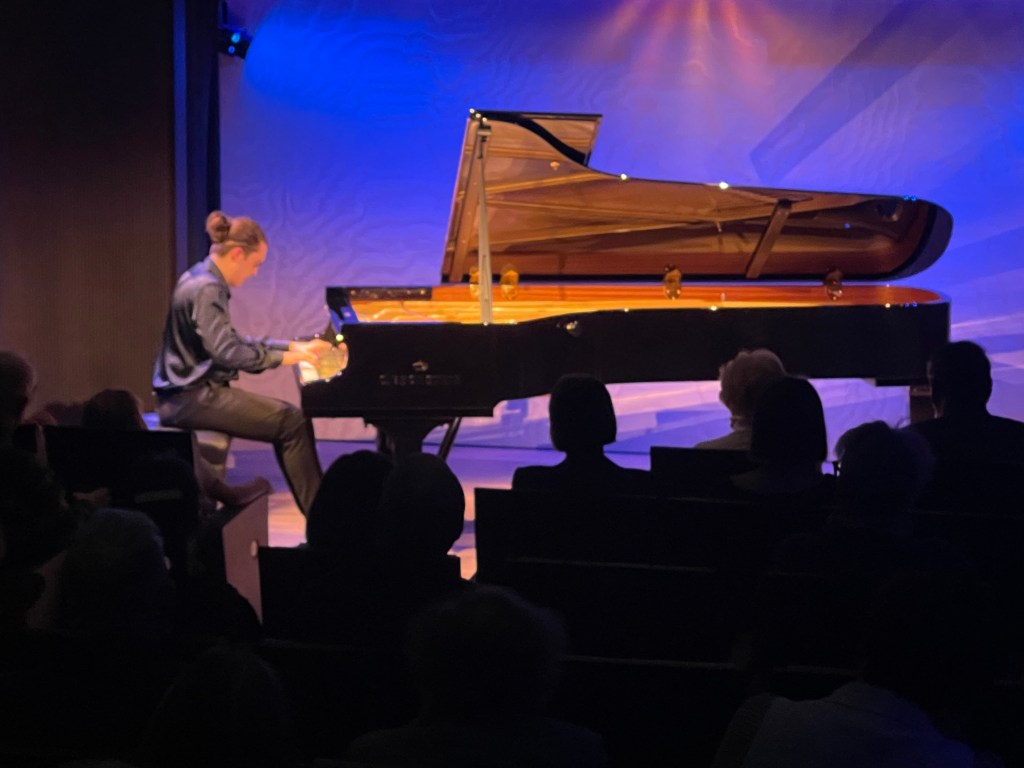
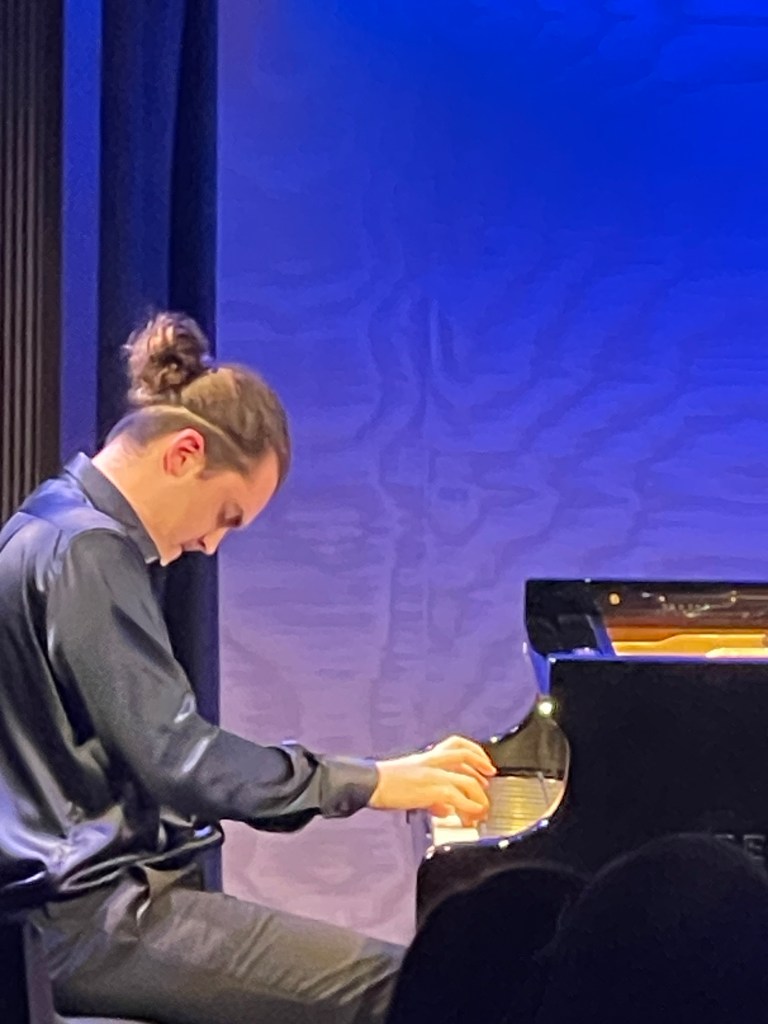
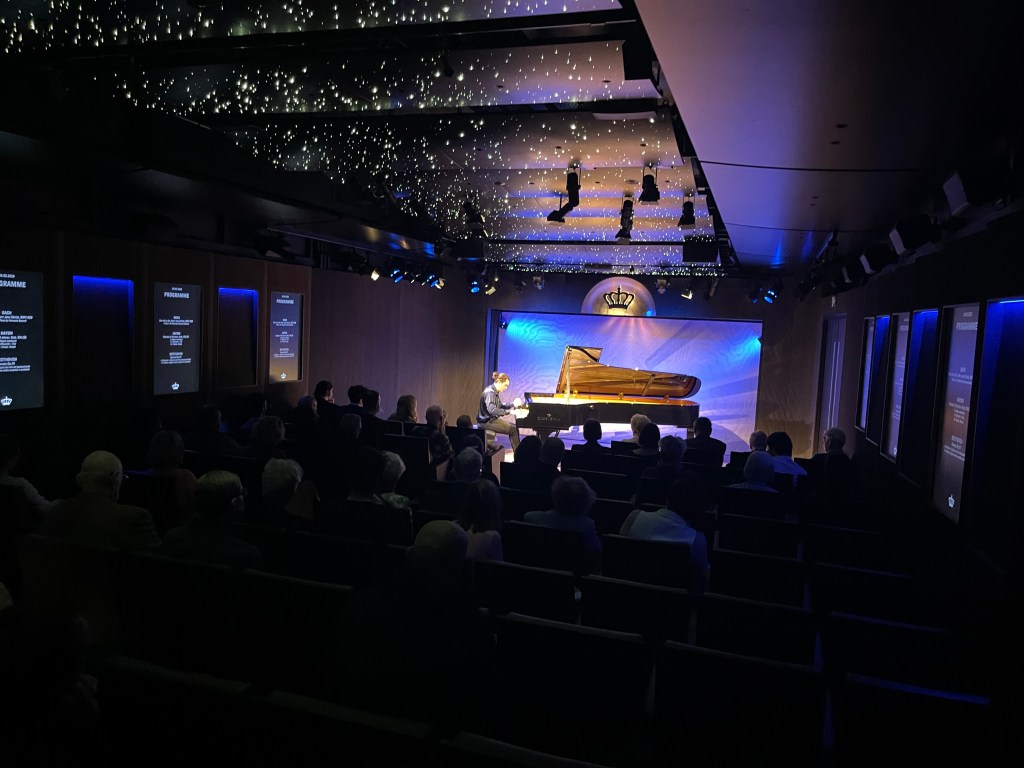
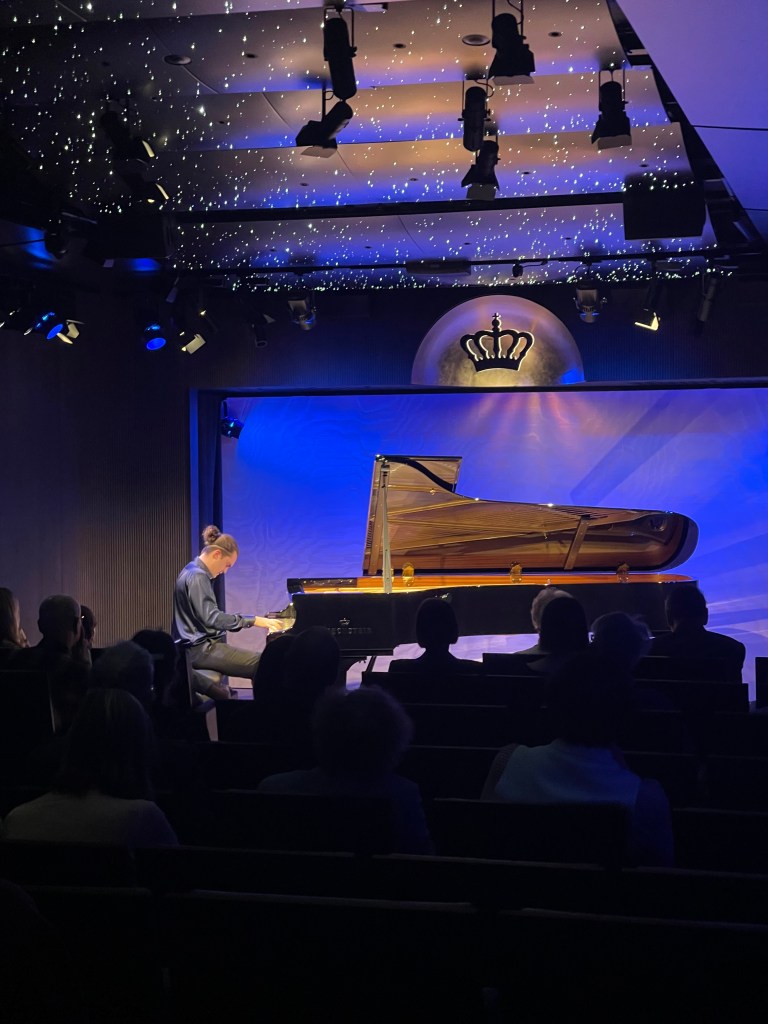
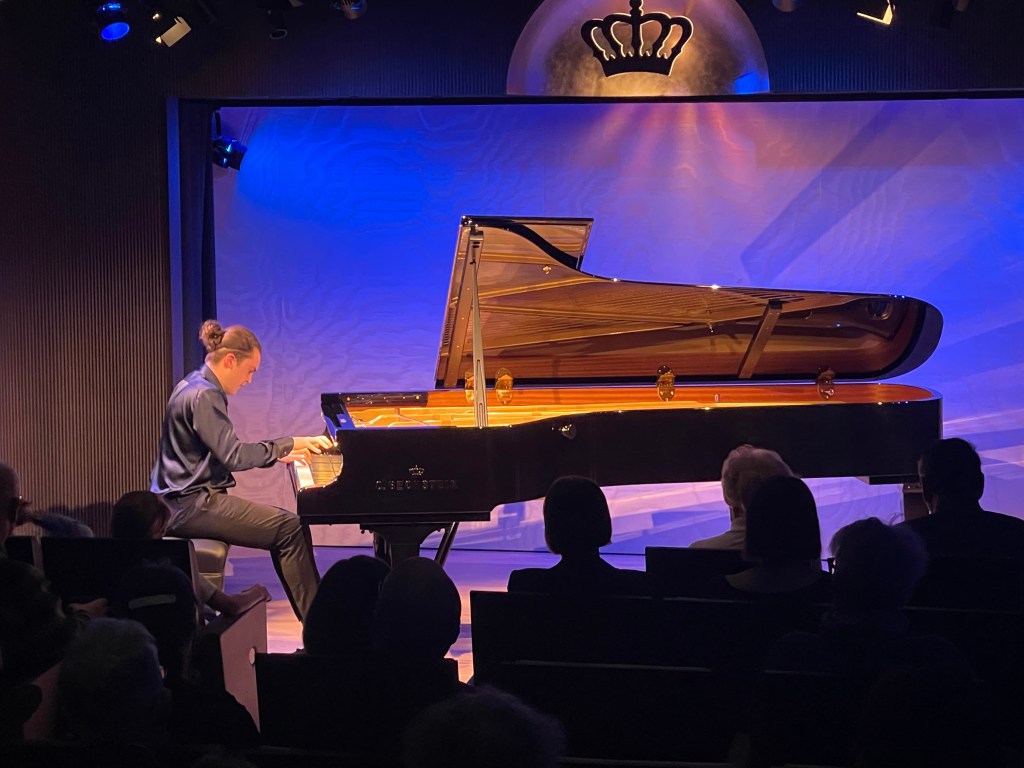
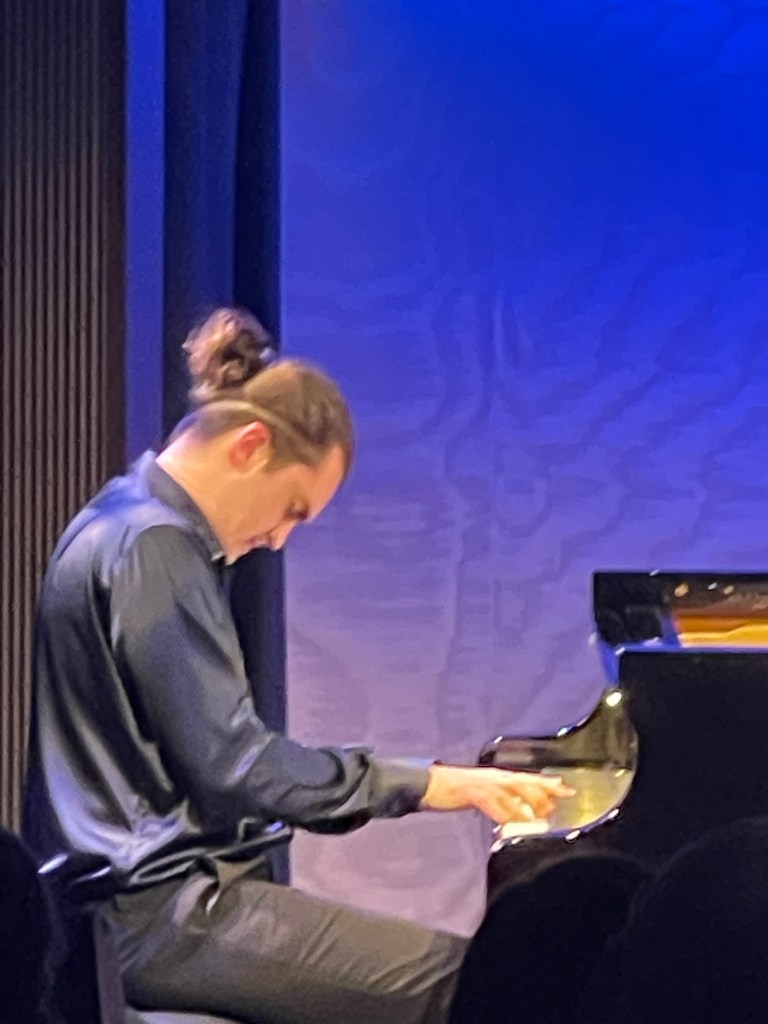
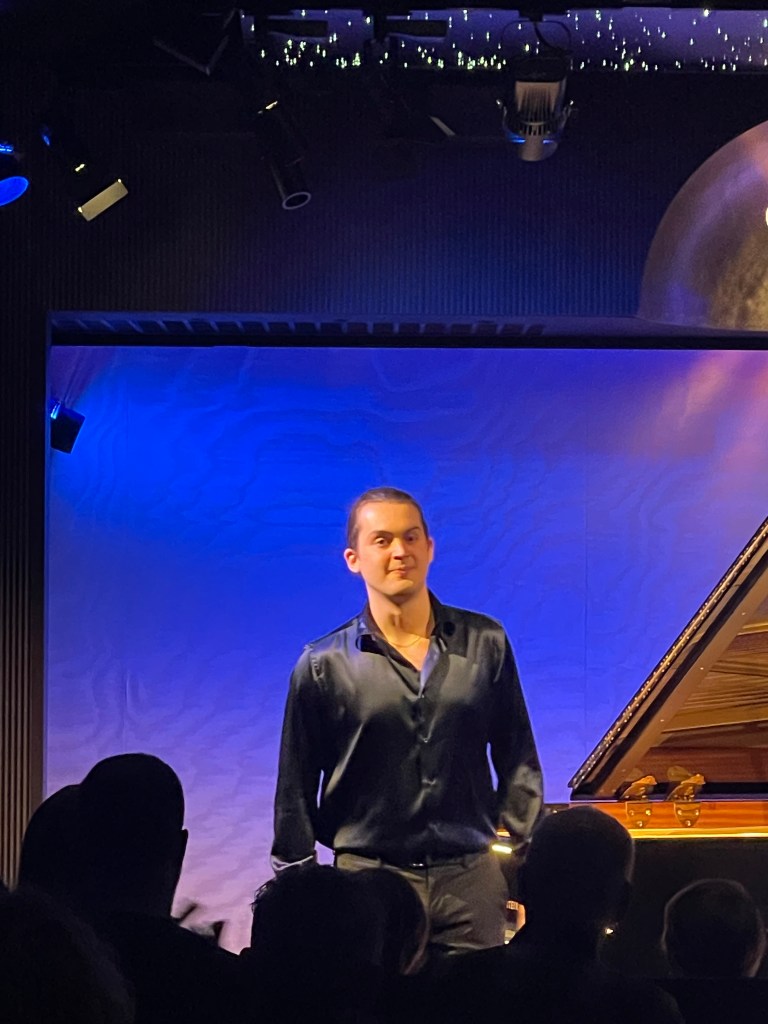
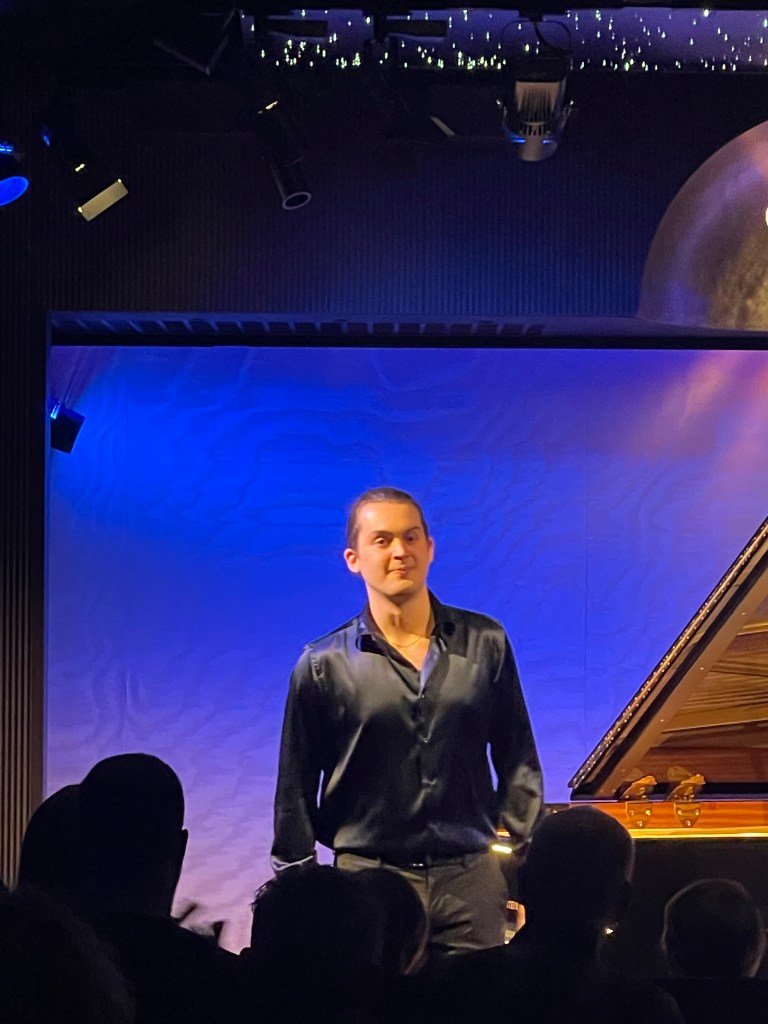
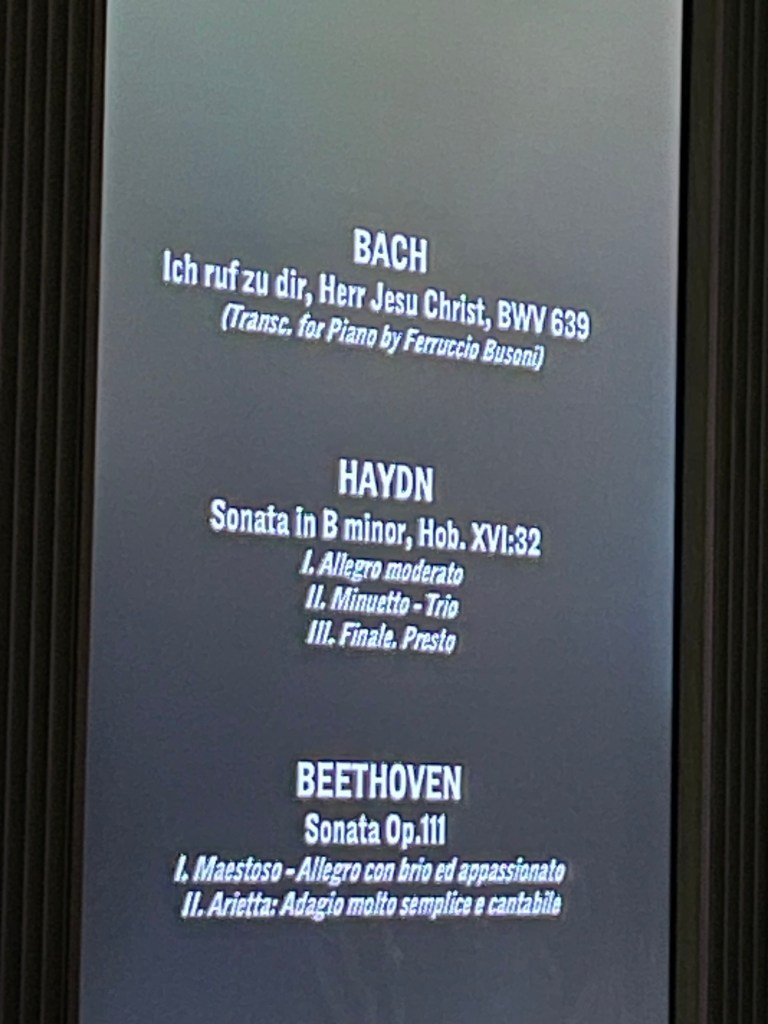
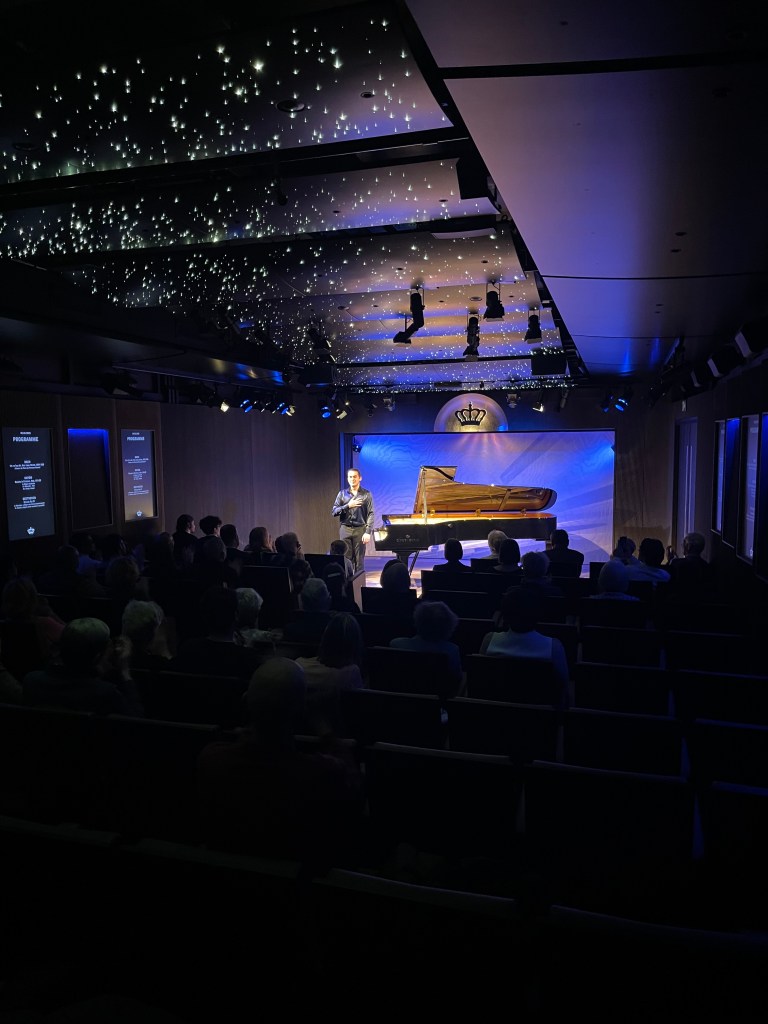
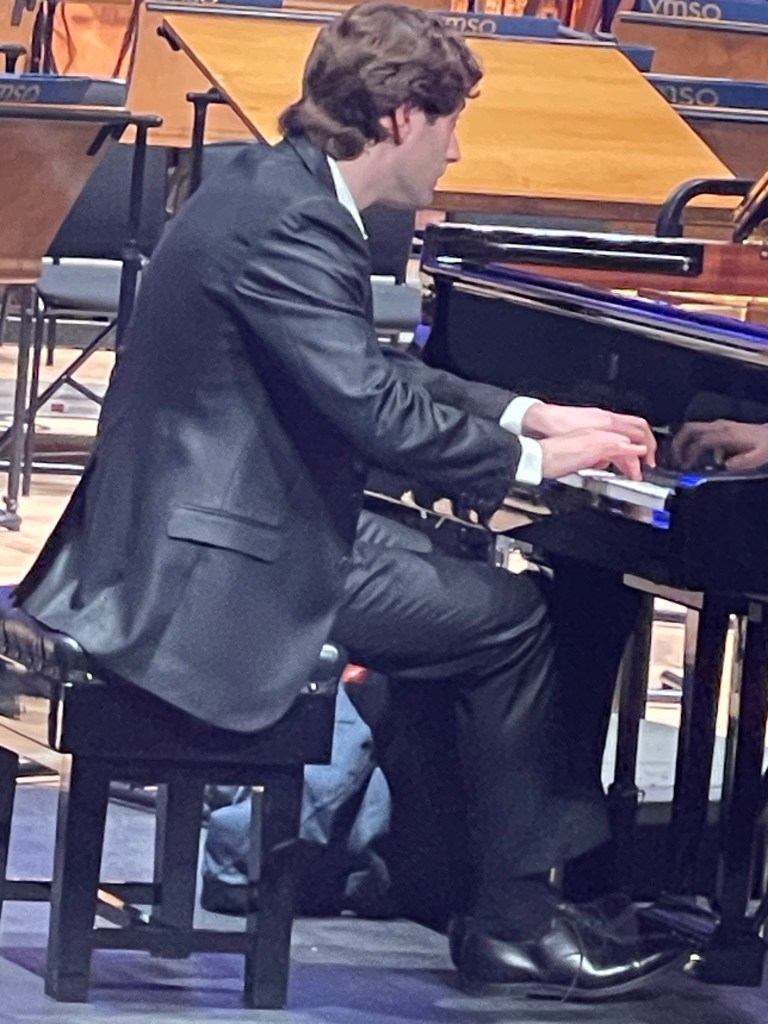
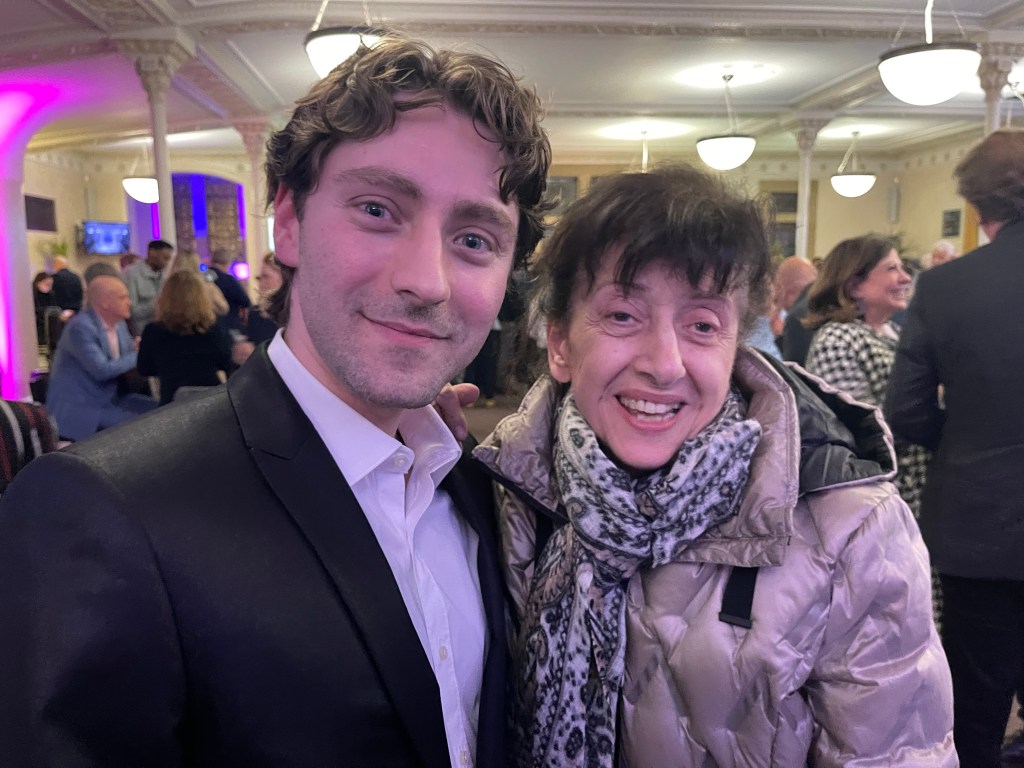
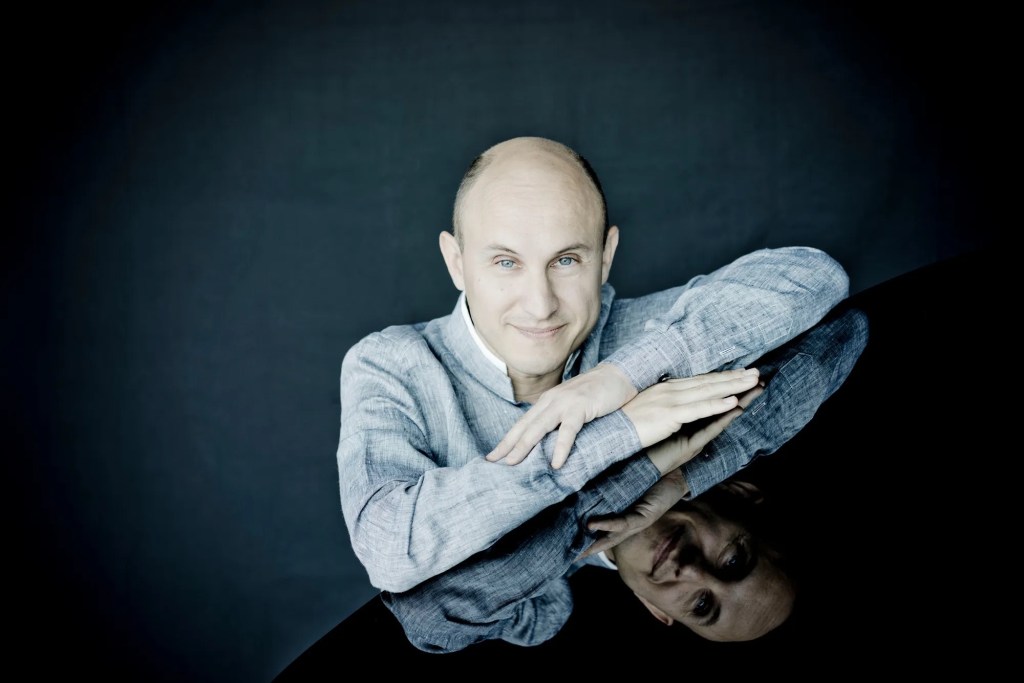
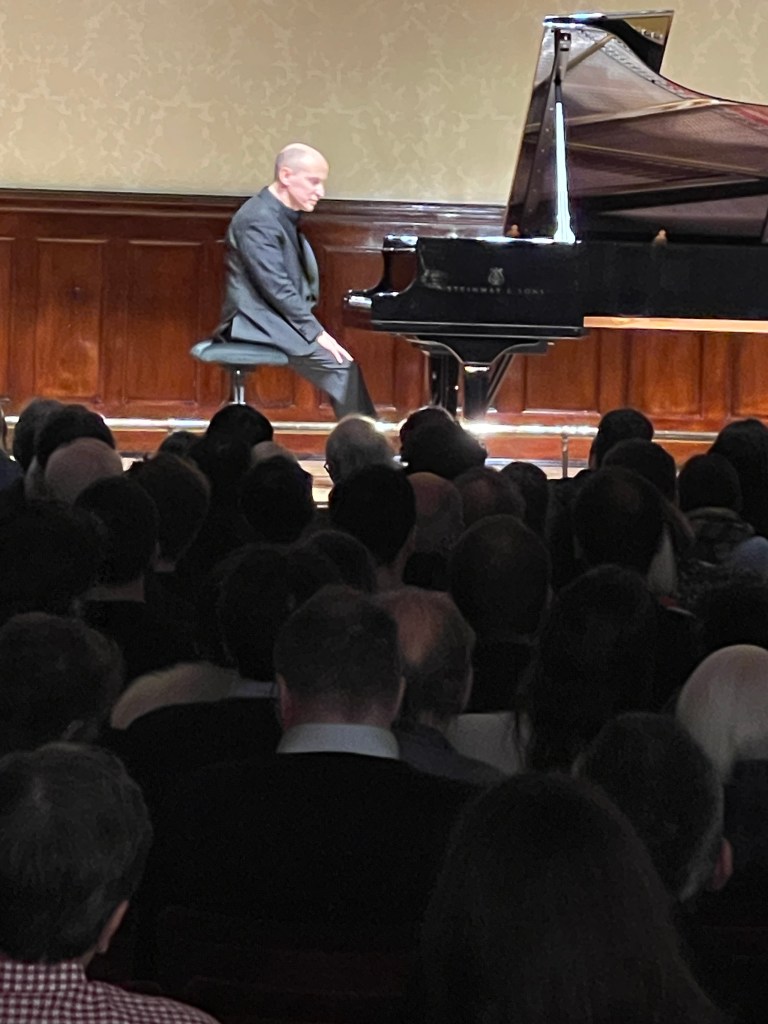
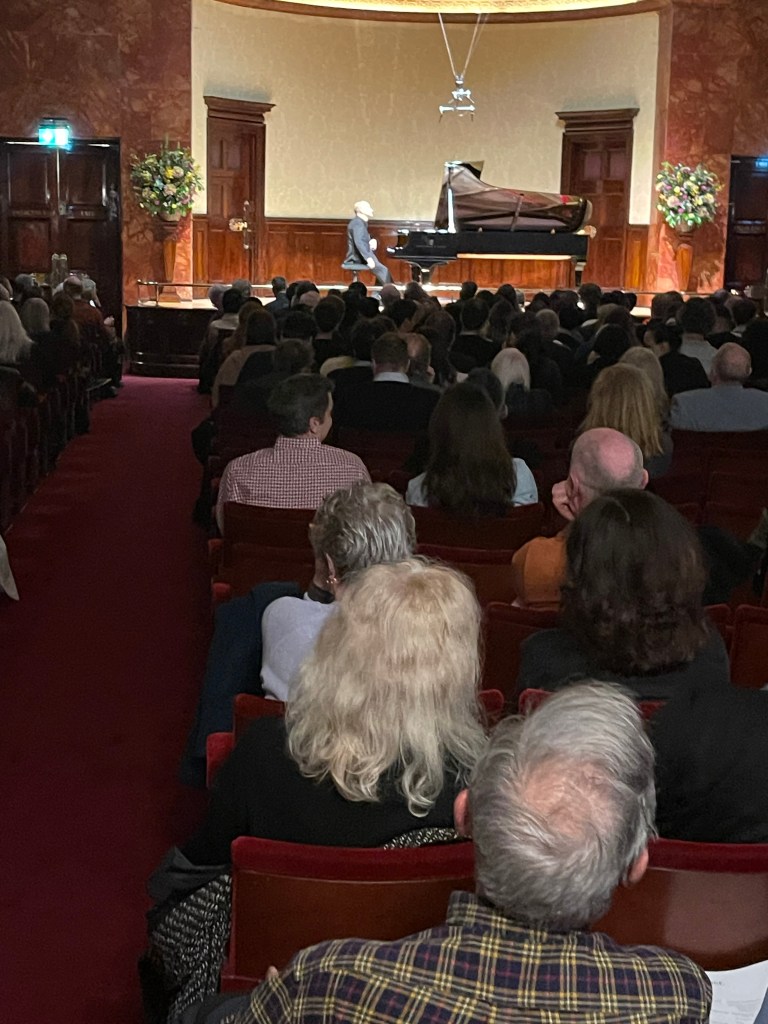
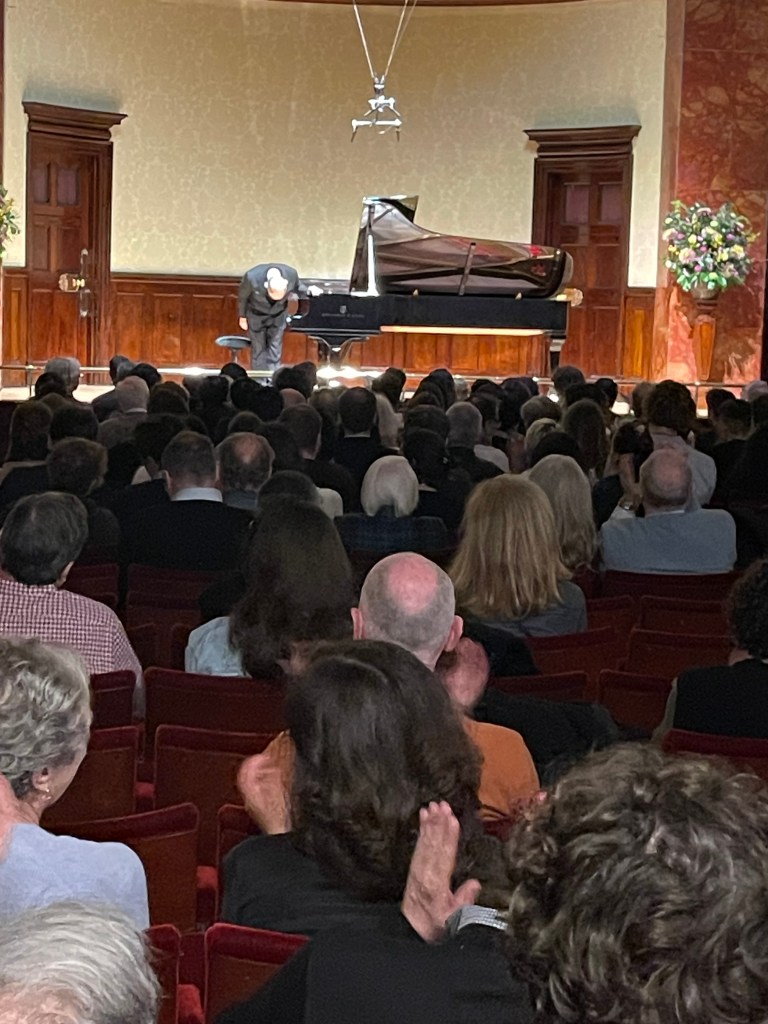
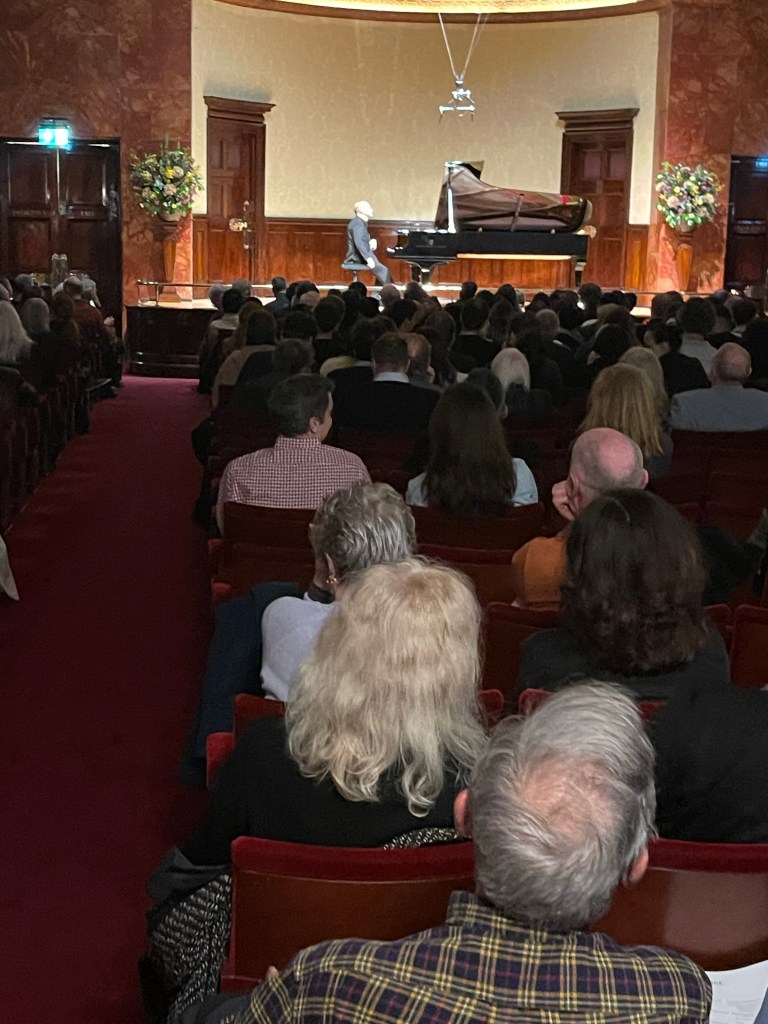
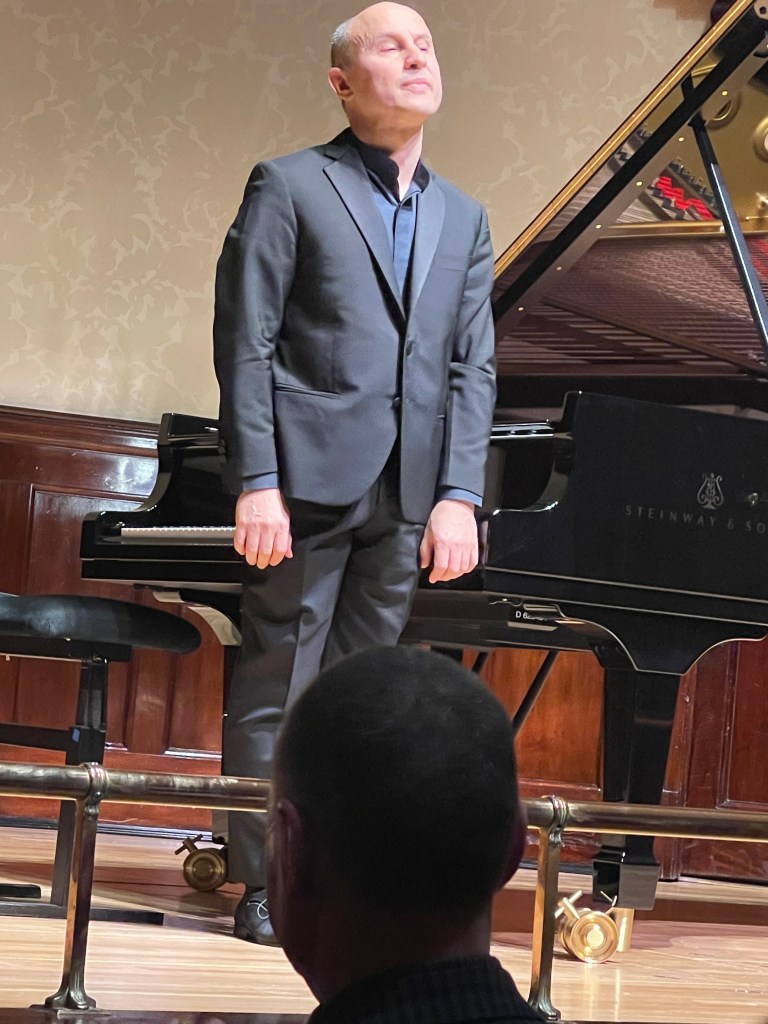
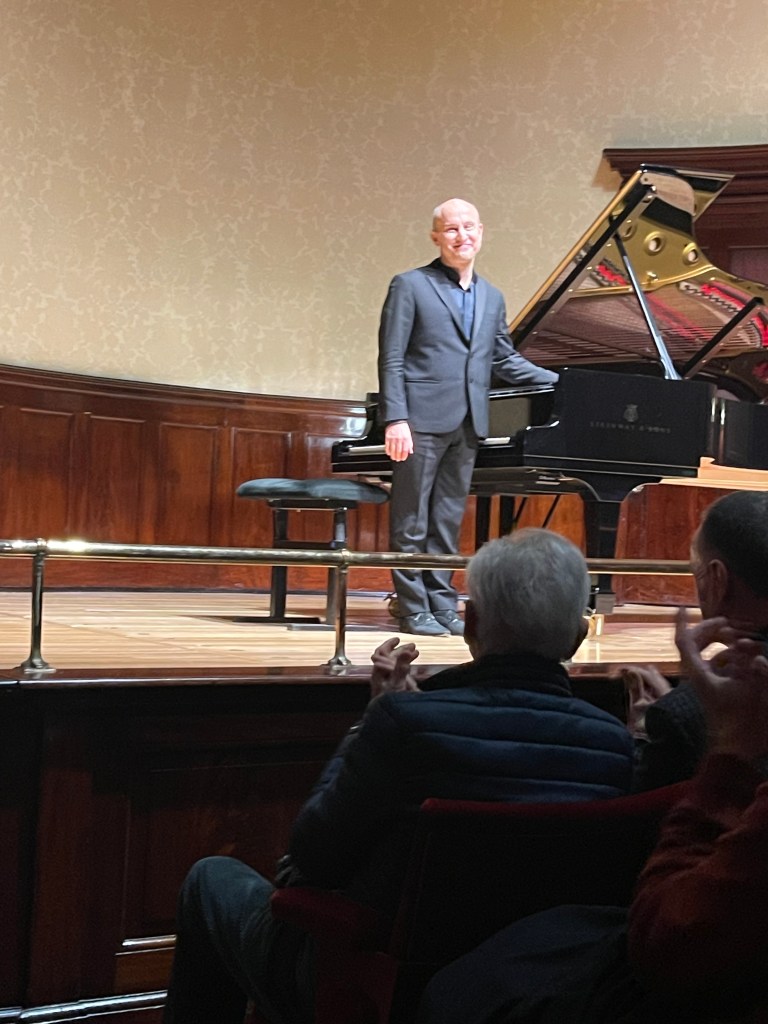
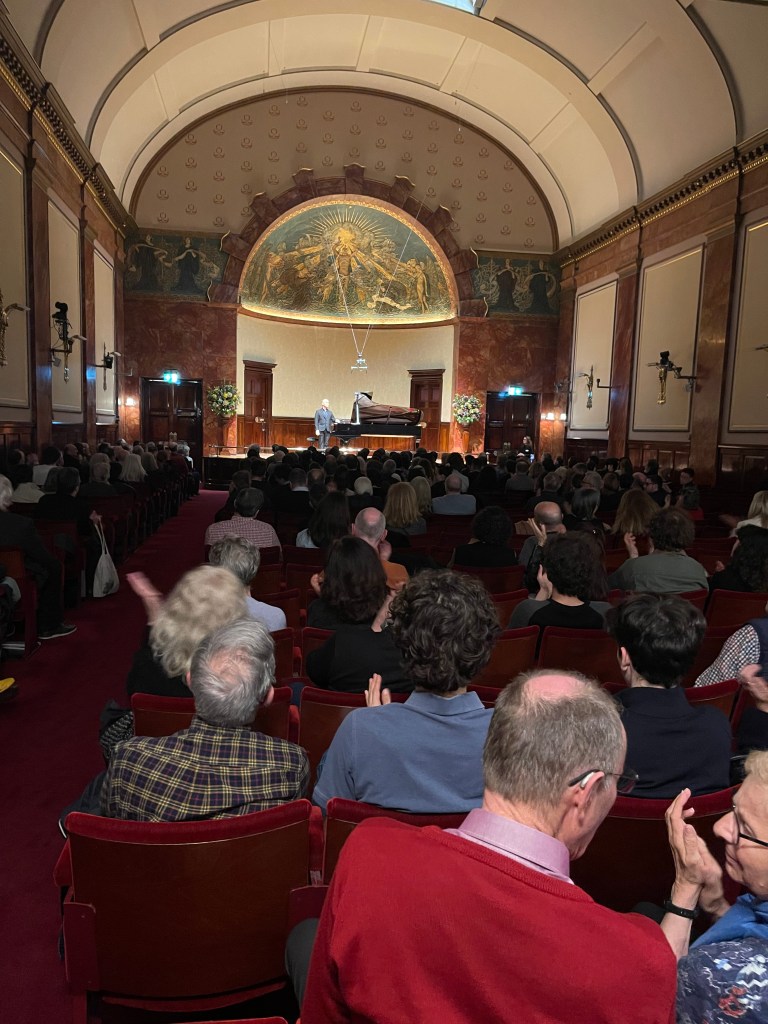
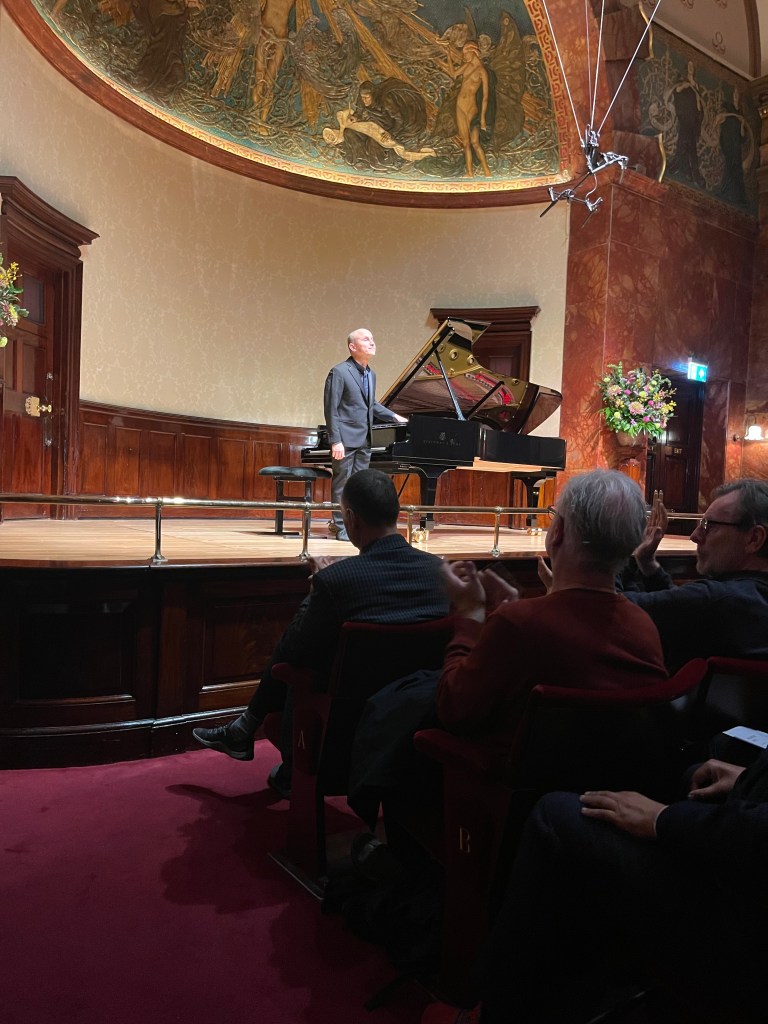
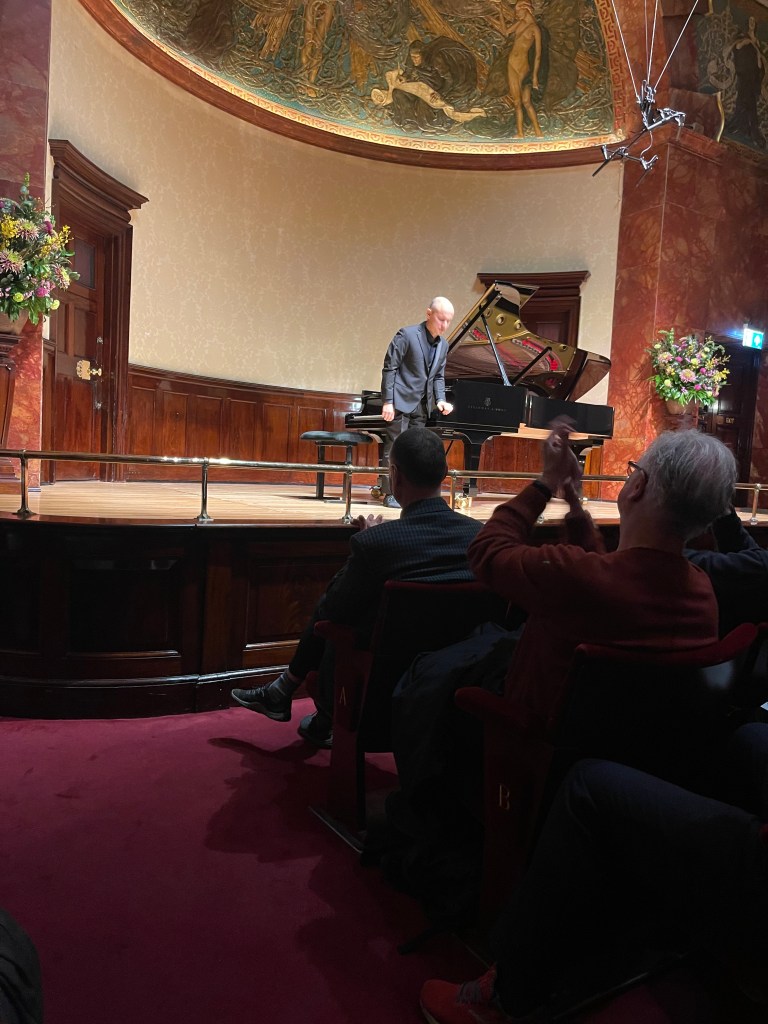
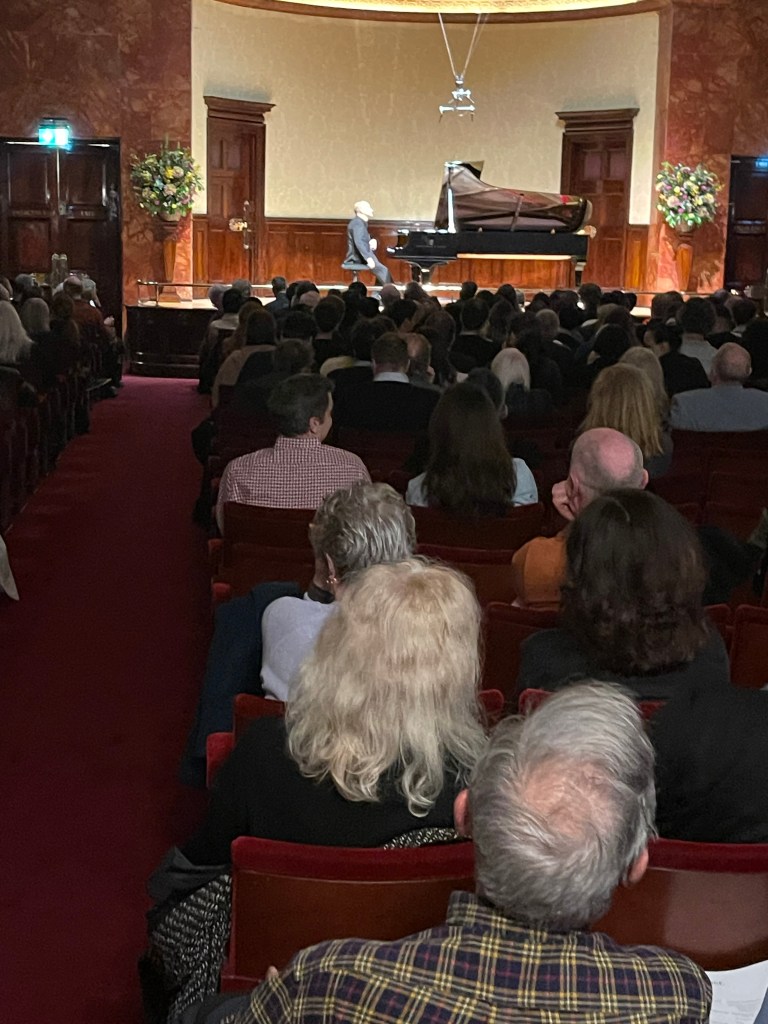
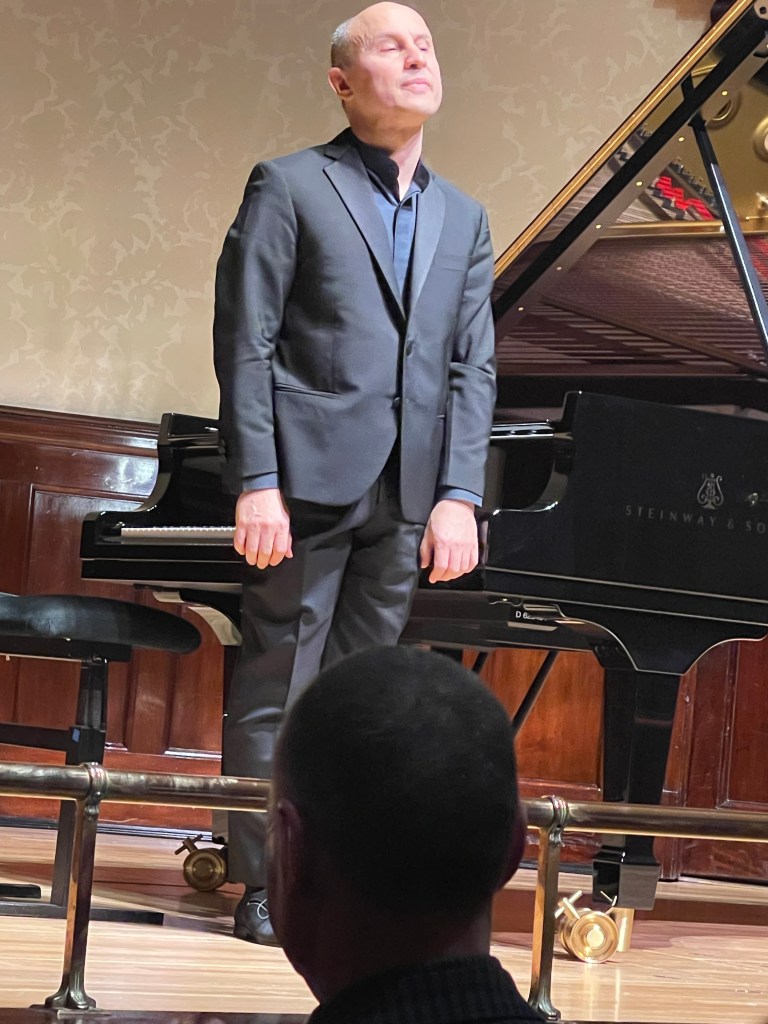
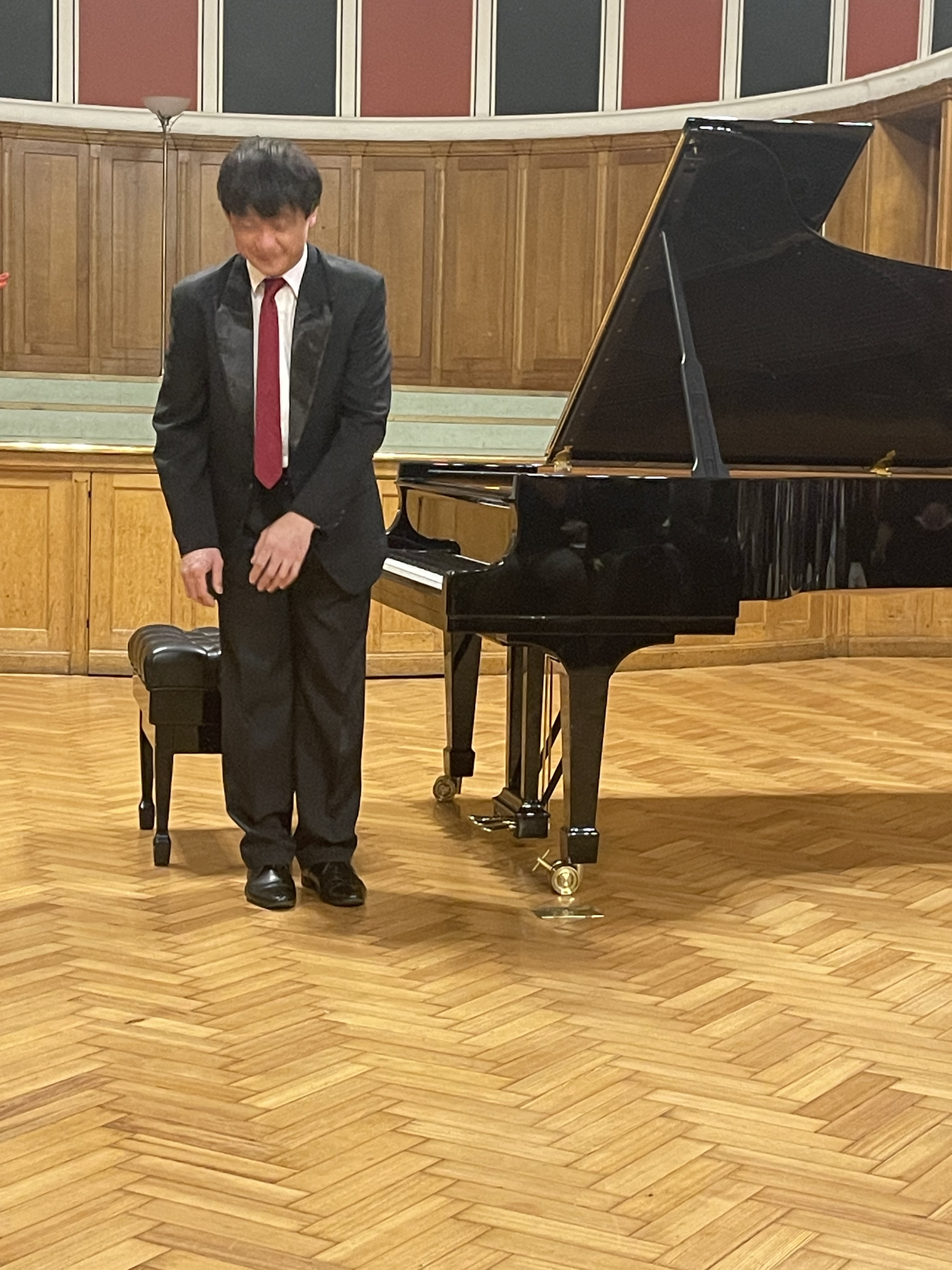
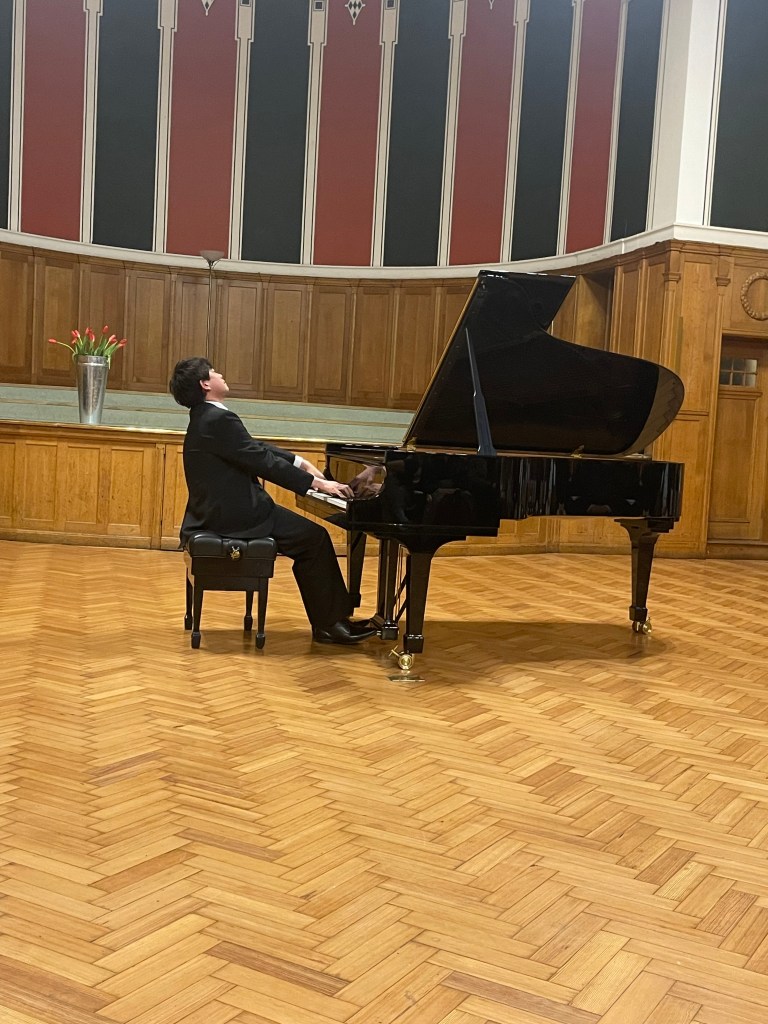
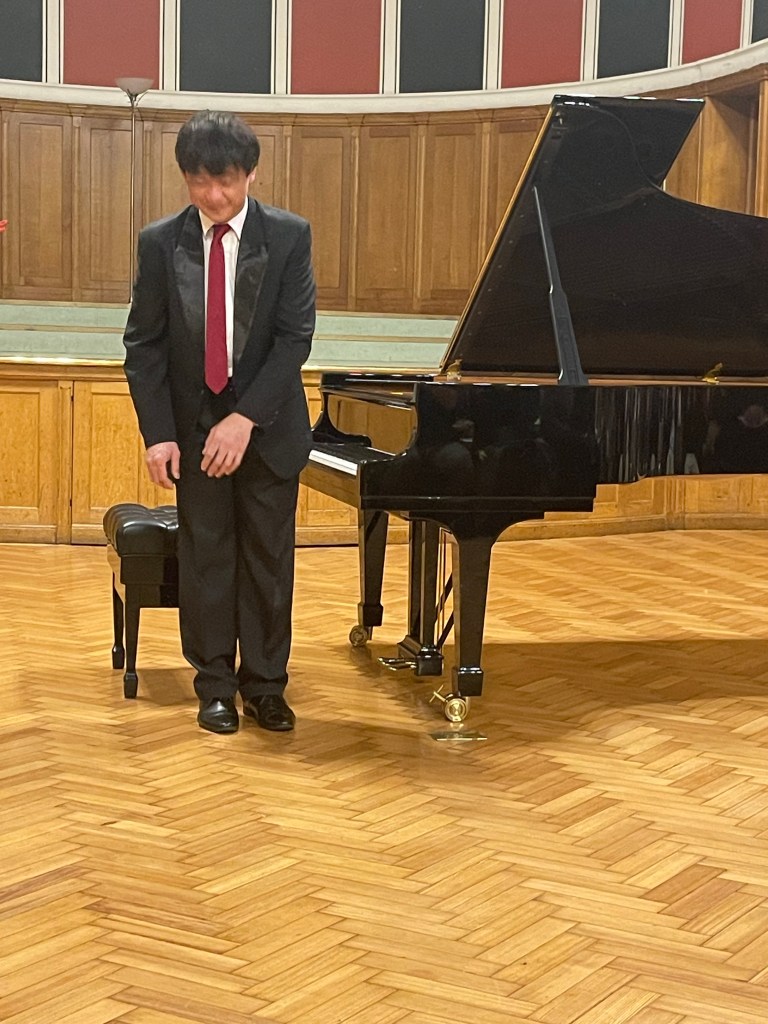
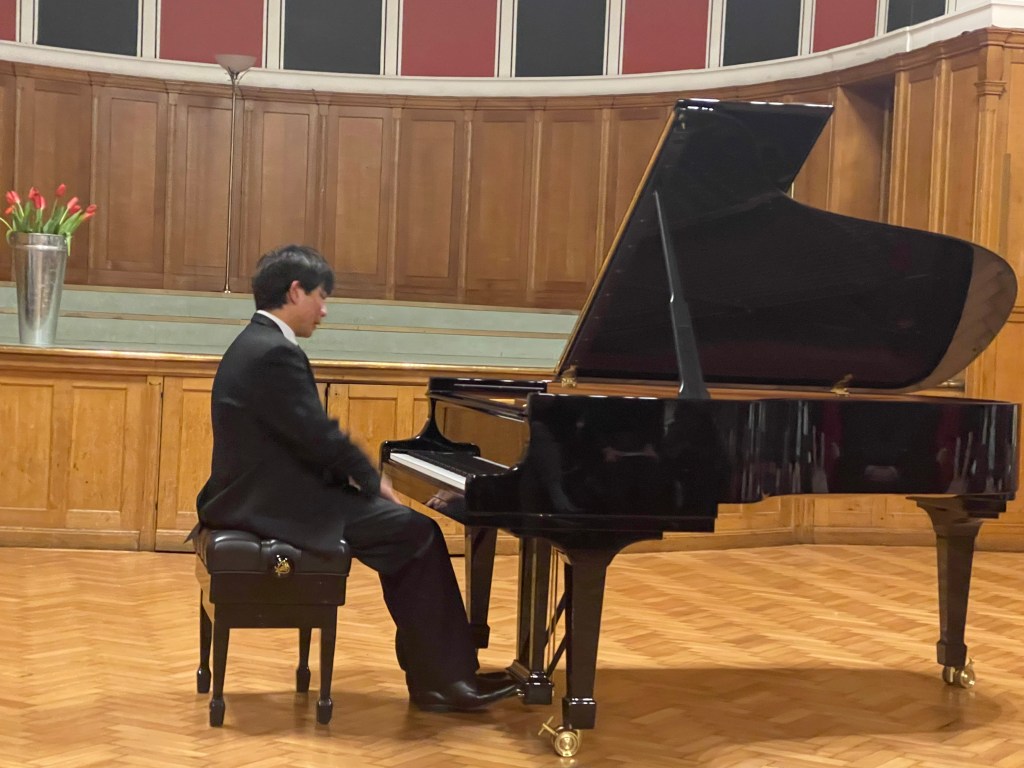
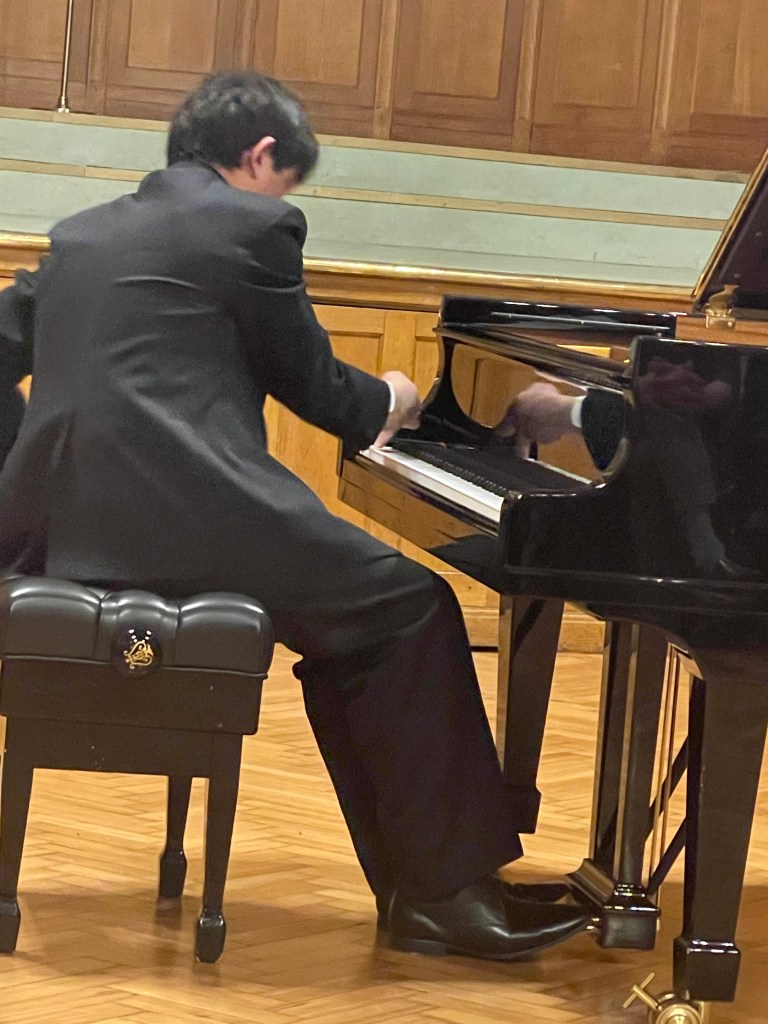
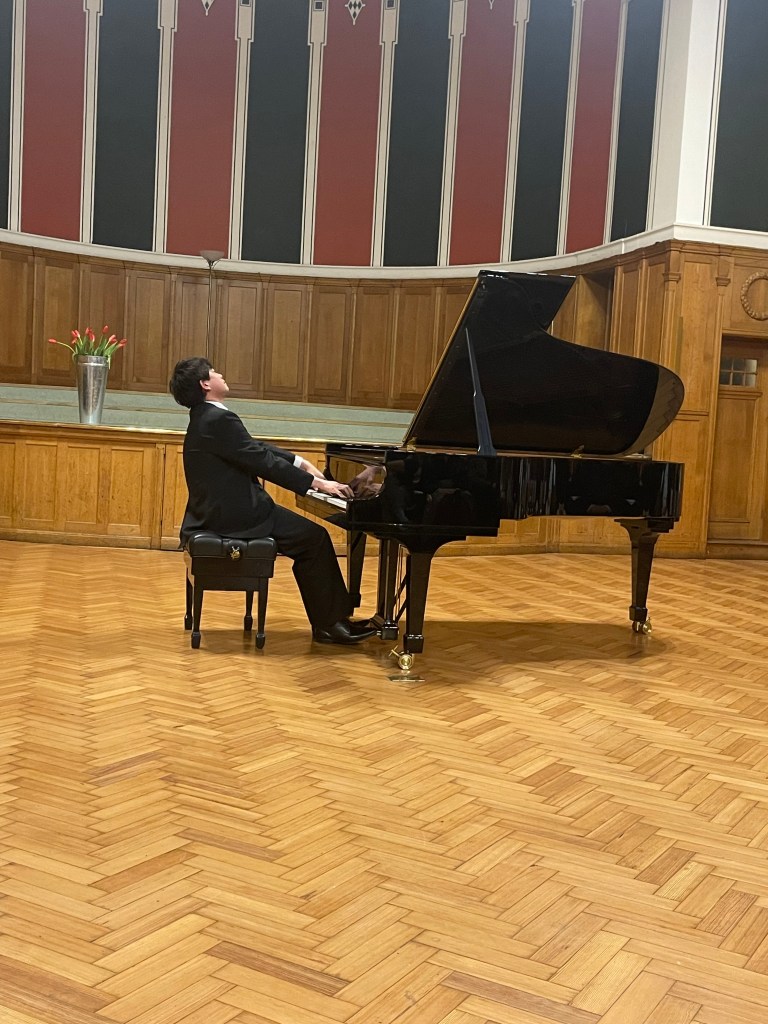
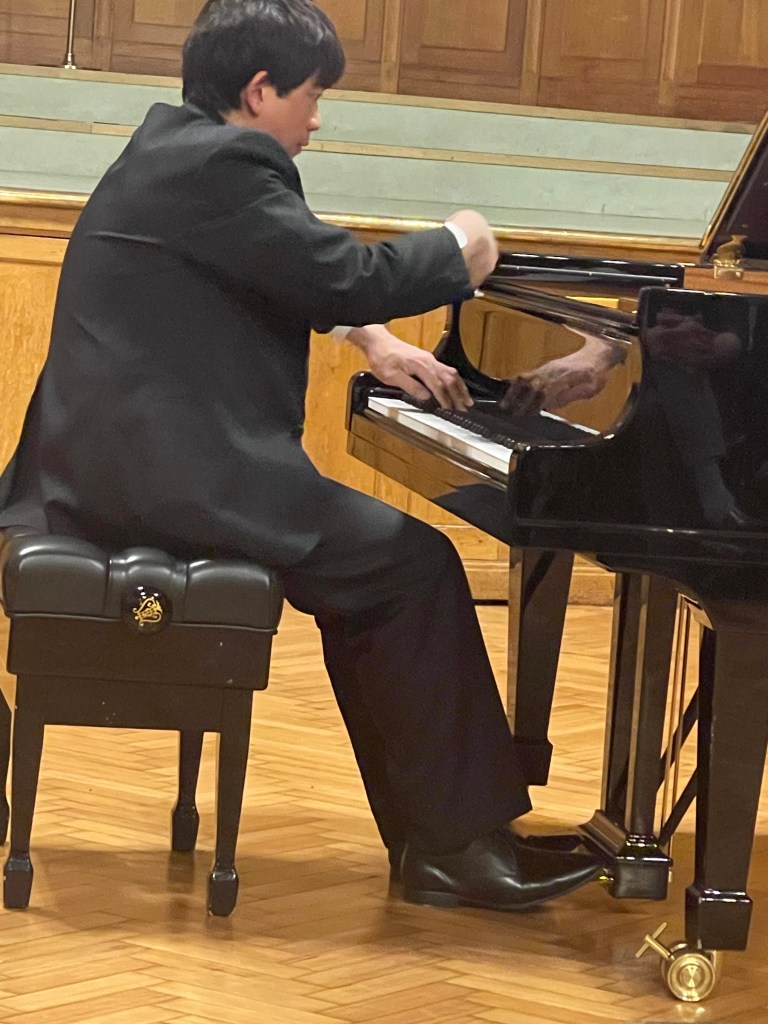
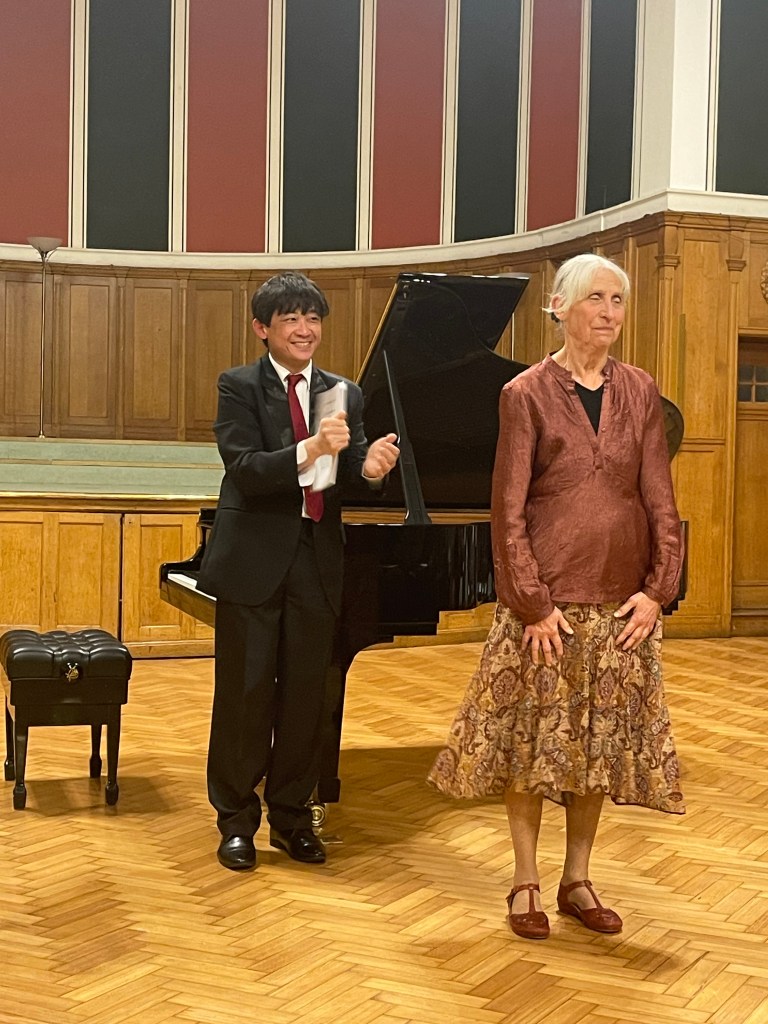
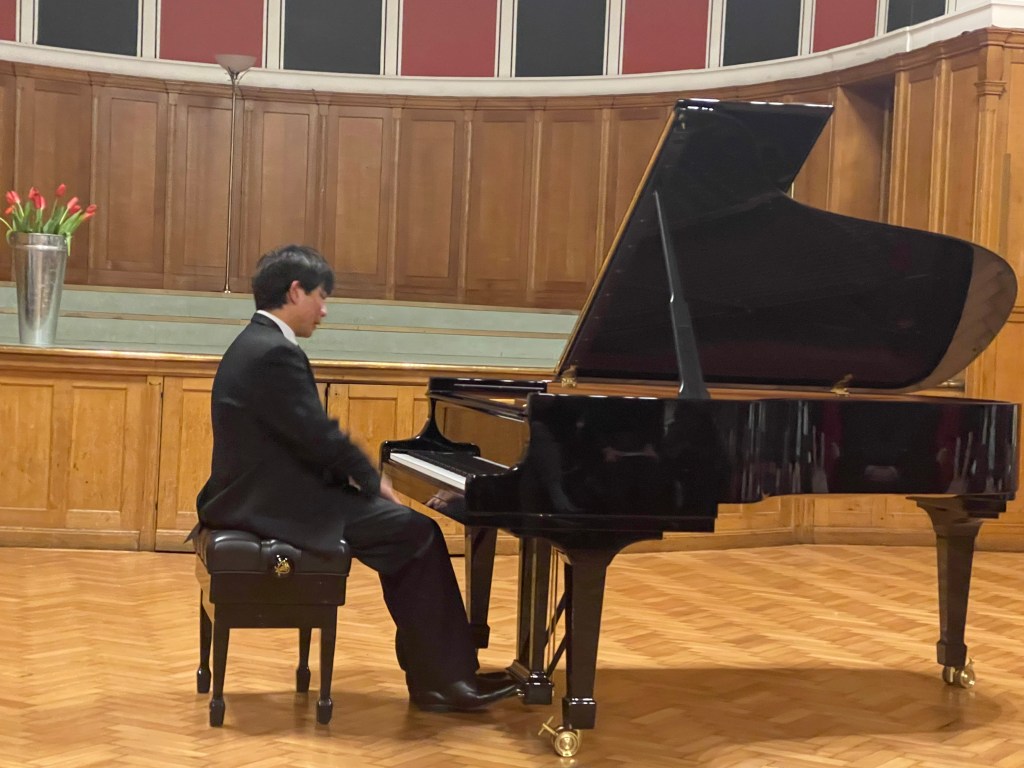
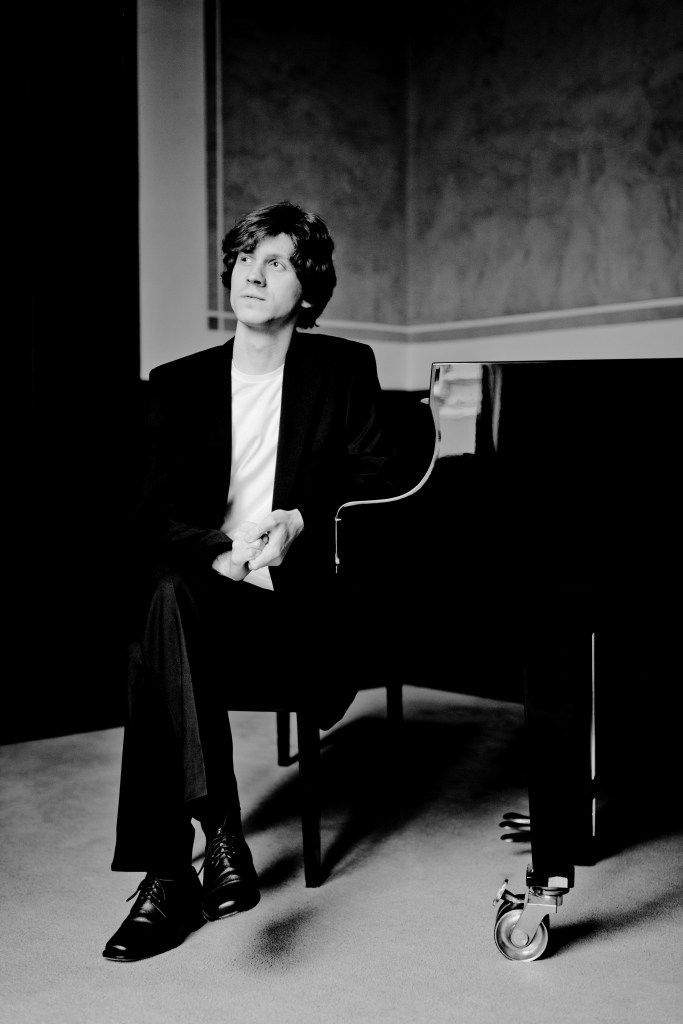
A return to Bechstein Hall having opened the Young Artists Season and now returning in the ‘Roast’ Series on Sunday afternoon. Having heard the Haydn B minor Sonata last time Thomas opened this time with the most beautiful of Busoni’s transcriptions of Bach Chorale preludes, that of ‘Ich ruf zu dir,Herr Jesu Christ’. It was a sumptuous opening with beautiful rich sounds from which arose one of the most poignant of Bach’s chorale preludes. It was played with quiet authority as the melody was allowed to unfold with the heartrending beauty of a true believer.
There was a crystalline clarity to the Haydn B minor sonata with a rhythmic drive and sedate ornaments enriched by the scintillating passage work that they unravelled like a finely woven web from his delicate well oiled fingers. Grace and charm of the Menuet was contrasted with the turbulence of the Trio before the dynamic drive of the Finale.Here the brilliance of the jeux perlé was contrasted with the dynamic insistent drive of it’s surroundings, ever more impetuous as the final declaration was punched home with great style and authority.
In his last recital Thomas had played the Chopin B minor Sonata and today he chose the last of Beethoven’s 32 Sonatas op 111. In both works he showed his musicianship with an architectural understanding that allowed him to give an overall shape to these two monumental works without ever wavering from the great rhythmic wave that carries us through from the first note to the last. The opening of op 111 immediately showed his understanding of the struggle that Beethoven implies with the three great leaps fearlessly played with one hand, leading to the true opening of the sonata where at last we arrive at the home key.The ‘Allegro con brio ed appasionato’ was played with great clarity and the drive of water bubbling over at boiling pitch only to find relief in the recitativi that allow a breathing space before the struggle recommences.These recitativI were played with glowing beauty and a shape of improvised freedom.The development too was played with a clarity as it built up to the great declaration of the main theme.There was serene beauty to the coda that allowed the struggle to die down as we reach the major key for the peace of the ‘Arietta: Adagio molto semplice e cantabile’. Thomas played this opening theme with glowing beauty and a string quartet texture that gave great strength to this most poignant of melodies.The variations were allowed to evolve with a natural fluidity as more and more notes were added before the turbulent explosion of the third variation. Even here Thomas managed to keep the same sound world even though playing with such dynamic drive that he allowed to fall away so naturally leading to the gradual disintegration of the theme.
Whispered wafts of melody floating above a gentle murmured bass were played with great control and a perfect sense of balance.The dynamic interruptions were soon dispelled as Beethoven reached for the ‘star’ with a passionate outpouring of radiance and beauty.Thomas always playing with aristocratic control ,the music to dissolving onto gentle vibrations of sound where his beautifully pure trills allowed the theme to be heard on high for a final time.It was the true vision of the beauty that Beethoven could already foresee in the not too distant future.
Siloti’s transcription of Bach’s B minor Prelude was the ideal encore of refined sumptuous reverence where Thomas’s perfect balance allowed the melody to resonate with the purity and beauty that had pervaded the eternal magic of the final bars of Beethoven’s last monumental sonata.
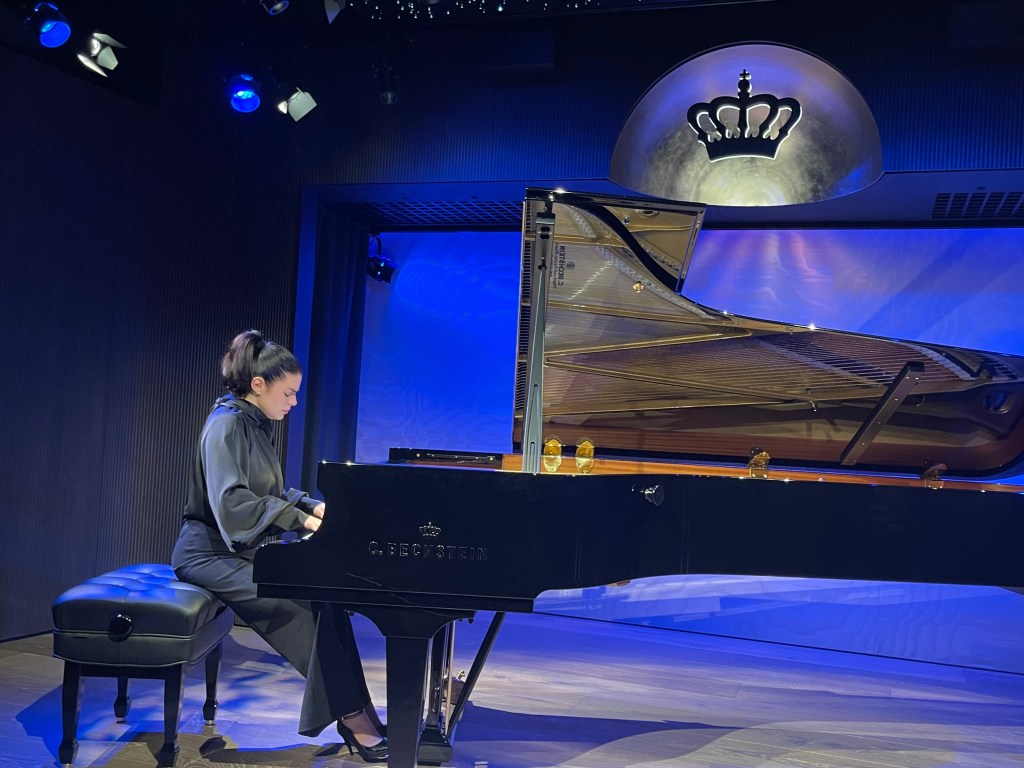
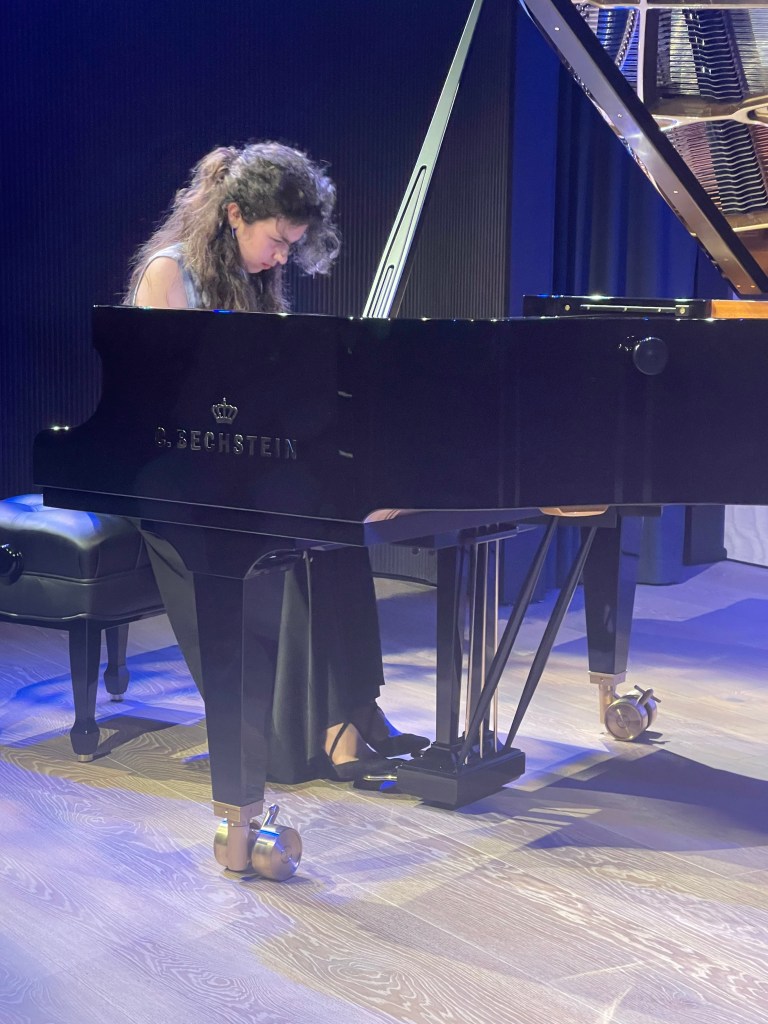
A dream programme for the Bechstein Young Artists series this morning.
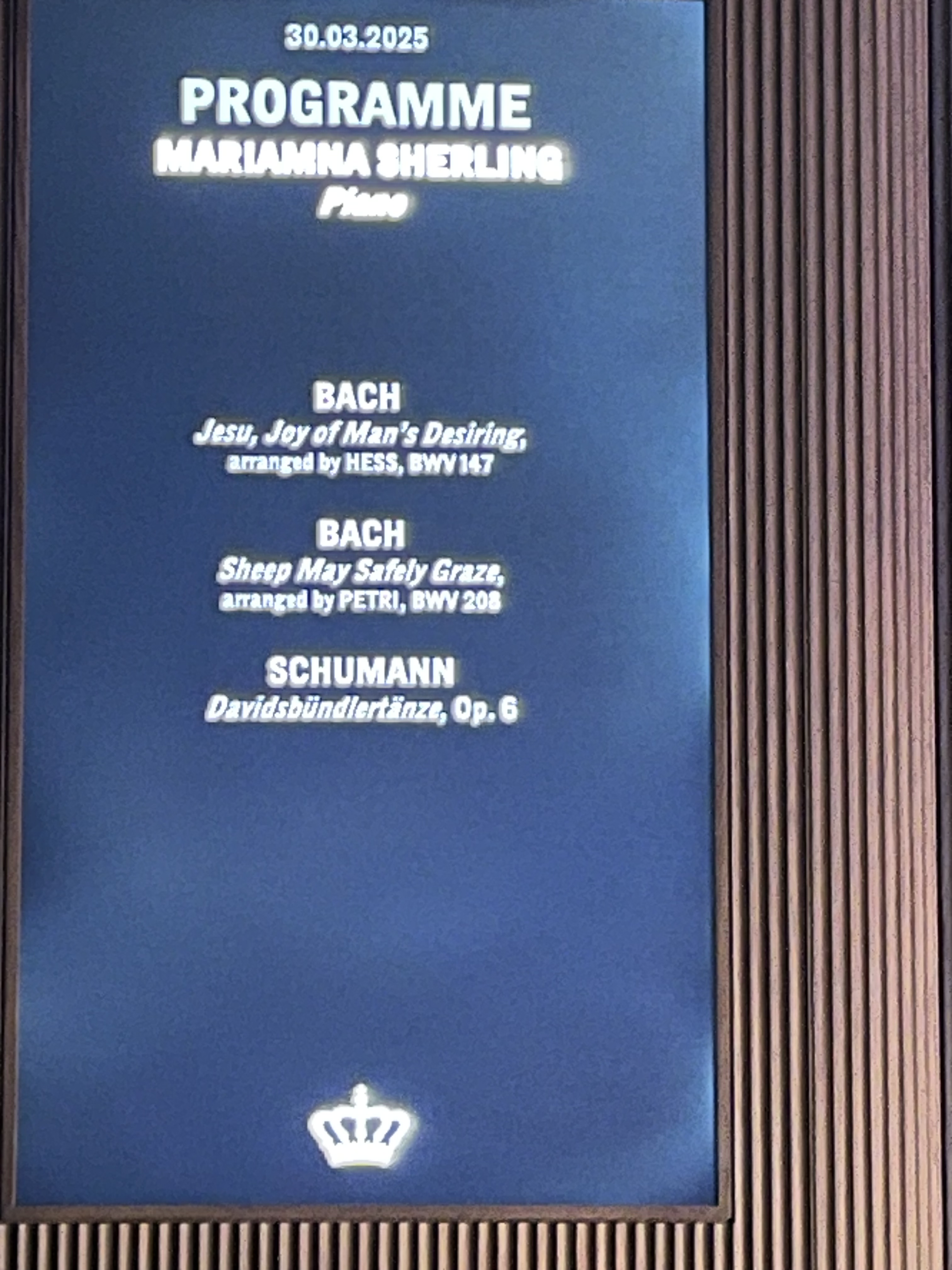
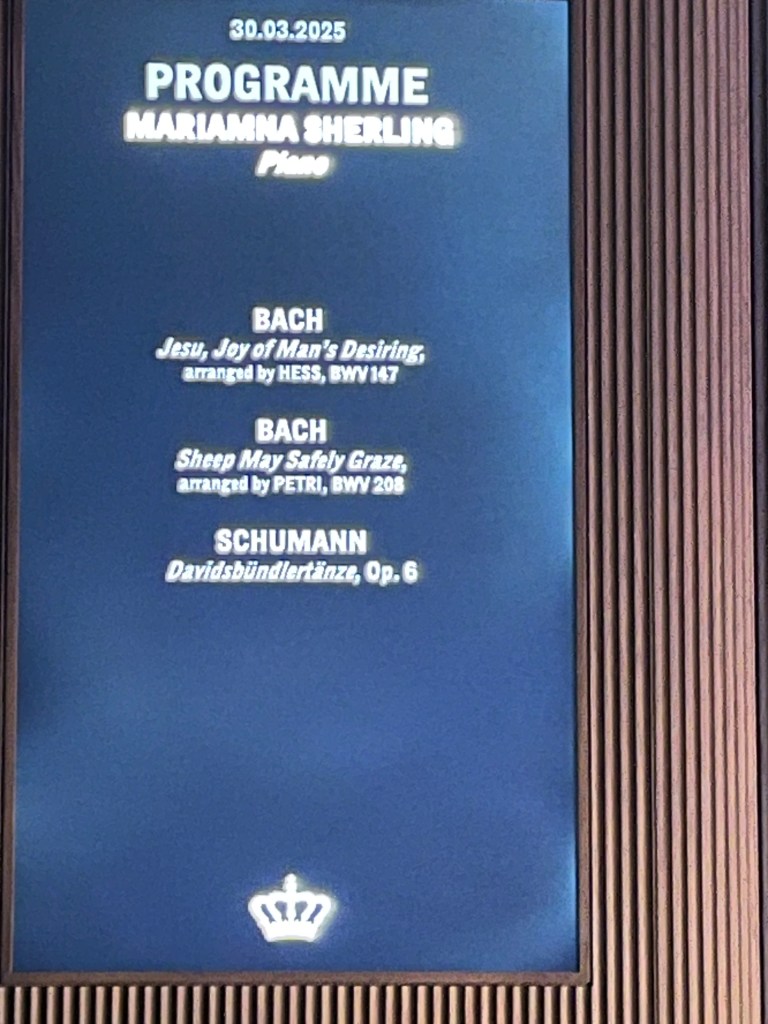
Jesu Joy of Man’s Desiring and Sheep May Safely Graze were the opening to Schumann’s most inspired ‘Davidsbündlertanze’.
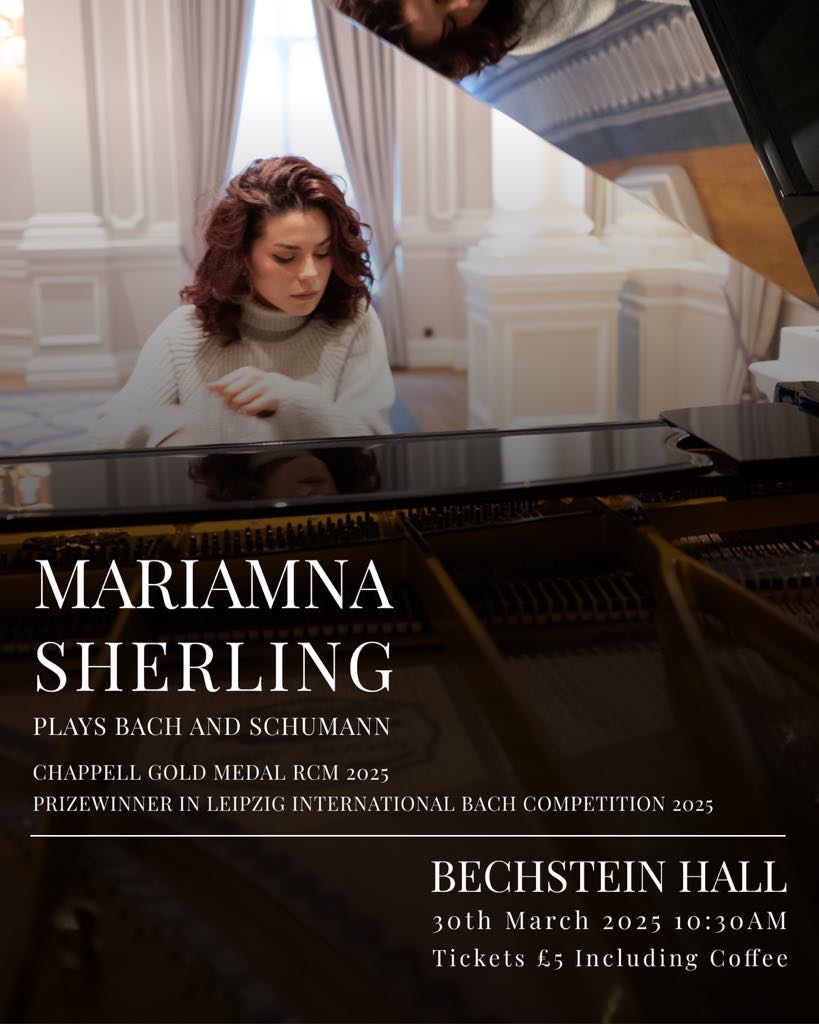
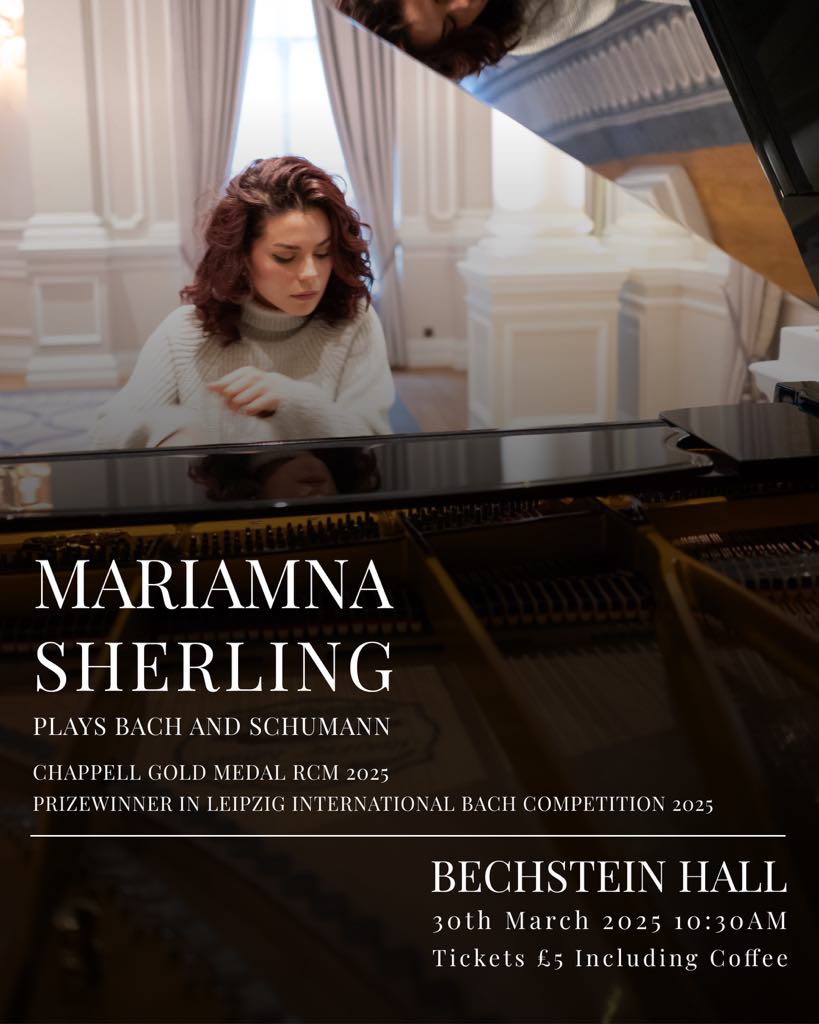
Played by the recent winner of the Chappell Gold Medal at the RCM and just last week a top prize winner at the International Bach Competition in Leipzig
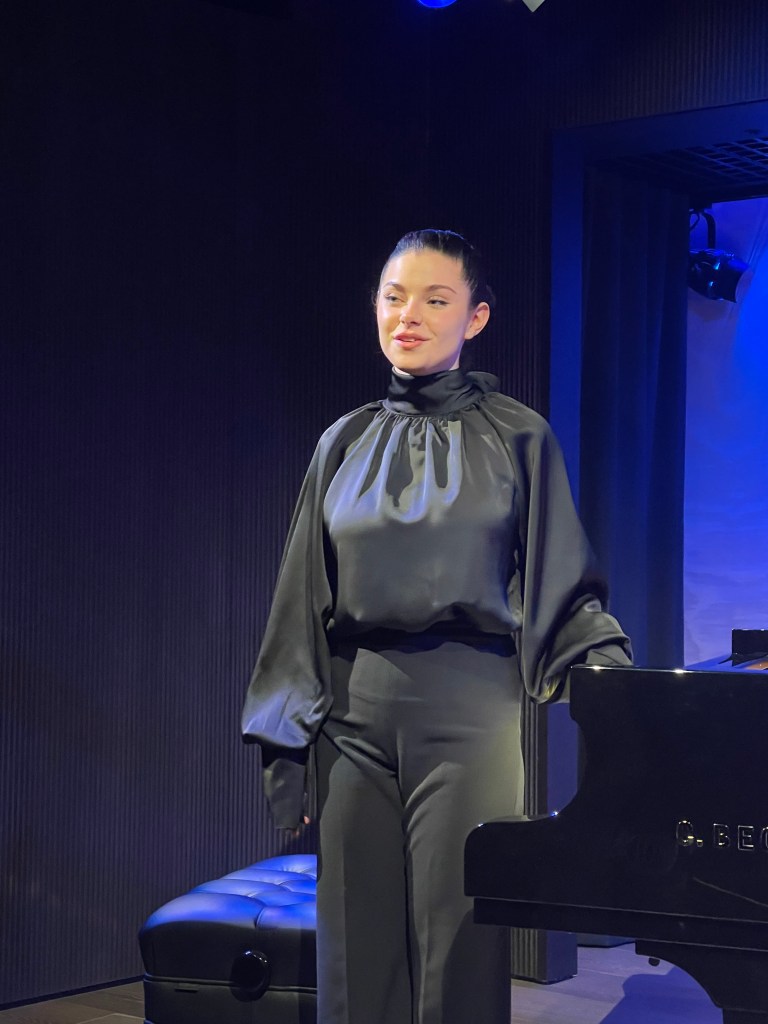
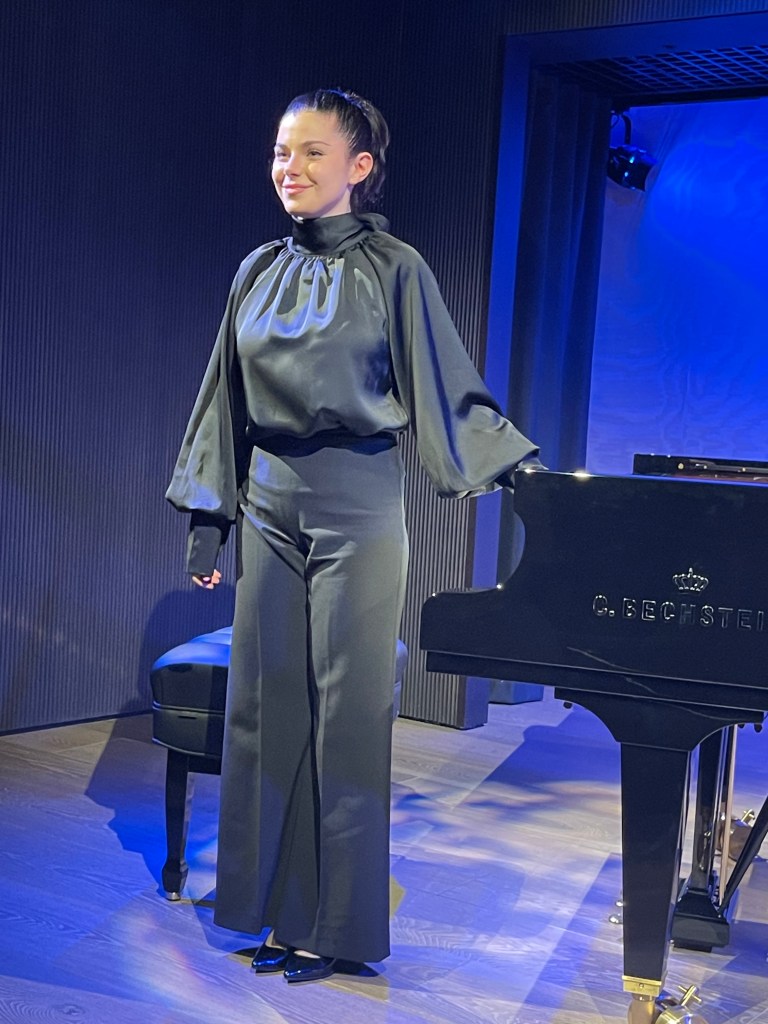
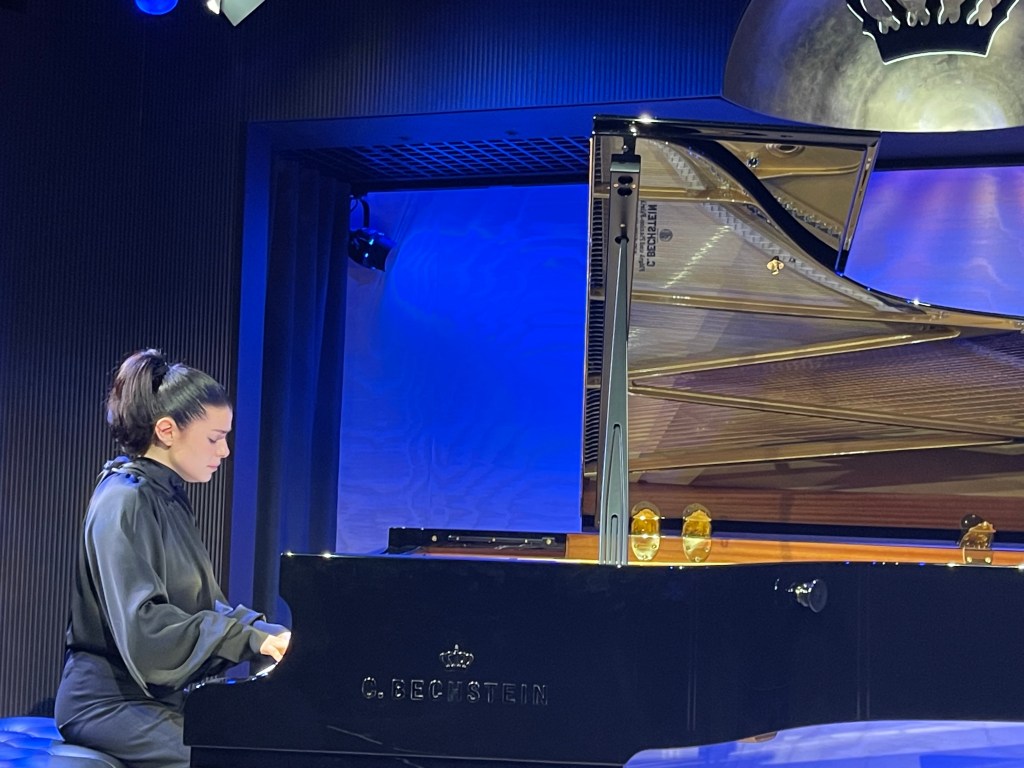
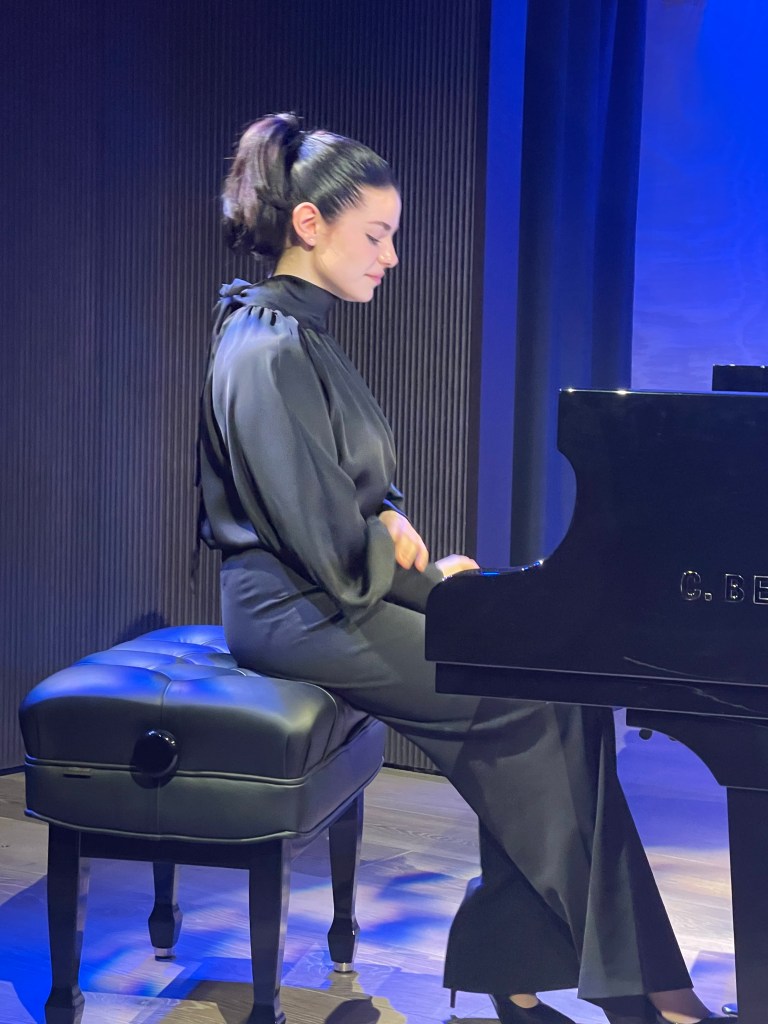
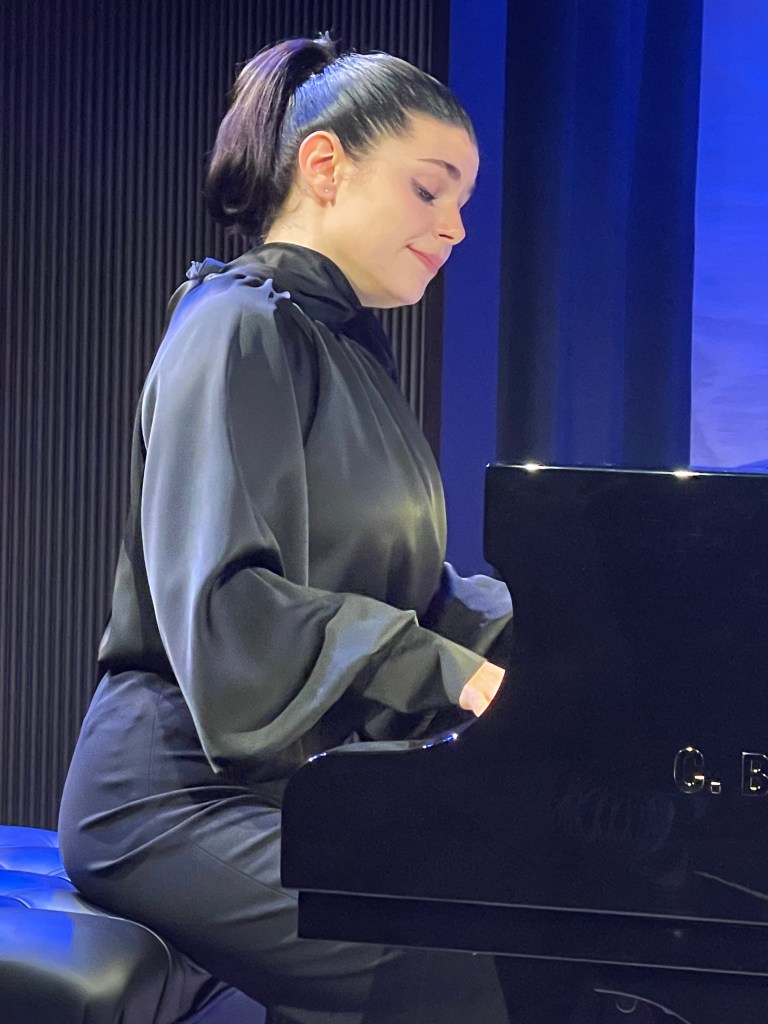
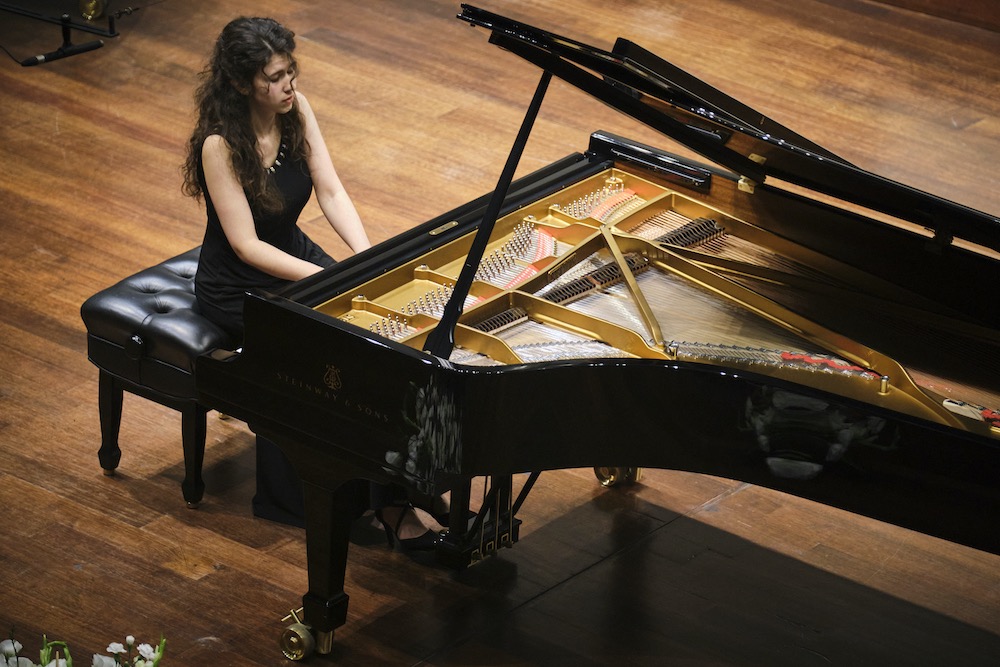
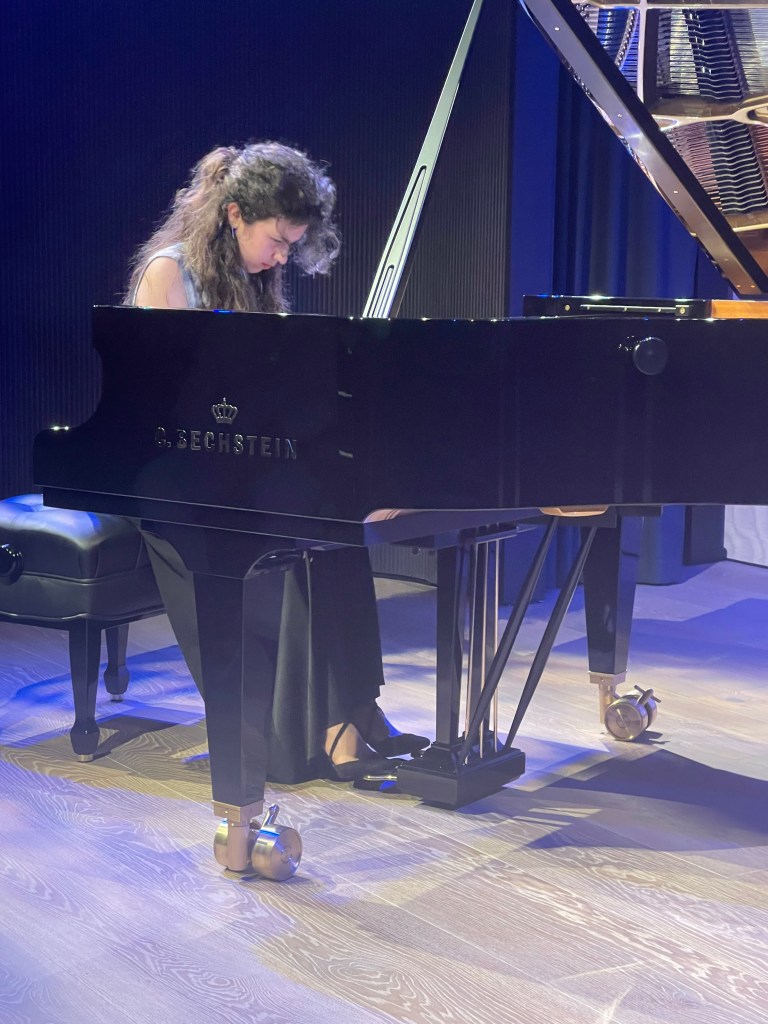
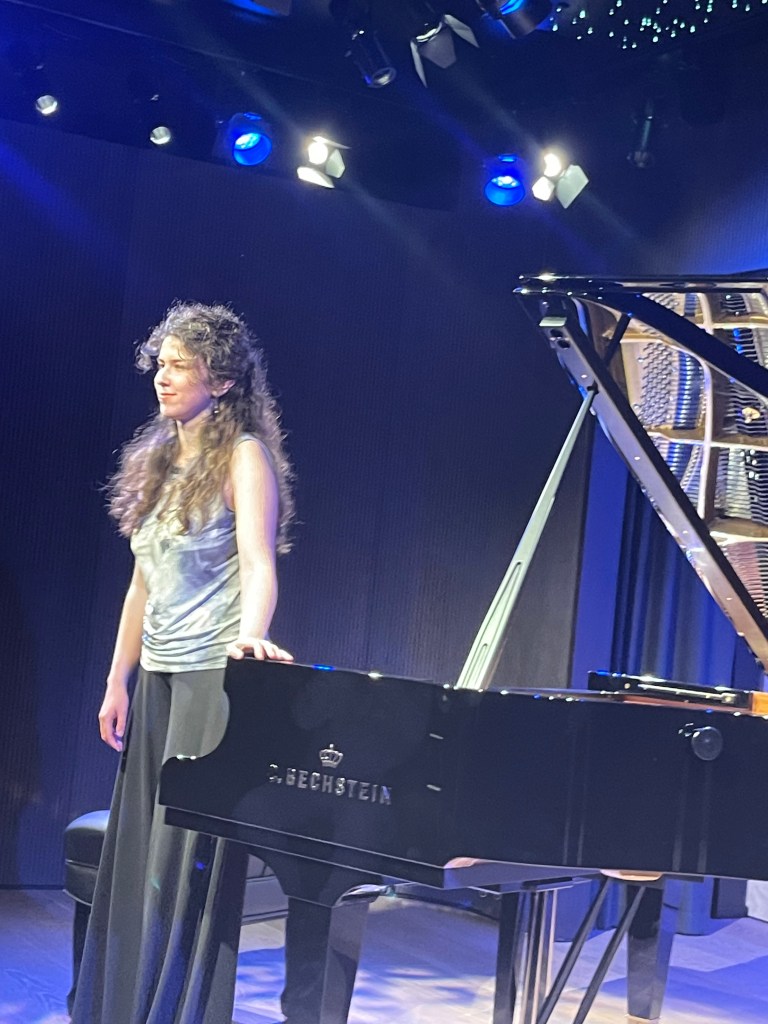
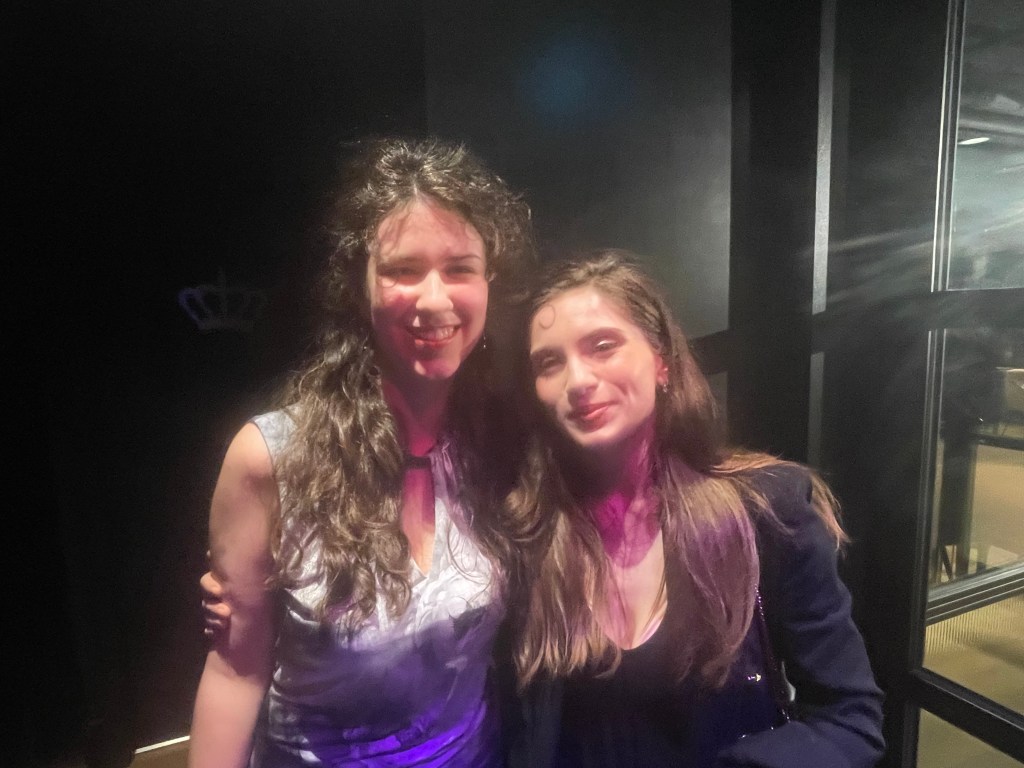
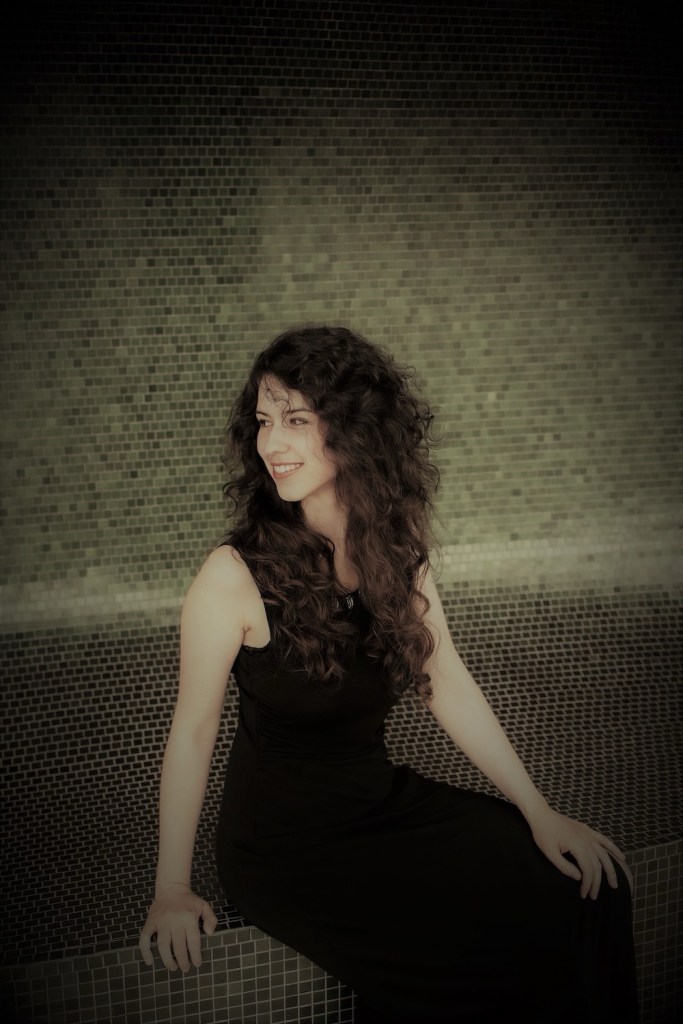
Mariamna Sherling seems to have been kissed by the Gods with beauty and talent in abundance.
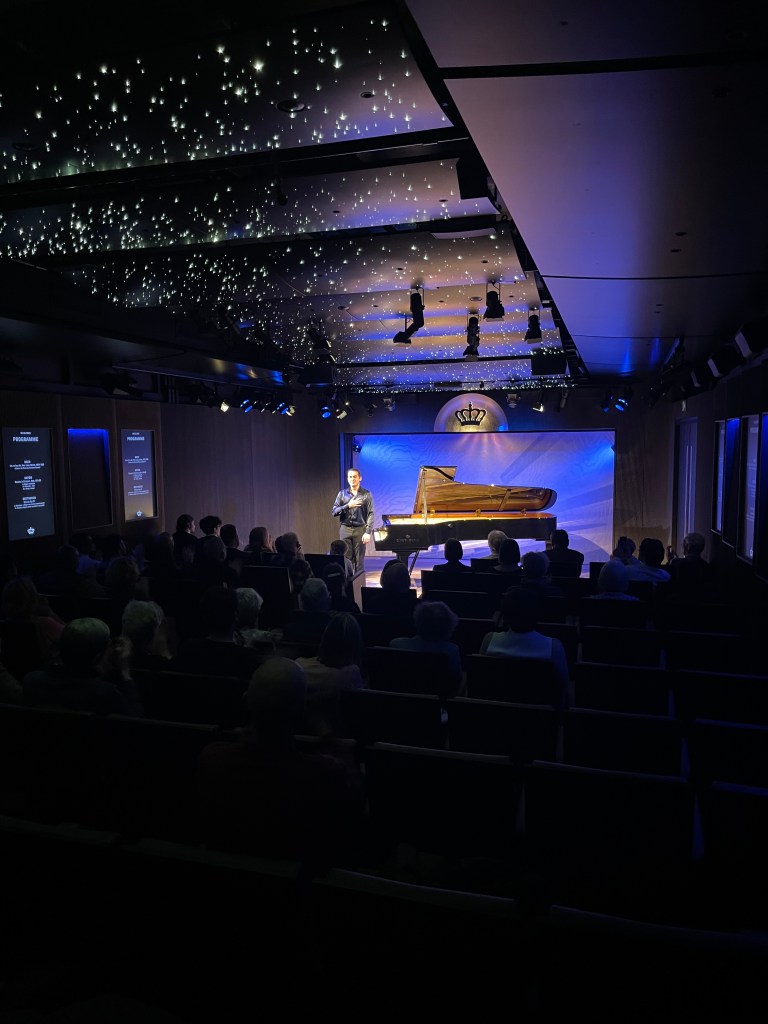
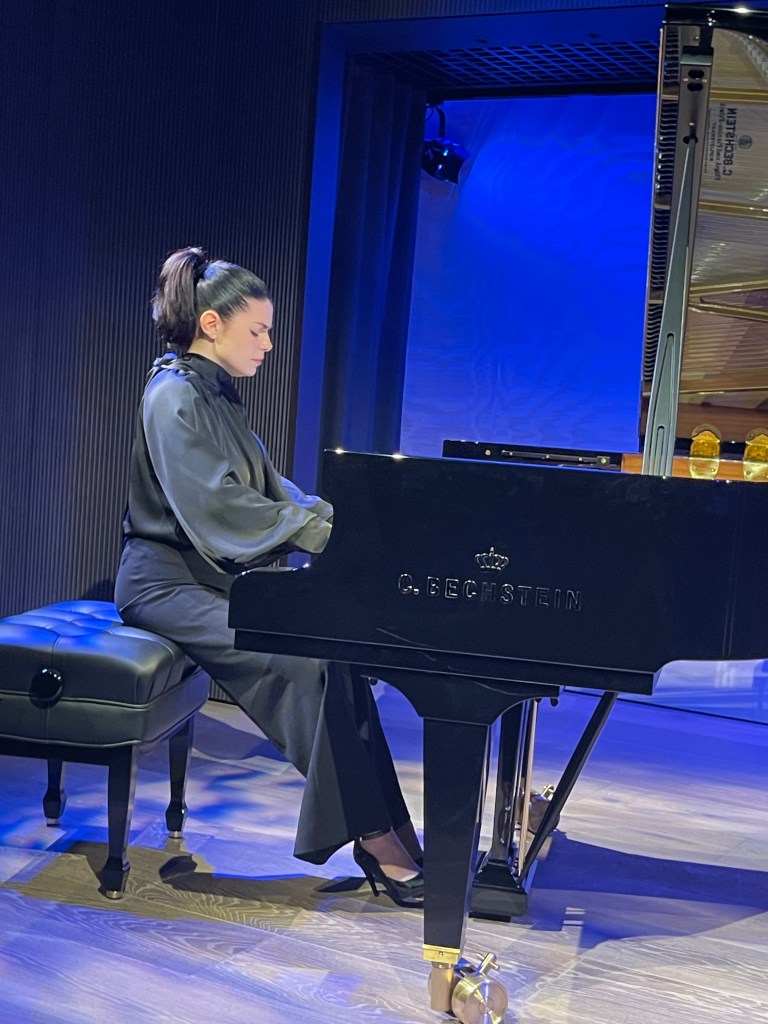
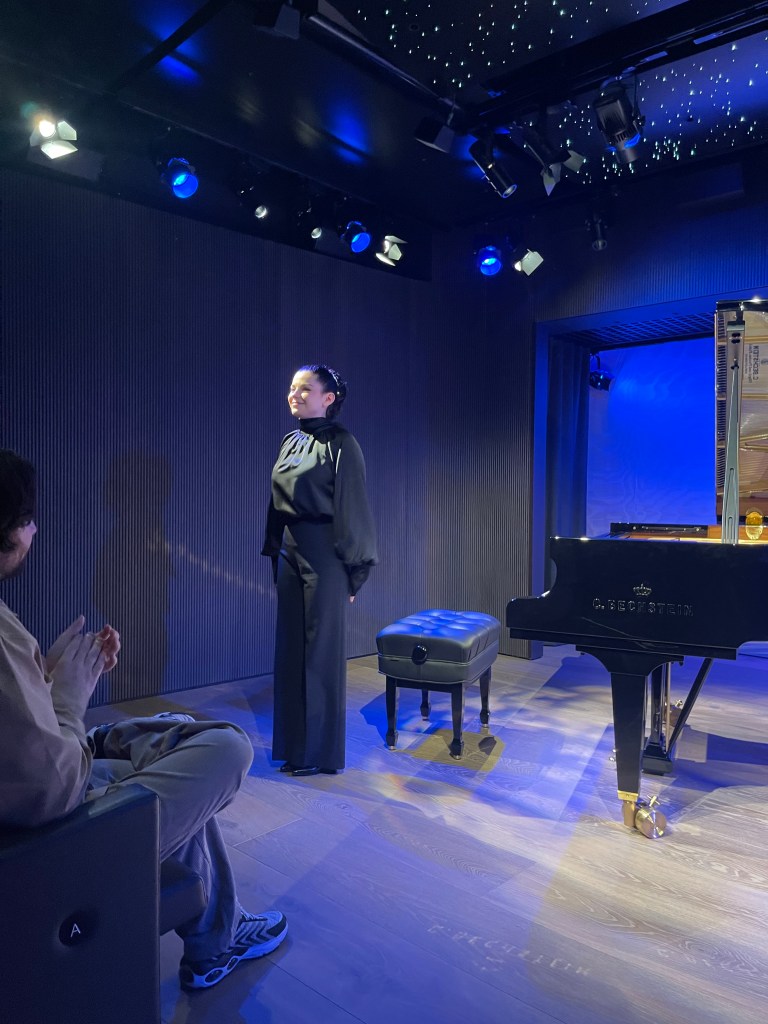
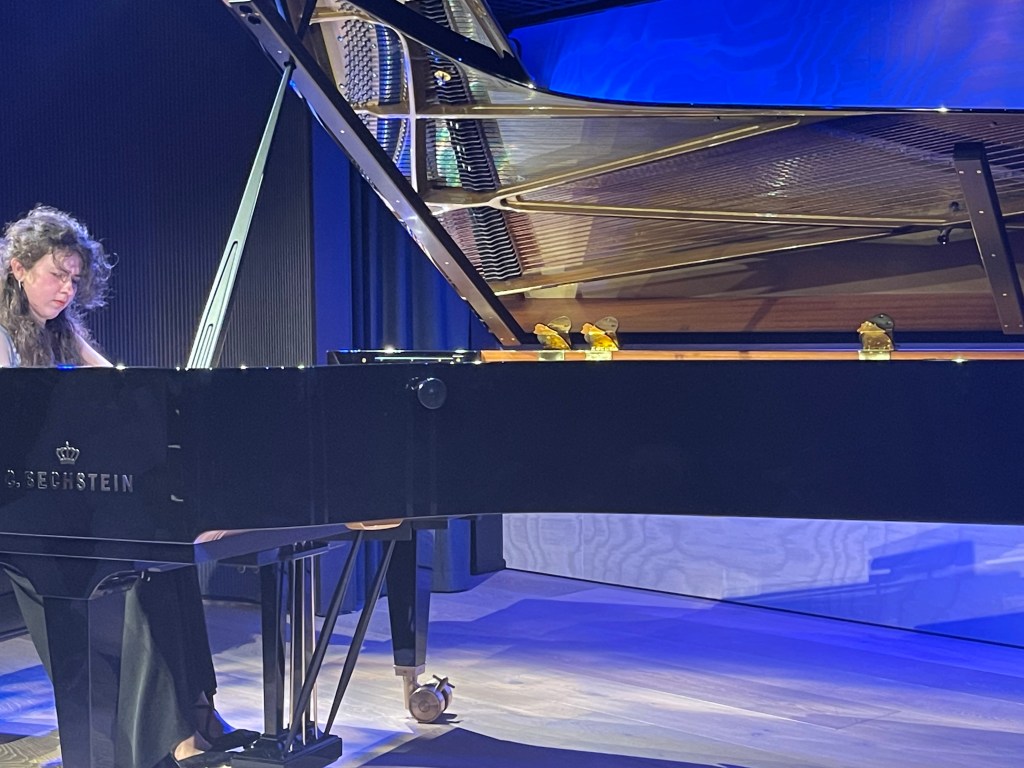
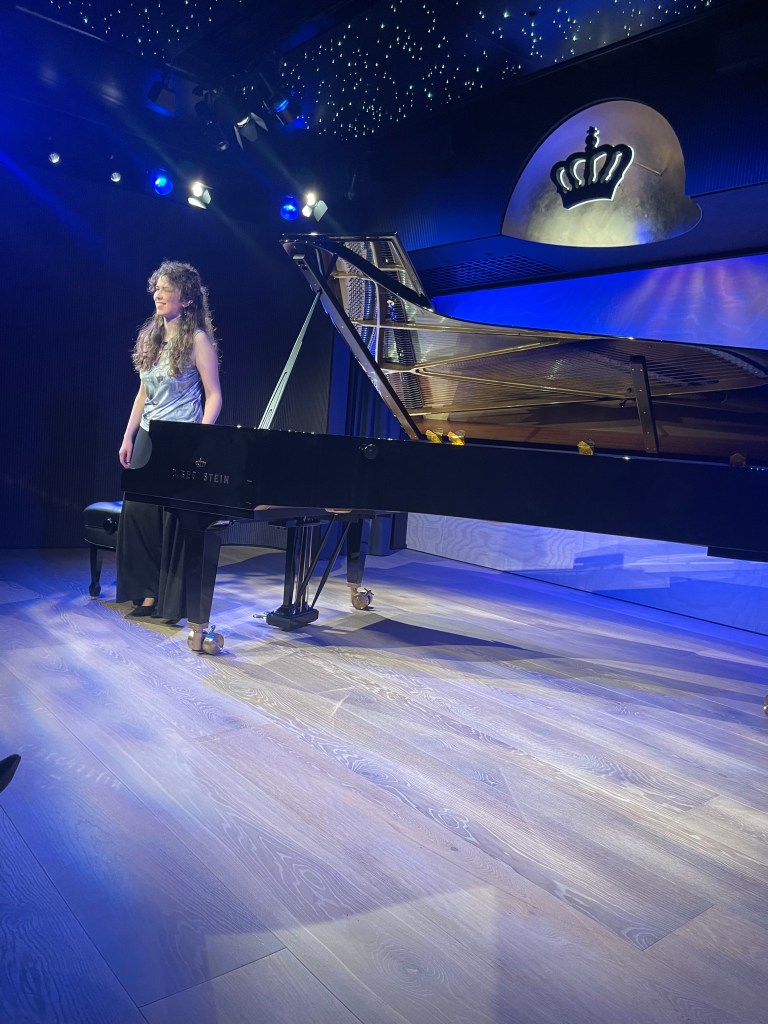
Under the starlit sky at the New Bechstein Hall she opened with Bach’s chorale in the much loved transcription by Myra Hess of Jesu Joy of mans Desiring and she even added some further details that brought it even closer to Bach’s original. But it was the Petri transcription of ‘Sheep May Safely Graze’ that showed off her true artistry with the noble poignancy of Bach’s simple melodic outpouring that she allowed to sing with flowing beauty ornamented by Petri’s discrete ethereal accompaniments. It is not quite as magical as Grainger’s ‘Ramble’ but both were influenced by Busoni,their mentor, in different ways. Petri is more sombre and respectful and it was this noble beauty that Mariamna showed us today.
Thanking Terry Lewis and the Bechstein Hall for giving her an opportunity to play three of the most cherished works in her repertoire.
Schumann opened with gasps of wonderment as Florestan and Eusebius competed with beguiling emotions. It was Eusebius who shone brightly with the second dance of whispered beauty of intimate secrets. Florestan springing onto the scene as Schumann indicates ‘mit Humor’ that Mariamna played with a capricious style of great drive and insinuating rubato disappearing fleetingly into the distance. She brought an unusually delicate opening to the fourth ‘ungedulig’ gradually becoming ever more passionate with sumptuous beauty of golden sounds. Freedom and poignant beauty brought Eusebius with a chiselled melodic line.
In fact every one of these dances was imbued not only with technical perfection but with a sense of style and very strong personal commitment. Mariamna gave Eusebius a ravishingly beautiful voice just as she gave Florestan a robust personal capriciousness.
Nowhere more was her technical mastery evident than in the sixth dance played ‘sehr rasch’ but with a clarity and scrupulous attention to Schumann’s very awkward phrasing.The coda was thrown off with a romantic abandon to the final tumultuous D where Eusebius was waiting with gentle beauty of hesitant expectancy. The question and answer of the eighth was played with disarming simplicity and a very strong personal identification.
Momentarily Florestan seemed to have taken over with the ninth of a playful dance duetting with itself with relish, and just disappearing to two final quiet chords played with insolent nonchalance, very similar to Carnaval’s Pantalon et Colombine, written shortly after this work. There were robust Brahmsian sounds to the tenth with a sumptuous richness of romantic fervour. Beseeching simplicity of Eusebius in the eleventh where slightly underlining the shadowing of the melody gave great depth to a sound of luxuriant beauty .The twelfth just flittered in gleefully capricious with playing of extraordinary dexterity. What wonders there were when Florestan and Eusebius combined in the thirteenth with the rich chorale beauty constantly moving forward to a coda of lightness and charm ‘immer schneller und schneller’ paving the way for one of Schumann’s most beautiful melodies .The fourteenth dance was played with ravishing beauty, the counterpoints just shimmering like gems from within .The fifteenth started in such a spiky decisive way before succumbing to a glorious outpouring of changing harmonies played with fervent conviction and passionate abandon. The playful sense of character of the sixteenth was played with extraordinary control as it dissolved into one of Schumann’s most heavenly inspirations.The seventeenth entering on a mist of sound where etherial recollections of the past waltzes are floated and which Mariamna played with a poetic mastery that could allow her to fearlessly take flight to the tumultuous climax that disappeared just as fast as it had arrived. The final waltz was played with hesitant beguiling nostalgia as we joined in the slumbers of Florestan and Eusebius in a land of dreams of wondrous beauty.
Mariamna played the entire recital with fervent conviction and a great musical personality whilst scrupulously following the composers very precise indications.
An encore of one of Beethoven’s most rumbustious bagatelles op 33 n. 7 was played with gleeful dynamic drive and exhilaration.
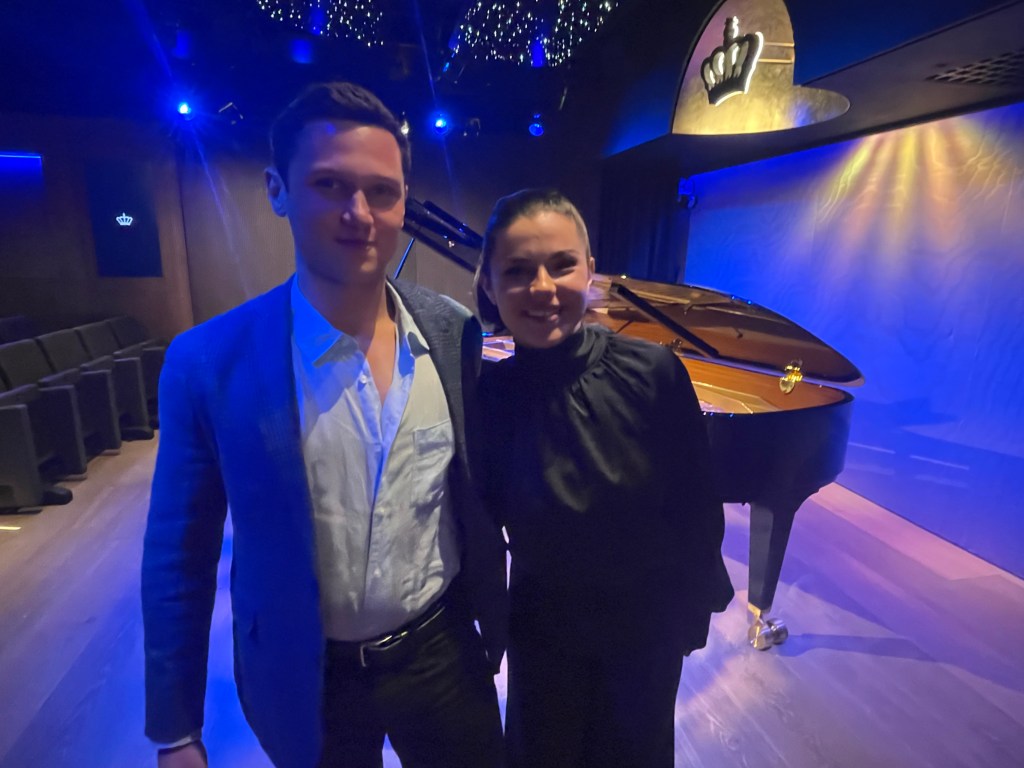
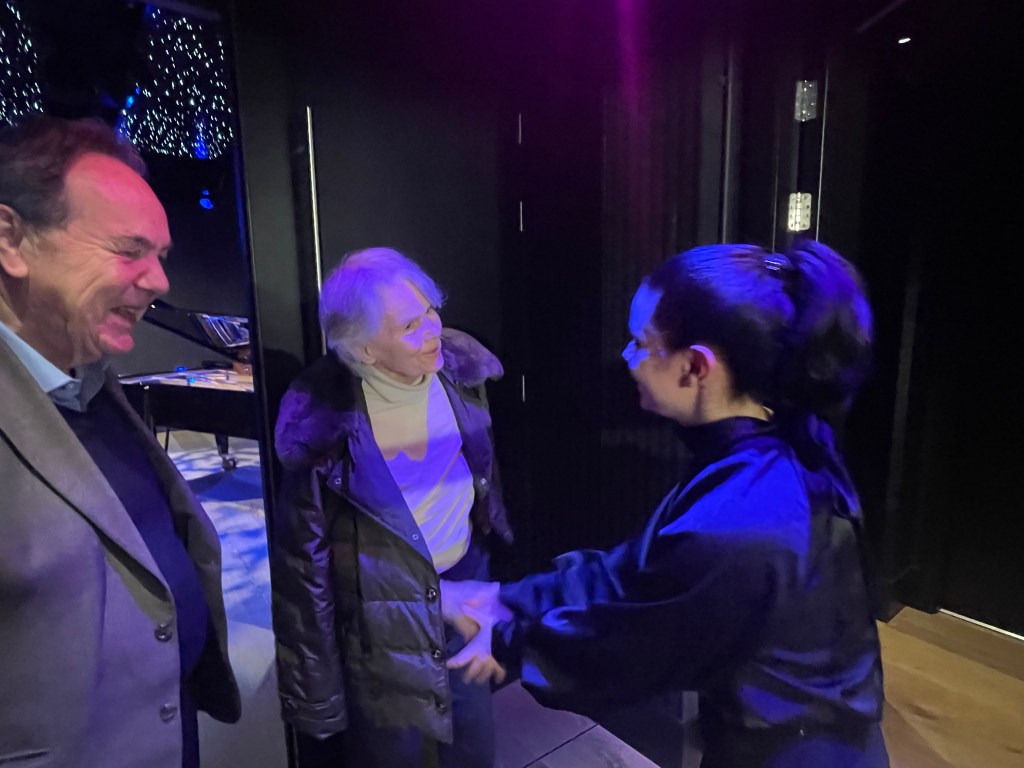
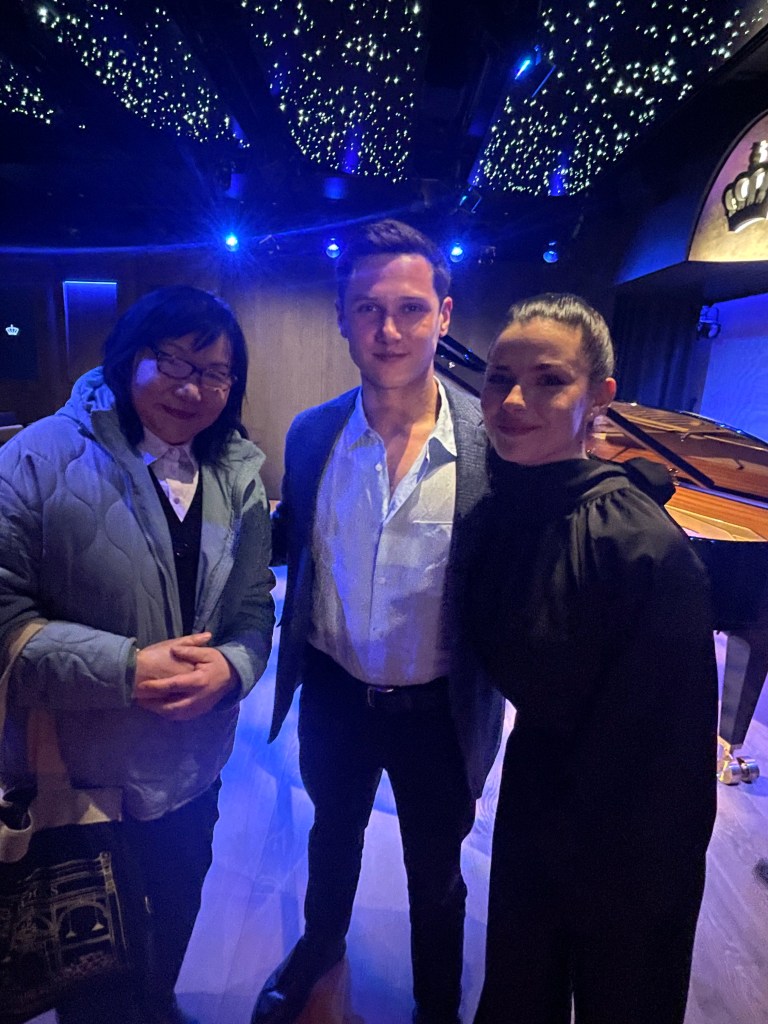
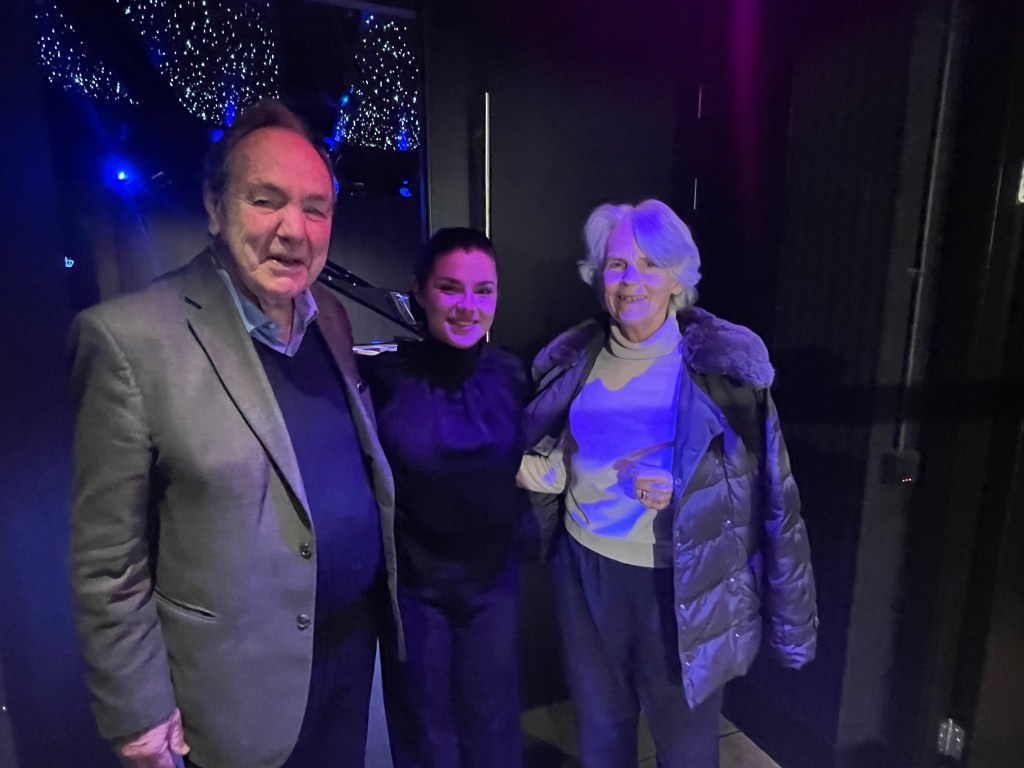
with Ilya Kogan of the Razumovsky Academy with Yisha Xue of the National Liberal Club with Bob and Elisabeth Boas very proud to have been given the Bechstein badge
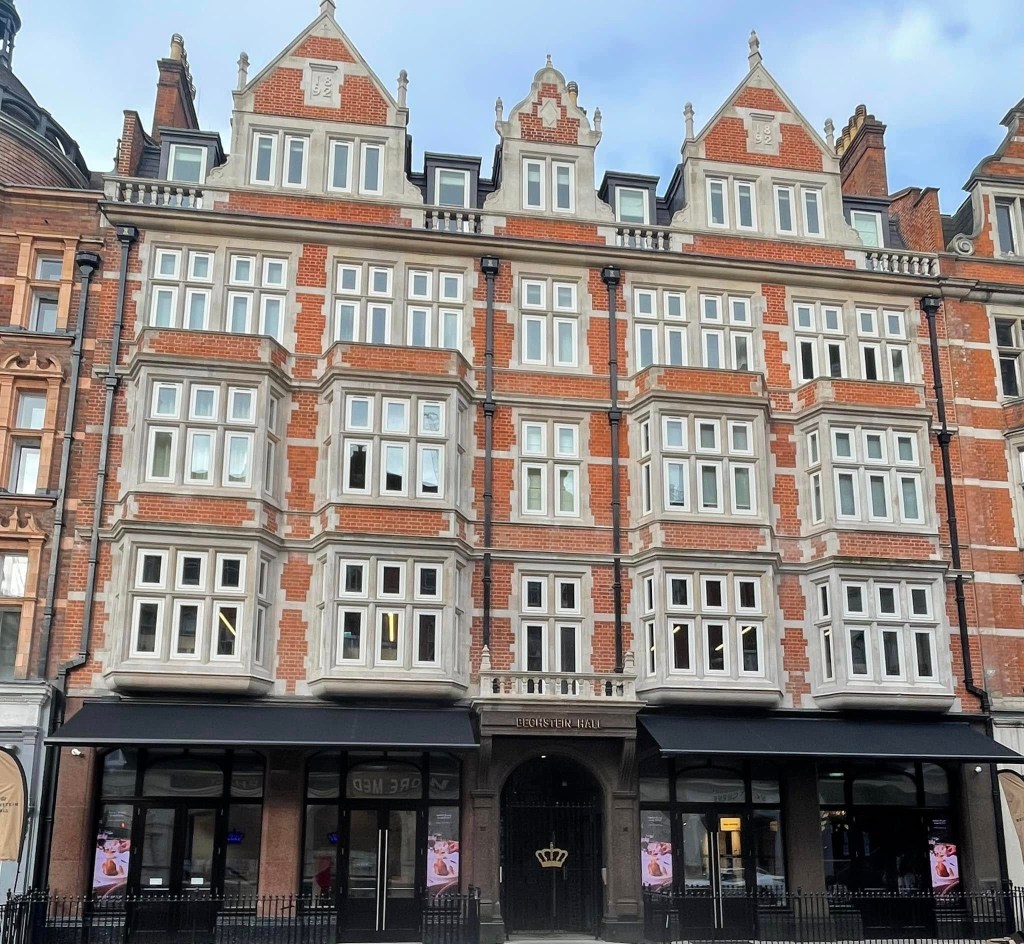
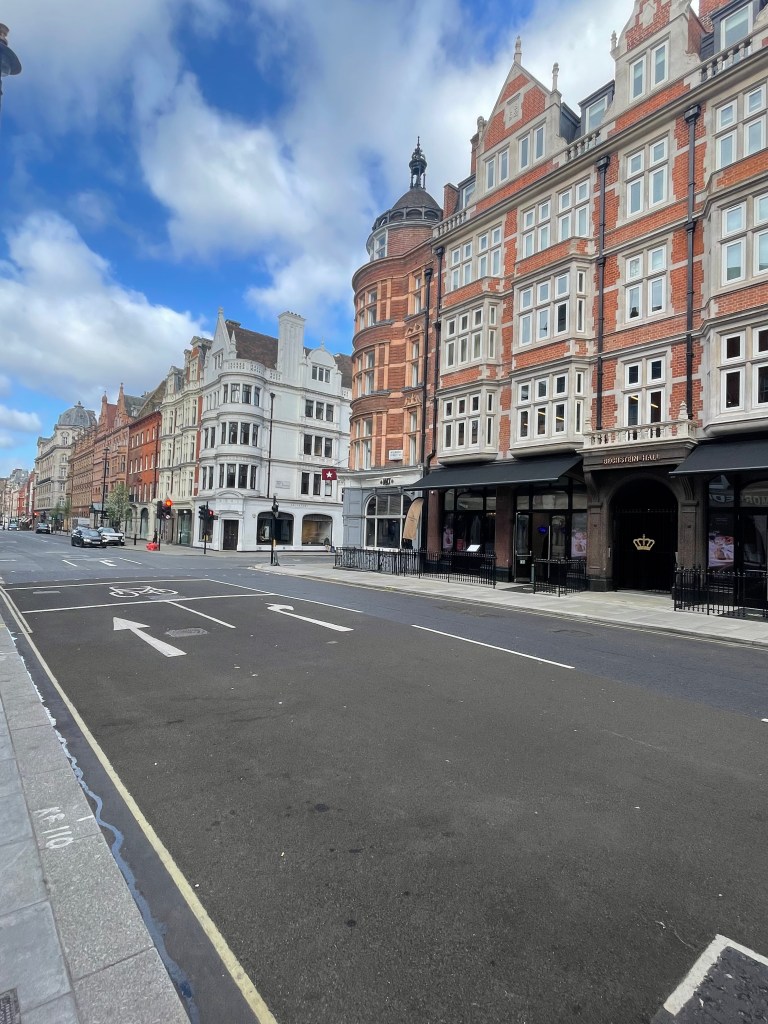
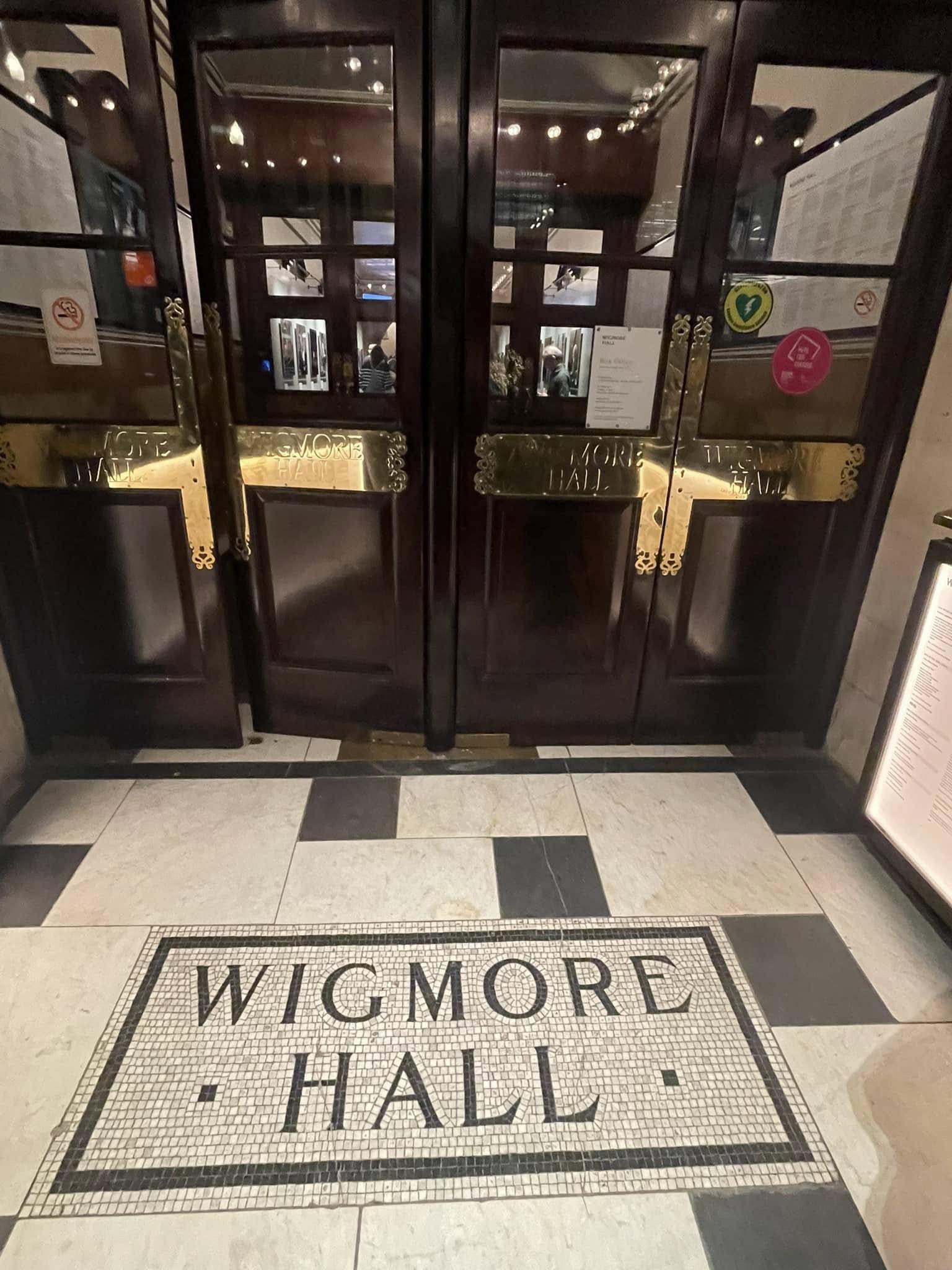
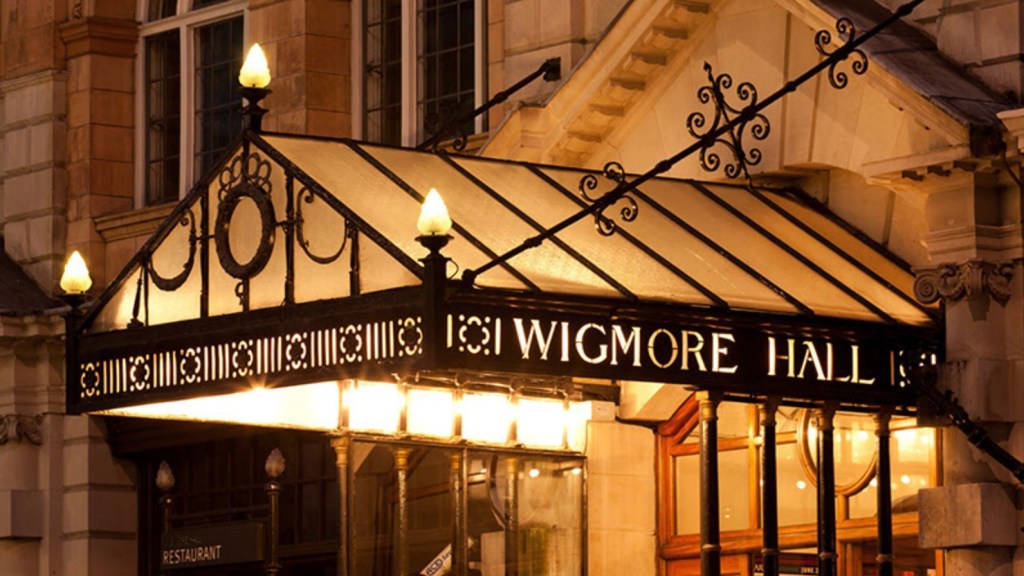
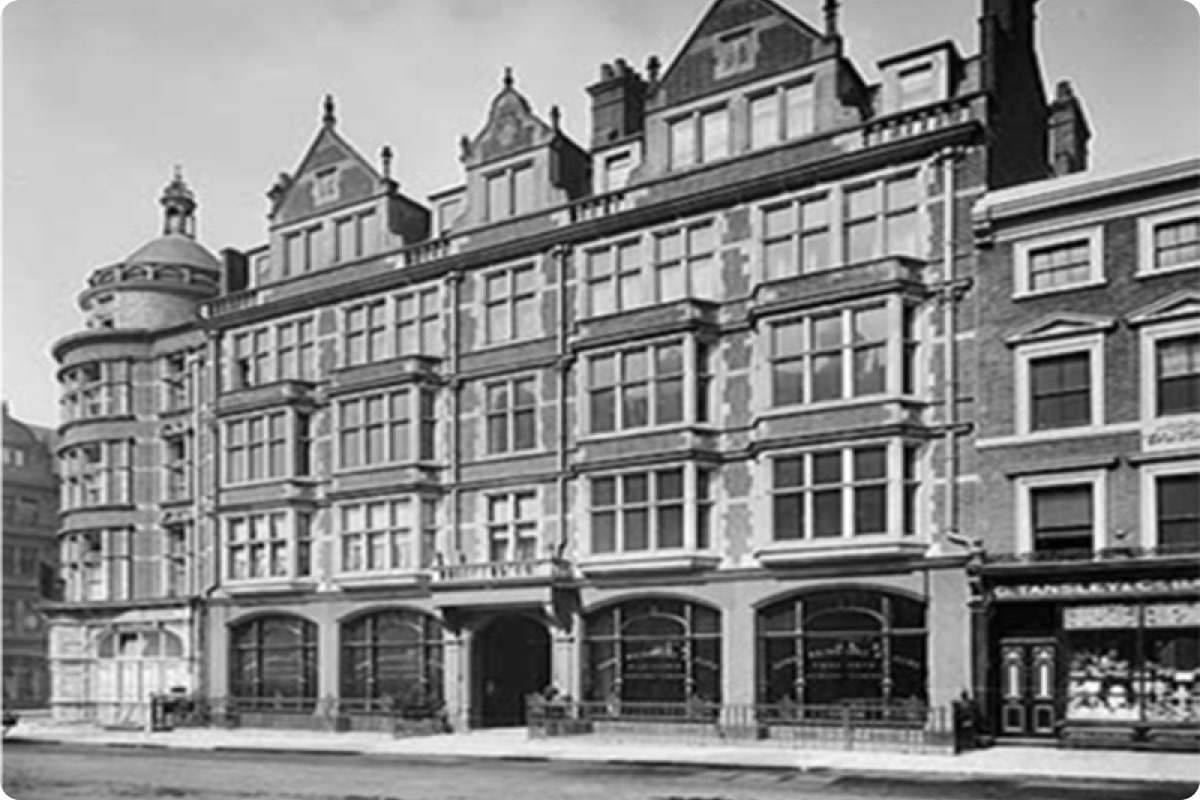
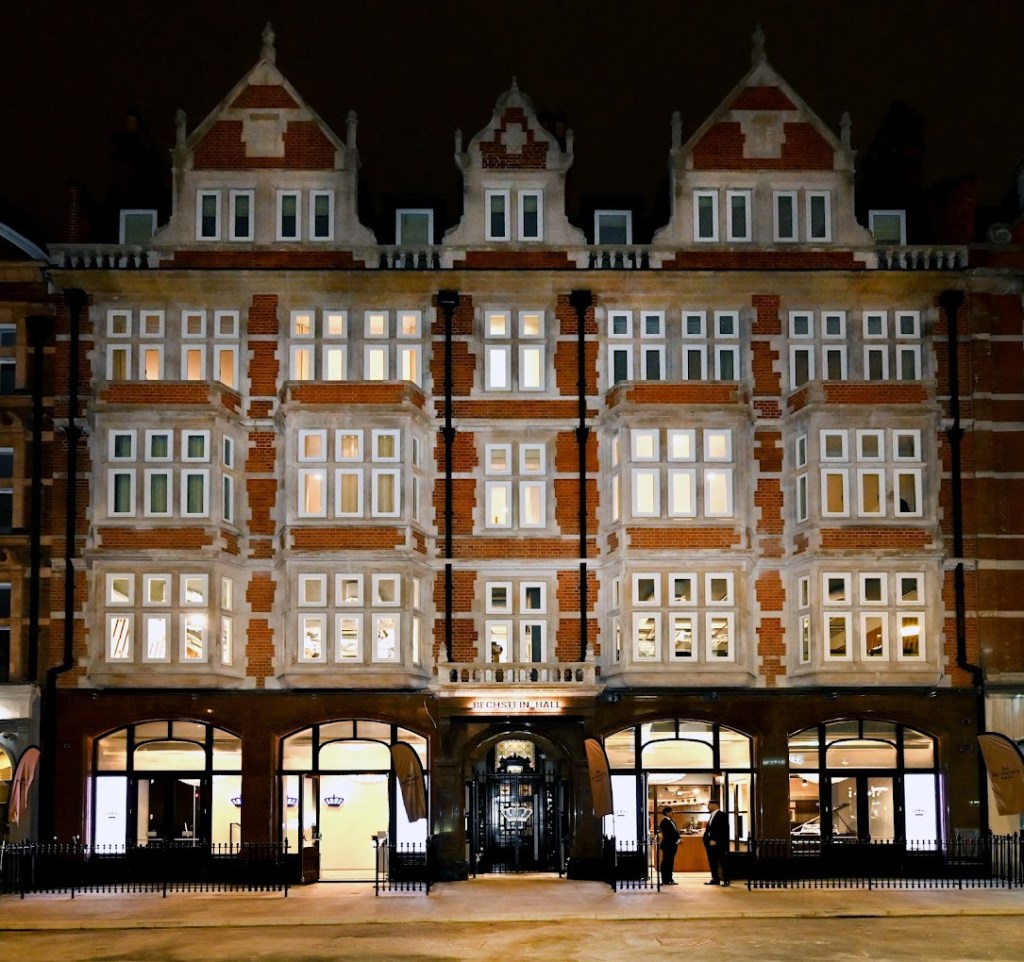
The New Bechstein Hall after its initial launching is now accessible to all with a Sunday morning Young Artists Series at only five pounds, with as much coffee as you need at 10.30am! Thomas Masciaga opened the Bechstein Young Artists Series with canons covered in flowers https://christopheraxworthymusiccommentary.com/2025/02/02/thomas-masciaga-opens-the-bechstein-young-artists-series-with-canons-covered-in-flowers/ Evening concerts starting from 18 pounds and a sumptuous restaurant that is also opening for luncheon. A beautiful new hall that is just complimenting the magnificence of the Wigmore Hall and the sumptuous salon of Bob Boas.Providing a much need space for the enormous amount of talent that London,the undisputed capital of classical music,must surely try to accommodate Here are some of the recent performances :
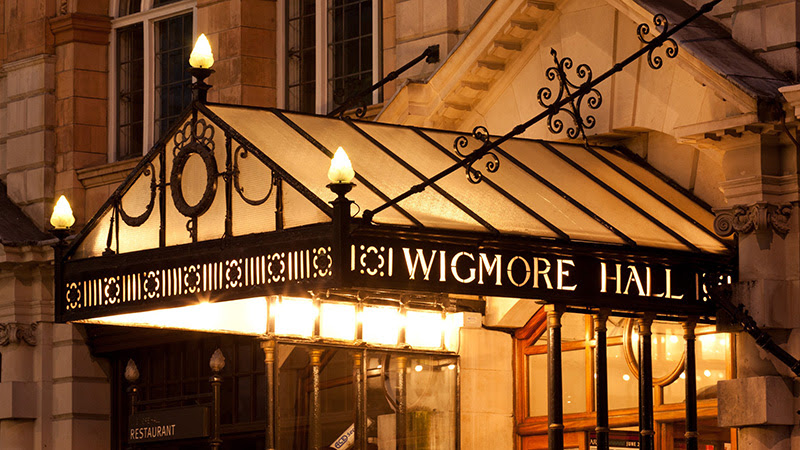
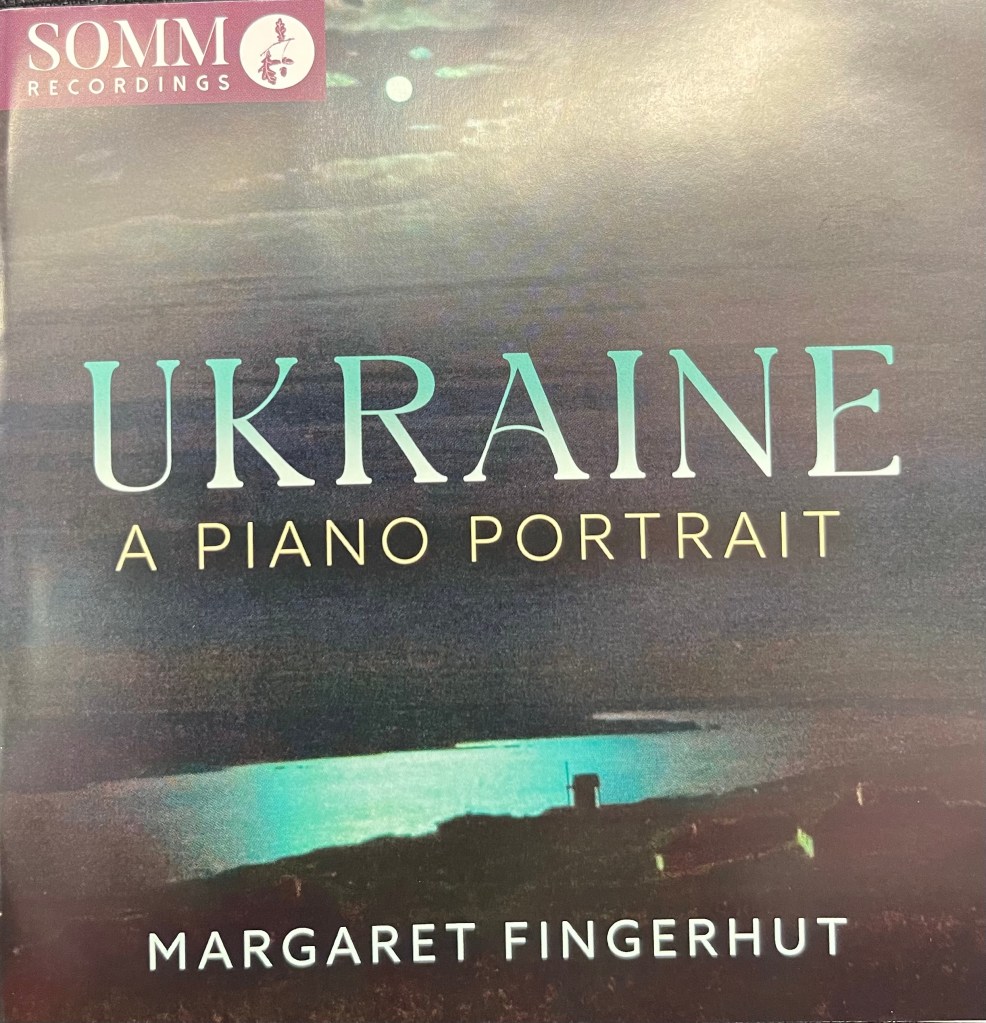
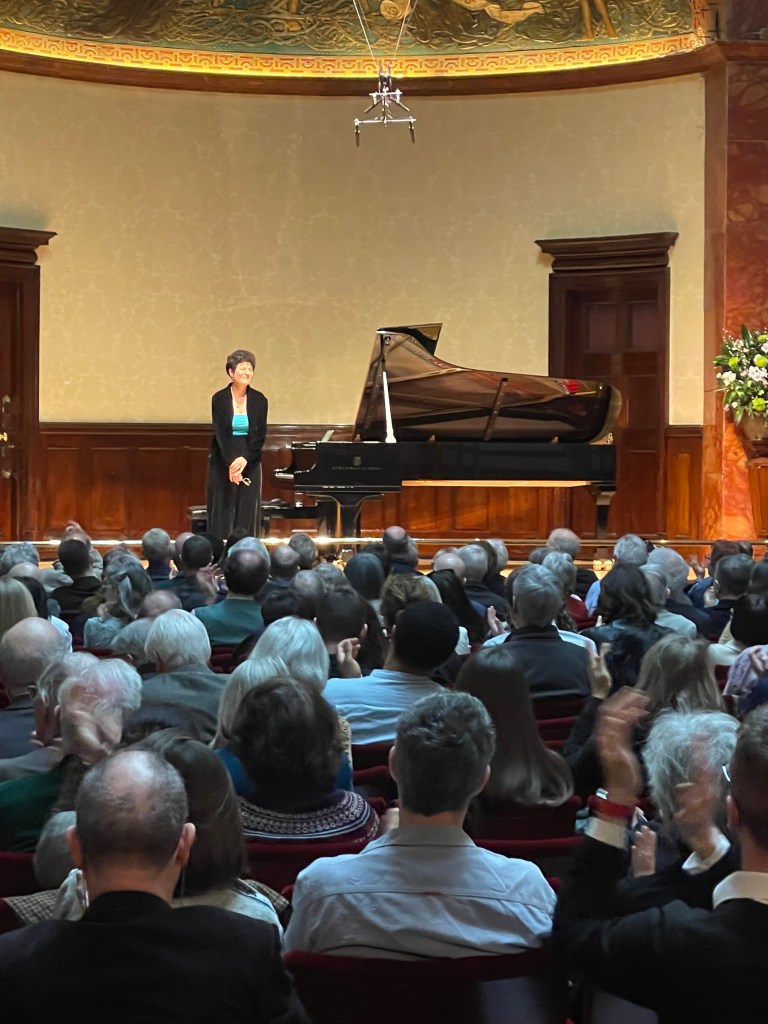
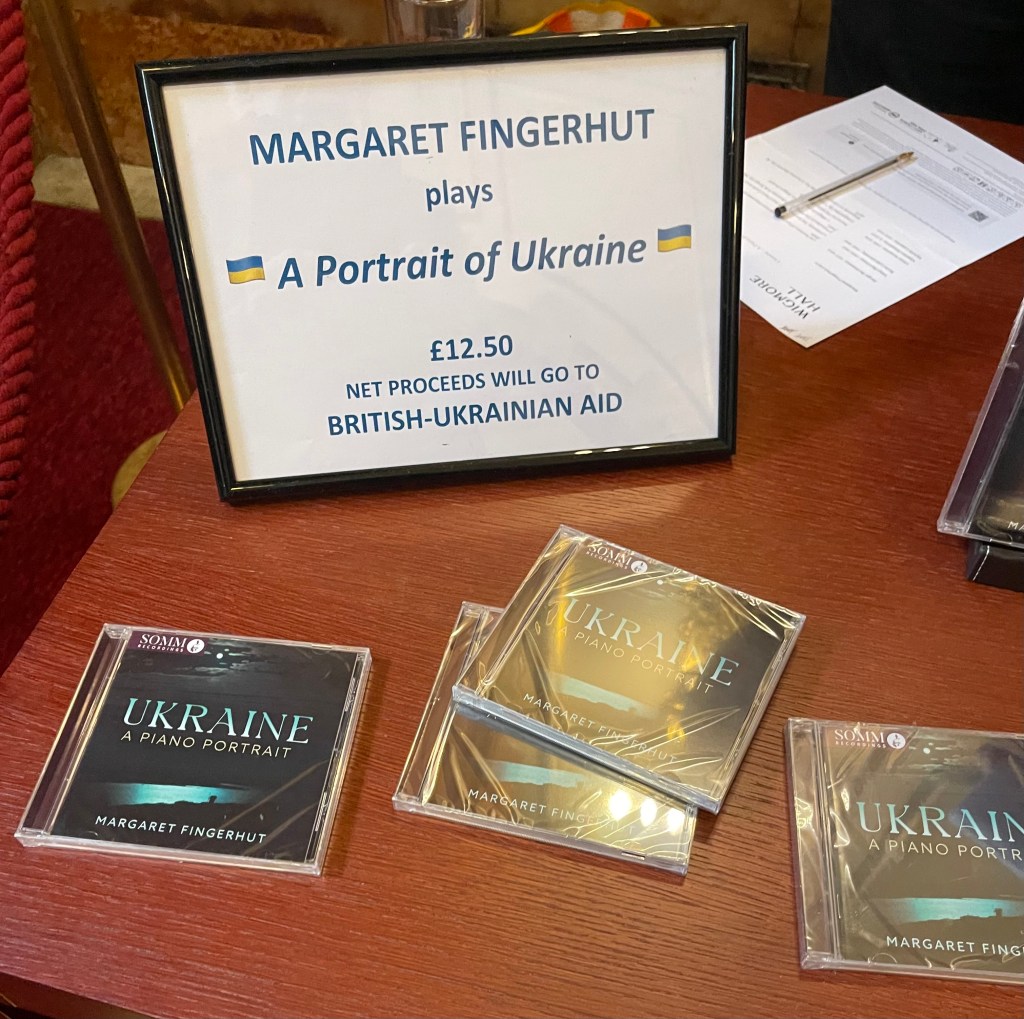
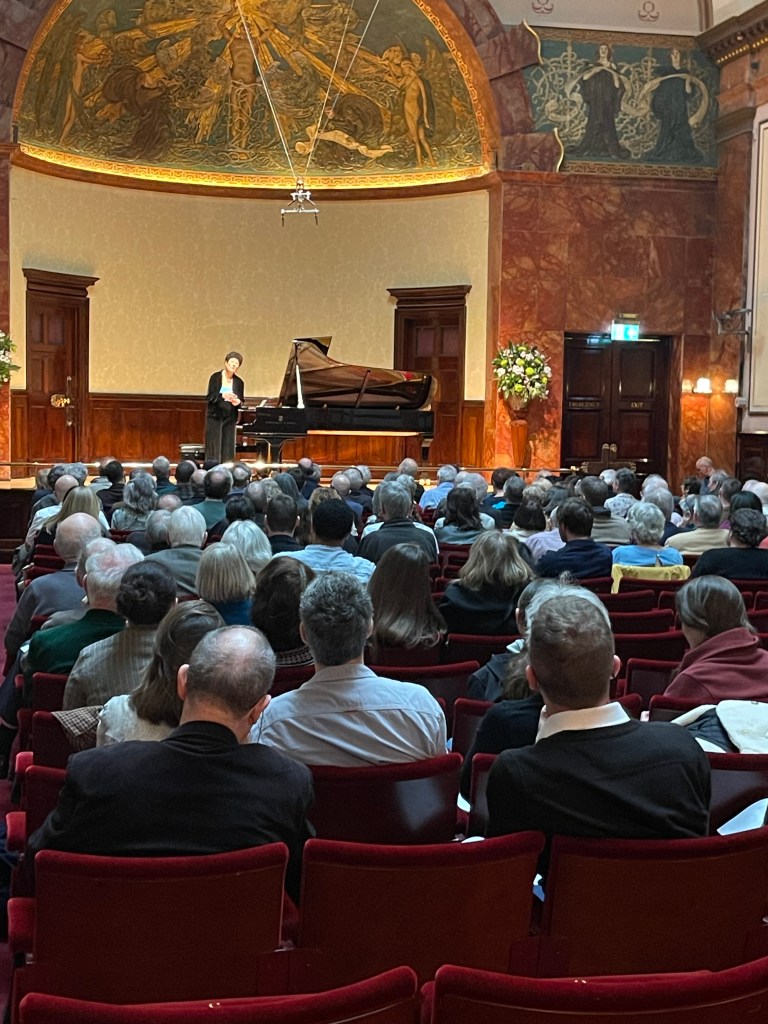
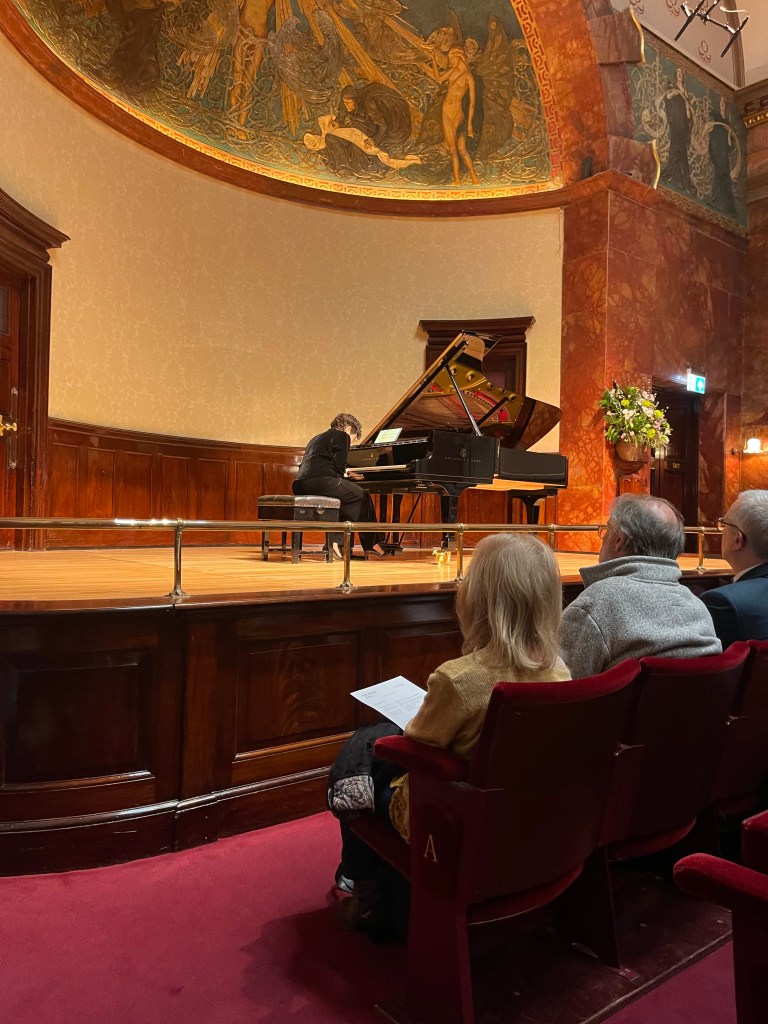
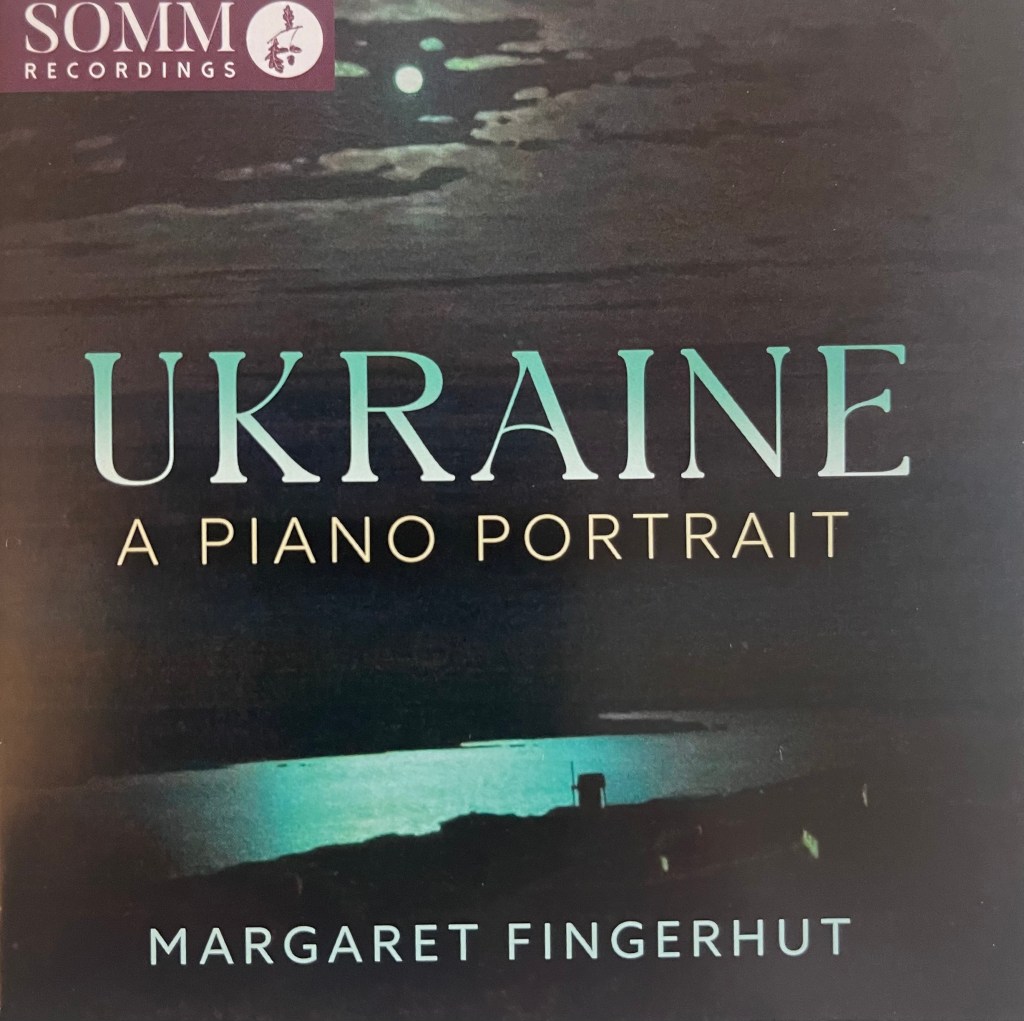
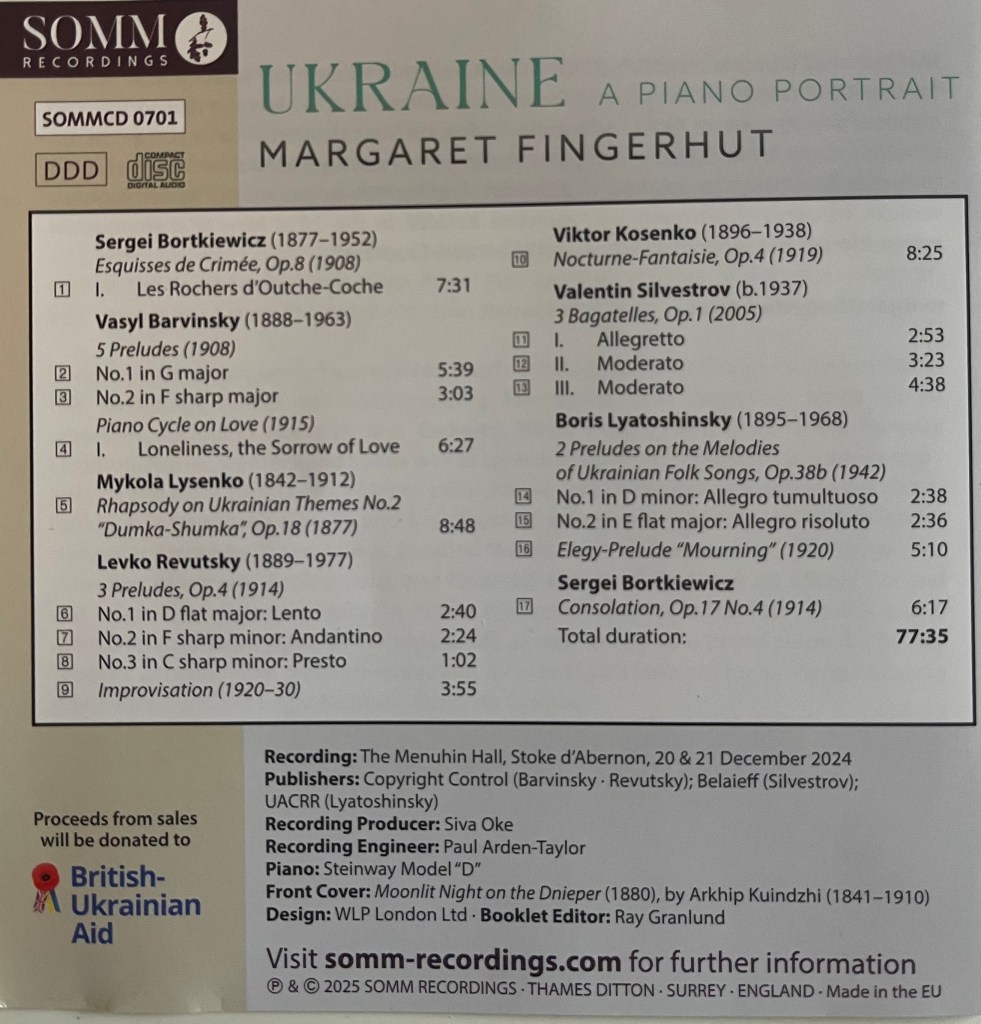
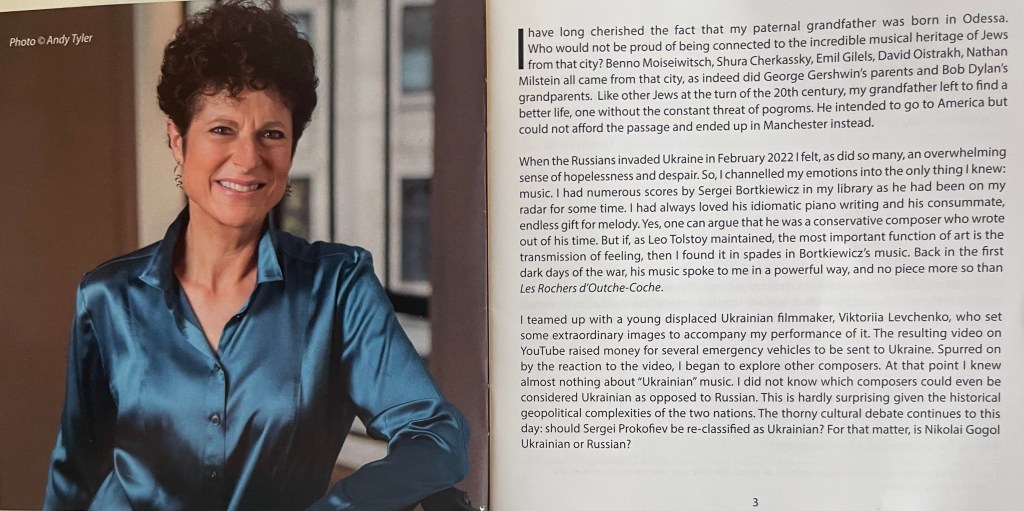
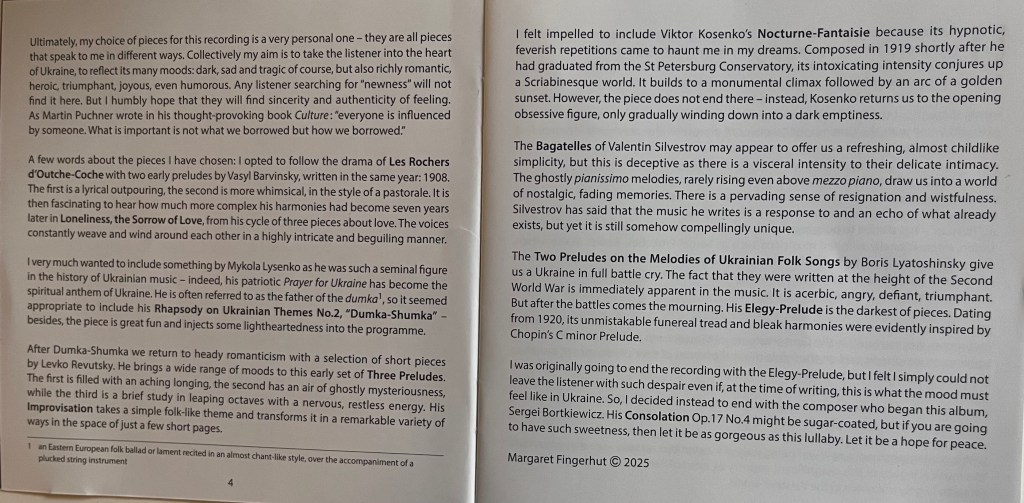
Margaret Fingerhut reminding us of the rich heritage that is gradually being devoured by aggressive neighbours
Playing of ravishing beauty where even Silvestrov has turned to whispered beauty, as an antidote to his previous percussive style, when the bombs started dropping on his homeland
A fascinating journey through works that were much influenced by Liszt, Rachmaninov , Scriabin and even Prokofiev.
But it was Lysenko who closed the programme being the first composer to express Nationalistic pride in music with a Ukrainian Fantasy much in the style of those of Liszt .
Beauty, mastery and solidarity shone through playing of searing commitment and glowing beauty.
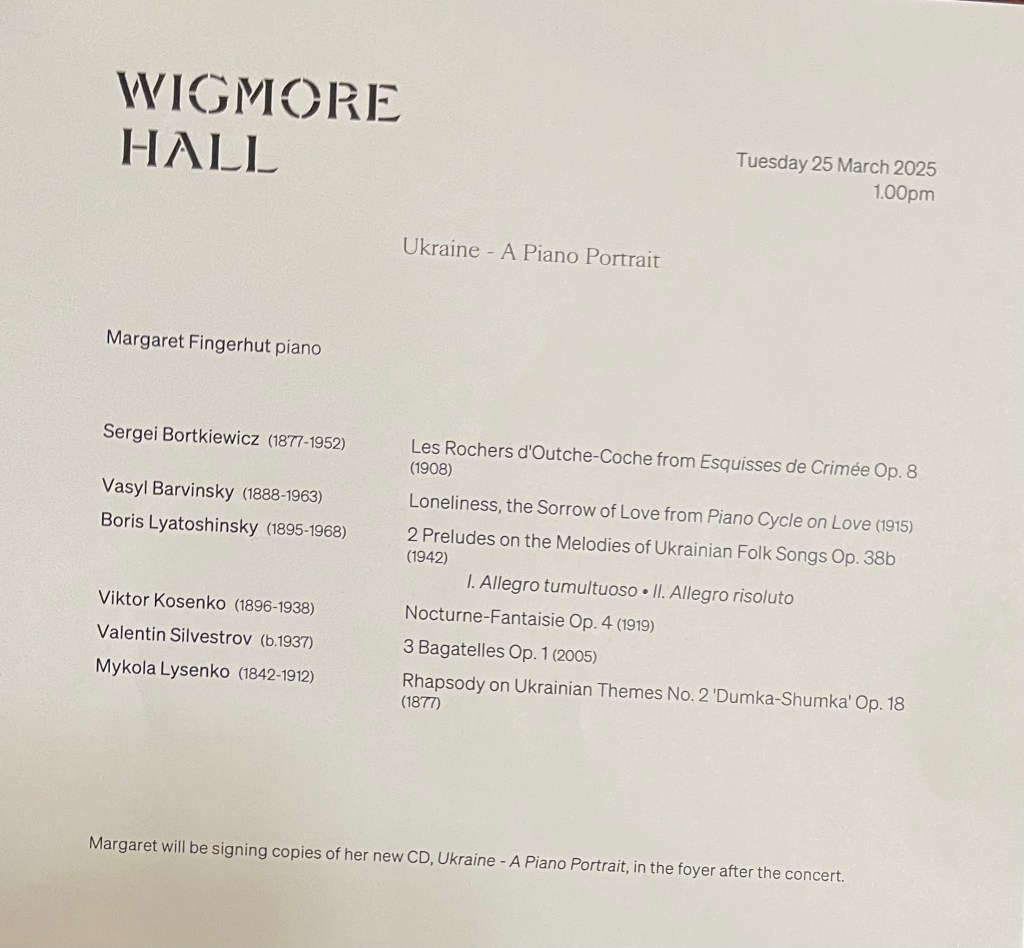
A grandiose opening with Bortkiewicz dissolving into a chorale with droplets of water just suggested as the music opened to an expansive Lisztian outpouring and a heartrending duet of sumptuous rich romantic sounds. A grandiloquent ending worthy of the grandest of Liszt’s creations and was a beautiful way to end this great romantic picture. ‘Sorrow and Loneliness’ indeed of great density for one of the rare pieces to survive the cancellation of his works by an intolerant regime .Folk indioms were woven into the mellifluous outpouring of two preludes by Lyatoshinsky and there was Rachmaninovian inspiration for the virtuosity and sumptuous sounds of Kosenko’s ‘Nocturne Fantasie’ op 4 .’Three Bagatelles’ by Silvestrov, whose music I had heard from the hands of Boris Berman in Cremona and was surprised at the complete change in style as the invasion of his homeland was taking place. (https://christopheraxworthymusiccommentary.com/2022/09/26/cremona-the-city-of-dreams-a-global-network-where-dreams-become-reality/)
Works of percussive prickly violence are now so quiet with indications in the score never to be louder than the quietest whisper.They were pieces of ravishing beauty of glowing fluidity and romantic insistence. Anna Fedorova had recently opened her recital in Florence with barely audible sounds that drew us in and made us listen with new ears at such childlike musings of simple radiance. (https://christopheraxworthymusiccommentary.com/2025/03/02/anna-fedorova-in-florence-the-triumph-of-a-supreme-stylist-in-la-pergola-the-temple-of-music/) The final work in her recital, Liszt springs to mind again ,as she played Lysenko’s ‘Rhapsody on Ukrainian Themes’ with romantic fervour and sumptuous bravura and he was the first Ukrainian composer of note with a strong National identity. An encore of exquisite beauty by a composer whose name I did not catch but obviously of the Ukrainian romantic tradition and just showed us what we have been missing all these years. Let us open up our ears and hearts and include some of these beautiful works into our rather standardised concert programmes.
Here is her choice of composers and descriptions in her own words
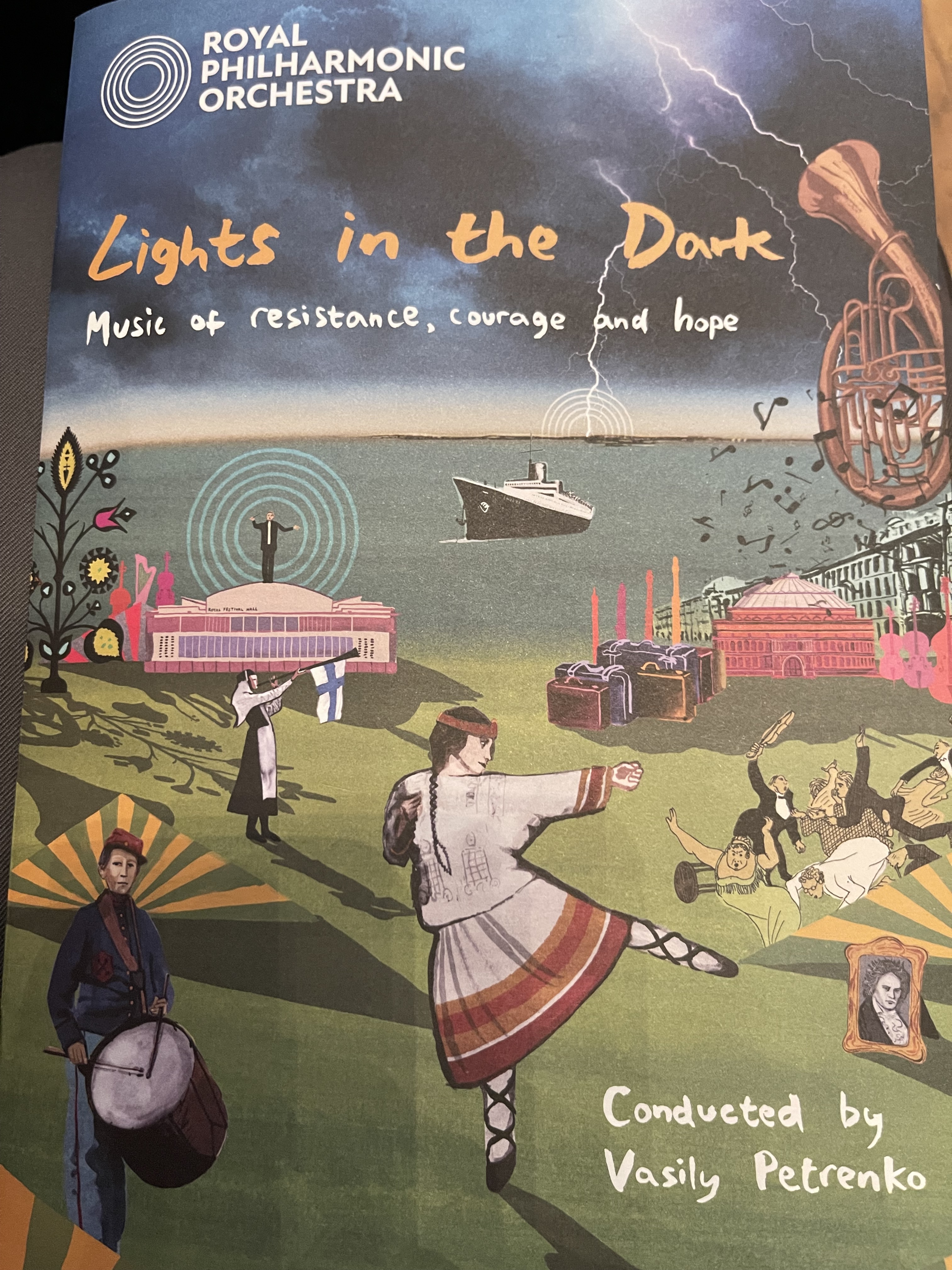
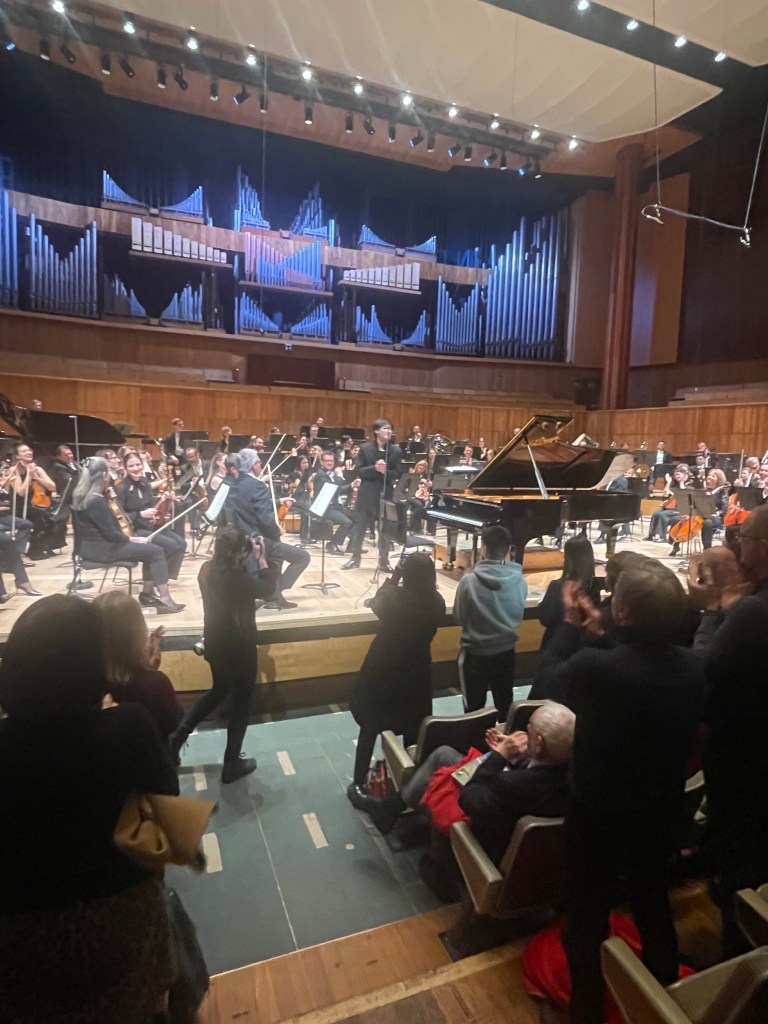
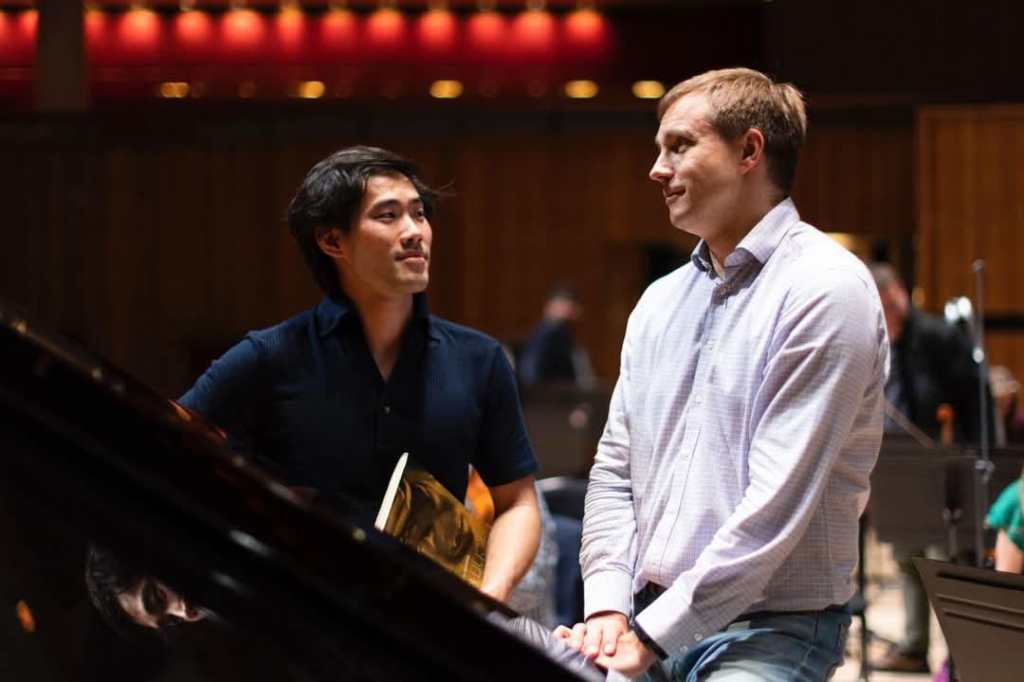
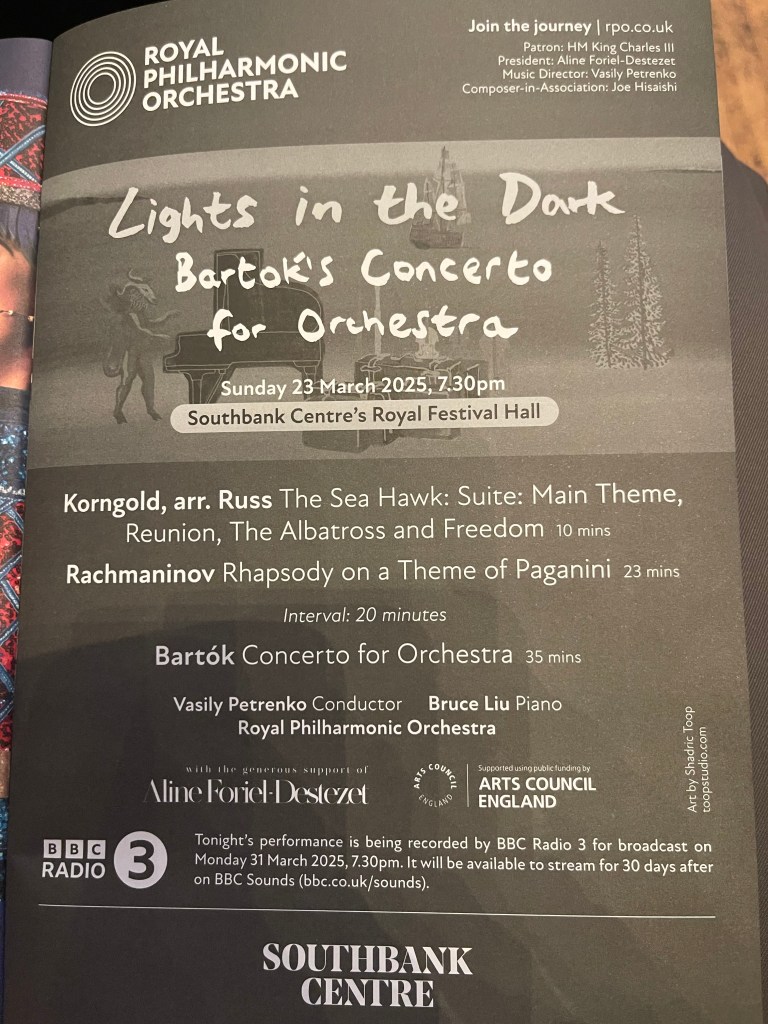
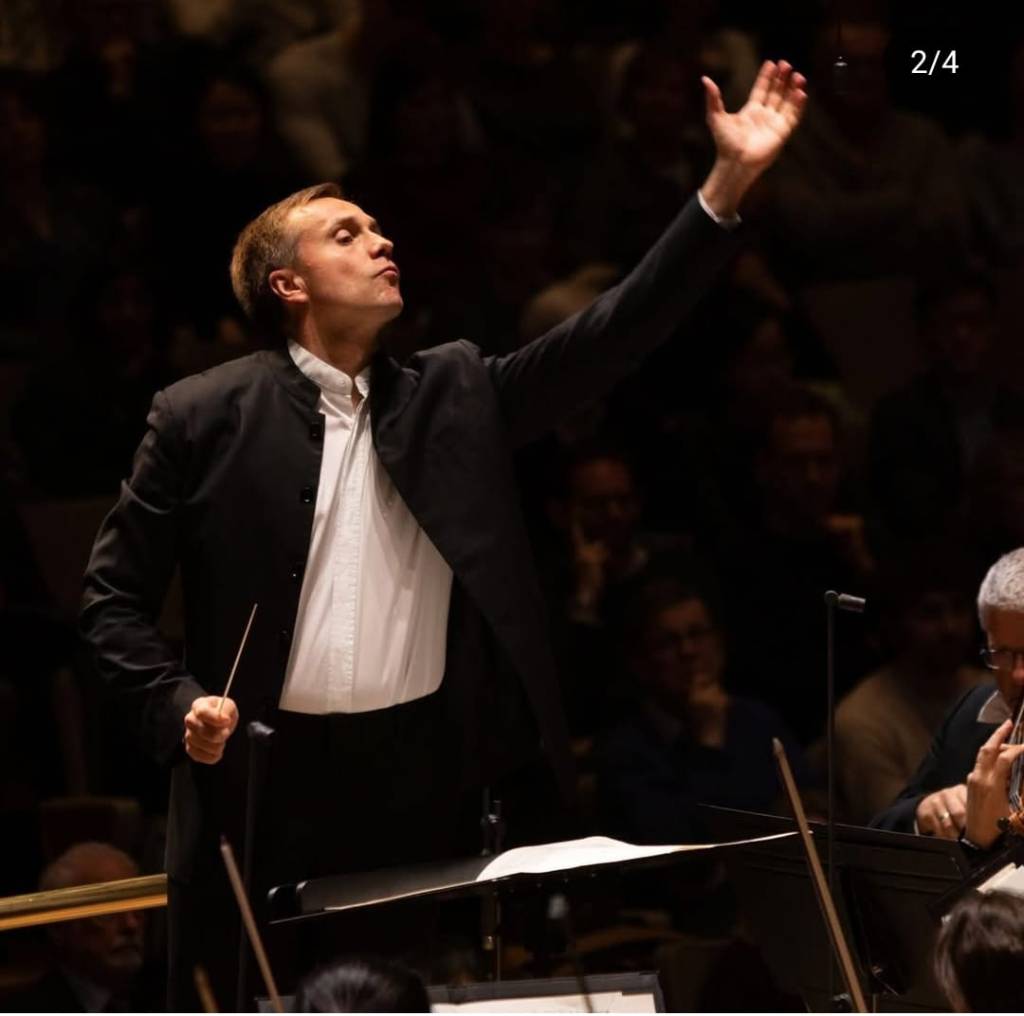
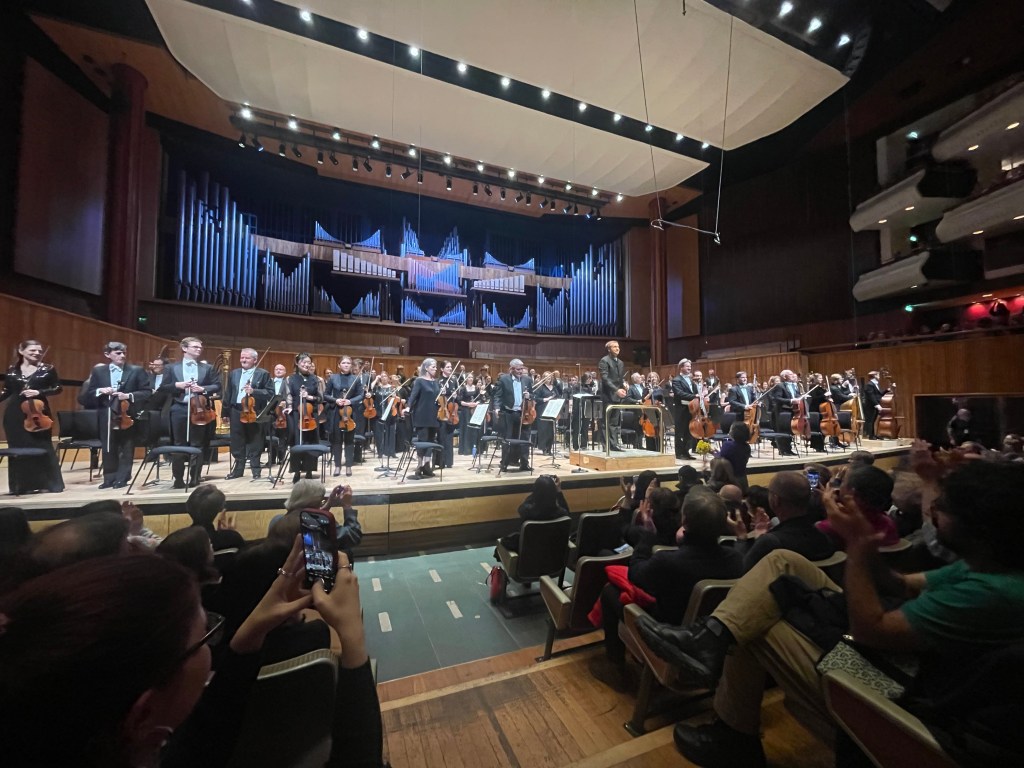
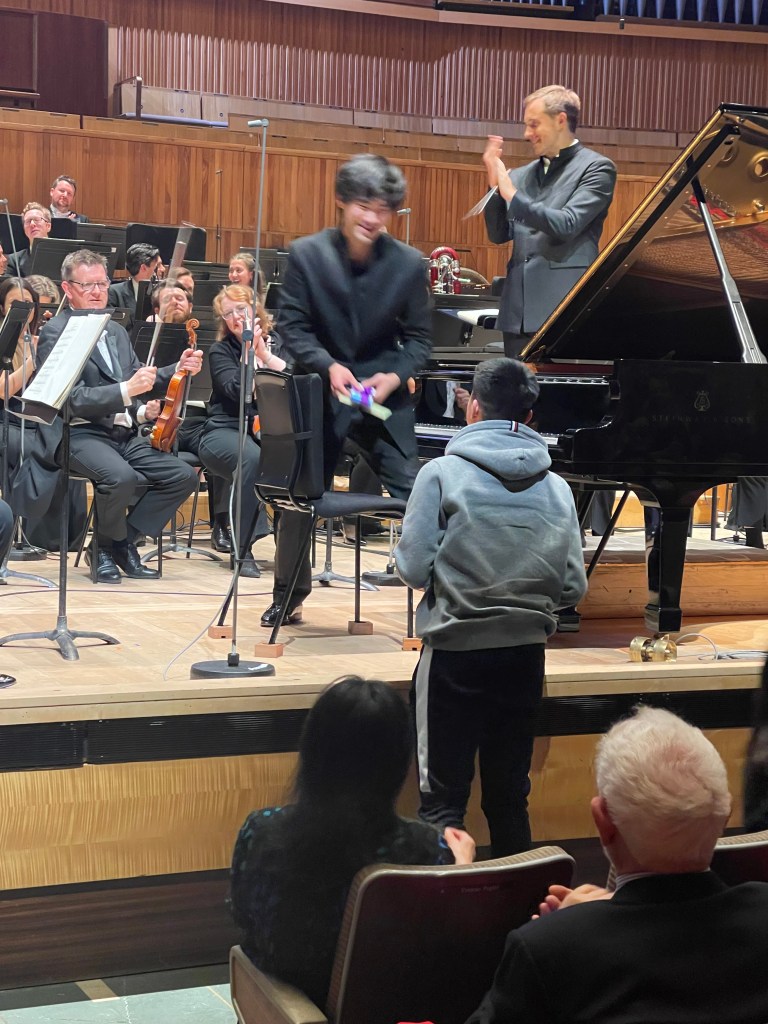
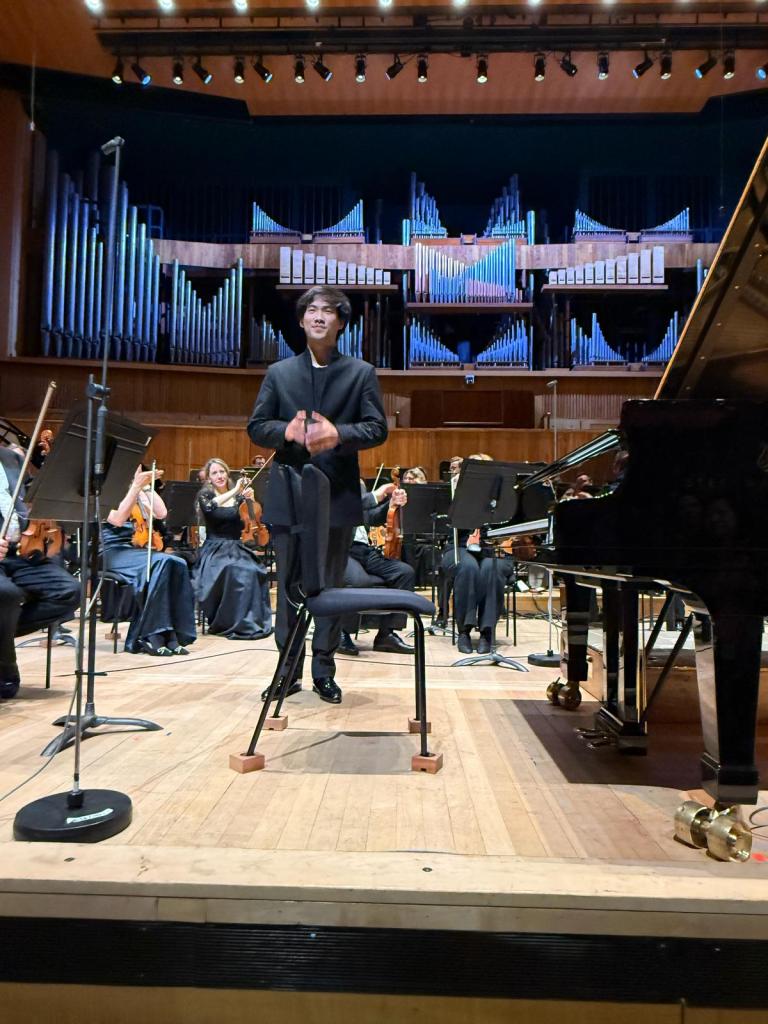
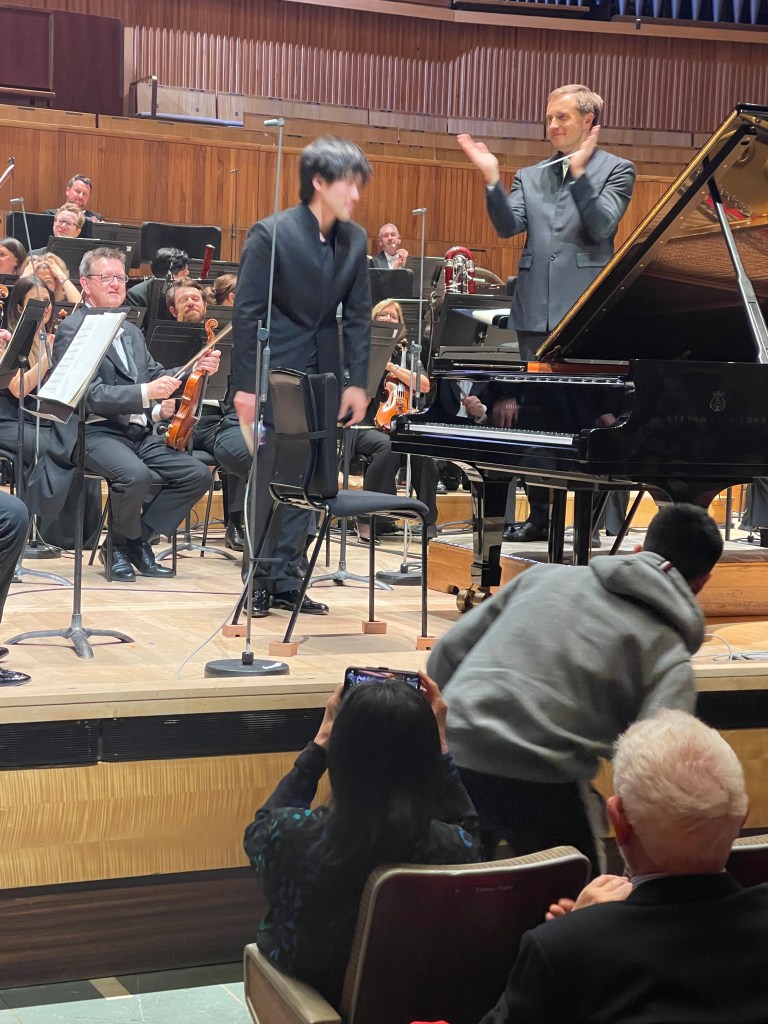
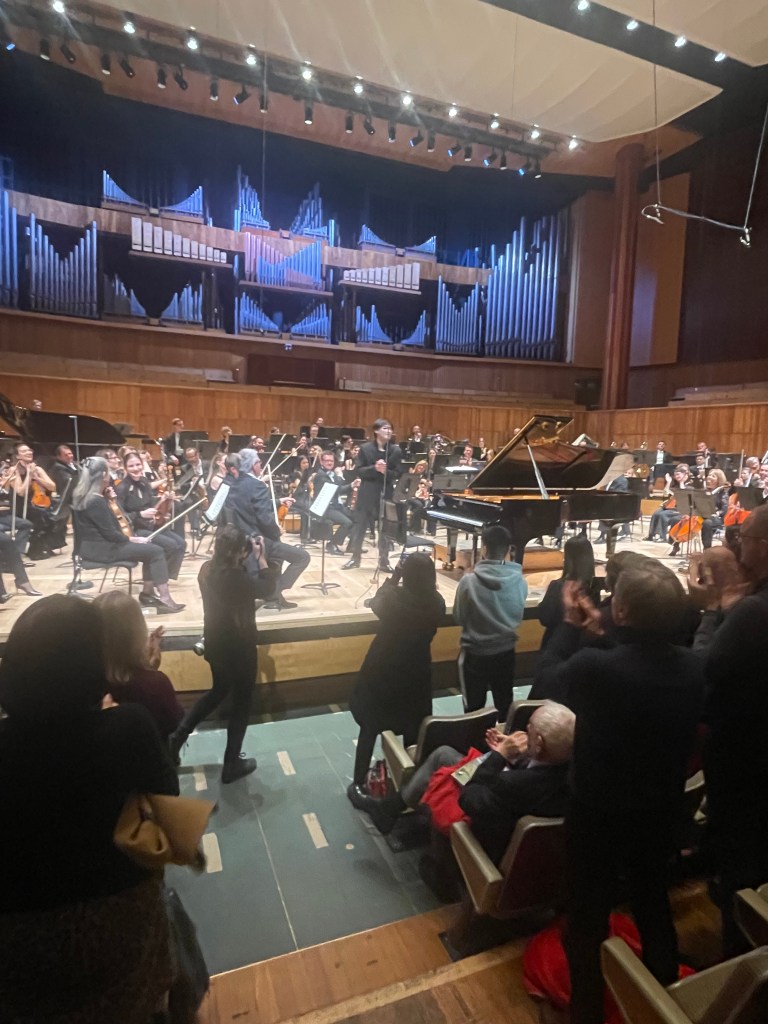
A dream team at the Royal Festival Hall ……..the golden eagle of Petrenko swooping in with such elegance as he hovered over the Royal Philharmonic .Teamed with the refined playing of a young star Bruce Liu winner of the last Chopin Competition and shining now ever more brightly.
Korngold played with the swooping and swooning style of Hollywood as the film star good looks and masterly baton technique of Petrenko delved deep into the very soul of this magnificent ensemble.
Recreating the great era of Cinema when all the greatest composers were sheltering in California and providing funds for the inhumane suffering that was being handed out just the other side of the pond .
Bruce Liu with refined phrasing of exquisite delicacy delved deep into Rachmaninov’s score and revealed many gems that often go unnoticed by less sensitive artists.
Korngold and Rachmaninov were neighbours in Los Angeles and they have much in common with masterly orchestration and heart on sleeve sentiments.
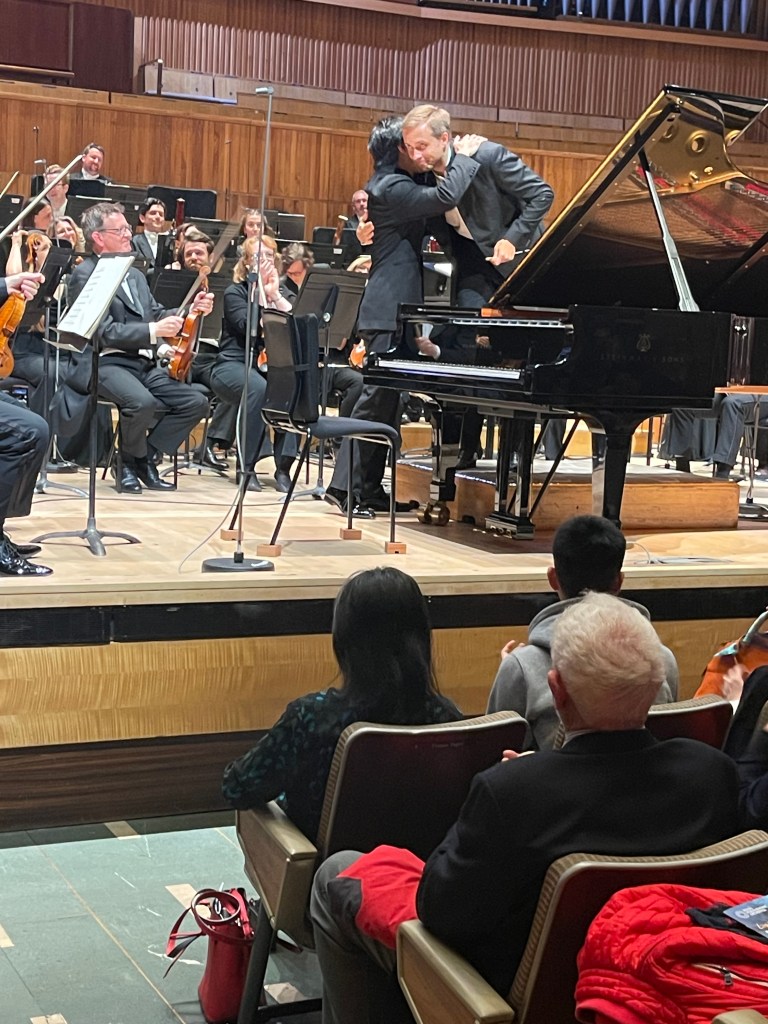
Surrounded by fans at the end of a near perfect performance of the Paganini Rhapsody, Bruce did not need much persuasion to show us what he really could do!
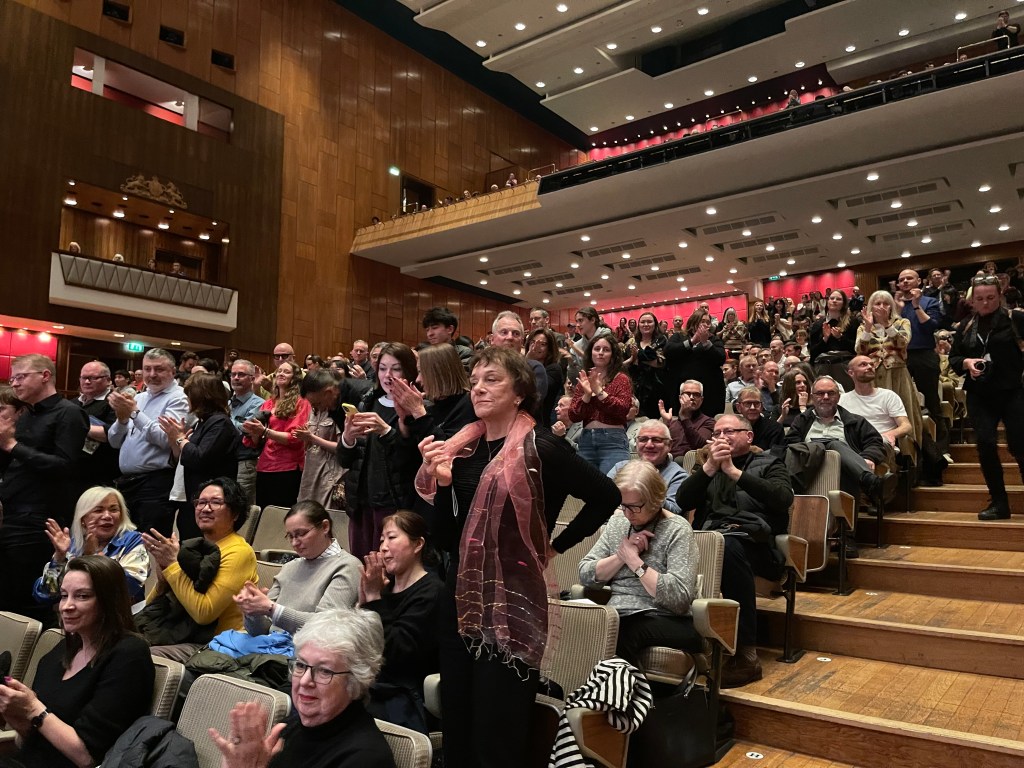
Have Liszt’s bells ever sounded so luminous or perfect as they sparkled and shone in this young virtuoso’s delicate hands? Little did we expect the demonic roar of a Lion of the keyboard at the end of Campanella and an astonished audience, which by now included the players of the RPO, gave him a well earned standing ovation .
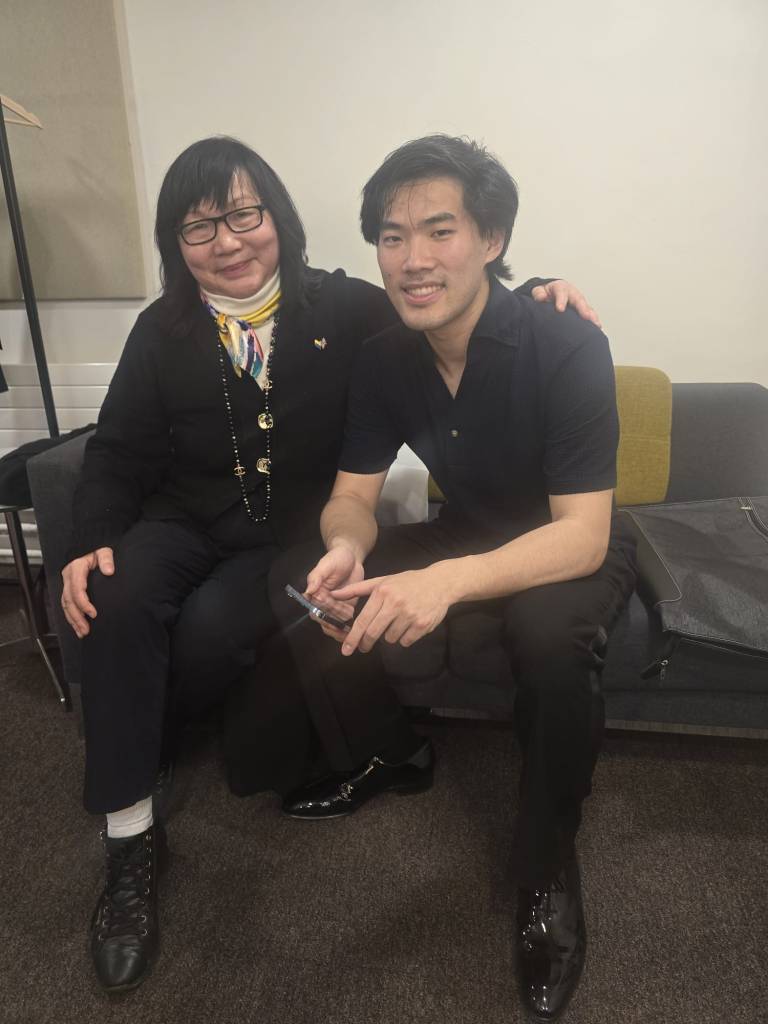
In the Green Room with Yisha Xue to thank Bruce before he flies off early tomorrow morning to delight of audiences in every part of the world.
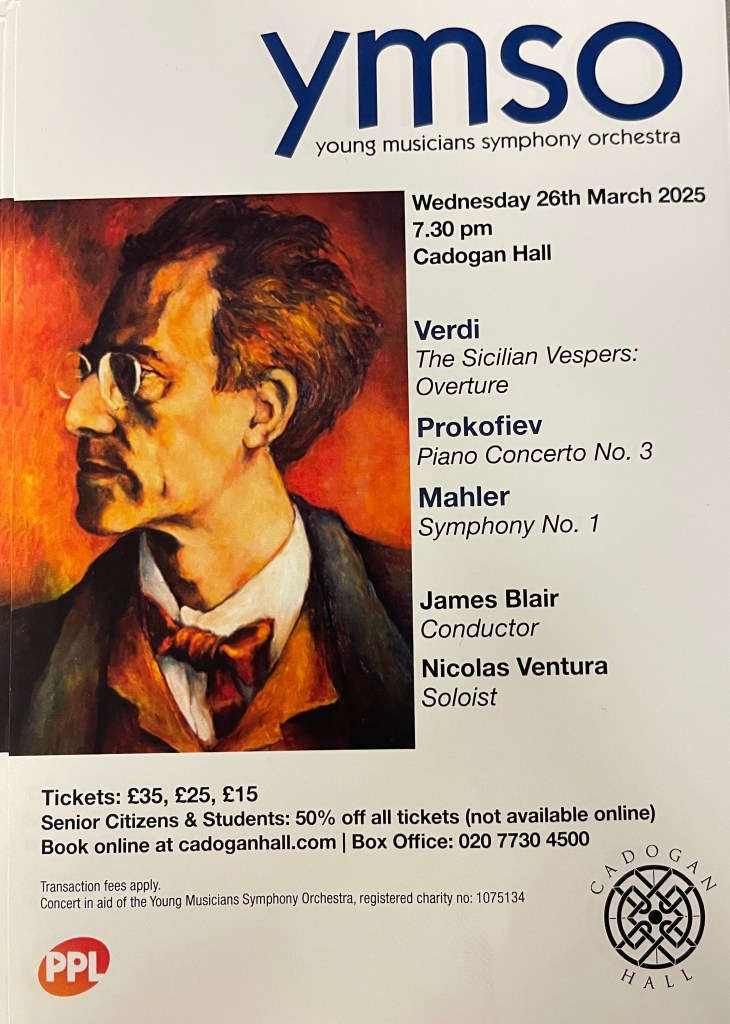
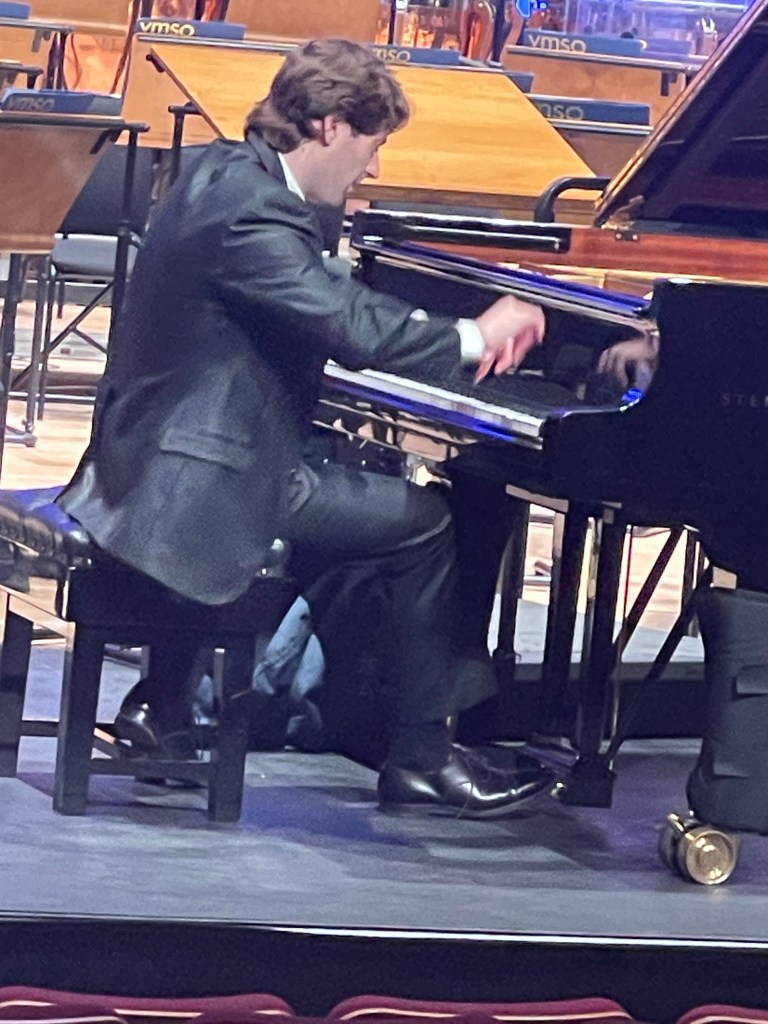
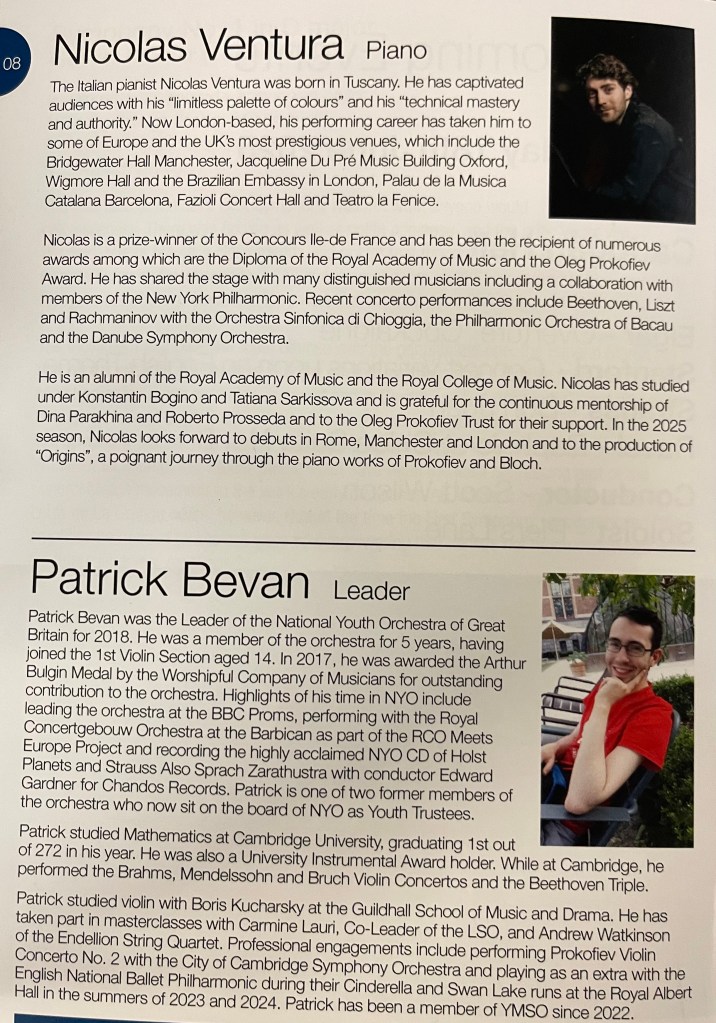
Prokofiev from the hands of a young Tuscan artist with sounds sculptured in marble of authority and dynamic drive that he must have in his blood from his home town of Massa where Michelangelo would choose marble slabs that he would turn into statues that the world had never seen since Roman times.Baubles into gems ?
Nicolas Ventura was not only monumental but also possessed the refined beauty of Da Vinci that lays hidden in much of Prokofiev’s scores. They are also full of refined poetry and visionary sounds of extraordinary poignancy not only being manhandled by bombastic percussive declamations that many lesser artists would have us believe!
Playing with great authority as a star student has become an artist to reckon with .
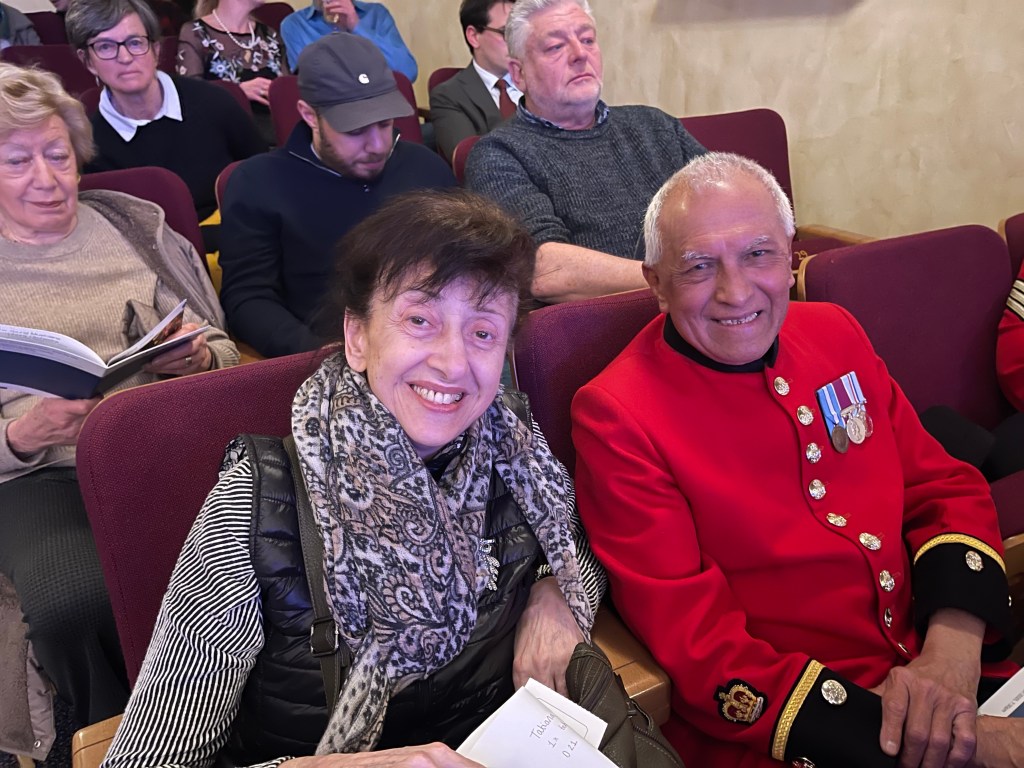
Tatiana Sarkissovain company of a Chelsea pensioner
His two mentors Tatiana Sarkissova and Dina Parakhina looking on with great admiration and awe of the sacrifice and dedication that true artistry demands.
Breathtaking virtuosity too as Prokofiev like Rachmaninov were both master pianists.
But they were above all poets of keyboard capable of reaching deep into their Russian souls to reveal the yearning nostalgia and pianistic genius that was their birthright .
There was the ravishing improvised beauty of the innocuous Andantino of the second movement to be transformed into tempestuous outbursts of extraordinary ingenious invention and vision.
Has the inquisitive questioning of the ‘meno mosso’ in the last movement ever sounded so chameleonic as it led to a melodic outpouring of Rachmaninovian fervour before shooting off with clusters of notes that would have put Charles Ives to shame.
An ovation that if we were in Italy would have been rewarded with many encores.
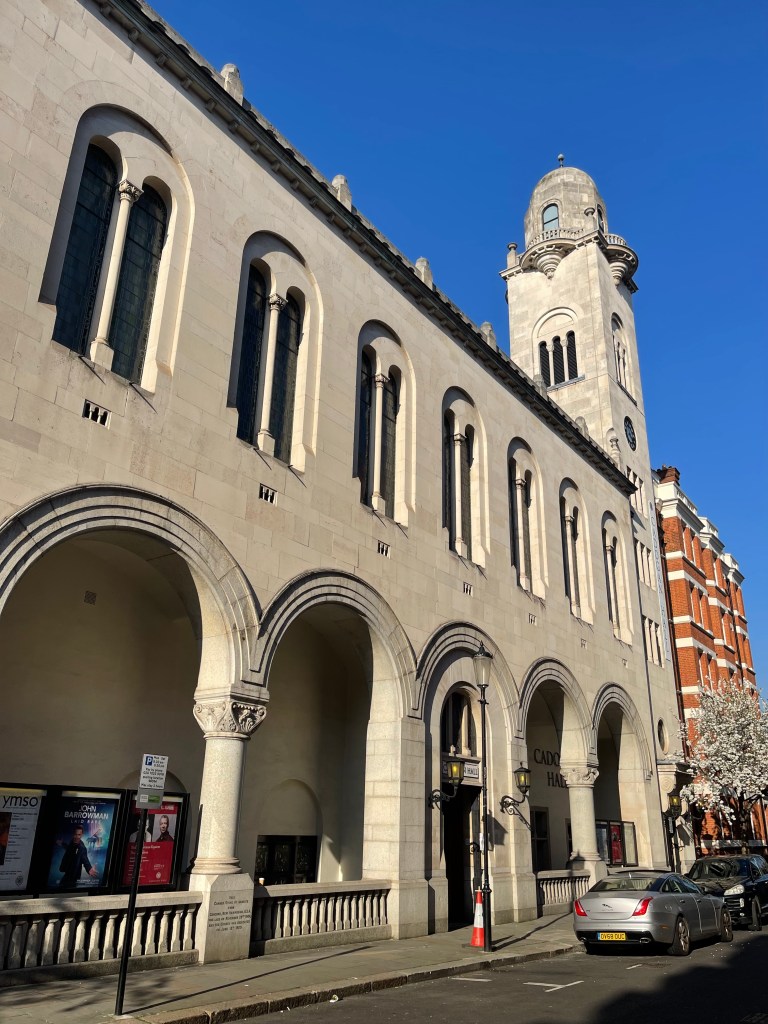
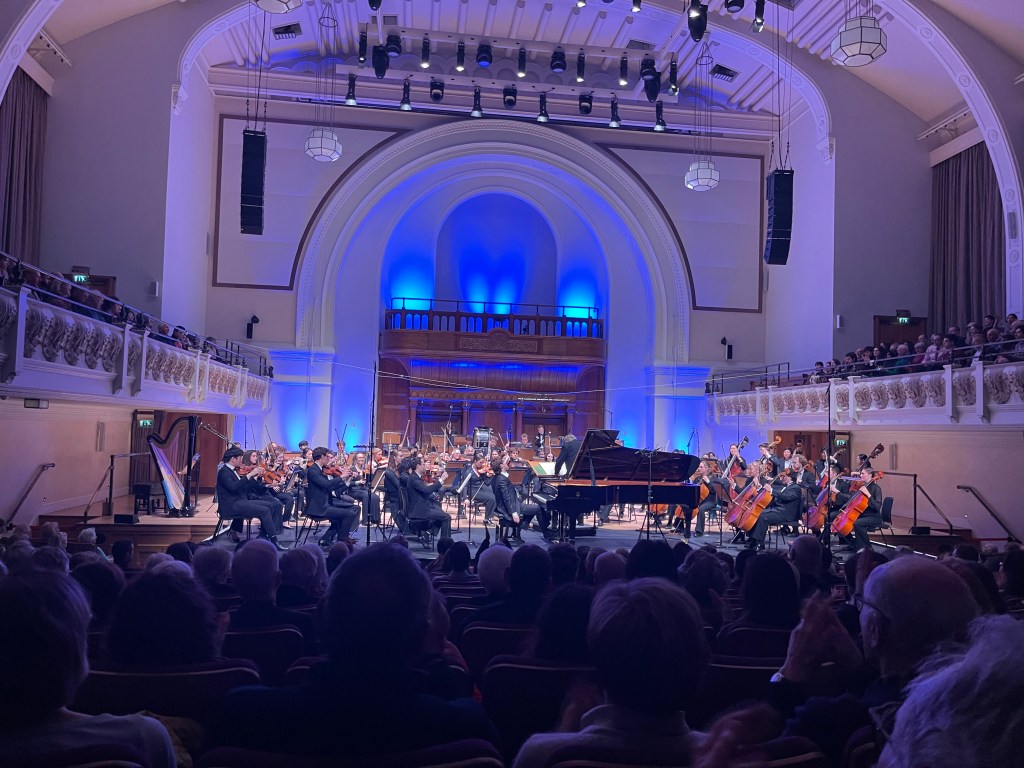
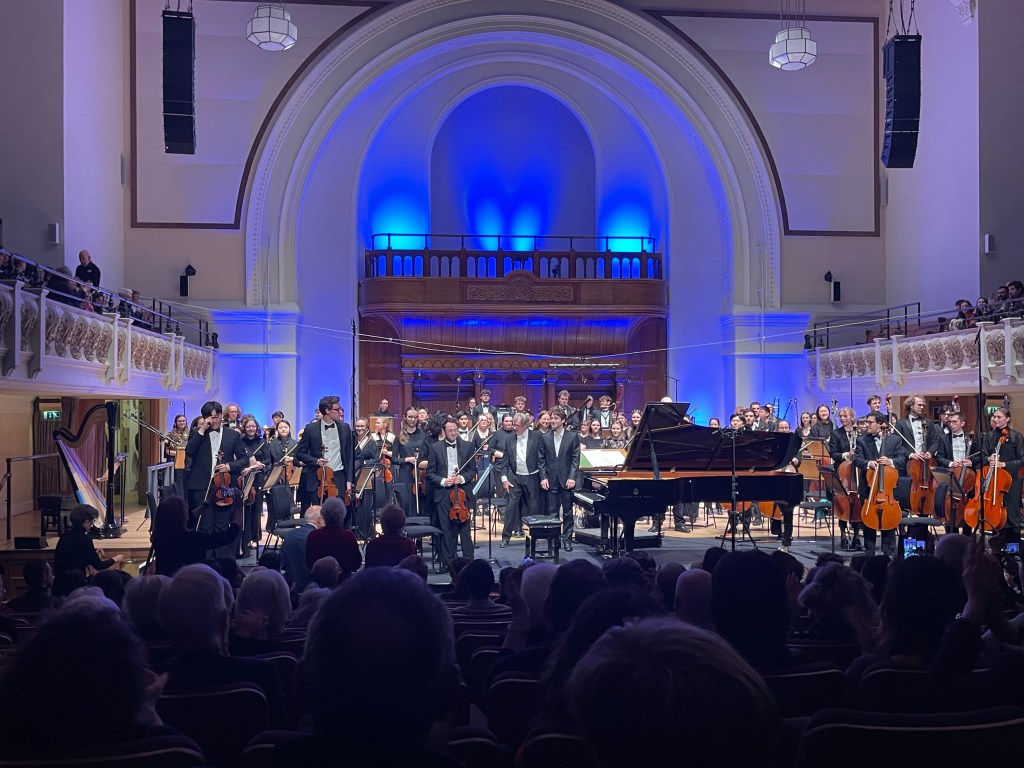
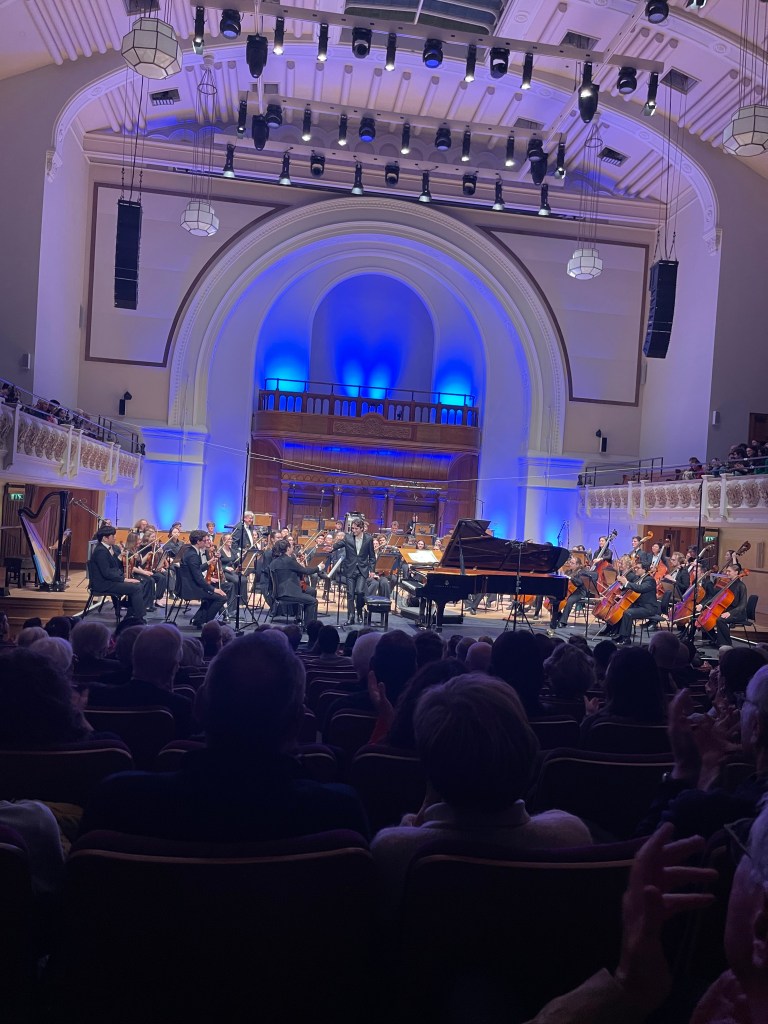
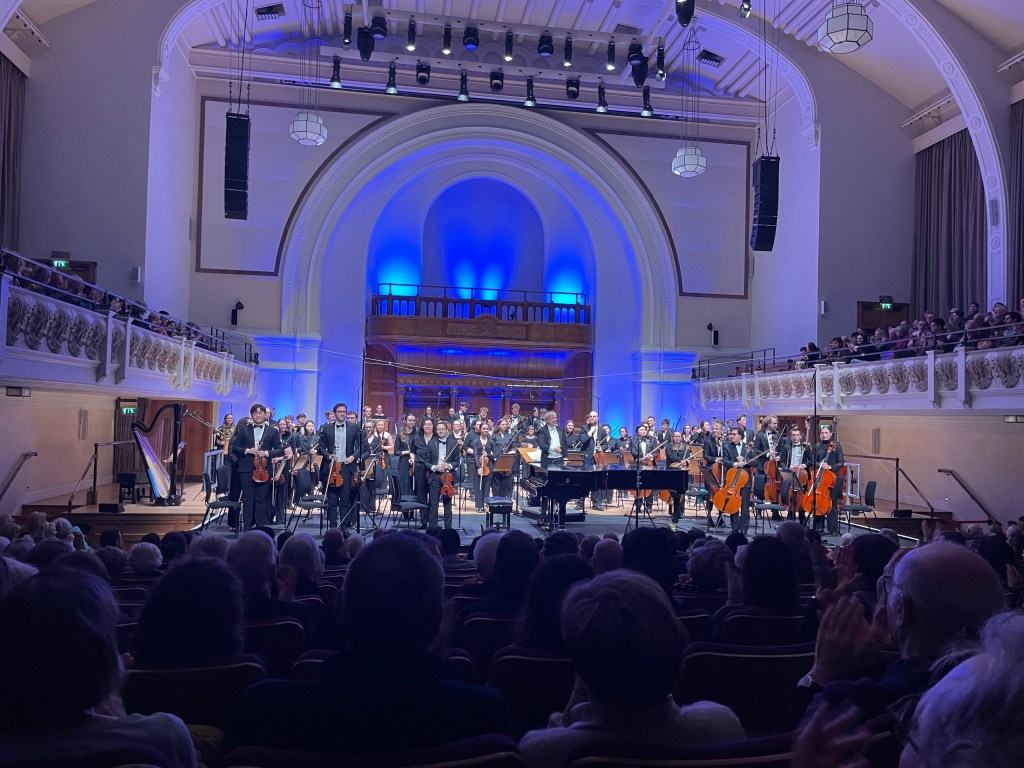
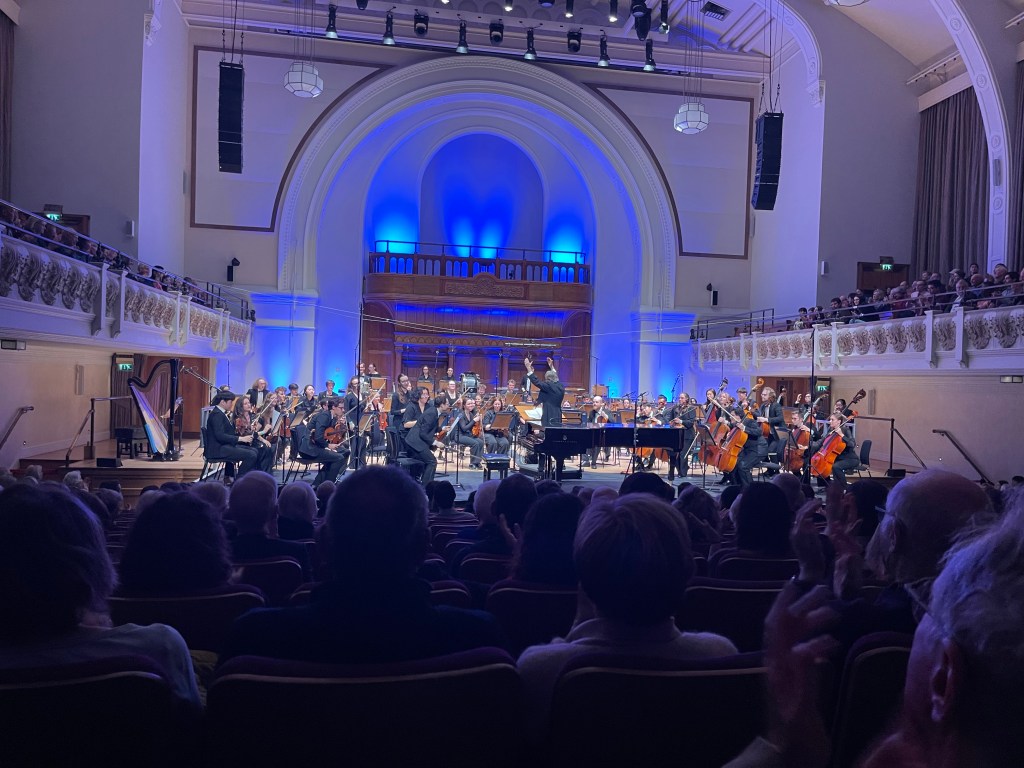
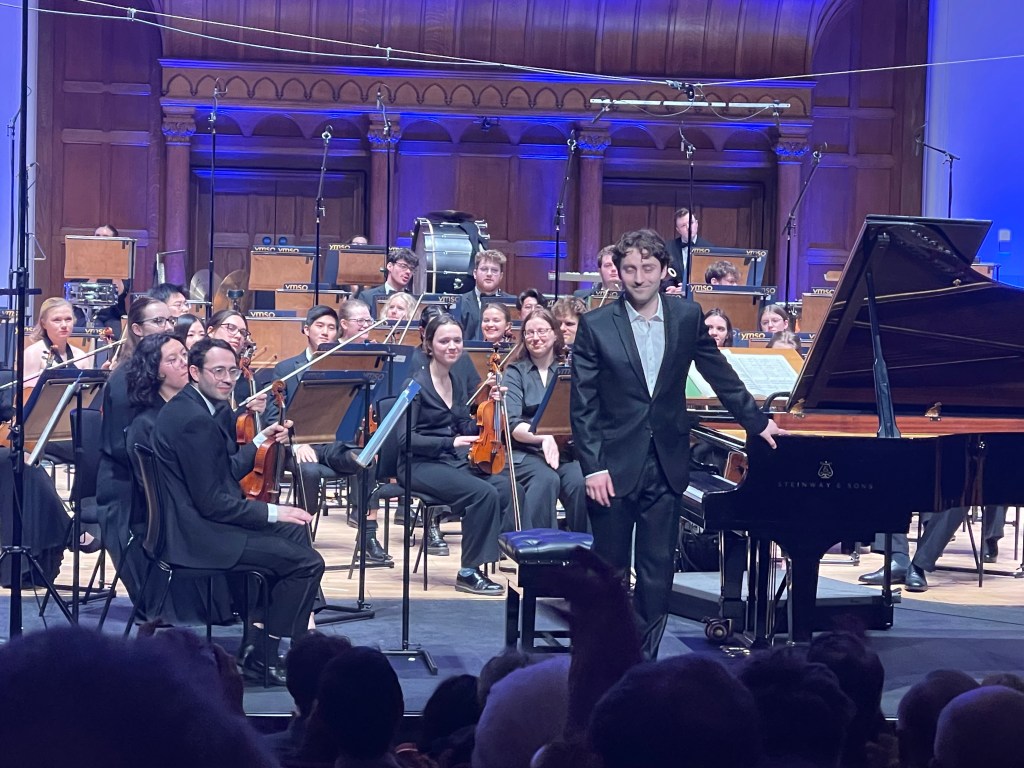
However the orchestra after warming up with a superbly Hollywoodian style Sicilian Vespers (surely the inspiration for Korngold’s magical Californian sojourn),were now raring to show us their true mettle with Mahler’s ‘Titanic’ Symphony that some have even considered as Beethoven’s 10th .
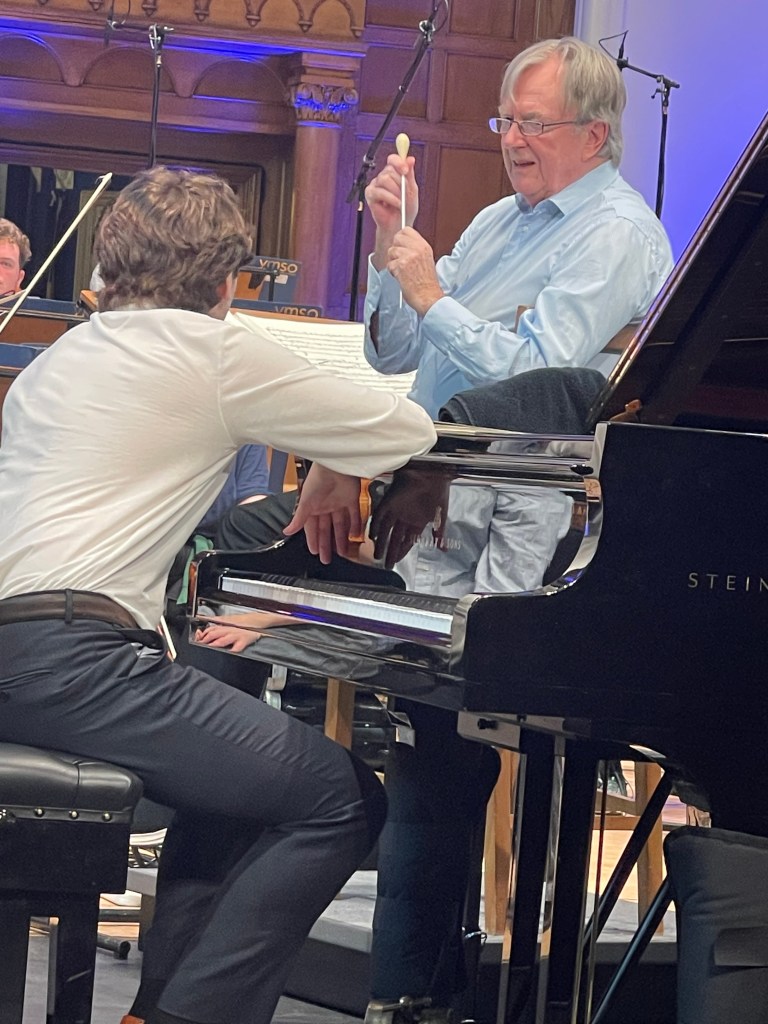
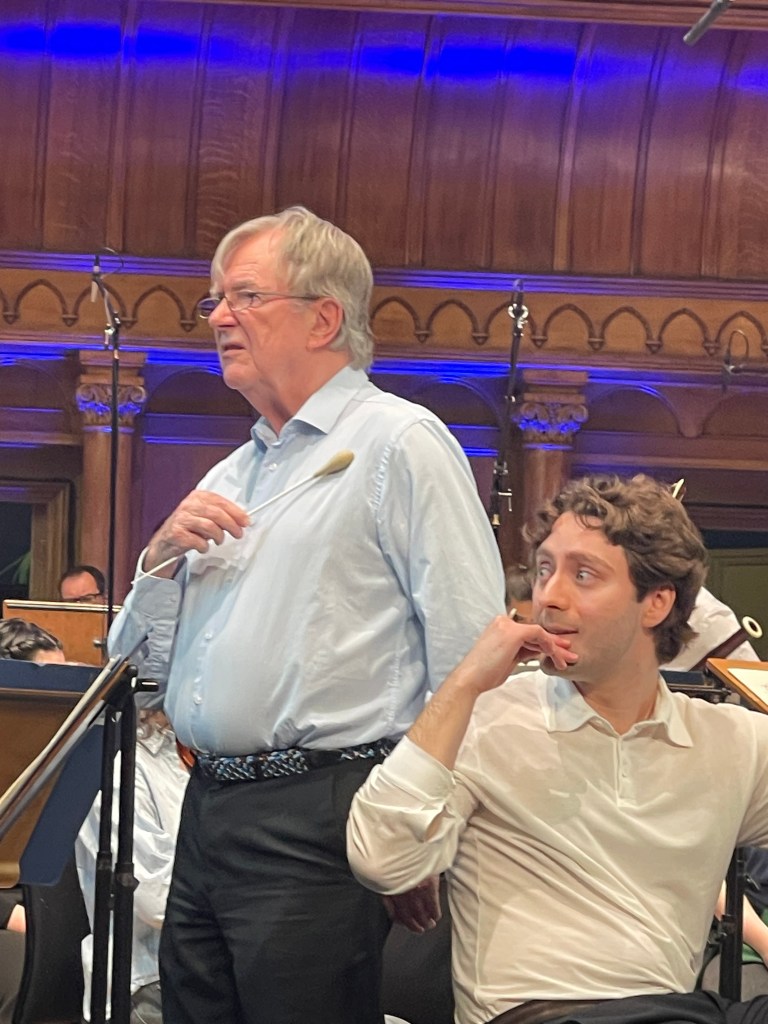
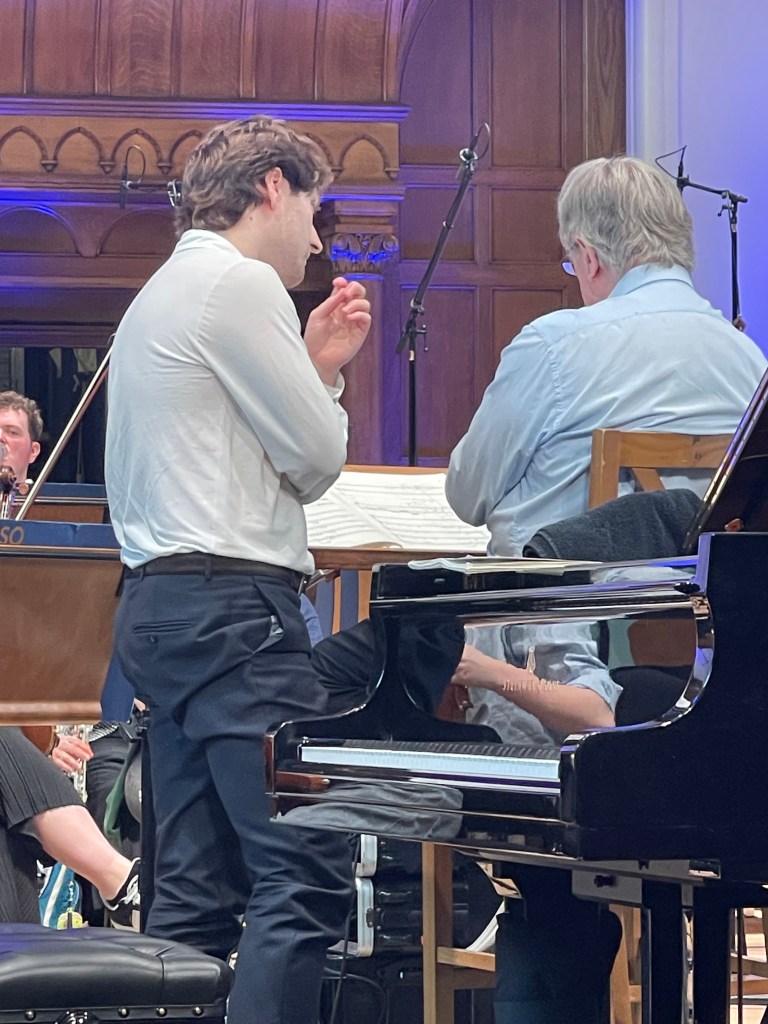
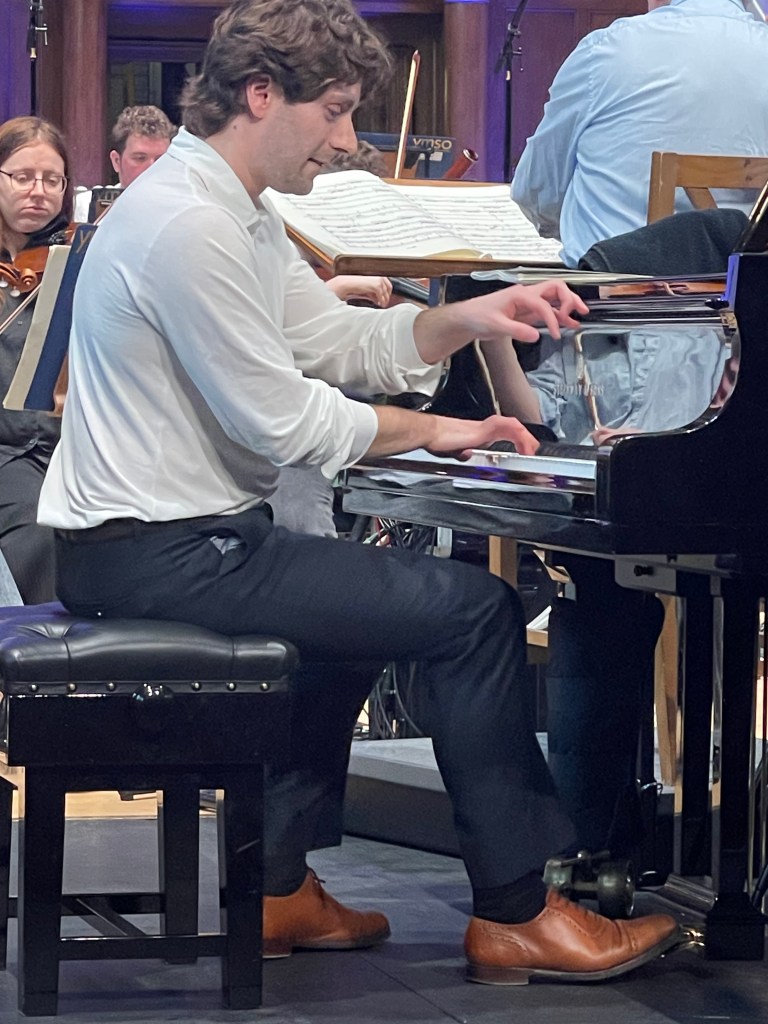
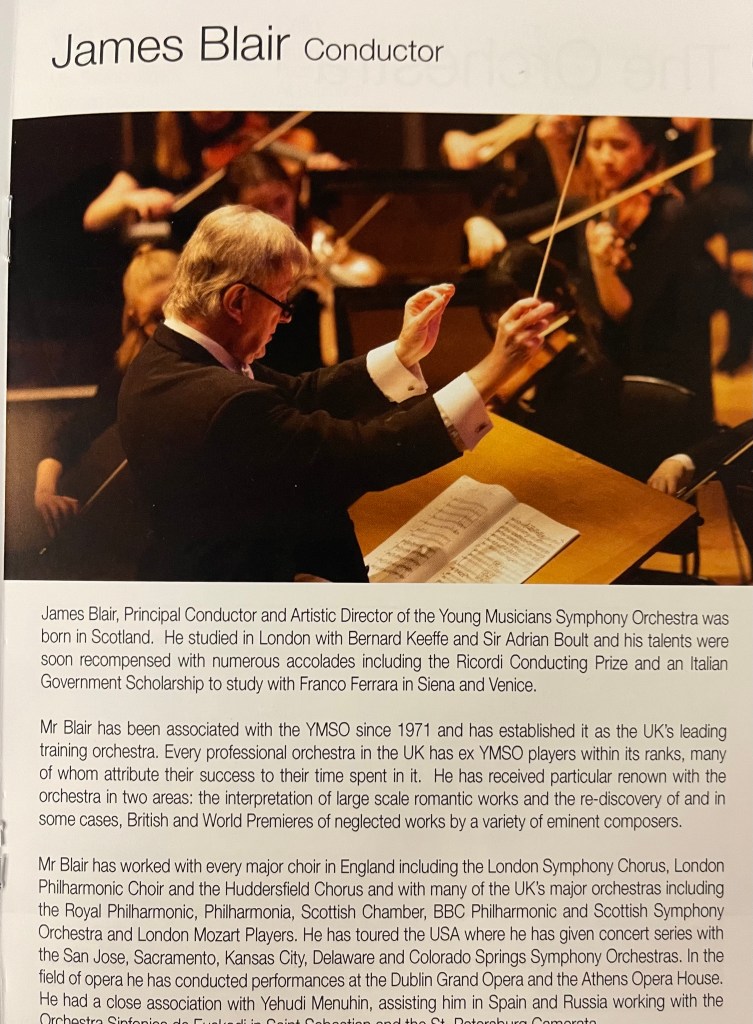
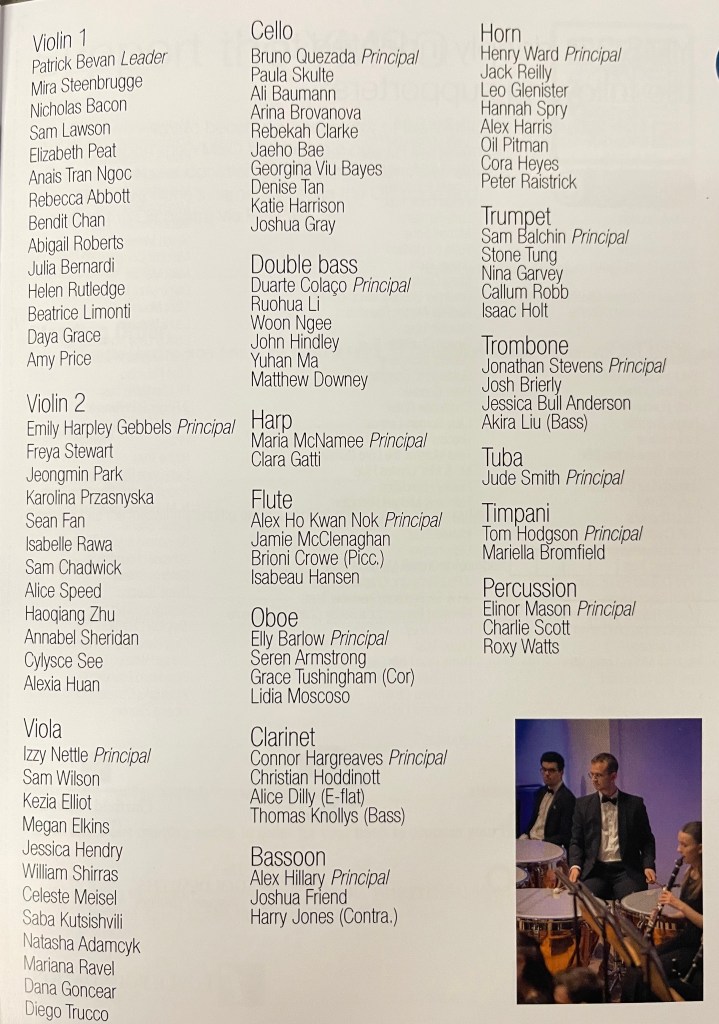
A performance of youthful energy and passion expertly guided by the veteran of this remarkable ensemble ,James Blair.
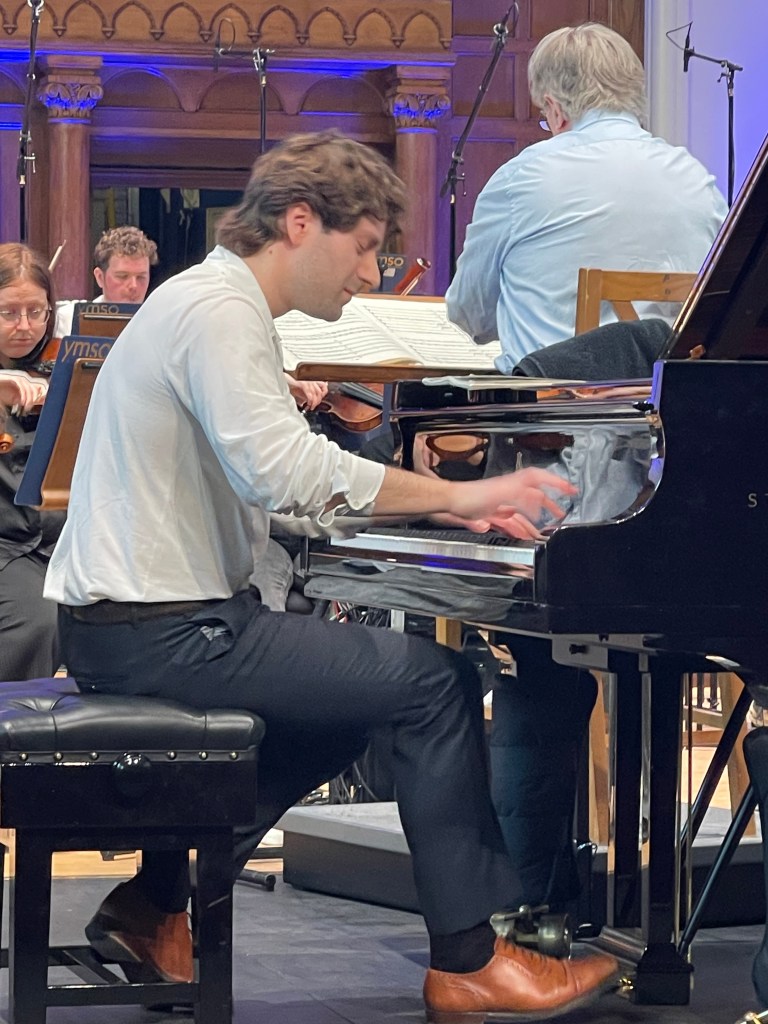
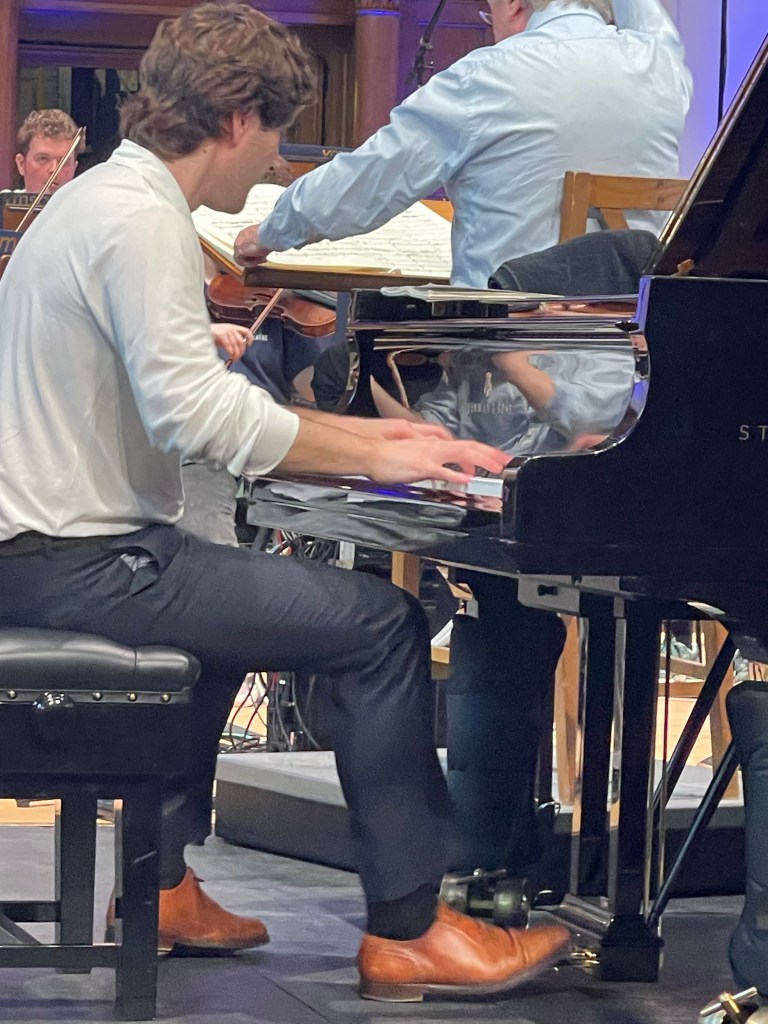
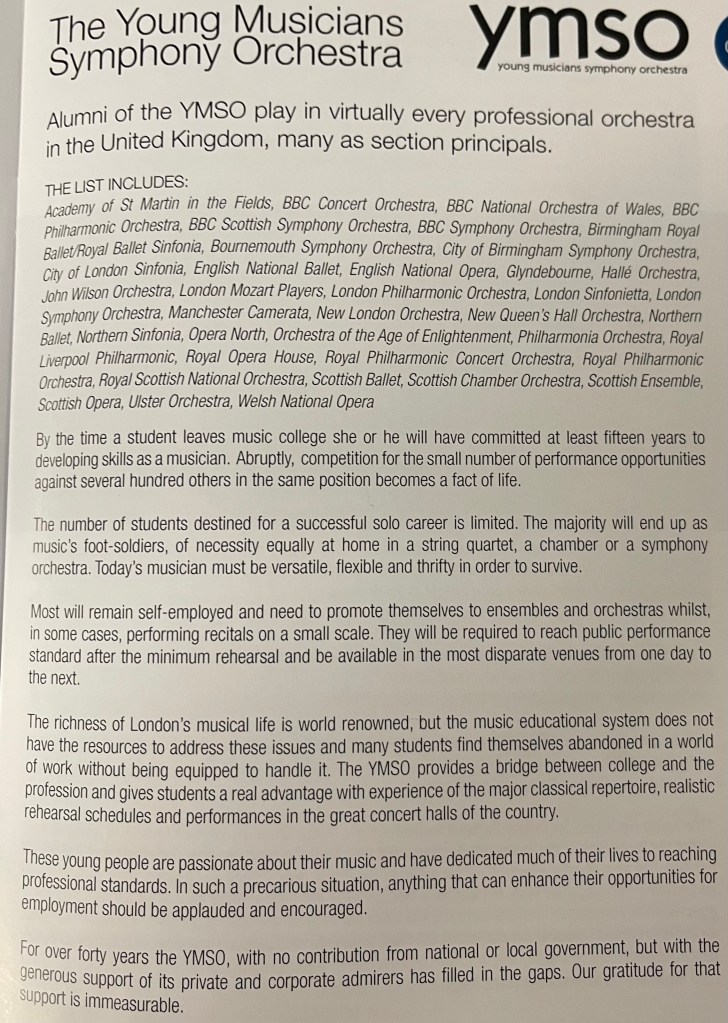
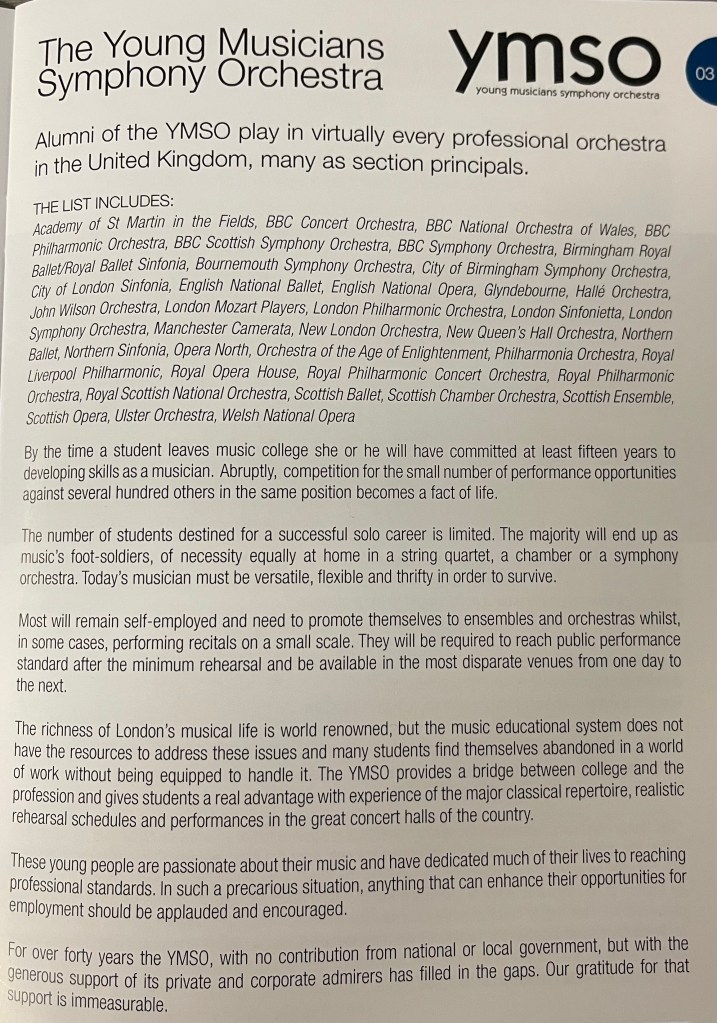
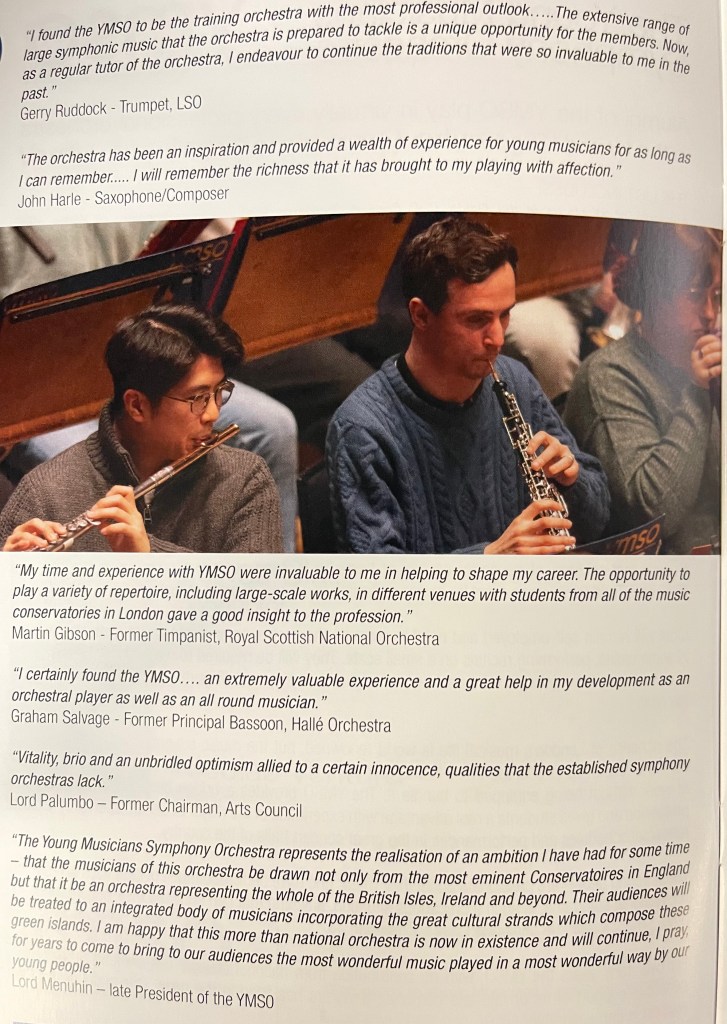
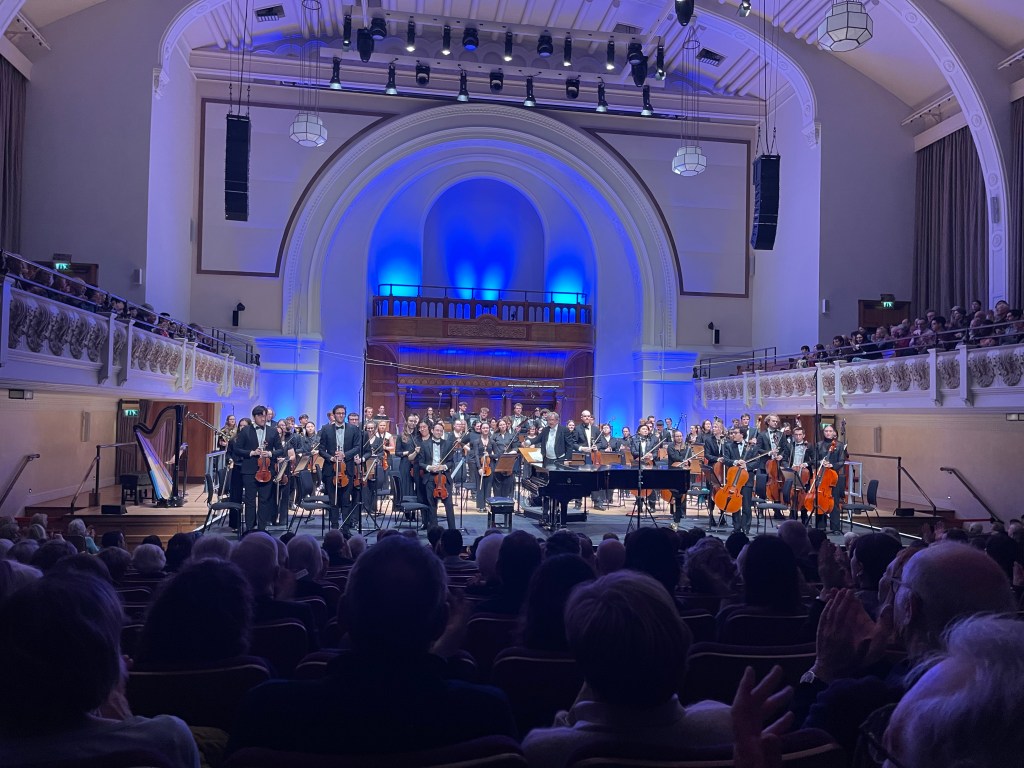
Shots below taken also in rehearsal which revealed the professional quality of this youthful orchestra funded only by private or corporate means that has for forty years provided a bridge between college and the profession giving students a real advantage with experience of the major classical repertoire, realistic rehearsal schedules and performances in the great concert halls of the country.
It also gives a magnificent opportunity for young soloists to perform with a major orchestra in London the recognised capital of Classical music.
And now Nicolas Ventura a star shining brightly indeed :
Nicolas Ventura at St Mary Le Strand Elegance and Beauty combine with intelligence and mastery
Chamber music returns to its origins with sumptuous beauty from within and without.
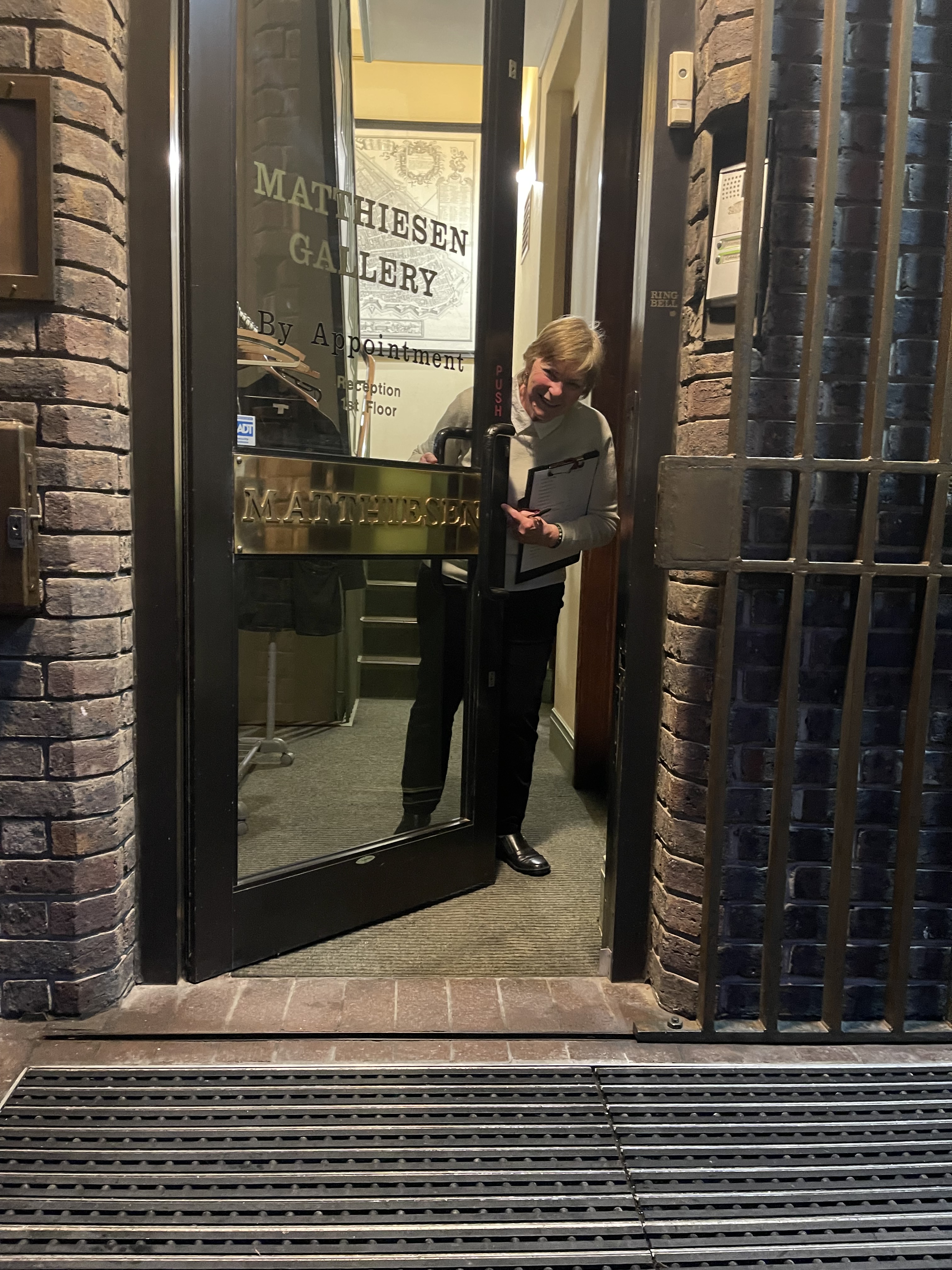
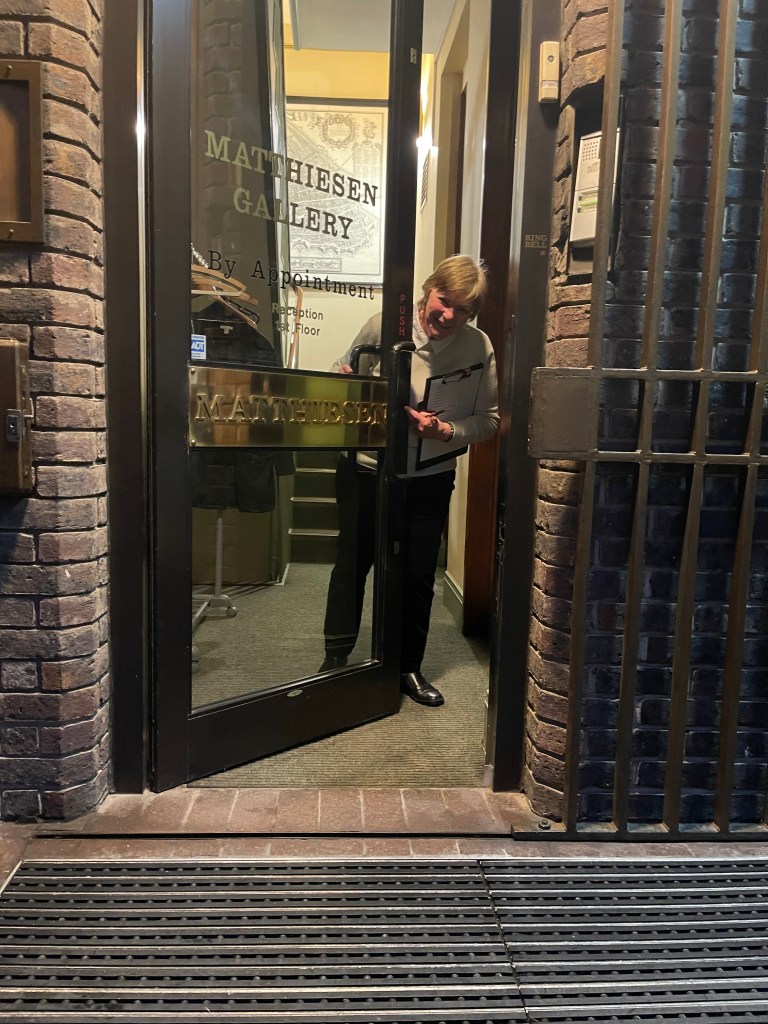
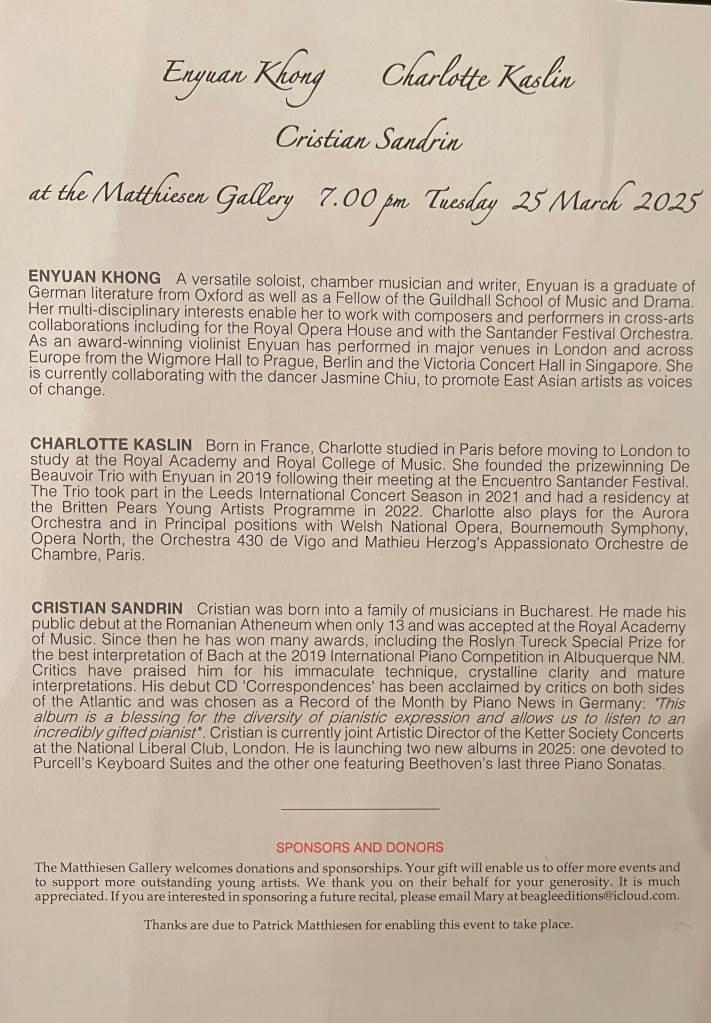
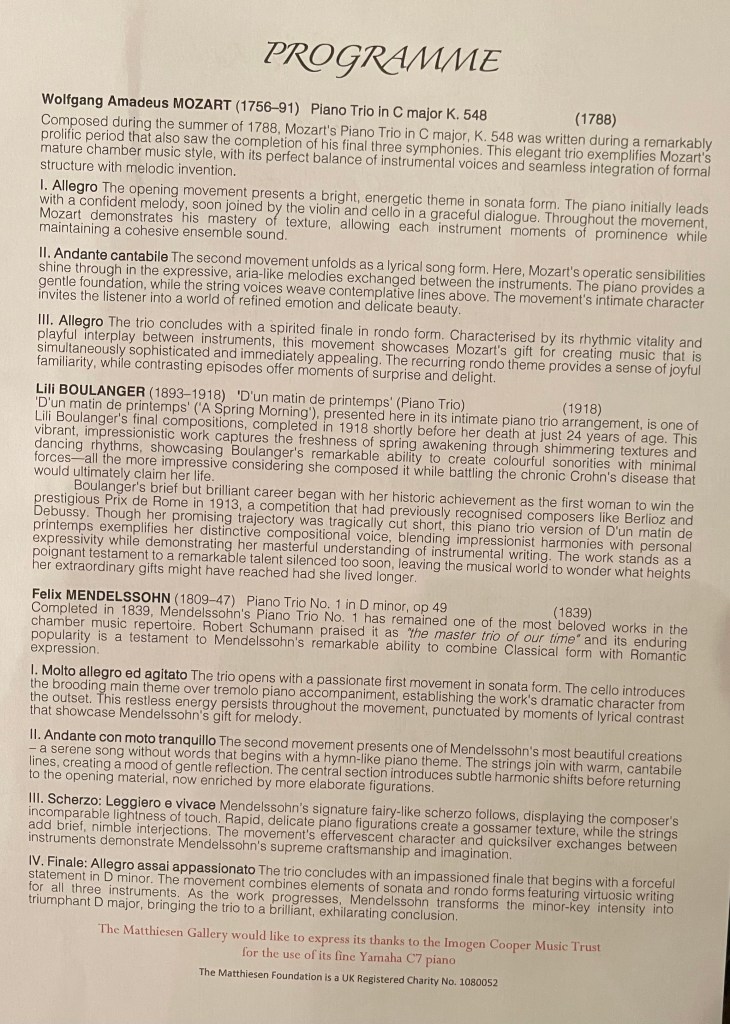
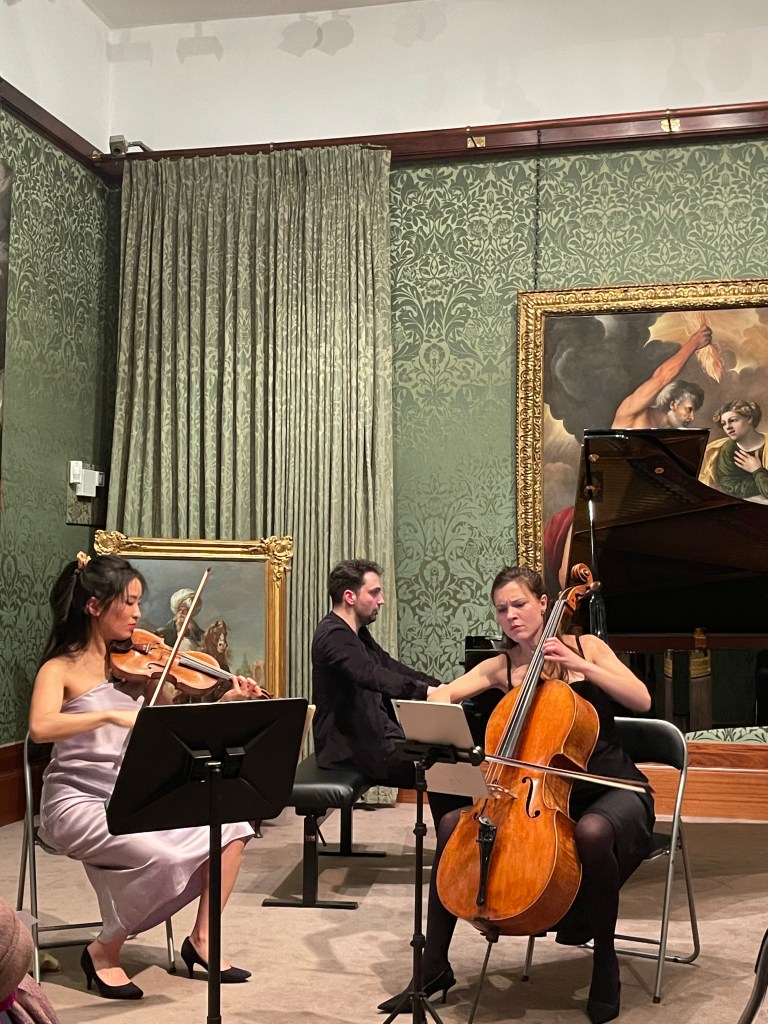
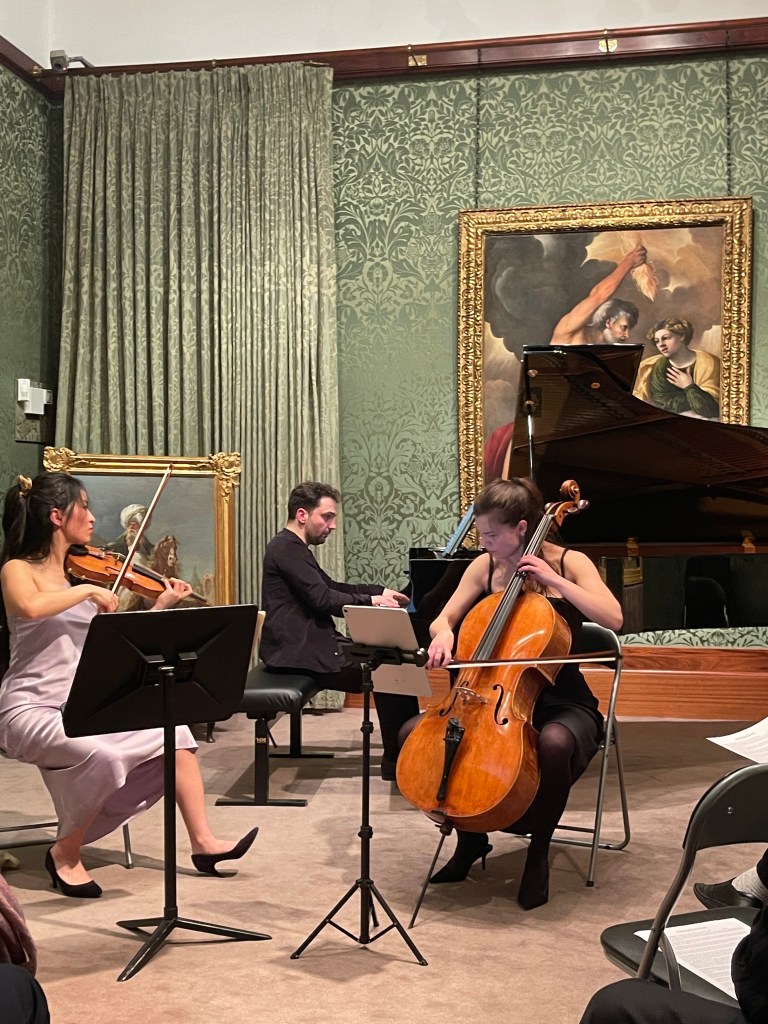
Mozart Mendelssohn and Lili Boulanger from the Kong,Kaslin ,Sandrin Trio under the eagle eye of Mary Orr and with the eclectic good taste of Patrick Matthiesen .
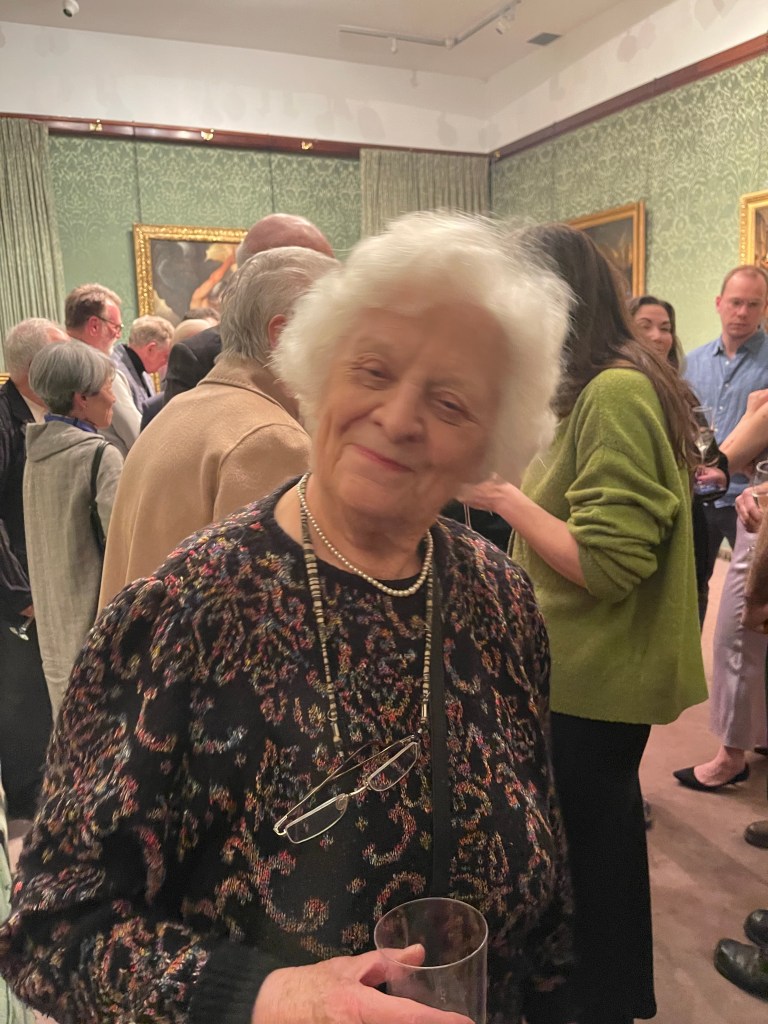
Mary Orr the indefatigable mentor of young talented musicians – retirement has been mentioned but that dear Mary is only for horses, the music world needs your passionate understanding and personal promotion and Mothers cannot retire!
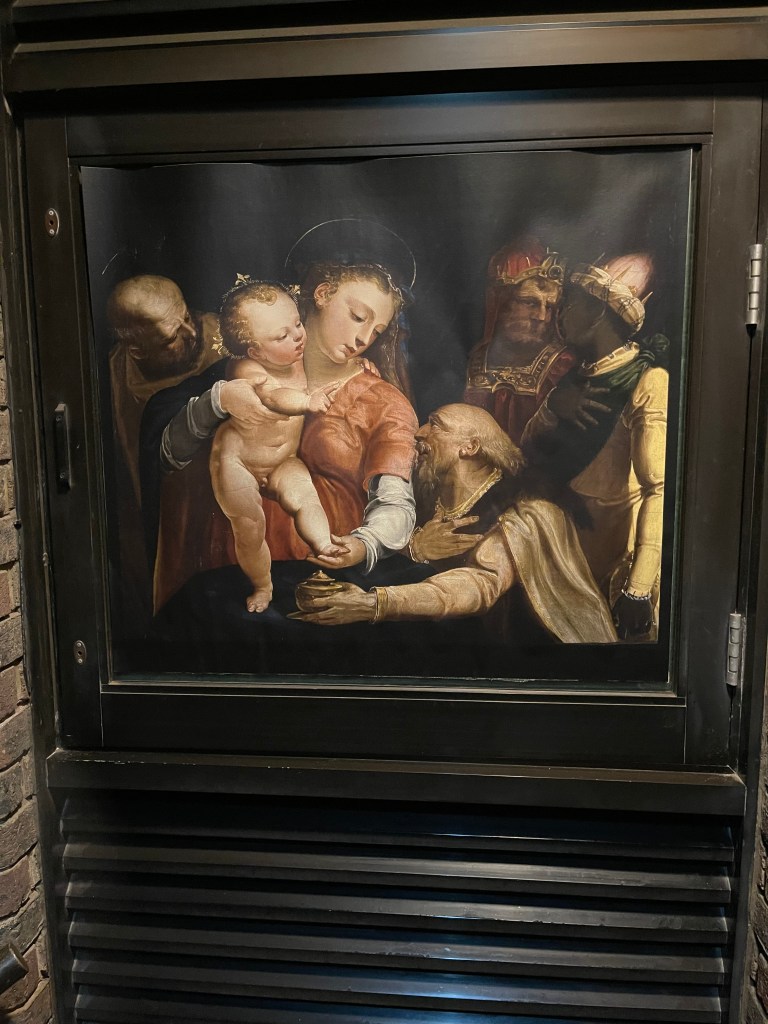
Only the greatest music shall echo in the shadow of the masterpieces that adorn the silk clad walls and it was the refined good taste and the style of it’s age that Mozart’s C major Trio spun it’s magic web.
Embracing the prodigious Lill Boulanger whose short life we are just beginning to appreciate, with the few works that her sister Nadia promoted with such love and professional admiration . ‘D’un matin de printemps’ gave us a taste of what might have been. Played with the ravishing insinuation of Ravel or Debussy a sound world so particular to the turn of the century Paris and played with extraordinary colours and unity of intent.
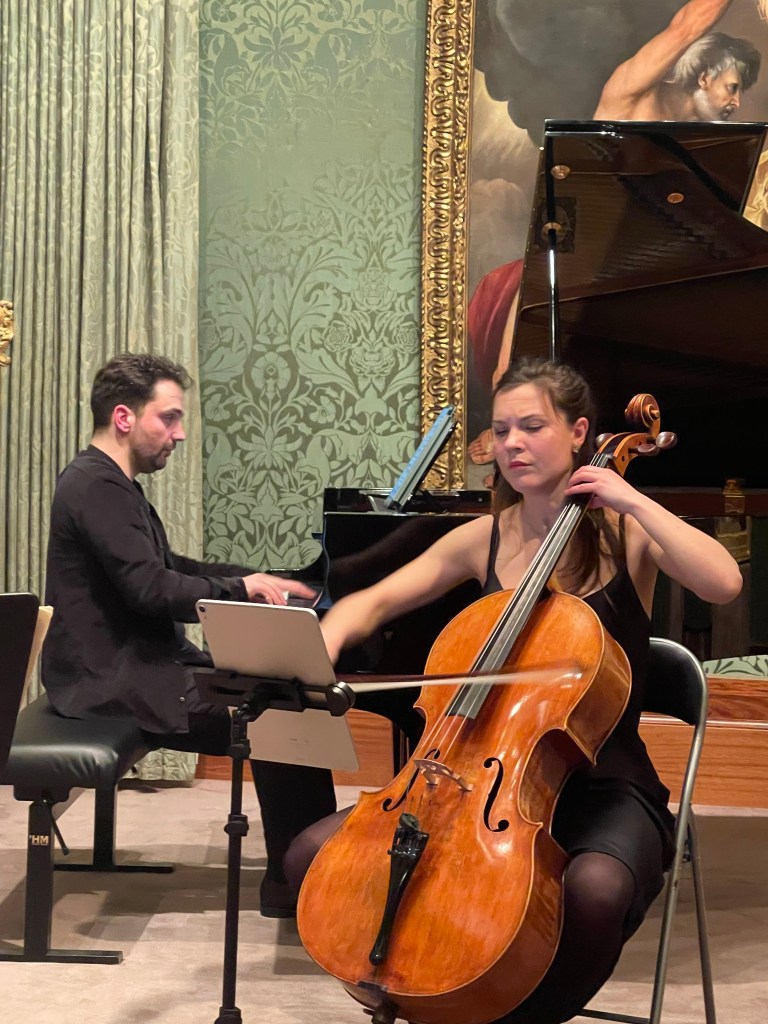
But it was when Charlotte took front stage with the opening of Mendelssohn’s D minor Trio that the scene was set for some chamber music playing of passionate intensity and heart melting beauty. A composer who dare I say it was the Mozart of the Victorian Era and who knows what the works might have been bequeathed to the world had Mozart and Boulanger lived to experience middle age and maturity
The three superb players played as one ……I can say no more than that but it is much much more that sufficient ! Given a stage by the ever generous Patrick Matthiesen in his sumptuous gallery where music and art are inextricably entwined.
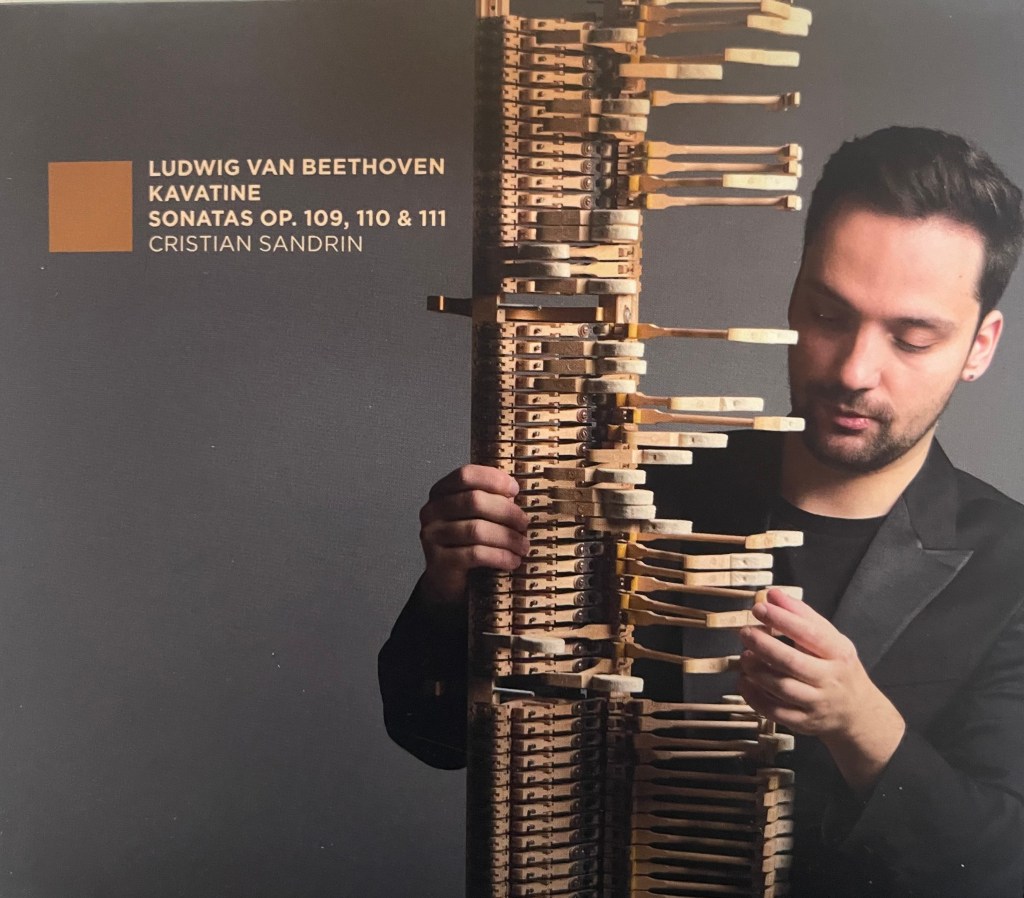
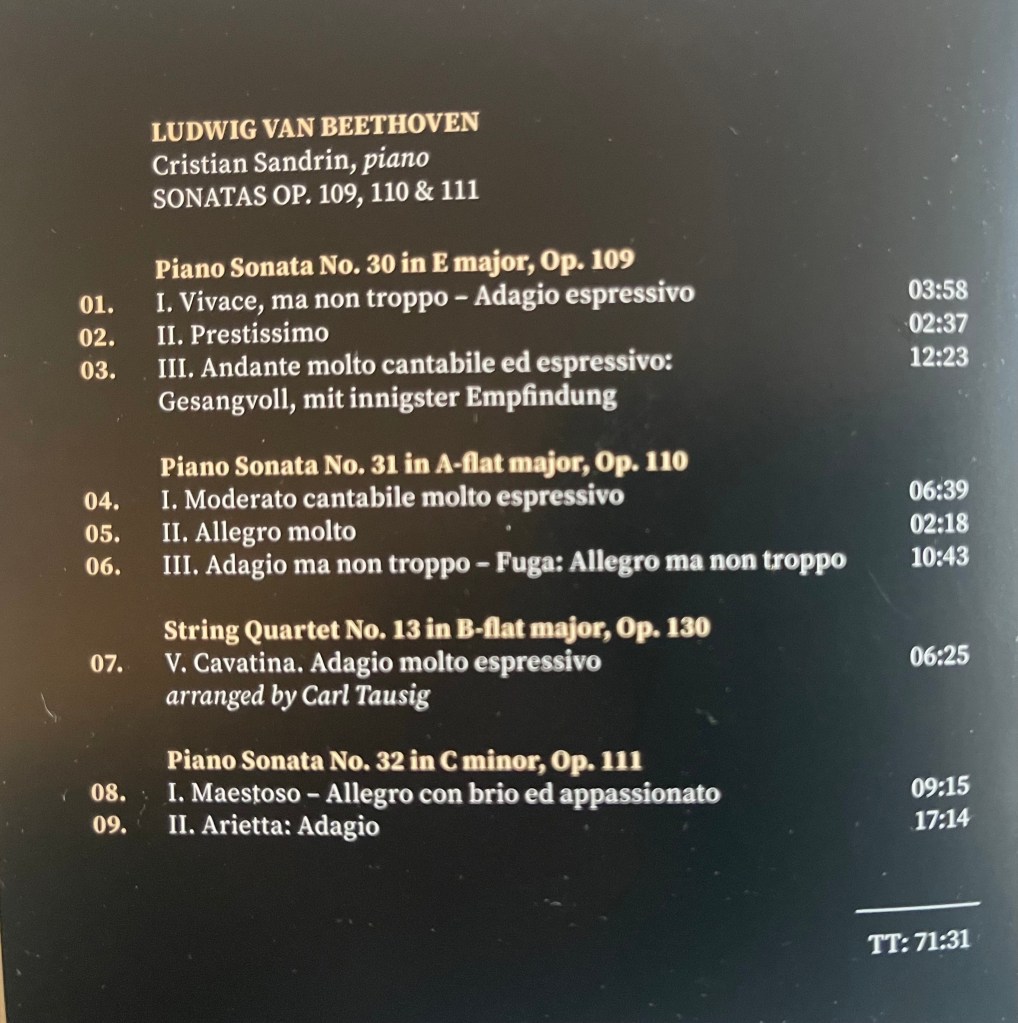
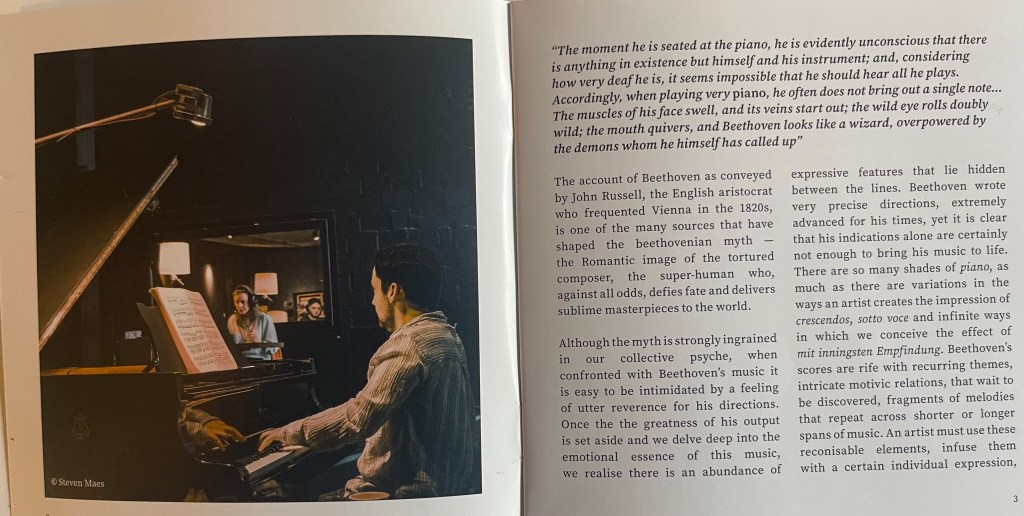
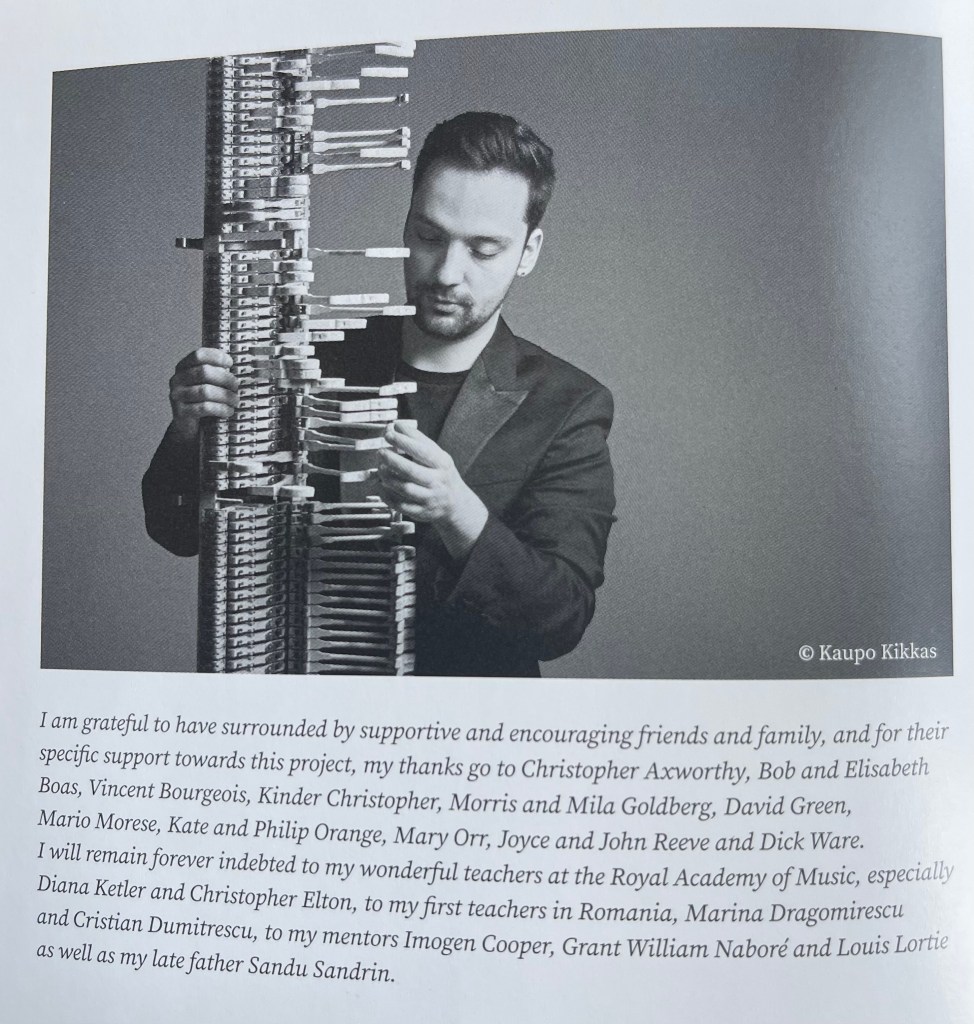
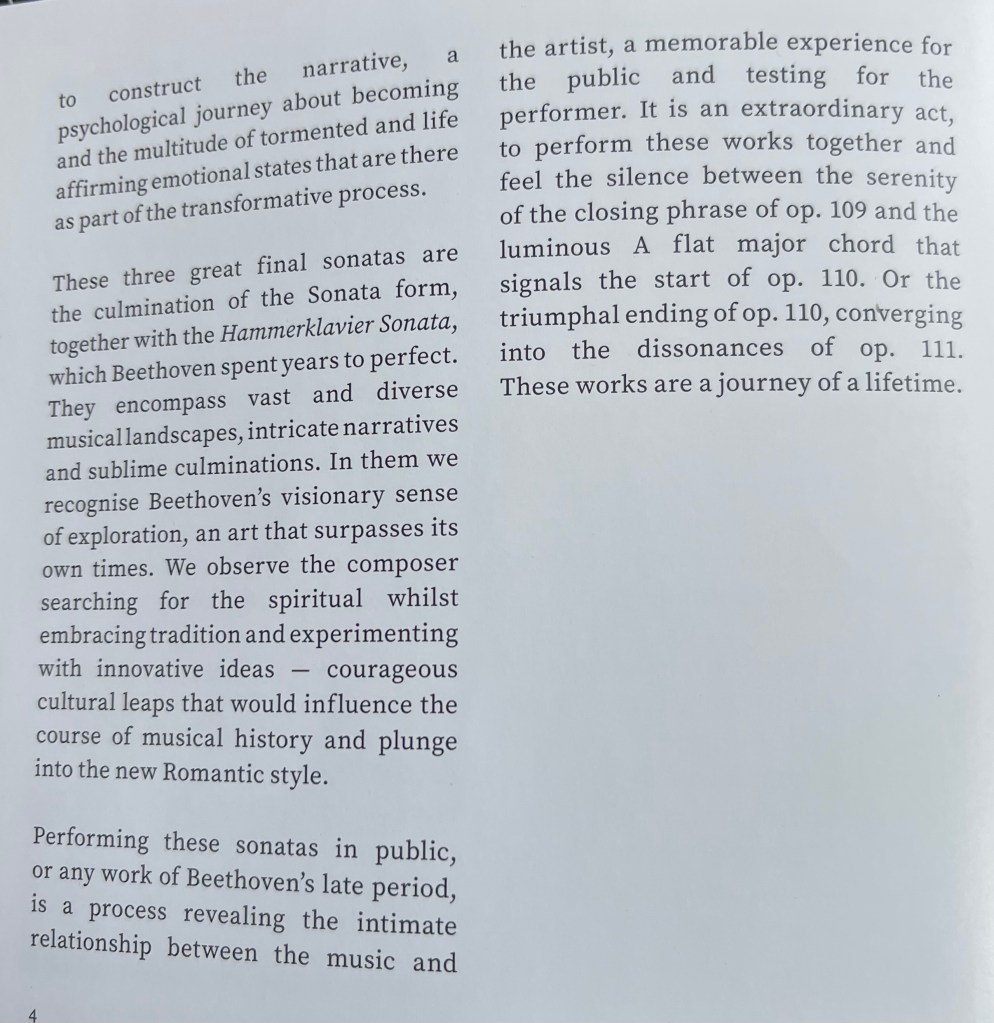
Cristian has just launched his new CD and if his own notes are anything to go by they should be performances of insight and inspiration for the Genius of Beethoven’s last Trilogy of Piano Sonatas.
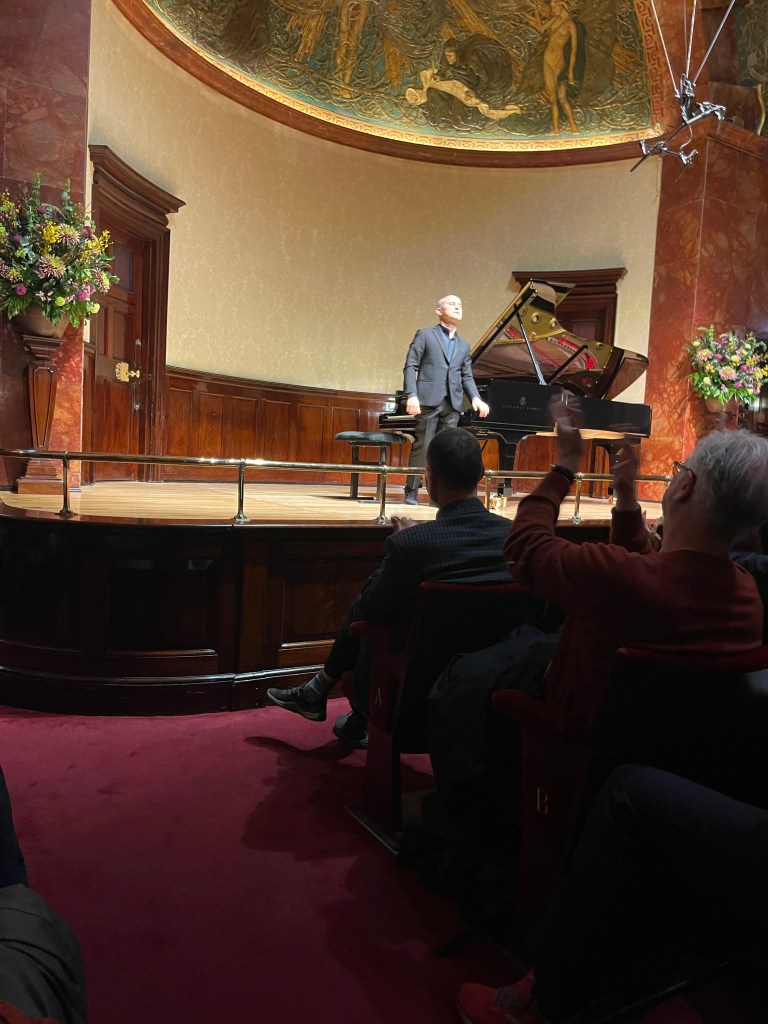
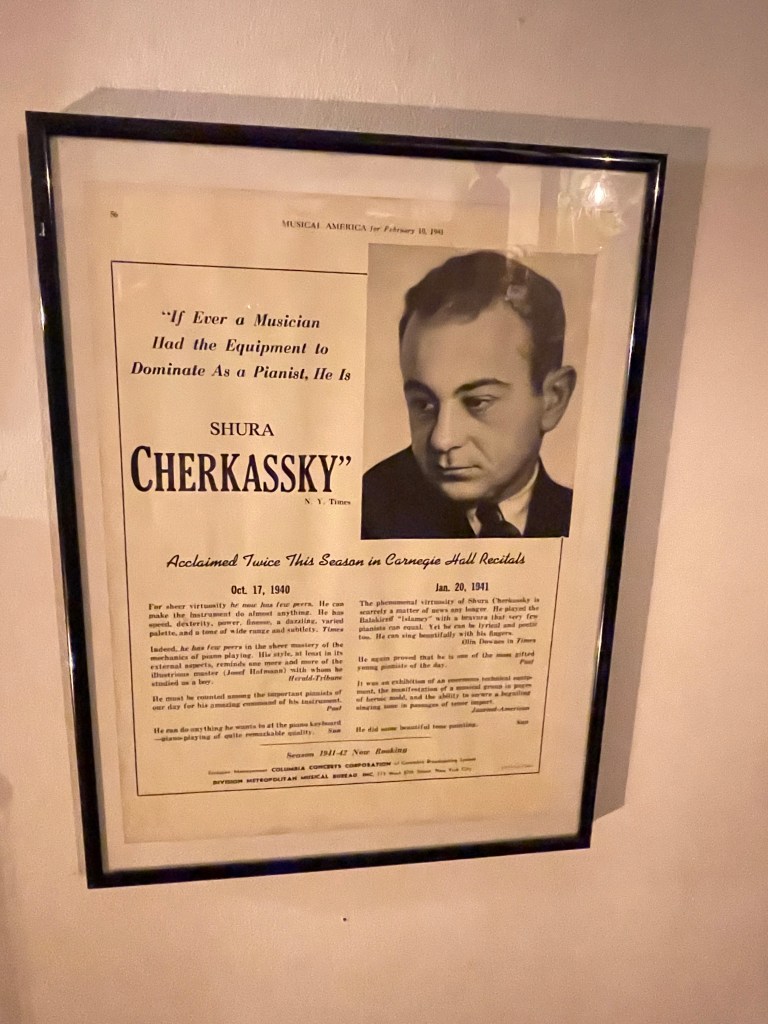
Nelson Goerner at the Wigmore Hall and the magic of Cherkassky returns with a refined multi coloured mastery of another age .
A seemless jeux perlé of silken whispered beauty and a reminder of a time when pianists were magicians who could turn baubles into gems and gems into sounds of breathtaking beauty .A time when the piano was an orchestra that could roar like a Lion or seduce with whispered secrets of intimate confessions .
The piano that we read about in books of the power that Liszt and Thalberg had over a high society audience turning them into a screaming mob trying to grab a souvenir of the wizard with such bewitching powers .
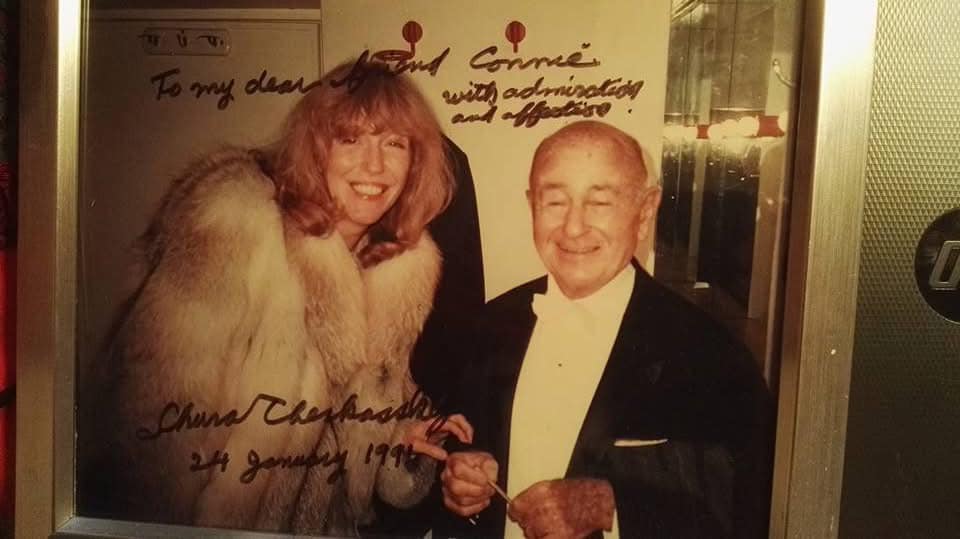
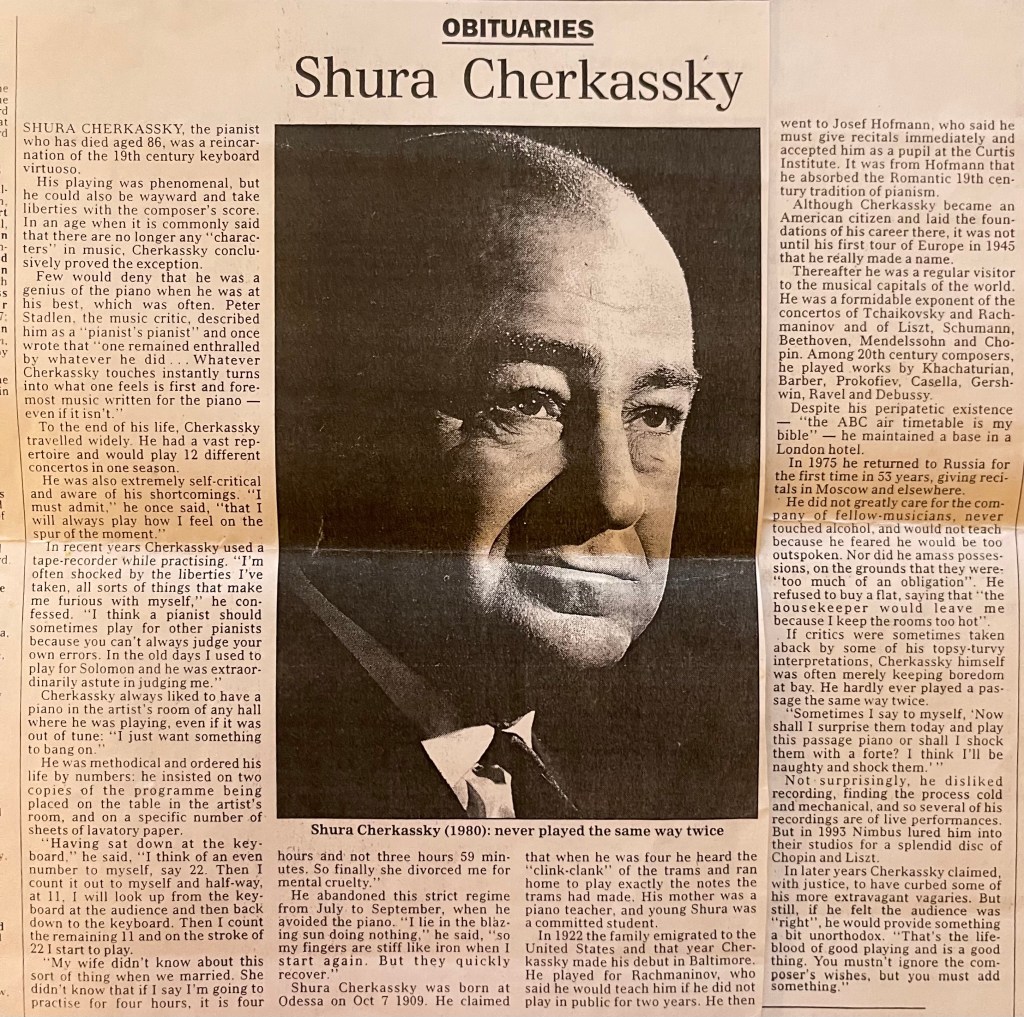
It was of course Horowitz in our day who was described on his arrival in Paris as the greatest pianist alive or dead .I remember Cherkassky telling me that on the death of Bolet, Horowitz declared that they were the only two left .
It was Nelson who many years ago had the same agent as Shura Cherkassky , Christa Phelps, who persuaded me to engage a very young Goerner because Cherkassky ( our hero of many recitals in Rome ) admired him so much .
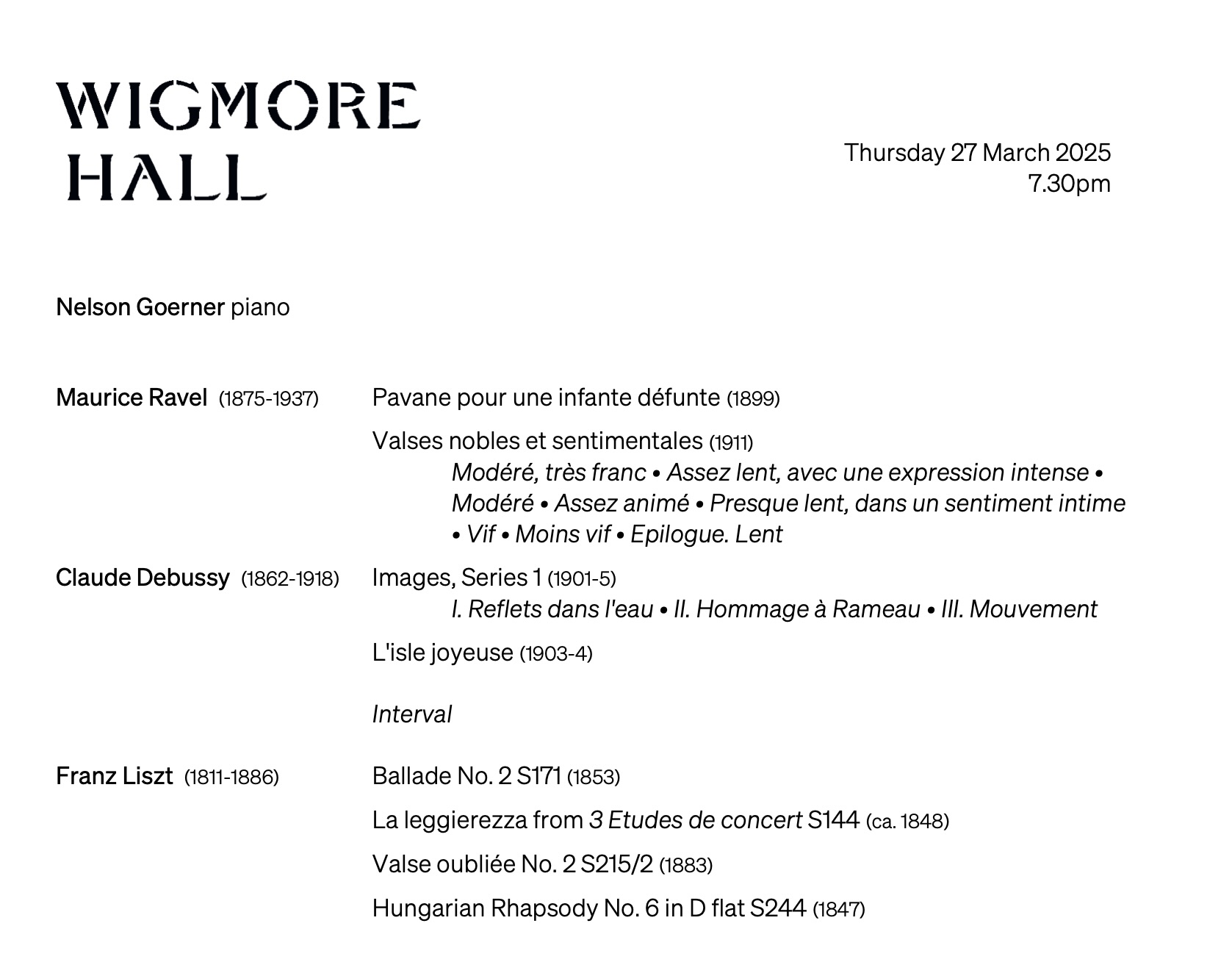
Shura and Horowitz are long gone and I can now say that there is only one left to show us what it means to make the piano sing . Nelson Goerner ,a master pianist, who is a magician from the Golden age and many of those pianists adorn the walls of this much loved hall: De Pachman,Moiseiwich, Rubinstein ,Myra Hess etc. A programme of Ravel ,Debussy and Liszt ideal for a supreme colourist. I well remember a 45rpm recording of Cherkassky playing the Ravel Pavane coupled with the Chopin Study op 10 n. 6 in E flat minor in the magical left hand transcription by Godowsky. I have searched high an low for a recording that completely bewitched me as a teenager asI fell in love with that kaleidoscopic sound world.
Nelson played the Pavane as an opening piece with refined good taste and drew us in to his world of colour but also of a musician who allows the music to speak for itself with simplicity and beauty. It did not quite have the weight of Perlemuter and it is good to remember that this was the last piece he played in public in this hall suffering the ‘guillotine’ just one more time in remembrance of his agent Basil Douglas. It was the Valses Nobles that followed that immediately showed the world of Nelson Goerner inspired by the magic of the Golden age pianism.But Nelson also has the modern day approach, inspired by his mentor the late Maria Tipo, that the composers indications in the score are to be pondered over searching for the real meaning that inspired the composer to put the notes on the page. A ‘modéré’ that was a little too ‘franc’ but had a great orchestral sense to it and one can quite understand how Rubinstein was booed off the stage when he gave the first performance in Spain. He famously got his own back, though, by playing them again as an encore !.Even now it comes as a shock but the ravishing beauty and crystalline purity of the ‘assez lent’ really does have ‘une espressione intense’ just as there was simple playful clarity to the ‘modéré’ that follows,and a chiselled questioning beauty to the ‘assez animé’.An almost lumbering capriciousness to the ‘presque lent’ leading to the gradual build up of grandiose nobility of the ‘vif’ immediately dispelled in a wash of sumptuous sounds. It was in the ‘Epilogue’ where Nelson showed his true musicianship, holding together strands of the previous waltzes as the composer looks back placing them in magical cloud of sound but never loosing the masterly architectural shape of a genius . A masterly performance that was followed by a Debussy of great fluidity but always with a sense of line. Allied to a kaleidoscope of sounds and mastery of the keyboard that gave great strength to these ‘Reflets dans l’eau’ but also lent an aristocratic nobility to ‘Hommage à Rameau’.’Mouvement’had an improvised freedom of whispered beauty as notes became mere washes of sound of an orchestral richness and colouring.’L’isle joyeuse’ was played with extraordinary mastery as he created the atmosphere with chameleonic changes of character leading to a climax that was breathtaking for it’s passionate grandiloquence and insistence.It is hard to believe that Debussy could conceive such magic looking across at Jersey whilst holidaying in Eastbourne but then genius is only for the chosen few. I have rarely heard this work played with such a kaleidoscope of colour and burning intensity allied to sonorities of bewitching enticement.
The second half was dedicated to just four works of Liszt but that was a feast fit for a king and could well have been a typical Cherkassky second half. The ‘second ballade’ played with heroism and beauty as this great tone poem recounts the tragedy of Hero and Leander with the menacing waves embracing us from the very first notes. Sumptuous rich sounds and fearless technical mastery were at the service of this remarkable work where the genius of Liszt was becoming ever more divorced from Liszt the greatest virtuoso that has ever lived. Here the two worlds combine as they were to do in his B minor sonata and it is interesting to note that not only is it in the same key but also written in the same year. There are also two conflicting endings for both, and that Liszt chose the quiet more introspective one as opposed to and ending of blazing transcendental glory.The B minor Sonata is at the pinnacle of the Romantic piano repertoire.It was followed by a beguiling account of ‘La Leggierezza’ concert study that was every bit as wonderful as the piano roll recording of Godowsky that astonished me so much as a teenage student. Sidney Harrison,my mentor, was president of the piano museum in Brentford where the BBC discovered these gems in Frank Holland’s leaky old church ! Chromatic scales that are washes of golden sounds becoming ever more whispered as they are played with astonishing technical perfection. But there was also the elegant beguiling charm of all that surrounds these streams of gold and silver and an ending that was thrown off with the mastery of a lost age.
Nelson relished the impish humour of the Valse oubliée n.2 .I don’t ever remember Shura playing it but looking at Nelson and how he relished the dissonant impish capriciousness, I could envisage Shura on stage taking delight in sharing in such a musical joke and feeling the audience reaction to such audacious behaviour. The 6th Hungarian Rhapsody has long been a showpiece for virtuosi with is amazing display of octaves, but there is much more too it that, just as Nelson showed us today with the real Hungarian dance steps and enormous orchestral sonorities. A tour de force of fearless mastery but above all of musical understanding.
Nowhere was that more evident than in the two encores that were a ravishing outpouring of song. Rachmaniniov’s ‘Lilacs’ where the melodic line emerges from clouds of glowing sounds was followed by Brahms Intermezzo in A op 118 n.2. It was here that time stood still as we listened in breathless wonder to the colours and sounds that Nelson could find without ever loosing sight of the overall architectural shape. This stage has heard some of the finest musicians performing but doubt it has rarely, if ever, experienced such magic as flowed from Nelson’s whole being in this farewell encore today.
It was enough to hear Nelson’s final ‘words’ today with a glowing whispered Brahms A major intermezzo. The moments of aching silence after the final carefully placed note just confirmed what we had witnessed all evening that we were in the presence of a pianist who listens to himself and who truly loves the piano and is the last true heir to the tradition of Liszt.
in the green Room of the Ghione Theatre in Rome
The amazing thing is that he even resembles Cherkassky! …….could it be reincarnation? ……welcome back Shura we have missed you so much and the piano gave a great sigh of relief tonight treated with velvet gloves and a warm heart again.
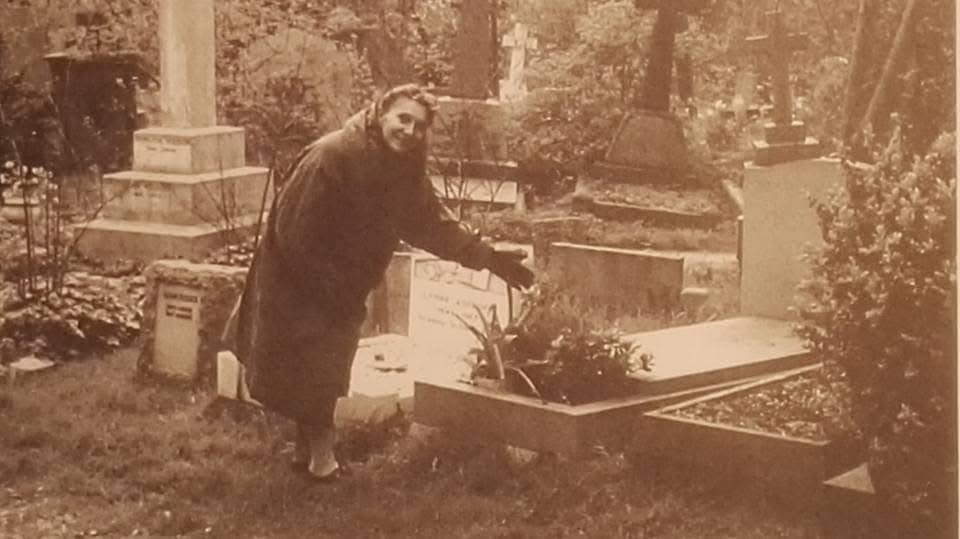
Ileana Ghione at the tomb of Shura in Highgate Cemetery
The New Bechstein Hall after its initial launching is now accessible to all with a Sunday morning Young Artists Series at only five pounds, with as much coffee as you need at 10.30am! Thomas Masciaga opened the Bechstein Young Artists Series with canons covered in flowers https://christopheraxworthymusiccommentary.com/2025/02/02/thomas-masciaga-opens-the-bechstein-young-artists-series-with-canons-covered-in-flowers/ Evening concerts starting from 18 pounds and a sumptuous restaurant that is also opening for luncheon. A beautiful new hall that is just complimenting the magnificence of the Wigmore Hall and the sumptuous salon of Bob Boas.Providing a much need space for the enormous amount of talent that London,the undisputed capital of classical music,must surely try to accommodate Here are some of the recent performances :
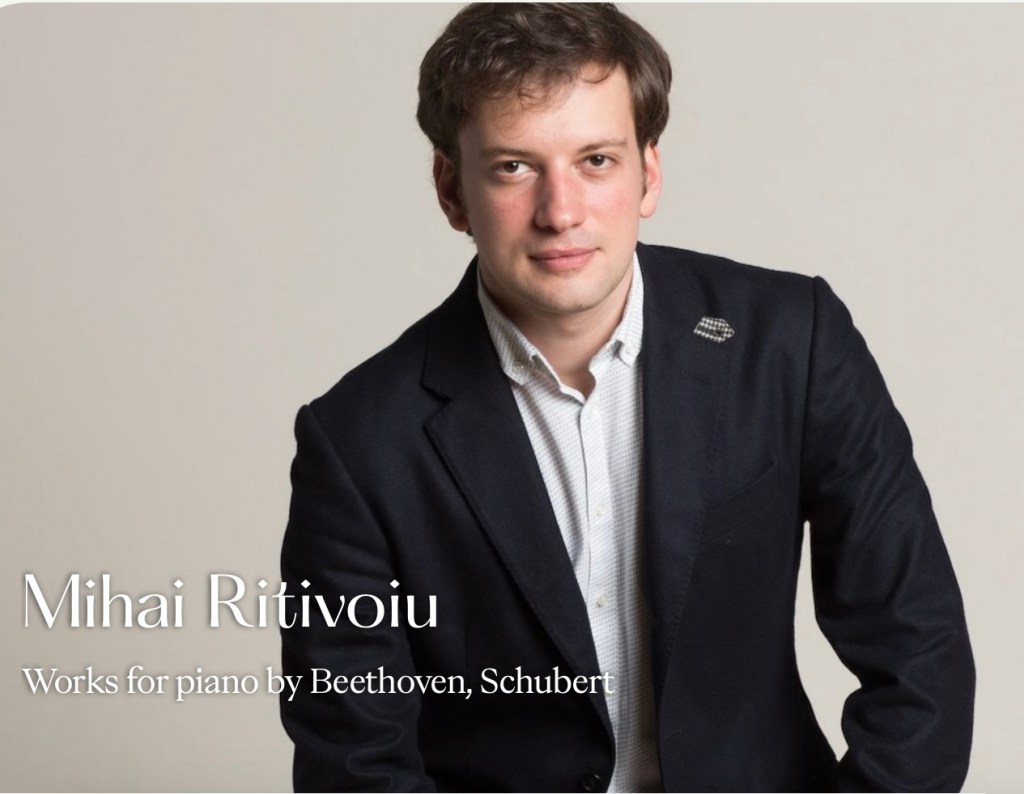
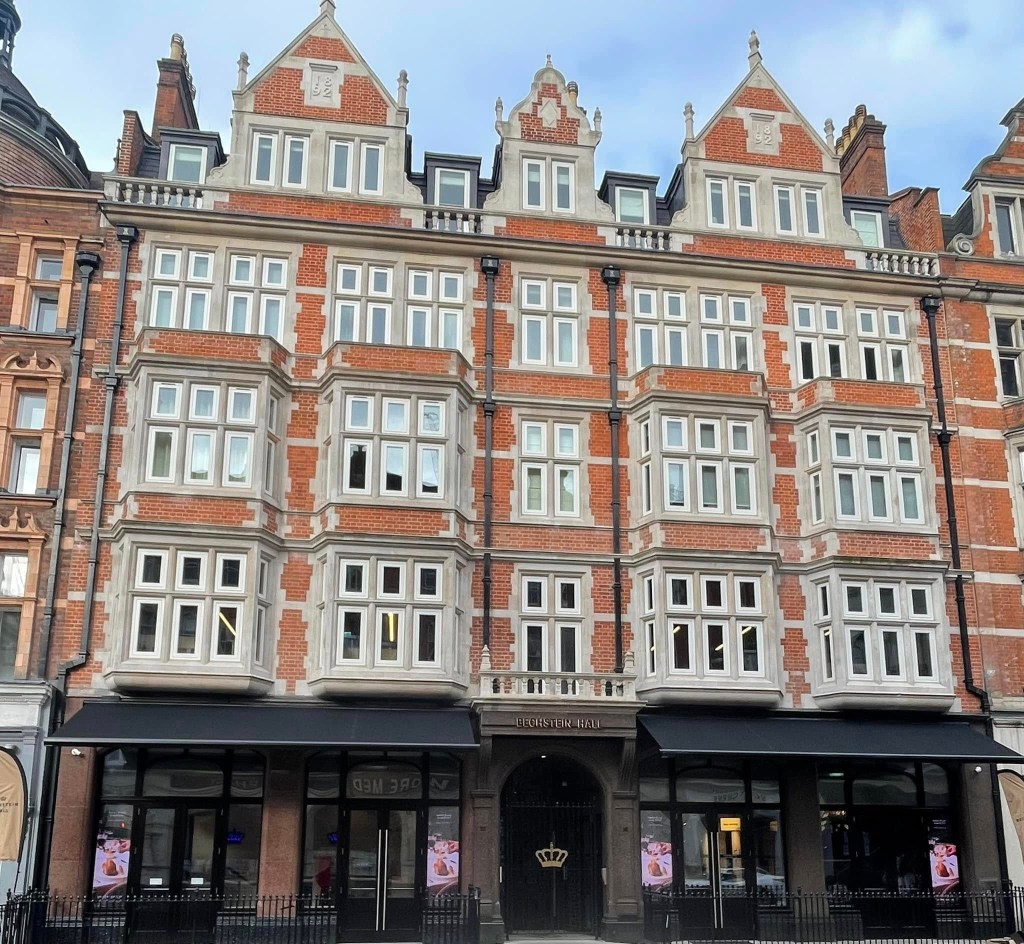
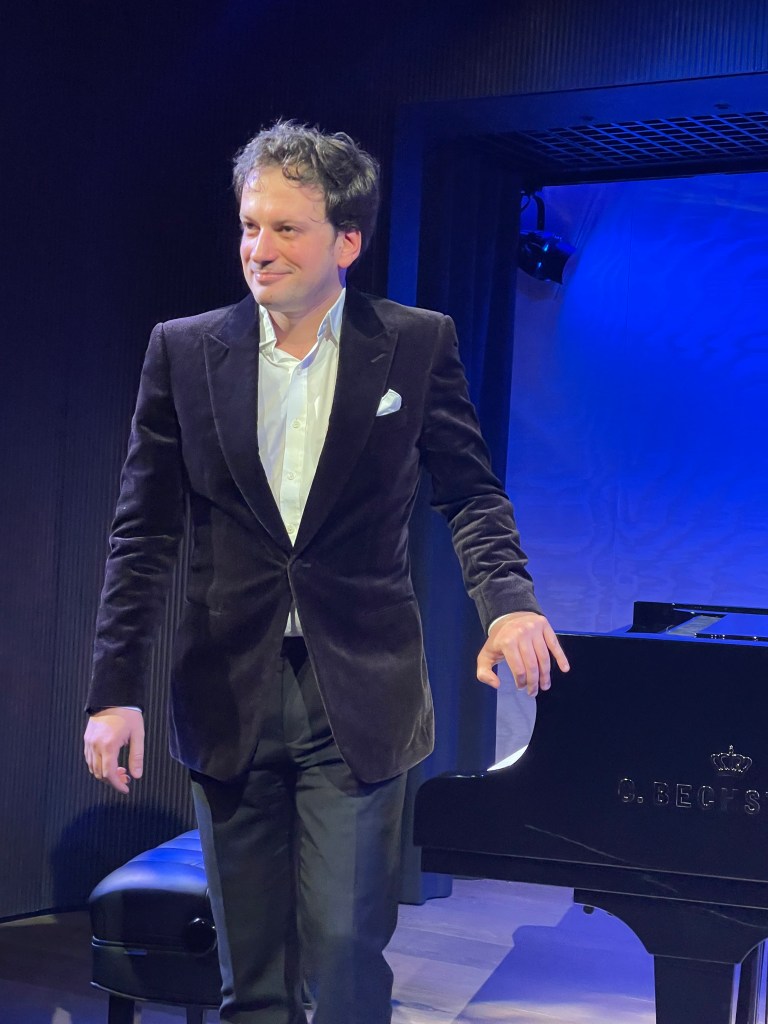
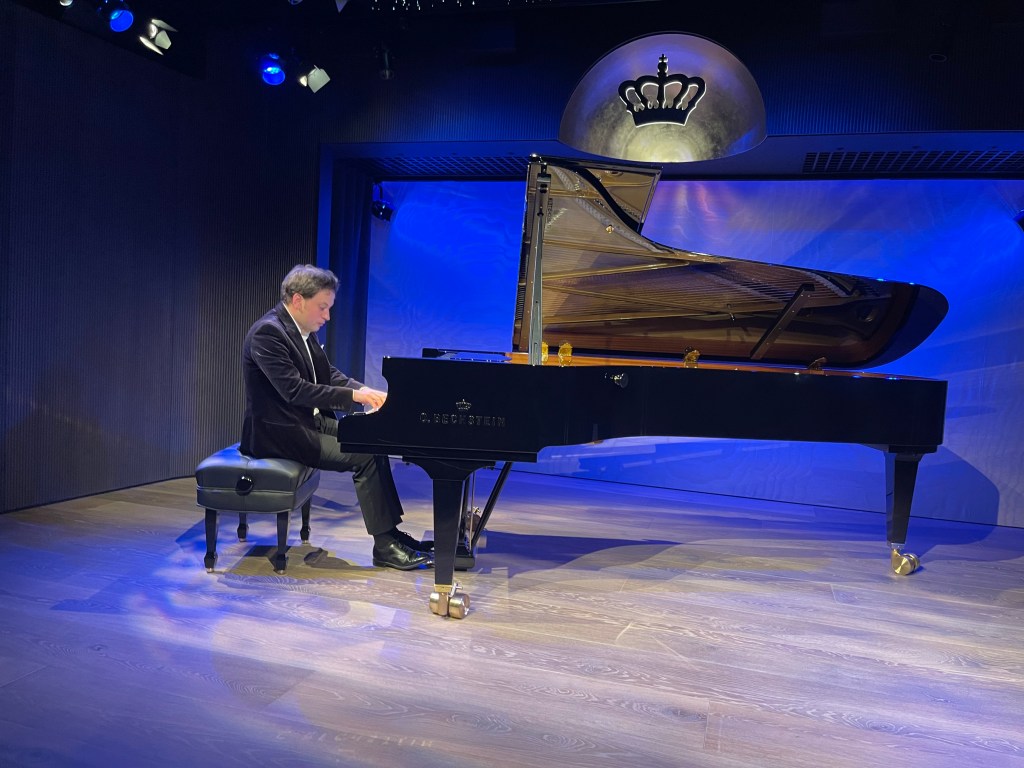
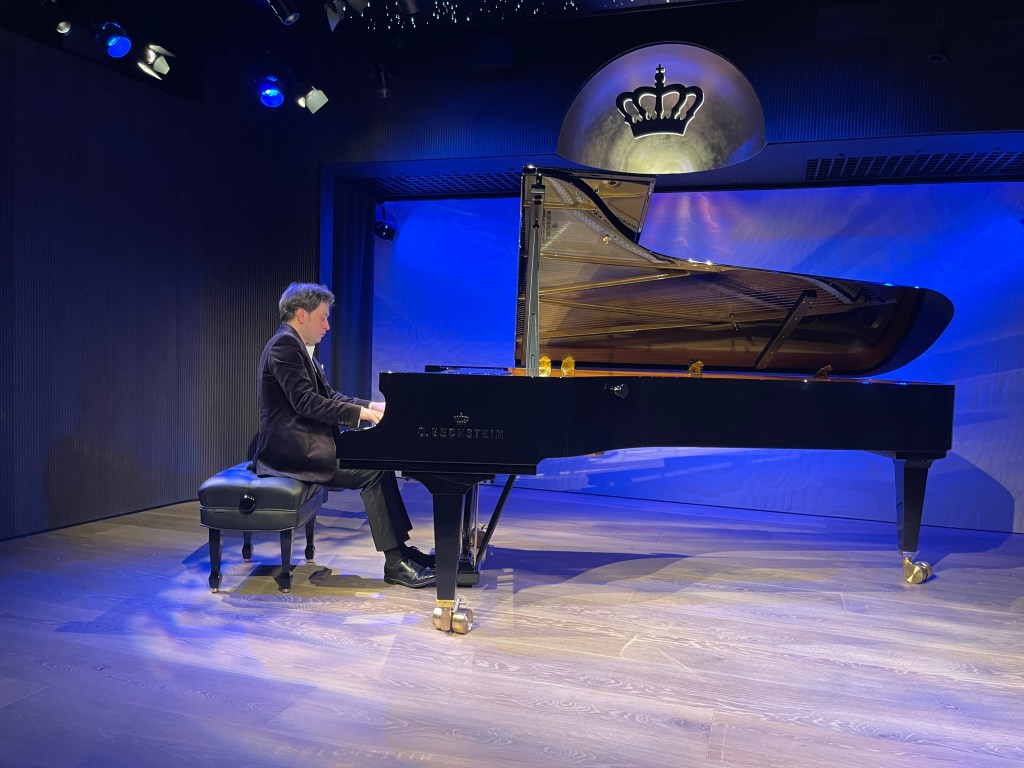
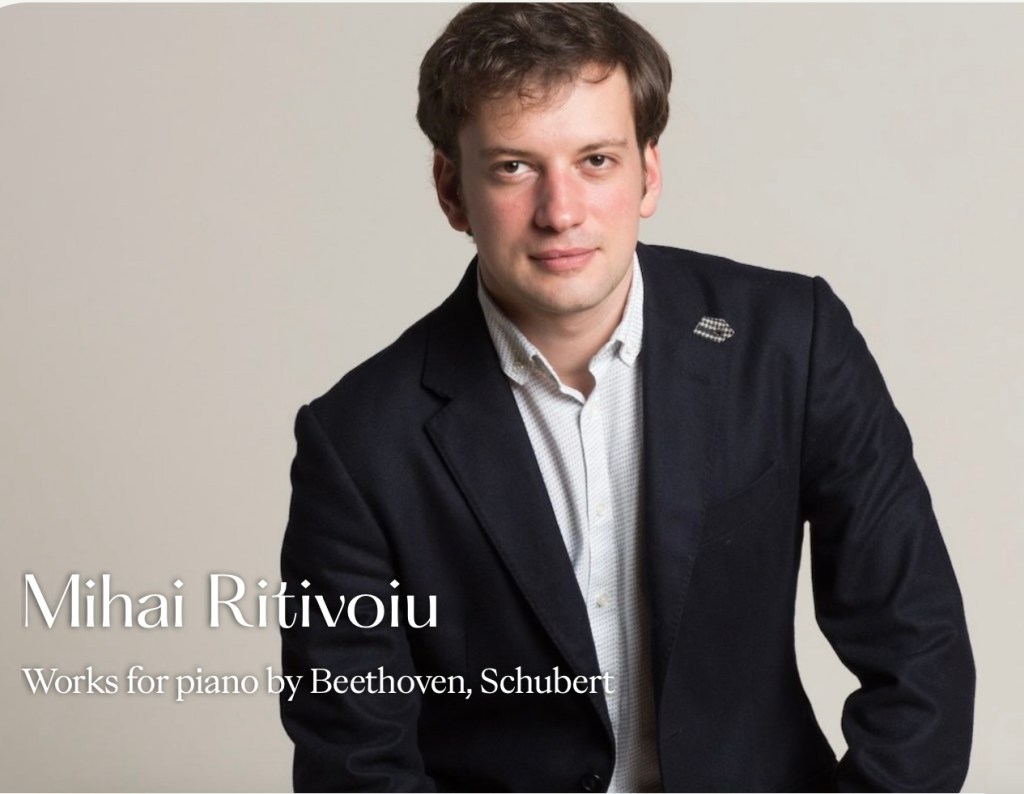
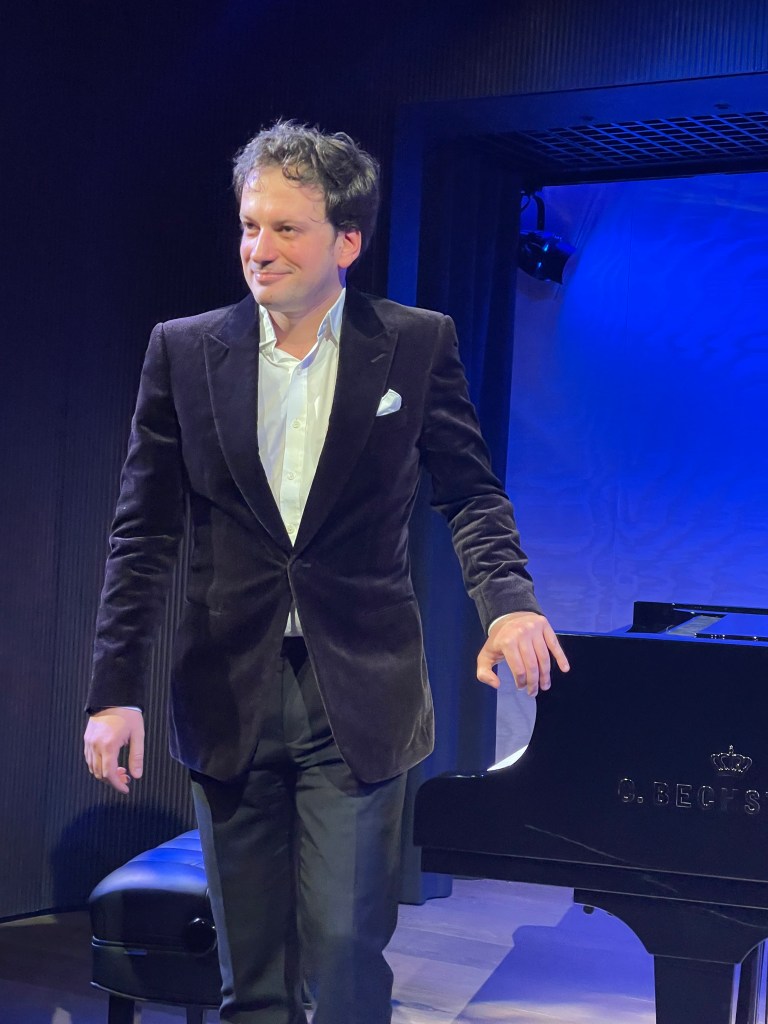
Mihai Ritivoiu at Bechstein Hall ,an artist renowned in his homeland but has chosen to live in London where we hardly ever have a chance to hear him play.
A great artist who thanks to Terry Lewis has been given the chance finally to play in an important hall in London.
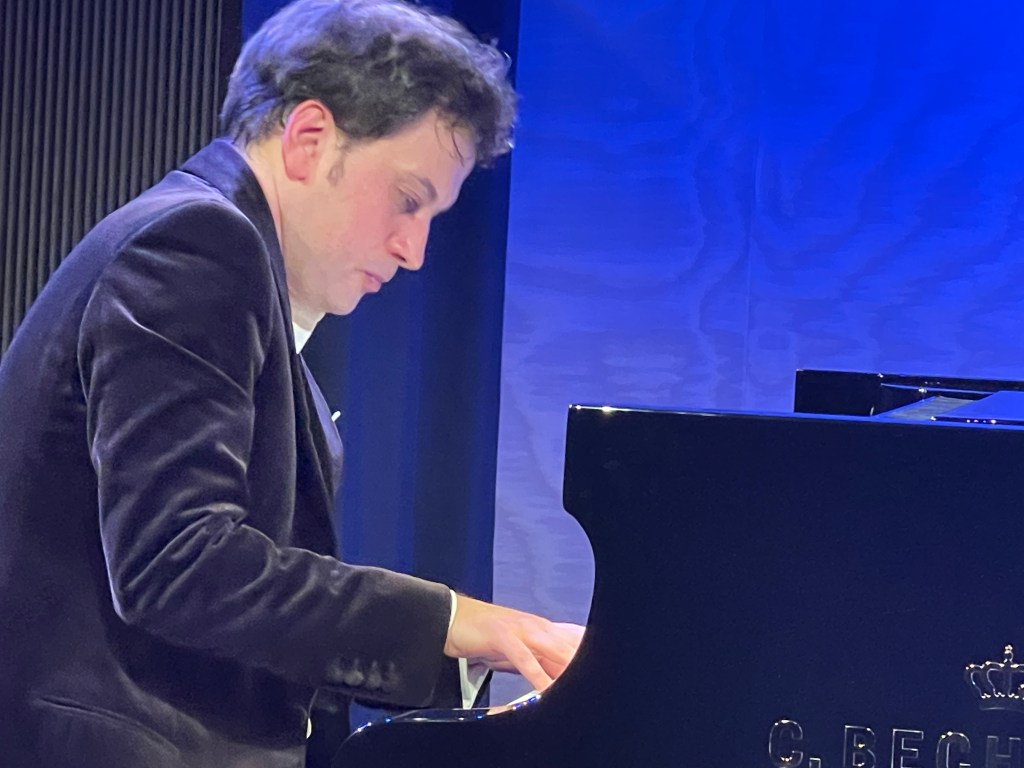
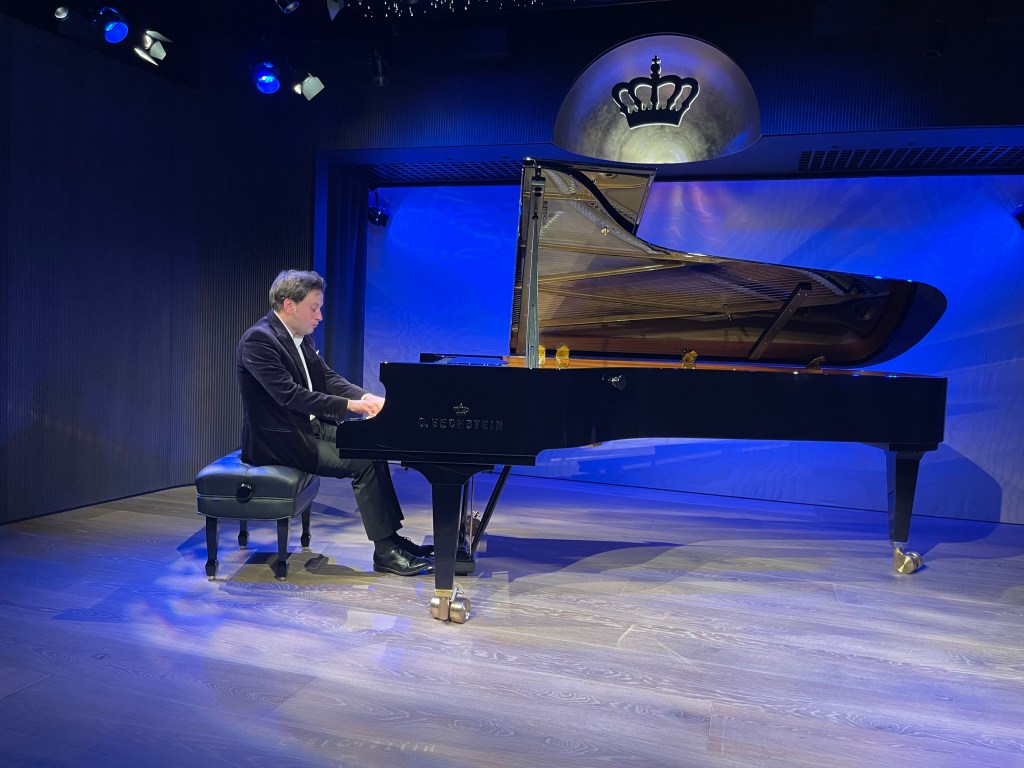
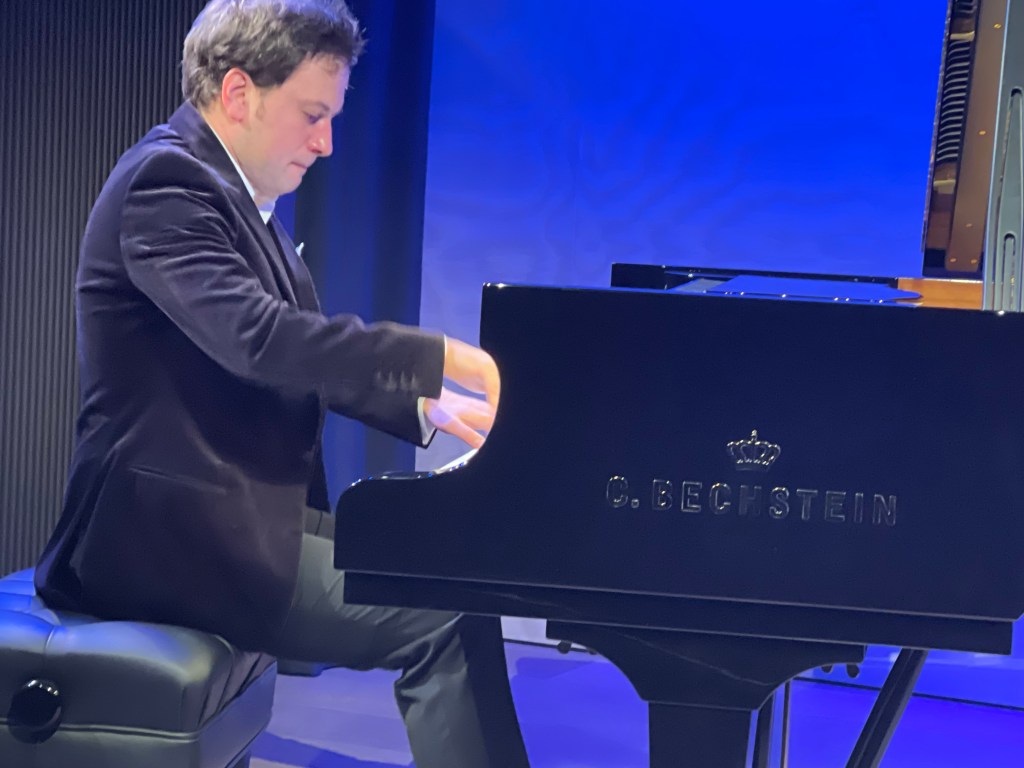
Two fantasy sonatas by Beethoven with his so called ‘Moonlight’ and Schubert’s G major showed us just what London had been missing. A graduate some years ago from the Guildhall where he studied with that great teacher Joan Havill. He has decided to make his home in London and recently got married too, but travels abroad for his concert tours. A real musician as you would expect from the teacher of Paul Lewis and Jonathan Ferrucci and many others of impeccable musical credentials. Beethoven’s Sonata quasi una fantasia was played from the bass upwards where the undulating accompaniments in the infamous first movement were merely shifting harmonies out of which emerged the melodic line. I found it a little fast but Beethoven does mark it in two not four but he also marks it ‘Adagio sostenuto’ .However Mihai brought a great sense of orchestral colouring to a movement that is so often played as a melody and accompaniment but is much more intense than that. Even the bass melody in the coda just emerged out of a haze of sounds. Played with aristocratic poise and seriousness like a slowly moving quasi religious procession. A minuet of refreshing grace and charm with its simple questioning and answer that Mihai played with disarming simplicity. The organ like interruption of lumbering capriciousness of the trio was answered but a tender pianissimo reply . A tempestuous final movement was played with searing passion and dynamic drive, but also a refined tonal palette that gave such shape and inner meaning to a movement that certainly was never moonlit! An extraordinary clarity at the opening contrasted with the pedalled answering phrases. Perfectly shaped streams of notes led to the excitement of repeated chords played with a driving rhythm of exhilaration and mounting excitement.There was beauty too as Mihai shaped the outbursts of mellifluous phrases first in the right hand and later in the left with extraordinary flowing beauty. A forward movement that finally exploded with cascades of notes over the entire keyboard, and its was interesting that the final burst was played quieter as he always had in mind the architectural shape of the music that gave such meaning to all he played. The whispered beauty of the final bars after the cadenza was immediately dispelled with the tumultuous final weight of two imperious chords played with burning authority.
There was magic in the air as Mihai intoned the miraculous opening of Schubert’s Fantasy Sonata. Sublime delicacy was contrasted with passionate Beethovenian outbursts, but it was the disarming simplicity of the dance that gave such a pastoral atmosphere to this master work.Suddenly we were thrown into the depths with the development that took us by surprise such was the sense of discovery that Mihai shared with us today. A tumultuous climax and one of the rare times that Schubert indicates fortissimo in the score but it was short lived as the intricate beauty returned taking us to a coda of sublime beauty and intense emotional impact. It was played with a mastery of control of sound as the opening gasps got ever more faint until we could barely hear the final breath.There was a simple beauty to the ‘Andante’ that again was played with a rich harmonic palette where violent outbursts were followed by beseeching asides. A ‘Minuetto’ of Beethovenian proportions was answered by the delicate ländler of the ‘Trio’ that Mihai played with a whispered luminosity of the beguiling insinuation of a music box. The sublime mellifluous outpouring in the final joyous dance was played with delicacy and richness and was a true celebration of intricate weaving between the hands played with a teasing forward movement before bursting into Schubert’s unstoppable and seemingly endless melodic invention. Ravishing beauty as Mihai allowed this miraculous vision of beauty to unfold with whispered luminosity contrasting with passionate outbursts .Our journey had only momentarily been interrupted as Mihai picked up the threads of the capricious infectious dance that took us to the totally unexpected questioning of the opening of this joyous pastoral ride.The genius of Schubert concluding his genial fantasy with five gently vibrating chords as if his heart had simply lay to rest with a gentle smile of satisfaction and thanksgiving for this wondrous journey .
Chopin’s waltz op 42 was played as an encore with the style and mastery of the great Chopin players of the past and just confirmed that we are in the presence of an important artist that I hope we in London will be able to enjoy more often.
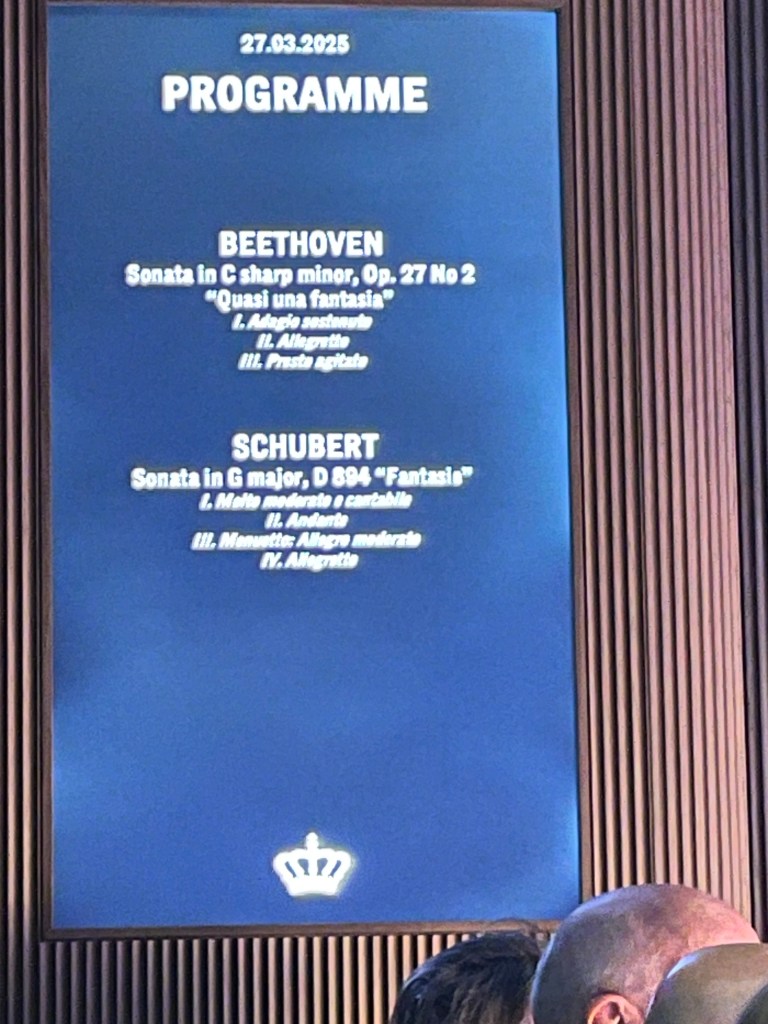
BEETHOVEN: Sonata in C sharp minor, Op. 27 No 2, “Quasi una fantasia”
I. Adagio sostenuto
II. Allegretto
III. Presto agitato
SCHUBERT: Sonata in G major, D 894 “Fantasie”
I. Molto moderato e cantabile
II. Andante
III. Menuetto: Allegro moderato
IV. Allegretto
London-based Romanian pianist Mihai Ritivoiu, first came to the attention of our director, Terence Lewis, when Mihai was still a student.Mihai is now a top prize-winner of several international competitions, including the George Enescu International Competition and leads an international career performing solo and chamber music recitals in Europe and Asia.Notable London performances include the Barbican Centre, the Wigmore Hall and Cadogan Hall. Mihai has also appeared live multiple times on BBC Radio 3’s ‘In Tune’.
Mihai Ritivoiu started playing piano at the age of 6, and won his first competition at the age of 7, subsequently performing across Romania. He studied piano at the National University of Music in Bucharest and Guildhall School of Music and Drama, winning the Beethoven Society of Europe Intercollegiate Piano Competition while representing Guildhall. He has been taught by Joan Havill and mentored by Valentin Gheorghiu and Christopher Elton
In 2011, at the age of 21, Mihai was a top laureate of the George Enescu International Competition, and won a number of special prizes including best interpretation of a piano sonata by George Enescu and the best Romanian competitor.
Career: Mihai has performed at venues including the Konzerthaus Berlin, Barbican Centre, Wigmore Hall, Cadogan Hall, St John’s Smith Square, St Martin in the Fields and the Romanian Athenaeum, and played with orchestras such as George Enescu Philharmonic Orchestra, Lausanne Chamber Orchestra, the English Chamber Orchestra and the MDR Leipzig Radio Orchestra.
In addition to his solo recitals and concerto appearances, Ritivoiu has a rich chamber music activity, playing with Corina Belcea, Antoine Lederlin, Roland Pidoux and Alexander Sitkovetsky. He has also worked closely with the contemporary French composer, Stéphane Delplace, performing the world premiere of one of his pieces.
Bobby Chen at the Chopin Society UK was the third of four concerts that I was thrilled to attend after flying in from the Steinway young artist piano competition in Milan .
The rain in Milan is very similar to that of London there are no boundaries as with the ‘soul’.
And it was this soul that our dear friend and colleague of many a years revealed to us having been invited by Lady Rose Cholmondeley and Gillian Newman to perform in a series of recitals dedicated to renowned pianists living in London but that rarely are given the opportunity to play in the city they live in !
Bobby Chen a renowned supporter of young musicians who even holds a ‘Summer school’ ( late December!!) in the Menuhin School for aspiring young musicians from his homeland .Bobby has long been linked with Yehudi Menuhin with whom he performed Beethoven Triple Concerto during the Indian Summer of one of the greatest musicians of our time.
A spring season that has included Rose McLachlan ( of the MacLachlan clan who are gradually all performing for Lady Rose ) and recently a pianist I have admired in recording but never heard live : Danny Driver with the Midas Touch of a great artist at the Chopin Society UK
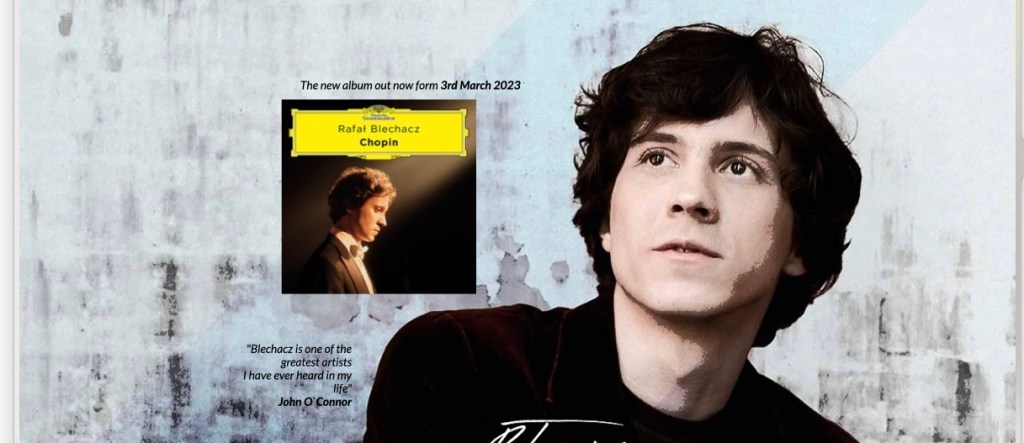
The next concert will be the 2005 winner of the Chopin Competition in Warsaw on the 27th April with Rafal Blechacz.It will signal the opening concert of the Chopin Society Year of Polish Pianists in collaboration with the Polish Cultural Institute ( see below).
All this to say what a revelation the concert by Bobby was today.
A musicianship that is so rare these days and where the music is allowed to speak with simplicity and Matthayan beauty. With humility and intelligence delving deeply to find the meaning behind the notes. No circus tricks or showmanship but a servant – je sens , je joue , je transmets applies, and it is only the Menuhin school that gives a complete musical education to talented young students allowing them to become true kapellmeisters.
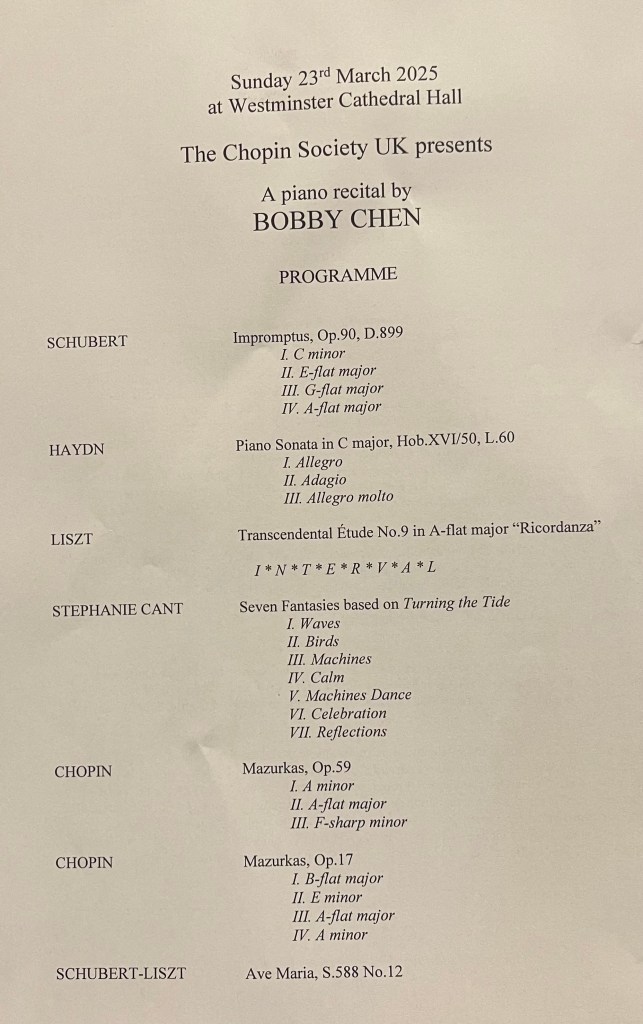
Schubert’s Four Impromptus op 90 D 899 opened the programme with beauty of phrasing,delicacy and refined musicianship.The opening mighty tone poem was revealed with infinite gradations of sound from each key allowing the music to speak in a musical conversation of rare mutual anticipation ( to quote Menuhin ). It was Matthay who wrote ‘tomes’ about the sounds that could be found in every key through a refined sensibility of touch,exemplified by his two legendary Dames : Myra Hess and Moura Lympany.
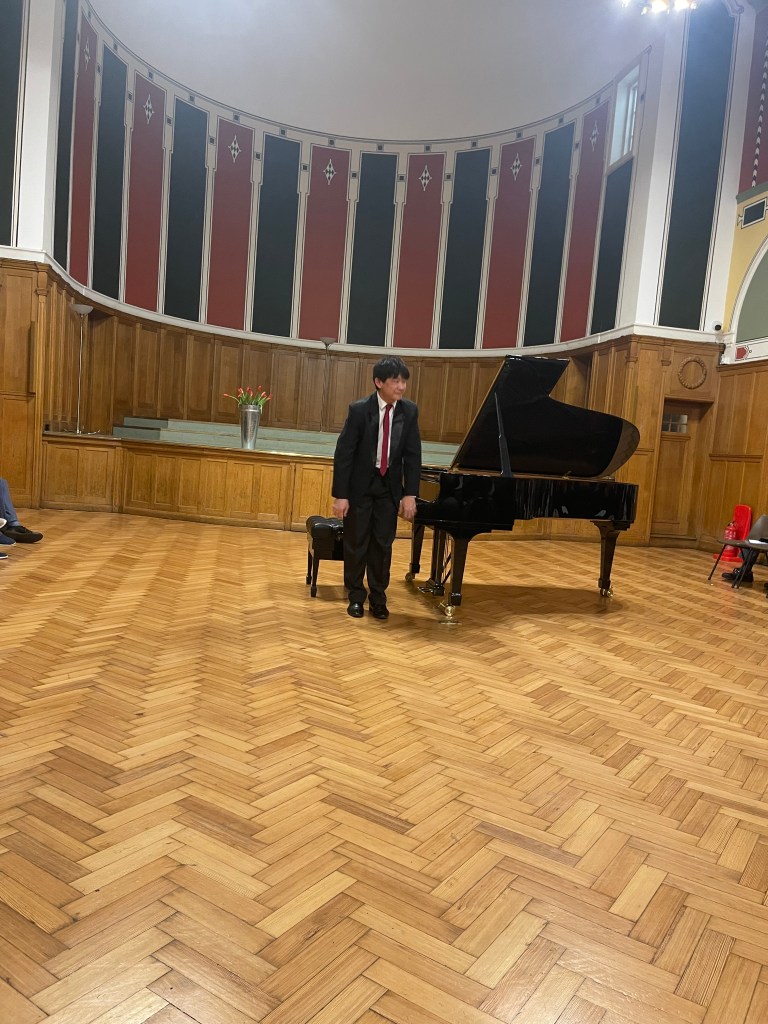
Bobby listening so attentively to the sounds and the architectural shape that he was sculpting from his well oiled fingers. Arms outstretched and listening with such concentration, always looking upwards and never down just as he was always playing horizontally and never vertically!
It is nice to be reminded that this box of hammers and strings can be made to sing as well as any singer and sometimes even better because therein lies a whole orchestra too. The second impromptu was noticeable for Bobby’s orchestral conception of the central episode and coda, embraced by a silver lined jeux perlé that was so beautifully shaped that Bobby almost forgot to keep it rhythmically in order!
The famous G flat outpouring of Schubert’s Bel Canto was played with a whispered luminosity, and a yearning to the phrasing that was particularly touching. Never forgetting the overall architectural shape and the flow like a refreshing mountain stream of luxuriant beauty. The fourth with its scintillating opening and the central episode, insinuating and passionate, but a refined passion of its age that was so moving. There were in all four impromptus a great sense of measure within a sound world of refined perfectly balanced elegance.
The Haydn Sonata in C was a lesson in the simplicity and sense of character that Bobby transmitted. A crystalline clarity and a completely different sound world from Schubert with the refined charm and grace of another age. Delicacy and brilliance went hand in hand in a masterly performance where I have rarely been aware of Haydn’s mischievous sense of humour. The long pedal that Haydn asks for in the first movement ,was played with whispered music box sounds of a composer who was a revolutionary genius just as his pupil Beethoven was to be proven,as he took over the reigns from his master. An ‘Adagio’ that unfolded with glowing luminosity and an etched poignancy of timeless beauty of a great operatic statement of weight and depth. Contrasting with the impish questioning humour of the ‘Allegro molto’ that just exploded from Bobby’s well oiled fingers with a ‘joie de vivre’ of operatic high jinx!
Bobby’s performance of Liszt’s ‘Ricordanza’ will long remain with me out of all of the wondrous performances I had heard over the past twenty four hours in London and in Milan.
A mastery not only of the technical difficulty of the mass of notes that Liszt writes for his ninth transcendental study, but for the quality of the sound and the overall vision of ravishing beauty that he could convey. Washes of sound on which such subtle tenor melodies could be shaped just as well as the greatest of singers who did not though have to give a hoot about the orchestra. Bobby was the singer and the orchestra in an extraordinary poetic control of balance and refined kaleidoscopic range of colour. It reminded me of the legendary recording of Egon Petri, a prize student of Busoni, who was in turn of Liszt .
The master speaks and Bobby revealed his true mastery of style and control at the service of this ravishing tone poem which was like looking at a faded love letter with nostalgia and not a little regret.
Quite memorable !
Stephanie Cant
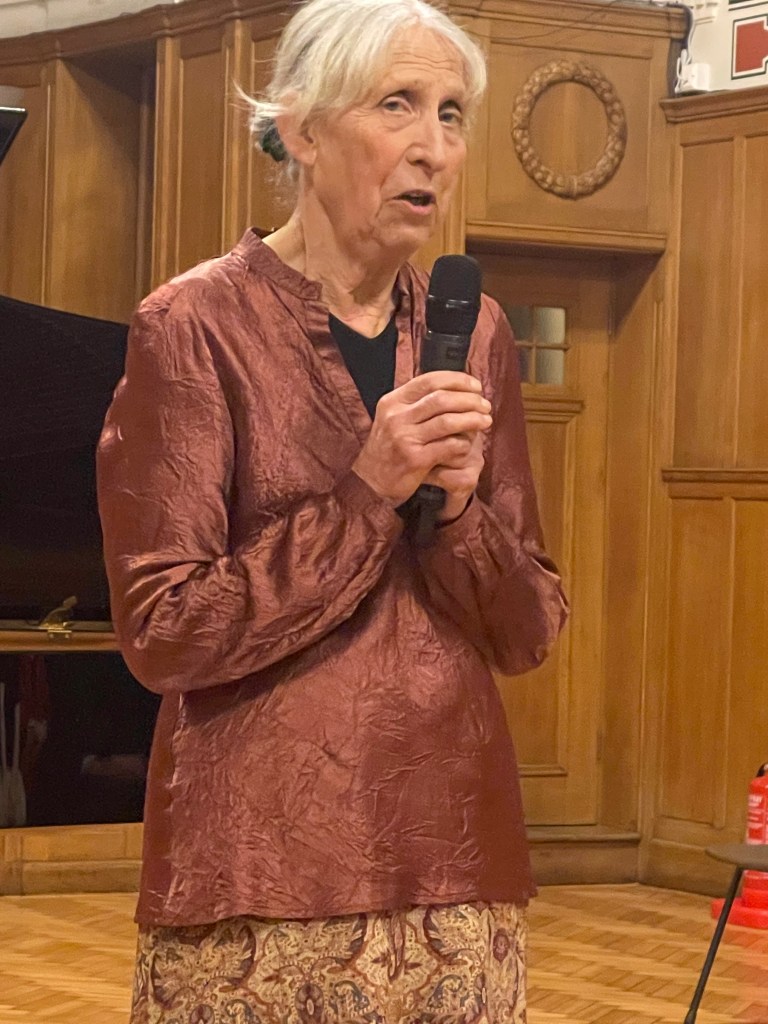
After the interval Bobby played seven fantasies based on ‘Turning the Tide’ that was introduced by the composer Stephanie Cant. Seven very short bagatelles of luminosity and whispered beauty – ‘visions fugitives’ indeed, each one lasting barely a minute but describing in music Waves,Birds,Calm,Machines and an agitated Machine dance of vibrations high on the keyboard. Followed by the grandiose ‘celebration’ and delicate tiptoe to ‘reflections’ of radiance and delicacy. Played with the dedicated conviction of a true noble musician turning these baubles, written by a dear esteemed colleague, into glowing gems.
Seven Chopin Mazurkas followed and once again demonstrated the poetic beauty of Bobby’s playing .Bringing such poignant character to the three late Mazurkas op 59 and brilliance and scintillating beauty to the four early op 17. The final A minor mazurka from op 17 was played with the whispered beauty of someone sharing intimate emotions where words are just not enough and only music can reveal that elusive thing called ‘anima’.
A glorious outpouring of ever more luxuriant radiance brought a halo hovering over this magnificent Steinway as ‘Ave Maria’ resounded with heartfelt emotion and extraordinary technical finesse.
Ravel’s ‘Pavane’ of refined beauty was offered as an encore to this very warm and appreciative audience that gathers around Lady Rose and Gillian.The can still offer an intimate atmosphere able to appreciate forgotten masters in a metropolis where all too often it is quantity and not quality that prevails, and that can leave us feeling abandoned and isolated in what is the capital of music in the world .
Lady Rose delighted and moved by her friendly audience
What better way to thank Lady Rose than the whole audience united with genuine warmth and affection to wish her a Happy Birthday in song both in English and some even in Polish !
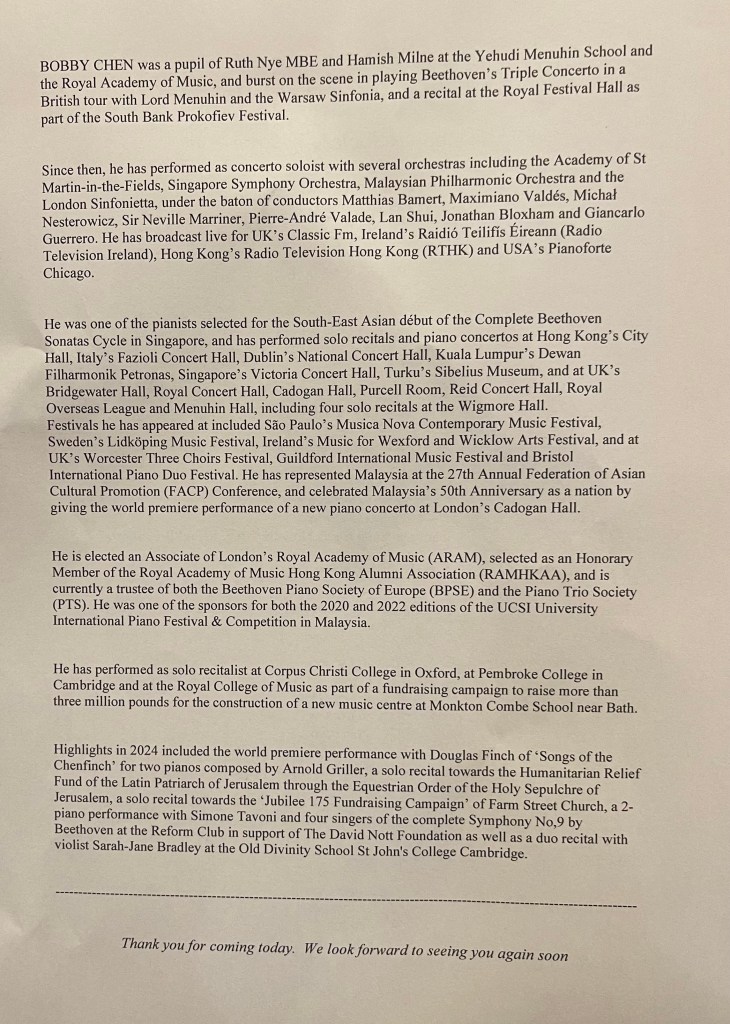
Viva Europa – Viva La Musica that does not have ridiculous barriers by International Piano Magazine as: “…an armour-clad player of complete technique, a thinking musician, a natural Romantic.”, Bobby Chen was a pupil of Ruth Nye MBE and Hamish Milne at the Yehudi Menuhin School and the Royal Academy of Music, and burst on the scene in playing Beethoven’s Triple Concerto in a British tour with Lord Yehudi Menuhin and the Warsaw Sinfonia, and a recital at the Royal Festival Hall as part of the South Bank Prokofiev Festival.
Since then, he has performed as concerto soloist with many orchestras and given recitals all over the world.
Highlights in 2024 included the world premiere performance with Douglas Finch of ‘Songs of the Chenfinch’ for two pianos composed by Arnold Griller, a solo recital towards the Humanitarian Relief Fund of the Latin Patriarch of Jerusalem through the Equestrian Order of the Holy Sepulchre of Jerusalem, a solo recital towards the ‘Jubilee 175 Fundraising Campaign’ of Farm Street Church, a 2-piano performance with Simone Tavoni and four singers of the complete Symphony No,9 by Beethoven at the Reform Club in support of The David Nott Foundation as well as a duo recital with violist Sarah-Jane Bradley at the Old Divinity School St John’s College Cambridge.
Our piano, a fine 2015 Hamburg Steinway Model B Grand, chosen for us by Ulrich Gerhartz, Steinway’s Head of Artist & Concert Services, is maintained by Steinways and tuned by them immediately before each performance.
Schubert – Four Impromptus D.899 Op.90
Haydn – Sonata in C major Hob XVI:50
Liszt – Transcendental Étude No. 9 in A major, “Ricordanza”
Stephanie Cant – Seven Fantasies based on Turning the Tide
There will be a Champagne Reception after the concert for a limited number of people. Reception tickets are sold on the door for £20 (cash or cheque only).
The concert will be supported by the Polish Cultural Institute.
Polish pianist Rafał Blechacz’s artistry is recognised as rare by any measure – his many plaudits include being dubbed “a musician in service to the music, searching its depths, exploring its meaning and probing its possibilities” (Washington Post) – and arises from his total command of the keyboard and ability to unlock his instrument’s full expressive range. Those qualities have supported his artistic and professional development in the years since he took first prize at the 2005 International Chopin Piano Competition. He stands today among the world’s finest pianists, in high demand for the honesty and vision he brings to performances of everything from Bach and Beethoven to Chopin and Szymanowski.
The eloquence and intensity of Blechacz’s Chopin Competition performances, delivered within months of his twentieth birthday, were rewarded not only with the winner’s medal but also with a clean sweep of the event’s four special prizes and the Audience Award. He signed an exclusive contract with Deutsche Grammophon in May 2006, following Krystian Zimerman to become the second Polish pianist to join the yellow label’s international roster of artists. The new relationship was launched in October 2007 with Blechacz’s debut solo album, a coupling of Chopin’s completePreludes and theTwoNocturnes op. 62. His second release – a recital of piano sonatas by Haydn, Mozart and Beethoven – was issued in 2008, after which he returned to Chopin, recording the two piano concertos with the Royal Concertgebouw Orchestra and Jerzy Semkow for an album released in 2009 to herald the upcoming bicentenary of Chopin’s birth.
2012 saw the release of an album of solo works by Debussy and Szymanowski. This was followed in 2013 by another acclaimed Chopin recording, this one featuring the composer’s mature Polonaises. Blechacz’s sixth DG album, released in 2017, was devoted to works by Bach, the Partitas Nos.1 & 3 andItalian Concerto among them. He then joined forces with Korean violinist Bomsori Kim to record a selection of works by Fauré, Debussy, Szymanowski and Chopin. Released in 2019, this was his debut chamber music album for DG
Devoted entirely to Chopin, Blechacz’s latest release presents his insightful interpretations of the Second and Third Piano Sonatas, Nocturne Op. 48 No. 2 and Barcarolle Op. 60. “I’ve had many experiences with this programme, playing it all over the world, in different concert halls and on different pianos,” says the artist. “I really wanted to share the beauty of these compositions with the audience.”Chopin was released, digitally, on CD and on vinyl (2 LPs) in March 2023.
Rafał Blechacz was born in the small town of Nakło nad Notecią in northern Poland in June 1985. He showed early signs of musical talent and began piano lessons at the age of five. Having first enrolled at the Arthur Rubinstein State Music School in Bydgoszcz, he progressed to study at the city’s Feliks Nowowiejski Academy of Music, graduating in May 2007 from Katarzyna Popowa-Zydroń’s piano class. Blechacz’s outstanding technical and artistic attributes secured a sequence of competition successes, beginning in 2002 with second prize at the Arthur Rubinstein International Competition for Young Pianists in Bydgoszcz, continuing the following year with joint first prize at the Hamamatsu International Piano Competition, and culminating in outright victory at the 2005 International Chopin Piano Competition in Warsaw, where he became the first Polish musician to receive the top prize since Krystian Zimerman thirty years earlier.
He went on to win the 2010 Premio Internazionale Accademia Chigiana, awarded annually by the Accademia Musicale Chigiana in Siena to an outstanding pianist or violinist. In 2014 Blechacz received the Gilmore Artist Award, a prestigious prize conferred every four years in recognition of “extraordinary piano artistry”. In addition to formal prizes and awards, he has also garnered ringing endorsements from senior colleagues, with Martha Argerich, winner of the Chopin Competition in 1965, describing him as “a very honest, extraordinary and sensitive artist” and the Irish pianist and pedagogue John O’Conor as “one of the greatest artists I have ever heard in my life”.
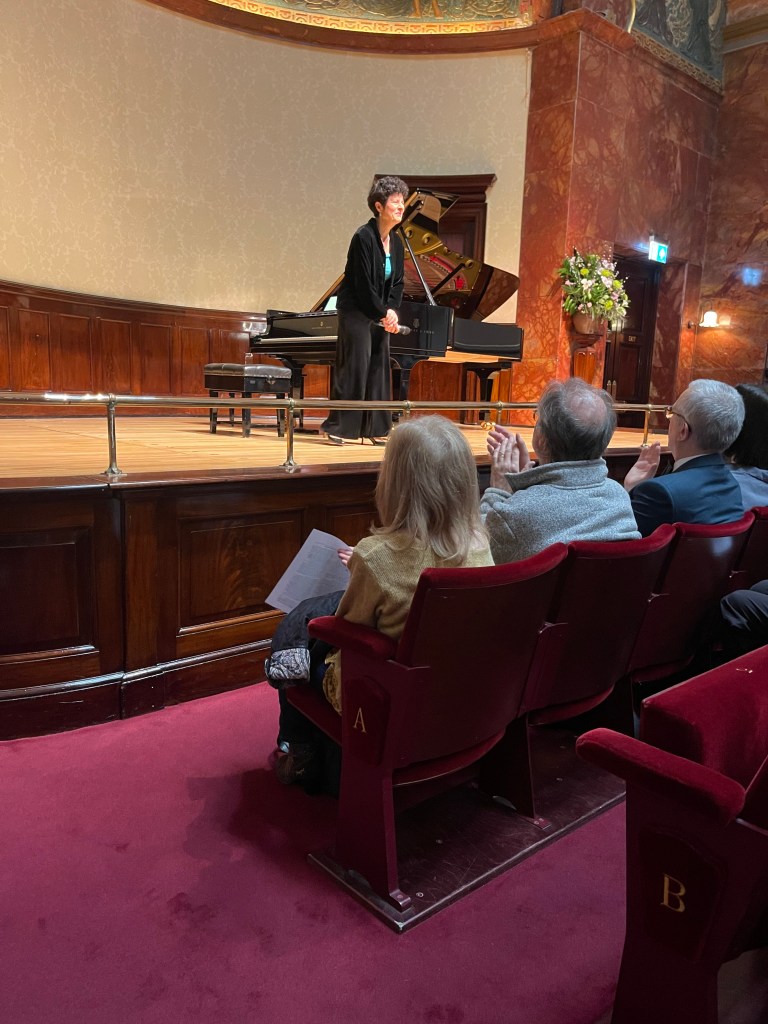
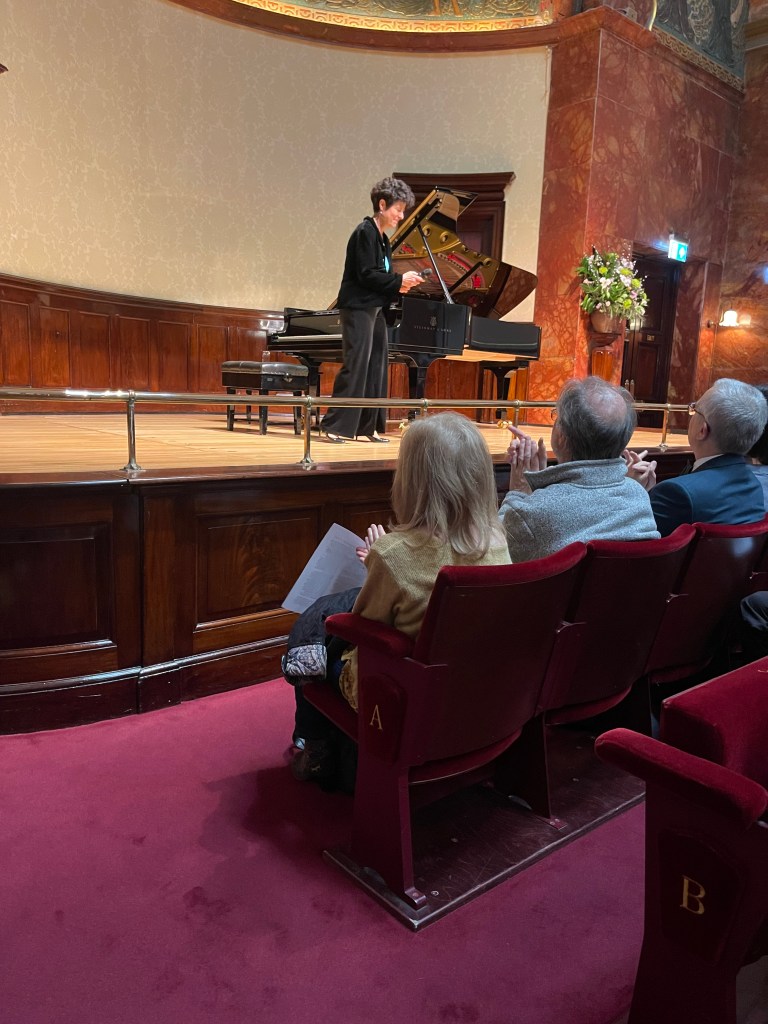
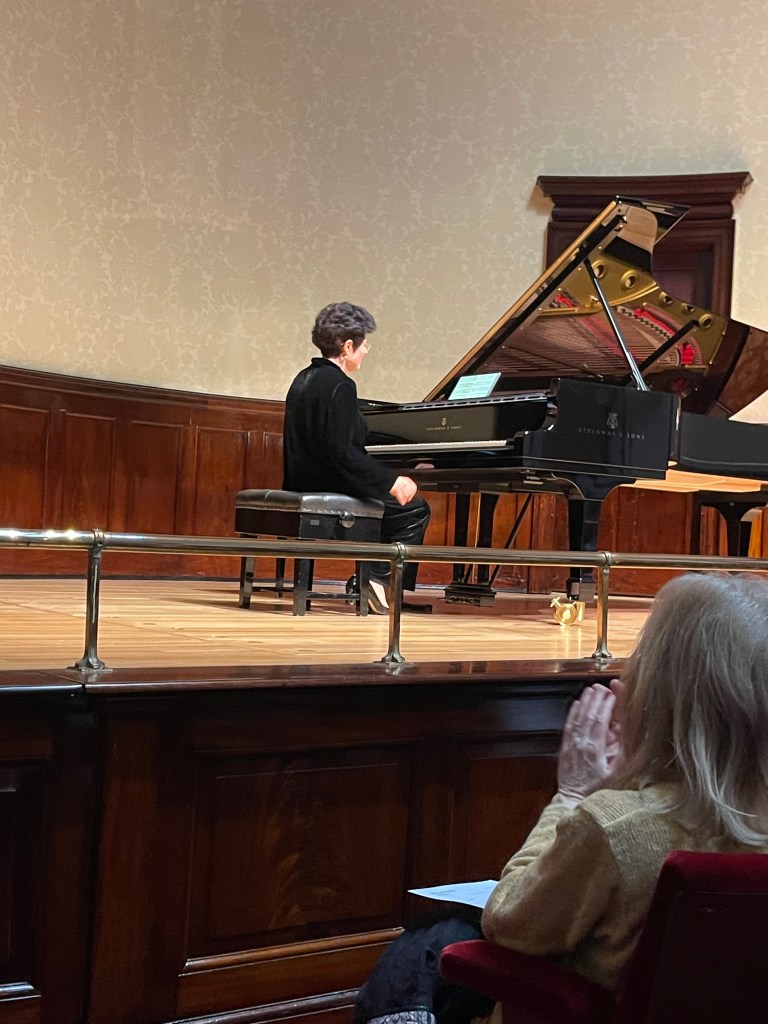
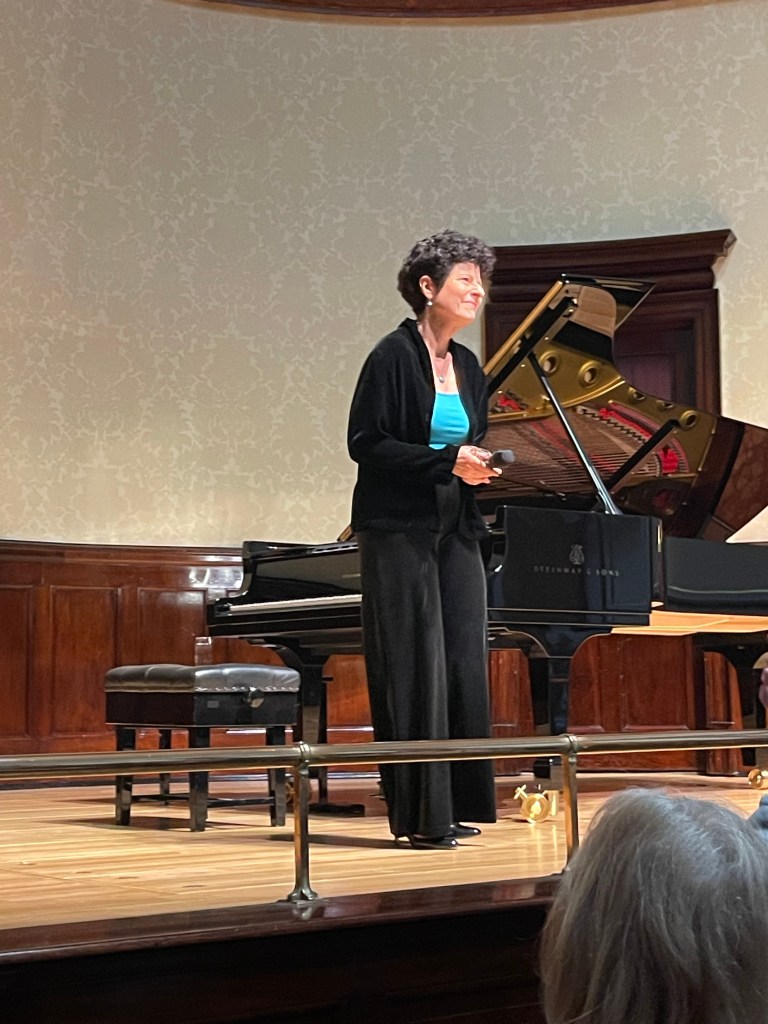
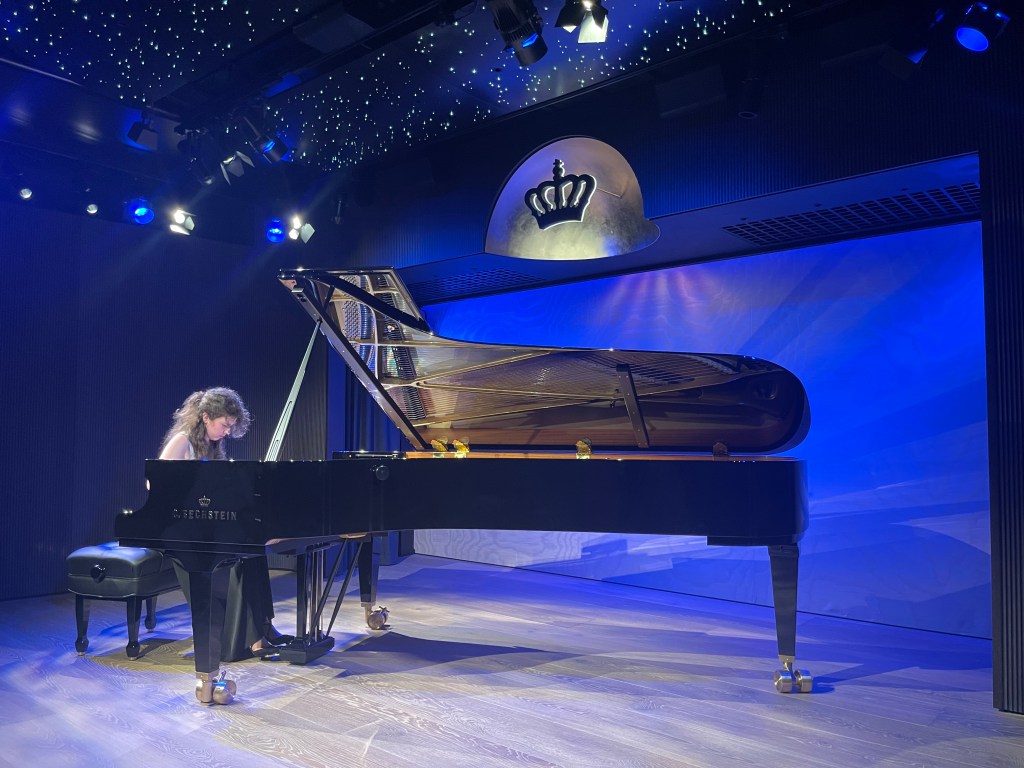
Diana Cooper at Bechstein Hall – ‘freedom and flexibility of rare artistry’ – ‘ravishing sounds of refined delicacy mingled with robust declamations’. This is what I jotted down as she recreated the Mazurka op 30 n. 3 that opened this extraordinary Chopin Recital.She shared with us in just a few minutes a tone poem with a kaleidoscope of colours and emotions.
‘Canons covered in flowers’, never have Schumann’s words come so vividly to life. A piano that I have heard played by many very fine artists, but today the sounds she found with a miraculous sense of balance and sensitivity , a subtle palette of colours, I would never have thought possible. A bass that resounded with the deep velvety resonance reminiscent of a Bosendorfer or Shegeru Kwai – a middle register of Bluthner or Fazioli richness – an upper register that of the Hamburg Steinway of yore . No this was a Bechstein ,the preferred piano of so many legendary artists and here was an artist who could allow this instrument to glow and seduce as it used to do for so many of the greatest pianists of their day.
I was completely seduced today, in the same way that I was every time I heard Rubinstein. A sound that this young lady found today, even more in the Nocturne op 27 n. 2, that was truly Rubinstein’s. Today there was that same magic in the air as she allowed the music to unfold with timeless beauty and aristocratic poise. There was drama too as this was not the physically feeble Chopin but the Prince of the Keyboard with his native land always in his soul but tempered by the refined elegance of the Parisian high society. Diana has a quite extraordinary sense of balance that allows the melodic line to sing like Caballé, with that same velvety rich sound that she would modulate with deep rich notes. Just as Diana would touch a golden bass note with her magic wand that would illuminate the ravishingly expressive bel canto that was flowering and floating on high.
A miracle of beauty and even at times an intensity, as the searing passion would allow her to wallow in the ecstatic world that she was recreating before our incredulous eyes. Bechstein too played its part ,not only with a magnificent instrument but also the intimacy that the lighting in this rather unique space could afford. The study op 10 n. 8 just flew from her hands with washes of colour as the bass melody was shaped as only a true artist could do. It was Agosti, who I and many others have never forgotten, as he intoned the bass melody of this study with a refined intensity that has remained with me all these years ( and with many others too including Christopher Elton ).An ending as Chopin had indicated and not falling into the trap of ‘milking’ the final chords to rouse the public into delirium.( Only Horowitz could do that because he was a unique genius who was also a showman of the Golden age who could weald his power over an audience).Op 25 n. 5 was a little fast but when she made a long pause before the ravishing central mellifluous outpouring everything fell into place and she convinced me that this was the only way to ever play it. Chopin does after all mark it ‘vivace’ and ‘scherzando’ and asks specifically for a silence ( even the pedal mark confirms that ) before the ‘più lento’ central episode. In fact all through the recital it was not only her kaleidoscopic range of colours and sounds ( could one ever forget the deadened sound of the timpani before the return of the ‘risoluto’,in the opening Mazurka), but it was the silences ,that are all marked by Chopin in the score, but rarely ‘played’ with such artistic poignancy! If ever at all !
The Fourth Scherzo, an elusive work of extraordinary fantasy and chameleonic changes of character that have made it less accessible to all but the greatest of interpreters. Diana played it today with a kaleidoscope of sounds as she took us into a fantasy world of fleeting quixotic fancy and ravishing washes of sumptuous melody. In Diana’s masterly hands even the glistening jeux perlé that abounds was played with a clarity starting with the pedal but then continuing without, that was quite breathtaking in it’s audacity.The bare notes of the introduction to the ‘più lento’ central episode I have rarely heard played with such poignancy, where one could feel the collegiate atmosphere created and of her leading us by the hand into a wondrous land of beauty .The radiance and sumptuous beauty of the imperious final few bars gave us that rich sound of a truly ‘Grand Piano’ with a depth and richness of magisterial authority.
It was this same authority that opened the B minor Sonata,with the power of a drama that was about to unfold. Searing passion and breathless declamations gave way to a bel canto with an inner energy, as Diana had conceived the whole movement in one glorious architectural whole. Moments of extraordinary beauty as counterpoints just shone like jewels catching the light.There was no repeat but straight into the development with overwhelming drive and authority. The Trio of the Scherzo was given unusual importance with contrapuntal strands that all made such sense and were the guiding light for this movement that can sound, in lesser hands, so disjointed. An imperious opening to the Largo played with extraordinary intelligence and sensitive musicality as she gave a monumental shape to passages that can seem like senseless beautiful meanderings. She brought a breathtaking climax played with her extraordinary ability to feel and search for a balance that would allow beauty, passion and delicacy to live under the same roof. The ‘Presto non tanto’ was played with beguiling menace as it became ever more excited and exhilarating, all leading to the final tumultuous explosion and the triumphant left hand fanfare taking us to the final chords of breathless inevitability.
with Sonya Pigot – both from the class of Prof. Norma Fisher at the RCM
Diana was sorry not to play an encore ,but why would she have wanted to ,when she had just served a dish fit for a King?!
What to do to unwind after such an unexpected miracle – the Roast Sunday Lunch and a glass of Nero Davola was the answer and was served downstairs with the same refined good taste and exquisite delicacy that we had just experienced in this true oasis of culture.
Outside, the worldly confusion of protesters surrounded us and Oxford Circus station closed for fear of being taken by siege!
next Sunday morning concert another great lady pianist ……….birds of a feather ………and all that !
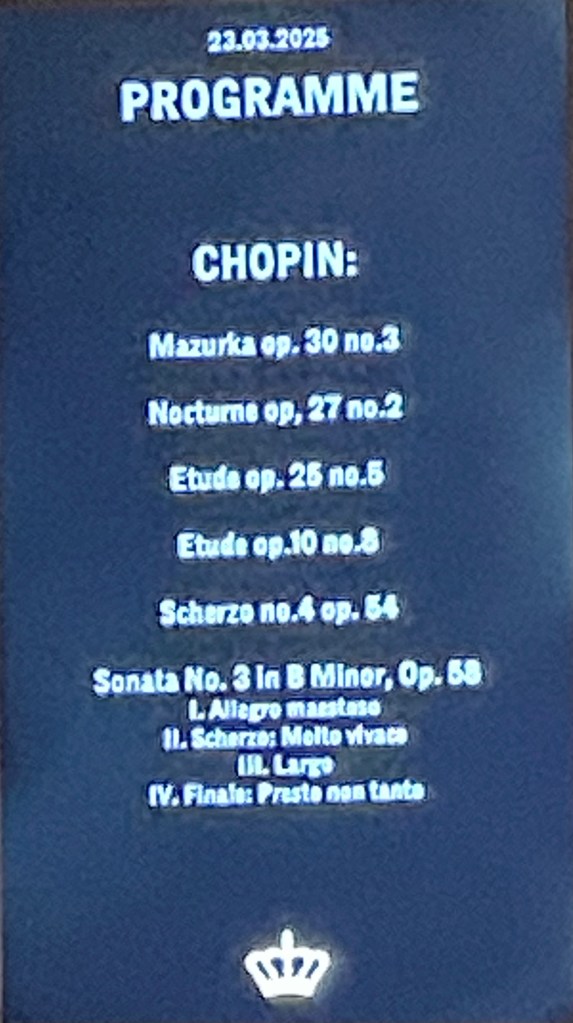
Nocturne op, 27 no.2
Etude op. 25 no.5
Etude op.10 no.8
Mazurka op. 30 no.3
Scherzo no.4 op. 54
Sonata no. 3 op. 58
I. Allegro maestoso
II. Scherzo: Molto vivace
III. Largo
IV. Finale: Presto non tanto
One to watch, you may have seen Diana in the BBC’s Arts in Motion Series, partaking in a masterclass with Yuja Wang.
Admitted at the age of 16 to the Paris Conservatoire Diana graduated with a master’s degree five years later.
Diana is currently settled in London and has just graduated from the Royal College of Music. To add weight to that, Diana has been taken on by the Talent Unlimited charity as well as the Kirckman Concert Society.
Passionate about classical music from her earliest age, it is on stage that Diana Cooper attains artistic fulfilment.
Winner of numerous awards including 1st Prize at the Brest Chopin Competition, 1st Prize at the Halina Czerny-Stefanská International Competition in Poznan (Poland), 1st Prize at the Concurso Internacional de Piano de Vigo (Spain), and laureate of the Fondation de la Banque Populaire, Diana Cooper has been invited to perform in various venues and festivals in France and abroad, including the Nohant Chopin Festival, the Festival Chopin à Paris, the Salle Cortot, the Polish Embassy in Paris, the Ysaye Festival in Belgium, the Palacio de Congresos in Huesca, Spain, the Hrvatski dom Split in Croatia, the Kielce Filharmonia in Poland…
In 2023, she was selected to take part in the project Un été en France avec Gautier Capuçon, for which she perfomed as a soloist and in chamber music.
She was invited in 2018 to take part in the radio program Générations Jeunes Interprètes on France Musique and, in 2023, performed as a trio in the television programme Fauteuils d’orchestre, broadcast on France 5.
Her activity has been enriched by solo appearances with the Orchestre Symphonique du Sud Ouest in Chopin’s 1st Concerto, the Orchestre Appassionatoin Mozart’s 20th concerto, and the Orchestre des Lauréats du Conservatoire de Paris in Schumann’s concerto, performed in 2023 at the Cité de la Musique in Paris.
Born in France, she began studying piano at the Tarbes Conservatoire with Jean-Paul Cristille, gave her first solo recital at 9 and performed at 14 with orchestra Mozart’s Concerto n°21 in France and Spain. She was unanimously admitted at the age of 16 to the Paris Conservatoire to study with Jean-François Heisser and Marie-Josèphe Jude and graduated with a master’s degree five years later. She continued her studies at the Ecole Normale de Musique where she was taught by the renowned professor Rena Schereshevskaya for three years. In 2022, she was selected to join the new season of the Académie Musicale Philippe Jaroussky, and perfected her skills there with Cédric Thiberghien. In parralel, she was admitted the same year to the Paris Conservatoire in an Artist Diploma course. She is currently studying at the Royal College of Music in London where she has been admitted to pursue a second Artist Diploma course, in Norma Fisher’s class. She is a laureate of the Kathleen Trust and has recently joined the Talent Unlimited charity offering concerts in London for young talented musicians.
Following her pre-selection in 2021 for the prestigious Chopin Competition in Warsaw, she was invited the following summers by Philippe Giusiano to take part in masterclasses in Katowice as well as concerts at the Chopin Manor in Duszniki, organized by the Chopin Foundation.
Diana has recently recorded her first CD, featuring works by Haydn, Chopin and Ravel, after winning in 2022 the 1st Prize in the Concours d’aide aux Jeunes Artistes organized by the Festival du Vexin.


 ChristopherAxworthy-MusicCommentary