What a lot of pictures were on show tonight at the RCM !
Paul Mnatsakanov is a very young looking pianist who claims that music should always ‘ speak and convey something about the audience to the listener’. Rushing to another concert in Milton Court I just had time to thank his teacher Vanessa Latarche.’He is a good boy ‘ she very modestly told me ……….in my opinion dear Vanessa he is a great artist and this was the finest most monumental performance that I have ever heard.
Here is the link to the performance :
Also ran …….!?
The people flocking to hear the orchestral version under Hakan Hardenberger tonight will never begin to realise what they have missed. An hors d’oeuvre that was a sumptuous dish fit for our King -who is patron of the RCM. An extraordinary control with phrasing that did infact bring each of the pictures vividly to life.Silences that became so pregnant with meaning as they acted as a bridge between the chameleonic changes of character.What was so remarkable was the clarity not only of playing the notes but above all an architectural vision of the entire work.Rests that were scrupulously noted and gave such strength to what came before and after.Have Goldenberg or Baba Yaga ever been so terrifying as this ? The rest after the opening two notes was like a gun shot in its impact. A scrupulous attention to the pedal …..and not! The central section of Baba- Yaga – Andante mosso – I have never heard played with such clockwork precision.Above all without pedal that gave it an orchestral colour rather than pianistic mush as is so often the case.The charm and clarity he brought to the unhatched chicks was played with that tantalising charm that was Cherkassky’s ( worth remembering his performance at the Proms where he pushed so hard on the pedals that the soft pedal started to play one and a half strings with a nasal twang that Cherkassky was to blame the piano tuner for .It was broadcast live and Shura was furious with the piano tuner!) That is just to say that the pedal is the ‘soul’ of the piano – Perlemuter would often play loudly with the soft pedal down to get that extra ‘French’ colour that he was seeking.Paul today was a master of pedal because it was so unobtrusive and was used as in the Great Gate just to add to the sonority but not to cover up pianistic imperfections.
An eloquent presentation before sitting down to perform was indeed the feat of a fearless warrior
The Promenade between the lumbering fatigue of Bydlo and the charm of the chicks was played with subtle whispered sounds but always of great clarity and rhythmic precision even in pianissimo.Was it not how quietly Richter could play and project when he made his first appearances in the West – just next door actually at the RAH .It was not just the uncontrollable temperament of a Serkin but the projection of a music line at such slow tempi and quiet dynamics The ease with which Paul judged the last G sharps of the ‘old castle ‘ was of a musician who was listening to himself with artistic sensibility .The trills in ‘Gnomus’ too were enough to send a shiver down your spine and helped by the pedal they were still of remarkable clarity and never lost their rhythmic impulse at the expense of creating an atmosphere.Here of course we touch the subject of the song and the dance.Like Angela Hewitt had pointed out to Paul in his sterling account of the Bach Italian Concerto there must always be this undercurrent that carries the music forward on its long journey .
There are moments on the way where you can look and wonder without ever disturbing the essential pulse .Paul showed us today that although shaping each of the pictures with remarkable sensibility and style he never allowed this undercurrent to stop from its inevitable final goal.The cascades of notes all bathed in pedal that took us to the final monumental vision of the Great Gate was truly masterly.His control of sound where there was a sumptuous fullness but never hardness .Holding back with masterly maturity so the final ‘Grave sempre allargando’ could reverberate around the hall with the monumental grandeur and significance that this edifice still holds for us today .
Gnomus was terrifying with its sudden outbursts and the Old Castle just appeared from afar in a subtle mist of whispered sounds.The chattering children in the ‘Tuileries ‘ have never sounded so rhythmically vivid or the lumbering ‘Bydlo’ so overweighted as it lumbered into view.What character he gave the ‘unhatched chicks’ as they scampered around with such beguiling coquettish meanderings. The pause after the first appearance of ‘Goldenberg’ I had never been aware of until tonight and it just gave such overwhelming authority contrasting with the beseeching whimpering of ‘Schmuyle’ The reverberations in ‘Catacombs’ were truly monumental as we listened together with baited breath and the ‘Cum mortuis’ entered on high with delicacy and a remarkable rhythmic precision that gave a sense of infinite space.
Baba Yaga was played like a man possessed and contrasted with the middle episode so rightly played without pedal. The Great Gate was indeed monumental and the way he built up the enormous sonorities and controlled the emergence of bells that appeared over the entire keyboard was truly masterly.
The final declaration of intent with sounds reverberating around this vast hall left our valiant guide exhausted and spent as indeed were the audience . Ready though to cheer this great young artist to the rafters for such a monumental performance ….over to you Maestro Hardenberger and Co!
The Great Gate of Kiev
Pictures at an Exhibition is based on pictures by the artist, architect, and designer Viktor Hartmann. It was probably in 1868 that Mussorgsky first met Hartmann, not long after the latter’s return to Russia from abroad. Both men were devoted to the cause of an intrinsically Russian art and quickly became friends. They met in the home of the influential critic Vladimir Stasov, who followed both of their careers with interest. According to Stasov’s testimony, in 1868, Hartmann gave Mussorgsky two of the pictures that later formed the basis of Pictures at an Exhibition.
PICTURES AT AN EXHIBITION Promenade l The Gnomes Promenade ll The Old Castle Promenade lll The Tuileries: Children’s dispute after play Bydlo Promenade IV Ballet of the unhatched chicks Two Polish Jews: Rich and poor Promenade V The market at Limoges Roman Catacombs – With the dead in a dead language Baba Yaga: The Witch The Heroes Gate at Kiev
Viktor Hartmann
Hartmann’s sudden death on 4 August 1873 from an aneurysm shook Mussorgsky along with others in Russia’s art world. The loss of the artist, aged only 39, plunged the composer into deep despair. Stasov helped to organize a memorial exhibition of over 400 Hartmann works in the Imperial Academy of Arts in Saint Petersburg in February and March 1874. Mussorgsky lent the exhibition the two pictures Hartmann had given him, and viewed the show in person, inspired to compose Pictures at an Exhibition, quickly completing the score in three weeks (2–22 June 1874).Five days after finishing the composition, he wrote on the title page of the manuscript a tribute to Vladimir Stasov, to whom the work is dedicated.The music depicts his tour of the exhibition, with each of the ten numbers of the suite serving as a musical illustration of an individual work by Hartmann.Although composed very rapidly, during June 1874, the work did not appear in print until 1886, five years after the composer’s death, when a not very accurate edition by the composer’s friend and colleague Nikolai Rimsky-Korsakov was published.
A portrait painted by Ilya Repin a few days before the death of Mussorgsky in 1881
Mussorgsky suffered personally from alcoholism, it was also a behavior pattern considered typical for those of Mussorgsky’s generation who wanted to oppose the establishment and protest through extreme forms of behavior.One contemporary notes, “an intense worship of Bacchus was considered to be almost obligatory for a writer of that period.”Mussorgsky spent day and night in a Saint Petersburg tavern of low repute, the Maly Yaroslavets, accompanied by other bohemian dropouts. He and his fellow drinkers idealized their alcoholism, perhaps seeing it as ethical and aesthetic opposition. This bravado, however, led to little more than isolation and eventual self-destruction.
A rough diamond appeared at the Steinway Hall last night for the Keyboard Trust and astonished and seduced us with playing of innocent passion and musicianship of such uncontaminated mastery . Forli is a little town in Reggio Emilia known more for its gastronomy than its artistry.
Giuliano Tuccia did not know that in his home town was buried one of the legendary pupils of Busoni, one of the greatest musicians of our day.The musical world flocked to his studio in Siena for over 30 years to be inspired by a musician of refined musicianship.For Agosti the written score was the Bible and the pianist merely a servant of the composer’s wishes.This was in a period where the so called piano virtuosi reigned and would take the notes of the composer and use them as a juggling act to show off their scintillating and titivating wares. Busoni had shown Agosti differently as he himself had learned from Liszt,who was the greatest advocate of following the details in the original scores of the great masters.His own works too are very precisely notated ,if very rarely adhered to,as Liszt became the symbol as the greatest virtuoso of all time overlooking his real value as a visionary composer of great modernity.
Lydia Stix Agosti- Guido Agosti – Ileana Ghione
Guido Agosti was born in Forlì but soon spread his wings that took him to nearby Bologna and then Berlin.He and Giuliano have one thing in common – a burning passion for music that denies all worldly problems as it is a vision that must find it’s outlet on the piano. I had told Giuliano about Agosti and he immediately went to the town hall to search for funding to celebrate this great figure in the town where they were both born.Giuliano and his faithful companion Chiara became impresarios and a first ‘Guido Agosti Festival’ was the result. https://christopheraxworthymusiccommentary.com/2024/01/03/forli-pays-homage-to-guido-agosti/
I of course was there and we spent some time searching for the tomb of Agosti in the local cemetery.What a joy for me to see that his adored wife Lydia Stix Agosti was buried with him .My own wife Ileana Ghione had been introduced to me by Lydia in Siena in 1978 and mirrored the same passion that had been ingnited for us all in the magical atmosphere of Siena .It had been a great love story as Lady Weidenfeld knew – she was present tonight too – from when the Agosti’s were on the jury of the very first Rubinstein Competition presided over by Rubinstein himself.
Emanuel Ax was the winner but it was Janina Fialkowska who stole Rubinstein’s heart with a most moving performance of the Liszt Sonata (that is now on you tube) and he helped her in the last decade of his long life to take her place on the concert stage where she so rightly belonged. Agosti had been my teacher and more importantly Leslie Howard’s who had in fact invited Giuliano to perform for the Keyboard Trust tonight.It was Leslie as Artistic Director of the Keyboard Trust who presented the concert tonight and also had a brief public conversation with the artist after his marathon performance of some of the most difficult pieces ever written for the piano.
Schumann’s Kreisleriana and Rachmaninov’s six Moments Musicaux were on a programme which is an invitation from the Keyboard Trust for young aspiring pianists to demonstrate their artistry publically after having been selected via video recordings.
After this audition concert the Trust chooses a select few to play for them in various parts of the world to gain experience of concertising in order to make the first step in the long ladder that may lead to a career on the concert stage. Kreisleriana immediately showed the passionate commitment and innocent originality of Giuliano’s playing .Like a bull in a china shop but what an extraordinary bull and what a ravishingly original china shop. The refined perfection of Agosti is not yet part of Giuliano’s genes but there was the same burning intensity and dedication which united the souls of these two Forlese . Could it be something in the air that blows in these parts? Certainly there is the nearby International Music Academy in Imola which has inspired generations of young musicians who have gone on to celebrated careers.Giuliano is now under the wing of three previous artists from the KT :André Gallo vice director of Imola
Alessandro Taverna also in Imola and shortly will also join the class of Roberto Prosseda in Rovigo where he will learn to refine his playing and listen more intently .
A magnificent Steinway Concert Grand generously shared with us by Wiebke Greinus of Steinways.It is a piano fit for a hall of a thousand not the actual fifty capacity where the artist has to learn to adapt to the size and listen even more carefully to the sounds .Giuliano did as well as most but there was only one Pressler as Lady Weidenfeld pointed out ! A Kreisleriana that was a continual stream of surprises as Giuliano’s vision was so immediate and overwhelming that one was caught up in his same passionate commitment.Details and finesse can be taught but this passionate dedication is something that is of the chosen few.There were moments of sublime inspiration as well as dramatic dynamism.An irritating lack of detail too that was of no real importance in performances that were shouted from the rooftops with such dedication and overwhelming conviction .An ovation greeted the fourth Moments Musicaux and Giuliano rather embarrassed acknowledged the spontaneous applause and some of us thought that was the end .There were another two – the heartrenching Adagio sostenuto elegie and the even more tumultuous Maestoso.
Tony Palmer explaining about Rachmaninov to Giuliano
A drink very generously offered to distinguished guests that included Tony Palmer ,the film director of so many memorable films about composers.
Aisa Ijiri,the distinguished Swedish – Japanese pianist.
Deniz with Giuliano
Deniz Arman Gelenbe a disciple of Gyorgy Sandor and a magnificent chamber musician who shares her experience so generously at Trinity Laban Conservatory where she was Head of Keyboard before moving to Paris to be with her much celebrated businessman husband.
Lady Annabelle Weidenfeld
Lady Weidenfeld who has so generously helped so many musicians reach their goal – Kissin and Trifonov in particular.
The distinguished audience in the concert room of Steinways London Meine Freuden. Chants Polonais n.5 Chopin /Liszt
Leslie Howard despite some health problems was very much present and infact it was Leslie who sat at the extraordinary Spiro piano and gave us the most beautiful performance of the entire evening .A Liszt arrangement of a Chopin song.Lost in music with the same dedication as his disciple he was not aware that we had been reduced to silence to enjoy the same artistry that we had experienced all those years ago in Siena.
Pity the amazing Spiro piano was not turned on to record all that touched it magnificent keys.But as Mitsuko Uchida says a beautiful memory grows and lasts much more in one’s soul than a printed photo.
Mario ( in his 90th year ) our genial major-domo together with Giuliano and Chiara Deniz Gelenbe with pianist Hao YaoLeslie Howard seated in audience on left of Agosti The student is Canadian Jack Kritchaf who made the mistake of taking Mompou to Agosti …who placed it in the rubbish bin and asked him to play some music!Lydia and Guido Agosti ………Alfred Cortot (almost blind) turning pages
A young lad from Manchester who has been transformed into a poet of the piano ……..one of the remarkable Mc Lachlan family . I remember turning to the head of the clan and remarking how proud he should be of this member of the clan that could play the theme of Schumann Etudes Symphoniques with such a ravishing range of sumptuous colours .
From the very first notes of the Bach Choral prelude one could feel that there was a sensibility to sound with slight rhythmic inflections that were deeply felt .Shaping this sublime creation with the same inflections of a singer with a flexibility and sense of breathing of someone truly in awe of the sounds that were being caressed out of the black and white keys before him.
With the superb streaming in Perivale we could see his search as he was more listening than watching.Scarlatti just shot from his agile fingers with great agility and a bucolic rhythmic drive.There was a beautiful preparation of that atmosphere needed for the entry of Greensleeves in Busoni’s rather pompously announced Elegie n.4 Turandot Frauengemach.In fact the technician in charge of the captions got completely lost .Callum on the other hand played the rhythmic perpetuum mobile with a scintillating display of bravura and style .Greensleeves has never had such a ride before. Of course Busoni has the last laugh with a surprise final chord that just puts a question mark over the whole adventure.The Barber Sonata has long been a work only for the most fearless virtuosi. Written for Horowitz and taken up by Van Cliburn and John Browning it is a remarkable work that needs not only a virtuoso technique but a sense of colour and architecture that can build this long work into the magnificent monument that it is.Callum rose to the challenge with these two movements full of remarkable changes of character.A second movement that was a continuous stream of notes played with luminosity and fluidity. Only four not five of the nine pieces from Waldszenen after this made one realise how Schubertian Schumann could be choosing the most poignantly beautiful from this wonderful collection This late work just poured from Callum’s fingers with a style and shape that made the music speak as indeed it was written to do.From the heart to the heart indeed.An ‘entry’ with a deeply nostalgic outpouring only to disappear into the distance at the end on a cloud of ravishing beauty.Have flowers ever seemed so lonely as these that this young poet allowed to flow so delicately from his soul to his fingers.Shaped like a great bel canto singer with an ease and naturalness of an artist of great aristocratic maturity.An ever elusive and coquettish Prophet Bird just searching with such timeless ease for the direction to take.To end with the sublime beauty of one of Schumann’s most poignant creations.An outpouring of searing nostalgia and enveloped in a warmth of heartfelt sentiment.Wonderful how he just slightly pointed to the bass at crucial moments that gave depth and direction to this poignant farewell of searing beauty.A remarkably mature performance for such a young musician and I look forward to hearing his complete performance of which he gave us such an enticing taster today.
Soirée de Vienne was played with great style and tantalising teasing rubato that made for a ravishing interlude between the two major works by Schumann and Chopin. Chopin Barcarolle I have heard Callum play before but today he had refined his performance into a stream of endless beauty .One of the finest performances I have ever heard and it was enough to see how he played the opening bass C sharp to know that we were in the hands of a true poet of the piano.
The Intermezzo op 118 n.2 by Brahms was a continuous stream of poetic beauty. There is no stopping this young lad from the north who will fill peoples hearts with his artistry for long to come.
A finalist of The 18th International Robert Schumann Competition Zwickau and Semi-Finalist of the XX Santander International Piano Competition Paloma O’ Shea, Callum Mclachlan, 24, has been described as ‘A born Schumann player’ with a ‘magical sense of colour and extraordinary technical prowess’ (July 2019, London recital). Born into a family of musicians, he first started piano lessons with his father at the age of 7, and entered Chetham’s School of Music at age 11, where he studied with Russian pianist and pedagogue Dina Parakhina. He was awarded the highest diploma from Trinity College – the FTCL, in his final year. He studied under Professor Claudius Tanski for Bachelors at the Universität Mozarteum Salzburg. He is now studying for Masters with Professor Jacques Rouvier in the Universität Mozarteum Salzburg and Professor Claudio Martinez Mehner in Cologne. In 2023 he was named as the only pianist selected for the renowned ‘Deutschen Stiftung Musikleben mit dem Dinorah VarsiStipendium, which supports him with his musical solo career. In the 22/23 season he made his recital debuts in the Klavier Festival Ruhr, Menton International Music Festival, Wasserburg Klavier Sommer, Busoni International Piano Competiton and gave the Swiss premiere of Eric Tanguy’s Piano Quartet in Aubonne, Switzerland for ‘Classeek’. Most recently he was a finalist of the Royal Over Seas League Piano Competition in London, and was nominated for International Classical Music Classeek Award. He has performed at many of the most important concert venues throughout the UK, Europe, and USA, including Laeiszhalle Hamburg, Wien Konzerthaus, Pereda Hall Santander, London’s Steinway Hall and Manchester’s Bridgewater and Stoller Hall. Recently he performed with the renowned ensemble Casals Quartet and made his Japanese recital debut in Ginza Hall Tokyo.
Louis Lortie made his debut with the Montreal Symphony Orchestra at the age of thirteen, and in 1984 won the first prize of the Busoni competition and the fourth prize of the Leeds Competition. He studied with Yvonne Hubert (herself a student of the legendary Alfred Cortot ) and with Dieter Weber in Vienna, and then with Leon Fleisher. He was honoured with the title of “Officer of the Order of Canada” in 1992, and “Chevalier Ordre national du Québec” in 1997, and received an honorary doctorate from the University of Laval the same year.
Louis Lortie’s very personal Hommage à Fauré on the 100th anniversary of his death . A Bosendorfer proudly standing where once stood Bechstein and nowadays Steinway or Fazioli .Bechstein reborn will soon be the Wigmore’s next door neighbour! Home from home indeed.
The star of the evening
It was the very resonant fluidity of this magnificent instrument that immediately found in Louis Lortie the ideal interpreter where notes just disappeared as clouds of harmony and streams of golden sounds glistened and gleamed in a way we so rarely hear these days. Fauré’ s illusive late preludes were immediately luminous and radiant with every so often the clouds of sound parting to reveal jewels gleaming in a sultry luxuriant atmosphere .Pungent gently dissonant harmonies that must have been so revolutionary to Faure’s contemporaries.
Louis very interestingly allowed us to hear what six of the seven composers had penned with their own short homage to their genial master who had opened an important gate for them to walk through and pursue new paths.
The Preludes immediately set the scene once our ears had got attuned to a very resonant piano that gave opulant radiance and luminosity.There was the aristocratic French nasal sound – that was so typical of Perlemuter when he would often play with great projection but with the ‘soft ‘pedal down that gave this very particular colour to the sound.Perlemuter was brought up also to never leave the keys and infact my scores are covered in fingerings sometimes on the same note so as never to loose the ‘weight’ that is such an essential part of sucking the sound out of the keys .The very opposite of the so called ‘Russian’ percussive school.Louis is master of this creation of sound and it gave a very particular sheen to the sound that pervaded the whole recital.It was as though we were in a bubble of sound within which everything was so clear and precise but we were not aware of single notes .A jeux perlé that had me thinking of De Pachmann or Moiseiwitch both artists whose shadow looms large in this very intimate of halls.There was the prelude that was a a weaving web of magical spider like tracery gradually transformed into a sumptuous outpouring of almost Spanish idiom.The simplicity of the long seemingly inconclusive melodic lines that only Fauré can weave were with a contrapuntal harmonic complicity reminding us that Fauré was above all an organist.There were virtuosistic outbursts too but always with the streams of notes shaped into moving harmonic blocks of sound.Suddenly in the final prelude there was a disarming clarity like a ray of sunlight with a melodic line etched in gold with refined simplicity and intensity.It was also the final variation of the Theme and Variations later in the programme where Louis had played with the searing burning inner intensity of a man possessed .Louis Lortie is an artist who has delved deeply into the soul of this seemingly elusive composer.There is an inner message of a very deep introverted man that can be very elusive but that Louis Lortie seemed to have found the key to in this long overdue homage.
The six short pieces dedicated to Fauré by his students were a fascinating interlude in this homage to a composer who seemed always to be avoiding a conclusive perfect cadence.
Only six out of seven because the piece by Roger- Ducasse is for two pianos.There was the unmistakable sound world of Ravel with a melodic line etched with typical clarity .Enescu was with Scriabinesque sounds of sumptuous colour.A passionate outpouring of radiance from Aubert contrasted with Schmitt’s dramatic outpouring with swirl of notes in the longest and most complex of these short pieces.A reflective chorale of great beauty was Koechlin’s contribution and Ladmirault’s bucolic dance brought this short homage to a brilliant end.
The second half was dedicated to just three very substantial and unjustly neglected masterpieces .
The Pavane we often hear in it’s orchestral guise but this is the first time I have heard it in the recital hall.Louis brought to it a subtle grace with some magical colouring .It was above all the legato that was of another age where Louis like Kempff or Lupu in their final years were able to find a legato which belies the very fact that a piano is made of hammers that hit strings.It is a very subtle illusion that a rare breed of pianist are searching for. Bar lines and sharp edges disappear as the piano is made to sing and breathe every bit as magically as a Schwarzkopf or Lehmann.Of course a masterly and courageous use of the pedals is demanded and it was Anton Rubinstein who had declared that the pedal was the soul of the piano! Never more so than tonight!
There was magic in the air as without a break the ravishing beauty of the Ballade could be heard in the distance.I fell in love with this piece when I heard the recording of Casadesus with Bernstein .My first teacher Sidney Harrison ( piano daddy of Norma Fisher too) had played it with our local orchestra as it is for a relatively small orchestra of 2 flutes, 2 oboes, 2 clarinets, 2 bassoons, 2 horns, strings
Jean Marie Darré’s historic performance was also recorded :
Strangely enough Perlemuter never played it to my knowledge and certainly did not record it .When he played Fauré in my Euromusica series in Rome ( Nocturnes and Theme and Variations) he wanted me to tell the audience before he played that the works were written by Fauré and given to the young student Perlemuter to try out whilst the ink was still wet on the page .I have his copy of the first nocturne where the notes can hardly be seen for the fingering – He and Curzon had much in common !
Louis tonight showed us what great works the Ballade and the Theme and Variations are.The same luminosity and fluidity of sound in the Ballade ,drawing us into his sound world rather than projecting to a lazy audience.Magical duets between soprano and mezzo with the gentle pulsating wave of undulating sounds that sustained the whole piece.Pianississimo chords that were Messianic in their broken glass like transparency just interrupted the etherial beauty of the innocent melodic line.Radiance like rays of sun on the keys and notes that spun from Louis hands like a web of legatissimo sounds and showed an astonishing mastery of the keyboard but above all a masterly musical mind.
An almost religious solemnity to the great opening Theme was played with the same aristocratic authority that I remember from Perlemuter.Using much more pedal though Louis managed to show us the subtle colouring of the theme in the left hand in the first variation with the delicate accompaniment of a continuously flowing right hand weaving its way wondrously above.The second variation – piu mosso was played with great elan and quite considerable command leading to the impishly capricious declamations of the third.I will never forget the 80 year old Perlemuter throwing himself into the fourth variations as notes covered the entire keyboard with terrifying impetus .Louis of course played it with enormous mastery and control as he did all the following variations.But it was the final variation that Louis played with intensity and passion that was quite overwhelming as this great work was brought to rest with such disarming simple beauty and poignancy.
Last but not least was the finest performance of the evening : the Fourth Nocturne in E flat offered as an encore.The subtle elusive world of Fauré that Louis had so generously shared with us all evening was suddenly united into one architectural whole of refined beauty,passion and simplicity. A great artist and above all an interpreter at the height of his powers.
Louis with one of his students from Masterclasses in Como and Positano : Petar Dimov
Louis Lortie has earned an international reputation as a versatile musician critically acclaimed for the fresh perspective and individuality he brings to the grand masters of the piano repertoire. In demand on five continents for more than thirty years, Louis Lortie performs with the most prestigious orchestras and in major concert halls around the world. A prolific artist, he has produced more than 45 recordings for Chandos Records featuring the pillars of piano literature. He is followed by more than 300,000 listeners monthly on streaming platforms and generated more than 6 million streams in 2022.
In Great Britain, his long-standing relationship with the BBC, the BBC Symphony and BBC Philharmonic orchestras have resulted in numerous recordings and concerts as well than more than ten invitations at the BBC Proms. In his native Canada, for half a century, he has regularly played with all the major orchestras: Montreal, Toronto, Vancouver, Ottawa and Calgary. Close collaborator of Kurt Masur, he was a regular soloist with the Orchestre National de France and the Gewandhaus orchestra during his tenure as Music Director. He has also collaborated with the Deutsche Sinfonieorchester Berlin, the Dresden Philharmonic Orchestra, the Leipzig MDR Orchestra in Germany and the United States, the Philadelphia Orchestra, the Dallas Symphony , San Diego Symphony, St. Louis Symphony, and New Jersey Symphony. Further afield, his collaborations include the Shanghai Symphony Orchestra where he was Artist in Residence, the Hong Kong Philharmonic Orchestra and the National Symphony Orchestra of Taiwan, as well as the Adelaide and Sydney Symphony Orchestras and the Orquestra Sinfônica do Estado de São Paulo in Brazil. Regular partnerships with conductors include, among others, Yannick Nézet-Séguin, Edward Gardner, Sir Andrew Davis, Jaap Van Zweden, Simone Young, Antoni Wit and Thierry Fischer.
In recital and in chamber music, Louis Lortie regularly performs at Wigmore Hall in London, the Philharmonie de Paris, the Concertgebouw in Amsterdam, Carnegie Hall, the Chicago Symphony Hall, the Beethovenfest Bonn and the Liszt Festival Raiding. He is particularly sought after for his integral of the Years of Pilgrimage of Liszt in one evening, the Etudes of Chopins (complete) in one evening, or his cycles of Beethoven sonatas; the latest one was filmed at the Salle Bourgie in Montreal and broadcast on Medici TV in 2021. For more than twenty years, with Hélène Mercier, the Lortie-Mercier duo has brought new perspectives on the repertoire for four hands and two pianos in concert as well as their numerous recordings.
His discography, exclusively for Chandos records, includes, in the solo piano repertoire, 7 volumes of works by Chopin, Beethoven’s 32 sonatas, the complete works of Ravel, Liszt’s Years of Pilgrimage and two volumes of works by Faure. With Edward Gardner he recorded Lutoslawksi’s Concerto and Variations on a Theme of Paganini with the BBC Symphony Orchestra, particularly praised by critics, as well as the complete concertos of Saint-Saens with the BBC Philharmonic or the Vaughan Williams concerto with the Toronto Symphony Orchestra and Peter Oundjian.
Louis Lortie is co-founder and Artistic Director of the LacMus Festival, which has been held yearly since 2017 on Lake Como. He was master in residence at the Queen Elisabeth Music Chapel in Brussels from 2017 to 2022; he continues to mentor pianists of exceptional talent by introducing the new generation through concert cycles, recently a cycle of Beethoven/Liszt symphonies at Wigmore Hall and the Dresden International Festival as well as the Scriabin Marathon at the LacMus and Bolzano Bozen Festivals .
Gabriel Urbain Fauré 12 May 1845 – 4 November 1924 In the rigid official musical establishment of Paris in the second half of the 19th century Gabriel Fauré won acceptance with difficulty. He was a pupil of Camille Saint-Saëns at the École Niedermeyer and served as organist at various Paris churches, including finally the Madeleine, but had no teaching position until 1897, at the Conservatoire, where his pupils included Ravel and Enescu. In 1905 he became director of the Conservatoire in the aftermath of the scandal of the Prix de Rome being refused to Ravel, and he introduced a number of necessary reforms. He retired in 1920, after which he was able to devote himself more fully again to composition, producing notably two final chamber works: a Piano Trio and a String Quartet. He died in Paris in 1924.
He grew up, a rather quiet well-behaved child, in an area of great beauty. … But the only thing he remembered really clearly is the harmonium in that little chapel. Every time he could get away I ran there :’and I regaled myself. … I played atrociously … no method at all, quite without technique, but I do remember that I was happy; and if that is what it means to have a vocation, then it is a very pleasant thing.’ An old blind woman, who came to listen and give the boy advice, told his father of Fauré’s gift for music.He sent him to the École Niedermeyer de Paris which Louis Niedermeyer was setting up in Paris.When Niedermeyer died in March 1861, Camille Saint Saens took charge of piano studies and introduced contemporary music, including .Fauré recalled in old age, “After allowing the lessons to run over, he would go to the piano and reveal to us those works of the masters from which the rigorous classical nature of our programme of study kept us at a distance and who, moreover, in those far-off years, were scarcely known. … At the time I was 15 or 16, and from this time dates the almost filial attachment … the immense admiration, the unceasing gratitude I [have] had for him, throughout my life.”The close friendship between them lasted until Saint-Saëns died sixty years later.Roger Ducasse wrote ‘More profound than Saint-Saëns, more varied than Lalo, more spontaneous than d’Indy, more classic than Debussy, Gabriel Fauré is the master par excellence of French music, the perfect mirror of our musical genius’
The nine Préludes are among the least known of Fauré’s major piano compositions. They were written while the composer was struggling to come to terms with the onset of deafness in his mid-sixties. By Fauré’s standards this was a time of unusually prolific output. The préludes were composed in 1909 and 1910, in the middle of the period in which he wrote the opera Pénélope, the barcarolles nos. 8–11 and nocturnes nos. 9–11. In Koechlin’s view, “Apart from the Préludes of Chopin, it is hard to think of a collection of similar pieces that are so important”. The critic Michael Oliver wrote, “Fauré’s Préludes are among the subtlest and most elusive piano pieces in existence; they express deep but mingled emotions, sometimes with intense directness … more often with the utmost economy and restraint and with mysteriously complex simplicity.” Jessica Duchen calls them “unusual slivers of magical inventiveness.” The complete set takes between 20 and 25 minutes to play. The shortest of the set, No 8, lasts barely more than a minute; the longest, No 3, takes between four and five minutes.
National hommage to Fauré, 1922. Fauré and President Millerand are in the box between the statues
Hommage à Gabriel Fauré is a collective work to which seven students of Fauré at the Paris Conservatore contributed : Maurice Ravel,Georges Enescu ,Louis Aubert,Florent Schmitt ,Charles Koechlin,Paul Ladmirault and Jean Roger-Ducasse.
From his arrival in Fauré’s class until that composer’s death in 1924, Ravel remained on friendly terms with his teacher, even though his music shows barely any Fauréan influence other than a distaste for loquacity. When the journalist Henry Prunières was planning a Fauré number of his Revue musicale in October 1922, Ravel joined six other pupils in providing a musical homage. Fauré had been let in on the idea and had suggested a theme drawn from his music to Prométhée, but in the end his pupils chose a musical transliteration of the name Gabriel Fauré: GABDBEE FAGDE. Ravel’s Berceuse has an unassuming grace worthy of its dedicatee, and its contrasts, as in the early Sonata movement, are largely between modal and chromatic harmonies. The score is marked semplice and the violin is muted throughout.the piano reduction is by Lucien Garban.
The seven pieces were created together on December 13th 1922 the 88th SMI concert with Hélène Jourdan- Morhange on violin for the Berceuse by Ravel , and Madeleine Grovlez for the piano pieces, with the assistance of Daniel Éricourt for the piece for two pianos by Roger- Ducasse.
La Berceuse by Ravel was created, alone, in Milan on October 18th 1922 and played by Ravel with Remy Principe on violin.
Enesco’s contribution, Hommage , is a short piano piece in , molto moderato e cantabile , composed from the five notes given on Fauré’s name: fa – a – sol – d – mi a score that is ‘impalpable, indecisive, with the fog of its arpeggio accompaniment (“harmonious and veiled”) and the vagueness of its perpetual modulation recalls the style of Scriabin’.
Louis Aubert’s piece, Esquisse sur le nom de Fauré , is the composer’s last work for solo piano. It consists of two pages of music moderato , which according to Guy Sacre are strange, “both melancholic and serene, detached from their very subject”
Schmitt’s piano homage is Sur le nom de Gabriel Fauré , op. 72 In the score, the composer dissociates the notes corresponding to “Gabriel” from those associated with “Fauré” . The master’s name provides a scherzo theme as well as a waltz theme while the first name gives a “caressing, whispered phrase, bathed in arpeggios” a bit like Fauré, “bringing to the effervescence of the first subject an unexpected expressive contrast”, in the words of Alfred Cortot , who underlines the “living dialogue [which] is established between these two themes”
Koechlin’s contribution is the Chorale sur le nom de Fauré , op.73 .
A Breton bagpipe
Ladmirault ‘s Hommage à Fauré is based on the notes corresponding to Fauré’s name ( fa – la – sol – ré – mi ), first in the form of a kind of popular song, , allegro moderato , “with melancholic inflections, with modal cadences , which could have been born on the bagpipe of a Breton shepherd” , then in a more elaborate form, a Trio , espressivo e poco rubato , “with supple lines, with undulating arpeggios , with refined modulations”.
Pavane, Op. 50
Originally conceived for orchestra, it is heard tonight as Fauré himself often performed it, for solo piano: it evokes a bygone age, in the early 18th-century tradition of the fête galante (the courtly festivities depicted in the paintings of Antoine Watteau). The Pavane (1887) was conceived and originally written as an orchestral piece but Fauré published the version for piano in 1889.In the form of an ancient dance, the piece was written to be played more briskly than it has generally come to be performed in its familiar orchestral guise. The conductor Sir Adrian Boult heard Fauré play the piano version several times and noted that he took it at a tempo no slower than crochet = 100 and commented that the composer’s sprightly tempo emphasised that the Pavane was not a piece of German romanticism.
Ballade in F♯ major, Op. 19
The Ballade, dedicated to Camille Saint – Saens dates from 1877, and is considered one of the three masterpieces of his youth, along with the first violin sonata and the first piano quartet .It is one of Fauré’s most substantial works for solo piano, but is better known in a version for piano and orchestra that he made in 1881 at Liszt’s suggestion.Playing for a little over 14 minutes, it is second in length only to the Thème et variations.Fauré first conceived the music as a set of individual pieces, but then decided to make them into a single work by carrying the main theme of each section over into the following section as a secondary theme.The work opens with the F♯ major theme, an andante cantabile, which is followed by a faster section, marked allegro moderato, in E♭ minor. The third section is an andante introducing a third theme. In the last section, an allegro, a return of the second theme brings the work to a conclusion where the treble sings with particular delicacy.
Fauré appears to have first conceived his Ballade in the late 1870s as a series of related short pieces, rather in the tradition of Schumann. But in a letter of September 1879, he explained that the central B-major allegro had become ‘a kind of alliance between [piano pieces] nos. 2 and 3. That is to say, by using new but old methods I have found a way of developing the phrase of no. 2 [the E-flat minor allegro moderato] into a sort of interlude, and at the same time stating the premises of no. 3 [the concluding allegro moderato, with its bird-call trills] in such a way that the three pieces become one. It has thus turned into a Fantasy rather out of the usual way.’
Marcel Proust knew Fauré, and the Ballade is thought to have been the inspiration for the sonata by Proust’s character Vinteuil that haunts Swann in In Search of Lost Time .Debussy reviewing an early performance of the Ballade, compared the music with the attractive soloist, straightening her shoulder-straps during the performance: “I don’t know why, but I somehow associated the charm of these gestures with the music of Fauré himself. The play of fleeting curves that is its essence can be compared to the movements of a beautiful woman without either suffering from the comparison.” Bryce Morrison describes the Ballade as “a reminder of halcyon, half-remembered summer days and bird-haunted forests”.
Fauré Requiem manuscript
Fauré was a chronic doodler, and many of his manuscripts show patterns and even portraits scribbled in margins. The coda of the Pavane suggests the same sort of creative impulse: the arching melody contracts to oscillating F sharps and G sharps, above a quasi-improvisatory sequence of chromatic harmonies. Curiously, that same ‘doodling’ motif can be heard in the Ballade Fauré composed a decade earlier, where it assumes a structural importance that far outweighs its seeming simplicity.
Thème et variations in C♯ minor, Op. 73
Fauré’s Thème et variations Cortot deemed his ‘most significant’ work for piano, ‘thanks not just to its proportions, but to its character and beauty.’ Fauré’s stately but energetic theme is followed by 11 variations that span the gamut of 19th-century pianism, the increasingly virtuoso figurations culminating in the flying scherzo of the tenth variation. The serenely passionate eleventh suggests a closing homage to Schumann (whose Etudes symphoniques, in the same key of C-sharp minor, surely served as one of Fauré’s models). ‘I don’t know if the piece is good but I’m sure I’m not surprising you by saying it’s very difficult!’ wrote Fauré to a friend in September 1895.
Written in 1895, when he was 50, this is among Fauré’s most extended compositions for piano. Although it has many passages that reflect the influence of Schumann’s Symphonic etudes. As in the earlier Romances sans paroles, Op. 17, Fauré does not follow the conventional course of ending with the loudest and most extrovert variation; the variation nearest to that description is placed next to last, and is followed by a gentle conclusion, “a typically Faurean understated finish.”Copland wrote of the work:Certainly it is one of Fauré’s most approachable works. Even at first hearing it leaves an indelible impression. The “Theme” itself has the same fateful, march-like tread, the same atmosphere of tragedy and heroism, that we find in the introduction of Brahms’s First Symphony . And the variety and spontaneity of the eleven variations which follow bring to mind nothing less than the Symphonic Etudes . Fauré disdained the easy triumph of closing on the brilliant, dashing tenth variation and turned the page and play that last, enigmatic (and most beautiful) .
The first time and maybe the only time I have heard this work until tonight was in the inimitable performances of my teacher Vlado Perlemuter.Vlado was 81 when I invited him to play in my Euromusica concert series in Rome and he wanted me to tell the public that many of the works of Fauré that were on the various programmes that he played every year until his 90th year were sent down to the young student to try out when the ink was still wet on the page .He was proud to tell us that he had lived in the same house as Fauré when he was a teenage prodigy of Alfred Cortot at the Paris Conservatoire ( Fauré had become director).Here is Vlado in a recording for Nimbus that he made in the ballroom of Wyanston Keys in Wales .https://youtube.com/watch?v=GDvKP0tuoHM&feature=shared
P.S.
It was the 80th Birthday of Ruggiero Ricci who was being feted a few years ago by Jack and Linn Rothstein .After having met Ruggiero in my house in Rome decided to give an after concert party for Ruggiero with all the major violinist present to salute their idol. Ruggiero and Julia had gone out to his favorite Chinese restaurant the night before and poor Ruggiero got food poisoning .He could not cancel such a heartfelt celebration but he could play his solo violin recital at the Wigmore hall seated.’I may be ill but the Bach Chaconne I refuse to play seated’. After the concert instead of going to the party organised by Jack and Linn I took Ruggiero to the nearby London clinic where he stayed over night on a diet of liver sausage sandwiches. One and a half thousand pounds was the cost of that night – ‘You know Chris’ Ruggiero said in his inimitable American accent with his dry sense of humour ( or should I say humor) ;’That was the most expensive Chinese meal I have ever had’ . It reminded me yesterday as I flew in for Louis’ Fauré homage at the Wigmore Hall.A Eurowings flight to Heathrow from Rome – an expensive flight but time was of essence – and I did not want to miss such an extraordinary event or to see Louis again. Stop over in Düsseldorf assured that the flights were guaranteed by E dreams to connect.It turned out that there was not enough time allowed for the connecting flight.Slight delays and security which in the German airports is very thorough and oh so slow .A flight that arrives late at two and the next one that leaves on time at two thirty was an impossibility and Eurowings refused to wait even though I had booked in at the airport . What to do ?- I was sent to the ticket counter and there was only one flight to London in time to get to the concert. British Airways – 460 euros please……you will be reimbursed with compensation by Eurowings if you send them an E mail ………..well the money flew out of my bank account and I am very doubtful that it will fly back in again without a lot of discussion even if Euro has wings. So this was the most expensive concert I have ever been to which includes flying over from Rome to hear Horowitz in London many years ago! Some things cannot be measured in money and although compensation would please my bank manager I was more than compensated by the magic that Louis spun last night …………some things are priceless and last night was one of them …..so rare these days where quantity takes precedence over quality .Where communication is done with fists and arms rather than with poetry and artistry ………….thank you Louis money well spent may you always fly higher and higher
A fascinating programme by this real thinking musician . A French Suite not by J.S. Bach but of his own making chosen from rarely heard pieces from the French repertoire. An outpouring of song in Sposalizio that was a vision of Raphael’s The Marriage of the Virgin that had inspired Liszt on his visit to Milan in 1858. An important but neglected work by John Ireland written in 1915 with the magnificently stormy essay of his Rhapsody . Finally on home territory with Les Adieux op 81a by Beethoven where Alexander Soares’ rather intellectually pensive programme on this stormy winter’s days suddenly sprang to life with a performance of remarkable intelligence and control. The clouds had only momentarily lifted though as we were treated to one of Chopin’s most subtly poignant Mazukas from op 17 that was played with mastery and musicianly control of sound. An afternoon of not easy music making but with those that have the ears to listen carefully an afternoon of very refined playing opening new vistas on the vast keyboard repertoire there is still to discover.
Alexander graduated with first class honours from Clare College, University of Cambridge. He then pursued postgratuate studies with Ronan O’Hora at the Guildhall School of Music & Drama, achieving a Master’s with Distinction. In 2015 he completed a doctorate investigating memorisation strategies for contemporary piano repertoire, under the supervision of Professor Daniel Leech-Wilkinson. He is most grateful for generous support from the Guildhall School Trust, Help Musicians UK, Countess of Munster Trust, Martin Musical Scholarship Foundation, Park Lane Group and Making Music.
A keen chamber musician, Alexander has performed on numerous occasions in the Barbican, working with notable artists such as Boris Brovtsyn and Alexander Baillie. Collaborating with violinist Mihaela Martin, he debuted in Spain at the Palacio de Festivales, Sala Argenta. He has also toured France, in venues including Auditorium St. Germain and Opéra Rouen, performing Stravinsky’s Les Noces on Pleyel’s original double grand pianos, manufactured in the late nineteenth century. Alexander has greatly benefitted from the guidance of pianists including Richard Goode, Stephen Kovacevich, Stephen Hough, and Steven Osborne.
A BBC Music Magazine Rising Star in 2021, pianist Alexander Soares has garnered a reputation as an authoritative soloist, sensitive collaborator, and dynamic recording artist. In recital, he has been praised for his performances that are “brilliantly unbuttoned” ( The Sunday Times ) with playing of “huge intensity” ( The Telegraph ) and “diamond clarity and authority” ( BBC Radio 3 ). He came to international attention in 2015, performing the solo and chamber music of Pierre Boulez in a live BBC Radio 3 broadcast at the Barbican Centre; in the same year he also won the Gold Medal in the prestigious Royal Overseas League Competition and was selected as a solo artist by City Music Foundation. Alexander has since performed in major venues and festivals across the UK, Europe and USA, with regular radio broadcasts on BBC Radio 3, FranceMusique, WDR, SWR2 and RTP. In 2019 he signed with Rubicon Classics to release his debut solo album Notations & Sketches. Praised for its captivating programme — the piano solo works of Boulez, Dutilleux and Messiaen — the disc was selected as ‘Editor’s Choice’ by Gramophone Magazine (May 2019) anId received widespread critical acclaim. In 2021, following the release of his second solo CD – Threnodies – Alexander was noted as “a thoughtful programmer” ( BBC Music Magazine ). He has also recorded with critical acclaim for KAIROS and Delphian Records. He combines a busy and varied performing schedule with doctoral supervision at Guildhall School of Music & Drama, and research of musical memorisation. http://www.alexander-soares.com
A Kapellmeister position was a senior one and involved supervision of other musicians. J.S. Bach worked from 1717 to 1723 as Kapellmeister for Prince Leopold of Anhalt- Cothen. Haydn worked for many years as Kapellmeister for the Esterházy family .Handel served as Kapellmeister for George, Elector of Hanover (who eventually became King George 1 st of Great Britain.Becoming a Kapellmeister was a mark of success for professional musicians. For instance, Joseph Haydn once remarked that he was glad his father ,a wheelwright,had lived long enough to see his son become a Kapellmeister.The term also implied the possession of considerable musical skill. When the 18th-century actor and musician Joachim Daniel Preisler heard the famous soprano Aloysia Weber (Mozart) Mozart’s sister-in-law) perform in her home, he paid her the following compliment in his diary:The well-known Mozardt is her brother-in-law and has taught her so well that she accompanies from a score and plays interludes like a Kapellmeister
Wilhelm Kempff used to arrive at the DG recording studio asking them what they would like him to play that day! Badura – Skoda would quite happily improvise or transpose into any key as Robert Levin can do too. Levin even adding an ornamentation that does not distort a piece but that is so much in style that it actually enhances its beauty .These are complete musicians who chose a programme with the key relationships interrelated. It was at the turn of the last century that even the great virtuosi of the day would improvise between each piece to link them harmonically together into a satisfying musical whole.
Dr. Hugh Mather so rightly said today that we are used to pianists presenting four or five works usually with a competition list in mind and that the idea of an ‘oldie’ like Julian who can play the entire piano repertoire without a trace of an I pad or musical copy is inconceivable for this new generation of ‘pianists’ .Julian is the only person I know who has played the 32 Beethoven Sonatas on the same day. On the first occasion he would play all from memory except the ‘Hammerklavier’ .He soon modified that when he realised that to play the knotty twine of the fugue was more difficult with the score than without!
I have two pianists both trained at the Menuhin School who have similar gifts which can also be trained and encouraged from an early age.Can Arisoy and Damir Duramovic .Damir was asked at the last minute to play at an important venue on Cyprus with the teenage winner of an international violin competition.On the programme was the Kreutzer and Tzigane two of the most difficult works where the piano part is perhaps more difficult than that of the violin.After one rehearsal they played the entire recital to an astonished audience from memory.Damir had never played them before !
A fascinating recital of French music was on the programme and which Julian introduced with spirited and knowledgeable asides that illuminated what he played.Enticing but never boring his audience who were entranced as I was too in the depths of the Italian countryside (thanks to the superb streaming of all the concerts from St Mary’s).A programme that Julian, to quote Baudelaire, described as ‘Luxury,calm and pleasure’ – a concise way of comparing French school to the German ( I wonder what he would entitle that :‘Sturm und Drang maybe?).Amusing to know that Debussy’s favourite composers were Palestrina,Mussorgsky and ……….Chabrier! . ‘ What rules ……..it is my pleasure that leads me’, said Debussy to his conservative Conservatoire teachers! Was it not Nadia Boulanger who not long after in this same period in Paris discovered the true passion and hidden talent of two of her students who had come to her studio for a severe training in compositional techniques.Piazzola hid his tangos from her allowing her to see only his attempts at conventional music ………..she was the one when she discovered his true bent who helped him on to his true path of Nuevo Tango that was to take the world by storm.Gershwin too went to her to study counterpoint but she famously refused to teach him saying she would only ruin his natural musicianship that is the Gershwin we know today!
And so to the music which Julian plays with such a refreshing sense of improvised discovery that everything he plays is of simplicity and directness.Highly professional playing , of course, but the occasional fluff or knot that does not quite unravel as Ravel demands was of no importance with the immediacy of communication of a dedicated musician . Music and life are intertwined growing together in wisdom and living and maturing together in peace and harmony.‘ Eureka’ an age old message that Barenboim and Said hoped might unknot seemingly unresolvable problems in the far East!
Two Debussy early Arabesques where the first was played with a beautiful sense of balance.The melodic line was allowed to float on a wave of changing harmonies.Played with a subtle flexibility just as Chopin had described the elusive word ‘Rubato’ to his high society lady pupils.It was the same clarity and simple unaffected artistry that he brought to the ‘joie de vivre’ charm of the second with an occasional Spanish breeze .A rather more serious contrasting central episode was immediately dispelled but with the fresh air return of the opening.
Gabriel Urbain Fauré 12 May 1845 – 4 November 1924 was a French composer, organist, pianist and teacher. He was one of the foremost French composers of his generation, and his musical style influenced many 20th-century composers. Among his best-known works are his Pavane,Requiem,the songs :Apres un reve,Clair de lune .Although his best-known and most accessible compositions are generally his earlier ones, Fauré composed many of his most highly regarded works in his later years, in a more harmonically and melodically complex style.Fauré’s music has been described as linking the end of Romanticism with the modernism of the second quarter of the 20th century. When he was born, Chopin was still composing, and by the time of Fauré’s death, jazz and the atonal music of the Second viennese School were being heard.
The great french Canadian pianist Louis Lortie will be celebrating the centenary on the Monday the 5th February with some of the piano works of Fauré at the Wigmore Hall
Fauré’s best known Nocturne followed and was played with the beautiful long lines that we know from Fauré’s choral music.Fauré was much influenced by Chopin with the bel canto of the Nocturnes and Impromptus and even a Ballade.It is a very personal unmistakable language where the composer seems to be avoiding at all cost a perfect cadence! Vlado Perlemuter one of my teachers and a lifelong friend asked me to tell the audience in one of the many recitals he gave in my series in Rome that he had lived in the same house as Fauré and the great old Director of the Paris Conservatoire ,where Perlemuter was a star teenage student of Cortot,would send the music up to the boy to try out the pieces he was writing with the ink still wet on the paper.This year is the centenary of the death of a composer whose piano music is unjustly neglected by young pianists.
Julian also played the Valse Caprice n.3 op 59 with its scintillating opening and its contrasting languid central section before the brilliant ending of charm and exhilaration.
As Julian rightly said that if a twenty year old student had brought him the Menuet Antique as Ravel had penned it he would have asked for lessons from the student.Ravel obsessed with clocks and precision which is shown in all his works from this very early Menuet through Le Tombeau,Miroirs,Gaspard de la Nuit to the two piano concertos and the extraordinary transcription of his own La valse ….just to mention a few of his masterpieces.Julian played this charming Menuet with a clarity and purity of sound which was already the voice of so many of the masterpieces still to come.
Eric Alfred Leslie Satie 17 May 1866 – 1 July 1925 who signed his name Erik Satieafter 1884, was the son of a French father and a British mother. He studied at the Paris Conservatoire , but was an undistinguished student and obtained no diploma. In the 1880s he worked as a pianist in café-cabaret in Montmartre , Paris, and began composing works, mostly for solo piano, such as his Gymnopédies and Gnoissiennes Satie’s example guided a new generation of French composers away from post-Wagnerian Impressionism towards a sparer, terser style. He gave some of his later works absurd titles, such as ‘True Flabby Preludes (for a Dog)’ 1912), ‘Sketches and Exasperations of a Big Wooden Man’ 1913 and Bureaucratic Sonatina’ 1917. He never married, and his home for most of his adult life was a single small room, first in Montmartre and, from 1898 to his death, in Arcueil , a suburb of Paris. He adopted various images over the years, including a period in quasi-priestly dress, another in which he always wore identically coloured velvet suits, and is known for his last persona, in neat bourgeois costume, with bowler hat wing collar, and umbrella. He was a lifelong heavy drinker, and died of cirrhosis of the liver at the age of 59.
The two pieces by Satie were the ‘Iconic’ Gymnopédie n. 1 played with a beautifully etched melodic line shaped like the musician Julian instinctively is even although I doubt Satie would have approved of anything other than an icy impersonality ! The virtually unknown Nocturne n. 4 .was a fascinating discovery with it’s angular purity and meandering beauty.
I have only ever heard Chabrier in the recital hall from Artur Rubinstein who used to enchant us with his Scherzo – Valse from the Dix pièces pittoresques . Today Julian played the Bourée fantastique that I have only ever heard from Angela Hewitt in the concert hall.
Alexis-Emmanuel Chabrier 18 January 1841 – 13 September 1894) was a French composer and pianist. His family did not approve of a musical career for him, and he studied law in Paris and then worked as a civil servant until the age of thirty-nine while immersing himself in the modernist artistic life of the French capital and composing in his spare time. From 1880 until his final illness he was a full-time composer. He was admired by, and influenced, composers as diverse as Debussy ,Ravel ,Richard Strauss ,Satie,Stravinsky, and the group of composers known as Les Six Writing at a time when French musicians were generally proponents or opponents of the music of Wagner, Chabrier steered a middle course, sometimes incorporating Wagnerian traits into his music and at other times avoiding them.Chabrier died in Paris at the age of fifty-three from a neurological disease, probably caused by syphilis.
A truly comic piece of high spirits from a composer highly esteemed by his colleagues of the day but now almost unknown except for his colourful orchestral piece ‘Espagna’ that Julian spiritedly pointed out had been plagiarized by Perry Como .Beautifully and convincingly played by Julian as all the works today and in Hugh Mather’s words was one of the most enjoyable concerts of the more than 2000 that St Mary’s has hosted over the past few years.
Julian Jacobson presenting his programme in an inimitable way
For half a century Julian Jacobson has been a vital presence on the British music scene as well in more than forty countries on five continents. He has given concerts in most of the principal UK venues and appeared at the major festivals including Aldeburgh, Edinburgh and the Proms. As a chamber musician he has partnered distinguished musicians such as Ivry Gitlis, Sandor Vegh, Zara Nelsova, Lydia Mordkovich, Christian Lindberg, Leonidas Kavakos, Steven Isserlis, Nigel Kennedy, Raphael Wallfisch, the Brodsky and Chilingirian Quartets. A large and varied discography for labels covers a repertoire from Beethoven to Gershwin and contemporary music.
His involvement with the Beethoven sonatas dates back to his time as Head of Keyboard Studies at the Royal Welsh College of Music and Drama in the 1990s where he gave one of his first complete cycles. He has since presented the 32 sonatas on eleven separate occasions, five of which were “marathon” performances where he played the complete cycle from memory in a single day. Since 2014 he also serves as Chairman of the Beethoven Piano Society of Europe. In 2024 he is developing a parallel interest in French music, giving several performances of the complete 24 Debussy Preludes.
Jacobson has given many world or UK premieres of works by major composers including Michael Nyman, who wrote the the piano trio “Time Will Pronounce” for his ensemble the Trio of London. His own compositions include five film scores and several instrumental pieces published by Bardic Edition, as well as his highly acclaimed Gershwin transcriptions which he has recorded with his duo partner Mariko Brown. Julian was one of the very first musicians to start a daily broadcast during lockdown, commencing on day two and continuing for six weeks with a different piece every day. He teaches at the Royal College of Music London and the Royal Birmingham Conservatoire, and is Guest Professor at Xiamen University, China.
Brahms Scherzo dalla Sonata F.A.E. Franck Sonata per violino e pianoforte AlexeyShor Sonata per violino n. 1 prima italiana Prokofiev Sonata per violino e pianoforte n. 2
Some superb playing from Maxim Vengerov with the sumptuous sounds of Roustem Saitkoulov where even the usually brilliant sound of Fazioli was filled with the same radiance and warmth that Vengerov emanates since his astonishing international debut at the age of fourteen. Magisterial performances all played truly by and above all with the heart .Two famous Sonatas by Cesar Franck and Prokofiev were preceded by the Brahms FAE Scherzo of searing intensity. He even convinced us that the Sonata by Shor was up there with these masterpieces .The entire concert including the Shor Sonata was played without the score by Vengerov .The music had entered his very being as he allowed the music to pour from his soul with such generosity like the greatest of opera singers.Brahms with a dynamic drive but that allowed moments when the melody could pour from Vengerov’s wonderful ‘Kreutzer’ Stradivarius with searing intensity always richly supported by the sumptuous sounds of a truly grand piano.Some wonderful sounds from Saitkoulov but with an I pad that had one or two teething problems at the beginning that he managed to disguise with superb professional aplomb.It was in the Recitativo of the Cesar Franck that they played as one and from then on the wonderful interplay between these two musicians held us spell bound.Out of the aching silence created at the end of the ‘Fantasia’ floated the magic sounds of the gentlemanly question and answer of the Allegretto poco mosso – Menuhin of course called it mutual anticipation.Rugged sounds at the opening of the Shor sonata that sounded more like Prokofiev than Prokofiev as the very long and intense Allegro agitato was played with superb musicianship and interplay between the two players.A ‘Scherzo’ that was a perpetuo mobile of brilliance played with quite considerable mastery leading to a deeply felt final mediation played with great intensity as it dissolved into eternity.The actual Prokofiev Sonata was all lyrical joy and good spirits and the way Vengerov allowed his bow to bounce on the strings in the last movement was one of the marvels that are often called genius.
But it was the intimacy and warmth that he brought to Schon Rosmarin that revealed the true Pavarotti of the violin .
His ‘joie de vivre’ and beguiling sense of style had us cheering as he teased us like Pavarotti or Rubinstein would do when the important work had been nobly done and now the party could begin.The Prokofiev March :’Love for Three Oranges’ was of power and exhilaration and was followed by Kreisler of refined elegance and the style of the ‘master’ himself .Not only Schon Rosmarin but immediately followed by Liebes – Freud with the accent very much on Freud .A final encore for the Roman audience now in delirium was the 18th Rachmaninov Paganini variation .It was played with such searing intensity from a man in love and loving every minute of sharing with us.A tireless bowing arm that just tore into his wonderful instrument with such passionate intensity that truly reached the heart strings of everyone of us lucky to be present in person.A great event for Rome thank goodness broadcast live on Rai Radio 3 :
It reminded me of the fourteen year old boy from Siberia who had us all standing on the seats cheering at the end of his Wigmore Hall debut that has gone down in history after a Waxman Carmen Fantasy of unbelievable agility and colour.
https://youtube.com/watch?v=w_F15yU4AYM&feature=shared Another young genius from the class of Zakhar Bron Vadim Repin had also just made his European debut in Rome in the Ghione Theatre.In the interval Barone Agnello went back stage to offer the eighteen year old boy a tour of Sicily . We all celebrated at Arnoldo’s in the centre of Rome but all this young boy wanted to do was to drive the sports car of Carrena his agent from Italconcert .This was before the wall had been knocked down and these young geniuses were allowed to fly free. Last but not least was Natalia Preschepenko who went on to be lead violinist in the Artemis string quartet. But the crowned King was and always will be Maxim Vengerov
The Violin Sonata in A was written in 1886, when César Franck was 63, as a wedding present for the 28-year-old violinist Eugène Ysaye .Twenty-eight years earlier, in 1858, Franck had promised a violin sonata for Cosima von Bulow .This never appeared; it has been speculated that whatever work Franck had done on that piece was put aside, and eventually ended up in the sonata he wrote for Ysaÿe in 1886.Franck was not present when Ysaÿe married, but on the morning of the wedding, on 26 September 1886 in Arlon,their mutual friend Charles Bordes presented the work as Franck’s gift to Ysaÿe and his bride Louise Bourdeau de Courtrai. After a hurried rehearsal, Ysaÿe and Bordes’ sister-in-law, the pianist Marie-Léontine Bordes -pène played the Sonata to the other wedding guests.The Sonata was given its first public concert performance on 16 December of that year,at the Musée Moderne de Peinture in Brussels where Ysaÿe and Bordes-Pène were again the performers.The Sonata was the final item in a long program which started at 3pm. When the time arrived for the Sonata, dusk had fallen and the gallery was bathed in gloom, but the museum authorities permitted no artificial light whatsoever. Initially, it seemed the Sonata would have to be abandoned, but Ysaÿe and Bordes-Pène decided to continue regardless. They had to play the last three movements from memory in virtual darkness. When the violinist Armand Parent remarked that Ysaÿe had played the first movement faster than the composer intended, Franck replied that Ysaÿe had made the right decision, saying “from now on there will be no other way to play it”. Vincent d’Indy,who was present, recorded these details of the event.Ysaÿe kept the Violin Sonata in his repertoire for the next 40 years of his life, with a variety of pianists.His championing of the Sonata contributed to the public recognition of Franck as a major composer.This recognition was quite belated; Franck died within four years of the Sonata’s public première, and did not have his first unqualified public success until the last year of his life on 19 April 1890, at the Salle Pleyel, where his String Quartet in D was premiered.it is in four movements: Allegretto ben moderato,Allegro,Ben moderato: Recitativo-Fantasia,Allegretto poco mosso.
The F-A-E Sonata, a four-movement work for violin and piano, is a collaborative work Robert Schumann , the young Johannes Brahms , and Schumann’s pupil Albert Dietrich . It was composed in Dusseldorf in October 1853.The sonata was Schumann’s idea as a gift and tribute to violinist Joseph Joachim , whom the three composers had recently befriended. Joachim had adopted the Romantic German phrase “Frei aber einsam” (“free but lonely”) as his personal motto . The composition’s movements are all based on the notes F-A-E, the motto’s initials, as a musical cryptogram.Schumann assigned each movement to one of the composers. Dietrich wrote the substantial first movement in sonata form . Schumann followed with a short Intermezzo as the second movement. The Scherzo was by Brahms, who had already proven himself a master of this form in his E flat minor Scherzo for piano and the scherzi in his first two piano sonatas. Schumann provided the finale.Schumann penned the following dedication on the original score: “F.A.E.: In Erwartung der Ankunft des verehrten und geliebten Freundes JOSEPH JOACHIM schrieben diese Sonate R.S., J.B., A.D.” (“F.A.E.: In expectation of the arrival of their revered and beloved friend, Joseph Joachim, this sonata was written by R.S., J.B., A.D.”).[1]The composers presented the score to Joachim on 28 October at a soirée in the Schumann household, which Bettina von Arnim and her daughter Gisela also attended.The composers challenged Joachim to determine who composed each movement. Joachim played the work that evening, with Clara Schumann at the piano. Joachim identified each movement’s author with ease.The complete work was not published during the composers’ lifetimes. Schumann incorporated his two movements into his Violin Sonata n. 3 . Joachim retained the original manuscript, from which he allowed only Brahms’s Scherzo to be published in 1906, nearly ten years after Brahms’s death.Whether Dietrich made any further use of his sonata-allegro is not known. The complete sonata was first published in 1935.All three composers also wrote violin concerti for Joachim. Schumann’s was completed on 3 October 1853, just before the F-A-E Sonata was begun. Joachim never performed it, unlike the concertos of Brahms and Dietrich.
Prokofiev’s Violin Sonata No. 2 in D Major, Op. 94a (sometimes written as Op. 94bis), was based on the composer’s own Flute Sonata in D op. 94 ,written in 1942 but arranged for violin in 1943 when Prokofiev was living in Perm in the Ural Mountains , a remote shelter for Soviet artists during the Second World War . Prokofiev transformed the work into a violin sonata at the prompting of his close friend, the violinist David Oistrakh . It was premiered on 17 June 1944 by David Oistrakh and Lev Oborin .
It is in four movements:
Moderato
Presto – Poco piu mosso del – Tempo I
Andante
Allegro con brio – Poco meno mosso – Tempo I – Poco meno mosso – Allegro con brio
ALEXEY SHOR was born in Kiev in 1970, immigrated to Israel in 1991, and now lives primarily in the USA. There he completed his higher education, earned a PhD in mathematics and worked as a mathematician for years. He began composing in 2012, but his compositions immediately attracted attention and were performed in the most prestigious concert halls such as Wiener Musikverein, Berlin Philharmonie, Carnegie Hall, Kennedy Center (Washington DC), Great Hall of Moscow Conservatory, Mariinsky Theatre (St. Petersburg), Kremlin Palace (Moscow), The Concertgebouw (Amsterdam), Gasteig (Munich), Wigmore Hall (London), Teatro Argentina (Rome) and many others. Mr. Shor’s scores are published by Breitkopf & Hartel and P.Jurgenson. CDs with his compositions have been issued by Warner Classics, DECCA, SONY Classics, Delos, Berlin Classics and Melodiya. The Overture to his ballet Crystal Palace was performed at the 40th Gramophone Classical Music Awards ceremony in London. In 2018 he has been awarded an honorary professorship at the Komitas State Conservatory of Yerevan. Shortly after, he became Composer-In-Residence for the Malta Philharmonic Orchestra Academie and Armenian State Symphony Orchestra. Since 2017, he has also been Composer-in-Residence at the Malta International Music Festival and Piano Competition
Alexey Shor
Many internationally acclaimed artists have performed Mr Shor’s music, including (in alphabetical order) Behzod Abduraimov, Salvatore Accardo, Ray Chen, Steven Isserlis, Evgeny Kissin, Denis Kozukhin, Shlomo Mintz, Mikhail Pletnev, Gil Shaham, Yeol Eum Son, Yekwon Sunwoo, Maxim Vengerov, Nikolaj Znaider and many others.
Mr Shor also holds a Ph.D. in mathematics.
Allegro Agitato – Scherzo – Meditation
Universally hailed as one of the world’s finest musicians, and often referred to as the greatest living string player in the world today, Grammy Award winner Maxim Vengerov also enjoys international acclaim as a conductor and has held teaching positions in the world’s leading conservatoires throughout his career.
Born in 1974, he began his career as a solo violinist at the age of 5, won the Wieniawski and Carl Flesch international competitions at ages 10 and 15 respectively, studied with Galina Tourchaninova and Zakhar Bron, made his first recording at the age of 10, and went on to record extensively for high-profile labels including Melodia, Teldec and EMI, earning among others, Grammy and Gramophone artist of the year awards.
The Violinist
From my first public debut at the age of 5, I dreamt of playing for people all over the world. I believe that music is a universal way to connect people regardless of their political or geographical belonging. Till date, I’ve played over 3,000 concerts and am glad to have spread the joy of music making with audiences around the globe.
Depending on repertoire, I play on different instruments and bows, but most of the time I bring to concerts my faithful companion that has been with me since 1998 – the legendary 1727 “Kreutzer” Stradivari.
I’m proud to be deeply rooted in the tradition of Franco-Belgian and Russian violin schools. My favorite violinists are Fritz Kreisler, Eugène Ysaÿe, George Enescu, David Oistrakh and Jascha Heifetz to name a few.
The Educator
There are many exceptional talents in the world. However, only a few of them are lucky to find teachers that would help them realize their full potential, and open doors into the wonderful world of music. I consider myself extremely fortunate to have found the greatest teachers in violin playing, conducting and other musical disciplines.
Since the age of 26, I feel obliged to give back and to pass on the torch to my younger colleagues, all the precious knowledge I have received from my musical gurus.
Being a teacher comes with a great responsibility as anything you say will affect your students not only in music, but also in their lives.
The Conductor
A violin has four strings, while an orchestra has hundreds. Being a conductor has deepened and expanded my horizons in music. Having a solo career as a violinist can be lonely at times. That’s why it is such a fulfilling way to share the music making process with colleagues from orchestras.
To be a conductor is to be a “musical chef,” the man behind the scenes, who must acknowledge the fact that the only instrument of the conductor is the orchestra, and each member has its distinct voice with which you must instantly build an almost telepathic connection. That challenge is an extremely humbling experience that I enjoy.
Both of my conducting teachers, Vag Papian and Yuri Simonov, are rooted in the German-Russian conducting schools. It was a true pleasure learning from these great Maestros and it is my goal to pass on their teachings to the next generation.
The Recording Artist
I have always been fascinated by recordings as a child. For my sixth birthday, my father gave me a tape recorder which greatly motivated me to practice because when I recorded myself, it was as if I was indirectly playing for others. I would play over and over again, listening back until I became satisfied with the results.
When I was 10, I received an invitation from the Russian label Melodia to record my first LP. After two days of recording I felt I was a different violinist. With the help of the recording producer, I was learning how to make studio recordings sound not only perfect, but also to make it sound as if I was playing a live concert.
Having witnessed the evolution of recordings from LPs to CDs and now in digital format, we are lucky to have a wide selection of materials to study from and enjoy. I am truly fortunate to be a part of this generation!
My personal gratitude to my guiding forces through my life and career.
Galina Turchaninova was a student of Boris Sergeev from St. Petersburg (Leningrad, Russia). Those five and a half years of studying with her were my first steps in my native town, Novosibirsk, Russia.
I could not have dreamt of a better teacher. It was never easy, nevertheless, she will always be my musical mother. Her attitude towards violin was to learn to play just as a child learns to walk and to speak.
Her teaching was tough but fair. In fact, she has actually never treated me like a child. To be fully prepared for lessons with her, I had to practice up to 7-8 hours a day with the help of my mother. Was this the right way to treat a child? It’s a big question because she used to remind me that “talent comes with a price”. As a result and before I even realised it, at the age of 7, I was already playing the Mendelssohn violin concerto and at the age of 8, Lalo’s Symphonie Espagnole along with other pieces.
Later on, after my studies with her, each time I visited Moscow with concerts, seeing her again gave me warm feelings and it was like going back to my tough but memorable childhood.
Her passing in May 2020 shortly after her 90th birthday made me realise that I was so lucky to have studied with her. I am honoured and certainly entitled to call myself a follower of the great Russian traditions of violin playing.
May God bless her soul!
Maestro Mstislav Rostropovich was undeniably one of the greatest musician of the 20th century.
It’s rare for one person to have so many unique qualities. Being a genius in music, at the same time he was very humble. Rostropovich has studied composition with Prokofiev and instrumentation with Shostakovich. In his early years he has written quite a few orchestral, instrumental and chamber works. Once I asked him as to why he has never published any of them? He replied: “Having had teachers like I had, I did not dare to publish any of my own compositions, so I burned them all!”
Maestro was an incredibly generous person. His infectious energy would transform any event and would turn it to magic.
He was someone you could call a Guru – musical Saint who knew no boundaries. His musical wisdom has been a source of inspiration to all people who cared to listen to his voice. Whether he was playing, conducting or teaching, he would use the power of Music to defend the true values in life. He stood up for the universal truth, and fought for it tirelessly as a warrior of light with a bow in his hand. He was a very deep and lighthearted personality at the same time. His sense of humour could break any ice wall. His vivid imagination brought him to another dimension of human state of mind. Nothing was impossible for Slava! He has lived up to the meaning of his name – Slava! – which stands for Glory from russian translation. The Glorious Mstislav Rostropovich has set new “Absolute” standards in performing arts (and also drinking quantities of vodka) and has influenced many generations of musicians.
At our first meeting he said to me – “When you interpret a musical work, most important is what you think about while you play it”. Musician is an important link from composer to the audience. If you wish to use music to express your own emotions, better become a composer yourself. But once you decide to play Mozart, Beethoven, Tchaikovsky, Ravel or Shostakovich, you have to be a different person in each of these works. The color of your sound should be so different, so, the listener could hardly recognize your own style. That quality distinguishes a true artist from just a good instrumentalist”.
Through Rostropovich’s recordings and performances he connected us with the spirit of the great composers of his epoch: Schostakovich, Prokofiev, Britten, Dutilleux to mention a few who dedicated their works to him. The passion for music, a true unconditional love for life and his genuine trust in people was so strong, he has inspired millions around the world to make a change, so, with Music the world would become a better place.
I have been so fortunate to learn from Maestro and to collaborate with him for 17 years.
In my heart Slava is immortal.
Roustem SAITKOULOV was born in Kazan (Russia) and belongs to the great school of Russian piano. He started to play at age 4 and entered the school affiliated to the Kazan Higher National Conservatory at the age of 6. He continued his studies at the Tchaïkowsky Conservatory in Moscow, then at the Higher School of Music in Munich. He was awarded numerous international piano prizes: Busoni Competition in Bolzano (Italy), UNISA Competition (South African University) in Pretoria, Géza Anda Competition in Zurich (Switzerland), Marguerite Long Competition in Paris (France). He was also the award-winner at Roma Piano Competition and Monte-Carlo Piano Masters in 2003.

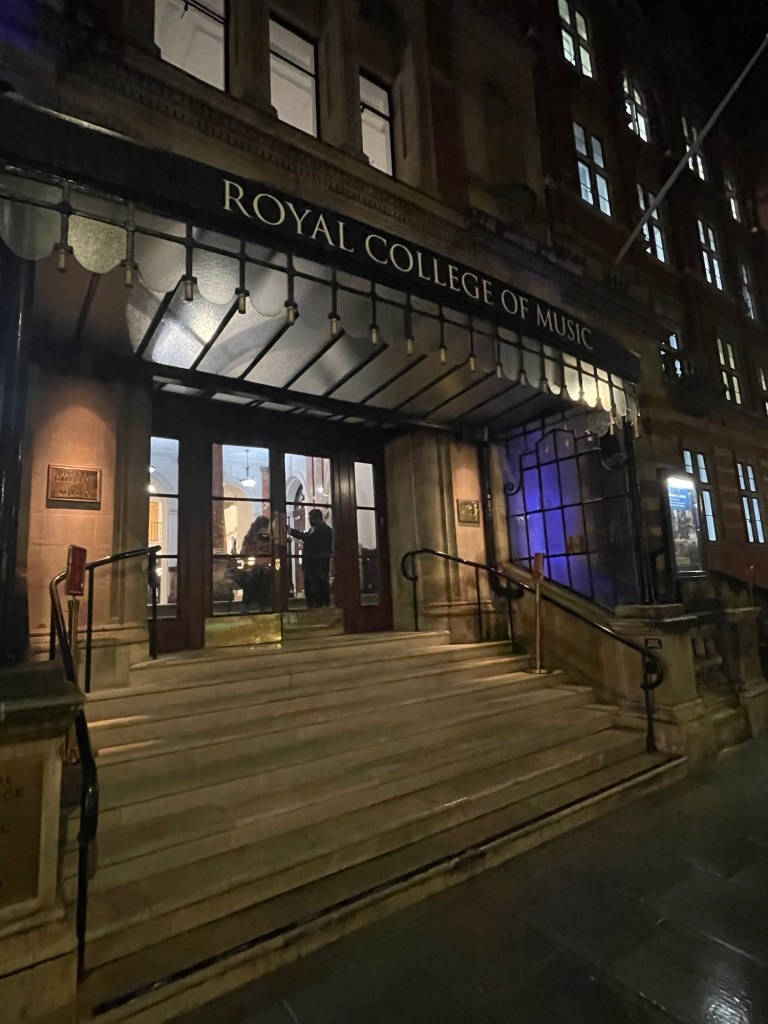


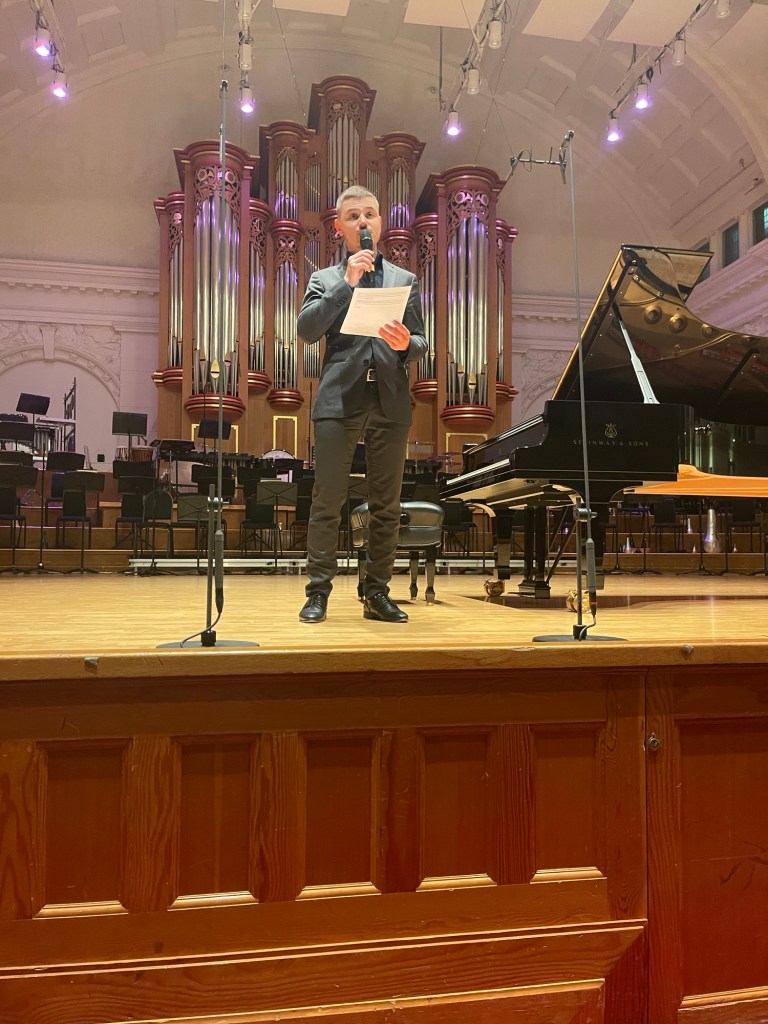

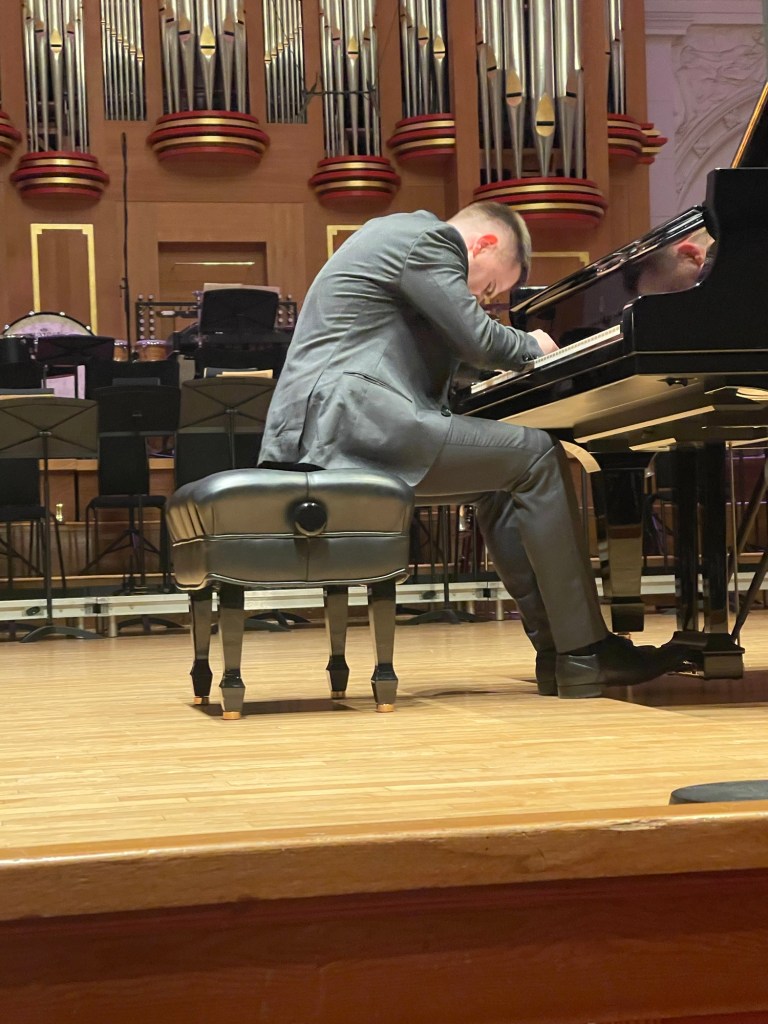
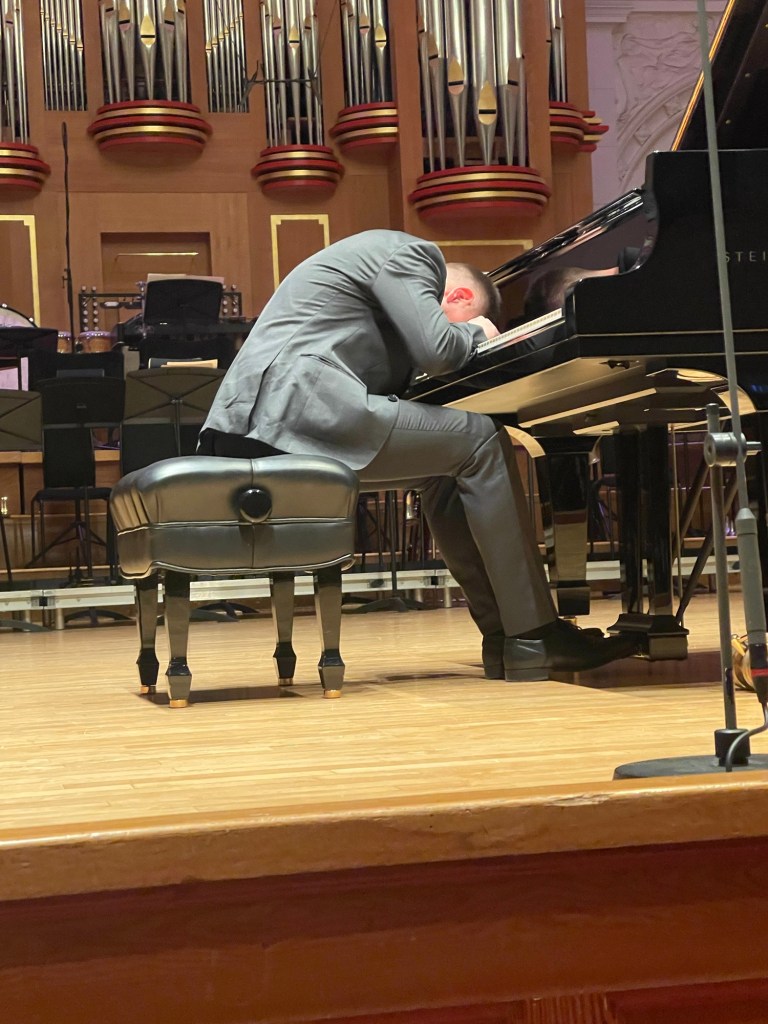
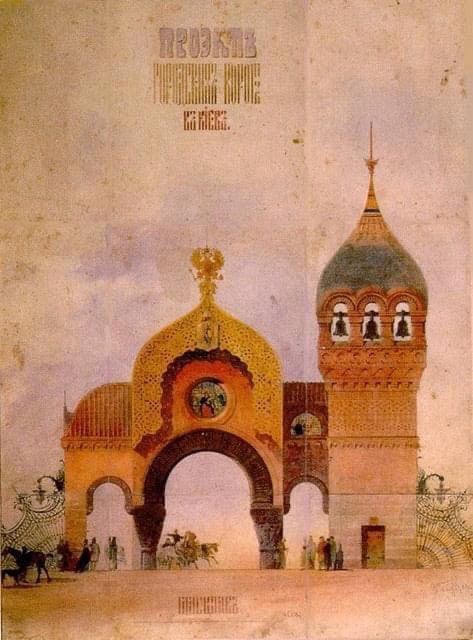
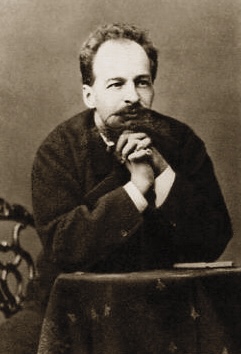
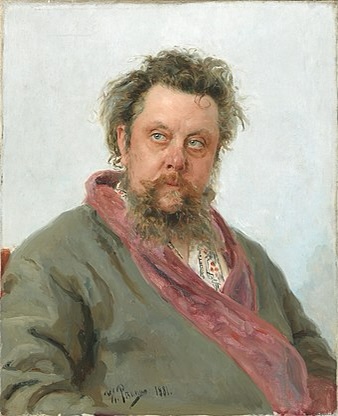
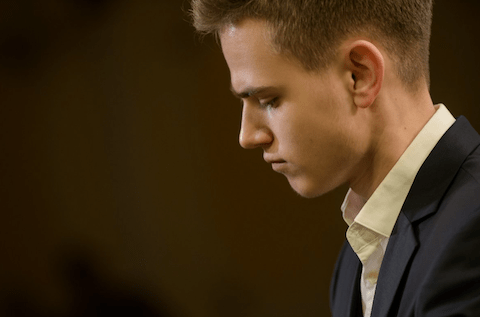

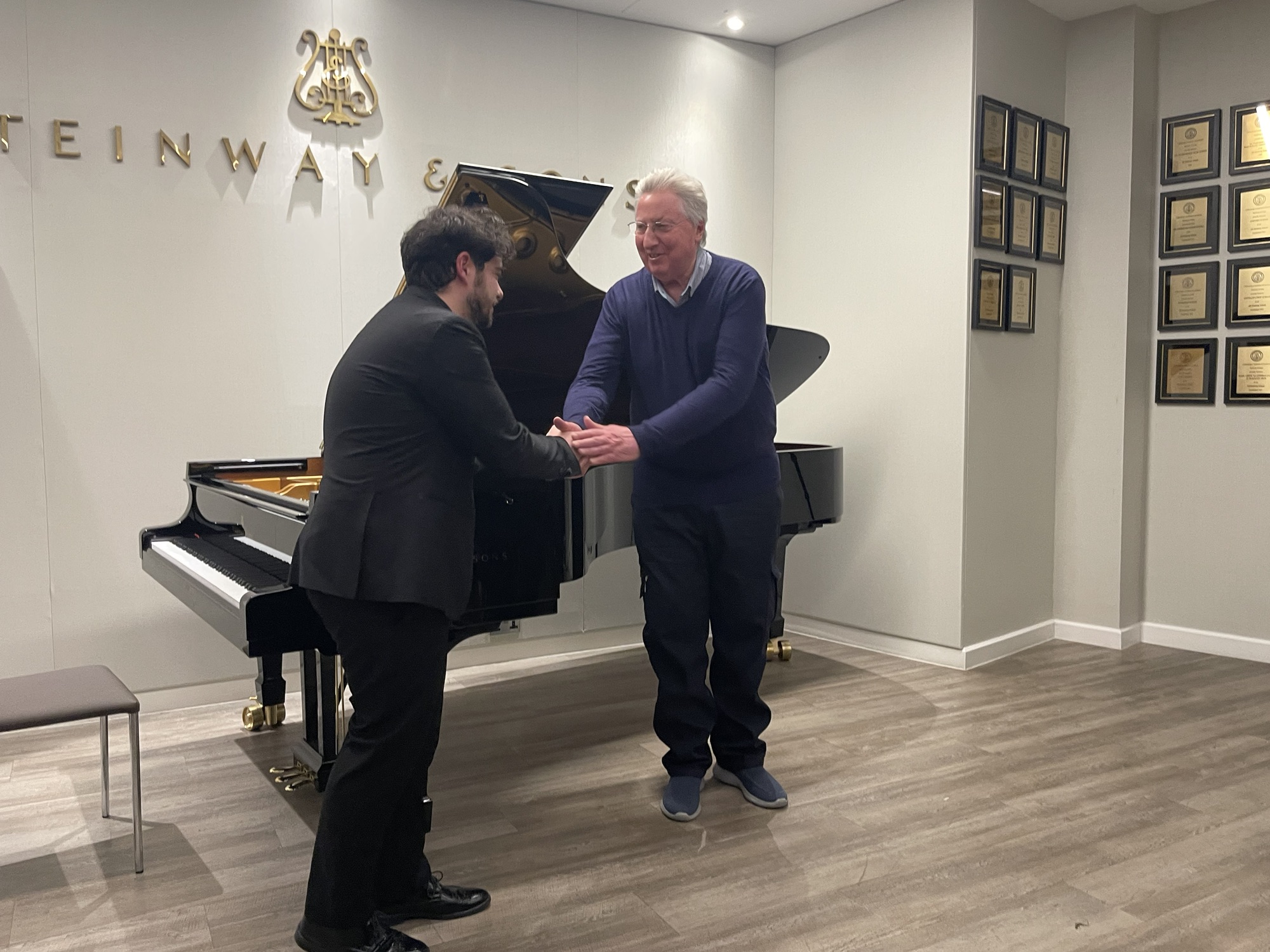
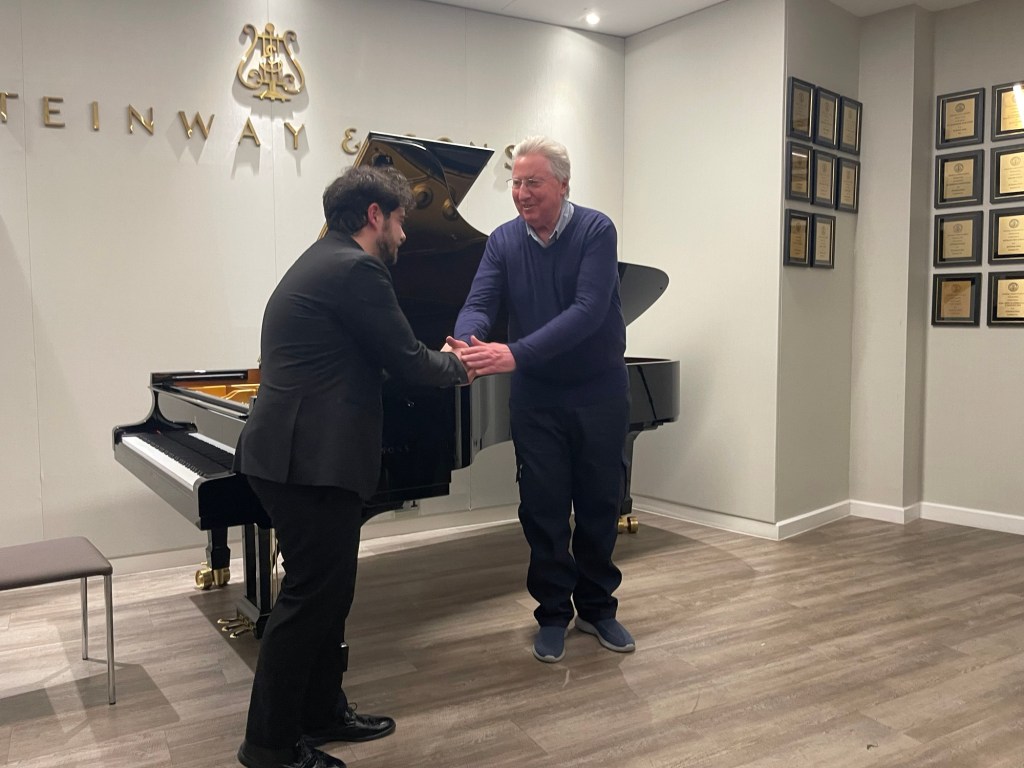


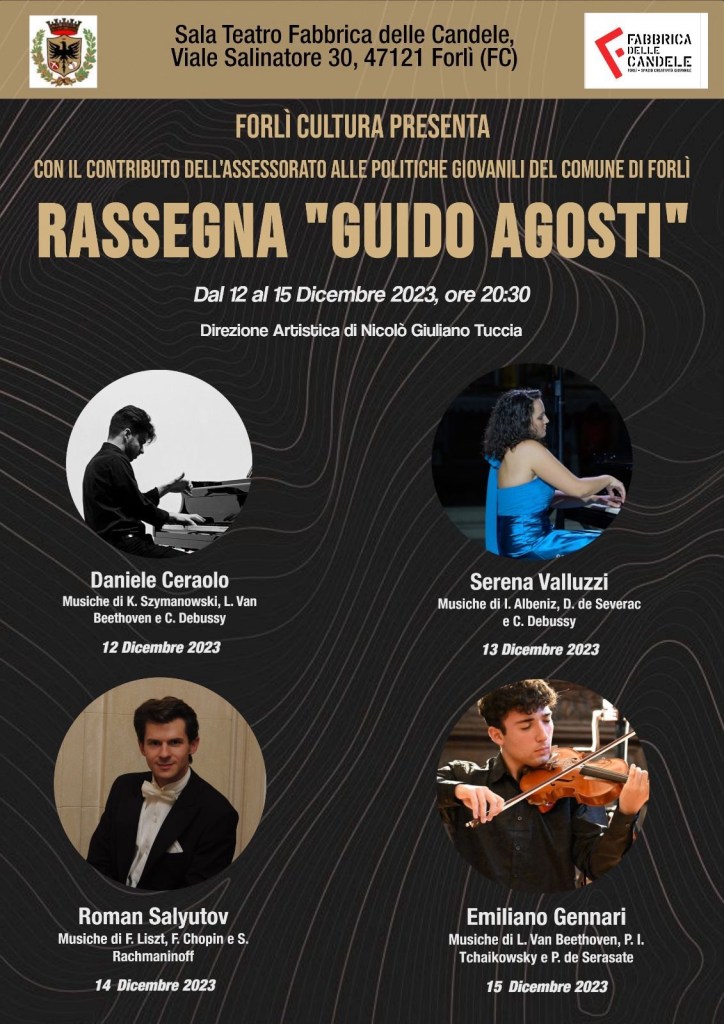


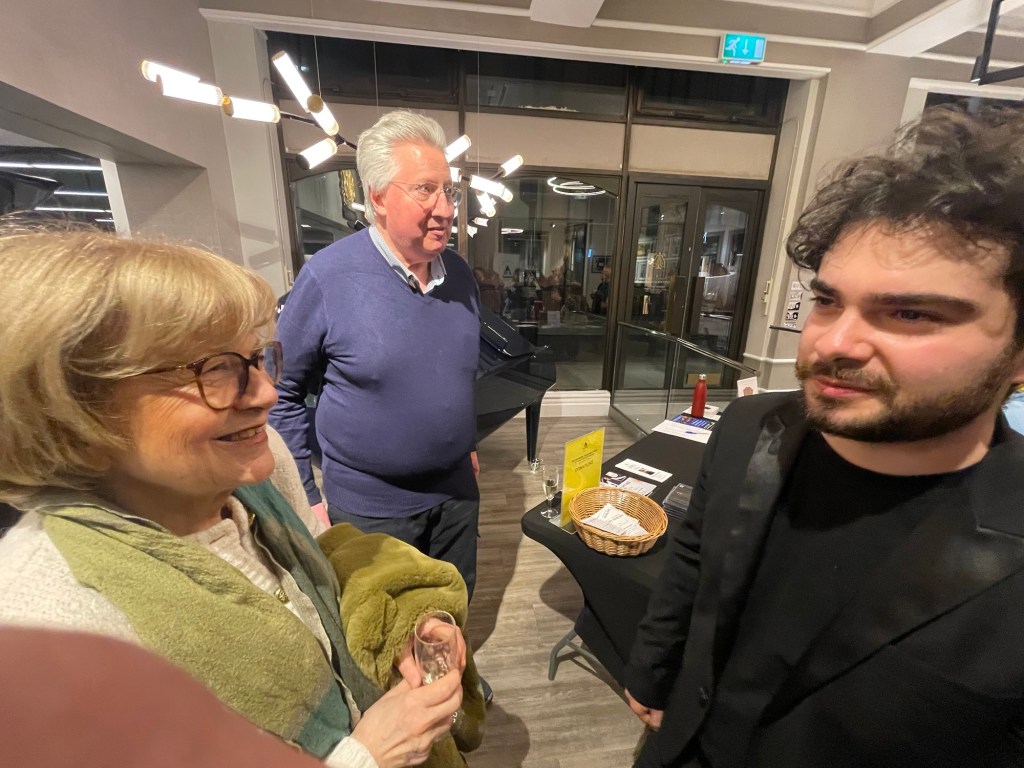
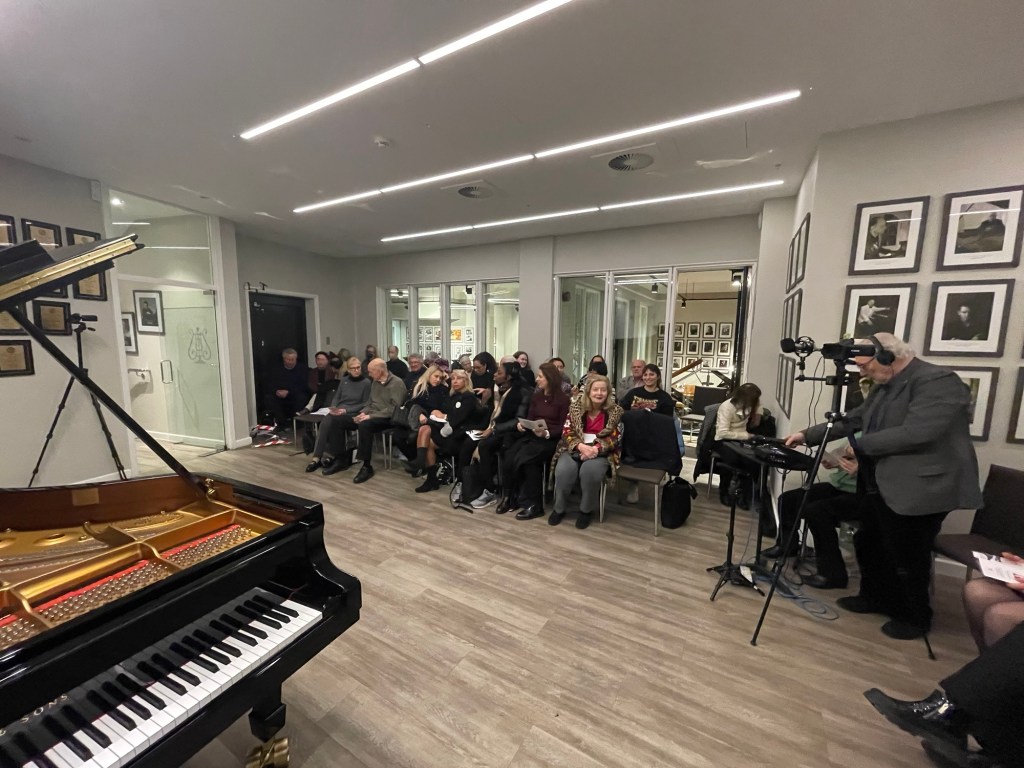

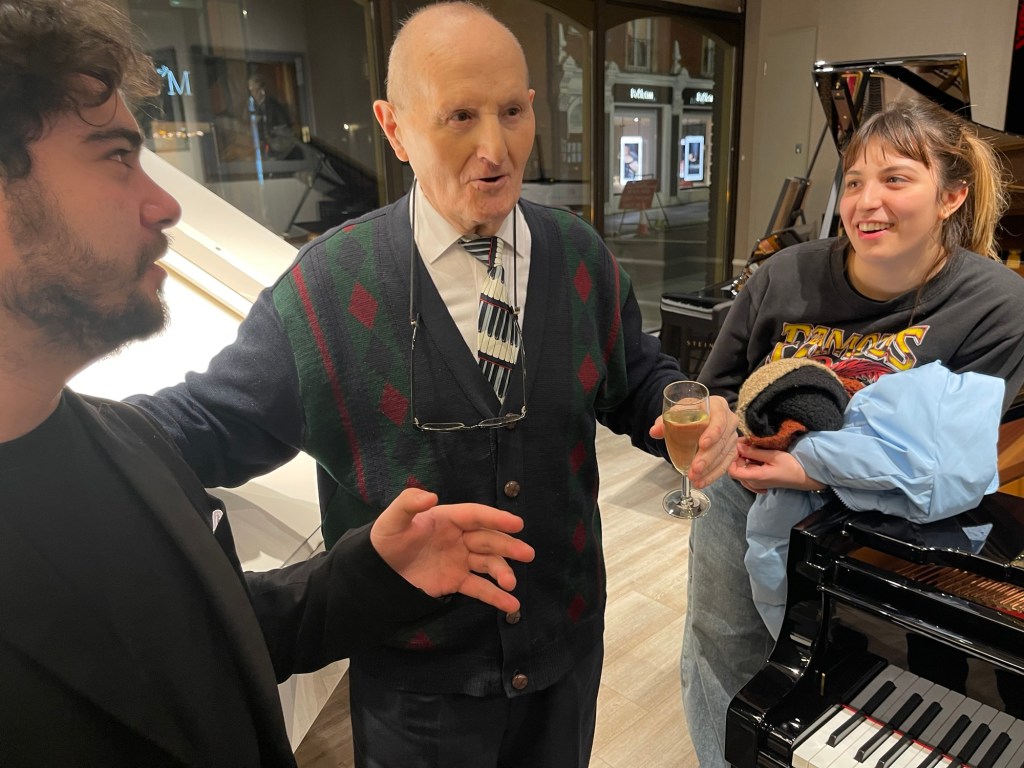
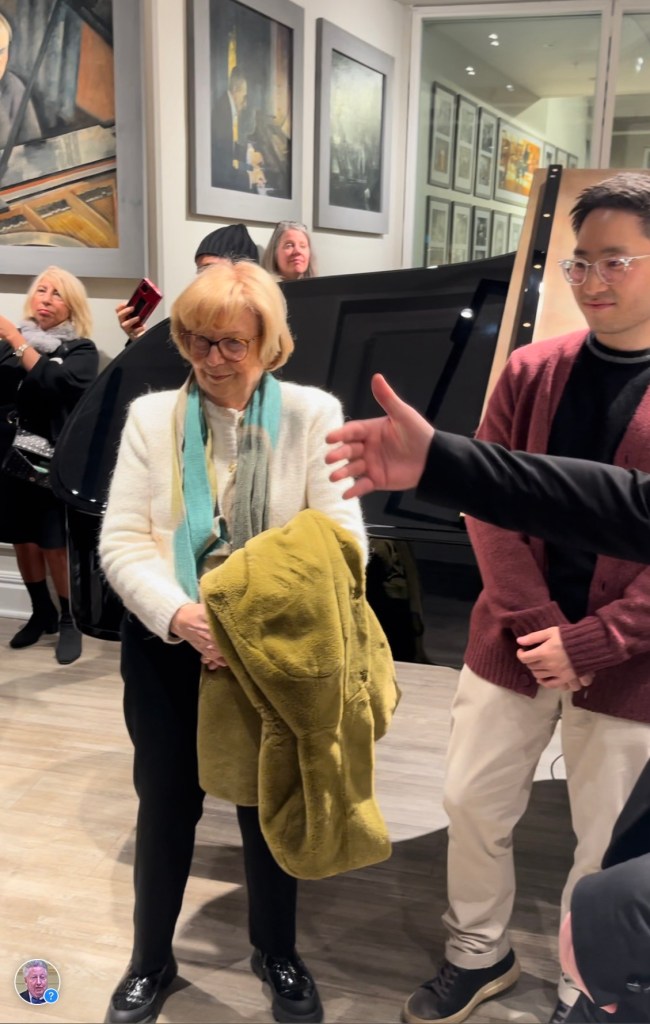


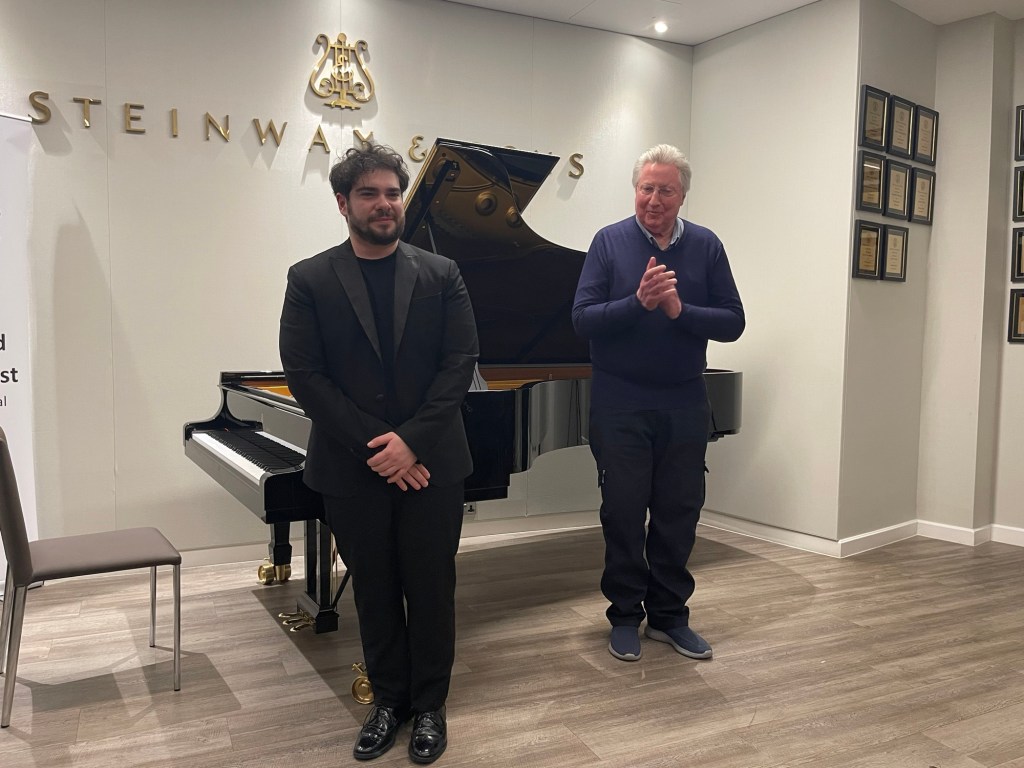
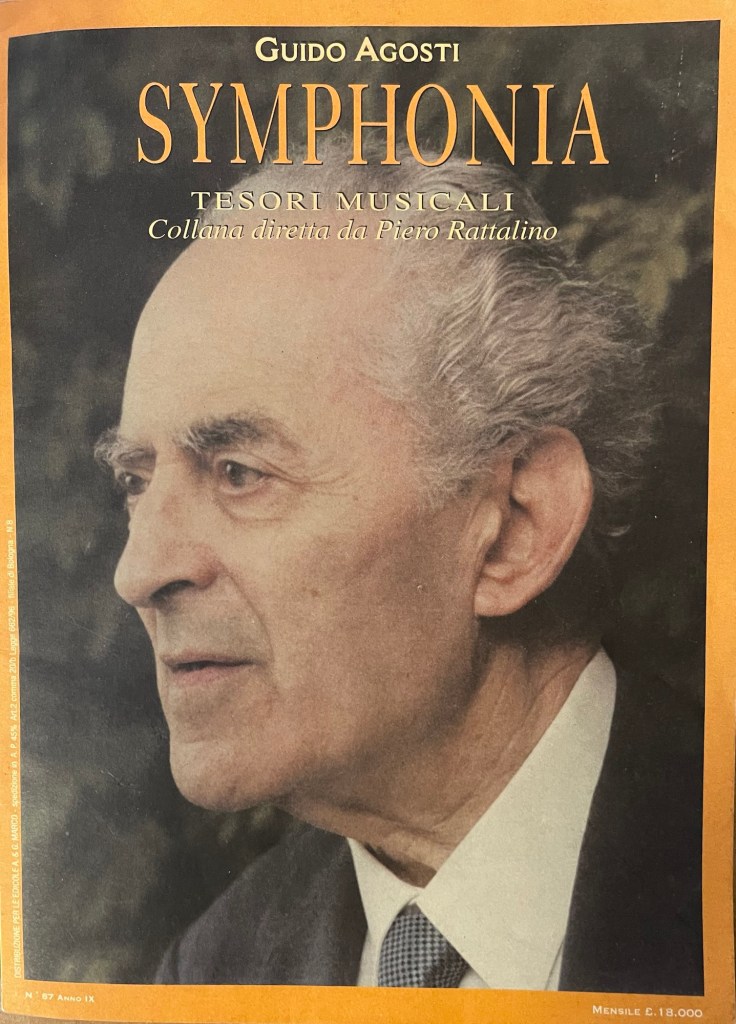
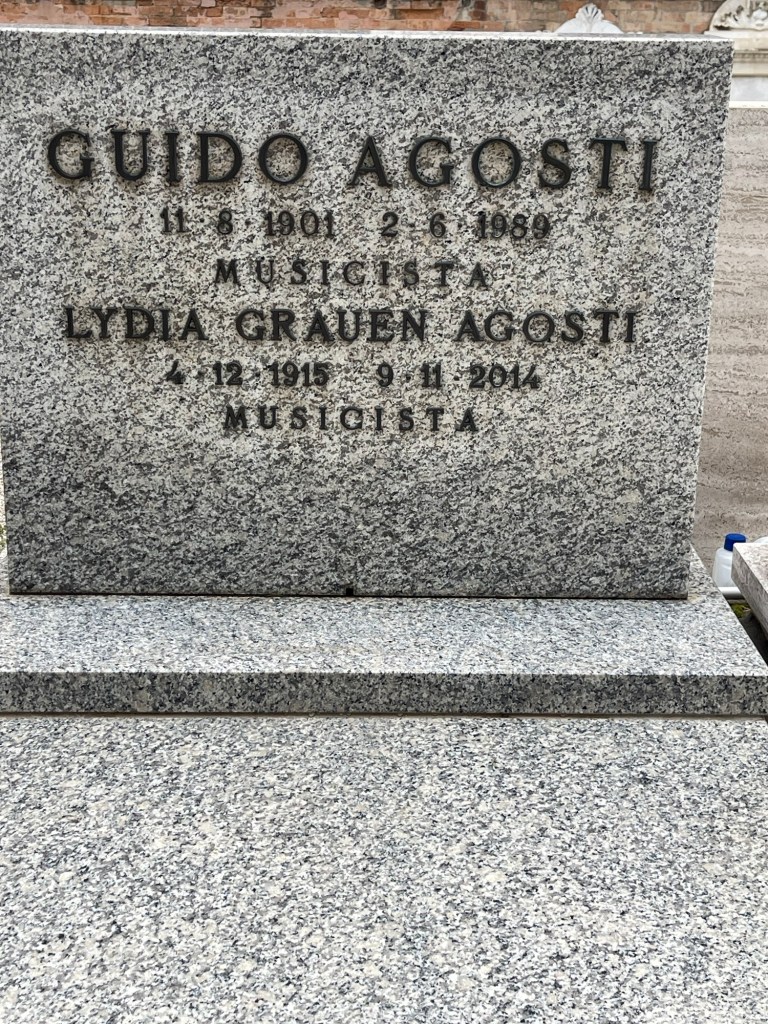


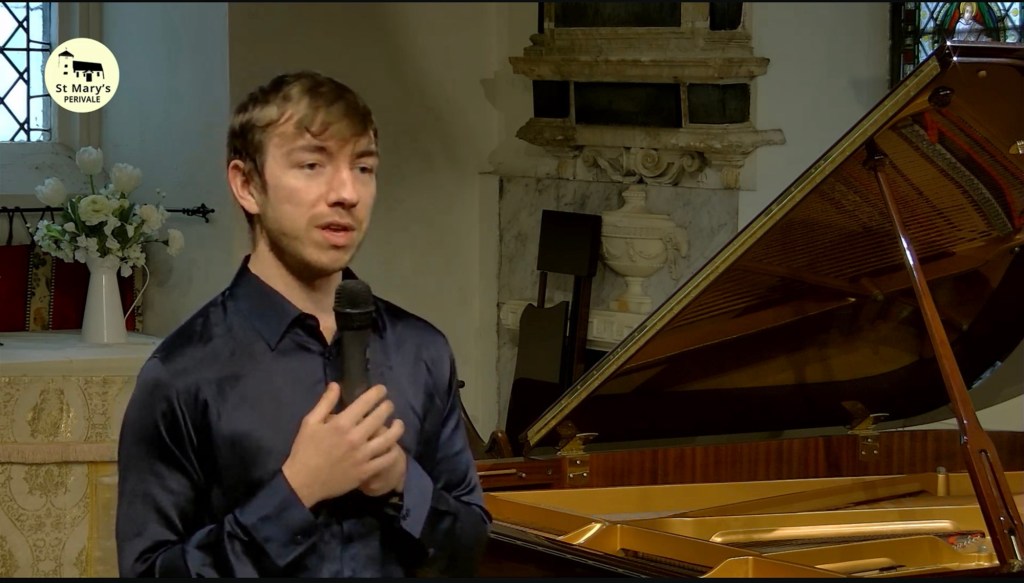

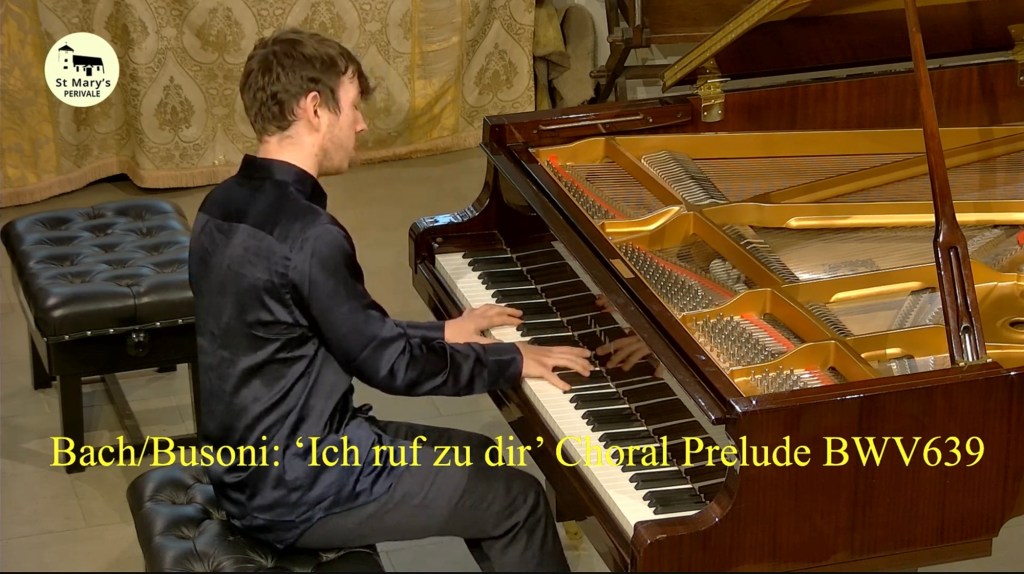


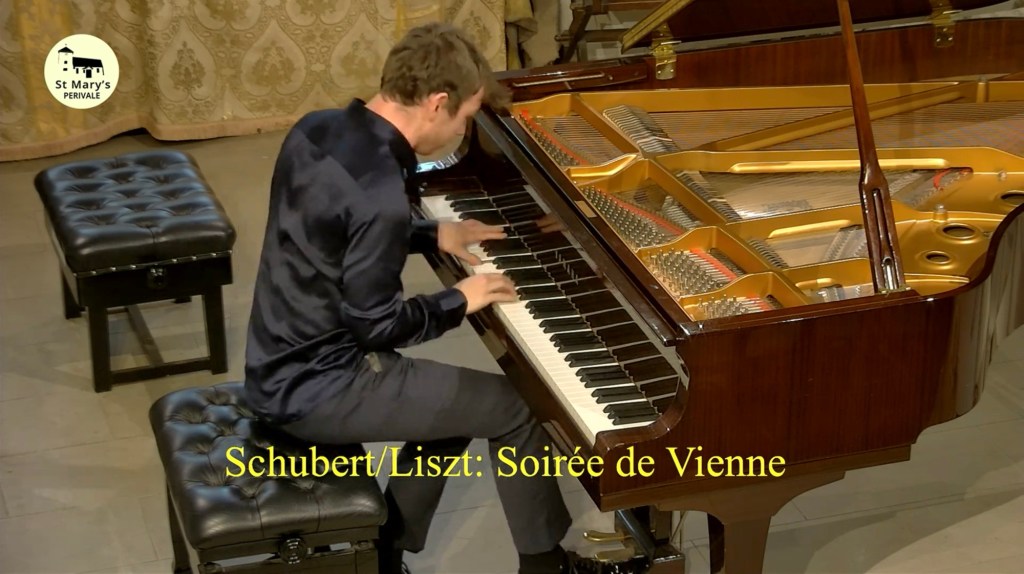
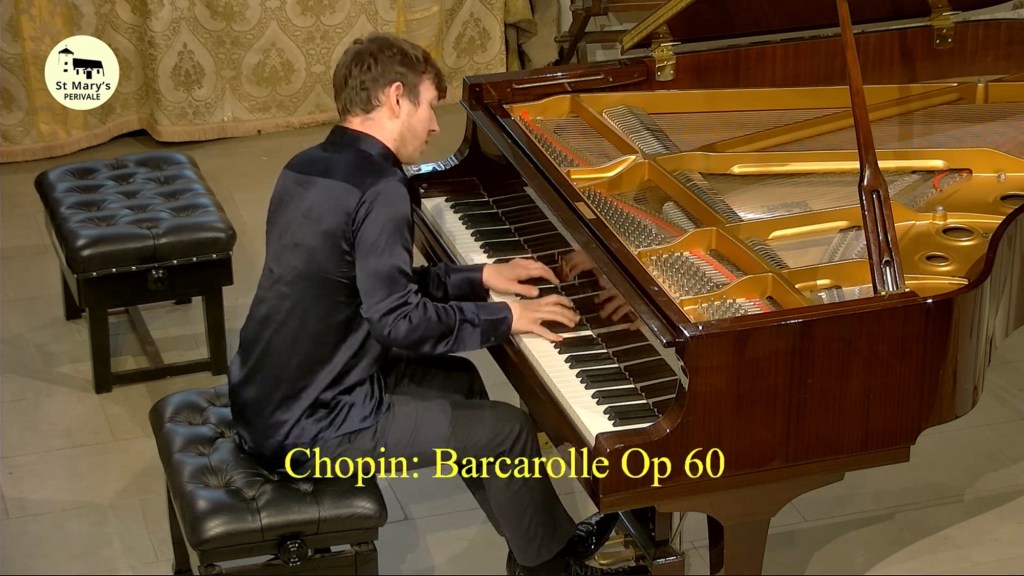

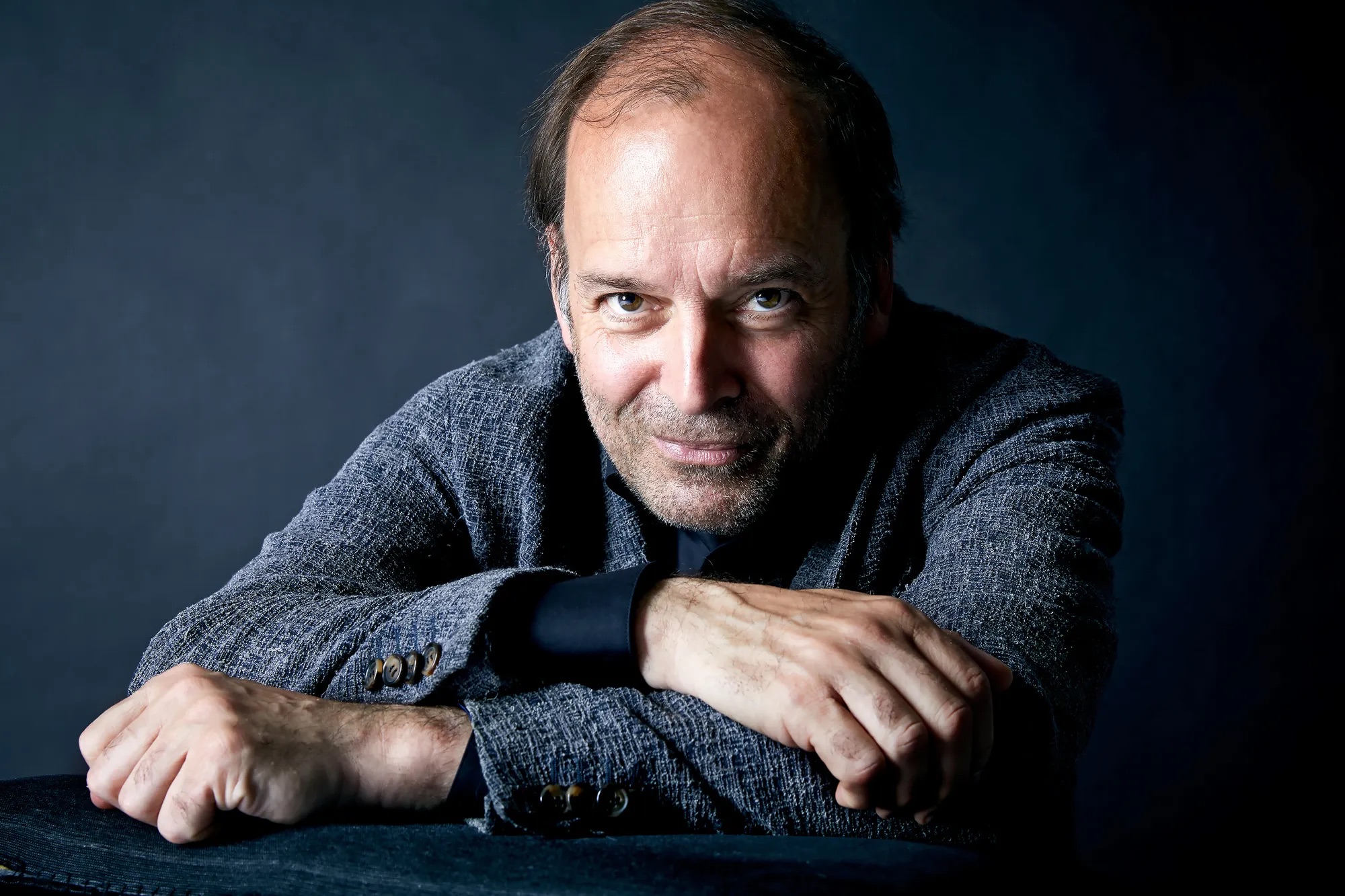

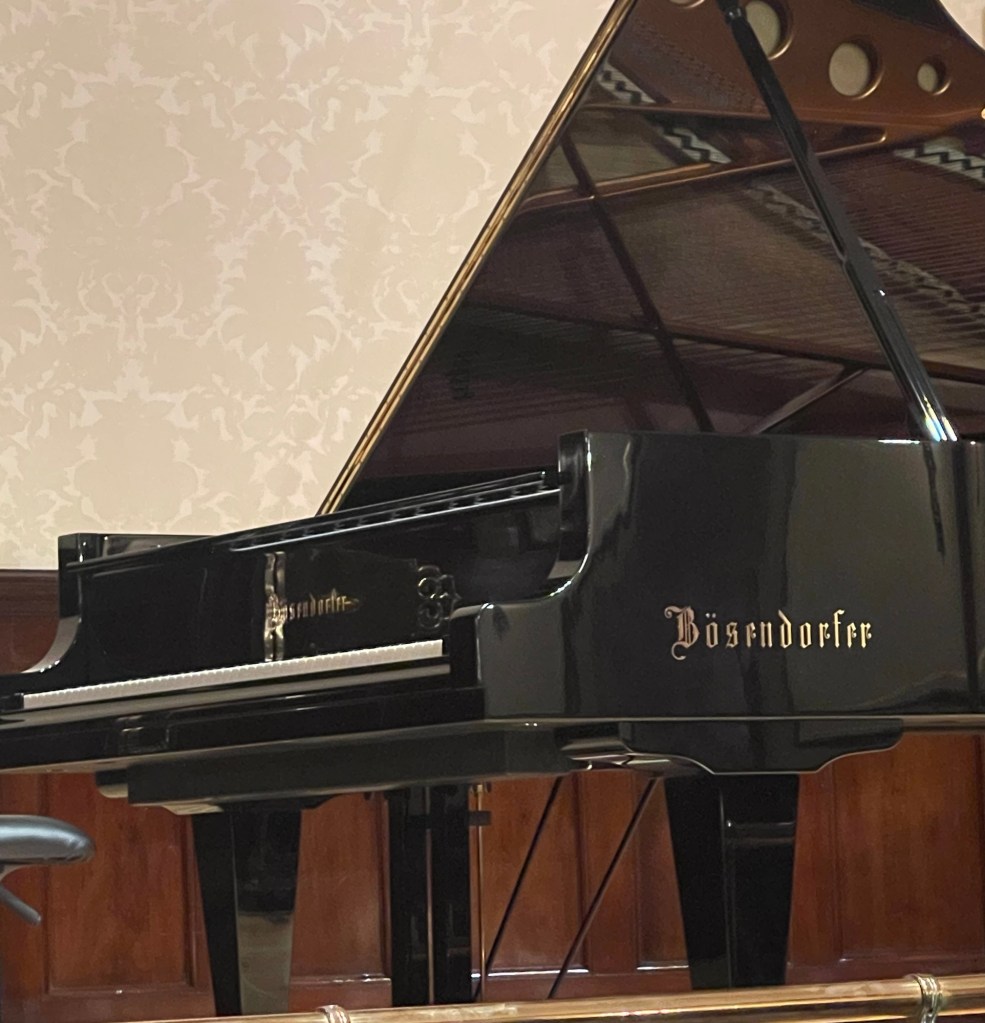

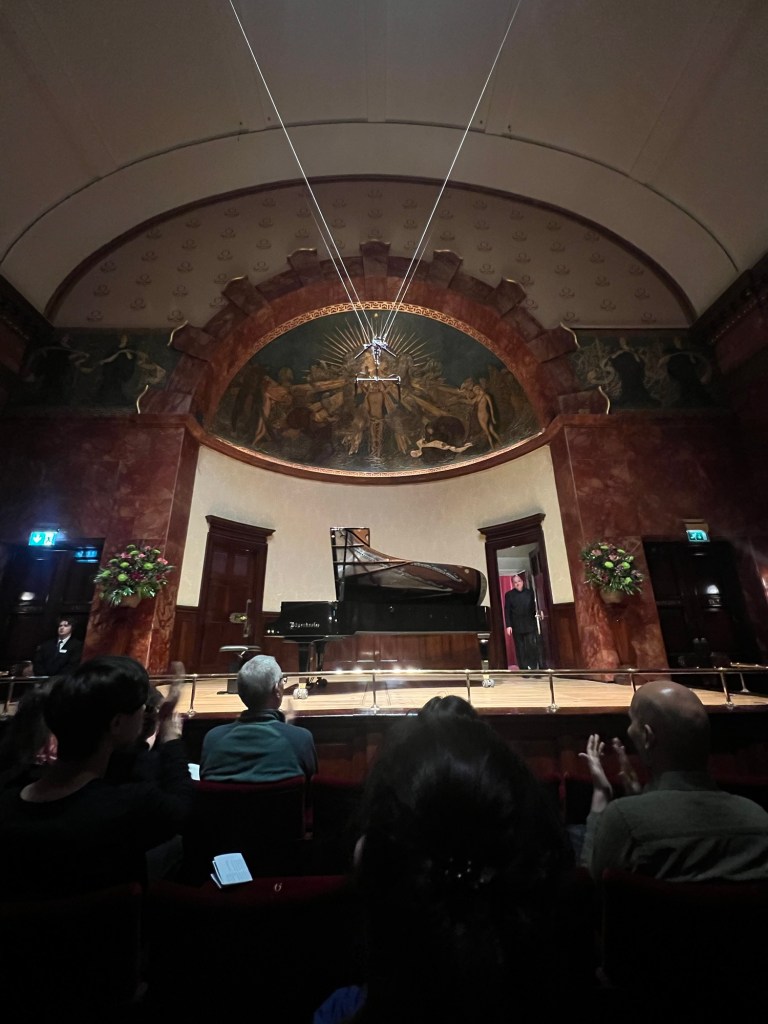
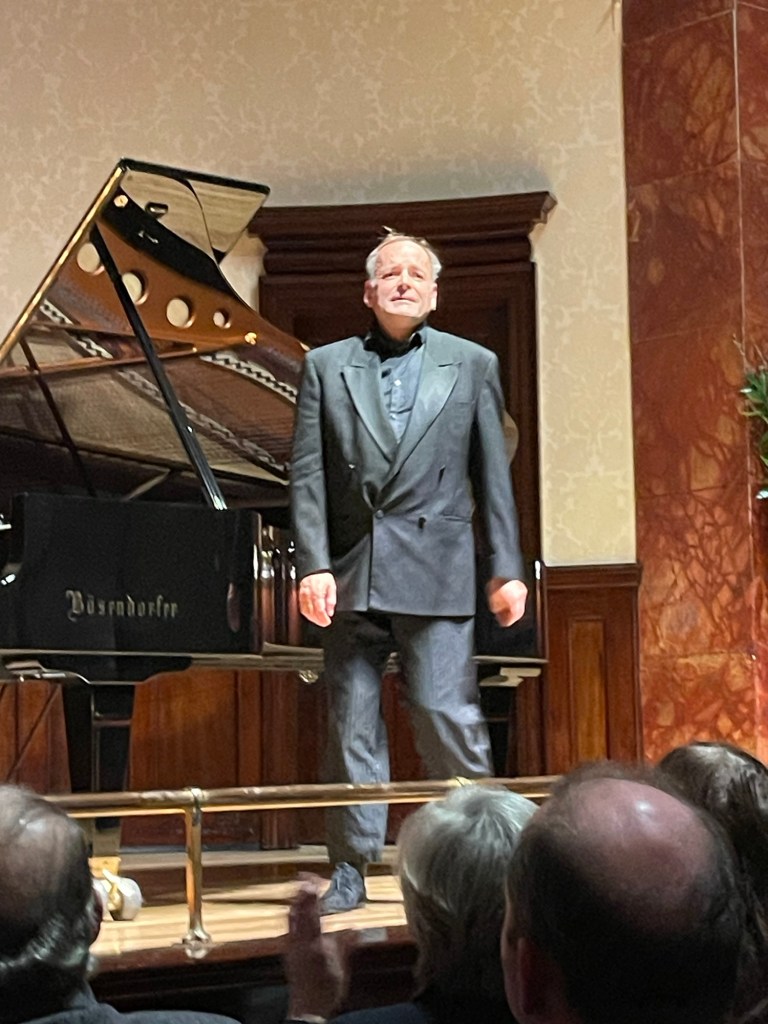
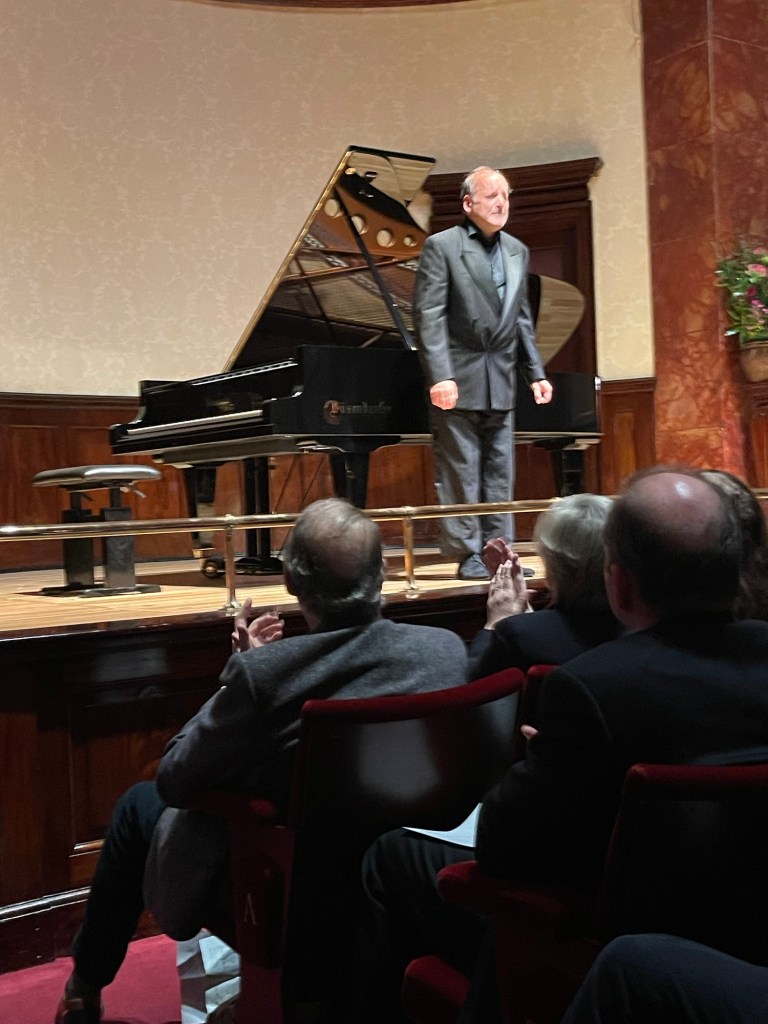




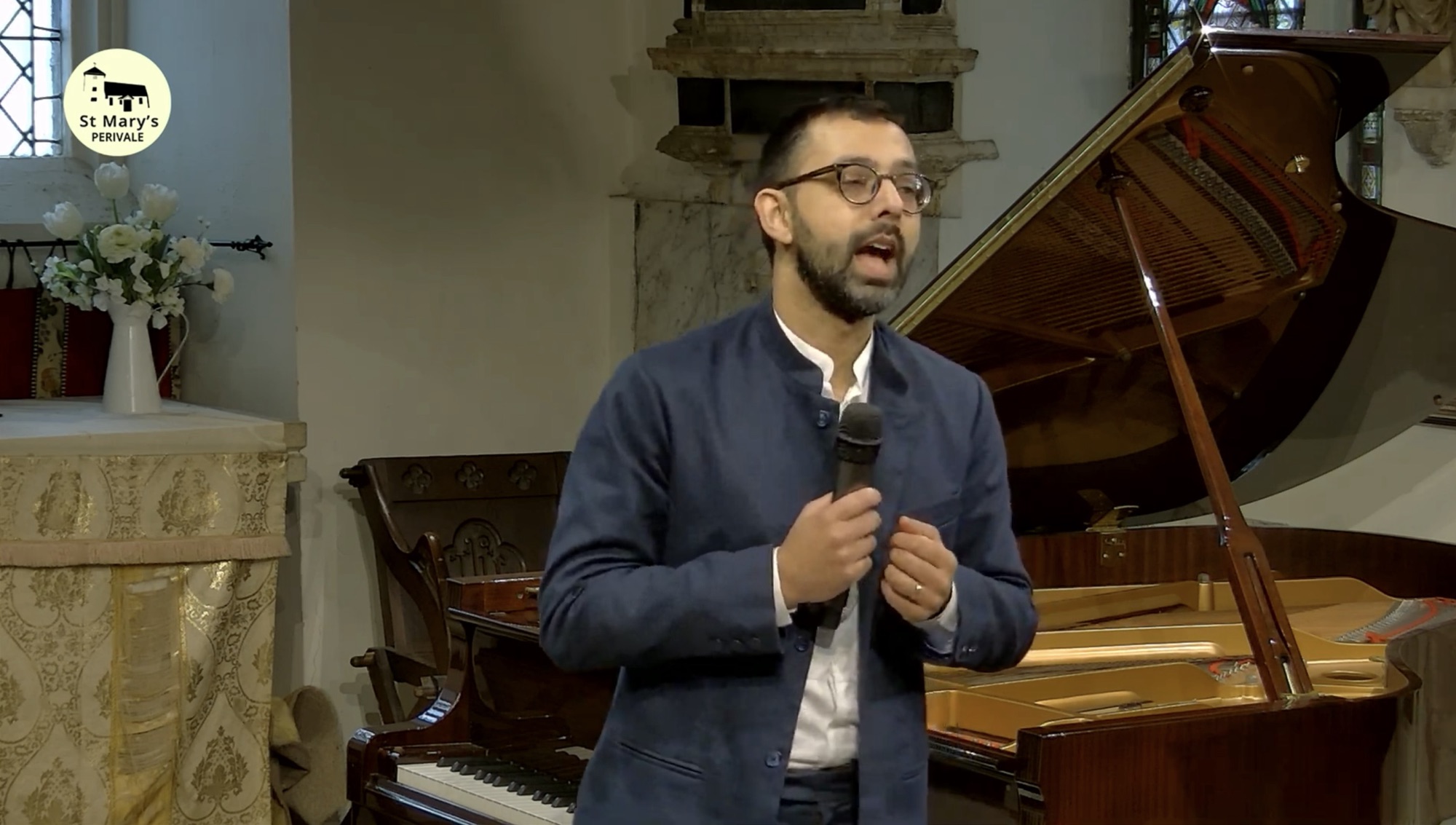


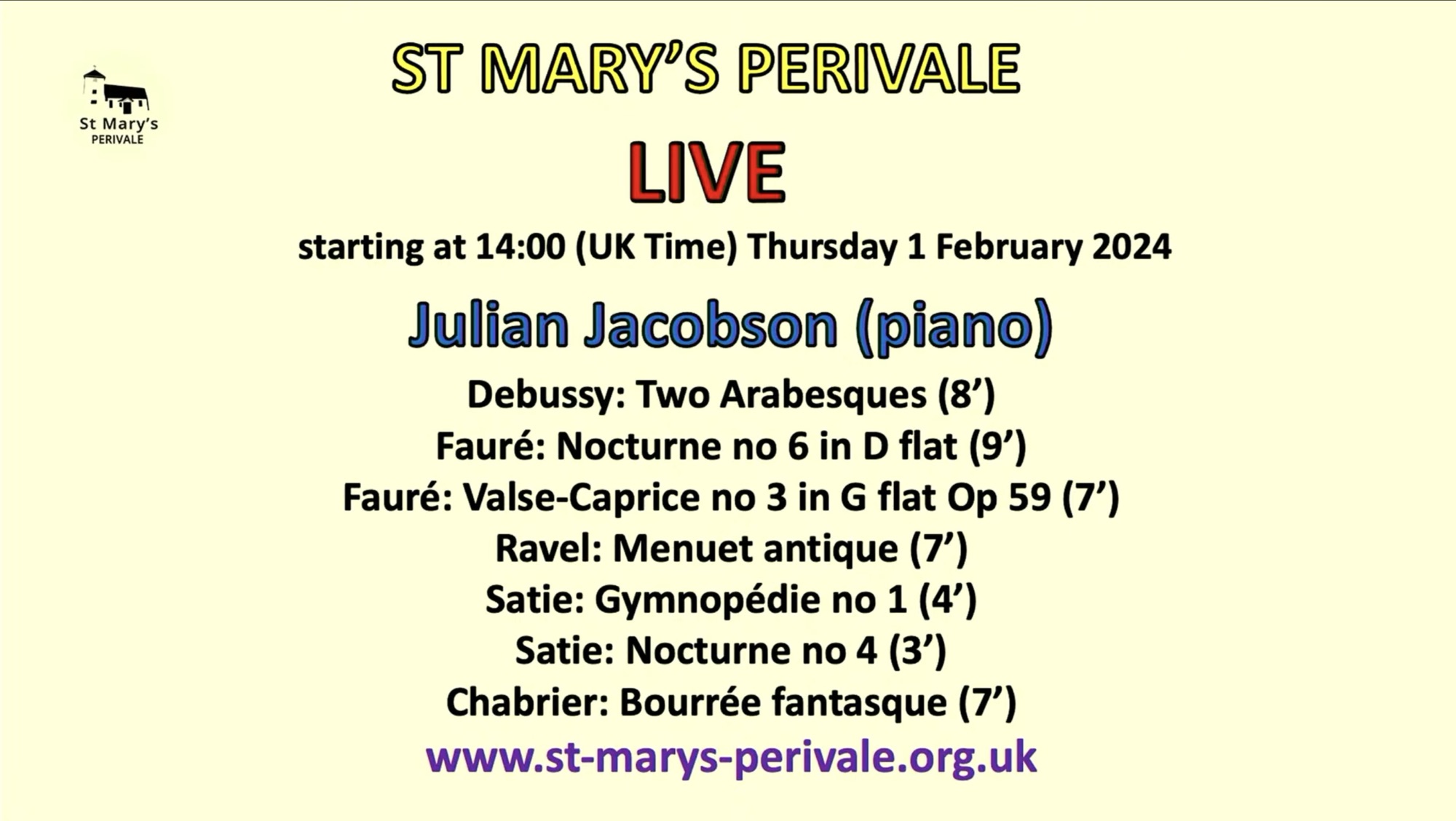
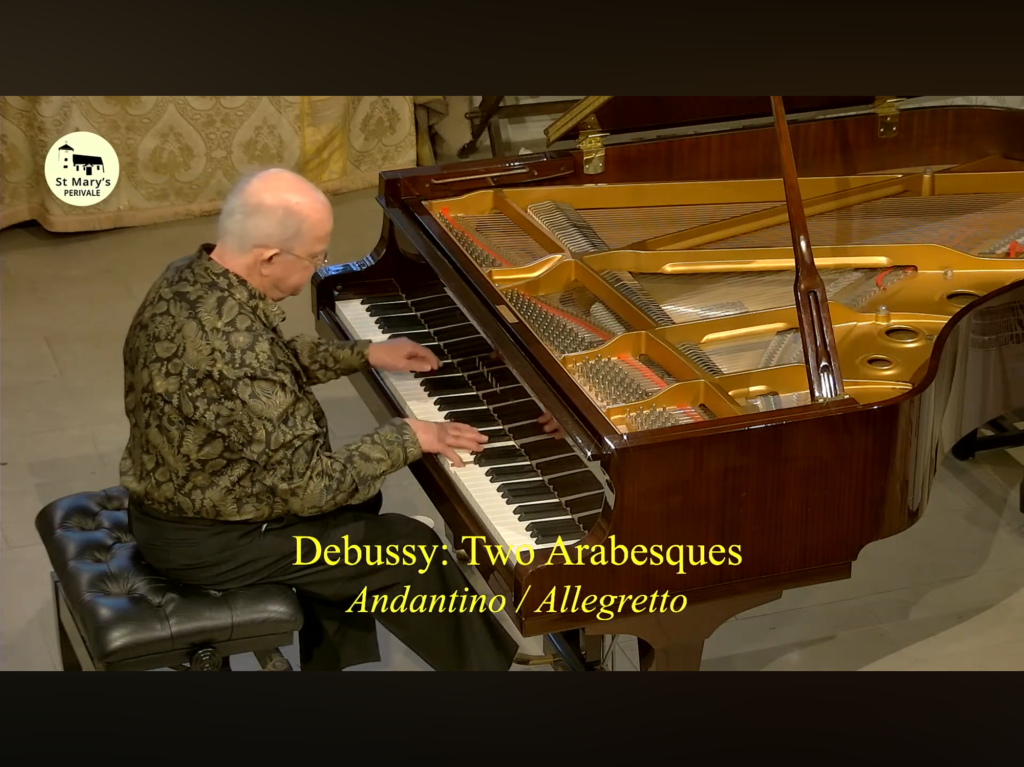

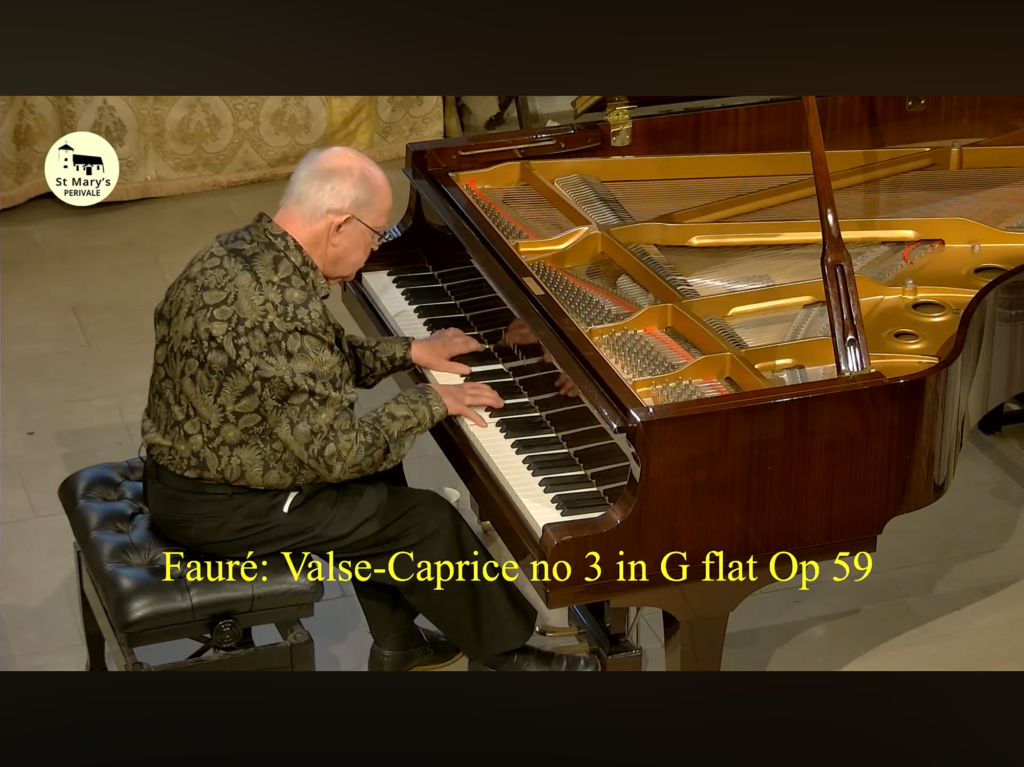

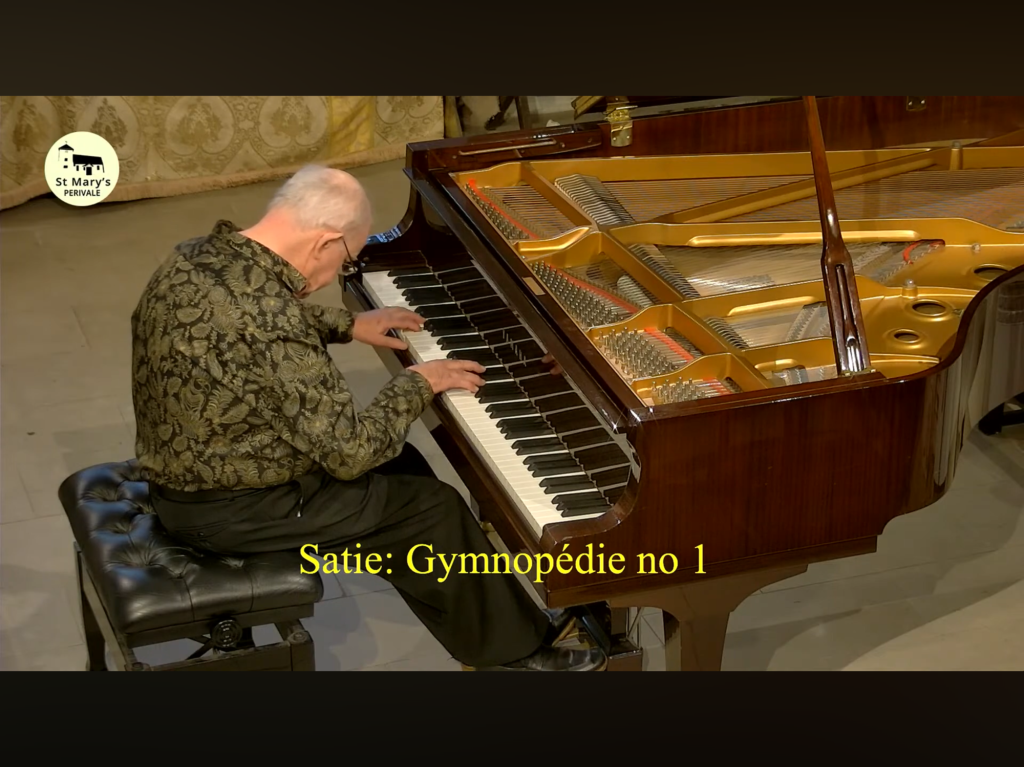


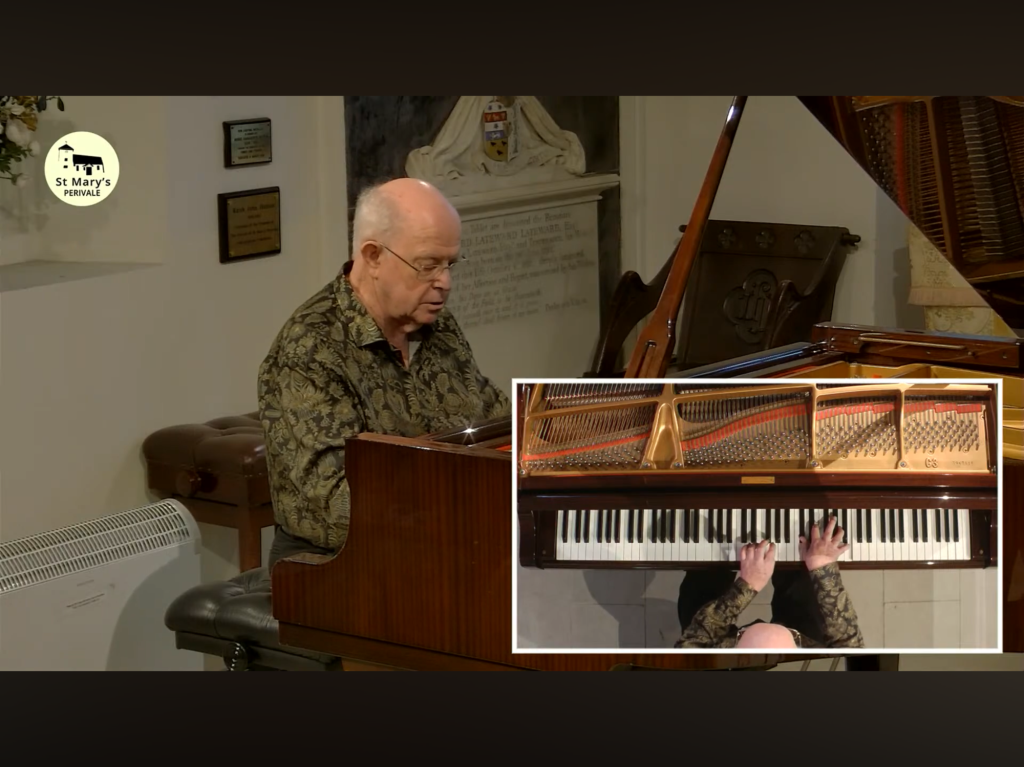


 ChristopherAxworthy-MusicCommentary