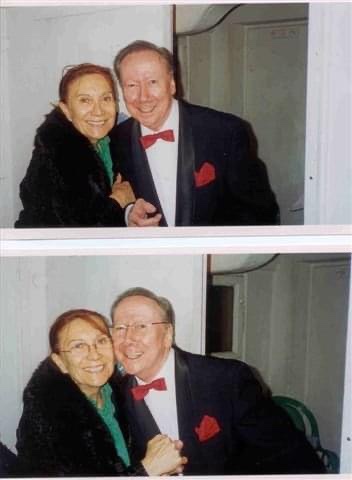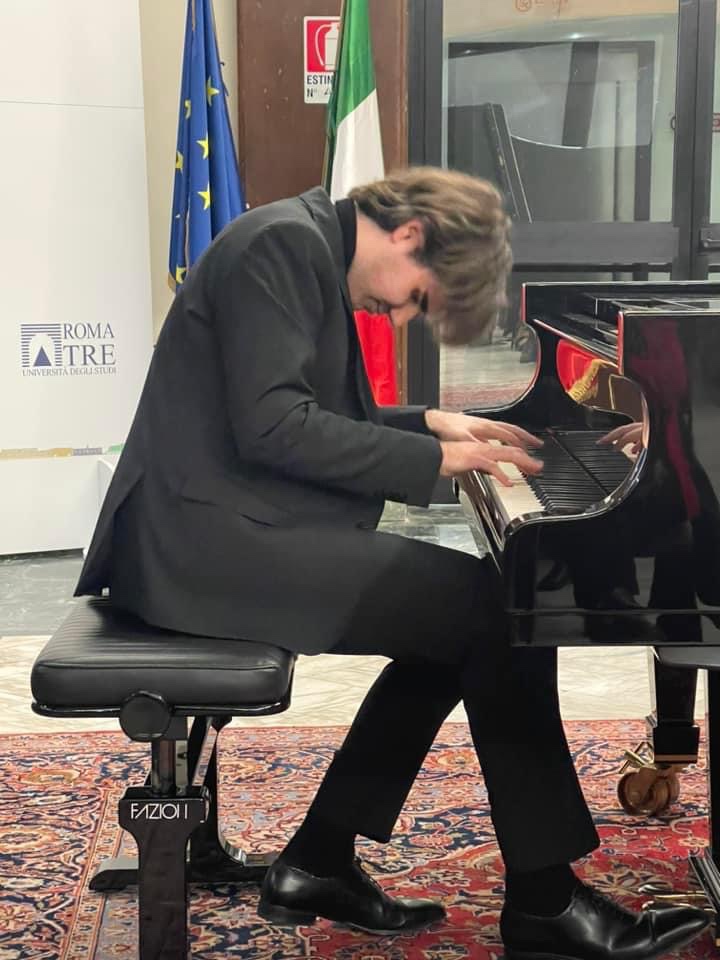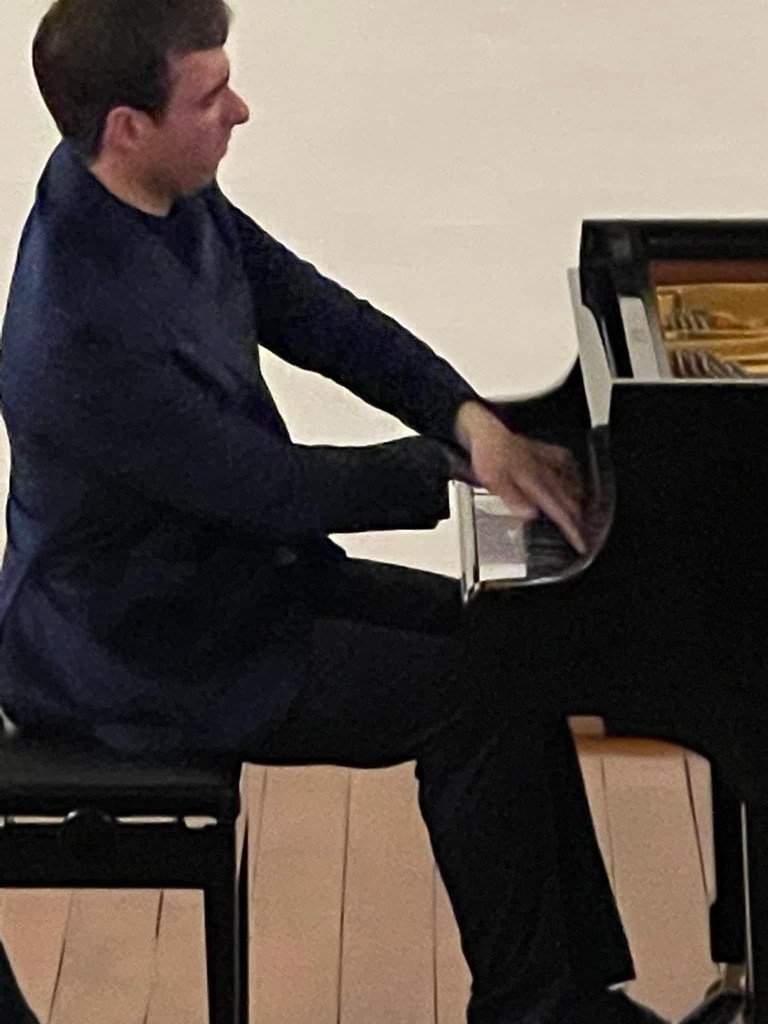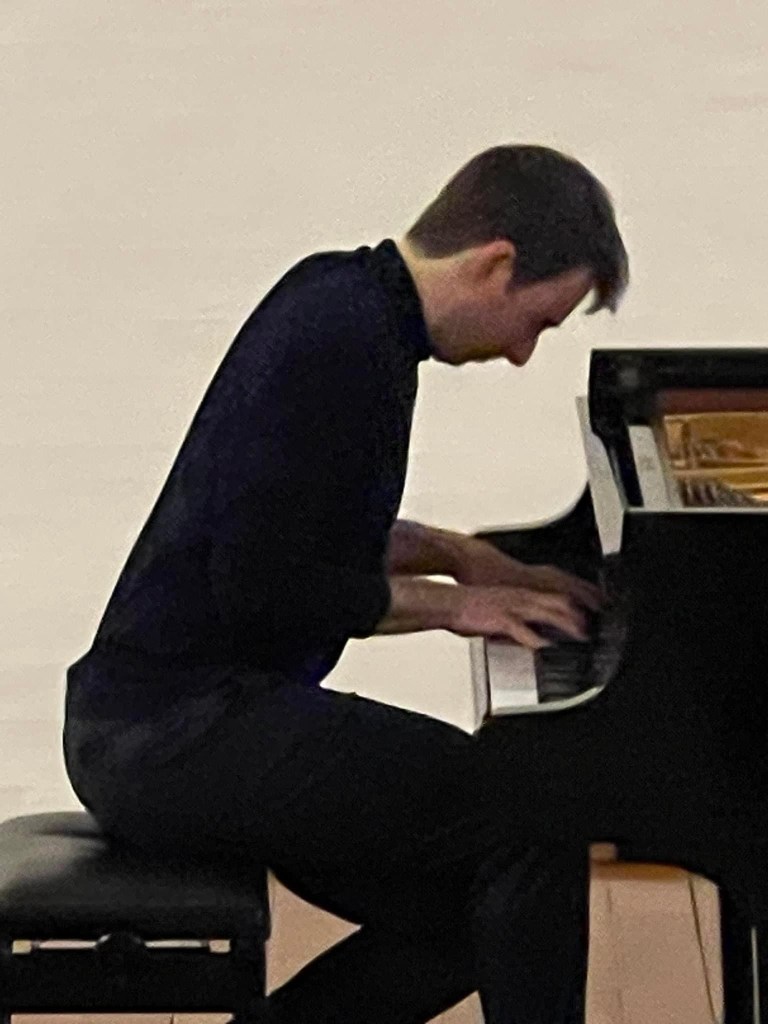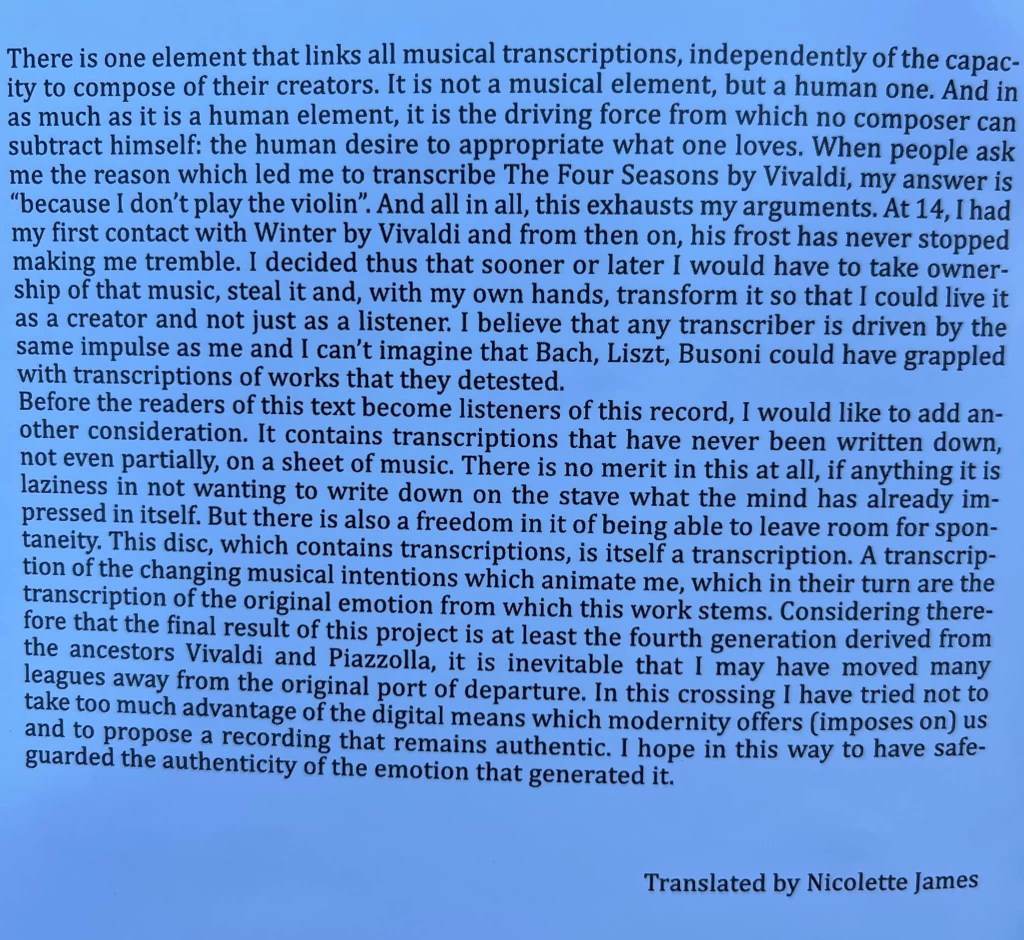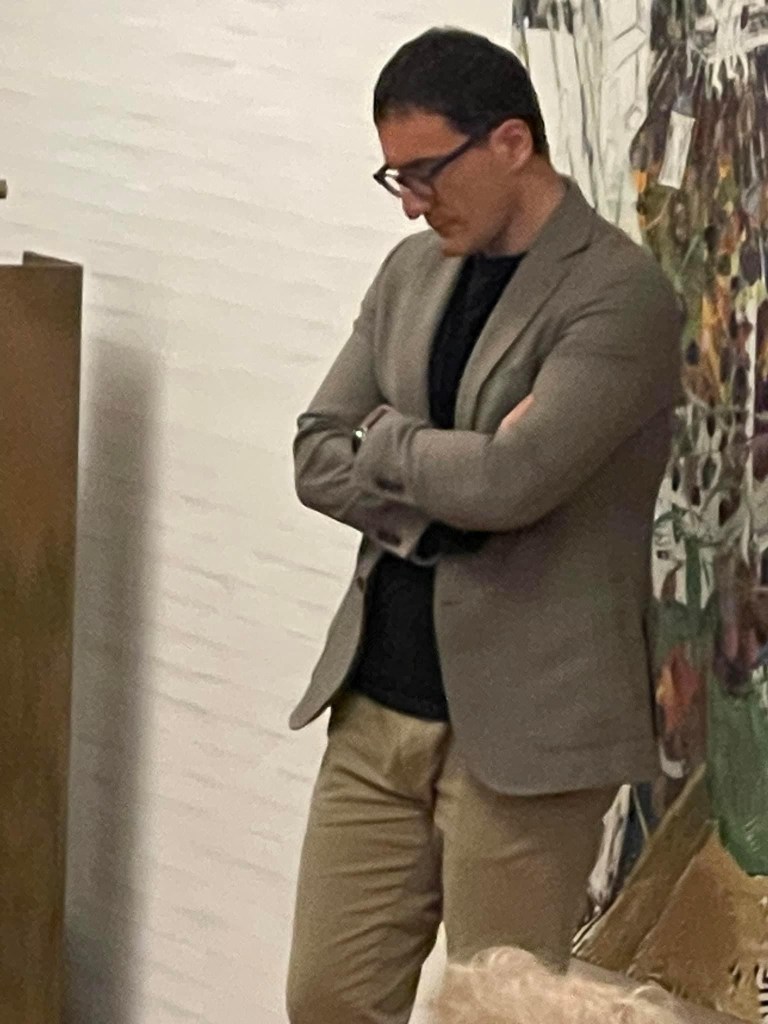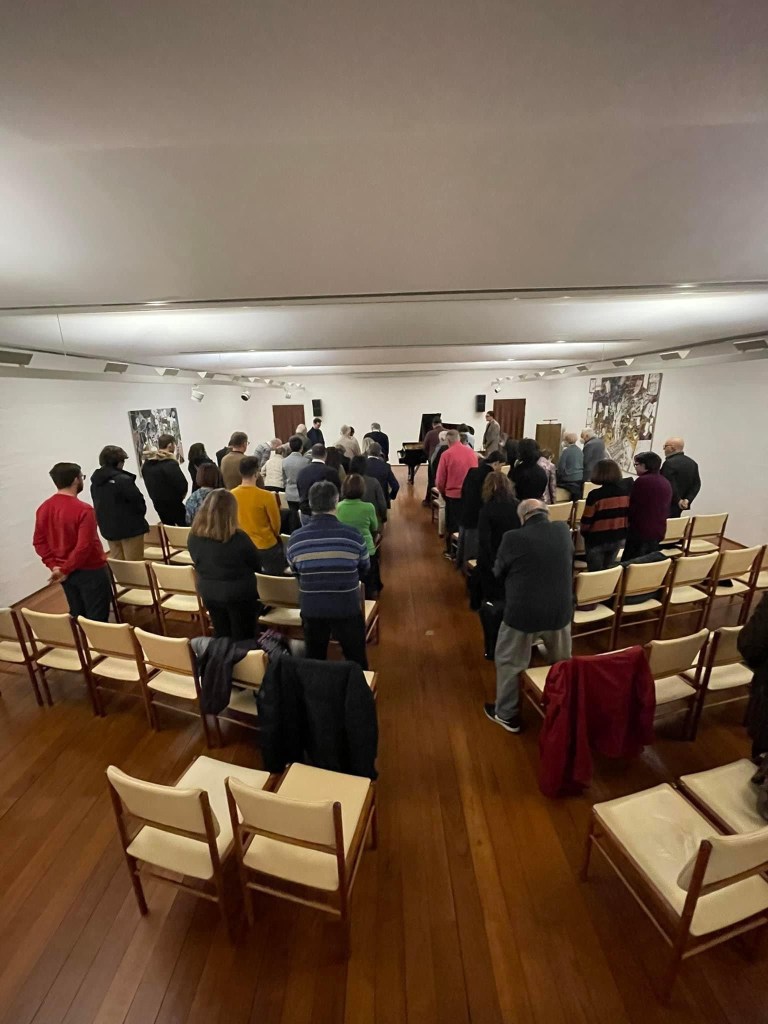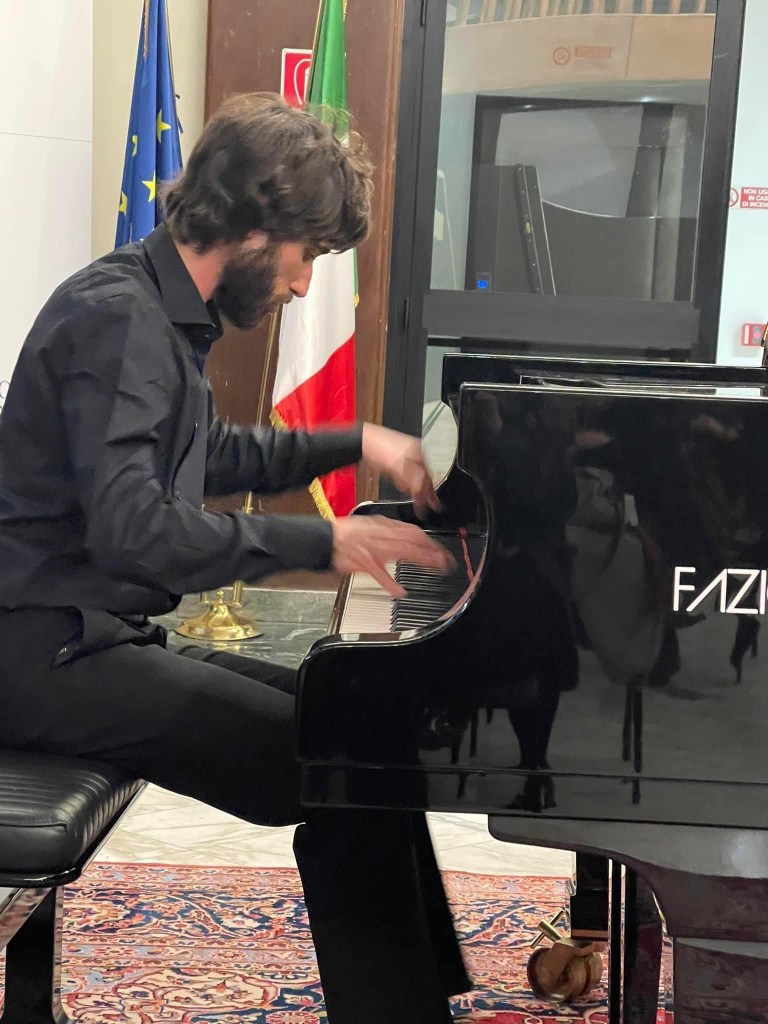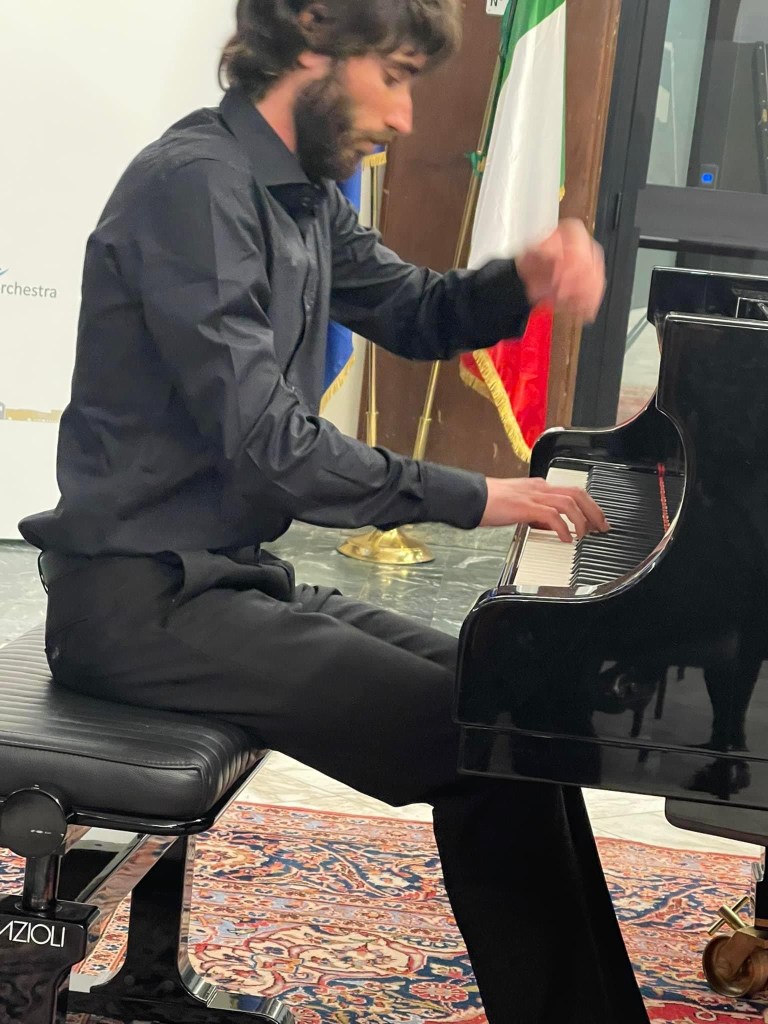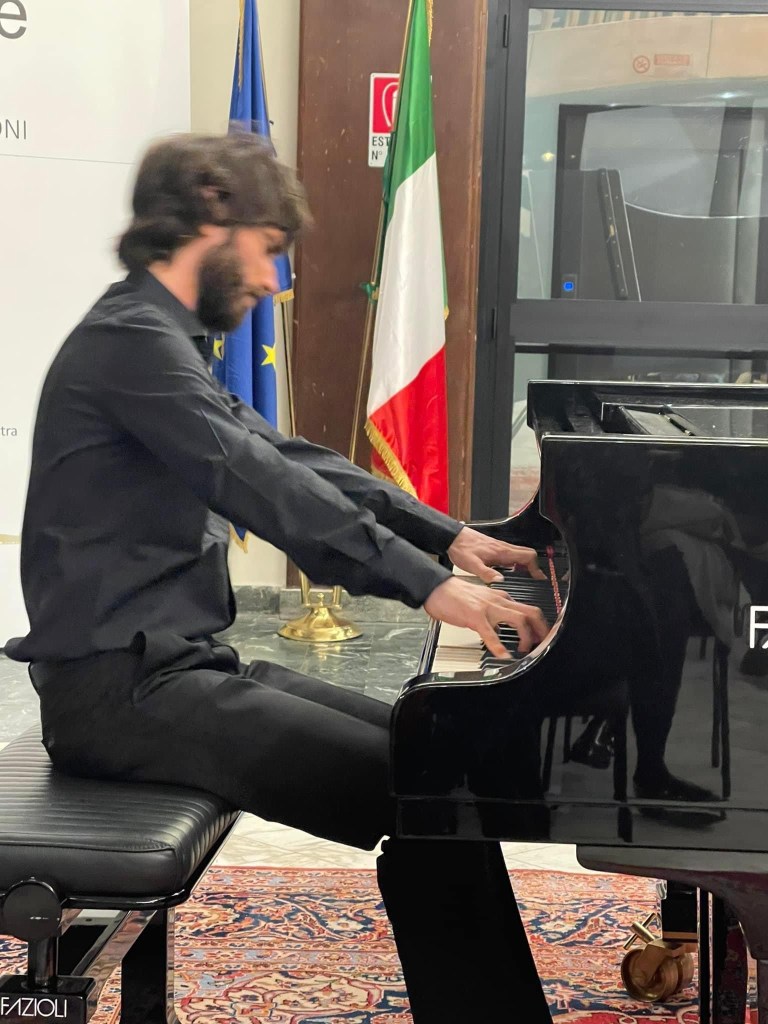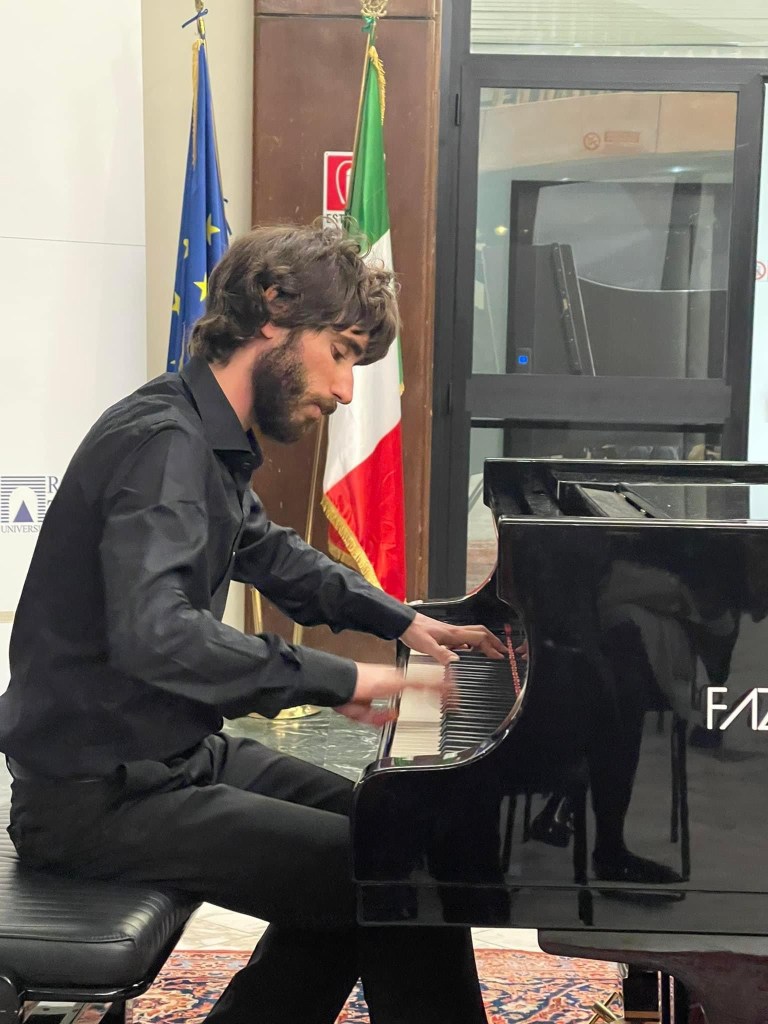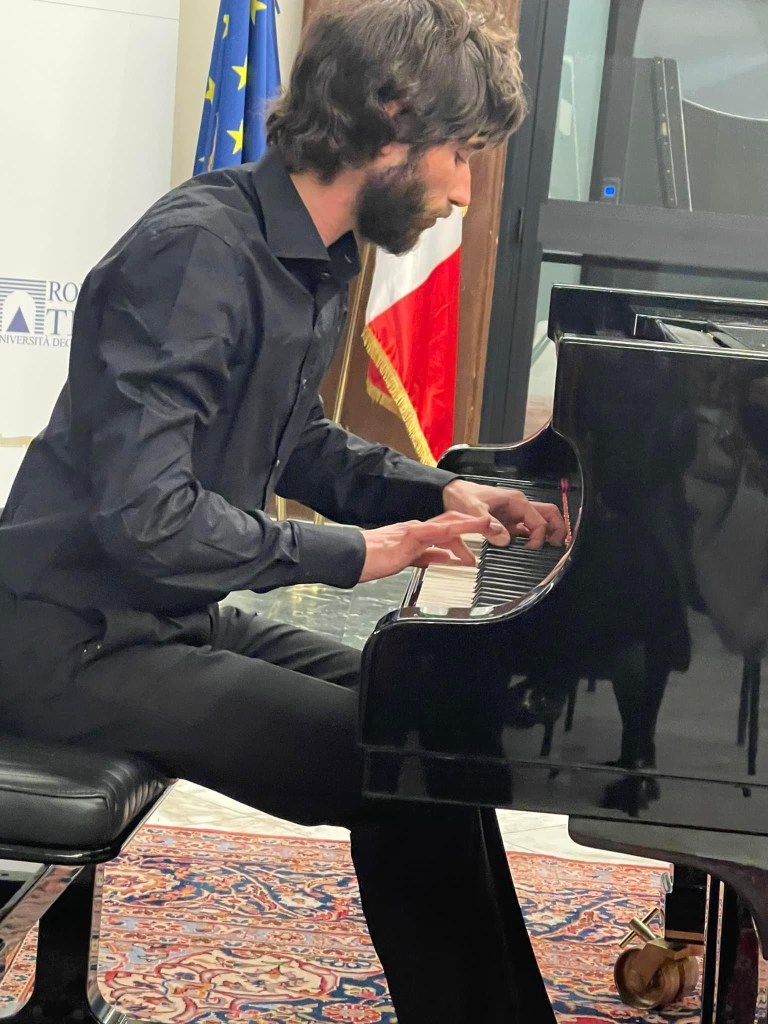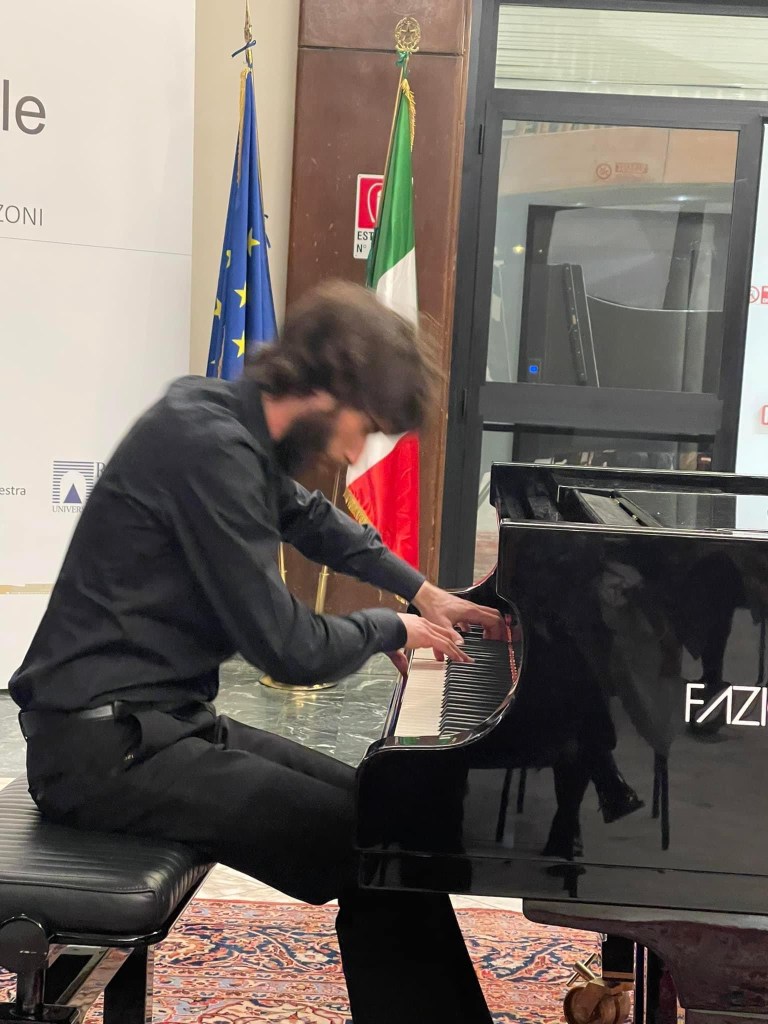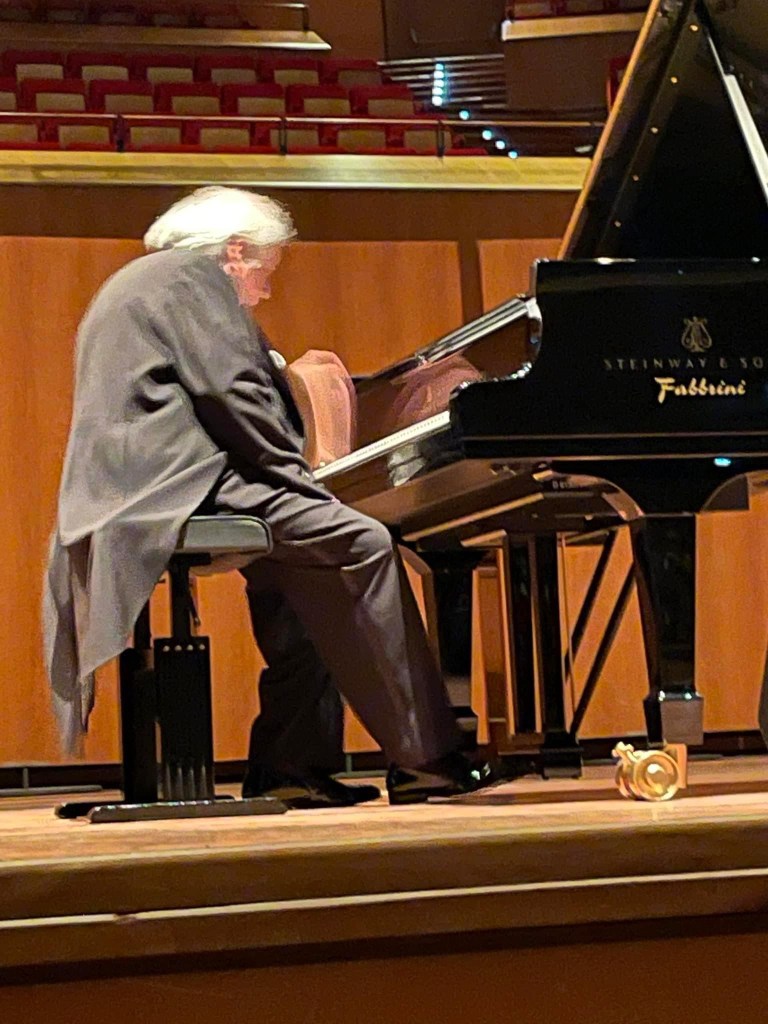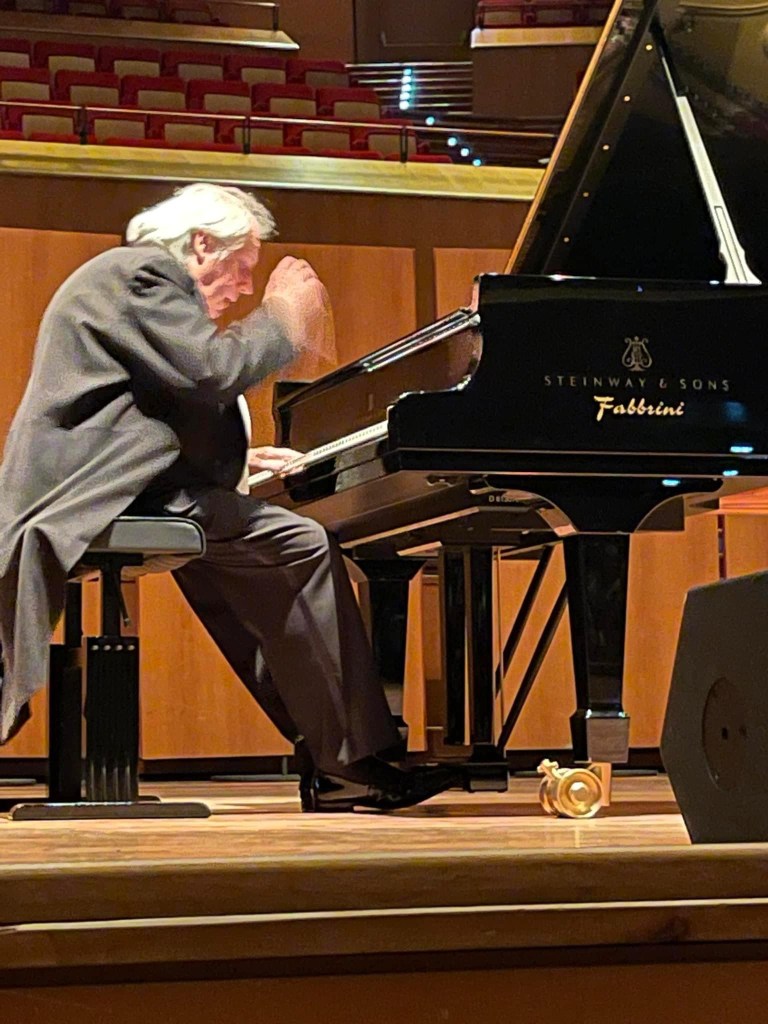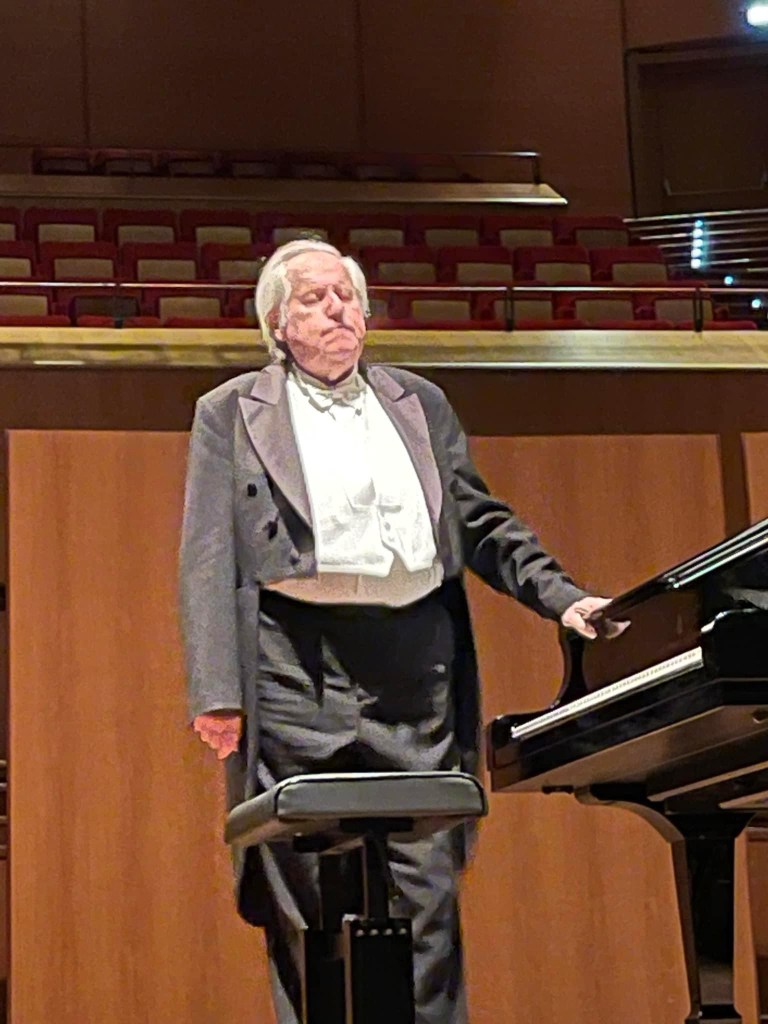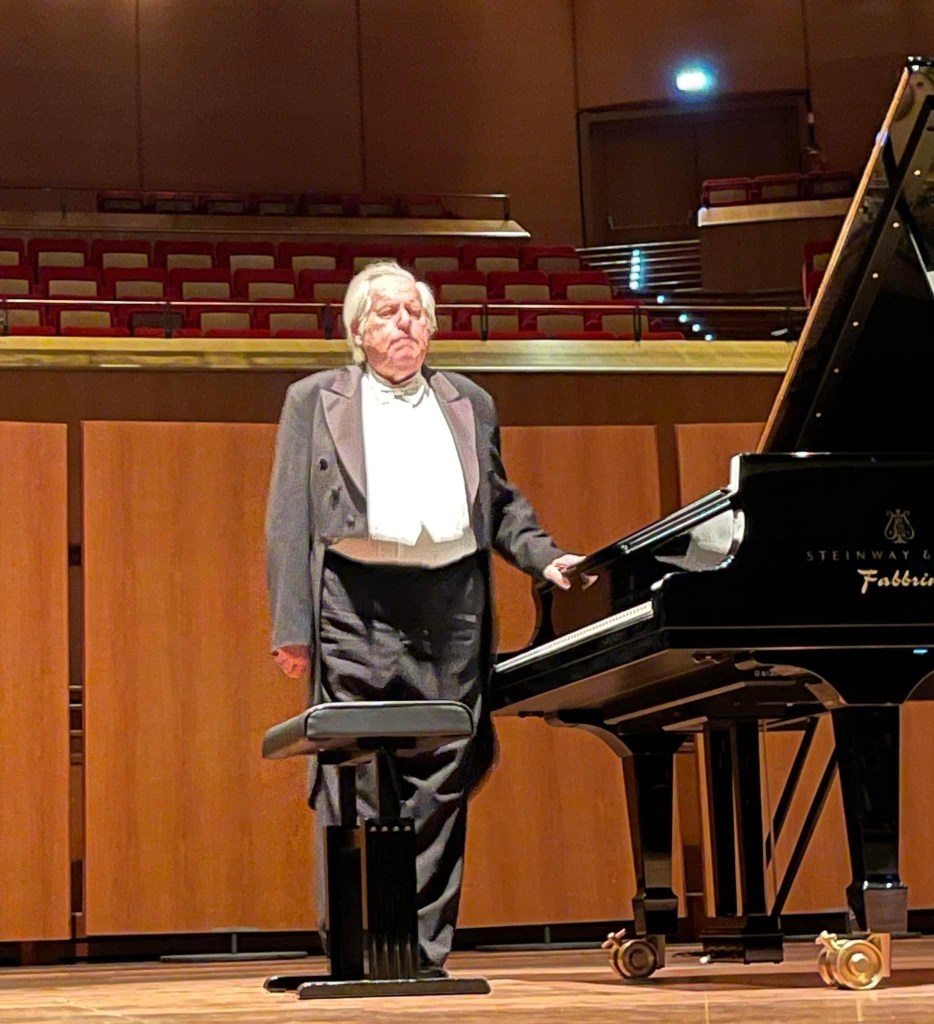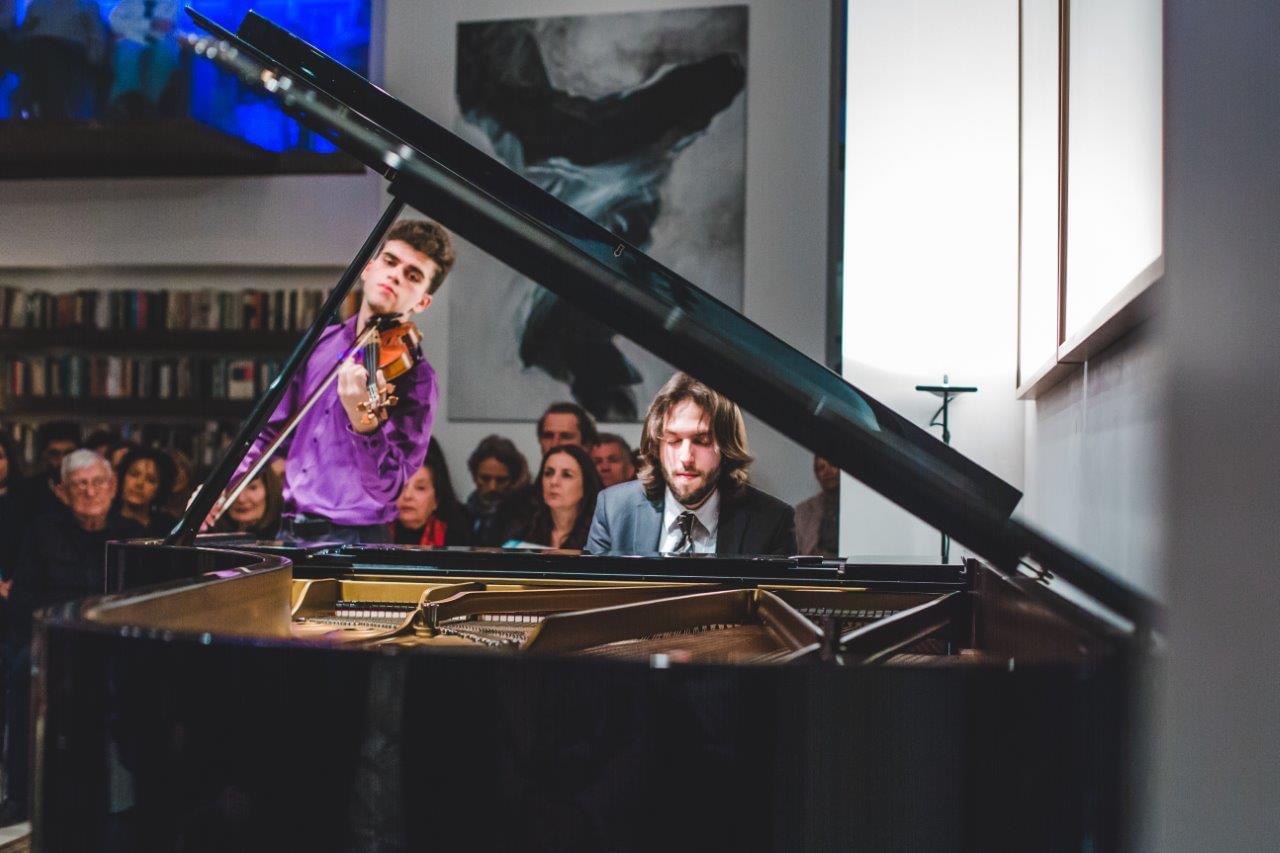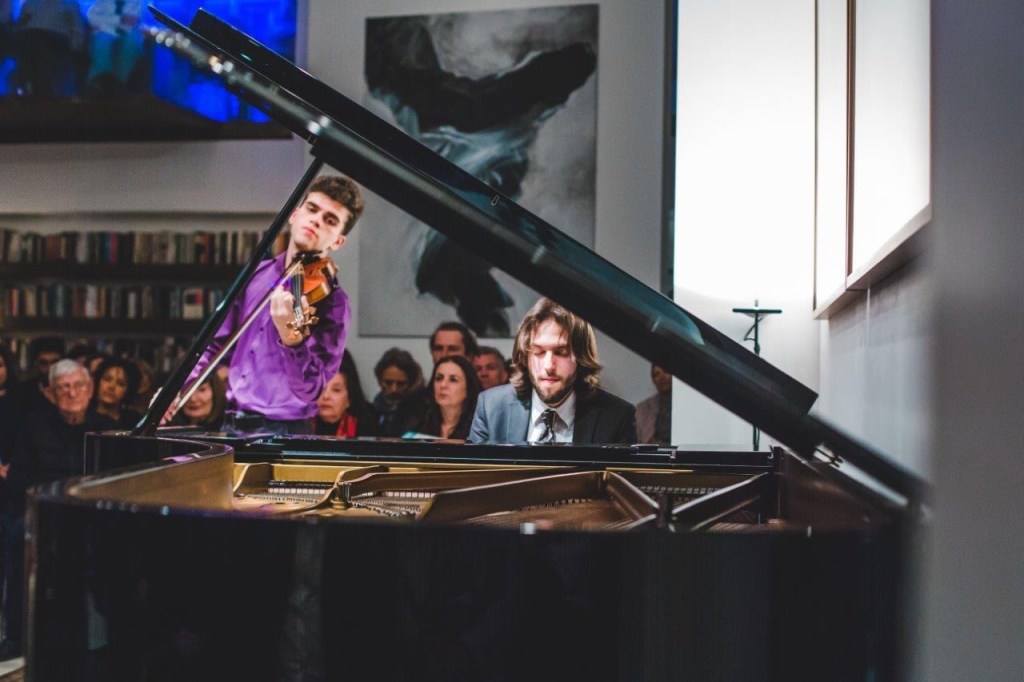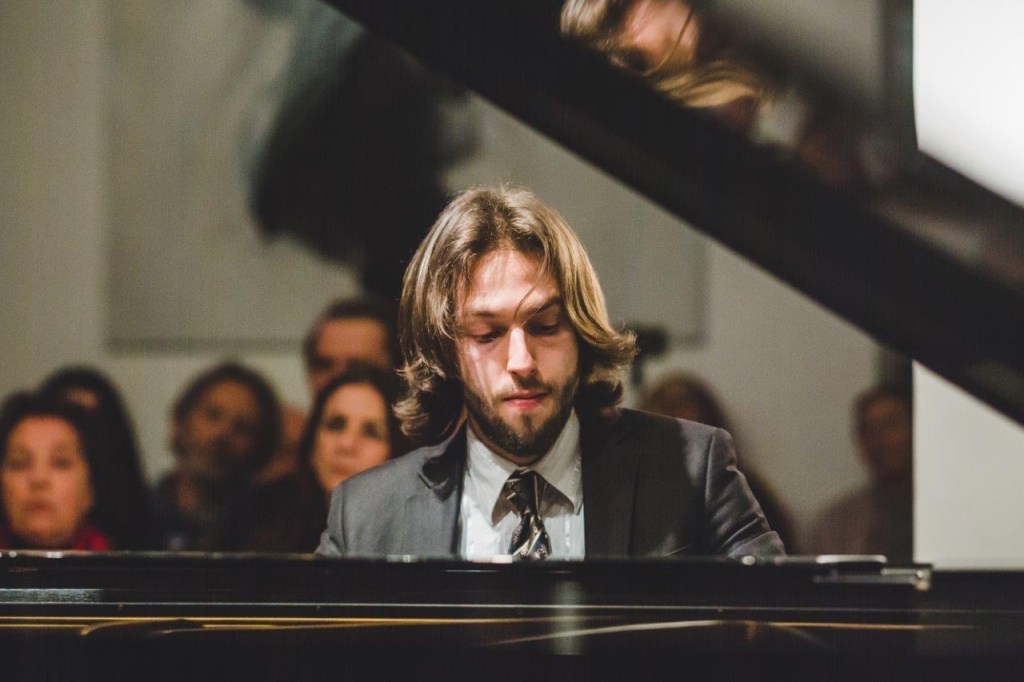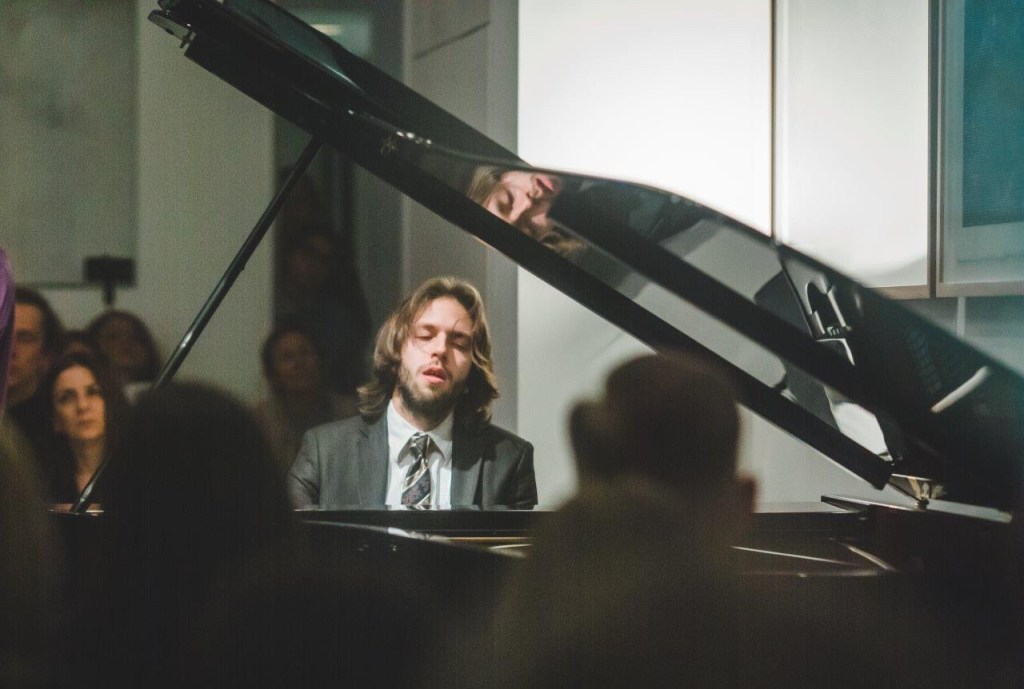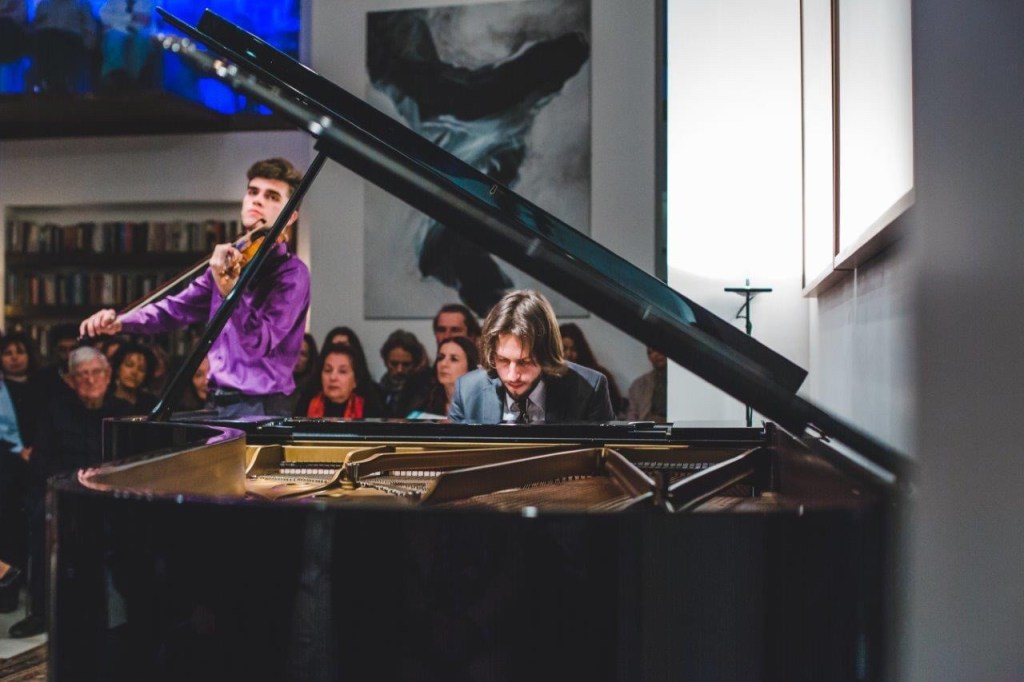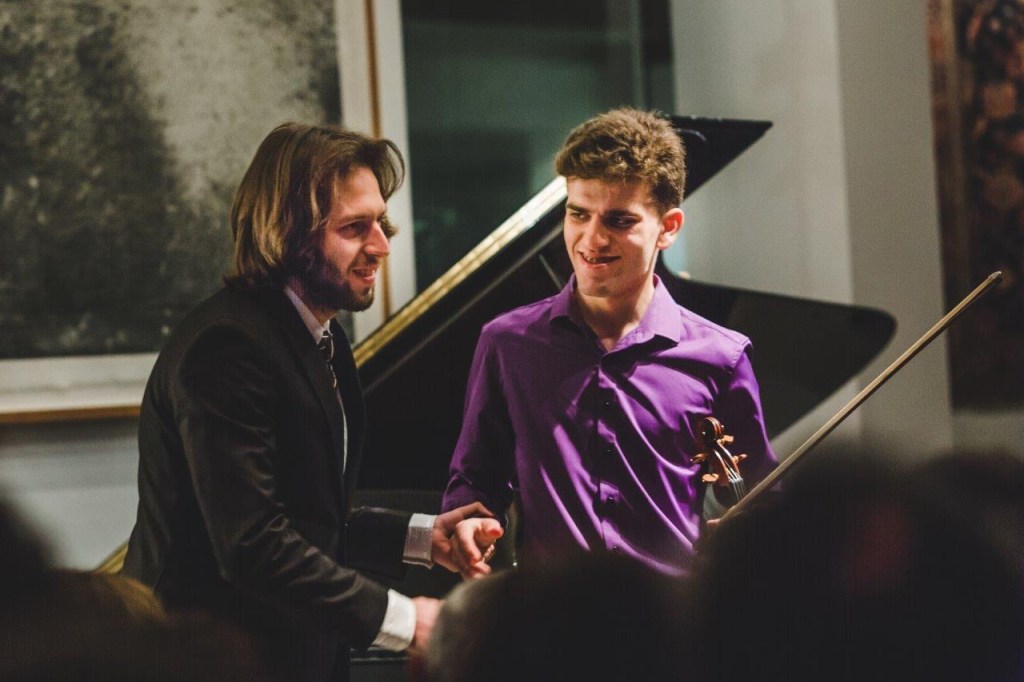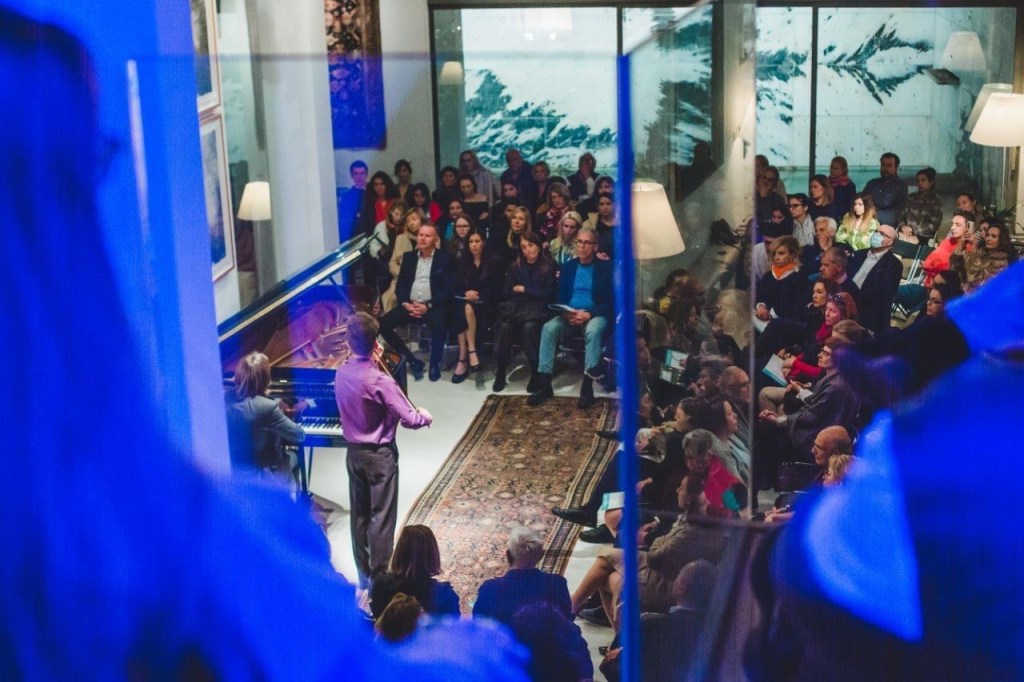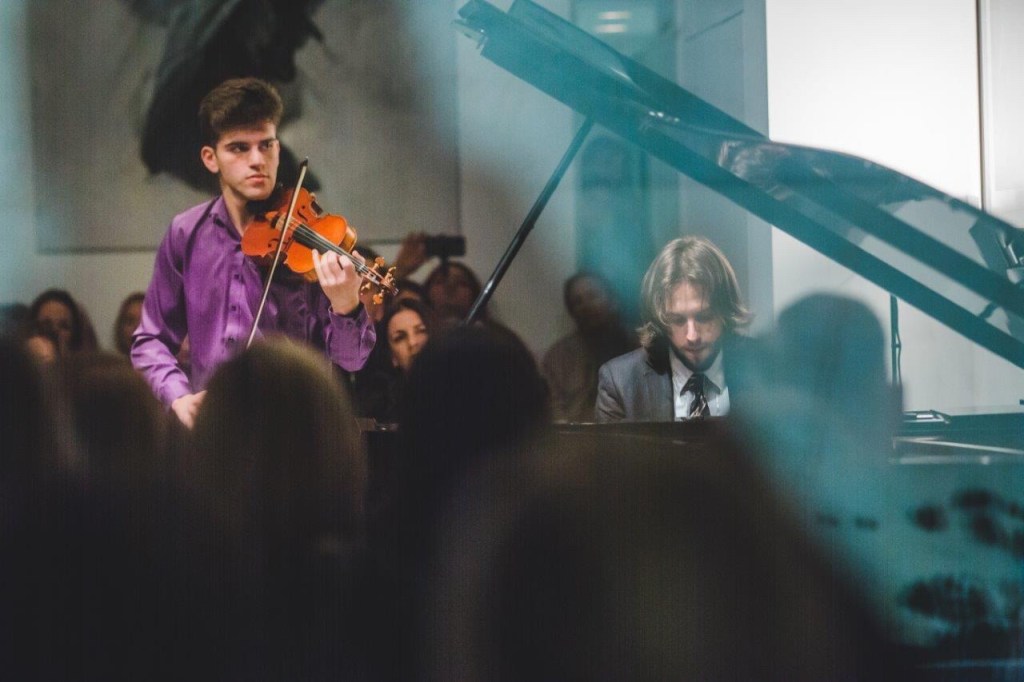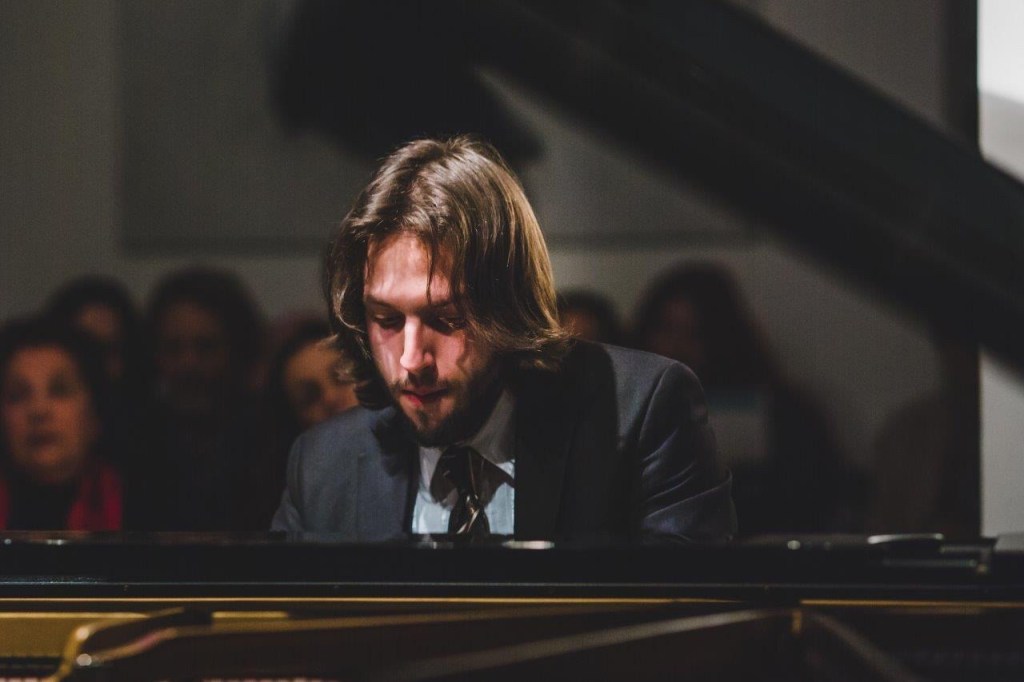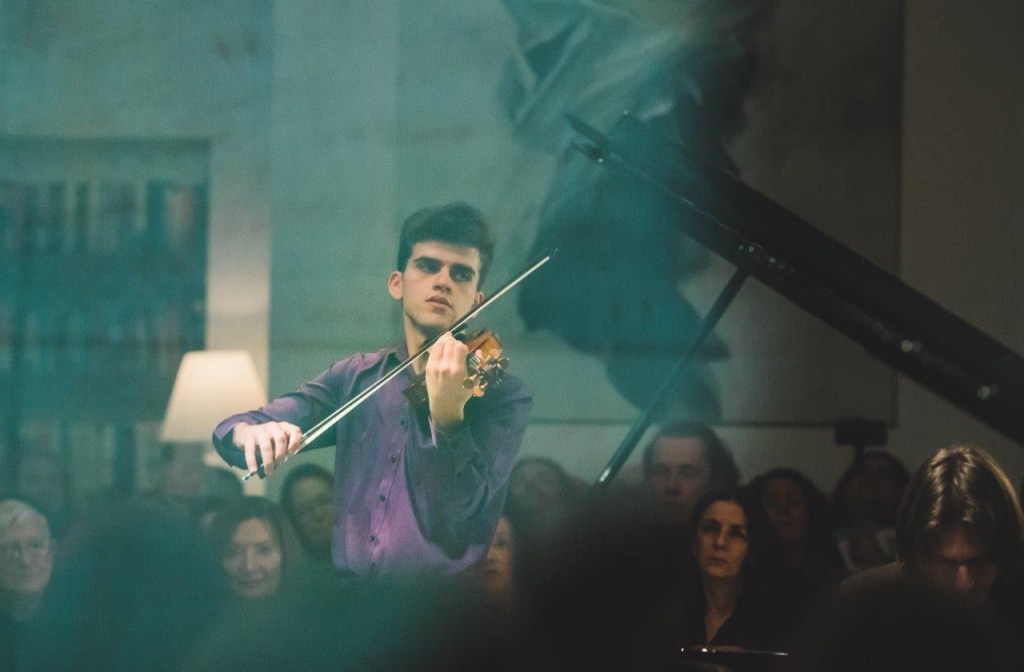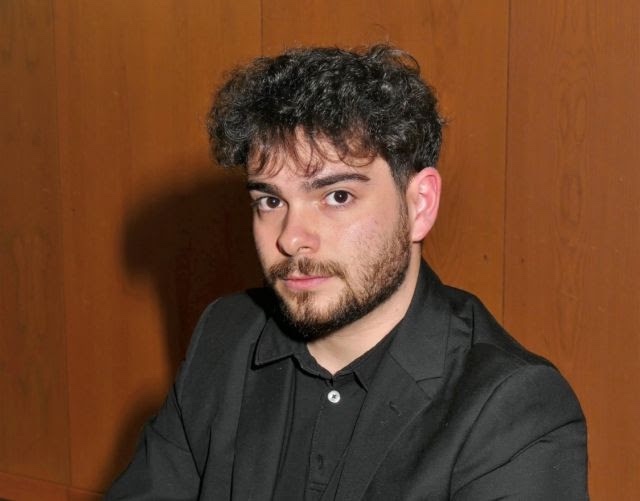
Nicolò Giuliano Tuccia ‘A true musician with something important to say’ from the city of the legendary Guido Agosti

Giuliano Tuccia,per la prima volta ospite delle stagioni di Roma Tre Orchestra

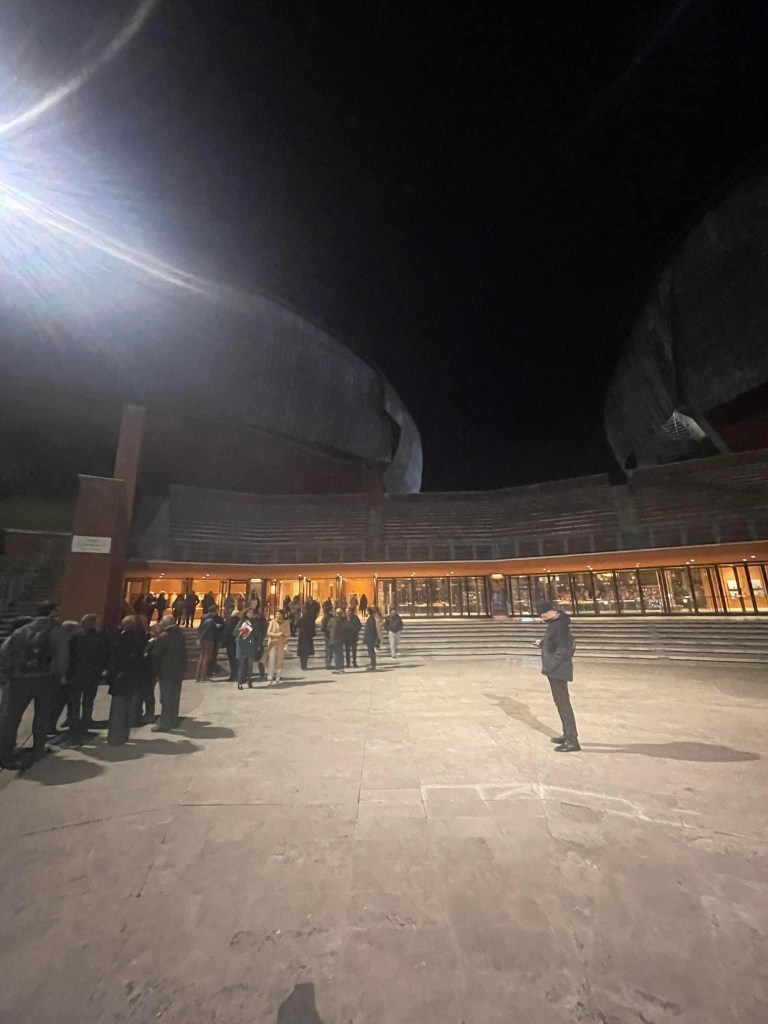
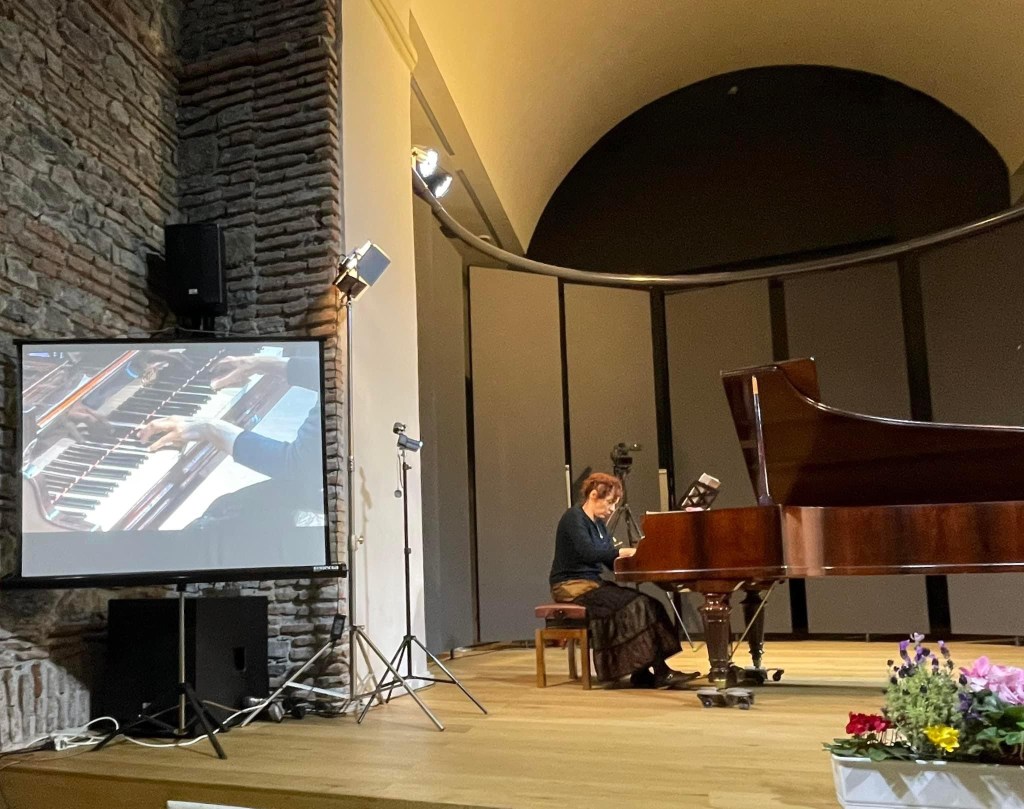
Domenica 16 aprile 2023 ore 19 Convitto Vittorio Locchi Rome
Giuliano Tuccia – Young Artists Piano Solo Series 2022 – 2023
F. Liszt: Ballata n. 2 in si minore per pianoforte
S. Rachmaninov: Sei momenti musicali op. 16
M. Ravel: Valses nobles et sentimentales
Giuliano Tuccia, pianoforte
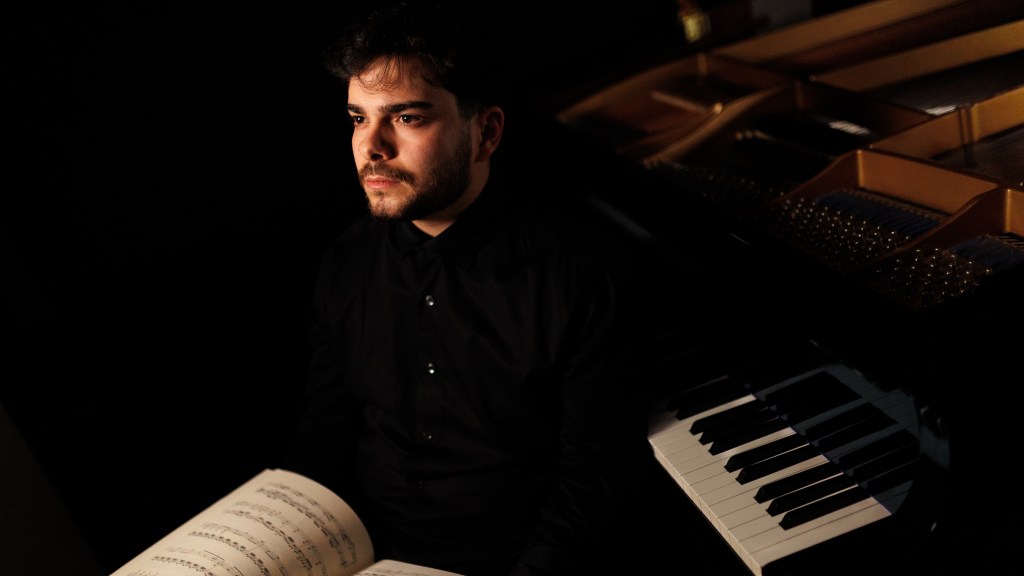
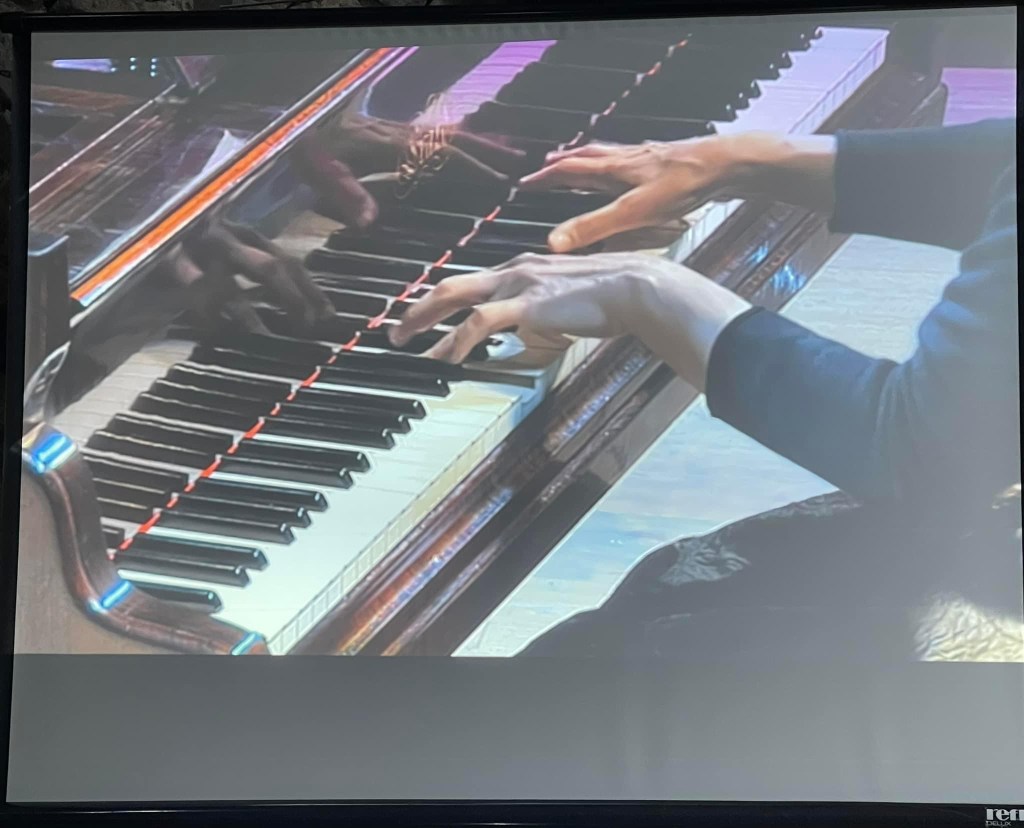
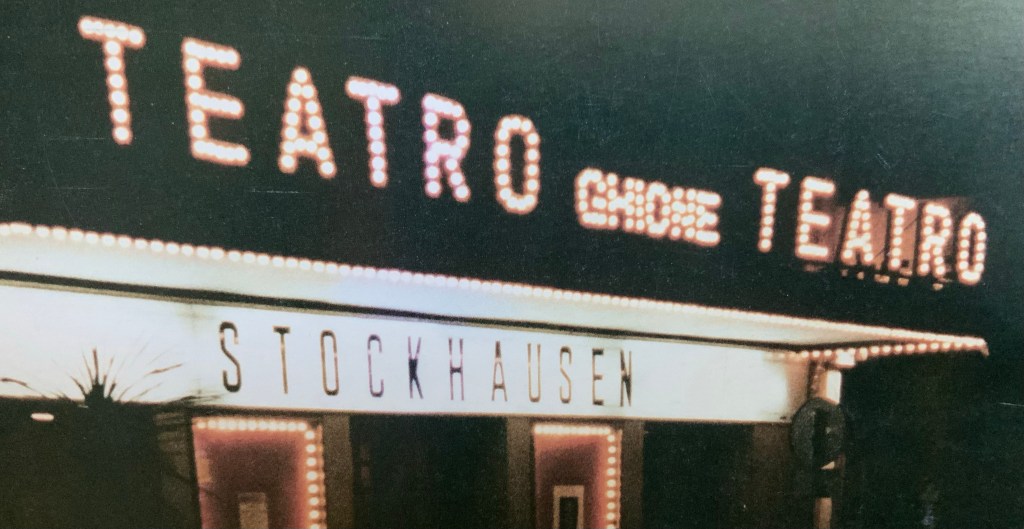
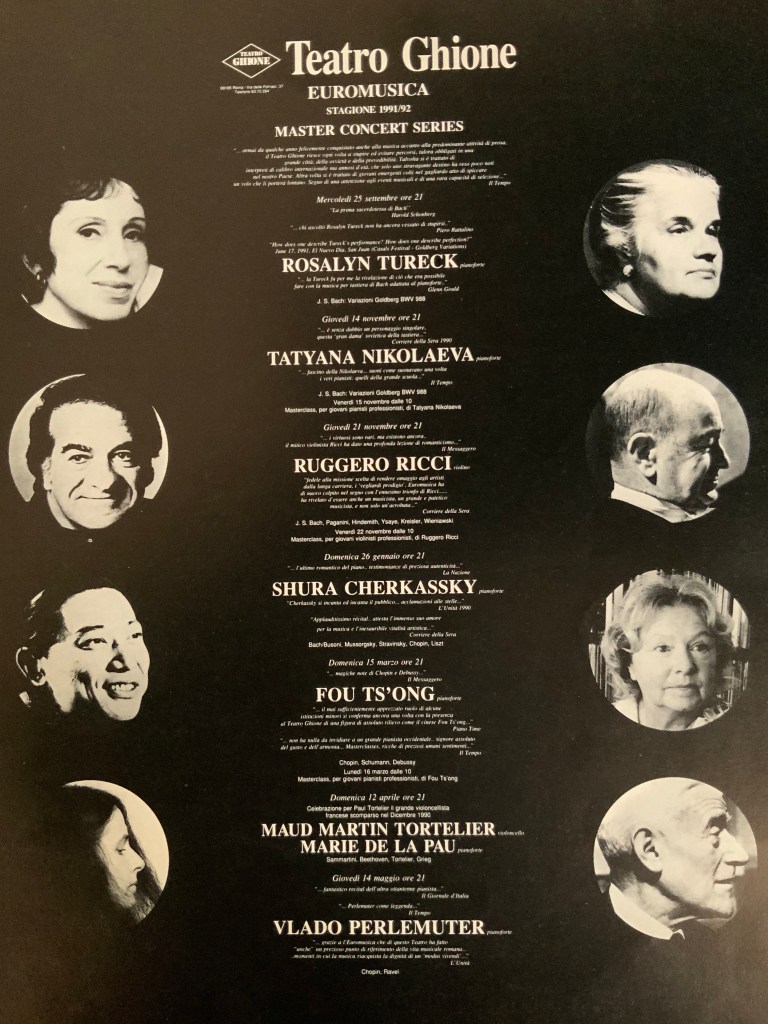
Reading Nicolò Giuliano’s curriculum is like turning the clock back with so many names from the past that have crossed my path.Andrea Fasano who sent me the link to his programme of a recording of a recital that Giuliano made in the Ravenna Festival in July 2021.Andrea was a young aspiring giornalist who used to frequent many of the musical events at the Ghione Theatre in the Golden era of the 80’s and 90’s.He asked me to listen to this remarkable young man with whom he is collaborating on many interesting musical projects.A young man from Forli who is running a concert series in the name of Guido Agosti.
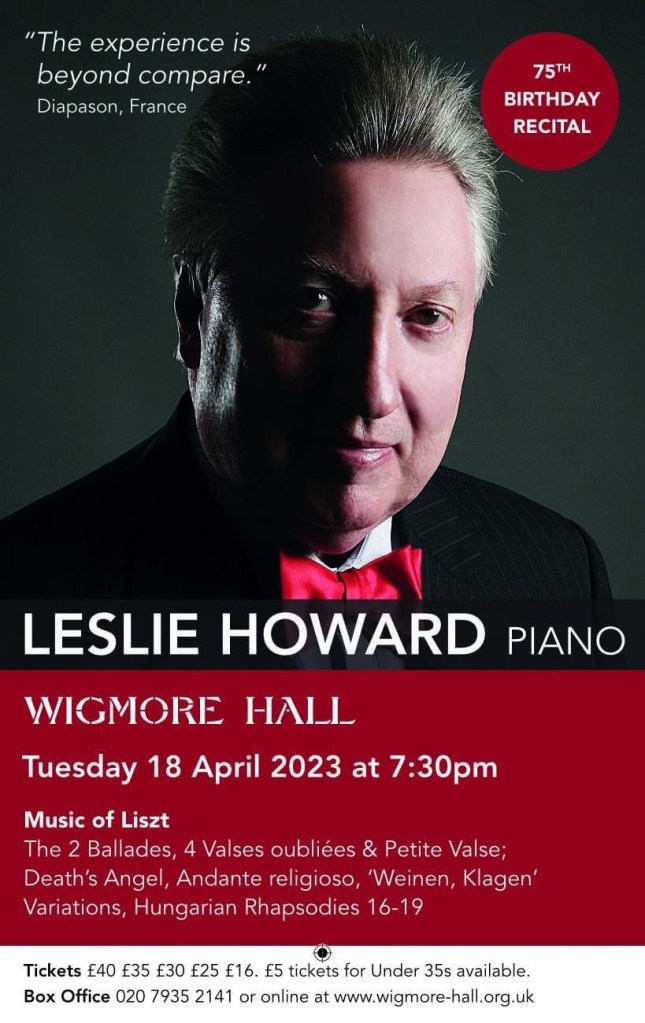
Giuliano is mentored by Leslie Howard the only pianist to have recorded all the works of Liszt on over 100 CD’s

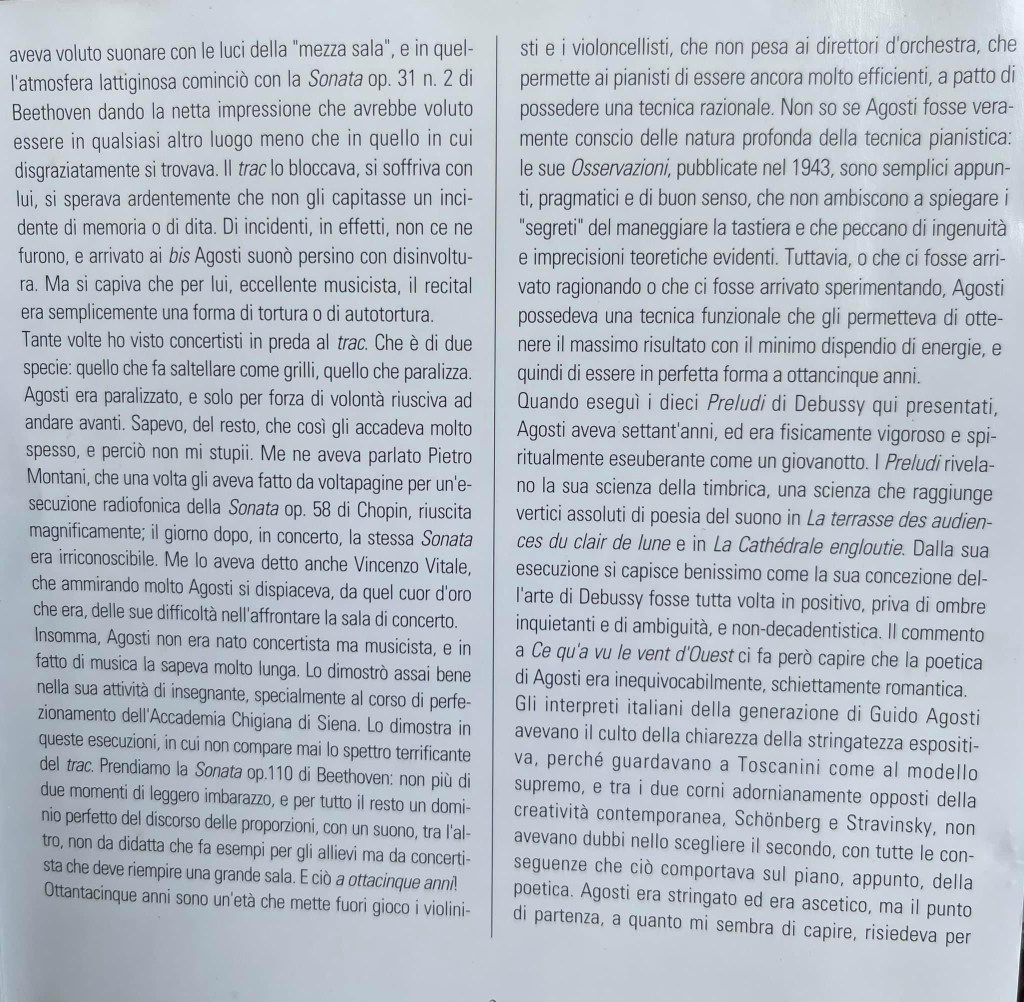
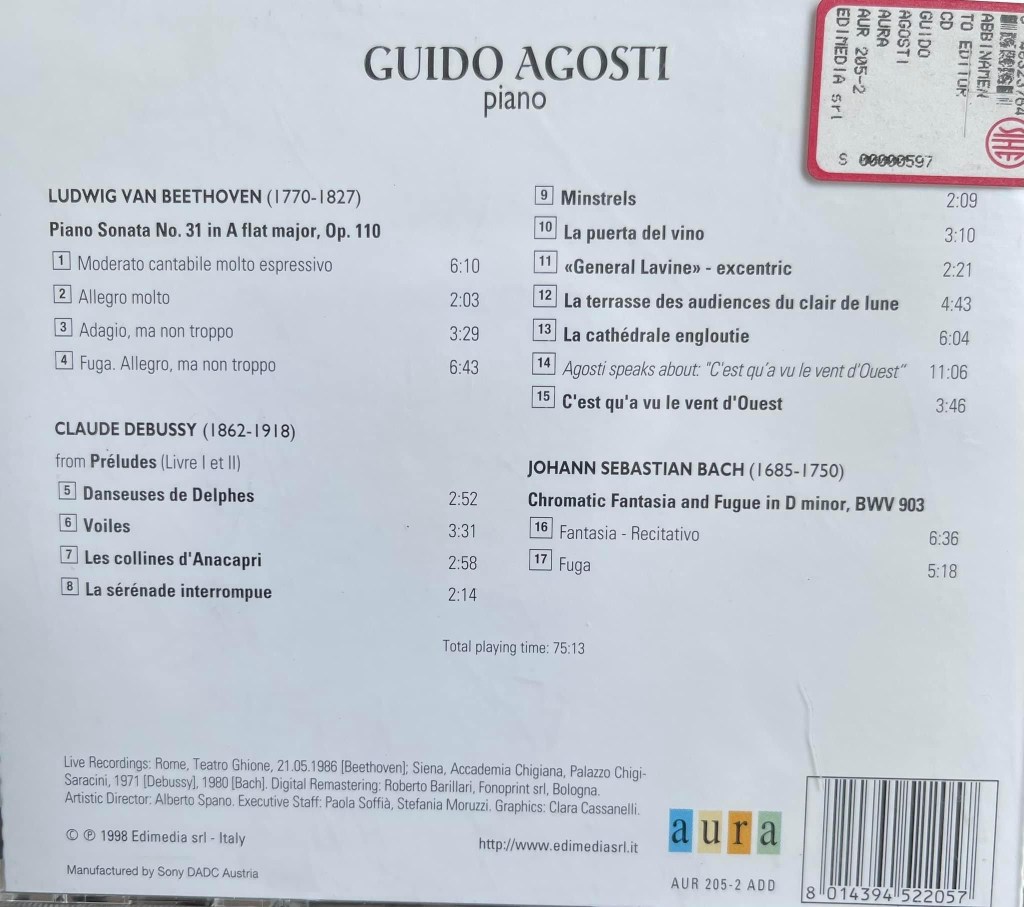
Leslie Howard who is now mentoring Nicolò Giuliano was Agosti’s favourite student in those years in Siena when the world would flock to hear this legendary musician,a student of Busoni,in his studio at the Chigiana Academy.Sounds were heard in that studio that have never been forgotten by all those that frequented his summer course that he held there for over thirty years.Agosti was born in Forlì and is buried there.On his grave is inscribed simply GUIDO AGOSTI MUSICIAN .The same simplicity and integrity that he dedicated to the great composers he served so faithfully in his long life.

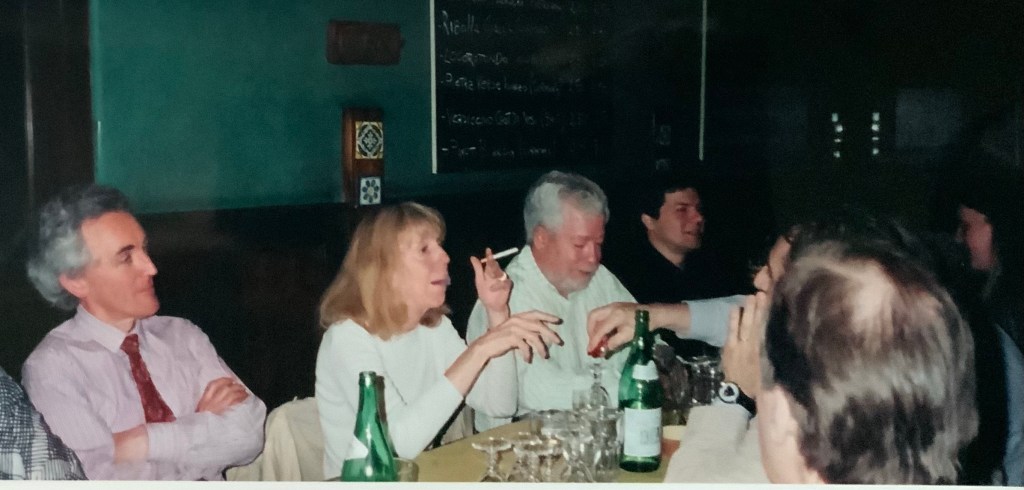
Lydia and Guido Agosti with my wife Ileana Ghione

Agosti and his wife Lydia Stix Agosti became family friends and they would come every weekend to our home on the seashore in Sabaudia.Lydia and my wife would spend the day on the beach and leave the Maestro to play duets all day long with me!Beethoven quartets,Brahms Symphony’s and Hungarian Dances.We would preparare an after dinner concert for our wives after their day on the beach!
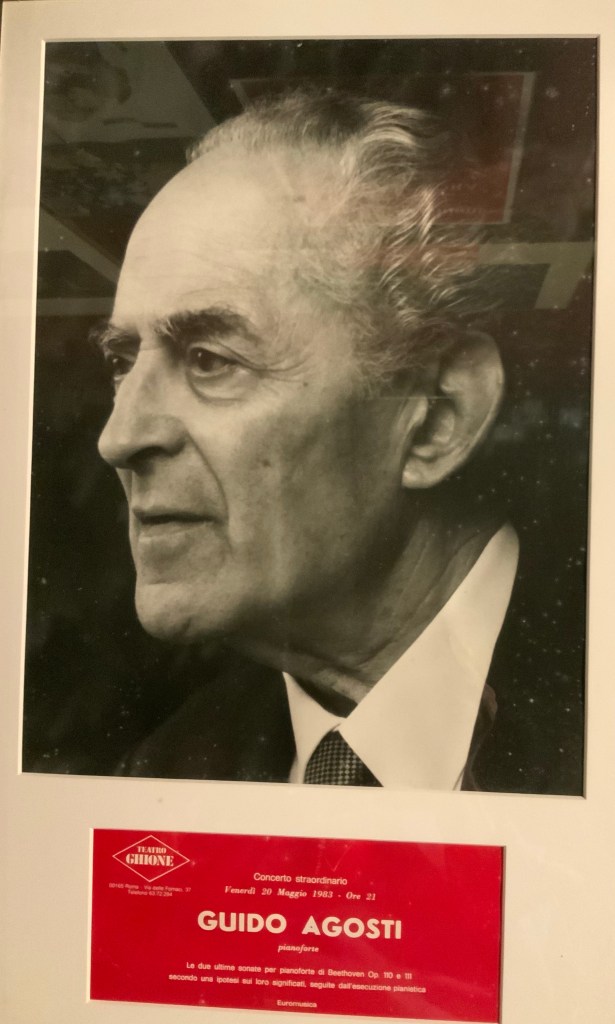
Lydia even managed to persuade Guido to give a recital in our newly opened theatre.The recording we made of his performance of Beethoven op 110 and 111 is one of the only recordings of this great but very private musician.
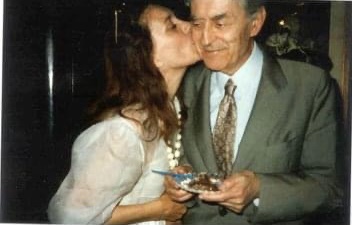
Ileana Ghione with Guido Agosti

Reading on in Giuliano’s curriculum I see he is now studying in Imola with Andrea Gallo.One of the finest musicians I know.I am proud to say he performed several times in his formative years for the Keyboard Trust of which Leslie Howard,Elena Vorotko and I are the artistic directors.He is now second in command at the famous pianistic mecca in Imola.Here is a conversation with him in which he talks about his extraordinary approach to piano playing:https://youtu.be/1TTxiaFESH0

All this to say I was curious to hear how this young man plays!!!!
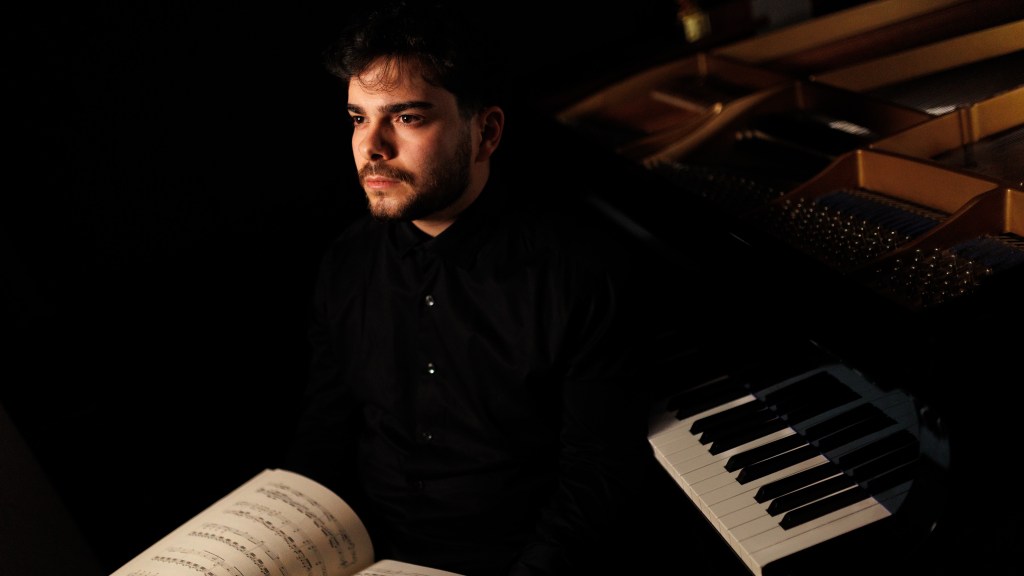
A superb performance of Schumann’s Kreisleriana which reminded me in so many ways of Bruno Leonardo Gelber.The limpet like hand that dug deep into the notes with absolute legato and could extract a unique velvet sound just as I heard today.Gelber too had a great personality that was evident today in Giuliano’s performance.It was a performance that had so many individual things that it had me delving into the score to see what I had missed for so many years.Always with impeccable good taste but a pianist who has something very personal to say.

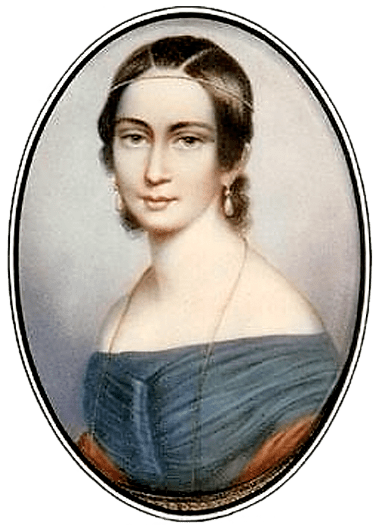
Kreisleriana, Op.16, is a composition in eight movements that Schumann claimed to have written in only four days in April 1838 and a revised version appeared in 1850. The work was dedicated to Frederic Chopin but when a copy was sent to him he commented favourably only on the design of the title page.It is a very dramatic work and is viewed by some critics as one of Schumann’s finest compositions.In 1839, soon after publishing it, Schumann called it in a letter “my favourite work,” remarking that “The title conveys nothing to any but Germans. Kreisler is one of E.T.A Hoffmann’s creations, an eccentric, wild, and witty conductor.”In a letter to his wife Clara ,Schumann reveals that she has figured largely in the composition of Kreisleriana:”I’m overflowing with music and beautiful melodies now – imagine, since my last letter I’ve finished another whole notebook of new pieces. I intend to call it Kreisleriana. You and one of your ideas play the main role in it, and I want to dedicate it to you – yes, to you and nobody else – and then you will smile so sweetly when you discover yourself in it.

Our concert halls are flooded with young pianists with superb technical training usually from the Eastern countries but have no respect for the very precise indications of the composer.Are pianists merely showmen using the composer’s notes as a means to show off their superb technical proficiency?I remember Charles Rosen telling a remarkably trained pianist in a masterclass that he plays like a whore.Karl Ulrich Schnabel told another that he was obviously a composer as he took the notes of great composers to suit himself! Perlemuter too was sent a rough copy of a famous young pianist playing Ravel Valses Nobles and Gaspard .The record company were looking for a quote from a legendary pianist who had studied the works of Ravel with the composer.’Qu’est -ce que c’est che ca’ was Perlemuters innocently ingenuous remark.

All this to say that there is a very fine line for a true interpreter like riding a high wire where if you have the courage to mount it you risk falling either way.It is this risk which made Gilels exclaim that the difference between recorded music and live was like that between fresh food and canned!Giuliano took risks but as a true musician he always had the larger architectural shape in sight.Sometimes his highlighting of inner counterpoints could really illuminate passages but it could also disturb.The only place it disturbed me was in the last movement where Schumann’s own syncopated bass is quite enough over a gently lilting right hand,so any inner counterpoints in the right hand I found disturbing.A very small point but one of the thousands of choices a true interpreter has to make but always starting from the indications left by the composer.Other slight highlighting of an inner voice here and there I found absolutely enlightened,as I used to indeed with Gelber,Moiseiwitch or even Cherkassky.

The opening movement was played immediately with controlled passion with Giuliano’s limpet like fingers extracting velvet rich sonorities from the piano.Maintaining the same tempo for the central episode but completely changing the colour as he allowed the beauty of the melodic line to be suggested over this flowing contour.It was here that subtle tenor counterpoints here and there shone like the jewels of a prism as the light passed over them.There was a beautiful legato to the second where Giuliano had made a definite choice of phrasing which allowed the melodic line to shine above and below this gently moving frame.I loved what he did but sometimes felt the gently flowing accompaniment could have been played even more simply so as not to disturb the ravishing beauty of the melodic line that he had created.The Intermezzo 1 was played with passion and rhythmic control and the Intermezzo 11 had a romantic sweep .It was ,though, the transition to the return of the opening that was remarkable for its sense of line.Giuliano even highlighted inner counterpoints that just clarified his complete understanding of a musical line that in lesser hands can sound like a bit of a ramble!

There was great rhythmic impulse to the third movement and a romantic sweep to the central episode where the soprano and tenor voices comune together so intimately.The fourth movement was played with a luminosity of sound and simplicity as everything was given the time needed to express such deep thoughts,but never losing sight of the overall shape.The gentle lilt to the central episode was even more beautiful for the inner colours that this young artist could so subtly suggest.In particular there was the sumptuous beauty of the cadence before the magical return of the opening theme.The fifth movement was played with a lightweight capricious rhythmic elan but every so often bursting into song like a glimpse of the sun between the clouds.After the passionate central outburst Giuliano added a silence not indicated by Schumann.Could it have been an oversight as it sounded so convincing to me before the return of the opening?Personality and good taste go hand in hand for a true interpreter as do intelligence and musicianship!Ravishing beauty of the sixth where this time the inner tenor notes in the ‘Etwas bewegter’ were indicated by Schumann himself and led to a whispered ending that was pure magic.The seventh is ‘Sehr Rasch’ but how fast is very fast? It is a question for the true interpreter to decide a speed in which the contour of the music can be clearly defined and not overlooked for virtuosistic showmanship!Giuliano chose just the right tempo that allowed the passionate outpouring to be clearly defined and it even gave him time to juggle with the notes between the hands in a very exposed spot well known to all pianists! The sudden interruption of chords ‘Etwas Langsamer’ was played as Schumann implores ,but Giuliano also kept the same colour as before and I have never heard it played with such intelligence as it is merely the coda or a slowed down version of what had come before.I have already mentioned the counterpoints and bass syncopation of the last movement played with such clarity of musical thought and digital precision.

There was also great sweep and passion to the intervening episodes that interrupt this lazy ride into the depths of the piano.A remarkable performance that I recommend all to enjoy in this link :

https://youtube.com/watch?v=OHo1zDeknZU&feature=share

Après une lecture du Dante: Fantasia quasi Sonata (French for After a Reading of Dante: Fantasia quasi Sonata; also known as the Dante Sonata) was completed in 1849. It was first published in 1856 as part of the second volume of the Anne de Pélerinage (Years of Pilgrimage) and was inspired by the reading of Victor Hugo’s poem “Après un lecture du Dante” (1836).It was originally a small piece entitled Fragment after Dante, consisting of two thematically related movements,which Liszt composed in the late 1830s.He gave the first public performance in Vienna in November 1839.When he settled in Weimar in 1849, he revised the work along with others in the volume, and gave it its present title derived from Victor Hugo’s own work of the same name.

Intelligence,virtuosity,showmanship but above all respect for the genius of Liszt all went hand in hand in this remarkable performance that can be enjoyed from this radio performance together with two Rachmaninov Moments Musicaux op 16 an encore and a short interview.This is the link:

Nicolò Giuliano Tuccia è protagonista del Concerto di Pasqua 2023 su IMD RADIO/IMD PLAY con la riproposta di un suo bellissimo recital del 2021 che lui stesso presenta e ricorda attraverso una breve intervista a corredo dell’ascolto integrale e senza pause della registrazione che a breve sarà disponibile anche come album discografico. In questa intervista il giovane pianista forlivese anticipa pure alcuni suoi prossimi impegni ed incisioni dedicate alla riscoperta del repertorio strumentale italiano. Questo, intanto, il programma della trasmissione odierna. Robert Schumann: Kreisleriana, op. 16 – Franz Liszt: Dante Sonata – Sergeij Rachmaninoff: Dai 6 “Momenti Musicali” Op. 16; nn. 3 & 4- Nicolò Giuliano Tuccia, pianoforte – Chiesa di S. Massimiliano Kolbe, Lido Adriano (RA), 29 luglio 2021 (per la rassegna “Diapason, percorsi aonori”, I Edizione).
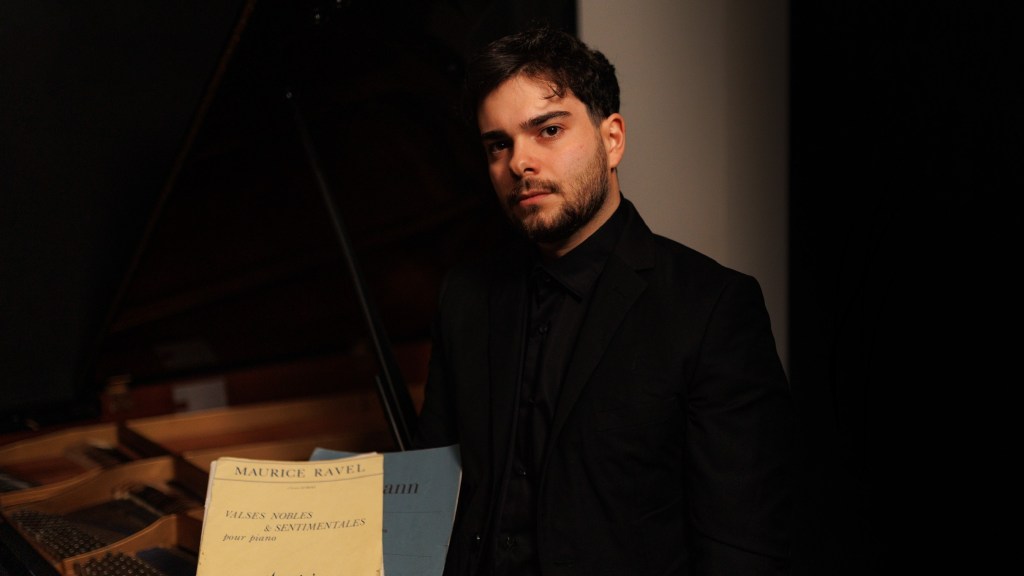
Nicolò Giuliano Tuccia was born in Emilia-Romagna: born in 1999, he began studying the piano at the age of 8.
Nicolò Giuliano Tuccia boasts over 30 prizes in national and international competitions and more than 50 recitals as a soloist in important institutions and concert halls.
His career starts from 2018 performing with the “Circle Symphony Orchestra” of Padua playing Beethoven concert n.3 Op.37 for piano and orchestra.
In2019 he graduated in piano at the Rimini Conservatory with 110 cum laude.
In 2020 he received recognition at the “Sergio Fiorentino piano competition” which led to a concert in Helsinki for the University piano circle supported by Eero Tarasti.
In 2021 he made his debut at the “Kaunas Piano Festival” obtaining a scholarship to perform at the “M.K. Čiurlionis” from Kaunas. Also in the same year he won the special prize at the Kings Peak International Music Competition obtaining a masterclass with maestro Anthony Tam and the first prize at the Map international Music Competition, which will subsequently give him prize concerts in the USA.
In 2022 he undertook an intense concert activity making his debut not only with the Orchestra of the Conservatory “B.Maderna di Cesena” at the Teatro Verdi in Cesena with 1053 by J.S.Bach, at the Sala “Marco Biagi” in Bologna, at the Circolo Culturale “G. Fantoni” in La Spezia and at the “Music Hall” of the University of musical semiotics in Helsinki, under the invitation of the famous maestro Eero Tarasti.
Nicolò Giuliano Tuccia currently attends the piano academy of Imola “Incontri col Maestro” under the guidance of maestro Andrè Gallo and the European piano academy “High musical education” under the guidance of maestro Giuseppe Devastato.
He is artistic director of the “Guido Agosti” concert series as well as president of the “Forlì Cultura” association.
In 2023 he will perform in various European cities such as Rome, Rovereto, Lecco, Umeå, León and Berlin.
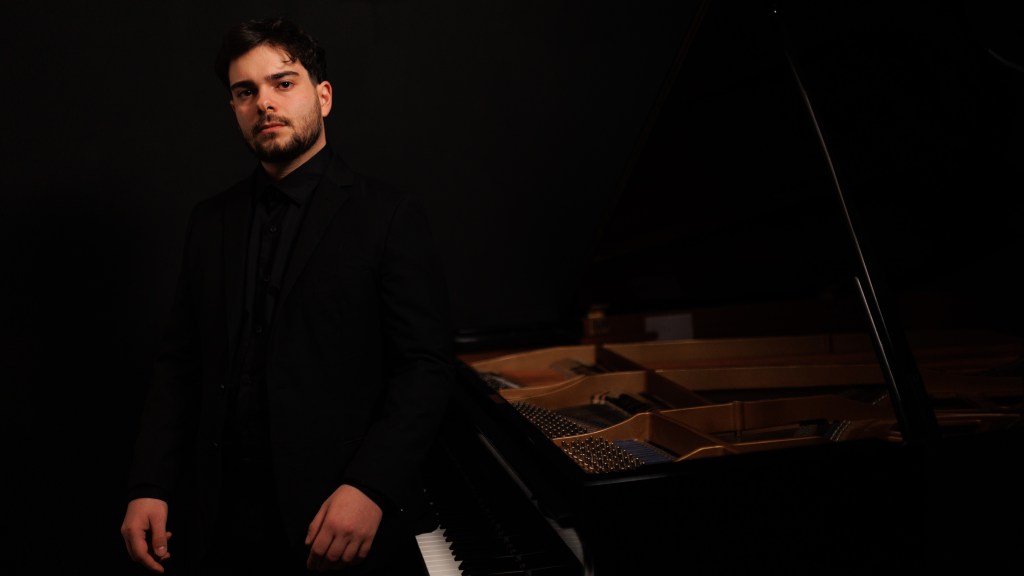
“ Nicolò Giuliano Tuccia è un musicista sensibile, dedito e intelligente, il cui pianismo elegante, eloquente e nobile lo colloca tra i migliori giovani artisti del nostro tempo.”
Leslie Howard
Inizia all’età lo studio del pianoforte sotto la guida del maestro Giancarlo Peroni.
Nel 2020 consegue il diploma di Triennio accademico con il massimo dei voti e la lode, nel 2022 consegue il diploma accademico di secondo livello con il massimo dei voti e lode presso il Conservatorio “B.Maderna” di Cesena.
Nel 2021 studia per un anno all’Accademia di Pinerolo con i maestri Pietro De Maria, Enrico Stellini e Andrea Lucchesini.
Nicoló Giuliano Tuccia attualmente studia all’Accademia “Incontri col maestro” di Imola sotto la guida del Maestro André Gallo e all’Accademia Europea “Alta Formazione” di Napoli con Giuseppe Devastato.
Durante la sua carriera musicale, Nicolò Giuliano Tuccia si perfeziona con vari maestri e tiene masterclass nazionali ed internazionali.
I maestri con cui ha avuto il piacere di perfezionarsi sono: Mauro Minguzzi, Alessandra Ammara, Manila Santini, Giovanni Valentini, Luigi Tanganelli, Riccardo Risaliti, Emanuel Krasovsky, Sergio Tiempo, Inna Faiks, Massimiliano Ferrati, Roberto Cappello, Edith Fischer, Siavush Gadjev, Antonio Pompa – Baldi, Pablo Galdo, Andrea Lucchesini, Giuseppe Albanese, Avedis Kouyoumdijan, Hortense Cartier Bressan, Anthony Tam, Jesus Maria Gomez, Elvin Rodriguez , Francesc Vidal, Andrè Gallo e Giuseppe Devastato.
Nicolò Giuliano Tuccia è stato vincitore di premi nazionali e internazionali, piazzandosi sempre ai primi posti.
I concorsi dove si è distinto positivamente sono: “Premio Alberghini” di Castel Maggiore, 1° premio assoluto, “Premio Zangarelli” 1° premio, “Città del Borgo dell’angelo” Concorso 1° premio assoluto, “maria labia prize” 1° premio, “ Map international piano competition“1° premio“concorso pianistico Ugo Amendola 1° premio, Città di San Donà di Piave 2o premio, “Kings Peak International music Competition” 2° premio, vincitore unico premio speciale della sua categoria”, Città di Riccione “2° premio”, Città di Magliano Sabina “2° premio”, “Premio Humberto Quagliata “2° premio”, menzione d’onore al Concorso pianistico online “Sergio Fiorentino” etc
Quest’anno ha vinto la borsa di studio “Rotary Club” di Cesena, vincendo un concerto che lo ha visto protagonista al conservatorio “B.Maderna” di Cesena.
Nicolò Giuliano Tuccia ha suonato in rinomate sale da concerto sia come solista che in formazioni cameristiche quali: “Teatro Galli” di Rimini, “Teatro B. D’antona” di Castel Maggiore, “Teatro Alighieri” di Ravenna, “Teatro degli Atti ” di Rimini, “Foyer Respighi” del Teatro Comunale di Bologna, “Sala Corelli” del Teatro Alighieri di Ravenna, “Sala della Prefettura” di Forlì, “Teatro Talia” di Gualdo Tadino, “Circolo degli Ufficiali” di Bologna, “Palazzo Raffaello” di Urbino, Sala “Marco Biagi “di Bologna, Circolo Culturale G.Fantoni della Spezia, Sala “L.Dalla Piccola” di Cesena, “M.K Ciurlionis Museo Nazionale “ di Kaunas, Auditorium “Martin Codax” di Vigo, Aula Magna della Università di Helnsiki, Auditorium della musica di Telki in Ungheria, “Teatro Don Bosco” di Gualdo Tadino etc.

Sono vari festival a cui Nicoló ha preso parte. Tra i tanti ricordiamo: “Misano Piano Festival”, “Ravenna Festival” “Festival della Romagna”, “Festival delle note tra i calanchi” di Bagnoregio “Clivis Umbria” “Kaunas Piano Festival” in Lituania , “Swing Music Fest” in Ungheria, “ Conoscere la musica “ di Bologna, “ Eila’s Piano Circle” di Helsinki , “Pomeriggi Musicali al Fantoni “ di La Spezia , “le Salon de la musique “ etc.
Ha suonato come solista il K414 di W.A.Mozart presso l’istituto musicale Masini, il 3° Concerto di L.V.Beethoven con la “Circus Simphony Orchestra” di Padova, il K413 di W.A.Mozart con l’Orchestra da Camera del Conservatorio di Cesena nella sala del l’Eliseo di Cesena, con i “Musici Malatestiani”, il Concerto BWV1053 di J.S. Bach, al Teatro A.Galli di Rimini, musiche di Antimo D’Agostino con l’Orchestra “Rimini Classica” e con l’Orchestra Giovanile di Faenza il k413 di W.A.Mozart.
Ha avuto il piacere di collaborare con i direttori Stefano Pecci, Raffaele Valentini, Parvi Shejazi, Antonio Raspanti e Jacopo Rivani.
Nicolò Giuliano Tuccia ha pubblicato CD per Movimento Classical, Aulicus Classica eDoppio Movimento music Label.

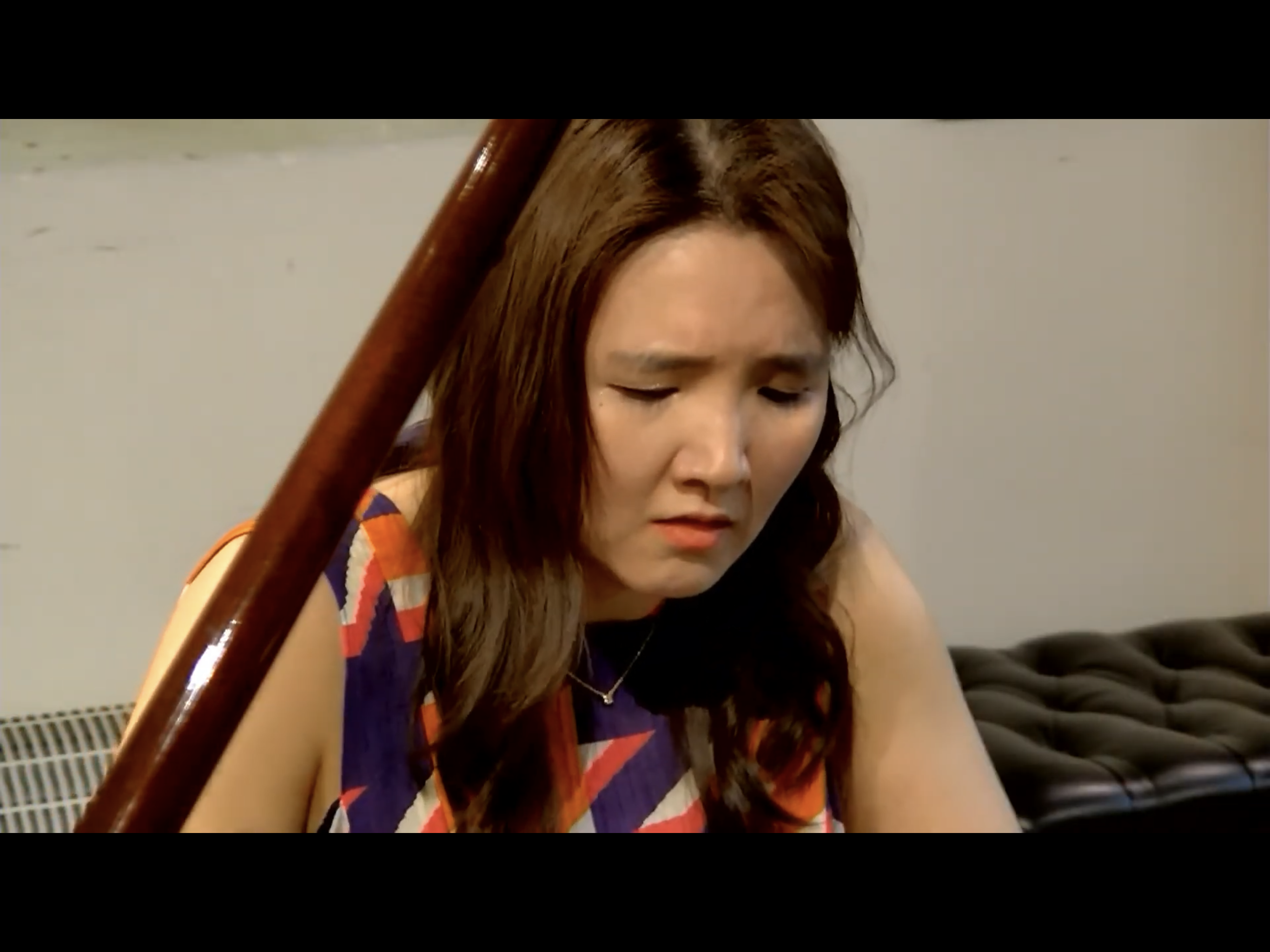
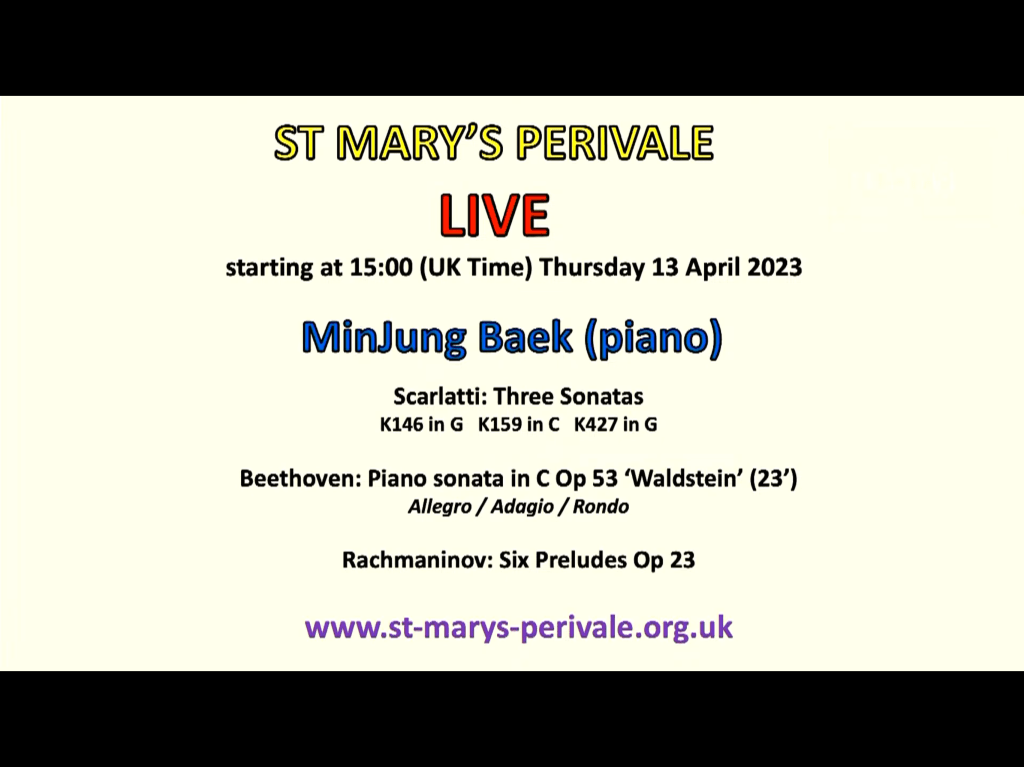
MinJung Baek at St Mary’s – crystalline clarity and intelligence at the service of music

Thursday 13 April 3.00 pm 

Playing of crystalline clarity and precision allied to an intelligence and real musical understanding.It allowed her to shape everything she did with such architectural authority of great strength thanks to her considerable technical prowess and the ravishing sounds she could mould from the piano with such sensitivity.

https://youtube.com/live/TYeGqHxLoQw?feature=share
Three Scarlatti Sonatas without the repeats made for a glorious single movement of clarity and precision.The famous C major Sonata K 159 was played with a very convincing military style energy that completely changed its usual rather lightweight character.And the scintillating energy she brought to K 427 was quite hypnotic in its relentless forward movement.
It was the same clarity that she brought to the ‘Waldstein’ Sonata op 53.One of the most technically challenging of Beethoven’s 32 it held no terror for Minjung.Her absolute clarity and precision in the Allegro con brio was allied to her driving rhythms and dynamic energy.The second subject though could have been given more space and elegance.By taking the overall tempo from here would have meant she could have kept the same architectural shape that she had managed to maintained with the same musical intelligence.Allegro con brio it certainly was but there were moments that a more ‘bel canto’ approach to some of the scales and arpeggios could have been shaped more elegantly at a slightly slower tempo.She could have taken a leaf out of her own book as the ‘Allegretto moderato’ last movement was slightly on the slow side as she had taken the tempo from the beauty she was able to shape out of the Rondo theme.She maintained the same tempo throughout all the ever more pyrotechnical difficulties of the episodes allowing the rondo theme to flow so beautifully every time it returned.It gave her space too to augment the tempo of the coda following Beethoven’s own indication of ‘Prestissimo’.She brought exhilaration and excitement to the coda never slowing down for the octave scales which can sometimes be played glissando but MinJun managed to split between the hands to great effect.
The Adagio molto introduction that Beethoven had substituted for the original slow movement (that was to appear at later date as the Andante Favori) was beautifully shaped.It was played with great intensity and scrupulous attention to Beethoven’s very precise indications.Sumptuous sounds that prepared us for the bell like luminosity of the G that Beethoven miraculously brings to life with the pulsating movement of the Rondo.
Rachmaninov playing to treasure for its sumptuous beauty,sense of balance and intelligence.Her transcendental technique allowed her to concentrate on the musical line that no matter how many notes were spread over the keyboard shone through with sumptuous beauty and luminosity.Substituting the famous fifth Prelude for the languid beauty of the first op 23 n.1 .There was subtle beauty to the melodic line as it rose to a luxuriant climax only to die away to the final repeated chords each one given a different intensity.There was grandiosity and virtuosity with the B flat Prelude where the melodic line was allowed to shine through the maze of ravishing sounds that surround it .She brought quixotic humour to the fleetingly capricious third which contrasted so well with the stillness and beauty of the long melodic line of the fourth in D.She brought delicacy to the embroidered accompaniment as it built to a climax of passion and elegance.There were the romantic meanderings of the seventh in E flat where the melodic line was shaped with great style above it.The busy weaving of notes in the final C minor Prelude where she allowed the melodic line to shine through the maze of notes that she was spinning with transcendental virtuosity.Whether in the treble or the bass her musicianly sense of line gave great architectural shape to this most noble of Preludes.There was a scintillating coda too that exploded to the final majestic chords.

A beautifully stylish performance of Liszt’s arrangement of Schumann’s Widmung ( Devotion) showed the same simple pure musicianship that this very fine artist had displayed throughout the programme .

London based, South Korean pianist MinJung Baek is returning to give a recital at St.Mary’s Perivale in London. Since her talent was immediately recognised when she entered her first competition at the age of five, she went on to win more than fifty prizes in Korean national competitions and at international competitions including the Beethoven Piano Society of Europe Competition; Skokie Valley in USA; the Giuliano Pecar, Liszt, Pietro Argento and Rachmaninoff piano competitions in Italy. Since her first public recital appearance at the age of eight and at age ten the orchestral debut with the Busan Philharmonic Orchestra, her sensitive touch, expressive playing, and strong charisma have led her to perform at prestigious halls including Carnegie Hall, Barbican Hall, Wigmore Hall and extensively throughout in 5 Continents. 

MinJung has been invited to play as a soloist with numerous orchestras and her performances and interviews have been broadcast on KBS, Rai, Rai Radio 3, ITV, PBS and WQXR. Recent highlights include invitations as a faculty at the East/West International Piano Festival in Shenzhen, China, one of the most prestigious international piano festivals – the International Keyboard Institute&Festival in New York City and the Haus Marteau in Germany and a jury at national and international competitions, releasing her four CDs <Rachmaninoff>, <Beethoven vo.1>, <Scarlatti> and <Beethoven vol.2> under the Onclassical, Italian label, all albums immediately embarked as a “Popular Release” on including Spotify, Highresaudio and AppleMusic and the critically acclaimed CDs have been presented on RaiRadio3 and RadioClassica. In this season of 2023, new albums will be continuously released and she is looking forward to meeting her lovely audiences in recitals at such prestigious concert halls including the Carnegie Hall in NYC and the Concergebouw in Amsterdam.

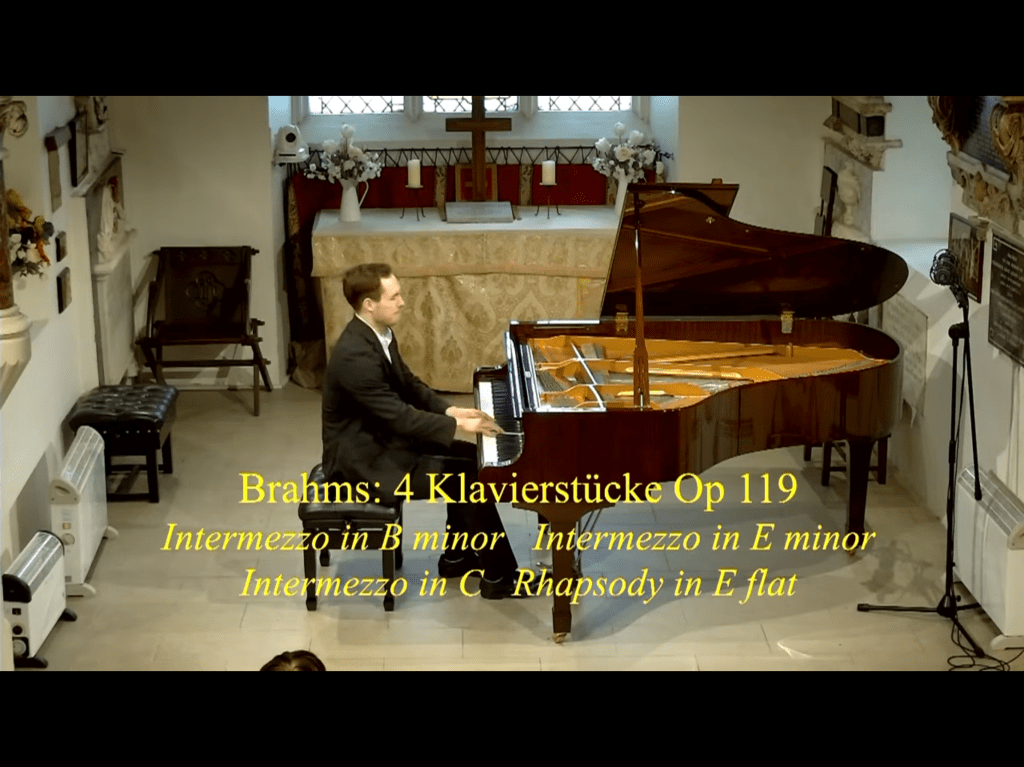
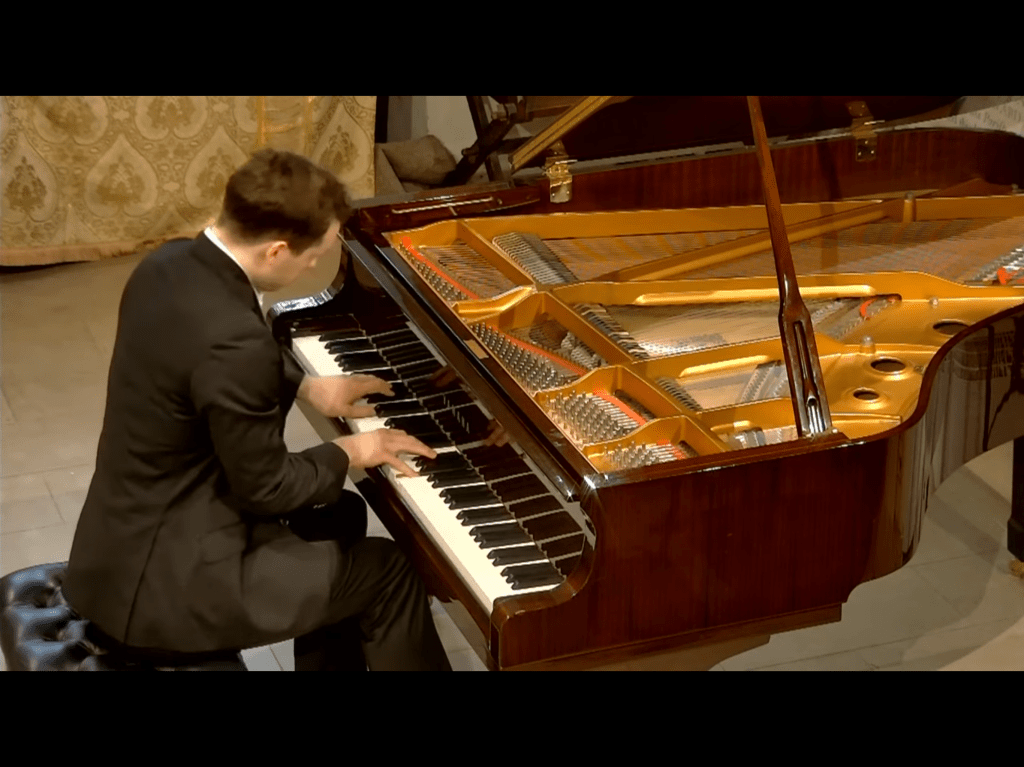
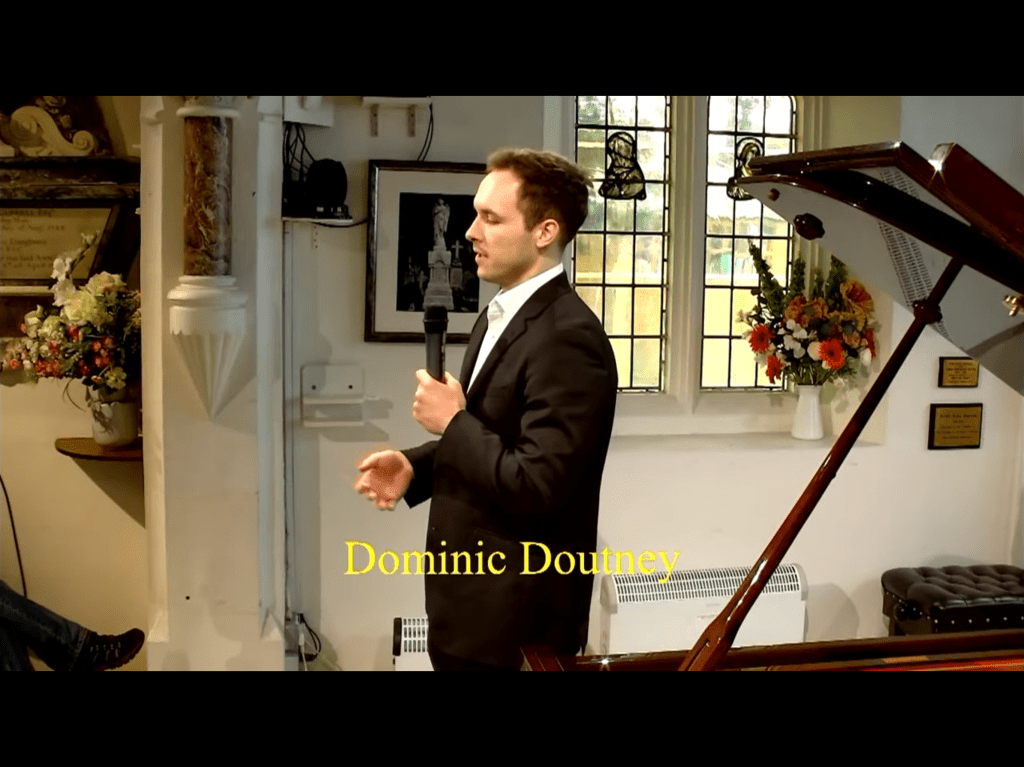
Dominic Doutney at St Marys.A gentle giant of intelligence,mastery and control

Tuesday 11 April 3.00 pm 

https://youtube.com/live/XCgwSYaZ53w?feature=share
There was a luminosity from the very first notes that were played with an unearthly beauty .The central episode could have moved more freely as if the sumptuous strings of a great orchestra taking over from the plaintive cry of the woodwind.But it was the clarity and deep meaning to every note that touched the heart of these last thoughts that Brahms was to write.The gentle throbbing of the second intermezzo was followed by the grace and charm of the third.The grandiose sounds of the heroically noble Rhapsody broke the spell and prepared us for the feast of Rachmaninov that was to follow.
A quite remarkable performance that I doubt could be matched by many other pianists in a live performance.Thirteen Preludes that were miniature tone poems.From the clarity and rhythmic drive of the first contrasting with the gentle lilt to the second.With its superbly played fleeting ornamentation building to a transcendental climax only to die away to a whisper.The fourth Prelude showed a mastery of control and character as it’s busy weaving was continually transformed in what must be the longest of the preludes .There was ravishing beauty with a superb sense of balance in the hauntingly beautiful G major Prelude.It was the same beauty that he found in the G sharp minor Prelude n.12.Rachmaninov’s favourite n.10 was played with a kaleidoscopic sense of colour and an architectural shape that gave great meaning to this ‘Homecoming’.And homecoming there was with the grandeur and nobility of the 13th Grave.It was here in particular that I was reminded of the transcendental artistry of Peter Katin who would regularly include this prelude in his recitals.

Playing of remarkable clarity and intelligence from Dominic Doutney.It is the same playing that I remember from Peter Katin in the days when he together with Moura Lympany were the pride of Madam Tillett who in that period was known as the Empress of Europe.For the greater part of the twentieth century, Ibbs and Tillett’s concert agency was to the British music industry what Marks and Spencer is to the world of the department store. The roll-call of famous musicians on its books was unmatched, and included also such international stars as Clara Butt, Fritz Kreisler, Pablo Casals, Sergei Rachmaninov, Andr Segovia, Kathleen Ferrier, Myra Hess, Jacqueline du Pre Clifford Curzon and Vladimir Ashkenazy, to name but a handful. From 1906, the success of the company was due to the dedication of its founders, Robert Leigh Ibbs and John Tillett. After their deaths, the agency was run by the latter’s wife, Emmie, who, dubbed the ‘Duchess of Wigmore Street’, became one of the most formidable yet respected women in British music.

Peter Katin after the downfall of Ibbs and Tillett was unjustly forgotten especially after his return from Canada where he had moved to be part of a prestigious piano faculty.His performance of the Rachmaninov Third Piano Concerto at the Promenade Concerts was considered by many to have been the finest of the day.His Chopin recitals in the Festival Hall were regularly sold out.Although Moura Lympany was the first to record all the Rachmaninov Preludes it was Peter Katin that soon followed suit.His playing of the Preludes as with his Chopin or Mendelssohn was like that of a superb precision clockmaker.Within the notes that were played with impeccable good taste and control there was deep feeling for all that could appreciate it.There was none of the flamboyance of the Russian School that was yet only on the distant horizon.Kept at bay by the ‘Cold War’ that prevailed until Victor Hochauser managed to persuade the authorities in Russia to allow some of their stars to play in the west.Richter,Gilels Oistrakh and Rostropovich changed our conception of Russian music with its flamboyance and animal like mastery.It was the same change with the Baroque movement that appeared on the scene and completely changed the style of performance.Authenticity was the key word much to the dismay of artists who until up until then had been quite happy to play in a musicianly way rather than turning the clock back.

Peter Katin after a concert at the Ghione Theatre with Ileana Ghione

It was just this mastery of Peter Katin that I was reminded of today listening to Dominic’s masterly performances.An intelligence and musicianship but allied to a superb technical control and faultless precision.There was none of the visible flamboyance that we have come to associate with Rachmaninov these days but there was just as much passion and expression within the notes themselves.Dominic has the same very large hands of Katin who used to play for us in Rome regularly during his Indian Summer.

A wonderfully incisive sound without any hardness or digging right down to the bottom of the keys as we had heard from Lazar Berman or Alexander Toradze.Dominic’s was simple musicianship where the music was allowed to unfold with naturalness and beauty.

The Four Pieces for Piano Op. 119, were composed by in 1893 .The collection is the last composition for solo piano by Brahms. Together with the six pieces op 118 ,Op. 119 was premiered in London in January 1894.

In a letter from May 1893 to Clara Schumann ,Brahms wrote: I am tempted to copy out a small piano piece for you, because I would like to know how you agree with it. It is teeming with dissonances! These may [well] be correct and [can] be explained—but maybe they won’t please your palate, and now I wished, they would be less correct, but more appetizing and agreeable to your taste. The little piece is exceptionally melancholic and ‘to be played very slowly’ is not an understatement. Every bar and every note must sound like a ritard[ando], as if one wanted to suck melancholy out of each and every one, lustily and with pleasure out of these very dissonances! Good Lord, this description will [surely] awaken your desire!

Clara Schumann was enthusiastic and asked him to send the remaining pieces of his new work.

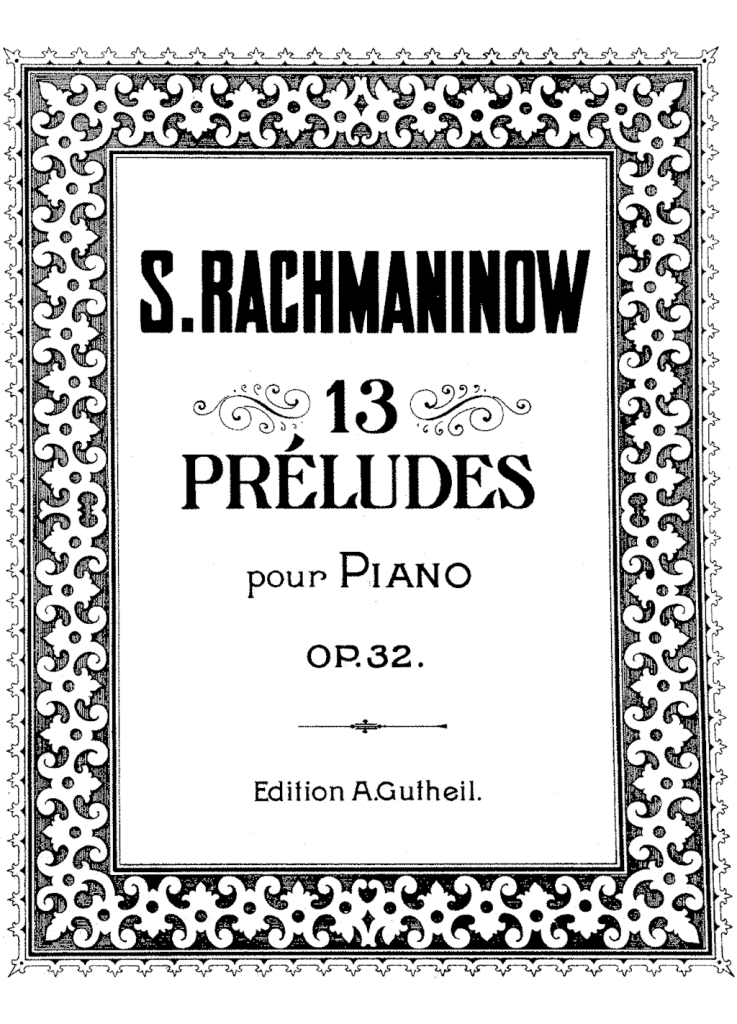
The first edition 1911

Thirteen Preludes op 32 were composed in 1910.It complements his earlier Prelude in C sharp minor op 3 n.2 and 10 Preludes op 23 to complete the full set of 24 preludes in all 24 major and minor keys.

The Homecoming 1887 Arnold Böcklin

Prelude in B minor, Op. 32, No. 10, was written in 1910 along with the other twelve pieces. Rachmaninoff was inspired by Arnold Bocklin’s painting “ Die Heimkehr”- “The Homecoming” or “The Return”Rachmaninoff also stated to pianist Benno Moiseiwitsch that this was his personal favourite among his preludes. This is the second work of Rachmaninoff’s to be inspired by one of Böcklin’s paintings; the other being Isle of the Dead

Dominic Doutney is a graduate of the Royal College of Music, where he was the Fishmongers’ Company Beckwith scholar, and studied with Professors Ian Jones, Dmitri Alexeev and Sofya Gulyak. At his graduation he was awarded the prestigious Tagore Gold Medal, given to two students annually for outstanding musical contribution to the Royal College.In 2022 Dominic was awarded 1st prizes at the 25th Mauro Paolo Monopoli International Competition in Barletta, Italy, and Semana Internacional de Piano de O´bidos in Portugal. In 2021 he was awarded 3rd prize at the Jaén International Piano Competition in Spain in April 2021, 1st prize in the Norah Sande Award, and 3rd prize in the Clamo International Competition in Murcia, Spain. Dominic is also the 2020 winner of the Royal Over-Seas League Award for Keyboard. In the summer of 2021 Dominic attended the Oxford Piano Festival on the personal invitation of Sir Andras Schiff, having played in a highly publicised masterclass with him at the RCM in the previous May. Dominic has also spent summers at the Aspen Music Festival and School and the Banff Centre. Concerto appearances include Brahms 1st concerto with both the Málaga Philharmonic and the Leipziger-symphonieorchester in the Leipzig Gewandhaus Mendelssohn-Saal; Schumann’s Piano Concerto in St John’s Smith Square with the Young Musician’s Symphony Orchestra; Beethoven’s 3 rd with the Soundiff Orchestra in the Teatro Curci, Barletta; Stravinsky’s Concerto for Piano and Wind Instruments with Martyn Brabbins and the Royal College of Music Symphony Orchestra; and Beethoven Piano Concerto No. 5 with the Dorset Chamber Orchestra.

Dominic Doutney’s intelligence and clarity at St Mary’s

Ileana Ghione on the roof of our house in Rome with Peter Katin
A memorial concert for Ileana by Peter

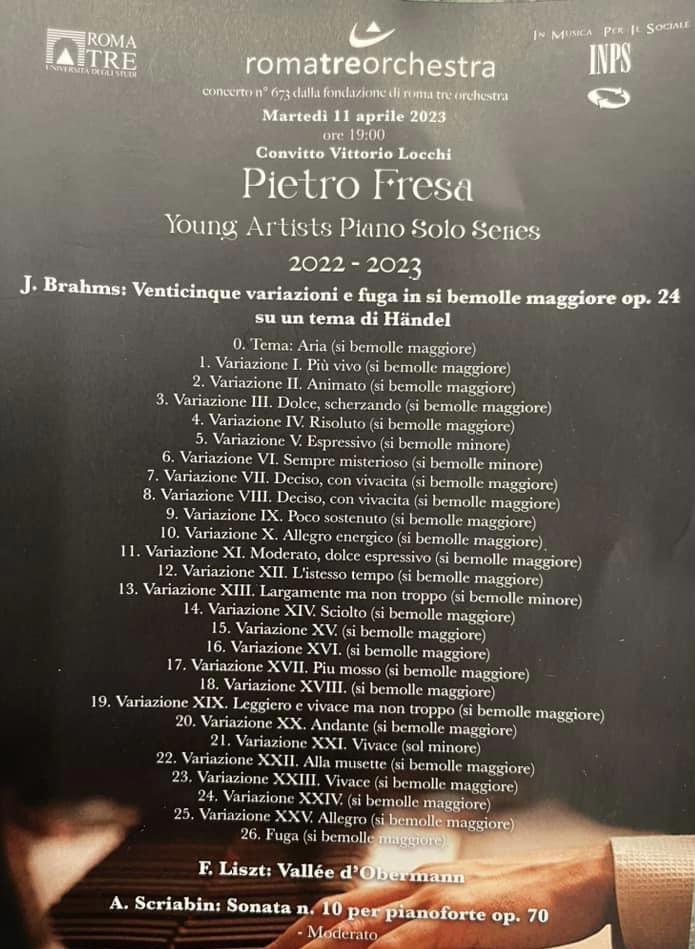
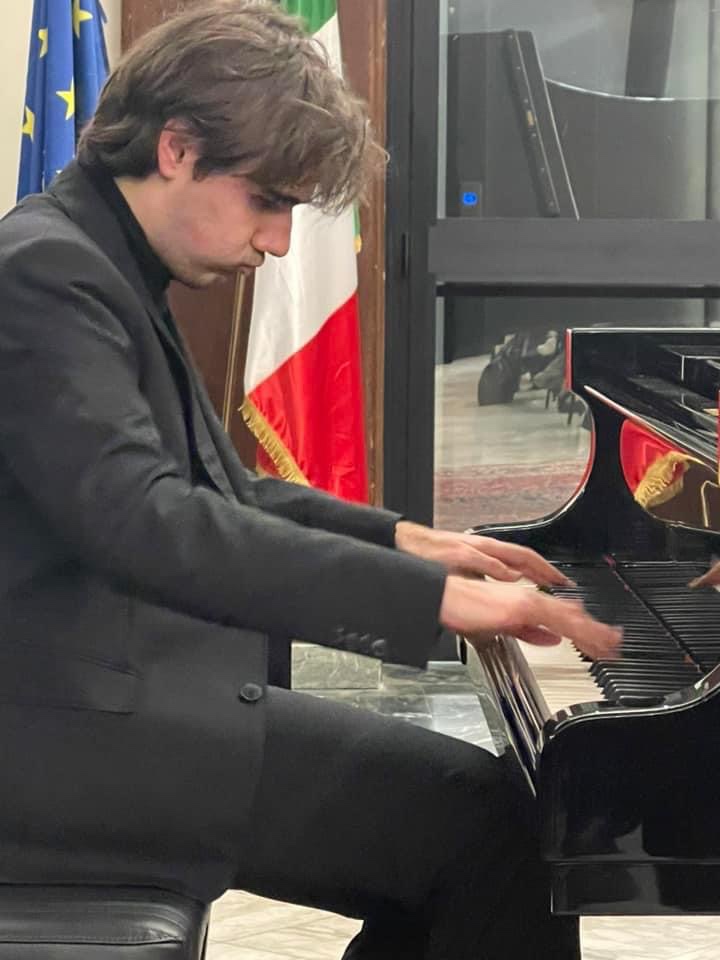
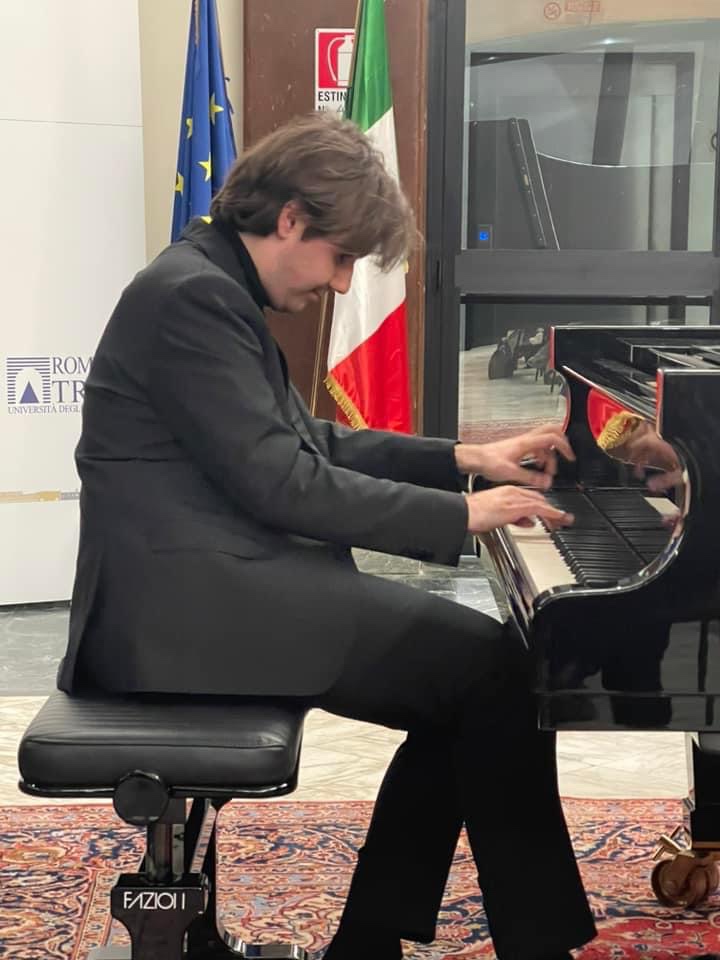
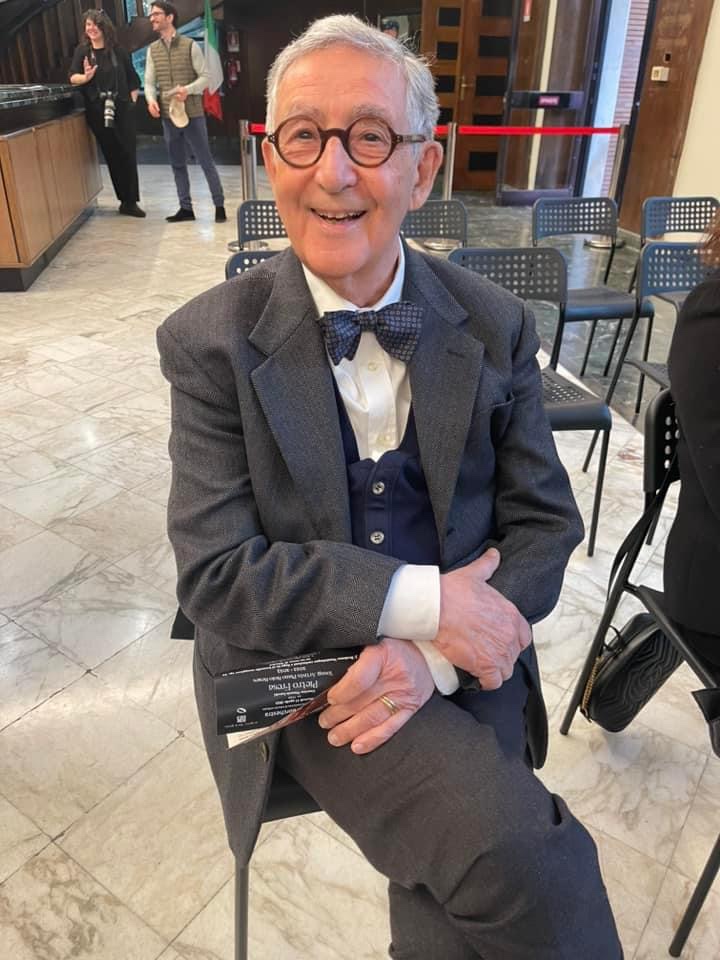
Pietro Fresa Maturity and Mastery at Roma 3

Maestro Piero Rattalino

Another tribute to Piero Rattalino from Valerio Vicari for the recent loss to the musical world of such a distinguished figure.Maestro Rattalino had also been very much associated with Roma Tre Orchestra from it ‘s founding almost twenty years ago.It was refreshing to hear of the encounter between Pietro Fresa and Maestro Rattalino,two years ago,on the occasion of Pietro’s performance of Mozart’s last piano concerto with the Roma Tre Orchestra.A mine of information he was only too happy to share his knowledge with this young pianist as he had done with generations of pianists many of whom now have gone on to illustrious careers.

https://christopheraxworthymusiccommentary.com/2021/10/30/mozart-triumphs-at-torlonia-with-jonathan-ferrucci-pietro-fresa-sieva-borzak/

I had not realised though that this signalled an unexpected change of programme.To the Brahms monumental variations were now added Mozart’s deliciously refreshing variations on “Ah vous dirai-je,Maman” and Beethovens monumental Waldstein Sonata op 53 .These two masterworks were in substitute for Liszt’s rhetorical tone poem “Vallée d’Obermann” and Scriabin’s hysterical reaching for the stars with his 10th and last Sonata.

Fair exchange is no robbery and a programme of three great masterworks was only to be applauded especially when played with the maturity and mastery as today.Pietro told me afterwards that this was the programme that he had prepared for a tour of Spain in the next few days and he preferred to share this monumental programme with his Roma 3 audience,especially when his previous appearance had been Mozart’s last great piano concerto that had been so appreciated by Maestro Rattalino.

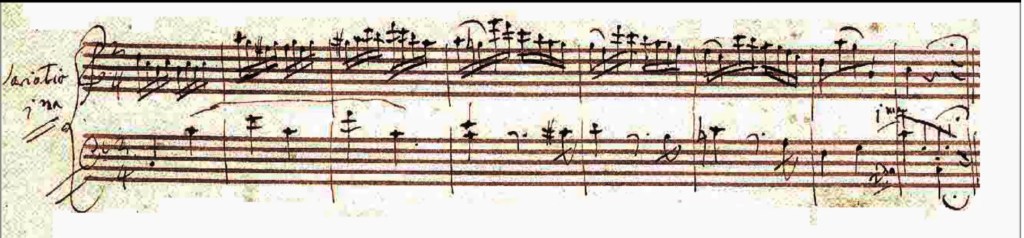
Twelve Variations on “Ah vous dirai-je, Maman”, K.265 was composed when Mozart was around 25 years old (1781 or 1782). It consists of twelve variations on the French folk song “Ah!vous dirai-je,maman”.The French melody first appeared in 1761, and has been used for many children’s songs, such as “Twinkle ,Twinkle,Little Star” or “Baa,Baa,Black SheepFor a time, it was thought that these variations were composed in 1778, while Mozart stayed in Paris from April to September in that year, the assumption being that the melody of a French song could only have been picked up by Mozart while residing in France. For this presumed composition date, the composition was renumbered from K. 265 to K. 300.Later analysis of Mozart’s manuscript indicated 1781/1782 as the probable composition date.They were first published in Vienna in 1785.

A performance of great delicacy and style .It was played with a disarming simplicity that allowed Mozart’s scintillating variations to speak for themselves.There was an elegance and precision from the first variation followed by the beauty of the melodic line over a moving bass followed by the clarity and simplicity of the second .Such beauty with the ravishing ease of the rising and falling arabesques of the third was followed by the rhythmic propulsion over a moving bass of the fourth.There were swimming strokes of utmost delicacy in the fifth that was a true lesson on how to play the piano.Like a vibration the moving scales of the sixth led so naturally to the humour and ingenuity of the minor variation of the eighth.There was a gradual build up of excitement with the tenth but always within the limits of the style that epitomises Mozart being too easy for children but too difficult for grown ups!The eleventh,Adagio,was with the delicately chiselled ornamentation of simple unadorned beauty.Exhilaration and excitement brought this miniature masterpiece to a delicious conclusion.A lesson in style and precision in which Pietro was listening carefully always to the sounds that he was able to produce from this very powerful Fazioli.He created a cocoon of sound within which Mozart could live happily without ever smudging the contours but using this magnificent instrument to illuminate and comunicate as Mozart himself might have done on the very different instruments of his day!

Piano Sonata No. 21 , Op. 53 in C major known as the Eroica symphony for piano.It is considered to be one of Beethoven’s greatest piano sonatas. Completed in 1804, it has a scope that surpasses Beethoven’s previous sonatas, and notably is one of his most technically challenging compositions. It is a key work early in his ‘Heroic’ decade (1803-1812) and set the stage for piano compositions in the grand manner both in Beethoven’s later work and all future composers. The Waldstein receives its name from Beethoven’s dedication to Count Ferdinand Ernst Gabriel von Waldstein of Vienna, a patron as well as a close personal friend of his. This sonata is also known as ‘L’Aurora’ (The Dawn) in Italian, for the sonority of the opening chords, which are said to conjure an image of daybreak.It is in two movements :Allegro con brio and an Adagio molto which is an introduction to the Rondo Allegretto moderato.The original second movement Beethoven chose to publish separately as his ‘Andante Favori’ and substitute it for a much shorter introduction to the final Rondo.

It was this movement that stood out more than all the pyrotechnical gymnastics of the outer movements for Pietro’s complete understanding of the orchestral colour and intensity in this single,intense, page.It was a sign of his maturity as an interpreter where ‘rinforzando’ was given such a noble sound as it disappeared into the distance passing from one instrument to another.This after the stillness of the pianissimo opening full of the precise indications by Beethoven that were scrupulously understood and transformed into sounds.At the same time giving an architectural shape that dissolved into oblivion with the single shining star of G that was to be brought to life with the undulating harmonies of the Rondo.Of course it was a sign of the genius of Beethoven who could contemplate this link between two transcendentally busy outer movements.

A first movement played with a rhythmic energy and authority where the startling contrasts in dynamics were slightly exaggerated especially in the development where the long held arpeggiated harmonies were sometimes give a shock start from the bass.But the overall impression was of a performance of great authority and architectural understanding where his ability to keep a constant tempo despite the demonic drive that Beethoven demands was exhilarating and kept us on the edge of our seats.The technically exhilarating episodes of the Rondo were played with authority and drive and his slight hesitation before the return of the luminous rondo was a master stroke that I have rarely heard from other interpreters.I liked his insistence on the bass harmonies in the coda that gave great weight to the arpeggiando changing harmonic pattern of the right hand.His ability to play the glissandi on a modern piano with such ease was nothing short of remarkable.Serkin used to lick his fingers before attempting them – others like Kissin play them with some very deft scales.A remarkable performance that showed the maturity that this young man has now acquired.

An encore of Schubert’s beautiful Impromptu op 142 n.2 rounded off this unexpectedly important programme.Played with luminous beauty and simplicity he could even have taken more time over the mellifluous meanderings of the central episode where he had found some magical counterpoints that were worth savouring even more.

The Variations and Fugue on a Theme by Handel, Op. 24, was written by Brahms in 1861 and consists of a set of twenty-five variations and a concluding fugue, all based on a theme from Handel’s Harpsichord Suite n.1 in B flat HWV 434. Tovey ranked it among “the half-dozen greatest sets of variations ever written”.Written in September 1861 after Brahms, aged 28, abandoned the work he had been doing as director of the Hamburg women’s choir (Frauenchor) and moved out of his family’s cramped and shabby apartments in Hamburg to his own apartment in the quiet suburb of Hamm, initiating a highly productive period that produced “a series of early masterworks”.Written in a single stretch in September 1861,it is dedicated to a “beloved friend”, Clara Schumann widow of Robert Schumann.It was presented to her on her 42nd birthday, September 13. At about the same time, his interest in, and mastery of, the piano also shows in his writing two important piano quartets, in G minor and A major. Barely two months later, in November 1861, he produced his second set of Schumann Variations, Op. 23, for piano four hands.One aspect of his approach to variation writing is made explicit in a number of letters. “In a theme for a set of variations, it is almost only the bass that has any meaning for me. But this is sacred to me, it is the firm foundation on which I then build my stories. What I do with a melody is only playing around … If I vary only the melody, then I cannot easily be more than clever or graceful, or, indeed, if full of feeling, deepen a pretty thought. On the given bass, I invent something actually new, I discover new melodies in it, I create.” The role of the bass is critical.Brahms played them at a meeting with Wagner who commented:’One sees what still may be done in the old forms when someone comes along who knows how to use them”.Clara writes in her diary :’On Dec 7th I gave another soirée, at which I played Johannes’ Handel Variations. I was in agonies of nervousness, but I played them well all the same, and they were much applauded. Johannes, however, hurt me very much by his indifference. He declared that he could no longer bear to hear the variations, it was altogether too dreadful for him to listen to anything of his own and to have to sit by and do nothing. Although I can well understand this feeling, I cannot help finding it hard when one has devoted all one’s powers to a work, and the composer himself has not a kind word for it.

Pietro played the theme with scintillating ornaments that sprang from his fingers like springs and gave such luminous clarity to the theme that was to be so nobly enhanced by Brahms in the triumphant 25th variation.There was never a moment in Pietro’s authoritative performance that seemed anything other than inevitable.The transcendental difficulties and complex musical ideas just poured from his sensitive hands as he gave an architectural shape to the twenty five variations culminating in a final fugal climax of overwhelming power and authority.There was rhythmic energy and clarity and ‘joie de vivre’ to the first variation contrasting with the fluidity and legatissimo of the second with some very interestingly pointed counterpoints.There was a gentle lilt to the third and great sonorities to the octaves of the fourth.Gentle flowing lyricism of the fifth leading to the legatissimo octaves of mysterious atmosphere and the answer of the sixth bringing great rhythmic impetus leading to the fanfare of the seventh.There was a gradual build up with a sudden rhythmic impetus to the eighth and admirable control of the whispered sonorities of the octaves answering one another in the ninth.But why so violent a contrast between the sforzando and sudden piano that was rather exaggerated and overwhelming too soon?There was a sudden change of character with the quixotic flight from the top to the bottom of the keyboard in the tenth contrasting with the beautifully lyrical eleventh.The languid left hand melodic line in the twelfth was very slow and unusually beautiful followed by the noble sonorities of pompous regal sonorities of the thirteenth.Tovey sees a grouping in Variations 14–18, which he describes as “arising one out of the other in a wonderful decrescendo of tone and crescendo of Romantic beauty”.The nineteenth is slow, relaxing variation, with its lilting rhythm and 12/8 time,written in the dance style of a Baroque French siciliana from the school of Couperin (Brahms had edited Couperin’s music ).It uses chords almost exclusively in the root position, perhaps as another reminiscence of “antique” music. In a technique often used by Brahms, the melodic line is hidden in an inner part and was played with a clarity and simplicity before the final build up to the twenty fifth triumphant fanfare and the mighty fugue.In fact there was great character to each of the variations played with an underlying rhythmic impetus which as Brahms clearly describes comes from the solidity of the bass allowing freedom for all that rides on it.There was much beauty in the music box twenty second variation leading to the spikey staccato build up ever more energetic until the final explosion of the theme in all its glory.The fugue was played with amazing clarity and a build up of tolling bells and frenzied movement that demonstrated his truly transcendental technical prowess.An overpowering performance of one of the masterworks for the piano all too often used as a tool for aspiring young pianists struggling with the technical difficulties and not always realising the enormous musical invention that the 28 year old Brahms demonstrated at the same time as writing his poorly received first piano concerto

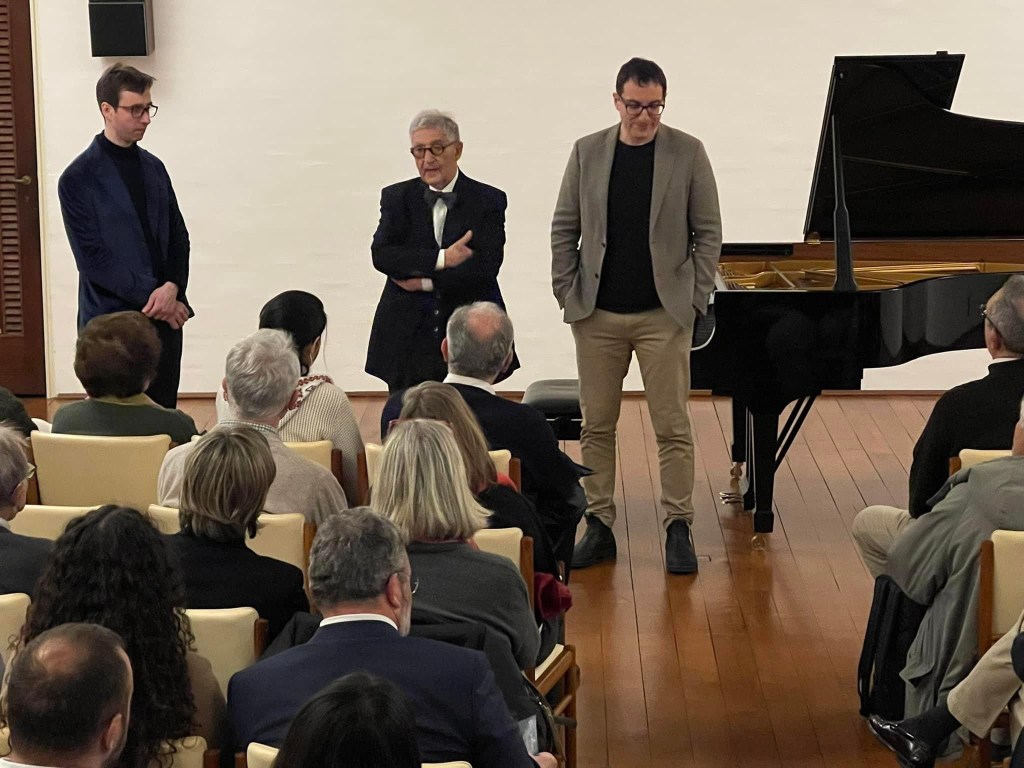
With Valerio Vicari ,Artistic Director of Roma 3 Orchestra,paying tribute to Piero Rattalino

Pietro è stato ammesso, a soli undici anni, alla prestigiosa Accademia Pianistica Internazionale “Incontri col Maestro” di Imola, ove ha studiato con la concertista cinese Jin Ju, ed è attualmente allievo del celebre Maestro russo Boris Petrushansky. Dopo il Conservatorio, ha iniziato gli studi presso il Royal College of Music di Londra per merito di una importante borsa di studio, e qui, frequentando i corsi dei Maestri Dmitri Alexeev e Sofya Gulyak, si è laureato con il massimo dei voti nel settembre 2020.Pietro inoltre si è perfezionato con docenti quali Enrico Pace, Boris Berman, Vovka Ashkenazy, Leonid Margarius, Vanessa Latarche, Andreas Frölich, Stefano Fiuzzi e Roberto Cappello partecipando regolarmente alle loro Masterclass. A dodici anni, ha tenuto la sua prima esibizione con l’orchestra inaugurando, con il concerto Hob. XVIII/11 in re maggiore di Haydn, l’anno accademico del Conservatorio presso l’Auditorium Manzoni di Bologna.

President of Roma Tre Orchestra Roberto Pujia

Da allora ha iniziato una intensa attività concertistica sia come solista che in formazioni di musica da camera che l’ha portato ad esibirsi in numerose rassegne sia in Italia che all’estero, fino a condividere il palco con artisti del calibro del violoncellista Mario Brunello. Tra le rassegne di cui è stato protagonista: i concerti per Roma Tre Orchestra nell’Aula Magna dell’Università Roma Tre, al Teatro Palladium e a Palazzo Braschi, la prestigiosa stagione di Musica Insieme presso l’Auditorium Manzoni a Bologna, Bologna Festival, Genus Bononiae, Musica in Fiore presso la Sala Farnese del Comune, San Giacomo Festival presso la omonima basilica, I Concerti del Teatro Comunale, del Teatro Guardassoni, del Cenobio di S. Vittore, dell’Università di Lettere, la rassegna del Circolo Ufficiali, la stagione Talenti in Musica di Modena, la Società Letteraria di Verona, il Festival Talent Music Mater Courses di Brescia nonché i concerti del Teatro Sancarlino di Brescia.
Si è aggiudicato il primo premio assoluto in più di trenta concorsi di esecuzione pianistica. Di particolare rilievo è stata la vittoria del primo premio al Concorso Internazionale “Grand Prize Virtuoso Competition” di Vienna, che gli ha dato occasione di esibirsi presso la rinomata Metallener Saal della Musikverein (Vienna).

Music is such fun at Roma 3 and I leave a bit of research I had done into the original programme in the hope that in the near future we might be able to hear Pietro’s performance of these missing stones in his crown!

Étienne Pivert de Sénancour’s novel Oberman ( with one n) was not well received at its publication in 1804. So forcefully, however, did it resonate with the emerging æsthetic preoccupations of the age that three decades later it was a ‘must-read’ in Parisian literary circles, its eponymous central character virtually a watchword for the Romantic sensibility in art. Set in a picturesque valley in Switzerland, it tells the story of a young man enthralled, but at the same time overwhelmed and confused, by his encounters with Nature and the feelings of longing that they engender in him. Helpless to relieve this eternal yearning, he settles on a life of utter simplicity in an attempt to escape the inner struggle and torment of his emotional life.Liszt’s own travels through Switzerland in the late 1830s inspired his Vallée d’Obermann (with two n’s), first published in 1842 and later included,in a revised version, in the first of his piano suites entitled Années de Pèlerinage I (Suisse) published in 1855. Overtly literary in conception, Liszt’s Vallée d’Obermann pays tribute to its famous forbear in a type of musical construction that sees its principal theme, a descending scale figure, suffer harmonic and chromatic transformations that parallel the emotional turmoil experienced by Sénancour’s sensitive young hero. This descending scale figure, announced in the left hand as the work opens, permeates every page of the score.’What do I wish? What am I? What shall I ask of nature? I feel; I exist only to waste myself in unconquerable longings…Inexpressible sensibility, the charm and the torment of our futile years; vast consciousness of a nature that is everywhere incomprehensible and overwhelming; universal passion, indifference, the higher wisdom, abandonment to pleasure— I have felt and experienced them all’

The Piano Sonata No. 10, Op. 70, was written in 1913. It was his final work in this form. The piece is highly chromatic and tonally ambiguous like Scriabin’s other late works.It is characterized by frequent trills and tremolos and is sometimes called his “Insect Sonata”, referring to his words:

“My Tenth Sonata is a sonata of insects. Insects are born from the sun […] they are the kisses of the sun.”

The atmosphere of the introductory pages of the Tenth Sonata is veiled and distant, like an impressionist reflection, but much more intensely elevated and spiritual. Trills soon sweep into every corner of the music, and in the last pages they are transformed into a glorious reverberation, as if shimmering with pulses of glowing light and taking on lives of their own. Such life and light/sound corroborations are typical of the composer’s own imaginative world.

Old friends from London days.

https://christopheraxworthymusiccommentary.com/2021/12/04/pietro-fresa-in-london-refined-seduction-and-intelligence-at-brompton-oratory/

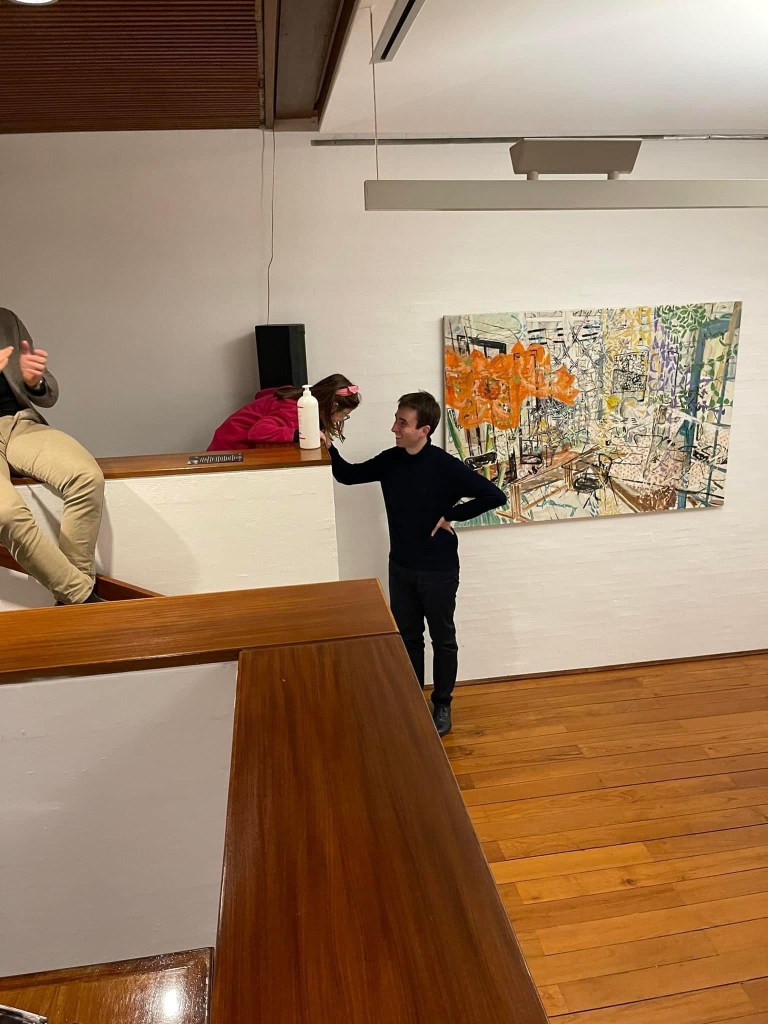
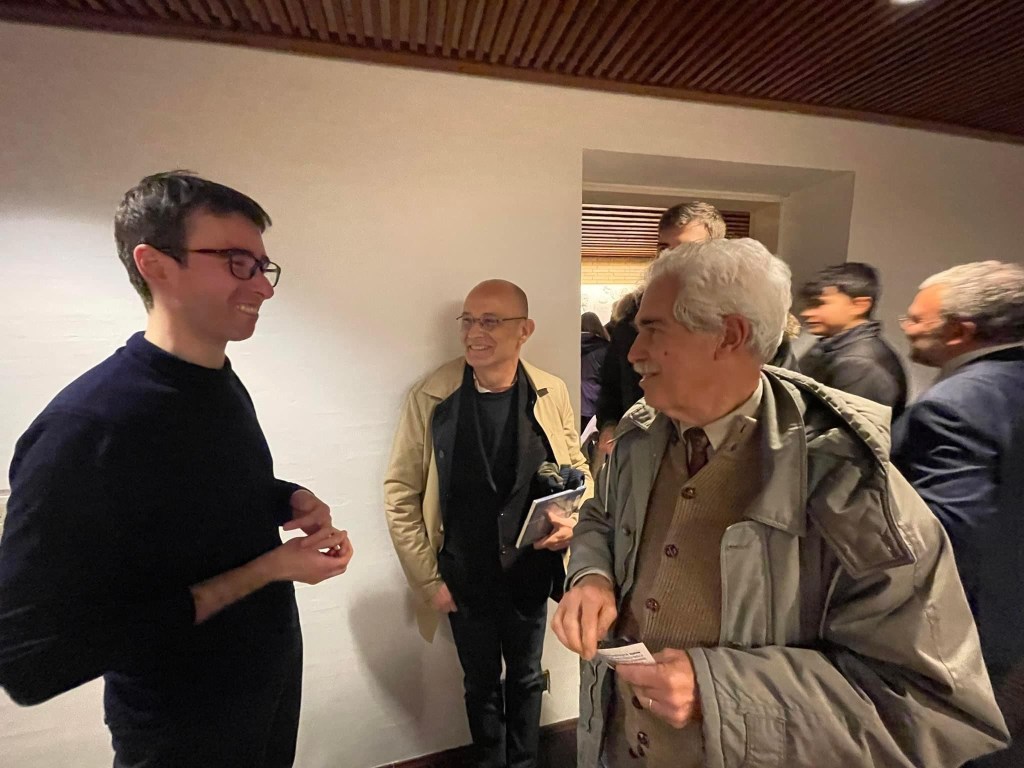
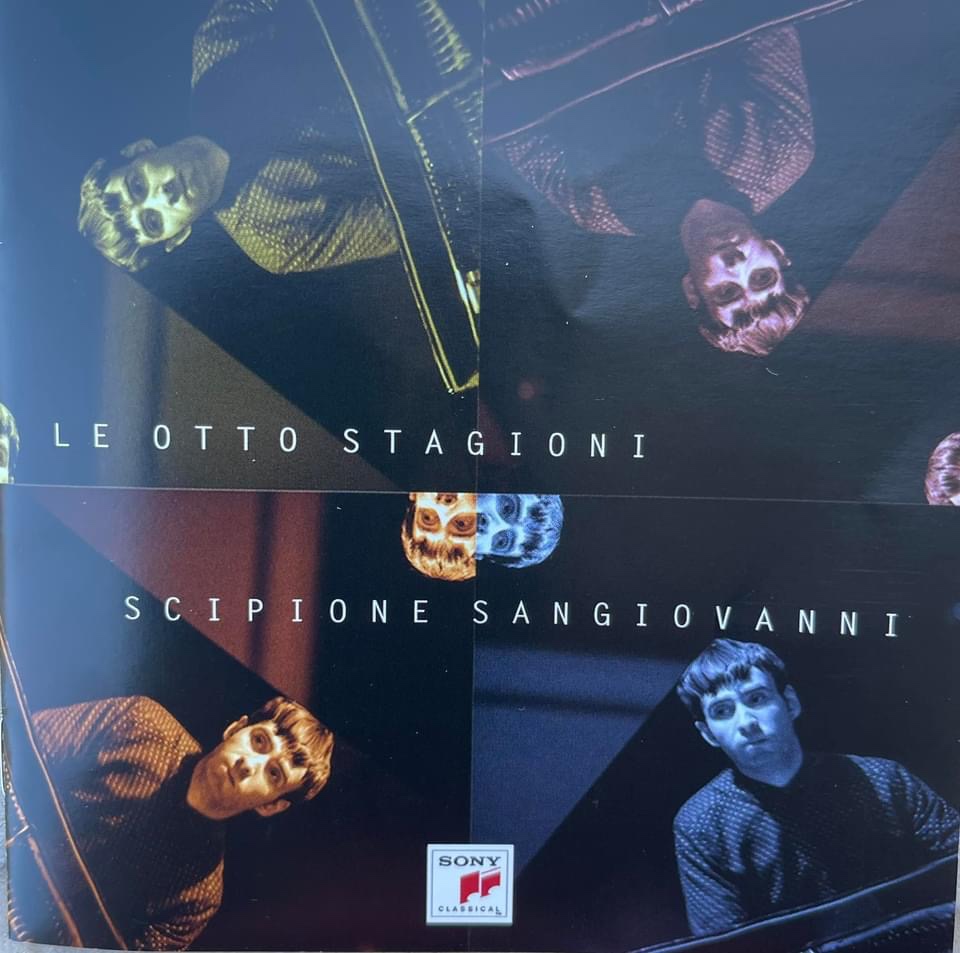
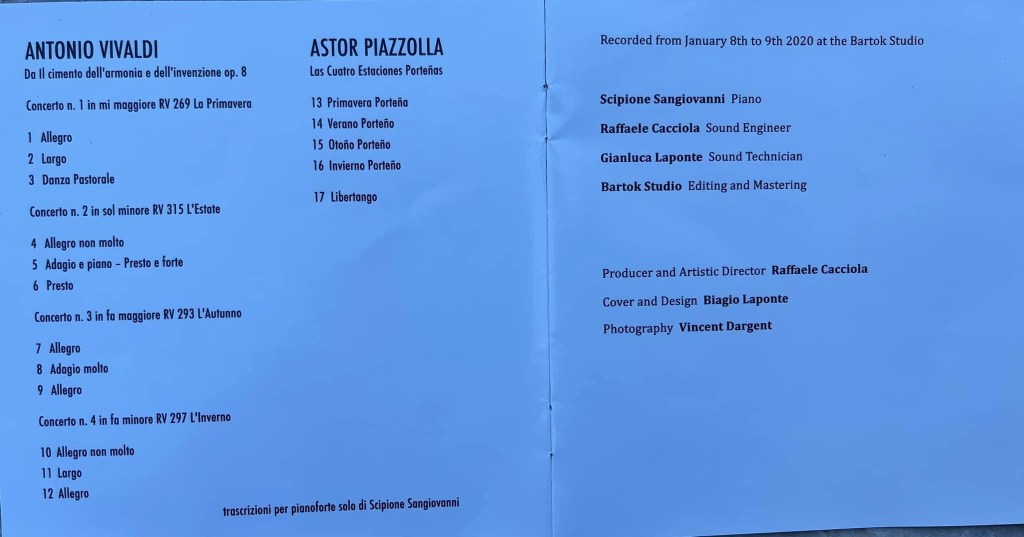
Scipione Sangiovanni at the Accademia Danimarca – Mastery at Roma 3 for a Man of all Seasons

Piero Rattalino the great Piano file and musicologist died during the night today the 6th April at the age of 92.
Indefatigable communicator he had just given a conference on Beethoven’s Pathetique Sonata at the Piano Academy in Imola .
Many years ago he gave masterclasses in the Ghione Theatre .The roof was left open and it was a beautiful day and I videoed the lessons in bright sun light with the dome of S.Peters in the distance.He was very happy to hear they had been recorded and I was pleased to give him the recordings.He also asked me for a video I had made of Cherkassky.Not the more virtuoso performances but his insinuating performance of the Tango by Albeniz/Godowsky.He was more interested in the style and quality of notes rather than the quantity!That was the genius Piero Rattalino.
A tribute to a great man from Prof Roberto Pujia and Valerio Vicari.Where words were not enough Scipione added his own magical tribute with Chopin’s Nocturne in C sharp minor op posth
A feast of music in three sections .The first starting with a passionate account of Frescobaldi’s ‘Toccata in G’.There was a crystalline clarity to his ornamentation and great rhythmic drive.Authentic in the dry sense that it has come to represent,it most certainly was not,but it was exhilarating and exciting and above all played with refined good taste.’Autumn leaves’ and ‘Lullaby of Birdland’ immediately showed his pedigree as a superb jazz pianist able to twist and turn a melody with beguiling jeux perlé subtlety and glistening beauty.
Handel’s great ‘Passacaglia’ was give a monumental performance with it’s opening dotted rhythms deliberately pointed after the Shearing sense of nonchalant improvisation.Leading to an overwhelming climax that brought spontaneous applause from an audience who had now realised that this was a great musical party to be relished and enjoyed.


In questa originale formula musicale Scipione Sangiovanni ha condensato il proprio intero percorso formativo, che spazia dalla musica rinascimentale al pop. Il principio fondamentale di questo concerto consiste nel creare suite accostando brani appartenenti a mondi sonori apparentemente inconciliabili. Un principio che in altri campi artistici, per esempio quello del design e dell’architettura, è stato già ampiamente sperimentato ed è, anzi, diventato la regola.

‘In sentimental mood’ by Ellington drifted into ‘Someday over a Rainbow’ with all the naturalness of an Art Tatum or Oscar Peterson .
I doubt they could have burst so spontaneously into Busoni’s monumental transcription of Bach’s Great Organ Toccata and Fugue .Especially as Scipione allowed the fugue to enter on a haze of sounds that Busoni had inherited from Liszt ,his mentor,who had been searching for the mysterious sounds of the future at the end of his genial existence.
A Galuppi ‘Andante’,the one that Michelangeli had immortalised,was played faster than the master but with the same ravishing sound and crystalline clarity.
‘Paranoid Android’ I am not qualified to judge but as Scipione said,music does not have barriers and so I too was caught up in his mesmerising performance.I was hypnotised by his total conviction and transcendental understanding of the piano and the hidden colours extracted from it’s very soul.
The famous Rameau ‘Gavotte and variations’ I have never heard so freely played with pedal,added octaves and any other vehicle for Scipione to express what he felt was in the music and trying to get out- despite the restrained straight jacket that the mistaken authentic movement has come to put on it!

Scipione Sangiovanni for Roma 3 last night opening with a ravishing performance of Chopin’s Nocturne in C sharp minor op posth dedicated to Piero Rattalino,vice president of Roma Tre Orchestra and one of only two pianofiles in the world.A renowned musicologists with a catalogue of tomes that would be the envy of even JSB.He will be dearly missed but his Heritage is inestimable.
Scipione went on to astonish and amaze us with a programme that demonstrated not only his chameleonic sense of style but above all his trascendental mastery and passionate participation.
As he himself said the message in music is universal and there are no barriers when one wants to create atmospheres to express one’s emotions and uncontaminated sense of discovery with a kaleidoscope of ravishing sounds.
Well he certainly did that with a simplicity and mastery that held us enthralled from Frescobaldi to Piazzola ………’Someday over the rainbow’ has the same sense of hope and aspiration as Bach’s ‘Ich ruf’zu dir,Herr Jesu Christ ‘? Hard to believe until tonight!
A master and a man for all seasons

Le barriere del tempo svaniscono, i canoni estetici si sublimano, mostrando che la musica è una sola nonostante possa aver generato molti figli. L’antico ed il moderno, il barocco ed il jazz, il classico ed il rock si sfiorano senza mai fondersi formando nuove alchimie sonore. Il risultato è una catena musicale nella quale gli opposti si attraggono, dialogano tra loro, si scontrano ed infine combaciano.

There was beauty and respect for Busoni’s magical transcription of Bach’s ‘Ich ruf’zu dir,Herr Jesu Christ’.I still have the magic of the much missed Nelson Freire in my ears in this piece,but Scipione was just as convincing bringing out more the inner counterpoints which gave great weight and meaning to this most moving work.The final three pieces showed once again Scipione’s luminosity of sound and penetrating cantabile and the frenzied excitement that the sheer joy of music making could unleash from this most uncontaminated of souls.

I had first heard Scipione in Monza where I had been invited to be part of an illustrious jury at the Rina Sala Gallo International Piano Competition.I do not usually do that sort of thing as the Circus element in music is not my idea of what music should represent.Every performance should be enjoyed for what it is and not compared to others.Comparative music performance is not for me,but I realise that there are opportunities in the Competition field that may out- way my view of independence and uncontamination.

Connie with Nelson Freire after his concert at the Ghione Theatre

My dear friend Constance Channon Douglass was indisposed and asked me if I would take her place.Of course how could I let her down and what an honour to be on a jury with Bruno Canino,Stefano Fiuzzi and Marcel Baudet.

Marie Jose Pires with Julian Brocal playing Mozart Double in Oxford together with another student Lilit Grigoryan

With the generous fee I was able to buy a most beautiful bedspread which still adorns my bed and reawakens memories of a beautiful occasion.

The superb bedspread from Monza

A young pianist Julian Brocal had played a wonderful Schumann Carnaval and has since been taken under the wing of Marie Jose Pires and is flying high.I had thanked her for all that she is doing for young musicians and she simply replied that it was not what she did for them but it was what they did for her!The simplicity and humility of a great artist shared with her colleague Martha Argerich – ‘birds of a feather ‘indeed!https://christopheraxworthymusiccommentary.com/2020/03/03/julien-brocal-at-the-wigmore-hall-on-wings-of-song/

Scipione had been admitted to the final where he played Liszt 2nd Piano Concerto that I personally did not admire as much as an Emperor concerto from Mengyang Yang Pan. https://christopheraxworthymusiccommentary.com/2022/09/16/mengyang-pan-at-st-marys-beauty-and-control-passionate-intensity-and-intelligence/

But then Scipione played an encore and the heavens opened and there was no doubt that this was a quite considerable artist and of course he won the coveted first prize.It reminded me of a story that Sidney Harrison,my piano daddy,would tell of Alfred Cortot playing the Emperor concerto at the Gold Medal Ceremony of the Royal Philharmonic Society in London.A performance that was not one of the Masters best!But then he played an encore and the heavens opened and there was no doubt that Gold Medal first given to Beethoven was in the right hands with Alfred Cortot.

Scipione with the distinguished pianist Orazio Maione who had given a prize to the young student,like me,some years ago

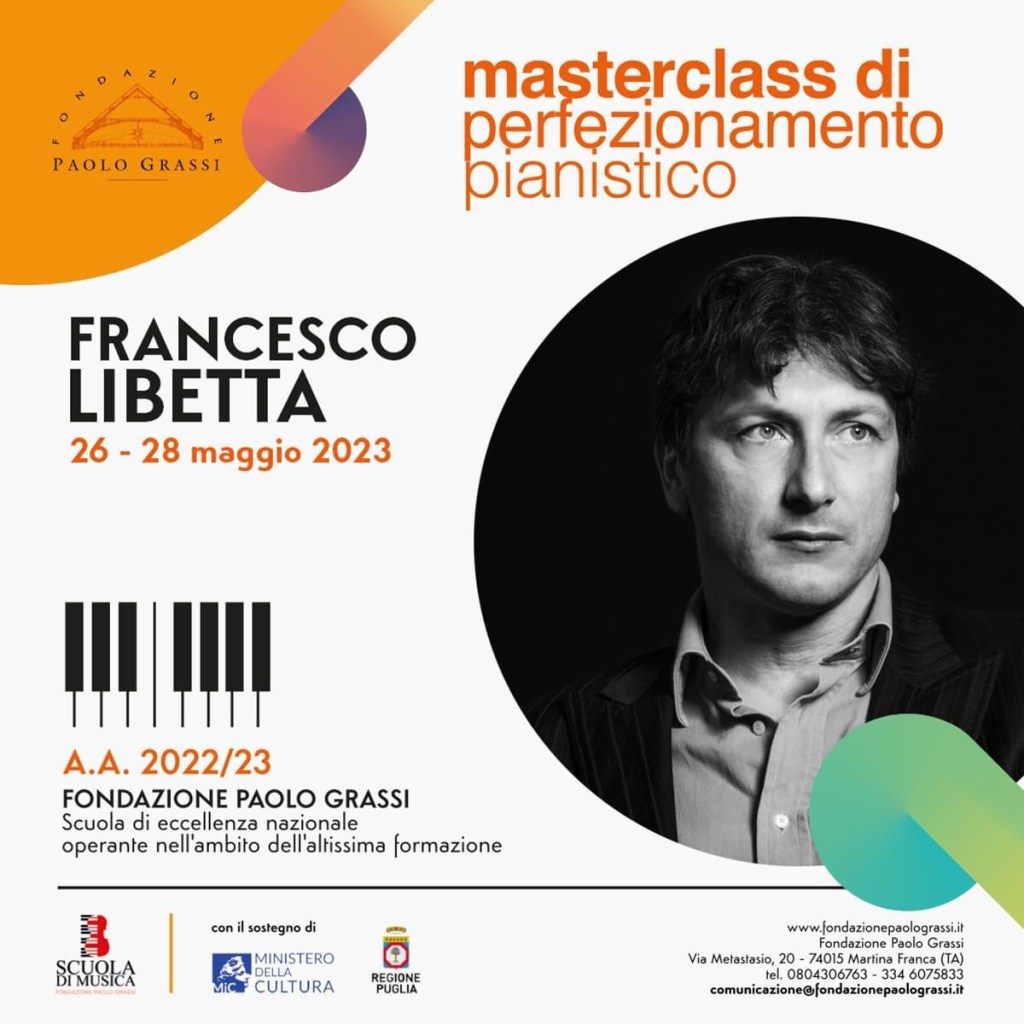
I had not heard Scipione since as he lives in Lecce ,the Florence of the South.Like his distinguished colleague Francesco Libetta why should they want to leave paradise to struggle and suffer in an alien city when their art and heart can grow untainted in the city of their birth.

Explaining to his young daughter that Papa’ would just go and play one more piece if she agreed !And what a piece!A Piazzola as if we had never heard this famous piece before.An originality and animal excitement that should have sent us all happily home .But there was just one more sneaky encore by great request of his own improvisation I think.But what does it matter it is the music not the label that counts as Scipione had so generously shown us tonight.

Seeing him tonight as he affectionately greeted his young daughter who had patiently been following his concert ,in between playing with her crayons,I realised what a wise man that young winner of the competition had become.Listening to him I realised even more what a great artist and human being he has become.

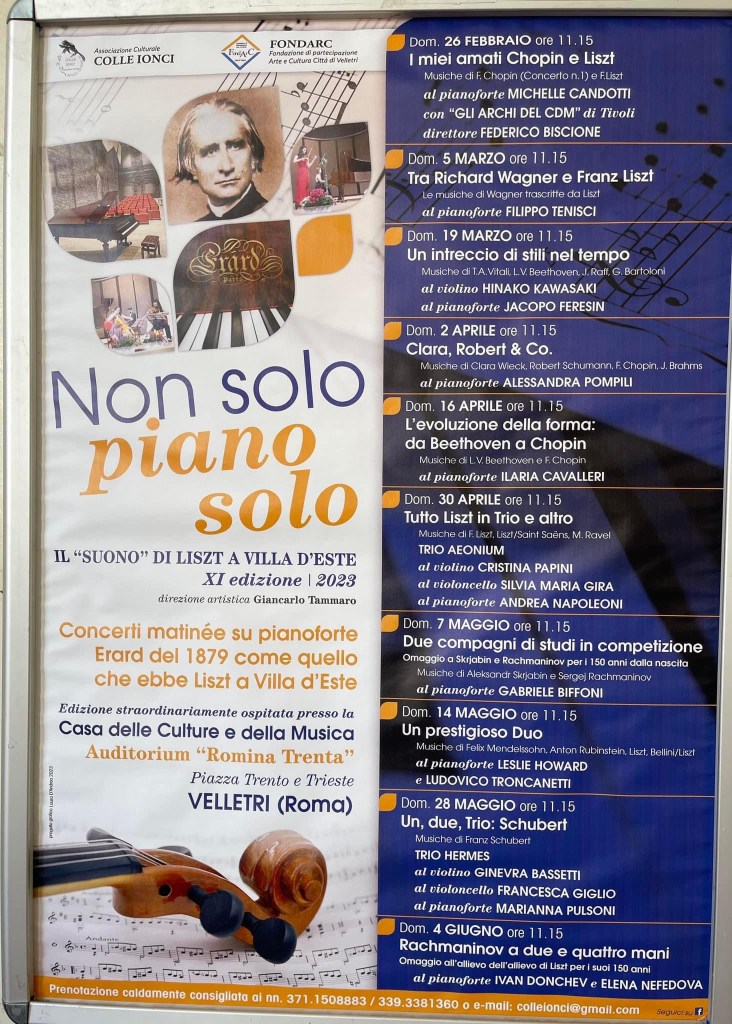
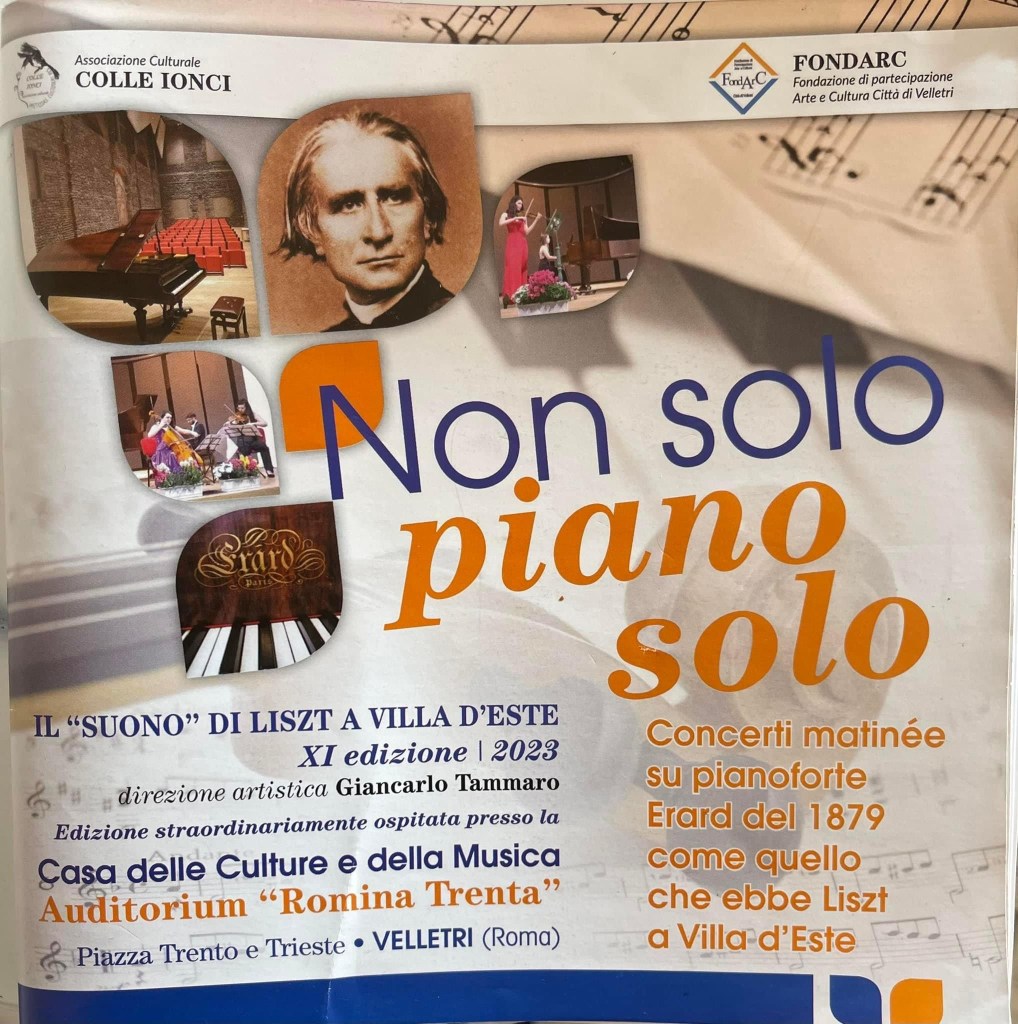
With Ing Tammaro owner of the 1879 Erard around which for eleven years he has created a festival for the bicentenary of Liszt’s birth https://christopheraxworthymusiccommentary.com/2022/05/29/axel-trolese-illuminates-liszts-erard-with-supreme-artistry-and-passion-in-velletris-convento-del-carmine/
The Danish Academy in Rome
For Rattalino listening to Scipione’s beautiful tribute of Chopin
A silent salute for Piero Rattalino
Music can be such fun

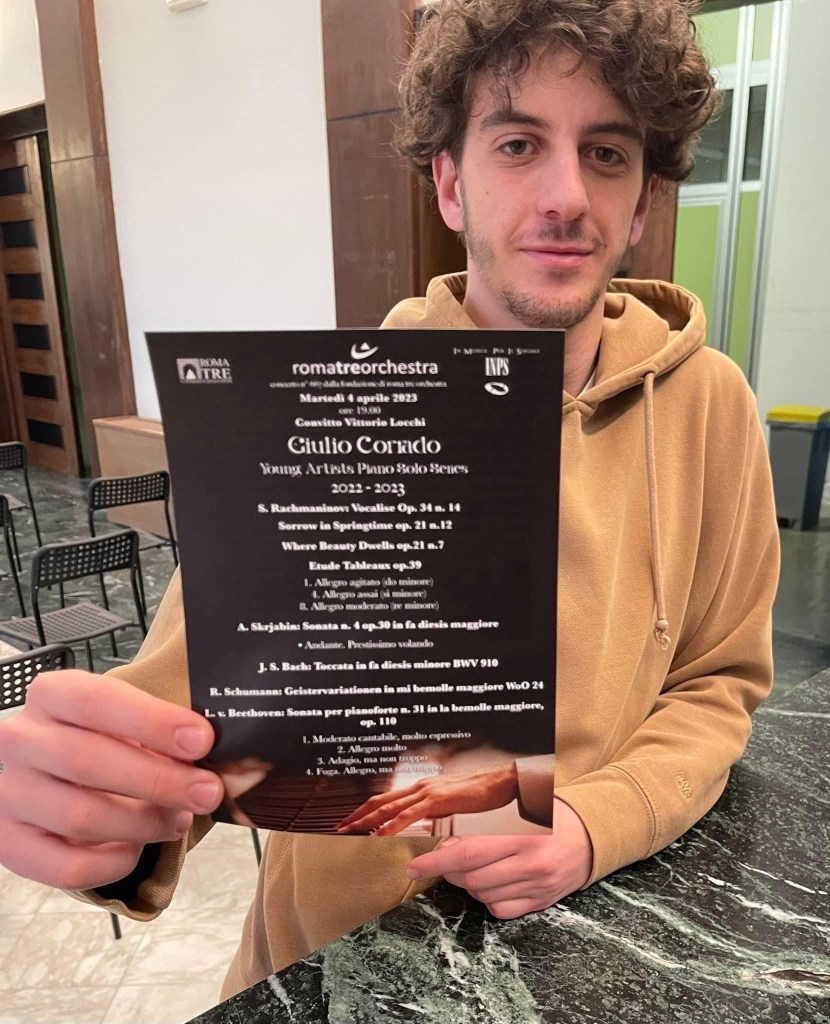
Giulio Corrado at Roma 3 Young Artists Piano Solo Series Artistry and mastery of intelligence and sensibility

A beautiful programme for Holy Week at Roma 3 where their series ‘Young Artists Piano Solo’ continues unabated with the energy and dedication of the President Roberto Pujia and his ex student,Artistic Director,Valerio Vicari.

With their many young helpers it is a series that gives an invaluable showplace for young musicians at the start of their career.After years of study dedicating their youth to art as they take the big step from Gradus ad Parnassum.An unreachable Parnassum but real artists can get nearer only by playing in public and learning from listening to themselves.It was Artur Rubinstein who told the contestants at the first competition in his name in Tel Aviv,fifty years ago ,that true artists should be like bees.To cultivate one’s own taste by listening to as much music as possible and by living the life of a true artist that can appreciate beauty.

Music is such fun at Roma 3

A life where quality rather than quantity is what counts.Likened to the bees that cultivate their pollen from the flowers that they are attracted to and which makes every honey different from another.The Rubinstein Competition is now in its 50th year but the message of Rubinstein in more actual today in this fast moving world than it has ever been.I remember Ruggiero Ricci telling me that in his opinion performances these days were so uniform in their perception because there is no time to stop and stare!In order to cross the Atlantic it would take days on an Ocean liner when there was time to stop,think,digest and look around and maybe even question many things.Today as Ricci told me he could be playing the Tchaikowsky concerto today in New York and tomorrow the Sibelius in Tokyo!

It was fascinating to see this young artist today and to appreciate a programme that we rarely see even in the most important concert halls. Six short works by Rachmaninov for the 150th anniversary celebrations of a composer who is only now getting the recognition that he has long been denied by so called ‘serious’ musicians.The last work penned by Schumann and Beethoven’s most mellifluous Sonata op 110.In between a rarely heard toccata by Bach and Scriabin’s luminous Fourth Sonata.

A true artist is known by his programmes and this was already a superb visiting card for this young musician from Brescia.It was also fascinating to learn that he is receiving advice from Alexander Romanovsky which was so evident from his ‘straight finger’ technique.Fingers pointing with sensibility and control to notes whose sound they can hear in their ears before they touch the keys.As opposed to a certain Russian school of playing mainly by force on pianos that fortunately are built like tanks but unfortunately cannot bite back! https://christopheraxworthymusiccommentary.com/2022/04/13/romanovsky-a-miracle-in-the-eternal-city-the-reincarnation-of-richter-and-rachmaninov/

An unusual choice of Rachmaninov’s ravishing Vocalise was followed by two transcriptions of his 12 Romances, Opus 21, which is a set of pieces for voice and piano, composed in 1902 except Number 1 which was composed in 1900. Russian librettos were written by various authors.’Sorrow in Springtime’n.12 and ‘Where Beauty Dwells ‘n.7 were played with ravishing beauty and sumptuous sounds and were an unusually effective prelude to three tempestuous Etude Tableaux op 39.There was dynamic rhythmic drive to n.1 followed by the playful charm and almost too serious central episode of n.4.A beautiful fluidity with a languid melodic outpouring of romantic sounds in n.8 filled this cavernous hall with a kaleidoscope of sounds.
The Piano Sonata No. 4 in F-sharp major, op 30, was written around 1903 and first published in 1904. It consists of two movements Andante and Prestissimo volando, and is one of Scriabin’s shortest piano sonatas and is generally considered to be the beginning of Scriabin’s middle period due to the newly mystical sonorities and tonal ambiguity of the first movement.Scriabin wrote a poem after composing this sonata that explains its meaning:
In a light mist, transparent vapor
Lost afar and yet distinct
A star gleams softly.

How beautiful! The bluish mystery
Of her glow
Beckons me, cradles me.

O bring me to thee, far distant star!
Bathe me in trembling rays
Sweet light!

Sharp desire, voluptuous and crazed yet sweet
Endlessly with no other goal than longing
I would desire

But no! I vault in joyous leap
Freely I take wing.

Mad dance, godlike play!
Intoxicating, shining one!

It is toward thee, adored star
My flight guides me.

Mad dance, godlike play!
Intoxicating, shining one!

Toward thee, created freely for me
To serve the end
My flight of liberation!

In this play
Sheer caprice
In moments I forget thee
In the maelstrom that carries me
I veer from they glimmering rays.

In the intensity of desire
Thou fadest
O distant goal.

But ever thou shinest
As I forever desire thee!

Thou expandest, Star!
Now thou art a Sun
Flamboyant Sun! Sun of Triumph!

Approaching thee by my desire for thee
I lave myself in they changing waves
O joyous god.

I swallow thee
Sea of light.

My self-of-light
I engulf thee! Giulio played it with a luminous beauty that pervaded the whole sonata.Contrasted with a rhythmic energy and dynamic technical control as it built to the passionate outpouring of the final sumptuous vision that is the guiding light of all Scriabin’s later works.It did not quite have the limpet type control of velvet beauty of Emil Gilels whose performance of this sonata has haunted me all these years .But Giulio played it with the same passionate drive and total conviction that is also an essential part of this most mellifluous of all Scriabin’s ten sonatas .
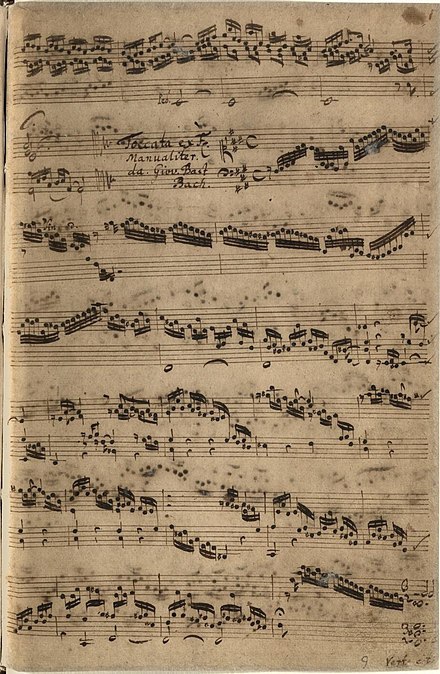
The earliest sources of the BWV 910, 911 and 916 toccatas appear in the Andreas Bach Book an important collection of keyboard and organ manuscripts of various composers compiled by Bach’s oldest brother, Johann Christoph Bach between 1707 and 1713. Giulio played the first of the seven toccatas that represent Bach’s earliest keyboard compositions known under a collective title. Toccata in F-sharp minor, BWV 910. (Toccata)
[no tempo indication]
Presto e Staccato (Fuga)
[no tempo indication]
(Fuga). The toccata is in five episodes that were played with a clarity and almost without pedal .It was like a sorbet in a great feast ,cleansing the palette of the sumptuously rich sounds before continuing this great feast.The Grandiose opening statement gradually unfolded as Bach’s knotty twine was played with great control and sense of style.
The Geistervariationen (Ghost Variations), or Theme and Variations in E flat for piano, WoO 24, composed in 1854, is the last piano work of Robert Schumann .The variations were composed in the time leading up to his admission to an asylum for the insane where he was admitted to the mental hospital in Bonn.Schumann believed that he was surrounded by spirits who played him music, both “wonderful” and “hideous”. They offered him “most magnificent revelations”, but also threatened to send him to Hell.On the 17 or 18 February 1854, Schumann wrote down a theme he said was dictated to him by voices like those of angels. He did not recognize that it was actually a theme which he had composed previously.Several days later, he wrote a set of variations on this theme. While he was still working on the composition, on 27 February he suddenly threw himself half clothed into the freezing Rhine from which he was rescued and returned home.After surviving the suicide attempt, he continued to work on it. The next day, he completed the work and sent the manuscript to his wife, Clara ,who had left him the night before, on the advice of a doctor.Due to the harrowing events of this period Clara Schumann – to whom the work is dedicated – jealously guarded the manuscripts of this piece, her husband’s last composition for piano, as if they were sacred relics, and forbade any attempt to publish them. Not until 1939 did the first edition finally appear which departs in many respects from Schumann’s manuscripts.

Theme – Leise, innig (Quiet, earnest)
Variation I
Variation II – Canonisch (Like a canon)
Variation III – Etwas belebter (Somewhat more animated)
Variation IV
Variation V The theme was played with ravishing sounds with a fluidity bathed in pedal out of which the variations evolved so naturally.Finishing with the beautiful fifth which was obviously Schumann’s glimpse of paradise.Helped by the very resonant acoustic of this rationalist hall Giulio managed to mould the variations with a sensibility and colour that created the exact atmosphere for the opening of the most beautiful of Beethoven’s last thoughts on the Sonata form .The 31st Sonata of 32 that traced his musical path from the early op 2 to the final op 111.He was to leave the Sonata form for good as he penned only trifles op 119 and 126 .But also the greatest set of variations (Diabelli op 120) after Bach’s monumental Goldberg.
It was in 1983 that I persuaded my teacher Guido Agosti to play the last two Beethoven Sonatas in a public concert in Teatro Ghione.Op.110 was recorded and it is the only recording that exists of this musical genius .A student of Busoni who had been a student of Liszt who was in turn a pupil of Czerny a pupil of Beethoven.It is one of the historic concerts in the Ghione theatre during the 80’s and 90’s that Valerio Vicari and many others have never forgotten.All those that frequented the Chigiana in Siena and heard Agosti in his studio ,where he held classes for the summer,have never forgotten the sounds that resounded in that intimate private space.As Mitsuko Uchida rightly said it is the memory of a performance that remains in the heart and soul more than any printed copy!But it is nice to know there is at least one recording of this musical genius who brought such honour to Italy
It was Beethoven’s Sonata op 110 that finished the programme with an exemplary performance of classical intelligence and measure.Beethoven’s marking were scrupulously noted and the pedal very sparing except in the two or three places were Beethoven specifically asks for long pedals of special effect.The ‘bebung’ effect of vibration which is impossible on a modern day piano but which Giulio knew the effect that Beethoven intended.The longer held pedals too were discreetly adapted to produce the effect that Beethoven was obviously intending even if he himself could only hear them in his own inner ear.A very measured Allegro molto second movement in which the treacherous trio was played with dynamic control.The final chord disappearing into the distance as the Adagio emerged from it.The fugue was played with great clarity and even a momentary lapse was professionally dealt with as Giulio built this masterpiece to its momentous conclusion.
Last but not least was the encore .A tumultuous performance of Chopin’s ‘Winter Wind’ study op 25 n.11.Played with the same fire and technical prowess as his mentor,Romanovsky,who has recently been playing all 24 Studies in his recital programmes .I am not sure it was necessary to add extra bass notes but it was the end of a long recital and think this bit of fun was well deserved for a young man who obviously loves the piano as much as his renowned mentor .

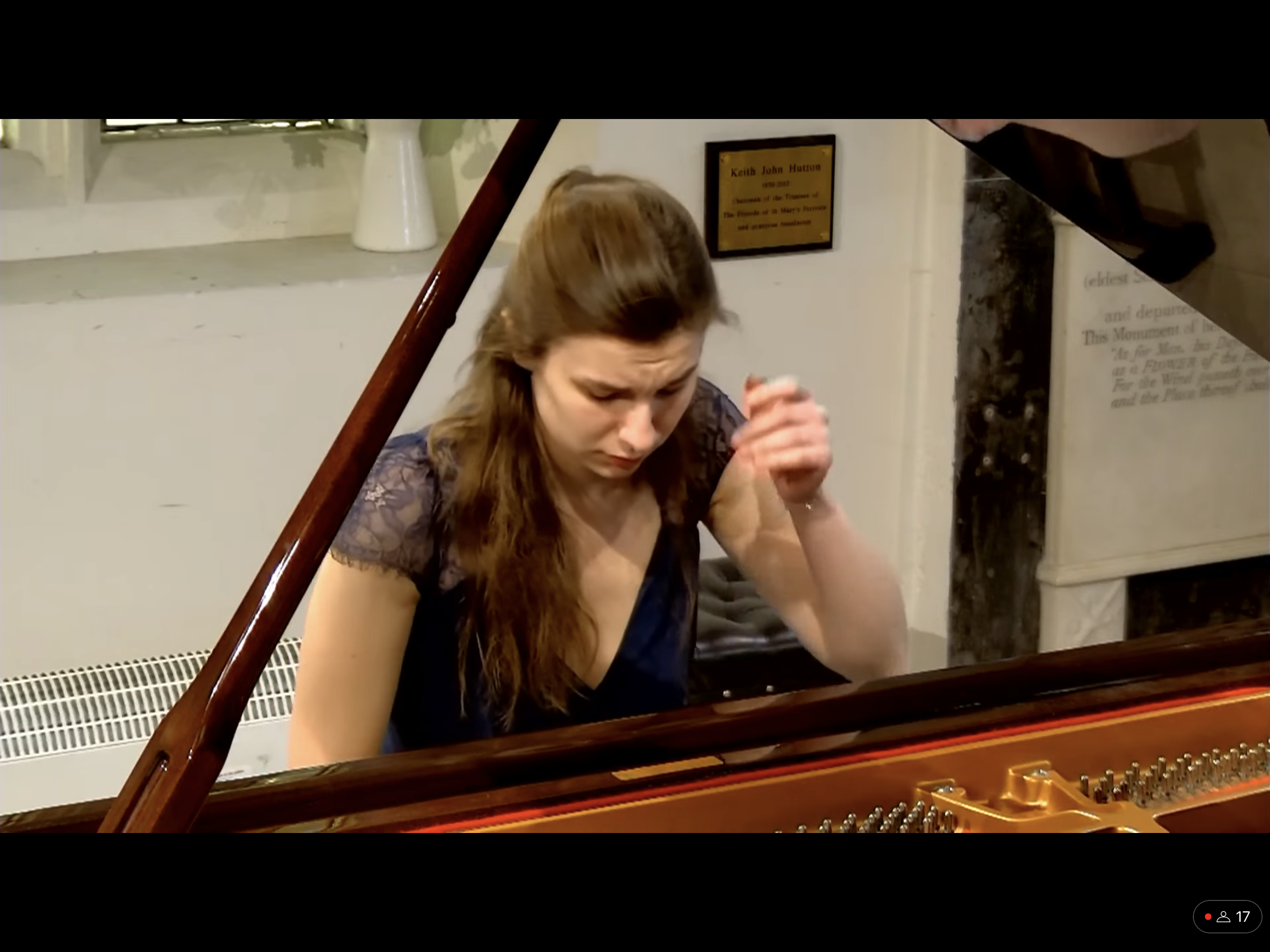
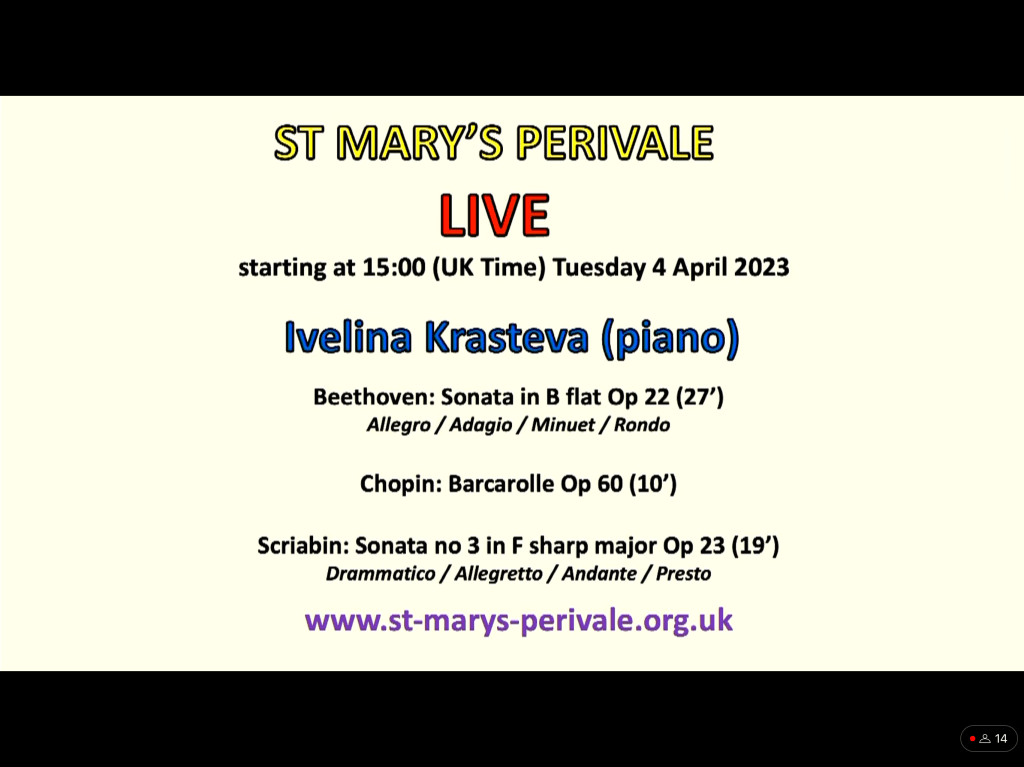
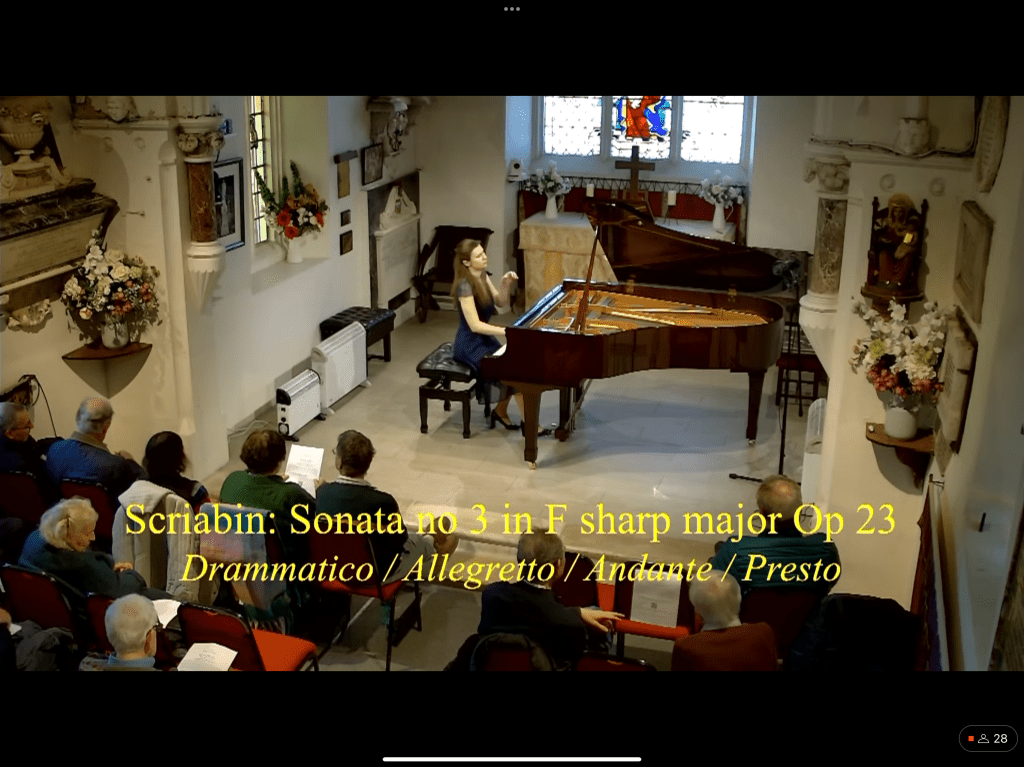
Ivelina Krasteva – A recital to cherish ‘ playing of honesty and naturalness’

Tuesday 4 April 3.00 pm 


‘Stumbled on it by chance and stayed to the end! Terrific recital, playing of great honesty and naturalness.’ Julian Jacobson

https://youtube.com/live/pg9rHpIMnxs?feature=share

Musicianly playing of great drive and assurance.The rhythmic precision and scrupulous attention to Beethoven’s indications gave great structural strength to this remarkable sonata.The beauty of the Adagio where her impeccable sense of balance allowed the melodic line to float on a gently throbbing accompaniment.The Presto had a mellifluous pastoral flow that was to be mirrored in the Sonata op 28 that was to follow just a year later.
I have written about her performance of the Beethoven Sonata just a few months ago but it has now matured and gained in weight as she allowed the music to flow through her so naturally. https://christopheraxworthymusiccommentary.com/2023/01/16/ivelina-krasteva-at-st-jamessussex-gardens-intelligence-and-mastery-at-the-service-of-music/

‘Beethoven in particular showed her great sense of architectural shape as she not only imbued each movement with subtle detail and character but managed to combine all four movements into a unified whole of great significance.
Such refined detail in the first movement ‘Allegro con brio’ where the seemingly innocent opening motif is transformed in so many genial ways ,a similar opening to his even earlier Sonata op 2 n 3.
But now Beethoven has realised the great significance of the bass as he leaves his Haydnesque early world and strikes out into unexplored territory.
A journey that will pervade his complete musical evolution (or revolution) through the thirty two sonatas that span his total existence on earth .
The final sonatas pointing already to a celestial world away from the sturm und drang of his earthly existence.
Ivelina realised this and it was the bass that she gave such weight to in the first movement.The melodic line in the development was allowed to murmur in the bass so magically where above were mere vibrations of sound.An Adagio where the bass notes were hardly audible as she stroked and caressed them providing a carpet of sound on which Beethoven’s mellifluous outpouring could unwind with such beauty and aristocratic shape.Magic sounds where the left hand that was a mere heartbeat on which ever more expressive appoggiaturas could float with poignant significance.There was purity and simplicity as Ivelina allowed this extraordinary movement to unfold with simplicity and subtle projection.
I remember being baffled by a critic writing about Richter’s performance in London on one of his first visits to the west.I did not understand at the time what he meant with ‘the Adagio was inexistant’.We had only just begun to understand the extraordinary sound world of the Russian school untainted by tradition as it was in the hands of this gigantic pianistic genius.
Ivelina too today looked afresh at a Sonata that we have lived with for a lifetime.
She imbued it with a clarity and intelligence that took us by surprise as it must have done when the ink was still fresh on the page.
There was a simple mellifluous flow to the Minuetto followed by vibrations of sound answered by the distant strains of a march.A trio played with great control as the weaving strands in the left hand were allowed to flow with ease.A Rondo of pastoral grace and charm interrupted by ever more dramatic insistent episodes of febrile energy.A fugato where the dynamic pieces were gradually calmed ,burning themselves out as they found their way back to the Rondo that was now embellished with great style and charm.’


The Barcarolle in F sharp major op.60 was composed between autumn of 1845 and summer 1846, three years before his death.It is one of the pieces where Chopin’s affinity to the bel canto operatic style is most apparent, as the double notes in the right hand along with spare arpeggiated accompaniment in the left hand explicitly imitates the style of the great arias from the bel canto operatic repertoire. The writing for the right hand becomes increasingly florid as multiple lines spin filigree and ornamentation around each other.
This is one of Chopin’s last major compositions, along with his Polonaise – Fantasie op 61.


Her performance of the Barcarolle was new to me and the great song that flowed from Chopin’s soul towards the end of his life found an ideal interpreter where everything she played sang with such luminosity and beauty.The gentle flow created at the opening continued undisturbed with an ever more intense melodic line.It dissolved into the pure magic of the central expansive embellishment of bel canto.It was obviously a glimpse of the paradise that was to await the already tragically weakened composer after his desperate and exasperating visit to Majorca with his companion Georges Sand.The build up to the final exultation was played with aristocratic authority always singing as it built to a passionate climax only to die away to whispered murmurings with a gentle melody just hinted at in the tenor register,that was to be so admired by Ravel ,before the final four strokes of adieux.

The Sonata No 3, Op 23 (1897/8), was finished in the summer of 1898 on a country estate at Maidanovov, shortly before the beginning of Scriabin’s few years as piano professor at the Moscow Conservatoire. Teaching was by no means the central passion his existence: a later appointment at the St Catherine’s Institute for girls ended in scandal with the seduction of a teenage pupil!Scriabin took up the Conservatoire appointment as a means towards financial security in his newly married status.Pupils’ awareness of sound quality was constantly challenged: ‘This chord should sound like a joyous cry of victory, not a wardrobe toppling over!’
The Third Sonata is a large-scale, four-movement work. Within three years Scriabin was to complete his first two symphonies, and this Sonata is symphonic in its polyphony, long-sighted formal construction and thematic development, breadth of phrase and heroic, epic manner.

Several years later a ‘programme’ was issued that some have suggested that the writer was not Scriabin but his second wife, Tatyana Schloezer:

States of Being
a) The free, untamed soul passionately throws itself into pain and struggle
b) The soul has found some kind of momentary, illusory peace; tired of suffering, it wishes to forget, to sing and blossom—despite everything. But the light rhythm and fragrant harmonies are but a veil, through which the uneasy, wounded soul shimmers
c) The soul floats on a sea of gentle emotion and melancholy: love, sorrow, indefinite wishes, indefinable thoughts of fragile, vague allure
d) In the uproar of the unfettered elements the soul struggles as if intoxicated. From the depths of Existence arises the mighty voice of the demigod, whose song of victory echoes triumphantly! But, too weak as yet, it fails, before reaching the summit, into the abyss of nothingness.

The thematic structure of the Third Sonata is particularly closely bound together, both in the relation of themes from all four movements to one another and in their ‘cyclic’ treatment, which harks back to Liszt and César Franck.


I remember well Ivelina’s performance of the Fantasie by Scriabin :
https://christopheraxworthymusiccommentary.com/2022/05/30/ivelina-krasteva-for-the-keyboard-trust-simplicity-and-beauty-of-a-thinking-artist/ It was the same architectural shape that she brought to his third Sonata.
Passion and drama allied to a beauty of sound and a sense of line that held the sonata together as the menacing opening motif returns toward the end to give great coherence to the form of a Sonata that is gradually leading to the vision of the ‘star’ that is to be the guiding light for his life and the later prophetic ninth and tenth Sonatas.
Some remarkable performances of three great works played with authority,consummate musicianship and poetic vision.

Bulgarian born classical pianist Ivelina Krasteva is an internationally active solo and chamber musician. Currently based in London, she splits her time between performing, teaching and pursuing a masters degree at the Guildhall School of Music and Drama, under the tutelage of Ronan O’Hora and Katya Apekisheva. In addition to her studies, she has benefitted from playing in masterclasses led by internationally acclaimed musicians, such as Richard Goode, Imogen Cooper, Jonathan Biss, Itamar Golan, Boris Petrushansky, among others. Ivelina has won prizes in international competitions and has performed in venues across Bulgaria, Turkey, Austria, Romania, Italy and the UK. Highlights include performances of Ravel’s Concerto in G with the Worthing Philharmonic Orchestra, Prokofiev’s First Piano Concerto with the Plovdiv Philharmonic Orchestra and Mozart’s 24 th Piano Concerto with the Vratsa State Orchestra, Bulgaria. She is passionate about the standard piano repertoire as well as exploring contemporary music, working with composers and performing works by female composers. Throughout her education, she has been supported with scholarships from the Bulgarian Ministry of Culture, Prof. Lyuba Encheva Foundation, Henry Wood Accommodation Trust, The Worshipful Company of Pewterers and the Guildhall School of Music and Drama.

https://christopheraxworthymusiccommentary.com/2021/04/26/ivelina-krasteva-beauty-and-simplicity-at-st-marys-all-the-worlds-a-stage/

Roger Nellist our genial host today at St Mary’s .He is usually hidden away in the recording booth but today was substituting Dr Hugh Mather in his welcome for today’s world wide audience.

Sokolov casts his spell over the Eternal City

A star was shining brightly tonight over the Parco della Musica in Rome

Sokolov even when the programme announces Purcell and Mozart is an event to cherish.
Who would have thought that anyone could hold an audience in their hand for an entire first half of Purcell on the piano and lasting over forty minutes!?


The beauty of sound and the architectural control are of a truly great artist where every note has a meaning in a chain of sounds that is a living musical conversation.We were treated to a conversation in music of such character and elegance and of course the Sokolov ornaments and trills are something of a legend.That anyone can play them like springs unwinding but with such variety of colour is quite phenomenal but even more so when on a magnificent Fabbrini Steinway D as we witnessed tonight.Sokolov made us believe that this music was infact written for the modern day piano.
Three suites,two of which finishing in a sarabande allowed him to find the necessary variety by inserting ‘A New Irish Tune’ and the ‘Round O’ in D minor (best known as the theme of Britten’s Young Persons Guide to the orchestra).
A noble ground in Gamut opened the concert in great style and Sokolov chose a Chacone in G minor to close this first half.
I think this was the first time I have ever sat through forty minutes of Purcell on the piano but I would gladly have listened to an entire concert of it from the inspired hands and mind of one of the great interpreters of our age.


But there was Mozart in the second half of the programme……
There was such velvet beauty to the sound that I wonder if that master magician,Fabbrini,had done some special work on the piano today.Maybe it was tuned lower than is the norm these days as Curzon was used to do,insisting on having a richer warmer less brilliant sound.
It seemed as though there was a limit to the range of sound – a sort of ‘baroque barrier’ that allowed Sokolov to contain his architecture within the walls of the temple of yore.
Maybe it was just the mastery of Sokolov which has never been in doubt with whatever he sets his sights on year after year …………Mozart and six encores I will describe later …….perchance to dream…..

And dream we certainly did.Who could ever forget the sumptuous luxury of Brahms B flat minor intermezzo?A creamy rich sound and another world from that which we had been treated to in the programme so far.Rich sounds in which the musical line was tender but never sentimental and shone like jewels above an accompaniment that was miraculously fluid.The chorale like contrasting episode was played with the sumptuous rich sound of Philadelphian proportions which had a string quartet quality such was the richness of sound.An overwhelming climax -the first of the evening- dying away into the stratosphere of a world to which only Sokolov seems to have the key.A final note that shone brightly in the distance like a star.


And stars there were too in delicate Chopin Mazurkas that alternated with unusually deliberate performances of Rachmaninov.
The great B flat Prelude op 23 n 2 that rather than the usual scramble was played with aristocratic control.The duet between the tenor and soprano voices in the central episode I have never heard so clearly played as the ‘Hollywoodian’ sounds were cleansed of any unnecessary sonorities and given it’s own aristocratic imploring importance.
The build up to the final great climax I have never heard played with the phrasing that the composer himself indicates but so rarely is ever heard in the more usual scramble to the finish.The ravishing beauty of the D major Prelude op 23 n 4 was indeed the thing that dreams are made of.A gentle almost inaudible undulating bass on which the melodic line seemed to float on thin air.The embellishments etched out with crystalline purity but never interfering with the imploring beauty of the melodic line.A transcendental control with a kaleidoscopic sense of colour that had something of truly miraculous.But then this is why we all flock to hear Sokolov year after year as only he can cast a magic spell on everything he touches.


Of course the Prelude in B minor by Bach transcribed (or even composed !?) by Rachmaninov’s teacher,Siloti,was the final gift to us this year from a unique master magician.

His austere appearance shields a heart of gold that is released the moment his hands caress the keys.


What can one say of his Mozart?It was restored to its simple greatness.Not a note out of place as an operatic performance was played out with the style and control of the genius that Mozart is.A spell was cast from the very first notes and the story that was being played out was of a clarity and sumptuous beauty but all within ‘the baroque boundaries ‘ that had been set even before Sokolov stepped on stage.No one dared interrupt this continuous mellifluous flow as the childlike charm of the Allegretto grazioso built to its final gloriously contained climax only to dissolve into one of Mozart’s most profound utterings.The Adagio in B minor.
It had two thousand people living and breathing with Sokolov as Mozart himself was allowed to speak, miraculously reborn from the hands of this gentle giant.

The Lady in the Van ……….rings a bell so long as you don’t awaken her dog https://youtube.com/watch?v=OA8tMziteZM&feature=share

https://christopheraxworthymusiccommentary.wordpress.com/2020/02/17/sokolov-in-todi-the-greatest-pianist-alive-or-dead/

https://christopheraxworthymusiccommentary.com/2018/03/15/the-sublime-perfection-of-sokolov/

Damir Durmanovic in Cyprus

Damir is a great pianist, but also an exceptional musician. He demonstrated excellent professionalism and commendable decisiveness in his collaboration with Guido. Naturally, Guido garnered more attention during the publicity phase owing to his recent win at Kreisler, but by the end of the concert, Damir captured equal attention. Notably, both artists played the entire recital by heart (a rarity for pianists in chamber music), and the chemistry between the two was exceptional, it was hard to believe they only had one day to rehearse. Damir’s virtuosity shined through at all times, without sacrificing the collaborative aspect of the performance, and in his solo he received a storm of applause from the audience. He is indeed a special pianist, I dare to say one of the best you’ve suggested, and we would love to host him again in the future, either in solo recital or in chamber music. 

Once again, we extend our appreciation to the Keyboard Charitable Trust for their collaboration and to you, Sarah, for your invaluable assistance throughout.Warmest wishes,Yvonne Yvonne Georgiadou

🔸 “Last night was an unforgettable magic!” a member of the audience exclaimed, and we couldn’t agree more. The recital featuring the phenomenal violinist Guido Felipe Sant Anna and the terrific pianist Damir Durmanovic was nothing short of FASCINATING. The two musicians, who had only met a couple of days before, performed a highly-virtuosic programme entirely from memory, demonstrating perfect coherence between them and unmatched artistry. Their performance left us spellbound, and we are confident that both of these exceptional young musicians (17 and 24 years of age respectively) are destined for glorious careers. Don’t just take our word for it though – check out this short excerpt from their performance last night! Thank you all for being there, and thanks to The Keyboard Charitable Trust for their support.

Violin & Piano Recital: GUIDO SANT’ANNA violin & DAMIR DURMANOVIC piano

Good morning dear Chris. Damir is very special, we should not let him go wasted.
Damir told me he lives in your house, and we had a laugh, because I did not know you were giving shelter to all these musicians, it felt like ‘Chris is hiding all these fugitives in his house’. You are so kind dear Chris, nurturing and supporting true talents.😉 He is brilliant!

https://christopheraxworthymusiccommentary.com/2022/06/29/damir-durmanovic-at-st-marys-stars-shining-brightly-in-perivale-today/

https://christopheraxworthymusiccommentary.com/2021/06/16/damir-durmanovic-a-musical-genius-at-work/

https://christopheraxworthymusiccommentary.com/2022/04/18/damir-duramovic-at-cranleigh-arts-a-musician-speaks-with-simplicity-and-poetry/

https://christopheraxworthymusiccommentary.com/2022/09/07/the-adamas-ensemble-at-st-jamess-piccadilly-wu-lin-durmanovic-trio/

https://christopheraxworthymusiccommentary.com/2023/02/19/carnaval-jest-in-twickenham-a-sumptuous-feast-of-music-mozart-and-faure-quartets-akiko-ono-anna-dunne-sequi-nina-kiva-damir-durmanovic/

https://christopheraxworthymusiccommentary.com/2022/11/18/can-arisoy-elfida-su-turan-damir-durmanovic-at-st-jamess-talent-unlimited-presents-music-making-at-its-most-refined/

https://christopheraxworthymusiccommentary.com/2022/03/29/brazil-200-and-keyboard-trust-30-a-collaboration-born-on-wings-of-brazilian-song/

Clara,Robert & Co with Alessandra Pompili in Velletri for Giancarlo Tammaro :”Il ‘Suono di Liszt “ Concert Series

A fascinating concert in the series in Velletri on Ing Tammaro’s 1879 Erard .Alessandra Pompili a voice from the past for me as I remembered her performance as a teenager at the Ghione Theatre in our young artist’s series .Her mother was in administration and knew Electra Moro.We were fortunate to have la ‘Signora Moro’ as administrator as she had formerly been the administrator of the Teatro degli Arti under the historic theatrical impresario Tolomei.Alessandra’s mother had spoken about her talented daughter,a student of Marcella Crudeli and Sergio Calligaris and so we were delighted to allow her to be heard in Rome in our concert series. https://christopheraxworthymusiccommentary.com/2021/07/31/sorrento-crowns-marcella-crudeli-a-lifetime-in-music/

Clara Wieck Schumann was very much in evidence in Alessandra’s programme.Starting with works written later in life during her years married to Robert Schumann.
She was finally united in marriage with Robert in 1840 and this beautiful Larghetto was written in 1845. It was played with mellifluous beauty and delicacy and is a Nocturne of exquisite beauty and simplicity.Including also an early work from before her marriage written in 1835/6 :’Danza delle streghe’ from four characteristic pieces op 5.A work of great effect that she would have used in her recitals as a child prodigy.Alessandra’s ten year old daughter on listening to her mother practice this piece was sure that she was playing wrong notes but this is all part of the salon type character of the work that Alessandra played with great relish!
A curiosity was the Variations on a Theme of Robert Schumann op 20 .A work from around 1854 and one of the few of her own compositions that she would love to play in her recitals.It is based on the theme from Schumann’s ‘Bunte Blatter’ op 99 n 4.
It was dedicated to her husband and was one of the very few compositions that she wrote before Robert was committed to an asylum where he died .Leaving Clara to bring up alone their eight children when in order survive financially she had to maintain her concert activity to the exclusion of composition.
Robert Schumann suffered from a mental disorder that first was manifested in 1833 as severe depression recurring several times alternating with phases of “exaltation” and increasingly also delusional ideas of being poisoned .After a suicide attempt in 1854, Schumann was admitted at his own request to a mental asylum in Endenich (now Bonn ).Diagnosed with psychotic melancholia he died of pneumonia two years later at the age of 46, without recovering from his mental illness.
The Variations on a theme of Schumann op 20 were dedicated to her already sick husband and were completed just in time for his 43 birthday with a dedication :’For my dear husband a renewed and weak attempt to compose from your dear old Clara ‘.It was infact completed just in time as in 1854 Robert attempted suicide and was admitted to an asylum.
The theme is from Robert’s own ‘Bunte Blatter’ and it is the same theme that Brahms ,a close family friend ,was to use for his own Variations on a Theme of Schumann op 9.Seven variations from Clara where Brahms had written sixteen that he had dedicated to Clara.
There was a great fluidity to Clara’s variations which suited the sweet sound of this Erard piano of 1879.There was the chordal simplicity of the second alternating with the slow harmonically varied third.Alessandra found sumptuous beauty in the fourth with the theme in the tenor register surrounded by embellishments played so delicately.There was great drama in the octave variation with the pompous chordal declamation of the theme.It dissolved so beautifully into the delicately shadowed mellifluous theme.A delicate ending of arpeggiando chords was spread over the keyboard with great delicacy.
It was fascinating to hear this rarely performed work especially from the delicate hands of Alessandra with the sweet tone of this Erard piano.
It might have been very similar to the one the greatest woman virtuoso of her day would have beguiled her audiences with in a intimate conversation with her beloved but prematurely departed Robert.Alessandra write :’ apparently Brahms studied Clara’s unpublished score and on his own manuscript he wrote, “Little variations on a theme by him dedicated to her”.
Yesterday I also tried to explain another little curiosity of the composition: in the last variation she quoted – in an inner voice – a theme from her Romance variee. On that work Robert based his own Impromptu on a romance by Clara Wieck. Fabulous connections!’
The rest of the programme was made up of Robert Schumann ,Brahms,Mendelssohn and Chopin.A noble Brahms Rhapsody op 79 n.2 was played with the passion that Brahms had asked for,but also with the delicacy and calm of the central episode.As Alessandra explained Brahms had changed his indications several times as he obviously wanted the work to be played with passion but with orchestral sounds rather than pianistic virtuosity.It was exactly this that Alessandra managed to portray with her aristocratic sense of tempo.Alessandra had added a ‘Sorbet’ of Mendelssohn between the passionate outpourings of Schumann’s own ‘In der Nacht’ and ‘Aufschwung’.Both were played with dynamic rhythmic energy but allowing the beautiful mellifluous contrasting episodes the time needed to relax before entering the fury of Robert’s passionate ‘Florestan’ temperament.It was the beautiful Mendelssohn Barcarolle op 30 that created the calm of the lapping Venetian waters that Robert Schumann had so admired as such a gift from a noble spirit.
Chopin’s beautifully gentle Ballade n. 3 op 47 closed her programme .It was played with searching beauty obviously influenced by Chopin’s own reference to the water maiden Ondine inspired by the poetry of Mickiewicz.
Choosing very slow tempi that allowed the music to unfold so naturally on this gentlest of instruments.
A fascinating encore that paid homage to Mozart who had stayed overnight in Velletri in 1770.
Passing from Rome to Naples he and his father had stopped over on the 9th May during the four day journey.No one is sure where but their presence is obviously an historically important one.Mozart had come from Rome where he had heard a performance of the Miserere by Allegri in the Sistine Chapel stored held in the secret library of the Vatican.The prodigy Mozart after listening to it twice was able to write it down note perfect!
It was this together with the Ave Verum Corpus by Mozart that Liszt had incorporated in a work that Alessandra now offered as an encore.The last part of the ‘Évocation à la Chapelle Sixtine, S658’ by Liszt .A fascinating finish to a stimulating recital of informed beauty.
A history lesson to cherish indeed !
‘A great insight into the Schumanns can be found in the memoirs of one of their children, Eugenie. It is a bit of a disjointed reading, but revelatory of the inner dynamics within the family. It seems I cannot sit down and learn a piece without doing some research, it is the historian in me!’
Composed around 1638, Allegri’s setting of the Miserere was amongst the ‘falsobordone’ settings used by the choir of the Sistine Chapel during Holy Week liturgy, a practice dating to at least 1514.From the same supposed secrecy stems a popular story, backed by a letter written by Leopold Mozart to his wife on April 14 1770, that at fourteen years of age, while visiting Rome,his son Wolfgang Amadeus first heard the piece during the Wednesday service, and later that day, wrote it down entirely from memory.

Évocation à la Chapelle Sixtine, S658 by Liszt
The music falls into four sections which metamorphose alternately the Miserere of Allegri and the motet Ave verum corpus by Mozart, both of which were in the repertoire of the Sistine Chapel Choir. The first and third sections, taking merely the essence of the Allegri, work it up into ever more tortured and searing climaxes and represent, in the composer’s words, ‘the misery and anguish of mankind’. This is contrasted with the second and fourth sections where, through the medium of Mozart’s exquisite motet ‘the infinite mercy and grace of God’ reveals itself in song.

Euromusica created in 1982 the year we opened the theatre with the idea of giving a platform to all the young and distinguished old artists who were excluded from Rome for lack of venues suitable for concerts.The 80’s and 90’’s were golden years for music at the Ghione Theatre before the opening of the three wonderful new halls of Renzo Piano at the Parco della Musica.Unique halls for music that had been missing for too long from the Eternal City.

Alessandra is now a distinguished artist with a family in Manchester and added to her concert activity is her dedication to humanitarian causes and for music in hospitals.An activity that together with the American pianist and philanthropist Martin Berkovsky has raised millions of dollars for good causes.

Ing Tammaro thanking Alessandra for returning to play for him after many years absence.She now resides with her husband and daughter in Hayle,Manchester
Portrait by Franz von Lenbach, 1838
Born
Clara Josephine Wieck

13 September 1819
Leipzig
Died
20 May 1896 (aged 76)
Frankfurt
Occupation
Pianist
Composer
Piano teacher
Organization
Dr Hoch’s Konservatorium
Spouse
Robert Schumann


(m. 1840; died 1856)
Children
8, including Eugenie
Parents
Friedrich Wieck (father)
Mariane Bargiel (mother)

Clara Wieck was an accomplished concert pianist, trained by her father Friedrich Wieck.She was already making international tours at age eleven and composed piano pieces for her recitals.Regarded as one of the most distinguished pianists of the Romantic era, she exerted her influence over the course of a 61-year concert career, changing the format and repertoire of the piano recital by lessening the importance of purely virtuosic works She started receiving basic piano instruction from her mother at the age of four but after her mother moved out, she began taking daily one-hour lessons from her father. They included subjects such as piano, violin, singing, theory, harmony, composition, and counterpoint.She then had to practice for two hours every day. Her father followed the methods in his own book, Wiecks pianistische Erziehung zum schönen Anschlag und zum singenden Ton (“Wieck’s Piano Education for a Delicate Touch and a Singing Sound.”)Clara Wieck made her official debut on 28 October 1828 at the Gewandhaus in Leipzig, aged nine.The same year, she performed at the Leipzig home of Ernst Carus, director of the mental hospital at Colditz Castle.There, she met another gifted young pianist who had been invited to the musical evening, Robert Schumann , who was nine years older. Schumann admired Clara’s playing so much that he asked permission from his mother to stop studying law, which had never interested him much, and take music lessons with Clara’s father. While taking lessons, he rented a room in the Wieck household and stayed about a year.From December 1837 to April 1838, at the age of 18, Wieck performed a series of recitals in Vienna She performed to sell-out crowds to great critical acclaim; Chopin described her playing to Franz Liszt and a music critic, describing her Vienna recitals, said: “The appearance of this artist can be regarded as epoch-making… In her creative hands, the most ordinary passage, the most routine motive acquires a significant meaning, a colour, which only those with the most consummate artistry can give.” Clara Schumann first toured England in April 1856, while her husband was still living but unable to travel. She was invited to play in a London Philharmonic Society concert by conductor William Sterndale Bennett, a good friend of Robert’s to whom he had dedicated the Etudes Symphoniques op 13.In May 1856, she played Schumann’s Piano Concerto with the New Philharmonic Society conducted by Dr Wylde, who as she said had “led a dreadful rehearsal” and “could not grasp the rhythm of the last movement”.Still, she returned to London the following year and continued to perform in Britain for the next 15 years.It was in January 1833, at age 13, she began composing a Piano Concerto in , completing it in November a single-movement Konzertsatz that she orchestrated herself. In February 1834, her future husband Robert revised the orchestration,and the 14-year-old prodigy then performed it in several concerts.She then expanded the work by adding two more movements, using the Konzertsatz as the finale. The new first movement was completed in June 1834, and the slow second movement “Romance” with its extended cello solo was finished the following year. She again orchestrated the work herself, including undoing Robert’s revisions of the original Konzertsatz, completing her new three-movement Piano Concerto on 1 September 1835, twelve days before her 16th birthday.Clara premiered the full concerto on 9 November 1835 as soloist with the Leipzig Gewandhaus Orchestra, conducted by Mendelssohn
Robert and Clara Schumann’s children (photo taken in 1853 or 1854); from left to right: Ludwig, Marie, Felix, Elise, Ferdinand and Eugenie

Her life was punctuated by tragedy Not only did her husband predecease her, but so did four of their children.Their first son, Emil, died in 1847, aged only 1.Their daughter Julie died in 1872, leaving two small children aged only 2 and 7, then raised by their grandmother.In 1879, their son Felix died aged 24.In 1891, their son Ferdinand died at the age of 41, leaving his children to her care.In 1878, she was appointed the first piano teacher of the new Dr Hoch’s Knservatorium in Frankfurt.Among her 68 known students who made a musical career were Natalia Janotha,Fanny Davies,Nanette Falk,Amina Goodwin,Carl Friedberg,Leonard Borwick,Ilona Eibenschutz,Adelina de Lara,Marie Olson and Mary Wurm .She played her last public concert in Frankfurt on 12 March 1891. The last work she played was Brahms’s Haydn Variations , in a version for two pianos, with James Kwast.

Clara and Robert Schumann had eight children:

  • Marie (1841–1929)
  • Elise (1843–1928)
  • Julie (1845–1872)
  • Emil (1846–1847)
  • Ludwig (1848–1899)
  • Ferdinand (1849–1891)
  • Eugenie (1851–1938)
  • Felix (1854–1879).
Alessandra with the superb piano technician
With Linda Giorgi Alberti from Manchester to nearby Frascati where she lives.Alessandra from Velletri to Manchester where she now lives.Small world on the Hills around Rome.

https://christopheraxworthymusiccommentary.com/2023/02/24/michelle-candotti-a-lioness-let-loose-in-velletri-ignites-liszts-piano/

https://christopheraxworthymusiccommentary.com/2023/03/06/filippo-tenisci-exults-the-genius-of-wagner-and-liszt-in-velletri/

https://christopheraxworthymusiccommentary.com/2022/05/29/axel-trolese-illuminates-liszts-erard-with-supreme-artistry-and-passion-in-velletris-convento-del-carmine/