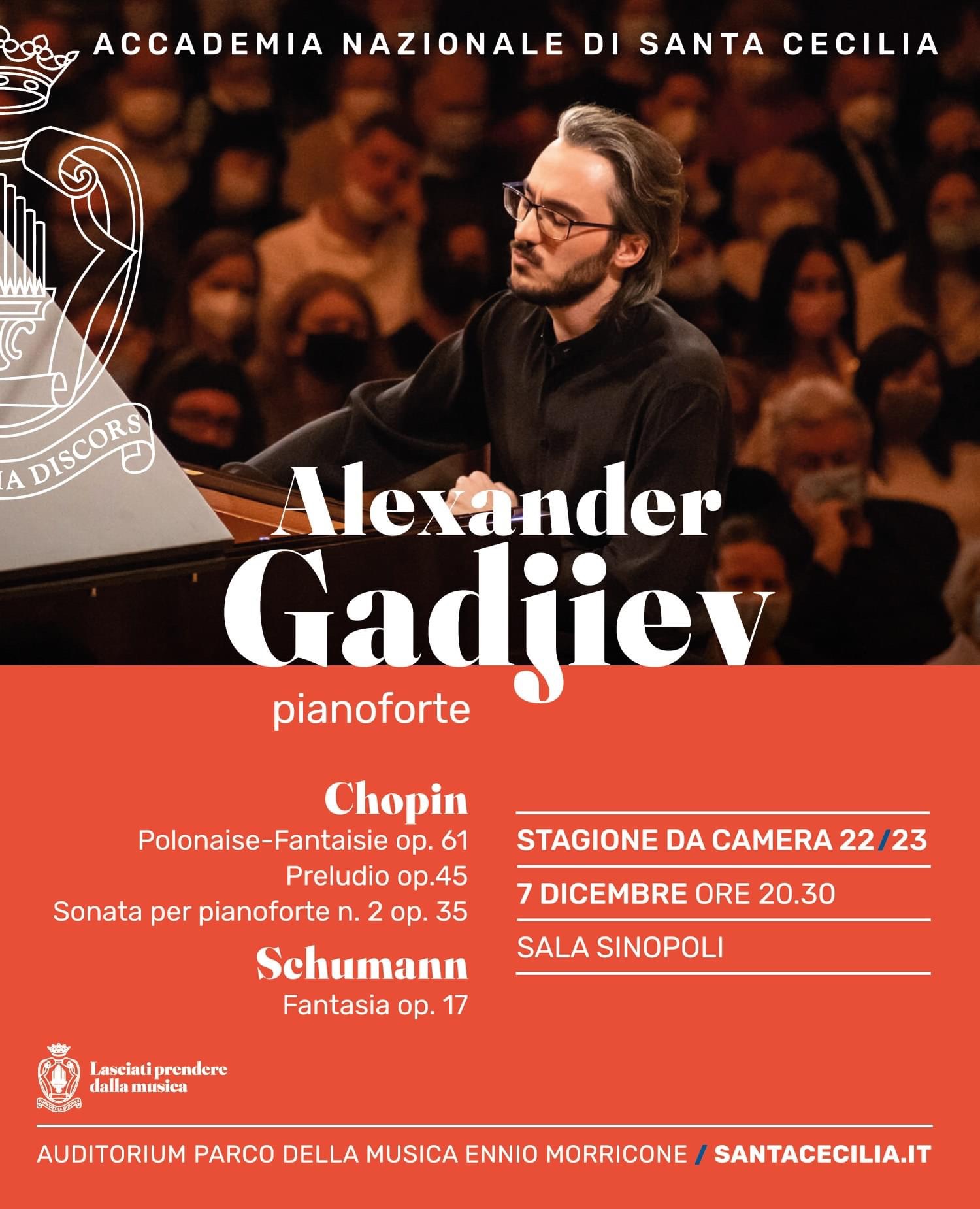
Alexander Gadjiev penetrates the soul of Chopin and Schumann and enraptures the Eternal City

A mysterious voice over the intercome was intent on creating the right atmosphere for the ritual that was about to unfold.
Imploring us to savour two minutes of absolute silence,in complete darkness,in preparation for the sounds we were about to receive -sounds were born before words we were told !


And out of the darkness a silhouette appeared as a shadow slowly advancing onto the stage and sitting at the piano as the light gently appeared.
The show was about to begin with the sounds of the poetically imperious chords of Chopin’s Polonaise Fantasy
This was just the introduction to Alexander Gadjiev’s rapturously received Rome debut for the Accademia di Santa Cecilia.
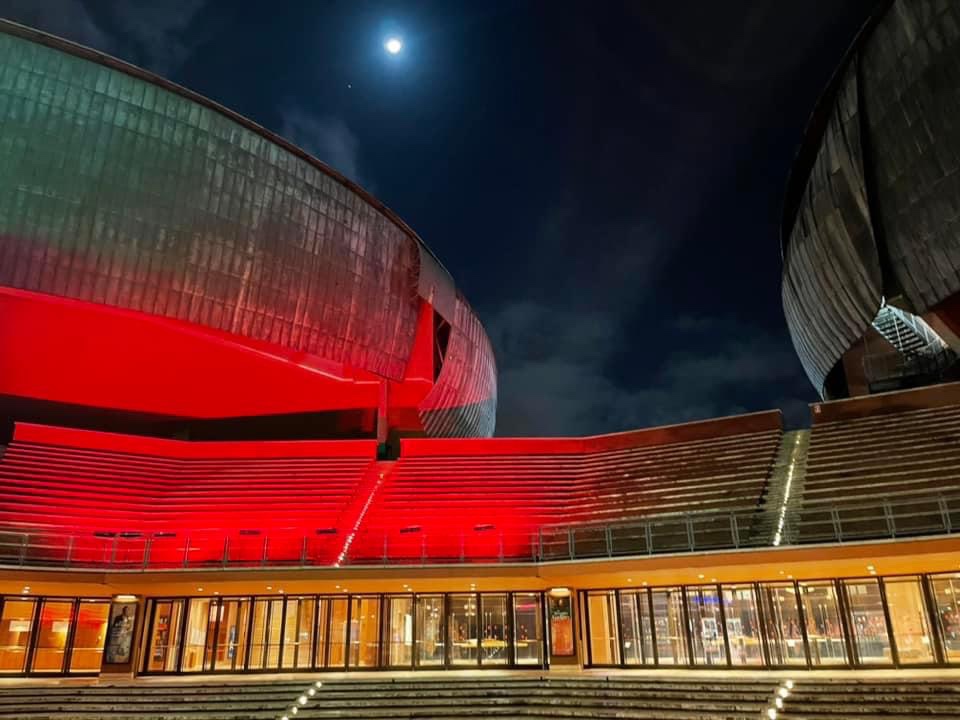

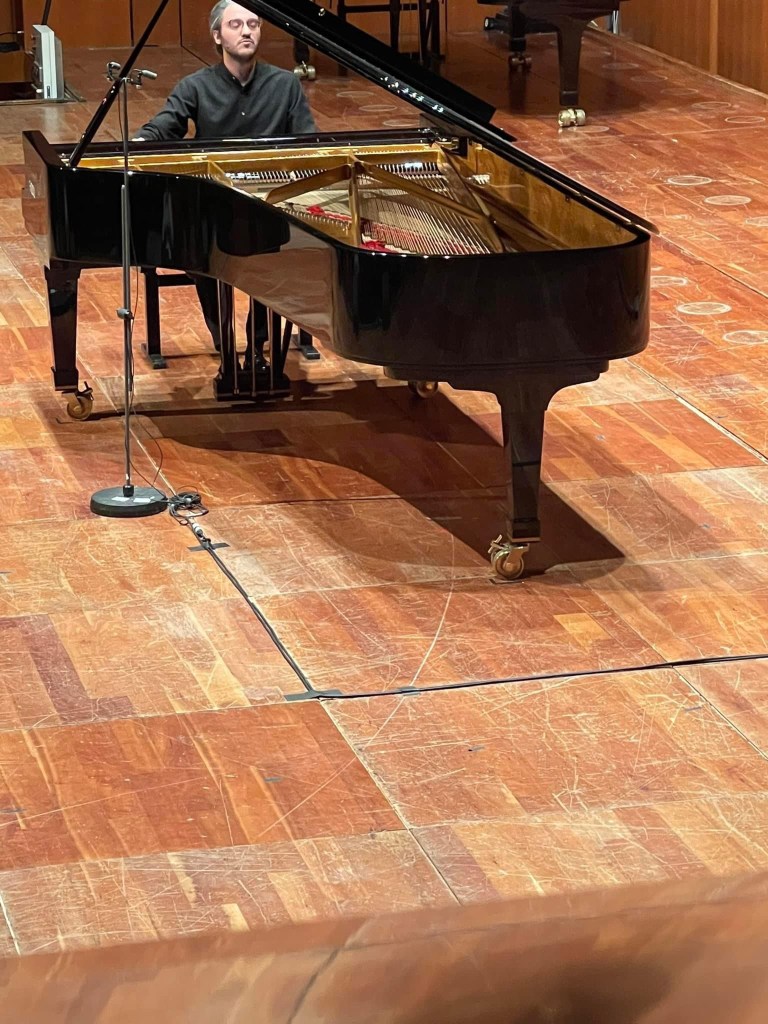
An interval where there was just time to swop over pianos -Fazioli for Chopin but Steinway for Schumann !
This for Alex was an adventure that he wanted us to share and be part of.

Alex’s companions on his voyage of discovery – two magnificent instruments Fazioli and Steinway with two different characters.
It was his mentor at la Chapelle : Louis Lortie who had written in the programme at the Wigmore hall in London that whereas Fazioli had the luminosity that is perfect for Chopin .Steinway and Bosendorfer have the rich darkness of the German classics.


His almost improvised freedom was allied to a search for sound and the inspiration that had ignited Chopin and Schumann in their moments of creation.
There were moments of ravishing sounds and washes of colour -has Chopin’s ‘wind over the graves’ ever sounded so impressionistic and terrifying?
Schumann’s youthful passion for Clara unbridled a red hot ‘ruin’ where the right hand was called into play to strike fear into Clara’s fathers refusal to acknowledge true love -a love that was to produce eight children!

But it was the solitary Prelude op 45 by Chopin that showed the true artistry of this young top prize winner at the last Chopin competition .
Sounds that spread like a flow of lava over the entire keyboard.Full of shifting harmonies but allowing a deeply expressive melodic line to unravel with sumptuous ease.
Alex had penetrated the soul of an audience who clammered for more after he had revealed the secret message that Schumann had woven into his greatest masterpiece.A message for his ‘distant beloved’ that Alex had so passionately portrayed.


Five encores and wanting more shows how successful Alex was in demonstrating that music can and must speak louder than words.
Could that voice in the darkness have been this poet of the keyboard that had so enraptured his fellow travellers tonight in the Eternal City?

The red hot passion of the Schumann Fantasie.Written as an outpouring of love for his future wife Clara Wieck .Alex plunged in with a passion and savage rhythmic intensity that was quite overwhelming .The burning passion and unrelentless forward movement found momentary respite in the ‘Im legendenton’ played with such a mellifluous freedom that the bar lines ceased to exist as it built in tension to the true climax of this movement. The right hand once again found itself in foreign territory as it added to the enormous sonority being created.Schumann’s quote from Beethoven’s ‘An die ferne Geliebte ’ was played with great liberty and I wonder if Alex knows something more than is just printed in the score as the movement moved to it’s magical conclusion
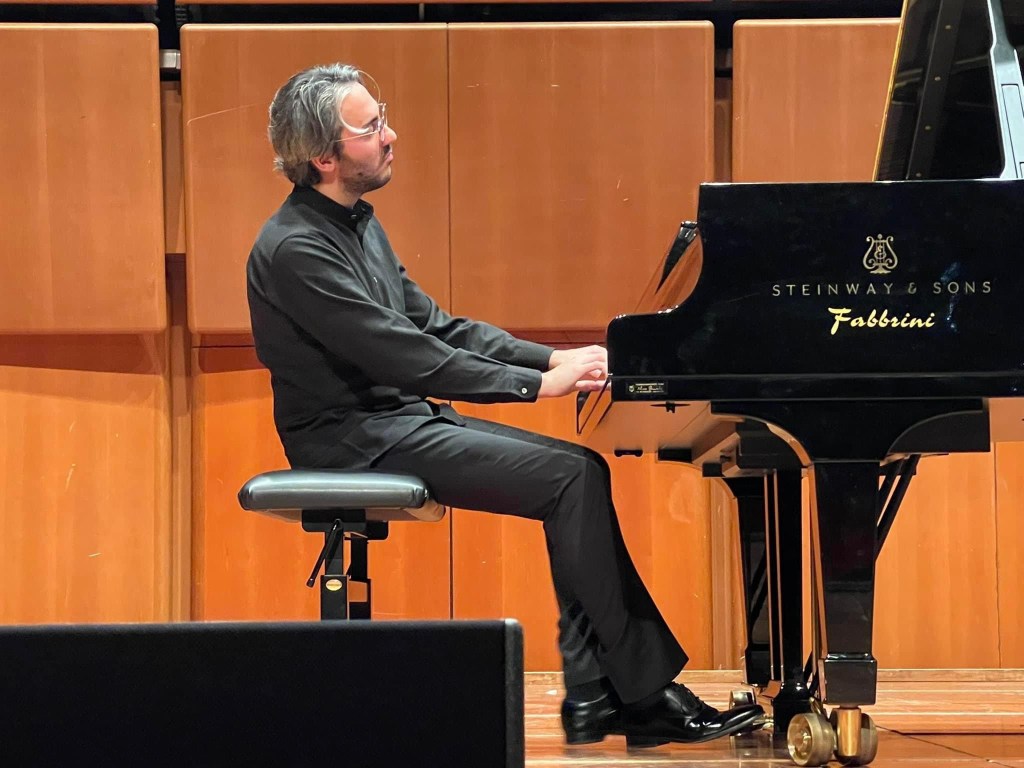
The original title of Schumann’s work was “Obolen auf Beethovens Monument: Ruinen, Trophaen, Palmen, Grosse Sonate f.d. Piano f. Für Beethovens Denkmal”. The movements’ subtitles (Ruins, Trophies, Palms) became Ruins, Triumphal Arch, and Constellation, and were then removed altogether before Breitkopf & Härtel eventually issued the Fantasie in May 1839.Dedicated to Franz Liszt , who replied in a letter dated June 5, 1839: “The Fantaisie dedicated to me is a work of the highest kind – and I am really proud of the honour you have done me in dedicating to me so grand a composition” Liszt in return dedicated his B minor Sonata to Schumann – two pinnacles of the Romantic piano repertoire .The piece has its origin in early 1836, when Schumann composed a piece entitled Ruines expressing his distress at being parted from his beloved Clara Wieck (later to become his wife). This later became the first movement of the Fantasy adding later that year two more movements to create a work intended as a contribution to the appeal for funds to erect a monument to Beethoven in his birthplace of Bonn.So it was hardly surprising the imperious opening of Alex’s second movement – Triumphal Arch indeed .Although written mezzo forte in the score it was of truly orchestral proportions building unbelievably in sonority each time it reappeared.The beauty of the ‘etwas langsamer’came as a true relief from the relentless rhythmic drive and enormous sounds that Alex coaxed out of this beautiful Steinway piano.
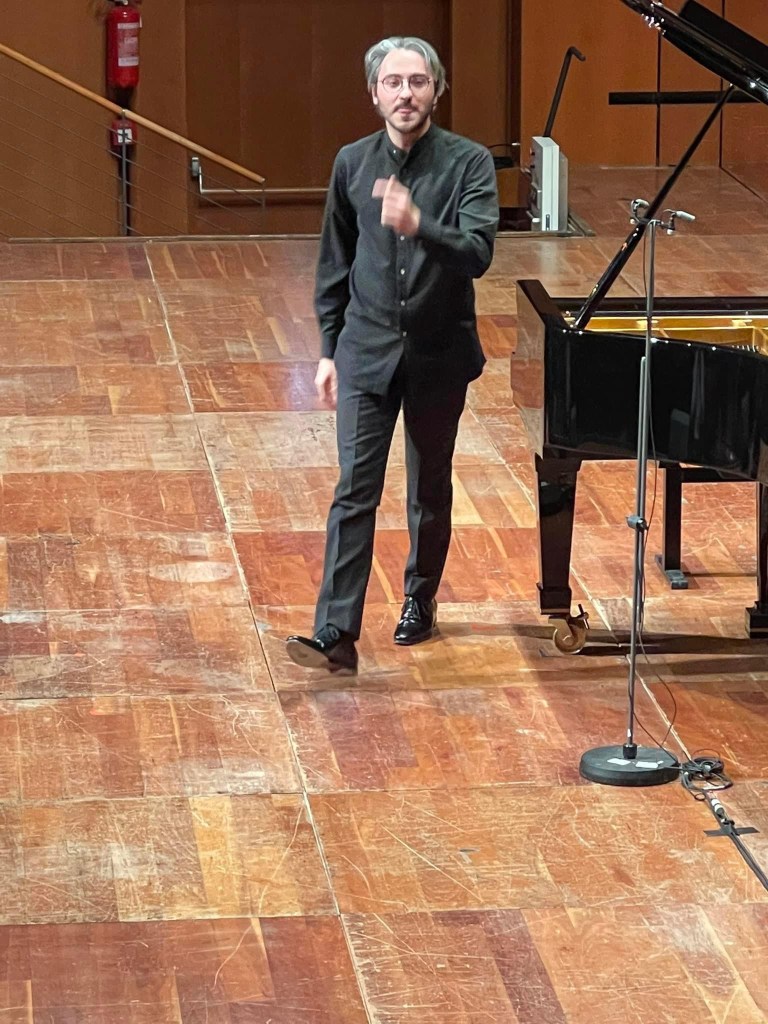
An even greater relief was the pianissimo scherzando before the mighty build up to the infamous leaps that Schumann demands in the ‘più animato’coda.Even here there was a total command and authority that the transcendental difficulties just disappeared in a resonance of overwhelming power and majesty.

“Resounding through all the notes. In the earth’s colourful dream.There sounds a faint long-drawn note.For the one who listens in secret.”is the poem that prefaces the Fantasie and nowhere can it be more appropriate that in the final ‘Langsam getragen Durchweg leise zu halten’.The enormous sforzando E flat chord,ending the second movement,was allowed to die away before the magical opening in C major just seemed to appear from afar.I remember Agosti writing in my score ‘Cla …ra’over the long held A and G as a sign that this really was as Schumann wrote to Clara: ‘the most passionate thing I have ever composed – a deep lament for you.’They still had many tribulations to suffer before they finally married four years later.In Alex’s hands there was a continual outpouring of ravishing sounds always with deep,true feeling never for a second becoming sentimental or weak.The three carefully judged final chords brought this miraculous programme to a close ………or so we thought ……not counting on the generosity of this much loved artist.

Five encores of Debussy and Chopin.The octave and arpeggio study of Debussy were played with ravishing colours and a quixotic control that brought these late masterpieces vividly to life and were in fact the highlight of the concert.The waltz op 42 by Chopin was played with jeux perle nonchalance and charm.Two of the shorter Preludes from op 28 gave us the emotionally charged n.4 and the whispered charm of the shortest of them all n.7.
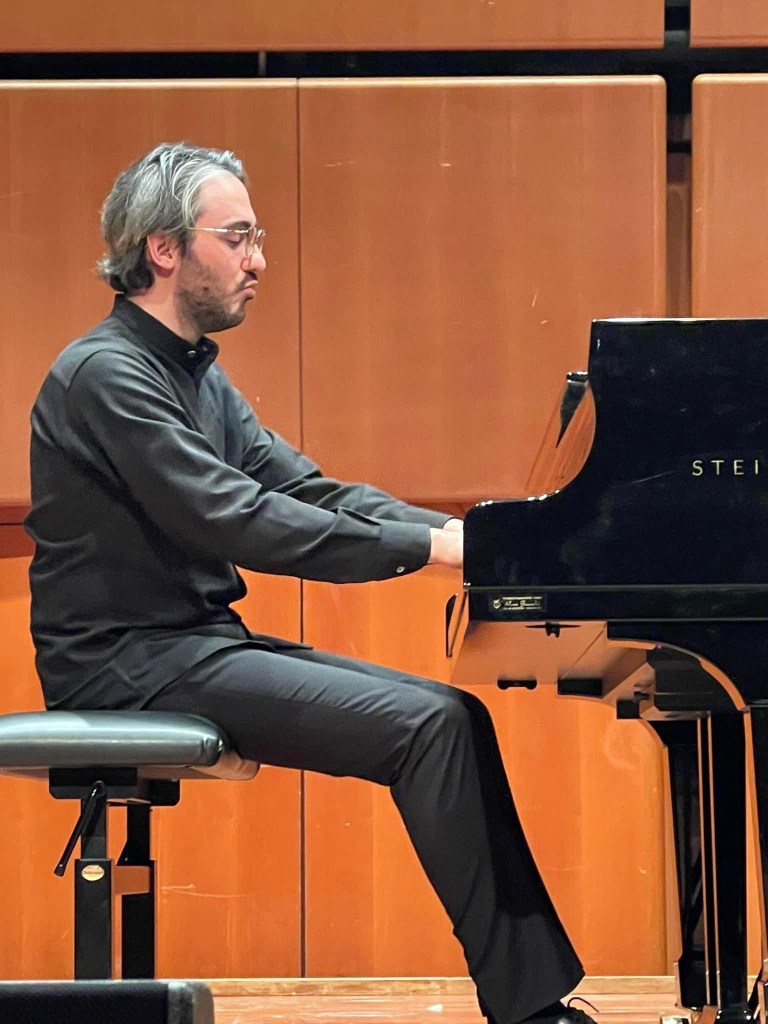
Around 1837 Chopin composed a Funeral March , a piece which most likely reflected the musician’s profoundly mournful mood following the breaking of his engagement to Maria Wodzińska. When he then went to the island of Majorca,at the end of 1838, he began to write a piece, Grave , which will later be the first movement of the sonata, and a Presto which will be the finale; this time in composing Chopin was influenced by the worsening of his illness and influenced by the gloomy ruins and cemetery of the Certosa di Valldemossa,certainly not cheerful visions in the pouring rain that gave no respite. The Scherzo was written when the musician returned to Nohant in the second part of 1839.

In a letter to his friend Fontana he wrote: “I am composing a Sonata in B flat minor in which the Funeral March that you already know will be found. There is an Allegro, then a Scherzo and, after the March, a small Finale, not very long, in which the left hand chatters in unison with the right hand”. In writing the Scherzo , the musician had thought of collecting the pieces already composed in a Sonata, perfecting and polishing them.

The Sonata in B flat minor was published in 1840 in Paris by Troupenas, later in Leipzig by Breitkopf & Härtel and in London by Wessel. The piece is one of the few by Chopin that does not feature a dedication, perhaps it was actually a tribute intended for George Sand, to be kept private. Contemporaries were rather baffled by this Sonata. In the first place Robert Schumann who, while recognizing the beauty of the piece, even found “something repulsive” in the Funeral March and defined the Finale as “something more like an irony than any other music”. Even Felix Mendelssohn, not understanding the modernity of the Finale, declared that he abhorred it.Later Vincent d’Indy even went so far as to argue that Chopin had chosen certain keys not for strictly musical reasons, but only for executive convenience. The Funeral March was performed, in the version orchestrated by Reber , together with the Preludes op. 28 no. 4 and 6, played by the organist Léfebure-Wély, at the composer’s funeral on 30 October 1849. Of the Sonata Schumann wrote: “It might be called a whim, if not a hubris, that he called it the Sonata , for he brought together four of his most bizarre creatures, to be smuggled under that name into a place where they otherwise would not have penetrated “. The Sonata op. 35 has also been taken to support the view of many critics that Chopin had found himself in difficulty with the sonata and its formal construction.Others have found the composition to be defective in poetic unity and continuity, constructed with limited technique, judgments based mostly on an outward view of the work rather than an examination of its content. It was interesting to note that in this performance Alex did Chopin’s repeat to the doppio movimento and not to the much debated introduction as he had done so miraculously in other of his performances I have heard.Tonight it obviously felt right for him to accept the traditional repeat rather than the much debated ambiguity of the original score.

The Polonaise Fantasie in A flat major, Op. 61, was published in 1846 with dedication to Madame A. Veyret. Its complex form, the fact that it displays characteristics of both a fantasie and a polonaise, its advanced harmonic development and technical level, made it a piece that was slow in gaining favour from pianists.Alex’s was a very poetically imperious performance with mists of sound and atmospheres.Perhaps a little too free with the final reverberations of the opening chords before the tumultuous build up to the glorious final outpouring of triumphant passion.But it was in the last few bars that he found the magic of Chopin’s final whispered gasps with the last bell note just allowed to toll with such luminosity.A bell that was already tolling with this last masterpiece from the pen of the poetic and genial innovator of the piano that was Fryderyk Chopin.
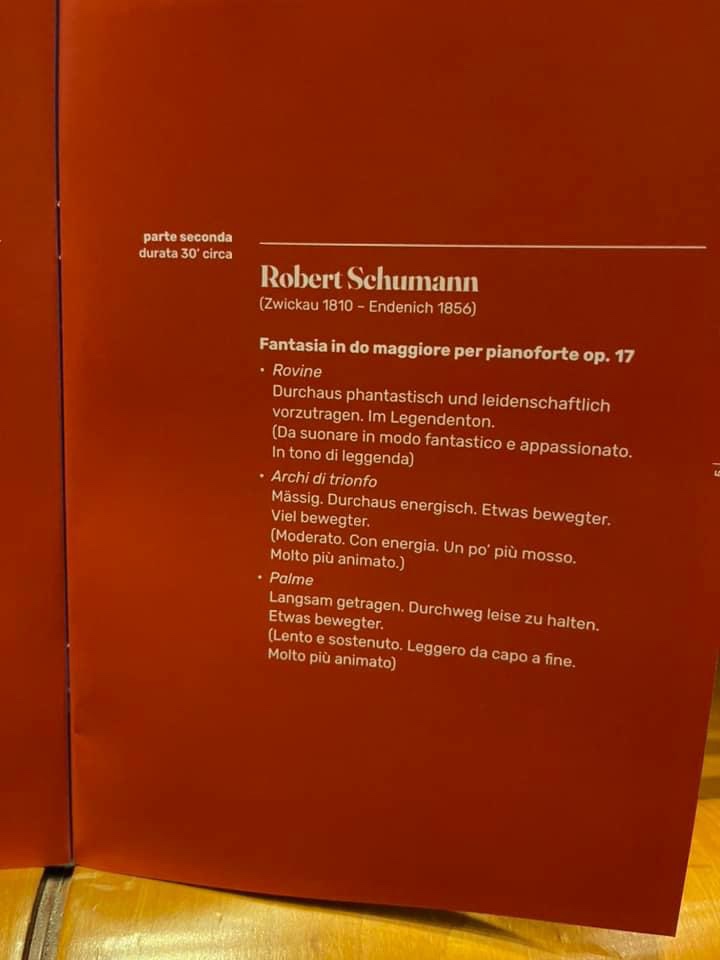
The Prelude in C sharp minor, composed at Nohant during the summer of 1841 and published in the autumn as a separate Opus (45). When sending the manuscript to Fontana for copying, Chopin could not hide his satisfaction, expressed in the words: ‘well modulated!’.The Prelude does not have an a priori form. It gives the impression of being a notated improvisation. The four opening bars set the mood. There follows a dreamy spinning-out of two slowly formed themes: the principal theme, in which the boundary between melody and accompaniment melts away in the overall sound, and a second theme in which the distinctness of the melodic contour holds sway over the colouring, emotions over impressions.The charms of pure sonority are brought by the cadenza, but that too swells towards emotional ecstasy. The opening theme returns, before dissolving away in softening strains.Chopin composed the Prelude in C sharp minor for the Paris publisher Maurice Schlesinger. At the beginning of October, in Paris, Fontana proofread the work. It appeared as Opus 45, with a dedication to Princess Elisabeth Czernicheff, one of Chopin’s pupils.

Alexander Gadjiev streamed live from the Wigmore Hall

Beethoven La Chapelle offers an Ode to Joy
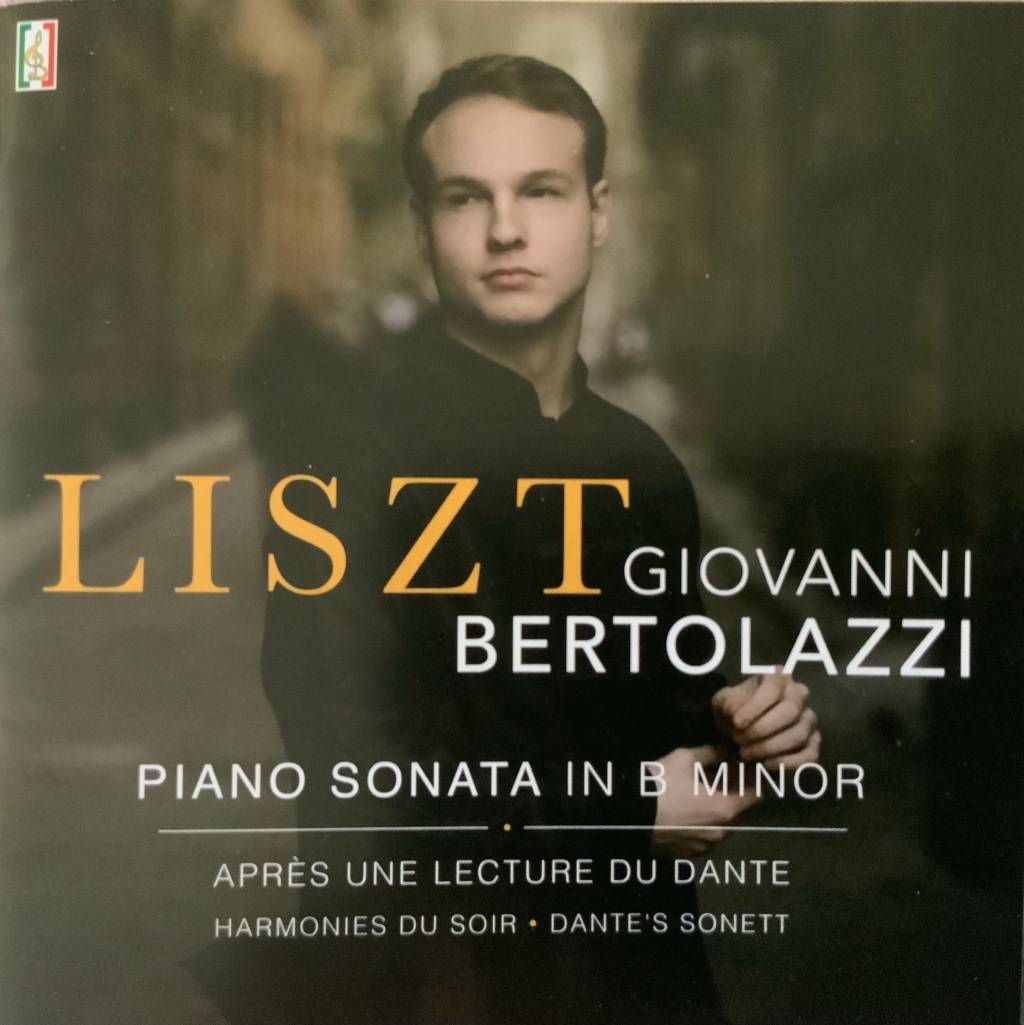
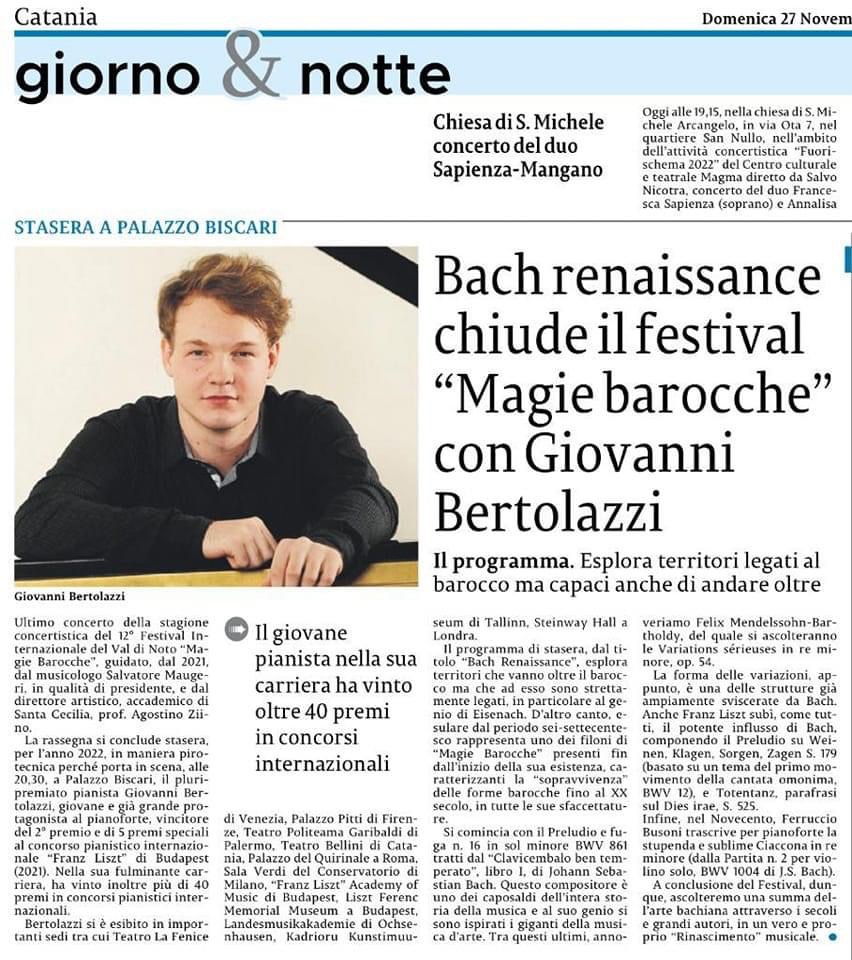
Giovanni Bertolazzi- The mastery and authority of Liszt
Domenica 4 dicembre in tournée a Rieti, per Reate Festival
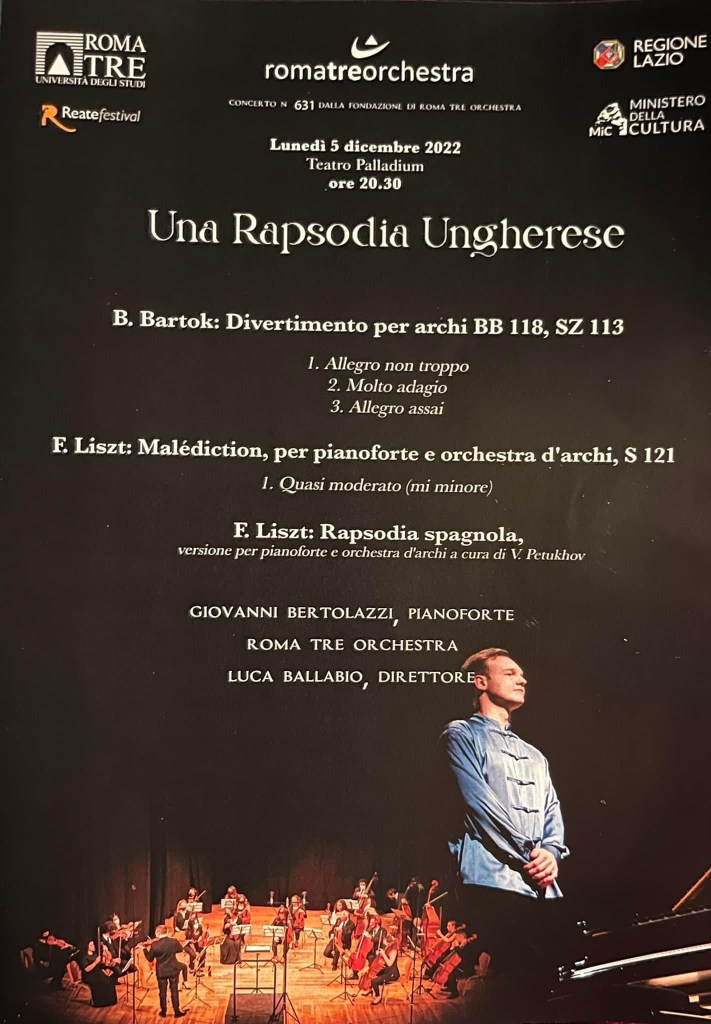
Lunedì 5 dicembre ore 20.30 Teatro Palladium
Una Rapsodia Ungherese
B. Bartok: Divertimento per archi BB 118, SZ 113
F. Liszt: Malédiction, per pianoforte e orchestra d’archi, S 121
F. Liszt: Rapsodia spagnola, versione per pianoforte e orchestra d’archi a cura di V. Petukhov
Giovanni Bertolazzi, pianoforte
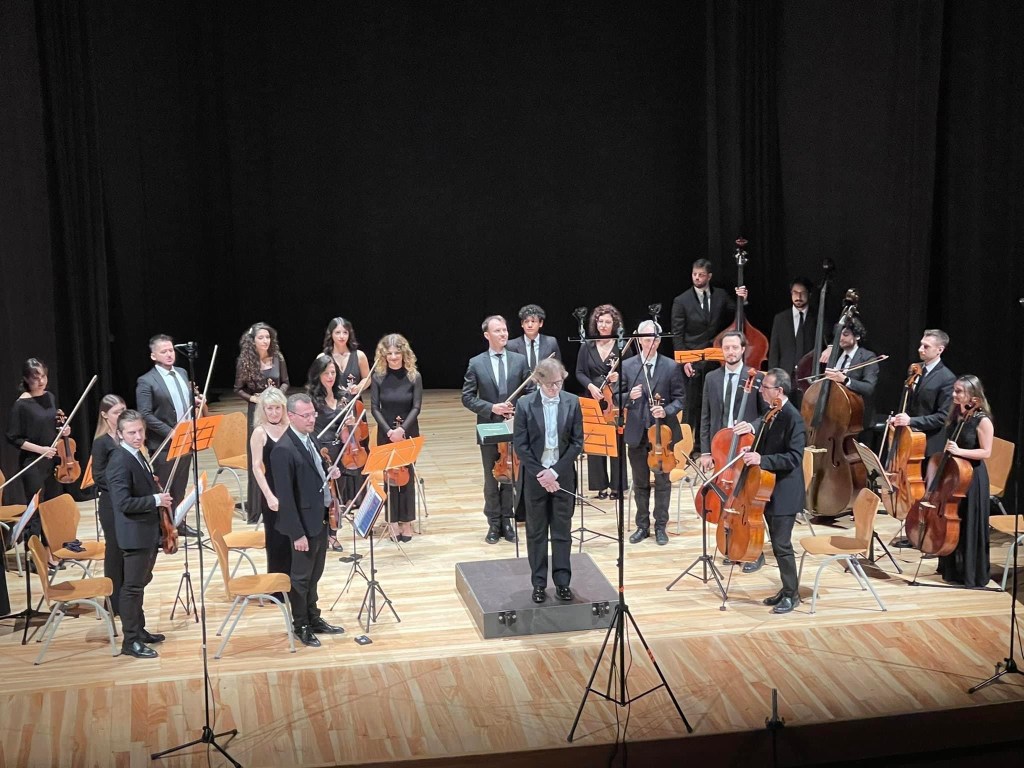
Roma Tre Orchestra
Luca Ballabio, direttore

Luca Ballabio with Giovanni Bertolazzi

La musica ungherese è sinonimo di ritmo, brio, color gitano, allegria. Non si può, inoltre, parlare di Ungheria in musica omettendo la figura di Franz Liszt, autentico aedo di questa terra. Proponiamo dunque un programma che ci porta in giro per questo Paese, dai colori di un brano giovanile di Liszt come Malédiction, ai ritmi compositi di Bela Bartok e del suo Divertimento.
Con noi Giovanni Bertolazzi, interprete raffinato di Liszt, recente secondo classificato nel prestigioso concorso di Budapest che proprio a questo autore è intitolato e per la prima volta sul podio di Roma Tre Orchestra il giovane direttore d’orchestra Luca Ballabio.
https://christopheraxworthymusiccommentary.wordpress.com/2022/01/17/giovanni-bertolazzi-in-rome-liszt-is-alive-and-well-at-teatro-di-villa-torlonia/
https://christopheraxworthymusiccommentary.com/2022/07/15/two-young-giants-cross-swords-in-verbier-giovanni-bertolazzi-and-nikita-lukinov/

A concert with a very Hungarian air to it as Giovanni Bertolazzi winner of top prize at the Liszt Budapest International Piano Competition showed us once again that he is undoubtedly one of the most gifted artists of his generation .

It was when Giovanni was at the helm that we felt the undercurrent of rhythmic drive and passionate involvement.Not only of Liszt the showman but also of Liszt the innovator.The Malédiction is a very early work where Liszt is feeling his way with orchestration at the expense of melodious lyricism.One can hear so many passages and orchestrations that are then used in his second piano concerto.But it is a work really of great difficulty for the orchestra as it is for the piano .Giovanni drove the work forward with astonishing technical ease and musical understanding .There was an undercurrent to his playing that was present even in the few most ravishing lyrical episodes.The drama of the opening with solo piano was like a call to arms but his astonishing technical prowess and authority was always at the service of a musical line and sense of colour.Although a rather hollow work compared to the masterpieces that were to come from Liszt’s pen just a few years later,the rhythmic force and dynamic drive that he gave to the score almost succeeded in us wanting to hear it again before putting it away on the shelf where it really belongs.

Liszt began experimenting writing for piano and orchestra and one of his earliest compositions for this combination was what is now called Malédiction, written for piano and string orchestra or string sextet. Malédiction means ‘curse’ , this word was written over the first part of the work in the manuscript by Liszt. There is no other title on it. It was given this title by musicologists who found the piece in 1915. It is an experimental piece, as Liszt was learning how to orchestrate and write a concerto for piano and orchestra, not an easy thing to do especially with the pianos of the day.It shows an expanded idea of harmony, especially in the first part, the part marked Malédiction. Some of the chords in this section are quite striking in their dissonance, especially when we know the piece was written in 1833-1834. Liszt was in his early 20’s, fresh from meeting Berlioz and attending the premiere of Symphonie Fantastique in 1830. As a composer, Liszt was in the avant-garde of the era almost immediately.

Malédiction is in one movement, and originally may have had a programme to go with it. A tone poem for piano and orchestra essentially, that changes moods and shifts tempos throughout. It begins in a minor key and ends in a major key and has a lot going on in between. It is a glimpse into the creative mind of the young Franz Liszt.We do not know if Liszt ever heard his Concerto for Piano and Strings—the so-called Malédiction—even in rehearsal.This powerful single-movement piece is among Liszt’s earliest efforts at finding a way forward for the sonata principle where its outlines conform to the general pattern of exposition,development and recapitulation, There is a similarity of the opening motif (it is just this motif which Liszt labels ‘Malédiction’),with the later Orage from the first of the Années de pèlerinage .The strings first accompany this menacing first theme with quiet trills, and next build a sinuous chromatic line around it. The opening motif generates the livelier transition material, the last much calmer section Liszt writes: ‘Pleurs, angoisse’ (‘Tears, anguish’). The tonality has ranged quite widely from the initial E minor by this stage, but a recitative introduced by piano and cello brings us to the second theme proper, in the traditional relative major, and to material which Liszt would recall in the late Valse oubliée No 3 of 1883. The recitative is fully incorporated into this theme before the livelier tempo Vivo is reached,which Liszt marks ‘Raillerie’—and a full close in G major is reached. The development immediately moves to E flat, concentrating upon the first theme and leading to a cadential recitativo where the introduction is recalled. When the orchestra reappears we are at the recapitulation, but the order of events is somewhat altered. The earlier transition material is first, followed by the opening motif from piano and orchestra. The first theme now appears in E major, and the tempo increases. The cello motif is now incorporated into the first thematic group before a further increase in tempo brings the second subject material, transformed into the coda, with just a brief recall of the first theme in the last four bars.

Rhapsodie espagnole (Spanish Rhapsody), S.254, R.90, was composed by Liszt in 1858. The work is very suggestive of traditional Spanish music, and was inspired by Liszt’s tour in Spain and Portugal for six months from October 1844, and it was certainly on this trip that he became acquainted at first hand with some of the melodies he was to incorporate into various piano pieces.Liszt never visited this part of the world again but maintained contacts through his music and his Iberian students for the rest of his life.Liszt told Lina Ramann that he had written the piece in recollection of his Spanish tour whilst in Rome in about 1863. The work was published in 1867—subtitled Folies d’Espagne et Jota aragonesa.After the opening flourishes variations on La folia form a passacaglia in C sharp minor. The last variation slips gently into D major for the delicate presentation of the jota, mostly in the upper register of the piano.

Ferruccio Busoni arranged the piece for piano and orchestra in 1894

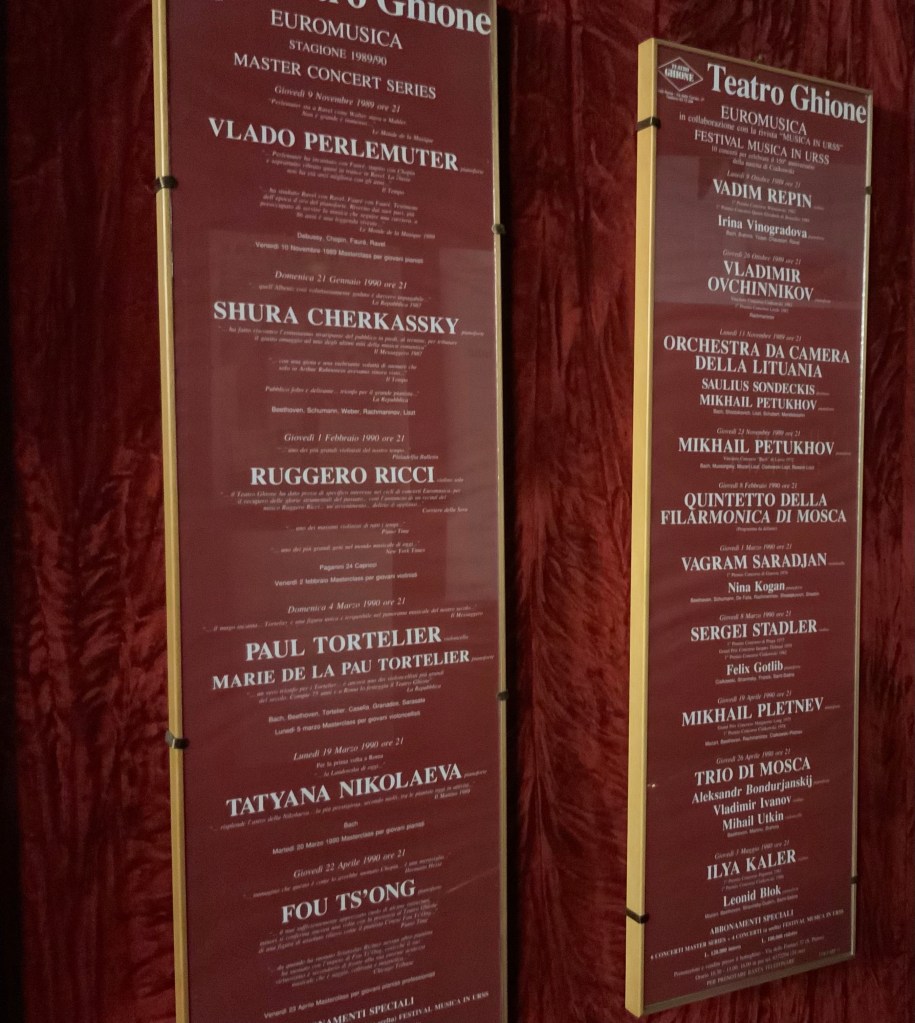
Mikhail Petukhov played his version for piano and string orchestra in Rome at the Ghione Theatre on 13th November 1989,with the Orchestra da Camera della Lituania conducted by Saulius Sondeckis

The well known Spanish Rhapsody was full of melodic invention and fantasy.I remember hearing Gilels playing the original solo version in London with a unrelenting rhythmic drive that had us sitting on the edge of our seats.Giovanni has the same drive and almost brought this reduction for string orchestra by Petukhov to life with ravishing colours and an irresistible sense of style.But Petukhov like Busoni allows too much importance to the orchestra at key moments of high tension and instead of driving the music forward it tended to sag.Certainly no fault of the orchestra or piano.It was Busoni’s transcription for full orchestra that was the first to appear.Petukhov played his version for string orchestra in Rome in the ‘80’s in a programme that included the Saint Saens Wedding Cake Caprice and ending with an encore of Liszt’s unashamedly virtuoso transcription of the overture of the Barber of Seville !

Giovanni tonight gave us an encore of the Ritual Fire Dance.A slightly less flamboyant version than that of Rubinstein but nevertheless breathtaking.The range of sound and colour together with his passionate involvement brought these two works by Liszt vividly to life and showed off the artistry and seriousness of this young musician .There was no I Pad to be seen as here was an artist who was convinced of the value of these works and prepared them with great seriousness very nearly managing to convince us too.

The concert had started with Bartok’s very complex Divertimento for Strings written at the outbreak of the Second World War.There were the pungent rhythms and folk melodies of the Allegro non troppo followed by the atmospheric Adagio with its whispered sounds evoking emptiness and spaciousness.There was a dynamic rhythmic drive to the Allegro assai full of complex Hungarian folk rhythms and even a pizzicato episode that took us to the excitement of the ending.

Expertly conducted by Luca Ballabio and some very fine solo playing from the first violin of Leonardo Spinedi and the cello of Angelo Santisi.Luca took a lyrical approach to the score missing the burning drive that Solti could bring to this work which can give it more of an overall architectural shape and direction.The Roma Tre Orchestra ever growing in stature as it reaches its twentieth anniversary.An orchestra created by Valerio Vicari,Artistic director and Roberto Pujia ,President to give professional experience to exceptionally talented young musicians at they start of their career .

Valerio Vicari,Giovanni Bertolazzi,Luca Ballabio
In rehearsal in Rieti
In concert at Rieti
Teatro Vespasiano Rieti

https://christopheraxworthymusiccommentary.com/2022/02/15/giovanni-bertolazzi-in-london/

https://christopheraxworthymusiccommentary.com/2020/02/22/giovanni-bertolazzi-a-giant-amongst-the-giants/

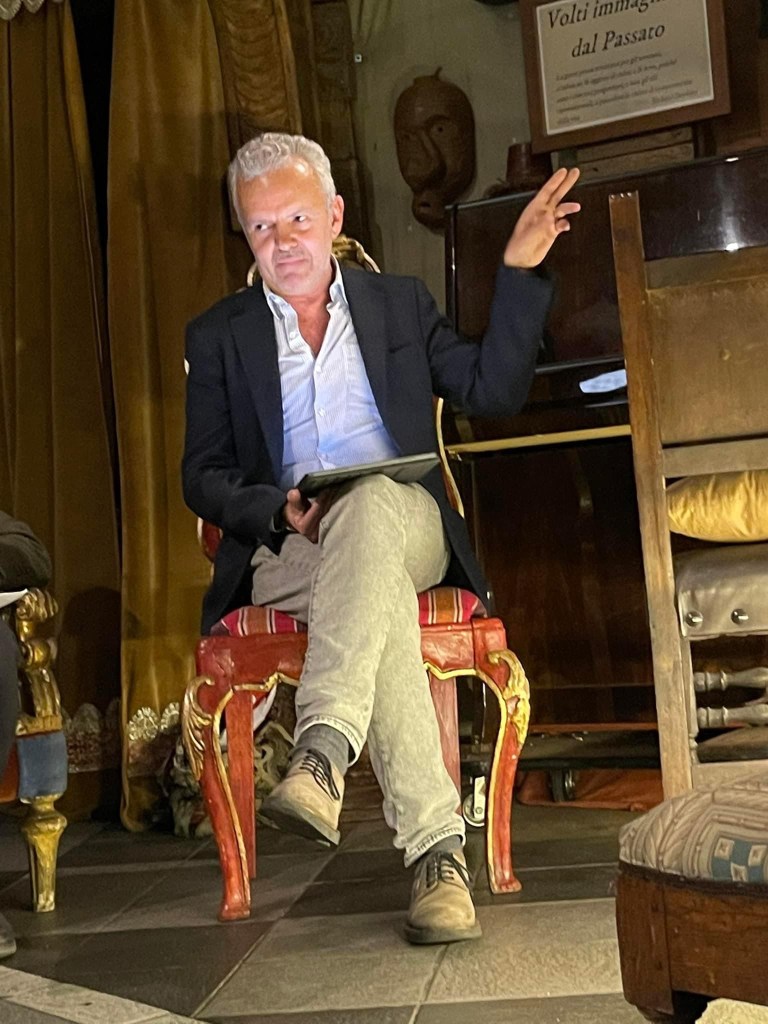
Michael Aspinall is back in Rome ‘On Wings of Song’

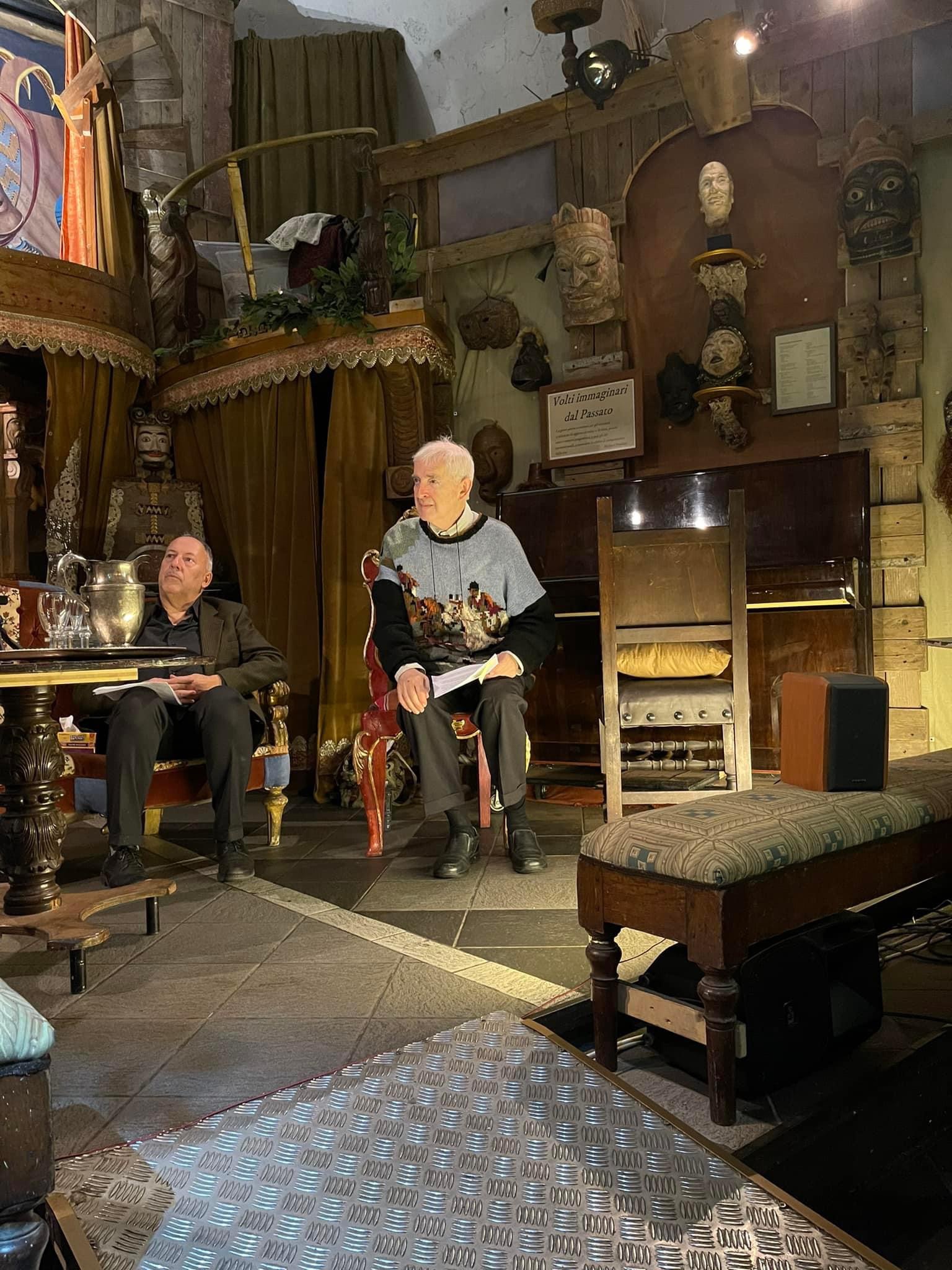
Nice to see Michael Aspinall back in via di Grotta Pinta where in the Teatro De Satiri all the great singers that he imitated came to see themselves mirrored in his inimitable performances.
A great musicologist immersed in the world of song and delving deep into the archives still rich with material from the eighteenth and nineteenth century Golden Age of Song.Let’s not forget that it was Aspinall who provided Monserrat Caballé with her cadenza embellishments with which she ravished the operatic world following on from the Belcanto of Callas and Sutherland.


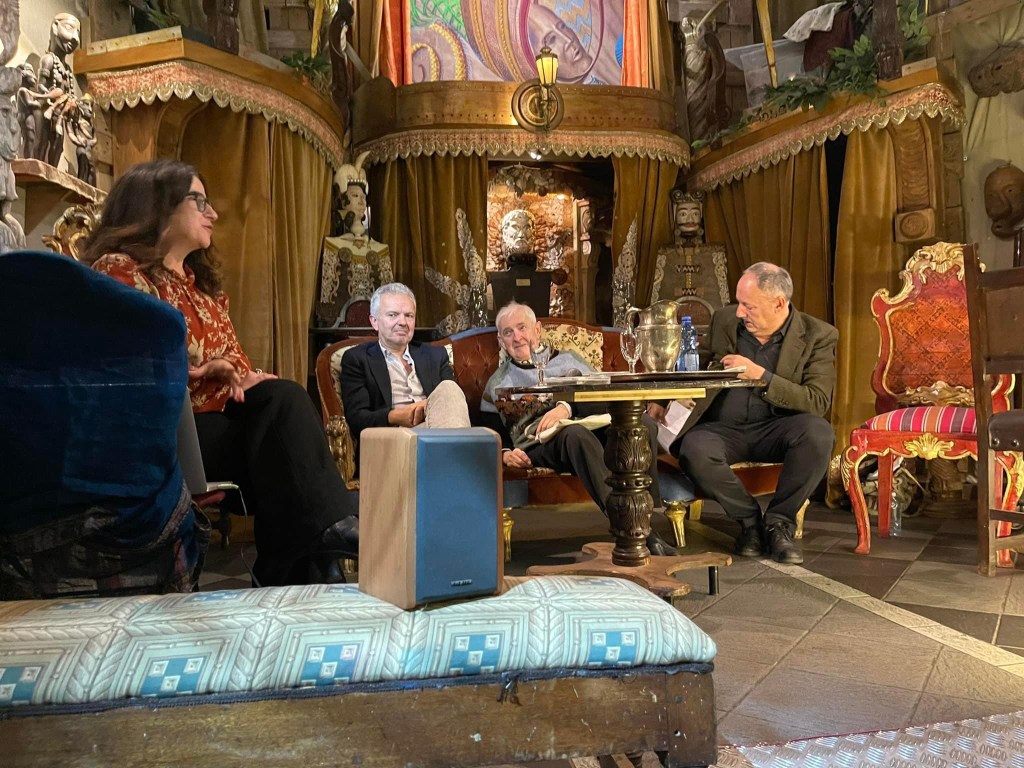
Is Belcanto Dead ? What is Bel Canto ?These were on the table,turning back the clock,as we entered this magical old curiosity shop that is the Oratorio Orsini.


No sign of the Teatro de Satiri in this same square where Benny Margiotta filled this historic family owned theatre with delights that were sure to tittivate all the senses.
Arnaldo had the restaurant next door where artists performing in Rome would congregate after their performances relaxing with their artistic colleagues as they delighted in Arnaldo’s speciality of cream of chestnut pudding!

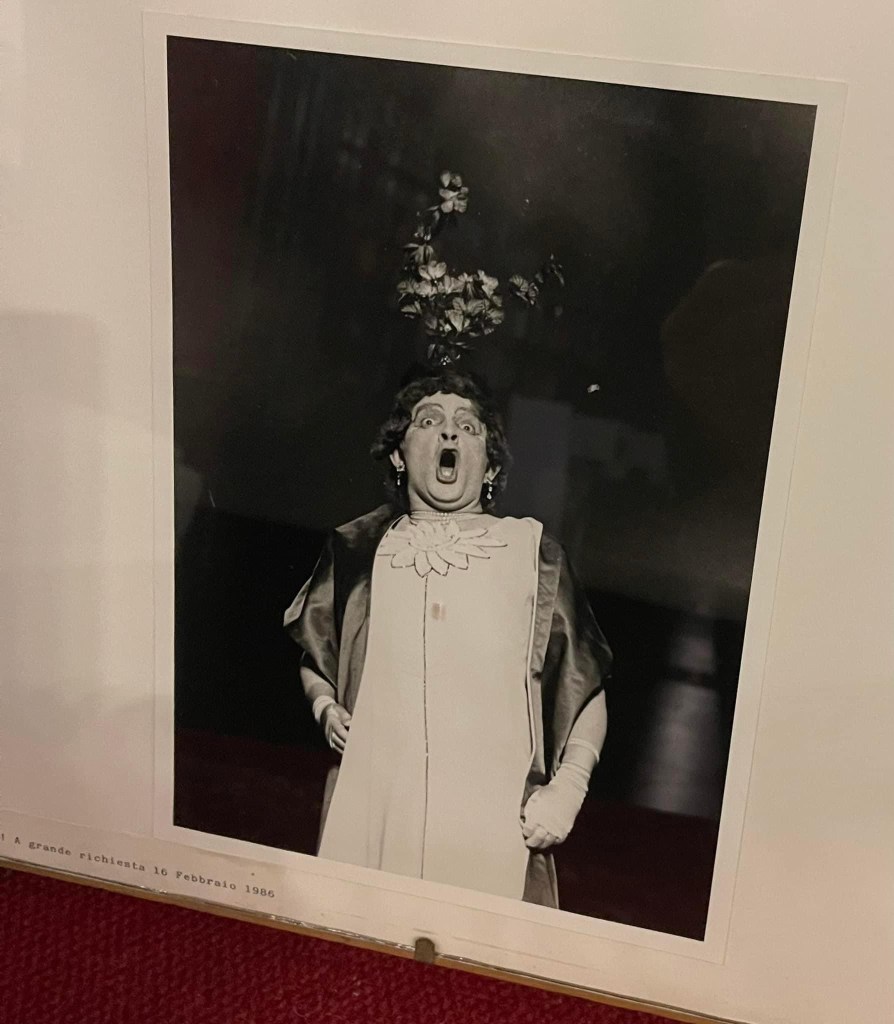
1986 One of his many appearances at the Teatro Ghione


I remember bringing eighteen year old Vadim Repin and Margaret Price there after their performances just down the road at the Ghione Theatre. Dino Villatico,the distinguished music critic of La Repubblica lived above the restaurant.


It was the Ghione Theatre that Aspinall chose for his last public performance as the ‘Gentleman Soprano’ in 2010 – his seventieth year.
Now 13 years on,time has stood still for him as he is still flying high on Wings of Song !Well he did say he would come out of retirement if the money was right!


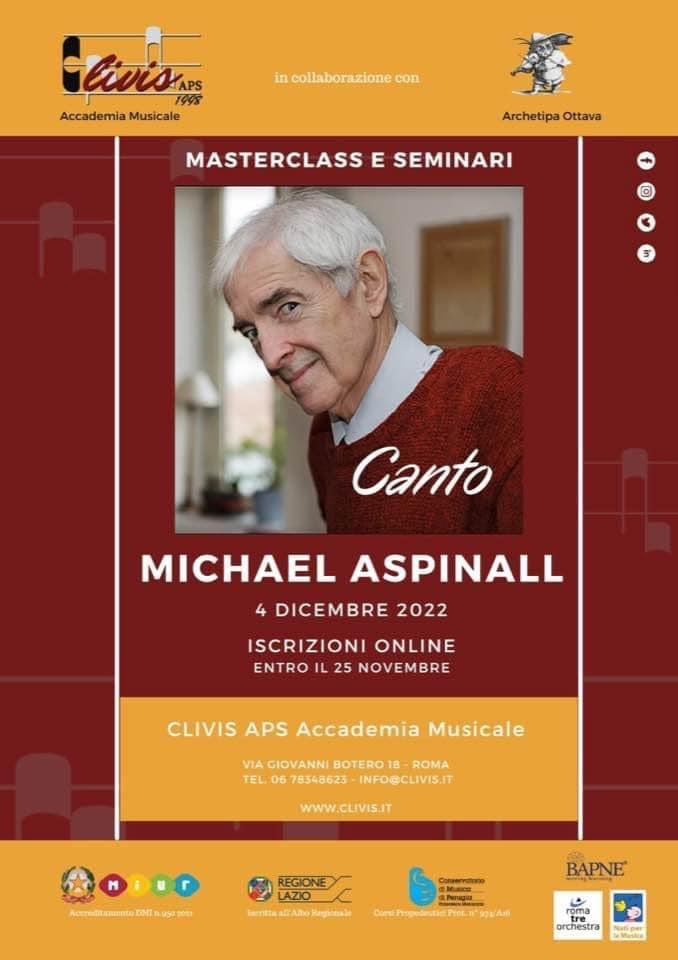
Here,this weekend, he came up from the Naples that has adopted him with open arms ,on the invitation of one of his former singing students and will be giving a masterclass too on the 4th .
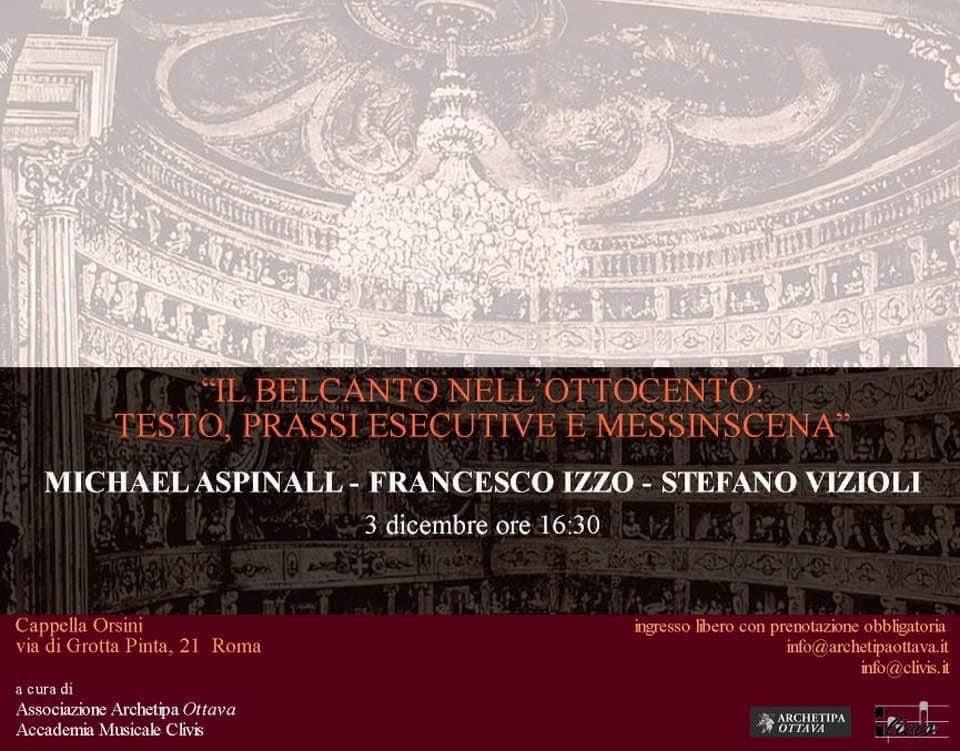
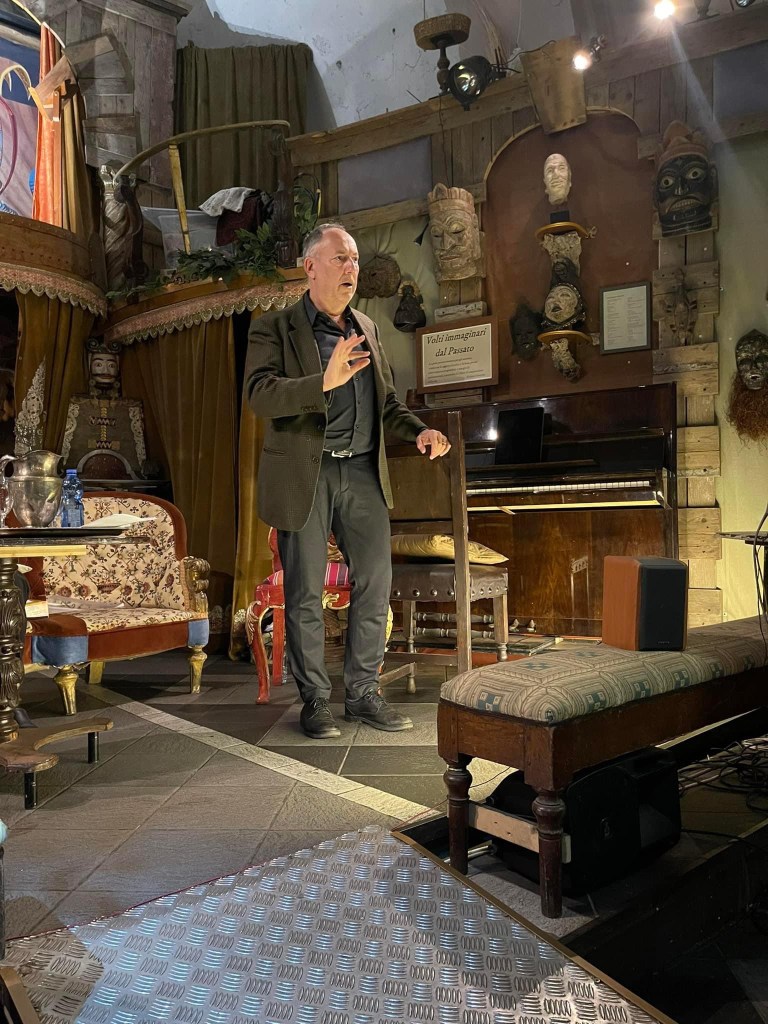
Today there was a fascinating and very amusing talk from three passionate advocates of Belcanto.


Michael Aspinall “Cantare bene é facile”


Francesco Izzo “Belcanto dopo il belcanto:il caso Verdi”


Stefano Vizioli “Suonare il palcoscenico”Esperienza di un regista con donne e prime donne

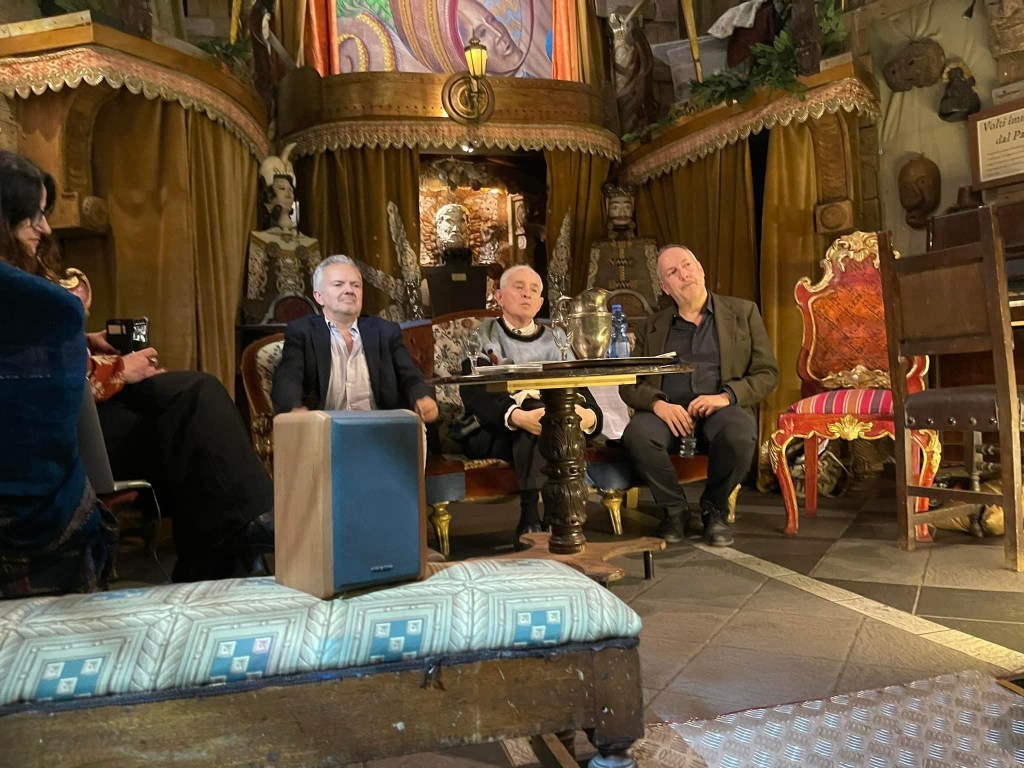
A distinguished audience of musicologists and lovers of belcanto
Michael Aspinall’s former student who has created the Accademia musicale Civis
Cappella Orsini

Quiet Authority at Temple Church review by Angela Ransley

QUIET AUTHORITY AT  TEMPLE CHURCH


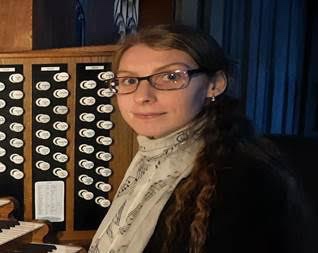
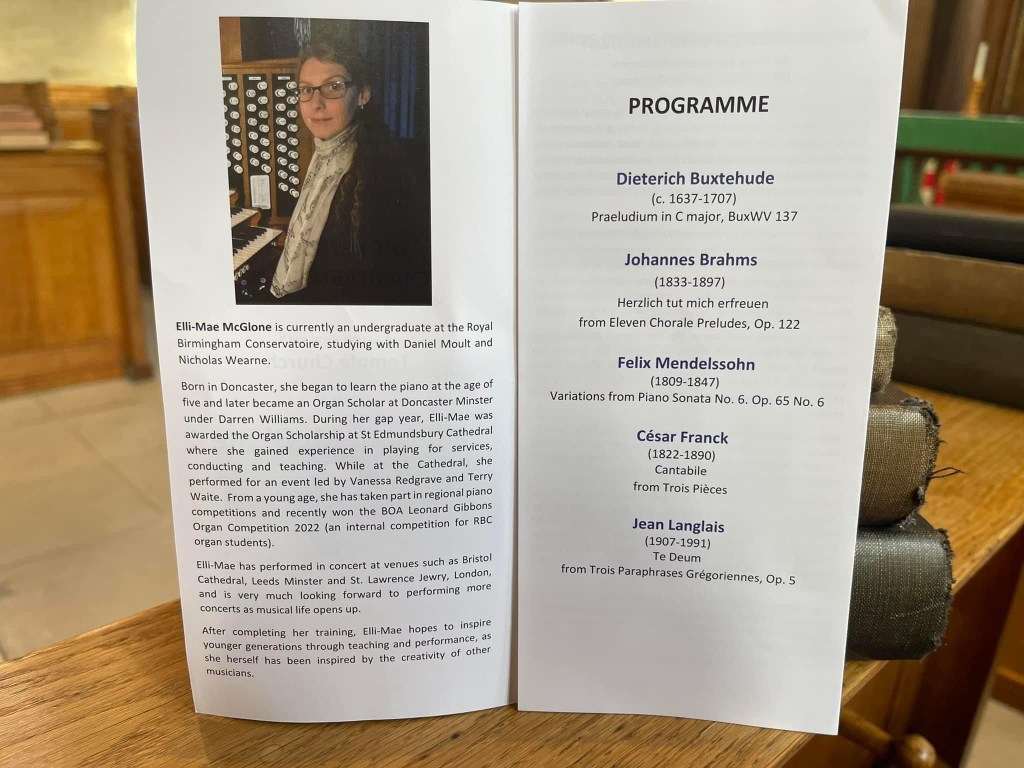
                                                             Elli-Mae  McGlone

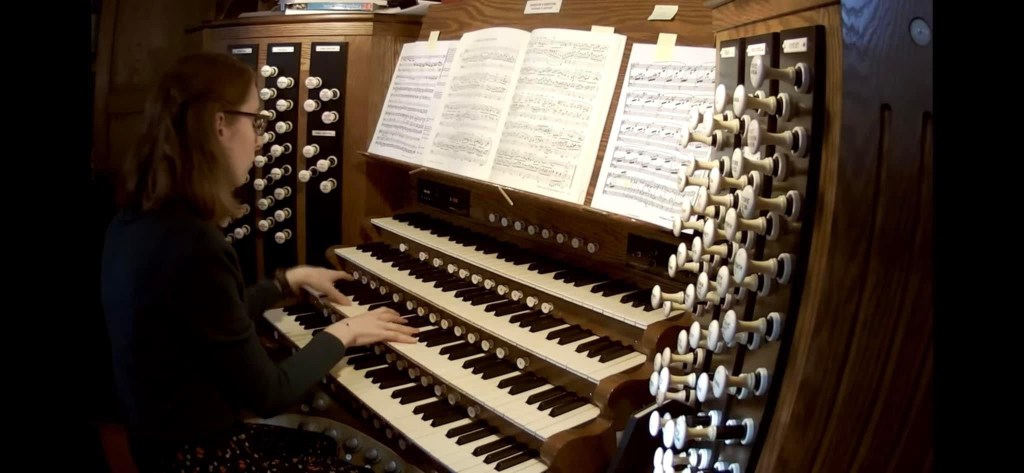
IN ITS ROLE AS PROMOTER OF EXCEPTIONAL YOUNG TALENT, THE KEYBOARD TRUST HAS CONTRIBUTED TO THE REGULAR WEDNESDAY LUNCHTIME ORGAN RECITALS AT THE TEMPLE CHURCH FOR NEARLY 20 YEARS. THE LATEST YOUNG ARTIST, BILLED AS ‘A RISING STAR OF THE ORGAN WORLD’, IS ELLI-MAE McGLONE. STILL A STUDENT AT THE ROYAL BIRMINGHAM CONSERVATOIRE, ELLI-MAE HAS  HELD THE POST OF ORGAN SCHOLAR AT BURY ST EDMUNDS CATHEDRAL AND IS ALREADY A MUTLIPLE PRIZEWINNER.

30 MINUTES DOES NOT SEEM LONG IN WHICH TO MAKE ONE’S MARK,  BUT ELLI-MAE PROVED THAT IT CAN BE TRANSFORMATIVE, OFFERING TWO MAJOR  WORKS: PRAELUDIUM IN C BY BUXTEHUDE AND THE CHORALE AND VARIATIONS FROM MENDELSSOHN’S  6TH  SONATA, INTERSPERSED BY SHORTER ROMANTIC PIECES BY BRAHMS AND FRANCK AND A 20TH CENTURY BARNSTORMER BY LANGLAIS TO FINISH.

BUXTEHUDE IS BEST KNOWN AS THE CELEBRATED ORGANIST THE 20-YEAR-OLD JOHANN SEBASTIAN BACH TRUDGED 250 MILES TO HEAR IN LUBECK IN NORTH GERMANY. MUCH OF HIS ORGAN REPERTOIRE IS NOW LOST, BUT THE  WORKS THAT REMAIN JUSTIFY HIS REPUTATION AS THE GREATEST ORGANIST AND COMPOSER OF THE LATE 17TH CENTURY. THE 19 REMAINING PRELUDES DEMONSTRATE IN THEIR VARIETY THE VOGUE FOR STYLUS FANTASTICUS INCORPORATING A VARIETY OF COMPOSITIONAL TECHNIQUES INCLUDING IMPROVISATION AND FUGUE. PRAELUDIUM IN C  IS IN THREE SECTIONS: PRELUDE,  FUGUE AND CHACONNE. THE MOST IMPORTANT PRINCIPLE OF THIS STYLE WAS FORMAL FREEDOM AS DESCRIBED IN A CONTEMPORARY ACCOUNT:


          ‘Players should not play strictly according to the score, but imitate the                    singer more. Now swift, now hesitating, now in one voice, now in many                  voices, now for a while behind the behind the beat, but not without the           intent to please, to overtake and to astonish’.

WE ARE NOT TO BE SURPRISED, THEN, BY THE DRAMATIC PEDAL SOLO THAT OPENS THE WORK, EXTENDED  FUGAL PASSAGES, VIRTUOSIC SEMIQUAVER FLOURISHES AND  A DANCE-LIKE CHACONNE TO FINISH! WHILE OBSERVING THE NORMS OF BAROQUE REGISTRATION, ELLI-MAE USED THE FULL RANGE OF THE 4-MANUAL ORGAN TO HEIGHTEN THE UNEXPECTED: CLARITY OF VOICE-LEADING IN THE FUGATO AND  BRIGHTER STOPS  INCLUDING TROMBA AND CLARION IN THE MORE IMPROVISATORY, VIRTUOSO SECTIONS.

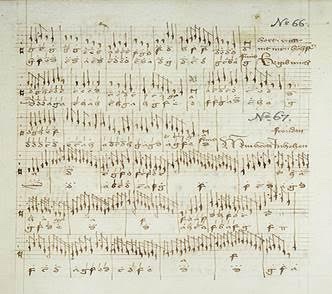
Buxtehude manuscript in organ tablature, an early form of notation also used by JS Bach

BRAHMS CHORALE PRELUDE HERZLICH TUT MICH ERFREUEN MADE A SKILFUL LINK BETWEEN THE BUXTEHUDE AND THE MENDELSOHN CHORALE AND VARIATIONS, DESPITE BEING A LATE BRAHMS WORK OF 1896. IT IS WRITTEN IN TRADITIONAL CANTUS FIRMUS STYLE WHERE THE CHORALE MELODY SINGS SLOWLY ABOVE .COMPLEX FLOWING LINES. THE GERMAN LUTHERAN HYMN, BASED ON A SECULAR SONG ABOUT THE RETURN OF SPRING, IS HEARD JUST ONCE. ELLI-MAE GAVE TO THE MELODY JUST THE RIGHT AMOUNT OF RUBATO TO EMPHASISE ITS BEAUTIFULLY SHAPED LINES AND FINELY JUDGED, RESTRAINED REGISTRATION LENT THE ACCOMPANIMENT JUST THE RIGHT  ELEGIAC, BRAHMSIAN SOUND.


Mendelssohn with Queen Victoria and Prince Albert at the organ


          ‘His execution of Bach’s music is transcendently great, his extempore

           playing is very diversified – the soft movements full of tenderness and

           expression, exquisitely beautiful and impassioned. In his loud preludes

           there are an endless variety of new ideas  and the pedal passages so

           novel and independent  as to take his auditor quite by surprise.’

MENDELSSOHN’S  ORGAN PLAYING WAS JUST AS LEGENDARY IN HIS NATIVE GERMANY AS IN ENGLAND, WHICH HE CALLED HIS SECOND HOME. THE CHORALE AND VARIATIONS CONSTITUTE THE FIRST MOVEMENT OF SONATA NO 6 IN D MINOR COMMISIONED BY THE ENGLISH PUBLISHER COVENTRY IN 1845. THEY WERE ORGINALLY CONCEIVED AS ORGAN VOLUNTARIES AND THEN WERE COMBINED INTO SONATAS –  NO 3 WAS WRITTEN FOR MENDELSSOHN’S SISTER’S WEDDING. HE WAS INVITED TO PERFORM THEM AT THE 1846 BIRMINGHAM FESTIVAL BUT THE STATE OF ENGLISH ORGANS  LAGGED BEHIND THOSE IN MAINLAND EUROPE, AND MENDELSSOHN WOULDN’T RISK IT:

‘The last time I passed through Birmingham the touch of the organ appeared to me so heavy that I could not venture to perform upon it in public. If however it is materially improved I shall be happy to play one of my sonatas; but I should not wish this to be announced before I had tried the organ myself’.

MENDELSSOHN CHOSE THE LUTHERAN CHORALE ‘VATER UNSER IN NIMMELREICH’ (OUR FATHER, WHO ART IN HEAVEN) ON WHICH TO BASE A SHORT SET OF VARIATIONS WHERE THE TUNE IS STATED IN FULL IN ALL REGISTERS AND ONLY IN THE FINAL, THRILLING TOCCATA IS IT SHARED AFTER APPEARING DRAMATICALLY IN THE PEDALS. DESPITE THIS SIMILAR CONSTRUCTION, EACH VARIATION HAS ITS OWN  CHARACTER, HIGHLIGHTED BY ELLI-MAE IN THE CHOICE OF REED STOPS FOR THE CHORALE AND WELL-BALANCED REGISTRATION FOR THE  FLOW OF COUNTERPOINT.

THE EARLY PART OF THE RECITAL FEATURED MUSIC FROM THE GERMAN LUTHERAN TRADITION FROM BUXTEHUDE TO BRAHMS, TAKING  CHORALES FFROM THE LATE RENAISSANCE AS THEIR INSPIRATION. THE SECOND PART MOVED TO CATHOLIC FRANCE IN THE MUSIC OF CESAR FRANCK AND JEAN LANGLAIS.  WE ENTERED NEXT THE PERFUMED WORLD OF FRENCH ROMANTIC MUSIC  DOMINATED BY THE MIGHTY ORGANS OF ARISTIDE CAVAILLE-COLL. CESAR FRANCK DEMONSTRATED THESE ORGANS THROUGHOUT FRANCE FOR HIM AND PLAYED HIS OWN IN THE BASILICA OF ST-CLOTHILDE IN PARIS. CANTABILE IS TAKEN FROM TROIS PIECES POUR ORGUE  WRITTEN IN 1878. THE DATE IS SIGNIFICANT AS AROUND THIS TIME FRANZ LISZT PRODUCED HIS BAGATELLE SANS TONALITE.  WHILE ROOTED IN  CLASSICAL TONALITY AND THE  RELIGIOSE SWEETNESS FASHIONABLE AT THE TIME  – FAURE’S IN PARADISUM  FROM THE REQUIEM  BEING A PRIME EXAMPLE – , THE HAUNTING MELODY AND UNEXPECTED HARMONC PROGRESSIONS HINT OF CHANGE TO COME.  ELLI-MAE SEEMED MOST AT HOME IN THIS MUSIC, USING A FINELY DISTINGUISHED PALETTE TO CAPTURE THE MOOD OF MELANCHOLY NOSTALGIA.

The Cavaille-Coll organ at the Basilica of St Clothilde, Paris

TE DEUM  FROM HYMNES ACTION DE GRACES  BY JEAN LANGLAIS BROUGHT THE RECITAL TO A FITTING CLIMAX. DESPITE BEING BLIND FROM THE AGE OF  TWO DUE TO GLAUCOMA, LANGLAIS LED A SUCCESSFUL LIFE AS  CONCERT ARTIST, PROFESSOR AT THE PARIS CONSERVATOIRE, PROLIFIC COMPOSER AND SUCCESSOR TO FRANCK AT ST CLOTHILDE. HE DESCRIBED HIMSELF AS ‘BRETON, FOI CATHOLIQUE’ AND THESE TWO  ELEMENTS FUEL THE HEART OF HIS MUSIC.

IN  TE DEUM HE REACHED BACK FURTHER THAN ANY OF THE OTHER COMPOSERS REPRESENTED TO EARLY PLAINCHANT AND PRESENTS IT AS A CATHOLIC RESPONSORIAL PSALM. THE CHANT, WHICH WOULD NORMALLY BE SUNG BY A CANTOR, IS HEARD SOLO IN THE PEDALS WITH THE RESPONSE IN THE UPPER REGISTERS. AND WHAT A RESPONSE! THE TEXT OF THE 4TH CENTURY LATIN HYMN OF PRAISE INCLUDE THESE LINES:

              ‘To Thee all Angels cry aloud, Heaven and Earth are full of the majesty                  of  Thy Glory’

THE CRIES ARE MOUNTING CHORDS OF ANGULAR DISSONANCE, CERTAINLY LOUD ENOUGH TO BE HEARD IN HEAVEN.  ELLI-MAE USED THE FULL POWERS OF THE BRIGHT BRASS STOPS –  TROMBA, TRUMPET, CLARION – TO  ANIMATE THE DRAMA.

                                                                  Jean Langlais

FOR HER DEBUT RECITAL, ELLIE-MAE CHOSE  A LARGELY REFLECTIVE PROGRAMME WITH ONLY THE MENDELSSOHN TOCCATA  AND THE LANGLAIS GIVING THE ORGAN  ITS FULL POWERS. SHE PLAYED THE  MELODIC LINES WITH CLARITY AND OFTEN  A LINGERING AFFECTION AND DEMONSTRATED A KEEN EAR IN HER SUBTLE TONAL LAYERING. ALL CREDIT TO HER INSPIRATIONAL TEACHERS AT BRIMGINGHAM, DANIEL MOULT AND NICHOLAS WIERNE, FOR DEVELOPING SUCH INTUITIVE ARTISTRY AND ENABLING US TO HEAR A RECITAL OF QUIET AUTHORITY.

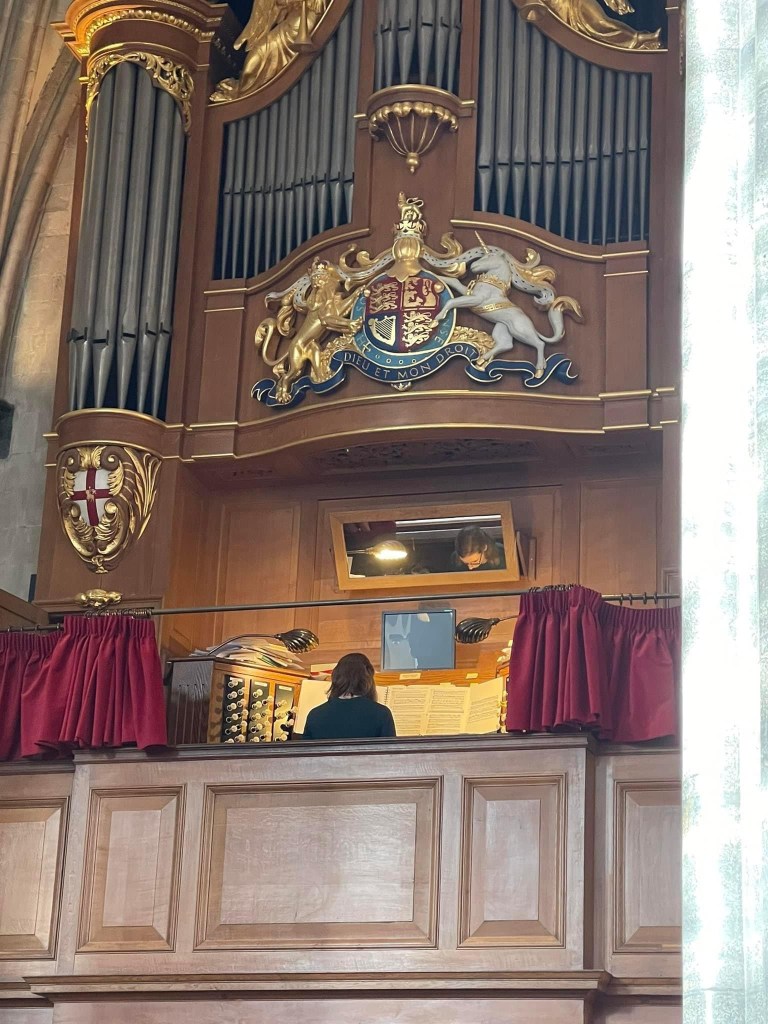
                                                       Temple Church, London

ANGELA RANSLEY IS DIRECTOR OF THE HARMONY SCHOOL OF PIANOFORTE AND ALSO WORKS AS A FREE-LANCE ORGANIST.

https://christopheraxworthymusiccommentary.com/2022/09/14/the-gift-of-life-the-keyboard-trust-at-30/

Alistair Wroe and Raffaello Moretti in Rome Magical return of Music and Poetry

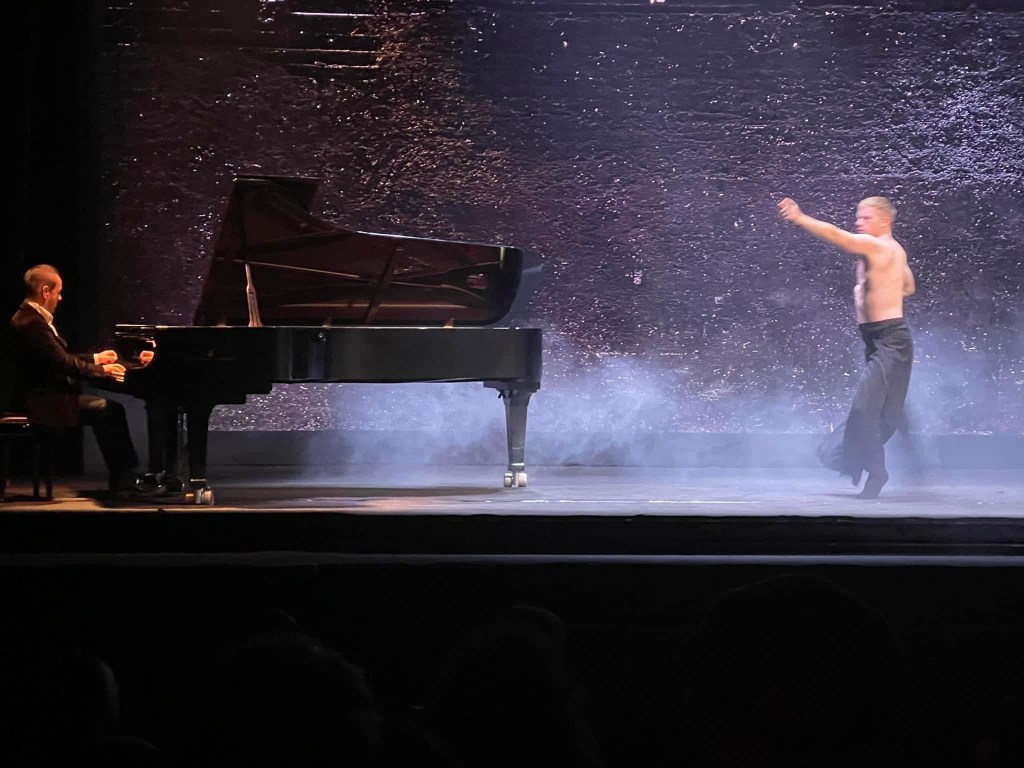
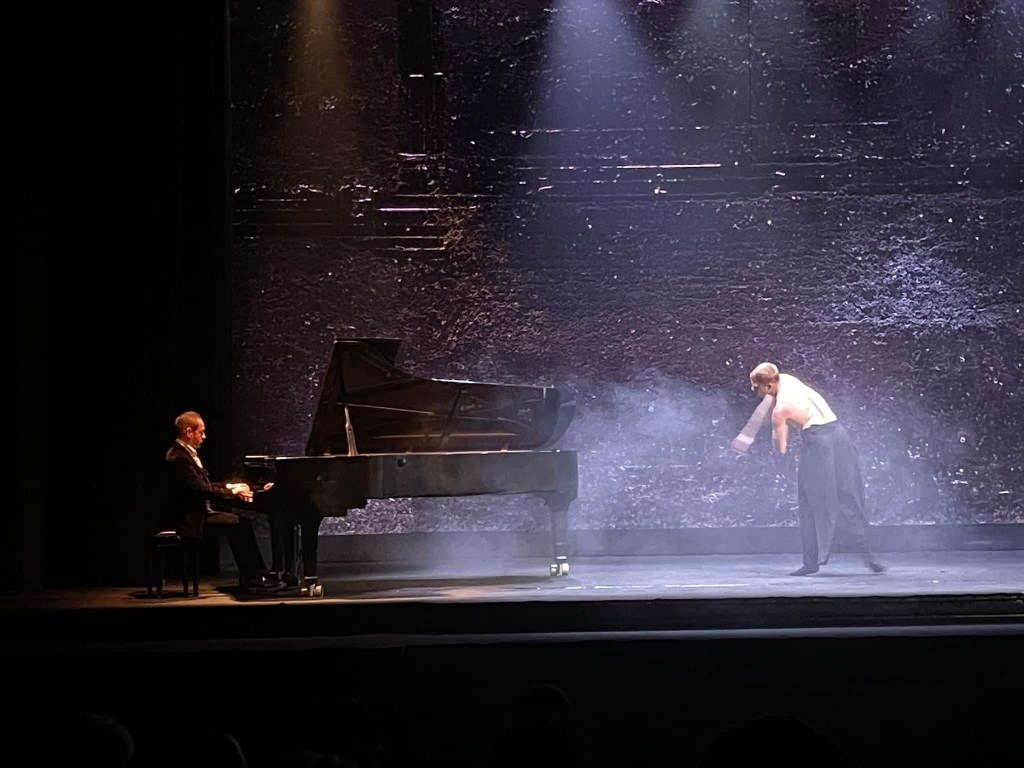
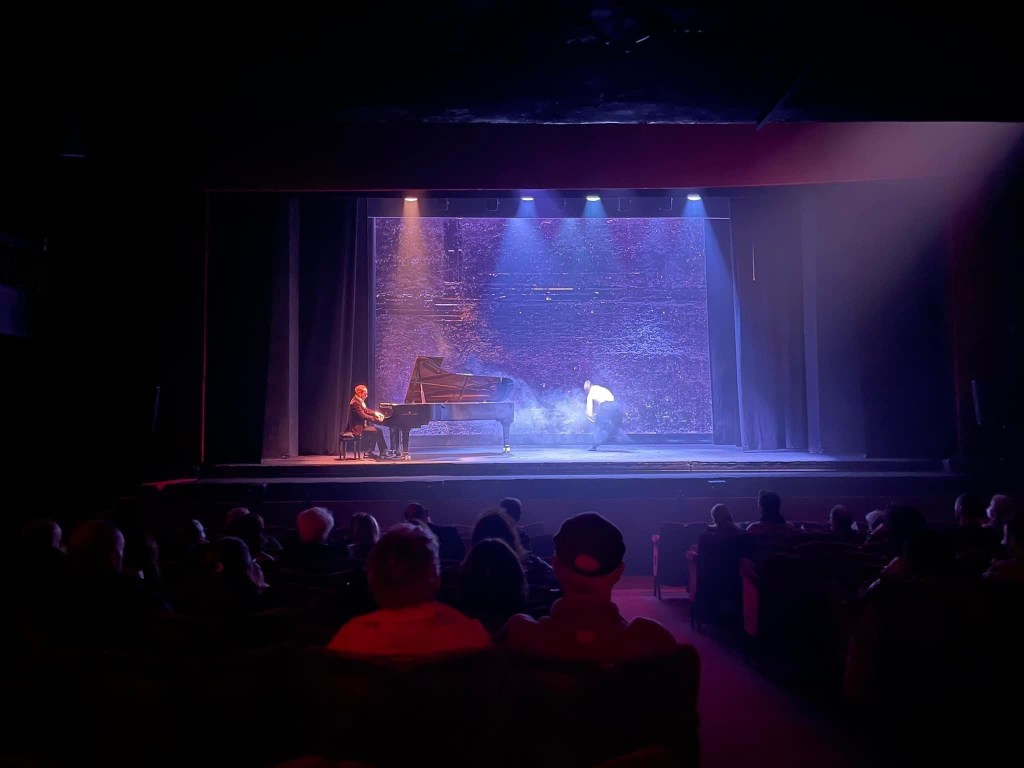
Magic again at the Ghione Theatre in Rome with the return of Alistair Wroe and Raffaello Moretti in an evening dedicated to poetic movements and music.
The ultra sensitive sounds of the piano in music from Scarlatti to De Falla with the poetic movements of dance.


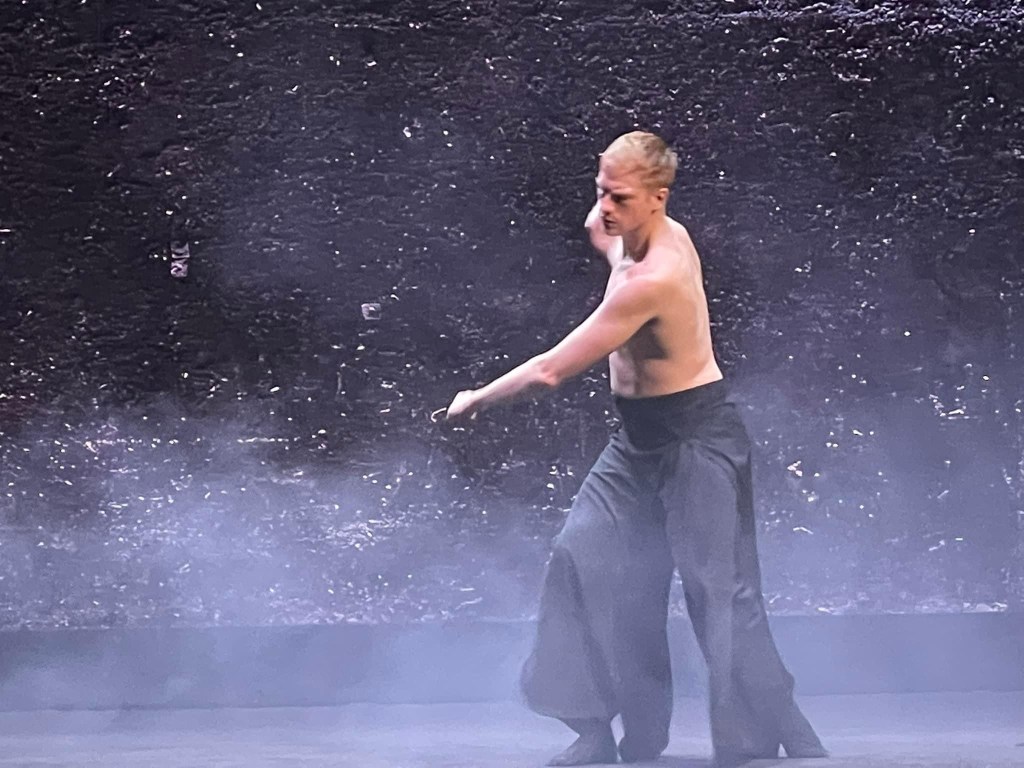
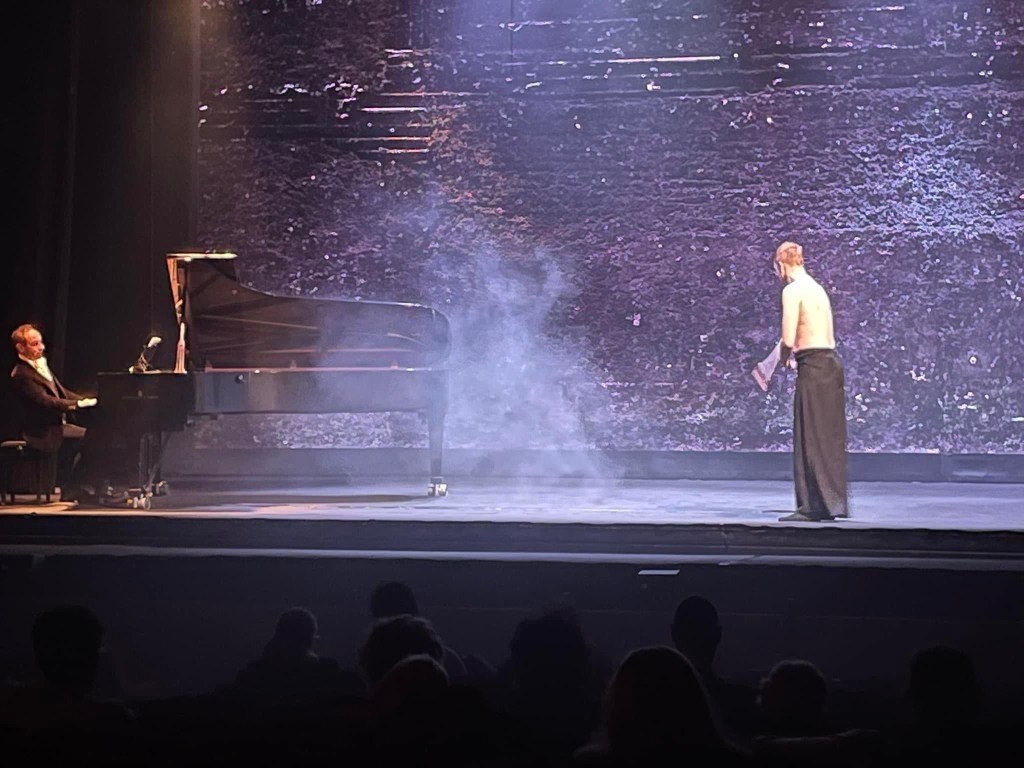
Appearing on the wings of song as Alistair appeared out of the mist vibrating to the music as he delved deep into the very soul of creation.
The aria from the Goldberg Variations was exquisitely played by Raffaello and was brought movingly to life by the subtle movements of Alistair.

Scarlatti sonatas of delicacy and luminosity were but scintillating jewels made to glow ever more radiantly by poetic movements of subtle grace.

Exotic sounds and drumming of feet in De Falla’s Fantasia Baetica with its clashing pungent harmonies astonishingly illuminated even more with the entry of Alistair in the final few moments.

Satie’s barely whispered Gnosiennes were merely washes of colour and shape where atmospheres and sounds were combined in moments of pure magic.

The first twelve of Chopin’s preludes op 28 were played with ravishing sounds with Alistair making his appearance only in the fourth where one of Chopin’s most beautiful melodic inventions was shaped by them both with great intensity and ravishing beauty.It was the same beauty in a little Chopin Mazurka that they shared as an encore with an enthusiastic audience demanding more after the final sublime gasps of the Bach Aria of his monumental Goldberg Variations.


A concert of music and movement recalling the golden age of the 1920’s when music and movement could still speak louder than words.

https://christopheraxworthymusiccommentary.com/2022/04/11/alistair-wroe-raffaello-moretti-in-concert-at-teatro-ghione-rome-illumination-and-exhilaration-of-a-new-art-form/

Alistair Wroe: Originario del Worcestershire, Alistair Wroe ha iniziato la sua formazione di ballerino presso il Center for Advanced Training di Birmingham e la Worcestershire Youth Dance Company. Ha completato un-BA (Hons) in Danza Contemporanea al Trinity Laban Conservatoire of Music and Dance. Durante la sua laurea ha lavorato con diversi coreografi tra cui Gary Lambert, Struan Leslie e Marie Gabrielle- Rotie. Inoltre, Alistair ha lavorato a stretto contatto con Alison Curtis- Jones e la Dott.ssa Valerie Preston-Dunlop, in particolare su nuove realizzazioni delle opere di Rudolf Laban Nacht e Green Clowns. Ha quindi continuato la sua formazione presso la London Contemporary Dance School, dove ha conseguito il suo Master of Arts, seguito da un tour internazionale come membro di EDge. Alistair ha avuto l’opportunità di lavorare con Philippe Blanchard, Alexander Whitley, Dazed Magazine per Craig Green, Tom Rosenthal, Tom Roden e Joseph Toong, rivelandosi come uno degli artisti più̀ talentuosi ed interessanti della nuova generazione di ballerini britannici, per carisma, presenza scenica, tecnica, eclettismo e profondità̀ di interpretazione.Si è esibito a livello internazionale in Svizzera, Malesia, Norvegia e Italia. Attualmente continua ad esplorare ulteriormente il suo ruolo di interprete ed é inoltre interessato ad acquisire una profonda comprensione della pratica coreografica.

Raffaello Moretti: Diplomatosi a 18 anni con il massimo dei voti e la lode, Raffaele Moretti é stato allievo prima a Parigi di Aldo Ciccolini e Marie- Françoise Bucquet, ed in seguito di Alicia de Larrocha (Master triennale presso l’Academia Marshall- Barcellona) e Tatiana Sarkissova (Master biennale presso la Royal Academy of Music – Londra).Ha inoltre studiato per quattro anni presso la International Piano Foundation- Lake Como, presediuta da Martha Argerich, seguendo le lezioni di William Grant Naboré, Leon Fleisher, Claude Franck, Menahem Pressler, Charles Rosen, Dmitri Bashkirov, Fou Ts’ong ed Andreas Staier. Ha quindi lavorato intensivamente con Galina Eugiazarova, a Madrid. Masterclasses press il Mozarteum di Salisburgo (Andrzej Jasinski), la Foundation Yamaha di Parigi (Elisso Virsaladze) e lo Schwelzig Holstein Musik Festival di Lubecca (Bruno Leonardo Gelber). Laureato della Fondazione Cima in Toscana, ha inoltre vinto il Primo Premio assoluto presso diversi Concorsi Internazionali (tra cui Moncalieri e Mondovì). Concerti in Italia, Francia, Spagna, Germania, Inghilterra, USA, Messico ed Argentina. Ha inoltre collaborato per diversi anni con il Quintetto de I Solisti Aquilani. Laureato in Filosofia con il massimo dei voti presso la Università Statale di Milano, dove ha discusso con Carlo Sini una tesi su Nietzsche, ha seguito altresì le lezioni di Jacques Derrida presso l’HESS di Parigi. Sta completando un PhD su Alfred Cortot presso il King’s College di Londra con Daniel Leech- Wilkinson.

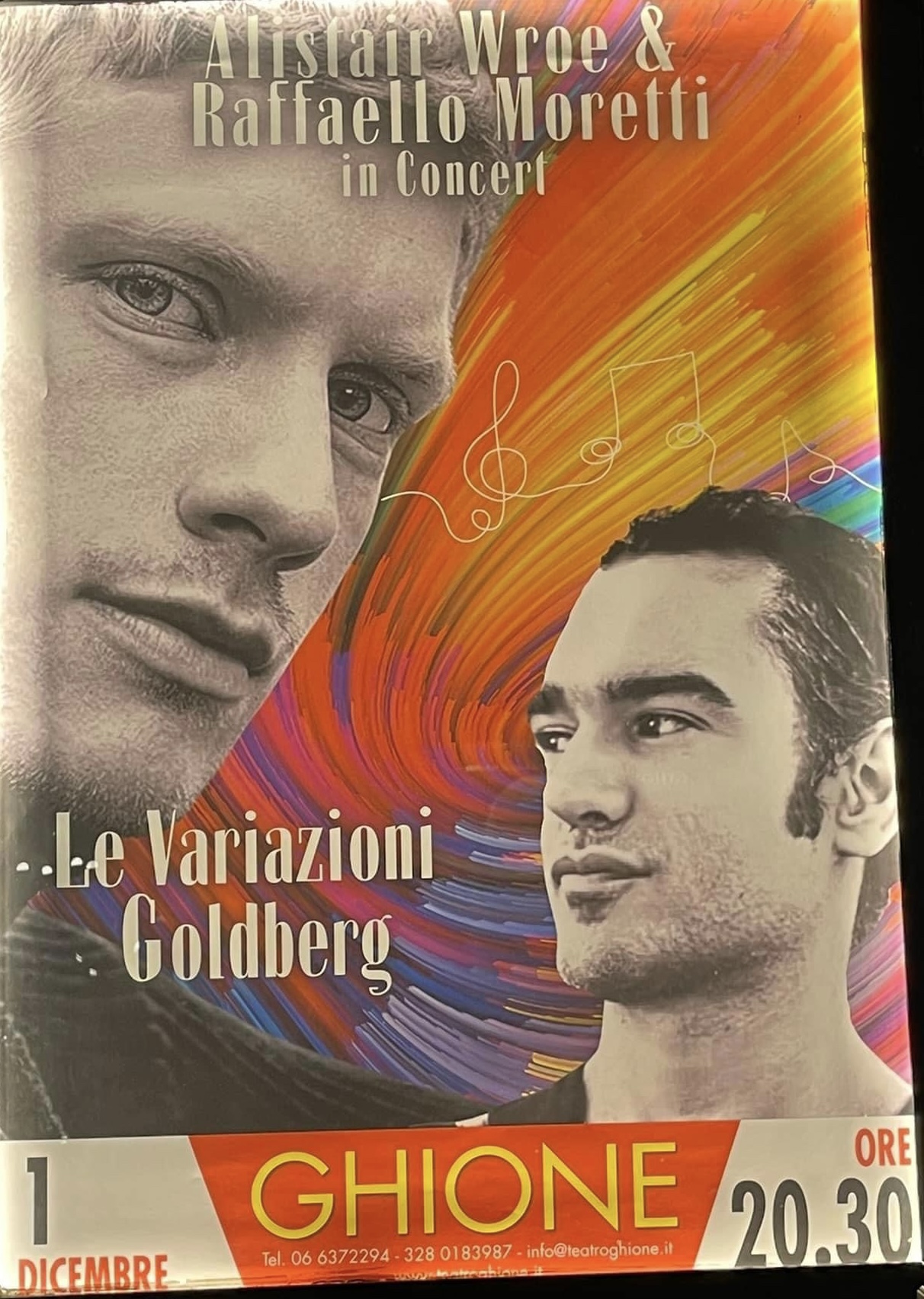
Looking forward to their next performance in Rome on 1st December with the Goldberg Variations.
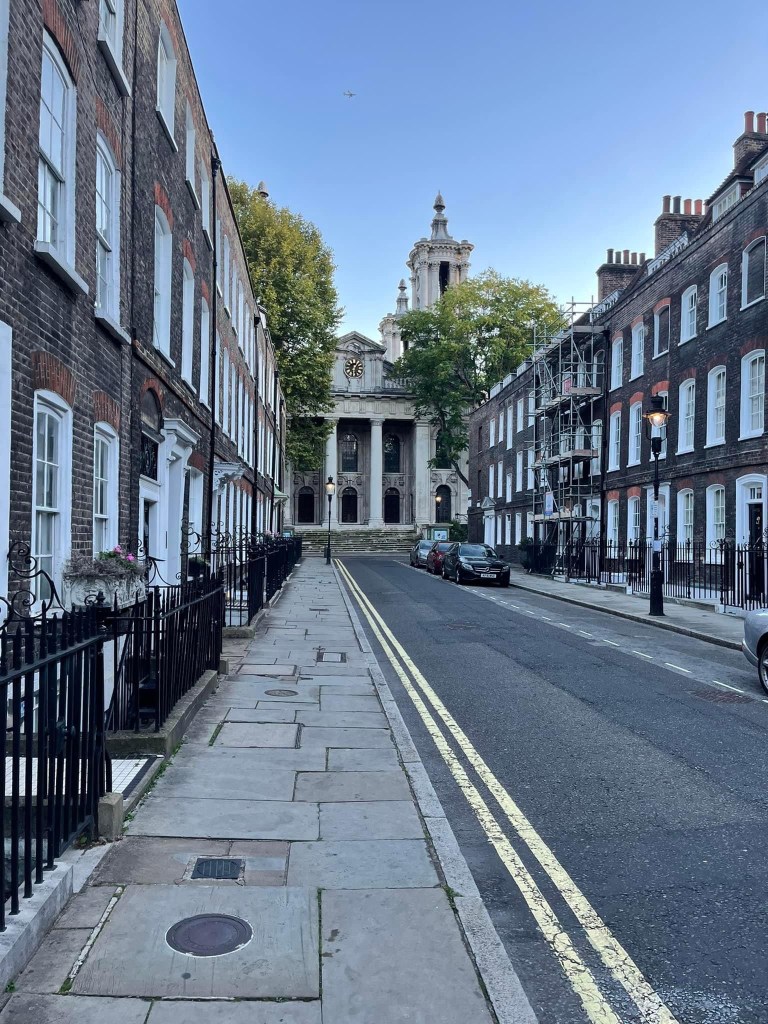
Nice to see Alistair and Raffaello in one of the most beautiful concert venues in London.
I have admired their recent performances in the equally beautiful Ghione Theatre in Rome.
Raffaello is a masterly pianist who has created a new formula of dance movements that add such atmosphere to the beauty of his playing.

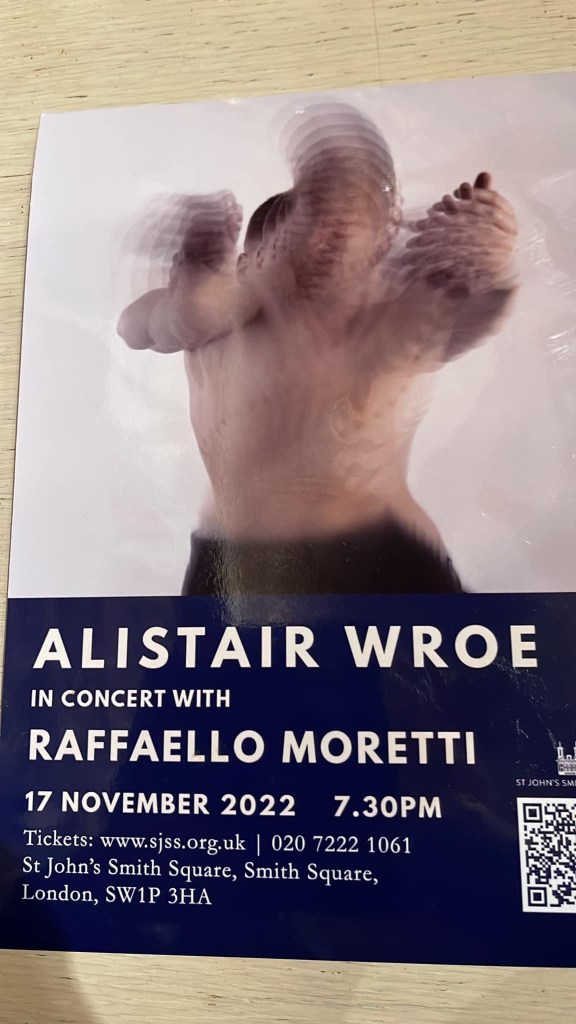
St. John’s Smith Square Westminster

Alistair Wroe and Raffaello Moretti in Concert
Alistair Wroe
DANCE
Raffaello Moretti
PIANO
C. Debussy
Preludes, Book One
Terry Riley
The Heaven Ladder, Book 5 (Etude from the Old Country)
J. S. Bach
Fantasia and Fugue in A minor, BWV 904
M. Mussorgsky
Pictures at an Exhibition
In their second Autumn Concert at St John’s Smith Square, Alistair Wroe and Raffaello Moretti will explore an eclectic and exciting program that returns to Johann Sebastian Bach and then goes to the Preludes of Claude Debussy and the Pictures of Modest Mussorgsky, with a foray into the minimalistic repertoire of Terry Riley, for an evening of dance and music to remember.

ALISTAIR WROE
Originally from Worcestershire, Alistair completed his BA (Hons) Degree in Contemporary Dance at Trinity Laban Conservatoire of Music and Dance and went on to join EDge at London Contemporary Dance School where he worked with choreographers including Alexander Whitley and Philippe Blanchard. After completing a Master’s degree at London Contemporary Dance School, Alistair has had the opportunity to perform and present work at venues including Halle am Berghain (Berlin), Trauma Bar und Kino (Berlin), Szene (Salzburg), The Place Theatre (London), KLPAC (Kuala Lumpur) and Venue Cymru (Llandudno). As a dance artist he has worked with Möbius Dance, Matan Zamir, Gal Naor, Jack Philp Dance, Alexandra Green, Craig Green for Dazed Magazine, The Irrepressibles and Tom Rosenthal, amongst others. Alistair is one of the top emerging artists of his generation, distinguished by his technical skills, eclecticism and magnetism on stage.

RAFFAELLO MORETTI
Having graduated in Piano Performance in Milan at the age of 18, Raffaello then studied in Paris with Aldo Ciccolini and Marie-Françoise Bucquet; in Barcelona with Alicia de Larrocha and finally in London with Tatiana Sarkissova, acquiring a Master’s degree from the Royal Academy of Music. Meanwhile, he studied at the International Piano Academy Lake Como – directed by Martha Argerich- and worked intensively with Galina Eguaziarova, in Madrid. He has a broad international performance experience in Italy, France, Spain, Germany, England, USA, Mexico and Argentina. Raffaello also graduated in Philosophy with top marks at the University of Milan and followed the lessons of Jacques Derrida at the EHESS in Paris. Recently, he has completed a PhD from King’s College in London with Daniel Leech-Wilkinson.

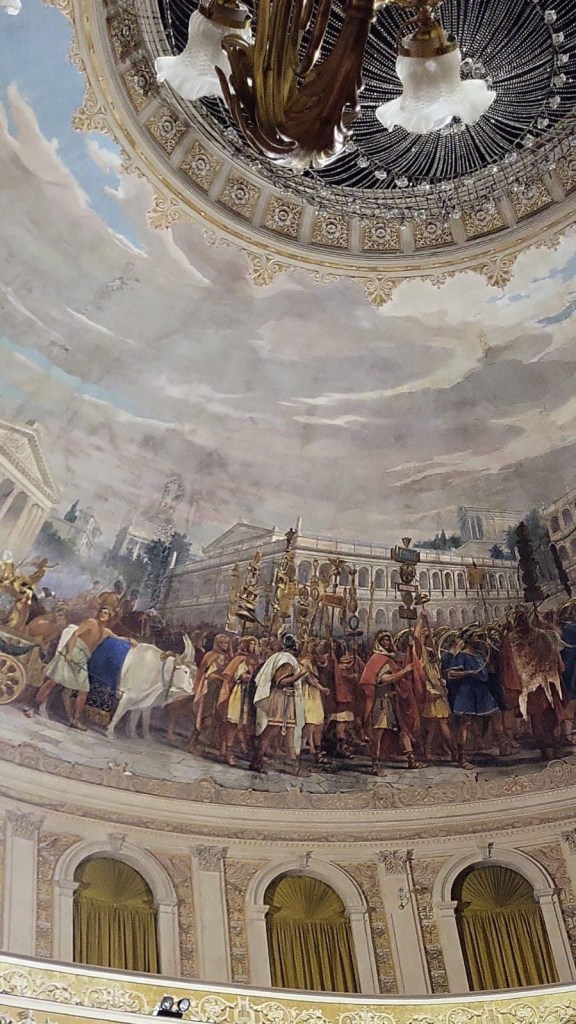
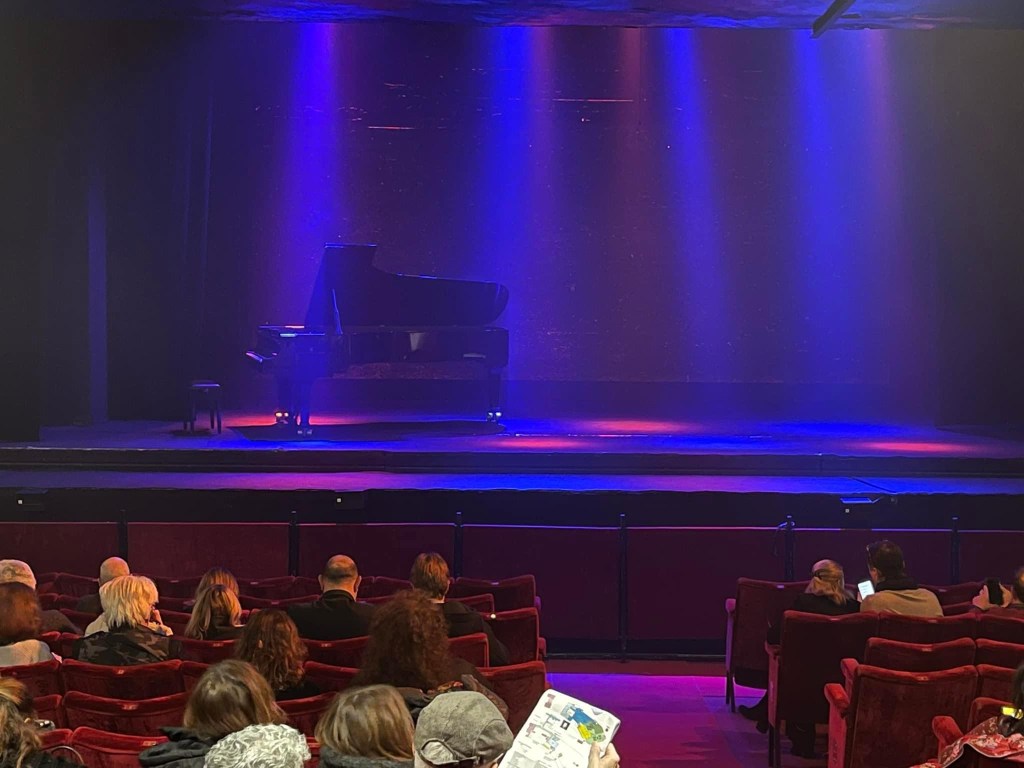
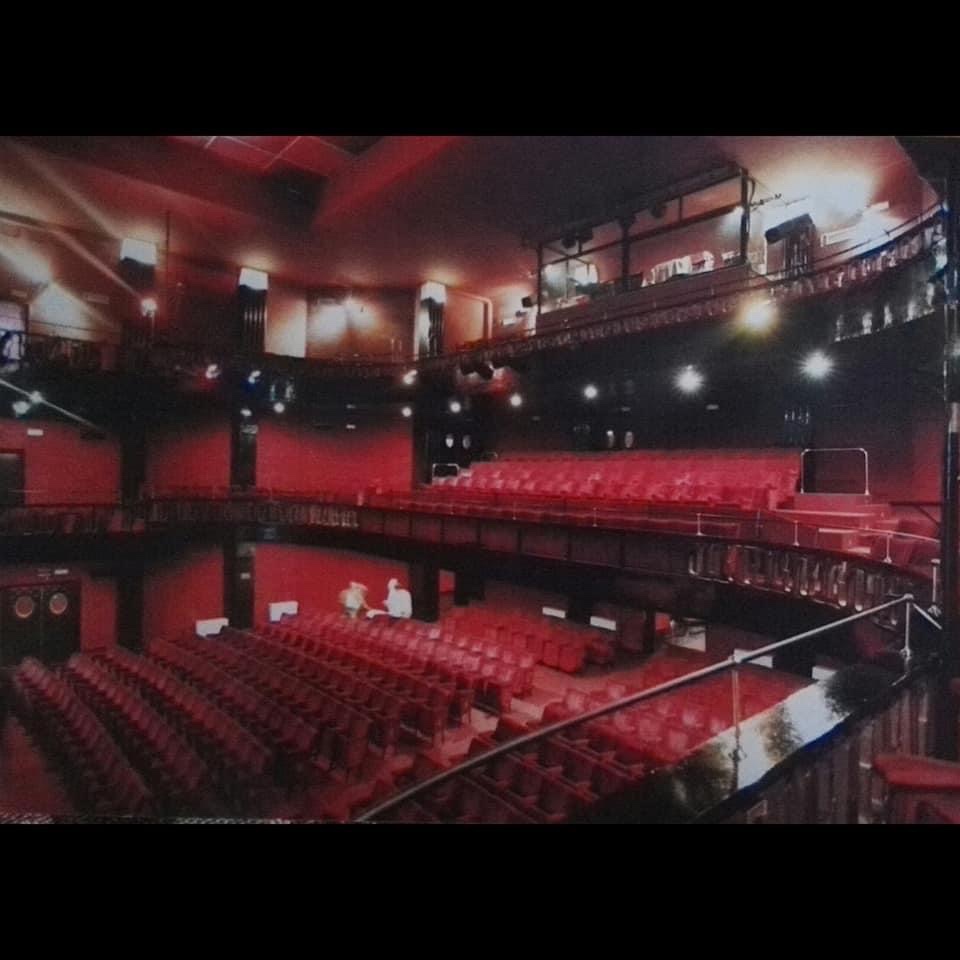
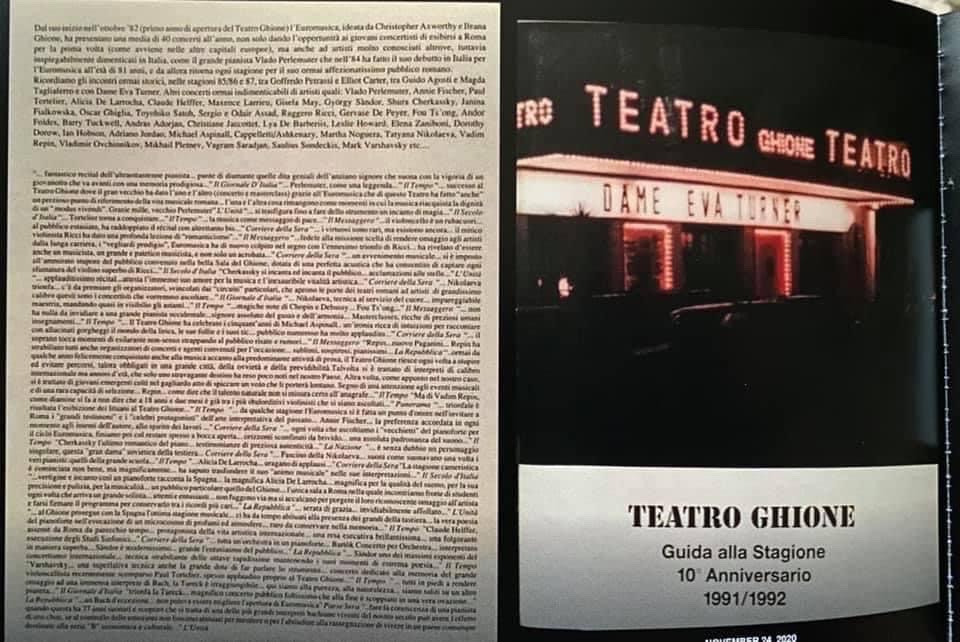
Teatro Ghione Rome