Strauss-Grainger: Ramble on Love from “Der Rosenkavalier”
Schubert-Liszt: Ständchen S560/4
Schubert-Liszt: Liebesbotschaft S560/10
Schubert: Sonata in A major D664
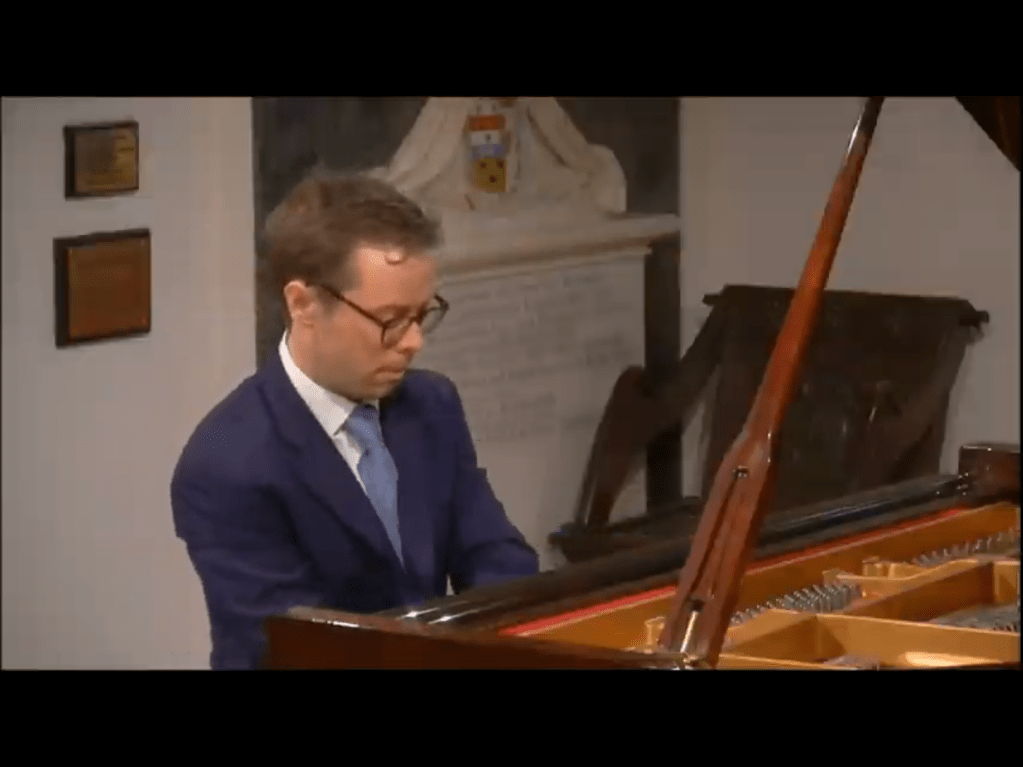
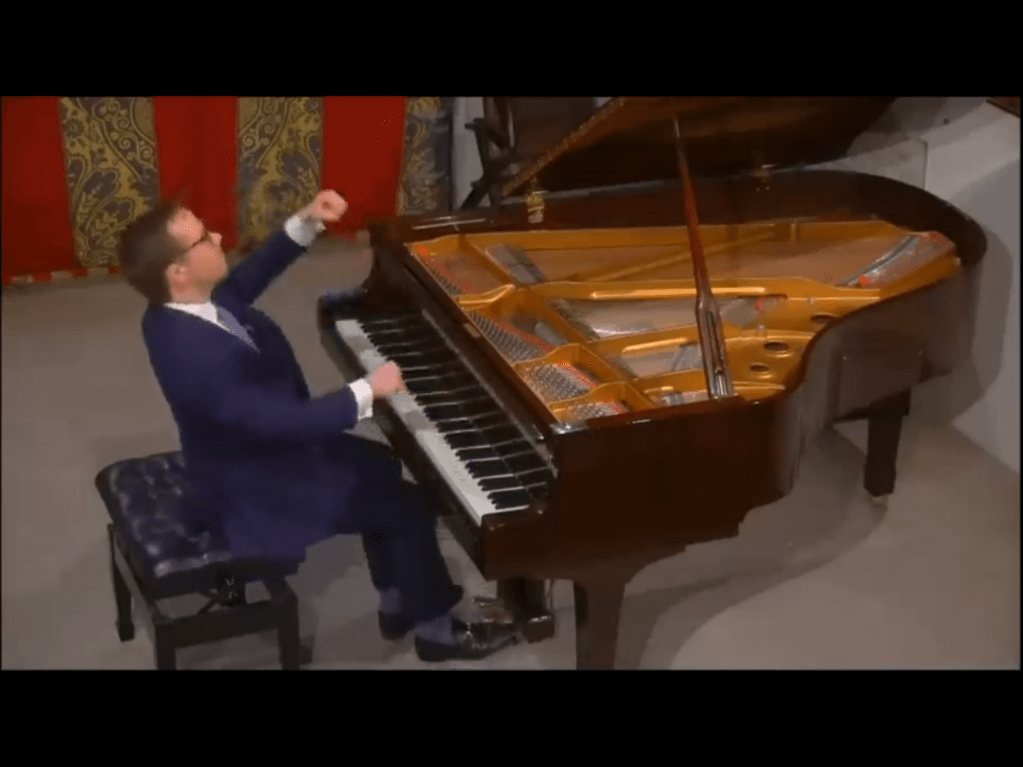
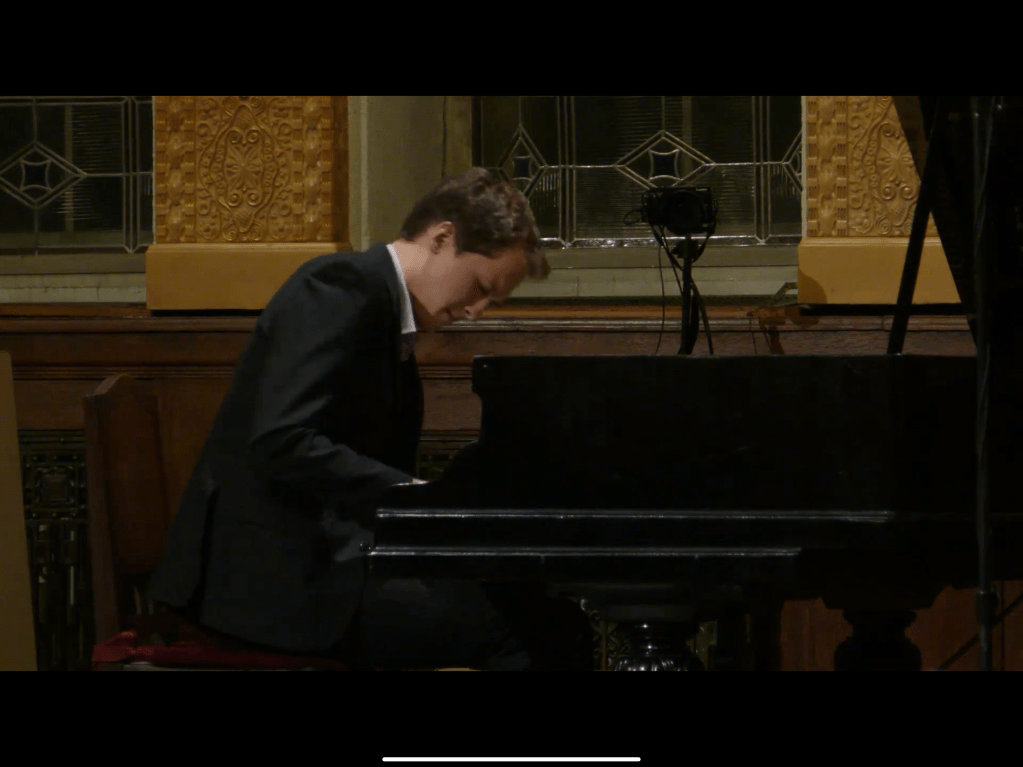
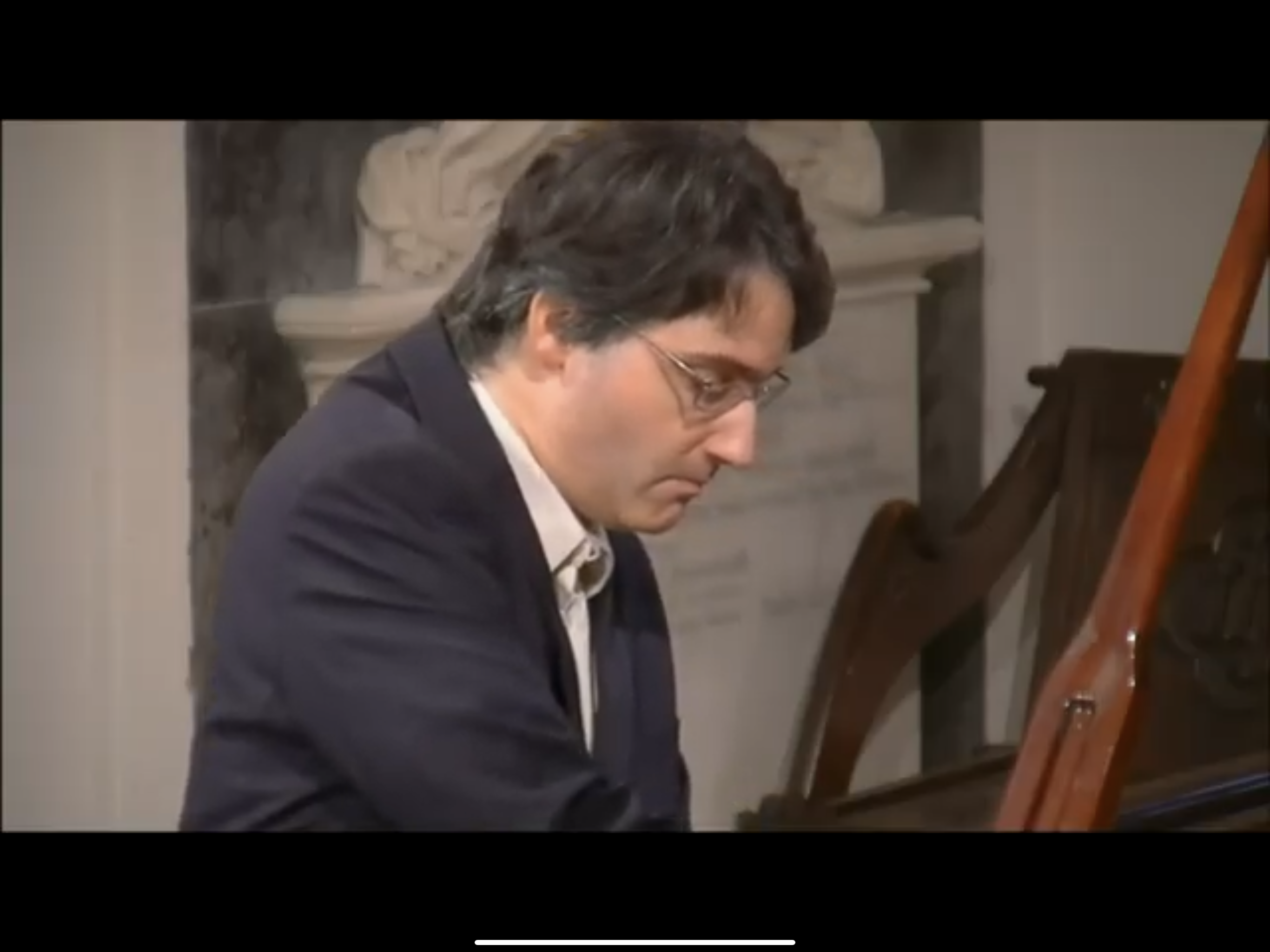
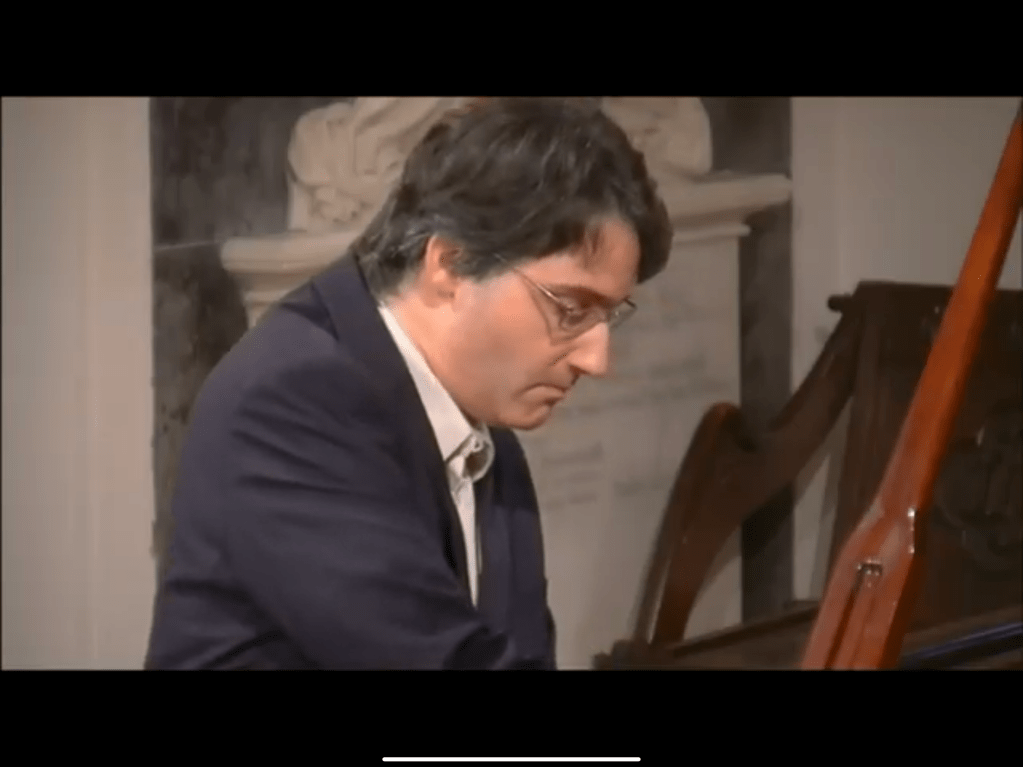
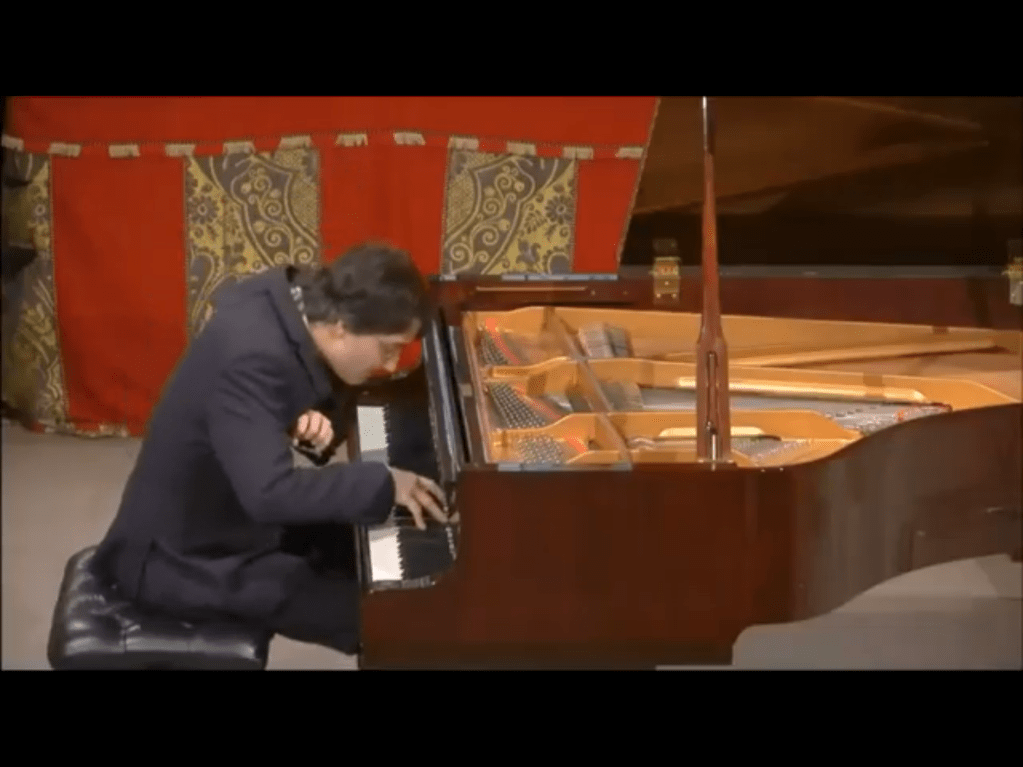
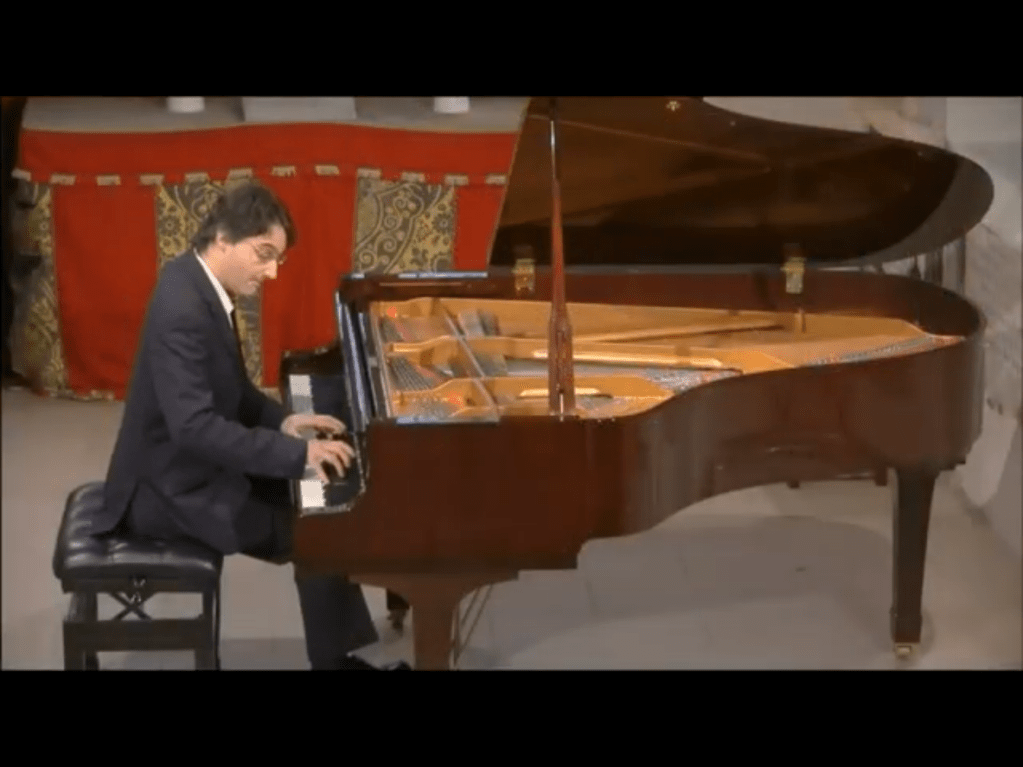
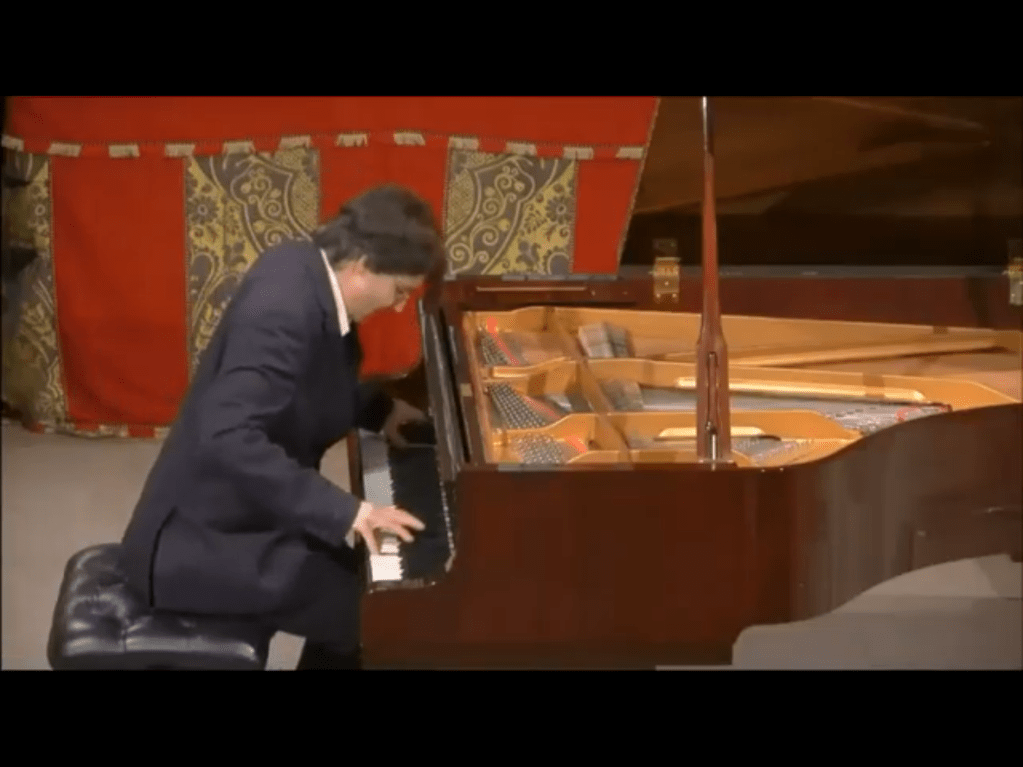
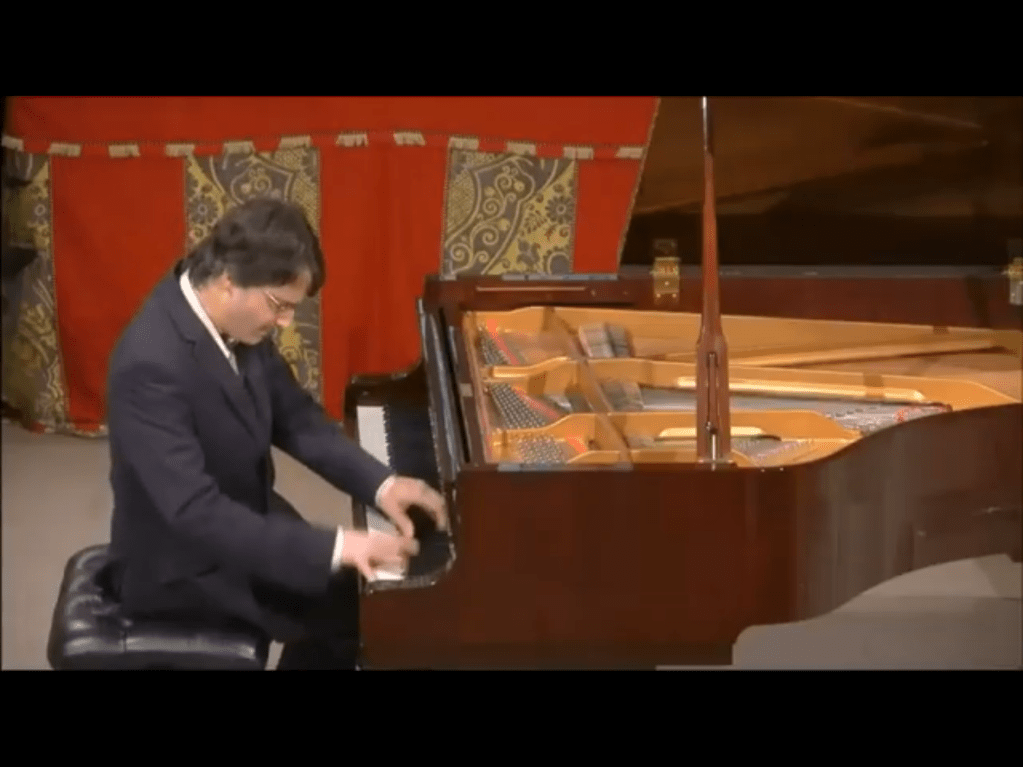
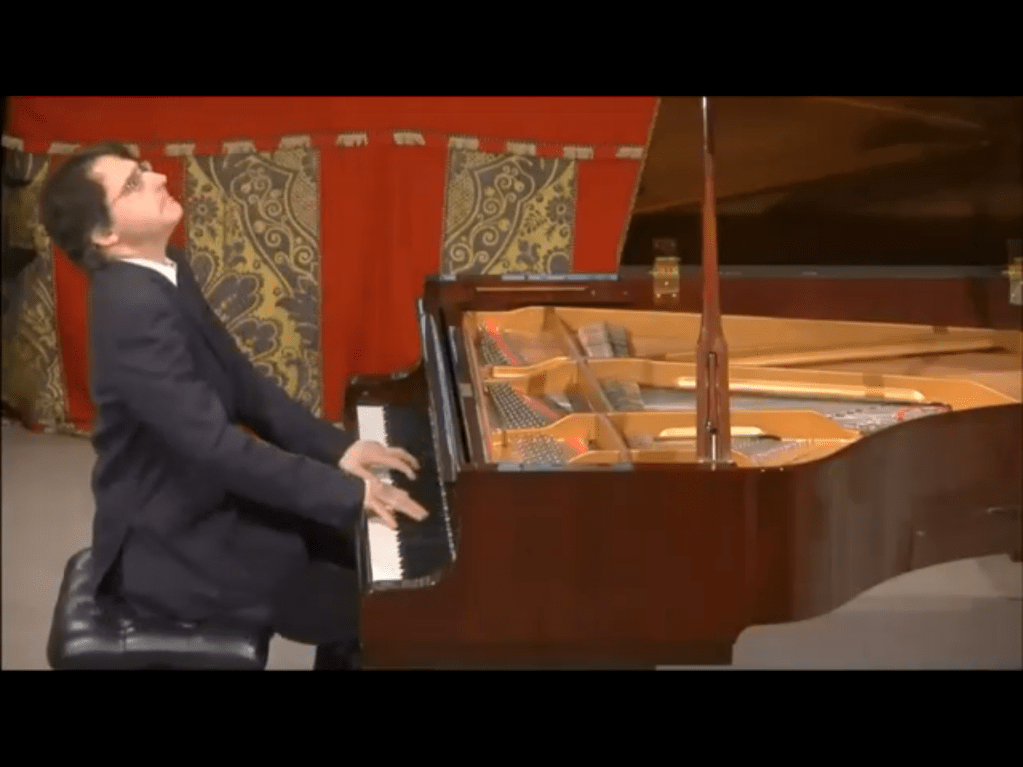
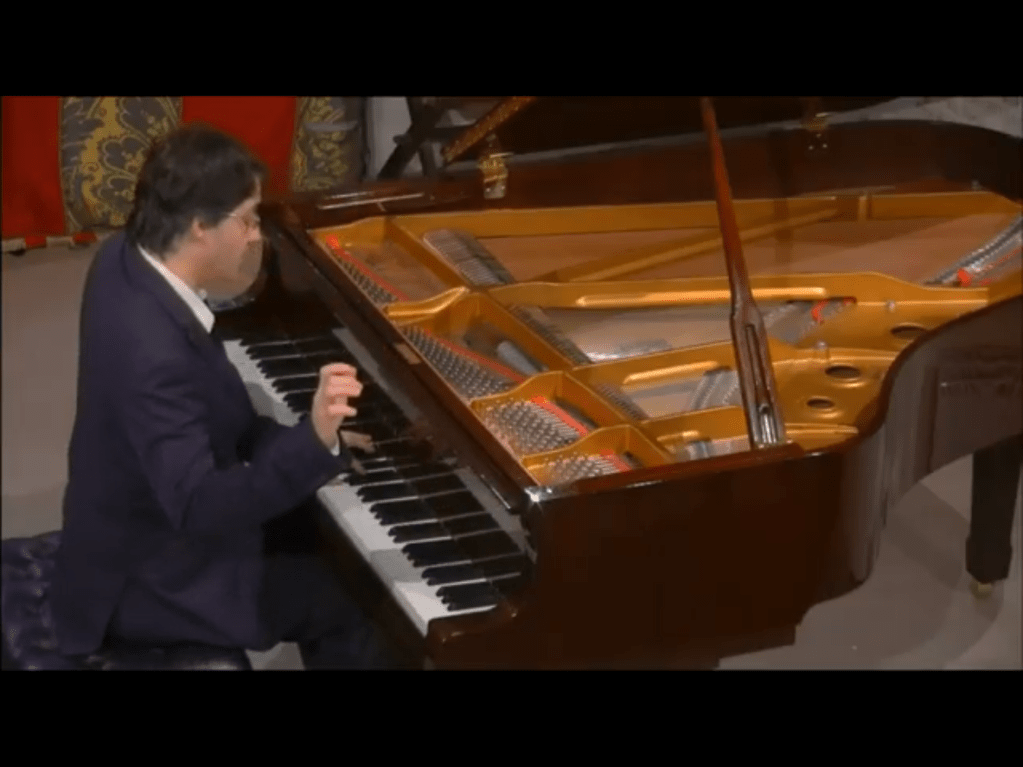
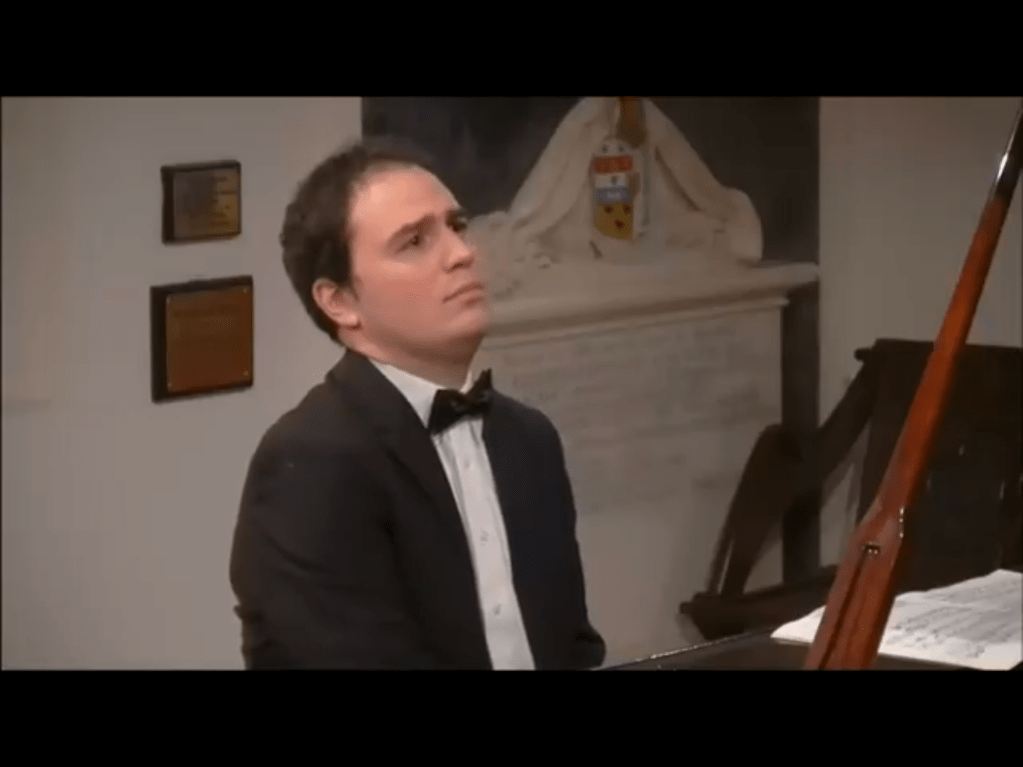
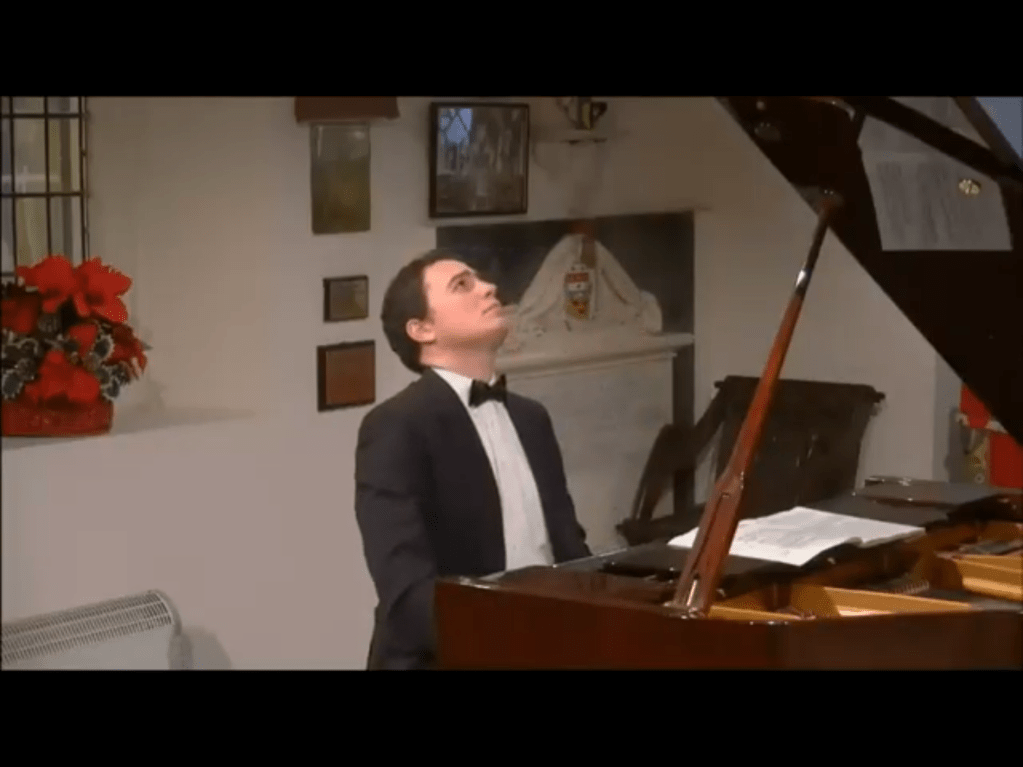
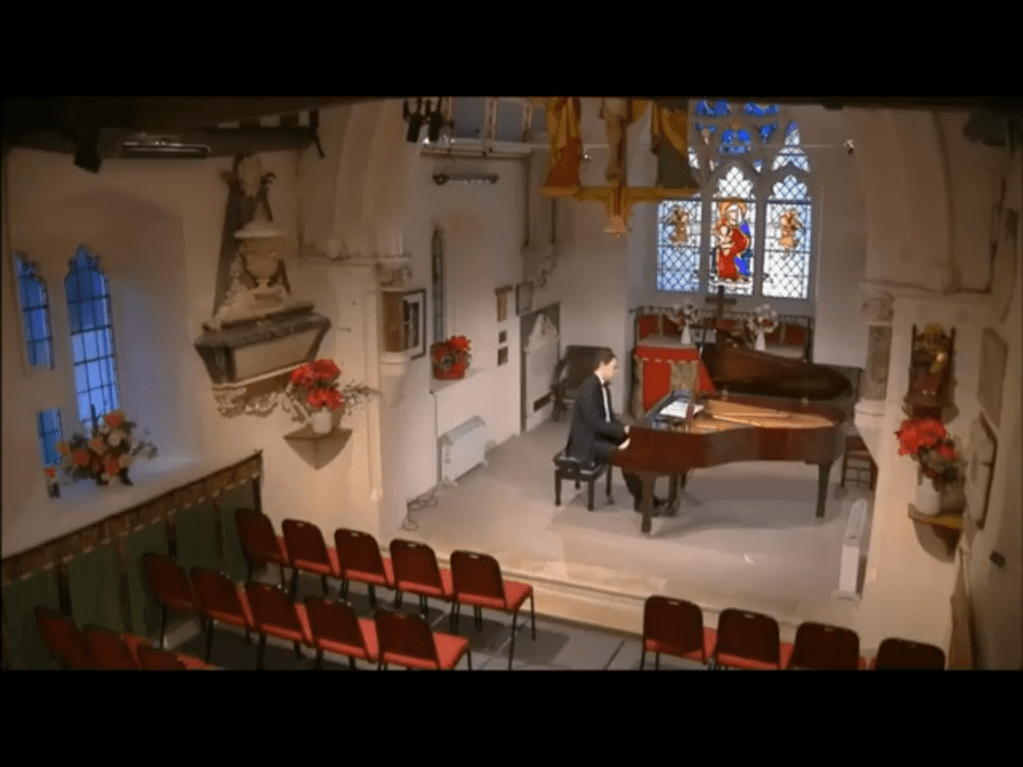
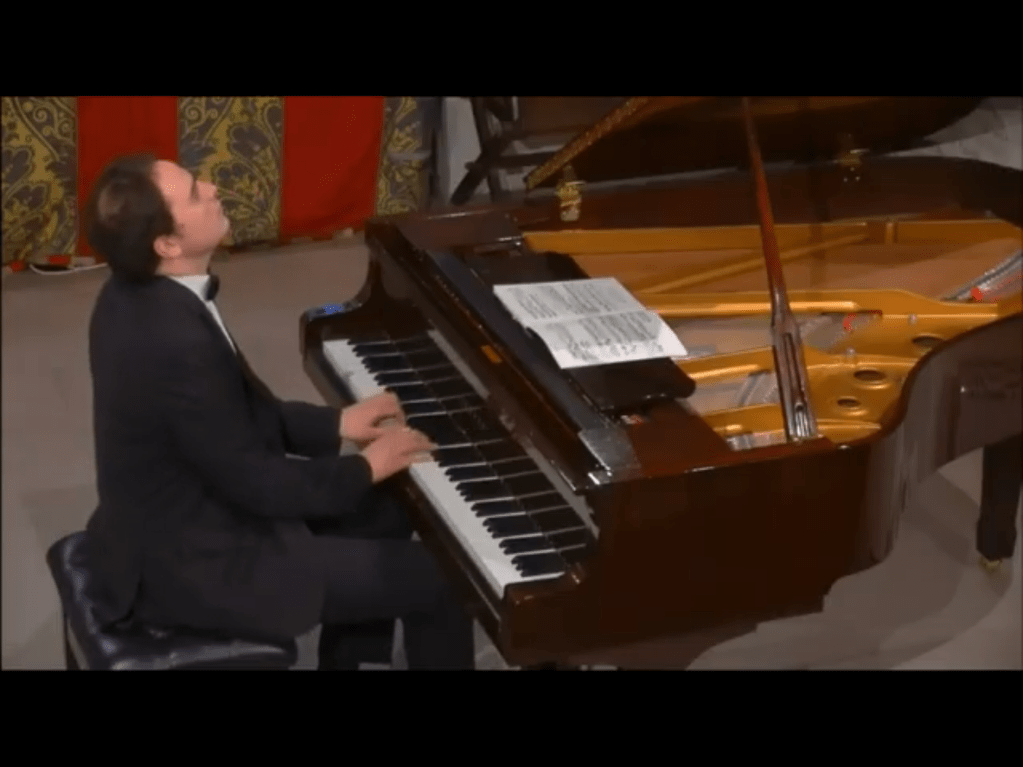
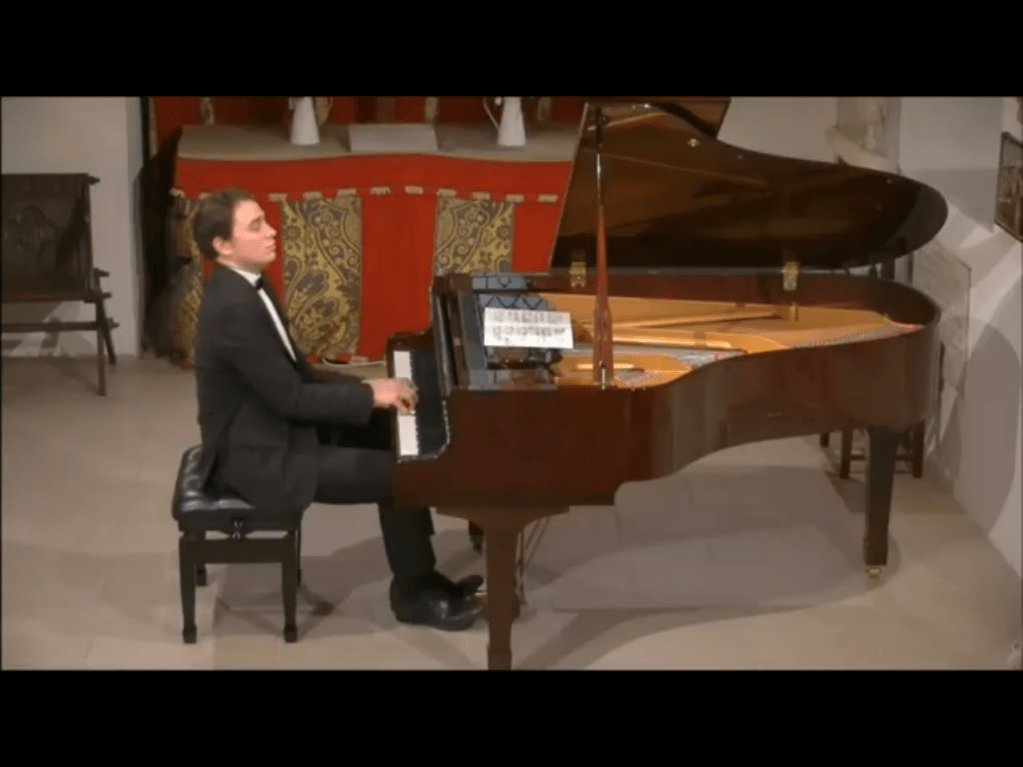
Some exquisite playing from a true musician for Valentine’s Day but also to celebrate the 98th birthday of Rina Stewart a long standing member of the remarkable St Mary’s team. A very distinguished service record at Bletchley Park the home of the World War Two code breakers. Ashley celebrated with a concert of pure song. Transcriptions obviously but with ten fingers that could sing as beautifully as any singer. Has the famous transcription of Orfeo ever sounded so pure and luminous as he allowed the music to flow so naturally? The ramble that Grainger takes with Strauss’s Rosenkavalier with its magical arabesques and then the crystal clear woodwind sounds that immediately took us into the world of love that dare not mention it’s name. Great passion but also sumptuous sounds as the various strands that Liszt so magically weaves together in Liebestod from Tristan are part of a wave that sweeps across the keys with unbearable tension finally allowed to explode and then so gently subside. Schubert’s Standchen and Liebesbotchaft transcribed so magically by Liszt were played with such delicacy but also a musical line that was just as eloquently shaped in Ashley’s sensitive hands without the words than the original songs. One of Schubert’s simplest and most mellifluous of sonatas D.664 was the ideal choice for a programme that was dedicated to Valentine’s and a heartfelt tribute to song.
British pianist Ashley Fripp has performed extensively throughout Europe, Asia, North America, Africa and Australia in many of the world’s most prestigious concert halls. Highlights include the Carnegie Hall (New York), Musikverein (Vienna), Concertgebouw (Amsterdam), the Philharmonie Halls of Cologne, Paris, Luxembourg and Warsaw, the Bozar (Brussels), and the Royal Festival, Barbican and Wigmore Halls (London). He has won prizes at more than a dozen national and international competitions, including at the Hamamatsu (Japan), Birmingham and Leeds International Piano Competitions, the Royal Over-Seas League Competition, the Concours Européen de Piano (France) and the coveted Gold Medal from the Guildhall School of Music & Drama and was chosen as a ‘Rising Star’ by the European Concert Hall Organisation. He has performed in the Chipping Campden, Edinburgh, Brighton, Bath, Buxton, City of London and St. Magnus International Festivals as well as the Oxford International Piano Festival, the Festival Pontino di Musica (Italy) and the Powsin International Piano Festival (Poland). Ashley has appeared on BBC television and radio, Euroclassical, Eurovision TV and the national radio stations of Hungary, Spain, Luxembourg, the Netherlands, Poland, Belgium and Portugal.Ashley Fripp studied at the Guildhall School of Music & Drama with Ronan O’Hora and is currently studying with Eliso Virsaladze at the Scuola di Musica di Fiesole (Italy).
Davide Scarabottolo certainly showed us why he had won the prestigious Sergio Cafaro prize.An exhilarating display not only of musicianship but also of showmanship. I got rhythm had it’s final glissando taking him onto his feet with the sheer joy of his playing. But the concert had started with Bach D major Toccata played with great musicianship and intelligence. If only the opening flourishes could have had the same exhilaration that he bought to Jelly Roll Morton or Gershwin. Davide there are no rules for an artist like you. Learn your lesson ,of course,then put the book away and let your extraordinary talent take over and do the rest. It was an intelligent reading of remarkable clarity with the infectious rhythm of the Toccata and the astonishing excitement he brought fearlessly to the end that gave a hint of what was to come later. Six of Liszt’s transcendental studies were played with such sumptuous sounds as he threw himself into the immense technical challenges with great courage the notes seeming to pour out of his fingers as he imbued them with such romantic and passionate sounds. This young man looking the part too showed us just what poetry there is to be found in Paysage and Harmonies du Soir as well as the passionate outpouring of a romantic soul in the beautifully descriptive Chasse Neige or the F minor study. What demons possessed him too in Prokofiev’s aptly named Suggestion Diabolique. But it was the honky-tonk piano of Jelly Roll Morton and the show business of I got rhythm which I am sure had all the spectators cheering him on as they obviously will too when future live performances are permitted and his career surely well established.
The Bach Toccata was very rhythmic and clearly played with a sparing use of the sustaining pedal.The opening could have been more arresting to hold our attention as it would most probably have been an improvisation calling the audience to order as Liszt was to have done with his Preludio a century later.The recitativi too could have been orchestrated more clearly with the beautiful expressive melody merely commented on by tremolando strings .But the build up to the Toccata was very impressive as was his rock steady rhythm that allowed the coda to take us with such exhilaration and remarkably clear articulation to the final triumphant chords.
The Liszt had just the imposing opening that had been missing in the Bach.Immediately one could imagine Liszt sitting at the piano and mesmerising his audience with astonishing flourishes that merely pave the way for the first real study with Paysage.A study in painting in sound which Davide realised so well as he allowed the music to flow and be shaped so eloquently building up to it’s climax with sumptuous rich sounds before dying away to the distance.There was startling virtuosity on show too with the dazzlingly brilliant scales with which Mazeppa announces his entrance.It was followed by some astonishing feats of resilience and virtuosity as Mazeppa relentlessly carried us on his journey.There was beauty too in the central section where the tenor melody sang so mellifluously accompanied by ravishing arpeggios.Only a momentary relaxation as the excitement mounted and Davide threw himself fearlessly into the fray.The F minor study too starting so delicately becoming more and more romantically involved as Davide allowed the rhythmic drive and romantic sweep to ignite the piano.It led to an exhilarating stampede of alternating octaves that brought us to the final overwhelming few chords.’Harmonies di Soir’ showed the poet in this young man with sumptuous sounds and beautifully shaped melodic line that just seemed to dissolve into the magical opening of ‘Chasse Neige.’One of Liszt’s most perfect creations with the whispered opening obviously the inspiration for Ravel’s Ondine where the melodic line is allowed to appear out of a cloud of magic sounds.The dialogue between the treble and bass reached heights of romantic fervour that were quite overwhelming before drifting into the distance with winds swirling around this imaginary landscape so poetically depicted in sound.
Prokofiev’s ‘Suggestion Diabolique ‘ with its sinister opening deep in the bass before the relentless chase was on,taking off with astonishing pyrotechnics and driving rhythms.Who would have thought that real honky-tonk piano would follow that display of poetry and virtuosity .It came as an exhilarating surprise as Davide just let his hair down and was obviously having such fun with Jelly Roll Morton and the real show stopper of Gershwin’s ‘I got rhythm ‘.Davide certainly has all the showmanship as he was ejected from the piano stool by his breathtaking final glissandi.
Hollywood had arrived to end this very enjoyable recital by a young man who is obviously going places.
There is no business like show business indeed.I can imagine my dear friend Sergio Cafaro and his widow certainly with a smile of admiration and enjoyment knowing how many great talents they have helped and encouraged with a lifetime together dedicated to music.
Nato il 19 agosto 2001 ha attualmente 19 anni e vive in provincia di Padova.Dal 2015 frequenta il corso pluriennale presso l’Accademia Pianistica Internazionale di Imola “Incontri col Maestro” dove studia regolarmente con il Prof. Leonid Margarius. Dal 2010 ammesso con il nuovo ordinamento al conservatorio “Pollini” di Padova, studia con il M° Massimo De Ascaniis. Qui, dopo aver frequentato tutti gli anni pre-accademici, accede al triennio accademico, e frequentando regolarmente, sta concludendo tutti gli esami previsti per il terzo anno di triennio.Ha iniziato lo studio del pianoforte a sei anni con il M° Giacomo Dalla Libera con il quale continua a suonare repertori a quattro mani.Partecipa a numerosi concorsi di esecuzione musicale nazionali ed internazionali vincendo più di quaranta primi premi tra cui nel 2018: il 1° premio assoluto al concorso “LaszlòSpezzaferri” (VR), il 1° premio assoluto al IV concorso internazionale “Antonio Salieri” di Legnago (VR) con l’assegnazione del premio “Giuseppe Magnani”, “Premio Musica Romantica” e “Premium Virtuosité”, 1° premio al concorso “Premio Crescendo” (FI), il 2° premio al prestigioso concorso “Bramanti” di Forte Dei Marmi (LU) e il 3° premio con assegnazione di borsa di studio e della seconda menzione speciale al concorso “Premio Nazionale Delle Arti” indetto dal Miur. I più recenti ad aprile 2019: 1° premio assoluto con 100/100 cat. F superiore, senza limiti di età, al XIV Concorso Musica Insieme di Musile di Piave; il primo premio assoluto ex aequo cat. F superiore per pianisti dai 21 ai 24 anni al Concorso Internazionale Città Murata di Cittadella, a settembre 2019 il primo premio cat. C al Concorso La Palma d’Oro di San Benedetto del Tronto, a ottobre: il Primo premio al Concorso Maria Labia Prize a Malcesine e il Primo Premio al prestigioso Concorso Pianistico ‘Premio Sergio Cafaro’ presso il Conservatorio Santa Cecilia di Roma.Nel 2014, selezionato tra gli studenti dei conservatori del Veneto ha suonato presso l’auditorium della “Central Music School of the Tchaikovsky Conservatory” di Mosca. A febbraio 2018 ha suonato presso la Weill Hall della “Carnegie Hall” di New York in occasione del concerto dei vincitori della “Crescendo International Competition”. All’Accademia Pianistica Internazionale di Imola ha tenuto nel marzo 2018 un concerto per la rassegna “Genio e Gioventù” riservata ai giovani talenti dell’Accademia di Imola. Fa parte dell’albo d’onore del conservatorio “Pollini” 2015-2016 e 2016-2017. A dicembre 2017 ha suonato come solista con l’orchestra sinfonica del conservatorio “Pollini” per il concerto di apertura dell’anno accademico. Tiene numerosi recital da solista e concerti a quattro mani. Partecipa a manifestazioni musicali con esecuzioni da solista e di musica da camera in trio, quartetto e quintetto. Con il ‘Trio Antenore’, di cui è il pianista, ha vinto a novembre 2018 il Concorso di musica da Camera “Proviamo insieme” a Rubano (PD).Ha partecipato a numerose masterclasses, tra le quali si ricordano quelle con i M° K. Bogino, M. Mika, S. Pochekin, L. Zilberstein, M.G. Bellocchio, I. Stanescu, O. Laneri, M. Campanella, B. Petrushansky.
More beautiful playing streamed into my home…..Simone Tavoni playing a fascinating programme -something old something new indeed.The poet certainly spoke at the end of Schumann’s Kinderszenen as he had all through a most characterful series of pieces that in the right hands as today can truly come magically to life.A Clementi Sonata played with all the jewel like brilliance of this much neglected composer. Then the revelation with Debussy’s early Images Oubliées that I can never recall hearing in the concert hall before.The second one taking me by surprise as a carbon copy of his Sarabande from Pour le piano. To end a charmingly preposterous Grande fantasie Soirées musicales S 422 by Liszt. Obviously suggested by his mentor Leslie Howard it was the ideal piece for this intimate setting that could have been the very place that Liszt himself would have turned aristocratic ladies into a mob of screaming fans just waiting to get their hands on their idol. Luckily for Simone today the mob was at home self isolating but it was a performance to charm and thrill even those watching from afar. My supper is probably burnt by now but what does it matter when one’s soul is replenished in these barren times .
The concert opened with Clementi’s hauntingly beautiful sonata in F sharp minor op 25 n.5 one of 110 sonatas from a composer although born in Rome from an early age was sponsored by a wealthy Englishman Sir Peter Beckford who agreed to provide quarterly payments to sponsor the boy’s musical education until he reached the age of 21. In return, he was expected to provide musical entertainment. For the next seven years, Clementi lived, performed, and studied at the estate in Dorset.He remained in England and was among the first to create keyboard works expressly for the capabilities of the piano. He has been called “Father of the Piano”.Strangely neglected even though promoted by Horowitz some years ago it was refreshing to see Clementi in the programme especially when played very delicately and with great sensitivity by this young Italian pianist who like Clementi transferred to London.The sublime almost Bachian beauty of the slow movement was contrasted so well with the scintillating last movement all played with such overwhelming conviction.
‘Scenes from childhood’by Schumann were played with a great sense of character from the beautifully flowing ‘Foreign lands and people’with such a beautifully flexible melodic line before the rhythmic fun of such ‘a curious story.’A busy ‘blind man’s bluff’was thrown of with great panache before the gentle ‘pleading of the child’and the beautiful ease with which ‘happy enough’was allowed to flow.A very imperious ‘important event’only made the delicacy of ‘dreaming’even more poignant. Such delicacy ‘by the fireside’led to the passionate rhythmic outburst of ‘the knight on horseback’and the contrasting beautifully shaped ‘almost too serious.’The dramatic changes of mood were indeed ‘frightening’before the sublime simplicity of ‘the child falling asleep.’All opening a magic door for the ‘Poet to speak’so eloquently in Simone’s hands with a beautifully espressive cadenza before the even more poignant final words from the poet.A magical performance ideally suited to this intimate setting and revealed by Simone’s very sensitive sound palette.
Debussy wrote the Images oubliees towards the end of 1894 and called them simply Images. They formed part of the collection of Alfred Cortot, and were, in the years between their composition and eventual publication in 1976, largely overshadowed by the two ‘books’ of Images; hence the title – Images oubliees (Forgotten Images). The autograph of this set is prefaced with a recommendation : These pieces would fare poorly in les salons brillament illumines where people who don’t like music usually congregate. They are rather conversations between the piano and one’s self; it is not forbidden furthermore to apply one’s small sensibility to them on nice rainy days. For sheer expressive beauty the untitled opening piece is almost unsurpassed in Debussy’s output.After it comes an early and somewhat lusher version of the “Sarabande” that reappeared in 1901 in the suite Pour le piano; Émile Vuillermoz has described how Debussy played this Sarabande “with the easy simplicity of a good dancer from the sixteenth century”, and Debussy’s stepdaughter recalled how he used to emphasise the characteristic sarabande “lift” in the piece’s second bar. The final Image shares its mood, its toccata texture and its use of the French nursery song “Nous n’irons plus au bois” with Debussy’s later Estampe “Jardins sous la pluie”; and its last pages imitate a clanging bell Above this passage Debussy wrote”A bell that keeps no beat” followed by the gruff remark above the closing bars, “Enough of the bell!”Some beautifully expressive playing with a luminosity of such simplicity creating a beautiful sense of atmosphere and colour as it disappeared to a whisper.The Sarabande was played with a nobility and an almost menacing build up where again Simone’s refined tonal palette added such atmosphere with the passionate almost pleading outburst dying away to make room for the clarity and rhythmic impulse of the toccata.The little folk melody so lavishly embellished before just being simply stated with a great rhythmic build up of extravagant arabesques before the bell comes to a final almost inaudible halt.Enough of the bell indeed but what a discovery these early Debussy pieces are.
The Grande fantasie sur des motifs de La Serenata e L’Orgia des Soirées musicales by Liszt I have heard from Simone’s hands just a month or so ago and I cannot do better than to repeat what I said then:’Based on the 4th and 11th of Rossini’s song cycle.A work rarely if ever heard in concerts for some strange reason.Rossini’s tongue in cheek melody appearing in the bass before giving way to the ravishing Bellinian cantabile that would have charmed the salons of his day.Liszt the showman and charmer with all the sounds of the opera exploding from the box of tricks under the command of his ten amazing fingers .The duet between bass and soprano,the rumbling bass reminiscent of the second ballade and the coquettish appearance of the second melody.Embellished and varied with great agility and fantasy before the triumphant final appearance of the first melody almost combining the two themes together as he had in his Norma Fantasie.Giving Rossini the last laugh with a false ending before the astonishing funabulistics of Liszt’s tumultuous farewell.Played by Simone with a great sense of style and above all colour and balance that was quite remarkable.Never a hard sound in this very enjoyable hour of music but a full orchestra of Philadelphian velvet.
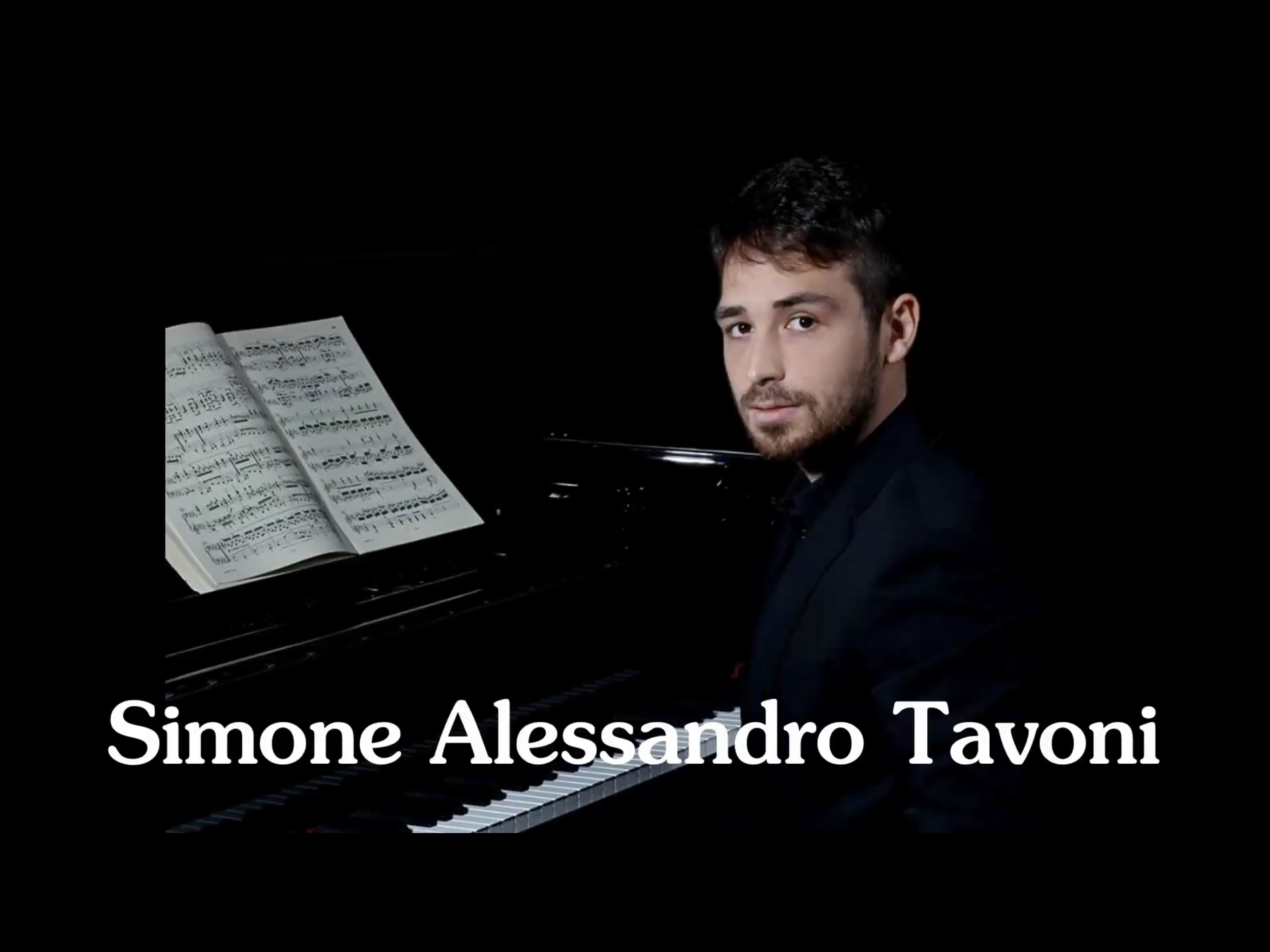
The Italian pianist Simone Alessandro Tavoni has given recitals internationally, including in the United States, United Kingdom, Denmark, Hungary, France, Spain, Malta, Estonia, Greece and across Italy. He was awarded a place on the BBC Pathway scheme during the 2015/2016 academic year and through this, he had the opportunity to rehearse and perform as an orchestral pianist with the BBC Symphony Orchestra, and some of these performances have been played by BBC Radio 3. In 2019 Simone has been selected as a Park Lane Group Artist, as Keyboard Charitable Trust Artist and received the Luciano and Giancarla Berti full-ride scholarship to attend the Aspen Music Festival and School studying with renowned Professor Fabio Bidini. He has featured as a soloist with the East London symphony orchestra, the Kensington Chamber Orchestra, the Ashod Symphony Orchestra, the Alion Baltic symphony orchestra and the Luigi Cherubini Symphony Orchestra. Performance venues have included the Liszt House (Budapest, Hungary), Salon Christophori (Berlin, Germany), the Florence Conservatory Concert Hall (Florence, Italy), the Royal Festival Hall, the Wigmore Hall, St. Mary’s Perivale, the Brunel University, St Martin-in-the-Fields, the Victoria & Albert Museum, Regent Hall, St. James’ Piccadilly (London), Winchester Cathedral, Petit Palau in Barcelona (Spain), The Talliin Philarmonia and Glehn Castle (Talliin, Estonia) the Hausmusik of Aarhus and the Italian institute of culture in Copenhagen (Denmark). He is also a regular guest artist at the En Blanc Et Noir Piano Festival in Lagrasse, (France) and of the Aegean international art festival in Heraklion (Crete). During a recent recital in Spain his recording has been broadcasted by the Canal du sur (Almeria, Spain).After graduating from the Giacomo Puccini Conservatoire in La Spezia, Liguria (Italy) when he was 18, where he studied the piano under Marco Podestà, he then moved to Florence to study at the Luigi Cherubini Conservatoire, continuing piano studies with Giuseppe Fricelli, and studying composition with Rosario Mirigliano. The winner of numerous national competitions in Italy, he also had the opportunity to participate in an exchange programme in Budapest on a full scholarship at the Franz Liszt Academy studying with Professors Kesckes Balazs and Rita Wagner. In 2014, he moved to London to study on the Master of Performance programme at the Royal College of Music with Professor Andrew Ball. After winning a second exchange bursary in Autumn 2015, he pursued his studies for one term at the State University of Music and Performing Arts in Stuttgart, Germany with Dr. Peter Nagy. He has received also masterclasses by Dmitri Bashkirov, Fabio Bidini, Aldo Ciccolini, Zoltan Kocsis, Antonio Pompa Baldi and Malcolm Bilson.Simone has been generously supported by the Talent Unlimited organization and by the Henry Wood Trust at Royal college of Music. During the 2018/2019 academic year he obtained an Advanced Diploma course at Trinity Laban Conservatoire with professors Deniz Gelenbe and Peter Tuite majorly supported by a scholarship and was selected as a Alfred Kitchin and Trinity College London Scholar. Simone is currently performing, closely assisted and supported by Prince Dr. Donatus Von Hohenzollern.
I decided to share with you what I’ve been working on for a long time. Almost 3 years ago I listened to Harmonies poétiques et religieuses by Franz Liszt and I had an idea that one day I will play the whole cycle. From that time, I’ve been slowly working on it, playing few movements on different recitals and last few months I decided to bring it all together so I learned it and now I want to share it with you. From Monday I will be posting one movement every evening so you can join me in exploring this beautiful work of art!The whole cycle is composed of 10 movements. The most famous one is Funérailles which most of you heard but other movements are not that often played. During my work on this piece I saw that the structure of the cycle is very carefully planned: the backbone of the whole piece is formed by 3 Christian prayers: Ave Maria, Pater noster and Miserere (no. 2, 5 and 8 ) while other movements are mostly inspired by Alphonse de Lamartine’s poems (no. 3, 4, 6, 9). All those poems have a strong religious and spiritual inspiration which gives the real meaning to the title connecting poetic and religious all the time. Liszt clearly states that religious ideas had a very deep emotional significance for him and with this music he brings it to life. Ancient prayers become full of universal ideas which are presented with unique passion. There are 2 movements inspired by death (no. 4 and no. 7) and they are definitely the most dramatic of the whole set. They are balanced by angelic beauty of no. 3 and no. 6 and by the calm prayers of no. 2 and no. 5. In the end of this one and a half hour journey Liszt brings us to Cantique d’amour, a movement in which he spared no effort to present the final triumph of love. It is really an amazing epic story which Liszt gave us through this piece and that’s why I’m happy to perform it.
Harmonies poétiques et religieuses (Poetic and Religious Harmonies), S.173, is a cycle of piano pieces written by Franz Liszt at Woronince the Polish-Ukrainian country estate of Liszt’s mistress Princess Carolyne von Sayn-Wittgenstein in 1847, and published in 1853. The pieces are inspired by the poetry of Alphonse de Lamartine ,as was Liszt’s symphonic poem Les Préludes
The ten compositions which make up this cycle are:
Invocation (completed at Woronińce);
Ave Maria (transcription of choral piece written in 1846);
Bénédiction de Dieu dans la solitude (‘The Blessing of God in Solitude,’ completed at Woronińce);
Pensée des morts (‘In Memory of the Dead,’ reworked version of earlier individual composition, Harmonies poétiques et religieuses (1834));
Pater Noster (transcription of choral piece written in 1846);
Hymne de l’enfant à son réveil (‘The Awaking Child’s Hymn,’ transcription of choral piece written in 1846);
Funérailles (October 1849) (‘Funeral’);
Miserere, d’après Palestrina (after Palestrina);
La lampe du temple (Andante lagrimoso);
Cantique d’amour (‘Hymn of Love,’ completed at Woronińce).
Invocation is the first movement of the cycle. As the name suggests it is really epic in character. Following the tradition of all the great poets through centuries, Liszt starts with a call for assistance. I think everything is said in the first verse by Lamartine which Liszt uses as a preface to this movement: Rise up, voice of my soul. It is the rising we can hear in the music – the main motive is always rising and ascending but with it there comes an inverted descending motive which creates tension between those two forces. It is very literally the beginning of the journey, and in it we can already sense where will the journey take us. I like to think of this movement as an introduction to all the ideas we will encounter later. The listener gets an impression that Liszt used every possible way to get everything he could from the instrument. He was searching for sonority and complex sound structures with all the octaves, repeated chords, low bass notes and in the end he even uses the lowest note on the keyboard. He makes it clear that he is very determined and honest in his intention: Rise up, voice of my soul!m
Today we continue with the second movement from Harmonies poétiques et religieuses: Ave Maria. This piece is piano version of music for choir and organ. It is a prayer and like all good prayers it sounds so simple yet carries a lot of hidden meanings. The music very faithfully follows the text and everything we hear is just Liszt’s reflection on the words. That is clear in the middle of the work when the most dissonant and dramatic moments are composed on the word peccatoribus (sinners). In that way Liszt honours the tradition of using chromaticism to express dramatic sections of the text which was often used in sacred vocal music of the past. Also, there are few places where the music imitates liturgical responsorial singing in which a leader alternates with a chorus. The other peculiar thing in Liszt’s notation is that he writes una corda marks everywhere except on the three places which are actually three times God is mentioned in the text of the prayer (those three times he writes tre corde). There is a lot said in this simple piece.
Bénédiction de Dieu dans la solitude (Benediction of God in solitude) is a masterpiece which has a special place in Liszt’s opus. This is the third movement of the cycle, the longest of all ten and definitely one of the most demanding and complex. Liszt writes few verses by Lamartine as a preface. They are about peace and spiritual satisfaction which leads to the resurrection of a new man: „A new man is born within me and starts anew.“ This message is brought forth by the choice of F-sharp major, an unusual and exalted key. Everything in this music speaks of that new energy which brings joy and comfort to man. The melody is repeated many times but each time the accompaniment changes showing always new possibilities and new potential. There is not much to say about this music because it speaks for itself better. Looking at its formal structure we come closer to Liszt the composer, appreciating the technical demands we see Liszt the pianist and understanding the way in which it conveys Lamartine’s poetic ideas we get to know Liszt the artist.
Pensée des morts (Thought of the Dead) is one of the darkest piano pieces by Liszt. It is the strangest and the most experimental piece in the cycle. The first version was originally published in 1835 with the title Harmonies poétiques et religieuses. So in a certain way this movement is the basis of the whole cycle. The first version was an avant-garde music of the time. It was written without time signature with marking senza tempo in the beginning. Apart from that, it was full of performance suggestions written in a way which reminds me of the modern music of our time. The second version (the one I play here) retained a lot from the first one. In it Liszt used very unusual time signatures (5/4, 7/4) and together with harmony, form and the style of writing for the piano we can get an impression that Liszt was striving towards a new musical language which would better suit his ideas. In that way this piece is an attempt to better understand and reach the other world of the dead as the title suggests. The whole character of the piece is in direct contrast with the previous movement. As much as Bénédiction lifts us up, Pensée des morts throws us all the way down to the depths of death. Those are not my dramatic interpretations of the music but Liszt’s own ideas presented clearly in the score. After heavy use of fortissimo passages, accents, unusual harmonic progressions and multiple chromatic scales Liszt leads us to the series of repeating fortissimo chords in the lowest piano register writing the text of the psalm De profundis (from the depths). He used all compositional means to lead us to the depths after which follows the last section of the piece. It is a very calm melody consisting of one repeated tone reminding the listener of the death bells tolling in the distance. All things considered I think that this piece is the most demanding one for the pianist and for the listener. Liszt pushes to its limits both tonal structure, harmony, piano as an instrument and the performer’s abilities and leaves us with only one tone resonating in the distance.
The fifth movement of the cycle is Pater noster. It is a plain musical setting of the Latin text. Like in vocal music, Liszt writes the text of the prayer in the score. When we look at all the movements in the cycle, it is interesting that Liszt puts the simplest and shortest one in the middle. I think that shows the special place this movement has for the whole cycle. It is the heart of the cycle and with its strong message it doesn’t need any special effects neither in compositional, technical, formal, nor in any other way. When I play this piece I have a feeling that this music is on the border of not being music in a classical sense because it just flows with the words. There is no effort needed, just listening to the prayer. In that way Liszt accomplishes an atmosphere of ancient spirituality and Gregorian chant which brings the listener as close as possible to the intentions of the words.
Harmonies poétiques et religieuses continue with Hymne de l’enfant à son réveil (The Awaking Child’s Hymn) which is again inspired by Lamartine’s poem. The character of the piece is quite similar to the Bénédiction, but this movement is much shorter and simpler. The music precisely reflects the poem which is a child’s prayer. In its simplicity and beauty the child knows God listens and prays for the whole world: „Since he hears from so far the wishes that we send, I want to ask over and over for what others need.“ We can hear those clear, selfless and inspiring intentions in Liszt’s music.k
Funérailles is a fascinating work. This very intense and colorful music was inspired by many events that happened during the time it was written. Liszt writes „October 1849“ in the score. It has a strong political background because in 1848 and 1849 Hungary went through revolution which failed resulting in execution of Hungarian generals and prime minister in October 1849. We can see that Liszt felt the burden of those difficult times. Apart from that, Frederic Chopin died the same month, which was another tragedy for Liszt because they were good friends and held each other in high regard. Through Funérailles Liszt was definitely sending a message about all the things he went through. It is interesting that he managed to connect those two tragedies in this piece. He payed homage to Chopin with the middle part of Funérailles which was clearly inspired by Chopin’s Heroic Polonaise. The whole piece is like a picture of war which results in execution and grief. The piece itself gained popularity and it is mostly performed outside of the cycle but I think it is deeply connected to all the other movements and essential to the structure of Harmonies poétiques et religieuses. It is the second movement of the cycle inspired by death and it ends without resolving all the questions which are presented. The story isn’t finished, it continues with Miserere.
The eight movement is Miserere, d’après Palestrina. It is the third prayer of the cycle, after Ave Maria and Pater noster with which it shares a lot of similarities. Liszt was once again inspired by liturgical singing and managed to bring it to the piano. The text is written in the score, it is a plea for mercy from the beginning of the 50th Psalm. There are 3 distinct parts, like three variations on one theme, each with a different character and different way of using the instrument. In the first one Liszt presents the theme in a vocal manner, in the second he uses tremolos in the upper piano register and the third one is full of arpeggios which sound through entire keyboard. I think that this piece explores all the nuances of the text. After the tragedy of Funérailles Liszt prays, asks for mercy and tries to resolve the tension which is still integral part of this music. It is interesting to see that the next movement is called Andante lagrimoso with the preface from Lamartine: „Fall, silent tears, on earth without pity.“ All those movements one after another tell a story of a process of penance. Using modern words we could say it is about finding one’s own inner peace.
Andante lagrimoso has a special place within the cycle. It is the only movement without French or Latin title, but it has a preface with few verses from a poem by Lamartine. I think this piece is the most intimate one from the cycle and Liszt’s way of composing is a bit different than in other movements. There are no bombastic passages or brilliant technical inventions, just the contrary, everything is so simple but filled with meaning. Liszt’s musical ideas are clear from his markings in the score but he often uses just a single chord to express a lot of things which would usually be done using more material. I think that is why this music sounds so intimate and fragile. The first version of the piece is called La lampe du temple after a poem by Lamartine. It uses a metaphor of an oil lamp burning in the temple to illustrate soul standing before God. It is really a mystical poem dealing with the most complex questions of human nature. All musical material from Andante lagrimoso is already present in Liszt’s La lampe du temple but what is different is the way of presenting them. Andante lagrimoso is like a synthesis of La lampe du temple, but much more intimate and simple. I think that is also the biggest difficulty in interpreting this piece. There is so much to say and in comparison so little notes to play. Maybe the best example of that is the ending in which there are so much changes in just four chords. With this piece Liszt brings piano to the border of its expressive capabilities and with the tragic ending he sets the scene for the last movement of the cycle.
Finally we come to the end of this amazing cycle. Cantique d’amour is a movement which concludes this epic story in the best possible way. All the tension, drama and tragedy is resolved with one simple melody which is repeated many times while the accompaniment grows, becomes bigger, louder and leads us to the final chords which not only conclude this movement but the whole cycle. It is interesting to observe the similarities between the first and the last movement: both are in E-major and both share some similar musical ideas. The endings of Invocation and Cantique d’amour sound as if they reply to each other. After Cantique d’amour nothing more can be said. The main message and the main idea, as the title suggests, is love. What Liszt does is very interesting because he takes all the drawbacks of a piano as an instrument and manages to overcome them. The theme consists of very long notes and forms a big phrase which can only be achieved if we make a crescendo on those long notes which, of course, piano cannot do. When a note is played on a piano it only becomes quieter with time but Liszt decides to go against that. Using all kinds of accompaniment which is always rising on the keyboard he creates an illusion of crescendo which is becoming more and more intense. In that way the theme gains its structure and sounds full of energy. Liszt’s love for the piano and its sound overcomes all difficulties and he shows us that with a right attitude everything becomes possible.
Beethoven: Variations & Fugue in E flat Op 35 ‘Eroica’
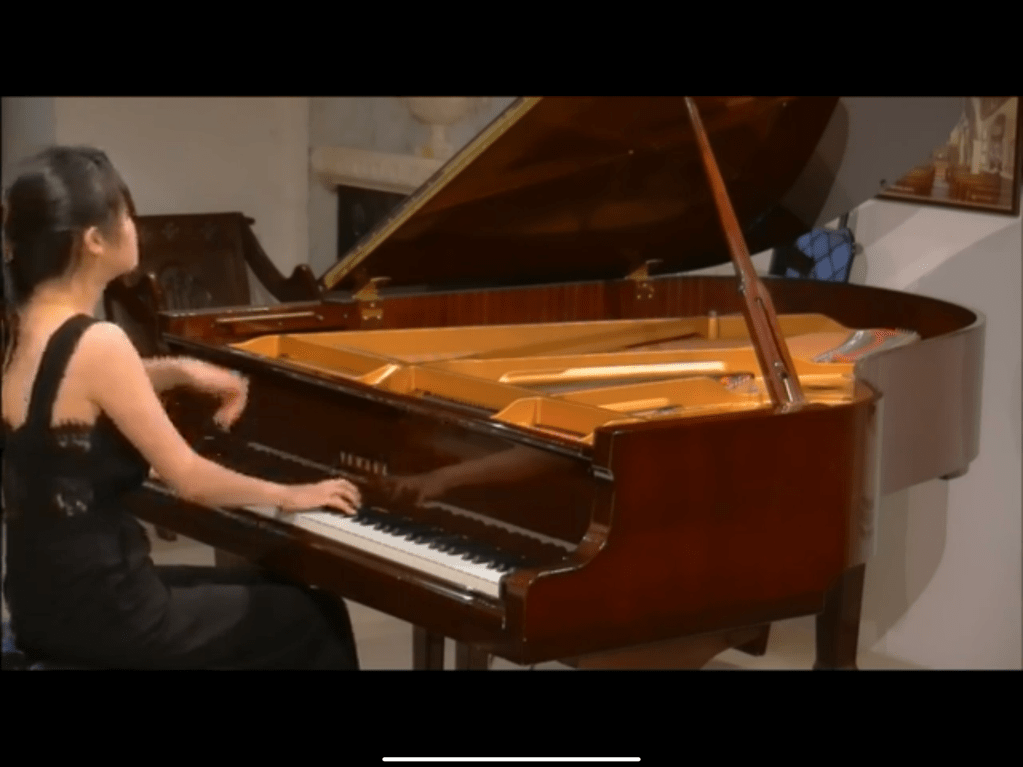
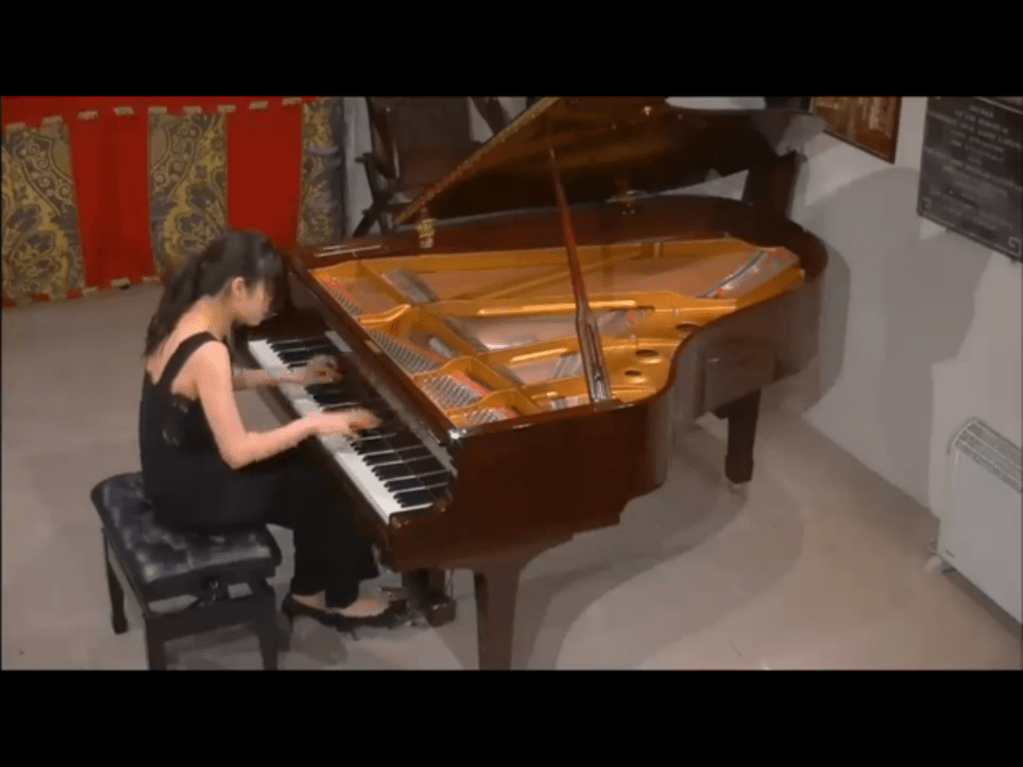
Stefanie Tang opened her recital with the hypnotic bells of John Adam’s China Gates which she so unexpectedly integrated into Debussy’s Arpeggio study.Chopin’s masterpiece of Polonaise-Fantasie beautifully played if rather more Polonaise than fantasy.Totally unexpected the eruption of dynamic energy and power in an overwhelming and mesmerising performance of Beethoven’s Eroica Variations.Hypnotic was infact the only word to describe the recital of this delicate looking powerhouse perfecting her studies with Ronan 0’Hora at the Guildhall
China Gates was composed by the minimalist American composer John Adams in 1977.It is one of his first mature works, which he wrote during a rainy season in northern California and has suggested that the constant quavers of the piece reflect the steady rainfall of the time. The bass notes form the root of the mode, while the upper voices oscillate between different modes,which sound almost like major and minor versions of the same key.Very similar to the repetitive bells of Steve Reich.Adams himself described the structure of the work as an “almost perfect palindrome”.The repeated patterns in the treble sounding like bells with long held bass notes of great delicacy of almost hypnotic effect.A piece that barely lasts five minutes but in Stefanie’s sensitive hands created just the atmosphere out of which grew one of the most beautiful of Debussy’s studies :‘Pour les arpèges composés’.The penultimate of Debussy’s late masterpieces that he described as “a warning to pianists not to take up the musical profession unless they have remarkable hands.”A very similar sound world to the minimalist Adams and here were the same sumptuous sounds with deep bass notes held in long pedals .Such remarkable control and precision that allowed a rhythmic drive until the final wafts of sound that disappear into the distance from where they had come.A sense of colour but also a masterly use of the pedals that allowed great atmosphere but also great clarity.
The Polonaise Fantasie op 61 is one of Chopin’s late masterpieces to be place with the Barcarolle op 60.In these late works there is a sense that Chopin had almost dispensed with the bar lines in his attempt to allow the piano to sing hence the title ‘fantasie’ added to the last of his Polonaises.It represents a change in Chopin’s style from ‘late’ to ‘last’ with the freedom and formal ambiguities which are the most significant defining qualities of this ‘last style’, which only includes this and one other piece—the F minor Mazurka (Op. 68, No. 4), Chopin’s last composition.Stephanie brought a great sense of architectural shape to the work always moving forward in a musicianly and deeply felt account.There could be even more abandonment with a freedom and flexibility that would allow the bel canto embellishments to breathe more naturally which maybe her small hand did not permit her to abandon total control .There was a sumptuous richness to the middle section and an exciting lead up to the passionate final outpouring where her authority and rhythmic drive were indeed remarkable.
But it was the call to arms with Beethoven’s mighty opening chord of the Eroica Variations op 35 that unleashed the true power and superb control of this young musician.Beethoven’s three mighty notes fearlessly interrupting the proceedings.There was a rhythmic impetus that knew no difficulties as she threw herself with such authority into each variation .The cadenza of the second variation thrown off with great ease as it teasingly came to an end before alternating chords of great urgency.The left hand meanderings of the fourth were beautifully commented on by the right hand chords and there was extreme beauty in the fifth.The sforzandi gently integrated into this music box interlude before the left hand acrobatics of the sixth and the hen picking of the seventh with its great bass interruptions.There was a beautiful mellifluous flow to the eighth where Beethoven’s long pedal was so beautifully interpreted.Such exhilaration too in the sheer fun she had with the acciaccatura of the ninth and the Chinese puzzle of the tenth that she deciphered so cleverly.There was tongue in cheek elegance in the eleventh and twelfth and almost brutal insistence of the acciaccaturas in the thirteenth.The beauty of the fourteenth paved the way for the sheer gold of the fifteenth.The longest and most profound of the variations which was played with scrupulous regard for Beethoven’s very precise indications.It was almost orchestral in its conception leading to the magical long pedal of the final bar before the gentle apparition of the fugue.Playing of great clarity and precision with a driving rhythmic impulse leading to three great chords and the almost cheeky return of the theme that we had heard at the opening.I remember Curzon playing this with an almost irresistible charm which Stephanie did not quite capture in her very impressive forward drive with the theme imperiously played in the left hand with sparklingly clear scale passages in the right as she drove the music onwards with formidable power to the final chords.
A native of Los Angeles, 26-year old pianist Stephanie Tang is the prizewinner of multiple competitions and has performed as a soloist and chamber musician worldwide. At the age of 12, she performed in Carnegie Hall ‘ s Weill Recital Hall and at sixteen, made her orchestral solo debut with the West Covina Symphony Orchestra. She has since then performed solo recitals in Los Angeles, Shenzhen, Shanghai, the Netherlands, Banff, Ottawa, Toronto and Gijon. She has won 1st prize at the Bradshaw and Buono International Piano Competition, 2nd prize at the Louisiana International Piano Competition, and the top prize at the Young Pianists ‘ Beethoven Competition. She was also a finalist in the New York International Piano Competition and was awarded the Jury Discretionary Prize at the Los Angeles Philharmonic ‘ s Bronislaw Kaper Awards. In 2016, she won 2nd prize at the Susan Torres Award for Pianists in Fresno, CA. Recently, she competed in the Sendai International Piano Competition and was a finalist in the Heida Hermanns International Piano Competition. She has been chosen take part in the Montreal International Piano Competition and the Queen Elisabeth International Piano Competition in 2021. Stephanie has performed in important venues such as Koerner Hall in Toronto, Hahn Hall in Santa Barbara, the McKenna Theatre in New York, and Shenzhen Concert Hall in China. Recent performances include a recital at the University of Ottawa and a prelude concert in Koerner Hall. Over the years, Stephanie has worked with many prominent artists, including Richard Goode, Marc Durand, Julian Martin, Robert McDonald, Matti Raekallio, Jean-Yves Thibaudet, Menahem Pressler, and Leon Fleisher. An avid chamber musician, she has performed and collaborated with John Adams, Andr é s Diaz, Esa-Pekka Salonen, and coached with members of the É b è ne, Guarneri, and Tokyo Quartets. Stephanie began studies with Zhaoyi Dan in China at the Shenzhen Arts School . She completed her Bachelor of Music at the Colburn Conservatory of Music and Artist Diploma at the Glenn Gould School in Toronto with John Perry and Master of Music at the Yale School of Music with Peter Serkin and Boris Slutsky. She currently studies with Ronan O’Hora in London at the Guildhall School of Music & Drama.
Vierne: Nocturne Op 34 no 3 Liszt: Les jeux d ‘ eaux à la Villa d ‘Este Ravel: Gaspard de la Nuit (Ondine / Le Gibet / Scarbo) Granados: Goyesca no 7 ‘El Pelele’ Villa Lobos: Rudepoema
Another truly amazing recital from Patrick Hemmerlé who every time he plays demonstrates such mastery and undemonstrative musicianship that his tour de force almost goes unnoticed such is his gift of communicating the very essence of the music.I well remember being astounded a year ago by his performance of the 24 studies by Chopin.Today he took on Ravel’s Gaspard de la nuit that had been written with the desire to outbid Balakirev’s notoriously difficult Islamey.This was only a magnificent warm up for the savagery and outrageous demands that Villa Lobos made on his friend Artur Rubinstein with his Rudepoema. Wonderful luminous sounds opened the programme with Vierne’s Nocturne only to be interrupted by the playful splashing of the fountains of the Villa d’Este.After a sumptuously atmospheric and exciting Gaspard a quick click of the heels with El Pelele before the absolute savagery of Rudepoema. Astonishing mastery at the complete service of music leaves me once again speechless with admiration.
Beautiful crystal clear cantabile opened the recital with the last of Louis Vierne’s three nocturnes for piano.”La lumière rayonnait des astres de la nuit, le rossignol chantait… »is placed above the music .Some very atmospheric playing full of fascinating colours with a very refined sense of balance.A passionate climax with cascades of notes that showed the influence of Fauré that Patrick had pointed out in his introduction .The magical return to the main idea bathed in sumptuous sounds that Patrick also likened to Delius.Even the unusual construction in episodes or ideas that return Patrick likened to the same sort of construction as in some works of Michael Tippett,which is food for thought indeed from this remarkably informed thinking musician.
Louis Vierne was the organist of Notre-Dame de Paris from 1900 until his death during a recital there ,in 1937, on the very organ that he helped to raise funds to restore touring Europe and the United States as a concert organist. His students included Nadia Boulanger.He wrote mostly for the organ and very little for the piano but in the 1914 World War, his son Jacques, still a minor, enlisted in the army.Vierne who was partially blind at birth was away in Switzerland in 1916 for glaucoma treatment, expecting to be away for four months but ,due to complications, he returned only four years later.In May 1917, Jacques was transferred to the 44th Field Regiment as a driver and committed suicide on 12 November 1917 in Prosne in the Marne. Vierne composed the Piano Quintet, Op. 42, in commemoration. His brother René died at the front too on 29 May 1918, remembered in Solitude, a poem for piano.The three nocturnes op 34 for piano received their first performance in Lausanne in 1916.
The Liszt entered on the same wave that had been created with Vierne and the delicacy of the drops of water at the Villa d’Este were played with almost chiselled clarity.From the third book of Années de pèlerinage over the music, Liszt placed the inscription, “Sed aqua quam ego dabo ei, fiet in eo fons aquae salientis in vitam aeternam” (“But the water that I shall give him shall become in him a well of water springing up into eternal life,” from the Gospel of John) One of Liszt’s most poetic descriptions of water as is the piece from the first year ‘Au bord d’une source’ where Liszt quotes Schiller:’In the whispering coolness begins young nature’s play.’Some playing of sumptuous beauty with a single drop of water passing from top to bottom on the piano leading to a tumultuous build up played with passionate involvement until bursting into octaves and cascades of notes before dying away so magically and allowing the water nymph Ondine to enter the scene in Ravel’s Gaspard.
The three well known poems by Aloysius Bertrand opens with Ondine ,the water nymph,singing to seduce the observer into visiting her kingdom deep at the bottom of a lake with the sounds of water falling and flowing, woven with cascades.The melodic line was so clearly etched with such atmospheric washes of sound building to the climax and the overwhelming cascades of notes that die away to a murmur where Patrick caressed the notes so tenderly as Ondine disappeared from where she had come.There was a wonderful insistence of the tolling bell in Le Gibet with a bleakness that created an atmosphere with sultry sounds that almost evoke the dissonances of Messiaen in many ways.The observer is presented with a view of the desert, where the lone corpse of a hanged man on a gobbet stands out against the horizon, reddened by the setting sun. Meanwhile, a bell tolls from inside the walls of a far-off city, creating the deathly atmosphere that surrounds the observer. All so beautifully depicted in sound with Patrick’s command of colour via his masterly use of the pedals.There was such a sinister opening to Scarbo with the repeated notes just a vibration of sound.It was played with a relentless driving rhythm fearlessly allowing the movement to evolve with such passionate virtuosity.It exactly depicts the nighttime mischief of a small fiend , flitting in and out of the darkness, disappearing and suddenly reappearing. Its uneven flight, hitting and scratching against the walls, casting a growing shadow in the moonlight, creates a nightmarish scene for the observer lying in his bed.
After such a monumental performance it was a good idea for Patrick to completely change the mood with as he said a lighthearted and delightful piece from the suite Goyescas by Granados.A suite of seven pieces written in 1911 inspired by the works of Goya.El pelele (The Straw Man), subtitled Escena goyesca, is usually programmed as part of the suite although written after.It was played with refreshing sense of Spanish gaiety, lightness and colour with driving dance rhythms and some transcendental octave playing in the left hand of a feathery lightness ending with such a joyous clicking of heels
All ready for Rudepoema by Villa Lobos with its amazing sounds and vitality of such astonishing virtuosity .As Patrick said it is the Brazilian Rite of Spring with a succession of dances extreme and excessive as Villa Lobos tried to draw the portrait in music of his friend and great admirer Artur Rubinstein.An amazing collection of sounds and notes with long held pedals just adding to the atmosphere until Patrick’s fist was plunged into the final note with such terrifying vehemence that brought the baccanale to a fatal end indeed – I expect the piano might need some careful attention after this piece!A savage poem indeed.When Rubinstein asked Villa Lobos in 1926 if he considered him a savage pianist, he said excitedly, ‘We are both savage! We don’t care much for pedantic detail. I compose and you play, off the heart, making the music live, and this is what I hope I expressed in this work'” It was Patrick’s breathtaking performance that showed us just why this magnificent work is not heard more often in concert – It’s phenomenal difficulties are indeed for a chosen few.
Acclaimed for the originality of his concert programmes and the depth of his interpretations, Patrick Hemmerlé is a French pianist living in England. He can often be heard performing such works as the 24 Chopin Etudes, the 48 Bach Prelude and Fugues, or lesser-known composers. Recent engagements have taken him to New York, Los Angeles, Berlin, Paris, Vienna, and Prague, as well as many festivals and music society in England. Patrick has published 3 CDs, which have been well received by the international press. His latest recording project, to be issued in 2020 is a pairing of Bach’s Well Tempered Clavier and Fischer’s Ariadne Musica. He is in demand as a lecturer. He has given talks for the Cambridge University, as well as a cycle of concert-lectures on French music, presenting composers little known to the general public,. This led to the recordings of the piano music of Jean Roger-Ducasse and Maurice Emmanuel. Patrick is laureate of the international competition of Valencia, Toledo, Epinal, Grossetto, and more recently the CFRPM, in Paris, where his interpretation of Villa-Lobos’s Rudepoema, raised a great deal of interest. He was trained in Paris at the Conservatoire (CNR), under the tuition of Billy Eidi.
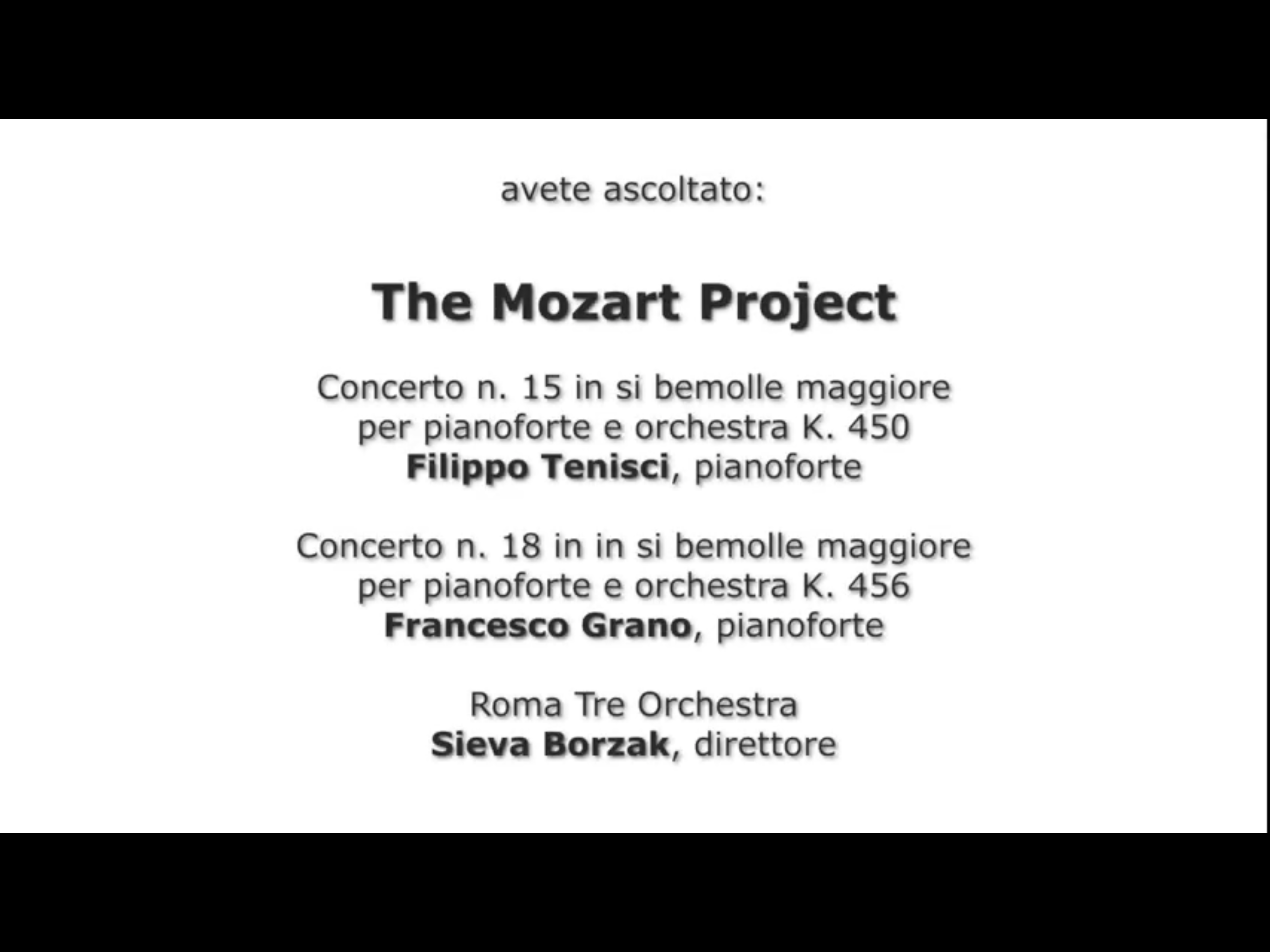
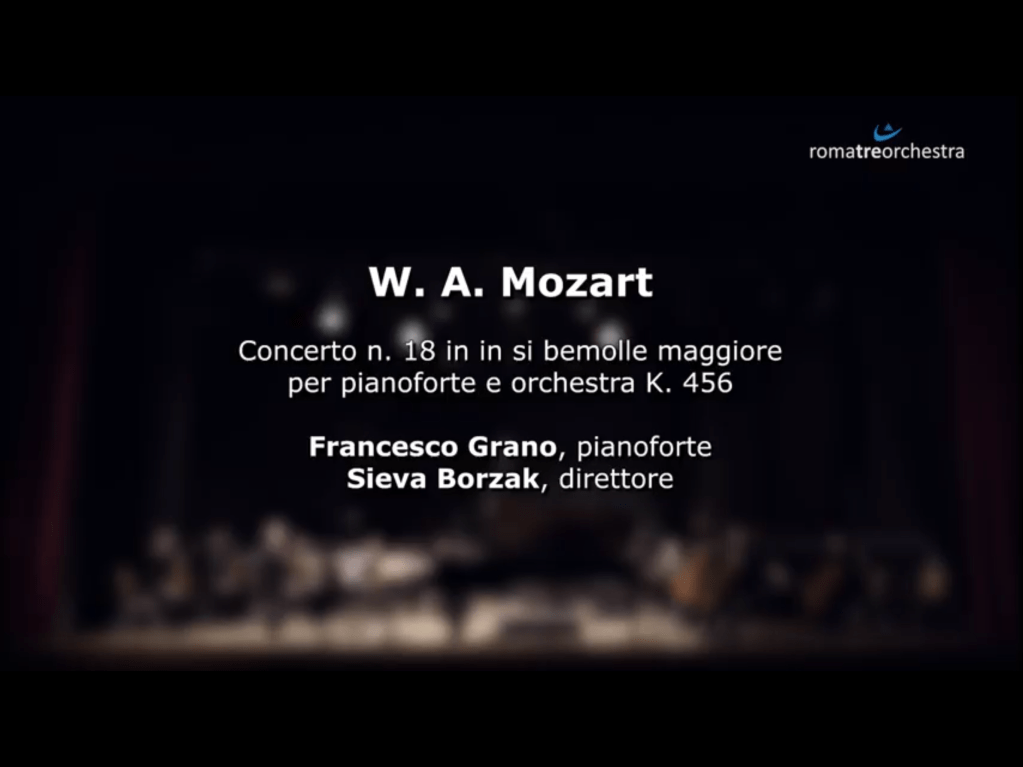
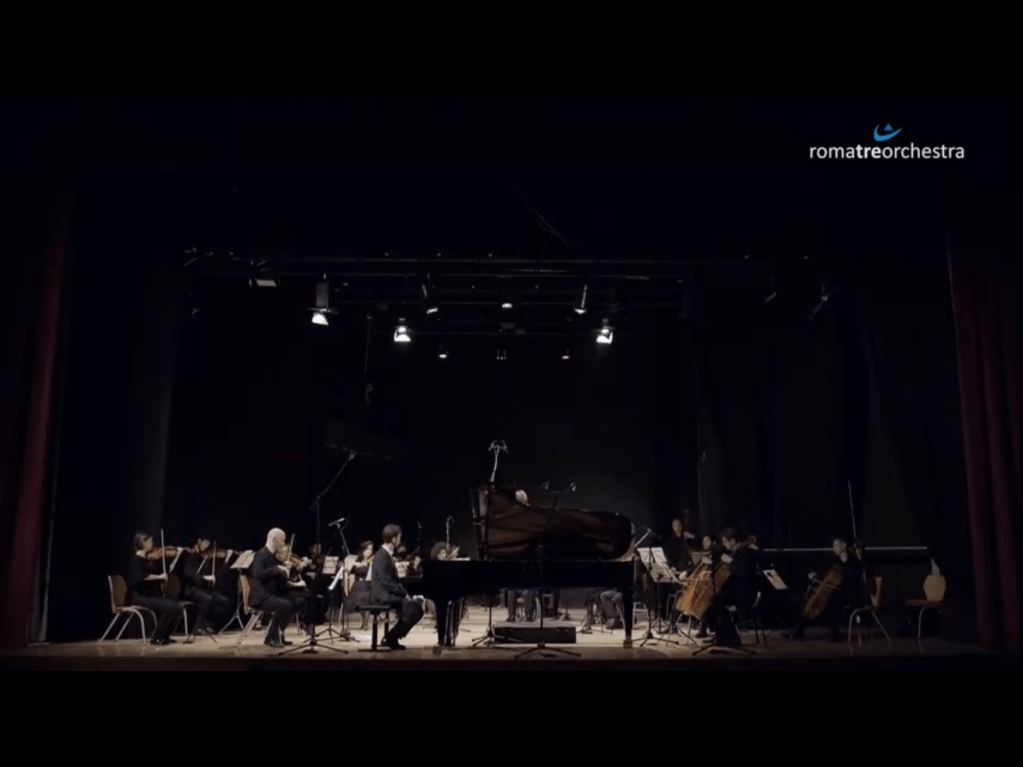
What a wonder Mozart is. Two concertos in B flat K.450 and 456 so different but so similar in their almost operatic sense of depth and charm ,easy elegance and sublime beauty. A clarity of sound that both pianists brought to these concertos with a simplicity that allowed the music to unfold so naturally. The Roma 3 Orchestra that artistic director Valerio Vicari has been nurturing with such loving care since it’s creation 15 years ago playing with such spontaneity and character under the excellent baton of Sieva Borzak.
The rhythmic precision of Filippo Tenisci with an almost chiselled cantabile of poignant beauty in K 450 was complimented by the subtle shading and nuances of Francesco Grano in K 456.With Sieva Borzak incorporating his splendid musicians into a chamber ensemble listening so carefully and responding to his every indication.
This of course must lead to the final concerto K.595 the 27th and Mozart’s crowning masterpiece also in B flat,written in the last year of his short life
Filippo Tenisci played with such clarity and sense of style each note like a jewel enveloped in the sensitive sounds that the orchestra under Sieva Borzak were providing.It was a performance of pure chamber music – each player listening to the other in an interplay that gave great buoyancy in particular to the Rondo finale.The beautiful flowing Andante showed Tenisci’s superb musicianship and technical control He could even relax more now and follow the contours of the magic sounds he was producing with flowing,more natural movements like an artist’s brush across the canvas.The cadenza in the first movement was played with great authority never out stepping the style and above all musical qualities.
Mozart had composed this concerto for performance at a series of concerts at the Vienna venues of the Trattnerhof and the Burgtheater in the first quarter of 1784, where he was himself the soloist in March 1784.In a letter to his father, Mozart compared this concerto with K 451 in D :”I consider them both to be concertos which make one sweat; but the B flat one beats the one in D for difficulty.”Many pianists consider this to be one of the most difficult of Mozart’s piano concertos,and the last movement is among Mozart’s most challenging works for the keyboard.He even began to use the term “grand” to describe concertos such as K.450 which features a prominent wind section of a “newly intricate and sophisticated” character compared to his previous ones.The difficulties were played with consummate ease by Tenisci who together with Borzak and his orchestra imbued the finale with an irresistible charm.
The concerto K .456 was written in the same year of 1784 and is scored for strings plus flute,two oboes,two bassoons and two horns for a long time believed to have been written for the blind pianist Maria Theresa von Paradis to play in Paris.Francesco Grano gave a very sensitive performance full of delicacy and colour.The embellishments in the last movement were played with a teasing charm and irresistible sense of style.
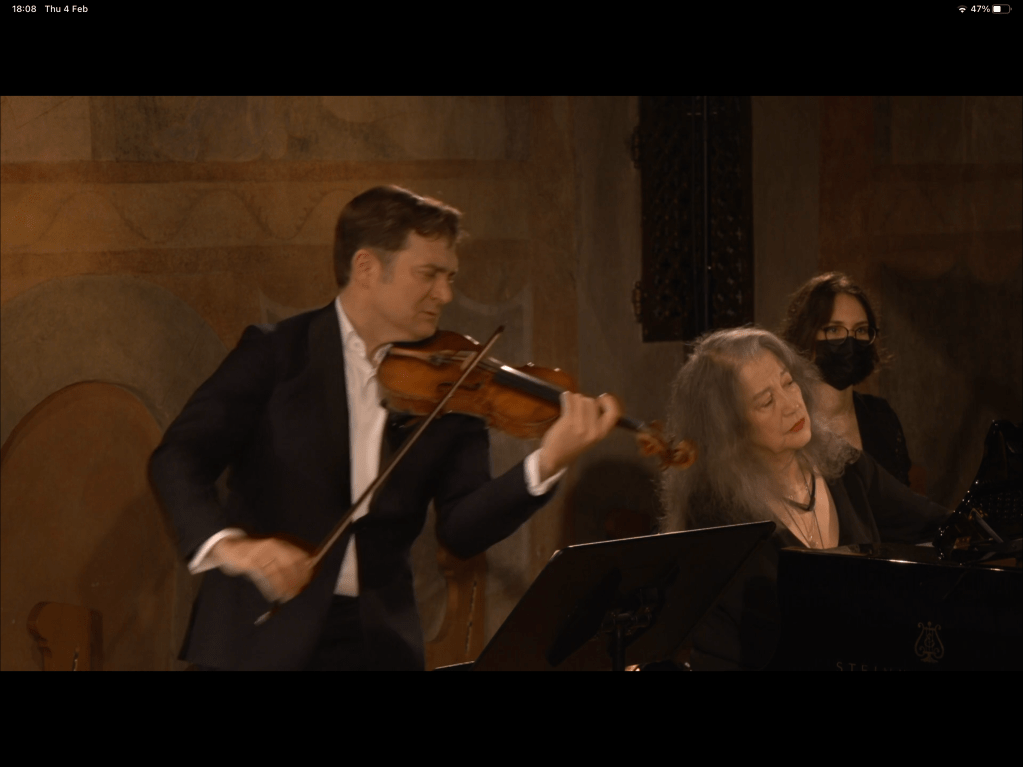
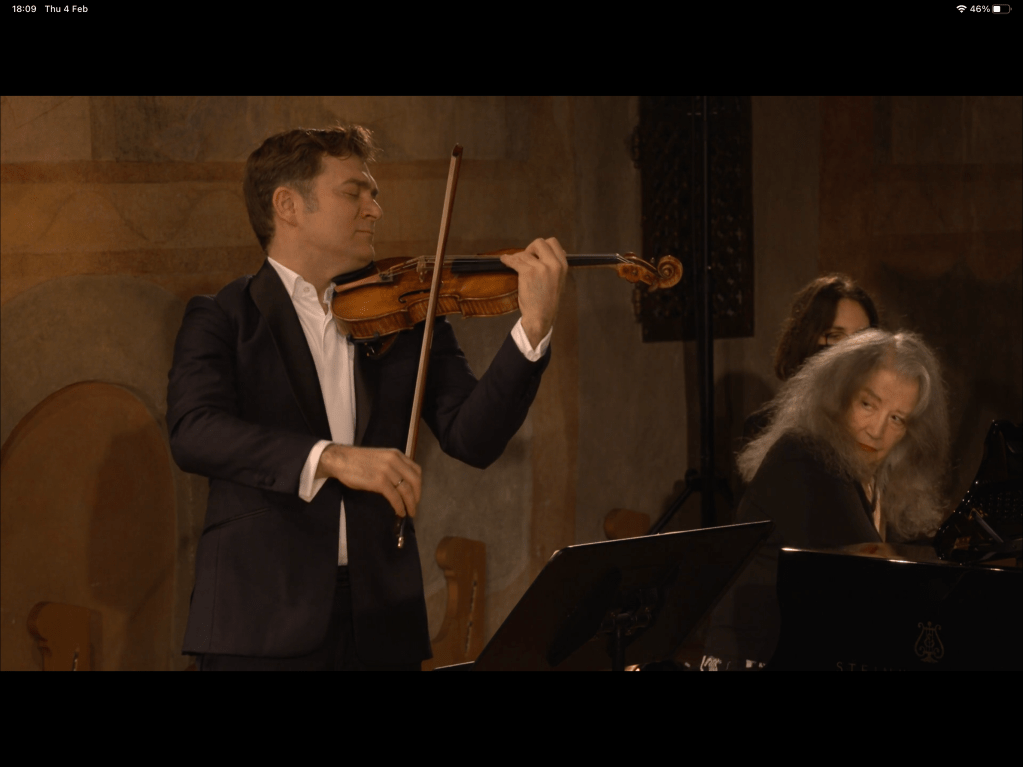
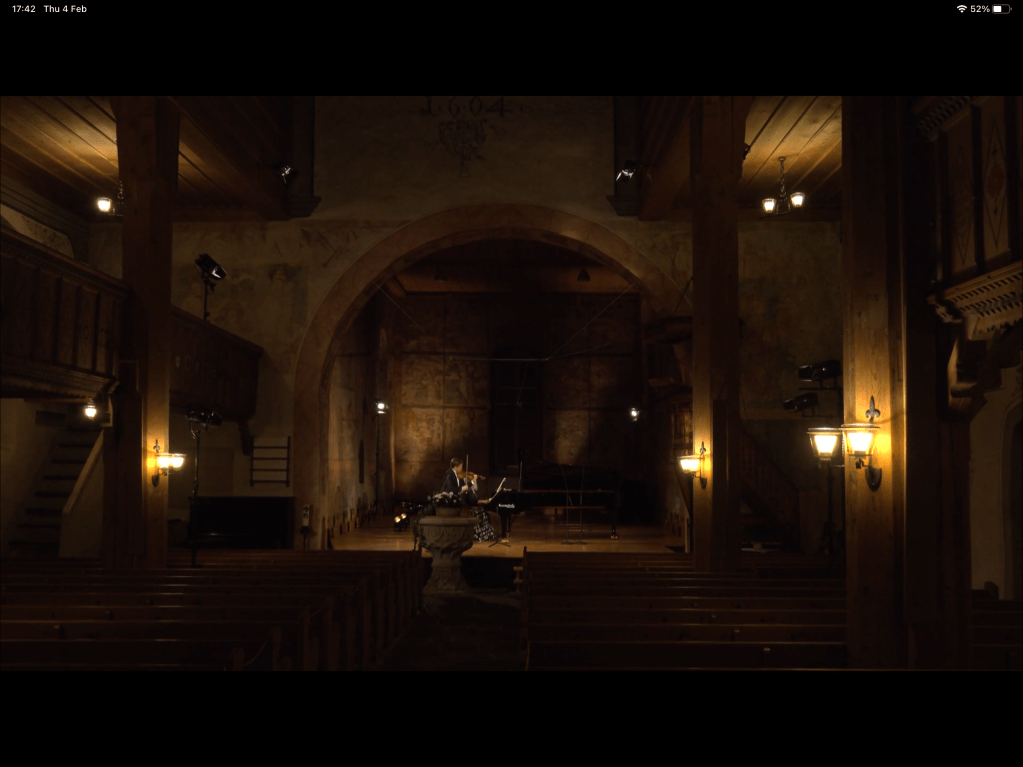
Pure gold Renaud Capucon with Martha Argerich from Gstaadt with the Kreutzer and Franck Sonatas streamed live but watchable as a guest on Medici web site .Tomorrow Martha Argerich with Nelson Goerner and Sunday Capucon in trio with Kantorow.
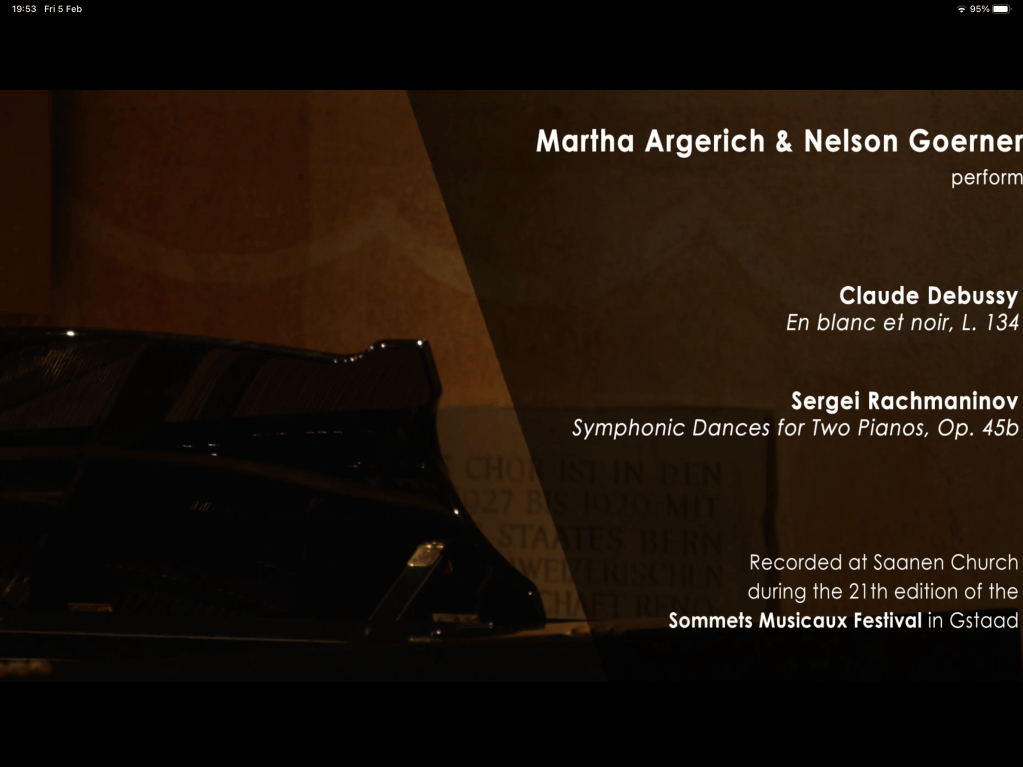
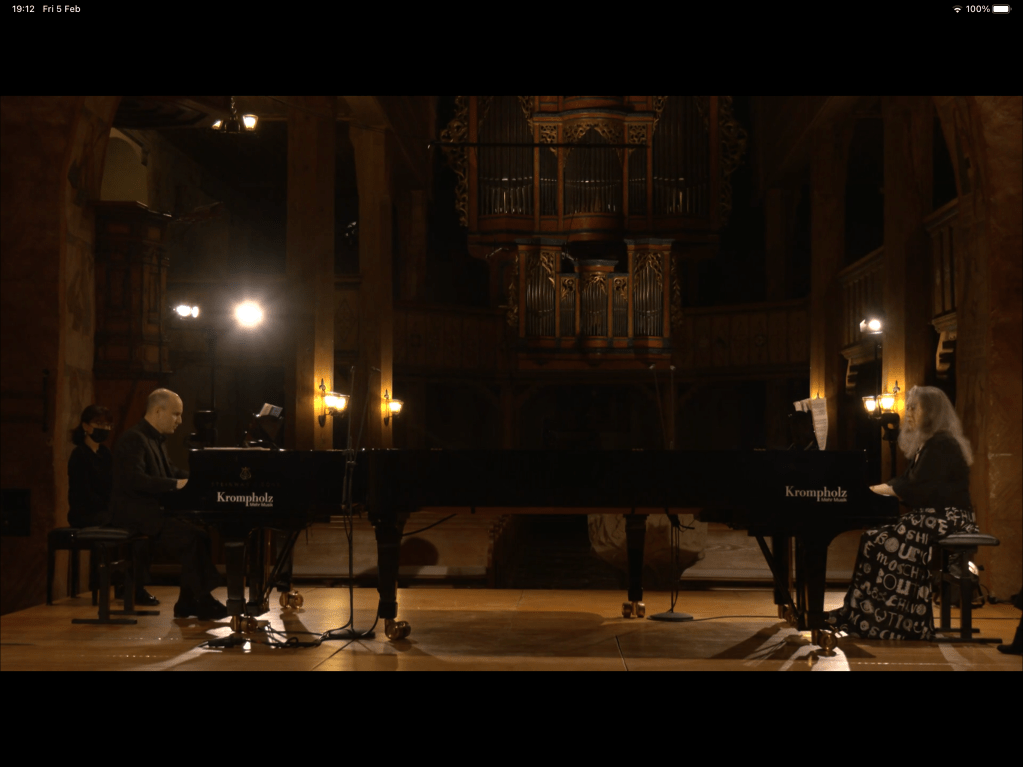
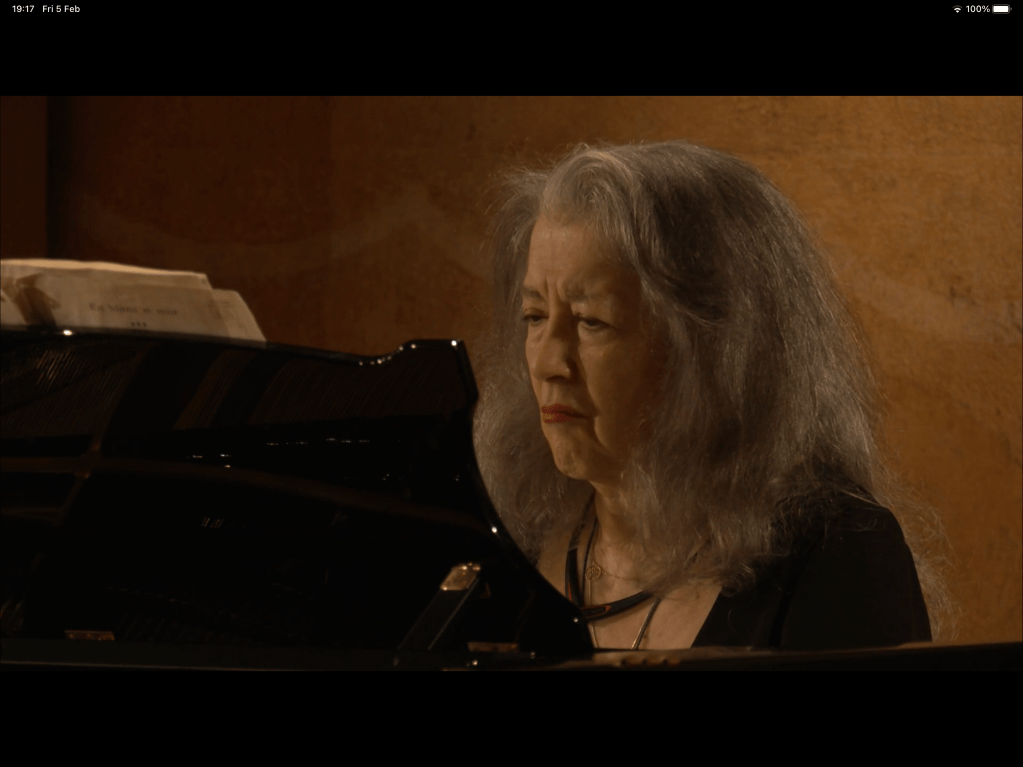
Stunning with more gold dust from Gstaad Martha Argerich and Nelson Goerner magic and much more in the rarefied mountain air. Eternal youth and great artistry combine to ravish us with beauty and astonishing virtuosity. Available as guest on Medici Gstaad Sommets musicaux
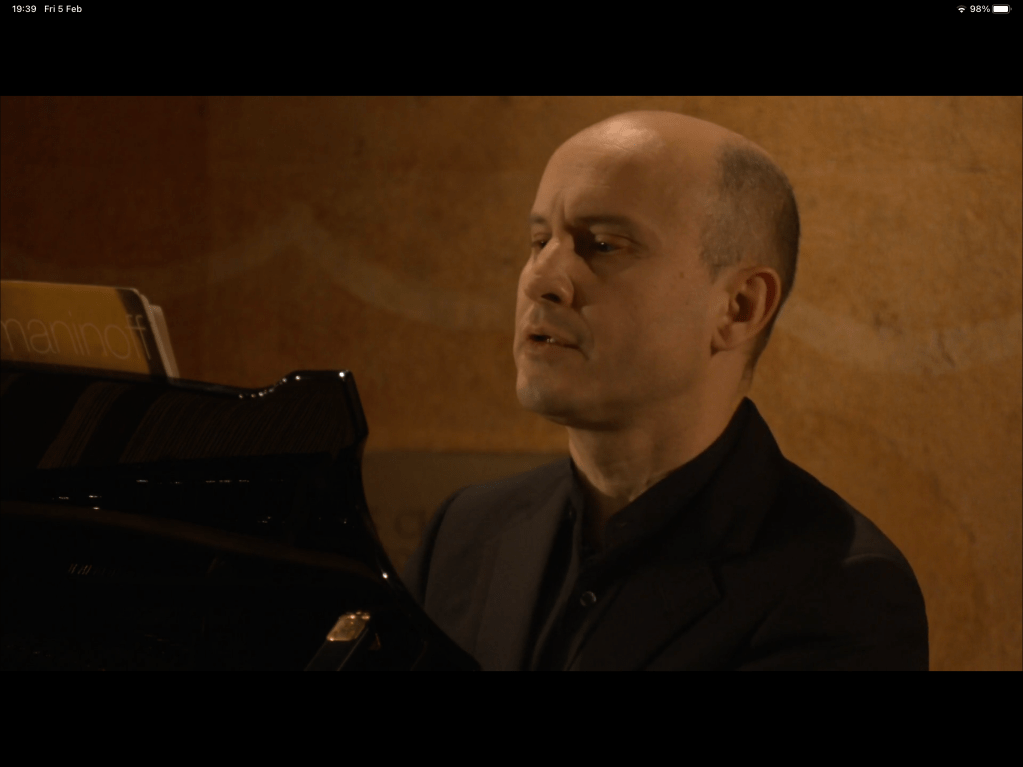
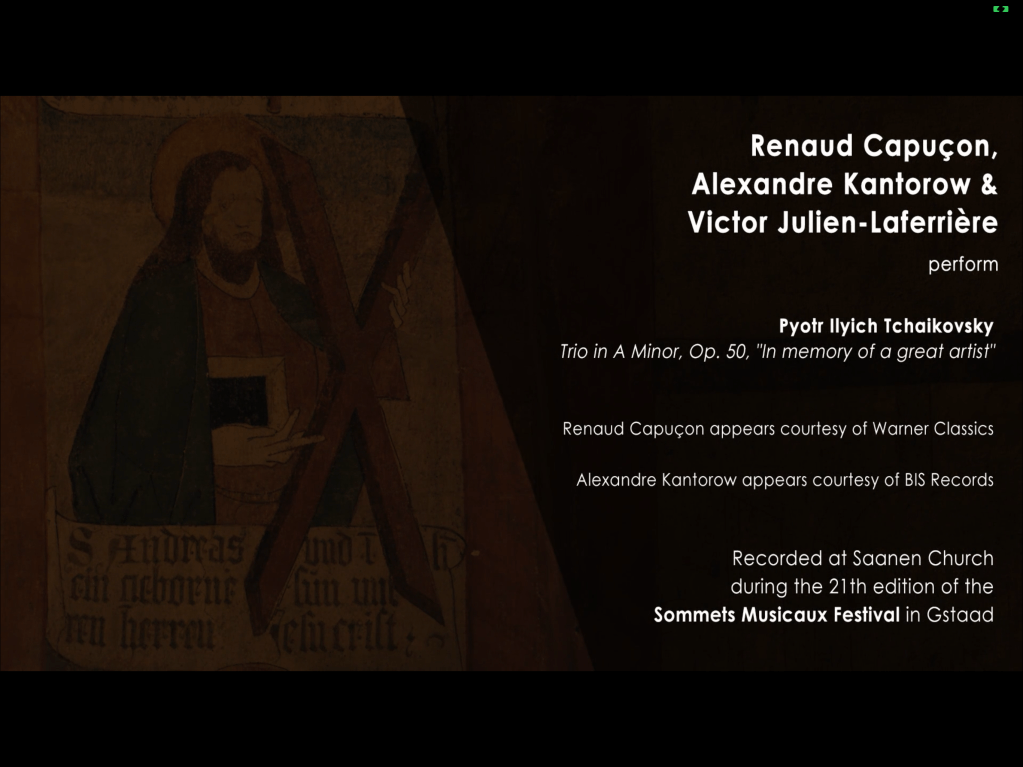
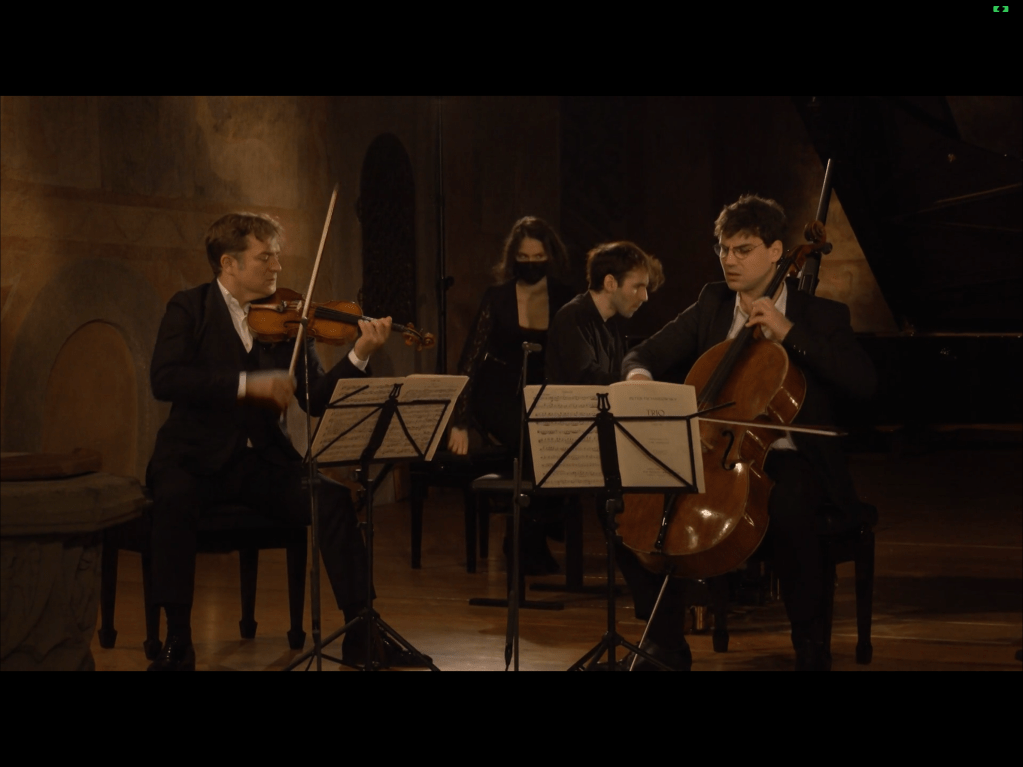
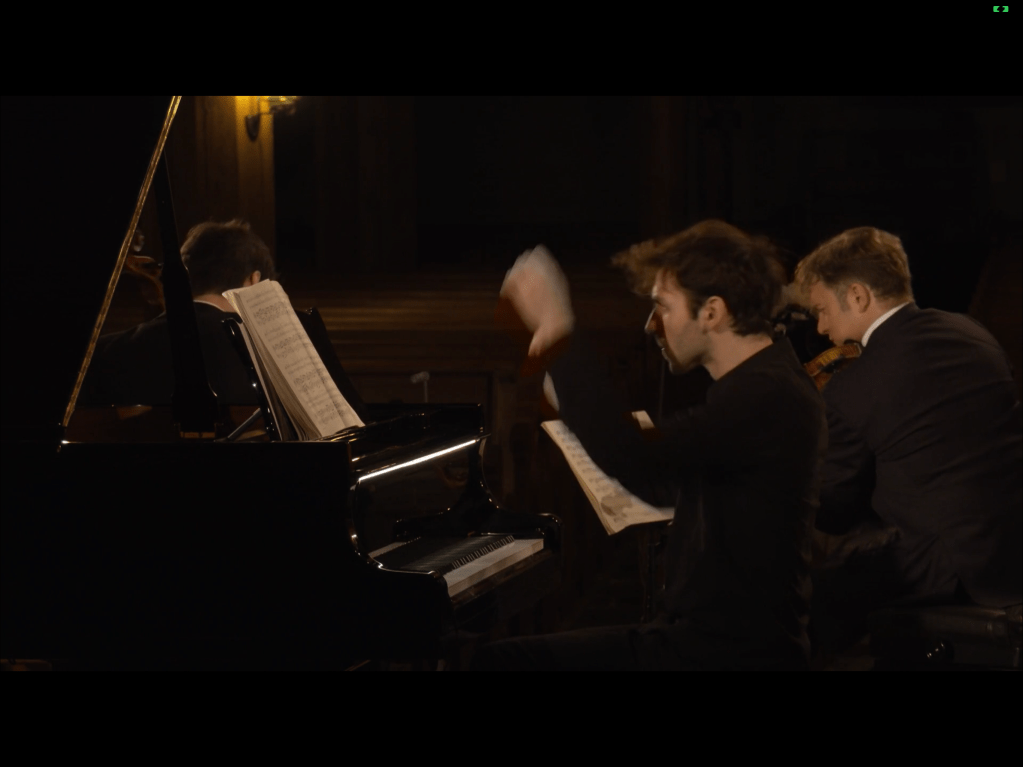
Even more wonders from Gstaad with a monumental performance of Tchaikowsky’s Trio in A minor.Barely looking at the score as Capucon eyes shut soared into the heights just as Kantorow dissolved to the final desolate bass note.Laferrière and Capucon joined in such burning intensity with Kantorow providing such sumptuous sounds before dissolving to an aching silence each of the three exhausted after a such ravishing and harrowing experience
Wondrous Schubert played by this almost forgotten winner of the Leeds Piano Competition in 1978. A star student together with Cristian Zacharias of Vlado Perlemuter and today there was no doubt that we were in the presence of a master. Looking much like Pollini and with the same intelligence and seriousness but with a voice that has something truly personal to say.Sitting very low with beautifully arched hands that etched out the most ravishing colours but also what passion.Has the opening of the Cminor Sonata ever sounded more intense with the sheer brooding intensity of the development?A coda of such ominous rumbling in the bass moving relentlessly to the final chords. The same legato as Perlemuter in the slow movement played with real weight and such wondrous sounds when the melody is repeated legato with the non legato bass,all played with such poignancy and poetic freedom.The frantic pace of the whirling tarantella finale was breathtaking but always with the divine intervention of Schubert’s endless unexpected outpouring of song. The subdued richness of the opening of the B flat Sonata was a marvel indeed.Passionate declamations mingled with such intimate confessions,the menacing bass trill like in the Appassionata always present.A whispered coda ending so mysteriously with the bass trill ever present but barely audible.The intimate passionate luminosity of the slow movement and the sheer delicacy of the Scherzo contrasting with the unbridled menace of the Trio.The joy and drama in the last movement called to order by a single bell like chime.Some truly magical lyrical moments played with all the great personality of a Schwarzkopf or young Dieskau. One has to ask but why has so little been heard of this great pianist on the very shores that brought him to public recognition in 1978?
Victor Braojos the young Spanish pianist is working with Martin Roscoe at the Guildhall in London so it came as no surprise his superb musical credentials in two of the pinnacles of the piano repertoire : Schumann Fantasie op 17 and Beethoven ‘Appassionata’Sonata op 57. Very interesting choice of piece by Josep Maria Guix to separate these two monumental works.A short piece full of the same colours as in Beethoven’s Bagatelles op 126 which was the inspiration for this contemporary Spanish composer. It was a courageous choice too by a true musician that after the sturm und drang of the Appassionata the mellifluous Bagatelle op 126 n.3 was the solution where Beethoven had finally found the peace that had been so elusive for him in his earlier years.
Talking with one of the artistic directors the distinguished keyboard player Elena Vorotko Victor spoke very movingly about the health crisis he had suffered at the age of 17 that made him decide on a career in music instead of a prospected medical one.As he charmingly said it was the best decision of his life which we were also able to witness by the total commitment that he demonstrated with his playing. He is preparing a new CD in this dark lockdown pandemic with a title that says it all :’Shreds of light’ with Bach 2nd Partita ,Brahms op 117 and the Liszt B minor Sonata.
So rasch wie moglich – Andantino-Scherzo-Rondo.Presto
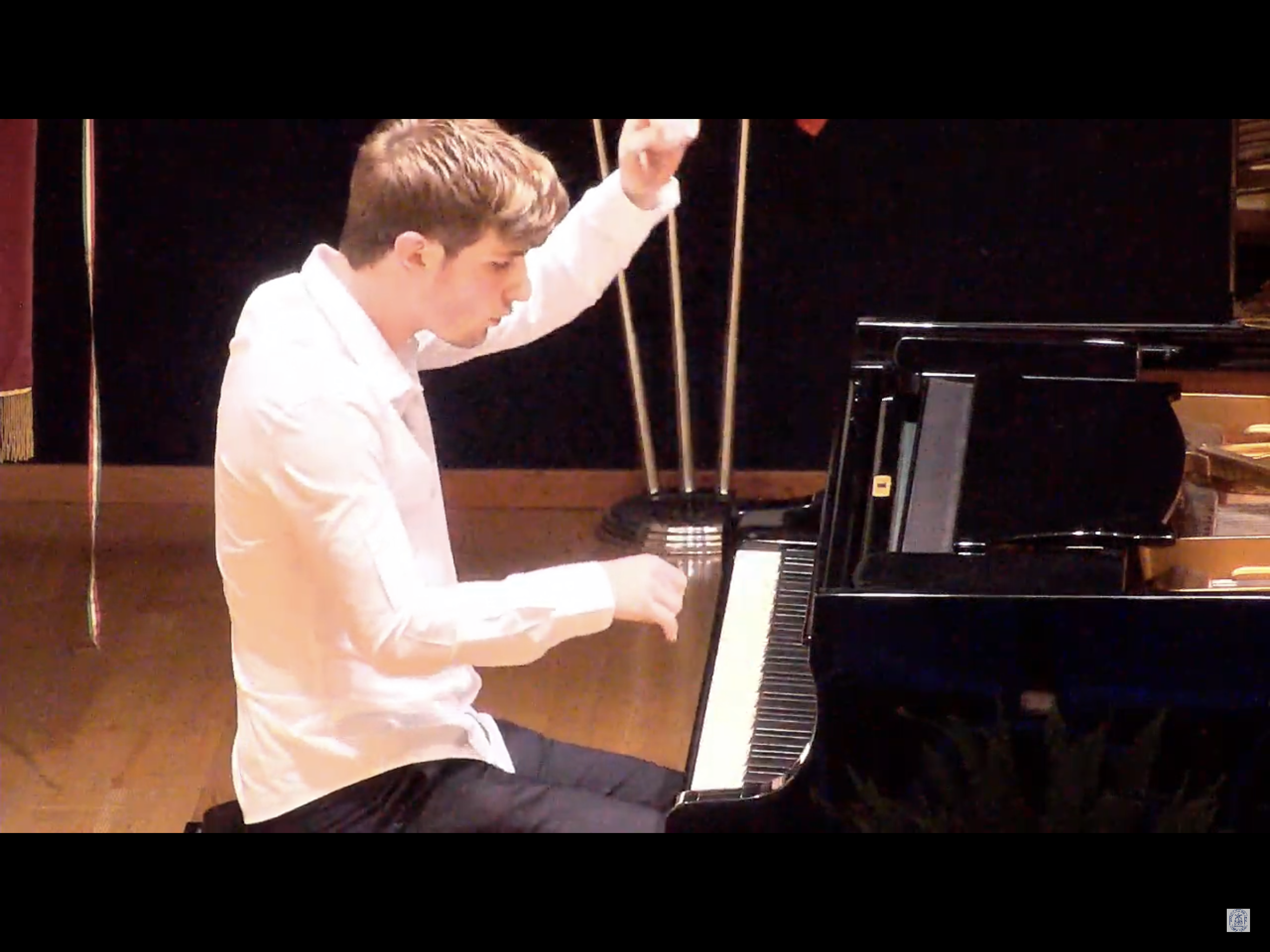
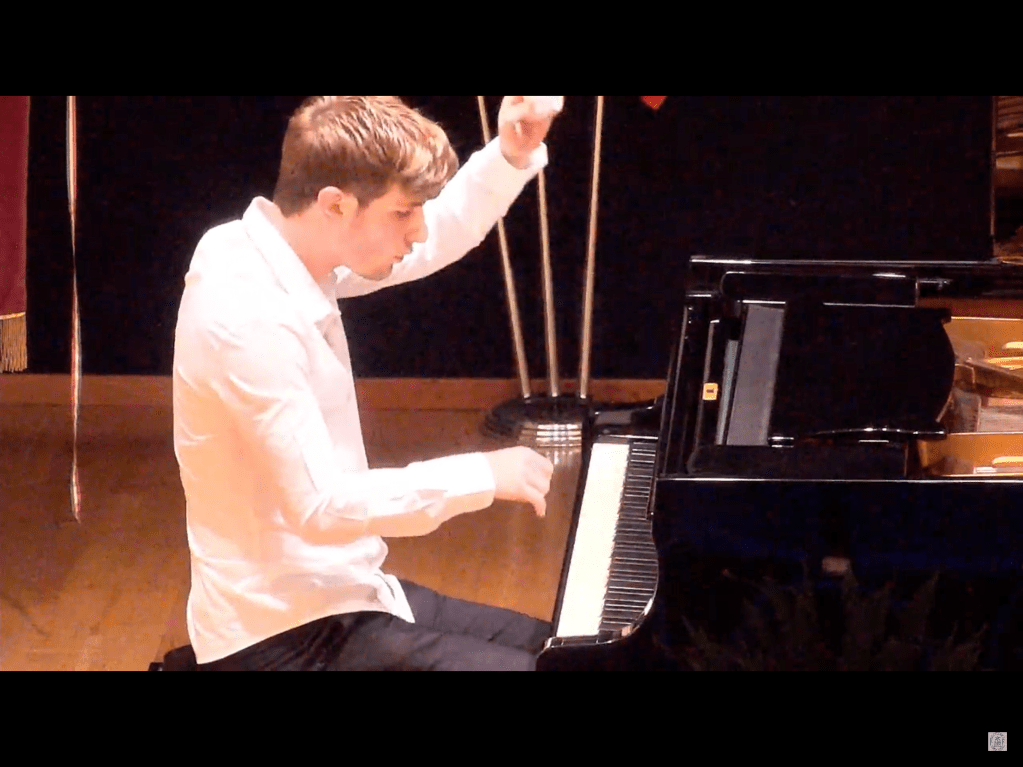
More superb playing at St Mary’s and Dr Mather says they will never stop! What a treat to hear the Choral Preludes played so expertly on the piano .A real musician with that clarity of sound one can associate with the Hungarian School that gave us Foldes,Anda and Vasary. Liszt too with three pieces that were unknown to me but revealed the same mellifluous outpouring of sounds.In Liszt’s hands,the scenic beauty and pastoral atmosphere with Bach a glimpse of God in all his mysterious ways. All thrown to the wind,of course,with a whirlwind performance of Schumann’s much neglected second sonata.As fast as possible and even faster the young passionate Schumann exhorts as Domonkos threw himself fearlessly into this passionate outpouring of notes .But it only contrasted with the exquisite magic of the Andantino where Schumann pauses for a moment to share his song Im Herbste with us amidst his youthful yearning passions.Powerful and yet sensitive playing from a very fine musician.
Komm Gott immediately was the rousing call full of the sounds of pealing bells with great bass organ notes played with such clarity.The simplicity of Wachet auf with the tenor line allowed to emerge so naturally above the continuous flow of awakening that Bach so magically weaves.Nun komm’ too played with utter simplicity which led into the intricate weaving of notes in Nun Freut euch.The continuous stream of notes played with a clarity and precision above which the chorale was clearly etched leading to the triumphant close.Ich ruf zu dir is one of the most beautiful things that Bach wrote and was played with heartrending simplicity on a sumptuous plate of velvet bass sounds.Herr Gott was a mellifluous outpouring of sumptuous sounds. As Dr Mather,a confessed organist said, this afternoon he was almost convinced that they sound even better on the piano than the organ when played like this.
Three short atmospheric pieces by Liszt had me searching for information about them:Subtitled “Die Glocken von Rom (The Bells of Rome), Liszt’s Ave Maria was composed in 1862 at the request of Dr. Siegmund Lebert and Dr. Ludwig Stark who established the Stuttgart Conservatory. This work was written for the fourth part of a series of piano tutors, Grosse theoretish-praktische Klavierschule, assembled by Drs. Lebert and Stark for Conservatory students. A short but moving work, this piece shows Liszt’s leanings toward a compositional style that showcases the virtuoso abilities of the pianist and yet does not overshadow the simple theme of the prayer upon which this work is based. It was beautifully played the melodic line allowed to sing out amidst a kaleidoscope of shades and colours depicting the poetic atmosphere of Rome.
La cloche sonne S 238 is a little French folk song with a beautifully shaped tenor melody surrounded by the pealing of bells.
Faribolo pastour (‘Pastoral Whimsy’) is the title of a song by Jacques Jasmin (1798–1864) who wrote the dialect poem Françouneto in 1840 and may have invented the melody himself or else adapted it from a folk song. Liszt met Jasmin whilst touring at Agen in September 1844 and improvised upon Jasmin’s romance. Jasmin returned the compliment with an improvised poem which was later published with a dedication to Liszt.A haunting melody beautifully embellished when it appears so magically in the middle register of the piano.
The Sonata in G minor op 22 was Schumann’s last full-length attempt at the sonata genre, the other completed ones being the Sonata n.1 in F sharp minor op 11 and the Sonata No. 3 in F minor (Op. 14); he later wrote Three Piano Sonatas for the Young Op. 118. Because it was published before the F minor sonata, it was given an earlier sequence number (No. 2) but still kept its later opus number (Op. 22). It used to be the most often performed of the three but has fallen into neglect with the first sonata being performed almost too frequently!It was refreshing to hear it played by such a musician who could throw himself into the passionate outpourings with a great sense of drive allied to a sense of architectural shape.Schumann marks the score to be played as fast as possible and then to be played even faster indicating the driving energy that he wanted alternating with melodic outburst of great beauty.The development was played with great clarity and precision gradually leading to the passionate climax before the return of the main theme.There follows the coda that boils over like water at a hundred degrees.
Domonkos showed superb control in a work that all too often can loose clarity and sense of line as it sweeps across the horizon.The Andantino was pure magic as a perfect sense of balance allowed the melodic line to sing out so simply the elaborations just adding to the intensity of feeling that Schumann imbues this most beautiful oasis in a work driven by such passionate impulses.There were great contrasts in the Scherzo ,’very fast and marked’Schumann asks here too.The syncopated chords and melodic March just added shape to the general bustle and excitement that Schumann demands.Domonkos swept straight into the final Presto like a wind blowing in from afar.But there were beautiful melodic passages that Schumann does ask to be played slower and were beautifully played and lovingly shaped before bursting again into the intricate web of continuous sounds.Interrupted by an enormous dissonant chord which is where the fireworks really start.A whisper of sounds played prestissimo like a cadenza always faster and faster Schumann exhorts and Domonkos has the technique and above all intelligent musicianship that can interpret the real meaning behind Schumann’s excited exhortations.
Domonkos Csabay is a Hungarian pianist based in the UK since 2015. He is giving recitals as a concert soloist in many countries, while he also performs a wide range of classical repertoire as a chamber musician and accompanist. He has been on stage at many important concert venues such as Town Hall and Symphony Hall in Birmingham or Queen Elizabeth Hall and Milton Court in London, and collaborated with renowned artists and companies such as the CBSO, Orchestra of the Swan or Longborough Festival Opera. His versatility is well illustrated by diverse competition successes: besides winning the Birmingham International Piano Competition in 2016, prizes won as a composer in Romania and as member of a Lied duo in Wales. After finishing his piano studies with Pascal Nemirovski and John Thwaites at the Royal Birmingham Conservatoire, his interest towards collaborative pianism led him to continue studying for an Advanced Postgraduate Diploma in r é p é titeurship under Paul Wingfield and Robin Bowman. Domonkos was selected to become an accompanist at Samling Institute for Young Artists. During his years in Birmingham, he has started a career as a free-lancing musician, working with orchestras, choruses and other artistic groups. He has made several concerto appearances and has been invited to events such as Lichfield Festival, Wye Valley Chamber Music Festival or the Budapest Spring Festival. He made his debut on BBC Radio 3 broadcasting Beethoven. His debut CD is recorded and to be issued by the label Naxos in 2021. Domonkos is currently based in London, where he holds a position as accompanist fellow at the Royal College of Music.
Some superb playing from a real musician.All played without the score except for the final Choral Prelude that he obviously added to complete the set of 9.Unfortunately the score lay open on the piano for the full recital that could have given another impression.
























 ChristopherAxworthy-MusicCommentary