Some superb playing from Siquian Li not only a magnificent technical command but the intelligence from the class of Norma Fisher that gave such weight to all that she did .From the sparkling multi coloured bagatelles of Carl Vine through the impatient improvisations of Beethoven’s rarely heard Fantasia op 77 where his irascible character had much in common with Schumann’s dual personality.Schubert’s G flat impromptu calmed the ruffled waters with simplicity and sublime beauty.Liszt’s monumental B minor Sonata was given a reading where intelligence and technical prowess went hand in hand with passion and beauty.Her authority and ability to think always from the bass gave an architectural strength and character to one of the greatest masterpieces of the piano repertoire
Carl Edward Vine,born 8 October 1954 and is an Australian composer From 1975 he worked as a freelance pianist and composer with a variety of theatre and dance companies, and ensembles. Vine’s catalogue includes eight symphonies, twelve concertos, music for film, television and theatre, electronic music and numerous chamber works. From 2000 until 2019 Carl was the Artistic Director of Musica Viva Australia and was also Artistic Director of the Huntington Estate Music Festival from 2006, and of the Musica Viva Festival (Sydney) from 2008. In 2005 he was awarded the Don Banks Music Award and in the 2014 Queen’s Birthday Honours List, Vine was appointed as an Officer of the Order of Australia (AO), “for distinguished service to the performing arts as a composer, conductor, academic and artistic director, and to the support and mentoring of emerging performers.” Vine currently lectures in composition and orchestration at the Sydney Conservatorium of Music. His Bagatelles are from 1994 and are five very contrasting pieces that were played with great fantasy and also in the toccata with transcendental virtuosity obviously inspired by Ravel.There was even a prelude Gershwin inspired in which Siqian managed to play a few notes with her elbow!But it was her artistry in the more atmospheric preludes that was quite extraordinary.A use of the pedals that could create waves of fluid sounds and even sounds like raindrops falling onto the keys.It was a ravishing performance of superlative artistry that brought these preludes vividly to life and made one wonder why they are not played more often in the concert hall.Czerny recalled of Beethoven’s early improvisational skills:’His improvisation was most brilliant and striking. In whatever company he might chance to be, he knew how to produce such an effect upon every hearer that frequently not an eye remained dry, while many would break out into loud sobs; for there was something wonderful in his expression in addition to the beauty and originality of his ideas and his spirited style of rendering them. After ending an improvisation of this kind he would burst into loud laughter and mock his listeners for the emotion he had caused in them. ‘You are fools!’, he would say.The Choral’ Fantasy Op 80, itself began with a piano improvisation which Beethoven wrote down only when the piece was published.Rarely played in the concert hall – the last time I heard the Fantasy op 77 was with Rudolf Serkin whose fiery temperament it suited ideally.It needs a very special pianist who can change mood even more quixotically than with Schumann’s dual personality of Florestan and Eusebius.Beethoven was much more irascible and the impatience with which he strides up and down the keyboard contrasts so vividly with the childlike innocence of the cantabile episodes.Transcendental difficulty combined with intelligent musicianship were the hallmark of Siqian’s performance.Her considerable technical command and artistry demonstrated the true character of Beethoven.He was only later to control himself as he lost his hearing and entered the world of the Gods.In his final great trilogy of sonatas with variation or fugue forms but loosing himself in a world of wondrous beauty.The first half presents a bewildering succession of musical fragments in contrasting moods, punctuated by rushing scales or arpeggios—almost as though the individual pages of music were being violently torn off.The Fantasy’s latter half is a set of variations on a short theme in B major and the final variation introduces descending scale-fragments like the opening giving an overall form to this great improvisation.Another extraordinary performance from Siqian restoring this work to the concert hall where it truly belongs.There was sublime simplicity and sumptuous sounds in Siqian’s performance created by giving such weight to the accompaniment.It in no way stopped the melodic line from being shaped with ravishing beauty.Instead of melody and accompaniment she produced a glorious whole sound of string quartet quality that brought this well worn impromptu back to life with a freshness and beauty of exquisite musicianship .The Sonata in B minor was dedicated to Schumann in return for Schumann’s dedication of his Fantasie op 17.It was Schumann’s contribution to the monument that Liszt intended to dedicate to Beethoven in Bonn .Mendelssohn had donated his Variations Serieuses. A copy of the Sonata was delivered to Schumann’s house in May 1854, when he was already in a sanatorium.His wife Clara found it “merely a blind noise” and never performed it.It was attacked by the critics of the day who said “anyone who has heard it and finds it beautiful is beyond help”.Even Brahms reputedly fell asleep when Liszt performed the work in 1853.It has since been recognised as the pinnacle of the Romantic repertoire and so advanced for its age with the transformation of themes that Schubert had inspired in Liszt with his Wanderer fantasy.Of course Liszt was in turn to inspire Wagner and point the way for the revolutionary form that was to grow out of these first seeds.The genius of Liszt knew no bounds and although the virtuoso Liszt was used to astonishing and ravishing his audiences with his showmanship and improvisations of the popular operatic themes of the day in the Sonata he had written with absolute precision exactly what he intended.He had even found time to edit the 32 Sonatas of his master Beethoven.It was exactly this precision and musicianship that Siqian brought to this often misunderstood sonata.The precision with which Liszt marks the score are as clear and essential as those of Beethoven.The differences between forte and fortissimo ,mezzo forte and piano or piano and pianissimo are essential ingredients for an interpreter that dares to bring this masterpiece to life.Siqian brought simplicity and sumptuous sound, intelligence and drama that together with her technical command gave great weight and architectural shape to this monumental work.It could have had a little more freedom in the slower passages where she tended to loose the tension that she had so magnificently created with the more tempestuous episodes.But her attention to detail and overall understanding were remarkable and an antidote to the air in Perivale that was still thick with Chopin after their extraordinary festival only two days before. https://christopheraxworthymusiccommentary.com/2022/10/02/chopin-alive-and-well-in-perivale-the-octoberfest-at-st-marys/
A ‘rising star of the piano’, Chinese pianist Siqian Li brings elegance, dynamism and exceptional musical quality to her performances. Commended for her ‘virtuosity and talent’ (Annecy Classic Festival), her ‘huge emotional range and effortless pianistic control’ (Paul Lewis CBE), and her ‘graceful and touching’ (Emanuel Ax) approach, Siqian has appeared in concerts and recitals around the world. Dedicated to the musical arts and connecting with audiences, Siqian is equally content on intimate stages as she is on the major stages. She has performed at international concert halls including the Bridgewater Hall, Beijing Forbidden City Concert Hall, Tokyo Ginza Yamaha Concert Hall, Cairo’s Arabic Music Institute and Boston’s Jordan Hall, and in more unusual settings, with recitals at London’s 1901 Arts Club, the ever-charming Fidelio Cafe and Luke Jerram’s breathtaking GAIA The Earth Exhibition.Consistently active on the festival circuit, Siqian has given recitals at Annecy Classic Festival, Festival d’Auvers sur-Oise, Dinard Festival International de Musique, Lancaster Music Festival, Shanghai International Music Festival, and BNP Paribas Rising Star Piano Festival, amongst others. A keen collaborator, Siqian actively seeks out opportunities to work with inspiring international artists. In 2021, Siqian collaborated with Latvian violinist Roberts Balanas on his debut album, which was released on Linn Records and has surpassed 150k plays on Apple Music. Elsewhere, Siqian has collaborated with a wide range of musicians worldwide, from the principals of the China National Symphony Orchestra to violinist Jack Liebeck. The level of depth Siqian brings to her musical exploration, coupled with her shining pianism, has led to her winning numerous awards, including the top prize of the Chappell Medal Piano Competition, the Imola International Piano Competition, Krainev International Piano Competition, and the Yamaha China Piano Competition Conservatoire. Siqian was also a semi-finalist of the Leeds International Piano Competition in 2018.Siqian has performed live on BBC Radio 3 – In Tune and appeared on BBC Radio London – The Scene . Passionate about sharing thoughts and ideas in writing, Siqian’s articles have been featured on various publishers and websites including Classical Music UK and Piano Addict Blog . An enthusiastic teacher, Siqian teaches privately in London and has given masterclasses internationally, in institutions ranging from Yamaha Music China to Lancashire’s Rossall School. Siqian is a Yamaha Young Artist. She studied at the Central Conservatory of Music in Beijing with Professor Huiqiao Bao, then went on to obtain a Master of Music Degree and a Graduate Diploma at the New England Conservatory in Boston in the class of Professor Alexander Korsantia, before receiving an Artist Diploma at the Royal College of Music in 2020 under the tutelage of Professor Norma Fisher.
Damir Duramovic at Pushkin House with a refined performance of 19th century Slavic piano music .
Performances of aristocratic style with a refined kaleidoscopic palette of sounds.Culminating in a complete performance of Rachmaninov Preludes op 23 where the volcanic eruptions of the B flat and C minor preludes were followed by the rhythmic drive of the fifth in performances of breathtaking depth and drive.
It was in the study by Scriabin op 2 offered as encore that the true Slavic soul was revealed with playing of great weight and sentiment.Not a trace of the sickly sentimentality that we hear from lesser mortals who do not understand the real poetic soul of a people who were free to express their feelings of a true heart that beats always in the Slavic soul.
A group of rarely heard preludes by turn of the century Russian/Ukrainian composers.Blumenthal is well known to be the first teacher of Horowitz but his own piano music has still to be discovered.A kaleidoscope of subtle sounds of great naturalness.The nuances and colours created a magic atmosphere in a beautiful but sparsely furnished room where the atmosphere was created solely by the streams of beautiful sounds that Damir coaxed from an old but friendly Steinway.There was passion too and a technical command totally at the service of the music.A discovery of a world of a different era with music written by and for the performers themselves.Today we are gradually finding interpreters like Damir or Mark Viner that can make it relive.It needs a great sense of style but above all a sense of colour and polyphony where music is caressed rather than hammered out on the piano .An illusion that with great artistry a box of strings with hammers can be transformed into a celestial harp.An artist that can create the impression that the piano can sing as beautifully as the greatest of bel canto singers.A world that looks back to the world of Chopin rather than to the new world of Stravinsky and Prokofiev.
Tatyana Sarkisova ,the wife of Dmitri Alexeev,former teacher of Damir at the Royal College of Music
Damir is a remarkable musician brought up by musical parents who are used to improvising in Bosnia and Herzegovina where traditional music is heard and performed spontaneously everywhere rather than concert performances.Damir came to the Menuhin school at an early age where he received a unique musical education from artists such as Marcel Baudet and Robert Levin.So it was no surprise that deciding to play the complete Preludes op,23 by Rachmaninov he chose to play them in an order that each one was the dominant of the next.
Friends and colleagues who have come to listen to Damir’s performances at Pushkin House Tolga Antaly Un,Petar Dimov,Can Arisoy,Bobby Chen,DD,Matthew McLachlan
Starting with the hauntingly beautiful prelude in F sharp minor with its brooding left hand so reminiscent of the second of Chopin’s preludes op 28 and the final repeated chords each one played so differently as it dies away to a murmur just like so many of Chopin’s Preludes and Studies.
I will keep to the printed order just for clarity and so to the mighty B flat Prelude which Damir ended with.A tour de force of sumptuous sounds with the wonderful tenor melody in the central section just revealed rather than hammered out as is so often heard in lesser hands.A flurry of notes like rush hour leading to the triumphant return of the opening and the excitement and transcendental difficulty of the coda.Fearlessly played chords that carried us on a wave of exhilaration to the final heroic cadence.The quixotic questioning of the third in D minor was answered by the robust beauty of the fourth in D major.A sumptuous string orchestra of Philadelphian richness and beauty,the gentle embroidered meanderings never interfering with the flowing melodic line.The G minor fifth Prelude was played with rhythmic drive and energy that was startling and at times overwhelming.The ending thrown off with nonchalant ease just like his Paganini Rhapsody or the G sharp minor prelude op 32.Rachmaninov was after all one of the greatest virtuosi of his day and he obviously knew how to tease and beguile his audiences as much as ravish and seduce them.Vlado Perlemuter often used to recount the pianist who came on stage looking as though he had swallowed a knife but then would produce the most beautiful sounds he had ever heard.The most romantic of Preludes in E flat was followed by a transcendental performance of the west wind puffing and blowing in the C minor that followed.The romantic meanderings of the eighth were followed by the feux follets difficulties of the ninth in E flat minor.Damir played this most difficult of Preludes with astonishing ease concentrating solely on the musical shape and colour with breathtaking audacity.Surely the haunting beauty of the tenth in G flat is so similar to the sixth of Chopin’s Preludes.It is however imbued with a voice that is uniquely Slavic ,full of nostalgia and brooding.
Can Arisoy and Bobby Chen remarkable pianists from the Menuhin School – Can was a student with Damir studying with Marcel Baudet and Bobby is a distinguished visiting professor.
An hour of real music making from a poet of the piano.A true illusionist who can transform this old black box creating an intimate atmosphere in a rather cold room.Making us believe for a moment that we are in the most sumptuous of salons in one of the great pre revolutionary palaces.
The first pieces in the concert are by the Russian Romantic composer Anatoly Lyadov (1855-1914), known for his piano miniatures, a number of orchestral works and folksong arrangements. In 1870 he entered the St. Petersburg Conservatoire to study composition with Nikolay Rimsky-Korsakov. On graduating, Lyadov became a professor, teaching composition for more than three decades, his students including Sergei Prokofiev, Nikolai Myaskovsky and other notable figures.
A young member of the audience in discussion with Damir about his eclectic programme
Next in the programme, the Preludes from 1931 by one of Lyadov’s students, Sergei Bortkiewicz (1877-1952) – a Ukrainian Romantic composer and pianist of Polish ancestry, born in Kharkov, then a part of the Russian Empire. After studying in St. Petersburg and Leipzig, from 1904 he spent ten years in Berlin. When the First World War began, he was deported back to Russia. Soon after, the Bolsheviks occupied his family estate, and later took Kharkov. In 1920 Bortkiewicz and his wife fled the country. Spending time in Istanbul and in Belgrade, they finally settled in Vienna. The music of Bortkiewicz is influenced by Chopin and Liszt, as well as Tchaikovsky and early Scriabin. In an interview from 1948 he said, “Today, one is probably inclined to dismiss all melodicists as epigones. Certainly, very often wrongly. As far as I am concerned, romanticism is not the bloodless intellectual commitment to a program, but the expression of my most profound mind and soul.“
Tolga congratulating Damir as Petar looks on. They are all guests at the Kew Academy
The concert will continue with the 1890s pieces by Felix Blumenfeld (1863-1931). He was born into a family of Polish and Austrian Jewish origin, in Yelysavethrad (present-day Kropyvnytskyi city in Ukraine), in Kherson Governorate of then the Russian Empire. Some time after Lyadov, he was a student of Rimsky-Korsakov at the St. Petersburg Conservatoire. Alongside his composition practice, Blumenfeld was a conductor and a prominent pianist. From 1918 to 1922, he was the director of the Lysenko Music and Drama School in Kyiv, before he moved to Moscow, where, until the end of his life, he taught in the Conservatoire, having an influential role as a piano teacher.
Post concert discussion with the distinguished pianist and teacher Tatyana Sarkisova
The complete set of Preludes Op. 23 by Sergei Rachmaninoff (1873-1943) will close the concert. Composer, pianist and conductor, Rachmaninoff was born into Russian aristocracy in the Novgorod Governorate. He studied in the Moscow Conservatoire with A. Siloti (piano), A. Arensky (composition) and S. Taneyev (counterpoint). Being a famous pianist, throughout his life Rachmaninoff was often travelling abroad on tours. Soon after the 1917 Revolution in Russia, his estate was confiscated by the communists. By chance, granted a tour to Scandinavia, he and his family left Russia, and never returned. For the rest of his life he was living between the United States and Switzerland, focusing most of his professional activity on piano performance.
PROGRAMME
Anatoly Lyadov
Three Piano Pieces Op. 57 (1900-05):
I. Prelude
II. Valse
III. Mazurka
Sergei Bortkiewicz
Preludes Op. 40 (1931):
No. 3 Con moto
No. 4 Sostenuto
No. 6 Andantino dolente
No. 7 Appassionato
Felix Blumenfeld
Preludes Op.17 (1892):
No.10 in c-sharp minor
No.15 in D-flat major
Etude de concert Op. 24 (1897)
Sergei Rachmaninoff
Preludes Op. 23 (1901-03), the complete set.
Damir Durmanovicis an internationally sought-after performer, who has performed at venues and festivals across Europe and the UK. He has won prizes in numerous international competitions, including the Beethoven Intercollegiate Junior Competition in London, Adilia Alieva International Piano Competition in Geneva and Isidor Bajic International Piano Competition in Novi Sad. Durmanovic is a scholar at the International Academy of Music in Liechtenstein and regularly participates in the courses organised by the academy.
Durmanovic began his studies at age of eight in his home country, Bosnia and Herzegovina, with Maja Azabagic before continuing his studies at the Yehudi Menuhin School where he studied with professor Marcel Baudet. He is a graduate from the Royal College of Music where he studied with Dmitri Alexeev. He is supported by the Keyboard Charitable Trust, as well as the Talent Unlimited Scheme.
St John’s Smith Square was in party mood with a concert to celebrate the 50th Anniversary of China-UK Ambassadorial Diplomatic Relations and the 73 anniversary of the People’s Republic of China.A concert in which the young pianist/composer Yuanfan Yang played movements from his third and fourth concertos also performing solo piano pieces and accompanying Yue Guo with his extraordinary Chinese bamboo ‘Di-Zi’ flutes.
Yue Guo and his extraordinarily expressive ‘Di-Zi’ flutes
Two choirs performed firstly a work by John Rutter ‘For the Beauty of the Earth’in which Yuanfan added some magic sounds on the piano.Yuanfan’s own work ‘Hometown Far Away’ was performed by joint choirs and orchestra in a final triumphant outpouring of joyous music making.
The beauty of Yuanfan’s playing was mirrored in the joyous atmosphere that was created by the Berlin Metropolitan Orchestra under George Hlawiczka and the two choirs seated in the gallery above the orchestra.Apollo Premadasa at only eight years old is not only a composer but also a cellist,trombonist,percussionist and pianist too.As the programme said far more poetically than I could ever do :’Apollo’s soul belongs to music and shares his passion for this art form and the feelings towards the world we live in via his performing and composing’
Apollo Premadasa ,eight years old ,receiving an ovation from public and orchestra after the performance of his Symphony 1 War Child
Yuanfan too showed his remarkable gifts at a very early age.His mother tells me of being complimented by another mother ,at a children six year old birthday party, on how well her son played the piano and wanted the name of his teacher for her child too.’But he does not play the piano’ she exclaimed ‘and we do not have a piano in the house!’ Genius shows itself in many mysterious ways .Yuanfan now is receiving accolades world wide for his superlatively intelligent and sensitive artistry as a pianist and also as a creative artist.Yuanfan lives in a world of his own ,a world of wondrous beauty and discovery.
The distinguished speaker extolling music as the Universal language that can unite all nations
Disputes and politics are not part of this Eutopia and as the distinguished speaker said today:’It is music that will draw us all together .It is the universal language ‘
Yuanfan’s mother with the distinguished speaker
Words are dangerous because they cannot express the real soul and understanding that can exist only in sounds.Fou Ts’ong ,the great Chinese pianist,surprised everyone in Warsaw when he won the top prize for his performances of the Mazurkas,the national dance of Poland.’But it is the same soul and feeling expressed in Chinese poetry’ ……the heart of Chopin is universal and beats with the same warmth and understanding in every soul.One just has to try to share the universal message captured within to realise it is this sentiment which will unite us in the end.
Some superlative playing of great authority from Yuanfan playing his fourth concerto.A beautifully melodic work that Yuanfan embellished with arabesques over the entire range of the keyboard.Yuanfan’s own work ‘Waves’ was played with great virtuosity and a kaleidoscopic sense of colour.Strangely enough his third concerto was much more complex and less melodic than the fourth.The splendid orchestra also performed the secondmovement of the Symphony 1 War Child written by the eight year old Apollo Premadasa.
Mention should be made of Yuanfan’s extraordinary improvisatory skills.Asking the audience for a melody and also a style they would like to chose he proceeded to astonish with a improvised virtuoso performance that astonished and amazed .
Friday-Sunday 30 Sept to 2 October ST MARY’S PERIVALE CHOPIN FESTIVAL 2022. 20 pianists play solo recitals over 5 sessions.
Friday 30 September 7 pm Chopin Festival Session 1 :7.00 Viv McLean Largo in E flat, Nocturne in E minor Op 72 no 1, Mazurkas Op 7 nos 1-3, Nocturne in F Op 15 no 1, Polonaise in A Op 40 no 1, Ballade no 3 in A flat Op 47, Scherzo no 3 in C sharp minor Op 39, Nocturne in C sharp minor Op Posth 7.55 Mengyang Pan Grande Valse brillante in E flat Op 18, Waltz in E minor Op Posth, Waltzes Op 69 nos 1&2, Variations on ‘Là ci darem la mano’ Op 2 8.25 Michal Szymanowski Mazurkas Op 6, Nocturne in G minor Op 37 no 1, Impromptu no 3 in G flat Op 51, Nocturne in F minor Op 55 no 1, Waltz in A flat Op 42
What a wonder the start of a three day Chopin festival with some of the finest pianists imaginable. St Mary’s has never been so full and on a bleak wintery day there was no stopping a public just longing to hear three mini Chopin recitals.There must be hundreds listening in on line too as I was and what a joy it was to hear not only the better known works of Chopin but also some of the rarities too.
On hearing Chopin himself playing in the Paris salons of the day the variations on La ci darem la Mano op 2 Schumann announced the arrival of a star in their midst with ‘Hats off gentlemen a genius’ and that was only one of his early showpieces.And a show piece it was tonight with a brilliant performance by Menyang Pan.Playing not only with brilliance and breathtaking jeux perlé there was the aristocratic style that she gave to all she played.Some of Chopin’s waltzes were played with such character and colour that was quite breathtaking in its refined beauty and charm.
Michal Szymanowski flying in especially from Poland to play a series of Mazurkas that were so full of the zest and spirit of his native land. Nocturnes too played with such nobility of sentiment ,the same he brought to the G flat impromptu.Playing with the same ravishing colour and charm that Rubinstein used to beguile us with on his much awaited yearly visits to London.The famous waltz in A flat with cross rhythms was played with a sense of line and irresistible rhythmic drive but the astonishing thing was the way he just threw of the final bar with impish nonchalance.
The opening honours were given to a St Mary’s favourite:Viv McLean who started with an almost unknown Largo in E flat that for me was quite a discovery.Finishing though with a ravishing performance of one of Chopin’s best known nocturnes in C sharp minor op.posth. In between were sandwiched fine performances of the third Ballade and Scherzo and the famous Military A major Polonaise where his sterling musicianship allowed him to steer us so clearly through these well know waters with great artistry.But his performance of the nocturne op 72 n.2 is what will remain with me for a long time for its heartrending simplicity and aristocratic poise. Two sessions tomorrow and two on Sunday add up to 12 hours of absolute bliss . I never thought I would enjoy listening to Chopin’s music as much as I did tonight ………..but I missed the wine, the joie de vivre and infectious enthusiasm of Hugh Mather and all his ‘family’ of music lovers in this beautiful deconsecrated church just 20 minutes from the heart of the great metropolis.
Felicity and friends adding to the intimate family atmosphere of this unique concert hall.
Saturday 1 October 2 pm Chopin Festival Session 2 : 2.00 Ashley Fripp Mazurkas Op 24, Impromptu no 1 in A flat Op 29, Nocturnes Op 9 nos 1&2, Barcarolle Op 60 2.45 Amit Yahav Prelude in C sharp minor Op 45, Waltzes Op 64 nos 1&2, Nocturne in G minor Op 15 no 3, Mazurkas Op 56, Scherzo no 4 in E Op 54 3.30 Joanna Kacperek Nocturne in C minor (1837) Waltz in A flat Op 64 no 3, Polonaise in E flat minor Op 26 no 2, Rondo à la mazur Op 5, Scherzo no 2 in B flat minor Op 31 4.00 tea interval 4.30 Andrew Yiangou Nocturne in G Op 37 no 2, Trois Nouvelle Études, Waltzes Op 70 nos 1-3, Andante Spianato and Grande Polonaise Op 22 5.15 Callum McLachlan Waltzes Op 34 nos 1-3, Mazurkas Op 63, Nocturne in E Op 62 no 2, Scherzo no 1 in B minor Op 20
Ashley Fripp
More superb playing from Perivale on the second day of their Chopin Festival .Opening with Ashley Fripp only a few days after his superb solo recital with a scintillatingly subtle jeux perlé account of the first impromptu just thrown off with the charm and ease of another era .Mazurkas and Nocturnes just flowed from his hands with streams of golden sounds and subtle colours but it was the Barcarolle that stood on its own as a true monument and played even more beautifully than the other day.There was an ease and flow but with an aristocratic control that was quite memorable. https://christopheraxworthymusiccommentary.com/2022/09/21/ashley-fripp-at-st-marys-poetry-and-intelligence-of-a-great-musician/
Amit Yahav
There was such subtle poetry from Amit Yahav with Chopin’s late Prelude op 45 where the layers of sound just flowed in a non stop stream of magic sounds.The mazurkas were played with true understanding but the fourth Scherzo stood out for its nobility and fleeting beauty of one of the most elusive but surely one of the greatest of Chopin’s creations.
And what a revelation was Joanna Kacperek recently married to Andrew Yiangou .
Married five weeks ago – a golden couple indeed
All that she played was gold in impeccable performances of rare beauty from the Nocturne in C minor 1837 to the deep brooding of the E flat minor Polonaise .The grace and charm of the Rondo à la mazur to the mighty sturm und drang of the famous B flat minor Scherzo.It was a ravishing display of born musicianship …..what a wonderfully talented couple she and Andrew are and they are from Ealing ….there is something about the air over that way that is full of the sound of music
And to the last two performances before the supper break .Andrew Yiangou the local boy and now distinguished artist of great authority.The three novelles Etudes written in 1839, as a contribution to “Méthode des méthodes de piano”, a piano instruction book by Ignaz Moscheles and François-Joseph Fétis.Two against three,staccato against legato,three against four a conundrum of technical and mental difficulties that just disappear with the sheer beauty of creation.Andrew played them with great authority shaping these gems into perfect miniatures that Chopin was to develop into his truly masterly op 25 studies that we eagerly await tonight from Patrick Hemmerlé.There was grace and charm that he brought to the waltzes op 70 with ornaments that glistened with oiled brilliance.But it was the Andante spianato and grande Polonaise that Andrew showed us his mastery and authority but not before he had entranced us with the perfumed succulence of the spianato …a term that Chopin was to use only once.
Callum McLachlan
The artistry of Callum McLachlan was breathtaking in its old style grace and charm.The grandiloquence of op 34 n.1 was followed by the heart rending yearning of the op 34 n.2.It was the so called cat waltz that Callum let his hair down and put caution to the wind as this poor cat was treated to a speedy Gonzales romp of youthful verve and audacity.The beauty of his mazurkas were only outdone by the ravishing tone and aristocratic poise of the late nocturne op 62.If his virtuosity and passion were breathtaking in the first scherzo it was the slow Christmas melody that Chopin quotes as an antidote that showed off his true artistry.Such wondrous sounds and colours and a rubato that was of a mature artist way above his 22 years. A great artist in the making and part of a remarkable family of superb musicians .
Chopin Festival Session 3 : 7.00 pm Julian Trevelyan Mazurkas Op 41, Impromptu no 2 in F sharp Op 36, Nocturne in B Op 9 no 3, Polonaise-Fantaisie in A flat Op 61 7.45 Patrick Hemmerlé Allegro de concert Op 46, Tarantelle Op 43, Études Op 25 8.30 interval 8.45 Thomas Kelly Rondo in E flat Op 16, Mazurkas Op 50, Mazurkas Op 67, Nocturne in E flat Op 55 no 2, Ballade no 1 in G minor Op 23
What an opening to the evening session of this Chopin Festival .I knew Julian was good but I did not realise how good ( as Serkin exclaimed on hearing Perahia for the first time )until he started his recital tonight.I have heard him give magnificent performances of the Hammerklavier or Diabelli variations that were absorbing and some times even controversial but today from the very first notes of the four Mazurkas he played there was a sound that was like a daguerreotype photo in its veiled beauty.Like an improvisation and even if the second one almost skidded off the tarmac it was breathtaking in its audacity.The melancholic nostalgia mixed with the dance rhythms in the last one was extraordinary.The pastoral serenity he brought to the opening of the F sharp Impromptu made me think of the similarity to the Barcarolle,that was to come in the last years of Chopin’s life with its outpouring of song and aristocratic climax dying to a mere whisper.The Nocturne op 9 n.3 had all the whimsical beauty of Lhevinne’s historic performance with unbelievably ravishing ornamentation that was truly breathtaking .The Polonaise Fantasie was one of the most moving performances I have ever heard .I remember the first time I heard it was from the hands of Perlemuter with his weight and limpet like legato that I never thought I would hear again until tonight .Even if he split the hands in the opening wave of notes it was done with the beauty of a Volodos and a feeling that this was indeed a great wave of sound moving inexorably ahead.If the right hand did not sometimes wait for the left it was so overwhelmingly convincing.I was surprised by his capricious left hand staccato accompaniment just before the middle episode but it was a prelude to chords of such intensity that followed and that I can only thank God that I lived to hear ( as Curzon said of Lupu’s Beethoven 3.) All these wonderful pianists but with Julian at the fore like a beacon shining brightly amongst the stars.
Talking of stars there followed immediately after this performance the recital of the remarkable Pollini type figure of Patrick Hemerlé. They are colleagues who frequent each other’s performances and share a mutual discovery of music together.Patrick I have heard many times before but today the poetry he found in Chopin’s studies op 25 left me breathless in admiration.Above all moved by the ravishing sounds and deeply personal character he brought to each of these perfect gems.Patrick is a musician who believes deeply in following the composers wishes and like Pollini it is to Patrick that one turns to hear a score come alive in performance before turning maybe to other performers for a more individual interpretation.He has revealed works as far apart as Villa Lobos Rudepoema or as today the Allegro de concert by Chopin.The score brought to life with superlative musicianship and technical mastery.But today there was even more .Chopin had unleashed in Patrick his soul that he normally keeps hidden behind his superlatively inquisitive mind.It was evident from the opening Allegro de concert ,which is the first movement of a third piano concerto that Chopin never completed.If the opening was surprisingly coquettish it grandually built in sonority and passionate involvement that I have rarely noted in Patrick’s alway masterly performances.The Tarantelle too was thrown off with all the ease and charm that obviously Chopin wanted to convey to the ladies of the Paris Salons. I have heard Patrick play all 24 Chooin studies in public in a remarkable tour de force of musicianship and resilience.But today was different.Patrick allowed us to look into his soul with a reading of the slow 7th study that was emotionally so moving.Already the tenor counterpoints in the A flat first study had given an idea there was something special in the air.The magnificence of the last study where the waves of sound grew to fever pitch of overwhelming emotion brought a spontaneous standing ovation from the usually warm but shy audience at St Mary’s.
Well they say miracles don’t occur in the same place once but in St Mary’s they certainly happen three times !
Thomas Kelly brought tears to my eyes as I realised that this very talented young pianist that I had spotted five years ago has now become an artist of towering stature.I would go to say after what he shared with us tonight the finest pianist of his generation. The Mazurkas that he played op 50 and op 67 opened up a sound world and a natural flow of musical invention that I have not heard since Smeterlin or Perlemuter.The ravishing beauty of the C sharp minor op 50 was breathtaking in its beauty and the meaning he dug from deep within the notes …..he found the very soul of Chopin that is hidden deep inside the Mazukas.The wondrous colours of the G major op 67 or the dance like melancholy of the G minor or the deeply contemplative A flat .Thomas revealed a whole world as he found the very soul of Chopin with his limpet like fingers that dug ever deeper into the very heart of the notes.The scintillating Rondo op 16 I had not heard since Magaloff .Thomas played with the same aristocratic style but with ravishing sounds of such radiance and fluidity.The notes just flew from his fingers with the oiled brilliance and consummate ease of a past era.The nocturne op 55 n.2 was played with bewitching sounds that seemed to sparkle in the distance as the melodic line flowed with a constant flow of ravishing sounds. I have never heard the old G minor war horse open with such beauty and restraint .Thomas restored the G minor Ballade to us in a new costume.All the inevitably traditional rhetoric was gone and instead there were breathtaking moments of discovery.Sounds that took me by surprise as one realised that this young man truly loves the piano and is sharing his great love affair with us.Intimate secrets,canons covered in flowers but above all an aristocratic musicianship that marks him out like Benjamin Grosvenor born into another world …..the world of fantasy and wonder …..the world that only the greatest artists can reach.Exciting because Thomas’s is a voyage of discovery that is always evolving and who knows to,what heights it might lead! Unbelievably moving performances and indeed an evening that will long be remembered and that luckily was recorded so my words are not only a mere memory as Mitsuko Uchida would say.Thank you Hugh and your team for sharing this world with us ….a truly magic carpet in Perivale
Sunday 2 October 2 pm Chopin Festival Session 4 : 2.00 Dinara Klinton Nocturne in F sharp minor Op 48 no 2, Mazurka in A minor Op 68 no 2, Sonata no 2 in B flat minor Op 35 2.45 Sasha Grynyuk Fantasy in F minor Op 49, Mazurkas Op 30, Waltz in A minor (1843), Waltz in E flat (1840), Waltz in A flat (1827), Waltz in E flat (1830) 3.30 Yuanfan Yang 24 Preludes Op 28 4.15 tea interval 4.45 Martin Cousin Nocturnes Op 37 nos 1&2, Bolero Op 19, Berceuse Op 57, Polonaise in A flat Op 53 5.25 Ignas Maknickas Mazurkas Op 59, Nocturnes Op 27 nos 1&2, Ballade no 4 in F minor Op 52
Another extraordinary line up of pianists for the final day of the Chopin Festival. Dinara Klinton one of the finest pianists of her generation was so disturbed by events in her native Ukraine that she did not know if she would be able to concentrate today.Persuaded by the ever caring Hugh Mather she played even better than ever .A Nocturne in F sharp minor of such depth of sound and profound beauty followed by the haunting message of the Mazurka in A minor. But it was Chopin’s great masterpiece of the Funeral March sonata that showed off her aristocratic musicianship and an unerring sense of style that allowed such shape and colour and a ‘rubato ma non troppo’ ( to quote the title of Tito Aprea’s fascinating book).As Hugh commented afterwards there was such an electric atmosphere in the Trio of the Funeral March that you could have heard a pin drop in a hall full to the rafters for this wonderful series .The wind blowing over the graves with Dinara’s superb fingers was a wind of great dynamic force finding refuge only in the mighty final chords.
Sasha Grynyuk gave a performance of the F minor Fantasy of such authority and passion where the transcendental arpeggiando chords were of burning intensity.Fearless almost reckless they took our breath away with their audacity.There was great weight to the melodic line of the central episode that just grew so naturally out of its surrounding.The Mazurkas op 30 were played with ravishing colours and sense of style and three little known waltzes were thrown off with irresistible charm and style.The last in E flat (1830) was a favourite encore of Peter Frankl whose 87th birthday is today.Sasha has much in common with Peter for his intelligent musicianship and sense of style .A technical command of the keyboard at the service always of the music.He like Peter is music’s servant.
I had heard Yuanfan Yang yesterday in an evening dedicated to him by the Chinese community in London in St Johns Smith Square.He played movements from his third and fourth concertos plus one of his solo pieces and improvising on themes given by the audience.His fourth concerto owes more to Hollywood than to Ades but for a musician still only in his mid twenties it was a remarkable display of musicianship.https://christopheraxworthymusiccommentary.com/2022/10/04/yuanfan-yang-a-celebration-in-music-the-universal-language-of-all-nations/ Gold Prize winner a month ago of the Casagrande competition that could in the past boast Perlemuter and Badura Skoda on the jury Yuanfan showed the other side of his remarkable music personality.It was the side he shared with us today with a magnificent account of the 24 Chopin Preludes .Playing now with even more authority than a year ago when I heard him play them in Rome .Yuanfan inhabits a world of his own,the world of music.Anything else is secondary to the message that he carries in his own music and in his music making .A remarkable musician and man whose performance of the Preludes today must surely rank with the greatest of performances that we could hear on the concert platform today.
The final two recitals this afternoon started with a fascinating performance of the rarely heard Bolero played with great panash and infectious rhythmic verve.It was the same grandiosity that Martin Cousins brought to the famous Polonaise Héroique.If the cavalry were a little hard footed it may have been because he was tied to the score and this is one piece where as Rubinstein had shown us so often showmanship and freedom are essential ingredients for this the most majestic of Chopin’s compositions.The two nocturnes however were given intimate performances of great beauty with the solidity and musicianship of consummate artistry.
Ignas Macknickas is a young musician who I heard four years ago playing Mozart double concerto with Alim Baesembayev (the winner of the last Leeds Competition)I had noticed his natural technique long fingers and relaxed arms that gave such fluidity and luminosity to all he did.A natural talent that has at last realised that playing the piano is 90% hard work and 10% God given talent.So it was wonderful to see this young man now flowering into an artist of stature with a performance of one of the greatest works of the Romatic era – the fourth ballade.Together with the Liszt Sonata and Schumann Fantasy these are the very pinnacle of inspiration. His performance was of great fluidity and authority.Beautiful luminous sounds and a naturalness of movement that was mirrored in the ravishing beauty of the sound he produced .The treacherous coda was played with great excitement but shaped with artistry.The same artistry he had brought to the two nocturnes op 27 with the penombre of the first and the radiant luminosity of the second .The mazurkas too were played with that youthful spirit and sense of ‘joie de vivre’ that was a hallmark of all he did.
Chopin Festival Session 5: 7.00 Julian Jacobson Polonaise in C sharp minor Op 26 no 1, Mazurkas Op 33, Polonaise in C minor Op 40 no 2, Mazurka in F minor Op 68 no 4, Polonaise in F sharp minor Op 44 7.50 Roman Kosyakov Fantasy-Impromptu Op 66, Mazurkas Op 17, Nocturne in C minor Op 48 no 1, Ballade no 2 in F Op 38, 8.30 interval 8.45 Cristian Sandrin Nocturne in B Op 62 no 1, Sonata no 3 in B minor Op 58 9.25 Rokas Valuntonis Nocturne in F sharp Op 15 no 2, Études Op 10
Julian Jacobson
And so to the final session of this extraordinary festival. It was Julian Jacobson who had pondered through the night of how to making a really fitting contribution to this extraordinary event .He had recently found in the Fontana archives the missing page to the Mazurka in F minor op 68 n.4.A page that Chopin had written on his death bed and had only just the strength to write the bare notes.But notes of such chromaticism that pointed to the future even in his final hours.He prepared it during the morning of the concert as a surprise gift from an extraordinary musicologist. Julian is also a very fine pianist who plays the entire piano repertoire.He will be playing the 32 Beethoven Sonatas soon from memory in Central London.Starting at 10 am with op 2 and finishing at 10 pm with op 111. He recently played 7,45 minute recitals on a cruise ship in the Americas as his duo partner was indisposed at the last minute.An amazing musical mind that could contemplate such a tour de force. Adding three polonaises and the mazurkas op 33 to his programme he gave performances where music just seemed to pour from him so naturally .The Mazukas in particular were played with such live wire colours and rhythms that they seemed almost improvised such was their freshness .The great C minor Polonaise op 40 was played with heartrending nobility and op 26 with its youthful call to arms and joyously innocent dance rhythms.The great F sharp minor Polonaise was played with aristocratic nobility and the complex middle mazurka episode was allowed to flow with a compelling natural forward movement .
Roman Korsyakov’s agile fingers allowed the Fantasie Impromptu to weave its magic web with beguiling colours and passion.The beautiful middle episode sang with pleading sincerity.Roman’s superb sense of balance allowing the melodic line to sing with such subtle colouring which was the hallmark of his remarkable performance of the C minor nocturne that followed A miniature tone poem and one of the greatest of nocturnes played with a remarkable sense of grandeur and poetic beauty.The same beauty he brought to the second ballade but where also his transcendental control of the piano allowed the tempestuous interruptions to astonish and excite before dying away to a mere whisper. Roman winner of the 2019 Hastings Competition gave him a triumphant London debut with the Royal Philharmonic Orchestra and he has recently ignited the enthusiasm of the audiences on Cyprus in a recital for the Keyboard Trust of which he is a distinguished artist.
CrIstian Sandrin by coincidence was to be the duo partner on Julian’s cruise but was called to his father’s bedside in Bucharest at the last minute .His father is a distinguished Rumanian pianist who I hope was well enough to watch his son’s remarkably poetic performance of the B minor Sonata ._ An Allegro Maestoso of rare beauty where he took all the time to allow the poetry to be revealed in a timeless flood of song.CrIstian,an Ashkenazy look alike,is born to sit before the keyboard and is a very natural pianist where his movements from on high follow the movement of the music with the same beauty as a Volodos or Giulini.The middle episode of the Scherzo too revealed such poetic truths and contrasted with the scintillating outer episodes played with true jeux perlé of great brilliance.The rondo final movement was paced like a master growing ever more in sound and excitement until the bubble burst with extraordinary virtuosity and brilliance.The nocturne in B too was unraveled in a timeless stream of poignant sounds with trills that were just reverberations from on high adding to the magic atmosphere that he created.
Rokas Valuntonis
It was Rokas Valuntonis who closed the festival late on Sunday evening.A performance of the F sharp nocturne op 15 that Rubinstein used to play with timeless ease and beauty.Rokas unravelled the beautiful middle episode with the same ease and with a enviable liquid sound .It was the oiled ease of his playing and radiant sound that reminded me of Geza Anda.A technical command of the keyboard and its secret colours that often astonishes .His studies op 10 may not have been the perfection that had astonished a while back in Perivale but it was of such brilliance and style that it was quite unique.The ravishing beauty of the slow third and sixth studies were of a radiance and poetic meaning that had made his Kinderscenen also in Perivale a while back so extraordinarily moving.The opening study was played with a brilliance and ease that was astonishing as was the famous black key study.Just thrown off with an ease but also a musicality that shaped the music in a ravishingly enticing way.If there were moments of doubt ,due to the late hour ,there were none where the music was concerned and I have rarely heard the arpeggio study n.11 played with such jewel like beauty.The passion and virtuosity of the Revolutionary study was a fitting ending to this festival of having the privilege to listening to 12 hours of Chopin’s genius played by such remarkable artists. It also allowed some of the finest young musicians a platform to share their music with music lovers world wide thanks to the superb streamig facilities that Dr Hugh Mather and his team have created with passion and expertise in this beautiful historic venue.
Around the world in only three days ….only with Cremona Musica
What can I say …….lost for words ……..Let’s leave it to the Bard …..only a true poet can describe this experience.
180 events in only three days but that is not all because Cremona becomes a link with an exchange of ideas and encounters that will reverberate around the globe long after it has made all these introductions possible .An introduction to the dance indeed ………choosing one’s partners to suit one’s style and taste with a global network that surely must be unique.
First on my dancing calendar was in the Yamaha Piano Festival with the avantguard pianist Giusy Caruso.Dressed a bit like spider woman the extraordinary sounds she made were turned into designs onto a big screen She is a concert artist and scholar in the academic field, is one of the pioneers of artistic research in Italy.Living in Belgium, she is a professor at the Royal Conservatory of Antwerp, affiliated with the Institute for psychoacoustics and electronic music (IPEM) of the University of Ghent and the Laboratoire de Musicologie (LaM) of the University of Brussels. Presenting “MethaPhase: Contrapuntal dialogue between a pianist and her avatar in the metaverse”, a musical performance in which technology has a decisive impact on the performer and the public.The metaverse can also be an interesting research area for an artistic project; indeed, during her PhD at the Royal Conservatory and University (IPEM) of Ghent, she frequently worked with digital technology to scientifically study the movement of the pianist during a musical performance.It is a system in which infrared cameras track the piano gesture to provide data to a software, which will transform them into an avatar-performer. She had already used motion capture for her research.The use of the performance in a sort of metaphase, an English-speaking term that indicates cellular splitting: thanks to motion capture was , in fact, doubled in her avatar” and the performance was augmented in digital reality.
Roberto Prosseda introducing Giusy Caruso
The Disklavier is a hybrid piano with a MIDI system, which allows you to record the performance of the pianist, including the dynamics and the movement of the fingers on the keys: the piano gesture is, therefore, observable and audible in all its bodily expressiveness.This mechanism was used during the initial phase of the concert: in fact, the Disklavier will play, independently, a piece pre-recorded: the first chords of the first movement of the Memento Mori collection, by the Belgian composer Wim Henderickx (1962); then,she entered the scene with a suit and markers, essential for the motion capture system to identify my movements, creating her avatar. In this way, she was projected into virtual reality and interacted with the piano’s string-board, while the piano continued to play the MIDI.
In the second part of the performance,she played in dialogue the avatar, detected by the motion capture system, the piece Piano Phase for two pianos by Steve Reich (1936).
Passing by the Grand Opening Ceremony of Cremona Musica with the Mayor and many illustrious participants from the ICE -Agency on my way to the first piano recital in the Fazioli Piano Festival
A fine performance of Chopin’s 24 Preludes that Fou Ts’ong (Roberto Prosseda’s mentor) described as 24 problems .These are hurdles that the artist has to face to unlock the secrets hidden in these perfect gems that should become an architectural whole of ravishing beauty and emotional meaning.Federico played them fearlessly with great artistry and understanding.As he matures he will find the way to link them more as a whole on an emotional wave from the improvised opening to the magisterial final prelude.But this was a very fine performance of unerring authority of one of Chopin’s greatest but most elusive works.It was in the Scarlatti sonata that he played as an encore that he found the ravishing colours that had eluded him in Chopin.There was such delicate ornamentation ending in ‘grande bellezza’ To sit down at midday and break immediately into the Chopin Preludes is no mean feat and I am sure we will be hearing much more of this very talented young artist in the near future.Just 23 and befriended and helped for many years by Fazioli,the selfless friend to all pianists Federico Gad Crema greeted affectionately by Luca Fazioli who with his father has been following the start of this young Milanese pianist’s career.He plays already in some of the most prestigious concert halls in the world from La Scala to Carnegie Hall
The chase was now on to catch up with the meeting of Cameron Carpenter and to hear his thoughts on the Goldberg Variations that he was to perform in the evening in Teatro Ponchielli.He was presented by Massimo Fargnoli the president of the Accademia Musicale Napolitana and defender of the great Neapolitan keyboard school amply displayed in his temporary temple of the Sala Guarneri.
A unique occasion that one could only expect to experience at Cremona Musica.Cameron Carpenter playing the Landowska Pleyel harpsichord as Massimo Fargnoli looks on in astonishment.
As luck would have it this encounter was linked immediately to the presentation of the Wanda Landowska Pleyel harpsichord.A rare and precious instrument that was love at first sight for the astonishing Cameron Carpenter .His joy at the discovery of this unique instrument inspired him to give a extraordinary demonstration of his art.We have all been brought up with the historic Landowska performance of the Goldberg on this very instrument ……and it was the genial Fargnoli who as always can surprise and astonish us with his unending knowledge and experience of music.
Jed Distler,Cameron Carpenter and Massimo Fargnoli being introduced by Roberto Prosseda
Some very interesting questions from the distinguished critic and pianist Jed Distler allowed us to appreciate the dedicated musicianship and passion of this artist.After 30 years dedicated to performance he now felt the rules and regulations ,like traffic lights and fines,could be ignored or at least not dominate the freedom of his life .He did not know the instrument he was to play in the concert but if it was a powerful instrument he would be able to use fully the acoustic of the theatre .If not it would be a chamber performance just as Bach would experiment with the mighty organs and church acoustics.Music is and must be a living thing.
Jed asked him who were the musicians who had influenced him the most.Surprisingly it was the pianists of the Golden Era – Lhevine,Godowsky,Rosenthal but above all Percy Grainger – the freethinker.I think it was Jed who very spiritedly added that he was one of the few organists then who plays like a dead pianist!But Carpenter had a harrowing story to tell of the instrument that he had been perfecting and that was evolving as he toured the world with it when COVID struck.The financing from all the tours dried up overnight and consequently the whole project collapsed .The extraordinary ten year projected organ was destroyed for lack of finances.Carpenter had to restart his career which he said was not easy after having been extremely critical of the standard concert organs.His playing of the Landowska harpsichord left no doubt of the stature of this extraordinarily free thinking artist.We were to appreciate even more fully from his authoritative performance of the Goldberg variations .Played with utmost simplicity,unlike the preludes and fugues that preceded it.The Goldberg’s were played straight without any ornamentation or even repeats with only a single innocent voice.It spoke so much more eloquently than the Preludes and Fugues where Carpenter was still experimenting and trying to discover the secrets hidden in the instrument.He allowed Goldberg to stand on its own and it was here that we awoke and were once again under the spell of Bach’s universal genius.Carpenter had become the direct medium between us and the composer of Kothen
Luna Costantini
Only a passing glance was possible of the Yamaha Piano Festival.But it was enough to appreciate the sensitivity and colours that Luna Costantini could conjure out of this new Yamaha CFX concert grand.A top prize winner at the Imola Academy she played 6 Mazurkas op 3 by Scriabin with great sense of style and a very sensitive balance that added such colours to her refined musical palette.I was sorry to miss her Moments musicaux op 16 by Rachmaninov in order to appreciate the Florestan side of her artistry having appreciated her exquisite Eusebius.
Giovanni Iannantuoni of Yamaha Music Europe he too is the friend of all aspiring young artists.He is pictured here with Shunta Morimoto and Andrea Bacchetti who I would try to catch up with on day 2!The magic whistler must be here but wish I knew where.What a lesson for us all!On my way to another concert I was drawn by the most beautiful sounds in the courtyard between the two halls.One of the most beautiful sounds imaginable was coming from this remarkable whistling artist.I turned to Jed Distler and his wife who were having a lunchtime sandwich in the sun and begged them to listen.This was without doubt the most beautiful sound that I had heard up until now and only equalled by the extraordinary Chelsea Guo who was to perform miracles in the Fazioli Piano Festival the next day singing and playing the piano at the same time!
Now the race was on to hear Aleksandar Swigut in the Fazioli Piano Festival.I had heard her recently in the final of the Grieg International Competition where she was a top prize winner with a very deeply felt performance of Chopin’s E minor concerto.It had been framed in the final on either side by the Grieg Concerto which only made one more aware of how much the slow movement is inspired by Chopin’s concertos.
She chose to open with one of Chopin’s last works and finished with one of his first and in between his large scale masterpiece that is the B flat Sonata Sonata op 35.She also included Liszt’s Liebestraum n.3 strangely neglected these days and also included Liszt’s ravishing transcription of Schubert’s Gretchen am Spinnrade ( a work that we were to hear in this same hall when Chelsea Guo also sang Goethe’s words from Faust).Many consider the Barcarolle Chopin’s most perfect work .It is an outpouring of song of sublime poetical inspiration.I remember Janina Fialkowska playing it in a commemoration for my wife and coming off the platform she whispered in my ear :’That was Ileana’…….there could not have been a more moving tribute to one of Italy’s most loved dramatic actresses.Aleksandra played it with sumptuous tone from the very first bass C sharp.So often a call to arms instead of the magic opening of a box of jewels which Aleksandra opened to perfection.If later she allowed her emotion to show above rather than in the notes what could one say when it is obvious that she loves it so deeply.The simplicity or distilling emotion into the very core of the notes will come like Rubinstein with living and loving the work for a lifetime.
Liebestraum was played with aristocratic poise and poetic style.Gretchen too showed her kaleidoscopic sense of colour and a technical prowess that allowed her to caress the notes even in the moments of most fervent passion.The B flat minor Sonata was played as a true musician – one with a heart that beats intensely.It was,though,the Trio of the Funeral March that took our breath away for it’s timeless beauty (especially as we had just heard the brass band play it in marching time as the guardsmen accompanied their Queen on her final journey through the streets of London).There were truly wondrous colours in the last movement as we could almost feel the wind blowing over the graves.And after all that puffing and blowing what aristocratic poise she gave to the final great chords of rich vibrancy.It was the radiance and ‘joie de vivre’ of Chopin’s variations op 2 that left us breathless and mesmerised.The work that Schumann was to describe on Chopin’s first appearance in the Paris Salons with ‘Hats off a genius’.Here was the radiance and style of jeux perlé thrown of with an ease and elegance by Aleksandra.A show piece like Liszt or Moscheles but already with the aristocratic refined taste of the genius of Chopin.
A beautiful recital by a pianist of such humility and grace off stage but a colossus of great authority at the keyboard.Like many great actors and artists she looses her true self in the part that she is playing.Goethe’s words were as expressive from her fingers as they were from the greatest of lieder singers of Schubert’s sublime masterpiece.
The day had begun with the lift doors of the Hotel Impero opening like the beautiful historic curtain of Cremona’s historic Teatro Ponchielli .They revealed a day full of magical surprises The day had closed seated in the reality that is the Teatro Ponchielli enveloped by the genius of Johann Sebastian Bach from the hands of a master organist.
And so to bed perchance to dream …………until day 2 ……..that opened with the Pianolink International Amateurs Competition …………
The final stage of the Pianolink Competition held this year in Teatro Ponchielli
The PianoLink Music Association, in collaboration with Bösendorfer Europe, Yamaha Music Europe branch Italy and CremonaMusica International Exhibitions and Festival, announces the third 2022 edition of the PianoLink International Amateurs Competition, dedicated to all amateur pianists and piano enthusiasts. Artistic Direction Andrea Vizzini and Roberto Prosseda.
During the final, which will take place in Cremona as part of Cremona Musica, the 10 finalists will perform live in front of the international jury composed of:
Olga Kern (U.S.A.), president Vovka Ashkenazy (Russia) Anna Kravtchenko (Ukraina) Enrica Ciccarelli (Italy) Jed Distler (U.S.A.)
Escorting Shunta Morimoto to the Cremonafiere.He met a Japanese agent on the shuttle bus which led to interesting discussions over a much needed cappuccino
I was busy escorting the 17 year old Shunta to a live radio interview on Cremona radio with the saxophonist Ruben Marzà who had also interviewed me last year
I was heading again to the Yamaha Piano Festival to hear Inna Faliks in ‘Reimagine Ravel’ .Intrigued by the title,having studied myself with Vlado Perlemuter who had been coached by the composer himself for first performances in the ’20’s.It was indeed a fascinating story she had to tell of trying to build bridges past and present looking to the future.
Inna Faliks with Giovanni Iannantuoni
Reimagine: Beethoven & Ravel — 9 World Premieres finds Inna breaking new ground, paying a respectful homage to source material by Beethoven and Ravel. The album was released by Navona records last June .Featuring nine contemporary composers, including Richard Danielpour, Paola Prestini, Billy Childs, and Timo Andres, who were commissioned to craft responses to Ludwig van Beethoven’s Bagatelles, op. 126 (incidentally, the master’s favorite) as well as Maurice Ravel’s Gaspard de la Nuit. The results are exhilarating, not least owing to Faliks’ stunningly precise and sensitive pianistic interpretation: the Ukrainian-born American pianist ties together Classical, Romantic and modern pieces with disarming nonchalance and rock-solid technical skill.Defying the challenge of uniting three centuries of musical styles and social commentary, as well as producing an album during a global pandemic with the help of Yamaha’s Disklavier technology, Reimagine proudly raises a monument not only to the genius of Beethoven and Ravel, but also to the perseverance and verve of some of today’s most exciting and important composers.
A fascinating project that saw Paola Prestini inspired by the fluidity of Ondine, the water nymph.This was followed by Timo Andres inspired by Ravel’s depiction of the gallows with a minimal piece of Philip Glass proportions incorporating a quote from Billy Holiday’s ‘Strange fruit’ with Afro Americans hanging from the branches of a Becket type tree.Billy Childs’ an Afro American jazz pianist and composer inspired by Scarbo by a black man being chased by the police.Some very fine fully committed playing from Inna Faliks and knowing the background made it a truly fascinating mirror on this very well know suite by Ravel.
Inna in discussion with Valentina Lo Surdo the indefatigable presenter together with Roberto Prosseda of all the musical events
It was though her stunning performance of the full original suite that won the day.A ravishing performance of Ondine and a fascinating one of Le Gibet in which her pointed bass notes gave a fluidity and luminosity to the bleak repeated bell.Scarbo too was a revelation for the clarity of detail especially in the left hand figurations and of course her scintillating fearless playing of a piece that Ravel wrote specifically to outdo Islamey for transcendental difficulty.
A radio interview with Ruben of course was a must
I had by now overstayed my time – how could one leave such a fascinating performer?I should have been with Andrea Bacchetti in the Sala Guarnieri for a homage to Luciano Berio entitled ‘Six encores’.Luckily I had heard this genial pianist inspired by Carpenter’s performance the night before,playing through the Goldberg on the piano.Shunta sat mesmerised as this remarkable musician gave a wonderful improvised performance as a warm up for his talk on Berio.
Back now to the Fazioli Piano Festival for one of the most extraordinary recitals that I have heard for a long time.A true revelation of a pianist / singer who listens to herself with enviable musicality and artistry.
There was a crystalline clarity from the very first notes of the Mozart Sonata in C K.279. A natural flowing tempo and a ravishing sound in the Andante and a scintillating final Allegro where the music spoke with such character and style.Then the surprise as she was to sing two of the Frauenliebe und Leben by Schumann accompanying herself on the piano.What a ravishing voice and how the piano and voice became one long beautiful line.What power in her voice too – a miracle of how she could use her diaphragm seated as she was at the piano.The true revelation was to come with one of the most sensitive and beautiful accounts of Chopin’s 24 Preludes that I have ever heard.She played only the last 12 and I long to hear her play the complete set .The fluidity of the sound and the kaleidoscopic colours were worthy of the Matthay school that was based on the infinite gradations of tone in every single note.At the end I had to go up to her and exclaim how much she obviously loved the piano.The 21st Prelude I had never heard with such magical sounds – she was surprised because she said that was her favourite prelude.The 20th too,how she had built up the sound from the bass with the majestic C minor chords disappearing layer by layer into the infinite.The three final ‘D’ s played not like the usual sledgehammer but like the reverberation of the single note just allowed to vibrate without being bashed out ever more triumphantly.
This is no gimmick but great artistry
What intelligence too as she sang Verdi’s ‘Perduta ho la pace’ from his six Romances that is the same setting of Goethe’s Faust as in Gretchen am Spinnrade.She too played the Liszt transcription of Gretchen like Aleksandra Swigut except she sang the actual song with the Liszt accompaniment.What a marvel it was !An encore of the famous aria from La Boheme brought the house down with a voice of such ravishing beauty and power,looking us in the eye as she accompanied herself on the piano.I am lost for words to describe what marvels we had witnessed.
Chelsea Guo with Luca Fazioli
I was able to catch on the very end of the Cremona Musica Award ceremony (performance winds) to the renowned clarinettist David Krakauer
“Only a select few artists have the ability to convey their message to the back row, to galvanize an audience with a visceral power that connects on a universal level. David Krakauer is such an artist.”
Widely considered one of the greatest clarinetists on the planet with his own unique sound and approach, he has been praised internationally as a key innovator in modern klezmer as well as a major voice in classical music. In addition, his work has been recognized by major jazz publications around the world. He received a Grammy nomination as soloist with the conductorless chamber orchestra “A Far Cry“, received the Diapason D’Or in France for The Dreams and Prayers of Isaac the Blind (Osvaldo Golijov and the Kronos Quartet/Nonesuch) and the album of the year award in the jazz category for the Preis der Deutschen Schallplattenkritik for The Twelve Tribes (Label Bleu).
Boris Berman with Valentin Silvestrov having played some of his remarkable music .Boris was one of the first to record the piano music of Silvestrov many years ago with a two CD set
Running by now to the presentation of the new CD by Boris Berman of music by Valentin Silvestro
Boris Berman on December 1st at the Baryshnikov Arts Centre will share a one-night-only concert of music by prominent Ukrainian composer Valentin Silvestrov, whose music he has championed since the 1960s. This program presents a panorama of the evolution of Silvestrov’s musical style, from the underground Soviet modernism of the post-Stalin USSR to his later works characterized by quiet and intense simplicity. Programme Triad (1961-1966) Sonata No. 2 (1975) Kitsch Music (1977) Five Pieces op. 306 (2021) (U.S. Premiere) Three Pieces, March 2022, Berlin (U.S. Premiere)
Boris Berman regularly performs in more than fifty countries on six continents. His highly acclaimed performances have included appearances with the Royal Concertgebouw Orchestra, the Gewandhaus Orchestra, The Philharmonia (London), the Toronto Symphony, Israel Philharmonic, Minnesota Orchestra, Detroit Symphony, Houston Symphony, Atlanta Symphony, St. Petersburg Philharmonic, and the Royal Scottish Orchestra.
Berman in performance with Roberto Prosseda following the complicated score
A frequent performer on major recital series, he has also appeared in many important festivals. Born in Moscow, he studied at Moscow Tchaikovsky Conservatory with the distinguished pianist Lev Oborin. In 1973, he left a flourishing career in the Soviet Union to immigrate to Israel where he quickly established himself as one of the most sought-after keyboard performers. Presently, he resides in New Haven, CT. A teacher of international stature, Boris Berman heads the Piano Department of Yale School of Music and conducts master classes throughout the world. He has been named a Honorary Professor of Shanghai Conservatory, of the Danish Royal Conservatory in Copenhagen, and of China Conservatory in Beijing. He is frequently invited to join juries of various international competitions. A Grammy nominee, Mr. Berman has recorded all solo piano works by Prokofiev and Schnittke, complete sonatas by Scriabin, works by Mozart, Weber, Schumann, Brahms, Franck, Shostakovich, Debussy, Stravinsky, Berio, Cage, and Joplin. Most recently French label Le Palais des Degustateurs released Boris Berman’s recording of Brahms’s Klavierstücke and Brahms’s chamber music CD with Ettore Causa and Clive Greensmith.
In 2000, the prestigious Yale University Press published Professor Berman’s Notes from the Pianist’s Bench. In this book, he explores issues of piano technique and music interpretation.
A gift after one of his many recitals for us in Rome at Teatro Ghione
The book has been translated into several languages. In November, 2017 Yale University Press has published the newly revised version of the book electronically enhanced with audio and video components. In 2008, Yale University Press has published Boris Berman’s Prokofiev’s Piano Sonatas: A Guide for the Listener and the Performer. Boris Berman has also been an editor of the new critical edition of Piano Sonatas by Prokofiev (Shanghai Music Publishing House). In 2022-23, Boris Berman is performing and teaching in Austria, Belgium, Canada, England, France, Italy, Portugal, Scotland, Spain, and the USA.
His other CD just available of Brahms and he was able to offer a sample as an encore to his magnificent Silvestrov performances.A piece only recently discovered of Brahms -‘Albumblatt’ using the same melody as the Horn Trio
Boris being taken to a brief lunch before introducing his book in the Italian translation which in turn was followed by another performance in honour of Valentin Silvestrov on the occasion of his being awarded the Cremona Musica Award (composition).We bumped into each other in the ‘gents’ and Boris as always very spiritedly quipped:‘Chris but we always meet in the most important places ‘.
Roberto Prosseda introducing the new Italian translation of the book by Boris Berman
It was the same dry intelligent humour that he regaled us with in the presentation of his book that Roberto Prosseda – a former student of Boris at the Como Academy- was responsible to bringing to his Italian students.
Boris Berman’s very simple reasoning for the need to write a book.It was simply that he found himself repeating the same things to his students over and over again.It was easier to write certain principles down so that they could then read and discover certain things in private so in the lessons they could move on to higher plains.So many things are made to sound so simple coming from this master.Carry the sound in your head that you find in your practice room and try to find the same sound on the concert platform where you have to adapt to a piano and acoustics etc that can be completely different.Repeating exactly what Carpenter had said the day before that there is no such thing as absolute truth in music.A fascinating discussion from one of the great performing teachers of our day.
Apologising for missing Luca Ciammarughi’s presentation of his new book ‘Non tocchiamo questo tasto’.A musician I greatly admire and I will certainly look forward to reading his latest pubblication
Luca Ciammarughi after presenting his new book
He obviously forgave me as he gave me his new CD.
Fascinating as ever the sleeve notes of this real thinking musician
On the way to the award ceremony concert of Valentin Silvestrov I could not help but be drawn to the name of Accardo playing in the Steinway Gallery of Passadori.I had just time to see these two young ladies and listen to their beautiful fresh and youthful performance of Beethoven’s ‘Spring’ Sonata .Irene Accardo’s solo performance of Chopin I was sorry to miss but I will look out for this very talented daughter of one of the great violinists of our time.
Sofia Catalano,violin and Irene Accardo,Piano.
And so to the presentation of the award to the illustrious Ukrainian composer Valentin Silvestrov.
The award ceremony of Cremona Musica to Valentin Silvestrov
Followed by a short concert .The absolute stillness and tranquility of magic sounds from Maya Oganyan where peace and tranquility reign in ‘The Messenger’ of 1996.The same atmosphere that Giovanni Gnocchi brought with the nobility and weight of a true master to the ‘Postludium’ of 1982.Alessandro Stella bought such sublime colours to the ‘4 Bagatelles’ op 220 .Boris Berman played beautifully the Kitsch Music of 1977 where he read from the score that the music should be played as if a memory.I was sorry to miss Nurit Stark with the five pieces for violin of 2004 but I had to rush to catch up with the recital of Shunta Morimoto.
Superb performances from this seventeen year old Japanese artist.Having created an enormous following at the age of only eleven when his first performances from the Van Cliburn competition started to appear on internet platforms .Many performances have since followed including a Rachmaninov 3rd Piano concerto at the age of 15 from Tokyo.More recently his triumph at the Hastings International Competition will give him the opportunity to make his London debut next year playing Beethoven 4 with the Royal Philharmonic Orchestra.Studying with William Naboré at the International Piano Academy Lake Como he leaves his show pieces to study the great classics of the piano repertoire.And so it was that Shunta played the 4th Partita by Bach and the Etudes Symphoniques by Schumann.The surprise especially for me was of the encore of the 4th Nocturne by Fauré.It was here that the heavens opened and the glorious sounds and streams of radiant light illuminated this Yamaha concert grand and kept us riveted to our seats with the ravishing beauty and subtle aristocratic poise of this young artist .The Bach Partita had been scrupulous in its attention to detail but it was the absolute clarity and the dynamic contrasts that were so remarkable.Keeping the style and shaping the long lines with the subtle inflections of a singer but with an underlying rhythmic energy that created an architectural shape from the beginning to the end.The Schumann was played with sumptuous sound and a technical mastery that allowed the poetic content to shine through even amongst the most transcendental difficulties.The little posthumous studies were beautifully integrated into the whole and gave an oasis of peace and calm amongst the more passionate of the eleven original studies. https://christopheraxworthymusiccommentary.com/2022/05/23/shunta-morimoto-a-colossus-bestrides-villa-aldobrandini-as-it-had-when-liszt-was-in-residence/
And so the second day was drawing to a close with a visit to the Violin Museum to hear a concert in the very heart of the greatest of violins.
Celebrating the Polish Music Heritage with the winner of the Wieniawski 2006 International Violin Competition playing violin show pieces by Wieniawski.Agata Szymczewska and her brother Wojviech Szymczewski gave scintillating performances ending with the well known Polonaise de concert op 4 n.1-A perfect duo partnership allowed them to play so idiomatically the lesser known Mazurkas of this Polish virtuoso violinist, composer and pedagogue who is regarded amongst the greatest violinists in history.When his engagement to Isabella Hampton was opposed by her parents, Wieniawski wrote the Légende Op. 17 that opened the concert tonight and it is this work that helped her parents change their mind, and the couple married in 1860.
Agata playing a Gagliano violin of 1755 on loan from her mentor Anne Sophie Mutter
The second half of the concert was dedicated to Chopin with Martin Garcia Garcia winner of the Cleveland Competition in 2021 and also a top prize winner a few weeks later in the Chopin Competition in Warsaw.He chose three of the most mellifluous preludes from op 28 and the third sonata in B minor op 58.Playing of great authority and fluidity helped by the resonant acoustic of this extraordinary hall and the sumptuous instrument provided by Fazioli.It was in the Mazurka encore played with great character and style that one realised that we were in the company of a born Chopin player.
Martin Garcia Garcia
This extraordinary hall entering as if entering into the very heart of a violin.
Batuhan Merictan a young Turkish musician and music magazine correspondent
Since 1976, the Fondazione Museo del Violino Antonio Stradivari – formerly the Ente Triennale – has been protecting and promoting the value of classic and contemporary violin making in Cremona, through competitions, exhibitions, conferences, publications, congresses and concerts. The unique capacity to make bowed string instruments of refined workmanship is at the heart of the city’s identity. An identity that has followed the tradition of fine artisanal excellence, dating back to the late Renaissance and early centuries of the modern age, and reached us today intact. The constant engagement with research and the rediscovery of the great craftsmen of the past and their work is translated into the management and organization of the Museo del Violino at an everyday level and, every year in the autumn, into the preparation of exhibitions of historical violin making able to catalyse international attention thanks to their scientific importance and new content.
Valentina Lo Surdo with Virginia Villa ,general manager and director of this extraordinary ‘living’ museum
The heirs of the great maestros are the artisans of today. Since 1976, the foundation has organized the “Antonio Stradivari” International Triennial Competition, often known as the Olympics of Violin Making, a prestigious opportunity for the world’s best instrument makers to compare their work. Since 2009, the foundation has also promoted the “friends of Stradivari” project, an international network linking all those who own, study, use or simply love instruments from Cremona’s classic violin-making tradition.
The musicians
The Cremona Musica Award for communication goes to the Chopin Institute Artur Sklener, Presidente dello Chopin Institute, e Aleksander Laskowski, direttore della comunicazione del Premio Chopin
The Chopin Institute has been awarded the prestigious Cremona Musica Award for the communication and outreach of the 18th International Fryderyk Chopin Piano Competition in Warsaw.
The jury appreciated the Chopin Institute for “setting new standards in communication with an exceptional quality of streaming and an innovative approach to disseminating information about classical music, the Chopin Competition and it’s participants. It allowed millions of people to share the joy of Chopin’s music and thus created a very special atmosphere and energy of the event.” The jury also appreciated “the empathy and humanity with which the Chopin Competition was organized.” The award was presented at a gala concert in Museo del Violino in Cremona on Saturday, September 24th, which featured Martín García García, a laureate of the 2021 edition of the Chopin Competition.
Valentina with Aleksander Laskowski
“We are very happy that our communication efforts have been noticed. It is a great honour to receive this award in the place where the heart of the violin is beating for the whole world – said Artur Szklener, the director of Warsaw’s Chopin Institute at the award ceremony – Our mission is not only to find the best interpreters of Chopin’s music but to open as many hearts as we can and share great music with them. We are proud that tens of thousands came to Warsaw to follow the Chopin Competition live and that millions worldwide followed it online. We strongly believe that only working together the classical musical community will be able to make this world a better place for music and simply for all of us, humans”.
Aleksander Laskowski with Daniel Goldstein pianist of the Fundacion El Sonido y el Tiempo Internacional Argentina/Italia/USA.Unfortunately I was already on the plane back home when Daniel Goldstein was playing but we did have time to reminisce about his teacher our dearest friend much missed by many ,Fausto Zadra https://christopheraxworthymusiccommentary.com/2019/05/20/fausto-zadra-the-last-recital/I was sorry to miss Fabrizio von Arx’s Stradivarius 1720 ‘The Angel’ but as I arrived late he was leaving early running with such joy to try the violins at the museo del violino
And so to the final day with a very interesting discussion ‘Roundtable New Teaching resources for musicians.’
A very interesting discussion from the psychology of digital platforms ,through the possibility of teaching on line only if you know the student personally beforehand and Ben Laude’s Tone base archive of masterclasses available on line.Jed Distler joining in the debate from the confines of his hotel room and added his own fascinating ideas.It was however the discussion between teacher and pupil William Naboré ( of the International Piano Academy Lake Como) and ex student Roberto Prosseda that was most stimulating and was carried over later into the presentation of the CD box of Naboré. Really a testimony of a life in music and I think as far as we will ever get with an autobiography as this octogenarian is still far too dedicated to the future than waste time on the past !
And so to the final recital in the Fazioli Piano Festival before the final event for me with the Naboré CD presentation,covering for an indisposed Jed Distler.As Berman had said we meet in all the most important places as we did with Martin who together with Shunta we were preparing for the long haul of Rachmaninov’s First Sonata.
Martin waiting to go on stage
I was only able to hear the two Moments Musicaux and the first movement of the Sonata .They preceded the sonata whose sombre menacing opening entered on their whispered murmured intimacy.Sumptuous sounds and glistening streams of golden sounds.The deep throbbing heartbeat passionately intoned with ravishing sounds.I only wish I could have stayed to give him the ovation that he so richly deserved.The first sonata has always been the poor relation to the second.Horowitz launched the second in his Indian summer and it has since been overplayed by pianists ever since.The first appeared with John Ogdon’s recording when he won the Tchaikowsky Competition with Vladimir Ashkenazy.It was never really included in recitals until the recent Tchaikowsky winner Alexandre Kantarow included it in his sensational streamed performance in an empty Philharmonie de Paris. https://christopheraxworthymusiccommentary.com/2021/01/31/alexander-kantorow-takes-the-philharmonie-de-paris-by-storm/. Martin told me in our unexpected pre concert meeting that now it is the stable diet of all aspiring pianists in New York.Kantarow may have created miracles and they say they do not occur twice but today from what I was able to hear Martin Garcia Garcia proved them wrong.A young man headed for the heights and the great concert halls of the world .
And so to catch the plane back to reality…….-little did I know that in the taxi to Linate there would be with me Valentin Silvestrov and family …..just another of those surprise encounters that make Cremona Musica in the hands of Roberto Prosseda a unique world wide link
Maestro Silvestrov with daughter and niece with Roberto Prosseda and Alessandro Stella ……….
Parting is such sweet sorry ………..so let’s just say arrivederci to tomorrow !
Dear Mr Christopher Axworthy, Apologize for my late reply but right after my arrival in Poland I got sick and now it’s the 3rd day I try to recover from this awful illness which makes me feel so weak…
Thank you so much for your review. I’m deeply touched by your words which so accurately describe your feelings…it’s always so precious for an artist to receive such a good review and to be appreciated by critics… relationships between crtiscs and artists are not always happy as you know perhaps…:) Apologize that I didn’t recognize you from the first sight in Cremona but once you’d written your name on the card I immediately realized who I was talking to…I’m sorry for my ignorance! I hope we will meet each other soon and again, thank you from the bottom of my heart for words which mean so much to me and influenced me in such a positive way! If I may say…your writing is so fresh and there is so much admiration and respect for the world, art and for people…there is no poison in your words as I very often find in art critiscs…
Just had a lovely weekend with Nikita Lukinov in my home talking of many similar matters. I cannot understand how someone so dedicated and talented doesn’t win every competition he enters. He has phenomenal technique, beautiful interpretation and a kind soul. The Steinway sang like a canary under his fingers. He clearly loves the music he plays and communicates this to his audience. Our local music critic, who is old enough to have heard many of the classical piano greats, said he may run out of superlatives to describe his Schumann Symphonic Etudes and the Liszt Sonata. Somehow, what competition judges admire and what the listening public wants seem slightly at odds. I spent my life teaching medical students and young doctors and used to say that a good doctor is never satisfied with his work. Surgeons would say that they were only as good as their last operation. I think this also applies to brilliant artists. There is a modesty about them, and a ceaseless desire to improve their next performance.
A review and photos from 25/09/2022 Shrewsbury recital where I played Schumann Symphonic Etudes and Liszt B Minor Sonata. A special gratitude to Dr Peter Barritt for making my profile more picturesque than usual!
Went to hear Nikita Lukinov playing in Market Drayton Festival Hall last Sunday. Here is the review from John Hargreaves…
Nikita Lukinov Market Drayton Festival Centre
Twenty-four-year-old pianist Nikita Lukinov brought star quality to the Festival Centre stage and gave a performance which was both a technical and emotional triumph.
It began with an unusual introduction, as Lukinov explained that his opening piece was described by Clara Schumann as ‘nothing but blind noise’. Lukinov looked nonplussed then added, “A top critic at the time said whoever has heard it and finds it beautiful is beyond help.” He held his palms out in entreaty and shrugged his shoulders. Then he sat down in front of the keys and played Liszt’s B minor Sonata, which has become one of the most popular works for the piano.
The sonata opened, as it ended, with a profoundly restful deep bass note. Lukinov commanded the audience’s attention and held it captive for the thirty minutes of compelling, impassioned, and yes, beautiful, music which filled the space between them.
His playing of this technically very challenging piece was riveting. He brought to it an overarching grace that subsumed the sense of wonder at how it was being achieved. He was there to take his audience on an emotional journey via a magnificent piece of music, and he did just that. It was thrilling and deeply affecting.
And that was by way of a warm-up, Lukinov half-joked as he introduced the second half of his programme. This was Robert Schumann’s series of Symphonic Etudes, played with no significant breaks, which were dedicated to Liszt and are widely considered to be one of the most difficult works for the piano.
Schumann was bipolar and described these ‘piano poems’ as reflecting opposite and complementary sides of his personality: one extrovert and excitable, the other more introverted, lyrical and melancholic. Lukinov called the five etudes apparently discarded by the composer initially “arguably the finest romantic music ever written.” Nikita Lukinov with his partner, prize-winning novelist Anastasiia Sopikova
The more ‘introverted’ etudes evoked the richest feelings and thoughts, but seemed magnified by their juxtaposition with the dynamic outbursts. Lukinov made a beautiful whole of the differing passions, seeming transported by them as he played. His obvious love of the music was infectious.
It is rare for a classical music audience at the Festival Centre to show its appreciation by augmenting applause with the stomping of feet on the sounding-board-floor of the raked seating. Lukinov responded with a perfectly chosen encore: Tchaikovsky’s Meditation.
Great also to meet Anastasia, his girlfriend in the UK for two months.
Joint concert with the Beethoven Piano Society of Europe
`An already accomplished young musician.’ Leslie Howard Playing `so impressive in its dignity than one almost failed to observe that this young performer had negotiated celebrated technical problems with grace and ease.’ Leslie Howard. `Extraordinary talent – do not stop playing’…`born to play piano’. Hilary Coates, Trinity Laban Conservatoire.
From the very opening notes there was a luminosity to Clara Sherratt’s sound and an infectious rhythmic energy with crystal clear ornaments.It was beautifully phrased with very subtle dynamic contrast and was a scintillating opening of enviable precision and clarity where she could now add a little more grace and charm to Haydn’s ‘Divertimento’The Adagio was gently flowing and contrasted so well with the exuberance and radiance of the exhilarating finale
No Haydn sonata is more indebted to Emanuel Bach’s brand of Empfindsamkeit—the language of heightened sensibility that had its literary roots in the works of Jean-Jacques Rousseau and the German poet Klopstock—than the Sonata in A flat, No 46, composed around 1767–8,like nearly all of Haydn’s other sonatas, bears the alternate title of “Divertimento.” Interestingly, each of the three movements is written in some variant of sonata form. Beyond any specific influence, this beautiful work reflects the striking intensification of Haydn’s musical idiom in the years immediately following his elevation to full Kapellmeister at the Esterházy court in 1766. Opening with a typically empfindsamer theme, irregularly phrased and characterized by delicate ornaments and sighing appoggiaturas, the first movement surpasses all its predecessors in scale, expressive richness and variety of rhythm and texture. For the Adagio, Haydn moves to the subdominant, D flat major, an outré key in the eighteenth century and one never used by Mozart. With the extreme tonality goes a peculiar intimacy of expression: from the delicate contrapuntal opening, with the bass descending passacaglia-style, this is one of the most subtle and poetic of all Haydn’s slow movements. With its catchy, quicksilver main theme, the compact sonata-form finale provides a glorious physical release. The darting semiquaver figuration always has a strong sense of direction, above all in the powerful chromatic sequences just before the recapitulation.
Some remarkably mature playing from this seventeen year old artist.A technical and musical control way above her years that allowed her to play one of the greatest works for piano with astonishing mastery and understanding.The Schumann Fantasy an outpouring of love for his beloved Clara is dedicated to Liszt and was Schumann’s contribution to the fund that Liszt had taken in hand to build a monument to his master Beethoven in Bonn.It is a very demanding work not least for the many musical problems that need to be resolved with simplicity and beauty.The first movement is prefaced by a verse from Friedrich Schlegel:Durch alle Töne tönetIm bunten ErdentraumEin leiser Ton gezogenFür den, der heimlich lauschet. – ‘Resounding through all the notes In the earth’s colorful dream There sounds a faint long-drawn note For the one who listens in secret.’There is also a quotation from Beethoven’s song cycle An die ferne Geliebte in the coda of the first movement:Accept then these songs [beloved, which I sang for you alone]. Schumann wrote to Clara: The first movement may well be the most passionate I have ever composed – a deep lament for you. They still had much suffering before they finally married four years later.
Clara for Clara you might say as this young lady played with great passion but also great intelligence.A true passionate outpouring with a luminous sound and an sense of balance that allowed always for a great clarity of line. It gave an overall architectural shape in a movement where Schumann is forever asking us to take more time without actually specifying where the join should start again .In the legendenton her very correct reading of staccato was rather too literal for my taste – there are many gradations of staccato – here it is a great outpouring of song and more of a weighty emotional staccato – but this is all a matter of taste from an artist who plays with remarkable maturity and scrupulous care of the composers markings.Her care of dynamics in the massig second movement gave great shape to a movement that can sound so disjointed if Schumann’s dotted rhythms are not shaped with real musicianship.Again her rather literal interpretation of Schumann’s ‘etwas langsamer’ robbed the music of its natural forward flow.But it was in the treacherous coda that she showed her true mastery with playing of such musical authority and as Schumann remarked of Chopin with ‘canons covered in flowers’.The sumptuous sounds and aristocratic rubato she brought to the ‘langsam getragen’ was ravishingly beautiful.Helped by her attention to the bass notes that gave great depth of sound to this sublime outpouring of love for Schumann’s Clara.Agosti (a pupil of Busoni) had written in my score over the opening A and G ‘Cla…….ra’.To Clara from Clara listening to each other in intimate secret which she shared so eloquently with us today.
An encore by great request was Rachmaninov’s own transcription of his song Lilacs from his 12 Romances op 21.A kaleidoscope of magic sounds spun from her fingers with such ease and style and confirmed what true artistry there is to her extraordinary mastery of the keyboard.
Clara Sherratt was awarded first prize in the prestigious Beethoven Piano Society of Europe Intercollegiate competition at age 16 – the youngest participant. She was already a prize-winning pianist, being at age 11 one of the youngest ever winners of the prestigious Two Moors Festival competition and Bristol Festival of Music. She has performed as a soloist at national and international events including Colston Hall, Bristol; Powderham Castle, Devon; The Royal College of Music; Bath Abbey; Bristol Music Club; Dulverton Church, Devon; Audley End, English Heritage; Pembroke College, Cambridge; Music Fest Perugia, Italy and the Festival Internacional de Piano Torre de Canyamel, Mallorca. Clara’s many recitals include concertos with local and international orchestras, Charity galas, festivals and she even played for the President of the Supreme Court, Baroness Hale of Richmond. Clara, now 17, is a pupil at the Royal College of Music Junior Department, where her teacher is Dina Parakhina. Previously she was a pupil of Pascal Nemirovski.
My artistic ideal has always been the great English actors who can play the king as well as the servant or the prostitute as well as the saint! This is a school that teaches the artist to lose themselves in the roles they play. The same should be for the musicians who should totally immerse themselves in the music they play or sing. It’s not about the personality of the musician but about the music itself! We have to acquire the tools and the craft to do this. I am always concerned about the craft as well as the artistry and musicianship.
KNOW YOUR INSTRUMENT The modern piano is one of the most complete and far ranging musical instruments ever created, the control of which is one of the most complex, subtle and challenging! To acquire the skills to make music with this instrument is daunting! Unfortunately, today many young pianists seem only acquire the more flashy of these skills (craft): speed and force! But there is so much else in between!
In the great Romantic Generation of piano players, Tone (Sound Quality) was the first consideration of all pianists. It was the very DNA of every pianist. Any description of a great pianist at the time was preceded by a discussion of his sound quality. Sound production is the most elusive matter for a pianist to teach another pianist. They use to say that the famous English pedagogue, Tobias Matthey, use to nudge, cajole, and badger the student until he was able to obtain the sound he wanted yet he had already written volumes on Piano Technique! Very often it is a question relaxation and arm weight. Most of the students that come to me usually have well developed basic piano technique but not always a beautiful sound quality. Sometimes I have to work with these students quite a long time before obtaining the quality of sound of a distinctive concert pianist! Next comes a scientific study of hand, finger and arm choreography in order to obtain the diverse articulations required in the music.
Reading a score for the first time with the intent of learning the work is one of the most exalting experiences for a musician. It is thrilling! I often compare this experience like seeing the legendary mystical Springs of Clitumnus near Spoleto in Italy. They are situated in backyard of a farmer and look like a little pond out of nowhere. The surface quivers every 15 seconds with a tiny explosion of water. In the middle of nowhere a clear fluid is coming from the earth in a parched land! However, if we keeping on looking into the pond we see marvels of delicate water plants, ferns tender bright moss, long elegant leaves. The bottom sinks away where seconds we saw nothing, a subterranean miracle! Tiny fish flit in and out of the foliage, like birds of the water. The same in reading a score. At first, we see only notes but if we keep looking we find a plethora of detail we missed at first view. We have to train to see, if only gradually, the complete picture of the score: phrasing, articulation, dynamic markings, pedaling accentuations, not to to mention tempo indications and suggestions of interpretation! To this we have to bring our own imagination and creativity!
Shunta Morimoto, CA,William Naboré ,Valentina Lo Surdo,Roberto Prosseda in the front row a student of Stanislav Ioudenitch
The young concert artist has a challenging route to follow to obtain a quality education today. The sheer costs involved can be staggering unless scholarships can be won. But this is just the beginning… A serious musical education in many parts of the world is just not available at a young age and when available is oftentimes spotty and inadequate. As the young musician has to acquire serious tools to express his/her musical gifts, this process has to be initiated as soon as possible with highly qualified teachers. Find the teacher? If one is very lucky, the right teacher for the right student can found early but surely not always! And here the problems often begin! It is obvious that not one sole teacher is good for every student. Question of temperament and affinity. But more and more frequently, that excellent teacher is just not available (enough) because he IS excellent! This is today’s dilemma in the classical music world. Many times those excellent teachers spread themselves thin accepting too many students sometimes even in many parts of the world. This cannot give probing results.Teaching is a difficult art that has to be done with dedication and empathy. Teaching a classical musician is a long process requiring great patience on both sides. This can be joyful but sometimes painful as well.
The first consideration I give to a new student is how to read music and how to read a score. There are many parameters to this question which must figure into the actual act of teaching, for we don’t teach on only one level but, in fact, on many levels.
In my own teaching, I will here discuss the basic level of sight reading or the first approach to the score which , unfortunately, in many teaching methods is fragmented. The score has a visual impact which is always the most important introductory element to a new work. It’s like love at first sight! You are already tingling with a notion what is contained within the score but you still know this is only the beginning of an adventure! Being able to discern as rapidly as possible all that is written there on that page is a gift, that, if not natural, can be acquired. Most teachers allow the student just to play what they can see at first sight no matter how approximative, however, I try to train the student to observe immediately the greater complexity of what he actually sees and render it there as precisely possible on the spot. This is not an easy training and usually takes some for the student to be able to really SEE ALL THAT IS WRITTEN! However, it is a fascinating exercise that will have longstanding consequences! On this first approach, I am quite inflexible, because, over the years, I have come to realize how important this is. It will help the student very much in learning a new work quickly.
The very first thing to consider in practicing are the editions of music we are using in our study. This is a very crucial consideration for every serious piano student. In recent times there has spouted a very profitable industry in providing
“Urtext” editions, that are authoritative and authentic to the letter of the composer’s intentions. Just in Beethoven Piano Sonatas there are more than 32 editions, all different, of course. Meaning that many of these Urtext are not seriously researched or even accurate. Then there is the very controversial subject of famous interpreters’ vision of the composer’s music.
To be brief, I will concentrate on some the most important composers for pianists, notably, Beethoven, Chopin, Bach, Schumann, Schubert, Mozart and Liszt.
Beethoven and his Piano Sonatas have been the most frequent victim of poor editions. Fortunately recently, we have two excellent modern editions: Associated Board of Royal Schools of Music (ABRSM) by Barry Cooper and the Barenreiter edition. For Chopin, the Jan Ekier edition of the National Chopin Institute of Warsaw. For Bach, the old and the new Bach Gesellschaft. for Schubert the Wiener Urtext edition of Martino Tirimo and the Barenreiter edition. For Mozart, the Mozarteum edition that you can find on the Internet. For Liszt, the Editio Musica of Budapest and for Schumann the new edition of Schott.
I must warn you again several unreliable editions that are still popular: the Chopin edition of Paderewski, the Urtext edition of Henle of Beethoven’s Piano Sonatas and the Clara Schumann edition of her husband’s music.
The Cortot edition of Chopin is interesting for Cortot’s commentary and some musical ideas. The same can be said of Schnabel’s edition of Beethoven’s Piano Sonatas.
Notes for a paper read during masterclasses in Bari in November 2023
Some superb musicianly playing from Ashley Fripp who I have heard on many occasions and even in the masterclasses of Elisso Virsaladze in Sermoneta and Fiesole.I remember very well a magical performance of the Chopin nocturne in D flat op 27 n.2 relayed live from Warsaw playing a Shegeru Kwai piano that I have never forgotten.Today just confirmed his artistic stature. Great intelligence but also passionate involvement.It is not an extrovert passion but it is within the notes themselves distilled into each sound he makes without any distracting histrionics.Ashley Fripp is what one might describe as a ‘dark horse’!It is only with this deep concentration and true listening to oneself that an artist can arrive at the simplicity of real maturity.Artur Rubinstein was the supreme example of that.And so it was today a Mozart of such clarity with sounds etched out ,detached and sculptured which allowed the simplicity of Mozart to speak for itself without any extraneous effects.The clarity almost chiselled sound of the theme came as a surprise but once entering into this sound world it gave great emotional strength to the essential notes of Mozart’s genius.The variations too unfolded in such a natural way that each one grew out of the other.The call to attention of the Minuet was in perfect style as was the sublime legato of the trio.The sedate civilised pace of the ‘Turkish March’ was even more formidable for the unrelenting insistent control that added strength to this often abused movement ……there are those that liken it to a Tom and Gerry chase and rattle it off at breakneck speed!
Sir Thomas Beecham exclaimed that people only go to hear Wagner operas for the intervals !But who would not sit through four hours to find relief in the sublime beauty of this final ‘transfiguration’ .Ashley ‘s passionate involvement together with his ravishing sense of colour and technical control opened a whole new world.Fluidity of sound and a sumptuous sense of balance with a climax of earth shattering tension dissolving into the extreme delicacy of the ending.It was a magic world that only a true artist could have conjured up in just a few minutes.Liebestraum rarely heard these days in the concert hall was played with subtle bel canto rubato together with sounds of profound aristocratic delicacy.
The same simplicity of Mozart but one hundred years later with Chopin.His favourite composers were Bach and Mozart where simplicity and contrapuntal writing are added to artistocratic nobility and innovative technical demands.The Barcarolle written only three years before the composers untimely death is surely the greatest of all his masterpieces.An outpouring of song from the opening bass C sharp that just opens up the sonority in this magic box of hammers and strings as the gentle sound of the laguna start to ripple ( it always reminds me of the opening of Visconti’s Death in Venice).The radiance of the melody that floats on these waves was played by Ashley with a beauty of sound that built so naturally into controlled passionate climaxes.The magical episode before the final bars with a web of golden sounds that Perlemuter would exclaim ‘this is heaven’. He would also tell us that the final string of right hand notes with the left hand melody just suggested underneath was what Ravel so admired and had influenced his own compositions.The Berceuse as the Andante spianato was played with a superb sense of balance that allowed the melodic line to sing unimpeded with subtle inflections of great beauty.The Polonaise was played with true technical command and a jeux perlé that was what Chopin himself must have astonished even his peers with,of such refined pianism .
As Ashley pointed out none of the movements of this Sonata are in sonata form and they are all in the key of A major or minor .The opening movement is a theme and variations where Mozart defies the convention of beginning a sonata with an allegro movement in sonata form He himself titled the rondo “ Alla turca” and it imitates the sound of Turkish Janissary bands, the music of which was much in vogue at that time.The second movement is a standard minuet and trio It was only in 2014 that four pages of the autograph score were found in Budapest in the Hungarian librarian Balázs Mikusi.Until then, only the last page of the autograph had been known to have survived. The paper and handwriting of the four pages matched that of the final page of the score, held in Salzburg. The original score is close to the first edition, published in 1784.In September 2014, Zoltan Kocsis gave the first performance of the rediscovered score.
Liszt’s transcription (written in 1867, S. 447) of the closing piece of Wagner’s opera “Tristan und Isolde” (WWV 90)which was itself composed in 1859. It is the climactic end of the opera, as Isolde sings over Tristan’s dead body.The transcription is of Isolde’s act 3 aria “Mild Und Leise wie Er Lächelt” (mild and quiet as he smiles) which Wagner himself titled the “Verklärung” (Transfiguration). Liszt gave this transcription the title “Liebestod” . Liszt’s transcription became well known throughout Europe well before Wagner’s opera reached most audiences.The transcription is a near verbatim adaptation of the orchestral piece for solo piano. Liszt translates Wagner’s shimmering strings and Isolde’s aria into quiet tremolandi for piano accompanying the soprano’s line. The music gradually builds in a series of ever-impassioned sequences until a shattering, ecstatic climax as Liszt strains to represent full orchestral force. Slowly and gradually the music subsides into blissful exaltation as Isolde slips away to join her lover in death.
Liebesträume ( Dreams of Love) is a set of three solo piano works (S.541/R.211) by Liszt, published in 1850.Originally the three Liebesträume were conceived as lieder after poems by Ludwig Uhland and Ferdinand Freiligrath. Two versions appeared simultaneously as a set of songs for high voice and piano, and as transcriptions for piano two-hands.The two poems by Uhland and the one by Freiligrath depict three different forms of love.Uhland’s “Hohe Liebe” (exalted love) is saintly or religious love: the “martyr” renounces worldly love and “heaven has opened its gates”. The second song “Seliger Tod” (blessed death) is often known by its first line (“Gestorben war ich”, “I had died”), and evokes erotic love; (“I was dead from love’s bliss; I lay buried in her arms; I was wakened by her kisses; I saw heaven in her eyes”). Freiligrath’s poem for the third nocturne is about unconditional mature love (“Love as long as you can!”, “O lieb,so Lang du lieben Kanst”.)
Chopin began the composition in the summer of 1843 at Nohant, where he stayed with George Sand.The theme of the Berceuse echos a song that Chopin may have heard in his childhood, “Już miesiąć zeszedł, psy się uśpily” (The moon now has risen, the dogs are asleep). Chopin completed the Berceuse in 1844, shortly before his Sonata in B minor and is a series of 16 variations on an ostinato ground bass.In an early sketch of the composition, the “variantes” were even assigned numbers the work began with the theme but Chopin added two bars of introduction later.
British pianist Ashley Fripp has performed extensively as recitalist, chamber musician and concerto soloist throughout Europe, Asia, North America, Africa and Australia in many of the world’s most prestigious concert halls. Highlights include the Carnegie Hall (New York), Musikverein (Vienna), Concertgebouw (Amsterdam), the Philharmonie halls of Cologne, Paris, Luxembourg and Warsaw, the Bozar (Brussels), the Royal Festival, Barbican and Wigmore Halls (London). He has won prizes at more than a dozen national and international competitions, including at the Hamamatsu (Japan), Birmingham and Leeds International Piano Competitions, the Royal Over-Seas League Competition, the Concours Européen de Piano (France) and the coveted Gold Medal from the Guildhall School of Music & Drama. In 2013, Ashley won the Worshipful Company of Musicians’ highest award, The Prince’s Prize, and was chosen as a ‘Rising Star’ by the European Concert Hall Organisation (ECHO). He has also performed in the Chipping Campden, Edinburgh, Brighton, Bath, City of London and St. Magnus International Festivals as well as the Oxford International Piano Festival and the Festival Pontino di Musica (Italy). A frequent guest on broadcasting networks, Ashley has appeared on BBC television and radio, Euroclassical, Eurovision TV and the national radio stations of Hungary, Spain, Luxembourg, the Netherlands, Poland, Belgium and Portugal. Ashley Fripp studied at the Guildhall School of Music & Drama with Ronan O’Hora and at the Scuola di Musica di Fiesole (Italy) with Eliso Virsaladze. In 2022 he was awarded a doctorate for his research into the music of Thomas Adès.
Playing of beauty and intelligence but also passionate intensity and delicacy.A continual outpouring of contrasts of crystalline playing of great clarity and precision.I had first heard Menyang in the Rina Sala Gallo competition in Monza in 2012 and it was her top prize winning performance of the Emperor Concerto that I remember so well.It was Beethoven that opened her programme today – the first of the final trilogy that Beethoven wrote towards the end of his life .Here was the same crystalline purity of her playing .Notable was her scrupulous attention to the composers markings and the intensity that lies behind the notes at the moment of creation.This sense of improvisation or discovery gave a freshness to all that she did.From the mellifluous opening of op 109 where even the moments of grandiloquence were merely momentary interruptions of a continuous flow of golden sounds.There was great contrast with the rhythmic energy of the Prestissimo but there was also a clarity that allowed the music to continually evolve as it moved relentlessly to the final chords.There was rich beauty and depth of sound to the theme on which Beethoven’s variations develope.The simplicity and beauty of the first variation and the subtle lightness of the second was contrasted by the rhythmic precision and dexterity of the third and the gradual languid unwinding of the theme in the fourth.The call to arms of the fifth was played with precision and energy before its total disintegration as the theme points ever more on high.Passionate outbursts reveal a celestial serenity where the theme emerges chiselled with bell like clarity over a rumbling bass.Some superb playing of control and technical assurance that allowed the genial vision of Beethoven’s last thoughts to shine through with disarming simplicity and beauty.The final reappearance of the theme was played with the same intensity as his last great quartets.
There were enormous sonorities at the opening of Liszt’s Funerailles .It is the 7th of Liszt’s Harmonies poétiques et Religieuses (Poetic and Religious Harmonies).It was an elegy written in October 1849 in response to the crushing of the Hungarian Revolution of 1848 by the Habsburgs.It is subtitled “October 1849” and has often been interpreted as a sort of funeral speech for Liszt’s friend Chopin,who died on 17 October 1849, and also due to the fact that the piece’s left-hand octaves are closely related to the central section of Chopin’s “Heroic” Polonaise op 53 written seven years earlier.However, Liszt said that it was not written with Chopin in mind, but was instead meant as a tribute to three of his friends who suffered in the failed Hungarian uprising against Habsburg rule in 1848.The sonorities that Mengyang found were in startling contrast to the late Beethoven that had preceded it.The deep resonance of the bass funeral March contrasted with the beauty and delicacy of the melodic line as it moved into the treble leading to a passionate climax of sumptuous sounds.There was quite astonishing power and virtuosity as the cavalry moved in and Mengyang brought the work to a truly tumultuous climax before allowing it to dissolve to a mere whisper.An extraordinary performance of power and beauty,delicacy and control but above all a poetic vision of remarkable communication.
The Fantasies, Op. 116 for solo piano were composed by Johannes Brahms in the Austrian town of Bad Ischl during the summer of 1892 and consists of seven pieces entitled Capriccio or Intermezzo, though Brahms originally considered using “Notturno” for No. 4 and “Intermezzo” for No. 7. The last number, like the first, is a stormy D minor capriccio; while at the centre of the collection stand three intermezzos in E major and minor which together may be construed as a form of slow movement.There was grandeur and sumptuous full sounds that contrasted with the contemplative and luminous sounds of a deeply heartfelt lament.A passionate outpouring of notes in the Capriccio in G minor with a sumptuous middle section of almost orchestral proportions.The few poignant notes of the Intermezzo in E were of searing beauty and introspection until a sudden ray of sunlight unexpectedly shines through.There was the questioning of the intermezzo in E minor and the languid chorale of the Intermezzo in E with the ravishing beauty of the melodic middle section .Finishing with the passion and explosive emotions of the Capriccio in D minor.
Mengyang Pan was born in China and has been living in the UK since 2000. She began her piano study at the age of three before becoming a junior student at the Central Conservatory of Music in Beijing. At the age of 14, she left China to study at the Purcell School in the UK with professor Tessa Nicholson. Upon graduating with high honours, she went on to complete her musical education at the Royal College of Music training under professor Gordon Fergus-Thompson and Professor Vanessa Latarche.The prize winner of many competitions including Rina Sala Gallo International Piano competition, Bromsgrove International Young Musician’s Platform, Dudley International Piano Competition, Norah Sands Award, MBF Educational Award, Mengyang has performed in many prestigious venues such as the Royal Festival Hall, Wigmore Hall, Cadogan Hall, Bridgewater Hall and Birmingham Symphony Hall amongst many others. As soloist, Mengyang has appeared with many orchestras and her collaboration with conductors such as Maestro Vladimir Ashkenazy, John Wilson and Mikk Murdvee has gained the highest acclaim. Mengyang also finds much joy in teaching. In 2019, Mengyang was appointed piano professor at the Royal College of Music in London, she also teaches at Imperial College.
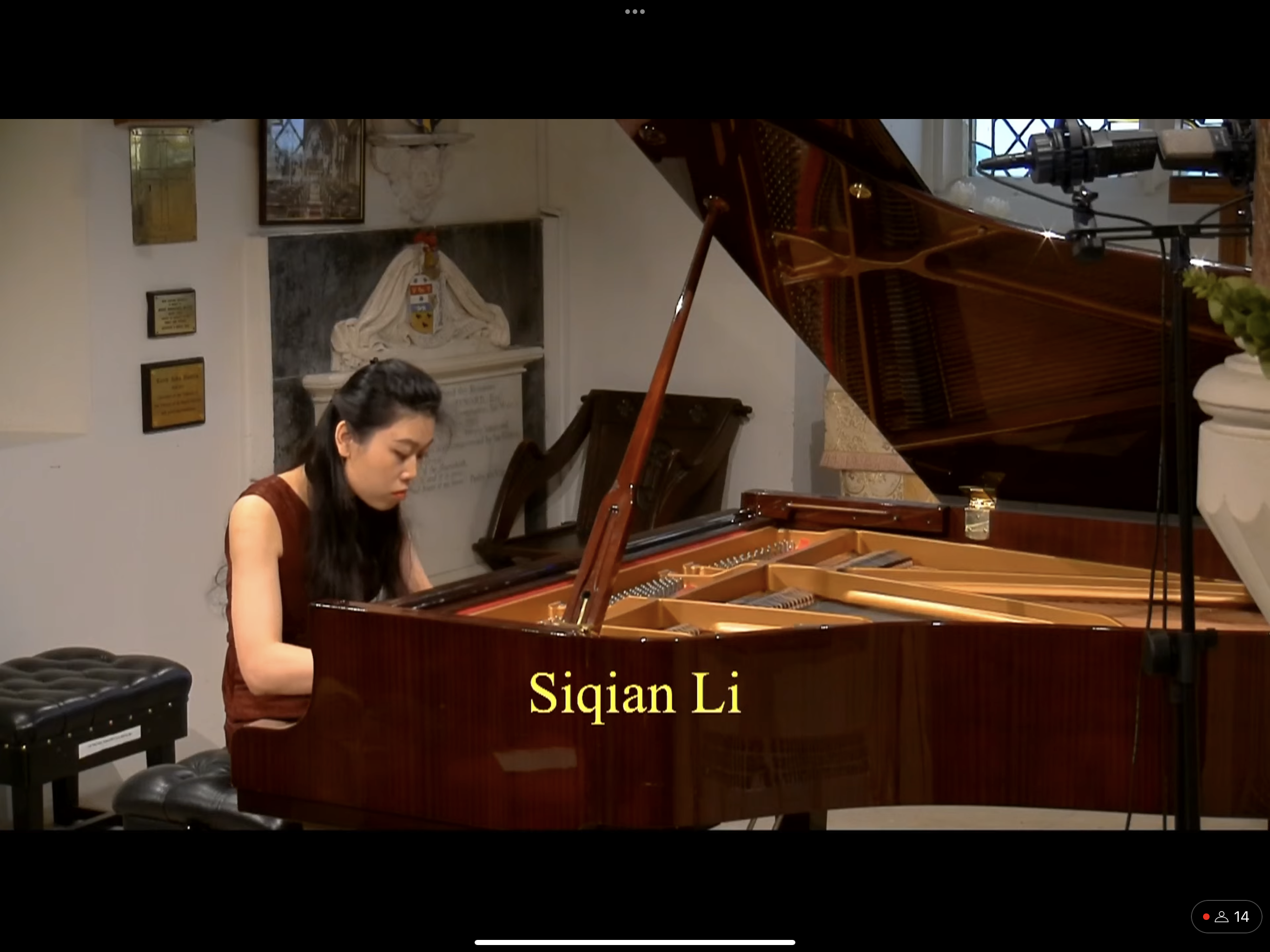

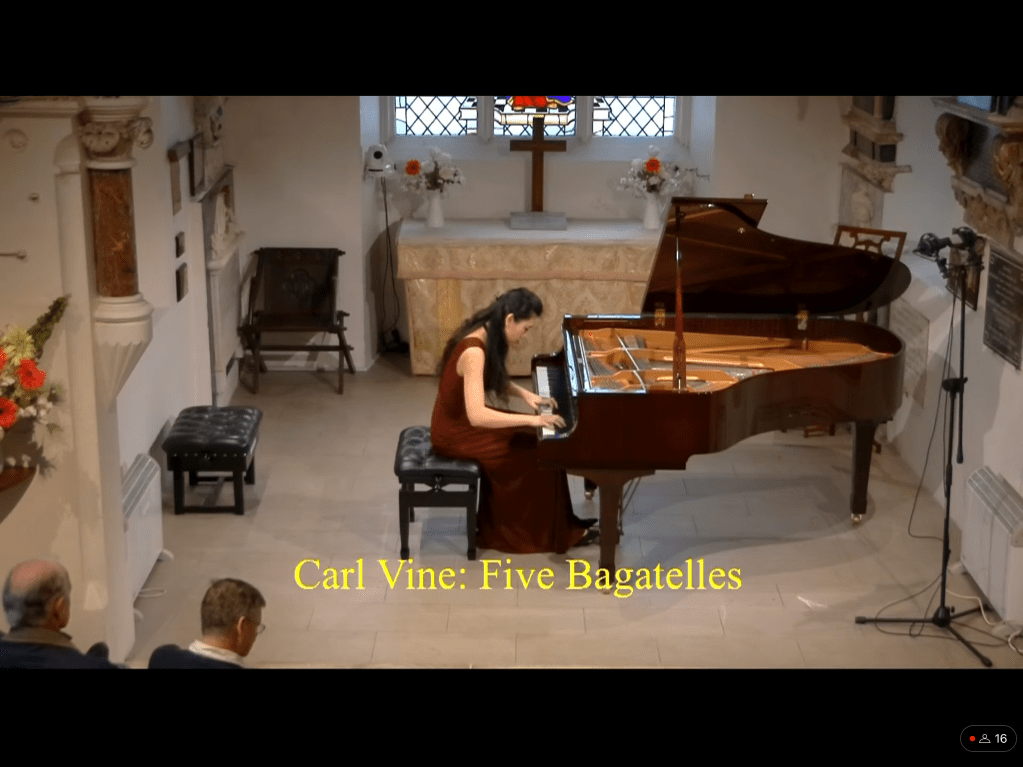

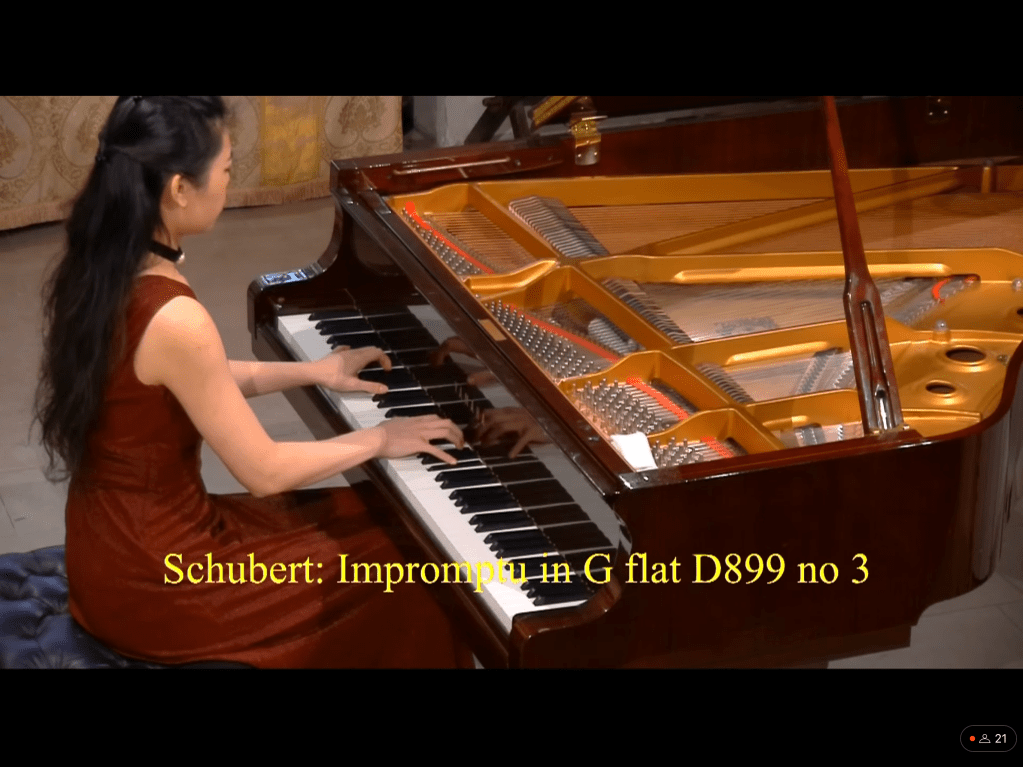

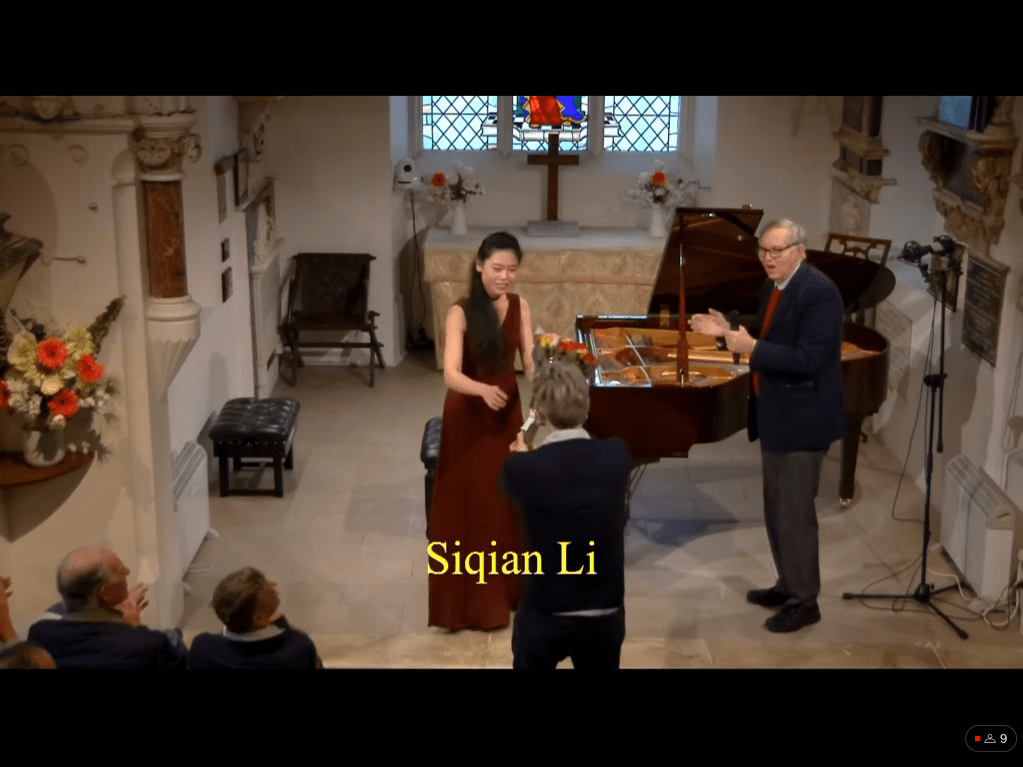
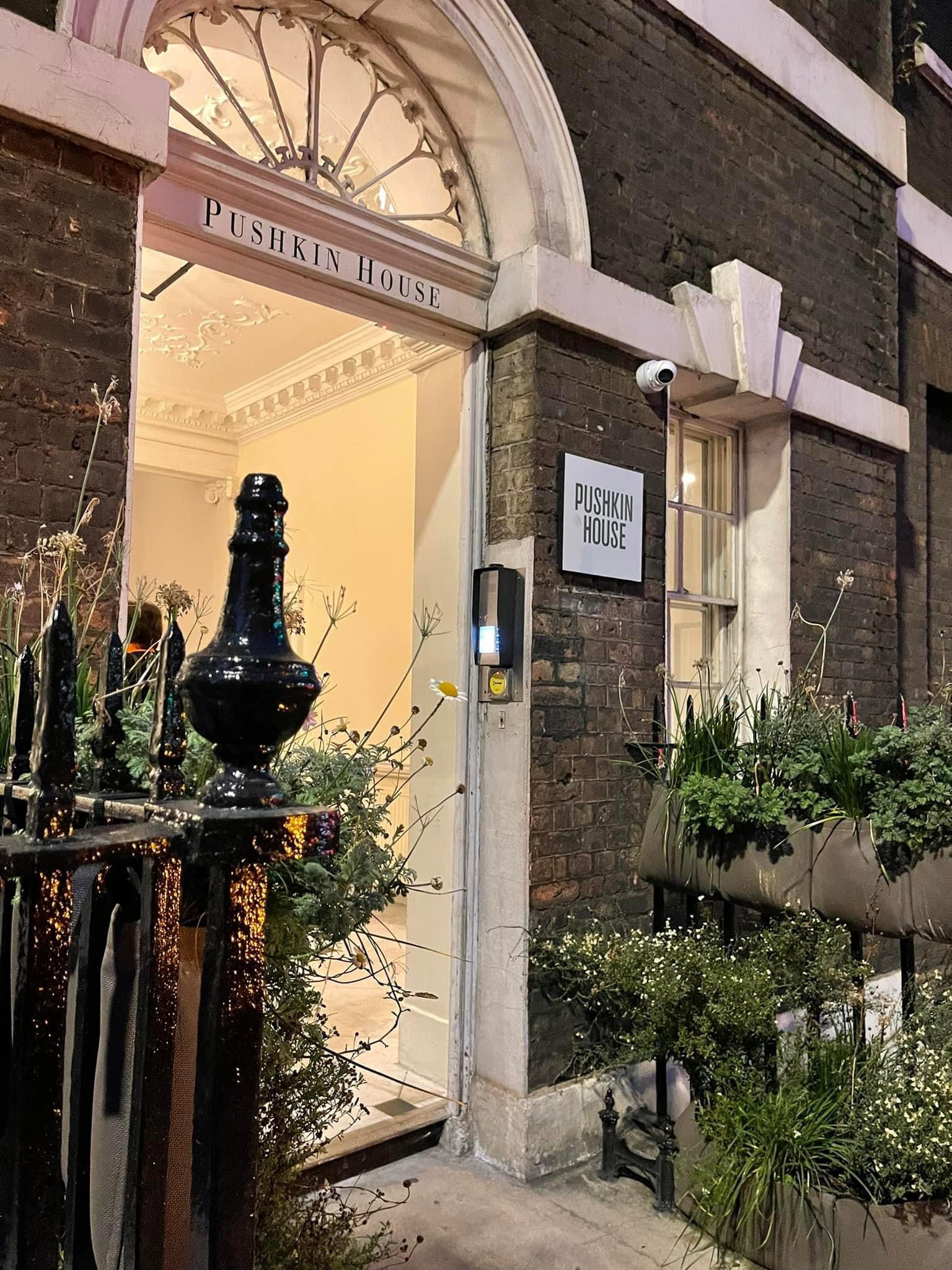


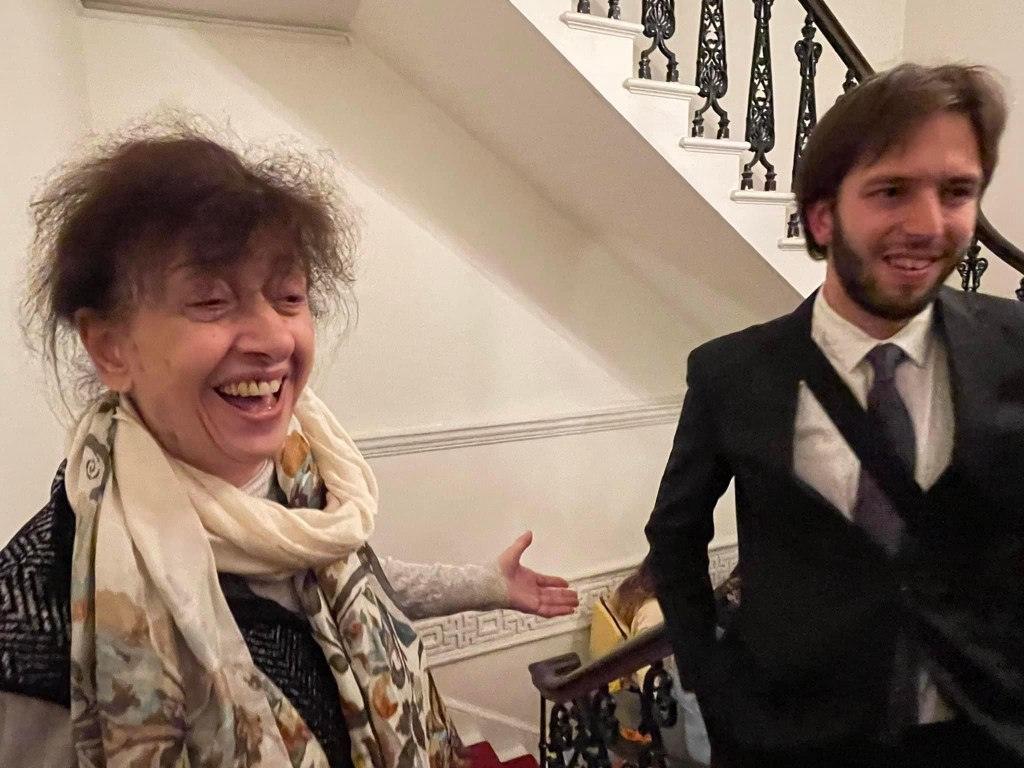
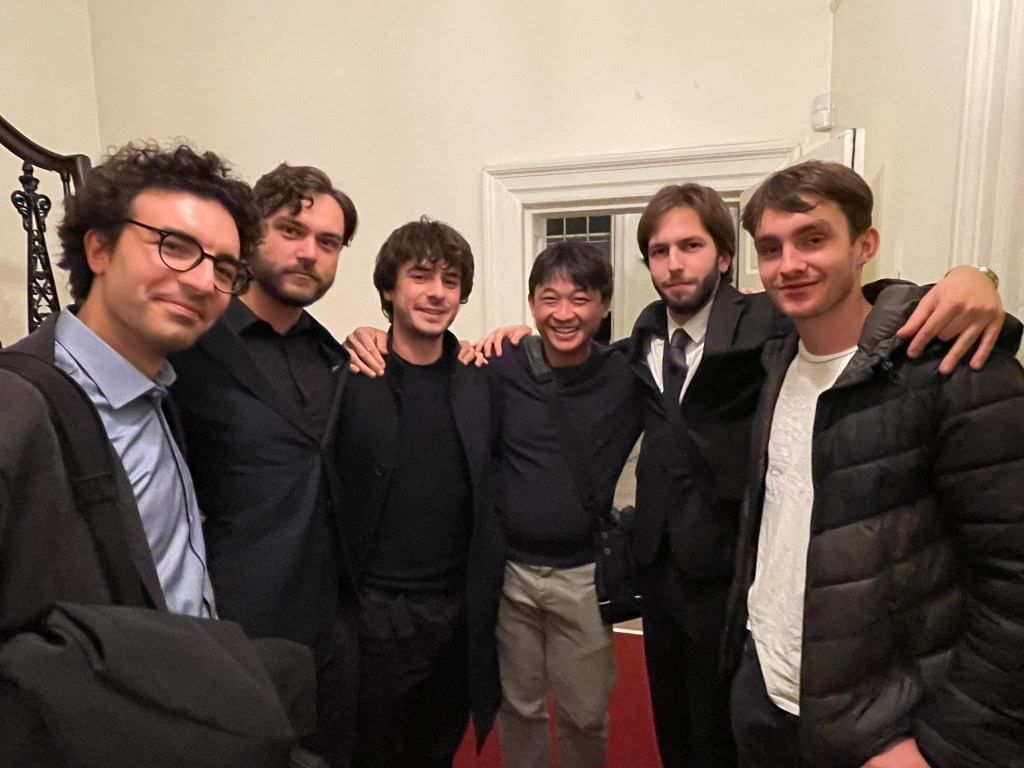


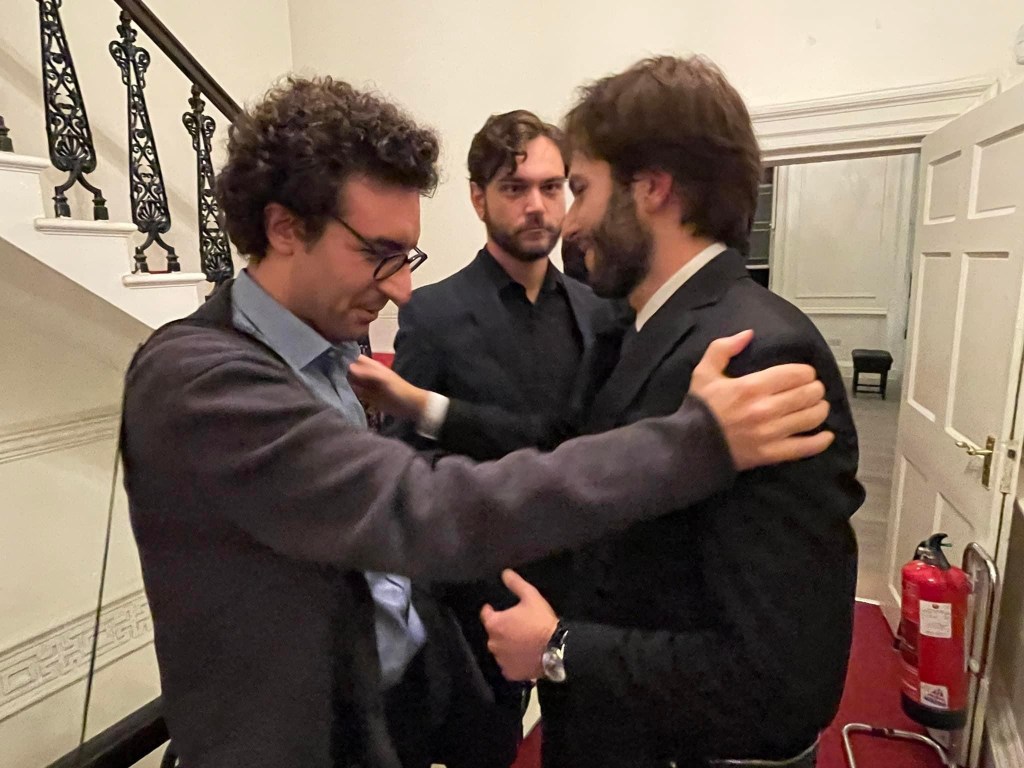
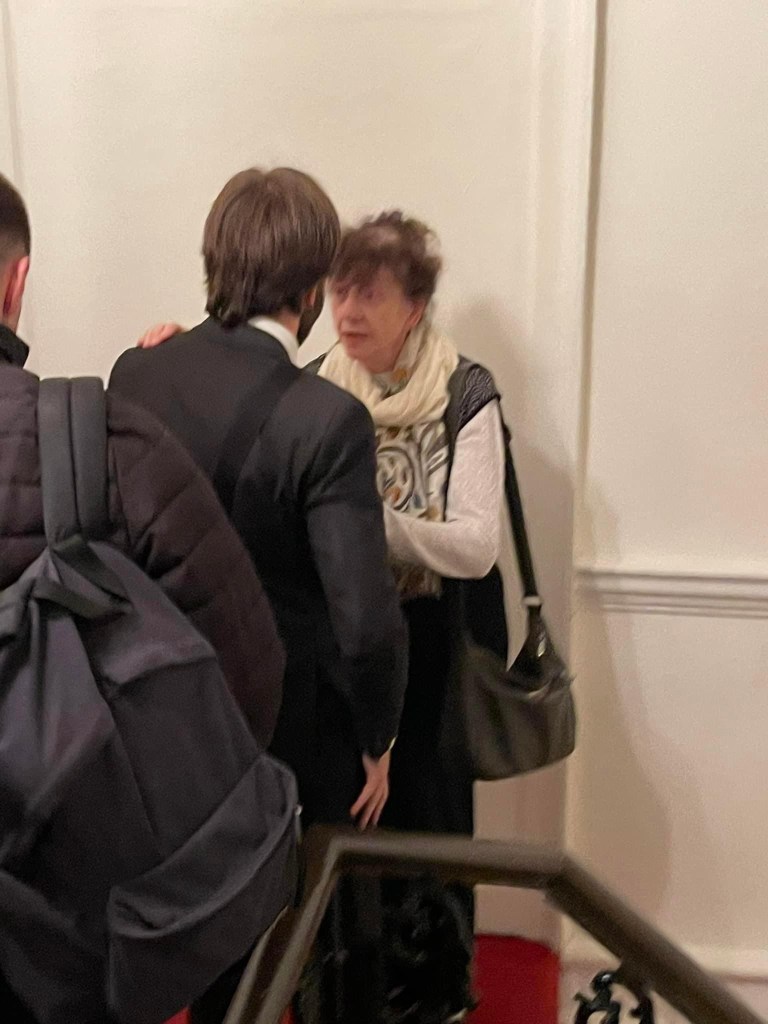

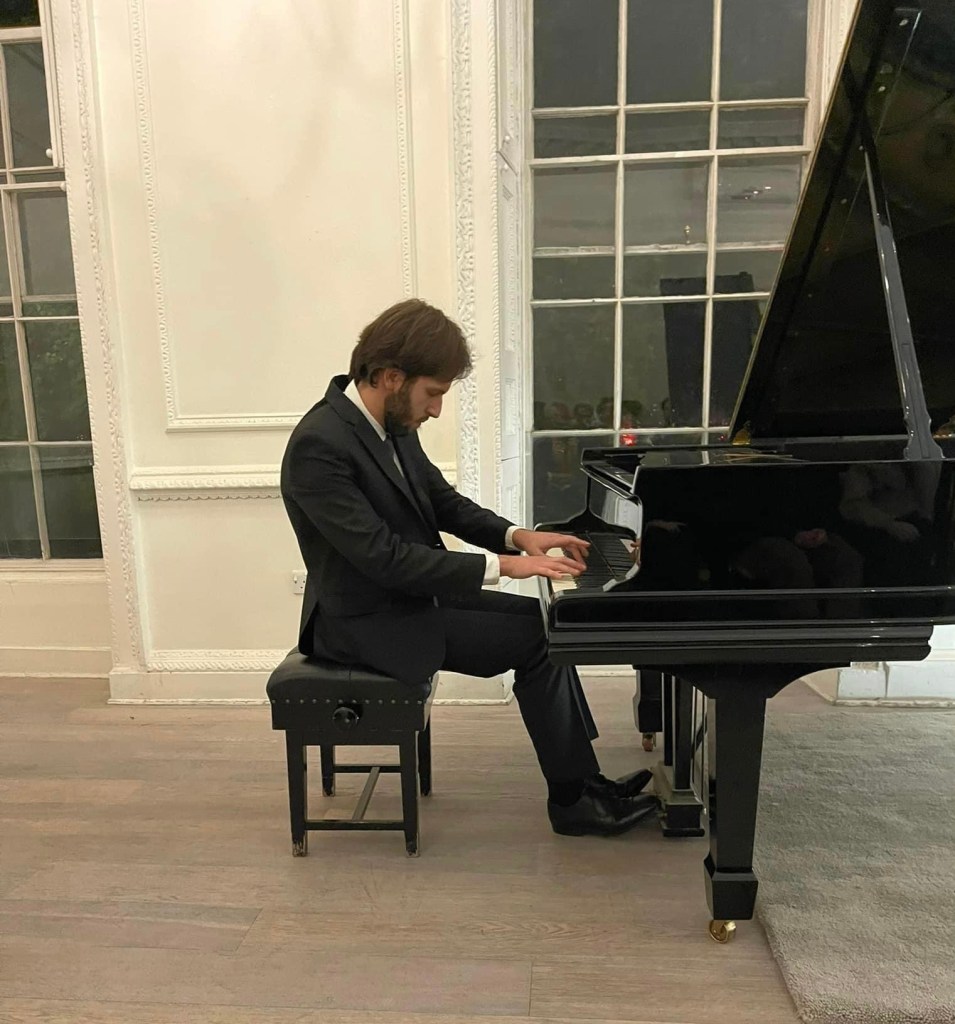


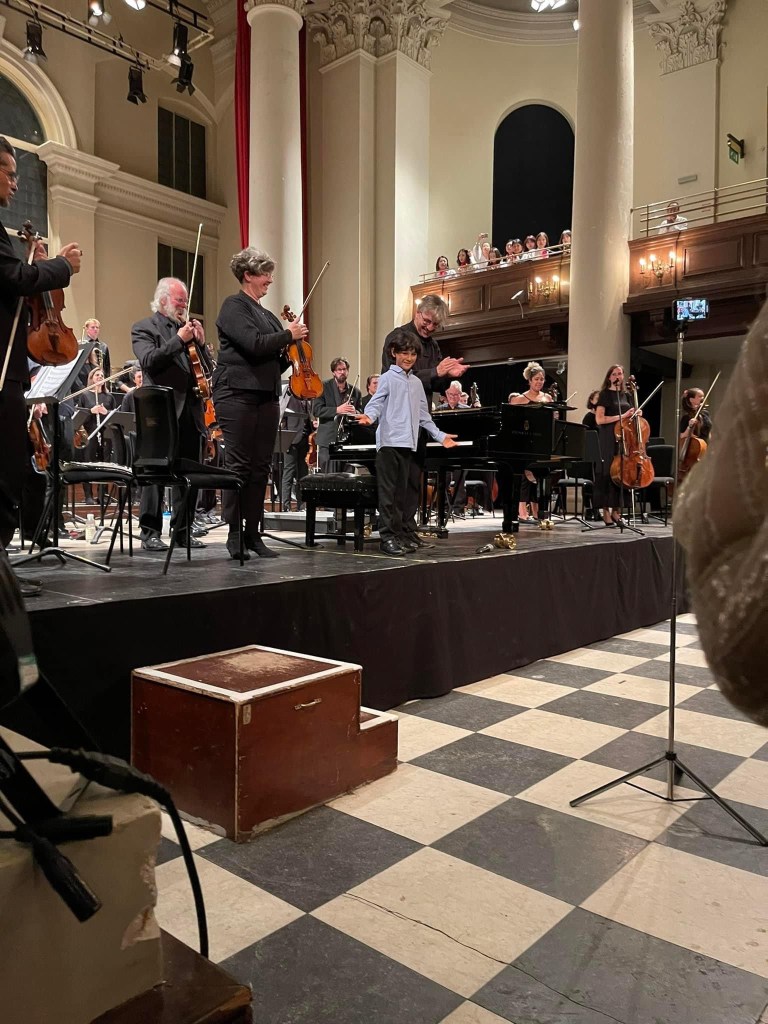


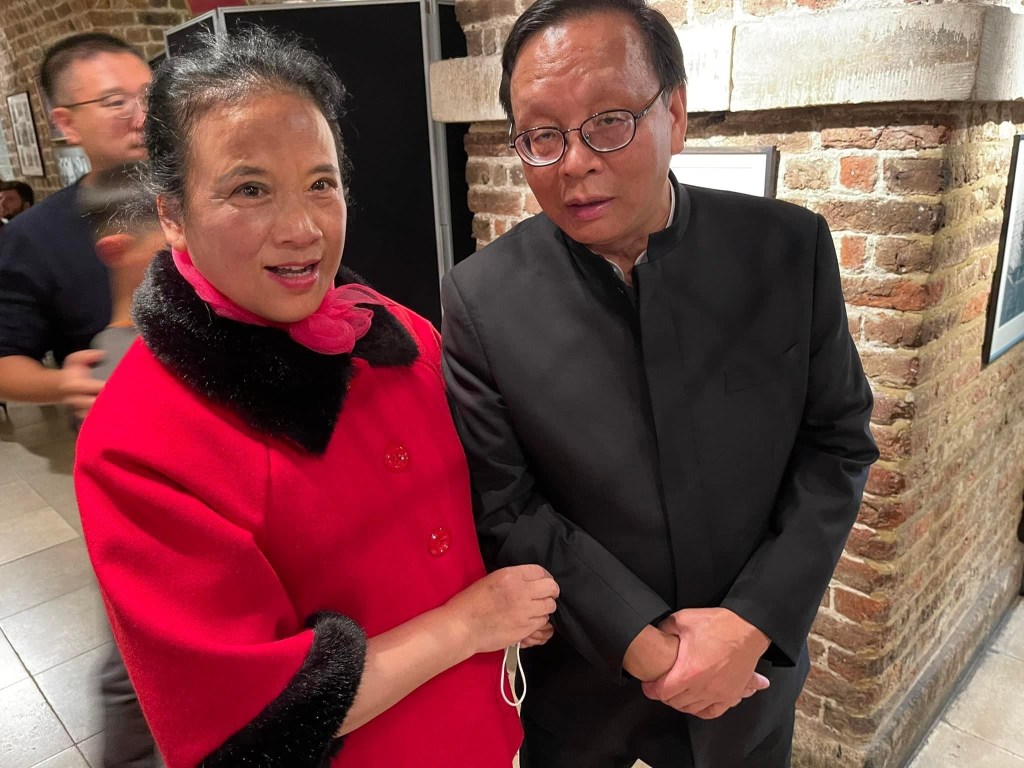


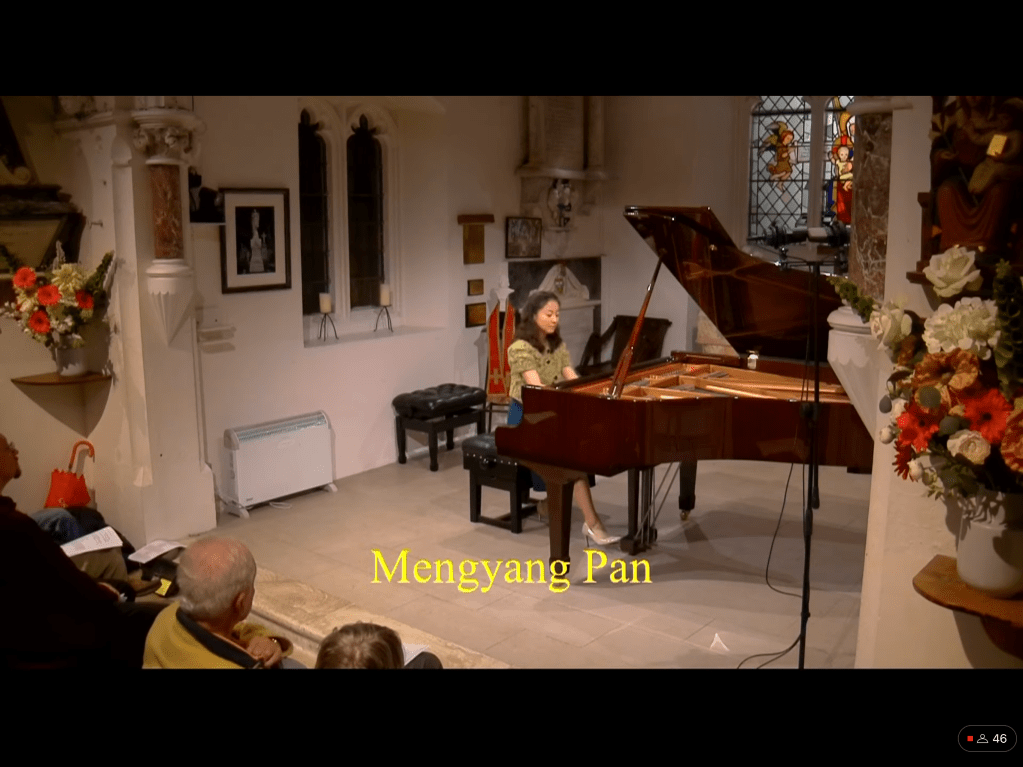
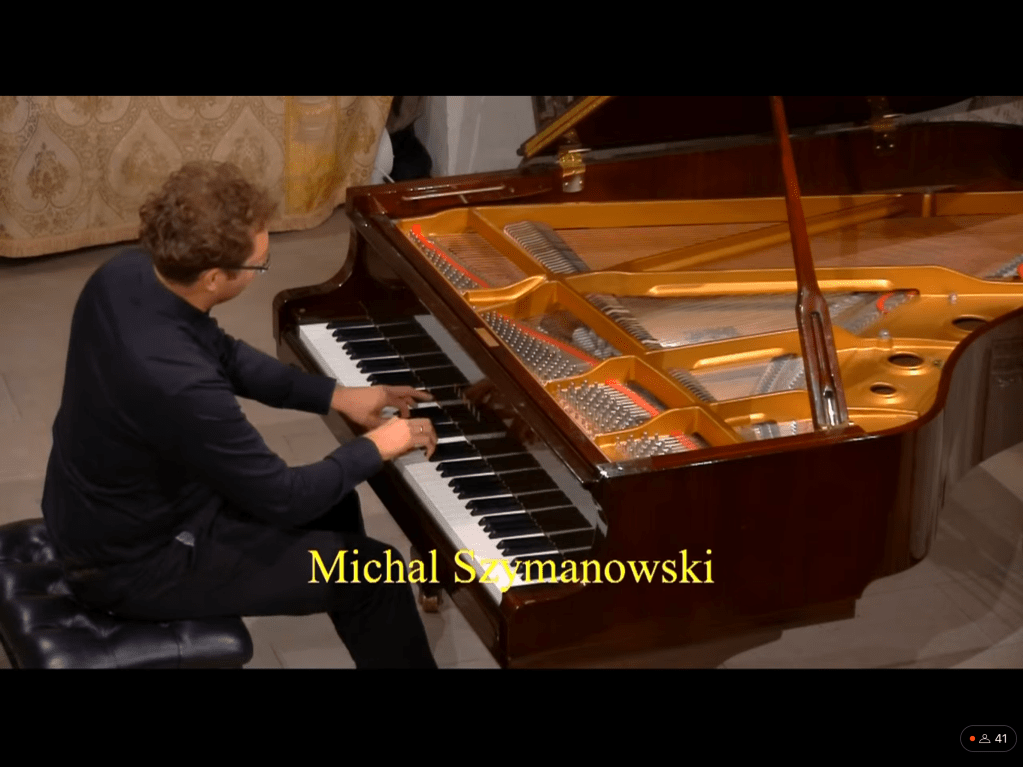


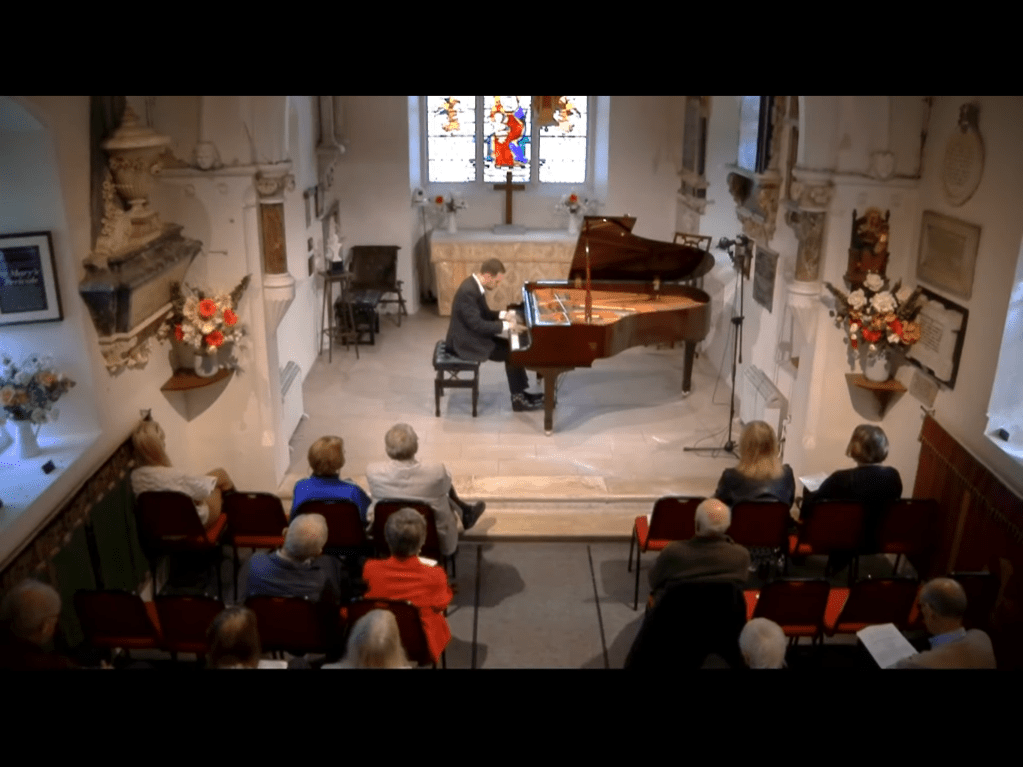


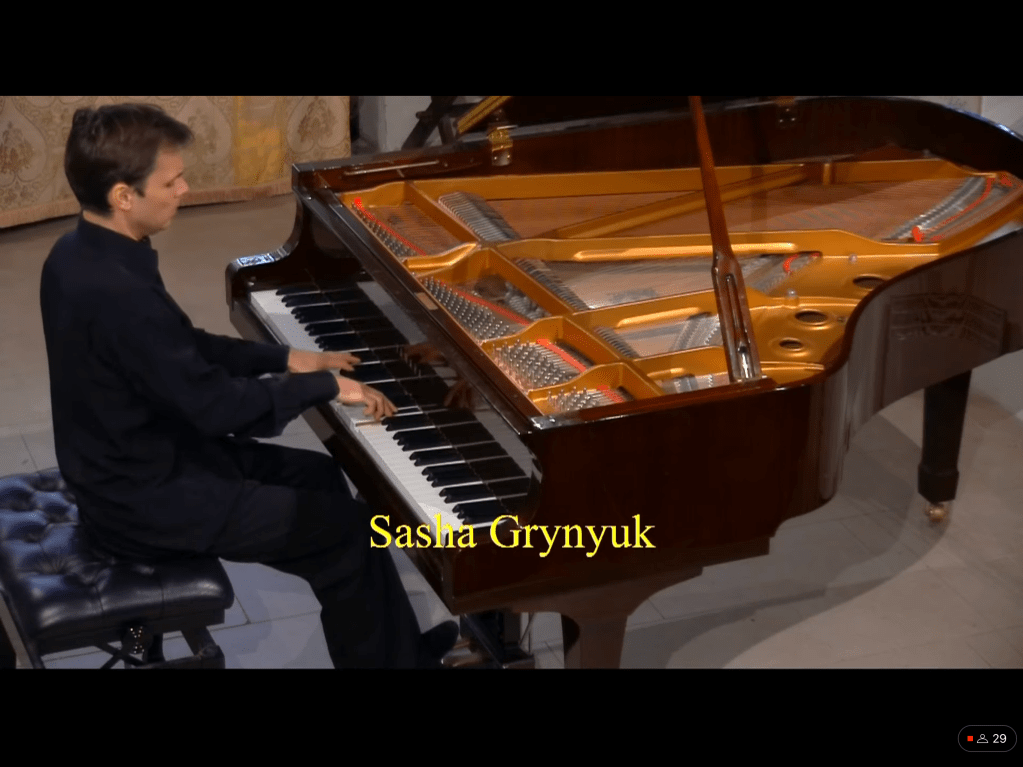

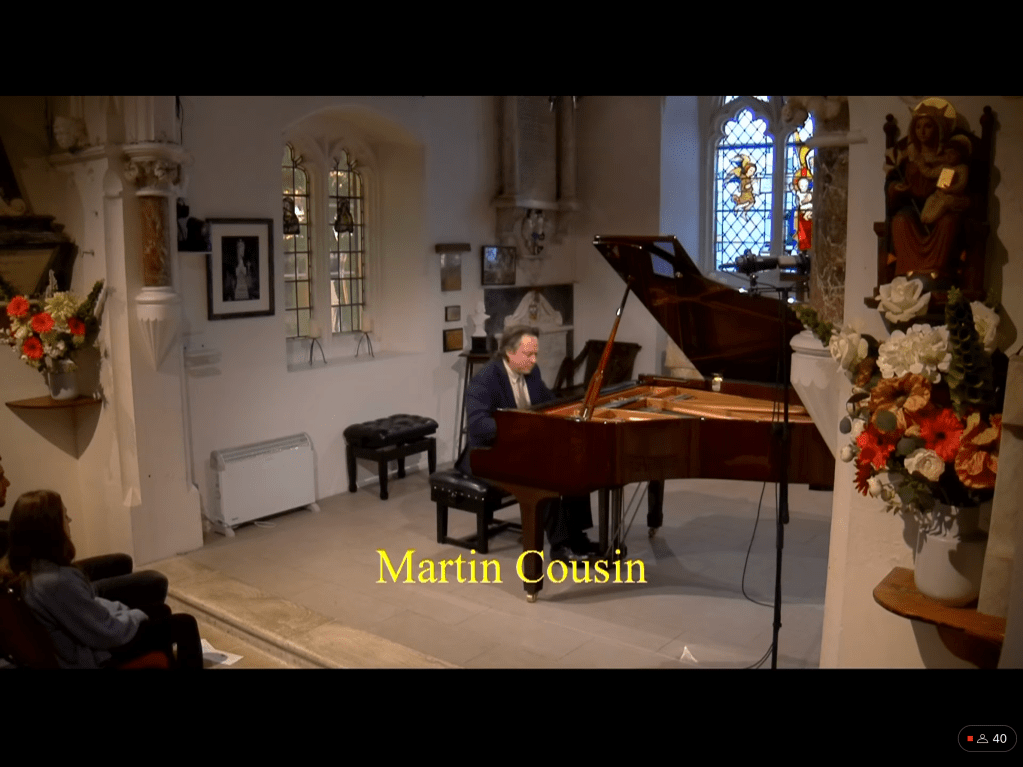
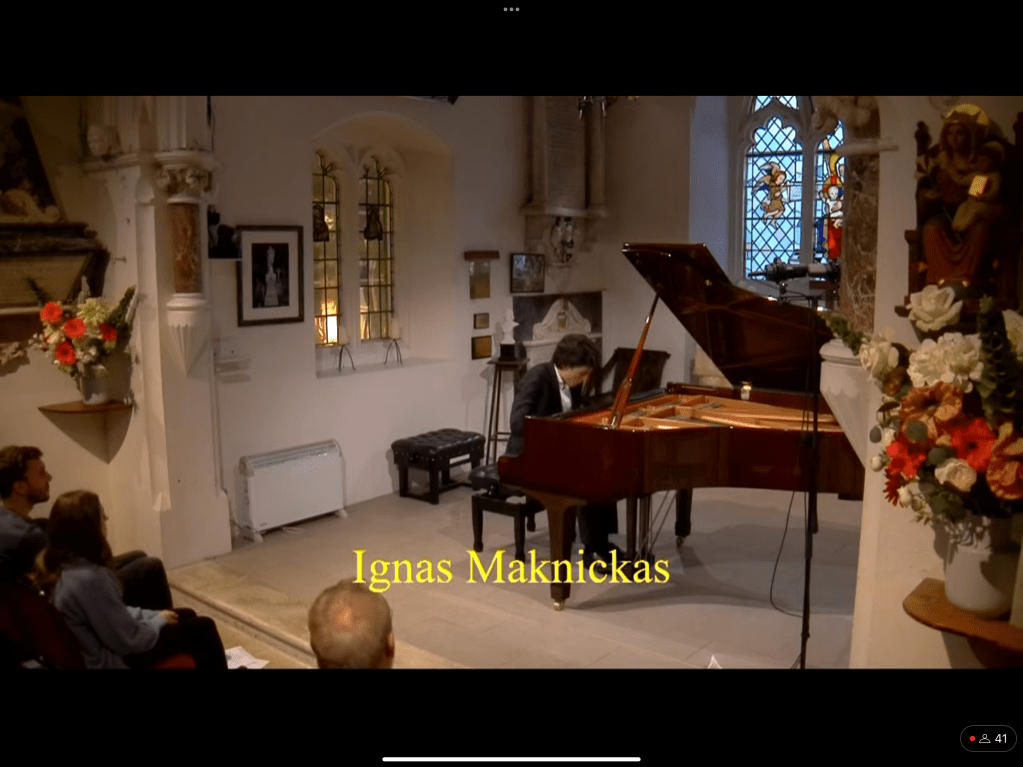
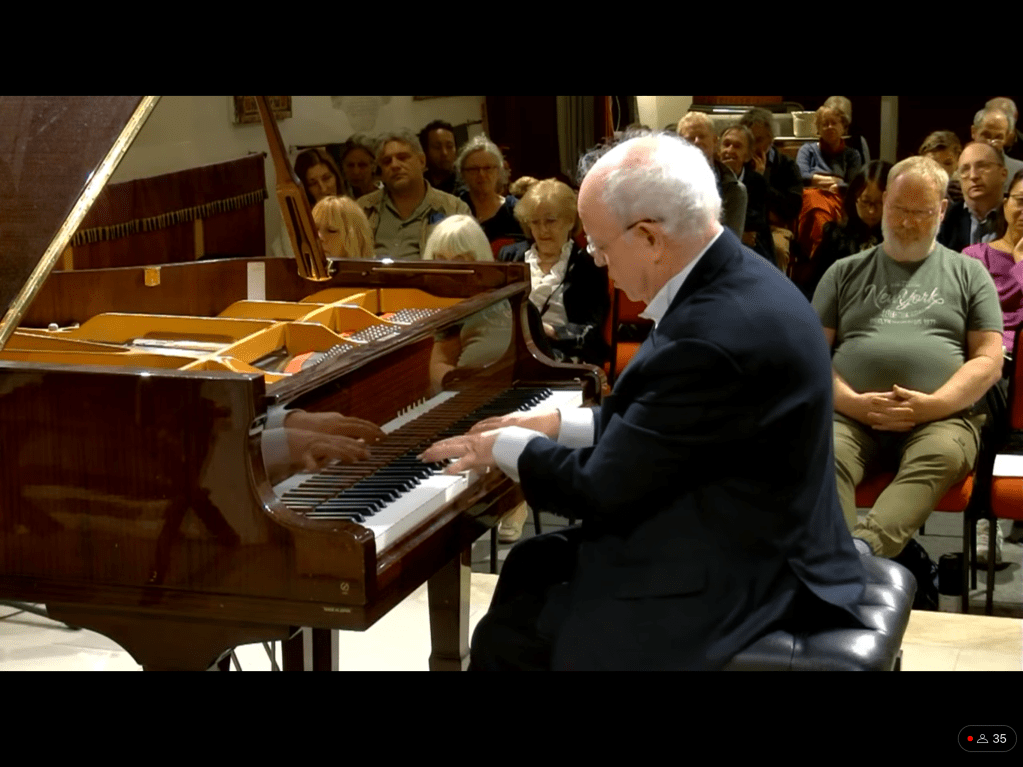
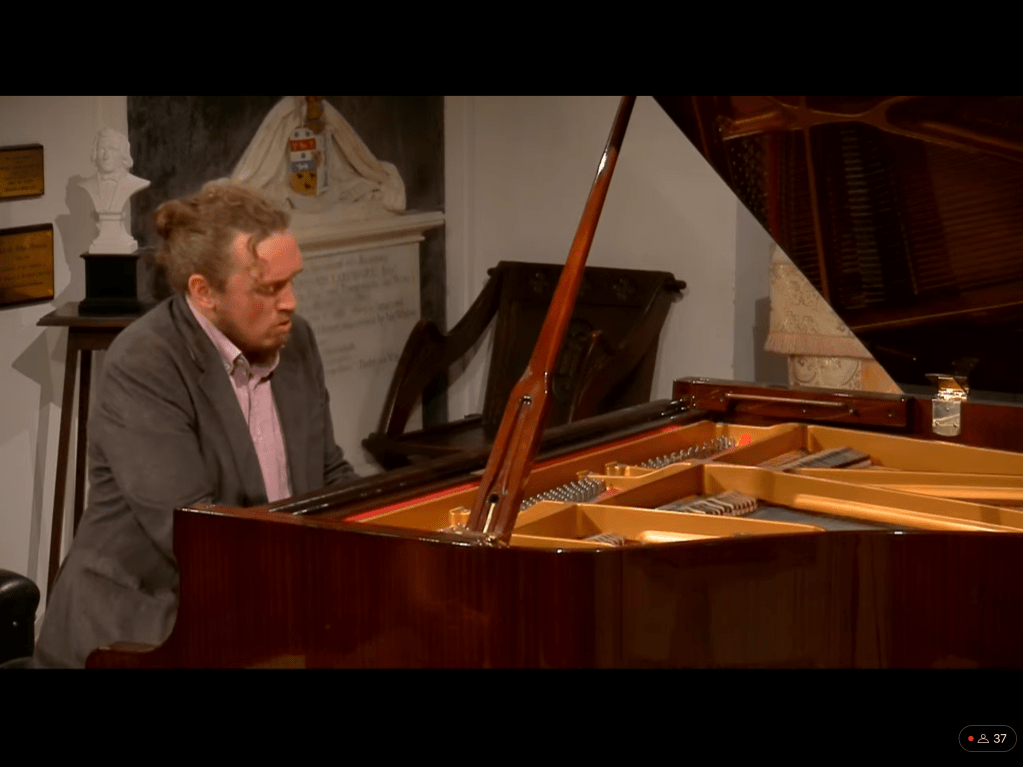

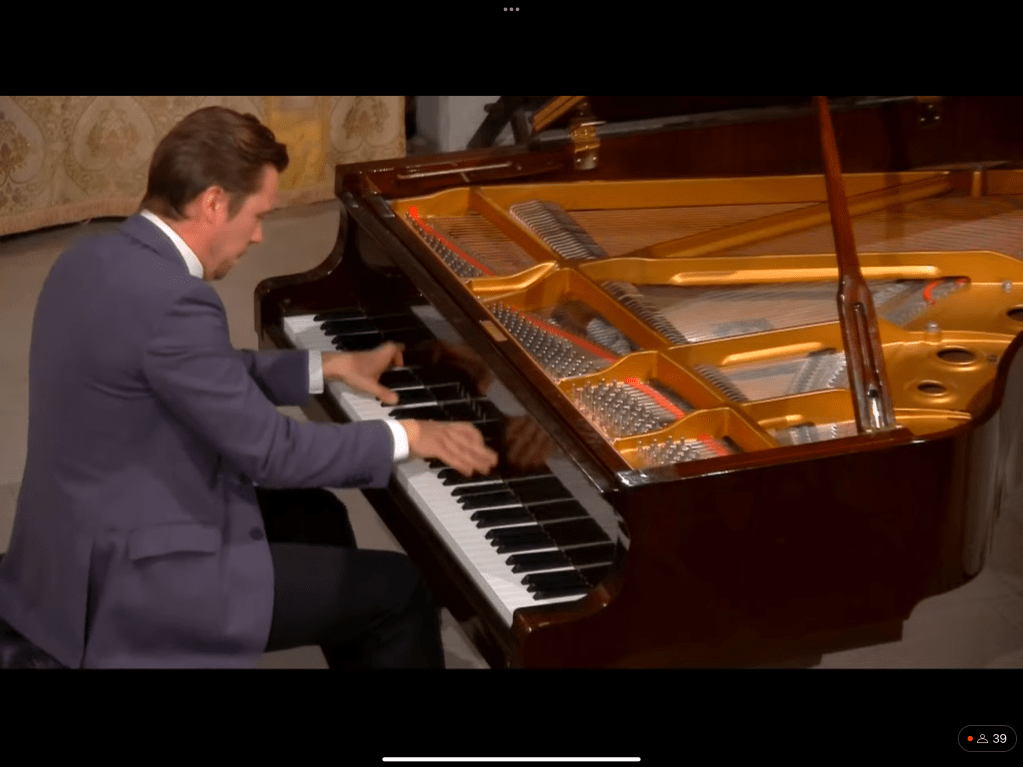
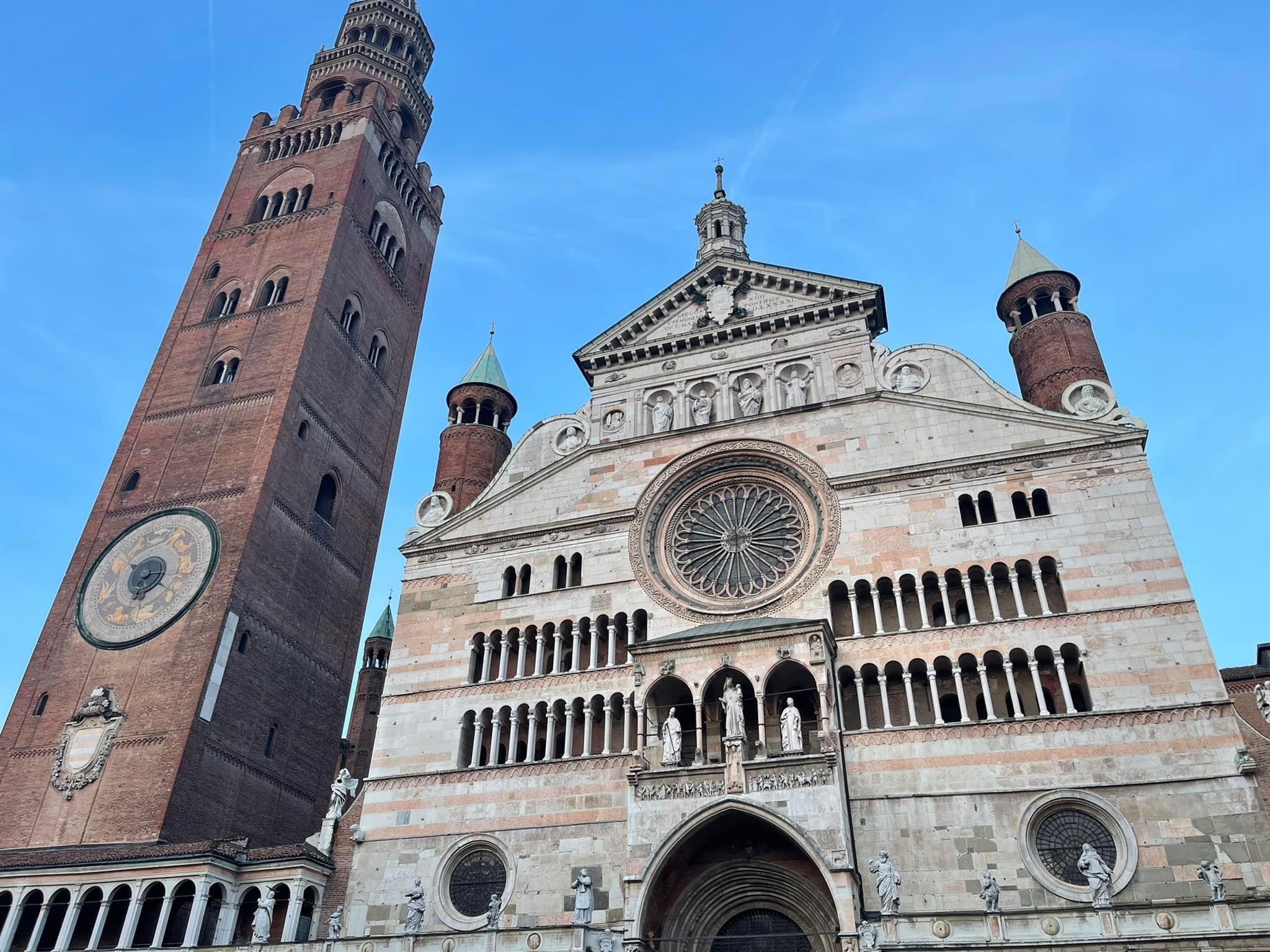
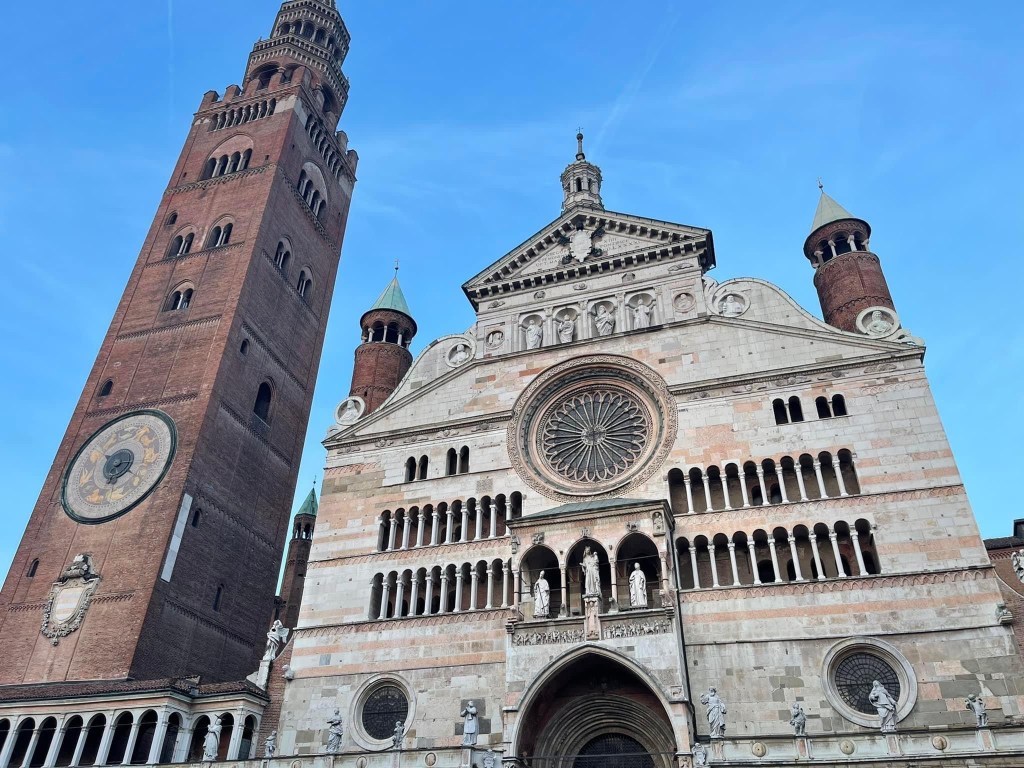
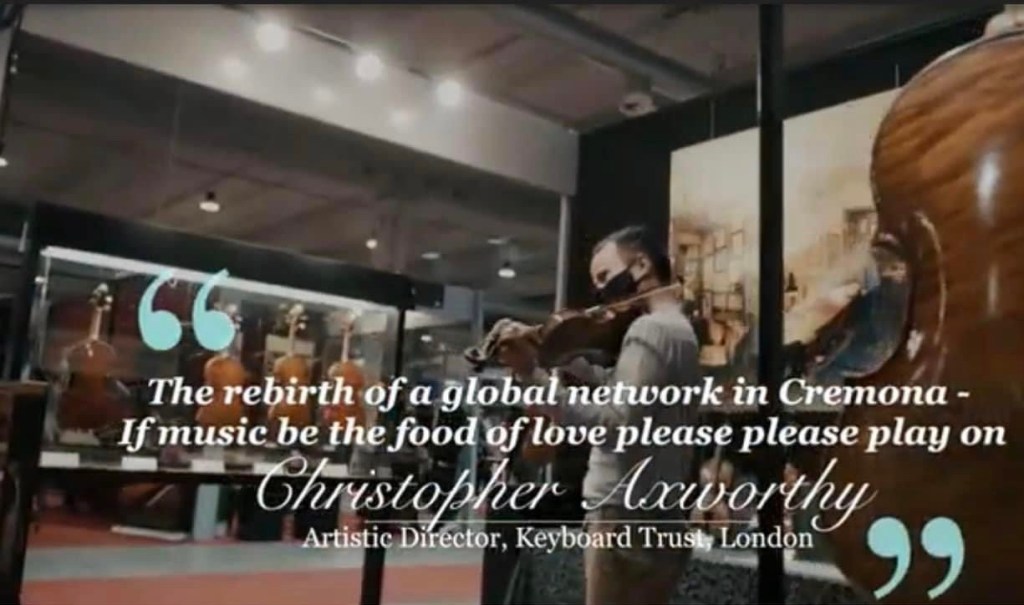
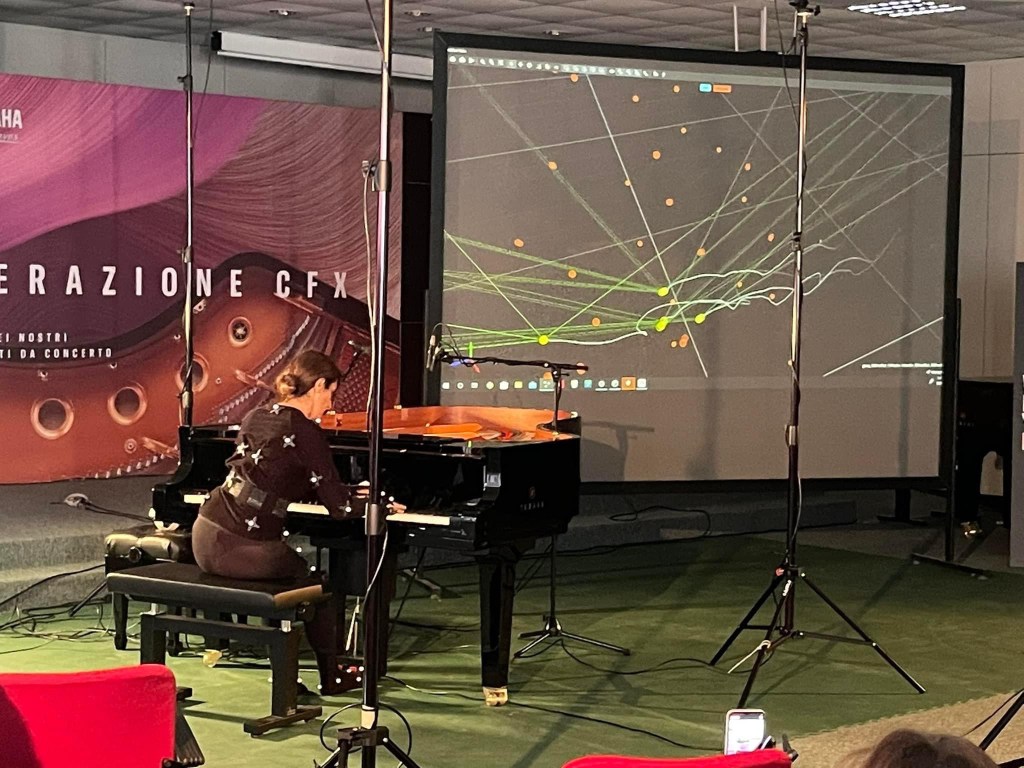
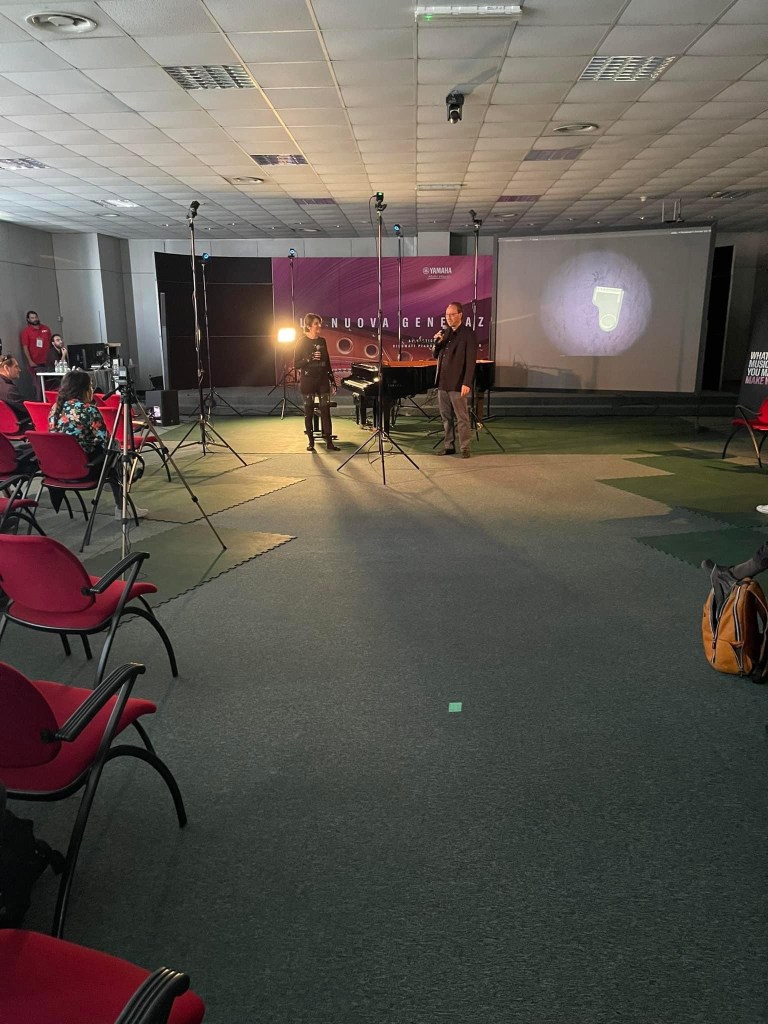
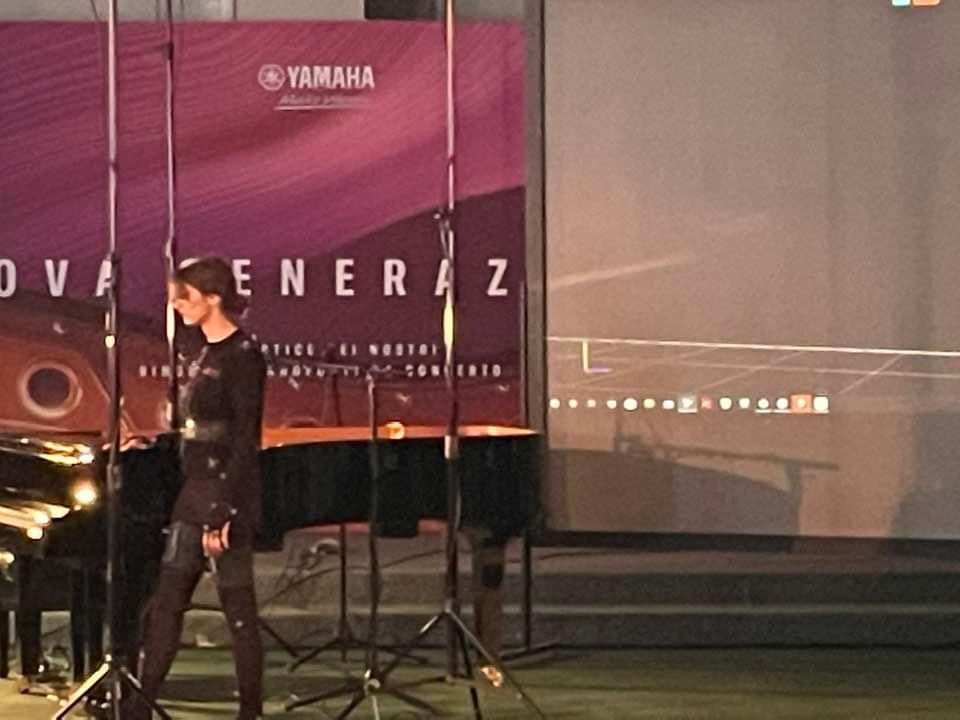
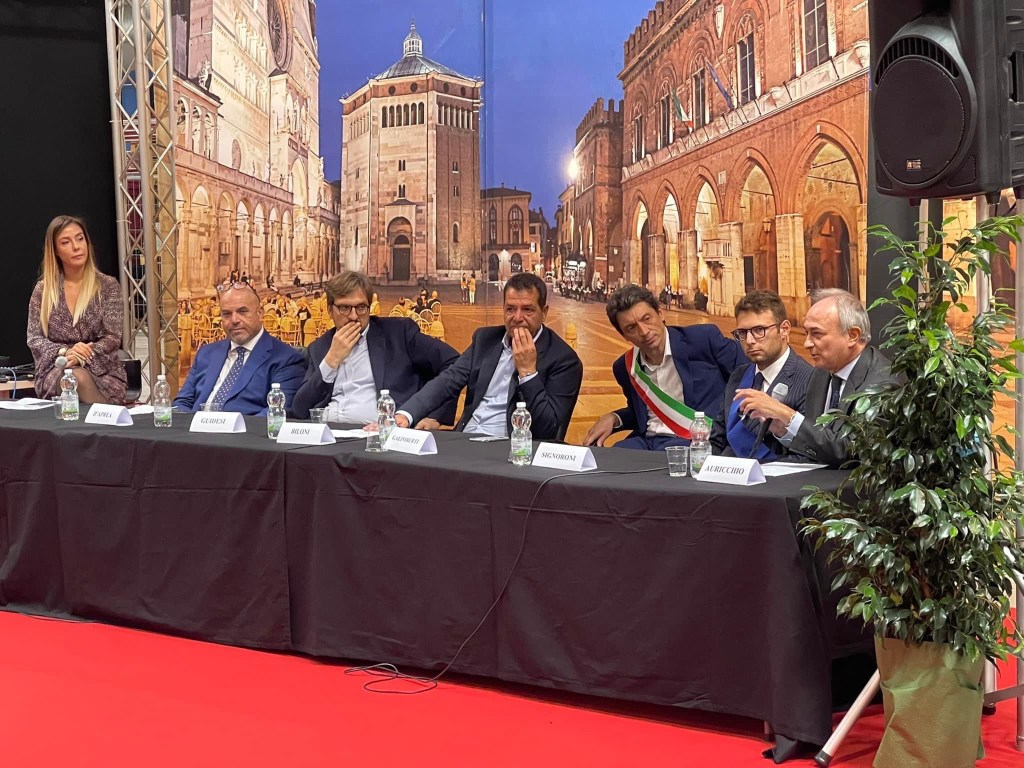
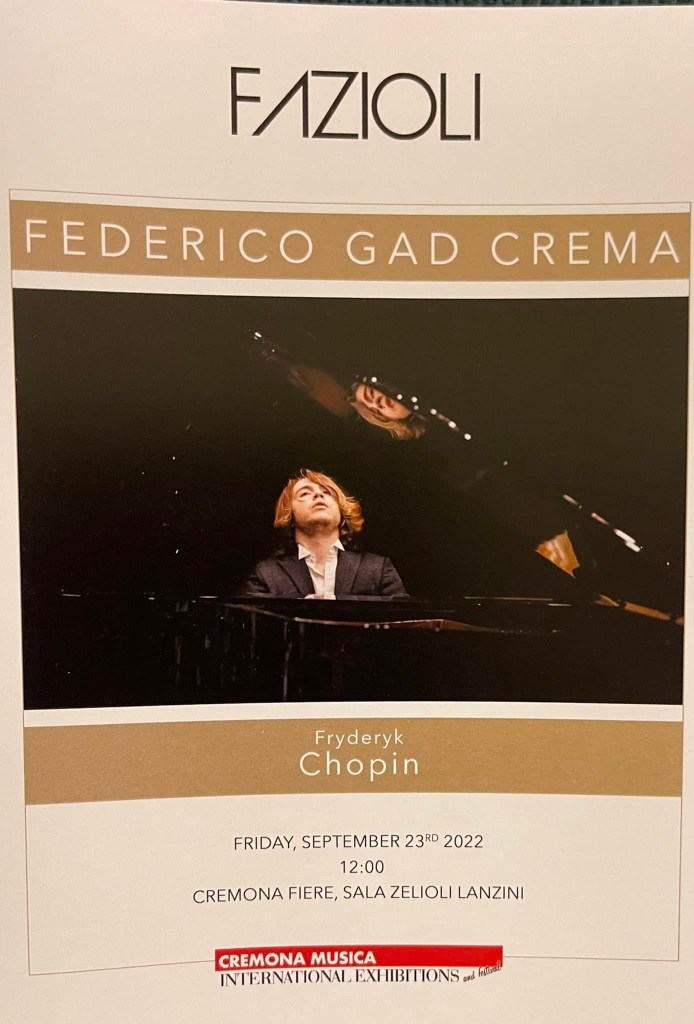
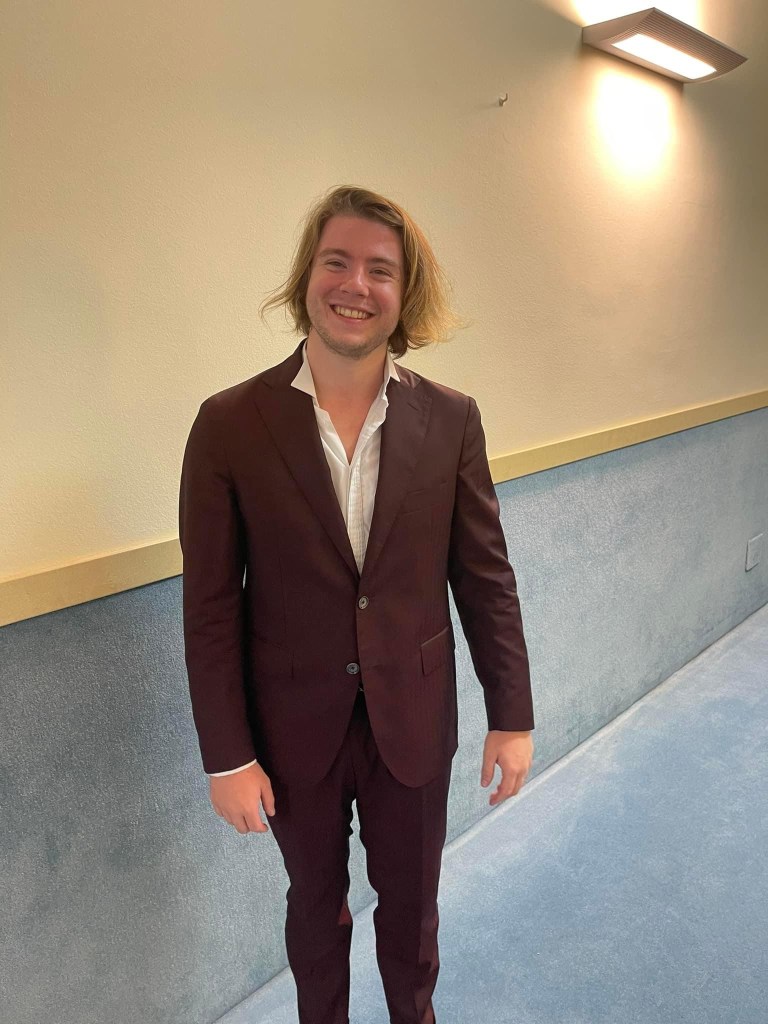
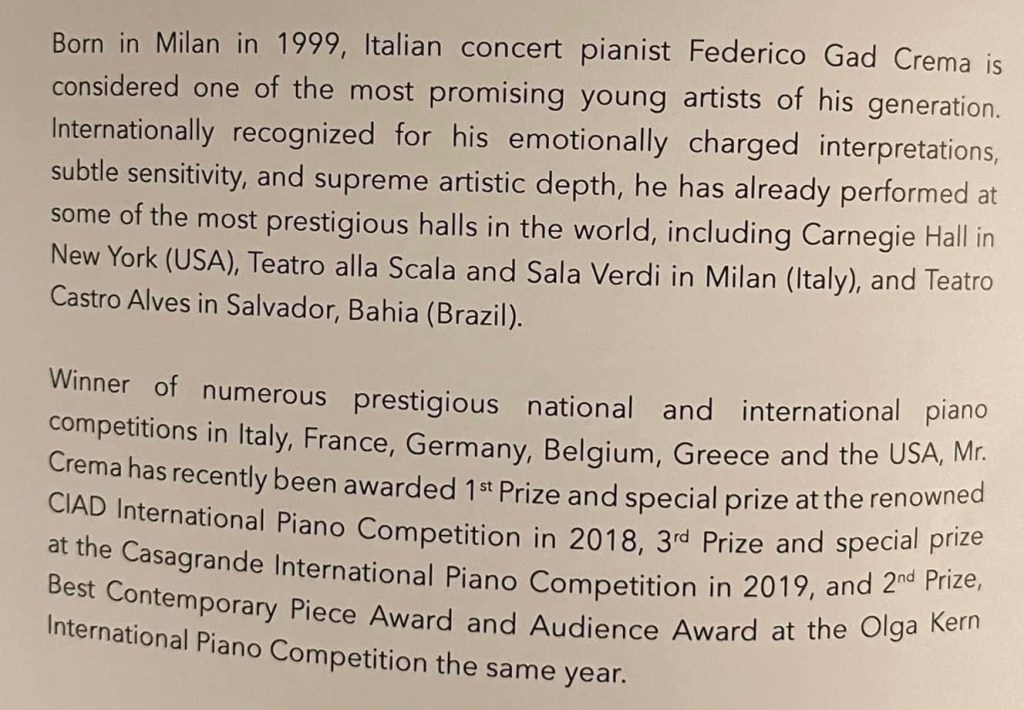
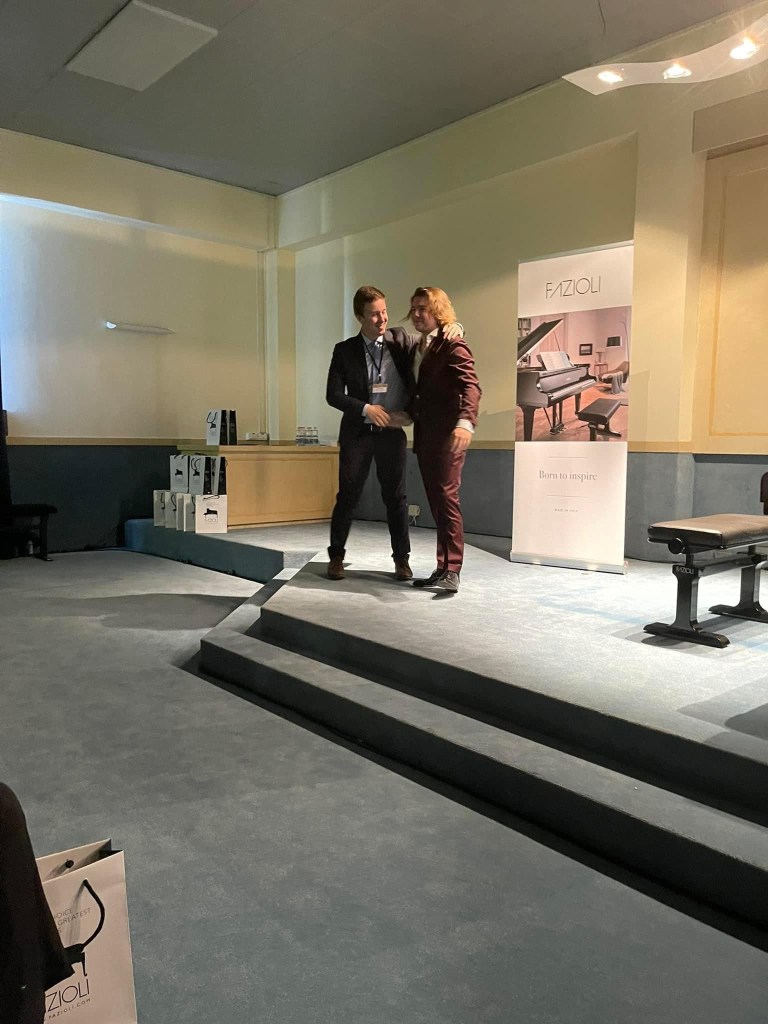
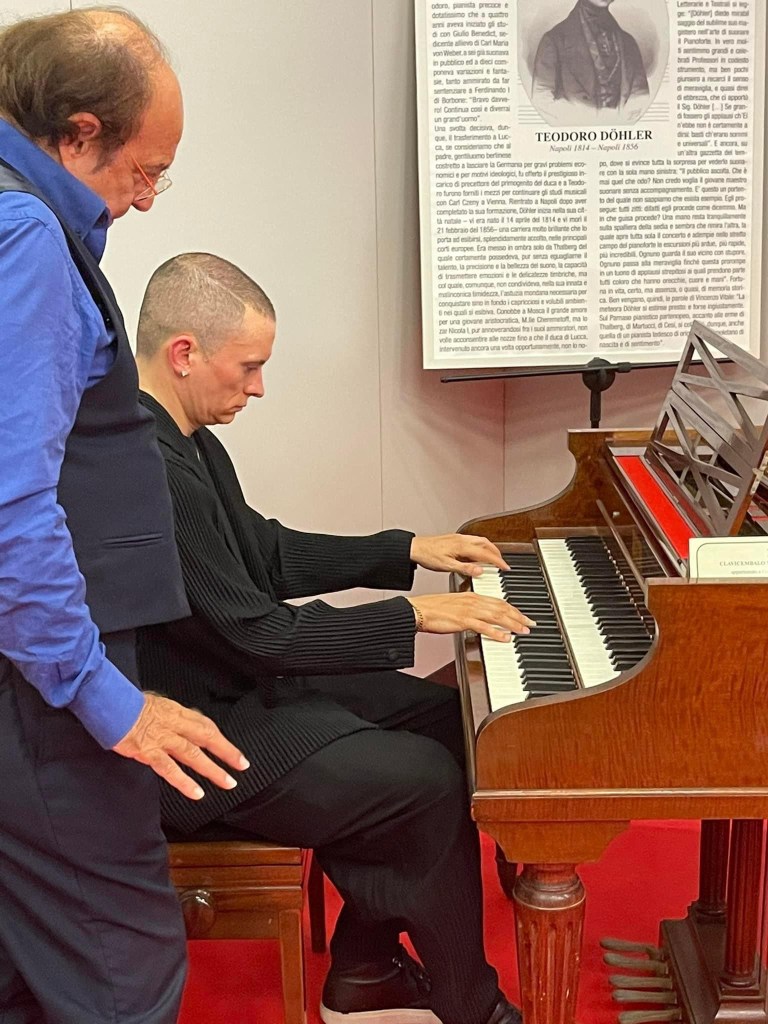
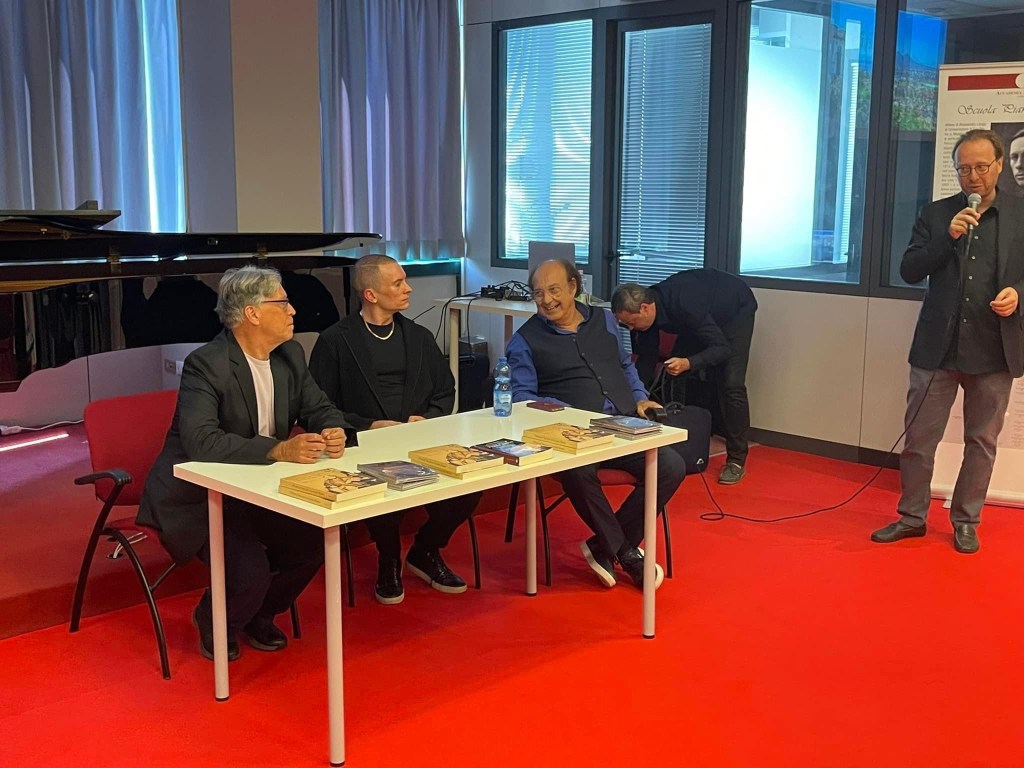
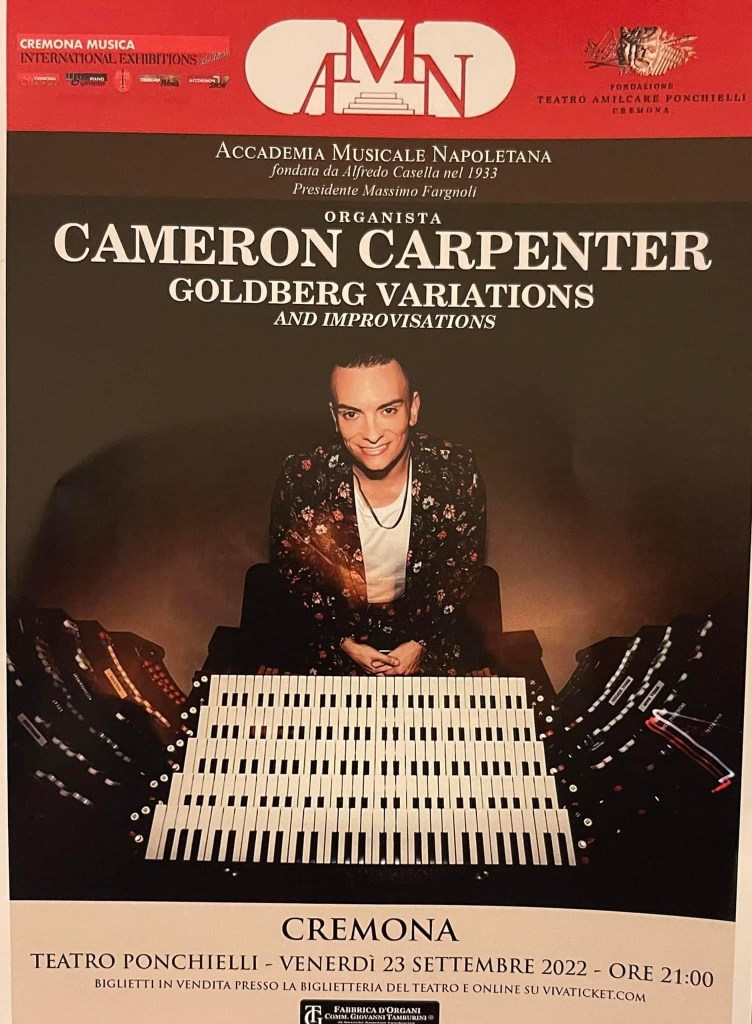
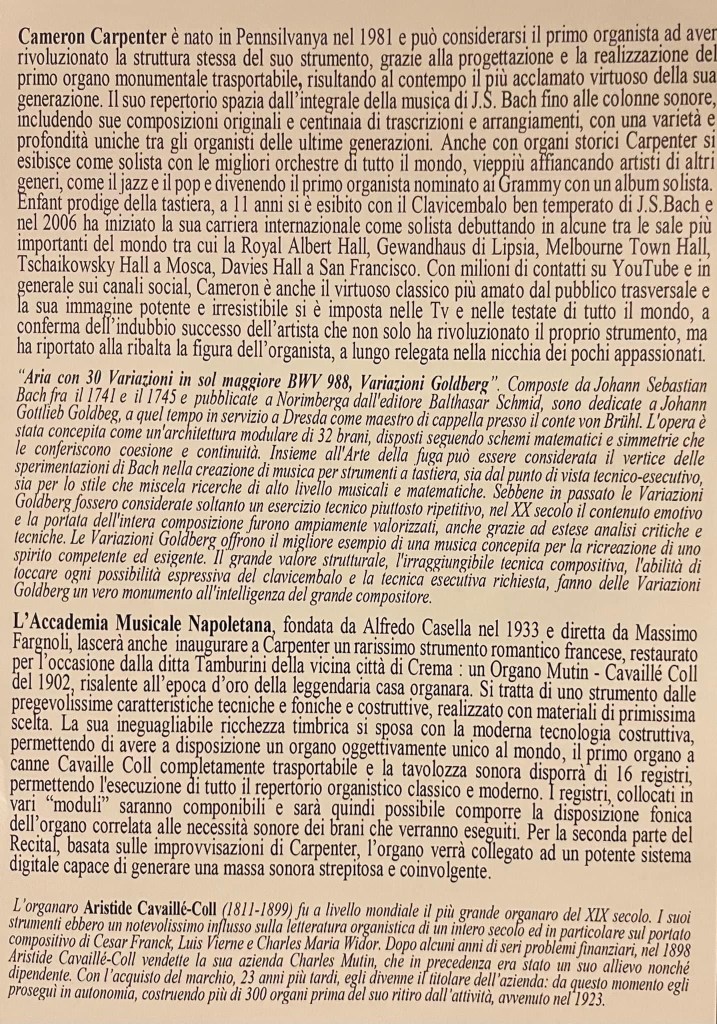
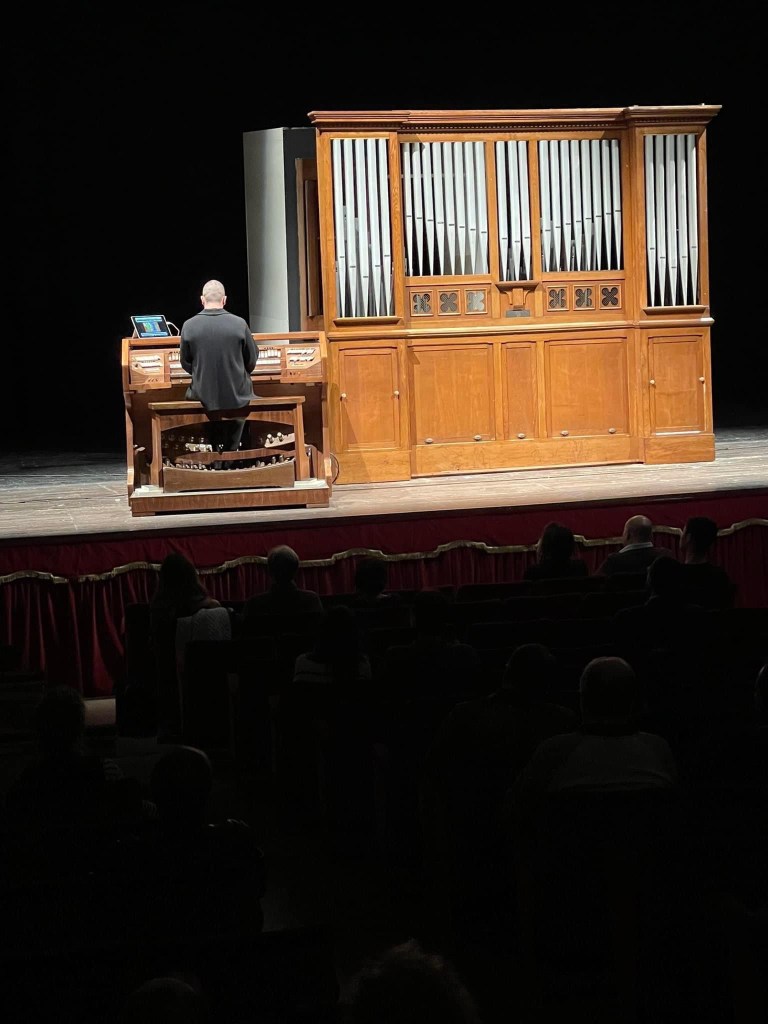
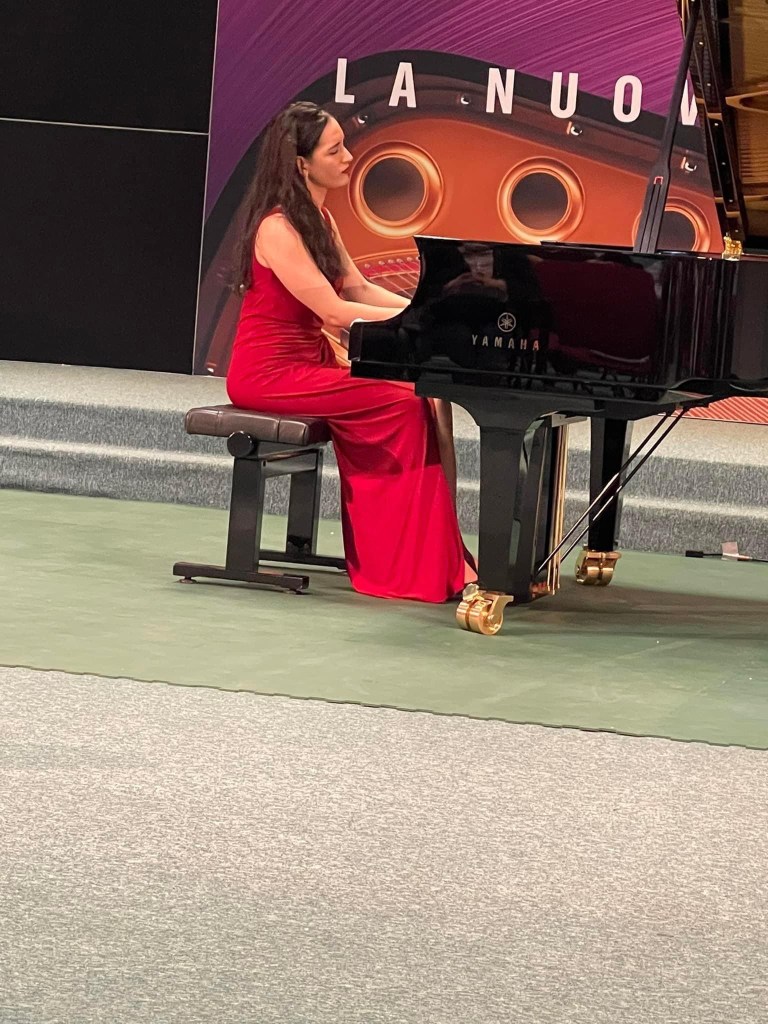
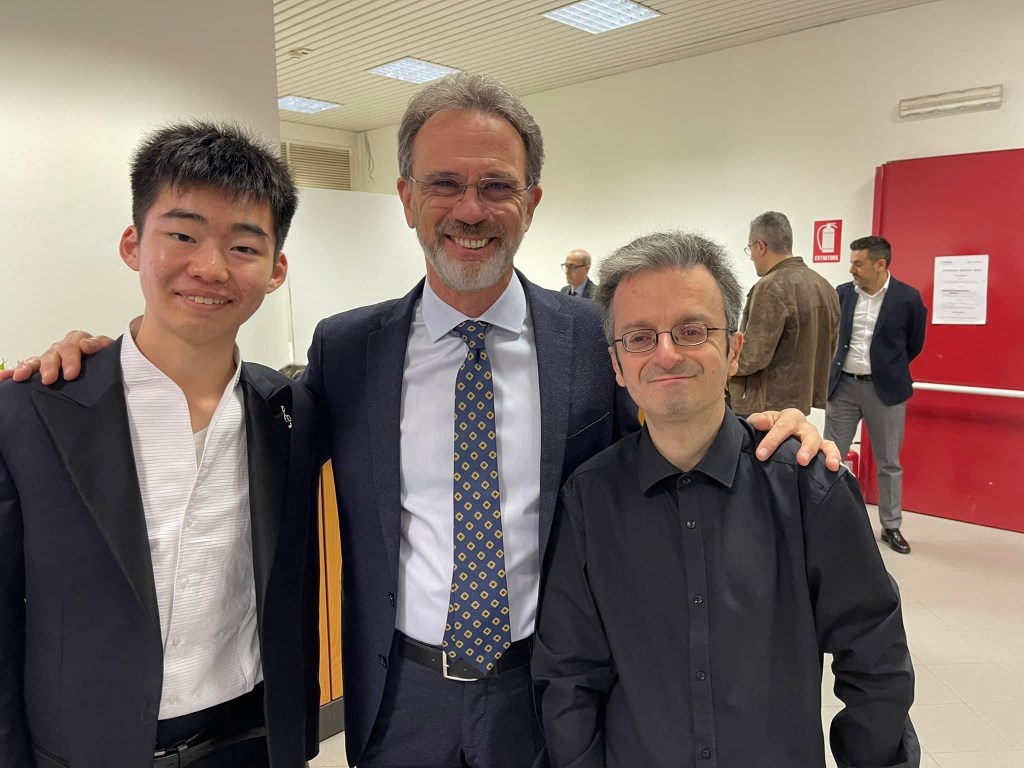
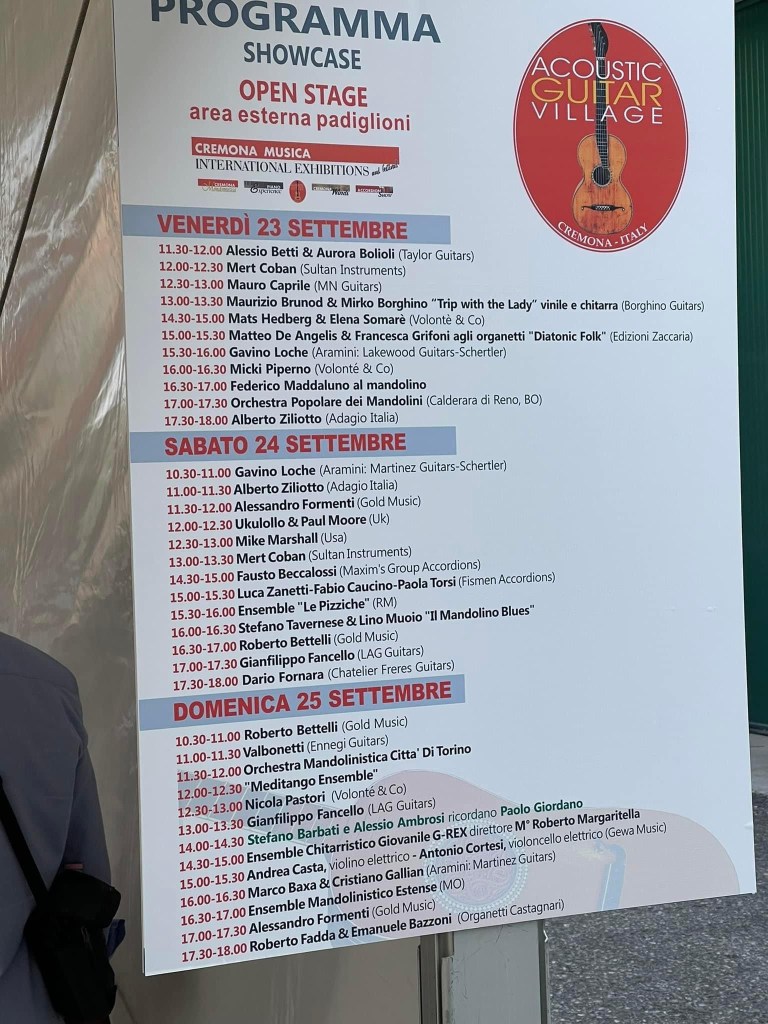
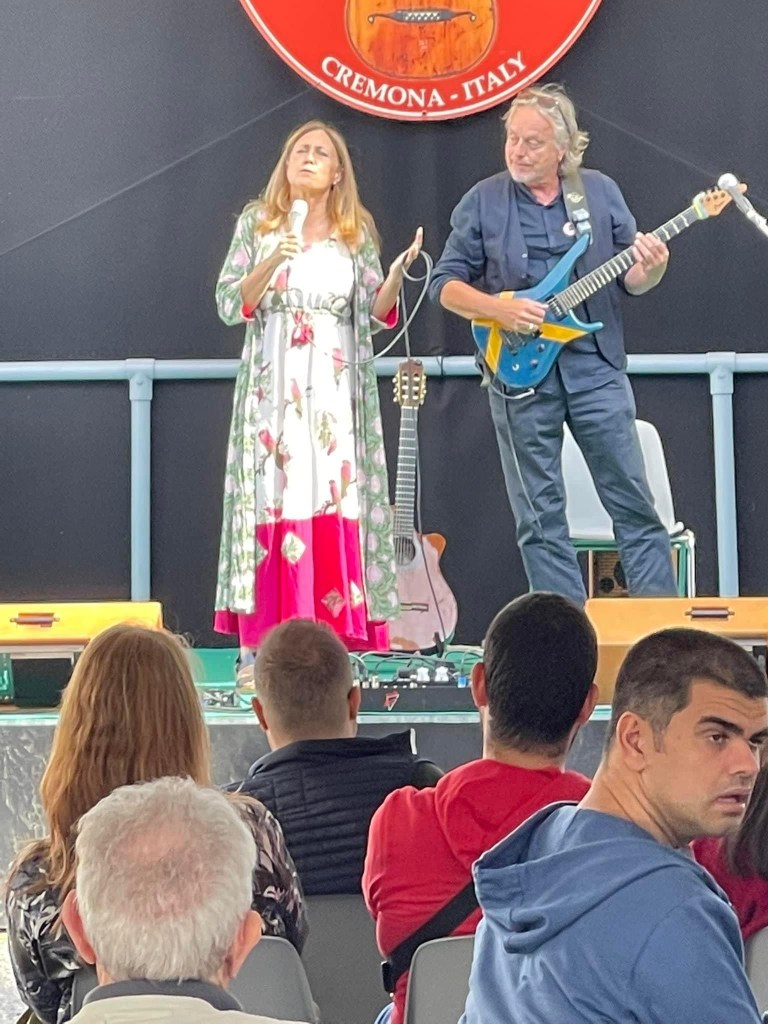
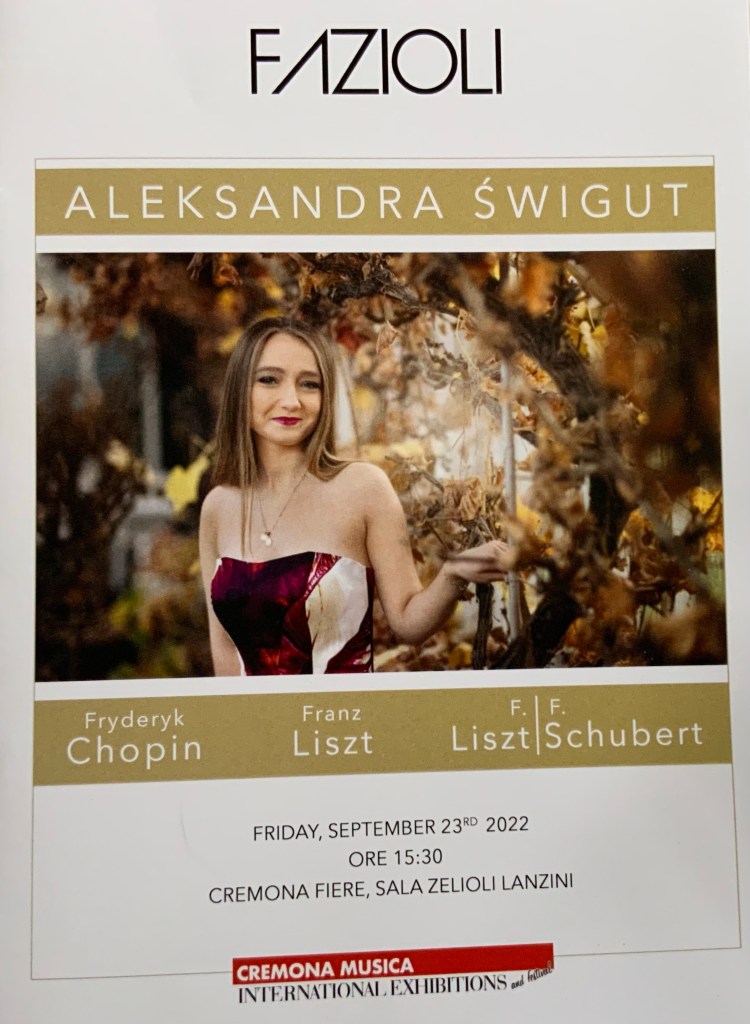
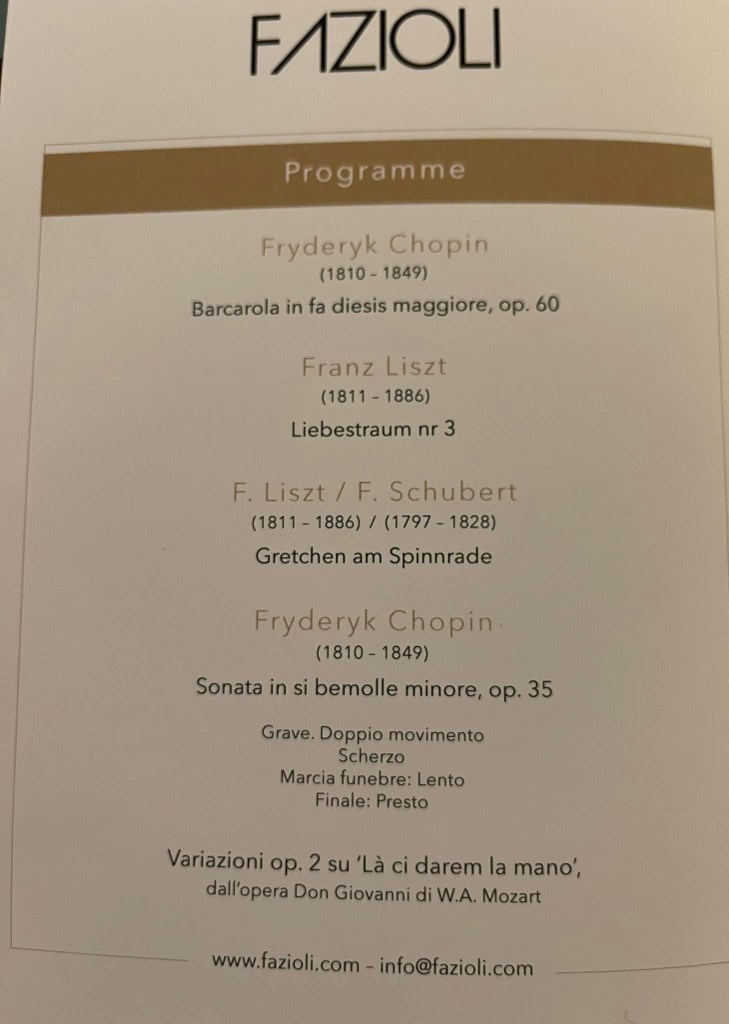
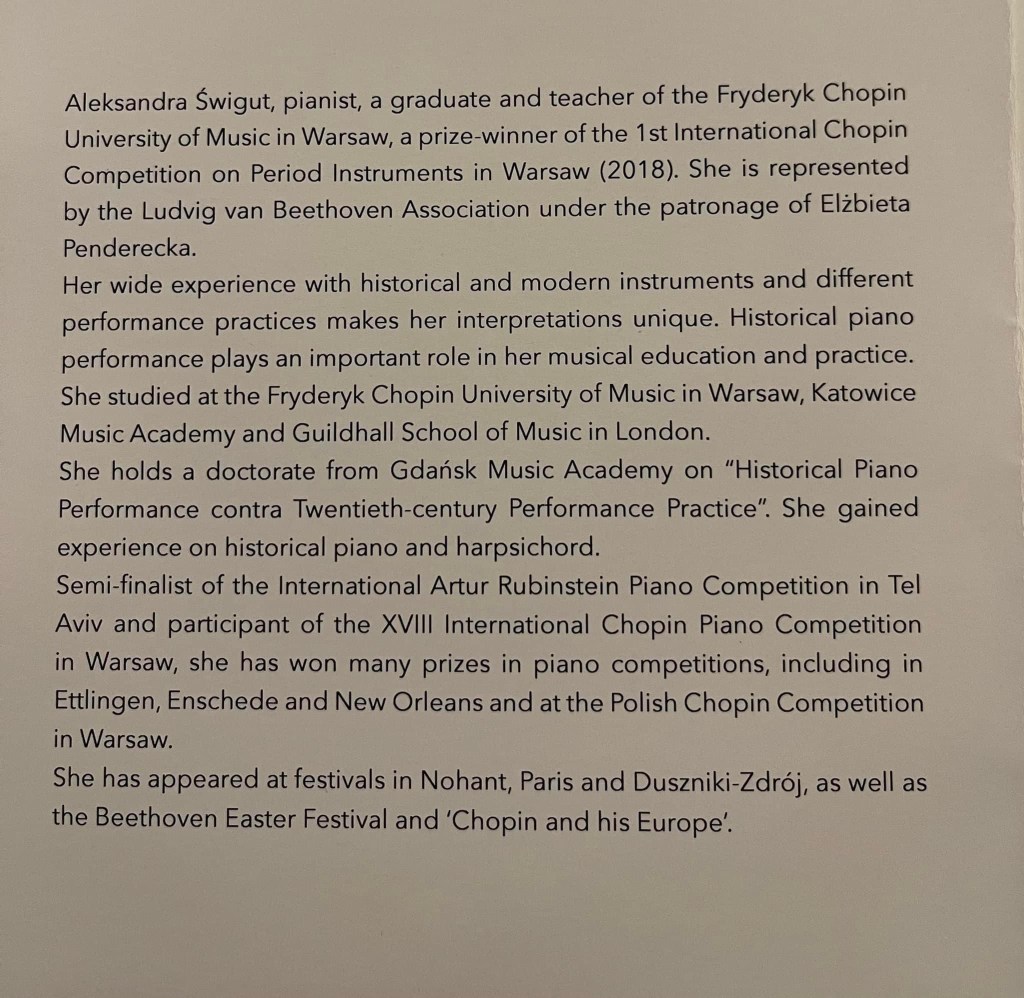
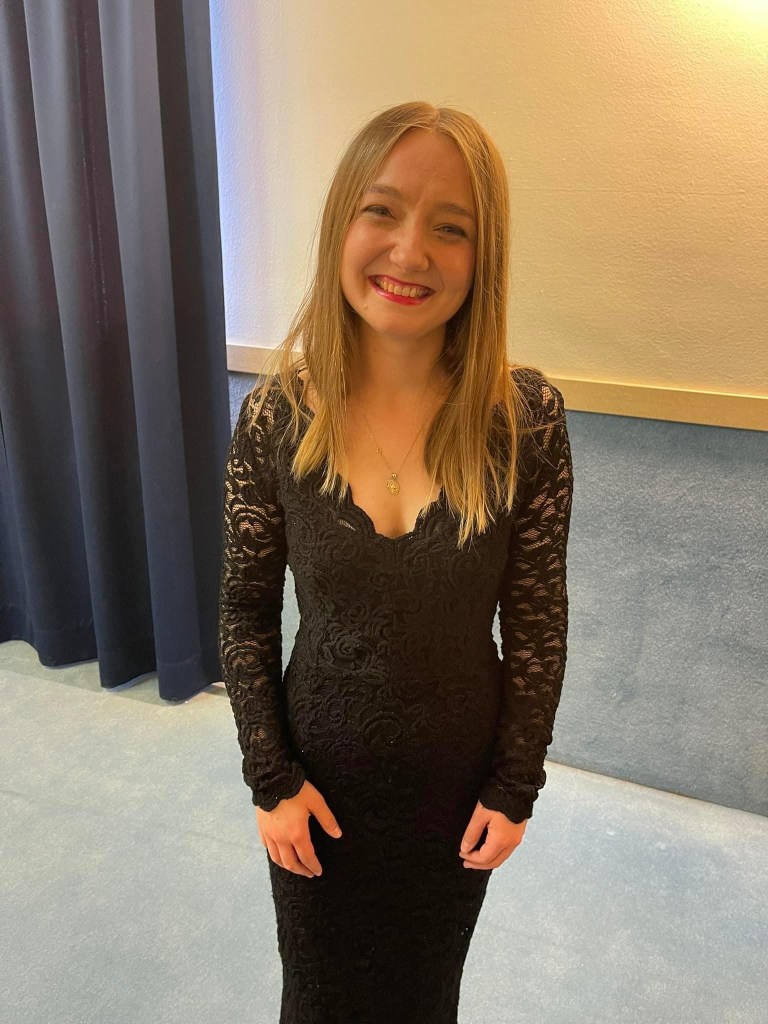
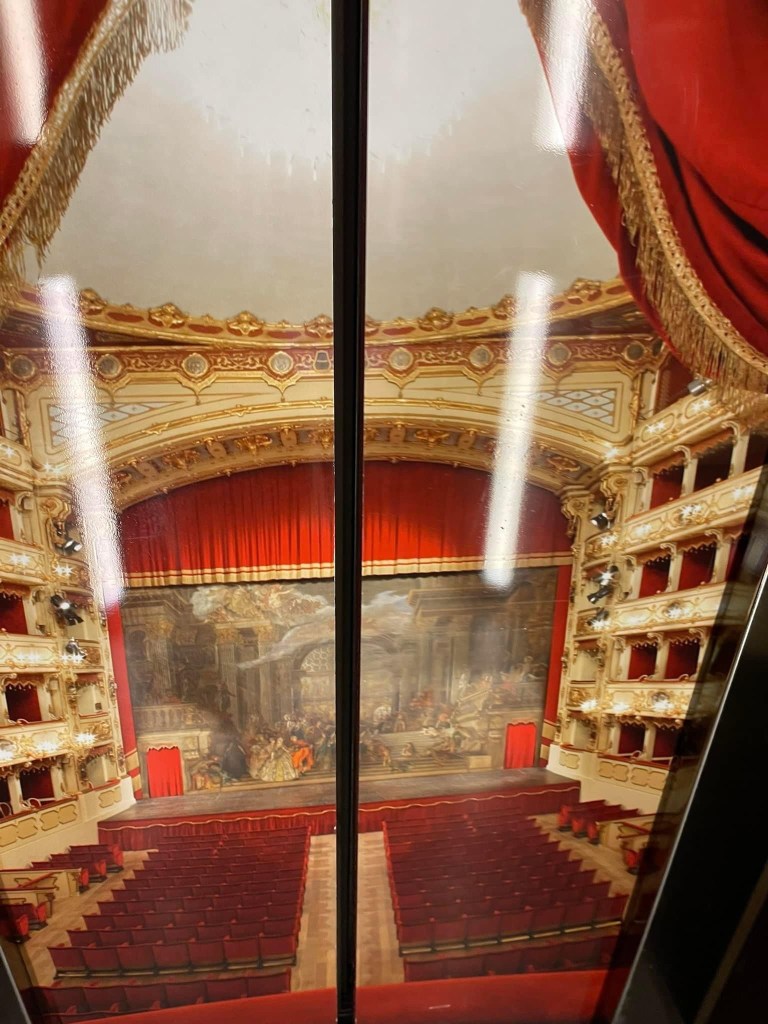
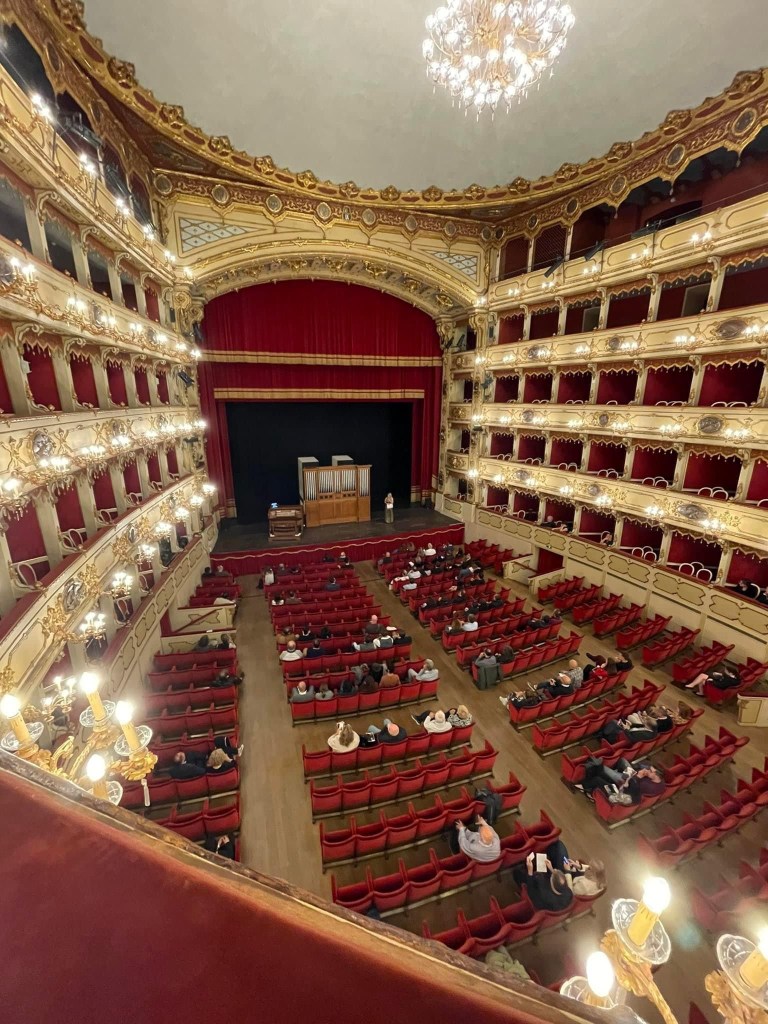
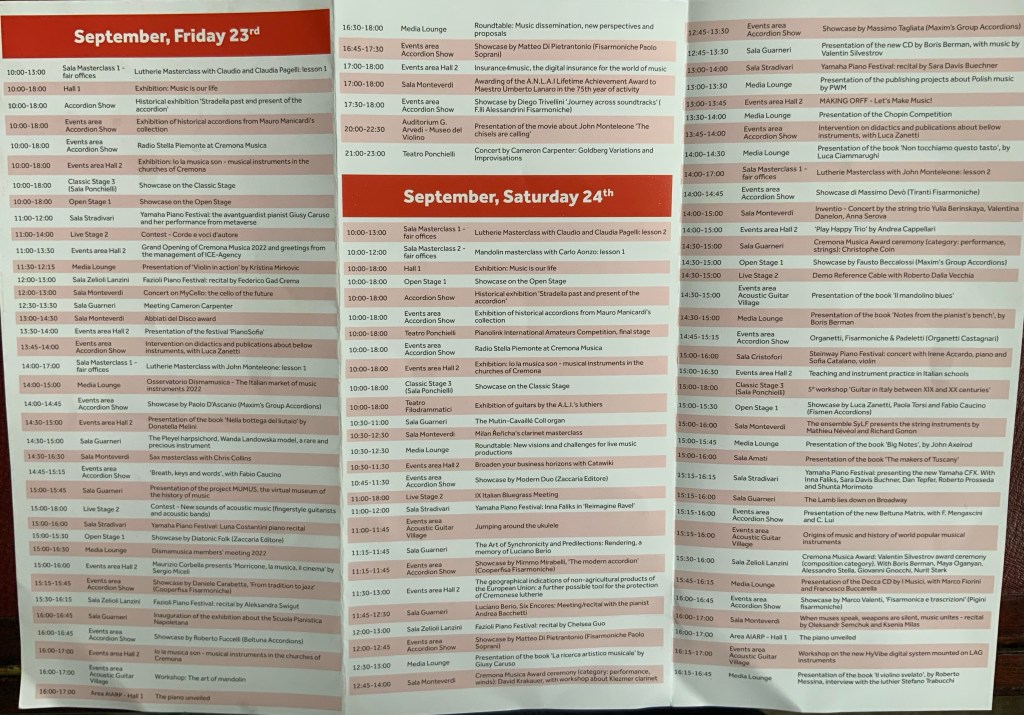
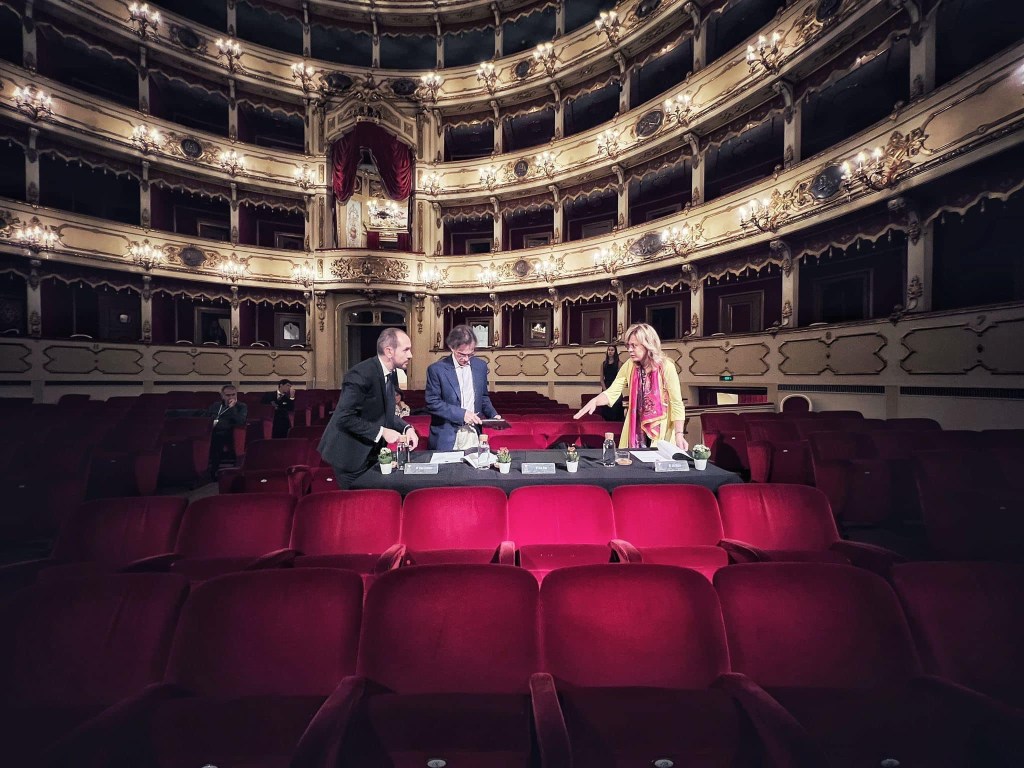
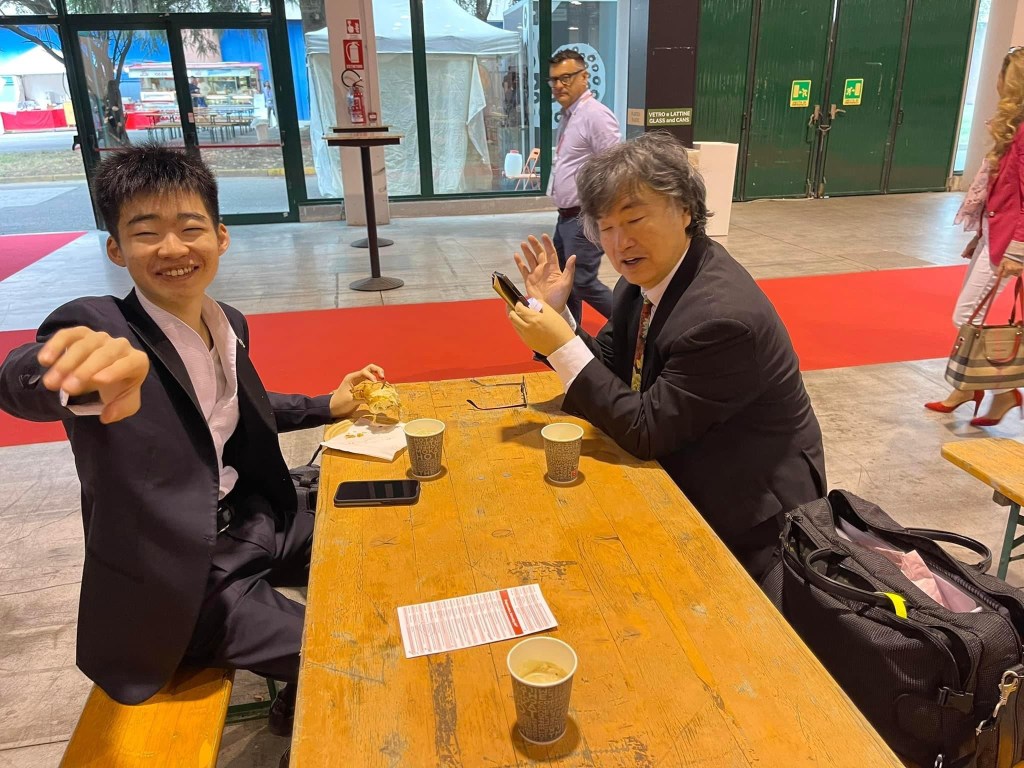
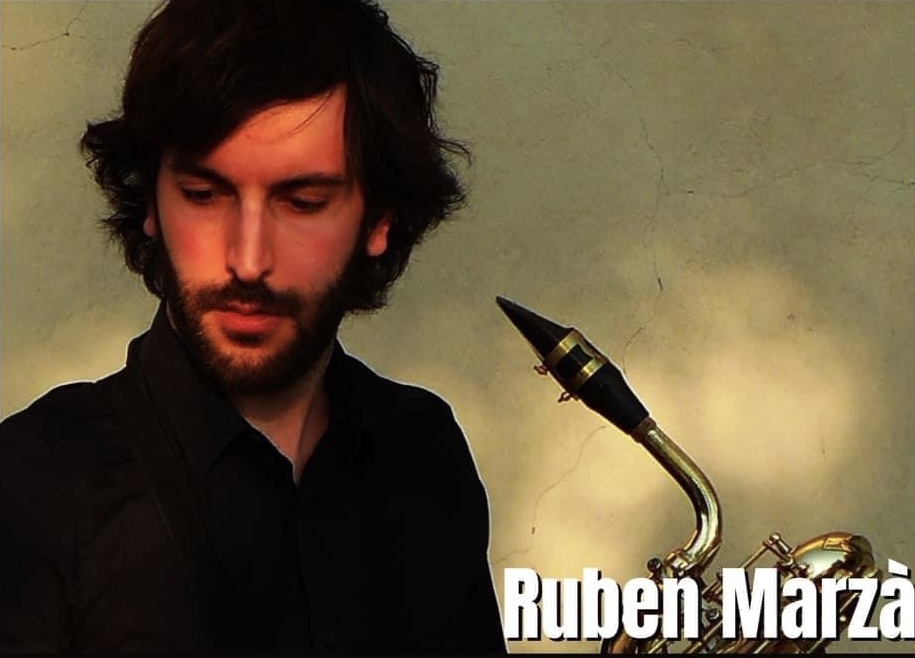
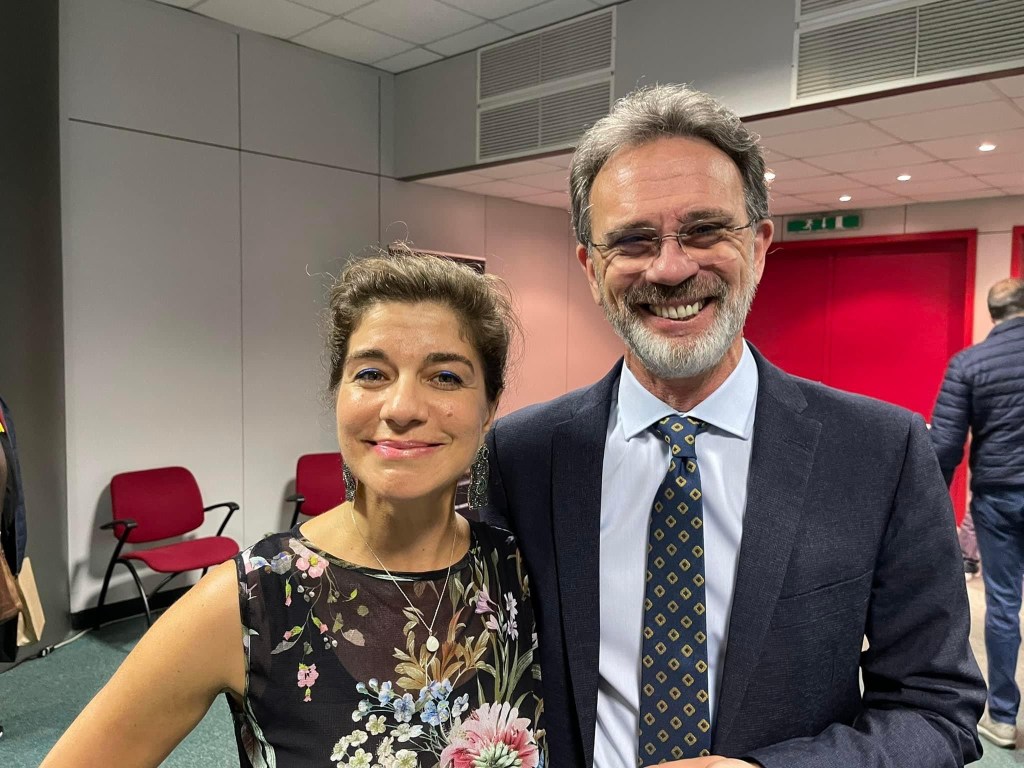
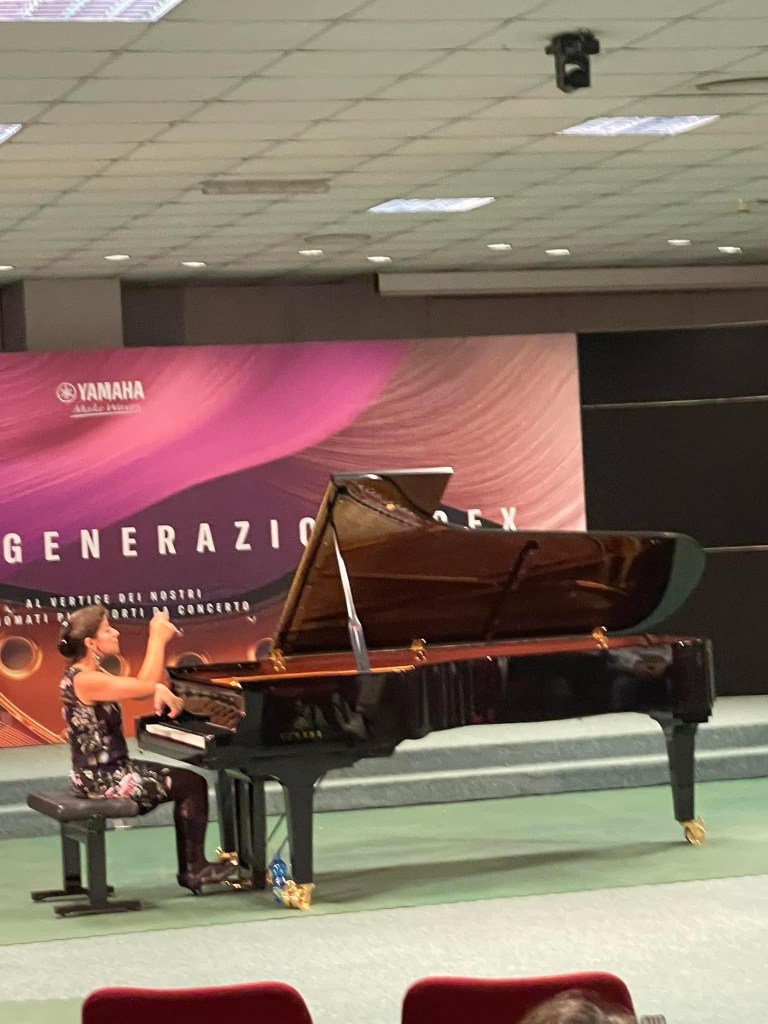
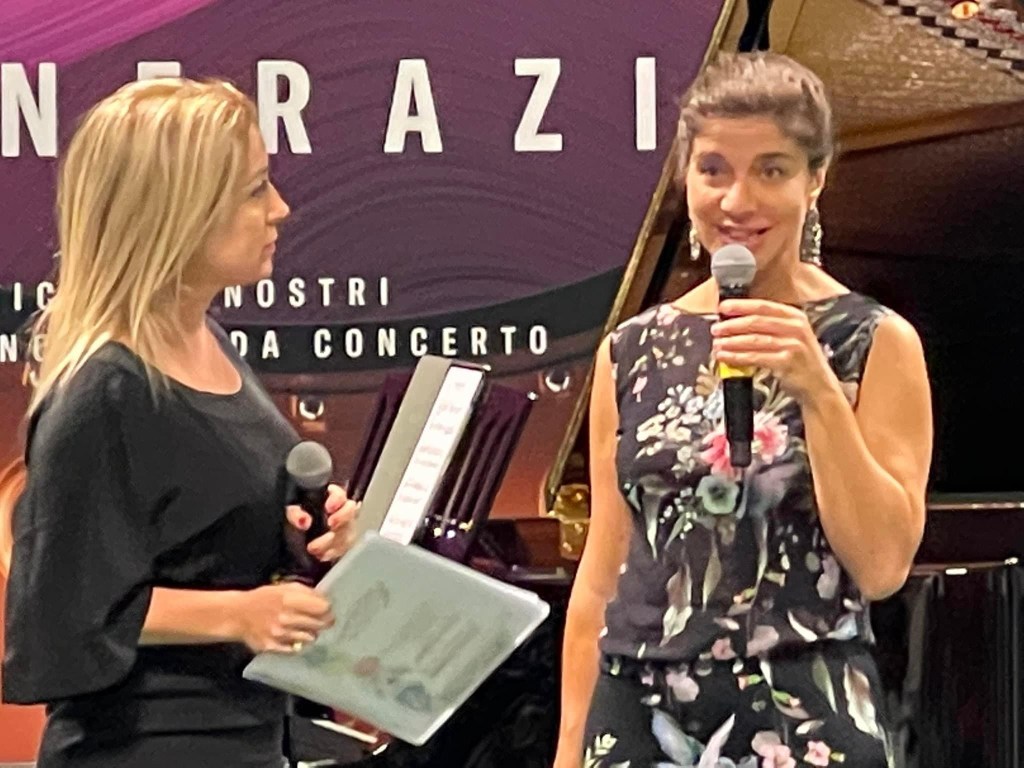
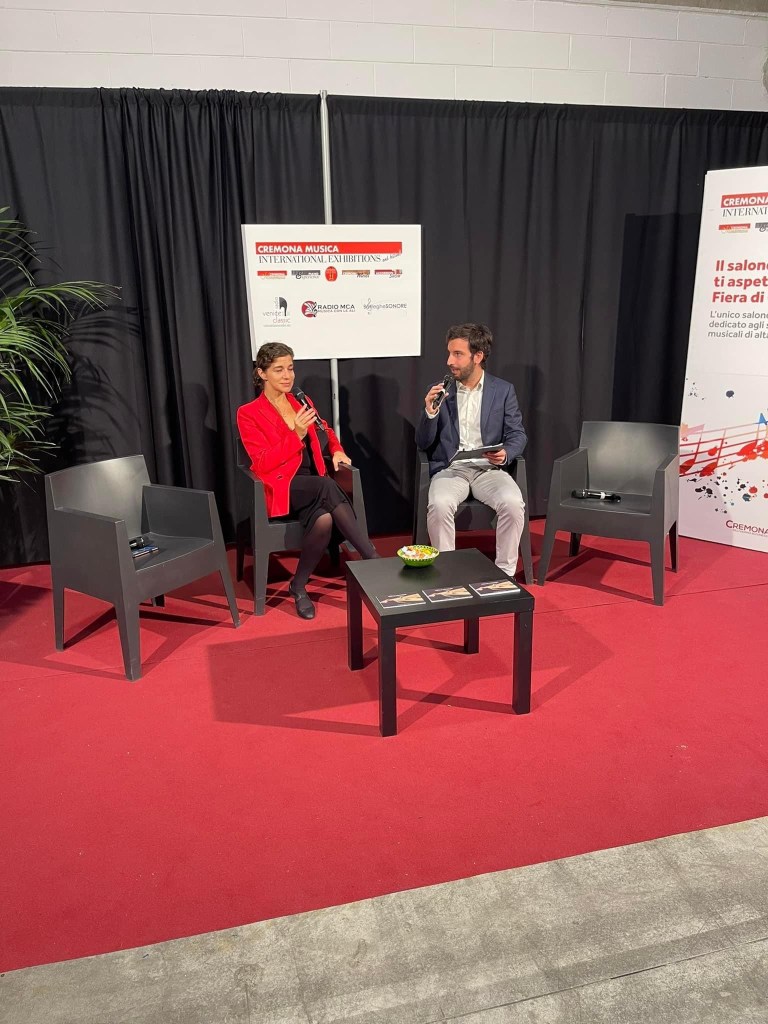
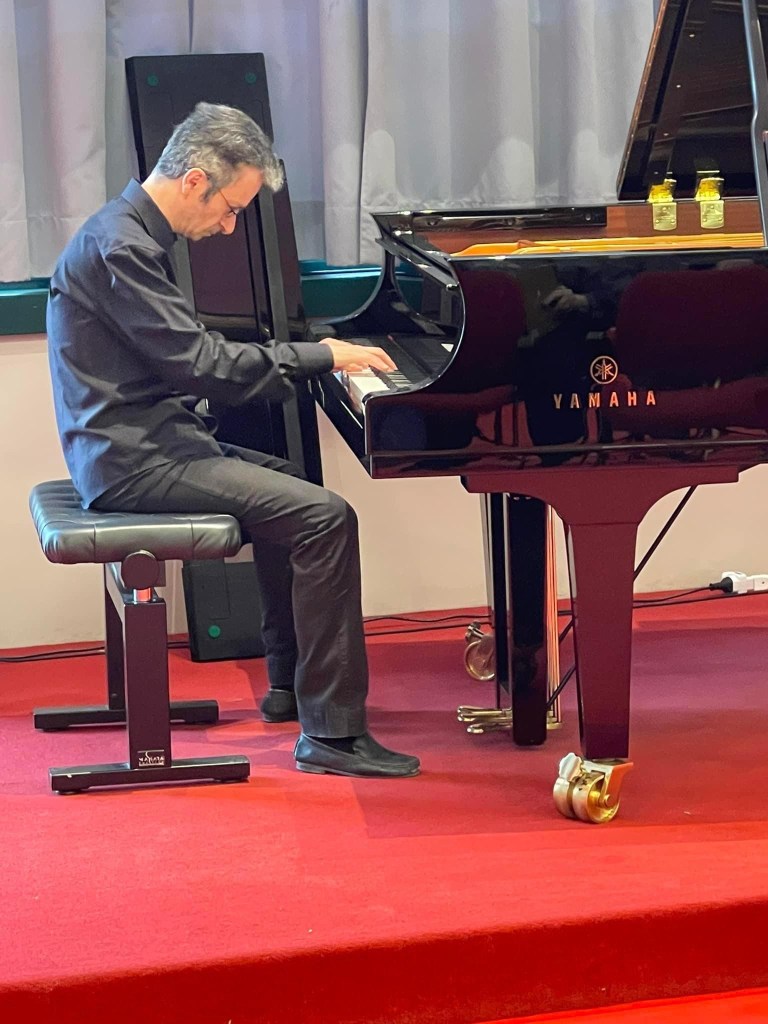
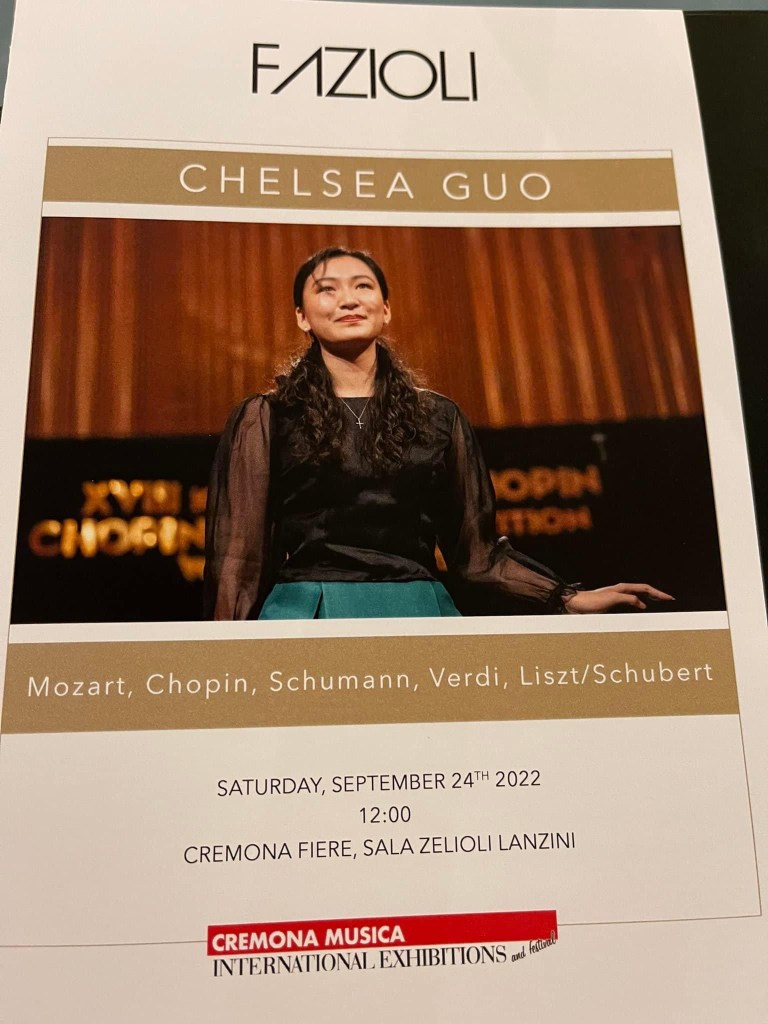
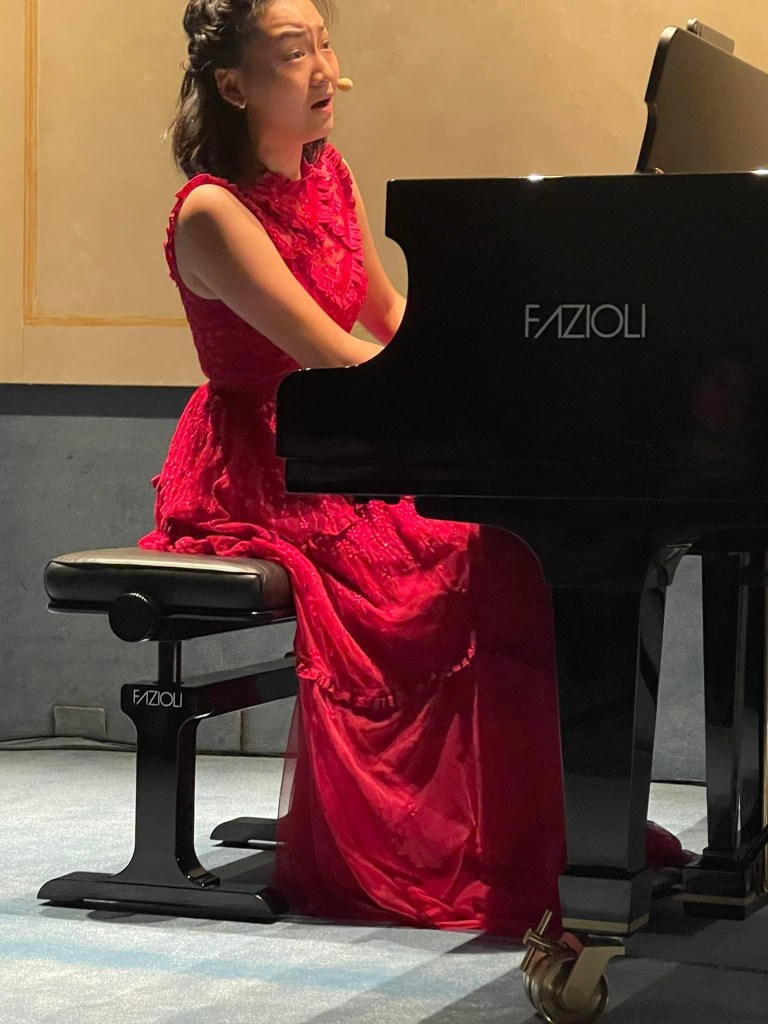
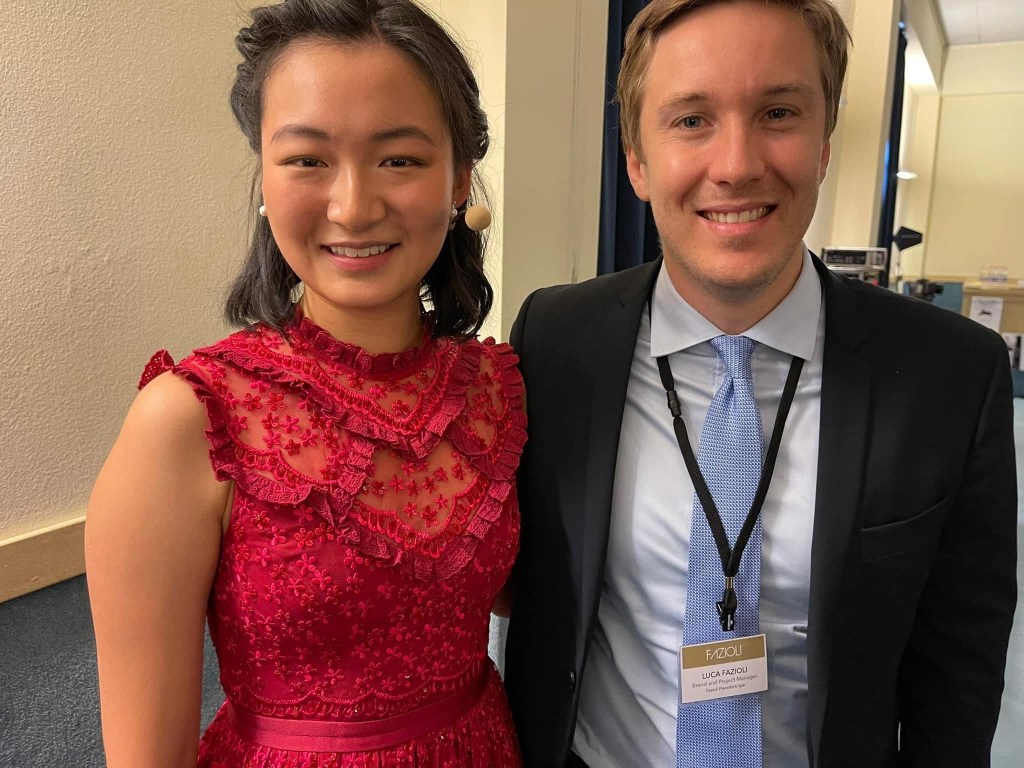
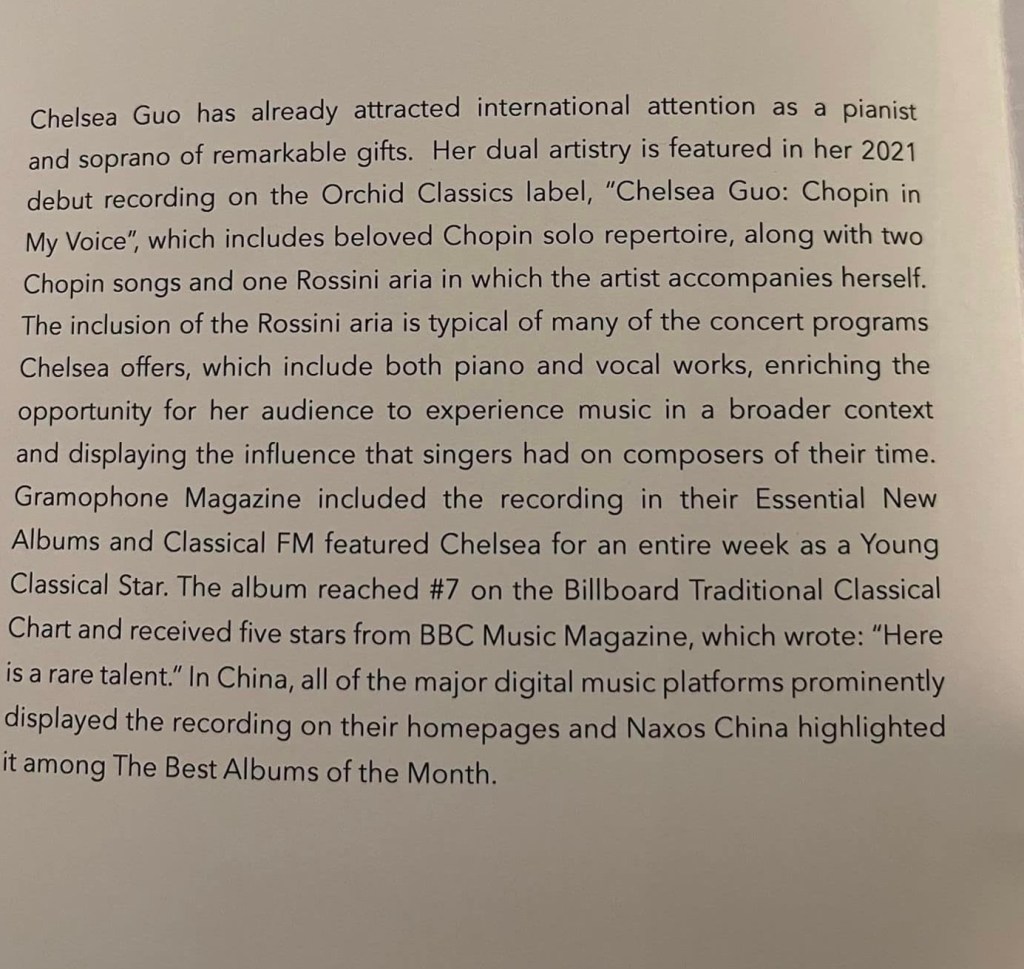
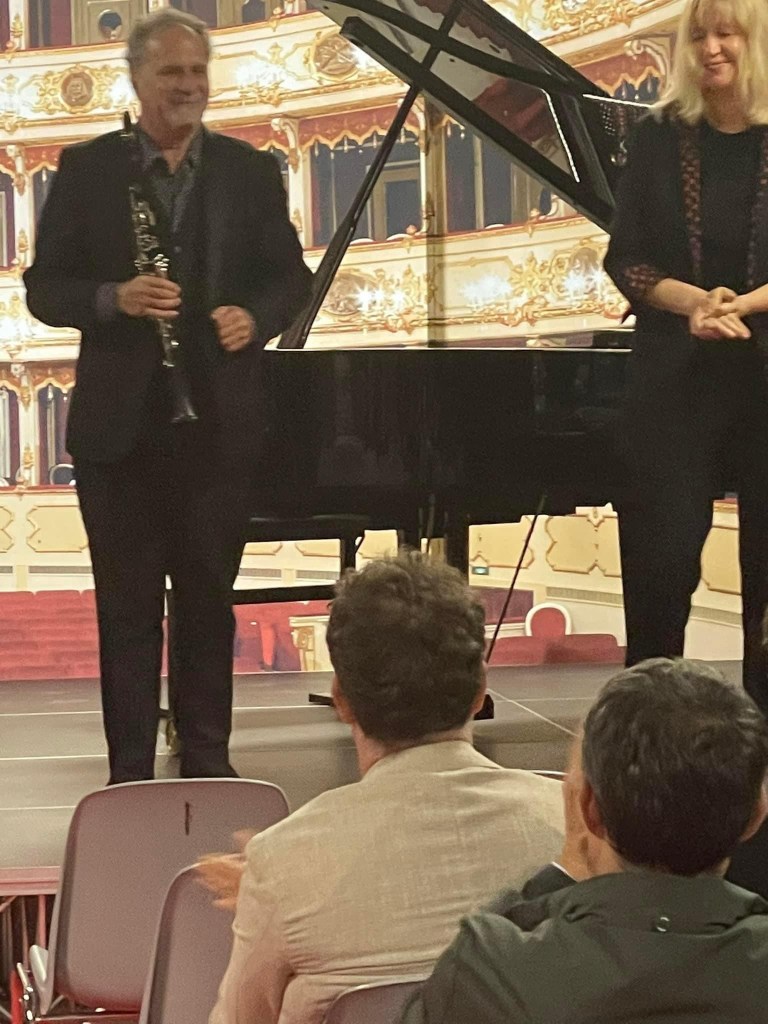
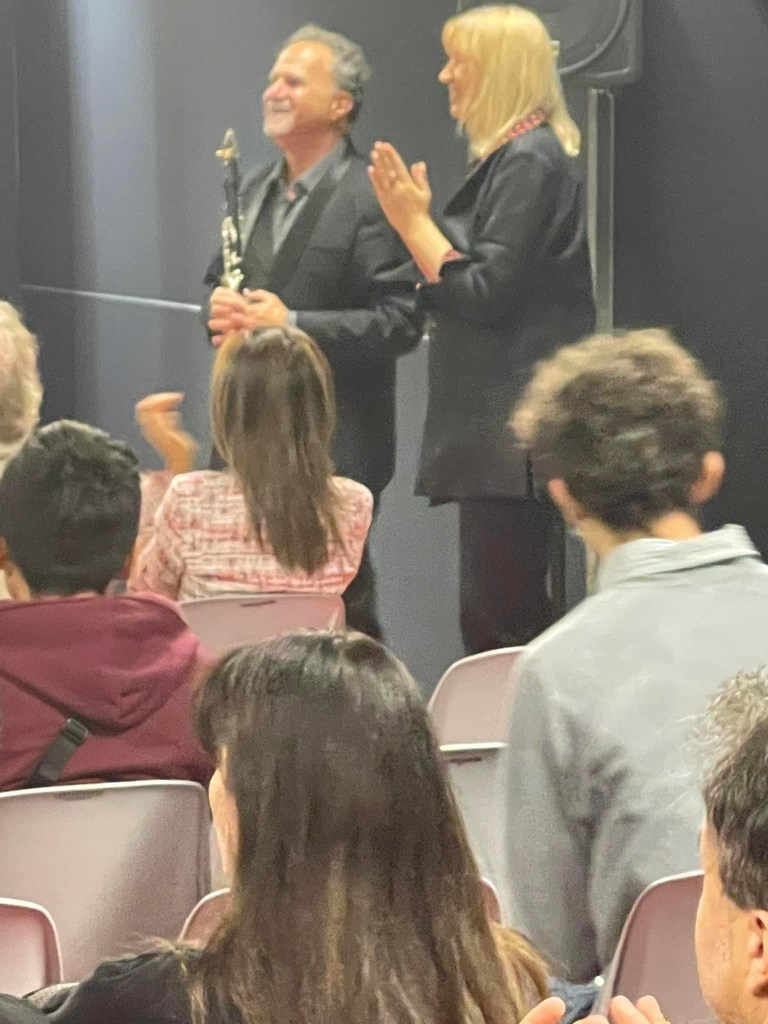
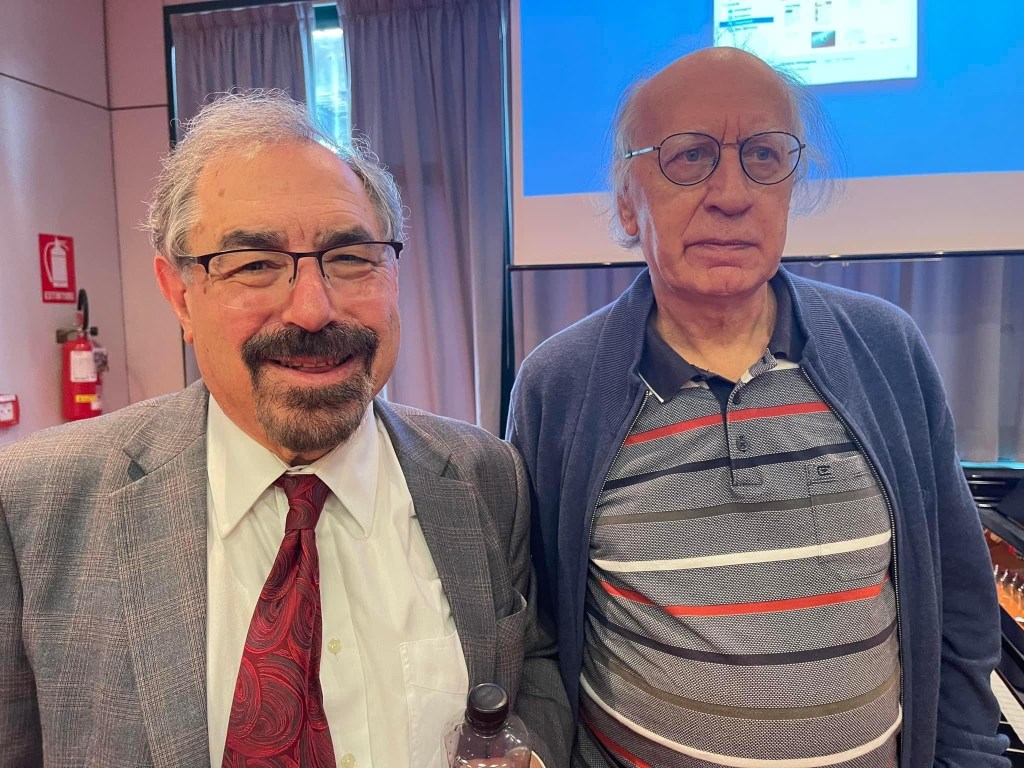
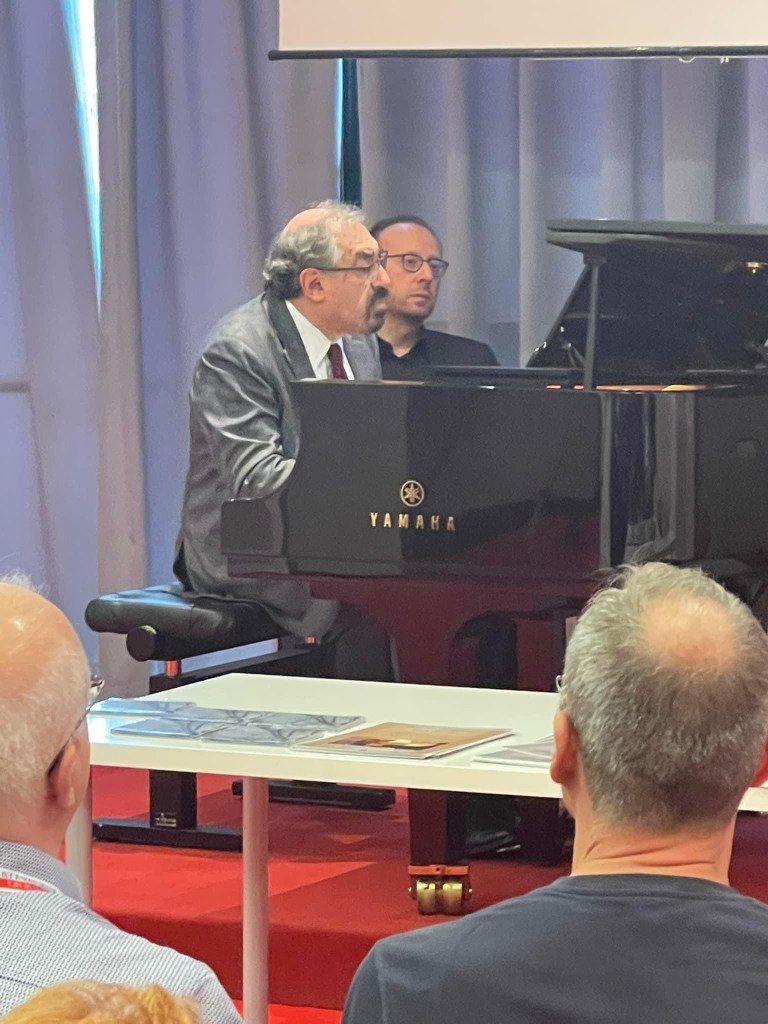
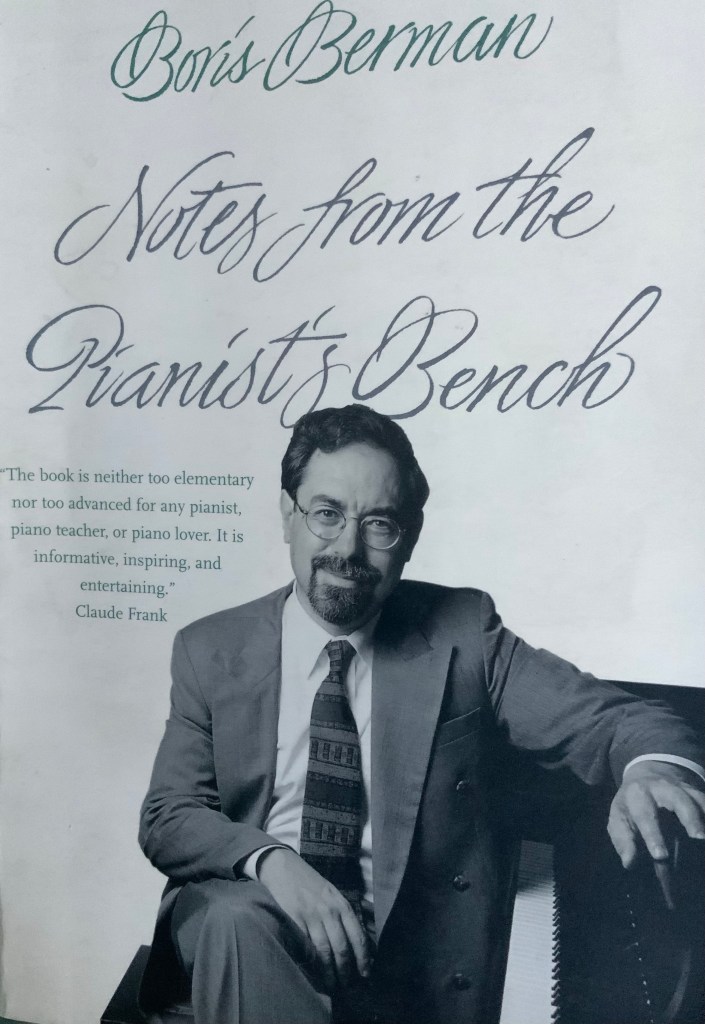
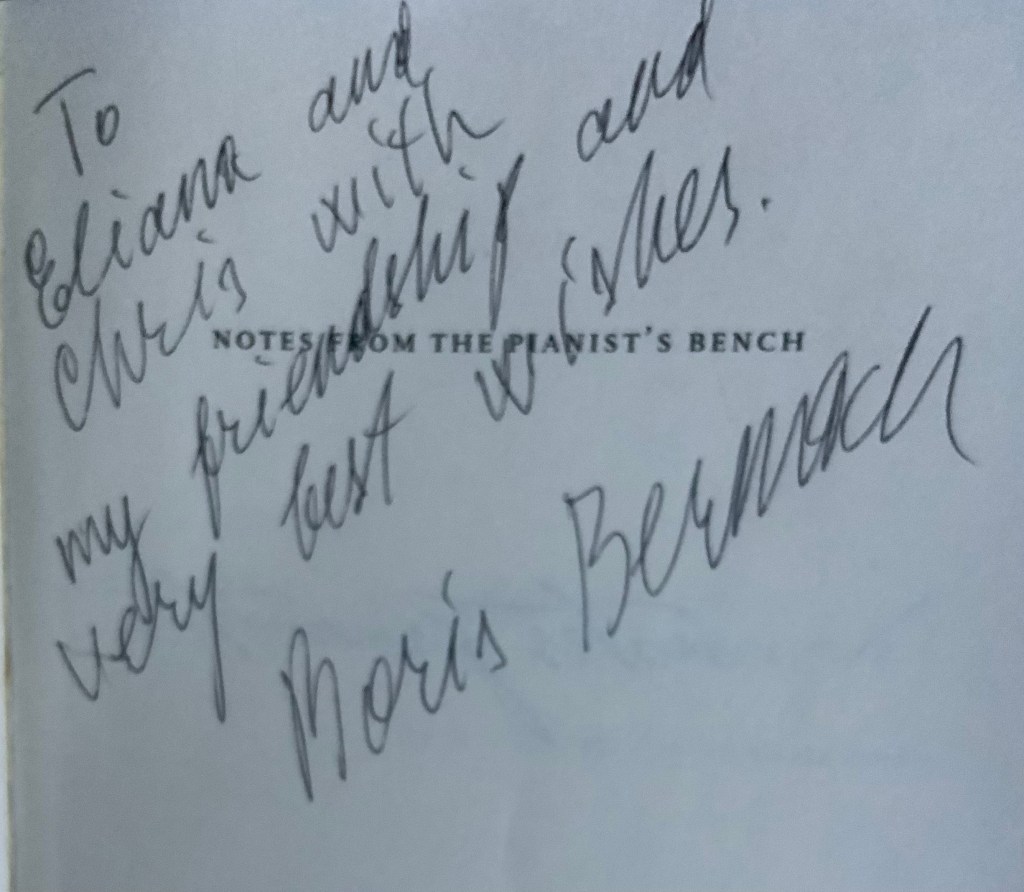
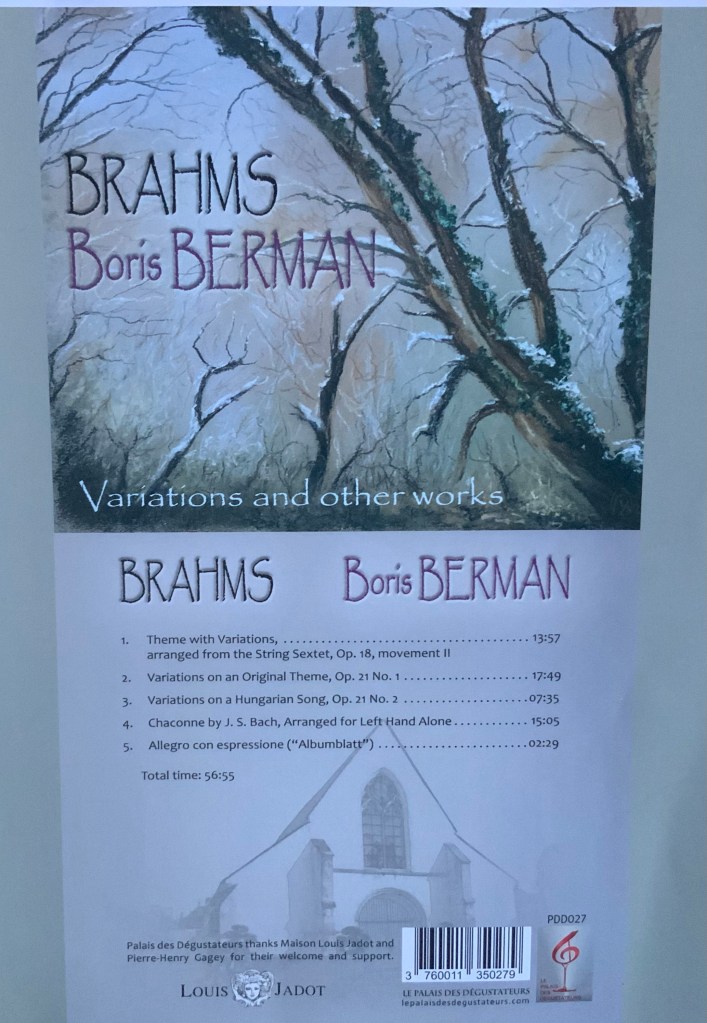
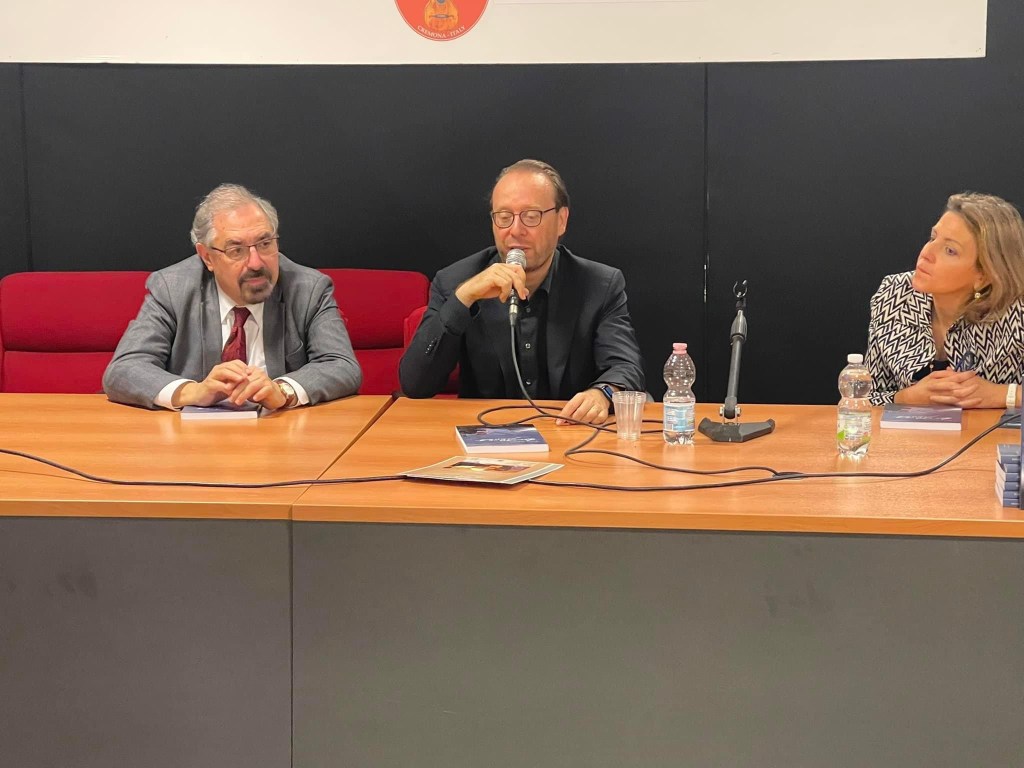
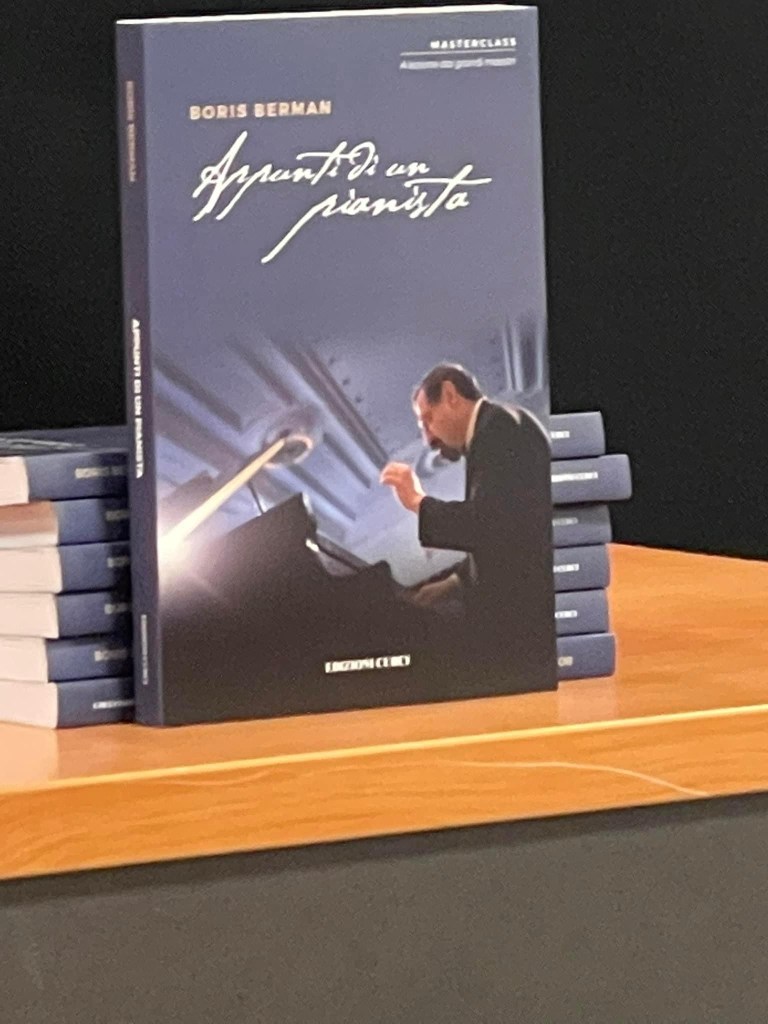
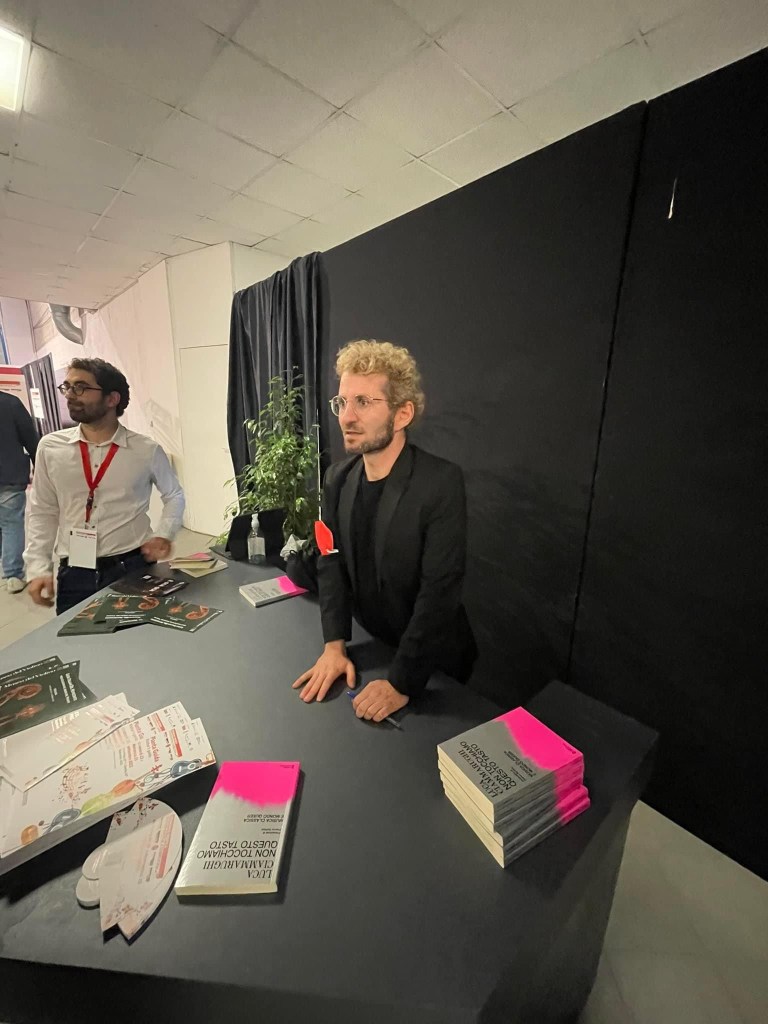
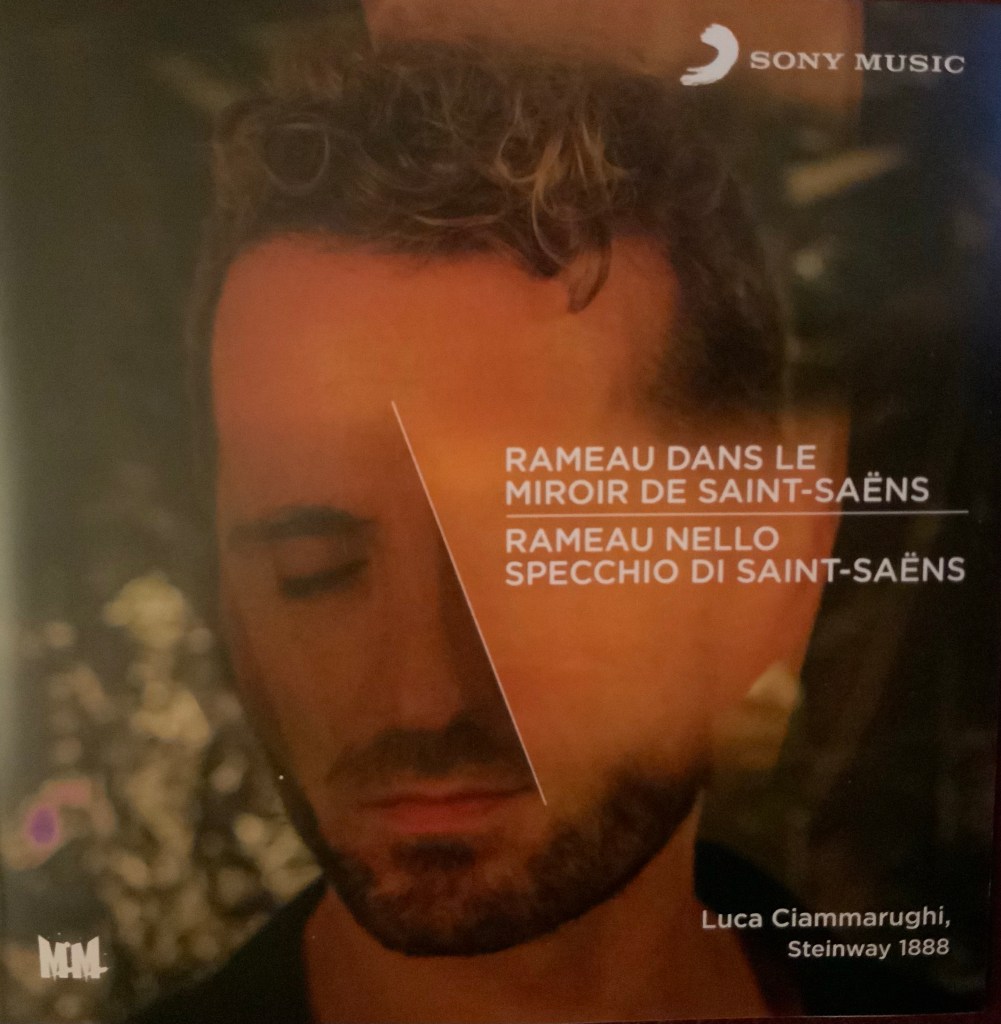
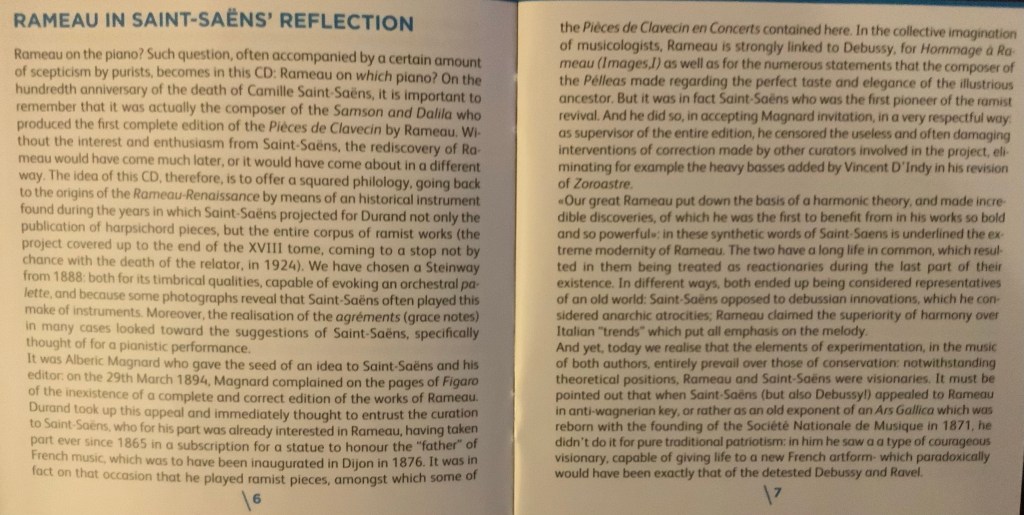
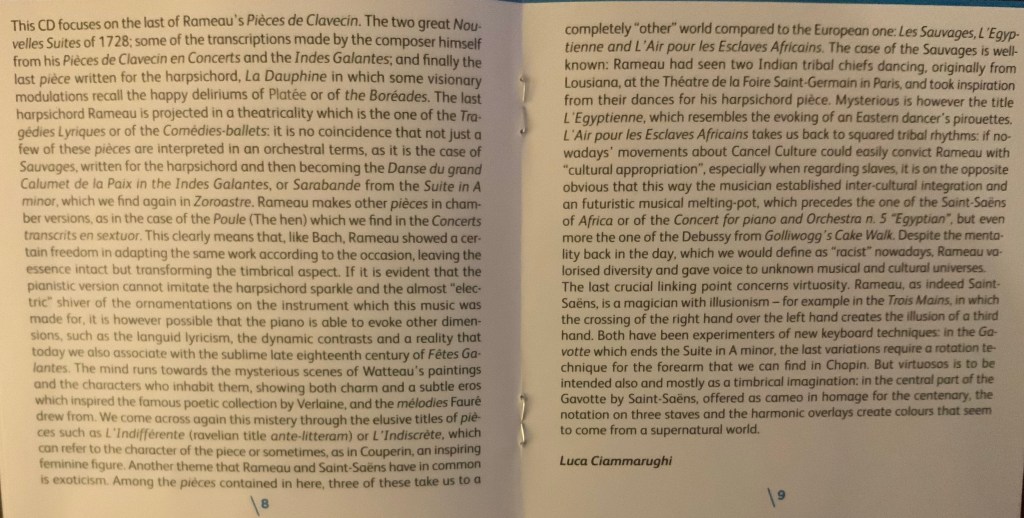
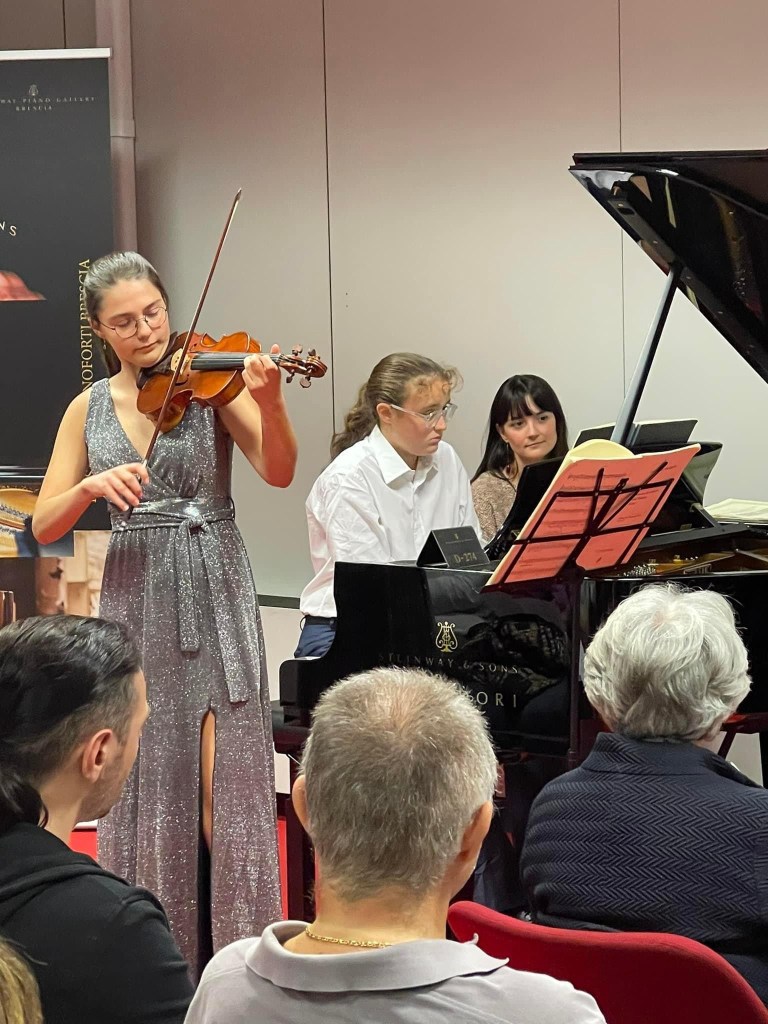
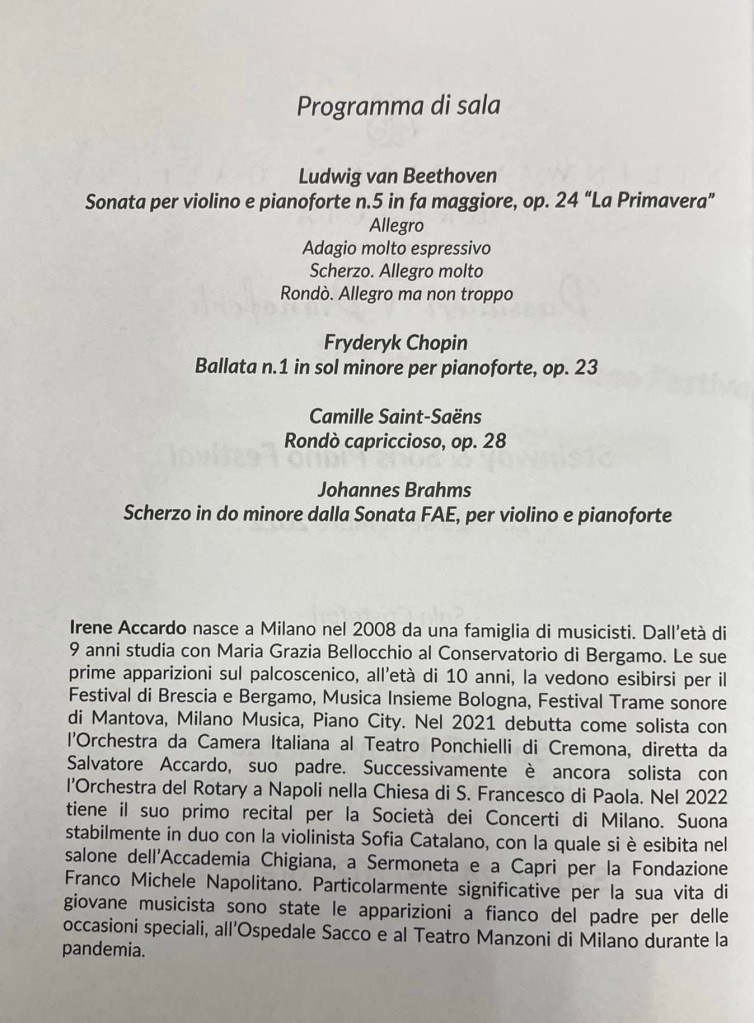
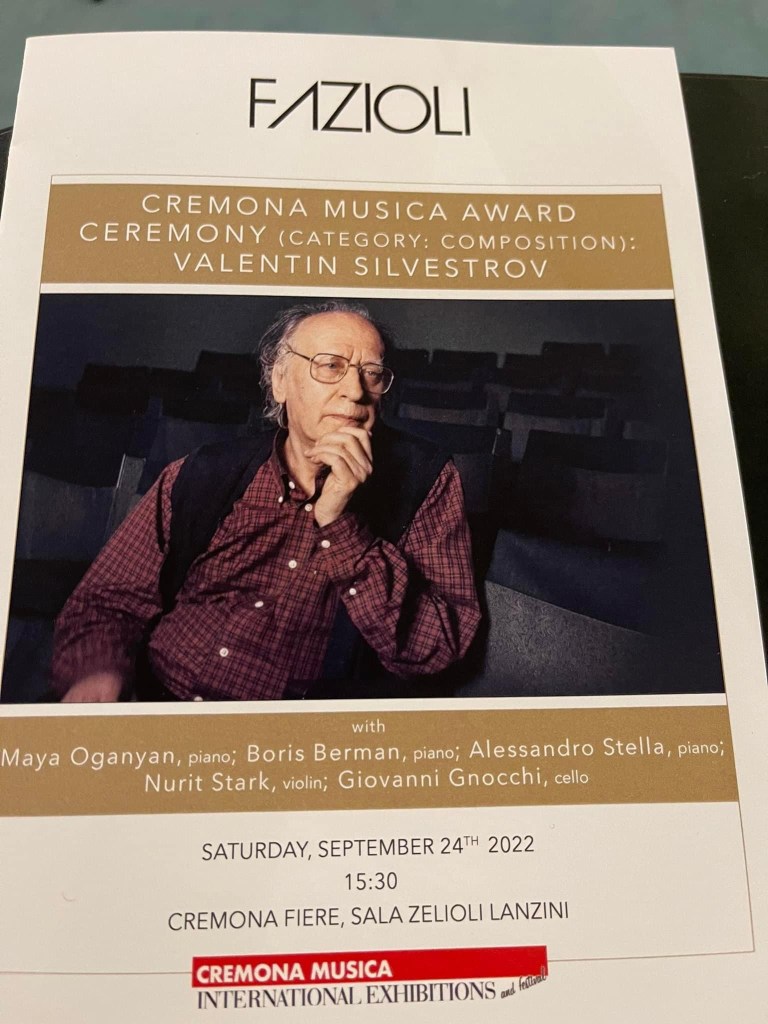
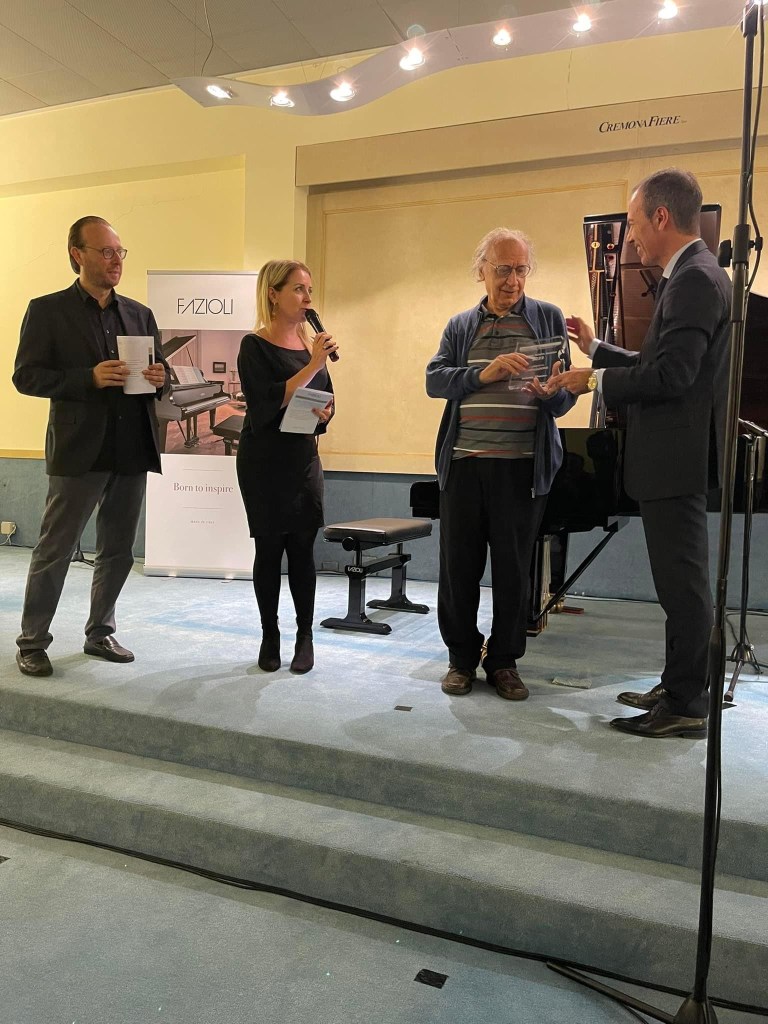
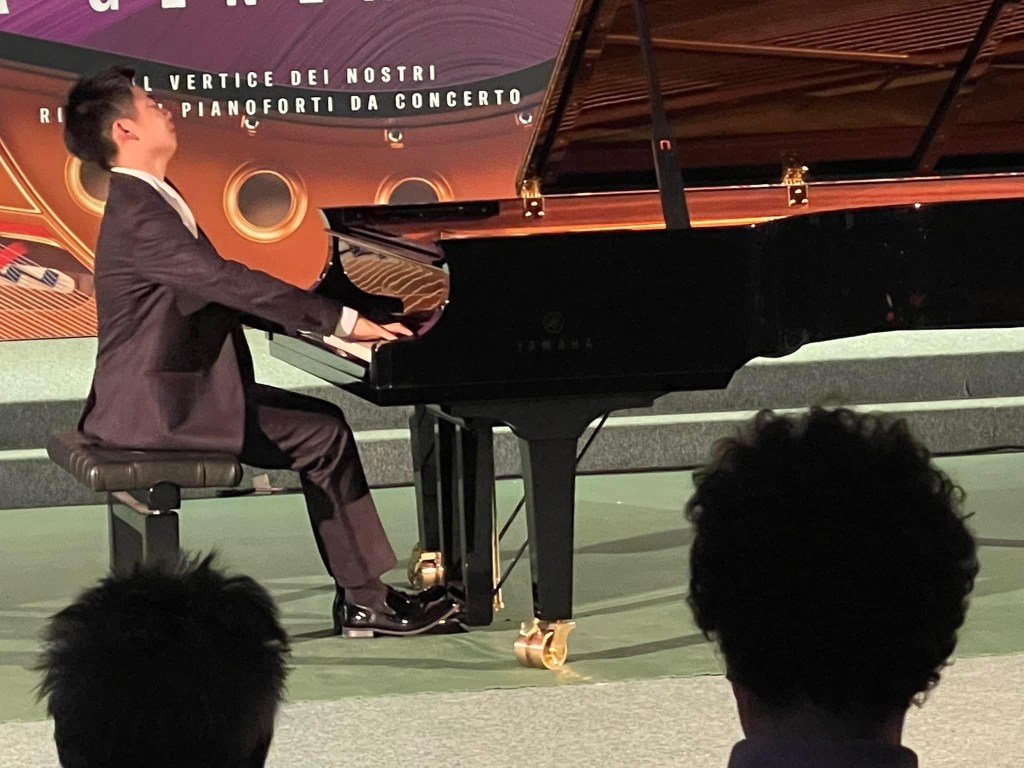
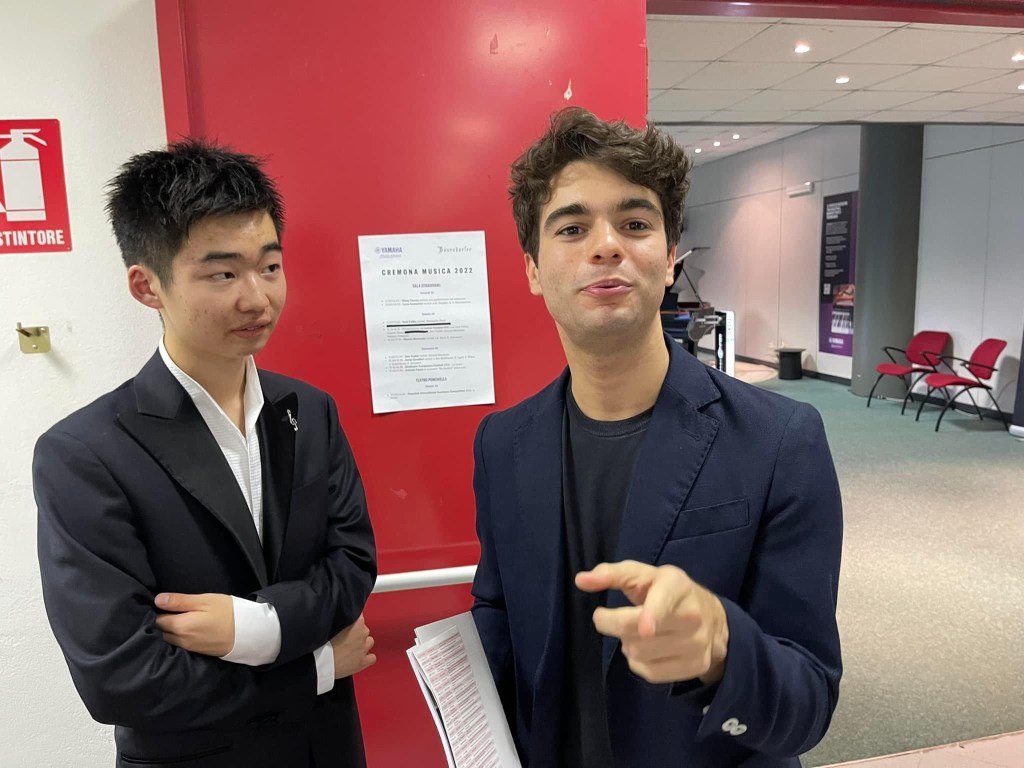
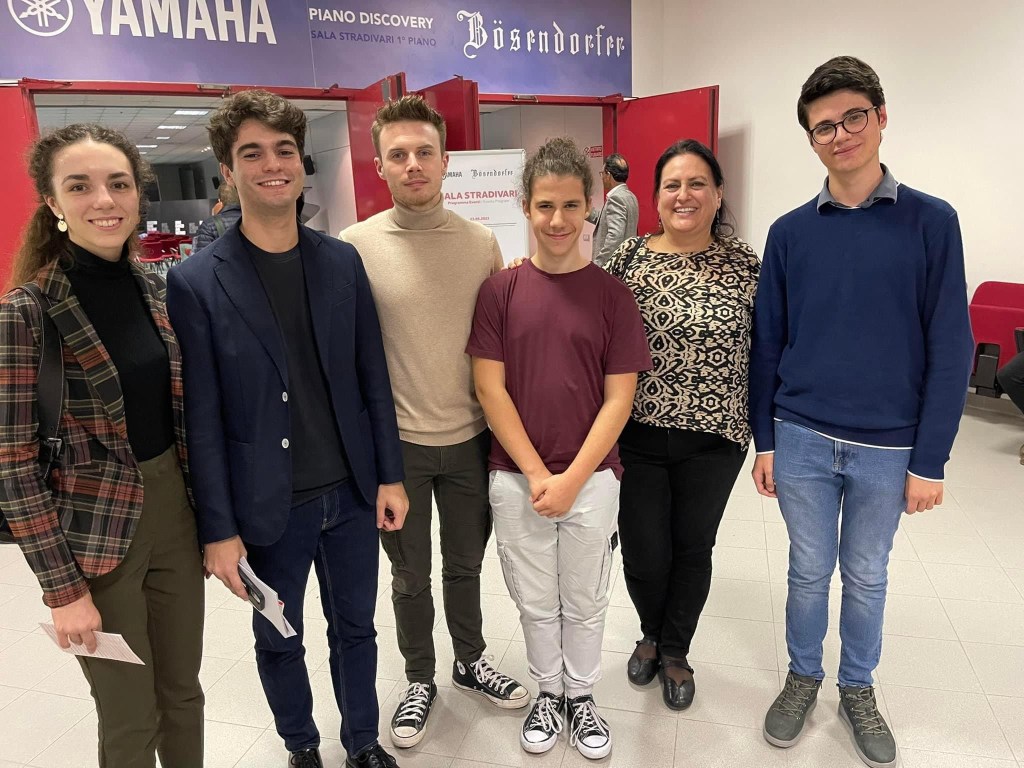
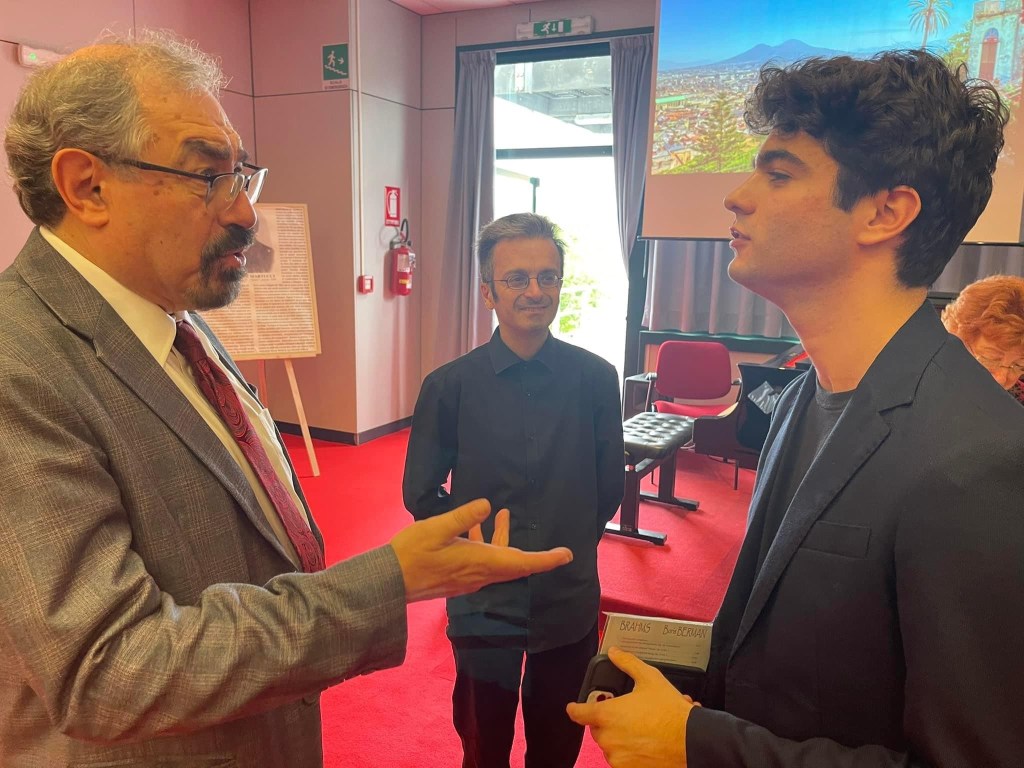
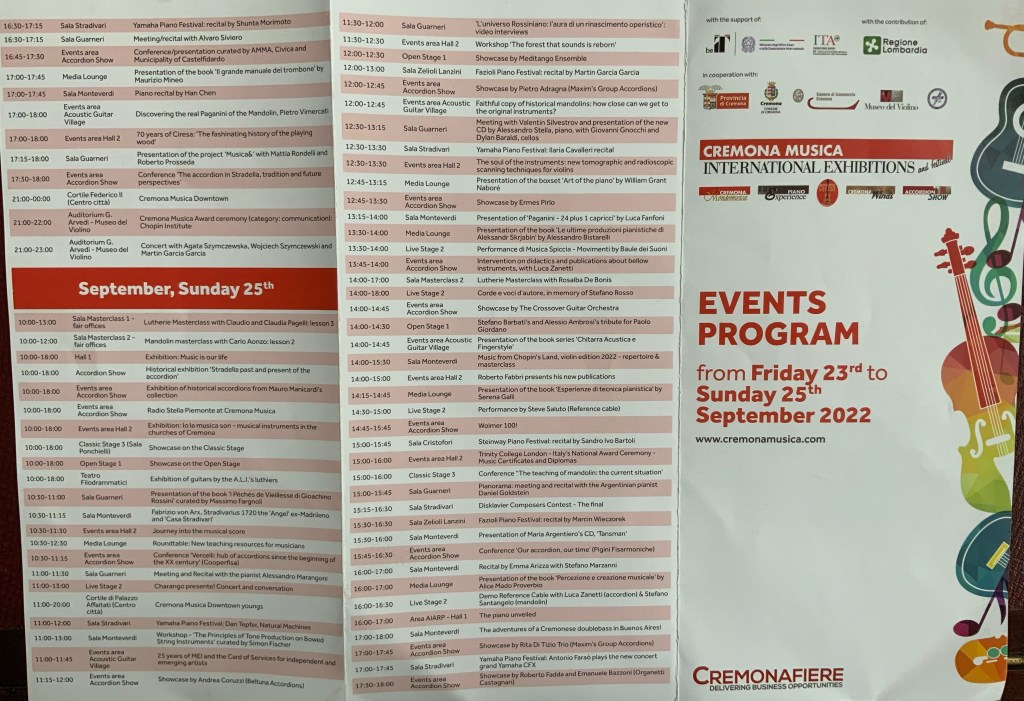
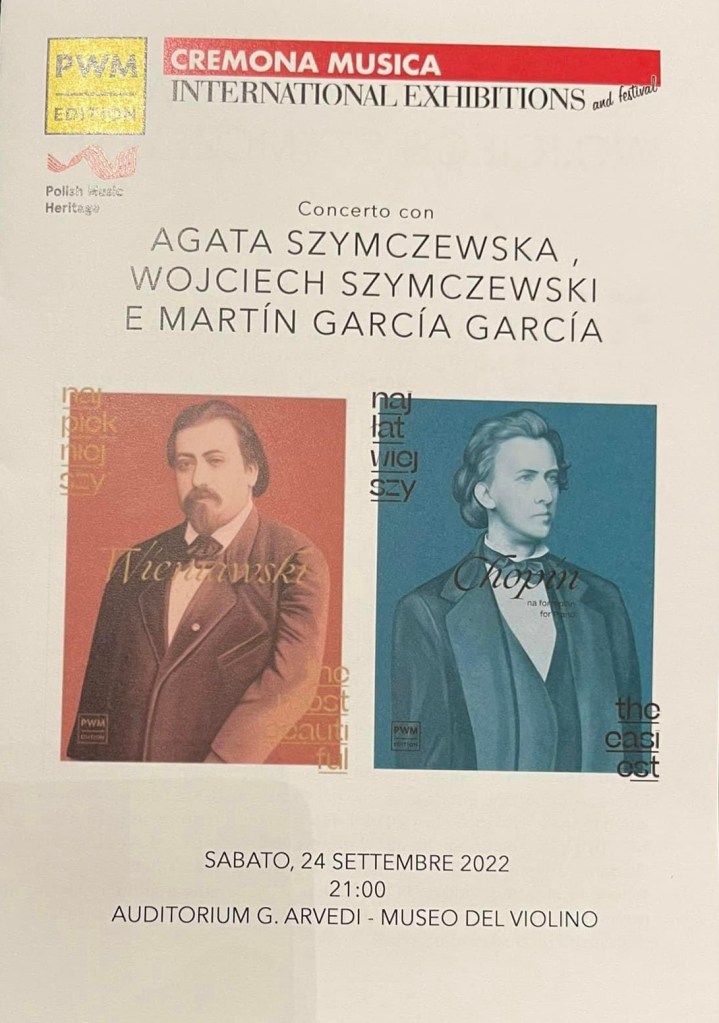
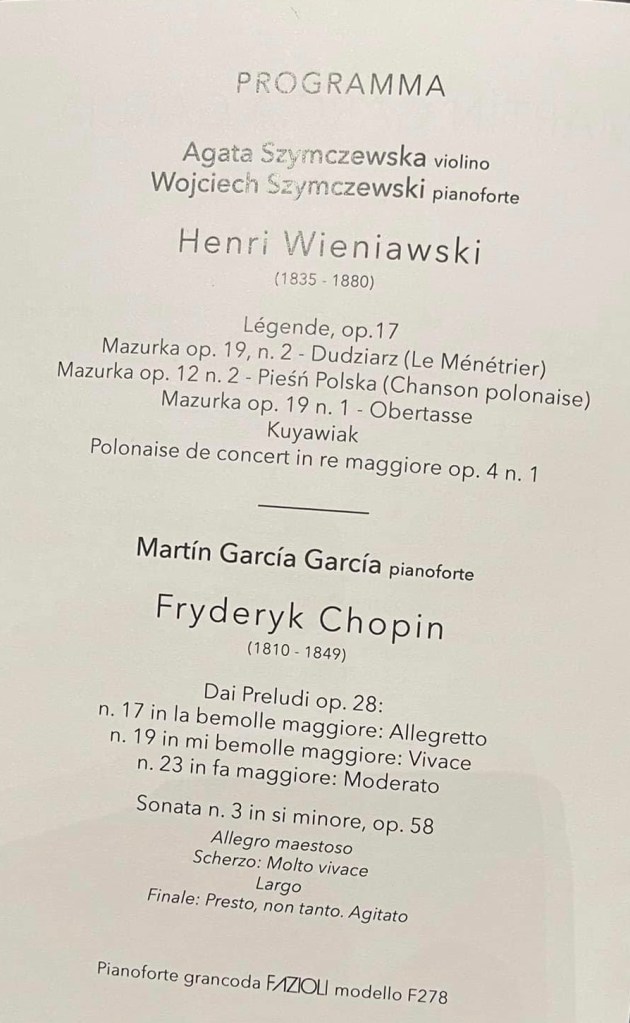
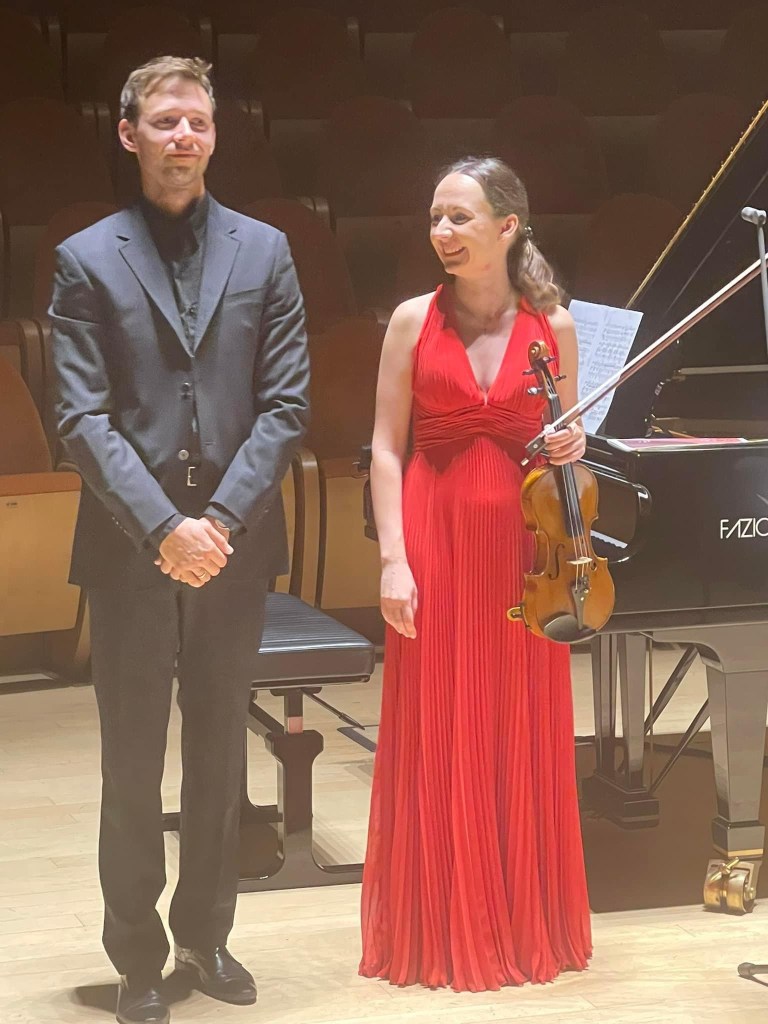
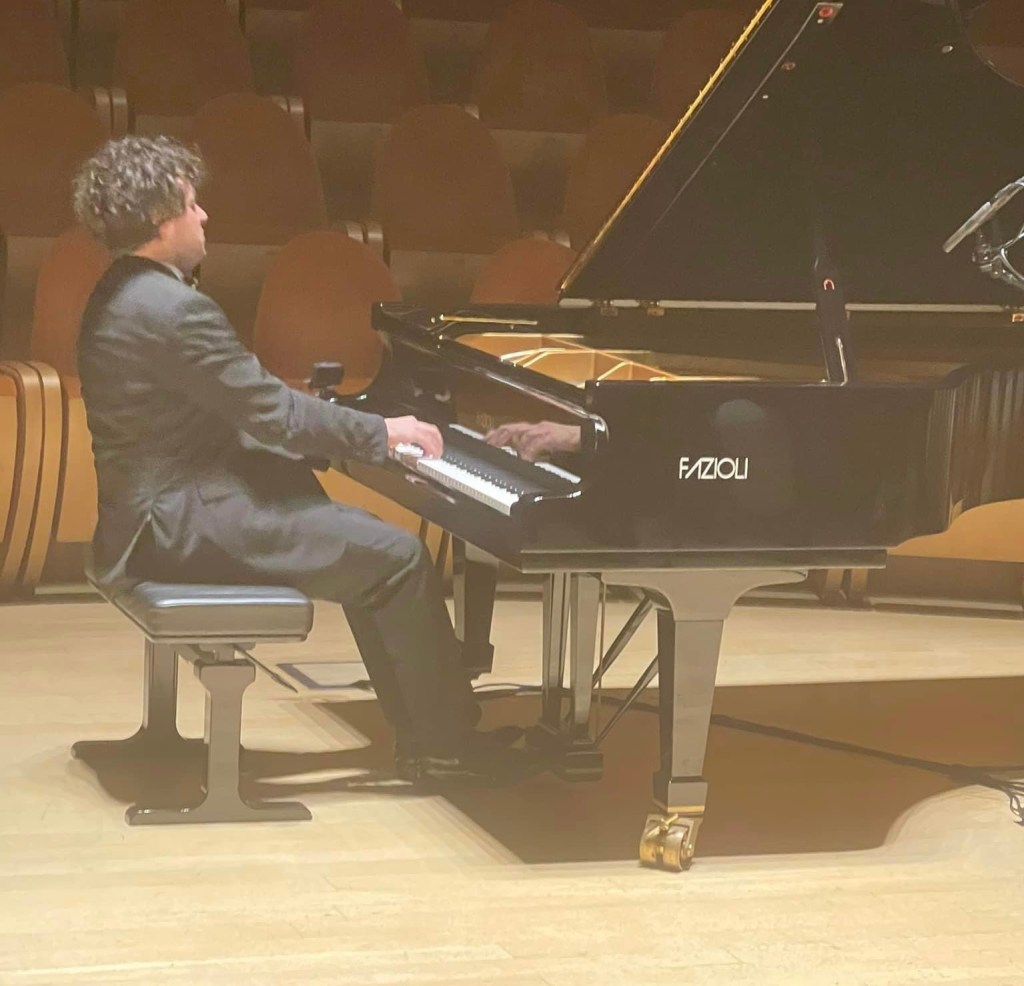
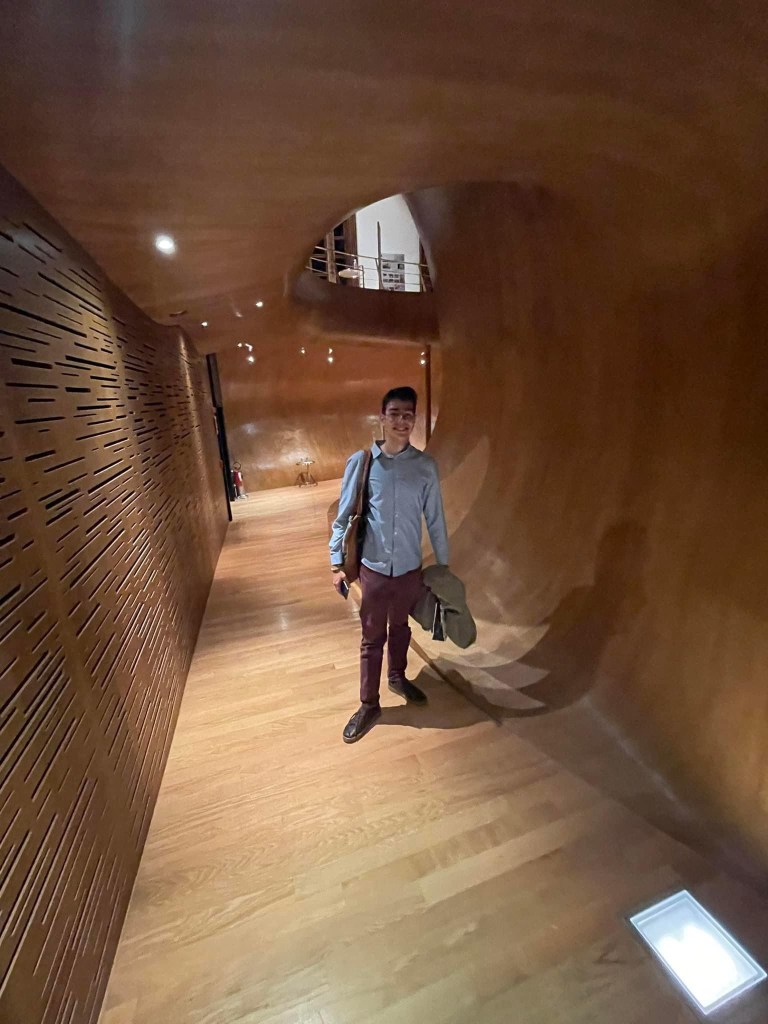
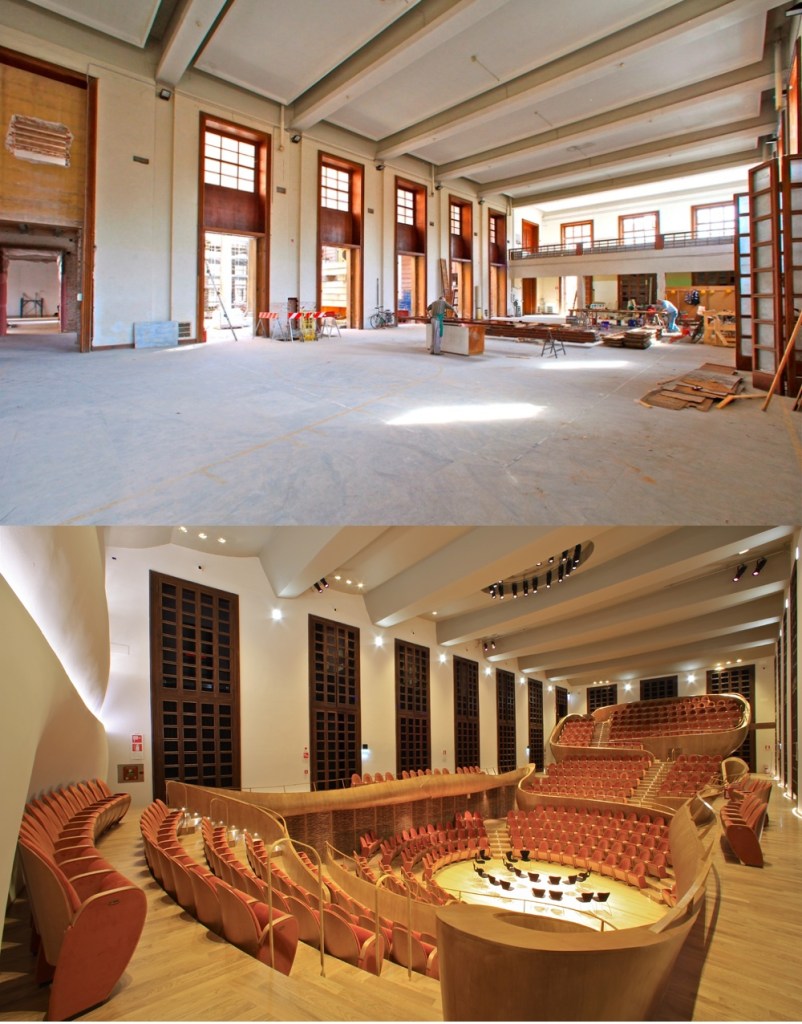
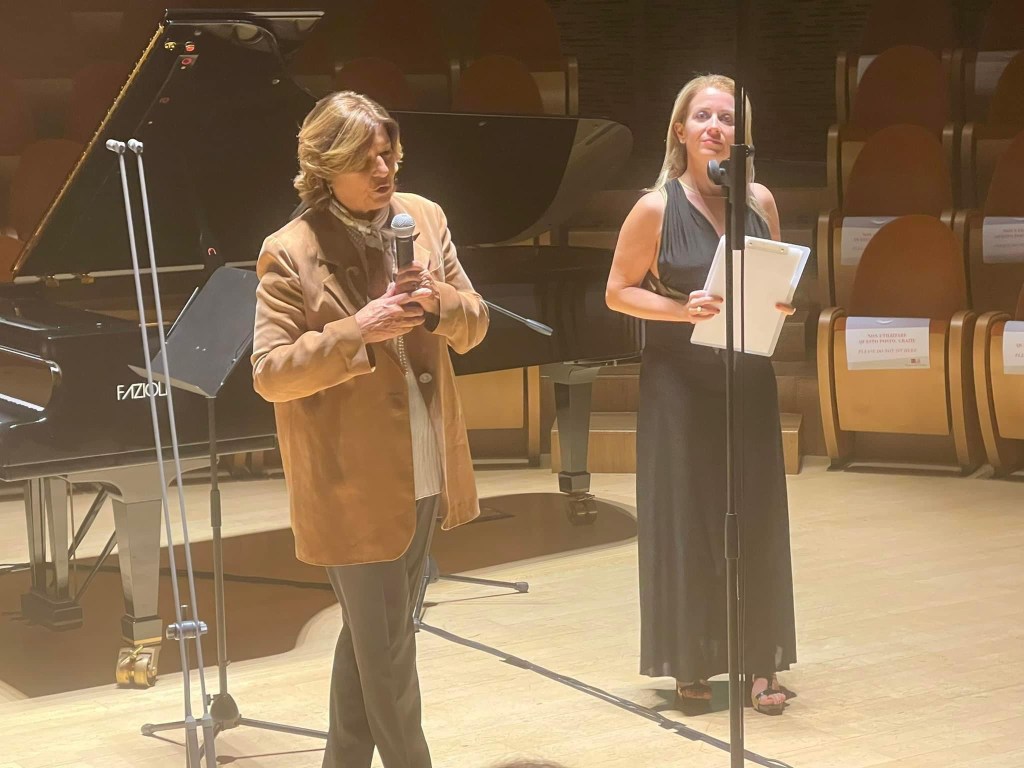
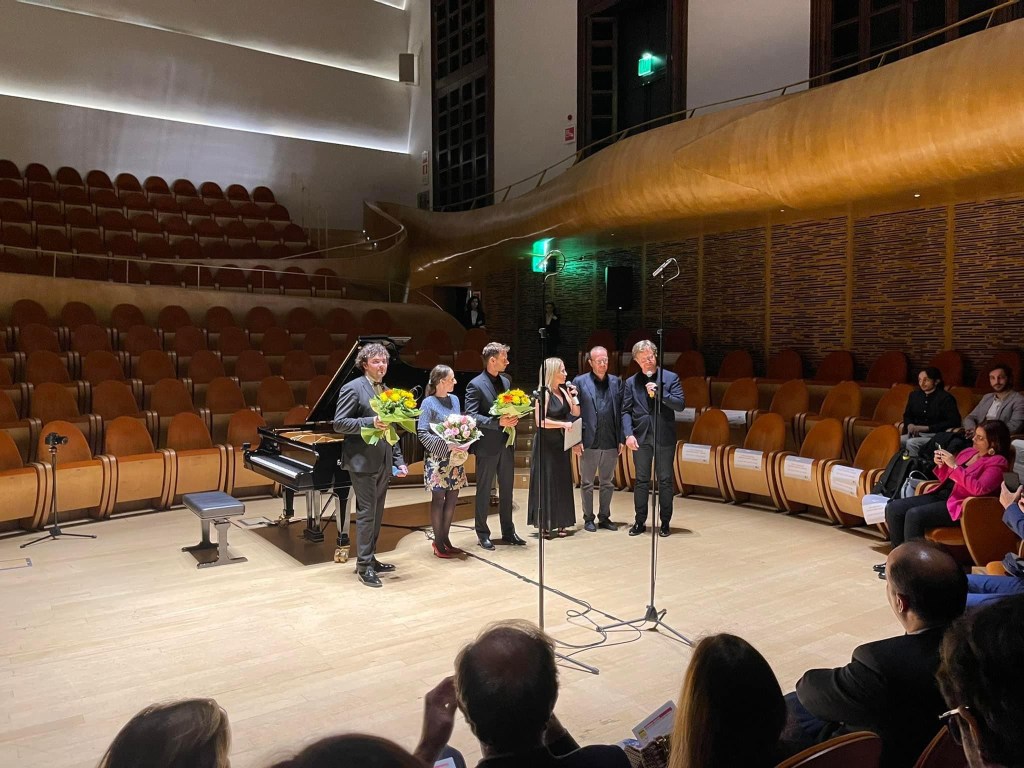
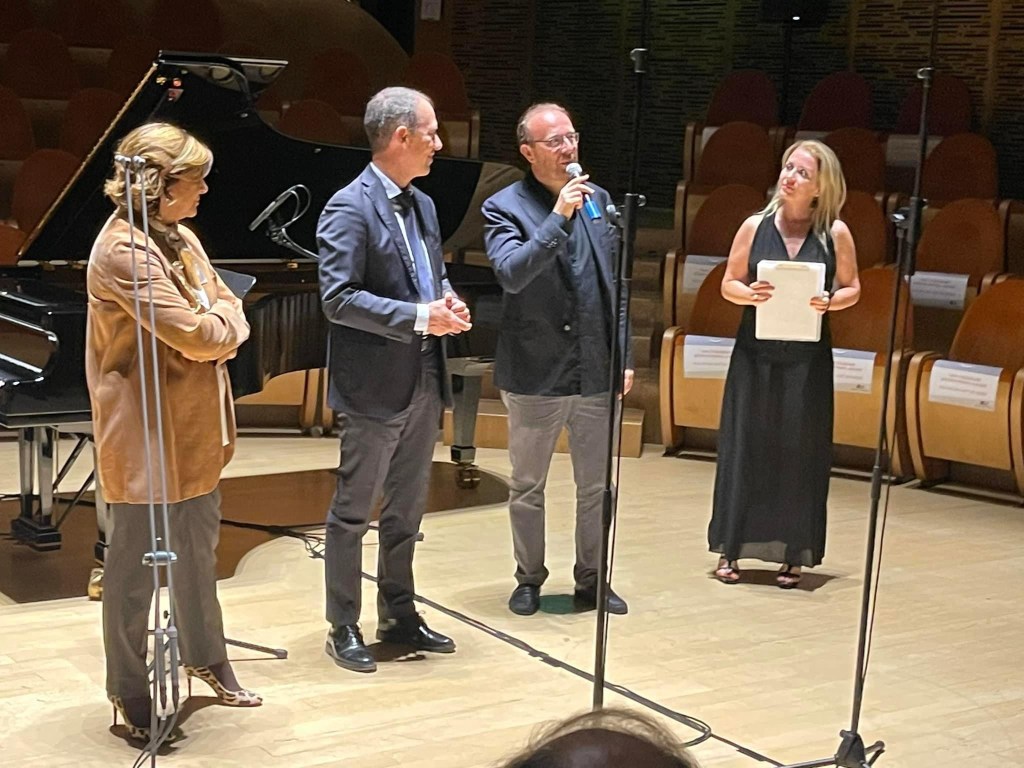
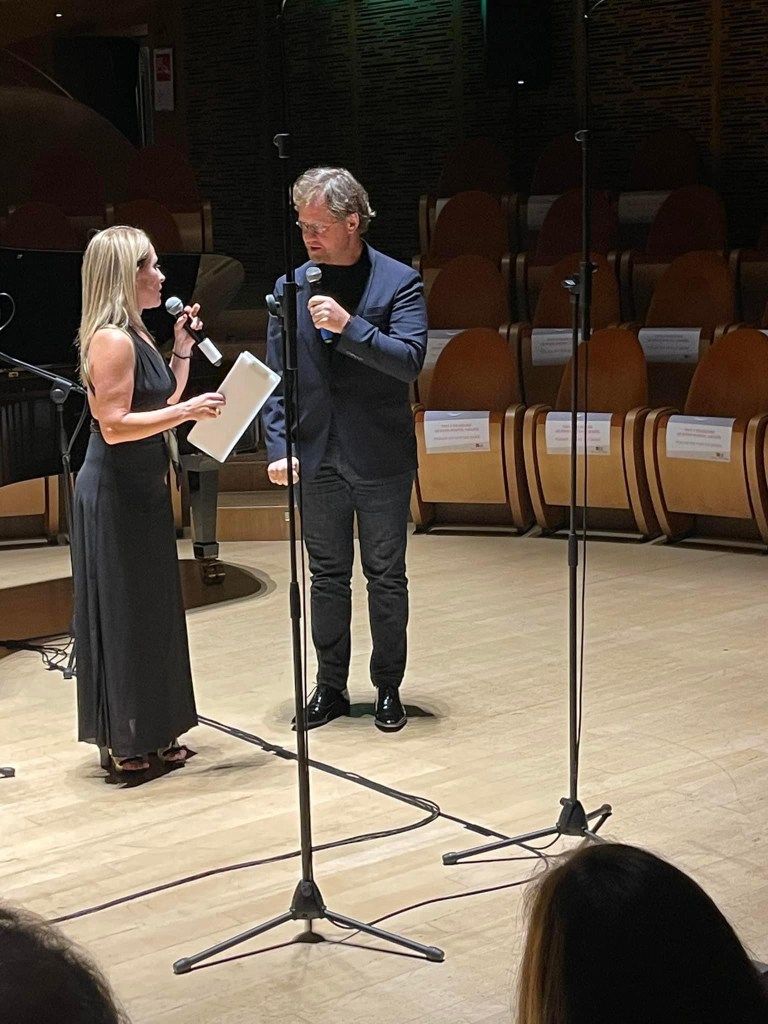
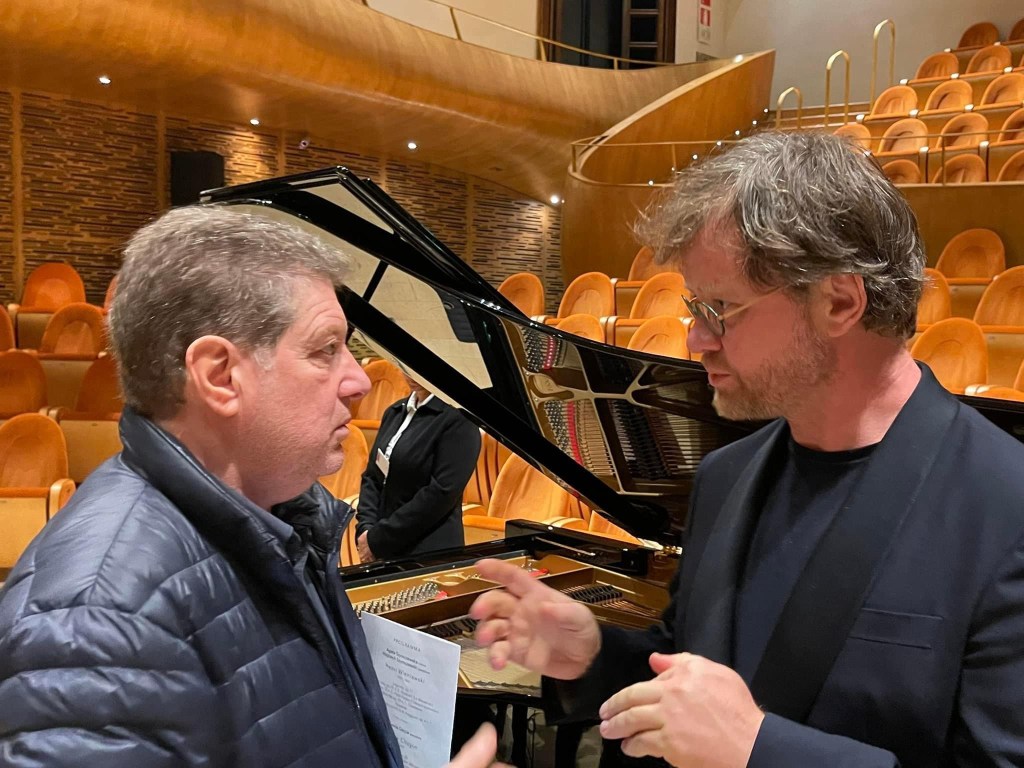
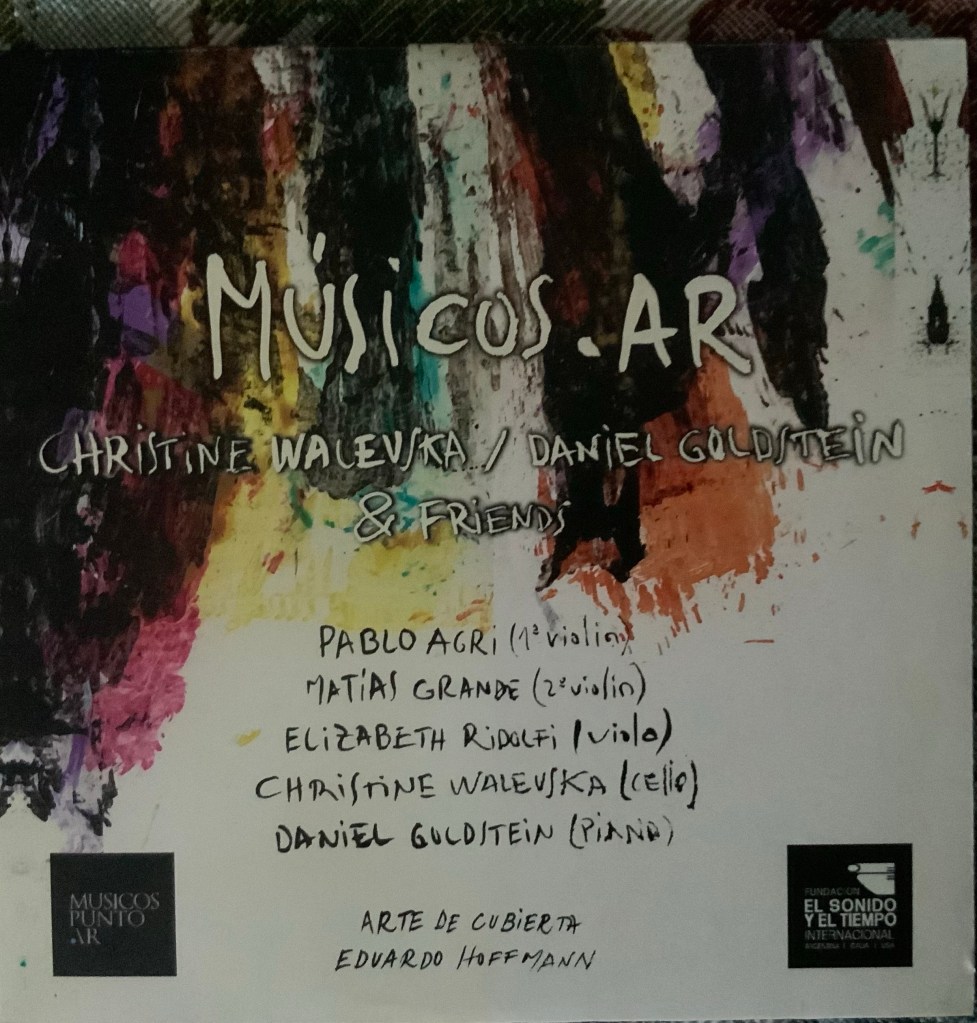
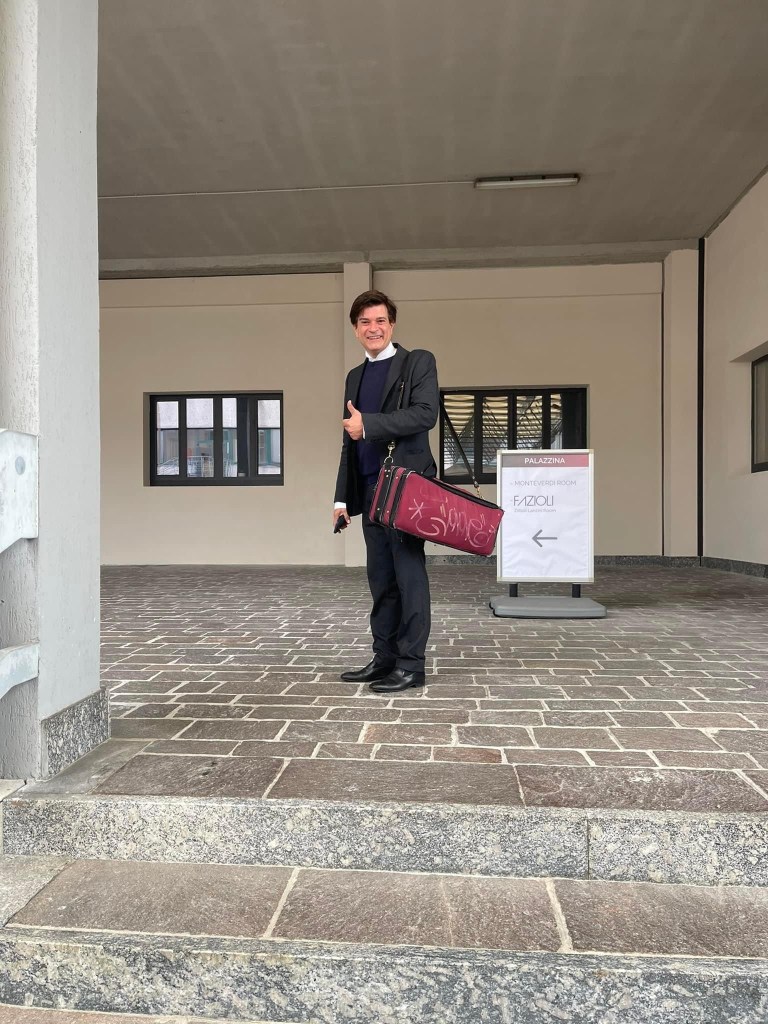
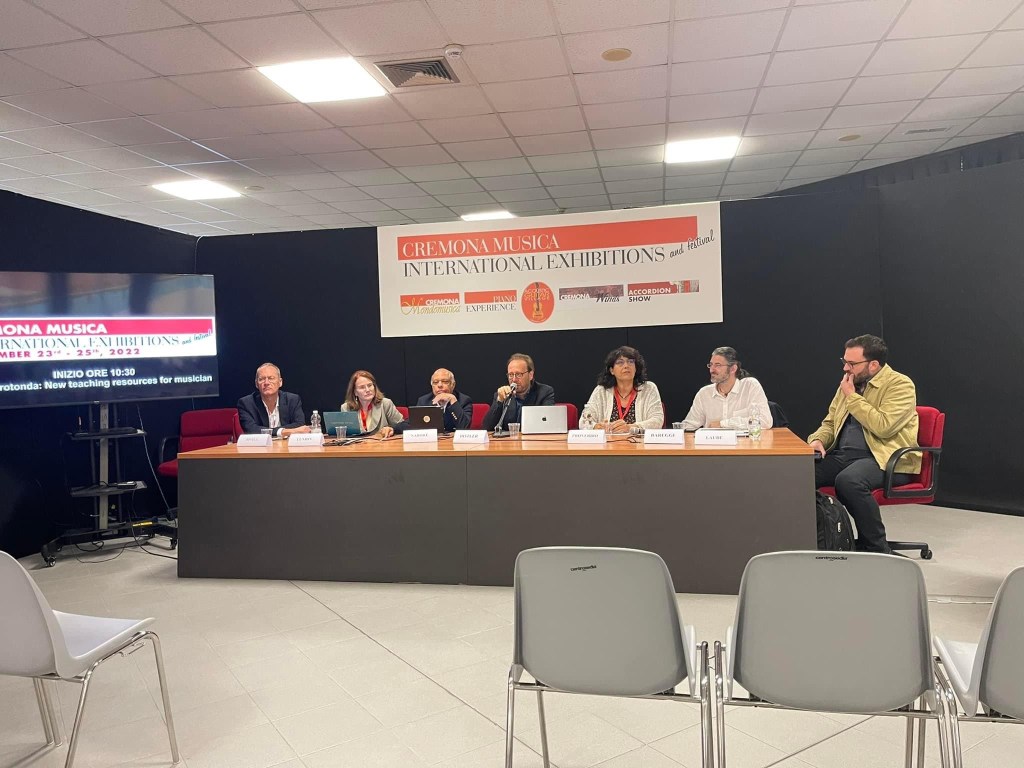
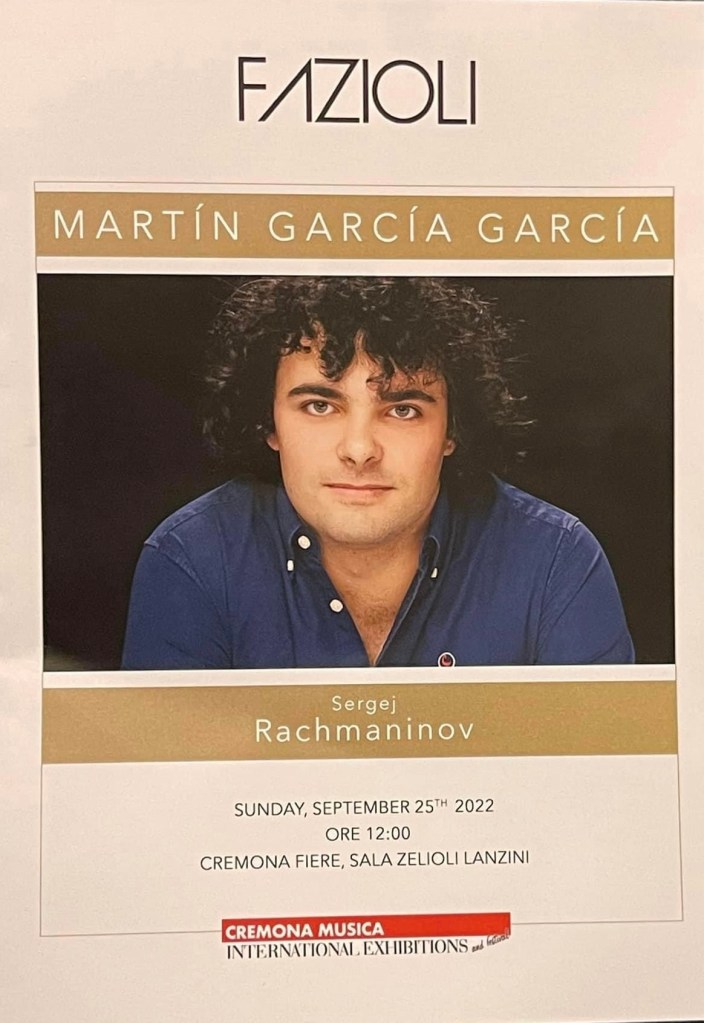

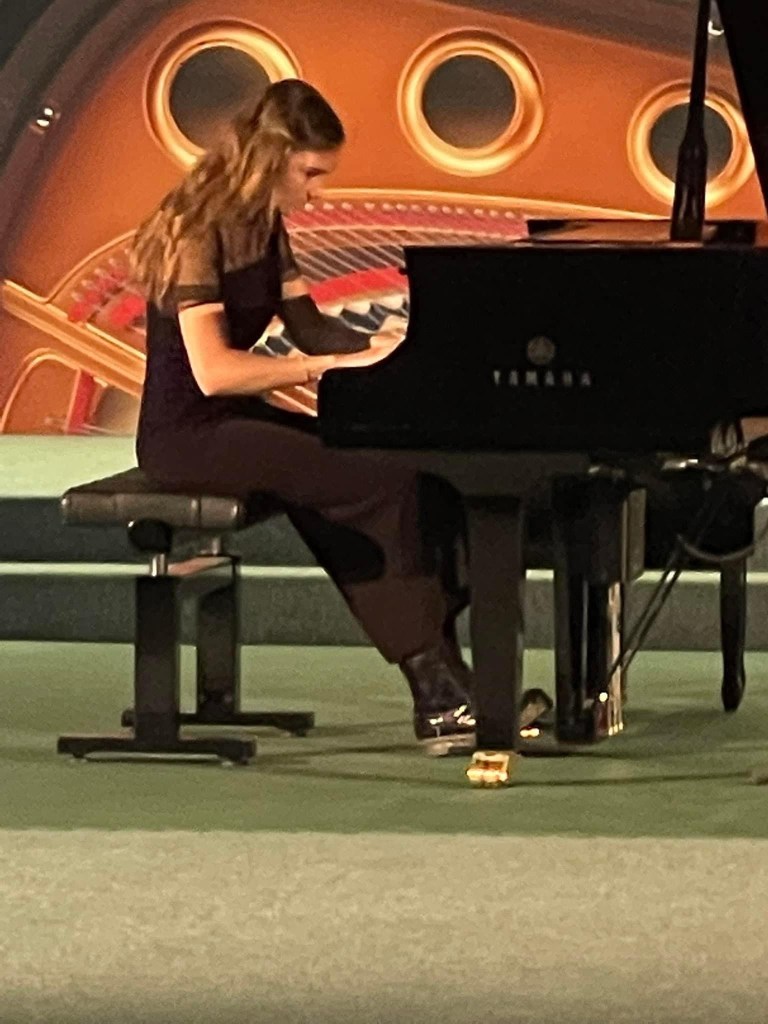
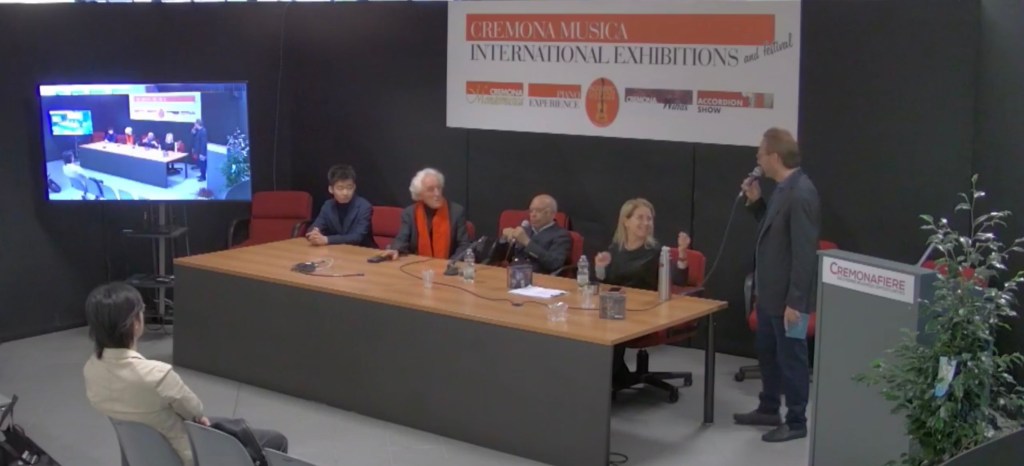
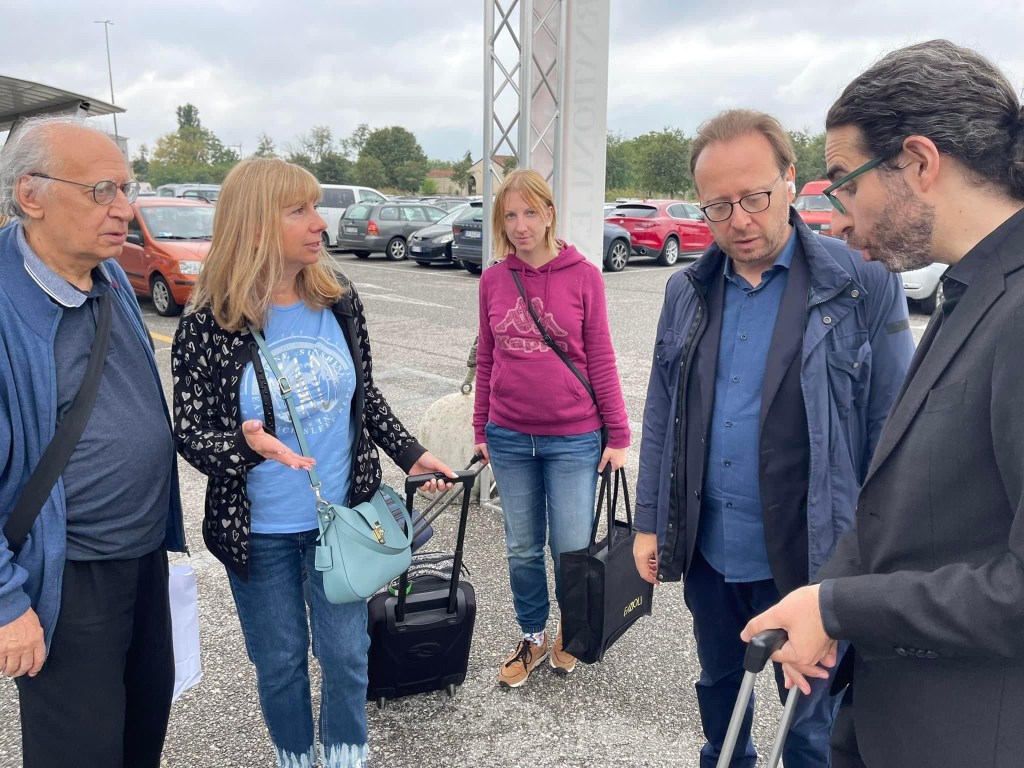
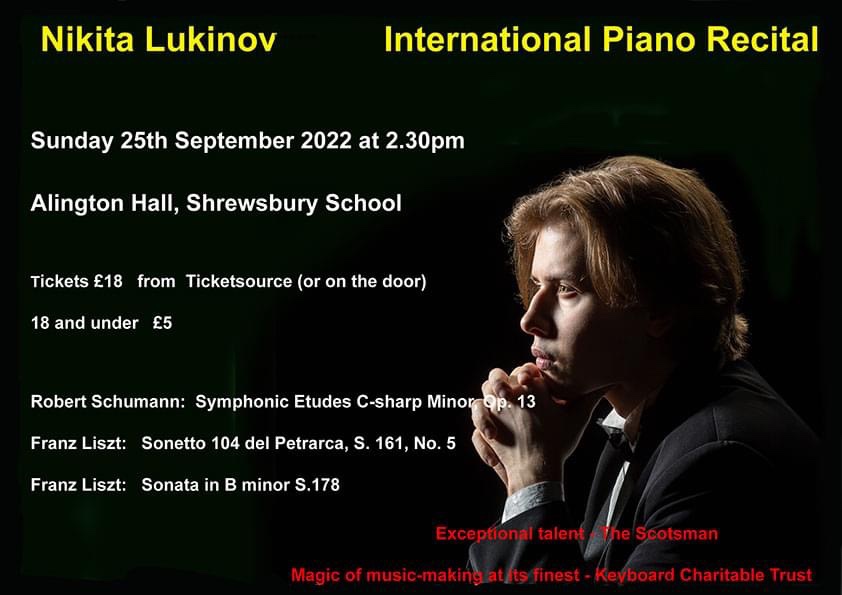
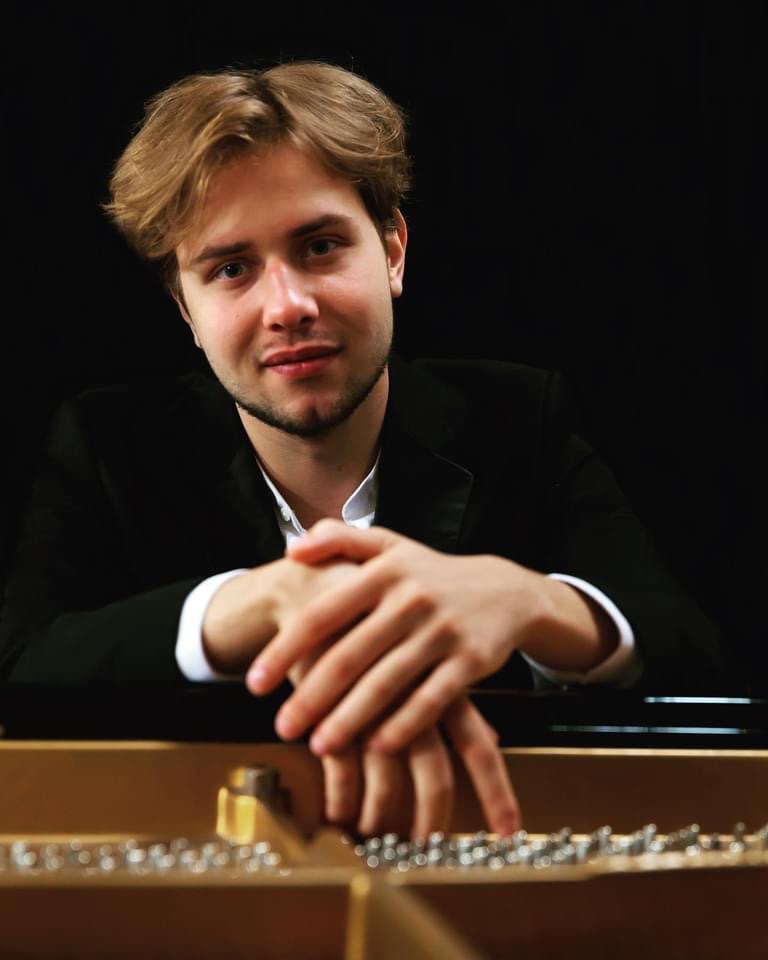
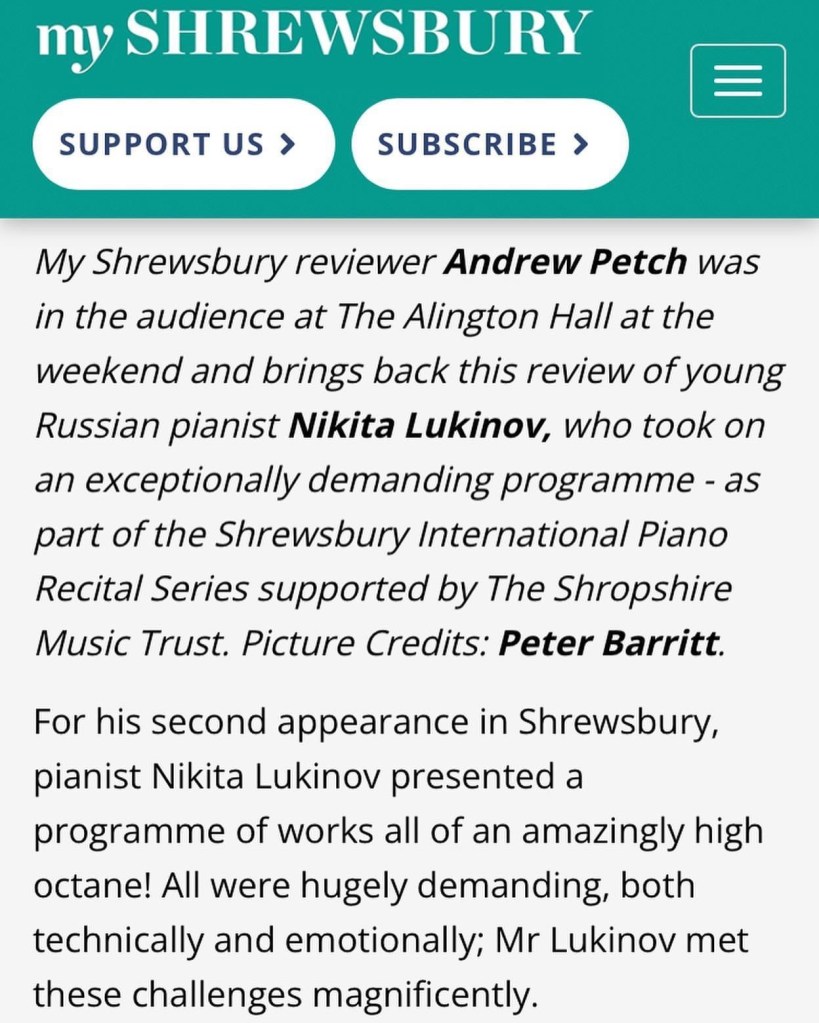
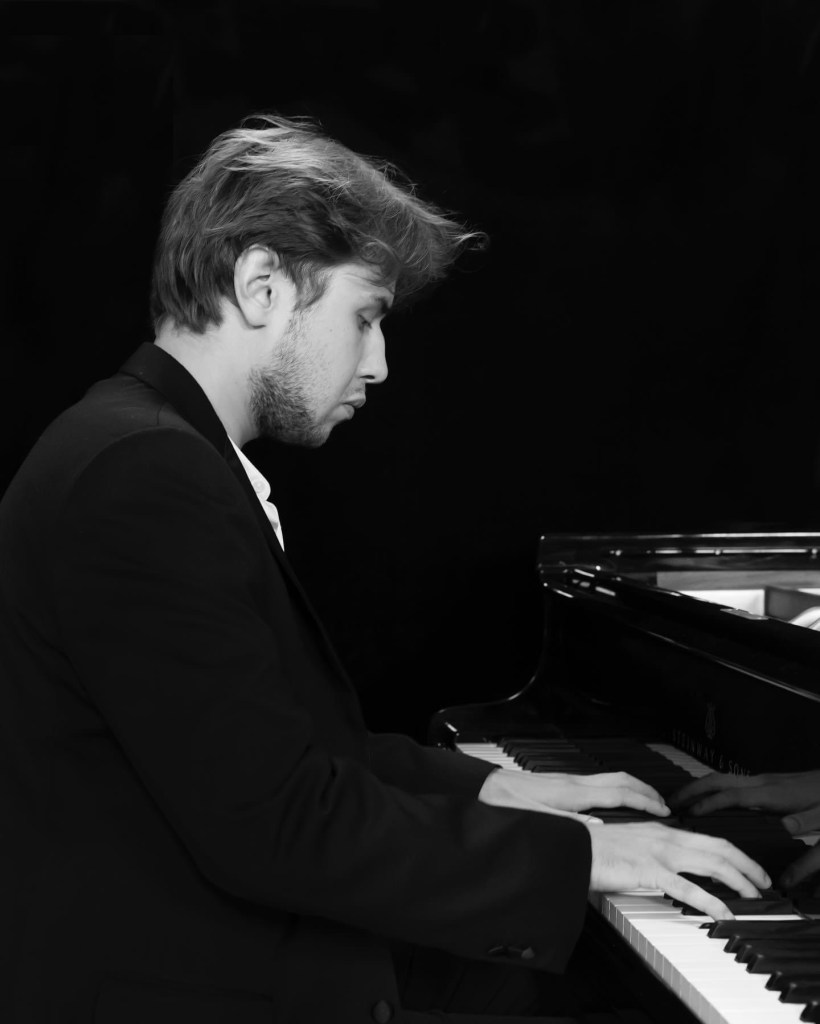
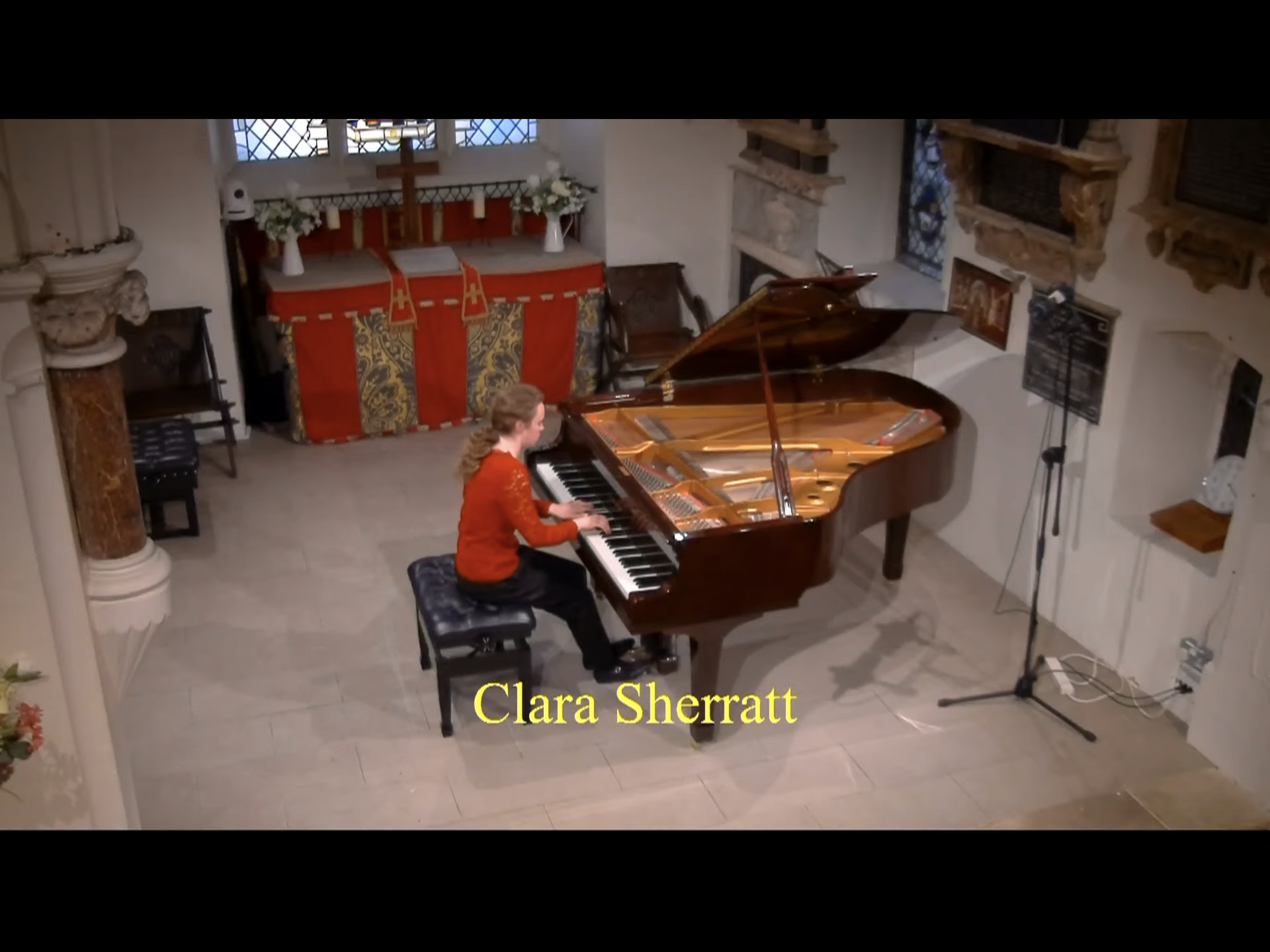
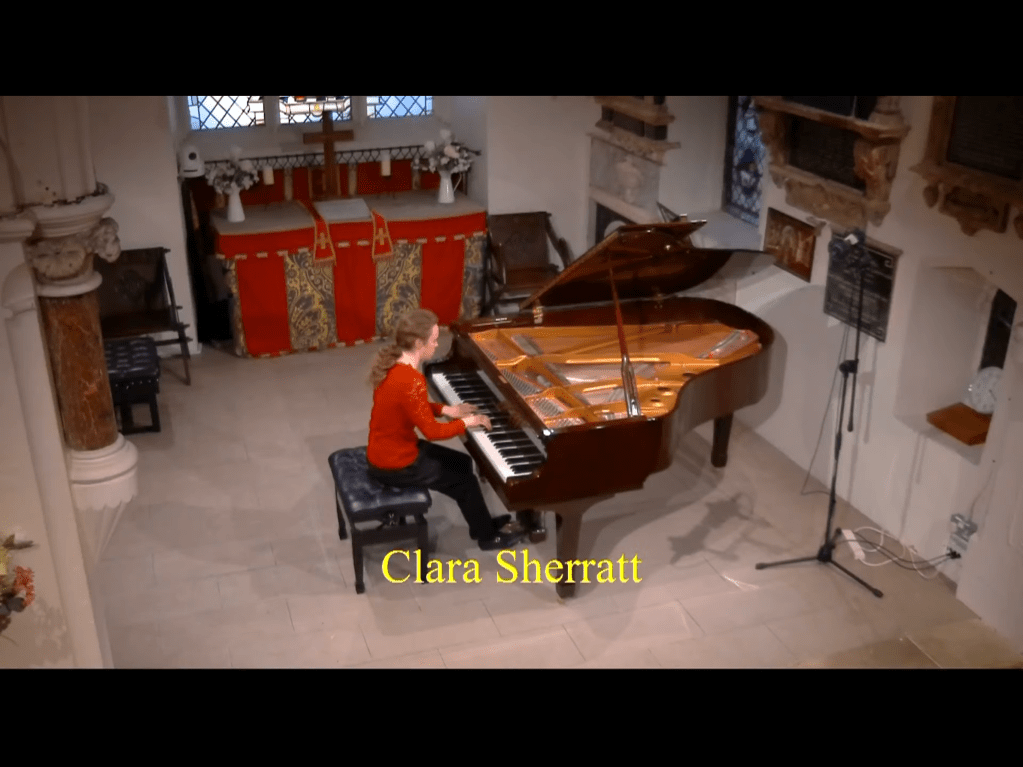
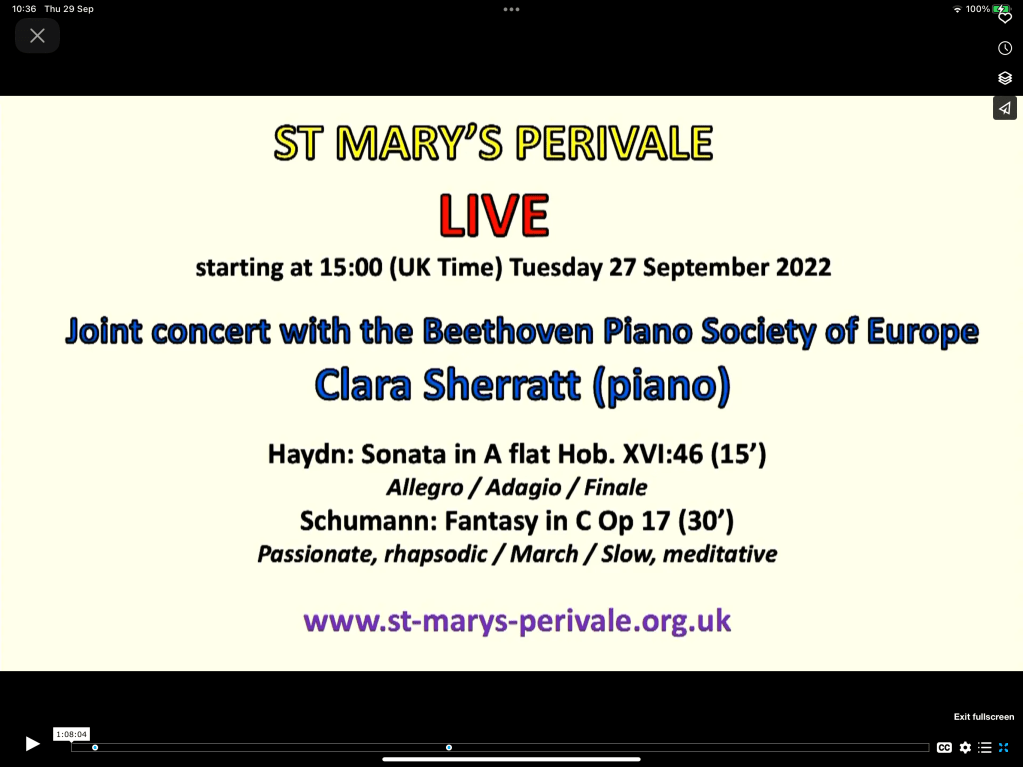
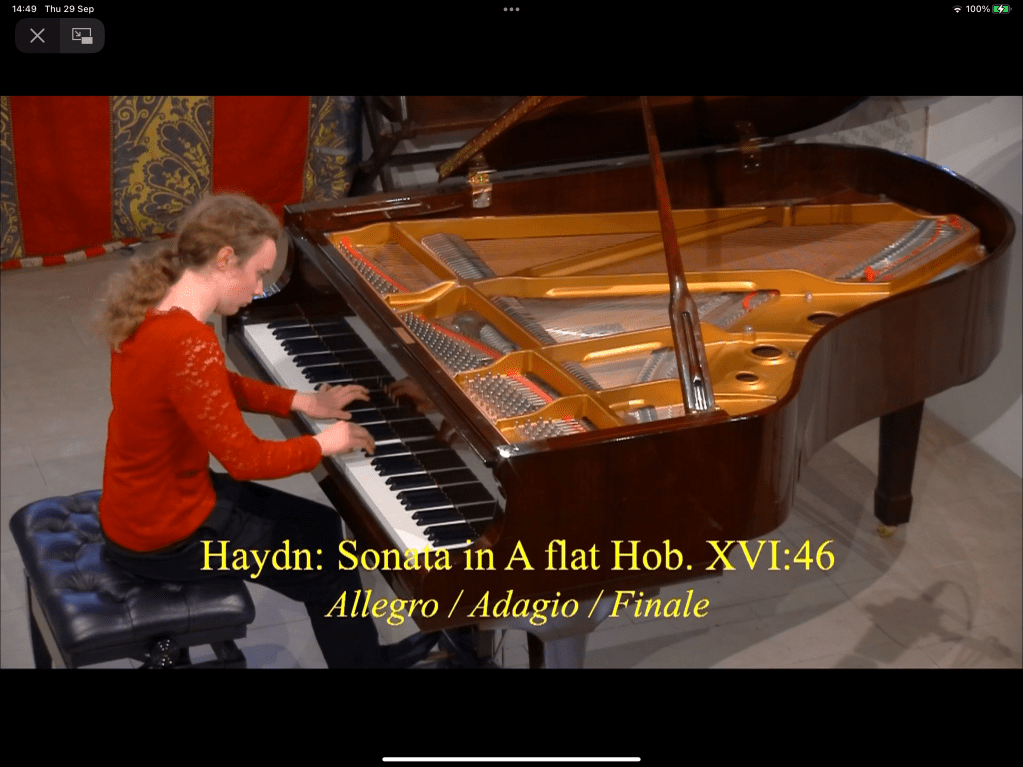
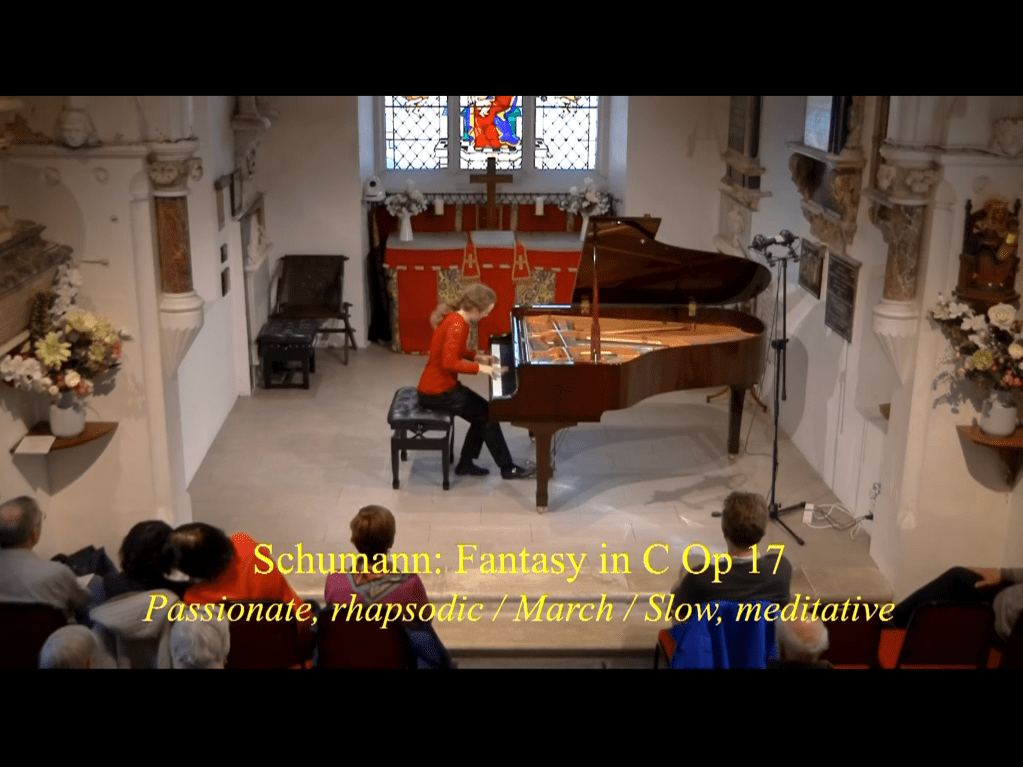
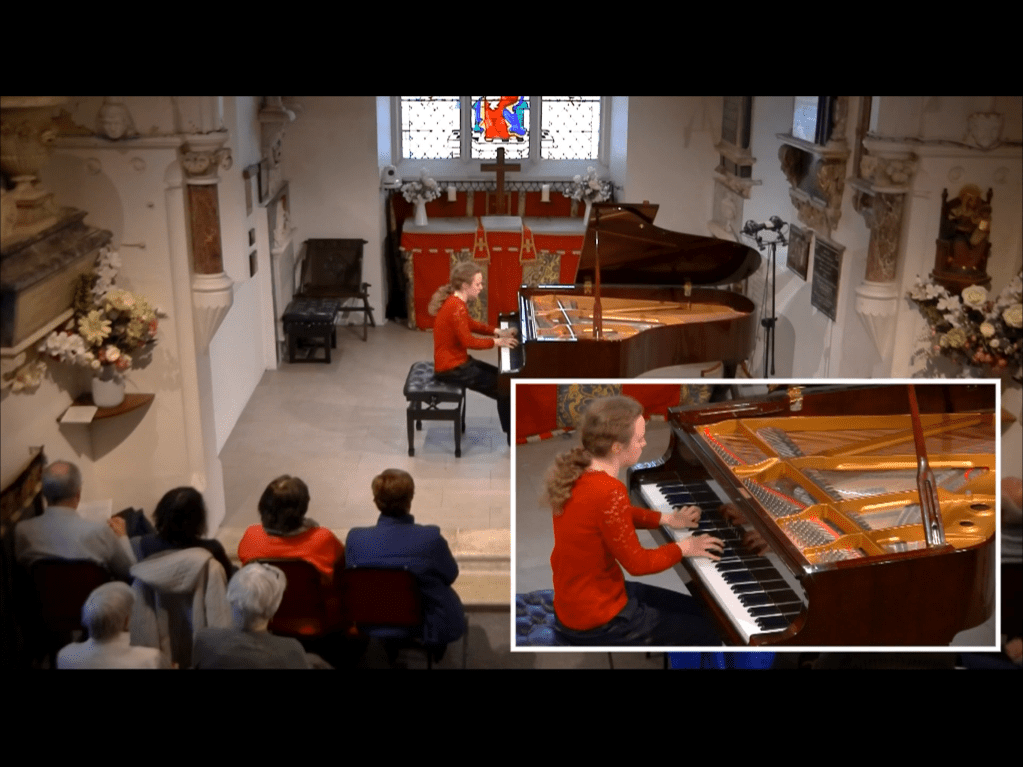
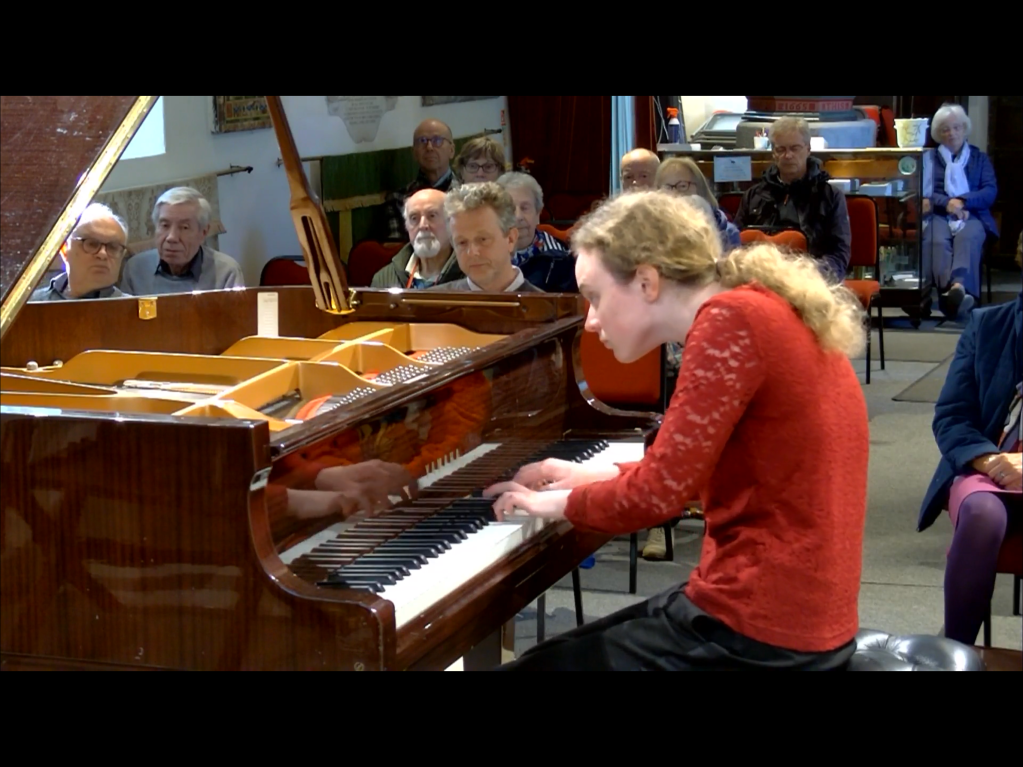
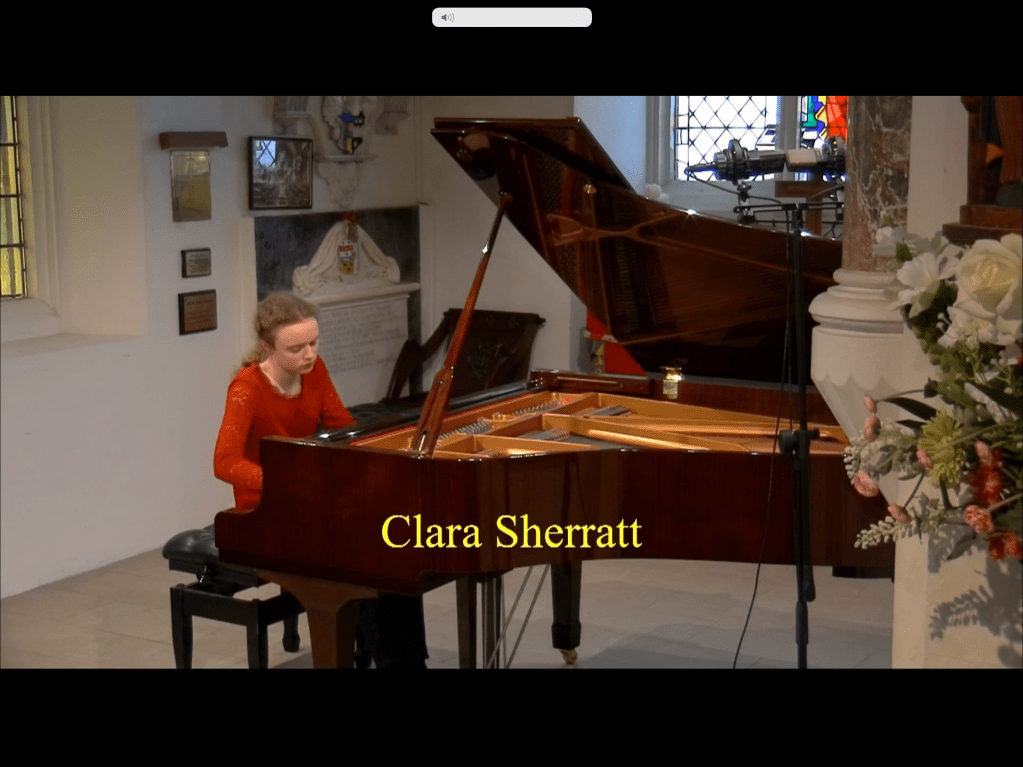
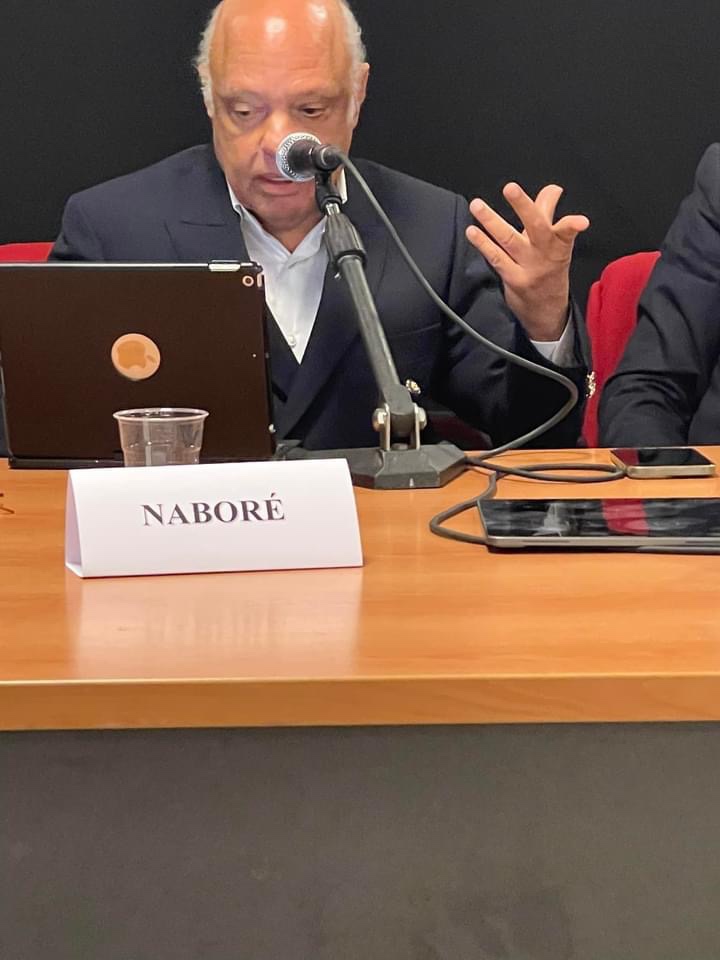
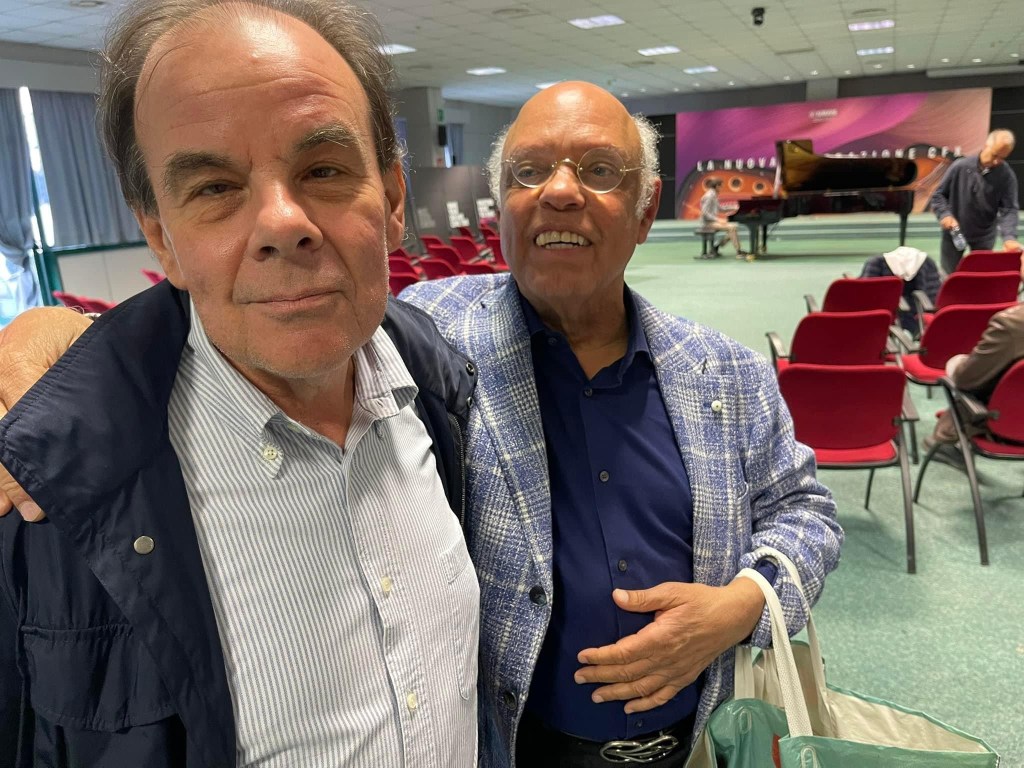
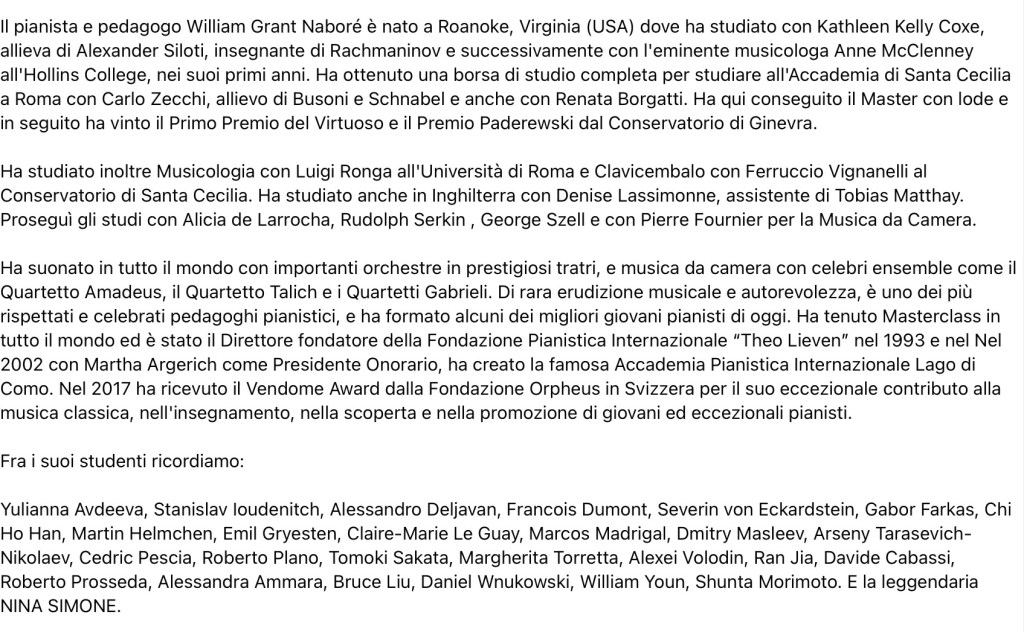
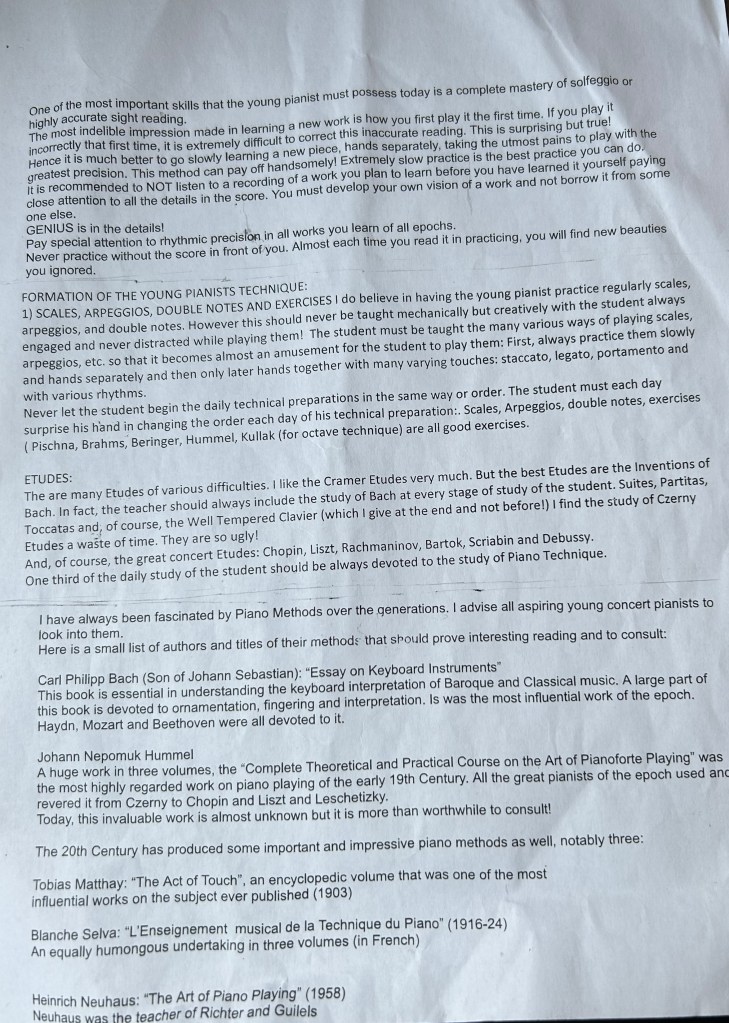
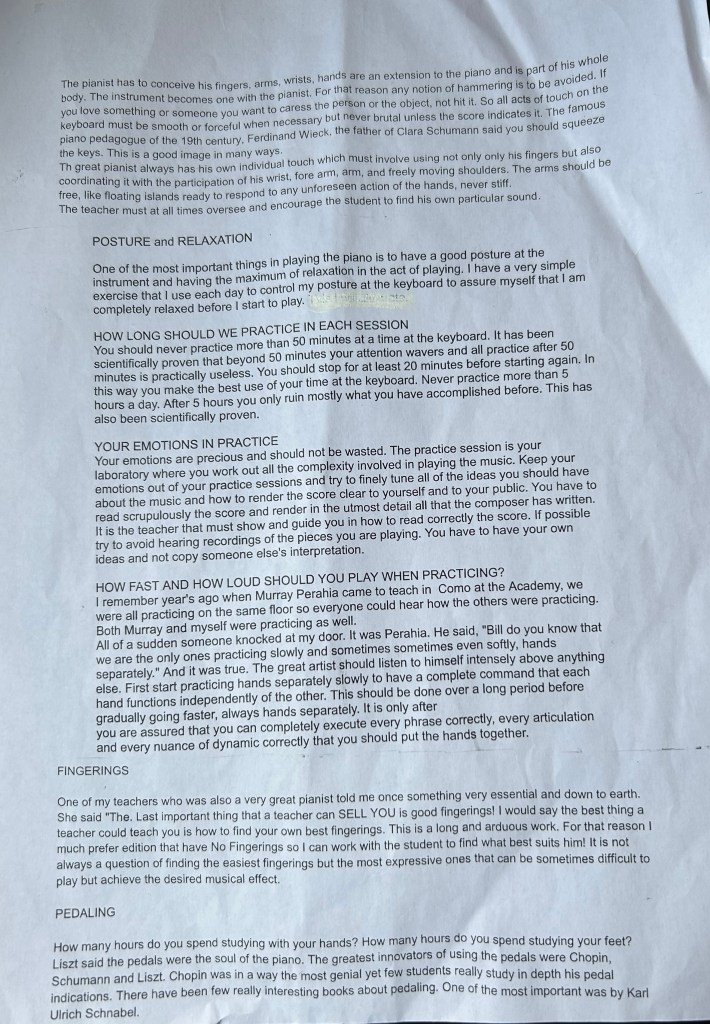
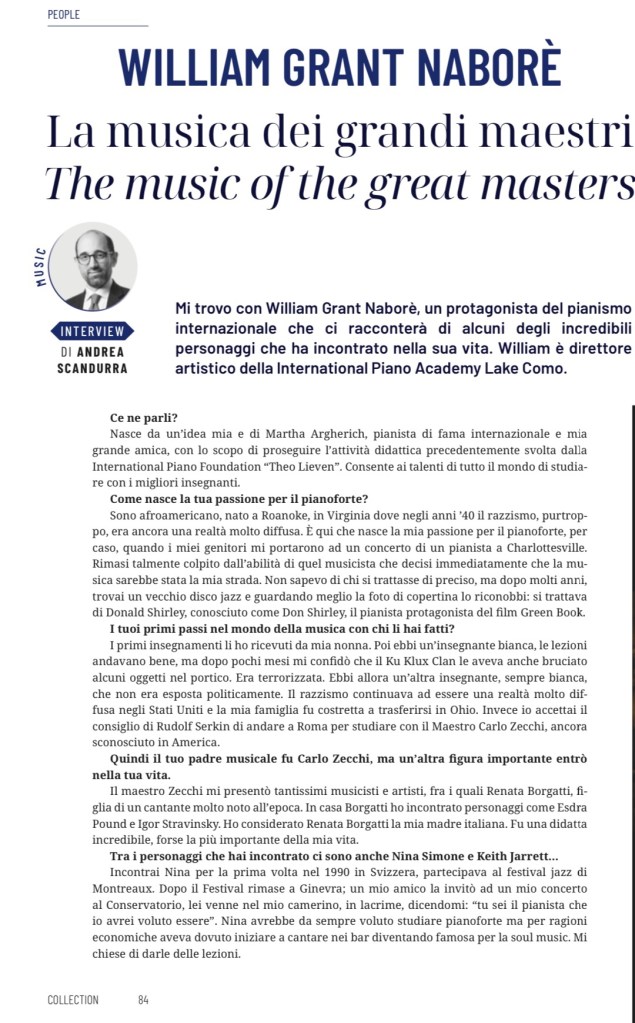
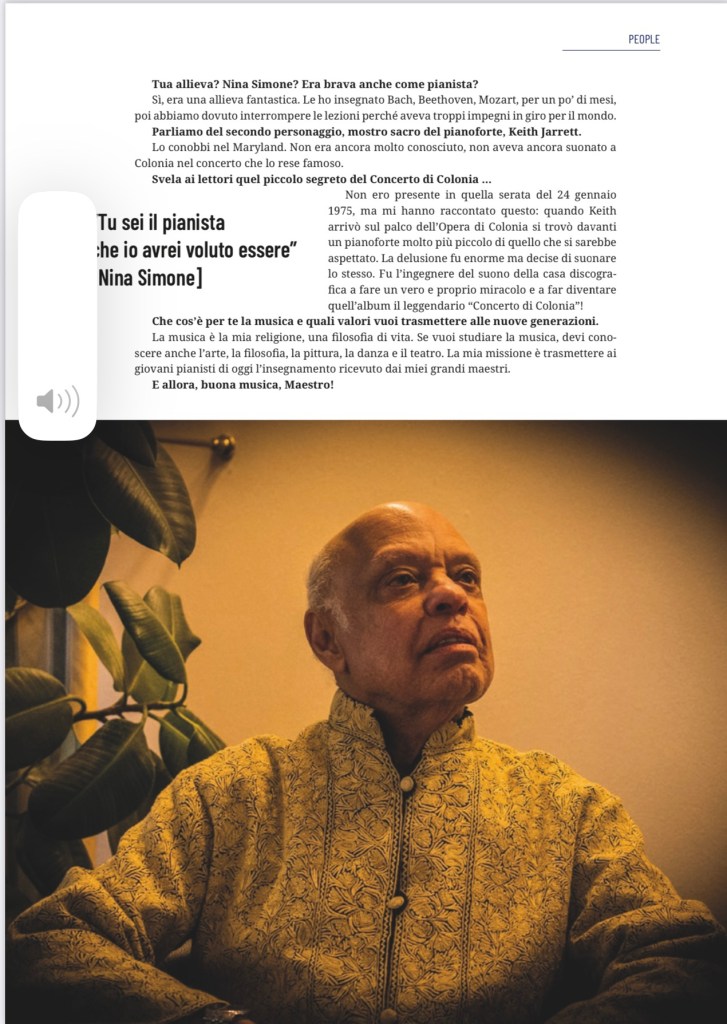
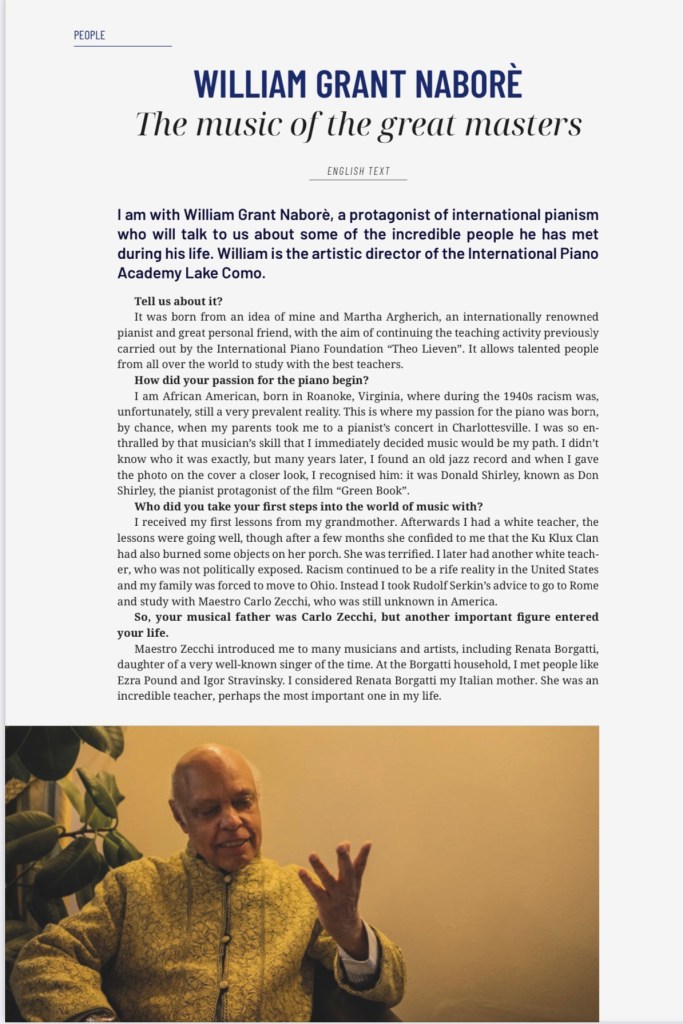
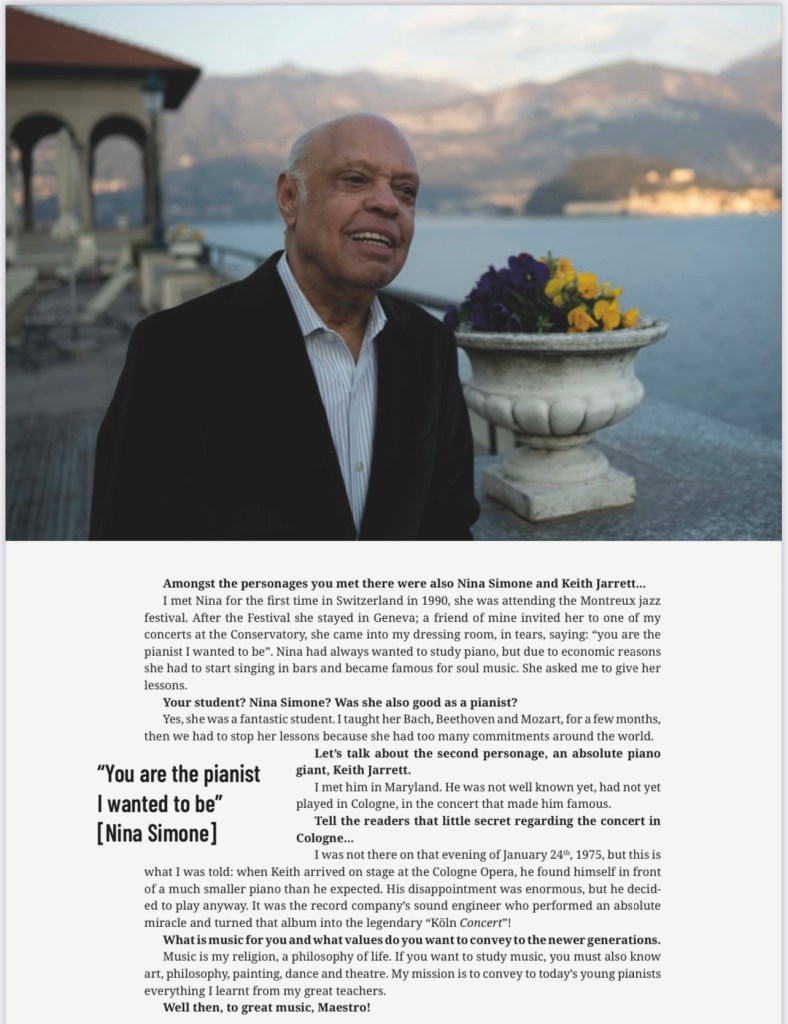
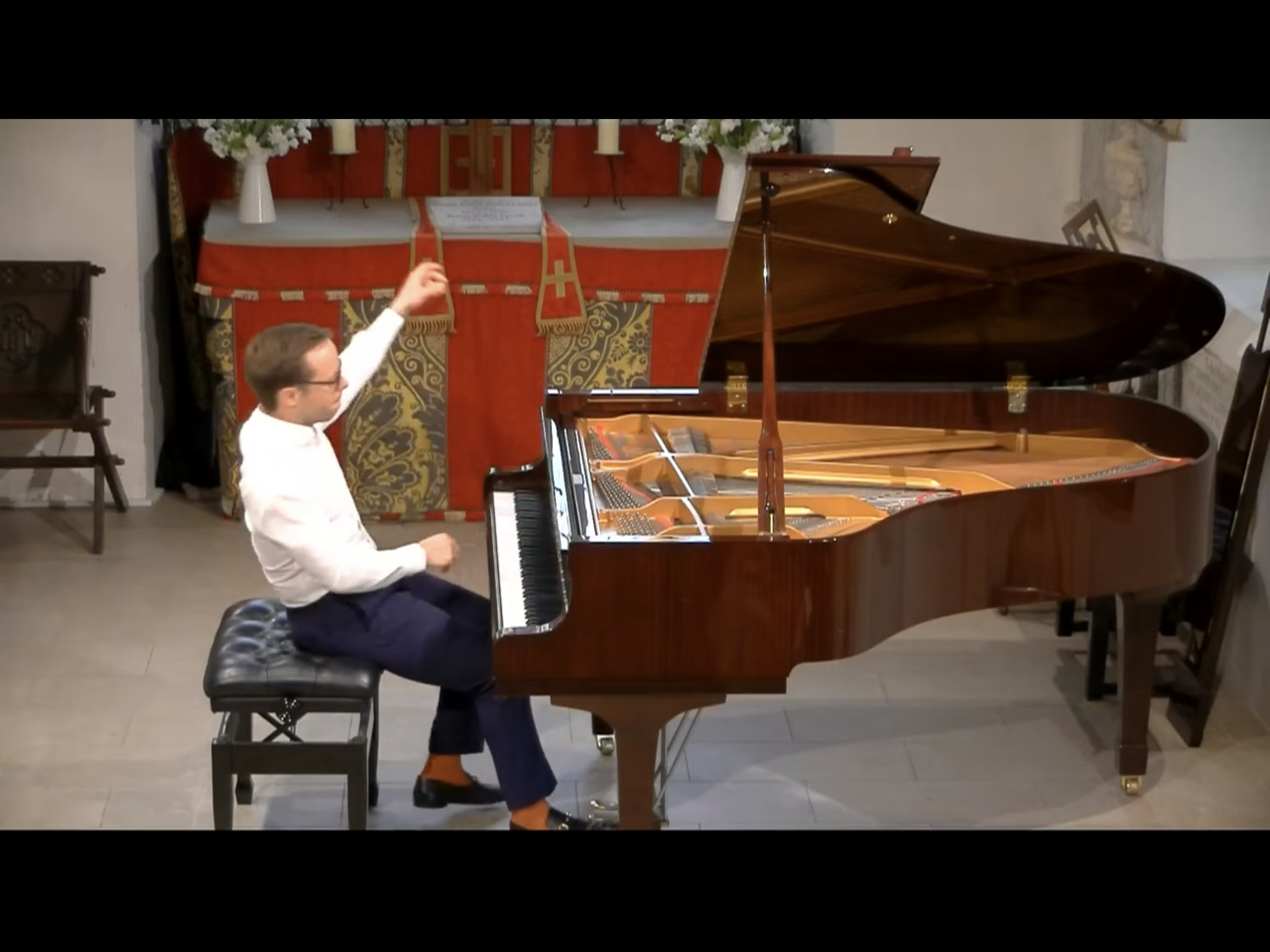
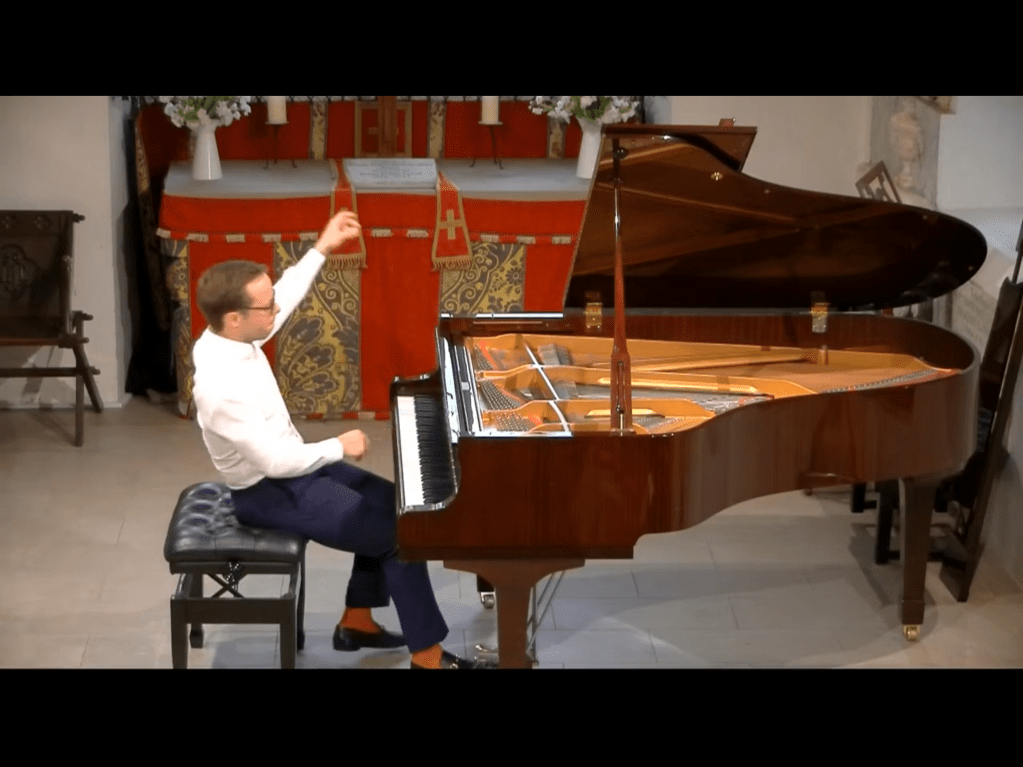
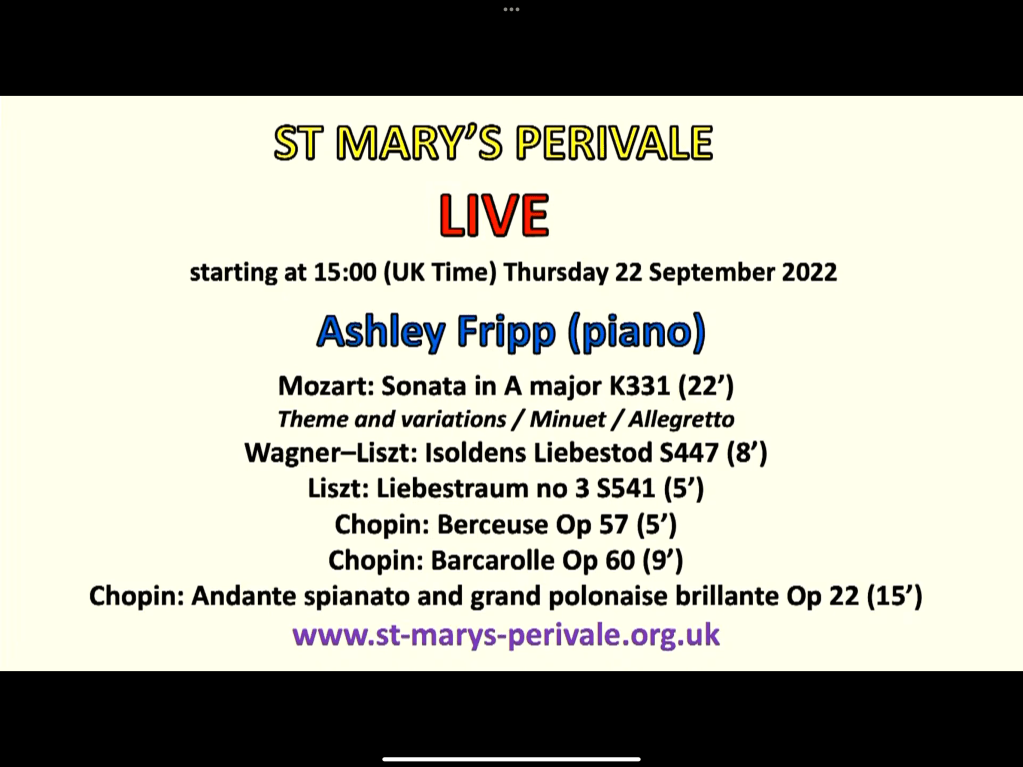
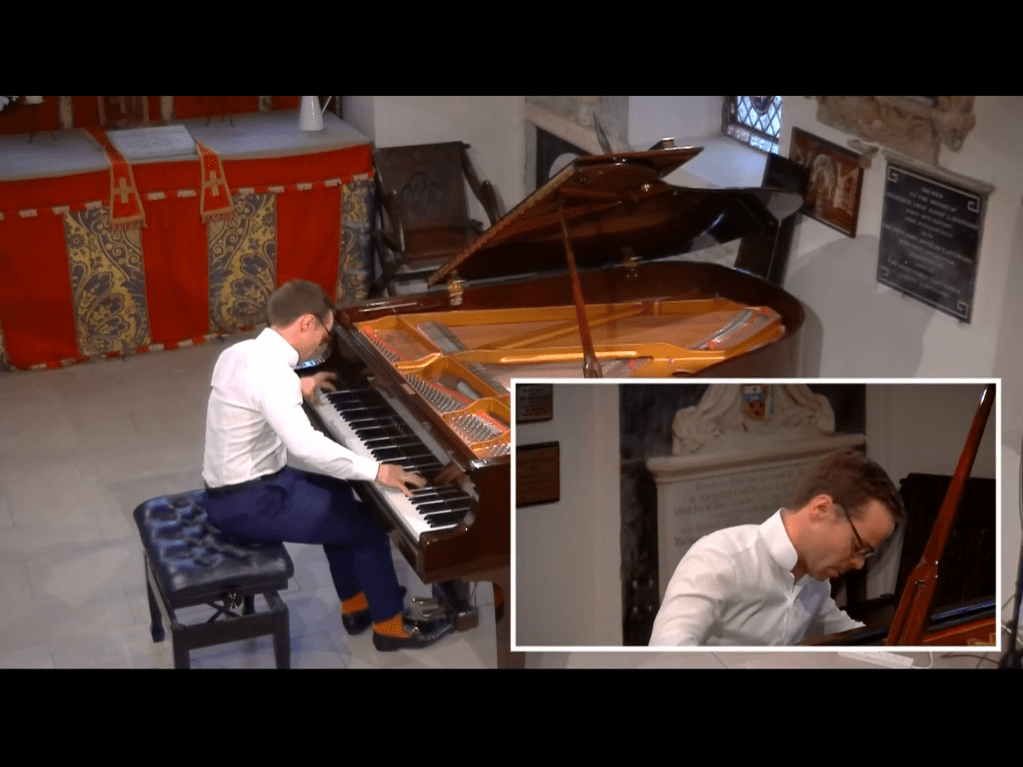
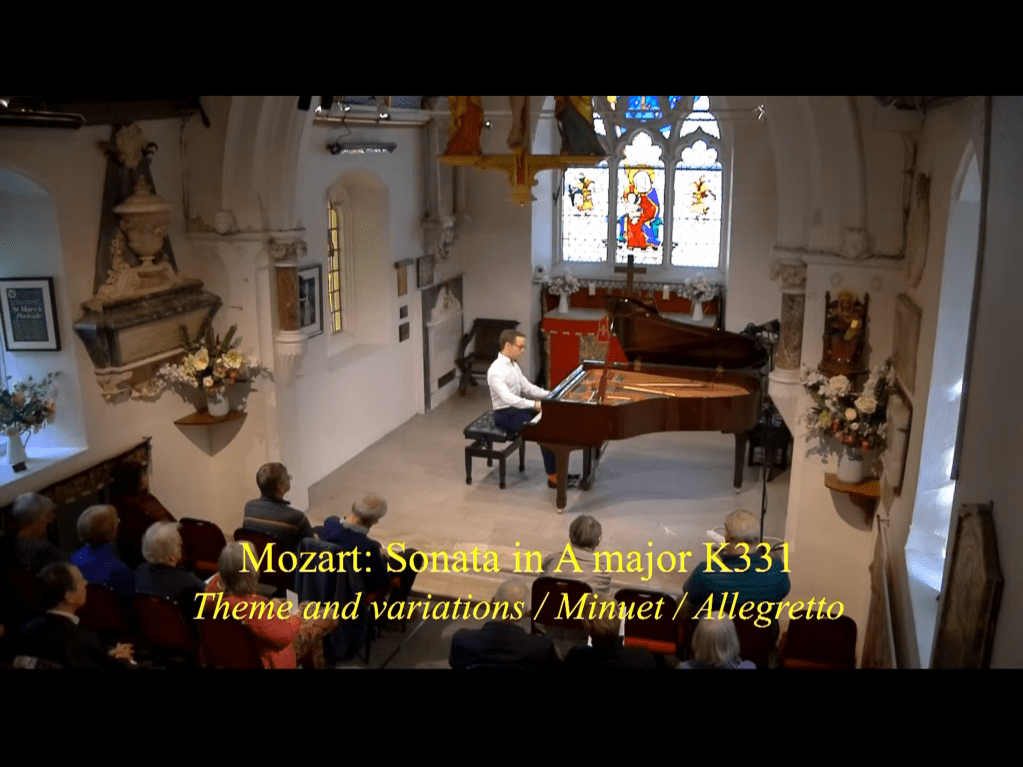
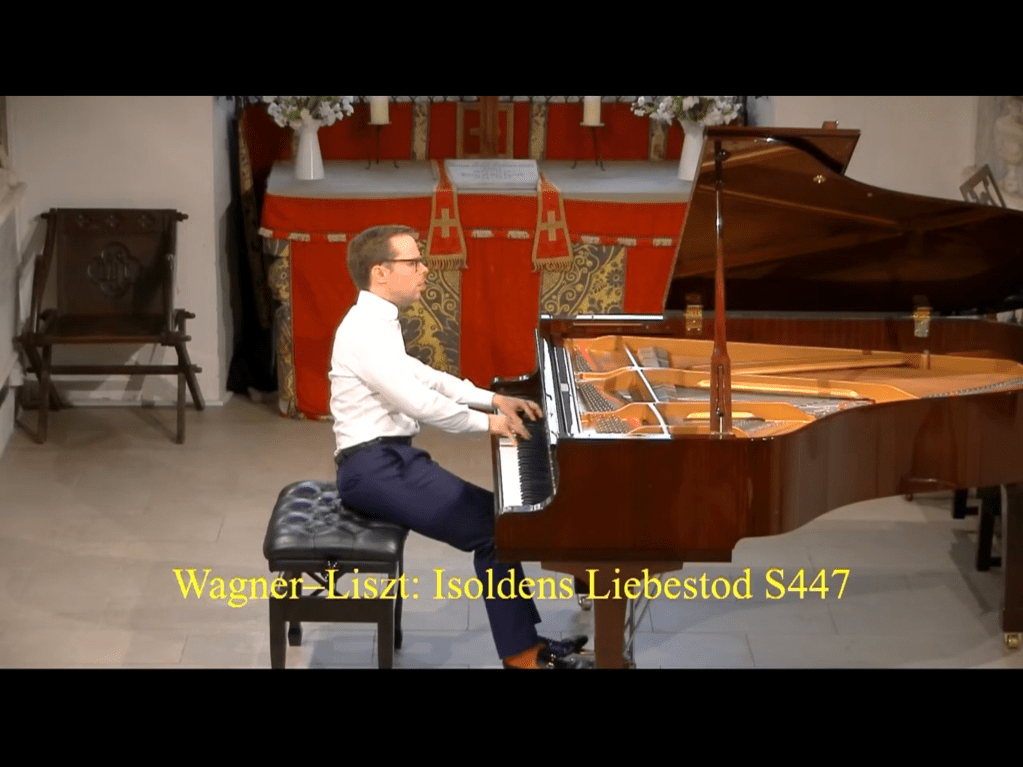
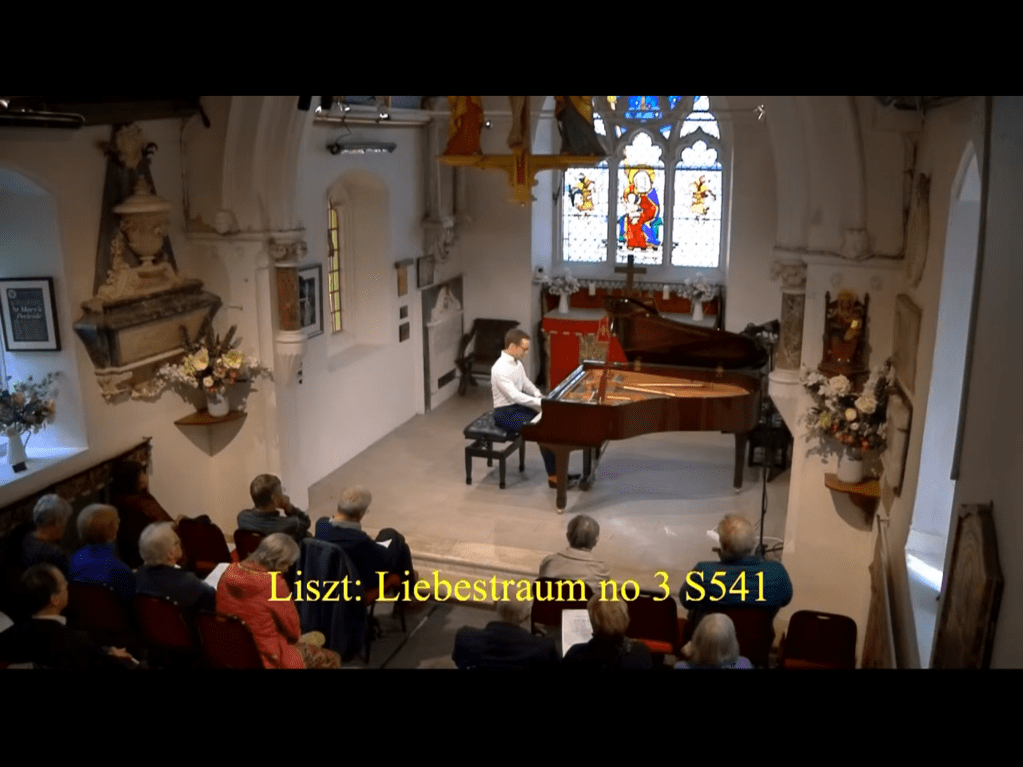
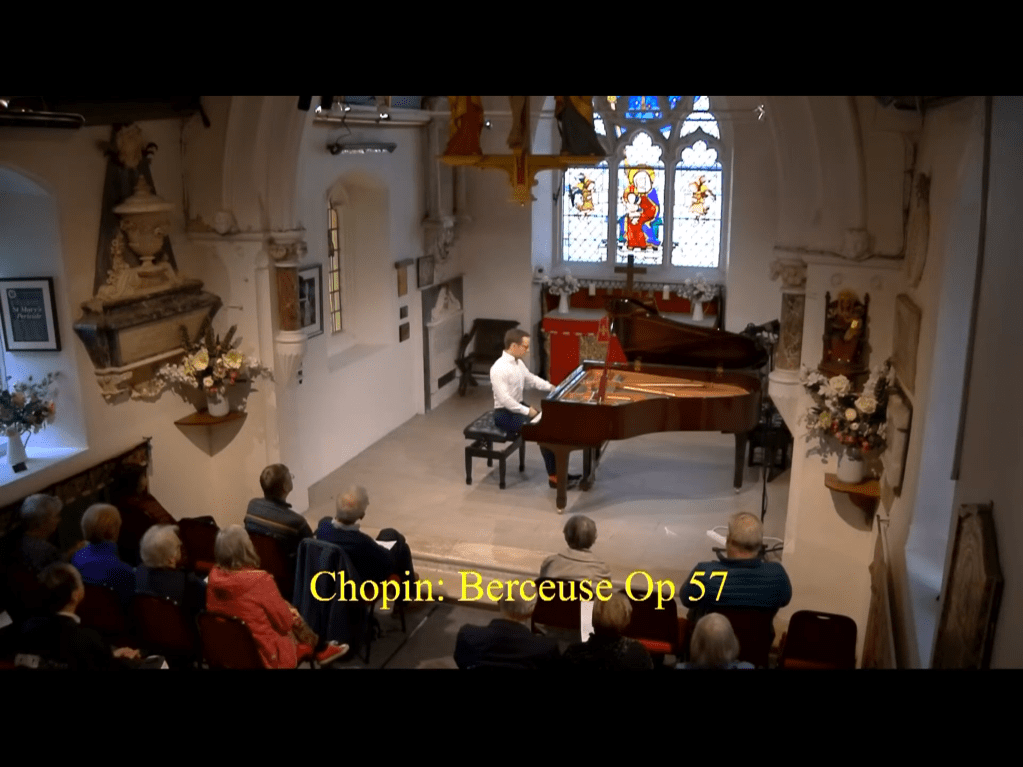
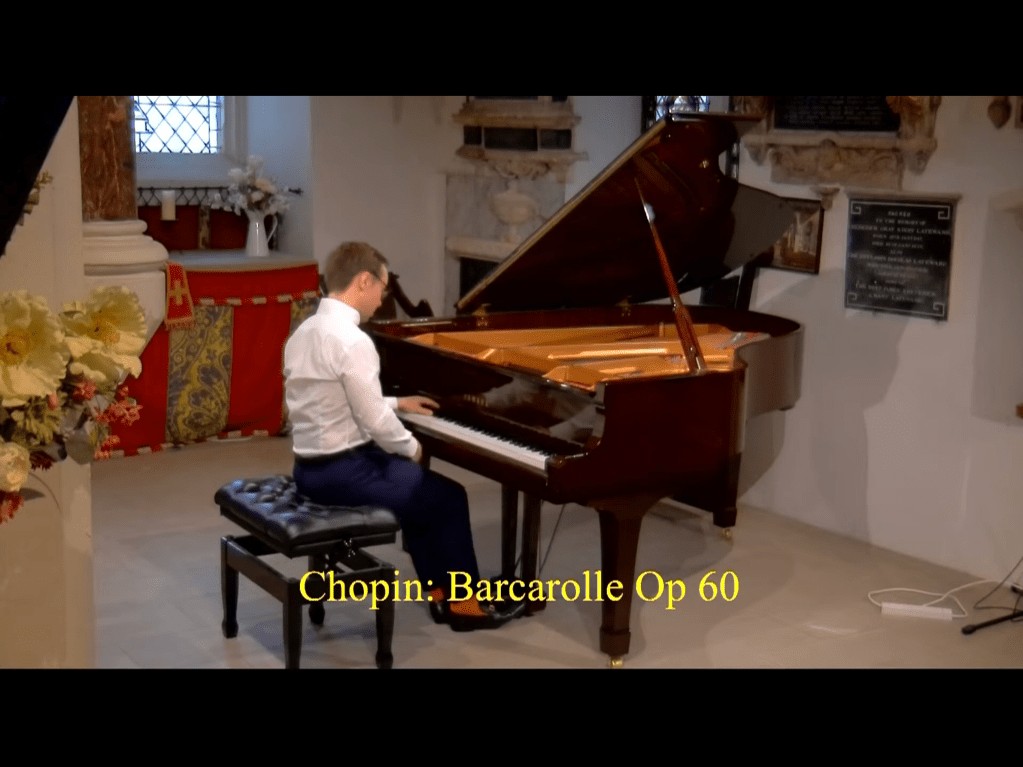
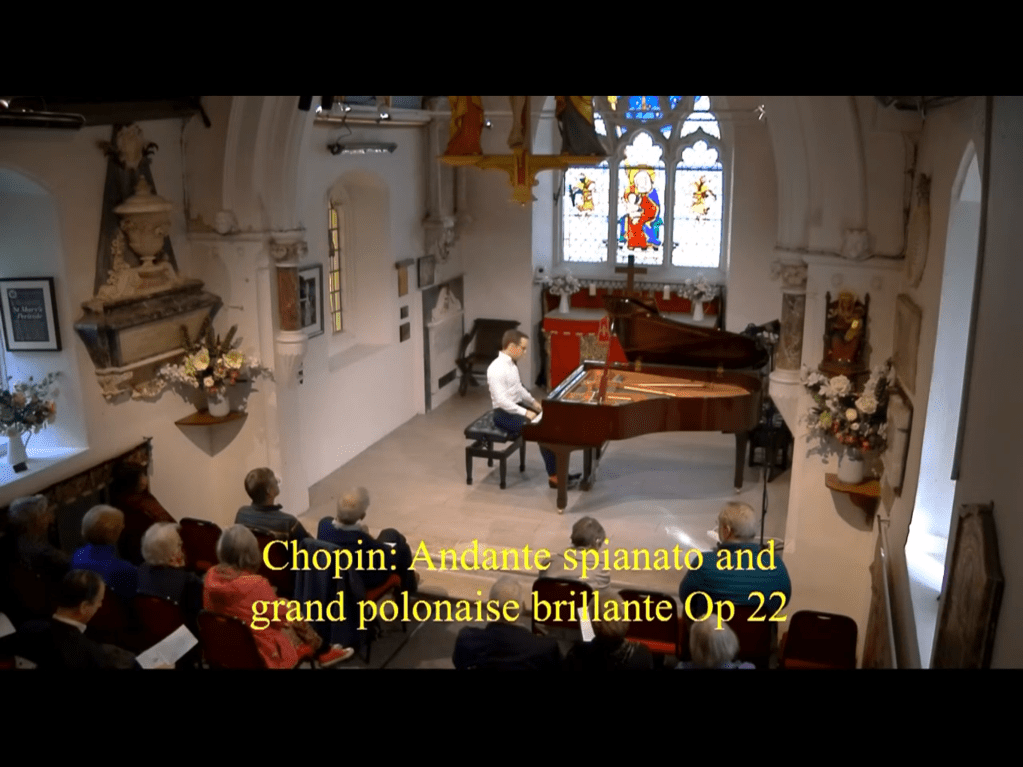
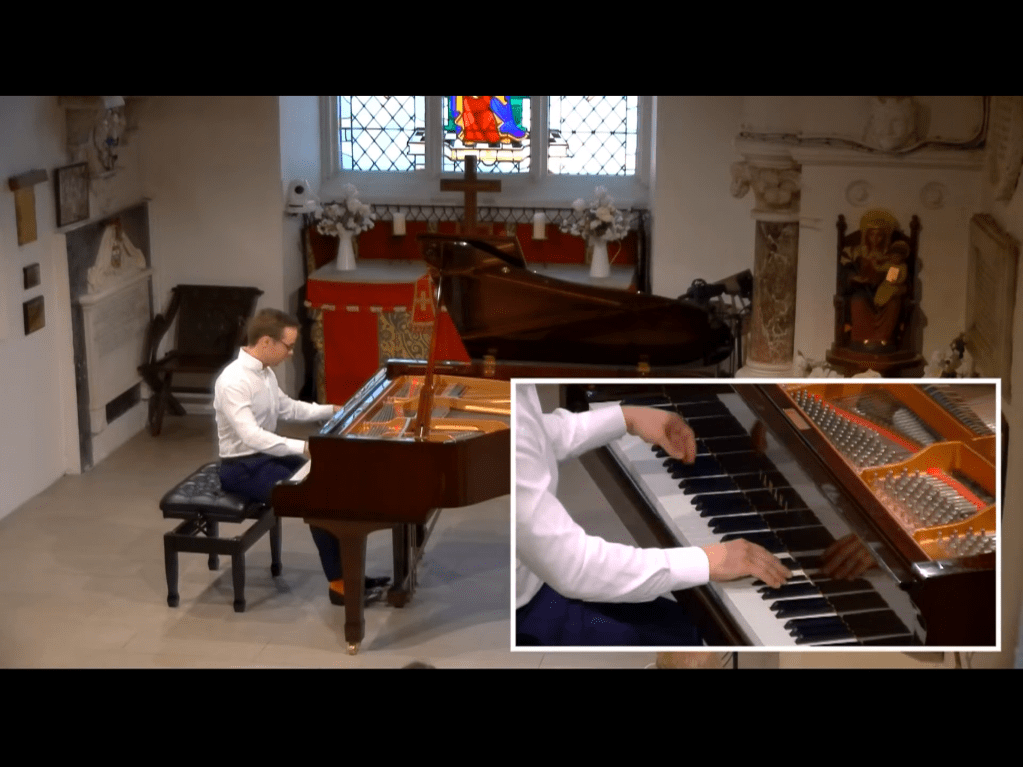
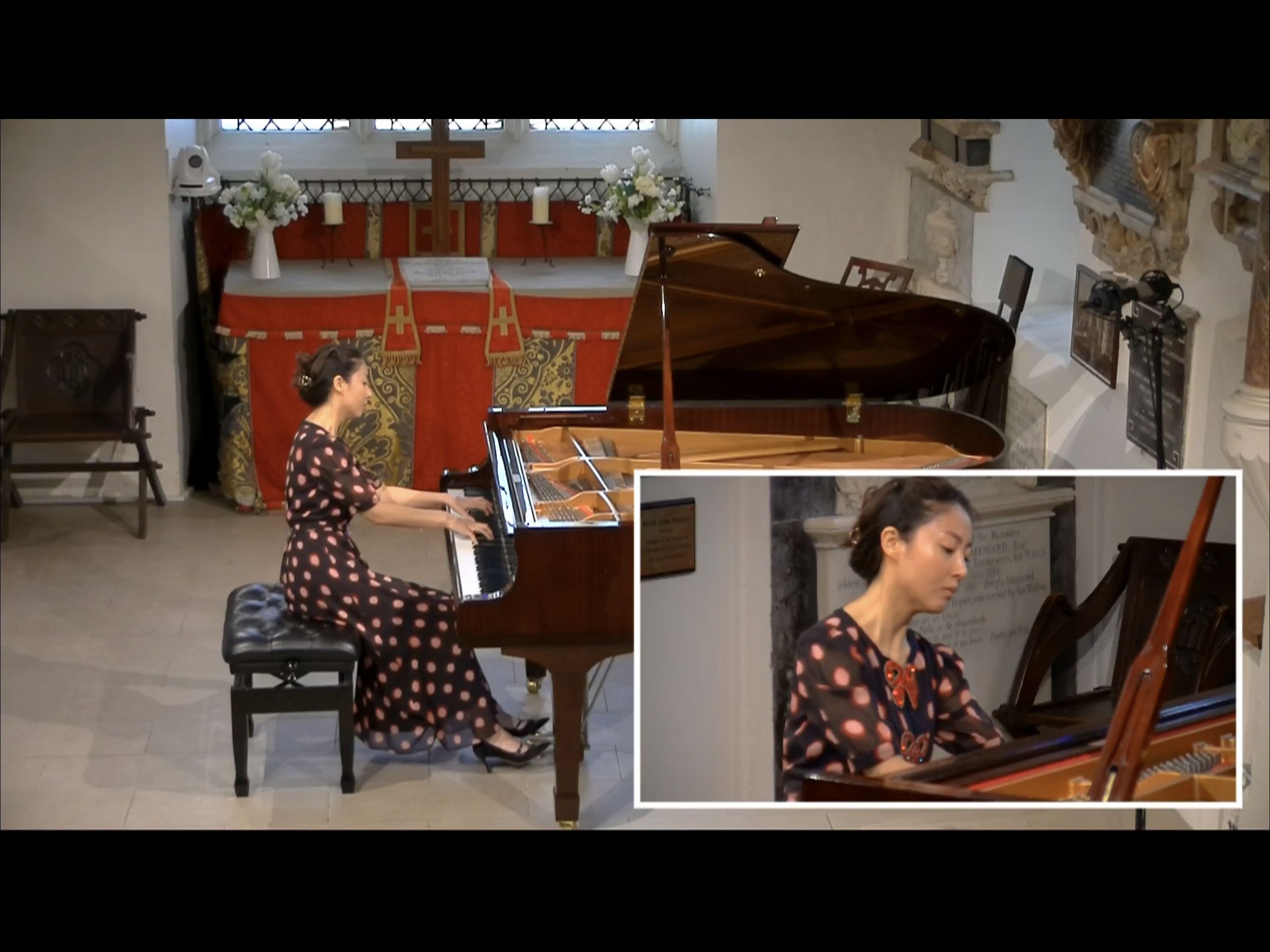
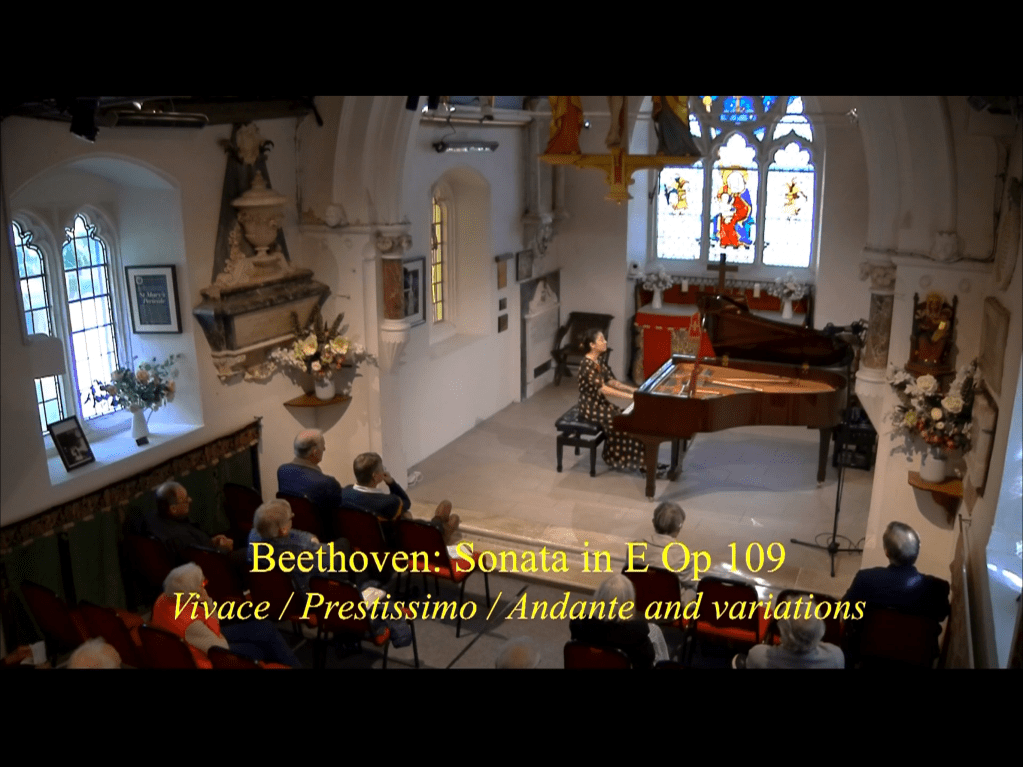
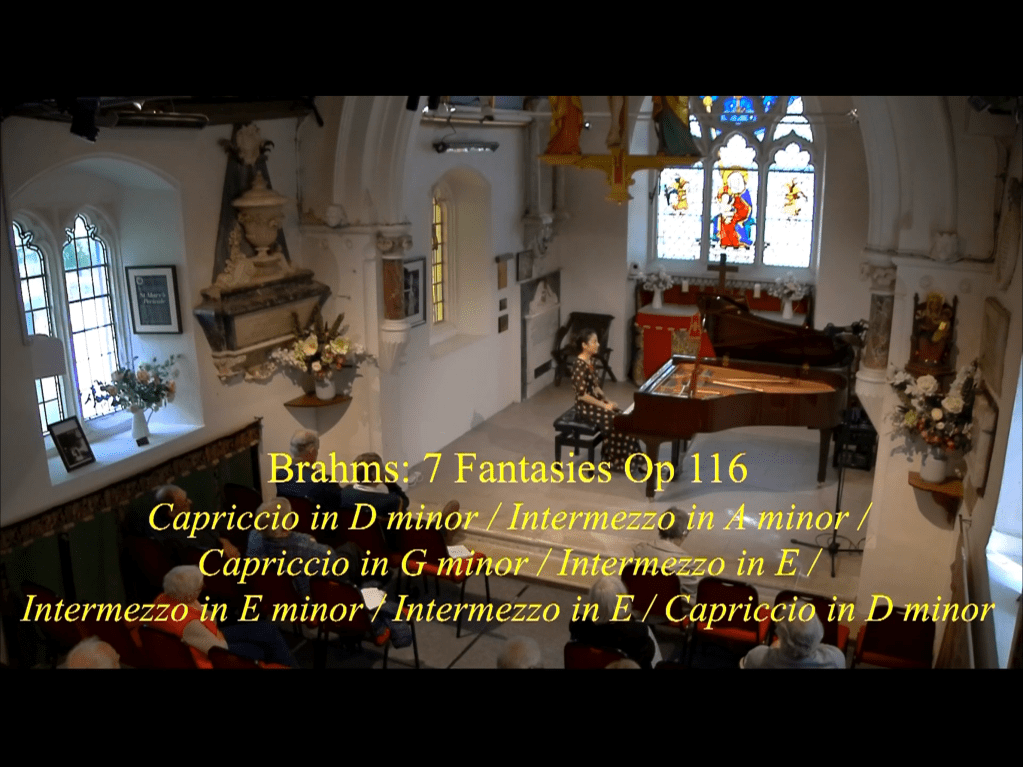
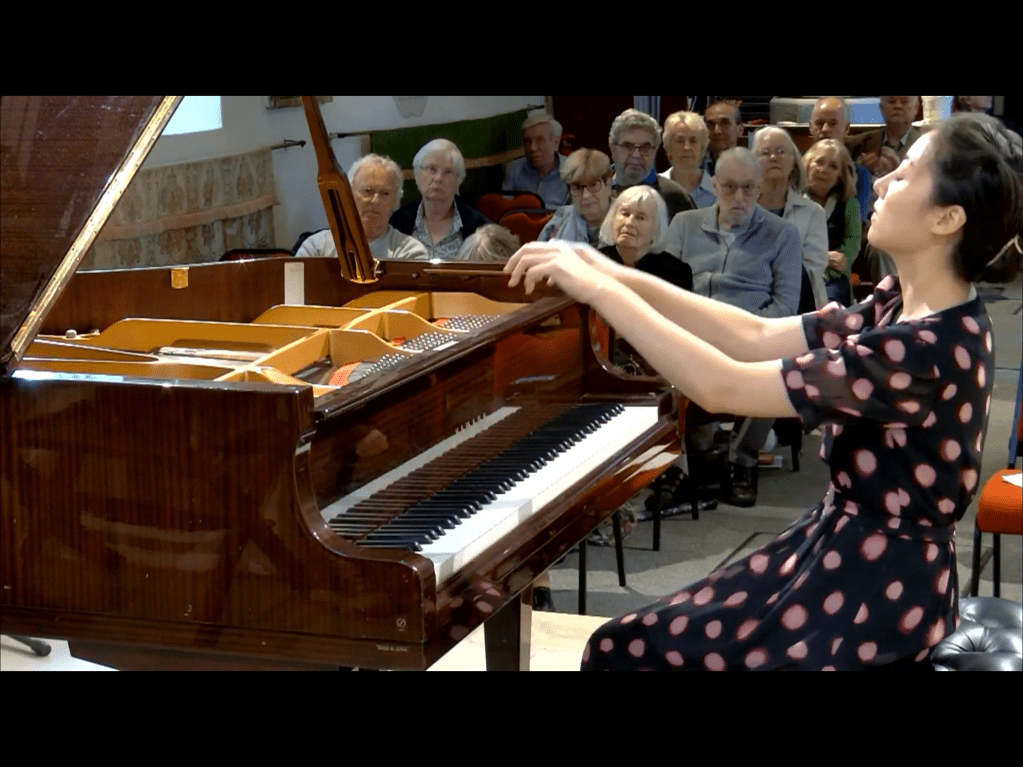
 ChristopherAxworthy-MusicCommentary