The third visit to Tuscia University of a duo that plays as one with a programme of favourite works by Grieg,Tchaikowsky and Liszt . A husband and wife team with a family of two children and a growing activity in their home town of Grosseto.
Below you can read the two reviews of their previous concerts with many of the works played today.
They not only perform but help to enrich the lives of young musicians with their encouragement and expert training which they had both acquired at the International Piano Academy of Imola, where they had met. Their first CD of Tchaikowsky has been acclaimed by the critics and they have just released their second with the complete piano duet works by Erik Satie.
An opening with Grieg that from the very first notes of the Dances op 35 they showed their complete authority with an imposing opening of great rhythmic drive and urgency. Sumptuous rich sounds from the bass dissolving to a heartrending mellifluous outpouring of the innocent simplicity that was so much part of Grieg’s musical personality, bursting into the gleeful impish dance rhythms to end. A beguiling melody from Gala in the second dance was accompanied with insinuating rubato by Diego with an interruption of dynamic drive and exhilaration before the return of the opening haunting melody ever more teasingly beautiful. There was a capricious dance to the third played with a fleeting lightness and great sense of character as it built in intensity contrasting with the ravishing beauty of the central episode. A grandiose opening to the fourth with an almost too serious opening deep, in the bass, bursting into a rhythmic dance of question and answer between the players with a central episode of great intensity and beauty.
‘Solveigs’ song from Peer Gynt Suite op 55 opened with a solitary voice from Gala creating a magical atmosphere for one of Grieg’s most haunting melodies that opened out as it was ‘sung’ so sensitively by them both, with elaborations of subtle beauty.
They brought a radiance and flowing beauty to Grieg’s vision of daybreak at the opening of the suite op 46. It was followed by the poignant beauty and stillness of the slow moving chords perfectly coordinated for the ‘Death of Ase’. A brilliance to ‘Anitra’s dance’, with scintillating ornaments like tightly wound springs of jewel like subtlety. A menacing dance deep in the bass from Diego deep in ‘The Hall of the Mountain King’ gradually took flight with devilish trills from Gala as the air was ignited with ferocity and exhilaration.
Their interpretations of Tchaikowsky’s sumptuous ballet music are full of the colours of theatre. Excitement, exhilaration and with a palette of sounds that could create the eternal magic of Tchaikowsky’s best loved scores from ‘Swan Lake’,’The Sleeping Beauty’ and ‘Nutcracker.’ And after such a feast of music they chose Liszt’s transcendental second rhapsody to close their programme. An extraordinary sense of style and colour allied to a scintillating fearless bravura brought the concert to a brilliant end.
An encore of Brahms Hungarian Rhapsody n. 5 was played with gleeful mastery and was their way of thanking Viterbo for inviting them back for the third year in succession.
Alessio Tonelli the finalist chosen by Prof. Vitaly Pisarenko to play in the special concert in Viterbo on the 24th January 2026 for the Keyboard Charitable Trust in their long standing collaboration with Prof Ricci. . Edvard Grieg 15 June 1843. 4 September 1907 (aged 64) Bergen, Norway
Grieg’s incidental music for Henrik Ibsen’s drama “Peer Gynt” contains some of his best-known compositions, such as “Morning mood” and “In the hall of the Mountain King”. Grieg later extracted the most beautiful pieces to form two orchestral suites and arranged himself these versions for piano solo and piano four-hands. Peer Gynt Suite no. 2 includes Solvejg’s Song op. 55,4. The decisive role that Norwegian folk music played for Edvard Grieg can be felt in almost all of his works. For his Norwegian Dances op 35, Grieg took old folk tunes from a collection published by the musician and researcher Ludvig Mathias Lindeman and arranged them for piano four hands in 1880. Peer Gynt Suite no. 1 op. 46 Morning Mood op. 46,1 The Death of Ase op. 46,2 Anitra’s Dance op. 46,3 In the Hall of the Mountain King op. 46.
We are delighted to announce that we have now recorded the complete works for piano four hands by Erik Satie, performed by the Duo Degas — Gala Chistiakova and Diego Benocci. In the centenary of the French composer’s passing, our collection stands as the most complete integral of Satie’s piano music ever produced.
“This musician (i.e. Satie), whose influence on the evolution of contemporary French music has been considerable, has not always been understood; yet at the same time he did everything possible to provoke precisely this reaction.” — André Cœuroy, obituary for Satie (who left us 100 years ago) #ErikSatie#Satie100#PianoFourHands#DuoDegas#OnClassical#PianoMusic#ClassicalMusic#NewRecording#SatieCompleteEdition — with Diego Benocci and Gala Chistiakova.Earliest known photograph of Liszt by Hermann Biow in 1843 Franz Liszt 22 October 1811 Doborján Hungary 31 July 1886 (aged 74) Bayreuth , Germany
Franz Liszt was strongly influenced by the music heard in his youth, particularly Hungarian folk music, with its unique gypsy scale rhythmic spontaneity and direct, seductive expression. These elements would eventually play a significant role in Liszt’s compositions. Although this prolific composer’s works are highly varied in style, a relatively large part of his output is nationalistic in character, the Hungarian Rhapsodies being an ideal example. Composed in 1847 and dedicated to Count Laszlo Teleki,the Hungarian Rhapsody No. 2 was first published as a piano solo in 1851 by Senff and Ricordi. Its immediate success and popularity on the concert stage lead to an orchestrated version, arranged (together with five other rhapsodies) in 1857–1860 by the composer in collaboration with Franz Doppler and published by Schuberth in 1874–1875. In addition to the orchestral version, the composer arranged a piano duet version in 1874, published by Schuberth the following year.the version that was played today was of Richard Kleinmichel/Franz Bendel.
I remember Gordon Green and his wife both telling me of the extraordinary technical and intellectual capacity of Peter Donohoe to play some of the most strenuous works in the piano repertoire. I am talking about fifty years ago, before Peter went on to his success at the Tchaikovsky Competition in Moscow in 1982, which launched his international standing and was the start of a career that has spanned over forty years. His curiosity to delve deeply into the piano repertoire and find works that are not always readily accessible to lesser mortals has never left him, and it reminds me of John Ogdon who like Peter could fearlessly discover a world where others dare not tread.
Gordon Green had studied for a period with Egon Petri, a pupil of Busoni and it was here that his passion for the works of Busoni was born and which he transmitted to his many illustrious pupils.
Peter Donohoe had opened this marathon recital with a work that he openly declared was the Beethoven sonata nearest to his heart. Op 101 could be described as a Sonata ‘quasi fantasia’ with it’s beautiful opening that returns towards the end giving a pastoral shape to a Sonata that is really the calm before the storm of op 106, which was to follow after the interval. A beautiful opening of luminosity, and like everything Peter played, an architectural shape of masterly musical understanding. An outpouring of poignant meaning played with simplicity and knowing musicianship with a beautiful sense of legato and extraordinary mastery of balance. A tightly drawn ‘Vivace’ had a continual rhythmic pulsation but with a line of absolute clarity and a contrasting ‘Trio’ of pastoral fluidity before the return of the ‘Vivace’. He brought great weight to the ‘Adagio’ which was played with simplicity and disarming beauty. The ‘Allegro’ entered gently as the knotty twine became ever more entangled but always with absolute clarity, and it was here that his masterly use of the pedal became ever more evident. There was a beguiling duet between voices with their inquisitive question and answer and trills brilliantly incorporated into the musical line like tightly wound springs as the movement became ever more entwined and grandiose. There was a beautiful pastoral coda before being interrupted by Beethoven’s final triumphant outburst.
A performance that was classical in its overall approach but romantic in its actual musical language. Playing without the score because this was a work deeply ingrained in his heart and obviously an important part of his concert repertoire.
I think it is the first time I have heard the work in concert and it was indeed a formidable challenge that only a musician with a great intellect and endless curiosity could have undertaken. A fantasmagorical opening of grandeur and mystery. A continual outpouring of knotty twine of extreme intellectual importance and a ‘tour de force’ of resilience and above all musical intelligence. A truly grandiose ending, as Busoni is not one to leave the stage quietly! Busoni,of course, was well known for his long difficult programmes. In a period when pianists were titivating the senses, Busoni was delving deeply into the very meaning and future of music as his teacher Franz Liszt was to do in the last half of his life.
Mozart’s C minor Fantasy was where Peter combined simplicity, luminosity and drama with a beautiful sense of song where every note and every rest were played with disarming simplicity and great meaning. Sandwiched in-between the extreme intellectual complexity of Busoni and the dynamic drive of Beethoven it came as an oasis of simplicity where so few notes could mean so much.
One of the drawbacks of not being able to actually be in St Mary’s is that the wine so generously offered in the interval at the evening concerts, cannot be shared like the sounds on their superb streaming.
After the interval followed the longest and most difficult of all 32 Sonatas of Beethoven. Many pianists who are happy to perform cycles of the sonatas tremble at the thought of including the ‘Hammerklavier’. In four long movements with a slow movement that lasts over twenty minutes and a fugue that is so un-pianistic that it can only be undertaken by the most fearless of pianists who possess a virtuoso technical command of the keyboard.
It opens with a mighty fanfare and a treacherous leap, as this is a work where from the outset Beethoven shows us it is only for the fearless. Peter plays the first leap with one hand and the second with two which works very well as it shows fearlessness but not recklessness! A monumental performance of the ‘Allegro’, with of course the repeat of the exposition, and always with a driving undercurrent of energy that drove the music forward with clarity and luminosity.The opening of the development was bathed in pedal which contrasted so well with the clarity of the fugato that follows. Adding occasional deep bass notes, that Beethoven obviously intended, but did not have on the instruments of the day, it gave an aristocratic nobility to this most orchestral of opening movements. The ‘Scherzo’ was played with solidity rather than as a dance which contrasted well with the fluidity of the ‘Trio’.The ‘Adagio’ which is the very heart of this work was given a beautifully flowing tempo which did not exclude some exquisite moments, but always moving forward on a great wave of passionate intensity. All through this ‘Adagio’ there was a beauty of sound and a perfect sense of balance that allowed the melodic line to sing so naturally with a glowing luminosity of great poignancy. There was a rhythmic energy that gave strength to the architectural line where even the intricate embellishments were sustained by the inexorable inevitability of the bass. Peter made a very definite break between the ravishing end of this movement and before the improvised introduction to the mighty fugue that took flight with fearless virtuosity and dynamic drive. The difficulties just disappeared under Peter’s masterly hands as he drove the music forward to the final climax where he added even more notes to Beethoven’s mighty final chords. A monumental performance played with a musicianship where notes became just a means of expressing the impossible on an instrument that Beethoven had taken to its limit and beyond !
After such a marathon Peter wanted to play just one more fugue . It was the last fugue that Bach was to write and that he left unfinished at the end of his ‘Art of Fugue’ which had been the inspiration for Busoni’s Fantasia Contrappuntistica.
After nearly three hours of red hot music making the only way to calm the air was with the very first simple Prelude and Fugue in C major by Bach.
Memorable performances from a great pianist and unique thinking musician. Thanks to Dr Mather and his team it has been recorded and will act as a reference for the hundreds of pianists that will fill this redundant church with glorious music in the future.
Peter Donohoe was born in Manchester in 1953. He studied at Chetham’s School of Music for seven years, graduated in music at Leeds University, and went on to study at the Royal Northern College of Music with Derek Wyndham and then in Paris with Olivier Messiaen and Yvonne Loriod. He is acclaimed as one of the foremost pianists of our time, for his musicianship, stylistic versatility and commanding technique.
In recent seasons Donohoe has appeared with Dresden Philharmonic Orchestra, BBC Philharmonic and Concert Orchestra, Cape Town Philharmonic Orchestra, St Petersburg Philharmonia, RTE National Symphony Orchestra, Belarusian State Symphony Orchestra, and City of Birmingham Symphony Orchestra. He has undertaken a UK tour with the Russian State Philharmonic Orchestra, as well as giving concerts in many South American and European countries, China, Hong Kong, South Korea, Russia, and USA. Other past and future engagements include performances of all three MacMillian piano concertos with the BBC Scottish Symphony Orchestra; a ‘marathon’ recital of Scriabin’s complete piano sonatas at Milton Court; an all-Mozart series at Perth Concert Hall; concertos with the Moscow State Philharmonic Orchestra, St Petersburg Symphony Orchestra and the London Philharmonic Orchestra at Royal Festival Hall; and a residency at the Buxton International Festival.
Donohoe’s most recent discs include six volumes of Mozart Piano Sonatas with SOMM Records. Other recent recordings include Haydn Keyboard Works Volume 1 (Signum), Grieg Lyric Pieces Volume 1 (Chandos), Dora Pejacevic Piano Concerto (Chandos), Brahms and Schumann viola sonatas with Philip Dukes (Chandos), and Busoni: Elegies and Toccata (Chandos), which was nominatedfor BBC Music Magazine Award. Donohoe has performed with all the major London orchestras, as well as orchestras from across the world: the Royal Concertgebouw, Leipzig Gewandhaus, Munich Philharmonic, Swedish Radio, Orchestre Philharmonique de Radio France, Vienna Symphony and Czech Philharmonic Orchestras. He has also played with the Berliner Philharmoniker in Sir Simon Rattle’s opening concerts as Music Director. He made his twenty-second appearance at the BBC Proms in 2012 and has appeared at many other festivals including six consecutive visits to the Edinburgh Festival, La Roque d’Anthéron in France, and at the Ruhr and Schleswig Holstein Festivals in Germany.
The 23/24 season kicked off with Peter Donohoe performing as a soloist with the London Symphony Orchestra and Simon Rattle with four performances of Messiaen’s Turangalîla-Symphonie in London, Edinburgh, and Bucharest. In January 2024, Peter returned to Philadelphia for performance with the Ama Deus Ensemble and travelled to Dubai to adjudicate the 3rd Classic Piano Competition 2024.
Busoni was not only one of the greatest pianists of his age but also a composer and theorist of daunting intellect. His three idols were Bach, Mozart and Liszt.The Fantasia contrappuntistica has at its heart a realization of the incomplete final fugue from Bach’s Art of Fugue but seen in terms of twentieth-century harmony. The fugal sections are preceded by a chorale arrangement and interspersed with an intermezzo and variations; Busoni then creates an entirely new fugue on four subjects which Bach is thought to have planned, though he did not live to carry it out. In this work Busoni hoped to create ‘one of the most significant works of modern piano literature’. If its daunting complexity both for pianist and listener never make it a standard of the repertoire, it is certainly one of the most imposing of piano works
Brendel writes “the piece is a monumental fusion of thesis and antithesis, counterpoint and fantasy, Bach and Busoni, unexpected refinement of the piano sound and baroque independence from the means of sound—you will perhaps find a new sphere of instrumental art spread out before you.” In 1909, Busoni was working on a critical edition of Bach’s The Art of Fugue and he became fascinated with the last fugue, which Bach broke off at the entry of the fourth subject and abandoned the work at that point. Peter Donohoe suggested it might have been that he had brought the work to it’s ultimate state and he left it open for future composers to complete ,having pointed the way. Busoni consulted with the composer and theorist Bernhard Ziehn, who had published various theories for a modern approach to polyphony, in which “the symmetrical treatment of melodic lines gave rise to a wealth of new harmonies.”
Bach’s unfinished fugue
Berhnard Ziehn was a German-born theorist based in Chicago, and he advocated the use of transpositions and inversions to combine Bach’s original line in an absolutely symmetrical way. The original intervals are preserved at all time, “with no regard for the very un-Bach-like harmonies that resulted. This way of working, of choosing apt combinations of lines from an almost unlimited realm of possibilities, rather than searching for combinations consistent with pre-existing rules of harmony,” immediately appealed to Busoni. He certainly had a complete and exhaustive command of traditional technique, but also realized the “inadequacy of such a technique for a contemporary composer.” As a biographer writes, “Busoni was perfectly conscious of his powers: he paid homage to the past by embracing it in the gigantic sweep of his intellect and he saluted the future through his consciousness of his own moral and intellectual superiority, a consciousness that was compatible with true dignity and humility.” In his Fantasia contrappuntistica, Busoni achieves a perfect synthesis of models from the past presented in a completely modern form.
In March 1910, Busoni completed his “Grosse Fuge,” which he described as “the most corseted of his compositions.” He writes to his wife, “Every note is spot on! Today is the first of March. I had planned to finish this monster fugue in February and I succeeded, but I won’t do it again!” Bach’s original fugue is built on three themes, but at the start of the third theme the manuscript is interrupted, and within its development, a fourth theme is introduced. Busoni identifies this fourth theme as the basic motif of the whole cycle. However, Busoni is not yet satisfied, and he created a fifth theme, which acts as a conclusion. Busoni assures his wife that he had been “working in the spirit of Bach,” but in the end he does not limit himself to these five fugues, “but further develops the piece through the addition of several other movements, so as to achieve, as he affirms, “the form of a grand fantasia.”Busoni prefaces his “Grosse Fuge” with his own variations on the Bach chorale “Allein Gott in der Höh sei er,” composed three years earlier. Breitkopf & Härtel explain the overall form of the work at the beginning of the published score: An “Introduzione” based on Bach’s chorale (Maestoso deciso, Allegro, Andantino) leads to the first three fugues on themes by Bach; an “Intermezzo,” which then leads to the “Variazioni” on the same fugues; then a cadenza leading into the fourth fugue. Before the final “Stretta” the Chorale reappears, with ‘dolcissimo’ chords in the high register of the keyboard.”
Published as the so-called “Edizione definitva” of the Fantasia contrappuntistica, the work nevertheless underwent a substantial number of revisions and versions. This includes an “Edizione minore” in 1912, basically a study edition with expanded but simplified fugal writing and different variations on the same chorale. Busoni had also planned to produce an orchestral version, but that project never materialized. Instead, on 6 August 1921, audiences were treated to a two-piano version, which integrates both sets of chorale variations and “clarifies but also abbreviates Bach’s underlying fugal arguments.” Regardless of version, Busoni created a work rooted in Bach and expanded with Lisztian textures, “that places him in a historical continuum, with a clear focus on the future.” According to critics, “it remains one of the most impressive works in the entire piano literature, a monumental undertaking that stretches the possibilities of composer, instrument, and performer to the limit.” Busoni’s seven-volume Bach Edition includes not only performing editions and analyses of most of Bach’s keyboard works but also several contrapuntal studies, most of his own transcriptions and two versions of the immense Fantasia contrappuntistica. This life-long study and absorption was what led him in the first instance to the belief that a revival of the art of counterpoint might prove a guiding light to the future.
Bach’s The Art of Fugue, an uncompleted sequence of studies in fugal writing called Contrapuncti (‘his last and greatest work’, according to Busoni), is a compendium of contrapuntal skills at that summit of perfection to which the great master had taken them at the end of his life. Its final fugue, Contrapunctus XIV, was in Busoni’s words ‘planned on four fugue subjects, of which two are complete and the third commenced’. In the manuscript, a note thought to be in the hand of his son, Carl Philipp Emanuel, states that ‘At this point where the theme B–A–C–H becomes the countersubject, the composer died’, although some scholars believe that the work was abandoned at an earlier date. (In this recording this melancholy moment arrives at 2’05 in Fugue III.) In any event, a quadruple fugue is a fearsome event. In the first place the four themes must at some point combine, and the additional possibilities of interlocking countersubjects and their inversions become, as Busoni suggested, ‘as numerous as chess moves’. Conjecture as to the identity of the missing fourth subject was pursued by musicologists with the same fervour as mathematicians unravelling an unproven theorem. From his encounters with two German-born scholars then living in Chicago, Busoni was satisfied that the theme must be the opening subject of Contrapunctus I, which met all the requirements of compatibility and thus would ‘close the circle of the whole work’. He then set about completing Fugue III and composing Fugue IV, initially with a fairly vague idea of creating ‘something between a composition by C[ésar] Franck and the Hammerklavier Sonata’.
No sooner had his first version been published under the title Grosse Fuge, Busoni withdrew it and started work on the version heard in this recording, which he named Fantasia contrappuntistica, edizione definitiva. Later two further versions appeared: a simplified and abbreviated Versio minore and a version for two pianos.
Where Bach had been constrained by the laws of harmony as they then existed (though stretching them to the limit), Busoni decided that he should honour Bach’s genius while pursuing each line according to its own integrity and logic thus creating new and viable harmonies for his own time. ‘But new harmony could only arise naturally from the foundation of an extremely cultivated polyphony and establish a right for its appearance; this requires strict tuition and a considerable mastery of melody.’ And it is sometimes startling to discover that the most jarring moments have their origin not far away in Bach. A case in point is the tumultuous pile-up in the final Stretta which emanates from Contrapunctus VIII.Busoni devoted as much thought to the overall form as to the contrapuntal detail. He went so far as to add drawings to represent the architecture of his conception—a ship with five taut sails (‘moving over difficult waters’) superimposed on a cross (‘the form of a cathedral’) and a building whose doors represent the different ‘chapters’ of his narrative.
His most radical change from the Grosse Fuge (and an inspired one) was to begin the work with an evocative Prelude based on the ancient chorale ‘Allein Gott in der Höh sei Ehr’, not such a huge task since much of it existed already as one of his Elegies. In Fugues I, II and III, Busoni follows the plan of Contrapunctus XIV more or less exactly but adds his own voice in several ways, notably in the vastly extended compass and the chromatic modification of some voices to accord with his logical ‘modern’ vision of harmony, together with the insertion of references to a fifth theme of his own device which is first heard at the beginning of the piece. Another feature is the anchoring of Fugue I on a deep pedal D, causing it to emerge as if from a great depth, something we can observe in the distortions of old music ‘through a glass darkly’ of composers like Berio and Schnittke at the other end of the twentieth century. There follow an eerie Intermezzo (misticamente, visionario), three Variations of increasing complexity and a Cadenza before Fugue IV, which (of necessity) is entirely Busoni’s own composition. An ethereal reminiscence of the opening chorale presages the hectic Stretta before three imposing statements of the subject of Fugue I (two partial, one decisive) bring the huge edifice to a fittingly grand conclusion.
Gordon Green, OBE (1905–1981) His numerous pupils include several concert artists and conservatoire professors, such as Philip Fowke (b. 1950),Martin Tirimo (b. 1942), Sir Stephen Hough (b. 1961),Martin Roscoe (b. 1952), Stephen Coombs (b. 1960), John Blakely (b. 1947), Peter Bithell (b.1950),Tessa Uys (b. 1948), Martin Jones (b. 1940), Richard McMahon,Ann Shasby,Christian Blackshaw] MBE (b. 1949), Harold James Taylor(1925–2014), John McCabe (1939–2015),Malcom Lipkin (1932–2017), Tessa Uys (b. 1948),Christopher Axworthy ,Heather Slade-Lipkin (1947-2017) . Other notable musicians who trained with him during the course of their studies include Gordon Fergus -Thompson(b. 1952), Peter Donohoe , CBE (b. 1953), conductor Sir Simon Rattle (b. 1955) among many others. He also coached John Ogdon (1937–1989) for his participation in the 1962 Tchaikovsky International Piano Competition, in which Ogdon won first prize (ex-aequo with Vladimir Ashkenazy).
Sir Stephen Hough writes “I was really pleased to be sent this photo of my most important teacher, Gordon Green. He taught at both RNCM- Royal Northern College of Music and Royal Academy of Music. To one foreign student he said, as she graduated: “Now I want you to go home and forget everything I said”. We will always remember. “A teacher’s role is to become dispensable.” His indispensable advice inspires me to this day. “How you play now doesn’t interest me. Rather how you will play in ten years time,” wise words for a 15 year-old”
Some superb playing that we have had to wait five months to appreciate since Axel Trolese’s much awaited recital for the Pontine Festival was postponed due to an unexpected downpour in mid July!
A local lad from Aprilia found a full hall awaiting him in Latina ,the city that Mussolini founded, and is now in party mood for Christmas. A recently acquired Brodmann piano was in evidence today in this concert dedicated to Gianfranco Pitton who had done much to bring culture to his city. His wife was moved by the beautiful words of glowing appreciation that the Mayor expressed in her opening welcome presentation .
The Mayor of Latina with Elisa Cerocci and Signora Pitton
Axel I have known and admired for some time for his serious musicianship and impeccable preparation. He has been mentored by the great pianist, Louis Lortie, who even supervised his latest recording of Dante / Liszt together with another local lad from nearby Terracina, Luigi Carroccia.
A concert to celebrate the 150th anniversary of the birth of Maurice Ravel with the early ‘Rapsodie espagnole’ and finishing with the poignant reminder of the tragedy of the First World War. ‘Le Tombeau de Couperin’ was a reminder of the tragic annihilation of an entire generation and which Ravel dedicated to six of his friends who never returned from the war. The horrors of a war that he had experienced at first hand as an ambulance driver on the front line.
But Axel chose to start with the first of the important Sonatas by Beethoven where the composer had started his long journey in 32 steps to transform the Sonatas bequeathed to him by his teacher Papá Haydn into a true diary of his genial evolution.
Already in this second Sonata op 2 n.3 he is breaking away from his teacher with an Adagio of monumental proportions almost like a tone poem in its own right. With four substantial movements it was to be followed by op 7 and op 10.n.3 to make the break complete and establish, already, Beethoven’s extraordinarily individual genius.
Immediately from the first note Axel played with a dynamic rhythmic drive and a crystalline pianistic perfection that immediately held our undivided attention . He was able to transform this arresting opening into moments of refined beauty as Beethoven’s genial mellifluous invention would suddenly appear on the crest of this wave of energy. Like a ray of sunlight as the clouds cleared with moments of refined delicacy and exquisite phrasing . Axel never loosing the burning energy that was always present as an undercurrent driving the music forward .
An ‘Adagio’ of glowing radiance and poignant beauty where the rests became of such importance and spoke as eloquently as the notes. Dramatic contrasts in the central episode were played with nobility and a sumptuous palette of sounds from the barely whispered to aristocratic declamations.
A crystalline clarity to the ‘Scherzo’ that contrasted so well with the waves of notes of the ‘Trio’ before the whispered ending on the return of the scherzo.
An ‘Allegro assai’ that was full of pastoral charm and grace but also of scintillating brilliance and masterly control.
After a short break Axel brought us the magic world of Ravel. His enormous palette of sounds allowed him to paint Ravel’s pictures in sound with the precision and crystalline brilliance that was the very essence of his intricate mastery.
‘Rapsodie espagnole’ originally for two pianos lost nothing in Garban’s transcription for solo piano. A languid atmospheric sound world with hypnotic repetitions before outbursts of sumptuous rich sounds. Beguiling dance rhythms were played with poetic beauty as washes of sound spread over the entire keyboard with exhilaration and burning excitement.
‘Le Tombeau de Couperin’ are six short pieces crafted with clockwork precision and that found in Axel an ideal interpreter. His clarity and rhythmic brilliance were allied to a jewel like palette of sounds of a pointillist painter, where the multicoloured sounds united to create a musical canvas of ravishing undulating shades of refined beauty.
The opening Prélude was of such whispered intricacy that an unexpected missing note was easily accommodated by this brilliant young musician who continued to play with fleeting brilliance.
A whispered fugue where Axel’s masterly control could give such shape and musical significance without ever loosing the rhythmic drive or sacrificing the absolute clarity of this knotty twine. The ‘Forlane’ sprang to life like a ‘Jack in the box’ but with refined beauty and a beguiling dance rhythm of delicacy and nostalgia. The ‘Rigaudon’ burst onto the scene with dynamic drive and a capricious ‘joie de vivre’ but there was also the ravishing subtle beauty of the central episode floating over a moving bass with a jewel like moment of sublime melodic doubling before the final eruptions. He brought a simplicity and delicacy to the ‘Menuet’ with its whispered final vibrant chord . The final ‘Toccata’ was a ‘tour de force’ not only of transcendental piano playing , because this was only a means to express the musical content with poetic beauty alternating with overwhelming exhilaration. Greeted by a standing ovation from an unexpectedly full hall Axel offered an encore of the ‘Notturno’ by Ottorino Respighi whose name honours the Conservatory in Latina .
A very early work and one of his six pieces,written between 1903 and 1905, was played with shimmering beauty and the passionate commitment which had been the hallmark of this remarkable recital.
With the indomitable Tiziana Cherubini
The president Elisa Cerocchi like her mother and father just a few years back is ever present to bring culture to this region aided by the indomitable Tiziana Cherubini. They were both glad to see a full house today despite the pre Christmas celebrations bursting out all around !
A clean sweep for Andras Schiff in Rome with a marathon concert where music spoke louder than words.
And what Music !
Starting with the Aria from the Goldberg and finishing three hours later with Schubert’s G flat Impromptu having ‘demolished ‘ or more correctly ‘relished’ twelve works mostly of Bach.
A wondrous FABBRINI Steinway with the 90 year old magician in the hall to reassure Schiff of the very best instrument that would allow him to turn the notes of the masters into wondrous luminous sounds of whispered beauty.
Sonatas followed by Mozart : K 570 in B flat and Haydn :Hob XVI : 44 in G minor.It was the simple beauty of Mozart distilled in his last piano sonata where Schnabel was to say Mozart’s music was too easy for children but too difficult for adults. Andras Schiff with humility and mastery was able to tread this line to absolute perfection. In the two movement G minor Sonata the genius of Haydn was revealed to us in all its refined intricacy as Richter was to show us, with this very sonata ,in the ’60’s on his first appearances in the West. Let us not forget ,though, the little Gigue by Mozart which was imbued today with a dynamic drive of subtle accents that brought a smile to our face, reminding us that Mozart like Haydn also had a sense of humour and all the world was a stage! After masterly performances of Bach’s Chromatic Fantasy, Italian concerto ,Fifth French suite and Capriccio it was time to change voice.
A very particular Viennese voice that only the Bösendorfer could provide and that was wheeled on in the interval .
This was after a first half of 90 minutes that had passed in complete,marvelled silence.
Now a shorter second half with Beethoven’ s last work for piano : the Bagatelles op 126 followed by Schubert’s Drei Klavierstücke.Three movements all under a cloud of wondrous sounds that united them as one. Not the usual fast slow fast of three separate movements but one glorious whole with the same voice of ravishing beauty. I had never been aware today of how short the work can seem.
Beethoven’s last work for piano, the six bagatelles op 126 ,where the composer had distilled sounds, like Mozart, to a bare framework adding colour through long pedals or the same wisps of sound on which fragments are floated like in his last Sonata op 111, as they are interrupted with the impatience of the final burst of energy Beethoven was to reveal.
A final glorious farewell with Schubert’s magical G flat impromptu floated into the midnight air as many now had lost their last buses home.
It was the absolute simplicity of his music making that held the audience in a silence that I have rarely noticed in Rome especially in the winter season. No need to admonish the audience that was present in great numbers today as they were able to enjoy such a journey of discovery and simple beauty.
There was never a moment of boredom where a cough or two might take away the tedium.
This was because the music spoke with the inflections of the human voice in a musical conversation where there were no mere notes and where Nadia Boulanger’s constant reminder was ever present : ‘Words without thought, no more to heaven go’ ( Shakespeare 12th Night). Performances where balance and touch were used to bring contrasts where other interpreters use muscle and projection. Schiff drew us in to a world of such disarming simplicity and was able to suggest contrast not by playing louder but by revealing the bass or inner counterpoints that could give the impression of another voice in the orchestra that he was revealing with his ten fingers.
His playing reminds me of the Indian summer of Wilhelm Kempff or Radu Lupu where through Matthay like sensitivity (infinite gradations of sound in each note) and a refined sense of balance, together with an intelligence and poetic soul, they could convince us that this box of hammers and strings could sing better than any singer. It could become an orchestra worthy of the greatest ensembles and in fact the Piano is an instrument for all seasons and styles. As Graham Johnson said to me when I asked him how he was allowed by singers to leave the piano lid open; with a knowing smile he simply said because they know I can drive!
Andras flying away on his magic carpet to surprise and delight his fellow Florentines on Saturday with another concert where at the drop of his hat he will find even more wonders to share with us on his miraculous voyage of discovery .
Lecce the Florence of the South, a land kissed by the Gods and which has produced some of the finest musicians of our time. One of these is without doubt Scipione Sangiovanni who I had heard many years ago when he won the Gold medal at the Monza International Competition. He performed the Liszt second concerto that had not particularly impressed me as a jury member but then as an encore he played a simple Scarlatti sonata which was of such jewel like perfection that I was completely won over.
I have now been able to hear him after quite a few years thanks to Roma 3 offering a platform to young musicians at the start of their career.
It is through these performances that I have come to understand and be overwhelmed by the mastery and intelligent scholarship of such an eclectic musician . Scipione does not fit into any category as his playing is unique in that he only plays as Rubinstein says :’the music he loves and that speaks to him’.
A kapellmeister who can improvise and embellish without ever loosing sight of the overall shape and real meaning behind the notes that he plays with breathtaking mastery.
A voyage of discovery that knows no boundaries as de Bornelh lives happily with Thelonious Monk, Cole Porter with Scriabin , Haendel with Bach Busoni (Sangiovanni) or Vivaldi with Carl Orff.
A strange haunting opening with bass notes adding even more resonance to this plaintiff chant of de Bornnelh, that was to end in a whisper as Thelonious Monk was allowed to enter at ‘Round Midnight’ .
Giraut de Bornelh ( 1138 – 1215), was a troubadour connected to the castle of the viscount of Limoges . He is credited with the formalisation, if not the invention, of the “light” style, or tribal leu and was one of the most popular troubadours of his day. Giraut’s reputation endured throughout the 13th century, when he was known as the Master of the Troubadours. Dante placed him in Paradise as a poeta rectitudinis,Petrach called him “master of the troubadours”. Though rebarbative to modern taste when they adopt the high moral tone that recommended them to Dante, Giraut’s songs are not devoid of lyricism or humour. Giraut de Bornelh was formally inventive and composed in a variety of genres: cansos,sirventes,pastorelas and tensos. About ninety of his poems and four of his melodies survive; these were held in high esteem in the 13th century.
Now after Thelonious monk it was the turn of George Ivanovich Gurdjieff (1866–1877 – 29 October 1949) who was philospher,mystic,spiritual leader ,composer who was to show us the ‘Fourth way’.In essence, Gurdjieff’s “Spinners” are more than just dance; they are a living, physical embodiment of profound spiritual and psychological teachings, intended to facilitate profound inner transformation. Born in the Russian Empire in the early 1920s, he settled in France, where he lived and taught for the rest of his life. Gurdjieff taught that people are not conscious of themselves and thus live their lives in a state of hypnotic “waking sleep”, but that it is possible to awaken to a higher state of consciousness and serve our purpose as human beings. The spinners was a hypnotic perpetuum mobile and brought to an end the Suite n. 1 of four that Scipione had designed in an eclectic voyage of discovery . A free improvisation followed on Haendel’s well known aria ‘Lascia ch’io pianga’ that the composer used many times. In 1711, he used the music again for his London opera ‘Rinaldo’, and it’s act 2 aria is “Lascia ch’io pianga” (“Let me weep”), a heartfelt plea for her liberty addressed by the character Almirena to her abductor Argante. Rinaldo was a triumph, and it is with this work that the aria is chiefly associated.A series of improvised variations on Haendel’s ‘Lascia ch’io pianga’ exactly as the composer himself might have done on the harpsichord.
George Gurdjieff
autograph score of Haendel’s famous aria .
The Haendel lead into the monumental Bach Chaconne for solo violin but recreated on the piano by Busoni. Scipione brought a chiselled beauty, pin pointing inner harmonies on a true voyage of rediscovery. There was a certain improvised freedom as pauses were prolonged and with his extraordinary sense of balance, colours suddenly appeared nowhere more than in the long ‘violin solo’ at the centre of the work. It lead to the enormous exultation and mighty climax where Scipione could extract sumptuous rich sounds never of hardness but of vibrant illuminated radiance. Suddenly out of this mist the final appearance of the opening theme played quietly just as in the Goldberg variations, where Bach gives us a final vision at the end of a long tormented life. A remarkable revisitation and rethinking of an established classic that was just one of the revelations of this unique thinking musician. After many other fascinating things in Scriabin ,Cole Porter or Tourdion there followed capricious ever more brilliant variations of Vivaldi on La Follia with a continuous outpouring of ever more rhythmically driven improvised elaborations. After the exquisite radiant beauty of Gluck we were thrown into the sinister world of Carl Orff’s ‘O Fortuna’. It was originally a Medieval Latin Goliardic poem which is part of the collection known as the Carmina Burana, written in the early 13th century, is a complaint about Fortuna, the inexorable fate that rules both gods and mortals in Roman mythology .
In 1935–36, “O Fortuna” was set to music by Carlo Orff as a part of “Fortuna Imperatrix Mundi”, the opening and closing movement of his cantata Carmina Burana . It was first staged by the Frankfurt Opera on June 8, 1937.
“O Fortuna” in the Carmina Burana manuscript ; the poem occupies the last six lines on the page, along with the overrun at bottom right.Valerio Vicari ,Artistic director Roberto Pujia,President
An encore that could combine the cadenza of Prokofiev second concerto with many things in a truly breathtaking exhibition of improvised musicianship and poetic fantasy.
Scriabin’s unashamedly romantic study in C sharp minor was played with a ravishing palette of sounds and daring that I have only heard from Horowitz. Sgambati’s wondrous arrangement of Gluck was played with distilled beauty and the seemingly improvised freedom of sound that made it so much part of Nelson Freire’s unforgettable artistry.
Adding such personal freedom to Busoni’s recreation of Bach’s mighty Chaconne could have destroyed the very tight construction if it had not been done with masterly musical intent ‘not to destroy but to praise’.
Valerio Vicari has created a true team at Roma 3 where his influence and creativity will remain even if his time will be now be divided between Rome with Trieste.
I had to leave in order to get to Schiff ‘s concert just around the corner but I left with a heavy but uplifted heart as Scipione intoned Busoni’s most magical transcription of the Bach Chorale:’Ich ruf zu dir, Herr’.
A mastery that fears no boundaries and reminds me of the equally unique artistry of Friedrich Gulda where improvisation, jazz or classical with a mastery of colour and playing of spontaneous refined good taste all go under the title of MUSIC making of vibrant spontaneity.
Marvels indeed that have been noted also in Trieste where Valerio Vicari has just been nominated Artistic Director of one of the most important Institutions in Italy
I have known Luke’s playing for many years and heard all about him from Carlo Grante when he travelled to Italy as a teenager to study with him in Calabria .By chance I was even at his graduation recital and will never forget the brilliance, allied to a musical understanding of the notoriously complex Brahms Paganini Variations https://christopheraxworthymusiccommentary.com/2018/06/24/luke-jones-at-the-rncm-manchester/
Returning to St Mary’s to try out some new repertoire ,to have a recording of the performance which can be an invaluable help to delve even deeper into the mysteries hidden on the printed page. Luke is now a mature artist and already with many demands on his time in Warrington where he now resides, and is a much sought after teacher. Struggling with British Rail he only managed to arrive in Perivale ten minutes before the concert for a first public performance of what Fou Ts’ong used to call Chopin’s preludes – 24 problems.
True artistic pedigree will always shine through even in the most trying of circumstances, knowing that the moment you actually reach the instrument any other difficulties melt into insignificance. A voyage of discovery as the hands touch the keys and delve deeply to find secrets, that may have taken hours and months of preparation, but that shared with an audience take on another meaning as one listens with even more intensity ready to take paths that in the lonely studio were not always evident.
And so after a voyage of unexpected delays and difficulties from Warrington to London, Luke arrived at his more personal voyage of discovery in Perivale with two master works by Debussy and Chopin. Debussy was very much influenced by Chopin especially in his early works and even edited Chopin’s works which he would have known quite intimately.
The ‘Suite Bergamasque’ is an early work from which ‘Clair de lune’ has become one of those pieces that used to sit on the piano stand, together with ‘Liebestraum’ and the ‘Moonlight’ Sonata, when the piano stood proudly in every parlour, before being ousted by the TV! A ‘Prelude’ that immediately showed Luke’s beautiful sense of balance with a capacious sense of style of glowing crystalline clarity. Scales that were transformed into streams of sounds of great purity seeming like magical glissandi – that he was to offer with impish glee at the end of the ‘Minuet’ as the ‘Prelude’ was finished in aristocratic grandeur. The ‘Minuet’ was ready to enter with beguiling subtle phrasing of tantalising insinuation that was gently transformed into a sumptuous melodic outpouring. It was played with refined good taste with the impish final glissando played pianissimo with a single farewell note barely suggested deep in the bass with nonchalant saviour faire. ‘Clair de lune’ was given a very refined palette of colours and a phrasing created by the very natural arm movements especially in the flowing central episode ( often not included in the popular simplified editions just as the ‘Moonlight’ Sonata would appear as a single movement !). It was in this flowing central episode where Luke’s playing was of radiance and purity never clouded by the pedal. The final appearance of the opening on gentle streams of sounds created a magic where any thoughts of world weary travels were completely forgotten as a wondrous world of whispered sounds was created together with the unknowing complicity of the live audience, and the hidden one like me listening to such marvels in Rome. ‘Passepied’ was played with great delicacy and luminosity always with his crystalline touch of great beauty and a sense of balance that allowed the left hand to accompany the marvels being carved out in the right.
We were now ready for the Chopin Preludes which are a monument of the romantic piano repertoire. Chopin too carved out many of these Preludes in the most trying of circumstances whilst passing a ‘mild’ winter in a wind swept monastery in Valdemossa on the Island of Majorca.The citizens trying to get rid of a guest with tuberculosis before he infected the whole island. These were truly trying circumstances that put into perspective the inconveniences that Luke had suffered today! The improvised opening was played with simplicity and clarity leading into the brooding second with its long phrases shaped with poignant beauty. There was a remarkable clarity to the streams of notes of the third that accompanied a melodic line of legato notes shaped with knowing beauty. The heart beating left hand of the fourth accompanied the piercing cantabile as it soared overhead, greeted by pauses pregnant with meaning as the fifth entered with a gently meandering of undulating sounds. Luke carved the long lines of the bass in the sixth with gentle sighs accompanying from above. There was a glowing simplicity to the shortest of all the Preludes as the passionate outpouring of streams of notes of the eighth filled the keyboard with aristocratic control and refined brilliance.I have rarely heard the ninth played with such simplicity , from the very first note a sumptuous cantabile and a remarkable sense of line reaching a passionate climax of rich full sounds. There was scintillating jeux perlé and teasing brilliance to the tenth passing through the eleventh to the demonic tempestuous undulations ending of the twelfth finding an unexpectedly beautiful legato before the final two strident chords. The thirteenth is one of Chopin’s most beautiful bel canto creations, and Luke’s superb sense of balance allowed the melodic line to sing with the same glowing beauty as the human voice to which he added a wonderfully atmospheric ending. The whispered menace of the fourteenth prepared us for the radiant beauty of the ‘Raindrop’ prelude that Luke played with heartrending beauty, bringing a clarity of line to the brooding central episode that made the return of the’Raindrops’ even more significant.
The sixteenth is a ‘tour de force’ for any pianist, which Luke threw himself into with masterly control. Even a momentary hiccup in the left hand was totally ignored and of no significance as his breathtaking bravura and mastery was quite overwhelming. Not even a glance at this ‘aide memoire’ was possible, as my old teacher Perlemuter showed us when the lights blew ( it was the intransigent Heath period of strikes) as he was playing it at the Royal Academy for us students. Luke brought a flowing beauty to the seventeenth with its long lines that he floated with glowing beauty on the deep bass A flats that were the anchor on which it sailed. The cadenza of the eigteenth slipped in almost unnoticed until it built up in passion and brilliance to a virtuosistic ending. Luke’s large hands conquered the hidden difficulties of one of most difficult of all the preludes, and make it sound as simple as an Aeolian Harp which it most certainly is not! A perfect sense of balance and control to the famous C minor Prelude ,used as the theme for variations by Rachmaninov and Mompou, allowing it to unfold in layers of ever more whispered majesty. The next one just flowed out of the final chord with a flowing poignant beauty leading to the mellifluous brilliance of the left hand octaves of the twenty second. The twenty third was played with the same crystalline beauty and simplicity with which Luke had opened these preludes except the final questioning ‘blue’ note lead us into the tempestuous final Prelude – almost Revolutionary style – with which Luke brought these twenty four problems to a brilliant and passionate conclusion on the final three ‘D’s’ deep in the depths of the piano.
No encore was expected or offered after such a ‘tour de force’. I expect Luke was now getting back to the real world mode , and the battle with British Rail about to recommence, after this oasis of beauty and mastery that he had share with us today.
Luke Jones is a Welsh pianist from Wrexham, North Wales. He began playing the piano at the age of five and gave his first public recital at Oriel Wrecsam at the age of ten. Since then, Luke has performed across the UK in venues such as Bridgewater Hall (Manchester), St. David’s Hall (Cardiff), Symphony Hall (Birmingham), and internationally in France, Italy, Luxembourg, Austria, Japan and Spain.
Luke has been awarded prizes in several prominent piano competitions, including the 2 nd Prize and Mompou Prize at the Maria Canals International Piano Competition and 1st Prize at the Bromsgrove International Musicians Competition. He also received the RNCM Gold Medal, the highest award for performance at the Royal Northern College of Music. His performances have been featured on BBC Wales Radio, S4C Television, and Radio Vaticana.
Luke has performed as a soloist with orchestras such as the BBC National Orchestra of Wales, the City of Birmingham Symphony Orchestra, and Manchester Camerata. His early education included studies with Eva Warren and Andrew Wilde, before he attended Chetham’s School of Music, where he studied under Murray McLachlan. He later continued his training with Carlo Grante in Italy and Dina Parakhina at the RNCM, where he earned a First Class Bachelor’s degree and a Master’s degree with Distinction. In addition to performing, Luke is passionate about education. He teaches at St. Ambrose Catholic College and Rossall School, and also runs a thriving private teaching practice. Luke is a Kawai Artist and an honorary ambassador for the Bromsgrove International Musicians Competition.
From phenomenal child prodigy to becoming a refined seeker of sounds, the path must have been long and arduous. This 23 year old artist had performed at the Società Filarmonica when he was only fourteen and was known for his superb early training and enviable technical prowess .
Today we heard a different pianist where technical mastery was at the complete service of an intelligent musical fantasy and with a palette of colours of extraordinary originality. An eclectic programme where some works were born out of others in this artist’s musical world that seems to know no frontiers.
A presentation from the Artistic Director, Alessandro Arnoldo
A change to the second half in an already eclectic programme, brought us Janáček and Liszt instead of Prokofiev, Stravinsky and Lourié. As this young man shared his very particular sound world with us one could understand more fully the change as we could see the path he was following. He took us on a wondrous voyage of discovery together, into a sound world where the final notes of Janáčeck became the very mist out of which Liszt’s Funérailles could emerge as we have never been aware of before. A mist that opened and closed this great tone poem within which Liszt manages to encapsulate so many different moods and atmospheres in the same way that Janáček could show us a whole harrowing world, of searing originality, in such a short space of time. Poetry and real technical mastery were used by this young man to reveal the very soul of the notes that were pouring from his fingers with a palette of emotions and an extraordinary range of orchestral colours.
Malofeev having been endowed from a very early age with an extraordinary ‘fingerfertigkeit’ has now discovered in these well trained fingers that he has an orchestra in his hands, but more importantly he has a very deeply rooted poetic soul. Of course sounds speak louder than words, but also to see the desperate look on his face as he too is moved by the discovery that audience and pianist are making together. His artistry reminds me of the extraordinary physical beauty of Arcadi Volodos where his whole body shapes the magical sounds that he, like a painter before his canvas, is describing with natural horizontal movements like riding on a big wave of sound. An almost improvised freedom that makes one feel that we are on a voyage of discovery together as music become louder than words and can express things that are too deeply locked inside us to be describe with the black and white precision of mundane words.
The concert had begun with Sibelius’s poetic description of ‘Trees’. There was immediately a beauty and melancholy with a whispered searching for sounds with the Scriabinesque counterpoints of ‘The Lonely Pine’ with its atmospheric pedal effects and pompous ending. Simple folk songs of ‘The Aspen’ and ‘The Birch’ were played with fluidity and an improvised freedom. The final Spruce was a languid ‘salon’ outpouring that took us straight from Finland to that other great expanse of Norway, that Grieg was able to capture with the same disarming simplicity as Sibelius. We suddenly discovered that the Holberg suite had been born out of these atmospheric sounds as the ‘Praeludium’ was heard with whispered shimmering sounds that were notes of crystalline clarity of disarming simplicity and naivety mixed with grandeur.
All through this recital the pedal became the real soul of the piano (to quote Anton Rubinstein) as it allowed for a subtle sense of touch and for notes that became clouds of sound. It was very noticeable too his use of the ‘soft’ pedal, playing ‘loudly’ to create yet another effect, or instrument in the orchestra, that this young artist had in his hands. Both Perlemuter and Arrau were masters of finding this extra colour which could give the music an unexpected extra dimension. Fazil Say does similarly, by placing a hand over the strings to produce a dull ‘oud’ like sound. These are all masters of sound where rules do not apply. Richter was the greatest example of that. There is no right or wrong way, ‘Convince Me ‘ a famous actor told a young inexperienced actress ( actually Sergio Tofano with my wife,Ileana Ghione, auditioning for the Silvio D’Amico Academy in Rome).
The ‘Sarabande’ where the ornaments added such subtle beauty of yearning with their poignant sighs. The ‘Gavotte’ was played with lightness and a real sense of dance with the etherial drone like long held pedal of the ‘Musette’ before the return of the spritely ‘Gavotte.’ The piercing beauty of the ‘Air’ gave it an extraordinary poignant purity and radiance with Malofeev’s wrist below the keys as his limpet touch extracted a glistening beauty from each chiselled note.The melody passing to the tenor voice where the right hand was allowed to sigh, like the light on a prism, in this wondrous land that Grieg describes with heartrending potency. The ‘Rigaudon’ burst onto the scene with a lightness of jeux perlé of beguiling subtlety, as suddenly the clouds were lifted and the glory of the sun was allowed to shine with brilliance and Tchaikovskian fervour.
The ‘Fire Sermon’ by another Scandanevian composer, Rautavaara, burst onto the scene with troubled menace. Agitated sounds deep in the bass were played with a dynamic drive as a melody with difficulty appeared, bathed in pedal with cascades of notes spread over the entire keyboard with fearless mastery. A transcendental control and mastery with great chords punched with violence into the keys but then allowed to reverberate out of which emerged whispered sounds of searingly painful contrasts. A palette of sounds but always a musicianly sense of line even though using his arms ( did not Charles Ives do the same a century earlier) where mere fingers were not enough for the great cluster of sounds that this deeply troubled composer needed to express. An ‘Andante’ of languid beauty allowed a brief respite before the ‘Allegro brutale’ whose very title needs no description from me.
Janáčeck’s extraordinarily modern sound world found in Malofeev the ideal interpreter. A mysterious world with washes of colours of unearthly beauty interrupted by cries in the dark and a leit motif that pervades this whole extraordinarily modern work and gives it a strangely melancholic feel of great originality.
Leading straight into ‘Funérailles’ where the range of Malofeev’s sound was quite extraordinary ,barely whispered sounds contrasted with the most enormous outbursts that I imagine this hall has ever experienced. A cavalry where Malofeev’s considerable technical mastery passed unnoticed such was the poetic significance of the legions racing across the field with the bugle calls barely able to be heard over the sound of hooves racing to their triumphant glory.
The four Scriabin Preludes op 22 were but a poetic preparation for the Fantasia that they were transformed into. A brooding scintillating display of ravishing beauty and passionate abandon played with absolute mastery by this poet of the keyboard.
A true triumph for a young master who has returned as a mature artist and was happy to offer four encores to this very full hall of convinced listeners.
Scriabin and Handel were crowned with an extraordinarily original performance of THE Prelude by Rachmaninov. This was the synthesis of all we had experienced during the recital with a work so well known but reborn on a wave of sounds that I doubt even Rachmaninov could have imagined possible.
with the President Lorenzo Arnoldi
The twenty-three-year-old Russian pianist Alexander Malofeev, winner of the 2014 Tchaikovsky Prize, returns to the Philharmonic six years after his memorable debut concert in Trento. Since then, Malofeev has rapidly become one of the most renowned pianists of his generation. His performances, characterized by technical precision, incredible maturity, crystalline sound, and perfect balance, have garnered high critical praise, with publications such as Der Standard calling his debut at the Vienna Musikverein “a global piano revolution.” Serving an impeccable sensibility, also surprising for the firmness of his program musical choices, Malofeev weaves a fine silk, with a dazzling finish that reveals a subtle, channeled urgency and seems to encompass the entire nature of his playing.
“The latest phenomenon of the Russian piano school” (Corriere della Sera), “Alexander Malofeev manifests the piano mastery of the new millennium in itself” (Il Giornale)
The young “Russian genius” (Corriere della Sera) came to international prominence when, in 2014, he won the International Tchaikovsky Competition for Young Musicians at age thirteen. “Contrary to what could be expected of a youngster …, he demonstrated not only high technical accuracy but also an incredible maturity. Crystal clear sounds and perfect balance revealed his exceptional ability” (Amadeus). Malofeev has quickly established himself as one of the most prominent pianists of his generation. His performances have garnered high praise from critics, with publications such as Der Standard declaring his debut at the Musikverein as “a world piano revolution”.
For the 2023-2024 season, highlights include Malofeev’s return to the Bournemouth Symphony for a multi-concert residency, solo tour in China, and European tour with Filarmonica della Scala and Riccardo Chailly, as well as performances at the Amsterdam Concertgebouw, Munich Isarphilharmonie, Elbphilharmonie in Hamburg and Carnegie Hall in New York, continuing to perform with the best orchestras: National Symphony Orchestra, Lucerne Festival Orchestra, Frankfurt Radio Orchestra, Netherlands Radio Philharmonic Orchestra under Kent Nagano and Orchestre de la Suisse Romande under Marin Alsop and many others.
Maestro Riccardo Chailly said about the pianist: “I first heard Malofeev when Valery Gergiev performed with him at the Teatro alla Scala three years ago. He was only 14, and he amazed me with his talent. Because that is not just a child prodigy: he is very young, but already possesses depth and technical abilities, and also musical and mnemonic, which makes him an excellent interpreter of the 3rd Concerto of Rachmaninov, which is a problem for many pianists in the world.” (Corriere della Sera) Alexander was born in Moscow in October 2001. Now residing in Berlin, he continues to give concerts in Concertgebouw (Amsterdam), where he opened the 30th anniversary concert of the renowned Meester Pianists series, Carnegie Hall (New York), Teatro alla Scala (Milan), Musikverein Wien, Kurhaus Wiesbaden (Germany), Alte Oper Frankfurt (Germany), Munich Herkulessaal (Germany), Tanglewood (USA), Philharmonie de Paris, Philharmonie Luxembourg, Theater of the Champs-Elysees (France), Auditorium Parco della Musica in Roma and Teatro Petruzzelli in Bari (Italy), Queensland Performing Arts Centre (Australia), Davies Symphony Hall in San Francisco, Bunka Kaikan Theatre in Tokyo, Seoul Art Center, Shanghai Oriental Art Center, National Centre for the Performing Arts (Beijing), Royal Opera House Muscat in Oman.
Over the years, he has performed with renowned orchestras such as the Philadelphia Orchestra, Boston Symphony Orchestra, Orchestra of the National Academy of Santa Cecilia, Frankfurt Radio Symphony Orchestra, Lucerne Festival Orchestra, Orchestra Filarmonica della Scala, RAI National Symphony Orchestra, Korean Symphony Orchestra, the Verbier Festival Orchestra, Orchestre National de Lille and many others
Alexander Malofeev regularly appears with the most distinguished conductors on a stage today, including Riccardo Chailly, Mikhail Pletnev, Myung-Whun Chung, Charles Dutoit, Michael Tilson Thomas, Jo Ann Falletta, Alain Altinoglu, Susanna Mälkki, Yannick Nézet-Séguin, Lionel Bringuier, Alondra de la Parra, Kazuki Yamada, Vasily Petrenko, Juraj Valcuha, Kirill Karabits, Andris Poga, Fabio Luisi and others.
Malofeev was a guest of world famous music festivals and series such as Verbier Festival, International de Piano de La Roque d’Anthéron Festival, Rheingau Music Festival (Germany), Tanglewood Music Festival and Aspen Music Festival (USA), Tsinandali Festival (Georgia), Master Pianist Series (Amsterdam) and Celebrity Series of Boston.
In addition to his 1st prize at the Tchaikovsky Competition for Young Musicians, he has won numerous awards and prizes at international competitions and festivals, including the Grand Prix of the I International Competition for Young Pianists Grand Piano Competition, the Premio Giovane Talento Musicale dell’anno 2017 (Best Young Musician of 2017). Also in 2017, Alexander became the first Young Yamaha Artist.
Noretta Conci Leech hand in hand with Christopher Axworthy co Artistic Director with Leslie Howard and Elena Vorotko of the Keyboard Trust founded by Noretta and her husband with Claudio Abbado, Evgeny Kissin and Alfred Brendel. Honorary Patron is Sir Antonio Pappano.
Jean Sibelius 8 December 1865 – 20 September 1957 Finland
The Five Pieces op. 75, is a collection of compositions for piano written in 1914 . The Five Pieces, however, is more commonly referred to by its informal nickname The Trees due to the fact that the descriptive titles of the five pieces share a thematic link.
No. 1: When the Rowan Blossoms
When the Rowan Blossoms (Swedish: När rönnan blommar; in Finnish: Kun pihlaja kukkii) was published in 1921 by the London-based firm of Augener & Co. Marked Allegretto, it has a duration of about two minutes.
No. 2: The Solitary Fir Tree
The Solitary Fir Tree (in Swedish: Den ensamma furan; in Finnish: Yksinainen honka) was published in 1921 by London’s J. & W. Chester. Marked Grave, it has a duration of about two minutes.
No. 3: The Aspen
The Aspen (in Swedish: Aspen; in Finnish: Haapa) was published in 1922 by Edition Wilhelm Hansen in Copenhagen. Marked Andantino.
No. 4: The Birch
The Birch (in Swedish: Björken; in Finnish: Koivu) was also published in 1922 by Hansen. Marked Allegro – Misterioso.
No. 5: The Spruce
The Spruce (in Swedish: Granen; in Finnish: Kuusi) was also published in 1922 by Hansen, after Sibelius had revised the piece in 1919. Marked Stretto – Lento – Risoluto – Lento.
Edvard Grieg 15 June 1843 4 September 1907 (aged 64). Bergen, Norway
In 1884 Grieg composed a suite in Baroque style on the occasion of the 200th birthday of the poet Ludvig Holberg (1684–1754) who was very well-known in Norway. Taking inspiration from Holberg’s time there are dances and forms from Baroque music here – Präludium, Sarabande, Gavotte, Air and Rigaudon. But they are combined with the melodic and harmonic language of the 19th century, and with Grieg’s characteristic compositional style. In this way the music achieves the charming mix that is the reason for its popularity. Even though the string orchestra version is better known today, Grieg first wrote the work for piano.It exemplifies nineteenth-century music which makes use of musical styles and forms from the preceding century. Although not as famous as Grieg’s incidental music from Peer Gynt, which is itself usually performed as arranged in a pair of suites, many critics regard the works as of equal merit.
Einojuhani Rautavaara 9 October 1928 – 27 July 2016) was among the most notable Finnish composers since Sibelius(1865–1957 ).He wrote a great number of works spanning various styles. These include eight symphonies, nine operas and fifteen concertos, as well as numerous vocal and chamber works. Having written early works using 12-tone serialtechniques, his later music may be described as neo-romantic and mystical. His major works include his first piano concerto (1969), Cantus Arcticus (1972) and his seventh symphony, Angel of Light (1994).
Rautavaara’s two piano sonatas share a close family resemblance. Both have a subtitle, but according to the composer they are not programme music. According to Rautavaara himself, the Second Piano Sonata, The Fire Sermon (1970), is simply associated with the words “fire sermon”, with no reference intended to the section of the same name in T.S. Eliot’s famous poem The Waste Land. Rautavaara’s piano style is at its most sumptuous in the sonatas. It is characterized by chorale-like chord textures and rolling arpeggios, based on rich harmonies often built up of thirds; in the climaxes the music is crammed into dense clusters.
Leoš Janáček 3 July 1854 Hukvaldy ,Moravia,Austrian Empire 12 August 1928 Ostrava Czechoslovakia
In the Mists is the last of his more substantial solo work .It was composed in 1912, some years after Janáček had suffered the death of his daughter Olga and while his operas were still being rejected by the Prague opera houses. All four parts of the cycle are largely written in “misty” keys with five or six flats; characteristic of the cycle are the frequent changes of meter. Czech musicologist Jiří Zahrádka compared the atmosphere of the cycle to impressionist works, in particular those of Claude Debussy.The première took place on 7 December 1913, when Marie Dvořákova played it at a concert organized by the choral society Moravan in Kroměříz.
On January 24, 1914, the cycle had its first public performance at the third concert of the Organ School in Brno by pianist Marie Dvořákova, teacher of the school.
The cycle consists of four parts:
Presto
Andante
Molto adagio
Andantino
Below is the work that was changed and not included this time ,but still of great interest so I left it here …..for next time ?
Arthur-Vincent Lourié was a Russian born composer that was associated with Igor Stravinsky for part of his career. He began as a supporter of the Russian Revolution of 1917, and played a role in the development of Soviet music, serving as the head of the music department for the Commissariat of Popular enlightenment.
He became disenchanted with the new Russian order, and when he went on an official visit to Berlin in 1921, he never returned to Russia. Like many expatriated Russians, he went to France and settled in Paris in 1922. He met Stravinsky in Paris and had a close association with him until 1931. When France was occupied by the Germans in 1940, Lourié moved to the United States and settled in New York City. He died in Princeton, New Jersey in 1966. Lourié was a highly cultured man with diverse interests that moved in the circles of the avant-garde writers and artists of the early 20th century.
The Cinq Préludes Fragiles (5 Frail Preludes) were composed between 1908-1910 when the composer was 16-18 years old. They reflect the influence of Scriabin and French Impressionism on the young man. He graduated from the St. Petersburg Conservatory in 1913, but was self taught as well.
Gabrielé Sutkuté giving her second recital in Italy in Palazzo Albicini in Forlì. Moving on to Forlì after the Harold Acton Library in Florence for a concert in the new series that the Tuccia’s have organised to celebrate their legendary citizen Guido Agosti. A disciple of Busoni and one of the great musicians of the last century celebrated for over thirty years at the Chigiana in Siena where he held court every summer. He was born and is buried in Forlì. https://christopheraxworthymusiccommentary.com/2025/04/14/homage-to-guido-agosti-gala-piano-series-in-forli-2025/
Ludwig van Beethoven – Seven Bagatelles, Op. 33
Karol Szymanowski – Variations in B-flat minor, Op. 3
Claude Debussy – Images, Book 1, L. 110:
I. Reflets dans l’ eau
II. Hommage à Rameau
III. Mouvement
Alexander Scriabin – Piano Sonata No. 4 in F-sharp major, Op. 30
Beginning with the multi faceted trifles that make up Beethoven’s youthful Bagatelles op 33 and ending with Papà Haydn , his teacher, with the simple purity of the Menuet and Trio from his Sonata in B minor.
A moment of sublime reflection after the turbulence of Scriabin’s search for his star in the Fourth Sonata or the youthful exuberance of the Variations op 3 by Szymanowski.
Debussy’s Images Book 1 were an oasis of glowing whispered beauty where Gabrielé’s refined sensibility turned these three tone poems into a scintillating stream of golden sounds with a palette of subtle colours.
Beethoven’s seven bagatelles were played with extraordinary characterisation and subtle multifaceted sounds that brought these miniature jewels vividly to life. Starting with the very delicate and beautifully shaped first piece played with a beguiling ornamentation of bel canto freedom. The second showed Beethoven in ‘slap stick’ mood poking fun at us from all unexpected directions. Gabrielé visibly enjoying this almost improvised freedom before the pastoral peace of the third where the music was allowed to flow with such natural fluidity. The fourth too continued this peaceful journey with the tranquil beauty and delicacy of the countryside. Streams of notes where the busy meanderings of the fifth were paraded over the entire keyboard with Beethoven’s false ending having the last laugh,much to Gabrielé’s glee. A disarming almost Mozartian purity of simplicity and beauty before the vibrant agitation of the last bagatelle where Gabrielé built the vibrant tension to a fever pitch of exhilaration.
The Szymanowski Variations are an early work full of youthful passions and virtuosity but also moments of poetic beauty of almost Brahmsian significance. A series of variations that unfolded with masterly control and a vast range of emotions. Showers of golden sounds flowed from Gabrielé’s fingers with a jeux perlé that accompanied the theme hidden away within the depths.It was to explode at the end in a triumphant outpouring of sumptuous sounds with quite considerable technical mastery. There was also great delicacy as the variations opened with ever more romantic intensity. Even a waltz with all the charm of salon pianists of the Golden age when pianists could let their hair down with refined good taste . A romantic outpouring that Gabrielé imbued with passionate involvement as she brought this rarely played work back to the concert hall where it has been lacking for too long.
‘Reflets dans l’eau’ the first of Debussy’s Images allowed Gabrielé to find whispered sounds where notes just disappeared as the became streams of sounds of delicacy and fluidity. Washes of sounds on which the melodic line was allowed to glow with piercing radiance leading to an ending of pure atmospheric magic. A palette of sounds of whispered delicacy but without ever loosing the sense of line as she possesses a control of sound that reminds me of the first appearance of Sviatoslav Richter in the west. We were astonished not by the dynamic drive and animal energy of this great pianist but by how quietly he could play and with what extraordinary control of sound, endless variations of piano and pianissimo that he did not project outwards but drew us inwards to his private world of magical sounds. Gabrielé too ,succeeded in drawing us in to overhear the magic that she could find hidden within this instrument of fine vintage. There was an unusually visionary beauty to ‘Hommage a Rameau’ where nobility and mystery were combined with aristocratic control and at times burning intensity. ‘Mouvement’ was a tour de force of undulating sounds resounding around the keyboard with continual vibrancy. Building to a climax where Thalberg’s three handed technique came into play as Gabrielé managed to shape the melodic chords, notes flying all around with playing of total commitment and hypnotic dynamic drive.
Scriabin’s early Fourth Sonata found an ideal interpreter in Gabrielé and although only her first public performance she had played it in America last week to her mentor Gabriella Montero. Sometimes a word of two can illuminate work in progress and as Gabrielé told us, la Montero had told her that the opening should be played with the idea of being charmed by someone who as yet is not completely convincing! Gabrielé played with glowing radiance the opening with wonderful streams of filigree sounds accompanying the melodic line before arriving at a series of dry quiet questioning chords before bursting into the dynamic fleeting drive of the second movement. Gabrielé with natural swimming like movements allowed this outpouring to be shaped with lightweight brilliance as it gradually lead to the ultimate climax and the vision of the ‘star’ that was so much part of Scriabin’s sound world.
Guido Agosti with Lydia Stix Agosti and Ileana Ghione in the Teatro Ghione Rome
Agosti was my teacher and in particular that of Leslie Howard, and by coincidence we are both Artistic directors (together with Elena Vorotko) of the Keyboard Trust. I met my wife via the Agosti’s in Siena and we had our wedding breakfast in their summer home there in 1984.I carry Agosti and my late wife around with me always on my ‘phone ( that is the 21st century equivalent of a locket around one’s neck). Nicolò Tuccia I have long admired for his skill at contacting people and being his own impresario. He and his companion, Chiara Bolognesi, really do know what Menuhin used to describe as ‘mutual anticipation’, as they are ready to share all their discoveries with other colleagues, old and young, who do not possess their skills! So it is that a collaboration with the Keyboard Trust was instigated, and this first concert with Gabrielé Sutkutè was born on ‘wings of song’.
I am sure that Agosti who is nearby, and we will visit this morning, will be looking on with approval and happy to know that ,at last, his fellow citizens can share his integrity and humility, which the world appreciated for his lifetime, as they listen to musicians selected by the Keyboard Trust. These are true interpreters and certainly not the entertainers where the idea of quantity rather than quality is being too readily accepted in the high speed lifestyle of this twenty-first century.
It was Fou Ts’ong who used to tell me that it is far easier to be intimate in a big hall than in a small one. Of course the warmth and beauty of the Harold Acton Library brings another meaning to intimate music making in Florence, but this sumptuous ballroom/concert hall in Forlì with its raised stage added another dimension to Gabrielè’s programme.
A fluidity and sense of communication that she herself could feel as the music took flight and arrived with the same intensity with which it had been born. It is like an actor who knows how to use his diaphragm (which is how I met my future wife, as I helped Lydia Stix Agosti to train actors how to breathe like a singer ), where the human word arrives with the same intensity in the first row as it does in the very last. It creates a feeling of communication between the public and the performer where they become involved together in the act of creation. Today Gabrielé was stimulated by this unexpected complicity as she rose to the occasion with performances even more exciting and beautiful than in that Room with a View.
Our hosts Chiara Bolognesi and Nicolò Giuliano Tuccia
She was so exhilarated at the end of the concert that she risked playing a Gershwin Prelude as an encore which she had only just managed to memorised in time. Of course her success was complete and she had to play a second encore, even if by this time restaurants in Forlì were about to close!
Gabrielé with Nicoló ,Chiara and cousin Letizia Fiorini
Haydn’s slow movement ,played with even more purity and grace than in Florence, completed an evening of sumptuous music making, and as Gabrielé confided, her penultimate concert for 2025.
Arrivederci a presto
She has already been invited back to Florence in 2026 and I am sure Forlì will welcome her back with open arms after this ‘enchanted’ evening. Italy ,the Museum of the World as Rostropovich describe it , awaits her return!
Gabrielė has performed in prestigious venues throughout Europe, including Wigmore Hall, Cadogan Hall, Steinway Hall UK, the Musikhuset Aarhus, and Lithuanian National Philharmonic.
In addition to being a soloist, Gabrielė frequently performs with chamber ensembles and symphony orchestras. This year, she performed Grieg’s Piano Concerto with the Grammy-nominated Kaunas Symphony Orchestra, conducted by Markus Huber. In 2023, Gabrielė performed this Concerto with the YMSO at the Cadogan Hall, conducted by James Blair. She was also invited to play with the renowned Kaunas String Quartet in Lithuania twice.
Gabrielė is a winner of twenty international piano competitions where she also received numerous special awards.
Bagatelles reflect Beethoven’s diverse compositional cosmos in miniature and span almost his entire oeuvre from 1801/02 to 1824/25. In terms of playing technique, they range from moderate dexterity to demanding virtuosity.
In addition to the well-known collections Opp.33, 119 and 126, ten more pieces were found after Beethoven’s death in an envelope labelled “Bagatelles”. These included the revised version of “Für Elise” as well as two further revisions of bagatelles which appear here in print for the first time. For a long time it was assumed that Beethoven reworked seven older pieces for his op. 33, published in 1803. But in the meantime it has been determined that all the surviving sketches came into being in 1801/02, and that the autograph dates from 1802. The fact that the composer wrote such bagatelles for amateurs in temporal proximity to the demanding Piano Sonatas op. 31 may at first glance be unsettling. But the pieces, in simple dance and song forms, display remarkable refinement. The collection, which already appeared in innumerable editions during Beethoven’s lifetime, enjoys great popularity to the present day, not least because – apart from the technically more demanding no. 5 – all the pieces are of medium difficulty, and thus are also accessible to proficient amateurs.Ludwig van Beethoven (1770-1827), the builder of imposing monuments for the keyboard required compositional diversions, needed to work from modest rather than mammoth blueprints. Apart from the several sonatas in which a relaxation of supreme striving is apparent, there are those pieces that are determinedly “small,” little things, or as Beethoven called them, Bagatelles, or Kleinigkeiten. An early set of the composer’s “little bits,” seven in number, were published in 1803 as Op. 33. Eleven pieces, Op. 119, came out in 1820, and the six of Op. 126, the last of his Bagatelles, were composed around 1823, the year he was finishing the Ninth Symphony, the Missa solemnis, and the Diabelli Variations for piano.
In regard to the Bagatelles, Eric Blom (1888-1959), the distinguished English writer on music and a Beethoven scholar, says that, in spite of their modest size [or perhaps because of it], the Bagatelles “reveal [Beethoven’s] character more intimately than anything else he ever wrote. They are,” he continues, “if anything in music can be, self-portraits, whereas his larger compositions express not so much personal moods as ideal conceptions requiring sustained thought and an unchanging emotional disposition for many day or weeks – indeed in Beethoven’s case sometimes years. But these short pieces could be dashed off by the composer, whatever he felt like at the moment, while the fit was on him. No doubt,” Blom concedes [and well he should], “there is an element of exaggeration in this theory of a difference between composition on a large and small scale, but the fact remains that in the Bagatelles we have some perfect and almost graphically vivid sketches of Beethoven in his changeable daily moods, tender or gently humorous one morning and full of fury, rude buffoonery or ill-temper the next. Not even his letters, in which we may find all these turns of mind too, reveal him more clearly than that.”
Beethoven thoroughly revised his Bagatelles op 33 shortly before publication. At the same time, however, he was incredibly busy and worked on his Piano Concerto No. 3, the Symphony No. 2 and the oratorio “Christ on the Mount of Olives.” In the light of Beethoven’s rising fame, he may have felt that he needed to satisfy a growing demand from students and amateurs for easy pieces from his pen.
We find a simple and innocent tune in No. 1, garnished with plenty of ornamentation and light-hearted transitions. No. 2 has the character of a scherzo that humorously manipulates rhythm and accents, while No. 3 appears folk-like in its melody and features a delicious change of key in the second phrase. The A-Major Bagatelle No. 4 is essentially a parody of a musette with a stationary bass pedal, and the minor-mode central section offers harmonic variety.
Beethoven provides some musical humour in No. 5 as this playful piece is a parody of dull passagework. In a really funny moment, the music gets stuck on a single note repeated over and over, like Beethoven can’t decide what to do next. In the end, he decides to repeat what he has already written before. In No. 6, we find a tune of conflicting characters, with the first phrase being lyrical and the second phrase being tuneful. The beginning of No. 7 almost suggests Beethoven’s Waldstein Sonata.
Karol Maciej Szymanowski. 3 October 1882 Tymoszówka, Russian Empire 29 March 1937 Lausanne, Switzerland
Szymanowski’s early works show the influence of the late Romantic German school as well as the early works of Alexander Scriabin , as exemplified by his Étude Op. 4 No. 3 and his first two symphonies. Later, he developed an impressionistic and partially atonal style, represented by such works as the Third Symphony and his Violin Concerto n. 1 . His third period was influenced by the folk music of the Polish Górale people, including the ballet Harnasie, the Fourth Symphony, and his sets of Mazurkas for piano. King Roger , composed between 1918 and 1924, remains Szymanowski’s most popular opera
Alexander Scriabin 6 January 1872. Moscow – 27 April 1915 (aged 43) Moscow, Russia
Before 1903, Scriabin was greatly influenced by the music of Chopin and composed in a relatively tonal , late-Romantic idiom. Later, and independently of his influential contemporary Schoenberg , Scriabin developed a much more dissonant musical language that had transcended usual tonality but was not atonal, which accorded with his personal brand of metaphysics. Scriabin found significant appeal in the concept of Gesamtkunstwerk as well as synesthesia, and associated colours with the various harmonic tones of his scale, while his colour-coded circle of fifths was also inspired by theosophy . He is often considered the main Russian symbolist composer and a major representative of the Russian Silver Age.
Scriabin was an innovator and one of the most controversial composer-pianists of the early 20th century. No composer has had more scorn heaped on him or greater love bestowed.” Tolstoy described Scriabin’s music as “a sincere expression of genius.”Scriabin’s oeuvre exerted a salient influence on the music world over time, and inspired many composers, such as Nikolai Roslavets and Karol Szymanowski. But Scriabin’s importance in the Russian (subsequently Soviet) musical scene, and internationally, drastically declined after his death. “No one was more famous during their lifetime, and few were more quickly ignored after death.Nevertheless, his musical aesthetics have been reevaluated since the 1970s, and his ten published sonatas for piano and other works have been increasingly championed, garnering significant acclaim in recent years.
The main sources of Scriabin’s philosophy can be found in his notebooks, published posthumously. These writings are infamous for containing the declaration, “I am God.” This phrase, often wrongly attributed to a megalomaniac personality by those unfamiliar with mysticism, is in fact a declaration of extreme humility in both Eastern and Western mysticism. In these traditions, the individual ego is so fully eradicated that only God remains. Different traditions have used different terms (e.g., fana,samadhi) to refer to essentially the same state of consciousness. Although scholars contest Scriabin’s status as a theosophist, there is no denying that he was a mystic, especially influenced by a range of Russian mystics and spiritual thinkers, such as Solovyov and Berdyayev, both of whom Scriabin knew. The notion of All-Unity , the bedrock of Russian mysticism, is another contributing factor to Scriabin’s declaration “I am God”: if everything is interconnected and everything is God, then I, too, am God, as much as anything else.
Scriabin’s works reflect key cosmist themes: the importance of art, cosmos, monism, destination, and a common task for humanity. His music, embodying flight and space exploration themes, aligns with cosmist beliefs in humanity’s cosmic destiny. His philosophical ideas, particularly his declarations of being God and ideas about unity and multiplicity, should be understood within the mystical context of early Russian cosmism, emphasizing unity between man, God, and nature.
Piano Recital by Gabrielė Sutkutė in the Harold Acton Library of the British Institute,Florence and at Palazzo Albicini,Forlì
27 November – 18.30
Gabrielé Sutkuté in a room with a view giving her first recital in Italy in Florence.
Beginning with the multi faceted trifles that make up Beethoven’s youthful Bagatelles op 33 and ending with Papà Haydn , his teacher, with the simple purity of the Menuet and Trio from his Sonata in B minor.
A moment of sublime reflection after the turbulence of Scriabin’s search for his star in the Fourth Sonata or the youthful exuberance of the Variations op 3 by Szymanowski.
Debussy’s Images Book 1 were an oasis of glowing whispered beauty where Gabrielé’s refined sensibility turned these three tone poems into a scintillating stream of golden sounds with a palette of subtle colours that have been hidden within this noble 1890 Bechstein for too long .
Beethoven’s seven bagatelles were played with extraordinary characterisation and subtle multifaceted sounds that brought these miniature jewels vividly to life. Starting with the very delicate and beautifully shaped first piece played with a beguiling ornamentation of bel canto freedom. The second showed Beethoven in ‘slap stick’ mood poking fun at us from all unexpected directions. Gabrielé visibly enjoying this almost improvised freedom before the pastoral peace of the third where the music was allowed to flow with such natural fluidity. The fourth too continued this peaceful journey with the tranquil beauty and delicacy of the countryside. Streams of notes where the busy meanderings of the fifth were paraded over the entire keyboard with Beethoven’s false ending having the last laugh,much to Gabrielé’s glee. A disarming almost Mozartian purity of simplicity and beauty before the vibrant agitation of the last bagatelle where Gabrielé built the vibrant tension to a fever pitch of exhilaration.
The Szymanowski Variations are an early work full of youthful passions and virtuosity but also moments of poetic beauty of almost Brahmsian significance. A series of variations that unfolded with masterly control and a vast range of emotions. Showers of golden sounds flowed from Gabrielé’s fingers with a jeux perlé that accompanied the theme hidden away within the depths.It was to explode at the end in a triumphant outpouring of sumptuous sounds with quite considerable technical mastery. There was also great delicacy as the variations opened with ever more romantic intensity. Even a waltz with all the charm of salon pianists of the Golden age when pianists could let their hair down with refined good taste . A romantic outpouring that Gabrielé imbued with passionate involvement as she brought this rarely played work back to the concert hall where it has been lacking for too long.
‘Reflets dans l’eau’ the first of Debussy’s Images allowed Gabrielé to find whispered sounds where notes just disappeared as the became streams of sounds of delicacy and fluidity. Washes of sounds on which the melodic line was allowed to glow with piercing radiance leading to an ending of pure atmospheric magic. A palette of sounds of whispered delicacy but without ever loosing the sense of line as she possesses a control of sound that reminds me of the first appearance of Sviatoslav Richter in the west. We were astonished not by the dynamic drive and animal energy of this great pianist but by how quietly he could play and with what extraordinary control of sound, endless variations of piano and pianissimo that he did not project outwards but drew us inwards to his private world of magical sounds. Gabrielé too ,succeeded in drawing us in to overhear the magic that she could find hidden within this instrument of fine vintage. There was an unusually visionary beauty to ‘Hommage a Rameau’ where nobility and mystery were combined with aristocratic control and at times burning intensity. ‘Mouvement’ was a tour de force of undulating sounds resounding around the keyboard with continual vibrancy. Building to a climax where Thalberg’s three handed technique came into play as Gabrielé managed to shape the melodic chords, notes flying all around with playing of total commitment and hypnotic dynamic drive.
Scriabin’s early Fourth Sonata found an ideal interpreter in Gabrielé and although only her first public performance she had played it in America last week to her mentor Gabriella Montero. Sometimes a word of two can illuminate work in progress and as Gabrielé told us, la Montero had told her that the opening should be played with the idea of being charmed by someone who as yet is not completely convincing! Gabrielé played with glowing radiance the opening with wonderful streams of filigree sounds accompanying the melodic line before arriving at a series of dry quiet questioning chords before bursting into the dynamic fleeting drive of the second movement. Gabrielé with natural swimming like movements allowed this outpouring to be shaped with lightweight brilliance as it gradually lead to the ultimate climax and the vision of the ‘star’ that was so much part of Scriabin’s sound world.
with director Simon Gammell OBE at the after concert wine tasting Michael Griffiths with Francis Parham of Mascarade Opera Foundation Michael hosting an after concert dinner in the Belguardo Osteria immediately below the Library two guests who had listened enthralled to Gabrielé’s improvised concert at the Palazzo Vecchio and wanted to hear more
In the latest of our collaborations with the Keyboard Trust, we are excited to present Lithuanian pianist Gabrielė Sutkutė, who has been praised for her “acute musical intuition, impeccable sense of style and genuine charisma’’.
Programme
Ludwig van Beethoven – Seven Bagatelles, Op. 33
Karol Szymanowski – Variations in B-flat minor, Op. 3
Claude Debussy – Images, Book 1, L. 110:
I. Reflets dans l’ eau
II. Hommage à Rameau
III. Mouvement
Alexander Scriabin – Piano Sonata No. 4 in F-sharp major, Op. 30
Gabrielė has performed in prestigious venues throughout Europe, including Wigmore Hall, Cadogan Hall, Steinway Hall UK, the Musikhuset Aarhus, and Lithuanian National Philharmonic.
In addition to being a soloist, Gabrielė frequently performs with chamber ensembles and symphony orchestras. This year, she performed Grieg’s Piano Concerto with the Grammy-nominated Kaunas Symphony Orchestra, conducted by Markus Huber. In 2023, Gabrielė performed this Concerto with the YMSO at the Cadogan Hall, conducted by James Blair. She was also invited to play with the renowned Kaunas String Quartet in Lithuania twice.
Gabrielė is a winner of twenty international piano competitions where she also received numerous special awards.
Moving on to Forlì ( strikes permitting ) for a concert in the new series that the Tuccia’s have organised to celebrate their legendary citizen Guido Agosti. A disciple of Busoni and one of the great musicians of the last century celebrated for over thirty years at the Chigiana in Siena where he held court every summer. He was born and is buried in Forlì. https://christopheraxworthymusiccommentary.com/2025/04/14/homage-to-guido-agosti-gala-piano-series-in-forli-2025/
Agosti was my teacher and in particular that of Leslie Howard, and by coincidence we are both Artistic directors (together with Elena Vorotko) of the Keyboard Trust. I met my wife via the Agosti’s in Siena and we had our wedding breakfast in their summer home there in 1984.I carry Agosti and my late wife around with me always on my ‘phone ( that is the 21st century equivalent of a locket around one’s neck). Nicolò Tuccia I have long admired for his skill at contacting people and being his own impresario. He and his companion, Chiara Bolognesi, really do know what Menuhin used to describe as ‘mutual anticipation’, as they are ready to share all their discoveries with other colleagues, old and young, who do not possess their skills! So it is that a collaboration with the Keyboard Trust was instigated, and this first concert with Gabrielè Sutkutè was born on ‘wings of song’.
I am sure that Agosti who is nearby, and we will visit this morning, will be looking on with approval and happy to know that ,at last, his fellow citizens can share his integrity and humility, which the world appreciated for his lifetime, as they listen to musicians selected by the Keyboard Trust. These are true interpreters and certainly not the entertainers where the idea of quantity rather than quality is being too readily accepted in the high speed lifestyle of this twenty-first century.
It was Fou Ts’ong who used to tell me that it is far easier to be intimate in a big hall than in a small one. Of course the warmth and beauty of the Harold Acton Library brings another meaning to intimate music making in Florence, but this sumptuous ballroom/concert hall in Forlì with its raised stage added another dimension to Gabrielè’s programme.
A fluidity and sense of communication that she herself could feel as the music took flight and arrived with the same intensity with which it had been born. It is like an actor who knows how to use his diaphragm (which is how I met my future wife, as I helped Lydia Stix Agosti to train actors how to breathe like a singer ), where the human word arrives with the same intensity in the first row as it does in the very last. It creates a feeling of communication between the public and the performer where they become involved together in the act of creation. Today Gabrielé was stimulated by this unexpected complicity as she rose to the occasion with performances even more exciting and beautiful than in that Room with a View.
Our hosts Chiara Bolognesi and Nicolò Giuliano Tuccia
She was so exhilarated at the end of the concert that she risked playing a Gershwin Prelude as an encore which she had only just managed to memorised in time. Of course her success was complete and she had to play a second encore, even if by this time restaurants in Forlì were about to close!
Gabrielé with Nicoló ,Chiara and cousin Letizia Fiorini
Haydn’s slow movement ,played with even more purity and grace than in Florence, completed an evening of sumptuous music making, and as Gabrielé confided, her penultimate concert for 2025.
Arrivederci a presto
She has already been invited back to Florence in 2026 and I am sure Forlì will welcome her back with open arms after this ‘enchanted’ evening. Italy ,the Museum of the World as Rostropovich describe it , awaits her return!
Bagatelles reflect Beethoven’s diverse compositional cosmos in miniature and span almost his entire oeuvre from 1801/02 to 1824/25. In terms of playing technique, they range from moderate dexterity to demanding virtuosity.
In addition to the well-known collections Opp.33, 119 and 126, ten more pieces were found after Beethoven’s death in an envelope labelled “Bagatelles”. These included the revised version of “Für Elise” as well as two further revisions of bagatelles which appear here in print for the first time. For a long time it was assumed that Beethoven reworked seven older pieces for his op. 33, published in 1803. But in the meantime it has been determined that all the surviving sketches came into being in 1801/02, and that the autograph dates from 1802. The fact that the composer wrote such bagatelles for amateurs in temporal proximity to the demanding Piano Sonatas op. 31 may at first glance be unsettling. But the pieces, in simple dance and song forms, display remarkable refinement. The collection, which already appeared in innumerable editions during Beethoven’s lifetime, enjoys great popularity to the present day, not least because – apart from the technically more demanding no. 5 – all the pieces are of medium difficulty, and thus are also accessible to proficient amateurs.Ludwig van Beethoven (1770-1827), the builder of imposing monuments for the keyboard required compositional diversions, needed to work from modest rather than mammoth blueprints. Apart from the several sonatas in which a relaxation of supreme striving is apparent, there are those pieces that are determinedly “small,” little things, or as Beethoven called them, Bagatelles, or Kleinigkeiten. An early set of the composer’s “little bits,” seven in number, were published in 1803 as Op. 33. Eleven pieces, Op. 119, came out in 1820, and the six of Op. 126, the last of his Bagatelles, were composed around 1823, the year he was finishing the Ninth Symphony, the Missa solemnis, and the Diabelli Variations for piano.
In regard to the Bagatelles, Eric Blom (1888-1959), the distinguished English writer on music and a Beethoven scholar, says that, in spite of their modest size [or perhaps because of it], the Bagatelles “reveal [Beethoven’s] character more intimately than anything else he ever wrote. They are,” he continues, “if anything in music can be, self-portraits, whereas his larger compositions express not so much personal moods as ideal conceptions requiring sustained thought and an unchanging emotional disposition for many day or weeks – indeed in Beethoven’s case sometimes years. But these short pieces could be dashed off by the composer, whatever he felt like at the moment, while the fit was on him. No doubt,” Blom concedes [and well he should], “there is an element of exaggeration in this theory of a difference between composition on a large and small scale, but the fact remains that in the Bagatelles we have some perfect and almost graphically vivid sketches of Beethoven in his changeable daily moods, tender or gently humorous one morning and full of fury, rude buffoonery or ill-temper the next. Not even his letters, in which we may find all these turns of mind too, reveal him more clearly than that.”
Beethoven thoroughly revised his Bagatelles op 33 shortly before publication. At the same time, however, he was incredibly busy and worked on his Piano Concerto No. 3, the Symphony No. 2 and the oratorio “Christ on the Mount of Olives.” In the light of Beethoven’s rising fame, he may have felt that he needed to satisfy a growing demand from students and amateurs for easy pieces from his pen.
We find a simple and innocent tune in No. 1, garnished with plenty of ornamentation and light-hearted transitions. No. 2 has the character of a scherzo that humorously manipulates rhythm and accents, while No. 3 appears folk-like in its melody and features a delicious change of key in the second phrase. The A-Major Bagatelle No. 4 is essentially a parody of a musette with a stationary bass pedal, and the minor-mode central section offers harmonic variety.
Beethoven provides some musical humour in No. 5 as this playful piece is a parody of dull passagework. In a really funny moment, the music gets stuck on a single note repeated over and over, like Beethoven can’t decide what to do next. In the end, he decides to repeat what he has already written before. In No. 6, we find a tune of conflicting characters, with the first phrase being lyrical and the second phrase being tuneful. The beginning of No. 7 almost suggests Beethoven’s Waldstein Sonata.
Karol Maciej Szymanowski. 3 October 1882 Tymoszówka, Russian Empire 29 March 1937 Lausanne, Switzerland
Szymanowski’s early works show the influence of the late Romantic German school as well as the early works of Alexander Scriabin , as exemplified by his Étude Op. 4 No. 3 and his first two symphonies. Later, he developed an impressionistic and partially atonal style, represented by such works as the Third Symphony and his Violin Concerto n. 1 . His third period was influenced by the folk music of the Polish Górale people, including the ballet Harnasie, the Fourth Symphony, and his sets of Mazurkas for piano. King Roger , composed between 1918 and 1924, remains Szymanowski’s most popular opera
Alexander Scriabin 6 January 1872. Moscow – 27 April 1915 (aged 43) Moscow, Russia
Before 1903, Scriabin was greatly influenced by the music of Chopin and composed in a relatively tonal , late-Romantic idiom. Later, and independently of his influential contemporary Schoenberg , Scriabin developed a much more dissonant musical language that had transcended usual tonality but was not atonal, which accorded with his personal brand of metaphysics. Scriabin found significant appeal in the concept of Gesamtkunstwerk as well as synesthesia, and associated colours with the various harmonic tones of his scale, while his colour-coded circle of fifths was also inspired by theosophy . He is often considered the main Russian symbolist composer and a major representative of the Russian Silver Age.
Scriabin was an innovator and one of the most controversial composer-pianists of the early 20th century. No composer has had more scorn heaped on him or greater love bestowed.” Tolstoy described Scriabin’s music as “a sincere expression of genius.”Scriabin’s oeuvre exerted a salient influence on the music world over time, and inspired many composers, such as Nikolai Roslavets and Karol Szymanowski. But Scriabin’s importance in the Russian (subsequently Soviet) musical scene, and internationally, drastically declined after his death. “No one was more famous during their lifetime, and few were more quickly ignored after death.Nevertheless, his musical aesthetics have been reevaluated since the 1970s, and his ten published sonatas for piano and other works have been increasingly championed, garnering significant acclaim in recent years.
The main sources of Scriabin’s philosophy can be found in his notebooks, published posthumously. These writings are infamous for containing the declaration, “I am God.” This phrase, often wrongly attributed to a megalomaniac personality by those unfamiliar with mysticism, is in fact a declaration of extreme humility in both Eastern and Western mysticism. In these traditions, the individual ego is so fully eradicated that only God remains. Different traditions have used different terms (e.g., fana,samadhi) to refer to essentially the same state of consciousness. Although scholars contest Scriabin’s status as a theosophist, there is no denying that he was a mystic, especially influenced by a range of Russian mystics and spiritual thinkers, such as Solovyov and Berdyayev, both of whom Scriabin knew. The notion of All-Unity , the bedrock of Russian mysticism, is another contributing factor to Scriabin’s declaration “I am God”: if everything is interconnected and everything is God, then I, too, am God, as much as anything else.
Scriabin’s works reflect key cosmist themes: the importance of art, cosmos, monism, destination, and a common task for humanity. His music, embodying flight and space exploration themes, aligns with cosmist beliefs in humanity’s cosmic destiny. His philosophical ideas, particularly his declarations of being God and ideas about unity and multiplicity, should be understood within the mystical context of early Russian cosmism, emphasizing unity between man, God, and nature.
His playing was remarkable for its clarity and agility rather than its depth and weight – infact I described his Brahms ‘Handel Variations’ as a short back and sides Brahms! And he won the competition playing Saint Saens rather than Beethoven . His early training and ferocious discipline as a child in Bulgaria had given him a technical preparation that can only be acquired whilst the hand is being formed. His intelligence and musicianship of good taste was always present which is not always the case with wonderfully trained pianists from the East. It was a few years later that I heard him again in Capua ,the city of the bells, near to Naples and it was here that I was bowled over by his Beethoven op 31 n. 2 which was one of the finest from every point of view.
I invited him to join the Keyboard Trust and in his first Steinway Hall audition concert he played the Liszt Norma Fantasy that was overwhelming for it’s intelligence ,musicianship, passionate conviction but above all sumptuous sound and a remarkable clarity.
We invited him to play in Florence in our series of Busoni Winners Concerts and I was a bit perplexed because he wanted to play his own Theme and variations.I need not have worried because it was a work of such overwhelming ingenuity of virtuosity and beguiling innuendo that Oscar Peterson or Art Tatum sprang to mind. The variations were an engagement present for his girl friend and it suffices to say that they are now happily married and giving concerts together .
I am delighted to know that he now has my old Alma Mater behind him and he has been awarded the first Sulaminta Aronovsky Fellowship. She was a formidable lady and friend and I only realised how remarkable she was on reading her obituary!
Now seven years on I heard Emanuil play in a Royal Academy sponsored recital at the Wigmore Hall where he performed the marathon variations by Rzewski
To say it was sensational would be too little. I knew Ursula Oppens, we were in Siena together with the great pedagogue ,Agosti, the summer she won the Busoni Competition. Later in her illustrious career championing contemporary composers, she had commissioned these variations that she has recorded twice. I am sure when Emanuil’s new RAM recording is released she will be the first to bow to his total self identification and mastery of one of the most complex works ever written for the piano.
After such a preamble what we heard today was the arrival of a great artist on the crest of the wave of a very satisfying life in music . As Andras Schiff said the other day in an interview https://www.facebook.com/share/v/14QRssWnTqz/?mibextid=wwXIfr.Concentrate on the love of music …..it is not a business or a career ……..it is a privilege ! Emanuil is a complete musician of which playing the piano is but part of the diamond. Being a composer he is able to delve deep into the scores of others and realise that an interpreter is at the service of the composer . Je sens,je joue ,je transmet was the title of an interview in Le Monde de la Musique ( that alas no longer exists) . Transmit but what ? Some would say the intentions behind the notes and they would not be wrong. But the intentions especially with Debussy ( who had edited all the works of Chopin) are of such minute detail, that like with the deaf Beethoven, one can only marvel at the genius that could write such a detailed blueprint of what they intended at the moment of creation.
It was this that was so remarkable with Emanuil’s interpretation of nine Preludes. A sense of balance that no matter how complicated the line there was always clarity and above all a control of sound that was of extraordinary sensibility. The opening of ‘Les sons’ where pianissimo abounds together with so many hairpin indications and some notes that are legato and others slightly detached. All this was turned miraculously into sounds creating atmospheres and in Puck,Lavine and Pickwick an extraordinary sense of characterisation. The startling difference between marqué and pianissimo staccato in Feux d’Artifice or glissandi in diminuendo did not take anything away from the extraordinary excitement of fireworks or the glowing beauty of the apparition in the distance of la Marseillaise. I remember Fou Ts’ong pondering over these details in Debussy and his being shocked that so called Debussy players completely overlooked them.
It was the same with Emanuil’s discovery of Alkan . This is the territory of Mark Viner ,another favourite of Dr Mather, and Mark is already on his tenth CD to include all the works of this mysterious composer, next door neighbour of Chopin. Chopin esteemed him so highly that he bequeathed his unfinished treatise for Fétis on piano playing to him to finish. Emanuil I had heard play this ‘Symphony’ by Alkan a few months ago and was glad to be able to hear it again today. The brooding Eroica like opening motif in a Mendelssohnian outpouring of notes but of greater depth and originality. The extraordinary Funeral March with the tenor legato melody accompanied by staccato chords played with great mastery and sense of control. A Minuet that was like the ‘Witches sabbath’ , but all this was nothing compared to the ‘tour de force’ of quite incredible mastery of the Finale. Emanuil like Mark Viner showing us a composer that for too long has been a shadowy figure in history books.
An encore by great demand was gladly offered by Emanuil. A ‘little’ piece by Medtner called ‘Spring’. A note spinning work with streams of jeux perlé notes played with the mastery of a Moiseiwitsch, where the melodic line was allowed to glow amongst these streams of gold and silver strands of featherlight notes.
Emanuil Ivanov attracted international attention after receiving the First prize at the 2019 Ferruccio Busoni Piano Competition in Italy. This achievement was followed by concert engagements in some of the world’s most prestigious halls including Teatro alla Scala in Milan and Herculessaal in Munich. He was born in 1998 in the town of Pazardzhik, Bulgaria. From an early age he demonstrated a keen interest and love for music. He regards the presence of symphonic music, especially that of Gustav Mahler, as tremendously influential in his musical upbringing during his childhood. He started piano lessons with Galina Daskalova in his hometown around the age of seven. Ivanov later studied with the renowned Bulgarian pianist Atanas Kurtev from 2013 to 2018. In 2024 he graduated from the Royal Birmingham Conservatoire, having studied there on a full scholarship under the tutelage of Pascal Nemirovski and Anthony Hewitt. In 2025 he completed the Advanced Diploma course at London’s Royal Academy of Music as a recipient of the prestigious Bicentenary scholarship, under the supervision of Joanna MacGregor and Christopher Elton. Following this, he has been named as the first Sulamita Aronovsky Piano Fellow at RAM.
In February 2021, at the height of the Covid-19 pandemic, Ivanov performed a solo recital in Milan’s famous Teatro alla Scala. The concert was live-streamed online and is a major highlight in the artist’s career.
In 2022, he received the honorary Silver medal of the Musicians’ Company, London and later in the same year became a recipient of the prestigious Carnwath Piano Scholarship. He has given critically acclaimed performances and tours in Japan, France, Italy, Germany, Austria, Bulgaria, Cyprus, South Africa, the US, the United Kingdom and Poland and has played with leading orchestras in South Africa, the UK, Bulgaria and Italy. Ivanov’s performances have been featured on BBC Radio 3, Italy’s Rai Radio 3 and Japan’s NHK Radio. In 2024, Emanuil also made his debuts on the stages of Wigmore Hall and Konzerthaus Dortmund, and in January 2025, his album of Scarlatti sonatas for the renowned Naxos label was released. In 2025, he also made his recital debut at Carnegie Hall’s Weill Hall. He has continually shown affinity towards some of the more rarely performed works in the repertoire and in 2024 performed Busoni’s mammoth piano concerto, following this with performances of the complete cycle of Preludes and Fugues by Shostakovich in 2025. Apart from playing the piano, he also displays great interest in composition and has composed regularly since childhood.
Charles-Valentin Alkan 30 November 1813 – 29 March 1888 was a French composer and virtuoso pianist. At the height of his fame in the 1830s and 1840s he was, alongside his friends and colleagues Chopin and Liszt, among the leading pianists in Paris, a city in which he spent virtually his entire life.
The Symphony for Solo Piano op 39 4-7,is a large-scale romantic work for piano composed by Charles – Valentin Alkan and published in 1857.
Although it is generally performed as a self-contained work, it comprises études Nos. 4–7 from the Douze études dans tour les tons mineurs (Twelve Studies in All the Minor Keys), Op. 39, each title containing the word Symphonie . The four movements are titled Allegro moderato, Marche funèbre,Menuet and Finale ( described by Raymond Lewenthal as a ride in hell). Much like the Concerto for Solo Piano (Nos. 8–10), the Symphony is written so as to evoke the broad palette of timbres and harmonic textures available to an orchestra. It does not contain the excesses of the Concerto or the Grande Sonate (Op. 33). But, rather like the Sonatine Op. 61, it proves that Alkan was also capable of writing perfectly balanced and almost ‘Classical’ works.”Unlike a standard classical symphony, each movement is in a different key, rising in progressive tonality by a perfect fourth.
Achille Claude Debussy 22 August 1862 – 25 March 1918) was a French composer. He is sometimes seen as the first impressionist composer, although he vigorously rejected the term. He was among the most influential composers of the late 19th and early 20th centuries.
Debussy wrote “We must agree that the beauty of a work of art will always remain a mystery […] we can never be absolutely sure ‘how it’s made.’ We must at all costs preserve this magic which is peculiar to music and to which music, by its nature, is of all the arts the most receptive.”
Préludes are 24 pieces for solo piano , divided into two books of 12 preludes each.Each book was written in a matter of months, at an unusually fast pace for Debussy. Book I was written between December 1909 and February 1910, and Book II in 1911 and 1912.In the original editions, Debussy had the titles placed at the end of each work,allowing performers to experience each prelude without being influenced by its titles beforehand.
Two of the titles were set in quotation marks by Debussy because they are, in fact, quotations: «Les sons et les parfums tournent dans l’air du soir» is from Charles Baudelaire’s poem Harmonie du soir (“Evening Harmony”), from his volume Les Fleurs du mal. «Les fées sont d’exquises danseuses» is from J.M. Barrie’s book Peter Pan in Kensington Gardens , which Debussy’s daughter had received as a gift.
At least one title is poetically vague: The exact meaning of Voiles, the first book’s second prelude, is impossible to ascertain; in French, voiles can mean either “veils” or “sails”.On 3 May 1911, pianist Jane Mortier premiered the first book of preludes at the Salle Pleyel in Paris.German-English pianist Walter Morse Rummel , a student of Leopold Godowsky, premiered the second book in 1913 in London.
Debussy and other pianists who gave early performances of the preludes (including Ricardo Viñes) played them in groups of three or four, which remains a popular approach today. This allows performers to choose preludes with which they have the strongest affinity, or those to which their particular gifts are most suited.
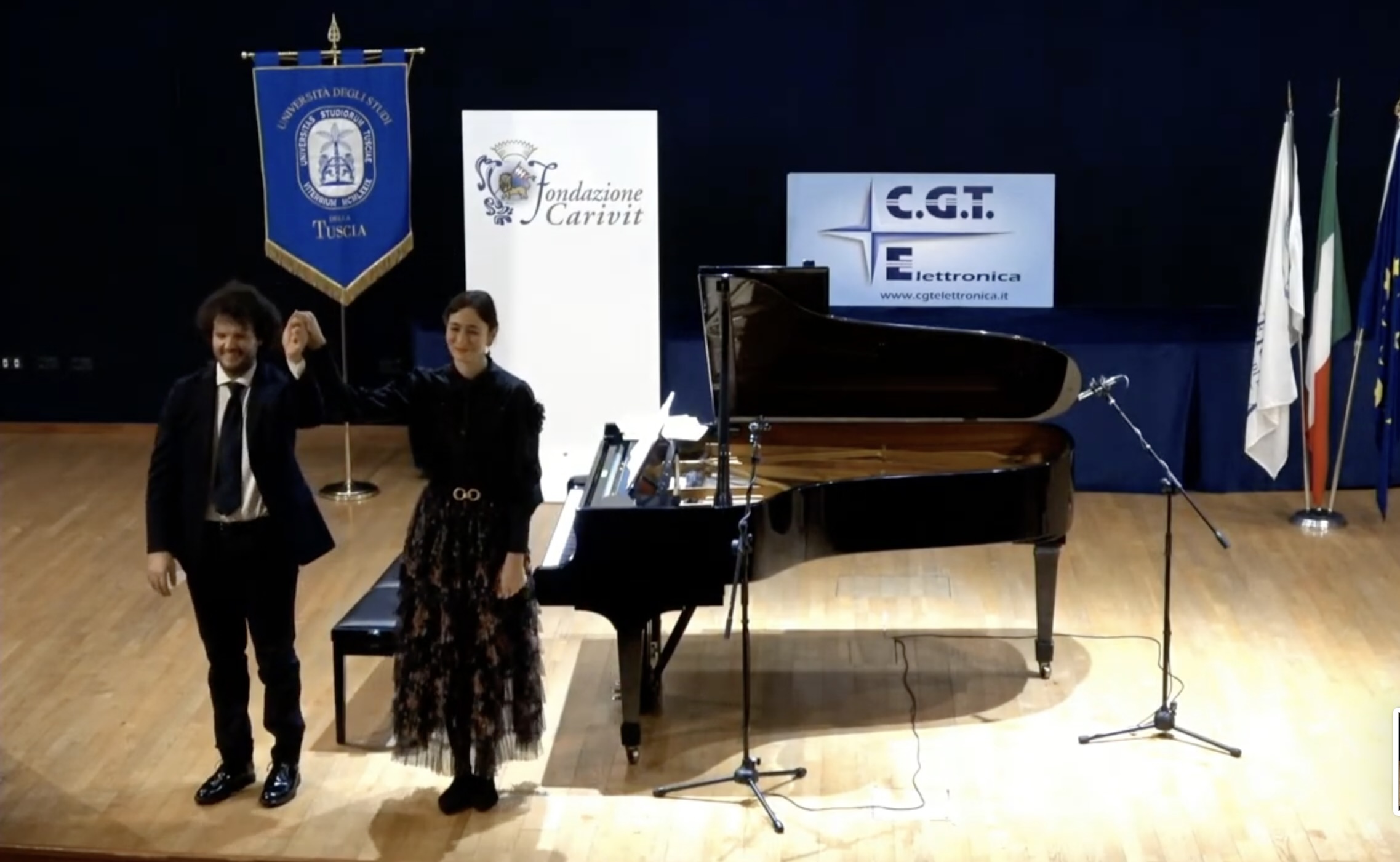
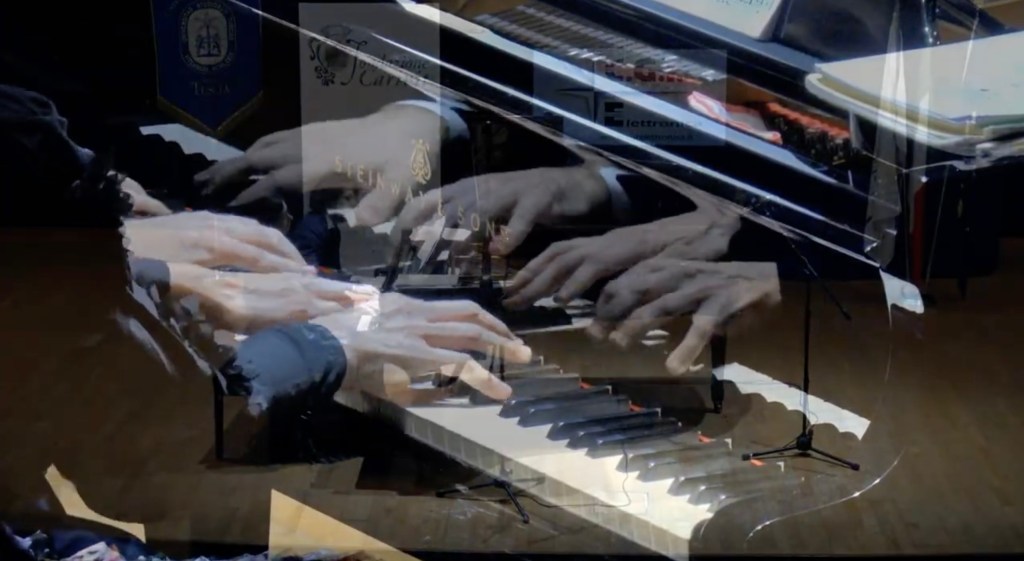
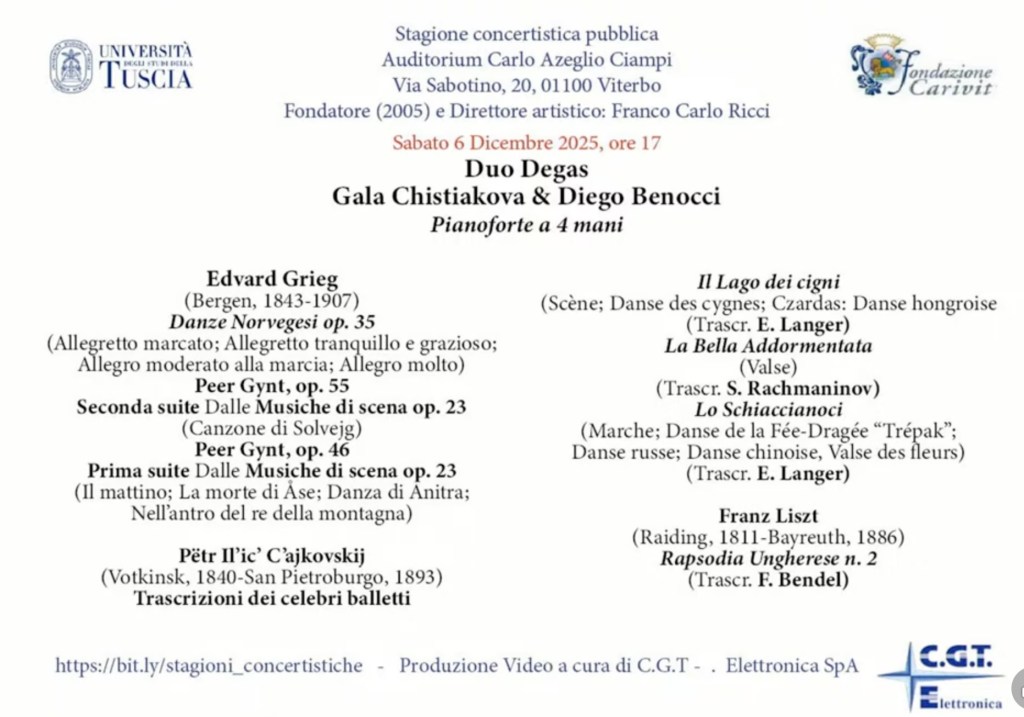
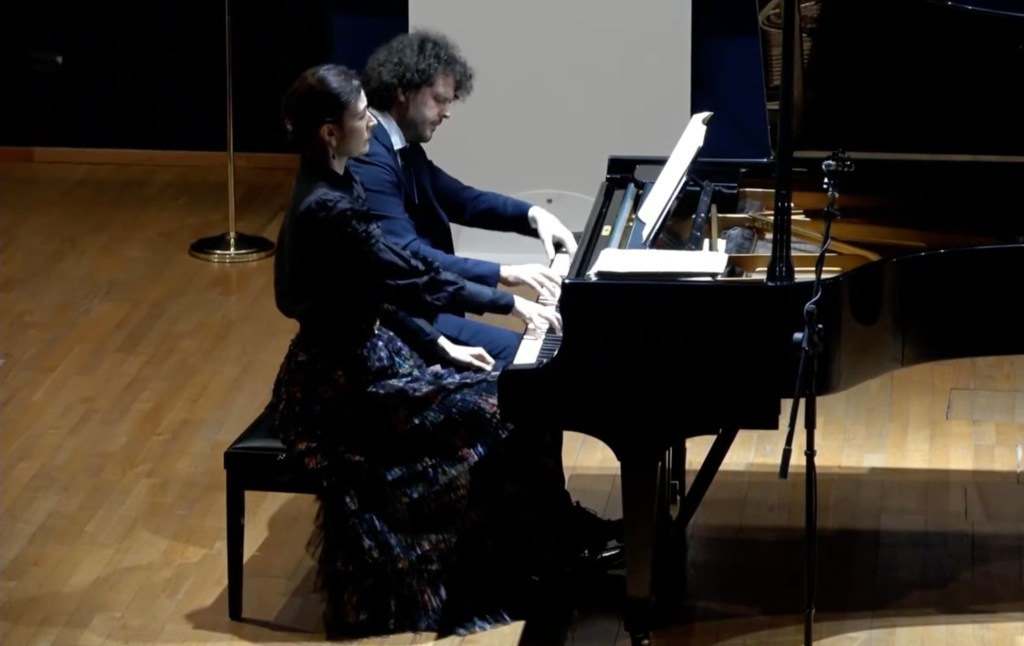
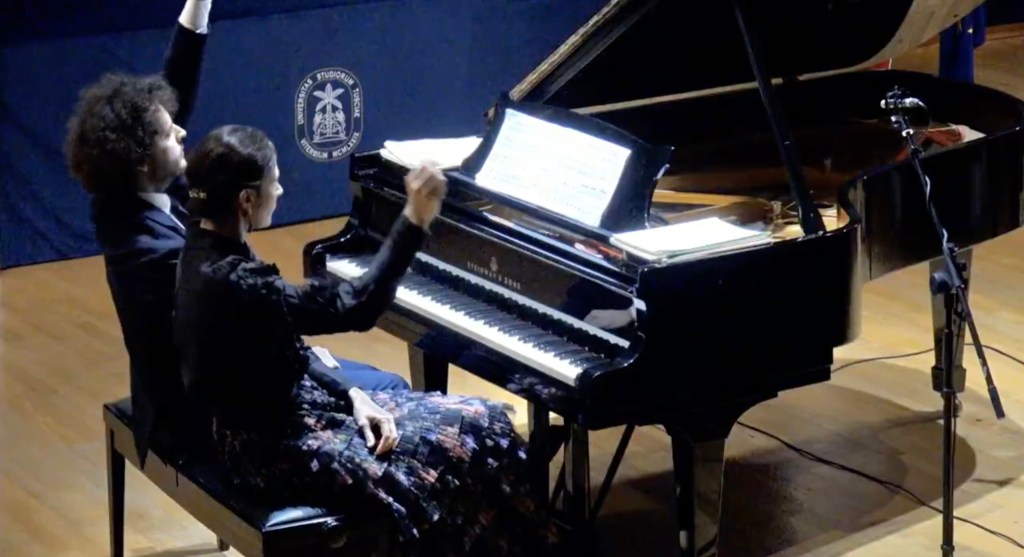
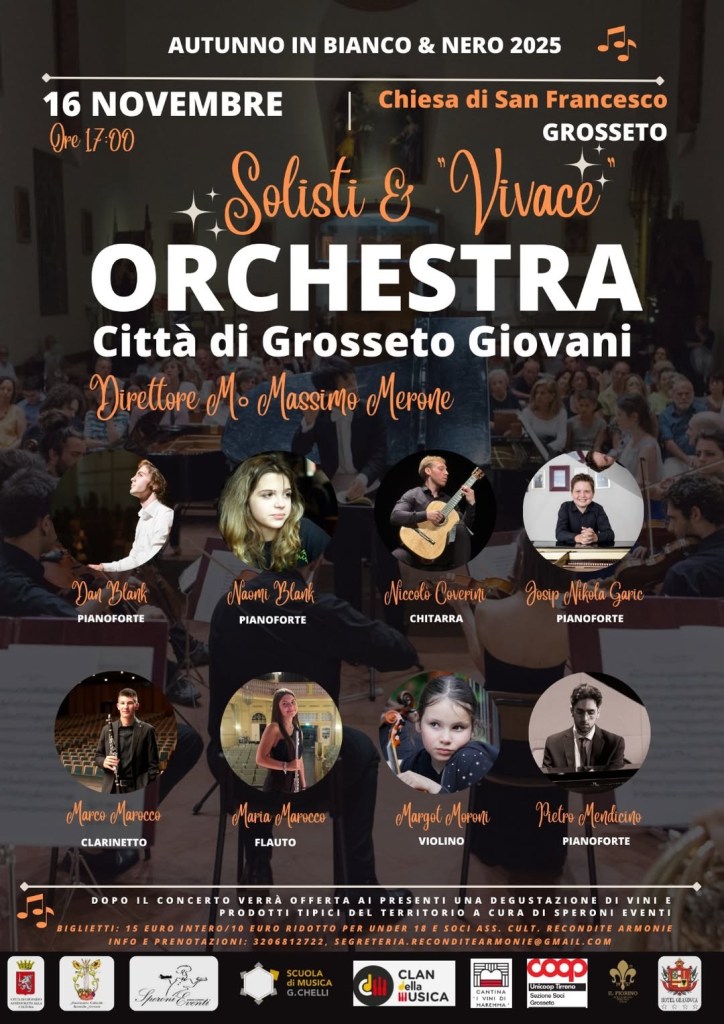
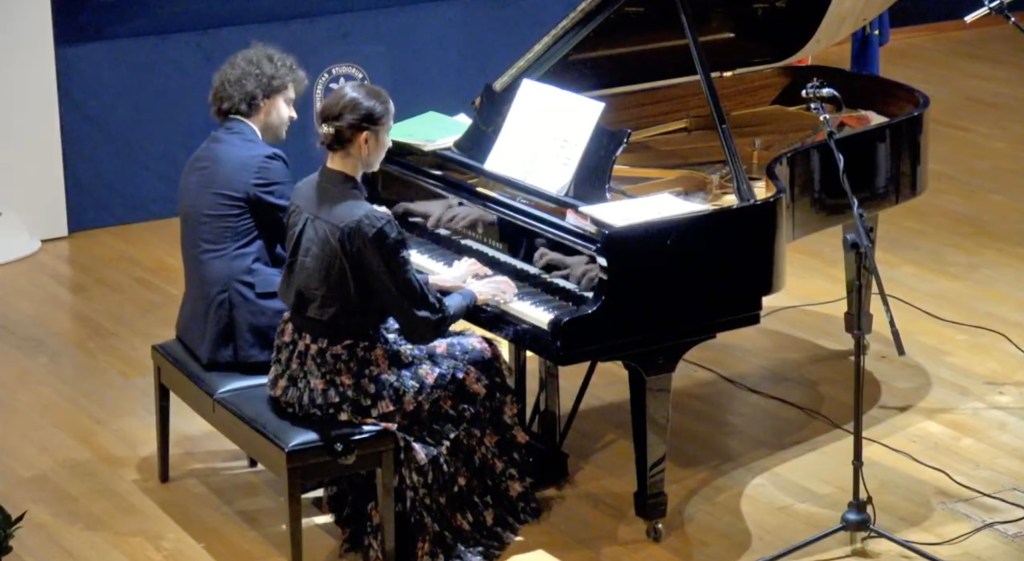
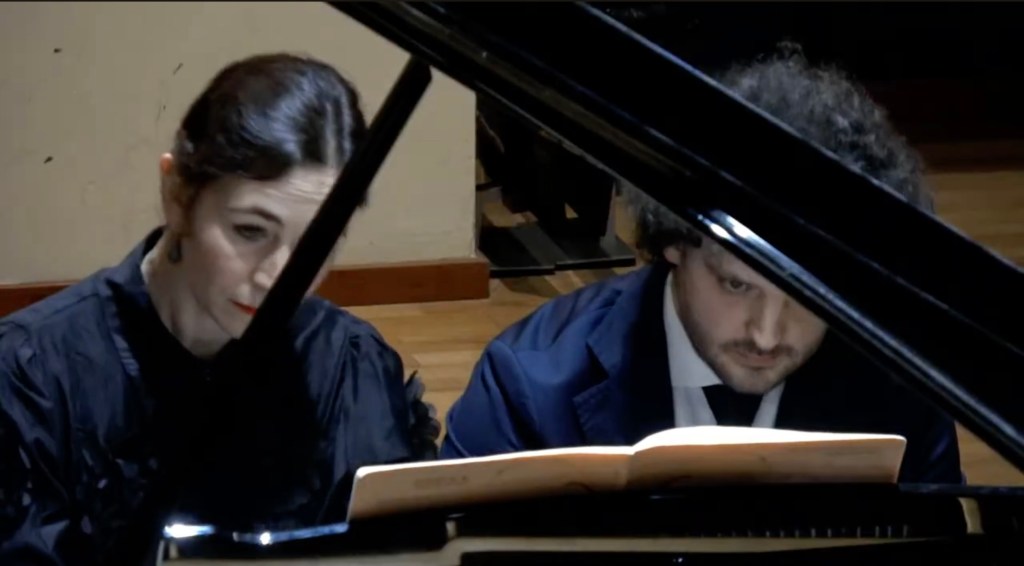
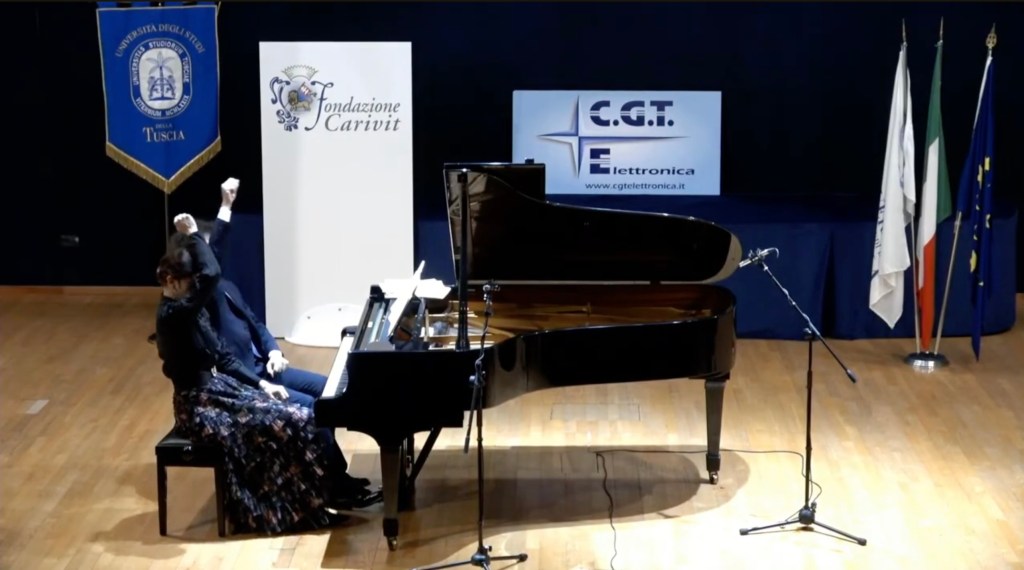
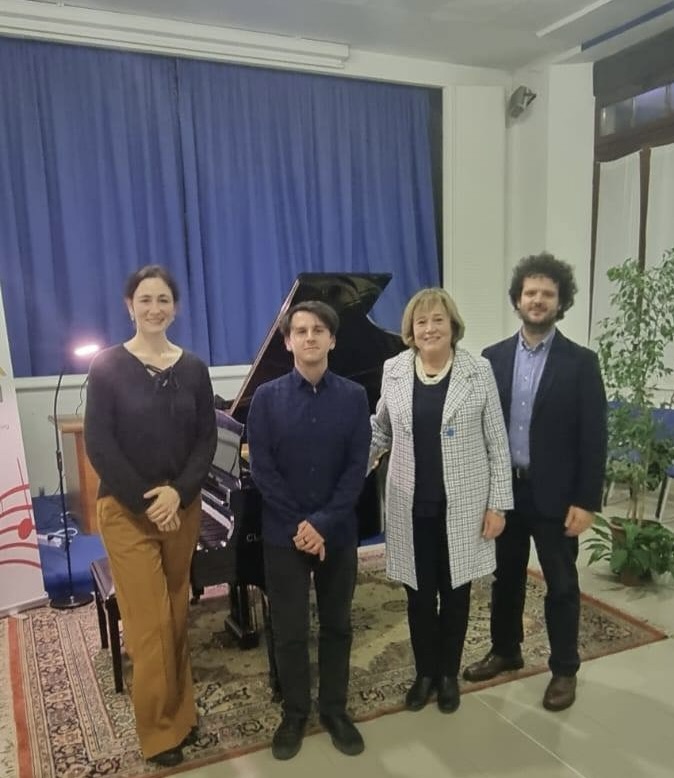
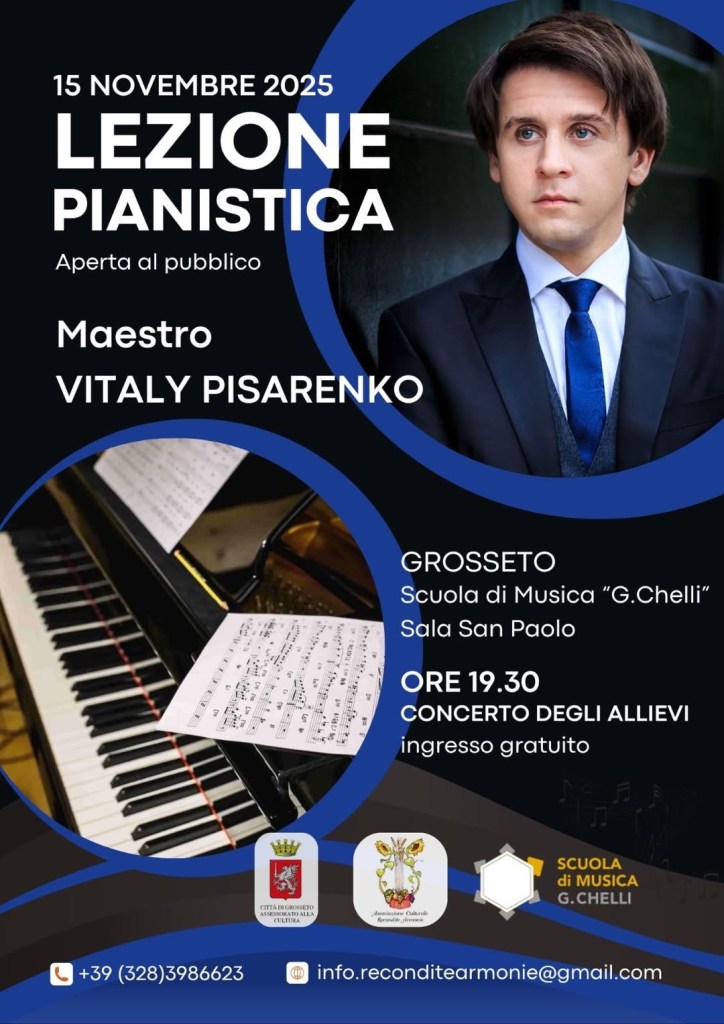
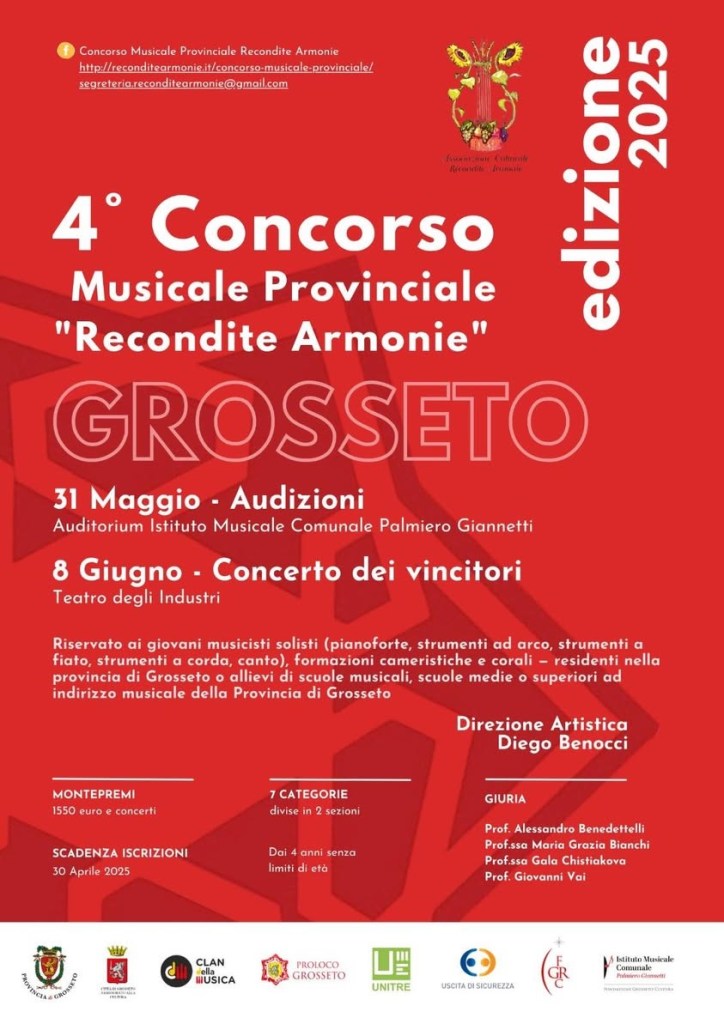
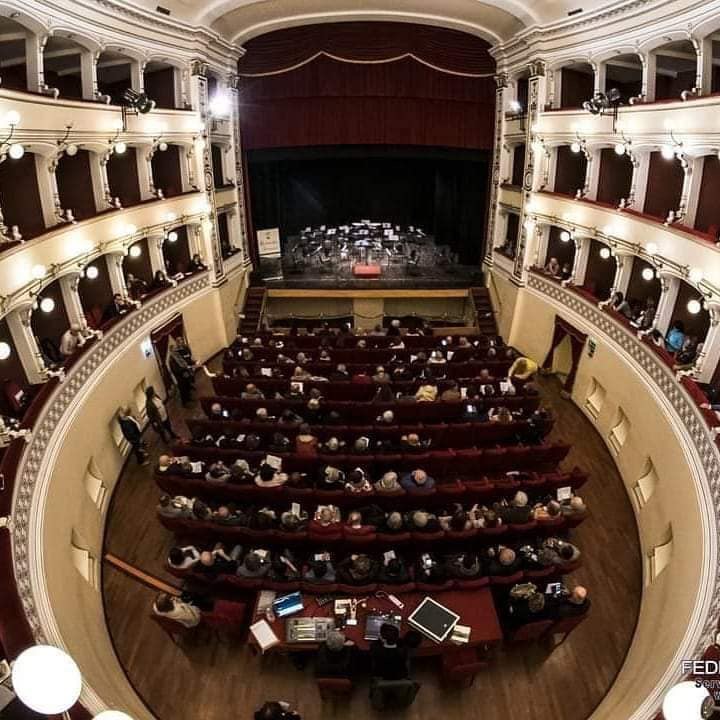
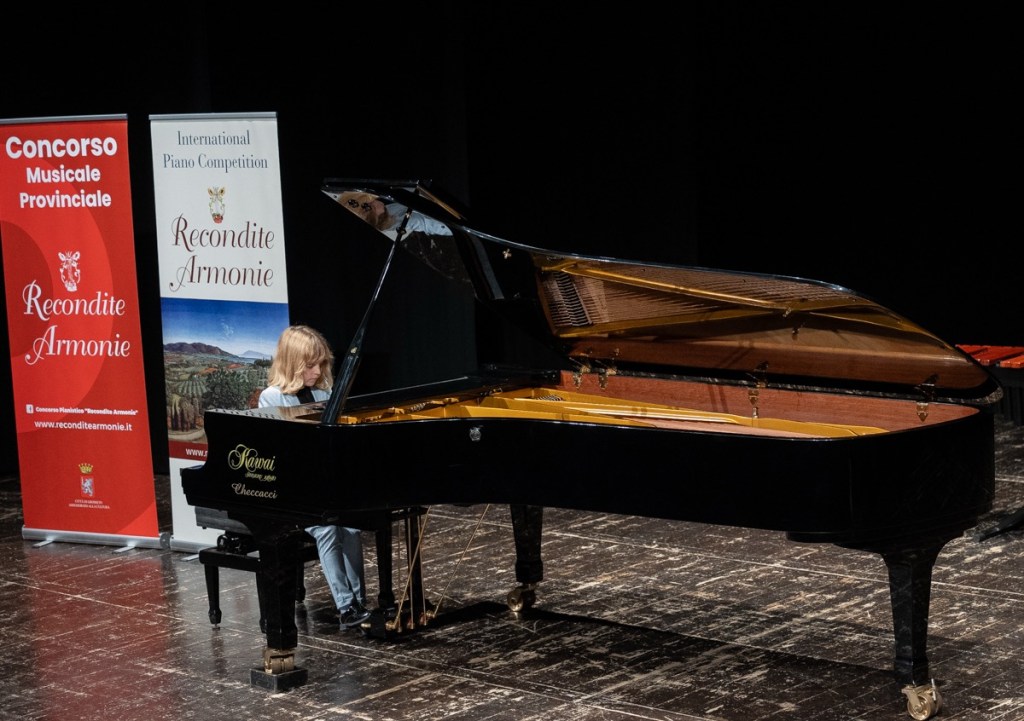
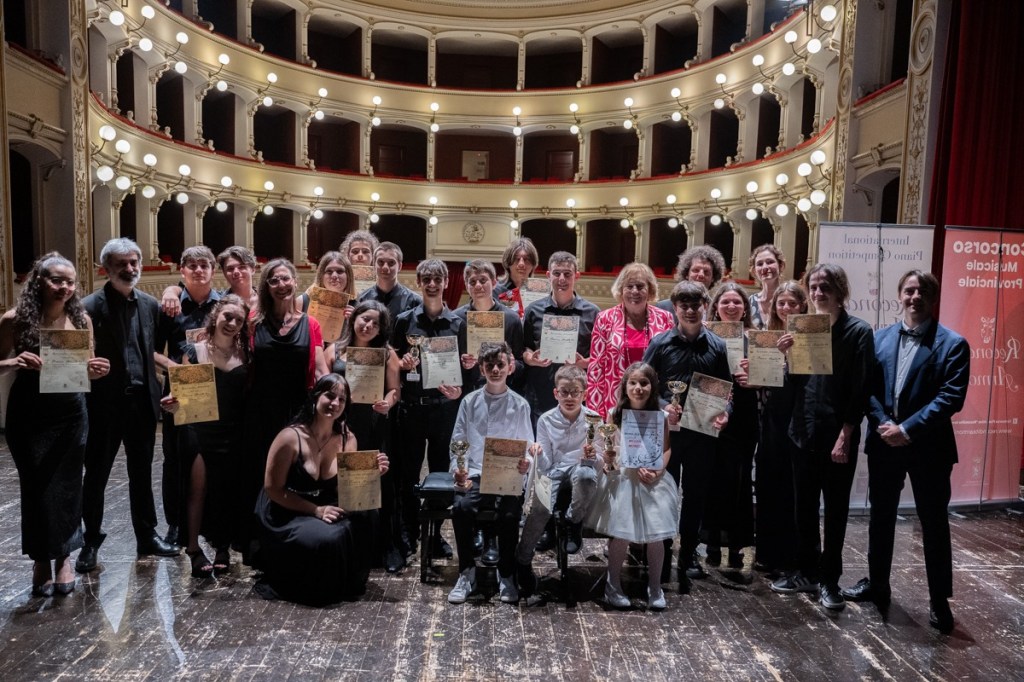
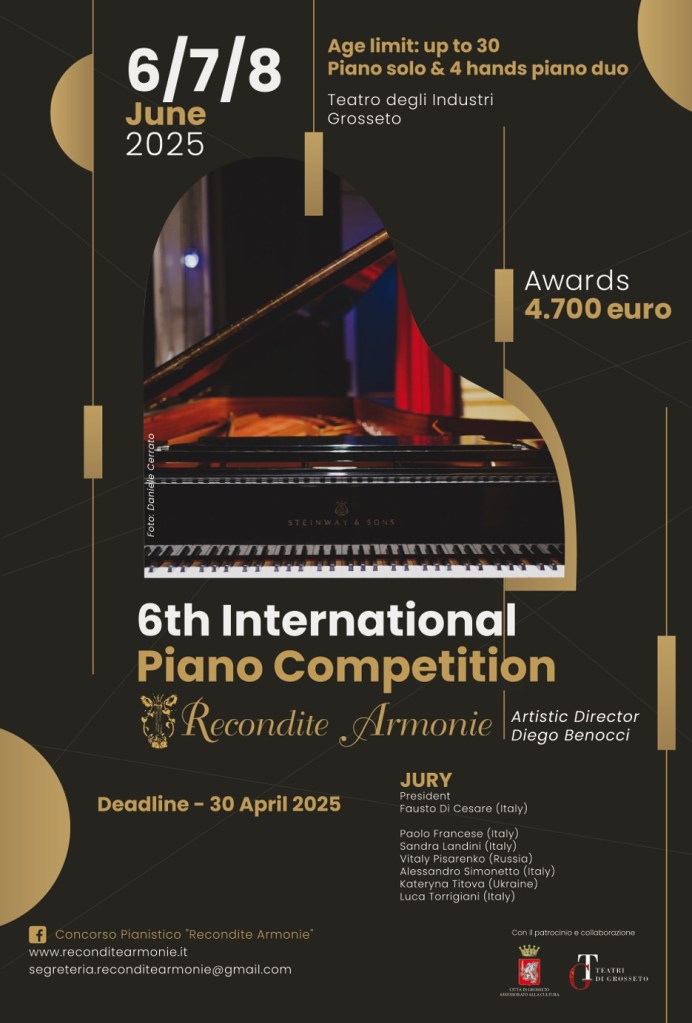
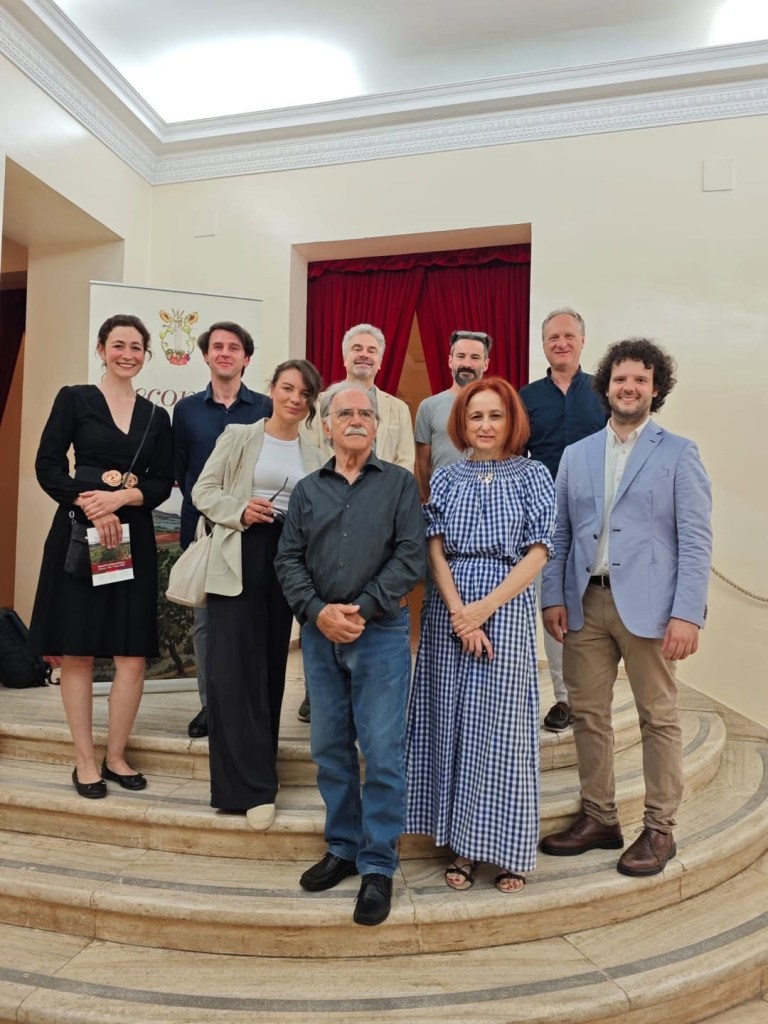
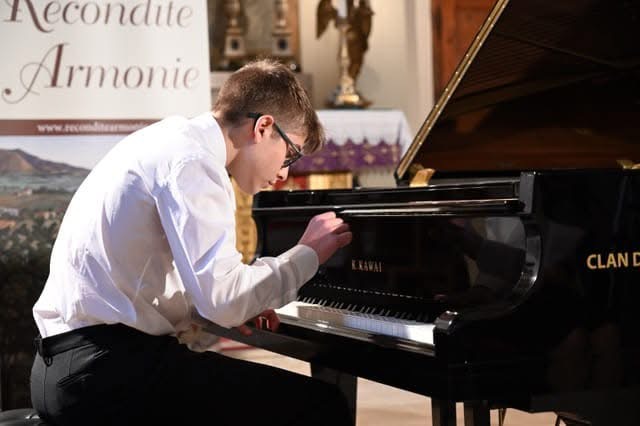
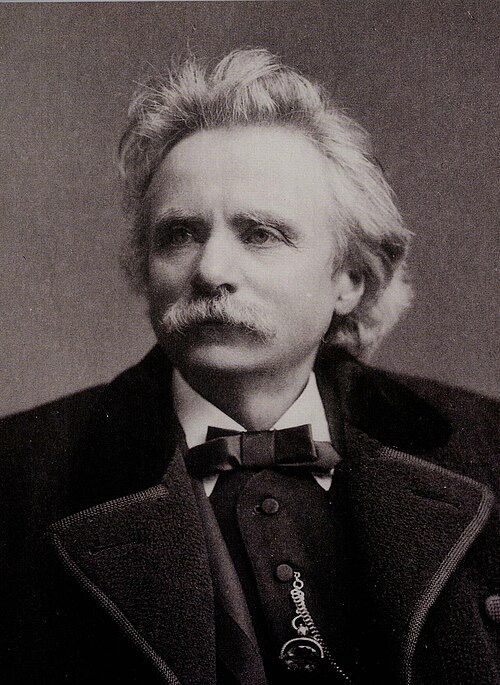
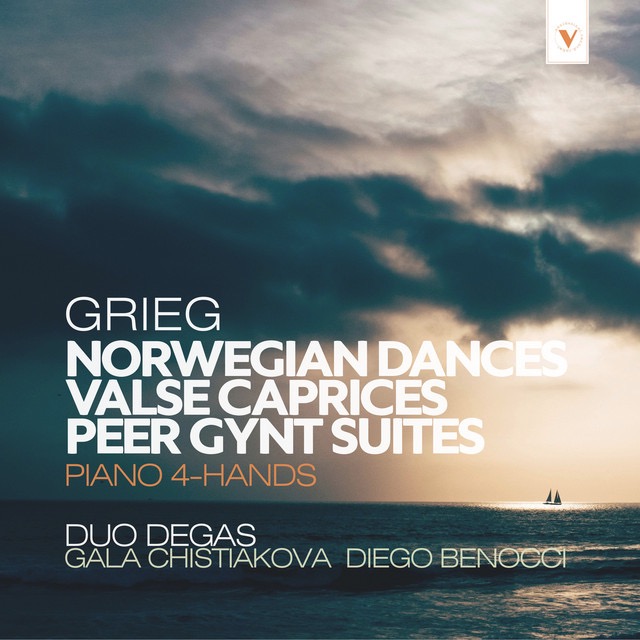
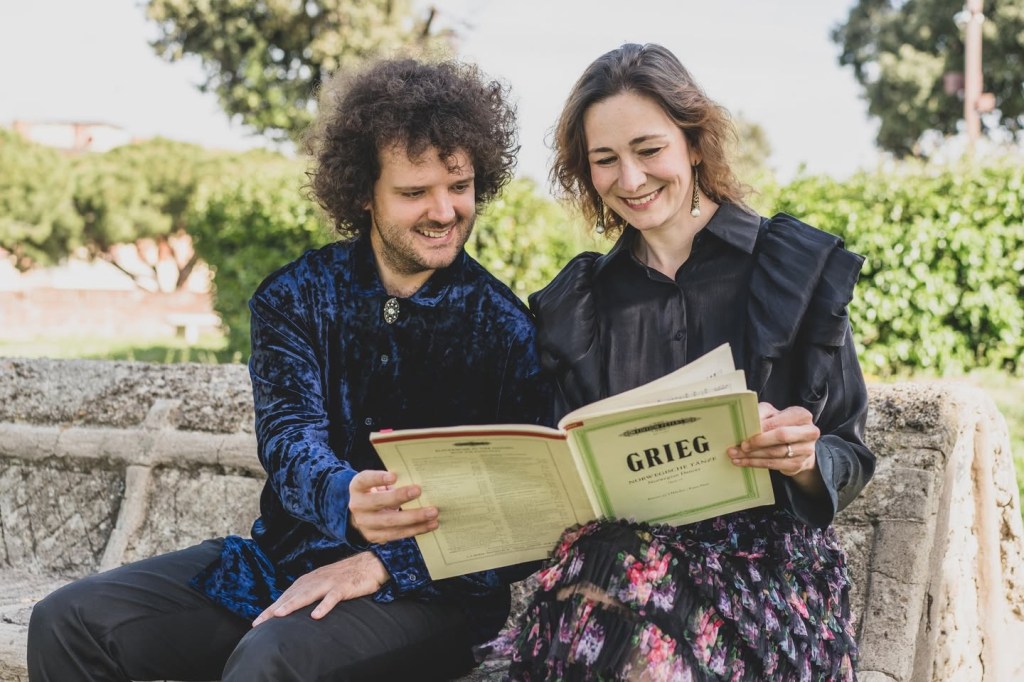
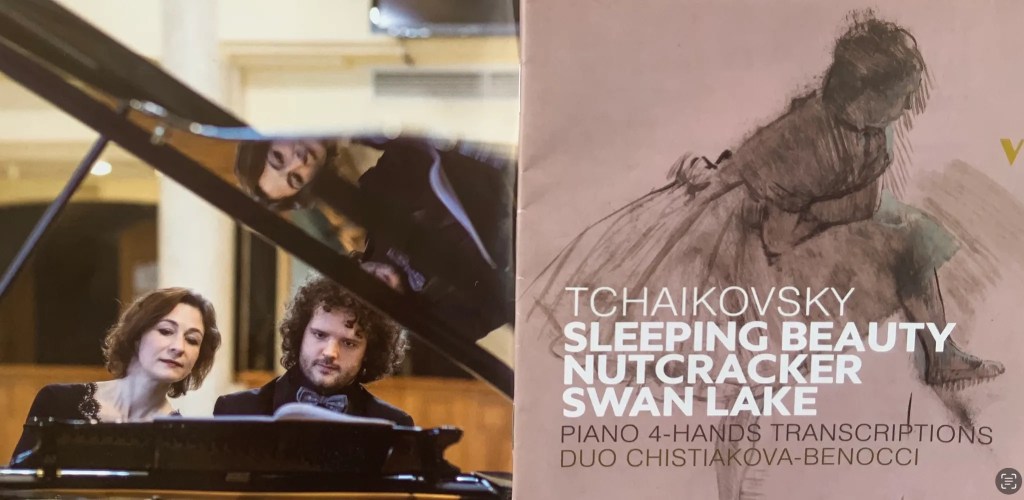
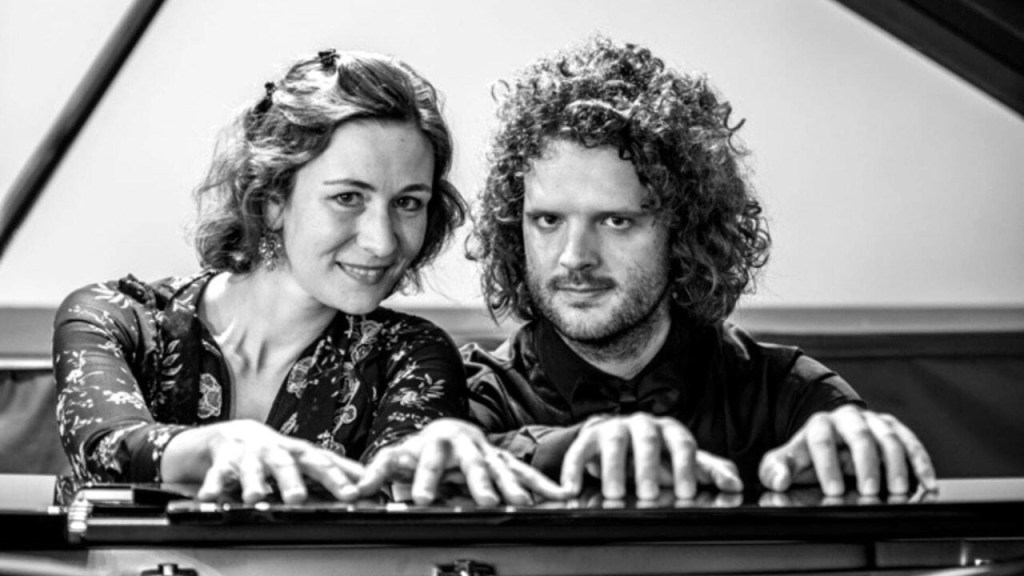
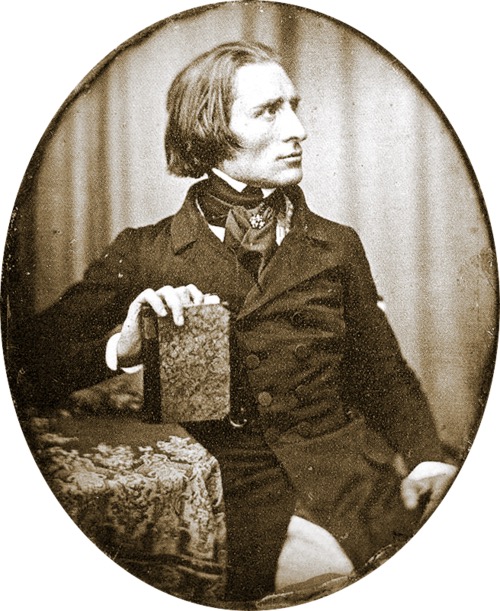
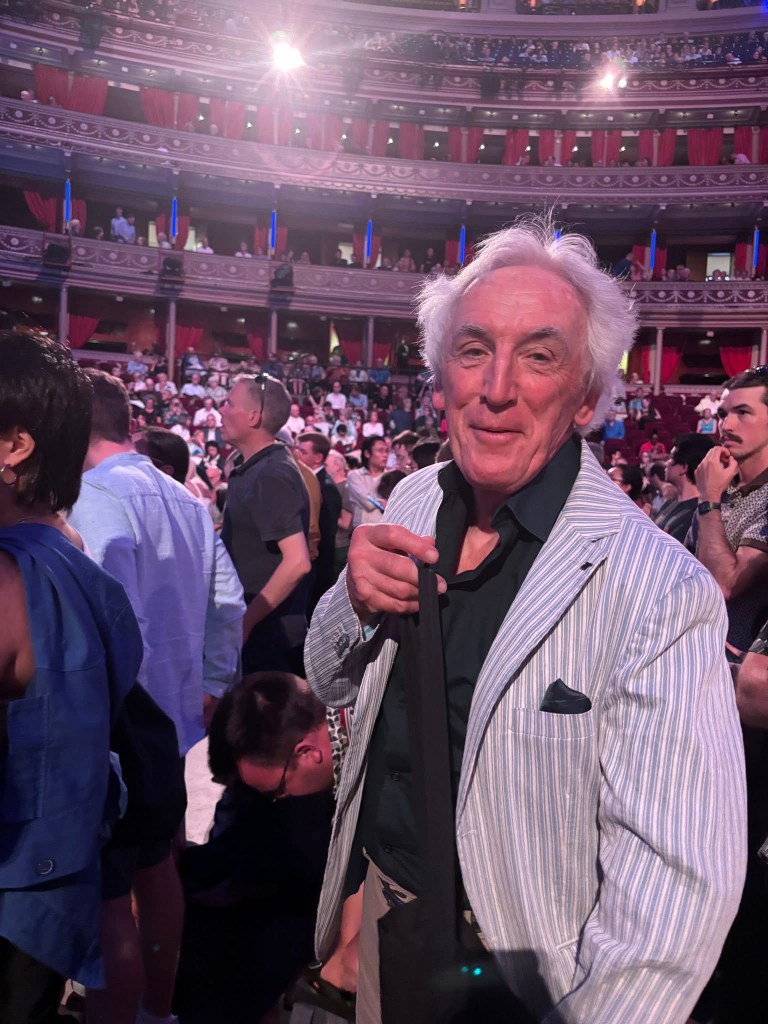
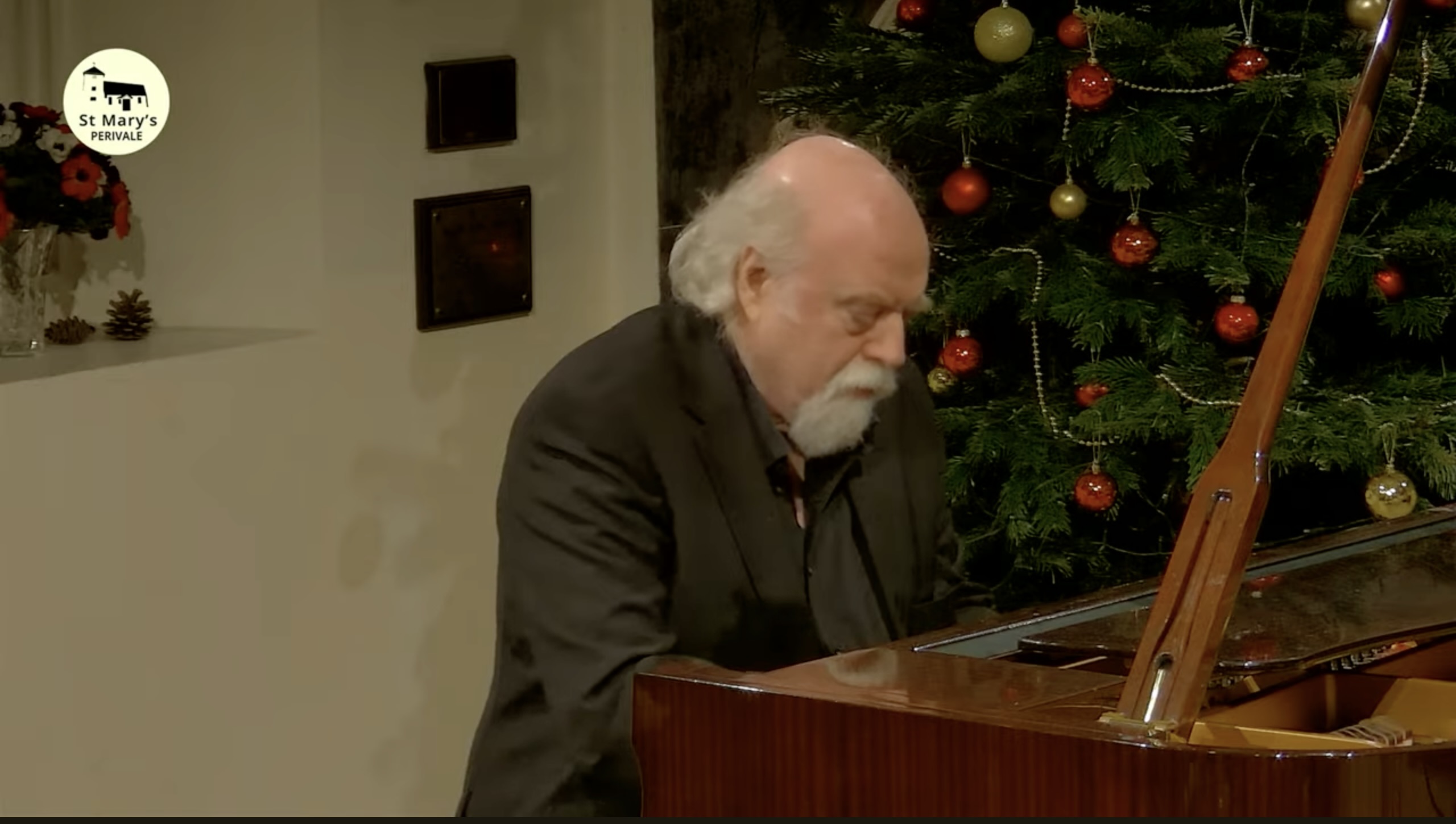
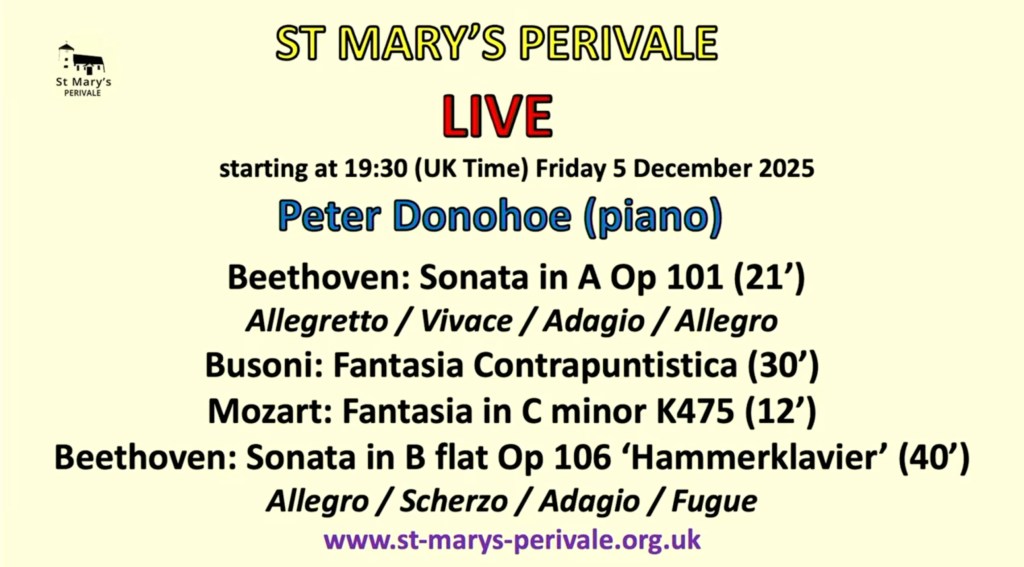
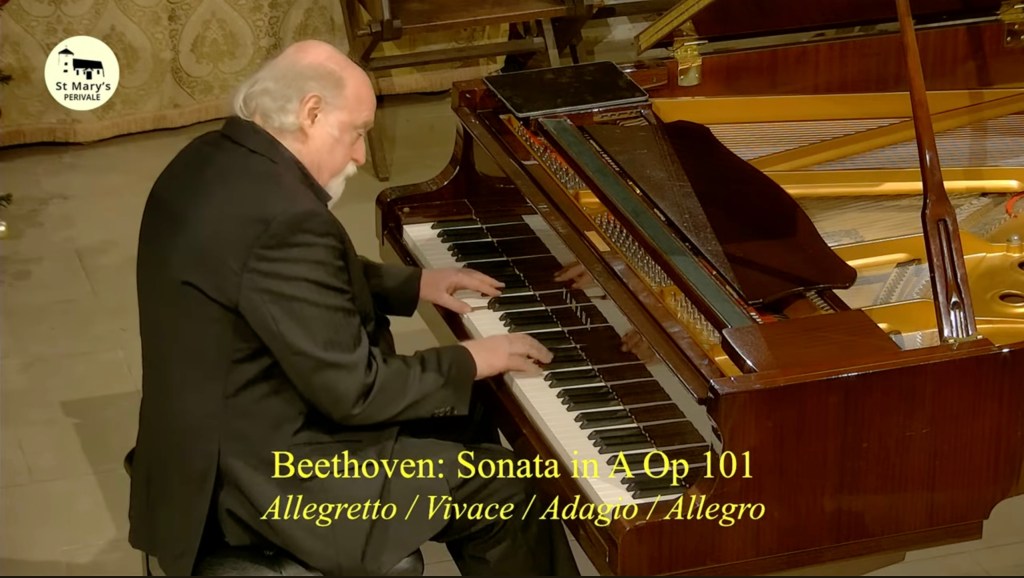
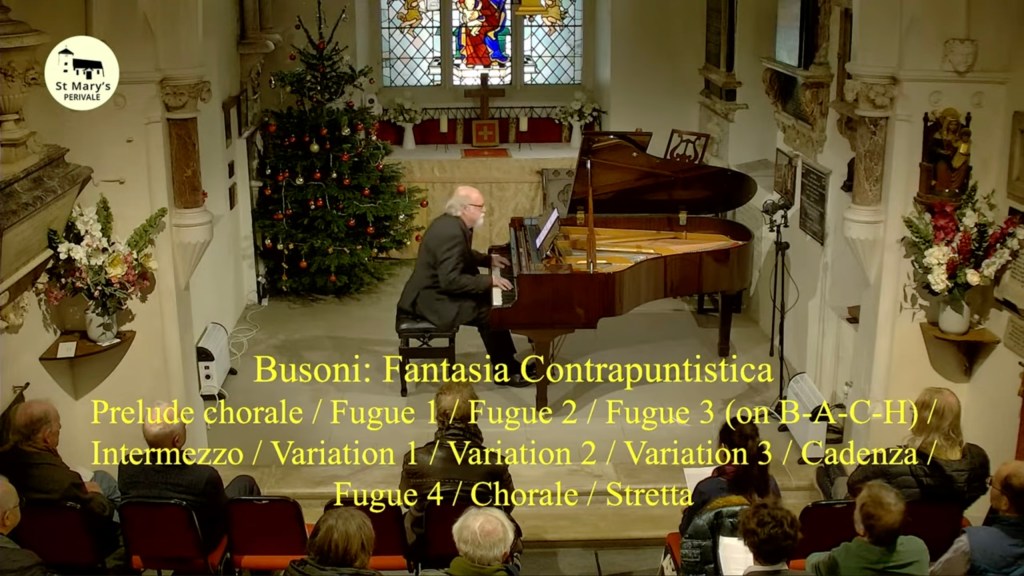
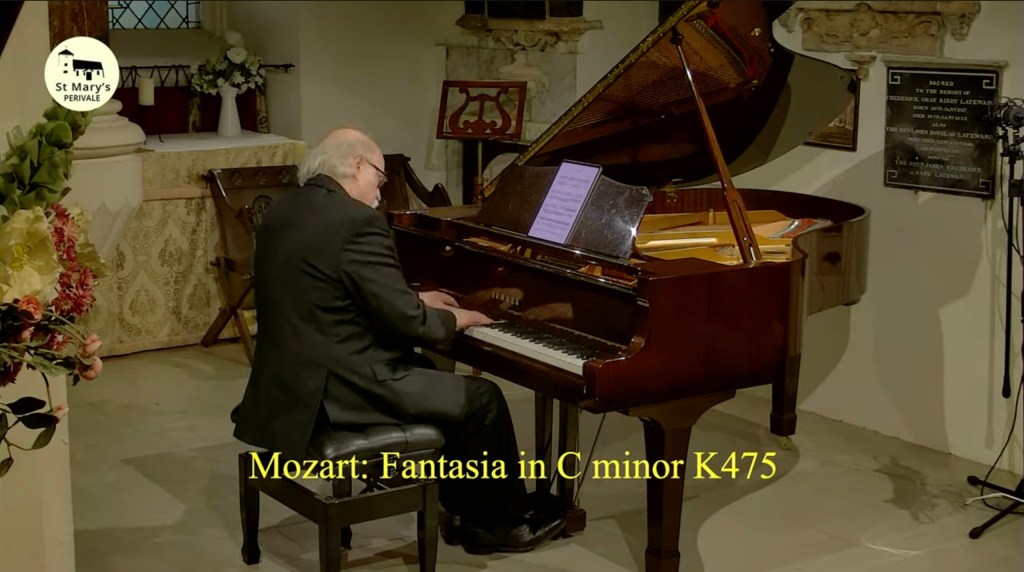
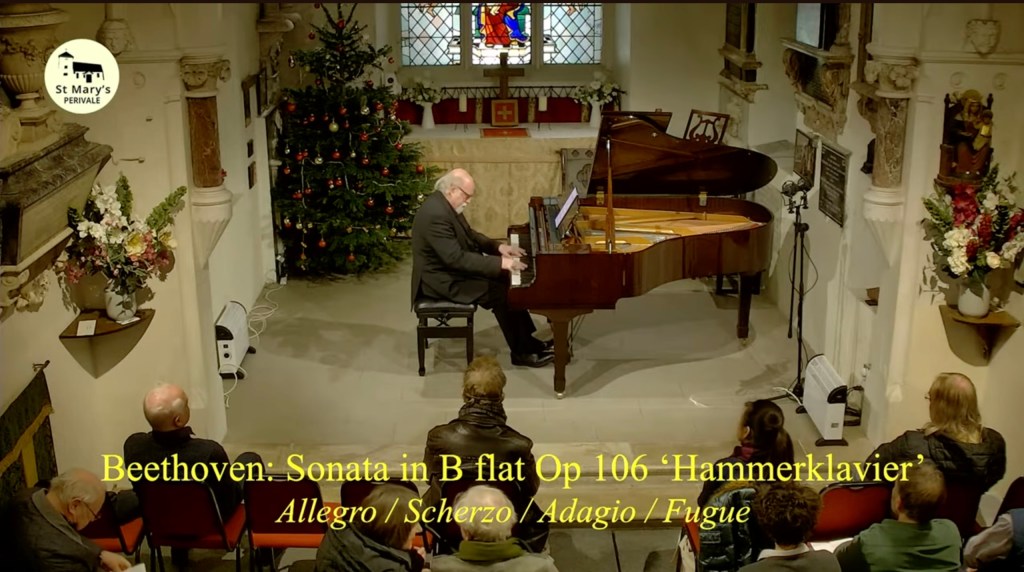
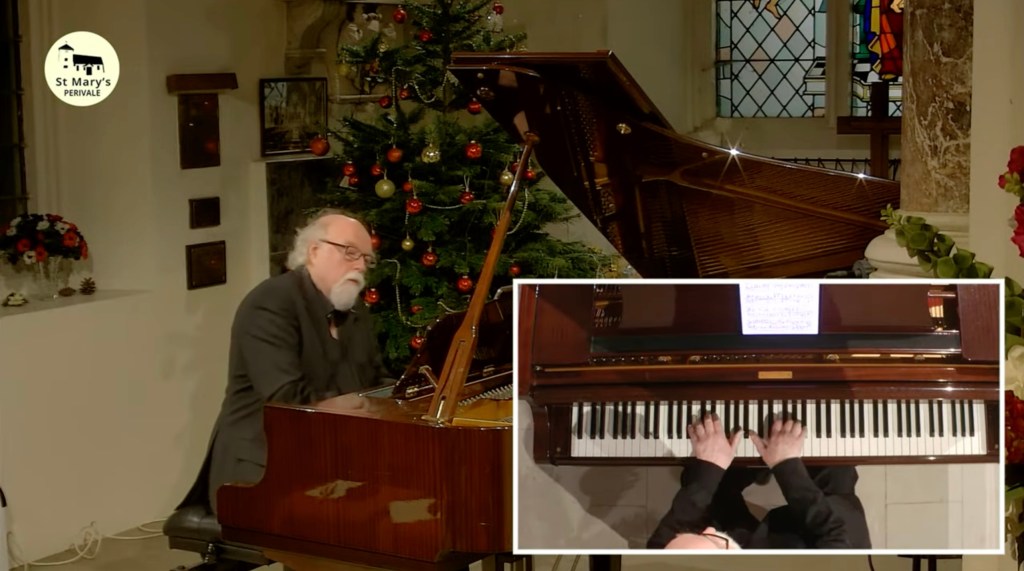
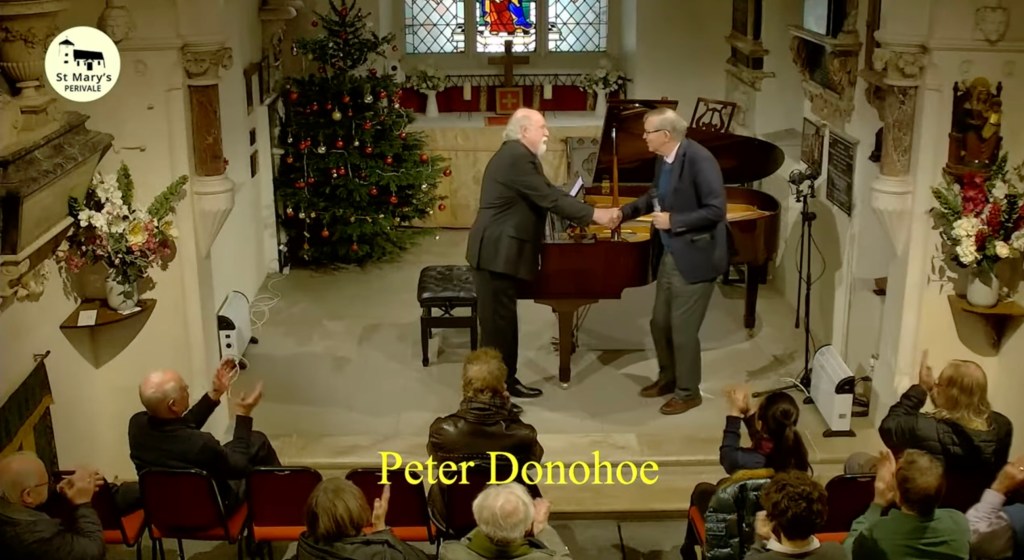
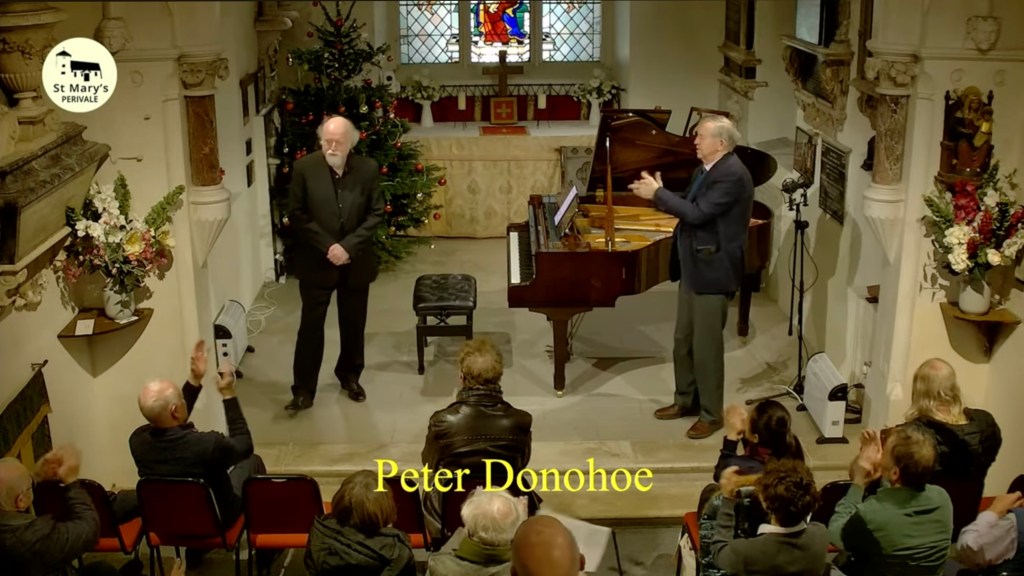
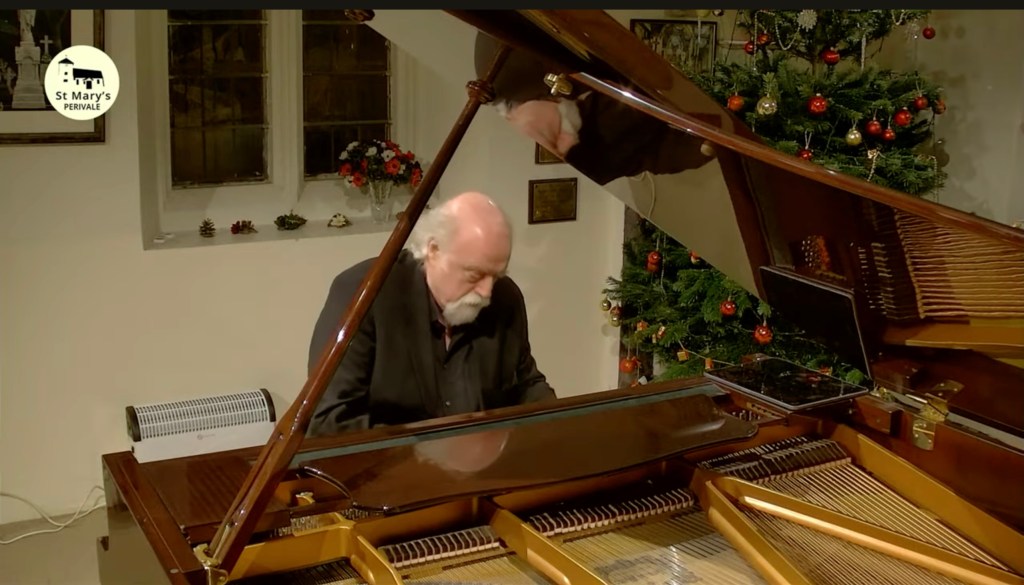
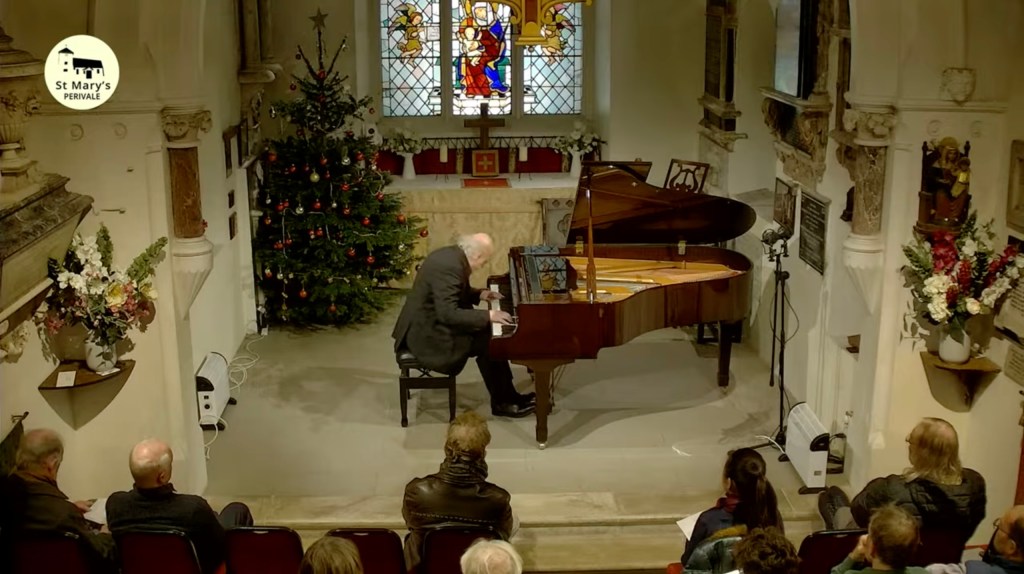
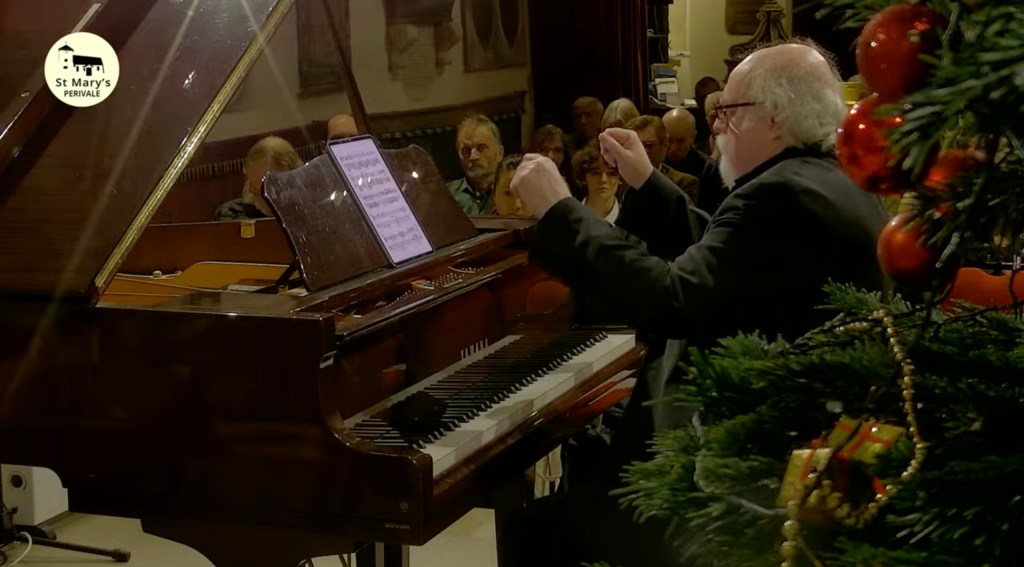
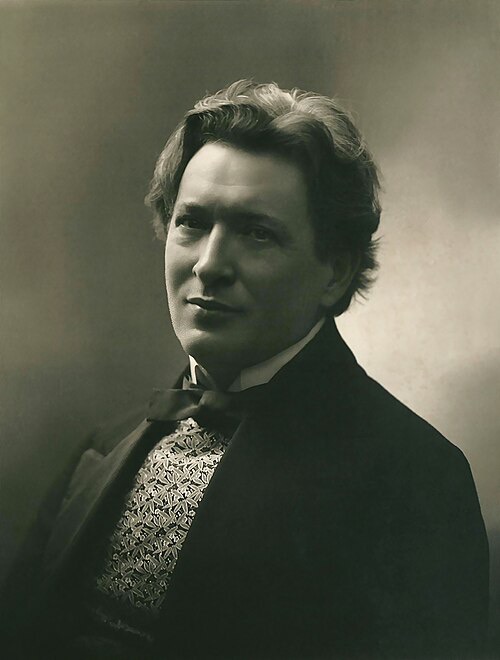
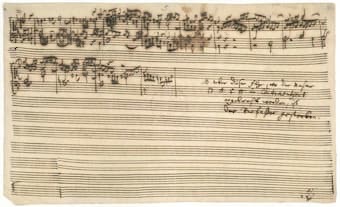
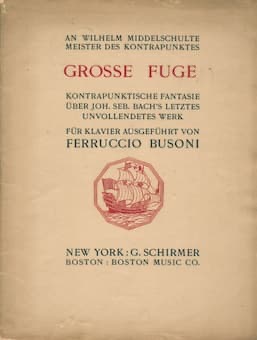
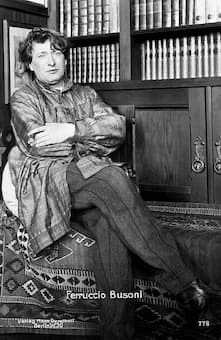
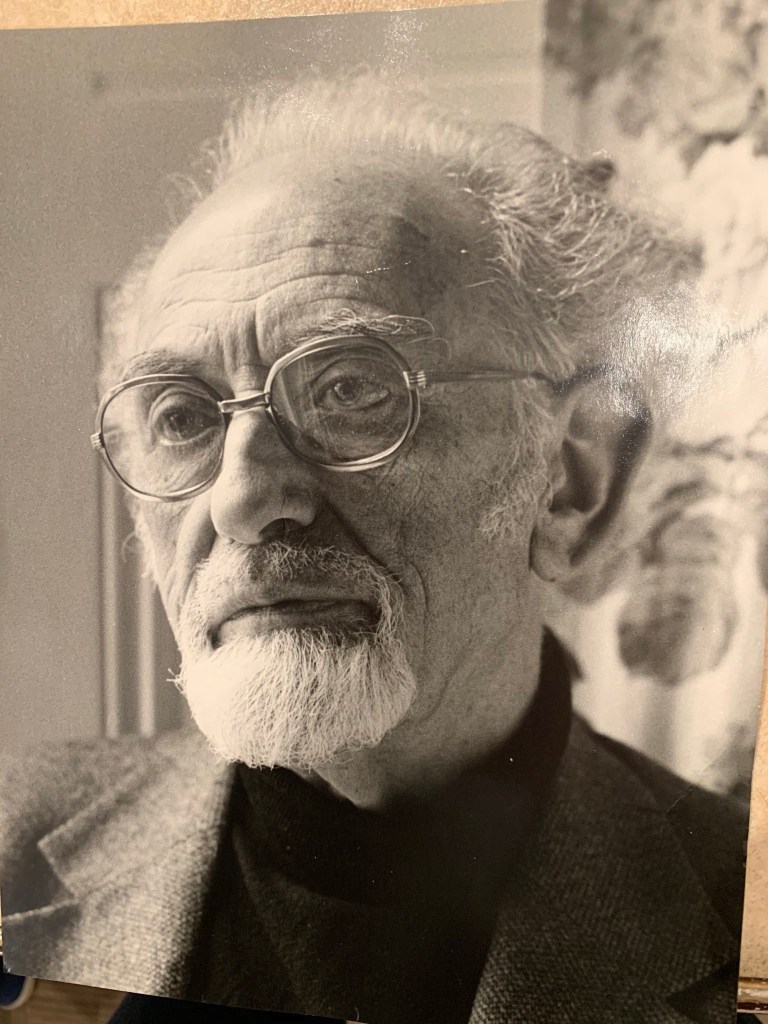
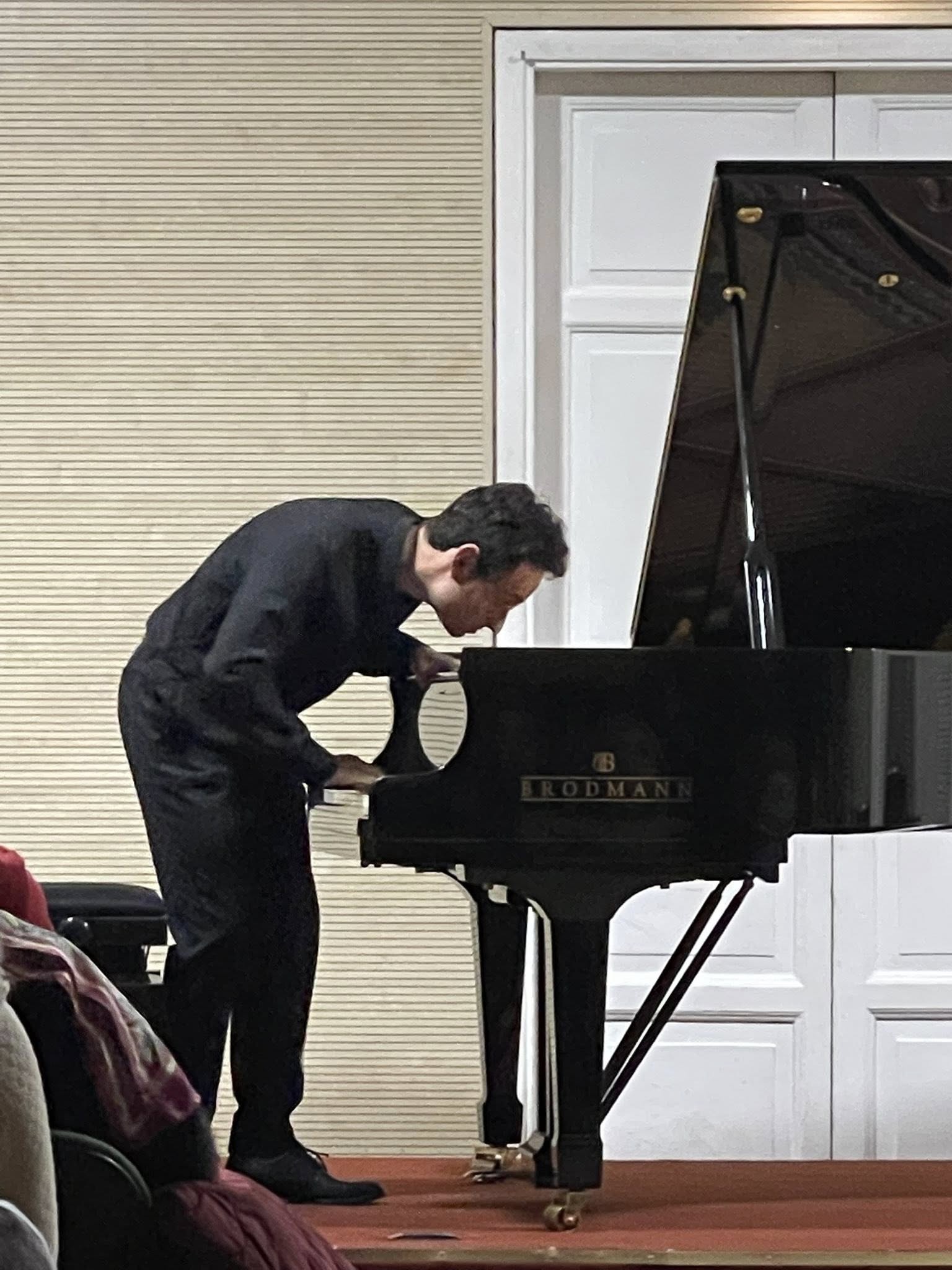
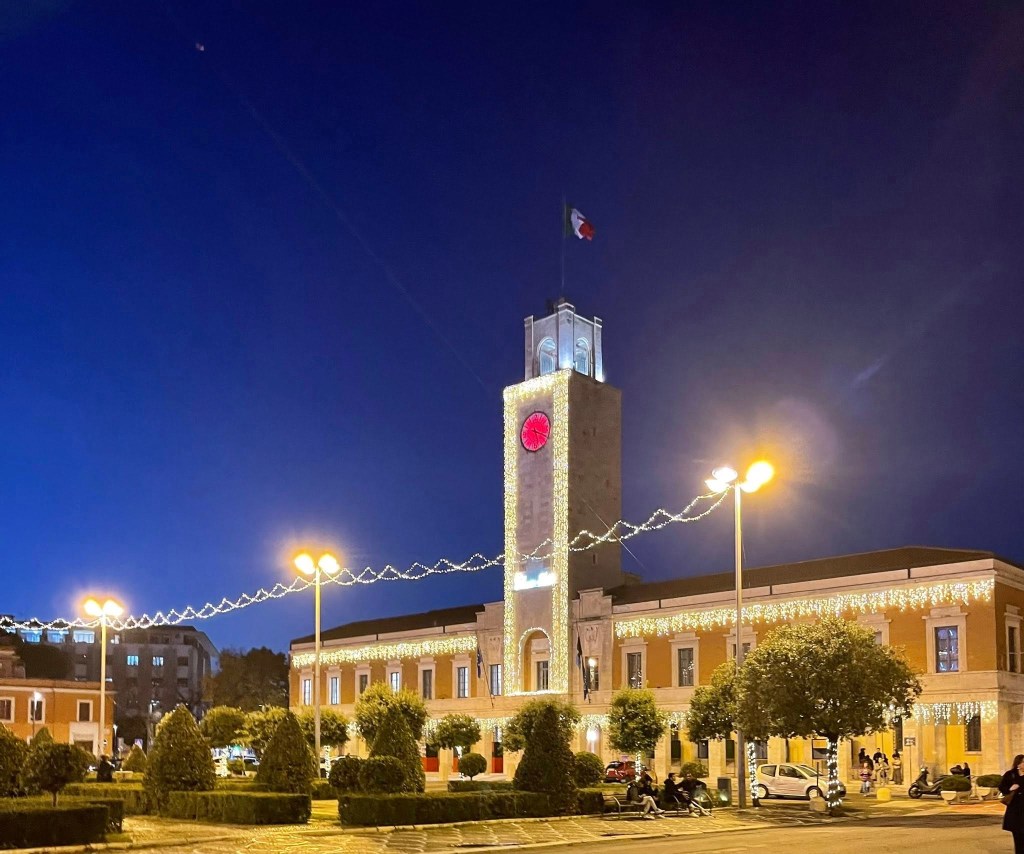
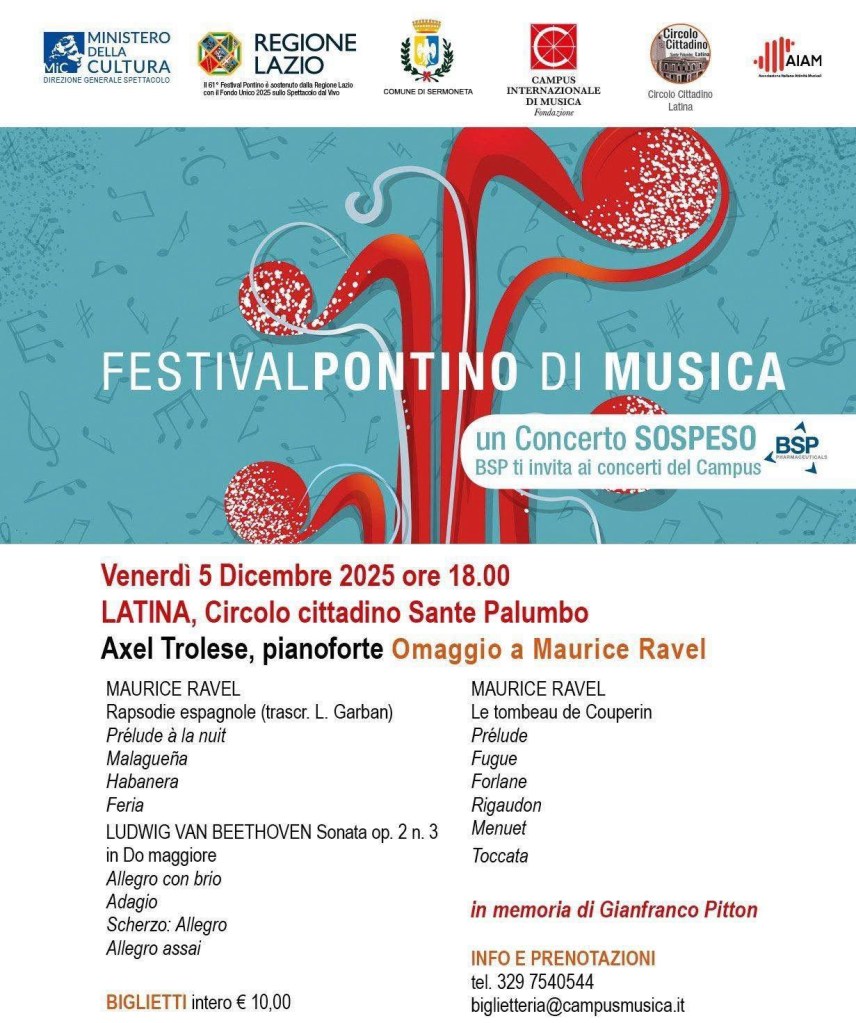


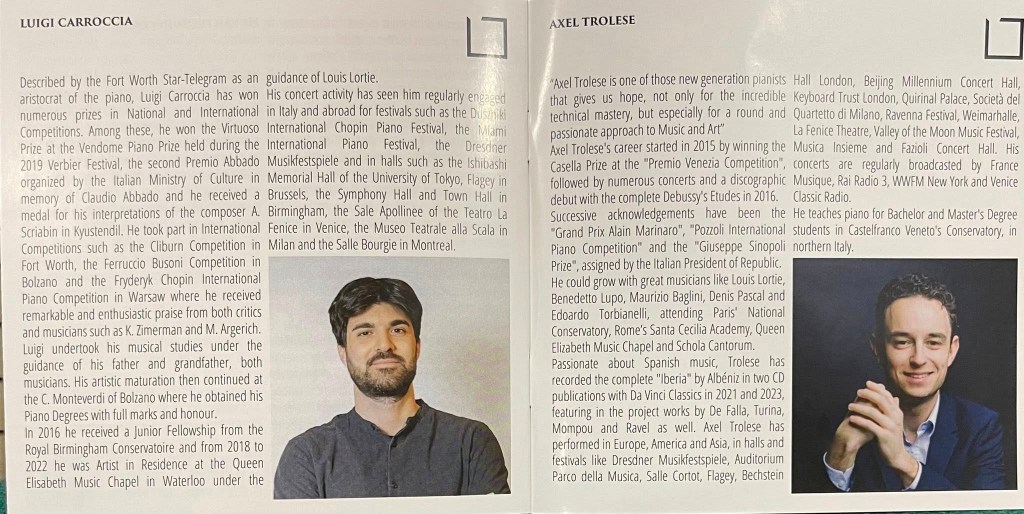
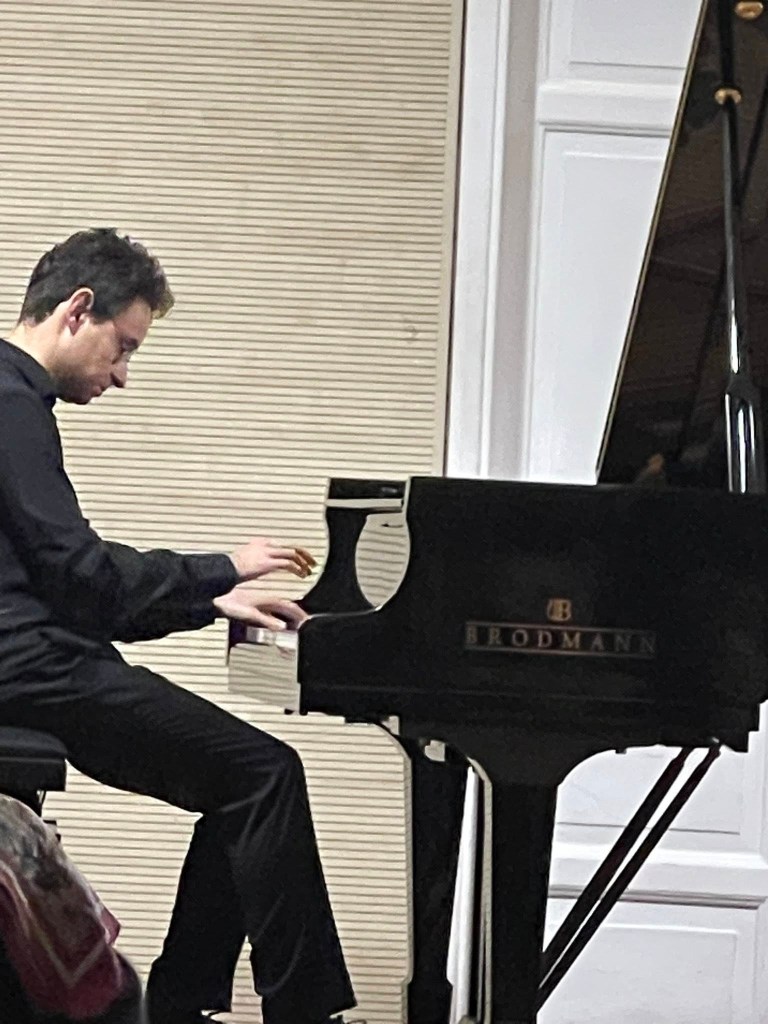
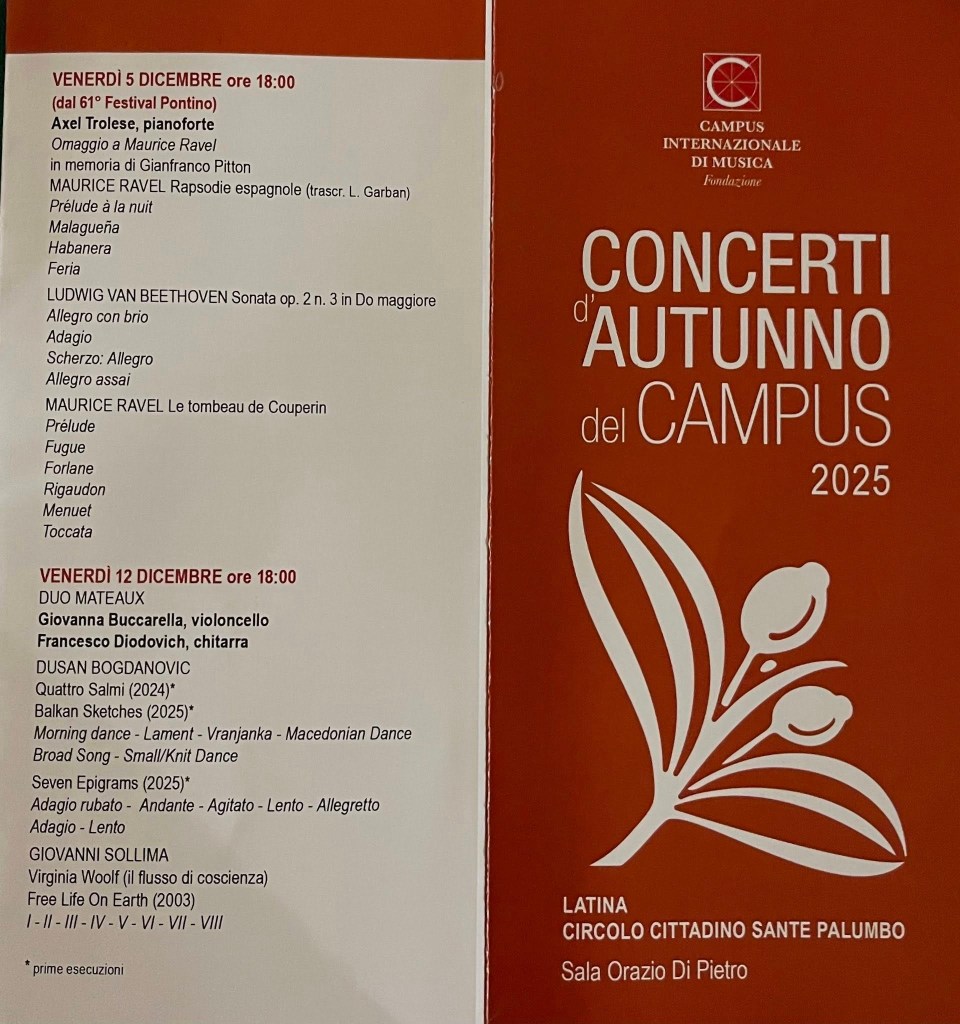

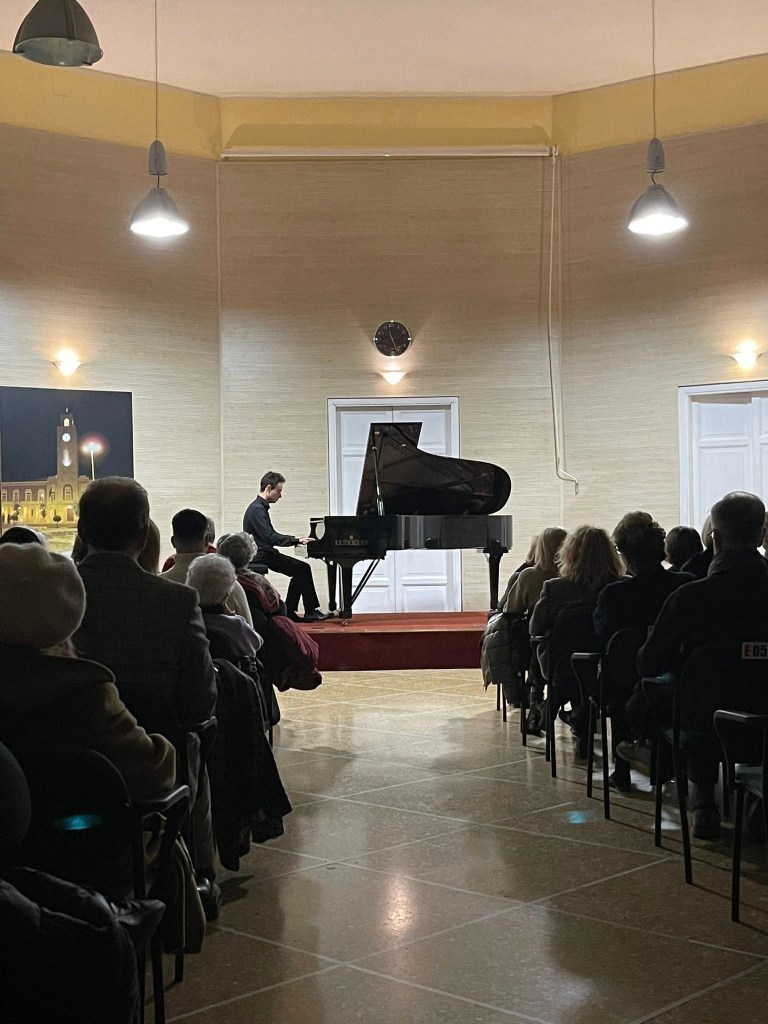
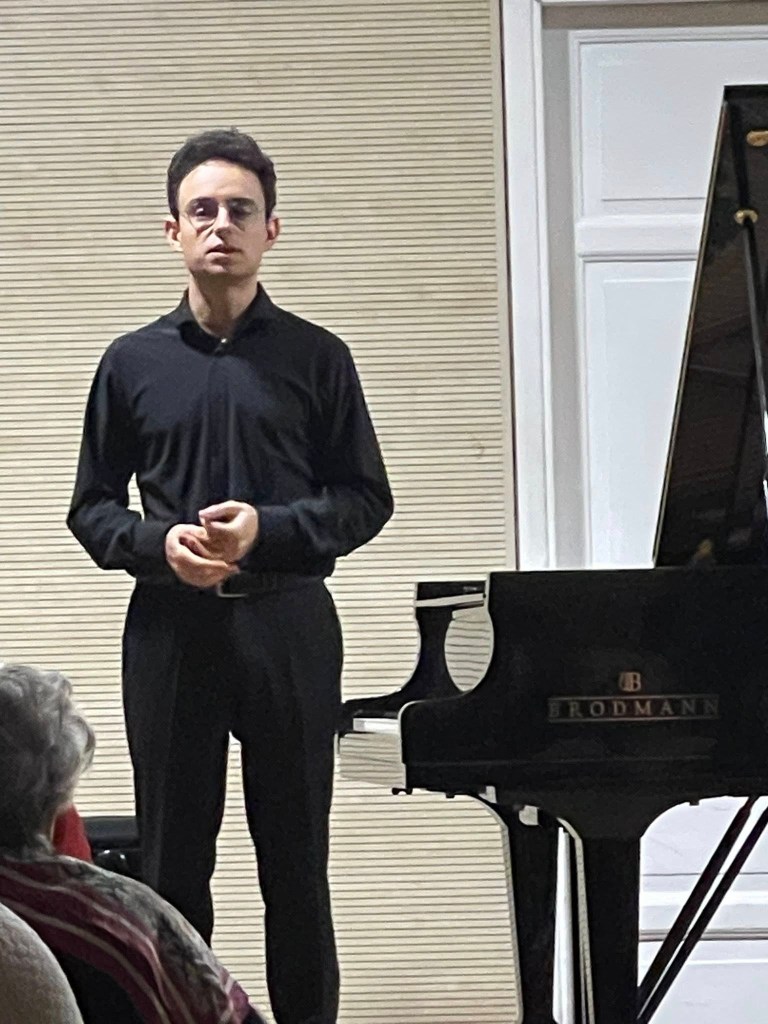


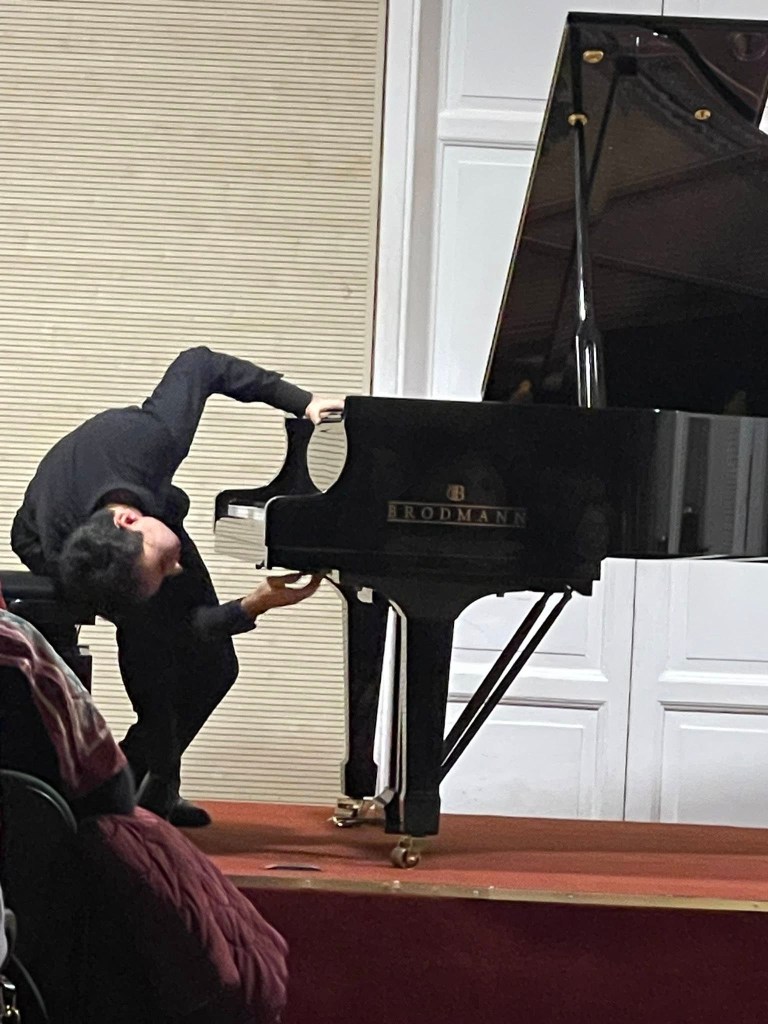


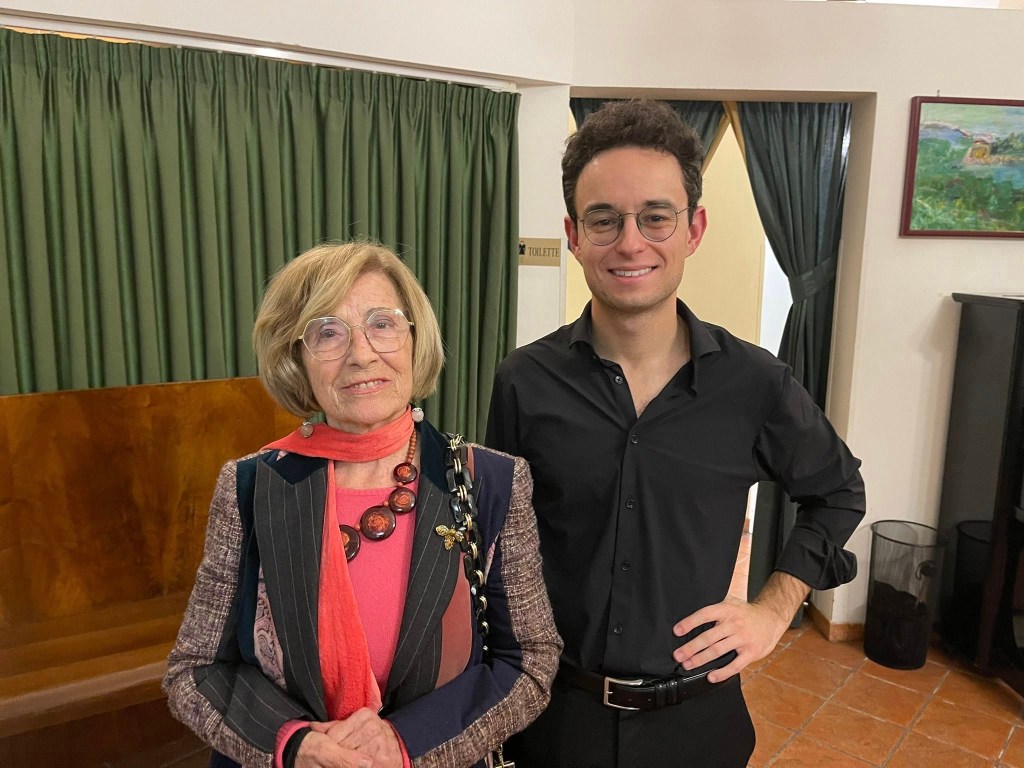

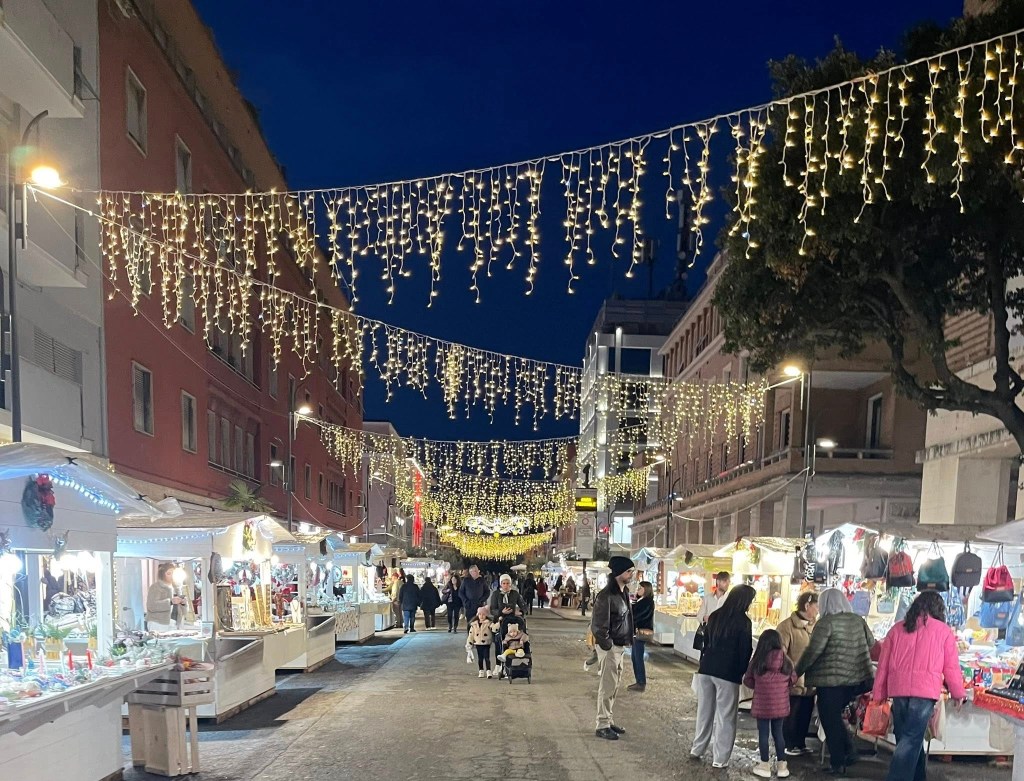
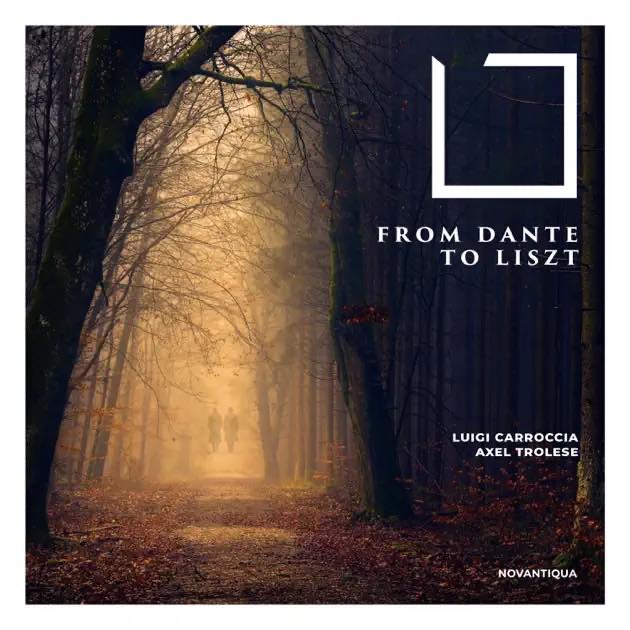


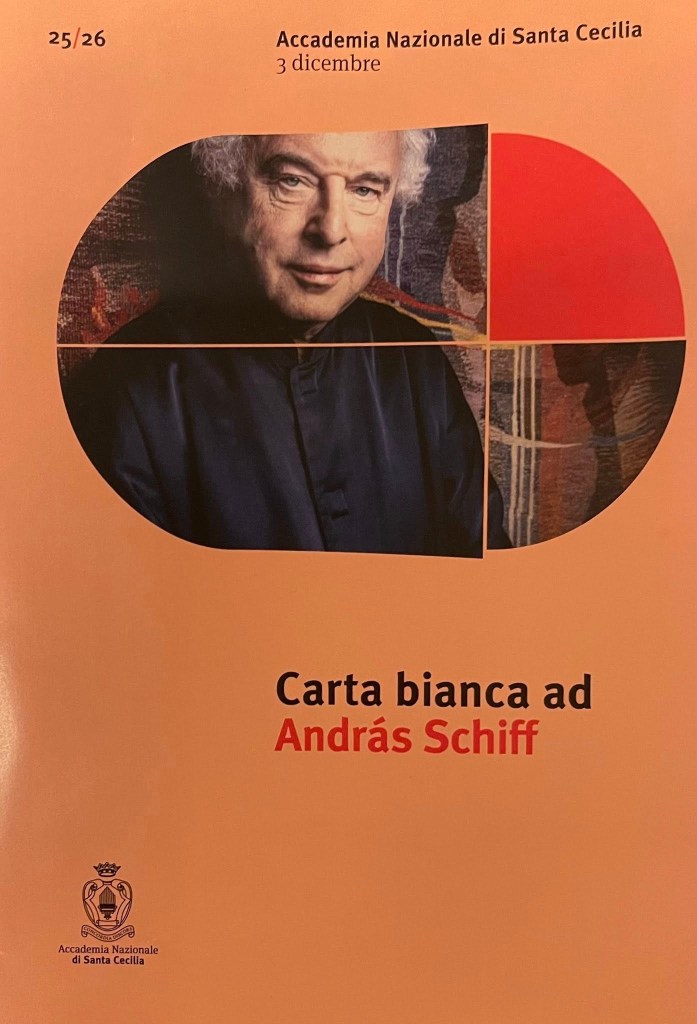
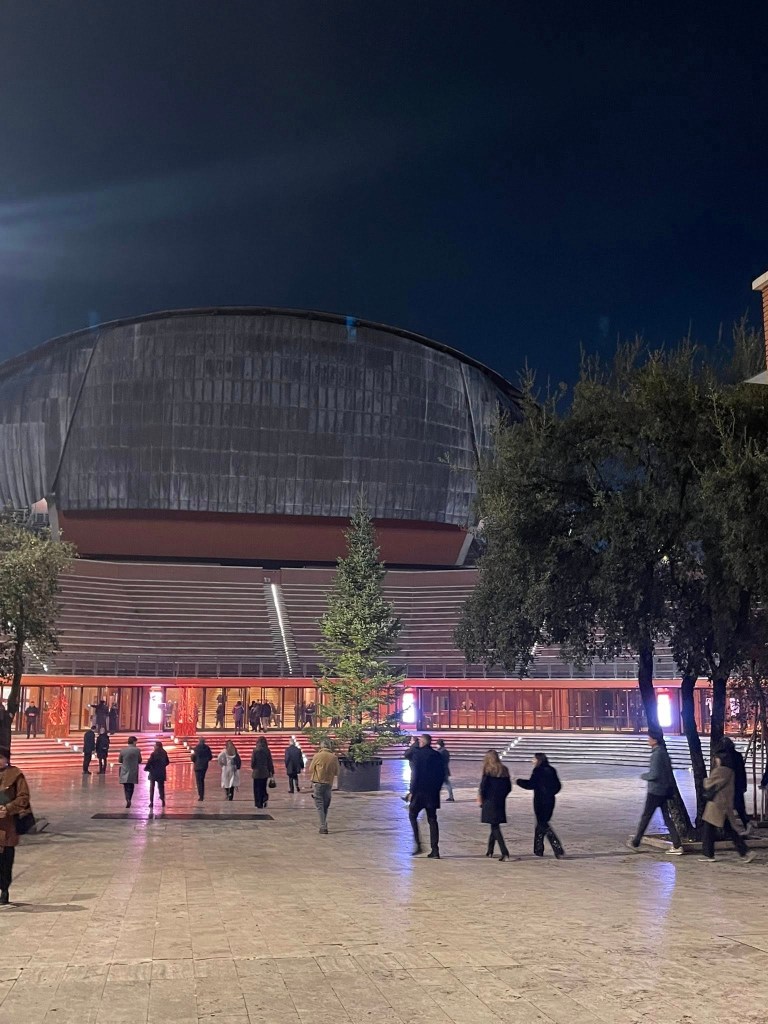
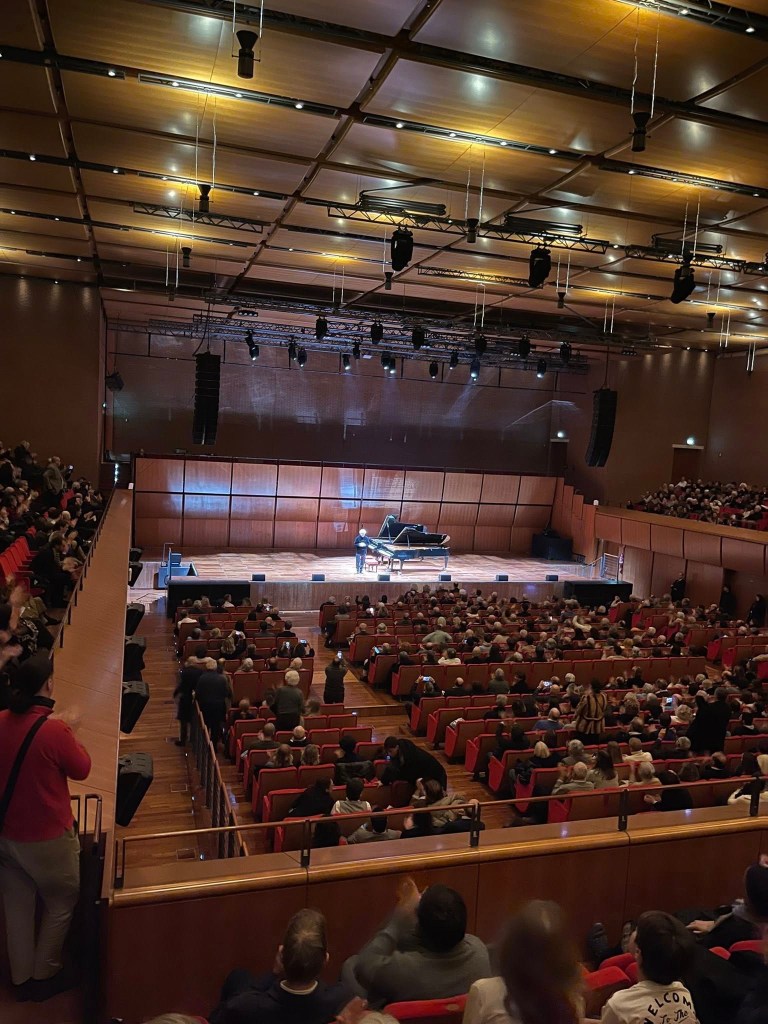


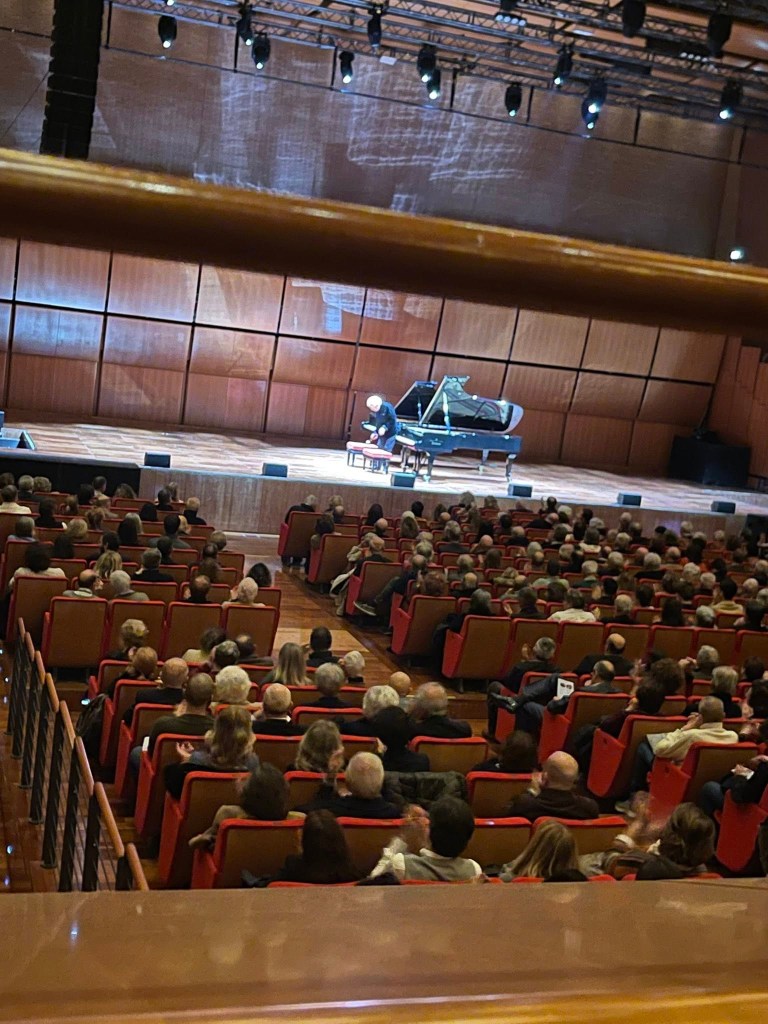
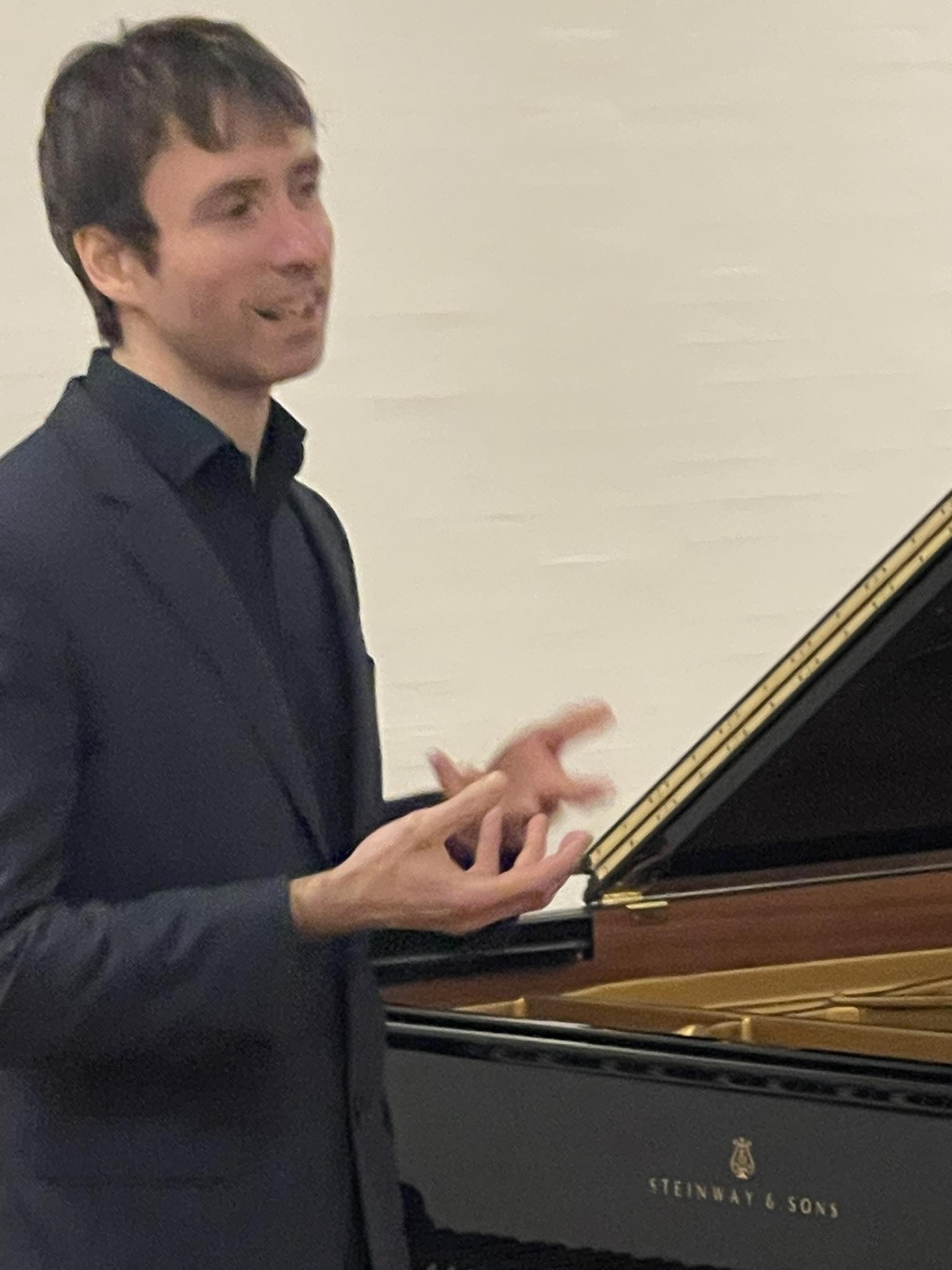

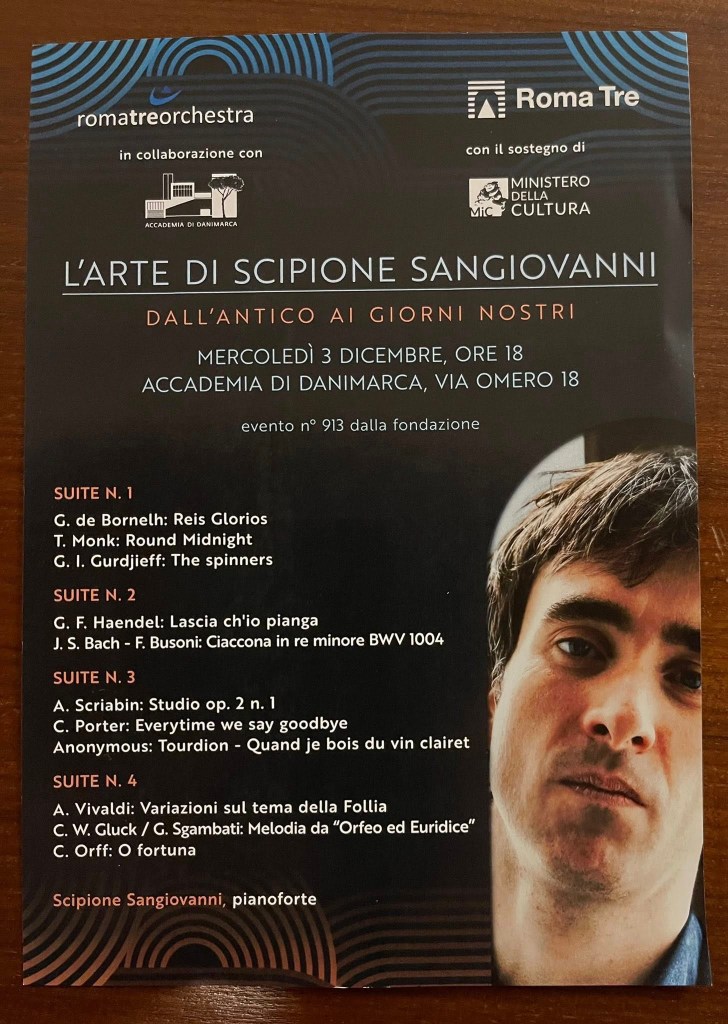
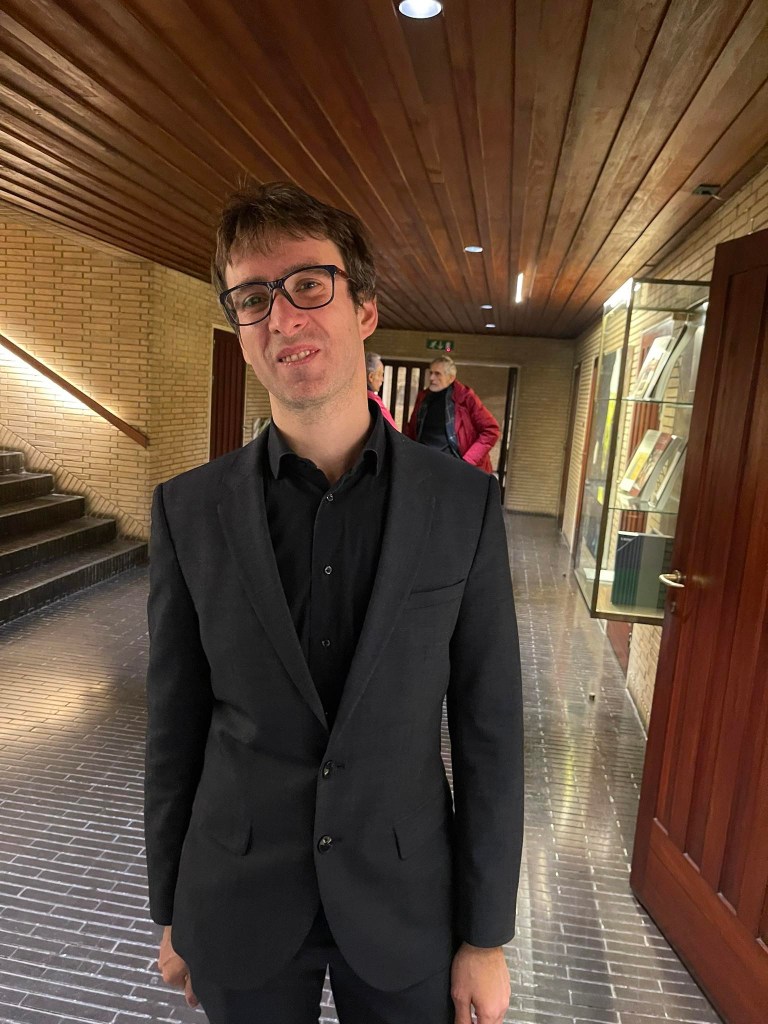
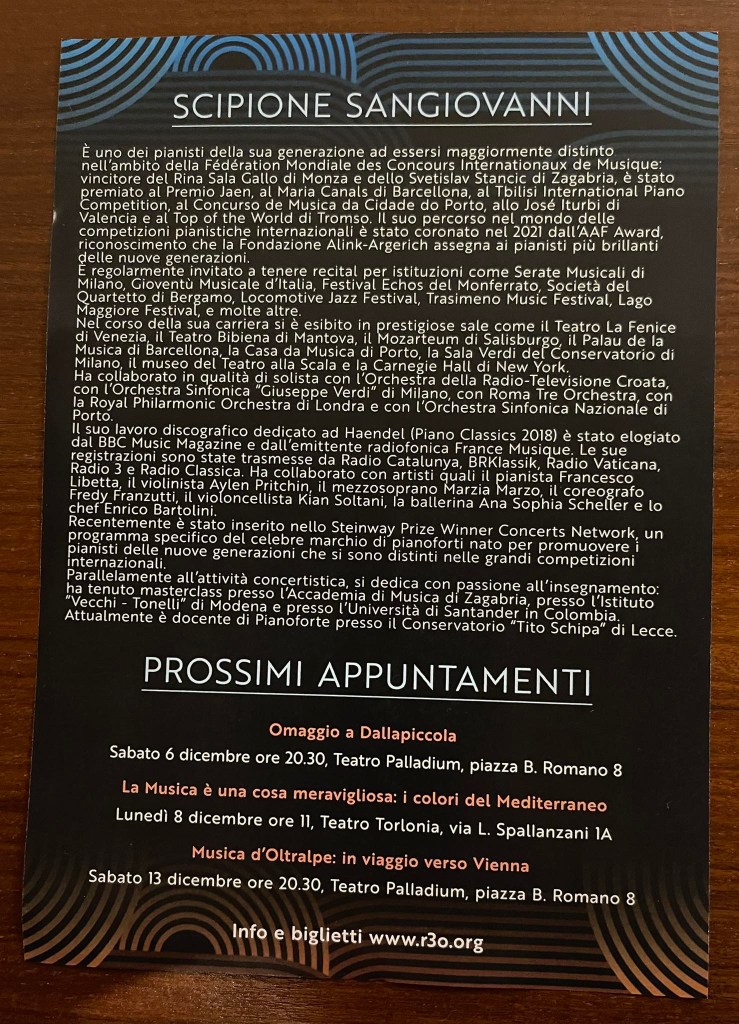


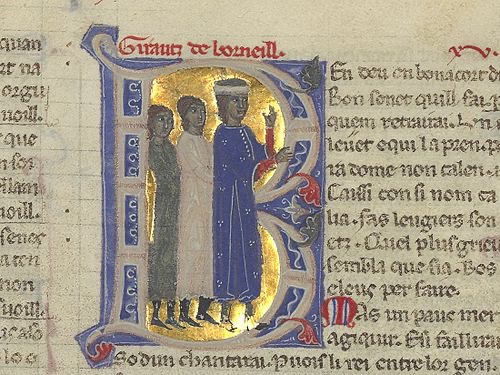
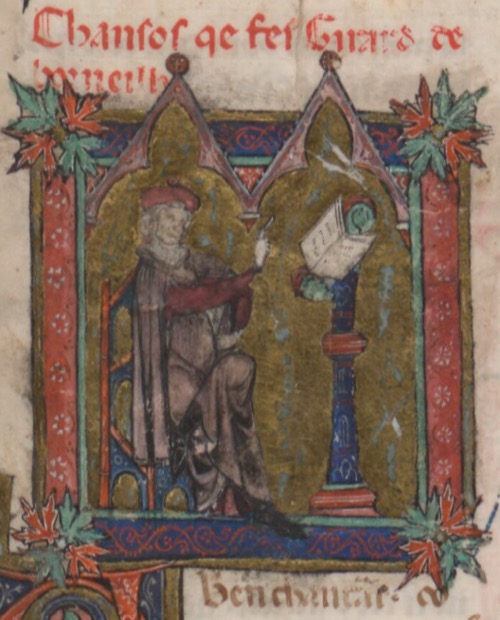

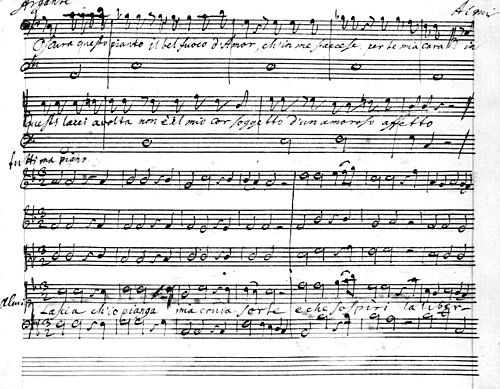




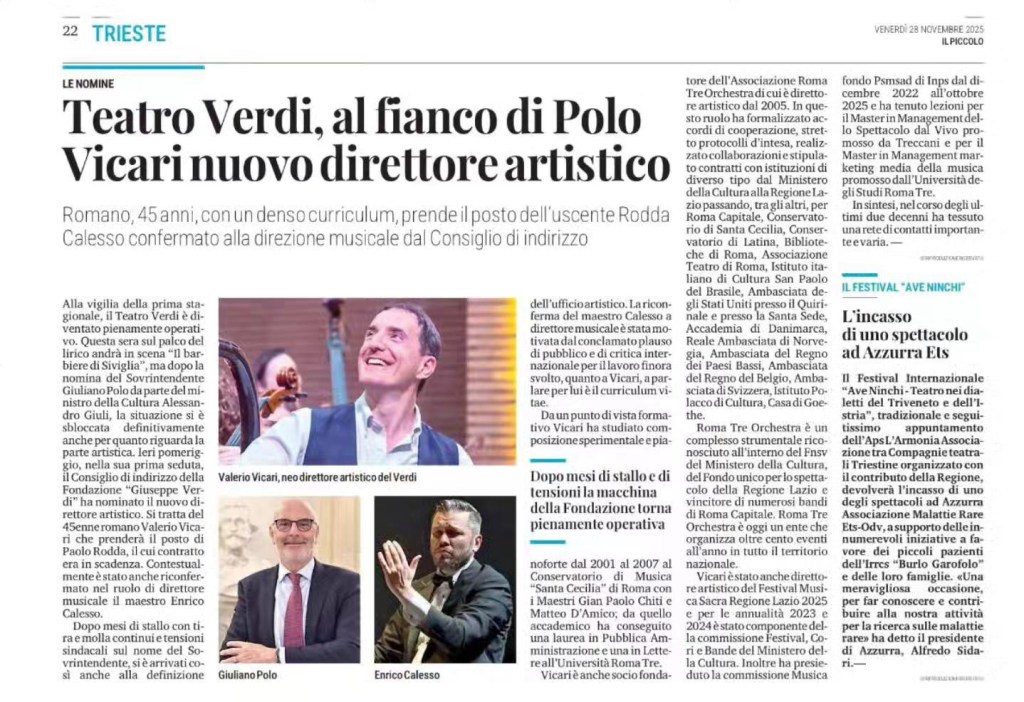


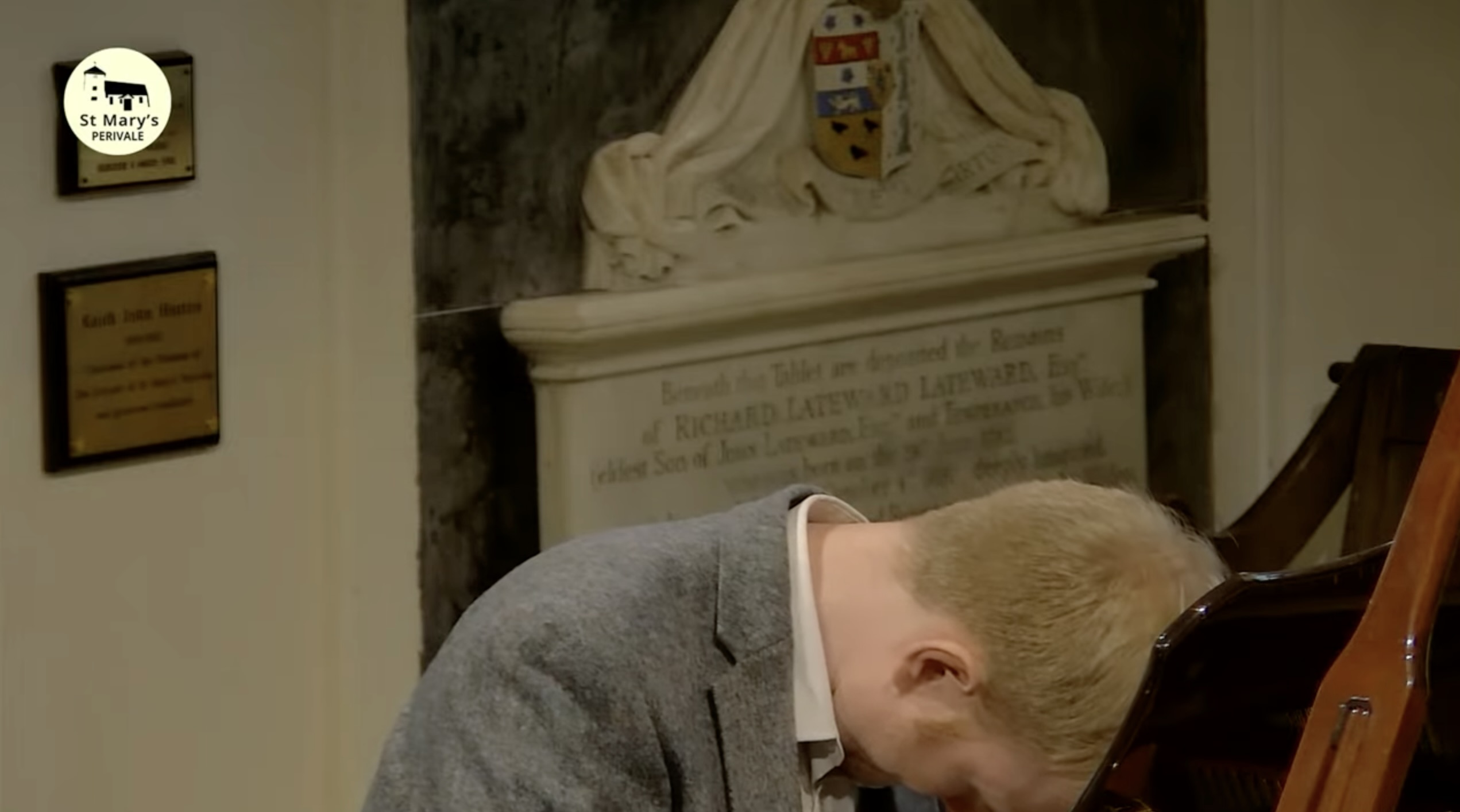
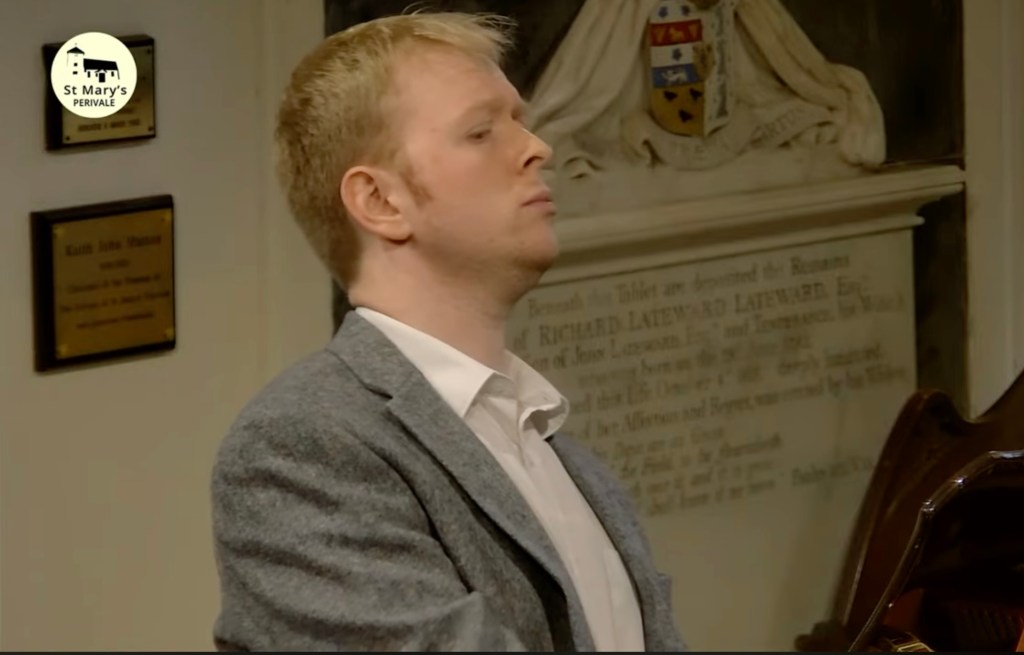
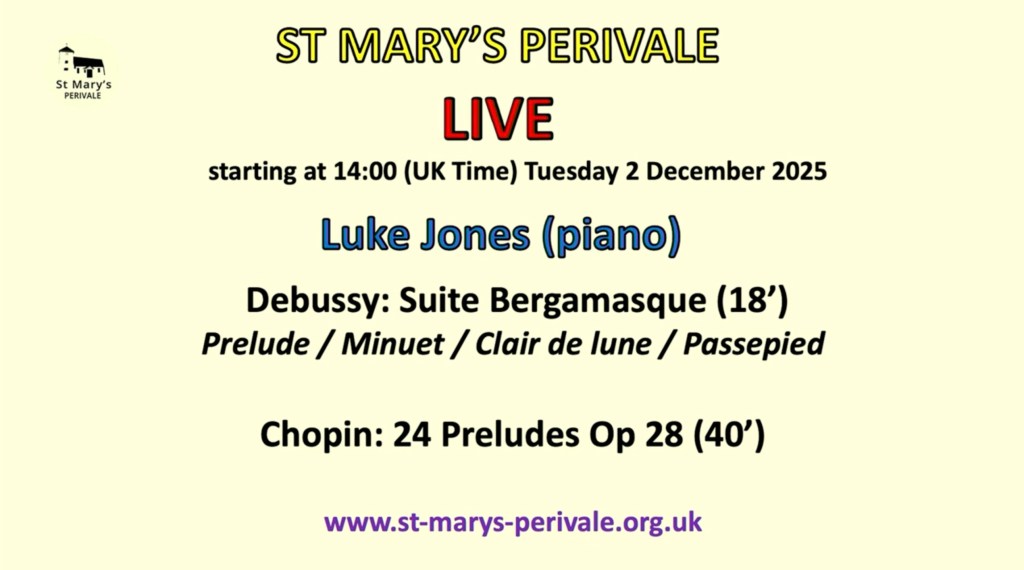
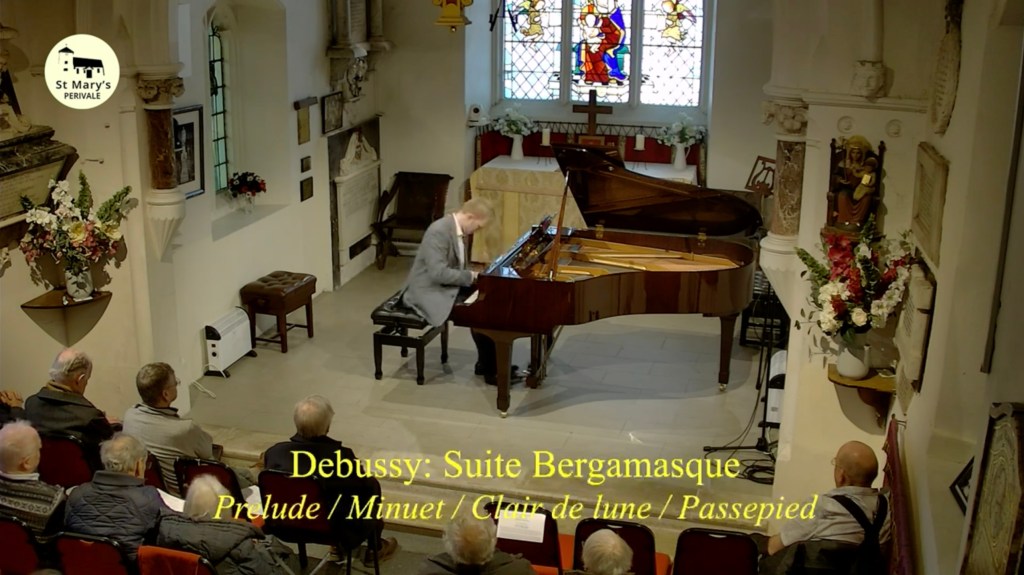
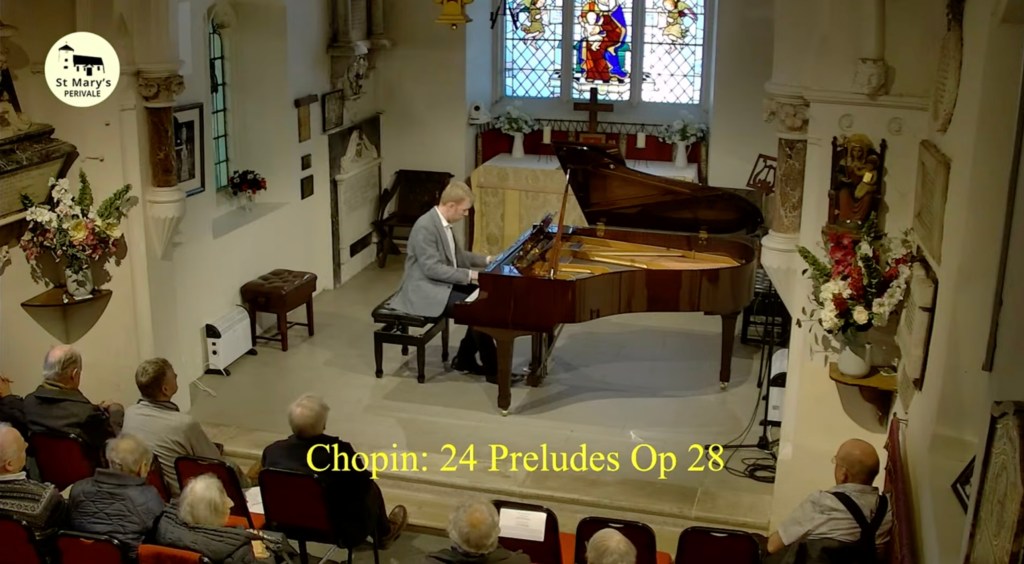

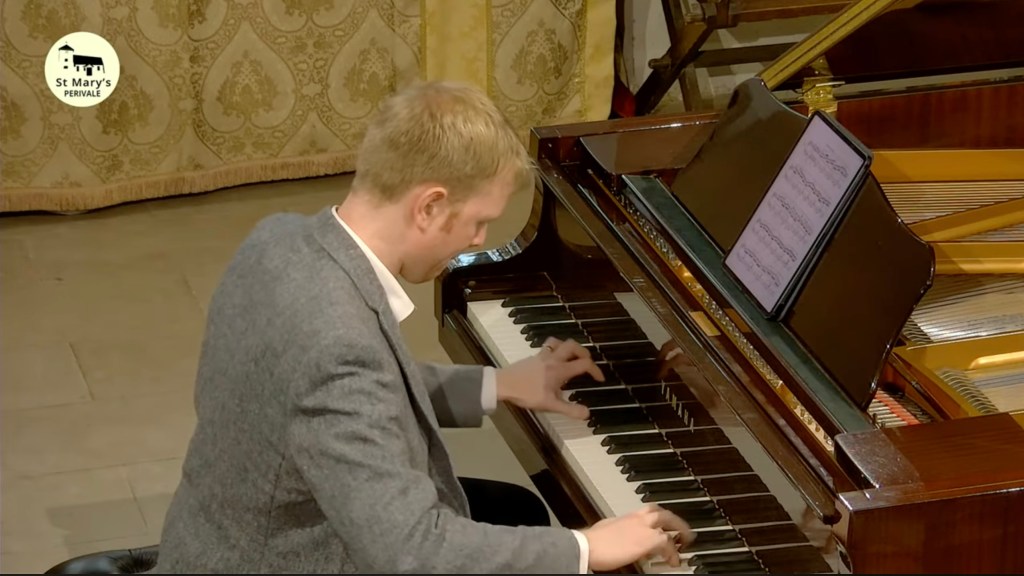
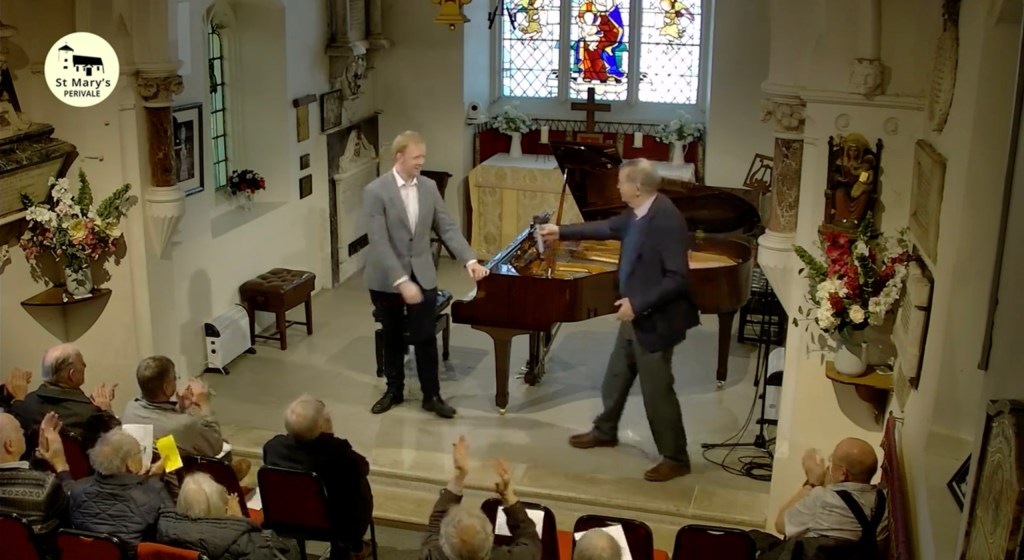

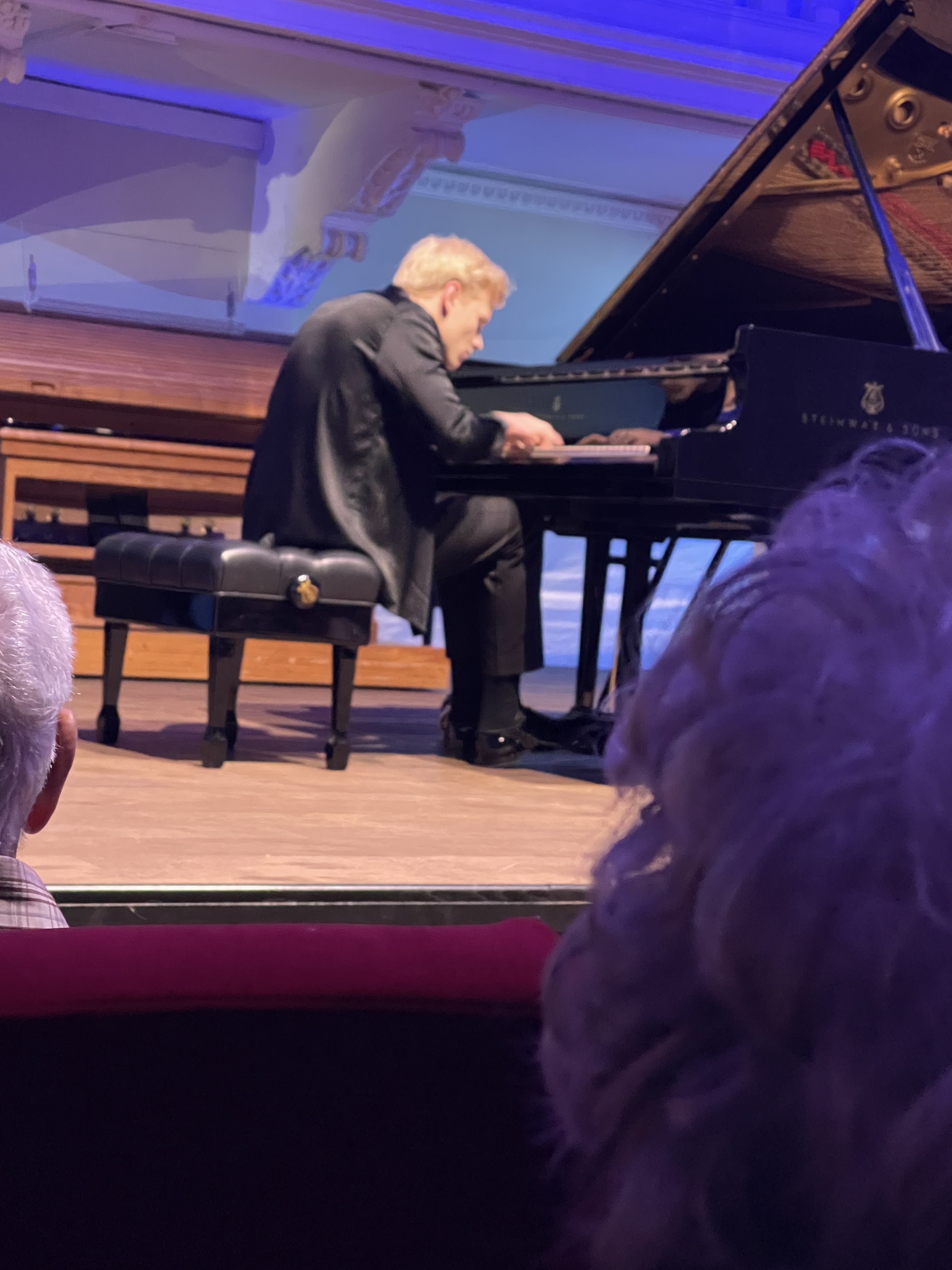
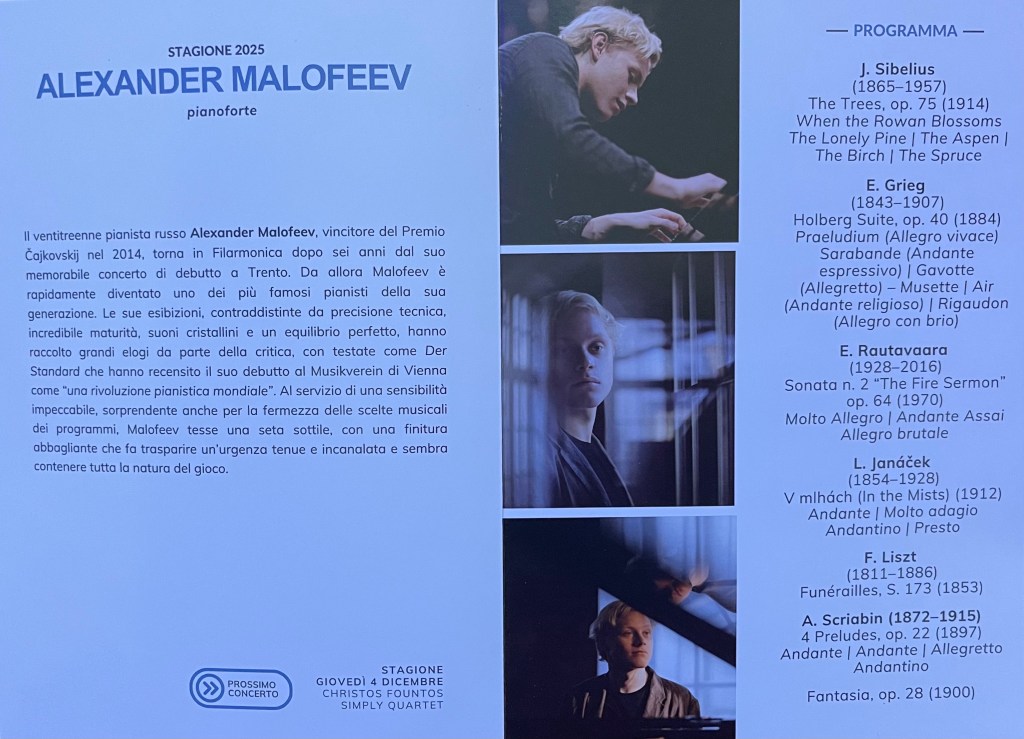
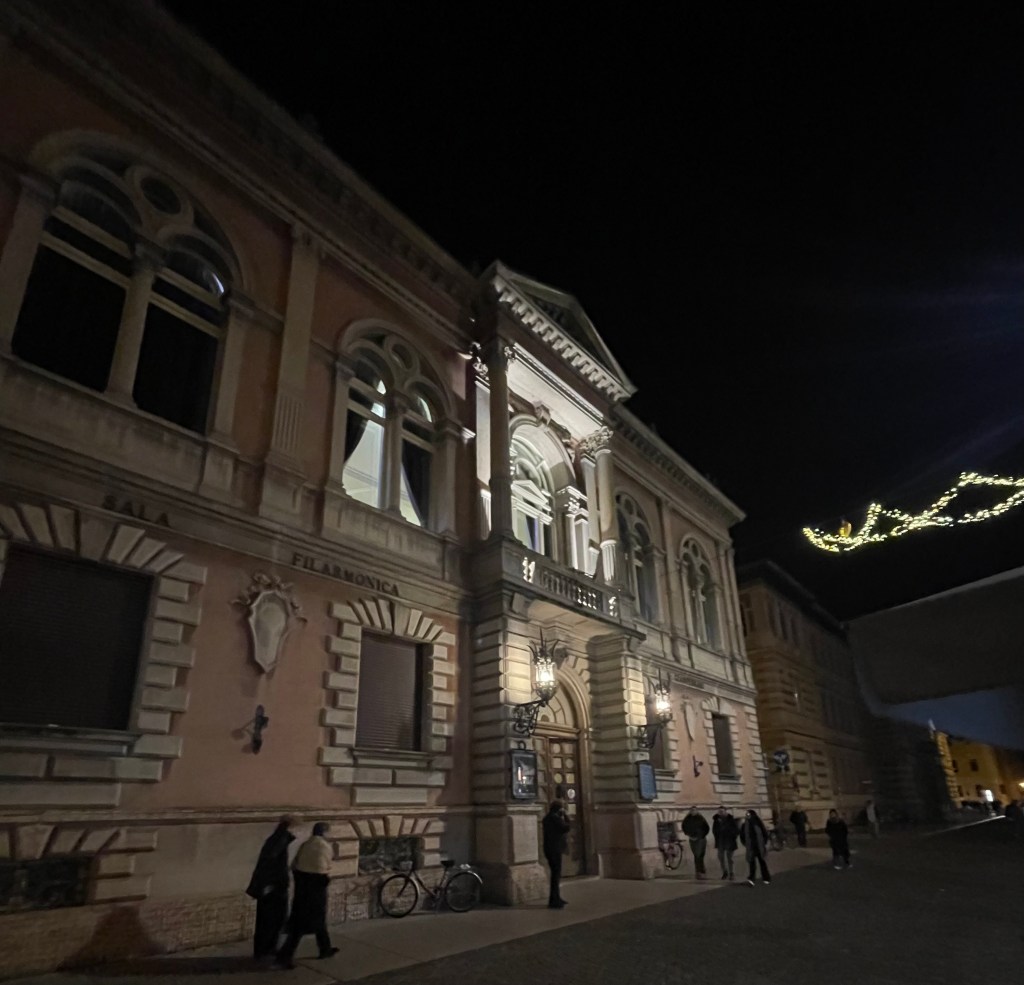
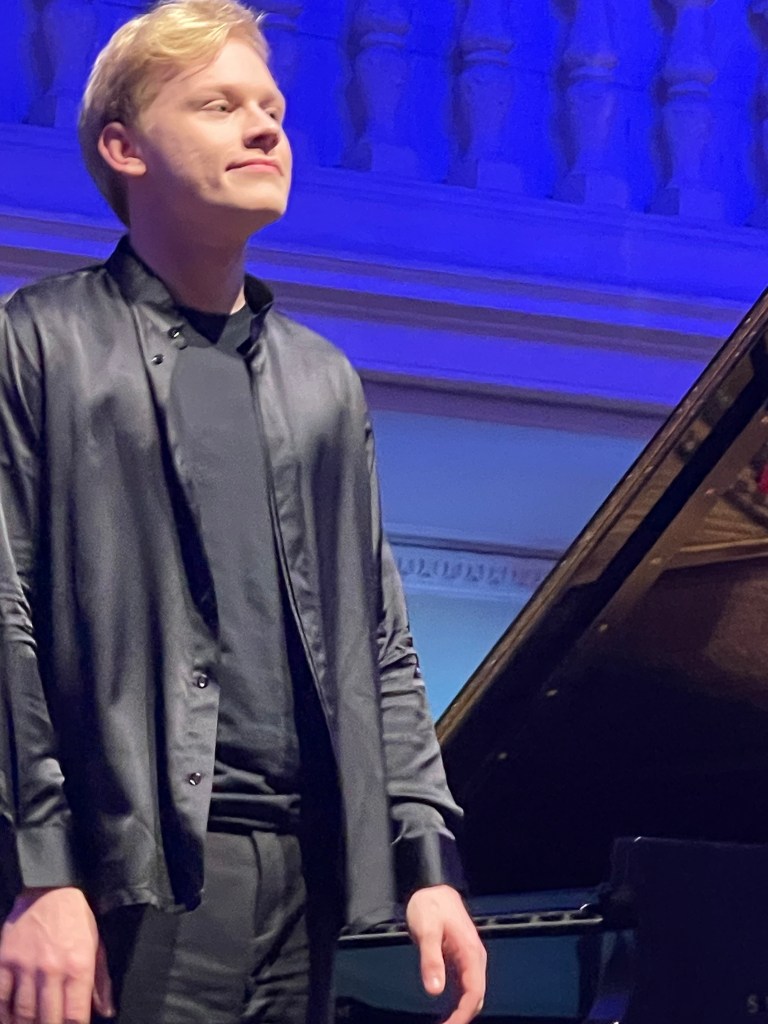
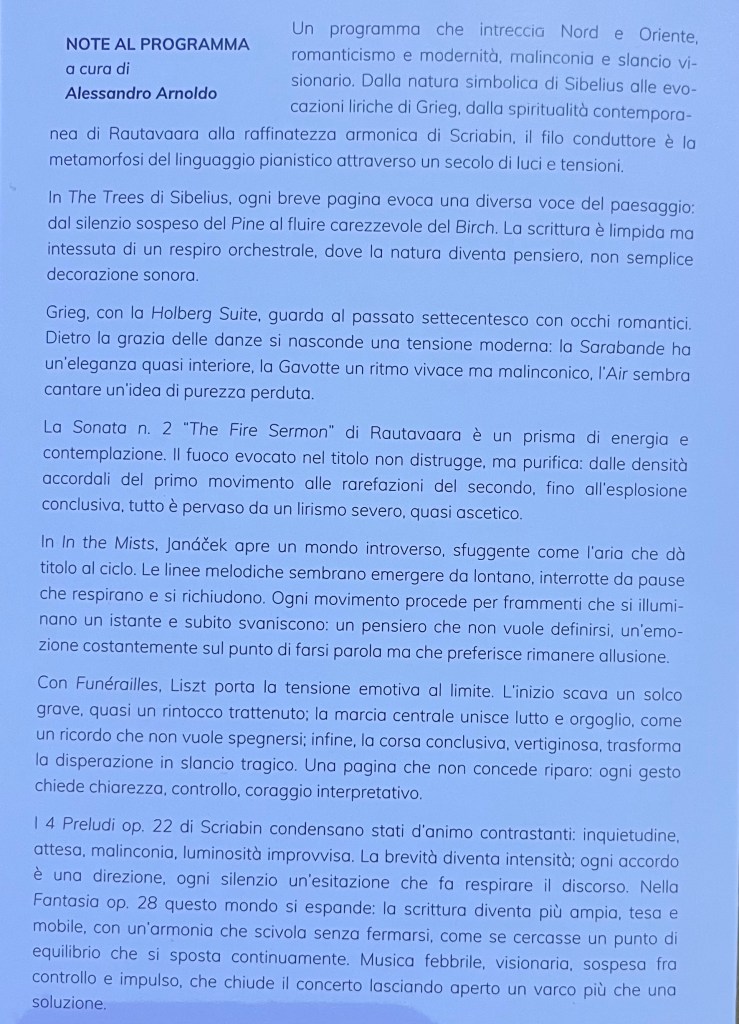
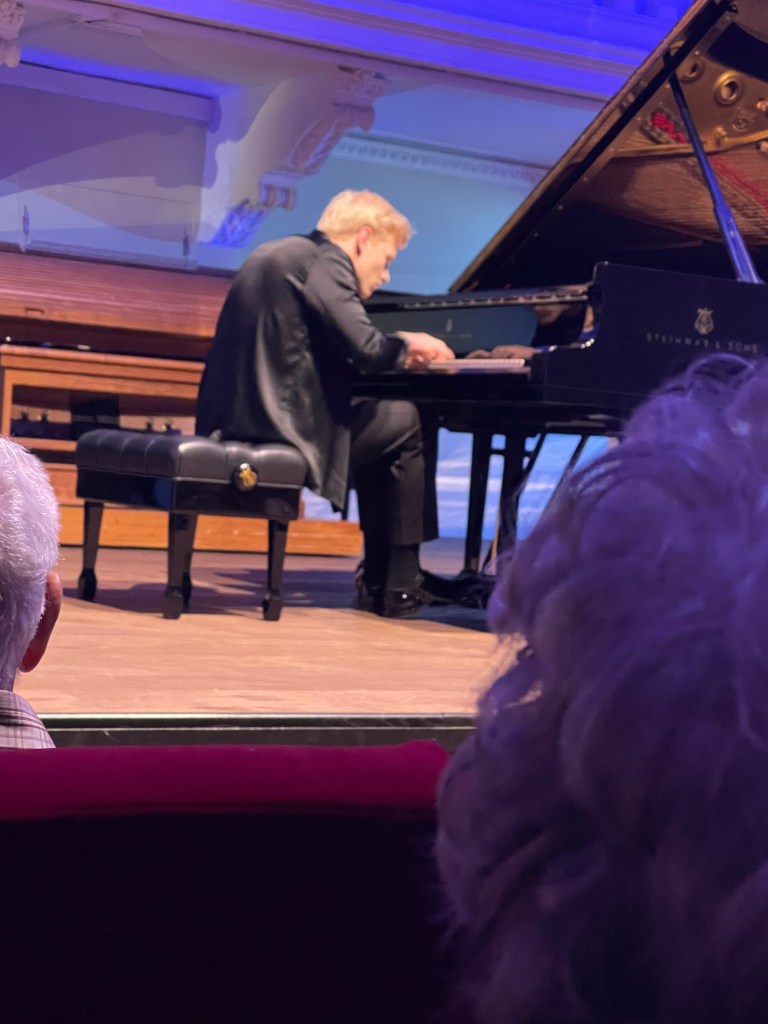
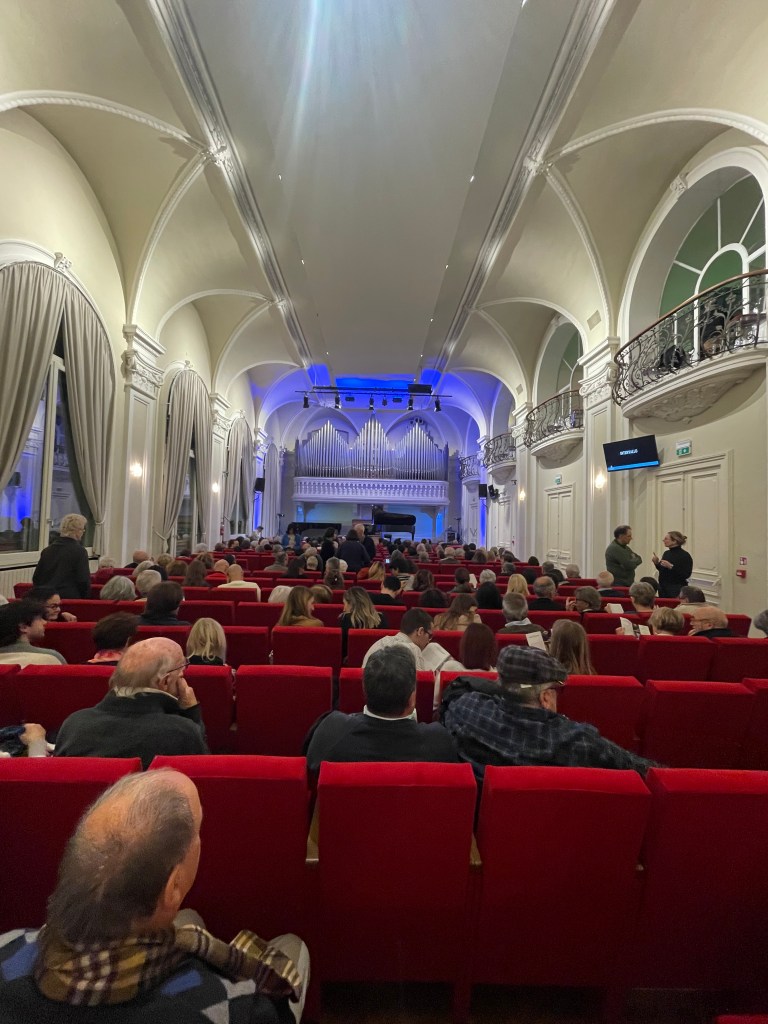
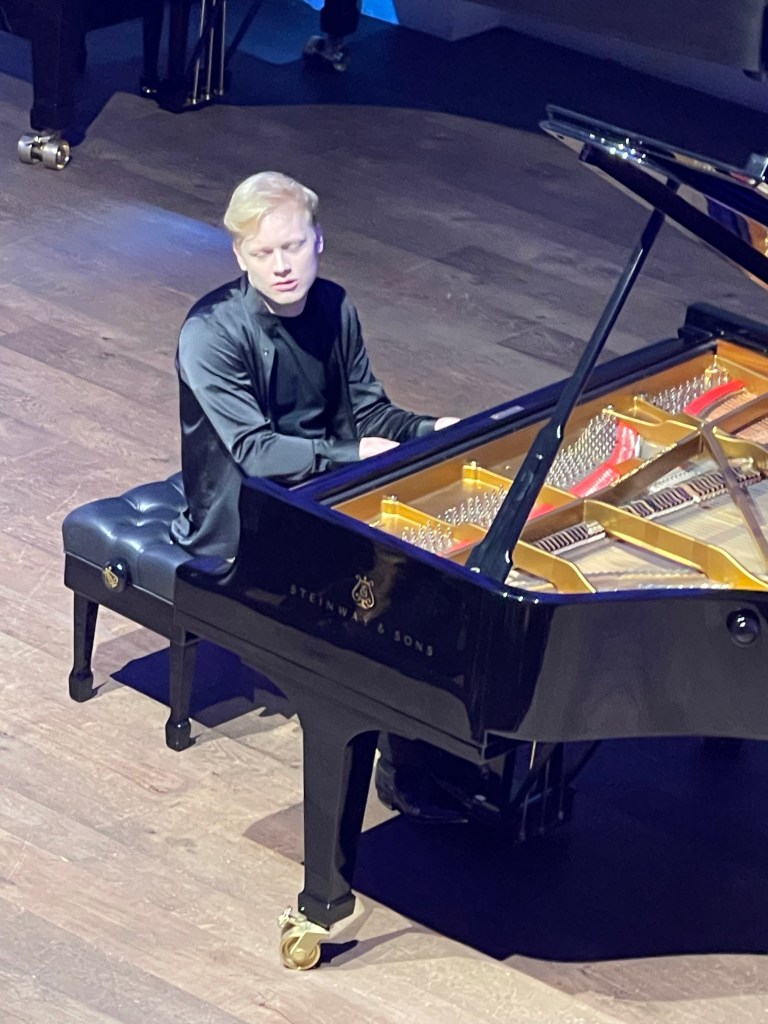
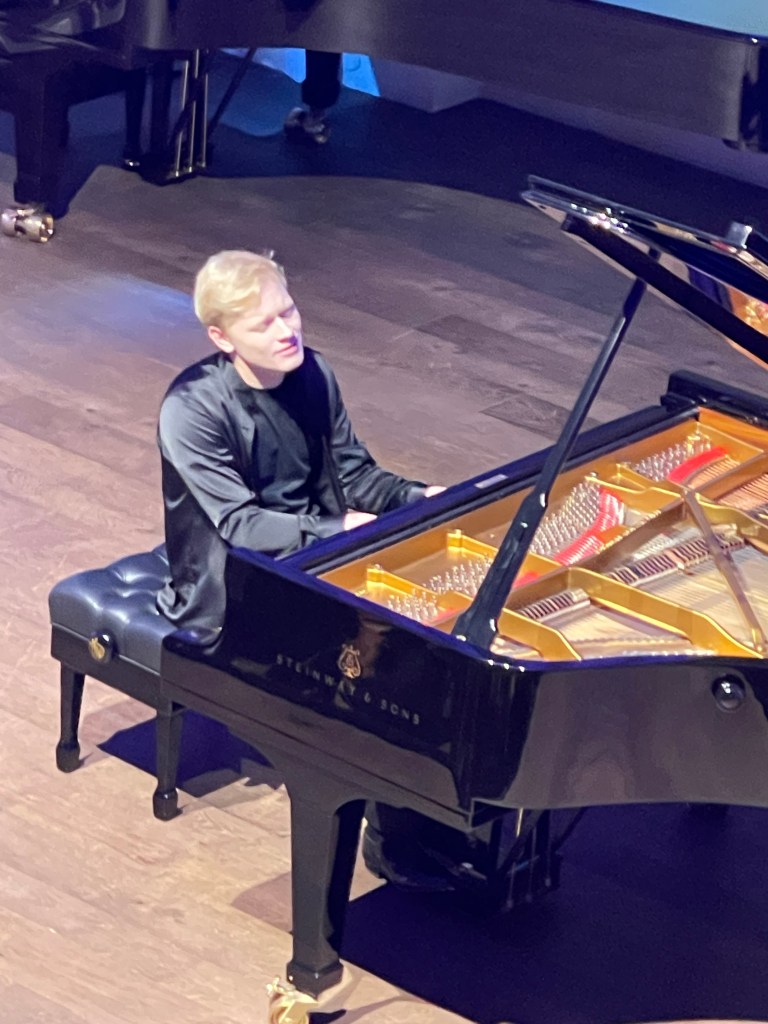
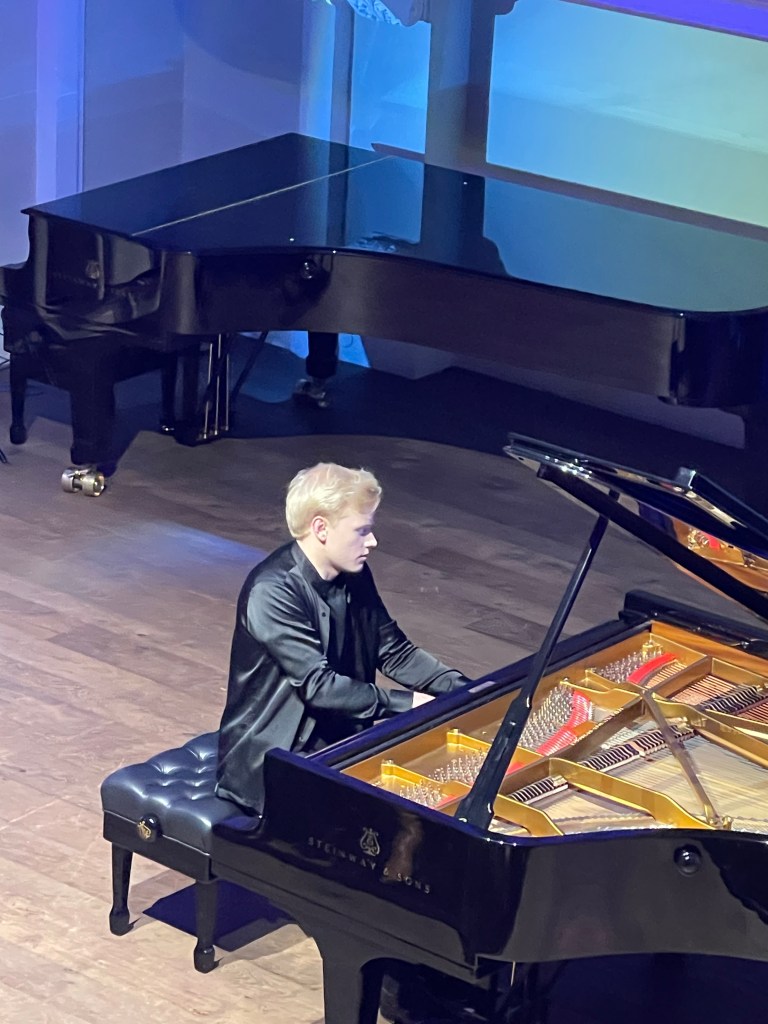
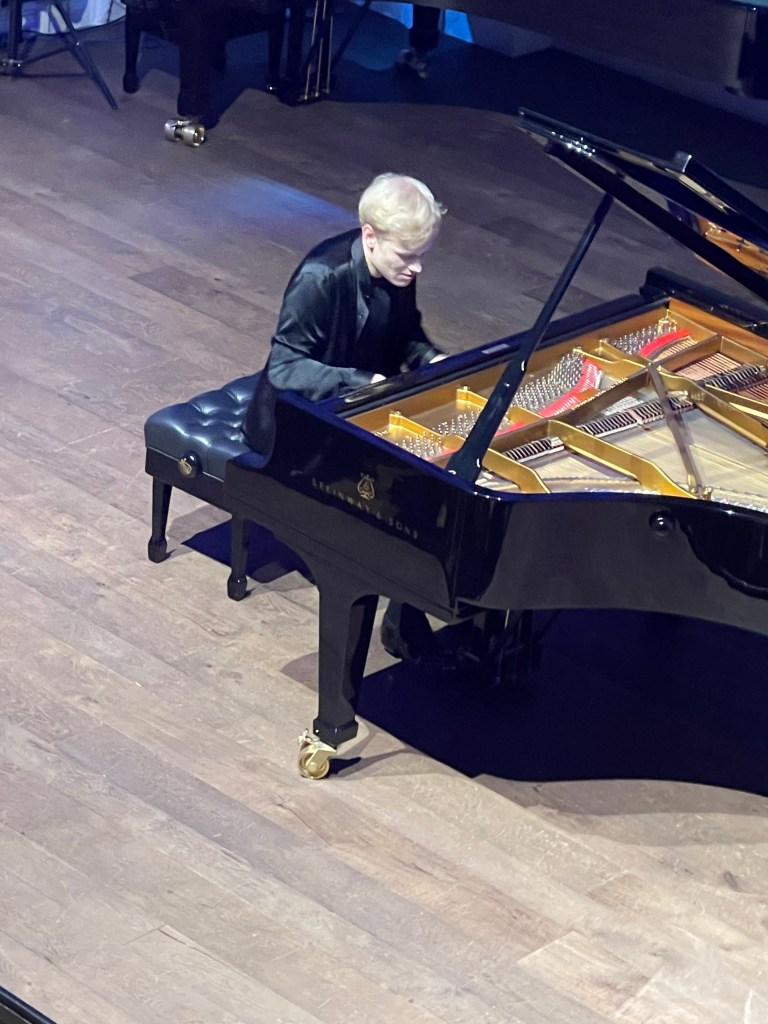
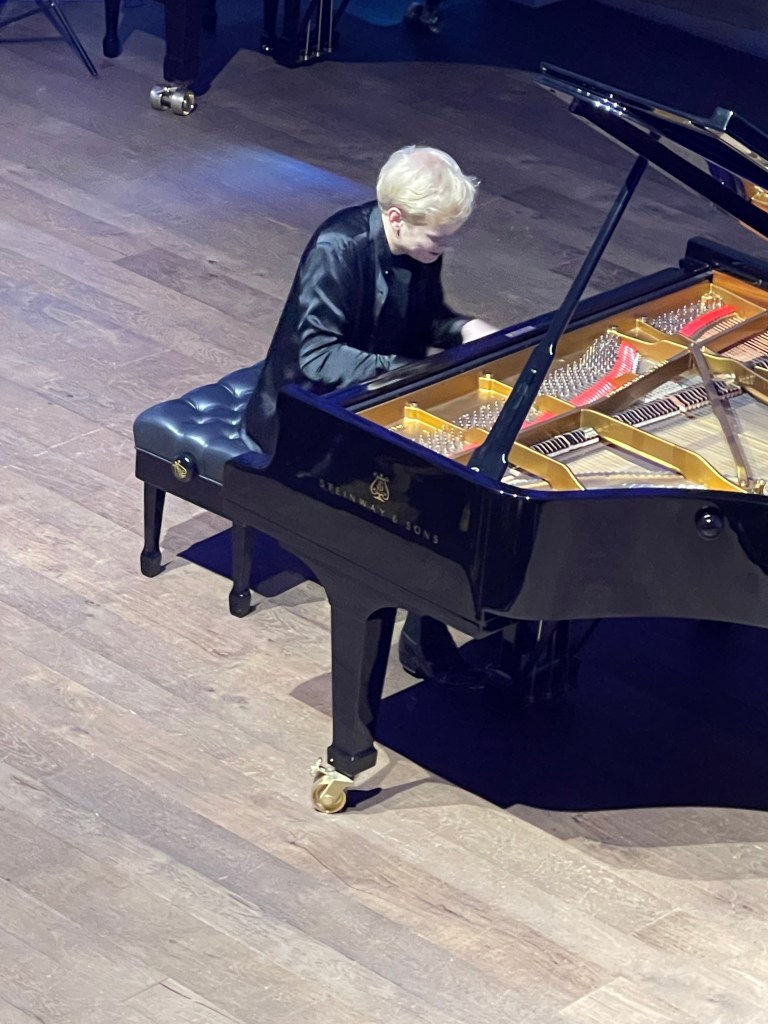
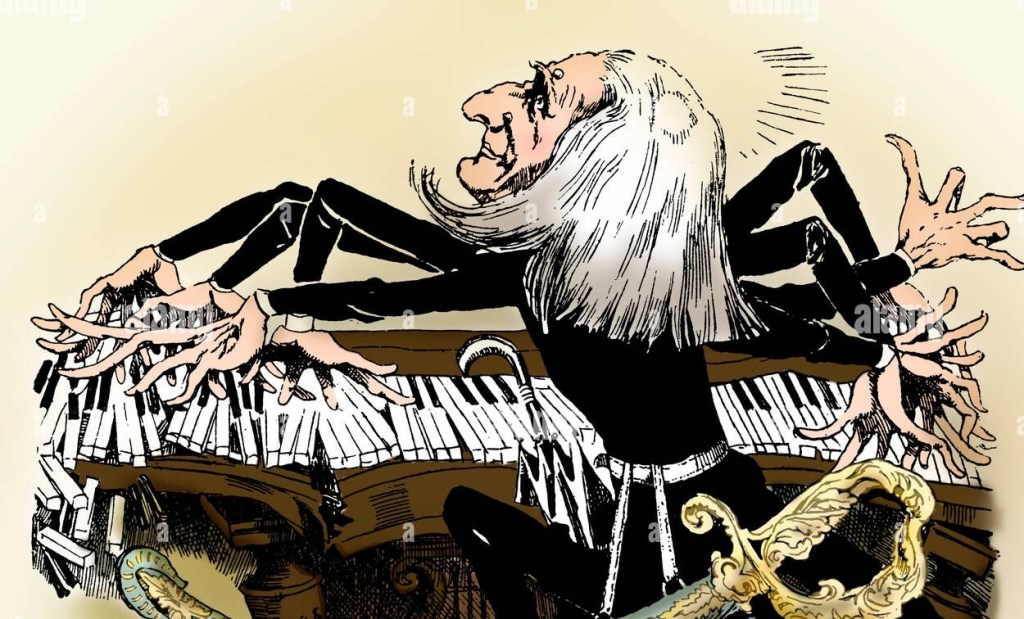
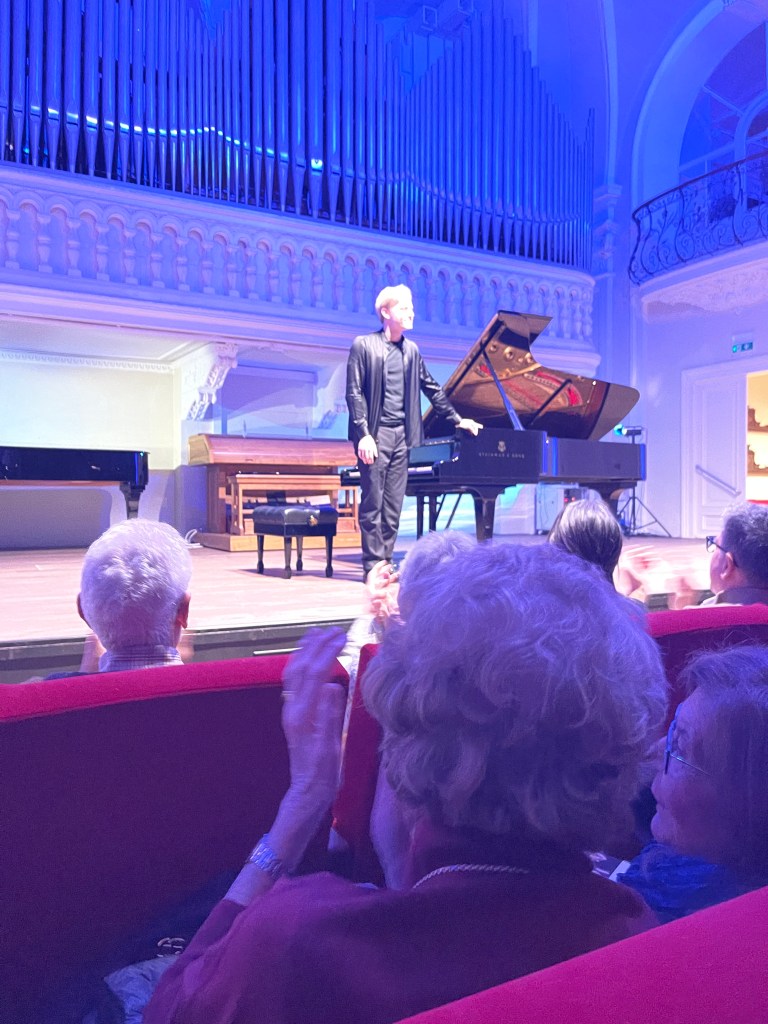
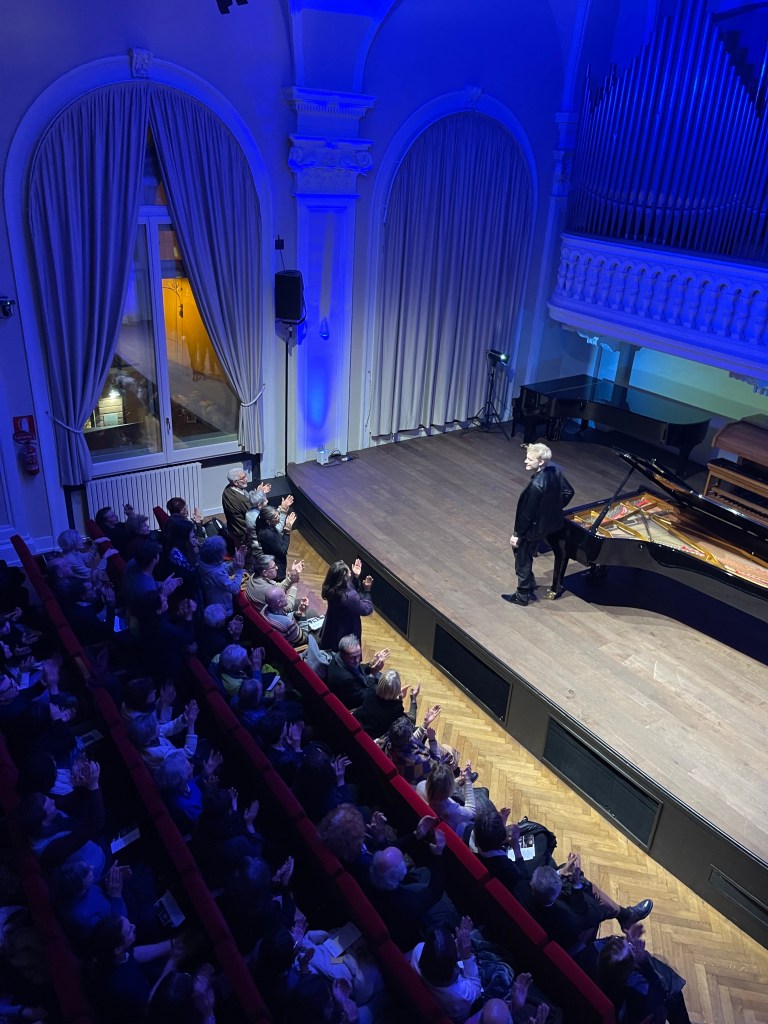
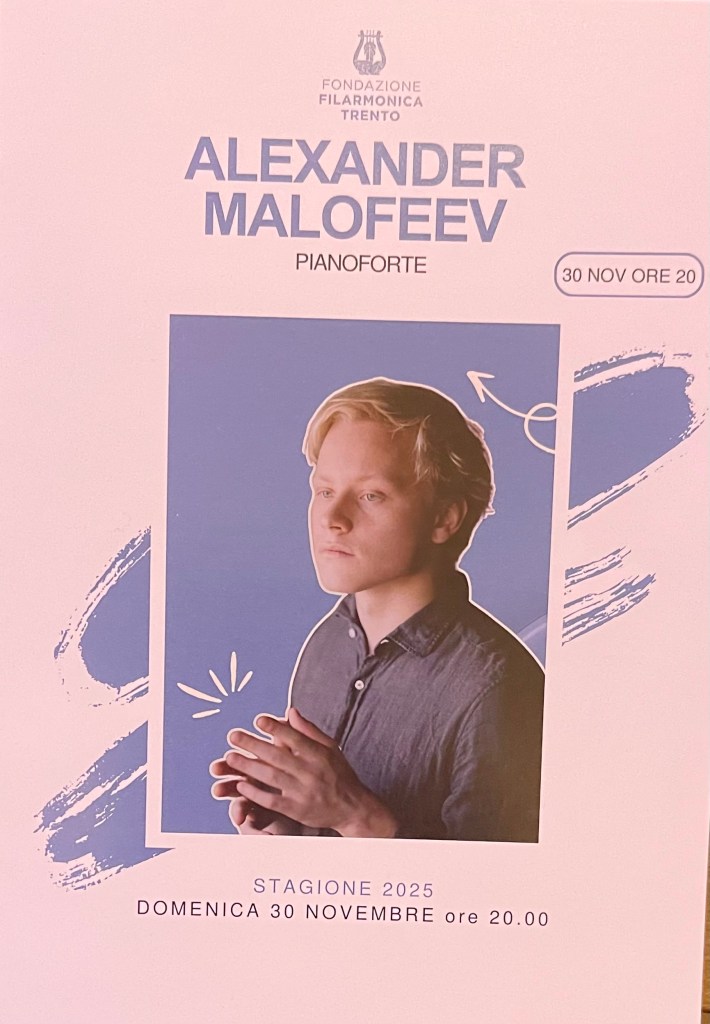
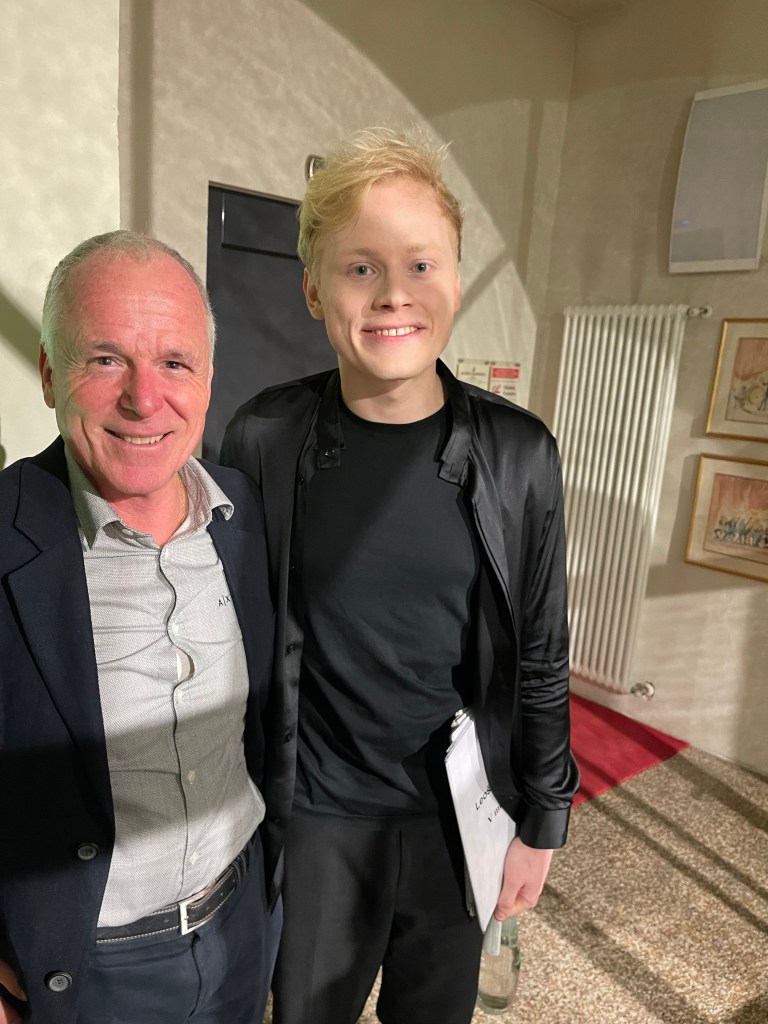

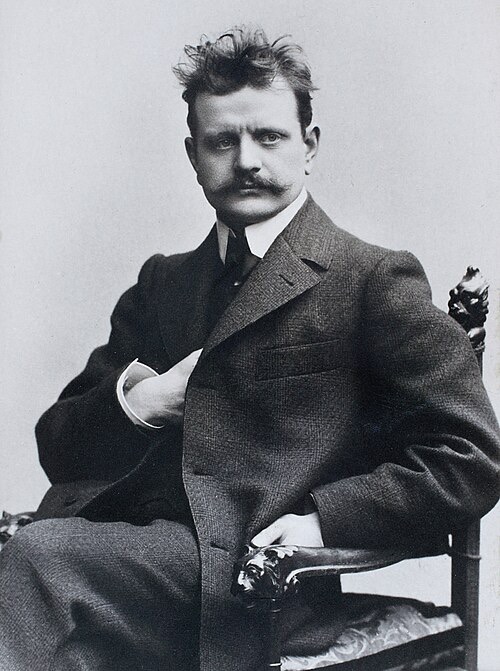
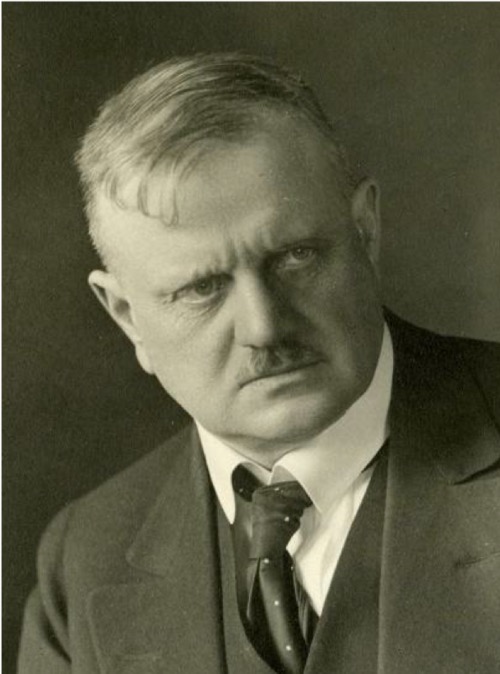
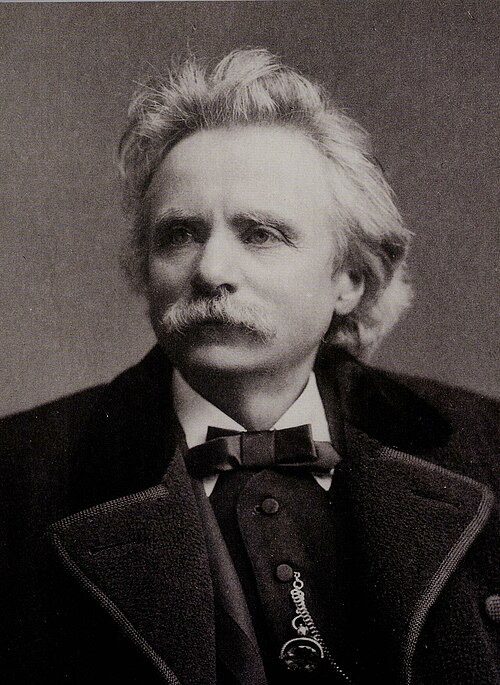
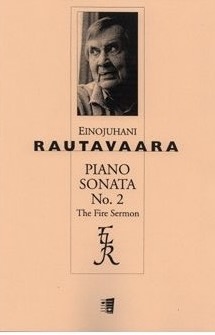
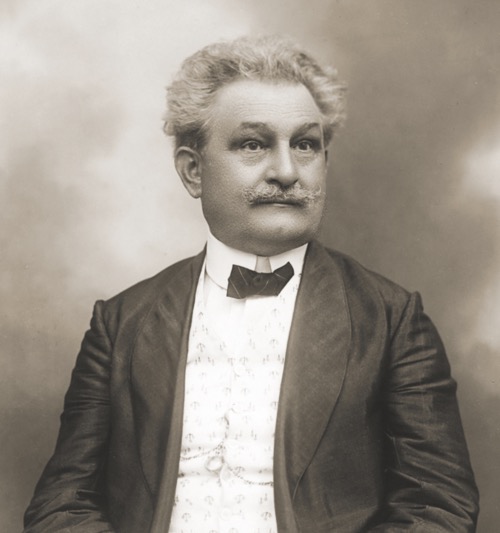
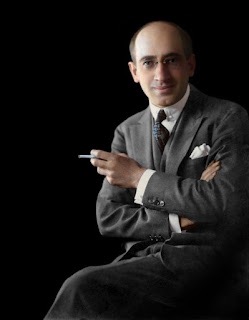
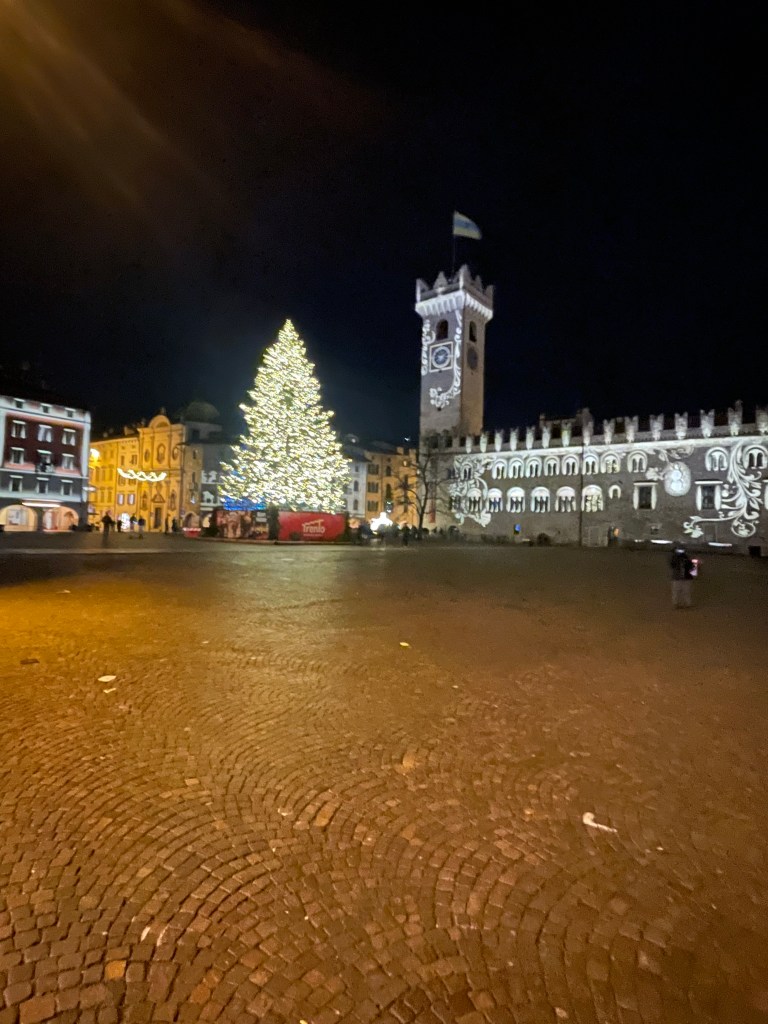
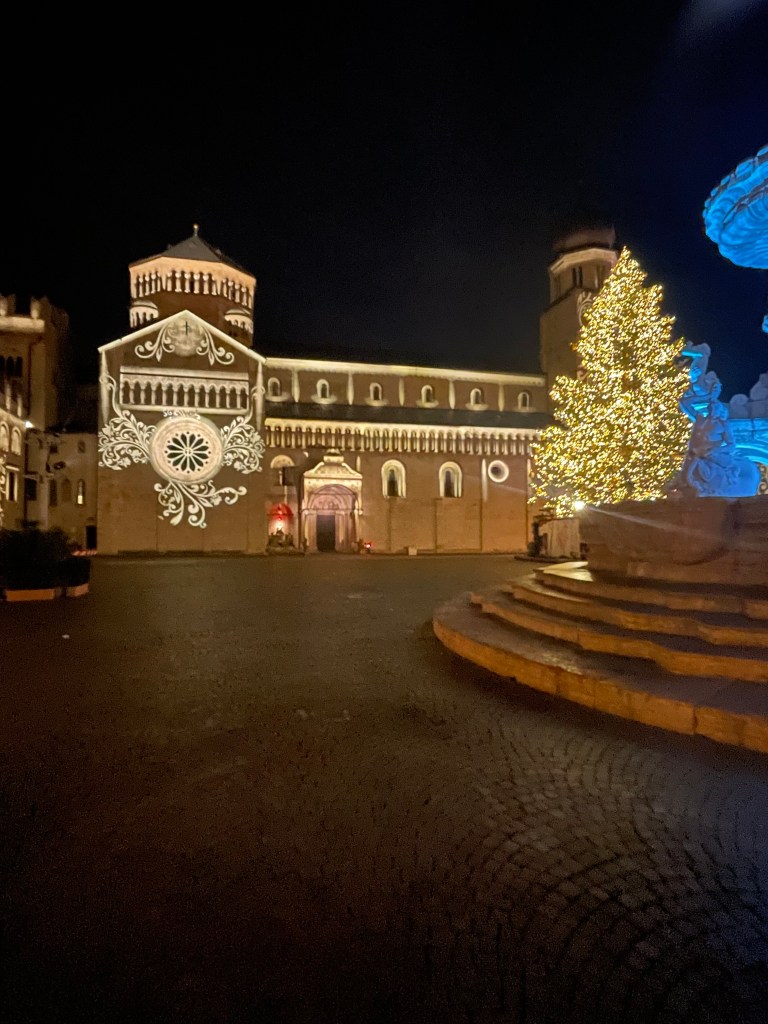
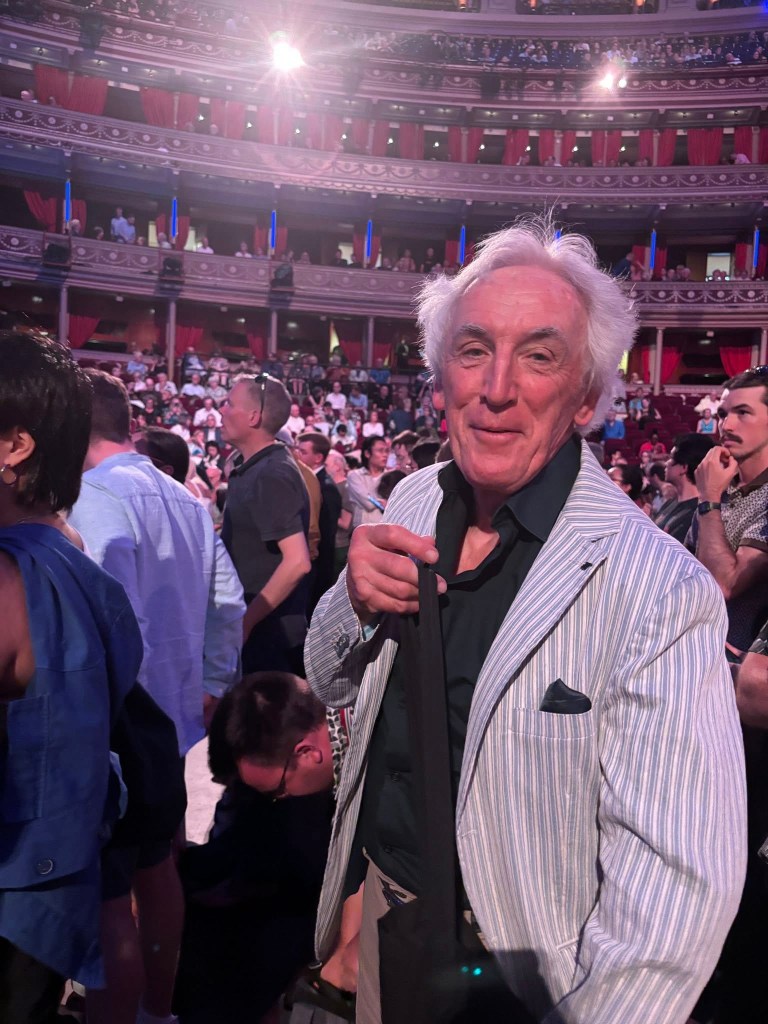
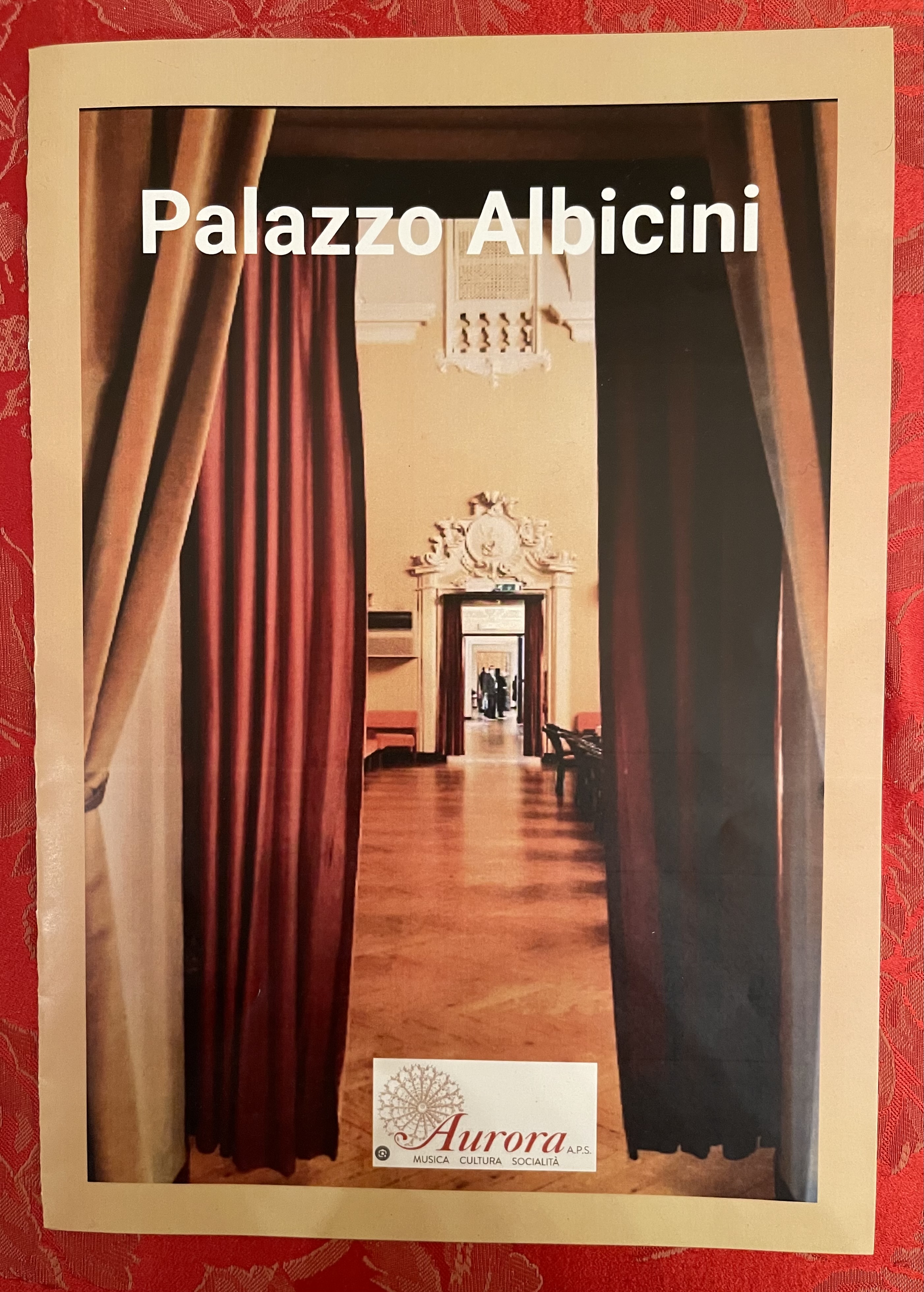
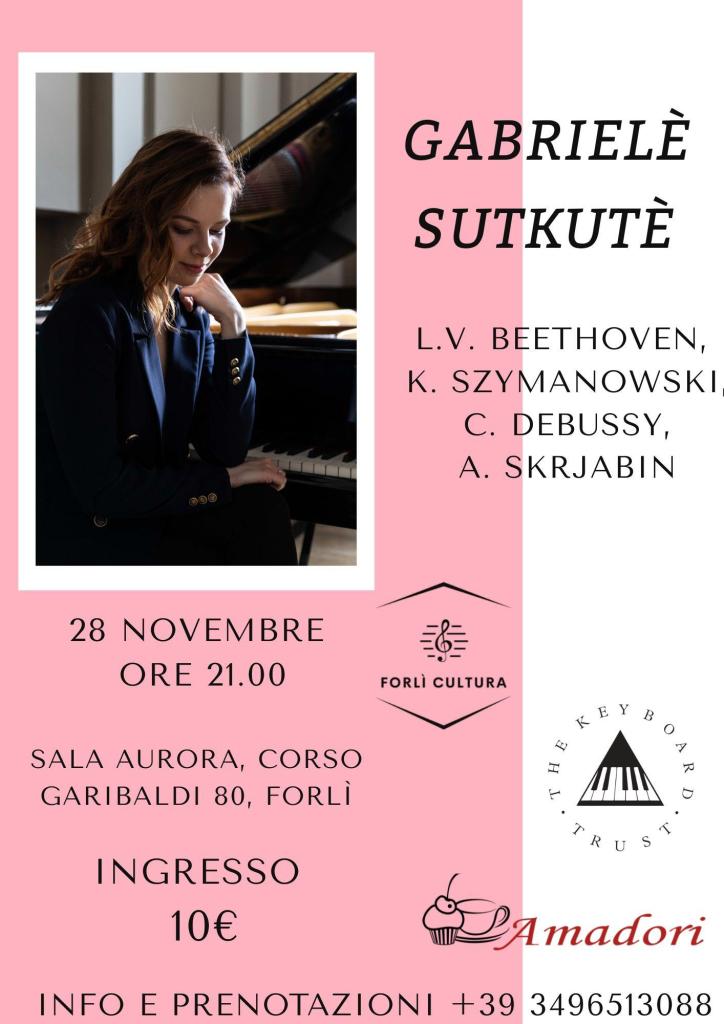
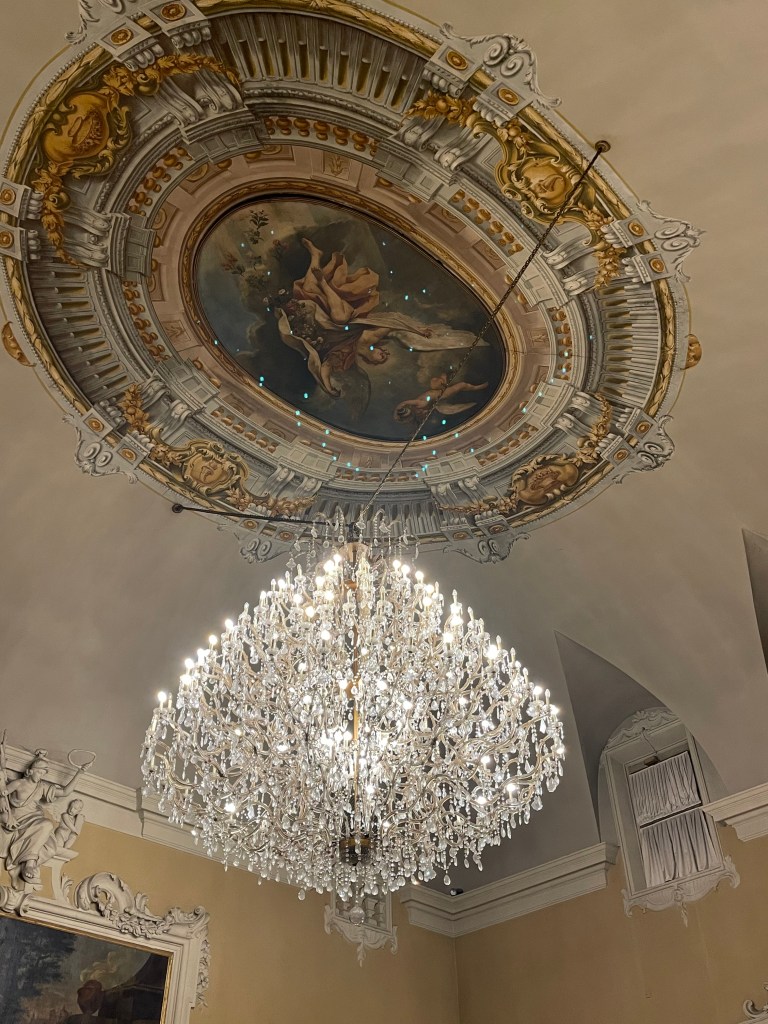
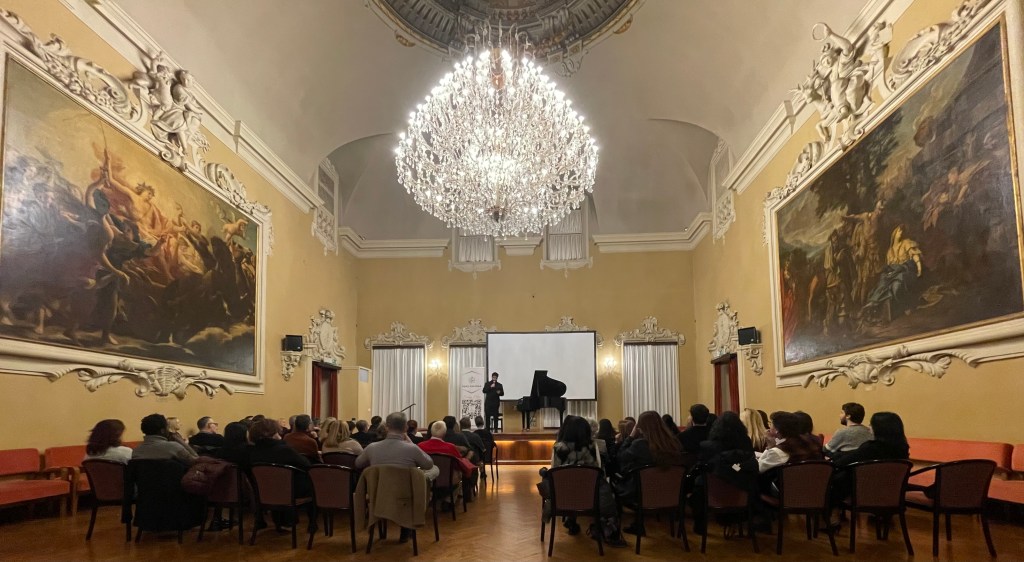

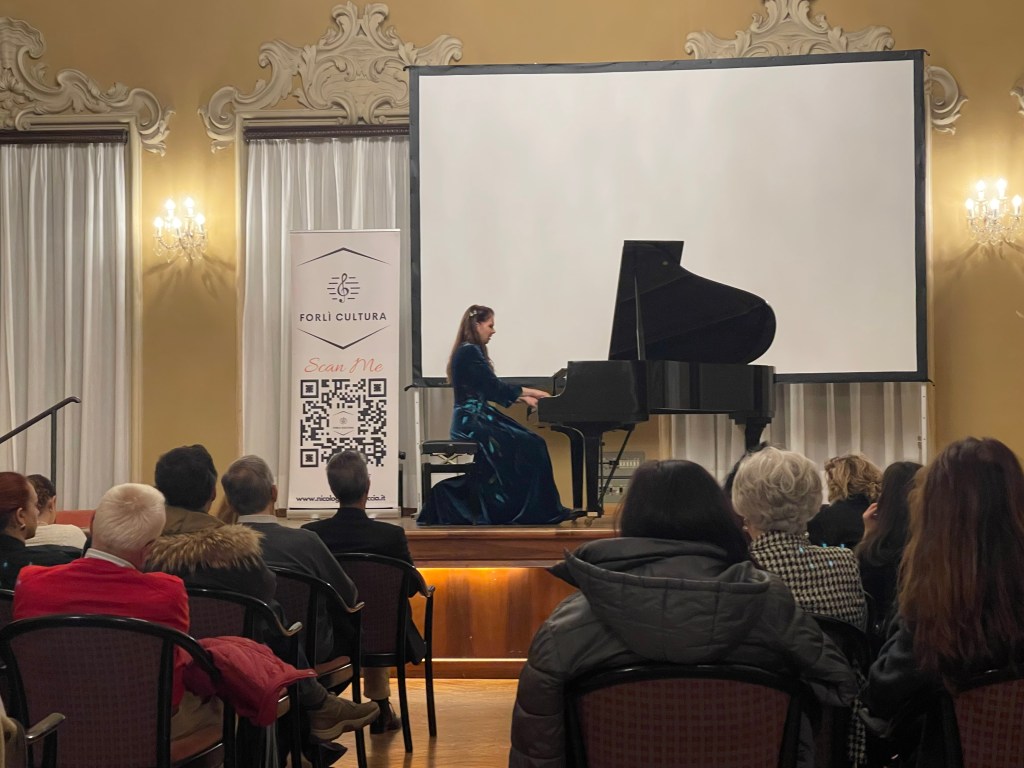

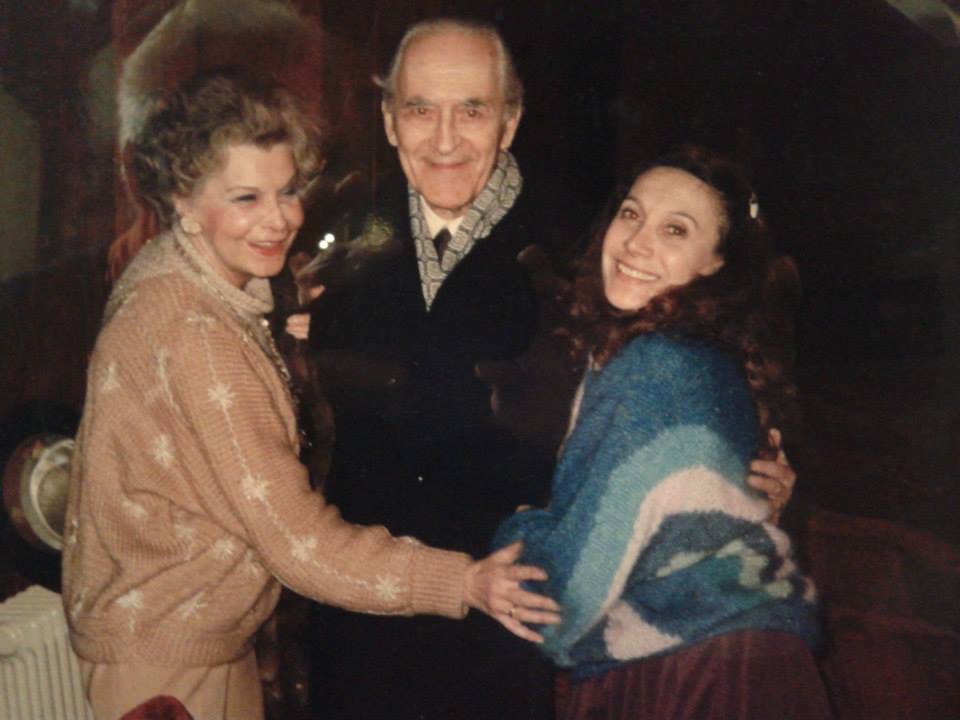
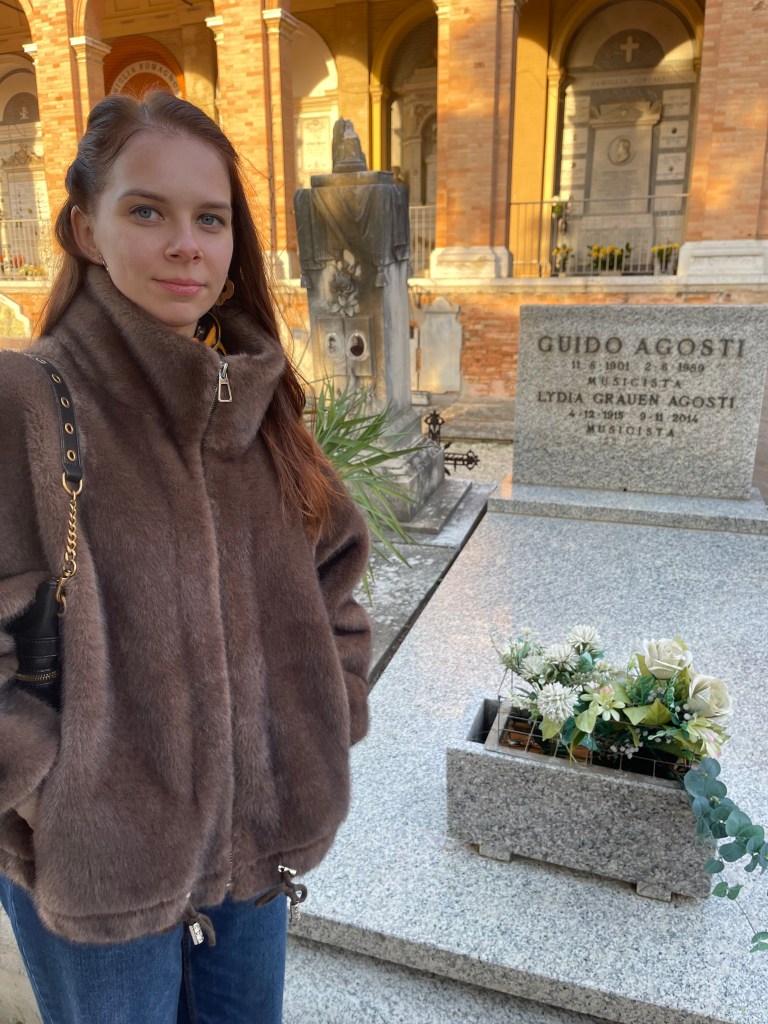

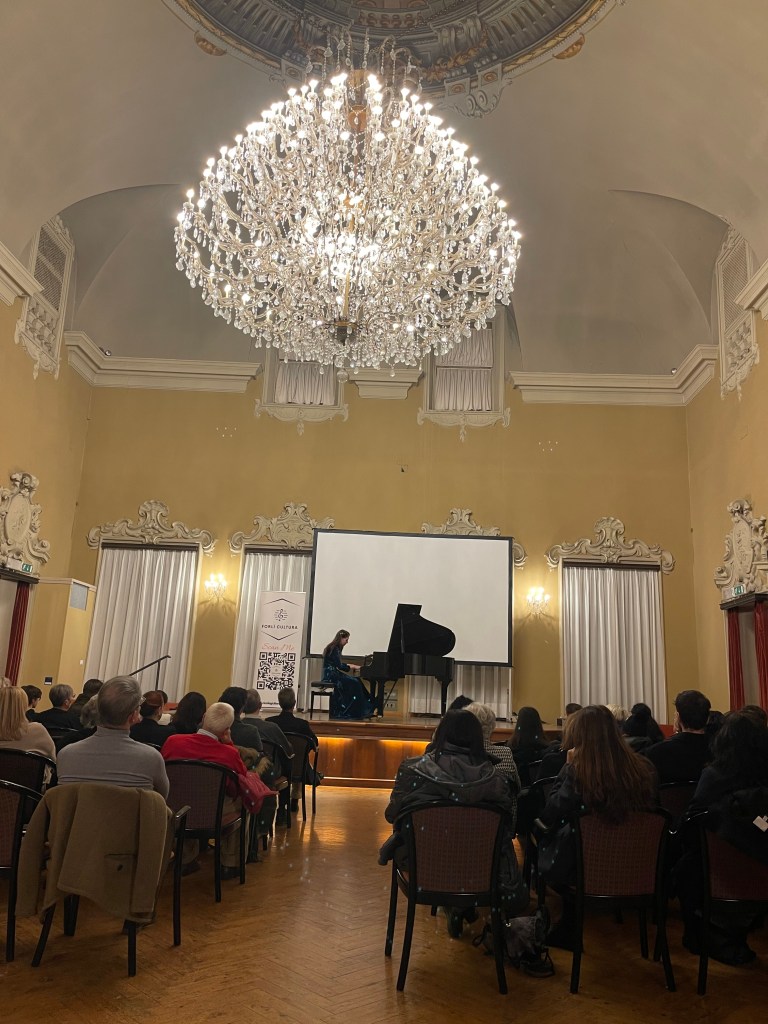
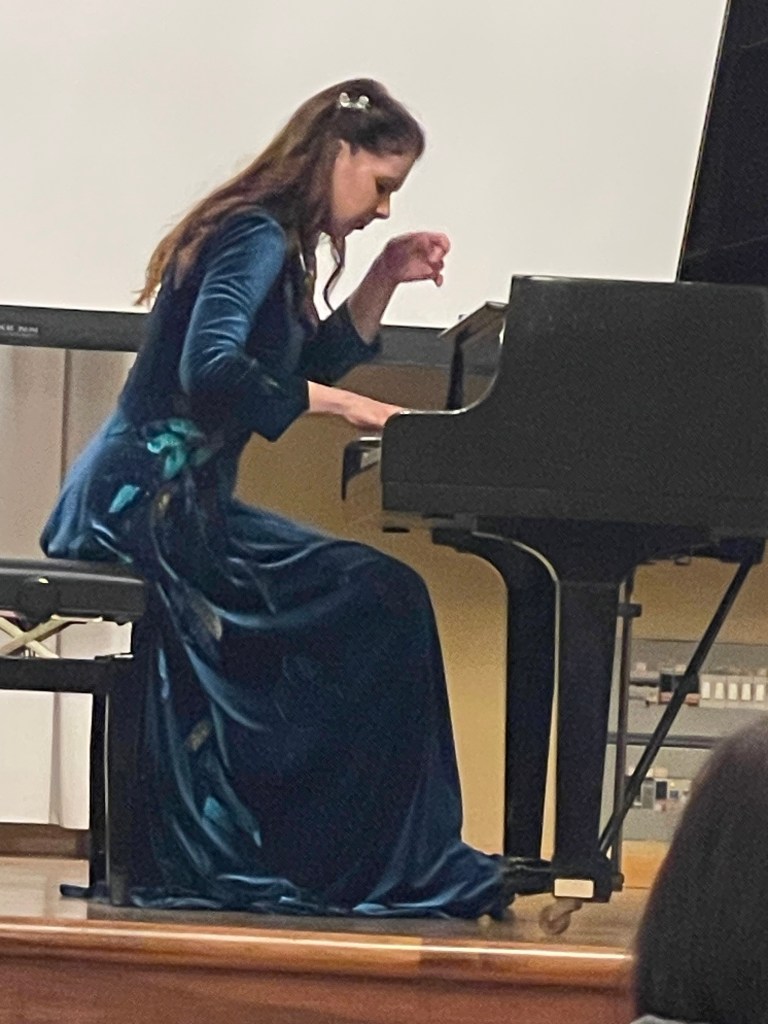


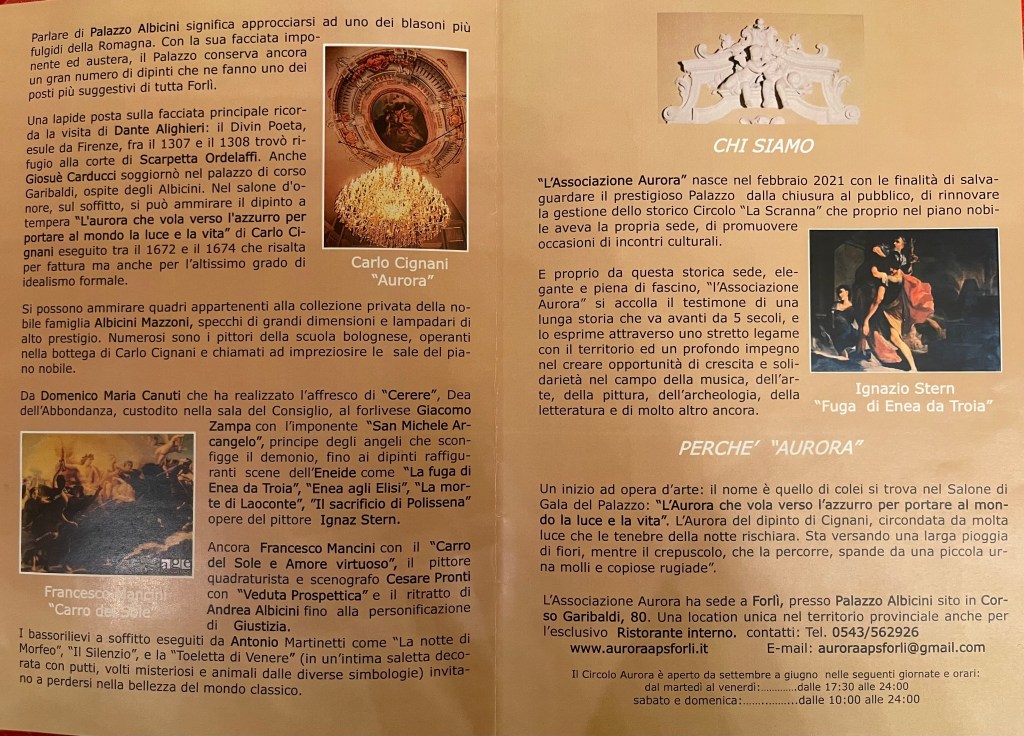
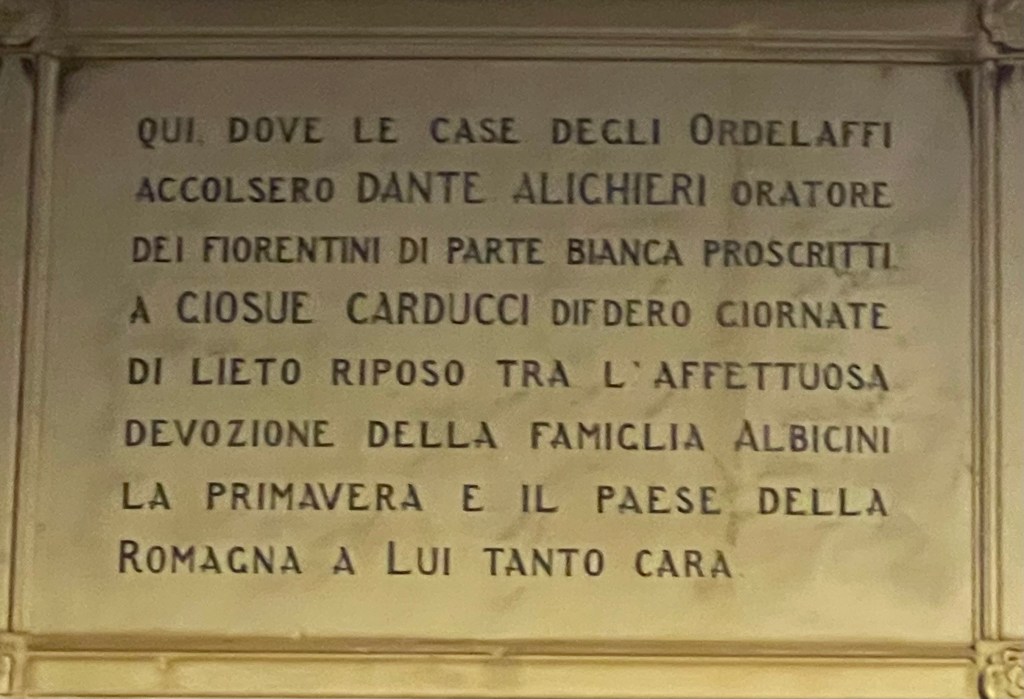


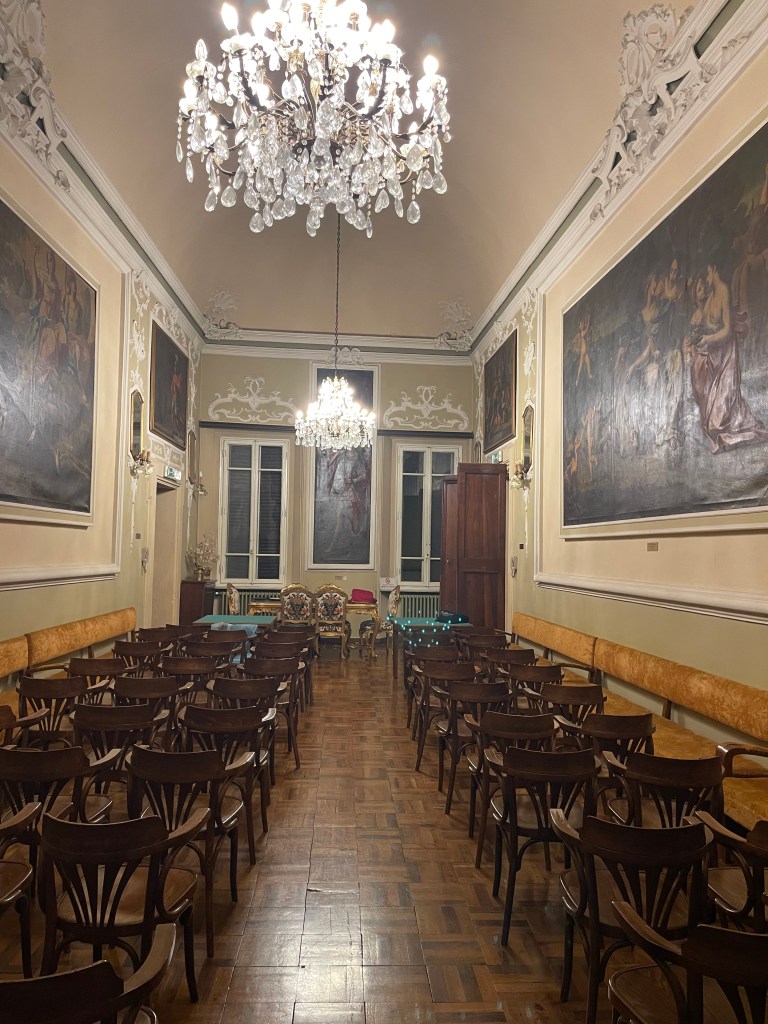
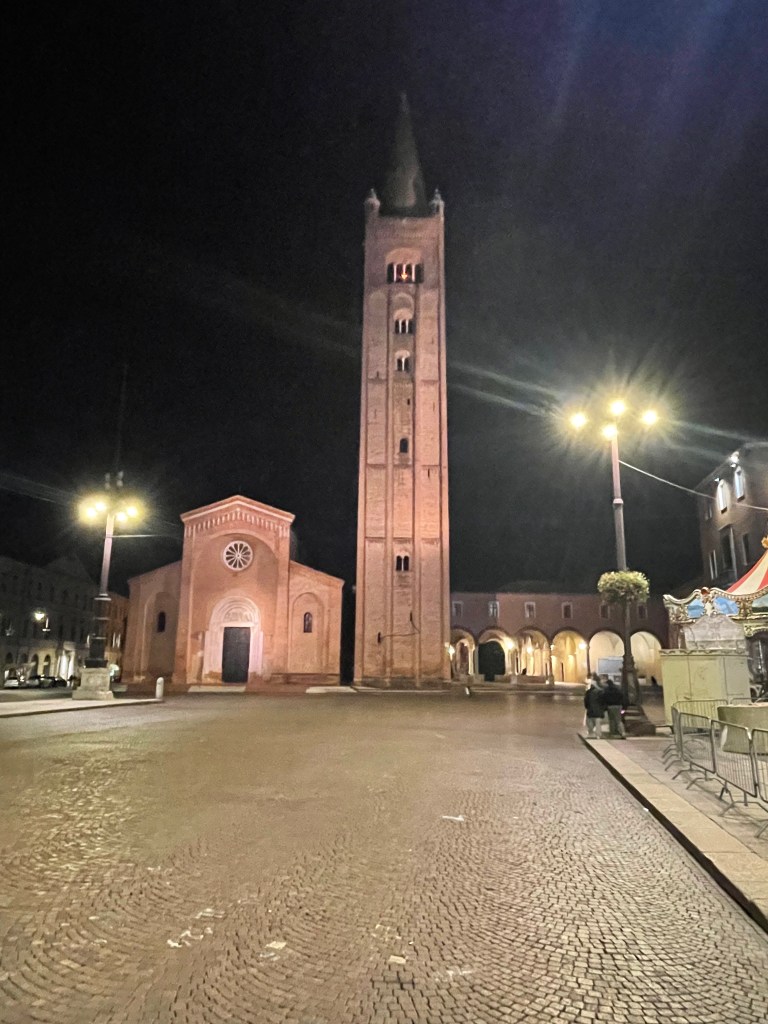



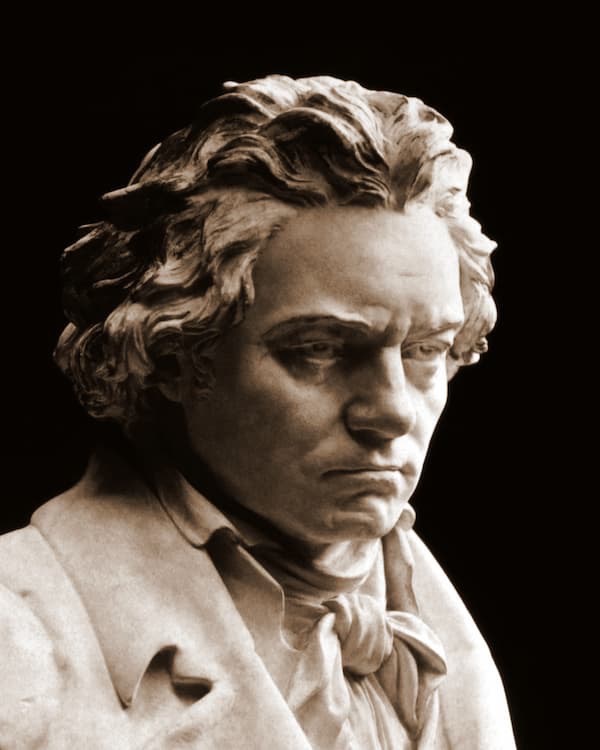
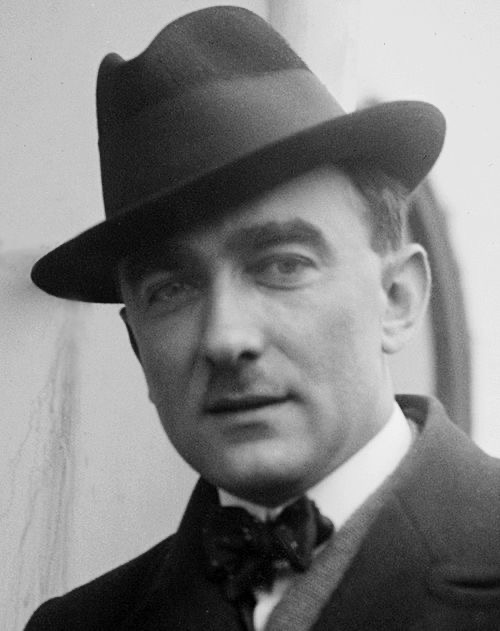
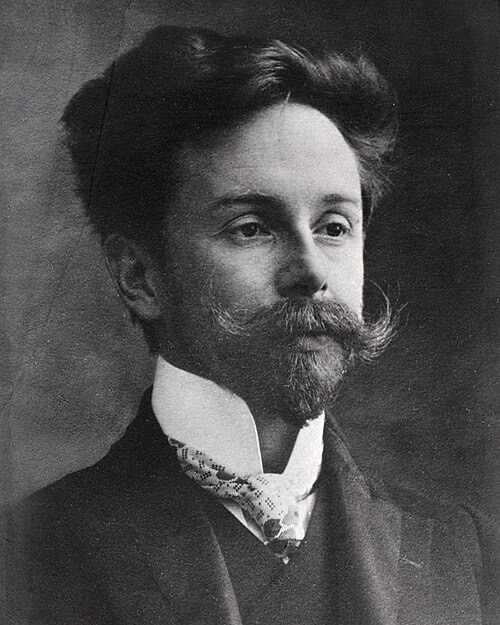


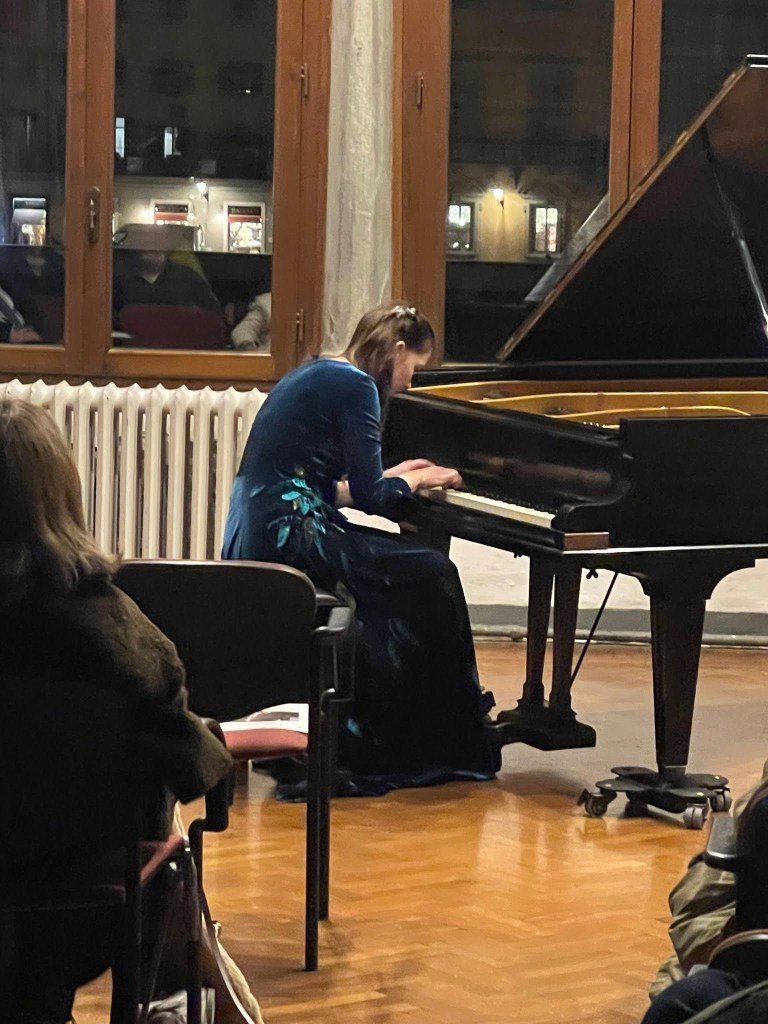






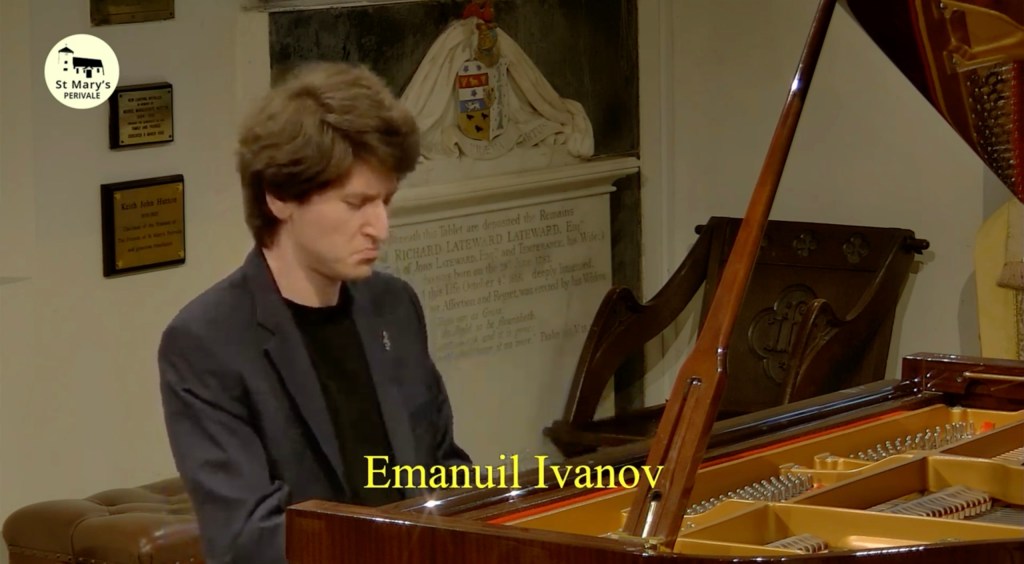
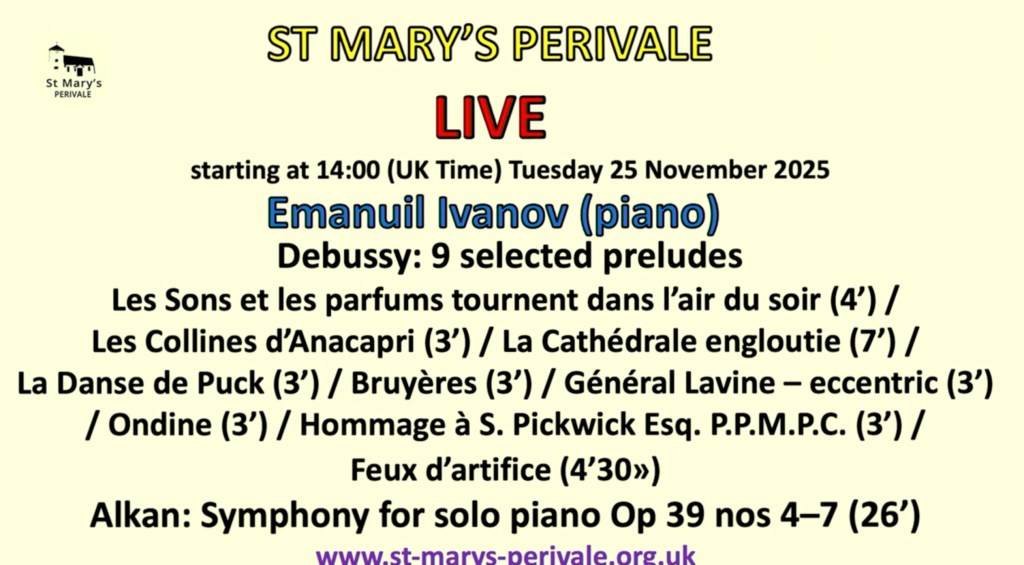
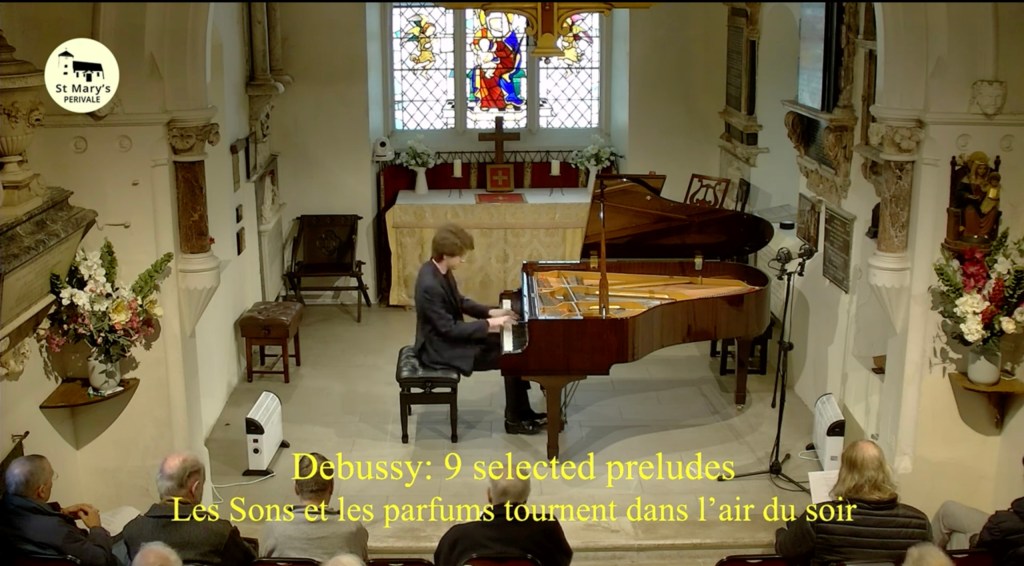
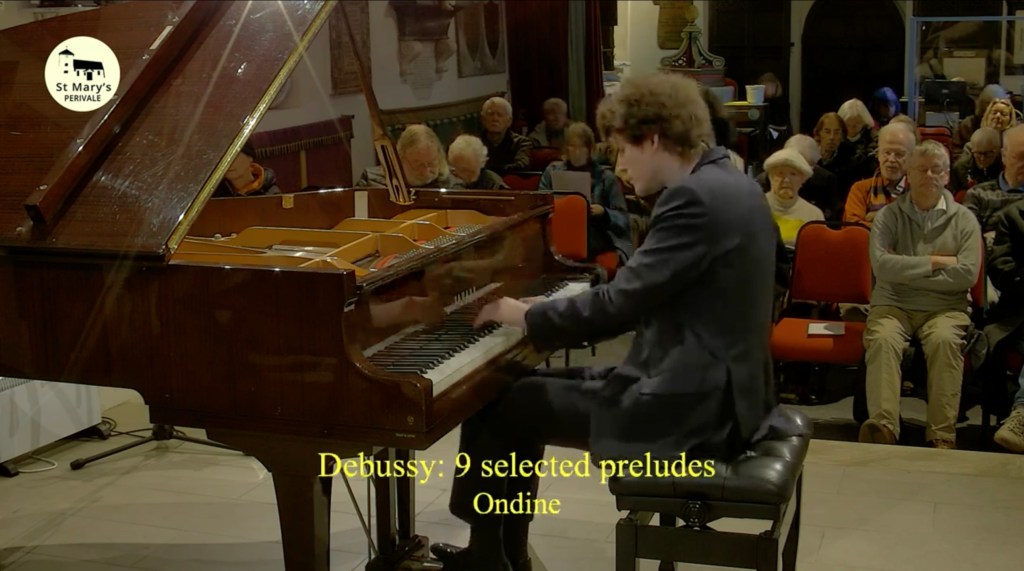
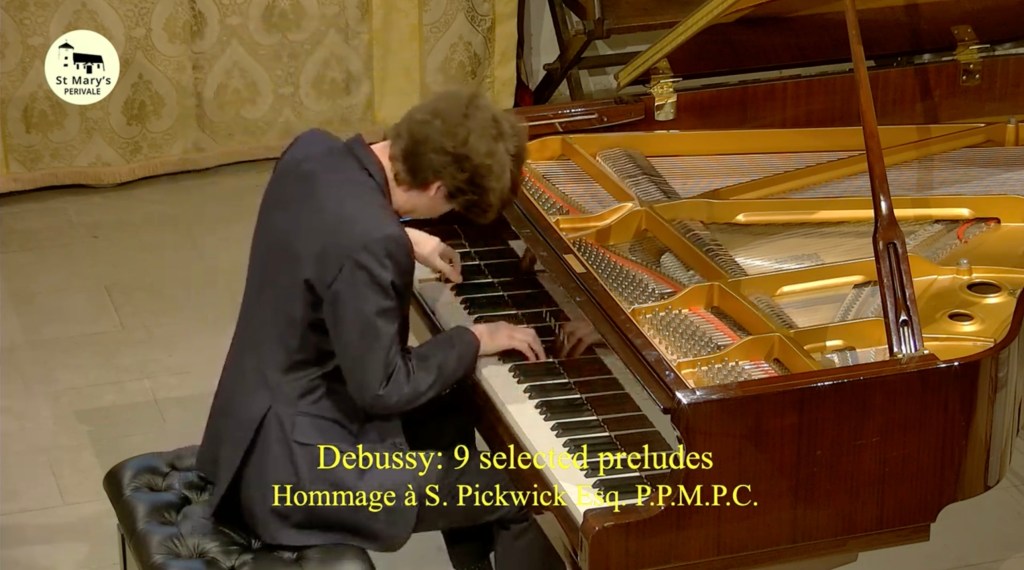
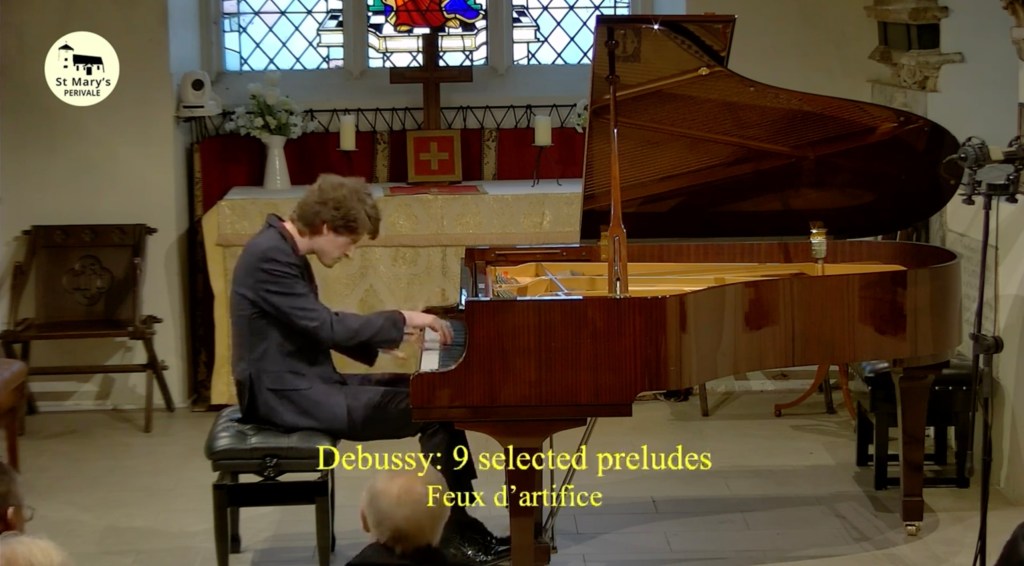
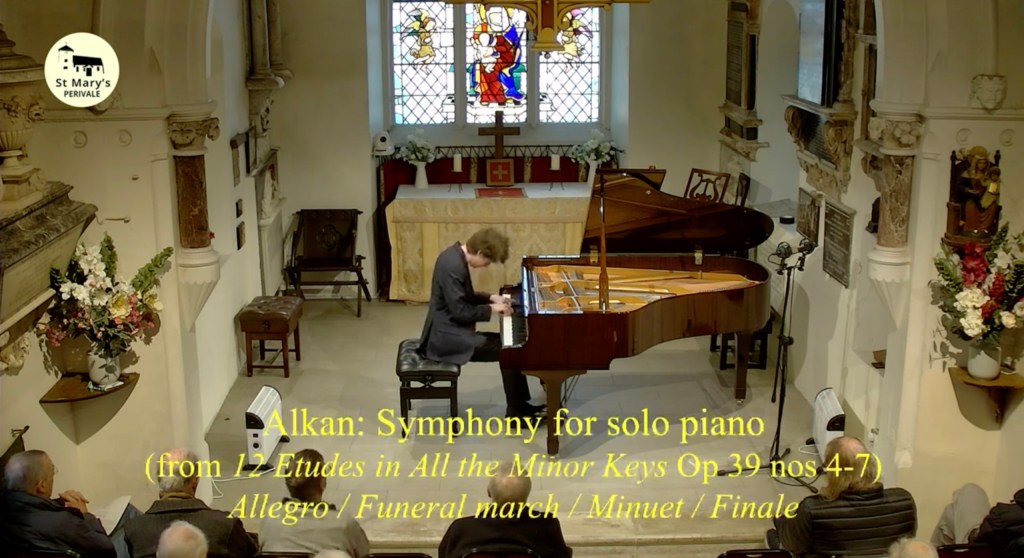
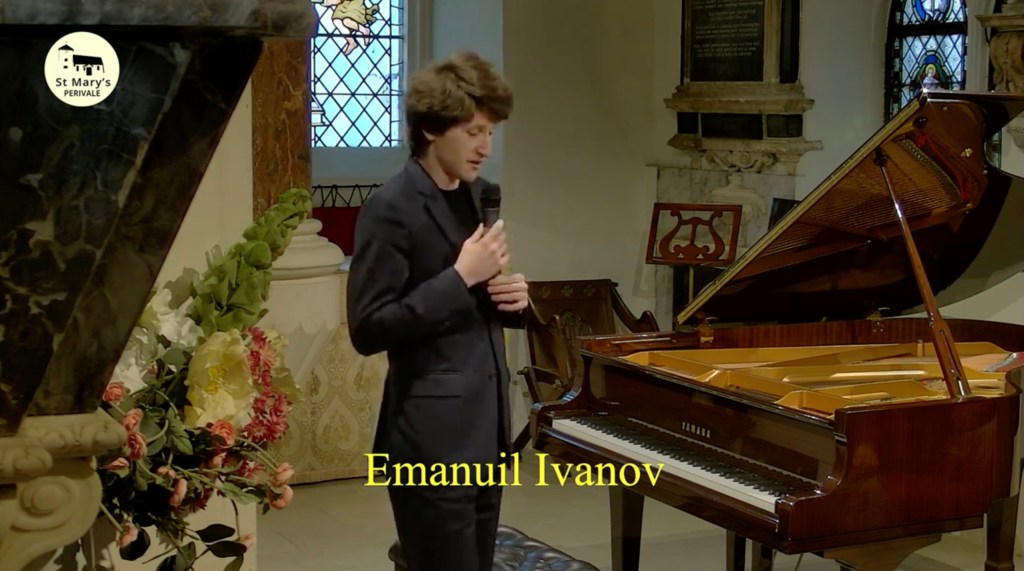

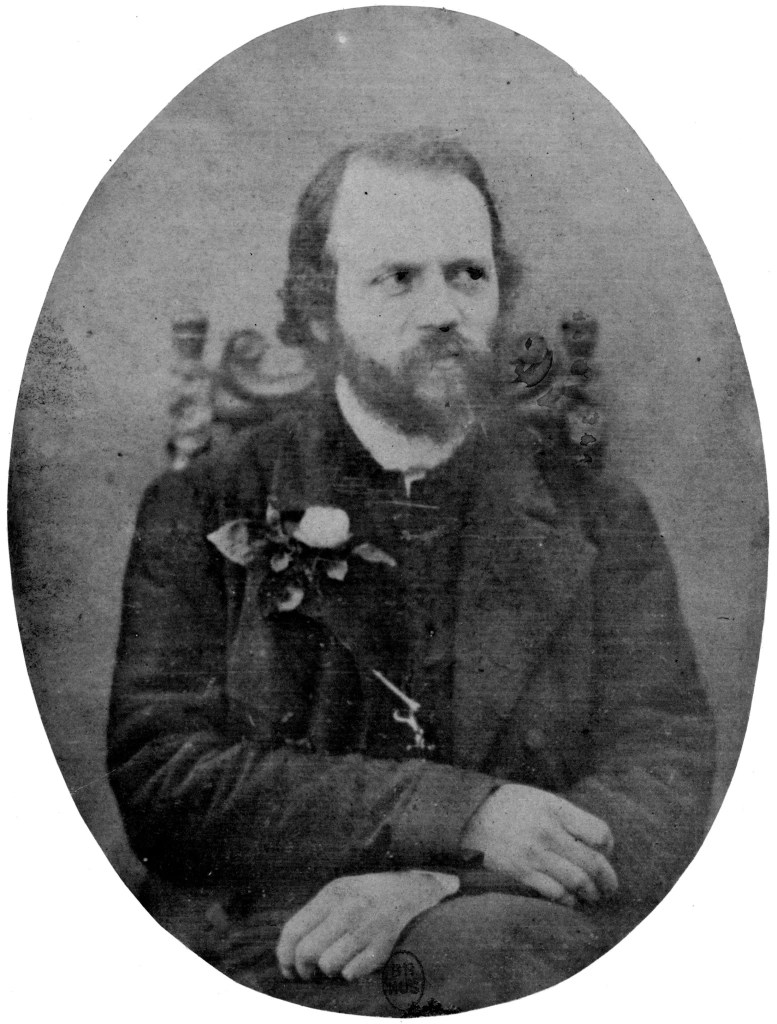
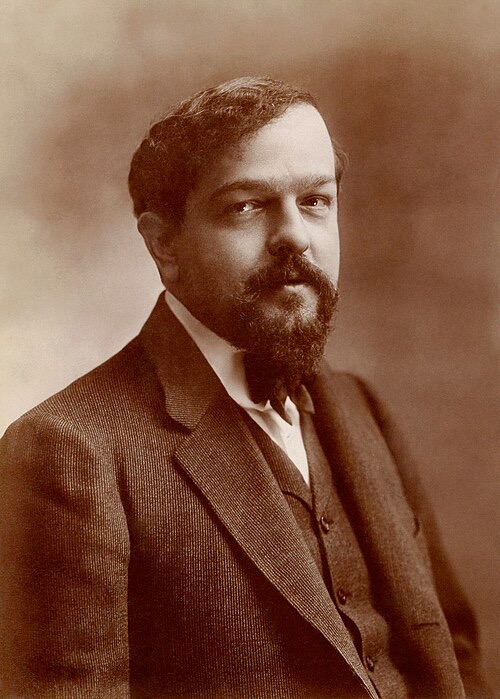
 ChristopherAxworthy-MusicCommentary