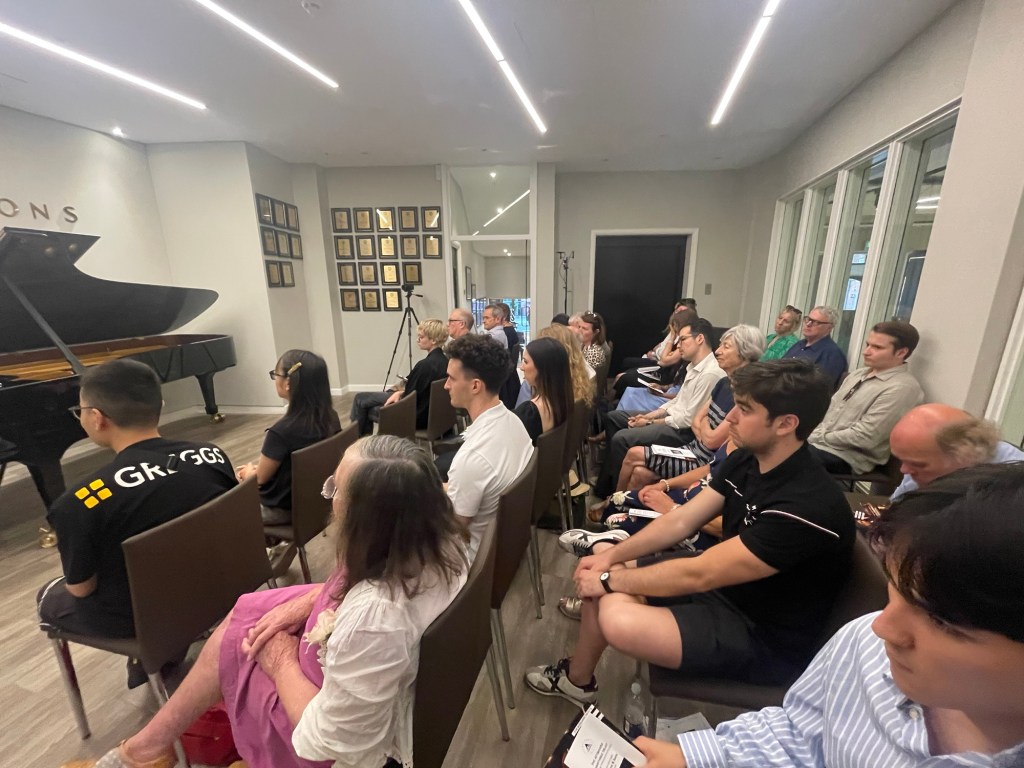
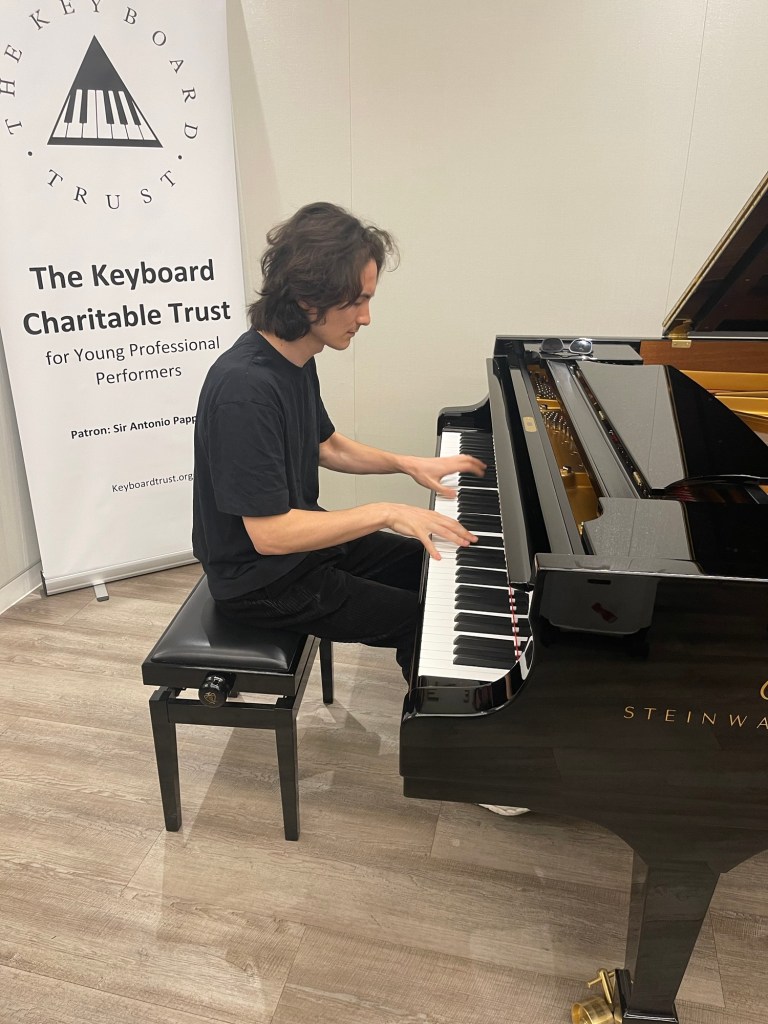
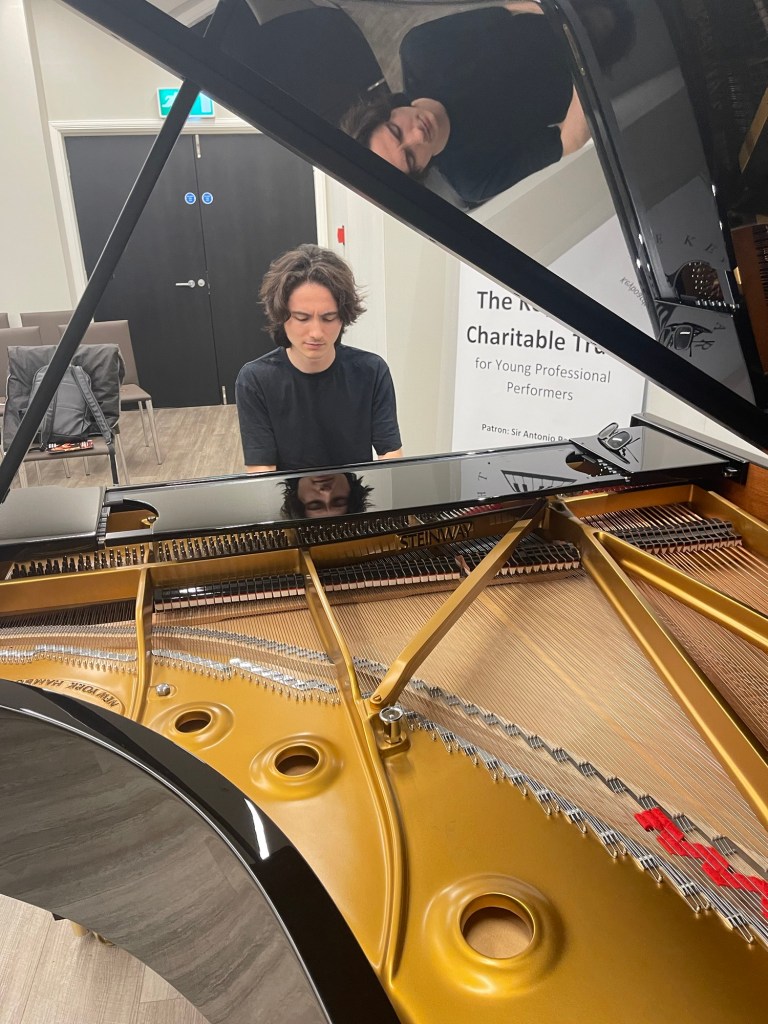
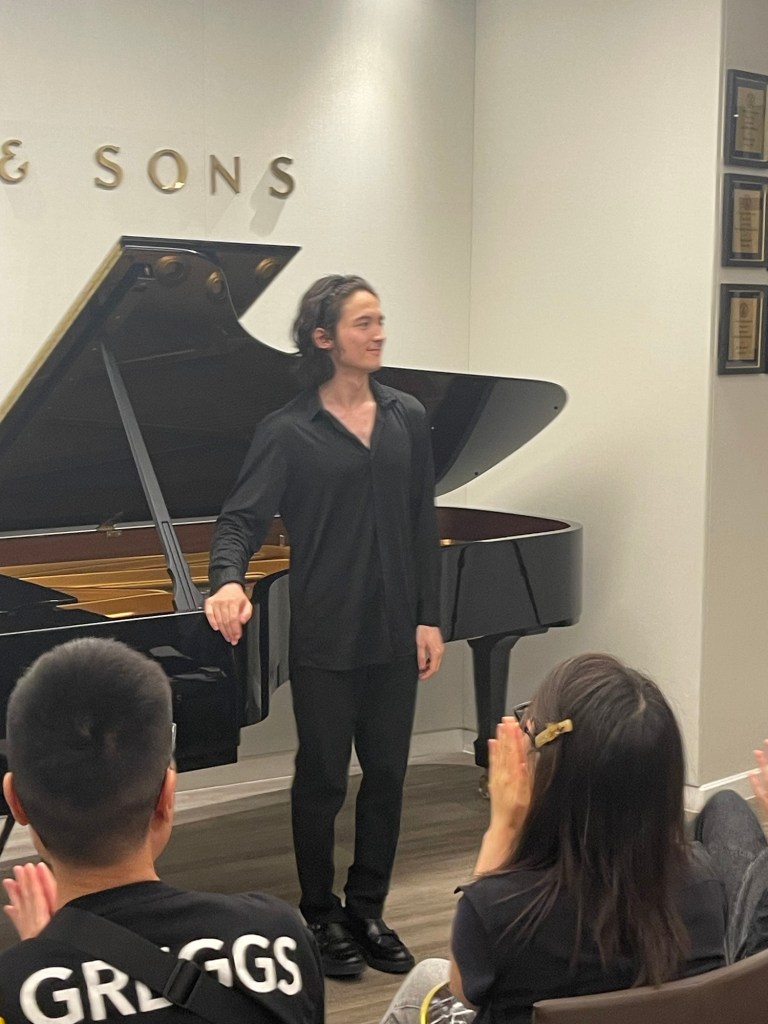
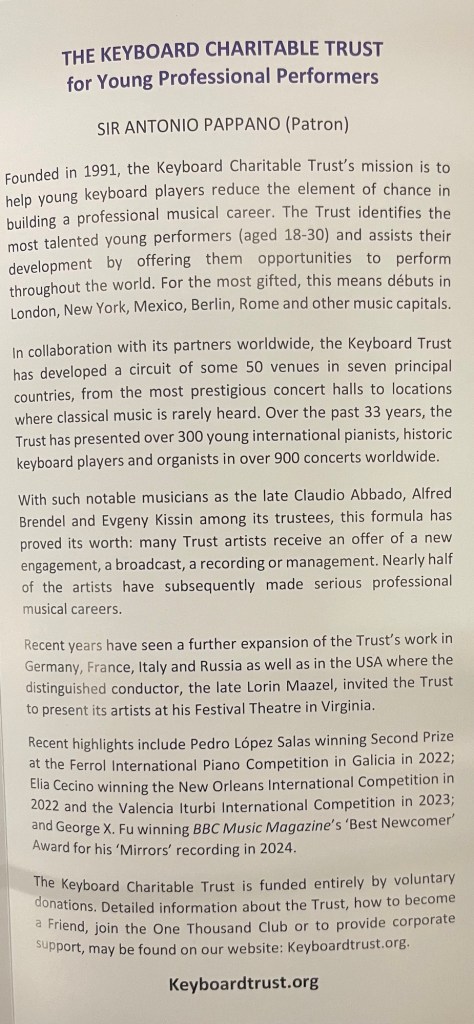
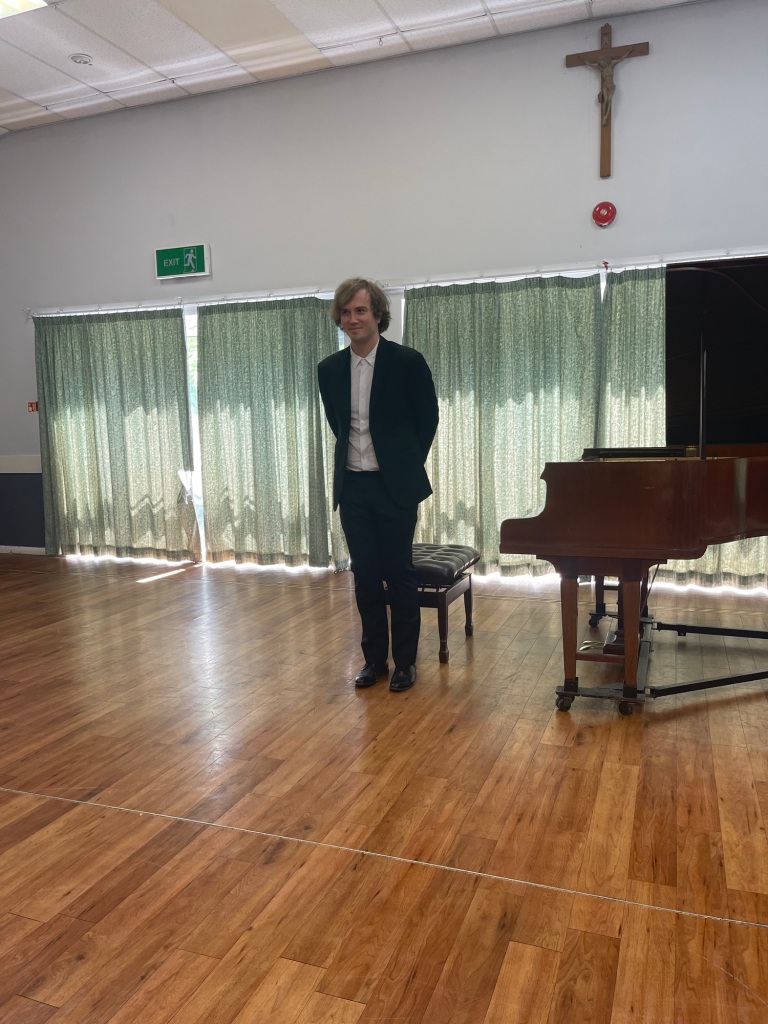
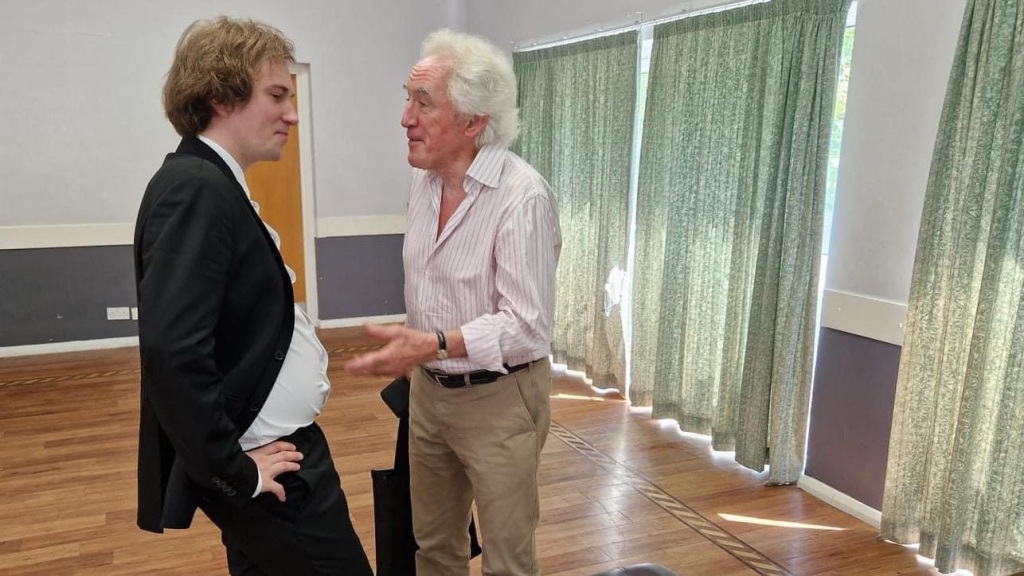
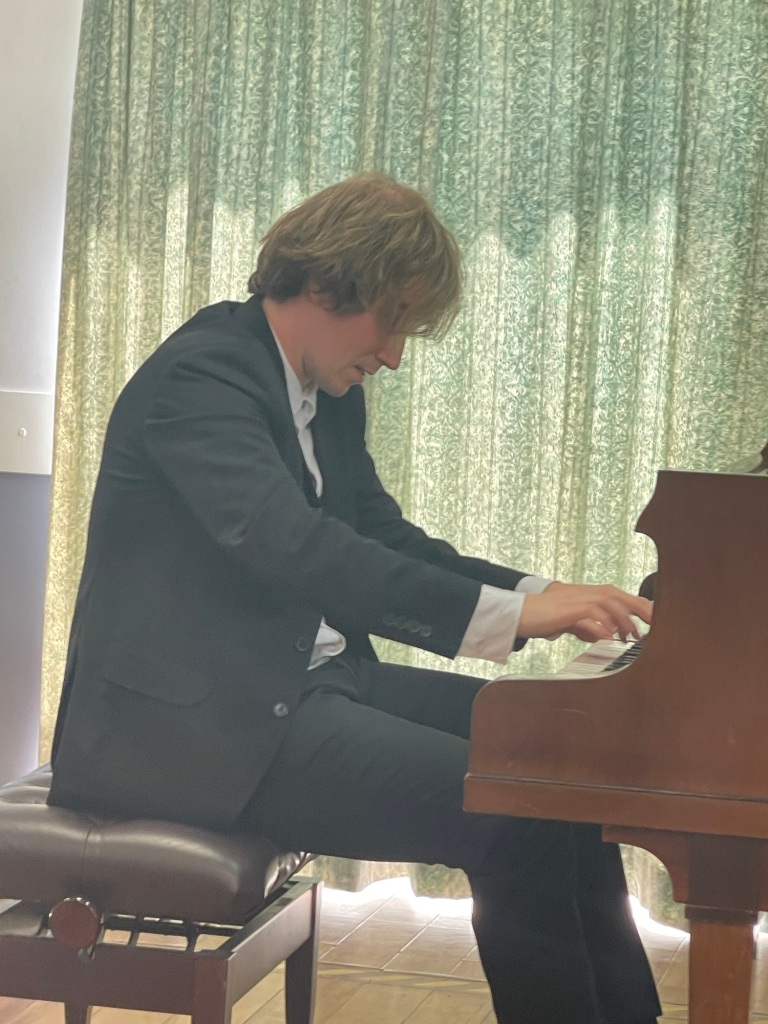
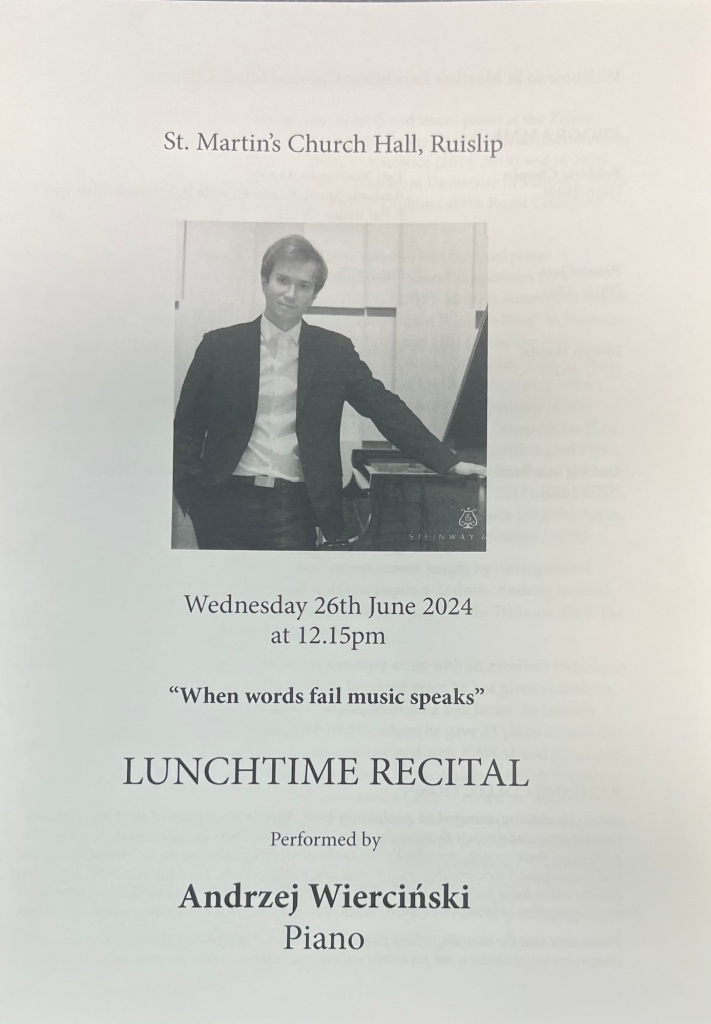
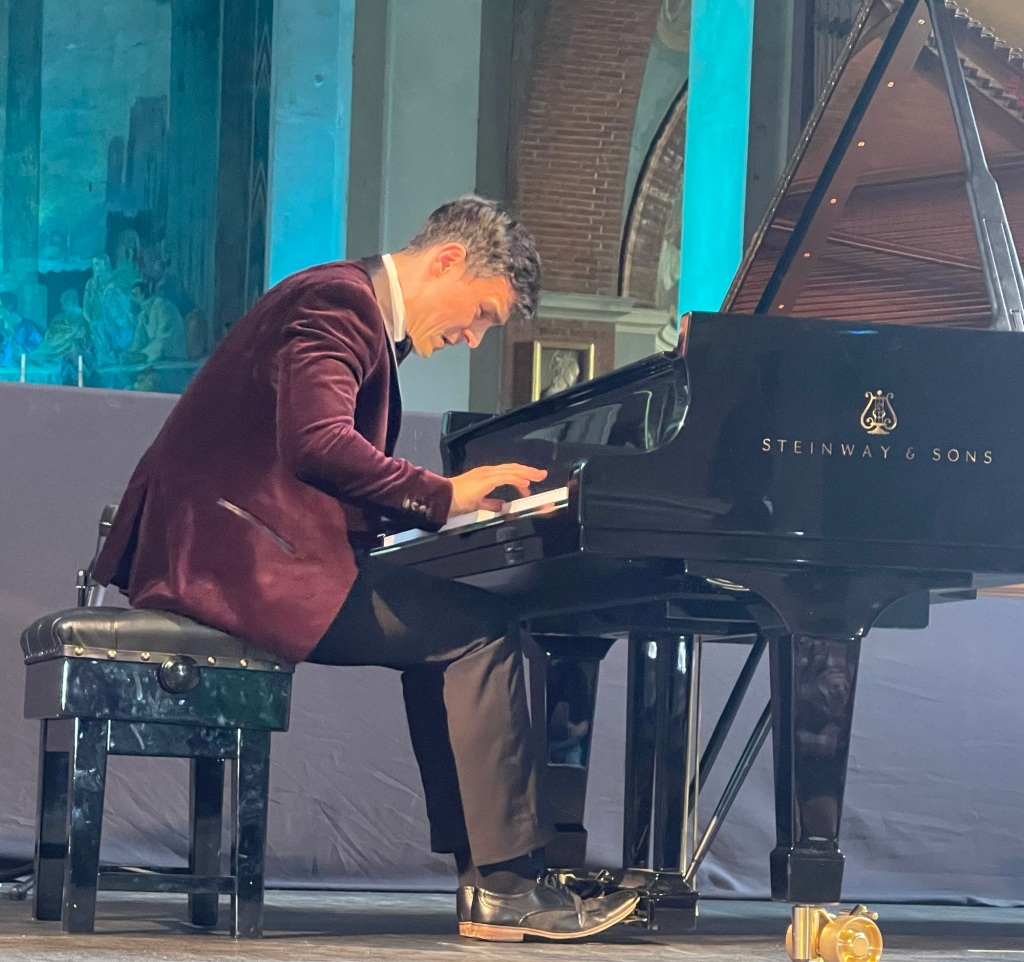
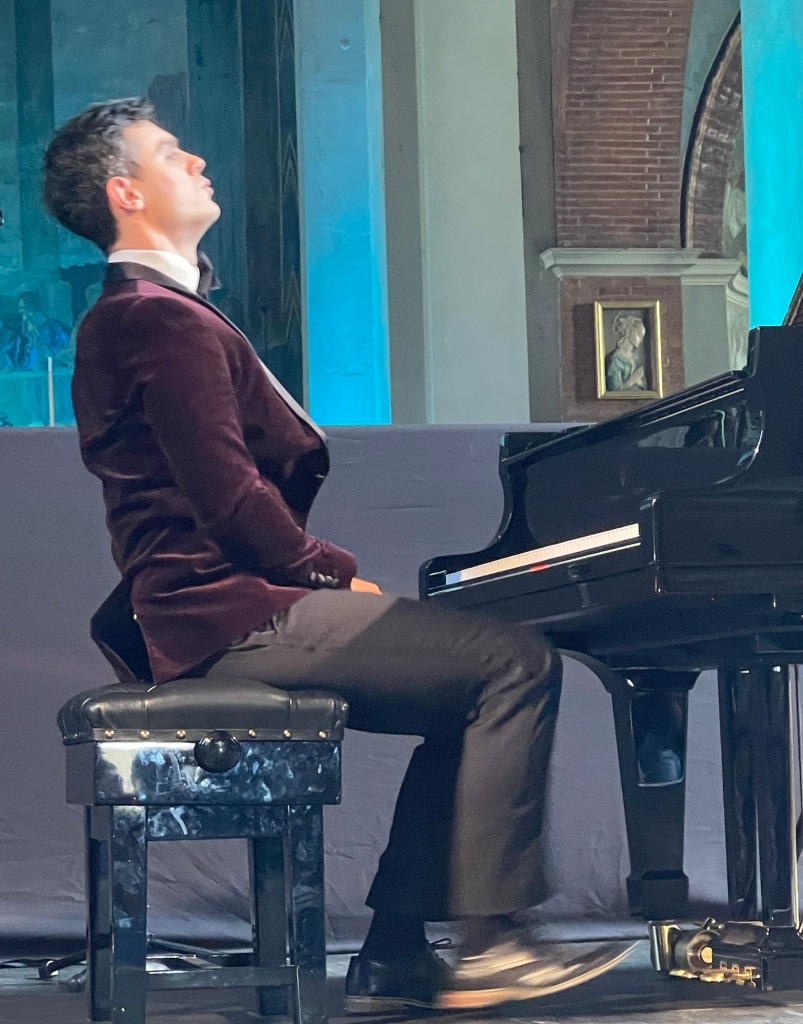
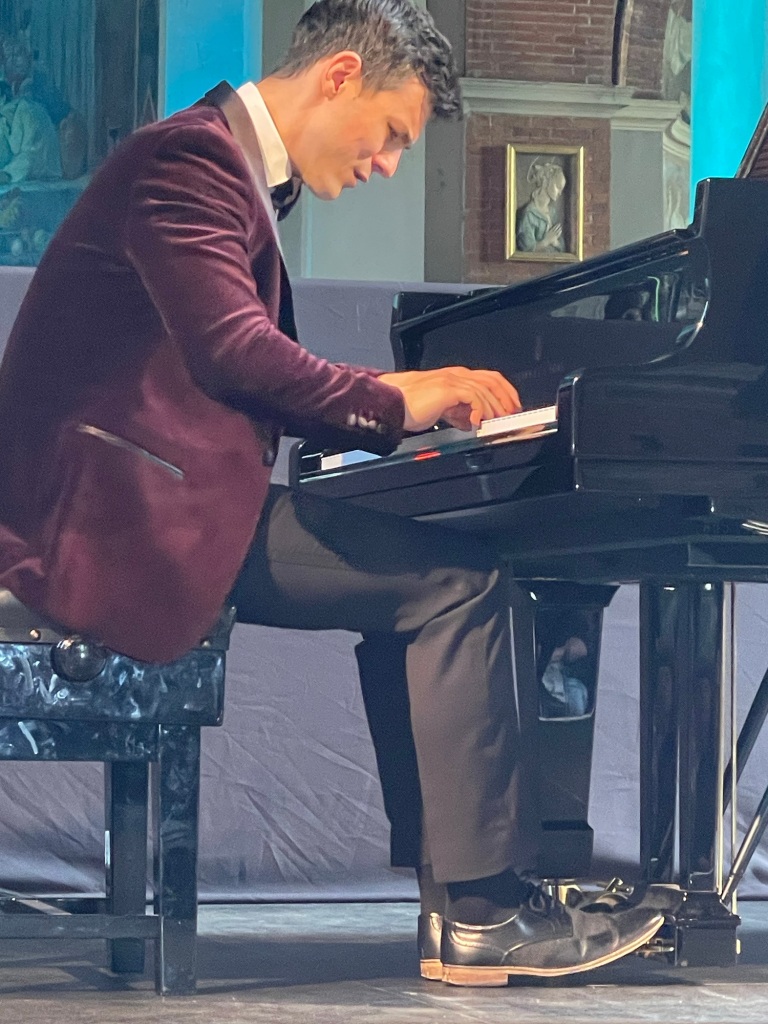
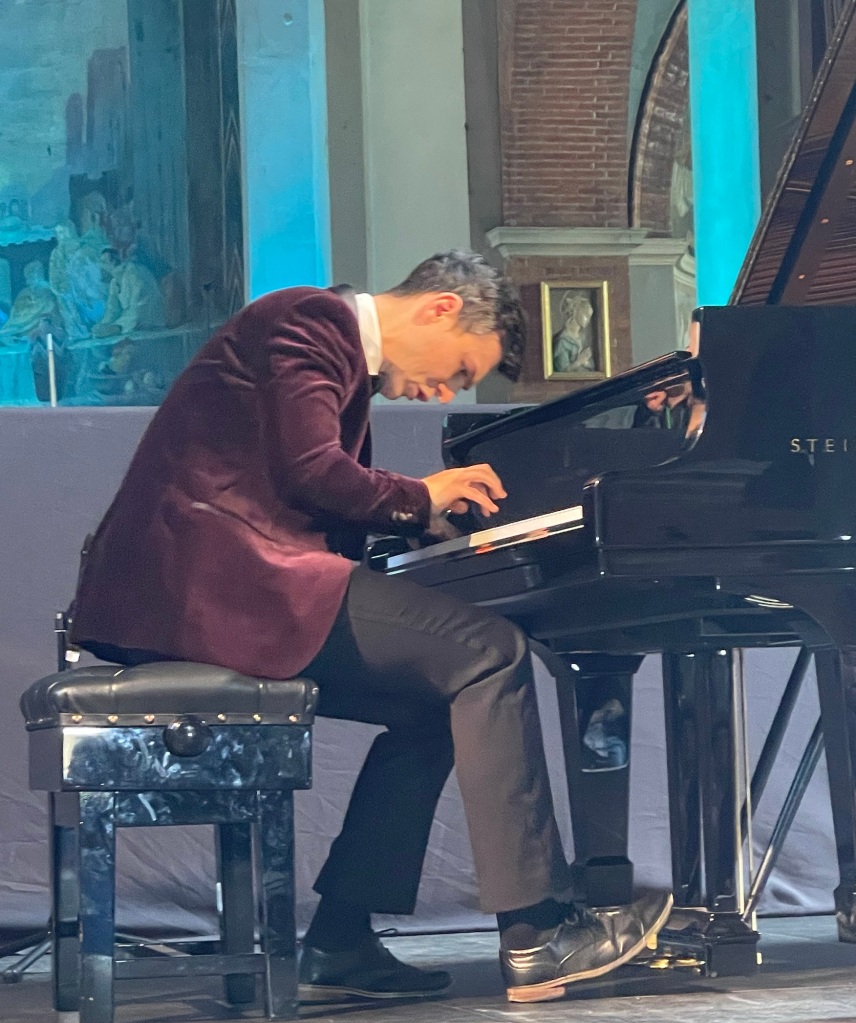
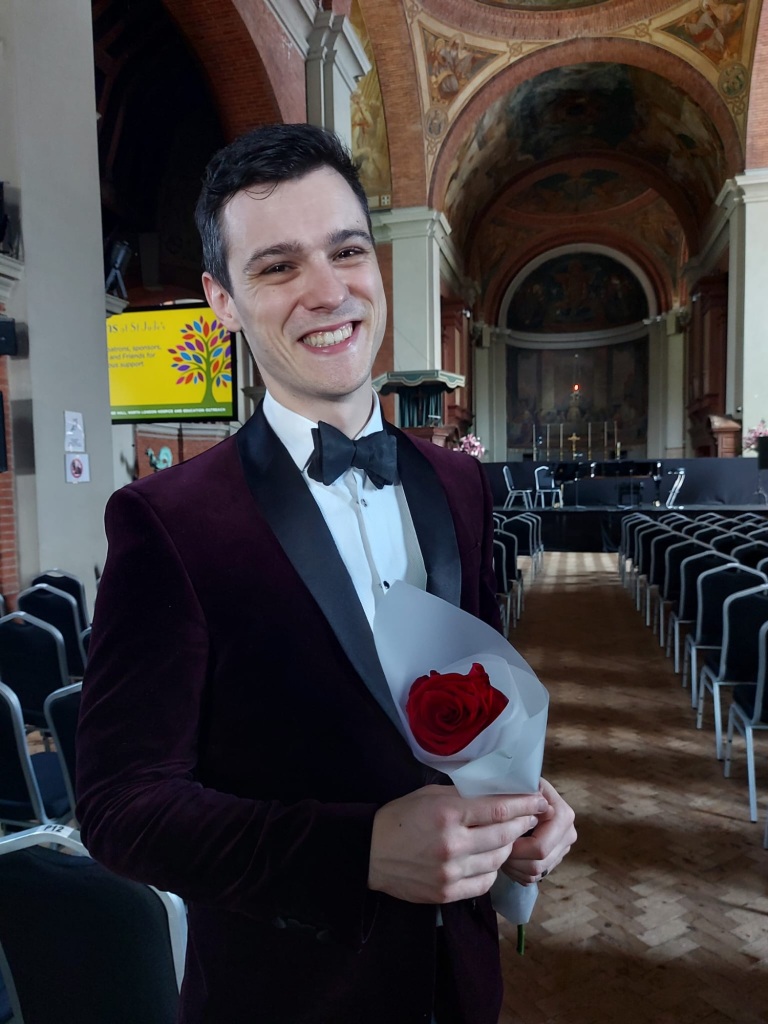
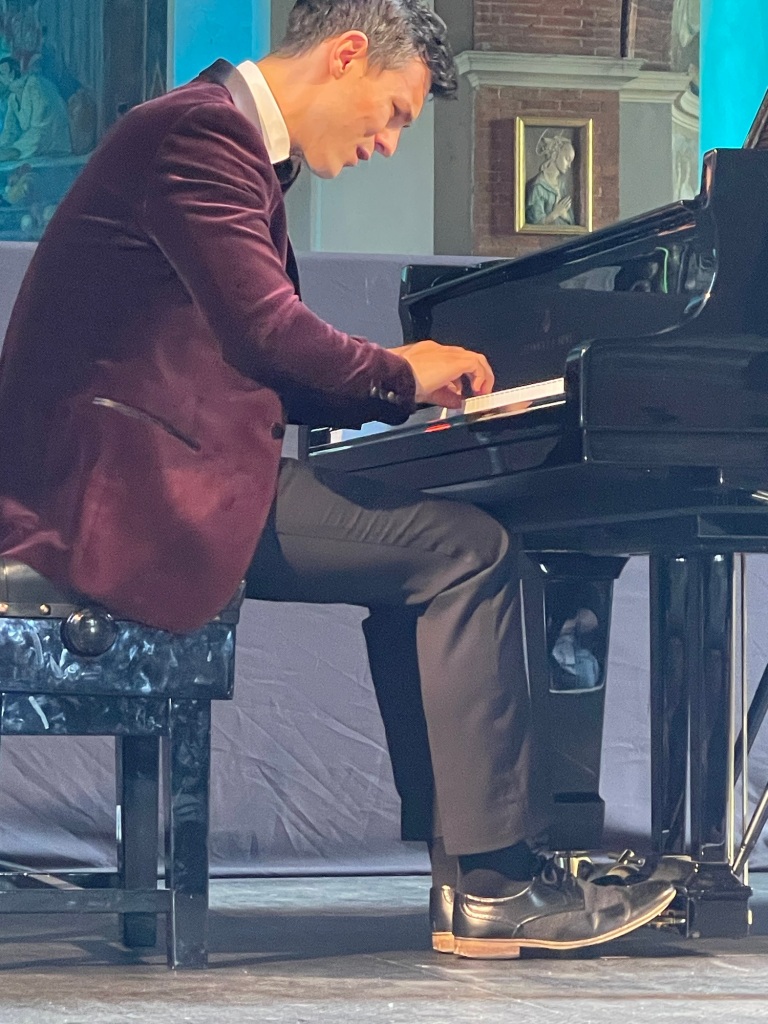
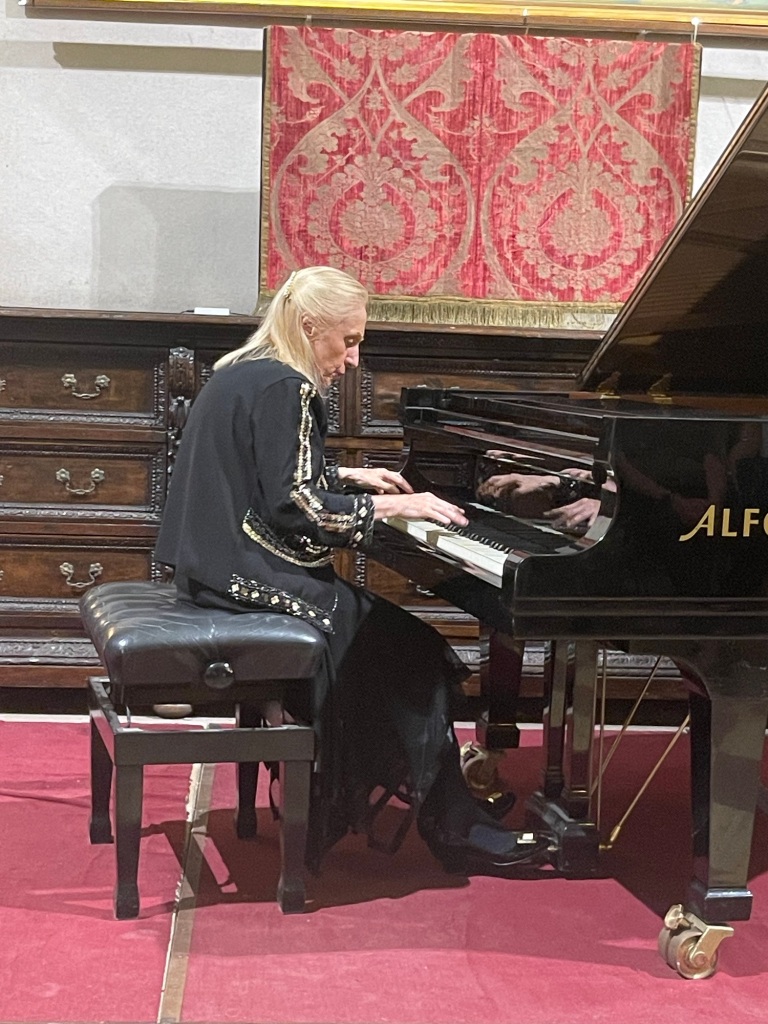
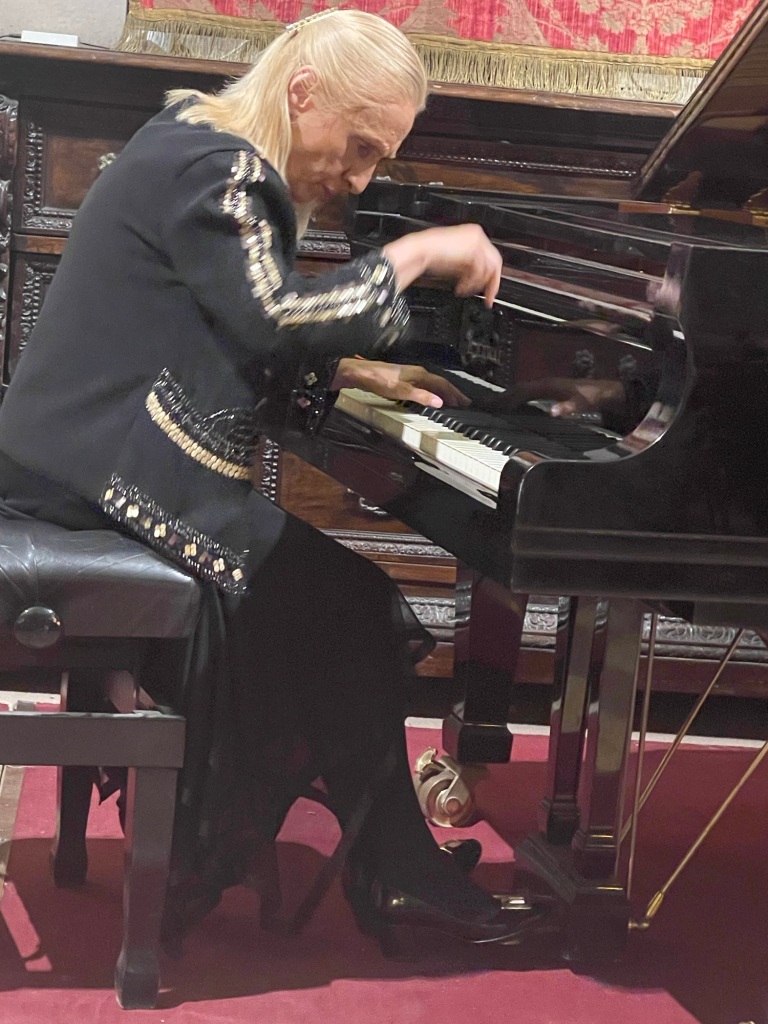
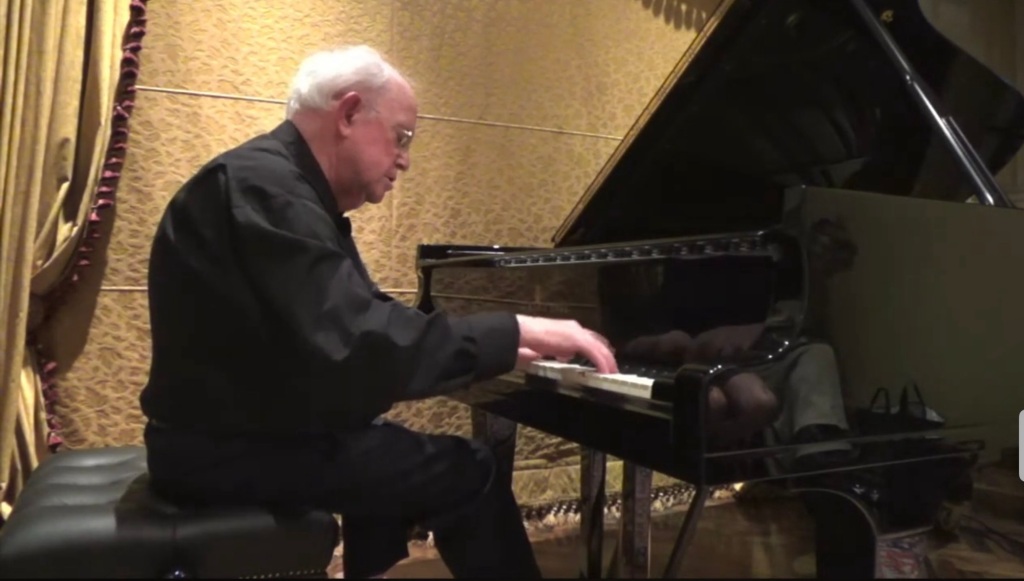
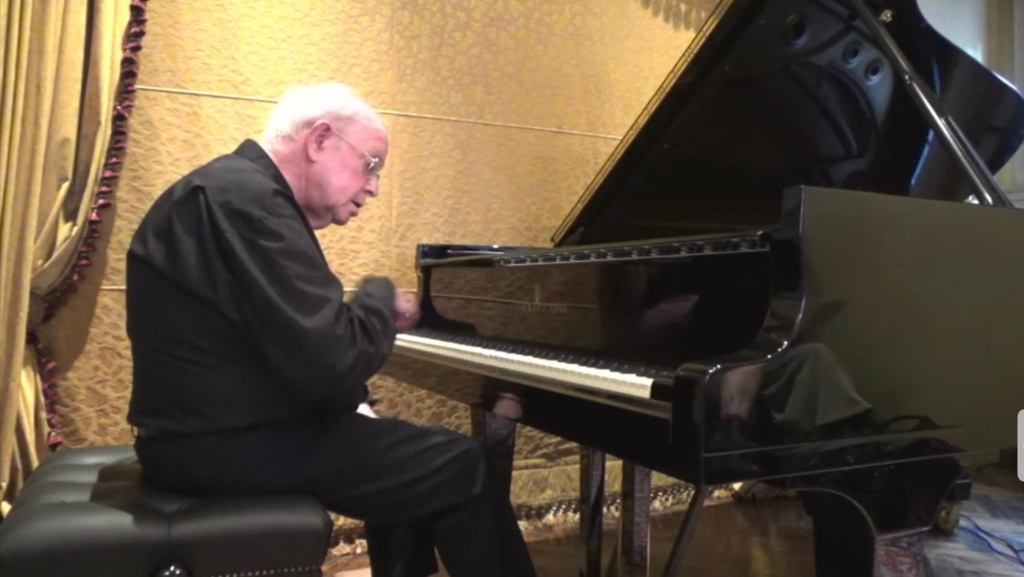
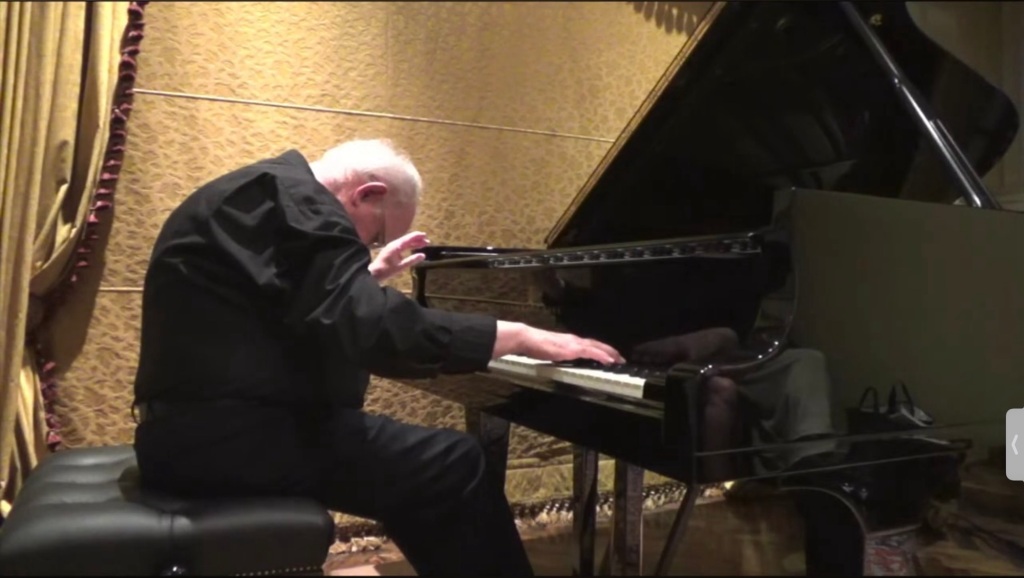
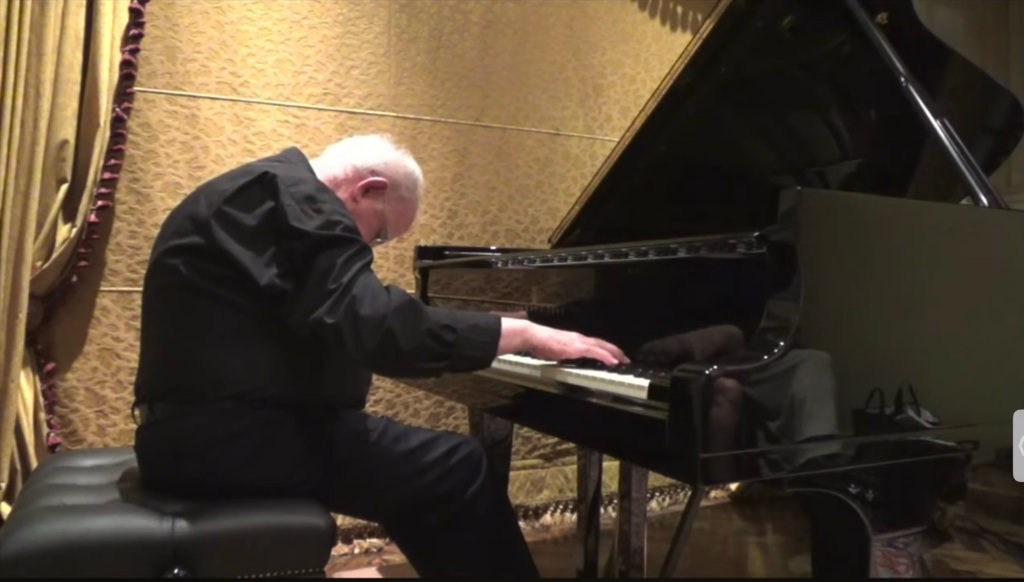
To go on stage is relatively easy as the stage director pushes you into the spotlight.It is more difficult to leave the stage sliding between the wings judging the exit with care because there is always someone who wants to cheat you out of your applause.For Romolo Valli he would have liked to go ‘Prima del Silenzio’ as he himself said quoting from the title of his last play,instead of a banal overturning of his car for he who was so Proustian in his stage roles.And Turi Ferro? Sometime before his end he felt so ill he confused life with death.He was destined to die in the wings perhaps upset that he had to pass his retired life digesting useless medicine and not a little scandalous gossip.
Also Gassman dreamt of dying on stage like ‘The Great Kean’ .He announced it often although he kept his fingers crossed ,as he told his friend Carlo Mazzarella,because he had so much more ahead of him to look forward to .Raffaele Viviani ,De Filippo,Angelo Musco ,Anna Lelio all had dreamt to die on stage like Molière.And there was a truly great actor,Antonio Petit feeling that death was close managed to put his costume on as Pulcinella to give himself up to his respected public.Playing ‘Gli esami non finiscono mai’ Eduardo tried at the Eliseo to do like Petit but he had an actress companion who he loved so he finished with only flirting with death until with his superb irony vanished together with her.
In Rome in Via delle Fornaci a stones’ throw from the austere home of that great Italian called De Gaspari there was once upon a time a seedy little cinema called ‘Rosa’.Cabaret companies would perform until with courage a delicate lady with an iron will turned it into a theatre to which she lent her name :the Ghione Theatre – because the daring actress /impresario was called Ileana Ghione.
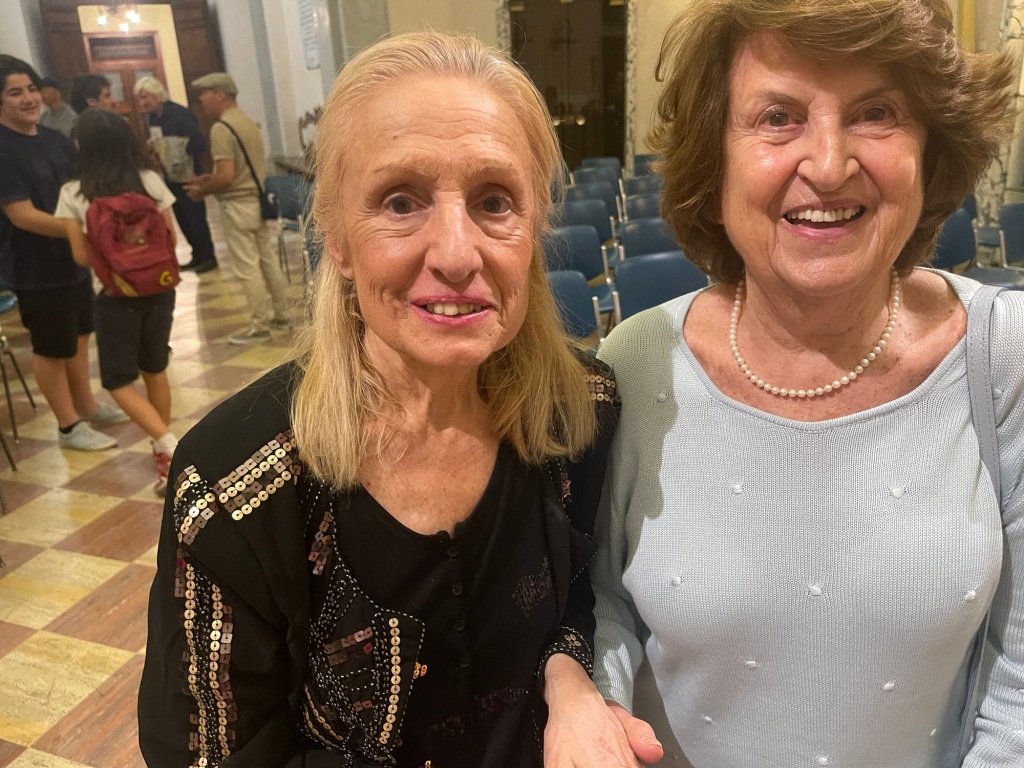
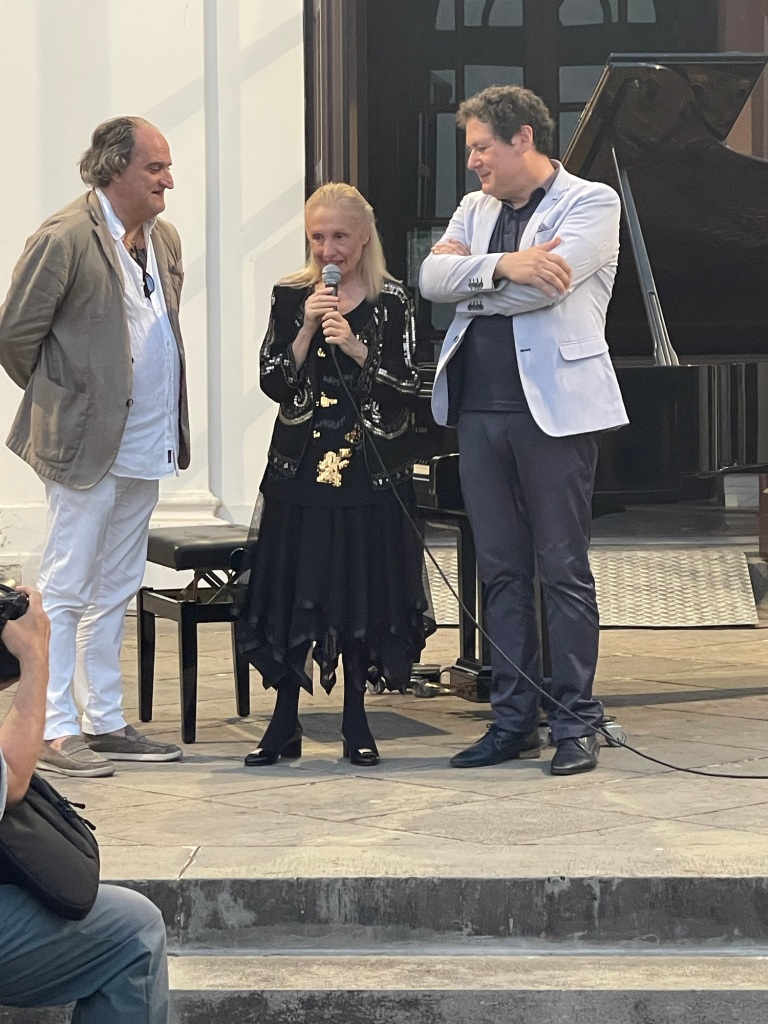
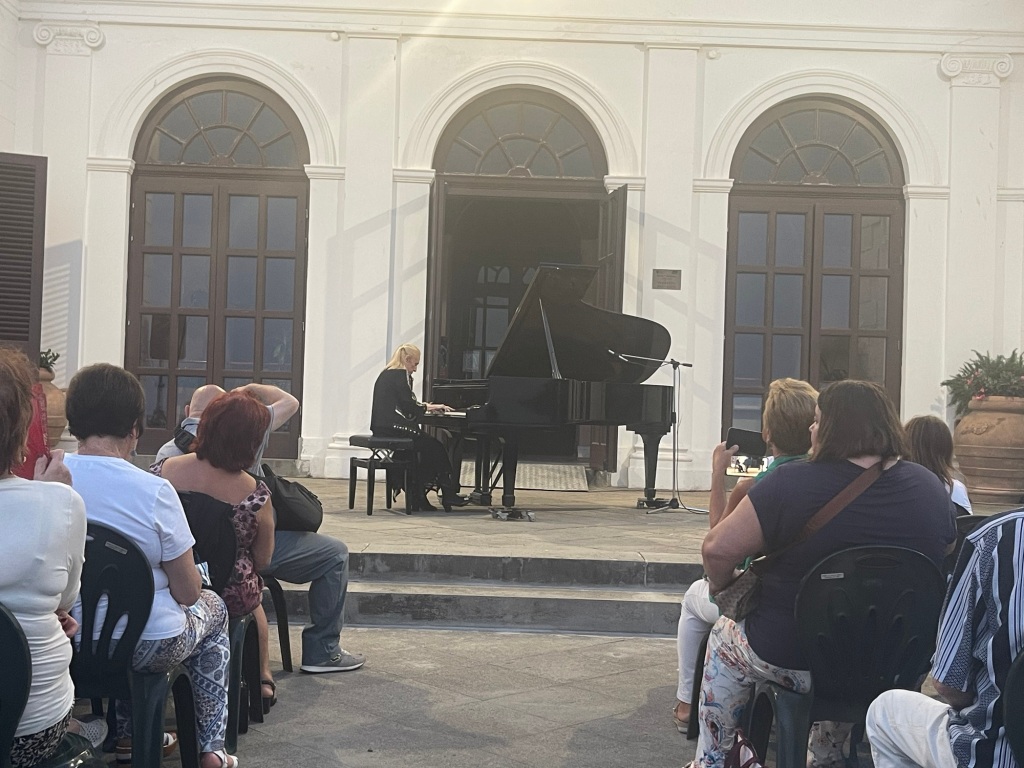
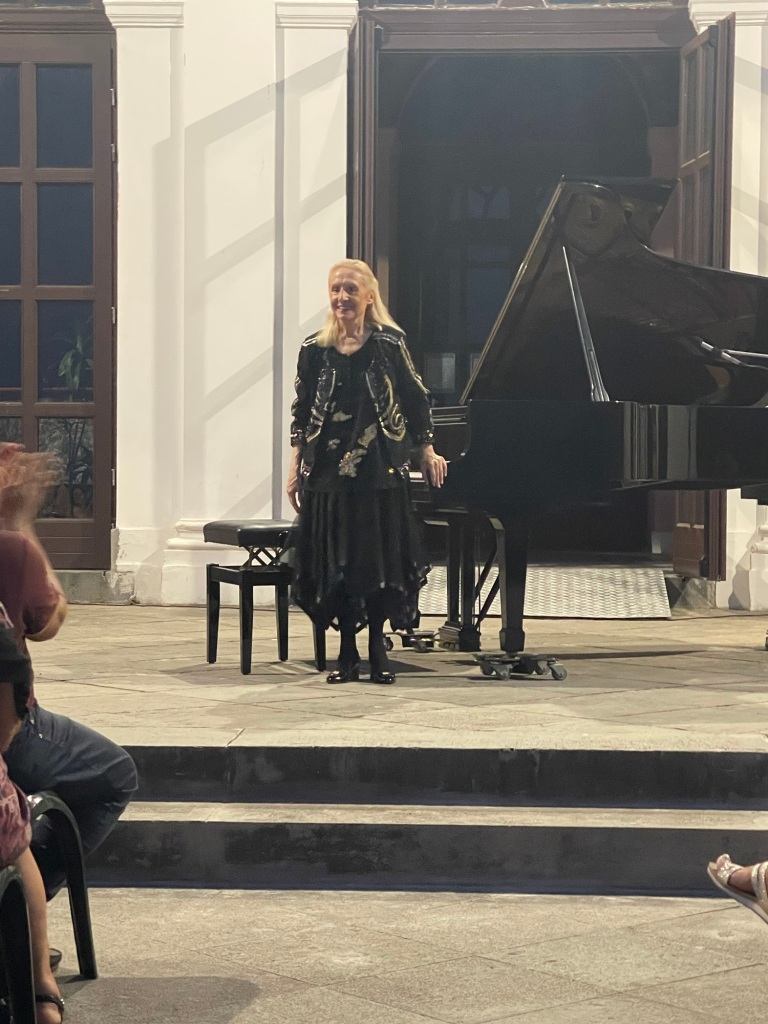
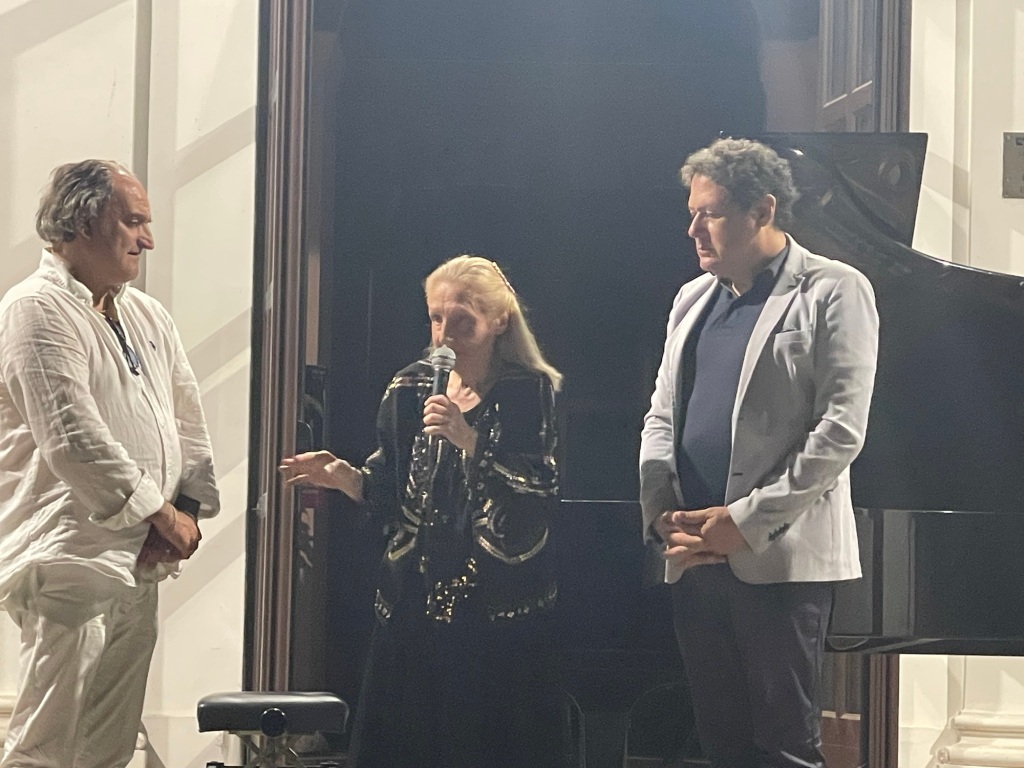
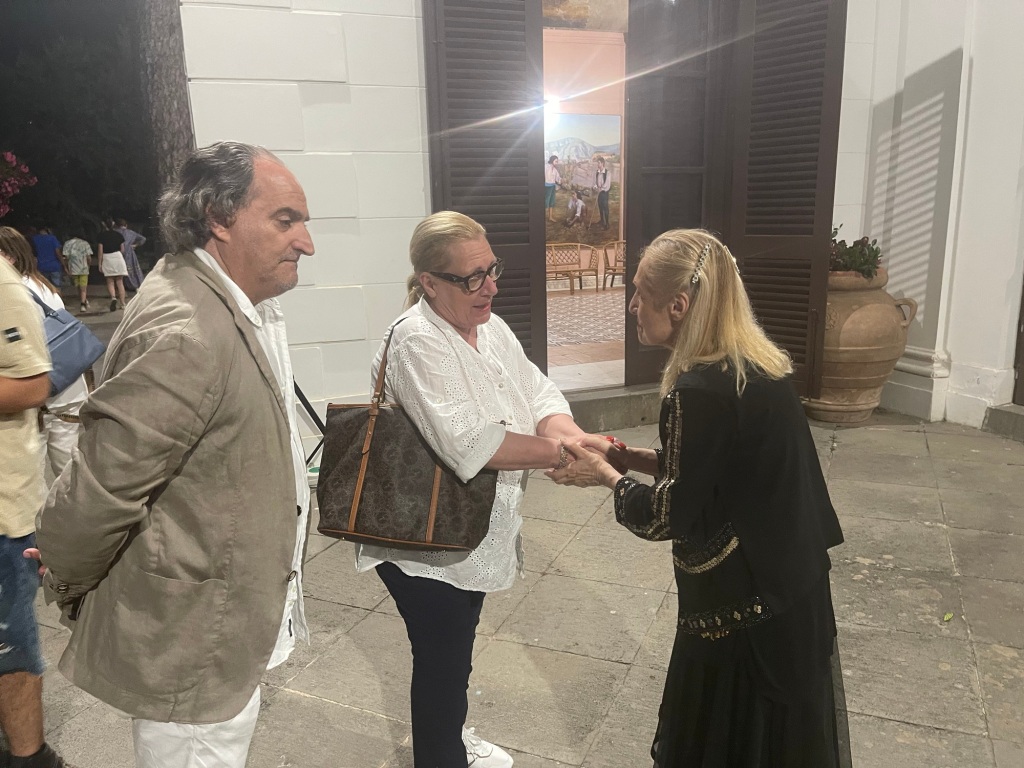
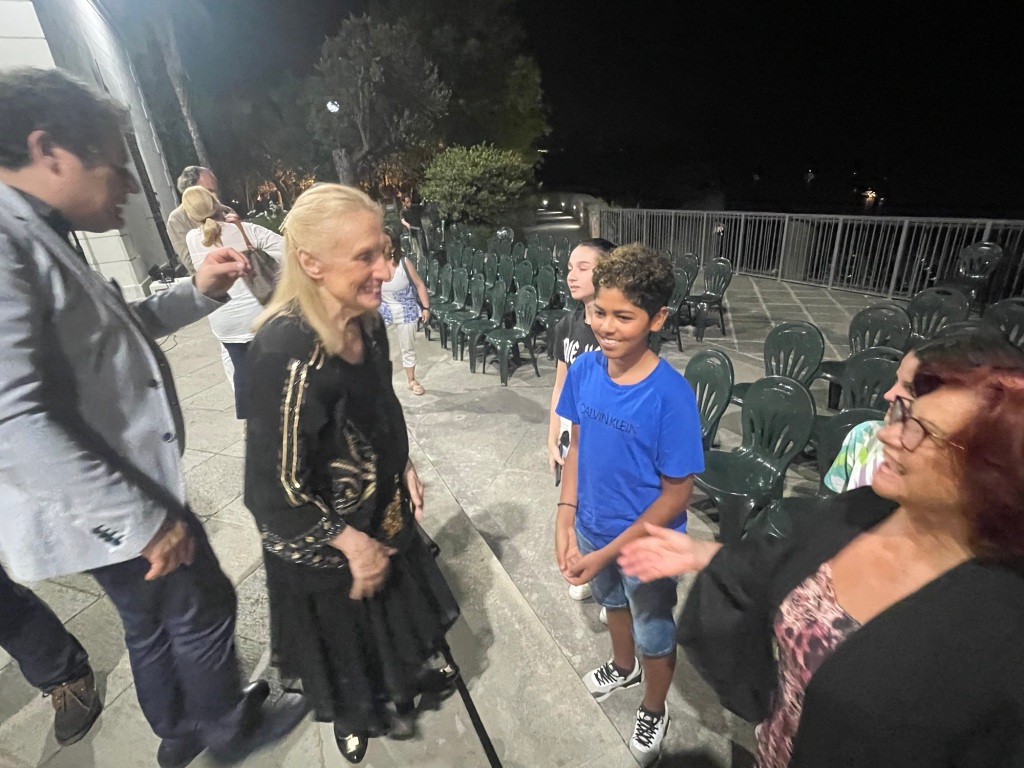
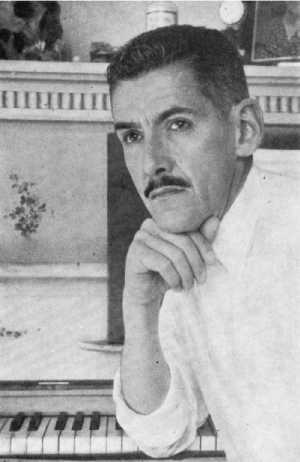
Yes I am talking about the delicate actress who died two weeks ago whilst on stage ,she so fresh and open playing the terrible rugged Ecuba.Tenderly the President Ciampi sent a heartfelt message to Ileana’s husband ,the English pianist Christopher Axworthy.A serious artist has left us and one who in my honest opinion never had the fame she deserved.But she cared very little of success often not merited : she just adored acting.Under the make up her complection was pale surrounded by the perfume that only the stage can produce of a mixture of talcum powder and cologne of wood ,velvet and rhinestones.
Before leaving the stage forever she took off her wedding ring and placed it on the finger of her companion of a happy life together.In the confusion that death can create Ileana’s ring vanished .Christopher tortured himself in desperation asking forgiveness from his adored companion.But Ileana seemed to just smile indulgently with a shade of irony on her lips.And so returning to the theatre Chris found the missing wedding ring on the pavement outside the theatre.This is a great ending .Worthy of an actress who knew how to be a wife,companion and a real person.Always.
‘Every invented drama reflects a drama that is not invented’ Francois Mauriac
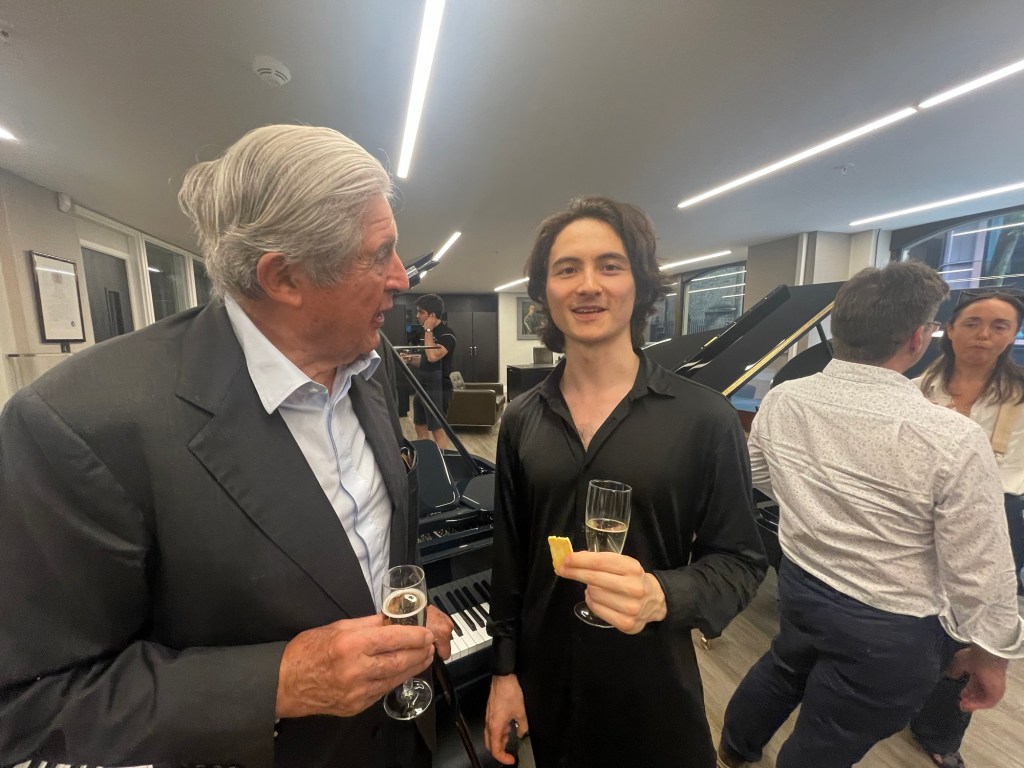
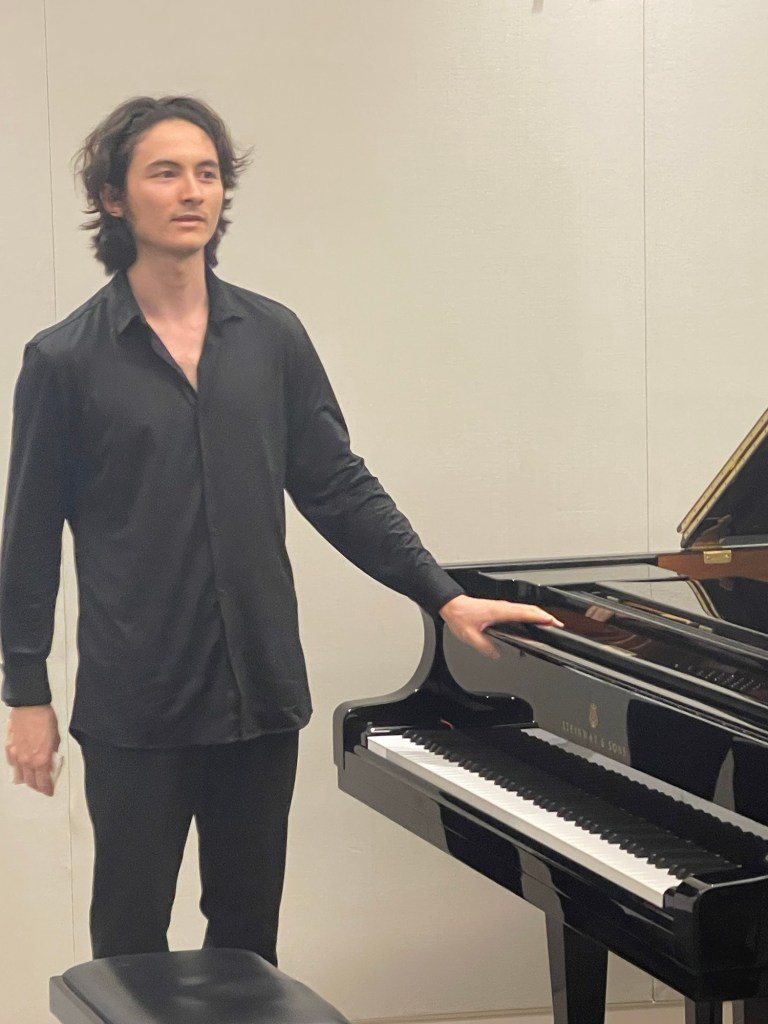
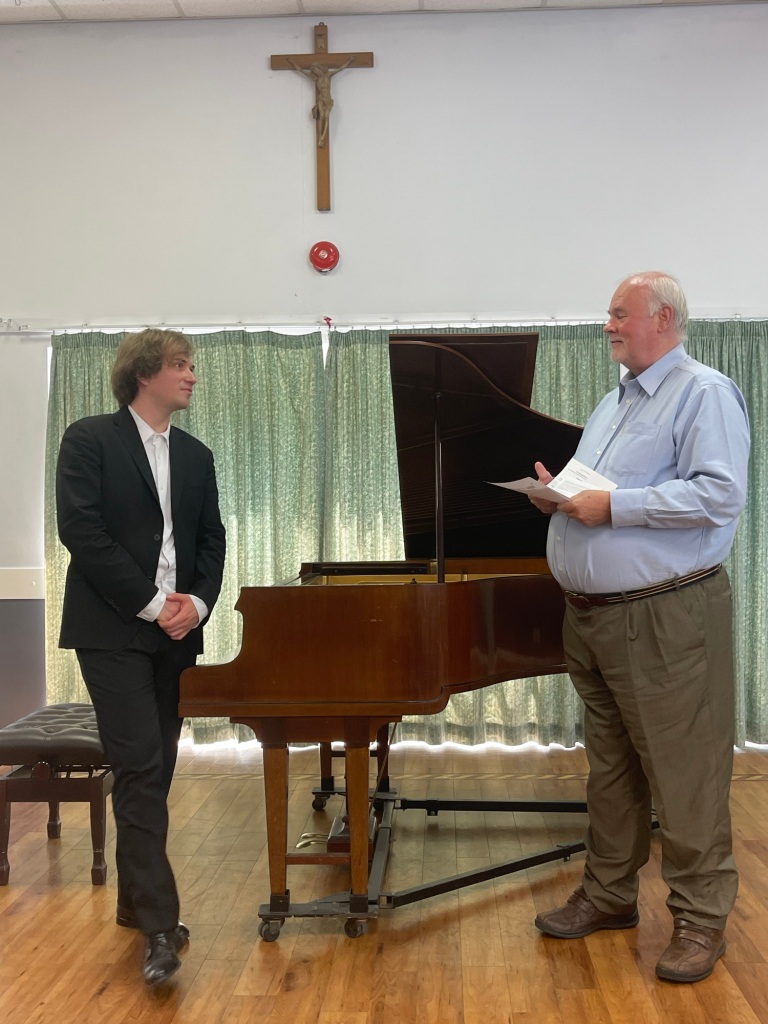
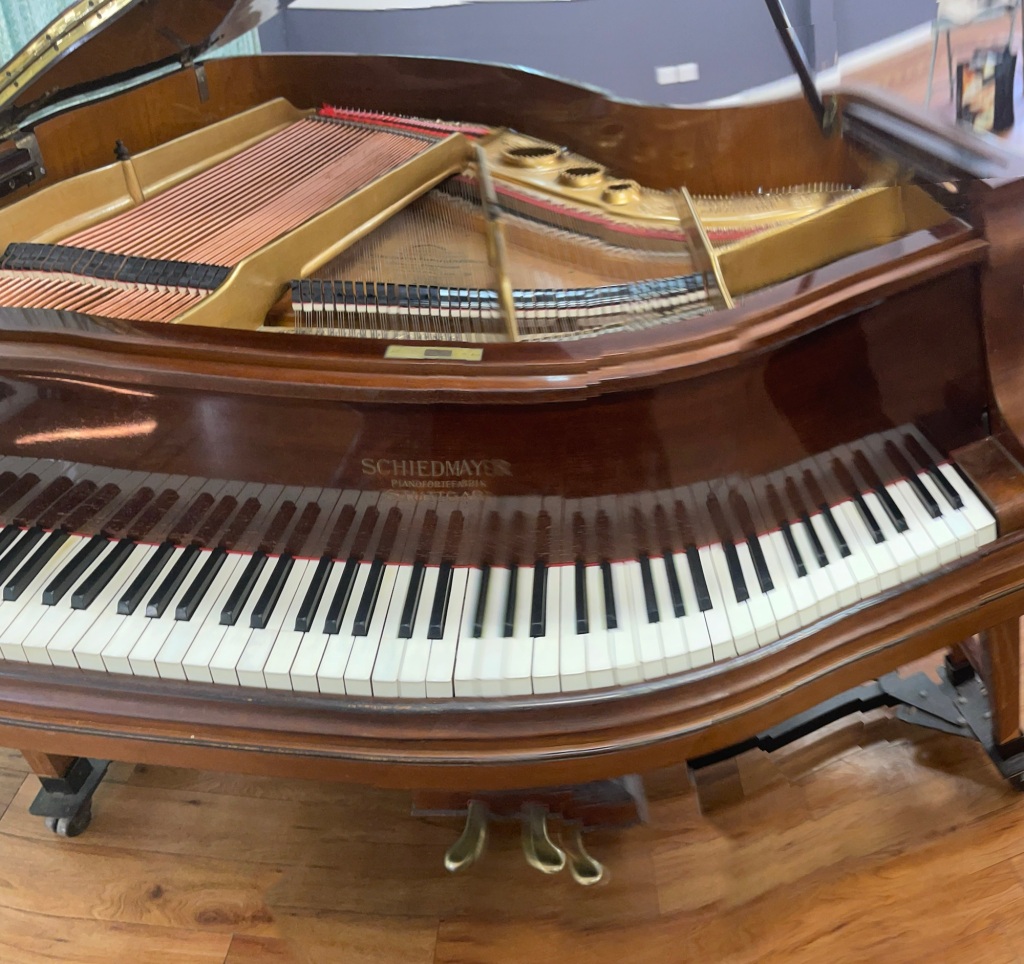
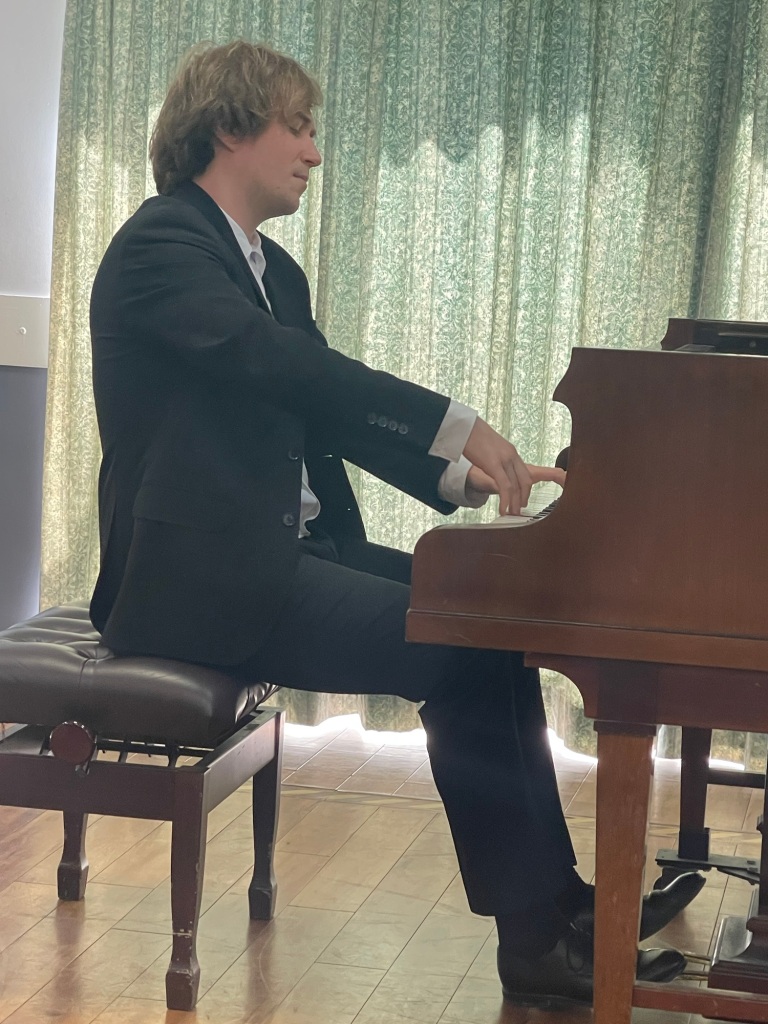
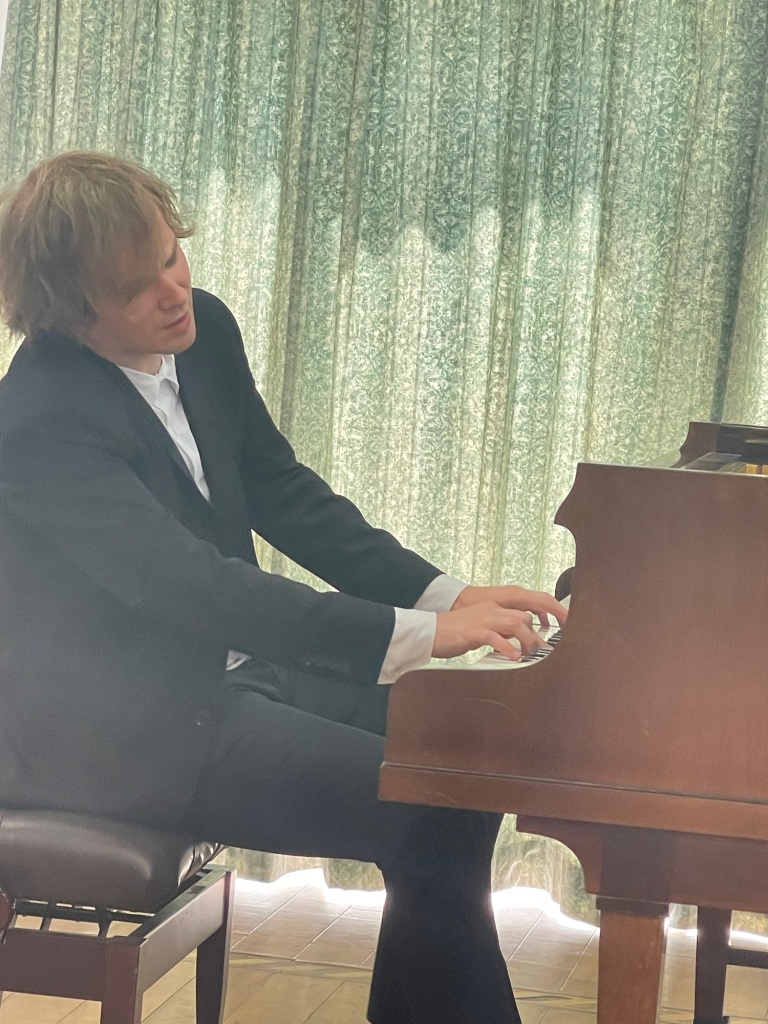
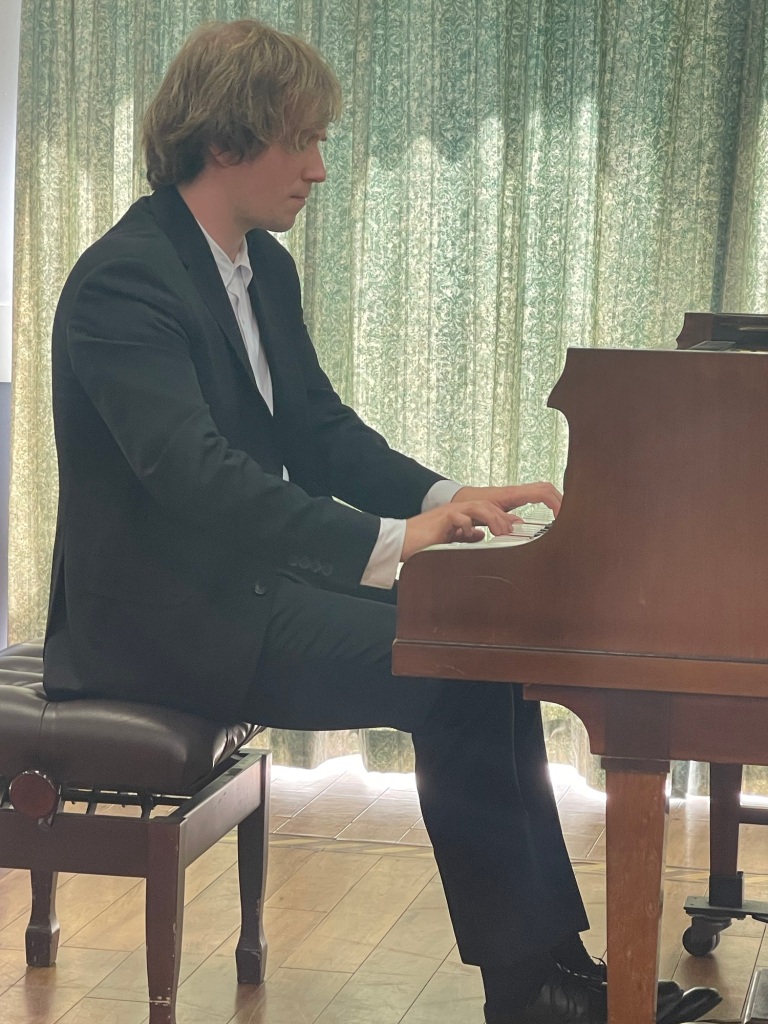
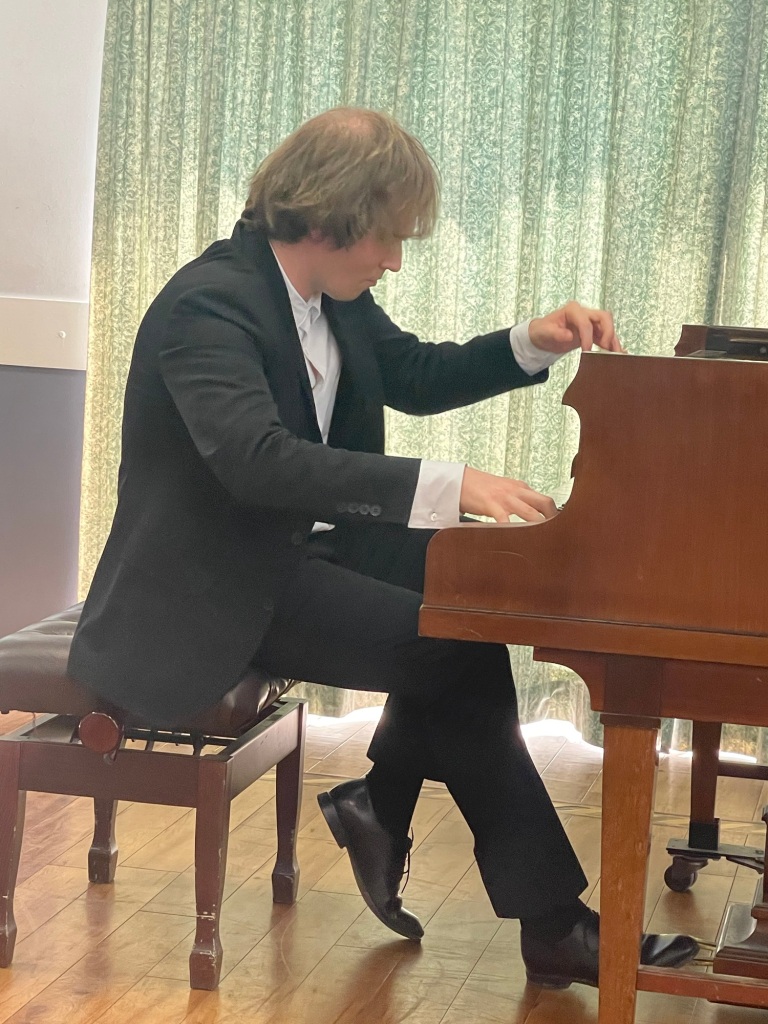
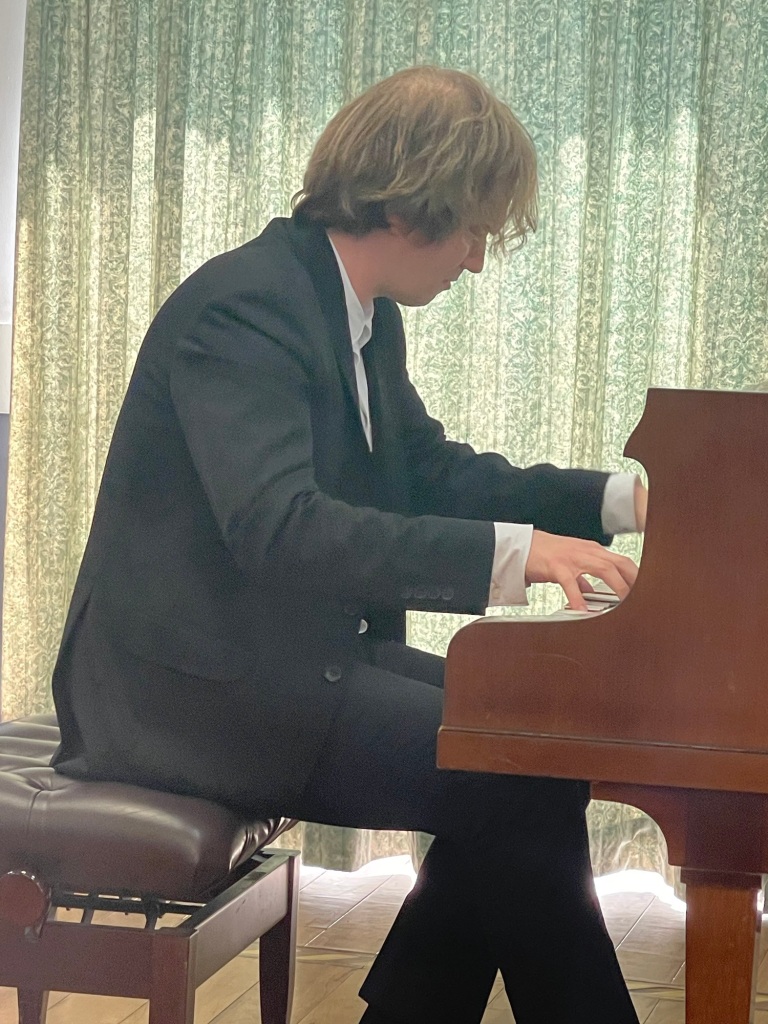
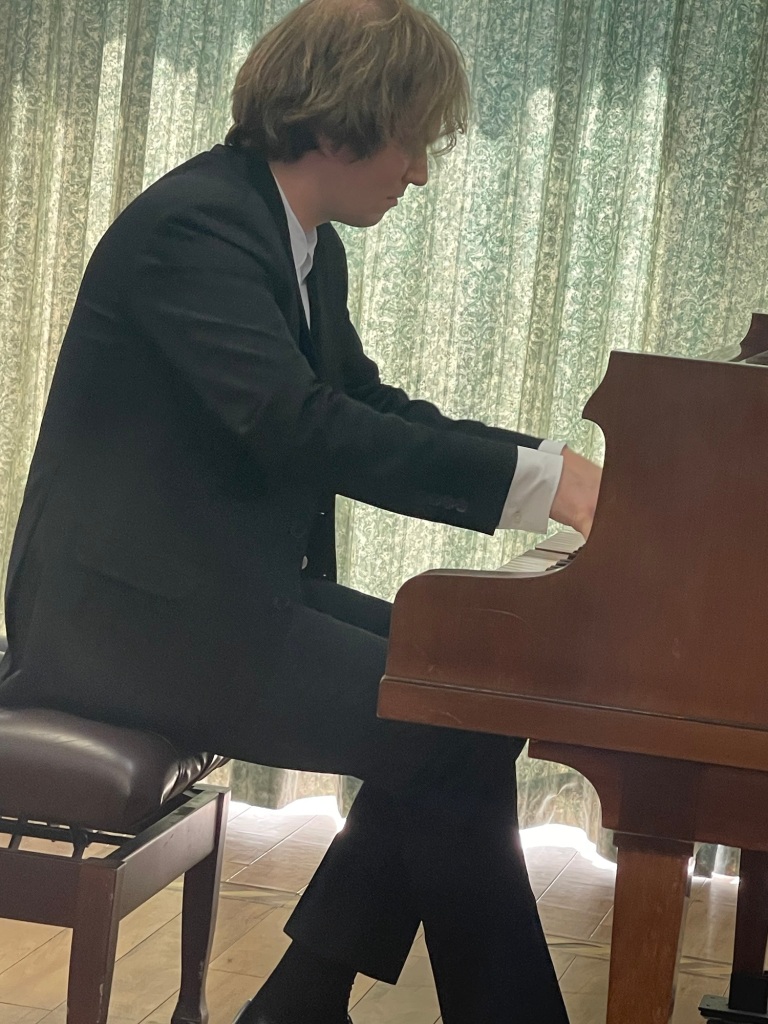
To see Jacky Zhang just a few months ago and see him now one can see the transformation from child prodigy to young artist.A young boy at the BBC young artists competition and now a young man with long hair and frock coat.This transition from choir boy to choir master is not easy and one must thank the Alexeev’s for taking this young boy under their protective wing and allowing his talent to bloom and flourish in a most natural way.
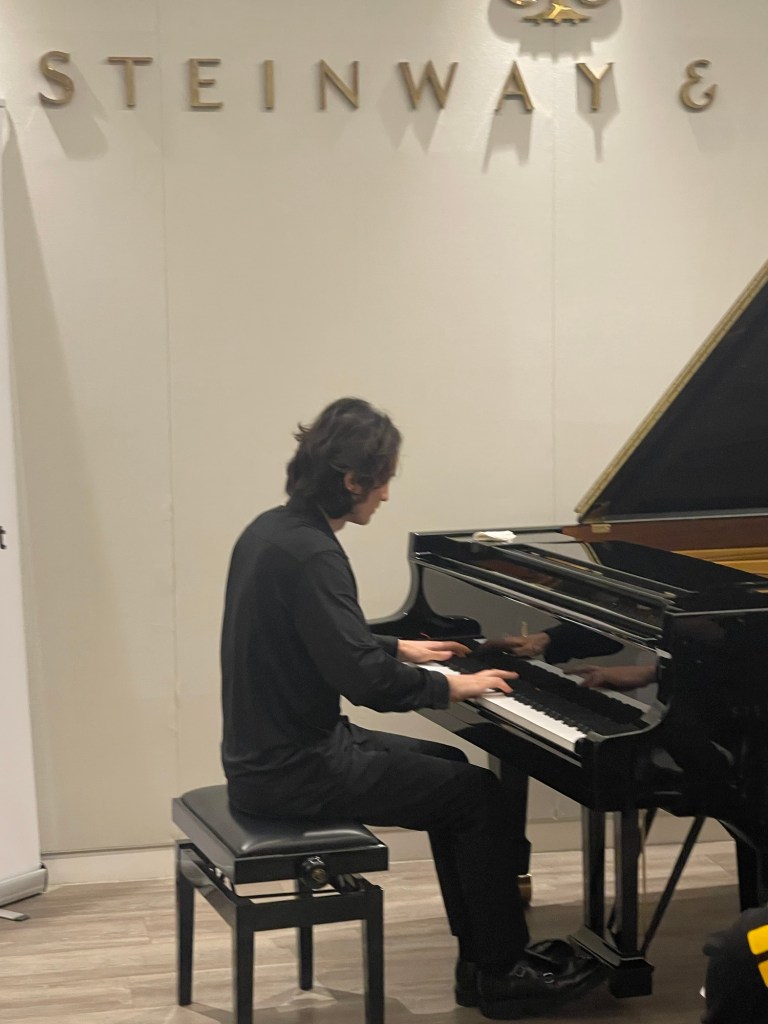
A year or so ago I heard him play the Goldberg Variations and now the Diabelli. Two of the greatest sets of variations ever written for keyboard and both works of endurance ,stamina and intellectual understanding quite apart from a technical mastery of the instrument . Jacky today gave an impeccable performance of the Diabelli Variations which in itself is something of a feat but it was his encore of Chopin ‘s B flat minor Sonata that convinced much more.
The Chopin had sweep,passion ,colour allied to a remarkable technical mastery and architectural understanding.Chopin’s indications had mostly been scrupulously noted and incorporated into an interpretation that was totally convincing .Above all there was the passionate commitment of a young man whose heart was beating with the same intensity as Chopin’s.I am not sure I like his pianistic rearrangement of the hands at the opening that makes me wonder whether he is thinking as a pianist or a musician but the clarity and precision of the last movement was truly remarkable.The scherzo too I have rarely heard played with such technical and musical assurance .Even the beautiful trio was played with individual personality but always with the greatest respect for the score.The final two bass notes were played with just the right orchestral length that made the entry of the Funeral March even more poignant.The Trio of the Funeral March was played with flowing lyricism with more restrained passion than the usual cold respect.The architectural shape of the first movement too was quite remarkably sustained and the final few bars played with aristocratic control.All through the performance there had been a wonderful sense of colour due to a remarkable sense of balance that gave a sumptuous glow to all he did no matter what the technical hurdles might have been.
The Diabelli Variations are one of the greatest works for piano and I have heard them over the years played by many remarkable players.Rudolf Serkin and Alfred Brendel are the two that have remained with me ever since their performances in the Royal Festival Hall many years ago.How could I ever forget the electricity as Serkin attacked the Fugue of variation n 32 or the intensity and buoyancy that Brendel gave to the innocuous little opening theme.Stephen Bishop ( as he was then known) gave a performance of them in the Wigmore Hall that has gone down in history. I was not there but he told me that his mentor Myra Hess had never played them herself but she sat down and worked in detail with him and was there at the Wigmore Hall to cheer her young American prodigy.
All this to say that it was a remarkable feat for a 15 year old artist to be able to give not only a note perfect performance of a work that lasts almost an hour but to play it with a technical mastery and a sense of architectural shape that could hold this vast edifice into one complete whole.
But why then did it not have the same impact as a Serkin or a Brendel when with youth on his side it should have been even more exciting?
The point is that Beethoven may have been totally deaf when he wrote this penultimate work for piano but he was able to indicate in the minutest detail exactly what only he could actually hear and envisage .All the markings are there as indeed Brendel and Serkin had realised.
One of the most important things in Beethoven are the rests, sudden contrasts without forewarning of forte and piano.Sforzandi that should be like electric shocks and a difference between legato and staccato that is orchestral not pianistic.In the 29th Variation it was André Tchaikowsky who I remember more than others for the ‘Adagio’ that was not all uniformly legato but the rests were like a gasp between each droplet of the phrase.Jacky had played the 2nd variation with a legato melody too where the number of rests written must be a Guinness record! The Allegro of the 6th variation was more joyous than Beethoven’s indication of ‘serioso’.But there were many beautiful things of course, like the ‘Grave e maestoso’ of the 14th variation that flowed so beautifully but then surely the 15th should be more fun as it is after all marked ‘scherzando’ !The sudden forte and piano and legato left hand in the 17th was not noted as he spent more time on the transcendental difficulty of the right hand which is basically the accompaniment .The Allegro of the 21st was played with just the right amount of brio but the last note of ‘Notte e giorno faticar’ quoted from Mozart is not staccato like the previous four.And although the 23rd was remarkably played the simple ‘Andante Fughetta’ was missing the weight of world weariness that would have given it even more significance .His remarkable playing of the 25th was marred by a non legato left hand that is marked leggiermente and implies the sound of a legato bassoon rather than single bowed cellos? Why play the 26th so slowly when it is evolving like the miraculous unfolding of the fourth variation of op 109? Surely the ‘Menuetto’ of the last variation too should be slower .It is the calm after the storm where even Beethoven marks ‘grazioso e dolce’ as it floats into the stratosphere that the composer could already envisage in his final years .Floating into the paradise that was awaiting but which even he thinks is too soon as he slams the door shut with an almighty bang which resonates around the room ( hence the original pedal mark).
Of course Jacky is a remarkable young artist headed for the heights but these heights are not easily earned .When you touch such masterpieces there are so many things that only with maturity you will be able to understand.I remember Sidney Harrison judging a youthful Glenn Gould in a Canadian Music Festival and being told by his teacher that the boy would spend the entire lesson just playing the first chord of Beethoven’s Fourth Concerto and would not leave it until he was as satisfied as much was possible!
Genius is a multifaceted prism which moves in every direction as it becomes more and more aware of the problems of searching for perfection and looking to find the true meaning behind the notes of a score.The search is on for Jacky and it will be a voyage of discovery with many wonderful things awaiting as his talent will see the wonders that lie ahead of him ready for his golden fingers to entwine.
A Universal Genius who also had a sense of humour !
Of course one demands how can a mere performer be a Genius.
Bach,Beethoven and Mozart were Universal Genius’s with an astonishing amount of compositions that were masterpieces and one just wonders how that is possible in one lifetime. Da Vinci and Michelangelo too of course.But they all have one thing in common that defines them as Genius because it is a gift or God given talent that is unique and the reason for it unexplained by any normal reasoning.They are people who stand out because they have a unique gift and I use the term obviously in this context of performance meaning exceptionally talented.But it is more than exceptional it is unique and Genius or this sort of exceptional talent is neither easy to live with nor always pleasant .Trifonov is a case in point with a super human capacity to devour music and also to produce it himself.I remember Gilels when he came to the West and astonished us all simply saying ‘Wait and see who follows me’ – of course it was Richter! Bernstein was exceptionally talented -a Genius you might say.People with such extraordinary gifts and talent that are unexplained and so cannot be cloned but continue to surprise and astonish us mortals.
As Maude Tortelier once wrote to me so poetically saying that they are Angels just lent to us on this Earth for a certain period to fill our lives with joy and wonder.
Jacky Zhang is a 15-year-old composer, pianist, songwriter, and producer. He is currently Year 3 undergraduate student of Royal College of Music, studying piano with Prof. Dmitri Alexeev and Prof. Jianing Kong, and composition with Prof. Kenneth Hesketh. Jacky won the first prize of the III Vladimir Krainev Moscow International Piano Competition 2019, the UK Piano Open International Piano Competition 2021, Premio Alkan International Piano Competition 2022, and both Classical and Romantic sections at the Città di Cantù International Piano and Orchestra Competition in 2023. Jacky has performed at many festivals and venues and has played concertos by Saint-Saëns, Mozart, Beethoven, and Rachmaninoff with well-known world-class conductors.
Donald Tovey called it “the greatest set of variations ever written” and Alfred Brendel has described it as “the greatest of all piano works”.It also comprises, in the words of Hans von Bulow “ a microcosm of Beethoven’s art”.Martin Cooper ,father of Imogen , writes, “The variety of treatment is almost without parallel, so that the work represents a book of advanced studies in Beethoven’s manner of expression and his use of the keyboard, as well as a monumental work in its own right”And Schoenberg “in respect of its harmony, the Diabelli deserves to be called the most adventurous work by Beethoven”.
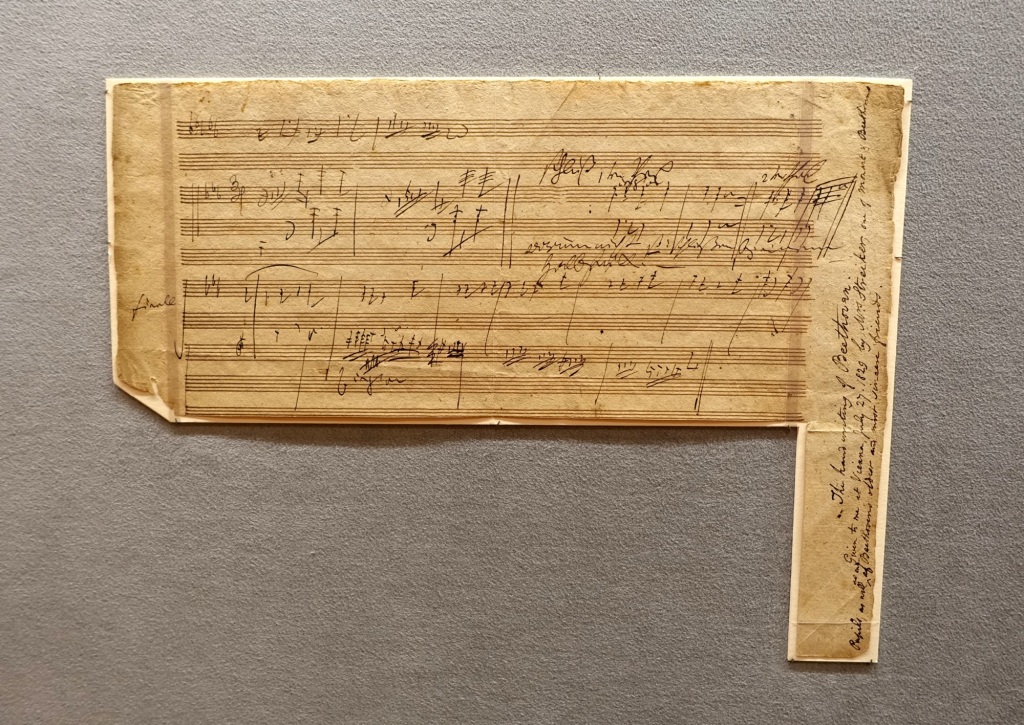
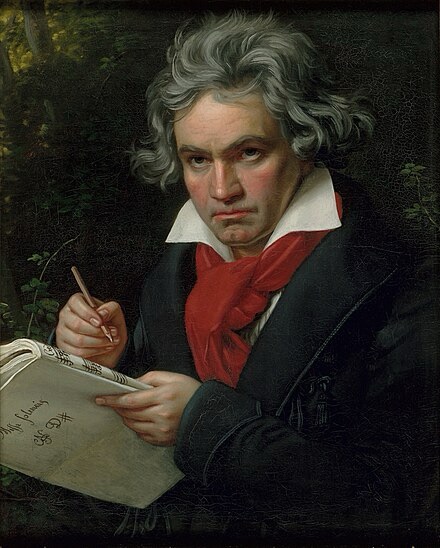
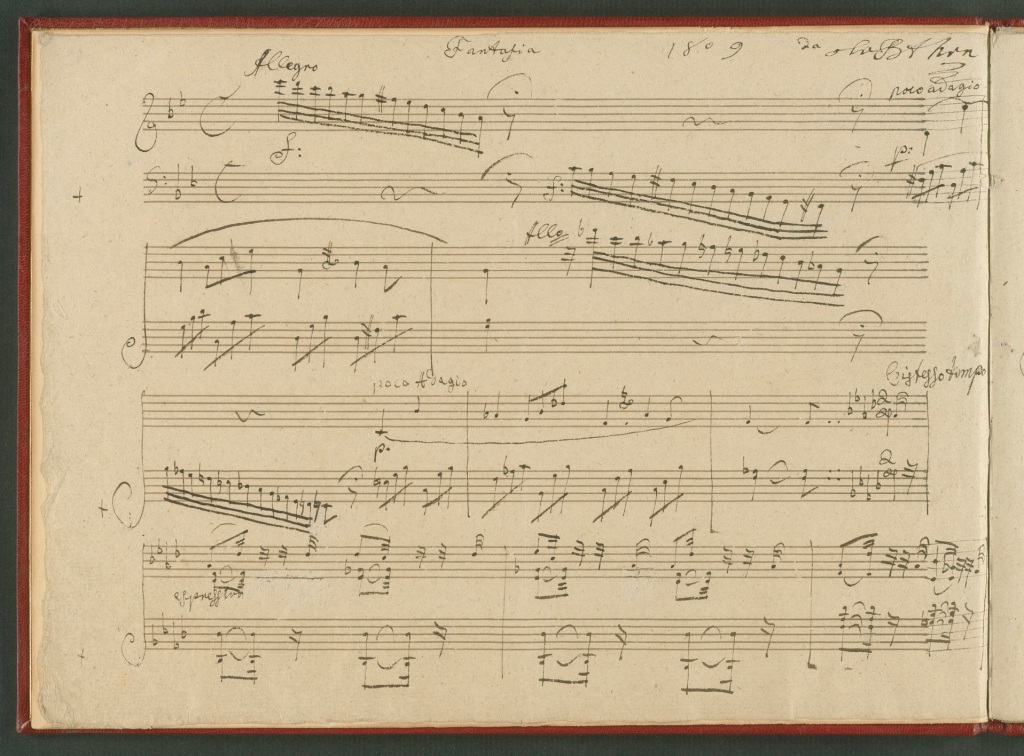
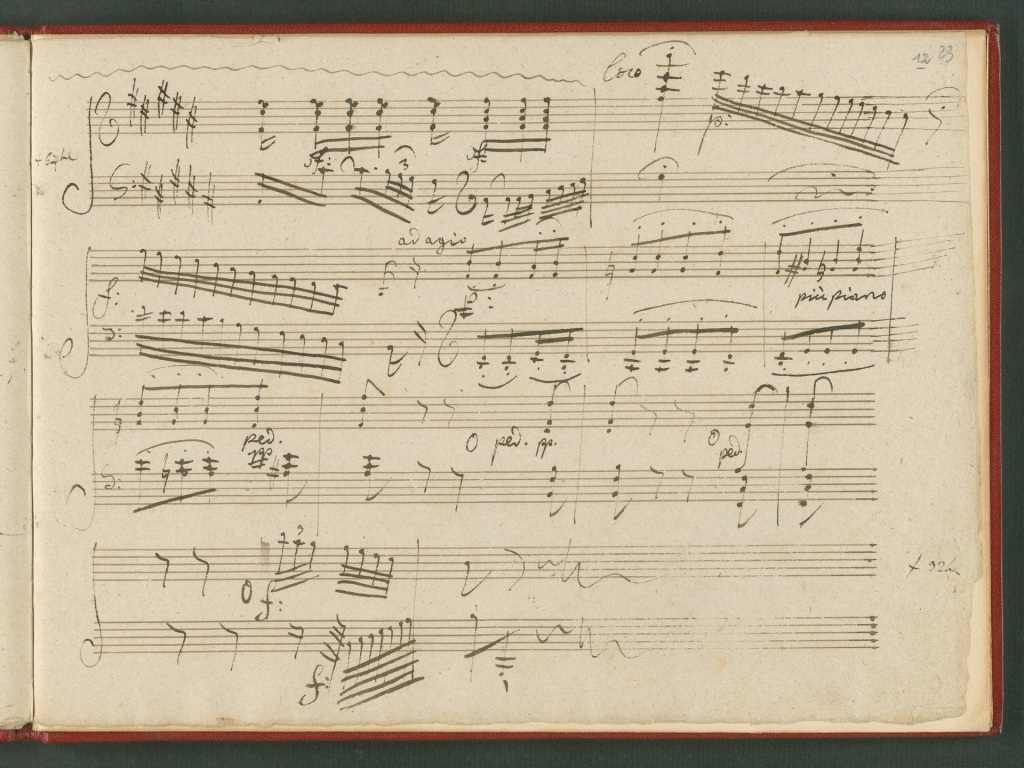
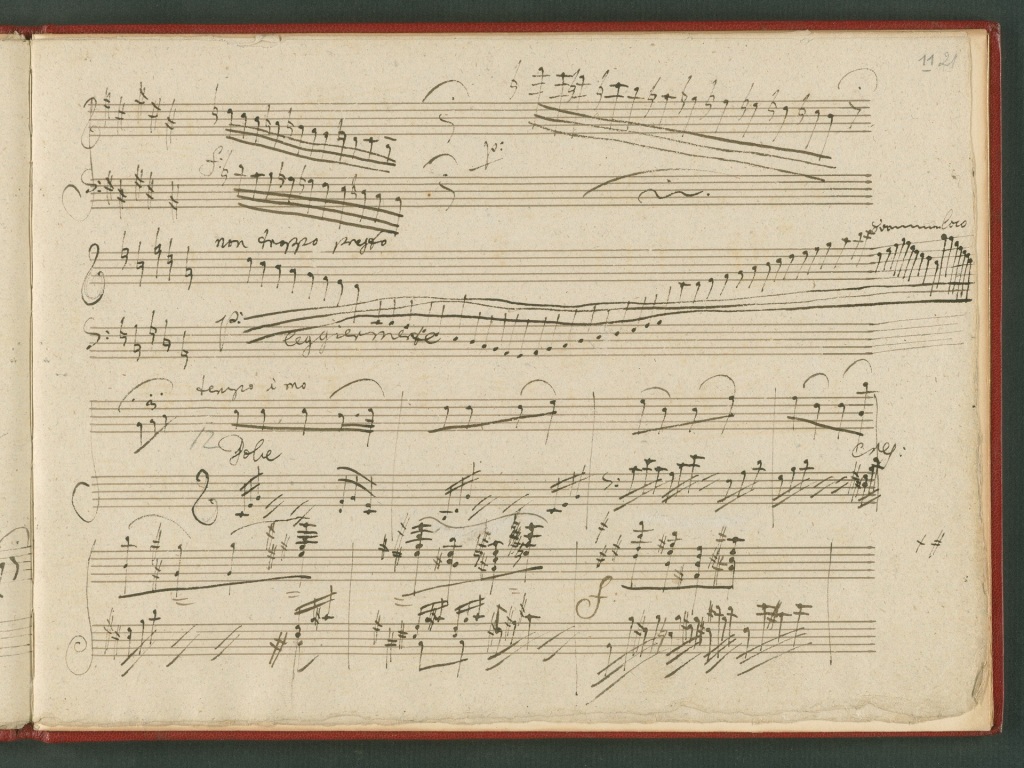
The 33 Variations on a waltz by Anton Diabelli, Op. 120, commonly known as the Diabelli Variations, was written between 1819 and 1823 by Beethoven on a waltz composed by Anton Diabelli . Beethoven had had a connection with Diabelli for a number of years. Diabelli, born near Salzburg in 1781, had now been for some years one of the more prolific composers of light and pleasing music, and one of the best and most popular teachers in Vienna. He was much employed by Steiner and Co., as copyist and corrector, and in this capacity enjoyed much of Beethoven’s confidence, who also heartily liked him as a man.At the time of his project for variations on a theme of his own by various composers, Diabelli had advanced to become a partner in the publishing firm of Cappi and Diabelli. Beethoven at first refused categorically to participate in Diabelli’s project, dismissing the theme as banal, a Schusterfleck or ‘cobbler’s patch,’unworthy of his time. Not long afterwards, according to the story, upon learning that Diabelli would pay a handsome price for a full set of variations from him, Beethoven changed his mind and decided to show how much could be done with such slim materials. In another version of the legend, Beethoven was so insulted at being asked to work with material he considered beneath him that he wrote 33 variations to demonstrate his prowess.Beethoven’s approach to the theme is to take some of its smallest elements – the opening turn, the descending fourth and fifth ,the repeated notes – and build upon them pieces of great imagination, power and subtlety. Alfred Brendel wrote, “The theme has ceased to reign over its unruly offspring. Rather, the variations decide what the theme may have to offer them. Instead of being confirmed, adorned and glorified, it is improved, parodied, ridiculed, disclaimed, transfigured, mourned, stamped out and finally uplifted”.In early 1819 Diabelli, sent a waltz of his creation to all the important composers of the Austrian Empire , including Schubert,Czerny,Hummel and the Archduke Rudolph, asking each of them to write a variation on it. His plan was to publish all the variations in a patriotic volume called Vaterlandischer Kunstlervereinand to use the profits to benefit orphans and widows of the Napoleonic Wars.Liszt was not included, but it seems his teacher Czerny arranged for him to also provide a variation which he composed at the age of 11!
Diabelli published the work quickly as Op. 120 in June of the same year, adding the following introductory note:
“We present here to the world Variations of no ordinary type, but a great and important masterpiece worthy to be ranked with the imperishable creations of the old Classics—such a work as only Beethoven, the greatest living representative of true art—only Beethoven, and no other, can produce. The most original structures and ideas, the boldest musical idioms and harmonies are here exhausted; every pianoforte effect based on a solid technique is employed, and this work is the more interesting from the fact that it is elicited from a theme which no one would otherwise have supposed capable of a working-out of that character in which our exalted Master stands alone among his contemporaries. The splendid Fugues, Nos. 24 and 32, will astonish all friends and connoisseurs of serious style, as will Nos. 2, 6, 16, 17, 23, &c. the brilliant pianists; indeed all these variations, through the novelty of their ideas, care in working-out, and beauty in the most artful of their transitions, will entitle the work to a place beside Sebastian Bach’s famous masterpiece in the same form. We are proud to have given occasion for this composition, and have, moreover, taken all possible pains with regard to the printing to combine elegance with the utmost accuracy.”
In the following year, 1824, it was republished as Volume 1 of the two-volume set Vaterlandischer Kunstlerverein , the second volume comprising the 50 variations by 50 other composers.Subsequent editions no longer mentioned Vaterländischer Künstlerverein.
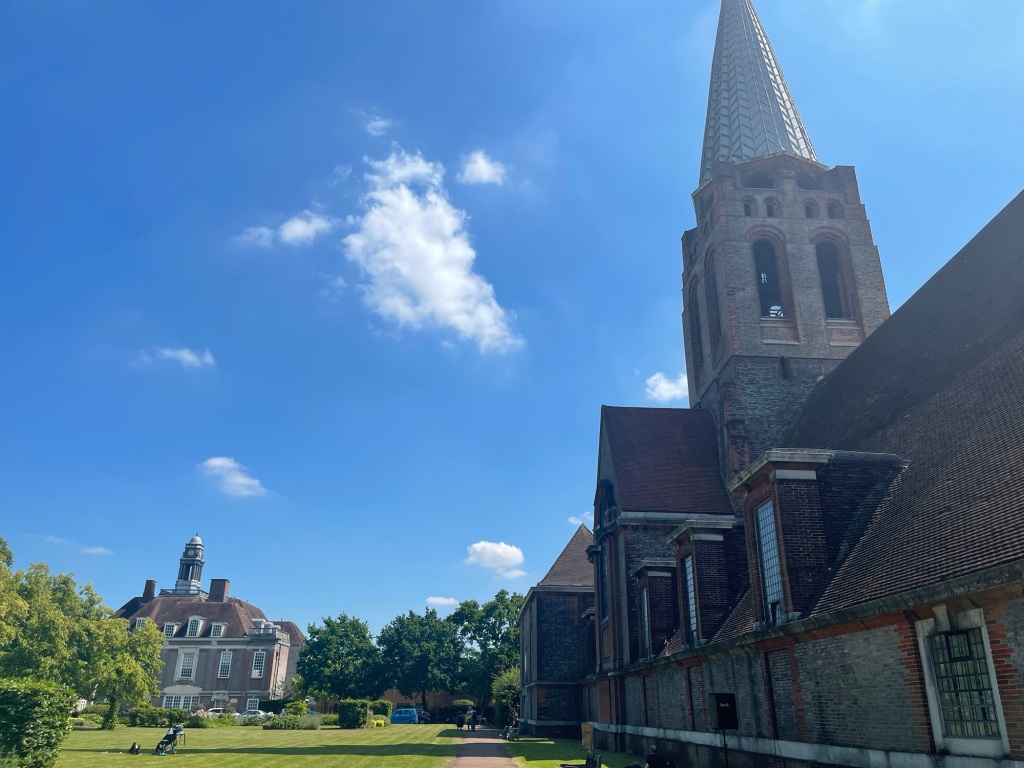
Superb recital by 22 year old Godfrey Leung from the Royal Birmingham Conservatoire playing in the annual Keyboard Trust organ recital at the historic Temple Church . An oasis of calm between the Inner and Middle temples where the Magna Carta was thrashed out before its sealing at Runnymead in June 1215 .It was the first document to put into writing the principle that the king and his government was not above the law. It sought to prevent the king from exploiting his power, and placed limits of royal authority by establishing law as a power in itself. Today a full house for a superb young musician with a range of sounds I have never heard before on the organ. A violinist with the CBSO converted to the King of all instruments with musical discoveries that astonished and surprised us all today in this all too short recital. It was streamed live and can still be seen and heard here : http://templechurch.com/music/lunchtime-organ-recitals
POWER AND DRAMA FROM TEMPLE ORGAN an appreciation by Angela Ransley
Harrison organ at Temple Church,London
Bach Prelude and Fugue in C major, BWV 545 Hindemith Ruhig bewegt from Organ sonata No.2
Vierne Toccata from 24 Pièces de fantaisie, Op. 53 Duruflé Prélude et Fugue sur le nom d’Alain,Op 7
I have attended many organ recitals at Temple Church in their celebrated Lunchtime Series but only at the one given by GODFREY LEUNG has spontaneous applause interrupted its usual serenity. This was after a fiery delivery of the Vierne Toccata that had the audience on the edge of their pews.
Godfrey Leung
GODFREY LEUNG is 22 years old and began formal organ studies at the Royal Birmingham Conservatoire in October 2022, having previously gained wide musical experience as a violinist in the CBSO Youth Orchestra. The priests in his local church supported him to take up the organ: its power has since captured his heart and soul. The famous Harrison organ at Temple – one of London’s elite instruments – has fire power a-plenty.
The church at Artstadt where Bach held an early post
The Temple recitals are just 30 minutes in length and I am always amazed at how significant this musical journey can be. Godfrey played first of all an early work by JS Bach: Prelude and Fugue in C Major BWV 545,which exists in several versions. The Prelude offers athletic semiquuaver writing over deep pedal points; the Fugue with a subject on a rising C major scale gives much opportunity for exciting, rhythmically taut cross-rhythms, which led to Debussy describe Bach’s compositional style as adorable Arabesque.In this era there are no tempo or dynamic indications: this is left to the musical imagination of the perfomer. Godfrey chose to emphasise the work’s grandeur with a moderato tempo and deep pedal registration. Effective use of the reed stops heightened the rhythmic drive towards the thrilling final pedal entry of the fugue subject.
The next composer, Paul Hindemith (1895-1963) shared Bach’s nationality but almost nothing else: he was at odds with the prevailing adherence to the twelve-tone method of the Second Viennese School, seeking to extend traditional tonality rather than annihilate it. He also fell foul of the Nazi regime who banned his opera about a mediaeval peasant uprising Mathis de Maler (Mathius the Artist), denouncing him as a cultural Bolshevist and spiritual non-Aryan. As a result, most of his professional life was carried out abroad: in Turkey, where he founded a conservatoire along Western lines, then as Professor of Composition at the universities of Yale and Zurich. He composed across all genres including the organ for which he wrote 3 sonatas, a concerto and a piece in the Kammermusik series for organ and 15 strings.
Ruhig bewegt is the pastoral slow movement in Organ Sonata no 2 composed in 1937, which gives respite between the fevered toccata-like first movement and a final fugue driven by a tortuous subject. His concept of extended tonality is very apparent in that while independent lines create dissonances that deny any sense of tonality, one still hears the classical phrase shapes and the comfort of a tonic or dominant chord to complete a section. I am reminded of a puppy galloping off on a retractable lead, only too happy to return with muddy paws after sinking into murky terrain. Godfrey judged the tempo of this siciliano well and the distinctive Harrison solo stops added vivid colour. More atmosphere could have been achieved from the piano dynamic indicated by the composer.
Louis Vierne with students
Louis Vierne (1870-1937) followed the tradition of French organists who, once appointed, remain in post for life: he won the competition to become titular organist at Notre Dame in 1900 and stayed there for 37 years. His Toccata from the suite Pieces de Fantaisie (1926) is one of the glories of the French symphonic tradition inspired by the monolithic organs of Aristide Cavaille-Coll. Out of the flurry of semiquavers emerges an idiomatically French, rising whole-tone scale balanced by a descending series of diminished 5ths which is heard in different registers and registrations as the virtuosity unfolds. Godfrey unleashed the full power and drama of this unique instrument to an astonished audience. When I asked him afterwards what he liked about the organ, he replied its power!
An affectionate family photograph of Jehan Alain with younger sister Marie-Claire
The Prelude et Fugue sur le nom d’Alain by Maurice Durufle (1902-1986) employs a technique used by numerous composers of taking the letters from a name to create a theme. Jehan Alain came from the distinguished Alain family, and was elder brother to the celebrated organist Marie-Claire Alain and a promising composer. A friend of Durufle, he was killed in action in 1940 and awarded full military honours by the Germans at his funeral to acknowledge his bravery.It was specially poignant to hear this piece in a building that suffered itself in the same year of the Second World War. The intensity of the bombing on 10 May 1940 turned the organ into a river of liquid metal: what remains can still be seen through a door from the nave. The haunting theme generated by these letters is heard against a toccata-like texture of restless quavers. This gives way to a solemn conclusion where Durufle quotes from Jehan’s own work Litanies. The Fugue is virtuosic in concept as well as technique: it has a double subject and many contrapuntal feats which enables the music to blaze in glory – mirroring Alain’s courageous stand. Godfrey’s spacious, sensitive account was enhanced by daring colour contrast in the Prelude and pleasing linear clarity in the following Fugue.
After the storm,the five remaining pipes
One of the disadvantages of any organ recital is that the performer is either completely invisible or has his back to the audience as at Temple, making a shared occasion difficult to achieve. In this short recital of organ masterpieces, Godfrey showed us that a deep conviction for the music along with technical and musical assurance can overcome it. This is what created the sudden hush of drama in the Vierne Toccata and the warmth of reception at the end. Thank you, Godfrey, for a memorable recital and for showing us what talent and hard work can achieve.
Angela Ransley is an advanced piano teacher and writer who works closely with the Keyboard Trust Sarah Biggs – Richard Thomas – GL – Angela Ransley-Sir Geoffrey Nice
Leo Patsalides founded the Amati Orchestra in 2011 with the vision of creating London’s leading amateur orchestra .Tonight marks his retirement after being at the helm of his orchestra in 29 performances of 88 works. What better way could there be to celebrate ,what has in fact become one of the finest amateur orchestras, than with a sold out St John’s Smith Square one of the most beautiful of concert halls in the city. Joined by Antonina Suhanova for one of the most formidable of all concertos for piano and orchestra.
A tour de force for any pianist but also a trial of fire for a professional orchestra let alone an amateur one! I have heard Antonina before in recital when she gave an astonishing performance of Rachmaninov’s First Sonata and so I was not completely surprised tonight to hear a sumptuous and very powerful account of the 3rd Concerto.
She towered above the orchestra with sonorities and power that belied her physical stature.It was even more remarkable for how she managed to involve the orchestra in the sometimes treacherous interplay between the woodwinds and piano.Of course she played the ‘big’ cadenza because she is a big pianist like Gina Bachauer or Oxana Yablonskaya.
I remember in my student days that anyone who could play Rach 3 or Prokofiev 2 was thought of as a hero .Vladimir Ashkenazy made his London orchestra debut with both in the same programme! A seventeen year old John Lill hit the headlines when he made his London debut with the concerto at the RCM under Sir Adrian Boult and the film ‘Shine ‘ later made a very elaborated story about it. Oxana playing with a similar orchestra in Rome found that the distinguished but very elderly Turkish conductor got so emotionally involved in the final ecstatic few pages that caos would have reigned had she not taken over the role of pianist and conductor. No fear of that tonight from Patsalides’ patient baton even if the outer two movements were taken at quite a lick!
Antonina Suhanova is such a fine musician that she managed to turn speed into sweep with moments of passionate intensity and heartwarming beauty.
A duo of fine pianists plays three major works, including a new piece by a composer born in Kharkiv in 1955 whose fourth opera, Rosenthal’s Children, caused something of a scandal when premièred back in 2005. Commissioned by tonight’s artists as a reflection piece for Schubert’s D940, Desyatnikov’s work debuted at the Aldeburgh Festival in 2023.
A Rite of Spring to die for as these two young artists enacted the Rite without the help of the score or policeman .They may have been dressed as in a classroom but this was inspired playing of astonishing clarity of thought .
At last the Rite as Stravinsky himself must have imagined it .Silences that became as terrifying as the enormous sonorities created by a masterly use of the pedal .To see Pavel stretched over the keyboard as he enacted the insistent obsessive hypnotic sound with the precision of a Swiss clock whilst Samson added the insinuating bolero type melody deep within the heart of the piano . A standing ovation was the way of allowing the Wiggies to let off steam as we had all sat petrified by the satanic rites that were being enacted on this hallowed stage . I doubt even Hitchcock could have directed them better . The piano tuner doing his bit too in the interval before we touch the sublime heights of Schubert prefaced by an unknown ‘Trompe l’oeil’………hold on to your seats this marvellous voyage of discovery is about to continue as I am reminded of the frescos in Orvieto Cathedral ! ……..More to come when I unfasten my safety belt much later ! Trying hard not to overtake any roaming cyclists of course!
Anything after that must inevitably be an anticlimax .It started with an amplification system that once again robbed me at least, of the bon mots of Pavel although judging by the obvious amusement of some lucky people with specially selected seats where they had more luck of picking up a signal or two!
I got the jist as we heard the piece commissioned by our valiant and gallant young artists that was every so often a mirage of phrases from the Fantasy that we were about to receive -some bits reminiscent of the Rite that we had gratefully digested .
The Schubert Fantasy suffered from trying too hard to be monumental .A scherzo at breakneck speed I would like to see anyone dance to that and a fantasy that was too fantasmagoric trying too hard to find hidden secrets that Schubert had already genially conceived himself . Pauses that in the Rite were terrifying here were rather obviously prolonged instead of allowing Schubert to know better.However it was a remarkable performance from thinking artists who had gone to great length to ponder and digest without being tied to the printed page or the I pad – if I dare I mention it without receiving a black eye.Their professional presence just highlighted the I pad that is intruding its way side by side into too many solo recitals. Hats off to these two remarkable musicians who are living searching and dreaming together.
And dream they did in Ravel’s magic ‘Fairy Garden ‘ that they played in response to the ecstatic reception that awaited them after the Schubert . Maybe they were trying again too hard and delving too deeply or dare I say too much on the surface instead of deep into the notes where the composers own heartbeat can be felt.
But all was forgiven with a barely murmured Chorale Prelude by Bach where their simplicity and sublime beauty allowed Bach to speak through them so directly to us . Heart to heart is something that will long be remembered in this hallowed hall. A remarkable concert in so many ways and the birth of a musical partnership of extraordinary importance .
Extraordinary goings on at Steinways last night and a wonderful advertisement for the resilience of their magnificent instruments .This was for me especially poignant having heard the most poetic of all pianists ,Steven Osborne suddenly turning into a violent maniac as he attacked another magnificent Steinway at the Wigmore Hall with a performance of Rzewski’s Winnsboro Cotton Mill Blues.
But then tonight this young Russian trained pianist,living in exile in Germany, opened a window to a new world.’Breaking Barriers’ might well have been the title instead of ‘The Happier Eden’.Mikhail tonight reminded me of another pianist with a gigantic technique who was much promoted and lauded by the most ‘established’ of ‘establishment’ figures ,William Glock.Head of music at the BBC for several decades and having studied at Oxford and later with Schnabel he broke down all the conventional concert programming rules of the usual Overture,Concerto Symphony formula.
The start of an adventure with Mikhail Bouzine
Roger Woodward was a character larger than life – as was his piano playing – from down under he would appear on stage as if going to work in a factory.A long ponytail and whiskers to boot.He would appear at the Proms playing Takemitsu,late Scriabin and even the Hammerklavier (which turned out to be a very apposite title).He would appear at Glock’s famous Dartington Summer School where masterclasses and concerts would be held over a month long period.Glock’s teacher ,Schnabel, was the first to be invited but also favourites like Vlado Perlemuter,Andrea Tchaikowsky,Sandor Vegh side by side with Peter Maxwell Davies ,Harrison Birtwistle and later Oliver Knussen and many other young composers.
I will never forget a recital by Roger Woodwood that lasted for much longer than the more traditional 90 minutes with inerval .Infact there were two intervals in a programme that spanned from Byrd through Takemitsu,Messiaen and of course Barraqué .
Our pianist asked for the light to be off when he played the Barraqué sonata because little did we suspect that he carried in his hands a chain and hammer as he approached the piano. Well after a few minutes of ‘minimalist’ noises there was a great crash and the lights were immediately back and the concert cancelled because the sound board of the piano had been damaged! Glock was a great innovator and insisted on having Boulez at the helm of the BBC Symphony Orchestra after Sir Adrian Boult and Sir Malcom Sargent . Glock’s programmes would regularly include works where the ink was still wet on the page or plumbing was carried on by the ‘performers’ for an unsuspecting public.
Tonight with Mikhail it was a fascinating view of a world of minimalist experimentalists searching for a path but above all breaking down conventions and opening up our ears.The scratching of spoons on mugs ,a pen dropped on the floor are all sounds and Music after all IS SOUND.
Breaking Barriers as Mikhail carried on stage a mirror that he hid behind and gradually abandoned as the sounds began.
Leslie Howard asking Mikhail to explain himself after a most exhausting experience for all concerned
A series of ten works most of which even Leslie Howard had never heard or heard of before?! Infact Leslie one of the Artistic Directors who had invited Mikhail to London to play for the Trust asked Mikhail if he would like to introduce each piece.It was obvious that this would not have been ‘minimally’ possible as Mikhail was so involved in playing with such vehemence ,total involvement and dynamic drive that neither he nor we could really appreciate where one piece finished and another began! Our distinguished recording engineer who had recorded Boulez many times in his illustrious career said that he would not even attempt to add captions to the video recording that the KT will make available on their website before long.
At last we recognised the opening of Beethoven’s G major Sonata op 31 n. 1.We recognised it but it was seen with the eyes of a composer and minimalist breaker of barriers .Mikhail playing or recreating Beethoven like Roger Woodwood with a technique larger than life.Mikhail played like a man possessed – surely Beethoven must have been the same – and if there were moments when the pedal created overwhelming sonorities and the difference between loud,louder and loudest was indeed ‘minimal’ it did lead to a rethinking of our values for better or worse rather that a passive acceptance of yet another performance of a classical sonata.
Breaking Barriers the piano survived and so did we and with a drink in our hands we had the courage to face this heroic young man and demand to know what it was all about.
Of course he has no idea either and that is the whole point. The search is on.Provocative – yes ….passive it certainly is not.
George Brecht Mirror Lee Heflin Fall Peter Phillips Amarilli di Julio Romano Michael Finnissy Poor Stuff Dvořák Otázka Alkan En rythme molossique Dvořák Dumka op.35 Mitropoulos Béatrice Christophe Bertrand Haïku Cornelius Cardew Memories of you
Beethoven Piano Sonata No.16 in G major Rued Langgaard Vanvidsfantasi
Steinway Hall 44 Marylebone Lane, London W1U 2DB
Wednesday, 13 March 2024, 6.30pm
Mikhail Bouzine is a pianist and composer based in Nuremberg, Germany. He is an alumnus of the Hochschule für Musik und Darstellende Kunst in Stuttgart where he studied with Nicolas Hodges. Mikhail also attended the Moscow Tchaikovsky Conservatory where he studied piano with Andrey Shibko, composition with Vladimir Tarnopolski and harpsichord withTatiana Zenaïshvili. Mikhail is the author and performer of numerous conceptual solo piano recitals with repertoire ranging from the Renaissance to Fluxus. He won First Prize at the 14th Orléans International Piano Competition and was a finalist at the 64th Busoni International Piano Competition. Among his ensemble work are the LIMINALITY project with the Kymatic Ensemble and Thimk Collective (piano, keyboards, harpsichord). He has also participated in piano masterclasses with Alexeï Lubimov, Peter Donohoe and Maria Grazia Bellocchio, the Play&Direct Academy with Lars Vogt and Mark Stringer; and composition masterclasses with Leif Segerstam and Vyacheslav Artyomov. Mikhail is currently working on a major meta-cycle composition inspired by the pan-Slavic alphabet.
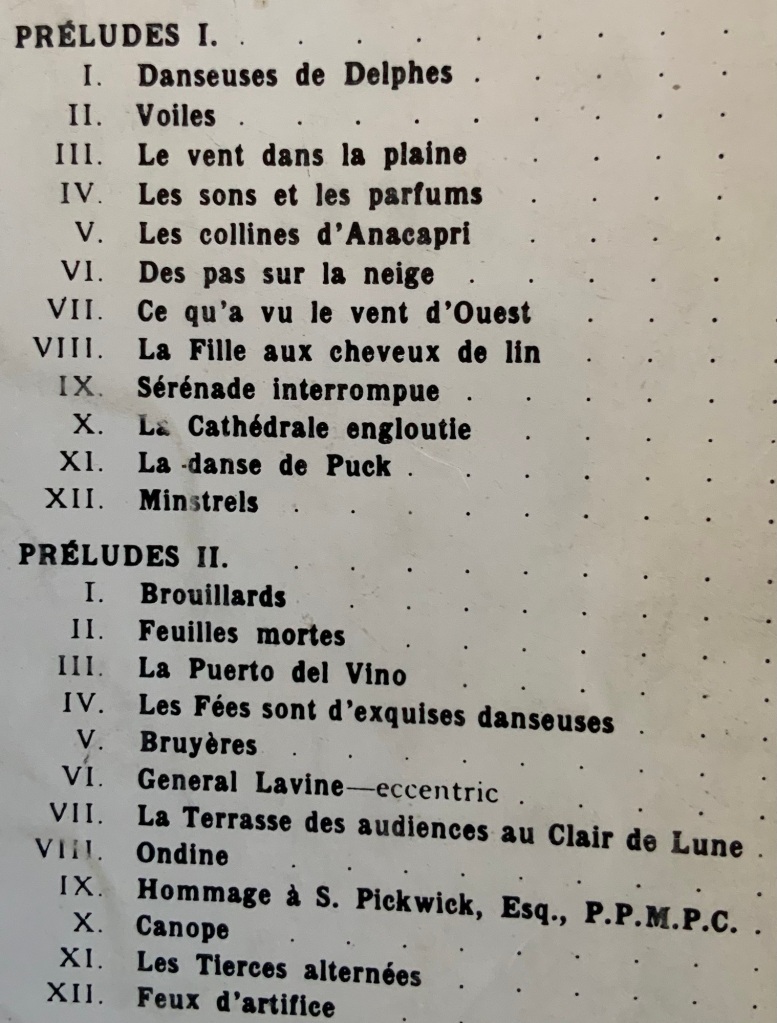
I doubt that the piano has ever sounded so beautiful as today in the sensitive hands of Steven Osborne.A poet who sculptures in sound and an artist who has a story to tell of wondrous lands and magic arabesques. Now I understand his insistence with his students of having a story to tell. Stories in his hands today that took us to places we have rarely been before.Matthay must be looking on with a glint in his eye as at last there comes a disciple who can find infinite gradations of sound in every note.Playing of a fluidity as though without being tied down to bar lines.There were moments of astonishing dynamic drive and energy where the keys seemed almost red hot as he shied away for fear of getting burnt ! Writing this in the interval and imagining that Eusebius has had the stage until now and looking at the programme I expect this will be time for the entry of Florestan with Keith Jarrett,Bill Evans and Oscar Peterson on stage . An artist of Florestan and Eusebius personality no wonder his Schumann was the most wondrous I have ever heard …..this was indeed the Poet speaking!
What a programme, that was a picture in sound that Steven had wanted to share with us,asking the audience not to break the spell with applause until after the Debussy.There was a wonderful flowing tempo to the Schumann Arabeske with a timeless beauty where bar lines were of no significance.A fluidity with a magical sense of colour where sounds would glitter and gleam as never before in the midst of this seemingly innocuous rondo melody .In lesser hands it can seem very repetitive but in Steven’s hands we never wanted it to finish.He subtly doubled the melodic line from the tenor register and took our breath away when the bass suddenly appeared from his genial palette of ravishing colours.A pointillism in sound. The Minore II that so often breaks the spell of even the most sensitive performances was here simply Florestan commenting and Eusebius replying before we overheard what seemed like the rondo in the distance.It was even more tenderly played but always remaining on the same wave that was to carry us so naturally from the first glorious note to the last.And what notes they were with the coda ‘Zum Schluss’ of such breathtaking beauty like a song where words are just not enough and where Schumann and Schubert could transport us into a world of dreams.The gentle forte of the last note was allowed to reverberated with the gently stroked final notes held in the pedal as the wondrous sounds of the ‘snow is dancing’ filled this perfumed air.The spell was set and I have rarely felt as today an audience drawn in to the performer like the Pied Piper from the very first notes of a recital.The snow ‘doux et estompe’ now we know what ‘estompe’ really means!Melodies that suddenly appeared and disappeared all within a framework of luminous ‘featherlight’ sounds that disappeared into infinity at the end where they are probably still sounding to the joy of the angels!At this point ‘Jimbo’ entered ‘doux et un peu gauche’ .Not a little but tiptoeing very carefully to an ending over cluttered with Debussy beseeching us not to believe our ears that such a clumsy beast could be so delicate!We did believe it today as the music in Steven’s wondrous hands spoke so much louder than any hieroglyphics the composer might add in desperation!The Serenade just wafted in with charm and fluidity.I have the magical performance of Horowitz always in my heart and soul from his live return to Carnegie Hall but after tonight Mr Horowitz can sit on the wall as Mr Osborne has filled that special place !The final notes reaching right to the end of the keyboard that we followed with baited breath to the final barely whispered top E .’The little Shepherd’ was played with a haunting beauty of desolation interrupted by the melancholic look over his shoulder at what he was missing – magic was still in the air as Steven just blew on the final notes – sounds – the word note already seems so positive for something that was indeed so etherial.The First Arabesque by Debussy just wafted in as the sounds rose and fell like some calm waves lapping on the seashore and was followed by the French elegance and charm of the sparkling precision like jewels of the second. The audience were now set free to release this magic bubble created by a master magician with mundane but truly sincere applause.
This is where I just sat back and relished the concert without even trying to describe the wonders that were being revealed by this genial poet of the piano.Comparative performances are not for me I listen to every performance with fresh ears waiting for what very rarely happens – je sens ,je joue je trasmets .All I can say is that the simplicity and beauty of Kinderscenen today was as revealing as Curzon or Cortot.
Poetry in sound with wondrous ‘foreign lands and peoples’ such a curious story of revealing artistry.Art that conceals art – Blind man’s bluff played with a jeux perlé that only the greatest of masters of the keyboard can match.A desperately beseeching child who in the end seemed happy enough until the grandeur and enormous sonorities of such an Important Event.Perchance to dream – if only all dreams were made of this sitting by the beautiful fireside as the Hobby horse rocked with such gentle persuasion.The technical finesse in frightening was indeed enough to scare any other pianists from thinking this was too easy for real virtuosi .But it was Steven’s insistence on underlining the left hand in ‘falling asleep’ that will remain with me for long to come ……and that final note …was to die for.A Poet Speaks of course we had been aware of that since the very first note of this wondrous event!
After the interval enter Mr Florestan! But not before the beauty of White Birches by a certain Marion Eugenie Bauer delighted us with a Chaminade type morsel of simple delight.Then the fun began with a gentle throbbing of Meredith Monk’s Railroad that collided with Rzewski’s Winnsboro Cotton Mill Blues where Steven’s delicate fingers were now given over to his fists and arms.A tumultuous build up of sounds of Reich proportions that was an exhilarating release from the intense perfumed sounds that Eusebius had treated us to.An improvisation like pianists of another age who would improvise from one piece to to another liking them together by key relationships .These were gentle sounds that suddenly revealed – with a promised knowing look from our compère – to the simple beauty of Keith Jarrett’s ‘My Song’ followed by Bill Evan’s arrangement of Gershwin’s ‘I loves you Porgy ‘.
How apposite as we had been totally seduced by now but were even more astonished by the virtuosity and crazy drive of Oscar Peterson’s Indiana.This made Messiaen’s Spirit of Joy sound like a five finger exercise.Steven now let his hair down to give an all or nothing performance of incredible pyrotechnics and animal enjoyment.
This was indeed X certificate stuff and I think if it had carried on any longer the piano would have found a way of getting off stage quick! It reminds me of that famous caricature of Liszt.
Getting his and our breath back and in reply to an ovation , rarely heard even at the Wigmore Hall,Eusebius came back to show us it had all been a dream, with a ravishing and touching melody by Keith Jarrett.
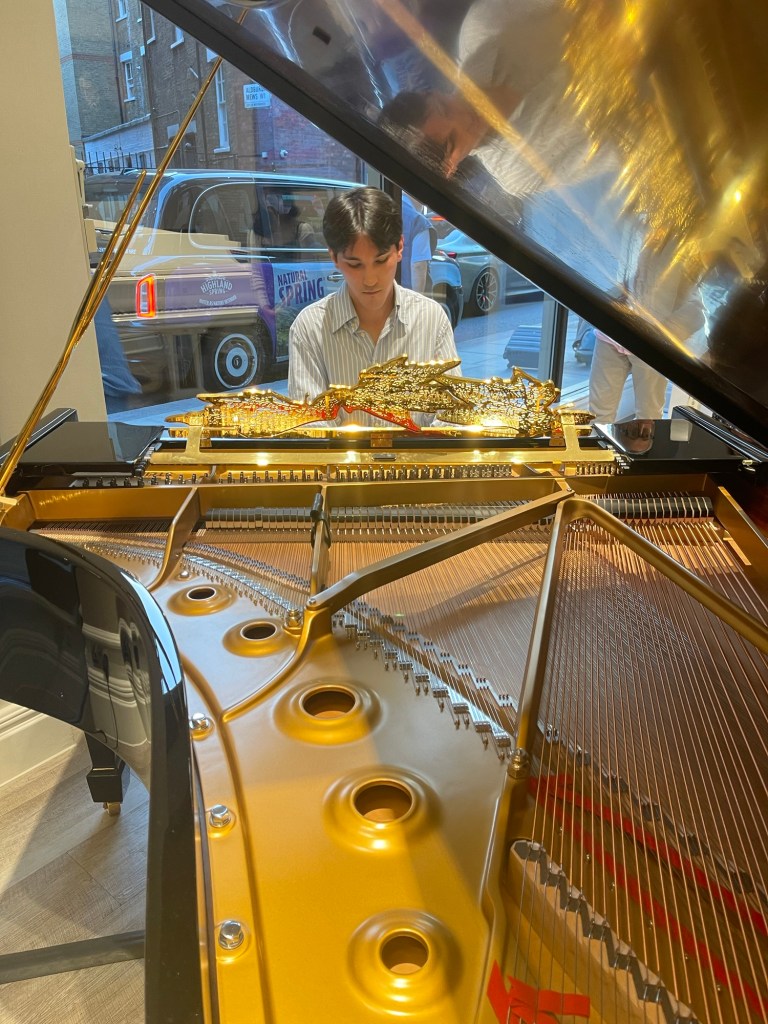
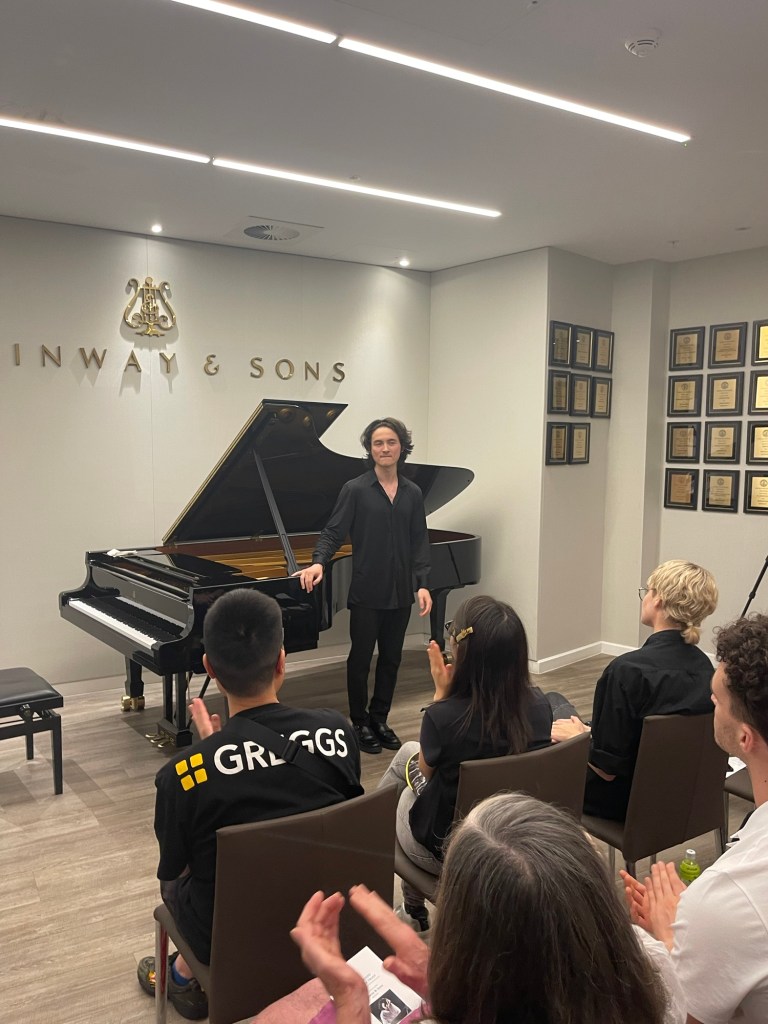
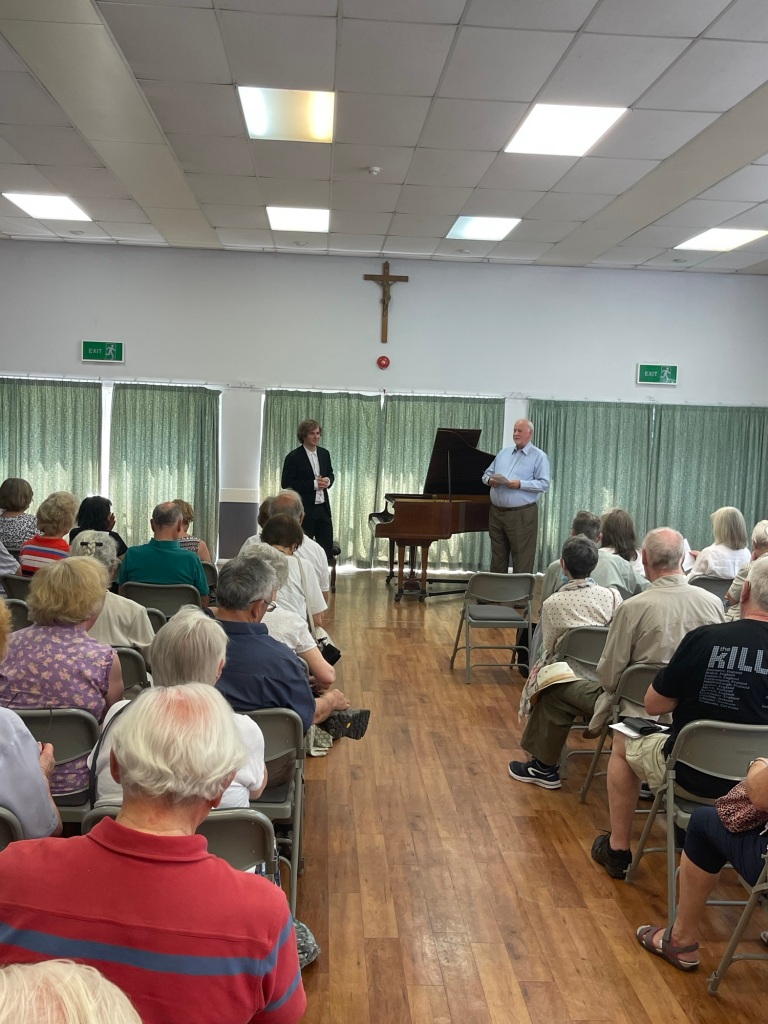
Playing of great authority and aristocratic bearing from Mihai Ritivoiu who at only thirty hours notice had agreed to give this recital that was to be broadcast on live streaming .I have known Mihai since the time I heard a young pianist play the Polonaise Fantasy by Chopin in a Masterclass of Richard Goode at the Guildhall .I remember being so impressed that I asked Ronan O ‘Hora who he was. Ronan is head of keyboard at the Guildhall and a master pianist in his own right and we have a bond between us that all disciples of Vlado Perlemuter maintain.I had just decided to spend as much time in the UK as in Italy and to maintain the same interest in talented young musicians that I had nurtured for thirty years in Rome.Offering opportunities for neglected musicians Old and New in the Eternal city where I was running a theatre that I created with my actress wife next to St Peter’s Square.
I have since become involved with the Keyboard Trust where much of my activity now is centred in helping young musicians find a platform in between graduating from the various music Academies and taking the first steps on the very steep ladder to a career in music.About ten years ago I was invited by Alberto Portugheis,the then President of the Beethoven Society in London to be part of a jury of their Beethoven Prize, together with Piers Lane and Noretta Conci ( founder of the Keyboard Trust ).Amongst the very fine artists there was one that shone more brightly than the others – a student of Joan Havill – Mihai Ritivoiu with a magnificent performance of Beethoven’s Appassionata.From that victory Mihai was taken under the wing of many institutions created to help young musicians and of course he was invited for the Keyboard Trust to play in a very important concert in the Travellers Club in the presence of Sir Antonio Pappano.I have since heard him play many times and even followed in streaming his performances with orchestra at the Enescu Festivals in his homeland of Romania and also appearances with orchestra at the Cadogan Hall here in London.I had heard him quite recently play in the Liberal Club in London in a series run by a pianist colleague and co-national,Cristian Sandrin.It was a very impressive performance of the young aspiring pianist who had matured into an artist of stature and authority.It was the same pianist who performed today but there was even more of an aristocratic bearing.This young student has indeed matured as man and musician and he created a presence not only with his playing but also with his bearing and appearance that commanded attention.
This is indeed an artist to be reckoned with and his sense of style and kaleidoscopic sense of colour allied to an impeccable musicianship ( as you would expect from the class of Joan Havill – Fou Ts’ongs words not only mine) bring everything he plays vividly to life with simplicity and sumptuous beauty.From the very first notes of the Scarlatti Sonata in A K 24 it was obvious that here was an artist that could turn one of 555 sonatas into a miniature tone poem of vibrancy and scintillating subtlety.There was an architectural shape but also a luminous sound of great purity.This was a stylist and master musician that as Joan Chissell would say ‘could turn a bauble into a gem’.
Beethoven too the Sonata in D op 10 n.3 with it’s profoundly moving Largo e mesto of such maturity and poignant beauty.This is one of the first of the Sonatas where Beethoven truly breaks away from his master Haydn and allows the sonata to evolve as it was to do over Beethoven’s lifetime in 32 steps.The slow movement reveals the genius of Beethoven as he had already hinted at in the sonatas op 2 n.3 and op 7.Mihai played this movement with poignant weight and beauty with a full orchestral sound where one was made aware that this was a symphony on the piano.Not just the simple melody and accompaniment but where every strand of counterpoint or accompaniment has a meaning and an important role to play.There was ravishing beauty of the return of the opening theme where the full whispered richness of string quartet quality was so poignant with ‘rinforzandi’ within the notes themselves.The deep bass notes of the coda with the washes of sound above gaining in searing intensity until the bubble broke and we descended into a paradise of subtle sounds.The two whispered final appogiaturas are answered by a barely audible D deep in the heart of the piano.There followed a beautifully pastoral Menuetto and bucolic Trio played in the style of it’s age.The gentle questioning of the final Rondo as the intervening episodes became ever more rumbustuous and full of refined jeux perlé always with the insistence of the opening question present as it blew itself out with scintillating nonchalant ease.
It was the same ease and refined beauty that Mihai brought to the Fauré Ballade .I have often regretted not asking Perlemuter why it was not in his repertoire as he lived in the same house or just next door to the composer and would often play through the nocturnes for the composer with the ink still wet on the page.As Mihai says it a beautiful early work that for some strange reason has not entered the standard concert repertoire.Especially hard to understand when you hear a performance as the one today with its cascades of notes that were quite simply strands of colour illuminating the very individual voice of Fauré.There was a great sweep of harmonic colour out of which emerged the bitter sweet melodic invention added to great intensity and excitement. From the bel canto opening like the Chopin Berceuse to the increasing intensity and build up of sumptuous sounds all played with the aristocratic control that the composer demands.The beauty is in the music not on the surface and playing with the weight of an organist there are sounds to be cherished that are not immediately apparent to lesser mortals! Mihai and Louis Lortie earlier this season have both shown us a Fauré that makes it seem incredible that he is still one of the most misrepresented composers today.
I remember Aquiles delle Vigne giving me the urtext edition of the Fantasia Betica with the dedication to Artur Rubinstein who rarely played it as he complained it was too long!
Mihai today brought this work vividly to life and it certainly did not seem too long because there was such an extraordinary palette of colours that every episode was like a new chapter in a thrilling novel. A voyage of discovery with a range of sounds from the shrill hard edges and gleaming glissandi to the gently whispered pluck of the guitar strings and the mighty oceans of sound leading so hysterically to the chiselled final notes and stamp of the feet. A remarkable performance that makes me question the validity of Rubinstein’s remark. Certainly Mihai’s performance did not seem too long today .On the contrary I would have readily listened to it all over again!
There is a story of Rubinstein playing the Ravel Valses nobles e sentimentales in Spain that was greeted with boos and hisses.He quite simply sat down at the piano and instead of the expected Ritual Fire Dance he played them the ‘Valses’ all over again!
Born in Bucharest, the London-based Romanian pianist Mihai Ritivoiu is alaureate of numerous national and international competitions, most notably the George Enescu International Competition. Mihai leads an international career performing solo and chamber music recitals in Europe and Asia, and has played concertos with the George Enescu Philharmonic Orchestra, Lausanne Chamber Orchestra, the English Chamber Orchestra and MDR Leipzig, and with conductors such as Joshua Weilerstein, Robert Trevino, Michael Collins, Cristian Mandeal, Christian Badea and Horia Andreescu. He has been invited to play at prestigious festivals, including Young Euro Classic in Berlin and the Enescu Festival in Bucharest, and has performed in halls such as the Barbican Centre, Wigmore Hall, Cadogan Hall, Konzerthaus Berlin, Studio Ernest Ansermet Geneva, the Radio Hall andthe Romanian Athenaeum in Bucharest He appeared live multiple times on BBC Radio 3’s programme ‘In Tune’,and his performances have been broadcast by Radio Romania MuzicalRadio Television Suisse and Medici TV. His debut album, released under the label Genuin with solo works by Franck, Enescu and Liszt, has been praised as “beautifully recorded, handsomely played – a solo recital to cherish” (The Arts Desk).A graduate with the highest honours from the National University of Music in Bucharest and the Guildhall School of Music & Drama in London, Mihaistudied with Professors Viniciu Moroianu and Joan Havill. He took masterclasses with Dmitri Bashkirov, Dominique Merlet, Emmanuel Ax, Richard Goode, Jean-Claude Pennetier and has been mentored by Valentin Gheorghiu and Christopher Elton. In addition to his solo career, Mihai is passionate about chamber music. Throughout the years he has played with Corina Belcea, Antoine Lederlin,Roland Pidoux, Alexander Sitkovetsky, Bernhard Naoki Hedenborg andOleg Kogan. Mihai became a City Music Foundation artist in 2016. He has also received generous support from the Liliana and Peter Ilica Foundationfor the Endowment of the Arts, Erbiceanu Cultural Foundation and Ratiu Family Charitable Foundation.
Gabriel Urbain Fauré 12 May 1845 – 4 November 1924 In the rigid official musical establishment of Paris in the second half of the 19th century Gabriel Fauré won acceptance with difficulty. He was a pupil of Camille Saint-Saëns at the École Niedermeyer and served as organist at various Paris churches, including finally the Madeleine, but had no teaching position until 1897, at the Conservatoire, where his pupils included Ravel and Enescu. In 1905 he became director of the Conservatoire in the aftermath of the scandal of the Prix de Rome being refused to Ravel, and he introduced a number of necessary reforms. He retired in 1920, after which he was able to devote himself more fully again to composition, producing notably two final chamber works: a Piano Trio and a String Quartet. He died in Paris in 1924.
He grew up, a rather quiet well-behaved child, in an area of great beauty. … But the only thing he remembered really clearly is the harmonium in that little chapel. Every time he could get away I ran there :’and I regaled myself. … I played atrociously … no method at all, quite without technique, but I do remember that I was happy; and if that is what it means to have a vocation, then it is a very pleasant thing.’ An old blind woman, who came to listen and give the boy advice, told his father of Fauré’s gift for music.He sent him to the École Niedermeyer de Paris which Louis Niedermeyer was setting up in Paris.When Niedermeyer died in March 1861, Camille Saint Saens took charge of piano studies and introduced contemporary music, including .Fauré recalled in old age, “After allowing the lessons to run over, he would go to the piano and reveal to us those works of the masters from which the rigorous classical nature of our programme of study kept us at a distance and who, moreover, in those far-off years, were scarcely known. … At the time I was 15 or 16, and from this time dates the almost filial attachment … the immense admiration, the unceasing gratitude I [have] had for him, throughout my life.”The close friendship between them lasted until Saint-Saëns died sixty years later.Roger Ducasse wrote ‘More profound than Saint-Saëns, more varied than Lalo, more spontaneous than d’Indy, more classic than Debussy, Gabriel Fauré is the master par excellence of French music, the perfect mirror of our musical genius’
The Ballade, dedicated to Camille Saint – Saens dates from 1877, and is considered one of the three masterpieces of his youth, along with the first violin sonata and the first piano quartet .It is one of Fauré’s most substantial works for solo piano, but is better known in a version for piano and orchestra that he made in 1881 at Liszt’s suggestion.Playing for a little over 14 minutes, it is second in length only to the Thème et variations.Fauré first conceived the music as a set of individual pieces, but then decided to make them into a single work by carrying the main theme of each section over into the following section as a secondary theme.The work opens with the F♯ major theme, an andante cantabile, which is followed by a faster section, marked allegro moderato, in E♭ minor. The third section is an andante introducing a third theme. In the last section, an allegro, a return of the second theme brings the work to a conclusion where the treble sings with particular delicacy.
Fauré appears to have first conceived his Ballade in the late 1870s as a series of related short pieces, rather in the tradition of Schumann. But in a letter of September 1879, he explained that the central B-major allegro had become ‘a kind of alliance between [piano pieces] nos. 2 and 3. That is to say, by using new but old methods I have found a way of developing the phrase of no. 2 [the E-flat minor allegro moderato] into a sort of interlude, and at the same time stating the premises of no. 3 [the concluding allegro moderato, with its bird-call trills] in such a way that the three pieces become one. It has thus turned into a Fantasy rather out of the usual way.’
Marcel Proust knew Fauré, and the Ballade is thought to have been the inspiration for the sonata by Proust’s character Vinteuil that haunts Swann in In Search of Lost Time .Debussy reviewing an early performance of the Ballade, compared the music with the attractive soloist, straightening her shoulder-straps during the performance: “I don’t know why, but I somehow associated the charm of these gestures with the music of Fauré himself. The play of fleeting curves that is its essence can be compared to the movements of a beautiful woman without either suffering from the comparison.” Bryce Morrison describes the Ballade as “a reminder of halcyon, half-remembered summer days and bird-haunted forests”.
Fantasía bética, or Andalusian Fantasy, was written in 1919 evoking the old Roman province of Baetis in southern Spain, today’s Andalusia. It was commissioned by Artur Rubinstein ,who planned to perform it in Barcelona that year but did not learn it in time and so wound up giving the premiere in New York on 20 February 1920; as it turned out, he would play it only a few times before dropping it from his repertory without recording it and years later he explained to the composer that he found it too long … It was Falla’s last major piano work and the only one that belongs to the virtuoso tradition in which Falla the pianist had been trained. ‘Guitar figurations transformed into pianistic terms abound … other passages evoke the harpsichord, Scarlatti as it were, rewritten by Bartók.’ Beyond that are the smoky, heavily ornamented lines of flamenco singers and the tightly controlled gestures of Andalusian dancing, the whole work adding up to a marvellously varied and vigorous portrait of Spain. From the structural point of view Falla’s ‘internal rhythm’, which he explained as ‘the harmony in the deepest sense of the word born of the dynamic equilibrium between the sections’. Any attempt to shorten the work would have blunted its impact.
The abstract, large-scale work is a celebration of Andalusian culture and history, but not an historical evocation. Its influences draw from Falla’s knowledge and experience of the the flamenco culture that evolved in Andalusia.
Provinicia Baetica was the old Roman name for Andalusia and so a translation of the title might be “Andalusian Fantasy.” Although the materials used are original with Falla, they strongly evoke the folk music of southern Spain: the strident, sombre cante jondo sung in oriental-sounding scales, chords derived from guitar tunings, and a harsh percussive quality reminiscent of castanets and heel stamping.
The tonal originality of the Baetica is a result of Gypsy, ‘Middle Eastern’, Sephardic, Indian and subtle French influences woven into the harmonic language.
Manuel de Falla was born in 1876 into a reasonably affluent family in Cádiz, where music was confined to annual performances of Haydn’s The Seven Last Words, occasional visits by grand opera companies, and folk songs—not as museum pieces, but as living elements of Spanish life. By 1896 the family fortunes had diminished and they moved to Madrid, where Falla entered the conservatoire and began to compose zarzuelas, the Spanish form of operetta. But his eyes were set on Paris and in 1907 he began a seven-year stay, making friends with Debussy, Ravel and Dukas. He had already begun the Cuatro piezas españolas in Madrid, but they were brought out in 1909 by the Parisian publisher Durand on the recommendation of the three above-named composers. Despite the obvious debt to Albéniz, also in Paris at the time and the dedicatee of the pieces, Falla’s mixture of harmonic invention and elegant counterpoint is unfailingly captivating, banishing any hint of the boredom that might otherwise accrue from the insistent Spanish dance rhythms. His tunes too recall Spanish folk music with its repeated notes and small intervals, but his textures are in general more economical than those of Albéniz.
The opera La vida breve was written in 1904–5 but not performed until 1913. It includes two Spanish dances which have subsequently achieved a life of their own. The first, which opens the second act, was published in a variety of settings, including transcriptions for piano solo and four-hand duet by the composer, and with the music from the end of the scene as Interludio y Danza for orchestra. It was also arranged by Fritz Kreisler for solo violin and piano (as Danza española) in 1926.
Kings Place Monday 11th March 2024 at 8 pm Jonathan Ferrucci plays the Goldberg Variations for the Kirckman Concert Society A standing ovation at the end of the 80 minutes of The Goldbergs – still only the start of a lifetimes’ journey. One that in four years has reached a peak of perfection that kept a rapturous full house in complete silence for the entire duration. Playing with all the repeats except in the final Aria he was justly greeted by a standing ovation with cat calls and whistles worthy of a football stadium at the end of this extraordinary marathon.
This is the fascinating pod cast for the Keyboard Trust with Jonathan Ferrucci ……some inspired and inspiring comments that were recorded in an improvised encounter as he prepared for his first performances of the Goldberg variations in 2021 .It culminated last night in London with a performance in 2024 where all the strands seemed to come miraculously together.Knotty twine or jigsaw puzzle it is without doubt the work of a Universal Genius.
There was lots to discuss all centred around Florence…….and Bach! It was there that I first heard Rosalyn Tureck giving a lecture on Bach in the Cristofori museum of Stefano Fiuzzi.I could not believe that she had not been invited to give a recital so I invited her to play in Rome.A performance of the Goldberg Variations ,one that I had never forgotten from my student days in London.( see programme below)
It created a sensation after 25 years absence from the stage when she had stopped performing in order to dedicate herself to the study of Bach in Oxford.Creating her own Bach research institute of which I was eventually invited to be a trustee.
Florence immediately woke up and invited her to La Pergola theatre and she became the diva of this centre of European culture,playing sometimes twice a season.
That mantle has now passed to Angela Hewitt and it is she who had noted in 2014 a young florentine boy of quite exceptional human and pianistic gifts with whom she has been sharing her unique ideas from a life immersed in the world of the Universal Genius of J.S.Bach. Rosalyn’s performance was like a rock to be revered and honoured from a distance whereas Angela’s is based on the song and the dance to be enjoyed and moved ,touched as it is by the human spirit. Angela had trained as a dancer which one can admire in all that she does. Jonathan practises Ashtanga yoga and considers it an integral part of his work ,and essential in his life.In fact he stands on his head for a few minutes before starting the day. Jonathan’s teacher for 10 years ,Giovanni Carmassi,inspired him to pursue music in life but did warn him that music is a “dangerous disease” .The book of conversations with Carmassi is the New Testament as Neuhaus the Old.Both are a pianist’s bible . This pod cast discussion includes some magnificent examples from Jonathan’s first performance in 2021.It was to be a performance to cherish but work in progress always.
Angela Hewitt had recently played them in the church where Bach is laid to rest in Leipzig.
If music be the food of love …..play on ……… We certainly need it in these unexpected times. “I have not been with you for so long” “Cabbages and turnips have driven me away”………”If my mother had cooked meat ,I would have stayed longer!” What can this last variation mean ………Jonathan reveals what he has discovered in his lockdown study of the greatest set of variations ever written.
Here are the various stops so far from the start of a lifetimes’ journey delving into the workings of a Universal Genius
Pianistic perfection of Elisabeth Brauss .A kaleidoscope of colours with an enviable clarity and precision allied to an impeccable musical pedegree . Nowhere more evident than in the encore with the second movement of Beethoven’s seemingly innocuous sonata op 14.n.2 I have heard many great pianists play the jewels that are to be found in the two sonatas op 14 .Richter played them both in his first appearances in London but another woman pianist Annie Fischer was unforgettable. I have never heard this movement played with such Swiss precision allied to the ravishing beauty and sense of character that this young lady shared with us today with such ‘joie de vivre’ and innocent freshness .She has earned a reputation for her playing of the Viennese classics to which she brings a clarity and exhilarating freshness with impeccable good taste and intelligent musicianship.So I was surprised to see a large part of her programme dedicated to Prokofiev and Albéniz.The BBC announcer,Martin Handley ,asked us to feel free to applaud after the Prokofiev but Elisabeth wanted the Albeniz to link up to the Beethoven ‘Hunt’ Sonata without any intrusive interruption!
What wonders she brought to eight of Prokofiev’s early pieces op.12. Like the ‘Visions Fugitives’ this is pre war Prokofiev where his sense of fantasy and colour were of an artist untainted by the trials and tribulations that were so much part of his later works .This was the lyrical poetic Prokofiev who with a few strokes of his pen could create characters and atmospheres that later were to become of more dynamic rhythmic assertions.The beautiful aeolian harp of the Prelude could almost be by Grieg or Sinding such was it’s easy undisturbed flow of beauty more of pastoral charm than military exertions! In Elisabeth’s hands it was of a ravishing beauty worthy of the refined pianism of the Golden age of piano playing.
Omitting the Mazurka and Capriccio she chose those eight that made up a fascinating and satisfying twenty minute suite.From the delicacy of the fairy tale Tchaikowsky style march with the chiselled sounds and pungent harmonies that were already stamped into Prokofiev’s musical personality.A surprise coquettish ending was played with beguiling style by Elisabeth and lead into the gentle Gavotte.Here was a story being told of such innocence with a beautiful turn to the major before the Gavotte returning in crazy celebratory style.There was a burst of refined energy within the Rigaudon of surprising elegance but with a joyous finale.Subtle story telling from the a refined tone palette in the Legende with wistful etherial sounds of questioning – the unanswered question indeed – and ever more unearthly as it drew to an exquisite end.What subtle beauty she brought to the harp like sounds of the Prelude where even the opening left hand arpeggio was allowed all the time to open like a beautiful flower just sharing the subtle perfumed sounds with us. Soon awoken by Prokofiev with his typical Russian dance poking fun with spiky brilliance but after all the fuss just disappearing into the distance no doubt up to his mischief in another town!Things that go bump in the night with a perpetuum mobile of explosive vehemence but a contrasting Trio almost too serious in the Scherzo humoristique .Finally Elisabeth treated us to a jeux perlé of sparkling brilliance and insistence with a Scherzo of remarkable control and virtuosity before the final race to an ending that Prokofiev just underlined for good measure !Elisabeth brought these little gems to life with sparkling wit,virtuosity and heart on sleeve sentiment .It brought to mind Rubinstein who had played a selection of Prokofiev Vision Fugitives in his legendary ten Carnegie Hall recitals that he gave to thank America for offering him a home when Europe was being set on fire.Rubinstein made the simple melodic invention of Prokofiev speak in the same way that Elisabeth did so unexpectedly today.
There were ravishing whispered sounds and colours where one could almost smell the exotic perfumed air in Albeniz’s Evocacion .It was played by Elisabeth with the same clarity and ravishing luminous beauty that I well remember from Rafael Orozco many years ago when he won the second Leeds Piano Competition .Whatever happened to that dashing young Spanish pianist Annie Fischer asked as she had been on the jury and had not forgotten such magical sounds.He lived in Rome and died a sad death like many young artists in the plagued 80’s and 90’s.Nice to be reminded of such artistry as I was today.
Strangely the wistful magical sounds of Spanish somnabulance were joined by the opening questioning sounds of Beethoven op 31 n. 3.Usually played in a more assertive way, but looking closely at the score as Elisabeth had obviously done it is marked to be played in piano only bursting into life after this equally meditative opening .Burst into life it certainly did in Elisabeth’s hands with her well oiled fingers of extraordinary sensitivity and clarity and the first movement ending just thrown off with such nonchalant ease as the Scherzo burst into life.Beethoven’s fortissimi and sforzando were like calls to attention in between the chattering bucolic energy that they commanded.The minuetto was played with beautiful operatic expansiveness and the Trio with such character that one can understand why these seemingly innocuous chord were taken by Saint Saens for the theme of his variations .The Presto con fuoco was played at whirlwind speed with overwhelming brilliance and character .A furious hunt to the final exhilaration of the closing chords.
Isaac Albéniz (1860-1909) From Iberia (Book 1) (1905-6) Evocación Ludwig van Beethoven (1770-1827) Piano Sonata No. 18 in E flat Op. 31 No. 3 ‘Hunt’ (1802) I. Allegro • II. Scherzo. Allegretto vivace • III. Menuetto. Moderato e grazioso • IV. Presto con fuoco The concert was broadcast live on BBC Radio 3 https://www.bbc.co.uk/programmes/m001wyr7
Sergei Sergeyevich Prokofiev. 27 April – 5 March 1953) Born in Sontsivka Ukraine – Died aged 61 in Moscow
10 Pieces for Piano, Op.12, composed by Sergei Prokofiev, is a captivating and evocative collection of piano compositions. Each piece in this opus showcases Prokofiev’s iconic style, characterized by its daring harmonies and rhythmic complexities. From the delicate, introspective melodies of the first piece to the powerful and exhilarating chords of the last, the set captures a wide range of emotions and moods. Prokofiev seamlessly fuses the classical traditions with modernistic elements, creating a distinctive sound that is both vibrant and intellectually stimulating. The music oscillates between moments of tranquility and moments of intense passion, displaying Prokofiev’s mastery of musical tension. The contrasting dynamics and tempos add a sense of drama to the overall composition, making it an engaging listening experience. 10 Pieces for Piano, Op.12, provides a remarkable insight into Prokofiev’s creative genius. Through its intricate melodies and harmonies, the collection highlights the composer’s ability to push boundaries while maintaining an emotional connection with the listener. It is a testament to Prokofiev’s profound influence on 20th-century music and solidifies his place as one of the most innovative and important composers of his time.