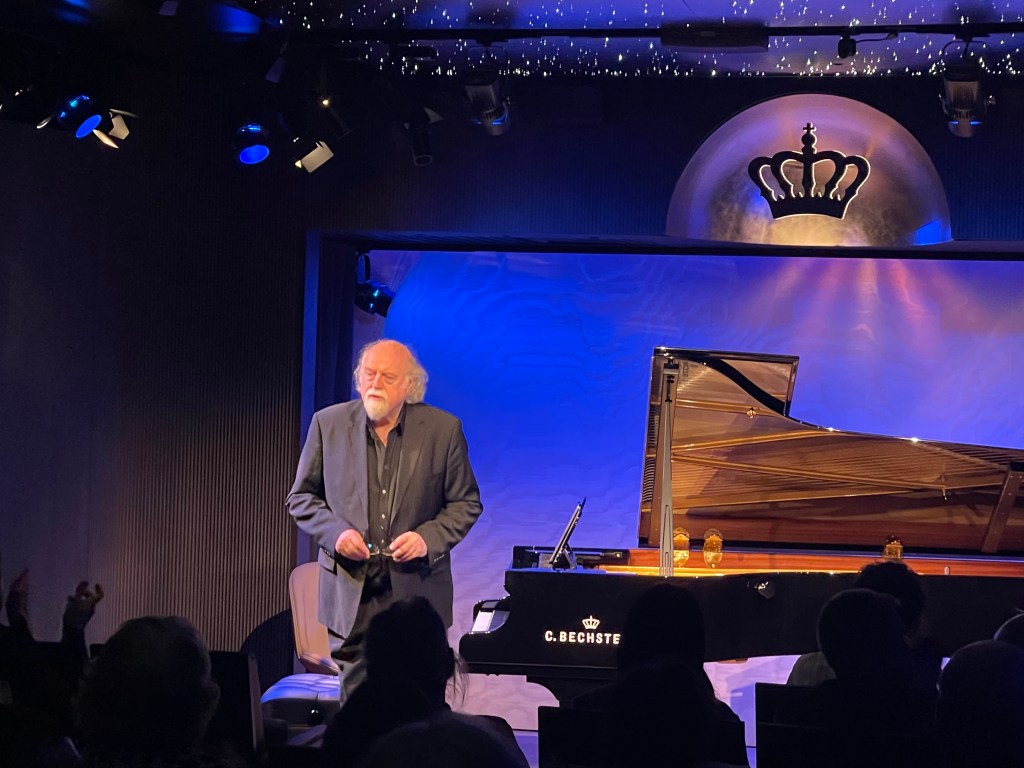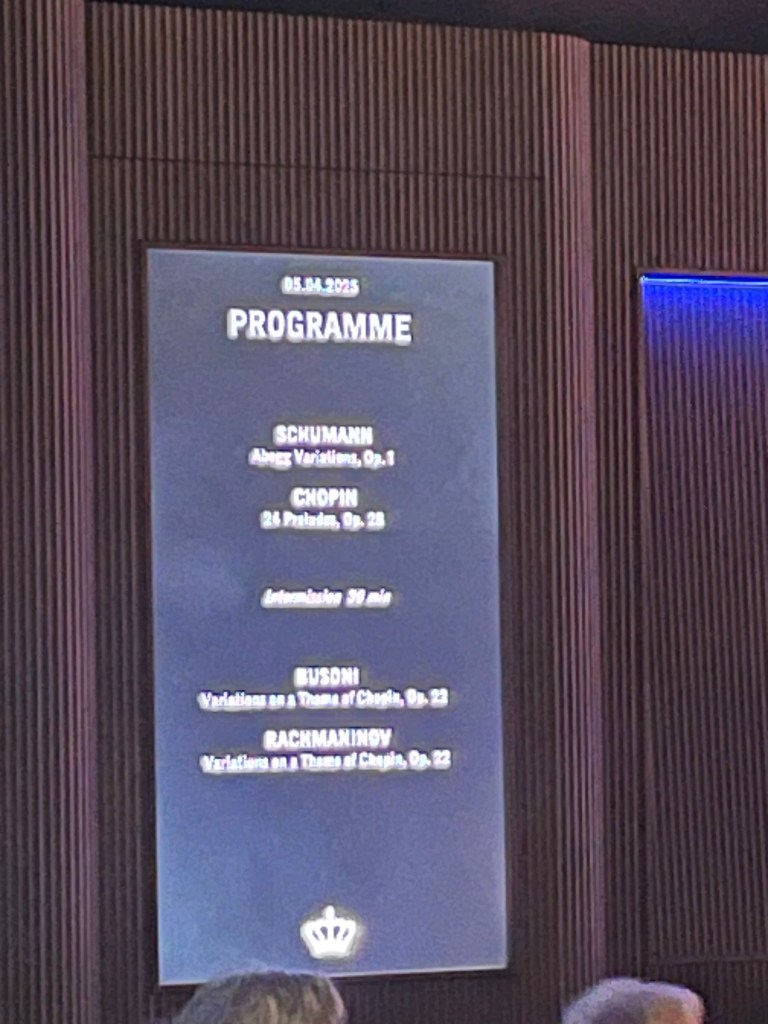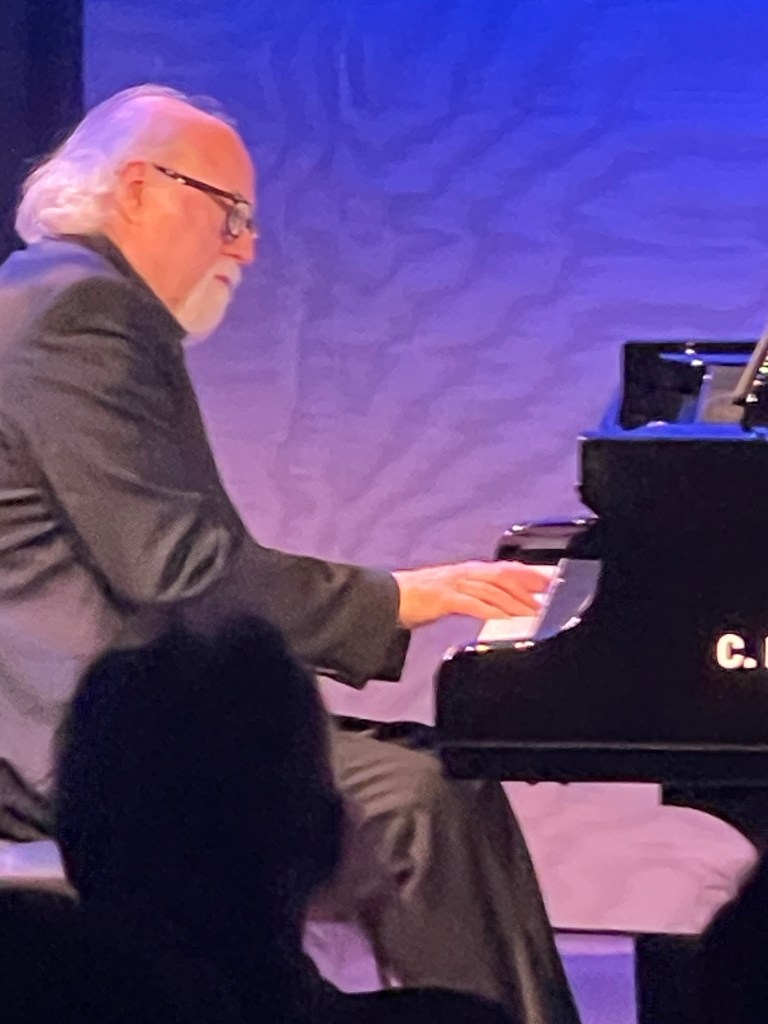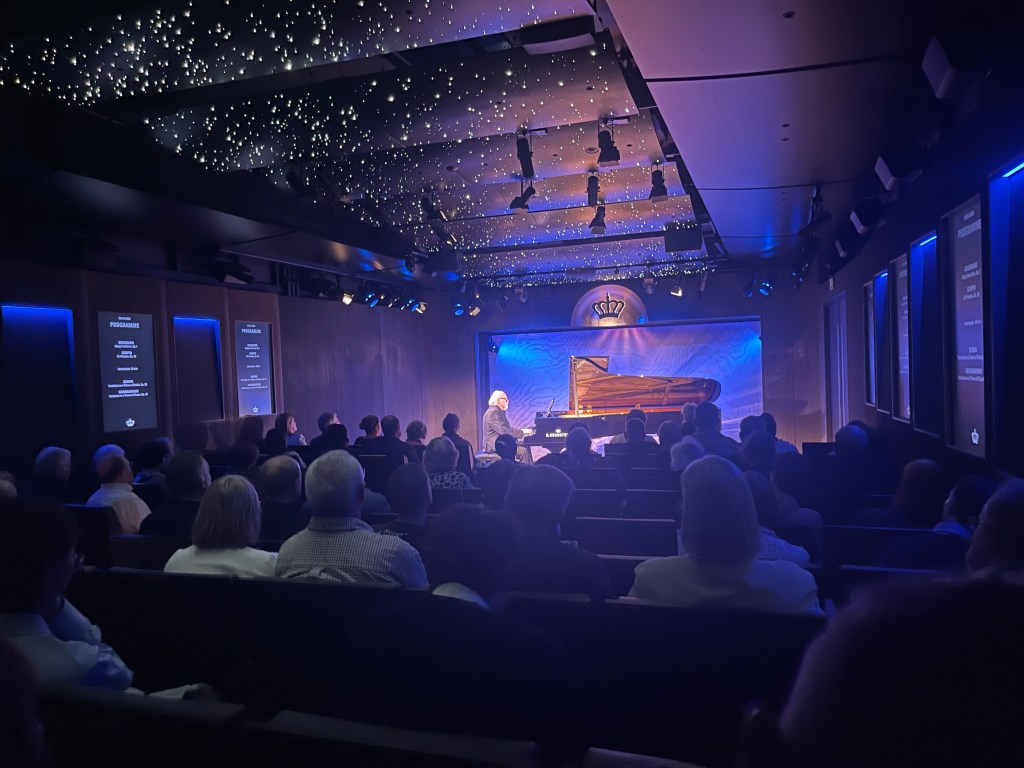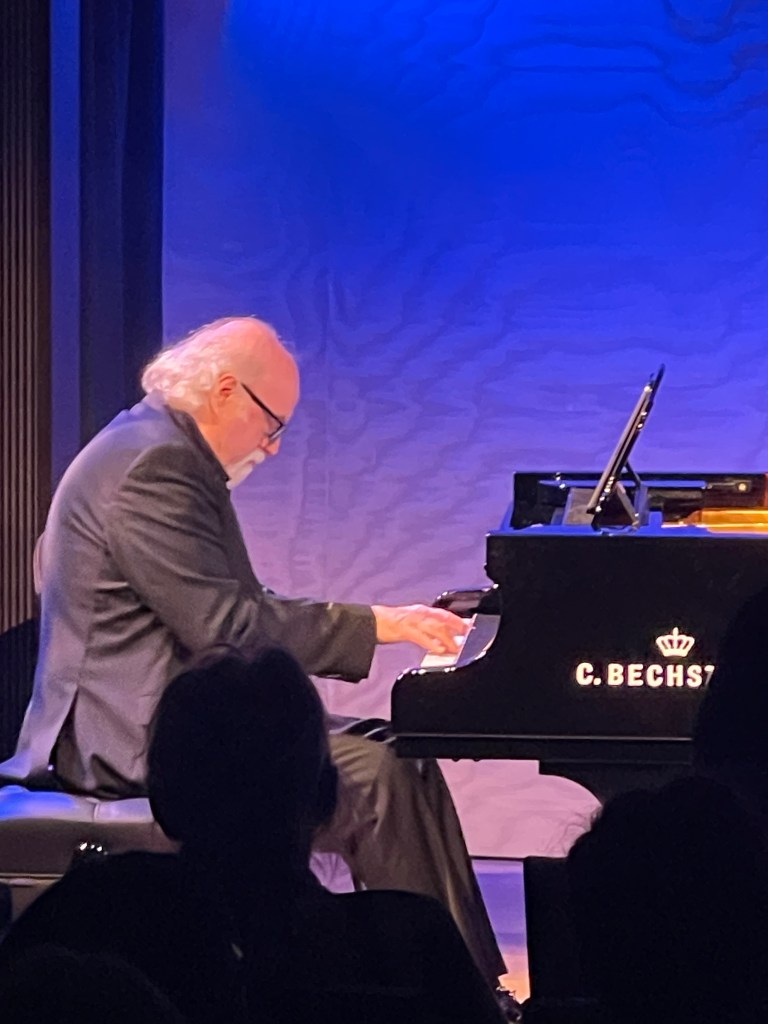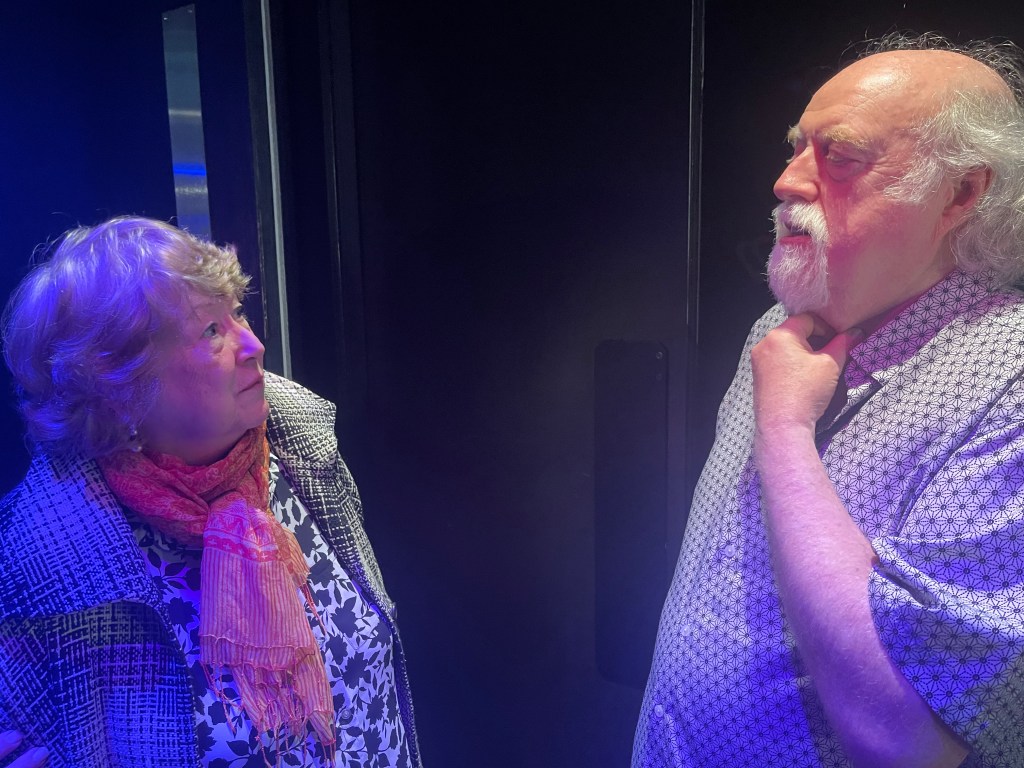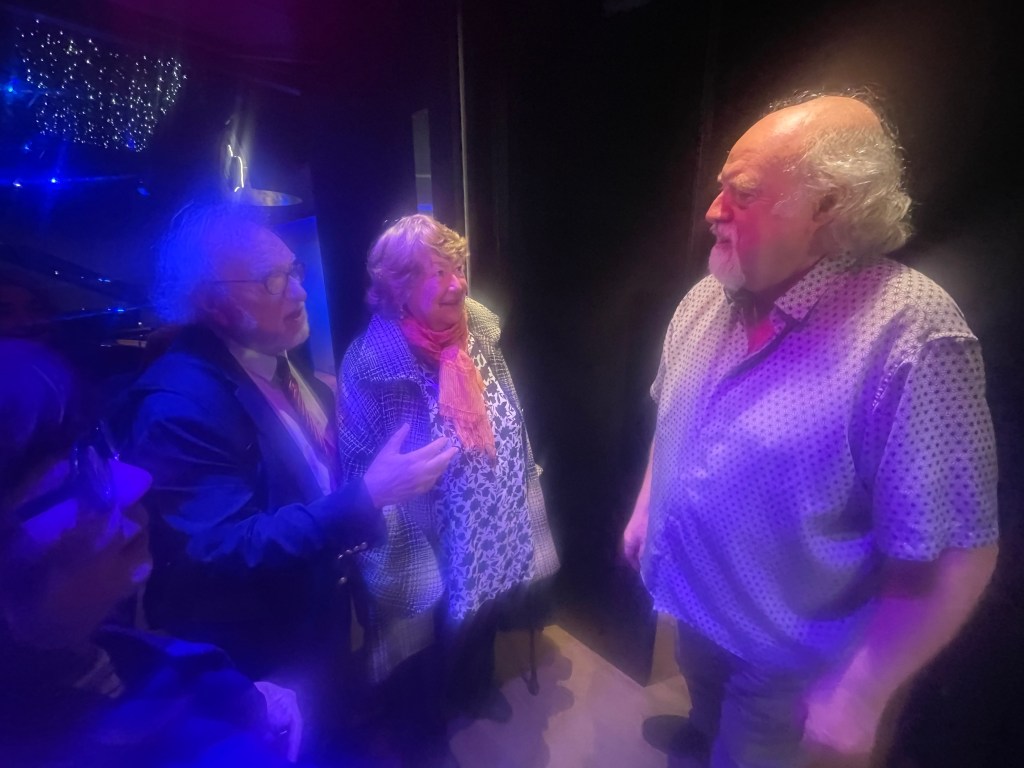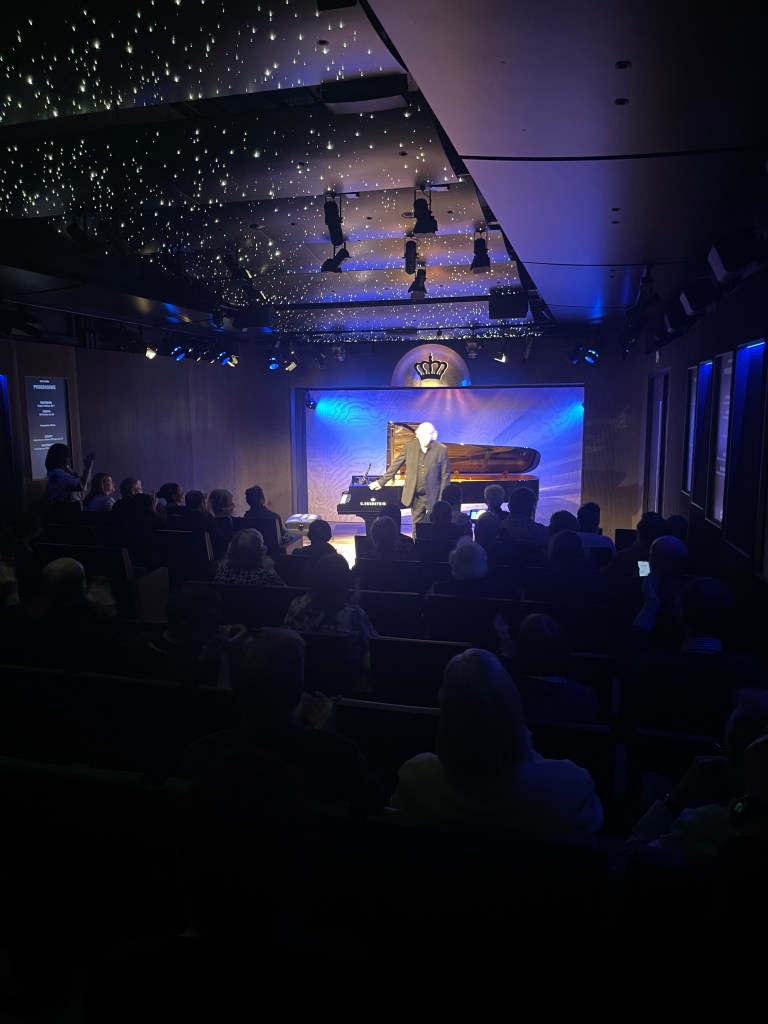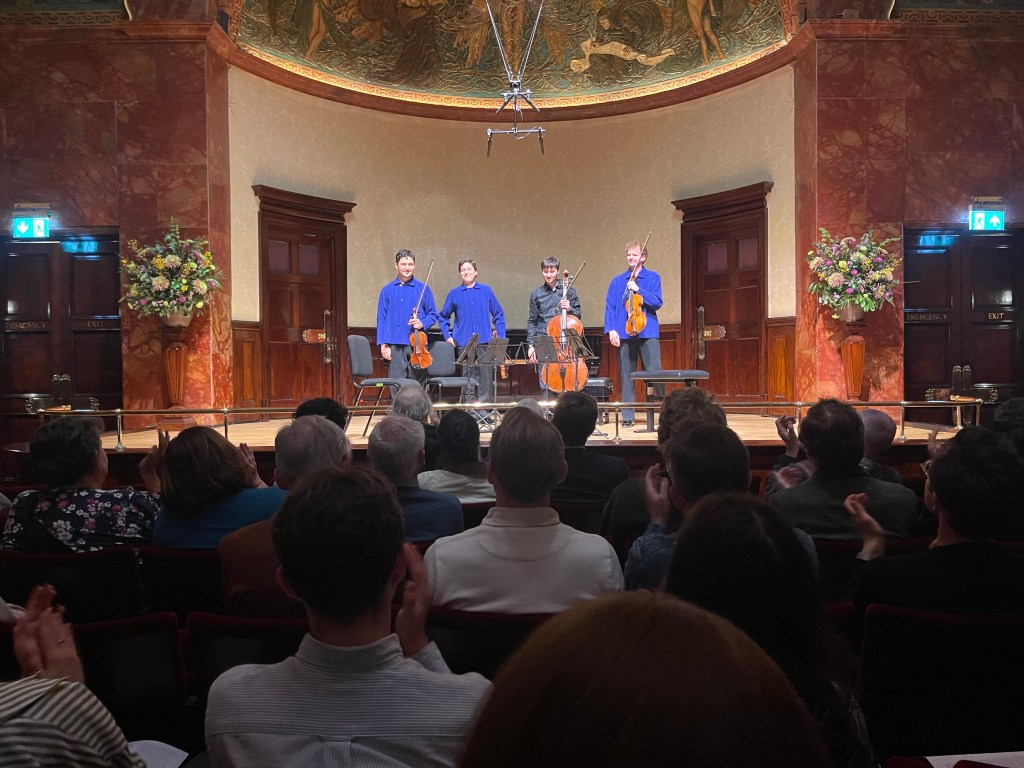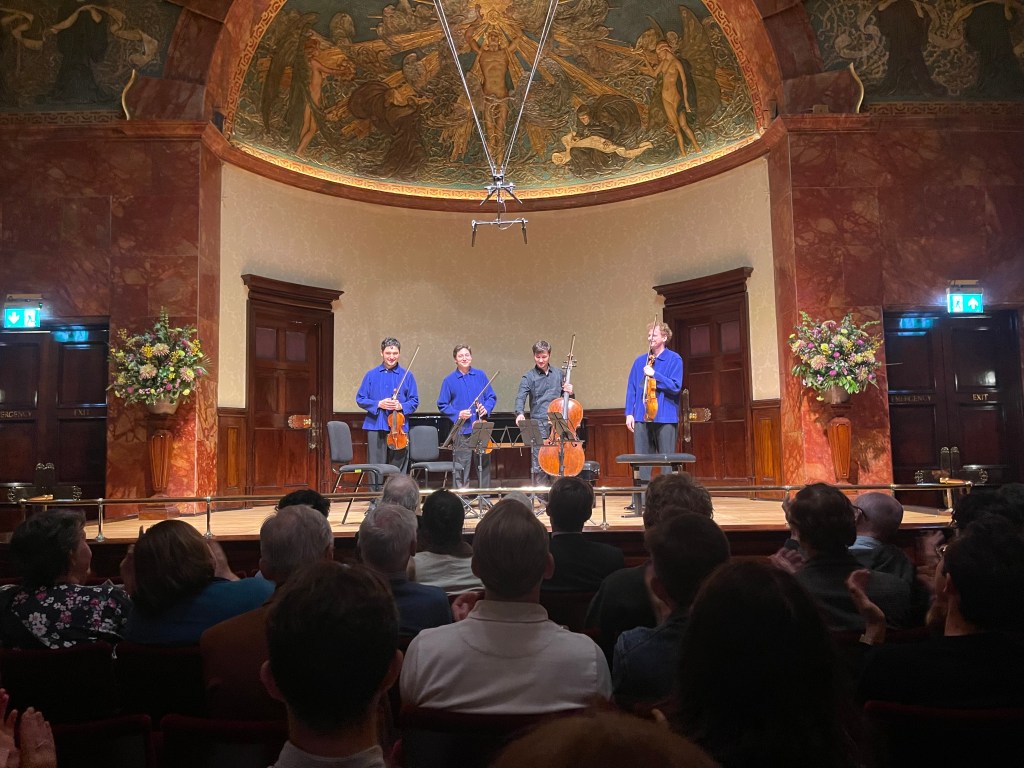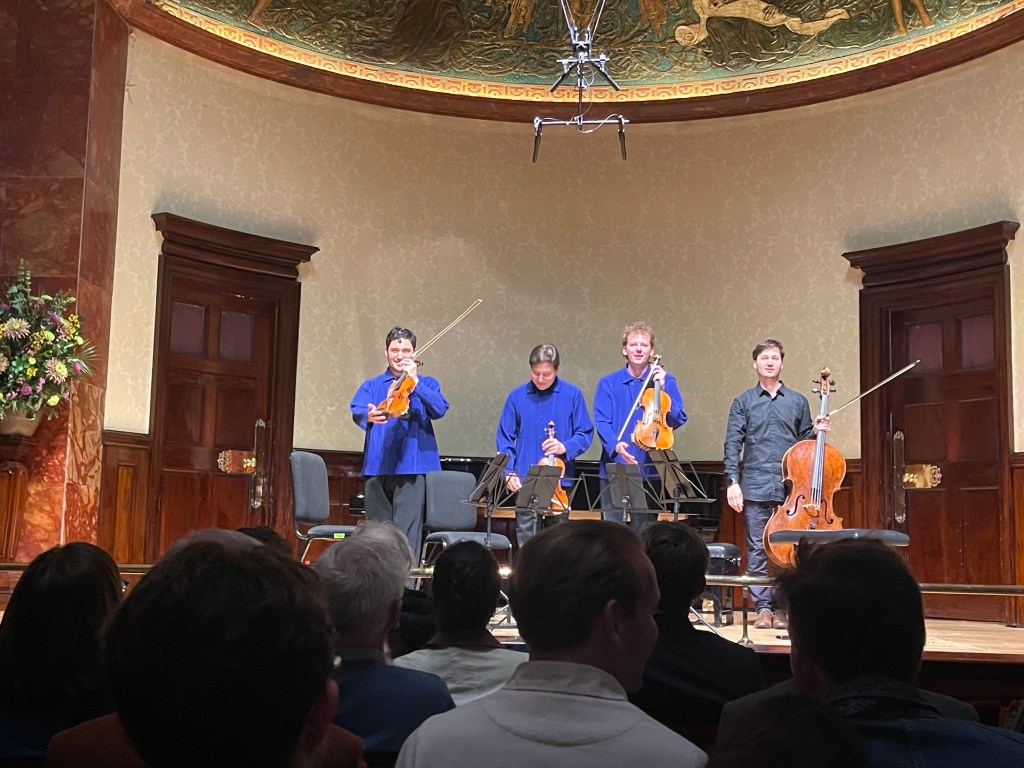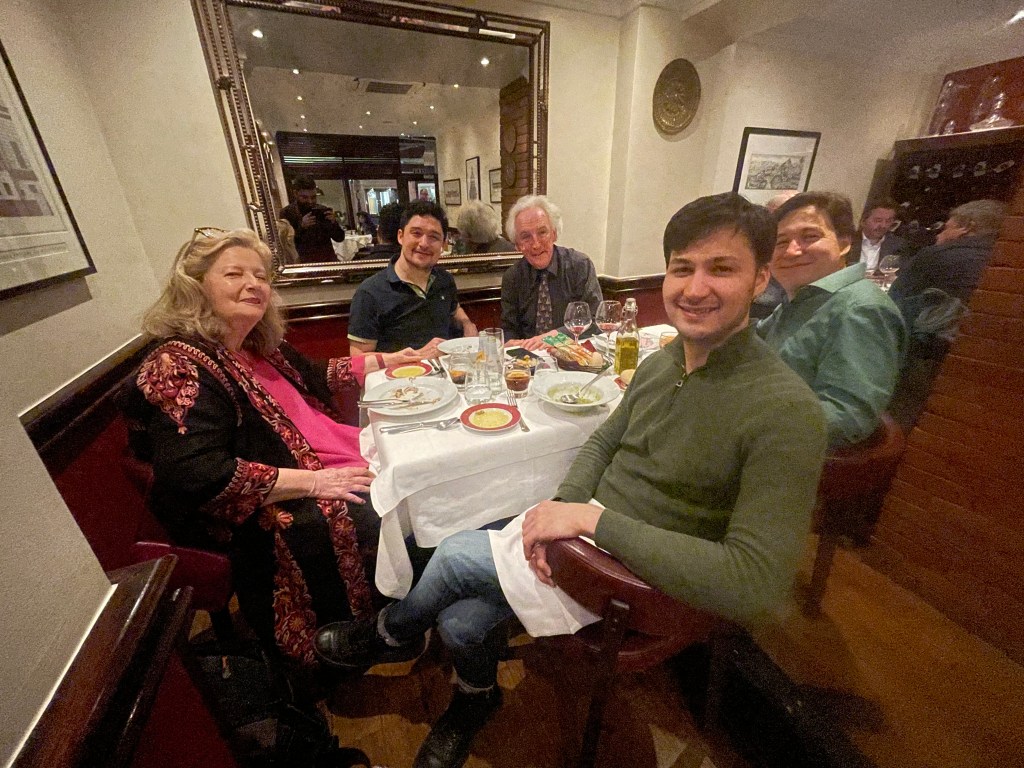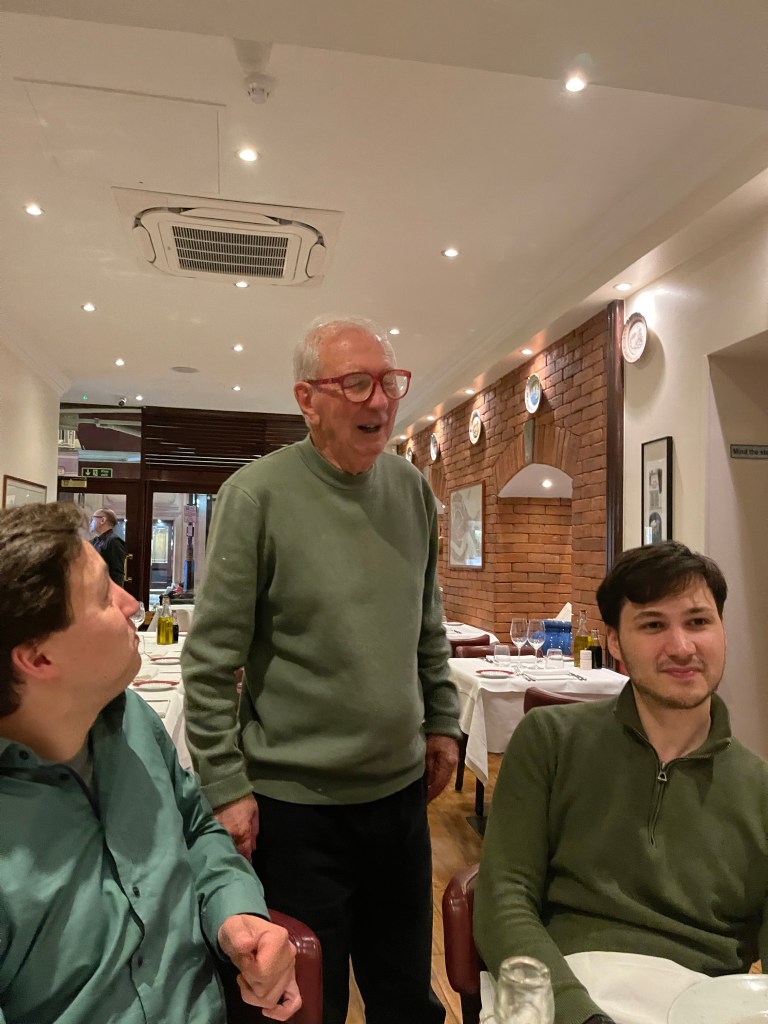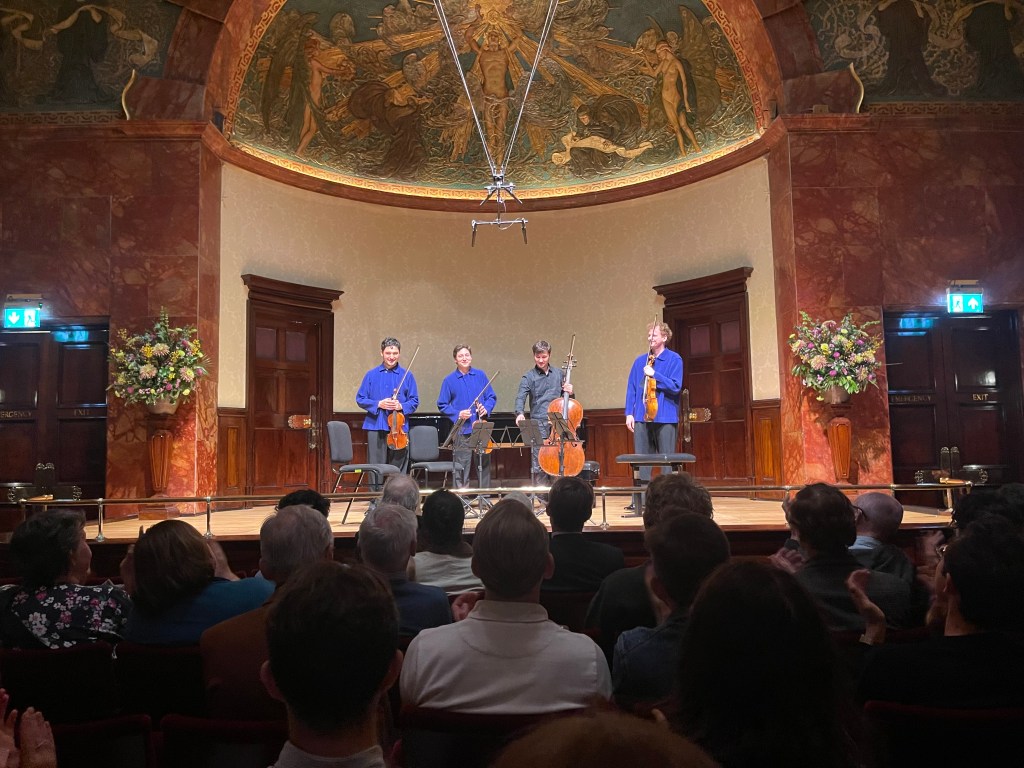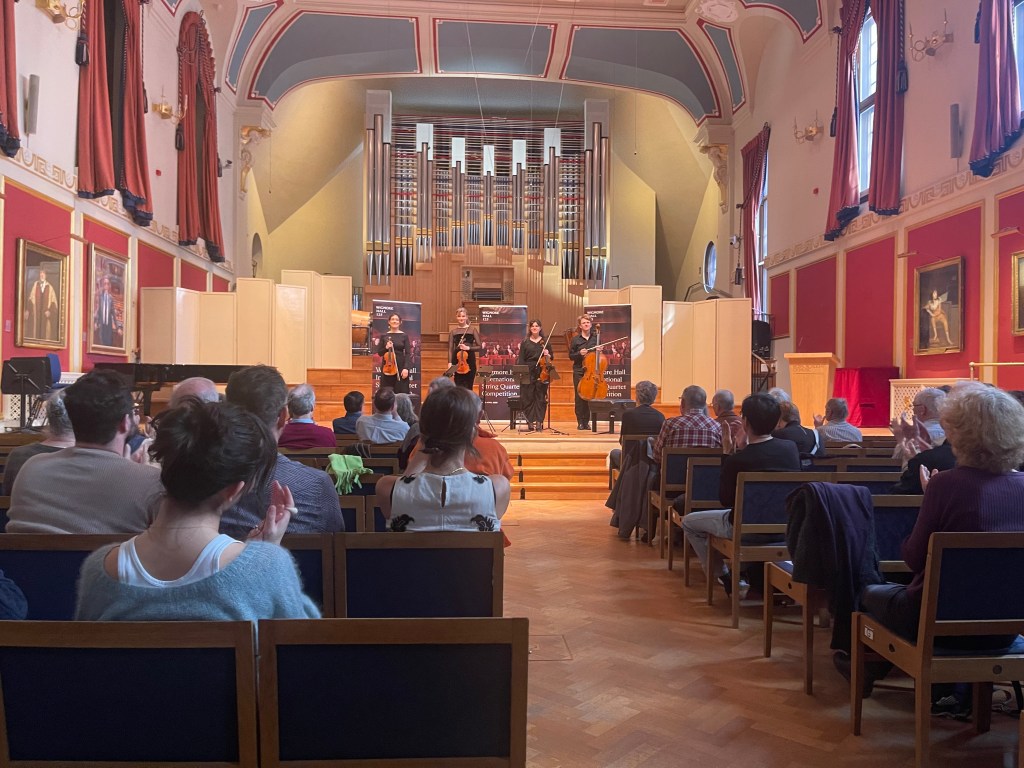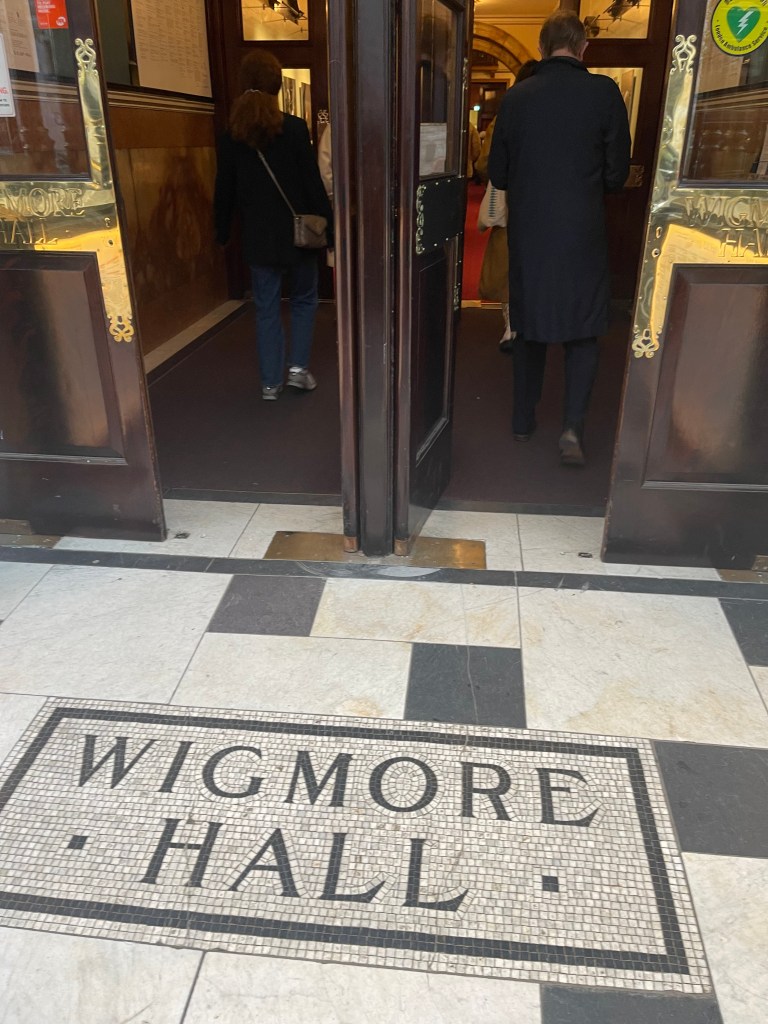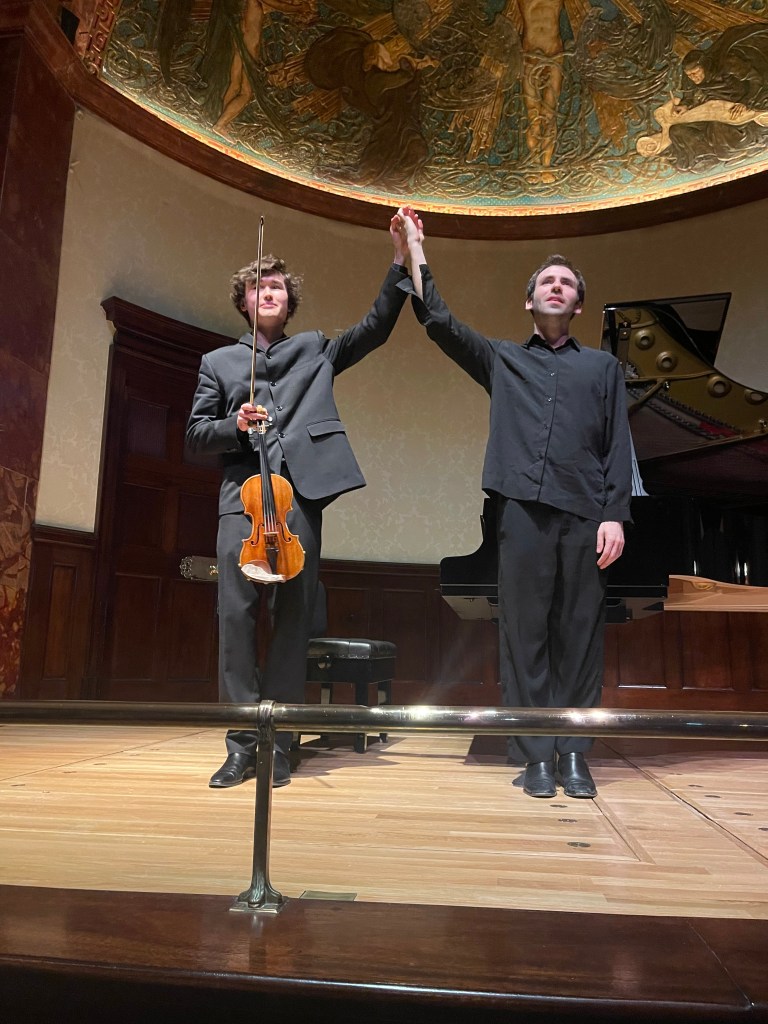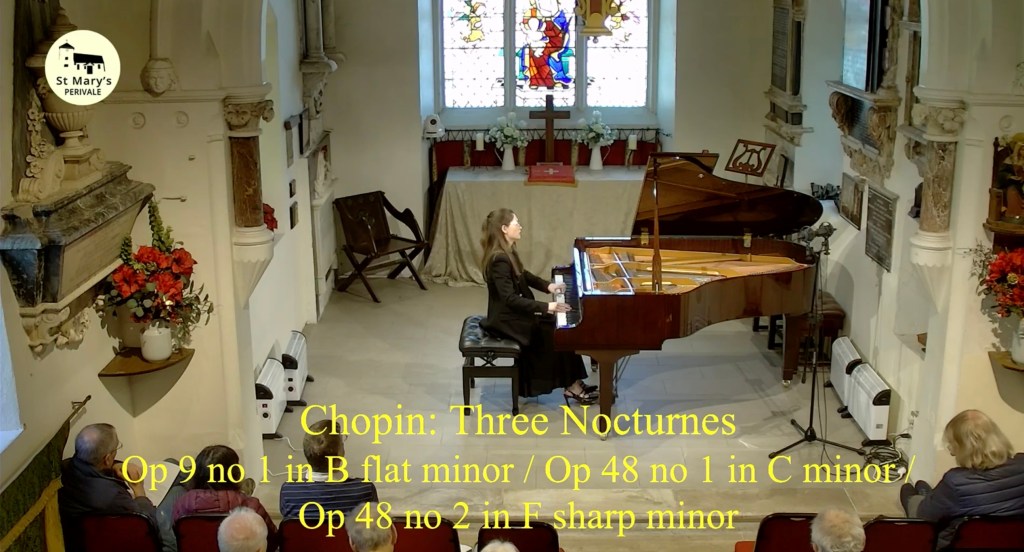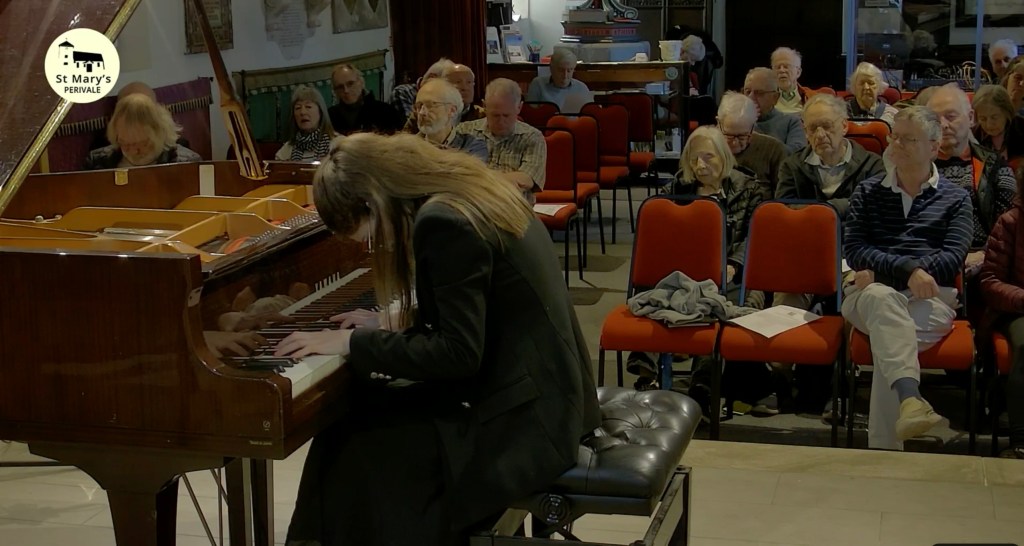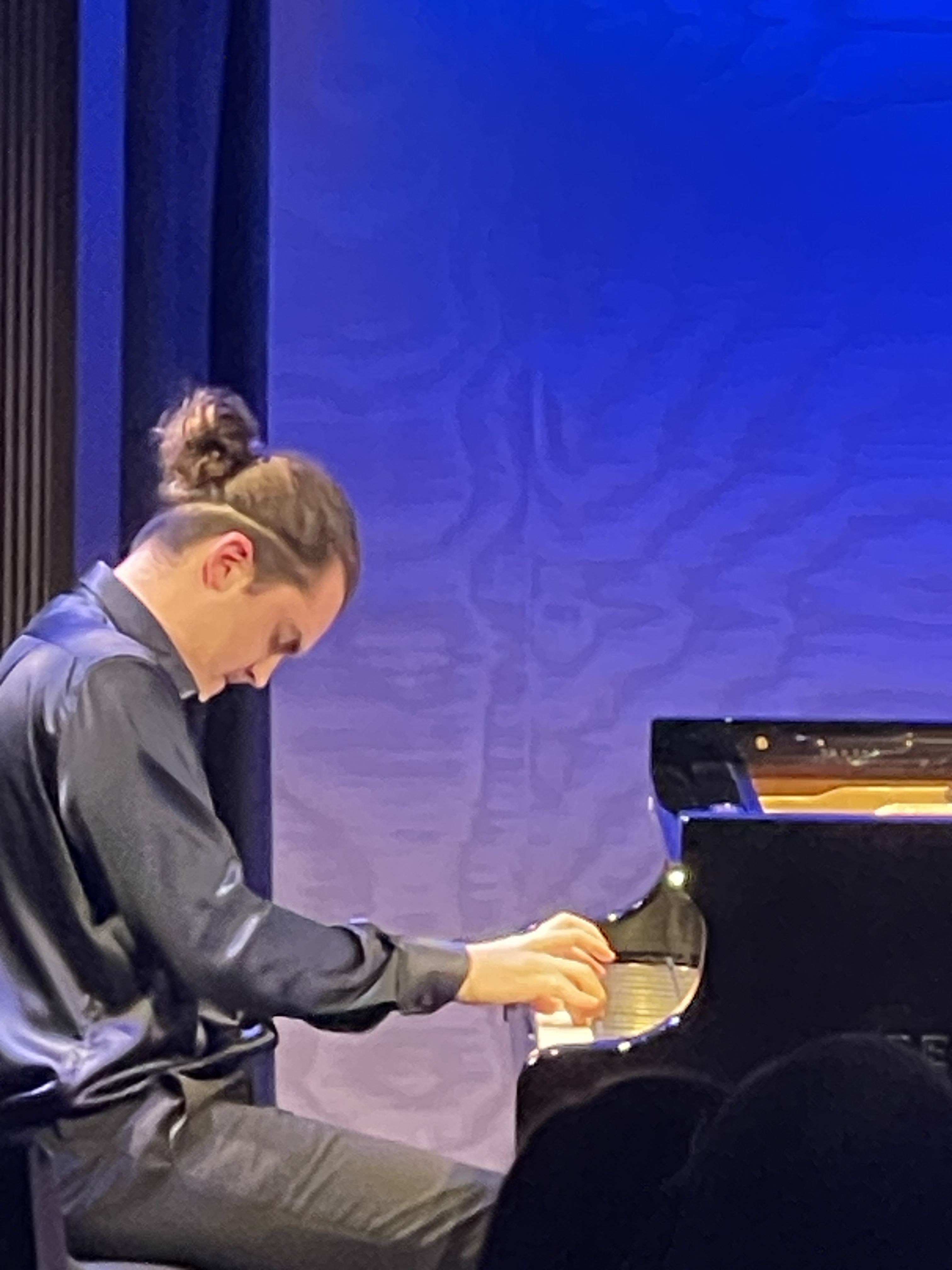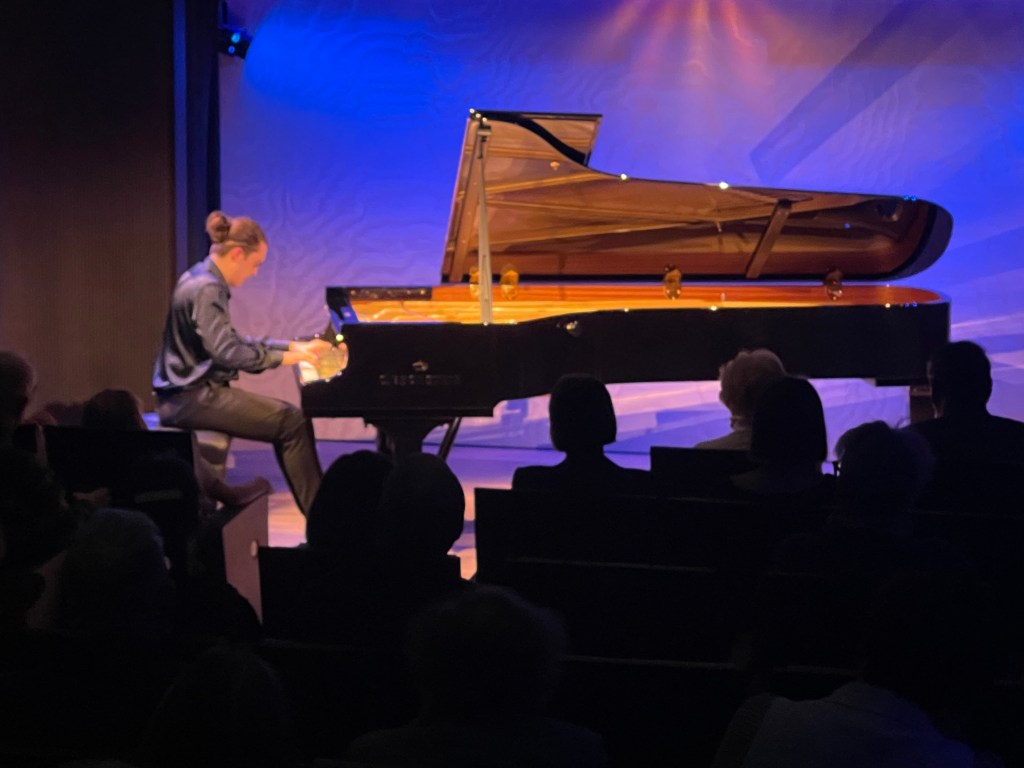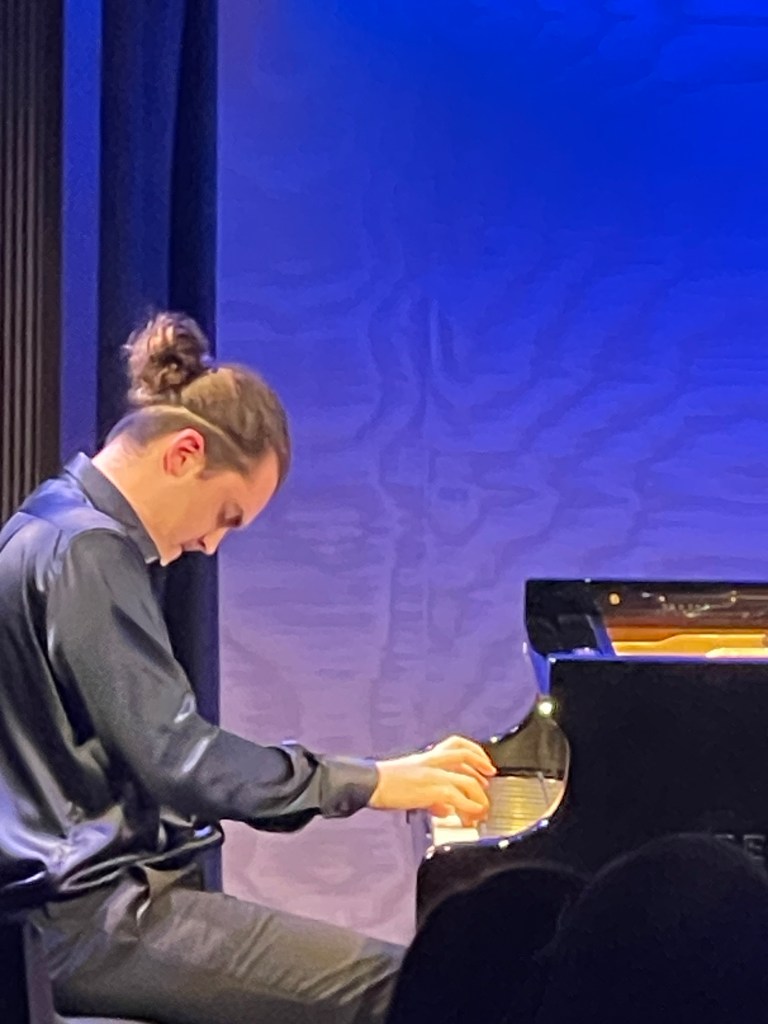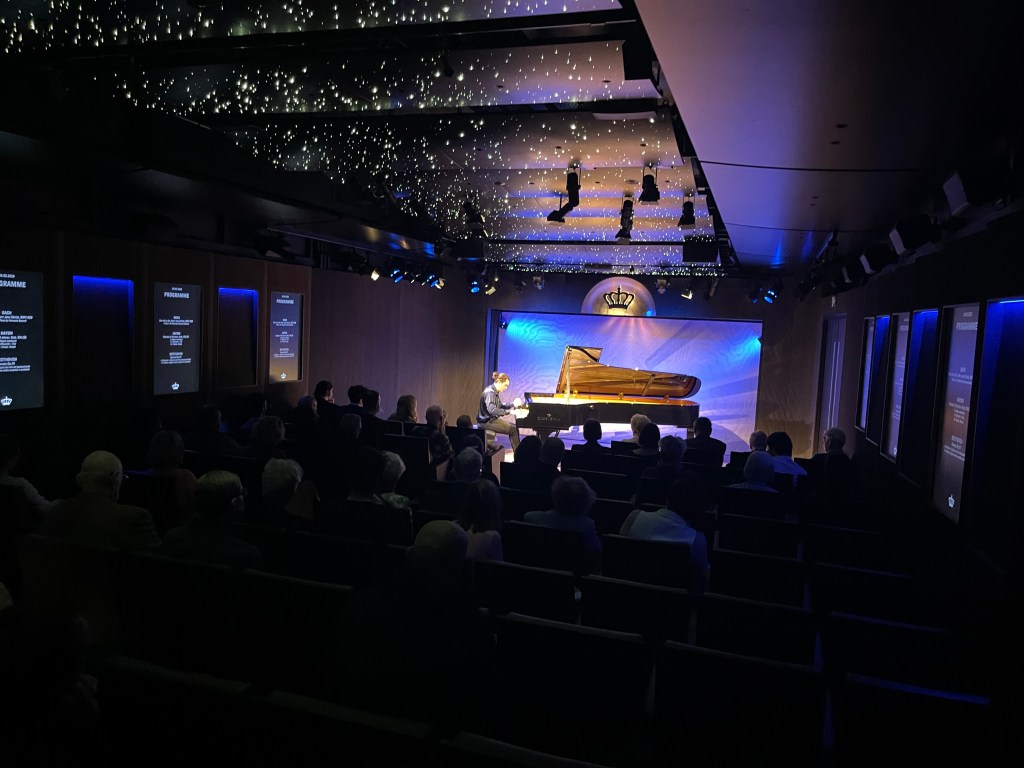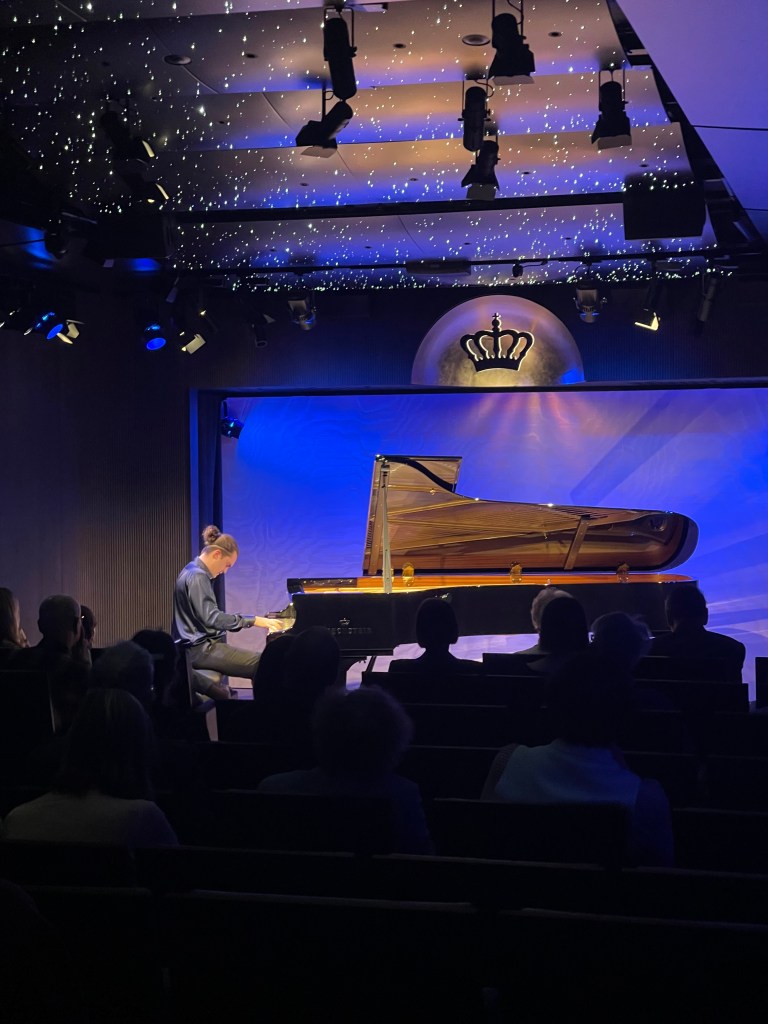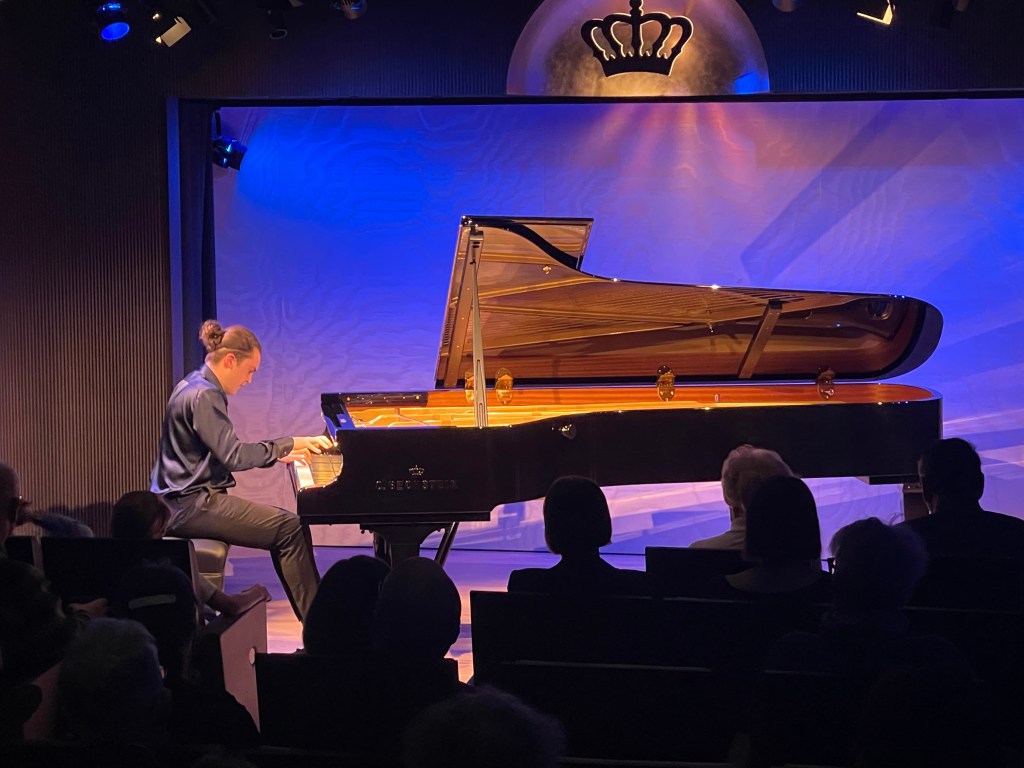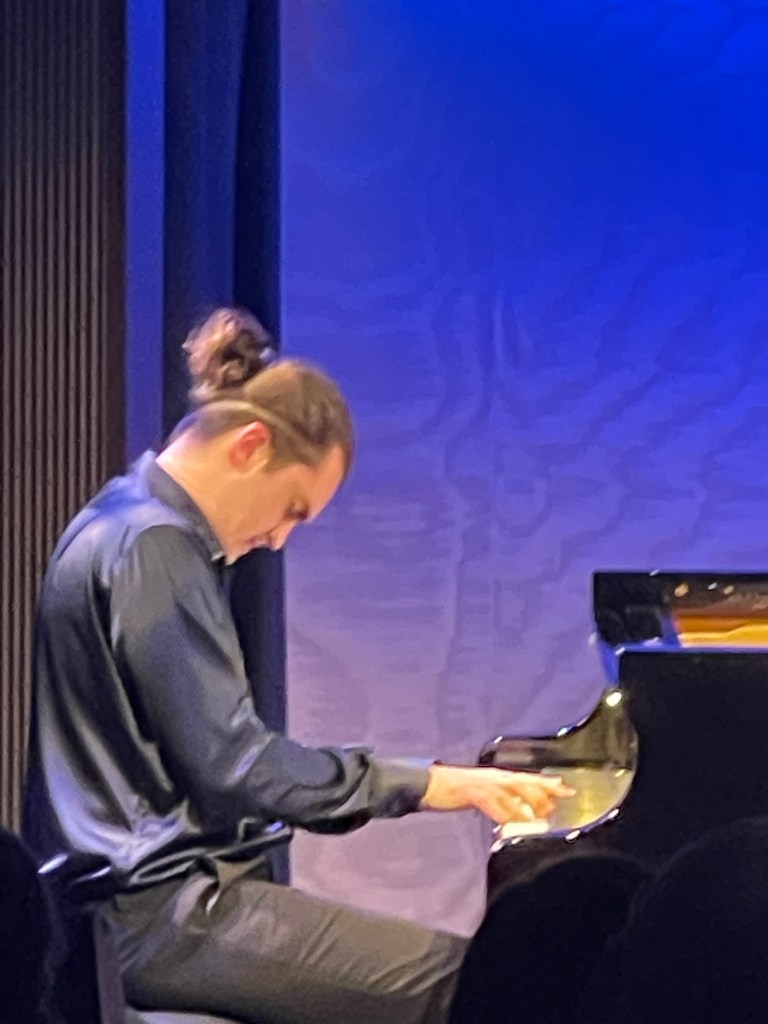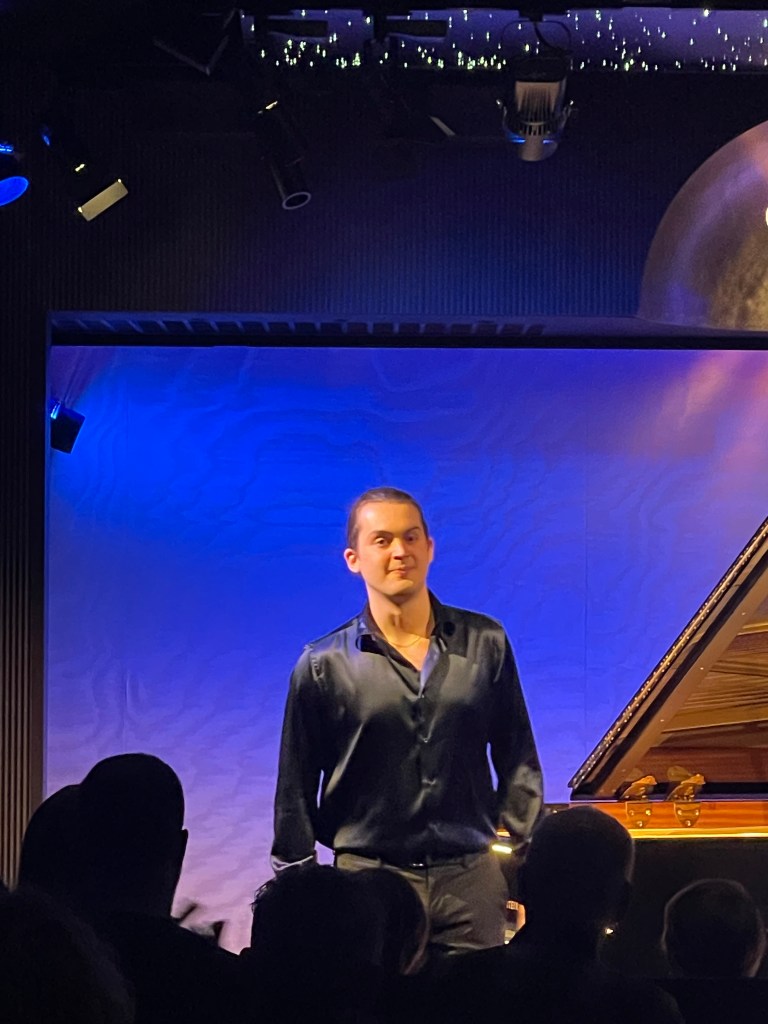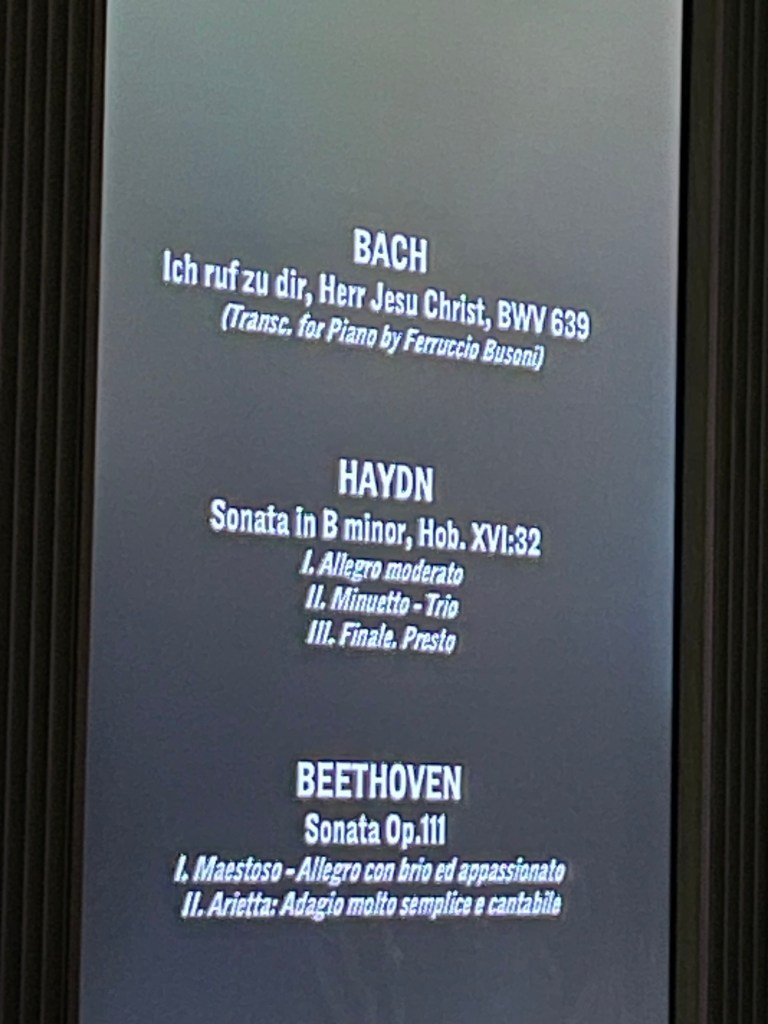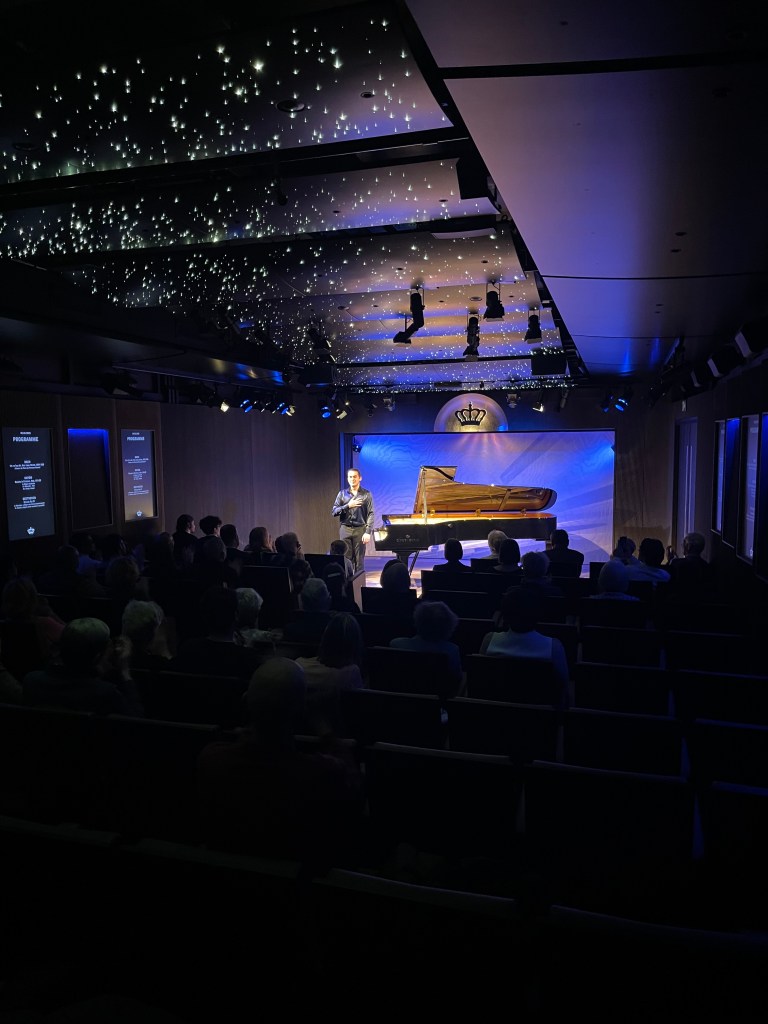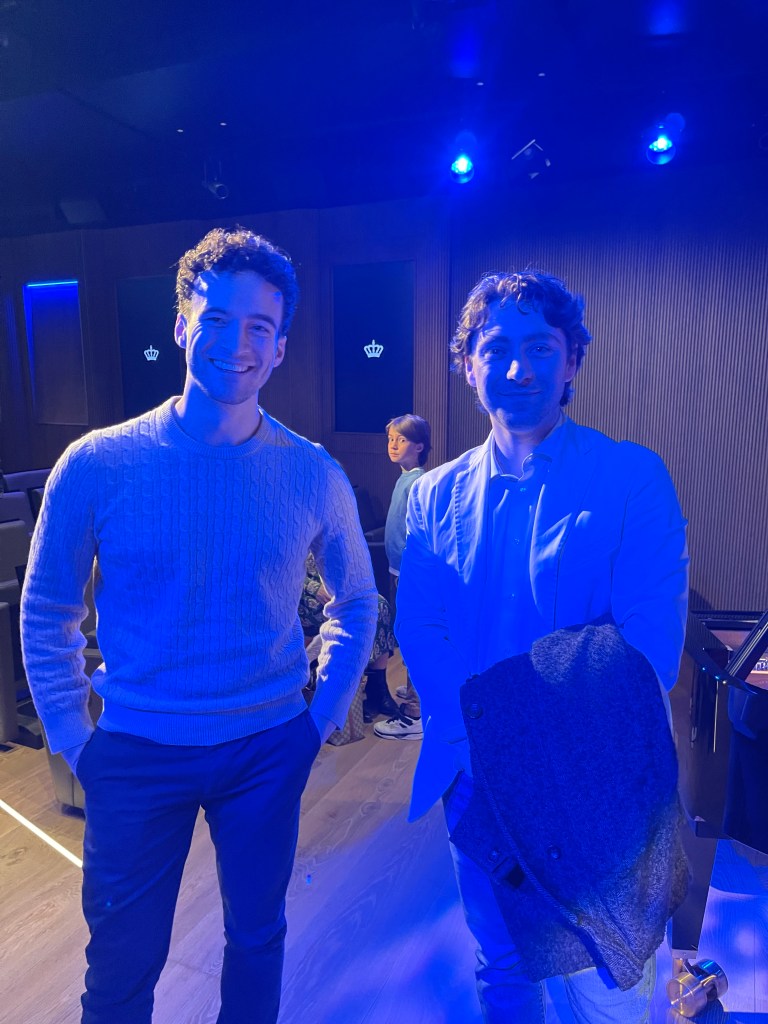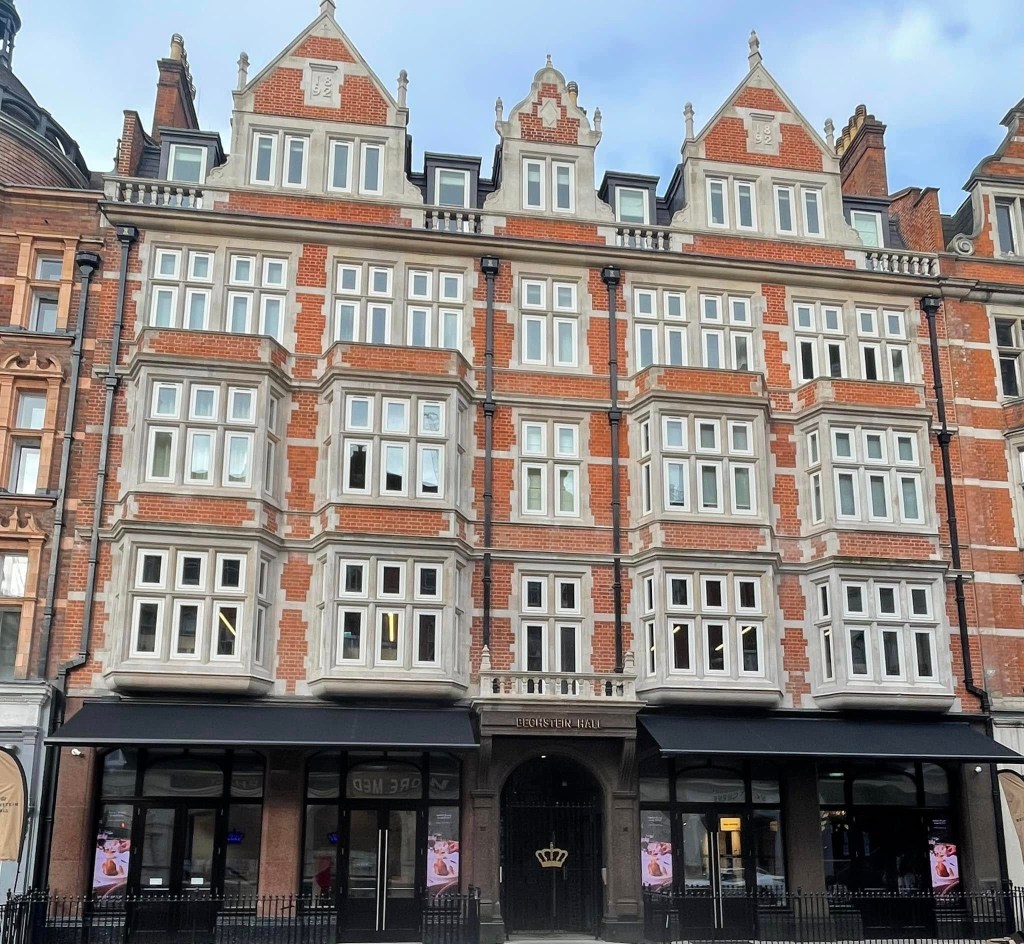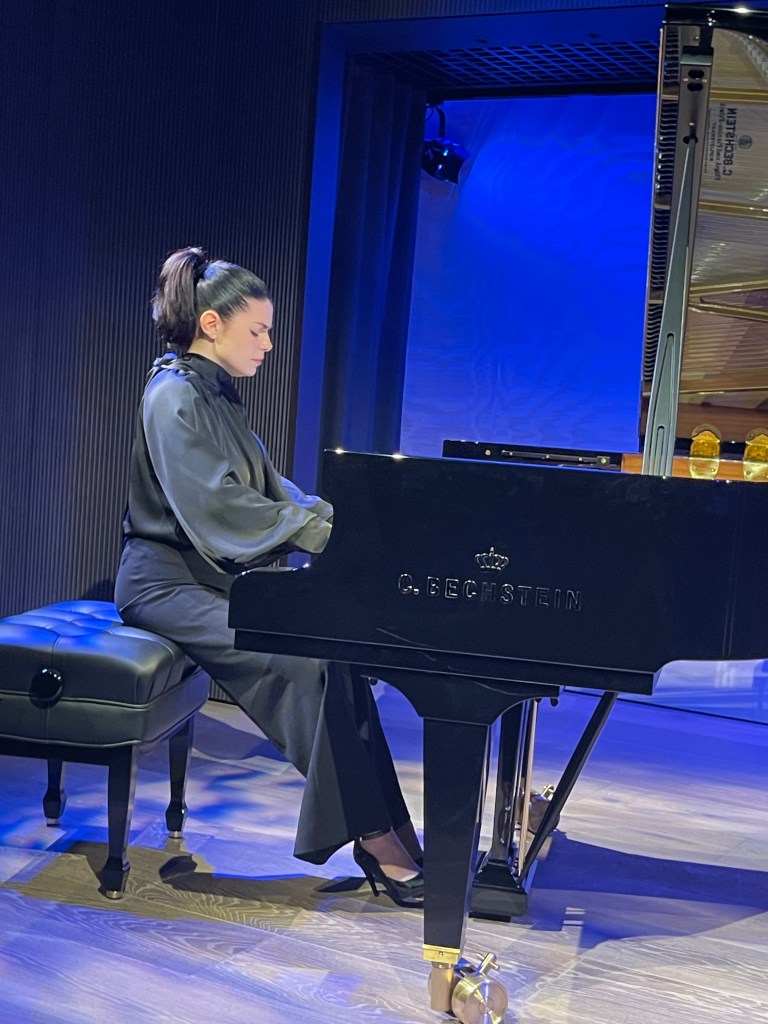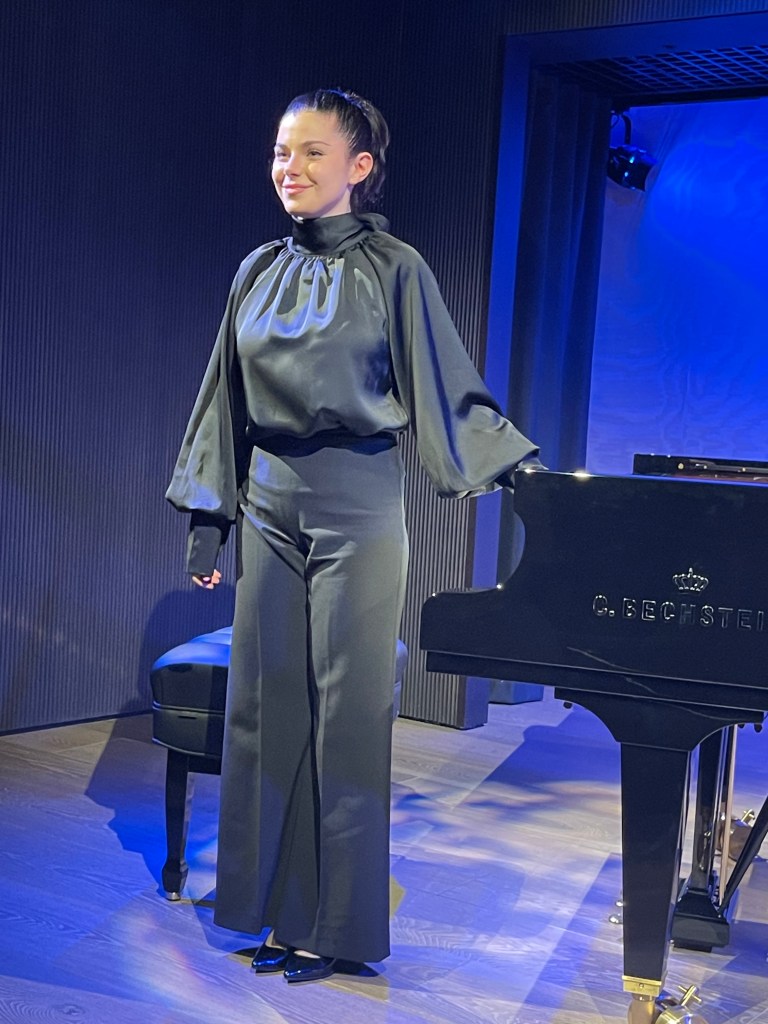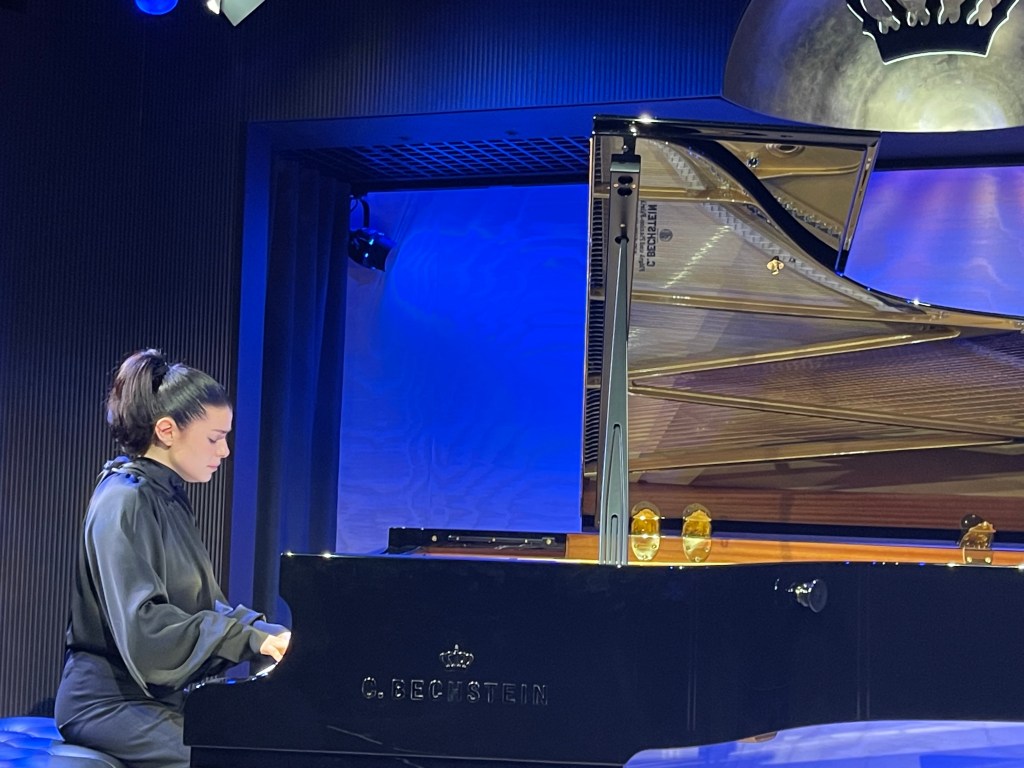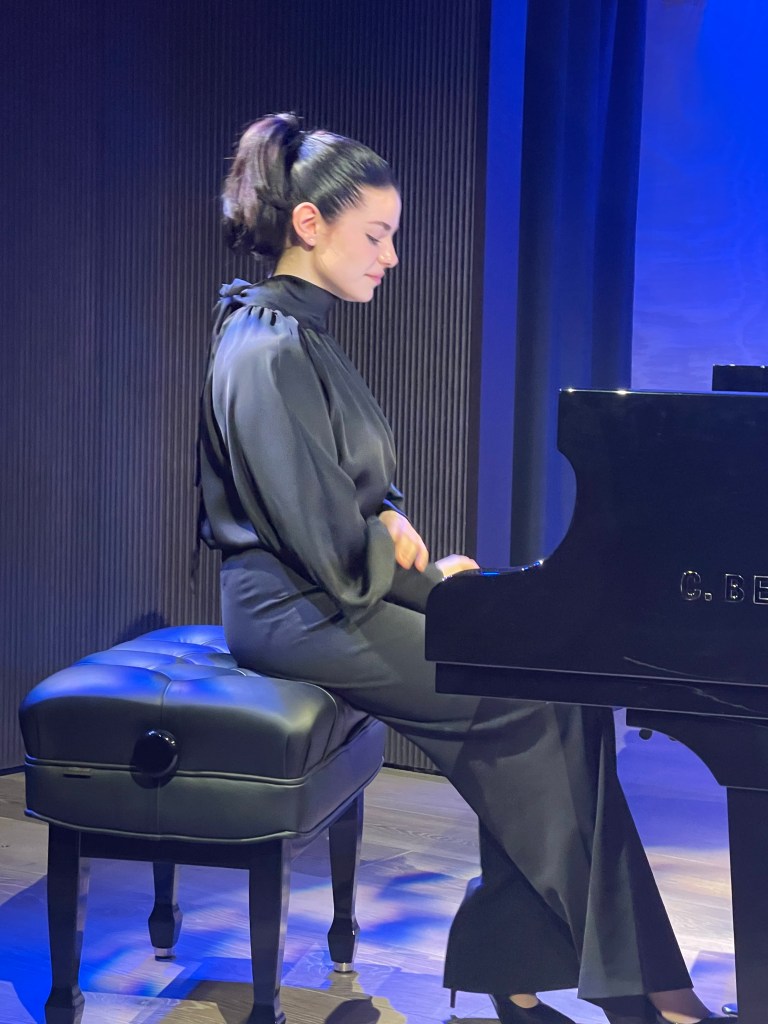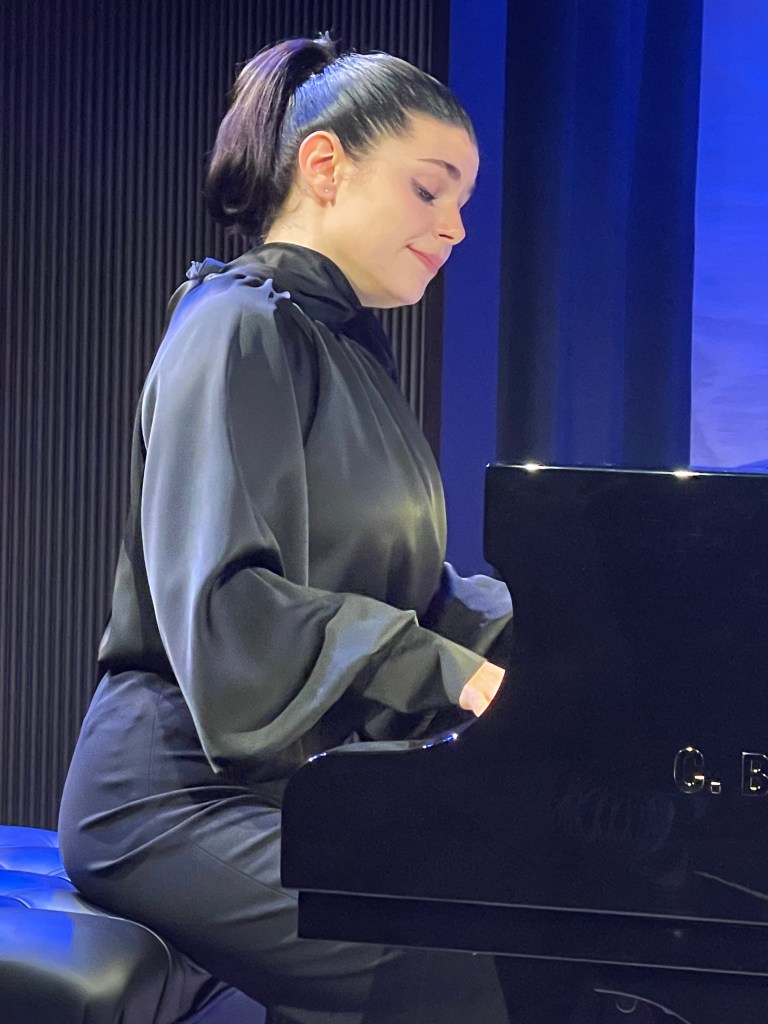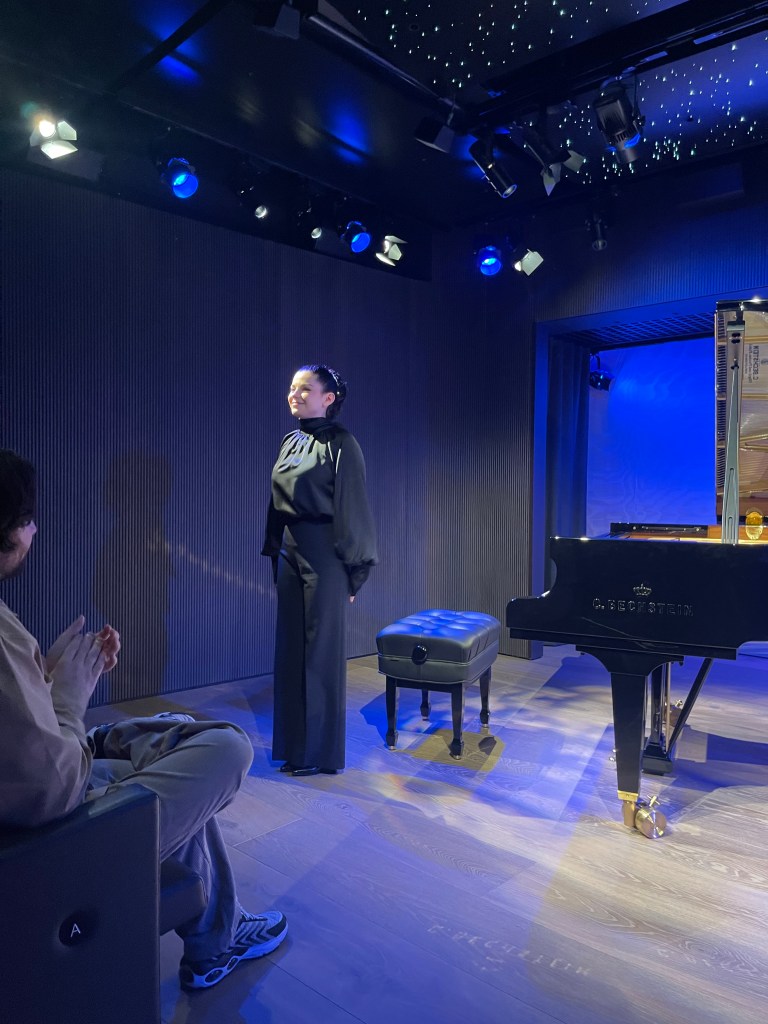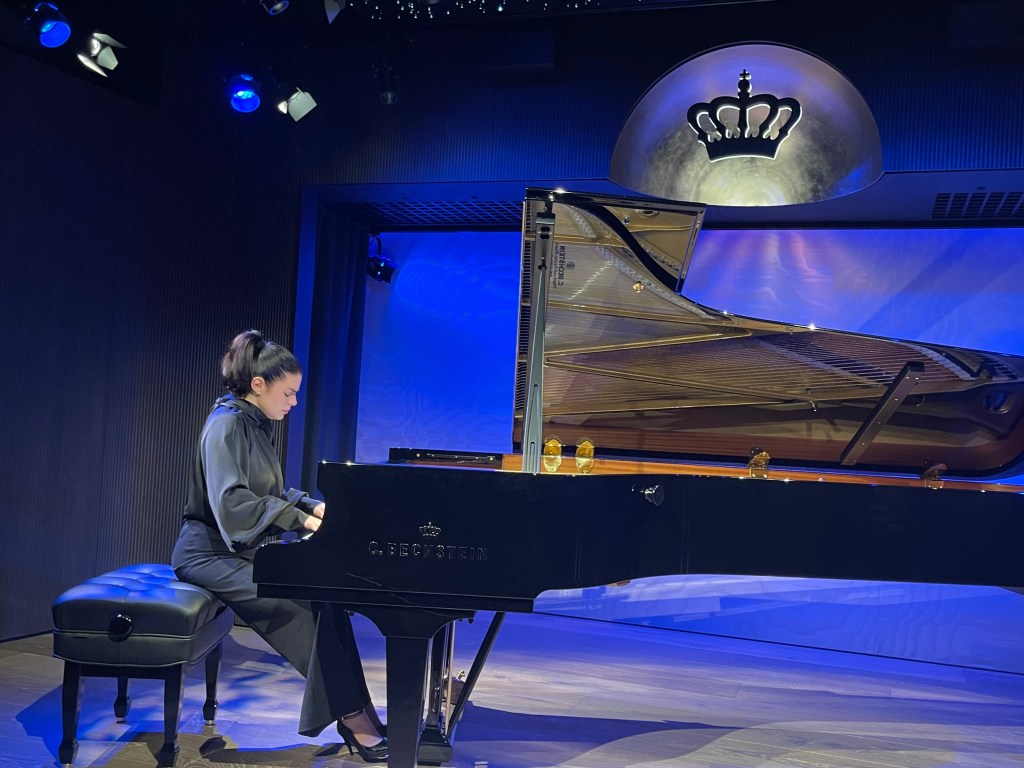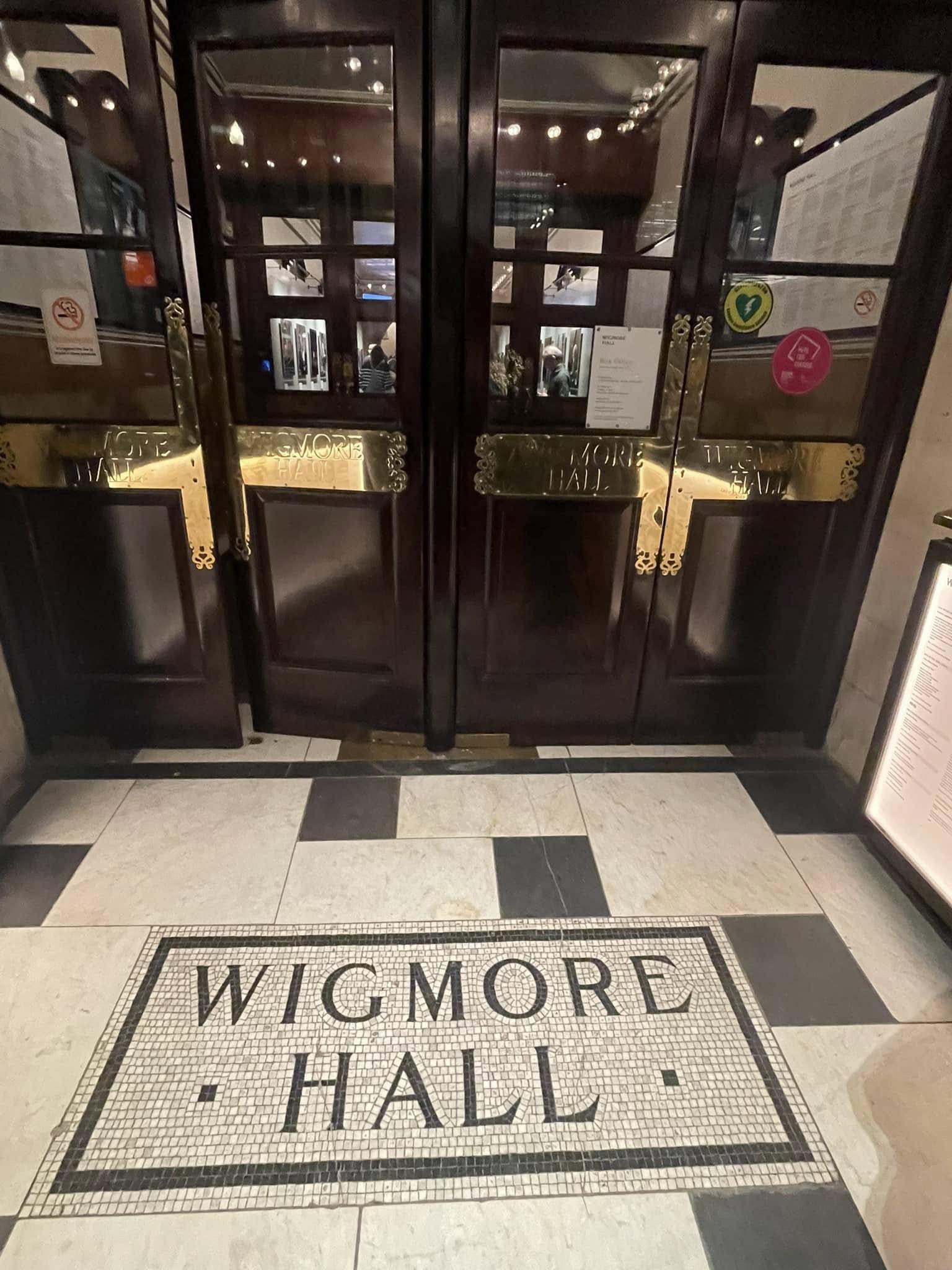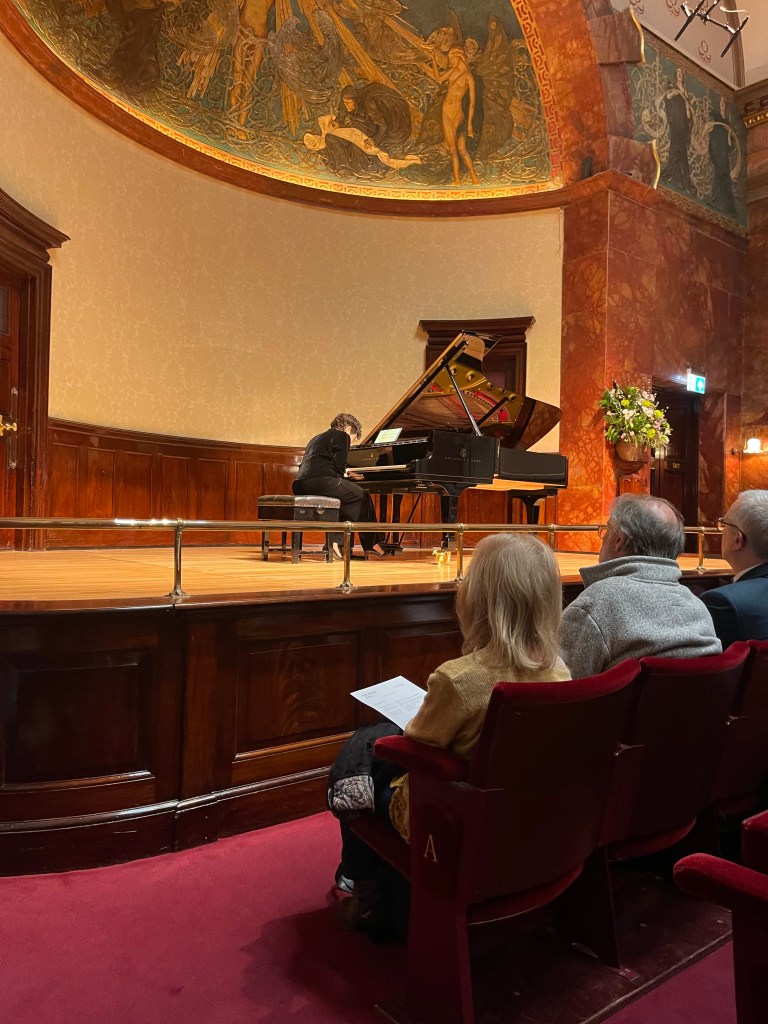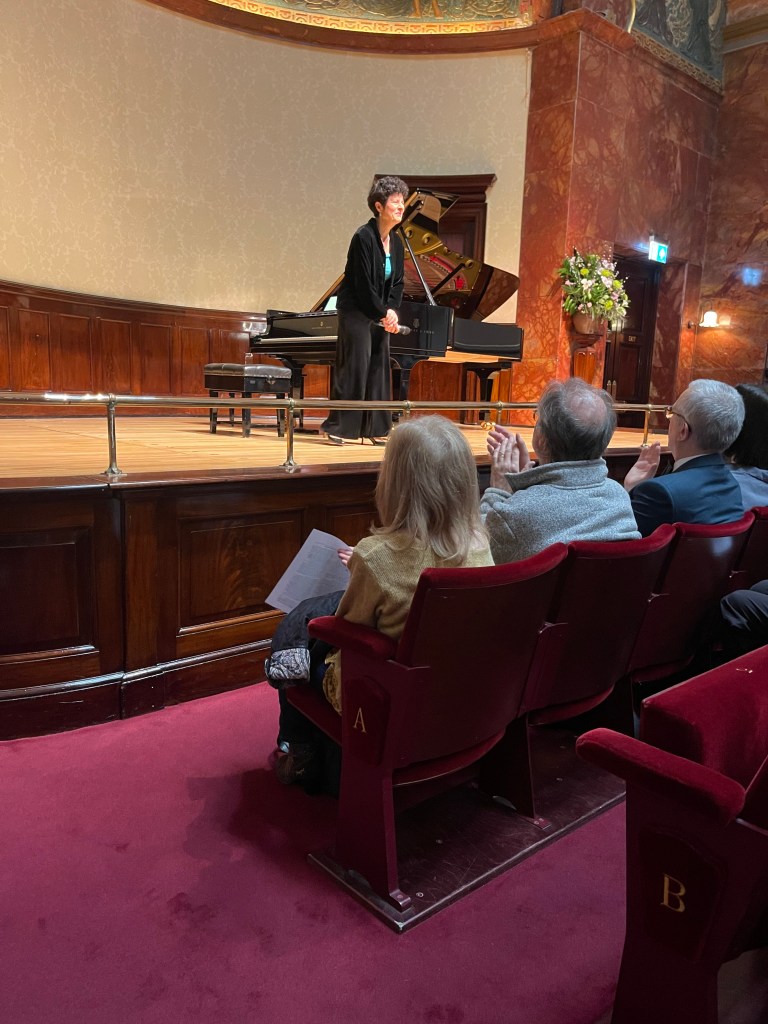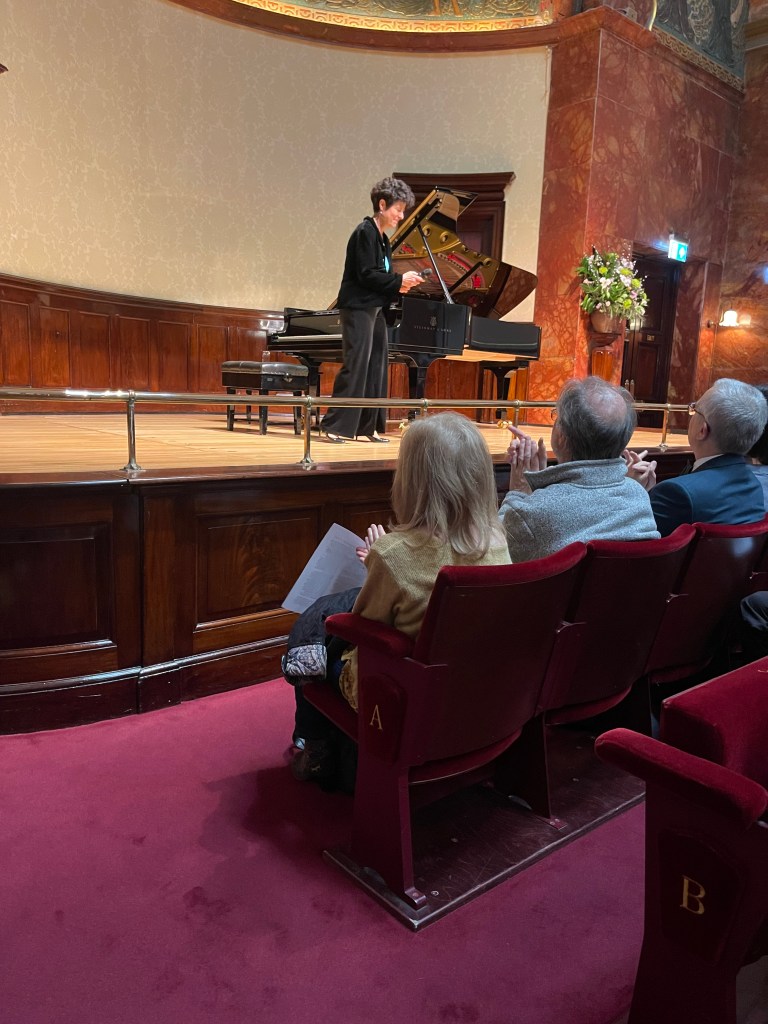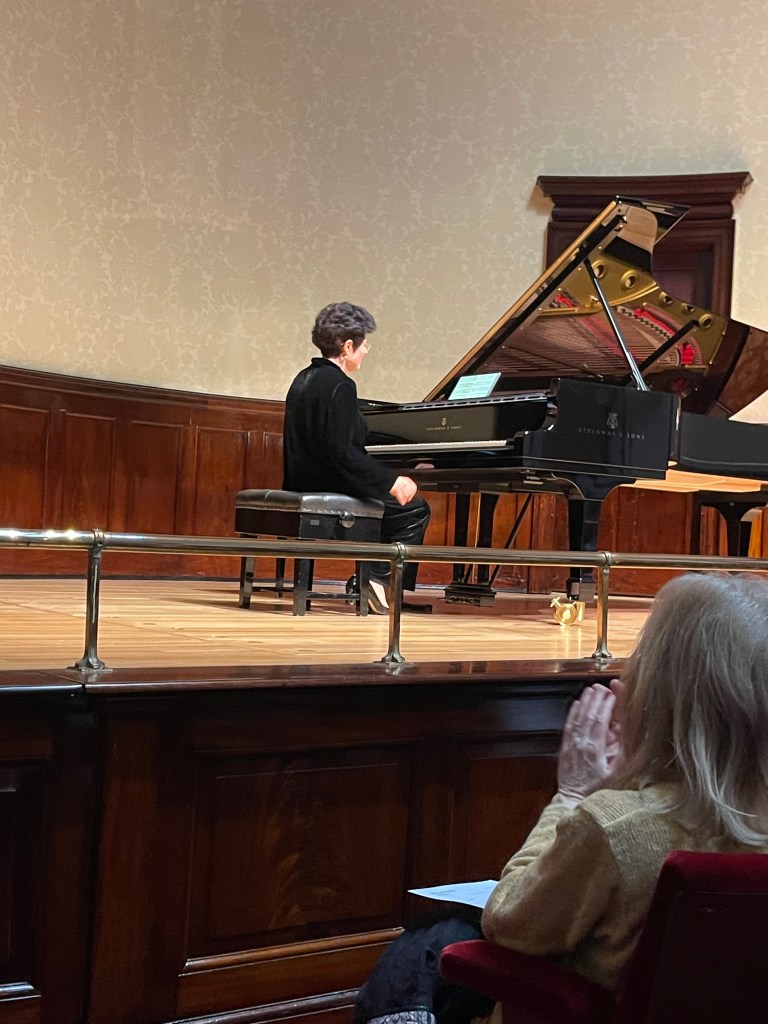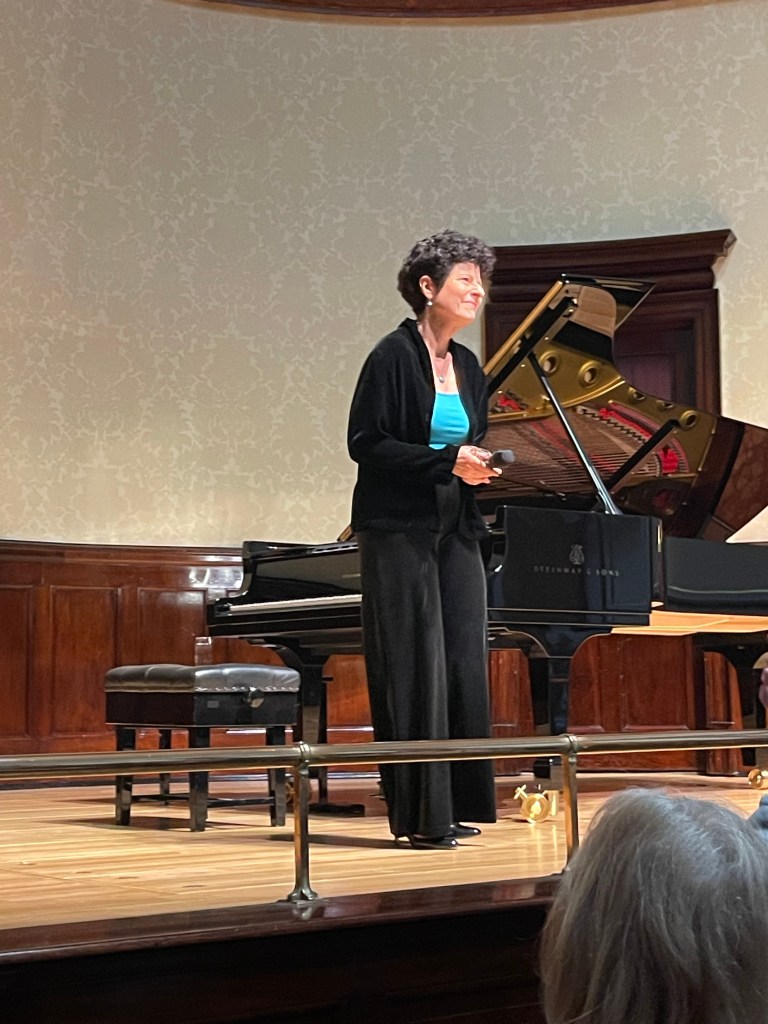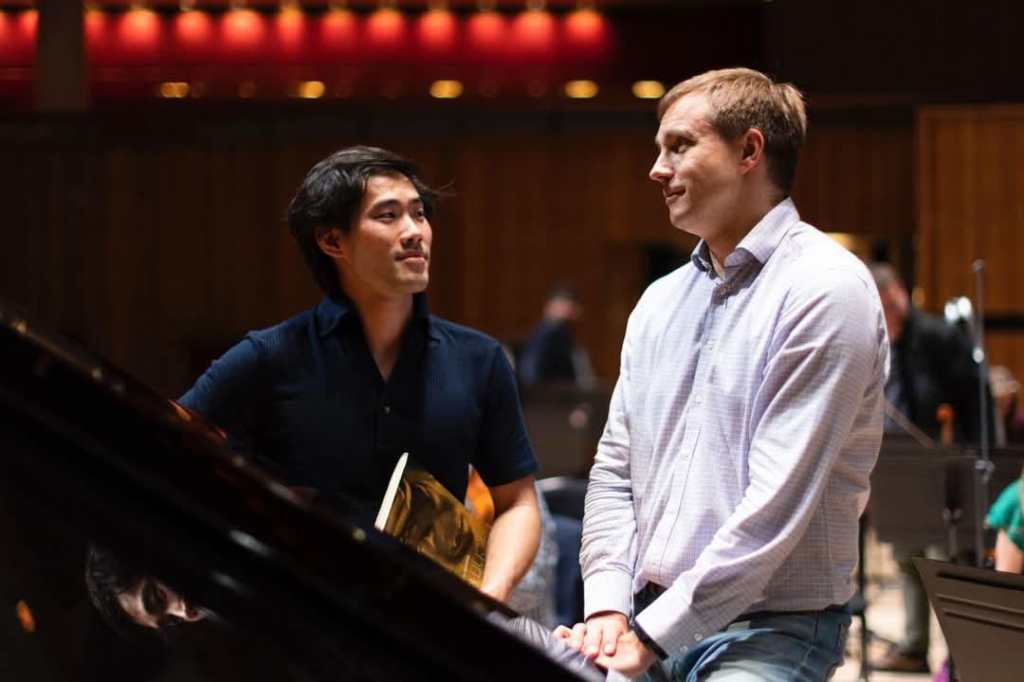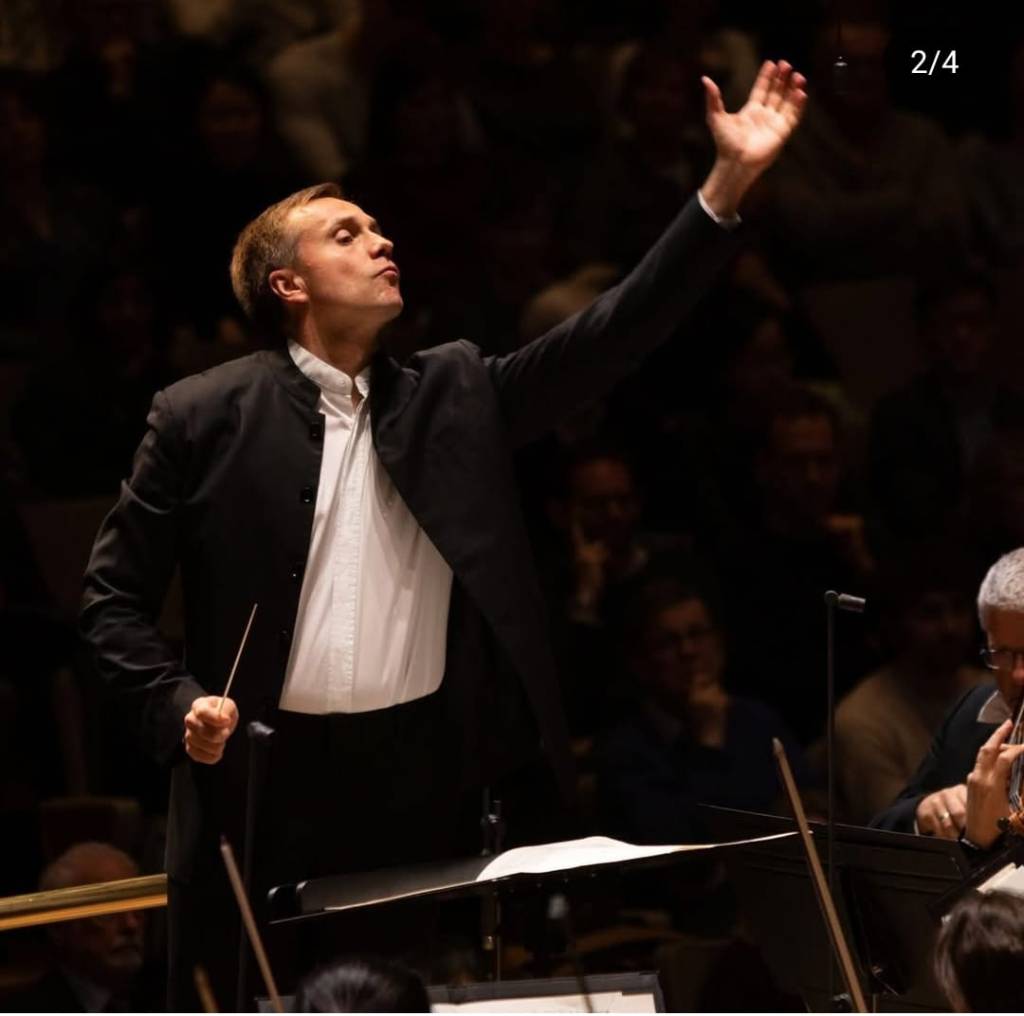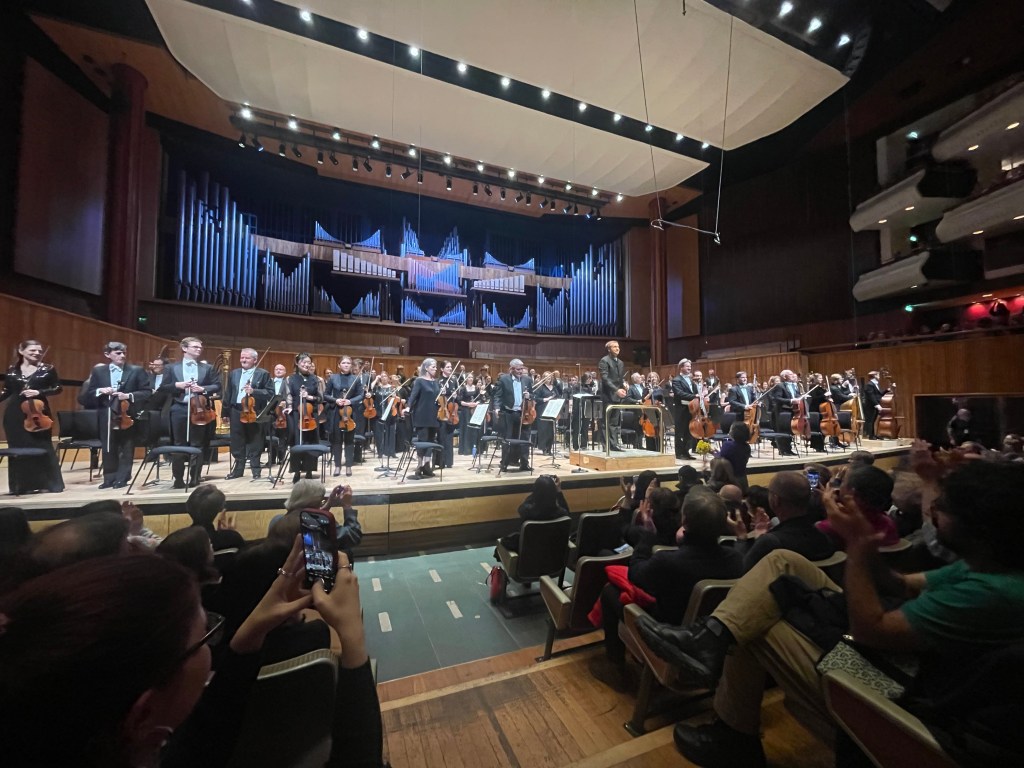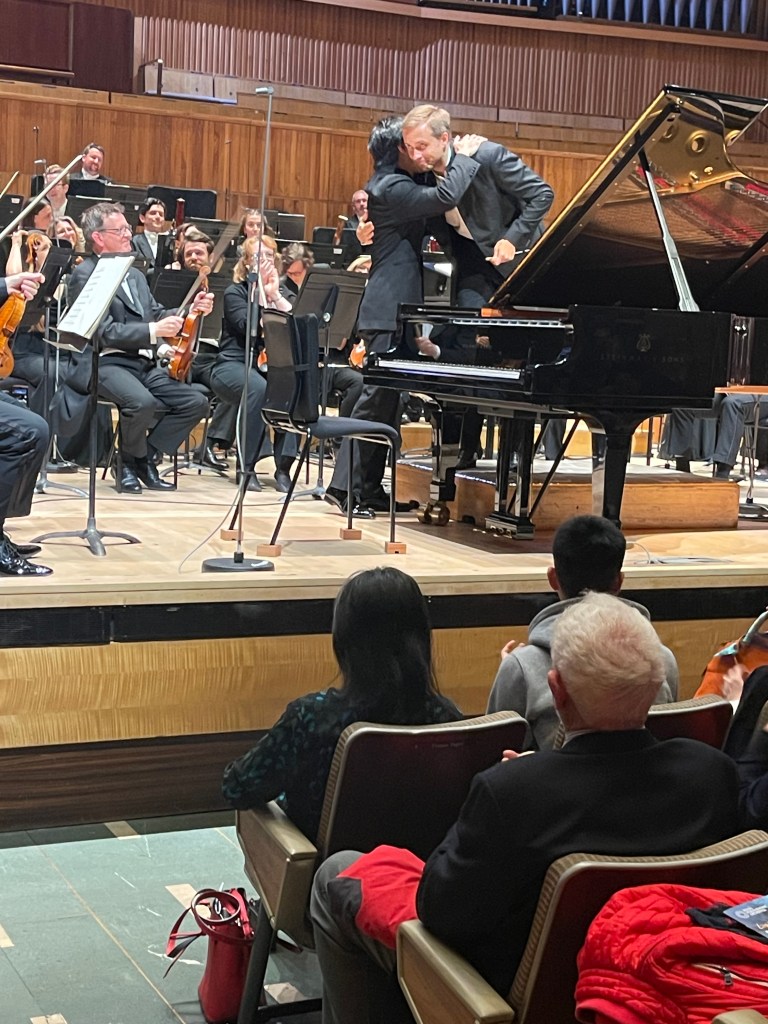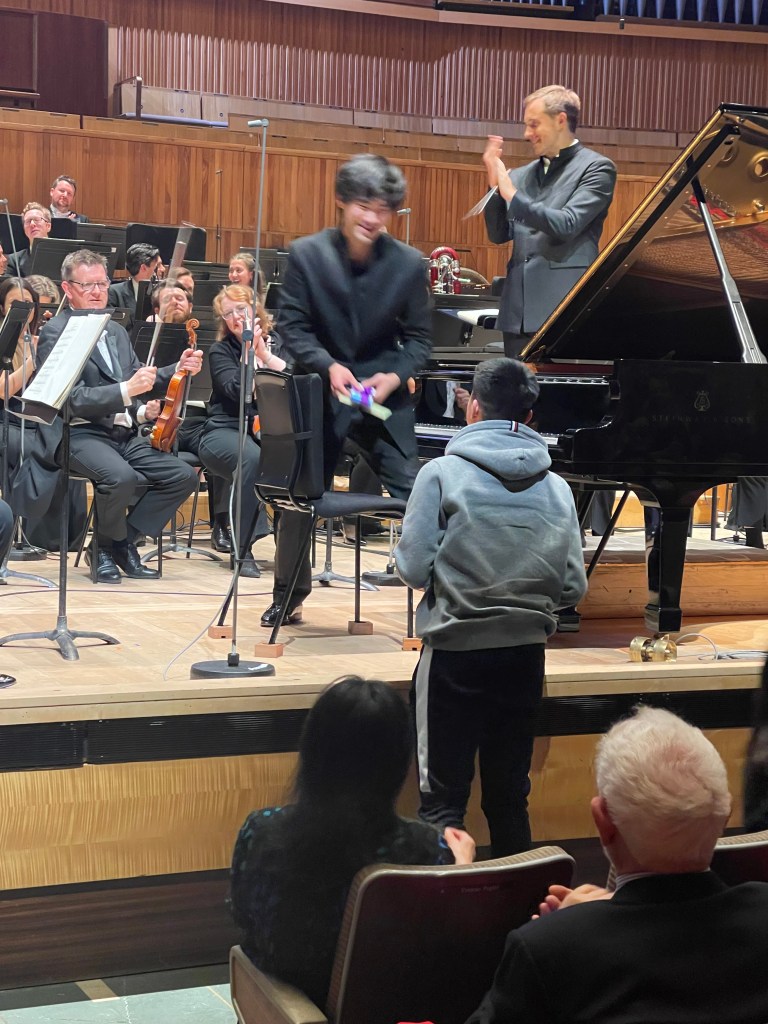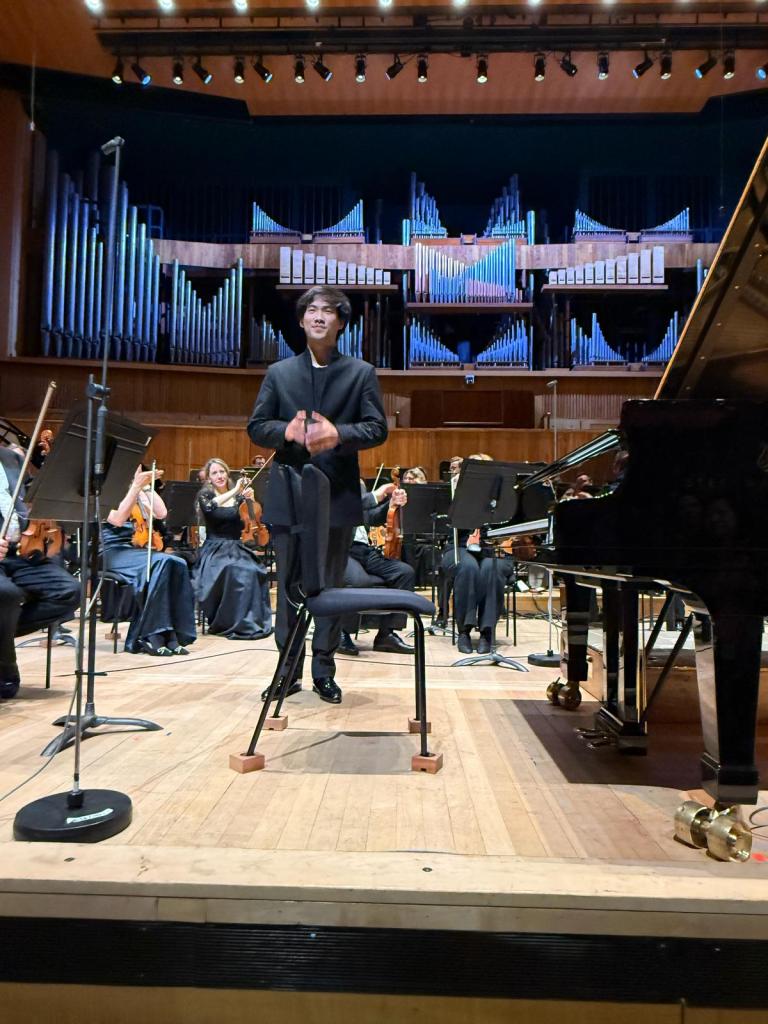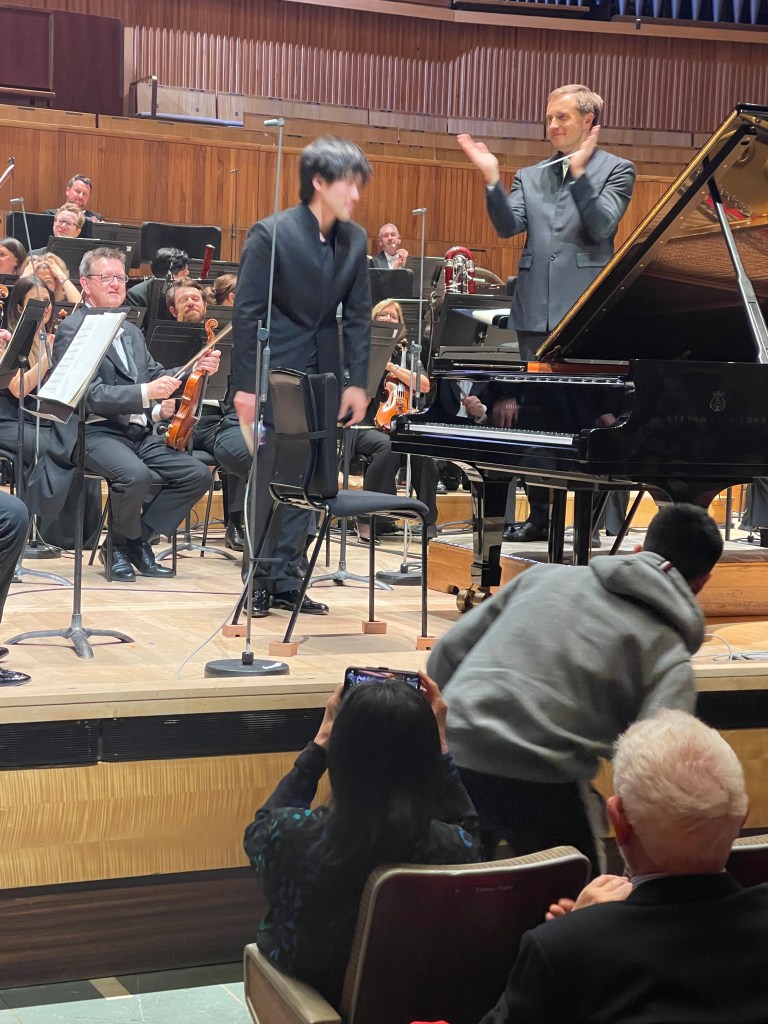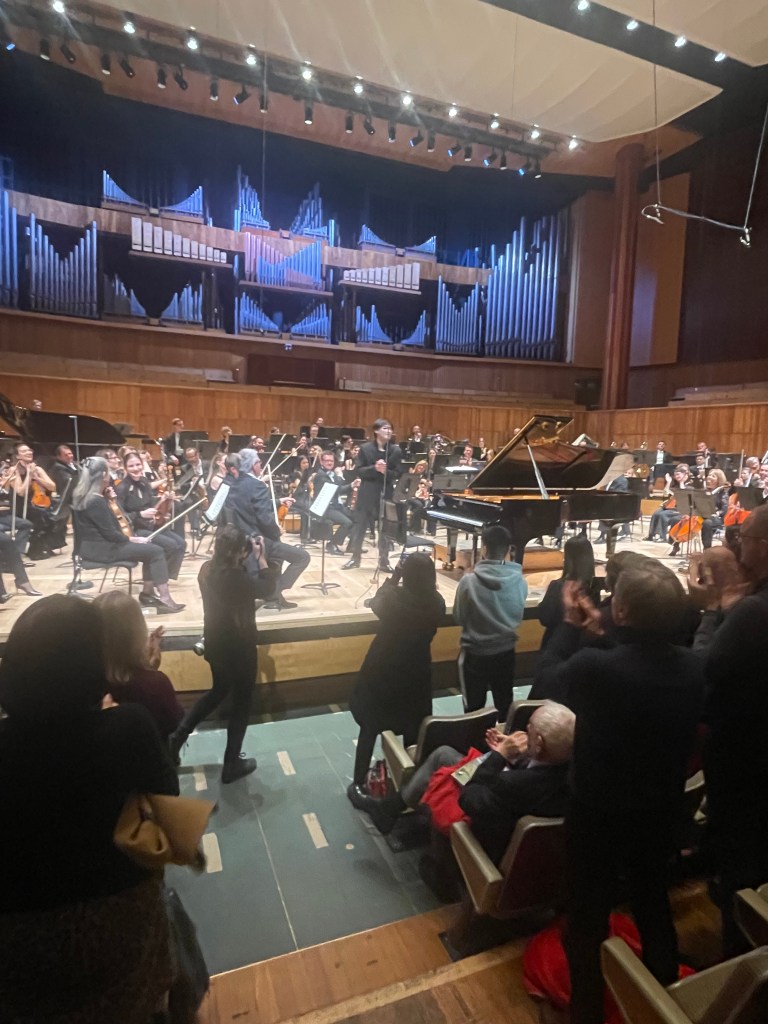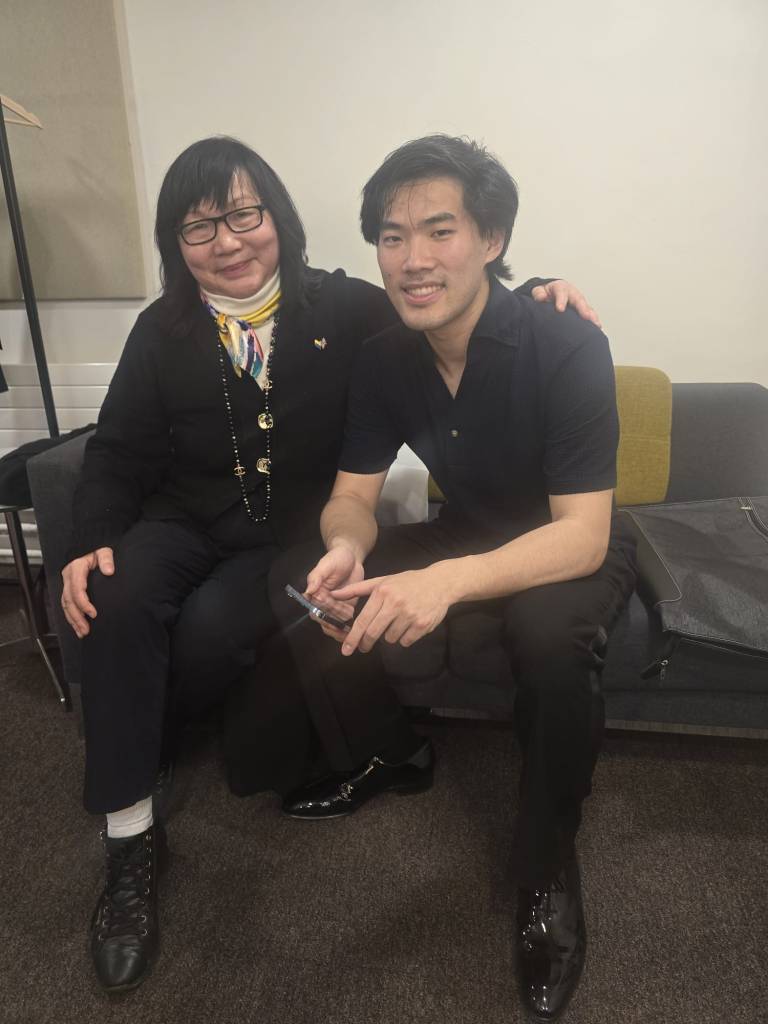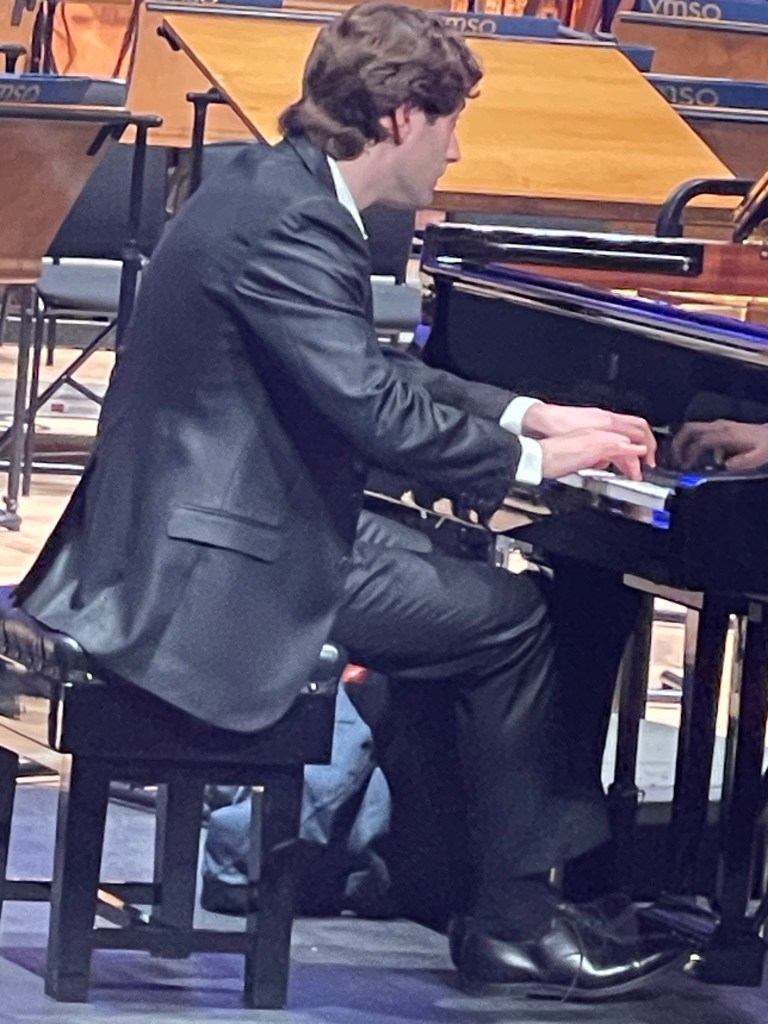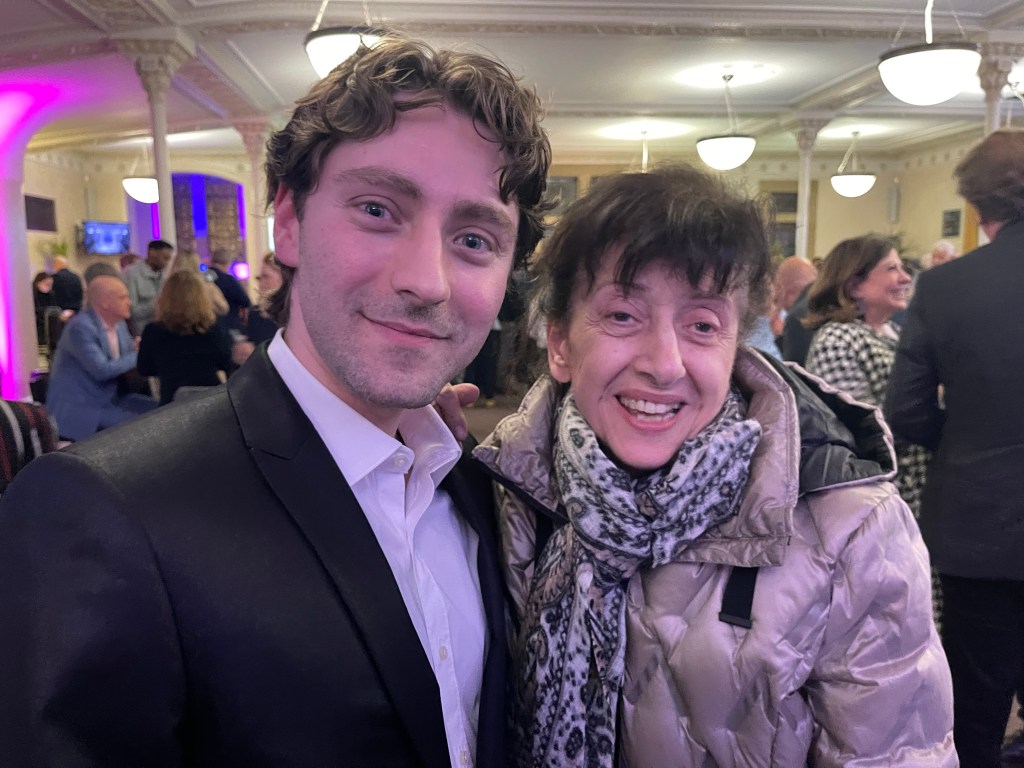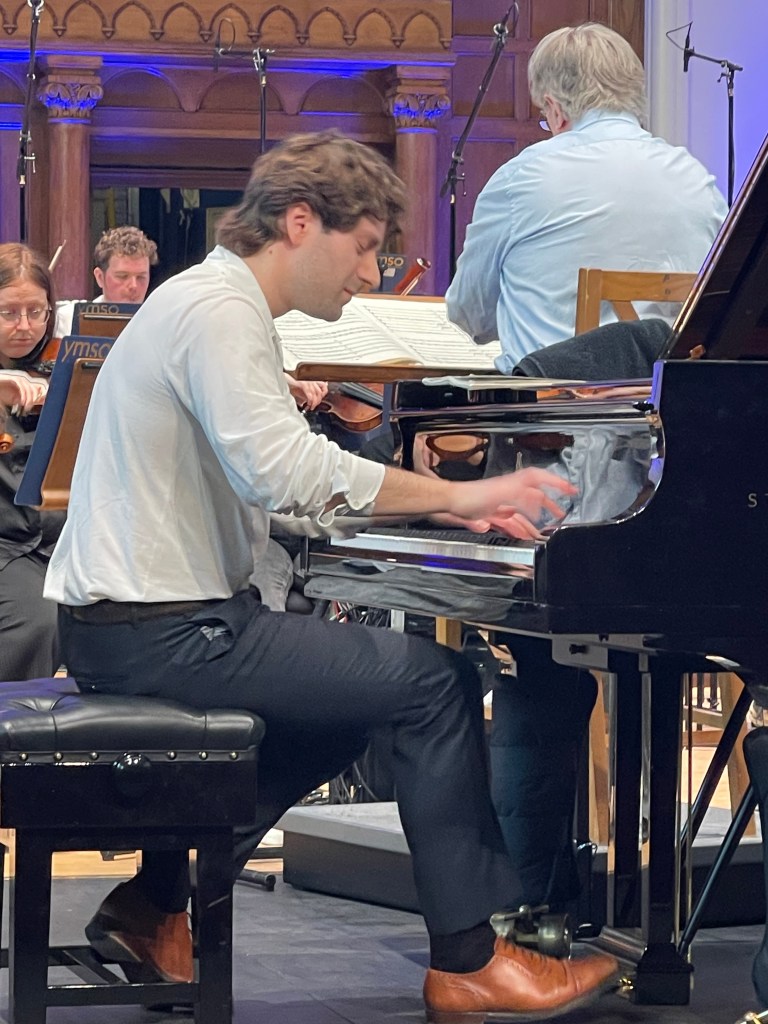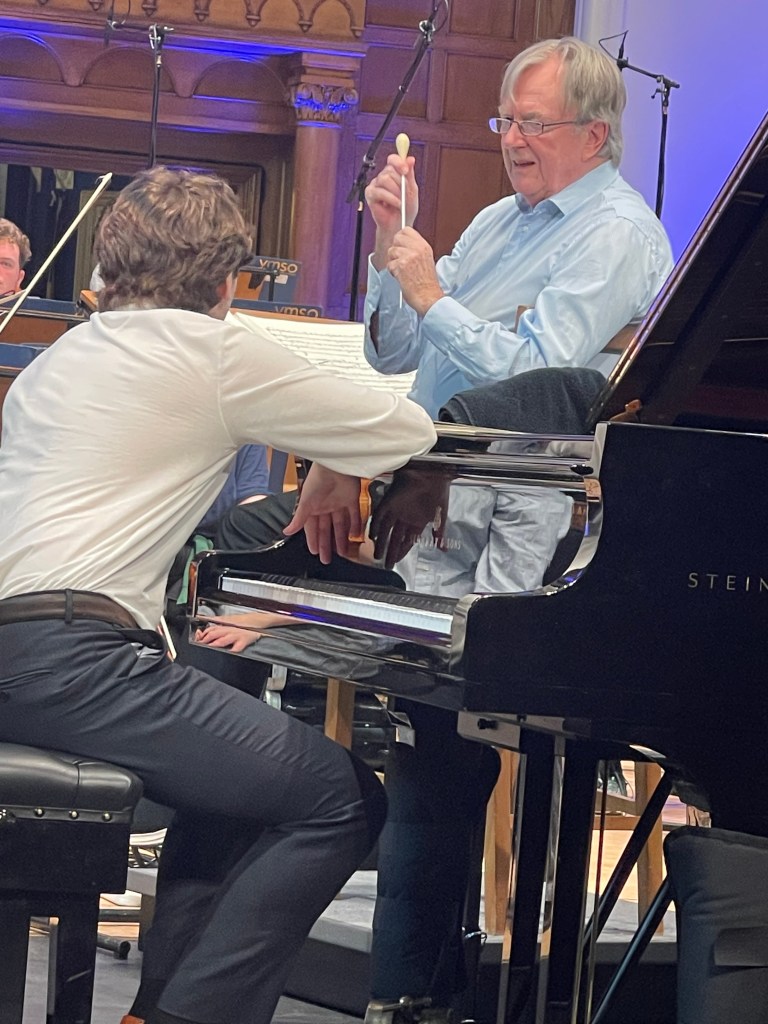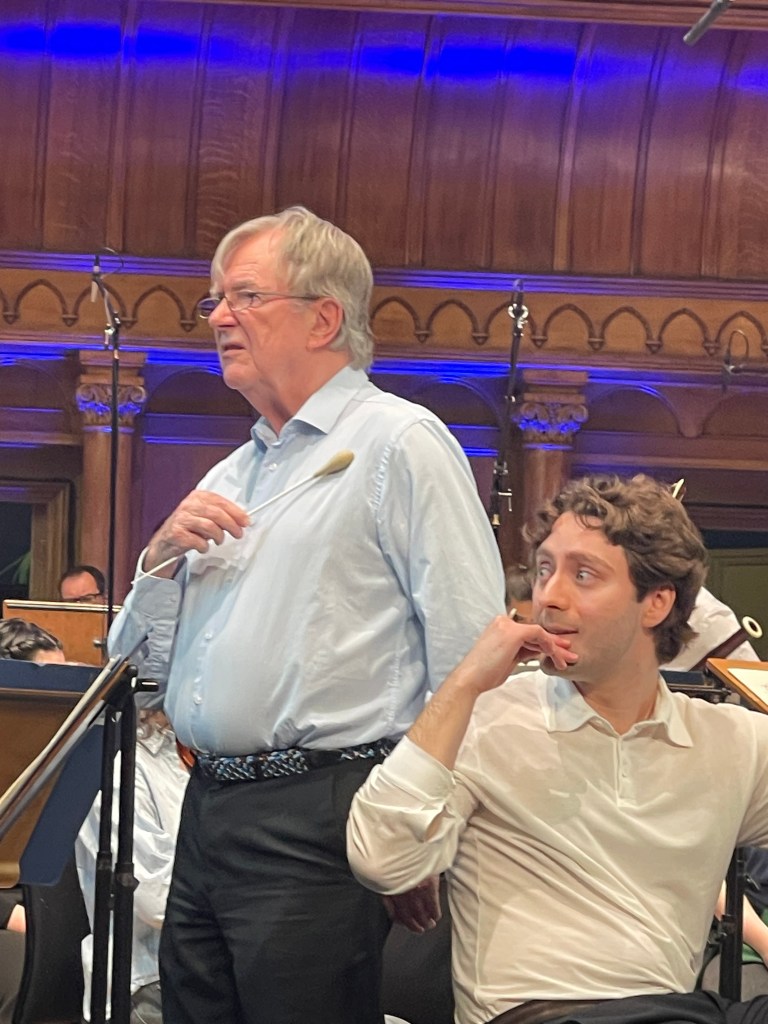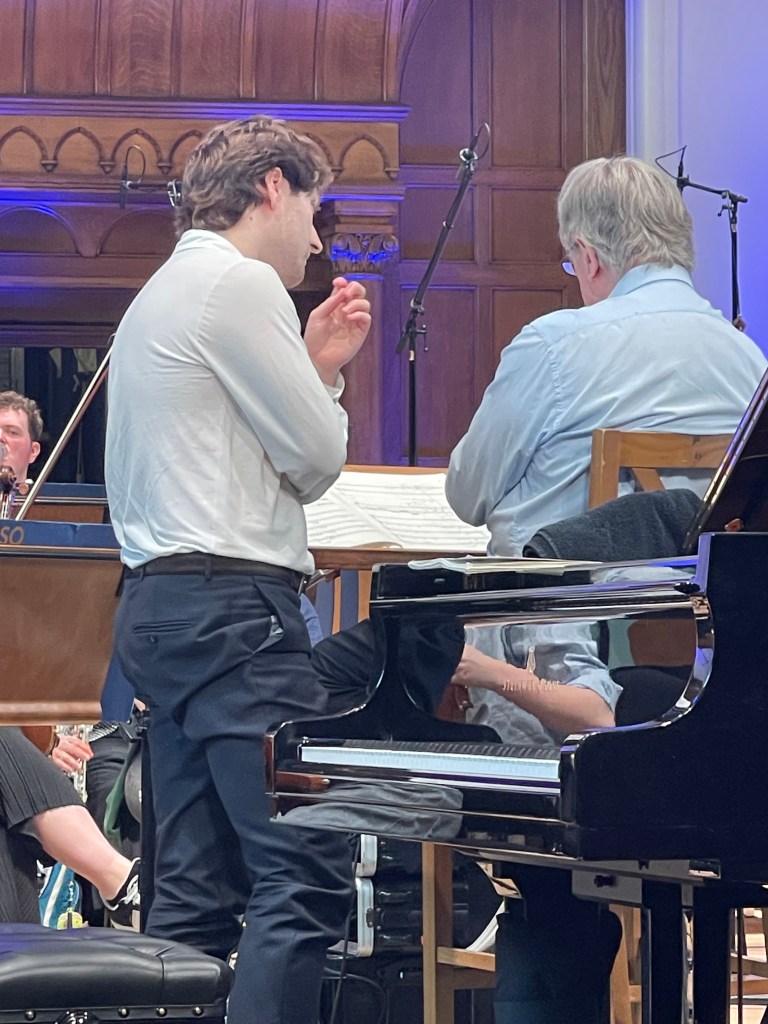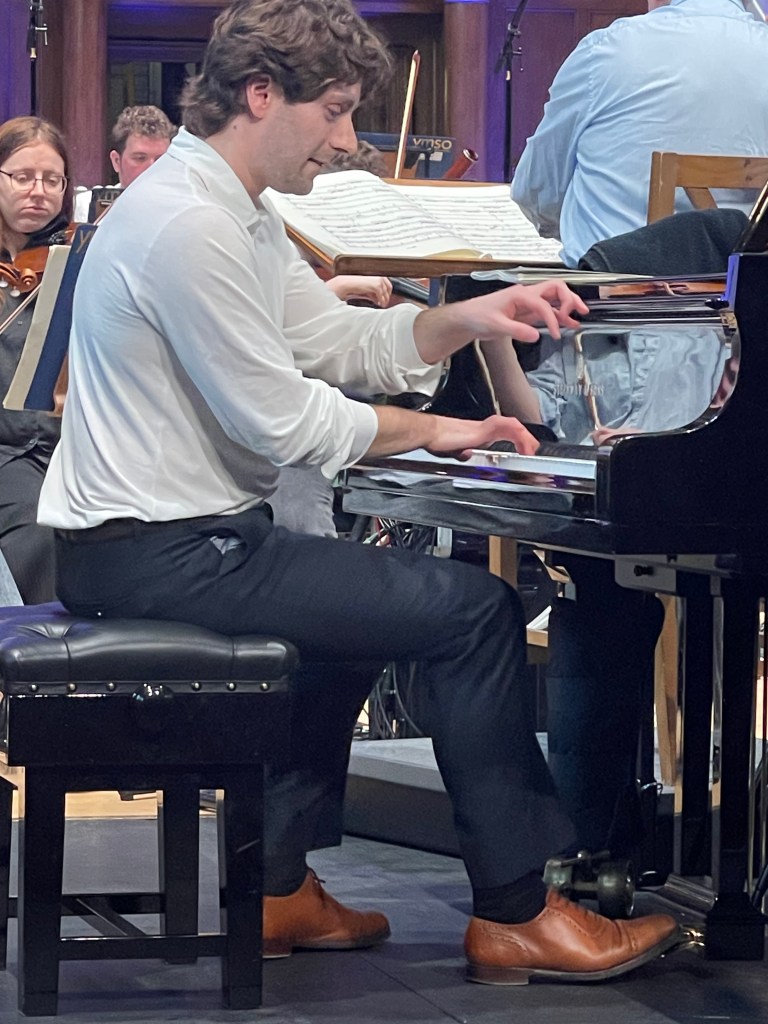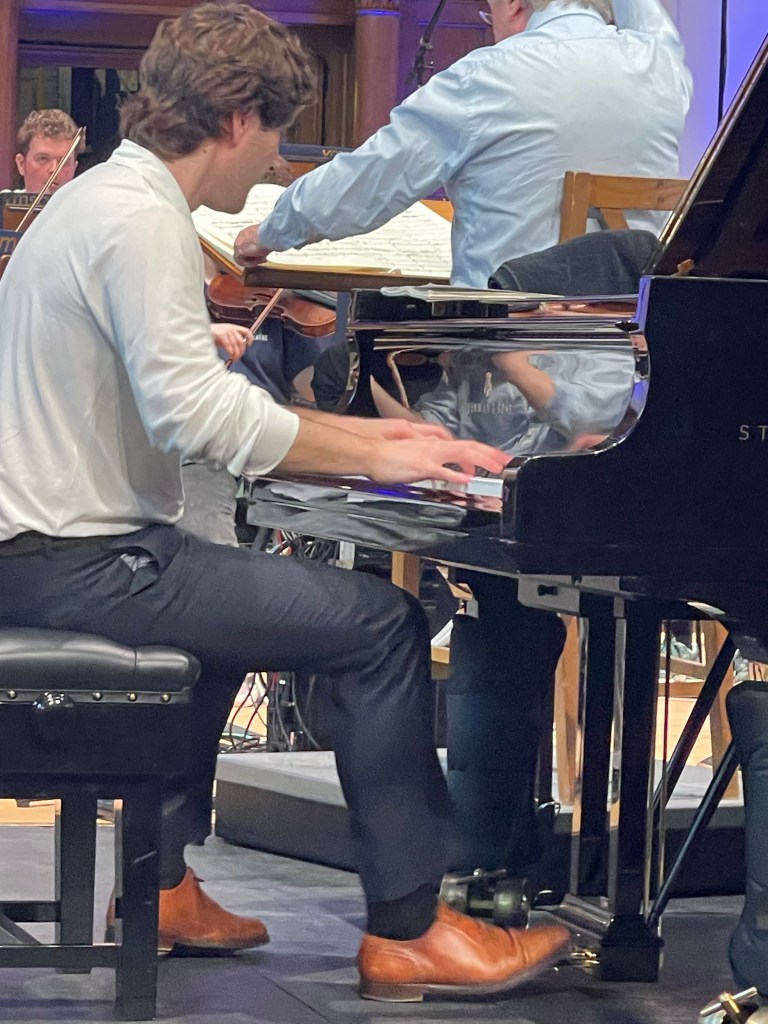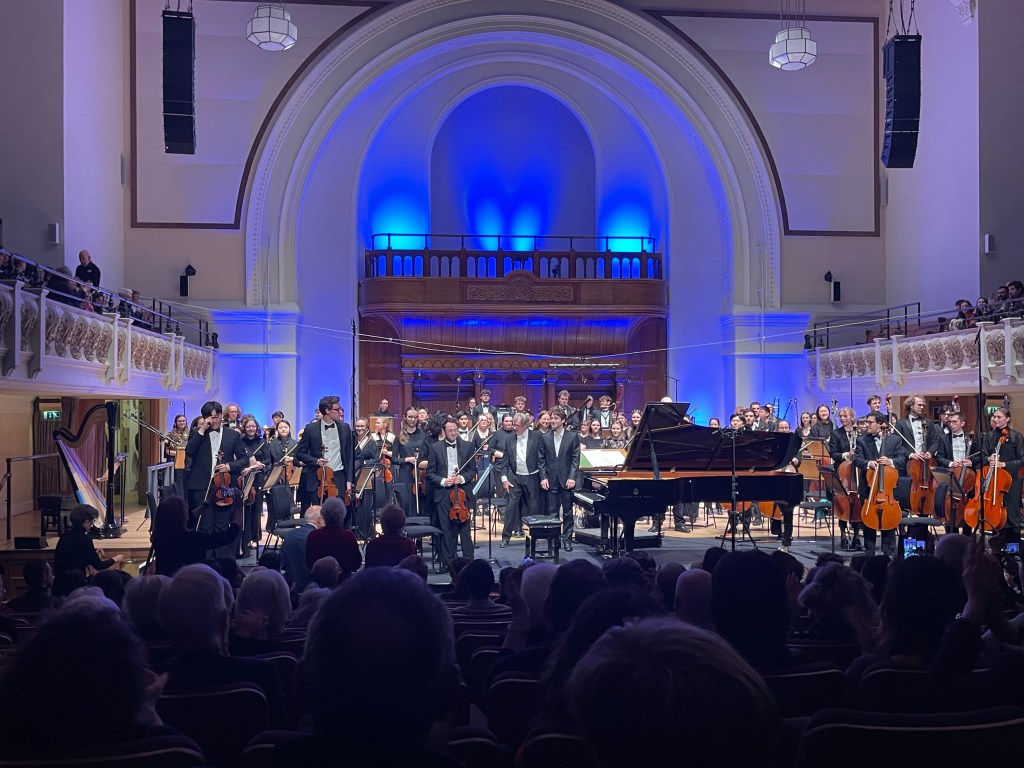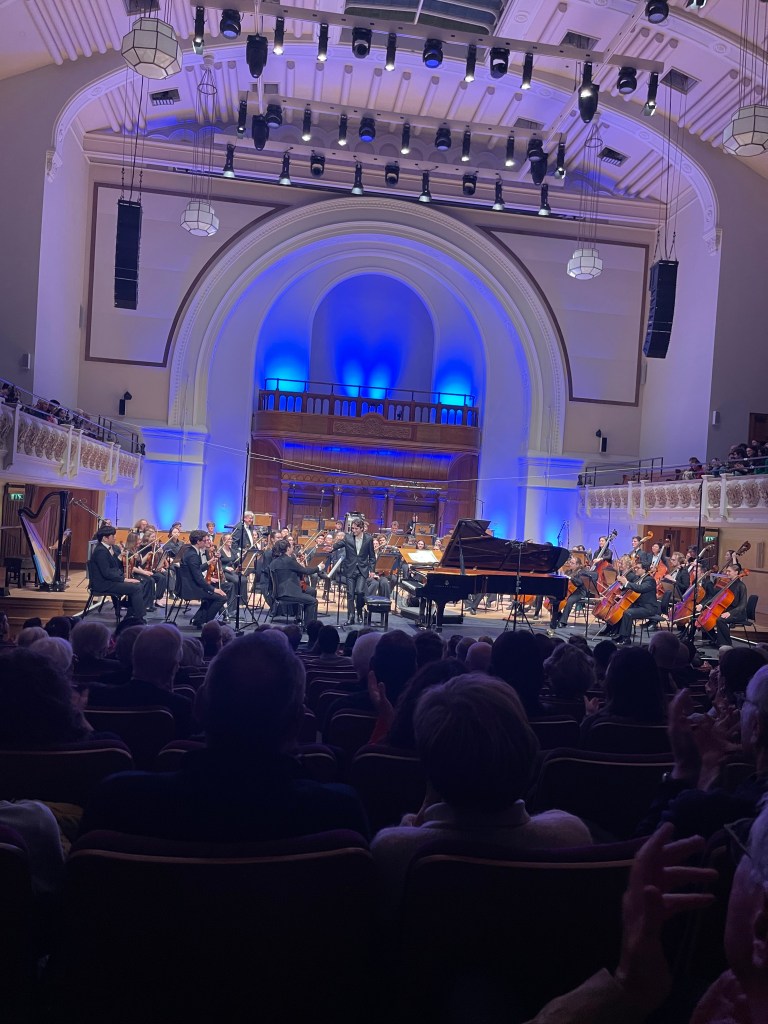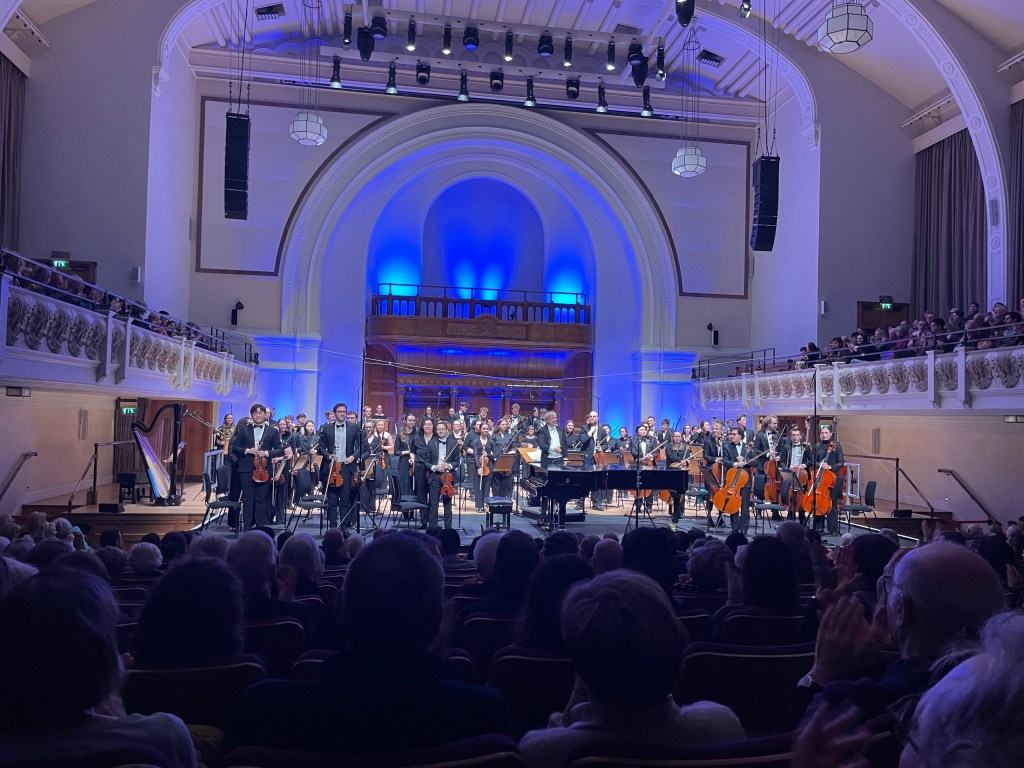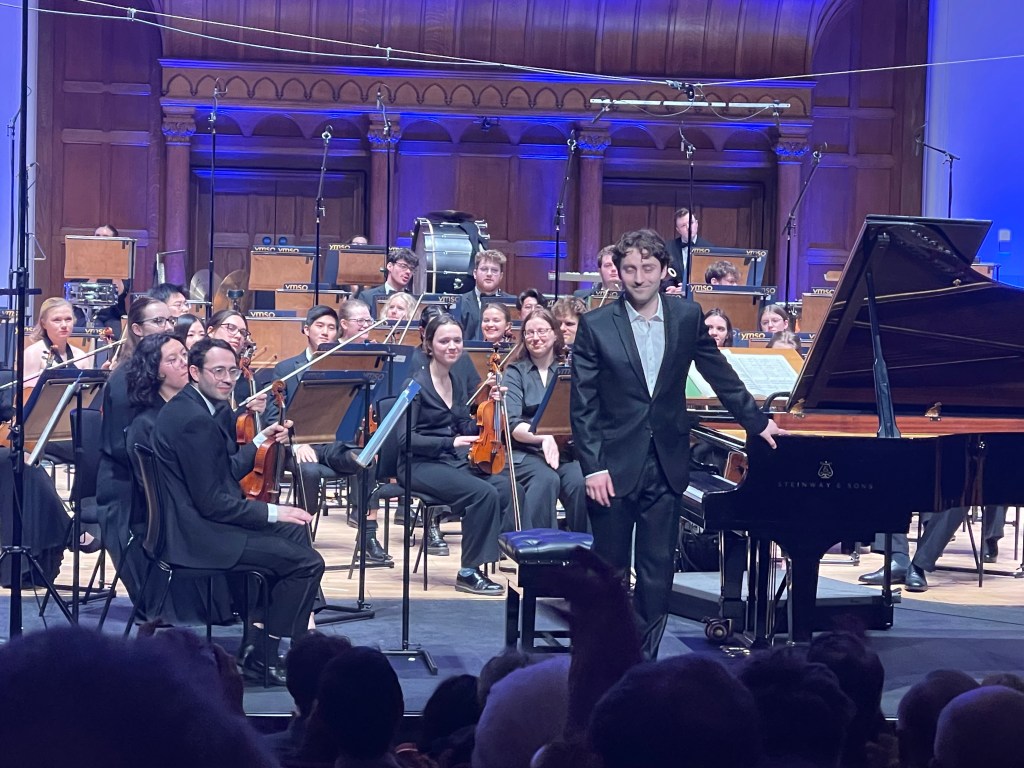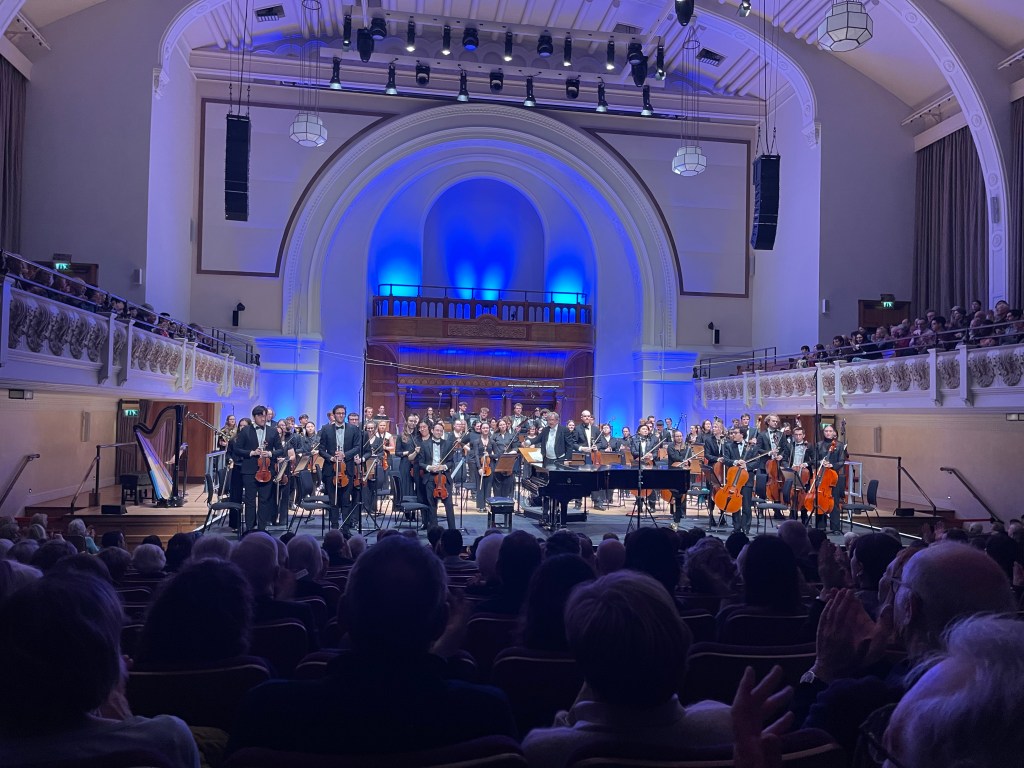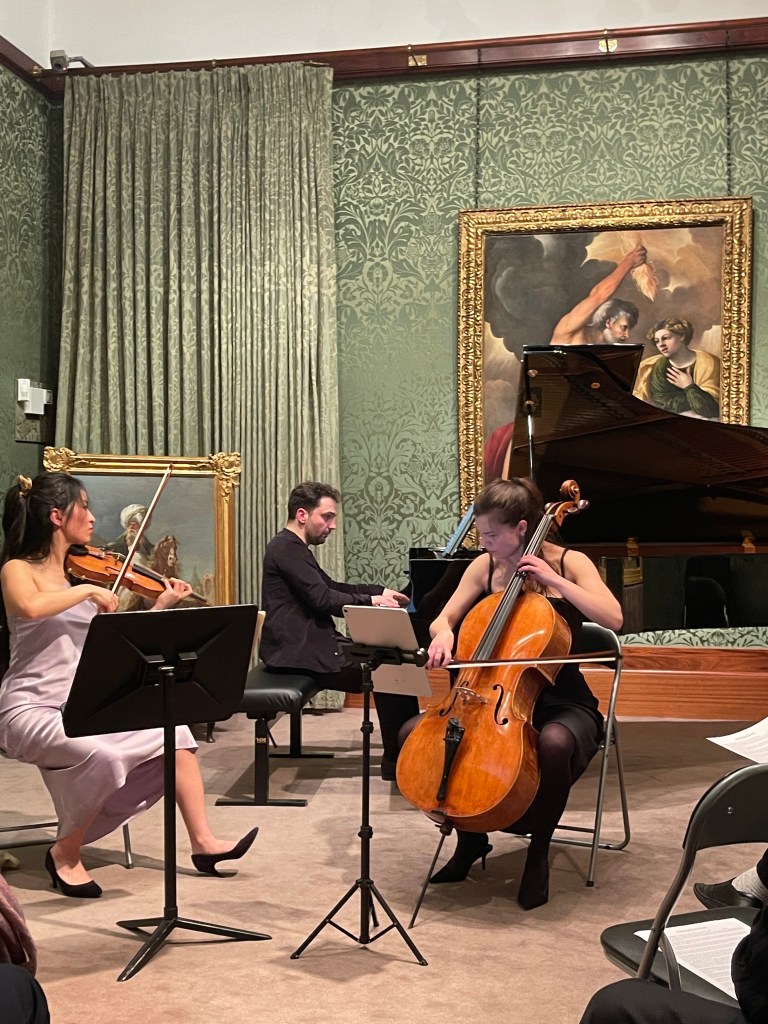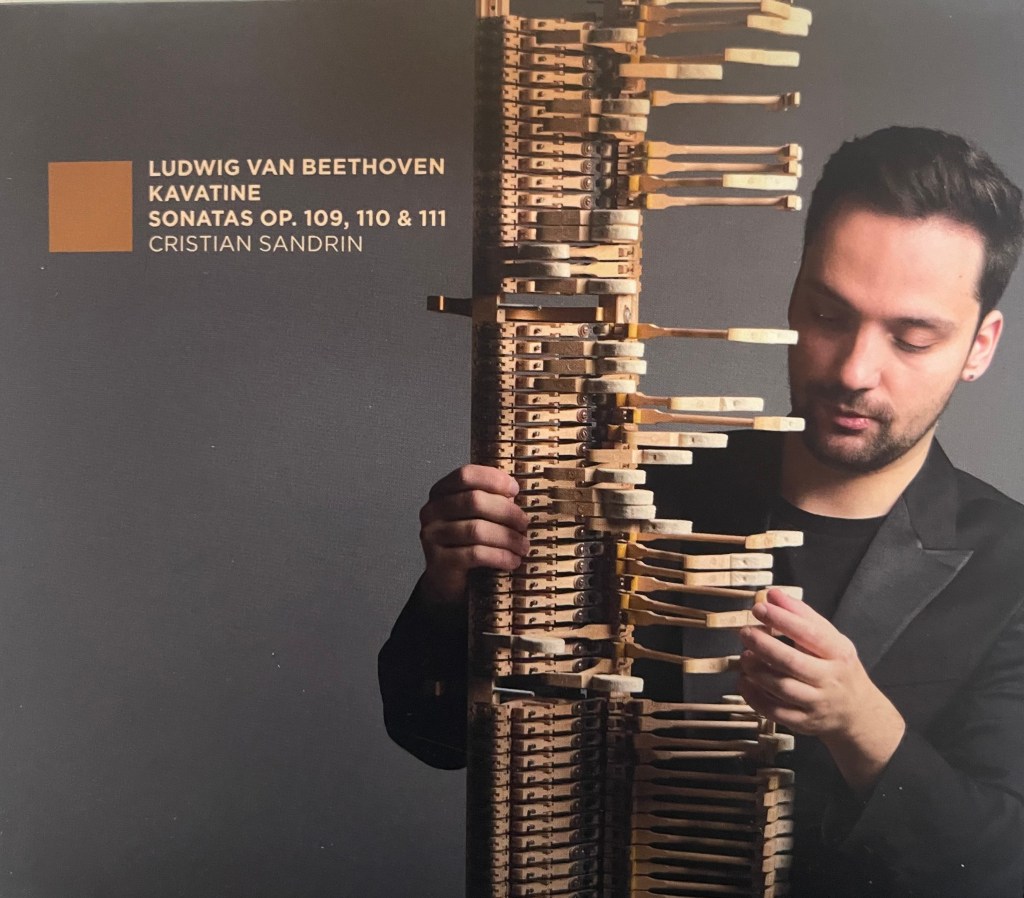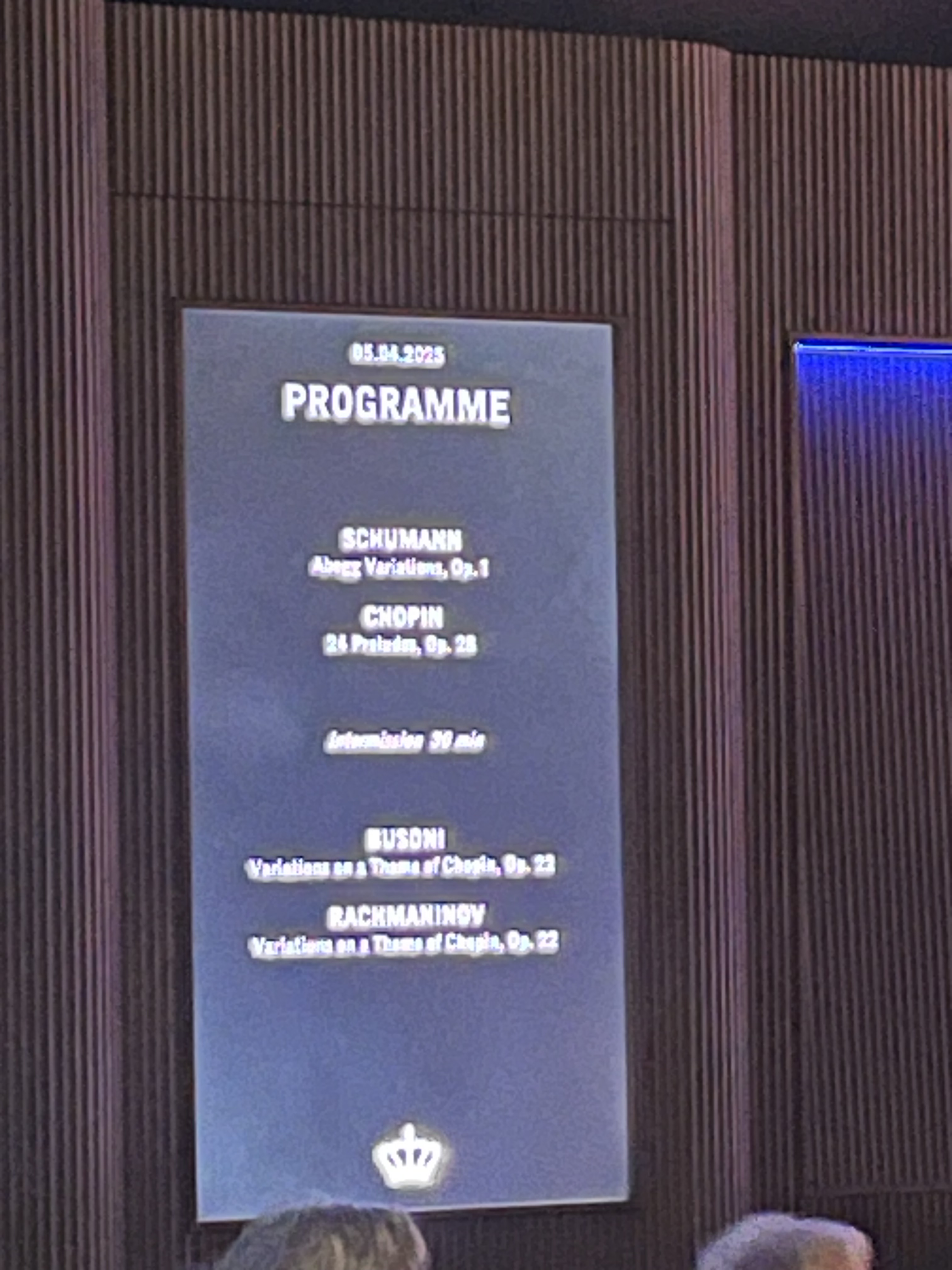
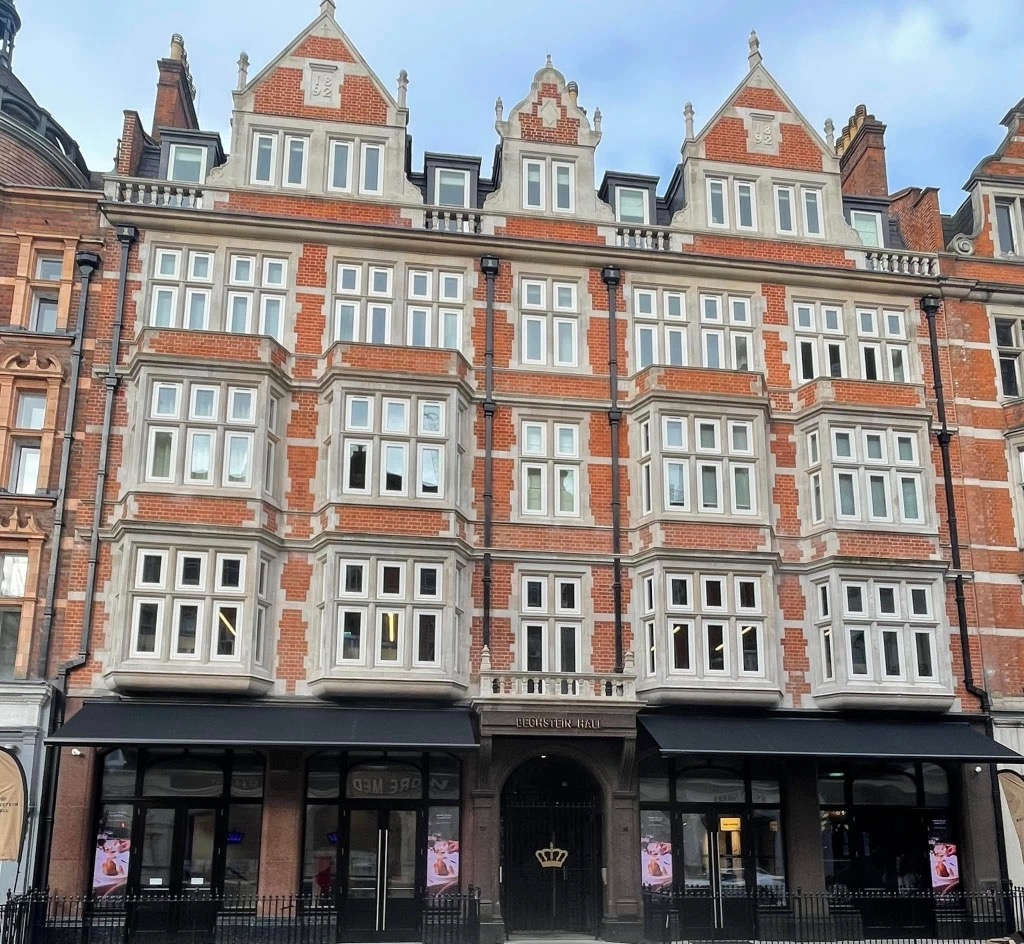
Phillip James Leslie debut recital at the long awaited rebirth of Bechstein Hall

CHOPIN: Polonaise-Fantasie Op.61 

SCHUMANN: Humoreske Op.20 

I. Einfach – Sehr rasch und cehilt – Noch rascher – Wie im Anfang 

II. Hastig – Nach und nach immer ei mi Anfang lebhafter und starker – Wei vorher 

III. Einfach und zart – Intermezzo 

VI. Innig 

V.  Sehr lebhaft 

VI. Mit einigem Pomp 

VII. Zum Beschluss 

BARTOK: Piano Sonata SZ.80 

I. Allegro Moderato 

II. Sostenuto e pesante  

III. Allegro Molto

Axel Trolese at Bechstein Hall ‘Mastery and intelligence of a remarkable artist’
https://christopheraxworthymusiccommentary.com/2024/11/27/axel-trolese-at-bechstein-hall-mastery-and-intelligence-of-a-remarkable-artist/

Vedran Janjanin at Bechstein Hall playing of scintillating, sumptuous beauty
https://christopheraxworthymusiccommentary.com/2024/12/02/vedran-janjanin-at-bechstein-hall-playing-of-scintillating-sumptuous-beauty/

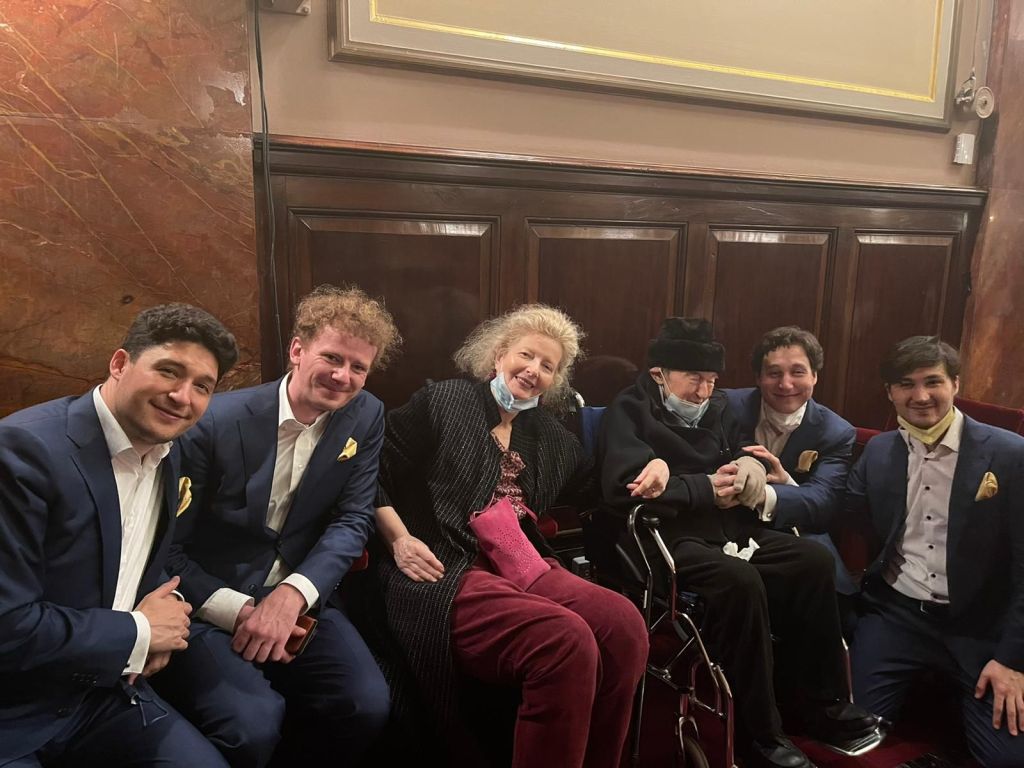
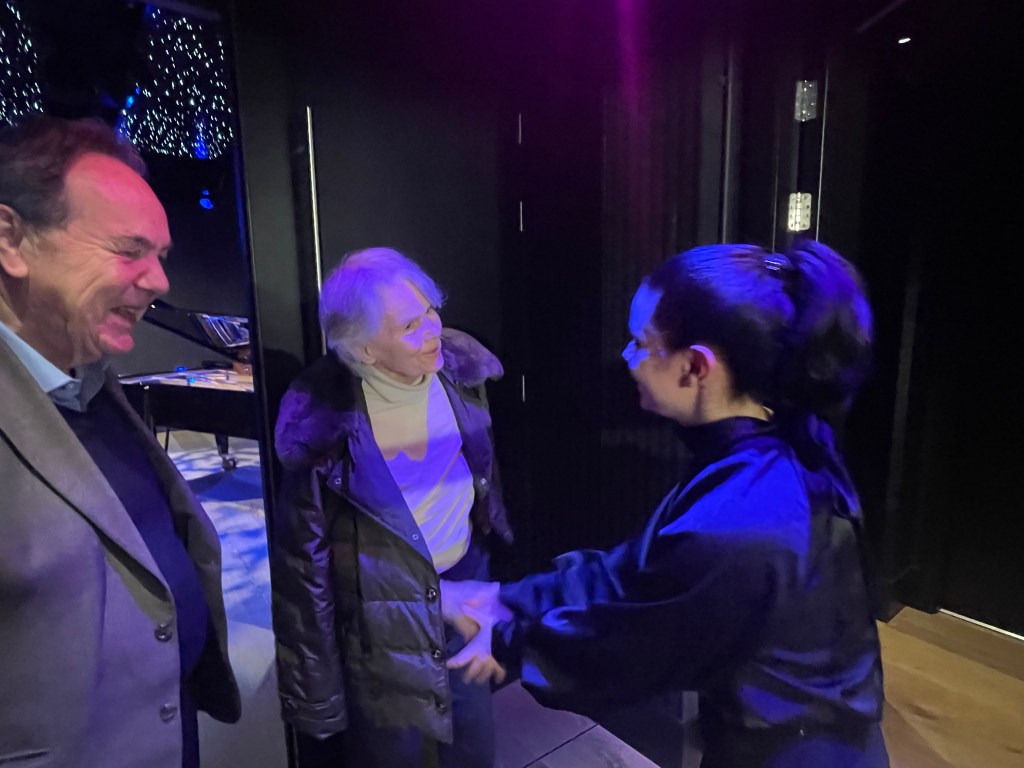
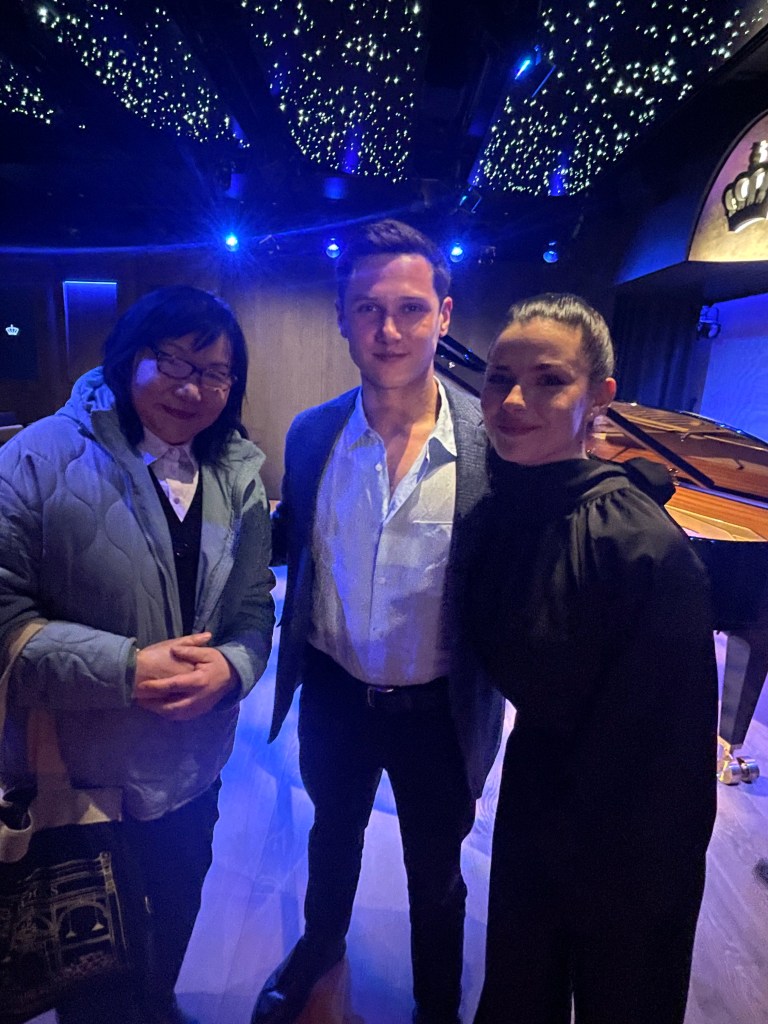
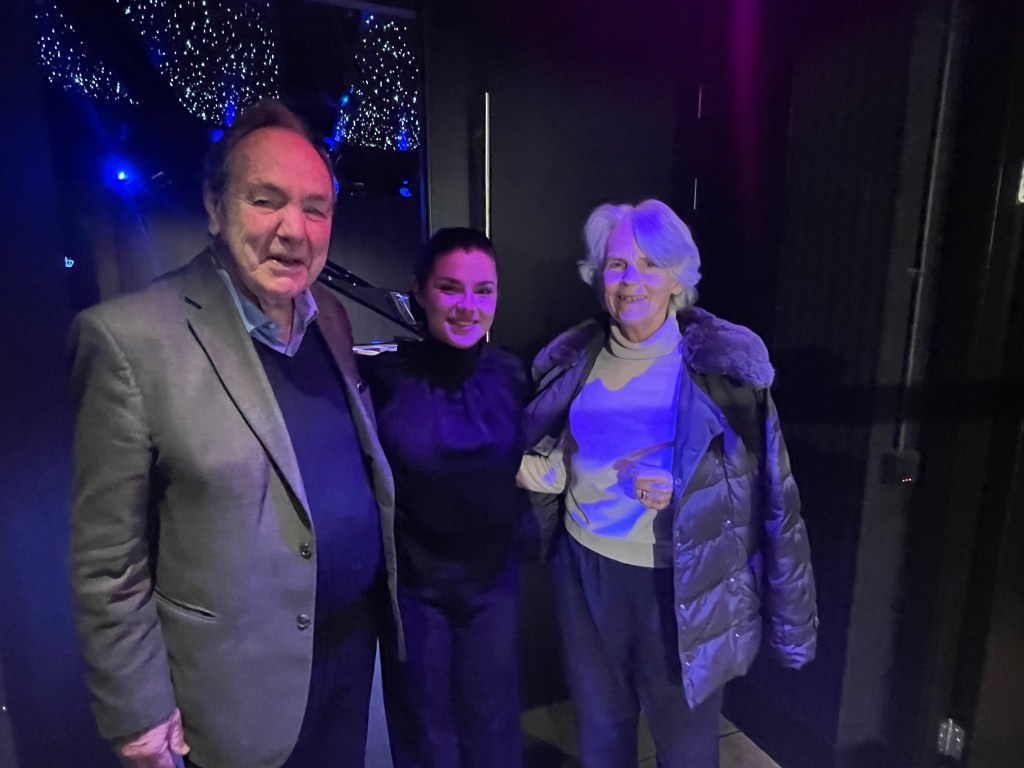
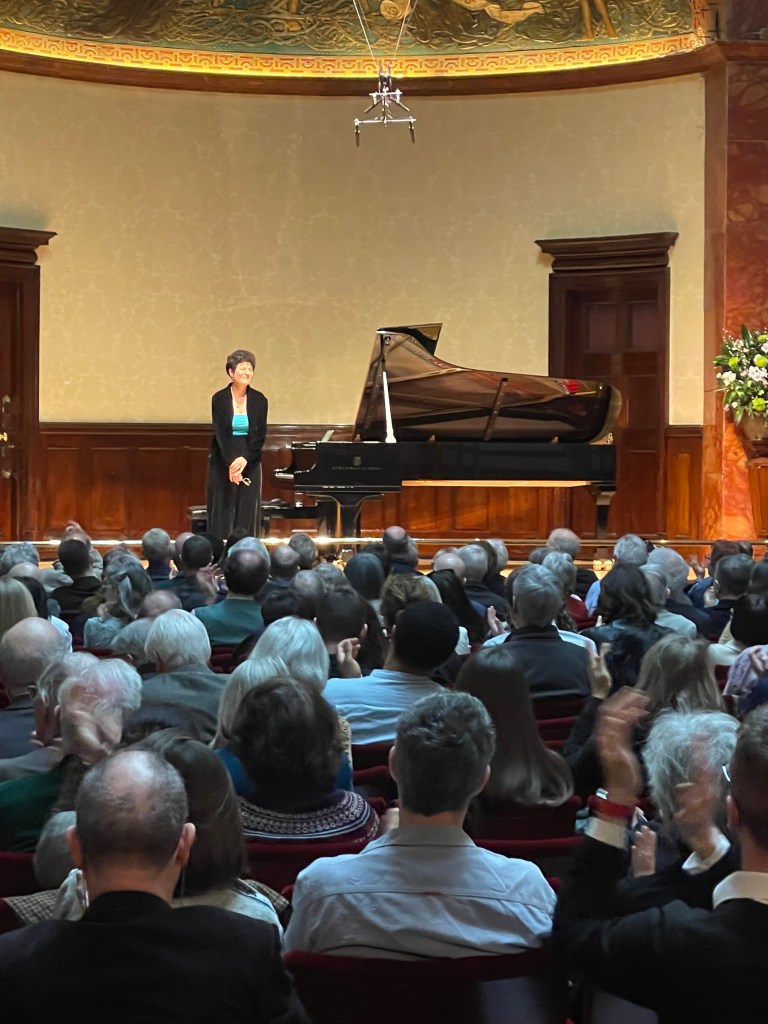
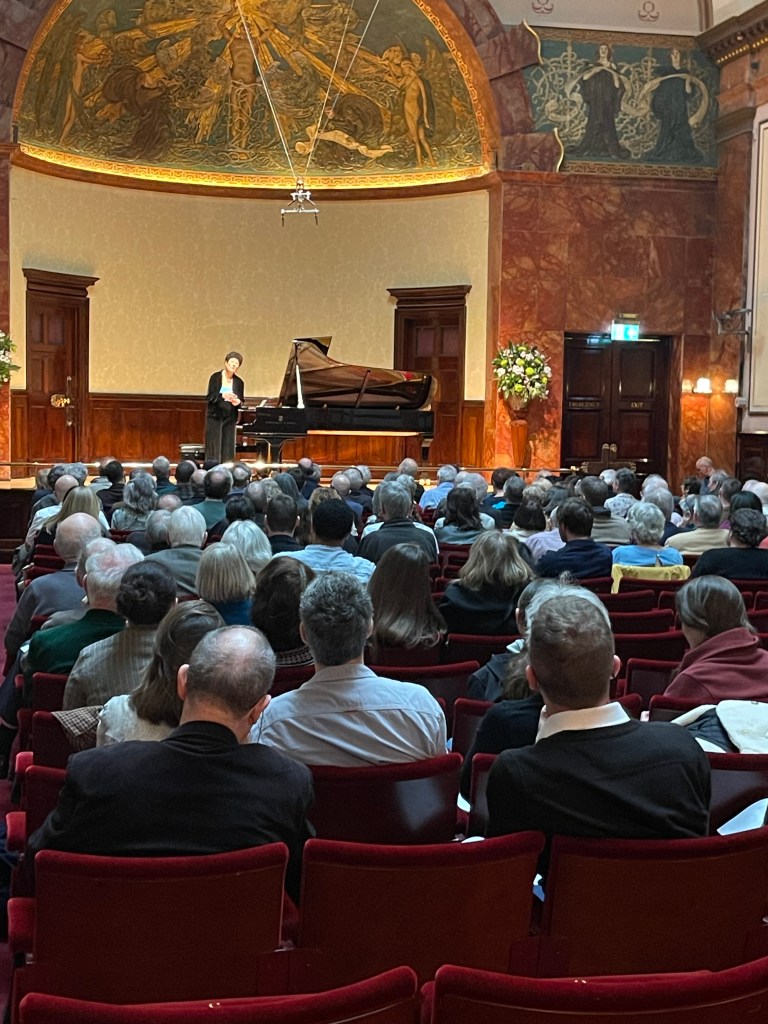
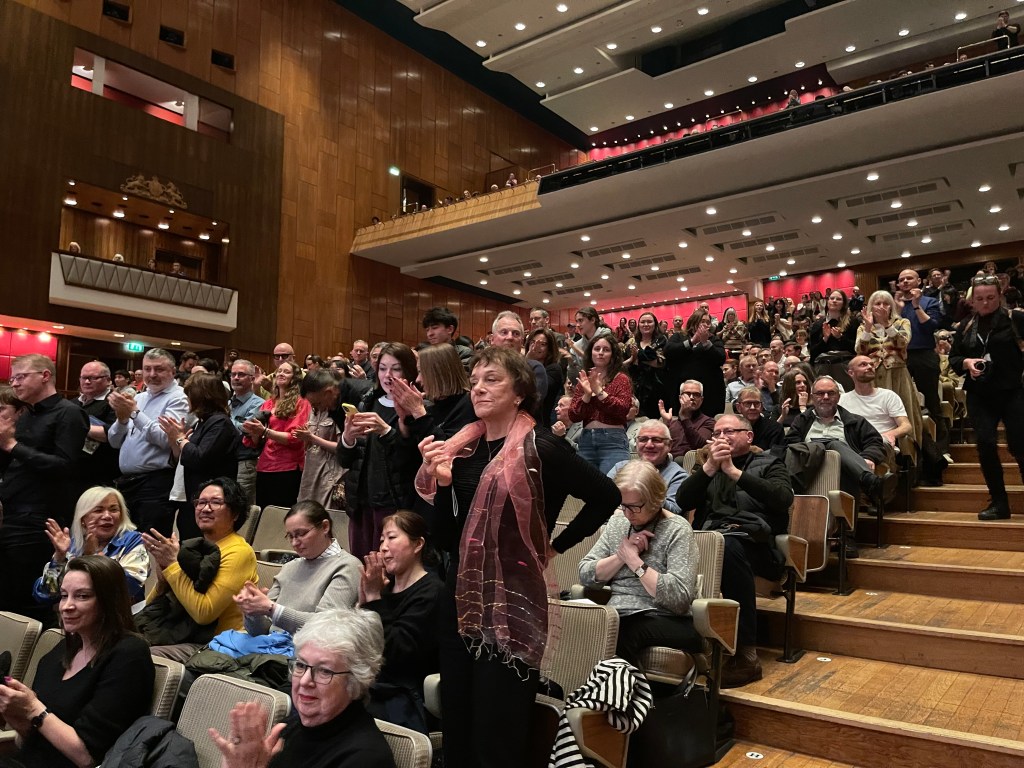
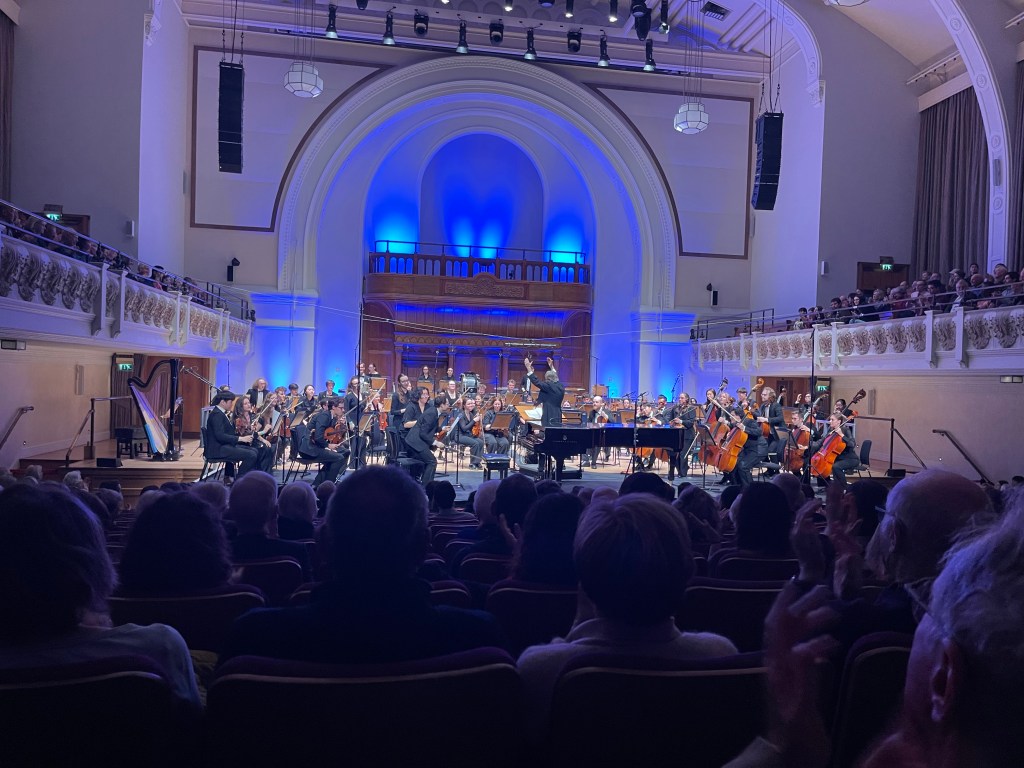
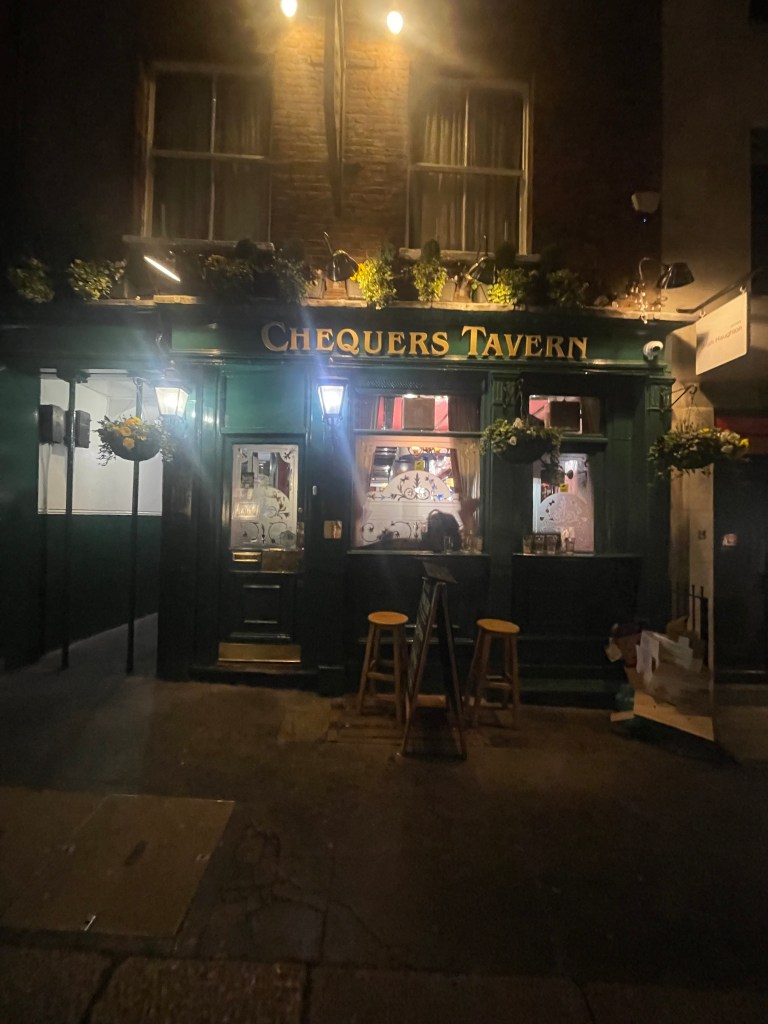
Nice to see Terry Lewis in the hall he has fought hard to bring to life, enjoying an aspiring young musician in the refined space that is the new Bechstein Hall.

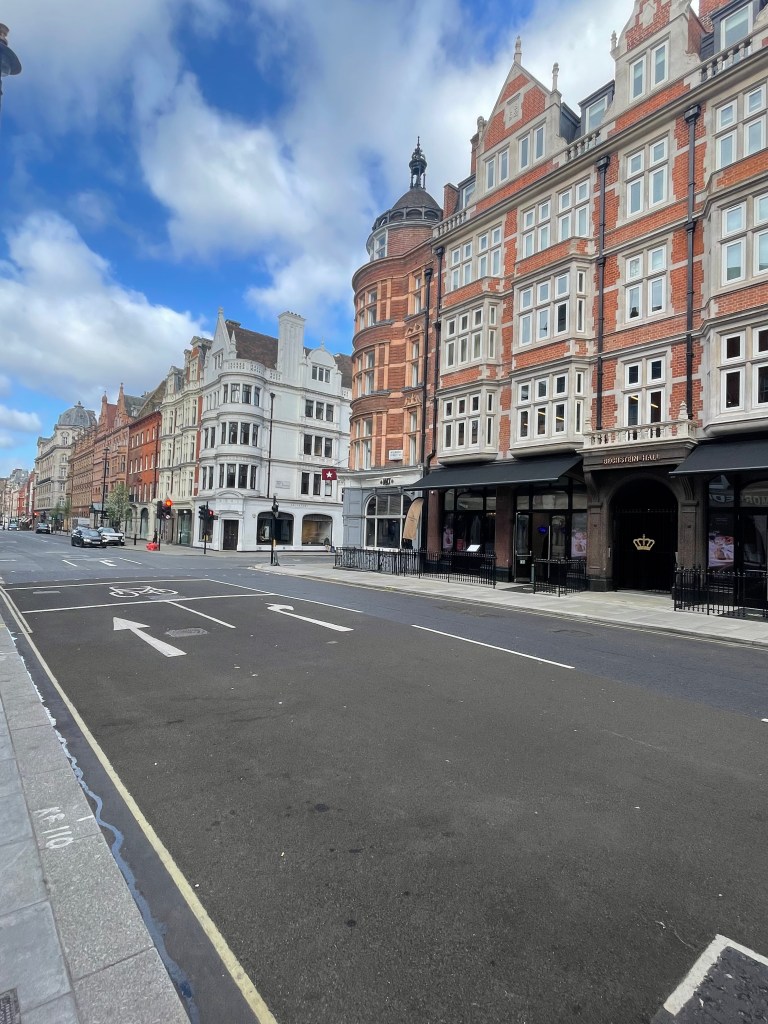
Just a stones throw from the old one that after our victory (!!), in the first World War, was confiscated and rechristened Wigmore.There is also Bob Boas’s sumptuous salon nearby,where regular concerts for a select audience have become very much part of the musical scene .

After the initial pre Christmas lull it is good to see this new hall gladly being accepted by an eclectic public, adding a much needed space to the near capacity audiences of the other two nearby venues.

Many artists that are denied a space in the world’s capital of music are now included in this sumptuous new space. It is also opening its doors to the superb young musicians who have dedicated their youth to art and just crave an adequate space where to perform in this wondrous city. An added bonus is,of course, the sumptuous cuisine offered before or after each hour long performance.

For thirty years I too created a theatre in Rome which was a centre for cultural excellence. Be it the stage direction of authors of the stature of Beckett or the performances and master classes of Stockhausen and many of the greatest musicians of our age.
https://christopheraxworthymusiccommentary.com/2024/03/20/christopher-axworthy-dip-ram-aram/

It takes time and selfless commitment to overcome the hurdles of the first few years. Infact my wife and I were much criticised because as most theatres were closing down we were opening up!

Ileana Ghione died on stage acting the part of Hecuba in 2005, but after many years of maintaining high standards, in 2001 was knighted by the President of Italy .’We have become a Dame’, I told my English friends. Rosalyn Tureck who became our dearest friend after her triumphant come back to the concert stage in 1990, praised and admonished us, saying whilst recognition was a great satisfaction it is the work and our mission that counts (the RAM my old Alma mater did give me a special award in recognition of our work promoting music and musicians in Rome, and it came by post to the theatre! )

So it was very warming to see our host greeting the public as we were told over the air by Sir Edward Fox to hold onto our seats for take off!

And take off it was with the Polonaise -Fantasie, one of Chopin’s most revolutionary late masterpieces, where in the last year of his life he could marry his beloved polish Polonaise with the fantasy of a true poetic innovator of the keyboard. Fillip played it simply and with one gentle movement of the arm as the opening imperious chords reverberated over the entire keyboard. Sensibility and a kaleidoscope of colours illuminated his playing as the Polonaise rhythm could gradually be seen advancing from afar.There were also pauses for serene poetic reflection as he regained his breath for ever more aristocratic musings, mixed with passionate outpourings of technical mastery. Sometimes, though, he could let go more, and allow the music to pour from his fingers simply, like the streams of liquid gold that Chopin carves out of thin air, throwing off notes that like the opening are but reverberations of sound. A beautifully sung ‘poco più lento’ was allowed to expand with sumptuous beauty before the gradual build up to the passionate climax of exultation and nobility. Leaving the music exhausted and spent as it barely made it through the final whispered bars, drawing to an abrupt close with a final dying gasp.

The Schumann Humoresque has only in recent years, thanks to Richter and Horowitz, become as popular as Carnaval or Kreisleriana. It is a very elusive work full of fantasy and sudden quixotic changes of mood that Phillip understood completely.

Opening with a beautifully expansive luminosity, surely one of Schumann’s most beautiful ‘songs without words?’ Leading into a fleetingly wistful passage of driving rhythmic energy with abrupt changes of mood and tempo, before going full circle to the ever more ravishing beauty of the opening: ‘Wie in Anfang’.

‘Hastig and ‘innere Stimme’ ( as described below) followed without a break, where Fillip could have allowed the slowly opening melodic line more timeless weight and simplicity, but the passionate outburst that followed was played with dynamic drive and fearless conviction.

A sedate chordal declaration was interrupted by the sudden changes of harmony that streaked across this march like interlude and brought it to rest on a series of celestial chords, that Fillip played with extraordinary poetic sensibility. A glimpse of the heaven that had taken Schubert ten years previously, and would take Schumann before his fiftieth year. A gloriously lazy ‘Einfach und Zart’ expanded with style and character where Phillip could have indulged even more to enjoy the sumptuous rich sounds of refined lyricism. The eruption of an Intermezzo of knotty twine was held firmly under control and the treacherous octaves were heroically thrown into the fray. The quixotic changes of mood of the ‘Innig’ were played with impish good humour contrasting with rich expansive beauty. The ‘sehr lebhaft’ was a passionate outburst of sumptuous sounds spread over the entire keyboard with mastery and architectural shape. The red hot passion of the climax giving way to a coda of demonic meanderings. ‘Mit einigem Pomp’ is one of those extraordinary passages in Schumann that like the three handed pianist can create two different characters and link them together. Fillip played it with great sensibility but it is the balance here that is so important. It is enough to say that Sokolov did not seem to understand this passage at all, whereas Fillip did, but could have experimented with the pedals more to create this rather special effect.This is a passage that only Richter or Kempff could truly reveal.The final ‘Zum Beschluss’ was played beautifully and expansively with great freedom and fantasy, with the gradual cooling down of the chromatic counterpoints before the eruption of the final triumphant Allegro.

The Bartók Sonata was played with a remarkable musicality, where the percussive outbursts and rugged edges were answered by the traditional dance motifs of Transylvania.

There was a hypnotic insistence to the ‘sostenuto’ as luminous sounds echoed around the magic atmosphere of this hall, with desolation and searing intensity.There followed the driving insistence of the Allegro molto that was played with great urgency but also giving an architectural shape to the final dramatic outbursts.

An encore for a very insistent audience was rewarded a romance by the Czech composer Josef Suk : Spring Song op.22a iii.V očekáváni ( Awaiting ), played with great conviction and warmth.

Phillip James Leslie at St Mary’s Perivale ‘On wings of song’ with artistry and integrity
https://christopheraxworthymusiccommentary.com/2024/03/30/phillip-james-leslie-at-st-marys-perivale-on-wings-of-song-with-artistry-and-integrity/

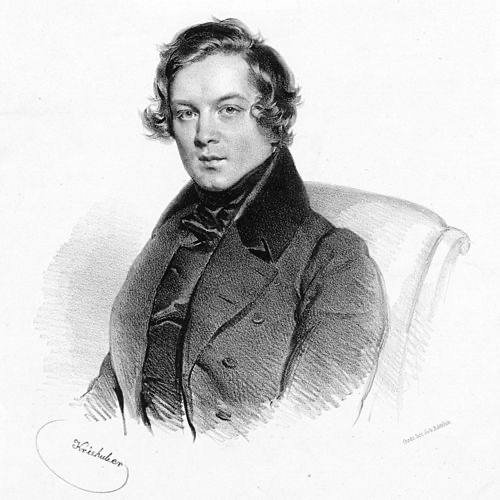
Schumann in 1839. 8 June 1810 Zwickau – 29 July 1856 (aged 46) Bonn
Bonn, Rhine Province, Prussia

“All week I’ve been sitting at the piano and composing and writing and laughing and crying, all at the same time,” wrote Schumann to his beloved Clara Wieck from Vienna in March 1839. “You will find this beautifully illustrated in my Opus 20, the great Humoreske.” 

Schumann needed some happy diversion in his life at that particular time: he was very unhappy being separated from Clara but somehow she wasn’t able to heed Robert’s plea for her to come to Vienna to join him. Further, his reason for being in Vienna was to be able to establish in the Austrian capital his journal, Neue Zeitschrift für Musik,which he had founded in Leipzig in 1833. But the city fathers said a resounding “No.” So, what to do other than compose a new keyboard masterwork. In fact, Schumann in 1839 was close to the end of the line of works for the keyboard. His creative life had centered virtually exclusively on music for the piano, the instrument on which he envisioned becoming a virtuoso. This dream, however, was shattered when he injured his hands with a machine he used to strengthen his fingers.. But after his marriage to Clara in 1840 he turned to songs and then symphonies and chamber music.

The conflicting emotions Schumann felt while composing his Humoreske are reflected in the music’s contrasting moods. In a letter of 15 March 1839 to his Belgian follower Simonin de Sire, Schumann provided a hint as to the meaning of the work’s title when he pointed out that the word ‘humoreske’ couldn’t adequately be translated into French. ‘It is a pity’, said Schumann, ‘that there are no good and apt words in the French language for such deeply ingrained characteristics and concepts as Gemütlichkeit, and for humour, which is the happy fusion of the gemütlich and the witty. But it is this that binds the whole character of the two nations together.’ Adding that ‘The human heart sometimes seems strange, and pain and joy are intermingled in wild variegation.’in fact Schumann described humour in music as “a way of looking on the emotions with ironic detachment.”

The score features a third line, an ‘inner stimme’ which is not to be played, merely implied, in the accentuations of the two given accompaniment parts. Generally it seems that this move is either taken to be a part of the gradual diminishment of the voice in Schumann’s work (related to his mental illness) or perhaps a tribute to Clara and one of her works. The Humoreske was composed in 1839, and a few years previously the pianist Sigismond Thalberg together with Liszt was considered the most famous pianist in Europe and the impact of Thalberg’s playing largely depended on his ‘three-handed technique’. On the newly established pianos with sustaining pedals the melody could be played by the thumbs in the middle register of the keyboard with ornate arpeggiated figuration in bass and treble, creating the illusion that three hands are required.Could Schumann have been influenced by, or even been referring to this ‘three-handed technique’?

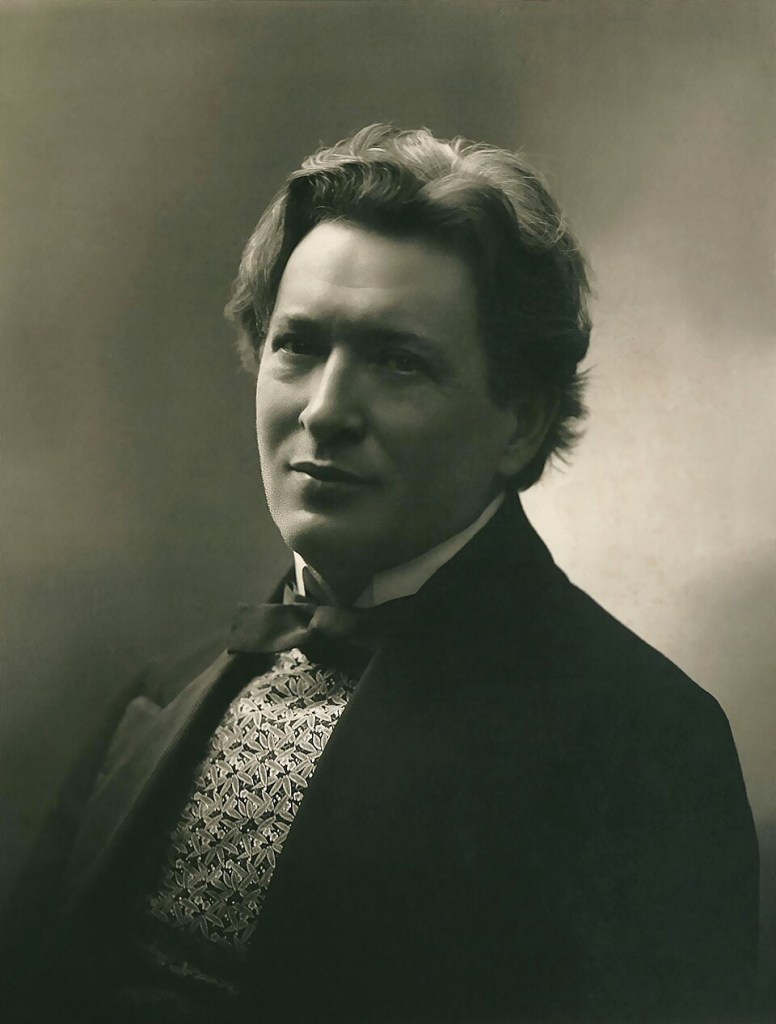
Béla Viktor János Bartók in 1927
25 March 1881 Nagyszentmiklós Hungary – 26 September 1945 (aged 64) New York
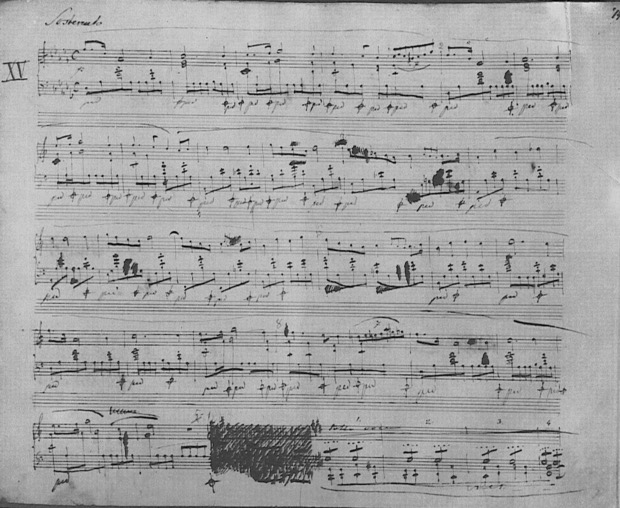
facsimile of the Bartók Sonata 1926

The Bartók’s Piano Sonata, BB 88, Sz. 80, was composed in June 1926 a year that is known to musicologists as Bartók’s “piano year”, when he underwent a creative shift in part from Beethovenian  intensity to a more Bachian craftsmanship.It is tonal  but highly dissonant and has no key signature , using the piano in a percussive fashion with erratic time signatures . Underneath clusters of repeated notes, the melody is folklike and each movement has a classical structure overall, in character with Bartók’s frequent use of classical forms as vehicles for his most advanced thinking. Dedicated to Ditta Pásztory- Bartók, his second wife, he wrote it with an Imperial Bösendorfer  in mind, which has extra keys in the bass (97 keys in total). The second movement calls for these keys to be used (to play G sharp and F).

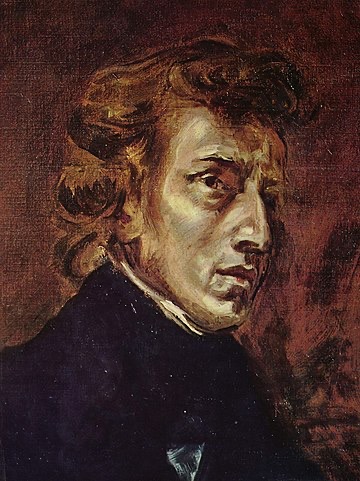
Daguerreotype, c. 1849. Fryderyk Franciszek Chopin
1 March 1810 Żelazowa Wola Poland 17 October 1849 (aged 39) Paris

The Polonaise-Fantaisie op. 61, was dedicated to Mme A. Veyret, written and published in 1846.

Although slow to gain favour with musicians, due to its harmonic complexity and intricate  form. One of the first critics and a renowned expert on Chopin ,Arthur Hedley, writing in 1947 said that it “works on the hearer’s imagination with a power of suggestion equaled only by the F minor Fantasy or the Fourth Ballade”.It has been suggested that the Polonaise-Fantaisie represents a change in Chopin’s style from ‘late’ to ‘last’ and that the formal ambiguities of the piece (particularly the unconventional and musically misleading transitions into and out of the lyrical inner section) are the most significant defining qualities of this ‘last style’, which only includes this and one other piece—the F minor Mazurka op 68 n. 4, Chopin’s last composition

Facsimile of the autograph first page

Paul Mnatsakanov’s Mozart of refined elegance and operatic character

Refined elegant and intelligent Mozart from a young virtuoso.

Living fearlessly every note as he brought the music vividly to life as is rarely experienced except in the opera house.

Overwhelmed by his Mussorgsky, I am now astonished by his Mozart,but then real artistry has no frontiers.

Paul Mnatsakanov ‘s monumental Mussorgsky ‘Pictures’
https://christopheraxworthymusiccommentary.com/2024/02/09/paul-mnatsakanov-s-monumental-mussorgsky-pictures/

Paul Mnatsakanov graduation recitals at the Royal College Music
https://christopheraxworthymusiccommentary.com/2024/05/24/paul-mnatsakanov-graduation-recitals-at-the-royal-college-music

Misha Kaploukhii plays Brahms 2 with passion and mastery

Misha Kaploukhii with the Apollo Sinfonia play Brahms Second Piano Concerto with a little ‘wisp’ of a scherzo. After performances of Rachmaninov 1 at 18, Liszt 2 at 19 and Rachmaninov 3 at 20.

Misha has taken the plunge with the biggest challenge that any pianist can face with Brahms’s ‘little’ piano concerto, with a little ‘wisp’ of a scherzo, as he described it to Clara Schumann on completion of one of the longest and most complex concertos certainly of its’s time.

Misha Kaploukhii plays Rachmaninov Beauty and youthfulness triumph
https://christopheraxworthymusiccommentary.com/2022/10/13/misha-kaploukhii-plays-rachmaninov-beauty-and-youthfulness-triumph/

Brahms in his apartment in Vienna


https://christopheraxworthymusiccommentary.com/2022/10/28/misha-kaploukii-plays-liszt-at-the-rcm-a-sea-symphony-concert-youth-and-music-a-joy-to-behold/

Since the appearance of the Brahms Second concerto there have been concertos with many more notes by Busoni, Rachmaninov and Prokofiev, but the complexity of the mixture of chamber music ensemble together with the noble grandeur of Brahms 2 is only for the greatest interpreters of our age. Arrau, of course, was the example to us all of the weight and poetic intelligence, plus playing the notes exactly as Brahms had indicated in the score. No mean feat as every pianist asks how do you manage to scramble through certain passages that are played more with a wave of the arm than note picking precision as indeed one can perceive from the photos of Brahms at the piano?

I remember in the sixties when anyone who could even attempt Rach 3 or Prok 2 was considered a hero. This was of course before the Russian invasion of virtuosi who were allowed to come to the west.

I remember the arrival of Ashkenazy with two presentation recitals of all the Chopin Studies and the Beethoven Sonatas op 31. Astonishing enough for the mastery and beauty of sound. But what really created a furor amongst so called pianists was his orchestral debut with both Rachmaninov and Prokofiev in the same programme !

I remember all the articles in the press about a young pianist of the RCM who came from a poor east end of London family, not only playing Rach 3 at 18 but playing the largest of the two cadenzas that the composer had written .

‘Greater than Ogdon’ cried the Evening Standard. John Lill went on to take first prize in Moscow as Ogdon had done (tying with Ashkenazy). He won first prize not with the obligatory Tchaikowsky, but with the Second Concerto of Brahms.

It is a concerto that many great pianists have attempted, but then left, as the combination of chamber music and hidden virtuosity did not convince. Finding the first concerto, with the piano against the orchestra, far more congenial than a concerto with a piano that is very much part of the orchestra. Memorable performances that I have heard were by Rubinstein, Arrau, Ashkenazy and above all Geza Anda. Arrau had the weight that could emerge with a sound larger that the greatest of orchestras, as it could dissolve into a chamber ensemble of poetic intelligence. Rubinstein, the grandest and noblest was ‘The Prince of Pianists’ to quote Joan Chissell. I remember the performance he gave in the Brighton Festival with Barenboim conducting together for the first time. There had been a luncheon party before this afternoon performance in the Brighton Dome. Well, even Barenboim looked down at his mentor and idol as he struck any notes he could find in the opening cadenza! The long orchestral tutti gave the master time to recover and from then on it was the magnificent performance that the world had appreciated for decades. Ashkenazy, I remember for the poetic perfection and of course it was this that gave the game away when Joyce Hatto stuck her name on his CD!

I remember,too, Ashkenazy conducted by Klemperer in what must be the slowest performance on record. Geza Anda, looking like a prim English gentleman, gave unforgettable performances of luminosity and poetry with Sir Adrian Boult ( the same conductor as for John Lill at the RCM) although his recording is with Karajan. Of course, for all those present at the Festival Hall, it was Gilels who gave the most beautiful account of poetic and aristocratic nobility. He preceded it with the one movement Tchaikowsky 3rd concerto. At the rehearsal this had lead to quite considerable tension between the conductor and pianist. It was during the Cold War and Boult, very much of the English Institution, got very irritated when Gilels was not happy with the opening horn solo of the Tchaikowsky. ‘Would you please explain what you mean Mr Gilels’ and then they never uttered another word throughout the whole rehearsal. How could one forget Serkin opening the refurbished RFH with the two Brahms Concert, and with his impatient excitement entering too early with the grandest of declarations of the second subject. Probably the most poetically beautiful and noble was Curzon with the Concertgebouw at the Proms. I was standing next to him as he sweated blood over his loving performance, playing without the score that brought an animal excitement to his playing in those days. I remember my mentor Sidney Harrison, who had heard it on the radio, exclaiming wondrous appreciation of such a great performance. Strangely the recording of Horowitz and Toscanini is rather crisp,clean and technically perfect, but it was not the Brahms of his Rach 3!

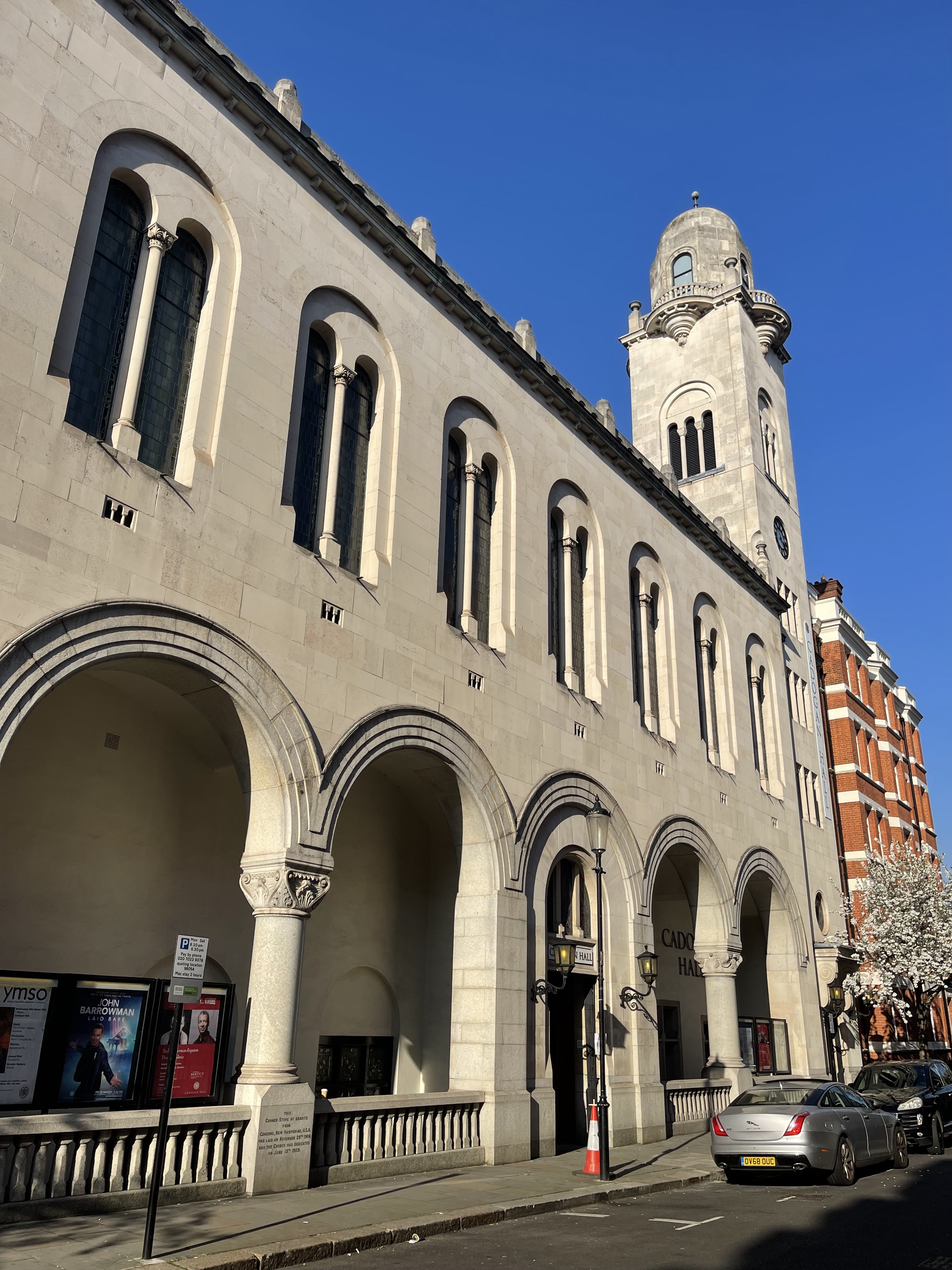
All this preamble to say what a remarkable performance Misha Kaploukhii gave today. Still in his early twenties he played with a mastery and musicality that bodes well for his 3rd performance that will be on the 19th February in Cadogan Hall.

He needs now to sweat blood and tears over every note, (something that the mastery of Volodos did not allow him to do ) .

Remarkable mastery of the ‘wisp ‘of a Scherzo lead into the sumptuous simple beauty of the Andante

Youthful energy and romantic sweep with an orchestra made up of very fine colleagues at the RCM. Of course a performance that could now be played slower and given time to breathe and expand as Brahms’s sumptuous sound envelope us in a reassuring cocoon of passionate abandon.

Beautiful playing from the cellist, James Dew,of simplicity and beauty answered by the ravishing beauty and measure of the piano .This is the heart of the concerto, and it was the most successful movement in a performance that will expand and glow with the maturity of performances to come.

Nok Him Chan was the fine conductor holding his ensemble together with expert ease, but sometimes choosing tempi that were a fraction too fast for this most difficult of all concertos. I was sorry to miss the Schoenberg, but judging from the ovation he received it was a just partner to the succulent opulence of the Brahms B flat.

The Piano Concerto No. 2 in B flat op 83 was written 22 years after his first concert. Brahms began work on the piece in 1878 and completed it in 1881 while in Pressbaum near Vienna. It took him three years to work on this concerto, and he wrote to Clara Schumann: “I want to tell you that I have written a very small piano concerto with a very small and pretty scherzo!” It is dedicated to his teacher, Eduard Marxsen and the public première was in Budapest  on 9 November 1881, with Brahms as soloist and the Budapest Philharmonic Orchestra. It was an immediate success and he proceeded to perform the piece in many cities across Europe.The concerto is in four movements:

  1. Allegro non troppo
  2. Allegro appassionato
  3. Andante
  4. Allegretto grazioso—Un poco più presto

The additional movement of a Scherzo second movement results in a concerto considerably longer than most other concertos written up to that time, with typical performances lasting around 50 minutes. Upon its completion, Brahms sent its score to his friend, the surgeon and violinist Theordor Billroth, to whom Brahms had dedicated his first two string quartets, describing the work as “some little piano pieces.” Brahms even described the stormy scherzo as a “little wisp of a scherzo.”

Misha with Mike Oldham – the greatest page turner the world has ever known!


https://christopheraxworthymusiccommentary.com/2024/11/14/misha-kaploukhii-in-florence-and-milan-for-the-keyboard-trust-and-robert-turnbull-piano-foundation/


https://christopheraxworthymusiccommentary.com/2024/12/01/chopin-reigns-at-the-national-liberal-club-and-st-marys-perivale-the-triumph-of-misha-kaploukhii-and-magdalene-ho/

Jonathan Ferrucci Touching Toccatas and much more besides

Jonathan Ferrucci with a CD launch in the refined space of Raffaello Morales’s Fidelio café.Two Italians bringing culture and elegance to a city where quantity is fast taking over from quality.

Raffaello, a trained musician, who has had the courage and vision to open a space where his love and passion for music are even expressed in the wallpaper that adorn the bathrooms, made of the scores of Beethoven and Schumann- the Hammerklavier no less!

A green room that I would gladly move into tomorrow, such is it’s haremesque warmth and restrained opulence.

Raffaello Morales not content with just this space opposite the Italian church in the centre of London, has created his own orchestra that plays in the beautiful church of St Luke’s in Holborn and regularly invites superb solists to join in the ‘fun’

One such artist is the distinguished Canadian pianist Angela Hewitt, who also resides in Italy, and wanted to add a third ‘B’ to her worldwide fame with the other two! Her Brahms First Concerto with Raffaello at the helm was indeed a special occasion for all concerned.

Angela Hewitt plays Bach and Brahms with the Fidelio Orchestra of Raffaello Morales Angela Hewitt plays Bach and Brahms with the Fidelio Orchestra of Raffaello Morales
https://christopheraxworthymusiccommentary.com/2024/03/10/angela-hewitt-plays-bach-and-brahms-with-the-fidelio-orchestra-of-raffaello-morales/

Angela is also the mentor of Jonathan and their deep love of Bach and the refined beauty and nobility of the Italian renaissance has cemented a friendship of mutual respect for their art. I have heard many of Jonathan’s concerts since he moved to London to perfect his studies at the Guildhall with Joan Havill, and his passion and refined good taste have always astonished me.

A love for music that was ignited by Giovanni Carmassi whose book ‘A pianist prepares’ is the bible for all aspiring pianists and musicians, only on a par only with ‘The Art of Piano Playing’ by Heinrich Neuhaus. Luckily Jonathan’s psychologist father realised the value,in human terms, of such an inspirational influence on young musicians, that he and his Australian wife have translated it into English. In in my opinion it should be obligatory reading for all serious artists.

It opens with a quote from Celibadache :

“Art is beautiful….Nevertheless I soon distanced myself from this idea.

Without seeking the beautiful, no one could create a work of art. But beauty is not the goal: it is only the bait.

What is truth? You cannot define it rationally, but you can experience it personally’

The final words in the CD booklet that accompanies the Toccatas Jonathan exclaims: ‘Ashtanga Yoga is an integral part of my work as a musician and with music, essential in life.’ Only a Florentine could express that, where the beauty of the bodily movements and the beauty that surrounds Tuscany and indeed the whole of Italy, are reflected in the beauty of movement that can recreate such masterworks at the keyboard. Like a painter or sculptor creating things of beauty that will be a joy forever.
Beauty that recreates beauty!

Rostropovich simply exclaimed that Italy is the ‘museum of the world’.

It is enough to admire the cover of this CD to know of the mine of gold that must be hidden within.

I have heard Jonathan many times over the past years and have expressed my feelings in the few poor words that could describe such beauty.

Jonathan Ferrucci plays Bach in Florence A room with a view with a whole world in his hands.
https://christopheraxworthymusiccommentary.com/2023/09/27/jonathan-ferrucci-plays-bach-in-florence/

It is worth listening to such masterworks to discover things where words are just not enough.

And an encore, this time a Poulenc of refined elegance and style.

Jonathan Ferrucci KCT American Tour – Goldberg – A voyage of discovery
https://christopheraxworthymusiccommentary.com/2022/10/22/jonathan-ferrucci-kct-american-tour-goldberg-a-voyage-of-discovery/

Magdalene Ho ‘A star is born on the rising sun of inspired mastery’

https://christopheraxworthymusiccommentary.com/2024/10/25/the-strand-rising-stars-series-sherri-lun-the-magic-and-artistry-of-a-star-shining-brightly/https://christopheraxworthymusiccommentary.com/2024/11/23/kyle-hutchings-the-troubadour-of-the-piano-illuminates-st-mary-le-strand/

Magdalene Ho, a star shining brightly in the Rising Stars concerts of Warren Mailley Smith’s series at St Mary Le Strand. At only twenty she is already winner of the Clara Haskil and German Artists’ Awards, not to forget the Chappell Gold Medal at the RCM, where she is still in the class of Dmitri Alexeev.

At every appearance she shines more intensely. Never looking at her hands, but listening to every sound and nuance they are carving out. Creating a magic carpet of sounds, never knowing what wonders are to be discovered on a hypnotic voyage together.

Inspired and inspiring as the warm generous acoustics of this beautiful jewel of St Mary’s, and with Warren’s own Steinway, allowing the music to unfold in a miraculous way. Bar lines disappeared as the music like a choir of celestial angels enveloped us with a reassuring warmth, guided by a masterly interpretative intelligence of simplicity and humility. An artist who thinks more of the music and her role as medium than any self ingratiation. A small insignificance in life but a giant when touching the hallowed notes of the composers of whom she is but a faithful servant.

An eclectic programme of Gibbons, Adès and Schubert played almost without a break such was the magic she could create from the very first notes. An audience that included a member of the Adès family; Gibbons and Schubert were obviously listening from afar too, in wonderment of the golden sounds that poured from this tender young waifs miraculous hands !

Performing today, for me and Patsy Fou ( the widow of Fou Ts’ong and her childhood mentor) despite illness, flying off to Switzerland and Holland tomorrow for a series of concerts that includes the Saint – Saens Egyptian Concerto and much else besides.

Gibbons that unfolded on a gentle wave of sounds, but with the grandeur and civilised nobility of a past age. A beautiful subtle movement to the Galliard with its whispered strands of knotty twine.

Three mazurkas by Adès opened our ears in a refreshing way, like a sorbet in a sumptuous meal. Rubinstein, too, would often include the four mazurkas op 50 by his friend Szymanowski, in an all Chopin recital, which would be like a breath of fresh air in a sumptuous feast of masterworks by a fellow countryman. Luminous sounds filled the air of almost jazz improvisation in which the insinuating teasing mazurka rhythm was lurking, ready to emerge within this kaleidoscope of sounds. A magical music box of delicacy and gentle murmurings of great atmosphere.

Nothing, though, could have prepared us for the miracle that was yet to unfold. ‘Fantasy Sonata’, Schubert writes on the score and it was this fantasy and voyage of discovery that created a spell that will long linger in this magnificent Wren edifice. The opening like palpitations of a heart that was to cease beating within a short amount of time. Could Schubert have known that at 31 he would no longer be on this earth? I think the answer, of course, is in the music for all those that have the ears and the sensibility to understand some things where words are just not enough. Beethoven’s final trilogy, too, points in the same celestial direction.

Roberto Prosseda pays tribute to the genius of Chopin and the inspirational figure of Fou Ts’ong
https://christopheraxworthymusiccommentary.com/2021/01/13/roberto-prosseda-pays-tribute-to-the-genius-of-chopin-and-the-inspirational-figure-of-fou-tsong/

What an inspiration Fou Ts’ong was in trying to explain the fact that the soul has no frontiers, and with his searing enthusiasm could inspire so many young musicians and whose message has shaped their lives. The ‘Andante’ was played with gentle mellifluous sounds of refined beauty, with a coda that was of breathtaking etherial wonderment. A dynamic drive to the ‘Menuetto’ with its eloquence and elegance miraculously intact. A haunting pastoral beauty of the barely whispered trio. And finally the questioning beauty of the ‘Allegretto’, where the delicacy and subtle colouring of Magdalene’s playing was nothing short of miraculous. The opening of a ray of sunshine as Schubert’s glorious outpouring of song (like in Mozart’s C major Concerto K. 503 with an unstoppable outpouring of melodious beauty at every corner) was where Magdalene allowed the music to pour like water over a brook, gently and beautifully with simple inevitability.The ending usually played so heavy handedly was exactly like this bubbling pastoral heavenly paradise that Schubert could describe so wonderfully in sounds.

Of course the opening of the G major sonata is impossibly difficult to sustain on the modern piano which thinks more vertically than horizontally. Richter,even at his legendary snail’s pace, could miraculously sustain these palpitations without hardness but with subtle meaning. The miracle of Richter was not how fast or loud he could play, as we all imagined when Gilels told us to wait until we hear who comes to the west after him. It was how slow and quietly he could sustain what is fundamentally a percussion instrument. Fou Ts’ong too would play the opening over and over again, and if he loved the music so much that he could sometime suffocate it, was not asphyxiation for love not a small price to pay for such inspirational dedication?

When I heard Mitsuko Uchida play it in the RFH, I was informed that she was repeating the programme in Perugia and I just had to go to meet the person who could play so miraculously. I remember her reply to us in the green room after this commemoration for Paolo Buitoni. A concert should remain in the memory like a wondrous dream that gets more and more beautiful with the passing of time. Not like a printed photograph that with time fades at the edges.

On Wings of Song – Mitsuko Uchida’s sublime Schubert
https://christopheraxworthymusiccommentary.com/2017/11/29/on-wings-of-song-mitsuko-uchidas-sublime-schubert/

Magdalene Ho A musical genius in Paradise

Today Magdalene ,for me, came of age as she joined the ranks of the greatest interpreters and at only 20 will fill so many people’s lives with the joy and wonder of the great masters that pass through her hands.

Chopin reigns at the National Liberal Club and St Mary’s Perivale The triumph of Misha Kaploukhii and Magdalene Ho

Warren Mailley- Smith’s amazing activity with his City Music Promotions, filling these beautiful churches in London, Manchester and Edinburgh with celestial sounds. He himself playing the Archduke Trio just an hour after Magdalene had ignited the atmosphere for him in St Mary’s tonight.

Warren Mailley- Smith A man for all seasons A love of music illuminated by candlelight
https://christopheraxworthymusiccommentary.com/2024/09/21/warren-mailley-smith-a-man-for-all-seasons-a-love-of-music-illuminated-by-candlelight/

Whilst just next door the Lion King is still packing them in at the Lyceum Theatre,one of the most antique theatres in London.Little could they have imagined what real Lioness was roaring in St Mary’s tonight

https://christopheraxworthymusiccommentary.com/2024/12/25/point-and-counterpoint-2024-a-personal-view-by-christopher-axworthy/
Franz Schubert 1875 portrait, after an 1825 original
31 January 1797 – 19 November 1828 (aged 31). Vienna

The Piano Sonata in G major D. 894, op. 78 by Franz Schubert completed in October 1826 The work is sometimes called the “Fantasie”, a title which the publisher Tobias Haslinger, rather than Schubert, gave to the first movement of the work. It was the last of Schubert’s sonatas published during his lifetime, and was later described by Robert Schumann as the “most perfect in form and conception” of any of Schubert’s sonatas.

The sonata is in four movements

Molto moderato e cantabile

Andante with two trios.

Menuetto :Allegro moderato – Trio

Allegretto

The original concept for the second movement was quite different from the version known today. Evidence of this can be seen in the score that Schubert sent to his publisher.

The original manuscript, which has survived and is currently digitized in the archive of the British Library, reveals that after completing the minuet, Schubert decided to rewrite the second movement. He tore out the original version from the manuscript and replaced it with the version we know today. The first and last pages of the original movement remain, containing the end of the first movement and the beginning of the third movement, respectively.

This peculiar aspect of the manuscript offers valuable insight into how the second movement might have originally sounded. The preserved fragment reveals a theme that is rhythmically characteristic of Schubert’s music, though it was ultimately replaced by a more dynamic orchestral episode in the final version. This change allowed for a greater contrast between the first two themes, which was crucial for the movement’s structure and overall impact.

OXM312480 Orlando Gibbons (oil on panel) by English School; 13.2×10 cm; Faculty of Music Collection, Oxford University; (add.info.: Orlando Gibbons (1582-1625), English composer and keyboard player; leading composer of vocal, keyboard and ensemble music in early C17th;); English, out of copyright

Orlando Gibbons (bapt. 25 December 1583 – 5 June 1625) was an English composer, virginalist and organist who was one of the last masters of the English Madrigal School. By the 1610s he was the leading composer and organist in England, with a career cut short by his sudden death in 1625. As a result, Gibbons’s oeuvre was not as large as that of his contemporaries, like the elder William Byrd, but his compositional versatility led to him having written significant works in virtually every form of his day. He is often seen as a transitional figure from the Renaissance to the Baroque periods.

Throughout his professional career, Gibbons had increasingly good relations with many important people of the English court. King James I and Prince Charles were supportive patrons and others such as Sir Christopher Hatton, even became close friends. Along with Byrd and John Bull, Gibbons was the youngest contributor to the first printed collection of English keyboard music, Parthenia, and published other compositions in his lifetime, notably the First Set of Madrigals and Motets which includes the best known English madrigal: The Silver Swan. Other important compositions include This Is the Record of John, the 8-part full anthem O Clap Your Hands Together and 2 settings of Evensong. The most important position achieved by Gibbons was his appointment in 1623 as the organist at Westminster Abbey which he held for 2 years until his death on the June 5th, 1625.

 the first printed collection of music for keyboard in England. ‘Virginals ‘was a generic word at the time that covered all plucked keyboard instruments – the harpsichord,muselaar and virginals, but most of the pieces are also suited for the clavichord and chamber organ. Though the date is uncertain, it was probably published around 1612. The 21 pieces included are ascribed to William Byrd,John Bull and Orlando Gibbons, in three sections.
The title Parthenia comes from the Greek parthenos meaning “maiden” or “virgin.” The music is written for the Virginals, the etymology of which is unknown, but may either refer to the young girls who are often shown playing it, or from the Latin virga, which means “stick” or “wand”, possibly referring to part of the mechanism that plucks a string in the harpsichord family of instruments. The “Maydenhead” refers to the maiden voyage or, in this case, the first printing of Parthenia. The dedication to the first edition opens with the phrase: The virgin PARTHENIA (whilst yet I may) I offer up to your virgin Highnesses.

He contributed six pieces to the first printed collection of keyboard music in England, Parthenia (to which he was by far the youngest of the three contributors), published in about 1611. Gibbons’s surviving keyboard output comprises some 45 pieces. The polyphonic fantasia and dance forms are the best represented genres. Gibbons’s writing exhibits a command of three- and four-part counterpoint. Most of the fantasias are complex, multi-sectional pieces, treating multiple subjects imitatively. Gibbons’s approach to melody, in both his fantasias and his dances, features extensive development of simple musical ideas, as for example in Pavane in D minor and Lord Salisbury’s Pavan and Galliard.

Glenn Gould championed Gibbons’s music, comparing Gibbons to Beethoven and Webern:

…despite the requisite quota of scales and shakes in such half-hearted virtuoso vehicles as the Salisbury Galliard, one is never quite able to counter the impression of music of supreme beauty that lacks its ideal means of reproduction. Like Beethoven in his last quartets, or Webern at almost any time, Gibbons is an artist of such intractable commitment that, in the keyboard field, at least, his works work better in one’s memory, or on paper, than they ever can through the intercession of a sounding-board.

Thomas Joseph Edmund Adès CB (born 1 March 1971) is a British composer, pianist and conductor. Five compositions by Adès received votes in the 2017 Classic Voice poll of the greatest works of art music  since 2000: The Tempest (2004), Violin Concerto (2005), Tevot (2007),In Seven Days  (2008), and Polaris (2010).
He was born in London to art historian Dawn Adès and poet Timothy Adès. His surname is of Syrian Jewish origin. Adès is gay and identified his sexuality closely with the Russian composer Pyotr Ilyich Tchaikovsky in his youth.

In a biographical headline, Thomas Adès is described as ‘composer, pianist, conductor.’ Although he made his earliest success as a pianist, winning second prize in the BBC Young Musician of the Year competition in 1989 (at age 18), he considers composing his primary musical strength. “When you come to see me play the piano,” he has said, “you’re seeing a composer who is a pianist.” 

As composer his success has been impressive. The orchestral work Asyla won the Grawemeyer Award for Composition in 2000, making Adès the youngest composer to have won this prize. His operas, orchestral works, chamber music, concertos, and piano music are performed frequently all over the world and have been recorded. He has done an “On Location” residency with the Los Angeles Philharmonic at Walt Disney Concert Hall and next season will be the subject of a festival, “Aspects of Adès.” For a musician not yet 40, his achievements have been extraordinary.

The Three Mazurkas were premiered by Emanuel Ax in February 2009 at Carnegie Hall, one of the co-commissioners of the pieces along with the Los Angeles Philharmonic, the San Francisco Symphony, the Barbican Centre (London), and Het Concertgebouw NV.

After Chopin, composers were understandably satisfied to give that master the final word on the mazurka. Yet Thomas Adès, with his keen interest in early music, has sought to make a contemporary statement on this distinctly historical Polish dance form. The likeness of his Mazurkas to the Chopin model is seen primarily in the matters of rhythm: the three-quarter time signature is most often used, although the time changes in the second mazurka are a stylistic departure; the direction for rubato (the Chopinesque characteristic rhythmic freedom), and the use of the drone, or consecutive-repeated bass that is typical of folk music. 

Can Arisoy ‘Dichterliebe’ a voyage of discovery for his first quarter of a century

Can Arisoy became aware that there were actually no recordings of the transcriptions for solo piano of Schumann’s Dichterliebe even though there exist the transciptions of the Italian composer Gian Paolo Chiti. The transcriptions of Frédéric Meinders with Gian Paolo Chiti are strictly transcriptions but the pieces that Can wrote are solo piano arrangements where there was more freedom in the creative process.

Liszt seemed to ignore the better known songs of Schumann and as Leslie Howard notes : ‘Some of Liszt’s Schumann transcriptions have withstood all vagaries of fashion and have featured in the repertoire of every generation of pianists, while others remain sadly unknown, as do some of the Schumann originals. Liszt’s choice of Schumann seems largely to ignore the well known and to investigate some of the later, most intimate works. Andersen’s ‘Christmas Song’ is really a very simple hymn, and ‘The Changing Bells’ is a straightforward setting of a little moral fable by Goethe in which a recalcitrant boy is frightened by a dream of bells into going to church as his mother has told him.

It may have been due to the appalling rudeness eventually shown to Liszt and his music by Clara Schumann—she removed his name from the dedication on Robert Schumann’s Fantasy, opus 17, and she rejected Liszt’s dedication to her of his Paganini Études. However Can has for sometime been preparing these transcriptions for piano solo and it is thanks to the encouragement of Coach House Pianos that there is a project to add a piano solo version of Dichterliebe to the CD catalogue.

David Halford, Education Business Manager of Coach House Pianos

Can a true musician having received remarkable early training in musicianship from Marcel Baudet at the Yehudi Menuhin School,has dedicated his energy to creating these pianistic versions of Schumann, some more elaborate than others ( indeed one seemingly inspired by Pletnev). But basically the poetic message has been transformed into pianistic terms where so often music speaks much louder than words. How many great lieder are completed by the solo piano especially in the Dichterliebe reaching places where even the poetry of Heine is not enough? Playing a selection of 14 songs from the 16 of the Cycle, Can’s poetic playing created an atmosphere that filled the air, on his 25th birthday, with the rarified sounds of this magnificent Bösendorfer Imperial offered so generously by Can’s mentor at Coach House Pianos, David Halford.

Opening his birthday party with one of the most perfect of Liszt’s operatic transcriptions, that of Verdi’s ‘Rigloletto’. Played with operatic abandon and great style with ravishing sounds and scintillating virtuosity. Everything Can plays is pure music and never a hard or ungrateful sound is to be heard from his agile fingers. Following with two Impromptu’s from Schubert’s second set, written in the last year of his all too short 31 years, Can showed his musical pedigree as he shaped these final mellifluous outpourings with heartrending simplicity and architectural understanding.

Drama and poetry united as indeed he has aspired to do in his own transcriptions of Schumann.

Brazil 200 and Keyboard Trust 30 a collaboration born on wings of Brazilian song

Can Arisoy Keyboard Trust New Artists Recital

Can Arisoy Elfida su Turan Damir Durmanovic at St James’s Talent Unlimited presents music making at its most refined

https://christopheraxworthymusiccommentary.com/2023/12/12/point-and-counterpoint-2023-a-personal-view-by-christopher-axworthy/
Robert Schumann in 1839

8 June 1810. Zwickau, Kingdom of Saxony – 29 July 1856 (aged 46) Bonn

DichterliebeA Poet’s Love  op 48 was composed by Robert Schumann in 1840. The texts for its 16 songs come from the Lyrisches Intermezzo by Heinrich Heine, written in 1822–23 and published as part of Heine’s Das Buch der Lieder.The songs were composed in 1840, and the first edition of Dichterliebe was published in two volumes by Peters, in Leipzig , in 1844. In the original 1840 version with the 20 songs (originally dedicated to Felix Mendelssohn Bartholdy), the cycle had the following, longer title: “Gedichte von Heinrich Heine – 20 Lieder und Gesänge aus dem Lyrischen Intermezzo im Buch der Lieder (“Poetry by Heinrich Heine – 20 Lyrics and Songs from the Lyric Intermezzo in the Book of Songs”)”. Though Schumann originally set 20 songs to Heine’s poems, only 16 of the 20 were included in the first edition. Dein Angesicht (Heine no. 5) is one of the omitted items. Auf Flügeln des Gesanges, On Wings of Song (Heine no 9), is best known from a setting by Mendelssohn.
The famed introduction to the first song, Im wunderschönen Monat Mai, is a direct quotation from Clara Wieck’s Piano Concerto in A minor (1835). It comes from the third beat of measure 30 through the second beat of measure 34 of the second movement. Robert uses the same key, same melodic pattern, similar accompaniment textures, tempo and rhythmic patterns in measures 1 through 4 of the opening to Dichterliebe.

Although often associated with the male voice, Dichterliebe was dedicated to the soprano Wilhelmina Schröder-Devrient] so the precedent for performance by female voice is primary. The first complete public recital of the work in London was given by Harry Plunket Greene , accompanied from memory by Leonard Borwick, on 11 January 1895 at London’s St James’s Hall.

  1. Im wunderschönen Monat Mai (Heine, Lyrical Intermezzo no 1). (“In beautiful May, when the buds sprang, love sprang up in my heart: in beautiful May, when the birds all sang, I told you my desire and longing.”)
  2. Aus meinen Tränen sprießen (Heine no 2). (“Many flowers spring up from my tears, and a nightingale choir from my sighs: If you love me, I’ll pick them all for you, and the nightingale will sing at your window.”)
  3. Die Rose, die Lilie, die Taube, die Sonne (Heine no 3). (“I used to love the rose, lily, dove and sun, joyfully: now I love only the little, the fine, the pure, the One: you yourself are the source of them all.”)
  4. Wenn ich in deine Augen seh (Heine no 4). (“When I look in your eyes all my pain and woe fades: when I kiss your mouth I become whole: when I recline on your breast I am filled with heavenly joy: and when you say, ‘I love you’, I weep bitterly.”)
  5. Ich will meine Seele tauchen (Heine no 7). (“I want to bathe my soul in the chalice of the lily, and the lily, ringing, will breathe a song of my beloved. The song will tremble and quiver, like the kiss of her mouth which in a wondrous moment she gave me.”)
  6. Im Rhein, im heiligen Strome (Heine no 11). (“In the Rhine, in the sacred stream, great holy Cologne with its great cathedral is reflected. In it there is a face painted on golden leather, which has shone into the confusion of my life. Flowers and cherubs float about Our Lady: the eyes, lips and cheeks are just like those of my beloved.”)
  7. Ich grolle nicht (Heine no 18). (“I do not chide you, though my heart breaks, love ever lost to me! Though you shine in a field of diamonds, no ray falls into your heart’s darkness. I have long known it: I saw the night in your heart, I saw the serpent that devours it: I saw, my love, how empty you are.”)
  8. Und wüßten’s die Blumen, die kleinen (Heine no 22). (“If the little flowers only knew how deeply my heart is wounded, they would weep with me to heal my suffering, and the nightingales would sing to cheer me, and even the starlets would drop from the sky to speak consolation to me: but they can’t know, for only One knows, and it is she that has torn my heart asunder.”)
  9. Das ist ein Flöten und Geigen (Heine no 20). (“There is a blaring of flutes and violins and trumpets, for they are dancing the wedding-dance of my best-beloved. There is a thunder and booming of kettle-drums and shawms. In between, you can hear the good cupids sobbing and moaning.”)
  10. Hör’ ich das Liedchen klingen (Heine no 40). (“When I hear that song which my love once sang, my breast bursts with wild affliction. Dark longing drives me to the forest hills, where my too-great woe pours out in tears.”)
  11. Ein Jüngling liebt ein Mädchen (Heine no 39). (“A youth loved a maiden who chose another: the other loved another girl, and married her. The maiden married, from spite, the first and best man that she met with: the youth was sickened at it. It’s the old story, and it’s always new: and the one whom she turns aside, she breaks his heart in two.”)
  12. Am leuchtenden Sommermorgen (Heine no 45). (“On a sunny summer morning I went out into the garden: the flowers were talking and whispering, but I was silent. They looked at me with pity, and said, ‘Don’t be cruel to our sister, you sad, death-pale man.'”)
  13. Ich hab’ im Traum geweinet (Heine no 55). (“I wept in my dream, for I dreamt you were in your grave: I woke, and tears ran down my cheeks. I wept in my dreams, thinking you had abandoned me: I woke, and cried long and bitterly. I wept in my dream, dreaming you were still good to me: I woke, and even then my floods of tears poured forth.”)
  14. Allnächtlich im Traume (Heine no 56). (“I see you every night in dreams, and see you greet me friendly, and crying out loudly I throw myself at your sweet feet. You look at me sorrowfully and shake your fair head: from your eyes trickle the pearly tear-drops. You say a gentle word to me and give me a sprig of cypress: I awake, and the sprig is gone, and I have forgotten what the word was.”)
  15. Aus alten Märchen winkt es (Heine no 43). “(The old fairy tales tell of a magic land where great flowers shine in the golden evening light, where trees speak and sing like a choir, and springs make music to dance to, and songs of love are sung such as you have never heard, till wondrous sweet longing infatuates you! Oh, could I only go there, and free my heart, and let go of all pain, and be blessed! Ah! I often see that land of joys in dreams: then comes the morning sun, and it vanishes like smoke.”)
  16. Die alten, bösen Lieder (Heine no 65). (“The old bad songs, and the angry, bitter dreams, let us now bury them, bring a large coffin. I shall put very much therein, I shall not yet say what: the coffin must be bigger than the great tun at Heidelberg. And bring a bier of stout, thick planks, they must be longer than the Bridge at Mainz. And bring me too twelve giants, who must be mightier than the Saint Christopher in the cathedral at Cologne. They must carry away the coffin and throw it in the sea, because a coffin that large needs a large grave to put it in. Do you know why the coffin must be so big and heavy? I will put both my love and my suffering into it.”)

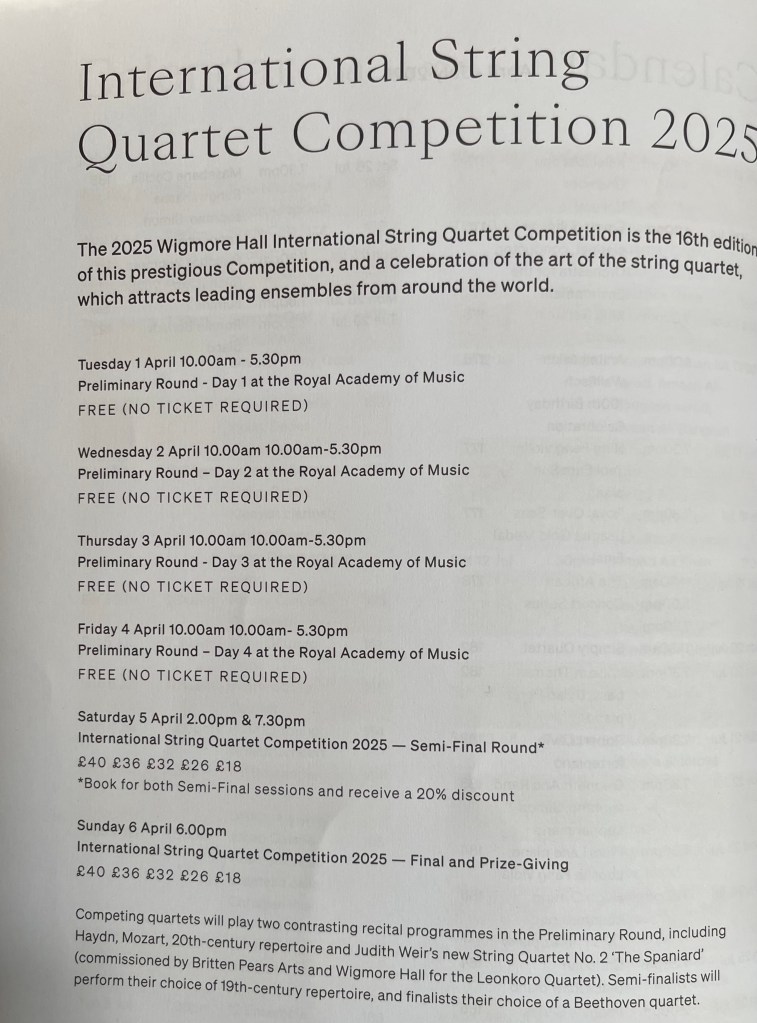
Noah Zhou at the Wigmore Hall Royal Academy of Music Series ‘Fearless music making of beauty and exhilaration’

The young British-Chinese pianist Noah Zhou, currently a Master’s student at the Royal Academy of Music, is the recipient of many awards including the Young Pianist Foundation European Grand Prix, Horowitz International Competition, Drake Calleja Trust and the Hattori Foundation. A first prize winner at competitions in Rio and Valsesia in Italy, recent concerto performances include appearances in the Netherlands, Ukraine and Brazil. Noah’s virtuosic lunchtime recital ranges from Rachmaninov’s magnificent Etudes-tableaux to the elegance of Clementi and Liszt’s stormy imagination – a literature of dark and turbulent ecstasy.

Noah Zhou at St Mary’s A tiger on the rampage with artistry and total mastery

https://christopheraxworthymusiccommentary.com/2024/12/25/point-and-counterpoint-2024-a-personal-view-by-christopher-axworthy/

Christopher Axworthy writes

Noah Zhou, another star pianist from the studio of Christopher Elton at the Royal Academy, giving a recital in their piano series at the Wigmore Hall. Nice to see that other Elton supporting this remarkable young musician with a scholarship .

The RAM is surprisingly Sir Elton John’s own Alma Mater.

It was even nicer to see the indomitable Eileen Rowe mentioned as supporting this young man’s childhood studies. In death, as in life, Eileen Rowe has meant so much to so many aspiring young musicians.

A house full of pianos in Ealing and generously giving a days teaching to starving future stars like Katherine Stott,Tessa Nicholson, Danielle Salamon and myself. Not only a days teaching, but a full roast dinner cooked by her lovable housekeeper with vegetables grown in her own garden. Miss Rowe would listen outside my room in any pauses between students, when I would work at the Norma Fantasy or Danielle would play through a Mozart Concerto. Her star pupil was Vanessa Latarche who indeed shines brightly in the piano world.

Piano and tennis were Miss Rowe’s passions, and sometimes went hand in hand with a TV perched on the piano so she could not miss a match, but also not miss a note of her pupils. She would be so proud to witness the standing ovation that awaited Noah after his breathtaking last encore.

As if Liszt’s Norma Fantasy was not enough! Noah was persuaded to play an encore, which was a mind boggling transcription of Mozart’s Marriage of Figaro. No idea who concocted such a cocktail of pianistic gymnastics, but at a guess Volodos ,Horowitz.Cziffra and I suspect Noah were all in there somewhere. Noah writes : ‘The encore is the Ginzburg transcription on Figaro’s aria.’

But this was not just mindless note spinning, because whatever Noah played was of overwhelming beauty and musicianship

Eight Etudes Tableaux op 33 that were miniature tone poems, where Noah turned these seeming baubles into the gems that Rachmaninov had bequeathed to the world. Noah showed us Rachmaninov’s world of scintillating streams of gold and silver sounds. Moments of overwhelming Russian nostalgia and finally a cauldron of Scriabinesque sounds that were quite breathtaking in their demonic dynamism.

Clementi’s Sonata in A was a breath of fresh air after such devilish sounds . Streams of notes as Clementi played with his new found toy. Sometimes almost Mendelssohnian in the way they just flew from Noah’s fingers with such mellifluous ease. But there was also a great sense of character that brought a smile for the insolent charm of the first movement .

The great Norma Fantasy opened with the just operatic gestures, but then the left hand octaves that I have never heard played with such mastery, was where he sacrificed the nobility and grandeur of the grandest of grand operas for the incredible speedy Gonzales!

It was in the subtle beauty of the lyrical central episode that Noah allowed the music to breathe again with sumptuous beauty. The deep sound of the bass, like a heartbeat, on which floated the magic of Bellini’s Bel Canto .

Liszt on the warpath found Noah now completely in charge with a sumptuous transcendental display of three handed pianism, played with burning temperament and fearless abandon.

After Emanuil Ivanov, Kasparas Mikuzis this combination of the RAM at the Wigmore is fast becoming a collectors item.

https://christopheraxworthymusiccommentary.com/2024/10/09/emanuil-ivanov-sensational-performance-at-the-wigmore-hall-of-rzewski-the-people-united-will-never-be-defeated-a-staggering-performance-of-total-mastery-and-musical-communication/

Kasparas Mikuzis at the Wigmore Hall Masterly playing of fluidity and ravishing beauty

Franz Liszt
Réminiscences de Norma  S 394

During the 1800s opera had a lot of appeal to audiences. From big dramatic storylines to emotional arias, opera was in its prime during this century. Although opera was perceived to have a glamorous aura, it was actually quite inaccessible for a large part of the public due to price and cultural differences. Therefore it is not surprising that many pianists sought to gain more audiences by composing, arranging and performing their own operatic fantasies. Liszt undertook the challenge of diluting Bellini’s opera Norma into a 15 minute solo piano work in 1841. The work easily equals the dramatic impact of the original opera through Liszt’s dynamic and highly virtuosic writing. No less than seven arias dominate Liszt’s transcription of Norma which are threaded together to create a nearly continuous stream of music.The title role of Norma is often said to be one of the hardest roles for a soprano to sing, and this adds to the drama and intensity of the music. ‘Norma, a priestess facing battle against the Romans, secretly falls in love with a Roman commander, and together they have two illegitimate children. When he falls for another woman, she reveals the children to her people and accepts the penalty of death. The closing scenes and much of the concert fantasy reveal Norma begging her father to take care of the children and her lover admitting he was wrong.”Liszt, arguably the most charismatic virtuoso of all time, was challenged for supremacy by Sigismond Thalberg, a pianist who could apparently not only counter Liszt’s legendary fire and thunder with subtlety but who played as if with three hands. Three hands were heard, two were visible! A confrontation took place in the Salon of Princess Belgioso and although it was diplomatically concluded that ”Liszt was the greatest pianist; Thalberg the only one”, the outcome was inevitable. Liszt continued on his protean and trail-blazing course while Thalberg was consigned to virtual oblivion.

Liszt offers a concentrated summary of the dramatic core of the opera by selecting melodies from Act I to evoke Norma’s leading role in opposing the Roman occupiers, and from the finale of Act II to represent her selfless renunciation of love, and of life itself, to further the cause of her warlike people.

The work opens with a series of stern chords and martial drumbeats, echoed high above by sparkling arpeggiations, to set the stage for a tale of war on earth and reward in heaven. These musical motifs recur midway through the piece as well to transition between opera’s Act I mood of heroic resolve and its tragic outcome in Act II.

Liszt’s treatment of the lyrical Qual cor tradisti, with its three simultaneous layers—melody, pulsing chordal accompaniment, and martial triplet drumbeat—has been described by musicologist Charles Suttoni as “one of the most ingenious and sublime pages ever written for the piano.”

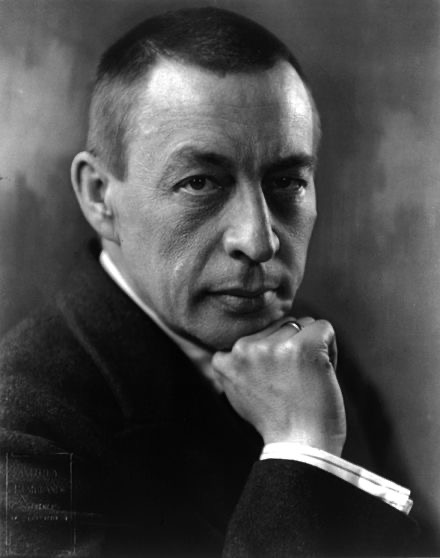
Rachmaninov writing at his Ivanovka Estate

The Études-Tableaux (“study pictures”), Op. 33, is the first of two sets of piano études  composed by Rachmaninov . They were intended to be “picture pieces”, essentially “musical evocations of external visual stimuli”. But Rachmaninov did not disclose what inspired each one, stating: “I do not believe in the artist that discloses too much of his images. Let [the listener] paint for themselves what it most suggests.”However, he willingly shared sources for a few of these études with the Italian composer Ottorino Respighi when he orchestrated them in 1930.

Max Harrison calls the Études-Tableaux  “studies in [musical] composition”; while they explore a variety of themes, they “investigate the transformation of rather specific climates of feeling via piano textures and sonorities. They are thus less predictable than the preludes and compositionally mark an advance” in technique.

Rachmaninov initially wrote nine pieces for Op. 33 but published only six in 1914. One étude, in A minor, was subsequently revised and used in the op 39 sett; the other two appeared posthumously and are now usually played with the other six. Performing these eight études together could be considered to run against the composer’s intent, as the six originally published are unified through “melodic-cellular connections” in much the same way as in Schumann’s Symphonic Studies

Differing from the simplicity of the first four études, Nos. 5–8 are more virtuosic in their approach to keyboard writing, calling for unconventional hand positions, wide leaps for the fingers and considerable technical strength from the performer. Also, “the individual mood and passionate character of each piece” pose musical problems that preclude performance by those lacking strong physical technique.Rachmaninov wrote nine études-tableaux at his Ivanovka estate  in 1911. Six of them, the original Nos. 1–2 and 6–9, were published that year. The original No. 4 is lost; the piece was revised and published as op 39 n. 6. The original Nos. 3 and 5 were published posthumously within Op. 33.

Massimiliano Grotto at Roma 3′ Schubert of searing intensity and commanding authority’

Playing of great authority and superb musicianship by Massimiliano Grotto where the elegance and Viennese charm of Schubert’s ‘Valses Nobles’ were answered by the deep meditation of his second ‘Klavierstücke’. Heralding his extraordinary vision, like Beethoven’s final pianistic trilogy, of what he could forsee at the end of an all too brief terrestrial existence.

Massimiliano playing with commanding assurance as the Beethovenian call to arms at the opening of his C minor Sonata was enacted with overwhelming impact.

So many differing emotions that could be conveyed as one complete whole of conviction. There was an extraordinary clarity and demonic rhythmic drive of intensity and profound understanding of this dark place that Schubert was to envisage before the vision of peace and light that he was to find in the final sonata of his trilogy, written in the last year of his 31 years on this earth.

Even the ‘Adagio’ was penned with great strokes of burning intensity and poignant meaning always with the menace looking on from afar. But there was the glorious relief of the gentle return of the opening melody with a barely etched accompaniment. Some playing of masterly control and use of the pedals as the theme was allowed to float with simplicity and innocence leading into the beautifully fluid ‘Menuetto’ and richly textured ‘Trio.’ The Tarantella finale took flight with the same authority and conviction that I remember from Richter many years ago in London. Even the sudden rays of sunlight that Schubert‘s genius could never fully suppress had the same feeling of whirlwind energy.

A remarkable performance from a pianist who is above all a superb musician. One that can see the burning genius of Schubert in an architectural shape with four seemingly diverse movements, transformed into a unified visionary journey of discovery.

The second of the ‘Klavierstücke’ rarely heard just on its own, in Massimiliano’s poetic hands was turned into a tone poem of ravishing beauty and searing intensity. A beautiful mellifluous outpouring with a kaleidoscope of subtle colours allowed to flow so gracefully on not always untroubled waters. There was the dynamic menace to the driving rhythms of the first contrasting episode and the passionate outpouring of the second with a melodic line etched with great intensity. Many interesting bass counterpoints were underlined with refined good taste and brought the music vividly alive as Massimiliano’s masterly musicianship knew that Schubert’s roots were firmly created from the bass upwards.

The twelve ‘Valses Nobles’ were played as a whole with contrasts that ranged from Viennese elegance to rhythmic drive and the delicacy of bel canto. Nobility and majesty too and one in particular that Liszt could not resist turning into his own ‘Soirée de Vienne.’

The Moment Musicaux n 3 in F minor, offered as an encore, was played with beguiling rhythmic insinuation and also a certain freedom to elaborate on Schubert’s own ornamentation.

Jerome Rose, Massimiliano’s mentor in New York, played Schubert in a recital in my series in Rome some years ago and I can only endorse what he has said about Massimiliano : ‘ one of the finest pianists of his generation. You will be hearing more of him in the future.’

Bravo too, Valerio Vicari, and his dedicated team who offer a platform to so many wonderful young players who after years of dedication all they crave is an audience with whom they can share their considerable artistry..

Massimiliano with Laura, a painter and restorer also from their home town of Castelfranco Veneto
The beautiful new Roma 3 University Retorato.
Recording made on a Borgato piano and produced by Borgato pianos. .
Franz Schubert 31 January 1797,Vienna – 19 November 1828 ,Vienna

Schubert  wrote about a hundred waltzes for piano solo. Particularly well known among these are two named collections, the 34 Valses Sentimentales (op. 50, D.779) and the 12 Valses Nobles (op 77 Op.D.969).The Valses Sentimentales were written in 1823, and the Valses Nobles are believed to have been written in 1827, the year before Schubert’s death, although the manuscript is undated.

The last three sonatas, D. 958, 959 and 960, are his last major compositions for solo piano. They were written during the last months of his life, between the spring and autumn of 1828, but were not published until about ten years after his death, in 1838–39. Like the rest of Schubert’s piano sonatas, they were mostly neglected in the 19th century. By the late 20th century, however, public and critical opinion had changed, and these sonatas are now considered among the most important of the composer’s mature masterpieces. They are part of the core piano repertoire, appearing regularly on concert programs and recordings.The last year of Schubert’s life was marked by growing public acclaim for the composer’s works, but also by the gradual deterioration of his health. On March 26, 1828, together with other musicians in Vienna, Schubert gave a public concert of his own works, which was a great success and earned him a considerable profit. In addition, two new German publishers took an interest in his works, leading to a short period of financial well-being. However, by the time the summer months arrived, Schubert was again short of money and had to cancel some journeys he had previously planned.

Schubert had been struggling with syphilis since 1822–23, and suffered from weakness, headaches and dizziness. However, he seems to have led a relatively normal life until September 1828, when new symptoms such as effusions of blood appeared. At this stage he moved from the Vienna home of his friend Franz von Schober to his brother Ferdinand’s house in the suburbs, following the advice of his doctor; unfortunately, this may have actually worsened his condition. However, up until the last weeks of his life in November 1828, he continued to compose an extraordinary amount of music, including such masterpieces as the three last sonatas.

Schubert probably began sketching the sonatas sometime around the spring months of 1828; the final versions were written in September. These months also saw the appearance of the Three Piano Pieces D .946, the Mass in E flat D.950, the String Quintet D.956, and the songs published posthumously as the Schwanengesang collection (D. 957 and D. 965A), among others. The final sonata was completed on September 26, and two days later, Schubert played from the sonata trilogy at an evening gathering in Vienna. In a letter to Probst (one of his publishers), dated October 2, 1828, Schubert mentioned the sonatas amongst other works he had recently completed and wished to publish.However, Probst was not interested in the sonatas, and by November 19, Schubert was dead.

In the following year, Schubert’s brother Ferdinand  sold the sonatas’ autographs  to another publisher, Anton Diabelli , who would only publish them about ten years later, in 1838 or 1839. Schubert had intended the sonatas to be dedicated to Johann Nepomuk Hummel , whom he greatly admired. Hummel was a leading pianist, a pupil of Mozart, and a pioneering composer of the Romantic style (like Schubert himself). However, by the time the sonatas were published in 1839, Hummel was dead, and Diabelli, the new publisher, decided to dedicate them instead to composer Robert Schumann, who had praised many of Schubert’s works in his critical writings.

Emanuil Ivanov ignites Leighton House with transcendental artistry

Kensington and Chelsea Music Society

Kensington and Chelsea Music Society

A piano recital in association with The Keyboard Charitable Trust, supported by the Robert Turnbull Piano Foundation.

‘Emanuil’s recital was absolutely thrilling. He is undeniably one of the finest pianists we have collaborated on, and it was a privilege to present him. Emanuil is on par with any big name out there and he has the qualities for a celebrated career ahead. His technical command is unparalleled, and his introspective sensitivity is rare to encounter. He performs with such natural elegance, free of any pretentiousness or affectation – a true artist.
Beyond his remarkable talent, Emanuil is a genuinely wonderful person – humble, grounded, and impressively mature for his age. We’re already looking forward to inviting him for another recital in the future.’ Yvonne Georgiadou, Artistic Director, Pharos Arts Foundation, Cyprus December 2024


Ferruccio Busoni (after J. S. Bach) Durch Adams Fall ist ganz verderbt
Ludwig van Beethoven Piano Sonata No. 17 in D minor, “The Tempest”

— interval —

Felix Mendelssohn Songs without Words, Op. 30
Charles-Valentin Alkan Symphony for solo piano

Emanuil Ivanov attracted international attention after receiving the First prize at the 2019 Ferruccio Busoni Piano Competition in Italy. This achievement was followed by concert engagements in some of the world’s most prestigious halls including Teatro alla Scala in Milan and Herculessaal in Munich. He recently completed his studies on a full scholarship at the Royal Birmingham Conservatoire under the tutelage of Pascal Nemirovski and Anthony Hewitt, and from September studies under Joanna MacGregor and Christopher Elton at London’s Royal Academy of Music as a recipient of the prestigious Bicentenary Scholarship. His programme for KCMS brings together some of the finest piano writing of the 19th century, with a respectful nod to the Baroque era via Busoni’s famous transcription of Bach.:

Emanuil Ivanov writes

‘A “prelude” is indeed an appropriate opening for a recital programme – yet the notions of mere introductory brevity the term might bring forth cannot undermine the profundity and splendour of J.S. Bach’s Chorale Preludes. Originally for organ, ten of these works were given new shape by Ferruccio Busoni,the transcriptions written around 1898. Under number seven stands “Durch Adams Fall ist ganz verderbt” (“Through Adam’s fall all is lost”) and indeed this title appears twice – as 7a and 7b. Busoni adapts two Bach works based on the same text and gives us the option to either present them separately, or as a unified pair – a prelude and fugue combination, and that is how I’ve chosen to perform them. A work of quiet, yet powerful impact. A stern, sombre sermon; a moving prayer of penitence.

Beethoven’s so-called “Tempest” sonata is one of those workswhere the “subtitle question” can be a source of endless debate. Unlike other, more arbitrarily chosen and not coming from the composer subtitles, the one associated with the op.31 no.2 Sonata could actually be traced to Beethoven himself. It has been said that in a conversation with his associate Anton Schindler, the Master suggested reading Shakespeare’s “The Tempest” as a possible key to unlocking the sonata’s secrets.Whether true or not, the work does share a certain enigmatic quality with the play and it is rather fun trying to link together episodes in the music and in the Bard’s masterpiece. And yet, an even more plausible explanation for its frequent plunges into darkness might be the time it was written in – 1801-1802, the time of increasing despair for Beethoven, on account of his worsening deafness.

The ”song without words” genre is a curious contradiction – song lyrics usually have a vital role in bringing concrete meaning and image – yet the absence of the latter makes the works in this genre even more poignant. Mendelssohn published eight collections of six songs each over his lifetime and the op.30 was written in 1833-34. These are six gems, masterful in form, delicately balanced in texture, and showcasing the composer’s melodic genius. Ranging from sumptuous arias and hushed confessions to vivacious dance and dramatic outpourings, the cycle is concluded with a famous “gondolier’s song”. I shall insert a quote from Mendelssohn himself regarding the non-verbal aspect of his “Lieder ohne Worte”: “What the music I love expresses to me, is not thought too indefinite to put into words, but on the contrary, too definite”

Boldly defying convention and calling upon the instrument’s ability to evoke a full orchestral sonority, Charles-Valentin Alkan titles this work “Symphony for solo piano”. Even more unusually, its four movements are also numbers 4 to 7 in a collection of 12 etudes in all the minor keys (1857). While it might seem superficial, the spirit of duality seems to have a prominent role in the music, navigating between searing drama and lyricism. Starting from a weighty sonata-form movement, at times quite Mendelssohnian (but Mendelssohn “on steroids”!), the work then journeys through a funeral march with a central section of great beauty, and a biting, unstable minuet with a gentle, song-like trio. This all leads to the finale, described by Raymond Lewenthal as “a ride in Hell”. And aptly so, especially for the pianist! Driving forward with extreme ferocity and throat-grabbing relentlessness, this movement is the climax of the work and, demanding every ounce of energy from the performer, it provides a remarkable conclusion to the Symphony.’

Christopher Axworthy writes

A quite remarkable recital by the 2019 Busoni winner,Emanuil Ivanov.

After his sensational recital a month ago of the Rzewski variations:https://christopheraxworthymusiccommentary.com/2024/10/09/emanuil-ivanov-sensational-performance-at-the-wigmore-hall-of-rzewski-the-people-united-will-never-be-defeated-a-staggering-performance-of-total-mastery-and-musical-communication/

And with recent performances of the Busoni Concerto in England and Bulgaria under his belt he is now turning his attention to Alkan. Even he exclaimed what a monster the Symphony op 39 4/7 is.

Well it almost made the peacock blush and certainly overwhelmed all those lucky enough to be present in Leighton House last night .A finale that does not give you time to breathe, exclaimed our valiant hero.

We were all totally aware of that as the transcendental demands of this mysterious colleague of Chopin and Liszt were not only met but also shaped with intelligence and mastery that was quite breathtakingly exhilarating. Alkan’s Menuet where all the devils were unleashed with a Mendelssohnian fleetness that would have put to shame his elegant Victorian refinement .An amazing Funeral March with Emanuil’s mastery of balance allowing the haunting tenor melody to sing out accompanied by devilish spiky chords.

But it was the first movement that was so remarkable .Opening like the Eroica with no nonsensical preamble but straight down to business with a palpitating agitated melodic germ that was to be varied and repeated in a million different ways in a first movement that Emanuil shaped with architectural courage and with a kaleidoscope of colour that had us on the edge of our seats .

This had been after Mendelssohn’s songs without words op 30. What ravishing beauty he unravelled with aristocratic good taste and beguiling poetry.The second of this book of six little gems was played with that quixotic fleeting lightness that Allkan was to transform into something much more sinister.The simple beauty and elegance of the Venetian Boat Song underlined the shock as the ghostly mysterious presence of Alkan was lain before us.

An encore after the Alkan would be inconceivable for any but the greatest masters and Emanuil took a few minutes to sift through his vast repertoire before calming the infernal atmosphere with Busoni’s Elegie on the most pastoral of all traditional melodies: Greensleeves. Refined jeux perlé and magical glissandi of another era accompanied the melody as never before .

If we had insisted ,Emanuil told be afterwards, we would have been rewarded with his own Gulda inspired Theme and Variations written as an engagement present for Irina. He had played them a year ago in Florence and when I met him again in London a few months ago he introduced me to his wife! How could anyone resist such an extraordinary declaration !

Emanuil with his wife Irina

https://christopheraxworthymusiccommentary.com/2023/03/31/emanuil-ivanov-premio-busoni-2019-al-british-in-the-harold-acton-library-a-room-with-a-view-of-ravishing-beauty-and-seduction/

A first half opening with the deep meditative Chorale prelude ‘Through Adam’s fall’ by Bach in a double transcription by Busoni. Emanuil’s eclectic inquisitive mind played the two transcription 7a and 7 b as a unified pair .

Beethoven’s ‘Tempest’ Sonata crept in on the wave of such profound utterings with an opening of truly ghostly proportions .The whispered recitativi barely audible as he followed the composer’s precise instructions with the microscopic intelligence of a true ‘interpreter’ at he service of the composer. It was this selfless mastery that was noted by one of the audience members sure that the Kensington and Chelsea Music Society had been honoured to have such an artist obviously headed for the stars.

The contrast in dynamics in the Beethoven took us all by surprise as the composers irascible temperament was even more schizoid than Schumann’s dual personalities of Florestan and Eusebius. An adagio that was a wash of beautiful sounds spread over the keyboard and the bed for one of Beethoven’s most noble and aristocratic melodic creations.

The final Allegretto was played with a dry lilting simplicity that was quite irresistible.Dramatic outbursts made this beguiling Rondo melody ever more hypnotic until it disappeared completely deep into the depths of the keyboard.

Simone Tavoni and fiancée Agnese Navarro , Emanuil Ivanov,Sarah Biggs CEO of the KT and William Vann,chair of KCMS
Charles-Valentin Alkan 30 November 1813 – 29 March 1888 was a French composer and virtuoso pianist. At the height of his fame in the 1830s and 1840s he was, alongside his friends and colleagues Chopin  and Liszt, among the leading pianists in Paris, a city in which he spent virtually his entire life.

The Symphony for Solo Piano op 39 4-7,is a large-scale romantic work for piano composed by Charles – Valentin Alkan and published in 1857.

Although it is generally performed as a self-contained work, it comprises études Nos. 4–7 from the Douze études dans tour les tons mineurs (Twelve Studies in All the Minor Keys), Op. 39, each title containing the word Symphonie . The four movements are titled Allegro moderato, Marche funèbre,Menuet and Finale ( described by Raymond Lewenthal as a ride in hell). Much like the Concerto for Solo Piano  (Nos. 8–10), the Symphony is written so as to evoke the broad palette of timbres and harmonic textures available to an orchestra. It does not contain the excesses of the Concerto or the Grande Sonate (Op. 33). But, rather like the Sonatine Op. 61, it proves that Alkan was also capable of writing perfectly balanced and almost ‘Classical’ works.”Unlike a standard classical symphony, each movement is in a different key, rising in progressive tonality by a perfect fourth.

Beethoven with the Manuscript of the Missa Solemnis (1820)
Born Bonn and baptised 17th December 1770 Died Vienna 26th March 1827


The Piano Sonata No. 17 in D minor, op. 31, n. 2, was composed in 1801–02 . ‘With all the tragic power of its first movement the D minor Sonata is, like Prospero , almost as far beyond tragedy as it is beyond mere foul weather. It will do you no harm to think of Miranda at bars 31–38 of the slow movement… but people who want to identify Ariel and Caliban and the castaways, good and villainous, may as well confine their attention to the exploits of Scarlet Pimpernel when the Eroica or the C minor Symphony is being played.’ Donald Tovey .

The sonata is in three movements:

  1. Largo – Allegro
  2. Adagio
  3. Allegretto

Each of the movements is in sonata form , although the second lacks a substantial development section

Portrait from 1846
Born 3 February 1809 Hamburg Died 4 November 1847 (aged 38)Leipzig

Songs Without Words (Lieder ohne Worte) is a series of short lyrical  works by Felix Mendelssohn  written between 1829 and 1845. His sister, Fanny, and other composers also wrote pieces in the same genre.The eight volumes of Songs Without Words, each consisting of six songs , were written at various points throughout Mendelssohn’s life and published separately. Number 2 was written for his sister Fanny to celebrate the birth of her son in 1830.

Book 2, Op. 30 (1833–34)

  1. Andante espressivo (E♭ major), MWV U 103
  2. Allegro di molto (B♭ minor), MWV U 77
  3. Adagio non troppo (E major), MWV U 104
  4. Agitato e con fuoco (B minor), MWV U 98
  5. Andante grazioso (D major), MWV U 97
  6. Allegretto tranquillo: Venetianisches Gondellied(“Venetian Boat Song No. 2”) (F♯ minor), MWV U 110

Book 2 was dedicated to Elisa von Woringen.


Ferruccio Busoni (1 April 1866 – 27 July 1924) was an Italian composer, pianist , conductor, editor, writer, and teacher. His international career and reputation led him to work closely with many of the leading musicians, artists and literary figures of his time, and he was a sought-after keyboard instructor and a teacher of composition


Alongside the Chaconne for violin, the ten Chorale Preludes for organ are Busoni’s best-known piano transcriptions of works by J. S. Bach. Unlike the Chaconne, which Busoni envisaged for concert performance, he transcribed the Chorale Preludes in “chamber-music style”. 

Emanuil Ivanov sensational performance at the Wigmore Hall of Rzewski ‘ The People United will never be defeated ’ A staggering performance of total mastery and musical communication – a happening as never before!

Emanuil Ivanov a great pianist of humility and intelligence takes St.Mary’s by storm

Emanuil Ivanov attracted international attention after receiving the First prize at the 2019 Ferruccio Busoni Piano Competition in Italy. This achievement was followed by concert engagements in some of the world’s most prestigious halls including Teatro alla Scala in Milan and Herculessaal in Munich.

Emanuil Ivanov was born in 1998 in the town of Pazardzhik, Bulgaria. From an early age he demonstrated a keen interest and love for music. He regards the presence of symphonic music, especially that of Gustav Mahler, as tremendously influential in his musical upbringing during his childhood.

He started piano lessons with Galina Daskalova in his hometown around the age of seven. Ivanov studied with renowned bulgarian pianist Atanas Kurtev from 2013 to 2018. Subsequently he studied on a full scholarship at the Royal Birmingham Conservatoire under the tutelage of Pascal Nemirovski and Anthony Hewitt, and currently an Advanced Diploma student at London’s Royal Academy of Music as a recipient of the prestigious Bicentenary Scholarship. He has received artistic guidance from Dmitri Bashkirov, Dmitri Alexeev, Sir Stephen Hough, Vladimir Ovchinnikov, Peter Donohoe, etc.

In February 2021, at the height of the Covid-19 pandemic, Ivanov performed a solo recital in Milan’s famous Teatro alla Scala. The concert was live-streamed online and is a major highlight in the artist’s career.

https://christopheraxworthymusiccommentary.com/2021/02/27/emanuil-ivanov-at-la-scala-to-the-glory-of-god-and-beyond/

In 2022, he received the honorary silver medal of the Musician’s Company, London and later in the same year became a recipient of the generous Carnwath Piano Scholarship.

Emanuil Ivanov has given critically acclaimed recitals, concerto performances and tours in japan, France, Italy, Germany, Austria, Bulgaria, Cyprus, South Africa, the United Kingdom and Poland. In the summer of 2023, he recorded an album of Scarlatti sonatas for the renowned Naxos label. Ivanov’s performances have been featured on BBC Radio 3, Italy’s Rai Radio 3 and Japan’s NHK Radio.

Emanuil has continually shown affinity towards some of the more rarely performed works in the repertoire and in 2024 he performed Busoni’s mammoth piano concerto. Apart from playing the piano, he also displays great interest in composition and has composed regularly since childhood. 

Point and Counterpoint 2024 A personal view by Christopher Axworthy

Neo Hung’s clarity and technical mastery conquers St Mary’s

https://www.youtube.com/live/sIyyt0Tv0_g?si=YJjPRYaRCZ_Q_-pC

Playing of remarkable clarity and architectural understanding with an extraordinary technical command of the keyboard that allowed him to play quite fearlessly some of the most demanding works of the piano repertoire.

Immediately the opening Shostakovich Prelude had the resonance of an organ with long held pedal notes giving a very full fluid sound. It contrasted with the complete clarity of the fugue that was played with scintillating energy and remarkable character.

There was clarity too in the Clementi Sonata which flowed so beautifully and was shaped with great finesse. A beautifully poised slow movement was immediately contrasted with the rhythmic drive of the presto finale.

It was the Dante Sonata that showed the real artistry of this twenty one year old pianist. An architectural understanding of a work that can so often seem episodic. A quite remarkable technical command which allowed him to throw off the most demanding passages with clarity and ease. Nowhere more than in the final pages where the treacherous skips were not only mastered but also given a musical shape that is rare indeed. In the slower passages he missed the flow and romantic sweep and his breathtaking pyrotechnics could have had more passionate abandon and sense of colour but it was performance remarkable for it’s absolute clarity and commanding authority.

Hats off to Neo for including six of Liszt’s transcriptions of Schubert Songs (there are over 50 to choose from !). These transcriptions are the meeting of the mellifluous genius of Schubert and the total mastery of the piano of Liszt. A mastery that can turn the piano into an orchestra with a sense of colour and balance by use of the sustaining pedal. In fact it was Anton Rubinstein, a pupil of Liszt ,who called the pedal the soul of the piano. It was Liszt and Thalberg who exploited this newly created device to turn the piano into an instrument that could roar like a lion or sing like the greatest of bel canto singers. Neo played these six beautiful songs rather literally sacrificing the subtle beauty and inflections of Schubert for a quite extraordinary clarity and digital mastery. I wondered whether he had actually listened to the songs and discovered the real meaning of the poetry that had inspired them.

The Scriabin Sonata was played with a quite extraordinary sense of balance where the beautiful first movement was allowed to sing with ravishing beauty and simplicity.The second movement was played with quite remarkable clarity but the ‘star’ could have shone with more timeless passion and sumptuous richness.

The theme and variations from Beethoven’s Sonata op 109 was the encore that Neo so generously offered. It was in fact the finest performance of the recital, with the theme beautifully shaped with poise and delicacy.The variations were allowed to unfold with aristocratic nobility and beauty and the return of the theme hovered over a cloud of sounds with quite extraordinary mastery and poetic understanding.

Neo Hung started his first piano lesson at the age of six in Hong Kong and gave his first solo piano recital at 13. He studied at the Hong Kong Academy for Performing Arts from 2018 to 2021 under Julie Kuok. He currently studies piano with Dina Parakhina at the Royal College of Music with a full scholarship awarded by the HKSAR government. He has been supported by the Keyboard Charitable Trust since 2024, and Talent Unlimited since 2023.  

Screenshot

Neo made his concerto debut in Music Fest Perugia with Chopin’s Piano Concerto No.1 under Alessandro Alonzi in 2023. He has also performed internationally in the Amalfi Coast Music Festival, Malaga International Piano Festival, RCM Keyboard Festival, Yale University, Hong Kong City Hall and Hong Kong Cultural Centre. Recently, he has embarked on a tour with solo recitals in a variety of venues across England, such as Bath Abbey, Ely Cathedral, Wakefield Cathedral, St Mary’s Perivale Church, St James’s Piccadilly Church, University Church Oxford and Westminster Music Library, among many other venues. He made his debut as a Keyboard Charitable Trust Artist in September 2024 at Erin Arts Centre on the Isle of Man. In 2023, Neo won prizes in the Liszt Society Piano Competition, chaired by the renowned pianist Leslie Howard. https://christopheraxworthymusiccommentary.com/2023/11/27/liszt-in-perivale-the-universal-genius-the-voyage-of-discovery-continues/

Neo has gained inspiration in masterclasses by artists such as Sofya Gulyak, Niel Immelman, Ian Jones,  Juan Lago, Marina Lomazov, Gabriel Kwok, Alexandre Moutouzkine, Jerome Rose, Eleanor Wong and Jerome Lowenthal, who lauded him as “an outstanding pianist”.  

On 28th September, Neo Hung, a top prize winner of the Liszt Competition UK, gave a masterclass and concert for the Erin Arts Centre on the Isle of Man for the Keyboard Trust.

‘What a lovely, easy-going young man and such a fantastic pianist. The masterclass was detailed and informative and the recital was absolute dynamite. Everybody was fully engaged throughout the show and all shook his hand afterwards (there were about 60 of them!) and thanked him for coming. Once again thank you to you and the Keyboard Trust for finding ANOTHER exceptional young talent; we’re really happy to help give them a foothold’ – Pip Rolfe, Erin Arts Centre.

And from Neo: ‘I had a most unforgettable experience performing at the wonderful Erin Arts Centre on Isle of Man on 28th September 2024 in addition to presenting my first ever masterclass! First and foremost, I would like to thank the artistic directors of the Keyboard Trust for offering me this unique opportunity which has increased my exposure to a wider audience. I had a most unforgettable time performing for such an enthusiastic and warm audience who reacted positively as I shook hands with one by one post-concert. Thank you to everyone who has come to either or both of my masterclass and recital that day with such attentiveness and passion. It has been an absolutely fantastic day! ‘https://christopheraxworthymusiccommentary.com/2024/12/25/point-and-counterpoint-2024-a-personal-view-by-christopher-axworthy/