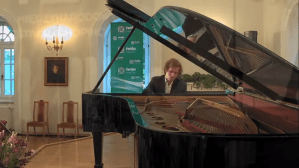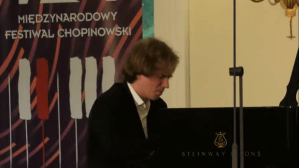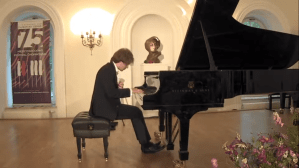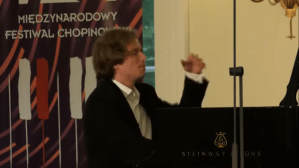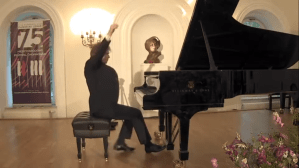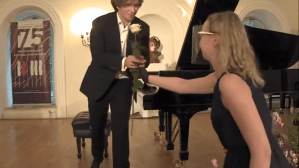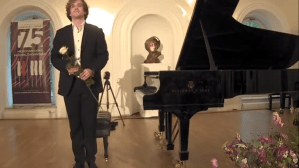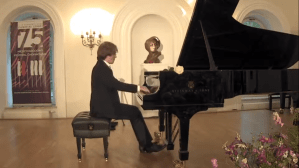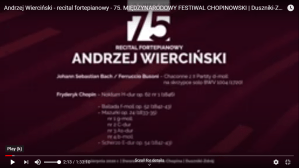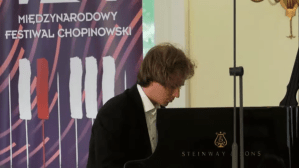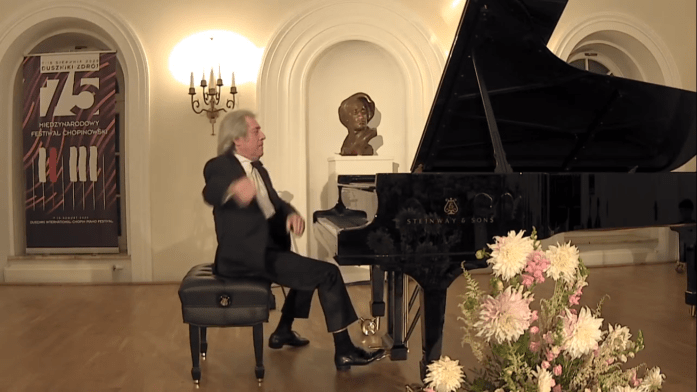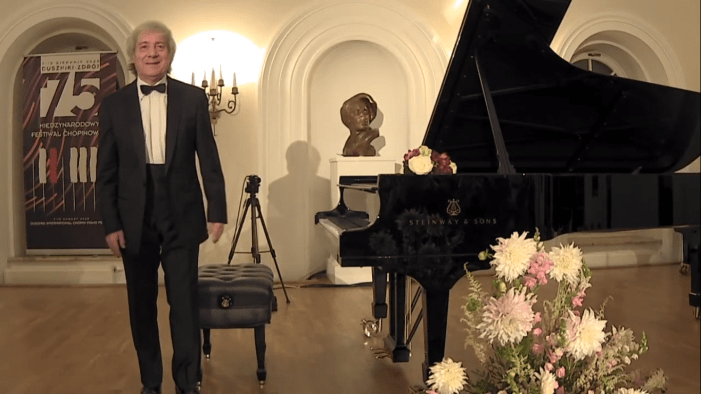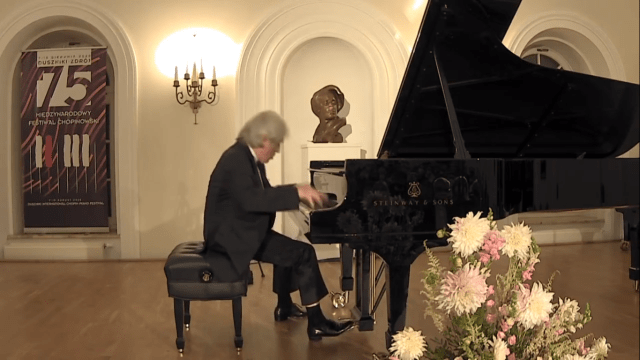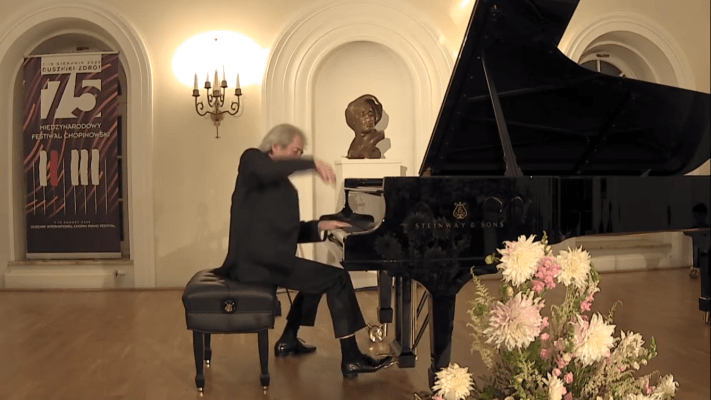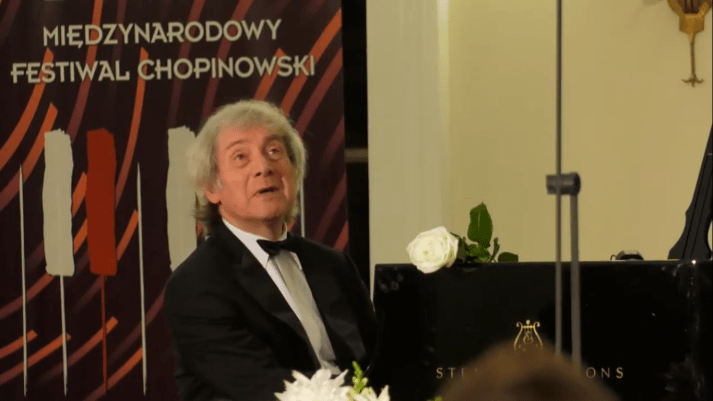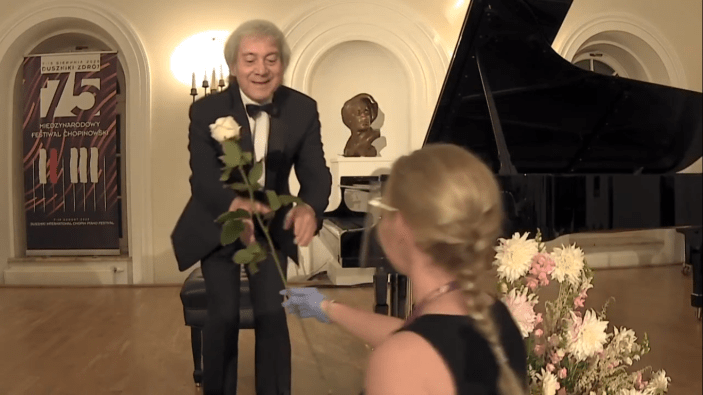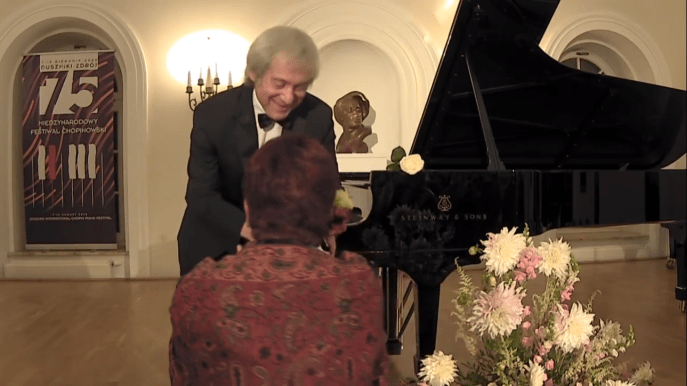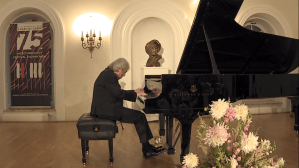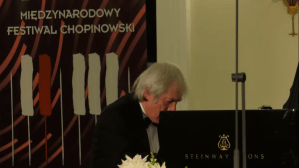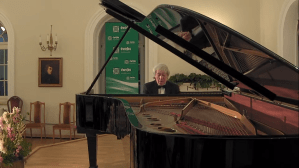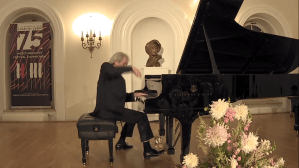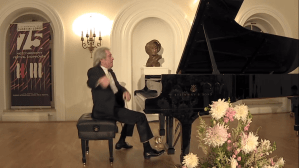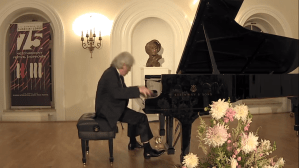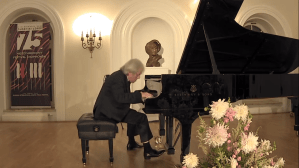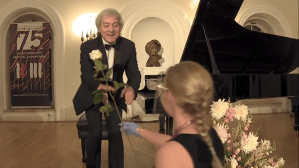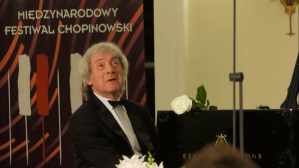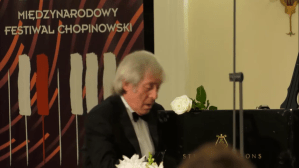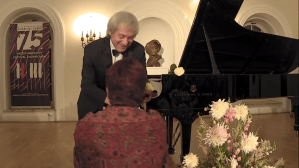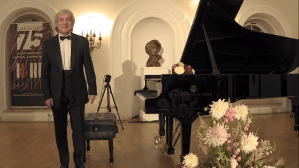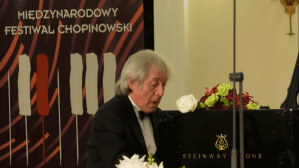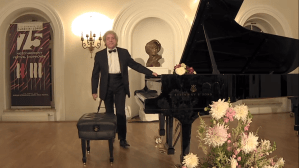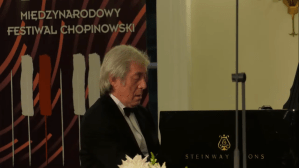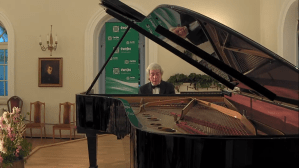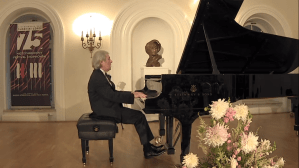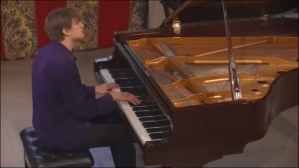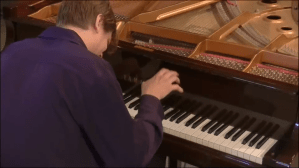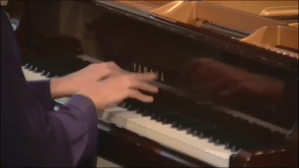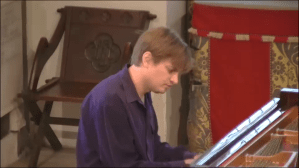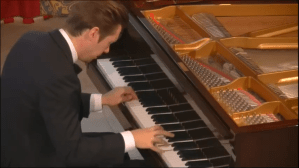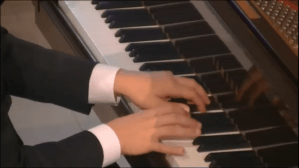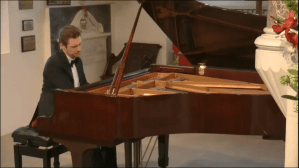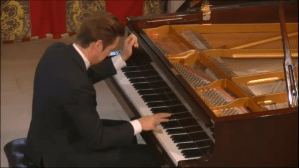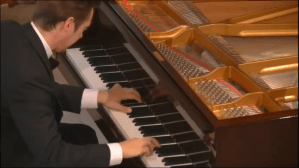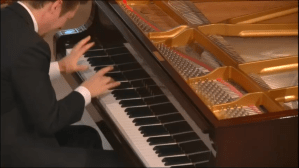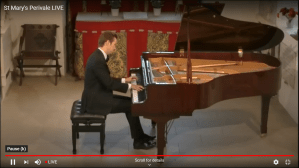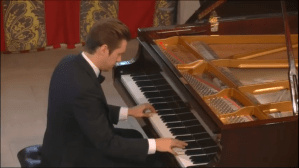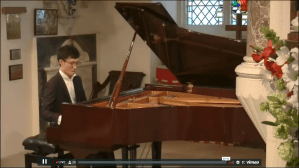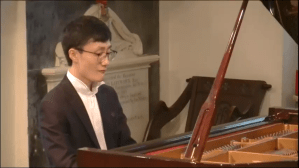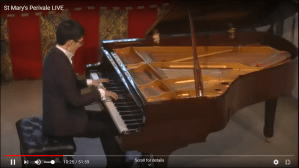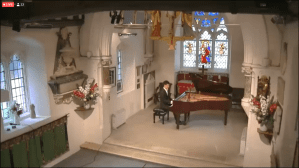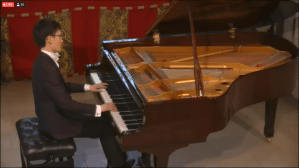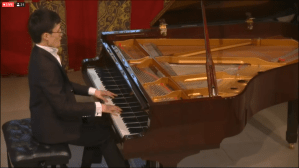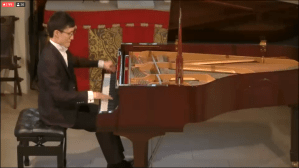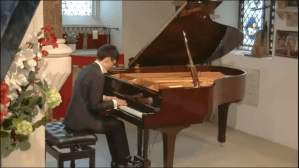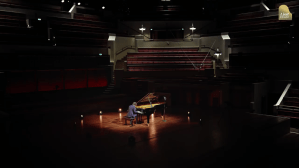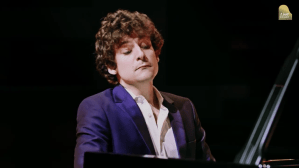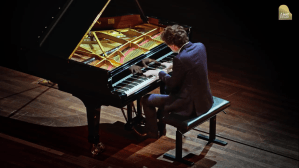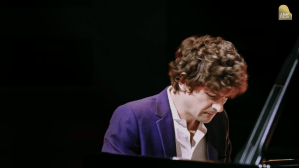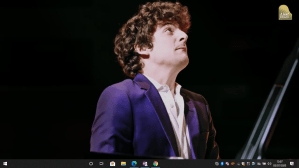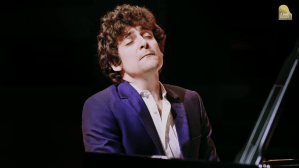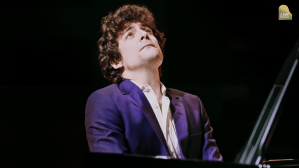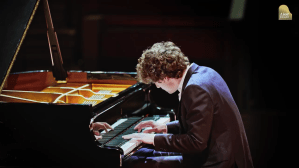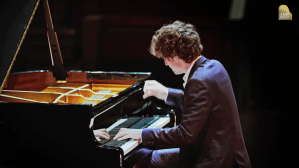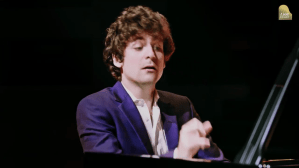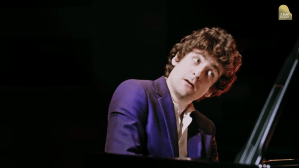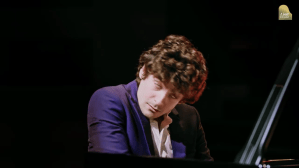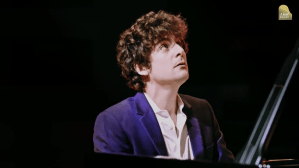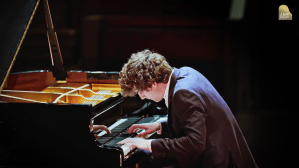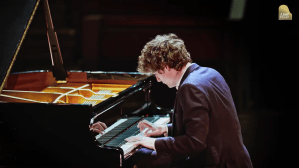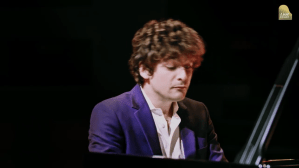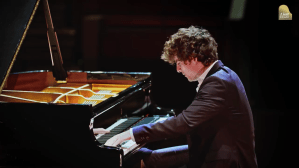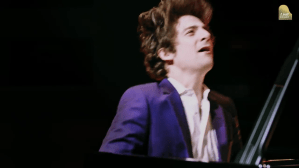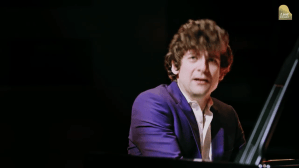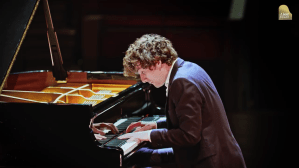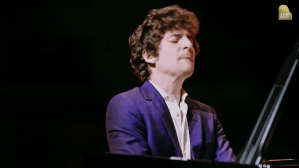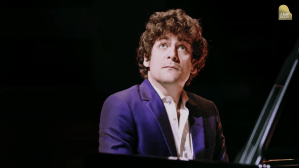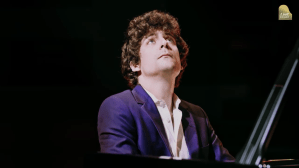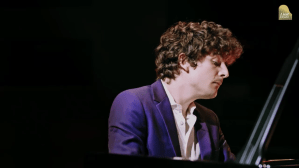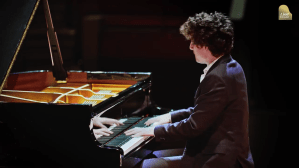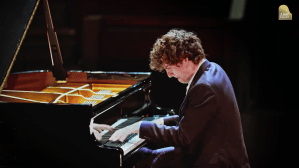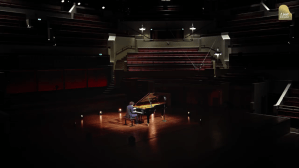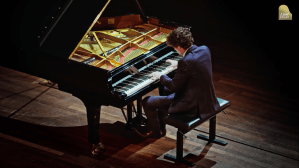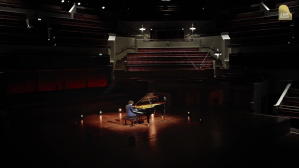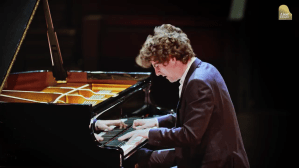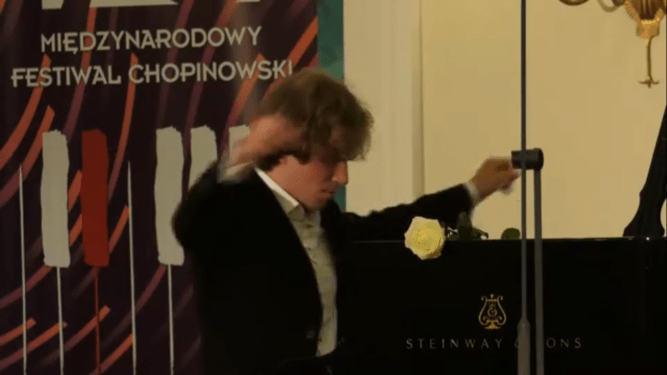
Andrzej Wiercinski in Poland from the ridiculous to the sublime

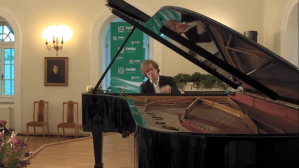
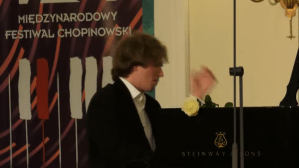
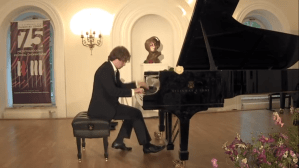
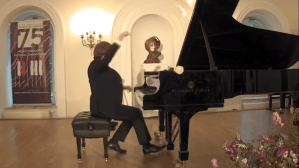
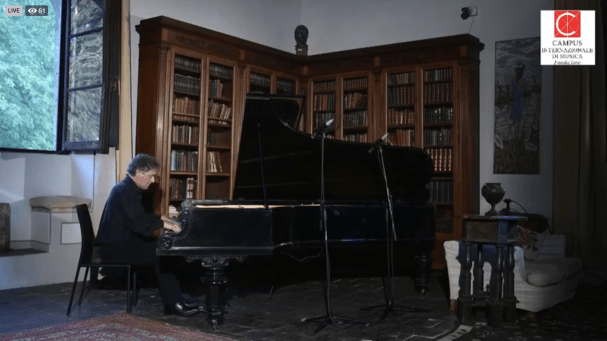
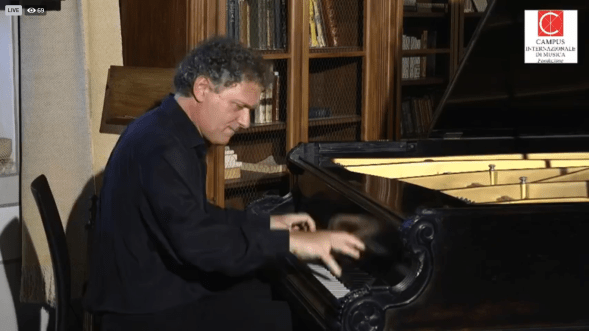
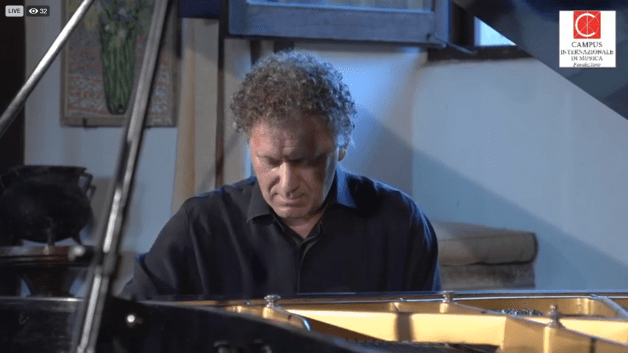
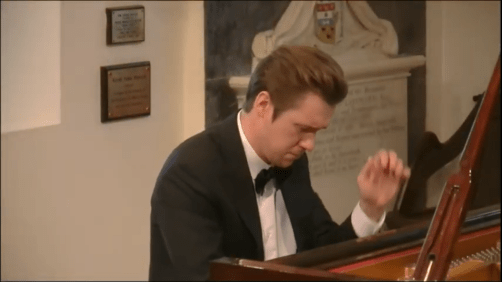
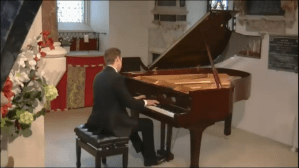
It was last April that I was able to hear  Andrzej Wiercinski  in the  young pianist’s Mecca of St Mary’s Perivale in London.It  gave me great pleasure to read  my impressions before listening to the recital streamed from the  remarkable 75th Duszniki International Chopin Festival in Poland .I had heard Federico Colli and Dmitri Alexeev both give superb performances- by coincidence on their birthdays.Arcadi Volodos’s concert that I was so looking forward to hearing again after Rome last february was not streamed.(I have included my impressions below from his performance in Rome last February)
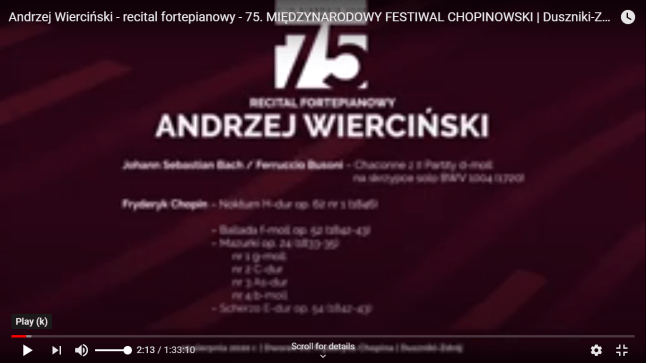
So I was a little apprehensive to listen to a young pianist in such august company. I need not have been because he offered a recital of such refined good taste and clarity of both musical thought allied to a purity of sound.It reminded  me of  a study weekend  by Rome University dedicated to  the art of Arturo Benedetti Michelangeli with the title “Every note a drop of crystal”.In fact it was this very clear crystal clean sound that reminded me  more of the young Tamas Vasary and the Hungarian school of Dohnyani of Geza Anda or Andor Foldes.A clarity and intelligence allied to a sense of colour and architecture that in a way is the opposite of that other Hungarian school, that of  Liszt which is all sturm und drang and fireworks when not seeking eternal grace!
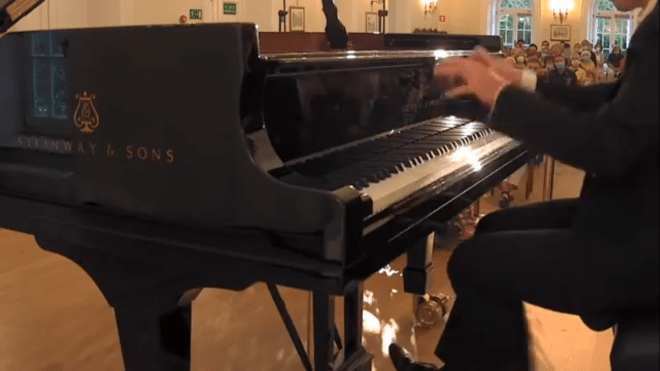
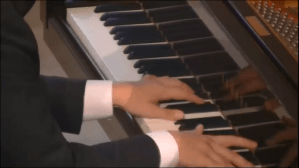
After a long programme that included three of the greatest works for the piano:The Bach/Busoni Chaconne,Chopin 4th Ballade and 4th Scherzo it was in the second of three encores that the heavens truly opened with a sublime performance of the Prelude in B minor by Bach/Siloti.It was here that one held one’s breath as he barely touched the keys ,dusting them with the same beautiful movements as the sounds he was creating.A transcendental control of sound allied to such a refined subtle musicality that when the choral melody floated into  view it was  as if on some magic cloud  where we could indeed catch a glimpse of the angels that we admire in the Italian Renaissance frescos of divine faith.
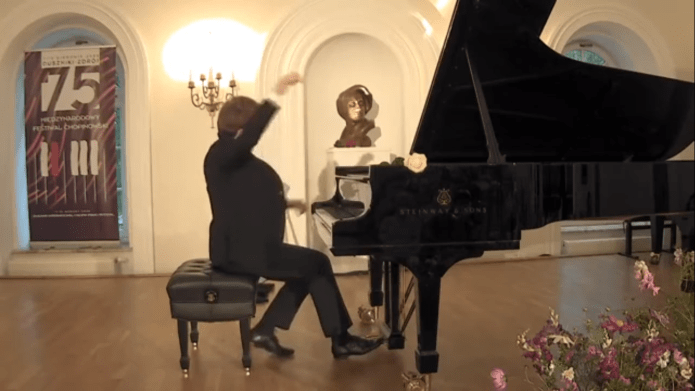
The other two encores were by Chopin,of course.

The Polonaise op 53 ‘Heroique’ that I remembered from his performance last April in London.Truly aristocratic playing of such clarity and intelligence.Shorn of all the rhetoric that some pianists seem to think belong to the so called Chopin tradition but at the same time played with a wondrous sense of colour and style.After the amazing precision of the military who enter on his left (slightly too fast for my taste but nevertheless astonishing) dissolving into the most mellifluous and sensually shaped melodic line with a flexibility of subtle contrapuntal colours that shone like a prism in this pianist’s poetic hands.It led to the final triumphant declaration played with true passionate control.The last encore was of the young virtuoso Chopin who would astonish the salons of the day with his refined artistry as we today were astonished and seduced  by this young man who  at 23 is the same age as the young Chopin when he composed these Variazioni Brillanti op 12
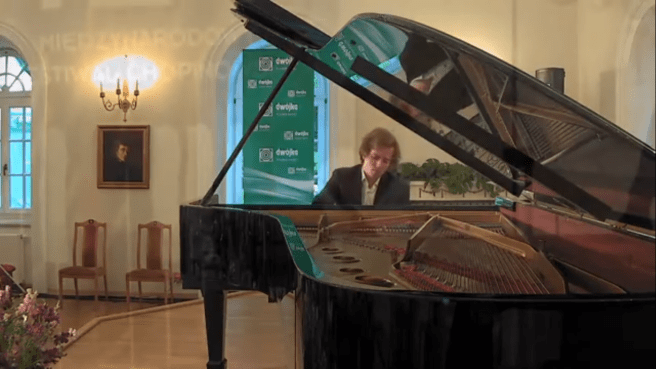
A young man who is obviously following in the footsteps of his compatriot Krystian Zimmerman as was wonderfully evident from the very first notes of the Bach/Busoni Chaconne or  even more so in Chopin’s Fourth Ballade  and Scherzo and the Four Mazurkas op 24.

From the first notes of the  Chaconne there was a subtle sense of balance and the same crystal clear sound that mesmerised my generation when Michelangeli’s famous recording became available.It was always very difficult to  hear Michelangeli live in London as he cancelled more concerts than he gave such was his striving for the pianistic and technical perfection that even he could only achieve on rare occasions.Andrzej was a much more classical approach than Federico Colli but both had the same forward impetus that is fundamental to its architectural shape.Federico taking slightly more risks and time in a performance of a real stylist .Andrzej on the other hand kept a stricter  control and took less liberties .But both had a great sense of colour and majesty as befits one of the greatest works that Bach ever conceived.Busoni brought it to the piano but with the same grandeur and virtuosity that Bach had given to the solo violin.It is a true recreation rather than a trascription.Andrzej followed Busoni’s very precise indications to the letter from the ‘misurato’ octaves to the grandiose’ largamente marcatissimo con bravura’ climax of the first great cadenza dissolving to a ‘dolce espressivo’ and’ sostenuto’ of almost religious tranquility.The gentle almost distant murmur of the solo violin was enhanced by the magic appearance in the tenor voice ‘poco marcato e tenuto’. Leading to the first great  climax in which all the organ stops are suddenly interrupted by the poignant stillness ‘quasi tromboni’ memorably played by Andrzej.The long pedal note that followed showed a masterly control as did the build up to the final triumphant appearance of the opening theme .Always played with a complete control of sound and a maturity way beyond his years.
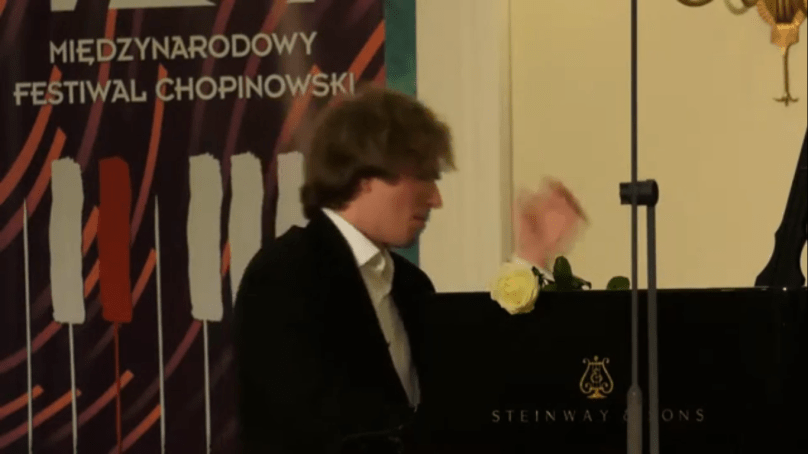
The Nocturne in B major op 62 n.1 was played with a loving care for detail and a sumptuous delicacy, beautifully shaped with an aristocratic rubato of refined taste. The change to A flat was pure magic and the final pages were full of the same beauty as in the Barcarolle op 60 -The final chords were of a heartrending nostalgia of someone never wanting to say goodbye.

The Fourth Ballade opened on this magic cloud of sound and the slight emphasis on the final thumb notes prepared the way for the simplicity of the theme that follows where he seemed to caress the keys .This is obviously a young man in love with the sounds that he can coax out of this box of hammers and strings.His sense of legato too in the  most intricate passages allowed the music to sing in a most natural way.The gradual build up to the final climax before the coda was masterly.The final five gentle chords were a prelude to the trancendentally difficult coda that was played with a wonderful sense of line.
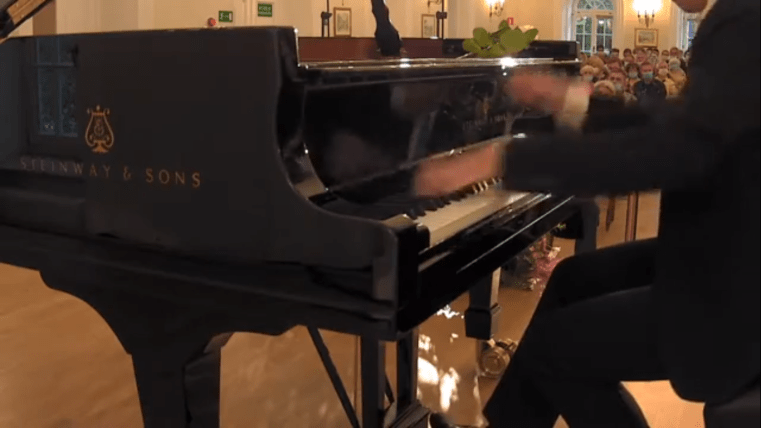
The four mazukas op 24 were played with a flexibility and sense of rhythm that brought these gems to life as is rarely heard in the concert hall.Every detail that Chopin  so carefully indicates  was scrupulously noted – from the pedal at the end of op 24 n.3  to the indications of calando,mancando smorzando of the final bars of op 24 n.4.Played with a great feeling for style they were uplifting and heartrending,  nostalgic even but never sentimental.

The Fourth Scherzo too was played like the great song that it is with its impish interruptions  thrown off with fleeting lightness that  contrasted with the  beautifully shaped melodic line of the central section.The gradual build up to the final triumphant climax was masterly judged and brought the official part of the programme to an end .
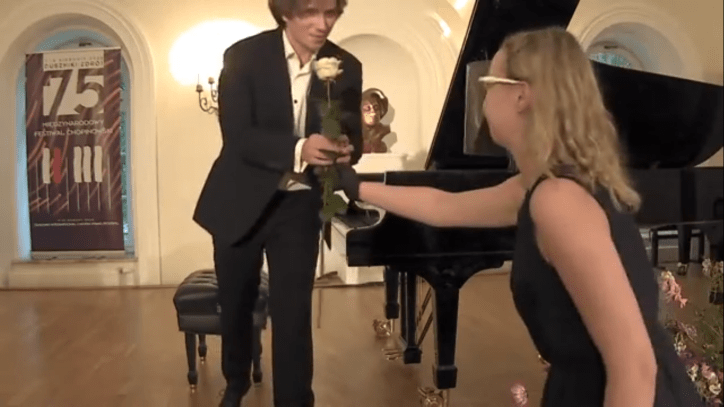
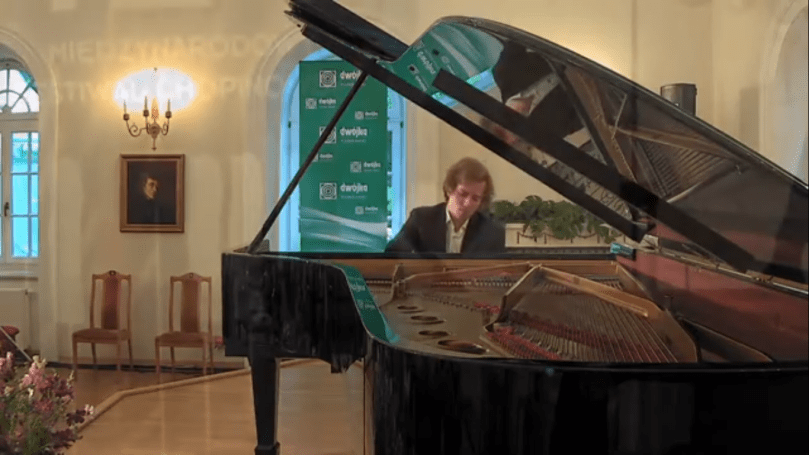
Andrzej Wiercinski at St Mary’s streamed worldwide.

By

Christopher Axworthy

— Thursday, 11 April 2019

(https://www.facebook.com/notes/christopher-axworthy/andrzej-wiercinski-at-st-marys-streamed-worldwide/10156411204807309/)

https://christopheraxworthymusiccommentary.wordpress.com/2020/08/11/dmitri-alexeev-in-poland-a-master-speaks-the-supreme-stylist/

https://christopheraxworthymusiccommentary.wordpress.com/2020/08/11/federico-colli-in-poland/
Dmitri Alexeev in Poland ….A master speaks …….the supreme stylist


Wonders will never cease it would appear  in Poland.The 75th anniversary of the Duszniki International Chopin Festival  that has been streamed so perfectly into my home for the past two days.Federico Colli’s beautiful recital and now Dmitri Alexeev.

It is thanks to Federico that I have stumbled upon this gem of a festival that will fulfill and delight the lack of live concerts  in this strange new world that has been thrust upon us.Federico Colli and Dmitri Alexeev both won the Leeds International Competition with about 37 ears between them .2012 and 1975.Their birthdays are both this week and celebrated with concerts  in Poland.

https://christopheraxworthymusiccommentary.wordpress.com/2020/08/11/federico-colli-in-poland/
I have missed the first few recitals  that have included Avdeeva and Nehring(they can still be heard on you tube I believe)  and now that I know I will certainly not miss Volodos live on the 13th.

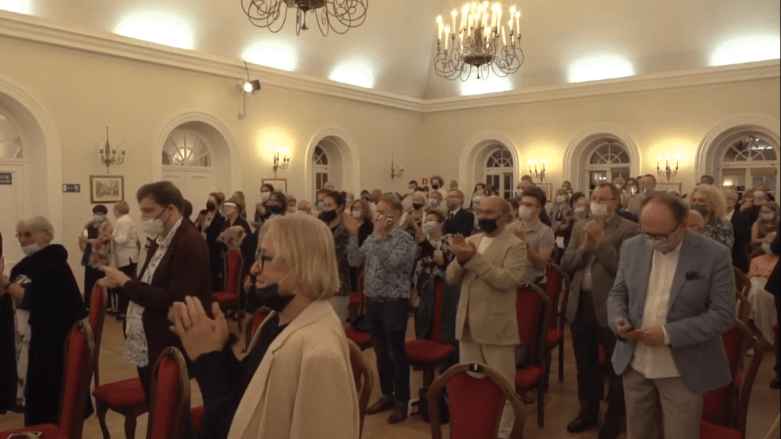
However  I cannot imagine anything could have prepared me for the recital of Dmitri Alexeev.Playing of such authority,sumptuous beauty and supreme intelligence .He bears the weight of maturity like the truly great artist he is.A simplicity,directness and generosity that is seductive and overwhelming.He too was visibly moved when at the end of his recital the whole audience stood up to sing to him in Polish- I imagine a tradition of thanksgiving for great occasions such as this.

I have written about Alexeev last year when he played for the Chopin society in London.How could I forget the occasions when he came to play for us at the Ghione Theatre in Rome and the distinguished pianist and jury member Annarosa Taddei exclaiming that this was better than S. Cecilia or the Filarmonica!He was a favourite of Lanza Tommasi who directed the Rome Rai Orchestra and often invited Alexeev and many other great musicians such as Tortelier that were excluded for lack of space from Rome.His Rachmaninov 3rd Piano Concerto will never be forgotten for its almost animal partecipation,sumptuous beauty and astonishing virtuosity.He won the Leeds piano competition in 1975. 2nd and 3rd prizes were awarded to Mitsuko Uchida and Andras Schiff – no comment is necessary.Alexeev has chosen to dedicate a large part of his musical life to teaching in London where he holds a very special place at the Royal College of Music.I know some of the students who are starting to have important careers thanks to the care and mentoring of the Alexeev’s.They have a lot to answer for and we are all truly grateful to them- his wife is the distinguished pianist  and teacher Tatiana Sarkissova.

The programme was made up of Schumann,Chopin and Scriabin and so was obviously a celebration of the true poets of the piano.

From the very first notes of the Arabeske op 18 after the intial shock of his almost improvisatory opening it turned into total absorption with how this was plasmatised into an ever changing world of sounds that seemed to derive one from the other.The great fantasy, sense of colour and very subtle bass notes that were not always sincronised with the treble were like a great poet playing with sounds and inflections searching for the truth behind them that could transmit  the real secret  meaning.A world totaly understood by Alexeev, as I  had remember years ago from his CD of the works of Schumann, but now with a liberty and understanding that comes with maturity and living with works for a lifetime.A very fine line that for those that cannot do less than climb onto the tightrope without fear of falling or worse- self indulgence!All or nothing indeed.As Cherkassky exclaimed in Le Monde de la Musique a few years ago when asked to describe what he does:”Je resens,je joue,je transmets”

Infact all through the recital there seemed to be so much time – all those who have heard Rubinstein will know what I mean- but then at a crucial moment a sudden change into fifth gear that is overwhelming.The coda  ‘zum schluss’ of the Arabeske was as sublime as the ending of Schumann’s Dichterliebe where words are just not enough to express the deep inner feeling  that only music can fulfill.

The opening of the Symphonic Studies had great weight from the bass which gave such depth and colour especially when the thumb of the right hand was slightly more prominant that the top notes.It led so naturally into the rhythmic bass of the first variation but still giving so much time to all the most detailed instructions that Schumann implores.The second variation was played with an aristocratic passion with seemingly endless time to find every  secret hidden in the notes.The final C sharp played quite forcefully gave the strong link to the third study that floated in on this note like some wondrous butterfly.The usual strident chords of the third variation were given unusual shape and meaning and the slight rhythmic  hesitation in the fourth was an  unforgettable touch.Plunging into the fifth with great passion but never forgetting the melodic line in the tenor register with a duet slightly hinted at with the bass.A quite transcendental example of piano playing.The Sixth variation was played with great rhythmic impetus but with such subtle variety of sounds that gave an architectural shape to a piece that in lesser hands can sound quite monotonous and mechanical.This prepared the ground for the great Gothic Cathedral – to use Guido Agosti’s words- of the seventh variation.

But no, here Alexeev had chosen to insert  the five  optional posthumous studies that were played with  delicacy and breathtaking beauty.The fifth of these that is perhaps the most magical and sounds like a music box was unusually brought to a great climax that provided the link back to the seventh variation before it had been so magically interrupted. The presto possible was  thrown off with great lightness that contrasted so well with the chordal eighth.The beautiful ninth variation was a true belcanto duet with the left hand accompanying so magically and the melodic line allowed all the freedom to move as the branches of a tree in the breeze (to use Chopin’s own words) .The finale was played with great aplomb and the integration of part of the first edition changes was a very pleasant surprise.Again it was the total control of sound that never allowed for any hardness even the drop in tone before the final triumphant fanfare was truly masterly.

During the interval  on line  we had been treated to the programmes of some of the concerts of the past 75 years of the festival.

Two Chopin works from the first to almost the last .The Rondo op 1 was played with a clarity and an infectious mazuka rhythm and was played with the same  irrisistible  charm that the young Chopin must have used in the salons of the day.

From the very first bass note of the Barcarolle op 60 there was no doubt that we were in the presence of a true master.A Barcarolle like the great outpouring of song that makes it one of Chopin’s greatest works where the word percussive just does not exist.The change to A major created a magic where the melody seemed to float on a wave of sound.The ‘dolce sfogato’ – Perlemuter wrote in my score years ago :’this is heaven’.And indeed in Alexeev’s hands it was.All the time in the world for the ‘leggiero pianissimo’ that Ravel loved so much with even the final pedaling of Chopin  incorporated into the final bar in this masterly performance.

Alexeev has been recording recently all the works of Scriabin and gave us a sample of  Scriabin’s early almost Chopinesque style with four preludes op 22 .The slightly more virtuosistic style of the Valse op 38 through to the brooding troubled waters of the Poems op 69.This led to the insistent obsessive cry of Vers la flamme op 72.The continual repeated notes of the star in anguish were played with terrifying conviction.

After a waltz, I presume by Scriabin, the whole audience stood and sang in hommage and to thank this great artist for what he had shared so generously and unstintingly with them.Actually it was the Polish equivalent of Happy Birthday (Sto lat- may you live 100 years)

A Liszt arrangement of one of Chopin’s songs was thrown off with great elan -a Bachanal indeed .The final glissando had the audience this time cheering their hero and solicited the most beautiful of all Chopin Mazukas- op 63 n. 2 in F minor

Unforgettable …please listen at your leasure ………..below is the link.


Federico Colli in Poland

Wonderful recital by Federico Colli streamed live from Poland.

Shostakovich second sonata coupled with the little A minor Schubert just as I remember Gilels all those years ago in the Festival Hall in London.
A superb Shostakovich with the menacing opening motive played with total conviction as the sublime serenity of the slow movement gave way to the opening fugue type subject of the theme and variations played as if in a trance with the same magic pedal as the Rondo theme of Beethoven’s Waldstein.
It was exactly here that Gilels playing to an almost empty RFH came unstuck .
There were no doubts for Federico though where his total command,conviction and above all sublime colouring left no doubt that his lock down had been well spent!
Opening and closing with Bach played with great authority.
The Italian Concerto played with a rhythmic vitality that was quite hypnotic in its unrelenting journey.But a sublime slow movement in which the simplicity of the melodic line was imbued with some very subtle hesitations that in the coda was nothing short of sublime.The last movement was a tour de force with some intricate details that gave great character to the continual forward motion .
The Chaconne too in the Busoni transcription started with the theme played so beautifully it reminded me of the first time I listened mesmerised to Michelangeli.
This no simple transcription but the rewriting of a masterpiece based on Bach’s original Chaconne for solo violin.
It is quite unique -Busoni’s vision as Michelangeli showed us.
Federico’s interpretation was overwhelming too in its beauty,and grandeur and the insistent bass rhythm that gave great architectural shape to the whole.The stillness of the slow sections was something to cherish as was his total technical control allied to the passionate temperament of the great pianists of the past.
The little A minor Schubert – little only in length to its four movement sister- but in Federico’s very sensitive hands was nothing short of sublime
Radu Lupu’s performance in Leeds and Gilels in London have remained with me all these years as I am sure Federico’s will tonight.
Two encores from an audience on their feet .
His own beautiful transcription of Haendel’s ‘Lascia ch’io pianga’ was his way of thanking his devoted audience and a Scarlatti to end where the trills seemed to glisten with such joy finishing with a rather out of style flourish but in this artists hands everything he does is totally convincing .
What a wonderful festival indeed and during the interval we were treated to a line up of pianists that have taken part over the last 75 years
Here it is …….not to be missed:

Petr Limonov’s masterly final recital in St Mary’s summer lockdown series

Tuesday 21 July 4.00 pm

Streamed ‘live’ concert in an empty church

Petr Limonov (piano)

Beethoven: Piano sonata in C Op 53 ‘Waldstein’
Allegro con brio -Introduzione Adagio molto- Rondo Allegretto moderato;Prestissimo
Mussorgsky: Pictures at an Exhibition
1 Promenade ;2 Gnomus ;3 Promenade ;4 The Old Castle; 5 Promenade; 6 Tuileries; 7 Bydlo; 8 Promenade ;9 The Ballet Of Unhatched Chicks In Their Shells ;10 Samuel Goldenberg And Schmuyle; 11 Promenade; 12 Limoges, le marché; 13 Catacombae (Sepulcrum Romanum);14 Cum Mortuis In Lingua Morta; 15 The Hut On Fowl’s Leg Baba-Yaga; 16 The Great Gate Of Kiev 
 

Petr Limonov was born in Moscow in 1984 and studied at the Central Music School. After winning the First prize at the Nikolai Rubinstein piano competition in Paris (1998) he started giving concerts in Europe, Russia and Japan, sponsored by the Vladimir Spivakov International Foundation. He subsequently studied at the Royal Academy of Music, in Paris and at the Royal College of Music. During his studies at RCM he began taking conducting lessons and in 2012 he became the principal conductor of the London Soloists Philarmonia orchestra. He frequently appears on UK and European scene collaborating, among others, with Nicola Benedetti, Laura van der Heijden, Jennifer Pike, Van Kujik Quartet, Leonard Elschenbroich and Liana Isakadze. He has recorded for Decca, Onyx Classics, Chandos and Champs Hill labels; the “1948” album, recorded with Laura van der Heijden, received “Edison Klassiek” award in 2018. Petr’s notable appearances include La Roque d’Antheron festival (Boris Berezovsky’s Carte Blanche, broadcast by radio France Musique), Wigmore Hall, iTunes Festival, Cadogan Hall, Kings Place, St Martin-in-the-Fields, Southbank Centre, the Great Hall of Moscow Conservatory, a recital in The Duke’s Hall for HRH Prince Charles, TV appearances for BBC Proms Extra and broadcasts for BBC Radio 3 and “Culture” TV channel (Russia). In 2017, his arrangement of the Auld Lang Syne (issued on Decca in 2014 as a part of Nicola Benedetti’s best-selling “Homecoming” album) was performed in the Albert Hall at the BBC Proms. His repertoire stretches from Orlando Gibbons to Arvo Part.


I have known Petr for some time being in a select group of musicians that include many  old friends like Alexander Ullman,Sasha Grynyuk and Evelyne Beresovsky.All remarkable young musicians on the threshhold of important careers.But I have never heard Petr give a solo recital.Today at St Mary’s was just that opportunity  in the final concertof the  lockdown series that has included over 70 concerts streamed live or  from the archive when live streaming was not permitted at the height of the Covid crisis.As Dr Mather rightly said at the end of Petr’s masterly recital it was a fitting end to a very difficult period for young musicians’ survival without public concerts.In fact St Mary’s is one of the very few realities that have insisted on playing to an empty hall,streamed live, thus offering nevertheless a professional engagement to help so many struggling young musicians at the start of their career.


Only two works on the programme but both of extreme  importance in the piano repertoire.The Waldstein Sonata op 53 is a sonata that fits nicely into Delius’s decription of Beethoven as all scales and arpeggios.(Bach faredworse in Delius’s hands  as  he described his works as knotty twine!)


In one way it is true the Waldstein is  one of those key works like the Schubert Wanderer Fantasy ,Schumann Symphonic Studies or the Brahms Handel Variations that covers almost  every aspect of piano technique.Not just the dry scales and arpeggios of Delius’s remark but allied to true musical  and architectural values  and they are an invaluable voyage of discovery for any aspiring young artist.


It was obvious today that these two works are part of Petr’s repertoire as they were played with an authority and total command that only comes with having lived with them for a long time.

The opening of the Waldstein started in brooding mode that did not quite seem to respect the ‘con brio’ that Beethoven asks for.But it was played with such an impressive regard for detail allied to an overall architectural shape and impressive technical command that one was quite swept up in the overall vision of this remarkable movement.The same general tempo throughout gave  reason for  the brooding opening when the opening tempo is set by the second subject as his superb musicianship had quite rightly noted.Beethoven writes only decrescendo and dolce e molto ligato(Beethoven’s Italian  was not perfect obviously).Maybe the melodic semiquavers leading into this gradual relaxation could have been even more melodic as they lean more towards the melodious second subject than the almost animal rhythmic drive of the opening.Of course food for thought as it should be with all true interpretations.Beethoven’s repeat too  was scrupulously noted and the great contrasts in dynamics were never allowed to overwhelm the overall architectural shape.


The Adagio molto introduction to the Rondo was played with a stillness and an aristocratic sense of weight that gave great meaning to every note.Beethoven had substituted the original slow movement, that was later to appear as the Andante Favori, in favour of this short but poignant introduction. The Rondo theme  almost Schubertian in character  floating as Beethoven indicates on a cloud of pedal before embarking on the most strenuous episodes, where there seems to be at times  explosions of almost Lisztian euphoria. Beethoven’s very precise pedal effects were interpreted by Petr and transposed to the modern instrument with great effect.The tumultuous final episode before the Prestissimo coda was quite overwhelming in its rhythmic insistence.The coda kept in perfect control which gave time to play each note of the infamous  octave glissandi without having to wet his fingers as Serkin used to deftly do!


Mussorgsky’s Pictures at an Exhibition is a work in 10 movements that was inspired by a visit to an art exhibition. Each of the movements represents one of the drawings or artworks on display. Mussorgsky composed Pictures as a memorial to his friend, the Russian artist Viktor Hartmann, who had died in 1873 at age 39. Shortly after the artist’s death, Mussorgsky visited a retrospective exhibit of Hartmann’s sketches, stage designs, and architectural studies and felt the need to capture the experience in music. By early summer 1874, he had completed the work, a lengthy and fiendishly difficult suite for solo piano. At the time of Mussorgsky’s death in 1881 from alcoholism, the piece had been neither performed nor published. It fell to his friend and colleague Rimsky-Korsakov to tidy up the manuscript and bring it to print in 1886.It is a very impressive showpiece for piano and was the ideal piece for Petr to conclude this series with.


The actual Promenade interludes might have been more of a contrast if played quite simply as each of the pieces that follow depict the paintings of Hartmann in a beautifully shaped and characterised manner.

From the opening Gnomus played with an almost ghostly ‘spooks in the night’ feel.To the Old Castle   shaped with a great sense of balance that allowed the left hand heart beat to throb so delicately under the luminous nostalgic melodic line .Tuileries was played with gentle insistence leading to the ponderous grandure of Bydlo that gradually  disappears into the distance with a very telling ritardando that was Petr’s personal addition,I believe, but that worked so well here.The Ballet of the Unhatched Chicks chattered on to its very cheeky ending.Before being interrupted by a very noble Samuel Goldenberg and Schmuyle with an  impressive build up of repeated notes and a very moving ending.All the bustle of Limoges market was played with  impressive technical control and excitement leading to the rude interruption of Catacombae with its impressive dissonant chords that make the resolution Cum mortuis even more magical in Petr’s sensitive hands especially when played with his almost pleading poignancy.Baba -Yaga was full of animal excitement and great feats of virtuosity .The  middle interlude seemed almost orchestral  with the question and answer between the hands whilst the murmur of the orchestra in the middle part of the keyboard  was ever present and undisturbed, as if by magic!The Great Gate of Kiev was played with masterly control of colour and timbre with the great bells sounding in every part of the keyboard.A very impressive sense of balance and insistence on the pivotal bass notes gave great weight with a sumptuous full sound that brought this performance and the season to a marvellous end.


Our  indomitable host Dr Mather was proud to announce his autumn season. 44 concerts in programme streamed with or without live audience depending how this cunning little virus behaves in the intervening period!

Tuesday 1 September Tim Horton (piano)
Thursday 3 September Yoanna Prodanova (cello) Mihai Ritivoiu (piano)
Sunday 6 September  Norma Fisher: Talk- ‘My Life and Music’
Tuesday 8 September Ben Schoeman (piano)
Thursday 10 September The Odysseus Piano Trio
Tuesday 15 September Joanna Kacperek (piano)
Thursday 17 September Lisa Ueda (violin) Daniele Rinaldo (piano)
Sunday 20 September Howard Blake (piano) Alan Parmenter (violin)
Tuesday 22 September Martin Cousin (piano)
Thursday 24 September Lana Trotovsek (violin) Maria Canyigueral (piano)
Tuesday 29 September Sonya Pigot (piano)
Thursday 1 October The Barbican String Quartet
Saturday/ Sunday 3 / 4 October St Mary’s Perivale Beethoven Piano Sonata Festival
Tuesday 6 October Tyler Hay (piano)
Thursday 8 October Sarah Gabriel (soprano) Iain Farrington (piano)
Sunday 11 October So-Ock Kim (violin) Josephine Knight (cello) Petr Limonov
Tuesday 13 October Cristian Sandrin (piano)
Thursday 15 October Emily Sun (violin) Caterina Grewe (piano)
Sunday 18 October Thomas Carroll (cello) Graham Caskie (piano)
Tuesday 20 October Francis Grier (piano)
Thursday 22 October Kate Gould (cello) Viv McLean (piano)
Sunday 25 October Leslie Howard and Ludovico Troncanetti (piano duo)
Tuesday 27 October tbc (Keyboard Charitable Trust)
Thursday 29 October tbc
Tuesday 3 November Roman Kosyakov (piano)
Thursday 5 November Milos Milivojevic (accordion)
Sunday 8 November Christopher Kent (actor) Gamal Khamis (piano)
Tuesday 10 November George Todica (piano)
Thursday 12 November Coco Tomita (violin)
Sunday 15 November Jessica Duchen (narrator) Viv McLean (piano)
Tuesday 17 November Aristo Sham (piano)
Thursday 19 November Corran String Quartet
Sunday 22 November Evelyne Berezovsky (piano)
Tuesday 24 November Hugh Mather (piano)
Thursday 26 November Natalia Lomeiko (violin) Yuri Zhislin (violin) Ivan Martin
Saturday 28 November Liszt Society Day (tbc)
Tuesday 1 December Simone Tavoni (piano)
Thursday 3 December The Rautio Piano Trio
Sunday 6 December Mengyang Pan (piano)
Tuesday 8 December Caterina Grewe (piano)
Thursday 10 December Ionel Manciu (violin)
Sunday 13 December Lipatti Piano Quartet
Tuesday 15 December Krzyzstof Moskalewicz (piano)
Friday 18 December Indira Grier (cello) Francis Grier (piano)

50th Anniversary of the Pontine Festival Foundation streamed live from Sermoneta and Ninfa

As you can see from the articles below, the Pontine Festival has been very much part of my life since I first discovered it in 1978 – the year I met my wife Ileana Ghione in Siena .It was she who invited me to her family home in Sabaudia,a stone’s from from Sermoneta, that magical summer over forty years ago! I had of course heard about Sermoneta and the festival that Alberto Lysy with  Menuhin and Szigeti  had founded in the 60’s on the invitation of the Caetani family.Since 1970 on the initiative  of  Lord Hubert Howard,the husband of the Princess Lelia a  Foundation was created that is celebrating its 50th anniversary in this strange Covid year.

For years I have followed the courses and concerts of  some of the most renowned artists of our day.Alicia de Larrocha,Charles Rosen,Elisso Virsaladze,Fou Ts’ong,Sandor Vegh,Bruno Giuranna,Franco Petracchi  are just a few that spring to mind.Many distinguished musicians have been  formed  by the Pontine Festival now in its 56th edition.These include both Fabrizio Von Arx and Robert Prosedda who have  been very much involved  in advising Riccardo Cerocchi,the President since 1978, in maintaining the highest musical standards.A prize has been established in memory of Arch Cerocchi who passed away in 2018 and whose Presidency has passed to the very able hands of his daughter Elisa who is maintaining the family tradition together with her equally dedicated  team headed by Tiziana Cherubini and family.

No photo description available.

I was sorry to hear that the Pontine Festival had been cancelled this year as were so many other events in this year of Covid 19.But I was delighted to see that as people are having to adapt to this new and dramatic situation so the Pontine Festival  has too.Deciding to organise a series of concerts in their most beautiful venues and to share them with their public via streaming.

No photo description available.

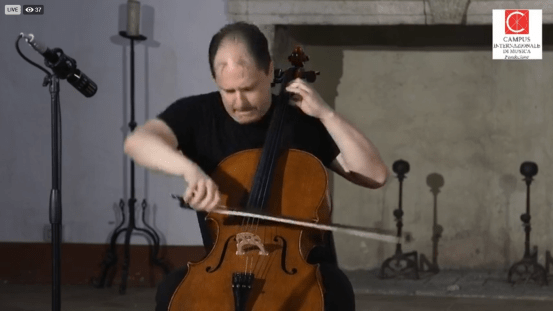
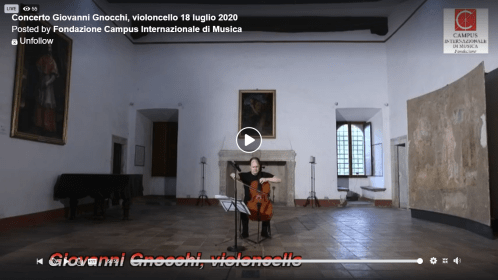
The opening concert was for solo cello by Giovanni Gnocchi with some superbly authoritative performances from an artist who I have written about many times (see below).His extraordinary generosity and passionate way of sharing and involving everyone during his summer courses has been one of the most pleasurable discoveries in the past few years.

Following in the footsteps of André Navarra,Paul Tortelier,Rocco Filippini ,Steven Isserlis and  even the young Jaqueline Du Pré his  Bach Suite n.1 BWV1007 and the Kodaly  sonata were truly memorable and even more so when one realises that  this was his first live recital since last february.The extraordinary colours and total conviction that he brought to the works of Sheng and Weir were followed by a  masterly performance of the solo Sonata op 8 by Kodaly.

The glorious sound and his wonderful musicianship and sense of style in the Bach Suite n.1 was a wonderful way to open this Covid 19- 50th Anniversary edition of the Pontine Festival.A single performer in the vast hall of the Castle in Sermoneta playing such noble music seemed to sum up so perfectly what Sermoneta has signified for musicians for the past half century or more!

No photo description available.

Andrea Lucchesini is a new name for the Pontine Festival and I was delighted to be able to hear him on this occasion.Formed by the school of Maria Tipo I remember many years ago Shura Cherkassky being invited to Berio’s house in Empoli ,where he was giving a recital,and  listening to a very young Andrea Lucchesini .I remember him telling me how impressed he was listening to the works of Berio in this young prodigies hands.Andrea has gone on to have a very distinguished career combining also  the directorship of the  renowned Academy in Fiesole and now the  historic Filarmonica Romana.

It was interesting too to hear the piano  that Liszt had given as a present  for the baptism of Roffredo Caetani.I had heard a lot about this unique studio in the middle of the enchanted gardens of Ninfa  where both Charles Rosen and Roberto Prosedda had made recordings. Roberto had recorded all the piano works of the onorary President of the Foundation Goffredo Petrassi whose archives are stored in the Foundation’s  official seat in Latina.

Three works on the programme :the Four Impromptus D899 by Schubert ;Beethoven Sonata op 27 n.2 and Chopin Scherzon,2 op 31.

Some very distinguished performances on a not easy piano.This old Bechstein whilst having a very limited range  did offer in this musicians hands the possibility to create a sense of line without any sudden , or dare I say it, Lisztian bursts of sound but maintaining an architectural line and a sense of balance that came across so convincingly.The first and musically most difficult of the four was played with a very delicate rubato and sense of fantasy that really allowed the music to speak so directly.There was a great control of sound and some very personal inflections that were quite moving.Even the last three  chords were placed with the sensibility of a great artist. The second Impromptu glided from his hands as the water does that surrounds these magic gardens.The tempestuous middle section and ending were played with great control knowing that this particular instrument has only three gears and not the normal five or six of a modern day instrument!The  G flat impromtu was played with aristocratic good taste with very subtle inflections with the accompaniment like in Schubert Lieder sustaining but never intruding on the poetic utterings of Schubert’s seemingly endless melodic invention.The dialogue between the bass and the treble were beautifully outlined as now we were all beginning to enjoy the sound world that can still be created on this noble instrument.

Image may contain: one or more people and people sitting

Here of course one should thank Mauro Buccitti for his work on the piano.A technician but also a magician indeed who I had last seen in discussion with Sokolov in Todi just before the unexpected lockdown. The fourth Impromptu was imbued with cascading notes that glistened with such delicacy whilst the left hand sang out so eloquently.A middle section of passionate involvement but always under the musicianly control of an artist who is shaping and listening so intently.

The Sonata op 27 n.2 (Moonlight) was restored to its rightful place as one of the most original of Beethoven’s Sonatas.Infact both this and its partner op 27 n.1 are quite remarkable – two sonatas as Beethoven himself wrote ‘quasi una fantasia’ .The famous first movement was played as Beethoven writes  in two not four that allows the melodic line to sing so naturally and with such majesty in this Adagio sostenuto opening.The Allegretto was played with just the right amount of elegance with a Trio  kept perfectly in harmony with its surrounds.The Presto agitato was played with great energy and forward movement without trying to force the tone as is so often the case on modern instruments.The overall impression was of a Sonata of great originality and cohesion.

The second Scherzo by Chopin was given a masterly performance with moments of great poetic insight and bursts of brilliance and excitement.An exhilarating performance that just showed how three such well know masterpieces could be reborn in the hands of a true artist who could adapt immediately to his surroundings and offer such eloquent performances that I am sure had all his hidden audience on their feet.

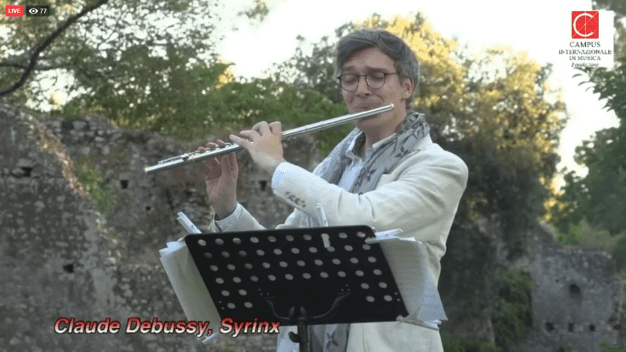
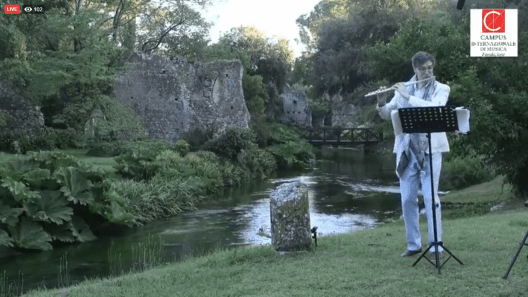
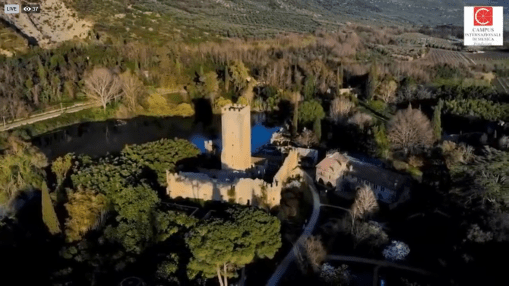
And now what better experience could there be than the sound of a solo flute in the magical atmosphere of the Gardens of Ninfa.The Waltons often used to stop off on their way from Rome to Ischia to get inspiration for their Gardens of La Mortella where they are both  looking on eternally from the rock that surveys their own magic creation.Created as were the gardens of Ninfa  by women from the Americas in love with the wonder that is Italy.Rostropovich  used to call Italy the Museum of the World – how right he was.

What better way to celebrate this magical place than with the Debussy Syrinx with which Mario Caroli opened his recital in a programme that he described as a musical bouquet -It was a  pity he was tied to the score though .Like Isadora Duncan it would have been lovely to experience his  comuning with nature wandering through this wonderland with his beautiful foulard flowing in the wind as  the  sounds of his flute fill the air with such intoxicating magic.As Debussy quotes from Baudelaire : ‘Le sons et les parfums tournent dans l’air du soir’

No photo description available.

https://christopheraxworthymusiccommentary.wordpress.com/2009/07/05/pontine-festival-latina-italy/

https://christopheraxworthymusiccommentary.wordpress.com/2018/10/29/elisso-virsaladze-in-latina-homage-to-riccardo-cerocchi/

https://christopheraxworthymusiccommentary.wordpress.com/2017/07/22/the-remarkable-maestro-gnocchi-and-his-happy-band/
https://christopheraxworthymusiccommentary.wordpress.com/2017/07/17/gnocchi-even-on-sunday-at-fossanova/
https://christopheraxworthymusiccommentary.wordpress.com/2017/07/10/the-nobility-of-elissovirsaladze/
https://christopheraxworthymusiccommentary.wordpress.com/2017/07/08/sermoneta-the-sound-of-music-elisso-is-back-in-town/

https://christopheraxworthymusiccommentary.wordpress.com/2018/07/29/pontine-festival-2018/

https://christopheraxworthymusiccommentary.wordpress.com/2019/07/16/the-pontine-festival-the-sound-of-music/

https://www.facebook.com/notes/christopher-axworthy/pontine-festival-latina-italy/100686897308/

Rokas Valuntonis at St Mary’s

Tuesday 14 July 4.00 pm

Streamed ‘live’ concert in an empty church

Rokas Valuntonis (piano)

Chopin : Ballade no 3 in A flat Op 47
Grieg : 5 Lyric Pieces
CPE Bach: 12 Variations on Spanish Folia theme
Scarlatti : 3 Sonatas: K487, K8, K7
Chopin Nocturnes op. 15 nos 1 and 2
Liszt : Waltz from Gounod’s “Faust”

Praised for his “liquidity of sound” and “devilish performances”, Lithuanian pianist Rokas Valuntonis has drawn admiration for his imaginative interpretations and striking virtuosity. A laureate of more than 20 international competitions, Valuntonis won 1st Prize at the 2018 Campillos International Piano Competition (Spain) and previous victories include both the International Music Competition “Societa Umanitaria” (Italy) and the Nordic Piano Competition (Sweden). Valuntonis has performed all over Europe, including Denmark, Finland, France, and Portugal, in venues such as Milton Court (Barbican Centre), La Sala Verdi, The Wallace Collection, Lithuanian National Philharmonic Hall, and La Sala Casella Accademia Filarmonica Romana. He has also performed with the Lithuanian National Symphony Orchestra, Lund Symphony Orchestra, St Christopher Chamber Orchestra, Lithuanian Chamber Orchestra, and Panevežys Chamber Orchestra. Aside from traditional concerts, Valuntonis has collaborated with both actors and presenters. His most recent collaboration, with the celebrated Lithuanian actor Kostas Smoriginas, explored the characters and emotional lives of great composers like Beethoven, Chopin, and Rachmaninov. The 2020/21 season sees Valuntonis present solo recitals around Europe in venues such as Lithuanian National Philharmonic (Lithuania), Klaipeda Concert Hall (Lithuania), Harpa Concert Hall (Iceland) and festivals such as Deal Arts and Music festival (UK), Barnes Music festival (UK), Summer of Piano music in Druskininkai (Lithuania). Growing up in Lithuania, Valuntonis studied at the Lithuanian Music and Theatre Academy under Aleksandra Zvirblyte, before attending the Sibelius Academy (Finland), followed by studies with Eugen Indjic in Paris and Artist Diploma studies at Guildhall School of Music and Drama in London under Peter Bithell. Rokas joined the City Music Foundation Artist Programme in 2017. For his many achievements, Valuntonis has been honoured with the prestigious Queen Morta Award and acknowledgements by two Lithuanian Presidents. This year Rokas was awarded with “Jung Artist Grant” by Lithuanian Ministry of culture.


I have heard Rokas play many times over the past three years since he came to London to work with Peter Bithell at the Guildhall and his astonishing command of the keyboard never fails to amaze me.He has an orchestra of ten wonderful fingers that do exactly what he tells them to do without any fuss or extraneous movement.His concentration and superb ears allied to a great sense of style allow him to give some truly remarkable performances as we could again witness today.It is infact the same concentration without any flamboyance that was the hall mark of Horowitz’s performances.Kaleidoscopic colours together with an amazing clarity and digital control are hall marks too of Rokas’s playing.There is no sign of a great sculptor moulding the sounds as with Rubinstein or Volodos but there were nevertheless some sumptuous sounds from the very first delicate notes of the Chopin third Ballade.A beautifully shaped performance with trills that glistened like jewels and  some very delicately played arabesques that led so naturally to the gradual build up to the final grandiose outpouring of the opening innocent  melody.Played with great passion and control it brought this opening work to a triumphant close.


The beautiful Arietta op 12 n.1 by Grieg is infact similar to the opening of Chopins fourth Ballade.It was one of Griegs favourite  of the 66 Lyric pieces that he wrote throughout his life.Ravishing sound and a perfect sense of balance created just the atmosphere for  the first of five of these lyric pieces that are rarely to be found in concert programmes these days.Butterfly op 43 n.1 hovered over the keys in a quite miraculous way as the meanderings were shaped with the same fluidity as to be found in  Liszt’s Au Bord d’une source.The third and fourth of the pieces he chose I did not know but the first was  played with an impish almost infectious sense of dance and the second was beautifully shaped with a whispered repeat and  a miraculous diminuendo at the end.The final piece was the well known Dance of the Trolls op 54 n.3 and it was played with a devilish rhythmic verve and sense of excitement that contrasted with  the middle section  played with a touching simplicity.


Carl Philipp Emanuel Bach was the fifth child and second (surviving) son of Johann Sebastian Bach and Maria Barbara Bach. He composed his 12 Variations on the ‘Follies of Spain’ in 1778 for keyboard. The Follies (‘la Folía’ in Spanish) is one of the oldest melodies in western music and in Rokas’s hands it was played with just the luminosity needed to contrast with the variations that were played with such crystal clear ornamentation and absolute clarity leading to the beautiful return of the theme at the end after a series of quite exquisitely played variations.It led so naturally to the world of Scarlatti with the beating of drums and rhythmic drive and a quite delicious glissando at the end of K. 487.The second Scarlatti sonata K.8 was played with a beautiful cantabile where again one could marvel at the luminosity of sound and his superb control of texture.The final Sonata K. 7  was played with absolute clarity and astonishing rhythmic agility.

The two nocturnes op 15 n.1 and 2 by Chopin  followed in this very varied and interesting programme.The F major n.1 was played with such simplicity where his wonderful sense of balance allowed the melodic line to sing so touchingly .The tempestuous middle setion was kept under scrupulous control that gave such overall shape to the Nocturne.The famous F sharp major Nocturne was played with a  refreshing forward movement with a passionately felt  middle section  before the return of the opening  melody.


Liszt’s Waltz from Gounod’s Faust immediately plunged us into a demonic atmosphere with Liszt’s ingenious elaboration of the Waltz in which to quote Leslie Howard :’Gounod is transformed and transcended at a stroke.’ Played with great style adding bass notes to give even more sonority and wondrous  sense of colour.Some amazing feats of piano playing not least the glissandi thrown off with consumate ease and a truly amazing display of virtuosity at the end .

https://www.facebook.com/notes/christopher-axworthy/presenting-the-impeccable-maestro-valuntonis/10156459912307309/


JONATHAN FERRUCCI LIVE STREAM TO WASHINGTON FROM ST MARY’S


Some exquisite playing from Jonathan Ferrucci in the live stream to Washington Arts Club thanks to the collaboration between St Mary’s Perivale and the Keyboard Charitable Trust and of course the incomparable Burnett Thompson to whom we send thanks and congratulations for this concert and for an even more special occasion on the 24th!PIanist Jonathan Ferrucci Interview with Burnett Thompson: Arts Club of Washington & Keyboard Trust

https://youtu.be/AMMN1VfhZT8

There was such an enormous demand that some problems were created  with the  Internet connection  not only here in Italy but also in East Croydon ,USA  and elsewhere.
Hopefully  it will all come clean in the wash and we look forward to a perfect recording.
And here it is thanks to St Mary’s superb technicians:
Here is what I wrote a week ago and I can only add that Jonathan gets better and better as we gradually come out of the lockdown experience without any public performances for almost four months. https://christopheraxworthymusiccommentary.wordpress.com/2020/06/30/jonathan-ferrucci-at-st-marys/
Jonathan introduced the concert with an affectionate and heartfelt thank you to  John and Noretta Conci Leech, founders of the Keyboard Trust, for supporting him in his hour of  need.
His Schumann was beautiful with all the sweep that was missing last time but with all the exquisite details in place.
His Bach is very much influenced by his mentor Angela Hewitt with absolute clarity and a musicality that is based on the song and the dance rather than the rock  of the High Priestess Rosalyn Tureck ………It was very amusing his quote that some musicians do not believe in God but all musicians believe in Bach!
It reminds me of Landowska at the London debut of Rosalyn Tureck in the Wigmore Hall :”she plays it her way – I play it Bach’s!”
Angela’s return to public performance was something to treasure in these unexpected puzzling times.
Jonathan’s sublime opening of the Fifth French suite was a marvel of pastoral composure and I am sure that if the Gods were looking in they would have approved too.The absolute clarity of the knotty twine  was a marvel in the way he managed to shape the continuous stream of sounds just as the great Florentine sculptors would have turned a block of marble into something movingly alive  and vital.
                                                                                 
I have never heard the Bartòk played with such clarity and character since Andor Foldes.The silent composure of the slow movement was a marvel of calm before the storm.And what a storm almost being ejected from the stool on the final notes
                                                                                   
An unexpected encore of a Poulenc improvisation just showed his aristocratic sense of colour and style that was so much part of the French school in the first half of the 20th century.
Sentiment but not sentimental as was the key to the whole recital.
One of the comments noted during transmission was :Exquisite!
As one might describe too his home city of Florence :Unique!
ferrucci3.jpg

Pianist Jonathan Ferrucci in concert

July 12, 2020: The Concert Reviews

Jonathan Ferrucci performed a program of Bach, Schumann and Bartok, livestreamed from the 12th Century St. Mary’s in Perivale to a worldwide audience. Presented by the Arts Club of Washington in partnership with the Keyboard Trust and St. Mary’s in Perivale, London.Below are reviews submitted by the attendees.

“What a pleasure to see and hear this brilliant young man playing the most beautiful classical selections, with a gusto and love connected to every movement on the Yamaha… Thanks to Caroline and her organization for producing these concerts. I have attended several at Steinway Hall in NYC. Listening to the music during quarantine soothes and heals and for the moment eases the feeling of isolation. Gratefully, ” Mari Lyn Henry New York City

“Wonderful sensitivity and great musicianship. The Bartok was interesting and Jonathan showed great mastery of a very difficult Schumann piece.” David Williamson Dedham, MA

“The excitement I felt looking forward to my friend’s performance was fulfilled by this marvelous recital! Jonathan’s exquisite technique and wonderfully expressed interpretations were completely up to his consistent standard and I am so grateful to the sponsoring organizations for making possible not only today’s and many other productions, but also the welcome, in-depth interview/ conversation with Jonathan earlier in the week. I was very disappointed, as have been many others, by the cancellation of Jonathan’s U.S. tour and our plan to meet together but, hopefully, one day! With Sincere Gratitude” Bob McCormick Somers Point, NJ

” Jonathan Ferrucci plays every note with impeccable musical depth that is finely disciplined yet richly expressive. Stylistically, he has no limits to his range of expression. He is an artist of enormous musical and technical skill who has the ability to invite us into a deeply intimate conversation, while we sit there, holding our breath, with unwavering, undivided, fully focused attention! Bravoooo!!! ” Marianne Ackerson, Bloomington, IN

” Fabulous pianist, I was especially impressed by his interpretation of the Bach French suite. When will he next be playing live (with audience present!) in London? I’ll be there. He has a great career ahead of him. a real pleasure to see and listen to. Congratulations!” Rosie Simonneau, Calais, France

” After allowing time for Jonathan Ferrucci’s piano recital at St Mary’s Perivale to be digested, and for his extraordinary musical depth and interpretation to ferment alongside his interpretive skills, l am left in considerable awe. There is a unique and natural modesty surrounding this young musician that exudes charm as well as a fineness of being. His emotional, intellectual and spiritual connectivity to the composers works we heard is really something to appreciate more and more, and in the fullness of time.” Diana Mavroleon London

“Kudos to Jonathan Ferrucci for an impressive concert. Your exquisite performance of difficult and challenging pieces showcased your talent, discipline, and sensitivities. I look forward to experiencing future concerts virtually and hopefully in person when you next perform in the US.” Henry Cox, New York City

“Some exquisite playing from Jonathan Ferrucci in the live stream to the Arts Club of Washington, thanks to the collaboration between St Mary’s Perivale and the Keyboard Charitable Trust, and of course the incomparable Burnett Thompson to whom we send thanks and congratulations for this concert and for an even more special occasion on the 24th! Jonathan introduced the concert with an affectionate and heartfelt thank you to John and Noretta Conci Leech, founders of the Keyboard Trust, for supporting him in his hour of need.

His Schumann was beautiful with all the sweep that was missing last time but with all the exquisite details in place. His Bach is very much influenced by his mentor Angela Hewitt with absolute clarity and a musicality that is based on the song and the dance rather than the rock of the High Priestess Rosalyn Tureck ………It was very amusing his quote that some musicians do not believe in God but all musicians believe in Bach! more at the blog… Christopher Axworthy, London


Bocheng Wang’s magnificent Rachmaninov at St Mary’s<

Tuesday 7 July 4.00 pm

Streamed ‘live’ concert in an empty church

Bocheng Wang (piano)

Haydn: Sonata in C minor Hob XVI:20

                            Chopin: Andante spianato and Grand Polonaise Op 22

                           Rachmaninov: Piano sonata no 2 in B flat minor Op 36

Chinese – British concert pianist Bocheng Wang was born in Lanzhou, China, and is currently studying with Professor Christopher Elton for Bachelor’s Degree at the Royal Academy of Music, generously supported by the Violet Irene Strutton Award with a full scholarship. He is an artist at the Talent Unlimited Foundation. Bocheng started to play the piano when he was five and his competition successes includes the first prize at Grand Prize Virtuoso “Salzburg” International Music Competition (2019), first prize at Croydon Concerto Competition (2015), second prize at Liszt International Society Piano Competition (2015), and third prize at the ‘Young Pianist of the North’ International Piano Competition (2012). In 2018, he was a semifinalist at the prestigious Santander International Piano Competition and performed with the Cuarteto Quiroga. In recent years, he has performed with many orchestras such as Dulwich Symphony, London Mozart Players and Purcell Symphony. He has appeared in many international festivals such as Konzertarbeitswochen Goslar, PianoTexas, Ferrara, Oxford and Dartington. In June 2016, he was invited to play for a celebratory concert in honour of HM The Queen Elizabeth II ‘s 90th birthday and honoured to meet Prince Edward, Earl of Wessex. Since then, he performed in prestigious venues such as the FAZIOLI Hall in Sacile, Italy, Royal Conservatoire of Scotland, London’s Kings Place, Wigmore Hall, St. Martin-in-the-fields, Fairfield Hall and Watford Colosseum.


I have deliberately placed a photo of Dr Mather at the head of this  piece about the recital by Bocheng Wang in order that we might wish this extraordinarily generous and enthusiastic retired physician  all best wishes for his 75th birthday that he celebrated yesterday the 6th July.Promoting with the help of his dedicated colleagues so many young musicians who otherwise would be denied a platform for their quite extraordinary talent.In a beautiful redundant church in the center of Ealing Golf Course  the concerts are streamed wordwide.In an empty church as these times prescribe they are live performances that are enjoyed by a very large audience in their own homes.On Sunday there will even be a live stream in collaboration with the Arts Club in Washington and  the Keyboard Charitable Trust.


So it was fitting that this slightly built young chinese pianist should have given such a magnificent performance of the Rachmaninov Second Sonata that truly honoured this special birthday week.It is interesting to note that three years after his third piano concerto was finished, Rachmaninoff moved with his family to a house in Rome that  Tchaikovsky had used and it was during this time in Rome that Rachmaninoff started working on his second piano sonata. However, because both of his daughters contracted typhoid fever, he was unable to finish the composition in Rome and it was completed at his country estate in Russia. The first performance was in 1913 but Rachmaninov thought it too long and  later revised it in 1931 reducing it by 6 minutes  from 25 to 19.Horowitz made his own revision in 1940 with the composers consent incorporating some of the original version and it last 22 minutes.


I assume that Bocheng played the Rachmaninov 1931 edition  as it lasted almost the 19 minutes that Rachmaninov prescribed in 1931!He immediately plunged in the tumultuous world of Rachmaninov.Playing with great virtuosity and truly sumptuous sonorities.There was a  luminosity to the sound and his great sense of balance always allowed the melodic line to sing with such ease.From the deeply felt slow movement played as a deep lament with some beautiful colouring to the wonderful melodic climax of the final played with such passionate involvement and so reminiscent of the great climax of the third concerto.There was never a hard sound in this young man’s hands but always a rich Philadelphian sound of such velvety beauty and passion. The sheer animal excitement of the ending was breathtaking and indeed reminded me of the first first time I had heard this sonata in a live performance by Horowitz.The frenzy and sweep brought the audience to their feet at the end as I am sure they would have been today.I like to think that the hidden audience were cheering over a cup of tea in their own homes.


The concert had begun with the beautiful C minor Sonata of Haydn.It was played with a delicacy and precision but  at the same time shaped with some very aristocratic rubato.The refreshingly innocent lyricism of the opening was beautifully controlled and contrasted so well with the crisp crystal  clarity of the contrasting  faster  passages.His superb sense of balance allowed the melodic line in the Andante con moto to sing with an almost operatic freedom and the Allegro molto that follows was played with great character and rhythmic energy.


The Andante Spianato and Grand Polonaise by Chopin began truly ‘spianato’ or smoothly. There was a lovingly shaped melodic line over a  murmuring left hand with the embellishments glittering in his very sentitive hands.There was also a gentle nonchalance to the contrasting mazuka section that was very beguiling.The Grand Polonaise was played with great style although his orchestral players could have been a little more disciplined and he could have taken much more time to display his virtuosity and delicacy to the full. He played with great rhythmic urgency and sense of style but feel if he had played it just a little slower he could have allowed us to wallow in the beautiful sounds that he was making as he had done so magnificently in the Rachmaninov Sonata that followed.

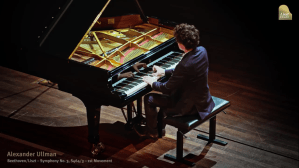
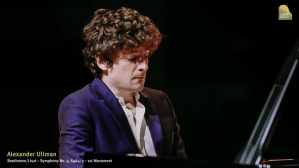
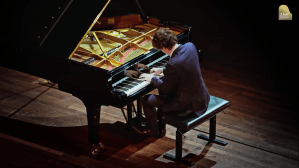
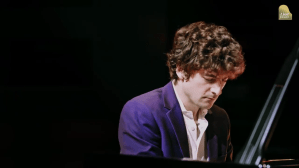
ALEXANDER ULLMAN – Long Distance Liszt in Utrecht

While much of the world remains in lockdown, we will host an online festival ‘Long Distance Liszt’ on the 4th of July. A special line-up of former prize winners will bring pieces of Liszt and Beethoven, including some of the amazing Beethoven Symphony transcriptions, from TivoliVredenburg straight to your home. Mark your calendar for Saturday 4 July 2020, 8 pm (CEST), live on Facebook!
International Franz Liszt Piano Competition

 4 July at 20:00 Utrecht, Netherlands 

Welcome to the online festival ‘Long Distance Liszt’! A special line-up of former prize winners will bring pieces of

Franz Liszt

and @

Ludwig van Beethoven

from

TivoliVredenburg

straight to your home.

Programme:
Alexander Ullman

– Beethoven/Liszt – Symphony No. 3, S464/3 – 1st Movement

Christiaan Kuyvenhoven

– Beethoven – Eroica Variations, Op. 35

Nino Gvetadze

– Schubert/Liszt – Ave Maria, s558/1

Mengjie Han

– Tsoupaki – Thin air (

Festivals for Compassion

– premiere on piano)

Amatis Piano Trio

– Liszt – Tristia, S723c

Mengjie Han – Beethoven/Liszt – Symphony No 7, S464/7 – 2nd Movement
Wibi Soerjadi

– Liszt – Après une lecture de Dante – Fantasia quasi sonata, S161/7

Alexander Ullman en Mengjie Han – Beethoven/Liszt – Symphony No 9, S464/9 – 4th Movement (excerpt)


https://www.facebook.com/Liszt.Competition/videos/271808307416748/

Amazing performances by Alexander Ullman of the Eroica and 9th Symphonies for Beethoven 250 th Anniversary at the International Franz Liszt Competition in Utrecht. It was also Alex’s birthday what a celebration that was !
What a wonder these Liszt transcriptions are in the right hands as with the Bach Chaconne in Busoni’s hands …these are masterpieces in their own right……..listen to this and you will see what I mean.
As you can see I have heard Alex many times over the years but I have never heard him play with such authority and commitment as here.
My first impression five years ago ,that he looks and plays like a young God ,was not totally misplaced! …….https://www.facebook.com/notes/christopher-axworthy/alexander-ullman-the-supreme-stylist/10154587524467309/


Filippo Gorini at Ravenna Festival Live 2nd July 2020

Filippo Gorini

at Ravenna Festival live

Image may contain: one or more people, night and indoor
Dedicated to Beethoven is was to him that his last sonata was given a superb performance.
A maturity way above his age allowed him to give a performance of enormous power and energy.
The rhythmic impetus was something that held us on the edge of our seats from the opening solidly majestic octaves- strangely played by two hands to the unrelenting wave that carried us to the final ethereal bars.
Never a moment of doubt that this was a statement of great importance and a fitting tribute to Beethoven in his 250th anniversary year.
Inspired by the great music that he had unfolded before us he went on to give another superlative performance of the Schubert Impromptu op 90 n.1.Here he opened up a whole world with a fantasy and sense of colour and minute attention to detail that was breathtaking.
Image may contain: 1 person, night
The Schubert ‘Fantasy’ Sonata in G I have written about before when he played it at the historic Teatro Argentina for the Filarmonica.
A musicianly performance but missing the fantasy and colour that are the very soul of this very elusive work.
A very fine performance but everything paled in the face of the inspiration of the Beethoven and the not so little encore.
Filippo confided afterwards that he had had to battle with  the noise of cars and cicadas in this seemingly idyllic setting.
The Schubert G major Sonata certainly needs the intimacy and sensitive acoustic that an open air venue cannot always provide.
It was a very fine performance but Filippo outshone himself with an unforgettable performance of Beethoven op 111.
Image may contain: night
After a brief interval he had obviously got used to the atmosphere and was ready to take us by storm with Beethoven’s tempestuous first movement that gave way to the sublime Arietta and variations transporting us into the celestial atmosphere where an already deaf Beethoven could envisage so perfectly the paradise that awaits.
Filippo is a very rare breed as  an interpreter who happens to play the piano superbly .
There was never any showmanship or distraction.
His hands rarely left the keys.
His head bowed in concentration and it was obvious that he was listening to every strand of sound that he was creating with such sensibility and intelligence.
Like a great conductor holding the whole work under tight architectural control.
Image may contain: one or more people, people sitting and text
His recordings of Beethoven Diabelli and Hammerklavier have understandably taken the music world by surprise much as the arrival of Barenboim did years ago.
He tells me that during lock down he has been working on the Art of Fugue of which I have heard a part of  his work in progress.
I cannot wait to hear the whole work.
This a very serious young man with something important to say.
It is only fitting that the festival of Riccardo Muti in Ravenna should have had the courage and wisdom to present him to the world in these troubled times.
It gave us hope for a better future and a gentle reminder that it is quality not quantity that is needed for our souls.