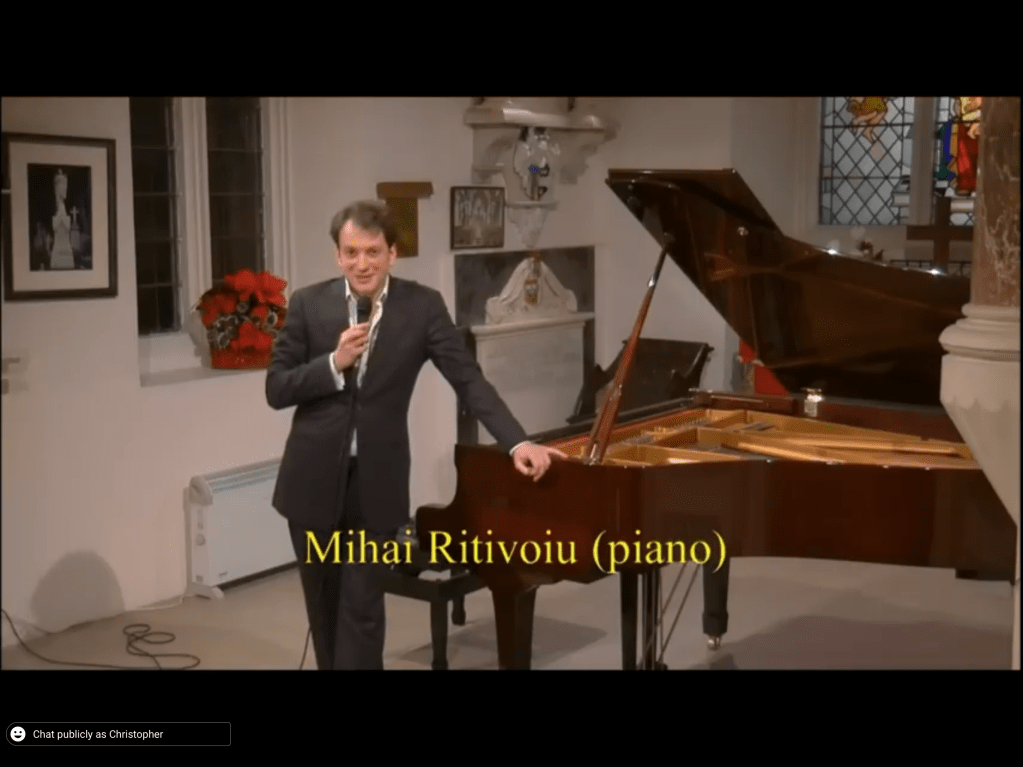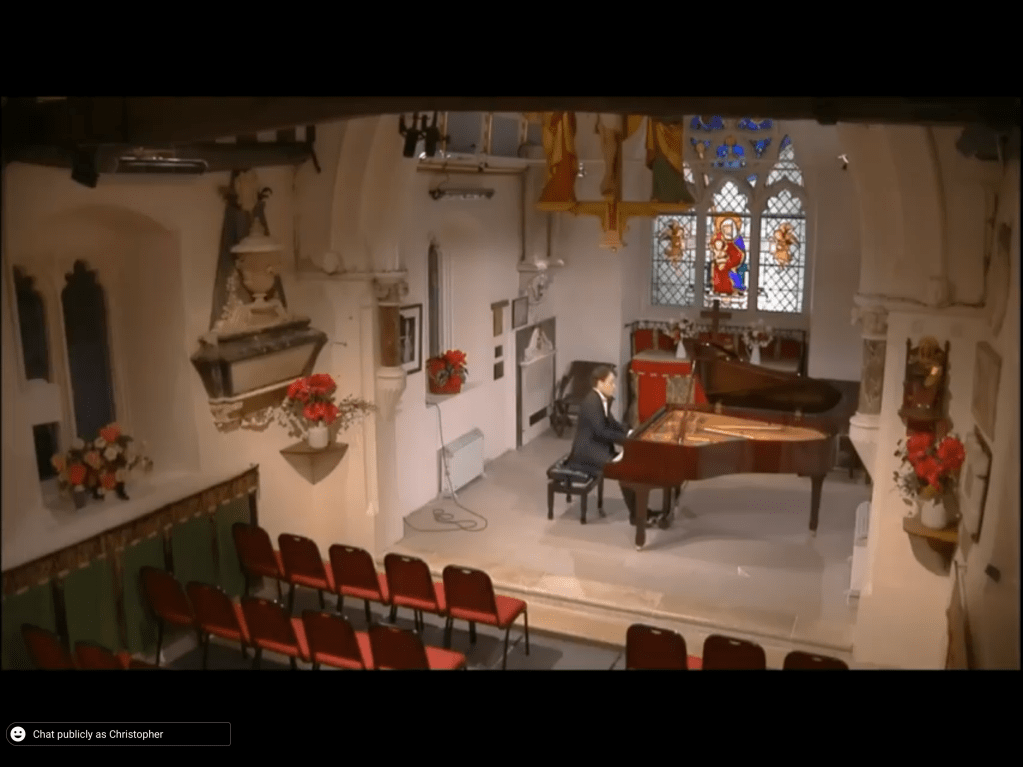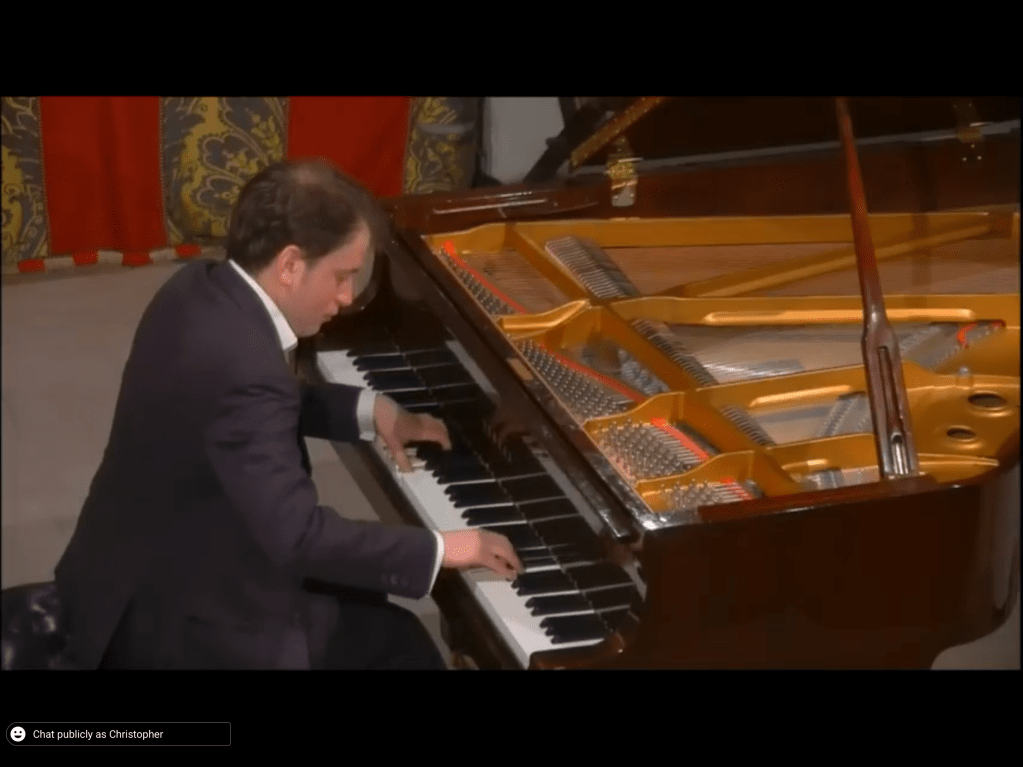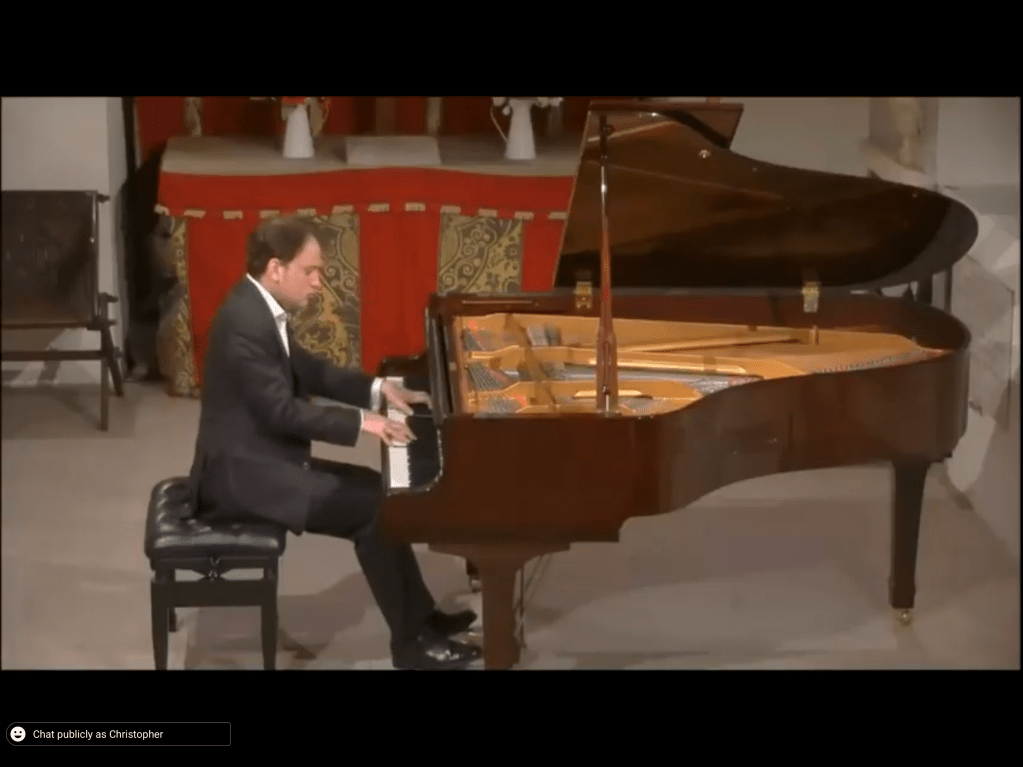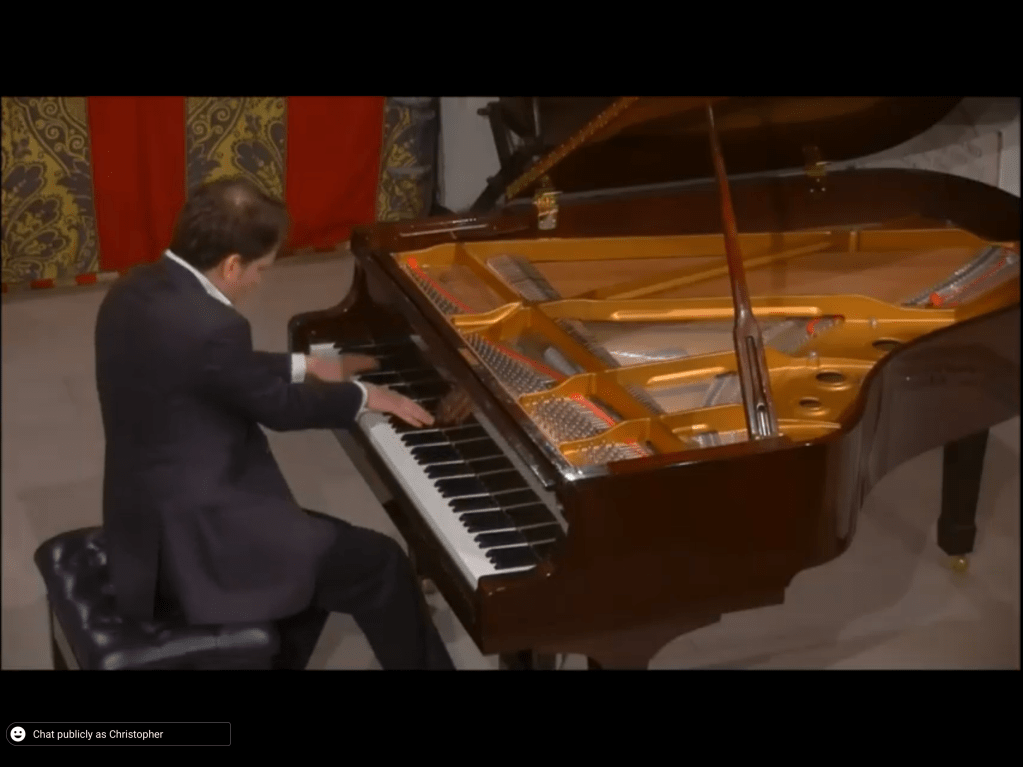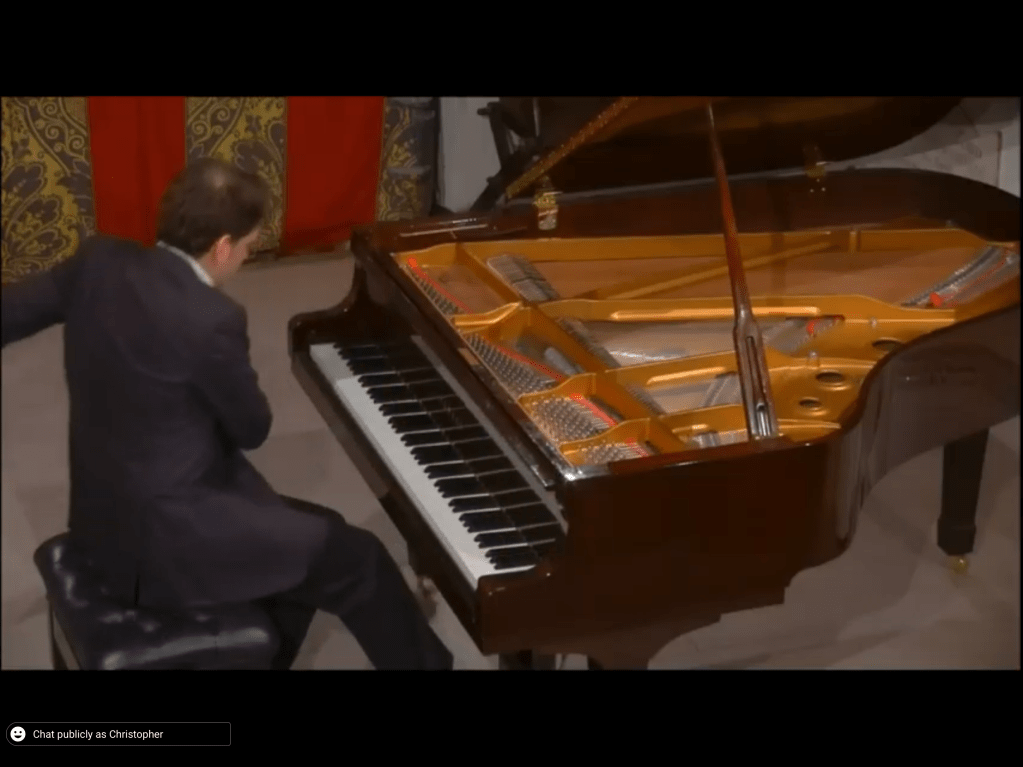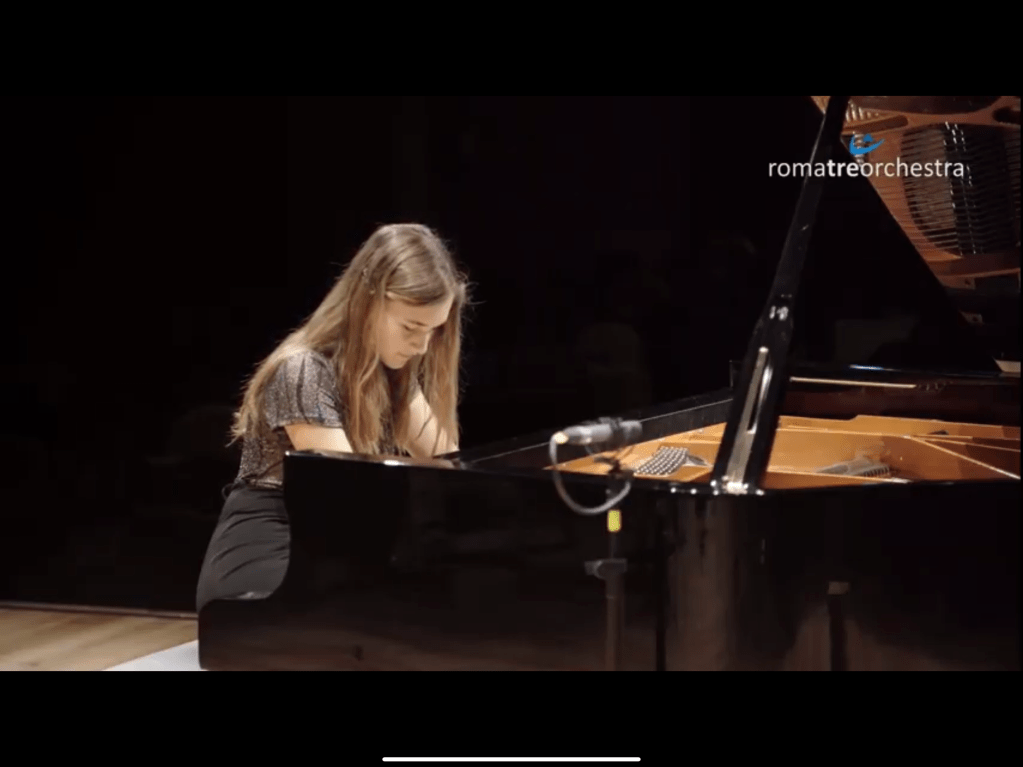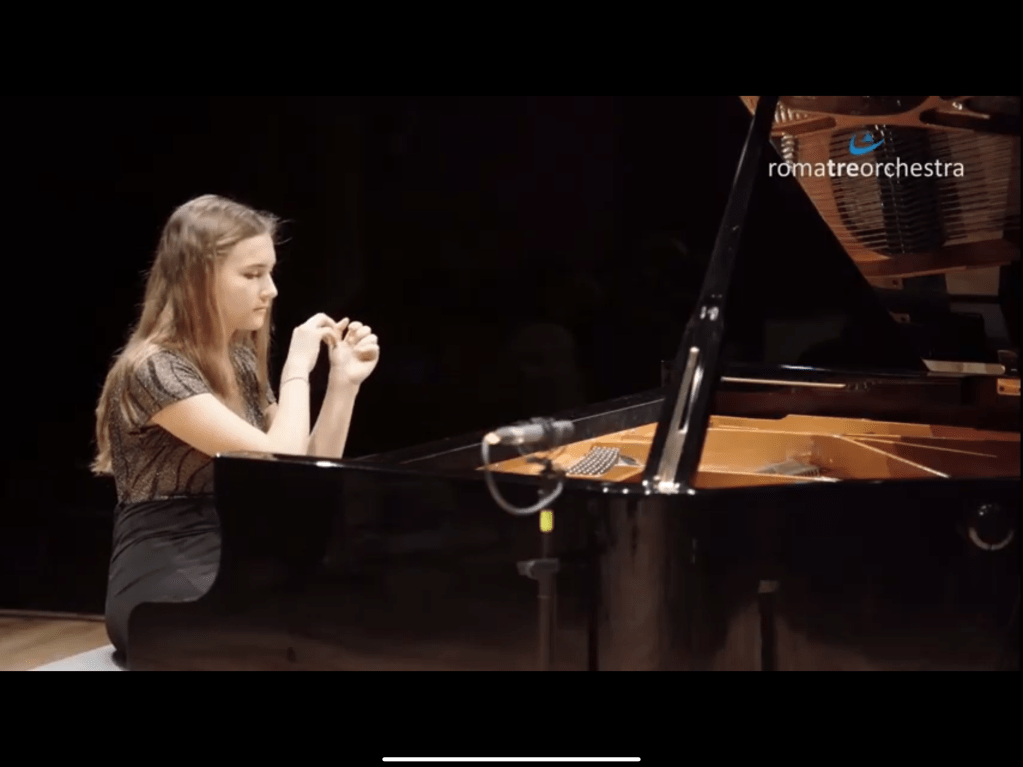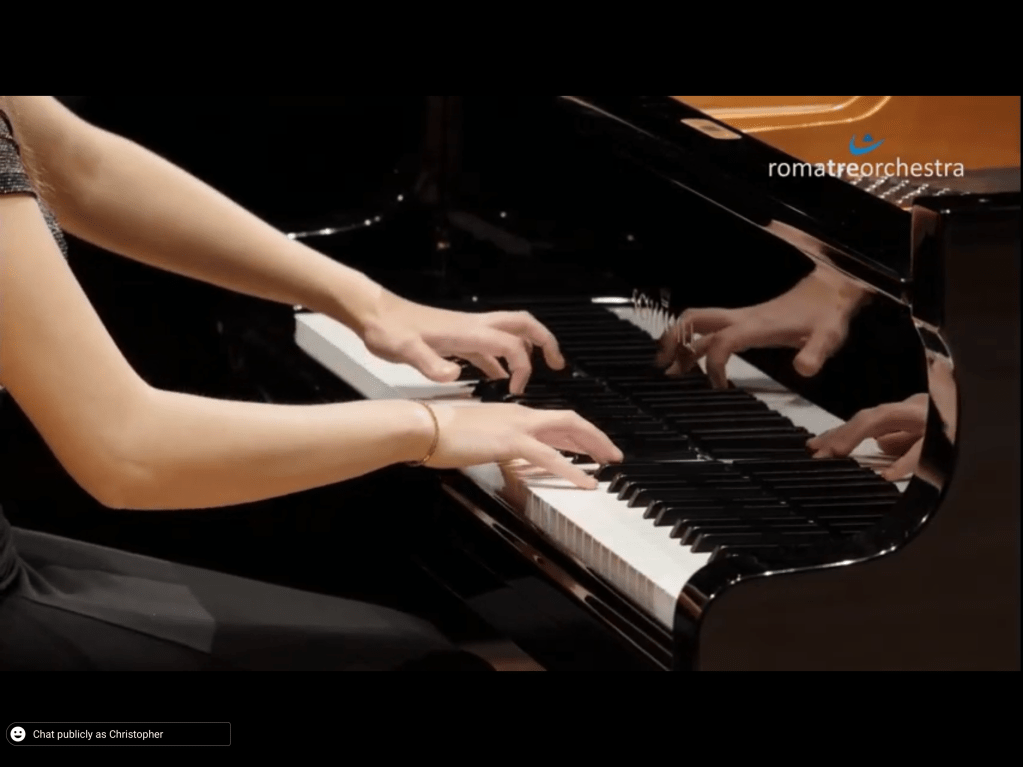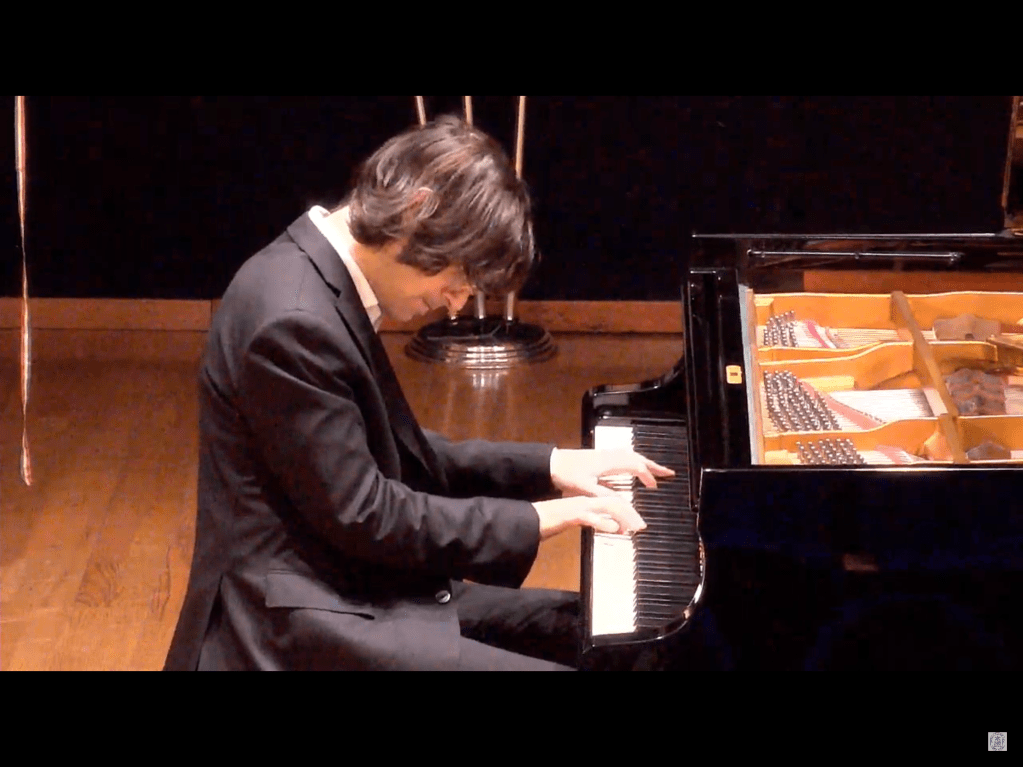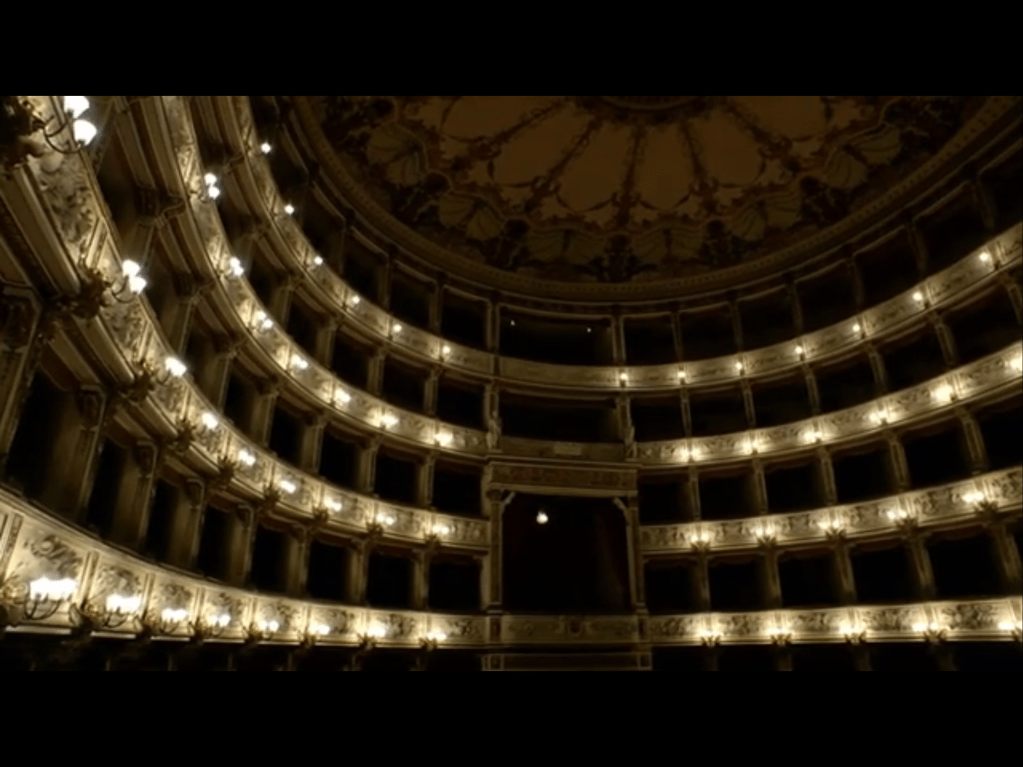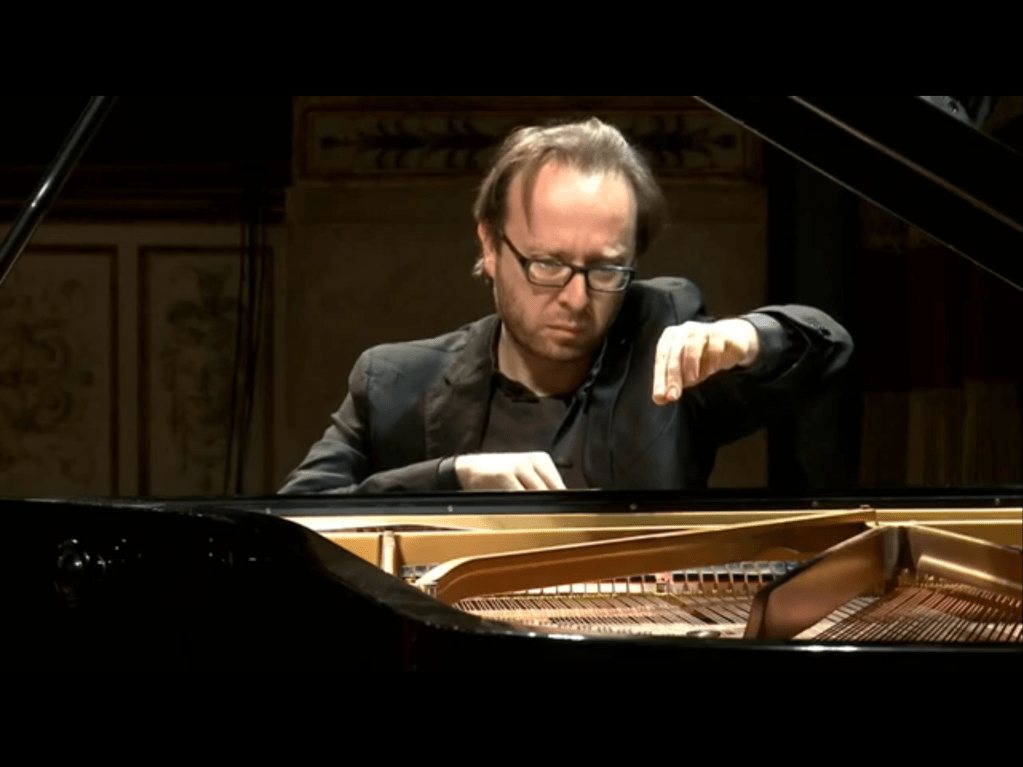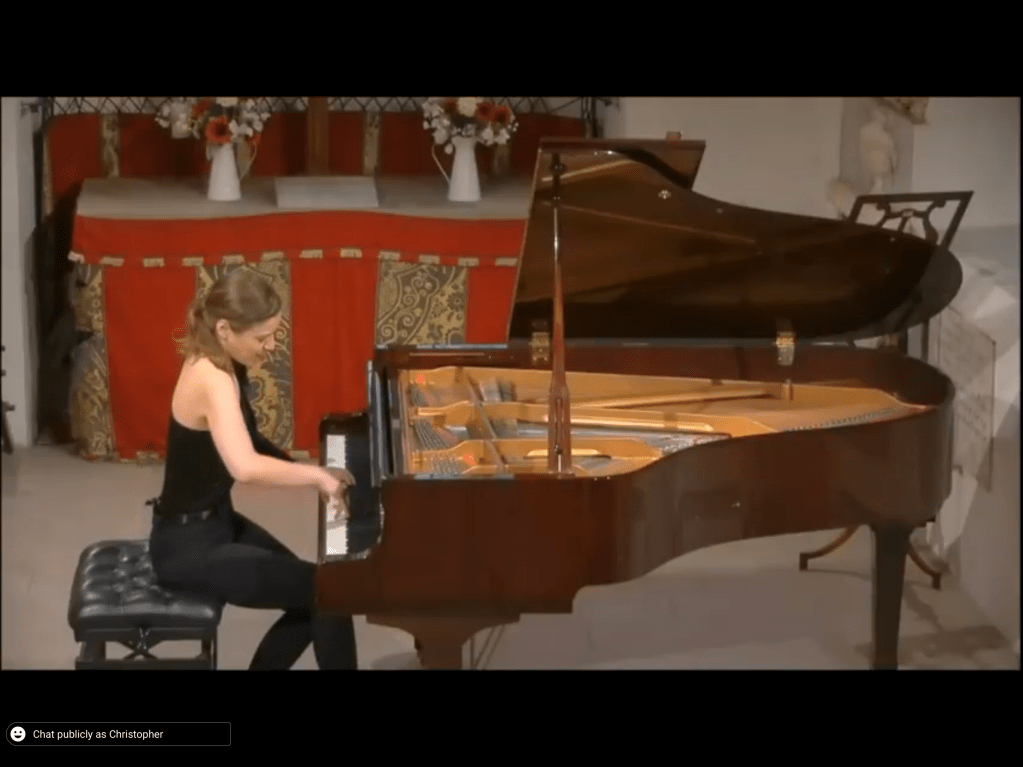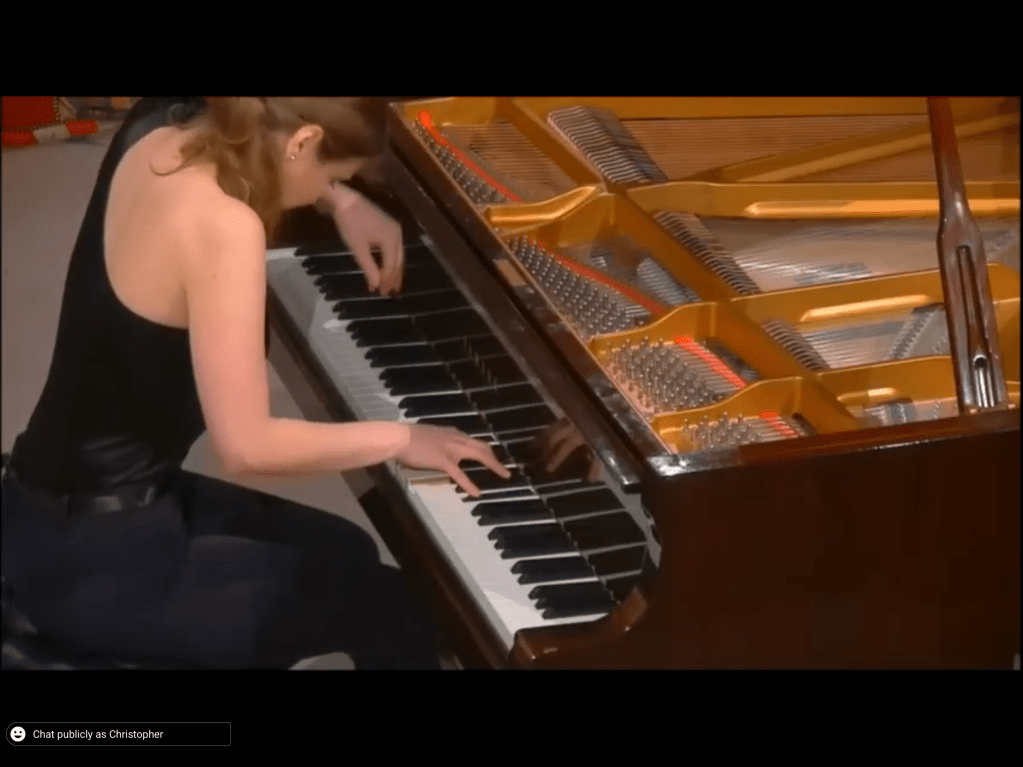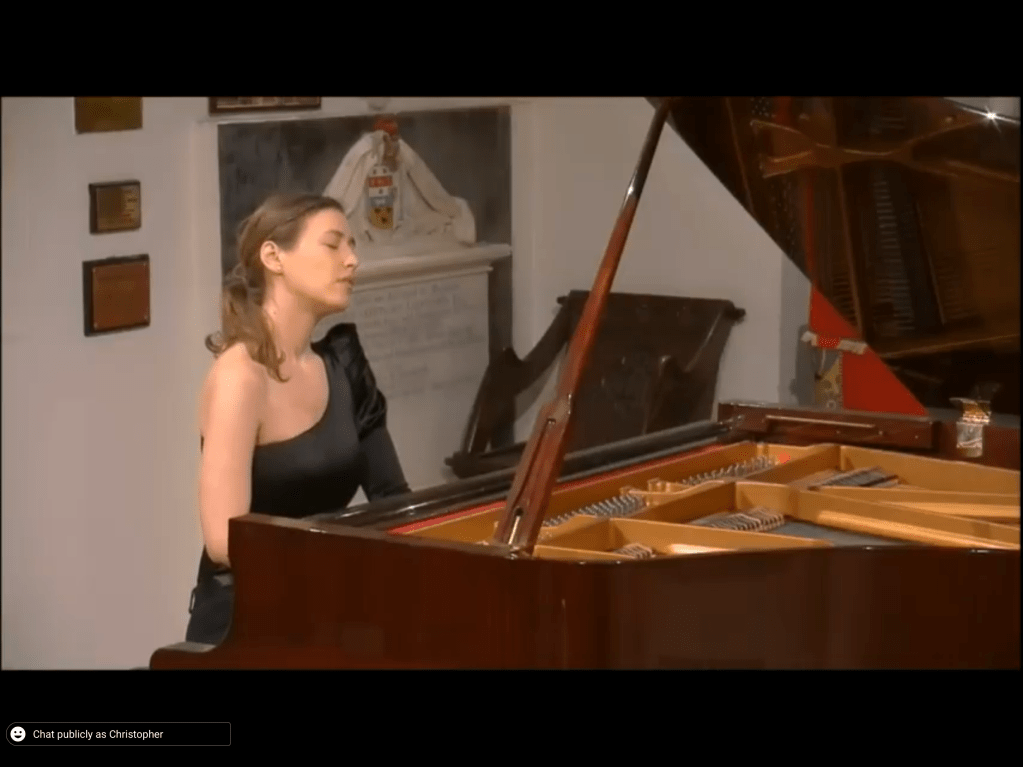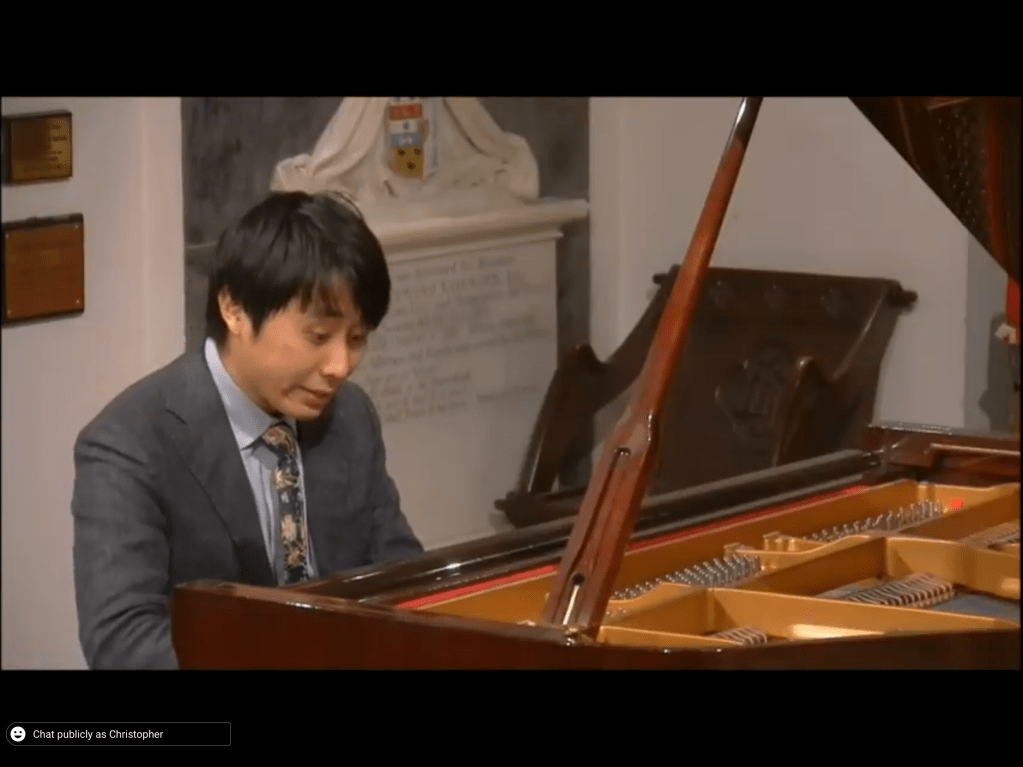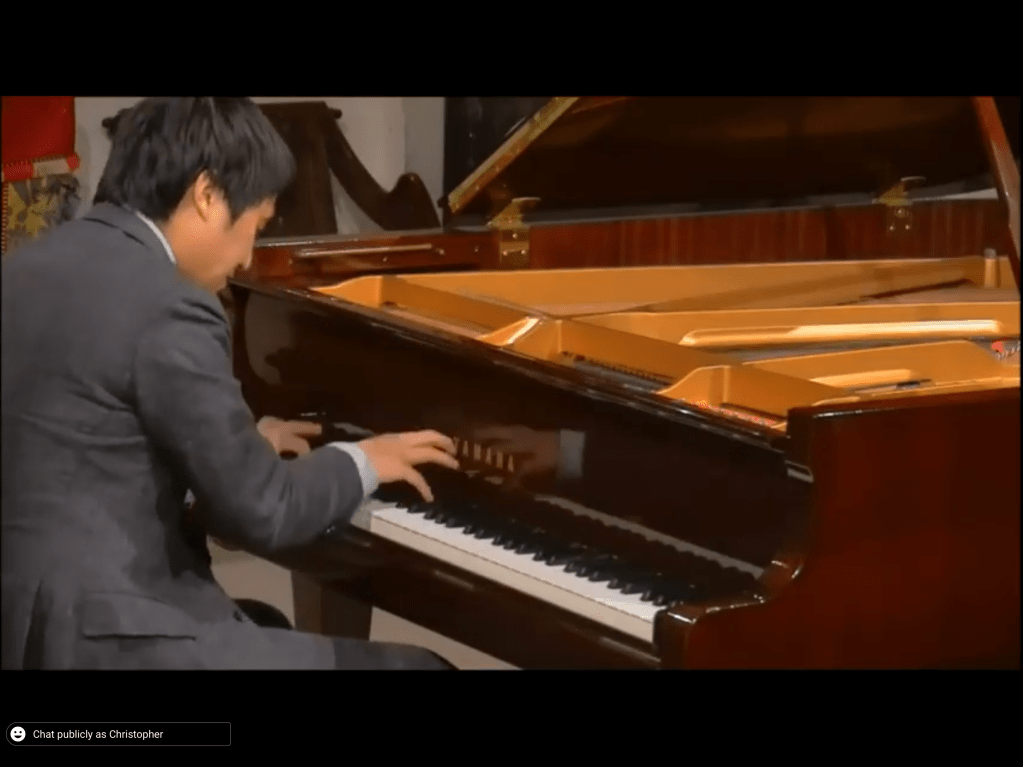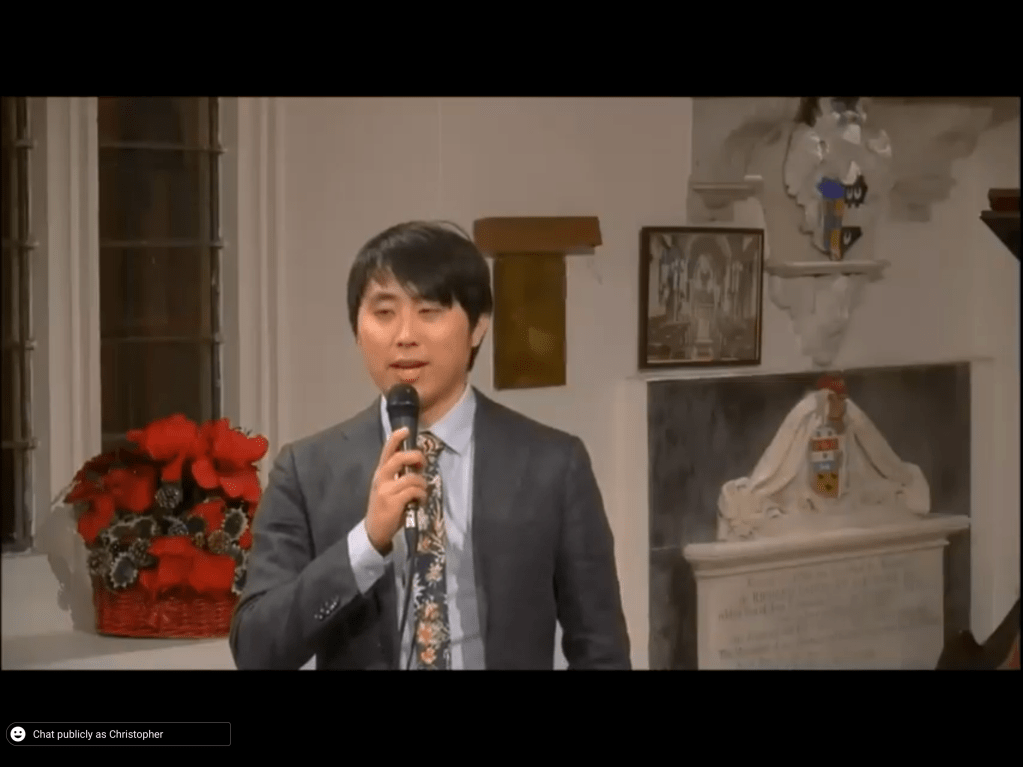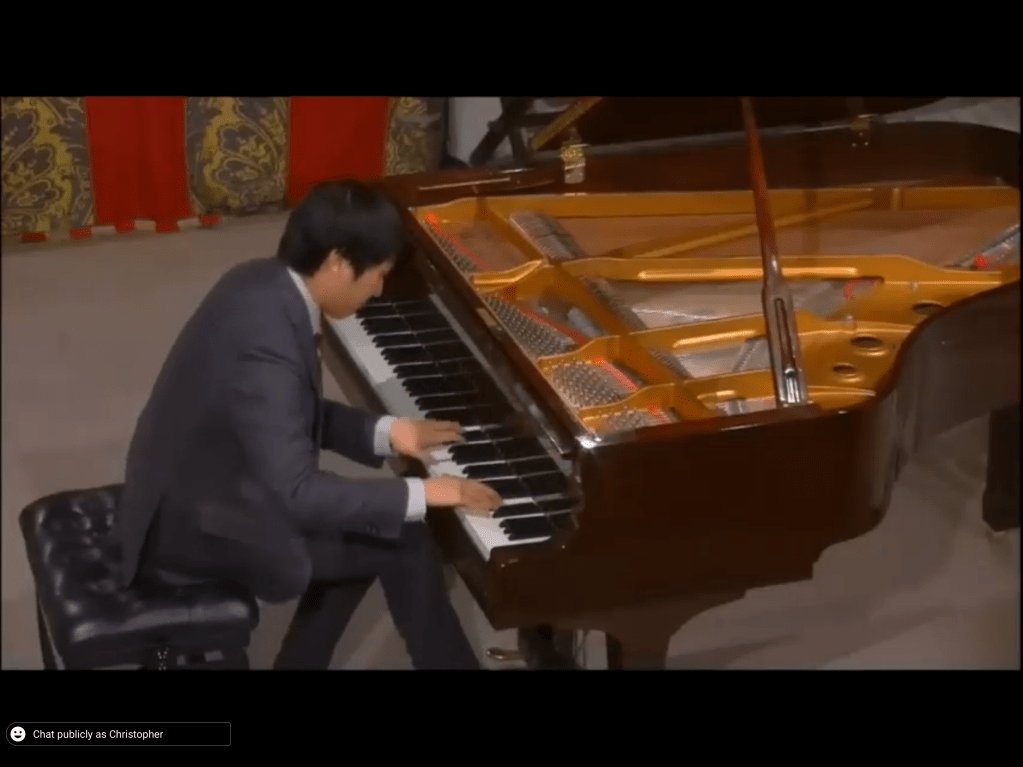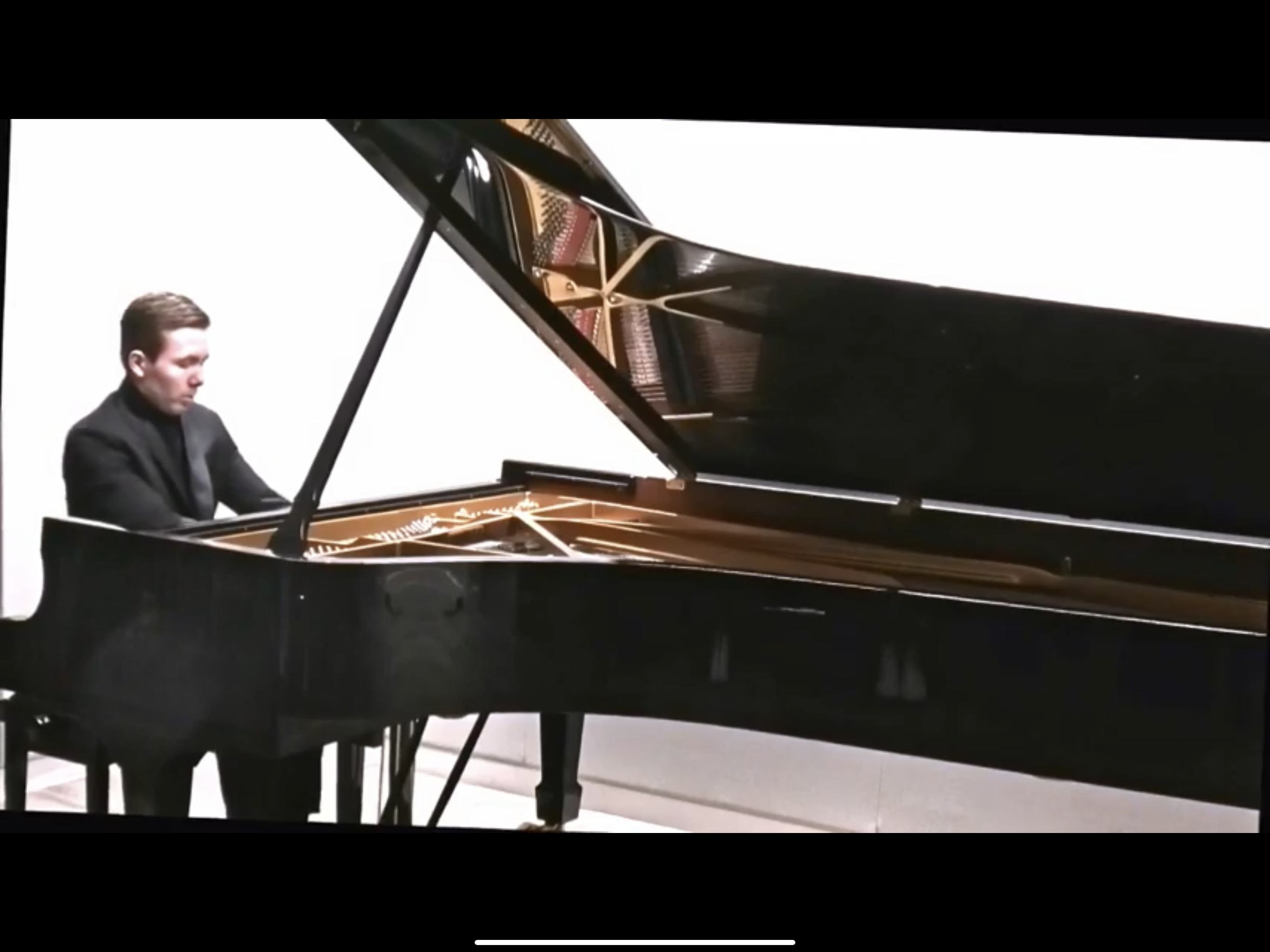
Thomas Kelly at Steinway Hall,London for the Keyboard Trust ‘New Artist’ series

Wednesday 20 January 2021, 7.15pm

Please join us for this live, online recital from Steinway Hall, London featuring Keyboard Trust “New Artist” Thomas Kelly who will perform works by Busoni, Britten and Reubke.

PROGRAMME:
•Busoni -Sonatina n.6 Chamber Fantasy on themes from Bizet’s Carmen
•Britten / Stevenson – Fantasia on Themes from Peter Grimes
•Reubke – Piano Sonata in B flat minor
BIOGRAPHY:
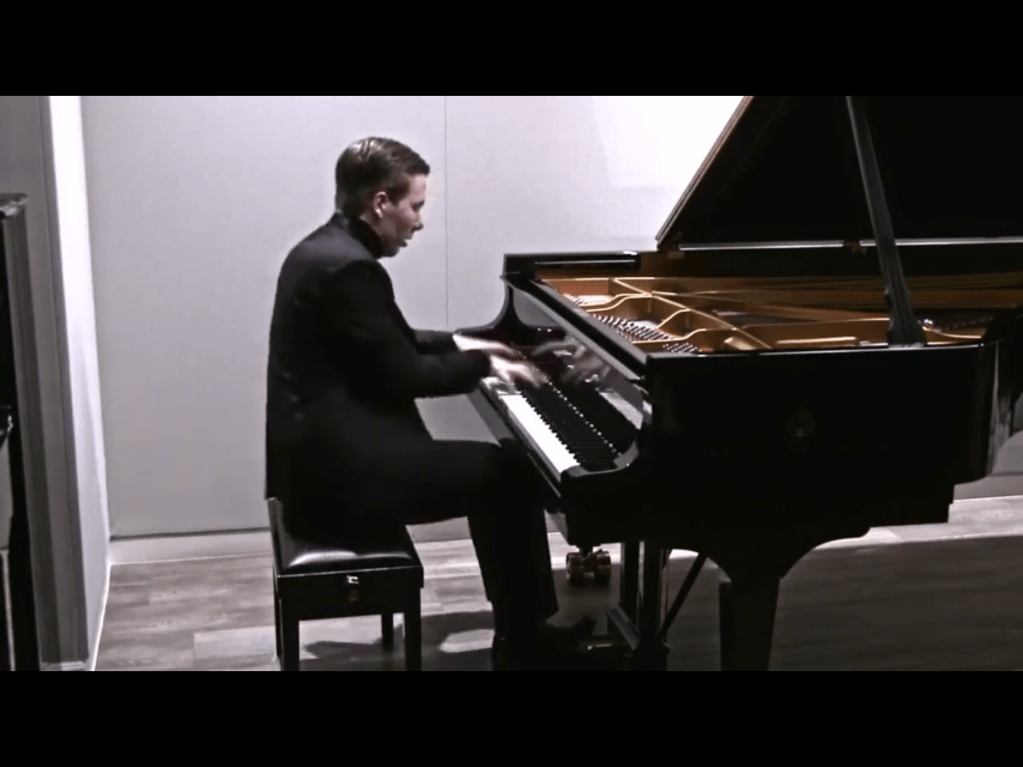
Thomas Kelly was born in 1998. He passed Grade 8 with Distinction in 2006 and performed Mozart’s Piano Concerto No. 24 in the Marlowe Theatre in Canterbury two years later.Since 2015, Thomas has been studying with Andrew Ball, initially at the Purcell School of Music and currently at the Royal College of Music where he is a third year undergraduate.Thomas won Third Prize in the Young Pianist of The North Competition in 2012. He has subsequently won many First Prizes including at the WACIDOM in 2014, at the Pianale International Piano Competition in 2017, the Kharkiv Assemblies in 2018, at the Lucca Virtuoso e Bel Canto Festival in 2018, the RCM Joan Chissell Schumann competition in 2019, the Kendall Taylor Beethoven Competition in 2019, the BPSE Intercollegiate Beethoven competition in 2019 and the fourthTheodor Leschetizky competition in 2020.He has performed in a variety of venues, including at Wigmore Hall, Cadogan Hall, Holy Trinity Sloane Square, St James’ Piccadilly, Oxford Town Hall, St Mary’s Perivale, St Paul’s Bedford, the Poole Lighthouse Arts Centre, the Stoller Hall in Manchester, the Paris Conservatoire, the StreingreaberHaus in Bayreuth, the Teatro Del Sale in Florence, and in Vilnius and Palanga.Thomas’s studies at the RCM are generously supported by Ms Daunt and Ms Stevenson, Pat Kendall Taylor and C. Bechstein pianos.

You might also be interested in Thomas’s interview for The Cross-Eyed Pianist blog: https://crosseyedpianist.com/2020/08/06/meet-the-artist-thomas-kelly-pianist/
https://christopheraxworthymusiccommentary.wordpress.com/2020/11/13/thomas-kelly-at-st-marys-for-the-beethoven-piano-society-of-europe-prizewinners-recital/

Fascinating recital streamed live for the Keyboard Trust ‘New artists’ series.Thomas Kelly playing an eclectic choice of some of the most complex and for that reason little played works in the repertoire.
Busoni 6th Sonatina Chamber Fantasy on Carmen was more than just a ramble but an intellectual précis by a pupil of Liszt .Peter Grimes Fantasy by Scotland’s modern day answer to Busoni ,and the Reubke Sonata by the pupil of Liszt who died so prematurely.
Talk about a kitten on the keys.Here was an amazing natural talent,a prodigy of Andrew Ball ,who dazzled us with a dizzying collection of notes,sumptuous colours and a kaleidoscope of sounds.Above all there was a musicianship and clarity of thought that could guide us through such a maze with the same authority that only Busoni himself could have done.
Like a contemporary music recital,now I have got over the shock I will listen again to savour the full artistry of this amazing English gentleman!
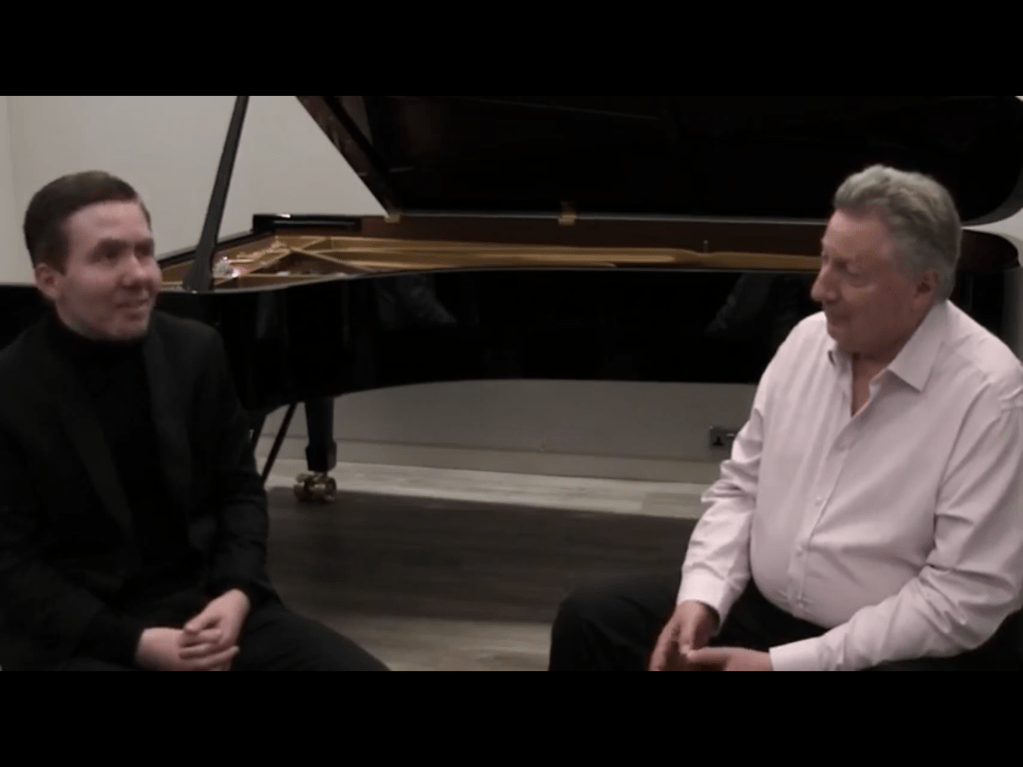
Leslie Howard talks to Thomas Kelly


A talk with the distinguished Liszt expert Leslie Howard was indeed a rare cherry on the cake and not to be missed.
A bulls eye for this series that is helping to promote important young talent at the beginning of their career.The distinguished keyboard player Elena Vorotko presented the concert as co artistic director of the Keyboard Trust together with Leslie Howard and myself.
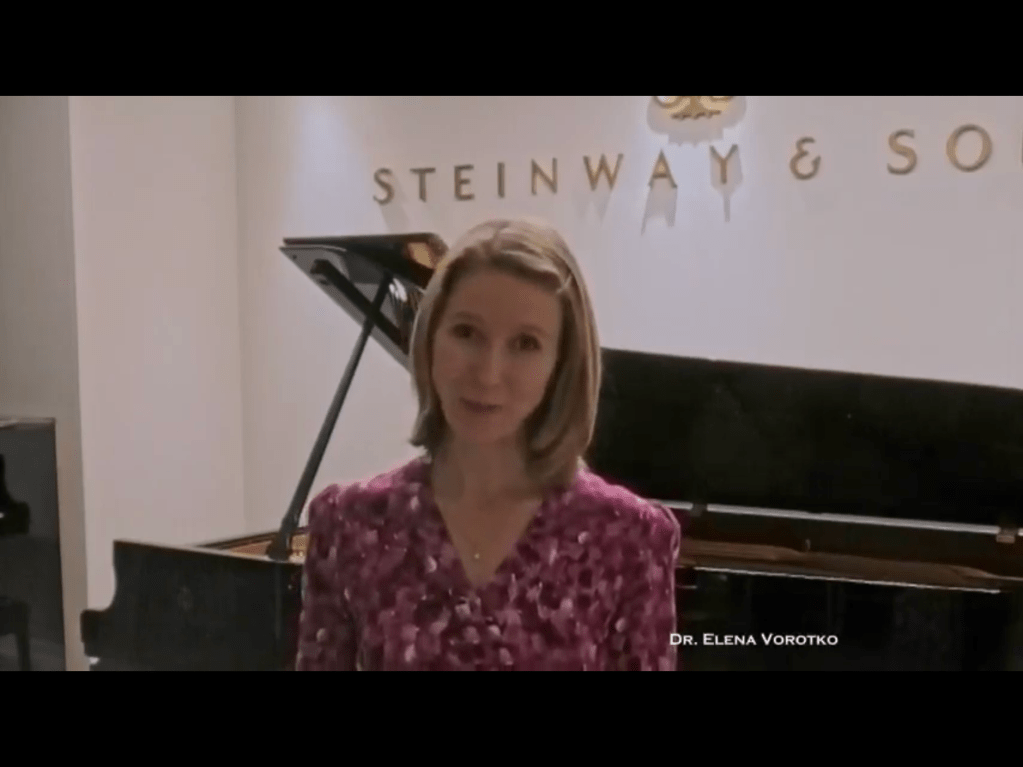
Elena Vorotko

Busoni transcribed many works especially of Bach.The Kammer-Fantasie über Carmen uses ideas present in the opera that he admired so much.Bizet’s melodies are sculpted with breathtaking creativity. It was written in 1920 and first performed in the Wigmore Hall by Busoni himself. It takes thematic material from the opening chorus of the fourth act, Don José’s ‘Flower song’ in Act II, the Act I ‘Habanera’ (in its minor and major forms), and the prelude to Act I.Ending with the final whispered sounds of the final tragic bars -the three final heart beats so poignantly played by Thomas after a scintillating display of his subtle artistry typical of the great virtuosi of Golden age of piano playing.It was quite usual for the greatest of pianists to play some crowd teasing lollipops to finish their recitals and whip their adoring audiences into a frenzy.Schultz-Evler Arabesques on The Blue Danube was a favourite of Josef Lhevine,Carnaval de Vienne of Moritz Rosenthal ,Vladimir Horowitz even wrote his own hair raising Carmen Fantasy.It is in fact a bit of a shock to see such a piece from the hands of such an intellectually serious musician such as Busoni.It has all the hallmarks though of a serious musician just wanting to pay homage to a masterpiece.The fact that it ends quietly too is very significant.But it did give Thomas a chance to show off his scintillating piano playing.From the bustling opening crowd scene played with great rhythmic drive and sparing use of the sustaining pedal as a sudden wind passes across the scene to the sumptuous outpouring of melody with magical arabesques barely noticeable with some scintillating jeux perlé playing.The Habanera barely hinted at on the horizon until it came fully into view with some diabolical embellishments thrown off with nonchalant charm that was every bit as beguiling as the recording of the young Ogdon.There was a great sense of the excitement of the theatre in his playing but at the same time an intellectual control of line and architecture that gave great weight to what could seem in lesser hands a mere Bon-Bon .Busoni would never have condoned that but neither would his disciple Ronald Stevenson.
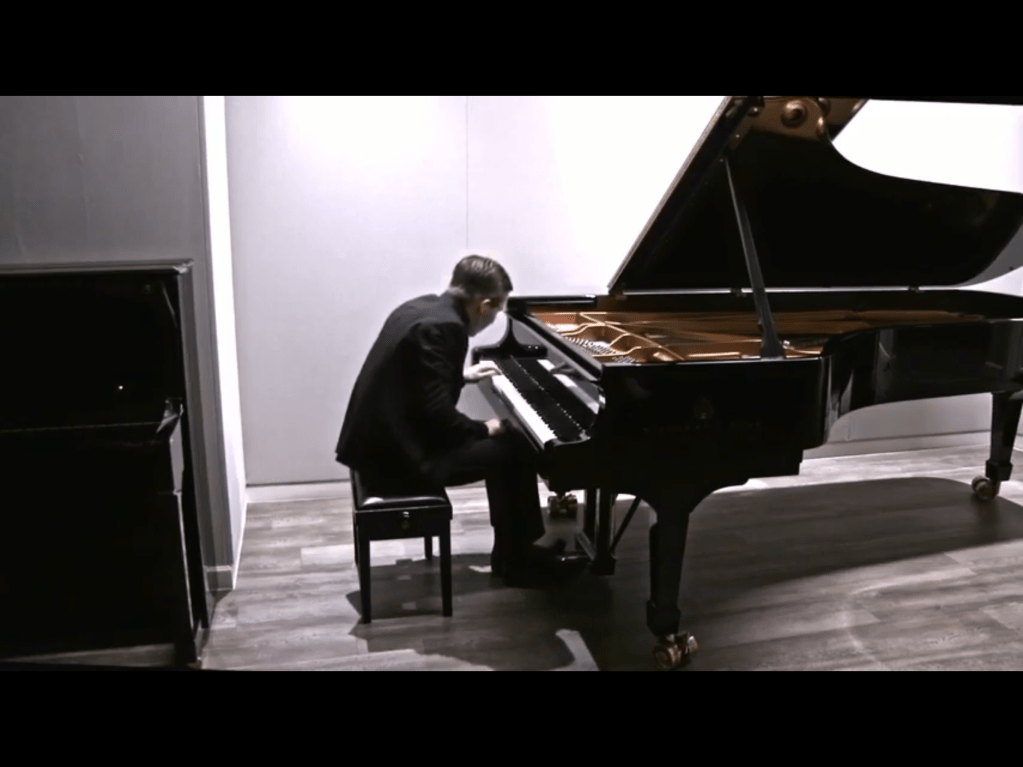
It was cleverly programmed with the Peter Grimes Fantasy and although another sound world from that of Busoni it showed the same transcendental control of sound with the composer/pianist Ronald Stevenson’s admiration for Britten’s masterpiece shining through.The same admiration that Busoni had shown for Bizet and that Stevenson too was able to focus on with the amazingly atmospheric intervals that Britten uses to depict the desolation and grandeur of the sea.A fascinating work that deserves to be played more often especially when played with the kaleidoscopic range that Thomas could show us today.
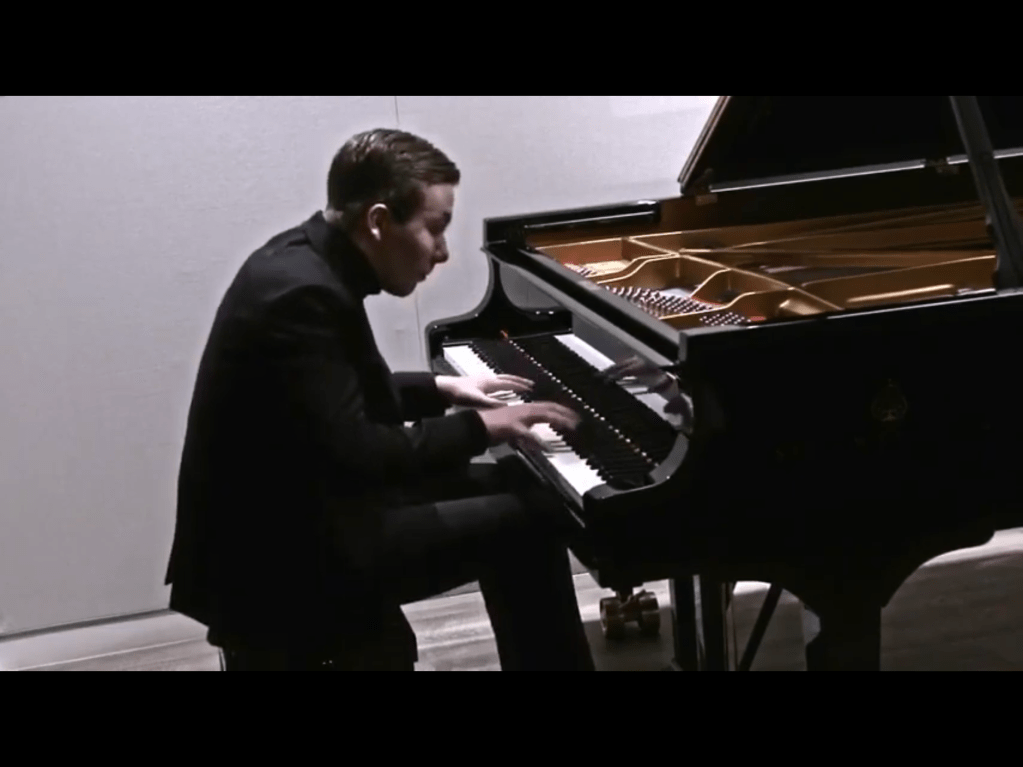
The Piano Sonata in B-flat minor is a work written by Julius Reubke between December 1856 and March 1857. It is an absolute rarity in the concert hall and Thomas’s enterprising choice of programme gave us the chance to hear this monumental work written just three years after the Liszt B minor Sonata that in part it much resembles.Combining his teacher Franz Liszt’s technique of thematic transformation, colourful harmonies, virtuosic piano writing and a wide array of characters and sentiments.When Liszt visited Berlin in December 1855, he arranged, on the recommendation of Bülow, to teach Reubke from February 1856 in Weimar and allowed him to live at the Altenburg house he kept. It was here that he composed his two major works, the Piano Sonata and the Organ Sonata in C minor on the 94th Psalm in C minor,which is considered one of the pinnacles of the Romantic organ repertoire.The piano sonata has remained in obscurity,no doubt due to it extreme technical difficult.A dazzling and at times bewildering array of notes obviously greatly influenced by his master’s great masterpiece the B minor sonata.Listening to it for the first time I was struck by many similarities not least the central slow section and many of the passages in which he allows the opening motif to evolve.It was played with astonishing command and control of sound that even with the enormous technical hurdles involved Thomas was able to forge a coherent line that one could follow.This was amidst many of the more rhetorical outbursts of a youthful disciple of Liszt who at only 24 would die of tuberculosis.He was one of Liszt’s favourite pupils; after his death, Liszt wrote a letter of sympathy to Reubke’s father: ‘Truly no one could feel more deeply the loss which Art has suffered in your Julius, than the one who has followed with admiring sympathy his noble, constant, and successful strivings in these latter years, and who will ever bear his friendship faithfully in mind’
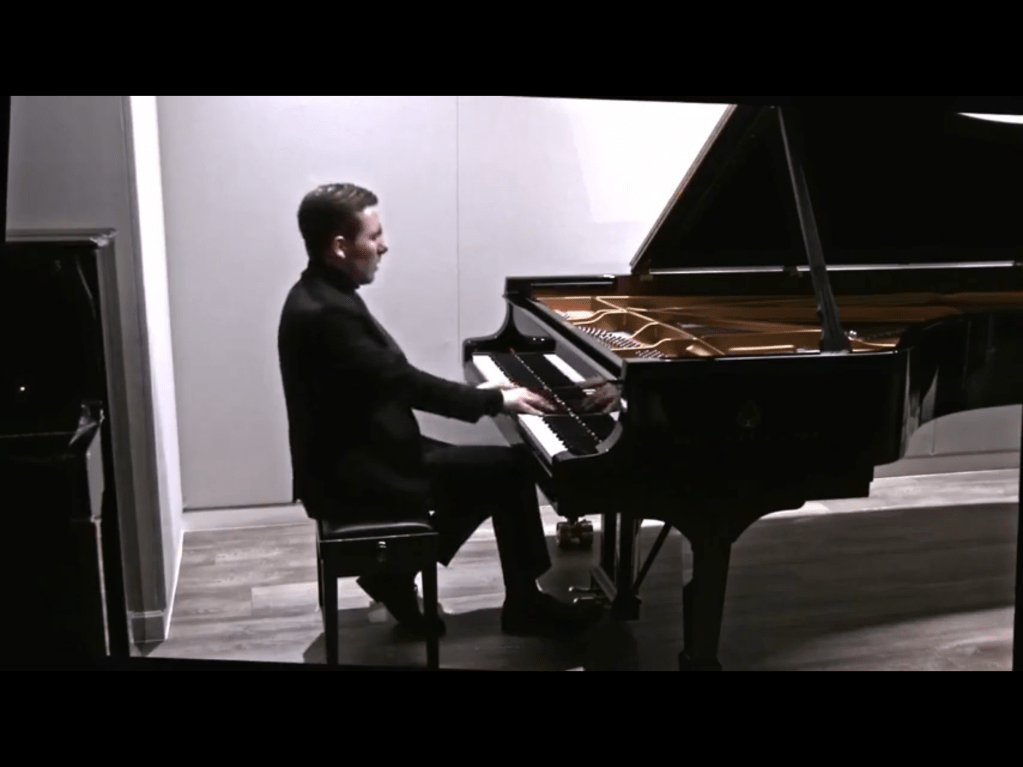
An amazing accomplishment to master such a long and complicated work and to play it without the score for what must be one of the very rare outings for such an unknown work.Combined with the Busoni and Stevenson it showed a rare attention to programming in an age when most young pianists are tied to competition repertoire instead of exploring the vast amount of music that needs to be heard.It was this amongst many other problems facing young musicians that formed the basis of the informal talk between Thomas and the distinguished Liszt scholar and pianist Leslie Howard
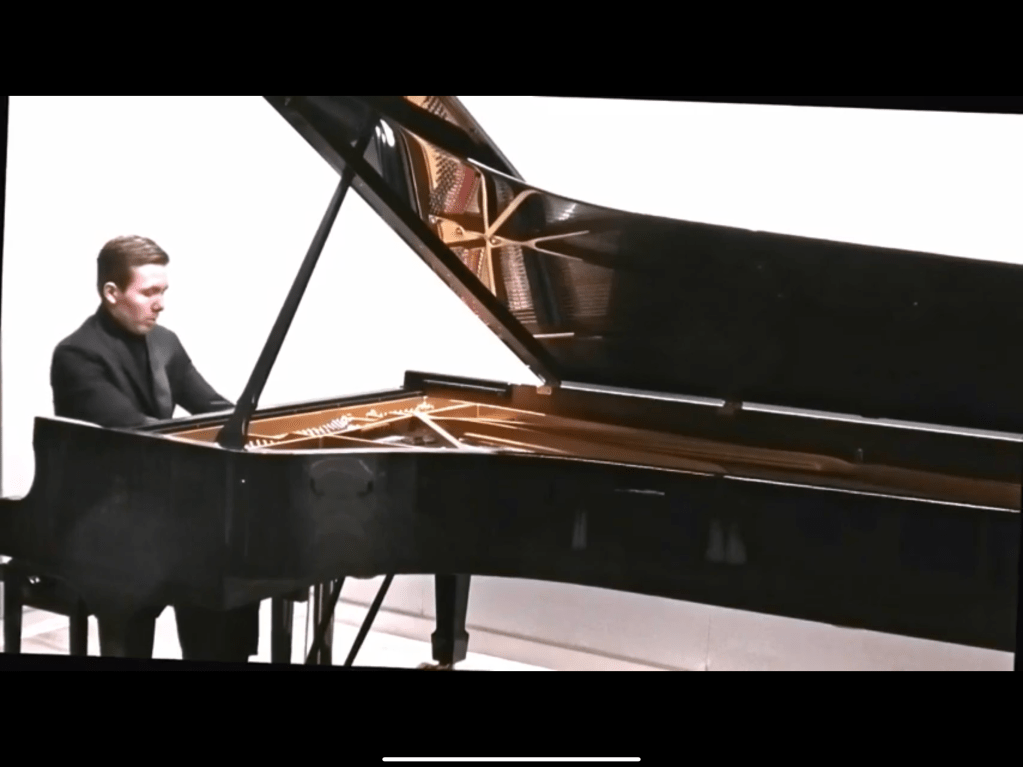
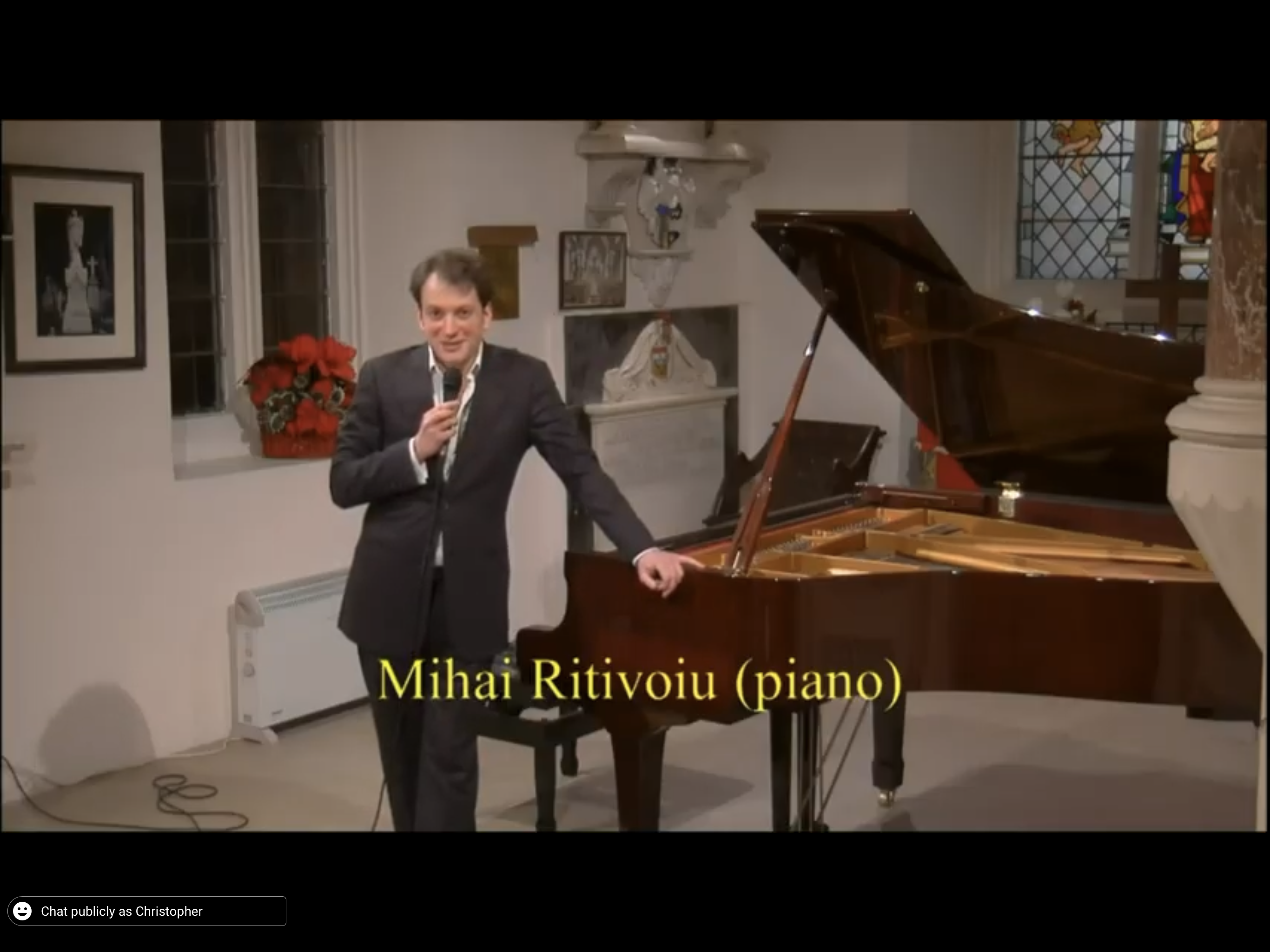
Mihai Ritivoiu at St Mary’s

Tuesday 19 January 4.00 pm 

Mihai Ritivoiu (piano)

Haydn: Sonata in C major Hob. XVI:50 Allegro-Adagio-Allegro molto

Ravel: Ondine from Gaspard de la Nuit

Schubert: Impromptus D 935 nos 1 in F minor and 2 in A flat   

Beethoven: Bagatelle in A Op 33 no 4 

Liszt: Mephisto Waltz no 1 S514

https://christopheraxworthymusiccommentary.wordpress.com/2019/10/15/mihai-ritivoius-blazing-trail-at-st-marys/

A superb concert from St Mary’s Perivale.Mihai Ritivoiu a true poet of the piano from the crystal clear hi-jinks of late Haydn through the magic swirling and swishing of Ravel’s Ondine to the sublime simplicity of Schubert.Beethoven too in almost Schubertian mood and finally the devilry of Liszt for which he was to pay dearly in his later years.
All played with sumptuous sound and total mastery.
Mihai’s playing just grows in stature from the first time I heard him in his first year at the Guildhall with Richard Goode almost ten years ago to today’s performances from an established artist graduated with honours from the school of Joan Havill.

Born in Bucharest, the multi-awards pianist Mihai Ritivoiu won the Dinu Lipatti National Competition in 2010 and was laureate of numerous international competitions including the George Enescu Competition in 2011 (Bucharest), Tunbridge Wells International Young Concert Artist Competition in 2014 and Teresa Llacuna Competition in 2015 (Valence). Most recently, he was awarded the Gold Medal at the Beethoven Piano Society of Europe Intercollegiate Competition. Mihai leads an international career performing solo and chamber music recitals in Europe and Asia. He also played concertos with the Bucharest Philharmonic Orchestra, the Lausanne Chamber Orchestra, the English Chamber Orchestra and the MDR Leipzig Radio Orchestra. Regularly invited to play on BBC Radio 3’s programme ‘In Tune’, his performances have been broadcast on Radio Romania Muzical, Radio Television Suisse and Medici TV. His debut album released under the label Genuin with solo works by Franck, Enescu and Liszt has been praised as “beautifully recorded, handsomely played – a solo recital to cherish” (The Arts Desk). Graduated with the highest distinction from the National University of Music in Bucharest and the Guildhall School of Music & Drama in London, Mihai studied with Professors Viniciu Moroianu and Joan Havill. He also had the privilege to take part in masterclasses led by Dimitri Bashkirov, Dominique Merlet, Emmanuel Ax, Richard Goode and is mentored by Valentin Gheorghiu. Mihai is a City Music Foundation artist and a Yeoman of the Worshipful Company of Musicians. He has received generous support from the Liliana and Peter Ilica Foundation for the Endowment of the Arts, Erbiceanu Cultural Foundation and Ratiu Family Charitable Foundation.

A perfect sense of style in the Haydn C major Sonata Hob XVI:50 and as Mihai explained is a late work that shows off all Haydn’s mischievous sense of humour.From the bare opening notes to the bubbling energy and sense of character full of sparkling ornaments and the humorous questions and answers all played with such delicacy and musical understanding .There was a beautiful change of colour for the development and surprising pedal effects that Haydn writes in the score anticipating his illustrious pupil.The exquisite delicacy of the Adagio was played with such simplicity and sense of colour where the music really was allowed to speak for itself.Deliciously descending staccato scales after a trill that just seemed to dissolve in a moment of sublime beauty.Sensitivity and sense of discovery with astonishing key changes and a magical coda leading to the final deep breath.There was a great sense of humour in the Allegro molto where Haydn at a certain point seems to be taking the player astray only to rejoin the fun with the final chords thrown off with whimsical nonchalance.

Gaspard de la nuit (subtitled Trois poèmes pour piano d’après Aloysius Bertrand),is a suite of three pieces by Ravel written in 1908.Of the three pieces Ondine,Le gibet.Scarbo,Mihai played the first and perhaps most ravishing of the suite:Ondine. It is the tale of the water nymph singing to seduce the observer into visiting her kingdom deep at the bottom of a lake:’I thought I heard A faint harmony that enchants my sleep.
And close to me radiates an identical murmur Of songs interrupted by a sad and tender voice.’A beautiful melodic line above the splashes of swirling water that surround the water nymph Ondine was played with sumptuous sound where the melodic line seemed to emerge from the watery sounds that were so beautifully played.With complete technical command even the glissandi seemed to be just waves of colour that Mihai added to his magic palette.Building to a tumultuous climax always with such radiant tone colours as he threw himself into the quite extraordinary hurdles that Ravel purposefully places before any pianist who tries to play this suite that was written with the idea to out do Bakakirev’s notorious Islamey.The virtuoso Ricardo Vines gave the first performance in Paris in January 1909.It was though Vlado Perlemuter who sought out Ravel to get his advice on giving the first complete Ravel recitals in Paris in 1929.Here is the link to his historic performance recorded in 1991:https://www.facebook.com/legendarymusicians2020/videos/444771353608392/

The first two of the ‘late’ Impromptus by Schubert made up this very well thought out programme.The first is one of the longest of the set of four D.935 published after Schubert’s early death and were probably written in his last year of 1828.There are haunting seamless streams of melody that seemed to pour from Schubert’s pen with such ease and simplicity.These four Impromptus were thought by Schumann to be a Sonata in disguise much like the Drei Klavierstucke D.946.In fact the first two impromptus that Mihai had chosen for his programme could almost be the first two movements of a sonata with the first long almost in Sonata form without development and the second a simple Minuet and Trio.The first Impromptu was played as if Mihai was telling a story with such an imperious opening dissolving into landler played with such delicacy and flowing tempo.It dissolved to the the magic duet between bass and treble voices over a constant stream of waves of sound played with such colour and sensitivity by a true poet of the piano.A duet between voices just as poignant as in Schubert’s songs.Songs without words indeed,but just as eloquent when played with such sensitivity.

There was an almost string quartet texture to the A flat Impromptu that followed not just as a melody and accompaniment but gave great depth to this seemingly innocent opening.There were some very poignant bass notes too that gave great meaning to the upper voices.Schubert deliberately rewrites the same time signature for the flowing Trio section and I would have kept more strictly the same tempo as at the opening even though Mihai played it in a lovingly flowing way.Almost Beethovenian in its unsentimental sentiment it was beautifully realised and made this the ideal companion for the charming almost Schubertian Bagatelle op 33 n.4 by Beethoven.As Mihai said ‘this is a piece of sunshine on a beautiful bright day where all the worries are left long behind’and it was part of this carefully constructed programme that he offered today.

After all this charm and pastoral peace Mihai chose the devil himself to finish.Liszt’s demonic Mephisto Waltz n.1. written originally for orchestra in 1859 is one of Liszt’s most popular show pieces for piano .It is pure programme music and tells the story of a wedding feast in progress in the village inn, with music, dancing, carousing.’Mephistopheles induces Faust to enter and take part in the festivities. Mephistopheles snatches the fiddle from the hands of a lethargic fiddler and draws from it indescribably seductive and intoxicating strains. The amorous Faust whirls about with a full-blooded village beauty in a wild dance; they waltz in mad abandon out of the room, into the open, away into the woods. The sounds of the fiddle grow softer and softer, and the nightingale warbles his love-laden song.’It certainly must have been quite a party that Mihai envisaged as he opened at high speed with a delicacy but rhythmic urgency that immediately set the scene.Some amazing pyrotechnics were thrown off with aplomb but with such musical understanding.Here again was a poet of the piano with a technical mastery that the story was allowed to unfold with mounting excitement and even the nightingales seemed happy allowed to warble within his scintillating fingers.A truly exciting finish to an extremely enjoyable programme.

In fact as I told Mihai this lockdown is obviously doing you good – ‘what is your secret?’: ‘It must be Yoanna’s superb cuisine.’Charming and spirited in life as on the platform.

https://christopheraxworthymusiccommentary.wordpress.com/2020/09/04/yoanna-prodanova-and-mihai-ritivoiu-at-st-marys/

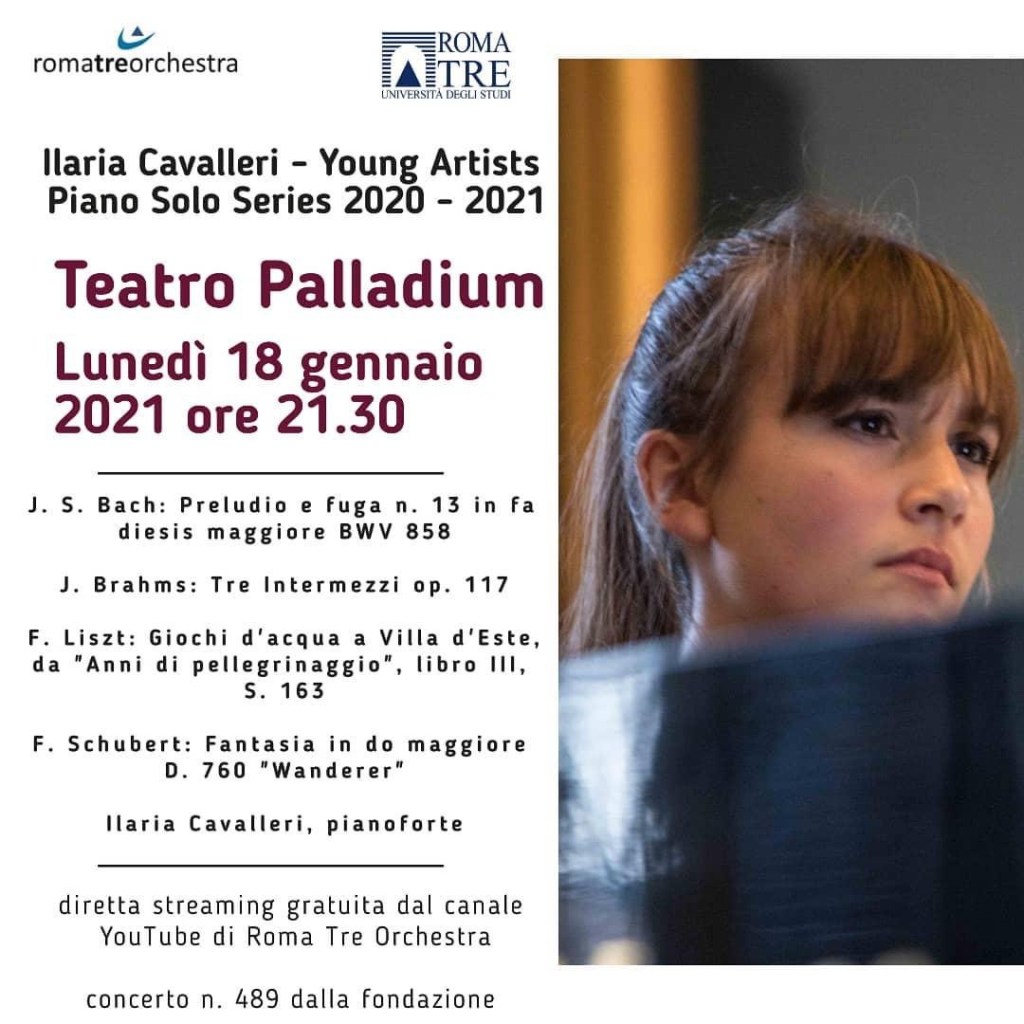
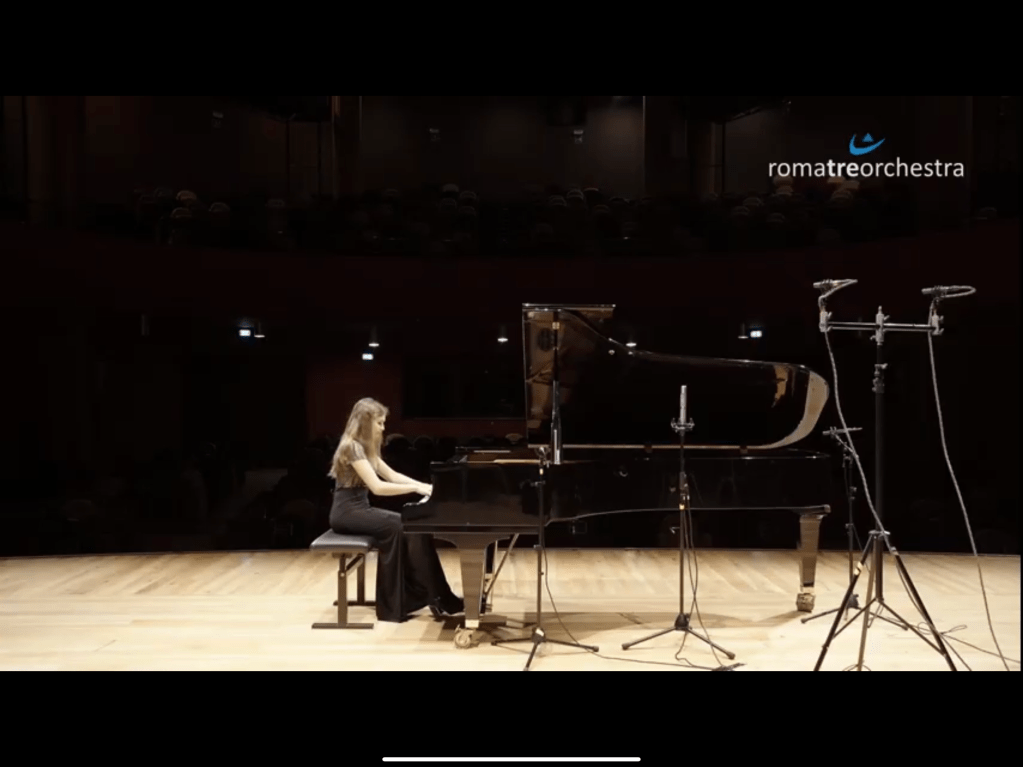
Ilaria Cavalleri at Teatro Palladium Roma 3 Beauty and musicianship illuminate the magnificent sounds of their Schimmel concert grand.

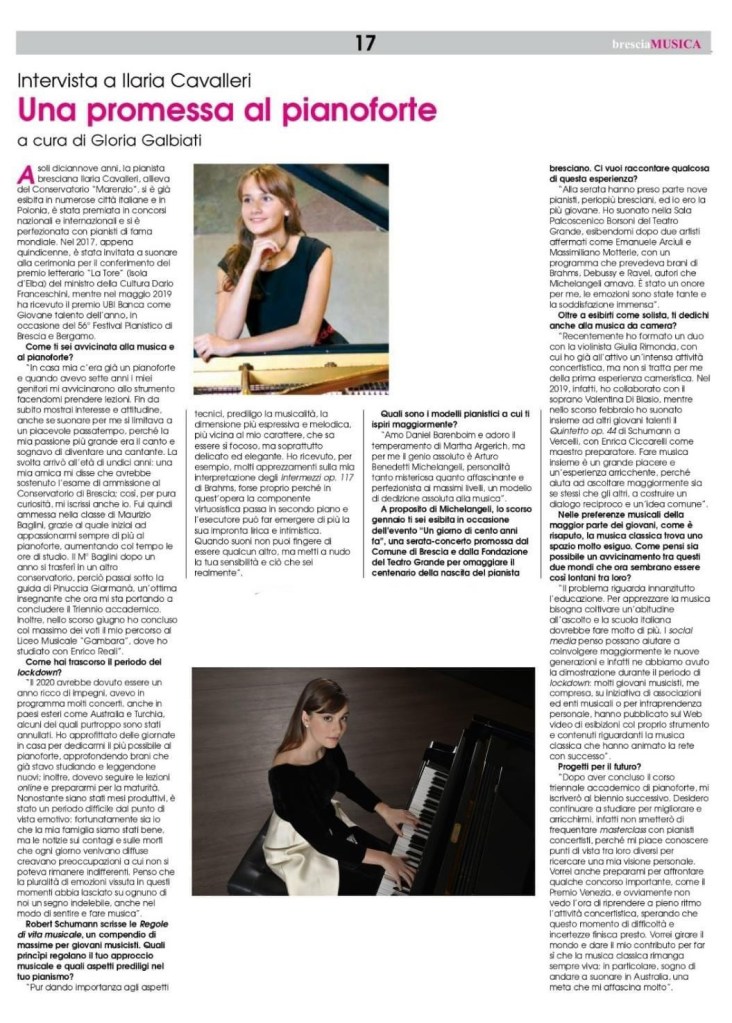
Missing an actual biography of this very talented young pianist I came across this very interesting interview instead.It was obvious from her very sensitive musicianship that although no longer studying officially with Maurizio Baglini she obviously has been very influenced by his musical values which have established him as one of the foremost pianists of his generation.

It was apparent from the very first notes of the F sharp Prelude and Fugue that here was a pianist of unusual sensitivity that allowed this most pastoral of Preludes to be shaped with such luminous tone and sparkling ornaments.The Fugue too had a sense of serenity as the subject was allowed to sing so naturally unimpeded by the knotty twine of the counterpoints

The Three Intermezzi for piano, were described by the critic Eduard Hanslick as “monologues”… pieces of a “thoroughly personal and subjective character” striking a “pensive, graceful, dreamy, resigned, and elegiac note.”It was exactly this atmosphere that Ilaria created with her barely whispered sounds where the first Intermezzo is prefaced by two lines from an old Scottish ballad, Lady Anne Bothwell’s Lament: Balow, my babe, lie still and sleep!It grieves me sore to see thee weep. There was a beautiful question and answer in the più Adagio middle section and a truly magical return of the opening melody in the poco più Andante.The second Intermezzo in B flat minor flowed beautifully although I fear in a big hall her intimate style may not have reached far into the audience.Luckily in these strange times her beautiful sounds are captured and transmitted to our homes by the superb streaming facilities of the Roman3 University.I missed the contrast of the middle section which portrays a “man as he stands with the bleak, gusty autumn wind eddying round him.”A magical end though led straight into the haunting unison octaves of the third Intermezzo which also has an autumnal quality suggesting the cold wind sighing through the trees as leaves are falling.Beautifully suggested in Ilaria’s sensitive hands with a flowing sense of shimmering colour in the più molto ed espressivo disappearing so magically as it prepared the subtle colours of the water splashing and shimmering in the fountains of Villa d’Este that Liszt visited on his grand tour of Italy

– Les jeux d’eaux à la Villa d’Este Liszt placed the inscription, “Sed aqua quam ego dabo ei, fiet in eo fons aquae salientis in vitam aeternam” (“But the water that I shall give him shall become in him a well of water springing up into eternal life,” from the Gospel of John).It was well suited to her exquisite delicate playing and sensitive musicianship missing slightly the more explosive gusts of water it nevertheless created the atmosphere of tranquility and beauty of Liszt’s extraordinary vision of eternal life.

Summoning all her strength for the opening of Schubert’s Wanderer Fantasy it came as a shock Schubert’s youthful call to arms.It is widely considered Schubert’s most technically demanding composition for the piano. Schubert himself said “the devil may play it,” in reference to his own inability to do so properly. It is not only a technically formidable challenge for the performer, but also a structurally formidable four-movement work combining theme-and-variations with sonata form. Each movement transitions into the next instead of ending with a final definitive cadence, and each starts with a variation of the opening phrase of his lied “Der Wanderer”.The second movement, marked “adagio,” states the theme in virtually the same way it is presented in the song, whereas the three fast movements begin with variants in diminution:the first movement, “allegro con fuoco ma non troppo,” a monothematic sonata form in which the second theme is another variant, the third, “presto,” a scherzo in triple meter, and the finale, marked simply “allegro,” starting as a quasi-fugue and making increasing demands on the player’s technical and interpretive powers as it storms on to its conclusion.

All Ilaria’s musical pedigree was evident in the way she kept the structure together with an overall architectural understanding.Her beautifully mellifluous playing allowed Schubert’s second subject in the first movement to sing so beautifully and even the rhythmic outbursts were played with great sense of contrast and unusually musical solutions to the ‘devil’ that Schubert describes.Schumann called it Floristan – the devil and Eusebius – the introspective angel.The lead into the Adagio was finely managed and the Wanderer theme was played with magic sonorities and beautiful shading.The Presto interrupted the brooding tremolandi at the end of the Adagio as she threw herself into the fray.But it was in the more melodic sections that she distinguished herself so well.Throwing herself into the swirling arpeggios leading up to the Allegro finale she managed to galvanise all her energy for the great technical challenges of the Fugue.Having to rely on the sustaining pedal to give her the force that Schubert demands from the pupil of the virtuoso Hummel to whom Schubert dedicated it .Schubert had hoped of obtaining a good fee and if one counted all the notes involved a tidy sum should have been assured!

It was the final piece of a recital that was a lesson in beauty and subtle musicianship.The Wanderer together with Brahms Handel variations and Beethoven 32 variations in Cminor(that the composer hated hence posth. publication) are all works given to advanced students of the piano to acquire a musical piano technique.Advice and encouragement coming from Maurizio Baglini is advice to write in gold indeed .

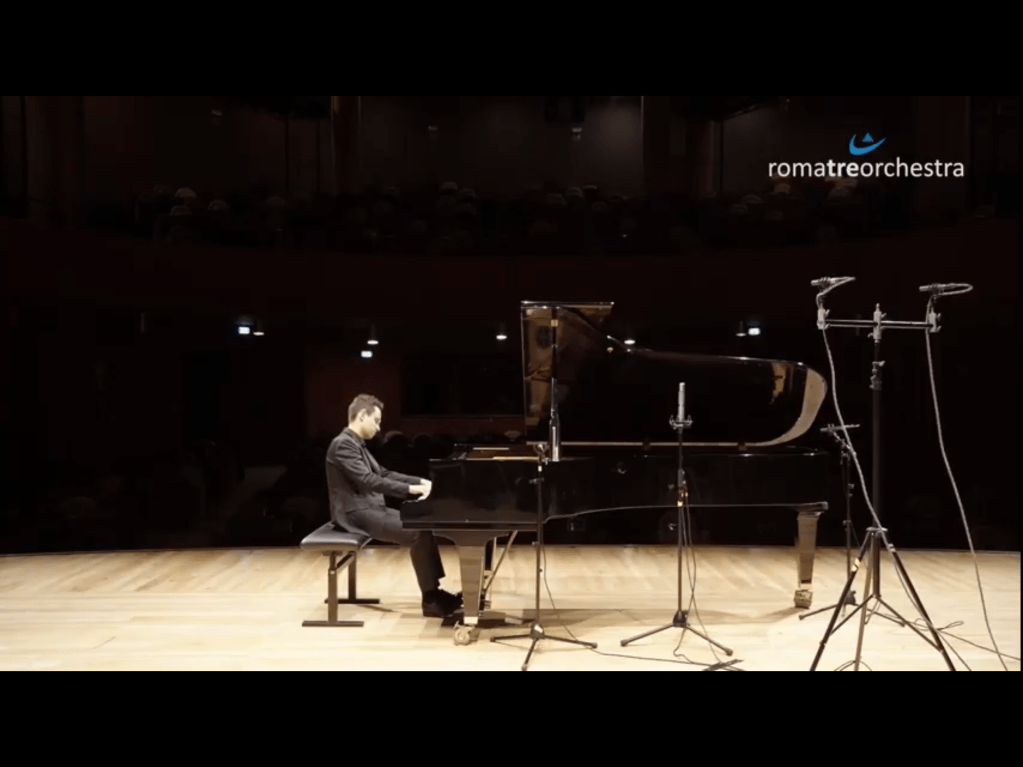
Some beautifully delicate playing from Ilaria Cavalleri ,the young pianist chosen to appear on the live stream from the Teatro Palladium in Rome for Roma 3 Orchestra.Florestan got short shrift this time!A very sensitive musician who when she has had time to acquire more weight to her delicate touch she will discover the full orchestra that she has in her hands.This Schimmel concert grand beautifully restored by Mauro Buccitti is a very powerful instrument and sometimes the bass overpowered the extreme delicacy of Ilarias very sensitive playing.Bursts of fire in the Wanderer Fantasy were short lived but give hope that her great talent will mature as she acquires more fingers of steel and wrists of rubber,to quote Guido Agosti.Hats off to Valerio Vicari to allow us the chance to hear a talent in the making.Only 19 and inspired by Maurizio Baglini,I am told.It was Clifford Curzon who said piano playing was 90% work and 10% talent.Ilaria certainly has great musicality and a sensitivity to sound but as Joan Havill said to Jonathan Ferrucci when he declared that he was preparing Brahms 2nd concerto.Oh,she said,you’ll need a lot of muscle for that.Luckily Jonathan is an expert in Yoga.I wonder if Ilaria could be too,one day.

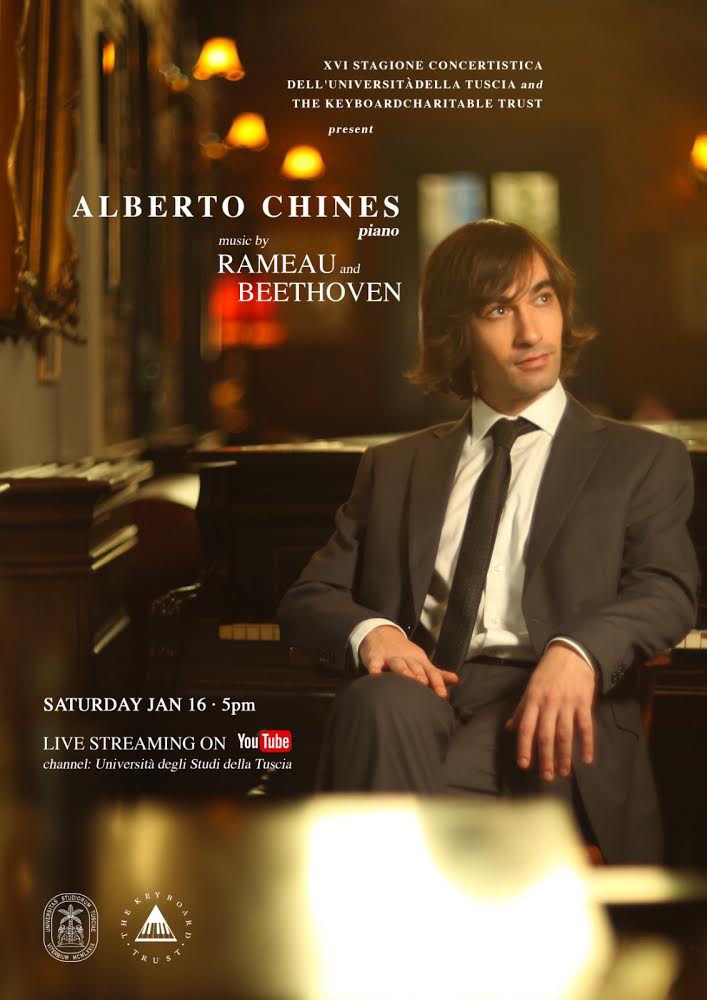
Alberto Chines a musician in Viterbo for the Keyboard Trust

https://christopheraxworthymusiccommentary.wordpress.com/2021/01/09/universita-della-tuscia-opening-concert-2021/

https://christopheraxworthymusiccommentary.wordpress.com/2020/01/13/puttin-on-the-ritz-chines-shines-in-padua-for-the-keyboard-trust/

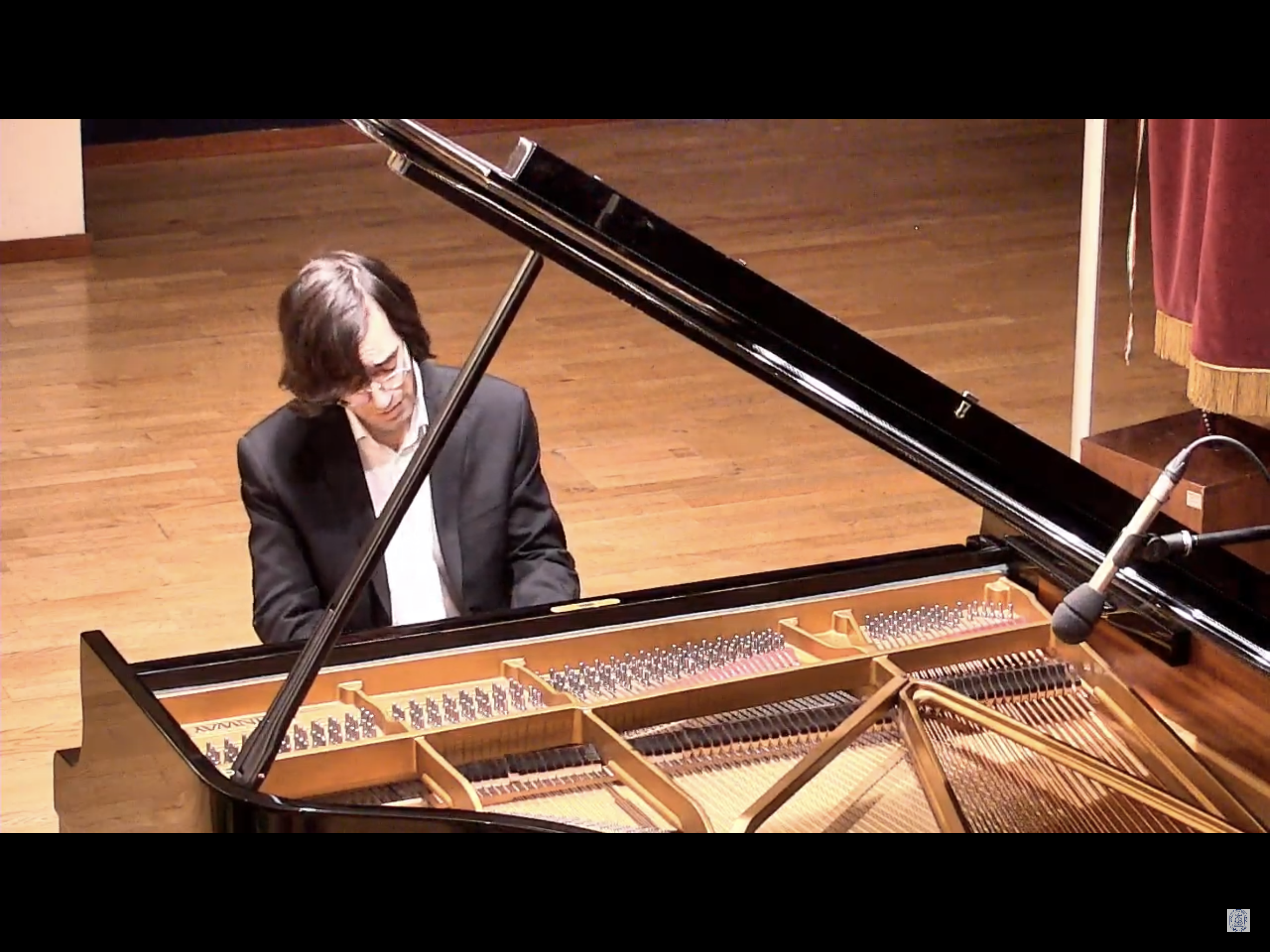
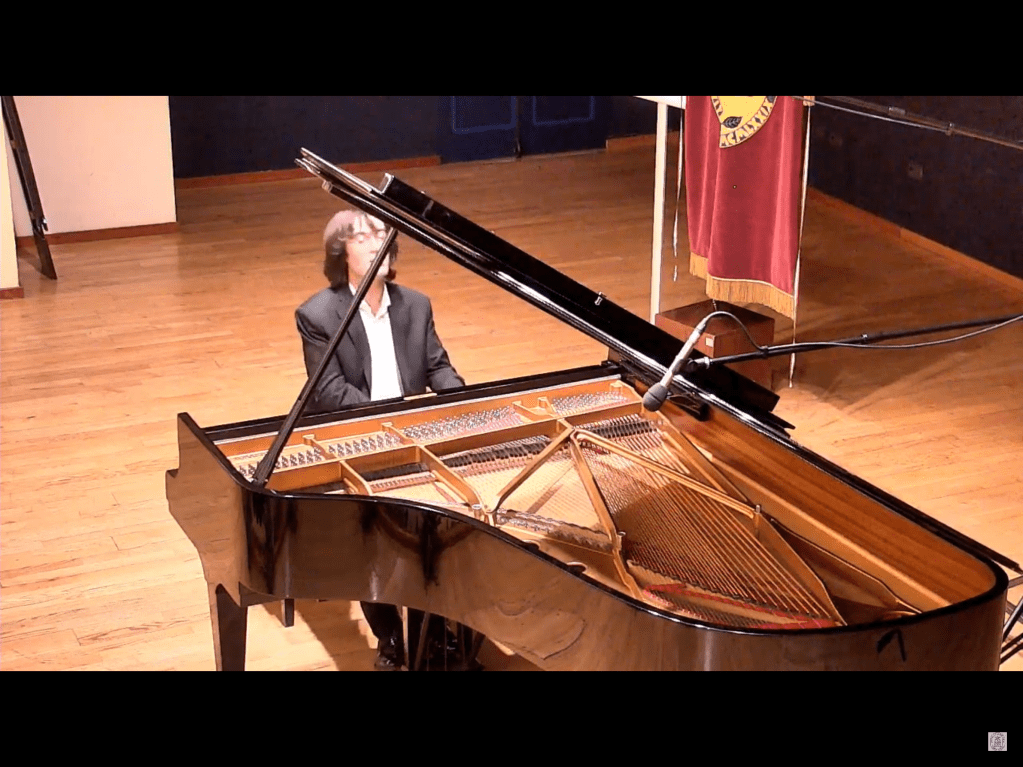
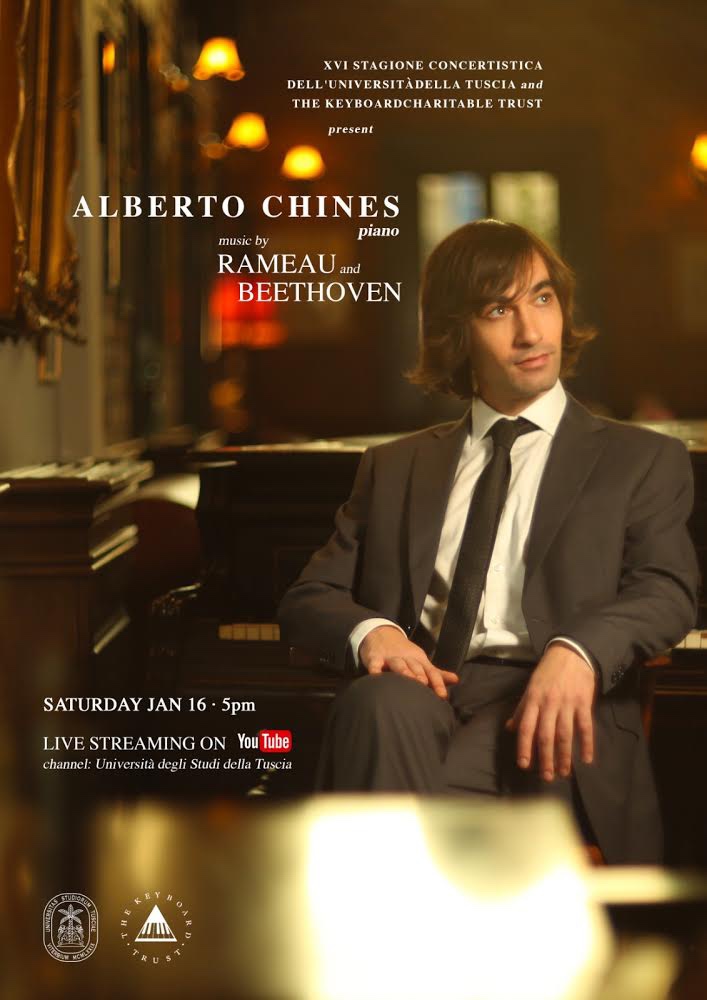
A beautiful programme for the Keyboard Trust’s annual concert this year in Viterbo with the superb Sicilian pianist Alberto Chines.There are not many musicians who would risk improvising the ornamentation in Rameau during a concert broadcast live.And programming two suites by Rameau with two important early works of Beethoven.The beautifully mellifluous Pastoral Sonata op 28 seemed the ideal coupling for the 2nd suite and the 5th was rudely awakened by Beethoven’s call to arms of his Eroica variations op 35.

La Villageoise sprang to life from the very first notes with a clarity and eloquence of another era.The famous ‘birds’ from Sokolov’s hands was here allowed to sing so delicately as the magic world of Couperin was unravelled by a true musician rather than technician.With ornaments that were as crisp as they were clearly part of the musical conversation.A gently insistent Musette was followed by the rhythmic energy and sheer joy of the Tambourin.It is hard to think that this young musician was prepared to spend the entire day on the train from his home in Milan to have the joy of sharing music at last with others in this bleak period.I remember standing backstage in Rome as Alicia de Larrocha played the Pastoral Sonata op 28 and being reminded today by Alberto of the sheer beauty of this work.An oasis for Beethoven with a walk in the Viennese woods between the fantasy op his sonatas op 27 and the tempestuous brilliance of op 31.

Strangely the piano in Viterbo that I have enjoyed playing many times with Lya de Barberiis today via streaming seemed at times strangely muted and without that resonance that I well remember from our live performances.The ‘Pastoral’Sonata whilst superbly played by Alberto seemed to lack that resonance that can elimimate the bar lines and allow the music to breath in long phrases.Alberto played exactly as Beethoven intended with one in a bar but the sound would not dissolve into the air as I imagined it was doing in this University Hall that has an unusually resonant acoustic.

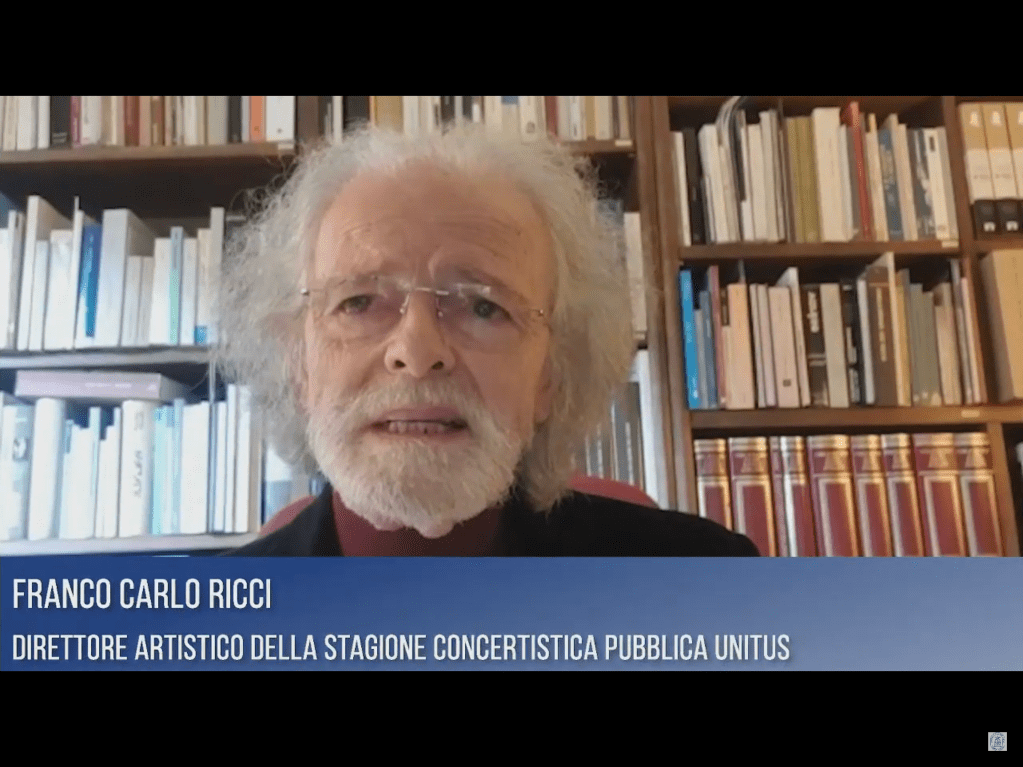
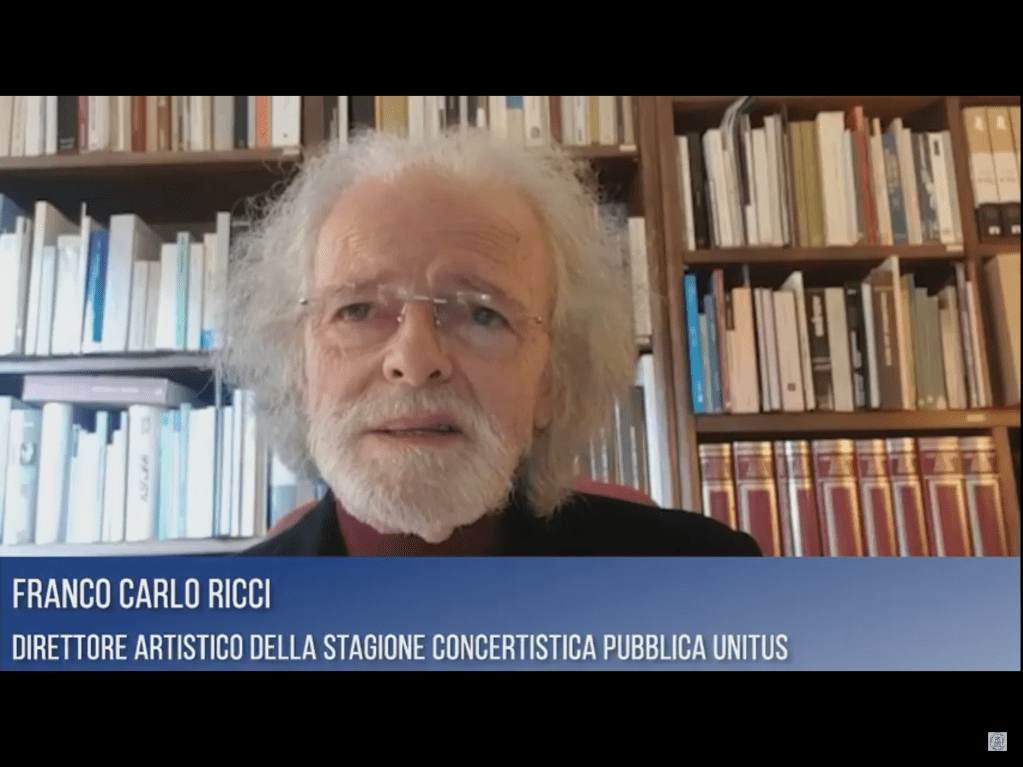
As Prof Ricci said in his filmed presentation of the concerts,the microphone and streaming can never be as good as a live performance. In these difficult times,though,we have to adapt and accept some not totally convincing aspects.Necessità virtù.Alberto’s scrupulous attention to Beethoven’s indications and sense of architectural shape were very positive sides of the equation,as was the superb forward movement of question and answer in the development section.The Andante we are told was one of Beethoven’s favourite pieces and Alberto kept the Andante moving ( Andras Schiff pointed out recently that ‘andare’means moving as he demonstrated at the Wigmore Hall his choice of tempo for the second movement of Bach’s Italian Concerto).As Alberto pointed out to me when I told him that he played the movement faster than many other pianists.’Just listen to the non legato Alberti bass and the tempo finds itself’- what it is to be a simple true thinking musician!Everything seemed to make such sense with the capricious scherzando episode riding on the same constant beat.Even the ornamented variations of the theme seemed to flow so naturally to it’s final disintegration before the ever busy Scherzo and even busier Trio.The beautiful pastoral simplicity of the last movement was again lacking the resonance of the open countryside even though played by Alberto with such precision and loving care.The passionate central outburst was the only outward sign of the temperament of Beethoven that in this sonata he had managed to keep under control as he admired the beautiful Viennese landscape that he was to capture only more magically with his sixth symphony.Great dexterity and energy in the coda which bubbled over with the simplicity of water over the stones of a brook .
It was the same pastoral feel that Alberto brought to the 5th suite by Rameau as one began to appreciate even more the choice of programme by this thinking musician.Crystal clear ornaments played with an elegance and fluidity and an ever more increasing excitement as the elaborations progressed.The return to the simplicity of the Gavotte was even more elaborately embellished than at the opening.An ornamentation that even astonished Alberto,such was his voyage of discovery and informed improvisation.

Of course it was Beethoven of a few years after the pastoral tranquility of his op 28 Sonata that brought us to order.A mighty call to arms with the fortissimo E flat chord that opens the 15 Variations and Fugue op 35.A fine performance that had a great architectural shape to it as well as moulding each variation with intelligence and care.The first four variations bubbled over with rhythmic energy before coming to rest with the beautiful legato of the fifth.Great turbulence in the left hand insistence of the sixth before the teasing scherzando of the 7th,9th and the cat and mouse of the tenth.The music box of the eleventh was answered by the rhythmic drive of the twelfth.The ‘cheeky’ thirteenth was played with ‘serious’ clarity,the acciaccaturas only adding to the fun.The beautifully melodic fourteenth in the minor was the preparation for the longest and most moving of the variations with a mellifluous Largo in the major.The fugue burst in out of the final long held pedalled note.It built to an orchestral climax that was to dissolve with all Beethoven’s unexpected humour to a joyful play on the opening theme.In turn it gradually built up to the ravishing final flourishes of this,Beethoven’s first important set of variations.A form that was to be elaborated on all his life until that final great work with 33 variations on an innocent little melody by his publisher Diabelli op 120.
Una formazione solida e il confluire di tante esperienze didattiche e professionali assai diversificate hanno contribuito a fare di Alberto Chines un artista vivace e poliedrico.Il giovane pianista palermitano si è formato presso l’Accademia di Imola con Franco Scala e Piero Rattalino e al Conservatorio di Bolzano con Davide Cabassi.A quindici anni ha esordito al Teatro Massimo di Palermo e nel 2011 ha vinto il primo premio al Concorso Pianistico Internazionale “Palma d’Oro” di Finale Ligure. Nel 2013 è stato vincitore del Sony Classical Talent Scout di Madesimo e, nel 2014, del secondo premio all’EuregioPiano Award (Geilenkirchen, Germania).L Si è esibito nella Sala Mozart dell’Accademia Filarmonica di Bologna, al Teatro Olimpico di Vicenza, al Politeama Garibaldi di Palermo, alla Van Cliburn Recital Hall di Fort Worth (Texas) e in Spagna, Portogallo, Inghilterra, Francia e Germania.Ha recentemente debuttato a Londra per il Keyboard Charitable Trust e al Tiroler FestspieleErl (Austria), ed è da poco stato pubblicato il suo primo CD con musiche di Bach, Schumann, Ravel e Bartók (BAM International)Alberto Chines è molto attivo anche nell’ambito cameristico: collabora con la violista Anna Serova, col chitarrista Eugenio Della Chiara, col Quartetto Nôus e con il pianista Emanuele Delucchi, e ha negli anni seguito diversi progetti in trio (Trio Casa Bernardini), quartetto e quintetto.Ha inoltre ideato la rassegna concertistica internazionale Musica Manent Festival (Ustica) e collabora con la Primavera di Baggio di Milano.Alberto Chines è Steinway Artist dal 2020.
Roberto Prosseda pays tribute to the genius of Chopin and the inspirational figure of Fou Ts’ong

https://youtu.be/wxdtKSE5J3o

‘I imagine this is how Chopin would have played – a marvel’ Herman Hesse

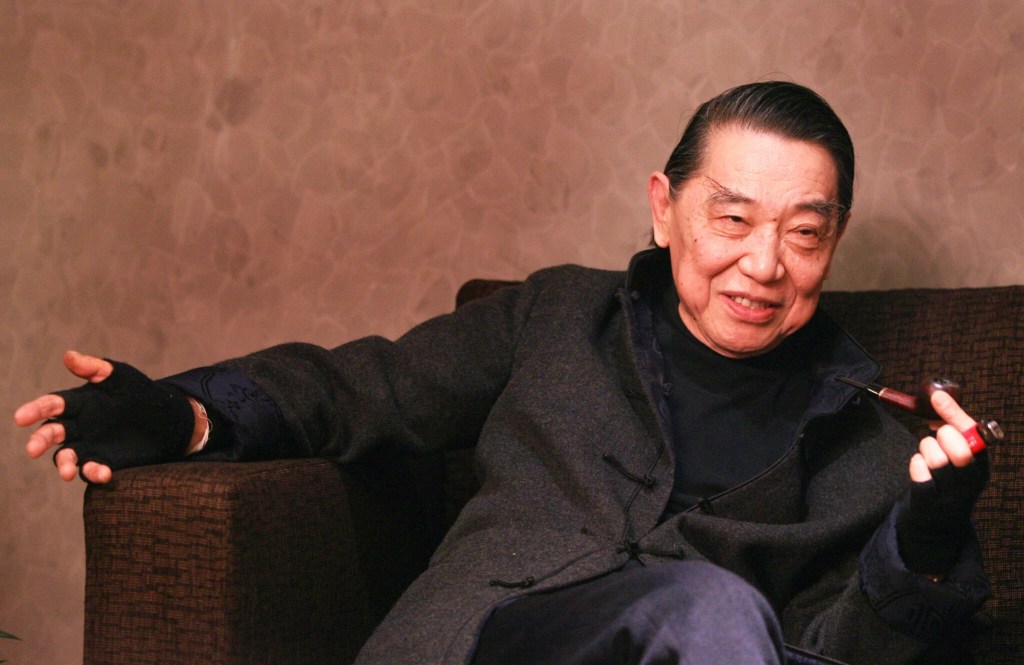
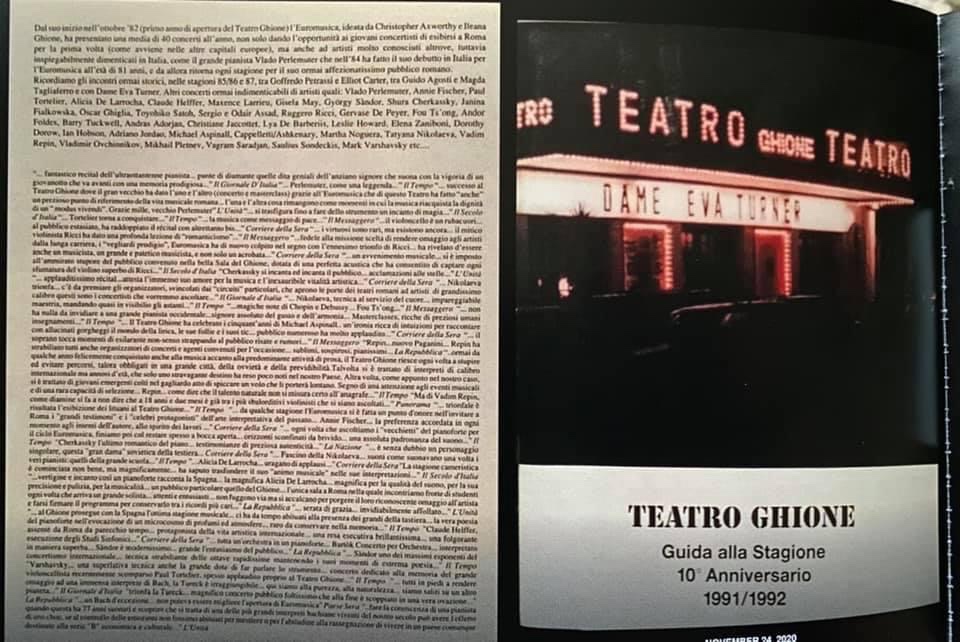
These were the words to describe Fou Ts’ongs playing of Chopin and it was a privilege for me to be able to invite him to Rome to the Teatro Ghione year after year not only to give recitals but to share his inspirational gifts with young musicians in the masterclasses that he held there too.Roberto Prosseda a young very gifted pianist from Latina was studying piano in the Cafaro household with Sergio and Mimmi just a stones distance from the theatre.This was somewhat equivalent to the Craxton household in London where all the most talented young musicians would be befriended and enriched with the warmth and unique musical pedigree that was the Cafaros creed.Roberto would often frequent the theatre and the masterclasses held there and would often ask me if he could try out new programmes for competitions.

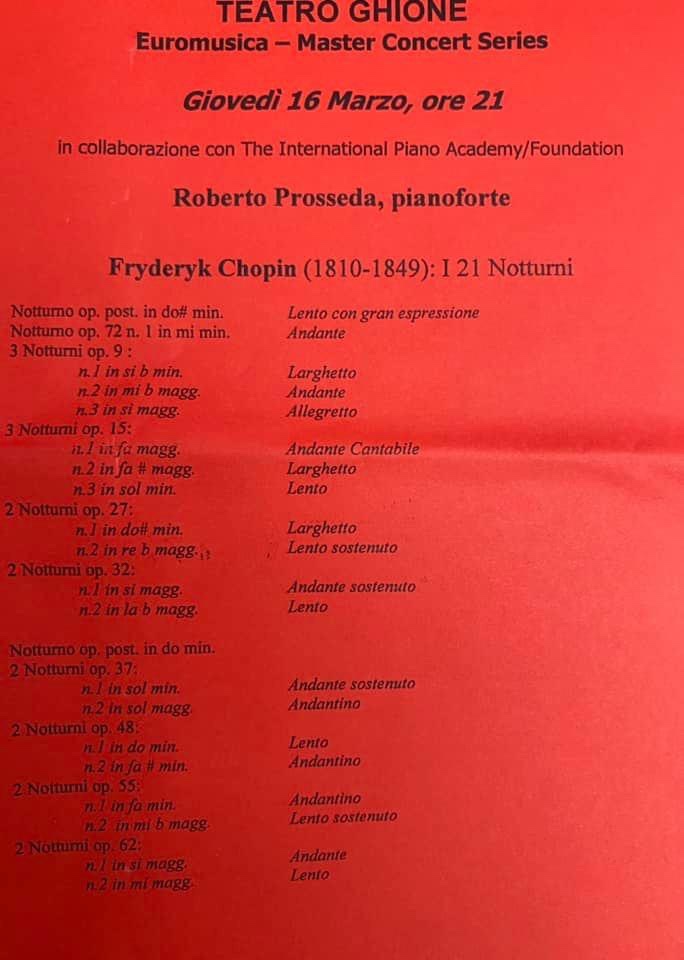
I remember a remarkable Chopin recital that he took to the Competition in Warsaw and a duo recital with Francesco Libetta for Sergio Cafaro’s 80th birthday.Whenever Ts’ong came to Rome Roberto would always play in his masterclasses where he was received with such joy because he was able to do whatever Ts’ong asked immediately.Roberto ultimately went on to study with him in the only European institution where he taught regularly on the shores of Lake Como.Roberto played all the Chopin Nocturnes in 2006 for the Piano Academy that had been established a few years after the birth of the Ghione Theatre in the 80’s by William Naboré on the invitation of the philanthropist Theo Lieven .Bill a student of Zecchi and a friend from my student days in Rome would ask if many of the great artists giving concerts and classes in Rome would give classes for him too.Ts’ong loved the mutual stimulation so much that he returned for over 25 years.

Ts’ong followed in the footsteps of Karl Ulrich Schnabel and was in turn followed by Fleischer,Bashkirov,Brendel,Perahia,Frankl,Tureck, Lympany,De Larrocha and many others in an oasis of serious preparation of the next generation.I was very touched when Roberto contacted me to say he was giving an all Chopin concert in Pisa dedicated to his beloved mentor who had passed away at the age of 86 in London from COVID complications.Playing in the magnificent Teatro Verdi in Pisa it had been organised by the artistic director Carlo Boccadoro in the concert series of the prestigious University of Pisa that was founded in 1810 with a decree by Napoleon as a branch of the Ecole Normale Supérieure in Paris.It is generally considered to be the most prestigious university in Italy somewhat on a par with Oxbridge.

Roberto is now a father of three and married to Alessandra Amara,also a former student of the Cafaro household and Lake Como.Roberto as Ts’ong had foreseen is one of the most versatile young musicians of his generation.Concerts worldwide solo and in duo with his wife but also tireless organiser of festivals and events and and an author of many authoritative tomes,regularly talking and playing on the Italian radio and television.He has even invented the best system for on line teaching that he has patented to many of the major institutions worldwide.He had invited both Ts’ong and also Elisso’Virsaladze to give concerts and masterclasses at the Pontine Festival founded in the 60’s by Menuhin and Szigeti in Sermoneta in the hills above his home town of Latina.His pedigree is assured indeed.

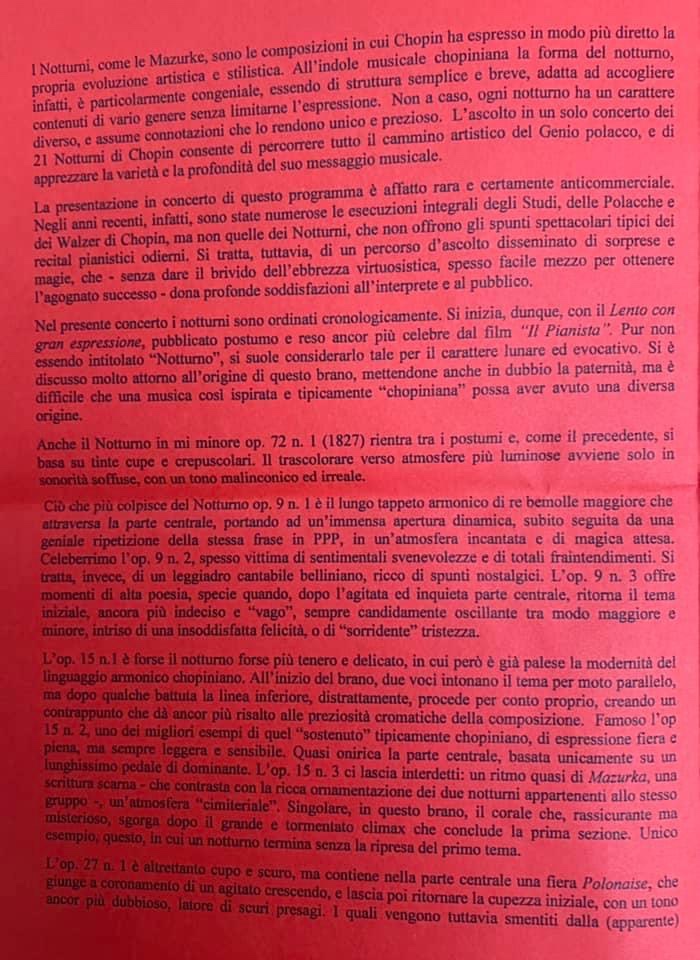
Roberto’s programme notes for his complete performance of the nocturnes at the Ghione Theatre in 2006

https://christopheraxworthymusiccommentary.wordpress.com/2018/11/17/roberto-prosseda-and-oleg-caetani-with-the-london-philharmonic-in-london/

https://christopheraxworthymusiccommentary.wordpress.com/2019/08/04/piano-barga-the-jewel-in-the-crown-parts-onetwo-and-final-three/

https://christopheraxworthymusiccommentary.wordpress.com/2019/09/30/a-city-in-love-cremona-music-festival-parts-12-and-3-the-day-of-reckoning/

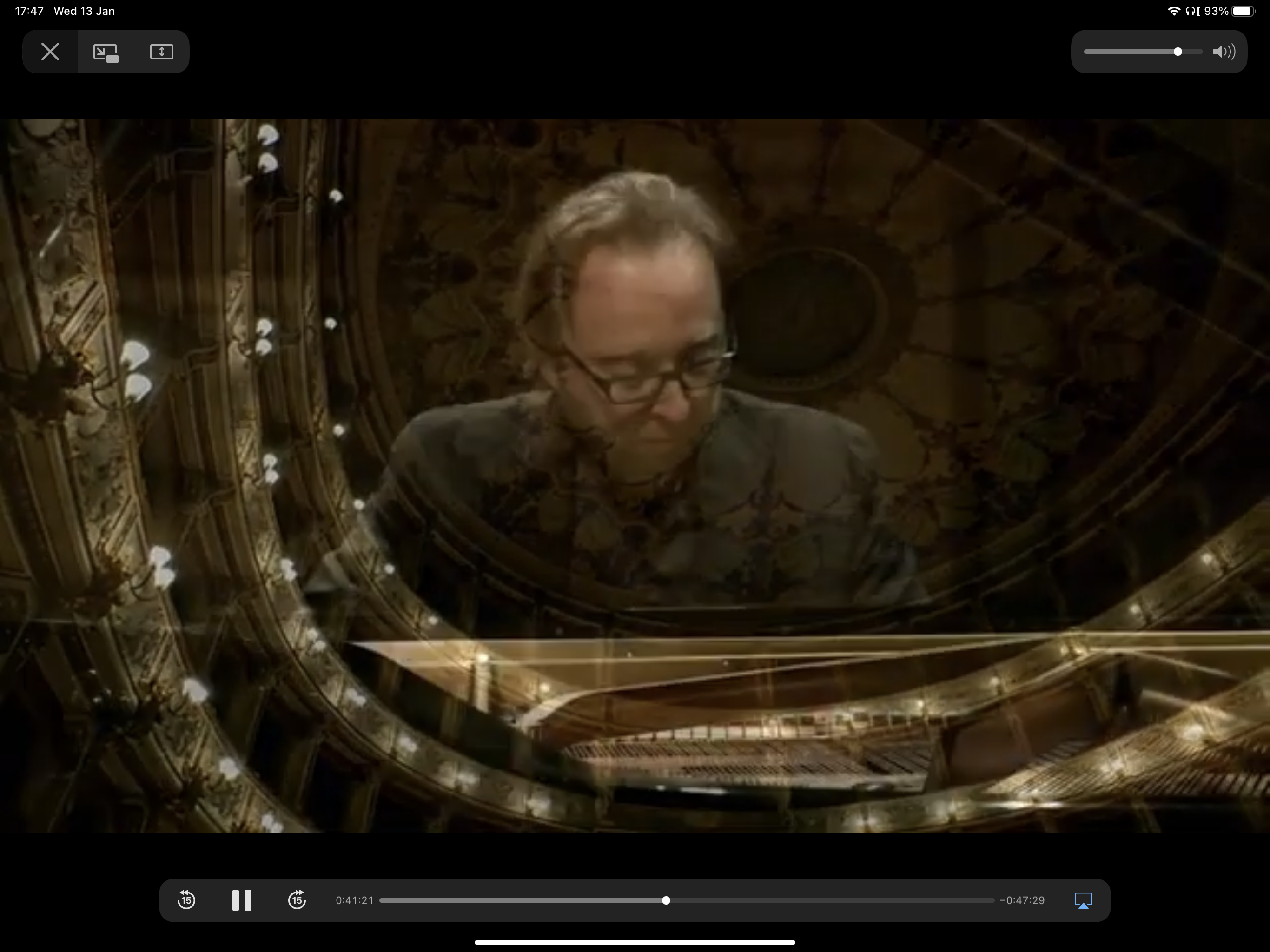
Above gives you some idea of Roberto’s recent activities that I have been delighted to follow and be invited to comment on.Now today he was alone in this vast opera house just him,a beautiful Steinway and the genial music of Chopin paying homage to the man that had inspired him and many others with his passion,inspiration and total dedication to music and in particular Chopin.

Three nocturnes op 9;Two waltzes op 64;Two nocturnes op 27and op 62 ;Fourth Ballade op 52 and an encore of the nocturne op posth in C sharp minor.Between the nocturnes op 27 and op 62 there was a world premiere of a work written by the composer in residence Virginia Guastella called ‘ Quella che resta ‘ .

A composer writing a nocturne with new piano techniques of plucking and stroking the strings to produce magical new sounds.Rubinstein would often play Mazukas by Szymanowski in his all Chopin programmes that had the effect of a sorbet ,renewing the taste buds at a particularly rich banquet.Roberto had explained that he had some very fruitful rehearsals with the composer.Insistent repeated notes like the ‘Raindrop’ prelude of Chopin on which appeared fragments of mellifluous sounds over subtle clouds that Robert had achieved by running his fingers over the strings inside the piano.

Sounds purposfully muted by striking the key whilst blocking the string with his hand.It had the same delicacy and magic that Roberto had demonstrated in his performances of Chopin but with an augmented kaleidoscope of sounds that was every bit as poetic.

It was Fou Ts’ong who would liken the works of Chopin to the poetry of Chinese poets telling us that it was the same message whether in China or wherever.A soul is unique and has no boundaries which is why indeed music is a universal language. https://youtu.be/6SJ5uvghRfUn

A very personal and ravishing sound in the opening Nocturne op 9 n.1 but with a scrupulous attention to Chopin’s indication with so many magical moments.The opening had seemed a little agitated until he reached the pianississimo,legatissimo horn like passage before the return of the main theme where the sounds seemed to float into the air into this enormous space.As Roberto later confided it was bitterly cold due to the theatre lying obsolete for so long in these barren times.However now fully acclimatised he gave a truly aristocratic performance of the famous E flat nocturne op 9 n.2.Such extreme elegance and simplicity with the bel canto embellishments worthy of a Caballe or Sutherland .There were such subtle inflections in the third of this first set of op 9 that it reminded me of the famous recording by Josef Lhevine with its haunting nostalgia and beguiling barely whispered sounds of another age.Even the turbulent middle section was played with a fluidity and delicacy but always with such scrupulous respect for the score.

The waltz in C sharp minor op 64 n.2 was shaped with such beauty and care,each note a pearl in his sensitive hands.Thanks to his superb sense of balance the melodic line sang so naturally with a feeling of timelessness in a journey where we could savour the gems that Chopin had strewn in our path.A ‘minute’ waltz played in ‘two’as Roberto spiritedly remarked,but played with an irresistible forward movement and a beautiful sense of cantabile in the middle section.There was mystery in the opening of the Nocturne op 27 n.1,the melody emerging on a sea of sounds obviously the inspiration for Debussy.A melodic line played with such delicacy with great sentiment but never dissolving into sentimentality.The bass in the middle section,on the other hand,was played with a remarkable clarity with the più mosso played with great passion and mazurka like in its rhythmic impulse.The imperiously rhetorical bass cadenza dissolving so magically to recreate the atmosphere of the opening.The extraordinarily beautiful final chords prepared the scene for the opening of the following nocturne op 27 n.2.The final C sharp becoming the opening D flat of what must be one of Chopin’s loveliest creations.It was played with a radiance and heart rending simplicity that reminded me of the many memorable performances by Artur Rubinstein.Barely touching the keys after the momentary turbulence of the middle section as it gave way to a deep D flat held by the pedal for many bars at a time as Chopin most precisely indicates .The final few bars were of a whispered magic and as Roberto said afterwards where even he could feel the baited breath of this invisible audience.

The final works in the programme were those with which Fou Ts’ong was particularly associated.I remember the memorable suggestions that he shared with Roberto for the fourth ballade ,one of the greatest works of the piano repertoire.But also the last two nocturnes where Chopin had created a world in which every note and every inflection has a significance but with an architectural shape and direction that all truly great works of art must have.Robert gave exemplary performances of which I am sure Ts’ong would have approved.Maybe Ts’ong would have played with more passion and abandonment but certainly not with more loving care.

This beautiful article was written by Jessica Duchen after an interview with Fou Ts’ong at the Piano Academy in Lake Como. https://jessicamusic.blogspot.com/2020/12/farewell-to-fou-tsong-1934-2020.html

The final word though must go to Ts’ong which I am sure Roberto would more than agree with. https://m.youtube.com/watch?v=EqDJVUfqLPg

Ljubica Stojanovic at St Mary’s

Tuesday 12 January 4.00 pm 

Ljubica Stojanovic (piano) 

Mozart: Rondo in A minor K511

Brahms: Variations and Fugue on a theme by Handel Op 24

Ravel: Gaspard de la nuit

Some very fine musicianly playing of three of the most complex works in the piano repertoire.A Mozart played ‘in one heartbreaking breath’;a magnificent present for Clara from her devoted admirer Brahms with his Handel variations and Fugue ,and Ravel’s poetic vindication of Balakirev’s Islamey with his magical vision of Aloysius Bertrand’s Gaspard de la nuit.

The Mozart Rondo was given a ravishing performance with such delicate tonal phrasing and such an astonishing change of colour from minor to major.It was the ideal opening work that set the scene for some beautiful musicianly playing of delicate luminous sounds.It was the same clarity that she brought to the Handel variations by Brahms. They were written in September 1861 after Brahms, aged 28, abandoned the work he had been doing as director of the Hamburg women’s choir.It is dedicated to a “beloved friend”, Clara Schumann,widow of Robert Schumann.It was presented to her on her 42nd birthday, September 13. The theme of the Handel Variations is taken from an aria in the third movement of Handel’s Harpsichord Suite No. 1 in B♭ Major, HWV 434 (Suites de pièces pour le clavecin,).While Handel had written only five variations on his theme, Brahms, with the piano as his instrument rather than the more limited harpsichord enlarged the scope of his opus to 25 variations ending with an extended Fugue.

A crystalline performance of the theme that allowed the first variation to enter so naturally and led to the beautiful legato of the second.The quixotic elegance of the third before the entry of the full orchestra with octaves was played with great rhythmic impetus but slightly missing the weight to give full power to Brahms’s obvious orchestral conception. What she missed in weight she more than made up for with her refined detailed playing .The beauty of the 5th and 11th variations were contrasted so well with the intricate 7th and 8th.The quixotic outburst of the tenth was perfectly judged as was the extreme legato of the octaves in the sixth and ninth.A beautifully grandiose thirteenth variation before the acrobatics of the variations leading to the triumphant twenty fifth.There were ravishing sounds in the music box of the twenty second before the exciting build up to the twenty fifth.The triumphant fugue was beautifully clear and perfectly judged but sometimes missing the feeling of full orchestral colour.

Gaspard de la nuit (subtitled Trois poèmes pour piano d’après Aloysius Bertrand),was written by Ravel in 1908. It has three movements , each based on a poem or fantaisie from the collection of the same title by Bertrand.’Ondine,’the water nymph. singing to seduce the observer into visiting her kingdom deep at the bottom of a lake with the sounds of water falling and flowing, woven with cascades. ‘Le Gibet’ with the view of the desert, where the lone corpse of a hanged man on a stands out against the horizon, reddened by the setting sun. Meanwhile, a bell tolls from inside the walls of a far-off city, creating the deathly atmosphere that surrounds the observer. ‘Scarbo’depicts the nighttime mischief of a small fiend flitting in and out of the darkness, disappearing and suddenly reappearing. Its uneven flight, hitting and scratching against the walls, casting a growing shadow in the moonlight, creates a nightmarish scene for the observer lying in his bed.With its repeated notes and two terrifying climaxes, this is the high point in technical difficulty of all the three movements and the one that Ravel intended to be more difficult than Balakirev’s Islamey.It is in fact considered to be one of the most difficult solo piano pieces in the repertoire.

Ljubica’s palette of delicate ravishing colours were just right for Ravel’s remarkable tone poem.Ondine ,with its washes of colour and superb passionate outburst with Ondine disappearing to a whisper having cast her spell.The mysterious bells of Le Gibet were allowed to chime in such a beautifully atmospheric panorama that led so naturally to the diabolical Scarbo.One of the most difficult works for the piano played with complete technical command .A sense of line and musical understanding that brought this piece vividly and excitingly to life.

Ljubica Stojanovic started to play piano at the age of 6. She graduated with a Masters from Guildhall School of Music and Drama in London, studying with Prof. Caroline Palmer, and subsequently studied on the fellowship programme, with Professor Ronan O’Hora. Her studies were generously funded by the Leverhulme Trust and Guildhall School of Music and Drama’s scholarship fund. Ljubica is a 1st prize-winner of over 20 national and international competitions. She is a very active musician who performs regularly as a soloist as well as with European chamber ensembles. Ljubica has performed in the Royal Festival Hall, Barbican Hall, Wigmore Hall, St. James’s Piccadilly, St. Martin in the Fields, Mozarteum University Hall in Salzburg, Philharmonia Hall in Ljubljana, Slovenia,Thonex hall in Geneva, and in Kolarac Hall in Serbia. She has collaborated with the Witold Lutoslawski Philharmonia from Wroclav, soloists from Philharmonia Orchestra in London, Serbian Radio Television Orchestra, National Symphony Orchestra, Belgrade, and with Nicholas Daniel and Andrew Marriner. In 2015 Ljubica became an artist for the KNS Classical record label in Spain. Ljubica would like to thank Ronan O’Hora, Henning Kraggerud and Christian Petersen for their guidance, inspiration and support.

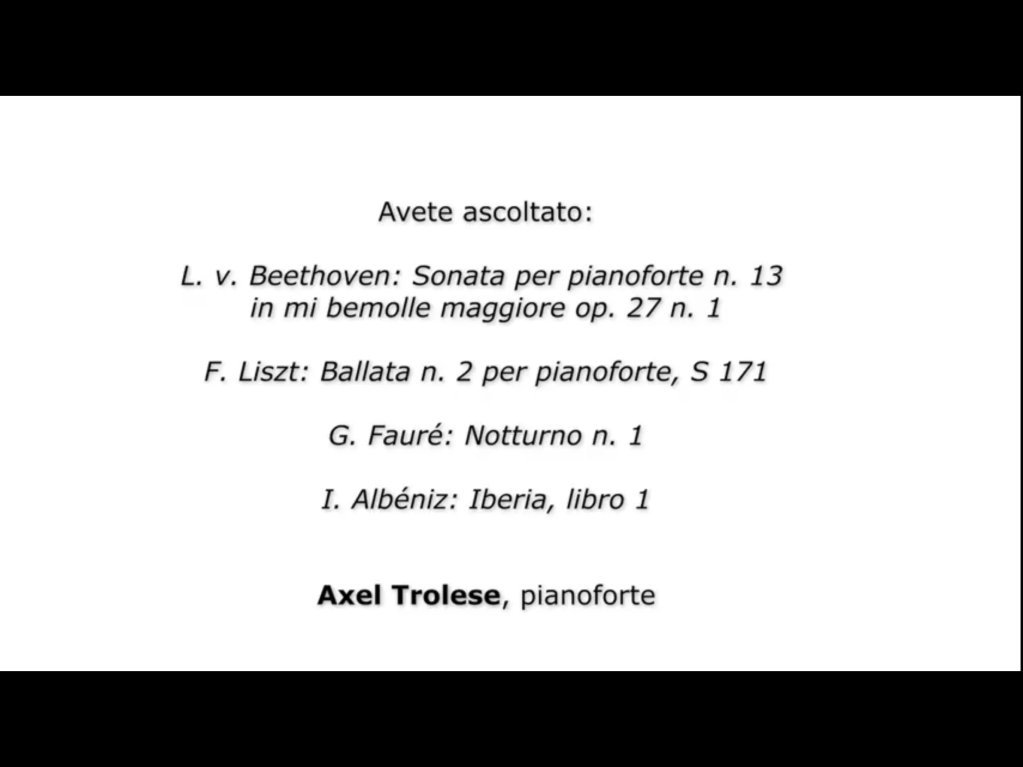
Axel Trolese’s refined musicianship for Roma 3 University streamed live from Teatro Palladium in Rome

Axel Trolese, pianoforte

Some remarkable playing from Axel Trolese at Roma 3 University streamed live in Rome from the Teatro Palladium.This young musician from the hills around Rome showed off his scrupulous musicianship and refined virtuosity in a flowering of music by Beethoven,Liszt,Fauré and Albeniz.
I have heard Axel before in the final concert of Benedetto Lupo’s master course at the Academy of S.Cecilia and was astonished then by the crystal clear clarity that he brought to the Chopin B minor Sonata.Of course he graduated with honours and went on to play a memorable Beethoven 4th piano concerto with the Roma 3 Orchestra.

https://christopheraxworthymusiccommentary.wordpress.com/2019/06/19/benedetto-lupos-final-diploma-recitals-for-the-accademia-di-s-cecilia-in-rome/


Now invited to give an on line recital he chose an eclectic programme in which his crystalline playing allied to his extreme sensitivity to sound allowed him to bring vividly to life the music with an aristocratic control and respect for the composers wishes which was worthy of the teachings of Claudio Arrau.Beethoven’s Sonata quasi una fantasia op 27 n.1,the twin of the so called ‘Moonlight’Sonata.All the startling originality of this work was expressed simply by following so closely the precise indications of the composer.From the very first notes there was a delicacy of sound but with a very clear sense of direction as the music flowed in two with the question and answer in the left hand melodic line so poignantly played.There were some sumptuous sounds from the sombre chordal motif that appears throughout the sonata.The allegro interruption was played with a crystalline clarity with Beethoven’s bold chordal comments allowed to burst in on this seemingly pastoral scene.The Allegro molto e vivace flowed so beautifully from Axel’s sensitive hands and there was an infectious rhythmic drive to the trio section where his precision and attention to detail were quite remarkable.The hauntingly beautiful Adagio made one realise just how similar it is to the third piano concerto that was shortly to follow.It was played with such sensitive control and scrupulous attention to detail that the rumbustuous Allegro vivace completely took us by surprise after the delicate final cadenza of the Adagio.There was a relentless forward movement and clarity of detail to this movement played with a continuous input of energy never allowing a moment of respite until the miraculous reappearance of the Adagio.Played with ever more tenderness and inner feeling until the rude interruption of the Presto played with astonishing rhythmic drive until Beethoven’s final slam of the door.Beethoven with these sonatas had broken loose from his Haydnesque heritage and was beginning to point the way to the visions that were as yet on the horizon.A remarkable performance that I remember Arrau playing in London on one of his memorable visits when he show us as today what wonders these early sonatas can be when interpreted with scrupulous attention to the composers intentions.

It was the same attention to detail that brought so vividly to life the Liszt second Ballade in B minor.This miniature tone poem that Claudio Arrau who studied under Liszt’s disciple Martin Krause said that the Ballade was actually based on the Greek myth of Hero and Leander, with the piece’s chromatic ostinati representing the sea: “You really can perceive how the journey turns more and more difficult each time. In the fourth night he drowns. The last pages are a transfiguration”The opening swirling bass sounds created the atmosphere for this remarkable work with the melodic line emerging from the depths.Answered by such fluid magical sounds before the military interruption of astonishing virtuosity.There was great control and musicianly sense of style that never allowed this miniature tone poem to turn into a mere showpiece as is so often the case.A simplicity and sensitivity to sound and colour where his complete technical command with seamless streams of notes thrown off with a knowing ease,allied to a musical understanding of architectural shape together with a real sense of fantasy ,was able to bring this much neglected work to life.

Perlemuter’s own score of Fauré nocturne

The Fauré nocturne in E flat minor was played with an aristocratic sense of style .Sentiment but never sentimental as his pupil Vlado Perlemuter used to insist.In fact I was following from Perlemuter’s own score with all his fingerings that searched for that perfect legato that the fingers would play with weight deep into every note where the true meaning lay.Perlemuter when he played for us in Rome wanted me to tell the audience that he lived in the same house as Fauré.The composer would send his works down to the very young student of the Conservatoire where he was director to try out whilst the ink was still wet on the page!Too rarely performed these days it was refreshing to hear such a sensitive musicianly account from Axel today.

The three pieces that make up the first of the four books of Iberia by Albeniz were played with the brooding contemplation of Evocacion through the evocative El Puerto to the glorious beatification of Fete -dieu à Seville.A remarkable sense of colour and feeling for atmosphere and a technical command that one just took for granted as he portrayed these musical sketches so ravishingly.It is interesting to note that the first performances in 1906 were given by the completely forgotten Blanche Selva whose historic recordings to be found on YouTube can still astound! https://www.youtube.com/watch?v=IdlM-nK8ppM

The Italian pianist Axel Trolese was born in Genzano, near Rome, in 1997 and started to play the piano at the age of five. Since then, he’s followed the natural path for a musician in Italy, achieving the Conservatory Diploma in Cremona with Maurizio Baglini. He’s just graduated from Paris’s Conservatoire National Supérieur, studying with Denis Pascal, and from Rome’s Accademia di Santa Cecilia, with Benedetto Lupo, obtaining both times the highest grades. He’s now an “Artist in Residence” at the Queen Elisabeth Music Chapel, studying with Louis Lortie.
Being a fine interpreter of French music, he recorded in 2016 his first album “The Late Debussy: 12 Etudes & 6 Epigraphes Antiques”, which was praised with numerous reviews in La Repubblica, Musica and Amadeus.
Also after becoming a laureate of the “Ettore Pozzoli International Piano Competition”, the “Grand Prix Alain Marinaro” and the “Premio Venezia”, Trolese has performed in many important concert halls as a soloist, with orchestra and as a chamber musician, including Rome’s Auditorium Parco della Musica, Venice’s La Fenice Theatre, the Italian Cultural Institutes of Paris and Budapest, Beijing’s Millennium Concert Hall, the Beaulieu Abbey in the Hampshire, Paris’ Salle Cortot, the Académie de France, the Quirinal Palace, the Amiata Piano Festival, Weimar’s Weimarhalle and the Fazioli Concert Hall. Some of his concerts have been broadcasted by some of the most important radios, such as Radio3, France Musique and Venice Classic Radio. He has also performed with the Jenaer Philharmoniker, the Roma 3 Orchestra and worked together with conductors such as Massimiliano Caldi, Jesús Medina, Pasquale Veleno and Ovidiu Balan.
Trolese has attended masterclasses of some of the most important pedagogues and concert pianists in the world, such as Arie Vardi, Pavel Gililov, Michel Béroff, Philippe Entremont, Pierre-Laurent Aimard, Jean-Efflam Bavouzet, Roberto Prosseda, Joaquín Achúcarro and Jerome Rose.
Axel Trolese has appeared in a documentary by ARTE about the Italian composer Roffredo Caetani (explaining and playing his pieces on his Bechstein grand piano gifted by Franz Liszt) and in the masterclass-documentary “Inside the music” with Roberto Prosseda by SkyClassica. He’s the main character and pianist in the short film “Danse Macabre” by the Italian director Antonio Bido, which is inspired by Saint-Saëns homonymous tone poem.

George Fu live stream for the Keyboard Trust from St Mary’s Perivale to Washington Arts Club

fuyt3.jpg

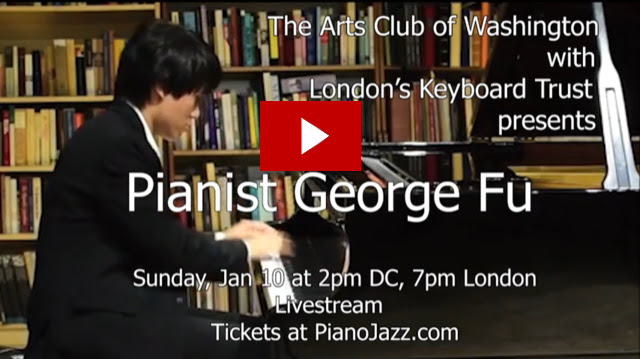
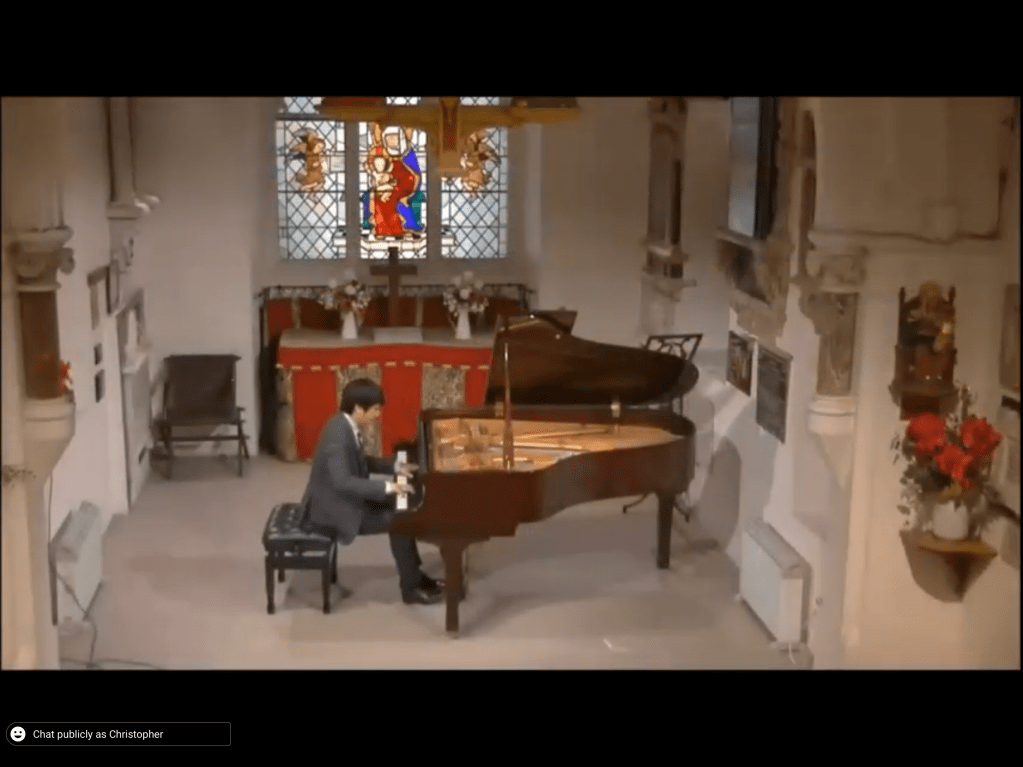
The Arts Club of Washington and London’s Keyboard Trust are pleased to present the brilliant young pianist George X. Fu. The concert will be streamed live from the 12th century St. Mary’s Perivale Church in London.

https://christopheraxworthymusiccommentary.wordpress.com/2020/03/12/the-amazing-mr-fu-at-steinway-hall/

The Program

J.S. Bach/Sergei Rachmaninov – Gavotte from Violin Partita No. 3 by J.S. Bach
George Xiaoyuan Fu – Transformation on Gigue from Violin Partita No. 2 by J. S. Bach (2020, world premiere)
Franz Schubert – Sonata in C minor, D. 958 Allegro-Adagio-Menuetto,Allegro /Trio-Allegro
Sergei Rachmaninov – Selections from Études-tableaux Op. 39
No. 3 in F# minor
No. 5 in Eb minor
No. 8 in D minor
No. 9 in D major

Extraordinary recital by George Fu streamed live to the Washington Arts Club for the Keyboard Trust from the oasis of St Mary’s Perivale guided by Dr Hugh Mather and his valiant colleagues.
Playing of such delicacy and purity that his phenomenal control of the keyboard was taken for granted as his limpet type fingers carved such wondrous sounds from the keyboard.
The Bach Gavotte in a transcription by Rachmaninov played with the same charm and style that was Kreisler’s.His own transcription too full of the same charm ,if a different language , but both played with such artistry ,fleetness of finger and sumptuous sounds of a different age. George is a serious guy and said he thought he would open his programme with something light and airy.
Followed by Schubert’s C minor Sonata ,the last great trilogy of sonatas written just before Schubert’s untimely death ,was played with such purity and simplicity that it reminded me of Gilels rather than Richter’s more illusive performances.Where Richter’s slow movement was barely audible here it was played today with such simple beautiful whispered but luminous sounds, with a sense of line similar to the Arietta of Beethoven’s op 111.In fact the only other occasion I have heard George was in a performance of Beethoven op 109 where his luminosity and purity of sound have remained with all those that were present at Steinways in the good old days when artists could see and breath the music with the people they were sharing it with.Here there was an imaginary audience worldwide and judging by some of the comments as moved as we all were listening in our own homes.Four Rachmaninov Etudes Tableaux that were astonishing for their poetry as they were for their virtuosity.
Amazingly George arrived at the Royal Academy armed with a degree in economics from Harvard.I am not surprised to learn that he is now a fellow of my old Alma Mater .

It was in the Schubert Sonata that George’s exceptional musical credentials became apparent.An extraordinary sense of colour and architectural control ;an orchestra of ten wonderful players in his hands more the sumptuous golden Philadelphian sound that the bright New York Philharmonic.A remarkable sense of balance that allowed the musical line to sing out unimpeded by the underlying harmonies.There was a haunting magic to his chromatic scales as the opening motif was hinted at in the bass.Maybe something of the animal frenzy of Richter or Serkin was missing but there was a wonderful golden homogeneous sound that allowed us to wonder and be amazed as if listening for the first time to this extraordinary work.The beautiful coda was a revelation in his magical hands.There was an absolute stillness to the Adagio played with a luminosity of sound .A touching simplicity and purity that was truly wondrous.The questioning Scherzo resolved so mellifluously by his extraordinary finger legato that lends such clarity to every detail.The Rondò was played with a buoyancy and a haunting beauty that contrasted so well with the episodes .This was Schubert happy that the dark shadows looming in his life had disappeared for an instant.George has that rare gift of making the music speak so eloquently and the change of colour for Schubert’s unexpected explosion of melody he imbued with such golden sounds allowing it to glow full of wondrous poetry.They talk about Schubert’s sublime length and if music be the food of love as George demonstrated today please let it never stop in these bleak times.

Chinese-American pianist George Xiaoyuan Fu is establishing a reputation as a captivating performer with distinctive intelligence and sensitivity.He has performed as a piano soloist with the National Symphony Orchestra, Baltimore Symphony Orchestra, North Carolina Symphony, Tanglewood Music Center Orchestra, and the Curtis Symphony Orchestra, and collaborated with conductors Michael Tilson Thomas, Stefan Asbury, Kensho Watanabe, Vinay Parameswaran, and Jonathan Berman. He has appeared at the Kennedy Center, Carnegie Hall, Wigmore Hall, and Seiji Ozawa Hall at Tanglewood.  He has been heard  on BBC Radio 3, National Public Radio, and On Stage At Curtis Institute.

George is an active composer and performer of contemporary music, having collaborated with composers Krzysztof Penderecki, Harrison Birtwistle, George Lewis, Unsuk Chin, Tansy Davies, Phil Cashian, Matthew Aucoin, and Freya Waley-Cohen.

A Harvard University grad, George studied at the Curtis Institute of Music under Jonathan Biss and Meng-Chieh Liu, and then at the Royal Academy of Music under Christopher Elton and Joanna MacGregor. He has also worked intensively with Pierre-Laurent Aimard, specifically on the music of Messiaen and Debussy. George is currently the Hodgson Piano Fellow of the Royal Academy of Music.

Mr. Fu has been selected by London’s Keyboard Trust for their artist development program. The Keyboard Trust celebrates their 30th anniversary in 2021, and supports the most gifted young pianists on stages in London, New York, Mexico, Berlin, Rome, Washington, DC, and other music capitals. The Trust has presented more than 250 international pianists, historic-keyboard players, and organists in nearly 1000 concerts. With such notable musicians as Evgeny Kissin, Alfred Brendel, and the late Claudio Abbado among its trustees, this formula has proved its worth. www.keyboardtrust.org

https://christopheraxworthymusiccommentary.wordpress.com/2020/03/12/the-amazing-mr-fu-at-steinway-hall/

Alberto Ferro – A master speaks in Tolentino

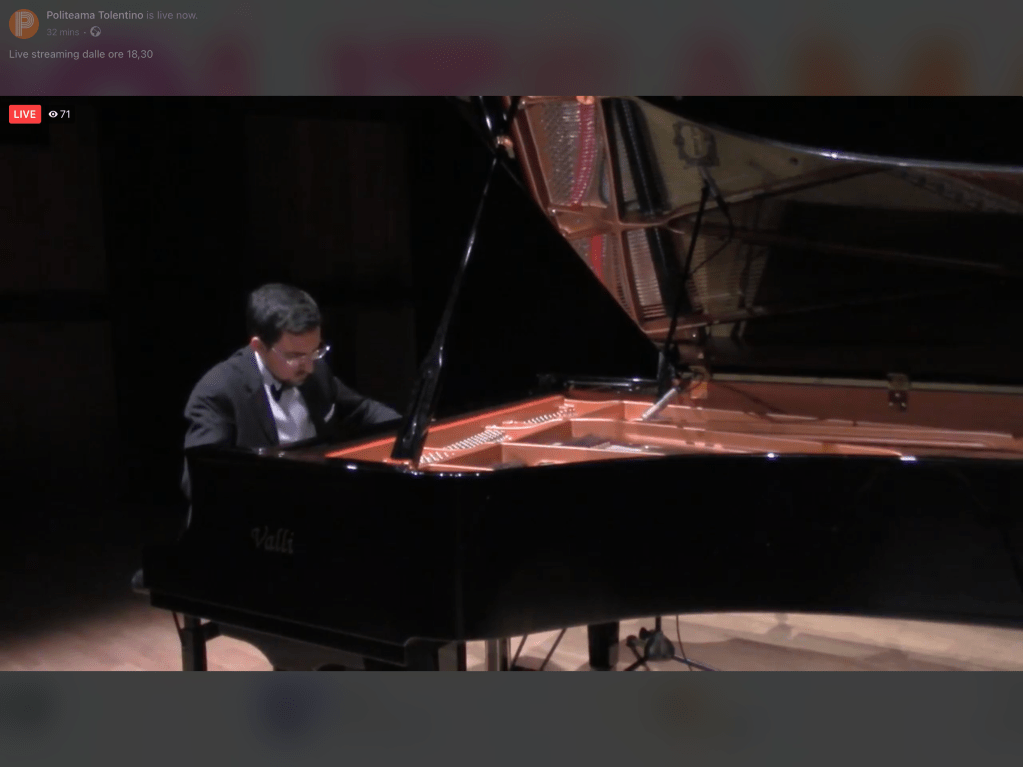
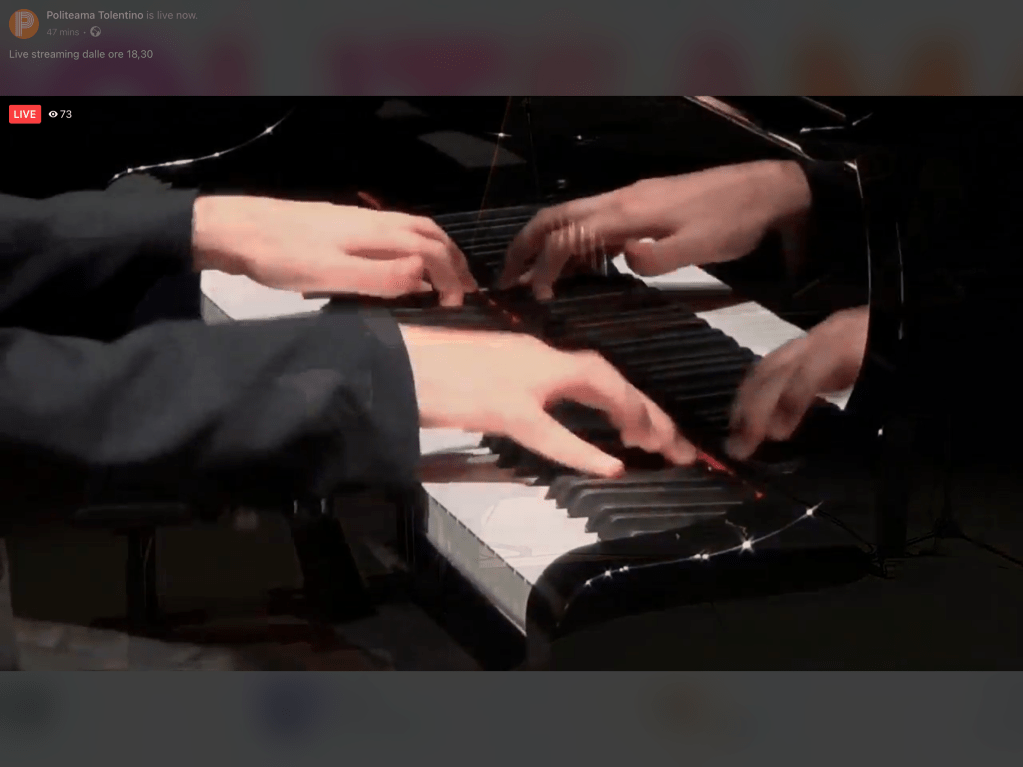
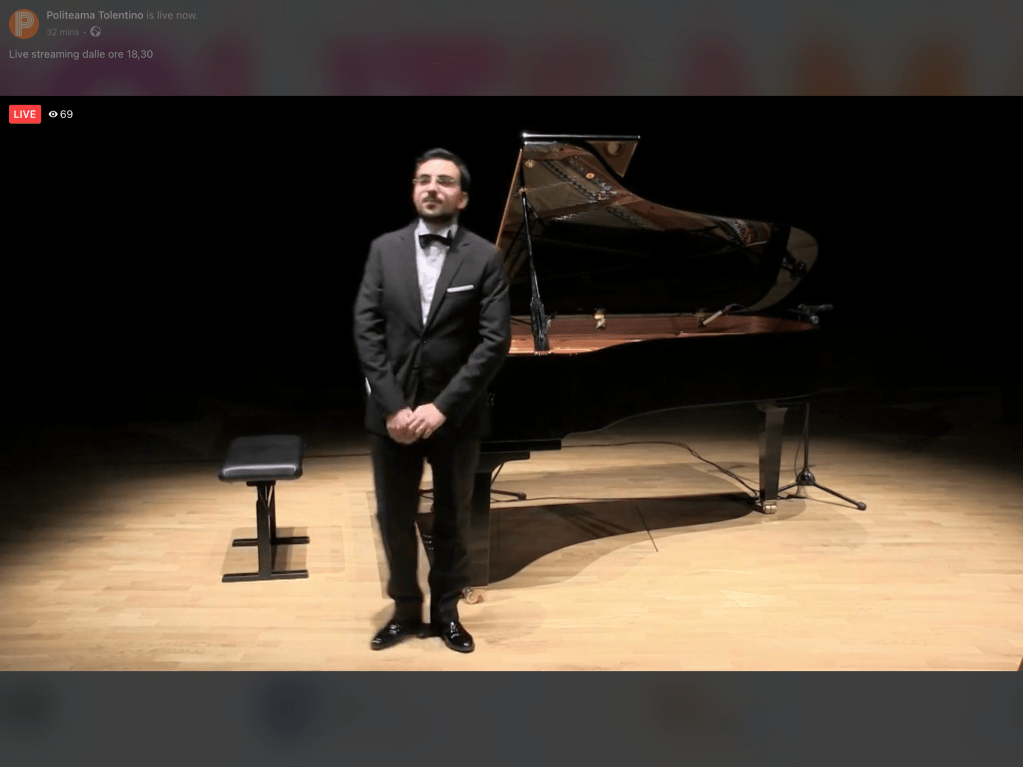
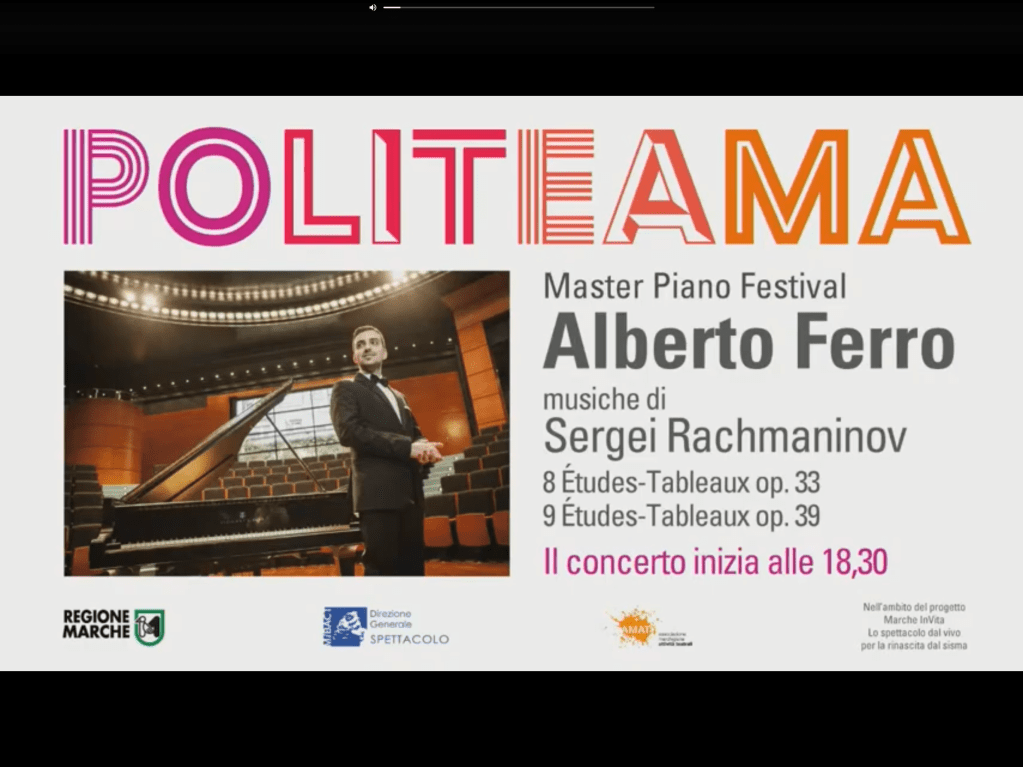
Hats off to Alberto Ferro with his impeccable performance of the complete Etudes-Tableaux streamed live from Teatro Politeama in Tolentino ,Italy.Introduced inexplicably by a masqueraded hostess who obviously did not know who Rachmaninov was.Alberto on his honeymoon went on unheeded and unmasked to give a hair raising account of one of Rachmaninov’s most challenging works.Working with that magician Epifanio Comis in Catania he showed us just what it means to be an intelligent and passionate virtuoso.

Born in Italy in 1996, Alberto Ferro began his piano studies with his mother at the age of seven and gave his first recital at the age of thirteen. He achieved his Master’s degree under the guidance of Prof. Epifanio Comis, his lifetime mentor, at the “Vincenzo Bellini” Institute of Music in Catania (2018). He also attended several piano masterclasses held by very important pianists such as Michel Béroff, Dina Yoffe, Leslie Howard, Elisso Virsaladze, Joaquín Achúcarro, Richard Goode, Jörg Demus and Vladimir Ashkenazy.

He won many awards in national and international competitions, including: 2nd Prize, International Press Prize and Haydn Prize at the “Ferruccio Busoni” International Piano Competition in Bolzano (2015); 1st Prize at the “Premio Venezia” National Piano Competition at Teatro La Fenice in Venice (2015); 6th Prize and Musiq’3 Prize of the public at the “Queen Elisabeth” International Piano Competition in Brussels (2016); Finalist Prize and Children’s Corner Prize at the “Clara Haskil” International Piano Competition in Vevey (2017); 1st Prize and Audience Prize at the International Telekom Beethoven Competition in Bonn (2017).He is currently Professor of Piano at the “Umberto Giordano” State Conservatoire of Music in Foggia.

Marriage announcement of the 22nd December 2020

The Études-Tableaux (“study pictures”), Op. 33, is the first of two sets of piano études composed by Rachmaninoff.They were intended to be “picture pieces”, essentially “musical evocations of external visual stimuli”. But Rachmaninoff did not disclose what inspired each one, stating: “I do not believe in the artist that discloses too much of his images. Let [the listener] paint for themselves what it most suggests.”However, he willingly shared sources for a few of these études with the Italian composer Ottorino Respighi when Respighi orchestrated them in 1930.

There was a magical contrast between staccato and legato in the first study especially delicately played with the contrasts of the middle section question and answer.The second had a beautiful languid melodic line amidst magical arabesques played with extreme poetic care leading to the ethereal sounds that resolved on to vibrations as the piece melted so magically in Alberto’s sensitive hands.The contemplative third study growing in glowing intensity with such sumptuous sounds and the three final chords like the B minor sonata of Liszt disappearing into the distance.The delicately rumbustuous fourth as if undecided to be happy or sad as it almost burst into song before being reminded of it’s quixotic journey .Some dazzlingly fleet playing of the fifth,one of the most difficult of all the Etudes.Played with all the precision and lightness of the great virtuosi of the Golden era of piano playing of which Rachmaninoff was linked with the likes of Godowsky,Rosenthal and Lhevine with the legendary jeux perlé of an almost lost tradition.The subtle call to arms of the sixth was played always with a great sense of architectural shape and sounds that were very carefully judged with a sensitivity that never allowed him to make harsh sounds even in the glorious triumphant ending of this well worn study.The extreme beauty of the seventh a cantabile melody delicately accompanied by continual waves of sound gradually building in intensity until dissolving into a nostalgic melodic line with which it had begun.The final study disturbing in it’s Scriabinesque battle between major and minor.An amazing sense of colour and line amongst all the passionately pulsating chords

The Études-Tableaux (“study pictures”), Op. 39 is the second set of piano études composed by Rachmaninoff . They are even fuller, more finely textured and darker than the first set.

From the swirling anguish of the first exploding into tremulous chordal patterns dissolving into typical intricate webs of sound as in his Prelude in the same C minor key.Repeating even more insistently the chordal patterns with an astonishing sense of fantasy and virtuoso control of sound.It contrasted so well with the liquid mellifluous sounds of the second.A deeply brooding left hand gradually building to a climax with a superb sense of balance leading to the final magical chords and flourish that was made of pure gold.The remarkable continual butterfly movement of the third study was played with such a subtle sense of swirling colours.One of the longest and most intricate of the studies.

The almost Gavotte charm of the fourth was played with a clarity and dexterity that led to the remarkable burst of melodic outpouring of the famous fifth study.Played with such passionate aristocratic eloquence and a sense of balance that allowed the melodic line to be sustained by the throbbing multicoloured surrounding harmonies.One voice answered another in the darkly brooding middle section sustained by an ever more insistent rumble from the bass until the melody returns glowing as never before in the tenor register, dissolving into the depths with such beautiful sounds that Alberto found from his wondrous poetic vocabulary.The terror and animal excitement he generated from the first flourishes of the sixth is no wonder that this is known as ‘Little Red Riding Hood and the Woolf ‘ study.An amazing chordal dexterity with a display of phenomenal virtuosity.The impish chord after the final roar just showed the imagery that Alberto was able to portray.There was almost clockwork precision in the insistent chords of the seventh study.The repeated left hand notes like in the Appassionata Sonata were developed into something much more sinister.A beautiful legato tenor melody appeared as if by magic turning into the glorious pealing of church bells before dying away again to its opening gently menacing insistence.The beautifully fluid eighth study with its languid yearning was so well portrayed by Alberto with a heartbreaking nostalgia full of ravishing colours on a continual wave of emotion.The triumphant opening fanfare of the ninth was played with astonishing forward drive with a nice quixotic middle section to contrast with the blistering final outburst so masterly portrayed.Alberto demonstrating a mastery and maturity way above his actual age of only twenty four .

Università della Tuscia opening concert 2021

http://tiny.cc/stagione_concertistica

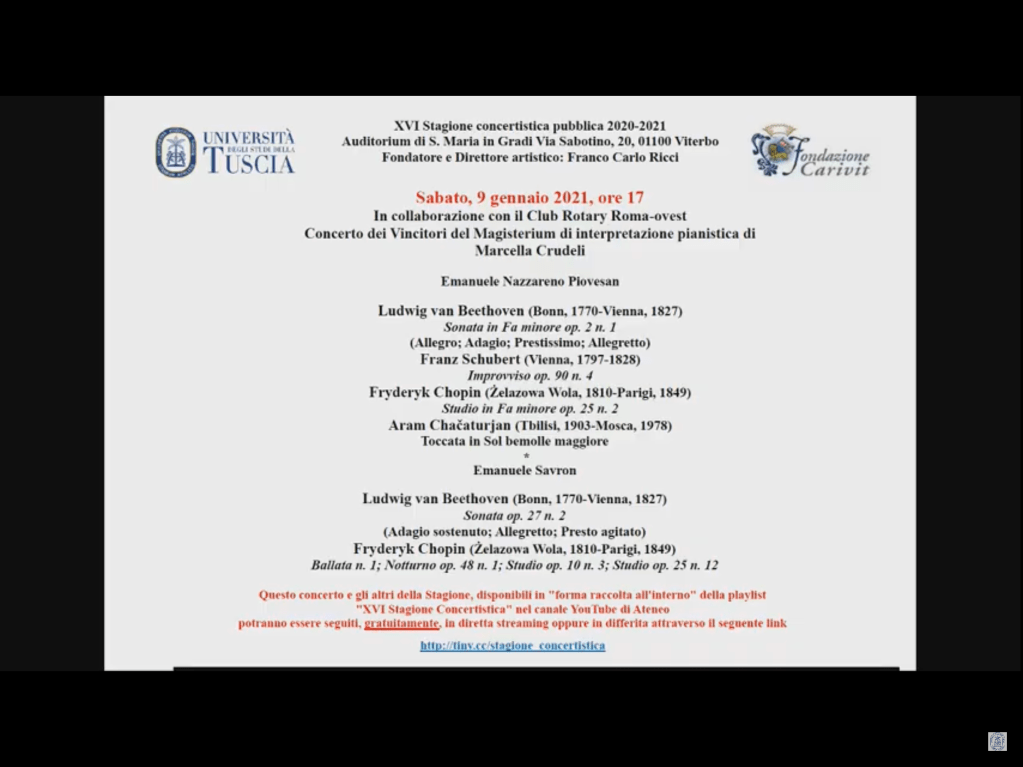
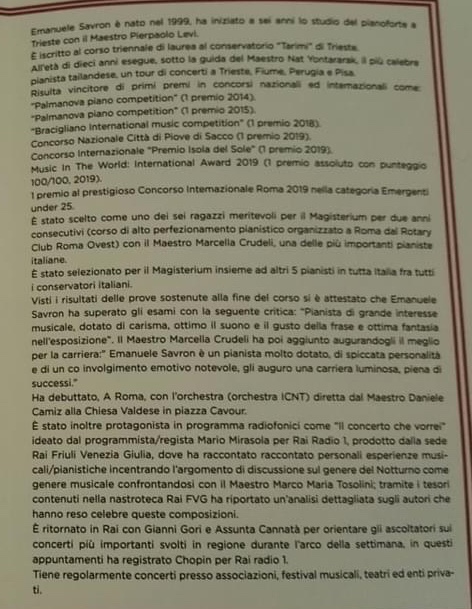
Il concerto, che propone (in collaborazione con il Club Rotary Roma-ovest)due giovanissimi e validissimi pianisti, Vincitori del Magisterium di interpretazione pianistica di Marcella Crudeli, vuole avere anche un alto valore simbolico perché in un momento cupo, come quello che stiamo vivendo, intende guardare ai giovani, luce e speranza del futuro.Emanuele Nazzareno Piovesan (quattordici anni) e Emanuele Savron (ventuno), vincitori, nonostante l’età, di numerosi concorsi nazionali ed internazionali e molto attivi nel concertismo, affronteranno un programma impegnativo e coinvolgente, dedicato a grandi e celebrati compositori.

Emanuele Piovesan, infatti, suonerà di Ludwig van Beethoven (in occasione del 250° della nascita) la Sonata in Fa minore op. 2 n.1; di Franz Schubert l’Improvviso op. 90 n. 4; di Fryderyk Chopin lo Studio in Fa minore op. 25 n. 2 e di Aram Chačaturjan la Toccata in Sol bemolle maggiore.

Emanuele Savron eseguirà, ancora di Beethoven la Sonata op. 27 n. 2 e di Chopin la Ballata n. 1, il Notturno op. 48 n. 1, lo Studio op. 10 n. 3, lo Studio op. 25 n. 12.

https://www.facebook.com/notes/christopher-axworthy/marcella-crudeli-rome-international-piano-competition-the-fanny-waterman-of-rome/10154141668572309/
https://www.facebook.com/notes/christopher-axworthy/yuanfan-yang-takes-rome-by-storm-the-xxviii-rome-international-piano-competition/10156076789642309/

The indomitable unstoppable Marcella Crudeli in her lifelong quest to help young emerging musicians .
Her annual course sponsored by the Rotary Club gives young musicians from all over Italy the possibility to benefit from her enormous experience as a teacher,organiser and above all concert artist who herself had benefitted from encouragement of Alfred Cortot.
In a short bathroom break in this final competition concert performances between her students she confided to me that young people just do not allow the music to breathe.
All of the students greatly talented but in the end lazy.
It was Curzon who said to become a pianists it is 90% work and 10% talent.Only one of these young musicians (a prodigy of Ciccolini it turns out) demonstrated this in a very fine performance of Beethoven ‘s Sonata op 2 n.2 (the one that Glenn Gould made very much his own).
.Here at last a hall that up until that moment had been so obviously constructed for military speeches and certainly not piano recitals appeared to have an acoustic where all the details and care over Beethoven’s indications were meticulously observed .Unfortunately even this young man given a Chopin Ballade or a Russian show piece immediately stopped listening as all these greatly talented you musicians did as they sailed up and down the keyboard in a very undisciplined manner. Of course in their home towns it might seem very impressive but the work needed to tame and control this youthful passion was missing.
Marcella is doing miracles but it is in the end in the practice room that true miracles are needed. The students were from 14 to 21 and it was right that the first prize should go to the youngest who has all the time ahead of him to work, work ,work.

Cari amici, ieri si è conclusa la serie di manifestazioni al Museo delle Arti e Tradizioni Popolari, organizzate dall’Associazione Chopin in collaborazione con il Rotary Club Roma Ovest e dall’EPTA Italy.
Si sono svolti gli esami – recital del Magisterium di Approfondimento Pianistico dei sei giovani selezionati:
Michele Apollonio di 16 anni proveniente da Campobasso
Matteo Pierro di 17 anni proveniente da Potenza
Emanuele Nazzareno Piovesan di 14 anni proveniente da Gallarate
Emanuele Savron di 19 anni proveniente da Trieste
Marco Stallone di 20 anni proveniente da Avellino
Lorenzo Stasi di 17 anni proveniente da Rossano Calabro

La giuria, presieduta dal Prof. Franco Carlo Ricci, era composta da: M° Marcella Crudeli, M° Silvia Rinaldi, M° Maria Grazia Sorrentino e Amm. Giovanni Vitaloni.

Alla fine dei concerti, il Presidente del Rotary Club Roma Ovest Dott. Giovanni Grazioli, ha consegnato ai pianisti gli attestati con il giudizio.
Dopo la cerimonia di premiazione, il Rotary ha offerto un piccolo catering ai ragazzi e ai loro familiari in segno di augurio!

Si ringrazia il Municipio Roma IX EUR, il Direttore del Museo Dott. Filippo Maria Gambari e il Dott. Tagliero per l’affitto del Pianoforte.

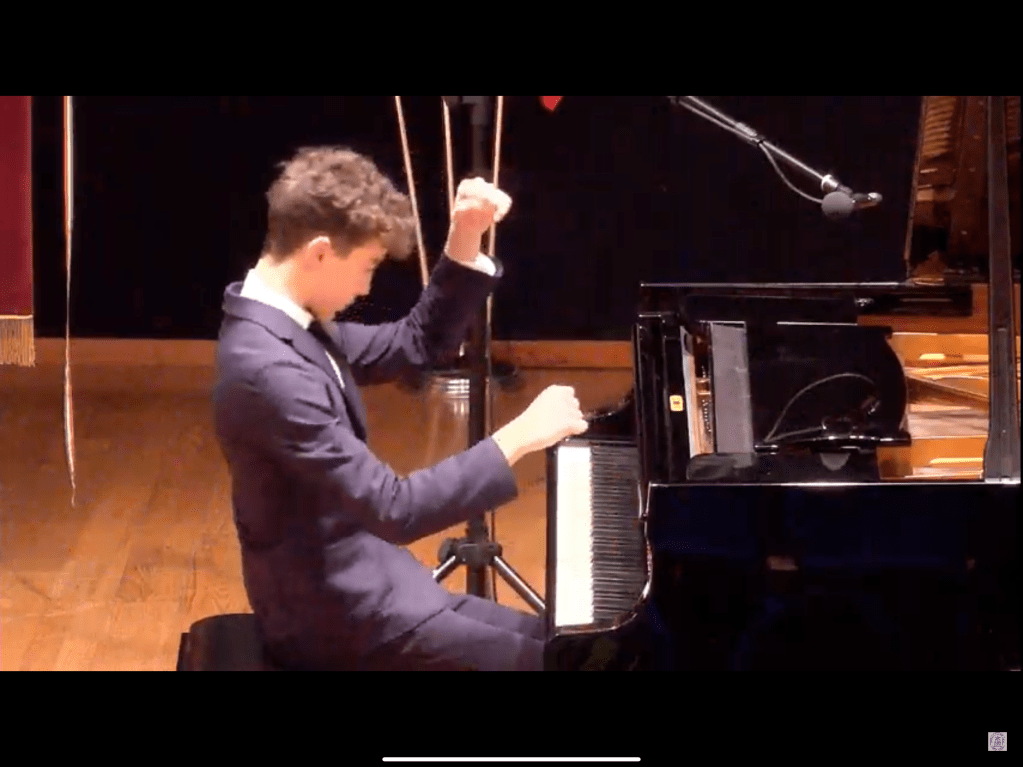
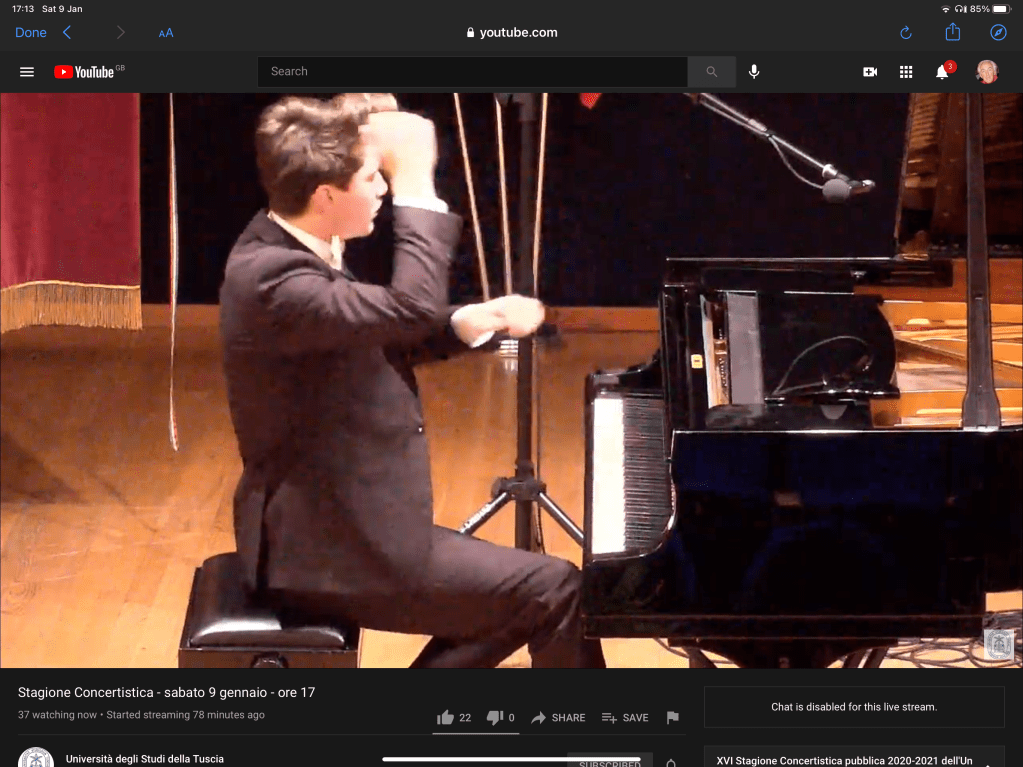
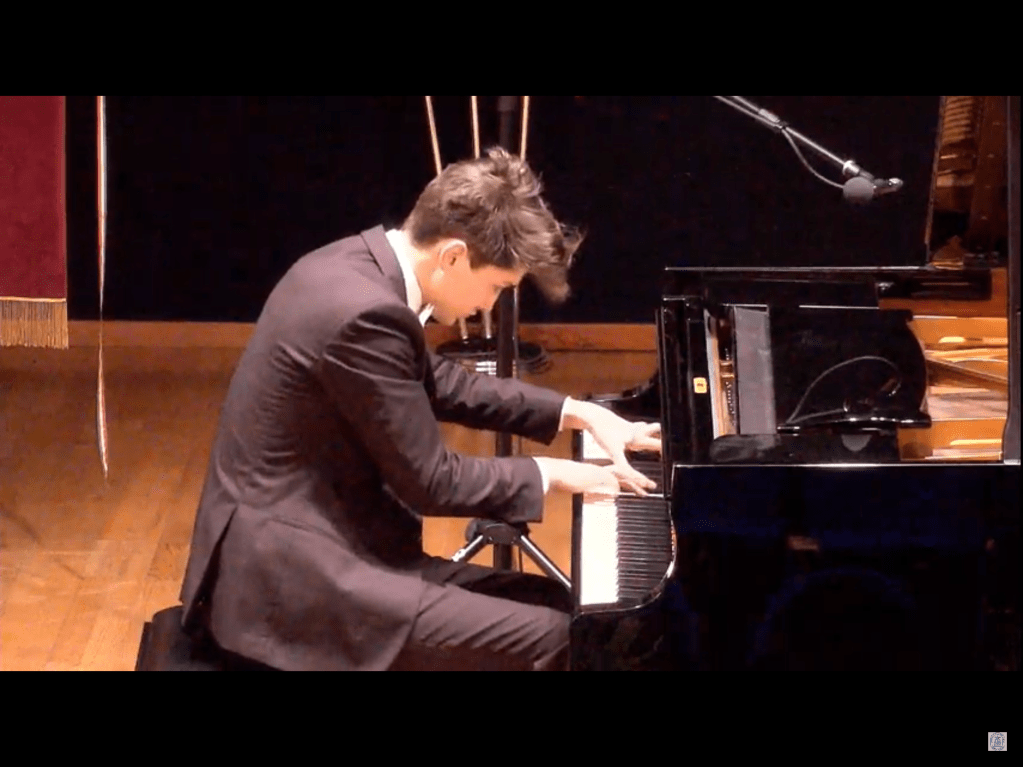
Two young pianists Emanuele Savron and Emanuele Nazzareno Piovesano opening the first concert this year from Tuscia University in Viterbo streamed live at 17h every Saturday afternoon .

http://tiny.cc/stagione_concertistica
Next week the annual concert of the Keyboard Charitable Trust with Alberto Chines.
Now in it’s 16 year the season of concerts organised by the distinguished musicologist and author of many important volumes Franco Carlo Ricci aims to give a platform not only to established artists but also to young aspiring musicians.Two young pianists today of 14 and 21 years old,winners of the annual Marcella Crudeli Masterclasses held every year in Rome.

Some very fine playing from these two young students chosen from Marcella Crudeli’s Masterclasses in Rome last October to demonstrate the school of a woman who not only has been director of one of Italy’s most important conservatories but also created and watched grow ,strength by strength ,for 25 years the only International Piano Competition ever held in Rome.Not satisfied with that she has been celebrating this year her 80th birthday with a series of recitals and masterclasses from which the two young artists in today’s concert were beneficiaries.

Exemplary Chopin playing as one would expect with Savron playing the overplayed first ballade with impeccable good taste and control.Both had played two early sonatas by Beethoven with scrupulous attention to detail but also an architectural sense that gave great weight to their playing.Piovesano playing op 2 n.1 with envigorating rhythmic impetus with a Prestissimo finale that was quite enthralling.The opening of the so called ‘Moonlight’Sonata was played with mature feeling by Savron with some quite sumptuous and delicate sounds.The last few pages of the Sonata op 27 n.2 showed a remarkable sense of control as he built the excitement to the final dramatic embellishments.

Piovesano’s Schubert Impromptu op 90 n.4 was exquisitely played and the passionate middle section beautifully shaped.His performance of the Khatchaturian Toccata showed off his sensitivity to colour without ever loosing the driving forward movement.The Chopin studies from them both whilst showing a great sense of style showed that there is some technical work still to be done before their studies are completed.Very professional performances to an empty hall before the video camera shows great promise for the future.