Rana and Spada – The crossing of swords with sublime music making in Viterbo

Music making that touched the sublime.
When David Romano intoned with Alessio Pianelli with such freedom and soaring passion it was hard to believe it possible to find such unison between these six instruments in Tchaikowsky’s truly ravishing Souvenir de Florence op 70.
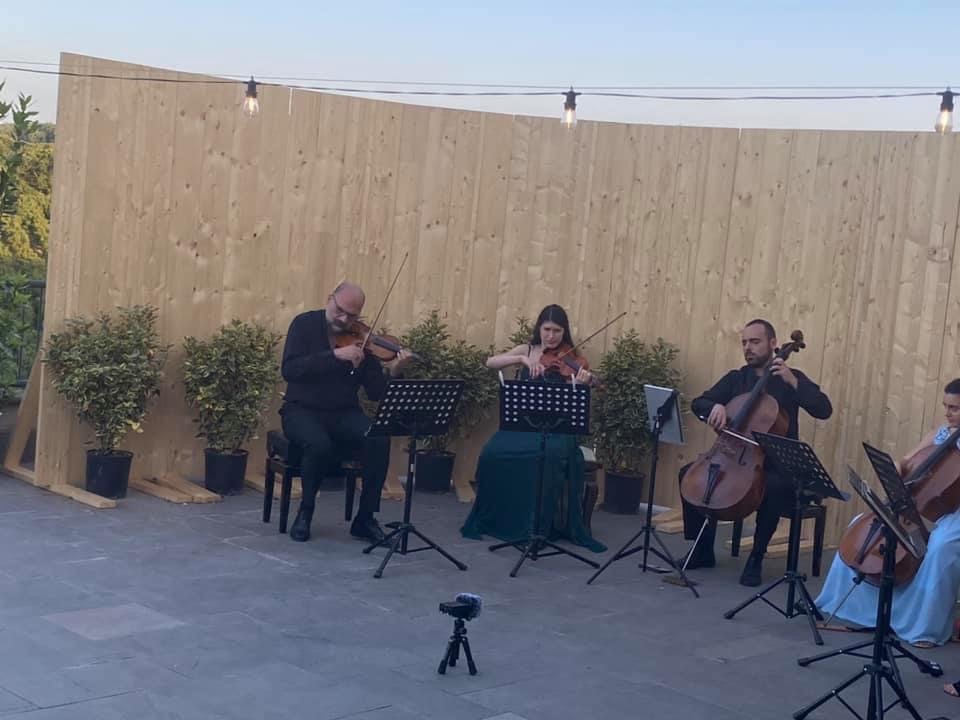
The extraordinarily moving musical conversation between David Romano and Alessio Pianelli


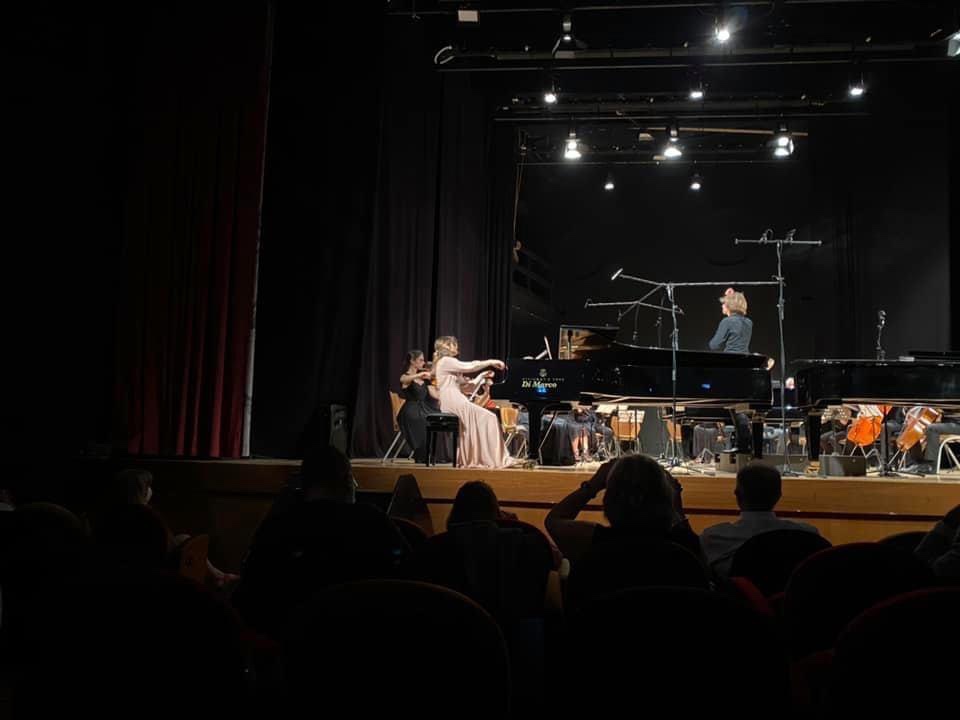
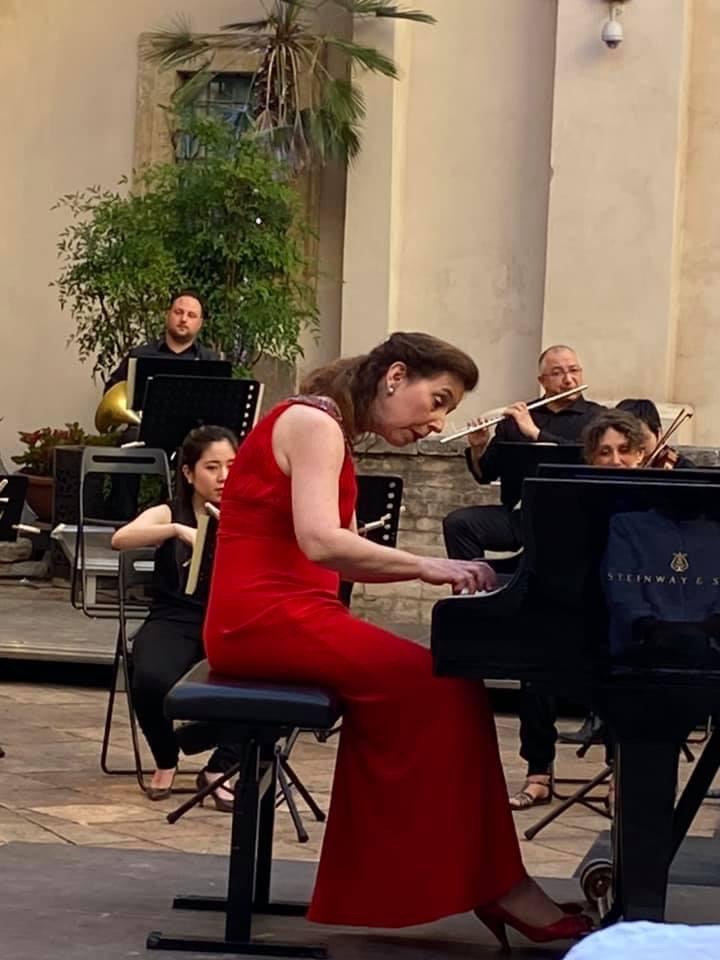
It was the same unison that had made Beatrice Rana and Massimo Spada’s performance of Stravinsky’s own arrangement for four hands on one piano of The Rite of Spring,so hypnotic and mesmerising.To hear Massimo’s pungent rhythms in the bass played with a relentless throbbing suddenly exploding into cascades of notes from his partner Beatrice.Only to dissolve into the most ravishingly desolate voice with the four hands and arms entwined in a musical unison that was quite extraordinary.It was even more remarkable than the first time I heard this arrangement in 1968 at the South Bank Festival in London with a then unknown Daniel Barenboim and the recently defected Russian Vladimir Ashkenazy.They also performed the Mozart Double Concerto captured on a famous video by Christopher Nupen.Together with Jaqueline Du Pré,Pinchas Zuckermann,Itzak Perleman,Zubin Mehta,Martha Argerich and Nelson Freire it was a glorious moment of friends having all the time in their youth of enjoying each others company.
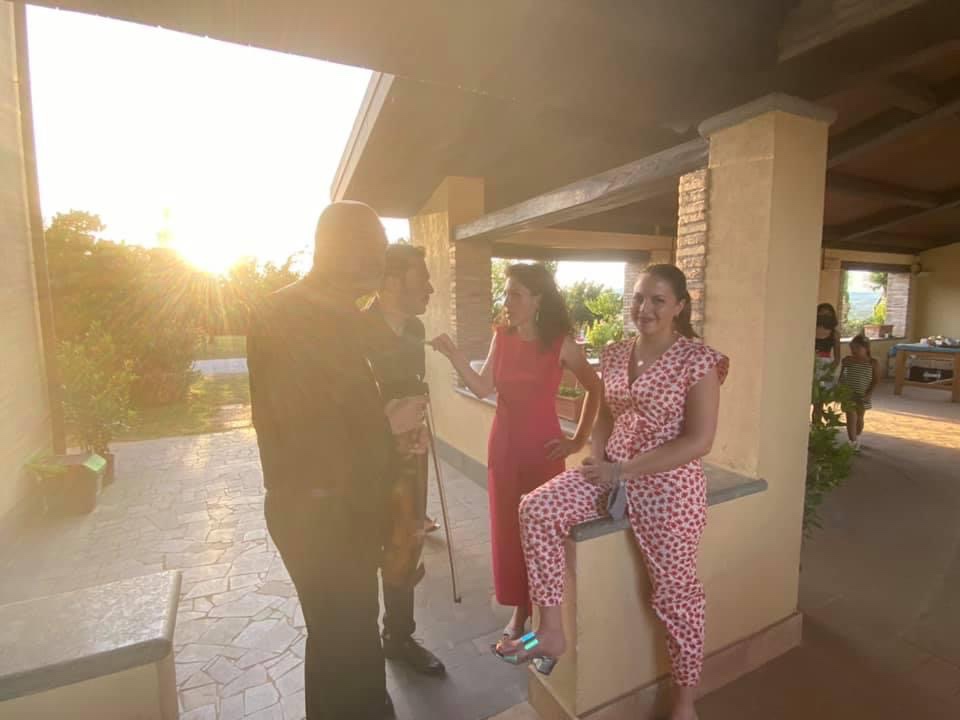
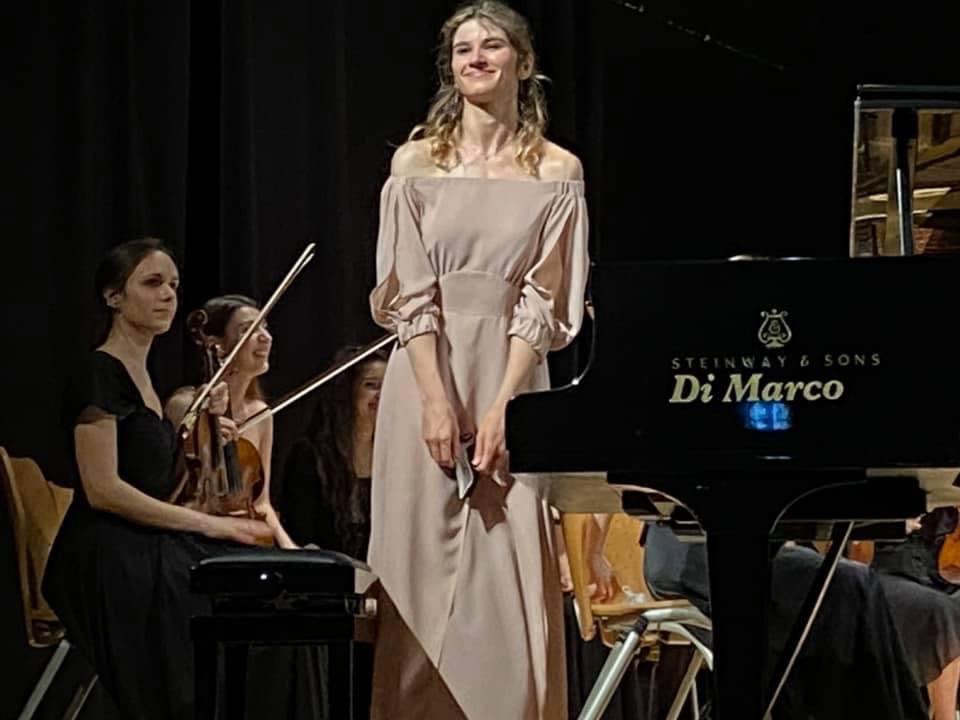
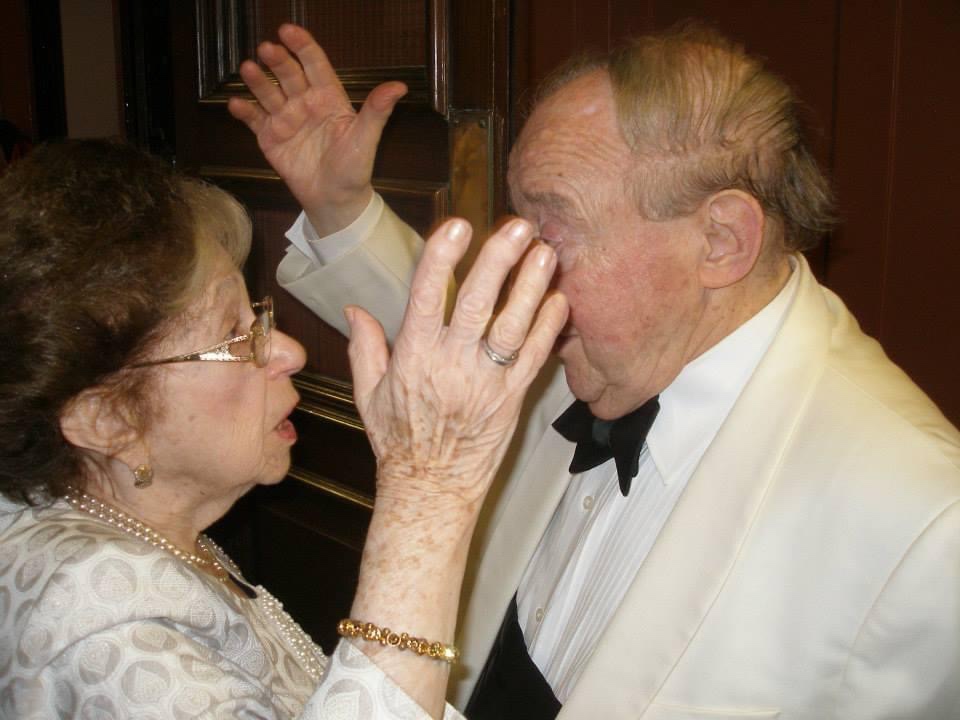
David Romano Massimo Spada Beatrice and Ludovica Rana enjoying each others company during a pause between works.

The Rite of Spring was composed for Sergei Diaghilev’s Ballets Russes, and premiered in 1913 at the Théâtre des Champs-Elysées in Paris,conducted by Pierre Monteux .Igor Stravinsky’s harmonically adventurous score–along with a scenario of pagan sacrifice and Vaslav Nijinsky’s unconventional choreography–excited both opposition and support, and the event’s climax in a near-riot remains among the most notorious premieres in music history.
Stravinsky created a version of the orchestral score for piano four hands, and it was in this form that the piece was first published in 1913; the full score was unavailable in print until 1921 and there were few performances in the years following its composition due to the Ist world war and its after effects which made this arrangement the primary introduction to the work.
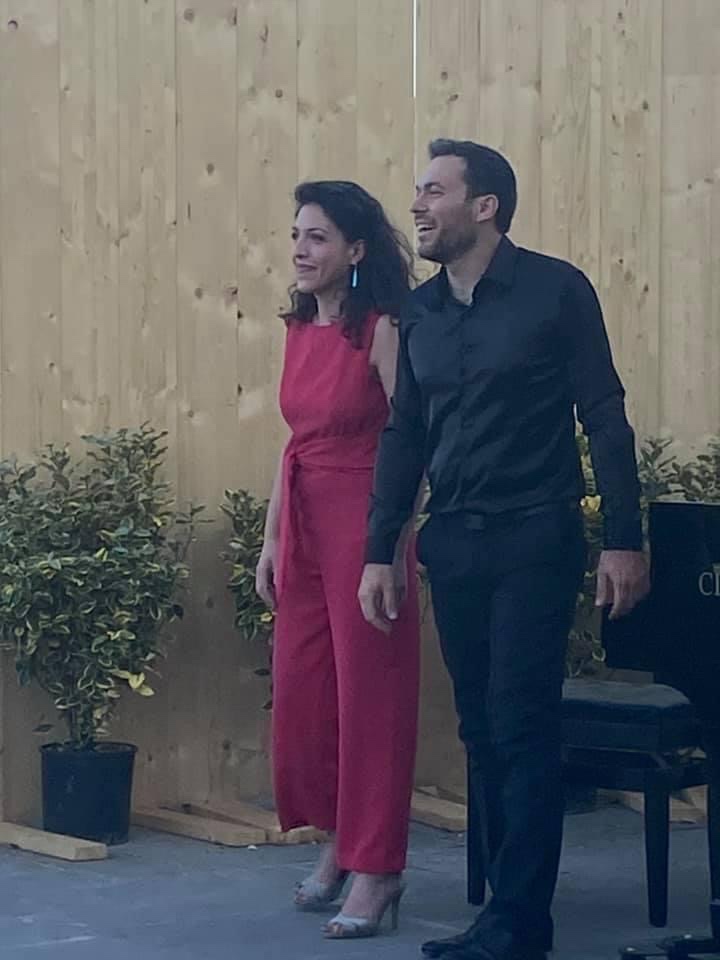
Beatrice Rana with Massimo Spada

Rubinstein famously used to try to convince Stravinsky that the piano was not a percussive instrument but to no avail.He even commissioned his friend to write a piece for him but was shocked when he received the Piano Rag Music and refused to perform it and the first performance was given by José Iturbi on 1919.Stravinsky in 1921, though,dedicated the piano reduction of Petrushka to him and gave Rubinstein permission to make his own arrangement which he played in his own inimitable free way but never allowed it to be recorded for posterity.Stravinsky’s aim was to attempt to influence Arthur Rubinstein into playing his music. (A 1961 live recording featuring Rubinstein at Carnegie Hall was published in 2012,after Rubinstein’s death and were part of the tapes made during his historic ten benefit recitals).Stravinsky ensured that Rubinstein would find the arrangement technically challenging but musically satisfying. Trois mouvements de Petrouchka reflects the composer’s intentions and is renowned for its notorious technical and musical difficulties. The three dances from Petrushka together with Agosti’s 1928 arrangement of the Firebird are two of the most difficult pieces in the piano repertoire and are usually rattled off with ease nowadays by note spinning virtuosi.But there are rare exceptions ,like today,when technical command is allied to musical artistry and Stravinsky’s early music can bring the same magic without the visual aid of Diaghilev.
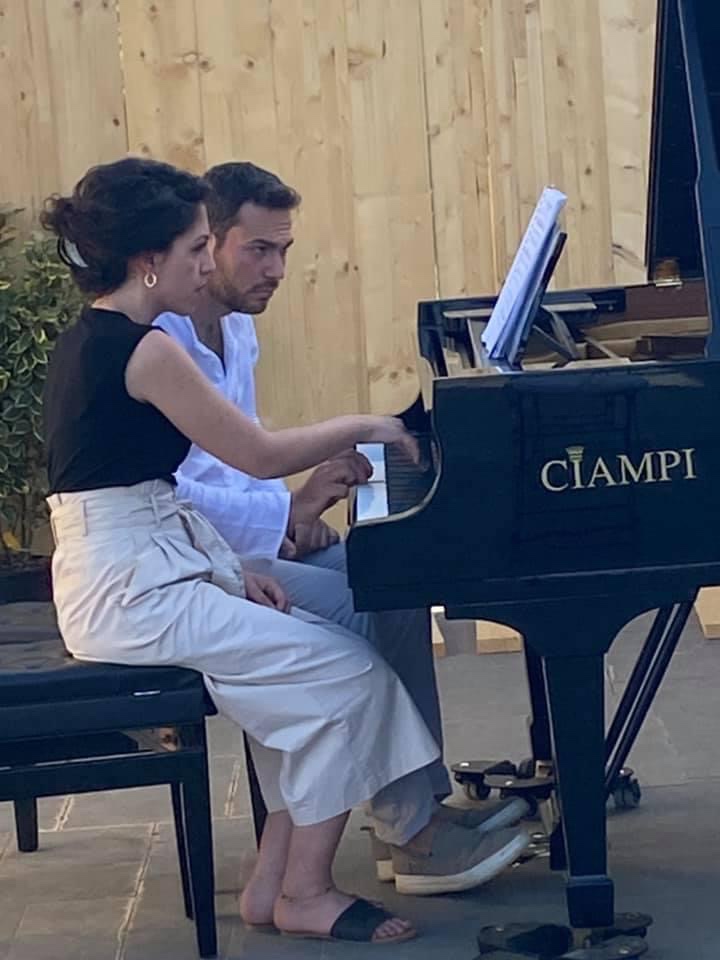
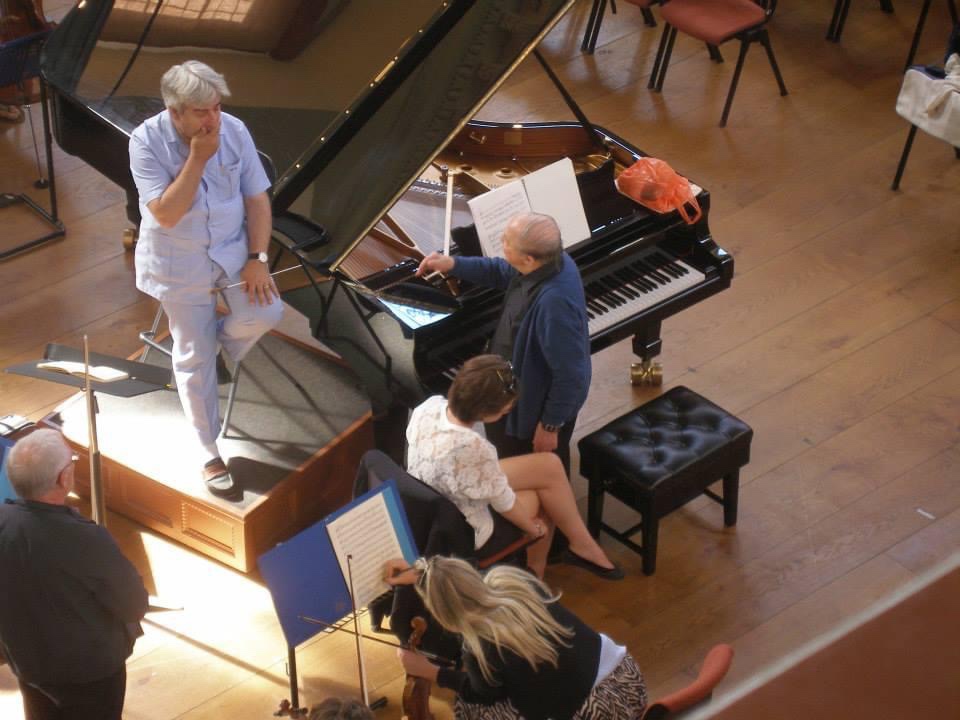
Rehearsing the Rite

I usually dislike composers that use the piano as a percussive instrument but Massimo Spada and Beatrice Rana made the piano sing dance and seduce as only true magicians can.To turn a box of hammers and strings into a kaleidoscope of multi coloured sounds and moods shows a rare sense of artistry.Massimo Spada had the pedals and it was Anton Rubinstein who said the pedal is the soul of the piano …..never more evident than what he did today.Beatrice’s artistry has long been recognised but together they are a force to be reckoned with.
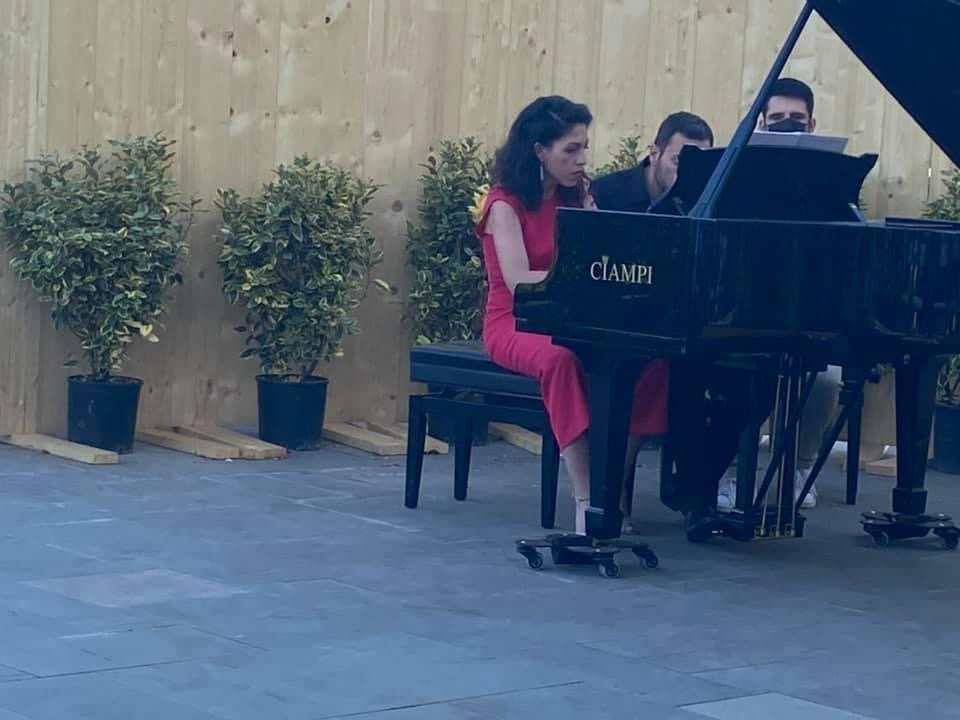
From Beatrice’s absolute clarity of the Adoration of the Earth and Massimo’s magical reverberations before his savage eruption with the Dances of the Young Girls.Beatrice’s streaks of lightening just adding to the gradual build up of excitement with its constant undercurrent of continual movement and the appearance of the young girls .The frenzy they both brought to the Ritual of Abduction was quite as electrifying as the grandest of orchestras.Arms were entwined for the sudden Spring Rounds where the melodic line is shadowed both on high and below with ravishing effect.The shooting stars of glissandi in the Dance of the Earth was indeed mesmerising as it led to the sublime beauty of the Sacrifice.There was magic in the air as the Mystic Circles of the Young Girls was suddenly revealed with an almost Messiaenic sense of pagan rapture.The Glorification of the Chosen One produced some electrifying playing as the Evocation of the Ancestors blazed out of Beatrice’s hands.The sinister rhythmic precision from Massimo in the Ritual Action of the Ancestors was indeed hypnotic in its unrelenting advance to the Sacrificial Dance.A transcendental eruption of sounds played with such unrelenting rhythmic precision made one suddenly aware that the piano can also be a savage percussive instrument as this still quite astonishing work came to its explosive end.
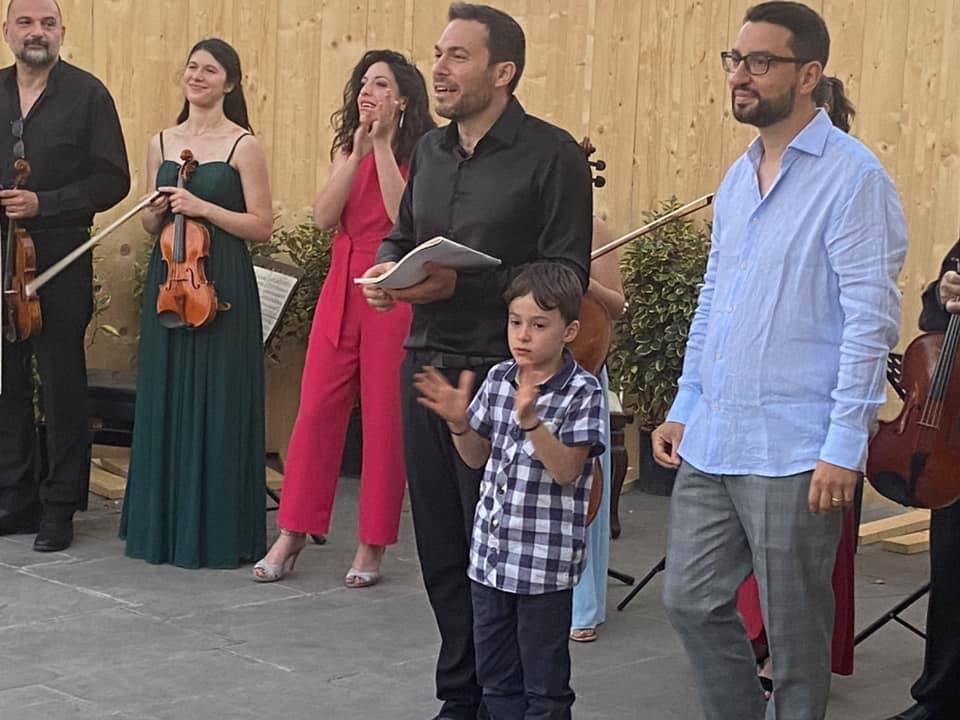
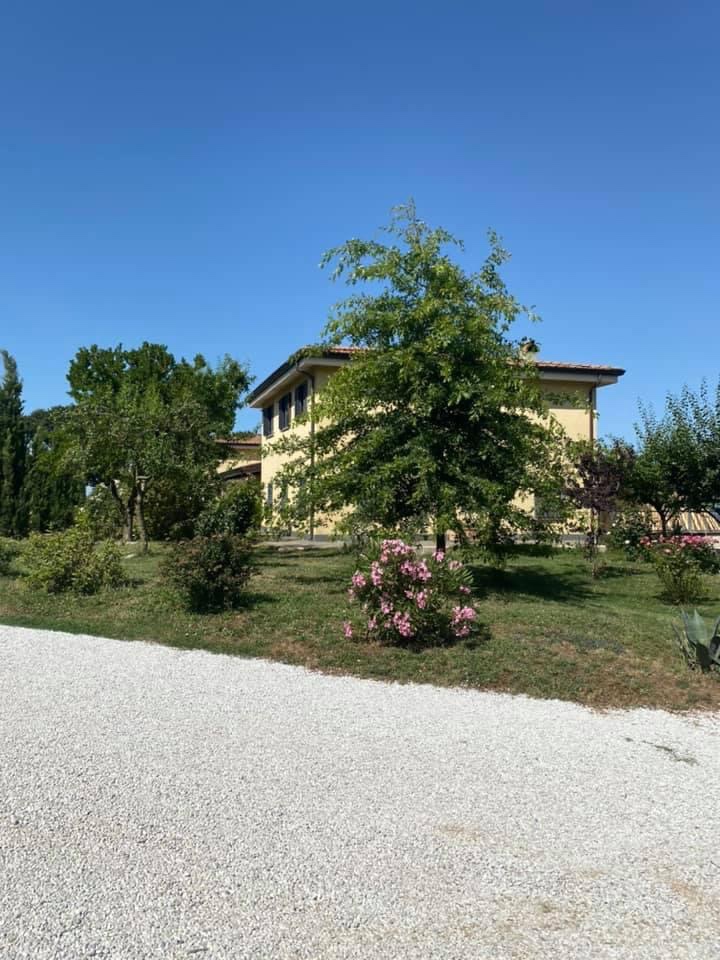
Our host Massimo Spada with an ever more enthusiastic Amodeo-the youngest member of the family.


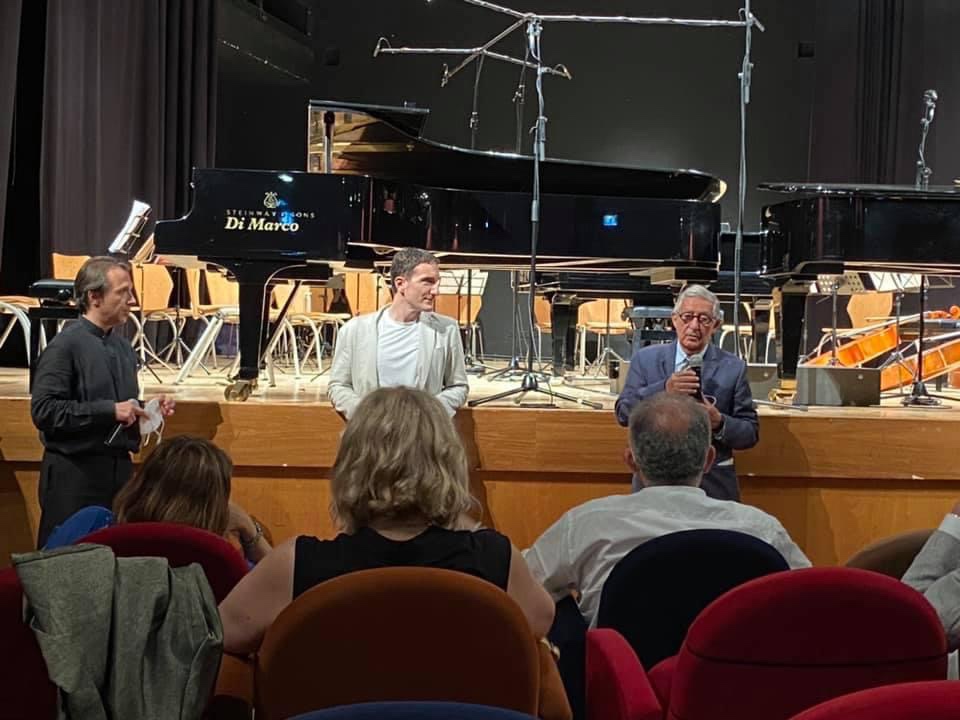
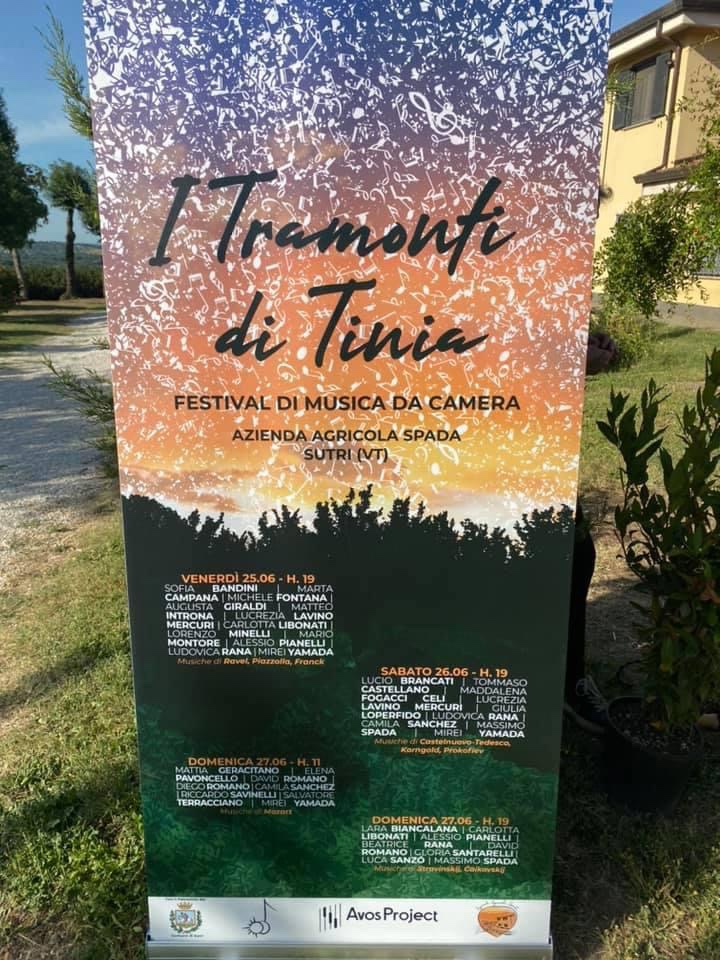
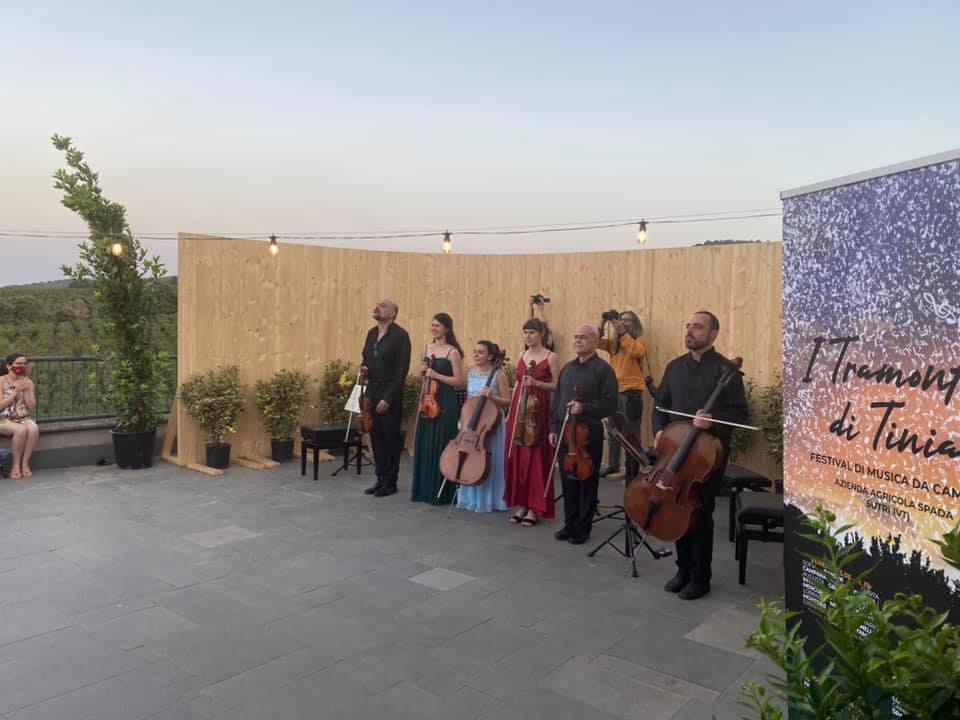
This new festival was pieced together by a group of extraordinary artists and friends in the family agricultural estate of Massimo Spada deep in the heart of the countryside in Sutri near Viterbo.It was to demonstrate their new Academy in Rome where the more experienced musicians share their artistry with the young and aspiring by making music together.As Massimo said at the end of a magical evening of music making:’it is a new way of teaching chamber music by sharing the platform with younger less experienced musicians.’The Avos project is a new and exciting reality


Well if this is the result it is has certainly created an earth tremor today.
I hope that the Mayor of Sutri,the celebrated art historian Vittorio Sgarbi arriving late and spending his time on his mobile phone will at least have noticed the reaction of the public on their feet visibly moved by such sublime music making
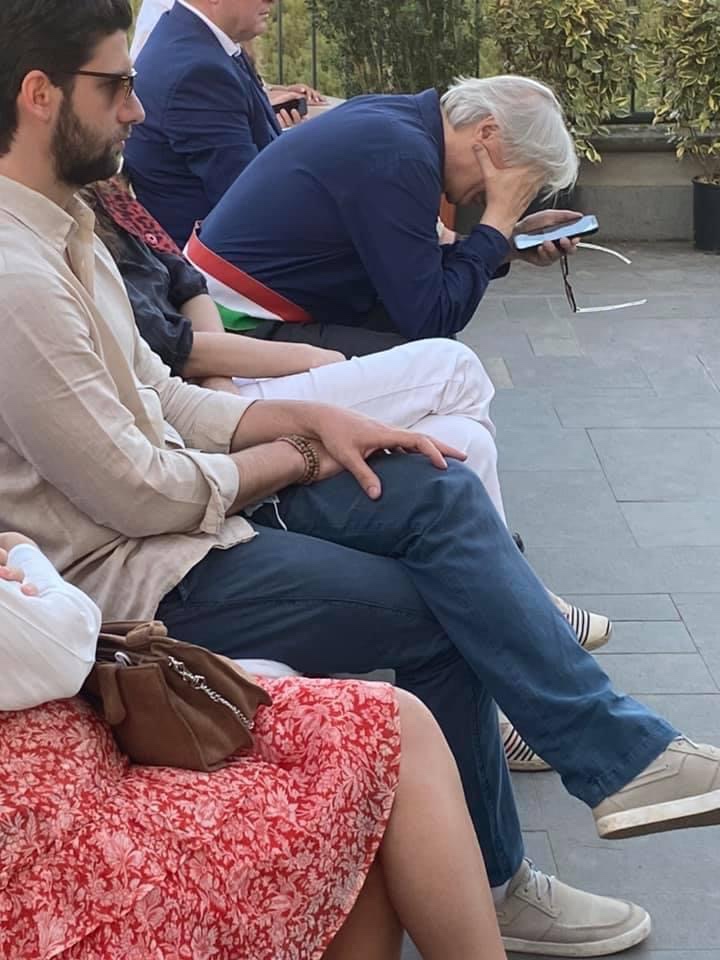
Vittorio Sgarbi obviously plagued by problems that as Mayor of Sutri he hopes to resolve ,enveloped and helped by the ravishing sounds that fill the air

Domenica 27 giugno ore 19.00
• Igor Stravinskij – La Sagra della Primavera Versione dell’autore per pianoforte a 4 mani
Quadri della Russia pagana in due parti
Beatrice Rana, pianoforte Massimo Spada, pianoforte
• Pëtr Il’ič Čajkovskij – Souvenir de Florence
I. Allegro con spirito
II. Adagio cantabile e con moto
III. Allegretto moderato IV. Allegro vivace
David Romano, violino Gloria Santarelli, violino Luca Sanzò, viola Carlotta Libonati, viola Alessio Pianelli, violoncello Lara Biancalana, violoncello
Tchaikovsky adored Italy and spent the long, harsh Russian winter in Rome, Florence, and Venice, seduced by the warmth of the sun, the music in the streets and the beauty of the men.”I am under a clear blue sky,” he wrote, “where the sun is shining in all its magnificence. There’s no question about rain or snow, and I go out wearing nothing but a suit … a magical shift is finally happening to me.”The first performance was in St Petersburg in 1890 when Tchaikovsky had finally achieved international fame.He was at the peak of his powers, pouring his full emotional self into every bar he wrote, not knowing that he had just three years left to live.In Florence, he scratched out a simple duet for violin and cello. This germ gave birth to Souvenir de Florence.
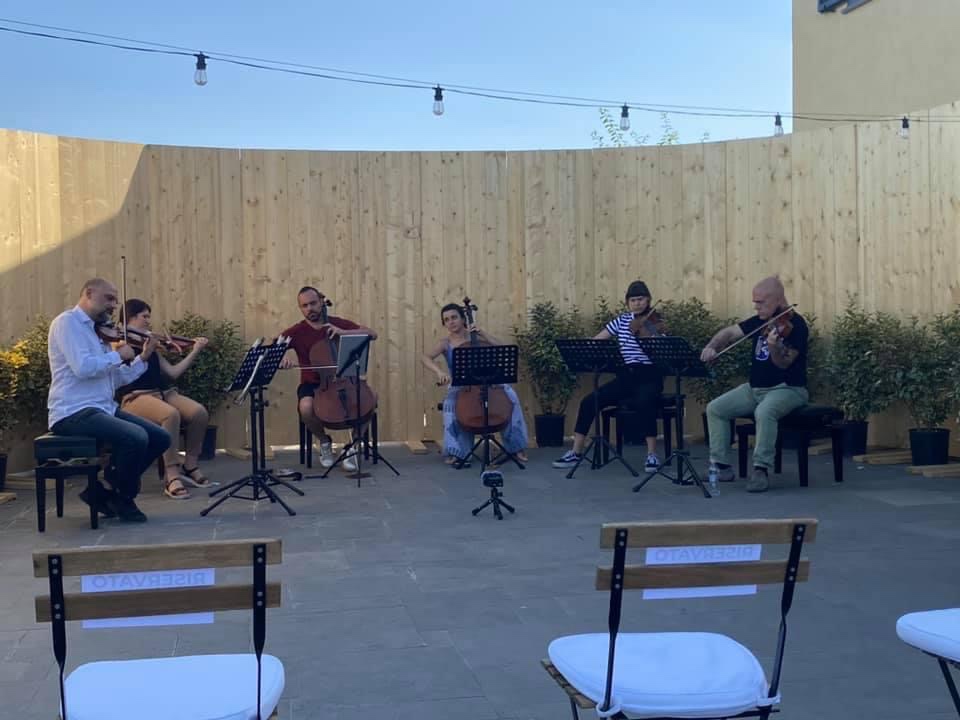
The sextet in rehearsal

In Tchaikowsky’s own words :”The second movement I have called adagio (because here one crochet is no more than 58, and to me this is not Andante); however this movement has the character of an Andante, and should not be drawn out. The central section of this adagio, probably written molto piu mosso (I don’t remember exactly) should be played with an improbable pppp; this should be just discernible, like summer lightning. The first movement needs to be played with great fire and passion. The second: cantabile. The third: scherzo. The fourth: brightly and enthusiastically”Tchaikowsky’s own words describe so perfectly the performance we heard today with the drive of David Romano as he threw himself with the ‘fire and passion’that just ignited the entire performance.The plucked strings in the second movement was like a guitar serenading the beautiful duet between violin and cello so eloquent as they intoned together.The simple folk song of the third flowed from Luca Sanzo’s viola with heart rending intensity.The last movement a relentless Slavonic dance with the melodic line shared in every conceivable combination of solo,duo and trio.There were some young faces amongst these six magnificent players that was the demonstration that Chamber Music cannot be taught but has to be lived as it certainly was today

Tchaikovsky’s verdict on his work? “It’s frightening to see,” he wrote, “how pleased I am with myself.” Which aptly sums up the feeling of elation that brought the audience spontaneously to their feet today.
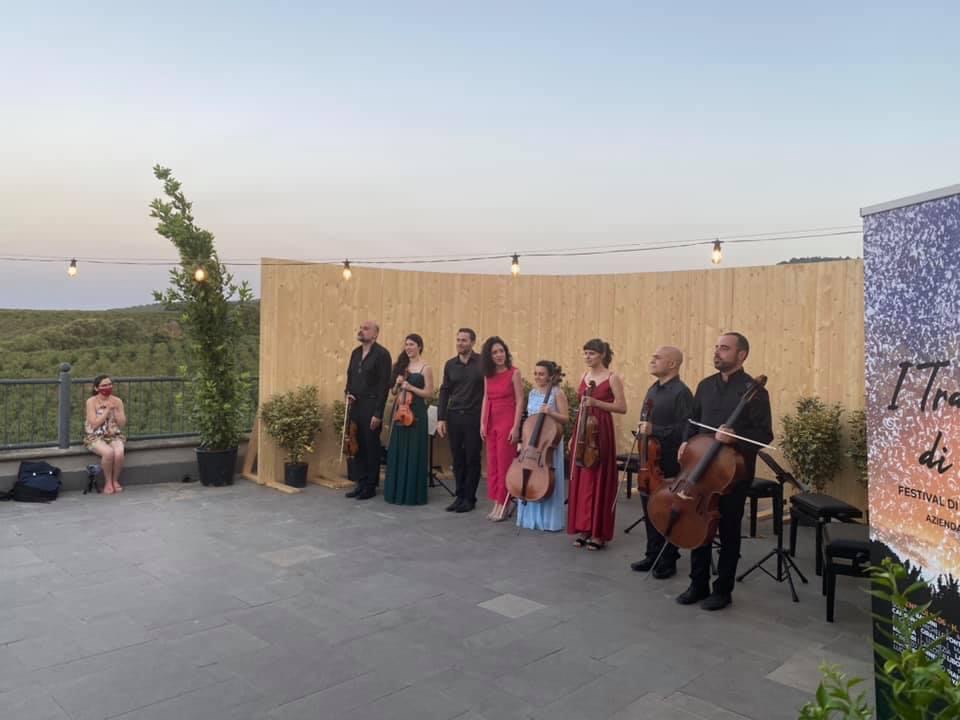
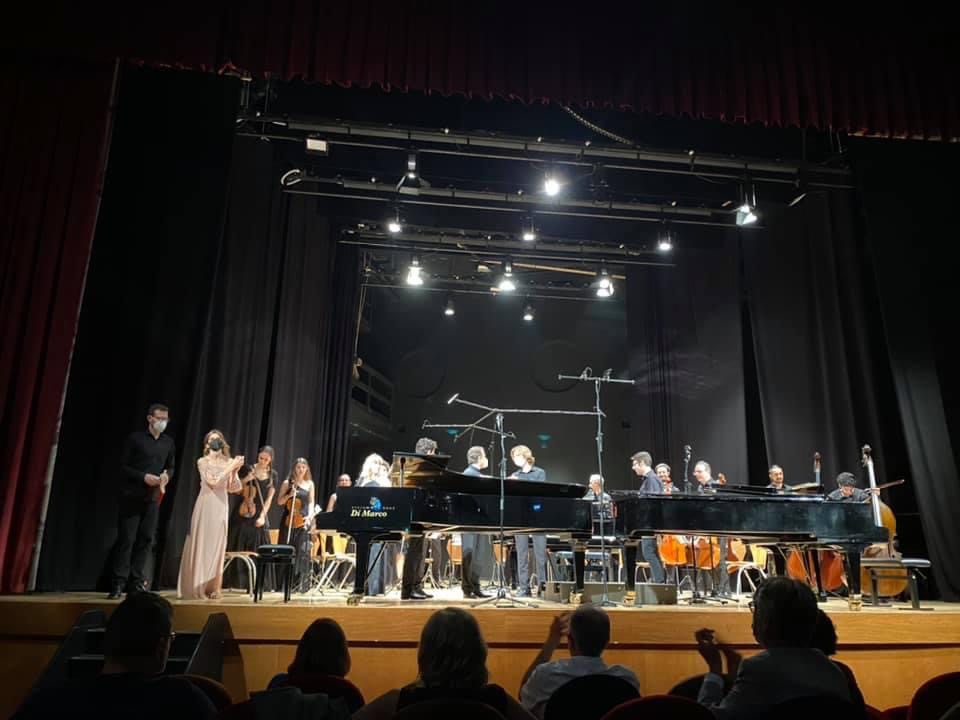
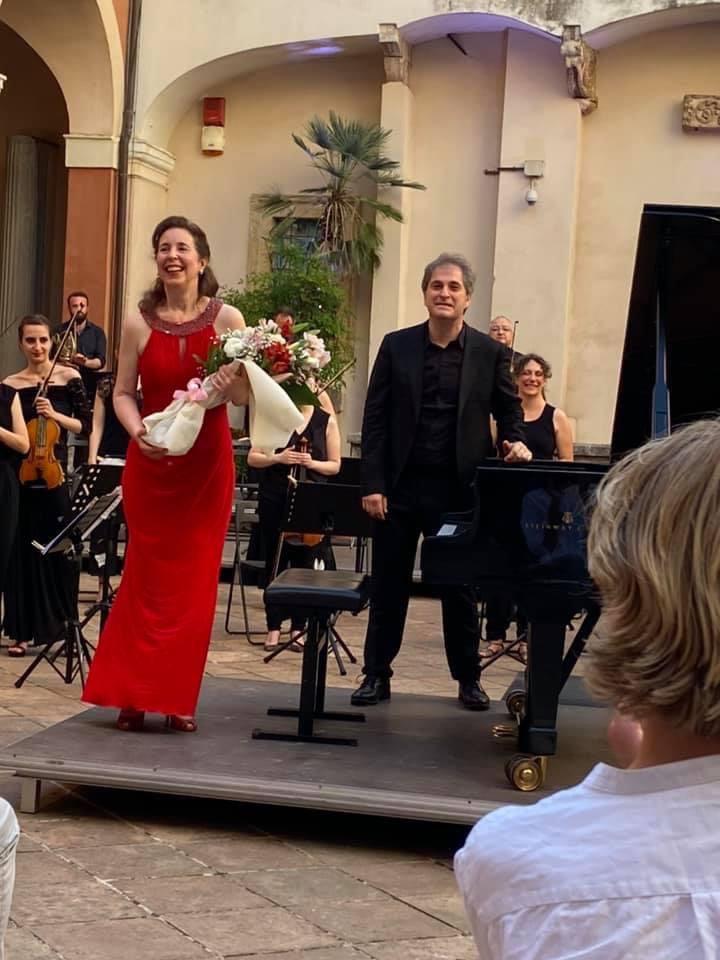
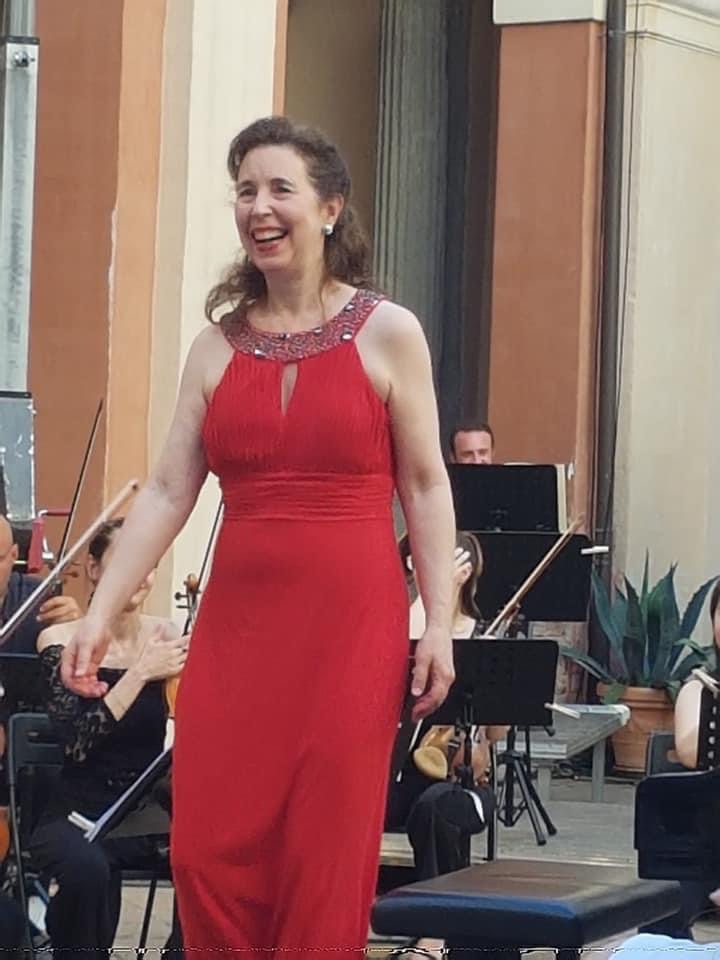
The artists taking part in the concert share the tumultuous applause
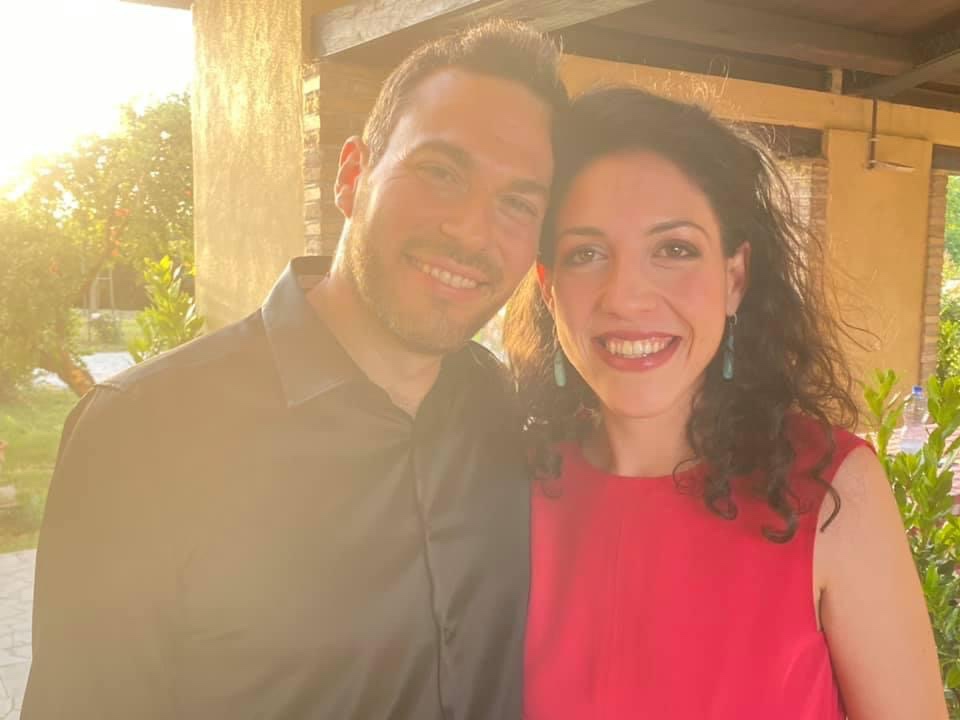
Massimo Spada and Beatrice Rana

Che festa! The joy of music!Maurizio Baglini project at Roma 3

The entire cast at the end of this exhilarating musical party

Mendelssohn Concerto in A minor for piano and strings MWV O2N Allegro-Adagio-Finale Allegro na non troppo

Lucrezia Liberati spinning Mendelssohn’s early musical web with such poise and ease https://christopheraxworthymusiccommentary.wordpress.com/2021/03/08/lucrezia-liberati-at-roma-3-virtuosity-and-freedom-in-the-name-of-music/

Concerto in E flat major for two pianos, KV365 (1779) 23’0201I. Allegro -Andante -Rondeau.

Axel Trolese in Mozart double playing with crystalline clarity as he tries to outdo the mastery of Maurizio Baglini https://christopheraxworthymusiccommentary.wordpress.com/2021/01/11/axel-troleses-refined-musicianship-for-roma-3-university-streamed-live-from-teatro-palladium-in-rome/

Concerto in F major for three pianos ‘Lodron Concerto’, KV242 Allegro -Adagio -Rondeau. Tempo di Menuetto

Filippo Tenisci in Mozart triple playing with his impeccabily precise musicianship https://christopheraxworthymusiccommentary.wordpress.com/2021/02/09/roma-3-orchestra-the-mozart-project/

Che festa! What a party for the final concert in the Maurizio Baglini project festival held over the last three days in Rome.Two in the historic Teatro Torlonia and the final concert in the much larger Teatro Palladium. And larger than life it was too with Mozart’s concerti for two and three pianoforti with Maurizio Baglini himself at the helm.Directing three young pianists as he himself took turns to play with Axel Trolese, Giuseppe Rossi and Filippo Tenisci.

Lucrezia Liberati with Sieva Borzak

The opening of the concert had very gentlemanly been given to the charming Lucrezia Liberati who played the glittering early concerto in A minor by Mendelssohn.Some scintillating playing from Lucrezia with the Roma 3 orchestra with their resident conductor Sieva Borzak.A charming early work with reams of notes played with such relish and rhythmic energy catapulting the seemless streams of gold with a jeux perle that only youthful talent can dispatch with such simplicity and joie de vivre.It was the same spirit a century earlier that was evident in the fun and games that was created in the Mozart Concerti.

Maurizio Baglini. Valerio Vicari. Roberto Pujia

It is quite a rarity to hear these concerti in concert because three pianos on stage takes some organising.So hats off to Roma Tre for being able to find the space at their Teatro Palladium for three pianos and orchestra .As the President of Roma Tre,Roberto Pujia,said in his brief introduction,the combination of music and friendship has allowed him and his former pupil, Valerio Vicari, artistic director for the past 15 years ,to promote and help exceptional young talent to have a platform and to find a family of dedicated professional enthusiasts to help them.
https://christopheraxworthymusiccommentary.wordpress.com/2020/12/18/roma-3-orchestra-comes-of-age-at-teatro-palladium-in-rome/

Thus was born the Roma Tre Orchestra and the Young Artists Piano Solo Series all under the wing of Roma Tre University.Maurizio Baglini,the distinguished pianist,has become part of this family and his projects regularly take pride of place.In fact the project in the past few days has seen involved many of the musicians who Maurizio is dedicated to helping forge a professional career in music.

Maurizio Baglini conducting from the keyboard

Also playing with the musicians himself but always taking second place and allowing these young musicians their opportunity to shine.Much as Marie Joao Pires and Martha Argerich lend not only their name but also their precious time to helping the next generation

Giuseppe Rossi whose Hammerklavier received such praise from Maurizio Baglini – here joining in the fun of Mozart triple

In fact one of the Roma Tre prodigies Giuseppe Rossi was even allowed to play Beethoven’s longest most complex sonata op 106 ‘Hammerklavier’!Whilst others played Liszt’s extraordinary arrangements of some of the Beethoven Symphonies.

Filippo Tenisci and Giuseppe Rossi with Maurizio Baglini in the background conducting from the third piano!

There is only a limited number of works for two or more solo instruments with orchestra.Mozart, however, was evidently attracted by the sinfonia concertante genre and created some of the finest examples of it, such as the Sinfonia Concertante for Violin and Viola and the Concerto for Flute and Harp, as well as his two concertos for more than one piano. The ‘Lodron Concerto’ for three pianos was composed in 1776 for Countess Lodron and her daughters. It is Mozart’s third piano concerto and the young man’s irrepressible sense of fun is obvious with ‘a true musical joke, in which the musical line is divided between the three players quite arbitrarily; one piano continues what another has started and the third will conclude.

Axel Trolese and Maurizio Baglini at the end of Mozart Double Concerto

When the composer three years later returns to the task of writing for more than one piano, the result is quite different. The Concerto in E flat major KV 365, composed for Mozart himself and his sister Nannerl, is ‘in many respects Mozart’s first ‘big’ piano concerto. It is the first in which we find the very characteristic intertwining of the woodwind and the piano part, accomplished very effectively and virtuosically.’ Mozart seems to have been fond of the work, so fond that for a later performance he added clarinets, trumpets and timpani to the orchestra

Martedì 22 giugno 2021 ore 19 Teatro Torlonia
Maurizio Baglini Project – Le sinfonie di Beethoven trascritte da Franz Liszt
Sinfonia n. 2 in re maggiore op. 36
Axel Trolese, pianoforte
Sinfonia n. 5 in do minore op. 67
Simone Librale, pianoforte
Sinfonia n. 6 in fa maggiore op.  68 “Pastorale”
Maurizio Baglini, pianoforte

Mercoledì 23 giugno 2021 ore 19 Teatro Torlonia
Concerto à la carte
L. v. Beethoven: Sonata per pianoforte n. 29 in si bemolle maggiore op. 106 “Hammerklavier”
Giuseppe Rossi, pianoforte
Il pubblico sarà invitato a scegliere il programma sulla base di una lista di brani proposta dagli artisti
Silvia Chiesa, violoncello
Maurizio Baglini, pianoforte

Giovedì 24 giugno 2021 ore 20.30 Teatro Palladium
Giovani artisti per giovani compositori
progetto realizzato nell’ambito del programma LazioSound di GenerAzioni Giovani e finanziata dalle Politiche Giovanili della Regione Lazio e dalla Presidenza del Consiglio dei Ministri – Dipartimento per la Gioventù
F. Mendelssohn Bartholdy: Concerto per pianoforte e orchestra d’archi in la minore
Lucrezia Liberati, pianoforte
Sieva Borzak, direttore
W. A. Mozart: Concerto per due pianoforti n. 10 in mi bemolle maggiore K. 365
Maurizio Baglini e Axel Trolese, pianoforte
W. A. Mozart: Concerto per tre pianoforti n. 7 in fa maggiore K. 242
Maurizio Baglini, Giuseppe Rossi, Filippo Tenisci, pianoforte

Maurizio Baglini e Silvia Chiesa, da tanti anni artisti di riferimento per Roma Tre Orchestra

Above all there was such exhilarating music making which made for a real party atmosphere.There were details that could have been perfected ,some rounding of corners and unexpected liberties and embellishments in Mozart but the overall message was one of pure musical enjoyment that is surely what Mendelssohn and Mozart intended.

A late start was to allow a video recording to be made without disturbing the audience in the actual concert.It will allow Roma 3 to share this musical feast with a much larger audience as they have been doing during the pandemic with their magnificent live stream recitals .A family indeed to be cherished and enjoyed in the name of Youth and Music.

Below are some things I was able to enjoy long distance during this strange pandemic period of silence in the concert halls:

https://christopheraxworthymusiccommentary.wordpress.com/2021/03/22/anna-rigoni-playing-of-ravishing-seduction-for-roma-3-orchestra-at-teatro-palladium/

https://christopheraxworthymusiccommentary.wordpress.com/2021/01/19/ilaria-cavalleri-at-teatro-palladium-roma-3-beauty-and-musicianship-illuminate-the-magnificent-sounds-of-their-schimmel-concert-grand/

https://christopheraxworthymusiccommentary.wordpress.com/2020/12/05/davide-scarabottolo-at-rome-3-university/

https://christopheraxworthymusiccommentary.wordpress.com/2020/12/23/roma-3-orchestra-young-artists-series-streamed-live-from-teatro-palladium-rome/

https://christopheraxworthymusiccommentary.wordpress.com/2021/02/22/roma-3-waltzing-with-ludovico-troncanetti/

https://christopheraxworthymusiccommentary.wordpress.com/2021/03/15/roma-3-guaitolini-rugani-play-schumann/

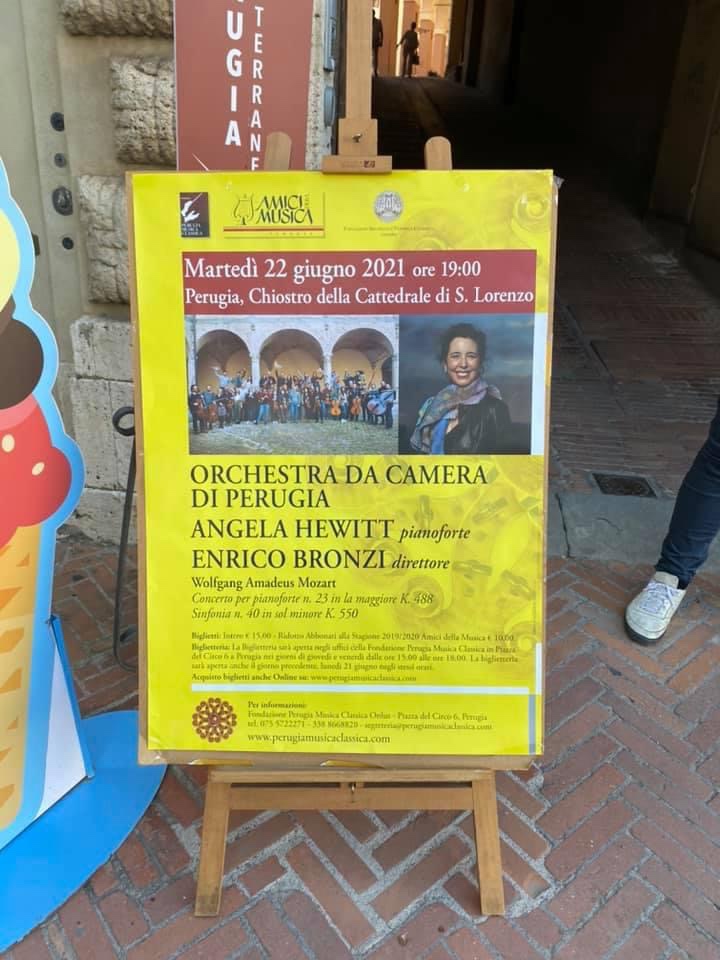
L’Impero dei Sensi – Angela Hewitt and Enrico Bronzi play Mozart in Perugia

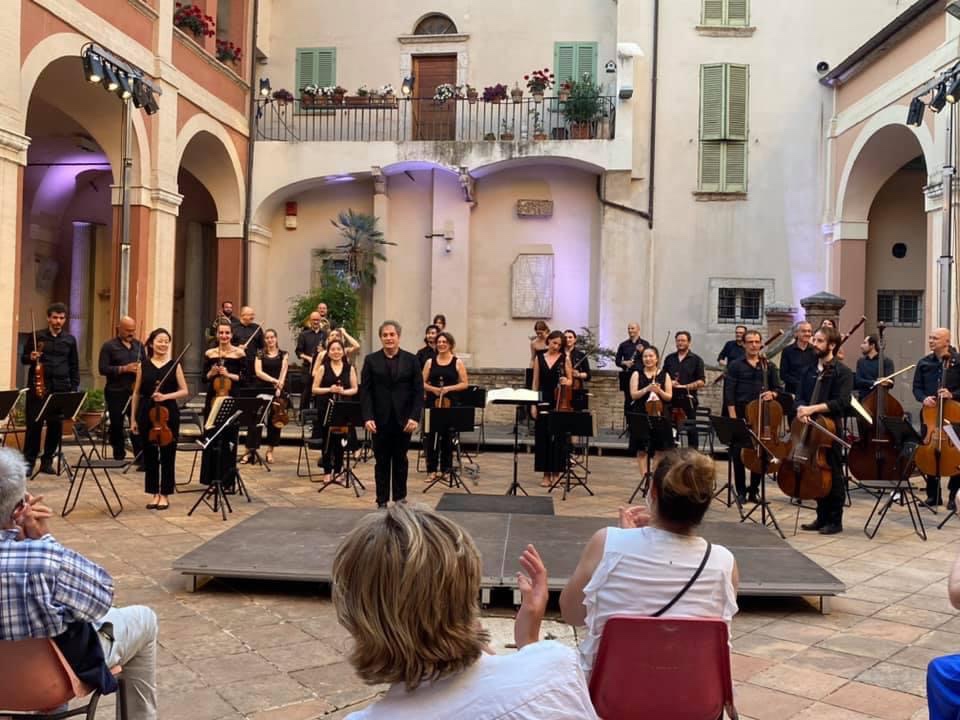
The miracle of Mozart in Perugia today with Angela Hewitt ,Enrico Bronzi and The Chamber Orchestra of Perugia. Mozart’s most perfect concerto K488 played with such sparkling ‘joie de vivre’as Angela wove Mozart’s magic web in and out of an orchestra that under Enrico Bronzi’s hands was truly listening to each other and above all to Angela.

There was magic in the air as the sublime Adagio was played with such poignant meaning from the very first notes. This is the only movement by Mozart in F♯ minor and the middle of the movement contains a brighter section in A major announced by flute and clarinet that Mozart would later use to introduce the trio “Ah! taci ingiusto core!” in his opera Don Giovanni .The clarity and Angela’s ability to live through every note meant that Mozart’s simple outline needed no embellishing as the utmost simplicity touched the sublime.An almost ecstatic outpouring of melody was the natural outlet for such emotion and gave such architectural shape to the entire movement .The quiet opening of the rondo and its every reappearance just added to the build up of exhilaration that was quite overwhelming .
Scarlatti’s famous E major sonata as an encore was a way of thanking the audience from what has been her home for many years. It was played with a freshness and subtle colouring that had the orchestra as enchanted as the public.

Angela tells me that she has been able to organise her 16th annual festival of Lake Trasimeno at this late hour .Last year it was cancelled as were so many things due to the pandemic.This year with her indomitable spirit she has organise her festival as she herself said :’You must do what you love best.’It is just this love and spirit that have carried her great artistry around the world many times.It would appear that the world is beginning to start turning again.It was interesting that she will include the Dvorak Quintet in one of the concerts in programme.Enrico Bronzi will play the cello with other distinguished colleagues.Angela exclaimed that she had not played it since her student days but she got great consolation knowing that Menahem Pressler had played it at his 90th birthday concert!
Pressler in heated discussion at the rehearsal of K 488

It reminded me that the last time I heard this Mozart concerto was with Pressler in Oxford.I remember trying to calm him down at the rehearsal as the ‘ad hoc’orchestra of brilliant musicians ,down from London for the day,had been engaged principally to play the Mozart Requiem and were just anxious to play through the concerto and get to the pub before the main rehearsal!Pressler already in his 90’s could not understand how they could be so nonchalant about the rehearsal as he sweated tears over every single note.I tried to calm him down pointing out that he was in the historic Sheldonian and I was sure the musicians would pull out all the stops at the concert.And they certainly did under Marius Papadopoulos,the innovatore and driving force behind the Oxford Philomusica.In the audience were many distinguished musicians taking part in his important summer festival.

The late Dame Fanny with Menahem Pressler

Dame Fanny Waterman was in the front row ,nodding her head as she listened to every single note with rapt attention.She too had played this concerto at her Prom debut in the 40’s.Great discussions with Pressler afterwards about his magnificent performance.In fact as I told Pressler both he and Dame Fanny were two of the very few musicians who actually listen with rapt attention to every single note.

Great friends and admirers

He told me that Dame Fanny always wanted him to sit next to her on the jury of her competition in Leeds.Unfortunately in the after lunch session during some dreary performances many of the jury might take 40 winks but not Dame Fanny and those near to her ( Pressler!)as she was always wide awake to every single sound that was played !

Angela Hewitt ‘joie de vivre’ in all she does

Here it is! The programme of the 16th edition of the Trasimeno Music Festival, to be held in Umbria from July 23-26, 2021. This year it will be only four days instead of the usual seven, and we cannot use our beloved Castle of the Knights of Malta in Magione, but we have five stunning venues in Perugia, Spoleto, and Trevi, and wonderful musicians joining me in concert. The Italian mezzo-soprano Anna Bonitatibus will sing Rossini in the Teatro Caio Melisso in Spoleto (which Rossini visited); a wonderful group of chamber musicians from Italy and Switzerland (including cellist Enrico Bronzi) will perform Dvorak, Borodin and Clara Schumann in the Basilica of San Pietro in Perugia; I will perform solo Bach in the stunning Baroque surroundings of the Oratorio di San Francesco dei Nobili in Perugia; and the one and only Rudolf Lutz of St Gallen, Switzerland (organist, improvisor, composer, conductor) is FINALLY coming to Trasimeno….which I’m really thrilled about. He will perform both in the Cathedral in Perugia (original Bach and Mozart and improvisations on Schubert and Dvorak) and with me in the church of San Francesco in Trevi–a concert in which we will play off each other and discuss how Bach used to the full the expression of each key. Of course space is very restricted due to social distancing, but the atmosphere will be very intimate. If you become a Friend of the festival you can book right away. As of tomorrow we are selling subscriptions and packages (which include tickets to all the concerts) to the general public. Tickets to individual concerts will go on sale at a later date. I hope to see some of you there! https://trasimenomusicfestival.com/festival/programme/tmf-2021/

Returning to listen to Enrico Bronzi’s G minor symphony we were rewarded a performance of relentless energy that was quite remarkable. The very opening was like a great gust of wind but also with such refined shaping ,the Andante with searingly beautiful counterpoints .The minuet was played with such militant authority that the final movement came as a great relief,returning to the great waves of sound similar to that of the opening of the symphony.Schumann described it as “Grecian lightness and grace” but Charles Rosen saw in it “a work of passion, violence, and grief.”In Enrico’s hands it was all those things and held the audience spellbound from the first to the last note,swept along on a relentless wave of rhythm and passionate involvement .

Enrico Bronzi introducing the concert.

Enrico as I have said before is a great trainer of orchestras as his technical skill as a cellist and great musicianship allows him to push his players into playing better than they ever thought they could.An orchestra that listens to themselves is an orchestra to be reckoned with indeed.

https://christopheraxworthymusiccommentary.wordpress.com/2021/03/08/mozart-in-budapest/

https://christopheraxworthymusiccommentary.wordpress.com/2020/12/18/roma-3-orchestra-comes-of-age-at-teatro-palladium-in-rome/

Perugia Cathedral

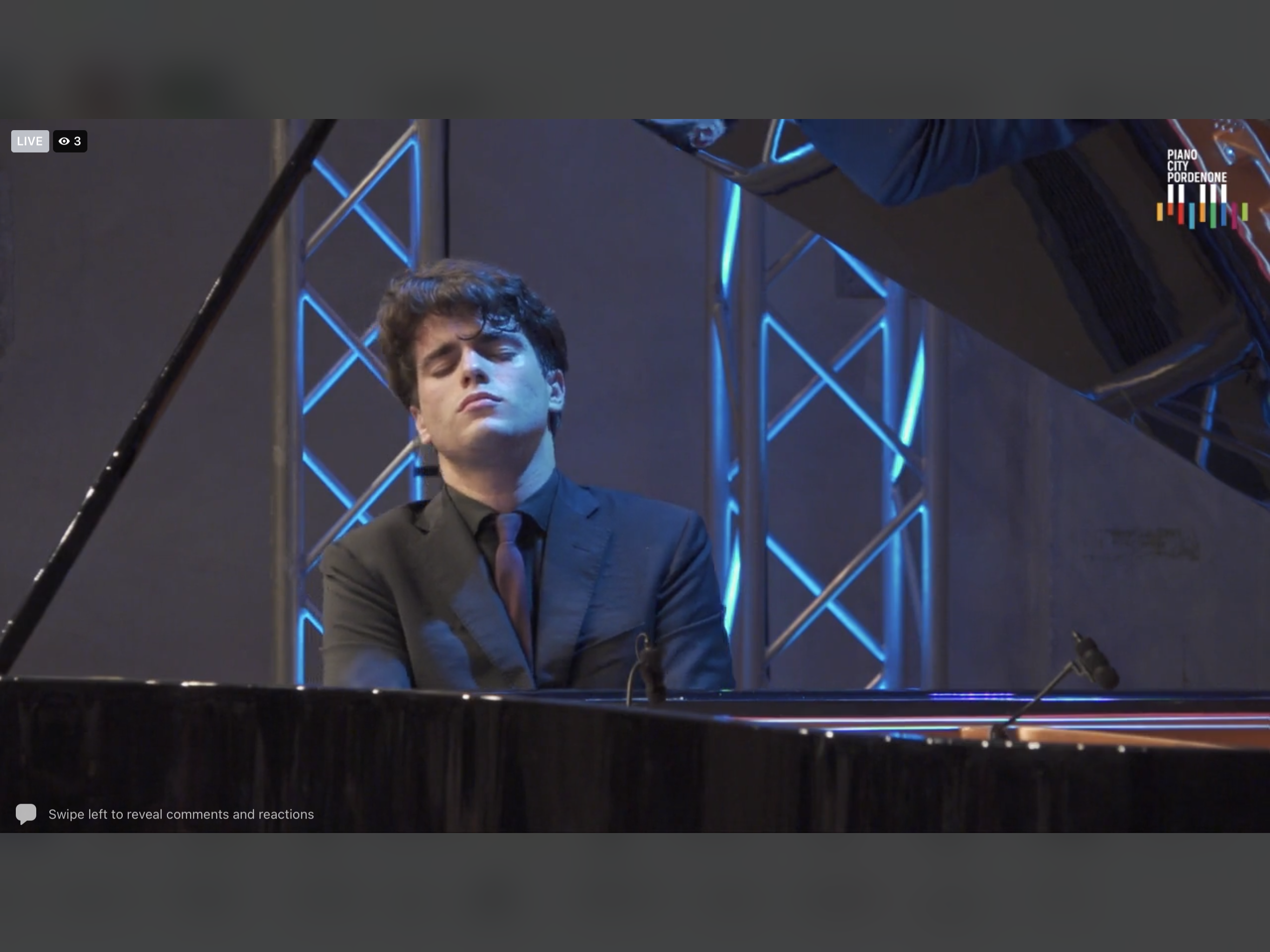
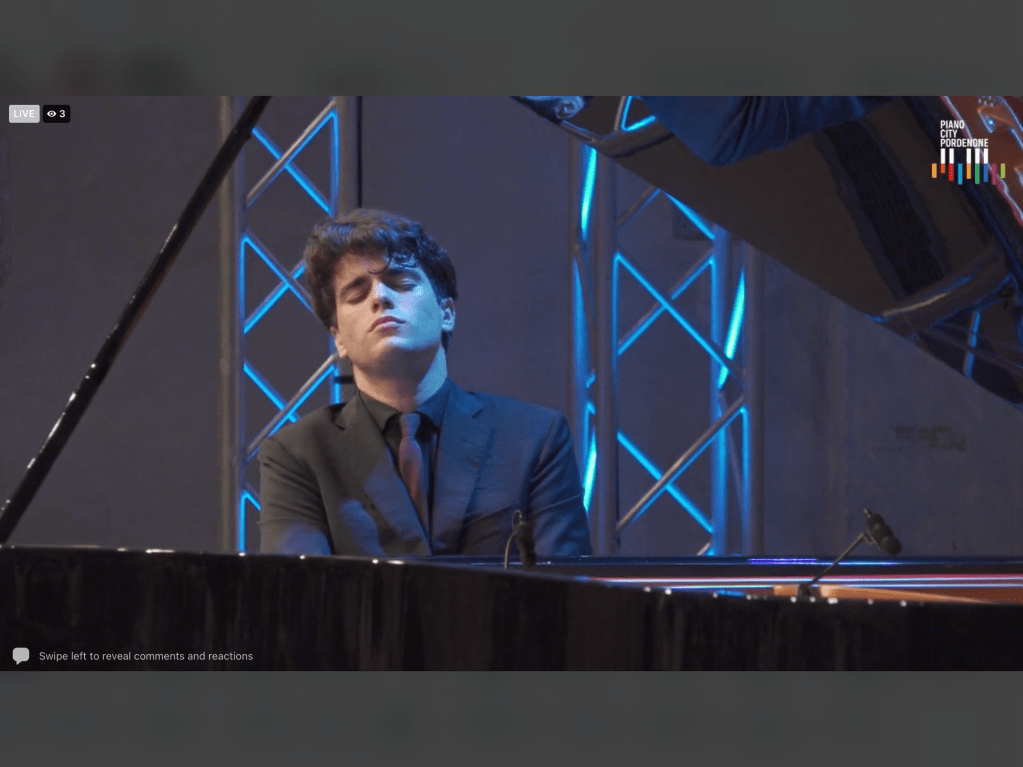
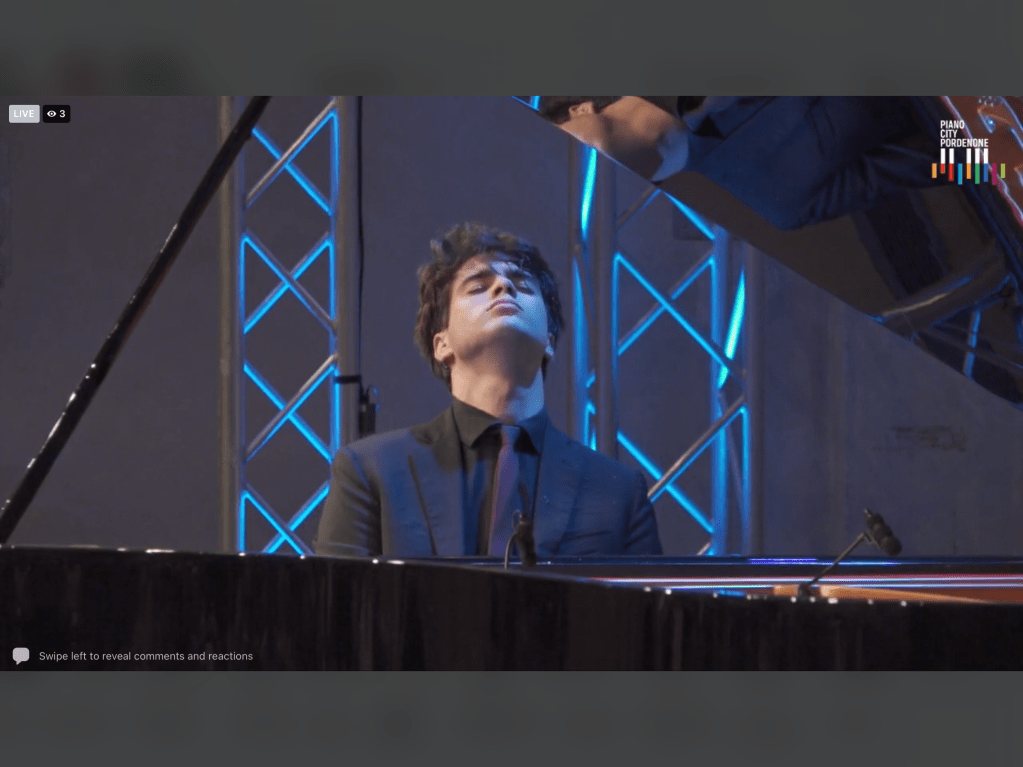
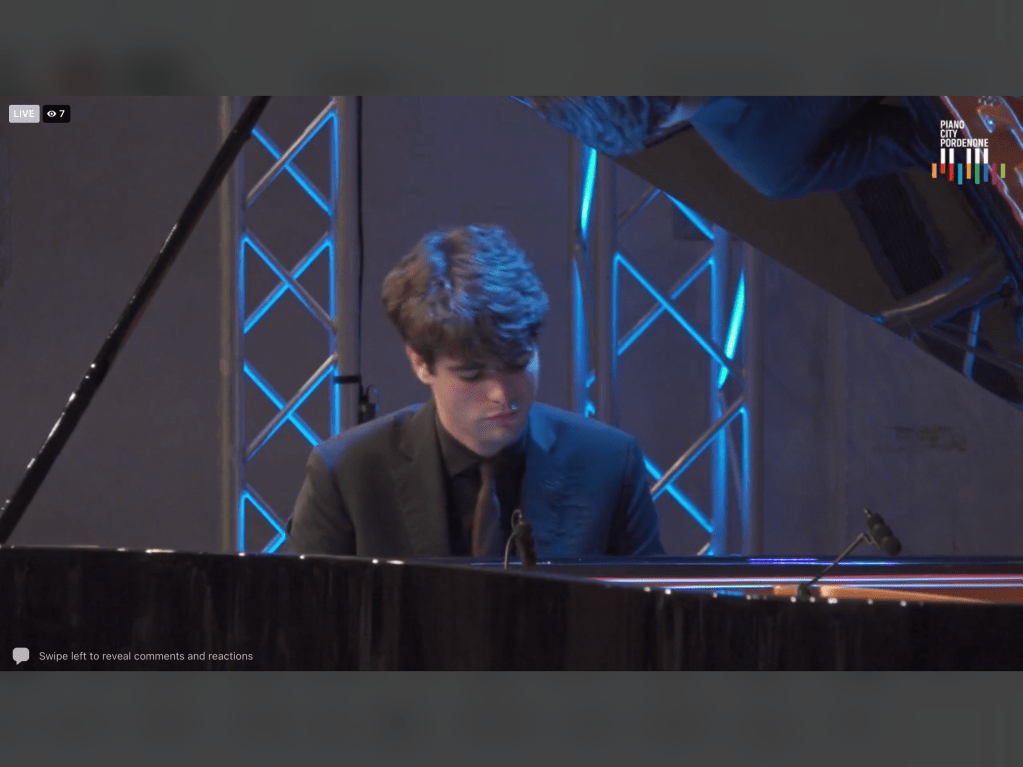
Elia Cecino takes Piano City Pordenone by storm

  • F. Liszt (1811-1856), Valse de Faust de Gounod S. 407
  • A. N. Skrjabin (1872-1915), Sonata n. 3 in Fa diesis minore, op. 23 Drammatico – Allegretto – Andante – Presto con fuoco
  • N. Rota (1911-1979), Fantasia in Sol
  • S. Prokofiev (1891-1953), Sonata n. 7 in Si bemolle maggiore, op. 83 – Allegro inquieto – Andante caloroso – Precipitato

https://fb.watch/6ff9YwRDGI/

A star indeed shining brightly at Piano City Pordenone with twenty year old Elia Cecino,winner two years ago of the prestigious Premio Venezia.He has been studying since the age of 9 with Maddalena De Facci which he continues to do, perfecting his studies together with Andrzej Jasinski and Eliso Virsaladze in Fiesole.Liszt Faust fantasy was just the ravishing opening to a formidable performance of Scriabin’s 3rd Sonata.

Franz Liszt held a lifelong fascination with the Faust legend and it is no wonder then that Liszt admired Charles Gounod’s operatic treatment of the legend based loosely on Goethe’s Faust, Gounod’s five act grand opera premiered in Paris at the Théâtre Lyrique on March 19, 1859. Liszt composed his piano transcription of two numbers from the opera in 1861, near the culmination of his time in Weimar.It is based on the waltz scene that concludes Act I and the love-duet, O nuit d’amour between Faust and Marguerite in Act II, Liszt freely borrows from Gounod’s music and elaborates in his own inimitable way.The waltz opens the piece with open fifths on the dominant and uncertain of its tonality similar to the Mephisto Waltz n.1.Eventually dissolving to the love-duet, a melodious Andantino in A-flat major, an untainted depiction of love.The pace gradually returns leading to the waltz with a virtuosistic coda incorporating some material from the introduction.And demonic it was from the very first notes with Elia plunging headlong into the fray with playing of such rhythmic energy and passionate involvement.Followed by scintillating jeux perlé with reams of notes of jewel like precision that just glittered and glowed in his sensitive hands.The love duet was played with sumptuous sounds and a ravishing sense of balance leading to the tumultuous climax and triumphant finale.All brilliance and light just contrasted with the deep brooding motif that pervades Scriabin’s 3rd Sonata.

His performance of Scriabin I have recently spoken about.Nobility was mixed with ravishing beauty as the architectural shape of this great fantasy unwound in a performance of such intelligence and passionate involvement.His performances of Scriabin and Prokofiev I have written about recently :https://christopheraxworthymusiccommentary.wordpress.com/2021/03/16/elia-cecino-a-star-is-born/


A fascinating Fantasia in G by Nino Rota was a revelation of clarity and line.I have never heard it before and not knowing the programme I tried to guess who the composer could be.Khachaturian and Shostakovich sprang to mind in a performance that was remarkable for its utmost clarity and rhythmic drive .Certainly a worthy addition to the piano repertoire and hats off to this young musician who delves deep into the archives to find some rare baubles ready to be turned into gems in his magic hands. It was only recently discovered among the last manuscripts to be examined in the Nino Rota archive in Venice and together with the “15 Preludes” it is one of his few works for piano solo. It was composed in the oppressive atmosphere of the last years of the war the first and closing sections conjure up a feeling of late Romanticism from the distant past, while the middle section is characterised by melancholy melodies typical of Rota.


Prokofiev’s 7th Sonata was played with such clarity and rhythmic energy that the rather ‘hollywoodian’ Andante caloroso came as a relief from the pungent,biting energy of this sonata from his war trilogy.Even here the precipitato slipped in almost unnoticed until the relentless driving force brought the final tumultuous eruption to its inevitable conclusion.

Called back for two encores not known to me.The first I presume by Scriabin of ravishing beauty and poetry and the second a Prelude and fugue by Shostakovich of such clarity and energy that they just summed up better than any words could ,the extraordinary artistry and curiosity of this remarkable young musician

Dal 2014 Elia Cecino si esibisce con continuità in recital solistici e cameristici spaziando nel repertorio  presso numerose sale europee. Si è proposto da solista con la Sinfónica de Galicia, Düsseldorf Symphony  Orchestra, Sichuan Philarmonic, Bacau Philarmonic, FVG Orchestra, Orchestra Vivaldi di Morbegno,  Joven Orquesta Leonesa, Orchestra Concentus Musicus Patavinus, Orchestra San Marco di Pordenone.  Nel 2016 ha preso parte a un tour di concerti negli Stati Uniti. 

Nel 2020 Suonare Records pubblica il suo CD di debutto, e nel 2021 un secondo album Chopiniano  viene pubblicato da OnClassical. Sue interpretazioni e interviste sono state trasmesse da Rai Radio 3,  Radio Popolare, Rai FVG e Radio MCA. É stato tra i protagonisti della trasmissione TV di Rai 1  “Prodigi” a favore dell’Unicef.  

Vincitore del XXXVI Premio Venezia, Elia si è affermato in concorsi internazionali tra i quali spiccano il Ciudad de Ferrol, Pozzoli di Seregno, Casagrande di Terni, Schumann di Düsseldorf, Luciani di Cosenza, Città di Albenga, Isidor Bajic di Novi Sad, Chopin di Budapest, Marciano di Vienna. Nato nel 2001, Elia comincia lo studio del pianoforte a 9 anni con Maddalena De Facci diplomandosi a 17 con votazione 10 e Lode presso il conservatorio di Cesena. Attualmente si sta perfezionando con Eliso Virsaladze e Andrzej Jasinski.

https://christopheraxworthymusiccommentary.wordpress.com/2021/03/16/elia-cecino-a-star-is-born/

https://fb.watch/6fo7-cEVKG/

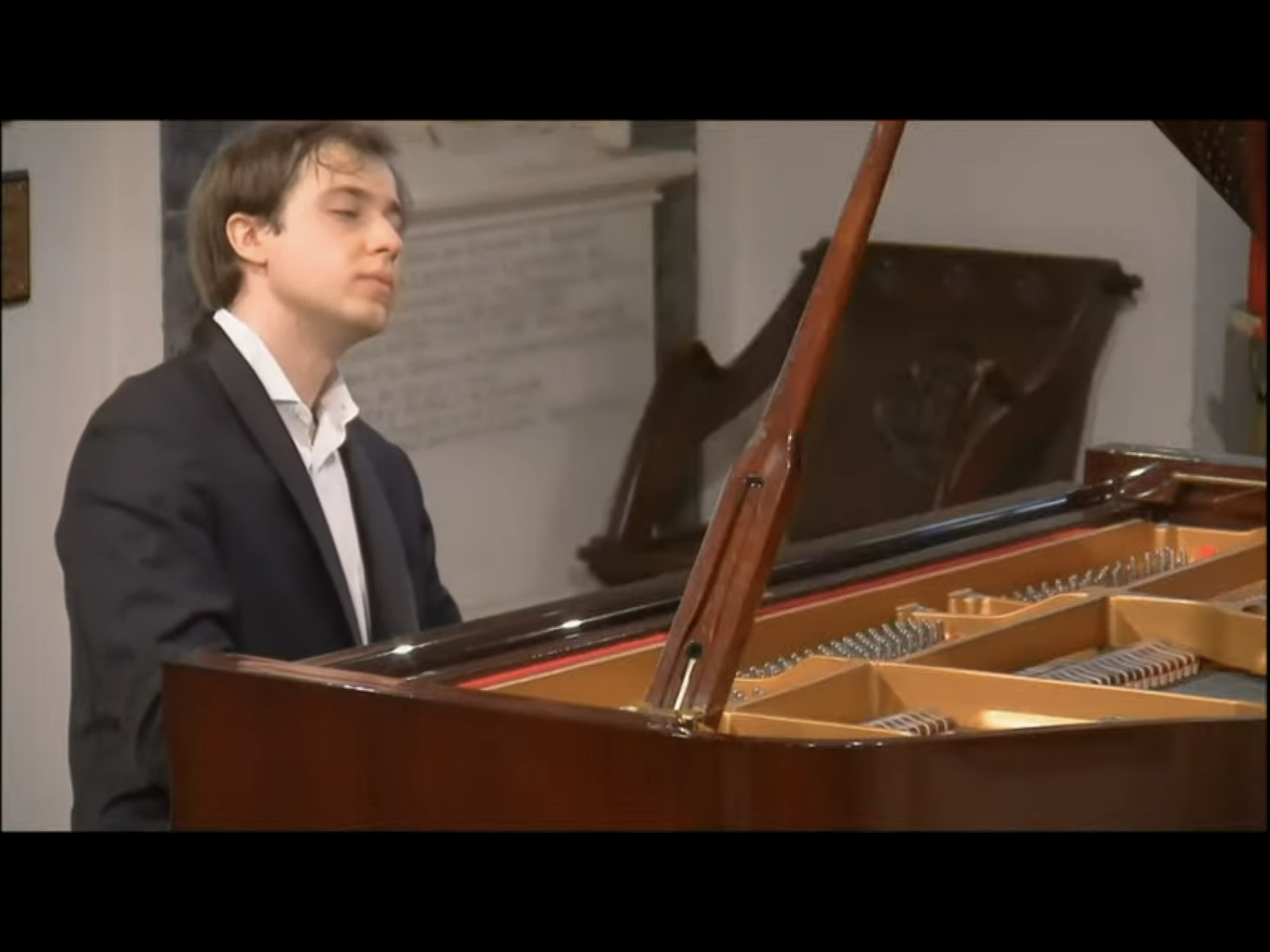
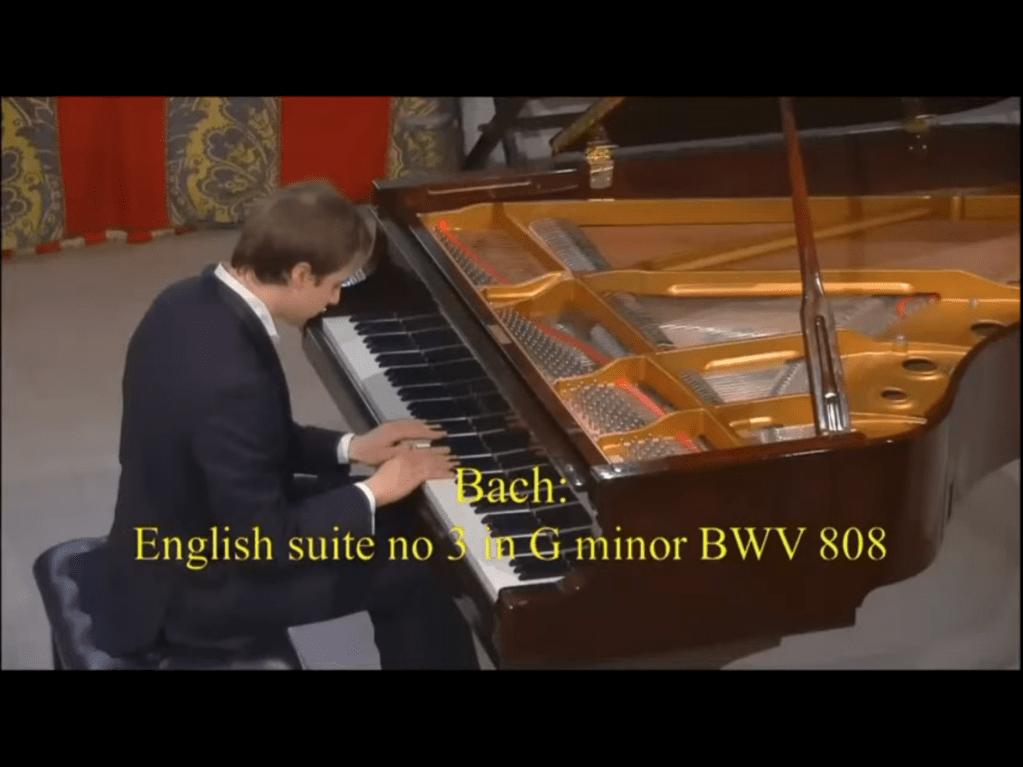
Dmitri Kalashnikov refined virtuoso of ravishing beauty at St Mary’s

Thursday 17 June 4.00 pm 

An amazing week of piano playing crowned today by playing of such mastery I am lost for words after the breathtakingly aristocratic grandeur of Franck.But the rhythmic energy of Bach’s third English Suite,full of the most refined embellishments leading to a Sarabande of such overpowering intensity.The ravishing beauty and clarity that he brought to Beethoven’s op.110 will stay with me for a long time………..much more to follow once I have caught my breath.With a name like his – he is in fact related – one was not expecting visions of such ravishing beauty and subtle artistry.

Bach: English suite no 3 in G minor BWV 808
Prélude / Allemande / Courante/ Sarabande /
Gavotte I / Gavotte II / Gigue

Beethoven: Piano sonata in A flat Op 110

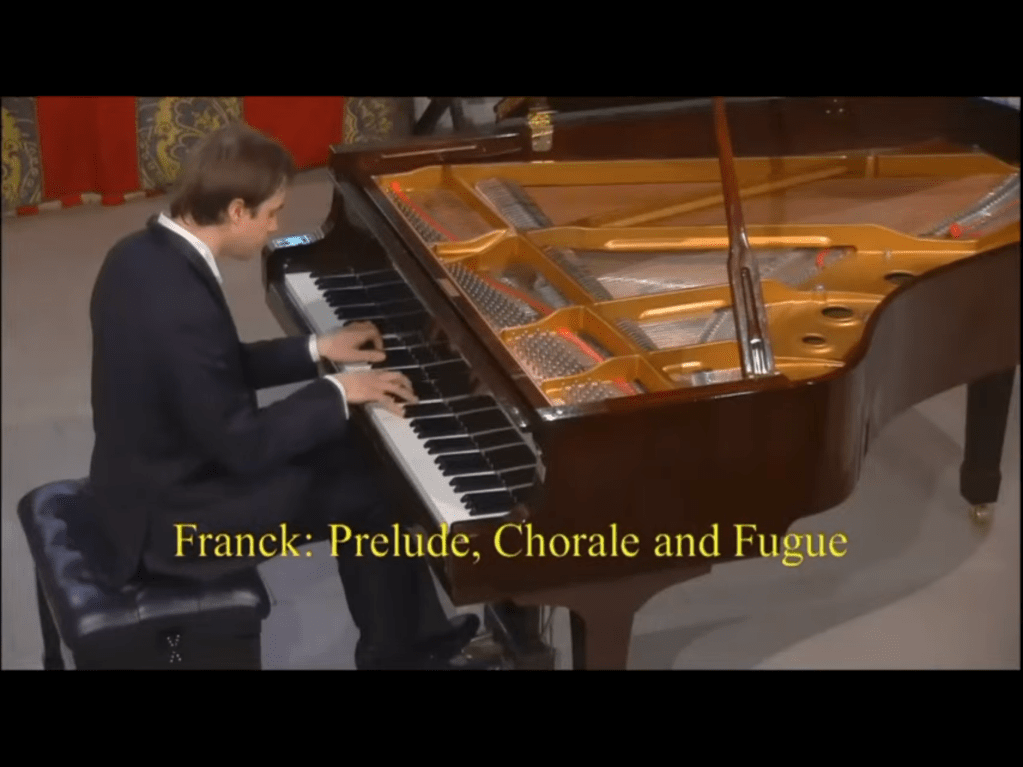
Franck: Prelude, Chorale and Fugue

Here is the link for this exceptional recital – enjoy ! https://youtu.be/Tyys6nnWf0g

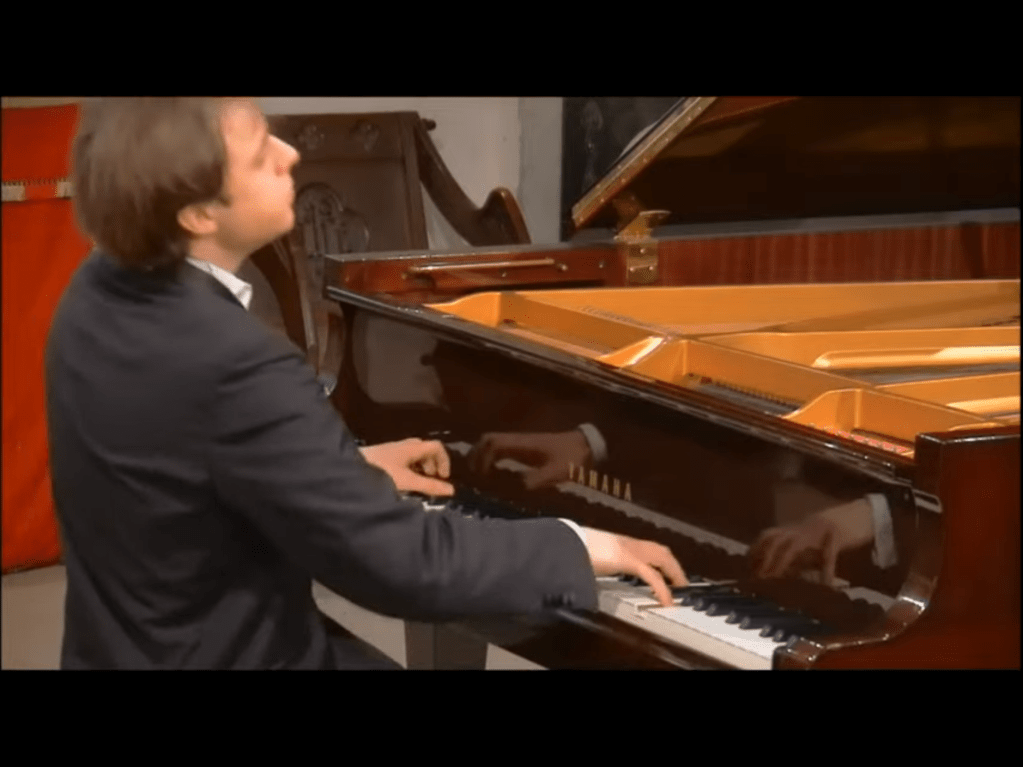
I remember a performance in London by a still youthful Wilhelm Kempff.A programme that included this Bach Suite together with the Brahms F minor Sonata in performances where the kapellmeister Kempff could make the piano roar and sing like the mightiest of orchestras.As he got older his vision of the celestial was truly memorable but a shadow of his former prowess.A refined chamber orchestra rather than the Berlin Philharmonic.What he always maintained though was the driving rhythmic energy and the clarity of line that came from a head that was full of the great music that he had shared his life with.All this came to mind as I listened with baited breath to this young Russian trained pianist today.There was the same incisive crystalline clarity with a rhythmic impetus that was like being caught up in an ever flowing torrent.Ravishing contrasts in dynamics and very discreet ornamentation just brought the music vividly to life.It was overwhelming and impossible not to be enveloped in this ever moving wave of sounds.The incisive voicing seemingly without pedal was quite miraculous as we watched his limpet like fingers cling to the keys.A sensitivity that was created by work from a very early age when the fingers are formed almost as an extension of the keys.Agosti was fond of saying fingers like steel but wrists like rubber.But of course it is the message that is sent from the head and heart to the fingers that makes a true artist.

Dmitri is now being mentored by Vanessa Latarche ,head of keyboard at the RCM ,who I have known and admired since she was a little girl and the star pupil of the indomitable Eileen Rowe in Ealing.She has endowed in Dmitri her impeccable good taste and intelligent musicianship and it is this allied to his very early training that has formed the very considerabile artistry that we were treated to in the three great blocks of music that made up his programme today.

https://christopheraxworthymusiccommentary.wordpress.com/2021/03/21/vanessa-latarche-comes-home/

The Allemande of flowing beauty where the subtle ornamentation just added to the expression within the notes without stopping the constant stream of sounds.The Courante with the same relentless urgency was clear and fluid with ornaments that shone like jewels as they unwound like springs from his agile fingers.It was all leading to the great opening statement of the Sarabande played with deeply felt authority,the beautiful dynamic contrasts and ornamentation just adding to the intensity of this monumental statement.The release of tension came with the two Gavottes played with a disarming simplicity .The second Gavotte played with an unusual cleanliness and clarity instead of the more usual cloudy mumblings of a musette.He found once again the rhythmic intensity with the first notes of the Gigue to the final burst that took us to the breathless conclusion.A quite remarkable architectural vision of this work in which the pinnacle and point of arrival was the Sarabande in a fascinating multicoloured journey that was quite extraordinary.

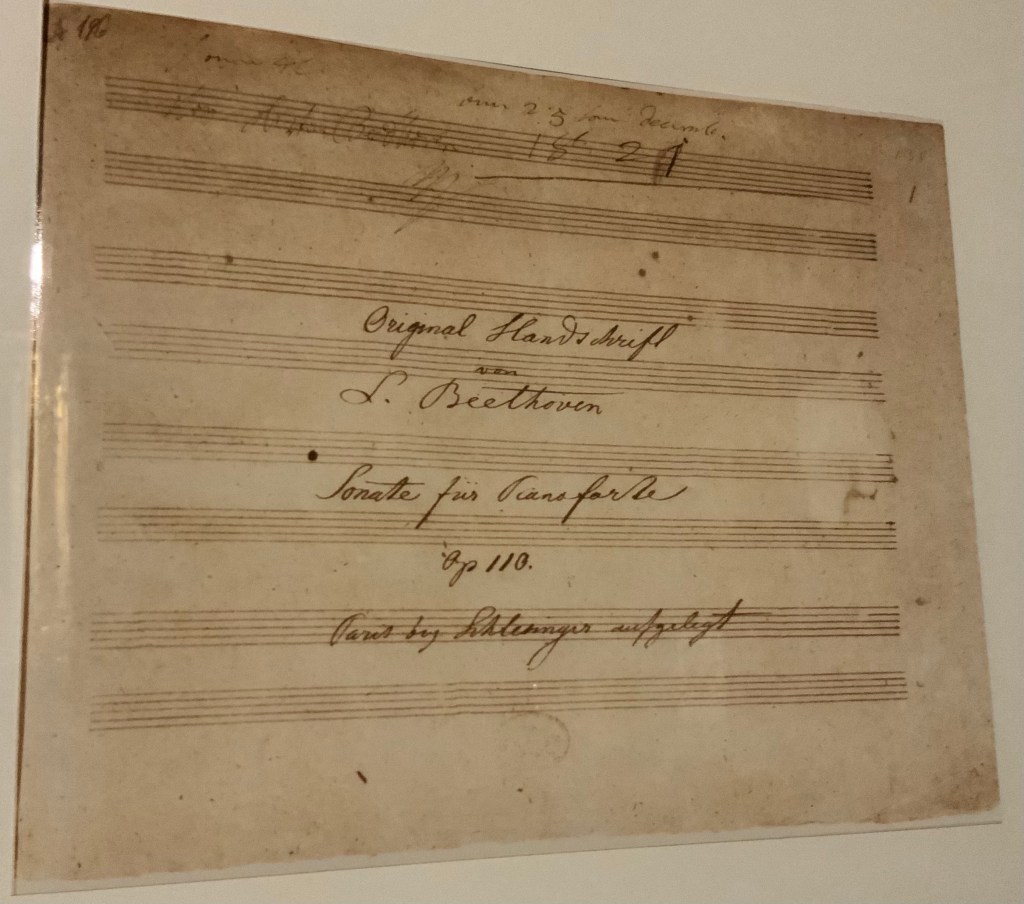
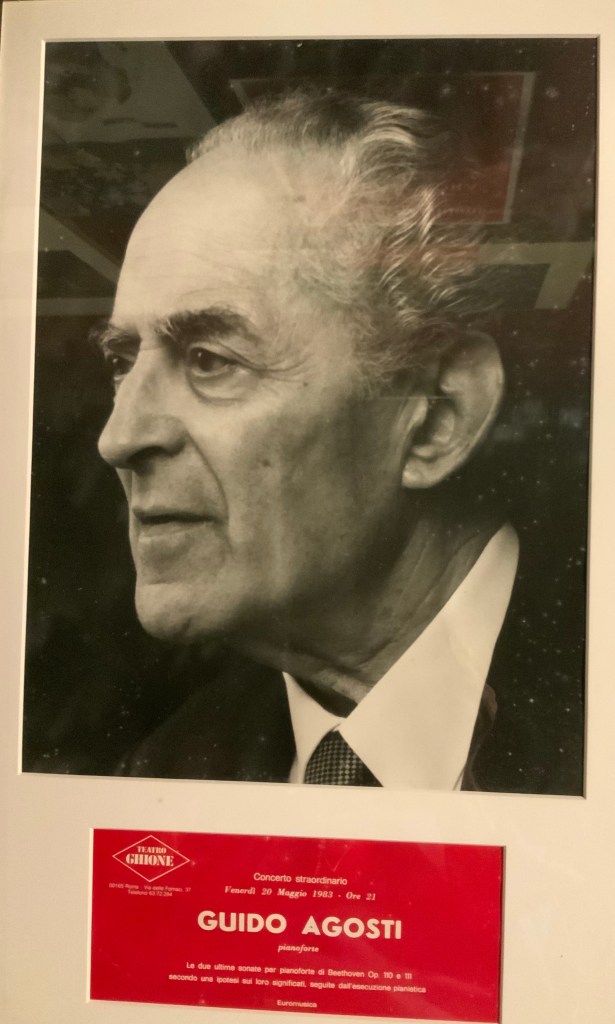
It was in 1983 that I managed to entice Guido Agosti to share in public what had become legend in his studio in Siena.He chose to play op.110 and op.111 prefaced by short talks that although interesting were a means of enticing him into the concert hall.He gave me the facsimiles of the original manuscripts and I chose a few of the more problematic pages to adorn the walls of the Ghione theatre.Chosen to demonstrate the struggle that even Beethoven had to pin point the sounds that only he could hear in his secret ear.

They are still there forty years on and the recording of that performance is one of the rare documents that can testify to the marvels that this very private pupil of Busoni shared with those that would seek him out during the summer months in Siena.Agosti too had a crystalline sound like Kempff and it was this crystalline sound that I heard again today from the very first notes of this great song that Beethoven was to share with a world with which he had finally come to terms .Like Chopin with his Barcarolle that was written towards the end his life too,it is a great outpouring of mellifluous sounds of touching simplicity and beauty.A glimpse of the paradise that awaited them indeed.

Scrupulous attention to detail was quite remarkable from the very first notes -con amabilità with hairpin indications followed by sudden piano and a trill,a mere vibration that unwinds so naturally to the ravishing beauty of the melody that pours from Beethoven’s heart.Embellishments played ‘leggiermente’with very gentle melodic notes so subtly pointed.The part playing just before the development I have never heard played with such clarity and intelligence.One voice seemed to grow out of another leaving the pure magic of just single notes at the extremes of the keyboard played ever more tenderly before the the swirling question and answer from the cellos.The return to the recapitulation was one of those moments of pure magic with a crescendo and diminuendo to pianissimo before the return of the beautiful arabesques.Sometimes smoothing corners even with such loving care can lead to a break in the underlying rhythmic current though,as in the bleak chords that move gently from piano to pianissimo bringing us back to tempo again at the arabesques.It leads into the coda where his sense of part playing was that of a string quartet with every line making such sense as it created a magnificent whole.The final bass semiquavers were pointed in a miraculous way giving a very poignant shape to the final bars.An Allegro molto even here was allowed to sing, the rhythmic energy dissolved with such touching reticence before being rudely interrupted by fortissimo chords .A trio that unwound so mellifluously as the notes just flowed from his fingers with a fluidity and simplicity where most performances hang on a precipice.The silence between the final chords was pregnant with meaning until the final gentle reverberation that takes us to a magic world of sublime beauty.

Just waiting for that magic moment before placing the opening chords and shaping them with such subtle colours that gave a sense of shape to the seemingly sparse chords.Beethoven’s pedal marking scrupulously interpreted which is not easy on a modern piano.The ‘ bebung’ or repeated notes on pianos of the period would have merely been made to vibrate as they were miraculously today .Truly interpreted not just faithfully reproduced which demonstrated the subtle artistry of this young musician.The Adagio was played with such subtle flexibility as the arioso dolente was full of indications by Beethoven that can effect the natural flow of the music in lesser hands.Even the final bass notes were pregnant with meaning with Beethoven’s heart beat indicated so mercilessly with hairpins but translated so poignantly into sounds.A fugue of such clarity and architectural shape as rarely heard .The diminuendo before the great bass entry was like a great gate opening as the fugue weaved its mellifluous way to the magical reappearance of the Arioso.One of those moments of inspired genius where even Beethoven writes ‘loosing all energy with great sadness.’Such precise indications from Beethoven as he tries to notate the sense of flexibility and rubato that is in his private ear and heart ,all wonderfully interpreted by our young Russian musician. The great repeated chords are all the same but each sounding so different as his fingers drove deep into each one finding their secret meaning.The fugue in inversion is suddenly revealed as it is gradually revived in an outpouring of glory that was played with a passionate restraint of such aristocratic poise.The final tumultuous chord of A flat spread over the entire keyboard brought this extraordinary performance to a breathtaking conclusion .

A magnificent performance of Cesar Franck’s Prelude,Choral and Fugue of eloquence and grandeur.To quote Cortot:’The beauty of the Prelude,from which,twice rises a fervent and painful prayer overflowing from the heart of the man and from the inspiration of the musician.The mystical character of the Choral which compares uninterrupted lament with the eternal imploration of a humanity looking for justice and consolation…….The Fugue which crowns the work seems to emanate more from psychic necessity than from a principal of musical composition.‘There was a passionate outpouring of sounds in which again scrupulous attention to detail of dynamics and tempo gave a dignity and architectural shape to a work that can seem in lesser hands,rather rhetorical.Here there were such sensitive colours and a beauty of part playing as one hand answered the other.The clear rich sound of the opening of the Choral gave the perfect sense of religious serenity before the beauty of the choral spread across the entire keyboard. The gradual build up of the fugue was unrelenting until the magical reappearance of the prelude on clouds of sound that built up in tension until the final inexorable,tumultuous explosion

Dmitry Kalashnikov was born in Moscow in 1994. Graduated with distinction from the Moscow Middle Gnessins School of Music (class of Ada Traub and Tatiana Vorobieva) and the Moscow State Tchaikovsky Conservatory (class of Elena Kuznetsova). He is currently a postgraduate at the Royal College of Music in London (class of Vanessa Latarche). Prize-recipient at numerous international competitions. Grant-recipient of the New Names foundation, the International Yuri Rozum Charitable Foundation and the Revival foundation for cultural development. Has received the prize of the Support for Talented Youth of the Government of the Russian Federation, the City of Moscow Prize and the George Stennett Award, supported by a Neville Wathen Scholarship. Gives recitals at the Moscow Conservatoire, the Russian Gnessin Academy of Music, the Moscow International House of Music, London’s Wigmore Hall and at various venues in France, Austria, Poland, Estonia, Italy, Belgium and the United Kingdom. Has appeared on several occasions with the Russian National Orchestra under the baton of Mikhail Pletnev and in a duet with Pletnev on two pianos (conducted by Mischa Damev). In 2017 he gave a recital at the International Piano Festival. In December 2018 he appeared at the Concert Hall of the Mariinsky Theatre with the Mariinsky Orchestra. Takes part in various projects of the State Tretyakov Gallery. For several years he has run artistic soirees with the artist Gavriil Kochevrin for charitable events for orphans at the Marina Tsvetaeva House Museum. These concert performances have seen the participation of Yevgeny Knyazev, Alexander Rudin and Boris Andrianov.In September 2019 he took part in the opening of the season at the Nizhny Novgorod State Opera and Ballet Theatre. In November that year he was the victor of the Jaques Samuel Piano Competition in London for students at academic music institutions. Engagements for 2020 include appearances in Great Britain, Italy, Canada, France, Portugal and Japan.
.

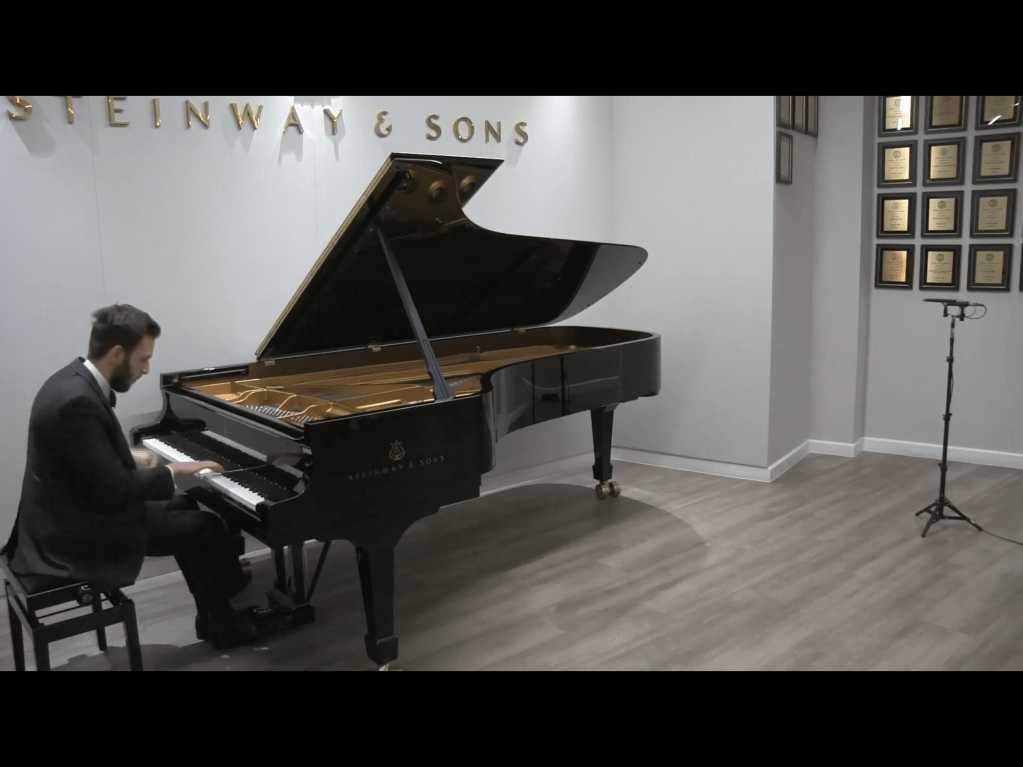
Damir Durmanovic a musical genius at work

The Keyboard Charitable Trust presents
Damir Durmanovic – Live Online Recital

Wednesday 16 June, 7.00pm

C.P.E. Bach – Fantasia in C major Wq.59 No.6
Mozart – Rondo in D major K.485
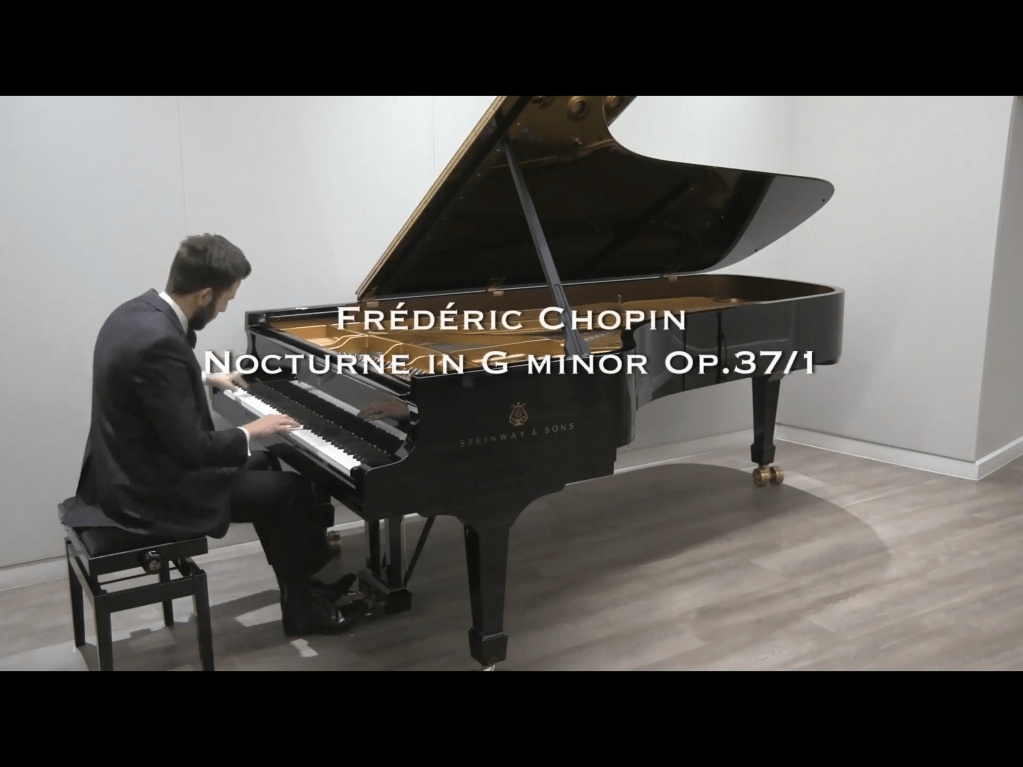
Chopin – Nocturne in G minor Op.37 No.1
Schubert – Impromptu in C minor D. 899 No.1
Schubert – Impromptu in F minor D.935 No.4
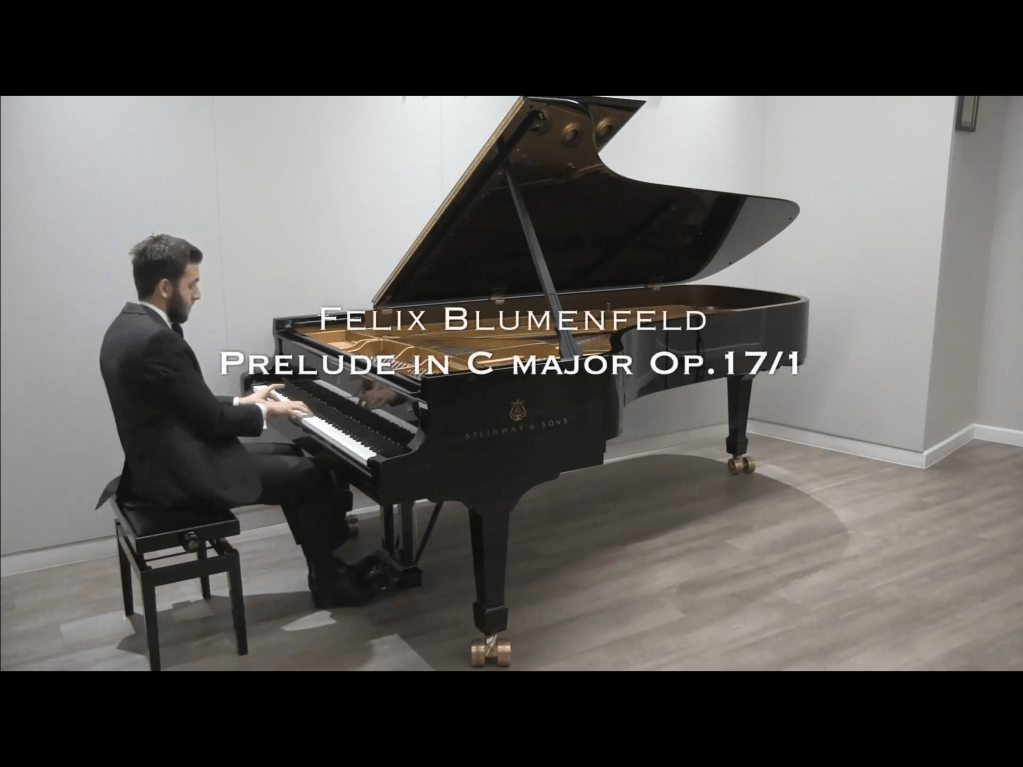
F. Blumenfeld – Preludes Op.17: No.1 in C major & No.15 in D flat major
Scriabin – Prelude in B flat minor Op.37 No.1, Prelude in E flat minor Op.16 No.4, Mazurka in E minor Op.25 No. 3, Prelude Op.2 No.2 & Poème in D major Op.32 No.2
Medtner – Skazka (Fairy Tale) in G minor Op.48 No.2
Rachmaninov – Prelude in B flat major Op.23 No.2


“All of my programmes are structured according to the tonality of each piece. I do think that the key relations in any given recital programme are of the utmost importance. Preluding is a lost tradition which was largely prevalent in the 18th as well as the 19th century and which was the solution for programming pieces which had conflicting tonalities. One was expected to modulate to a closely related key of the following piece, usually the dominant.
My programmes usually include music by neglected composers. There is so much great music out there, especially the keyboard repertoire, and it is a real shame that we keep hearing the same pieces over and over again. I also find that programming shorter pieces is easier to follow. A single large-scale work is more than enough for a single sitting.
I do hope you enjoy the recital and also manage to hear something new.”

Another fascinating concert by this young Bosnian musician.A programme of rarely heard works from a C.P.E Bach Fantasia to the rousing B flat Prelude op 23 by Rachmaninov.There was a range of sounds and colours in the C.P.E. Bach, played in an almost improvisatory way – in fact a true Fantasia where his natural technical command and intelligent musicianship were immediately put at the service of this rarely heard work.It was a true re-creation and was the hallmark of all the works that he presented in a very carefully thought out programme where the key relationships were very sensitively chosen to give an overall shape to the whole recital.His natural hand movements too were of a true artist,moulding the sounds not only audibly but also visibly and gave such a natural sense of phrasing and ease of execution.A pianist who thinks before he plays is a pianist to be reckoned with indeed but a pianist who actually plays not vertically but horizontally is even more of a rarity.The improvised link between the Bach and Mozart was so tastefully done that it was hard to know where one finished and the other began.Of course that was the reason,as he explained in his very interesting and informed conversation with me afterwards.The ornamentation in the Mozart just added to the exquisite charm and character of this much maligned gem.

It was the presence of Robert Levin at the Menuhin school and his studies of Fortepiano that aroused his interest in historic performance practices,as he described in the fascinating after concert conversation.The Chopin nocturne was not only given a magical performance but,rather more controversially,he even added a re-touch to Chopin’s own lavish bel canto as the delicate flourish at the end just added to the magic created.However as he suggested later this practice might have jury members of an International competition fighting amongst themselves.

The first and last of Schubert’s Impromptu’s D.899 and D. 935 just showed what an intelligent and sensitive musician he is.Playing or more precisely interpreting exactly what Schubert wrote.A scrupulous attention to the very detailed indications in the first Impromptu just reminded me of the first time I heard Damir in a lunchtime recital at St James’s Piccadilly.The big A major Sonata D.959 was given a performance where ever detail was incorporated into an architectural shape that just made one long for more – Schubert’s heavenly length fully justified in his poetic hands.- I have written about it below and he has since gone on to record the work on a commercial CD.

https://christopheraxworthymusiccommentary.wordpress.com/2020/09/16/damir-durmanovic-at-st-jamess-a-poet-speaks/

Although his scrupulous study of performance practices are quite unique in a pianist of his stature it does not exclude a sense of freedom and character.If anything this very knowledge gives him even more freedom!The last Impromptu in F minor was given a frenzied impassioned full blooded performance of Serkin or Annie Fischer proportions.His teacher Dmitri Alexeev is not an intellectual as Brendel of Serkin but has a magnificent sense of style and is one of the great pianists of our time.Damir has managed to incorporate both the knowledge of Robert Levin with the instinctive natural artistry of Alexeev and it is immediately apparent from his playing of such colour of fire and imagination.It was even more apparent in the short pieces by Scriabin that were played with the same ravishing sense of colour and freedom as Alexeev.Dmitri Alexeev has just recorded the complete works of Scriabin so it was very interesting to see the eclectic choice that Damir displayed today.

The two preludes op 17 by Blumenfeld were a real rarity.Even Horowitz who was a pupil of Blumenfeld never programmed any of his music.Damir has made a survey of the works of Blumenfeld and found some real masterpieces amongst his large output.The two beautiful preludes chosen for today’s programme we’re just a taste of the magnificent 24 preludes that he is recording.Adding a missing link to the CD catalogue which is sadly lacking many beautiful but rare works that are still waiting to be discovered by pioneers like Damir.The same curiosity and passion as Mark Viner with Alkan and Thalberg or Tyler Hay with Kalkbrenner,Damir will add Blumenfeld.Mark Viner tells me that he too has just recorded the Blumenfeld preludes op 17 and that Horowitz had played six of them in the late 20’s or 30’s in a celebration concert in Ukraine for his teacher.This was,of course before he took Paris by storm and conquered the world.Before the famous critic that irritated Artur Rubinstein :’The greatest pianist alive or dead!’I am proud to say that all three are KCT artists and what a mine of information they are!

A magical fairy tale by Medtner,another rarely heard work , although Medtner did record nearly all of his own works but they still have to be fully understood .He died in England in the early 50’s where he had fled in poverty and was much helped by his student friend Edna Iles.He is buried in Hendon cemetery.

Ending with Rachmaninov’s rousing B flat Prelude op 23 Damir just showed us his fiery temperament and astonishing technical ease with a performance of ravishing grandeur and scintillating excitement.

In a private conversation Damir confided that whilst he works at his career he intends to enter the world of investments of which he has become quite an expert in cyber currency.Subsidising his studies rather than compromise his artistry to fit into a conventional mould.An extraordinary artist and personality and someone to watch out for and that the KCT can proudly bring to the attention of a larger public.

https://christopheraxworthymusiccommentary.wordpress.com/2021/05/25/damir-durmanovic-a-new-star-shining-brightly-at-st-marys/

Introduction and post-recital interview with Christopher Axworthy, Co-Artistic Director and Trustee of the Keyboard Charitable Trust.

DAMIR DURMANOVIC As an internationally sought-after performer, Damir Durmanovic has performed in venues and festivals including the Wigmore Hall, Champs Hill Studios, YPF Festival Amsterdam, Wimbledon Music Festival, Renia Sofia Audotorium Madrid, Gstaad Menuhin Festival, Derby Multifaith Center, Flusserei Flums, ‘Ballenlager’ Vaduz. He has won prizes in numerous international competitions including The Beethoven Intercollegiate Junior Competition in London, Adilia Alieva International Piano Competition in Geneva and Isidor Bajic International Piano Competition in Novi Sad. He has performed in masterclasses with Claudio Martinez-Mehner, Dmitri Bashkirov, Pascal Devoyon, Jacques Rouvier, Robert Levin, Jean-Bernard Pommier, Tatyana Sarkisova, and chamber ensembles such as the Emerson Quartet. Damir is also a scholar at the ‘Musikakademie Liechtestein’ and regularly participates in the courses organised by the academy. Damir began his studies at age of eight in his home country, Bosnia and Herzegovina, with Maja Azabagic before continuing his studies at the Yehudi Menuhin School where he studied with professor Marcel Baudet. Damir is an ABRSM scholar and is kindly supported by the Talent Unlimited Scheme. He is currently studying at the Royal College of Music in London with professor Dmitri Alexeev.

Here is your free link to watch the concert, which comes from Steinway Hall, London: https://youtu.be/XtTH6Qd_-ZI

By making a donation you will be supporting the Keyboard Trust and its pianists. .
The Keyboard Trust is entirely dependent on donations from our friends for its work in supporting outstandingly talented young musicians and so we’d be especially grateful to you for your support of this venture.

THE KEYBOARD CHARITABLE TRUST
for Young Professional Performers

30th Anniversary

Patron: SIR ANTONIO PAPPANO

Our mailing address is:

Sarah Biggs,General Manager
The Keyboard Charitable Trust
54 Raleigh Road
London, N8 0HY
United Kingdom

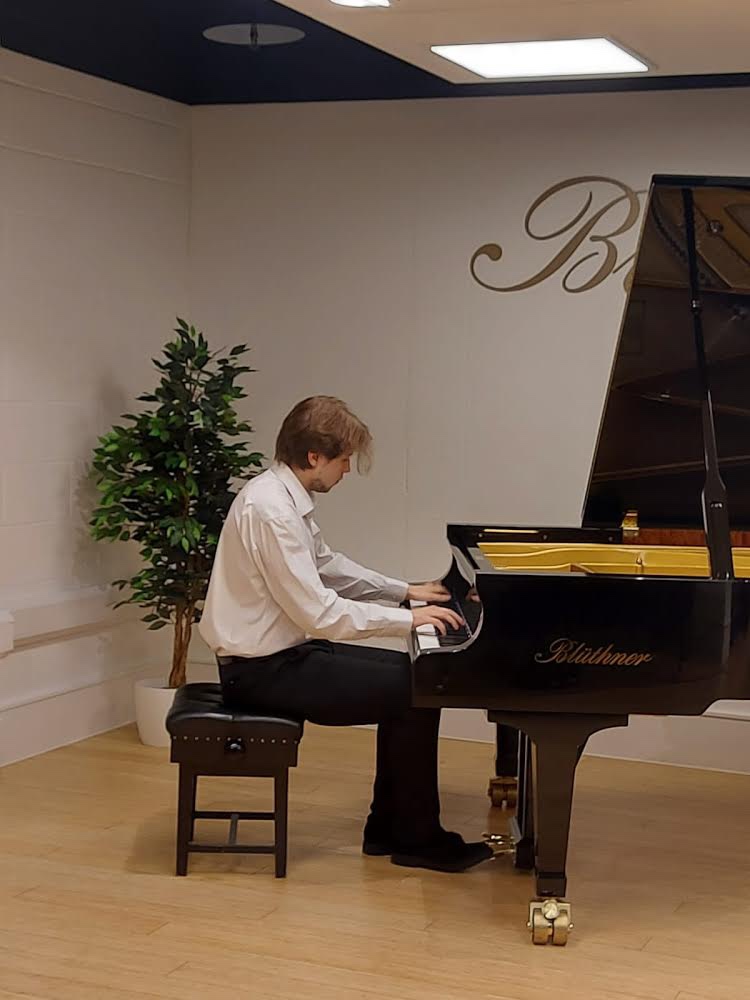
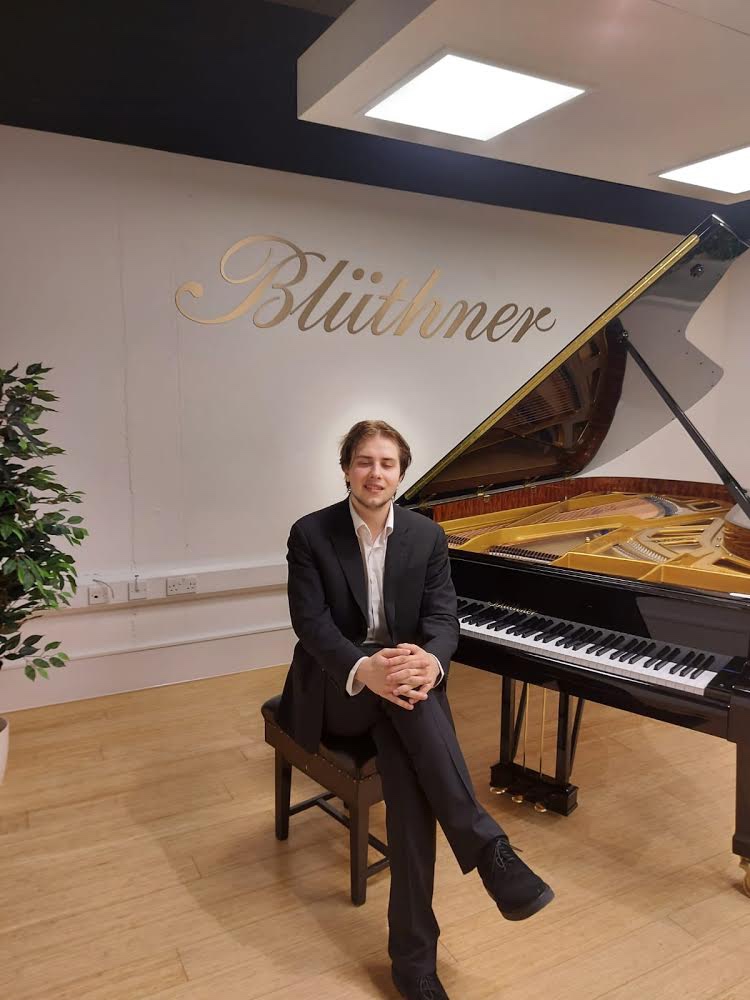
Nikita Lukinov at Bluthner Piano Centre for the Keyboard Trust Liszt restored to greatness.

LISZT Sonata S.178

SCRIABIN Valse Op.38

PROKOFIEV Six pieces from ‘Cinderella’ Op.102:

Waltz: Cinderella and the Prince :Cinderella’s Variation :Quarrel:Waltz: Cinderella Goes to the Ball :Pas de Chale :Amoroso.

Recorded on the 9th June in the first collaboration with Bluthner piano centre in London on a truly magnificent concert Bluthner.It will be streamed live on the 14th July via the Keyboard Trust web site

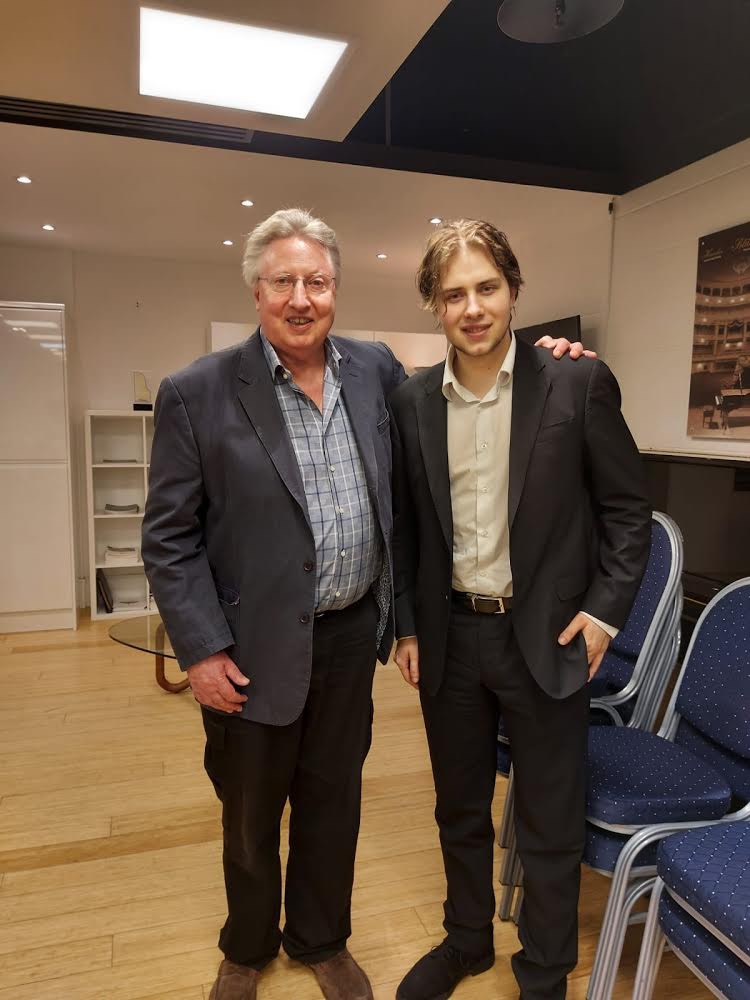
Nikita with Leslie Howard whose new edition of the Sonata for Henle has been hailed as the authoritative edition

Liszt noted on the sonata’s manuscript that it was completed on February 2, 1853,but he had composed an earlier version by 1849.The Sonata was dedicated to Schumann, in return for Schumann’s dedication of his Fantasie op 17 (published 1839) to Liszt which was his contribution to the monument of Beethoven in Bonn that Liszt had undertaken to organise.A copy of the work arrived at Schumann’s house in May 1854, after he had entered Endenich sanatorium. Schumann’s wife Clara did not perform the Sonata as she found it “merely a blind noise”.The Sonata was published by Breitkopf & Härtel in 1854 and first performed on January 27, 1857 in Berlin by Hans von Bulow – Liszt’s son in law .It was attacked by the noted critic Eduard Hanslick who said “anyone who has heard it and finds it beautiful is beyond help”.Brahms reputedly fell asleep when Liszt performed the work in 1853.However, the Sonata drew enthusiasm from Wagner also Liszt’s son in law,Cosima having left von Bulow for Wagner.He heard it in a private performance by Karl Klindworth on April 5, 1855.It took a long time for the Sonata to become commonplace in concert repertoire, because of its technical difficulty and its status as “new” music.
I had heard Nikita a month ago in a memorable recital at that Mecca for great young talent that is St Mary’s Perivale .A Prokofiev that sang with such colour,shape and style.Not even that had prepared me for this extraordinary performance of the Liszt Sonata that he played in his New Artists recital for the Keyboard Trust.I never thought I would ever re live the emotions of hearing Guido Agosti intoning and playing such a masterpiece in his studio in Siena and in Rome.I have heard some memorable performances from above all Curzon with his scrupulous attention to detail ,the sheer grandiose exhilaration of Gilels,the visionary Richter ,the oracle that was Arrau and even Cherkassky whose London performance was praised by Peter Stadlen as the greatest performance since pre war Horowitz.But here today we were with a young man of extreme modesty who had asked me if I thought Leslie Howard might discuss some elements of the sonata with him so he could delve even deeper into a score that Leslie knows better than anyone alive ….or dead!I was overwhelmed by a performance where usually I am looking at my watch as one rhetorical phrase follows another without any regard to the very precise dynamic markings.Usually even more disturbed by a pulse that is continually interrupted to allow showmanship or heart on sleeve emotions.Liszt only writes fff two or three times in the whole sonata at crucial points of arrival as indeed ppp is only rarely used at moments of extreme delicacy or closure.Just in the last few pages we have indications of Presto.Prestissimo,Andante sostenuto,Allegro moderato and Lento assai but there should be a forward pulse that cannot allow for sentimentality.All this was scrupulously noted by Nikita but also with a sense of colour and delicacy that allowed him in some passages to split the left hand from the right for a split second that is the secret of great pianists in their search for the perfect legato on an instrument that only has hammers and strings!I have never been so enthralled as with the final three chords that seemed to disappear into infinity with a sensitivity to sound that was quite extraordinary.The final deep bass note almost inaudible as it had been at the opening.’p’,sotto voce Liszt asks at the opening as Nikita allowed the ominous whispered bass notes to cast their spell .The Allegro energico just growing out of this in such a natural unforced way as these three motives were expounded before they are transformed and elaborated in a way that was to influence Wagner soon after in their search for form, helped by transformation.There was a clarity to Nikita’s playing that was just as I remember from Agosti or Curzon where every detail could be heard so clearly adding to the emotional drive that is in this work from the first to the last note.There were so many memorable things that I could describe from the first Grandioso dissolving so naturally into the dolce con grazia .The forward movement of the cantando espressivo and the absolute clarity of what it led to .The excitement of the fortissimo that follows but with syncopated chords that for once we’re so clear and just added to the excitement without any pianistic distortions.A slight misreading of the marcato after the recitativo had me wondering if it was indeed a misreading or a deliberate choice to miss out the odd two quavers The three chords before the Andante sostenuto were as miraculous as the final three chords I have already spoken about .The Quasi Adagio,that in Richter’s hands lasted a miraculous eternity,were here played with such aristocratic sentiment but with an underlying forward movement that was the absolute hallmark that I remember of Agosti’s playing.The great throbbing chords in which passions are aroused was a miracle of control and brought us so emotionally to a climax which Liszt does infact mark fff.The allegro energico fugato was played with such refined dynamics that made the build up ever more exciting as more crescendo is asked for as we arrive at the recapitulation of the sonata form that Liszt still uses as a base.It was here that Gilels was unforgettable in his grandiose explosion of sound.Nikita may not have the personality yet of the great virtuosi but he does have something extra special which is the ability to look at the score with an intelligence and freshness away from tradition.With a fearless technical mastery that seems to know no difficulties one is reminded of Serkin’s comment on meeting the young Murray Perahia.’You told me he was good.But you did not tell me HOW good!

Aleksandr Scriabin wrote his Valse for solo piano Op. 38, in 1903, which was a particularly fruitful year in his production and it was published a year later.It is easy to see why Alexander Scriabin was known as “the Russian Chopin” as he wrote almost exclusively for the piano and began his career by composing mazurkas, waltzes, nocturnes, preludes and études. In this Valse we catch the composer near the end of his early Chopin period, before he started writing chords in 4ths rather than 3rds.It is a memory of a distant past and a magic box of sounds opening slowly, the intensifying, blinding light emitting from inside sets the universe ablaze just to vanish again at the end, leaving but a delicate taste.There is a feminine coyness and delicacy in many passages, with achingly nostalgic chromatic harmonies alternating with a more red-blooded and masculine ‘grand style’ of piano-playing that exploits the full range of the keyboard.This is a waltz that has a freedom of perfumed ecstasy with explosive outbursts of passion.A psychedelic waltz that is just a taste of what is yet to come from Scriabin ‘s multicoloured palette .Such sumptuous sounds in Nikita’s hands but what passion both restrained and fearless with a wonderful sense of improvised freedom.A jeux perlé of a different era,that of the greatest pianists who could astonish not with speed and volume but with their ravishing colours and seeming natural pianistic ease .Cherkassky or Moiseiwitch come to mind.

I had heard his magnificent Prokofiev only a month ago and have written in detail about it here: https://christopheraxworthymusiccommentary.wordpress.com/2021/05/04/nikita-lukinov-at-st-marys-no-pumpkins-just-the-magic-of-music-making-at-its-finest/

Nikita Lukinov was born in Russia in 1998. In 2005 he started studying at Voronezh Central Music School with Svetlana Semenkova, an alumna of Dmitry Bashkirov. Nikita’s first success was a Grand-Prix at the 2010 International Shostakovich Piano Competition for Youth (Moscow). Nikita’s debut with a symphonic orchestra was at the age of 11. Other achievements include 1st place in the Inter-Russian piano competition for young pianists, the Diploma in the International Television Competition for young musicians – “Nutcracker”, 1st place in the Inter-Russian Concerto competition, where he performed a Chopin’s Piano Concerto No.1 Op.11 with on orchestra at the age of 14.After studying in Russia, Nikita moved to London to continue his studies at the Purcell School for Young Musicians . Nikita had a full scholarship to study there, where his musicianship was cultivated by Tatiana Sarkissova, also a Dmitry Bashkirov alumna. While studying at the Purcell School Nikita had his Kings Place and Wigmore Hall debuts – and he also won The Purcell School Concerto Competition. He performed Prokofiev Concerto No.1 Op.10 and Mozart Concerto No.15 K.450 with the Purcell School Orchestra at the age of 15.nNikita has been fortunate to gain numerous concert opportunities at prestigious venues across the UK and outside, such as St. Martin in the Fields, Wigmore Hall (London), Kings Place (London), Fazioli Hall (Italy), The Small Hall of Moscow Conservatory and St. Petersburg Music House. So far Nikita has had masterclasses with Maestri Dmitry Bashkirov, Dmitry Alexeev, Andrzej Jasiński, Roy Howath, J-F. Bavouzet, Steven Osborne, Olga Kern, Vladimir Viardo, Dang Thai Son, Noriko Ogawa, Aaron Shorr, Kirill Gerstein, Boris Slutsky and Yaron Kohlberg .Nikita has received personal scholarships from Voronezh’s State Government “For Outstanding Cultural Achievements”, “Russian Children’s Foundation” and an international charity foundation “New Names”. Nikita also received a personal scholarship from the National Artist of Russia V. Ovchinnikov. He also received a scholarship from the International Academy of Music in Liechtenstein and participated in the Intensive Music Weeks and activities offered by the Academy in 2020. Nikita was invited for participation at the Verbier Music Academy 2020.Since September 2017 Nikita has been studying at the Royal Conservatoire of Scotland on a full scholarship with Petras Geniušas.

Luke Jones towering the heights at St Mary’s

Tuesday 15 June 4.00 pm 

Luke Jones (piano)

From the luminosity of one of Bach’s loveliest creations through the astonishing pyrotechnics of Feinberg’s revisitation of Tchaikowsky.
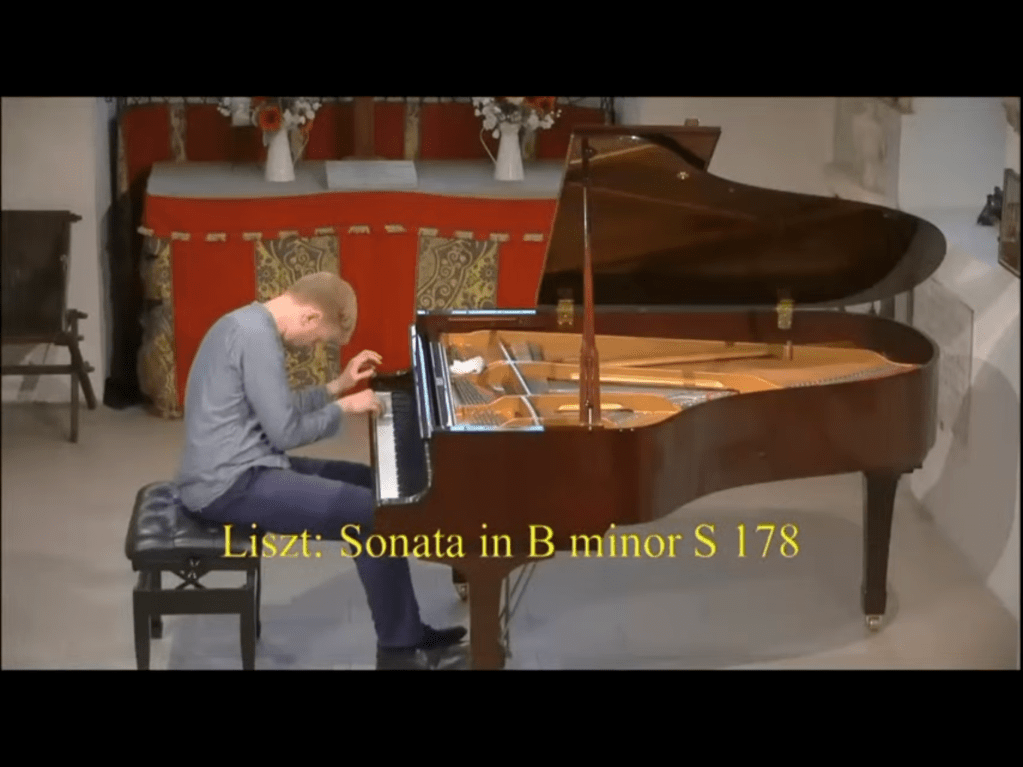
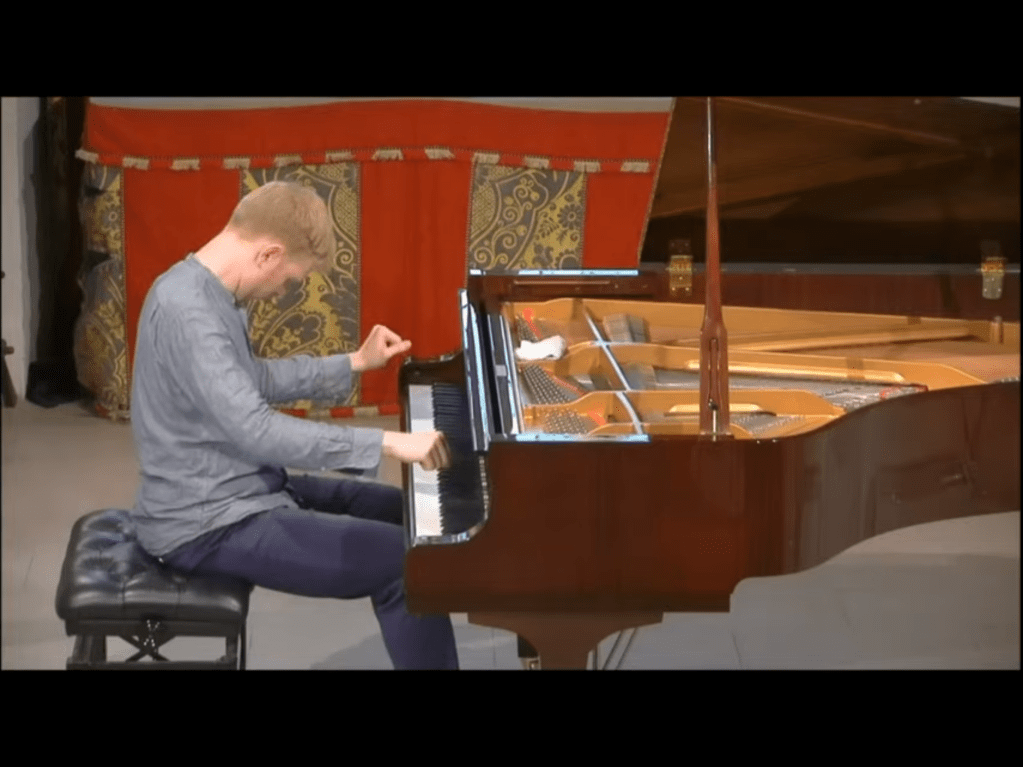
And from the depths of creation scaling the pinnacle of the piano repertoire with Liszt’s mighty B minor sonata even a robust northern ‘lad’ was visibly drained after some towering performances in which his youthful passion and virtuosity were stretched to the limit.

Here is the review of the same programme that he performed a month ago https://christopheraxworthymusiccommentary.wordpress.com/2021/05/19/luke-jones-for-cranleigh-arts-simplicityintelligence-and-virtuosity/

Bach: French Suite No.5 in G BWV 816
Allemande / Courante / Sarabande
Gavotte / Bourree / Loure /Gigue


Feinberg/Tchaikovsky: Scherzo from Symphony no 6


Liszt: Sonata in B minor S 178
(single movement)

Well done Luke – a wonderful recital. Here is the HD link https://youtu.be/ki1auZAHHnw

Luke Jones is a Welsh pianist. Originally from Wrexham in North Wales, he started playing the piano at the age of 5 and made his debut recital at Oriel Wrecsam aged 10. Since then he has performed all over Britain in venues such as Bridgewater Hall – Manchester, Eaton Square – London, St. David’s Hall – Cardiff, Bradshaw Hall – Birmingham, Pump Room – Bath, St. George’s – Bristol etc. He has also performed in France (Salle Cortot – Paris), Italy, Luxembourg (Philharmonie de Luxembourg), Austria (Wienersaal – Salzburg), Spain (Palau de la Musica Catalana – Barcelona), Majorca and Slovenia and has won prizes in competitions around Europe notably 2nd Prize and Mompou Prize at the prestigious Maria Canals International Piano Competition, 1st Prize at the Bromsgrove International Musicians Competition, 1st Prize in “Aci Bertoncelj” International Piano Competition, Slovenia. 1st Prize in “Section A” Chopin-Roma International Piano Competition, Italy, and 3rd Prize in the Manchester International Concerto Competition, UK. Most recently, Luke was awarded the RNCM Gold Medal, the college’s highest award for Performance. Furthermore, he has had broadcasts of his performances on BBC Wales Radio, S4C Television, Radio Vaticana and Telepace in Italy. He has performed with orchestras such as BBC National Orchestra of Wales, Manchester Camerata, Orchestra of the Swan and Jove Orquestra Nacional de Catalunya. At the age of 5 he studied with Eva Warren, and then at the age of 8 began studying with concert pianist Andrew Wilde. Subsequently at the age of 11 he was awarded a place at Chetham’s School of Music where he studied under the Head of Keyboard, Murray McLachlan from 2006-2013. Between 2013-2015 he studied at Conservatorio di Musica ‘Lorenzo Perosi’ Campobasso under the guidance of Mº Carlo Grante. He recently completed a bachelor’s degree with First Class Honours at the RNCM and is continuing his studies there on the Masters’ Programme with a full scholarship from the ABRSM under the tutelage of Dina Parakhina.Luke has been fortunate to have had masterclasses/lessons with notable pianists such as Kathryn Stott, Leslie Howard, Vladimir Tropp, Jean-Efflam Bavouzet, Bernard Roberts, Hamish Milne, Peter Donohoe, Stephen Hough, Llyr Williams, David Wilde and Philippe Cassard.

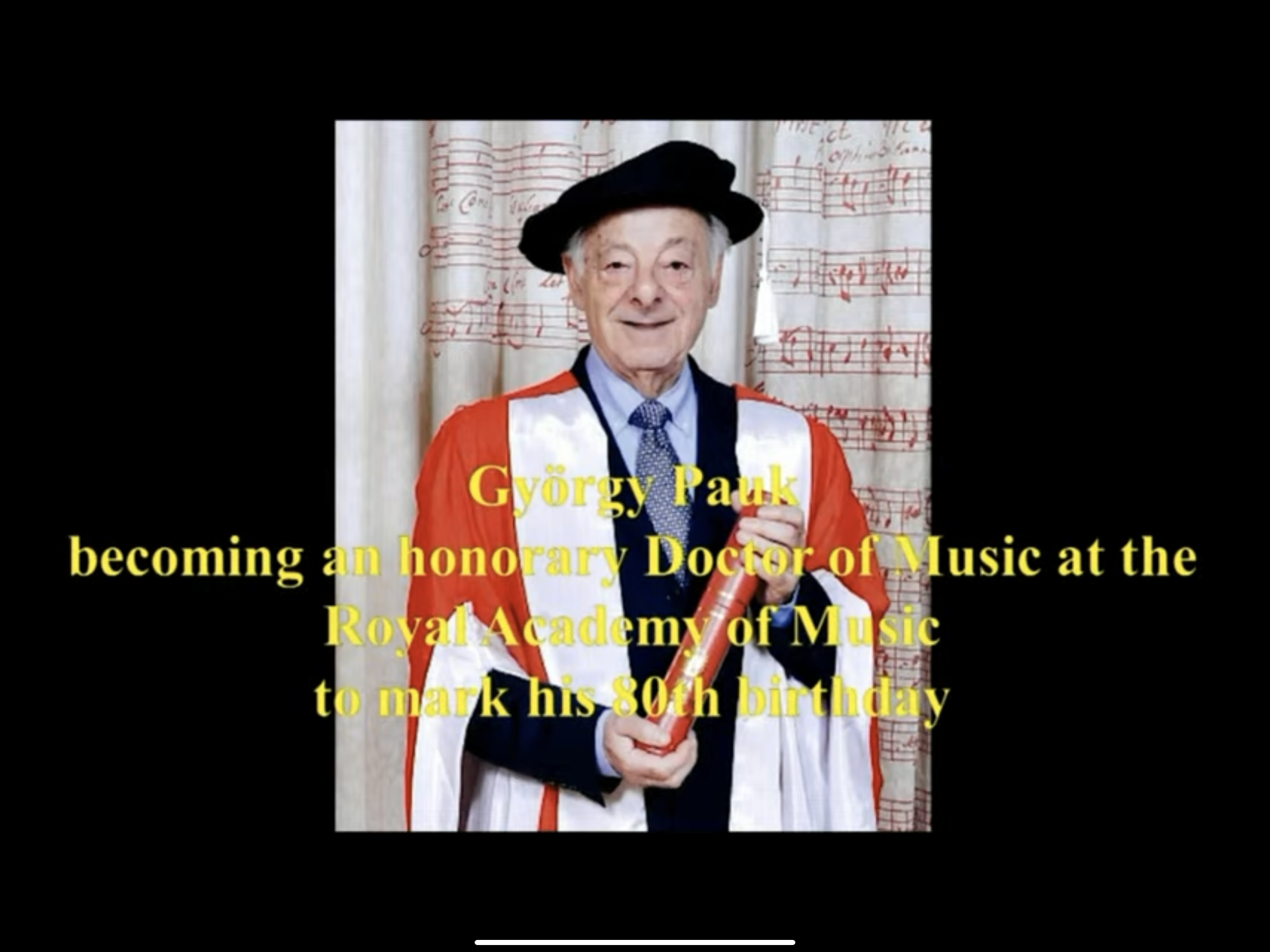
GYORGY PAUK looking back. In peace and harmony via music

György Pauk 
in conversation

The eminent violinist talks about his long and distinguished career

with extracts from some of his recordings
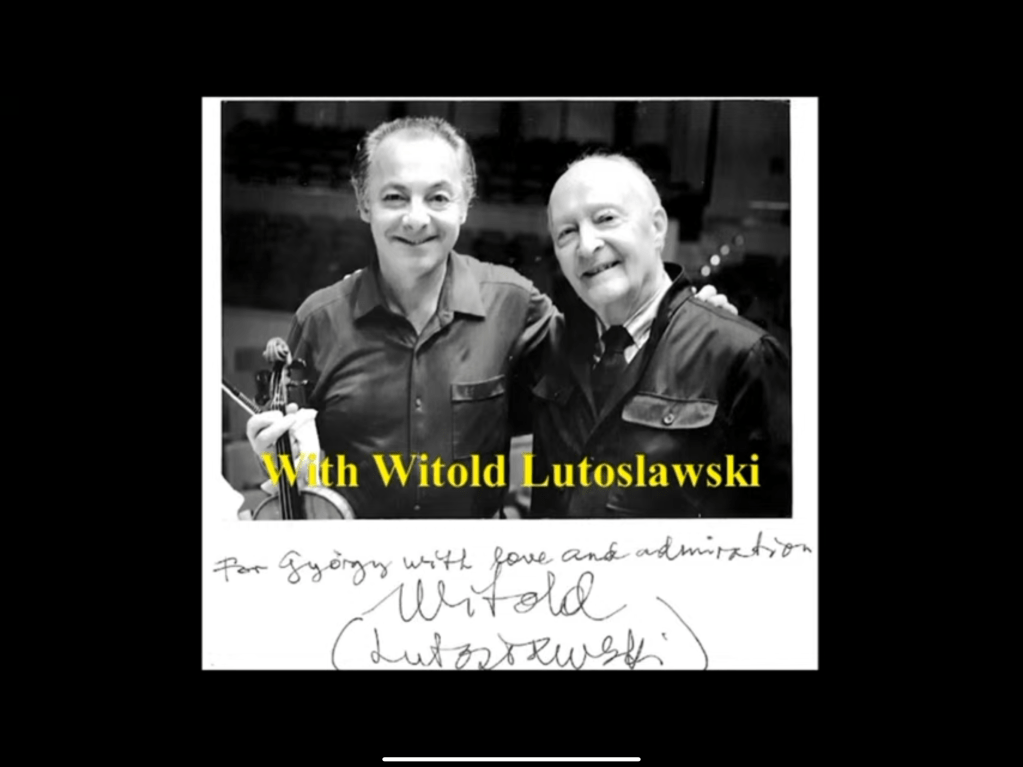
of Mozart,Bartok,Lutoslawski

Fascinating conversation with the much loved legendary violinist GYORGY PAUK .Hungarian born but British and proud of it.From the first time he and his wife arrived as political refugees from Hungary via Paris and Amsterdam and looking across Waterloo Bridge thought at last we have arrived home.A moving story all written about in his autobiography that like the great and gentle man he is , all proceeds go to helping young musicians

Here is the HD link to Gyorgy Pauk’s account of his extraordinary life. https://youtu.be/U_CAN3Tx-Zs

Born in Budapest in 1936, György Pauk suffered the loss of both his parents in the Holocaust.

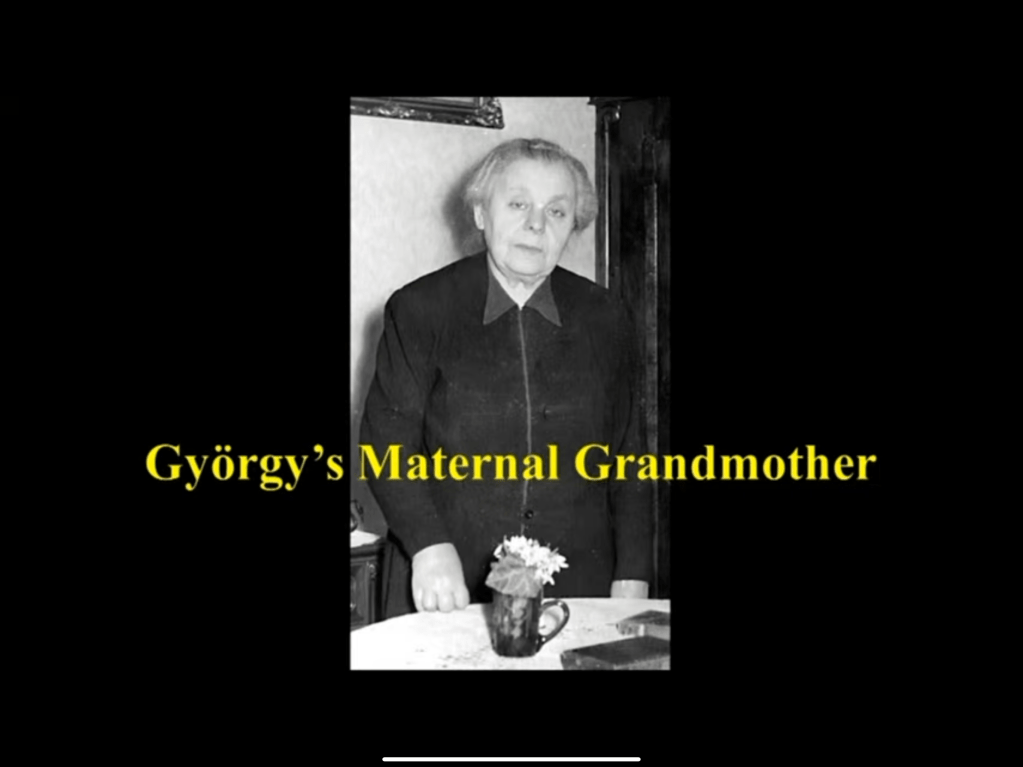
He spent the remaining years of the Second World War in the care of his grandmother in the spartan confines of the Budapest Ghetto.

Showing extraordinary musical talent from an early age, he began to learn the violin and was admitted to the Liszt Academy at the age of only 13.

After winning several international violin competitions, Pauk defected from Soviet-controlled Hungary, claiming asylum in Paris and becoming a ‘stateless person’ at the age of 22.

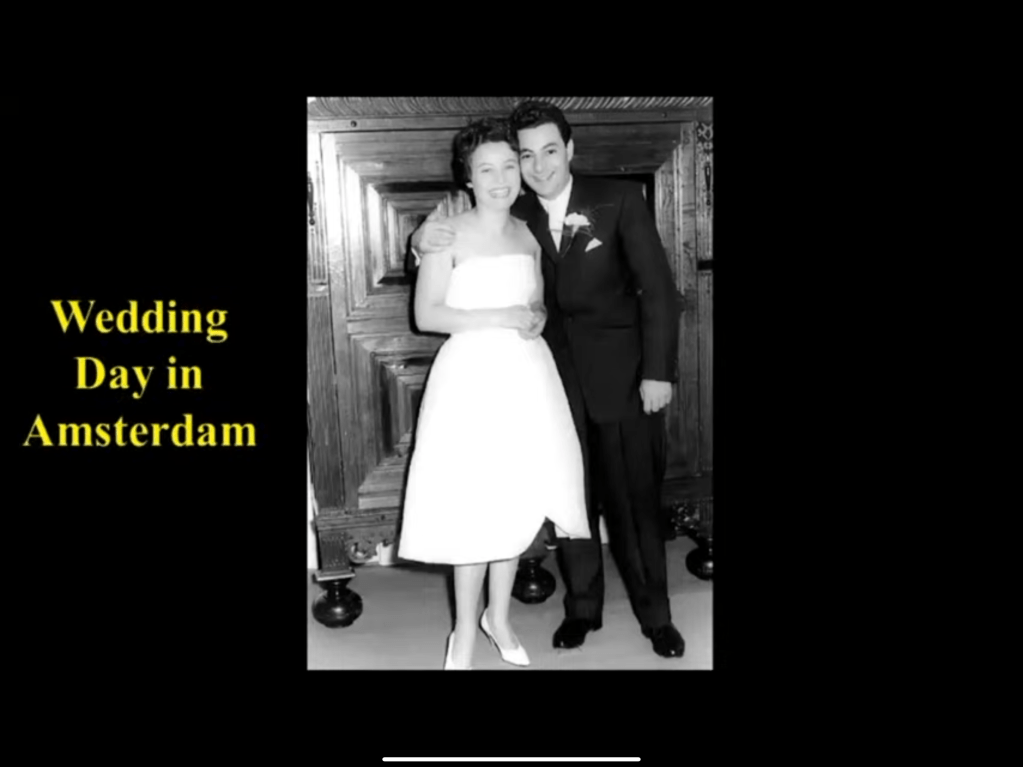
He met and married his young Hungarian wife in Amsterdam.

The couple moved to London on the advice of Yehudi Menuhin, gaining British citizenship in 1967. Over the course of more than 50 years, György Pauk became an internationally acclaimed concert violinist, appearing worldwide with the leading orchestras and conductors, and making countless broadcasts and recordings.

The renowned trio :Peter Frankl,Gyorgy Pauk,Ralph Kirshbaum

Now in his ninth decade, he is a renowned pedagogue based in London, and regarded as the foremost living ‘torch-bearer’ of the Hungarian Violin School, which traces its origins to the 19th century violinist, Josef Joachim.


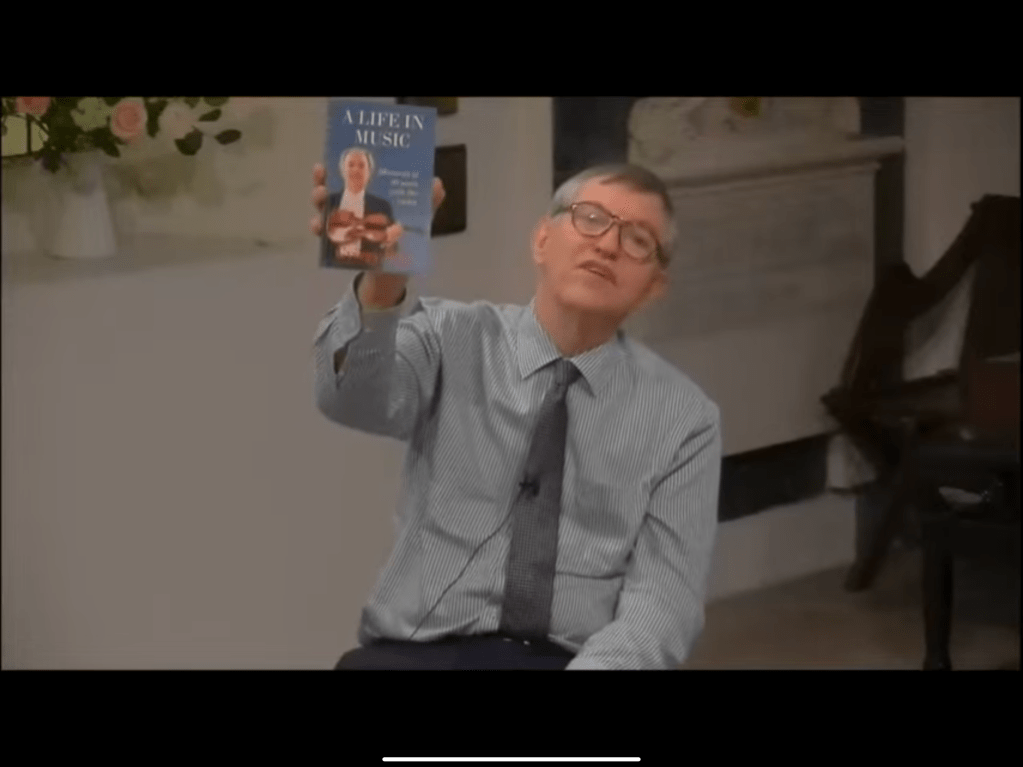
György Pauk’s memoirs have been published in Hungarian and are now available in an English translation. Copies can be purchased via this link https://www.thestradshop.com/store/thestrad/gyorgy-pauk/ at a price of £15 plus p&p. Signed copies are available for £25 plus p&p via this link. https://www.ebay.co.uk/itm/304021322002 . All proceeds go directly to support young musicians.

Hugh Mather with the book

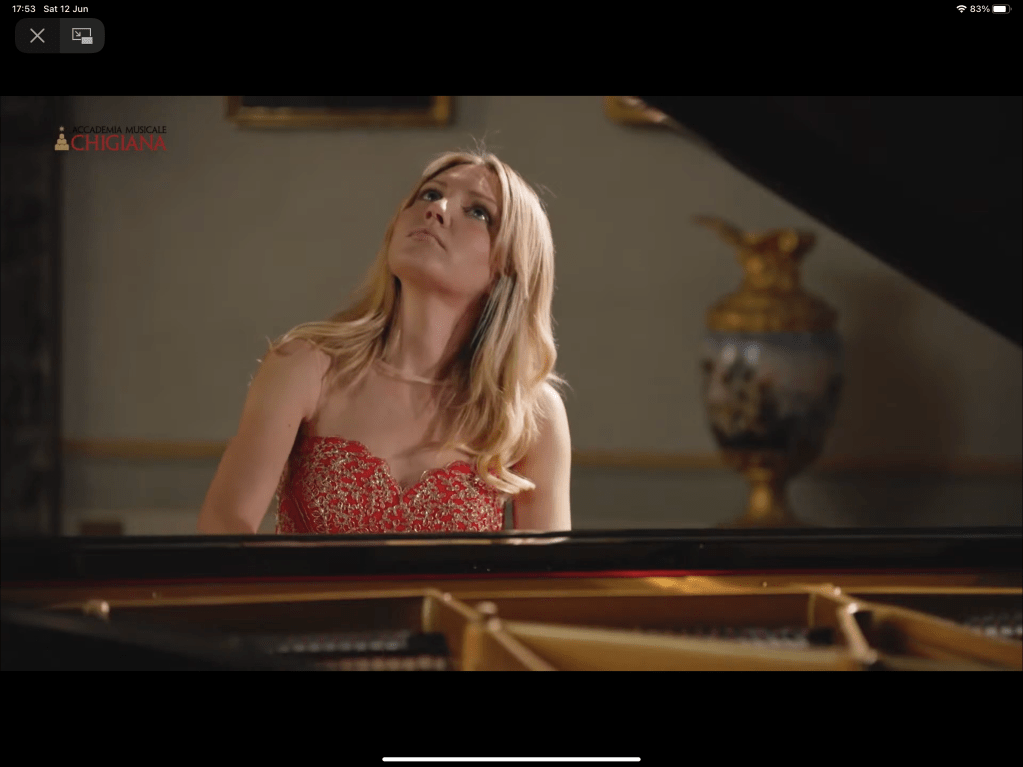
Vanessa Benelli Mosell in Siena Micat in Vertice young artist’s series

LUDWIG VAN BEETHOVEN
Bonn 1770 – Vienna 1827

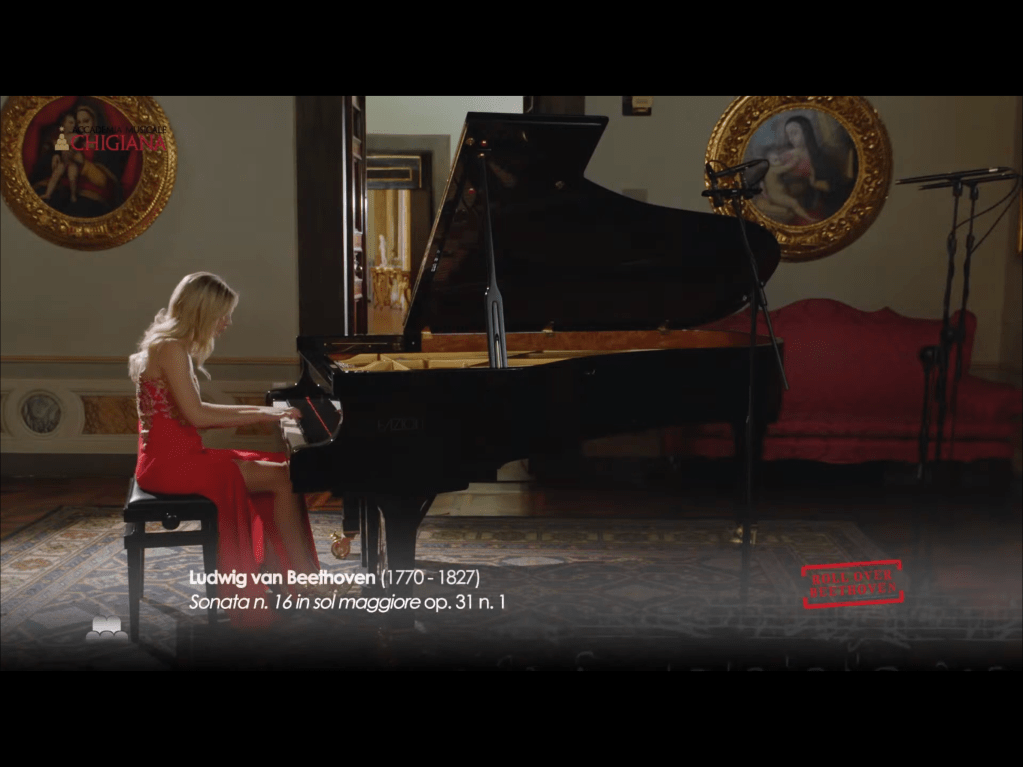
SONATA n. 16 in sol maggiore op. 31 n. 1 (1801-1802)

1. Allegro vivace
2. Adagio grazioso 
3. Rondò. Allegretto 

NIKOLAI KARLOVICH MEDTNER
Moscow 1880 – London 1951

from 2 Skazki (2 Fairy Tales) op. 20 (1910)
n. 1 Allegro con espressione

from Zabýtye molítvy (Forgotten Mélodies) op. 38 (1919-22)
op. 38 n. 6 Canzona Serenata

KARLHEINZ STOCKHAUSEN
Kerpen 1928 – Kürten 2007

Klavierstück VII (1954)

MARCO STROPPA
Verona 1959

from Miniature estrose (Book 1 1991-2002) 
Birichino, come un furetto

FRANZ LISZT
Raiding 1811 – Bayreuth 1886

Réminiscences de Norma S. 394 (1841)

Interpreter
VANESSA BENELLI MOSELL piano

Recorded live
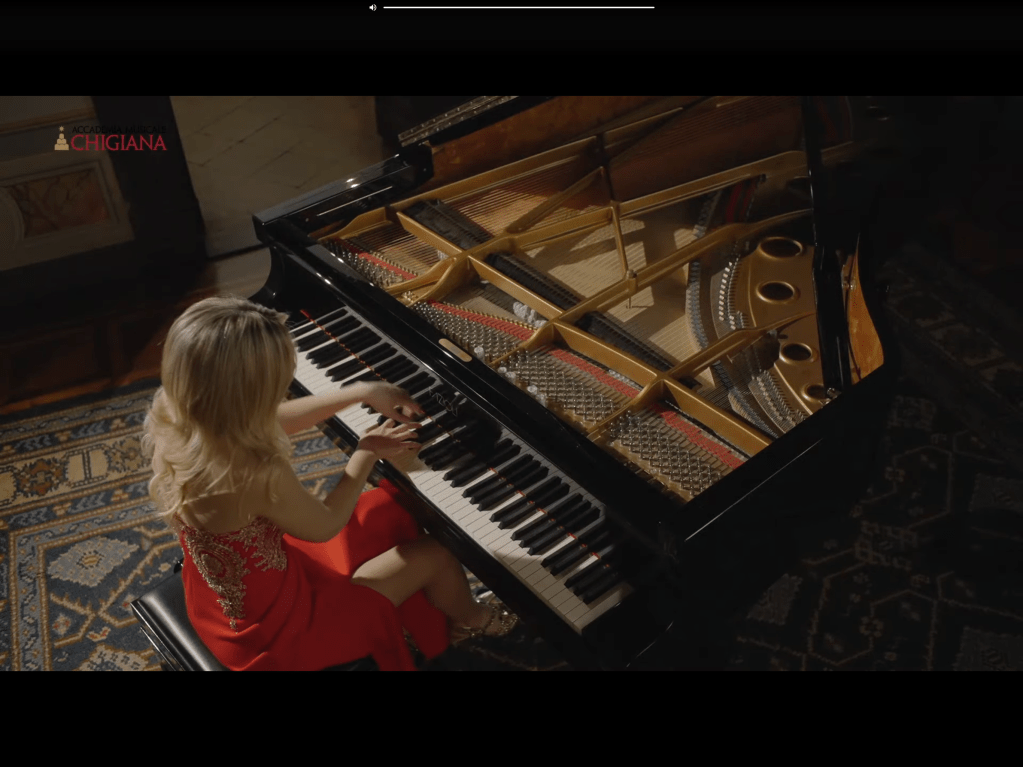
Boccherini Room
Palazzo Chigi Saracini, 15 May 2021.

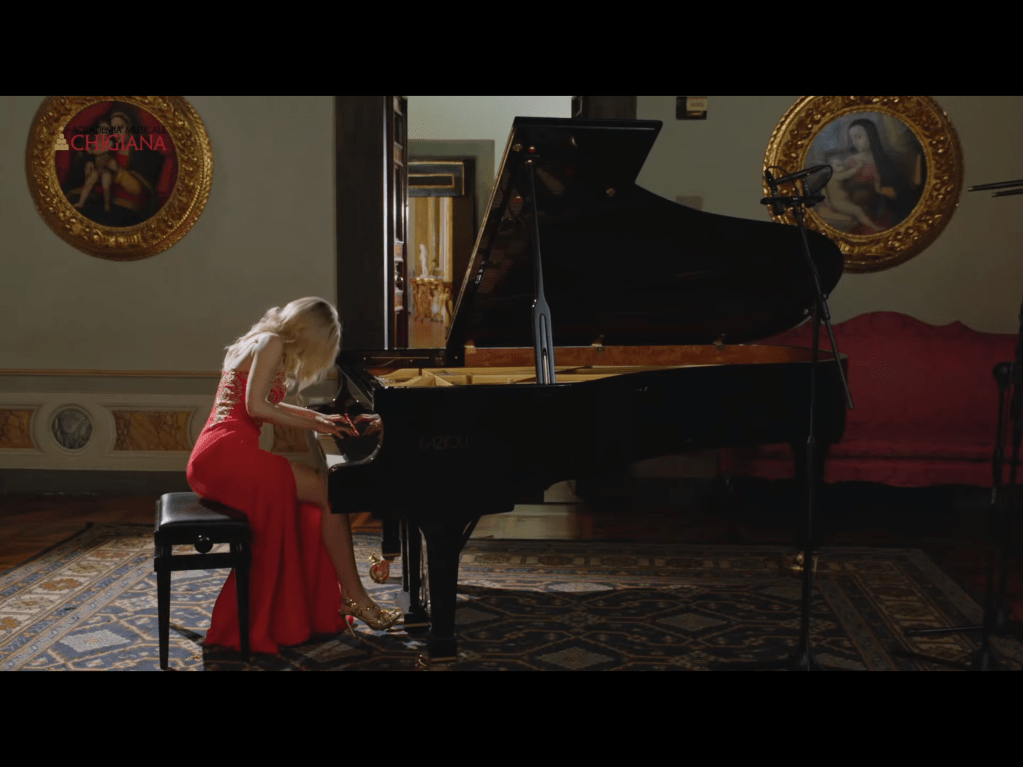
Once again, the Accademia Chigiana hosts the young pianist Vanessa Benelli Mosell within the Micat Concerti in Vertice Season. This concerts is part of the Roll over Beethoven cycle, a project supported by the SIAE in 2019, which presents the chamber music of Ludwig van Beethoven interpreted by young talents, perfected at the Siena Academy. The program combines masterpieces of romantic and modern pianism, favoring the meeting of very different composers, but united by the same look towards the future and moved by the same spirit of innovation that made them approach the piano composition, each from their own historical and cultural context. There are nineteenth-century compositions represented by Beethoven, Medtner and Liszt, up to the present day with Stroppa, and passing through the twentieth century with Stockhausen, the author of which Vanessa Benelli Mosell is one of the leading interpreters.

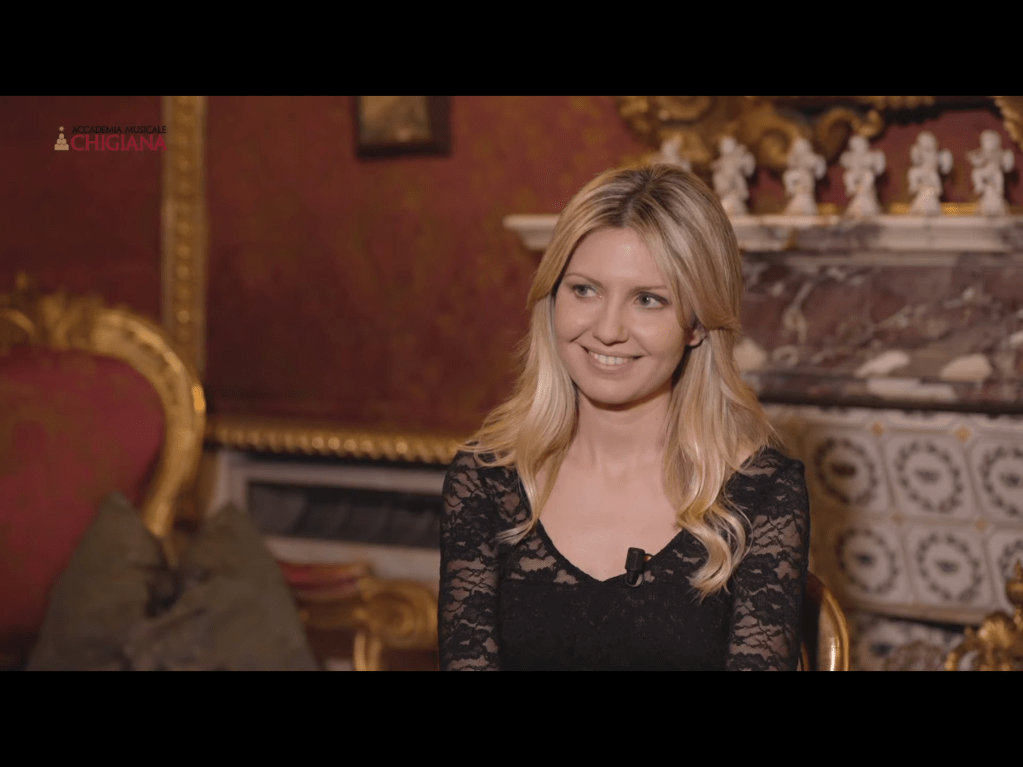
The Italian pianist Vanessa Benelli Mosell is establishing herself as one of the most important names on the international music scene today for her technical virtuosity, her musical depth and expressive intensity of her pianism and her conducting style. Benelli Mosell’s charismatic artistic talent and natural leadership are quickly establishing her as one of the most interesting personalities of the new generation of young conductors. Combining raw power and boundless imagination, her electrifying musicality was heavily influenced by her mentors, Karlheinz Stockhausen and Yuri Bashmet. She is also appreciated for her knowledge of the most demanding and complex repertoires as well as her particular dedication to contemporary music.
Her recordings by Stockhausen and her recording debut with the London Philharmonic exclusively for Decca Classics have received universal acclaim from critics and audiences.

VANESSA BENELLI MOSELL, nata a Prato nel 1987, ha iniziato lo studio del pianoforte a tre anni. A sette anni è stata ammessa all’Accademia Pianistica Internazionale “Incontri col Maestro” di Imola, dove ha studiato con Franco Scala fino al 2006. A undici anni ha debuttato negli Stati Uniti presso il “92nd Street Y” di New York. Si è perfezionata con Joaquín Achúcarro presso l’Accademia Musicale Chigiana di Siena nel 2005 e 2006 e nel 2007 ha studiato al Conservatorio Čajkovskij di Mosca con Mikhail Voskresenskij. Si è laureata nel 2012 presso il Royal College of Music di Londra sotto la guida di Dmitrij Alekseev.
Vanessa Benelli Mosell ha suonato in prestigiose sale da concerto, tra le quali Berliner Philharmonie, Auditorium di Radio France di Parigi, Beijing National Center for the Performing Arts, Kings Place di Londra e Teatro alla Scala di Milano, sia da solista sia in formazioni cameristiche al fianco di Renaud e Gautier Capuçon, V. Repin, M. Quarta, D. Kashimoto, J. Rachlin, R. Vlatković e del violoncellista francese Henri Demarquette.
Nei 7 album realizzati per l’etichetta discografica Decca Classics, rientra l’incisione dei Klavierstücke di Stockhausen, che l’hanno portata a collaborare a stretto contatto con l’autore e con eminenti compositori contemporanei fra i quali G. Benjamin, H. Dufourt, S. Gervasoni, M. Matalon e M. Stroppa.
In qualità di direttrice d’orchestra ha lavorato con la Wiener Kammer Orchester e il Divertimento Ensemble di Milano.

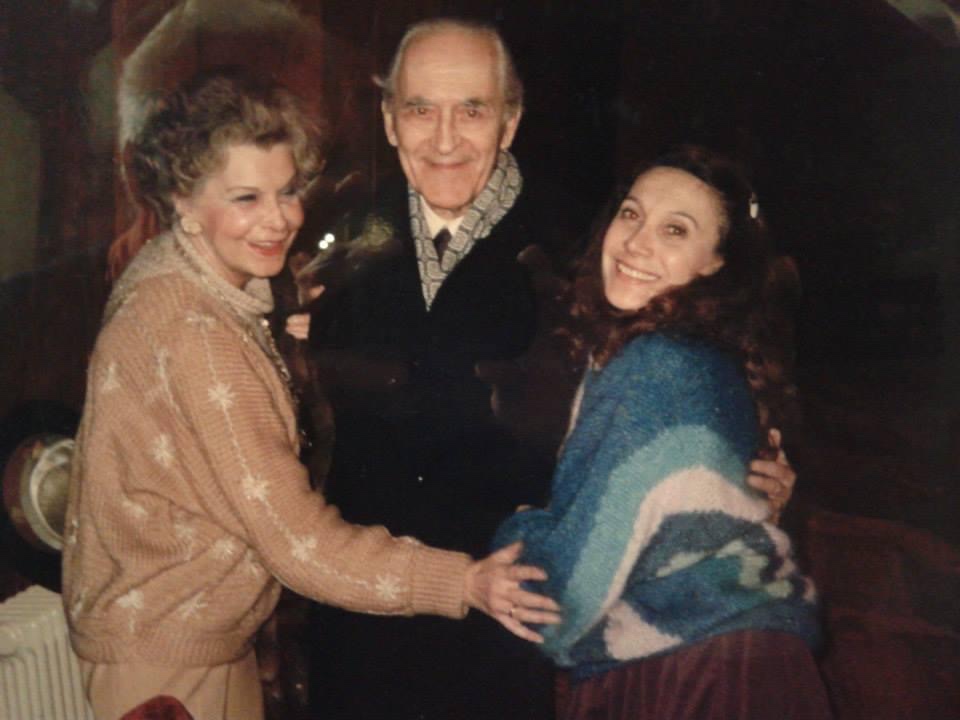
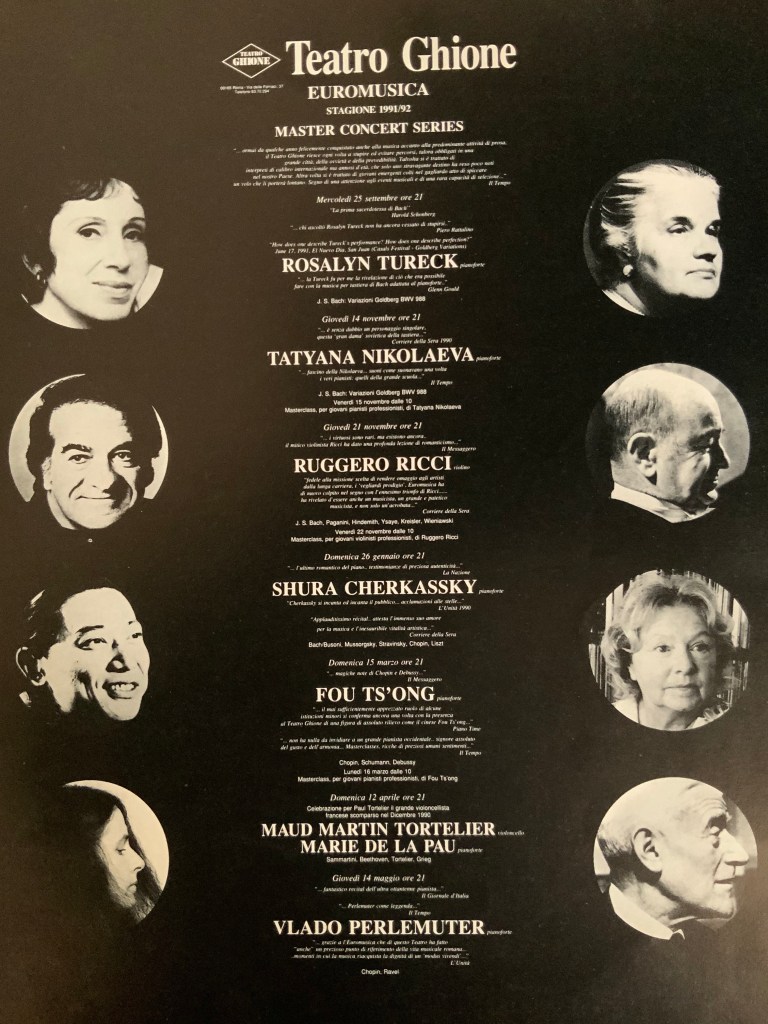
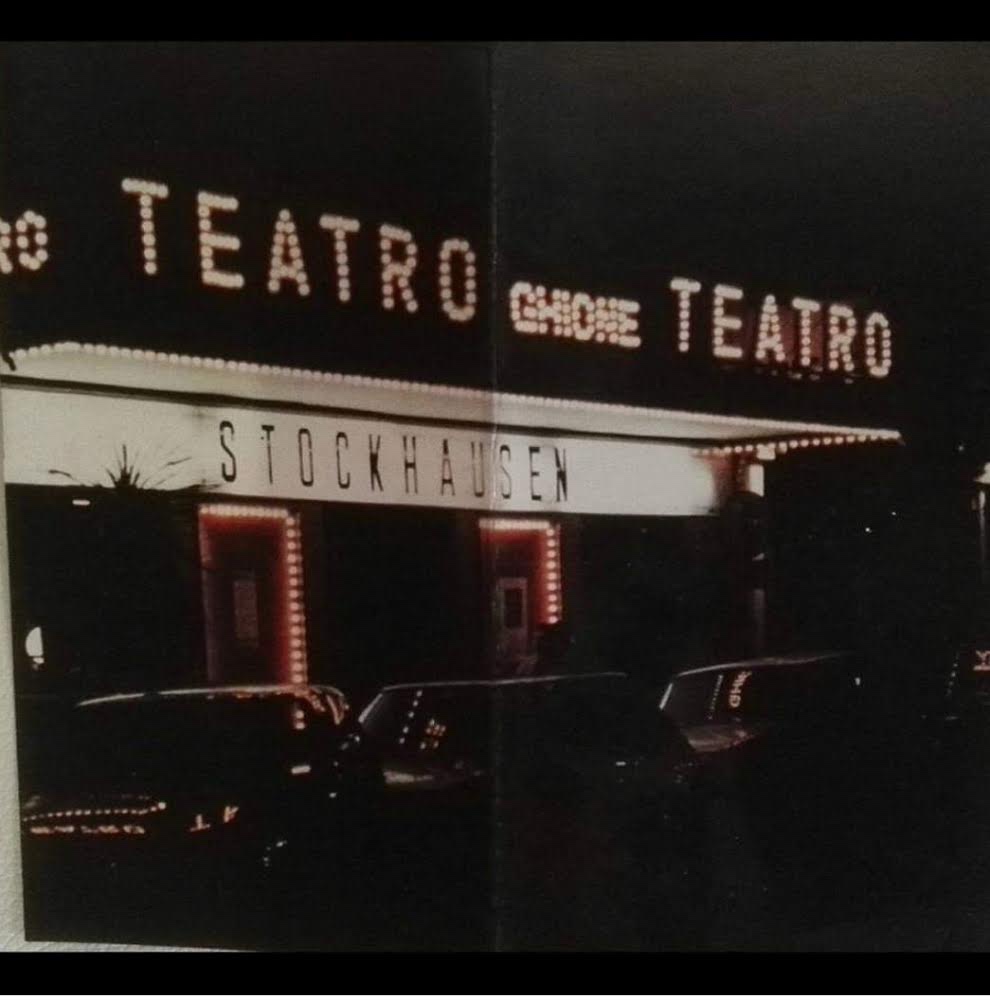
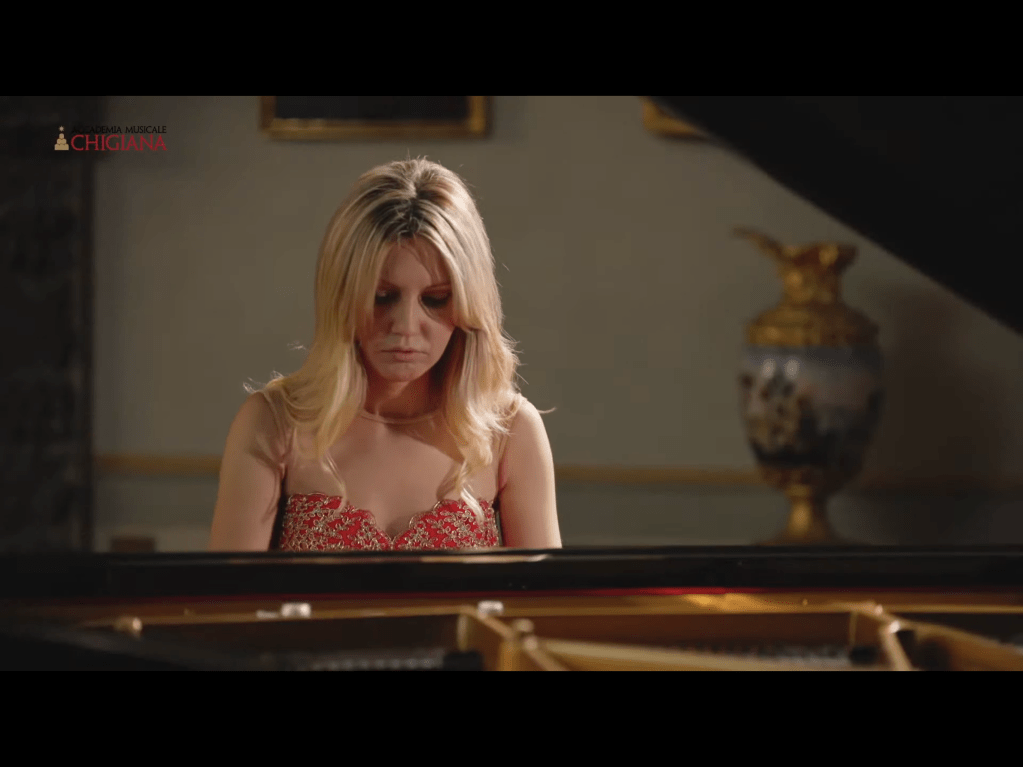
A programme of Beethoven,Medtner,Stockhausen,Stroppa and Liszt for the Chigiana’s series of concerts under the title ‘Roll over Beethoven ‘for young interpreters that have perfected their studies in the famous Academy founded by Count Chigi Saracini.It was in the 20’s and 30’s that many noble families opened up their family homes to the great musicians who were only too pleased to be their guests in their Palaces in Siena,Perugia or Aquila Horowitz,Rubinstein,Casals,Segovia,Cortot,Serkin,Busch were just some of the names of their illustrious guests .It is enough to look at the photos with dedications on the pianos of Count Chigi in Siena or Alba Buitoni in Perugia to realise how enlightened these noble families were to invite musicians who would otherwise have only rarely visited Italy on their worldwide concert tours.It was in 1968 that two young freshers at the Royal Academy hearing about the marvels of the Accademia in Siena took time during the Summer break to go and listen to the marvels that were talked about of Guido Agosti’s summer studio in Siena.Having inherited the class from Alfredo Casella in a period when Franco Ferrara,Segovia,Navarra,Gulli,Brengola and many other visiting artists including Casals and Cortot were giving summer Masterclasses in the magical city of Siena.In fact there is a photo of Cortot turning the pages for Guido Agosti who is accompanying his wife Lydia Stix Agosti.A real Mecca for musicians that inspired these two freshers who thought they would get the sack from the RAM in London for daring to seek out other sources of musical inspiration.When they got back to London they were very surprised to find that not only was their secret out but that they had been awarded the Tobias Matthay Fellowship to help towards the cost of their wondrous adventure.One of them went on ten years later to meet his future wife in Siena whilst accompanying the class of Agosti’s wife.He even went on to create a theatre in Rome with his wife the illustrious Ileana Ghione that inspired by Count Chigi’s example became a Mecca for all the musicians denied a space in the Eternal City.Teatro Ghione was the much loved home, like the Wigmore Hall is in London today,for the 30 years that Rome was denied the magnificent concert halls of Renzo Piano.It became loved home to Agosti,Perlemuter,Nikolaeva Tureck,Tortelier,Ricci,Cherkassky Fou Ts’ong and above all it was Stockhausen’s favourite theatre.It is nice to be reminded of our great friend reading that Vanessa was his last student and that she has recorded all his Klavierstucke.I am very happy to read also that Vanessa had passed several summers in Siena in the class of the highly esteemed Joaquin Achucarro (who incidentally was the solist in the very first orchestral concert that I attended at the Festival Hall in London.)

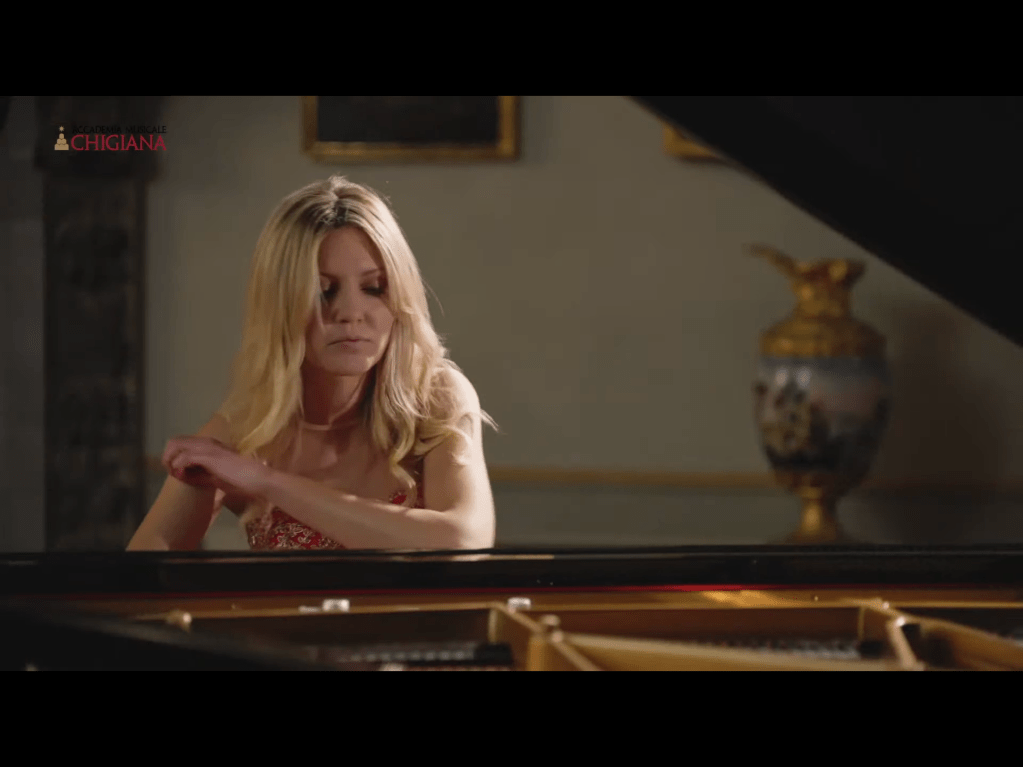
It was indeed her Beethoven that shone out with a sparkling light as she had said it would in her opening interview.A Beethoven full of contrasts and rhythmic playfulness that she played with scrupulous attention to Beethoven’s very precise indications.A beautifully poised Adagio grazioso that is a truly inspired bel canto that she played with superb legato with the lightly staccato accompaniment beautifully judged.The slightly menacing middle section was maybe a little too aggressive where the indications are only forte-piano not sforzando in a Sonata that has very little of Beethoven’s usual aggressive contrasts but is full of a ‘joie de vivre’that was rarely the world which he inhabited.The Allegretto was played with great brilliance and rhythmic drive and in fact Beethoven does not add the grazioso that is it’s true character.Vanessa is a superb pianist and a very fine intelligent musician and to see her at the piano is like watching the water nymphs in Copenhagen.Her actual movements on the keys though do not mould the sounds naturally like a sculptor or painter with a brush and palette of colours.She has a technical perfection that with her superb intelligent musicianship shapes the music with great architectural arches and rhythmic precision but this lack of natural movement sometimes does not allow her the mellow shaping of a singer having to breathe.It may also be the magnificent Fazioli that has a very bright sound that gave a little too many Beethovenian contrast in a sonata that is ,unusually,all radiance and light.The two works by Medtner were magnificently played and her superb temperament and technical control together with a sense of colour really brought these two rarely played works to life.As Vanessa said in her interview she tries to contrast well known works with lesser known ones as she did today.It was fascinating to hear the Klavierstuck VII and the contemporary work by Stroppa which were like a breath of fresh air between Beethoven and Liszt. I was reminded of Rubinstein who would add four mazurkas by Szymanowski to his all Chopin recitals saying that it was like a lemon sorbet after a rich meal that just whet your appetite for more! The Stockhausen and Stroppa were superbly played most notably without the score too.She had really digested these works with the same intelligence and superb technical control that were a hallmark of everything she played.

Lydia and Guido Agosti with my wife Ileana Ghione in Teatro Ghione,Rome

Stockhausen loved my theatre in Rome and he loved playing with the lighting and sound from the back of the hall.His 12 Klavierstucke we’re on the programme one year played by a young German pianist and also his daughter.The organisers had hired a Yamaha piano but Stockhausen seeing the Steinway ‘D’ in a corner begged me to be able to use that instead.Of course Mr Stockhausen but you must reassure me that it will only be played with two hands and two feet in the conventional manner!Well he ‘almost’ kept his word ,but in the last Klavierstuck his daughter started to sit on the keys as she fired toy missiles into the public!The missiles were another story as he had just performed the same concert in Palermo and the missiles were not returned by an excited public only too happy to have a memento of such an occasion.’Chris’ what shall we do ,exclaimed the Maestro.Show me one and we will see what can be done.He luckily had saved one and I showed it to our stage technician who during the day set about making a dozen missiles.’What are you making’ the actors passing under the stage would ask.’Missiles for Maestro Stockhausen’ was Castelli’s innocent reply.The concert was a great success and a few weeks later I got a big packet in the post from Kurten.The address written in red .It was a couple of signed prints from Stockhausen that now hang in the most frequented room in my house! A heart shape to which was added ……..dially Stockhausen!It was the Liszt Norma Fantasy or more precisely reminiscences of Norma that showed off to the full the superb artistry of Vanessa.Sumptuous sounds,cascades of notes but above all a musicality that was of the magic world of Opera.Such tenderness,passion and excitement creating the unique world of Bellini’s wondrous world .