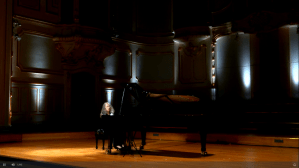
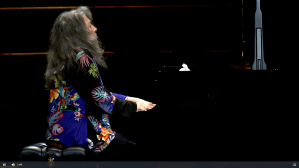
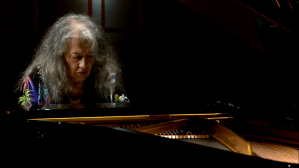
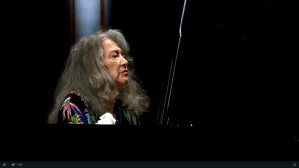
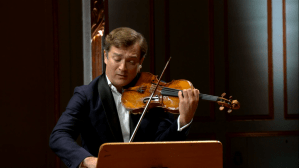
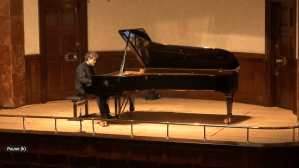
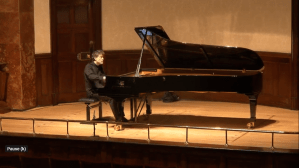
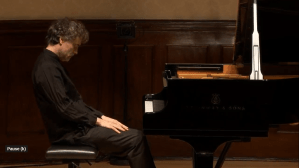
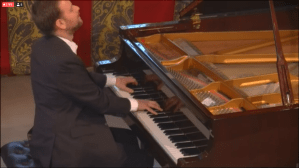
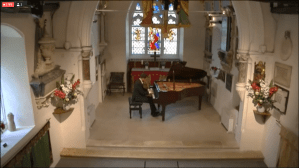
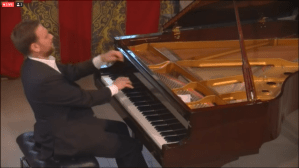
Glorious and Victorious – Long may they reign over us -Di Donato/Pappano Argerich/Barenboim at the Proms…….
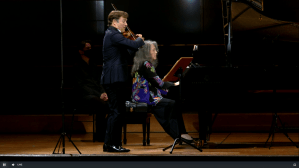
Two unforgettable Proms on Sunday morning with Pappano and Di Donato and Monday evening with Barenboim and Argerich ……………what a marvel ……….
!
And the true return of a legend in Salzburg just two days later.
What energy and enthusiasm from Pappano and the American Youth Orchestra.
A truly sublime Joyce Di Donato in Berlioz that had the intelligence of a Schwarzkopf with the sumptuous creamy voice of gold of a Jessy Norman or a Janet Baker .A Strauss Symphony normally so preposterous in its outsized container but on this occasion with a breadth and vision that was nothing short of miraculous .
All this with the “joie de vivre”of making music that only the passion of youth can provide.
Barenboim and Argerich sounded a little less energetic………on Monday ….
On Wednesday it was quite a different thing…….great artists are not machines thank God ………
Try the piano player at Steinways …….any artist you want can play in your living room…….the only thing is it is always the same ………….that could never be with a true artist as was proven this week ……….
standing ovation on Wednesday in Salzburg
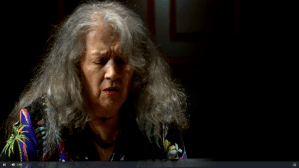
As Martha quipped to her friends “ not bad for an 80 year old.” Barenboim too as they were kids together in Argentina .
Especially when you know that they have both just flown in from Buenos Aires.
Martha the day before the concert and Barenboim later and was slightly jet lagged.
He had just played three Beethoven recitals(nine sonatas) plus conducted six major works with the orchestra and given two public seminars at his festival in Argentina.
And these two “youngsters” are already in Salzburg for tonight’s repeat concert on their tour to celebrate 20 years of the miracle that is the West- Eastern Divan Orchestra of Edward Said and Daniel Barenboim.
What wonders they are.
Above all for their generosity in trying to make the world a better and more understanding place to live in peace together.
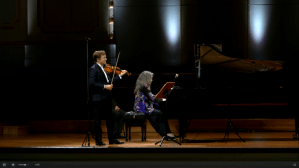
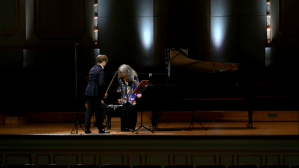
Martha and Daniel in Salzburg
Hats off indeed.
What a privilege to have been present
It is no coincidence that when Pappano presented himself at an audition for Barenboim with a singer for the part of Brunhilde,Barenboim famously quipped:”You keep the singer and I will take the pianist.”
Pappano became his live in assistent …………..and the rest is history…..
still very much in the making!
Benjamin Beckman
Occidentalis (European Premiere)
Hector Berlioz
Les nuits d’été, Op 7
Richard Strauss
An Alpine Symphony
Joyce DiDonato (mezzo-soprano)
Brass of the National Youth Orchestra of Great Britain
The National Youth Orchestra of the United States of America
Sir Antonio Pappano (conductor)
Celebrated American mezzo-soprano Joyce DiDonato was reunited with regular collaborator Sir Antonio Pappano to mark the 150th anniversary of Berlioz’s death with a performance of the composer’s sumptuous orchestral song-cycle Les nuits d’été – a musical journey from springtime love to cruellest loss.
The National Youth Orchestra of the USA undertook a journey of quite a different kind in Strauss’s monumental An Alpine Symphony, whose vast orchestral forces and massive soundscapes conjure up the craggy drama of the Bavarian Alps.
Benjamin Beckman congratulated by Sir Antonio Pappano
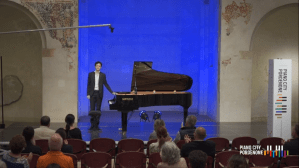
The concert opened with a new work, by Benjamin Beckman, one of the NYO-USA’s two Apprentice Composers.
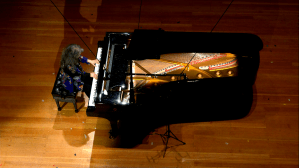
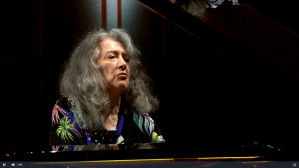
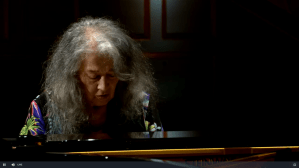
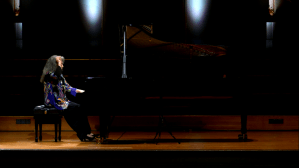
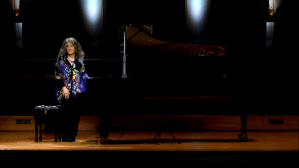
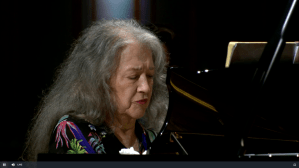
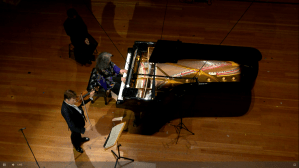
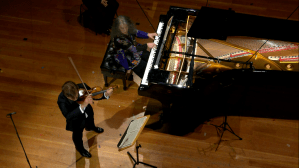
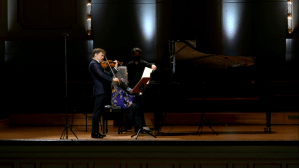
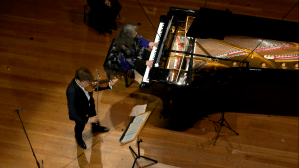
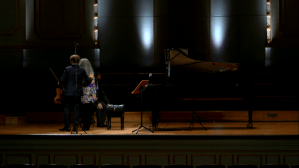
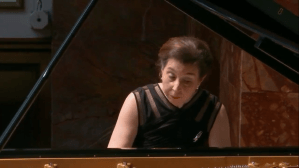
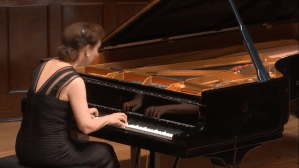
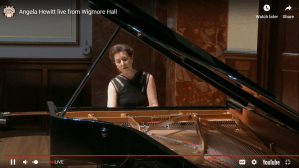
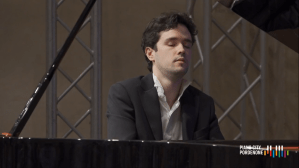
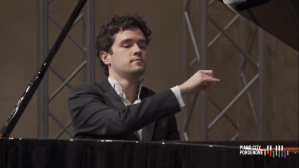
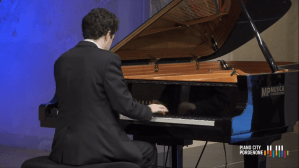
Martha Argerich with Daniel Barenboim
Franz Schubert
Symphony No. 8 in B minor, ‘Unfinished’
Pyotr Ilyich Tchaikovsky
Piano Concerto No. 1 in B flat minor
Witold Lutosławski
Concerto for Orchestra
Martha Argerich (piano)
West–Eastern Divan Orchestra
Daniel Barenboim (conductor)
Daniel Barenboim and the West- Eastern Divan Orchestra
Daniel Barenboim and his West–Eastern Divan Orchestra return to the Proms with a programme of emotion and sensation.
Legendary Argentine pianist Martha Argerich was the soloist in Tchaikovsky’s Piano Concerto No. 1 – an outpouring of Romantic intensity sustained from the arresting opening chords right through to the thrilling finale.
Polish folk dances pulse through Lutosławski’s vibrant Concerto for Orchestra, with its echoes of Stravinsky and Bartok. Its bracing rhythmic energy and reticent beauty offer the perfect foil to the melodic richness of Tchaikovsky’s concerto……….
Friends from their childhood in Buenos Aires (author unknown)
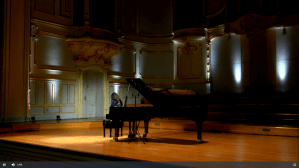
The audience in Salzburg on their feet to applaud such a great performance
There was magic in the air …the magic that had somehow eluded these two legendary artists on Monday.
Little did the wonderfully generous Prom audience know that Barenboim had literally just come from his festival at Teatro Colon in Argentina where he had given three Beethoven recitals,conducted six major works with the West- Eastern Divan Orchestra and given two public seminars.
He was jet lagged and the great expectations for their Prom concert was not totally convincing.
Were we expecting too much?
Well we got the answer on Wednesday!
An encore “Per L’Amitié” indeed en famille with Michael Barenboim turning pages
Now having flown together from London to Salzburg for three concerts ,the Barenboim Festival in Buenos Aires only a memory, they were in the mood to make music together.
Not only Martha with Barenboim but the orchestra too.
This is the stuff that legends are made of.
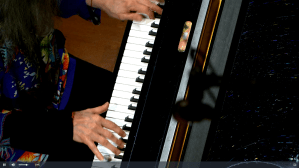
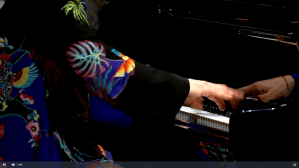
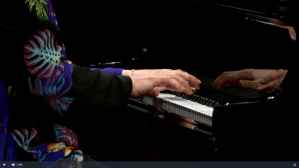
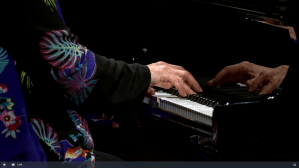
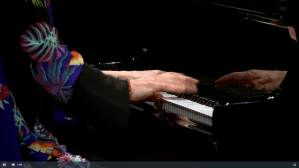
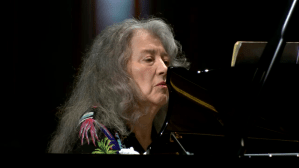
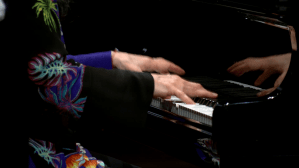
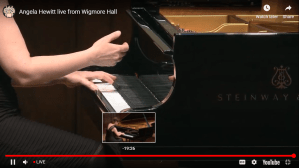
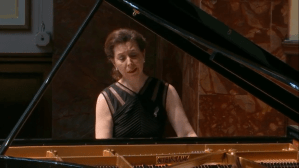
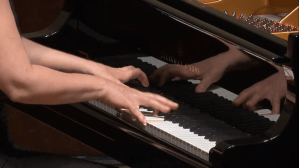
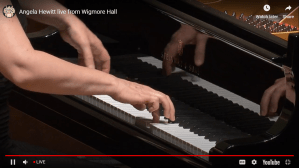
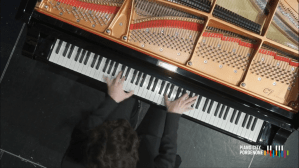
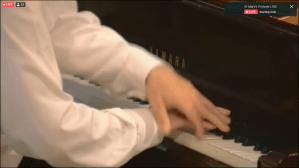
Martha’s quite extraordinary hands
Not since Rubinstein have we witnessed the magic that can be produced in works that we have known for a lifetime.
This Tchaikowsky concerto was sublime.
Not a word that one would readily use for this old warhorse.
I have known this work since I was a schoolboy totally won over by Liberace and then the 1812 Tchaikowsky nights at the Albert Hall.
Martha and Daniel’s hands linked in a friendship of a lifetime
I have heard all the great pianist play this much loved concerto.
From Rubinstein,Horowitz,Gilels,Richter,Van Cliburn,Arrau,Byron Janis through John Lill,Peter Katin,Pletnev,Virsaladze,Alexeev ,Shura Cherkassky,Jerome Rose and many many others.
But I have never heard the sounds that I heard today from Salzburg.
Phenomenal virtuosity which as Martha herself says is “not bad for an 80 year old!”
But there was much much more.
A very subtle sense of balance and colour that illuminated passages that I have never even suspected could be so laiden with gold.
Very slight delays ,a sudden pianissimo,a sublime sense of cantabile of the Golden age of piano playing.
Such superb clarity and precision in the middle section of the second and third movements played almost without pedal.
Every note played with a precision and just weight.
………….The final octaves of course were played with enormous elan but then it was she that held the orchestra back with such pointed phrasing in the great climax that the final race to the end became absolutely hair raising.
Some inspired playing from the orchestra too
It had this high society audience on their feet clamouring for more …………..
What could be more sublime than a totally inspired Daniel at the helm with Martha steering the way in the Schubert A major Rondo ” Per l’Amitié”.
And what greater friendship could be shared with this vast audience.
Daniel’s son turning pages and visibly moved by the subtle play between these two old friends.
The Thomas Harris International Piano Foundation Final Concerts Part 1&2(+)
Alberto Portugheis gives masterclasses in many parts of the world and the concert at St James’s Piccadilly was with some of his students from the classes he has been holding this past week in Rye, East Sussex.
Prof AlbertoPortugheis with Mrs Judy Harris
Promoted by Mrs Harris in honour of her son who had played many times in this church and many other venues in London and elsewhere .
Last winter I was asked to judge the Thomas Harris Beethoven Concerto awards and so had the opportunity to hear Nicolas Absalom and Ángel Laguna Herrera before.
They are continuing their advanced studies with Alberto Portugheis thanks to the generosity of Mrs Harris.
Joined by Giancarlo Staffetti it was the first of two concerts to give the opportunity to these very gifted young musicians to play in London.
Angel Laguna Alberto Portugheis Nicolas Absalom
Ca va sans dire that there was impeccable musicianship having come under the inspired guidance of the renowned Alberto Portugheis.All of whose initiatives musical and humanitarian could fill a book many times over.
Indeed he was nominated for the Nobel Peace Prize for his dedication and crusade to bring peace to a world that has fallen into the hands of politicians!
However today he was wearing his musicians cap and it was this that we were privileged to enjoy today in the hands of these very gifted young pianists.
Nicolas Absalom
Nicolas Absalom whose Beethoven First concerto I remember so well,presented today the Sonata op 31 n.3 and showed the same clarity and rhythmic energy that had been such a hallmark of his concerto.
With all the freshness and youthful spririt he ignited the concert from the very first notes.
This sonata like it’s companion op 28 has a pastoral feel to it and a slightly slower tempo would have allowed the second subject more time to breath more naturally.
There is a great rhythmic drive to his playing and a clarity due to his very careful and sparse use of the sustaining pedal.
The opening chords that can sometimes sound so imposing and ponderous were here given a foreward movement leading to one of Beethoven’s most characterful and humorous series of questions and answers.
This great rhythmic drive was ideally suited to the scherzo that followed and his meticulous attention to detail was very telling.
The Menuetto could have been even more grazioso and slightly more leasurely as it was in the Trio which had all the charm and style that had so capitivated Saint Saens and who used it as the theme of his variations for two pianos.
Nicolas in performance on the Fazioli piano chosen by Prof Portugheis for this important venue
The last movement bubbled over with youthful energy and whilst not quite rising to the con fuoco that Beethoven asks for it had a terrific foreward drive and character.
The ending could have had slightly more weight and was rather thrown off as the other movements had been too giving the sense of having arrived rather abruptly after such a successful performance.
Ángel Laguna Herrera played Schubert with the transcription by Liszt of the Soirées de Vienne n.6 and the last of the four impromptus op 142.
I have heard Angel over the past two or three years and it is good to see how his playing has grown in maturity and authority.
He tells me he now has an important post at the Madrid Conservatory as piano Professor and accompanist to the violin class.
His performance of the last of Schubert’s Impromptus had a rhythmic drive added to his latin temperament that was superbly controlled.The tempo was particularly well maintained in the virtuosistic flourishes of the central section.
The Soirées de Vienne could have had more charm and less passion.
A very solid performance that lacked the subtle charm that Liszt’s filigree embellishments have woven in a magic spell around Schubert’s original.
Angel would do well to try Schubert on an instrument of the period to realise that Schubert’s seemingly rather thick chords on modern day instruments sound completely different.
On these historic intruments there is a much more velvety subdued and less percussive sound.
It was an interesting discovery that another young lion of the keyboard,Tyler Hay, made when he was invited to play recently at Hatchlands for the Keyboard Charitable Trust of which I am one of the three artistic directors.
Giancarlo Staffetti allowed Liszt’s beautiful melodies , in the Sonetto del Petrarca 104, to sing with a great sense of balance.
Some slightly uncertain harmonies and maybe a little too much pedal for this very resonant acoustic did not detract from his great sense of atmosphere and style.
Giancarlo Staffetti
Chopin’s famous B flat minor Scherzo sang well but a more steady beat and rhythmic precision would have given more architectural shape to the whole.
Three fine pianists who gave some very professional performances that did their Professor proud and tomorrow we await another two at St Martin in the Fields with Bach and Beethoven.
In the meantime Alberto’s dearest friend Martha Argerich will be performing in London with another old friend from his youth in Argentina Daniel Barenboim.
Two performers for the second concert of the participants of the Alberto Portugheis Masterclasses in Rye in East Sussex for the Thomas Harris International Piano Foundation.
It was very refreshing to see the pianists from the previous concert in St James’s present to applaud their friends and colleagues.
Natalie Molloy is a graduate of the Trinity Laban Conservatoire and a student of Margaret Fingerhut and Philip Fowke.
Philip and I were at the Academy together in the class of Gordon Green.It was nice to see him celebrating afterwards in the rare mid day sun.He confided that it was the fortieth anniversary, to the day, of his Proms debut at the RAH with the Ireland Piano Concerto.
Philip Fowke celebrating in the rare summer sunshine
Philip has had a distinguished career as a soloist but is now also dedicated to sharing his knowledge and experience with the next generation.
Natalie opened the concert with the Bach Partita n. 1 in B flat.
The most mellifluous and pastoral of the six magnificent Partitas for keyboard.
An intelligent, serious performance that showed of her intellectual and musical skills.
A performance though that just missed the feeling of the song and the dance that is from where this music is born .
It was in the last movement, the Gigue ,where she was forced to cross hands and move more fluidly that brought the music to life with a sense of colour and shape that had been lacking in the other movements.
There was , though, also much to admire as in the beautiful repeat of the Sarabande where the hushed ornamentation was very discreet but for that reason of great effect.
The shaping of the phrases and the” knotty twine” that Bach delights in should correspond more to her body movements to give more fluidity and sense of horizontal flow ( as opposed to her more vertical approach).
Laura Mercedes Sanchez and Natalie Molloy
This very assured performance, though, prepared us for the beautiful Beethoven Sonata op 90 with Laura Mercedes Sanchez.
This most Schubertian of all Beethoven Sonatas was played with great temperament and feeling.She moved so well and it gave a fluidity and sense of colour that Natalie’s more intellectual approach just missed.
Laura though could have done with Natalie’s control as she plunged into the first movement with such passion and drive.
Beethoven only asks for ‘f’ and to ‘play with liveliness and with feeling and expression throughout.”
Gradually she allowed the opening to dissolve, as Beethoven asks, and it led to some most beautiful playing with great attention to the precise detail that Beethoven asks for.
Always maintaining the forward drive and never allowing the tension to sag it gave great architectural shape to this most subtle of movements.
A subtlety only to be found again in the Sonata op 101 that immediately follows this and brings us into the realm of the Gods with the last five evolutionary statements that Beethoven sculptured under such adverse circumstances.
Alberto Portugheis and Mrs Harris applauding the students from their masterclasses
” Not too swiftly and conveyed in a singing manner “ is what Beethoven asks in the second movement that is a pure Schubertian outpouring of song.
Laura found exactly the right balance that allowed the melodic line to sing out unimpeded.The rhythmic outbursts with which the melodic line is interrupted were played with great rhythmic drive and technical assurance and the reappearance of the melody in the tenor register was quite magical.
One or two slight blemishes did not disturb the overall beauty of the performance and in any case were concealed in a very professional manner.
Hats off to all five students who displayed all the musical values that they have been privilged to enjoy in the past week of Masterclasses with Prof Alberto Portugheis.
All in honour of Thomas Harris whose Foundation created by his mother he is the Artistic Consultant
Nicolas Absalom Angel Laguna Laura Mercedes Sanchez Giancarlo Staffetti Natalie
Piano Barga the jewel in the crown…….part one ,two and three final
Opera and Piano Barga a marriage made in paradise
It is from 1967 that Opera Barga was created by Peter Hunt and his wife Gillian Armitage together with Peter Gellhorn.All gathering in this jewel of a town perched in the hills above Lucca to present chamber opera of the highest level during the summer months.
Gathering friends around them from the highest echelons of music and theatre from their busy professional life in London .These have included John Eliot Gardiner,Bruno Rigacci,Maria Francesca Siciliani,Nina Walker and many others
I well remember an old colleague of mine Hilary Griffiths conducting Walton’s “The Bear” with the composer and his wife present in 1976.
Now in the hands of their son Nicholas Hunt under the artistic direction of Massimo Fino the opera continues with rare Vivaldi performances under the direction of Federico Maria Sardelli.
But for the past three years a festival dedicated to the piano has been added under the direction of that eclectic musician Roberto Prosseda.
And so it was last night in the magnificent Loggia of Villa Oliva that we could hear the pianist Valentina Lisitsa the first “You tube star” on the classical scene.”With more than 200 million YouTube views and some 500,000 subscribers to her channel, Valentina Lisitsa is one of the most watched classical musicians on the internet, using digital innovation to champion classical music and performance. Impressed by her YouTube success, the Royal Albert Hall, in an unprecedented step, opened its doors for Valentina’s London debut on 19 June 2012. That concert, recorded and filmed by Decca Classics, became her first release on the label; it was also Google’s first-ever live HD stream.With her multi-faceted playing described as “dazzling”, Lisitsa is at ease in a vast repertoire ranging from Bach and Mozart to Shostakovich and Bernstein; her orchestral repertoire alone includes more than 40 concertos. She has a special affinity for the music of Rachmaninov and Beethoven and continues to add to her vast repertoire each season.
Valentina Lisitsa is not only the first «YouTube star» of classical music; more importantly, she is the first classical artist to have converted her internet success into a global concert career in the principal venues of Europe, the USA, SouthAmerica and Asia.Washington Post Online wrote: “It’s striking that her playing is relatively straightforward. ‘Straightforward’ is an inadequate term for virtuosity. She does not tart the music up. She does not seek to create a persona, much less impose one on what she is playing. She offers readings that are, when you penetrate through the satin curtains of the soft playing and the thunder of the loud playing, fundamentally honest and direct.You feel you’re getting a strong performer but also a sense of what the piece is like rather than of how Lisitsa plays it. I was impressed, sometimes dazzled and sometimes even taken aback by the ferocity of her fortissimos. And she is also a delicate, sensitive, fluid player who can ripple gently over the keys with the unctuous smoothness of oil.”
The magical Loggia of Villa Oliva
She posted her first video on the internet platform YouTube in 2007, a recording of the Etude op. 39/6 by Sergei Rachmaninoff. The views increased staggeringly; more videos followed. The foundation stone of a social-network career unparalleled in the history of classical music was laid. Her YouTube channel now records 346.000 subscribers and 147 million views with an average 75.000 views per day.
For the 125th anniversary of Tchaikovsky’s death, Decca will release a special CD-Box in November 2018: the complete works for solo piano by Tchaikovsky recorded by Valentina Lisitsa (as well as some duets recorded with her husband and duet partner Alexei Kuznetsoff). Some of the works have just recently been rediscovered and were never recorded before.
It was infact Tchaikowsky that closed her programme with the original but rather heavy handed literal transcription of his Nutcracker Suite.Choosing very carefully some of the better known pieces to make an attractive close to her concert .
Valentina with husband and duo partner Alexei Kuznetsoff
It is Pletnev though who added his piano genius to Tchaikowsky’s well known Nutcracker Adding that sense of wonderment, colour and scintillating virtuosity that Tchiakowsky’s own transcription rather misses.Rather heavy handed in places where the wonderful melodic line should fly high.Valentina though brought some beautiful sounds to the little Sugar Plum Fairy as it almost veered out control as she let it out of its magic music box.
It was in the Orphee Suite by Philip Glass in the transcription of Paul Barnes that we were treated to the magic sounds and almost obsessive repetitions of what seems like a silent film score.Almost honky tonk piano bar brought suddenly wonderfully to life as Valentina seemed to relish this instant rapport with the public after a rather unexciting performance of Beethoven.
Some truly magical sounds and long pedal notes in a rather overlong transciption that could have easily been trimmed as she had done with Tchiakowsky!
Villa Oliva Lucca
The Beethoven “Tempest” Sonata op 31 n.2 whilst full of magical sounds missed the very backbone of Beethoven.Rhythmic precision and architectural shape were sacrificed for some beautiful effects that did not add up to a whole.The long pedal that Beethoven asks for were respected but without really listening and adjusting her touch to the accumulation of sounds .The effect was the opposite to which Beethoven was obviously alluding on the instruments of his period as Andras Schiff has shown us recently with his revelatory performances on historic instruments.
It was in the encore that she suddenly let her hair down and gave her husband page turner a well earned rest as she plunged into the Liszt 2nd Rhapsody with all the aplomb of the entertainer that she obviously is.
Like Khatia Buniatishvili she too seems to pass from seductive magical sounds straight into the big guns with out any transition or real sense of line.Not quite the phenomenal technical resorses of Khatia but they are two big guns taking the popular classical world by storm indeed.
They are two beautiful ladies who have brought classical music to the masses. A rousing cadenza and massive octaves had this refined society audience on their feet.
Gathered together in the paradise that is only to be found in Lucca and surrounds and treated to an exciting evening of entertainment that has been enjoyed together with us tonight by over half a million spectators on you tube.
We await the superb duo Roberto Prosseda Alessandra Ammara tonight in the beautifully restored Teatro dei Differenti in Barga .Roberto has promised to include the piece written by his teacher Sergio Carafo for the 80th birthday celebrations that Roberto gave with Francesco Libetta (before his marriage to Alessandra Ammara) in the Teatro Ghione where Sergio and Roberto gave many performances over the years.
All directed by a great friend from my student days in London the distinguished conductor Jan Latham – Koenig …..small world …….
PART TWO …Barga Teatro dei Differenti- Alessandra Ammara and Roberto Prosseda Ravel,Respighi,Mendelssohn,Cafaro,Petrassi.
Teatro dei Differenti
And so to the second day of Piano Barga with the artistic director at the helm of a recital in duo with his wife and duo partner of twenty years Alessandra Ammara.
In rehearsal Alessandra Ammara and Roberto Prosseda
I well remember their meeting at the International Piano Academy in Como and of their eventual marriage in a magical partnership of twenty years that has produced many performances together and solo in a true partnership, each sustaining the other.
Three wonderful children has sealed a happy lifetime together.
I remember Alessandra thanking me for my wedding present of a mirror.
Every time I look in the mirror I will think of you.What more could one ask!
The dedication to the founders of Opera Barga in the Teatro dei Differenti restored in 1998
They are very special people.
Both have made some wonderful recordings and Roberto always talks about Alessandra’s wonderful recordings of Schumann and Ravel.
No recordings of their piano duo performances yet.
As Roberto explained in his introduction:the piano duet was a way of bringing music into the home in the 18th century and it is this intimacy and immediate sharing of a musical discovery together that was so much part of what used to be called “Hausmusik”.
Unfortunately these days with the advent of digital electronics this way of sharing music in the home has become a rarity.
But not in the Prosseda household where musical values and shared experiences are an essential part of a true musicians life.
Incidentally Roberto told me that with the manager of Yamaha Music Europe,Giovanni Iannantuoni, they have started a competition for contemporary composers to write a short piece for the unique Yamaha Player Piano .
Outside the Theatre in Barga with the manager of Yamaha Music Europe Giovanni Iannantuoni and his wife
They have already received forty compositions from aspiring young composers!
tonight’s programme at Teatro Dei Differenti,Barga
One must move with the times but always in an artistic direction as Roberto continually shows us in his musical career full of fantasy curiosity,invention and of course superb musicianship.
After a programme of Ravel ,Respighi and Mendelssohn it was nice to hear again the work written by Roberto’s teacher Sergio Cafaro.A transcription of themes from Carmen that had won a first prize for this student of Goffredo Petrassi.
Following with a surprise second encore by Goffredo Petrassi of his Sicilienne and Marcia.An early work of charming childrens pieces that I remember playing a few years ago with Lya De Barberiis in the presence of Petrassi’s widow,Rosetta Acerbi,on the occasion in 2012 of the founding of the De Barberiis Foundation for young musicians at the Teatro Ghione in Rome.
Roberto presenting their programme
I remember Gianni Leta and Valeria Valeri being present.(There is a foto of her on the wall in this theatre).Quite a nostalgic choice of encore for me but I like to think that all these wonderful people,including Goffredo Petrassi and my wife Ileana Ghione are looking on with great admiration for what Roberto and Alessandra are continuing to do for art.
I remember too placing Roberto’s CD of the complete piano works of Petrassi into the then blind composers hands where he was our neighbour for years in Circeo.
Roberto like all great gentlemen allowing his wife to sit at the helm tonight – also allowing her to take control of the pedals!
A Ravel of great delicacy in which there was a great sense of balance and colour creating from the opening Pavane immediately an intimate atmosphere for these fairy stories.Even the little cuckoo was allowed a voice amidst the shimmering magical sounds.The beast was sufficiently beastly to allow the beauty to shine so radiantly.Laideronnette,imperatrice des pagodes evoked so magically this make believe world,technically no mean feat.The Jardin Féerique was played with such simplicity and subdued calm that the gradual build up to the final delicate glissandi took our magic carpet into the Ravelian heights of this wonderful world of fantasy .
In rehearsal in Barga
Respighi’s original transcription of his Antiche Arie e Danze better known in their orchestral version were played with great charm.But also with an enviable clarity and precision and some delicate jeux perlé from Alessandra thrown off with the ease of a true musician.
The concert finished,as it infact should have begun according to the programme,with Mendelssohn.
Roberto has made a great name on the International scene with his recordings of the complete works of Mendelssohn which include the complete works for four hands with Alessandra.
I heard him play with the London Philharmonic under Nezeit- Seguin the 3rd Concert reconstructed by Bufalini from fragments that Roberto had found in the archives. He went on to record it with Mendelssohn’s own orchestra in Leipzig under Riccardo Chailly.
A beautifully evocative overture took us into another magic world this time of Shakespeare and his “Midsummer Night’s Dream.”
Some beautifully light and brilliant playing from Alessandra with wonderfully integrated playing from her partner.
The scherzo was played with superlative lightness and startling precision and virtuosity from both players.
The wedding march was a fitting end to this 20th Anniversary programme that has sealed a remarkable relationship born on “Wings of Song.”
Tonight thanks to Yamaha Music Europe a piano bonanza of six pianos directed by Jan Lathan Koenig fresh from conducting the Moscow New Opera where he is artistic director.
Bach,Reich and the Ravel Bolero are in the programme in the beautiful Loggia of Villa Oliva,San Pancrazio,Lucca ……..
Part 3 Piano Bonanza at Barga
Piano Bonanza for Piano Barga
And so my final day in magical Barga but still two more recitals in the Teatro dei Differenti with Gile Bae playing the Goldberg Variations tonight and Julien Libeer a recital of Respighi,Bach/Busoni,Chopin,Lipatti and Bartok on tuesday.
On monday again in the Loggia of Villa Oliva Enrico Pieranunzi “Unlimited”.
But tonight thanks to Giovanni Iannantuoni of Yamaha Music Europe there are six grand pianos lined up for six fine pianists to play together under the stars in this magical Villa.
Directed by Jan Latham- Koenig who admitted at the rehearsal that it was more difficult to get six pianists to play perfectly together than it was an orchestra of a hundred musicians!
Jan I have known since our student days in London.
We pianists were in awe of of he who who could sit down and play “ by heart” any of the Wagner operas.
Jan Latham- Koenig rehearsing Serghio Cafaro’s arrangement for six pianos of Ravel’s Bolero
He won the Royal Overseas League piano competition but then went on to take the world by storm as a conductor.
He recently brought his New Moscow Opera company to the Puccini Festival.A post in Moscow, he tells me, he has held for the past ten years.
He has just conducted a new CD too that will shortly be issued of the Mendelssohn concerto for violin and piano with of course the Mendelssohn expert ‘sans pareil’ Roberto Prosedda !
I last heard him conduct all the Beethoven Piano Concertos with Evgeny Kissin and the S.Cecilia Orchestra in Rome.
(Kissin and I are fellow trustees of the Keyboard Charitable Trust of which I am co artistic director.Roberto was much helped by the KCT at the beginning of his career and he will now present, at the end of september, the KCT at his Cremona Expo with the founders John and Noretta Conci Leech together with a closing recital by the Busoni winner Ivan Krpan representing the KCT /Busoni Career Development Prizewinner ).
What a line up of pianists with Valentina Lisitsa and her husband Alexei Kuznetsoff together with Roberto Prosseda,Massimo Salotti,Gile Bae and Sarah Giannetti.
The Bach concerto for 4 keyboards and orchestra BWV 1065 in the transcription for 6 pianos by Filippo Cioni.
An Allegro of great rhythmic drive in which each piano in turn was allowed to be the solist with a great sense of balance between the six black beasts shining so magnificently under the subtle atmospheric lighting in the Loggia.
Some beautiful sounds in the Largo after the dramatic opening flourishes.A beautiful shimmering liquid sound was created in which Bach’s modulations were allowed to captivate us in this pastoral atmosphere that had been created by six pianists listening so attentively and sensitively to each other.
Serghio Cafaro 1994 score of Bolero
It was Jan in the rehearsal that had with just one word changed the final Allegro from a battle ground to a beautiful rhythmic dance.
Music is made of the song and the dance but the piano is basically a percussion intrument where hammers hit the strings.
It is good to be reminded, as Jan did, that Bach wrote for instruments that were plucked not hit.
It made all the difference and brought this opening concerto to a magnificent close.
Steve Reich introduction
Little were this refined public aware of what they were about to receive next!
Steve Reich “Six Pianos” written in 1973 when Mike Oldfield’s Tubular Bells hit the charts!
At the rehearsal Jan had asked how long the performance had lasted …………..I got rather a frosty look when I replied 16 minutes too long!
It was infact 18 minutes and conducted with great conviction.
Performed by the six pianists perfectly syncronised as they played the same notes over and over again ad libitum ( Jan’s).
The public at the concert after the first ten minutes started to look rather alarmed as they realised like this they might “miss their last buses home!”
They need not have worried as a charming young percussion player appeared on the scene and started to intone, almost inaudibly at first, the famous rhythm of Ravel’s Bolero.
As Jan had pointed out in the rehearsal : play as quietly as you can only allowing the famous theme to emerge on each piano in turn as this most famous of crescendi (together with those of Rossini) was allowed to build up naturally to it’s final explosive cadence.
A superb performance of this transcription by Roberto Prosseda’s esteemed teacher Serghio Cafaro.
And it was Roberto as artistic director of Piano Barga who suggested that each of the six pianists should offer a short solo piece as an encore.
The conductor too would play- but last!
What could be shorter than the superb performance that Roberto offered of Chopin’s Minute Waltz.Massimo Salotti offered a very atmospheric Armenian piece.
standing ovation for our musicians of the Piano Bonanza
It was followed with a beautiful account of the slow movement of Mozart’s Sonata for two pianos in D major played by husband and wife team Lisitsa- Kuznetsoff.
Valentina Lisitsa then offered Ravel’s beautiful water nymph Ondine from Gaspard de la Nuit.
Sarah Giannetti a scintillating Moment Musicaux op 16 n.4 by Rachmaninov.
Gile Bae gave us a Toccata by Bach and she will play the complete Goldberg Variations this evening.
That left only our conductor to play in his inimitable way ” Les Biches” by Poulenc.
His performance of Poulenc “Dialogues des Carmelites” at Teatro Colon in Buenos Aires has passed into leggend.
What an evening!
No thought of missing our last buses home when there is such magic in the air.
Roger Nellist introducing the last concert of the season streamed worldwide
Ravel: Valses Nobles and SentimentalesRachmaninov: 5 Preludes (Op 32 nos 5,9,10,12,13)
Born in Kyiv- Ukraine, Sasha Grynyuk studied at the National Music Academy of Ukraine and later at the Guildhall School of Music and Drama in London with Ronan O’Hora. After graduation he also benefited from artistic guidance of such great musicians as Alfred Brendel and Murray Perahia.
Sasha was described by legendary Charles Rosen as “an impressive artist with remarkable, unfailing musicality always moving with the most natural, electrifying, and satisfying interpretations”. He regularly performs in most renowned concert halls throughout Europe, South and North America, Far East and Asia including Royal Festival Hall, Queen Elizabeth Hall, Salle Cortot, Bridgewater Hall, Barbican Hall, Wigmore Hall and Carnegie Hall. Winner of over ten International competitions, prizes and awards Sasha was chosen as a Rising Star for BBC Music Magazine and International Piano Magazine. His recent successes also include 1st prizes of Rio de Janeiro International Piano Competition, Grieg International Piano Competition and Guildhall School’s most prestigious award – the Gold Medal – previously won by such artists as Jacqueline Du Pre and Bryn Terfel.
I imagine we will have a lot of Beethoven for his 250th anniversary year in 2020.
He was born in Bonn in December 1770 and the world is waiting to celebrate.
It was therefore fitting that the last pianist in Hugh Mather’s series should play the very first of Beethoven’s 32 Sonatas as a foretaste of wonderful things to come.
Sasha has been studying all 32 Sonatas over the past year with Noretta Conci Leech,the renowned pianist and pedagogue who was for many years the assistant of Arturo Benedetti Michelangeli.
Well into her eighties she has been on a voyage of discovery with Sasha with a new Beethoven Sonata every week!
Founder of the Keyboard Charitable Trust together with her husband John ,for many years they have been helping and encouraging young musicians to find their way at the beginning of a career in music.
It is a fundamental principle of the KCT that musical values are the only ones to be nurtured and encouraged.
Much as Guido Agosti would share his musical bible with a world that travelled to Siena each summer to be inspired and reminded that performers are only a medium through which the composers wishes should flow directly.
And so it was today with a performance of great simplicity and delicacy but allied to a forward movement that gave great rhythmic urgency and an undercurrent on which Beethoven’s earliest ideas could emerge.
A very sparse use of the sustaining pedal gave great clarity and was particularly noticeable in the syncopations of the first movement development.
The seemingly innocent little turn appearing over the whole keyboard until it was transformed again into the main upward scale motif.
(I think it was Delius that described Bach as “knotty twine” and Beethoven as “scales and arpeggios!” I am not sure what they would have made of his sound world!)
In the Adagio it was the wonderfully pure cantabile phrased so beautifully that when the sustaining pedal was added it was only to create a special magical sound.
A superb sense of balance too with the crossing hands where each note was so delicately placed.
There was a wonderful sense of orchestral colour with the violas and cellos answered by the violin and flute.
The Menuet was delicate and playful with a middle section of almost Schumannesque contrast ( I am thinking of Kinderscenen op 15).
The Trio crept in almost unnoticed with a beautiful legato that contrasted so well with the Haydnesque Menuet.
The Prestissimo was played with less of the frenzy that I remember in Serkin’s performance in London many years ago.It was more pastoral and the slight relaxing of tension allowed the beautiful melodic line to sing out so beautifully.
Always with the rumbling undercurrent but it was more at peace than at war!
Very noticeable too were the full rich chords where every note was given its true orchestral value.
The Valses Nobles e Sentimentales by Ravel was a refreshing way of continuing the same rhythmic urgency of early Beethoven but with the pungent jazz and oriental sounds that are of a completely different world.
They are a beautiful collection of 8 waltzes ending in a magical epilogue so reminiscent of Schumann’s Davidsbundler dances.
With it’s nostalgic looking back over the previous waltzes.Shimmering sounds and long pedals adding magical kaleidoscopic sounds to the almost Tombeau de Couperin type clarity with which they had been presented in the previous seven waltzes.
Rubinstein used to tell the story of the first performance that he gave in Spain and the cat calls and noises with which it was greeted by an unsuspecting public in the early 1920’s.
Rubinstein was so incensed that he played them again as an encore at the end of the recital!
A cause celebre indeed.
It was infact the grandiose nobility of the 7th waltz that suited Rubinstein so well.
Sasha today too threw caution to the wind as he played with just the same abandon that makes the middle section such a contrast with it’s moving plasma of sounds.
It was a remarkable performance of a piece that can only work in the hands of a true musician ….and I might add magician!
From the pungent dissonant opening chords dissolving into almost decadant jazz type idioms.
The beautiful liquid sounds of the second waltz were played with such a rich unsentimental cantabile in which all Ravel’s magic sounds were allowed to weave.
The impish good humour of the third waltz with the very crystal clear sound world of his Tombeau de Couperin.
The Rhapsodic nonchalance of the fourth with an almost Poulenc like sense of suave french character.
Each piece was so beautifully characterised but always with the lilt of the waltz as it’s motor.
Five Rachmaninov Preludes op 32 were played with all the sumptuous sounds and Russian nostalgia of one of the most renowned of composer pianists of his time.
Perlemuter used to tell me that this gaunt looking man would appear on stage looking like he had just swallowed a knife and proceed to produce the most romantic of sounds that he had ever heard.
The beautiful cantabile sound in the G major Prelude n.5 was supported by a superbly rich accompaniment with an aristocratic sense of timing that gave such spaciousness and poignancy to these heartrending melodies.
The B minor Prelude n.10 where I remember Moiseiwitch in a final BBC television programme describing his great friend Rachmaninov being surprised when he had described this piece as the Homecoming or Return ( Rachmaninoff in fact was inspired by Arnold Böcklin‘s painting “Die Heimkehr” (“The Homecoming” or “The Return”).It is the second work of Rachmaninov’s to be inspired by one of Böcklin’s paintings; the other being Isle of the Dead.
Rachmaninov also confessed to Moiseiwitsch that this was his personal favorite among his preludes.
A full robust musical line that allowed space for an infinite variety of tonal colours.
The long central build up was masterly controlled with Sasha listening so intently to the melodic line whilst creating the most sumptuous of accompaniments.
The whistful coda like a flock of birds disappearing into the distance.
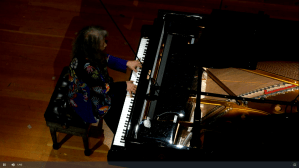
The final farewell cry was heartrending.
The prelude in G sharp minor seemed to emerge from this final chord with the same sense of flow and flight dissolving so magically into the absolute monumental nobility and grandeur of the final D flat Prelude.
Here even Sasha seemed to be sculpting the sounds as a great conductor would do with his orchestra creating wonderful sonorous sounds that brought this last recital before the summer break to a magnificent end.
Tuesday 16 July St Mary’s Perivale 2.00 pm
Maya Irgalina (piano)LIVE STREAM
Bach-Busoni: Chaconne in D minor
Ravel: Sonatine
Rachmaninov:Moments Musicaux Op 16
Maya Irgalina is a pianist from Belarus who won the Gold Medal at the Royal Northern College of Music and has a distinguished record in international piano competitions.
Roger Nellist introducing the concert in Perivale
Another chance to hear the concert from Perivale that was streamed live.
Holiday time not always allowing one the time during the day to listen, it is good to be able to catch up with the wonderful line of superb young musicians at St Mary’s in Perivale.
I am very much involved here in Italy with the Pontine Festival that since the time of Szigeti amd Menuhin has filled the surrounding hills in Latina during the month of July with the sounds of extraordinary music making.
Maya Irgalina is from Belarus and studied at the Belarusian Academy of Music where she was an undergraduate. She then completed the International Artist Diploma at the Royal Northern College of Music. In 2017 she graduated from the Guildhall School of Music and Drama. She has won numerous scholarships including Leverhulme Trust, Yamaha Foundation, BelSwissBank. She was also the recipient of the “Gaude Polonia” award from the Polish Ministry of Culture, and twice became a laureate of a Scholarship from the Special Fund of the President of Belarus. She has won many prizes in piano competitions, including Dudley, Sydney, Maria Yudina, Scriabin etc. She is the winner of the RNCM’s highest accolade for solo performance – the Gold Medal – and had her Wigmore Hall debut in February 2013 as prize-winner of the Worshipful Company of Musicians.
Her playing was broadcast by ABC (Australia), BBC Radio 3 and Belarusian Radio. In 2015 Belarusian TV made a film about her. Over the last ten years she has performed internationally throughout the UK, Italy, Malta, France, Austria, China, Poland, Georgia, Russia and Belarus, highlights including performances at Wigmore Hall and the Barbican. In the 2017/2018 season, Maya was a Britten Pears Young Artist; she was invited by the President of the Republic of Tatarstan to play Chopin’s First Piano Concerto in Kazan; she performed in the Malta International Arts Festival and the Accademia Filarmonica Romana with soprano Nicola Said; performed solo in the Zürichi Piano Express Festival, the Machynlleth Festival, and represented Yamaha as concert artist at the Cheltenham Jazz Festival.
It was immediately apparent her sensitive musicianship from the very first notes of Busoni’s famous transcription of the Bach Chaconne. Busoni transforming a masterpiece for solo violin into a masterpiece for piano solo.
Brahms had also made a very fine transcription for the left hand alone and in a letter to Clara Schumann described the masterpiece by Bach :” On one stave, for a small instrument, the man writes a whole world of the deepest thoughts and most powerful feelings. If I imagined that I could have created, even conceived the piece, I am quite certain that the excess of excitement and earth-shattering experience would have driven me out of my mind.”
Menuhin described it as “”the greatest structure for solo violin that exists.”
Busoni has been able to recreate the Chaconne on the piano and in a different way from the solo violin and it is a masterpiece in its own right.
Maya played it with just the right sense of elasticity and colour without ever loosing sight of the undercurrent that is constant through all the varying moods.It takes us from the opening statement played so delicately to the great nobility of the final triumphant evolution.The great bass notes in the final bars like a great organ stop never harsh but a full opening up of sound.Some very fine controlled playing with always a perfect sense of balance.The left hand octaves marked “leggiero ma marcato” never allowed to overpower the architectural line that is a constant from the first to the last note.
That is not to say that there were no startling contrast.
The “quasi Tromboni” after the first great climax was a moment of peace and religious serenity.The repeated notes that followed in the gentle build were beautifully played. Like bells pealing.
Her temperament not allowing her to completely follow Busoni’s indication of “nicht eilen” written at just the point were he knew he himself would have had to hold back.
The build up to the final Largamente maestoso was masterly and if there were one or two small blemishes during the percourse it did not detract in any way from a very fine performance.
The Ravel Sonatine found in Maya the perfect player.
With her very sensitive balance and beautiful sense of colour in the opening “modéré” so perfectly “doux et espressif.”
It was ideally suited to one of Ravel’s most delicately refined works.
A magical “Menuet” followed with just the right lilt combined with such beautifully sensitive phrasing and magical sounds for this jewel of a piece.The great washes of sound in the “Animé “that swept around the melodic line allowed to float so beautifully on this cloud of kaleidoscopic sounds.
The six Moments Musicaux op 16 by Rachmaninov was the final work on the programme.
It is an early work written in haste by Rachmaninov who needed money urgently.
But it does not betray any hurry and there are some heartrending moments combined with some startling virtuosity.
The Andante cantabile n.3 was played with a brooding outpouring of Russian feeling.The Adagio sostenuto n. 5 , an elegie played with heartrending nostalgia with the subtle Rachmaninovian harmonies only adding more meaning to the distant parting of a dear friend.
Both were superbly played with great noble sentiment and a sumptuous sense of colour .
The swirling sounds of the Allegretto n.2 showed off her extremely delicate dexterity.The Presto n.4 so often rattled off like a study was here given a shimmerig left hand on which the melodic line was allowed to sing so clearly.It led to a powerful climax of sonorous romantic sounds always with the musical line being so clearly defined.
The passionate nobility of the final Maestoso was a fitting way to end this performance by a real musician.
Not expecting to be asked for more she suprised us with her favourite Scriabin Study op 42 n.5 in C sharp minor.
No doubt inspired by the passionate warmth that she had just generated in Rachmaninov.
Again notable for the beauty of her phrasing and care over the sounds that surrounded the most romantic of melodies.
Wonderful to see Franco Petracchi at 81 still on top form at the Caetani castle .
As he has been for the past 40 years at the festival founded by Menuhin,Szigeti and Alberto Lysy.
Some unexpected visitors including Prof Ilya Kondratiev of the RCM in London who is preparing next season’s programmes whilst enjoying the beauty of Italy.
Prof Kondratiev with Elisabeta Carciga sightseeing in Sermoneta
We were awaiting the annual presence of our beloved Eliso Virdsladze but temporary illness has prevented that although she did make an appearance this winter to pay a loving homage to the founder of the Campus Musicale Foundation Riccardo Cerrochi
Maestro Petracchi demonstrating a piece written for him by Nino Rota
I was hoping that my dear friend Boris Berman would stand in for her.I know he adores coming to the sea in this area from Yale University where he is Head of Piano all year round.
But that was obviously not possible so we await a distinguished colleague of Eliso from the Moscow Conservatory :Ruvim Ostrovsky
A nostalgic look back over the past few years at all the wonderful music that has been resounding in these hills.
It is thanks to the Cerrochi family who have carried on so selflessly the great tradition which harks back to the visits of Franz Liszt to the composer Roffredo Caetani
Maestro Petracchi and Mirela Vedeva with their students after their concert.
Murray McLachlan, is very hard to pin point his presence such is his schedule as a distinguished pianist,teacher and organiser.
In their spare time they are the founders and organisers of the International Summer School at Chethams in Manchester.
The last time I saw Murray was in Manchester Cathedral to hear one of his many distinguished students, Iyad Sughayer, playing with members of the Camerata for the Keyboard Charitable Trust.
What some people may have missed is that they also have five children all of whom are beginning to emerge onto the musical scene.
The one that has not chosen a musical path Alec , is at only 15 a junior professional goal keeper.
However his father tells me he plays a mean lute prelude in C minor by Bach on the piano before going out on to the field!
Little Rose has played this season the Clara Wieck Piano Concerto and Mathew has won a full time scholarship to the Royal College in London to continue his studies with Dina Parakhina.
I asked Katherine if she was aware that Bach had 17 children!
With a contented smile that lit up her face she said she was happy with her brood of five!
Callum in action today
It was Callum who had been invited back today to play in Hugh Mathers remarkable series in Perivale.
At 19 after early studies with his father he spent 7 years with Dina Parakhina and is now perfecting his studies in Salzburg.
And as one might imagine from such a family this was no ordinary programme with a first half dedicated to rarely performed works by Grainger and Rachmaninov.
Ending with the Brahms Variations and Fugue on a theme by Handel op 24.
An encore by great request brought forth his finest playing with a magical account of “Abschied” from Waldszenen by Schumann.
Callum is a born Schumann player with his very flexible rubato and magical sense of colour – it was indeed a farewell that was deeply cherished by all.
Callum has been including in his programmes this season in Padua,New York and Manchester fascinating all too rarely played works by Stevenson and Grainger.
His father was a prodigy of that eclectic pianist composer from his homeland,Ronald Stevenson.
Today we were teated to three works by Grainger :The Rosenkavlier Ramble that opened the concert immediately showed the natural way that Callum approached the keyboard.
With such fluid arm movements almost conducting the magical sounds that he was producing.
Cascades of silver sounds embrassed the insinuating and tingling harmonies from the final ecstatic love duet from Der Rosenkavalier by Richard Strauss.
A work Callum told us in his very interesting introduction,that was dedicated to Grainger’s mother who had just committed suicide.
To a Nordic Princess Bridal Lullaby,dedicated to Grainger’s wife, was played with a crystaline beauty in a soothing and magical ending to this group of pieces.
It led so naturally to the typical romantic harmonies of a song by Rachmaninov “How fair this spot” op 21 n.7 in the arrangement by Gryazanov.A beautiful sense of legato and balance.
The spell was broken with a rumbustuous performance of Grainger’s well worn Country Garden.
Like Grainger’s own performance it was a barnstorming ramble showing a quite extraordinary technical prowess.
The main work was the Variations and Fugue on a theme by Handel op 24.
The 25 variations culminating in a mighty fugue on the innocent little theme by Handel.
Callum McLachlan
The theme was played unusually delicately with some very clearly played embellishments .
It led immediately into the variations full of fantasy and colour.
Rather too romantically played though as this work of Brahms (unlike the works of Schumann that he played so magically as a encore) is built on a rock and it is this steady build up and unrelenting forward movement that takes us to the final triumphant outburst before the monumental fugue.
There were some very beautiful things in Callum Mclachlan’s remarkably assured performance but some of the rubato and slight variations of tempo distracted from the overall vision of this orchestral like work.Some magical sounds and a true technical command led to the gradual lead up to the final triumphant statement and from here onwards he played with just the relentless forward movement that had been missing in the previous variations.
We were too distracted by the vision of beautiful trees but it was the wood that counted above all for Brahms.
The fugue was played with great conviction and if even here there was too much fussy detail it is because of his true love for the work that I am sure this will be gradually pared off as he lives and matures with this masterpiece during what is destined to be a long and distinguished career like his parents!
In fact Hugh Mather has already offered a return fight………..
A full hall in Pervale for Hugh Mathers remarkable series
Jonathan Ferrucci had told me how good Carole Presland was in the Faure Quartet.
He did not tell me how good!
She illuminated the hall with her masterly playing on the crest of a musical wave.
A veritable tsunami.
Unforgettable!
The Beethoven Wind Quintet
Great applause for the Faure Piano Quartet with Carole Presland
and Victor Braojos Lopez and Jose Songel Sanchis in a scintillating account of Bernstein’s Symphonic Dances from “West Side Story”
The amazing Signum Brass in William Mathias’ Summer Dances
Ugne Vagileviciute Marcus Dawe and Nathan Giorgetti in Vox Balenae by George Crumb Amazing sounds played with masques ….missing only the film Zoro
Bartok Sonata for Two Pianos and Percussion with Yundy Wang Ben Smith Sam Walton Aidan Marsden
Dohnanyi Sextet for piano clarinet,horn and string trio op 37
…………..a kiss from the child Jesus that was to cherish for a lifetime……
……………a passionately commited Rachmaninov……..
………and charmed to death by Grieg and Tchaikowsky….
It takes one to recognise one,so they say, and our thanks go to Sasha Grynyuk for inviting Evie to thrill and move us as she did today in his new series in St Johns Notting Hill.
Caught in the lunchtime traffic we awaited her arrival knowing full well of the chaos in the centre of London in this holiday period.
Sasha and Evie greeting each other
Only ten minutes late she arrived looking ever more like a film star and greeted her friends and admirers that had gathered to hear her.
Without any more ado she sat at the piano …………..and it was pure magic.
She was completely lost in her own world. So totally transported by the music that she did not even notice the rather invasive lady in the first row trying to share a 360° video to her mother I presume in Russia!
From the very first note we were transported into a magic world of such ravishing sounds and such an overpowering sense of communication where each note of the little Arietta op 12 by Grieg was expressed with extraordinary beauty and musical sense.
It was as though the music was speaking directly to every single member of the audience.
The only other person who can do that is Martha Argerich, who with her seemingly anticonventional lifestyle and individual personality plays the piano or rather communicates via the piano her genuine uncontaminated vision of music and life which for her are one and the same.Following her heart and instinct rather than wearing her musicality like a badge.It is the innocence of a child but with the wisdom of someone who has weaved her way since childhood through the jungle of public performance and never conceded anything of her inner musical beliefs to the superficial world that surrounds her.
Anyone who knows Evie will know that this description fits her too like a glove.
She also has the ravishing good looks that Martha had at her age.Che non guasta ,as they say!
Needless to say that the three Rachmaninov preludes were played with such a sumptuous kaleidocope of sounds from the almost inaudible to the most passionate outbursts.
She made this little Yamaha piano sound like the most beautiful piano on earth such was her total concentration on the sounds that she was creating for us.
The E flat major op 23 n.6 drifted in like water on which floated the most romantic of melodies .The full sonorous melodic line of the D major n. 4 where the embellishments caressed the melody in a seemless stream of velvet sounds.The beautiful liquid cantabile of the G major op 32 n.5 where the delicacy of the left hand accompaniment only added to the golden sheen that she was able to bring to this most nostalgic of melodies.
Hardly suprising that her Rachmaninov is so definitive and idiomatic as she is the daughter of Boris Beresovsky and was born in 1991 the very year he won the Gold Medal at the Tchaikowsky competition in Moscow !
The Sonata n.2 op 36 by Rachmaninov burst out of this luxuriant “hors d’oevre” like a sudden call to arms.
What passion,what subtle unbearably beautiful sounds.But above all a transcendental control and command of the keyboard that allowed her to listen so attentively hardly glancing at her hands that were only the means of expressing what she was searching for.
This was undoubtedly one of the finest performances I have heard of this work .We all know the famous Carnegie Hall recording of Horowitz but this had the same powerful sense of immediacy and demonic changes that brought this work back into the piano repertoire.
But rarely can a performance by a “normal” pianist have been so powerful as today … with the exception maybe of only Van Cliburn!
Aided and abetted by her great friend Sasha Grynyuk the programme announced : Messiaen “Vingt regards sur l’enfant Jesus”.
What we were actually treated too was the most beautiful of the 20 regards:”Le Baiser de l’enfant Jesus.”
And what a kiss this was .
Evie and Sasha in place of the music stand Sasha held the score that she hardly glanced at!
The most extraordinary sounds of these tingling grating
dissonant harmonies that in her hands were played so subtly that it was of a heartbreaking beauty that I have rarely experienced.
The music spoke so magically that the message from this true believer came across and touched every heart in the audience judging by the tears that were visible on many of their eyes.
Mesmerised by the sounds.
The almost chiselled embellishments accompanying the sumptuous final melodic outburst expressing sounds that I have never heard before.
It was quite overwhelmingly moving.
I have only heard Rubinstein playing ten of the “Visions Fugitives” by Prokofiev or “A prol do Bebe” by Villa Lobos who was able to make the music speak as Evie did with Messiaen today.
Joan Chisell said in her review about “The Prince of Pianists” that I love to quote:”Mr Rubinstein turned baubles into gems.”
I would not say that Messiaen was a bauble but up until today I had not realised how poignantly he could help us to experience his own mystical belief.
with Alex Ullman
A little piece by Tchaikowsky “Au village” was full of old world charm and scintillating almost ‘jeux perle’ playing.
A truly magic fairground of a bygone age.
A little mazurka by Chopin played equisitely as an encore.
A wonderful sense of dance but such bewitching colours.
She shouted out to her old school friend from the Purcell School Alexander Ullman to ask if he knew what opus number it was.
It was of no importance what number it was ………..it was an absolute gem and that is all that counted today.
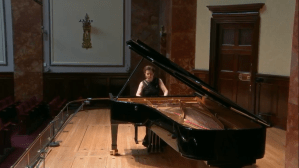
Such insistent applause brought her back to play the Rachmaninov Prelude in E flat again ….as Sasha said afterwards even more beautifully than before.
I go to a lot of concerts and listen to many remarkable pianists but this is one that will remain with me for a long time.
Thats our Evie ……….Welcome back .
Covered in flowers and gifts after her performance
A well earned cigarette with olf school friend Alex
I had heard Jamie Bergin this winter in a programme of Beethoven,Chopin and Ravel and was instantly won over by his artistry and refined musical pedigree.
He has inherited this from his early formation with Murray McLachlan,Joan Havill,Karl- Heinz Kammerling and last but certainly not least Lars Vogt to whom he became assistant in Hanover.
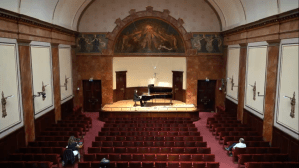
His second major recital in London this year for the Kirckman Concert Society.The first,last January, was in St John’s Smith Square.And now due to a cancellation by an indisposed Ian Bostridge we were able to hear him again this time at the Wigmore Hall.
This was an artist in meditave mood on an Eldorado of a cloud in which the sumptuous sounds he shared with us was a private confession of subtle personal artistry.
An almost whispered succession of sounds played so stylishly we almost craved for him to make a nasty sound!
Such is his superlative sense of control and balance ,a technical prowess that knows no difficulties allied to an intimate knowledge of the scores as one would imagine from a student of Joan Havill.
To quote from his own words describing the programme that he had chosen at the last minute for this unexpected recital:
”op 109…full of fantasy conveying a wonderful sense of improvisation ….. the third movement opens with one of the most beautiful melodies I have ever heard and I sometimes find it difficult to stop playing!”
It is very rare that words can convey some of the meaning of music but I think Jamie got fairly near tonight.
The first movement of op 109 was played indeed in an improvisatory way with a flexibility of pulse and colour that was extremely personal.Some might say over romantic but here was a man in love and not afraid to share it with us.
with Linn Rothstein in the green room afterwards
The second movement as contrast could have been more decisive and rhythmic but much to my surprise that was to come with the innocent simple statement of the theme of the final variations.Some very subtle colouring in the following variations and a sublime sound in the slow almost waltz like statement of the theme.
The fast semiquavers were played with a sheen that allowed the melodic line to sing out as is rarely the case.
Some transcendental piano playing of course,ca va sans dire with this pianist.
The spell momentarily broken with the entry of the fugato that soon was allowed to dissolve so naturally into the sheen of magic sounds created from the trills on which the melodic line sang so beautifully.
The gradual dissolving in a cloud of mystical sounds led to the final statement of the theme all the more poignant for its total simplicity.
The seven fantasies op 116 by Brahms were :”like being taken on amazing emotional rollercoaster….some moments are absolutely heartbreaking.One can only wonder what Brahms went through to write such music”.
Jamie Bergin in the Wigmore Hall of fame backstage.
And so it was with a Brahms that was not Brahms but a truly emotional journey from an artist with a very delicate sound palette that could create the magic of deep melancholy of the meltingly beautiful lament of the second Intermezzo or the beautiful prominent left hand weaving its web in the third with the beautiful liquid cantabile melodic line floating on its surface or the pure magic of the fourth and the ghost like search of the fifth.The suave melodic line of the sixth with its melting cantabile in the middle section.The forward drive of the seventh with its sumptuous melodic middle section.
But here was a personal vision that experienced only the ecstasy of the Andante,Adagio or Andante con grazie e intimissimo sentimento of the Intermezzi .But the implied contrast of Presto agitato,Allegro passionato or Allegro agitato of the three capriccios was missing.
Smoothed over very beautifully.But in order to appreciate true beauty we need comparison and contrast and it was this that was missing in this secret message of Jamie’s Brahms.
The three pieces that make up book one of Iberia were played with a great sense of colour .As Jamie relates :”The music has such a generosity of spirit and freedom …. I was inspired to play it when I heard Alicia de Larrocha’s iconic recording.”
It is considered one of the most challenging works for the piano: “There is really nothing in Isaac Albeniz’s Iberia that a good three-handed pianist could not master, given unlimited years of practice and permission to play at half tempo. But there are few pianists thus endowed.” Thus spoke a review in the New York Times of de Larrochas performance.
And the performer tonight too had a no fear of the great leaps of the “Fete dieu a Seville” or any of the transcendental demands of these three pieces.
“Evocacion” was full of the simmering atmosphere of Spain as was the irrsistible dance of “El Puerto”.The enormous dynamic range that Albeniz asks for from “ffff” to “ppppp” abound especially in “Fete dieu” which could have had more contrast so the startlingly beautiful ending would have come as more of a lugubrious journey into the infinite.
I well remember Rafael Orozco in these pieces many years ago with the blazing passion of a young and passionate spaniard
.He ran away with the Gold medal in Leeds and I remember Annie Fischer asking me what had become of him since.
He lived in Rome and came to see Alicia de Larrocha whenever she played for us.
He chose to die early with his partner.A life lived passionately until the last!
Jamie had a different vision of these pieces .Full of hidden lights and sounds, intoxicating perfumes and intimate seduction rather than the brazen spain of noise and bustle and the excitement of the corrida.
The Berceuse by Chopin op 57 :” soothing and peaceful with a hypnotic effect that seems as if everything is frozen in time “
It was infact just that with a beautiful bell like cantabile and played with a simplicity that allowed the variants to evolve so naturally.
It led to the final work, one of the most important works of the romantic piano repertoire :the fourth Ballade by Chopin op 52.
”There is so much tragedy and drama and the coda is known for being fiendishly difficult.”
It was the masterly build up to the coda that was so remarkable in a performance of great beauty always moving forward and never sentimental .The sustaining bass in the statement of the opening theme allowed such freedom but within the limits of the great architectural line.
The coda of course was played not only with fearless technical prowess but with great care over the musical line to the final cascading arpeggios and final chords.
A recital that was today the triumph of Eusebius with Florestan only allowed an occasional glimpse of the beautiful landscape that was being sculptured in the hands of this remarkable young musician.